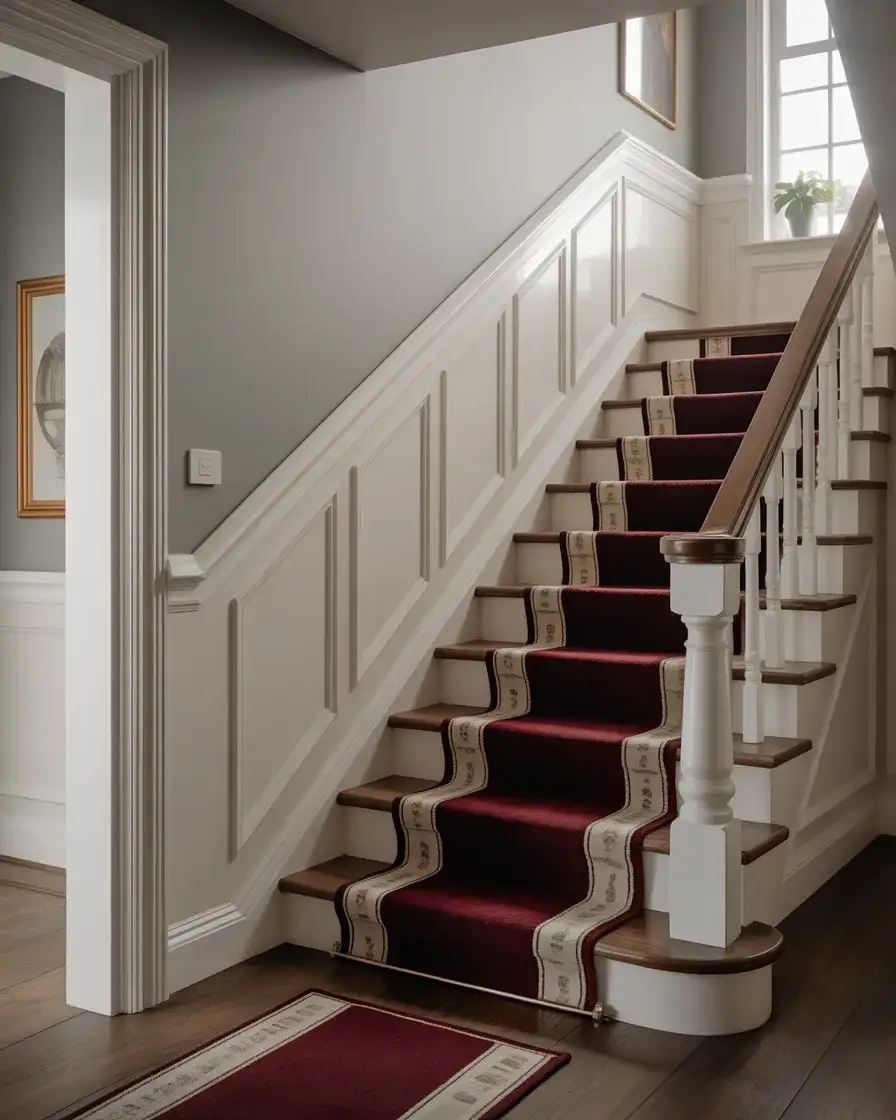
Home libraries have evolved far beyond dusty shelves and leather-bound classics—today’s reading spaces blend comfort, personality, and style in ways that feel both lived-in and aspirational. Americans are turning to Pinterest in record numbers, searching for library ideas that fit modern homes, whether that’s a cozy corner in a studio apartment or a grand room with floor-to-ceiling shelves. In 2026, the most inspiring home libraries balance function with beauty, creating spaces that invite you to linger with a book, work quietly, or simply admire your collection. From moody dark academia vibes to airy modern designs, there’s a library aesthetic for every home and every reader. Here are ideas to help you create your dream reading sanctuary this year.
1. Floor-to-Ceiling Built-In Shelving with Rolling Ladder
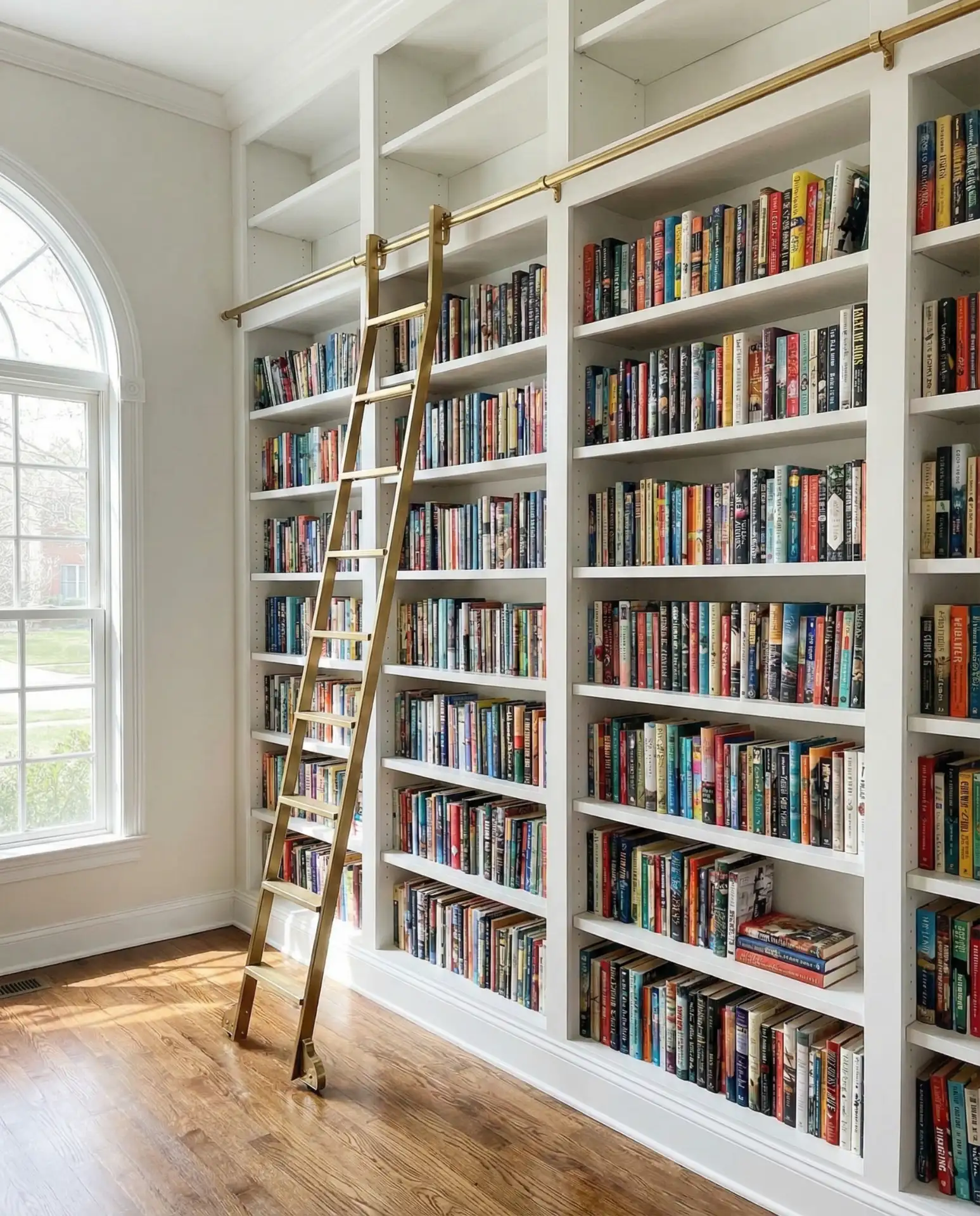
Nothing says luxury home library quite like towering shelves that stretch to the ceiling, accessed by a classic rolling ladder. This design works beautifully in rooms with high ceilings, transforming vertical space into functional storage while creating dramatic visual impact. The ladder itself becomes a statement piece—whether you choose brass hardware, matte black metal, or vintage wood finishes—and adds an undeniable sense of grandeur to your reading room.
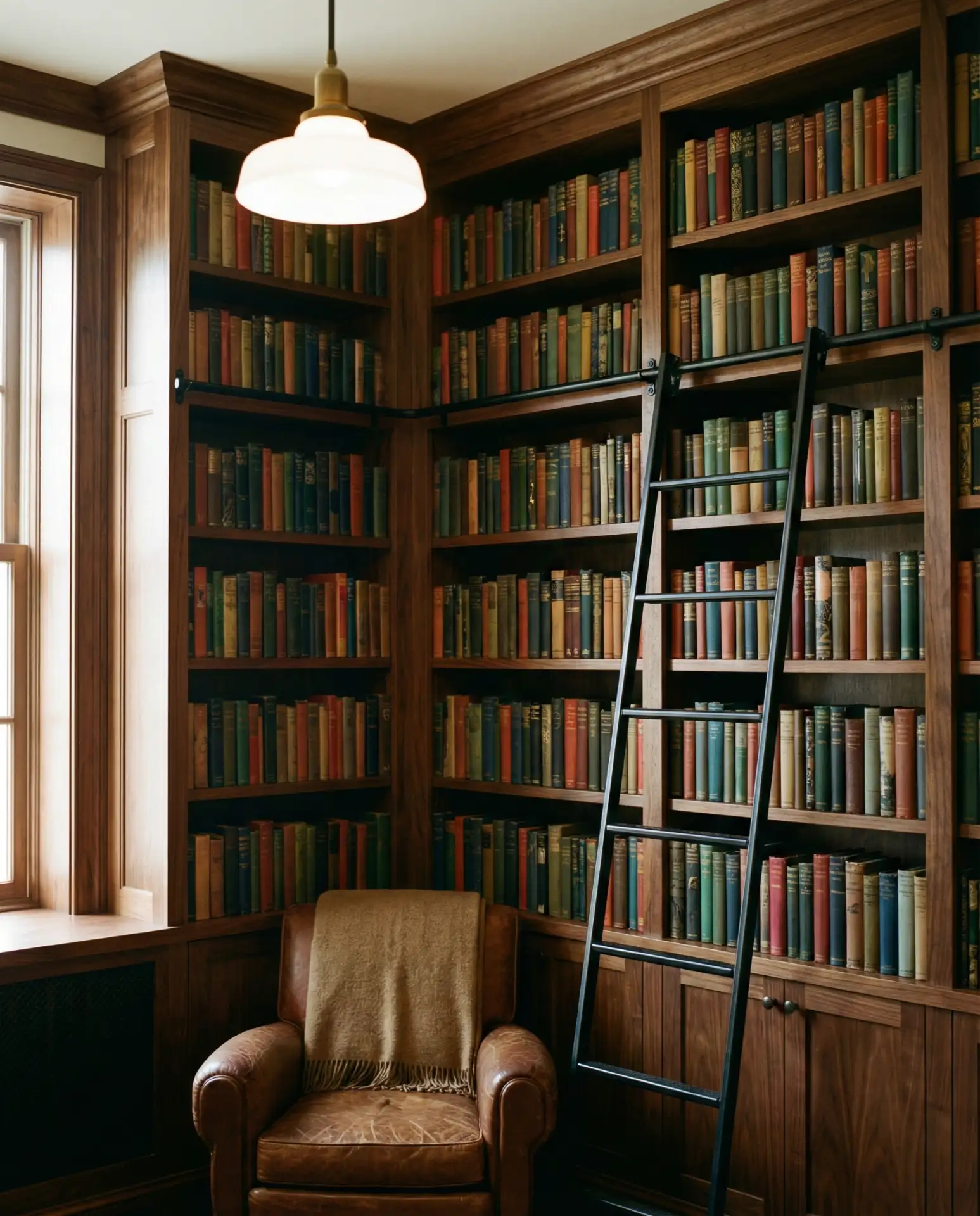
This setup works best in dedicated library rooms or large home offices where you have the wall space and ceiling height to make it worthwhile. One common mistake is installing a ladder on shelves that aren’t properly reinforced—make sure your carpenter accounts for the weight and movement, especially if you’re retrofitting existing built-ins. The investment pays off not just in storage capacity but in the sheer pleasure of reaching for a high shelf with that satisfying roll and climb.
2. Cozy Window Seat Book Nook
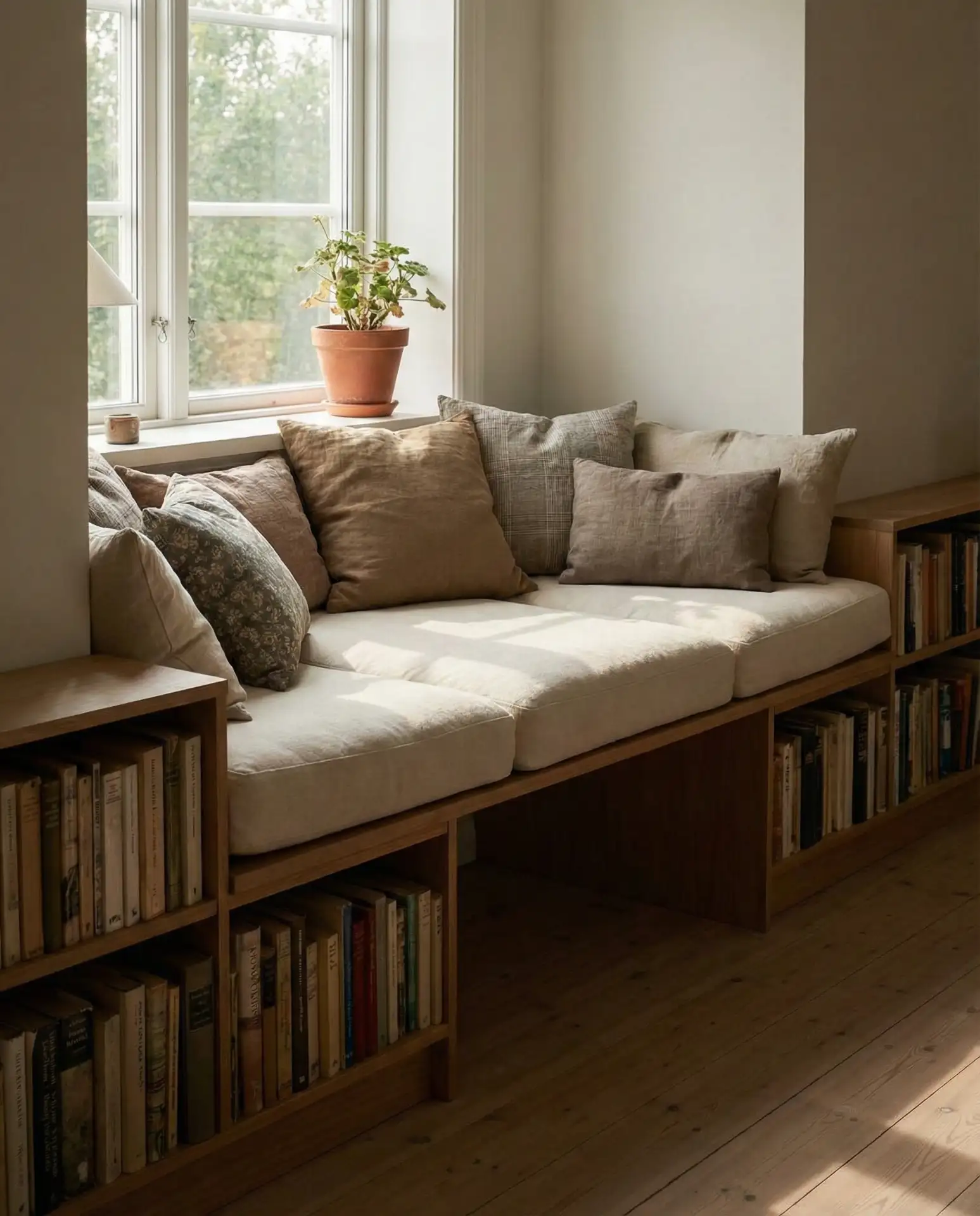
A book nook’s cozy setup built into a window alcove combines natural light with the kind of intimate reading space people dream about. Low bookshelves flanking a cushioned window seat create a self-contained retreat where you can curl up with a novel and lose track of time. Add throw pillows and a soft blanket, and you’ve got a cozy corner that works for both aesthetic appeal and actual daily use.
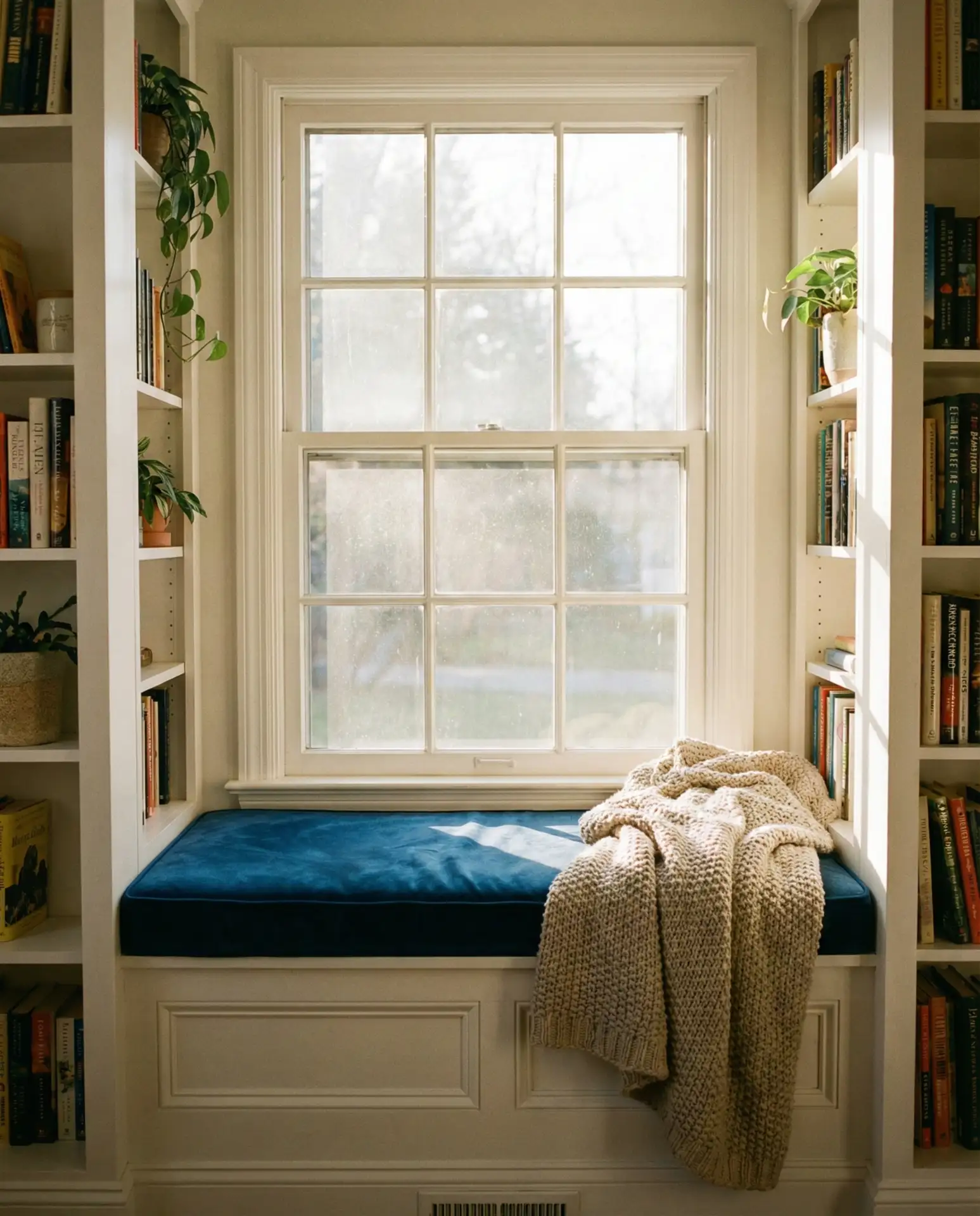
In American homes, particularly in older houses with bay windows or deep-set casements, these nooks fit naturally into existing architecture. Homeowners in New England and the Pacific Northwest especially appreciate them during rainy seasons when indoor reading becomes a favorite pastime. The key is ensuring the seat depth is at least 20 inches so you can actually sit comfortably for extended periods.
3. Dark Academia Library with Leather and Wood
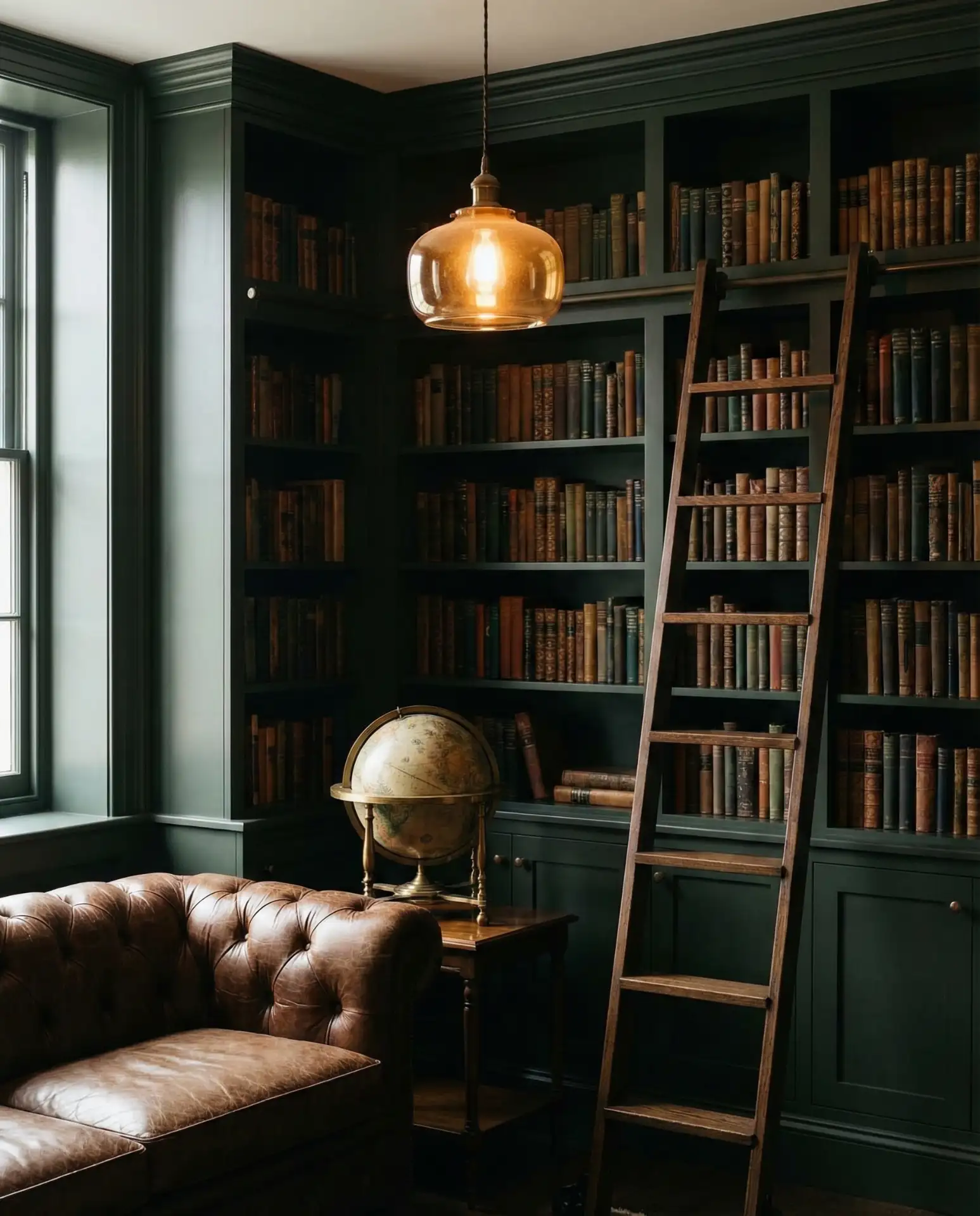
The dark academia trend continues to captivate those who love rich, scholarly atmospheres. Think deep mahogany shelves, a tufted leather armchair, brass desk lamps, and walls lined with classic hardcovers. This design aesthetic channels university libraries and old-world study halls, creating a space that feels both intellectual and deeply comforting. It’s perfect for anyone who wants their home library to have a sense of gravitas and history.
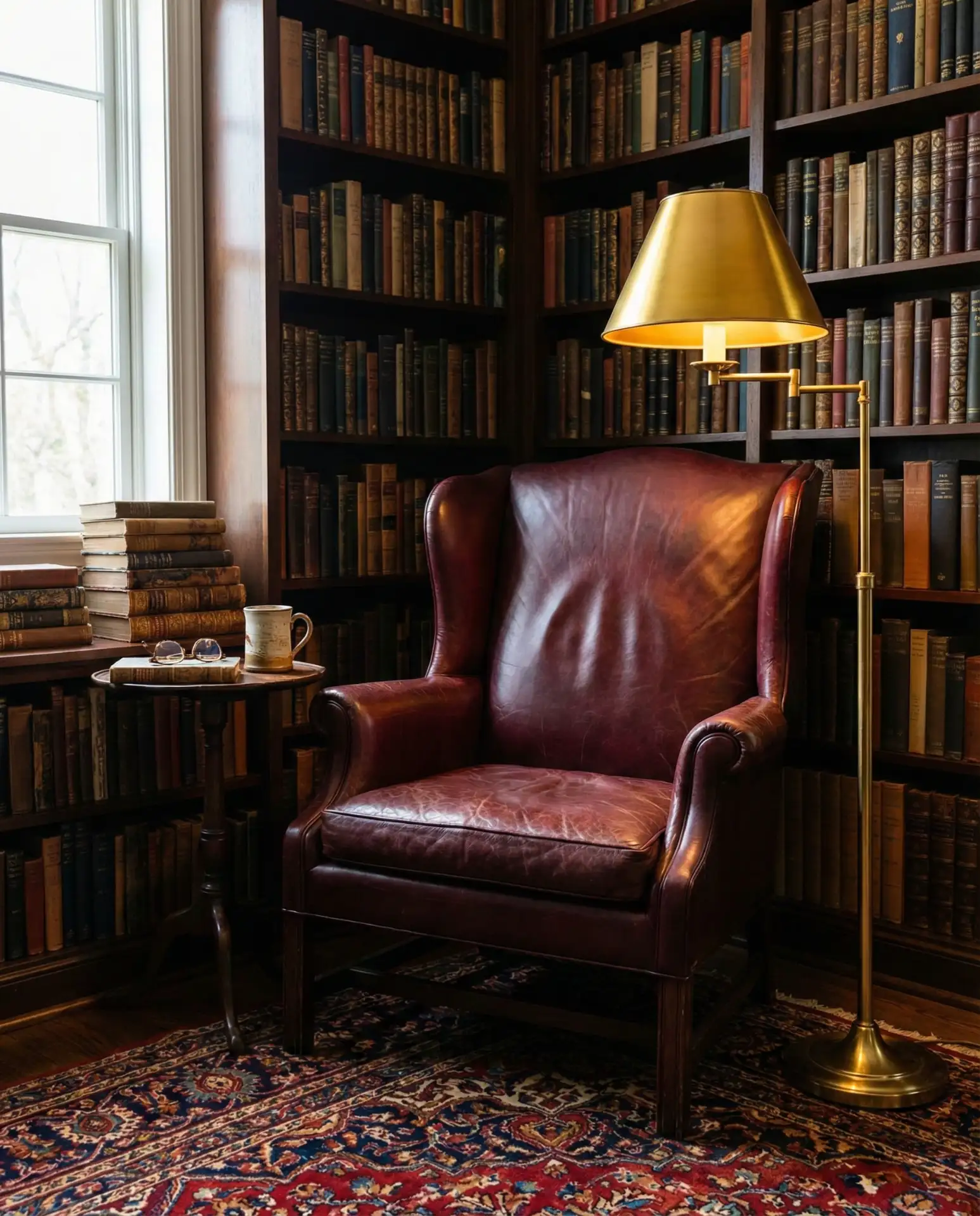
This style works particularly well in homes with traditional architecture—Craftsman bungalows, Victorian townhouses, or even Colonial revivals—where the formality matches the bones of the building. One practical insight: dark wood and leather can make a small room feel cramped, so this aesthetic shines in spaces with at least 150 square feet and good natural or layered artificial lighting to prevent it from feeling cave-like.
4. Modern Minimalist Floating Shelves
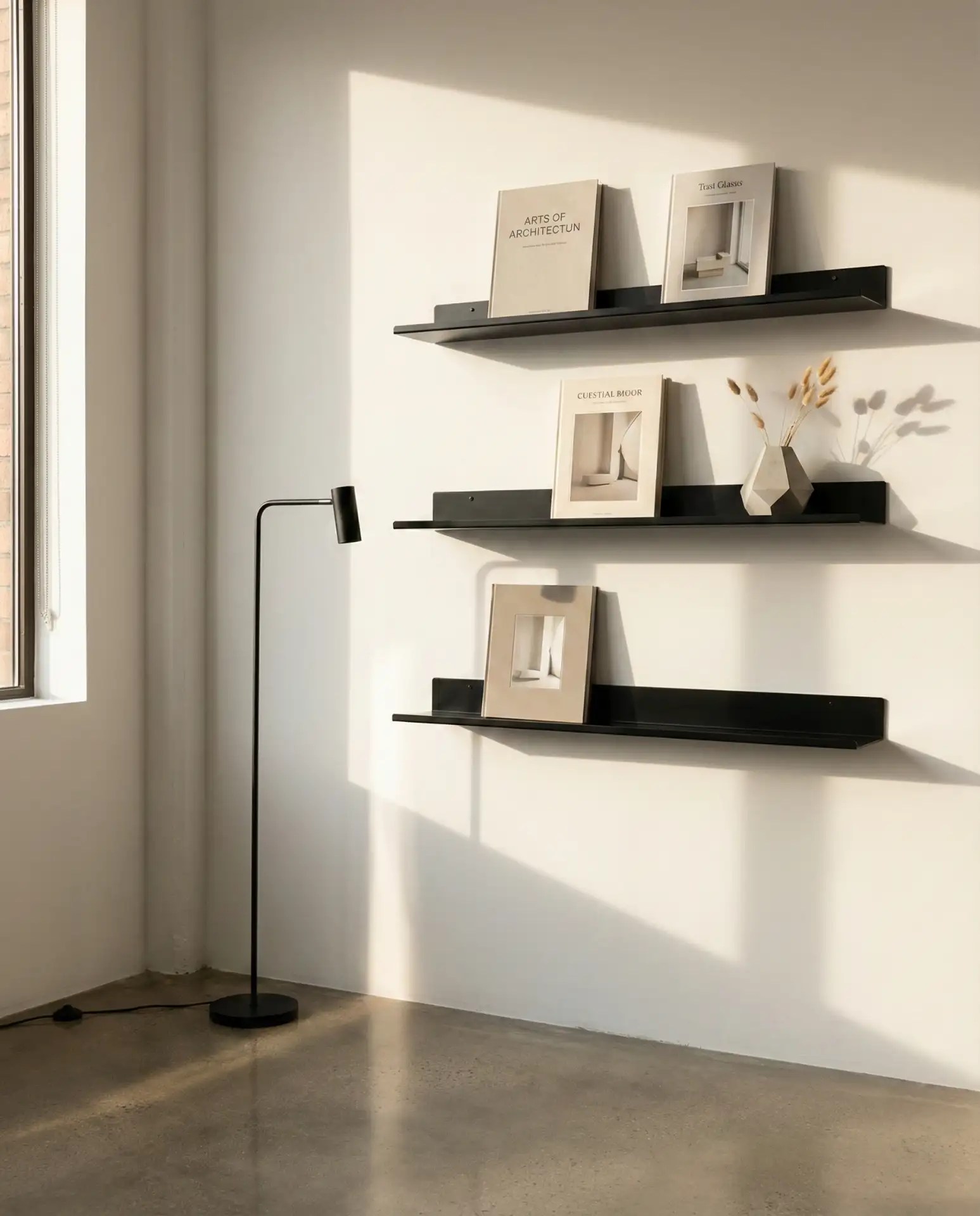
For those who favor clean lines and simplicity, modern floating shelves offer a streamlined approach to displaying books. These wall-mounted units eliminate visual clutter by hiding brackets and hardware, creating the illusion that your collection is suspended in midair. Pair with neutral walls, minimal decor, and strategic spacing between shelves to let each book spine become part of the overall design composition.
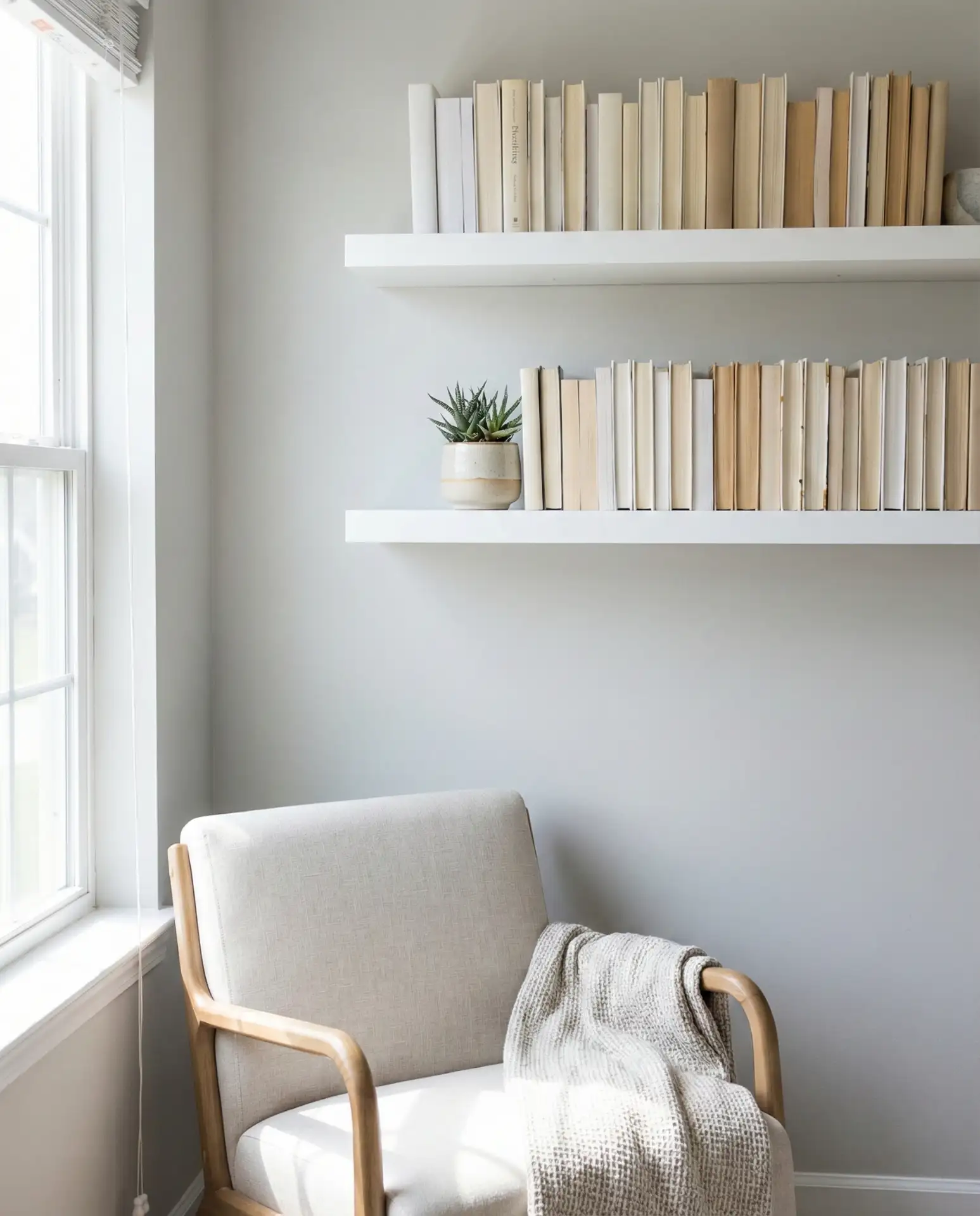
Expert designers recommend spacing floating shelves 10 to 15 inches apart vertically for standard-sized books, with deeper shelves (at least 10 inches) for larger art books or oversized volumes. This approach works beautifully in contemporary apartments and open-plan homes where you want library storage without the weight of traditional built-ins. Just make sure your wall studs are located and reinforced properly—a shelf full of hardcovers is heavier than it looks.
5. Home Office Library Combo
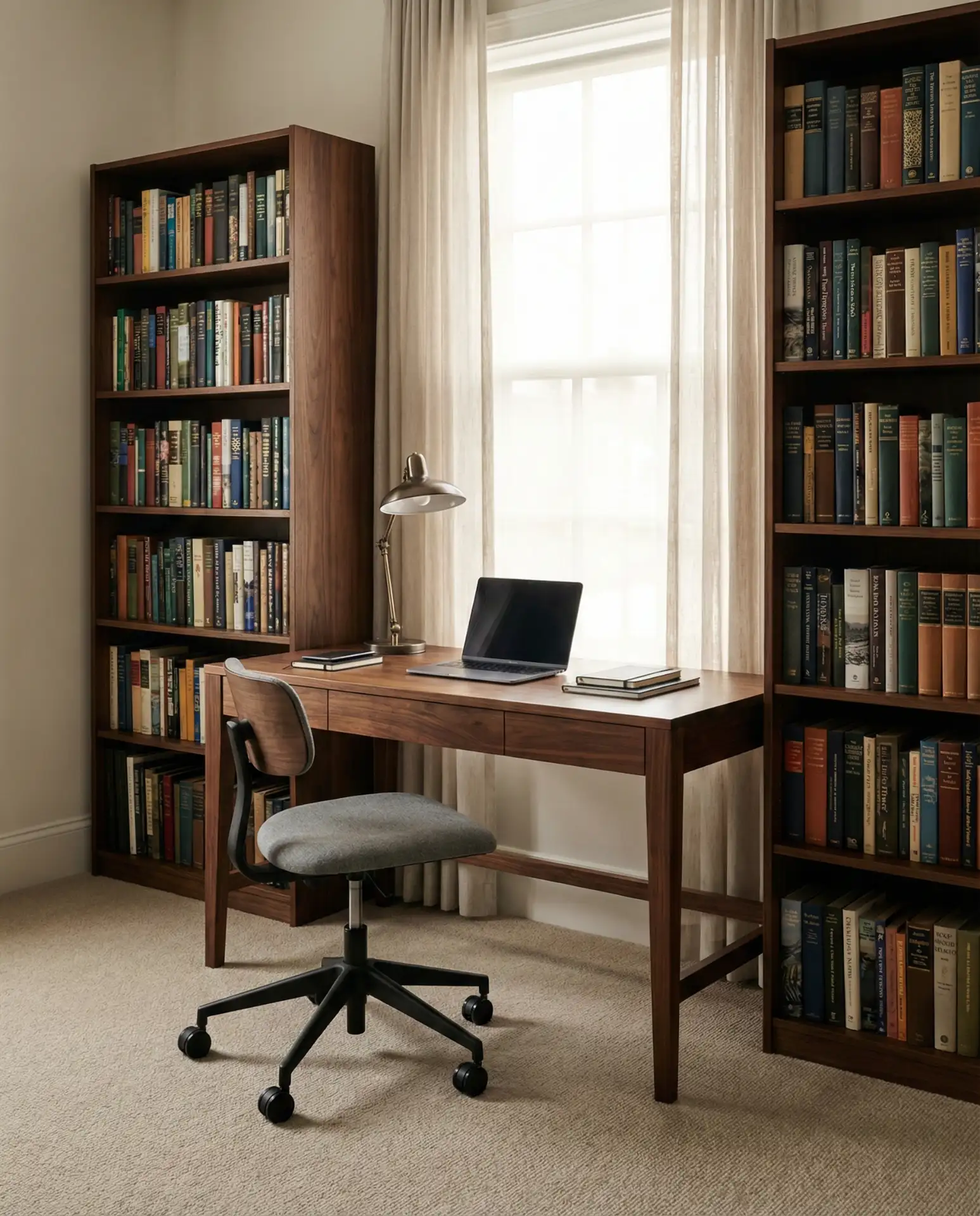
Combining your office and library makes perfect sense in today’s work-from-home reality. Built-in shelving surrounds a dedicated desk area, keeping reference books, professional resources, and pleasure reading all within arm’s reach. This dual-purpose room eliminates the need for separate spaces and creates an environment where productivity and relaxation can coexist throughout the workday.
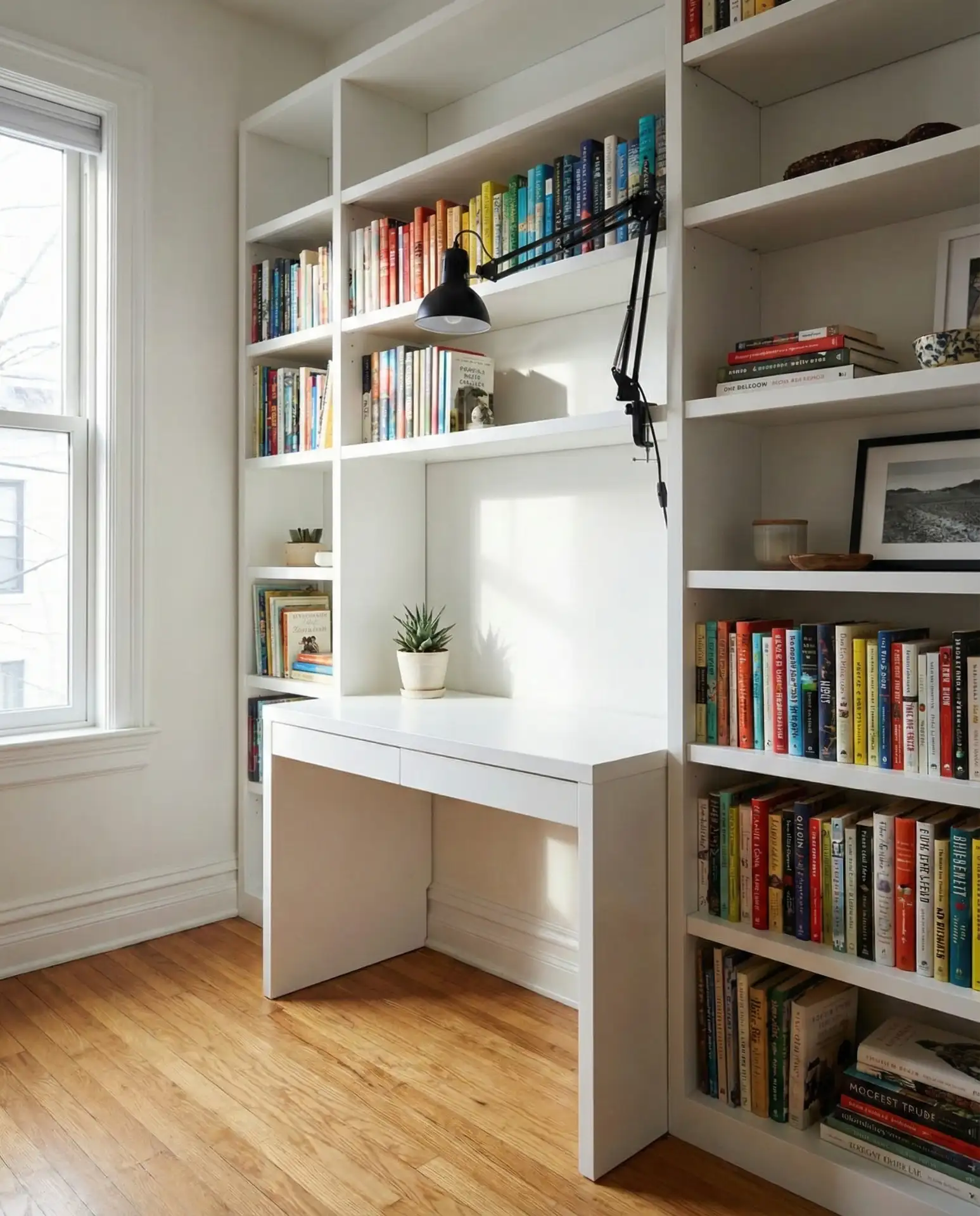
A colleague of mine transformed her spare bedroom this way during the pandemic and says it’s the room she uses most in her house now. She positioned her desk to face the window for video calls, with her curated book collection as a professional backdrop—far more interesting than a blank wall. The setup cost around $3,500 with custom millwork, but pre-made desk and shelving combinations can achieve a similar effect for under $1,500.
6. Vintage Library with Antique Finds
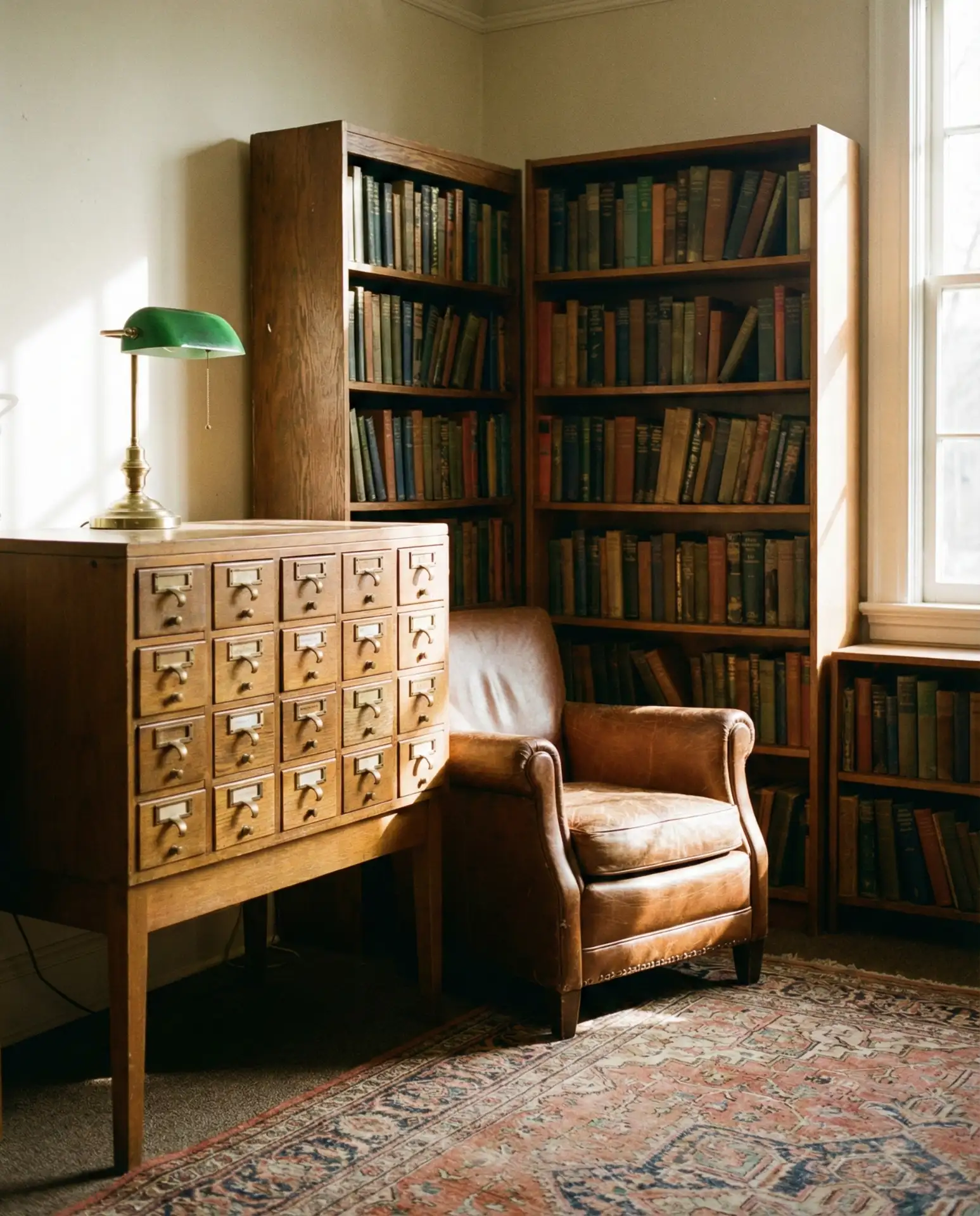
A vintage library brings together salvaged bookshelves, antique reading lamps, and weathered decor pieces that tell stories of their own. Hunt for old library card catalogs, weathered globes, vintage typewriters, and aged leather-bound volumes at estate sales and antique shops. The charm lies in the imperfection—mismatched shelving heights, worn wood finishes, and collected objects that accumulate gradually rather than being purchased all at once.
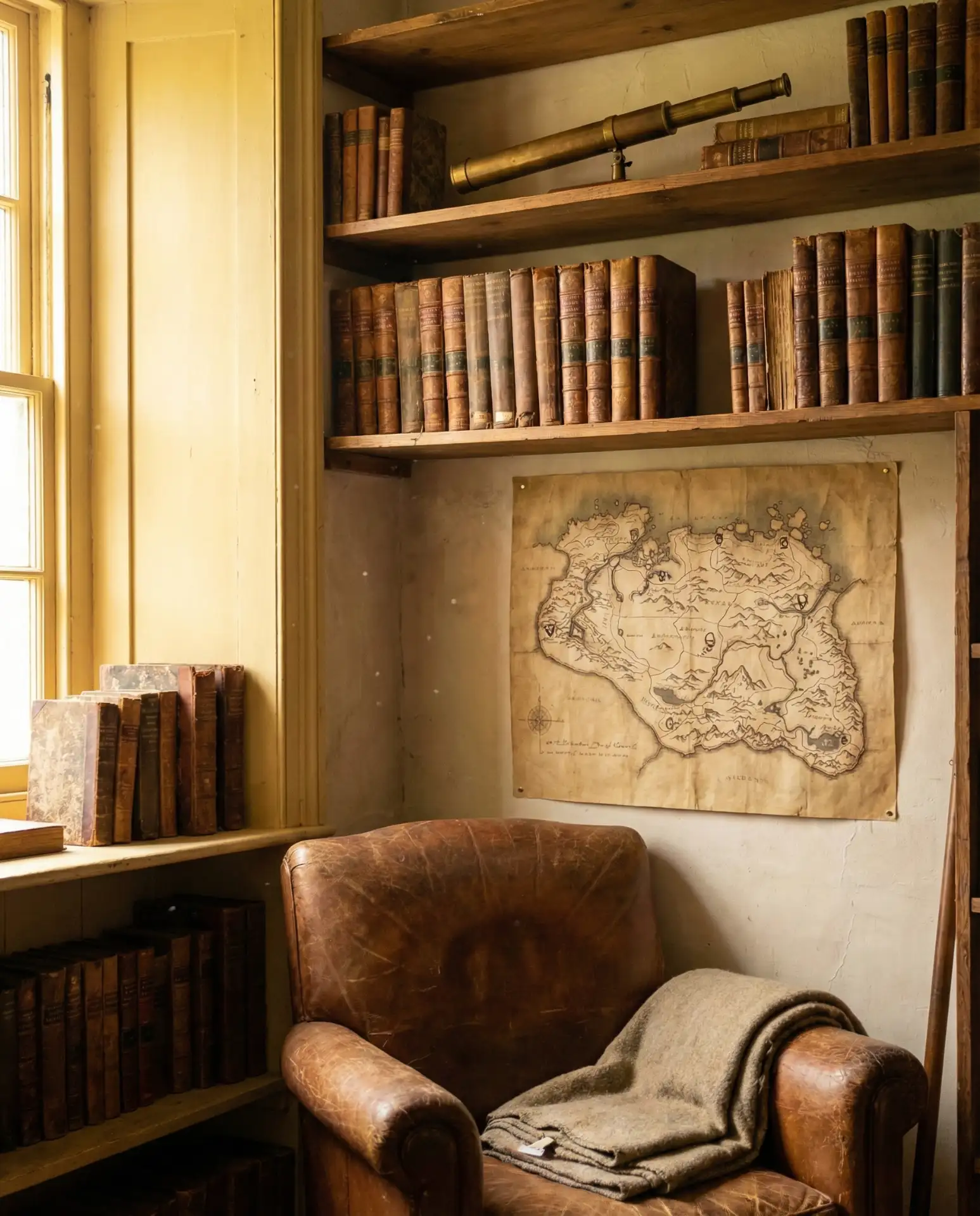
Where this approach works best is in historic homes where the architectural details already lean vintage—think Victorian-era houses with crown molding or Arts and Crafts bungalows with original woodwork. The mix-and-match nature of vintage collecting also means you can build the library gradually as you find pieces, rather than investing in a complete custom installation all at once. It’s both budget-friendly and endlessly customizable.
7. Small Room Library Maximizing Vertical Space
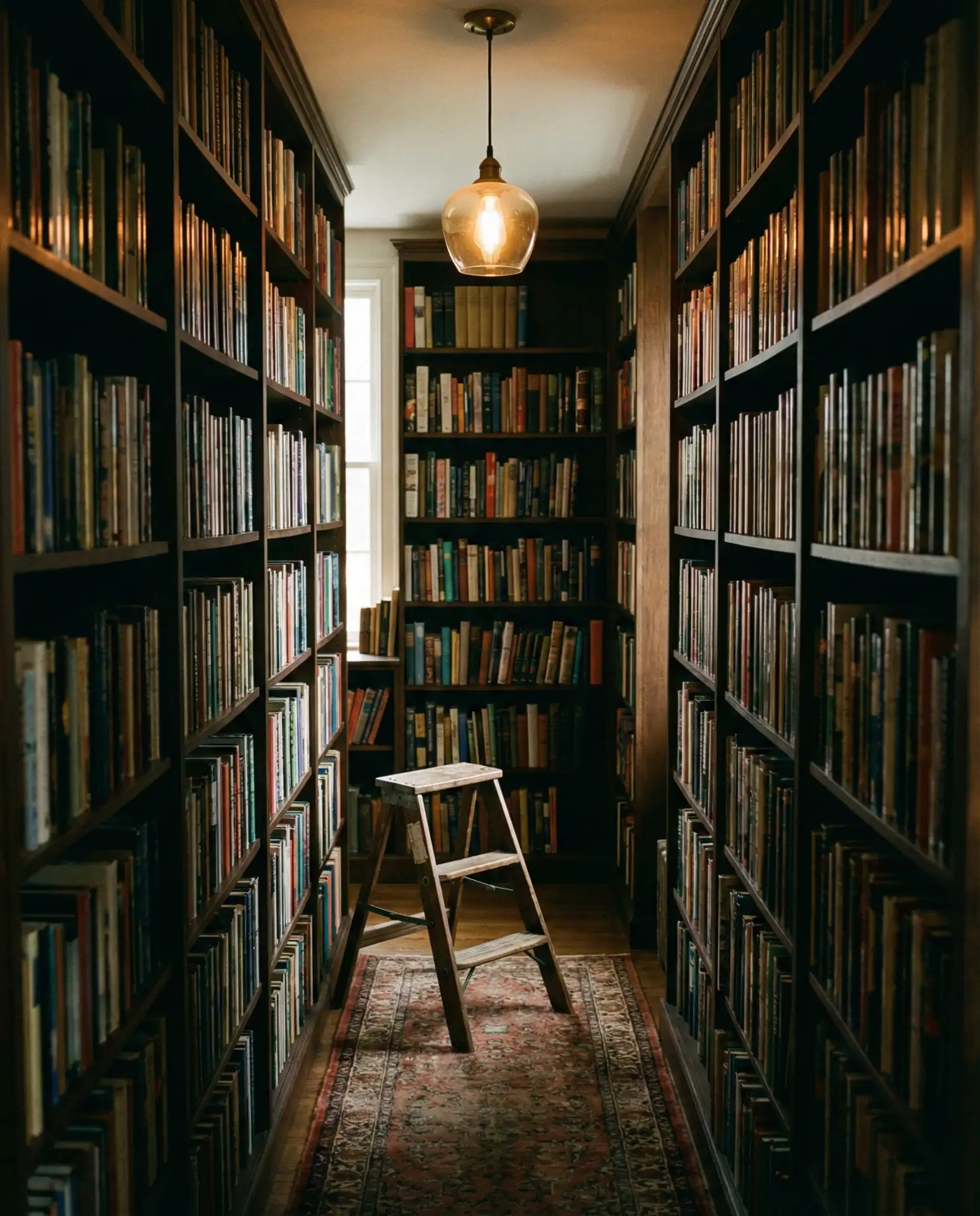
When you’re working with ideas in small room constraints, vertical storage becomes your best friend. Install shelves from floor to ceiling on every available wall, leaving just enough space for a single reading chair or small desk. The trick is creating density without chaos—organize by color, size, or genre to maintain visual order even when books are packed in tightly. This approach transforms even a 10×10 space into a legitimate personal library.
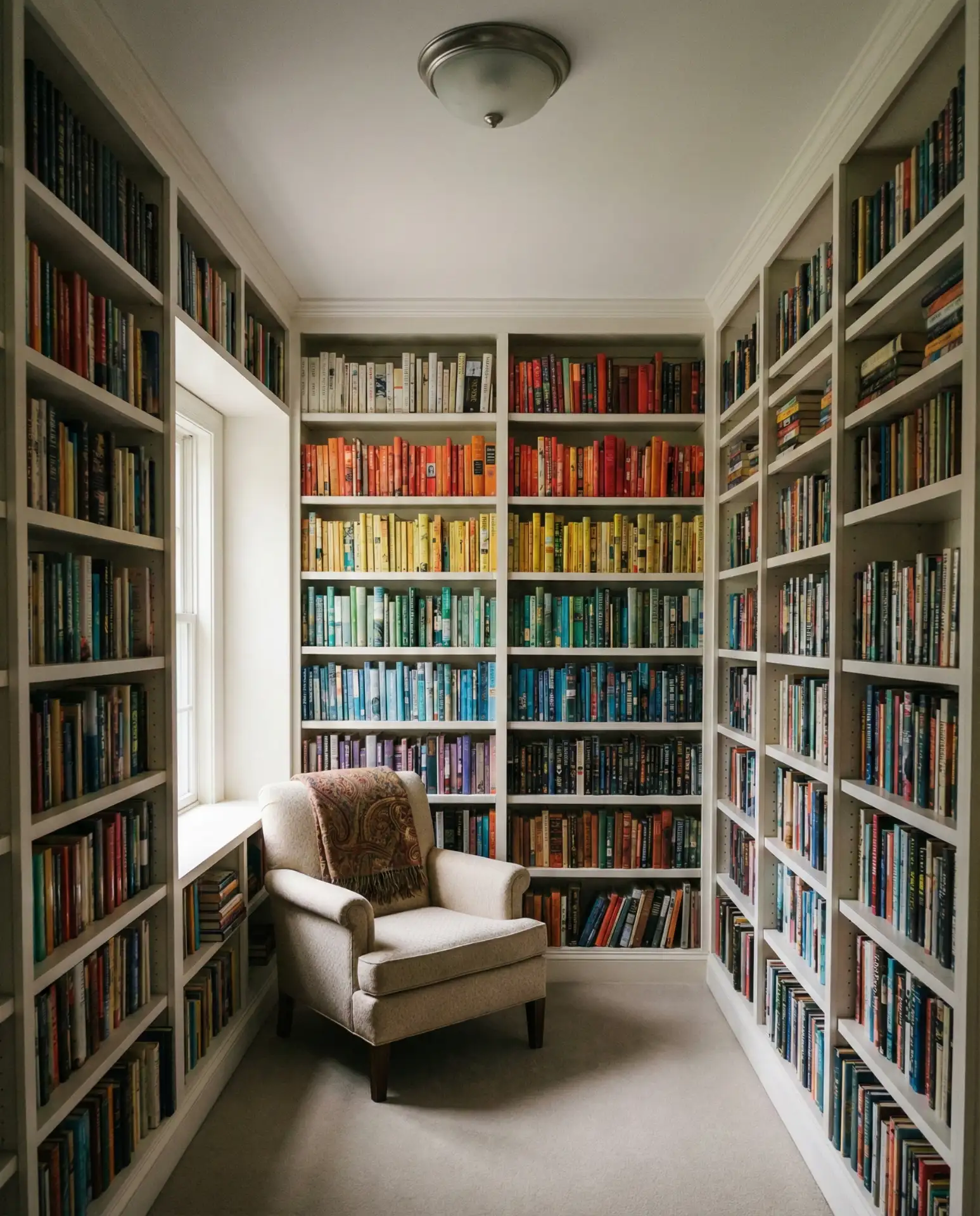
Real homeowners in urban apartments—where every square foot counts—often convert a large closet or unused bedroom into a dedicated library using this strategy. One common mistake is leaving the top shelves empty because they’re hard to reach, which wastes precious storage. Keep a small step stool handy and use those high shelves for books you reference less often or for purely decorative pieces like beautiful vintage volumes.
8. Library with Stone Fireplace
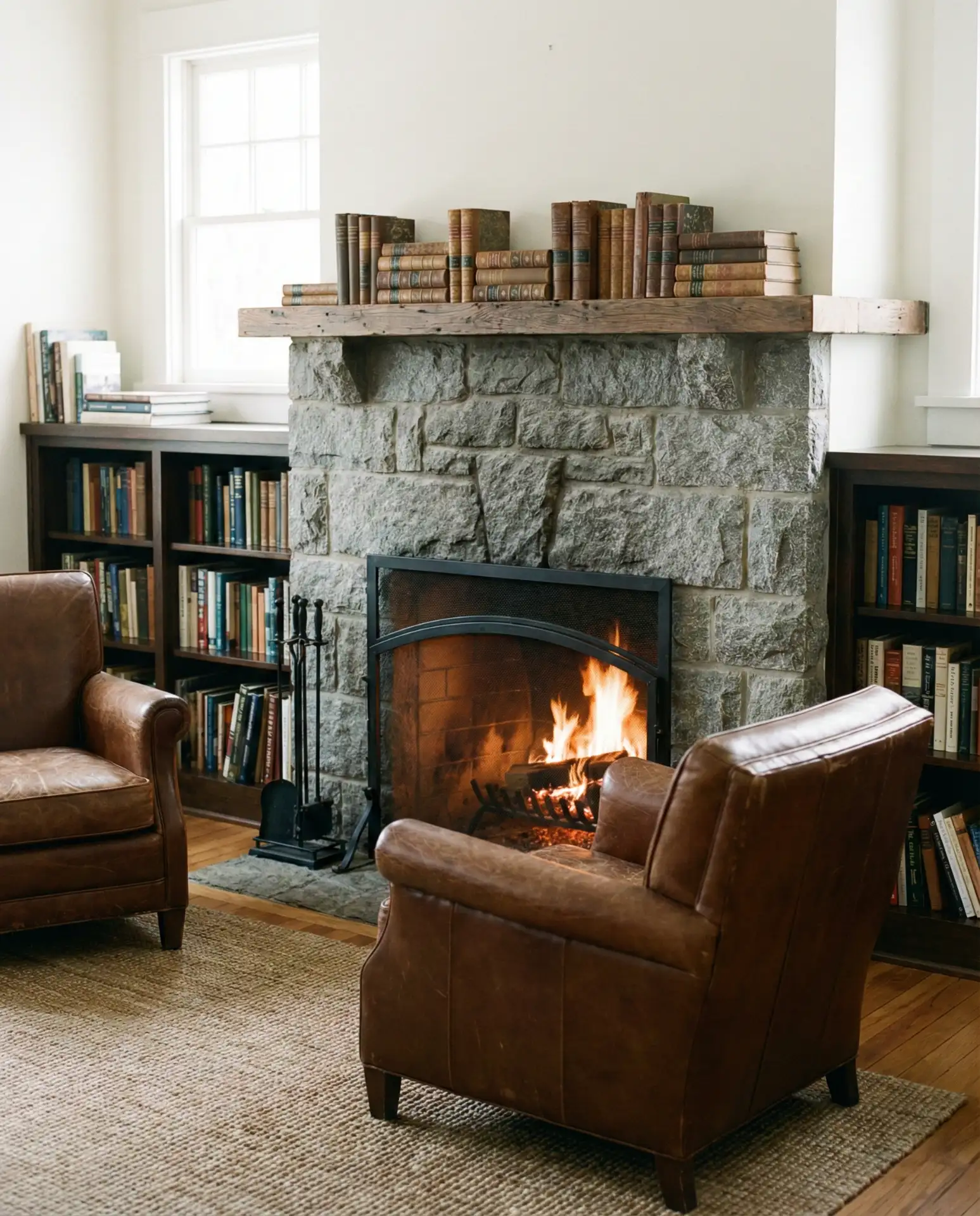
Few combinations feel more inviting than shelves of books flanking a crackling fireplace. The stone surround provides textural contrast to smooth book spines, while the warmth of the fire creates the ultimate cozy reading environment. Position two armchairs facing the hearth, add a small side table for your coffee cup, and you’ve created a space where winter evenings disappear into chapters. This is the library setup that makes people never want to leave home.
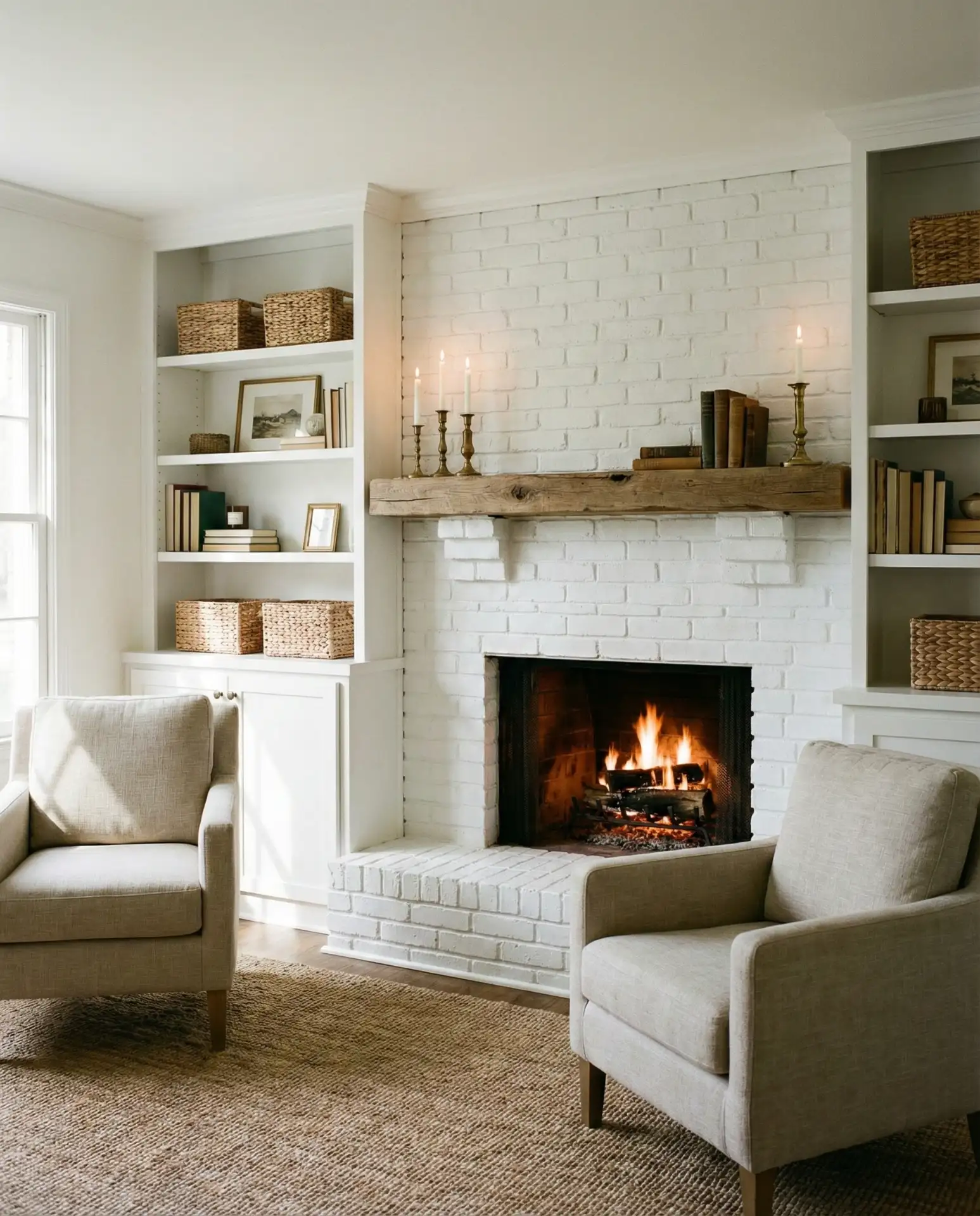
This setup is particularly popular in regions with cold winters—think the Midwest, Northeast, and mountain states—where a functioning fireplace adds both ambiance and practical heat. If you’re building this from scratch, work with your contractor to ensure proper clearance between the firebox and any wood shelving, typically at least 12 inches horizontally and 18 inches above the mantel, to prevent heat damage to your books.
9. Colorful Eclectic Book Display
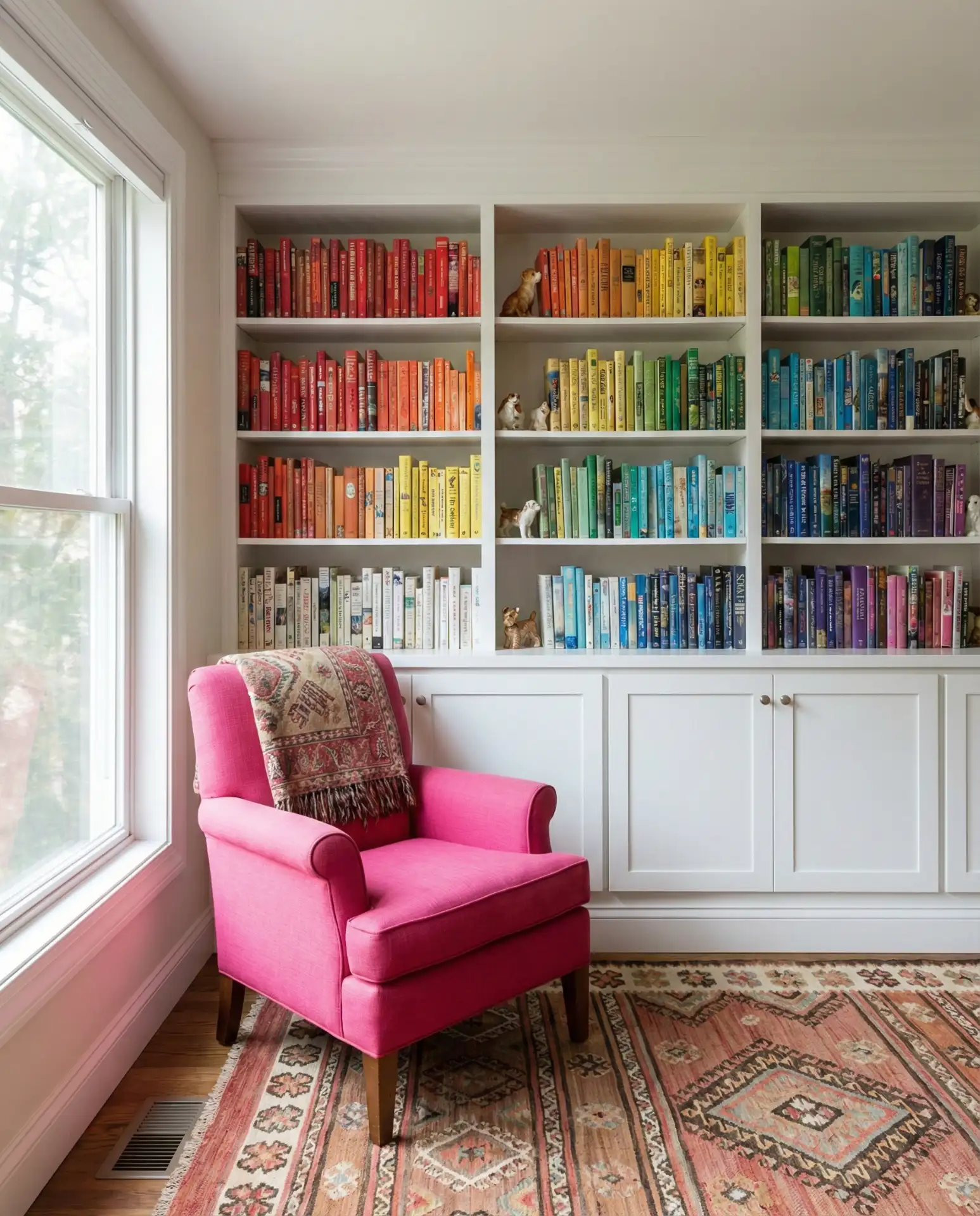
Not every library needs to whisper—some should sing. Arrange books by spine color to create a rainbow effect across your shelves, mixing in bright decor objects, quirky bookends, and unexpected pops of pattern. This playful approach to library design ideas works especially well in homes with bold personalities, where the book collection becomes wall art in its own right. It’s unapologetically fun and endlessly Instagram-worthy.
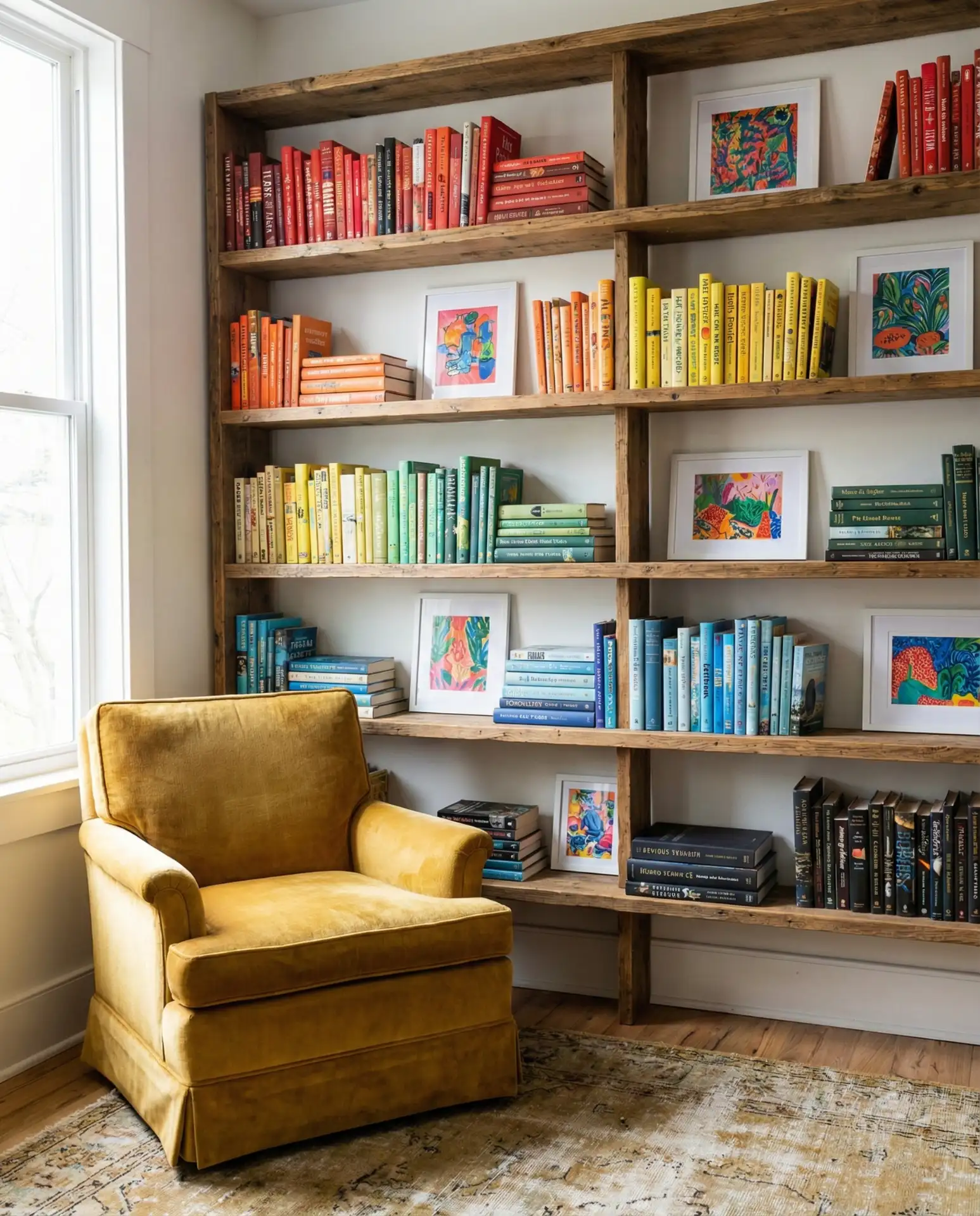
Budget-wise, this is one of the most accessible library styles since you’re working with the books you already own—no expensive custom millwork required. Simple wall-mounted shelves from IKEA or Target (usually under $200 for a full wall) combined with some intentional arranging can achieve the look. The real investment is time spent organizing, but many readers find that sorting their collection by color makes them rediscover forgotten titles.
10. Moody Dark-Walled Reading Room
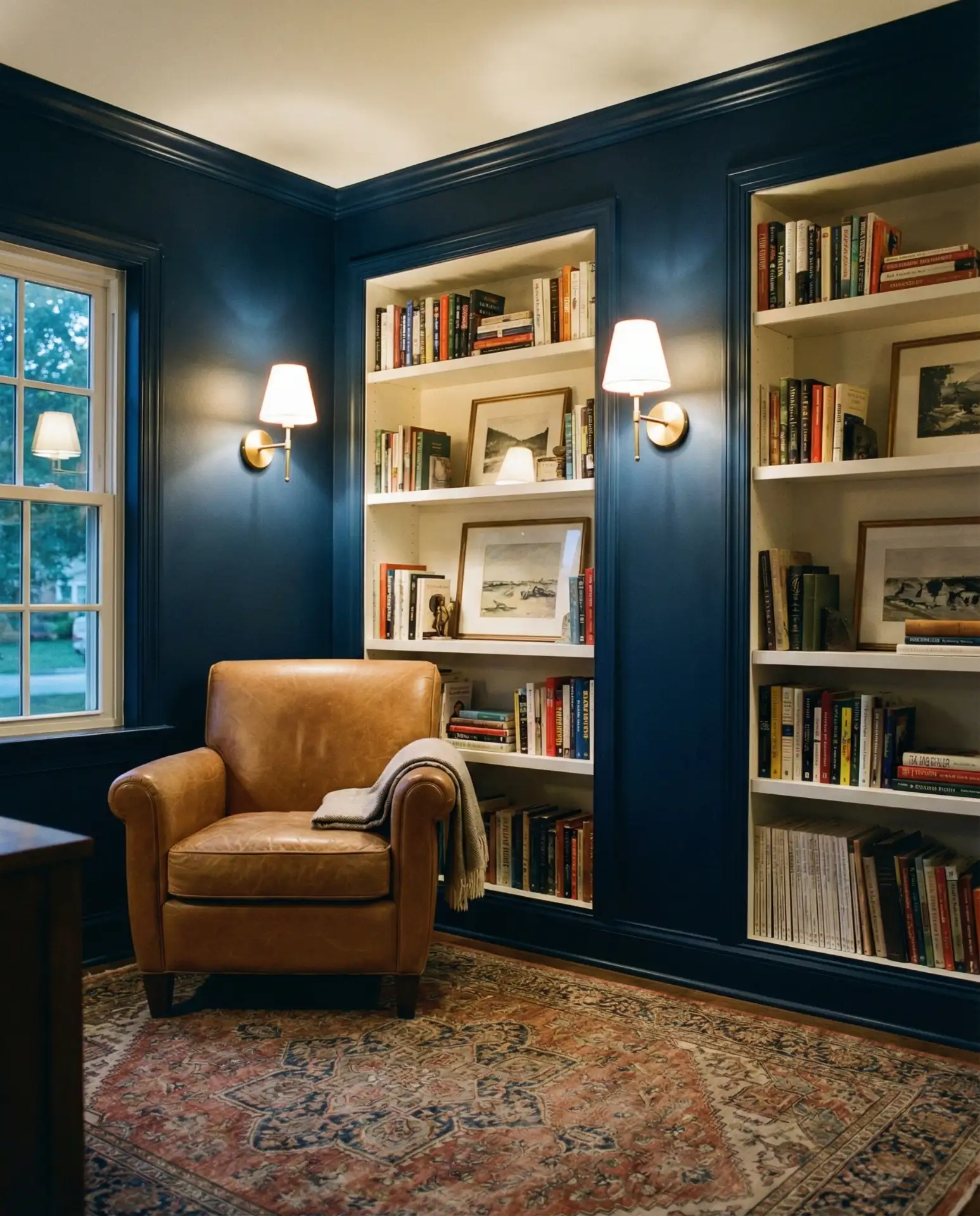
Embrace moody drama with charcoal, navy, or forest green walls that make your book collection pop. Dark paint colors create an enveloping, intimate atmosphere that encourages hours of uninterrupted reading. Light-colored book spines stand out brilliantly against the deep backdrop, while brass or gold fixtures add warm metallic accents. This approach turns a room into a sophisticated retreat that feels miles away from the rest of the house.
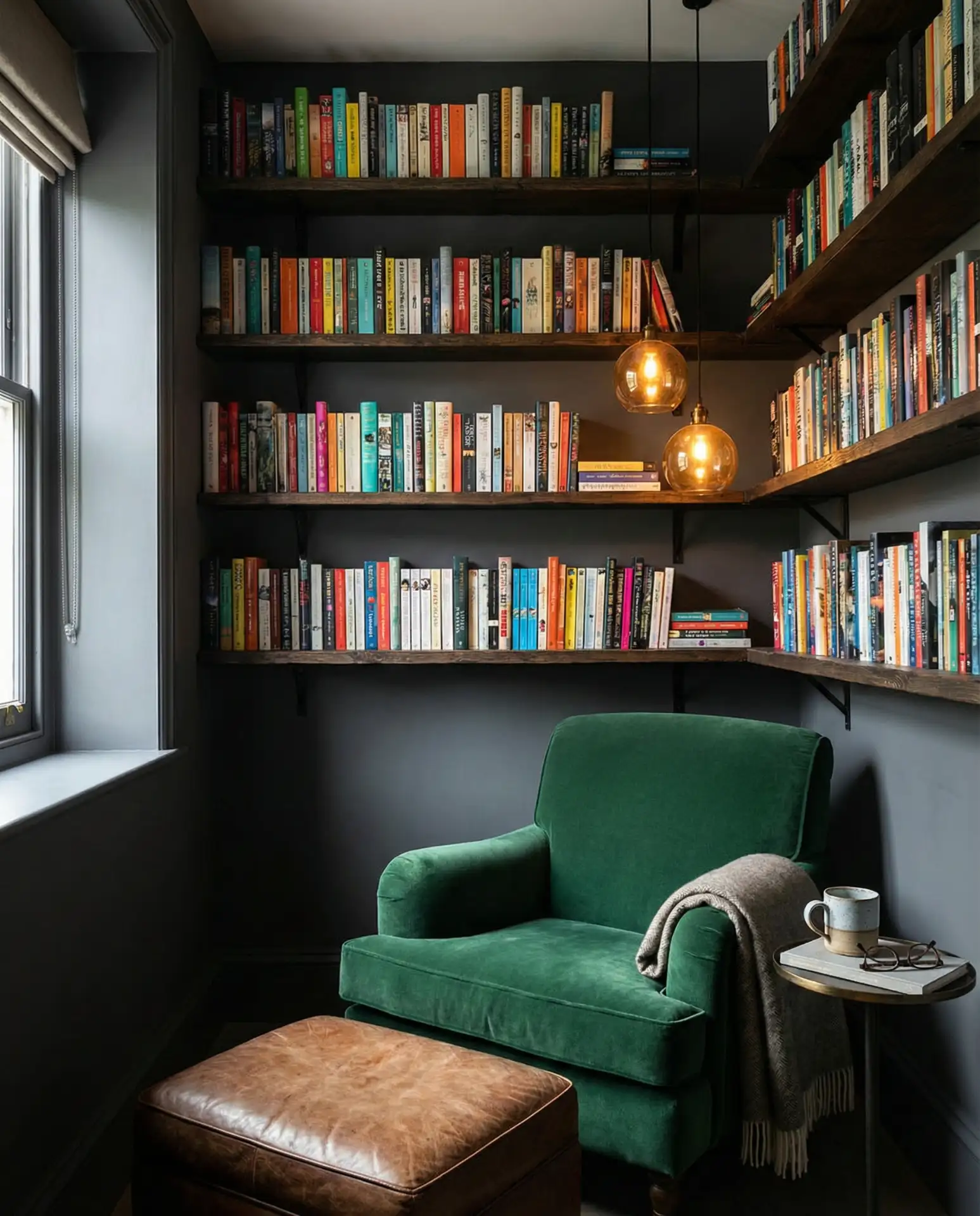
Contrary to popular belief, dark walls don’t necessarily make a room feel smaller—they can actually make boundaries recede and create depth. The key is balancing the darkness with adequate lighting: layer ambient overhead lights, task lighting for reading, and accent lights to highlight the shelves themselves. This style particularly suits rooms without much natural light, where you’re embracing the cave-like quality rather than fighting it.
11. Airy White Scandinavian Library
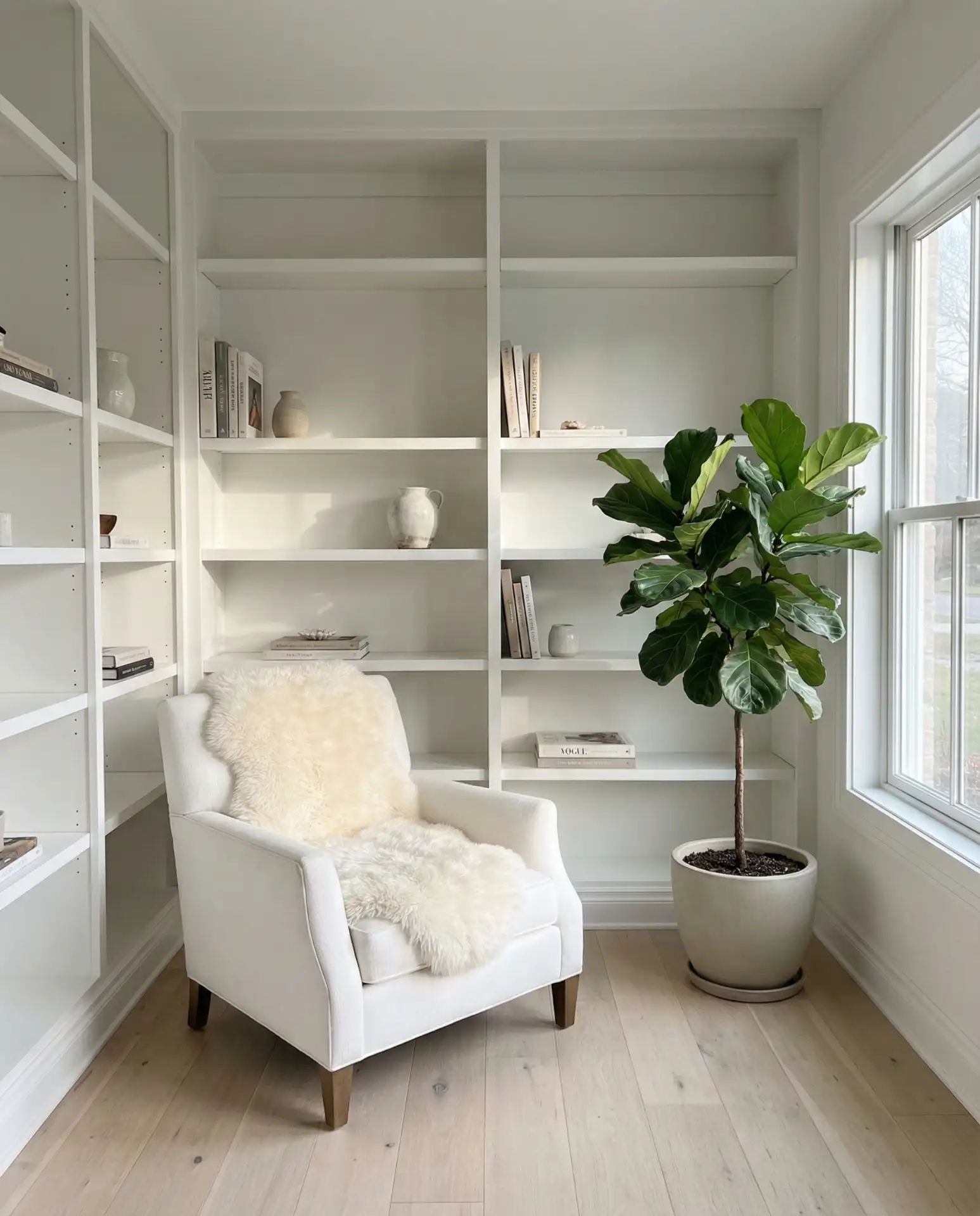
On the opposite end of the spectrum, an all-white Scandinavian-inspired library maximizes light and creates an airy, calming space. White shelves against white walls, pale wood floors, and minimal decor keep the focus on the books themselves while maintaining a sense of spaciousness. Add texture through natural fiber rugs, linen curtains, and a few well-chosen plants to prevent the space from feeling sterile. The result is beautiful in its simplicity.
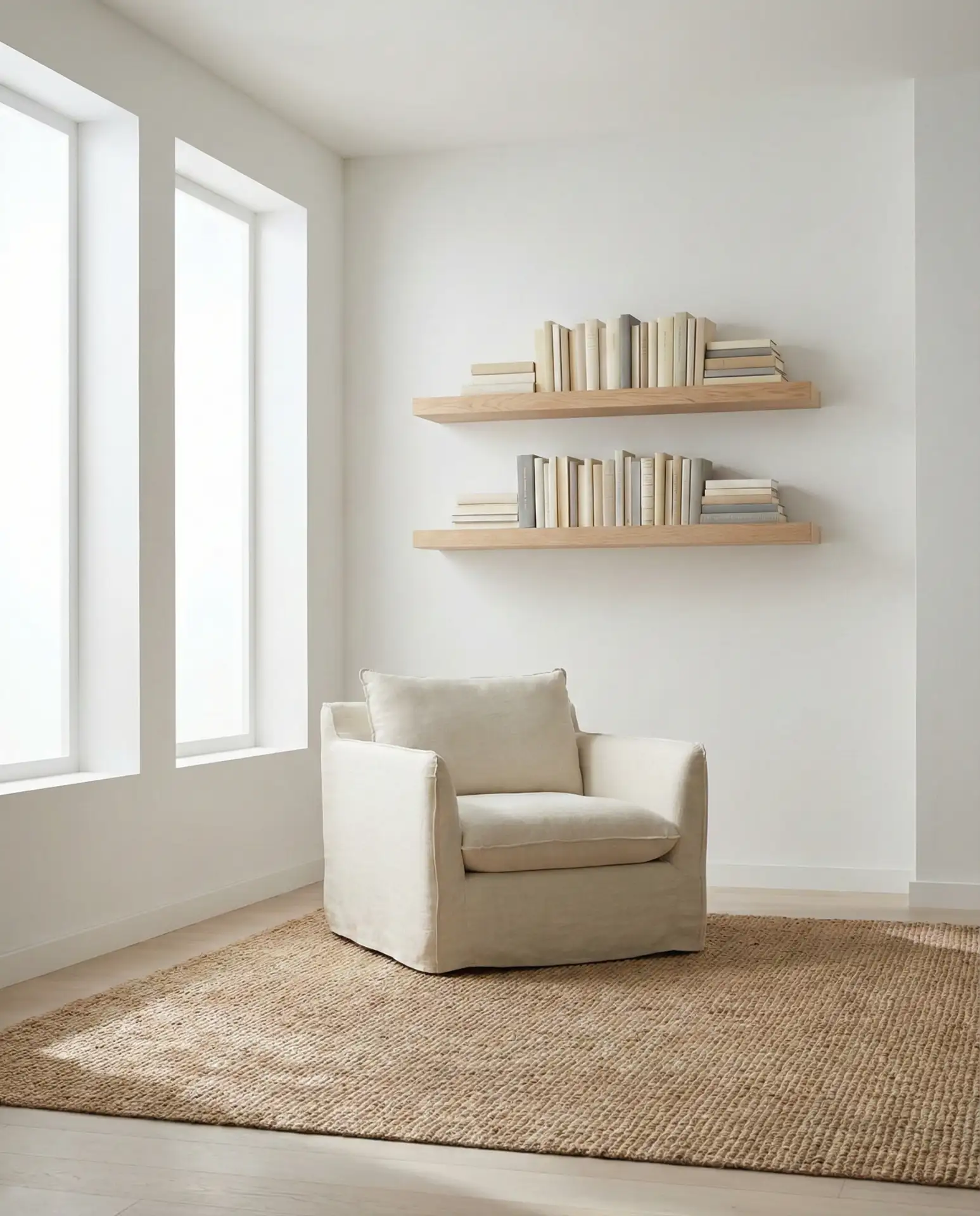
This aesthetic works beautifully in smaller homes where you want to preserve a sense of openness and in regions with limited winter sunlight where maximizing brightness is essential—think Seattle, Portland, or upper Midwest cities. The white-on-white approach also provides a neutral backdrop that lets you easily change accent colors seasonally through throw pillows, blankets, or small decor pieces without committing to a major redesign.
12. DIY Industrial Pipe Shelving
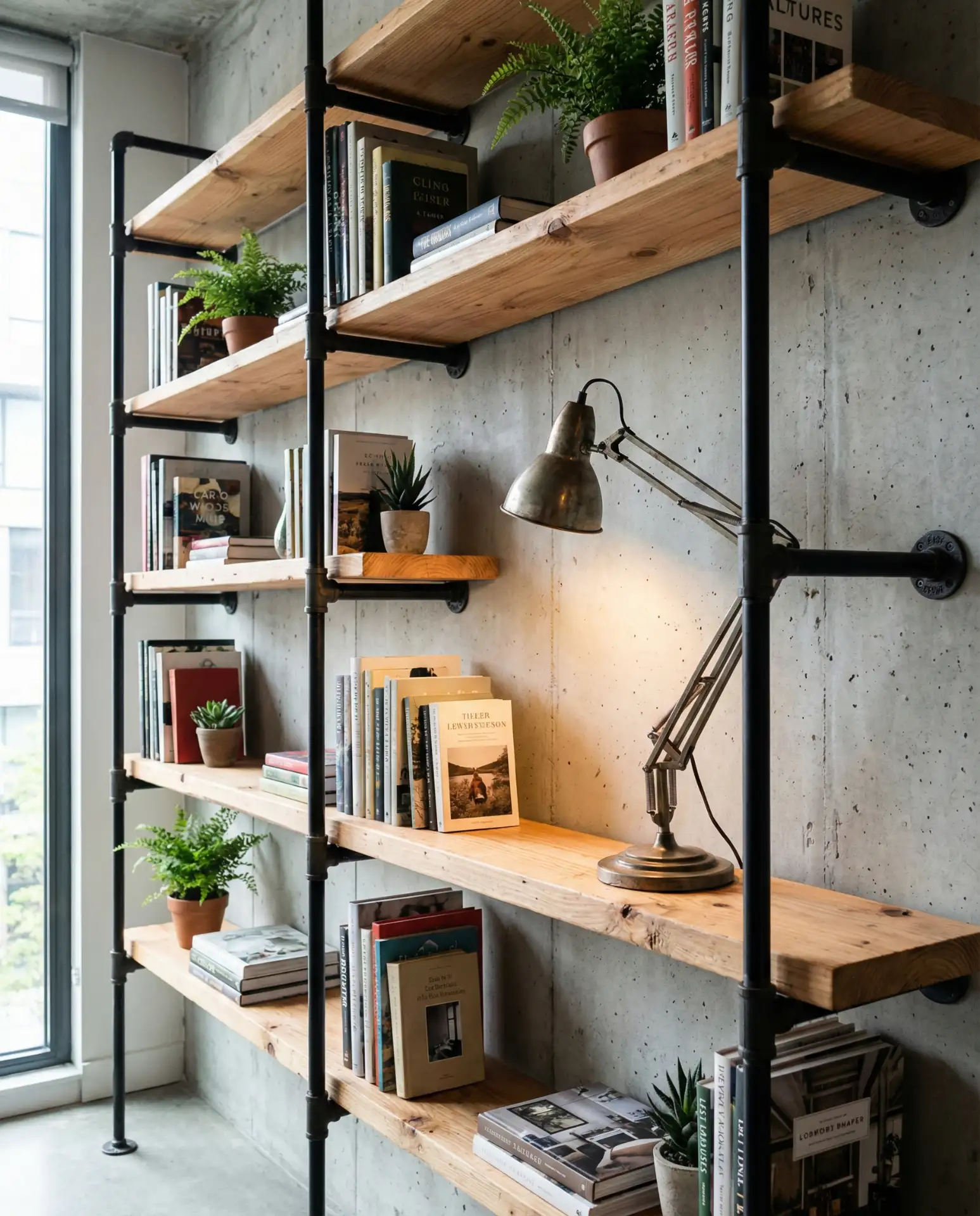
For the hands-on homeowner, DIY industrial pipe shelving offers an affordable and customizable library solution. Black iron pipes serve as brackets and supports for thick wood plank shelves, creating a raw, utilitarian look that’s become hugely popular in loft apartments and modern spaces. You can configure the system to fit any wall dimension, adjust shelf heights as your collection grows, and complete the whole project for a fraction of custom built-in costs.
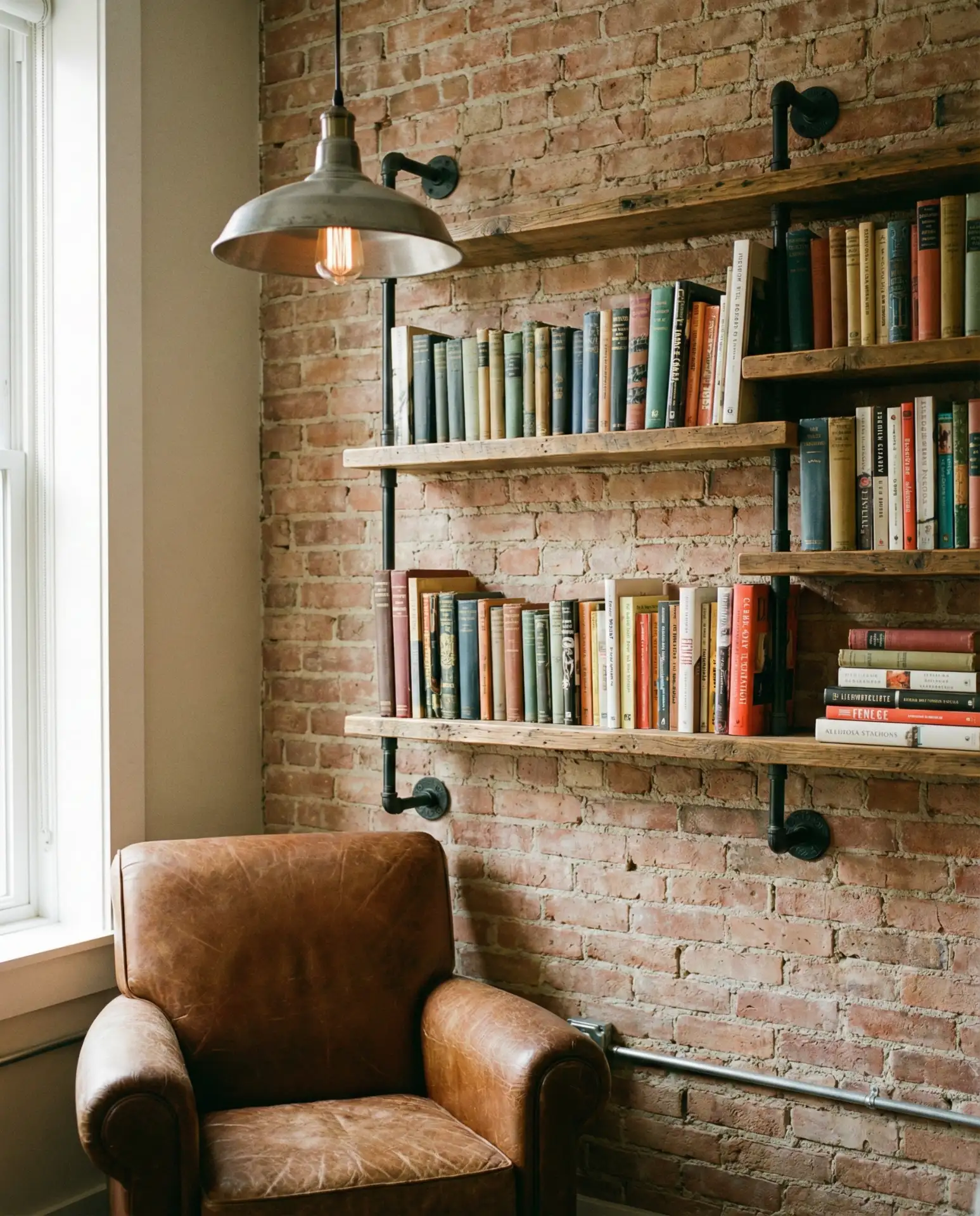
A homeowner in Brooklyn told me she built her entire library wall for under $400 using pipes from the local hardware store and shelves cut from a single sheet of plywood. The project took a weekend, and she says the modular nature means she can reconfigure it if she moves. The pipes come pre-threaded, so assembly is straightforward even for beginners—just make sure you’re anchoring into studs to support the weight safely.
13. Grand Two-Story Library with Gallery
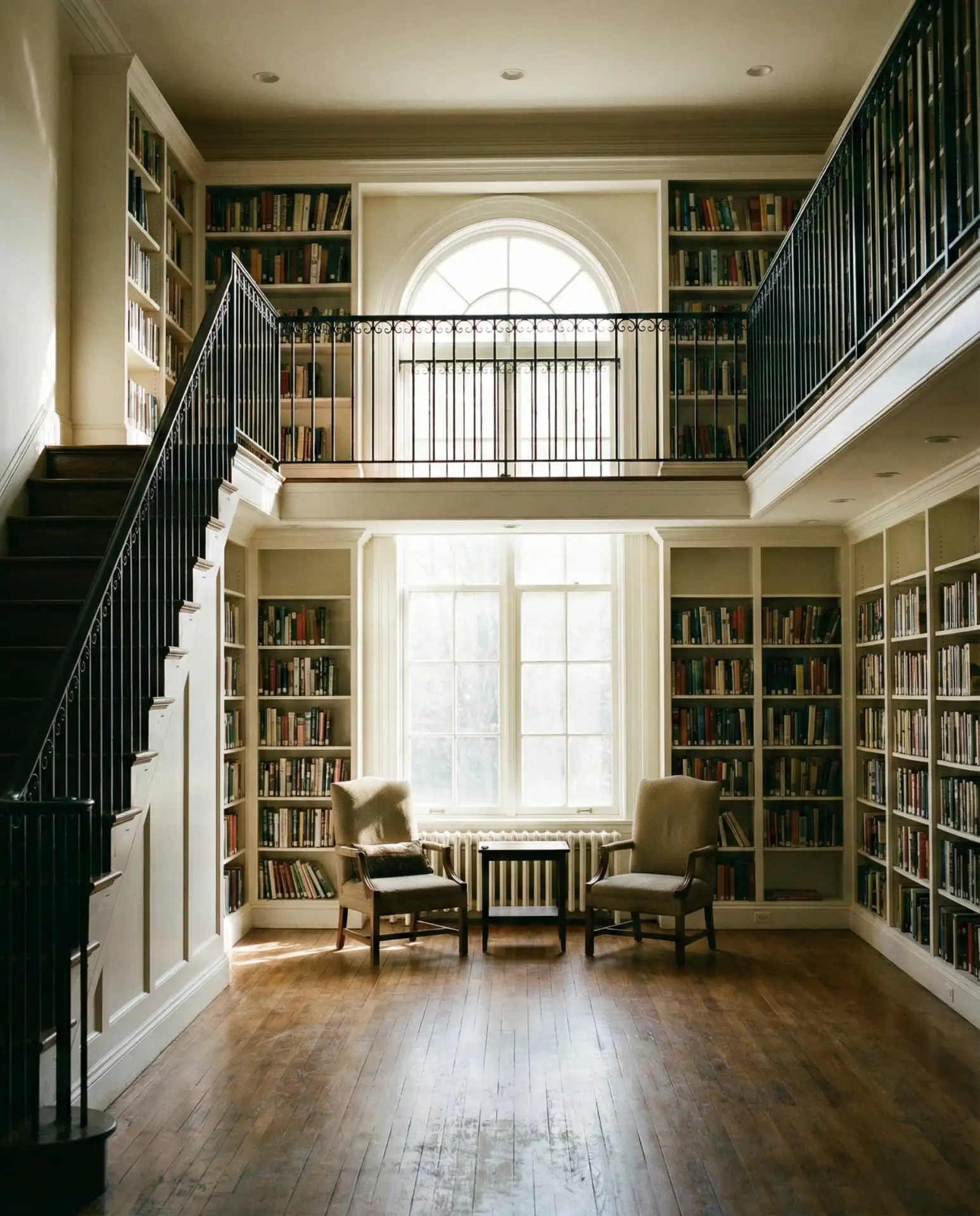
If you’re fortunate enough to have soaring ceilings, a two-story library with a gallery walkway or mezzanine level is the ultimate dream space. This luxury setup doubles your shelf capacity while creating architectural drama that rivals anything in a period film. A spiral staircase or floating steps lead to the upper level, where you can reach those high shelves and enjoy a bird’s-eye view of your collection below.
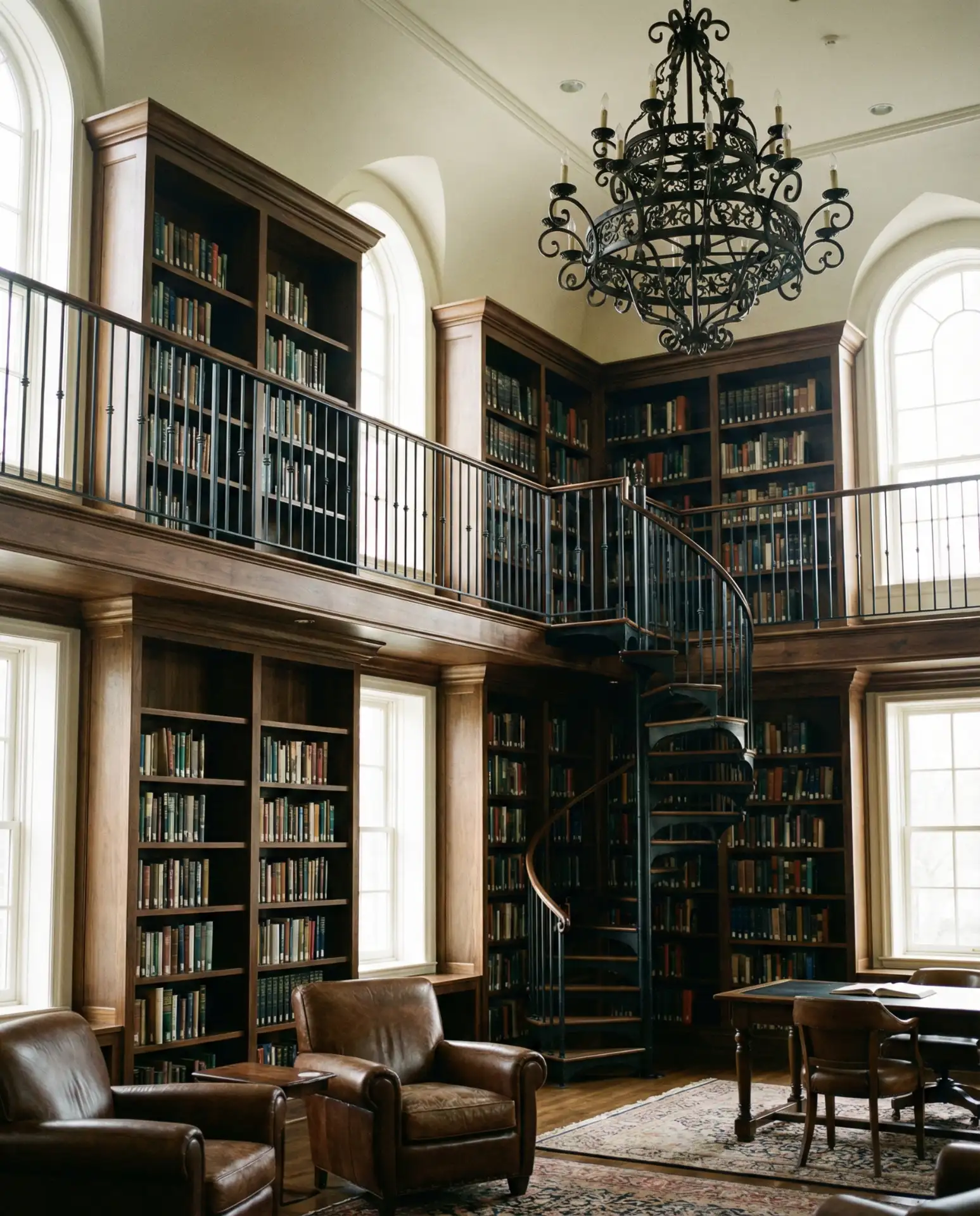
Obviously this falls into the high-budget category—custom millwork and structural work for a gallery level typically starts around $50,000 and can easily exceed six figures depending on finishes and complexity. Where it works best is in homes with great rooms, converted barns, or custom builds where the volume is already there. For those with the space and budget, though, it’s a showstopping feature that makes your home library genuinely architectural.
14. Corner Library Nook
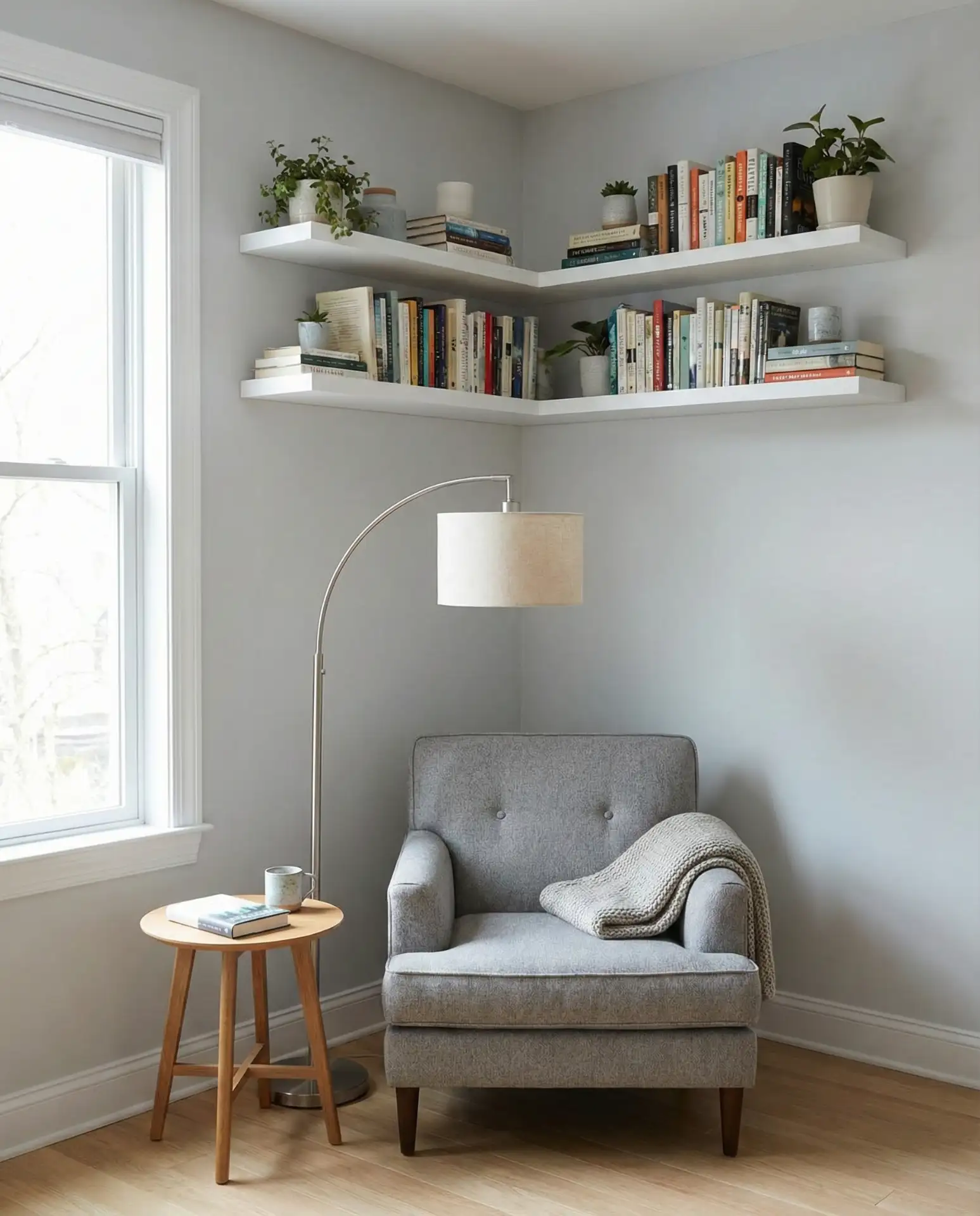
Don’t overlook corners—they’re often wasted space that can become perfect cozy reading zones. Install L-shaped shelving that wraps both walls, tuck in a comfortable armchair or beanbag, and add a floor lamp for task lighting. This configuration works in bedrooms, living rooms, or any space where you have an underutilized corner waiting to be transformed. It’s an efficient way to add library functionality without sacrificing an entire room.
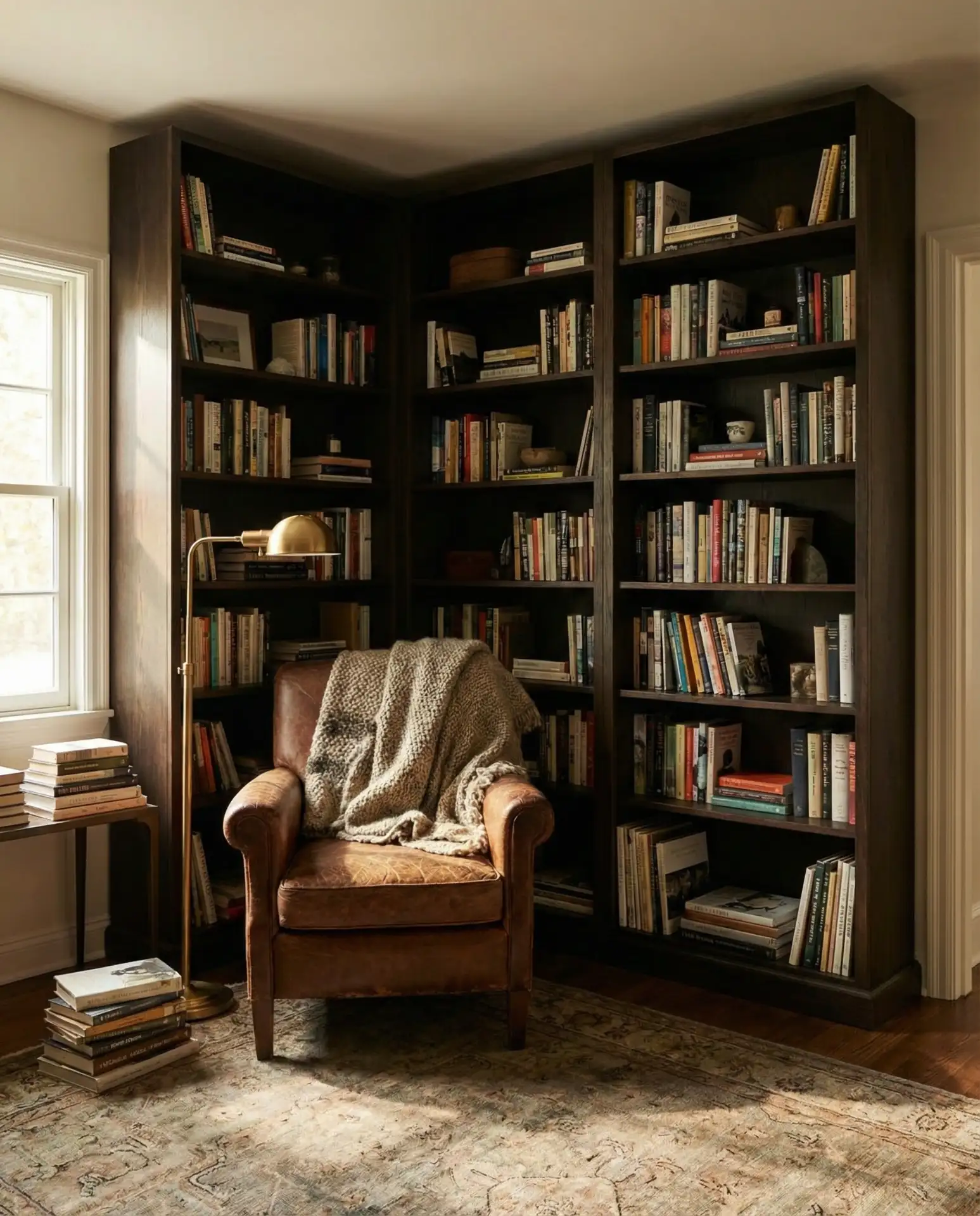
Expert designers often recommend corner libraries for open-plan homes where you want to create defined zones without building walls. The shelving itself acts as a subtle room divider while serving its primary function. This approach is particularly popular in studio apartments and loft spaces where every piece of furniture needs to earn its keep by serving multiple purposes.
15. Library with Statement Wallpaper
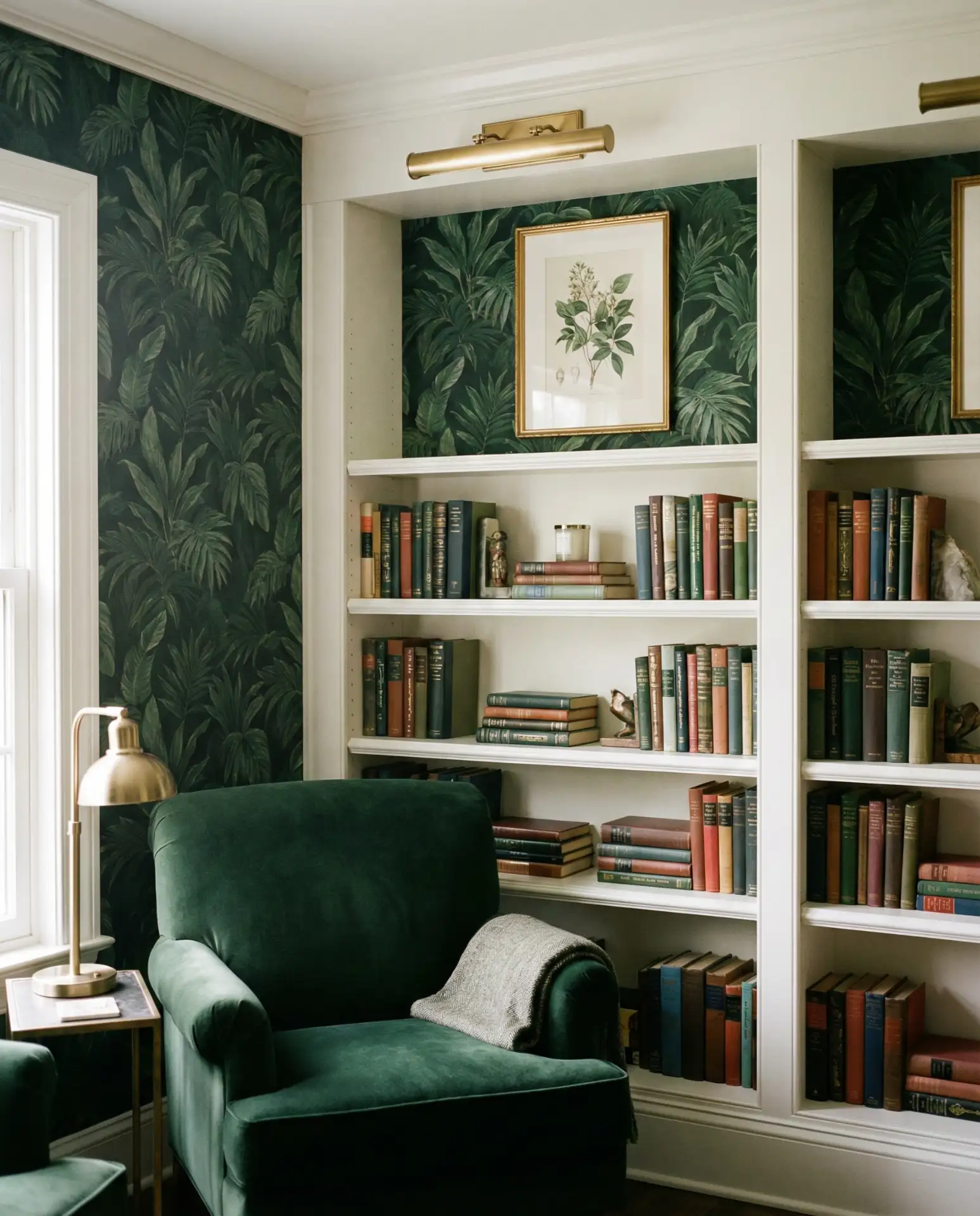
Wallpaper adds instant personality to a library, whether you choose botanical prints, geometric patterns, or rich damasks. The pattern provides visual interest behind books and creates a backdrop that makes the space feel intentionally designed. Pair bold wallpaper with simpler shelving—white or light wood works well—so the wall covering can be the star of the show without competing visually with your book spines.
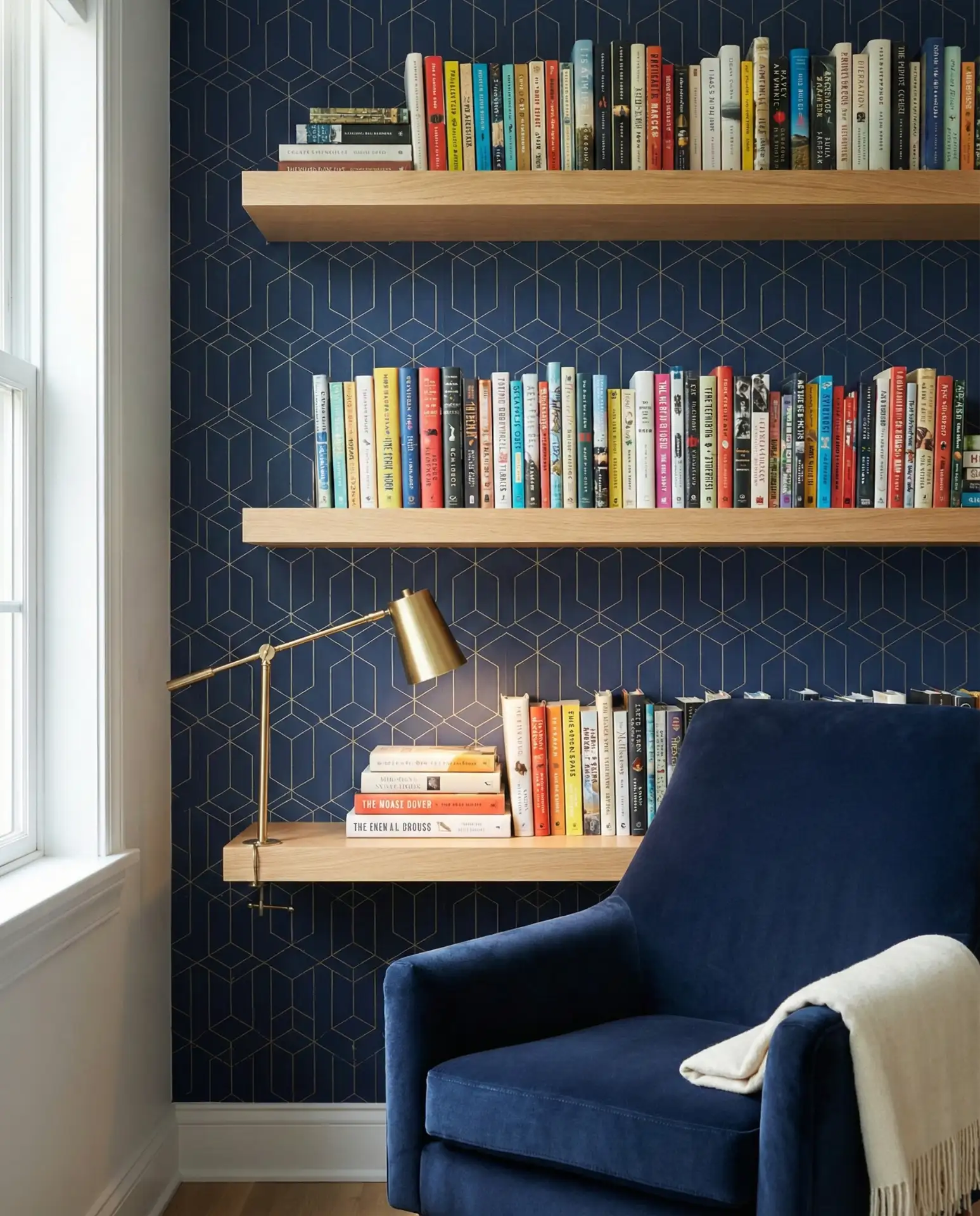
The wallpaper-and-shelf combination typically costs between $500 and $1,500 for a standard room, depending on the quality of paper you choose and whether you hire a professional installer or DIY it. Peel-and-stick wallpapers have made this more accessible for renters too, offering pattern impact without the commitment. Just make sure the pattern scale works with your room size—large prints can overwhelm a tiny space, while tiny prints may get lost in a large room.
16. Library Under the Stairs
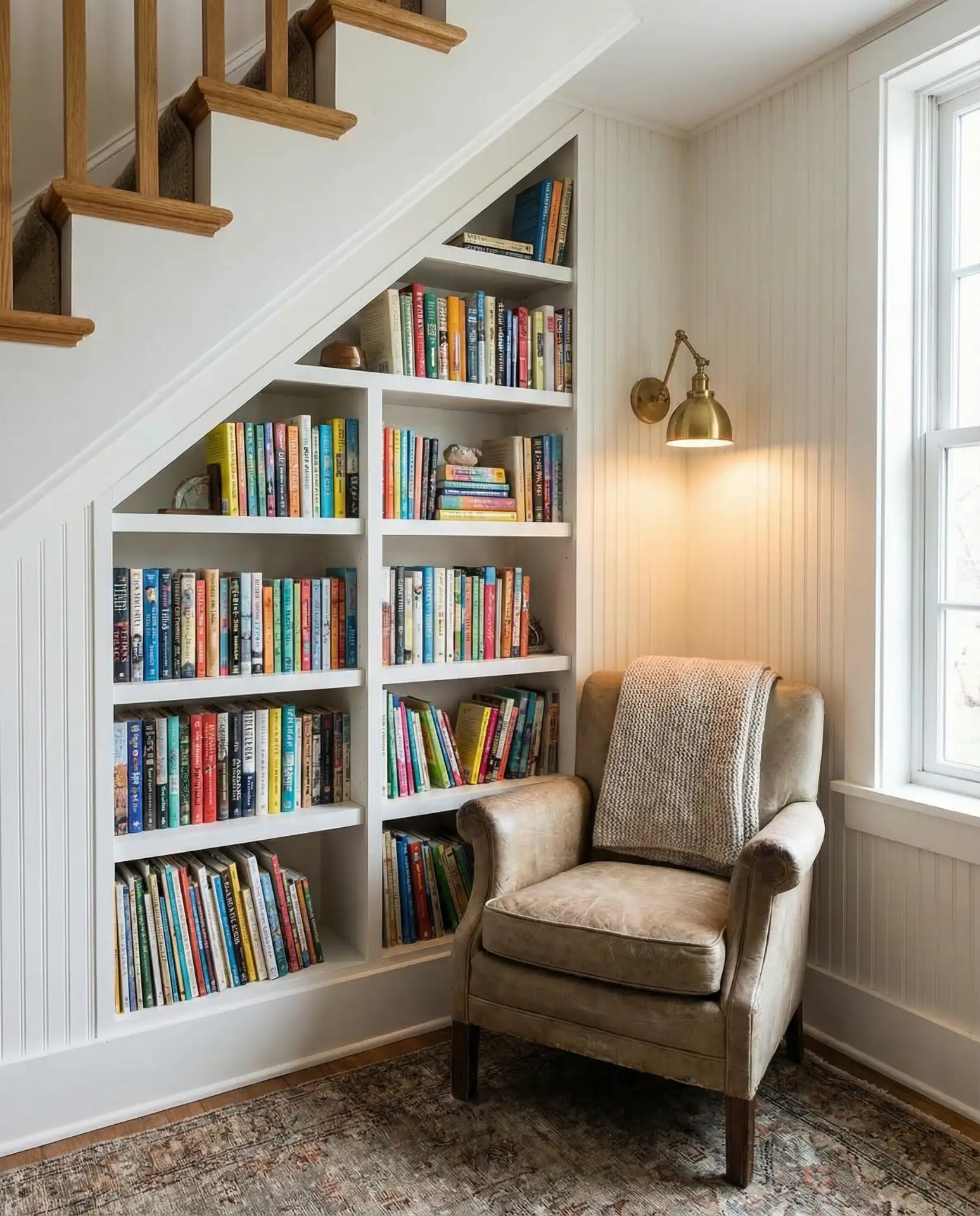
That awkward space under the staircase makes an unexpectedly perfect library nook. Custom shelving can be built to follow the slope of the stairs, maximizing every inch of vertical space. Add a small reading light and perhaps a cushion or low stool, and you’ve got a Harry Potter-worthy hideaway that turns dead space into one of your home’s most charming features. This works in everything from Cape Cods to split-levels.
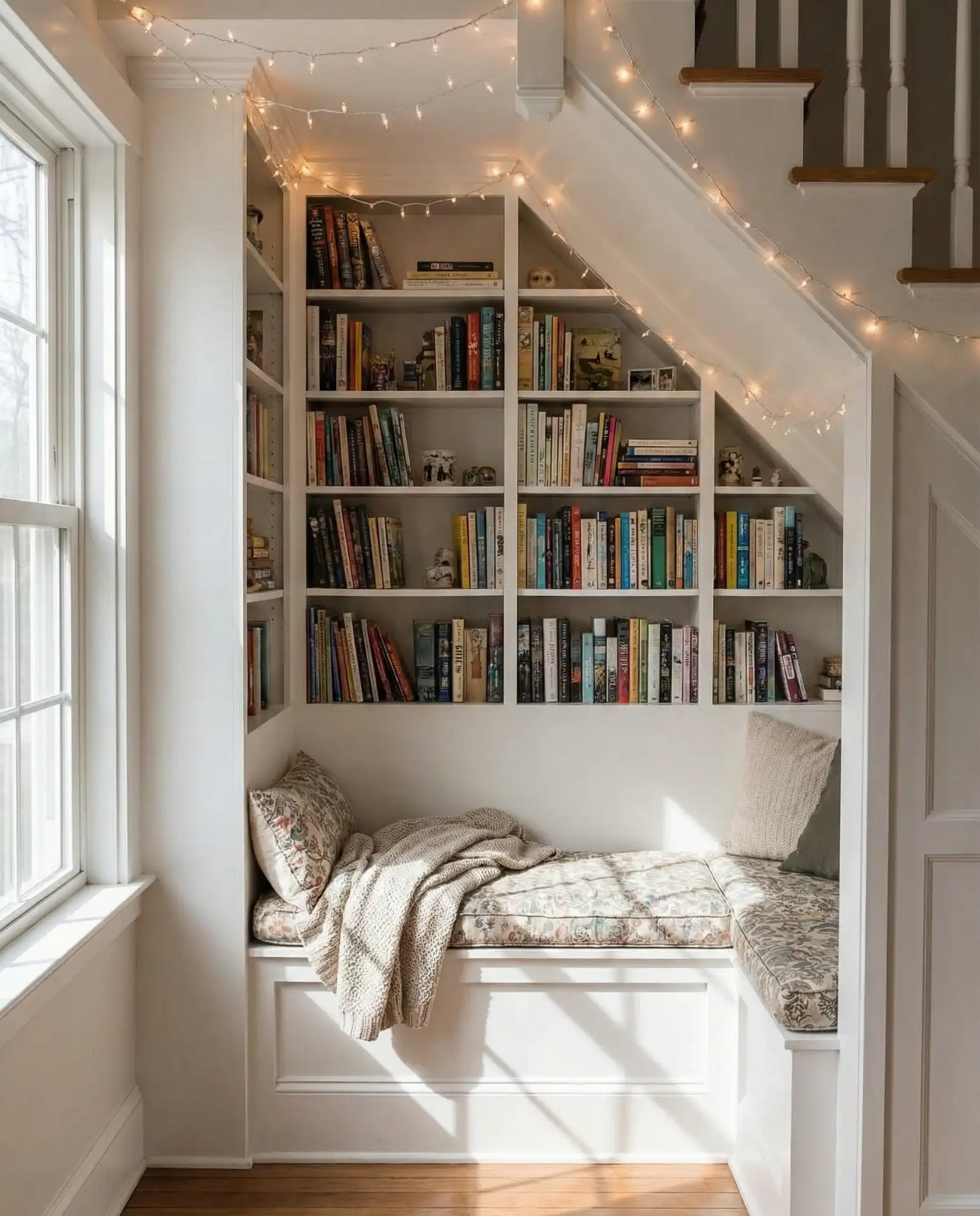
This is where real homeowners get creative—I’ve seen everything from floor cushions with fairy lights to miniature wingback chairs squeezed into stair nooks. The key is getting accurate measurements since every staircase has a unique pitch and footprint. Most carpenters can build custom sloped shelving for $800-$2,000, and you end up with a conversation-starting feature that guests always remember.
17. Luxury Library with Marble Accents
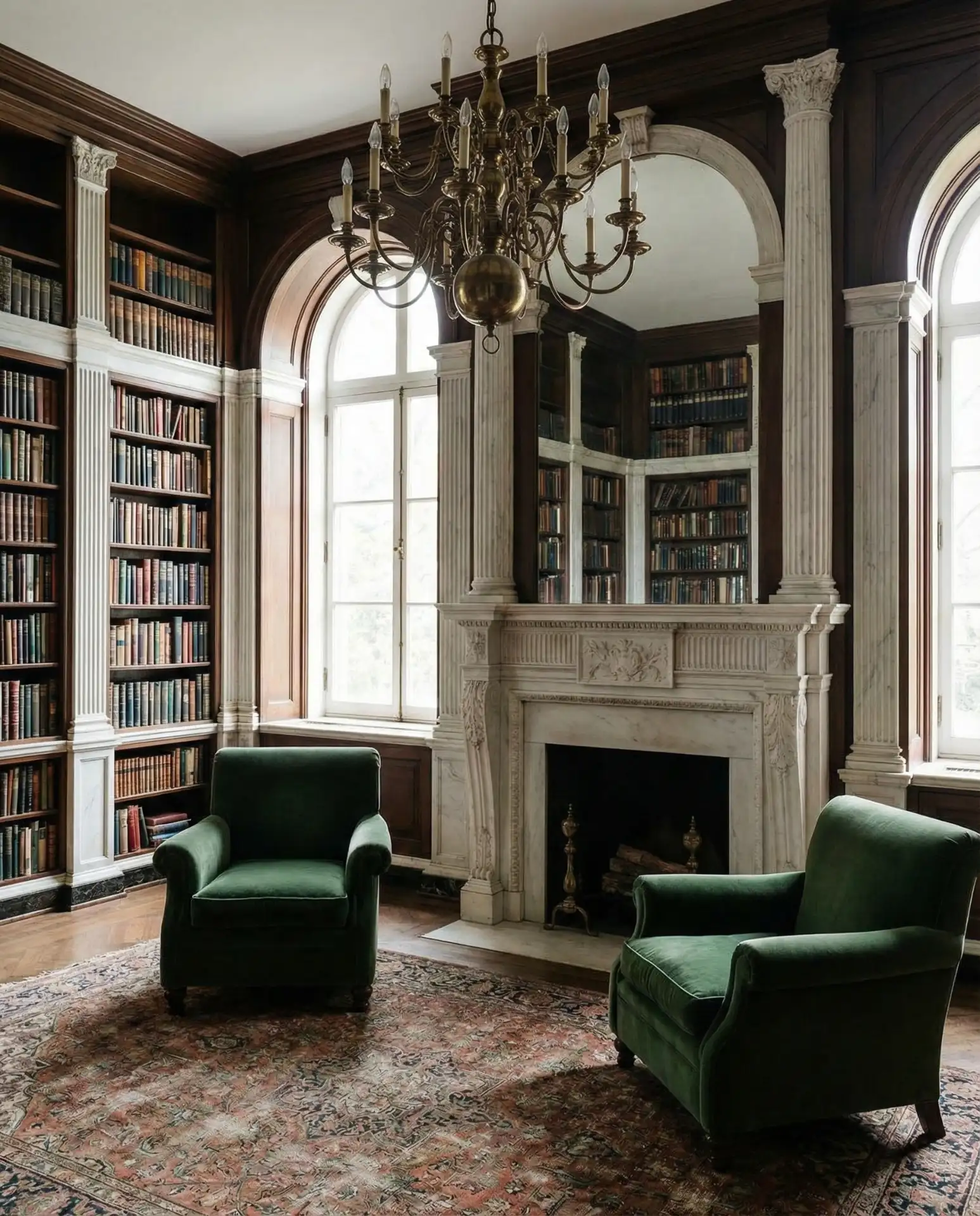
For those seeking true room luxury and refined elegance, incorporate marble elements into your library design. A marble-topped side table, marble bookends, or even marble-clad shelving supports add instant sophistication. Pair with rich wood tones, plush seating, and metallic accents in gold or brass for a look that feels both opulent and timeless. This is the library that makes visitors pause in the doorway.
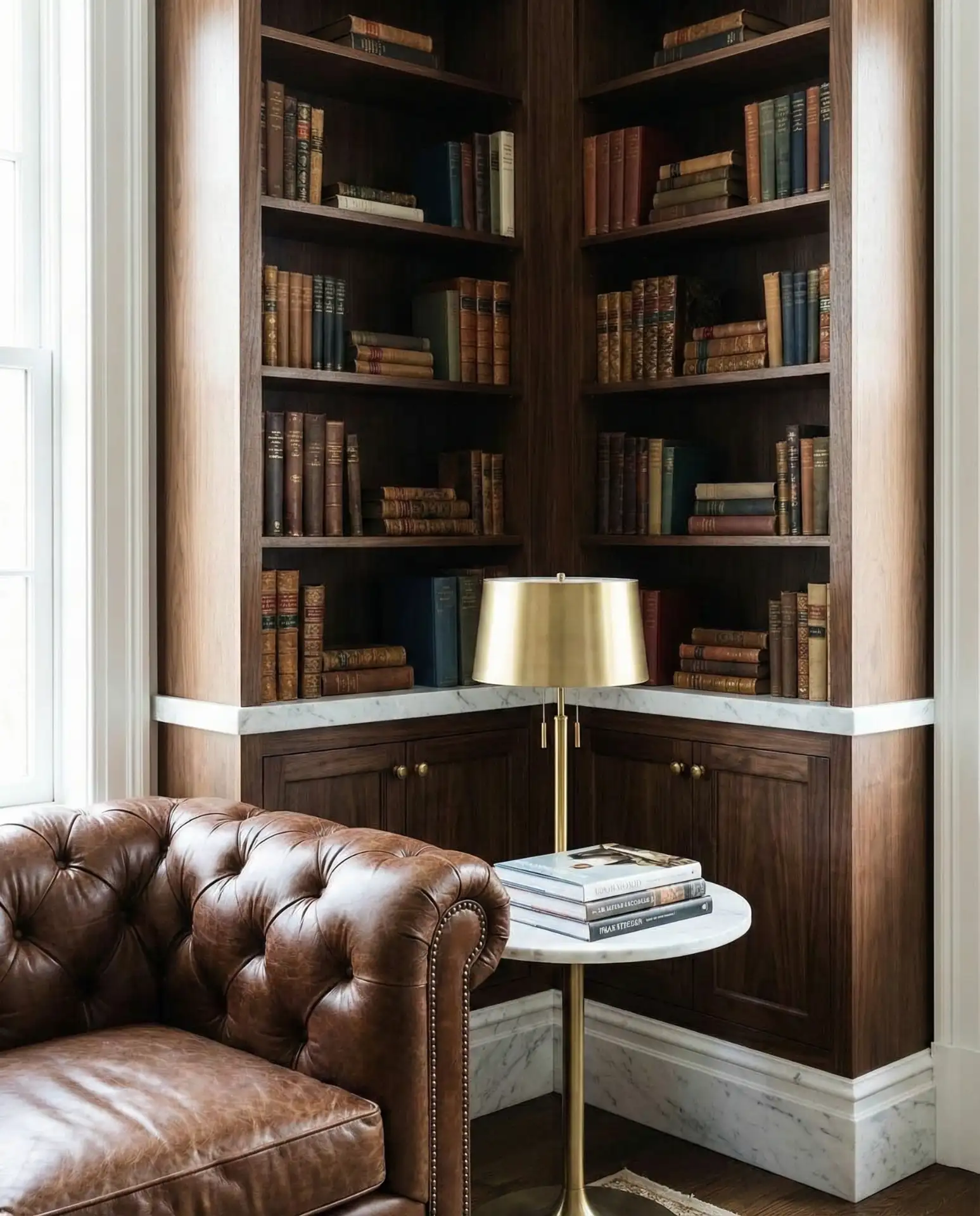
Where this works best is in formal homes with traditional or transitional architecture—think Georgian estates, Mediterranean villas, or high-end city townhouses where the architecture can support the material richness. Marble is an investment material, with even small accent pieces starting at several hundred dollars, but its durability means these pieces will last for generations. It’s library design as heirloom creation.
18. Mid-Century Modern Library
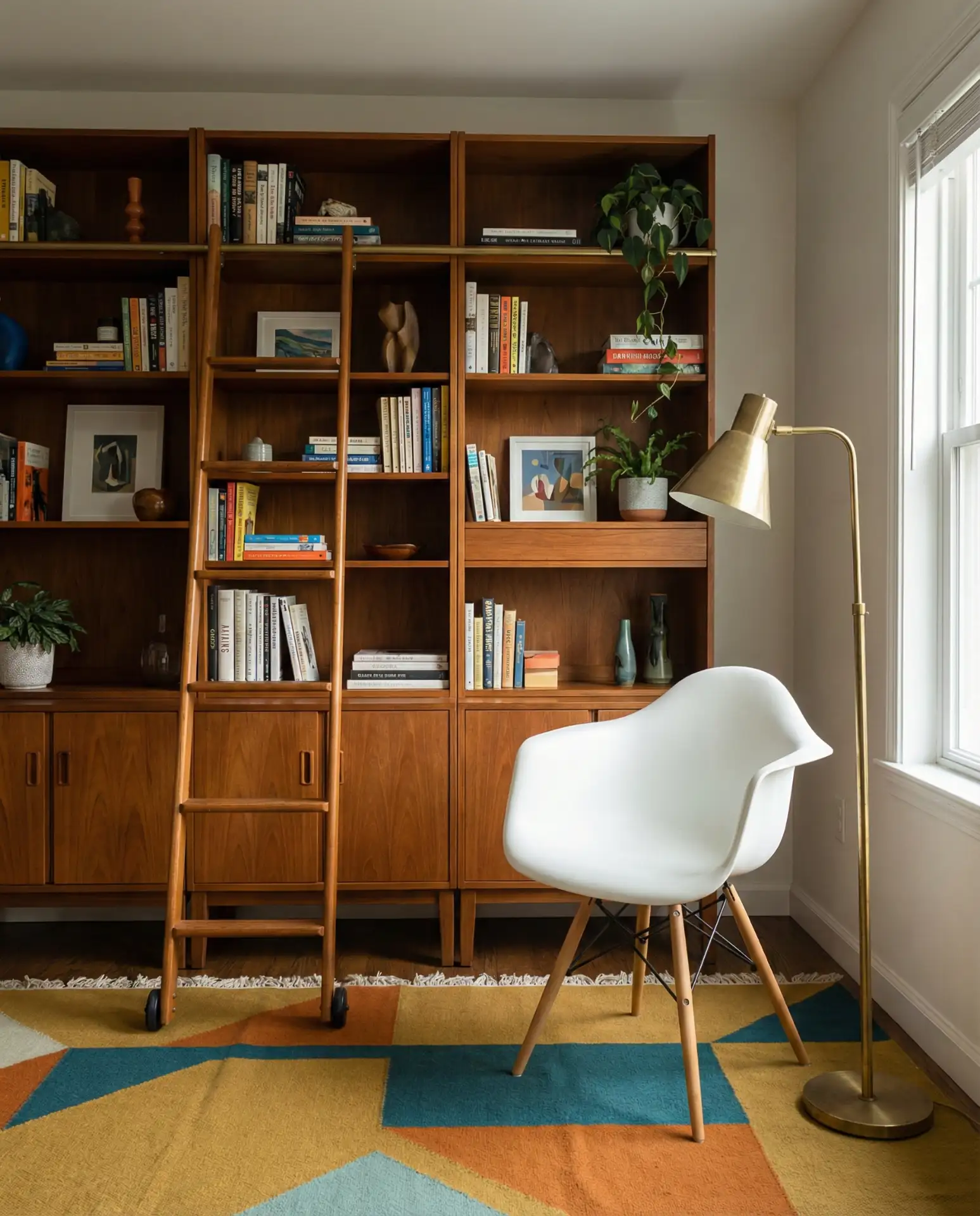
Channel the 1950s and 60s with a mid-century modern library featuring clean-lined teak or walnut shelving, tapered-leg furniture, and geometric accents. This aesthetic balances warm wood tones with streamlined forms, creating a library that feels both retro and timeless. Add a classic Eames lounge chair or a vintage globe, and you’ve captured that perfect blend of sophistication and approachability that defines mid-century design.
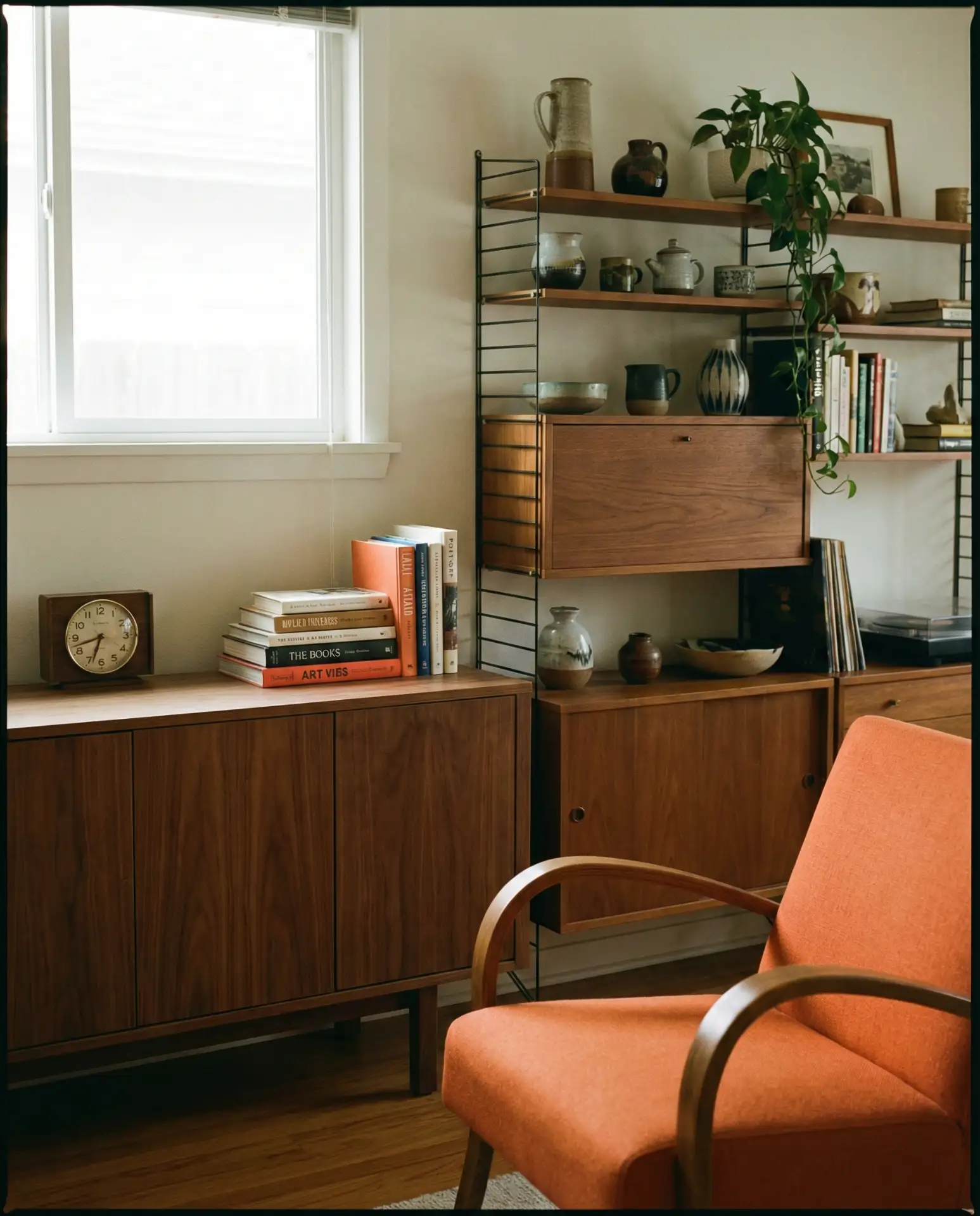
Real homeowners in ranch houses and split-levels—architectural styles born in the mid-century era—find this aesthetic particularly authentic. Many of these homes still have original built-ins that can be refinished rather than replaced, saving money while honoring the home’s history. Even in newer construction, mid-century style works beautifully in open-plan spaces where you want warm wood tones without the heaviness of traditional dark libraries.
19. Bohemian Layered Library
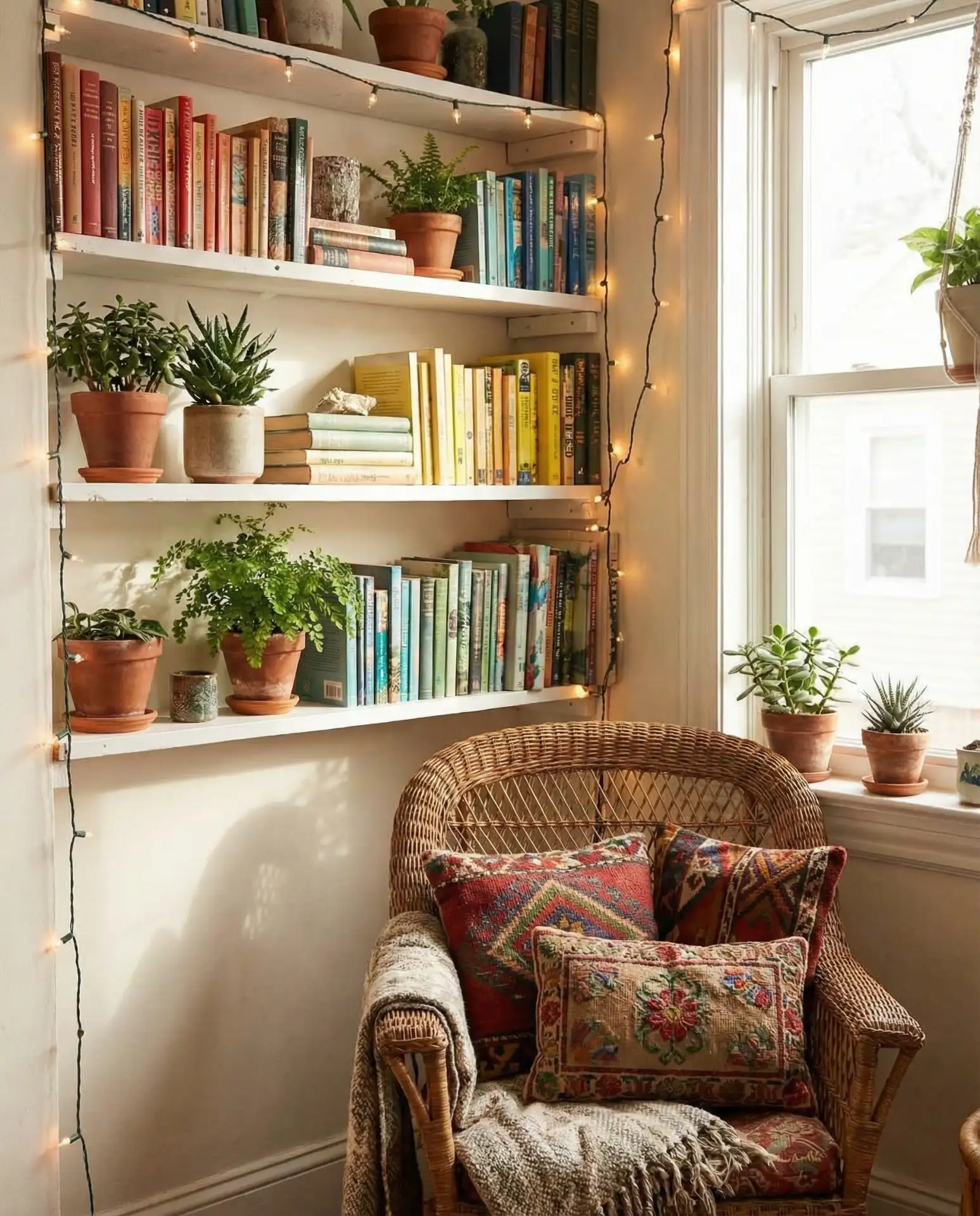
Embrace maximalism with a bohemian library that layers patterns, textures, and collected objects without apology. Mix open shelving with stacked books on the floor, hang tapestries or macramé, add plenty of plants, and scatter floor cushions for casual seating. This approach celebrates the lived-in, collected-over-time look where books share space with travel souvenirs, vintage finds, and handmade treasures. It’s personality-forward and unapologetically personal.
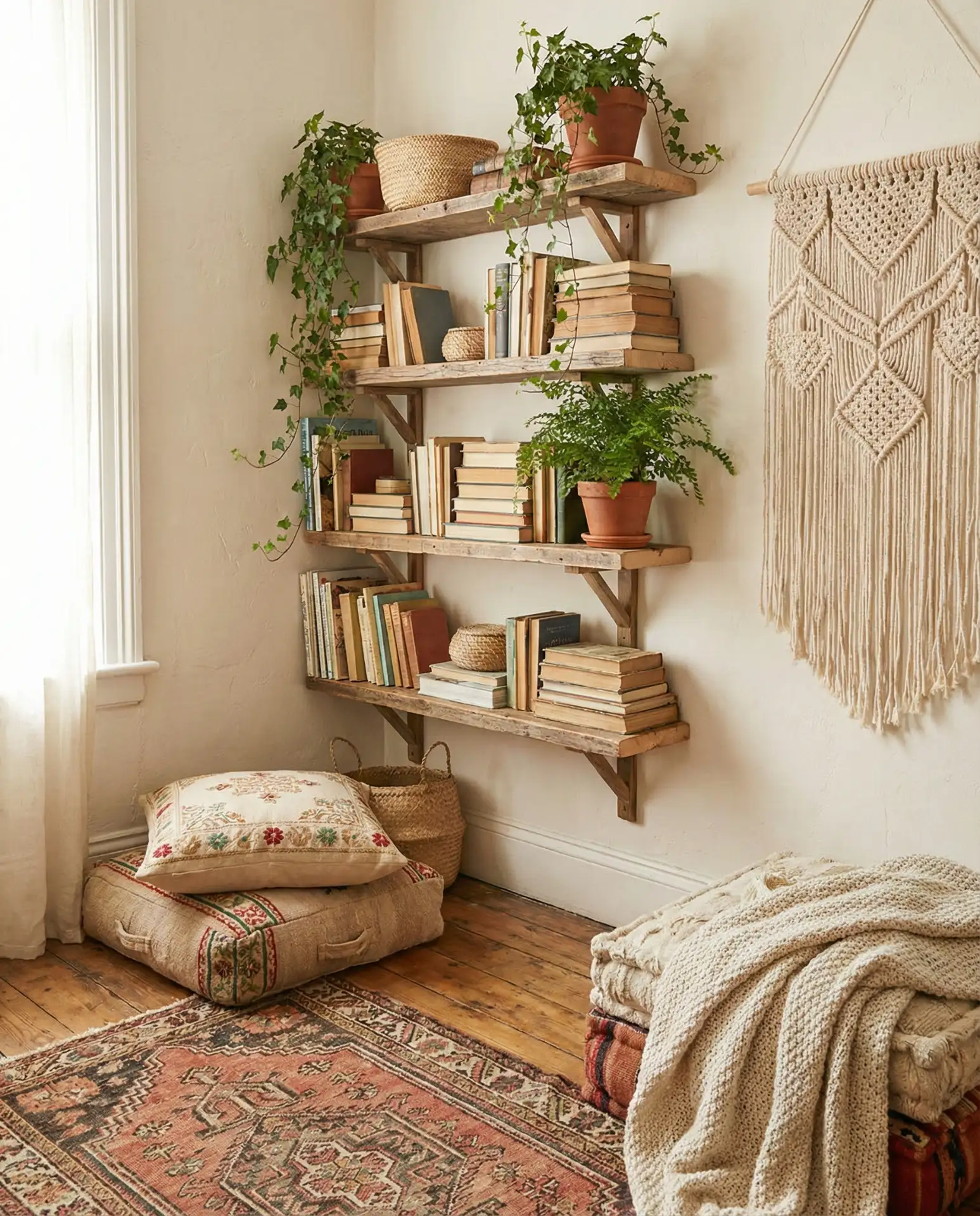
This is one of the most budget-friendly library styles since it thrives on thrifted and collected pieces rather than matching sets. Homeowners can build the space gradually, adding layers as they find things they love. Common mistakes include going too cluttered—even bohemian style needs breathing room. A good rule is the “80% full” guideline: keep shelves about 80% packed so there’s space for objects and new finds without everything toppling over.
20. Sleek Black Library
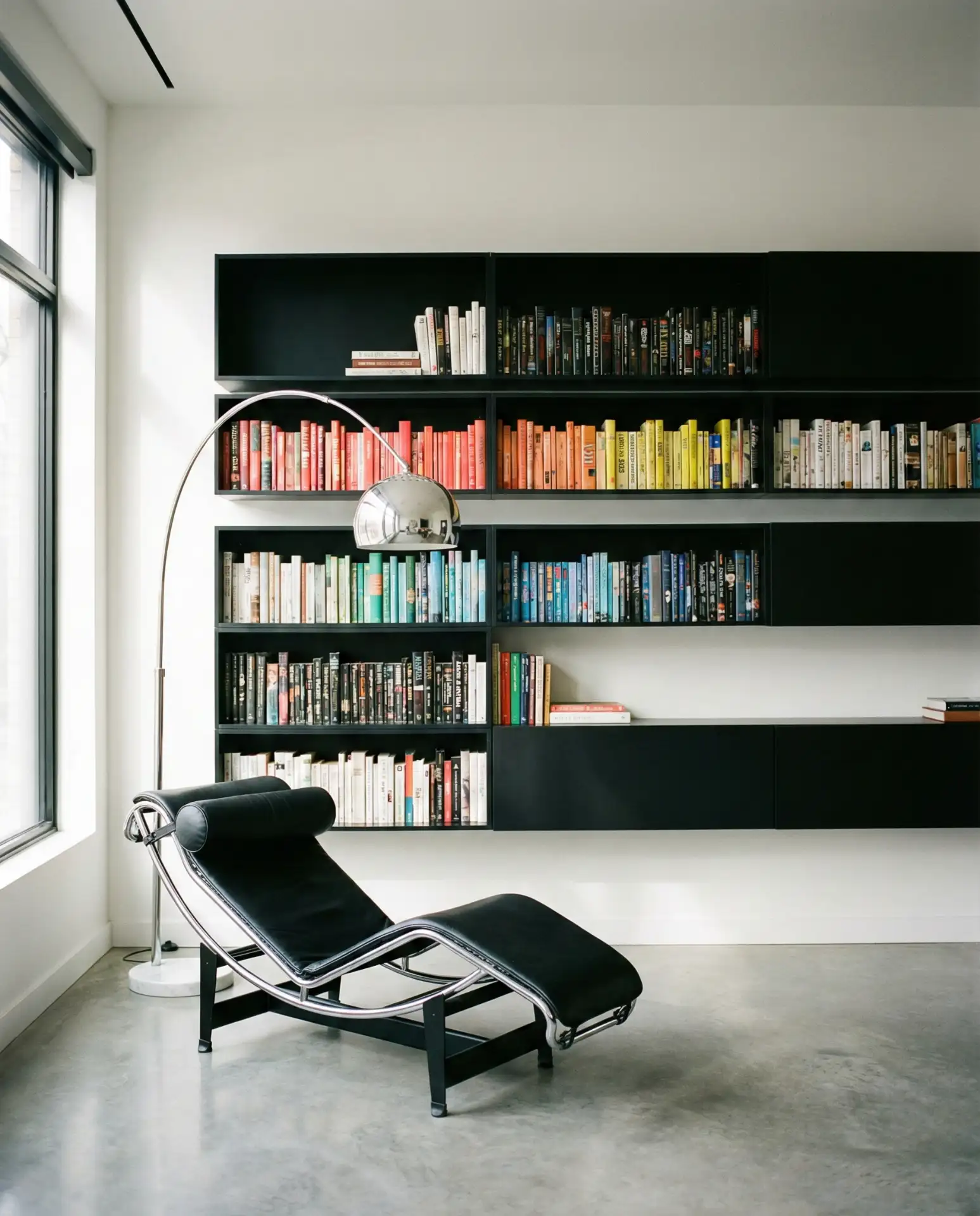
All-black shelving creates a striking, gallery-like backdrop for your book collection. The dark structure makes colorful book spines pop dramatically while lending serious modern sophistication to the space. Pair with white walls for contrast or go fully dark for a more enveloping effect. Add metallic accents in brass or chrome, and you’ve got a library that feels more like a curated exhibition space than a storage solution.
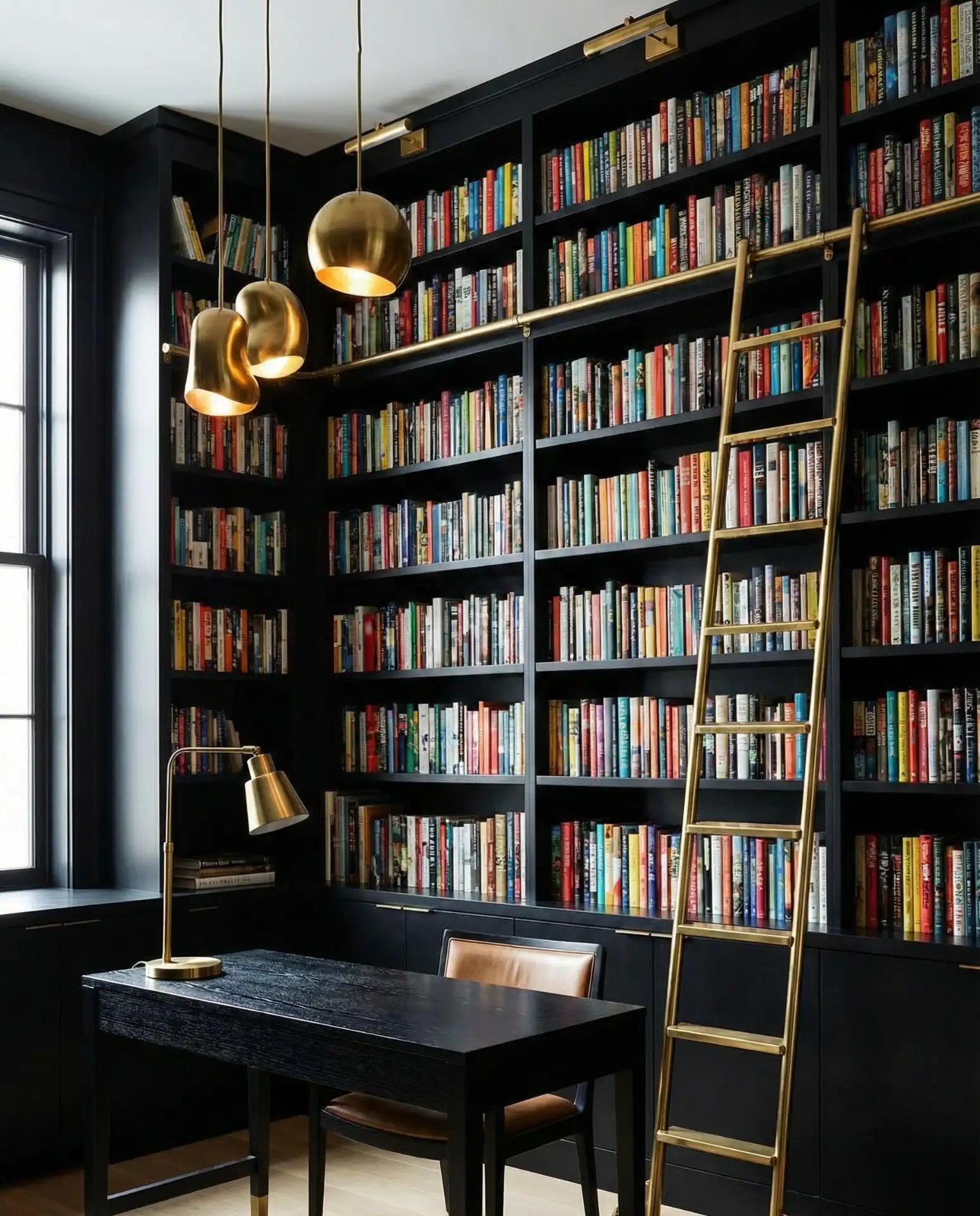
Black shelving works particularly well in contemporary urban homes and converted industrial spaces where the aesthetic leans minimalist. One practical insight: black shows dust more readily than wood tones, so factor in slightly higher maintenance. The look is worth it, though—interior designers consistently rate black libraries among the most photographed spaces in homes, and they maintain a sophisticated edge that never feels dated.
21. Nature-Inspired Library with Wood and Green
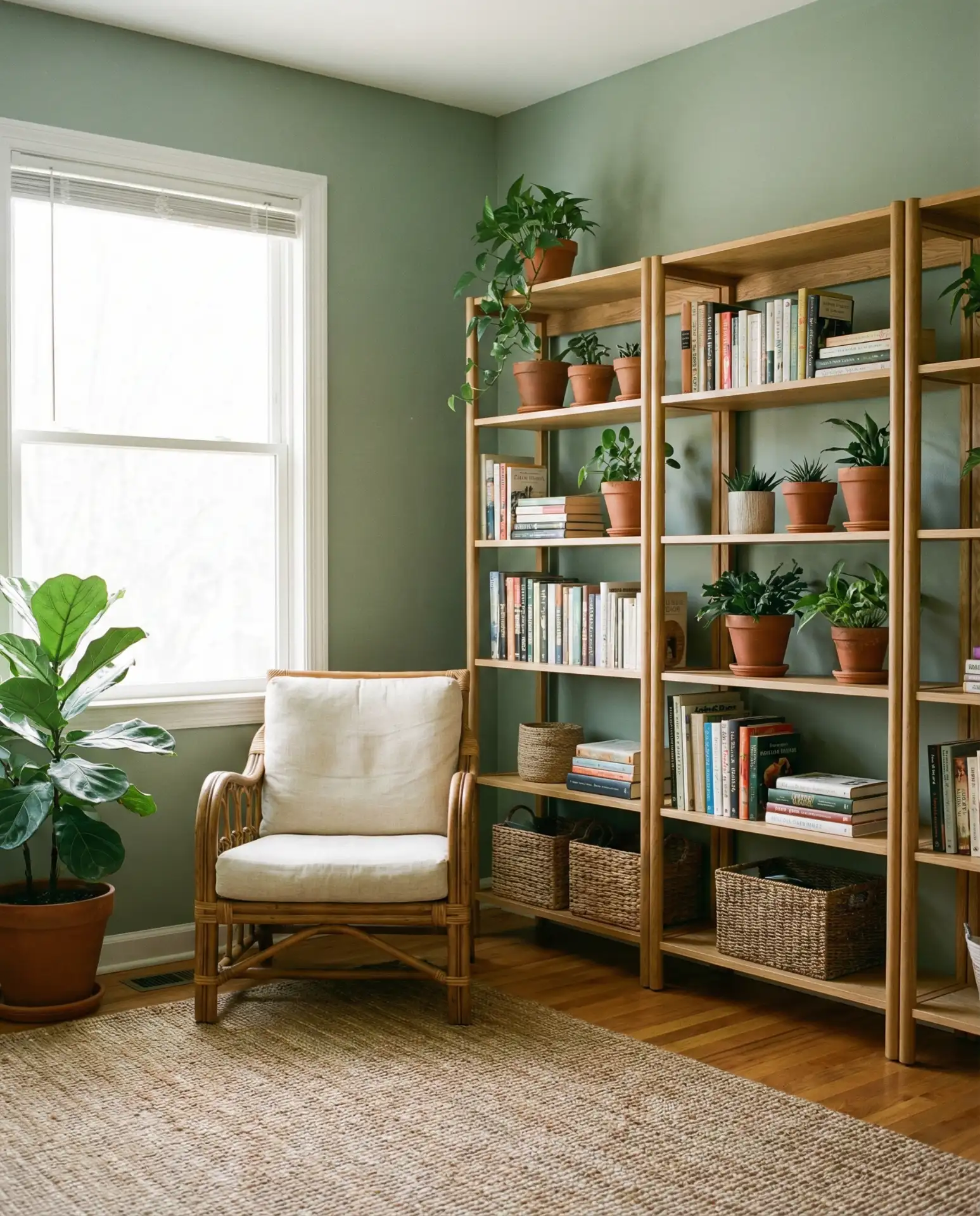
Bring the outdoors in with a library that emphasizes natural wood tones and living greenery. Light oak or pine shelving, potted plants on every surface, and perhaps forest green or sage accent walls create a space that feels grounded and calming. This biophilic approach to library design taps into our innate need for nature connection, making reading time feel restorative rather than just recreational. It’s especially appealing for cozy-idea seekers who want warmth without darkness.
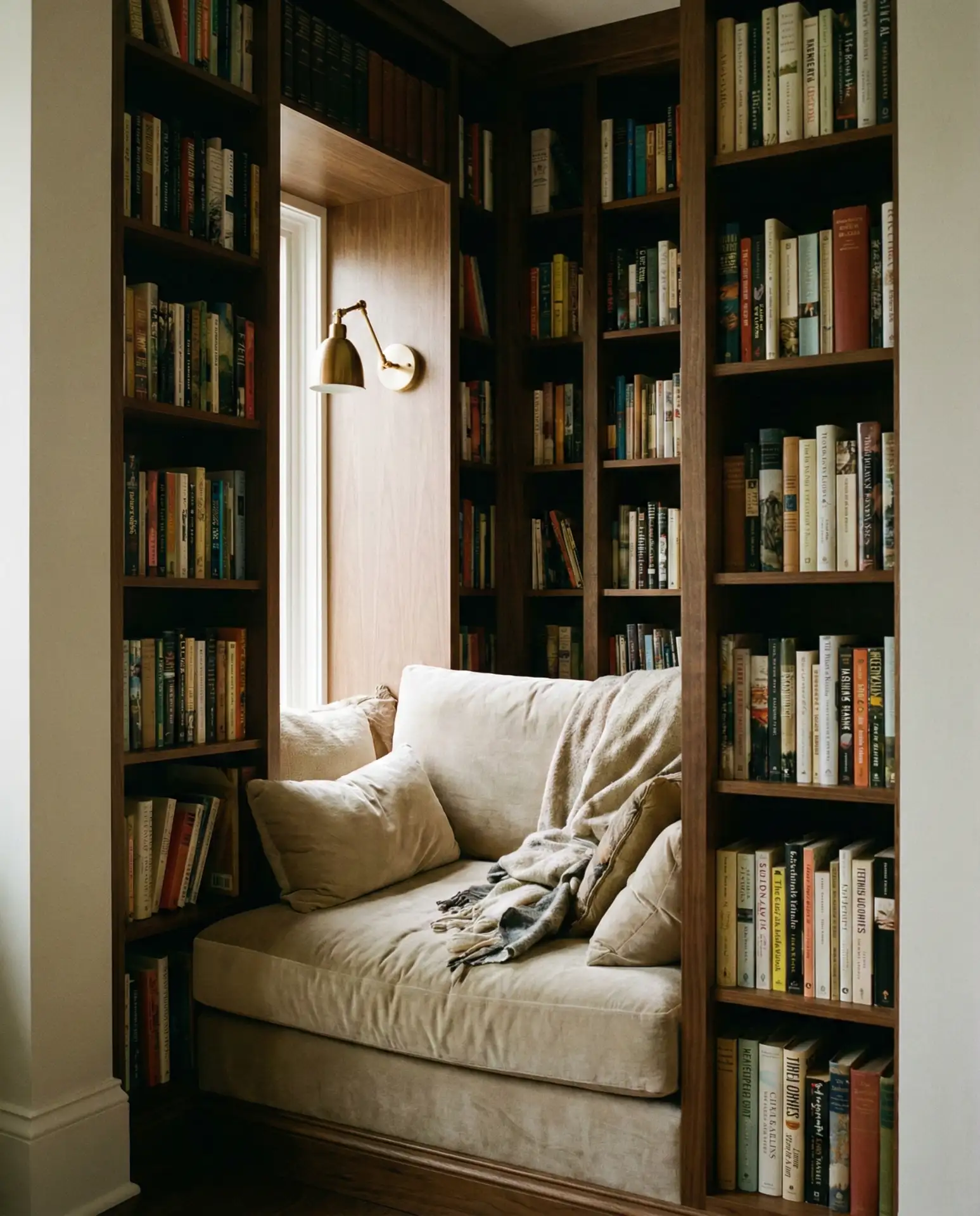
Where this approach thrives is in homes with good natural light and in regions where outdoor access is valued—think California, the Pacific Northwest, and anywhere with a strong connection to nature and outdoor living. A neighbor of mine used this style to transform a sunroom into a library, and she says the abundance of plants improves the air quality noticeably while creating a peaceful retreat. Low-maintenance plants like pothos, snake plants, and philodendrons work best since they tolerate lower light if your shelves block some windows.
22. Intimate Reading Alcove
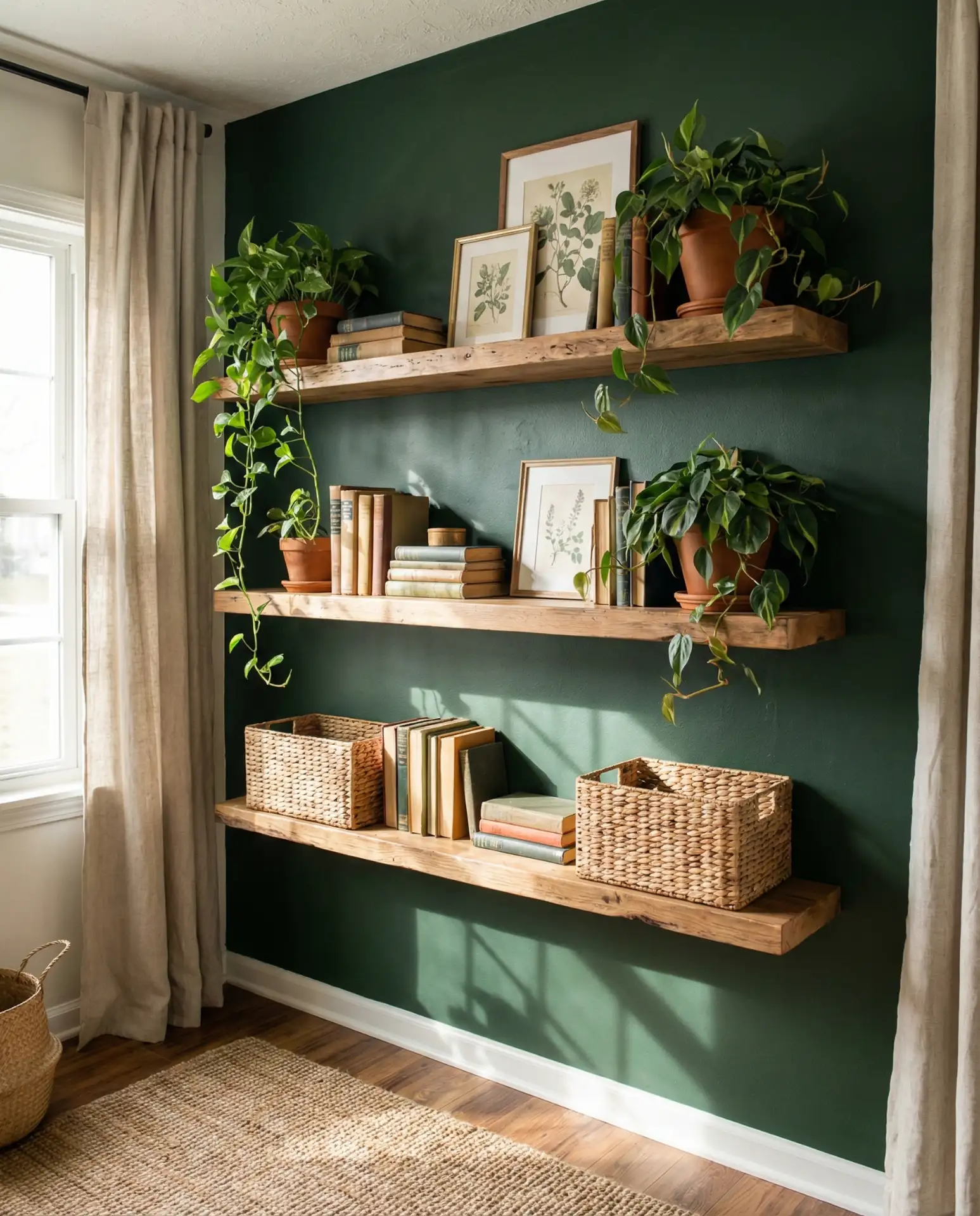
Sometimes the best library isn’t a full room but a perfectly designed alcove that wraps you in books. Built-in shelving on three sides creates a semi-enclosed nook with just enough space for a comfortable chair and good lighting. This setup works in hallways, under staircases, or in large master bedrooms where you want a dedicated reading spot without claiming an entire room. It’s the physical embodiment of getting lost in a book—you’re literally surrounded by stories.
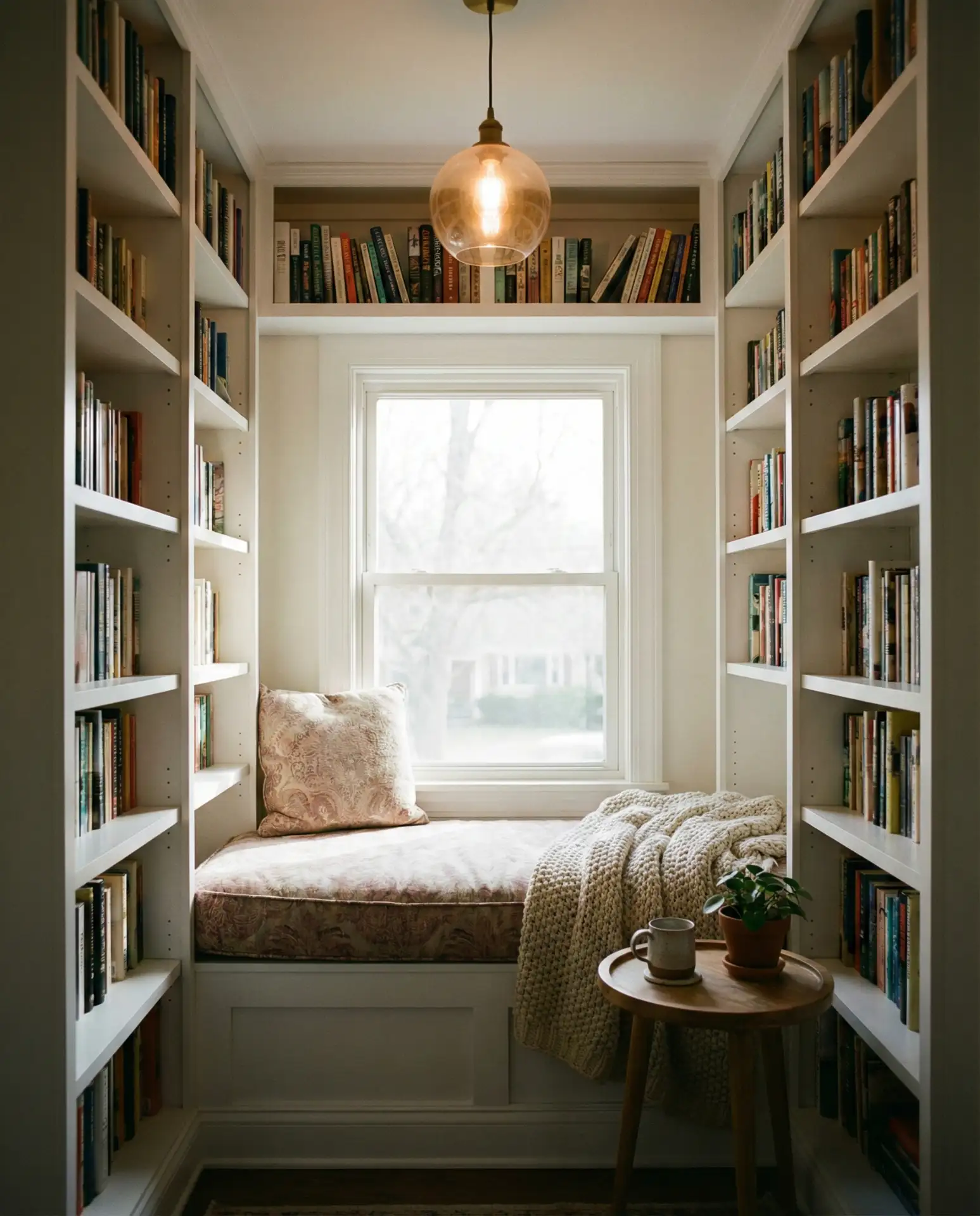
This configuration works beautifully in period homes with natural alcoves or architectural quirks but can also be built from scratch in newer construction. The cost ranges widely—a simple furniture arrangement using existing shelves might cost nothing, while custom built-ins for an alcove typically run $2,000-$5,000. The key is making sure the space is deep enough (at least 30 inches) and wide enough (at least 40 inches) to accommodate comfortable seating without feeling cramped. Done right, it becomes everyone’s favorite spot in the house.
Conclusion
Whether you have an entire room to dedicate or just a corner to transform, these home library ideas for 2026 prove that every reader deserves a beautiful, functional space for their books. From grand two-story showcases to intimate under-stair nooks, the perfect library is one that reflects your personal style while inviting you to settle in and read. Which of these ideas resonates most with your space? Drop a comment below and share what your dream home library looks like—we’d love to hear what you’re planning.