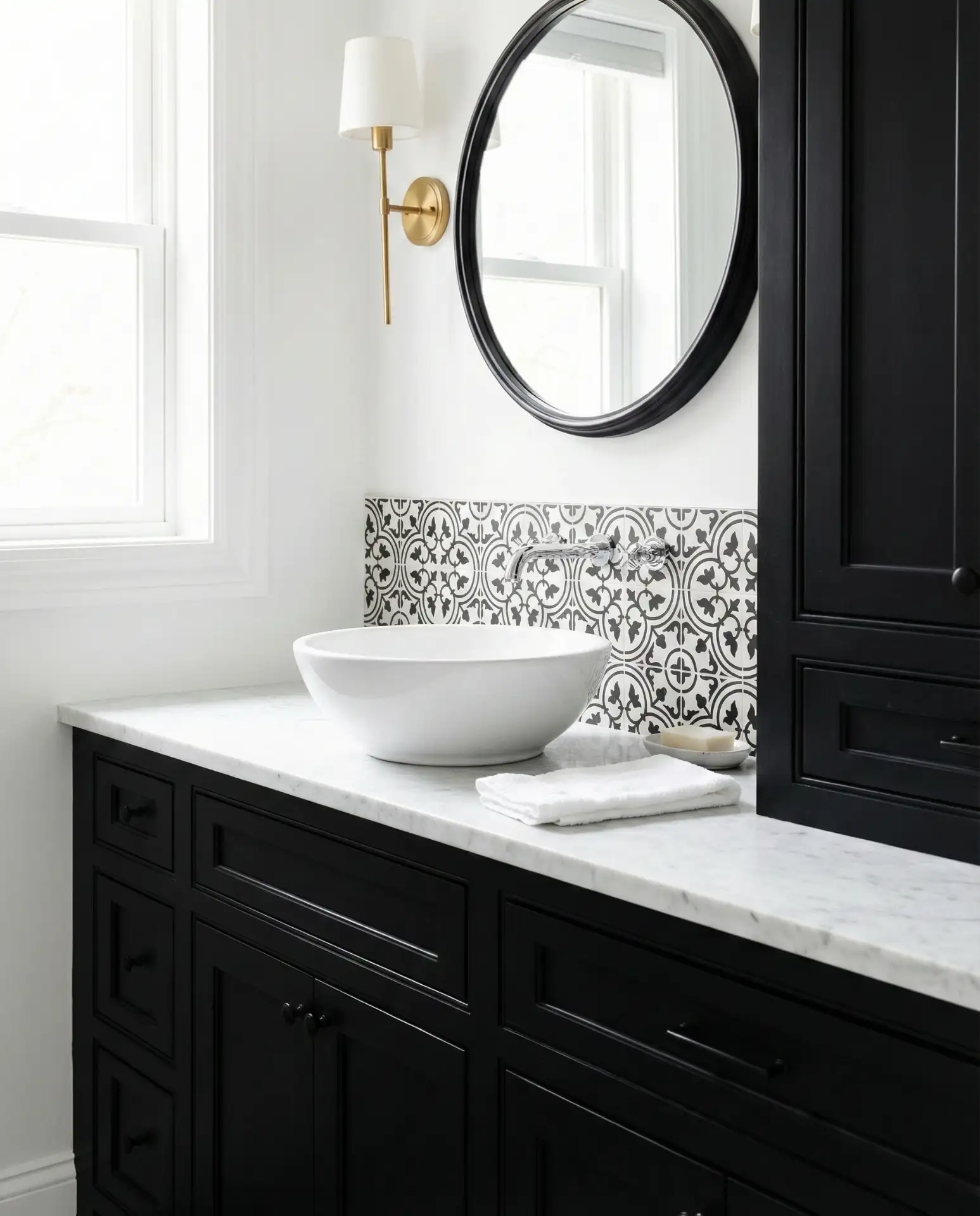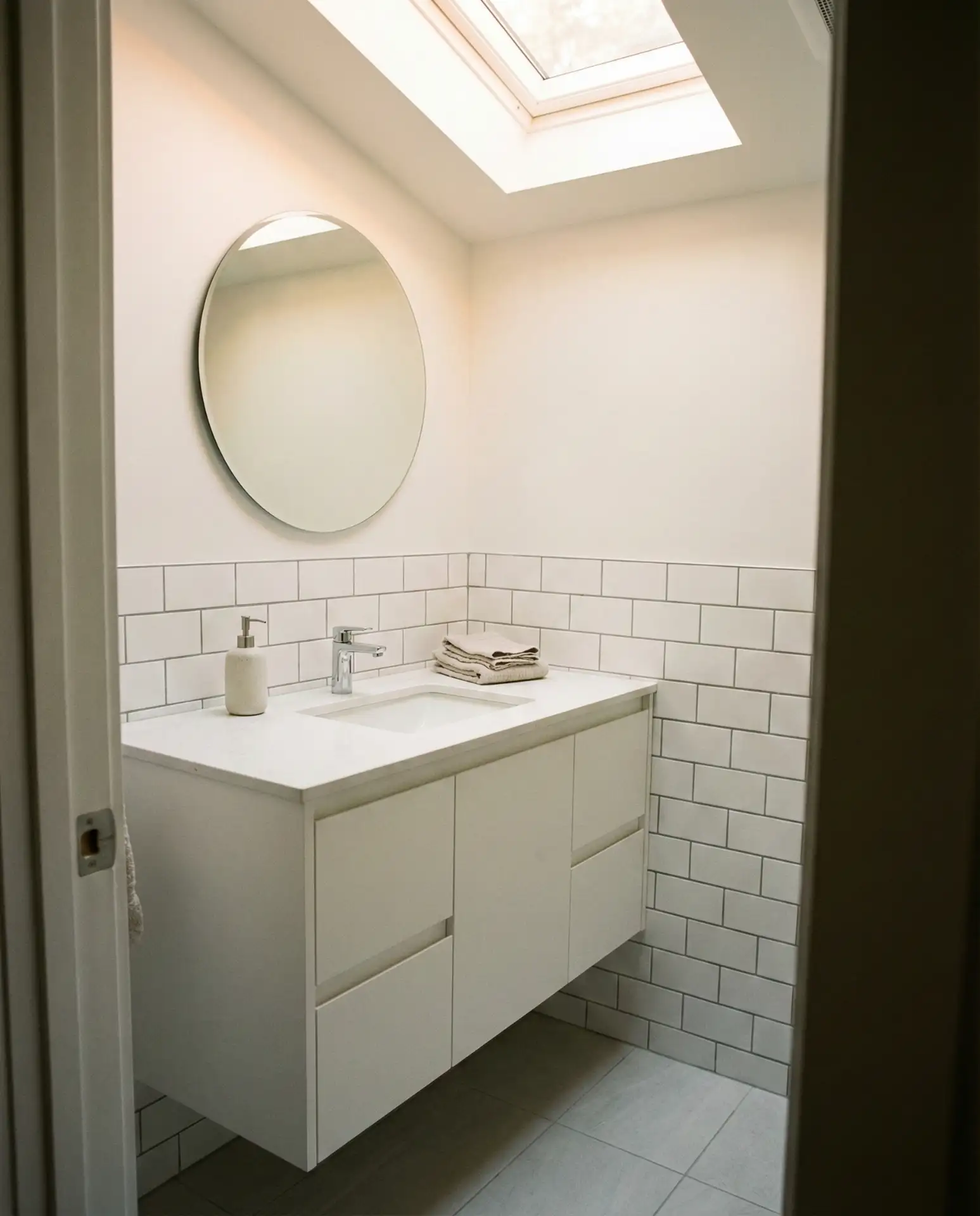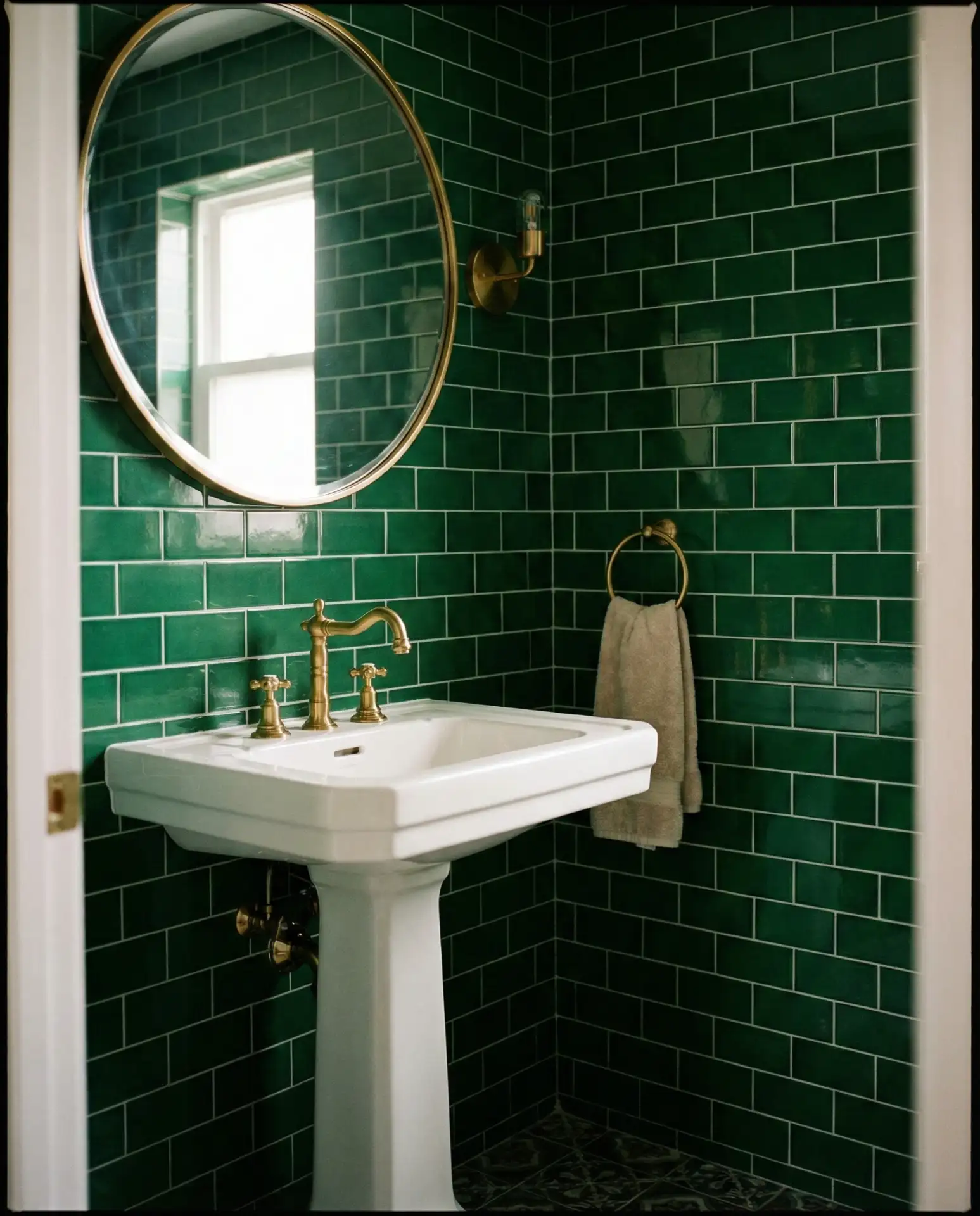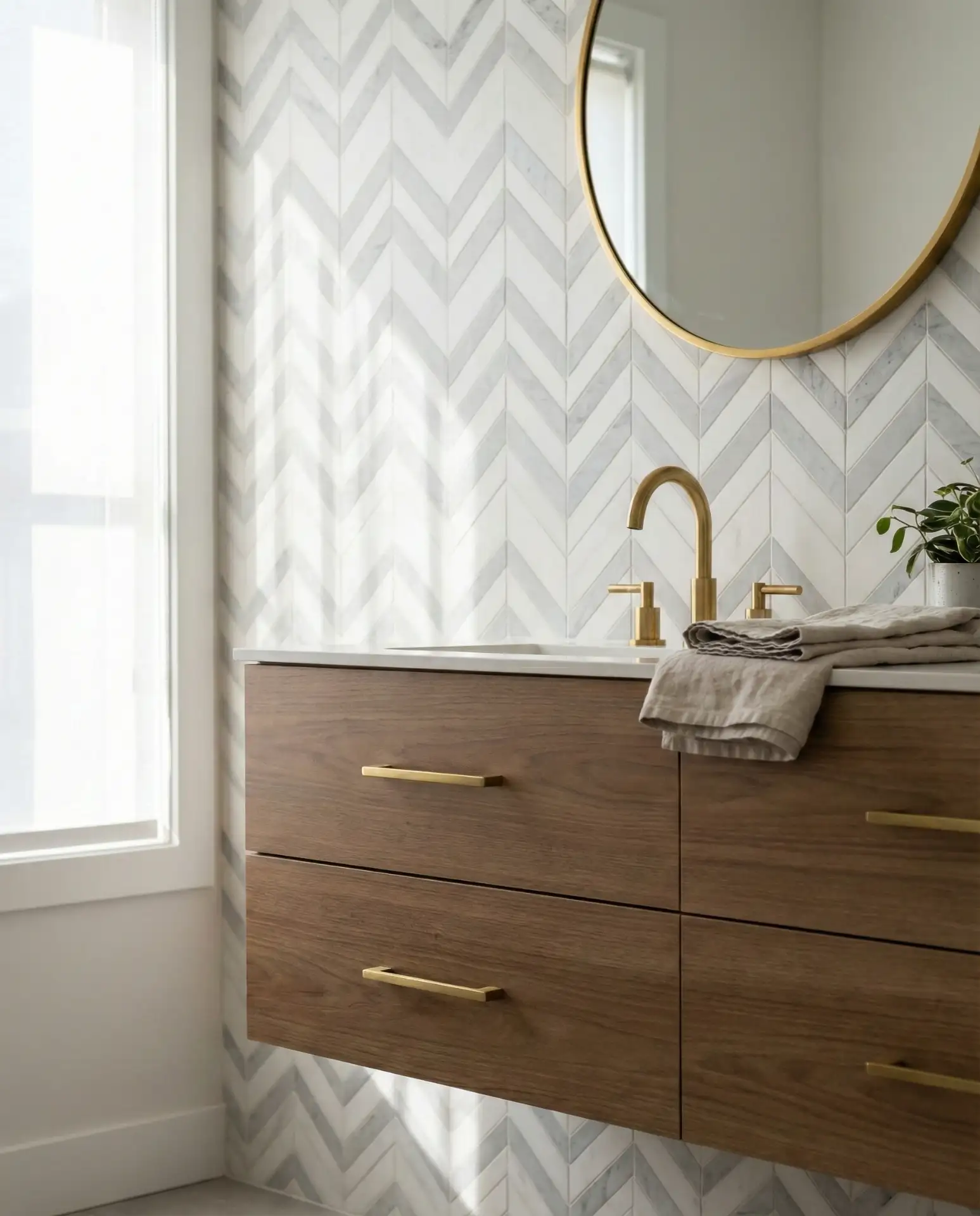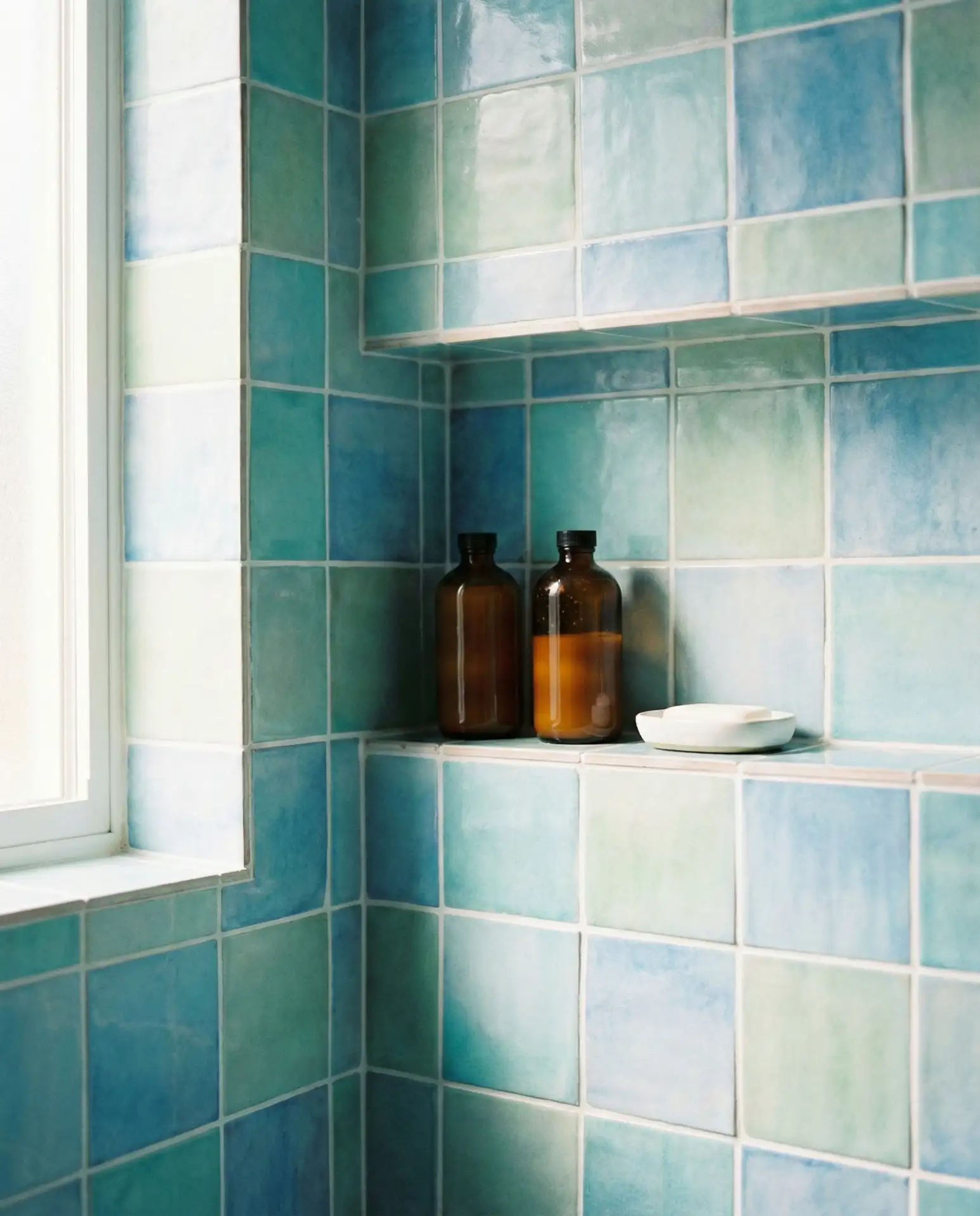
Walk-in showers have become the centerpiece of modern American bathroom design, and in 2026, homeowners are searching for inspiration that balances style, function, and personal expression. Whether you’re planning a complete bathroom remodel or simply replacing an outdated tub, Pinterest users are flocking to discover fresh ideas that transform daily routines into spa-like experiences. From compact solutions for small bathrooms to luxurious master bath retreats, walk-in showers offer versatility that fits every home and budget. This collection showcases twenty-two stunning concepts—from rustic charm to sleek minimalism—designed to help you visualize your perfect shower space and make informed design decisions that will elevate your home for years to come.
1. Rustic Wood-Accent Walk-In Shower
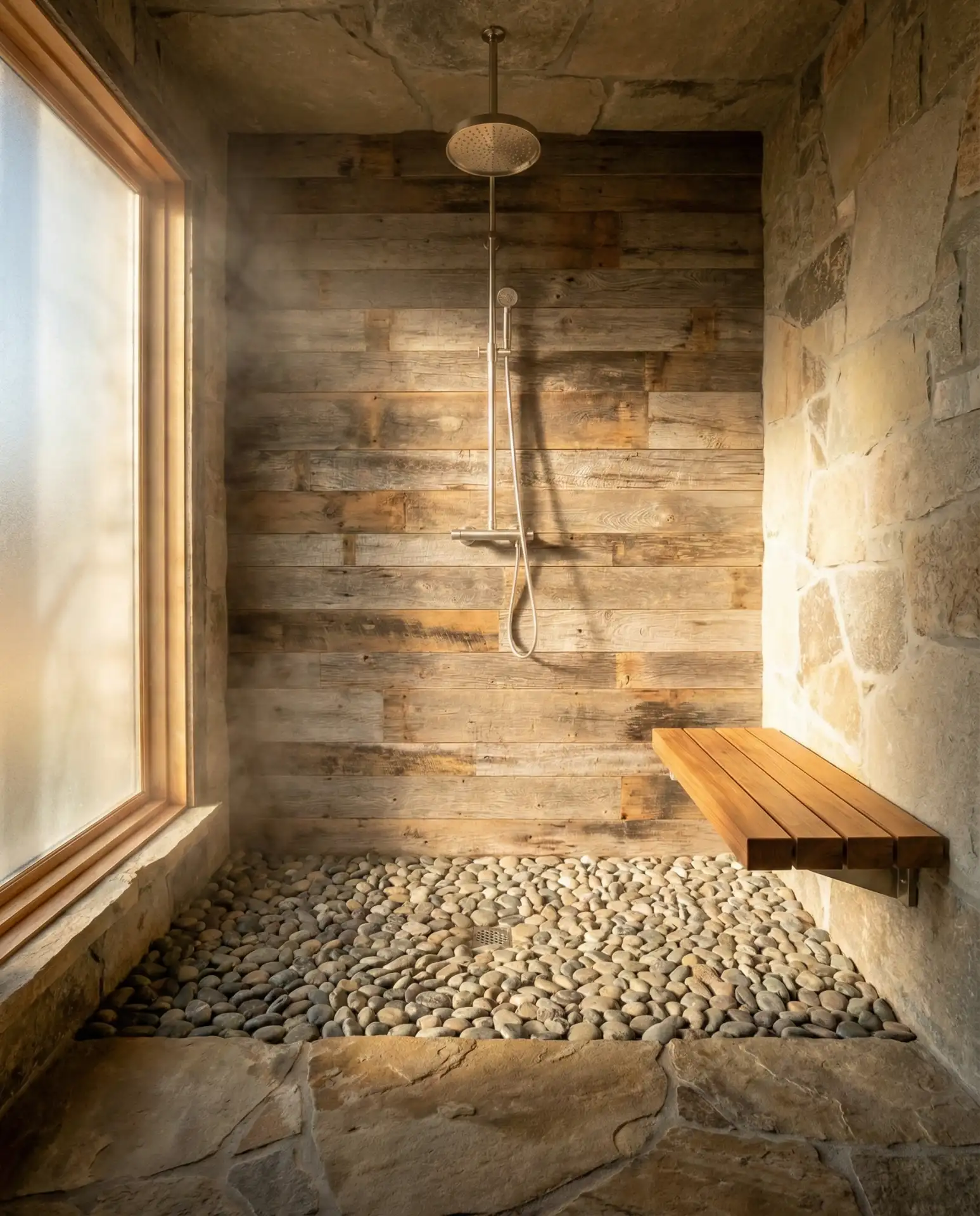
A rustic walk-in shower brings warmth and natural texture into your bathroom through carefully selected wood elements that resist moisture while maintaining authentic character. Consider reclaimed barn wood shelving, cedar accent walls treated with marine-grade sealant, or teak benches that develop a beautiful patina over time. This approach works particularly well in homes with farmhouse or mountain lodge aesthetics, where the contrast between stone tile floors and wooden details creates visual depth. The key is balancing organic materials with proper ventilation to ensure longevity without sacrificing that cozy, cabin-inspired feeling.
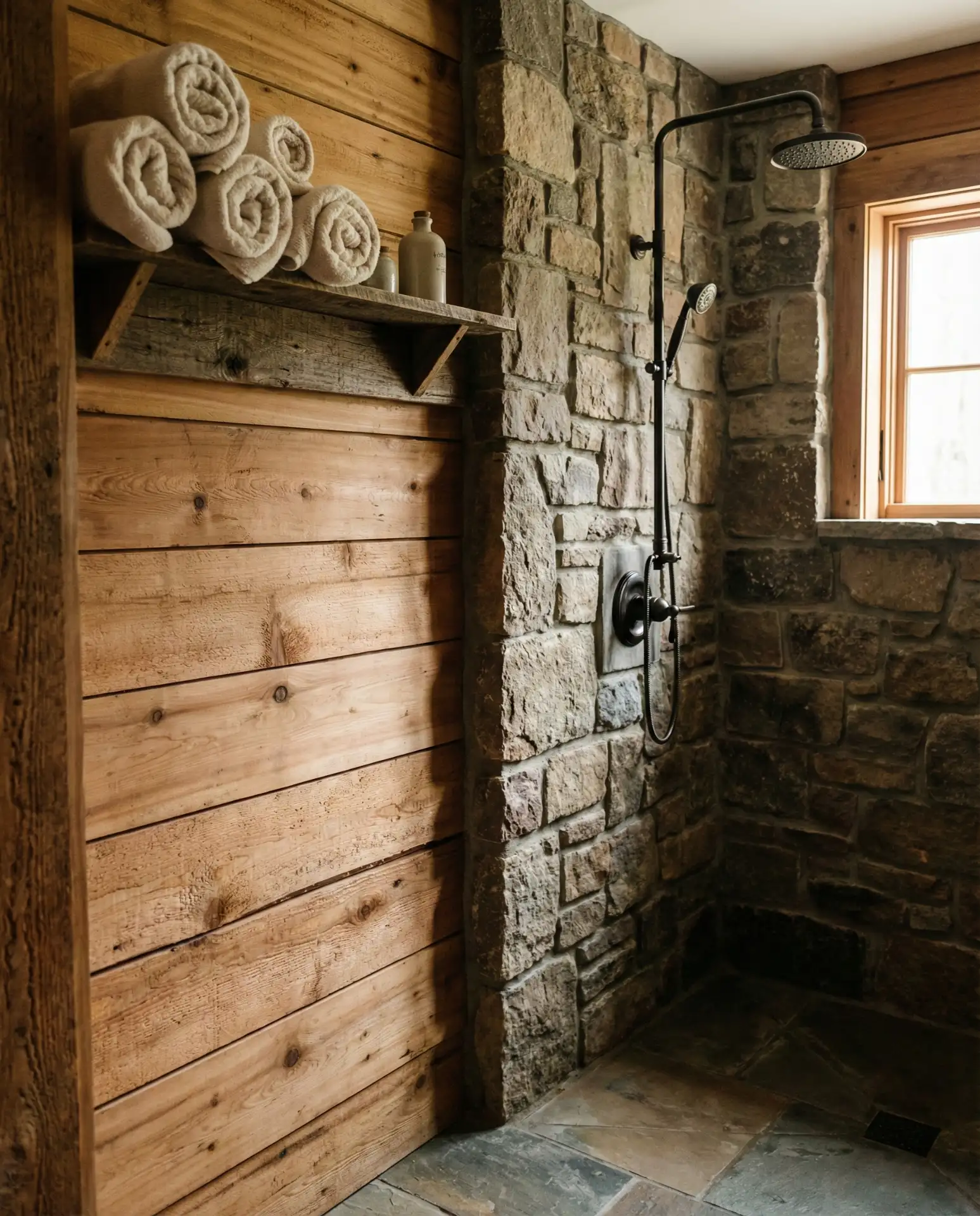
This design works best in regions with lower humidity, like Colorado or Arizona, where wood materials remain stable with minimal maintenance. Homeowners often pair rustic showers with copper or oil-rubbed bronze fixtures to complete the natural aesthetic. A common mistake is using untreated wood in high-moisture areas—always invest in properly sealed materials or marine-grade alternatives. The upfront cost runs slightly higher, but the unique character and durability make it worthwhile for those seeking a distinctive bathroom personality that feels grounded and authentic.
2. Built-In Bench Seating for Comfort
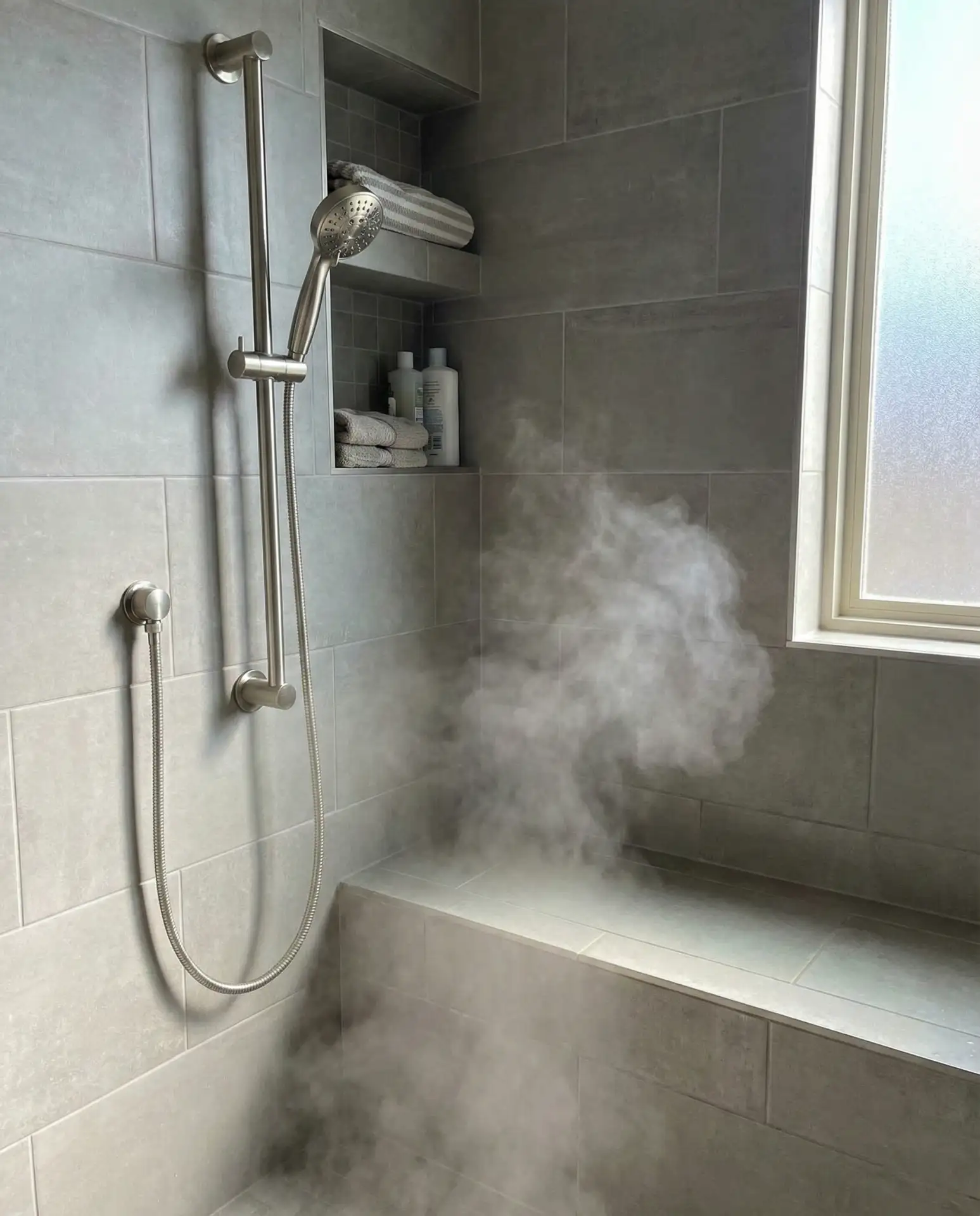
A bench integrated into your walk-in shower transforms a purely functional space into one that accommodates relaxation, safety, and practical needs like shaving or foot care. Built-in seating can be constructed from the same tile as your shower walls for a seamless look or crafted from natural stone like marble or granite for a luxurious touch. This feature is especially valuable in master bath designs where morning routines demand both efficiency and comfort. Position the bench along the longest wall to maximize floor space, and consider adding a niche above it for easy access to toiletries and bath products.
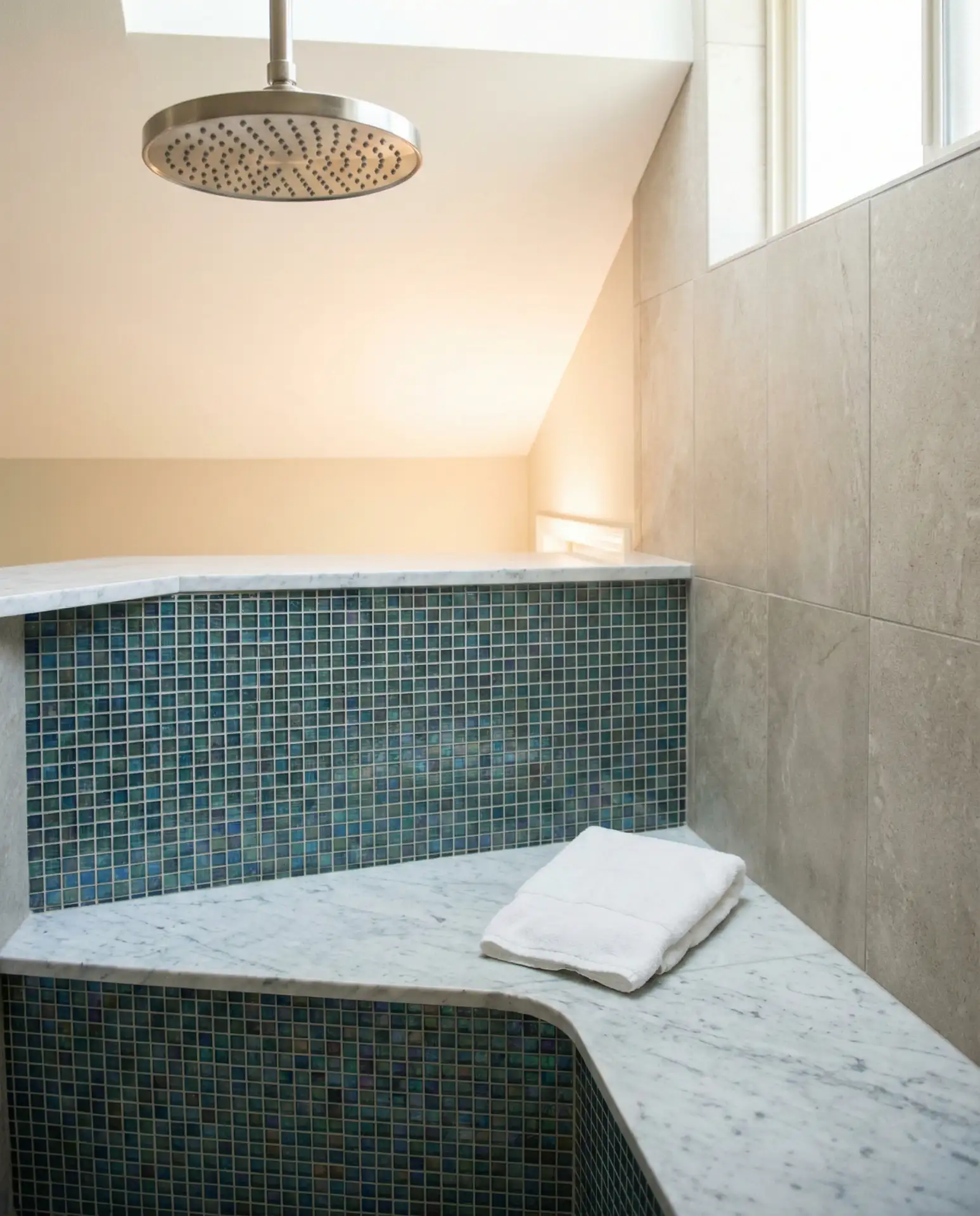
My neighbor in Portland installed a bench in her shower last year after a knee injury made standing difficult, and she says it’s become her favorite feature even after recovery—perfect for applying body scrubs or simply enjoying the steam. The bench doesn’t just serve aging-in-place needs; it’s genuinely useful for families with young children who need a stable surface during bath time. Standard bench height sits around 17-19 inches, matching typical chair height, and should extend at least 15 inches from the wall for comfortable seating without feeling cramped.
3. Small Bathroom Walk-In Shower Solutions
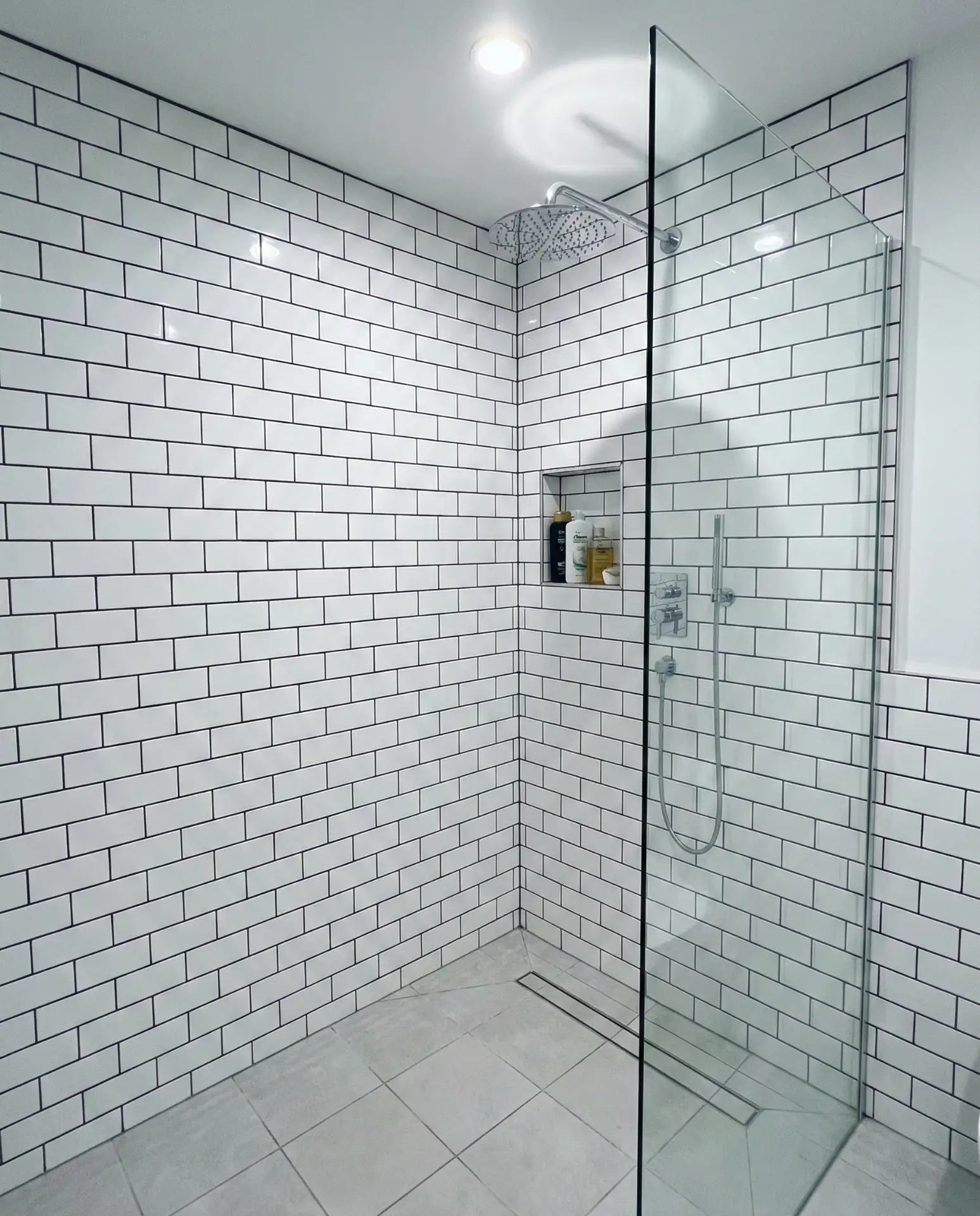
Designing a walk-in shower for a small bathroom requires strategic planning to maximize every square inch without sacrificing style or function. A corner installation often provides the most efficient use of limited space, allowing you to maintain clearance for other fixtures while creating a surprisingly spacious showering area. Glass enclosures are essential here—they eliminate visual barriers that make small rooms feel cramped. Consider a neo-angle design with three glass panels that tucks neatly into a corner, or a simple frameless panel that separates the wet zone while keeping sightlines open across the entire bathroom.
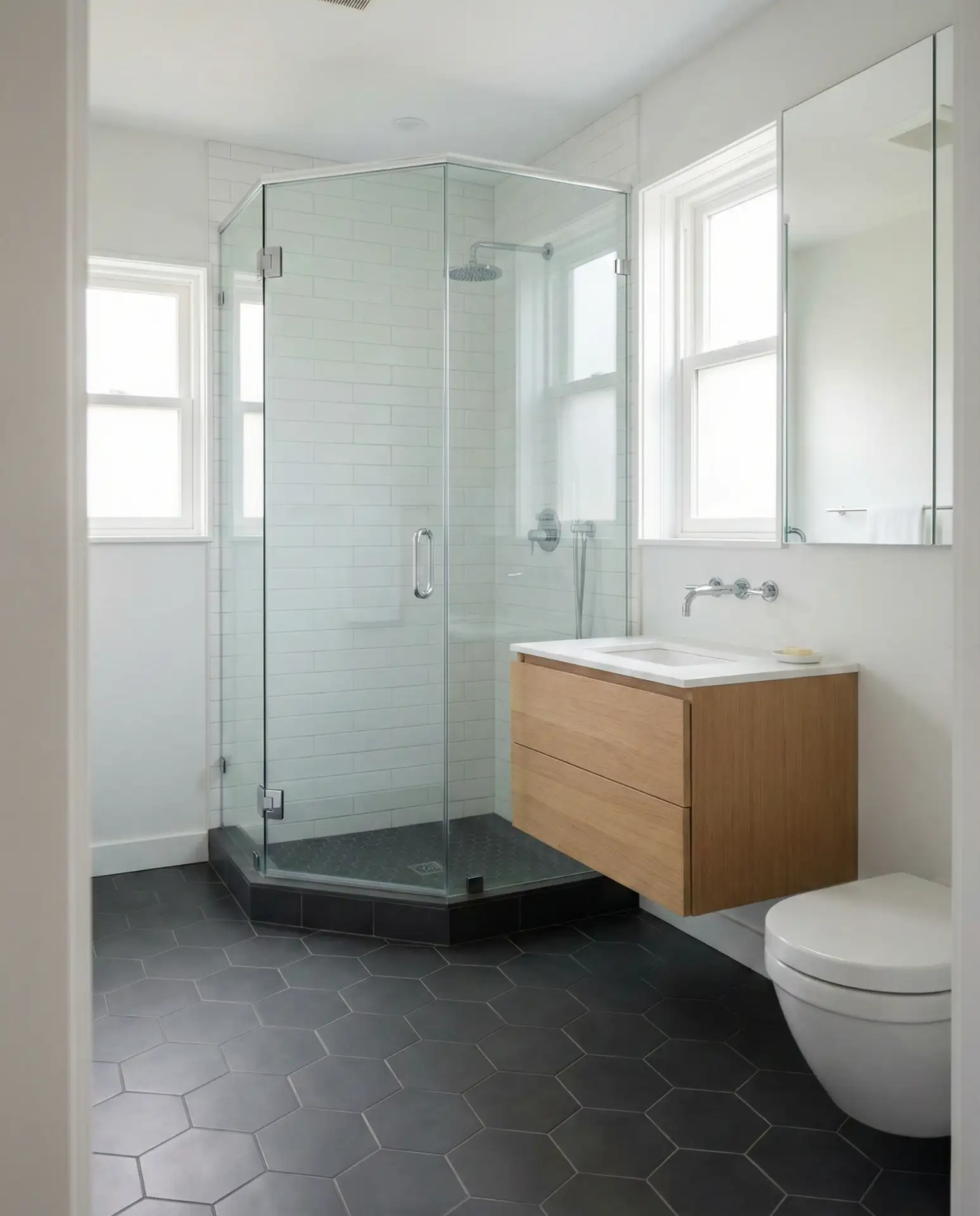
This approach is most effective in urban apartments and starter homes where space is limited. Typical small bathroom dimensions range from 5×8 feet down to tight 5×5 configurations, and a well-designed walk-in shower can actually make these spaces feel more open than a traditional tub-shower combo. The budget for a small walk-in conversion typically runs between $3,500 and $7,000 depending on tile choices and fixture quality, making it an accessible upgrade that dramatically improves both functionality and resale value in compact living situations.
4. Replacing a Tub with a Walk-In Shower
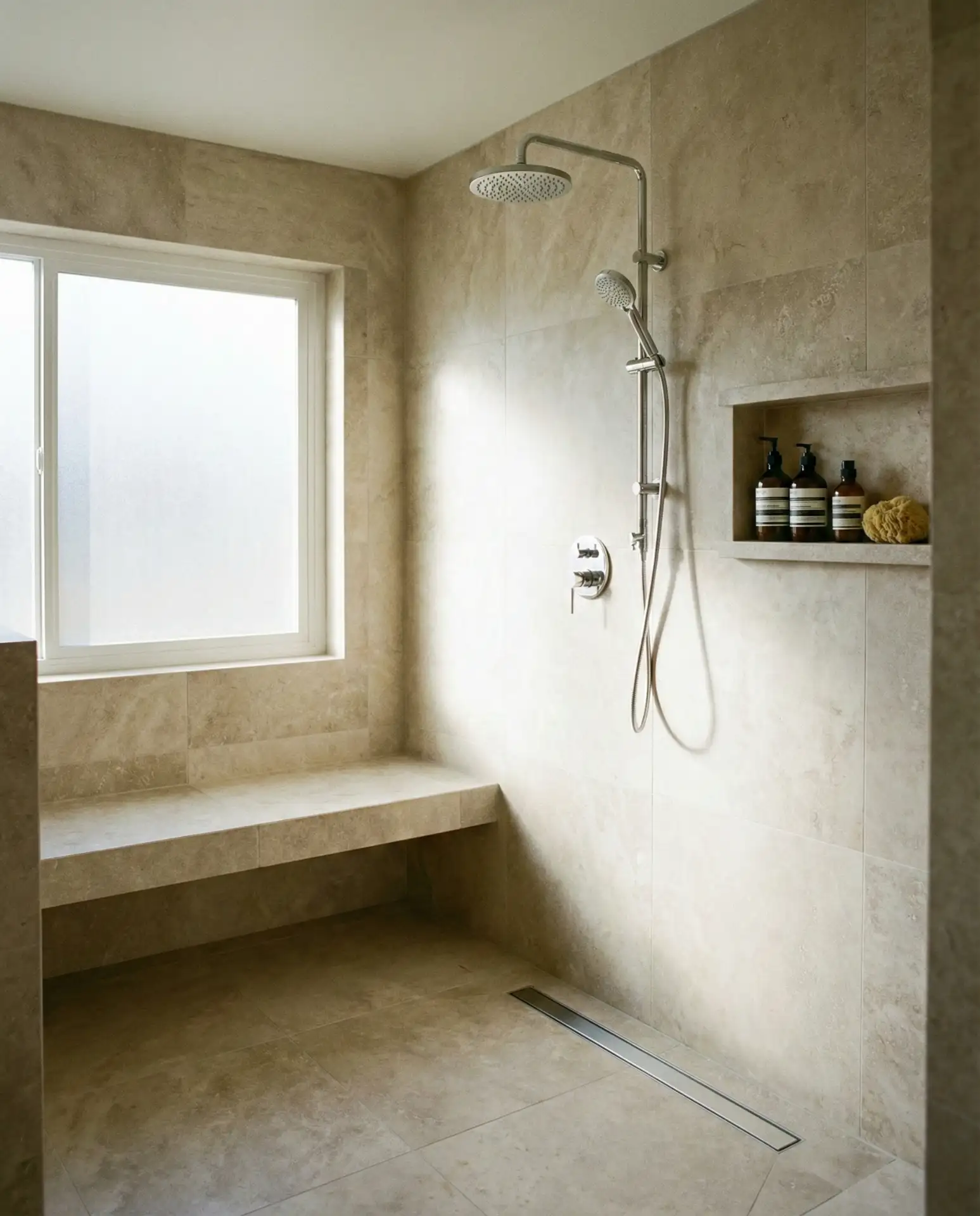
The decision to replace tub fixtures with a spacious walk-in shower reflects changing American lifestyle preferences, particularly among empty nesters and mobility-conscious homeowners. This bathroom remodel opens up significant floor space, eliminates the step-over barrier that tubs present, and creates a more modern aesthetic that appeals to contemporary tastes. When planning this conversion, you’ll inherit a generous footprint—typically 60 inches wide by 30-32 inches deep—giving you room for luxurious features like dual showerheads, built-in seating, and expansive tile designs that weren’t possible in a standard tub-shower configuration.
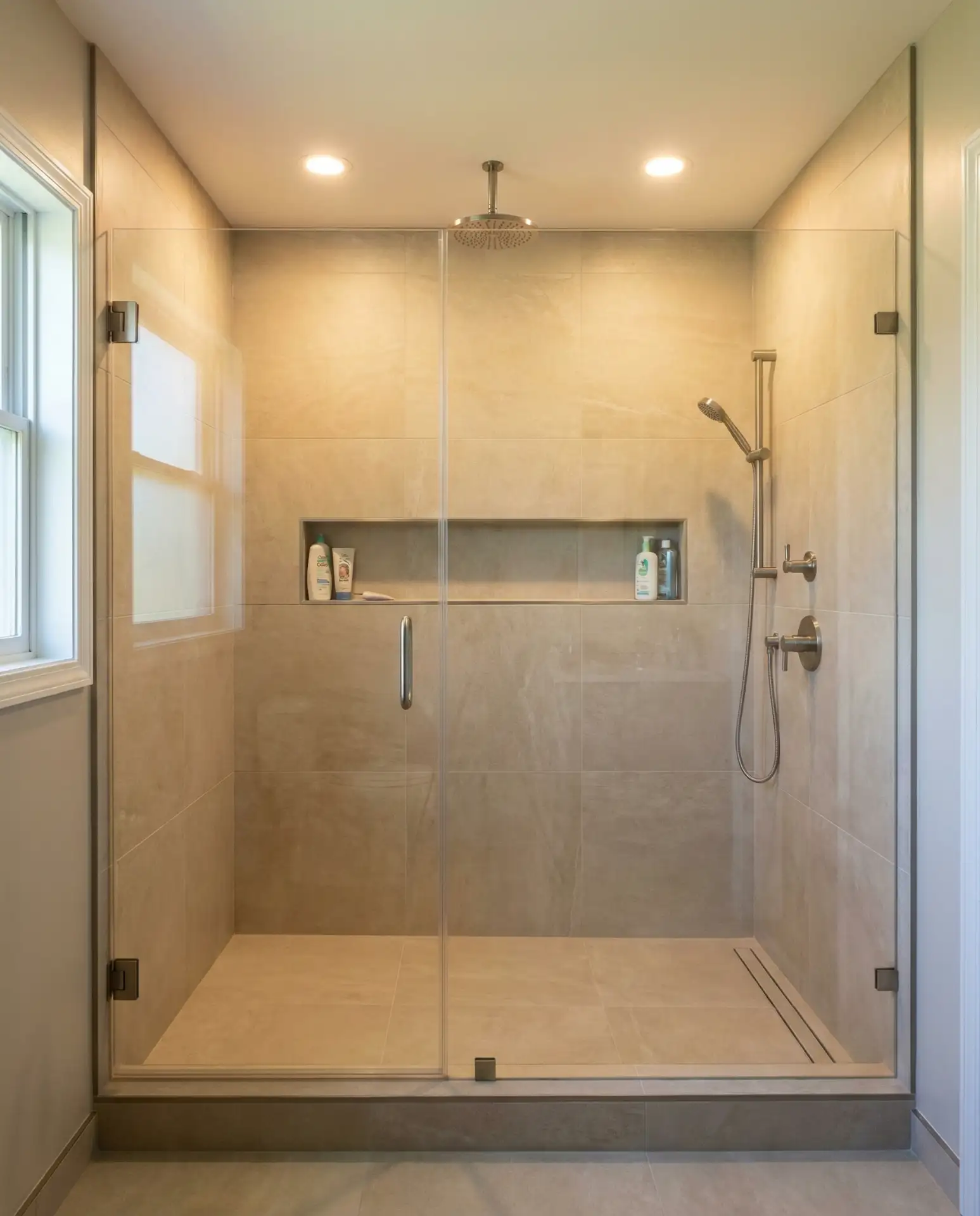
Real homeowners consistently report that removing an unused tub eliminates wasted space—most American adults shower daily but bathe only occasionally. The practical reality is that tubs often become catch-alls for bath toys or laundry rather than serving their intended purpose. One important consideration: if you have only one bathroom, keeping at least one tub in the home may be advisable for resale value, particularly in family-oriented neighborhoods. However, in homes with multiple bathrooms, converting the master bath tub to a walk-in shower typically adds value rather than detracting from it.
5. Sleek Black Framed Shower Enclosures
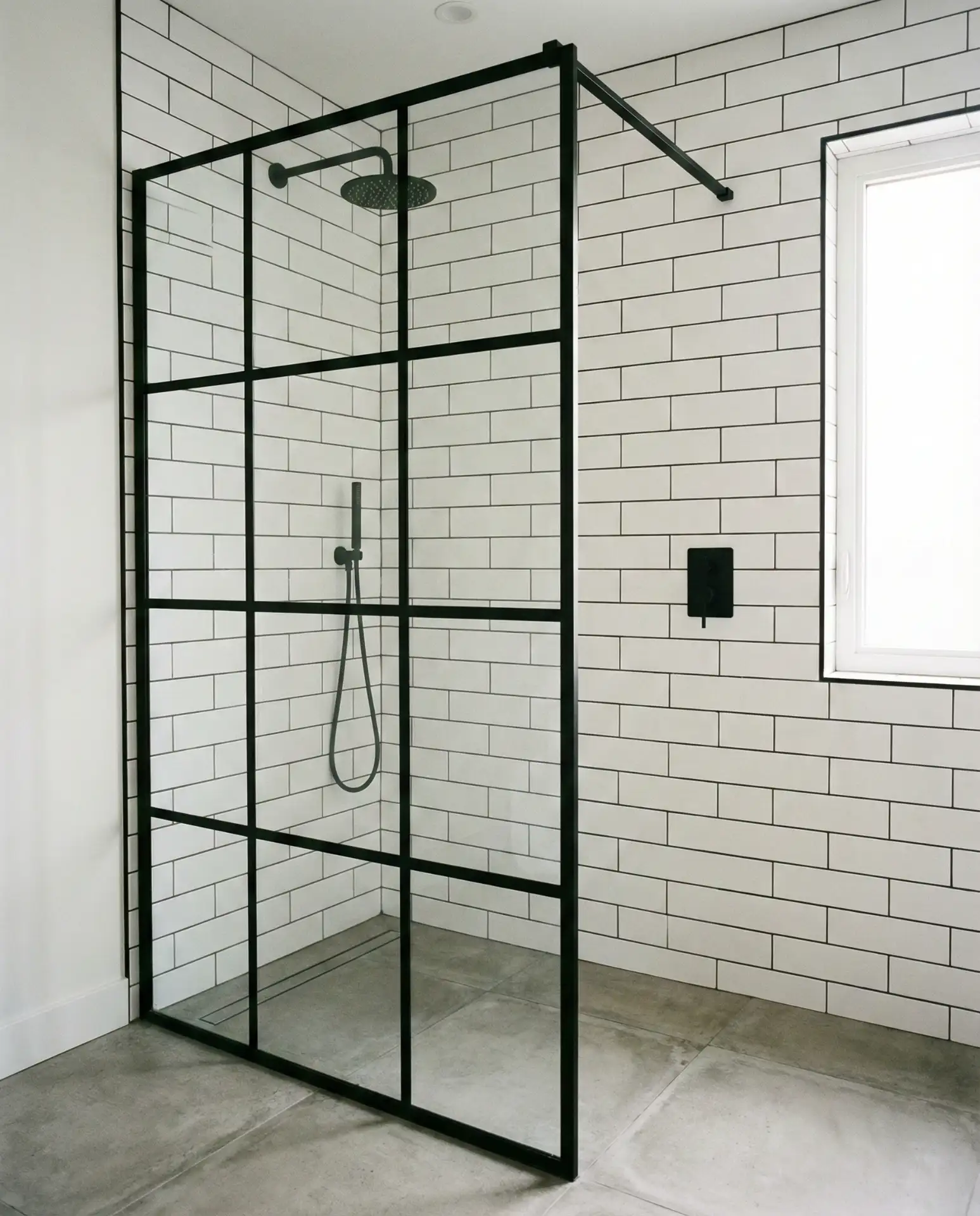
Black-framed glass shower enclosures have emerged as a defining trend in 2026, offering bold architectural contrast that elevates even the simplest tile choices. The matte black or brushed black metal framing creates clean geometric lines that photograph beautifully—one reason this style dominates Pinterest bathroom boards. This design pairs exceptionally well with white subway tile, creating a timeless monochromatic palette, or with warm wood vanities for a sophisticated industrial-modern fusion. The dark frames make a strong visual statement while maintaining the openness that glass enclosures provide, proving you don’t have to sacrifice style for spatial perception.
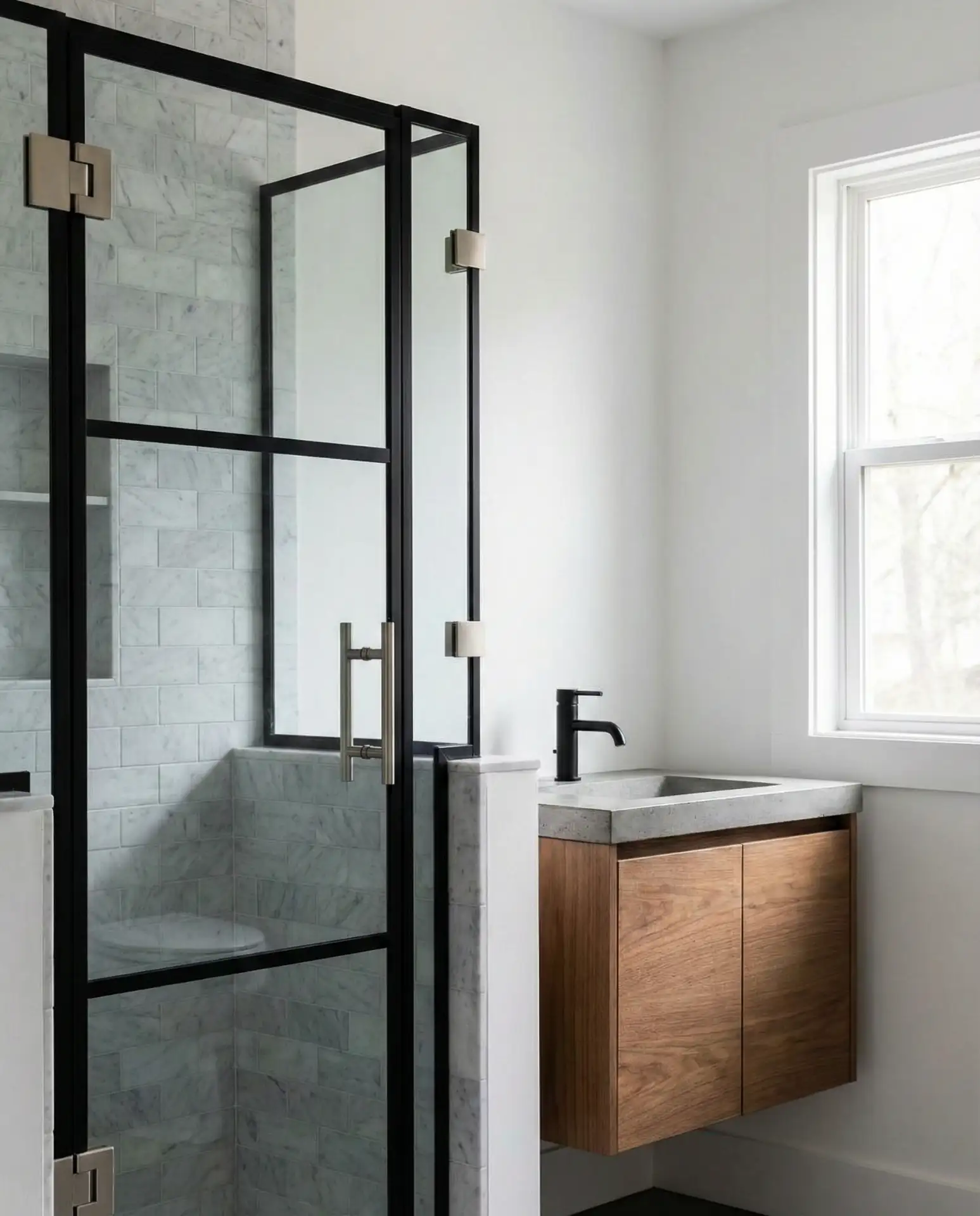
Budget-conscious homeowners appreciate that black frames cost only marginally more than standard chrome or brushed nickel options—typically adding $200-400 to the total enclosure price—while delivering significantly more design impact. The finish shows water spots less visibly than polished metal, reducing the frequency of cleaning needed to maintain that crisp appearance. These enclosures shine brightest in contemporary and transitional bathroom styles, though they’re versatile enough to complement everything from farmhouse to mid-century modern aesthetics when paired thoughtfully with surrounding materials and fixtures.
6. Doorless Walk-In Shower Designs
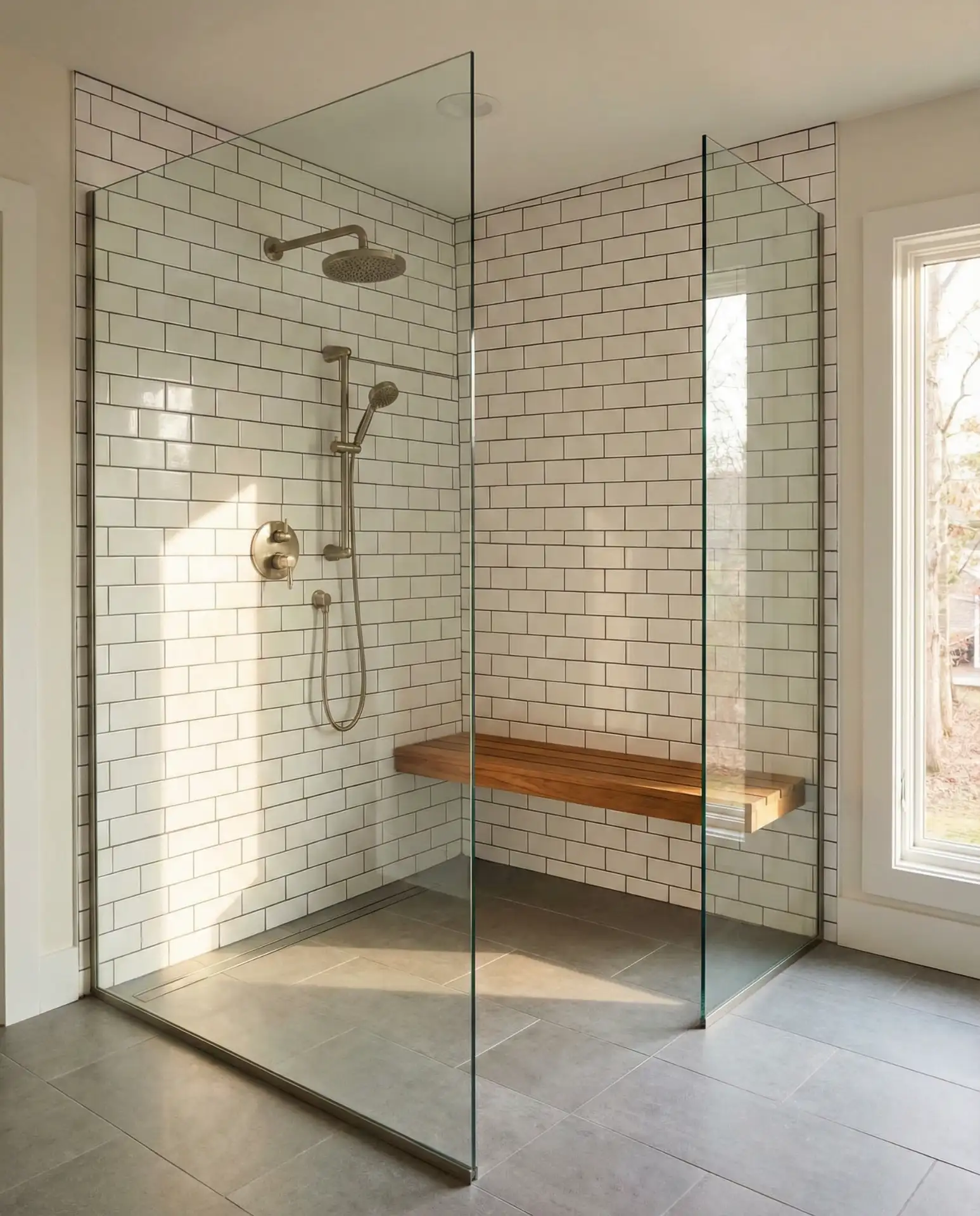
A doorless walk-in shower eliminates barriers entirely, creating a seamless transition between wet and dry zones that epitomizes modern bathroom luxury. This open-concept approach requires careful planning—your shower needs adequate size (typically 4 feet deep minimum) and strategic showerhead placement to prevent water from escaping into the broader bathroom space. A single fixed glass panel often serves as a subtle splash guard while maintaining the open feeling, or you can go completely barrier-free if your space allows. The result is a hotel-inspired aesthetic that makes even modest bathrooms feel significantly larger and more inviting.
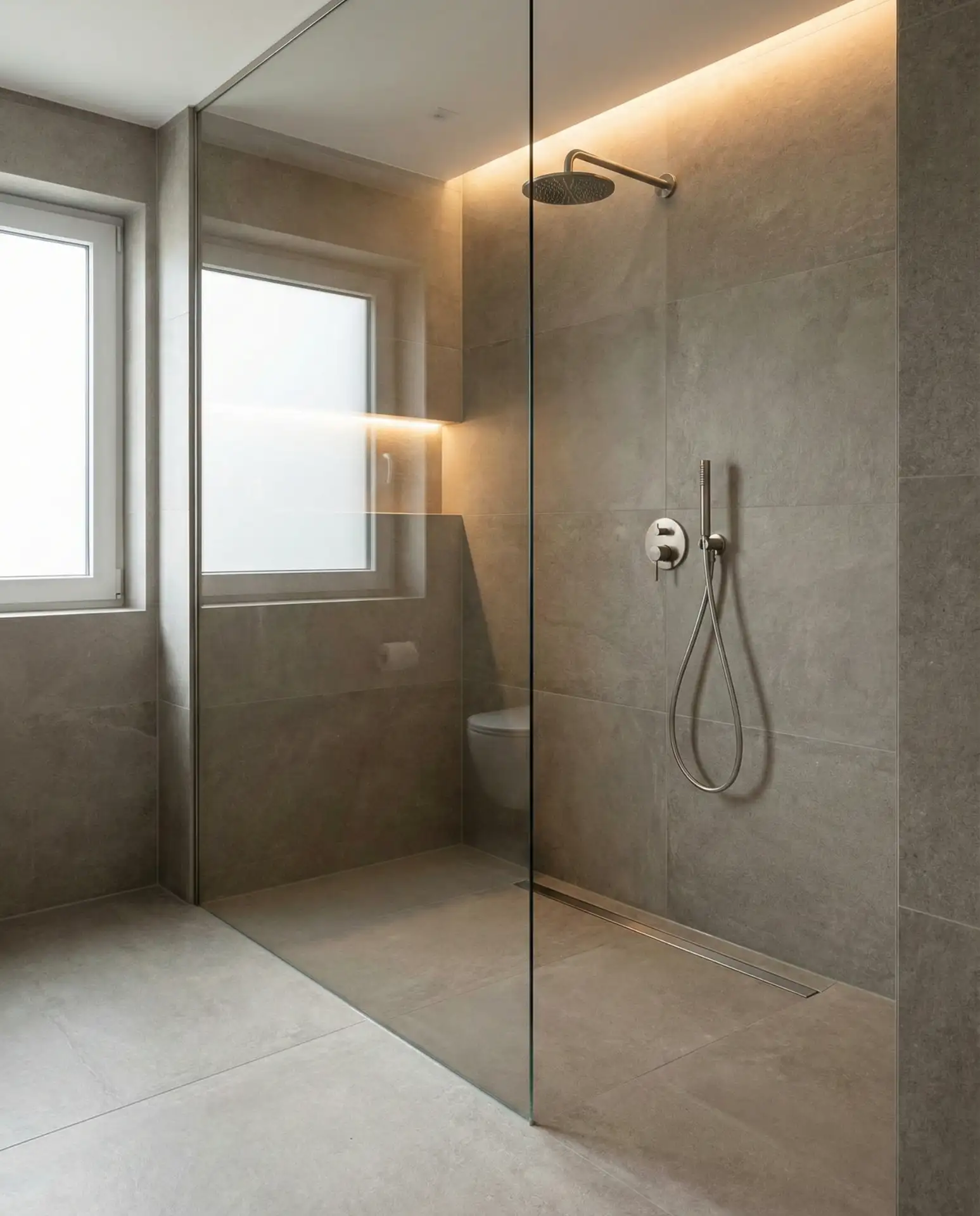
This design works best in master bathrooms with adequate square footage and proper ventilation systems that handle increased humidity. Homes in warmer climates like Southern California, Texas, and Florida embrace doorless showers more readily since heat retention isn’t a concern—the open design actually helps manage steam buildup. A common mistake is attempting this layout in bathrooms smaller than 60 square feet, where water containment becomes problematic. Proper floor slope (minimum 1/4 inch per foot toward the drain) is absolutely critical to prevent water migration, so don’t cut corners on professional installation.
7. Double Showerhead Luxury Systems
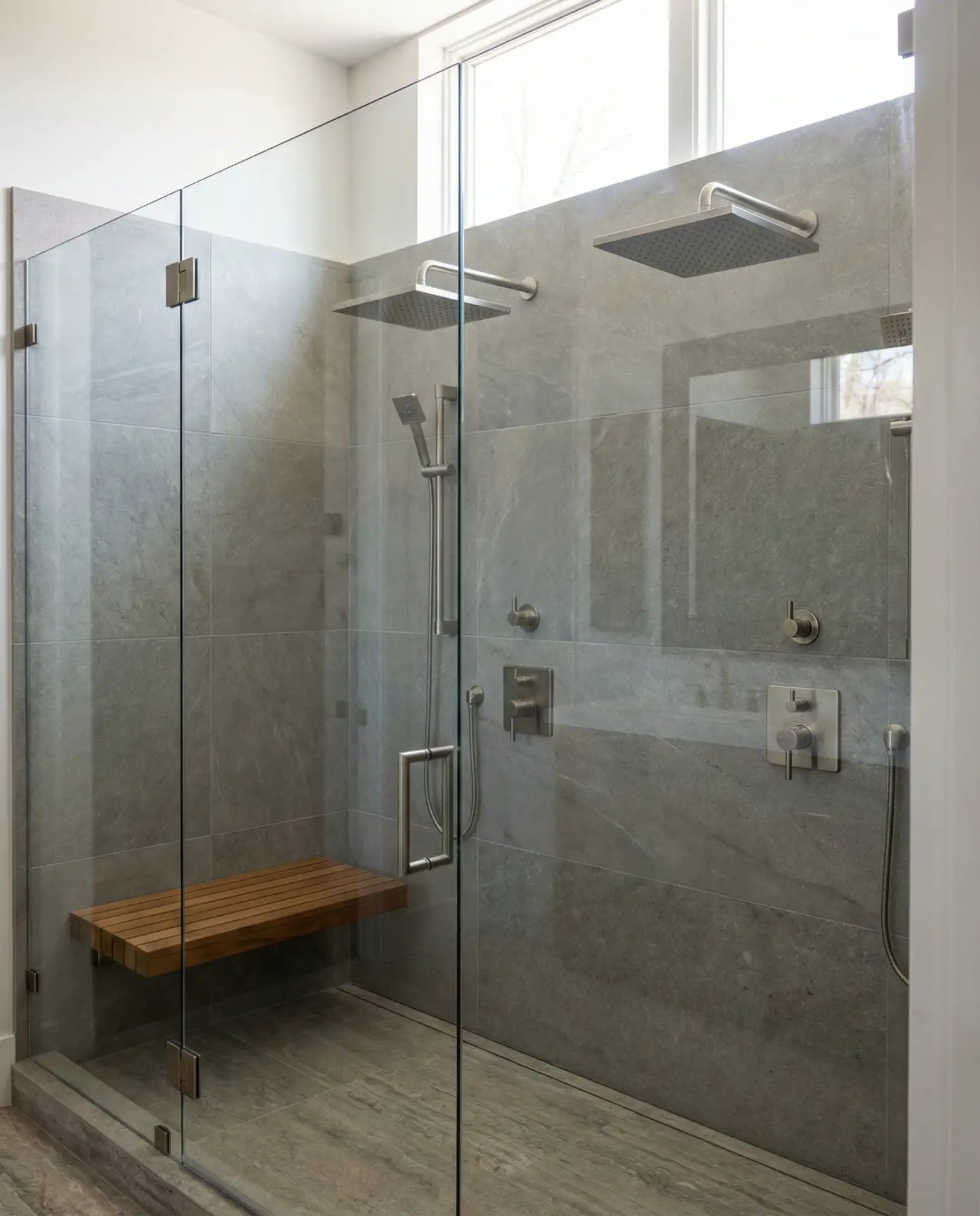
Installing a double showerhead system transforms your master bath into a personalized spa retreat where both partners can shower simultaneously or where you can enjoy customizable water experiences. The classic configuration pairs an overhead rainfall head with a handheld wand on a slide bar, offering versatility for everything from quick rinses to thorough cleaning. Some homeowners opt for dual rainfall heads mounted side-by-side, creating a true his-and-hers showering experience. The key consideration is water pressure—your home’s plumbing must support the increased flow, and you may need to upgrade to a larger water heater to maintain temperature consistency when both heads run at full capacity.
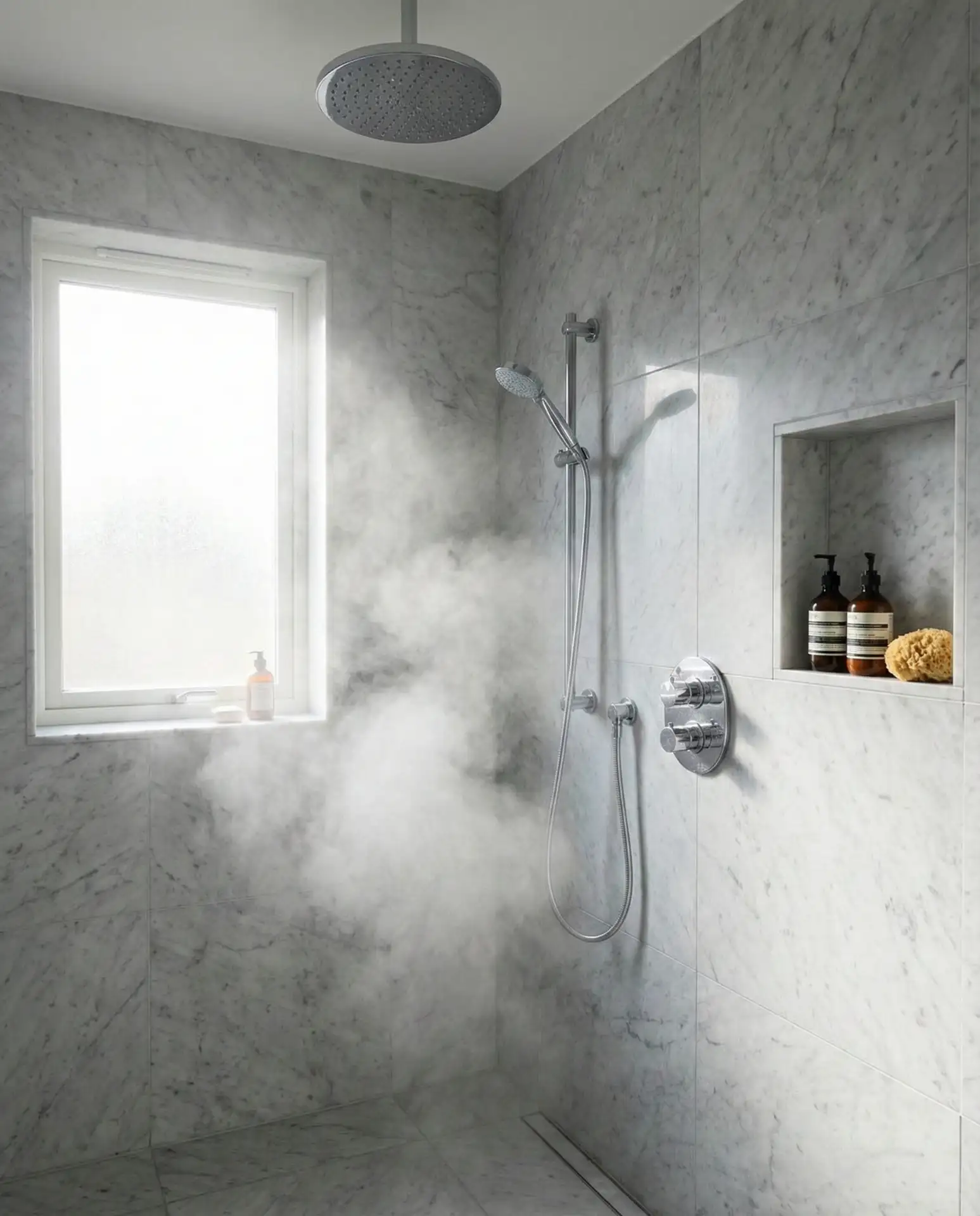
Plumbing experts recommend ensuring your home has at least 60-80 PSI water pressure before committing to dual heads and budgeting $800-2,000 for quality fixtures and professional installation. Thermostatic valves are worth the investment here—they maintain consistent temperature even when water demand fluctuates elsewhere in the house, preventing those unpleasant temperature shocks. This upgrade particularly appeals to busy households in the Northeast and Midwest, where morning routines often create scheduling conflicts around single bathrooms, allowing couples to streamline their day without compromising comfort.
8. Large Format Walk-In Shower Spaces
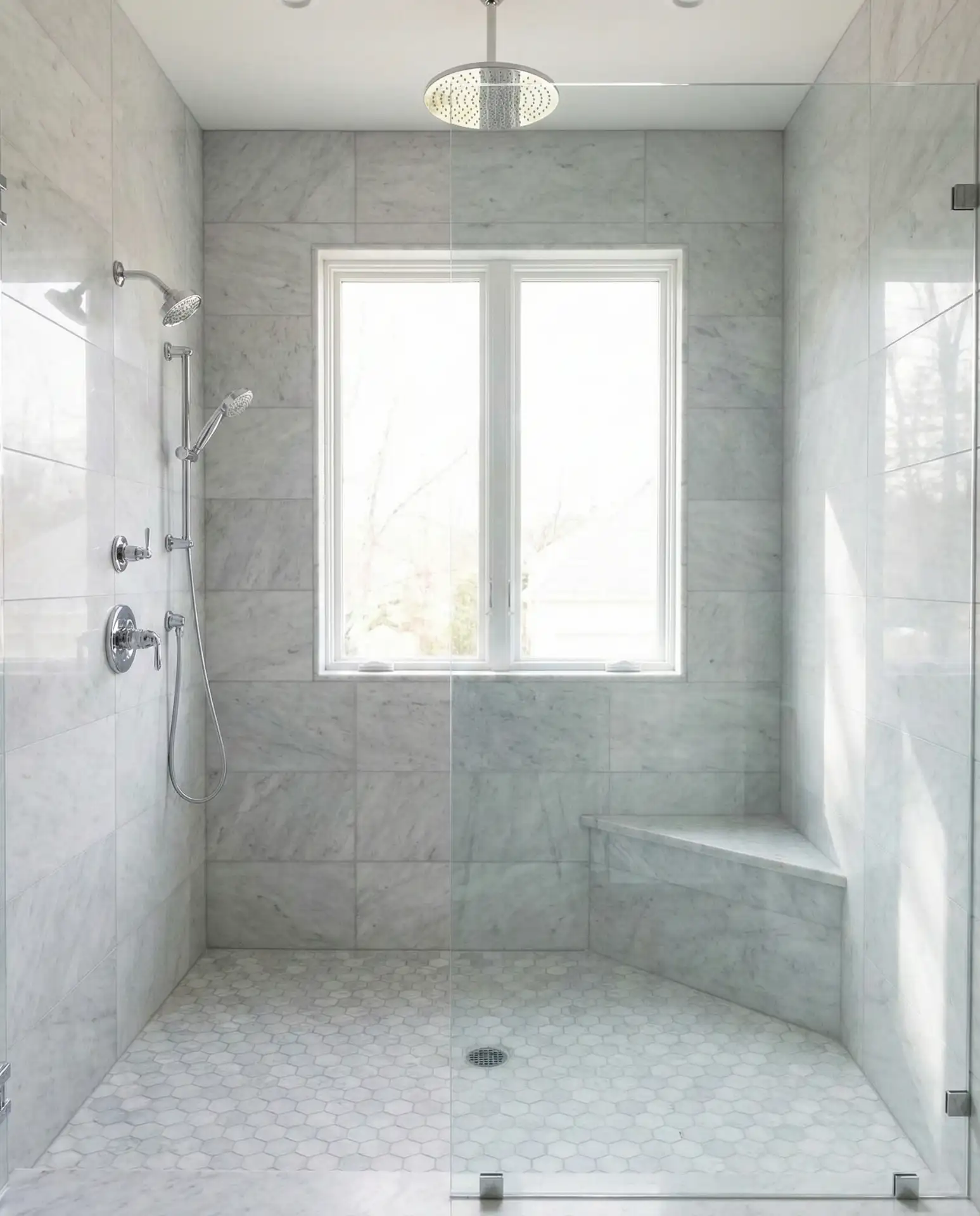
A large walk-in shower—typically 5×7 feet or bigger—offers a true luxury experience with room for multiple body sprays, generous seating, and movement space that rivals dedicated steam rooms. These expansive enclosures work beautifully in master bathroom suites where square footage isn’t constrained, allowing for ambitious tile designs and architectural features that smaller showers simply can’t accommodate. Consider incorporating a curbless entry for a sleek transition, or maintain a low-profile threshold if you prefer subtle separation. The generous proportions also support aging-in-place needs, providing ample maneuvering room for mobility aids if needed down the line.
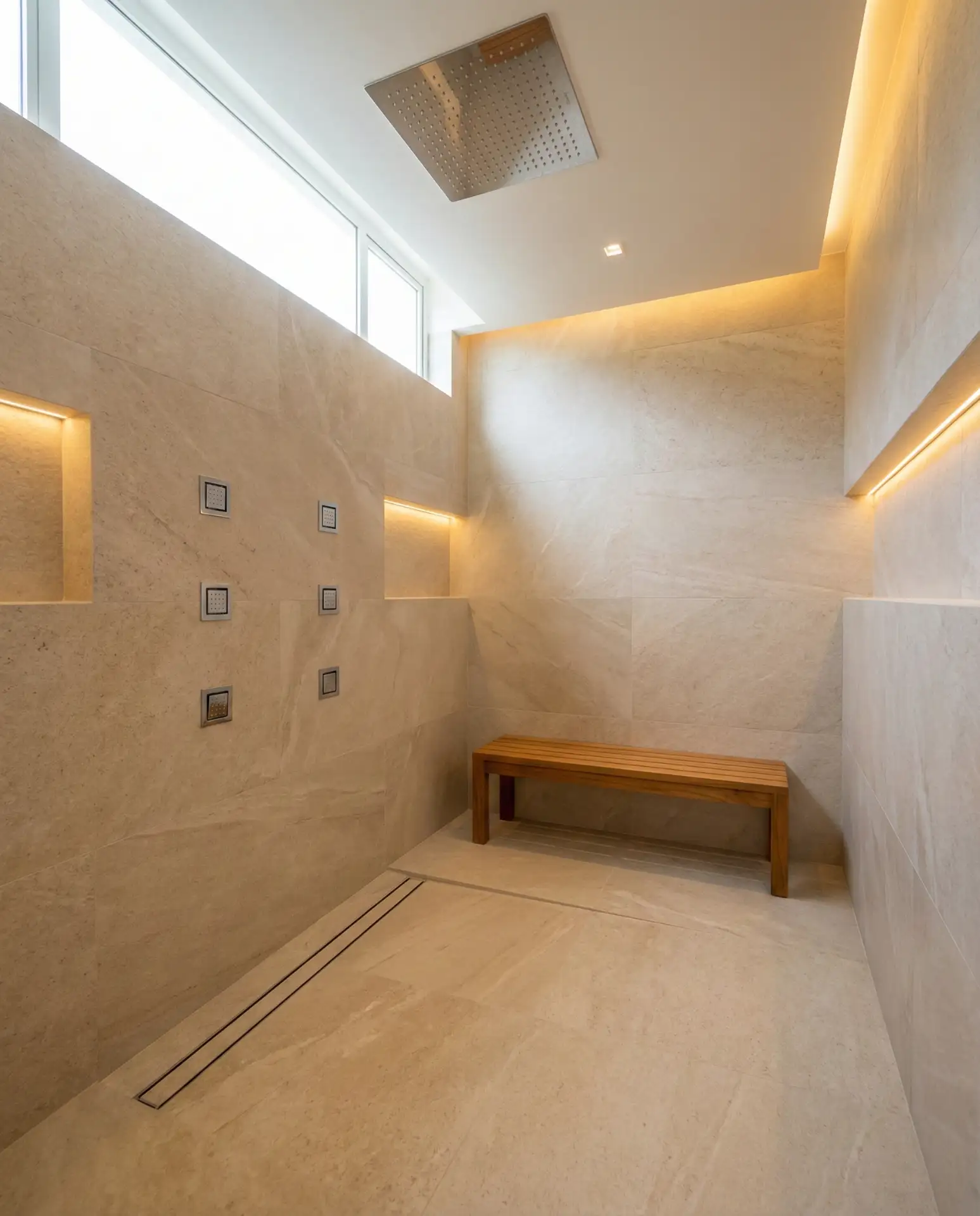
From a practical perspective, large showers require proportionally more waterproofing, increased heating capacity to stay comfortable, and higher-grade ventilation to manage steam. The installation cost typically runs $8,000-15,000 depending on finish selections, but the investment pays dividends in daily enjoyment and resale appeal. These showers photograph exceptionally well, which is why they dominate high-end real estate listings and design magazines. Just remember that bigger isn’t always better—without thoughtful design, an oversized shower can feel cold and cavernous rather than luxurious and enveloping.
9. Half Wall Shower Enclosures
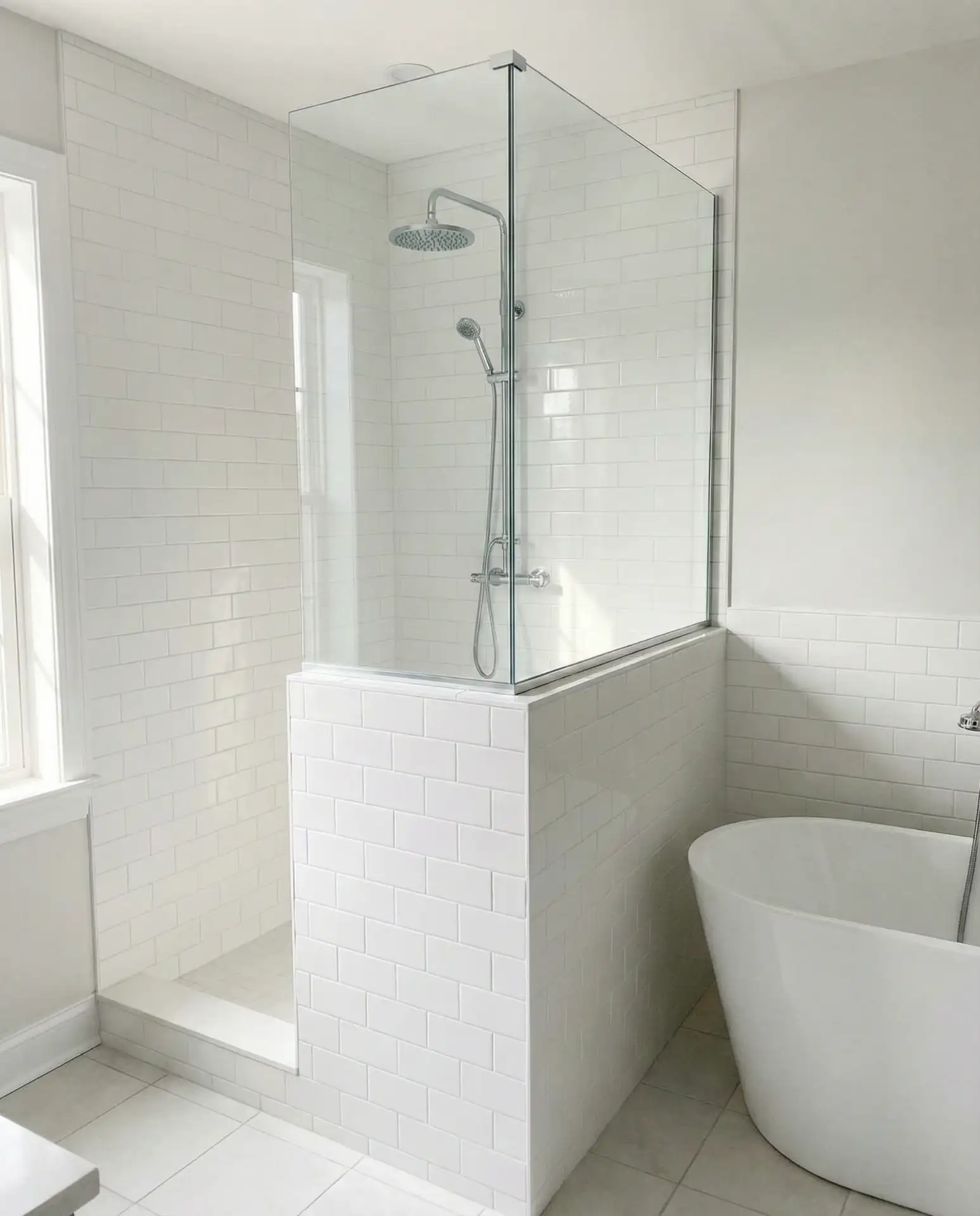
A half-wall configuration combines the openness of a doorless design with practical water containment, featuring a partial tile or glass barrier that extends 3-4 feet into the shower space. This middle-ground approach maintains visual flow while protecting the rest of your bathroom from spray and splash. The half wall can be constructed entirely from tile to match your shower walls, creating a substantial architectural element, or topped with a glass panel for a lighter, more modern appearance. This design particularly suits bathrooms where a full enclosure feels too confining, but a completely open shower would be impractical given the room’s dimensions or layout.
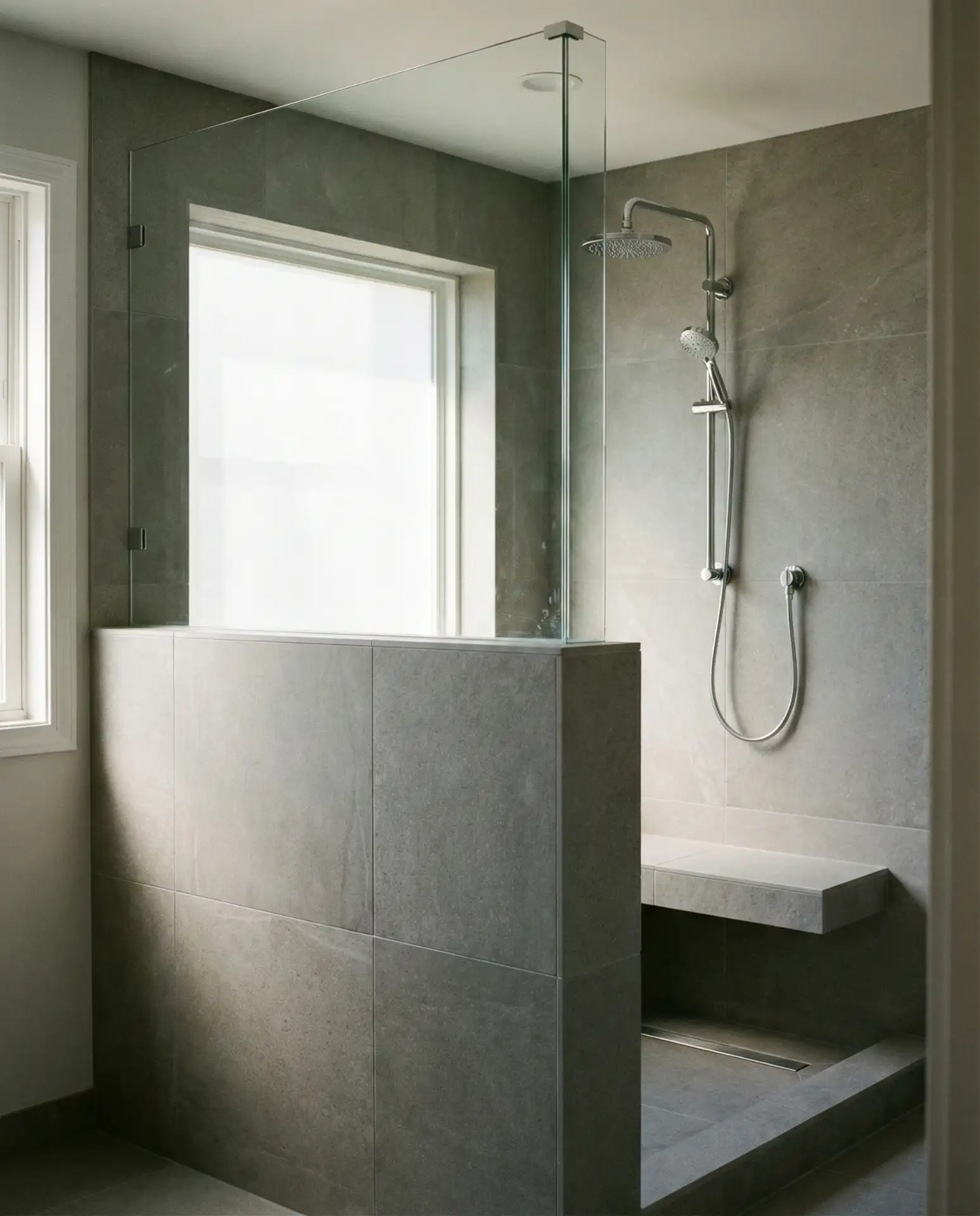
This solution works best in bathrooms measuring at least 8×10 feet where you have room to position the showerhead opposite the opening, minimizing direct spray toward the half wall. Regional preferences show that Southern and Western states favor more open designs like this, while Northern climates tend toward fully enclosed showers for heat retention. A 30-inch half wall typically provides adequate splash protection while maintaining that sought-after airy feeling. Many homeowners choose this option as a compromise when family members disagree about fully open versus enclosed shower designs.
10. Stone Tile Walk-In Shower Features
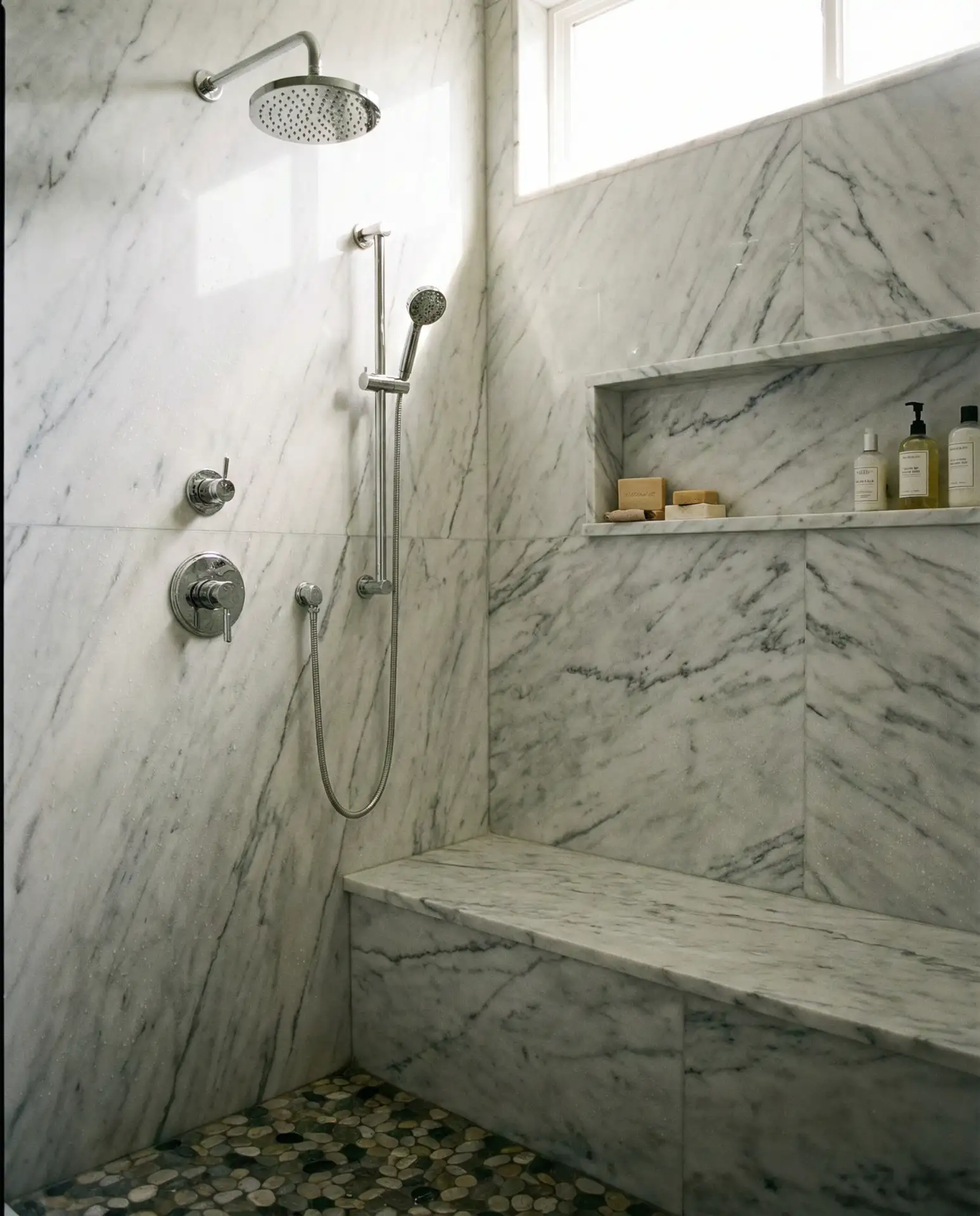
Stone tile brings timeless elegance and natural variation to walk-in showers, with options ranging from classic marble and travertine to modern slate and limestone. Each slab tells its own story through unique veining, color shifts, and texture that manufactured materials simply cannot replicate. A master bath shower clad in honed Carrara marble or stacked ledger stone creates instant luxury, while river rock flooring provides organic texture and excellent slip resistance underfoot. The key to success with natural stone lies in proper sealing—these porous materials require regular maintenance to prevent staining and water damage, but many homeowners find the authentic beauty worth the extra care.
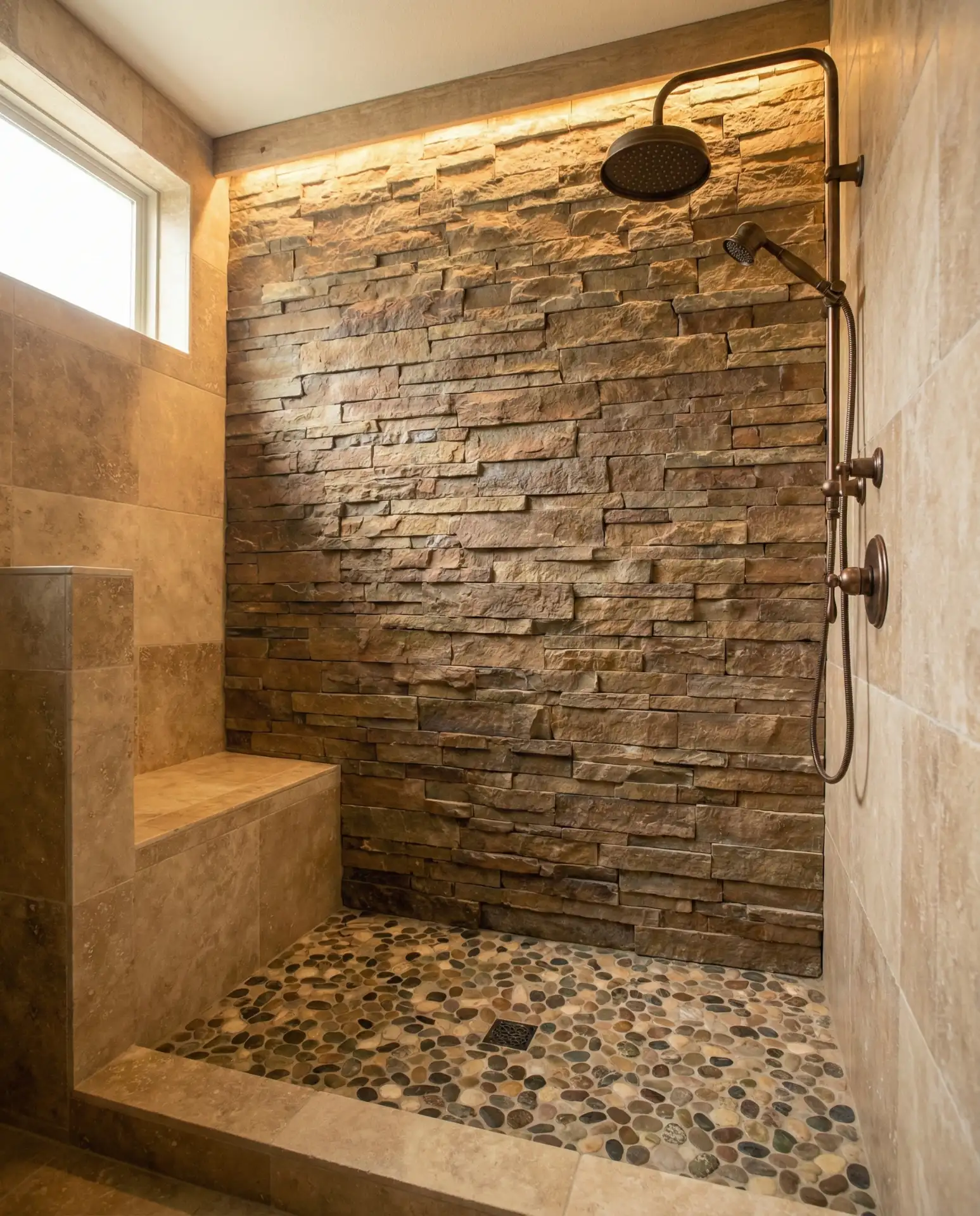
Stone showers command premium pricing—expect to budget $12-35 per square foot for material alone, with marble at the higher end and slate more affordable. Installation costs also run higher since stone requires experienced tile setters familiar with working with natural materials. The investment typically adds substantial resale value, particularly in upscale markets along both coasts where buyers specifically seek high-end finishes. An expert tip: use larger format tiles (12×24 inches or bigger) to minimize grout lines, which reduces maintenance and showcases the stone’s natural beauty more effectively.
11. White Subway Tile Classic Showers
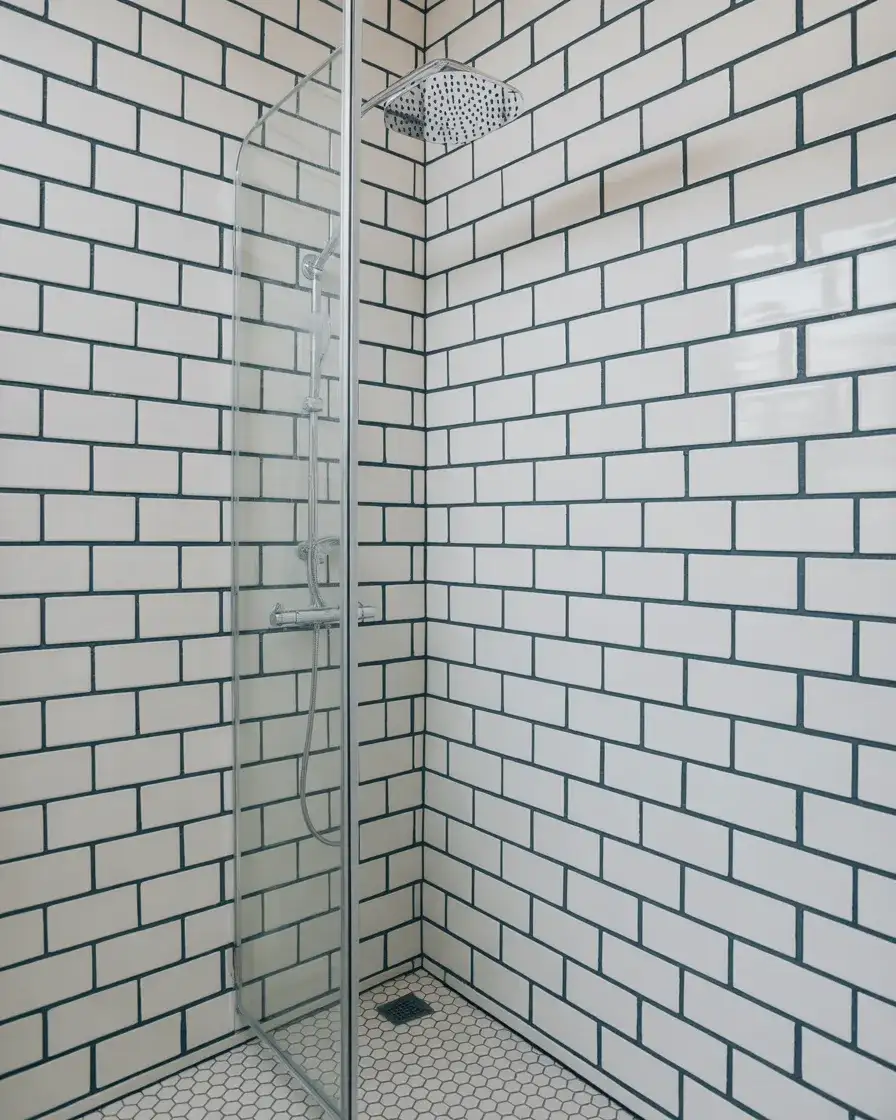
White subway tile remains the most popular choice for walk-in showers in 2026, offering clean versatility that works across every design style from traditional to contemporary. The 3×6 inch rectangular format originated in early New York City subway stations, and its enduring appeal lies in its ability to brighten spaces, reflect light, and provide a neutral backdrop for bolder accent choices. You can run the tiles horizontally for a classic look, vertically to emphasize ceiling height in a small bathroom, or in herringbone or stacked patterns for visual interest. Pair with contrasting grout—gray or black lines create graphic definition, while white-on-white grout maintains a seamless, expansive appearance.
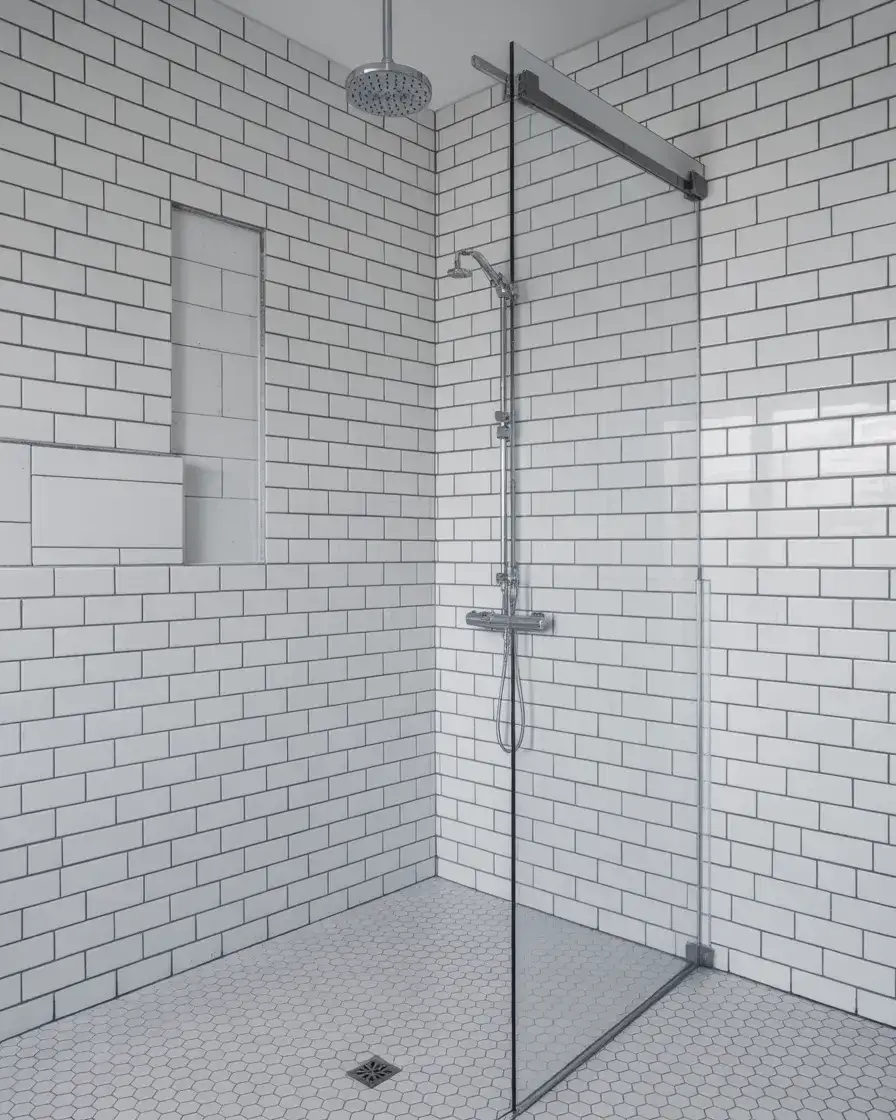
The affordability of subway tile makes it accessible for virtually any budget—quality ceramic versions start around $1-3 per square foot, making a complete shower surround achievable for $300-500 in materials. This cost-effectiveness allows you to splurge on premium fixtures, custom glass, or other details that might otherwise strain your budget. Real homeowners appreciate that white tile never goes out of style, which is crucial for those planning to sell within 5-10 years. The clean surface also shows soap scum and hard water deposits clearly, which some view as a drawback, but others appreciate since it encourages regular cleaning that maintains the shower’s pristine appearance.
12. Small Full Bathroom Shower Layouts
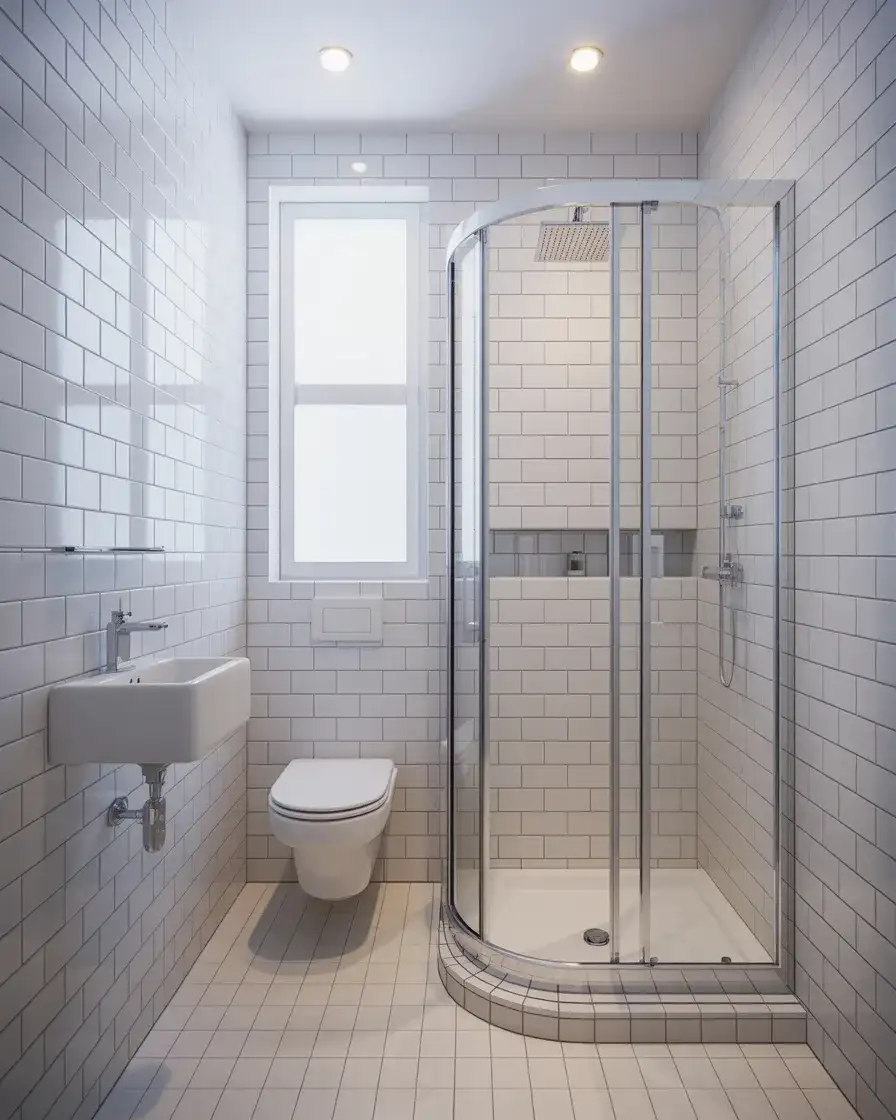
Designing a walk-in shower for a small full bathroom—typically 5×8 feet with toilet, sink, and shower—demands strategic space planning where every element serves multiple purposes. A corner shower installation preserves the longest wall for your vanity while tucking the wet zone efficiently into the remaining space. Glass enclosures are non-negotiable here; even a partial tile wall can make the room feel cramped. Consider a sliding glass door rather than a swinging one to eliminate the clearance space needed for door operation, or go with a fixed panel if your layout allows. Pocket doors for the bathroom entry also reclaim valuable square footage that would otherwise accommodate door swing.
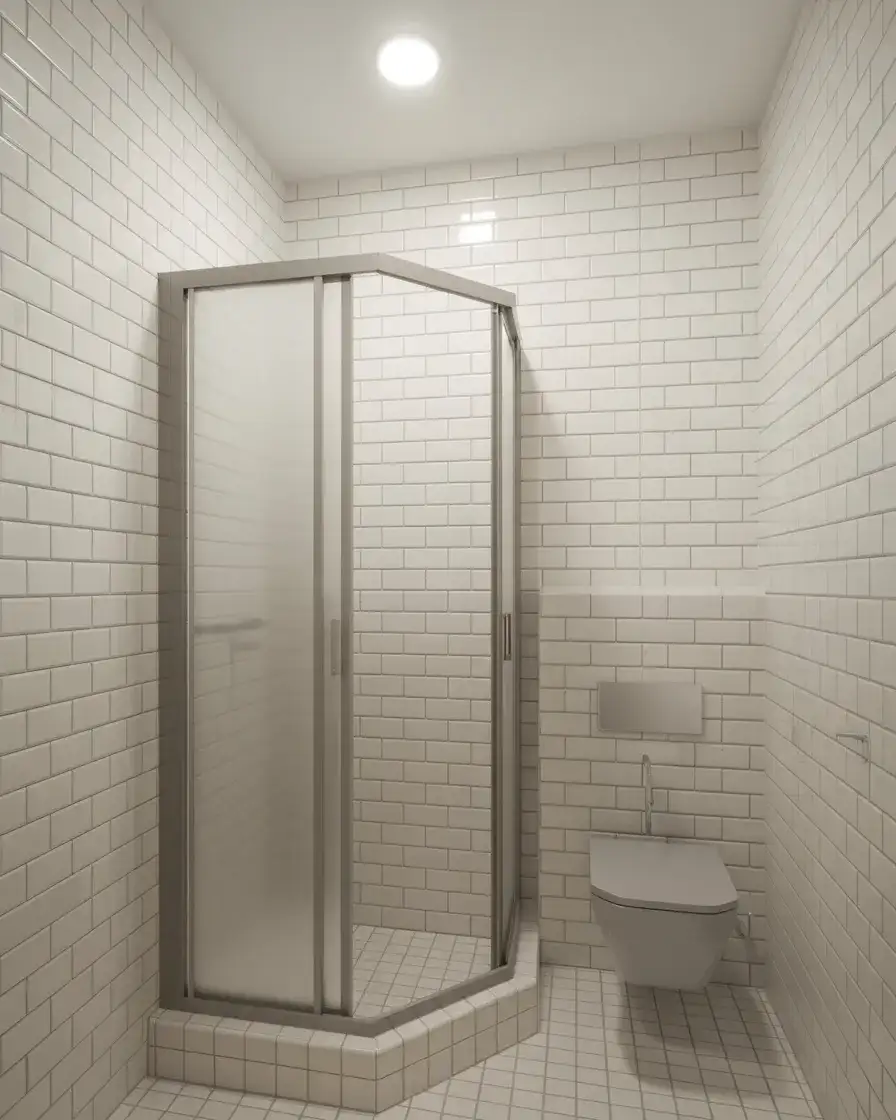
Small full bathrooms serve as hall baths, guest baths, or secondary bathrooms in most American homes, particularly in properties built before 1990 when bathroom sizes trended smaller. The national average for a full bathroom renovation in this size range runs $6,000-12,000, with the walk-in shower conversion representing roughly 40-50% of that total budget. A key insight: using large-format tile (12×24 inches or bigger) on both walls and floors creates fewer grout lines, which visually expands the space while also reducing cleaning maintenance in these compact areas.
13. Small Master Bath Walk-In Showers
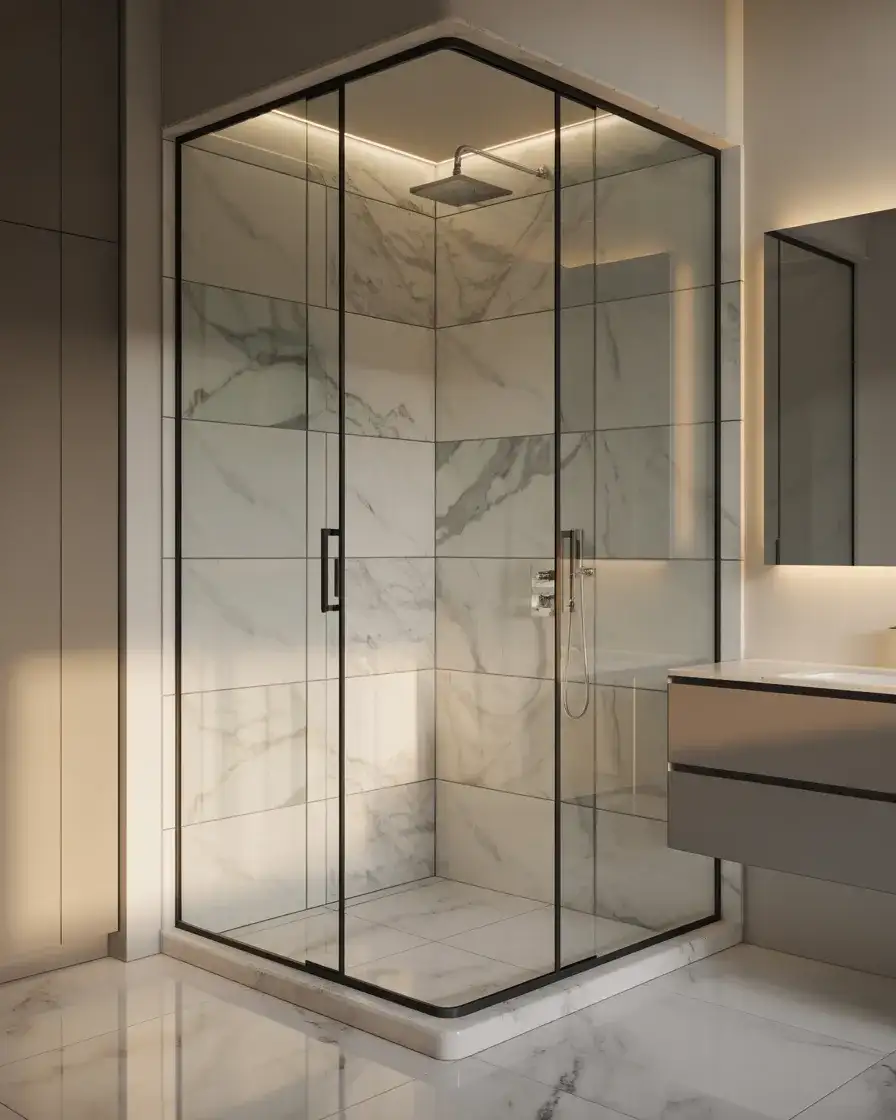
Even a small master bath can accommodate a luxurious walk-in shower when you prioritize this feature over a soaking tub that rarely gets used. In a 6×8 or 7×9 foot master bathroom—common in townhomes, condos, and older suburban housing—dedicating 36-42 inches to a well-appointed shower creates a more functional daily-use space than attempting to cram both a tub and shower into the layout. Consider a neo-angle corner design with frameless glass that maximizes interior shower space while maintaining traffic flow to the toilet and vanity. Wall-hung toilets and floating vanities further enhance the sense of openness by exposing more floor surface
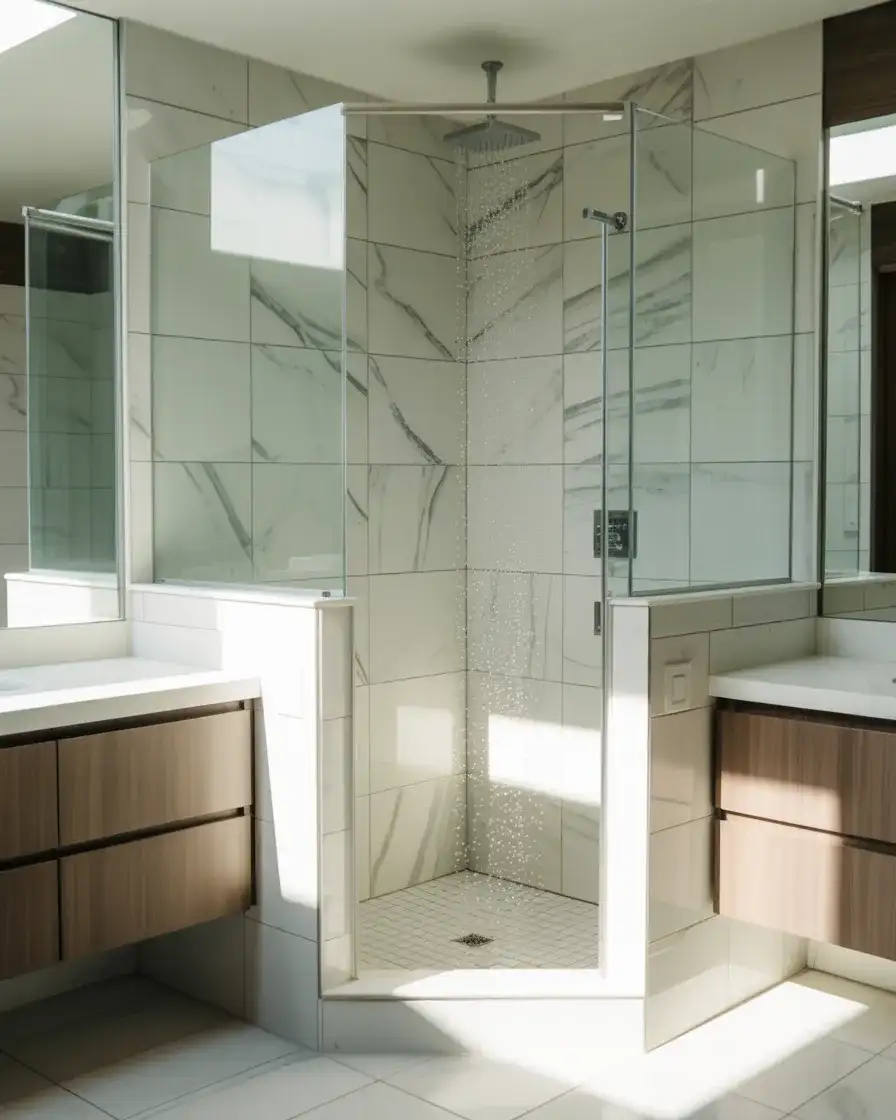
This configuration works best for couples without small children or for families with a separate hall bathroom that includes a tub for kids’ bath time. Statistics show that Americans shower far more frequently than they bathe, making the walk-in shower conversion a practical choice that aligns with actual usage patterns rather than aspirational tub fantasies. Many homeowners report that eliminating a cramped tub-shower combo in favor of a spacious walk-in shower dramatically improves their daily experience, even if the total bathroom footprint remains modest. The return on investment proves strong in most markets, particularly where buyers value updated, move-in-ready homes.
14. Compact 4×6 Bathroom Shower Ideas
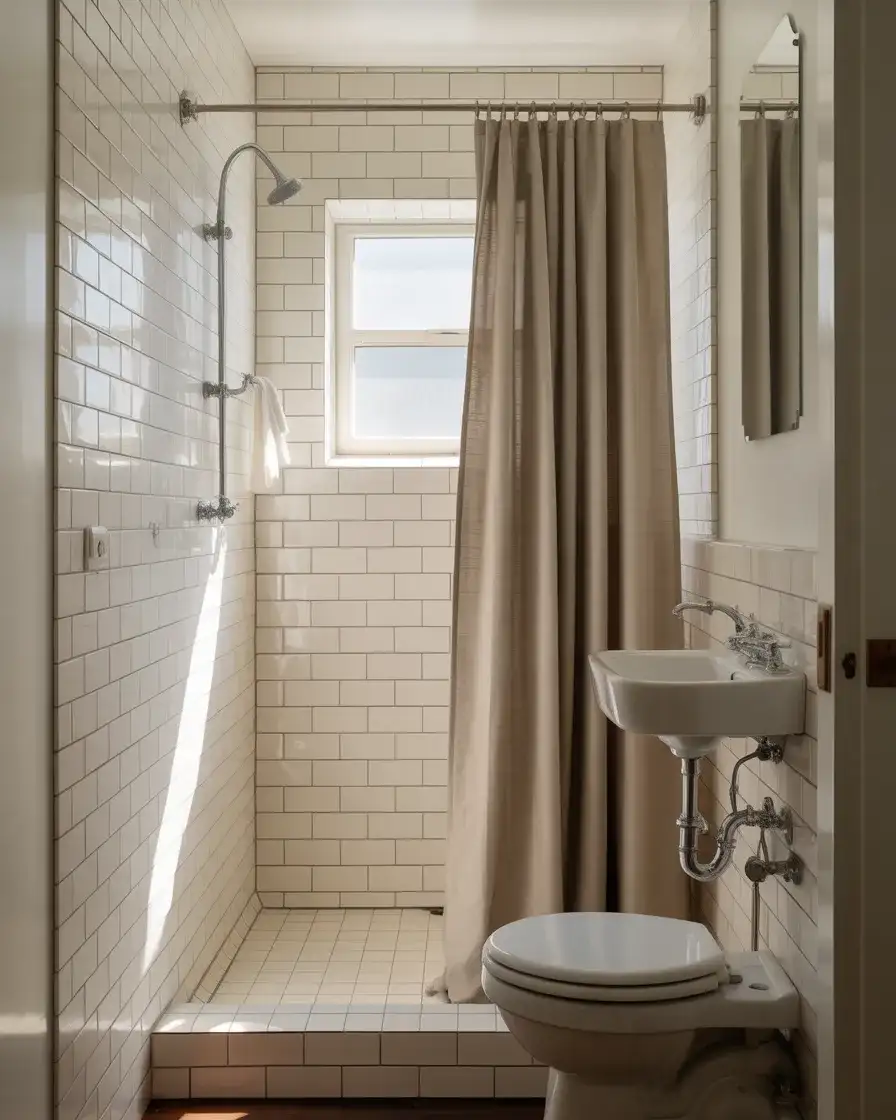
A 4×6 bathroom represents one of the smallest full bath footprints in residential construction, yet even this tight 24-square-foot space can accommodate a functional walk-in shower with smart design choices. The standard approach places a 32-36 inch shower in one corner, leaving just enough room for a wall-hung sink and toilet along the remaining walls. Every inch matters here, so choose a compact toilet with a round bowl rather than an elongated one, specify a narrow-depth vanity (16 inches instead of the standard 21), and use a corner sink if necessary to preserve clearances. A curtain instead of a fixed glass panel can sometimes work better in these ultra-tight layouts, as it doesn’t require door clearance and can be pulled completely aside when not in use.
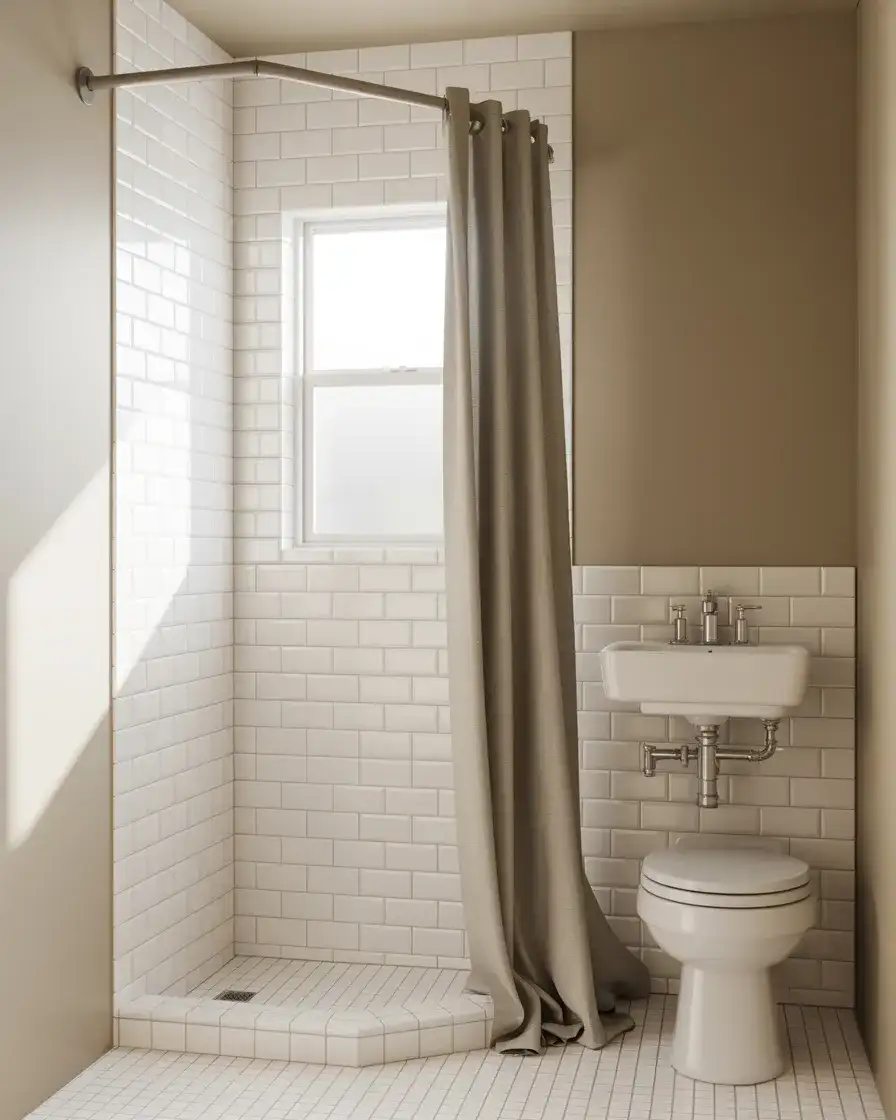
Common mistakes in 4×6 bathrooms include choosing dark colors that make the space feel claustrophobic, installing fixtures that are too large for the room’s scale, and adding unnecessary decorative elements that create visual clutter. Instead, embrace minimalism with light colors, wall-mounted fixtures that reveal floor space, and a single bold element like an accent tile stripe rather than competing patterns. This bathroom size appears most frequently in basement conversions, above-garage apartments, and vintage homes built before 1950. With construction costs averaging $125-175 per square foot for complete bathroom builds, a 24-square-foot space represents a $3,000-4,200 investment for basic finishes—affordable enough to make it work rather than leaving the space non-functional.
15. Shower Curtain Walk-In Solutions
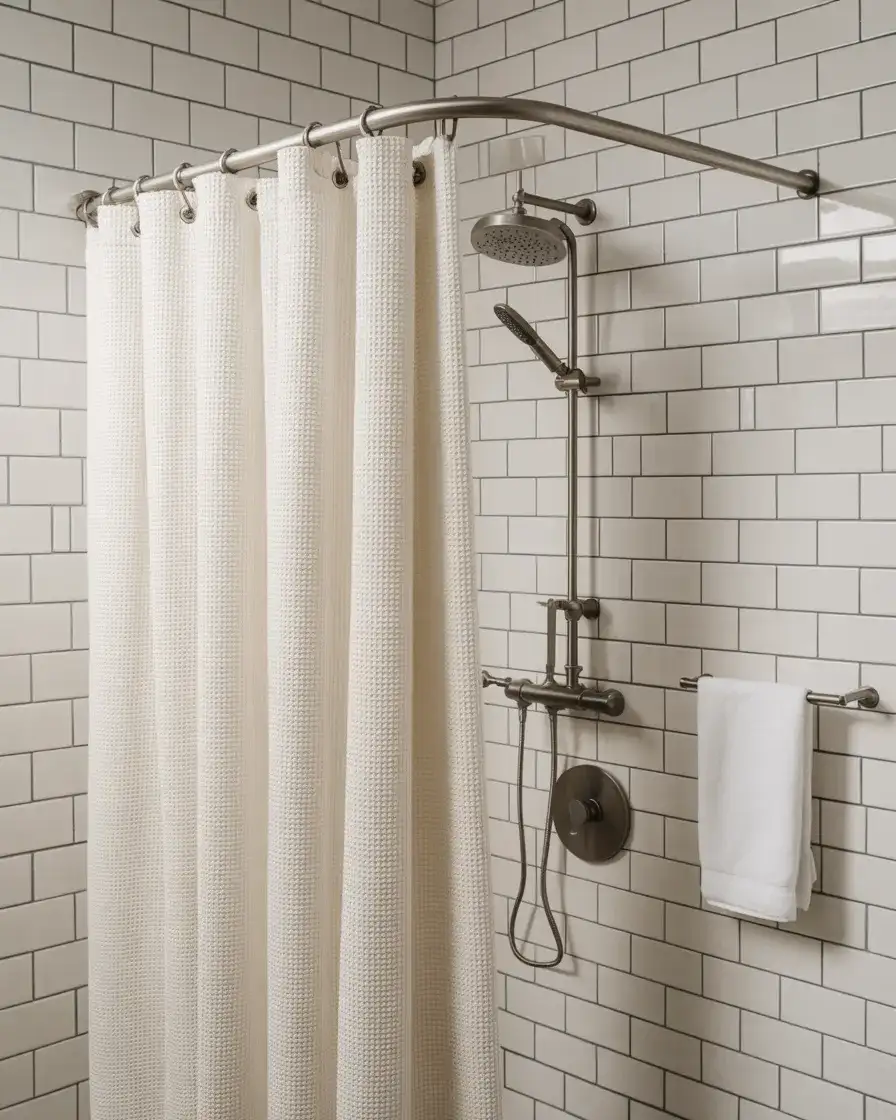
A curtain-based walk-in shower offers budget-friendly flexibility that custom glass enclosures simply cannot match, with installation costs often 75% lower than permanent barriers. This approach works particularly well in small bathroom rentals or starter homes where you want shower functionality without major investment, or in situations where you’re waiting to complete a full bathroom remodel but need a functional shower in the interim. Modern curved curtain rods can create a surprisingly spacious showering area by bowing outward from the wall, and high-quality fabric curtains in solid colors or subtle patterns provide a more sophisticated look than cheap vinyl options. The ability to swap curtains seasonally or whenever you want a fresh look adds decorative versatility that fixed glass cannot provide.
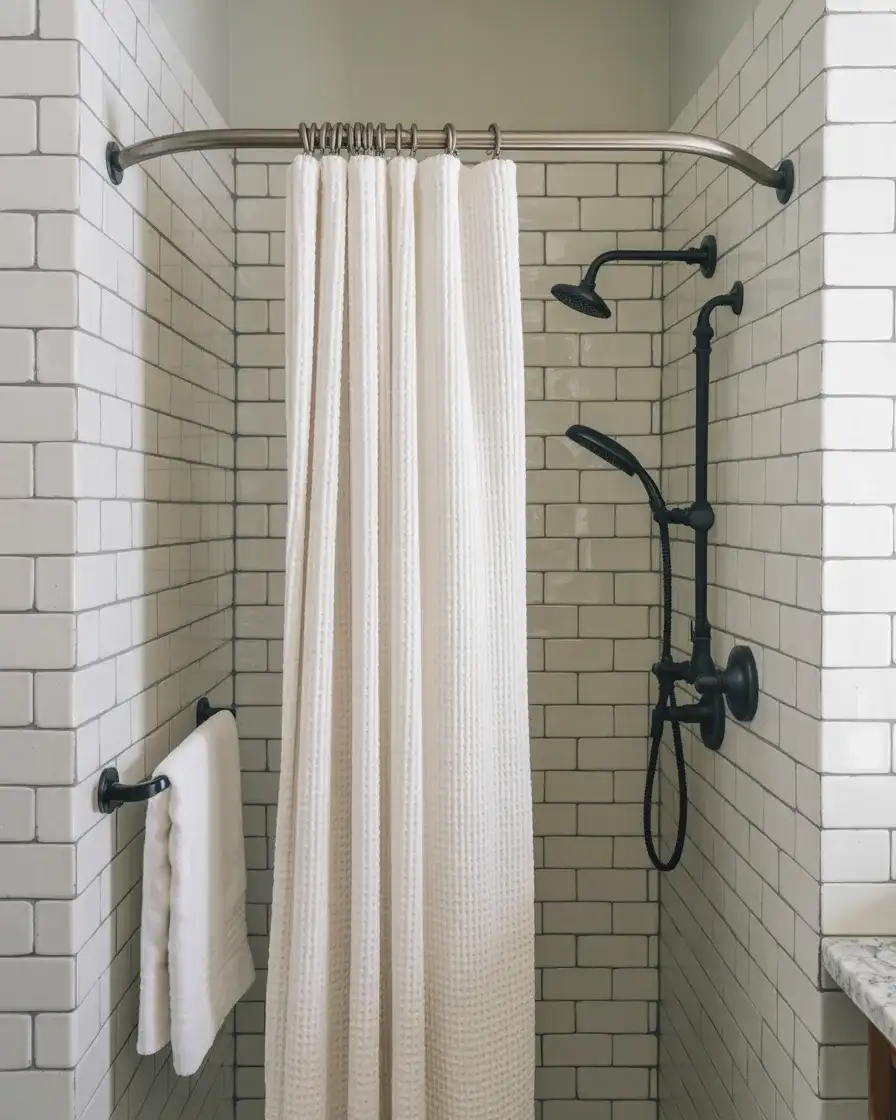
Budget comparison reveals stark differences: a quality shower curtain and rod package costs $40-120, while even basic frameless glass panels start around $800 and quickly escalate past $2,000 with custom sizing or premium finishes. Many renters specifically appreciate curtain-based solutions since landlords rarely allow permanent modifications to bathroom plumbing or tile work. The main practical drawback is that curtains require more frequent cleaning than glass—they should be washed monthly to prevent mildew buildup—but this maintenance task takes just minutes in a washing machine, making it far less onerous than regular glass squeegee duty.
16. Dark Moody Walk-In Shower Designs
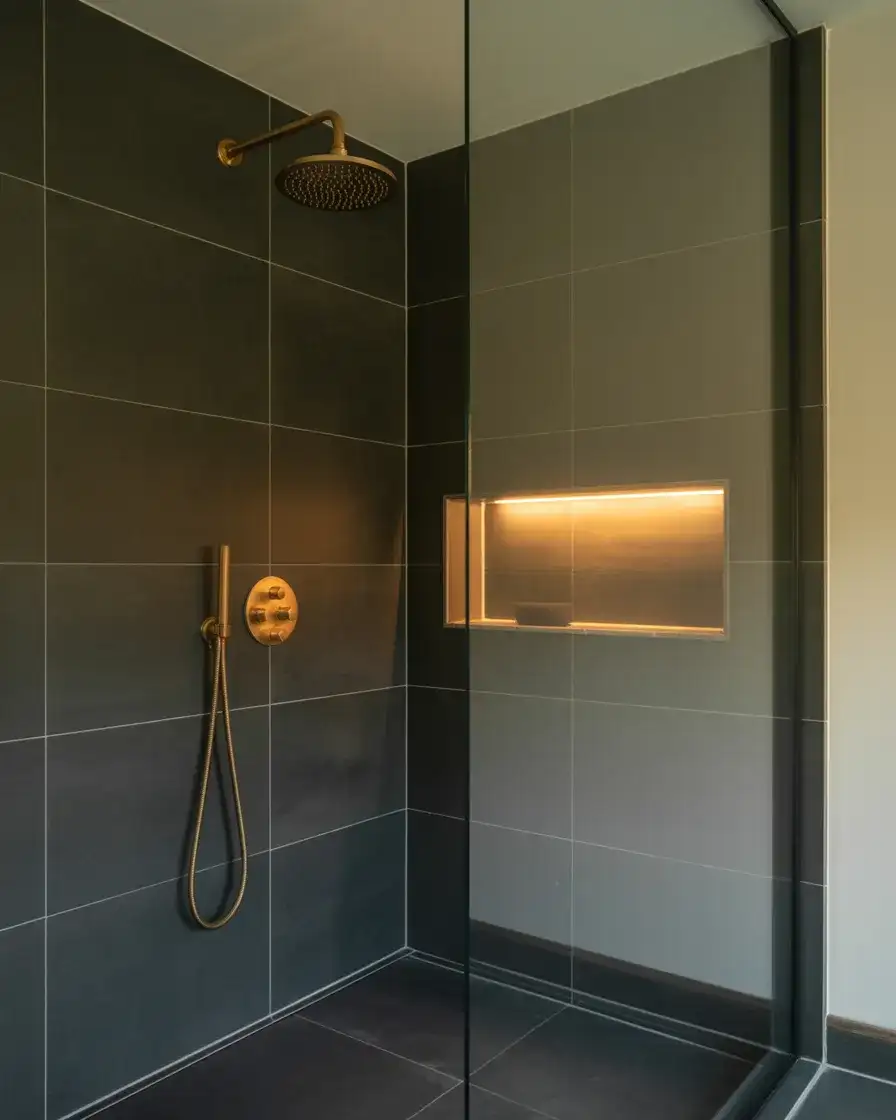
Dark tile creates dramatic, cocoon-like walk-in showers that feel intimate and sophisticated rather than stark and clinical. Charcoal gray, deep navy, forest green, or matte black tiles transform showers into moody retreats that photograph beautifully and provide a striking counterpoint to lighter elements in your bathroom. This aesthetic works especially well in master bath suites where you can afford to be bold with design choices. Balance the darkness with excellent lighting—recessed LED fixtures, backlit niches, or even underwater-rated strip lighting along the shower floor create ambient glow that prevents the space from feeling cave-like. Metallic fixtures in brushed gold or polished chrome pop dramatically against dark backgrounds, adding luxury without additional cost.
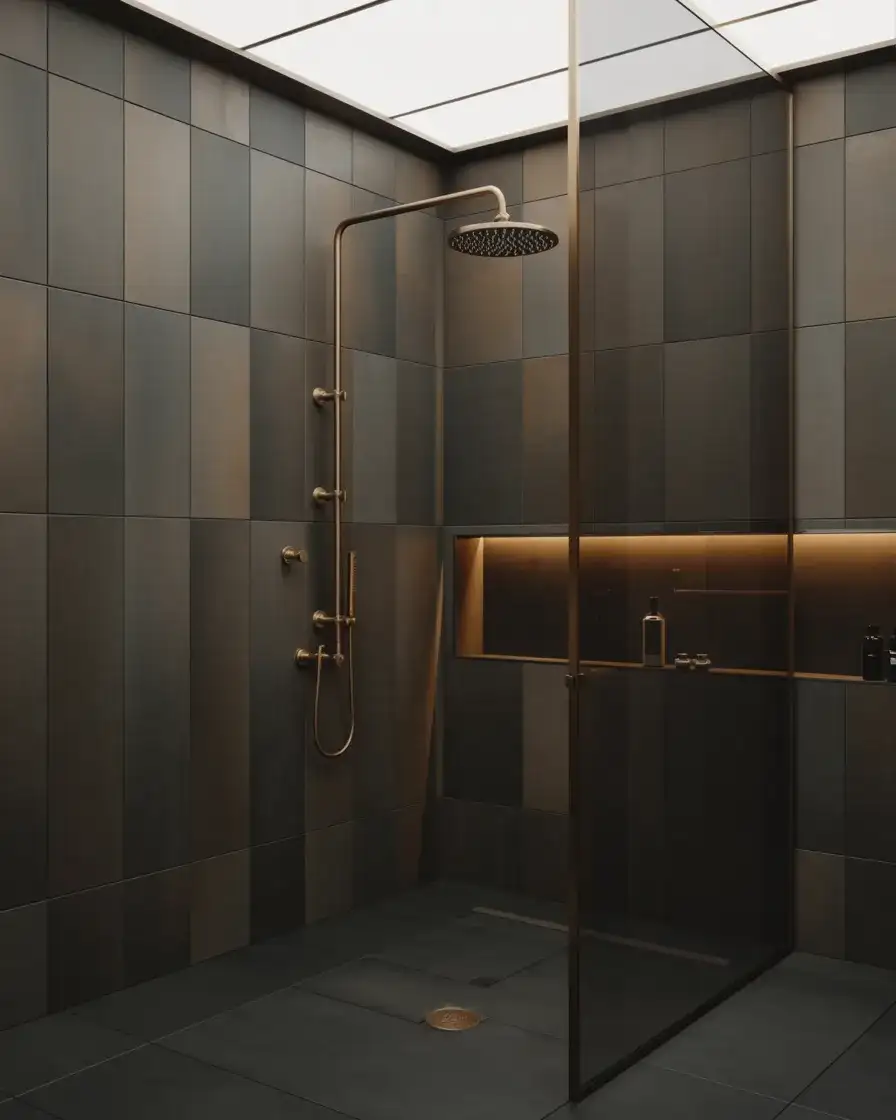
Dark showers are particularly popular in urban areas like Brooklyn, Portland, and Austin, where design-forward homeowners embrace non-traditional color palettes. One practical consideration: hard water deposits and soap residue show more prominently on dark surfaces than light ones, requiring consistent maintenance with daily shower spray or weekly deep cleaning. However, many homeowners find that the striking visual impact justifies the extra upkeep. If you’re hesitant about committing fully to dark tile, consider a hybrid approach with dark walls and lighter floors, or a dark accent wall with lighter surrounding surfaces.
17. Blue Tile Walk-In Shower Accents
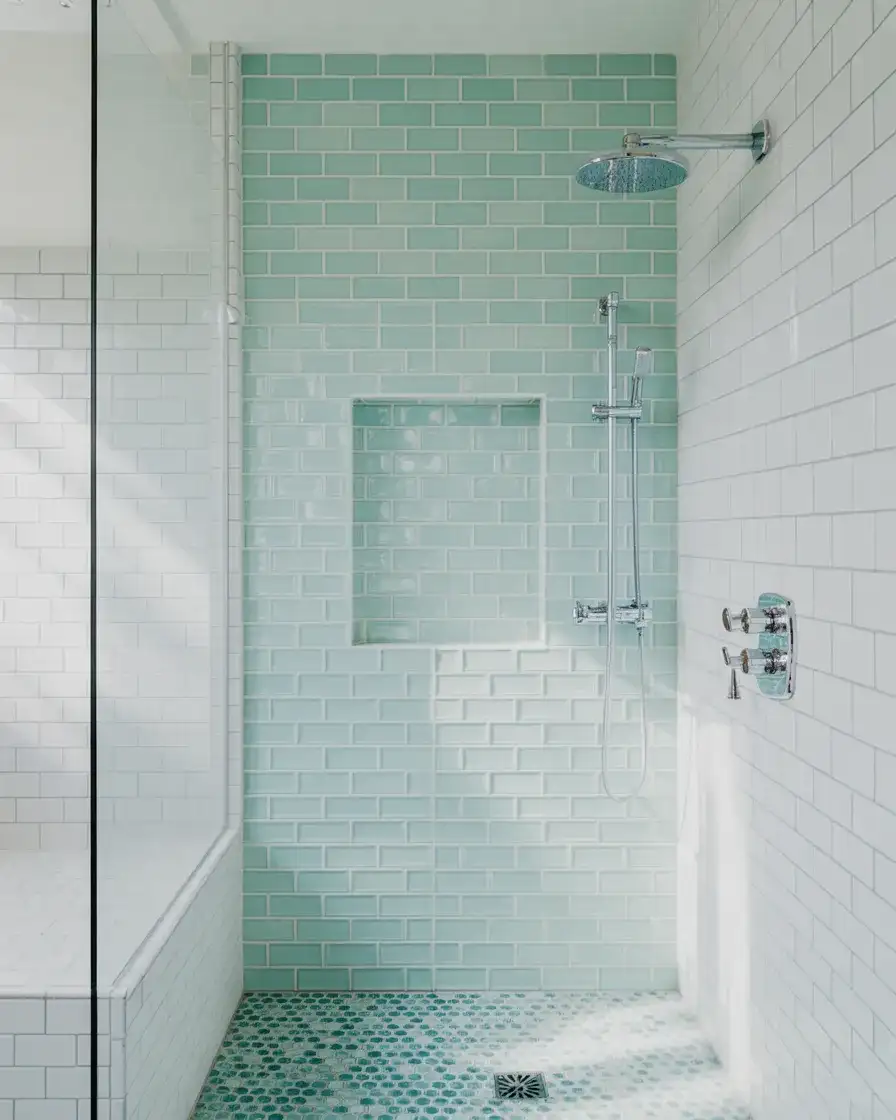
Blue tile introduces calming, spa-like qualities to walk-in showers, evoking ocean waves, clear skies, and the therapeutic nature of water itself. From soft aqua and robin’s egg to deep navy and cobalt, blue tile works across design styles—coastal bathrooms pair beautifully with light blue subway tile, while contemporary spaces embrace geometric blue patterns against neutral backgrounds. A white shower with a single blue accent wall or blue floor creates visual interest without overwhelming the space, and blue penny tile flooring has experienced a major resurgence in 2026 Pinterest searches. The color psychology of blue promotes relaxation and cleanliness, making it psychologically well-suited to shower environments where we seek daily renewal.
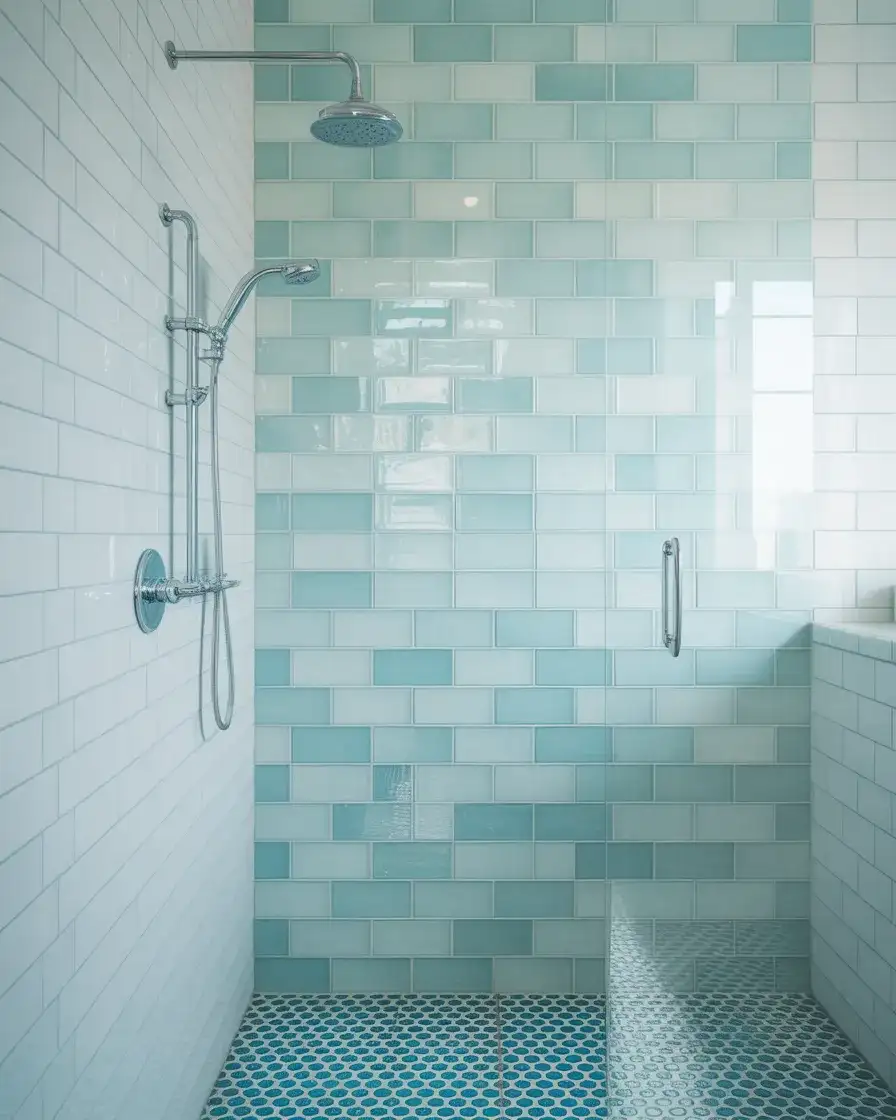
My cousin renovated her bathroom in Charleston last summer and chose pale blue glass tile that catches morning sunlight streaming through the window—she says it’s like showering in a gentle waterfall rather than a utilitarian stall. Blue tile pairs exceptionally well with natural materials like wood vanities, brass fixtures, and white marble counters, creating layered visual interest. Price-wise, colored tile typically costs the same as neutral options ($5-15 per square foot for quality ceramic), so you’re not paying a premium for the color itself. The key is committing confidently—timid blue accents can read as dated, while bold applications feel intentional and current.
18. Curbless Walk-In Shower Accessibility
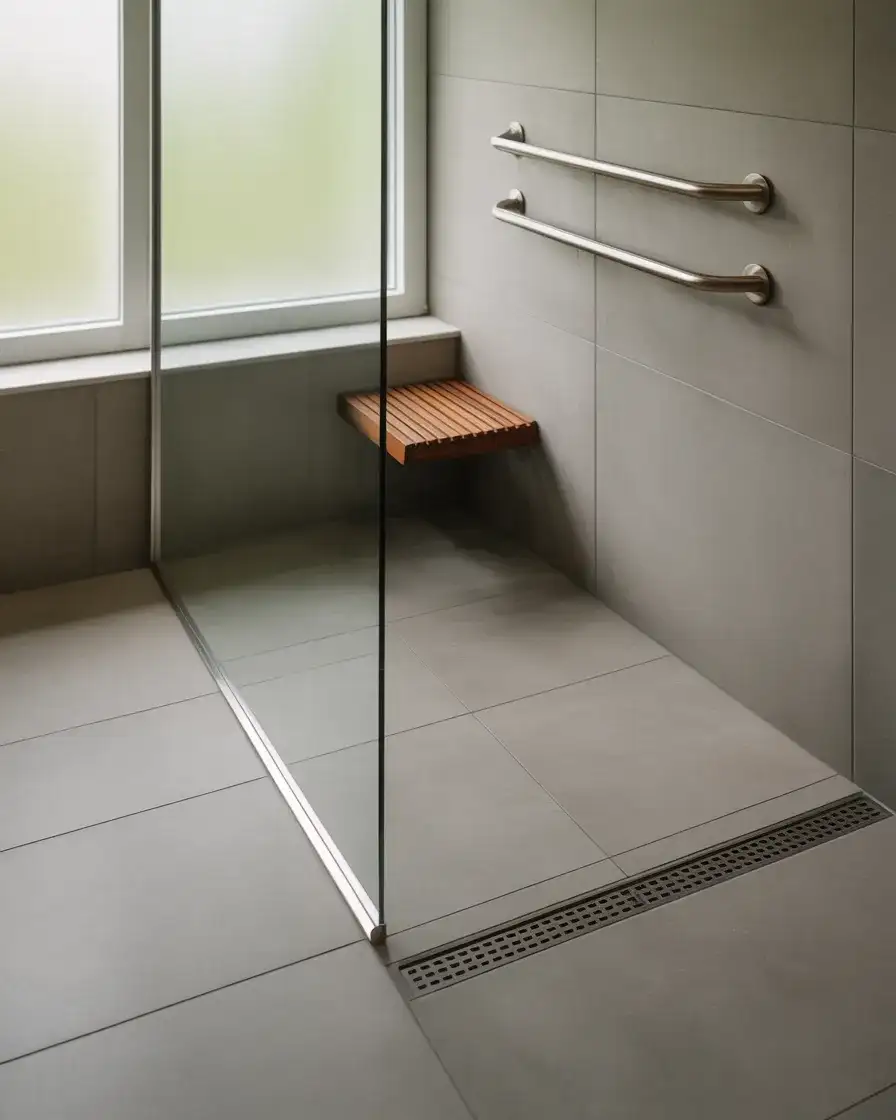
A curbless or zero-threshold walk-in shower eliminates the traditional raised lip entirely, creating a completely flush transition from bathroom floor to shower floor that serves both aesthetic and accessibility purposes. This design has become increasingly popular as American homeowners embrace universal design principles that support aging in place without sacrificing contemporary style. The continuous floor plane makes the bathroom feel significantly larger, simplifies cleaning by eliminating the awkward tub surround area, and accommodates wheelchairs, walkers, or anyone with mobility considerations. Achieving a proper curbless installation requires careful attention to floor slope, drainage, and waterproofing—typically the shower floor sits slightly lower than the surrounding bathroom floor to contain water, with a linear drain positioned at the lowest point.
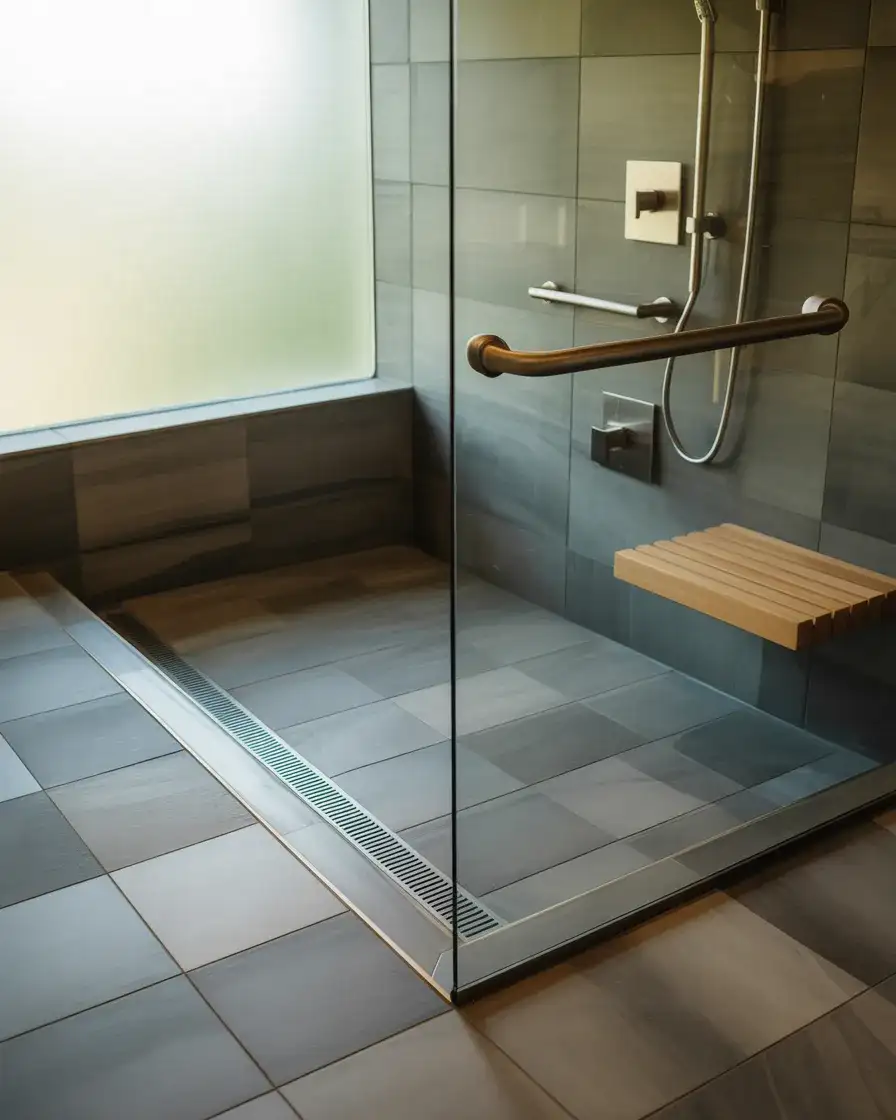
This approach works best in new construction or gut renovations where you can properly slope the subfloor and install the shower pan at the correct depth—retrofitting a curbless shower into an existing bathroom often proves challenging due to structural constraints. Building codes require minimum floor slopes (typically 1/4 inch per foot toward the drain) to prevent standing water, and proper waterproofing becomes even more critical when there’s no physical barrier containing moisture. Costs run $8,000-14,000 for a professionally installed curbless shower, roughly 20-30% higher than conventional curbed versions due to the additional structural work required. The investment particularly makes sense for homeowners planning to age in place or anyone with existing mobility needs.
19. Niche Storage Built Into Showers
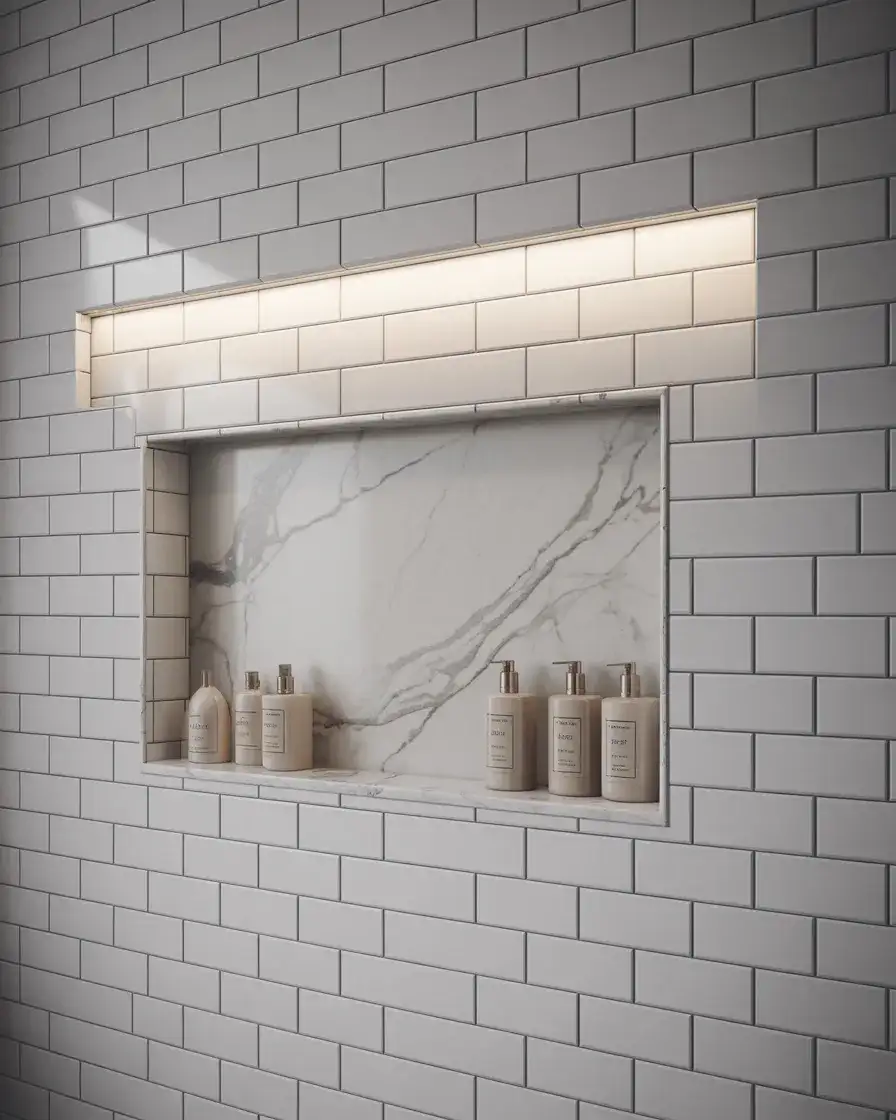
Built-in shower niches provide elegant storage that eliminates the clutter of hanging caddies or suction-cup shelves while maintaining clean lines and easy maintenance. These recessed compartments integrate directly into your shower wall, typically positioned between studs at a comfortable standing height (around 48-54 inches from the floor). A standard single niche measures 12×12 or 14×24 inches, offering ample space for shampoo, conditioner, soap, and other daily essentials. For large or double showers, consider two niches positioned for his-and-hers zones or a horizontal layout that spans multiple stud bays. Finish the interior with the same tile as your shower walls for a monochromatic look, or choose contrasting tile or stone to create visual interest and help bottles stand out against the background.
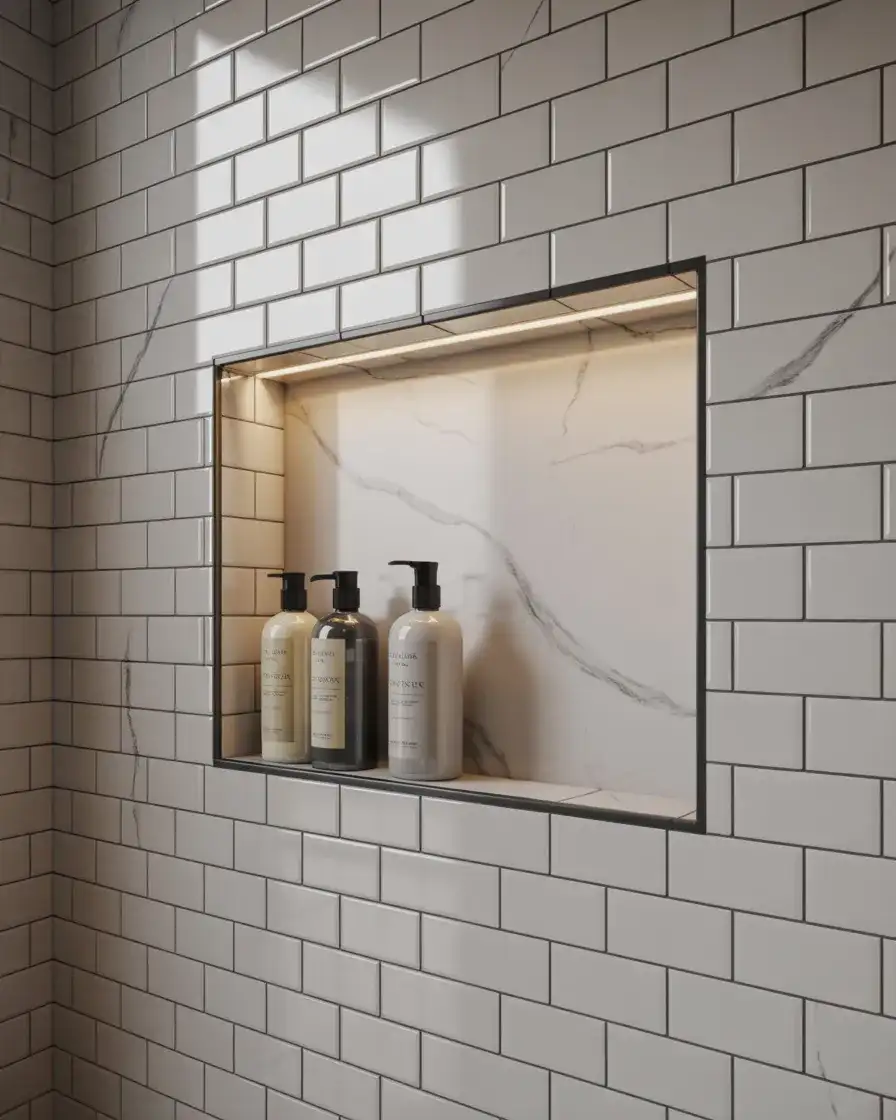
Niches must be installed during initial shower construction, as cutting into an existing tiled wall risks damaging waterproofing and structural integrity—this is not a viable DIY add-on project. The cost to include niches during construction runs $200-500 per opening depending on size and finish selections, a modest investment for dramatically improved function. Position your niche away from direct water spray to prevent constant splashing onto bottles and products. Many contractors now install LED strip lighting along the top edge of niches, creating an ambient glow that highlights your products while providing practical task lighting during evening showers.
20. Frameless Glass Shower Enclosures
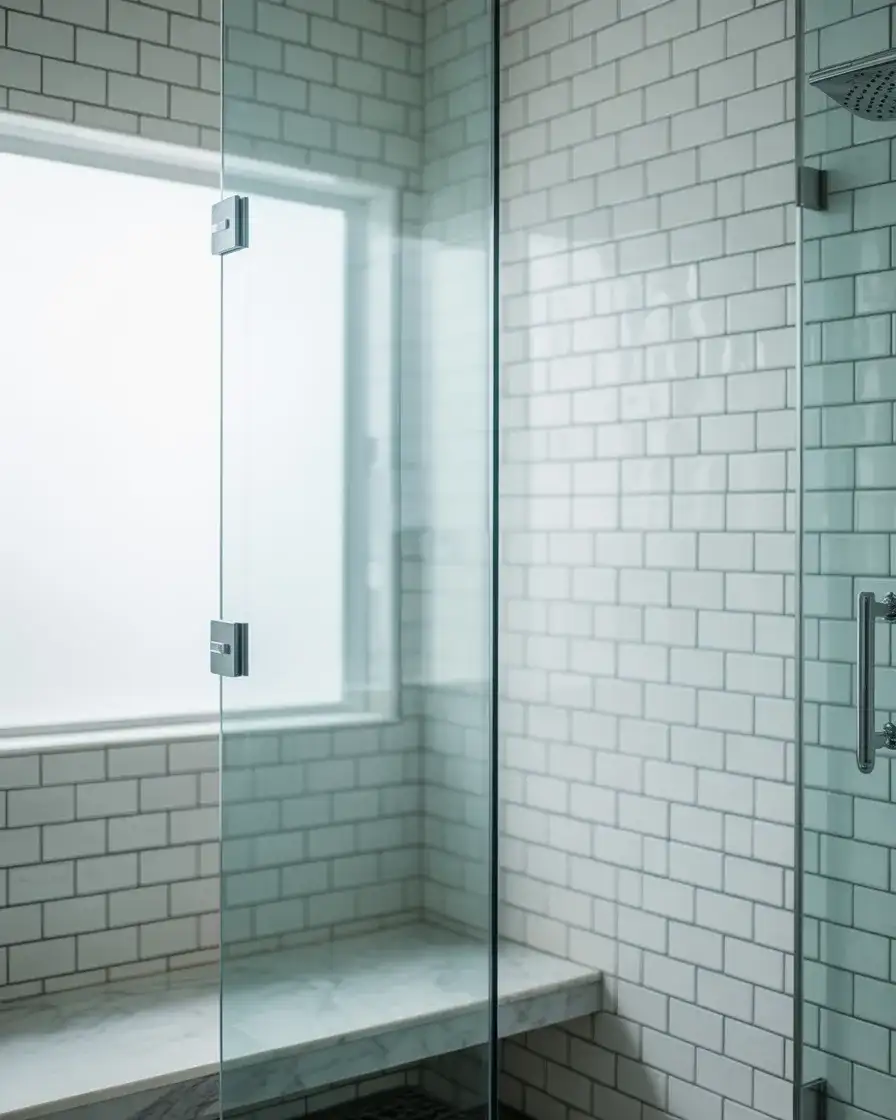
Frameless glass enclosures represent the pinnacle of modern shower design, using thick tempered glass (typically 3/8 to 1/2 inch) with minimal hardware to create a nearly invisible barrier that maximizes light flow and spatial perception. Unlike traditional framed showers with metal channels around every edge, frameless designs rely on precision-cut glass panels secured with discreet clips and hinges, resulting in a clean, high-end aesthetic that photographs beautifully. This style works equally well in small bathroom installations where transparency prevents visual congestion and in large master suites where the minimalist hardware allows elaborate tile work to take center stage. The absence of frames also eliminates the metal channels where soap scum and mildew traditionally accumulate, significantly reducing cleaning maintenance.
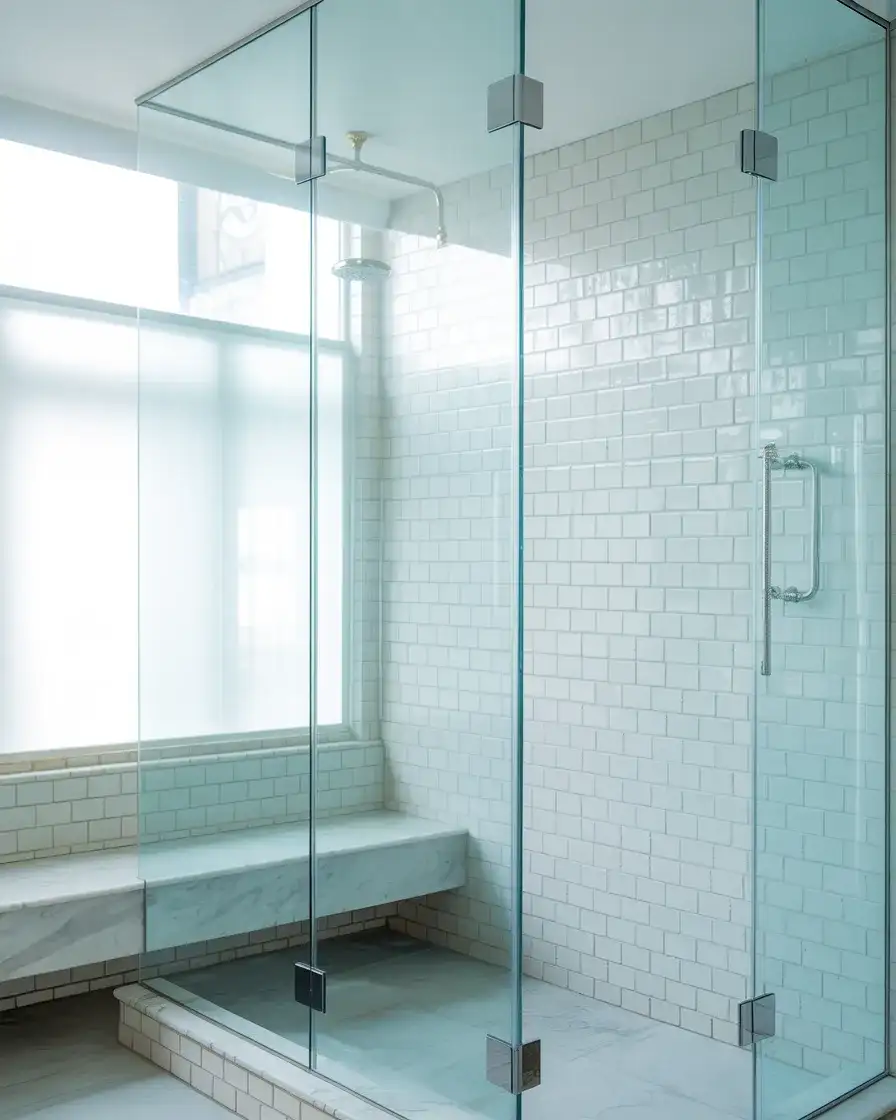
Frameless glass installations require professional measurement and installation to ensure proper fit—even small discrepancies can result in water leakage or door misalignment. Expect to budget $1,200-3,500 for quality frameless enclosures depending on size and configuration, roughly double the cost of standard framed alternatives. The investment proves worthwhile for many homeowners due to the premium appearance and easier maintenance. One practical tip: specify glass treated with protective coatings like EnduroShield or similar products that repel water and soap, keeping the glass clearer with minimal effort and extending the time between deep cleaning sessions.
21. Rainfall Showerhead Installations
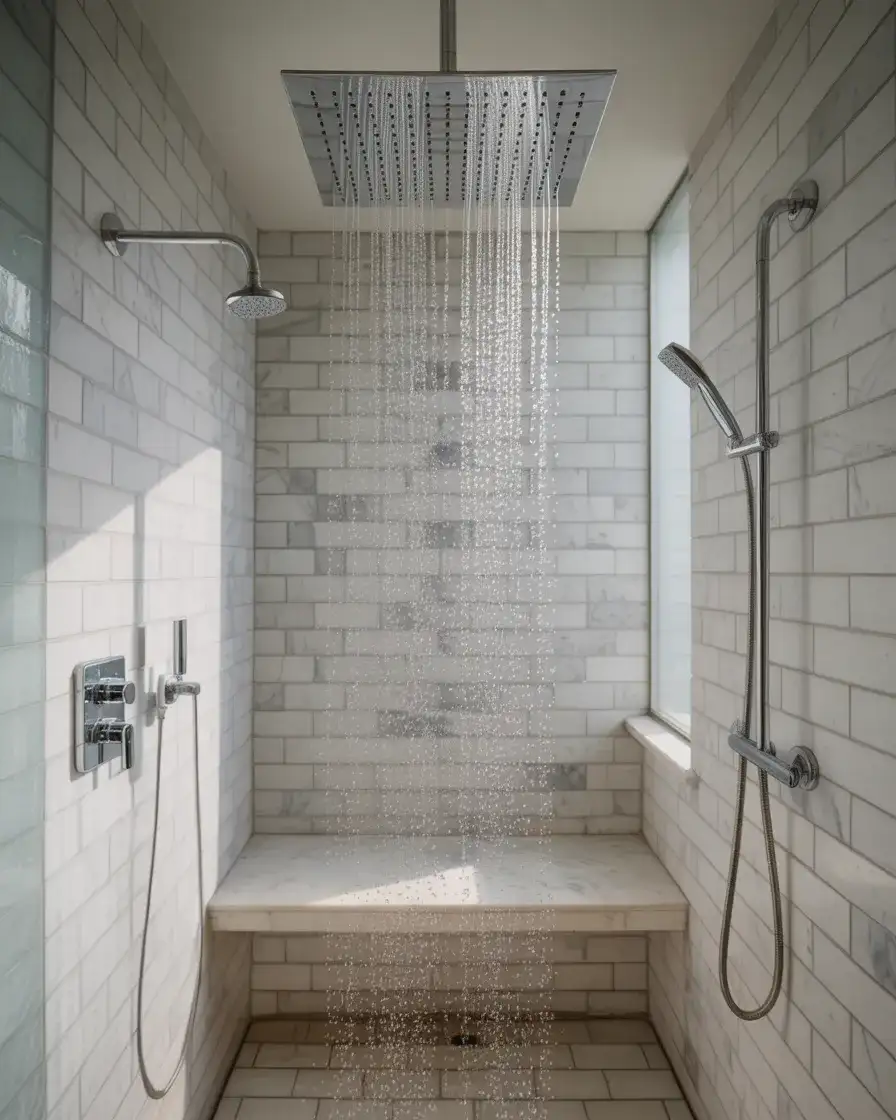
Ceiling-mounted rainfall showerheads deliver water in a gentle, enveloping cascade that mimics natural rain, transforming your daily shower into a luxurious spa experience. These fixtures typically measure 8-12 inches square or round and are mounted directly overhead so water falls straight down rather than at an angle like traditional wall-mounted heads. The effect creates full-body coverage without the concentrated spray of conventional showerheads, offering a more relaxing and even rinse. Rainfall heads work beautifully in doorless or curbless showers, where the gentle water pattern reduces splash outside the wet zone, and they pair perfectly with handheld wands to provide versatility for targeted rinsing or cleaning the shower itself after use.
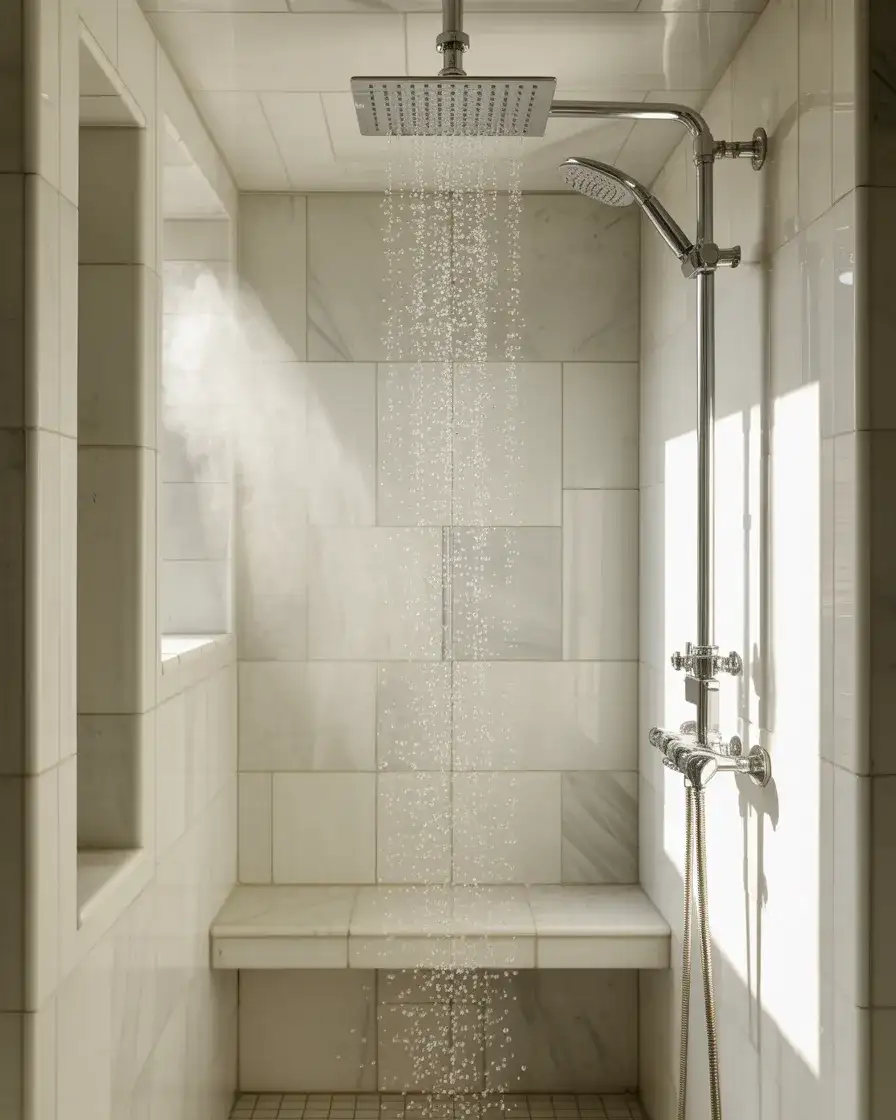
Real homeowners report that rainfall heads use slightly more water than standard fixtures due to their larger surface area, so pairing them with low-flow models (1.8-2.0 GPM) balances luxury with efficiency. Installation requires routing water supply lines through the ceiling rather than along the wall, which adds $200-400 to labor costs if you’re retrofitting an existing shower. The finished effect elevates even modest tile work—a builder-grade white subway tile shower gains instant elegance when topped with a quality rainfall head. This fixture consistently ranks among the most-requested features in new construction and remodeling projects across all price points.
22. Mixed Material Shower Walls
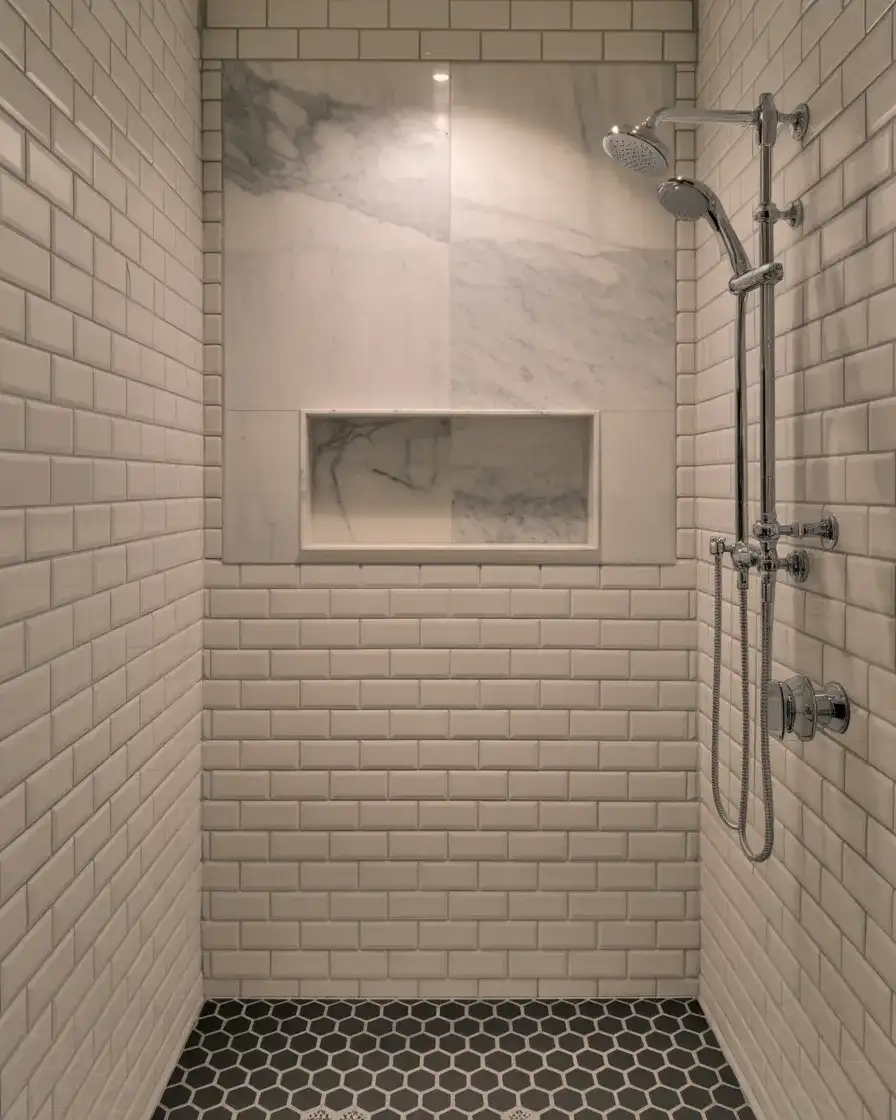
Combining different tile materials, sizes, or textures within a single shower creates visual interest and architectural dimension that elevates the space beyond simple utilitarian function. Popular combinations include white subway tile with a stone accent wall, large-format slabs on three walls with mosaic tile flooring, or horizontal striping that layers different materials at varying heights. The key to success lies in maintaining a cohesive color palette—choose materials that share undertones even if they differ in finish or scale. A common approach places your statement material (marble slab, patterned cement tile, or textured stone) on the accent wall opposite the shower entry, where it becomes a focal point visible from outside the shower, while surrounding walls use simpler, more affordable tile that complements without competing.
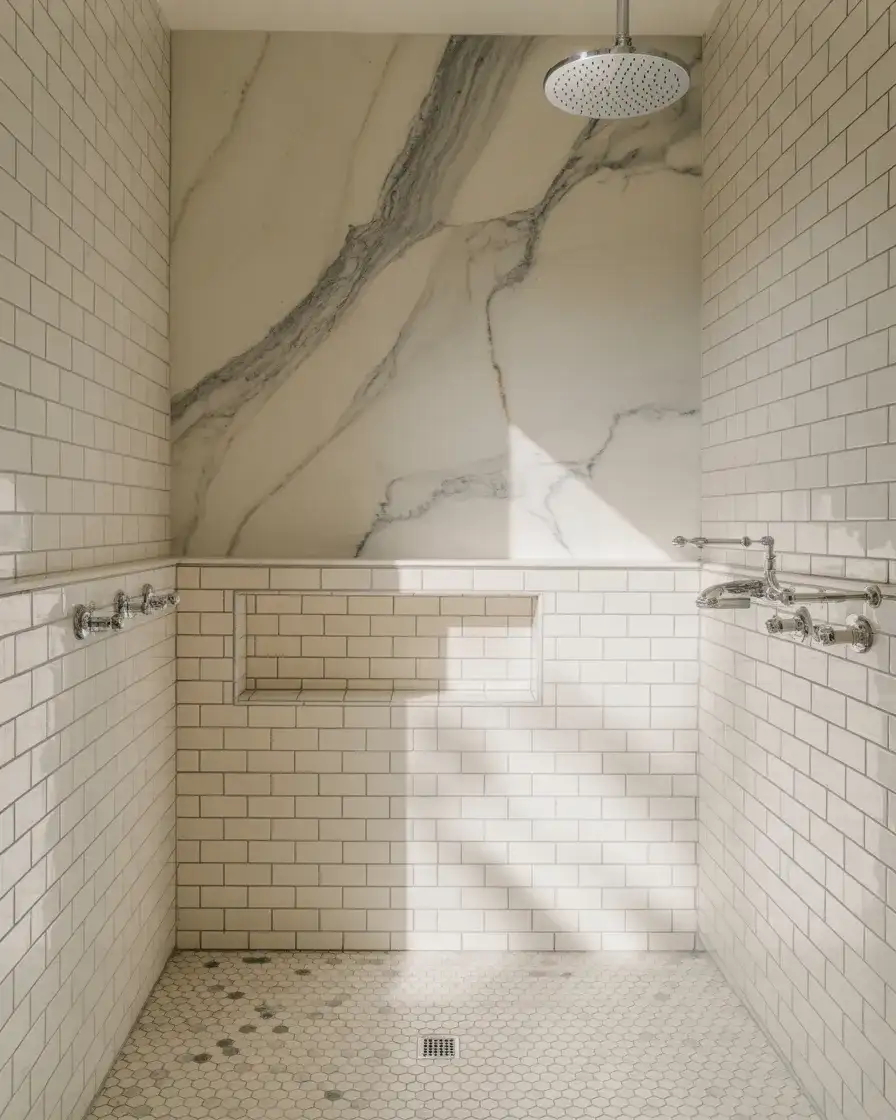
Expert designers recommend limiting yourself to two or three materials maximum—more than that typically reads as chaotic rather than intentional. The mixed material approach allows you to splurge on expensive statement tile for a small accent area while using budget-friendly field tile for the majority of coverage, controlling costs without sacrificing visual impact. This strategy works particularly well in master bath showers where you’re investing in a space you’ll use daily for years and where photos of the finished result will significantly enhance resale listings. Professional installation proves critical here, as poorly executed transitions between materials can leak or look amateurish, undermining the entire design concept.
Conclusion
Whether you’re drawn to the timeless elegance of white subway tile, the bold statement of black-framed glass, or the organic warmth of rustic wood accents, these twenty-two walk-in shower ideas offer starting points for creating a bathroom that reflects your personal style and meets your practical needs. The beauty of shower design in 2026 lies in its flexibility—small bathrooms can feel luxurious with the right layout, and large spaces can achieve intimacy through thoughtful material choices. Take time to consider which features matter most for your daily routine, budget appropriately for quality materials and professional installation, and don’t hesitate to share your own shower renovation experiences or questions in the comments below.