Barndominiums are having a serious moment in American home design, and 2026 is shaping up to be their biggest year yet. Whether you’re scrolling Pinterest late at night dreaming of wide-open floor plans, or you’re genuinely budgeting for a build, the appeal of these steel-framed, endlessly customizable homes is hard to ignore. They offer the square footage of a traditional home at a fraction of the cost, and the aesthetic flexibility is remarkable—rustic or sleek, cozy cabin or modern showstopper. In this roundup, we’ve gathered the most inspiring barndominium ideas making the rounds right now, from sprawling 5-bedroom layouts to compact single-story builds with attached shops. Get ready to save every single one.
1. Sleek Black Exterior With Wood Accents
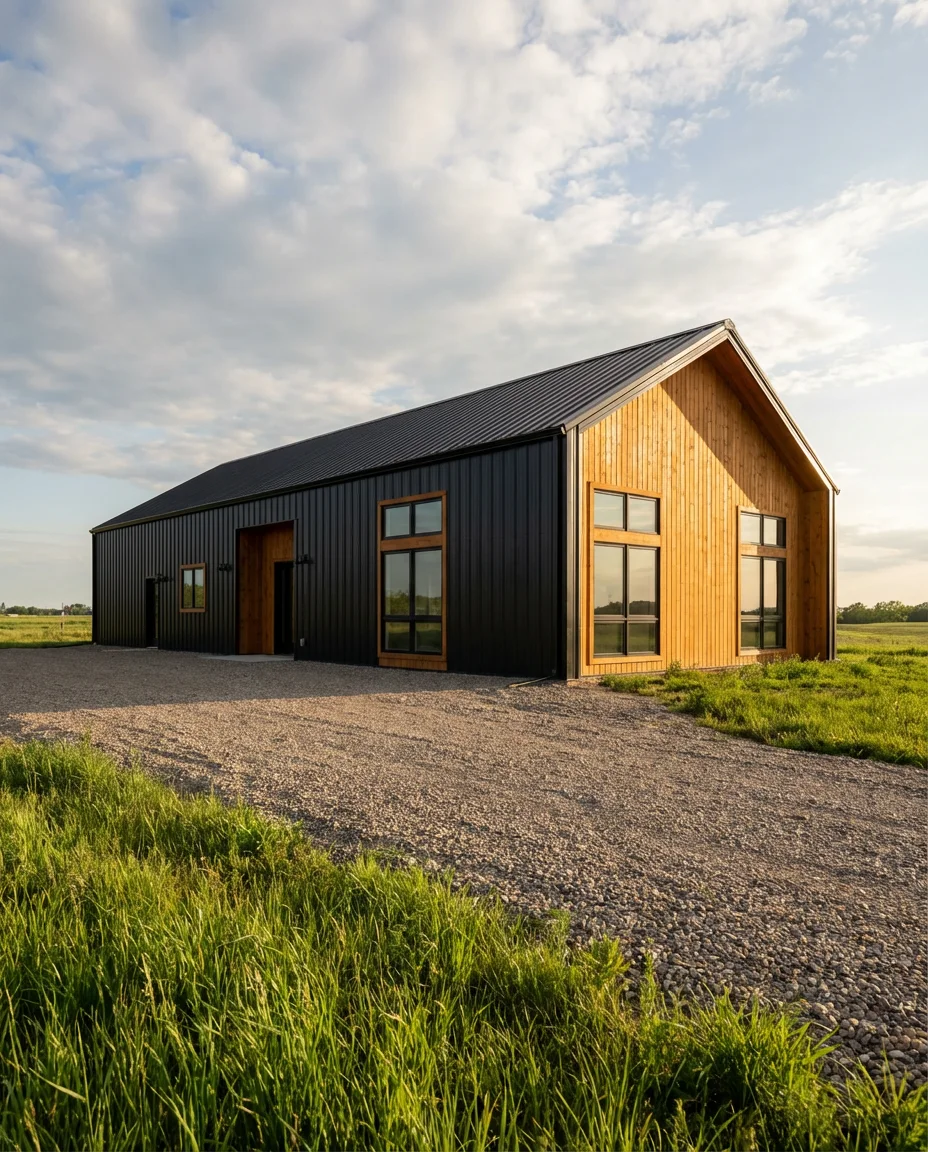
Nothing commands attention on a rural property quite like a black exterior barndominium with warm wood detailing. This look pulls from the best of modern farmhouse and contemporary design—matte black steel panels offset by cedar or Douglas fir accents around windows, entryways, and gables. The contrast is striking without feeling cold, and it photographs beautifully for exterior color inspiration boards. This style works especially well on large lots with open sky and natural landscape behind it, letting the dark structure pop rather than fade.
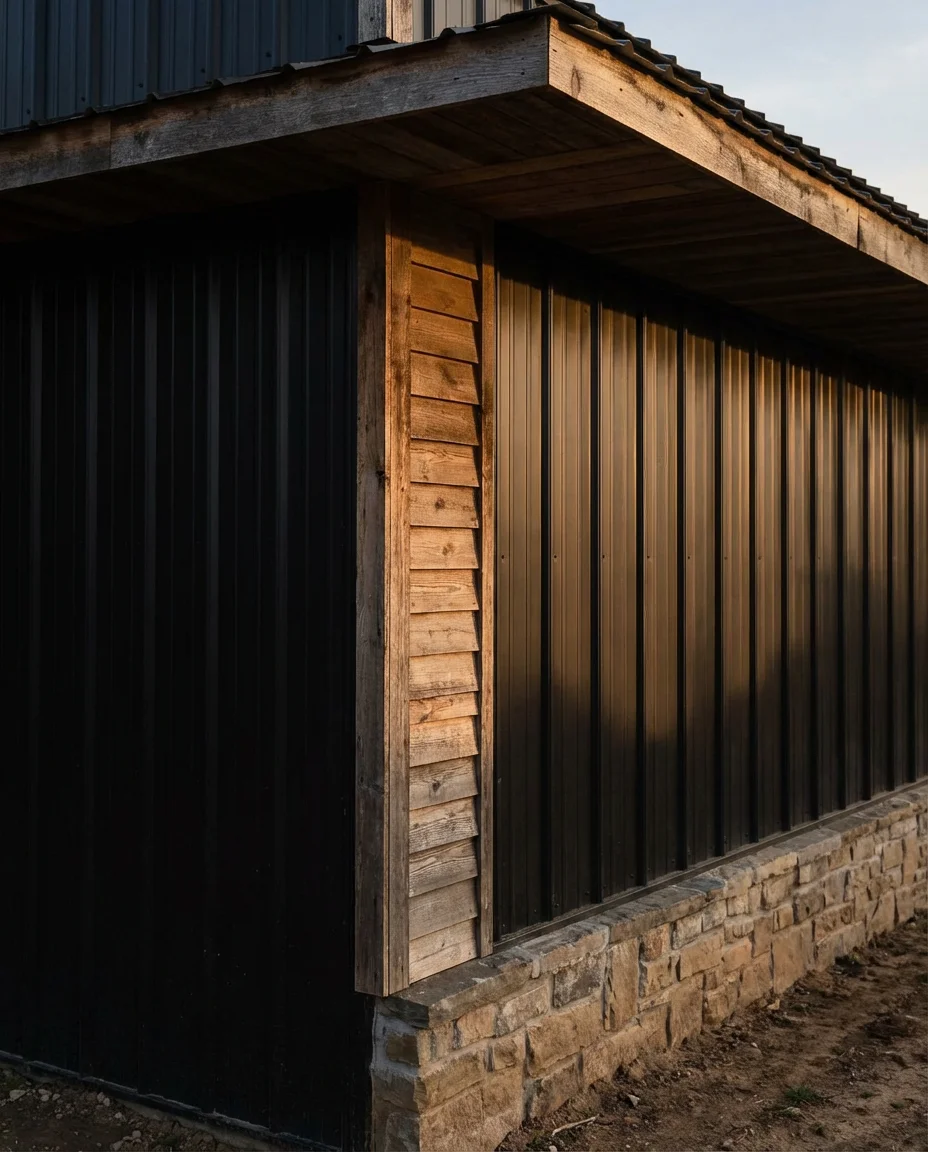
The black-and-wood combination isn’t just stylish—it’s strategic. Dark metal siding is known for its durability and low maintenance in sun-heavy climates across Texas, Oklahoma, and the Southeast, where barndominiums are most common. Homeowners who’ve gone this route say they almost never repaint, and the structure holds up beautifully against harsh weather. If you’re worried about heat absorption, light-colored roofing or overhangs can offset summer heat gain significantly.
2. Open-Concept Modern Interior With Exposed Beams
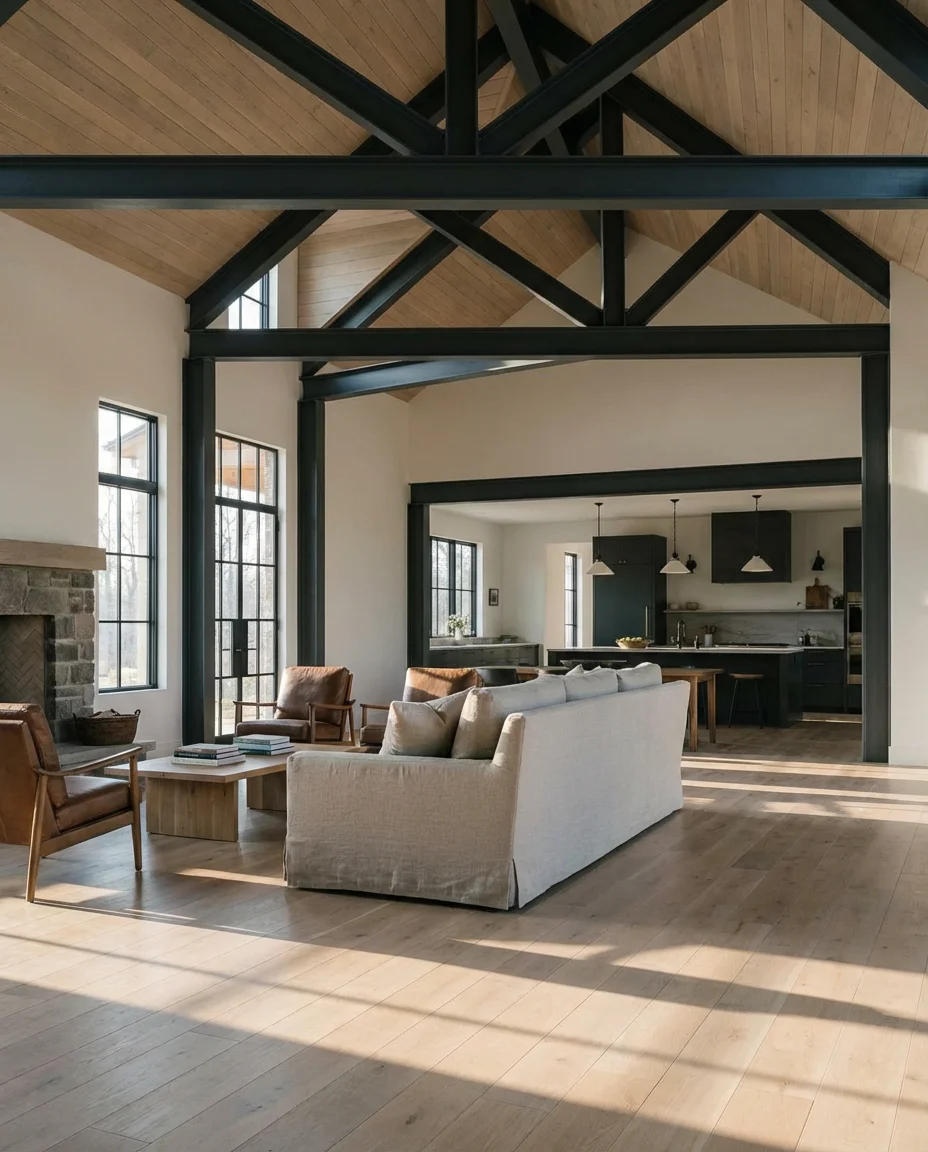
Walk into the best modern barndominiums, and the first thing you notice is the air—the sheer openness that steel post-frame construction makes possible. Without load-bearing interior walls, designers can create sweeping interiors that feel closer to a loft than a farmhouse. Exposed steel beams or reclaimed wooden ones stretch across vaulted ceilings, and the main living area flows effortlessly into the kitchen and dining space without partition or interruption. It’s the kind of layout that feels twice as large as the square footage suggests.
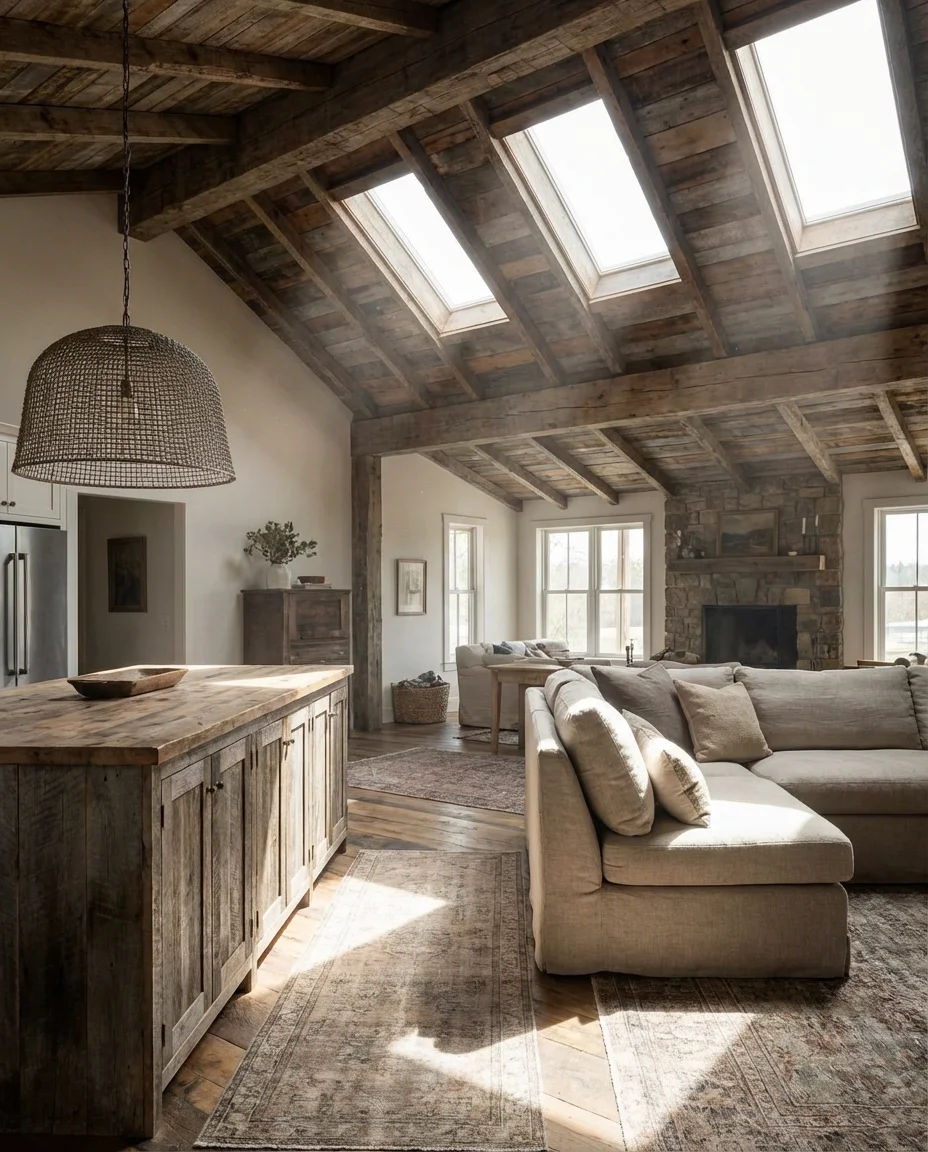
Interior designers who work on barndominiums often point out that the key to making an open plan feel livable—not cavernous—is layering. Area rugs define zones, pendant lighting marks the kitchen island, and a statement sofa anchors the living area. Without these visual anchors, the space can feel unfinished no matter how beautiful the bones are. Start with your furniture plan before you finalize your floor plan—it will save you from a common and costly mistake.
3. Rustic Interiors With Shiplap and Stone
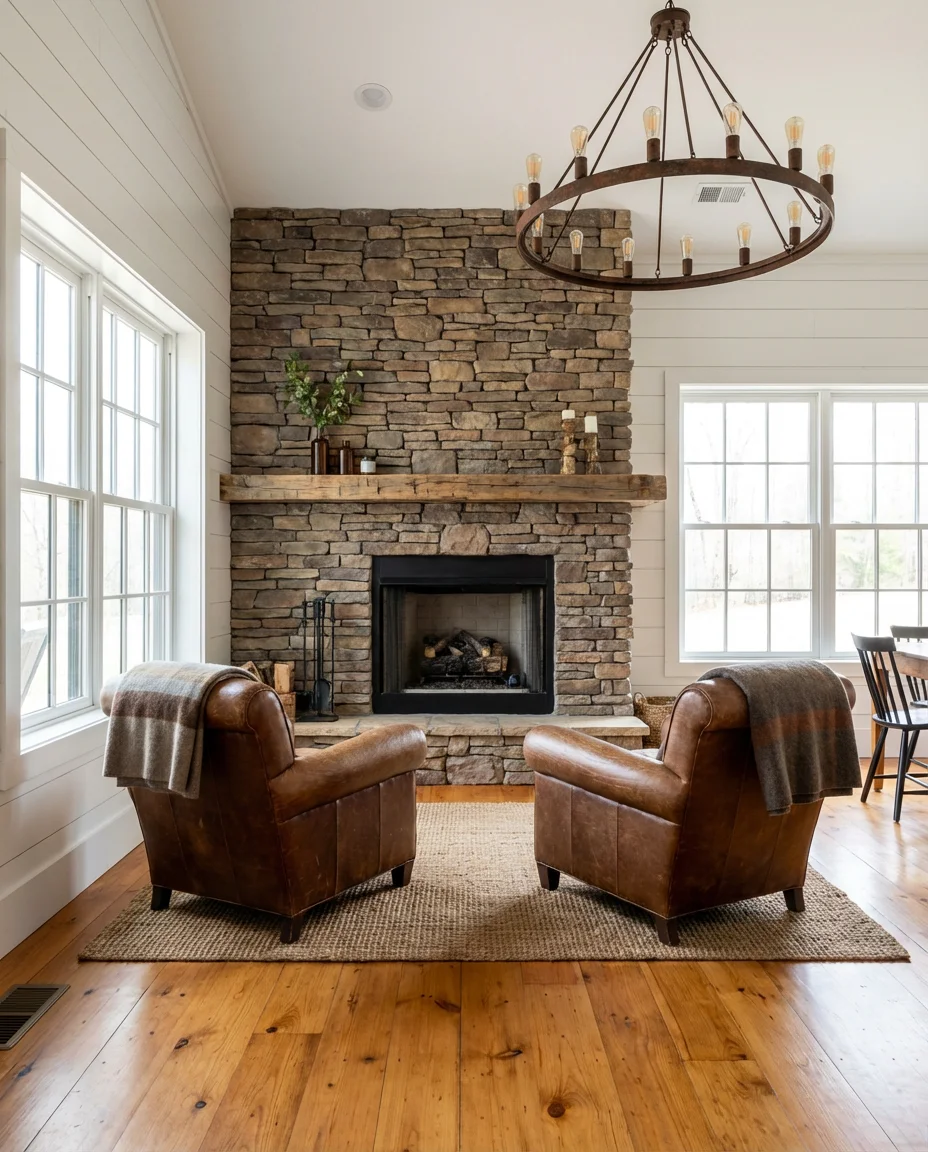
For the homeowner who wants warmth over minimalism, rustic barndominium interiors deliver in a big way. Shiplap walls in creamy white or natural wood tones pair beautifully with stacked stone fireplaces, and the combination creates that lived-in, mountain-retreat feeling that so many people are chasing right now. Leather sofas, woven textiles, antler or iron fixtures, and wide-plank hardwood floors complete the look. It’s a style that feels curated rather than forced, especially when you let imperfections show—the knots in the wood, the roughness of the stone.
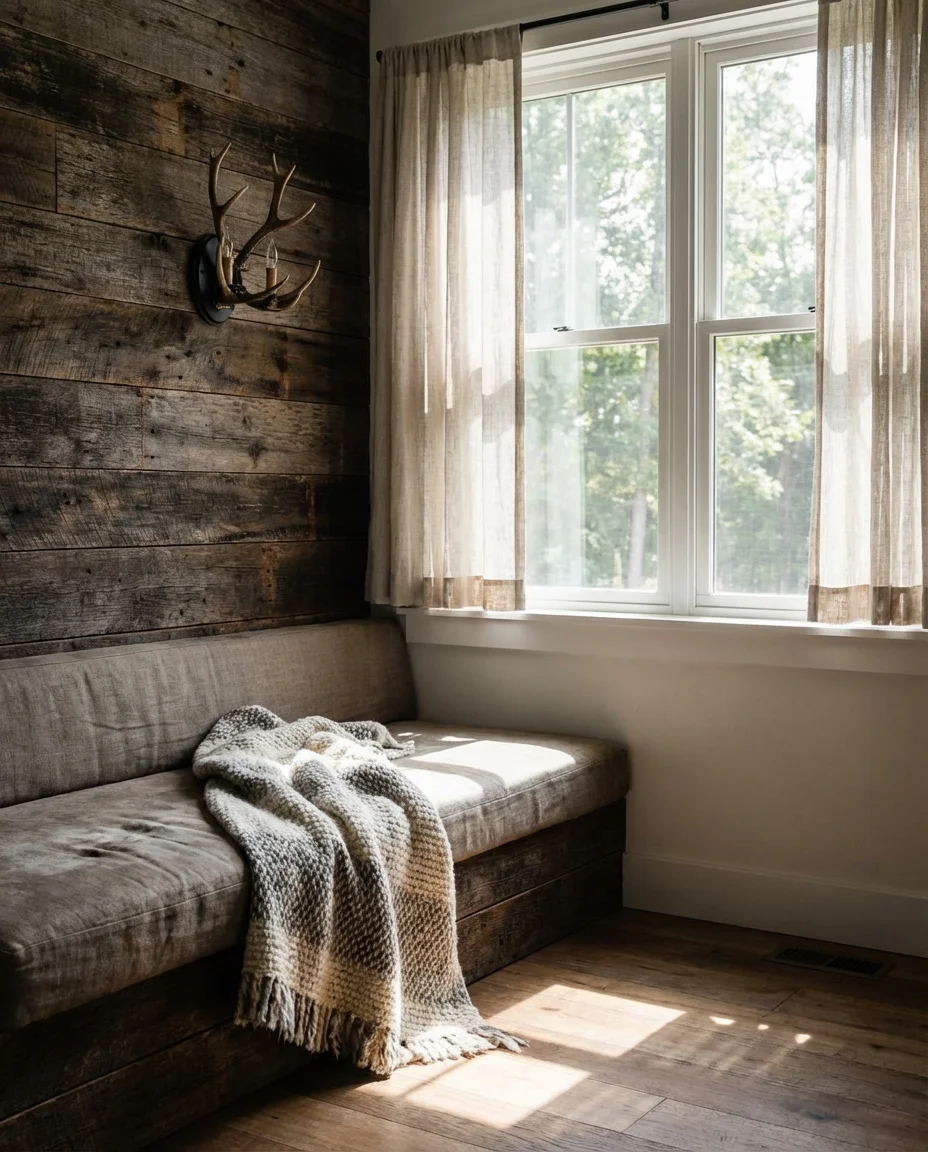
This style works best in wooded settings across Appalachia, the Ozarks, or the Pacific Northwest, where the natural environment echoes what’s happening indoors. The continuity between inside and outside makes even a modest-sized barndominium feel intentional and grounded in its landscape. One practical note: shiplap is relatively inexpensive as a wall treatment, running about $1–$3 per square foot for the boards themselves, making it one of the most budget-friendly ways to add character to large interior walls.
4. 4-Bedroom Floor Plan With Split Layout
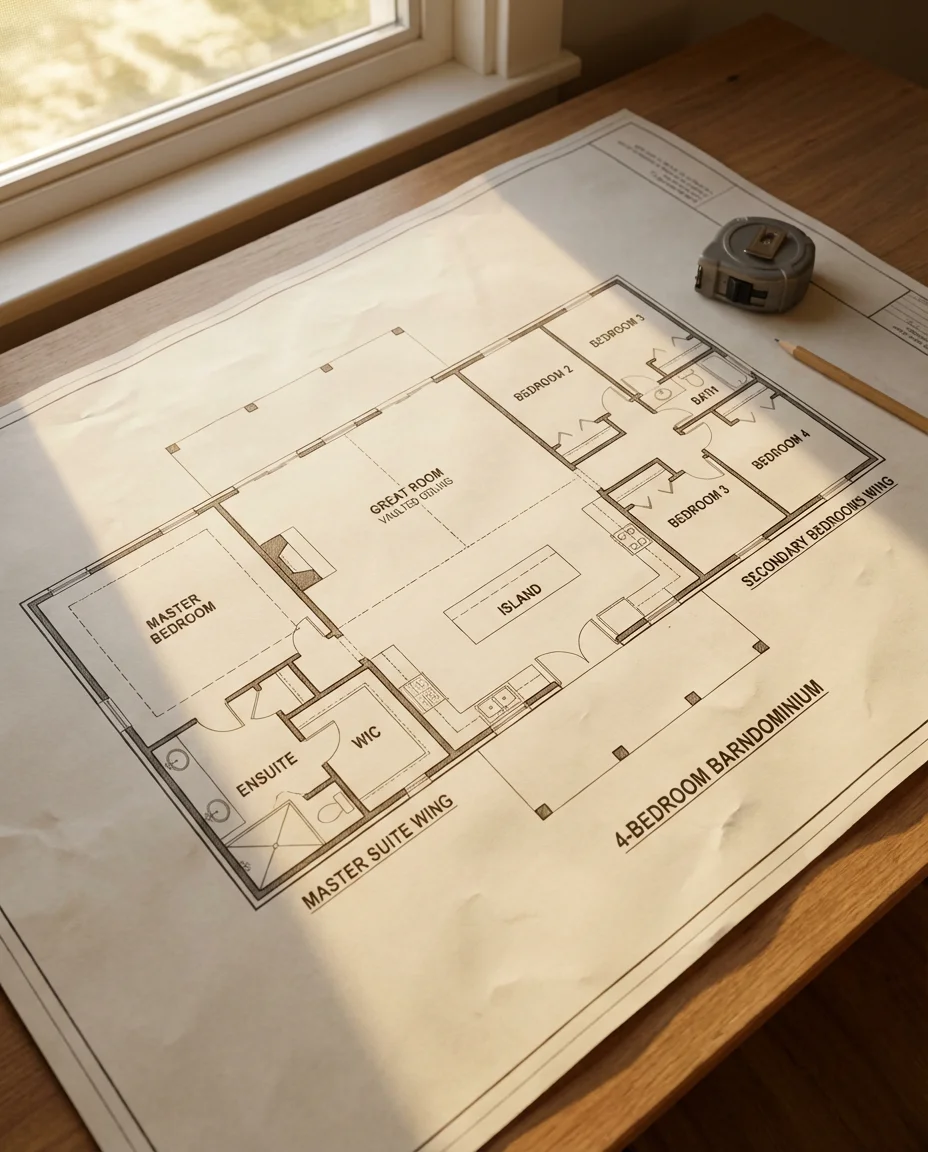
One of the most searched categories in the barndominium world is floor plans with 4 bedrooms, and for good reason—families need separation without sacrificing the open communal feel that makes barndominiums special. A split bedroom layout places the primary suite on one end of the structure while the remaining three bedrooms share a wing on the opposite side. This arrangement gives parents privacy and gives kids or guests their own zone. The central corridor, or great room, bridges both sides without making anyone feel isolated.
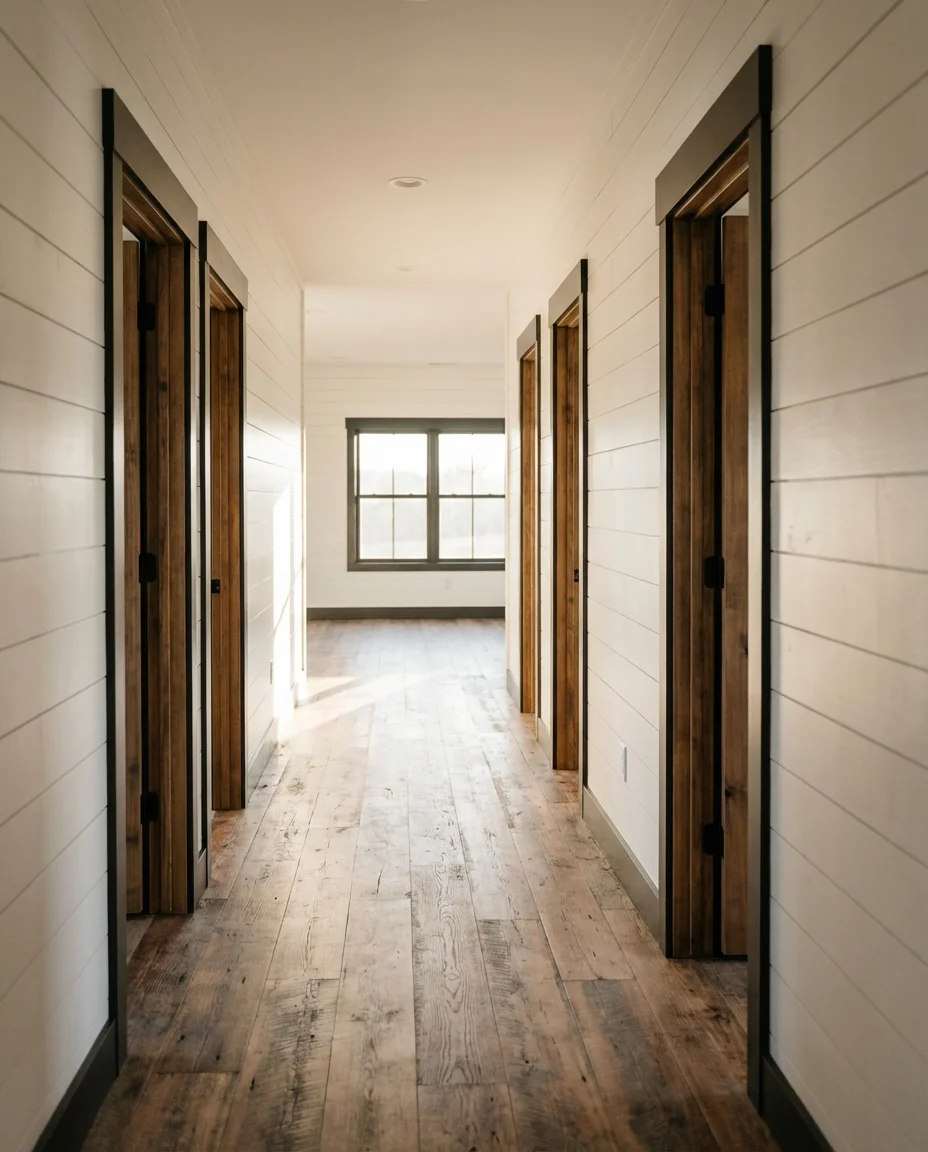
A well-designed 4-bedroom barndominium floor plan typically runs between 2,000 and 2,800 square feet—enough room to include walk-in closets, a laundry room, a mudroom entry, and a generous kitchen without the plan feeling stretched or awkward. Many families in rural Texas and Tennessee have moved from traditional ranch homes into barndominiums specifically to get more usable square footage for less money per foot. The build cost advantage is real: you can often get 20–30% more space for the same budget compared to stick-built construction.
5. Attached Shop Floor Plan
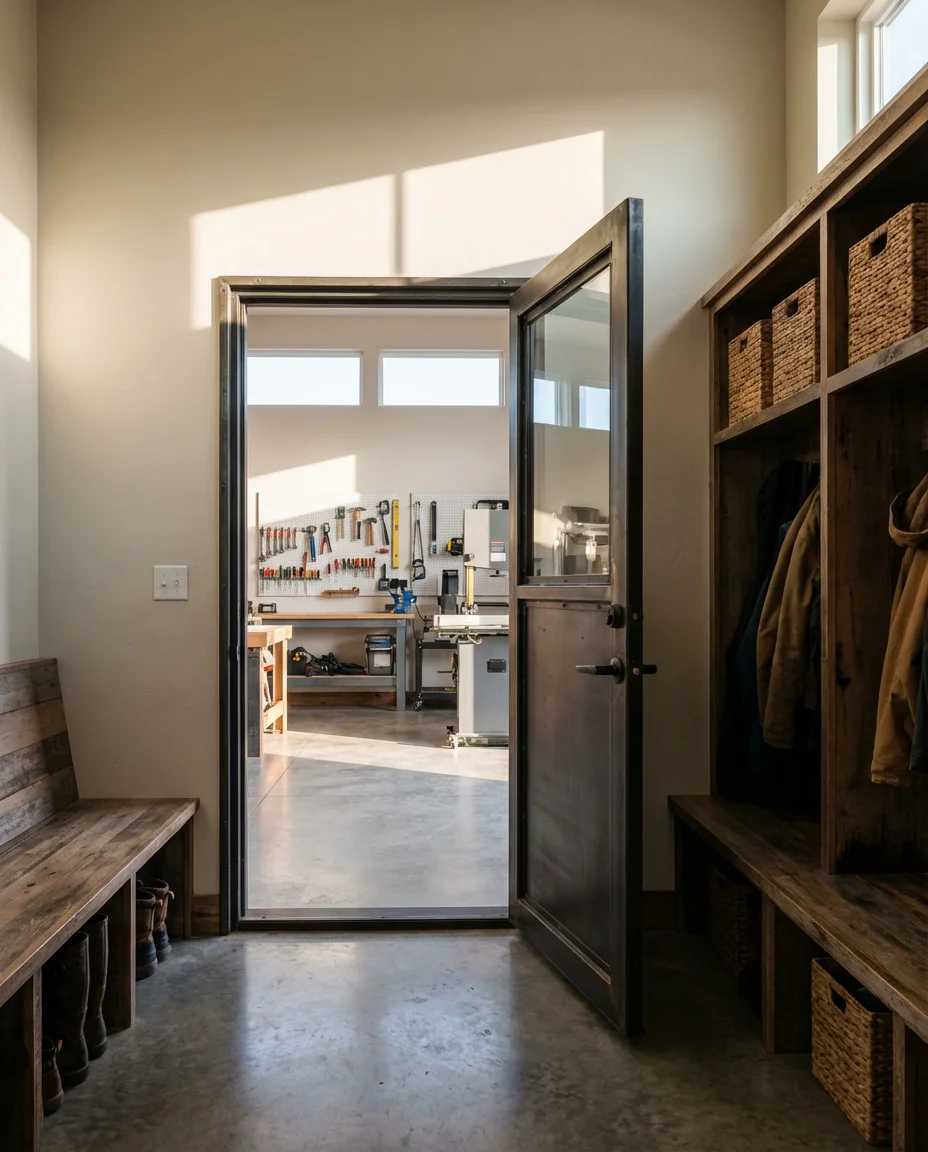
The shop barndominium concept—sometimes called a “shouse”—is arguably the most practical design in this entire category. A floor plan with a shop integrates a working garage or workshop space directly into the structure, sharing a roofline and often a wall with the living area. For contractors, mechanics, farmers, woodworkers, or hobbyists, this means no more trudging out to a separate outbuilding in the rain. The transition from mudroom to shop can be as simple as a single steel door or as refined as a glass partition wall with industrial hardware.
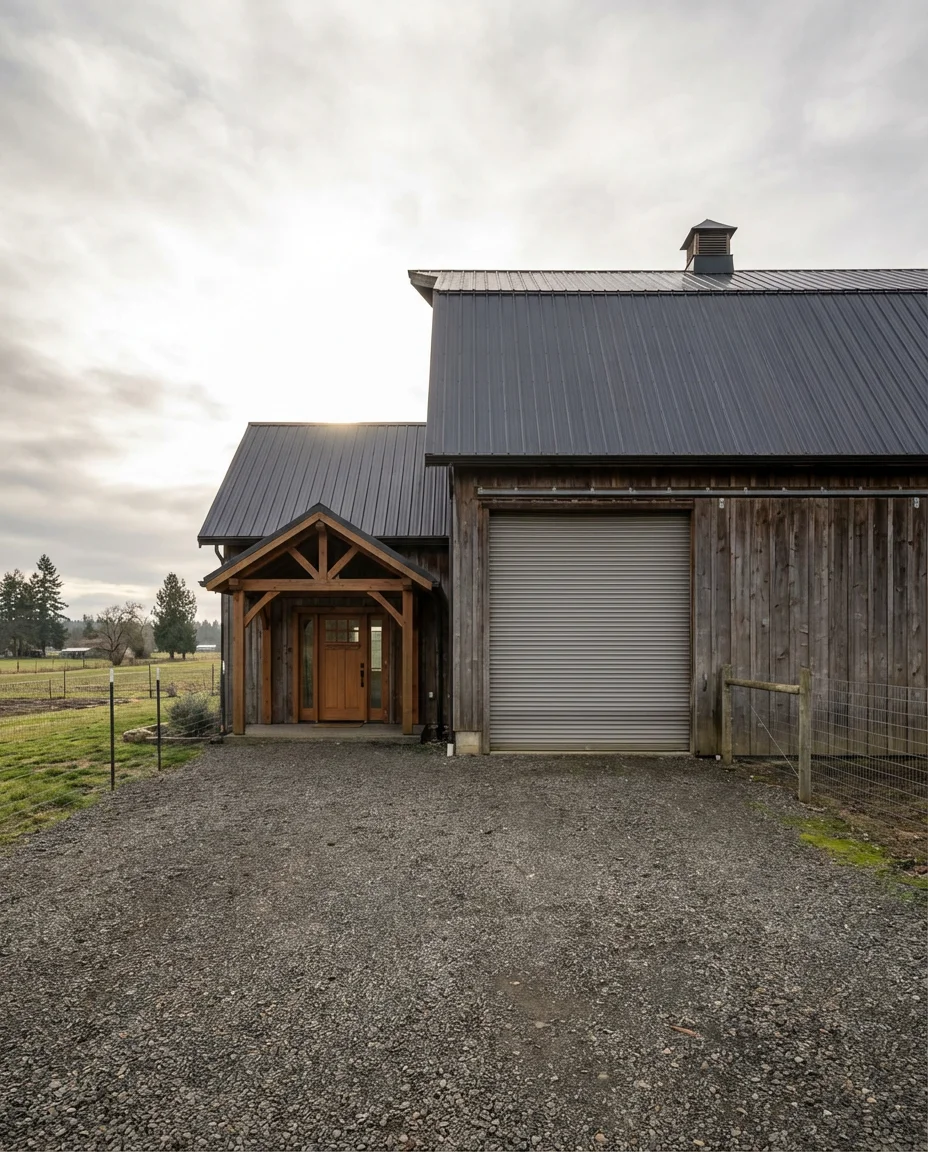
One thing many first-time barndominium builders underestimate is how much the shop dimensions affect the overall floor plan. A standard two-car garage bay is 24×24 feet, but a serious workshop or equipment storage area might need 40×60 or more. Getting those proportions right on paper before you pour the slab is critical. Work with a designer who specializes in barndominiums—a general contractor used to stick-built homes may not fully understand the structural nuances of post-frame construction or how to integrate a functional shop without eating into the living footprint.
6. 2-Story Barndominium With Loft Bedroom
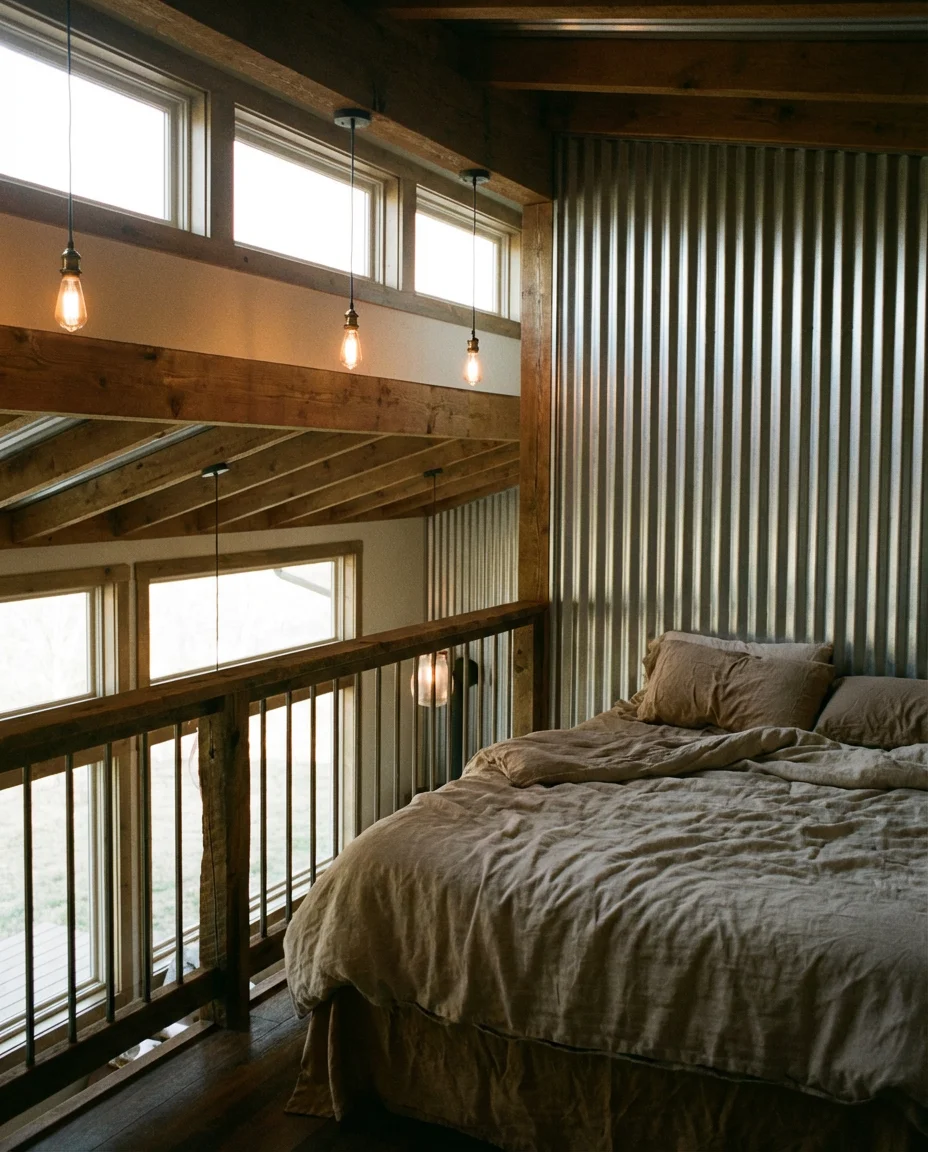
Going vertical is one of the smartest moves in barndominium design when the land footprint needs to stay small but the family is big. A 2-story barndominium with a loft-level bedroom takes full advantage of those tall post-frame ceilings, carving out a sleeping area or bonus room above the main living space without expanding the foundation. The interior bedroom at the loft level often features a simple railing overlooking the great room below, creating a visual connection between floors that keeps the space feeling open rather than chopped up.
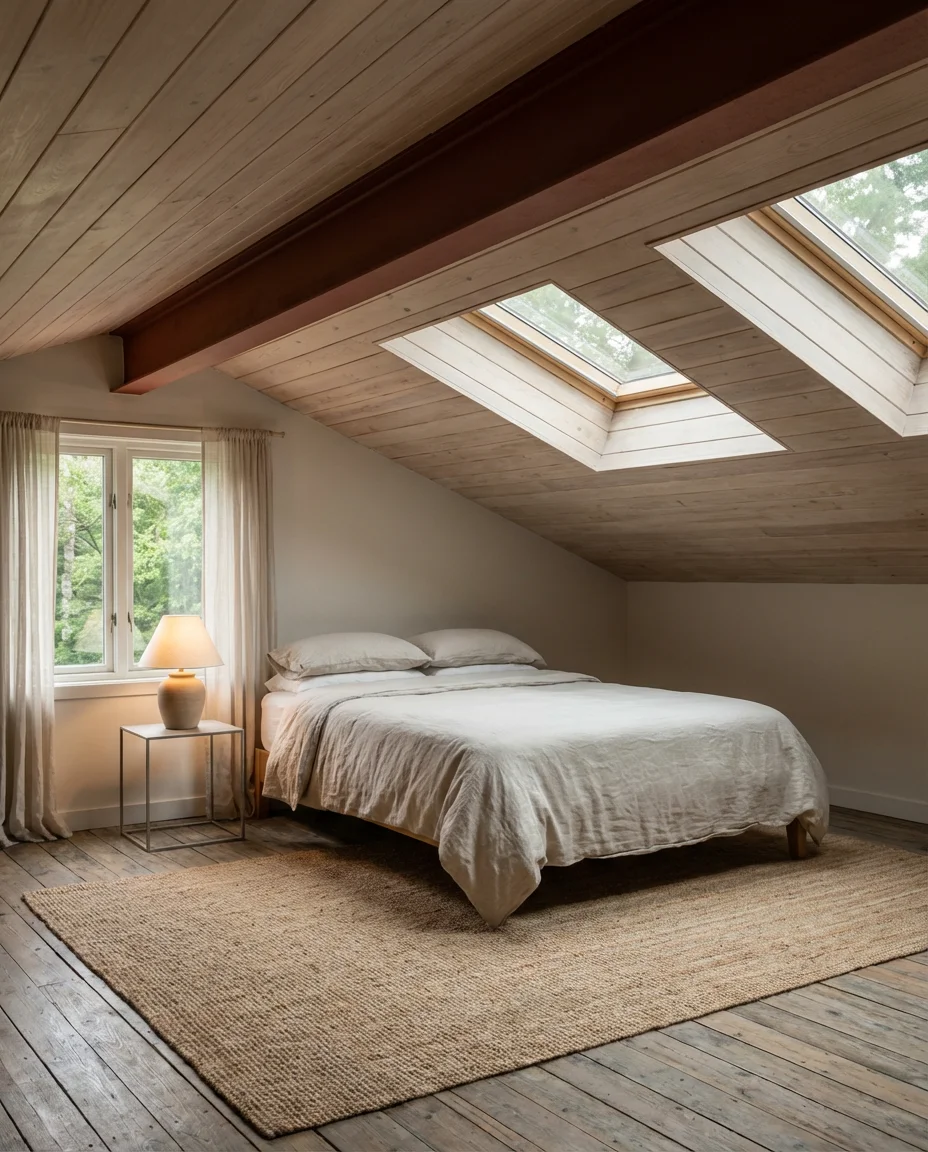
Loft bedrooms are an especially popular choice for kids, who tend to love the novelty of climbing stairs to a private perch above the family’s main floor. It also creates a natural division between adult and child spaces without requiring full walls on every side. From a building perspective, a loft addition adds relatively little cost compared to building a full second story with separate rooms, because the structural framing is already in place. It’s one of the highest-value upgrades you can add during the initial build phase.
7. Cottage-Style Barndominium Exterior
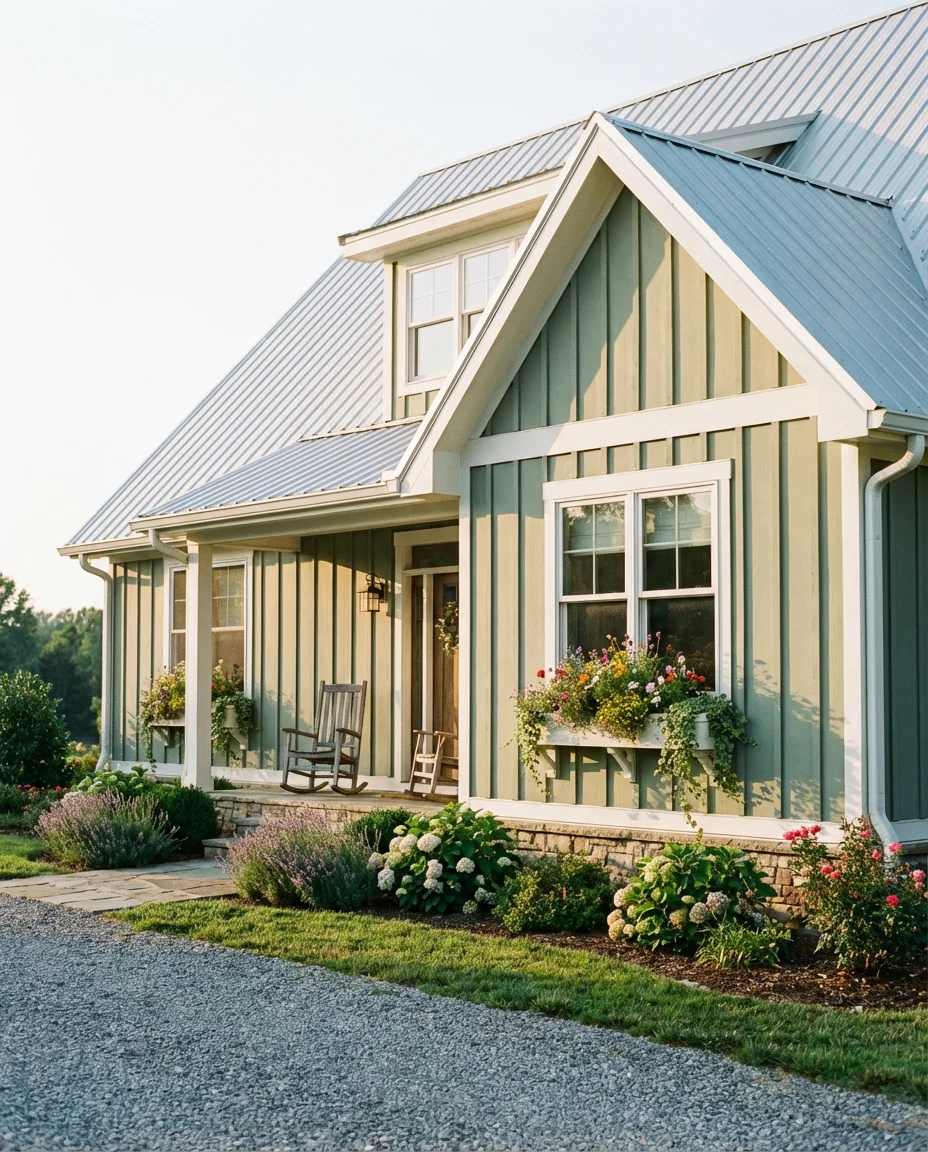
Not every barndominium needs to look industrial or utilitarian. The cottage-style approach softens the steel bones with board-and-batten siding, window boxes overflowing with flowers, a covered front porch, and a steeply pitched roofline. This aesthetic bridges the gap between a classic American farmhouse and the efficient post-frame structure underneath. Exterior colors in sage green, creamy white, or soft blue-gray work beautifully here, reinforcing the cozy, storybook quality that makes this style so popular on Pinterest boards dedicated to dream homes.
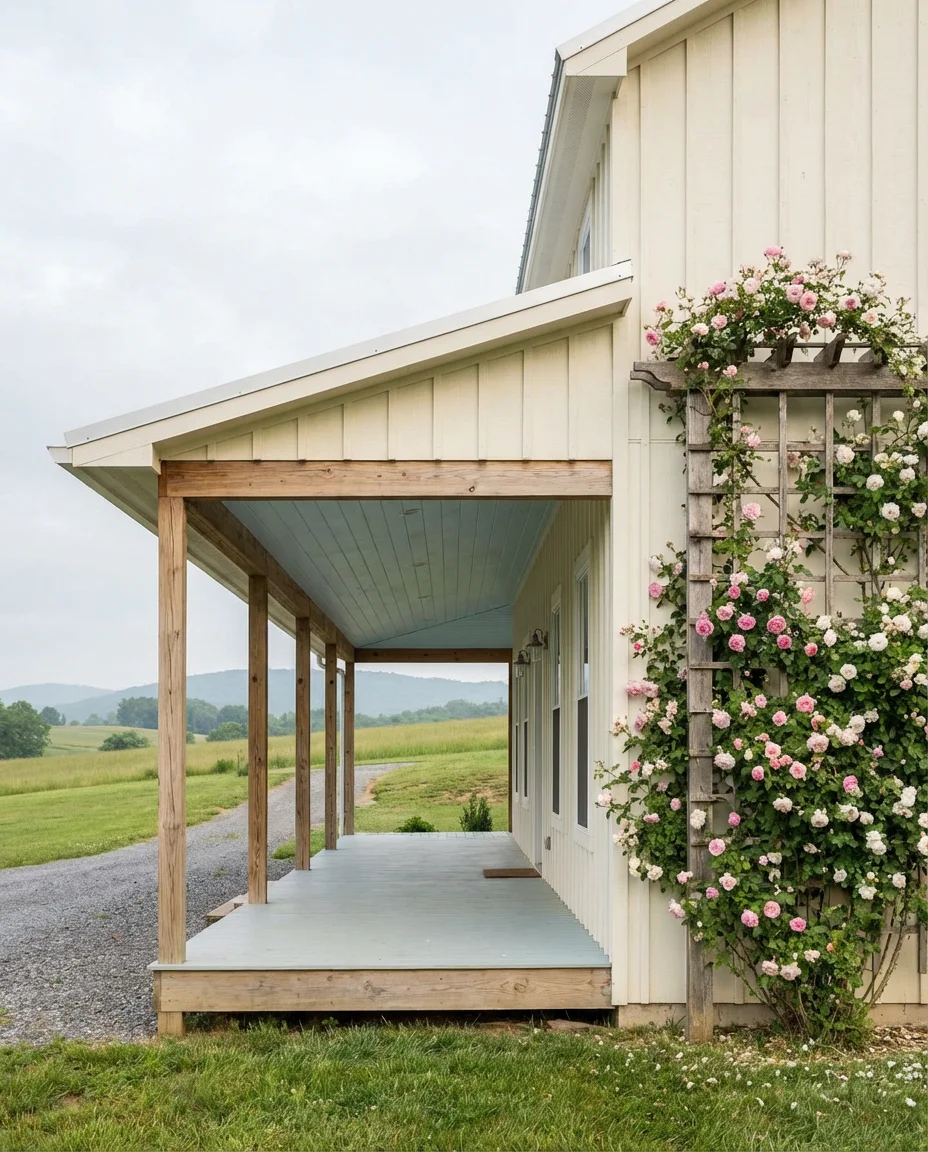
Imagine pulling up to a pale sage cottage with a tin roof and a rocking chair on the porch and climbing roses on the fence—it’s almost impossible to believe there’s a steel post-frame structure beneath all that charm. That’s part of what makes the cottage barndominium so appealing: the outside can look as traditional as any home on the street while the inside enjoys every efficiency advantage of modern construction. This style tends to fit into established neighborhoods or rural communities more naturally than a starkly modern design.
8. Modern Farmhouse Kitchen Interior
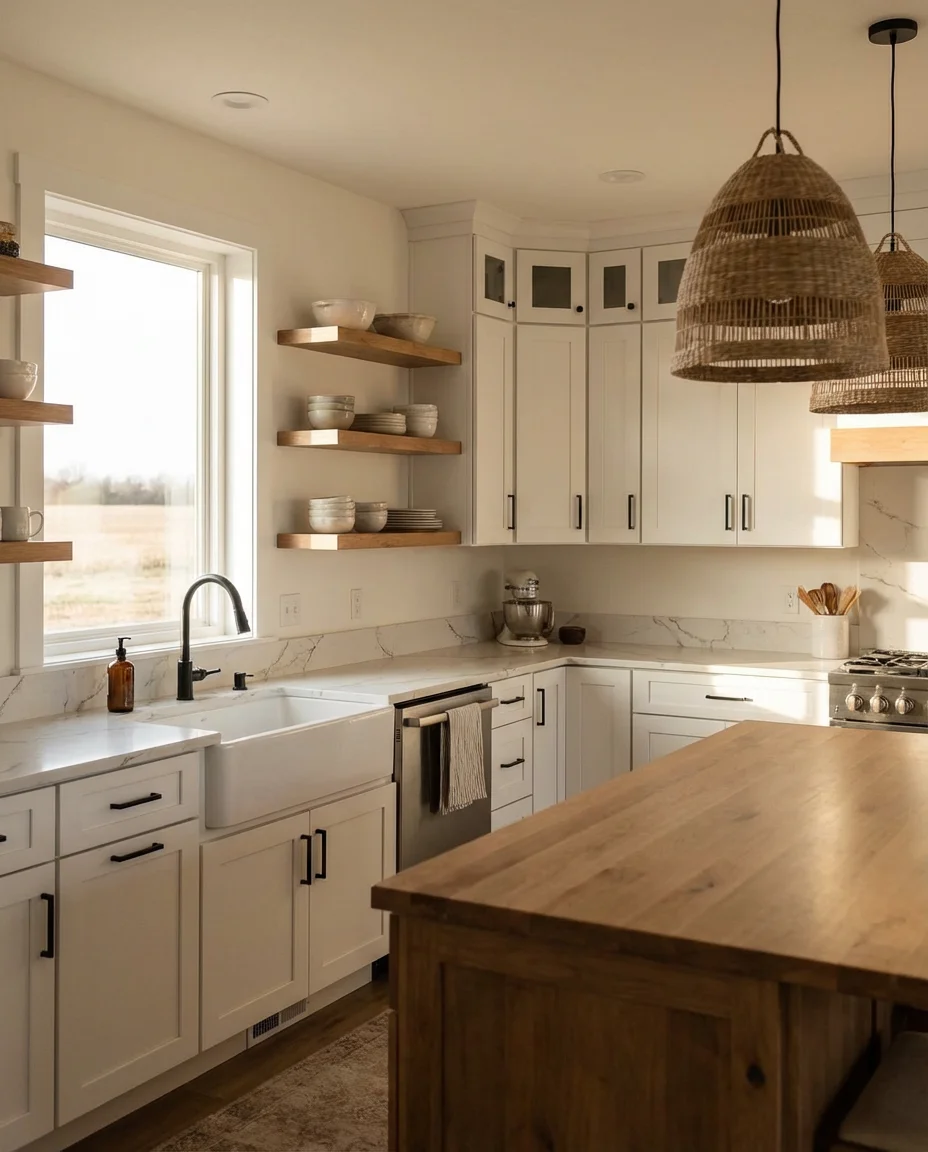
The kitchen is almost always the emotional center of a barndominium, and the modern farmhouse interpretation hits every mark. Think white or two-tone cabinetry with black or aged brass hardware, an oversized apron-front sink, open shelving on either side of the range hood, and an island big enough to seat a family of six. In modern barndominium kitchens, quartz countertops are replacing butcher block as the workhorse surface of choice—they look just as warm but require far less maintenance and hold up beautifully to daily use.
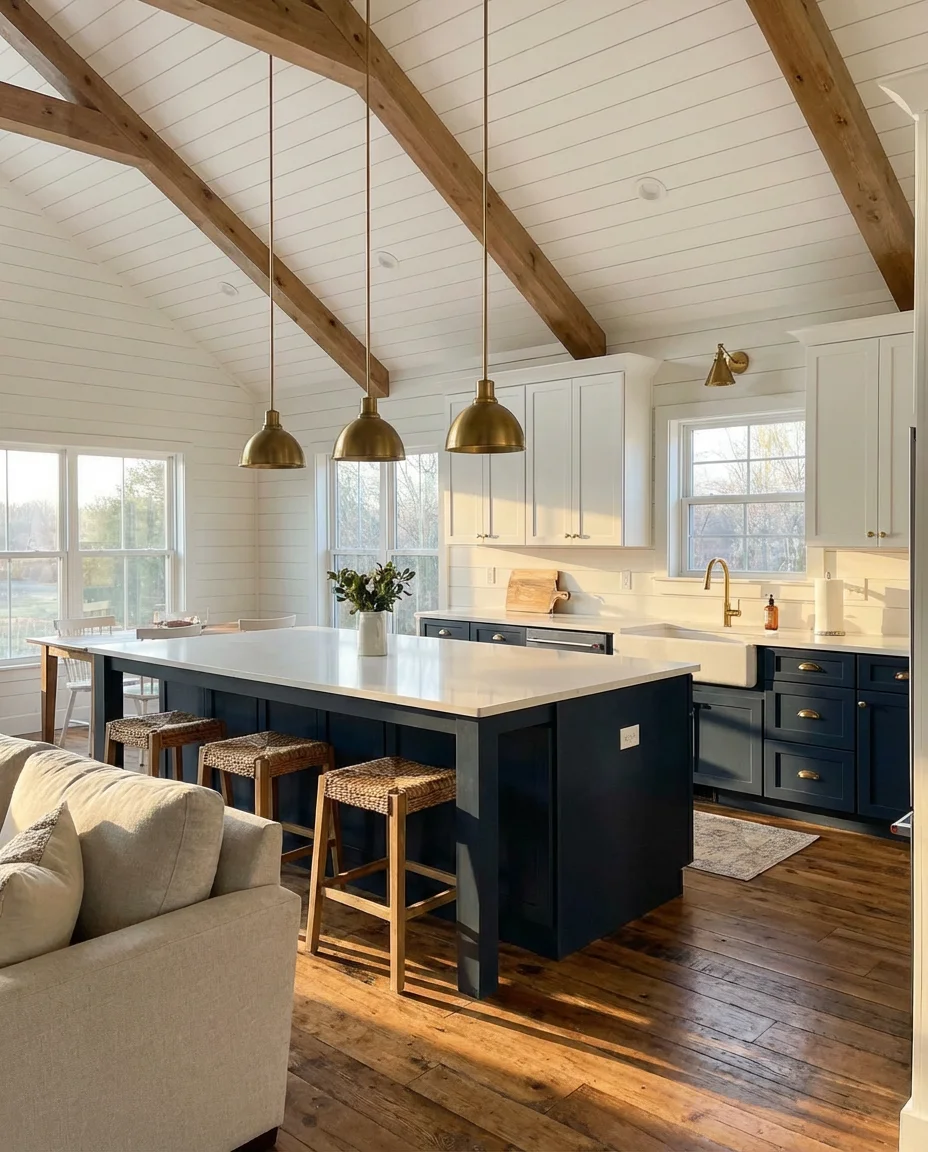
Real homeowners who’ve built barndominium kitchens consistently say the same thing: go bigger on the island than you think you need. Because the open floor plan means the kitchen is always visible from the living and dining area, the island does triple duty as prep space, seating, and social anchor. A 4×8 foot island that felt generous on the blueprint often feels just right once the space is furnished. And don’t forget to plan for storage—beautiful open shelving is a trend, but closed cabinet space is what you’ll actually reach for every day.
9. Small Barndominium Floor Plan Under 1,200 Sq Ft
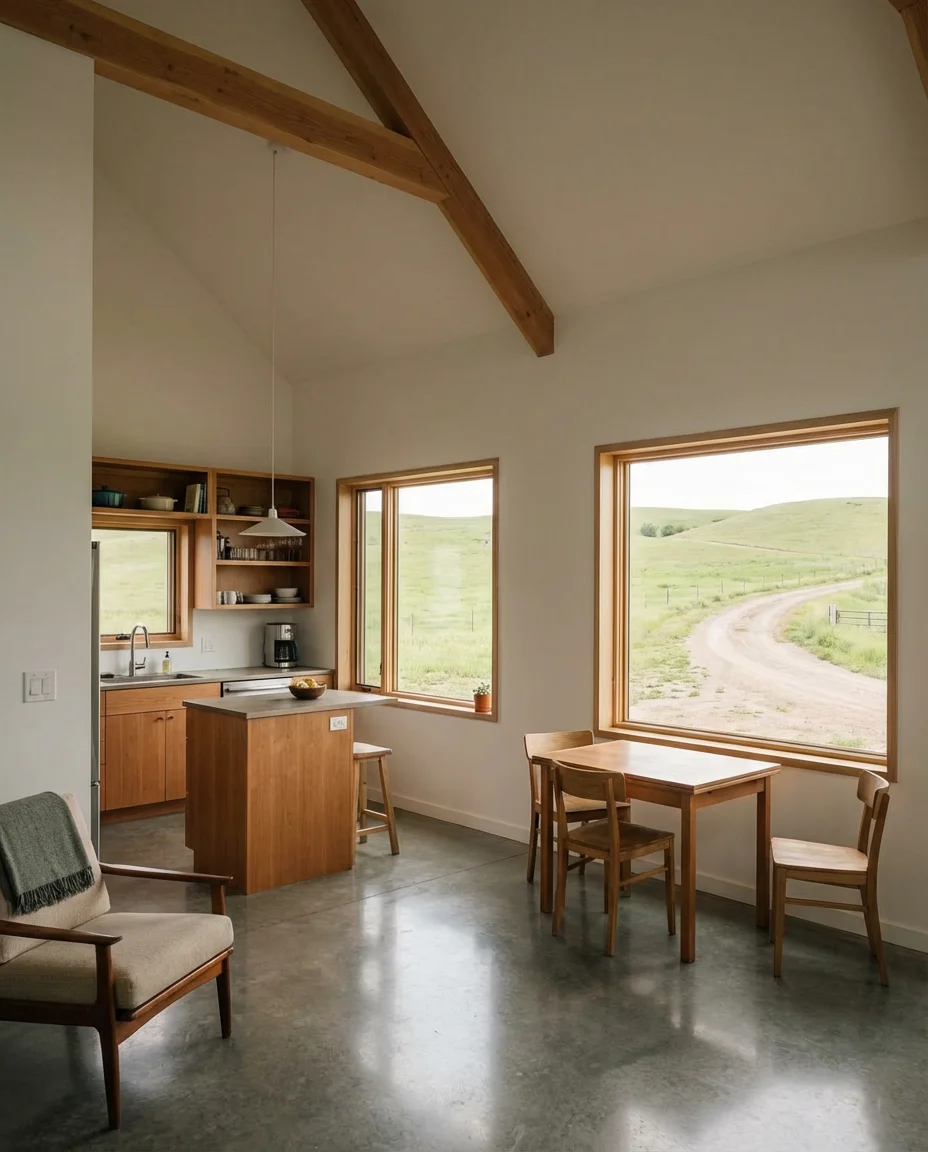
Bigger isn’t always better, and the small floor plans in the barndominium world prove it convincingly. A well-designed barndominium under 1,200 square feet can feel spacious and complete thanks to high ceilings, an open layout, and smart use of vertical storage. These smaller builds are gaining traction with retirees, single homeowners, and couples who want a low-maintenance property without giving up quality finishes. The bones of post-frame construction actually shine brightest at this scale—the wide-open framework creates an airy feel that traditional small homes simply can’t replicate.
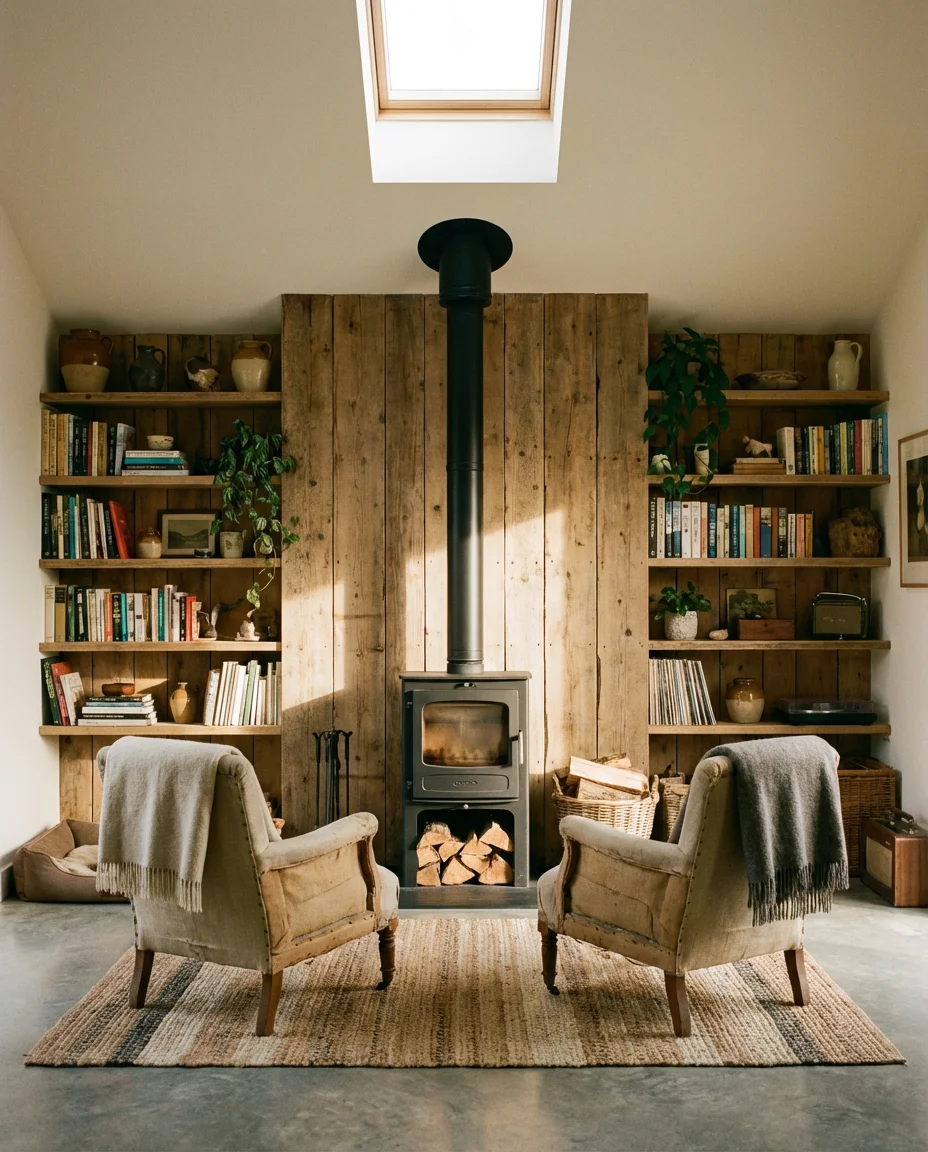
From a budget perspective, small barndominiums are one of the most accessible entry points into custom home ownership. A 1,000-square-foot build with standard finishes can come in between $120,000 and $180,000 depending on the region and current material costs—well within reach for buyers who’ve been priced out of traditional housing markets. Many people start small and design the foundation with expansion in mind, so adding a bedroom or utility room later doesn’t require a full redesign. Planning for growth from the start is one of the smartest financial decisions you can make.
10. 3-Bedroom Floor Plan With Attached Shop
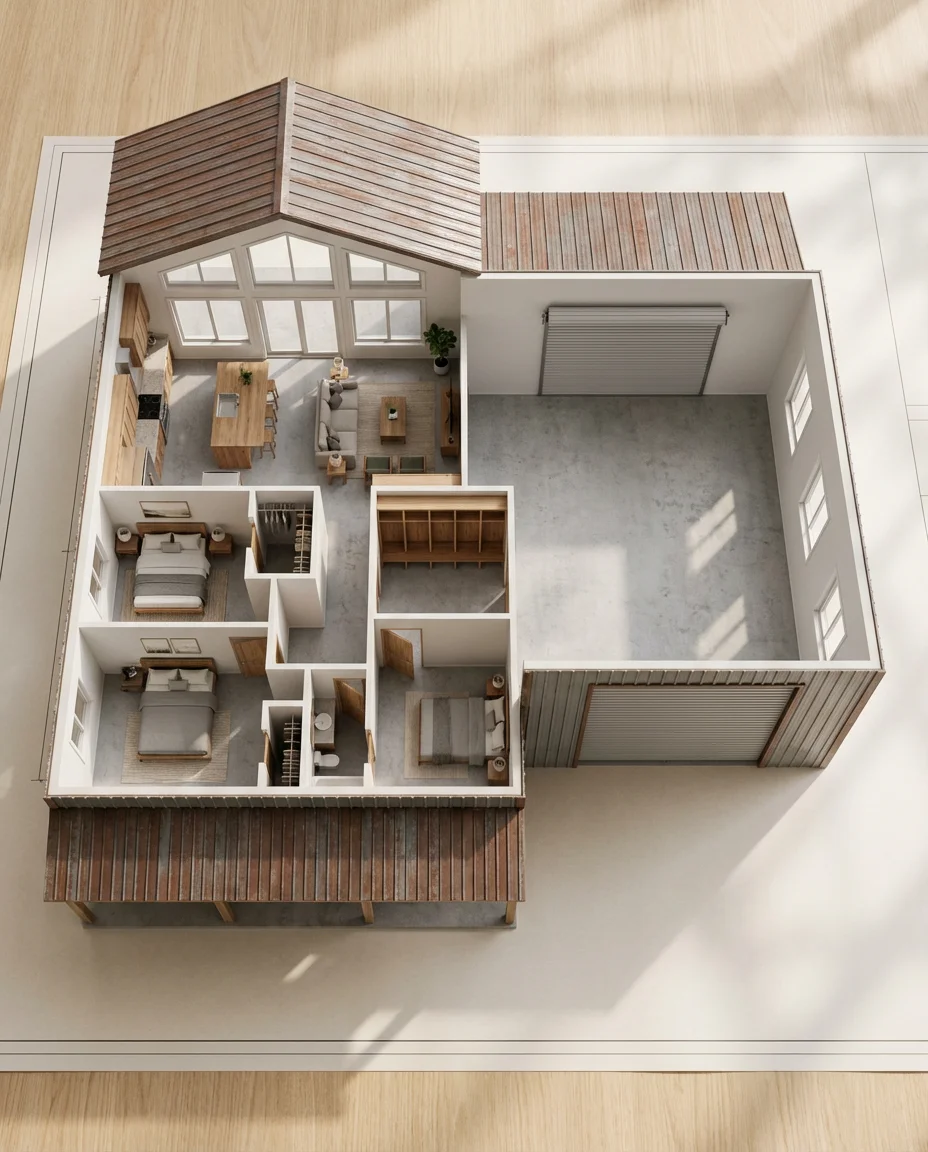
The combination of a 3-bedroom floor plan with a shop is a sweet spot for working families who need livable square footage and functional workspace under one roof. A typical layout places the three-bedroom living area on one end—primary suite, two secondary bedrooms, shared bath, open kitchen, and living—and the shop on the other end behind a large roll-up door. The transition zone between the two is often a mudroom, laundry room, or utility corridor that handles the mess before it ever reaches the living space. It’s a layout that makes daily life remarkably efficient.
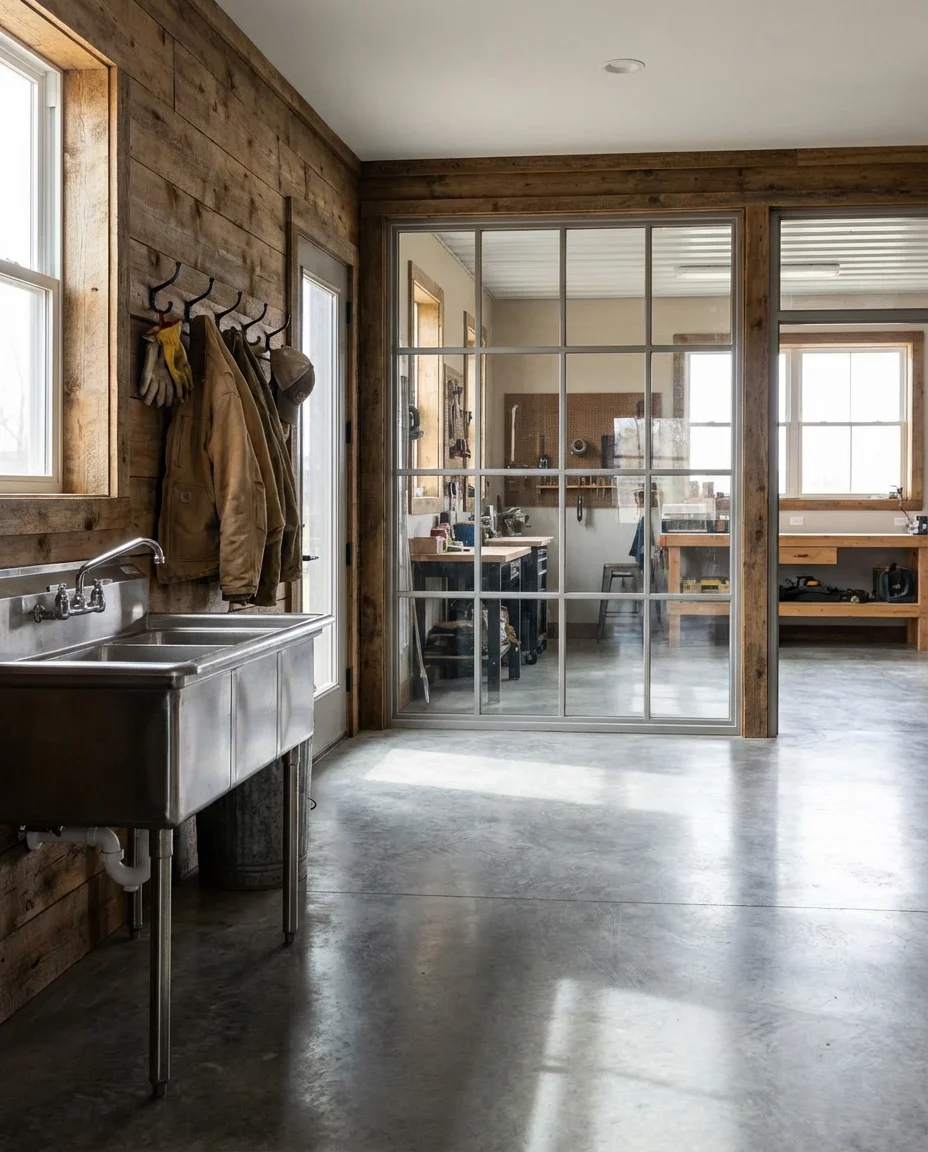
This configuration works particularly well for small business owners who run operations from home—equipment repair, vehicle restoration, custom woodworking, and landscaping operations are all businesses that have been built inside barndominium shops across rural America. Having the business physically attached to the residence also simplifies tax considerations for home office and workspace deductions. Just be sure to consult a tax professional and your county’s zoning board before building, as regulations around mixed-use residential structures vary significantly by location.
11. Cabin-Inspired Barndominium in the Woods
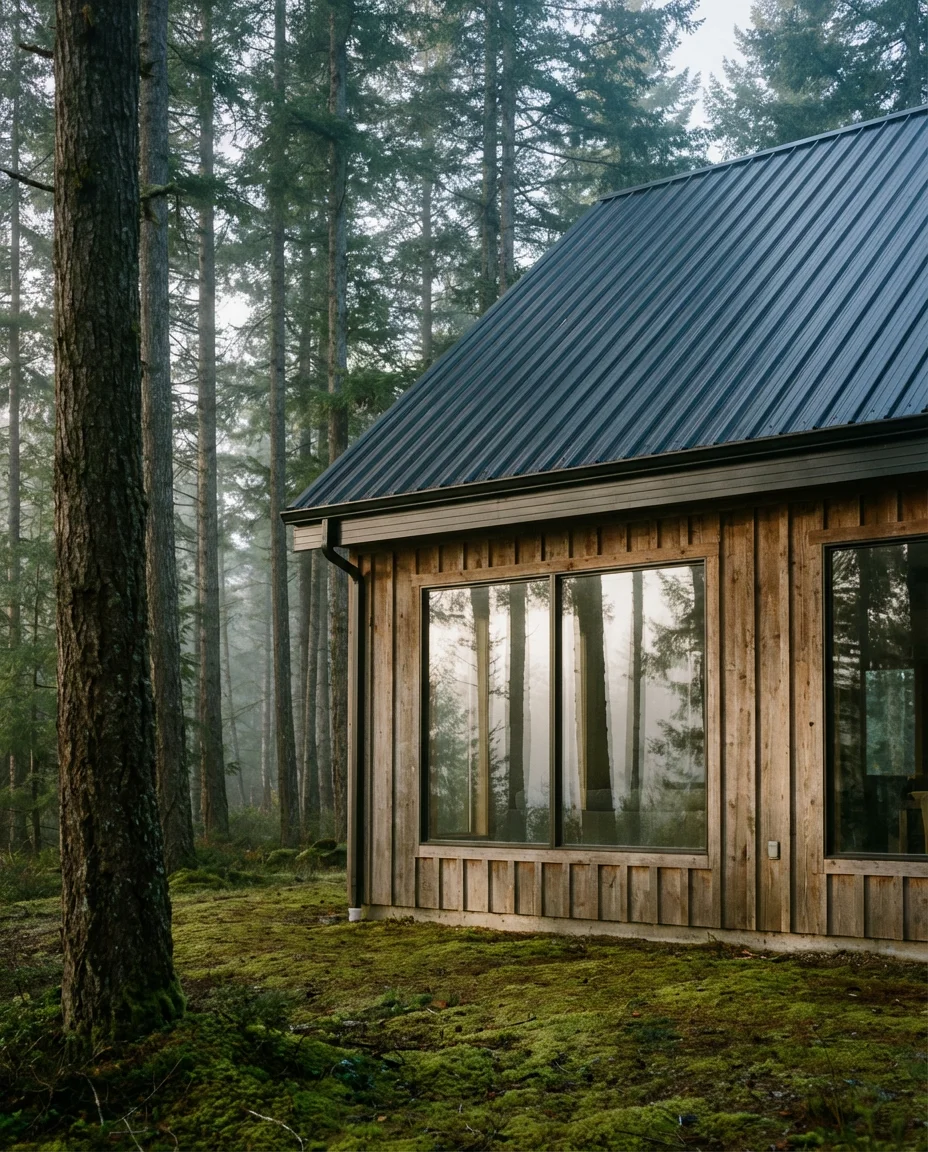
There’s a growing trend of cabin-style barndominiums tucked into forested lots, and it’s easy to see why the aesthetic is spreading so quickly. These builds lean into natural materials—log or timber accents, rough-sawn wood siding, metal roofing in dark charcoal or weathered copper, and large windows that frame the surrounding trees like living artwork. The rustic warmth of the aesthetic stands in beautiful contrast to the structural efficiency beneath it. It’s a cabin that can actually house a full family year-round in comfort, with real insulation, real plumbing, and real internet.
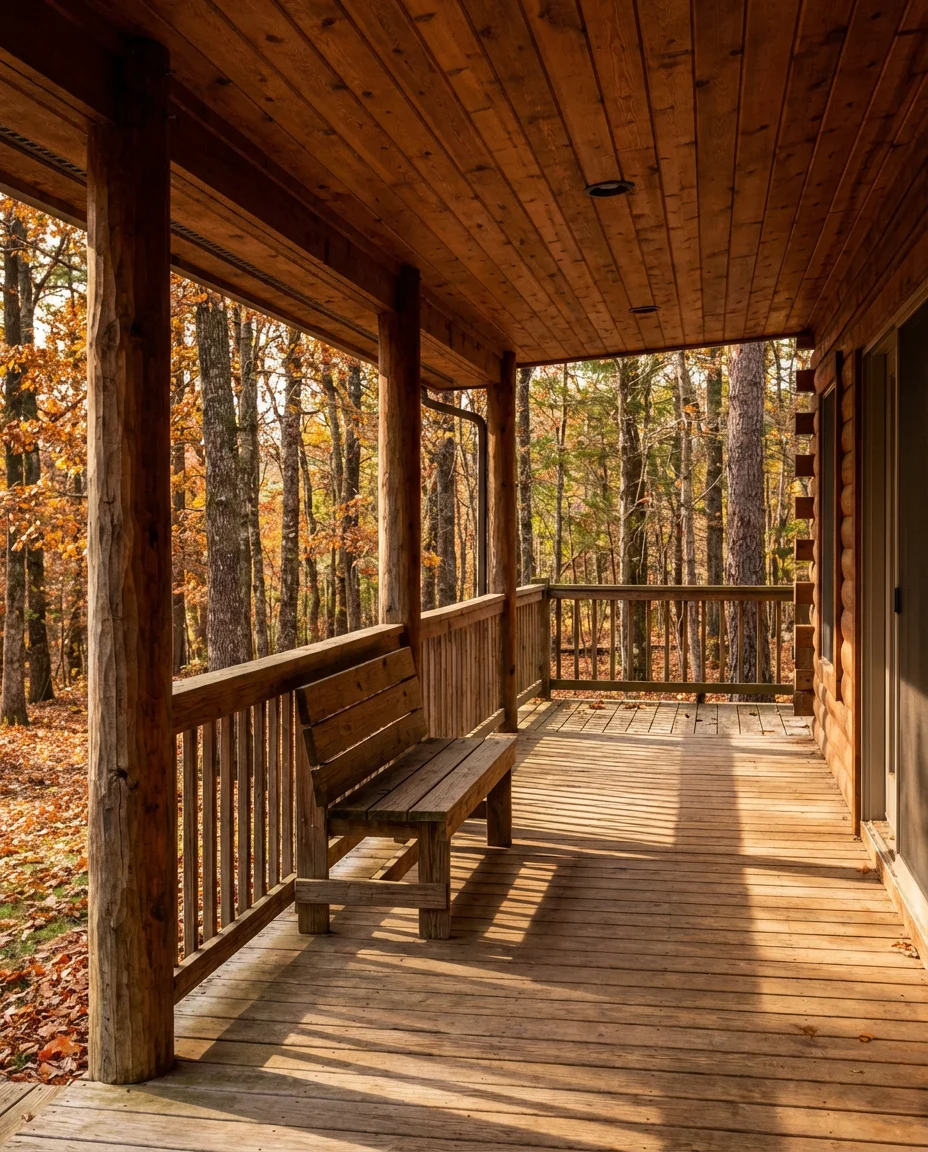
This style thrives in the forested regions of Tennessee, Arkansas, Montana, and the Pacific Northwest, where land with timber is still relatively affordable and the natural setting does most of the design work. Homeowners who’ve built cabin barndominiums on wooded acreage often report that the surrounding trees provide natural cooling in summer, reducing energy bills significantly compared to open-field builds. The canopy creates a microclimate that an open barndominium simply doesn’t have access to. Embrace the trees—they’re doing real work for you.
12. 5-Bedroom Barndominium With Grand Entry
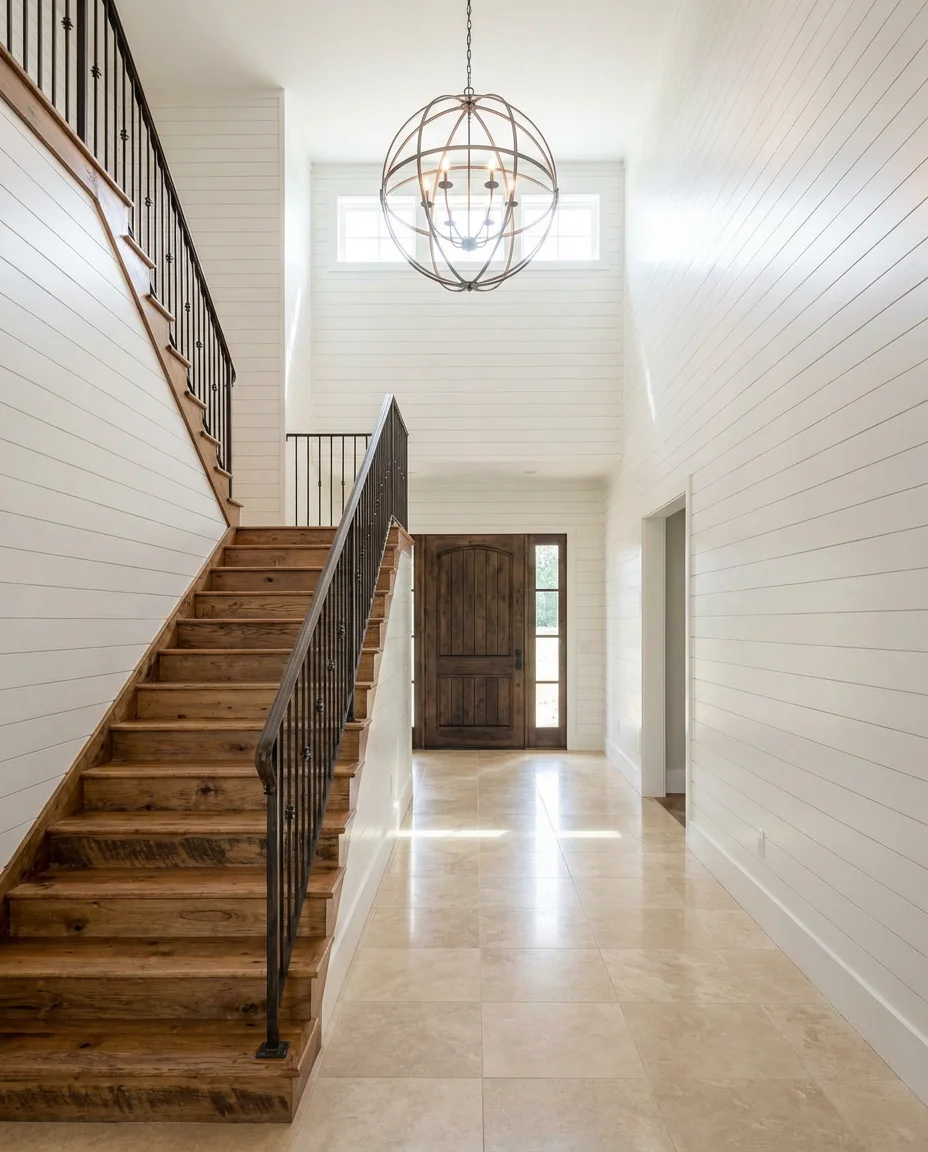
When space isn’t a constraint, the 5-bedroom barndominium becomes something close to a luxury estate—with none of the traditional estate price tag. A grand entry foyer with double-height ceilings and a statement staircase sets the tone from the moment you walk in. Beyond the entry, the layout typically radiates outward: a formal dining room to one side, a great room to the other, and a sprawling kitchen at the back. All five bedrooms have their own baths in the best designs, with the primary suite commanding its own private wing with a spa-level bathroom and walk-in closet.
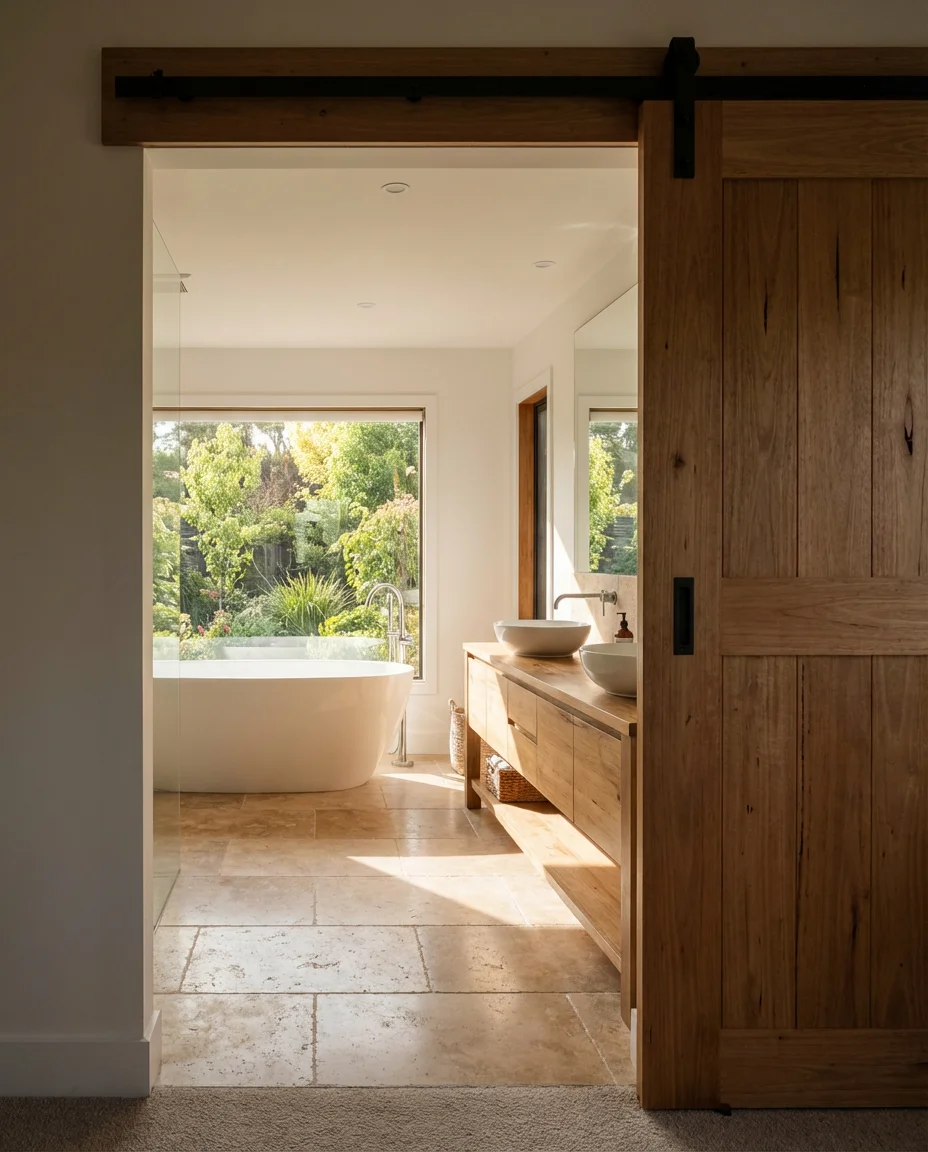
Expert barndominium designers note that the biggest challenge in a 5-bedroom build isn’t space—it’s circulation. Making sure that traffic flows naturally from bedroom to bathroom to common areas without bottlenecks is something that takes real design experience to get right. Hallways feel generous at four feet wide in a blueprint but cramped in real life; six feet is the sweet spot. If you’re investing in a build of this scale, hire a designer who has completed similar projects and can show you finished examples you can walk through before signing off on your own plan.
13. Single-Level Barndominium With Wraparound Porch
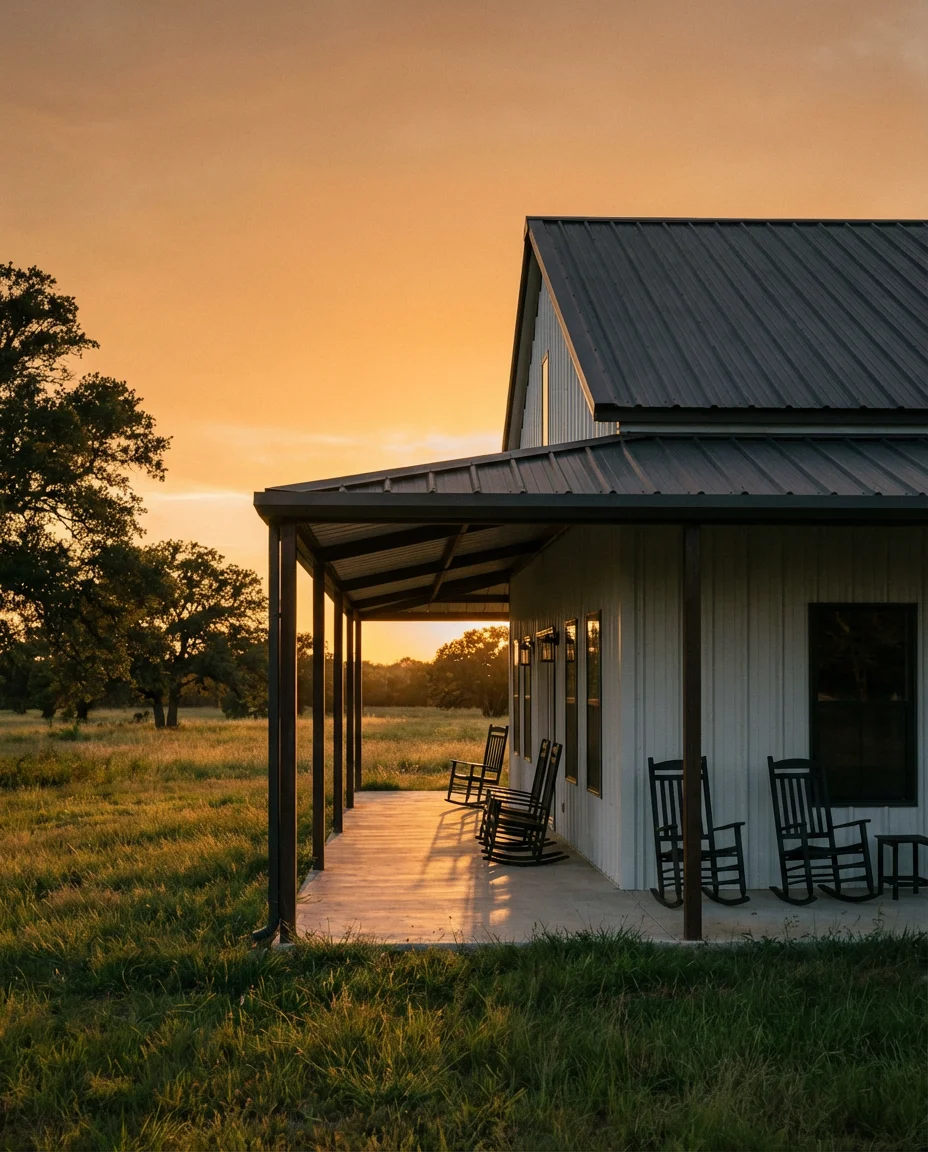
The level barndominium—built entirely on a single floor—is a lifestyle statement as much as it is a practical design choice. No stairs means accessibility for aging family members, easier furniture moving, and a layout that keeps everyone connected without floors separating them. Add a wraparound porch, and you’ve created outdoor living space on three or four sides of the home, each with its own orientation: morning sun on the east side, afternoon shade on the north, and golden-hour views to the west. The exterior of a well-designed single-story barndominium with a porch is genuinely magazine-worthy.
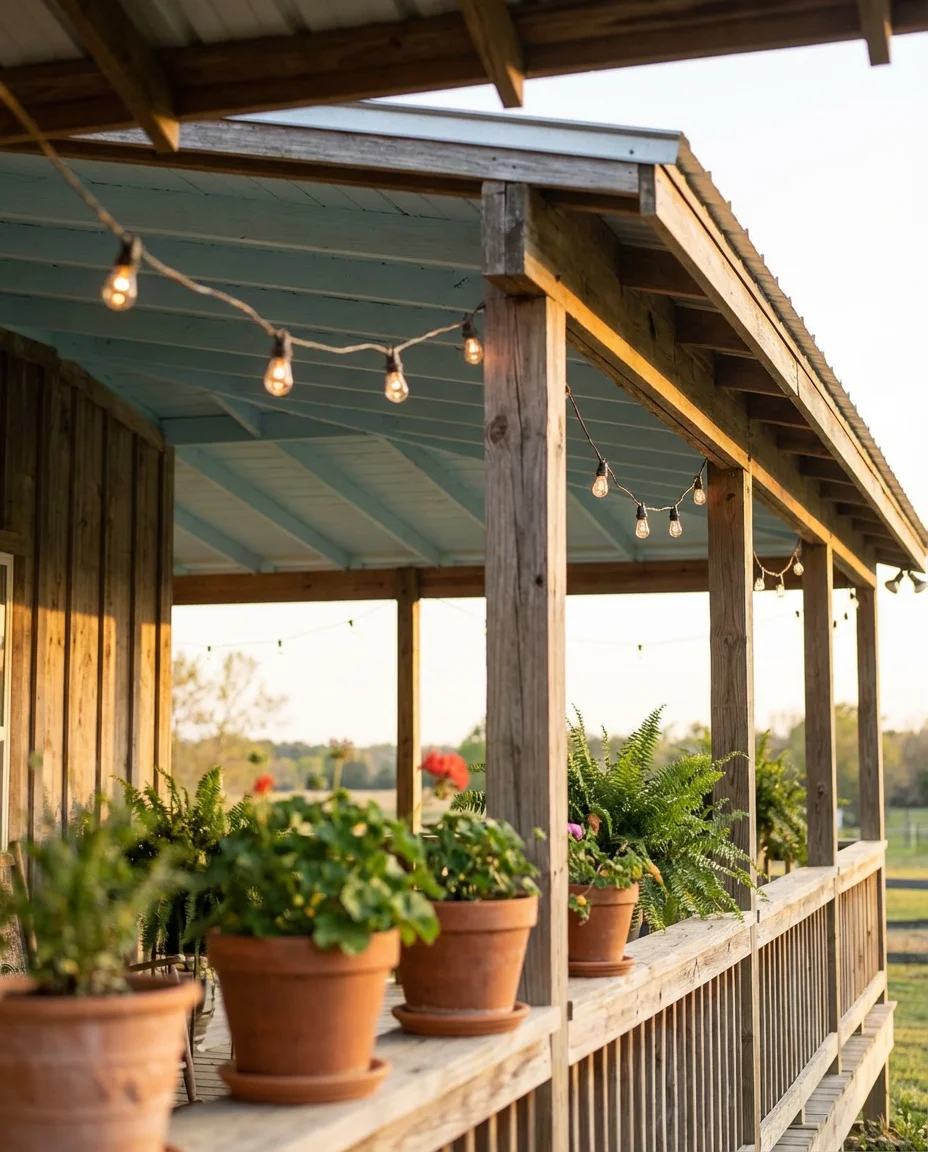
Single-story barndominiums are especially well suited to flat or gently sloping land in the South and Midwest, where sprawling one-story homes have always been the cultural norm. A wraparound porch effectively adds several hundred square feet of functional living area to the home without increasing the enclosed footprint—a budget-savvy move that dramatically improves quality of life. String lights overhead, ceiling fans, a porch swing, and a freestanding grill, and your outdoor space becomes the most used room in the house from March through October.
14. Modern Black and White Interior
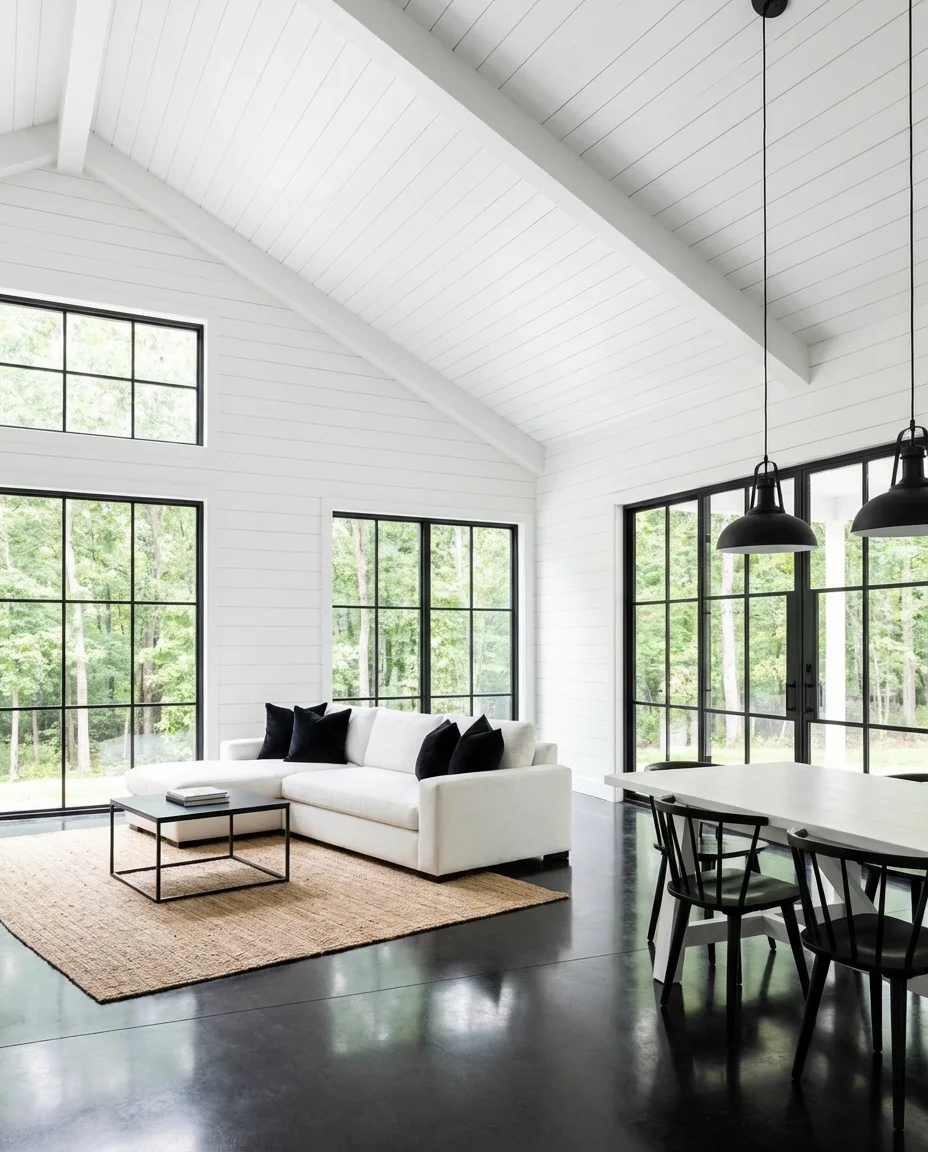
A black and white interior palette inside a barndominium creates a sleek, editorial look that feels anything but rural—and that contrast is exactly the point. White walls and ceilings reflect light in large rooms, while black window frames, cabinetry hardware, light fixtures, and accent walls add depth and sophistication. This is a modern interior that photographs strikingly well and ages gracefully because the palette is timeless. The raw structural elements—exposed steel, polished concrete floors, galvanized metal details—read as intentional design choices rather than construction shortcuts when everything is this cohesive.
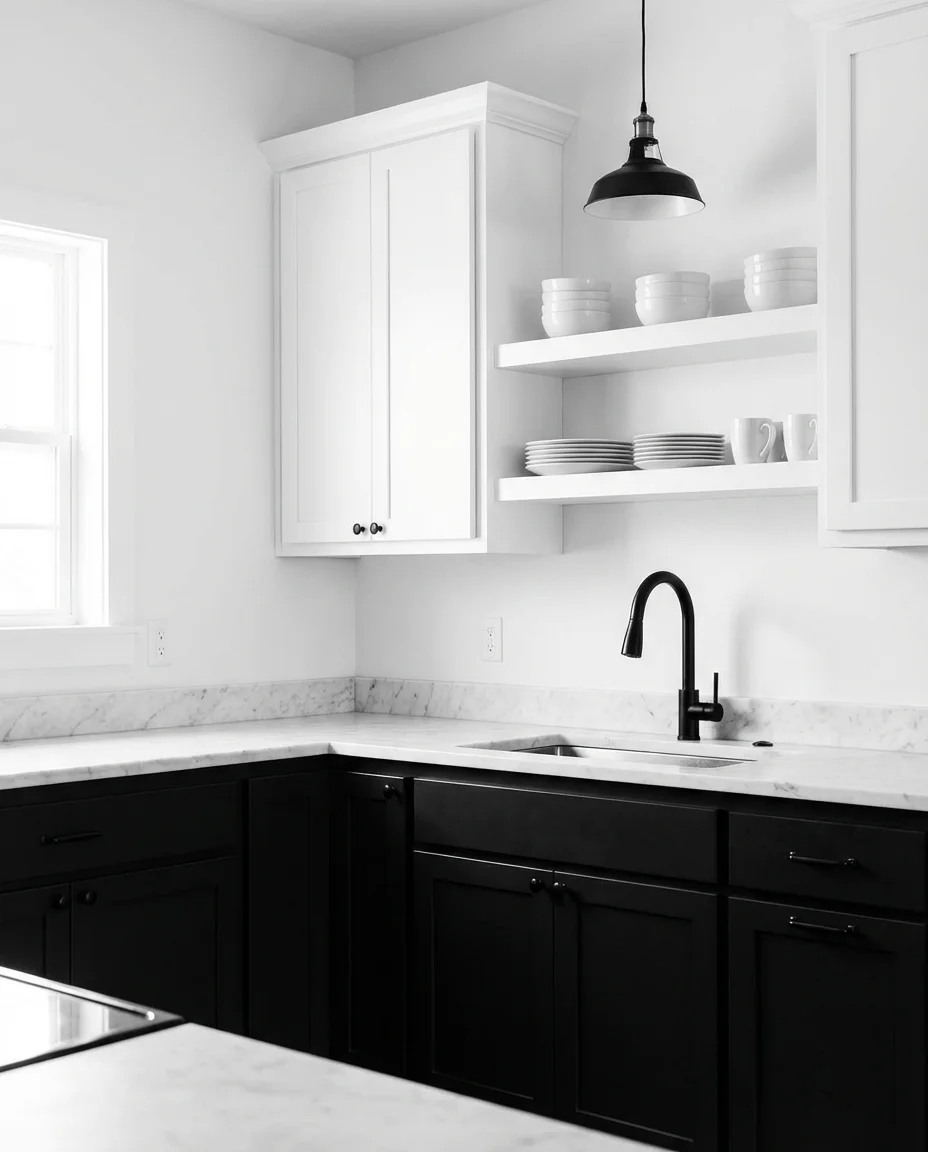
One mistake people make with this look is forgetting warmth. An all-black-and-white interior without any organic material—wood, natural fiber, plants—can veer into cold and sterile territory quickly. The fix is simple: add a live-edge wood dining table, a jute rug, linen curtains, or a gallery wall of framed botanical prints. These small additions break the hardness without disrupting the palette. Think of them as the punctuation in a really great sentence—without them, the whole thing loses its rhythm.
15. 4-Bedroom 2-Story With Home Office
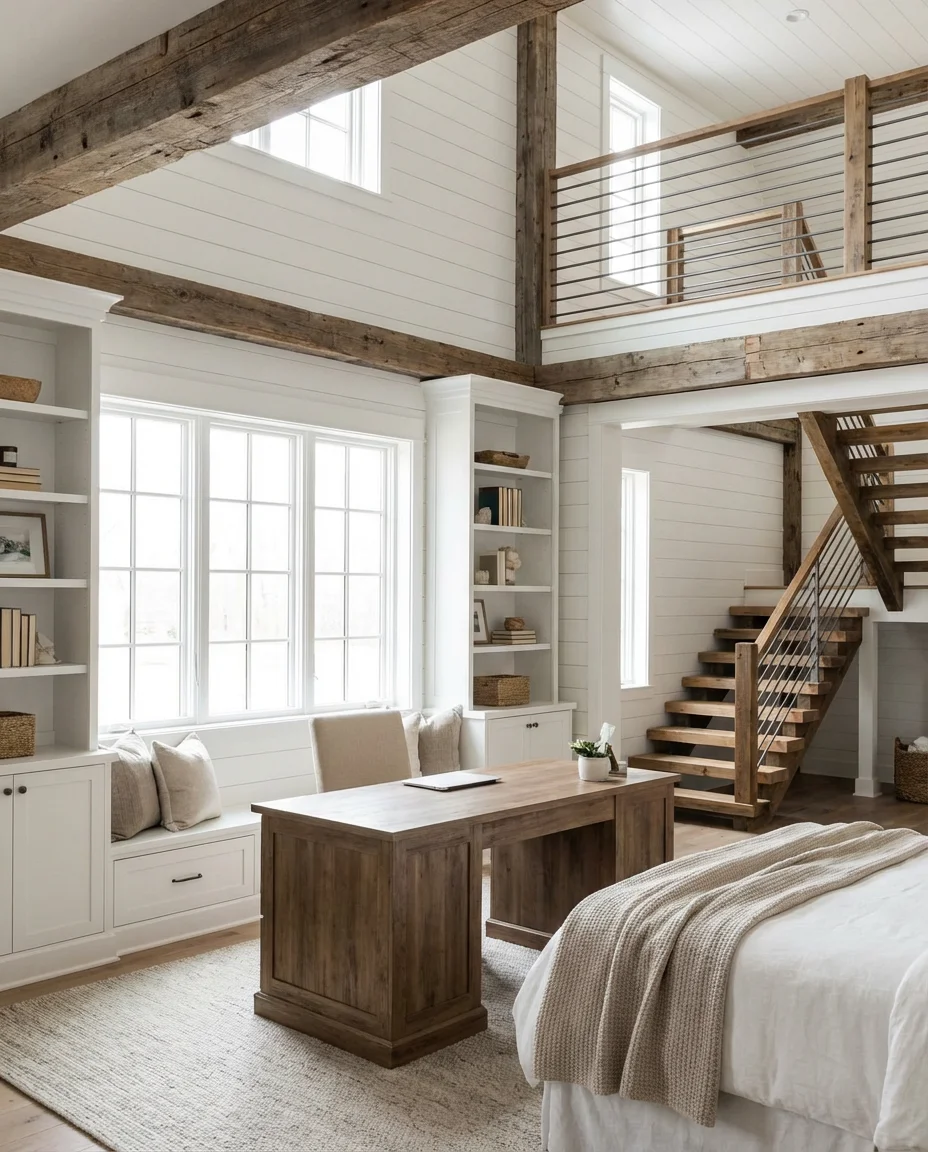
The floor plan for the 4-bedroom, 2-story category has exploded in popularity as remote work has become a permanent fixture for millions of American families. Having four bedrooms across two floors—with one dedicated as a home office—creates the kind of separation that makes working from home genuinely productive rather than distracting. The story separation works in your favor here: the office on the main level stays close to the kitchen and entry, while bedrooms occupy the upper floor, keeping household traffic and noise in their proper zones during work hours.
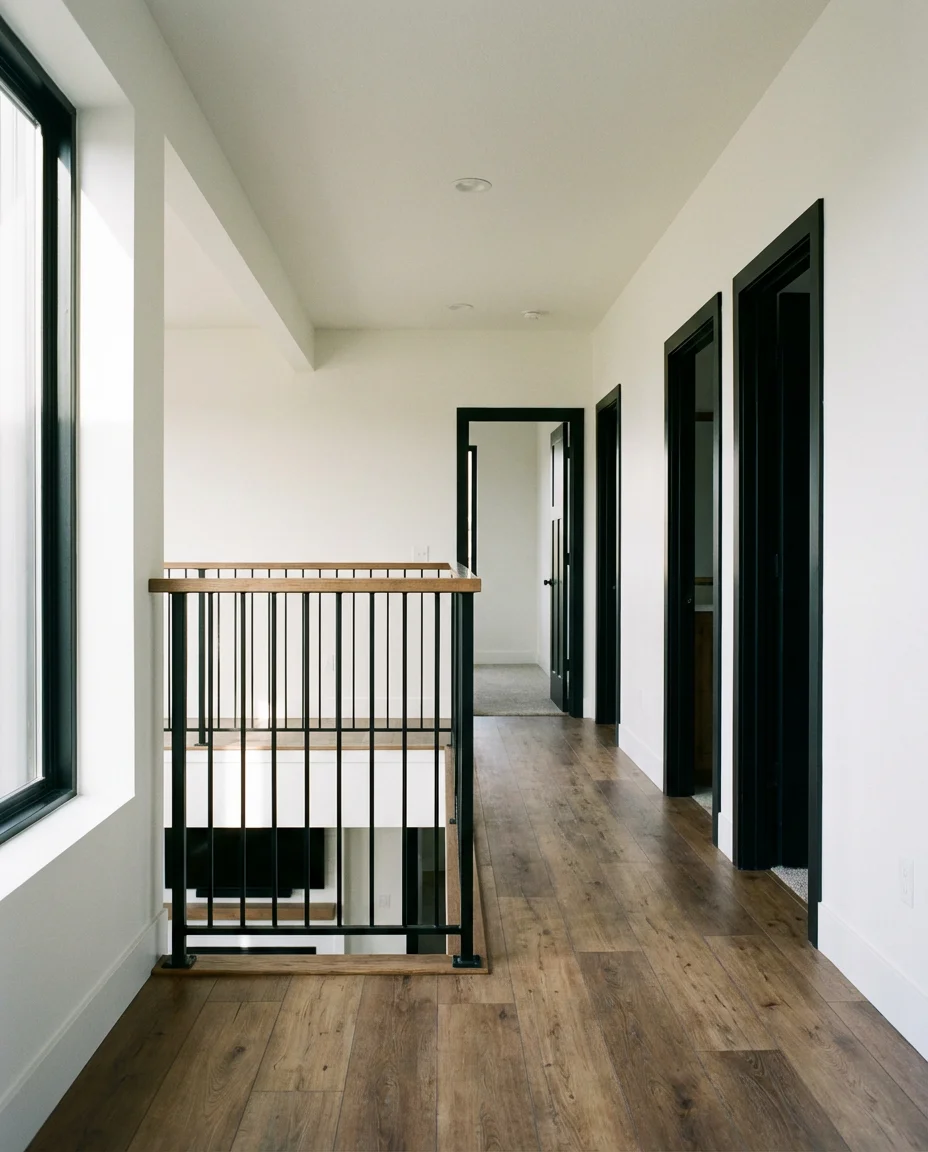
When designing a home office within a barndominium, resist the temptation to use the smallest bedroom for the purpose. A dedicated office should have a real door, adequate electrical outlets, strong WiFi coverage, and ideally a window with natural light—all things that tend to be afterthoughts if the office isn’t planned from the beginning. Budget around $2,000–$5,000 above your standard bedroom finish for proper wiring, lighting, and built-in shelving, and you’ll have a workspace that actually supports productivity rather than fighting against it.
16. Garage Barndominium With Oversized Doors
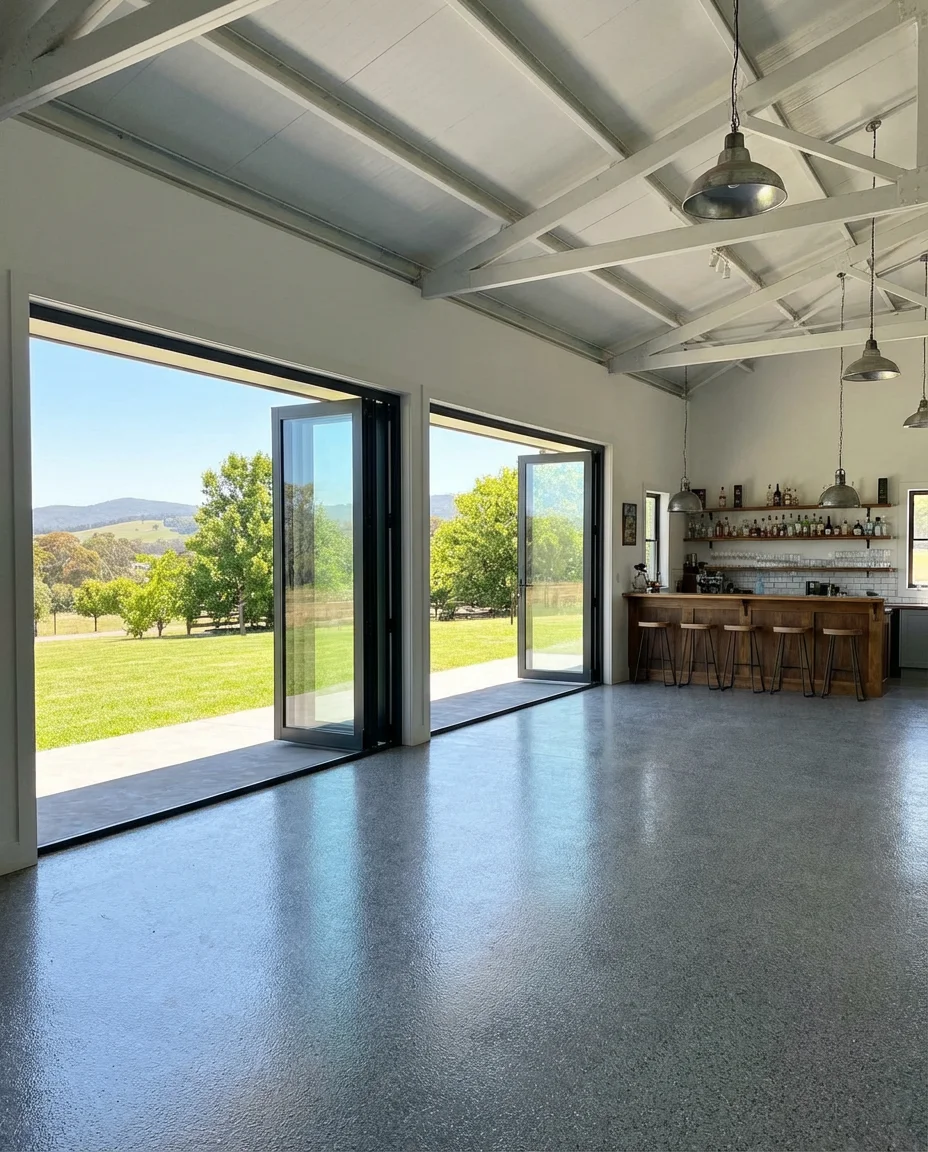
The garage barndominium takes the shouse concept in a bold direction—leading with the garage as a design feature rather than hiding it. Oversized bifold or sliding glass garage doors can open the entire front of a bay to the outdoors, creating an indoor-outdoor living and entertaining space that’s unlike anything in a traditional home. Interiors in this style often include polished epoxy floors, built-in storage walls, and a bar or lounge setup in the open bay. It’s a design choice that makes the most practical space in the home the most impressive one.
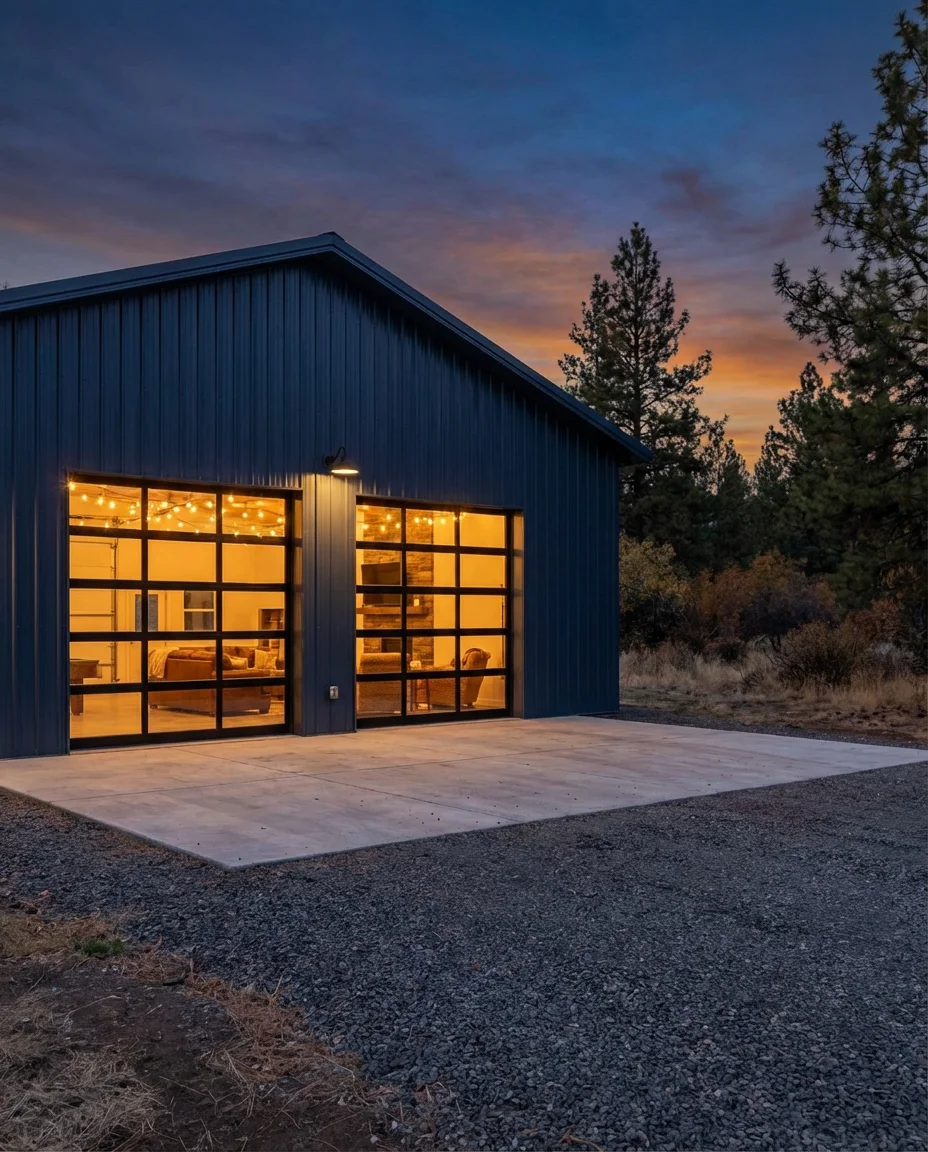
Garage barndominiums are remarkably popular in the Sun Belt states—Arizona, Florida, Texas, and the Carolinas—where mild winters make an open garage bay a year-round entertaining asset. Homeowners in these regions describe throwing dinner parties that spill from the kitchen into the open bay, with fairy lights strung from the ceiling and a BBQ fired up just outside the open door. The space functions as a true extension of the living area, with the ability to close up completely when needed. It’s versatile in a way that a traditional closed garage simply can’t be.
17. Interiors With Industrial Rustic Bedroom
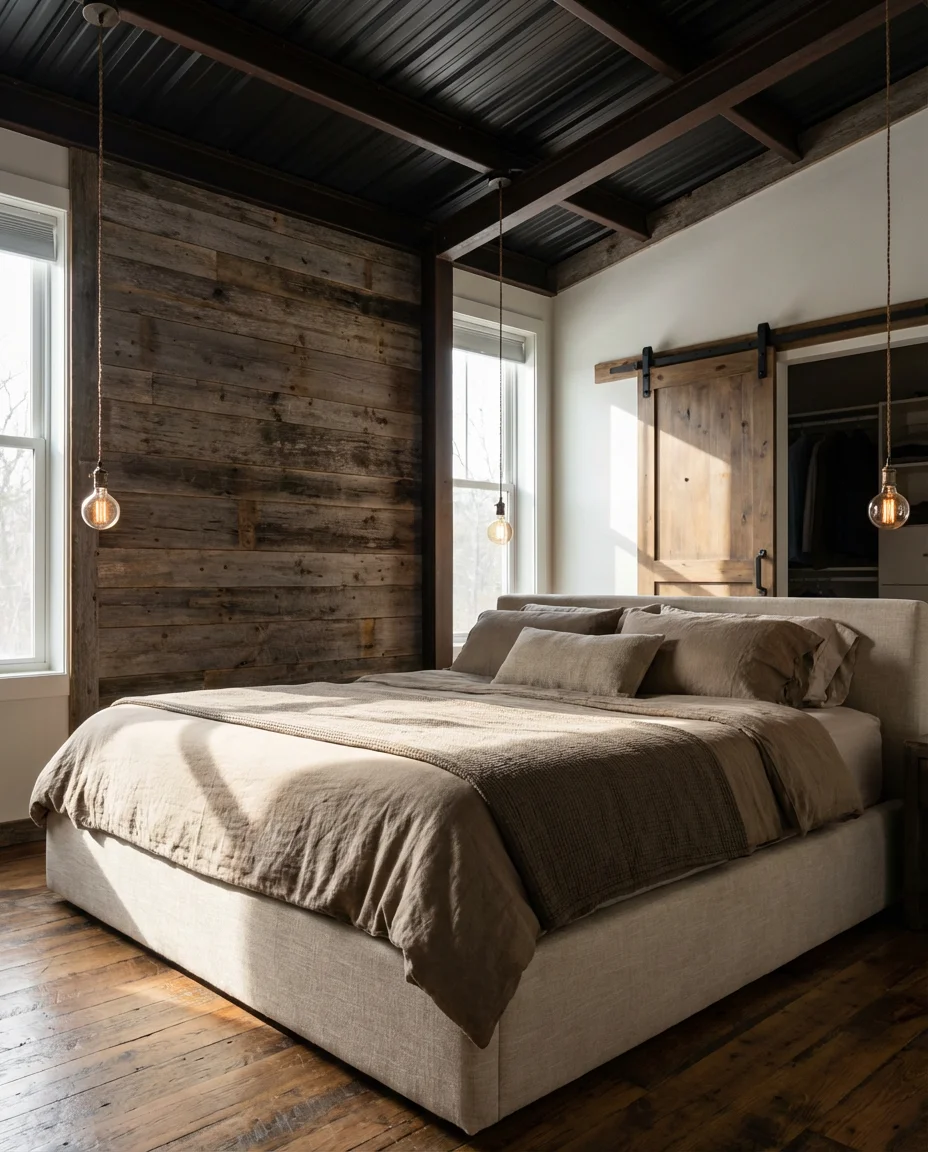
The primary bedroom in a barndominium is the one room where you can push the design without worrying about function or traffic flow. An interior bedroom in the industrial rustic style leans into the structural honesty of the building—exposed metal roof decking, a sliding barn door on the closet, reclaimed wood on a feature wall behind the bed, and Edison bulb pendants hanging low on either side of a linen-tufted headboard. The result is a bedroom that feels like a boutique hotel in the best rural corners of America.
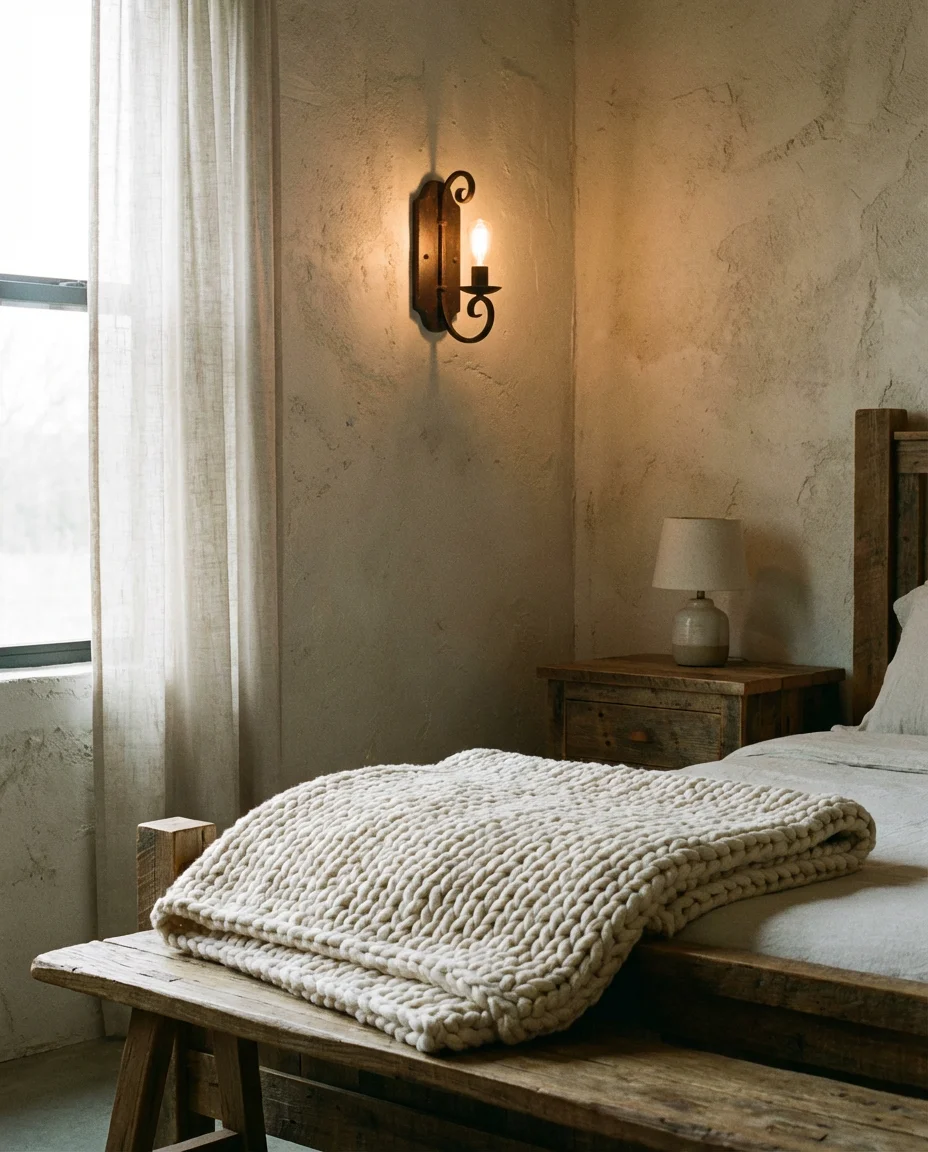
Layering textures is the real secret to making this look work—rough wood against smooth linen, matte steel against shiny ceramic tile in the ensuite, and chunky knit throws over smooth duvet covers. Without textural contrast, the industrial rustic style can feel flat and unfinished. Start with a statement piece, whether that’s a live-edge headboard, an antique iron chandelier, or a hand-knotted wool rug, and build everything else around it. Anchor first, layer second, accessorize last.
18. Cheap Barndominium Build With Smart Savings
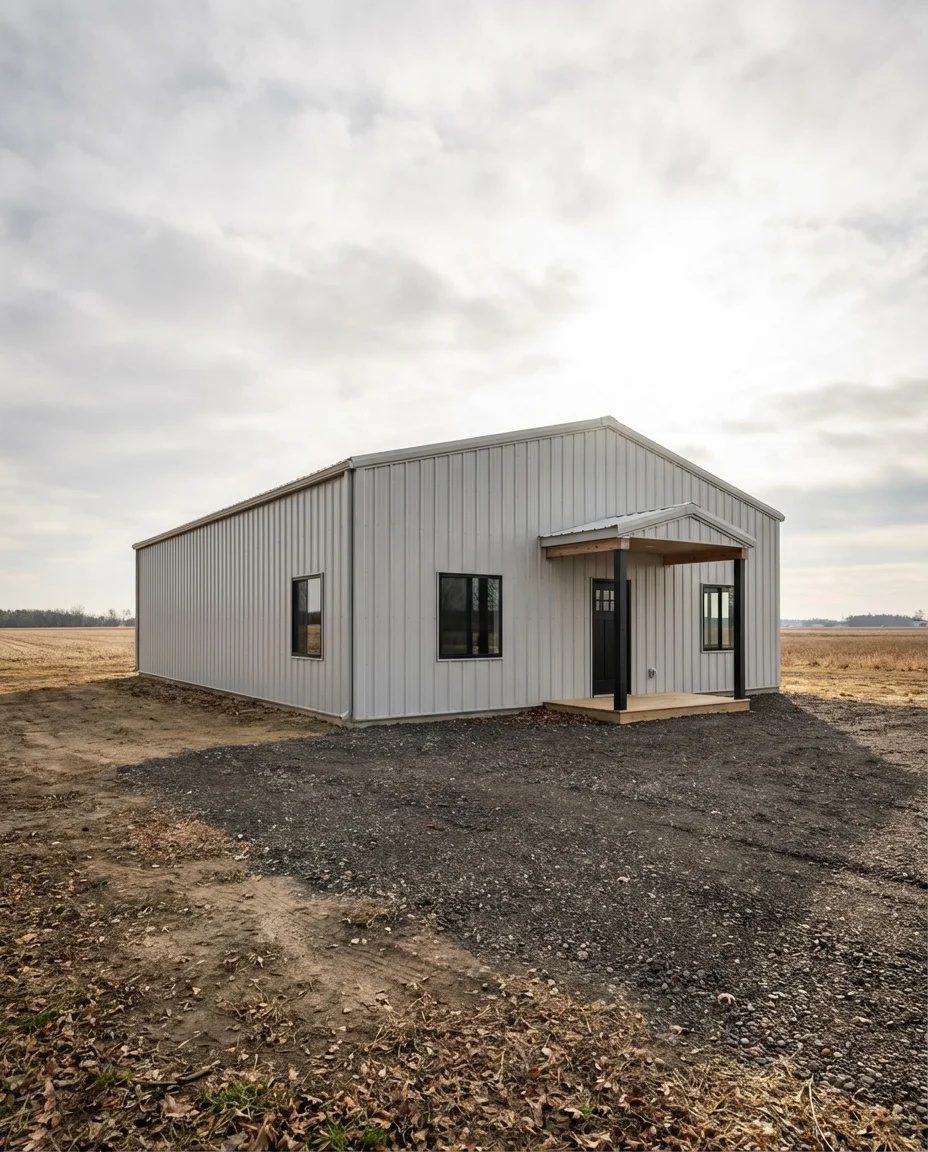
Building a cheap barndominium doesn’t mean cutting corners—it means making smart decisions at every stage of the process. The post-frame structure itself is already the biggest savings compared to stick-built construction, so protecting that advantage means being strategic about where you spend and where you scale back. Standard metal roofing and siding are significantly less expensive than architectural shingles or fiber cement board, and they perform as well or better in most climates. Choosing a simple rectangular footprint also reduces framing complexity and material waste dramatically.
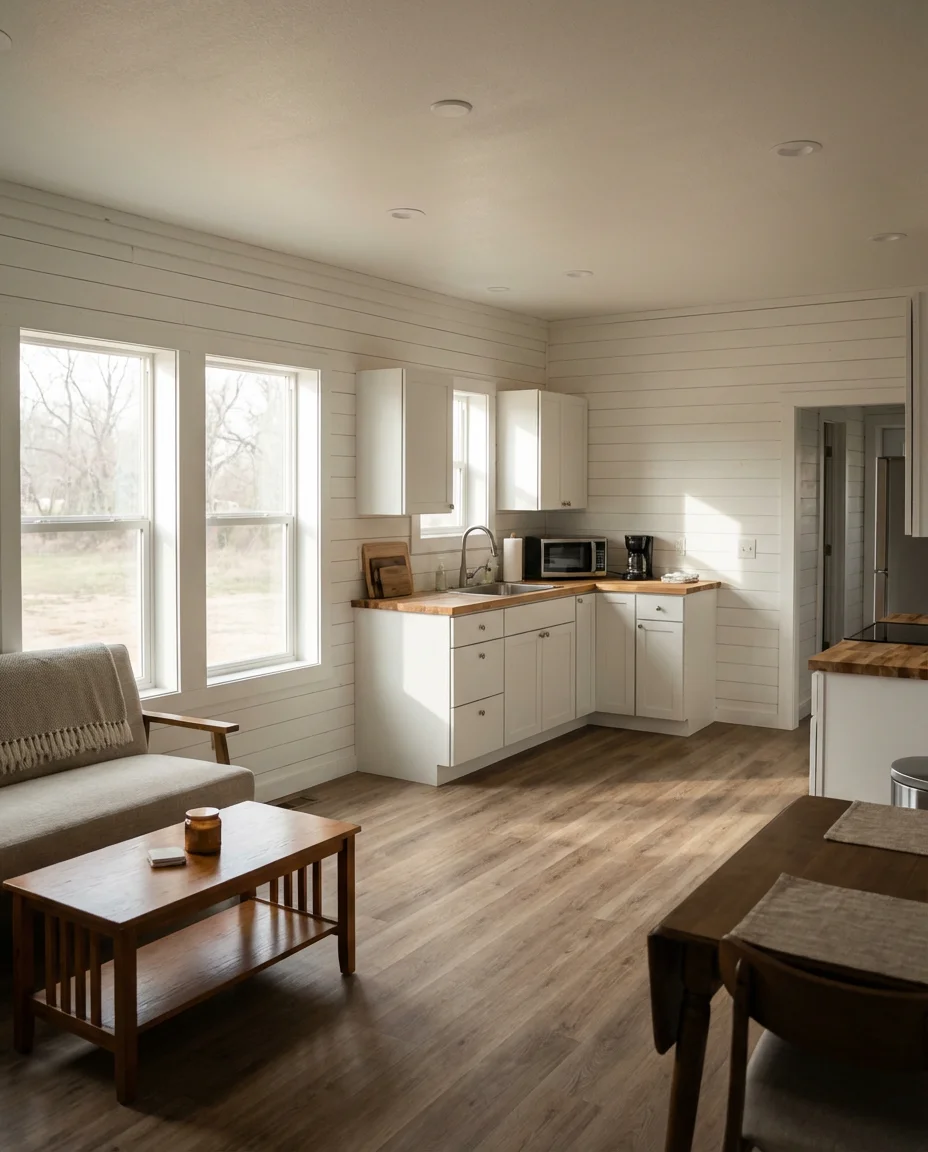
One of the biggest budget killers in any barndominium build is scope creep—adding features, rooms, or finishes after construction has begun. A clear, locked-in plan before the first post goes in the ground is your best financial protection. Get three bids from experienced post-frame builders, not general contractors. Ask for references and look at completed builds. Many builders will provide a turnkey package—structure, insulation, windows, and doors—that simplifies the process and helps you understand exactly where your money is going from day one.
19. Simple Rectangular Floor Plan Done Right
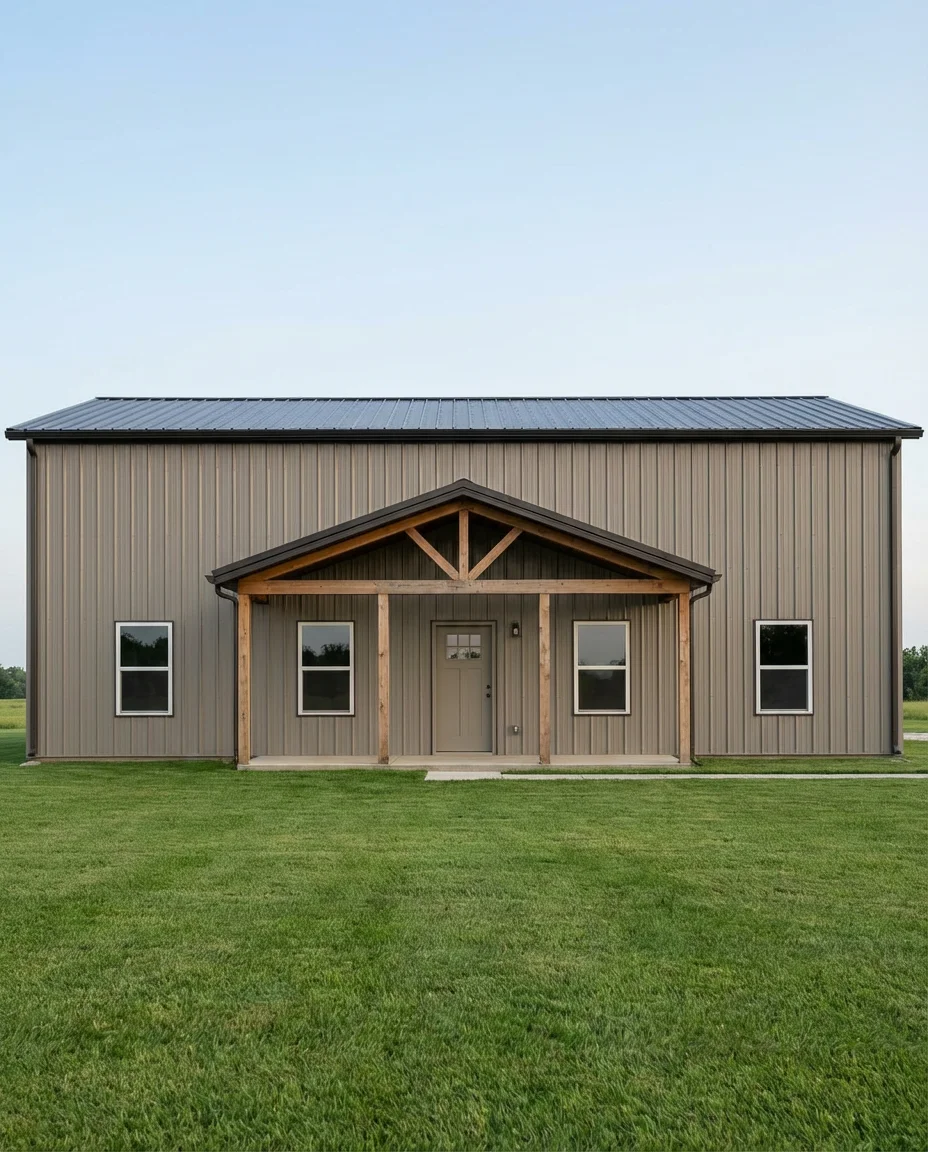
There’s quiet genius in a simple rectangular barndominium floor plan, and designers who work in the space know it. A straightforward rectangle—say, 40×80 or 50×100 feet—eliminates costly roof complications, simplifies the foundation, and makes interior layouts incredibly flexible. Because the structure is so regular, you can rearrange rooms, add a loft, or reconfigure the kitchen without fighting against an awkward footprint. Small floor plans done in this rectangular format feel particularly efficient, delivering every square inch of usable space without hallway waste.
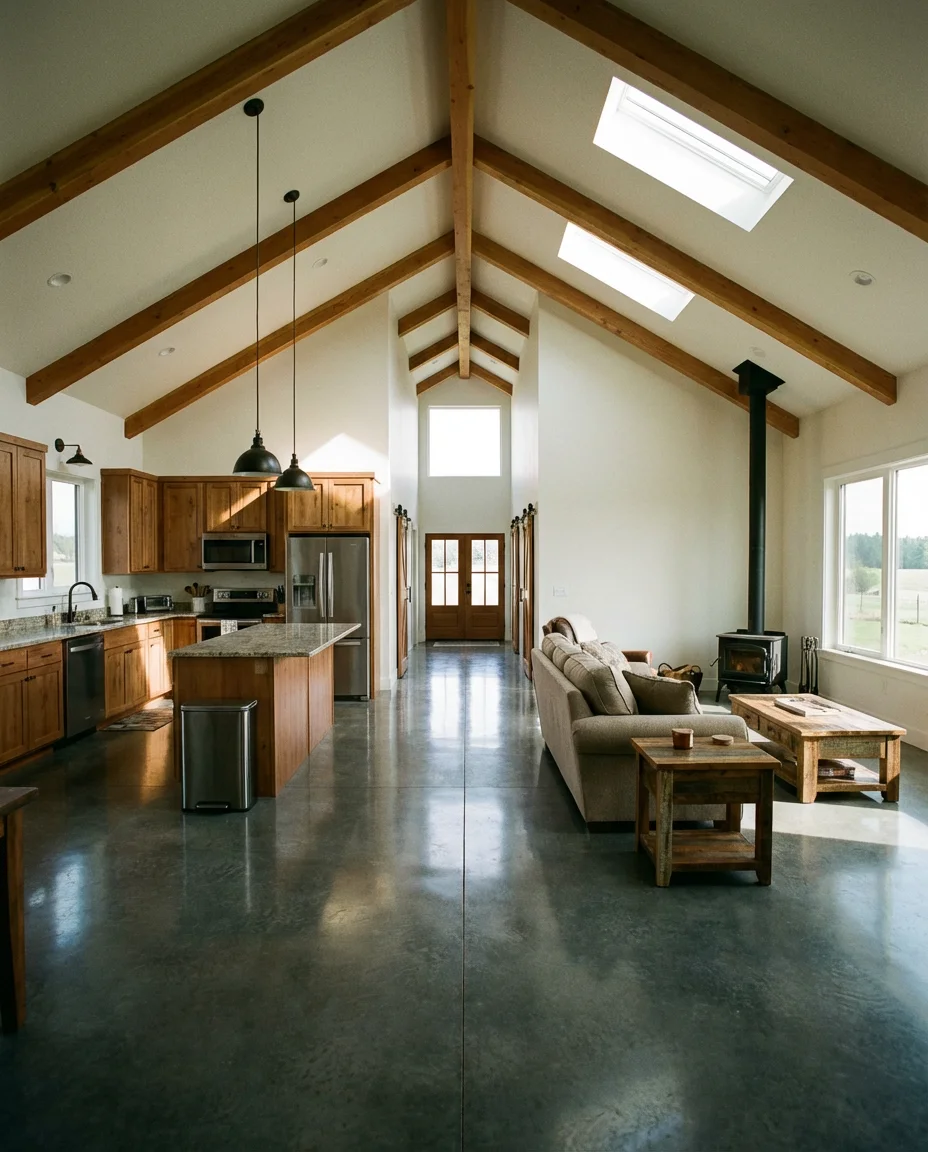
Don’t let “simple” fool you into thinking “plain.” The most elegant barndominium designs often start with the most basic footprint and invest all the saved structural complexity budget into finishes, fixtures, and outdoor spaces. A rectangle with a stunning wraparound porch, shiplap ceilings, and a killer kitchen will always outshine an oddly shaped plan with average finishes. It’s a philosophy that echoes what great architects have always known: solve the structure first, then dress it beautifully. The simplicity is the sophistication.
20. Barndominium With Stunning Kitchen Island
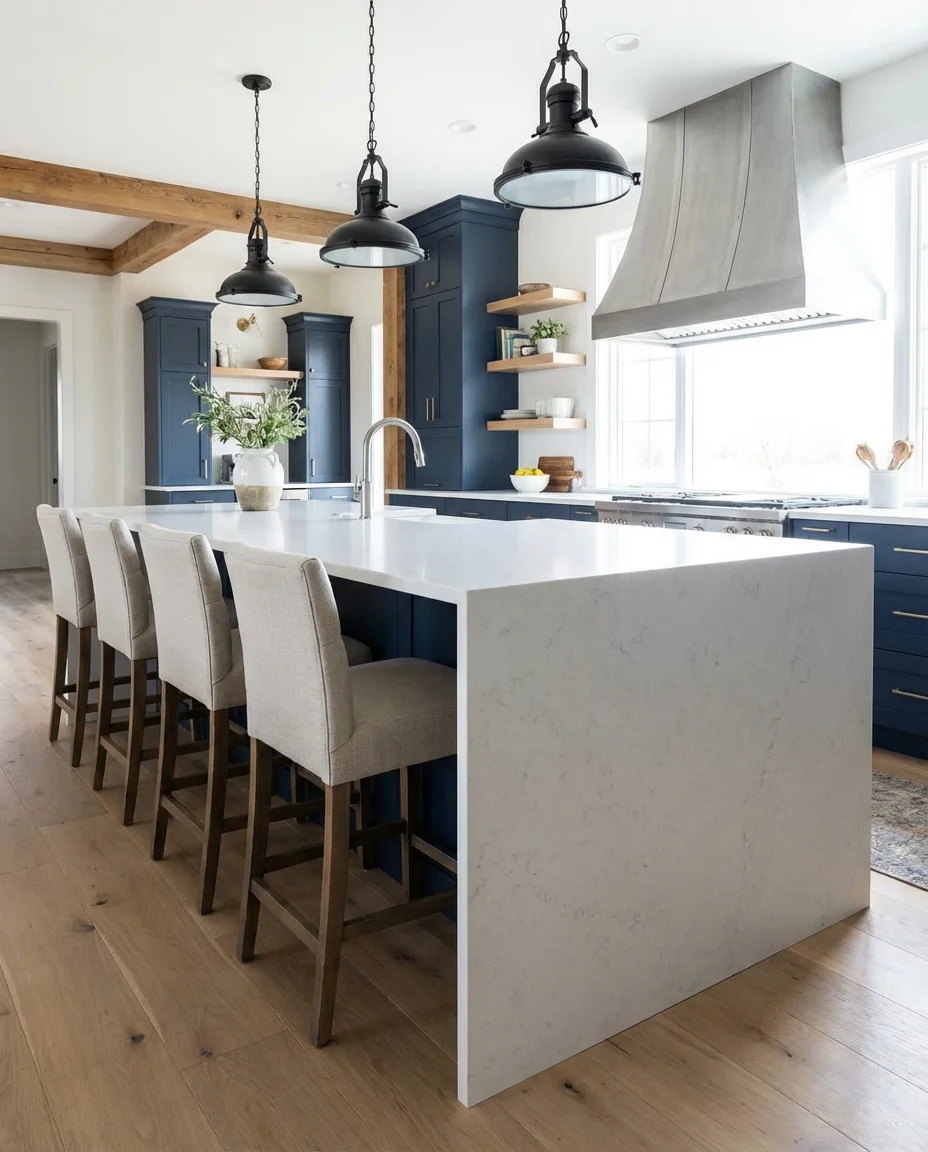
If there’s one feature that separates a good barndominium kitchen from a great one, it’s the island. In these open-plan homes, the island is doing serious heavy lifting—it’s a prep surface, a gathering spot, a homework station, a buffet table during parties, and a room divider that feels open rather than closed. The most beautiful barndominium kitchen islands run eight feet or longer, feature a waterfall edge in quartz or butcher block, include seating for four on one side, and hide the dishwasher and extra storage on the other. They’re functional sculptures in the center of daily life.
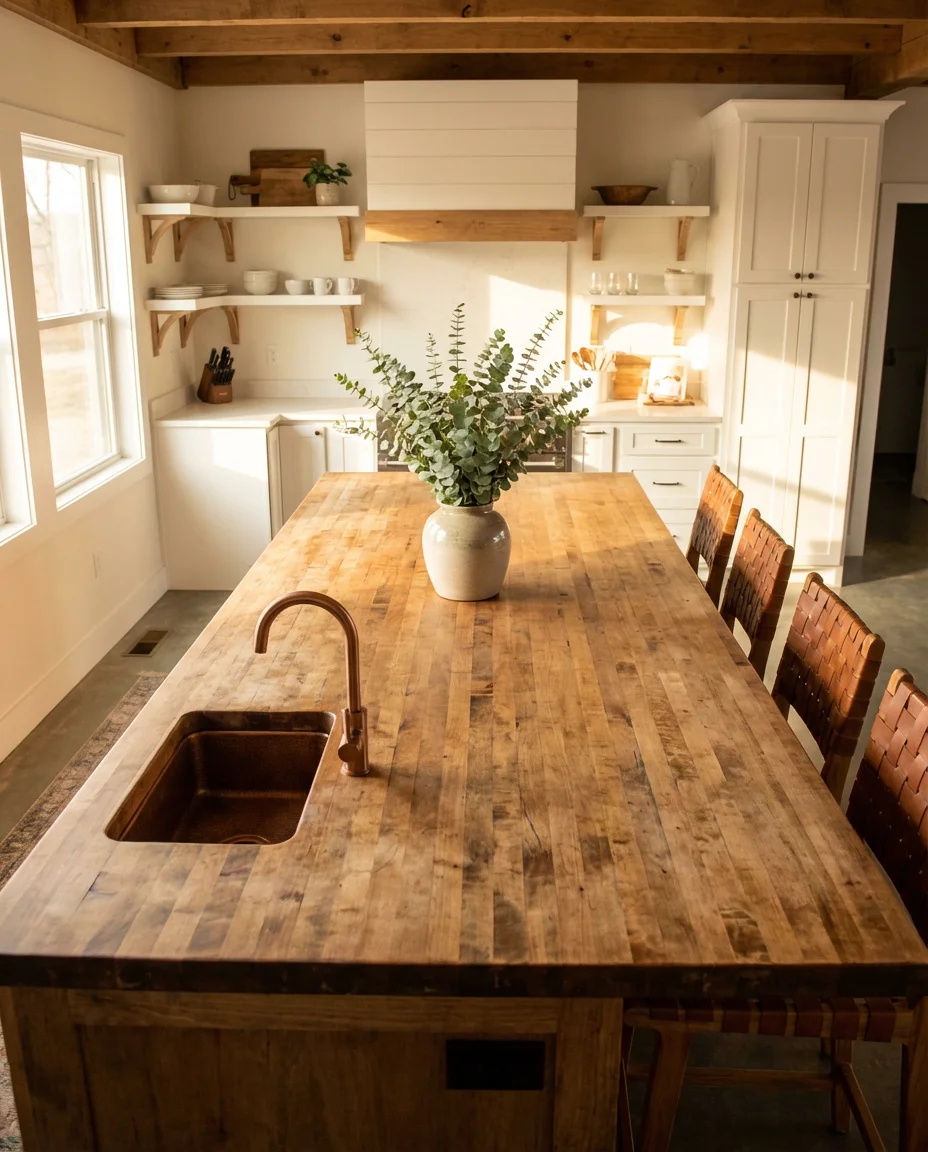
There’s a version of this kitchen story that plays out in barndominium communities across the country: the homeowner who budgeted modestly for the kitchen poured a beautiful concrete island almost as an afterthought and now finds themselves entertaining three weekends a month because everyone wants to hang out around it. The island changes the social energy of a home. Plan it generously, position it thoughtfully—angled toward the living area so the cook isn’t facing a wall—and it will reward you every single day.
21. Two-Story Barndominium With Floor-to-Ceiling Windows
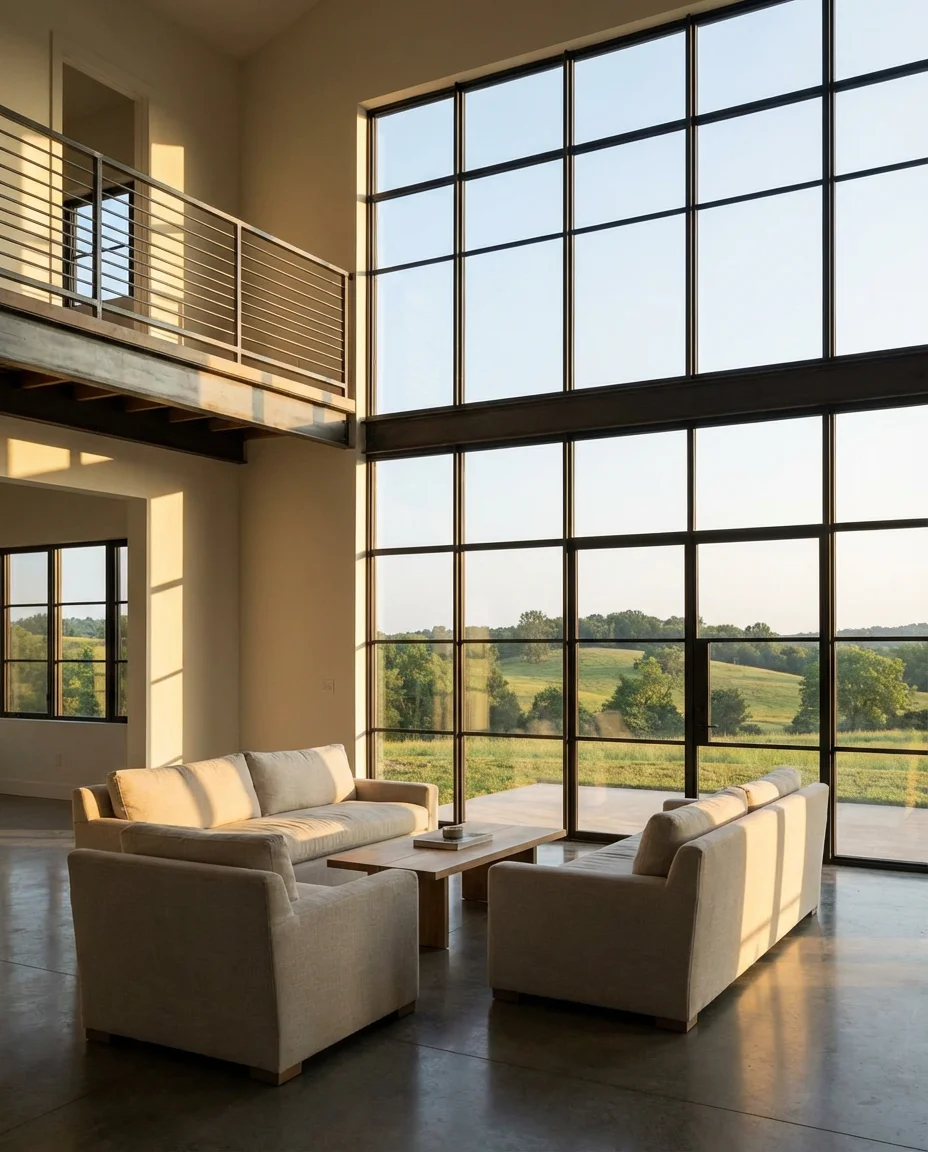
One of the most dramatic moves in 2-story barndominium design is the floor-to-ceiling window wall—a glazed surface that runs the full height of the double-story great room, flooding the interior with daylight and framing whatever view the property offers. Whether it’s a pasture, a tree line, or distant hills, the window wall makes nature a living piece of decor that changes with every season. The structural advantage of post-frame construction is exactly what makes this possible: without interior bearing walls, you can place glass almost anywhere the design demands it.
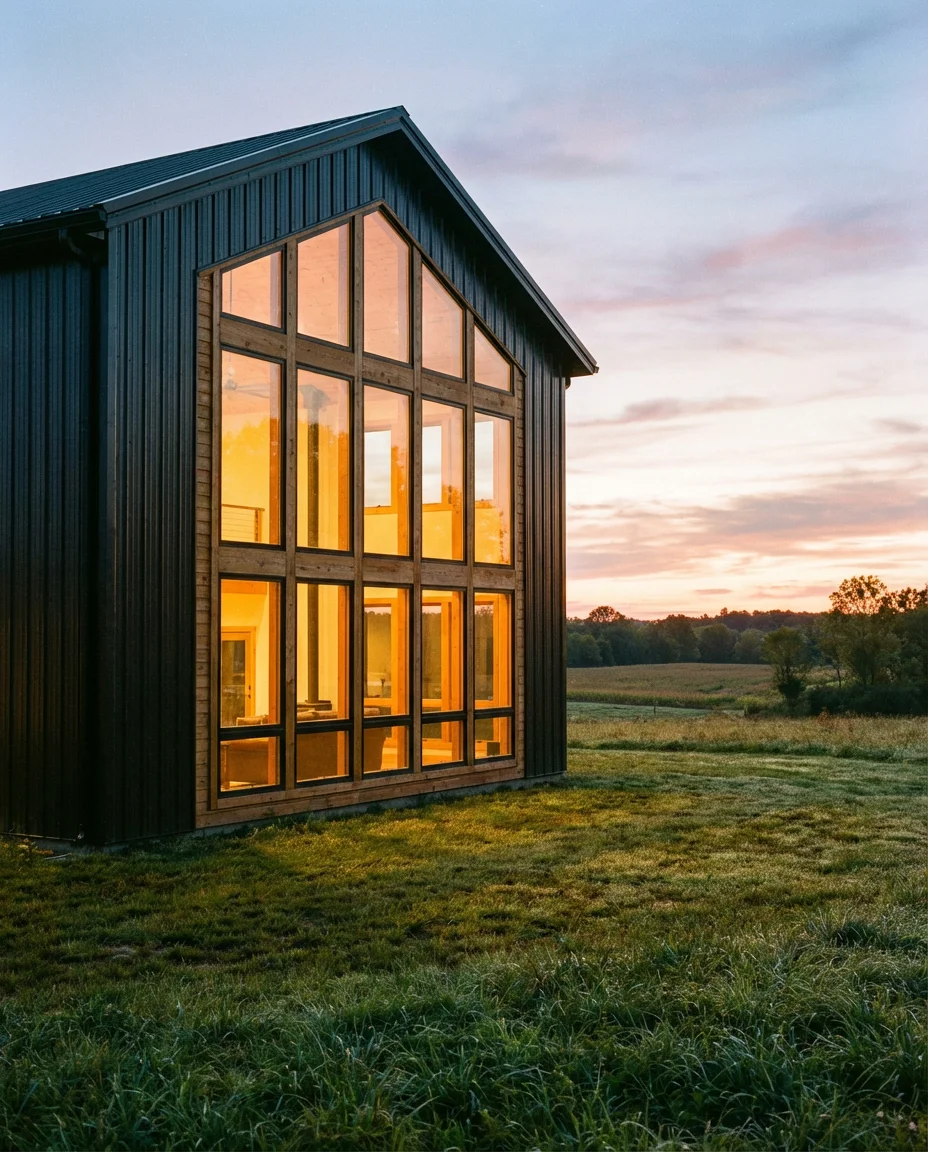
Window placement is something many barndominium owners wish they’d thought about more carefully during design. Orienting large glazing toward the north or east manages heat gain in Southern climates, while south-facing windows maximize passive solar warmth in Northern states. Working with an energy consultant for even a few hours during the design phase can result in substantial long-term savings on heating and cooling and ensure that those gorgeous windows are working with the climate rather than against it. Beauty and energy efficiency aren’t mutually exclusive; you just have to plan for both.
22. Interiors With Reclaimed Wood and Metal Accents
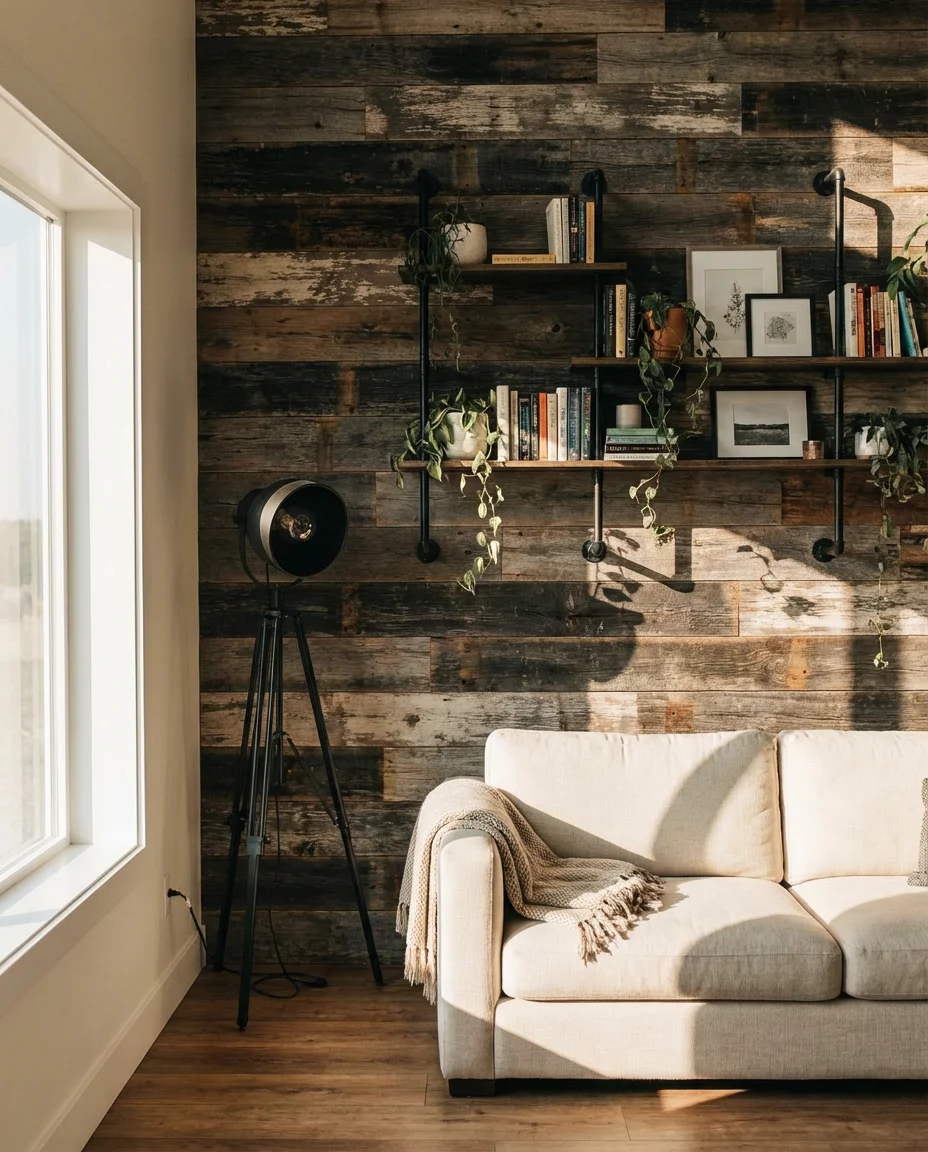
Reclaimed wood is having a serious resurgence in barndominium interiors, and the pairing with raw metal accents creates a design language that feels authentically rooted in American working culture. Old barn siding repurposed as a living room accent wall, hand-hewn timber beams salvaged from a demolished mill, or vintage factory windows incorporated into an interior partition—these elements carry history into a new structure, giving a brand-new build the patina and soul that usually take decades to develop. It’s a deeply American approach to design: nothing wasted, everything repurposed.
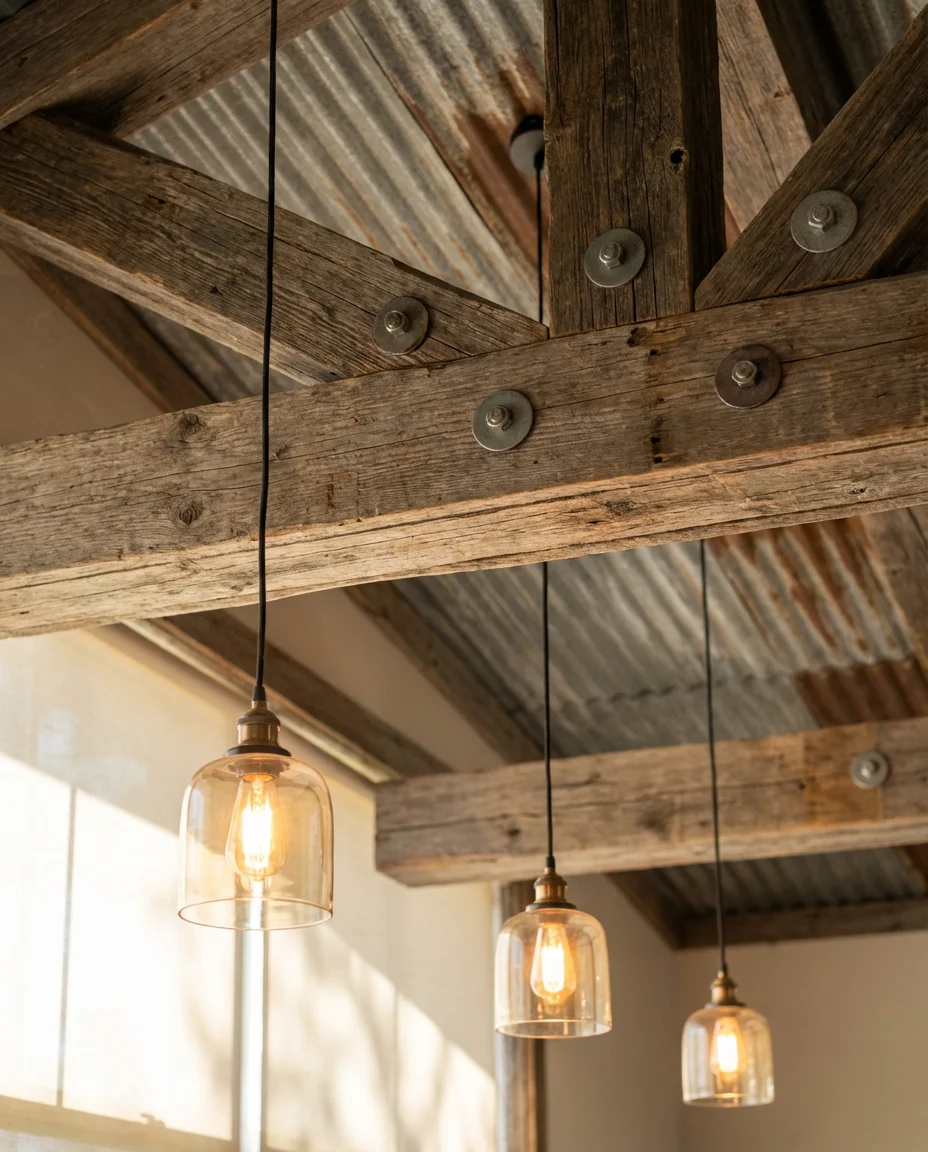
Sourcing reclaimed wood takes more effort than ordering new lumber, but the results are worth it. Salvage yards, barn demolition companies, and online marketplaces like Craigslist and Facebook Marketplace are all viable sources. A word of caution: always have reclaimed wood properly kiln-dried or at minimum checked for moisture content before installing it in an enclosed space. Wet reclaimed wood can warp, split, and introduce mold into walls or ceilings—a problem that’s expensive and disruptive to fix after the fact. When in doubt, consult a lumber specialist before installation.
23. Barndominium With Covered Outdoor Entertainment Area
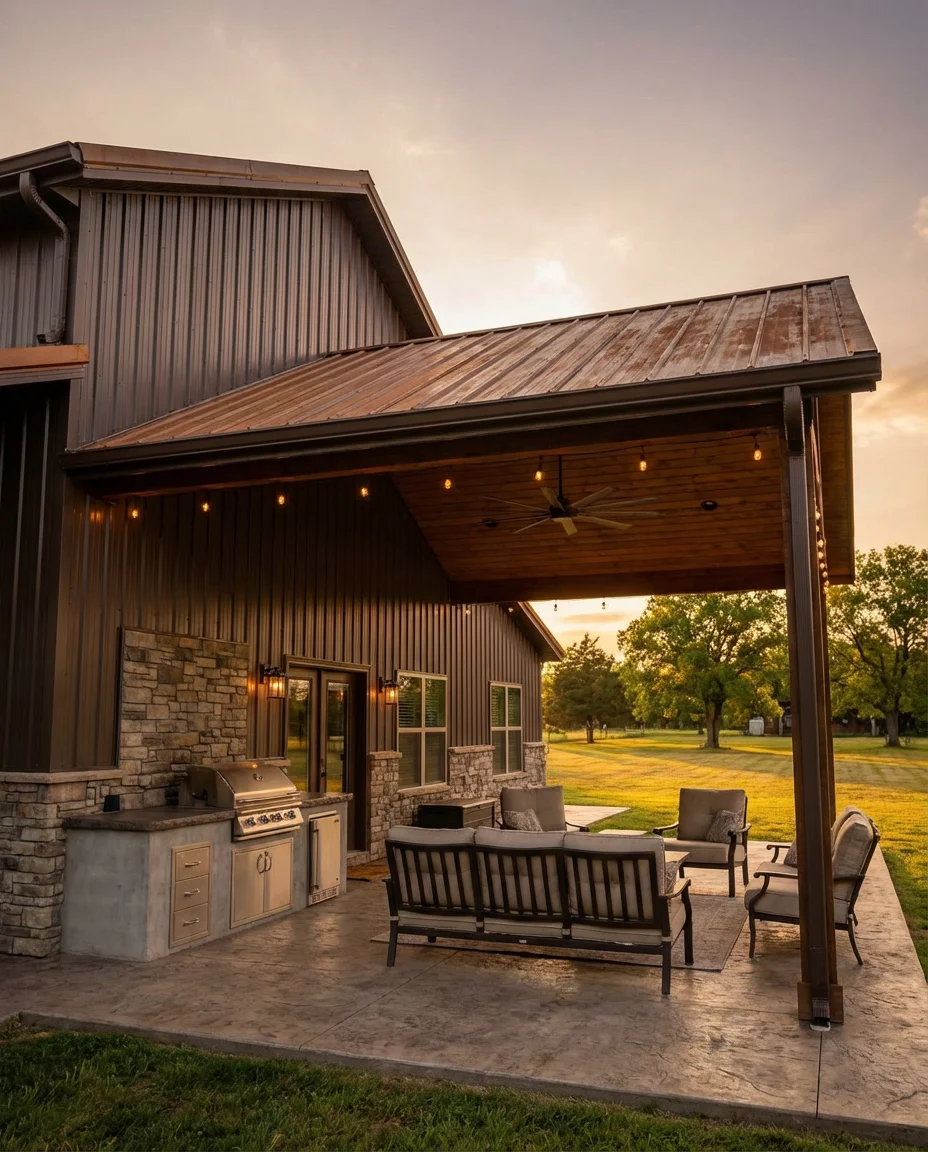
The outdoor entertainment area is the finishing touch that transforms a good barndominium into a dream property. A covered patio or extended overhang on the rear of the structure creates a protected outdoor living room—ceiling fans overhead, a built-in grill station, a concrete or paver floor, string lights, and comfortable seating that can stay out through a light rain. This is where the American love of outdoor living and the barndominium’s large footprint meet perfectly. The exterior becomes as livable as the interior, and the property’s usable square footage effectively doubles from Memorial Day to Labor Day.
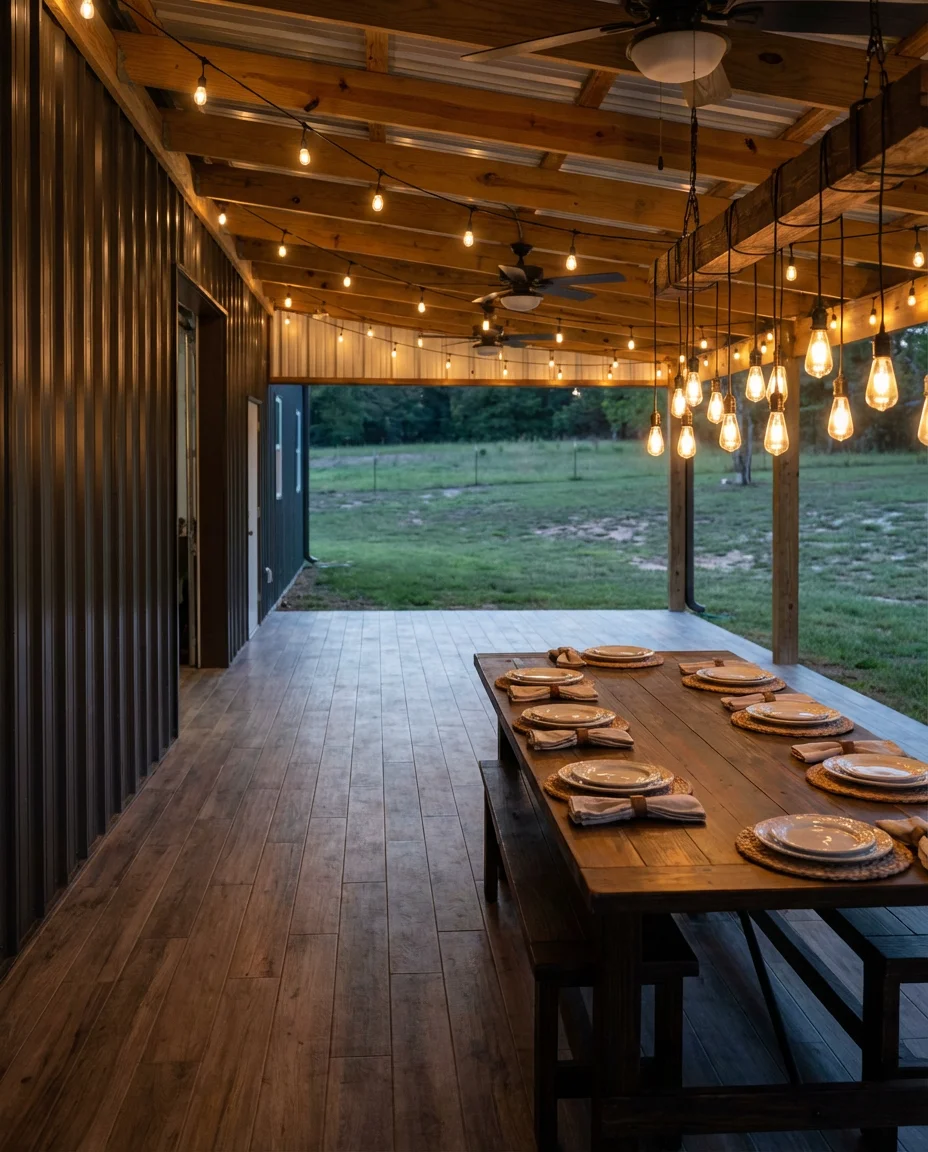
Planning this space during the initial build is far less expensive than adding it as a retrofit. An extended roofline or lean-to addition poured on the same slab as the main structure costs a fraction of what a separate patio cover runs later. If the budget is tight, pour the extended concrete pad during the initial build even if you can’t afford the roof cover yet—it’s far cheaper to add the cover to an existing pad than to break ground again. Think of the outdoor entertainment area as Phase 1B of your build, not a future maybe.
Conclusion
Whether you’re saving barndominium ideas for a build that’s still years away or you’re actively comparing floor plans right now, the most important thing is to keep collecting images, sketches, and ideas that genuinely resonate with the way you actually live. Which of these 23 designs spoke to you most—the cozy rustic cabin style, the sleek modern black exterior, or the practical shop-house combination? Drop your favorites in the comments below and tell us what your dream barndominium looks like. We’d love to see where your inspiration takes you.