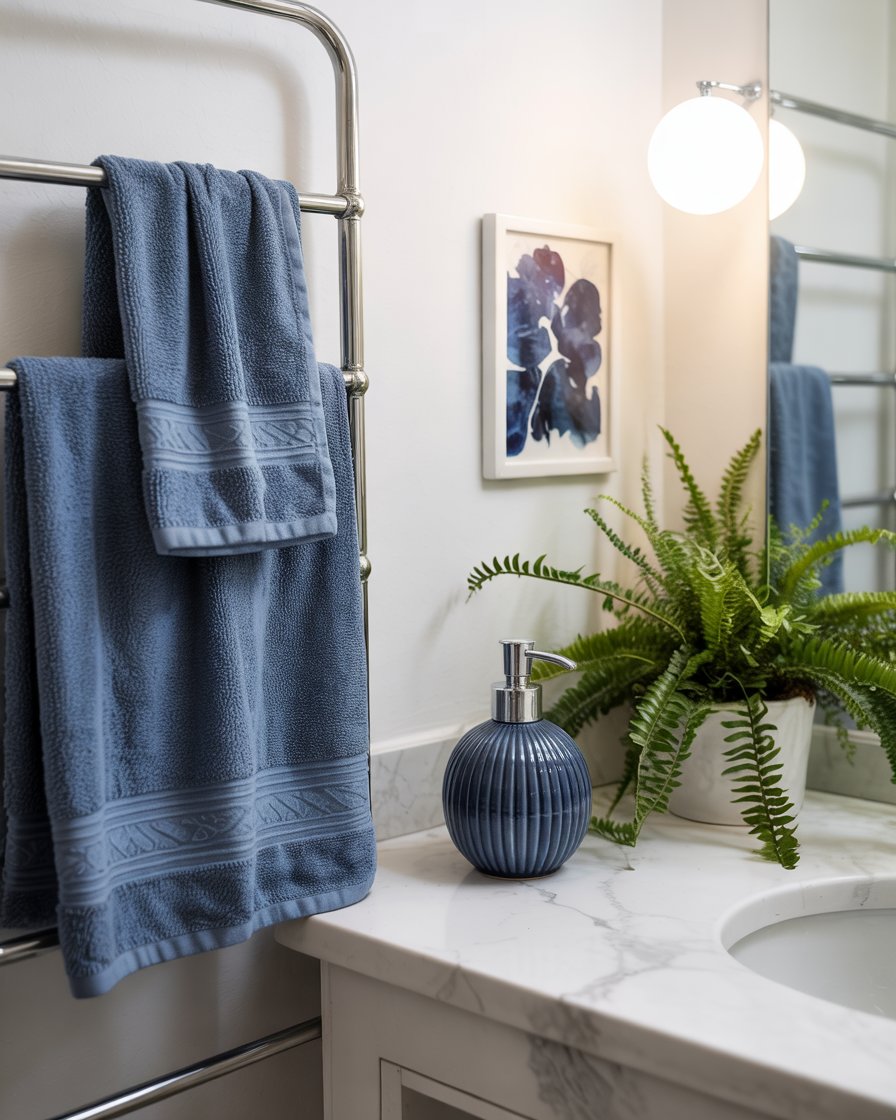
Bathroom remodels are among the most rewarding home improvement projects, and 2026 brings a fresh wave of design ideas that balance beauty, function, and personal style. Whether you’re updating a powder room, transforming a builder grade space, or creating a spa-inspired retreat, this year’s trends emphasize natural materials, bold color choices, and smart layouts that work for real life. Americans are turning to Pinterest for visual inspiration that reflects their unique needs—from budget-friendly updates to luxury finishes—and this guide delivers practical ideas to help you reimagine your bathroom. You’ll find solutions for every space, style, and budget, all designed to make your remodel both stunning and livable.
1. Spa-Inspired Coastal Retreat with Natural Textures
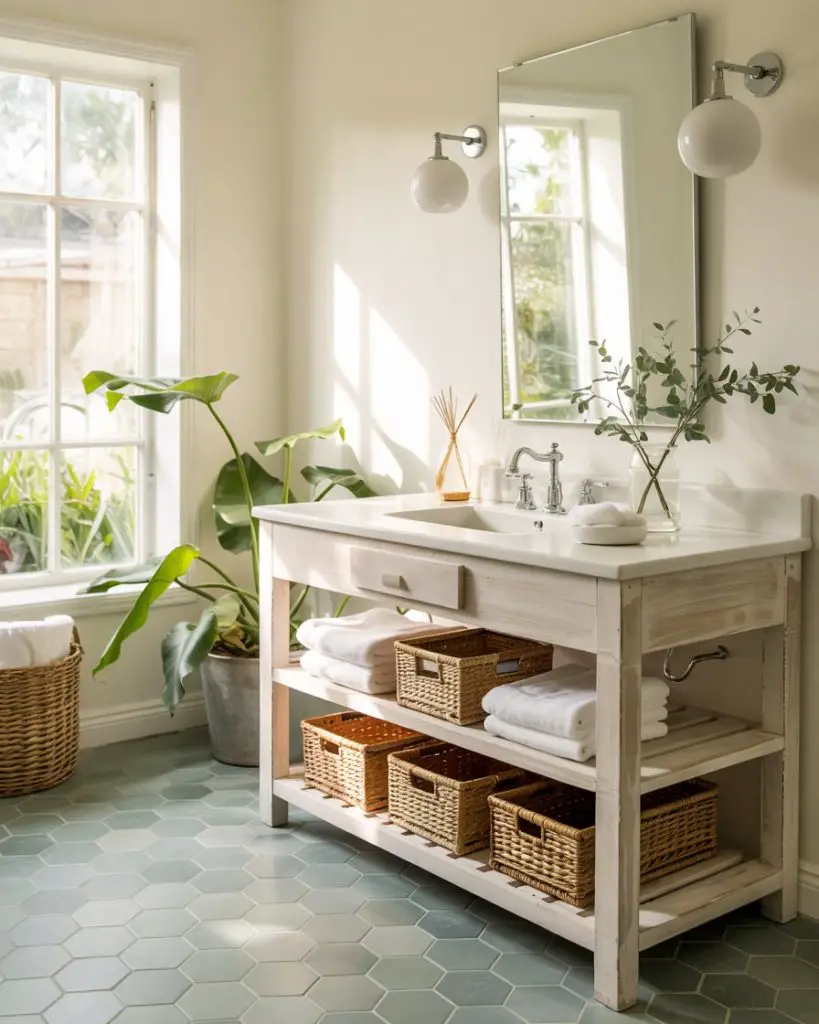
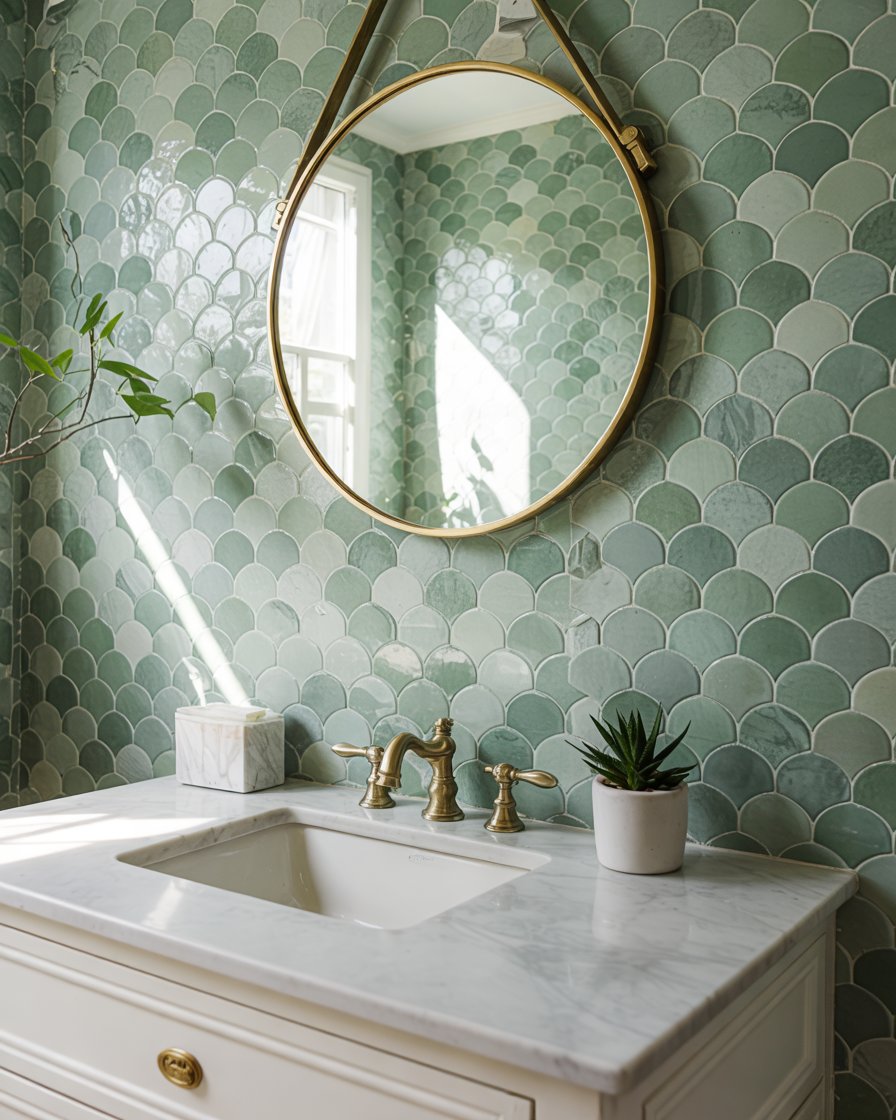
Transform your bathroom into a spa-inspired sanctuary by blending coastal elements with organic materials. Think whitewashed wood vanities, woven baskets for storage, and soft linen towels in sandy tones. This approach works beautifully in guest bathrooms or primary suites where relaxation is the priority. Pair pale blue or seafoam tiles with matte black fixtures for a modern twist on coastal style, and incorporate plenty of natural light to enhance the airy, beachside feel. 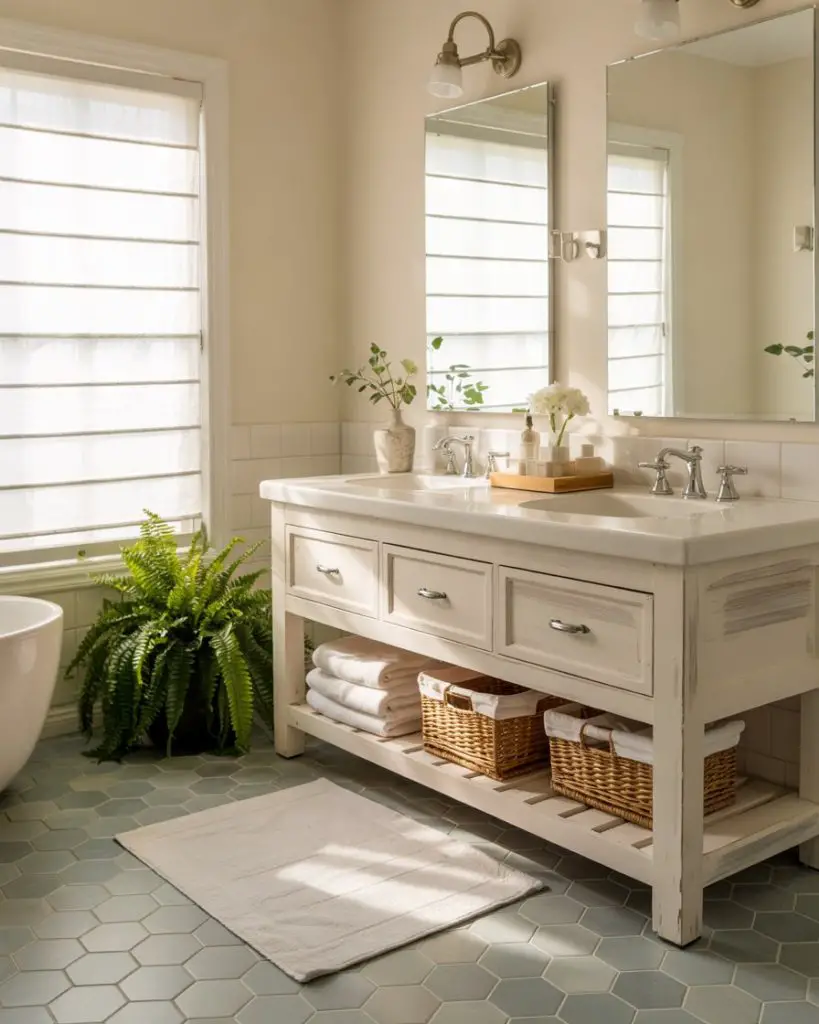
This design thrives in homes near water or in suburban settings where homeowners crave a vacation-like escape. The key is layering textures—rough stone, smooth wood, and soft textiles—to create depth without clutter. A common mistake is overloading the space with nautical clichés like anchors or shells; instead, let the materials and color palette evoke the coast subtly, keeping the look sophisticated and timeless.
2. Budget-Friendly Half Bath Update with Bold Paint
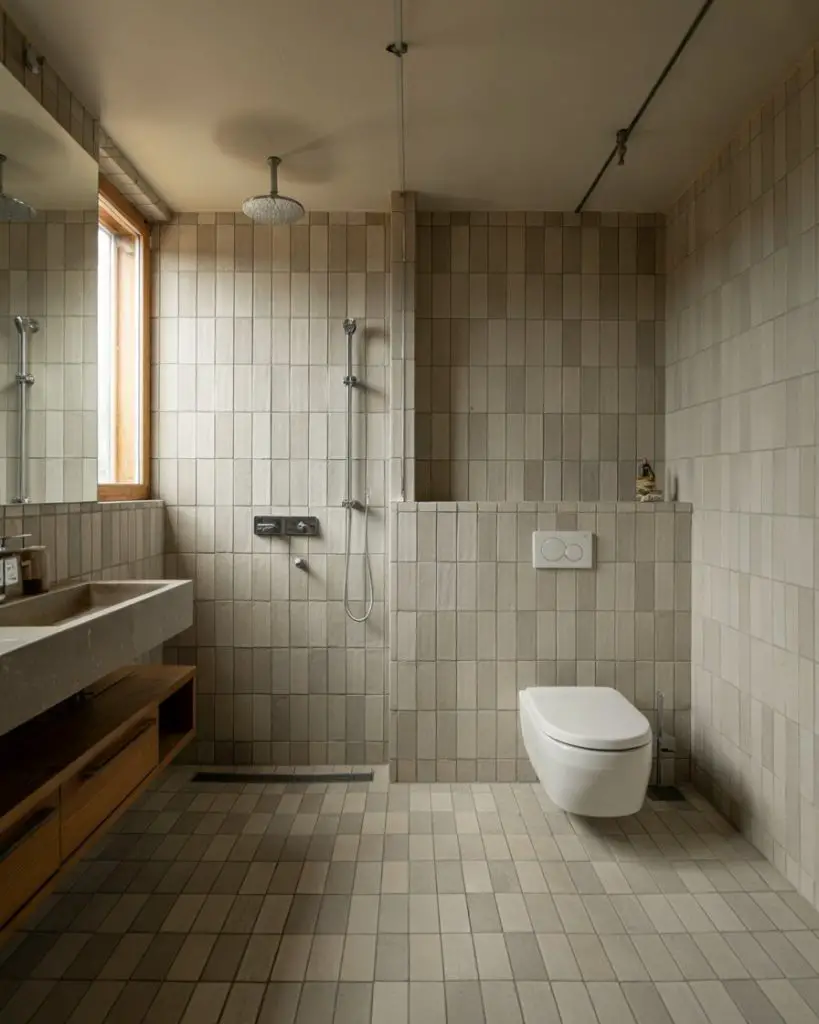
A half bathroom offers the perfect canvas for experimentation without breaking the bank. One of the most budget-friendly transformations involves painting walls in a striking hue—think dark green or charcoal—and updating hardware and lighting. Because powder rooms are small, you can splurge on one statement element, like a vintage mirror or patterned wallpaper, while keeping fixtures simple. This approach delivers maximum impact with minimal square footage. 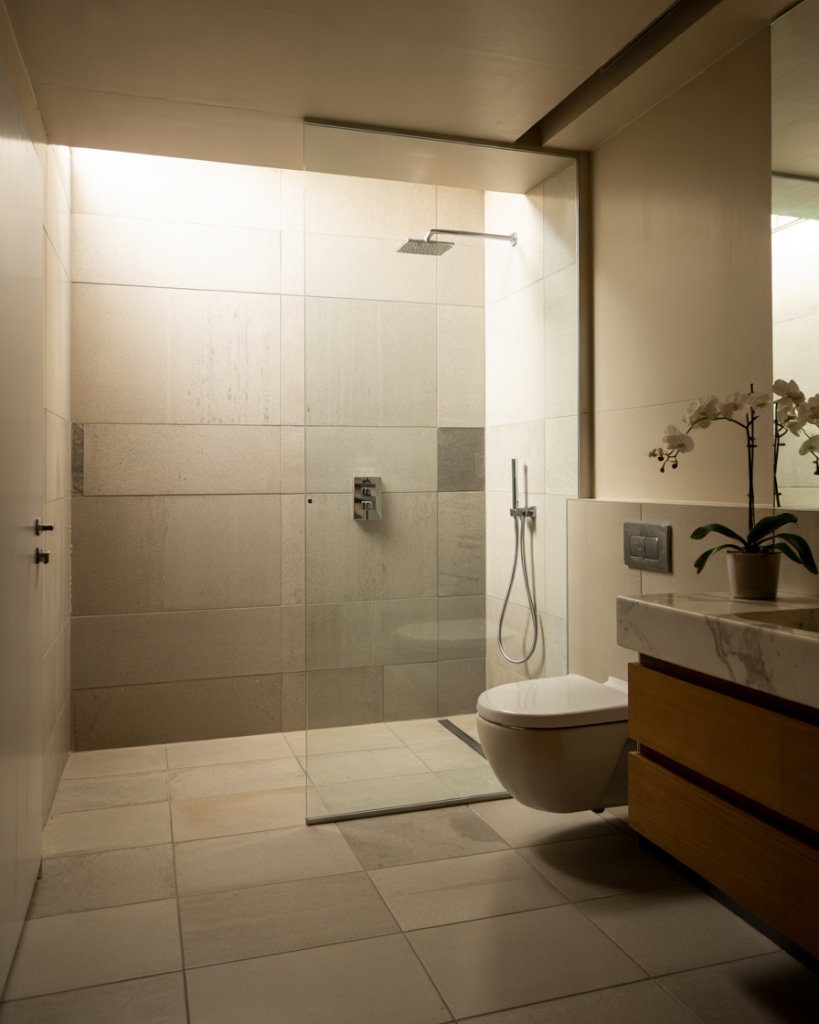
In tight urban apartments or older homes with dated powder rooms, this strategy works wonders. Many homeowners underestimate the power of paint and lighting—two affordable updates that completely shift a room’s mood. Avoid the mistake of choosing trendy colors you’ll tire of quickly; instead, opt for rich, classic tones that age gracefully and pair well with changing accessories over time.
3. Large Luxury Bathroom with Freestanding Tub
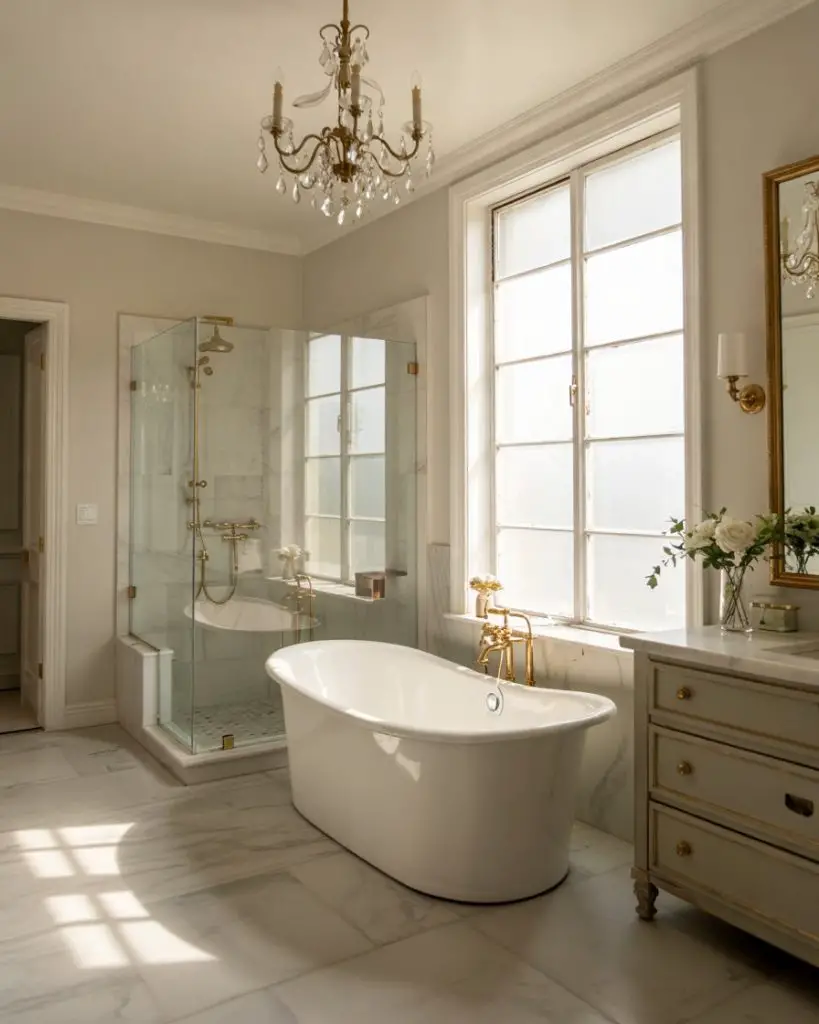
If you’re blessed with square footage, a large bathroom becomes the ultimate luxury retreat when anchored by a sculptural freestanding tub. Position it near a window or beneath a chandelier to create a focal point that feels both indulgent and serene. Pair with white marble flooring, a spacious walk-in shower, and custom cabinetry to complete the high-end look. This layout is ideal for primary suites where morning and evening routines deserve dedicated, beautiful space. 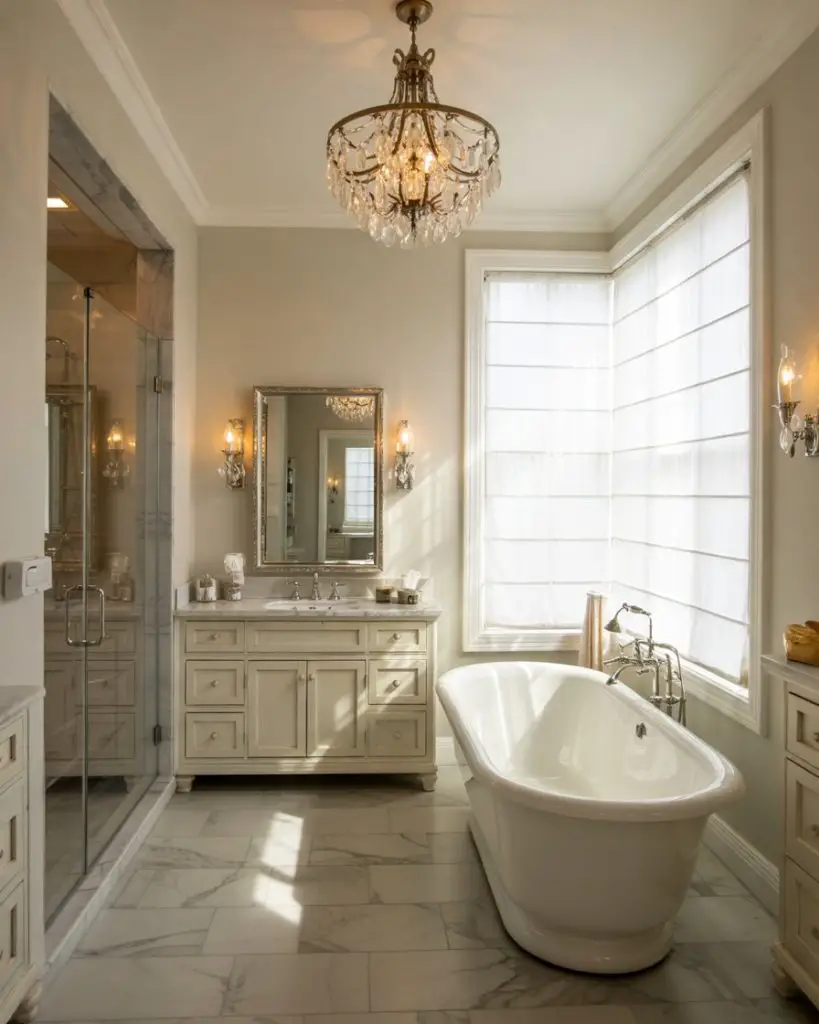
Across suburban America, homeowners are increasingly treating the primary bathroom as a wellness space rather than just a functional room. A real estate agent in Texas once noted that homes with spa-like primary baths sell 15% faster in her market. The investment in quality materials and thoughtful layout pays off in daily comfort and resale value, making this one of the smartest luxury upgrades you can make.
4. Black and White Geometric Tile Feature Wall
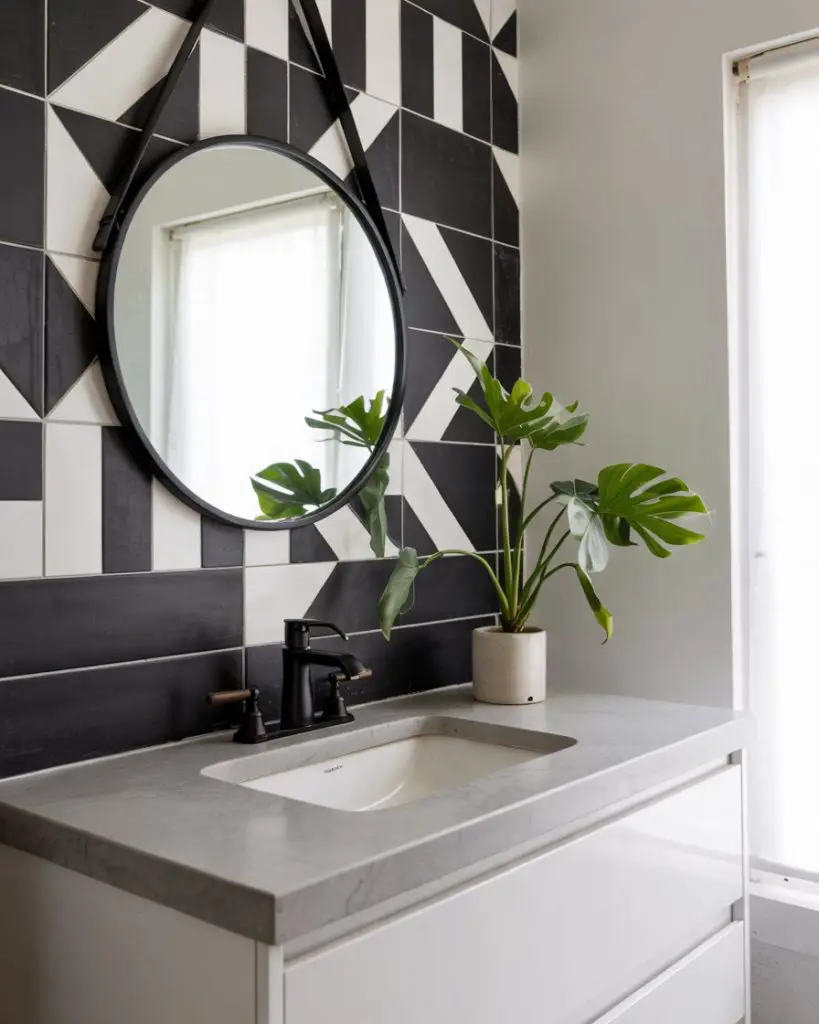
Geometric tile in a black and white palette brings graphic punch to any bathroom style, from traditional to ultra-modern. Use it on a single accent wall—behind the vanity or in the shower—to avoid overwhelming the space. The high contrast creates visual interest without requiring color, making it a versatile choice that complements chrome, brass, or matte black fixtures. This works especially well in small space bathrooms where you want personality without visual clutter. 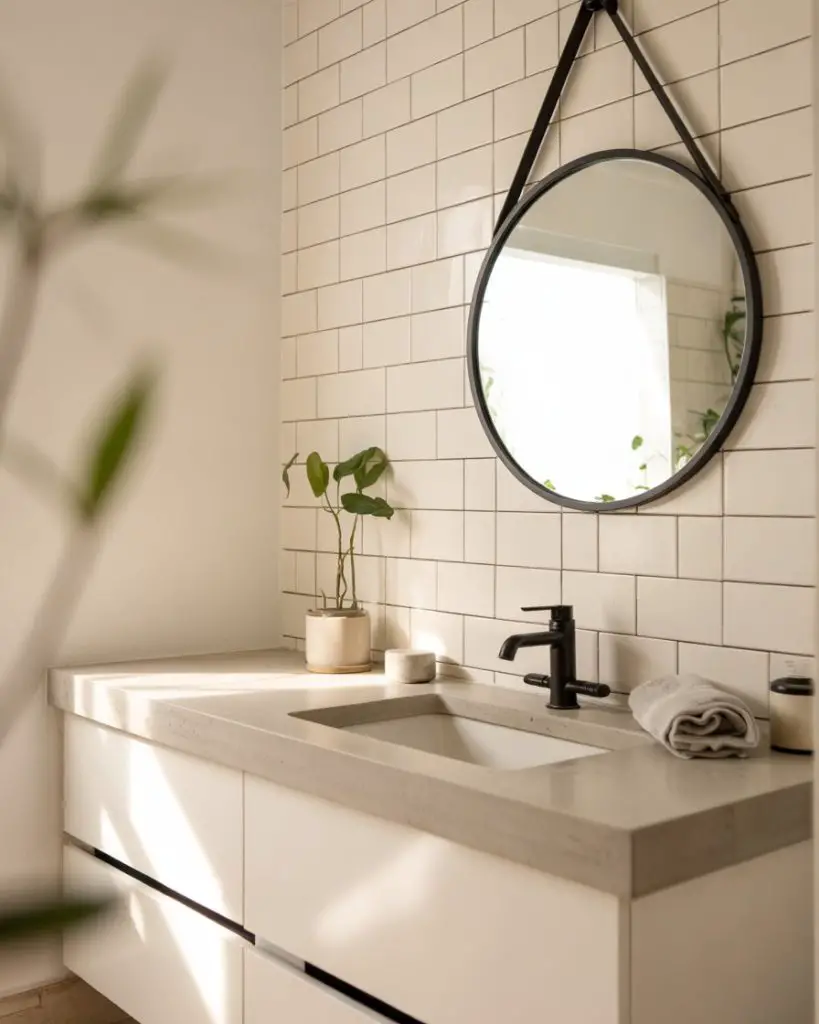
This design particularly shines in urban condos and renovated row houses where architectural details are minimal. By keeping the rest of the bathroom neutral—white walls, simple fixtures—the tile becomes the star without competing for attention. A practical insight: always order 15% extra tile for future repairs, as specific patterns can be discontinued quickly, leaving you stranded if damage occurs years later.
5. Green and Brass Traditional Elegance
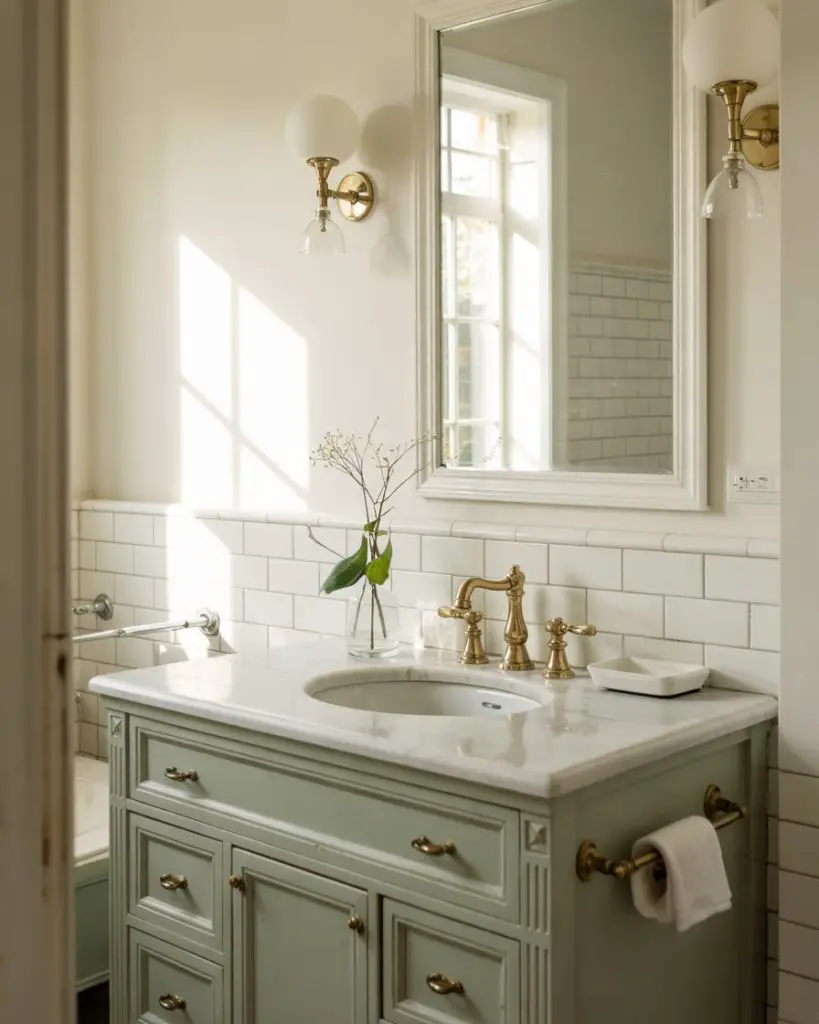
Pairing green cabinetry with warm brass hardware creates a traditional look that feels fresh rather than dated. Think sage or forest green lower cabinets paired with white subway tile and marble countertops. This combination works beautifully in Jack and Jill bathrooms shared by siblings or in a guest suite where you want to make a sophisticated impression. The brass adds warmth that prevents the space from feeling cold or institutional. 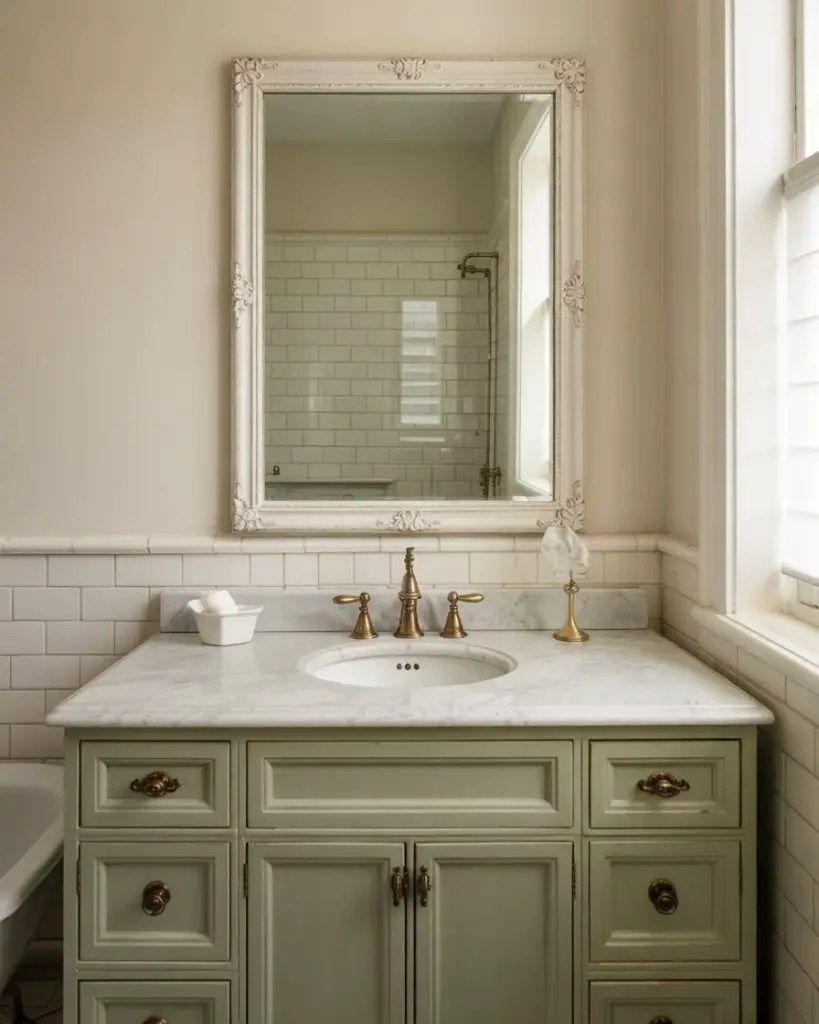
In the South and Midwest, where traditional design remains popular, this color scheme bridges classic and contemporary sensibilities. Homeowners appreciate that green feels timeless yet unexpected, avoiding the beige fatigue that plagued earlier decades. Where it works best: in homes with period details like crown molding or wainscoting, where the richness of the color complements architectural character rather than fighting it.
6. Budget-Friendly Builder Grade Transformation
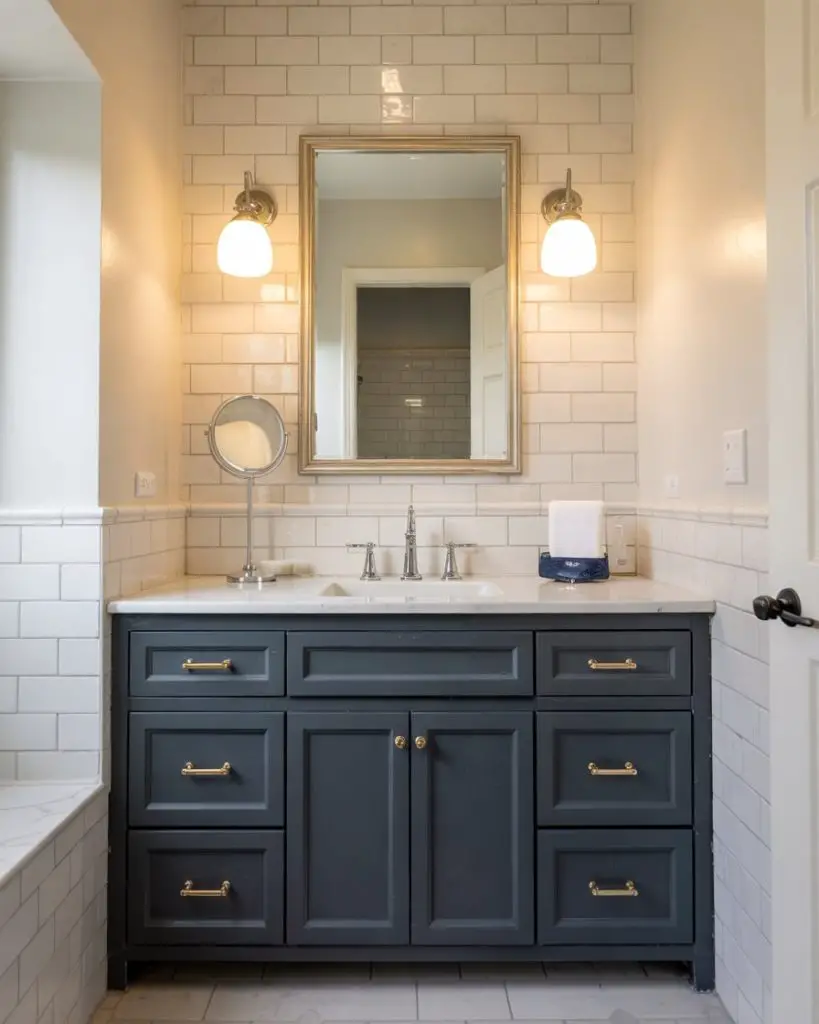
You don’t need to gut a builder grade bathroom to make it feel custom. Start by replacing the standard mirror with a framed version, swapping out the basic light bar for two sconces, and painting the generic oak vanity in a bold color. Add peel-and-stick tile behind the mirror for texture, and upgrade cabinet hardware to brushed brass or matte black. These budget-friendly changes completely shift the room’s personality without touching plumbing or electrical rough-ins. 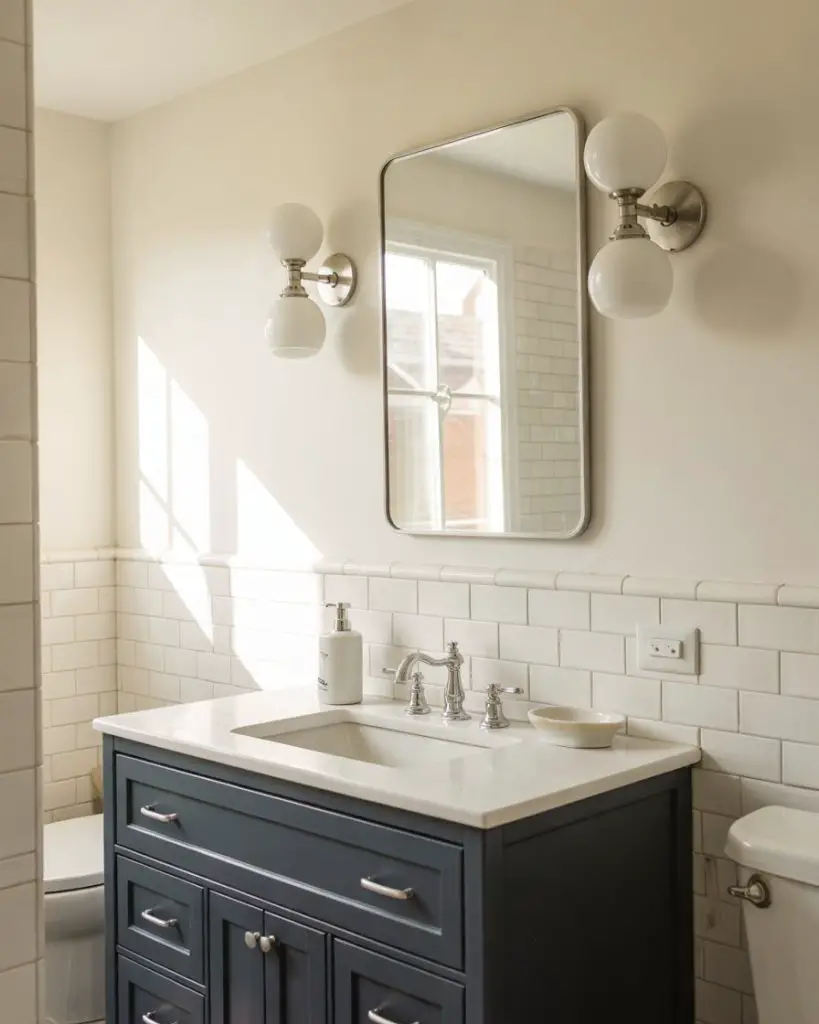
This strategy is a lifesaver in rental properties or starter homes where full renovations aren’t feasible. A common mistake is trying to update too many elements at once on a tight budget, resulting in a half-finished look. Focus on the vanity and lighting first—these have the biggest visual impact—then add accessories and textiles to complete the transformation once you’ve saved more.
7. Small Space Wet Room with Seamless Tile
In a truly small space, eliminating the shower enclosure and creating a wet room maximizes both physical and visual square footage. Use the same large-format tile on floors and walls to create continuity, and install a linear drain for a sleek, modern look. This approach is particularly smart in basement bathrooms or under-stair powder rooms where every inch counts. Pair with a wall-mounted toilet and floating vanity to keep sightlines open and maintain the sense of spaciousness.
Wet rooms have been standard in Europe for decades but are just catching on in American homes, especially in cities where square footage is precious. Real homeowner behavior: those who install wet rooms often report feeling like they gained space even when dimensions didn’t change, thanks to the visual flow and lack of barriers. Just ensure proper waterproofing and adequate ventilation to prevent moisture issues.
8. Black Vanity Statement in Neutral Bathroom
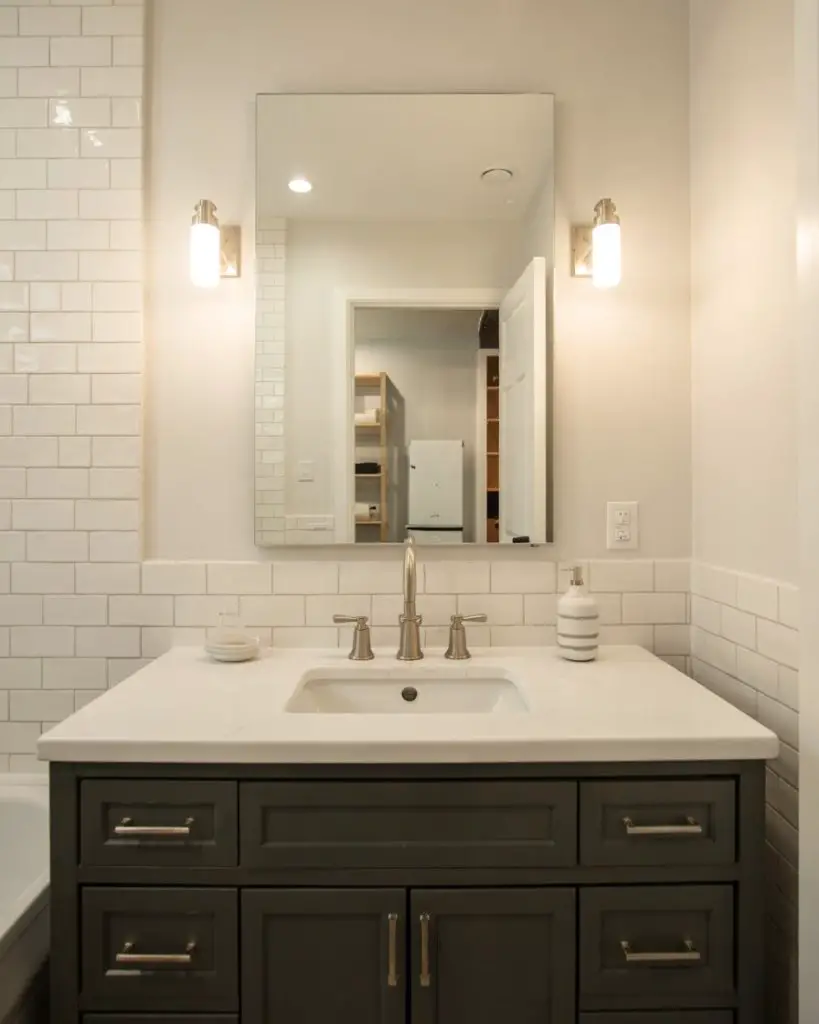
A black vanity anchors a neutral bathroom with dramatic flair, creating contrast against white walls and light-colored tile. This works in any size space but is especially effective in half baths where you want immediate impact. Choose a matte finish to avoid fingerprints, and balance the darkness with plenty of lighting—both natural and artificial. Brass or gold hardware warms the palette, while chrome keeps it crisp and modern. 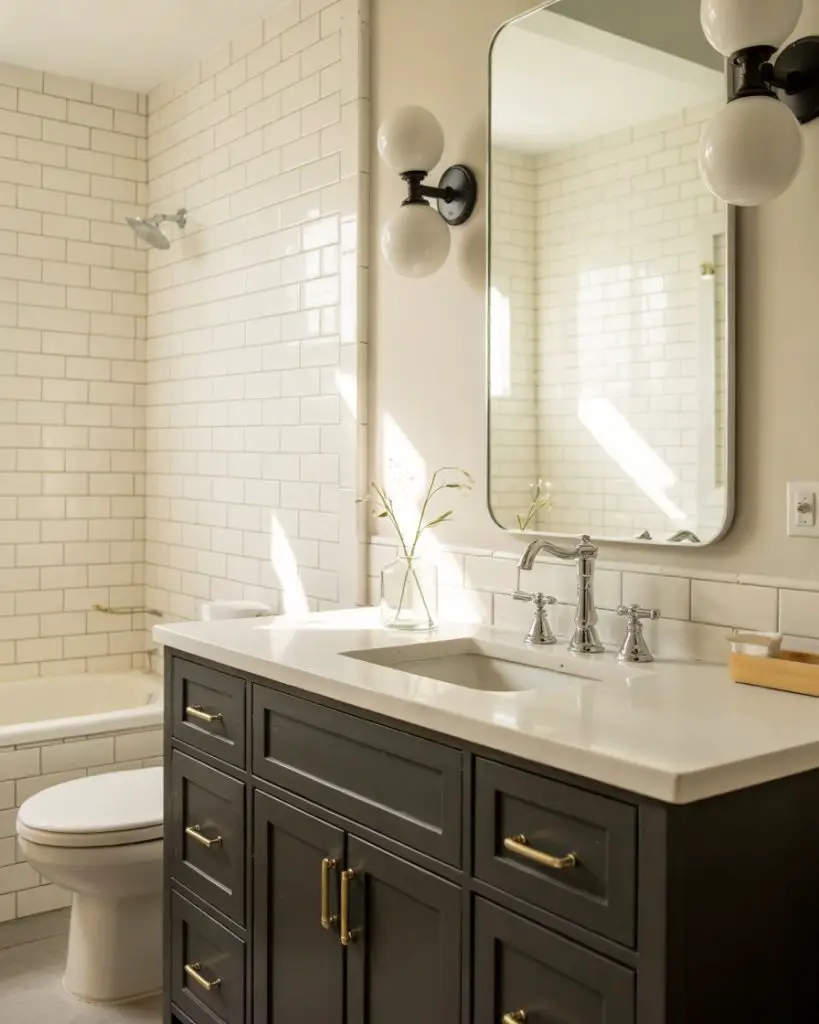
Across suburban developments and urban lofts alike, the black vanity has become shorthand for “updated and intentional.” It signals that someone made deliberate design choices rather than accepting generic builder selections. A practical insight: if your bathroom lacks natural light, balance a black vanity with reflective surfaces like a large mirror and glossy tile to bounce light around and prevent the space from feeling cave-like.
9. Coastal Shiplap and Blue Accents
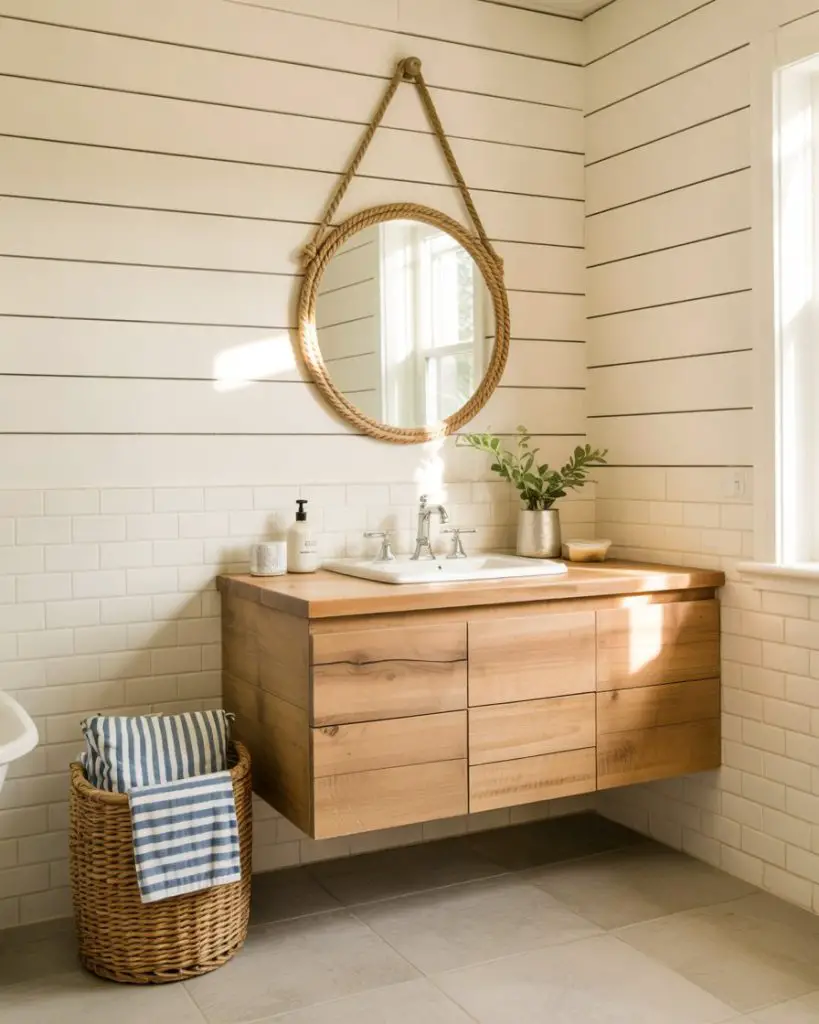
Horizontal shiplap painted in soft white or pale gray forms the perfect backdrop for coastal bathroom design. Add colors through towels, rugs, and accessories in various shades of blue—from powder to navy—for a layered, collected look. This approach works beautifully in guest bathrooms or mobile homes where you want to add architectural interest without major construction. Simple rope mirrors, natural fiber baskets, and driftwood accents complete the relaxed, beachy vibe.
In beach communities and lakeside cabins, this look feels authentic and effortless. But it also translates well to landlocked suburbs where homeowners crave vacation vibes year-round. A neighbor in Ohio installed shiplap in her powder room and found herself lingering there longer than necessary—the space simply made her happy. That emotional connection is what good design delivers, regardless of geography.
10. Western-Inspired Rustic Retreat

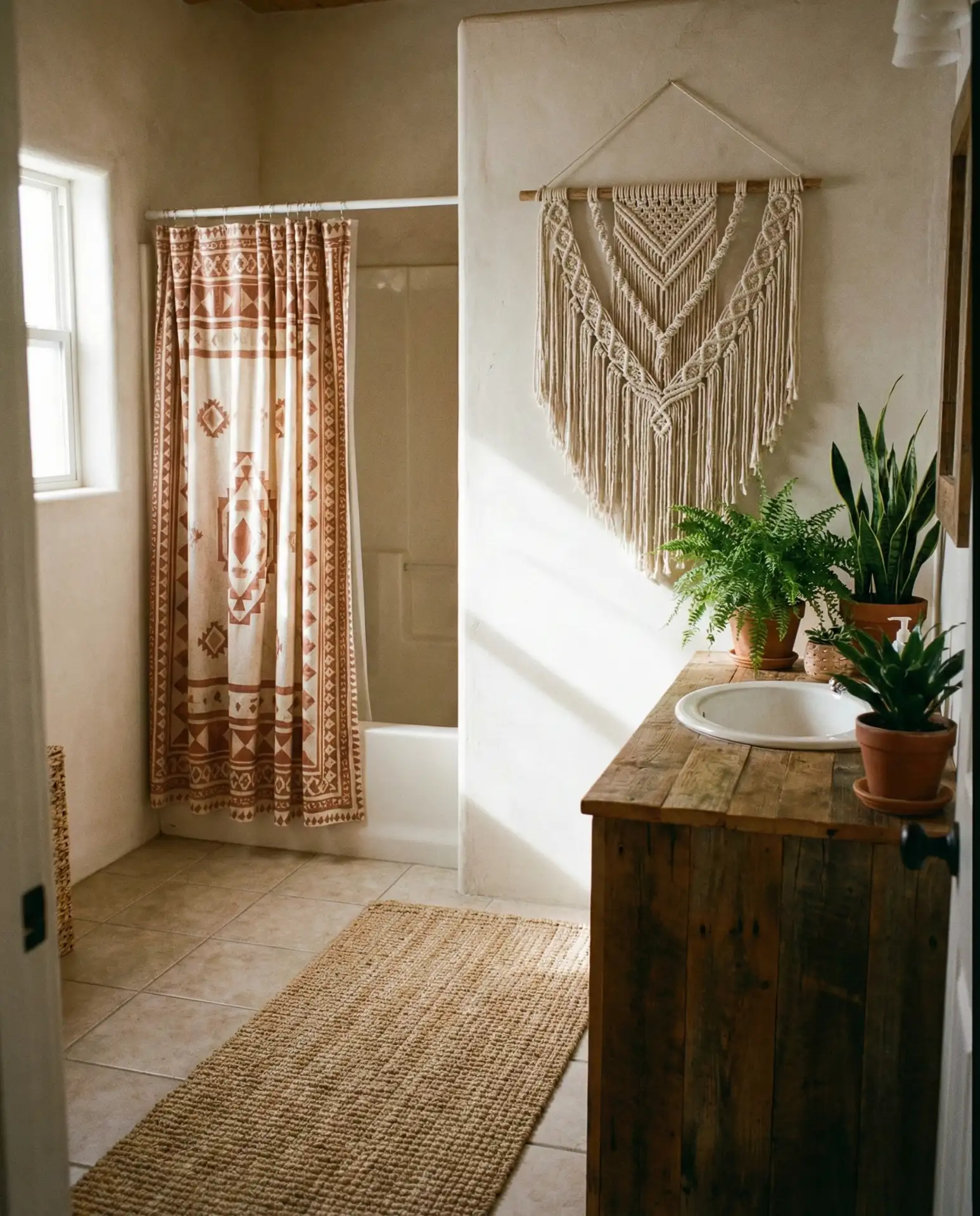
For a western aesthetic, incorporate reclaimed wood, wrought iron fixtures, and earthy colors like terracotta and sage. A copper or hammered metal sink becomes a stunning focal point, while open shelving made from barn wood adds both storage and character. This style works particularly well in basement bathrooms, ranch-style homes, or mountain properties where the rustic vibe complements the setting. Keep hardware simple and hardware matte black or oil-rubbed bronze for authenticity. 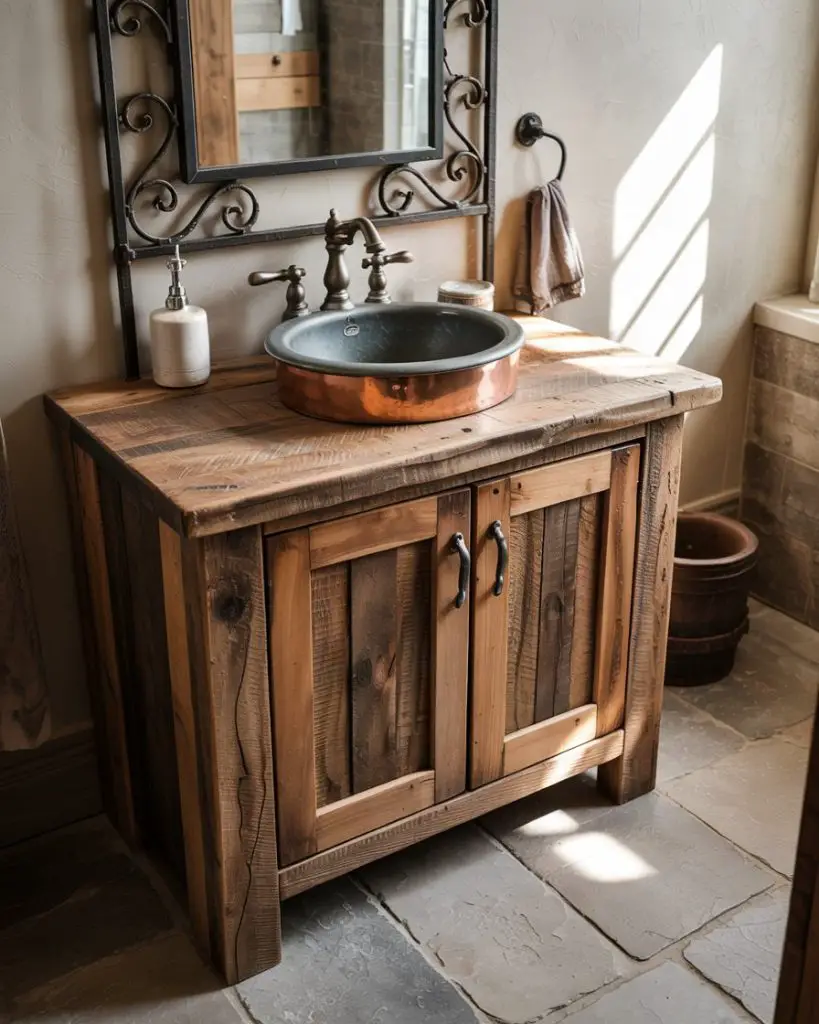
Budget angle: reclaimed materials often cost less than new, especially if you source from salvage yards or local farms. The patina and imperfections add character that brand-new materials can’t replicate. However, avoid the mistake of overdoing the theme with too many horseshoes, spurs, or other obvious western clichés—let the materials and finishes tell the story subtly for a more sophisticated result.
11. Jack and Jill Dual-Vanity Layout
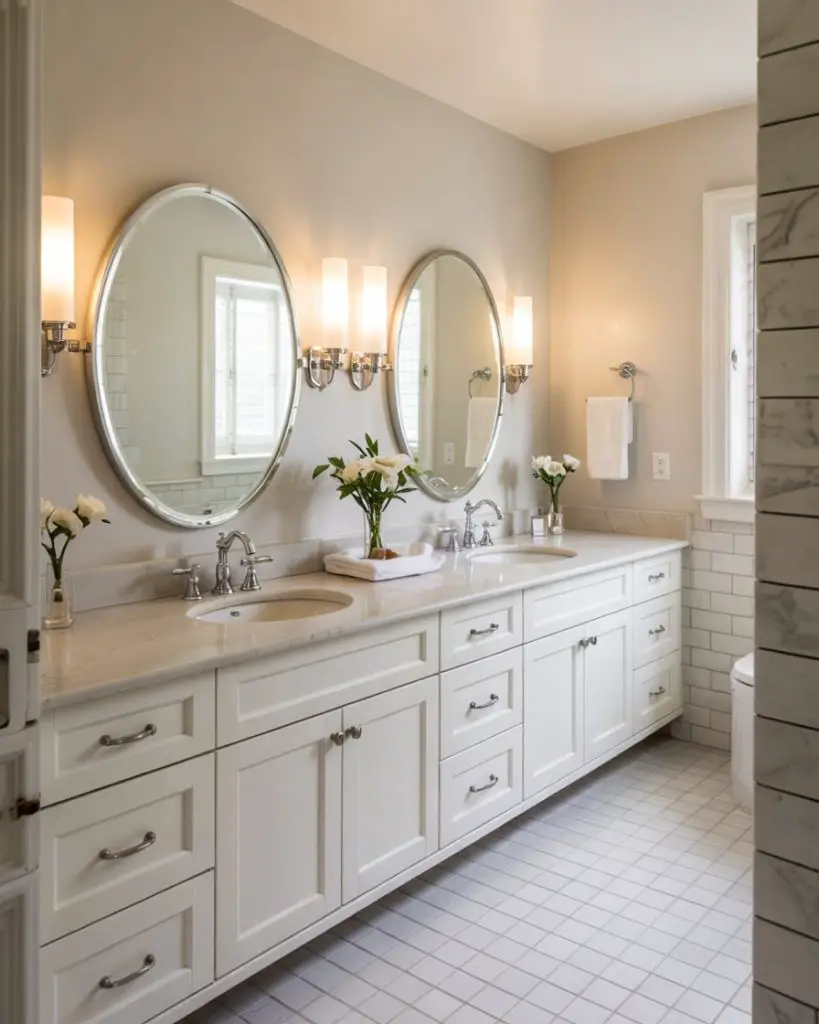
A Jack and Jill bathroom connecting two bedrooms demands smart planning to avoid morning traffic jams. Install a long double vanity with two sinks, separate mirrors, and individual storage zones so each user has their own territory. Use pocket doors to save space and ensure both bedrooms can access the bathroom independently. The shower and toilet area can be behind a third door for privacy, allowing one person to use the vanity while another showers—a 2026 style solution for busy family mornings. 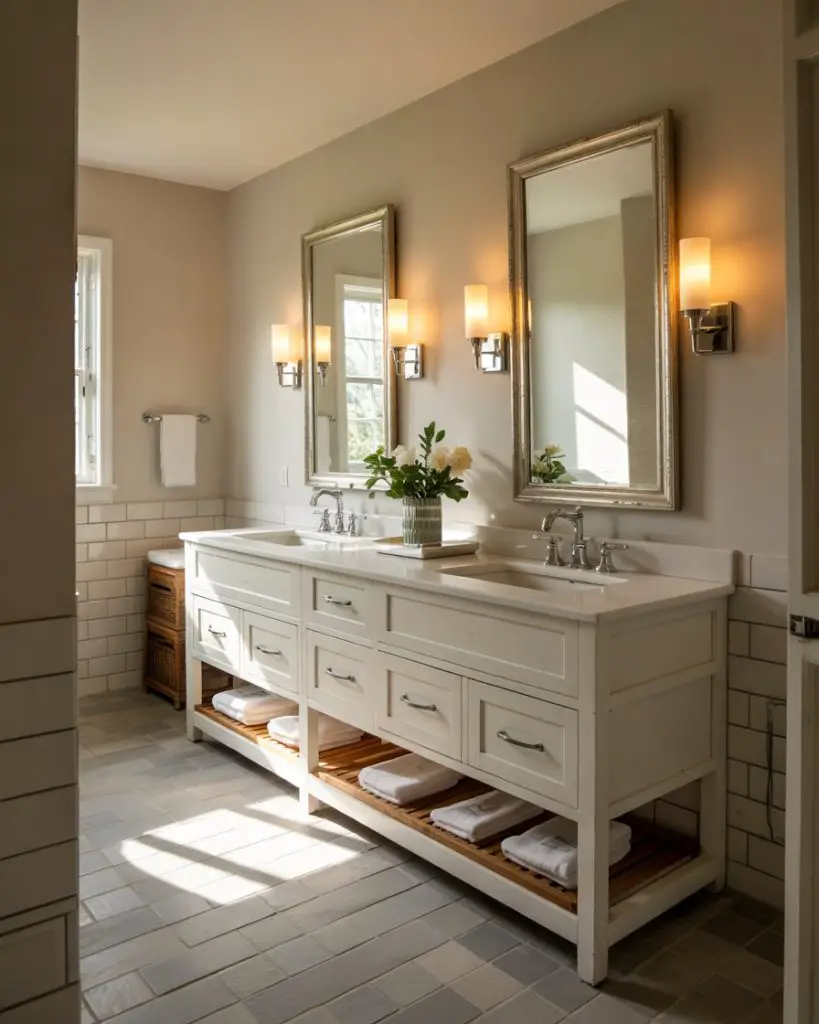
This layout is standard in new construction homes with three or more bedrooms, especially in the South and Midwest where families prioritize function. Expert-style commentary: the biggest complaint in Jack and Jill setups is inadequate storage, which leads to counter clutter and sibling disputes. Build in as much drawer and cabinet space as possible, and consider adding hooks or small shelves inside each bedroom door for personal items.
12. Luxury Marble Wet Room with Rainfall Shower
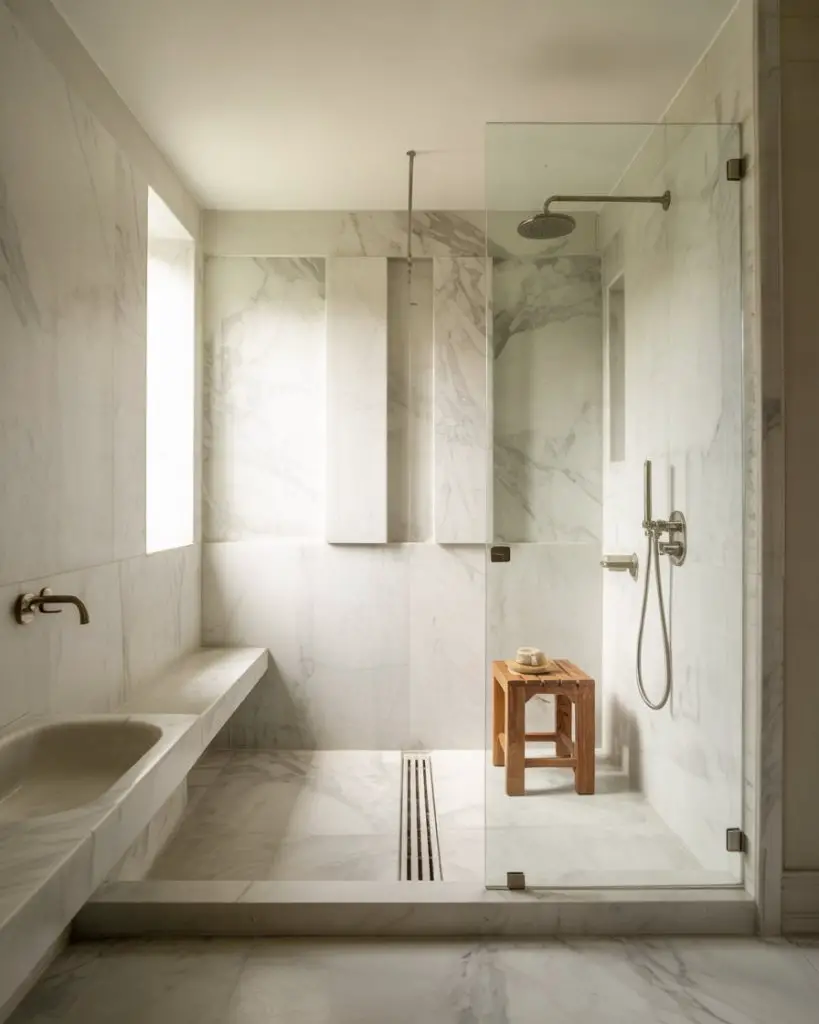
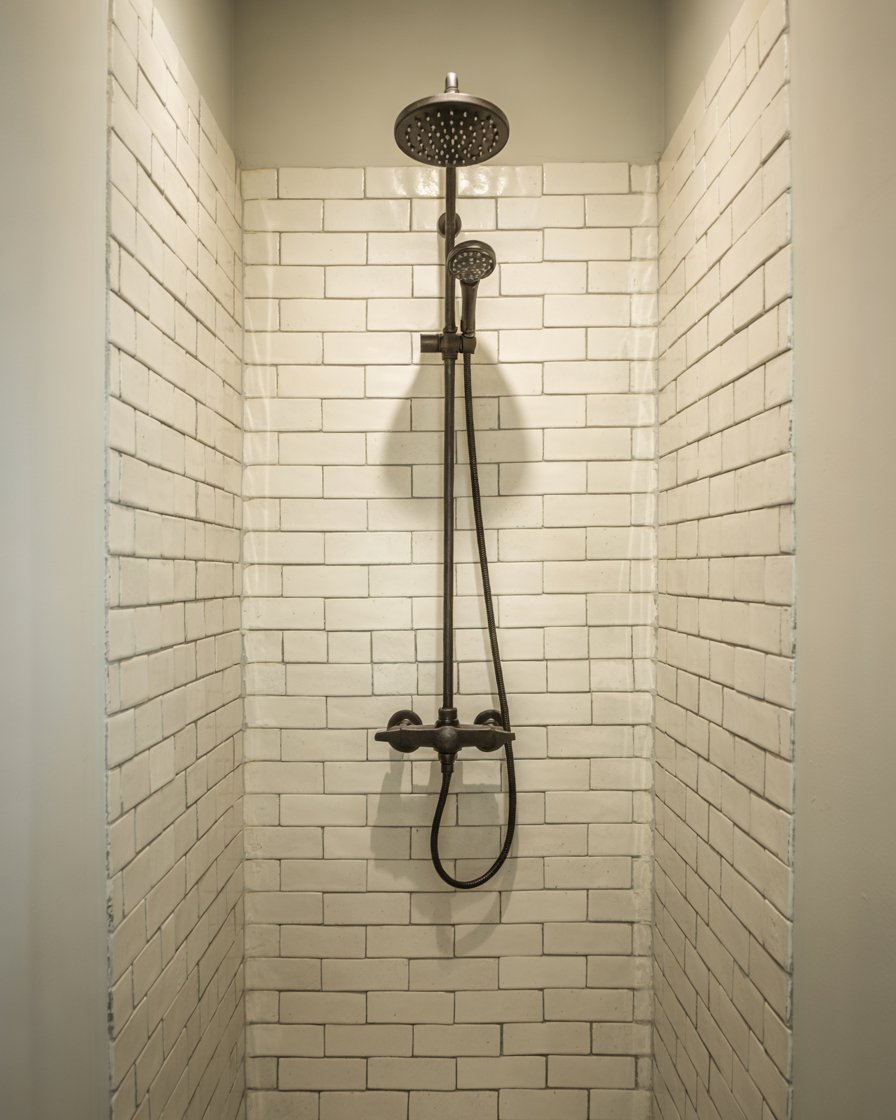
Covering walls and floors in book-matched white marble creates a luxury wet room that feels like a five-star hotel. Install a ceiling-mounted rainfall showerhead for a spa-like experience, and add a teak bench for both function and warmth against the cool stone. A handheld sprayer on a separate valve provides flexibility for rinsing and cleaning. This design requires expert waterproofing and ventilation, but the result is a spa-inspired sanctuary that elevates daily routines into rituals. 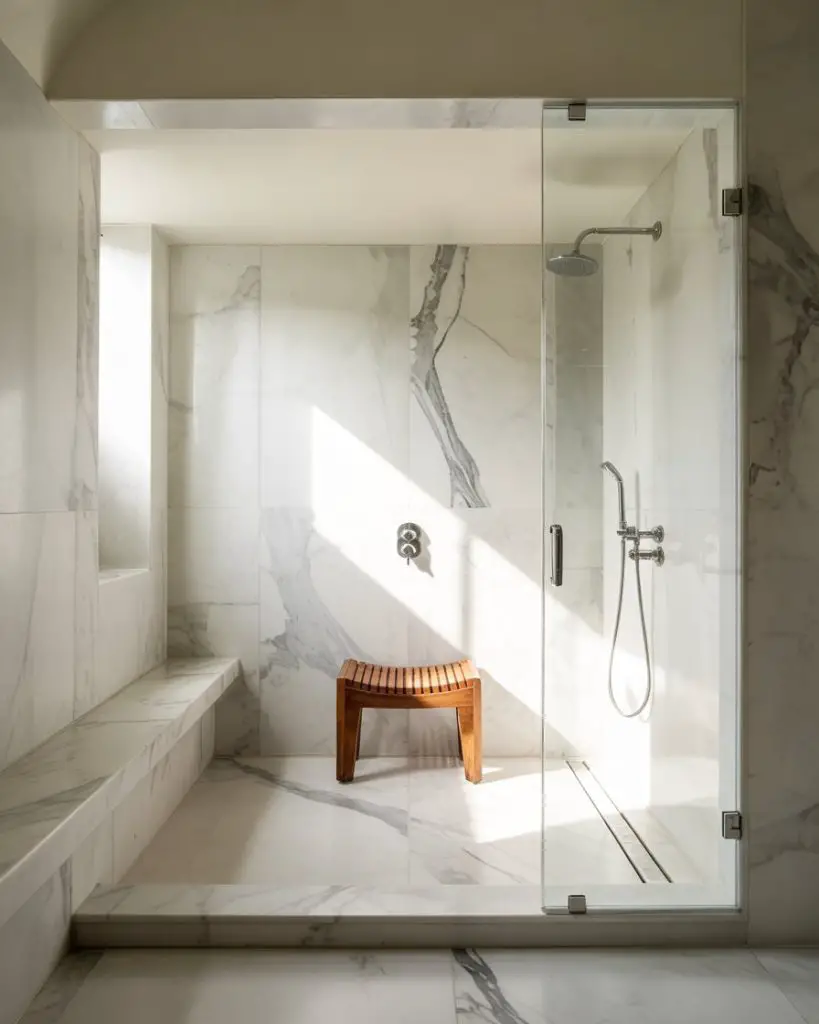
In upscale neighborhoods from California to Connecticut, homeowners are investing in primary bathrooms that rival boutique hotel amenities. The marble itself becomes the design—no additional decoration needed. A real estate advisor in Atlanta mentioned that buyers touring luxury homes often spend the most time in the primary bath, and a stunning marble wet room can be the deciding factor in an offer. The investment is significant, but so is the daily payoff.
13. Traditional Wainscoting with Modern Fixtures
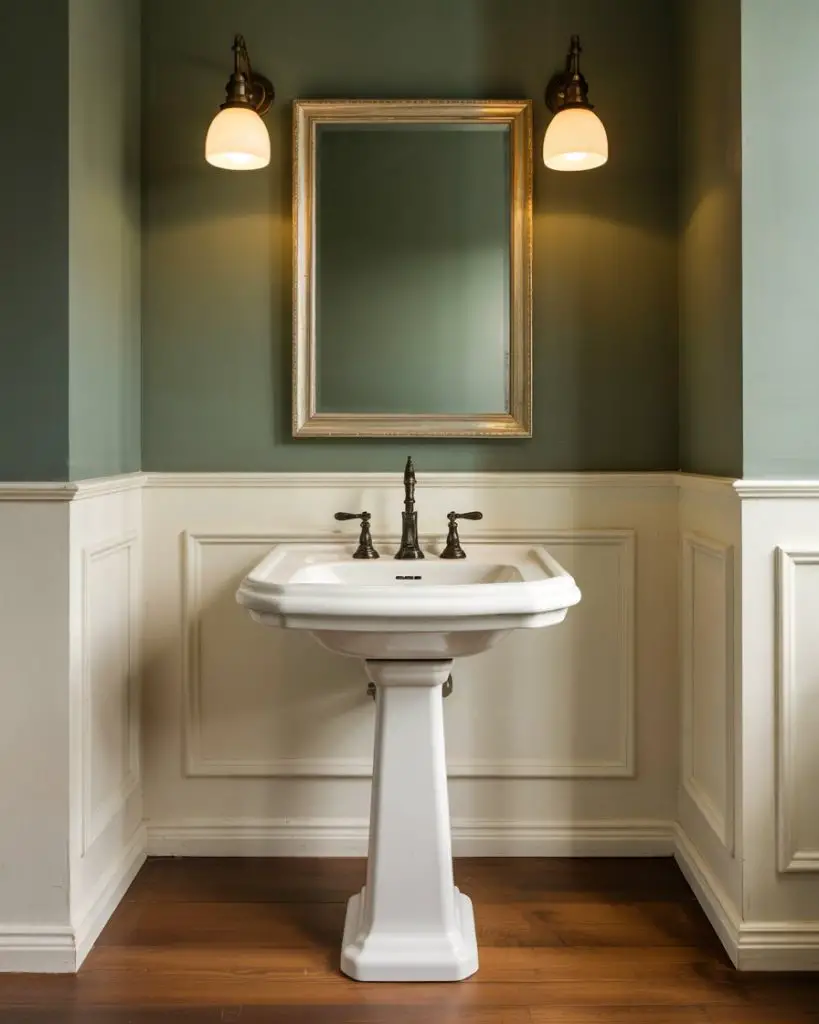
Classic traditional wainscoting painted in crisp white pairs beautifully with modern matte black fixtures for a look that bridges eras. Extend the wainscoting about three feet up the wall, then paint the upper portion in a soft neutral or even a moody dark green. This combination works in both powder rooms and full baths, adding architectural interest without overwhelming the space. Choose simple shaker-style wainscoting rather than ornate beadboard for a more updated take on the traditional style. 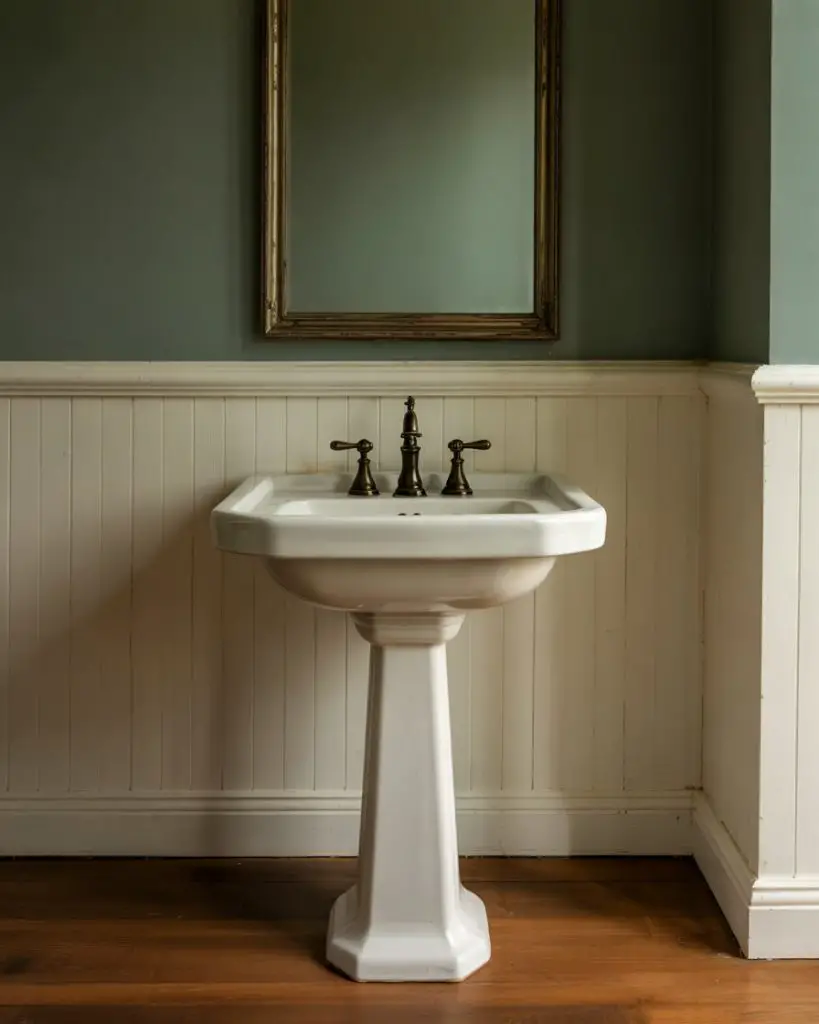
Where it works best: in Colonial, Craftsman, or Victorian homes where architectural details are already present and the wainscoting feels like a natural extension of the home’s character. It also works surprisingly well in new construction, adding instant charm to generic spaces. A common mistake is choosing wainscoting that’s too ornate or detailed—simpler profiles read as more intentional and allow other elements like fixtures and textiles to shine.
14. Budget-Friendly Painted Tile Refresh
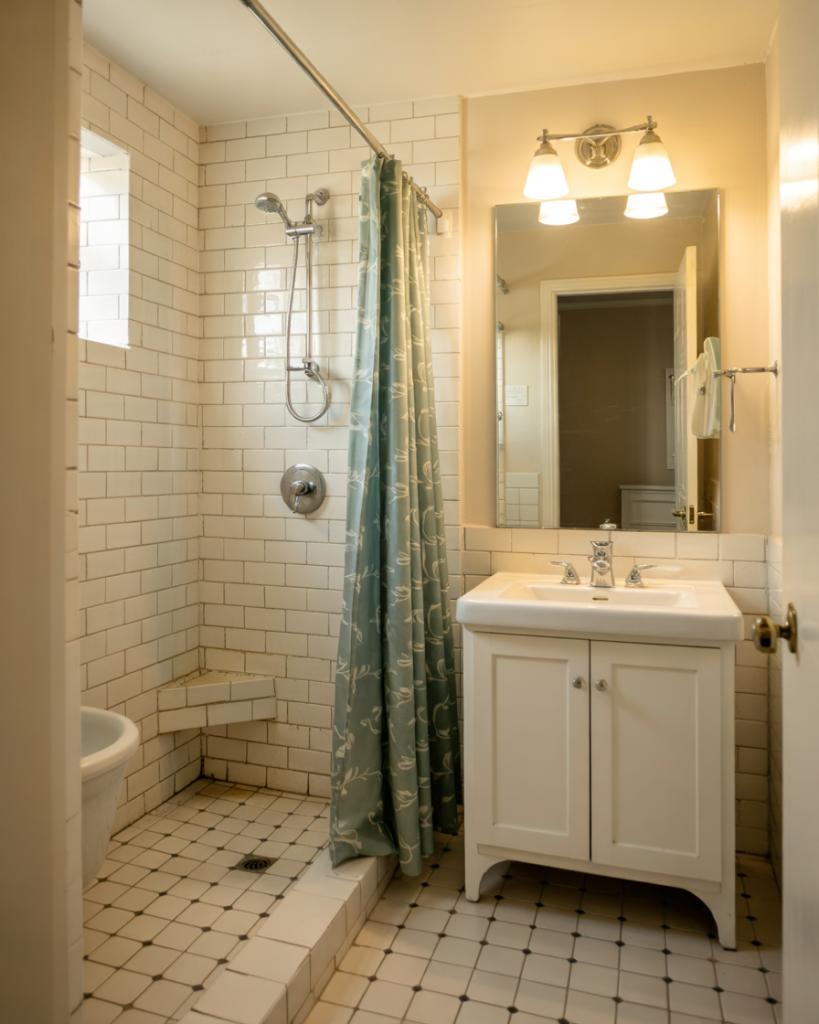
If you’re living with dated builder grade tile that’s structurally sound but aesthetically offensive, painting it can be a game-changing budget-friendly solution. Use specialized tile paint or epoxy, and follow prep instructions carefully for durability. This works best on vertical surfaces like shower walls or backsplashes in small space bathrooms where replacement would be costly. Choose neutral colors like white, soft gray, or even black for a modern update that extends the life of the existing tile by years. 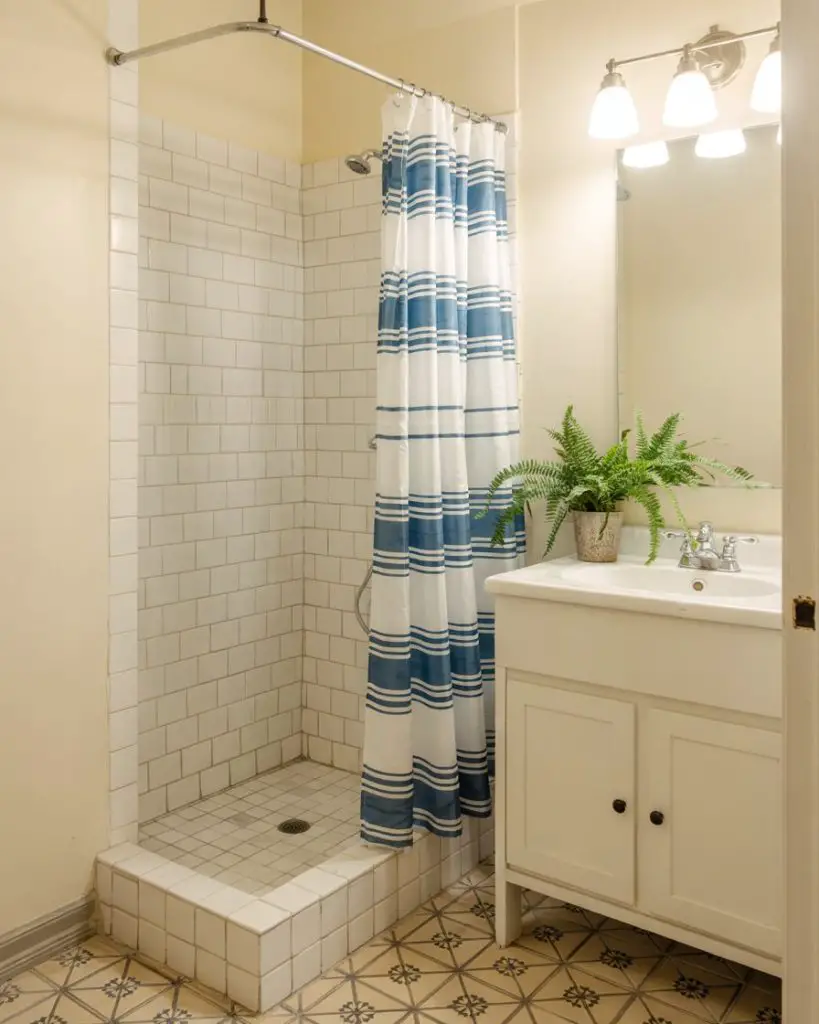
Real homeowner behavior: many people live with ugly tile for years because they assume a full renovation is the only option, when painting could solve the problem for under $200 and a weekend of work. A couple in Colorado painted their salmon-colored 1/2 bath tile white and said it felt like a completely different house. Just manage expectations—painted tile won’t last forever, but it buys you time to save for a full remodel while living in a space you actually like.
15. Green and Gold Powder Room Drama
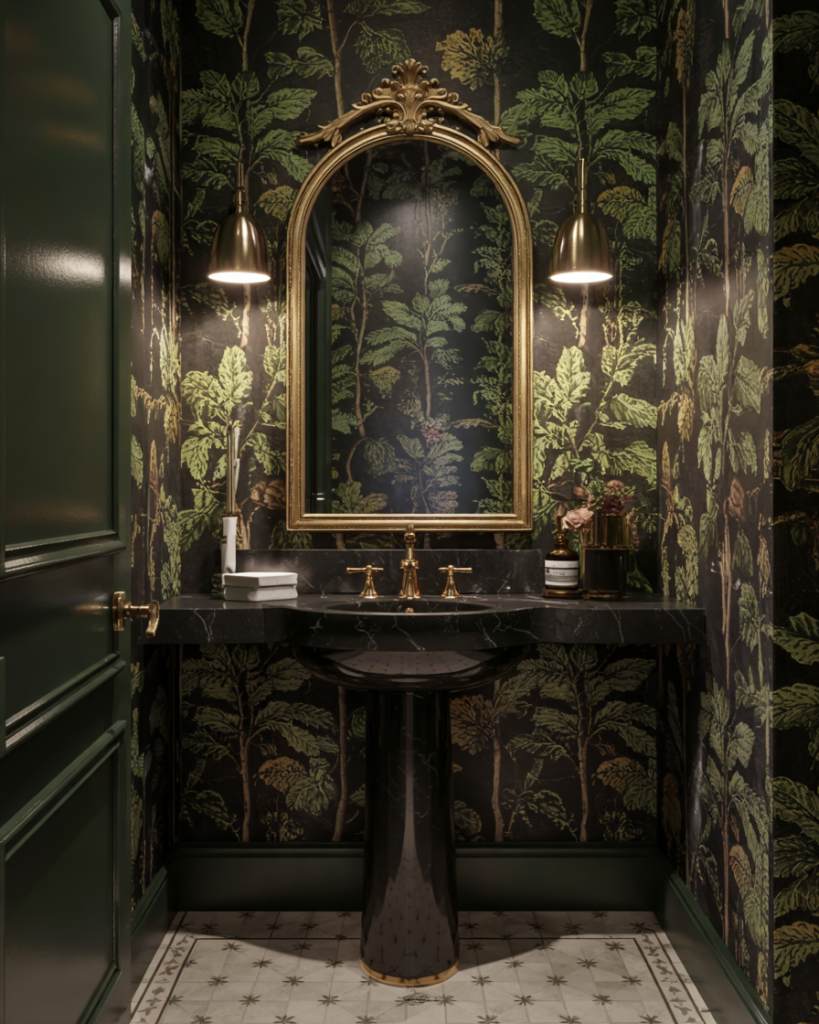
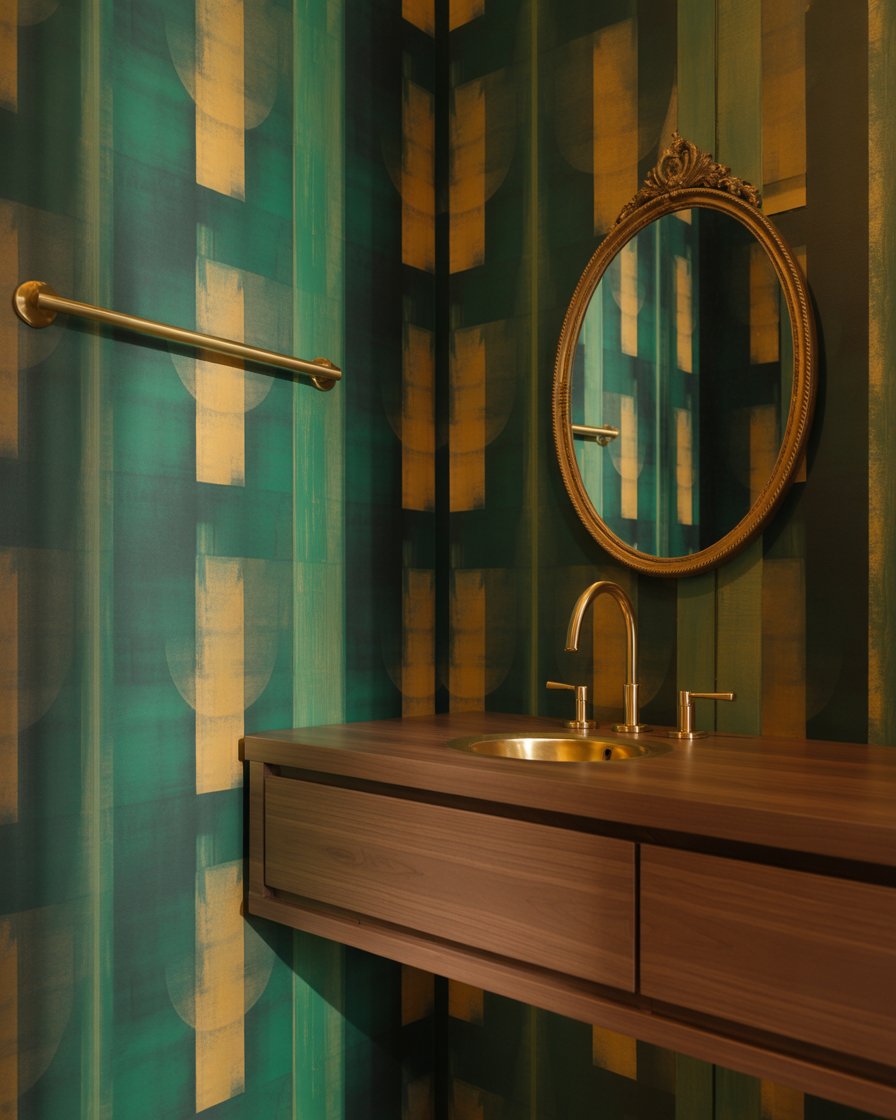
A powder room is the ideal place to go bold with green wallpaper—think palm leaves, Art Deco patterns, or classic damask—paired with gold fixtures and a statement mirror. Because guests use this space briefly, you can embrace drama without worrying about visual fatigue. A black vanity or pedestal sink anchors the look, while a single spectacular light fixture becomes jewelry for the room. This 2026 style approach transforms a utilitarian space into a conversation piece. 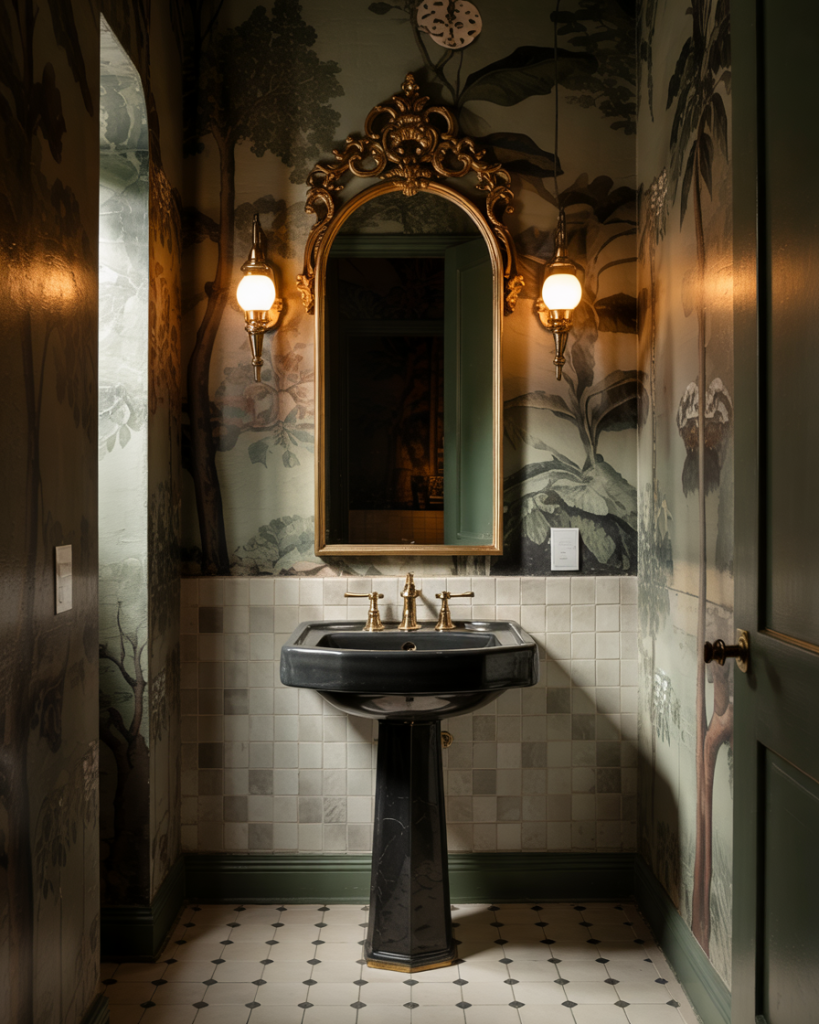
In townhouses and suburban homes with convenient half baths near the entryway, this design makes a strong first impression on visitors. A designer once noted that powder rooms are like the jewelry of a home—small, precious, and worth the splurge. Common mistakes include choosing wallpaper that’s too busy or clashes with the mirror—always bring samples home and view them in the space’s lighting before committing to the full installation.
16. Spa-Inspired Minimalist White Sanctuary
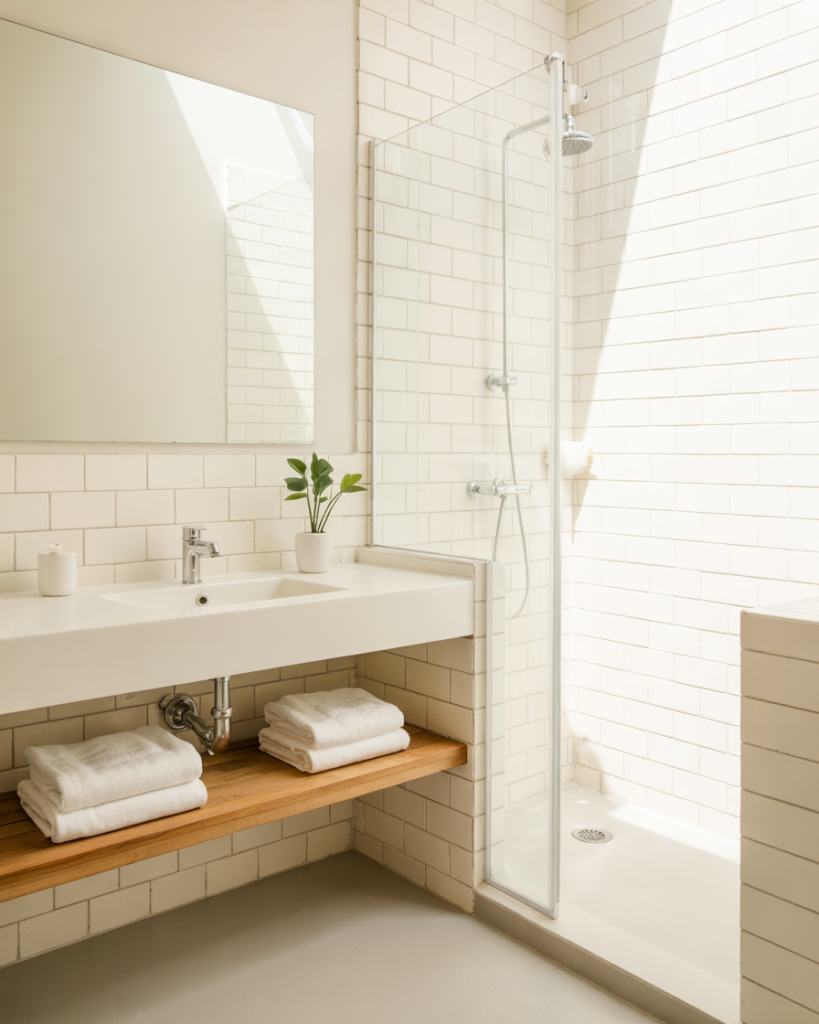
A completely white bathroom in various textures—matte paint, glossy subway tile, honed stone—creates a spa-inspired sanctuary that feels clean and limitless. Add warmth through natural wood accents like a teak shower bench or floating shelves, and keep accessories to an absolute minimum. This aesthetic works particularly well in small space environments where a monochromatic palette makes the room feel larger. Plants, fluffy towels, and simple glass containers for essentials provide the only necessary decoration. 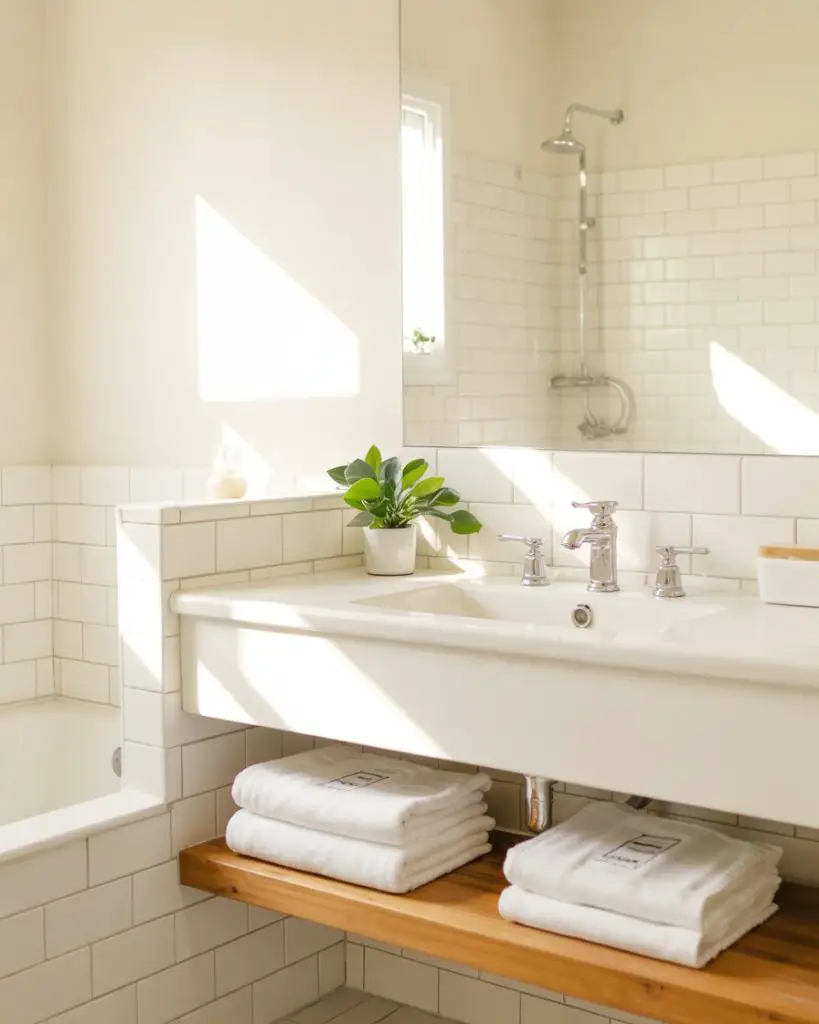
Practical insight: all-white bathrooms show dirt and water spots more readily than darker schemes, so they require slightly more maintenance. However, because everything is one color, cleaning is actually easier—you don’t have to worry about matching grout cleaners to different tile colors or protecting varied finishes. The trade-off is worth it for many homeowners who prioritize the calming, expansive feeling that this palette delivers daily.
17. Mobile Home Bathroom Upgrade with Smart Storage
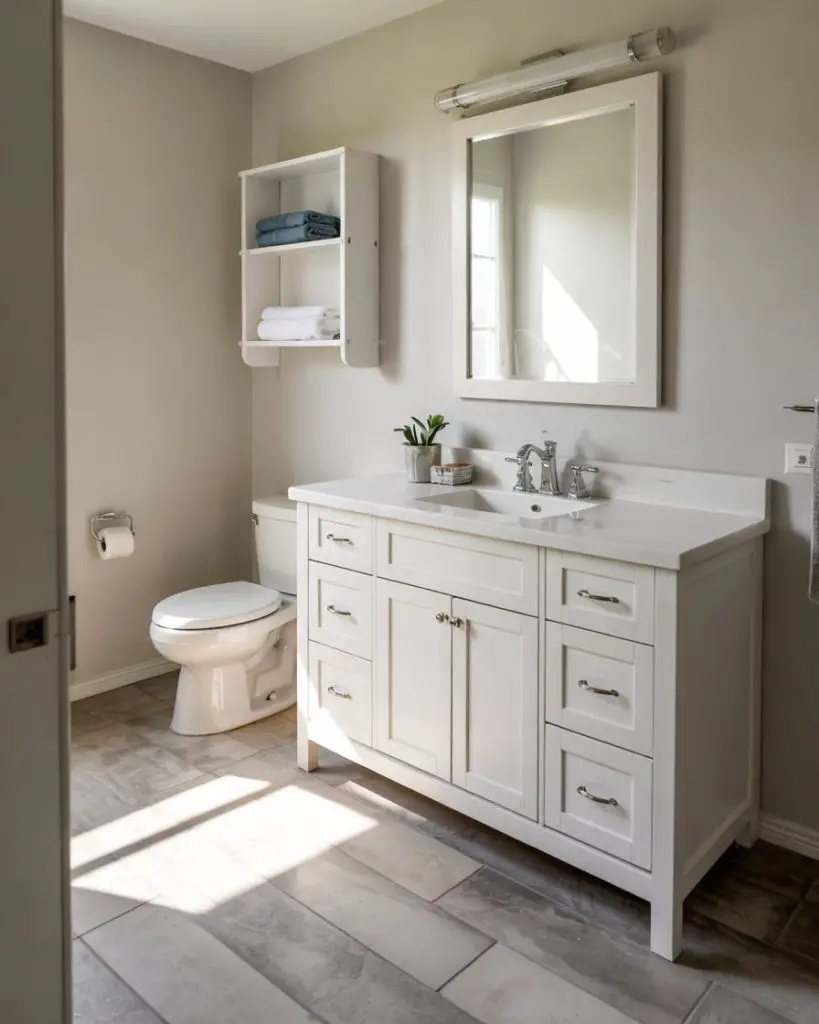
Bathrooms in mobile homes often suffer from outdated finishes and limited storage, but strategic updates can transform them into functional, attractive spaces on a budget-friendly timeline. Replace the vanity with a model that includes drawers rather than just a cabinet, add a medicine cabinet with a mirror for hidden storage, and install shelves above the toilet. Use peel-and-stick tile or vinyl planking for an affordable floor update, and paint walls in light colors to maximize the sense of space. 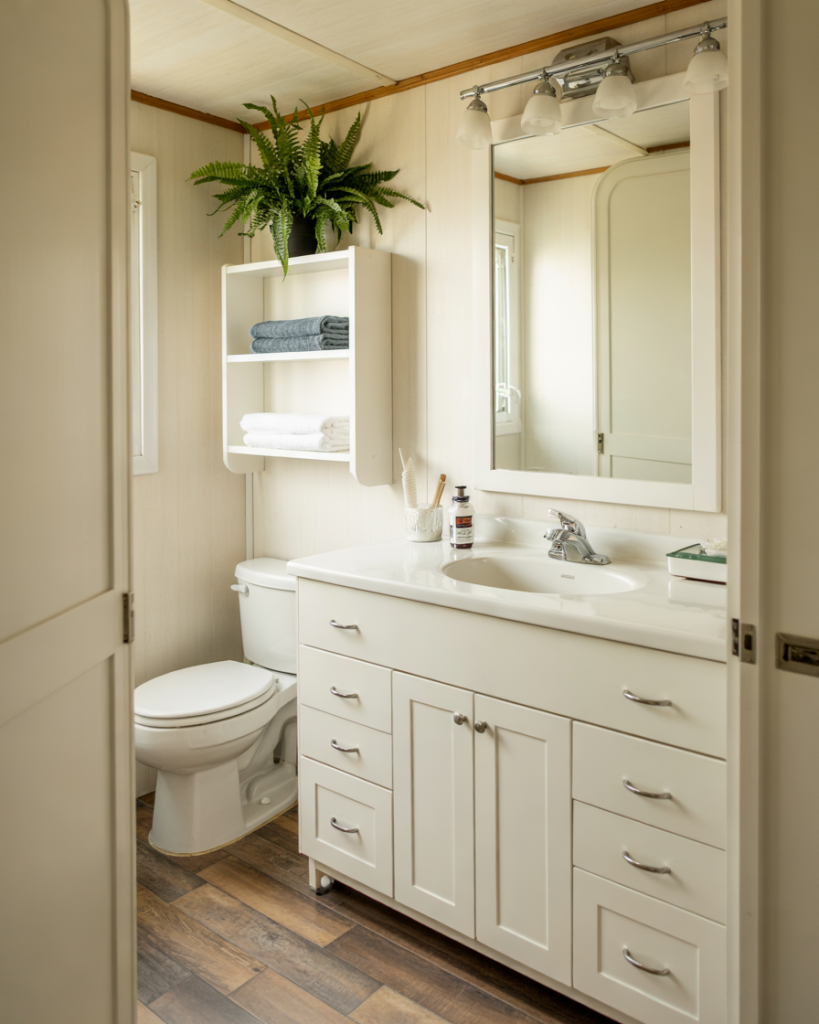
Where it works best: in manufactured housing communities where residents want to personalize and improve their space without major structural work. A practical insight—many mobile home bathrooms have non-standard fixture sizes, so measure carefully before purchasing replacements and consider custom solutions where necessary. Focus on organization and light colors to overcome the typically compact dimensions and create a space that feels intentional rather than compromised.
18. Basement Bathroom with Industrial Touches
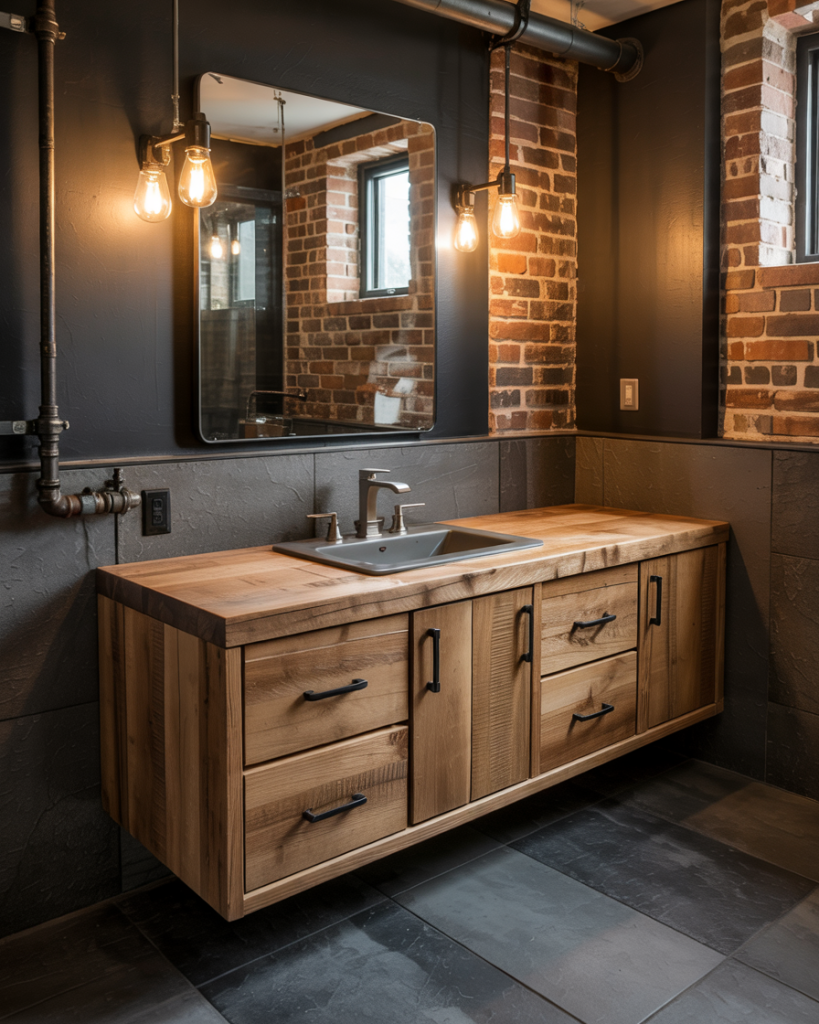
A basement bathroom offers a blank slate for edgier design choices like exposed pipes painted matte black, concrete-look tile, and metal accents. Because basements often lack natural light, embrace darker colors—charcoal walls, black fixtures—and layer in multiple light sources including recessed ceiling lights and dramatic sconces. A floating vanity keeps sightlines open and makes the space feel less cramped. This approach works particularly well in finished basements with home theaters or workout spaces where the bath should feel cohesive with the overall industrial aesthetic. 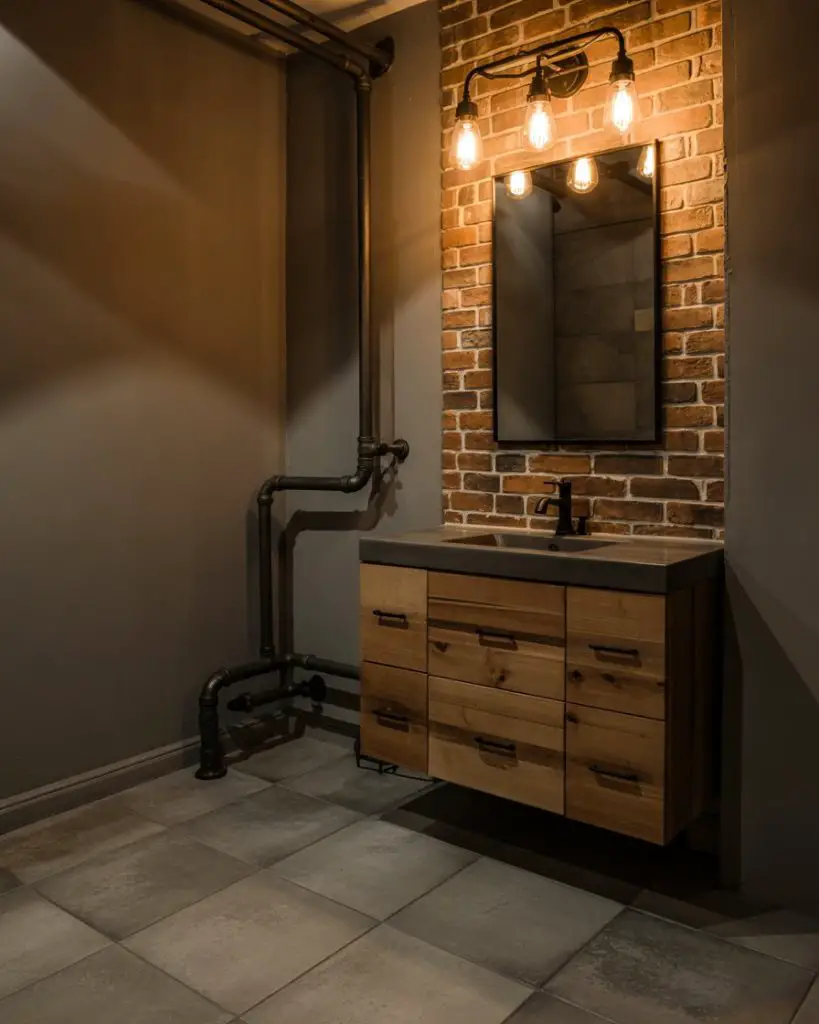
Expert-style commentary: proper ventilation is critical in basement bathrooms, which are prone to moisture issues. Install a quality exhaust fan rated for the square footage, and consider a small dehumidifier if the space doesn’t get much use. The industrial aesthetic actually helps here—materials like concrete, metal, and tile are naturally moisture-resistant and age gracefully in humid conditions, making them both stylish and practical choices for below-grade spaces.
19. Traditional Freestanding Tub Alcove
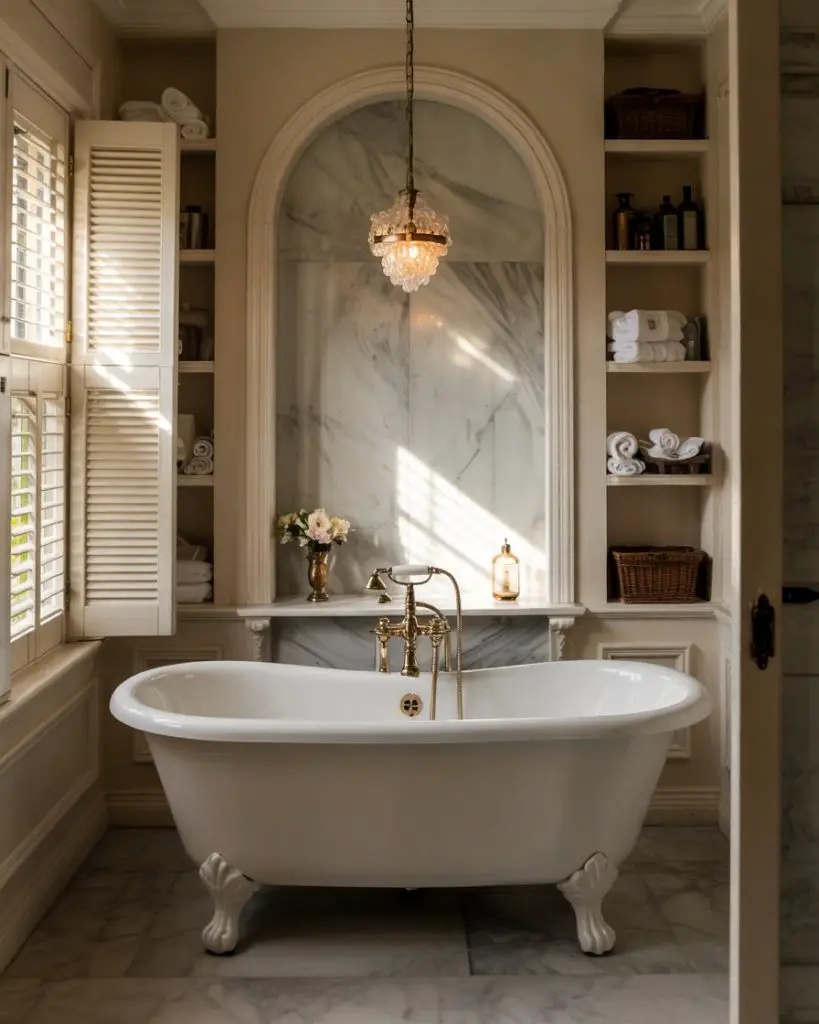
Creating a dedicated alcove for a freestanding tub adds architectural interest and a sense of luxury to a traditional bathroom design. Frame the alcove with columns, molding, or built-in shelving for bath products and candles. Use the same tile or marble as the floor to define the space, and position a chandelier or pendant light directly above for both illumination and drama. This layout works best in large bathrooms where you have the square footage to dedicate to a soaking zone separate from the shower. 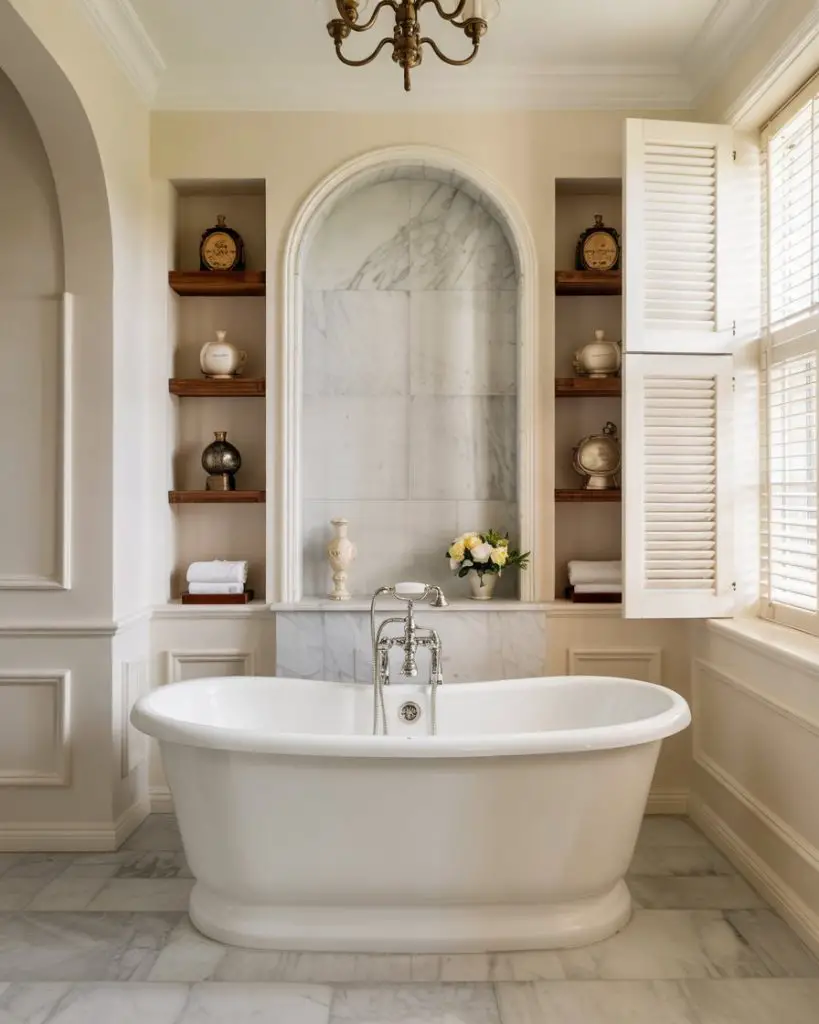
In Southern and East Coast homes with generous proportions, this design nods to European bathing traditions while feeling thoroughly American in its grandeur. A micro anecdote: a homeowner in Charleston installed an alcove tub beneath a window overlooking her garden and reported that her evening bath became a non-negotiable part of her routine—something she protected even during her busiest weeks. That’s the power of creating a dedicated, beautiful space for self-care.
20. Black and White Hexagon Floor Statement
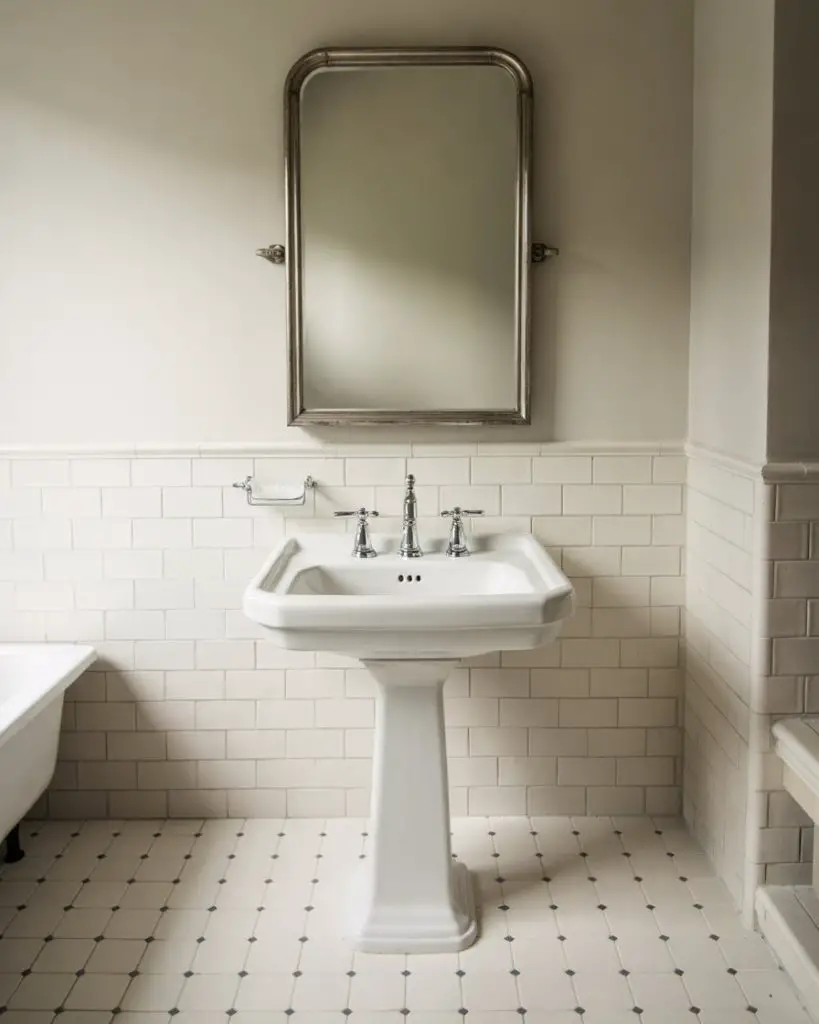
Classic black and white hexagon tile on the floor creates instant vintage charm in any bathroom style, from traditional to modern farmhouse. Keep walls and fixtures simple to let the floor be the star—white subway tile, chrome or matte black hardware, and minimal accessories. This pattern works particularly well in small space bathrooms where the geometric design adds visual interest without requiring color or additional elements. The timeless appeal means you won’t tire of it, and it complements virtually any decorating scheme. 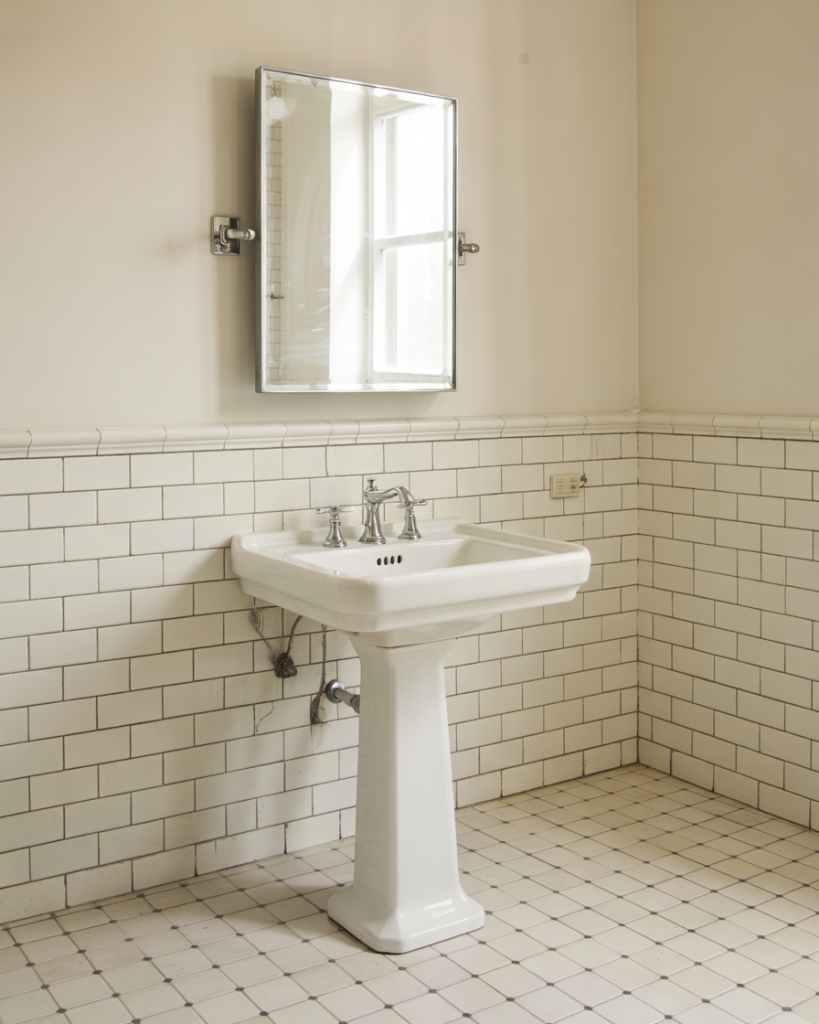
Common mistakes and how to avoid them: homeowners sometimes choose hexagon tile in colors or sizes that fight the vintage aesthetic rather than embrace it. Stick with the classic 2-inch hexagon in true black and white for the most authentic look, and seal the grout well since floor tile in bathrooms takes a beating. The pattern has been popular for over a century because it simply works—trust that history rather than trying to reinvent it.
21. Coastal Colors in a White Shiplap Frame
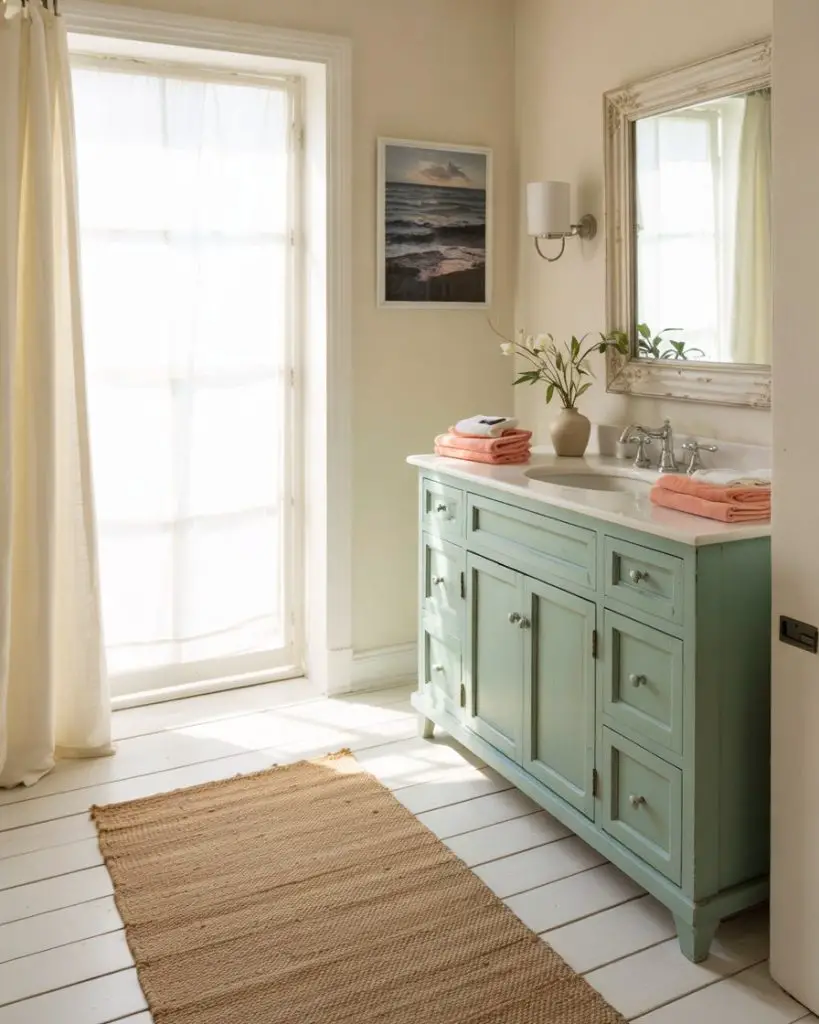
Soft coastal colors—aqua, sandy beige, coral pink—pop beautifully against white shiplap walls in a guest bathroom or powder room. Use color strategically through towels, artwork, and a painted vanity rather than permanent installations, allowing you to shift the palette seasonally or as trends evolve. This approach delivers personality without commitment, and the white shiplap provides a fresh, clean backdrop that makes any color combination work. It’s a particularly budget-friendly way to achieve the collected, beachy look that Pinterest users crave. 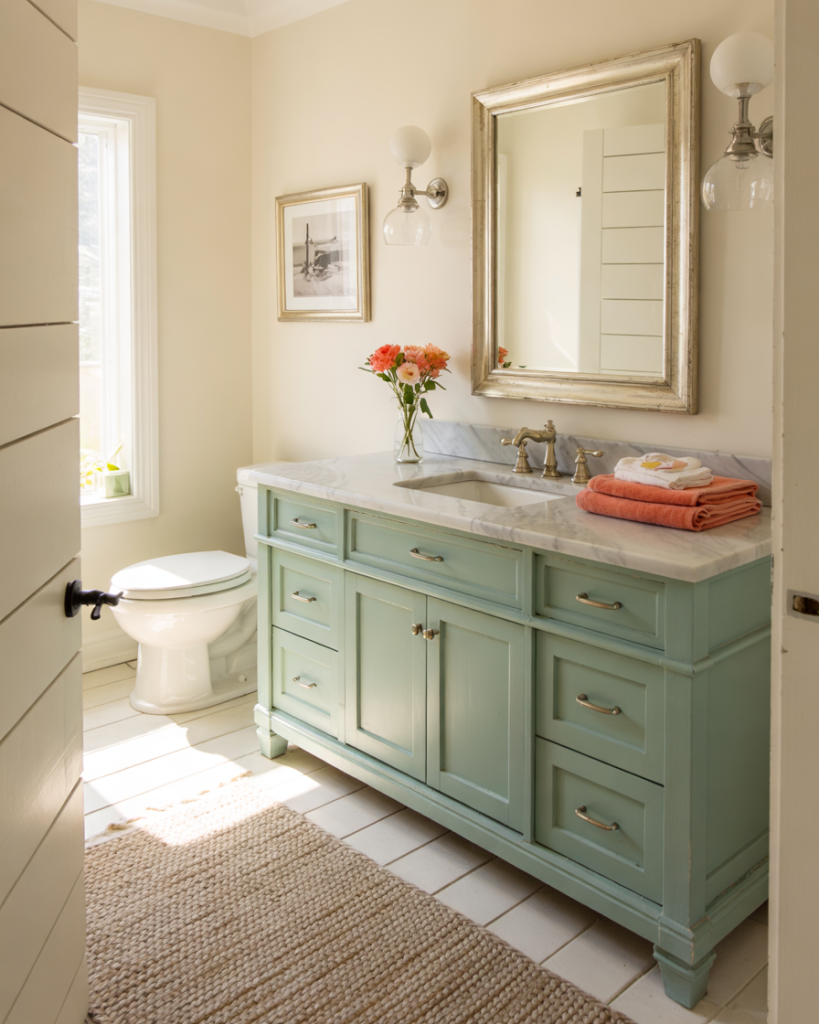
American lifestyle context: in regions without access to actual beaches—the Great Plains, mountain states—coastal design becomes a form of aspirational escapism. A bathroom done in these colors offers a daily mental vacation, which explains the style’s enduring popularity regardless of geography. Real homeowner behavior shows that people in landlocked areas are just as likely, if not more likely, to embrace beach-inspired design as those living at the shore.
22. Luxury Black Vanity with Backlit Mirror
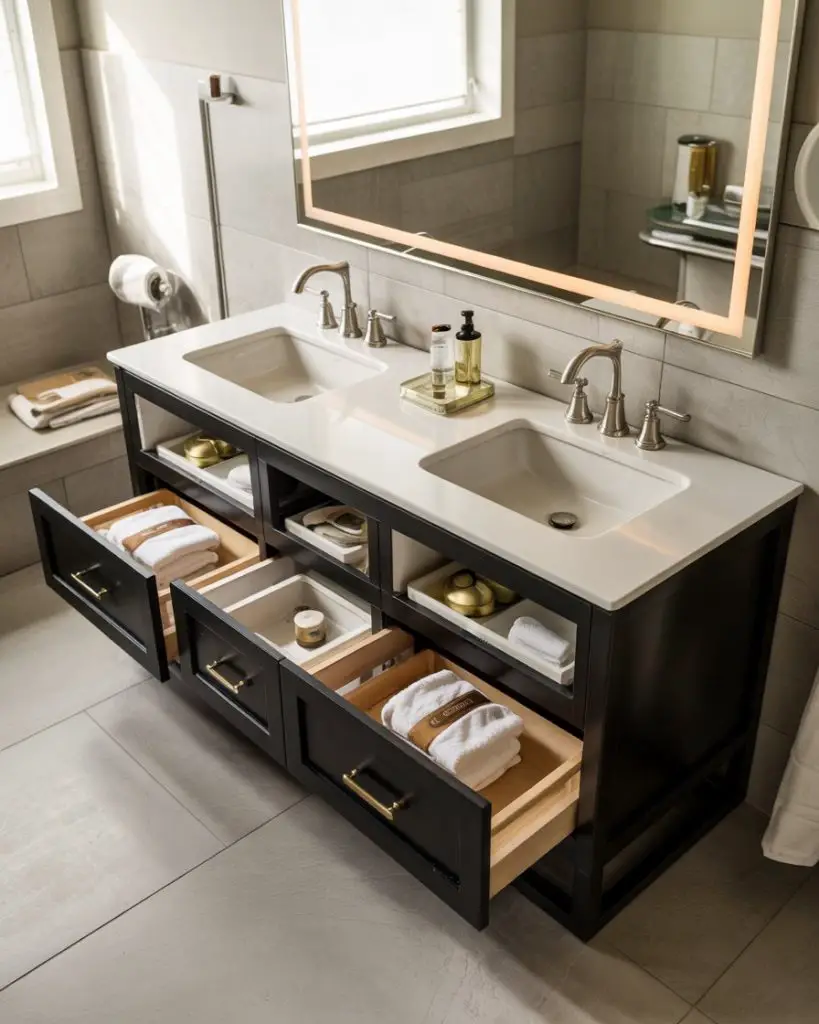
Elevate a black vanity from stylish to luxury by pairing it with a backlit LED mirror and high-end fixtures. The mirror’s soft glow creates spa-like ambiance while providing practical task lighting for grooming. Choose a vanity with integrated storage—drawers with dividers, pull-out organizers—and top it with thick marble or quartz in white or gold-veined stone for contrast. This combination works beautifully in 2026 style primary bathrooms where technology and elegance merge seamlessly. 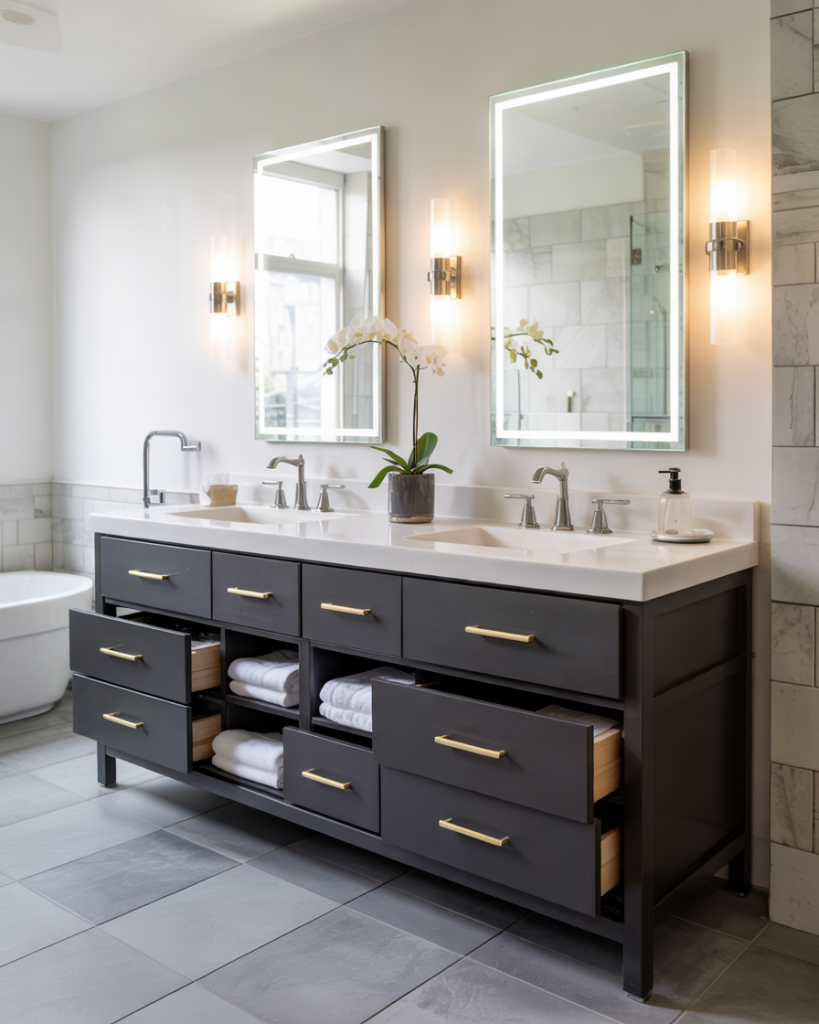
Budget angle: while luxury elements like backlit mirrors and high-end fixtures do cost more upfront, they deliver value through durability and daily use satisfaction. A quality backlit mirror lasts 15+ years, and the soft, flattering light it provides is something you’ll appreciate twice daily. Many homeowners report that investing in the primary bath—the space they use most consistently—brings more joy than splurging on rooms used only occasionally, making it one of the wisest allocations of a remodel budget.
Conclusion
Whether you’re drawn to coastal serenity, traditional elegance, or budget-friendly updates, these 22 bathroom remodel ideas offer something for every style, space, and spending plan. The key is choosing elements that reflect your personal taste while keeping function at the forefront—after all, a beautiful bathroom that doesn’t work for your daily life won’t bring lasting satisfaction. We’d love to hear which ideas resonate with you and how you’re planning to transform your own space. Share your thoughts and questions in the comments below!