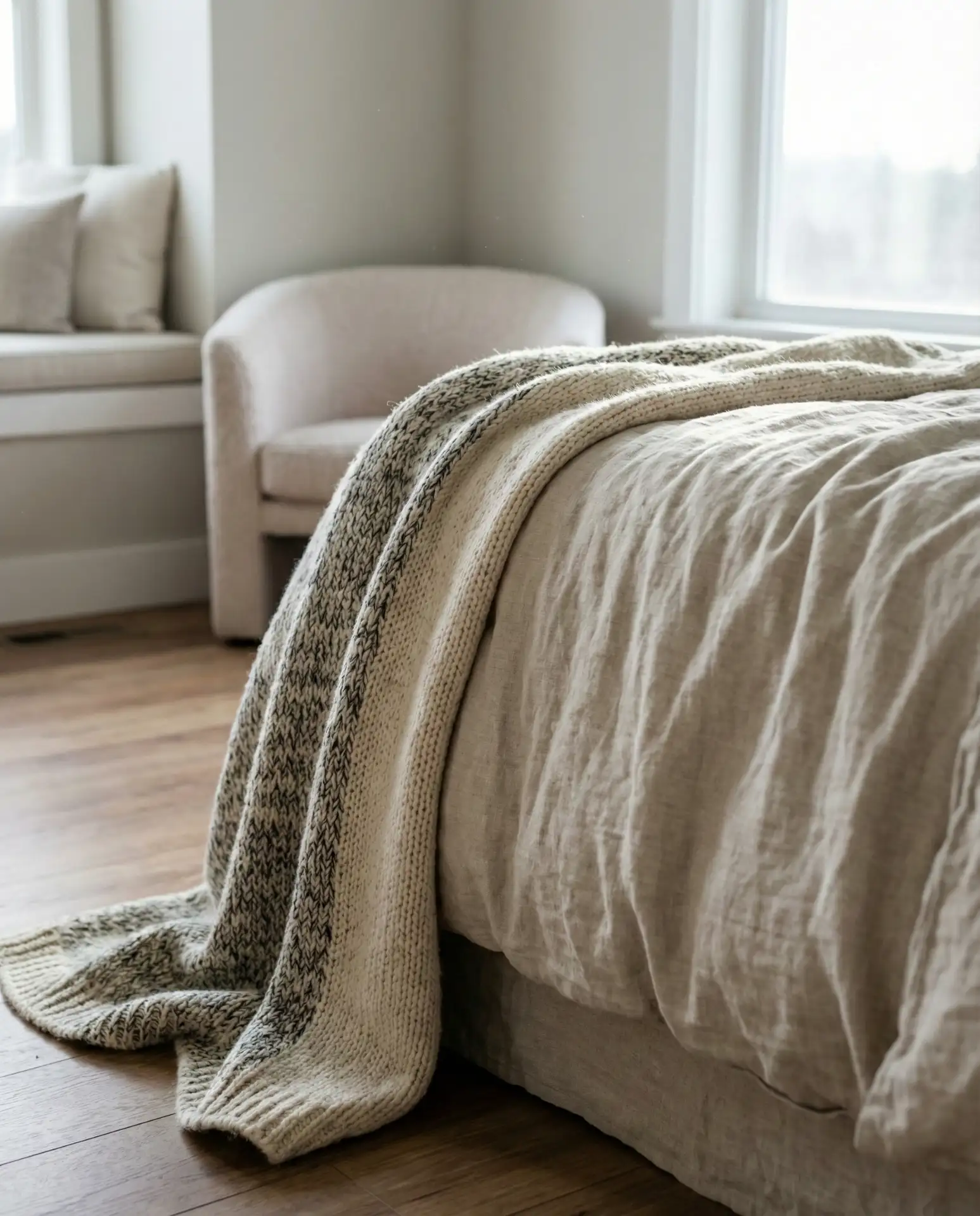
As we move through 2026, men’s bedroom design has evolved far beyond the basic minimalist aesthetic. Today’s American homeowners—from young professionals in city apartments to established bachelors in suburban homes—are seeking spaces that balance personal style with genuine comfort. Pinterest searches for masculine bedroom inspiration have surged this year, reflecting a desire for rooms that feel intentional, layered, and uniquely personal. Whether you’re drawn to moody color palettes, natural materials, or bold statement pieces, this guide explores twenty-two bedroom ideas that speak to modern masculinity without sacrificing warmth or livability.
1. Charcoal and Steel Industrial Sanctuary
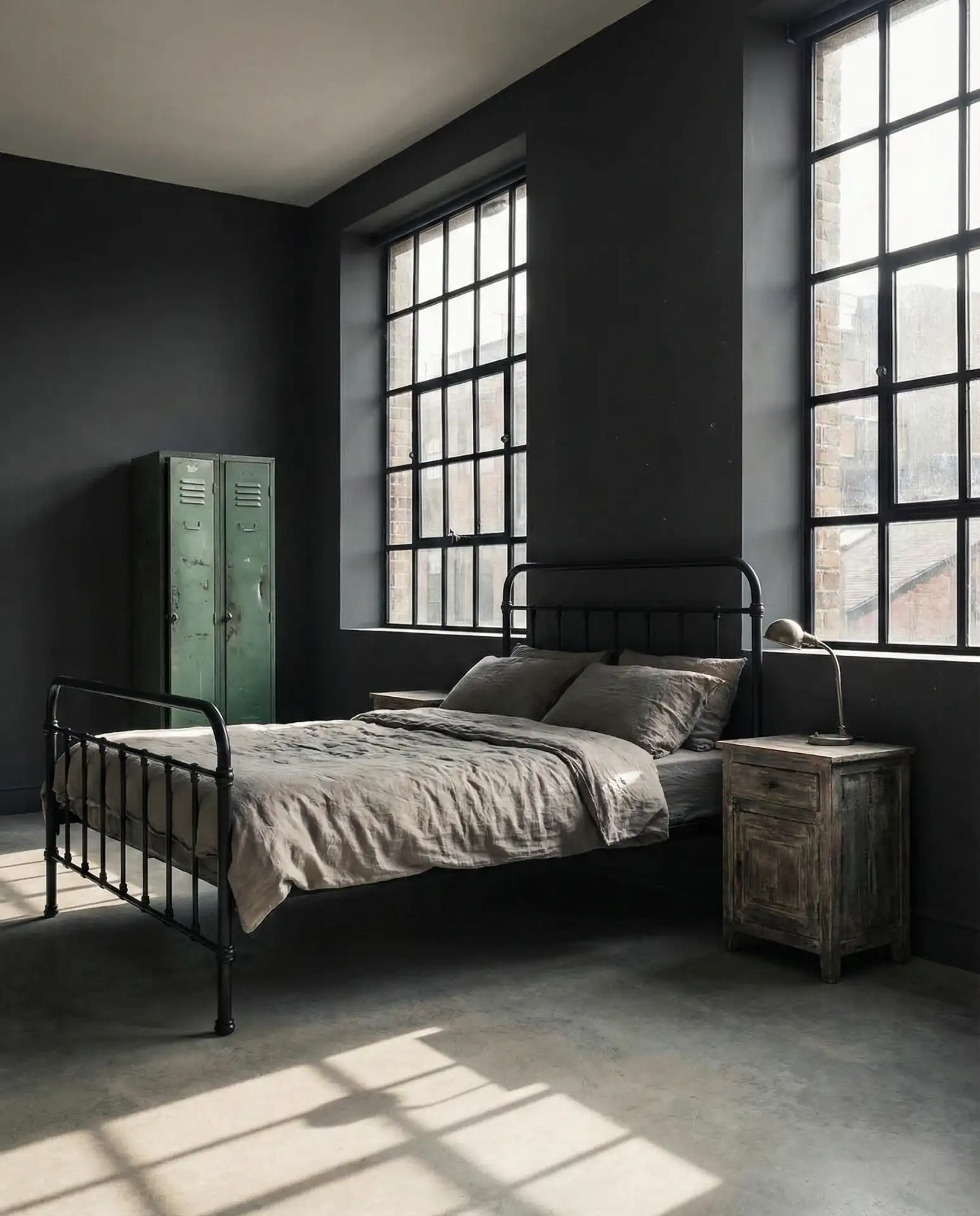
The appeal of dark grey walls paired with exposed metal accents lies in their ability to create depth without feeling oppressive. This approach works especially well in urban lofts or apartments where architectural bones—exposed brick, concrete floors, high ceilings—provide natural texture. Layer in wooden furniture pieces with visible grain to soften the industrial edge, and consider leather seating or a vintage trunk at the foot of your king-size bed for storage that doubles as character.
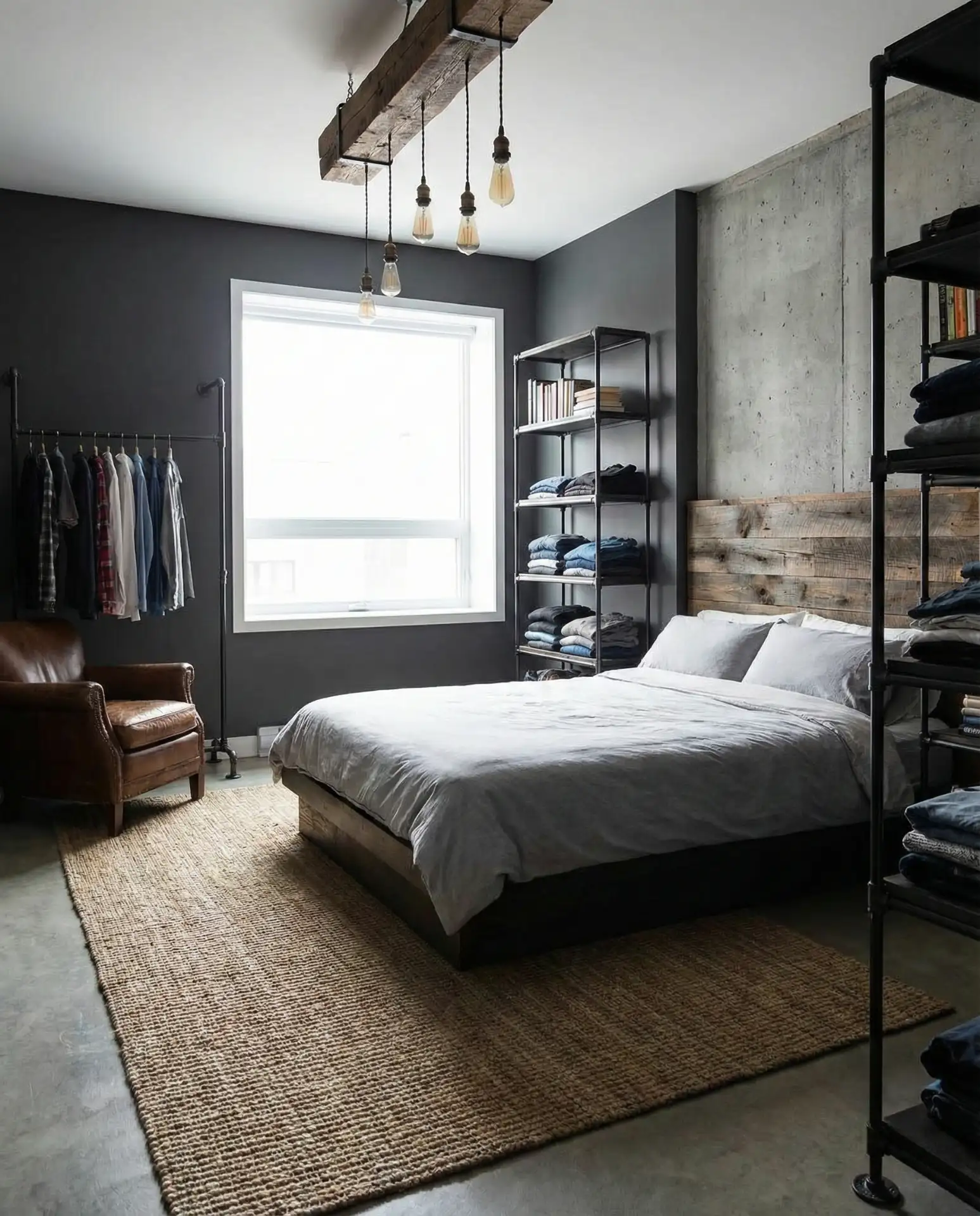
Where this works best: Cities like Chicago, Detroit, and Portland, where industrial architecture is part of the urban fabric. The style translates beautifully into converted warehouse spaces or newer builds that incorporate raw materials. Avoid making the space feel cold by incorporating textiles—a chunky knit throw, a wool area rug, or linen bedding in warm grays—that invite touch and add necessary softness to the harder surfaces.
2. Forest Green Haven with Natural Wood
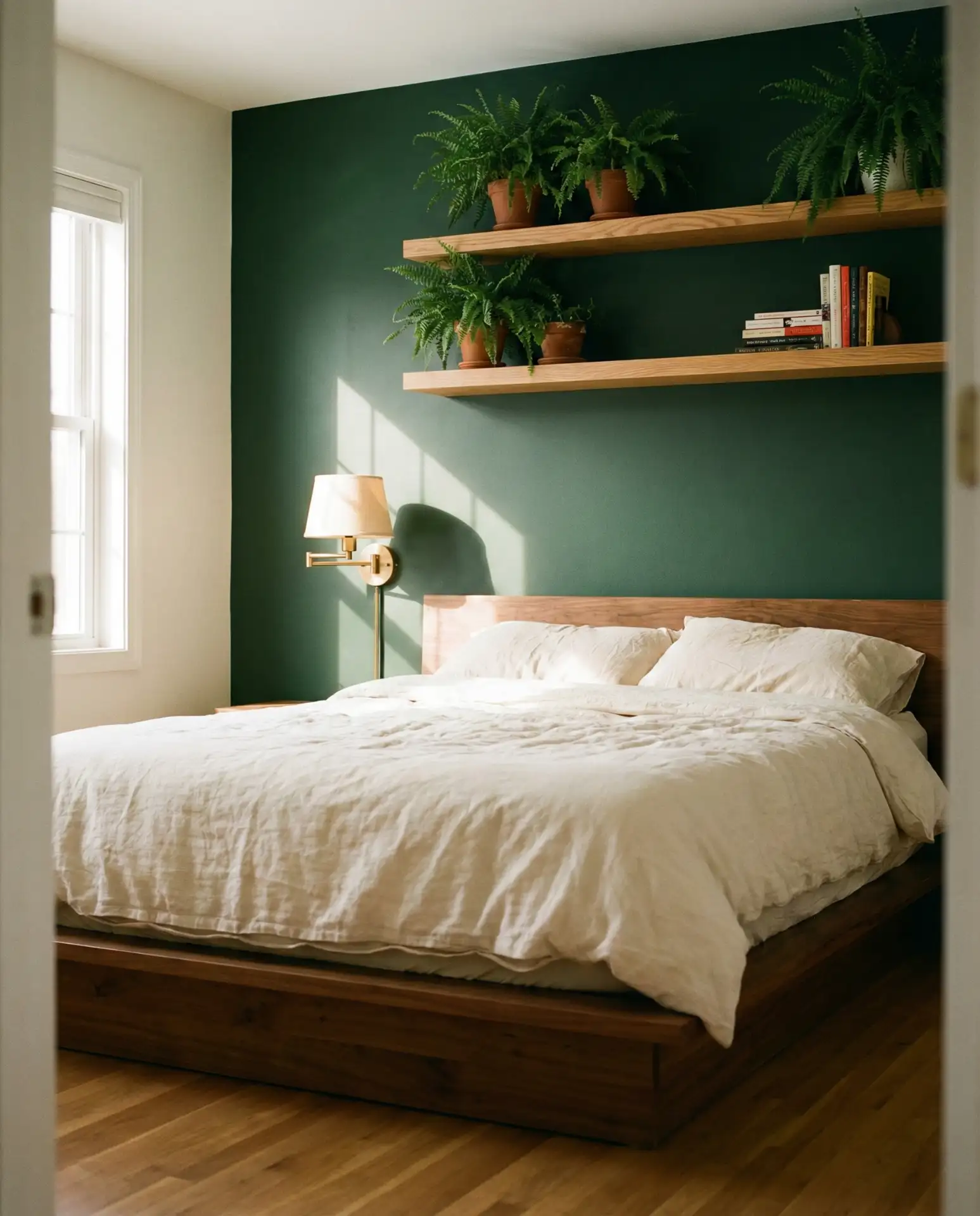
Deep green walls have become a standout choice for men seeking richness without the expected navy blue and grey combination. This shade references the outdoors while maintaining sophistication—think Pacific Northwest lodges rather than suburban family rooms. Pair it with wood furniture in walnut or oak finishes, and the room gains an organic cohesion that feels both grounded and refined. The color responds beautifully to natural light, shifting from emerald in morning sun to near-black in evening hours.
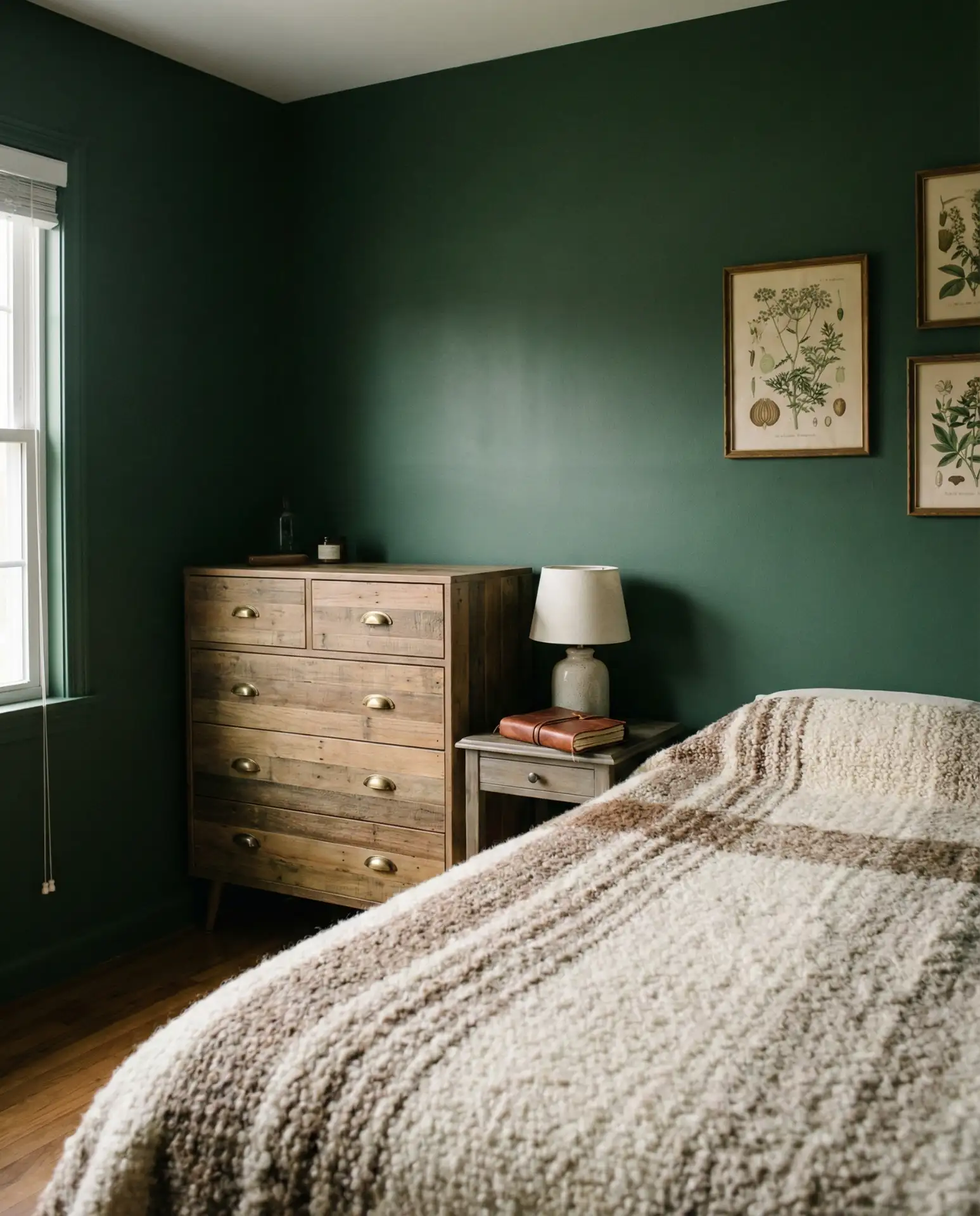
A practical insight: Green tones are forgiving when it comes to mismatched wood finishes. Unlike white or gray rooms where every wood grain stands out, forest green acts as a unifying backdrop that allows you to mix vintage finds with modern pieces without the space feeling chaotic. It’s an ideal solution for those building a room gradually rather than buying a complete furniture set at once.
3. Navy and Grey Coastal Minimalism
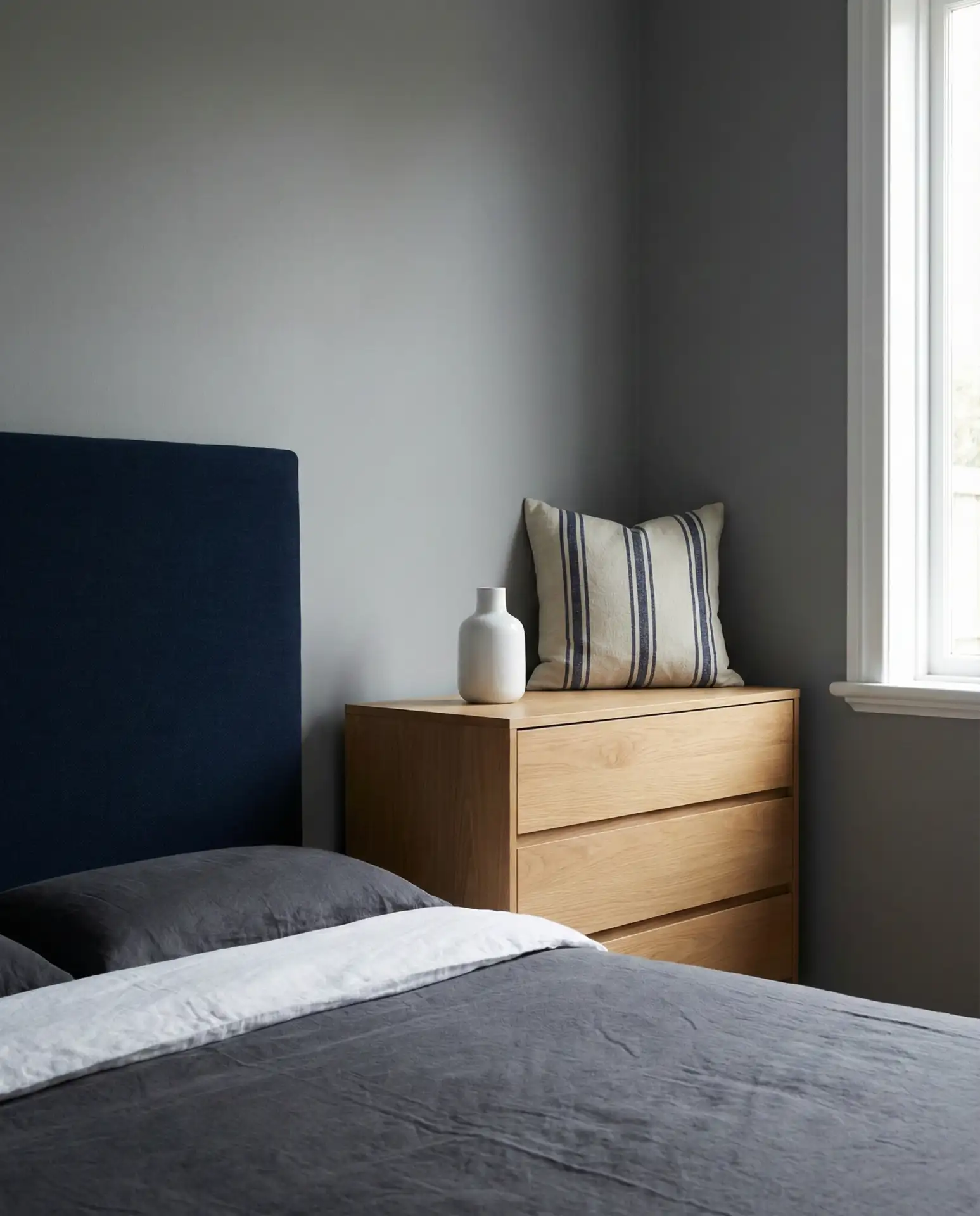
The classic navy blue and grey palette continues to dominate bachelor pad design for good reason—it’s inherently masculine without leaning too heavily into stereotype. This combination works particularly well in coastal regions or homes with water views, where the colors echo natural surroundings. Keep furniture lines clean and unfussy, and introduce texture through materials rather than pattern: a linen duvet, a jute rug, or a woven pendant light adds dimension without visual noise.
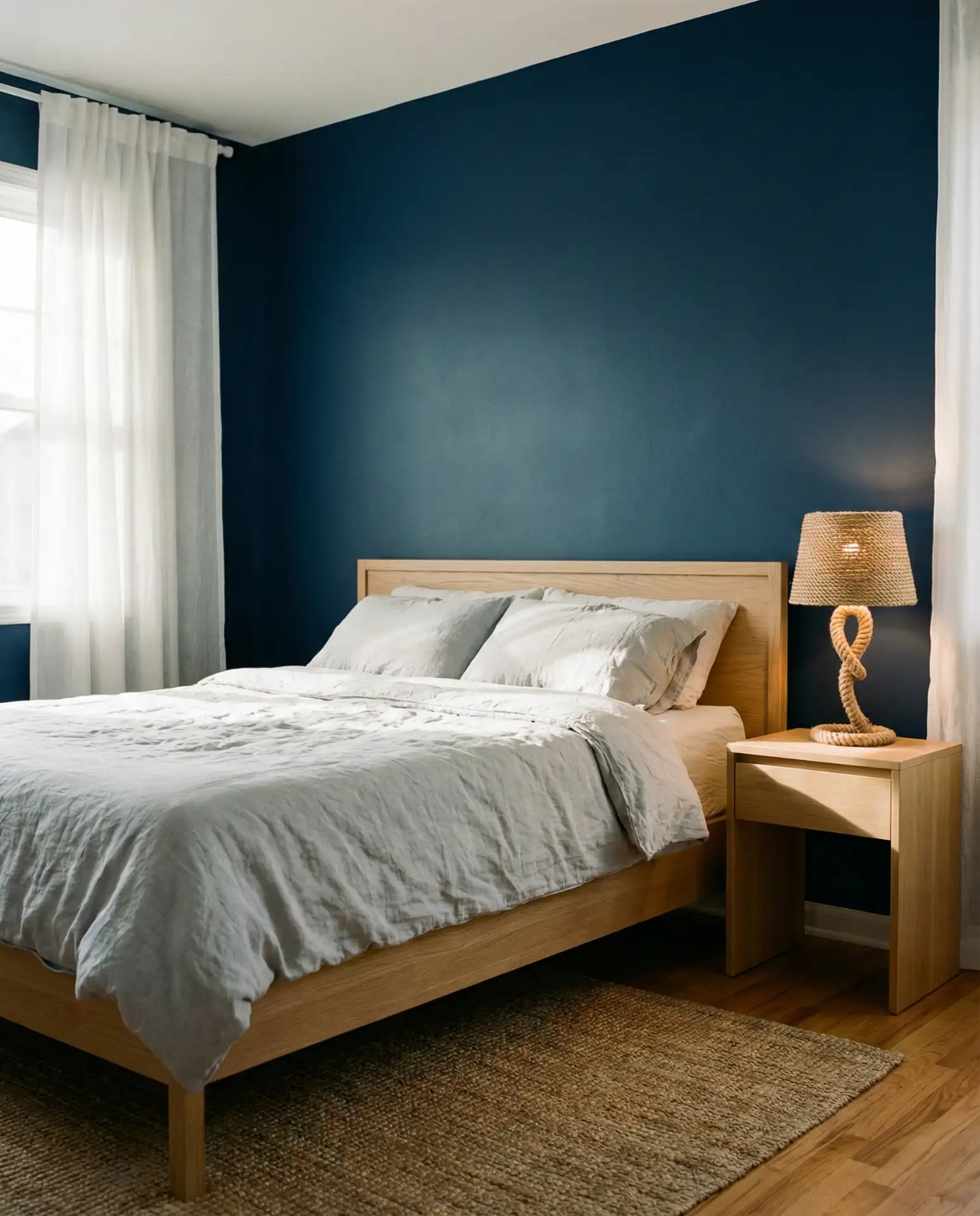
Real homeowner behavior: Many men gravitate toward this scheme because it photographs well and ages gracefully—two concerns that might seem superficial but actually speak to long-term satisfaction. A navy and grey room doesn’t feel dated after two years the way trendier color combinations might, and it provides a neutral enough backdrop to accommodate shifting tastes in art or accessories without requiring a full redesign.
4. Moody Charcoal with Brass Accents
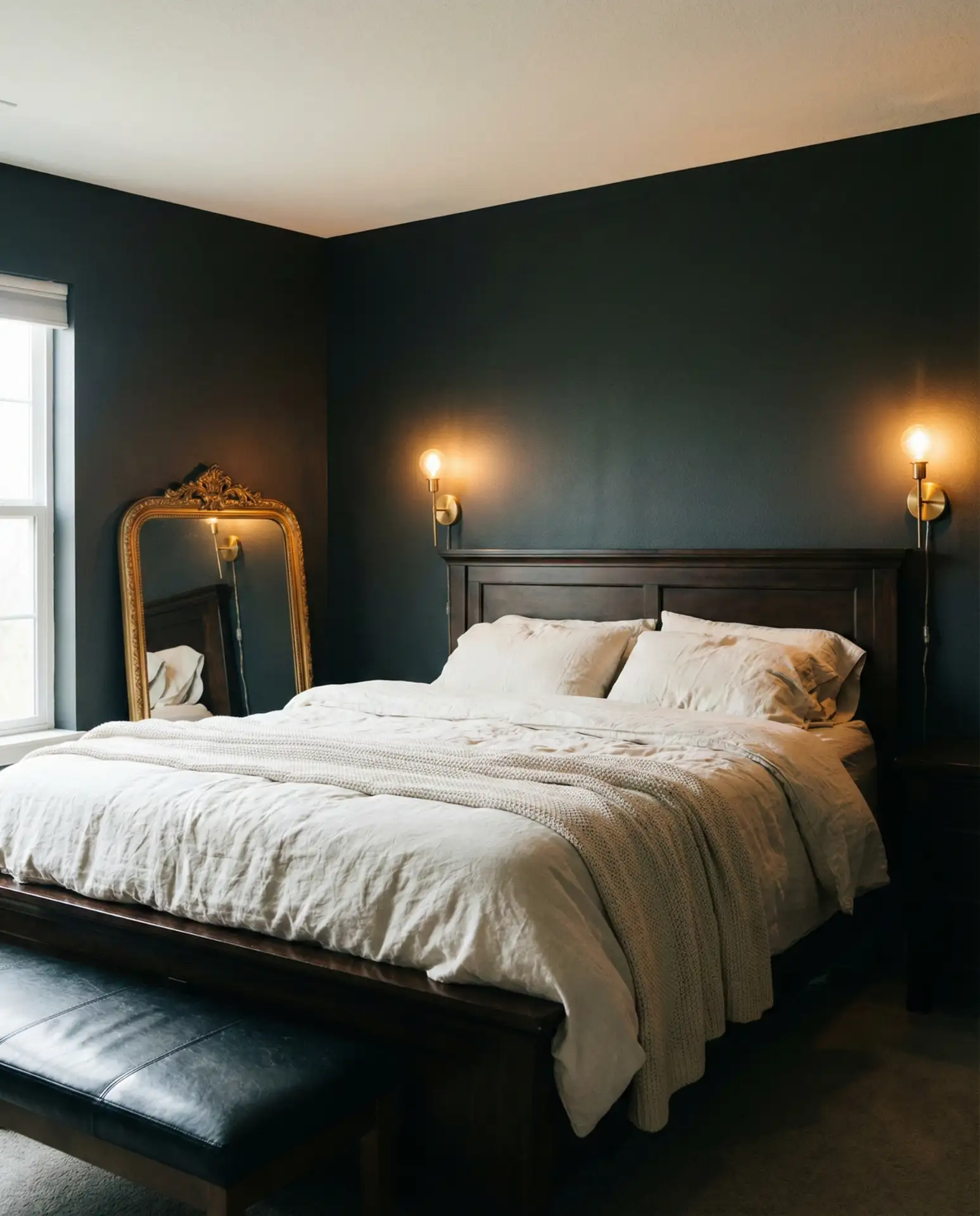
When dark walls meet warm metal, the result is a bedroom that feels like a private retreat rather than simply a place to sleep. Charcoal or near-black paint creates an enveloping atmosphere that’s particularly effective in larger bedrooms where lighter colors might feel too expansive. Brass fixtures—whether in lighting, cabinet hardware, or picture frames—provide necessary warmth and prevent the space from reading as cold or unwelcoming. This approach requires confidence but rewards it with undeniable impact.
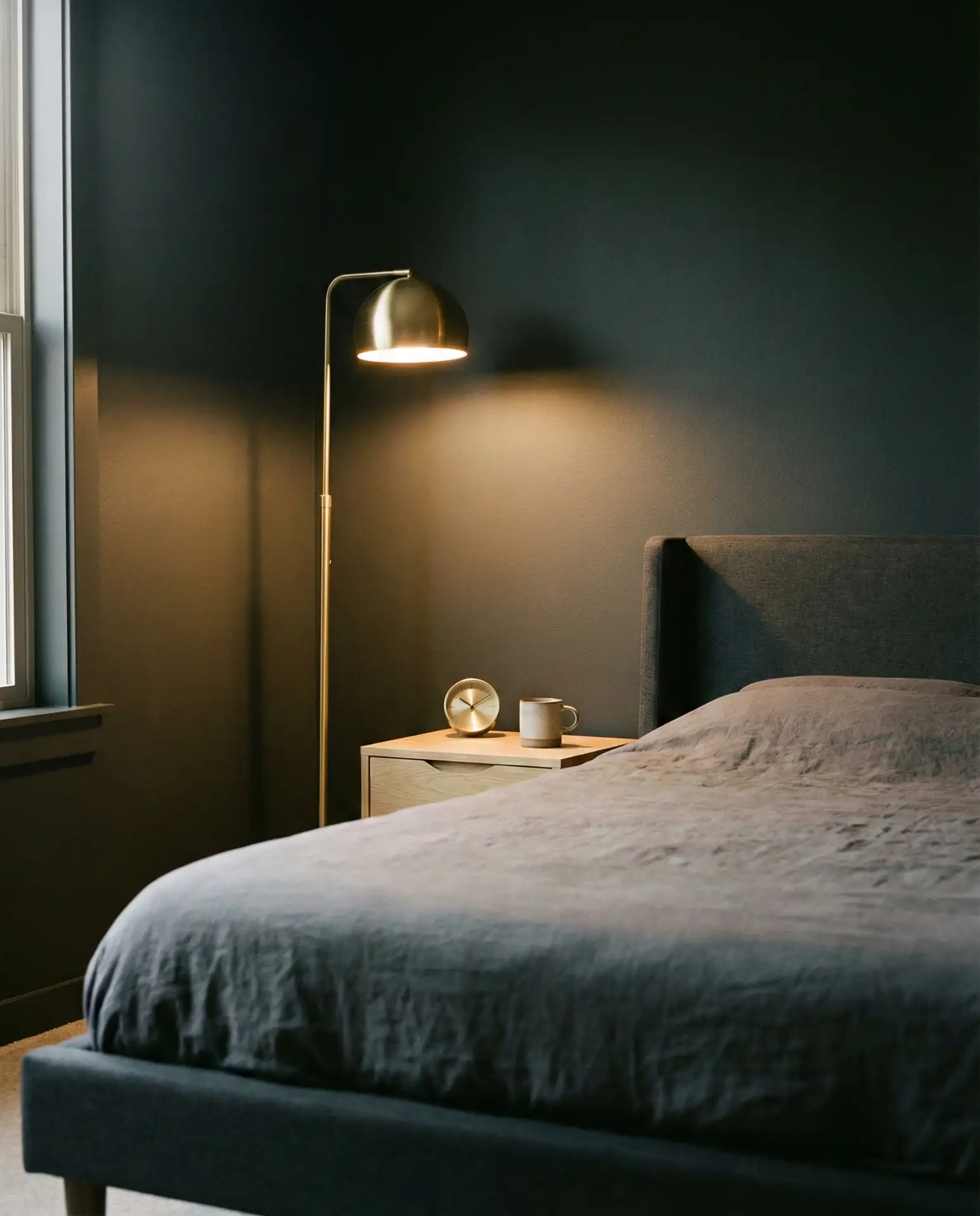
Budget consideration: While designer brass fixtures can run hundreds of dollars, the current market offers excellent mid-range alternatives. Brands like Rejuvenation and Schoolhouse Electric provide solid construction and timeless design at roughly half the cost of luxury options. Even mixing in a few vintage brass pieces from estate sales or online marketplaces can add authentic patina that new items lack, often at a fraction of the price.
5. Olive Green Military-Inspired Retreat
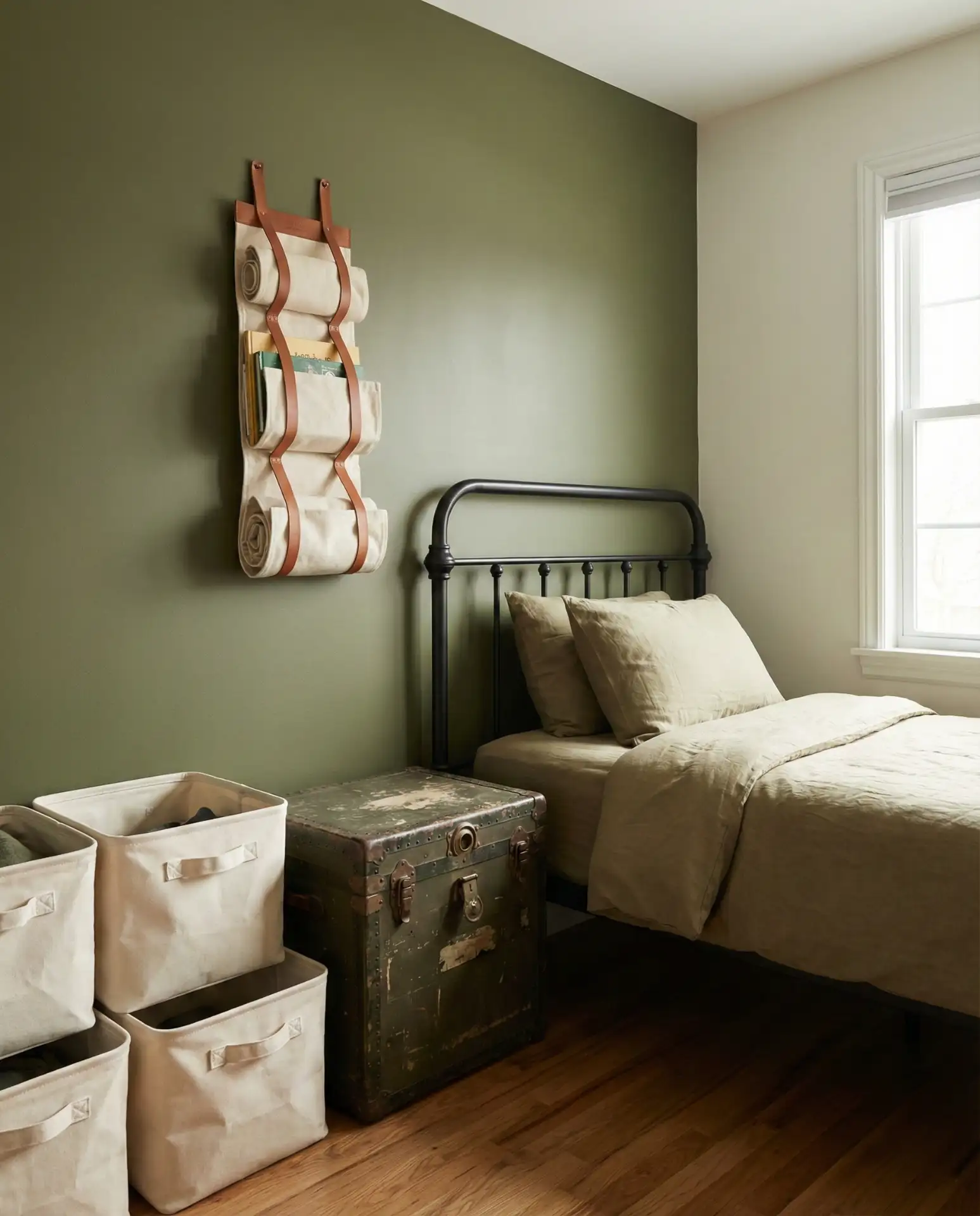
The resurgence of olive green in interior design speaks to a broader interest in utilitarian aesthetics that prioritize function alongside form. This shade works exceptionally well in bedrooms because it’s neither aggressively bold nor passive—it establishes clear intention without demanding constant attention. Pair it with canvas, leather, and aged metals for a look that references military gear and field equipment without veering into costume. The key is restraint: one or two olive pieces in an otherwise neutral room create focus rather than theme.
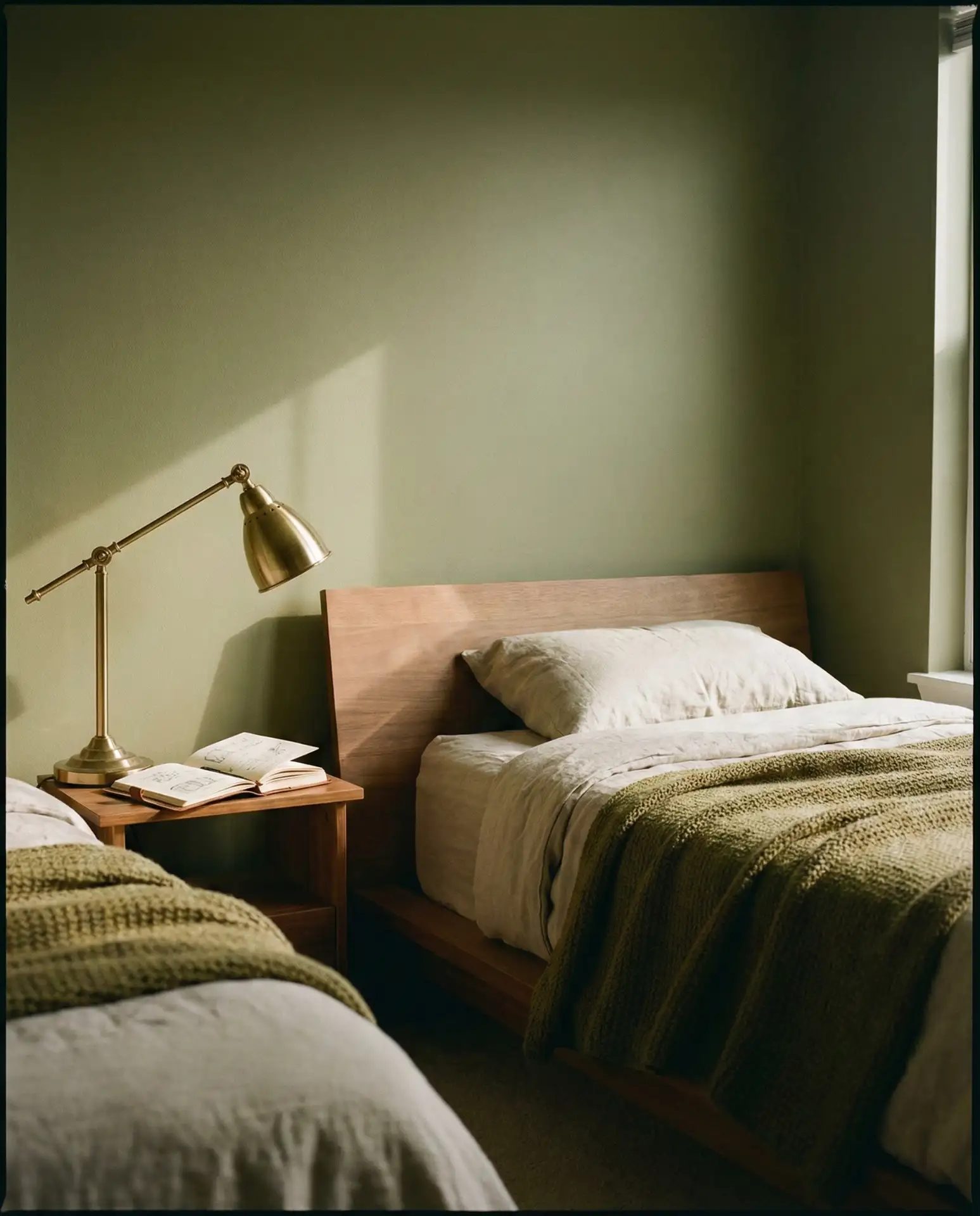
An expert observation: Olive green has a unique quality in American design—it reads simultaneously as nostalgic and contemporary. It references mid-century military surplus and outdoor gear that many men remember from childhood camping trips or inherited from fathers and grandfathers, while also appearing frequently in high-end contemporary furniture lines. This dual nature makes it particularly effective for creating spaces that feel personal without being overly sentimental.
6. Warm Grey with Layered Textiles
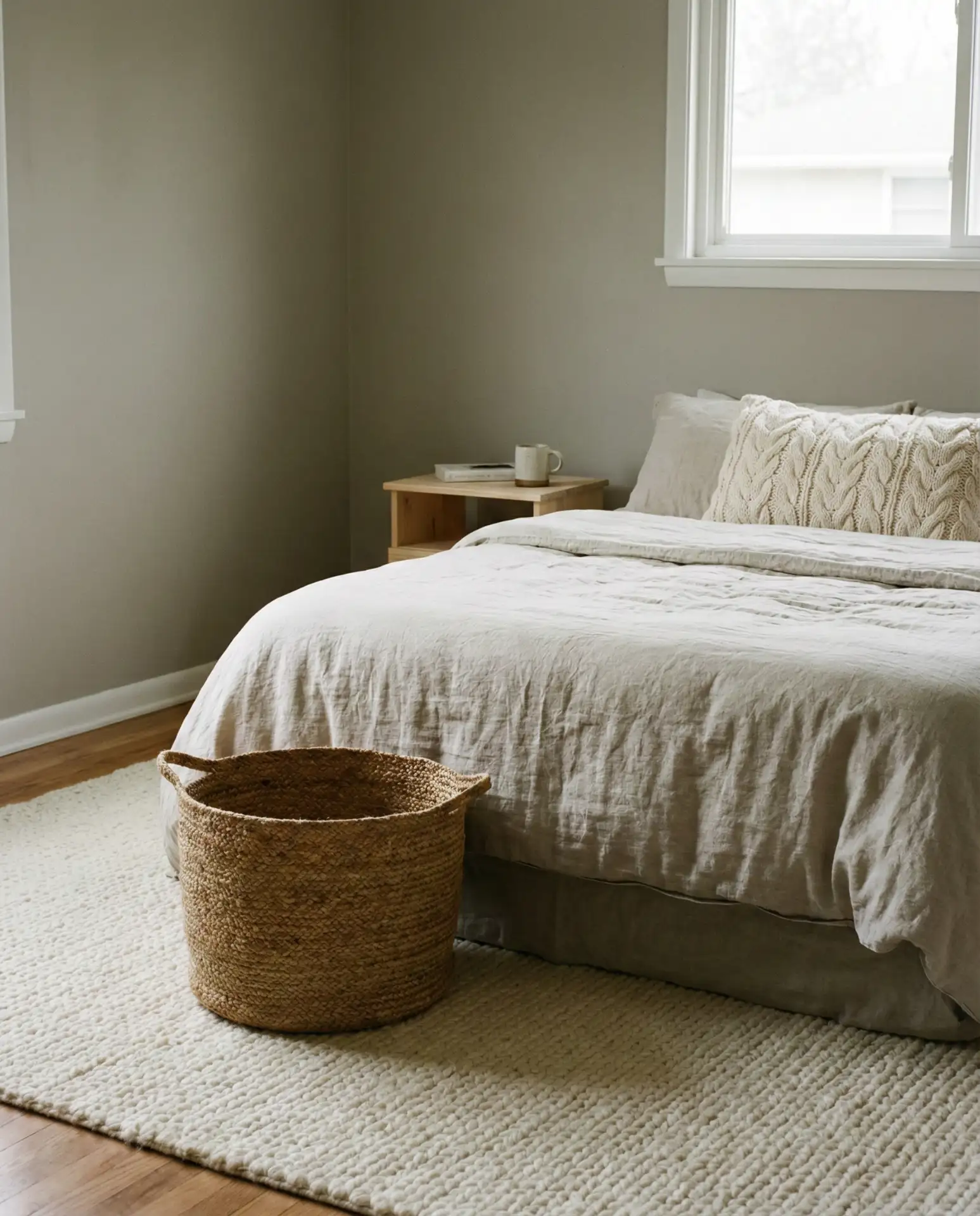
The difference between a grey bedroom that feels cold and one that feels welcoming comes down entirely to texture and warmth. Choose greiges—grays with brown undertones—rather than cool slate tones, and build layers through bedding, window treatments, and area rugs. A chunky cable-knit throw, linen curtains that puddle slightly on the floor, or a sheepskin draped over a reading chair all contribute necessary softness. This approach creates a cozy environment that still maintains masculine restraint.
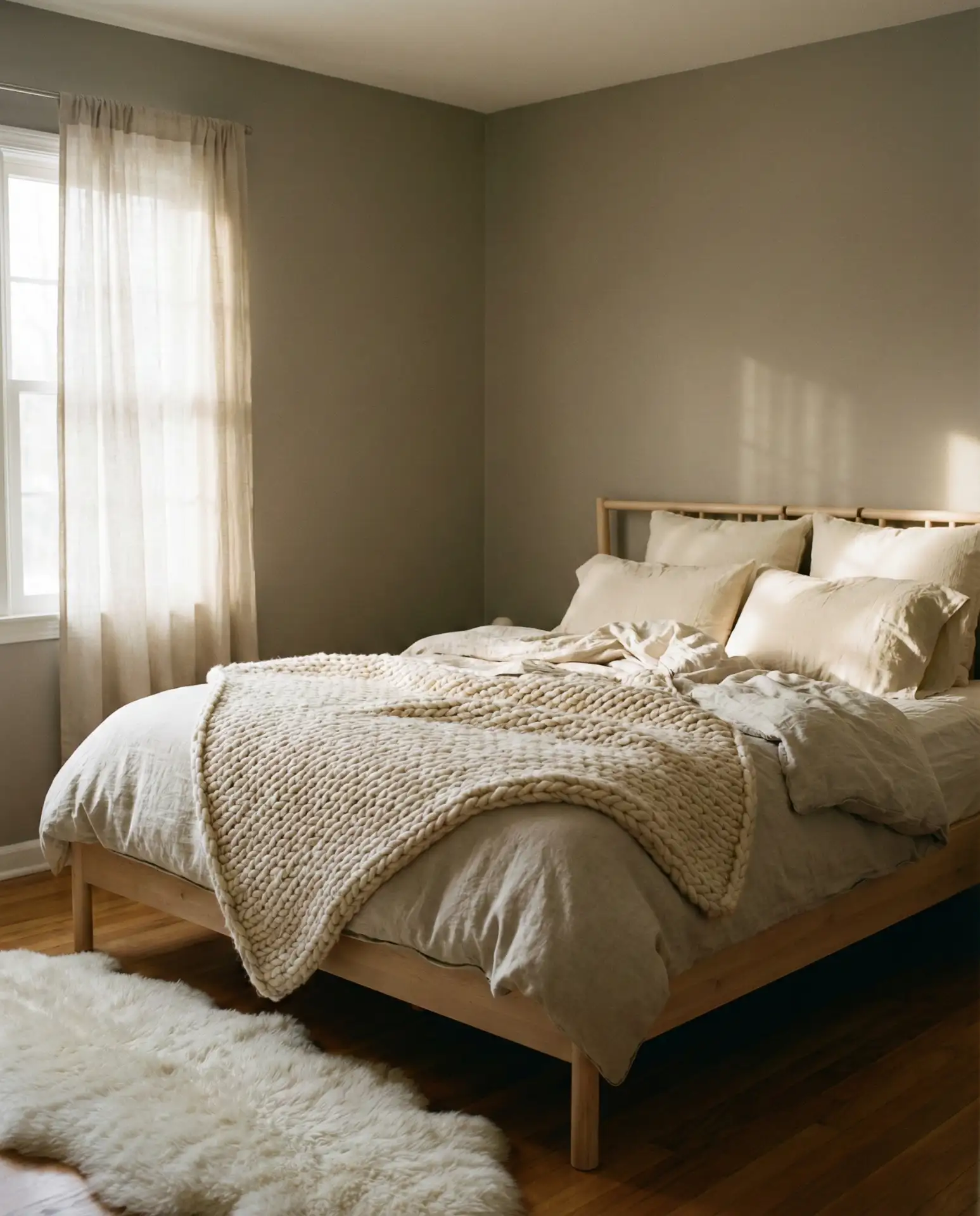
Common mistake to avoid: Many people assume “adding texture” means introducing pattern, but the most effective layering often involves varying materials in similar tones rather than mixing prints. A bedroom with grey walls, grey bedding in different fabrics (jersey, linen, and cotton), and grey window treatments in varied weaves creates far more visual interest than a grey room punctuated with patterned throw pillows that fight for attention.
7. Blue and Grey Scandinavian Simplicity
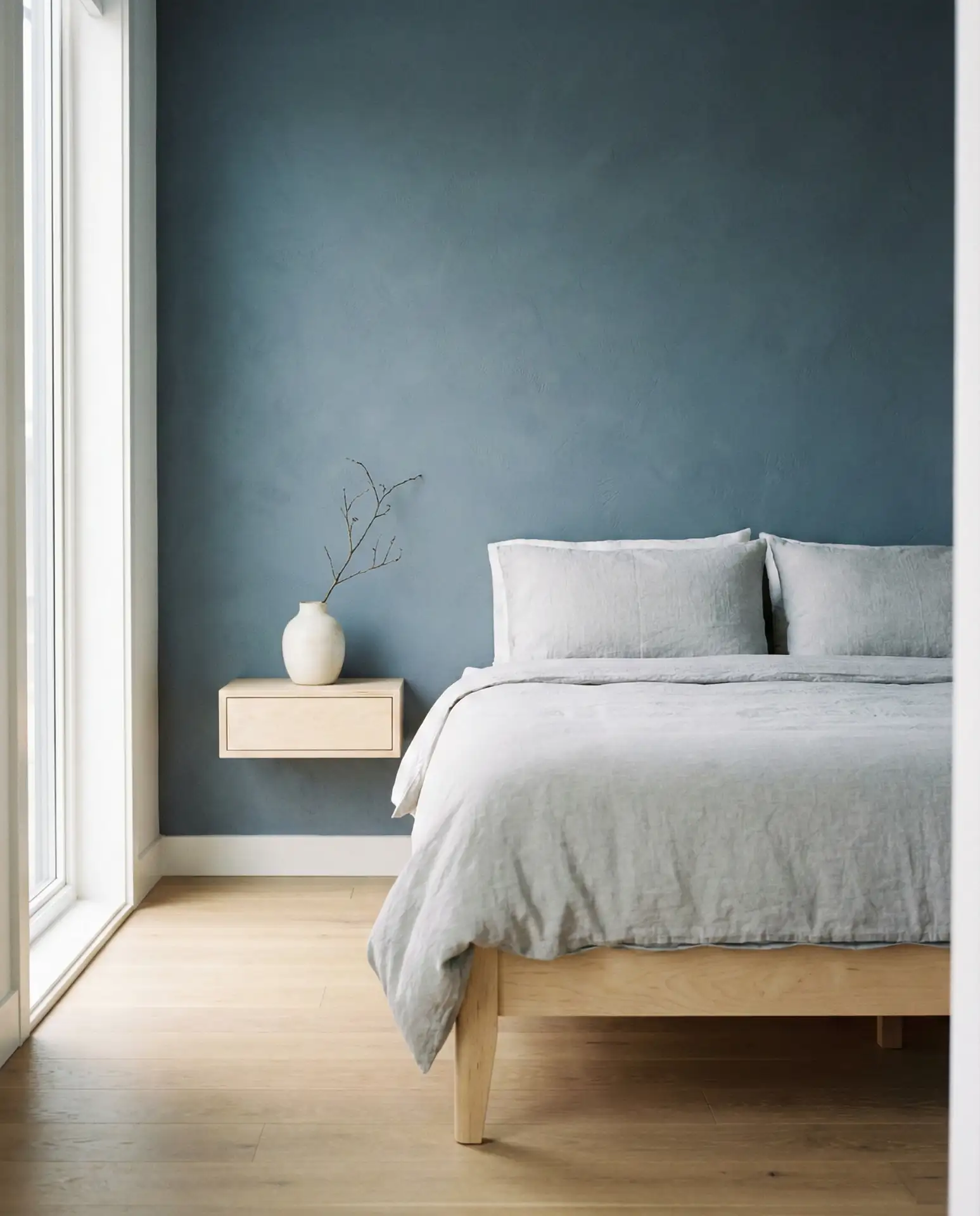
The blue and grey combination achieves something remarkable when handled with Scandinavian restraint—it feels both calm and purposeful. This isn’t about coldness but about editing: selecting furniture with clean lines, limiting decorative objects to a few meaningful pieces, and allowing negative space to function as a design element. The blue should be muted rather than vibrant—think slate blue or dusty denim rather than cobalt—and the grey should provide grounding rather than competing for attention.
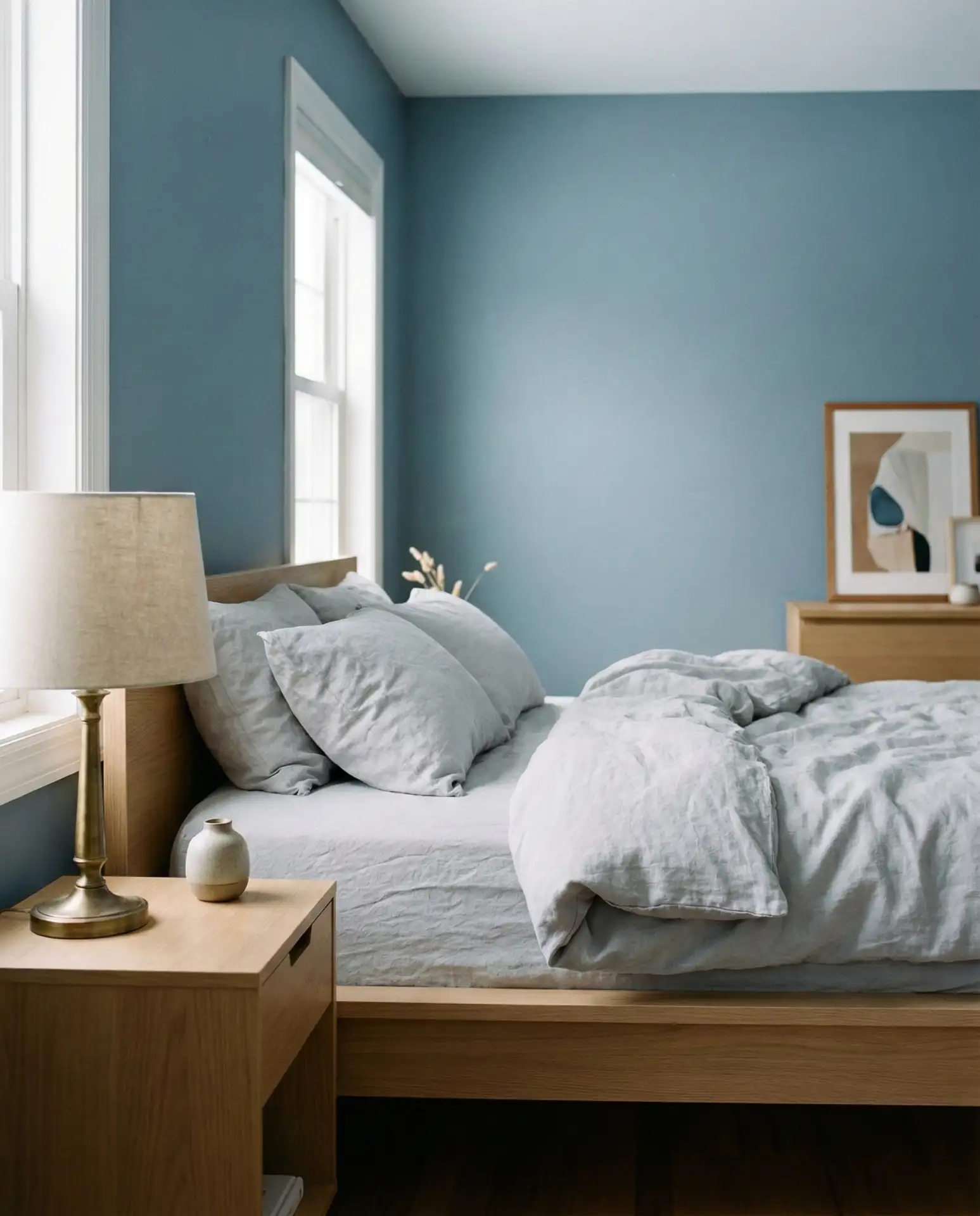
A micro-story: A friend in Minneapolis recently transformed his bedroom using this exact palette after years of struggling with darker, heavier aesthetics that made winter mornings feel oppressive. The lighter blue and grey scheme didn’t sacrifice masculinity but instead created a space that responded better to seasonal light changes—brighter and more energizing during long winters, cool and restful during brief humid summers.
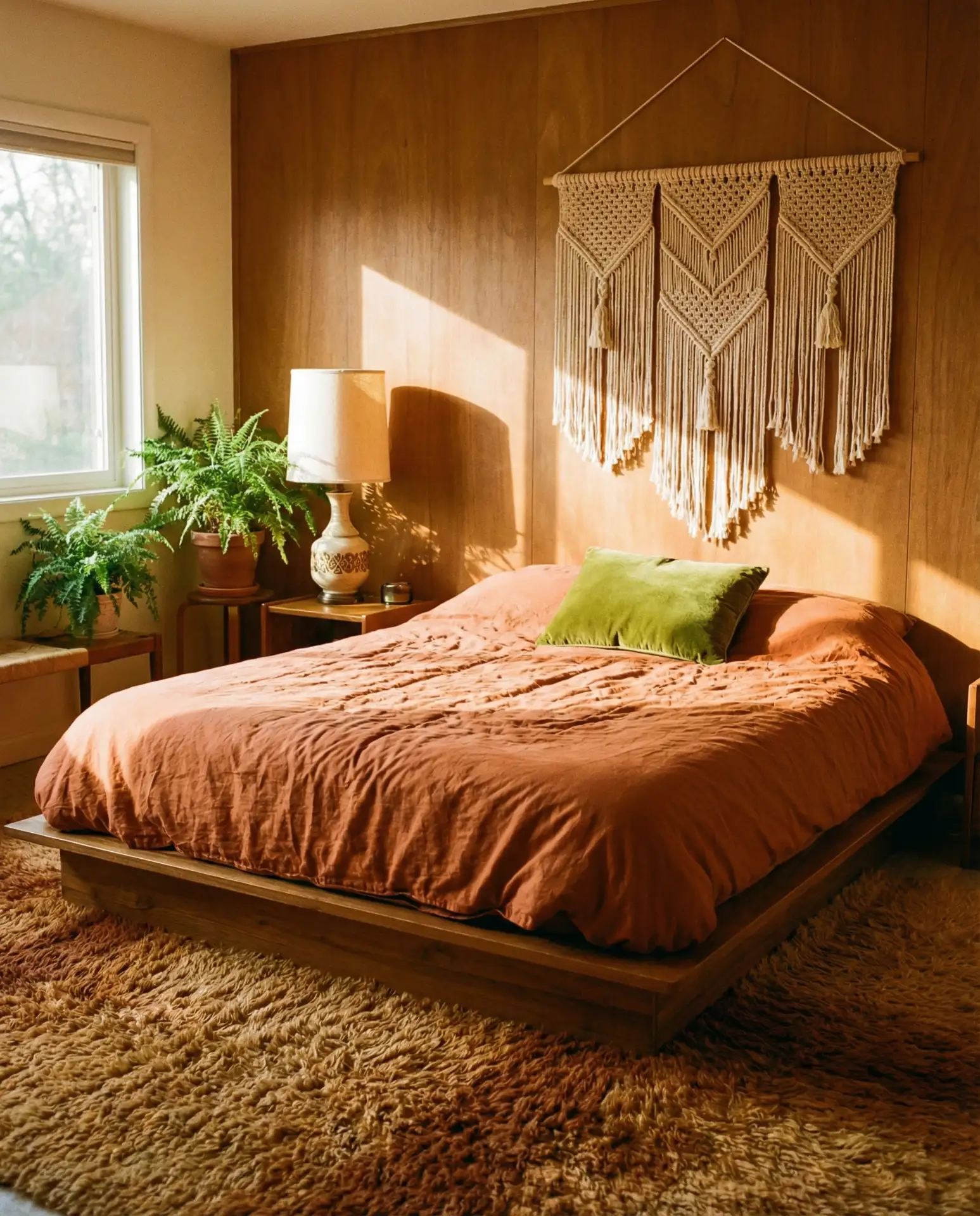
8. Rich Wood Paneling with Modern Edge
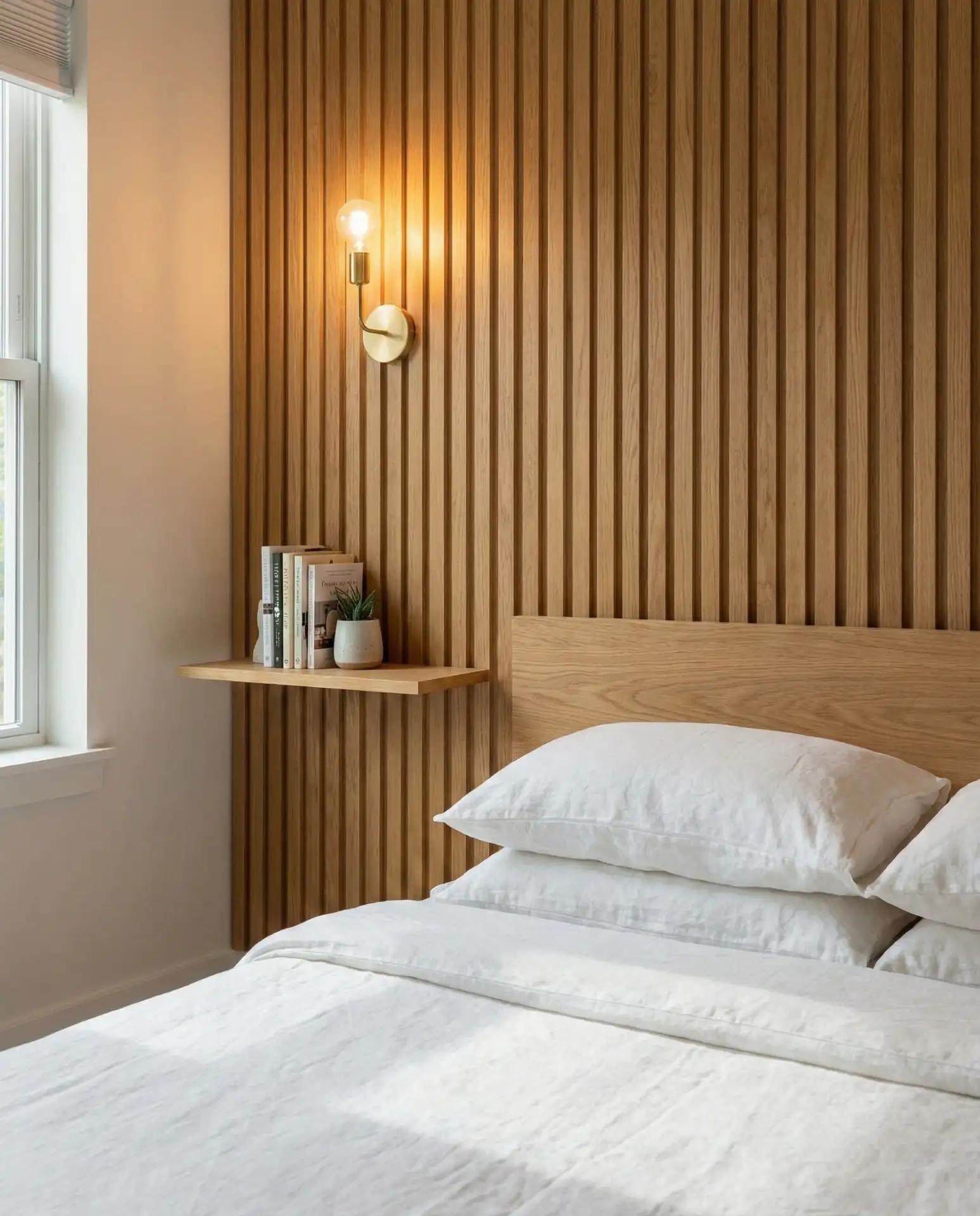
Vertical wood paneling has shed its dated reputation and emerged as a sophisticated backdrop for contemporary bedrooms. The key is selecting the right wood and finish—walnut or oak with a matte seal reads modern, while knotty pine with glossy varnish will always feel retro. Install panels on a single accent wall rather than enclosing the entire room, and pair the natural warmth with deliberately simple furniture in metal or upholstered forms. The contrast between organic wood and streamlined furnishings creates dynamic tension.
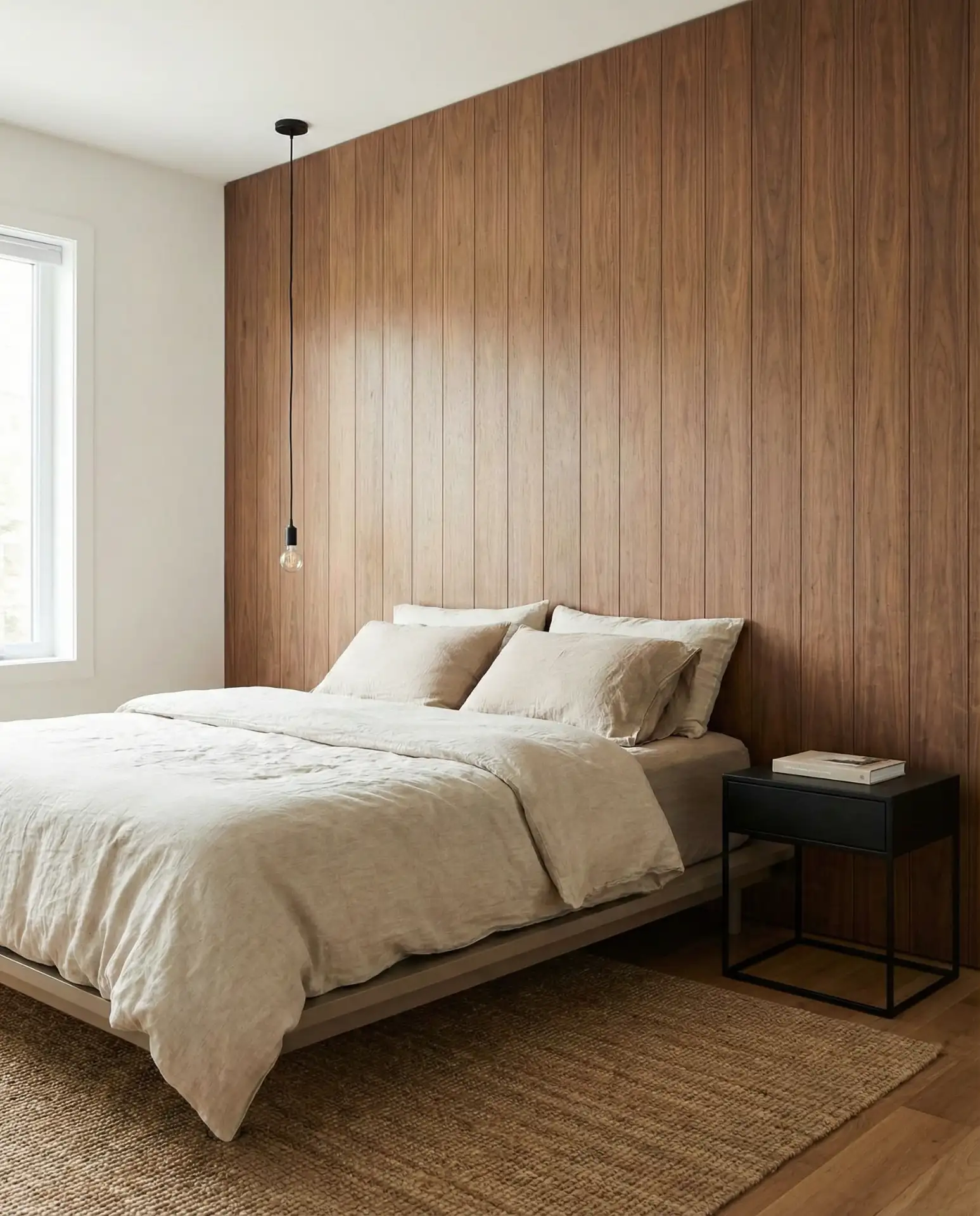
Regional context: Wood paneling resonates particularly well in regions with strong woodworking traditions—Vermont, Oregon, and North Carolina—where local craftsmen and reclaimed wood suppliers make custom solutions more accessible. That said, the proliferation of peel-and-stick wood planks and prefabricated panel systems has democratized the look, making it achievable even in apartments or rentals where permanent installation isn’t possible.
9. Deep Red Accent Wall with Neutral Balance
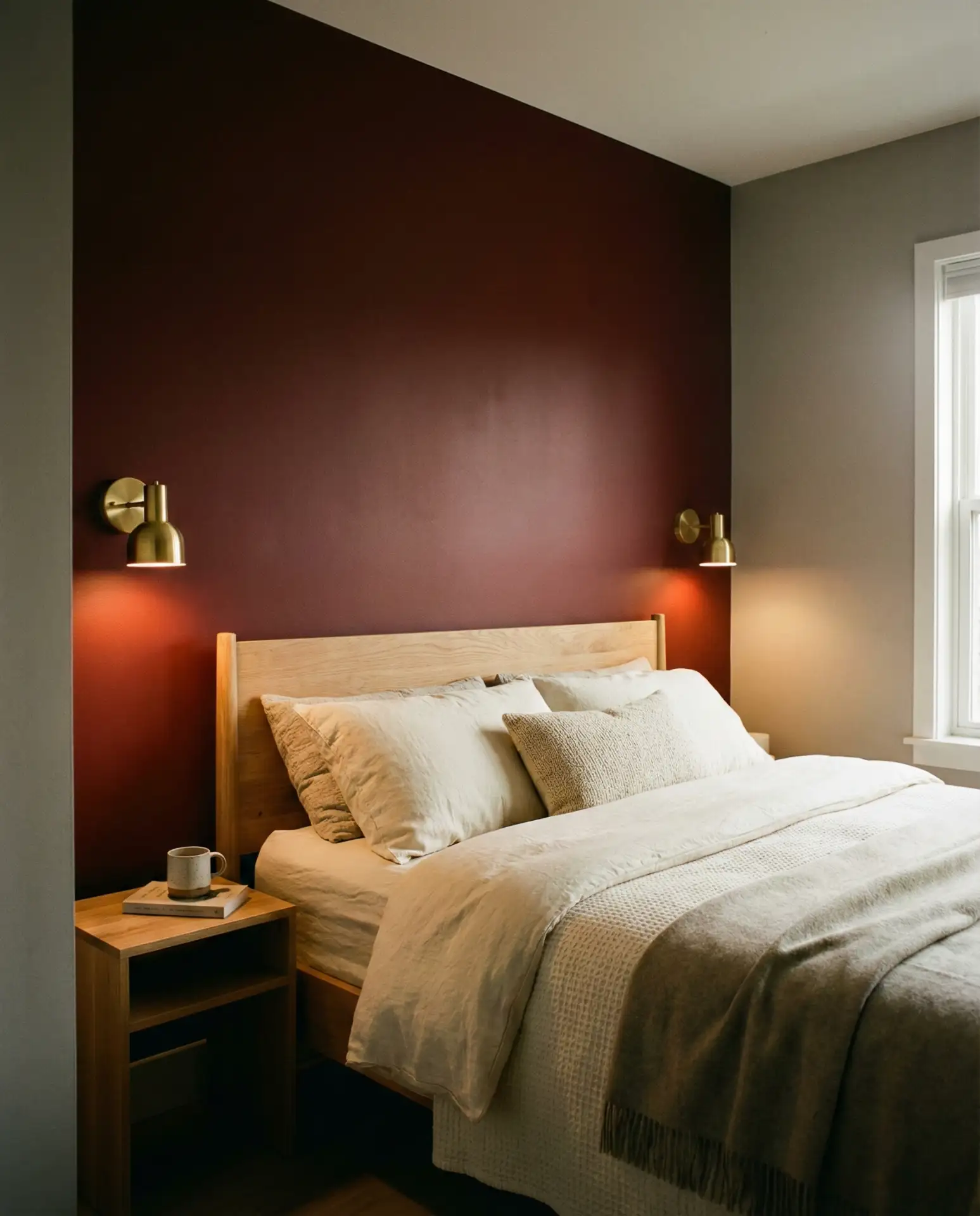
A single wall in deep red—burgundy, oxblood, or brick red rather than fire engine—introduces warmth and confidence without overwhelming the space. This bold move requires careful balance: the remaining walls should be neutral (warm white, cream, or light grey), and furnishings should lean toward simple forms in natural materials. The wooden bed frame, leather accents, and perhaps a vintage rug all help ground the red so it reads as intentional rather than impulsive.
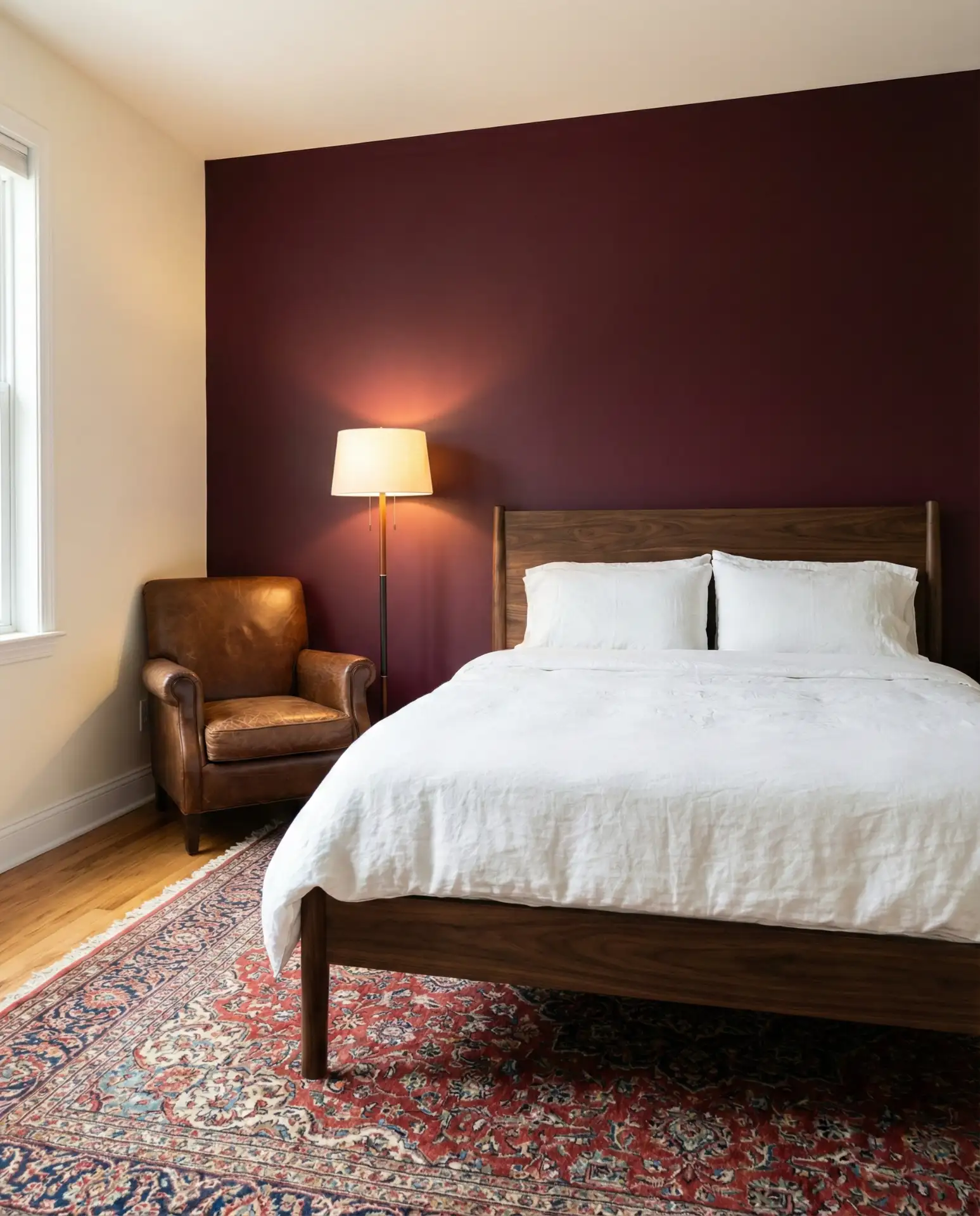
Expert commentary: Deep red in bedrooms is a sophisticated choice that often gets dismissed as too bold, but designers point out that it’s actually quite forgiving in terms of decor flexibility. Unlike trendy colors that date quickly, a well-executed red wall has a timeless quality—it’s appeared in American interiors from colonial times through mid-century modern to today. The key is treating it as a backdrop rather than a statement that demands constant attention.
10. Cozy Cabin Aesthetic with Layered Bedding
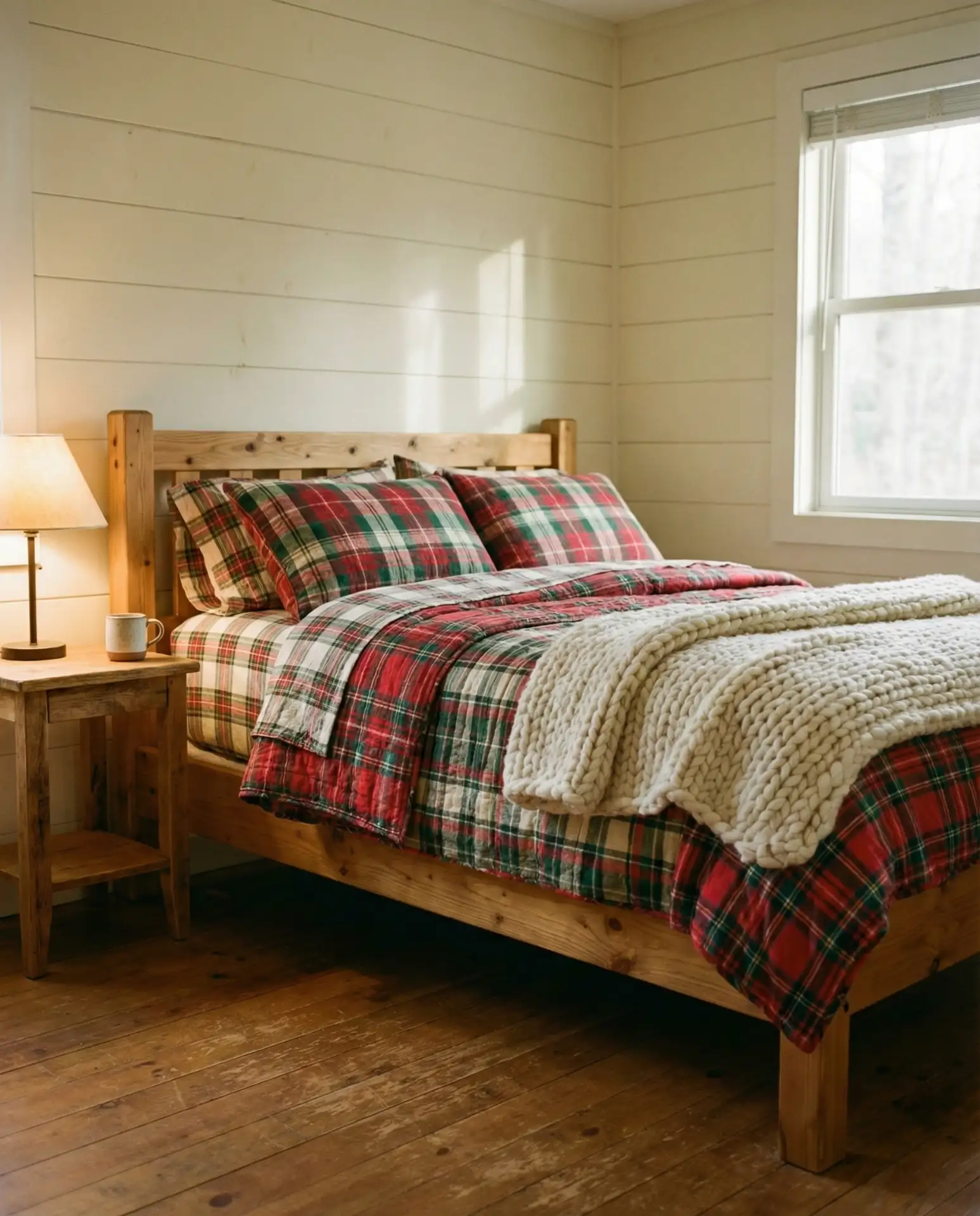
The cozy cabin bedroom translates beautifully to urban and suburban settings when executed with restraint. This isn’t about antler chandeliers or log furniture but rather about capturing the essential warmth and refuge that mountain retreats provide. Focus on tactile comfort: flannel sheets, down comforters, and wool blankets in buffalo check or solid earth tones. A wooden bed frame with visible grain, perhaps in pine or cedar, anchors the look without requiring you to commit to a full rustic theme.
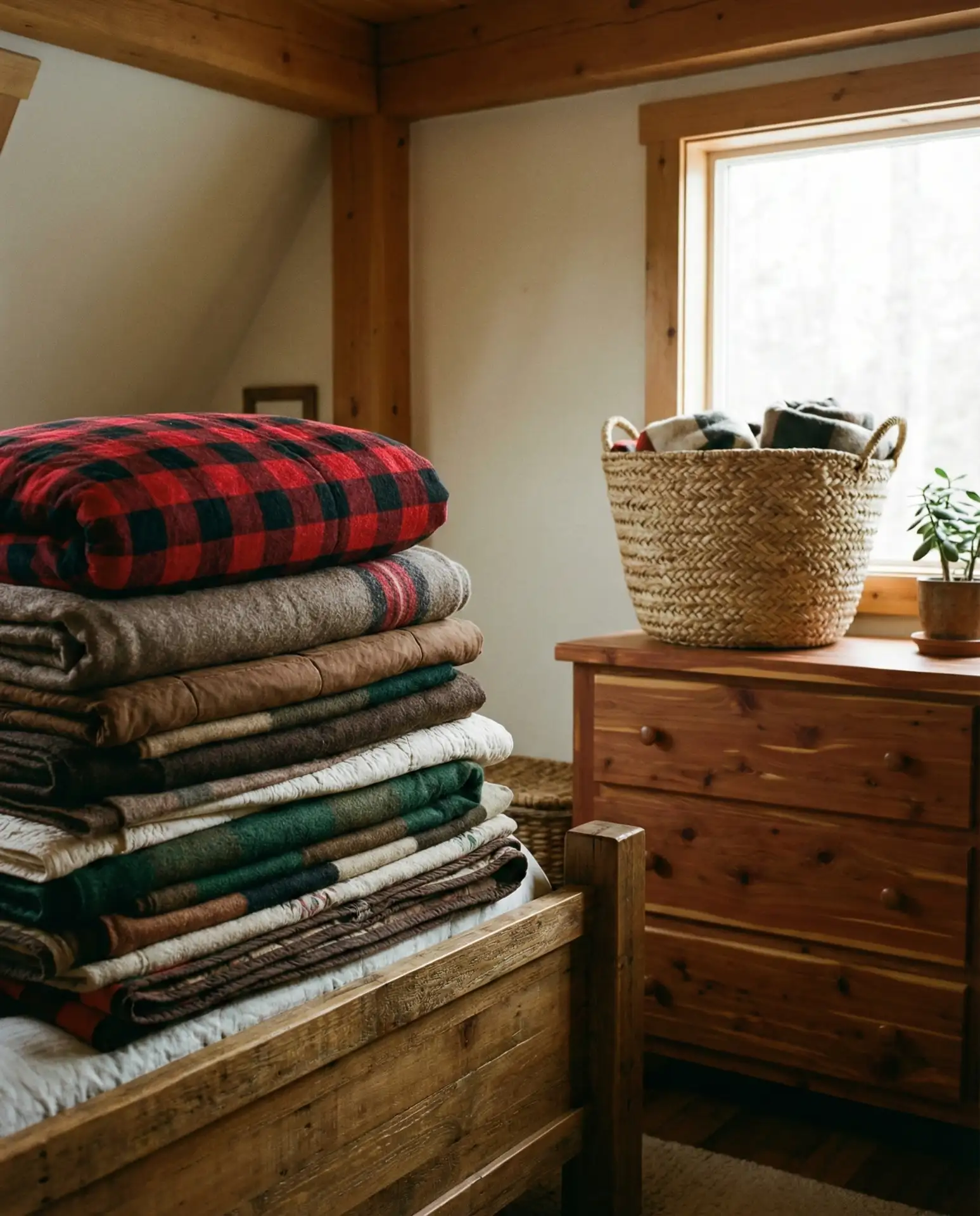
Where it works best: Mountain states like Colorado, Montana, and Wyoming obviously embrace this aesthetic naturally, but it’s equally popular in colder climates across the Upper Midwest and Northeast, where extended winters make genuine coziness a practical concern rather than just an aesthetic choice. Even in temperate regions, the psychological comfort of a cabin-inspired bedroom has broad appeal during cooler months.
11. Minimalist Black and White Contrast
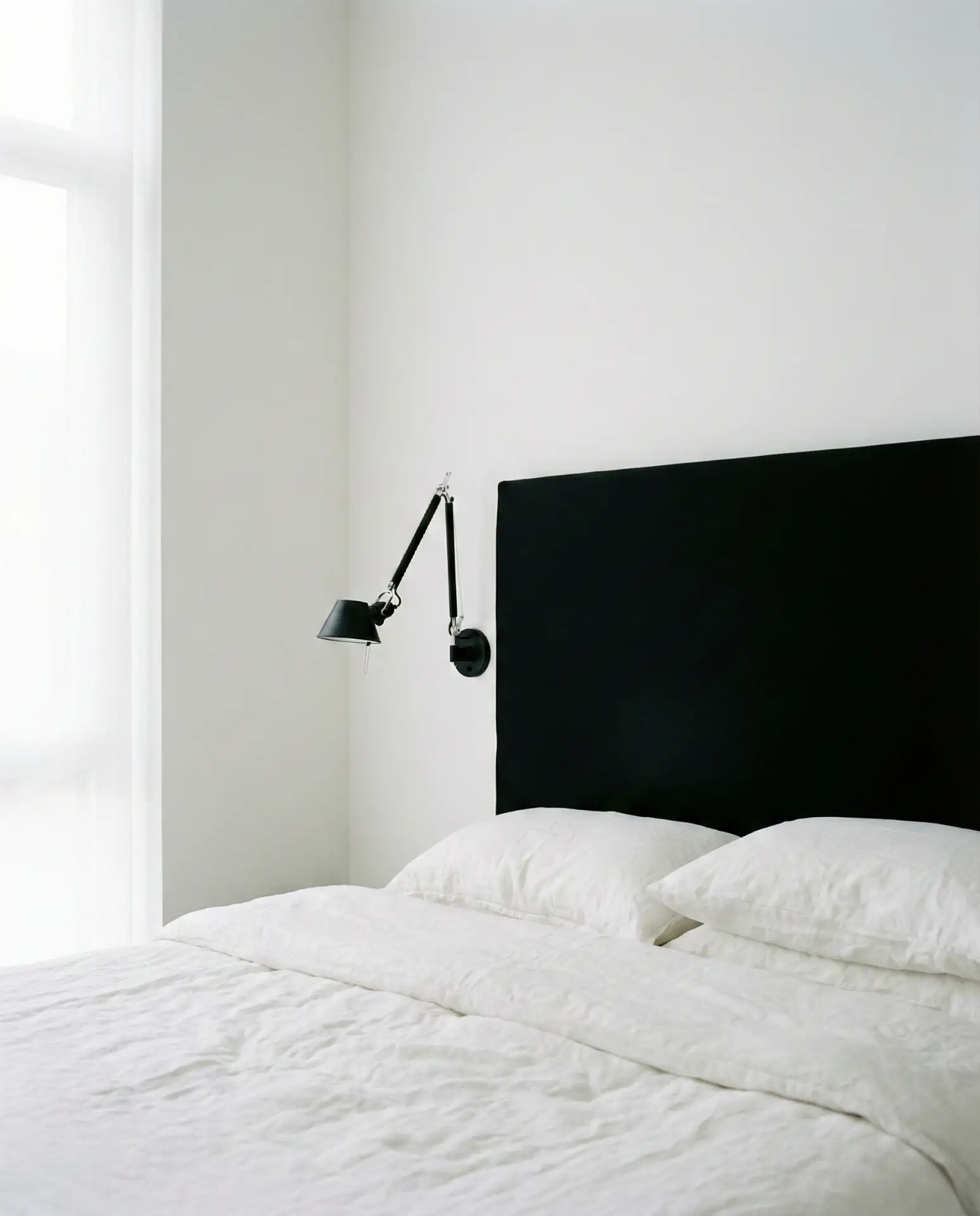
Stripping a bedroom down to black and white creates clarity that many men find mentally restful after visually chaotic workdays. This scheme requires discipline: every piece must earn its place, and clutter becomes immediately visible. The payoff is a space that feels intentionally curated rather than accidentally assembled. Use matte black metal bed frames, crisp white bedding, and perhaps a single piece of black and white photography or abstract art. Texture becomes crucial here—linen, cotton, wool—to prevent the room from feeling sterile.
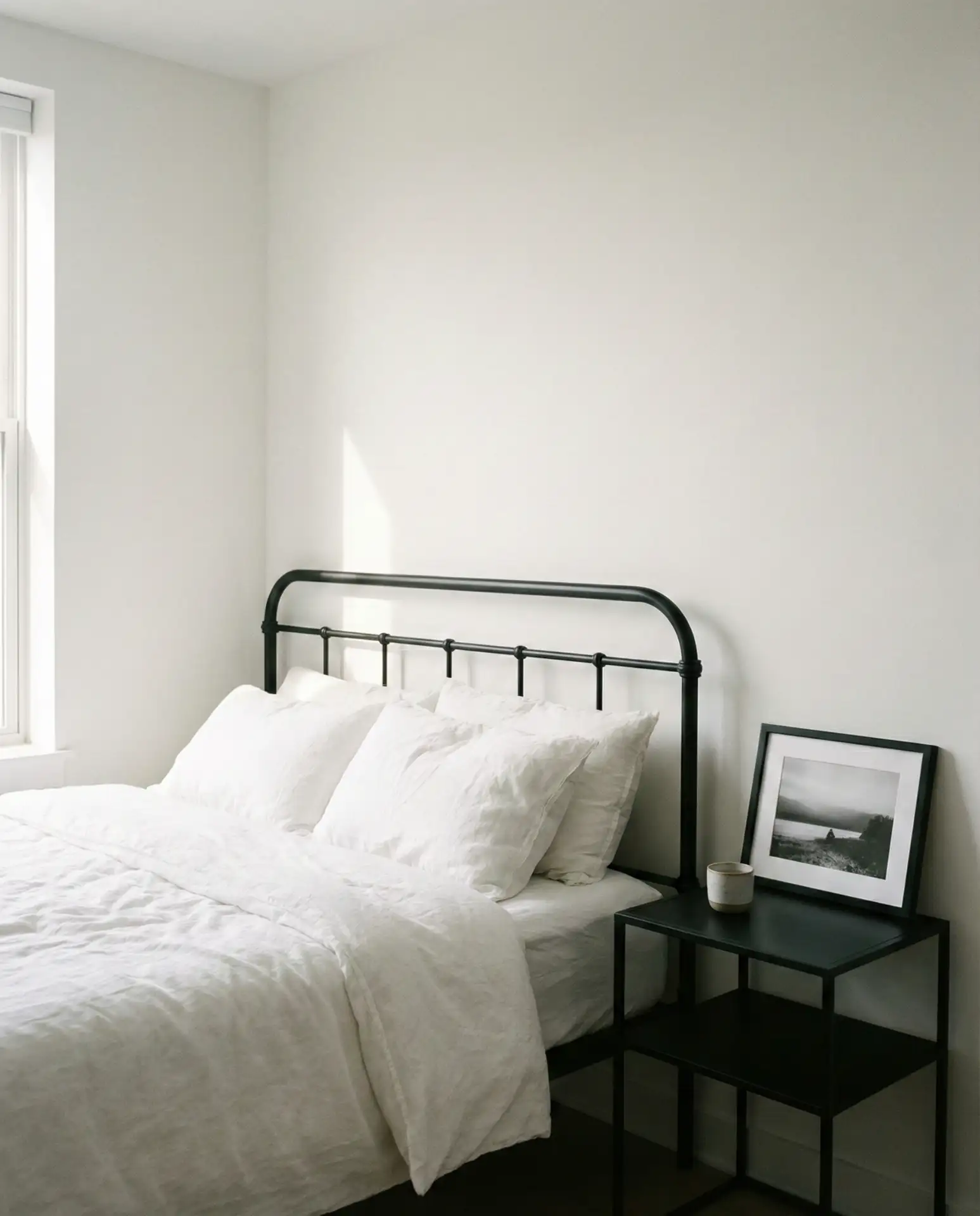
Real homeowner behavior: The biggest challenge with stark monochrome schemes isn’t achieving the look but maintaining it. Several men I’ve spoken with who’ve implemented this aesthetic report that it fundamentally changed their relationship with possessions—the visual discipline required to keep the room clean prompted broader lifestyle editing. The room itself became a practice in intentionality rather than just a design choice.
12. Sports-Themed Sophistication
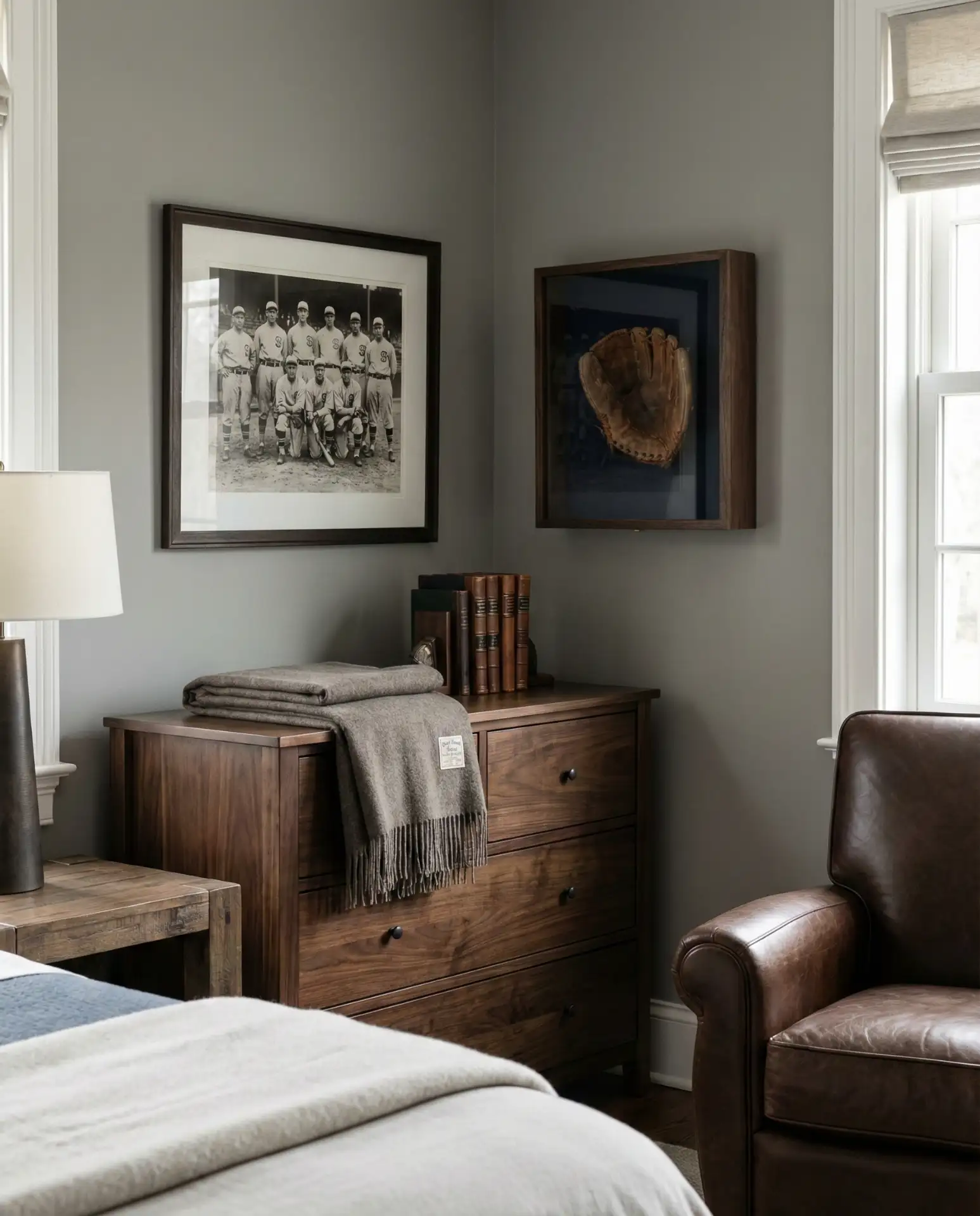
A sports-themed bedroom for adults requires finesse—the goal is acknowledging passion without creating a teenage fan cave. Frame vintage sports photography or classic game posters in museum-quality frames rather than pushpinning memorabilia to walls. Display a single meaningful piece of equipment—a vintage leather baseball glove, a signed football, or a championship jersey—in a shadow box rather than cluttering surfaces with trophies. The room’s foundation should remain neutral and sophisticated, with decor elements that happen to reference athletics rather than screaming team allegiance.
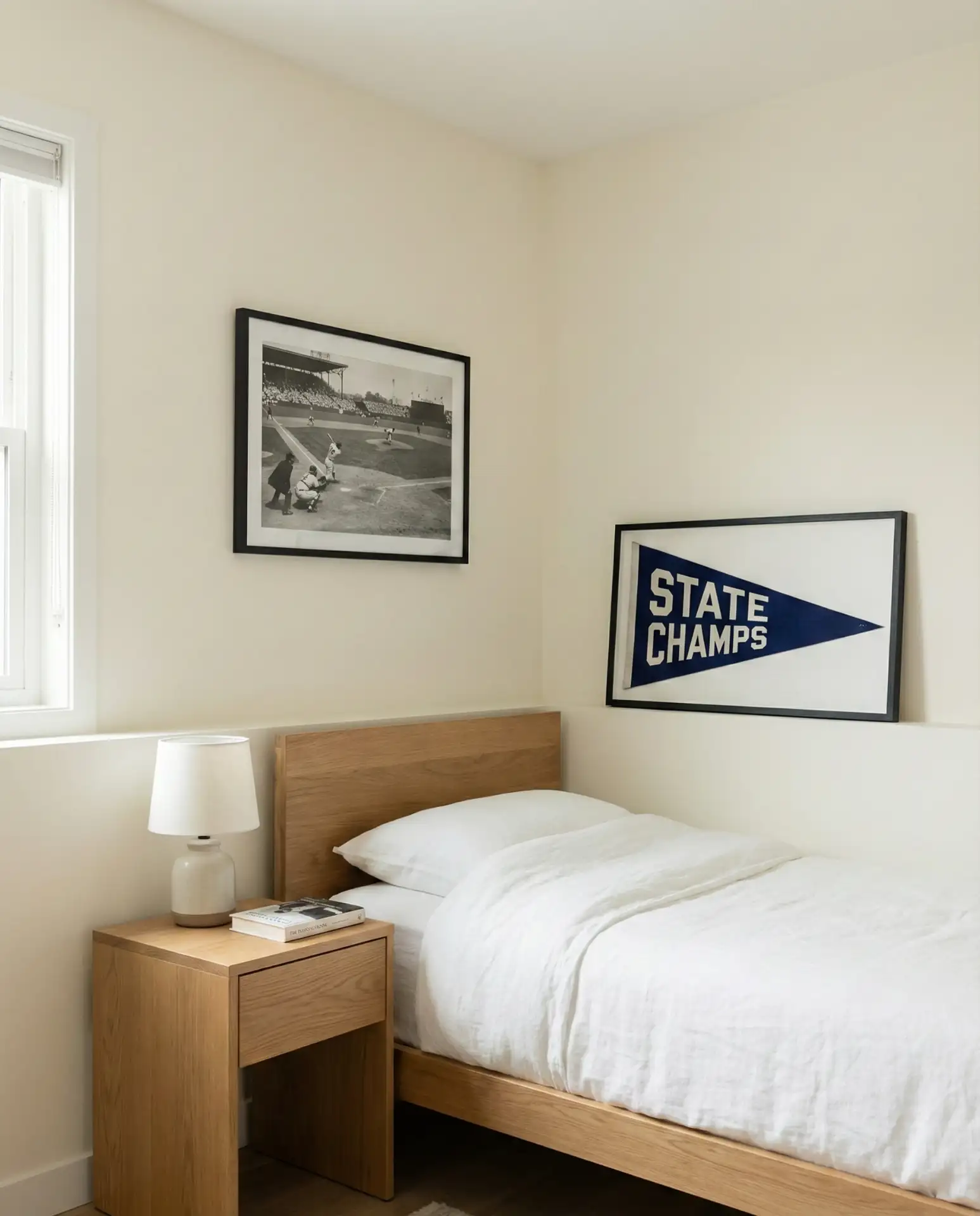
Practical insight: The key to adult sports decor is selectivity and quality over quantity. One beautifully framed photograph of Willie Mays or a perfectly mounted vintage hockey stick carries infinitely more impact than a wall covered in team pennants and cheap posters. Think of sports memorabilia the way you’d approach art collecting—choose pieces with personal significance, invest in proper framing and display, and edit ruthlessly to maintain visual breathing room.
13. Western Ranch Influence with Leather and Hide
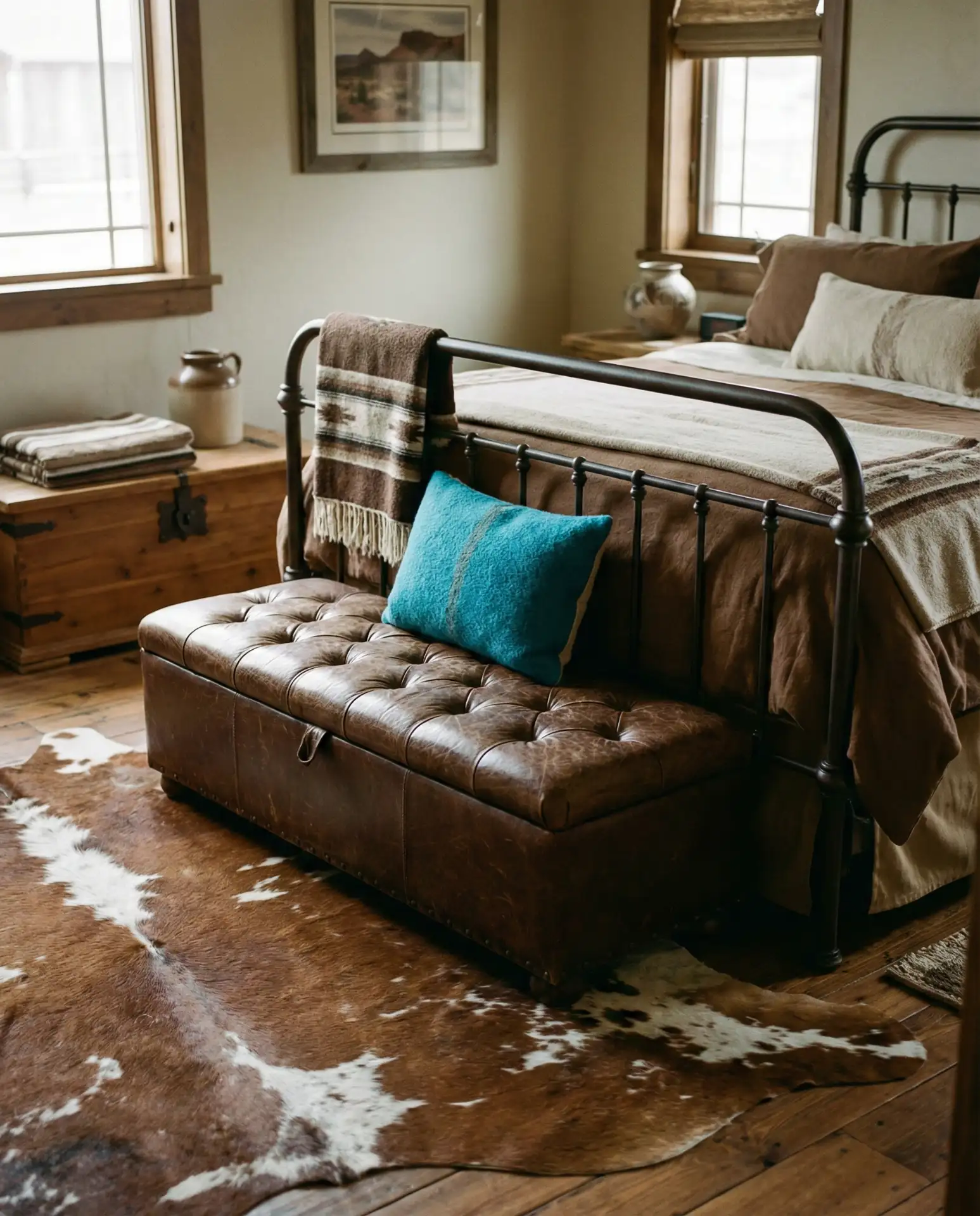
The Western aesthetic has evolved considerably from its kitschy 1980s interpretation into something far more refined and livable. Modern Western bedrooms draw on ranch heritage through materials—leather, cowhide, raw wood, and iron—rather than through literal cowboy imagery. A leather headboard or leather-seated bench, a cowhide rug layered over hardwood, and perhaps iron hardware on custom closet doors all reference the style without costume. Keep colors earthy: tans, browns, deep creams, and touches of rust or turquoise for accent.
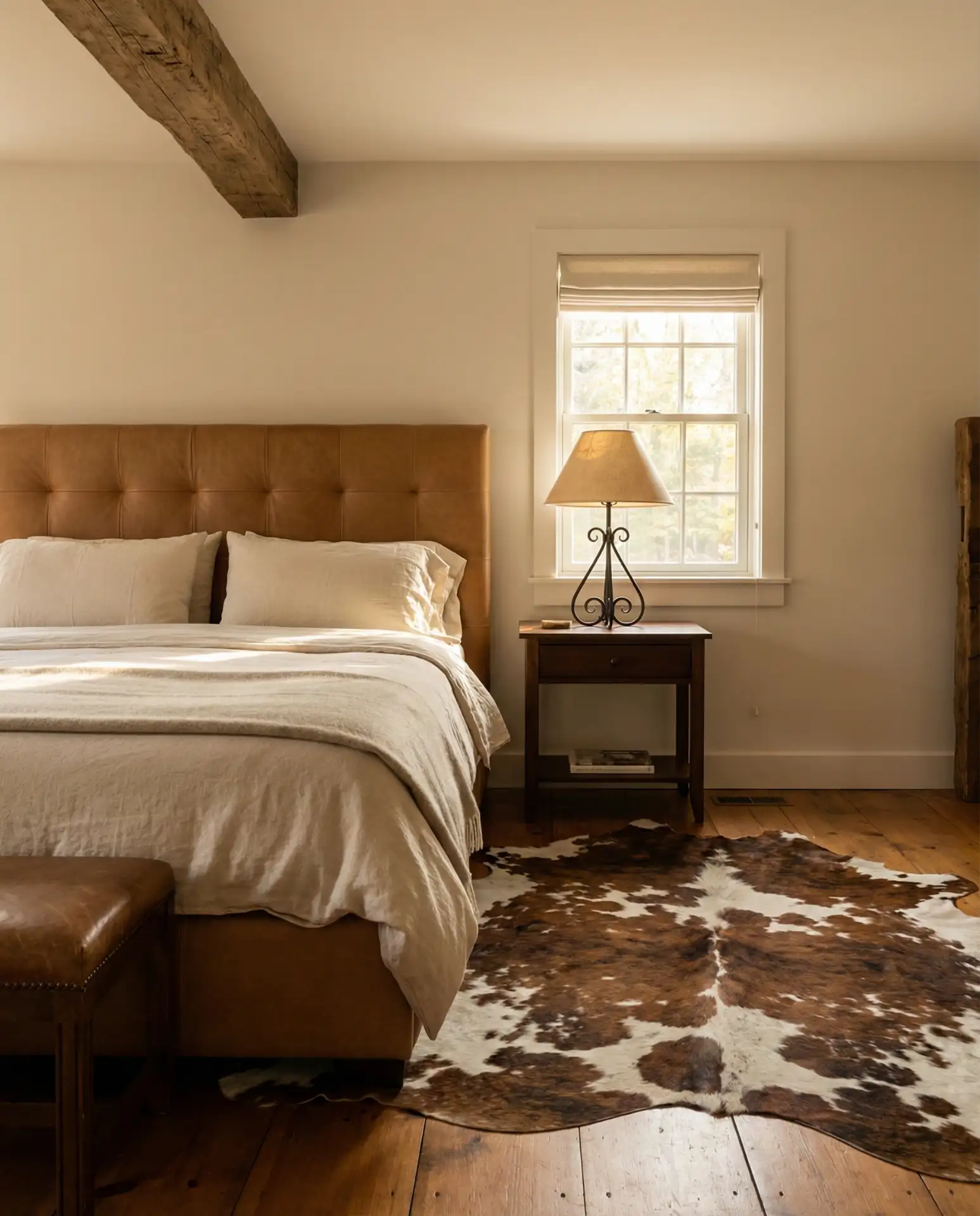
American lifestyle context: This aesthetic resonates most strongly in Texas, Arizona, Montana, and throughout the Southwest, but its influence has spread to unexpected places—Brooklyn lofts, for instance, where the contrast between Western materials and urban architecture creates a compelling juxtaposition. The style’s emphasis on durability and natural aging also appeals to those seeking furniture and materials that improve rather than deteriorate with time.
14. Low Platform Bed with Floor-Level Living
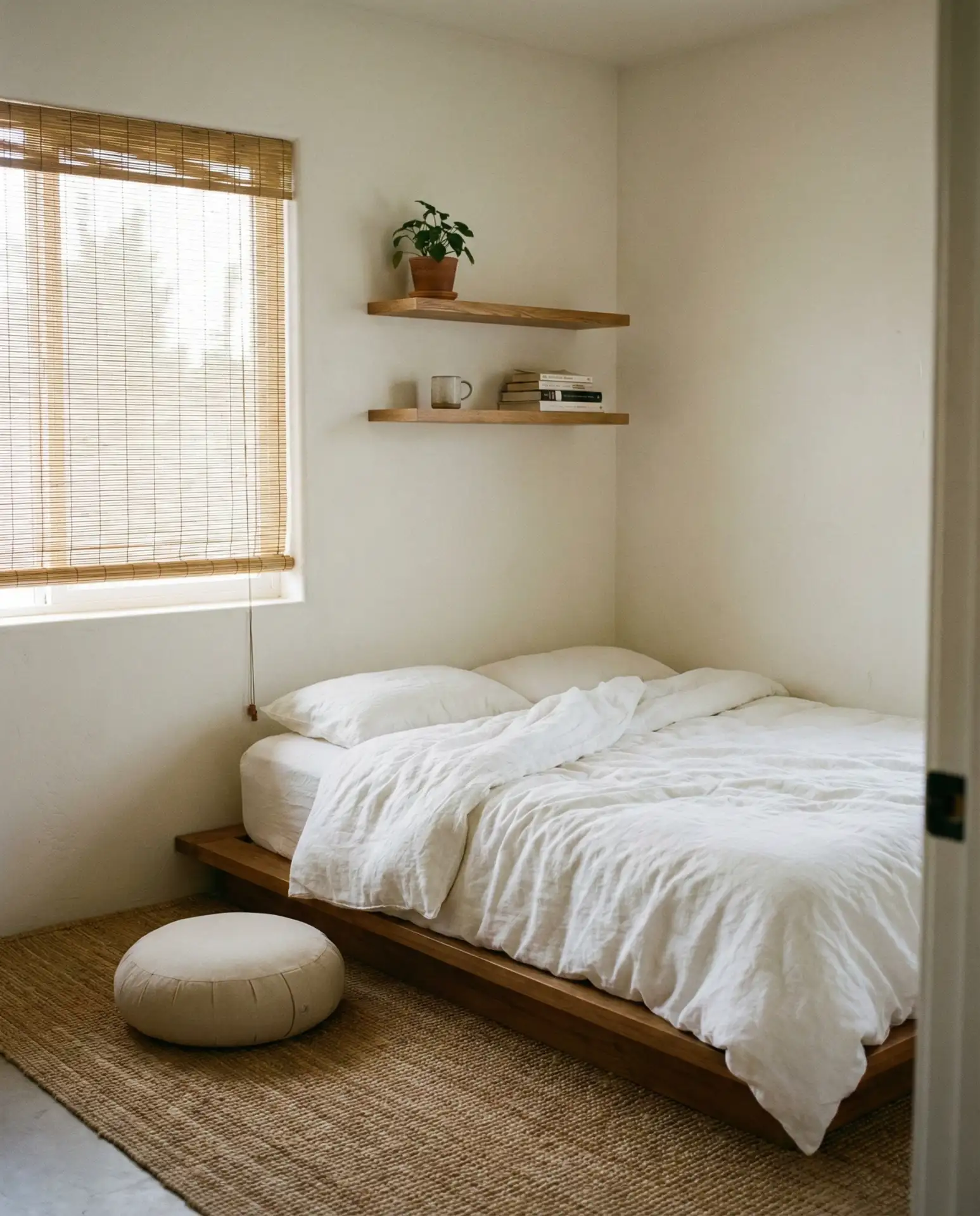
Low-profile platform beds fundamentally change a room’s proportions, making ceilings feel higher and the space more expansive. This Japanese-influenced approach works particularly well in smaller bedrooms or in homes with lower ceilings where traditional bed heights can feel cramped. Keep surrounding furniture equally low—floor cushions for seating, low dressers, and floating shelves rather than tall bookcases. The overall effect is calming and meditative, creating a bachelor pad that prioritizes rest rather than display.
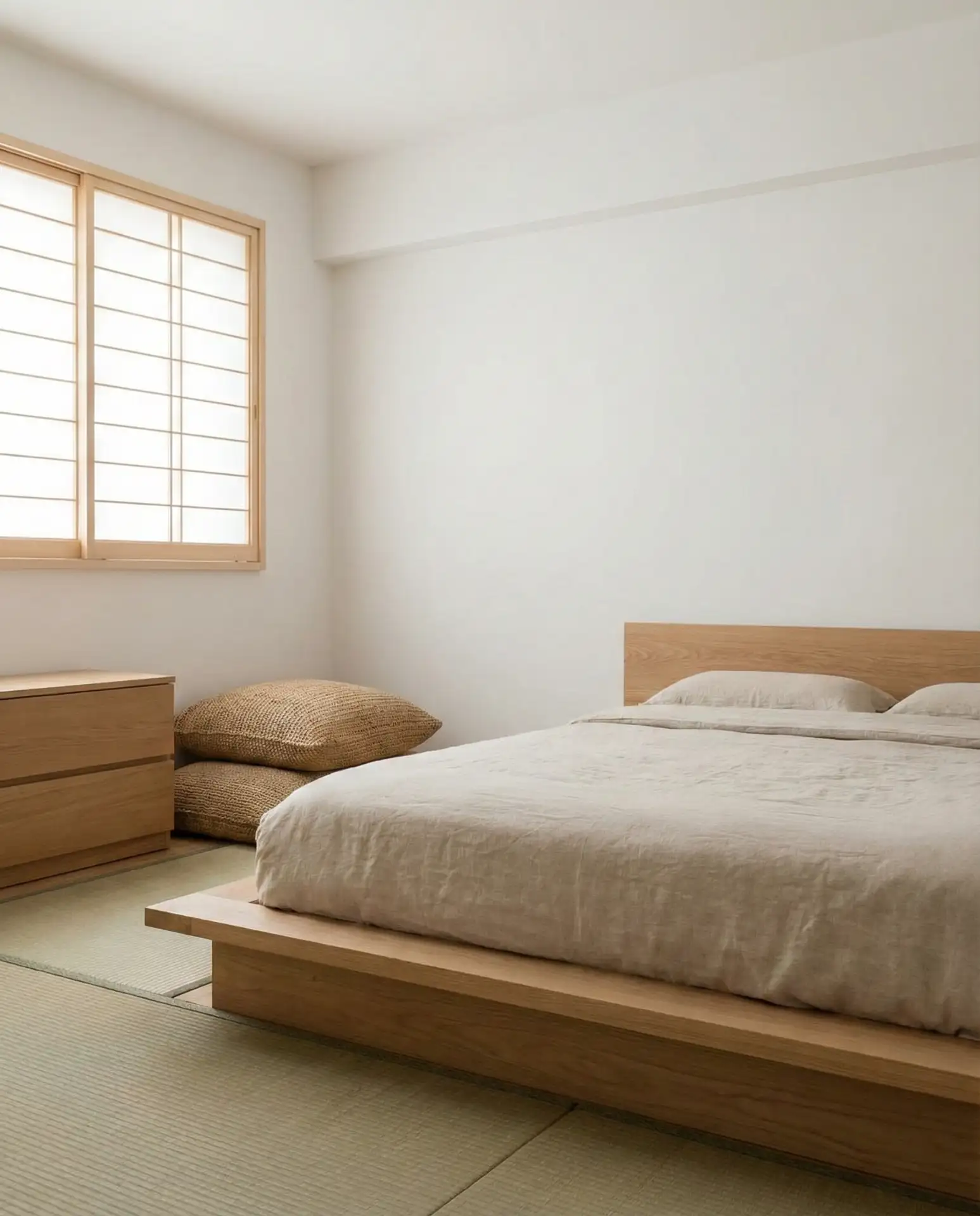
Common mistake to avoid: When adopting floor-level living, many people only lower the bed and leave other furniture at standard heights, which creates awkward visual relationships. For the aesthetic to work cohesively, you need to commit to the horizontal emphasis throughout the room. This doesn’t mean eliminating all vertical storage, but it does require thinking differently about how you organize and access your belongings.
15. Bachelor Pad with Smart Storage Solutions
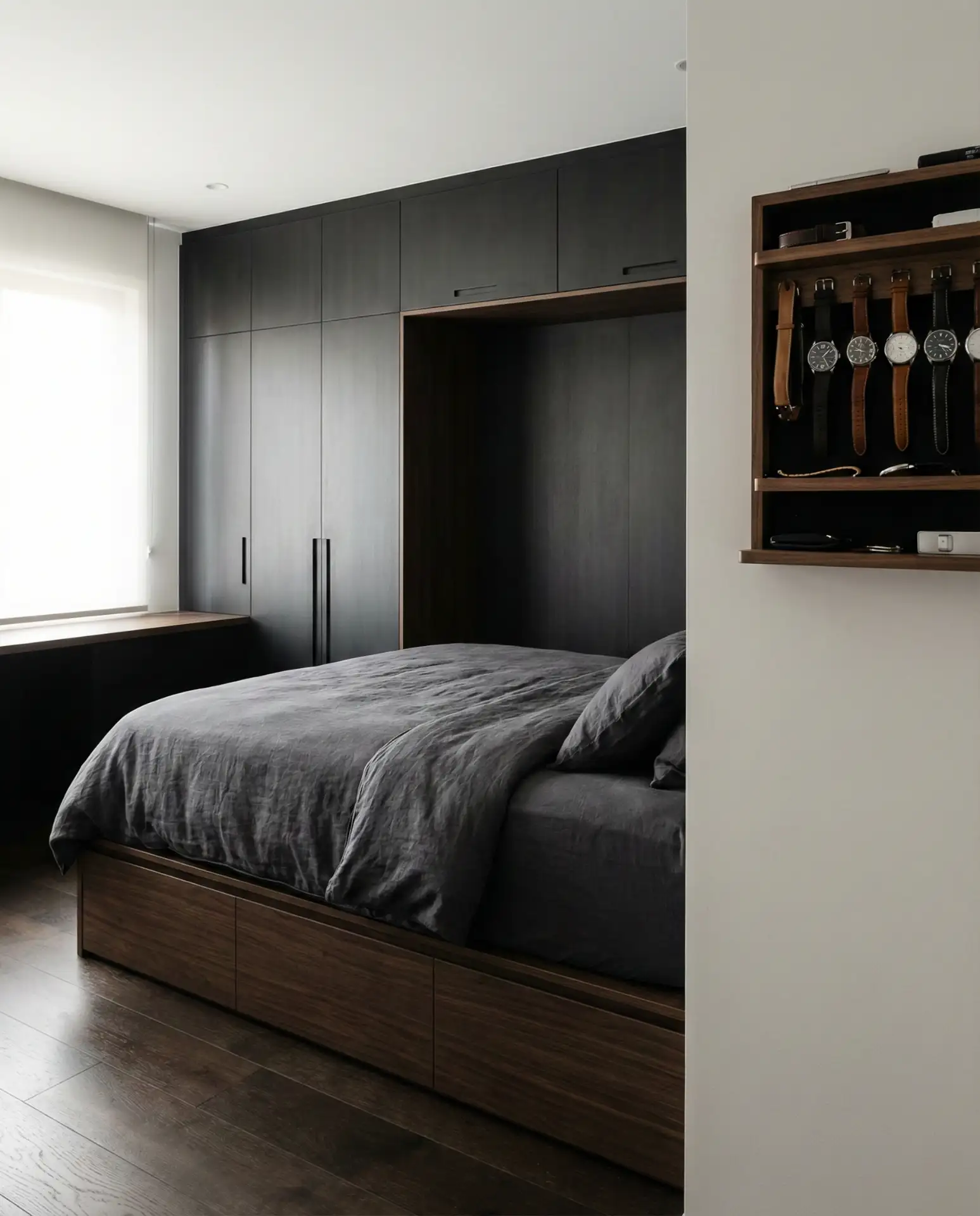
The modern bachelor pad bedroom balances style with genuine functionality, particularly when it comes to storage. Built-in wardrobes, under-bed drawers, and floor-to-ceiling closet systems keep clothing and gear out of sight while maintaining clean lines. Consider a bed frame with integrated storage drawers or a platform bed with hydraulic lift access to storage underneath. Wall-mounted systems for watches, sunglasses, or daily essentials keep counters clear while adding utilitarian decor that serves double duty.
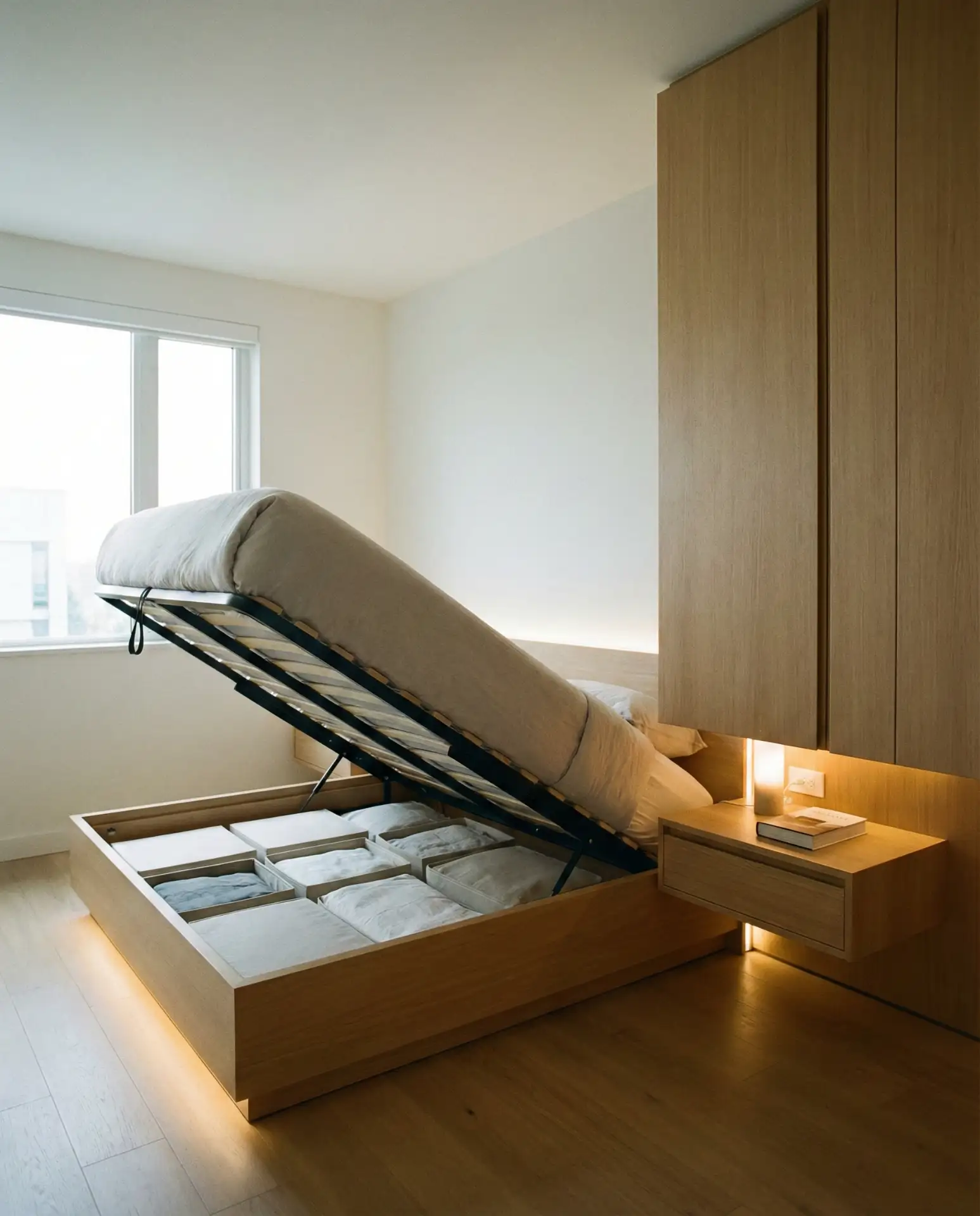
Budget angle: While custom built-ins can cost thousands, modular closet systems from IKEA, Container Store, or Elfa offer professional results at a fraction of the price. A weekend spent installing a well-planned modular system typically runs between $500 and $1500 depending on room size, compared to $5000+ for custom carpentry. The key is careful measurement and honest assessment of what you actually need to store rather than maximizing every available inch.
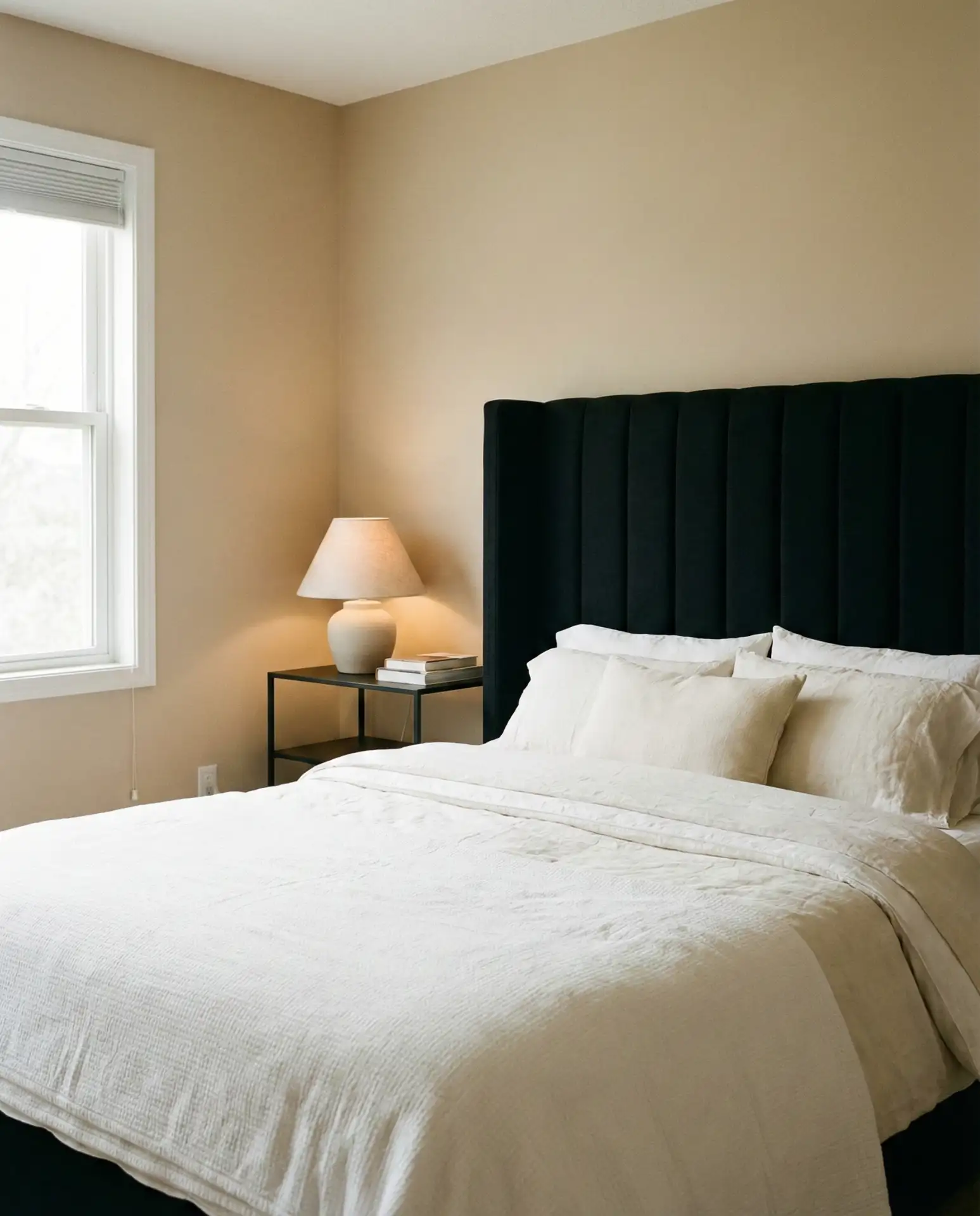
16. King-Size Statement with Minimal Surroundings
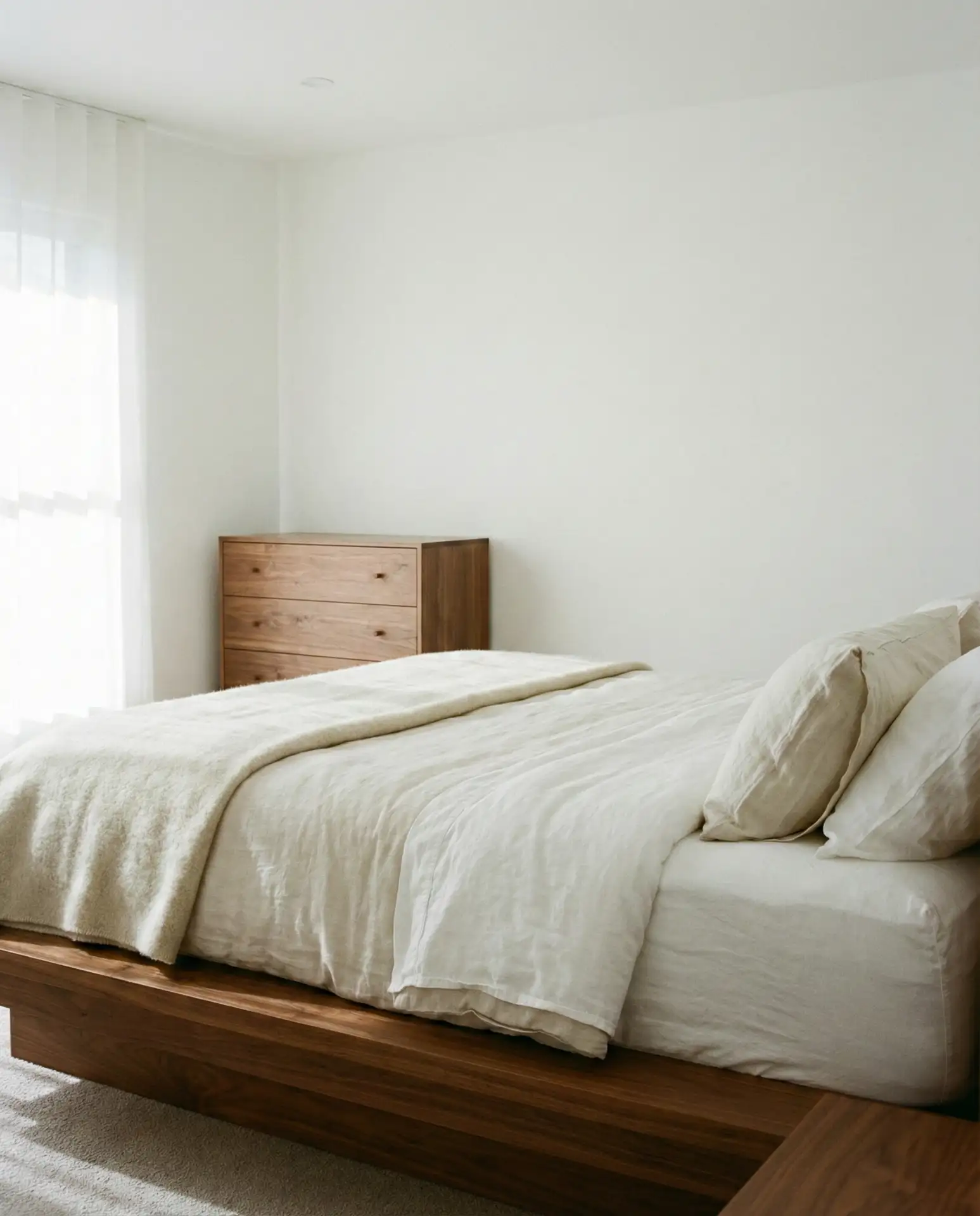
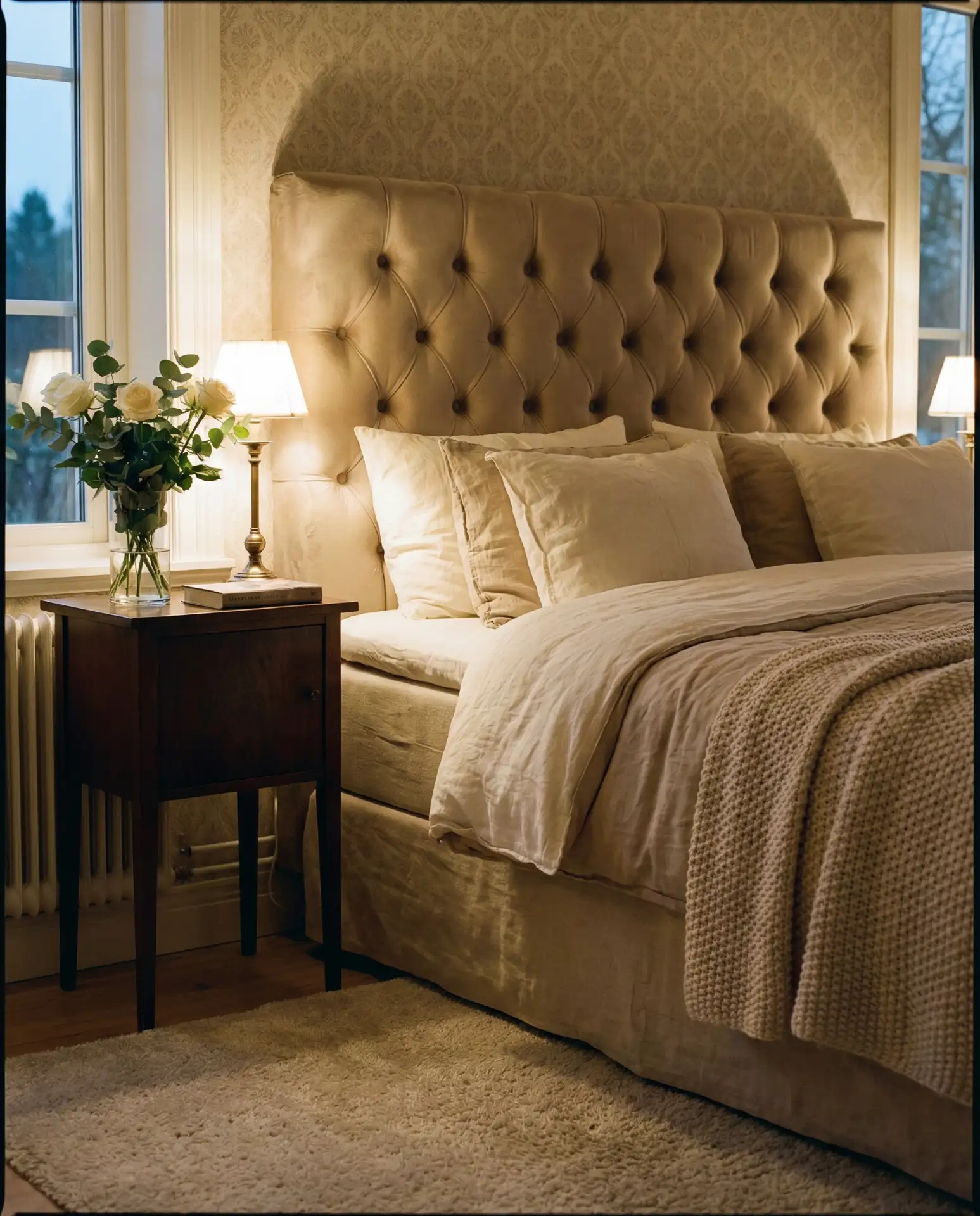
A king-size bed in a relatively spare room makes a deliberate statement about priorities—comfort and sleep quality matter more than filling every corner with furniture. This approach works especially well in master bedrooms of 200 square feet or larger, where the substantial bed can breathe without overwhelming the space. Keep additional furniture minimal: perhaps a single dresser, one comfortable chair, and simple nightstands. Let the bed itself, whether it’s an upholstered headboard or a striking wood frame, serve as the room’s focal point.
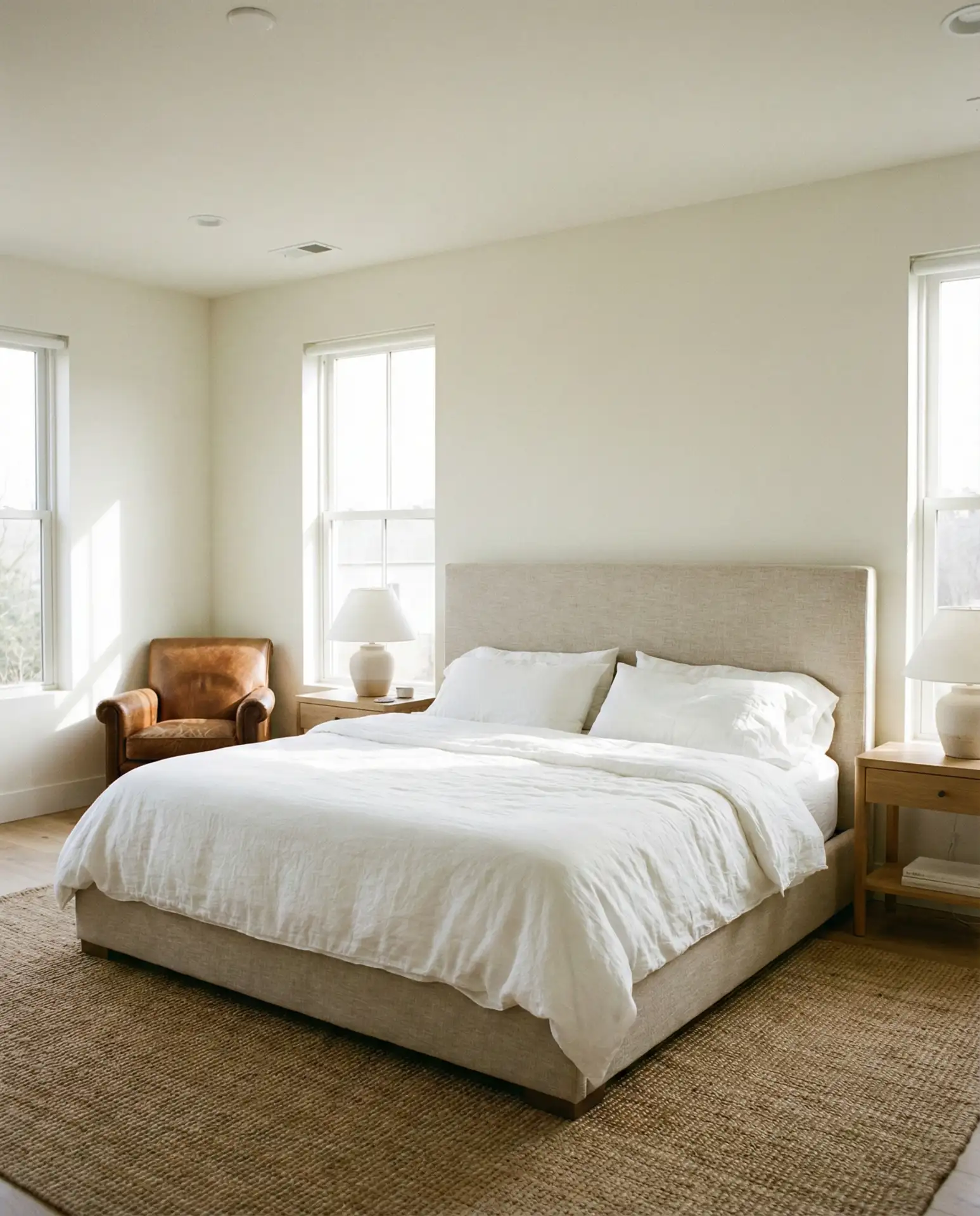
Where it works best: Suburban homes and newer constructions with generous bedroom square footage—particularly common in Sun Belt states like Arizona, Texas, and Nevada—provide ideal settings for this approach. Urban apartments with smaller bedrooms might find a king bed overwhelming, but in spaces where you have 250+ square feet, the combination of a substantial bed and spare surroundings creates luxury through restraint rather than excess.
17. Textured Carpet for Warmth and Acoustics
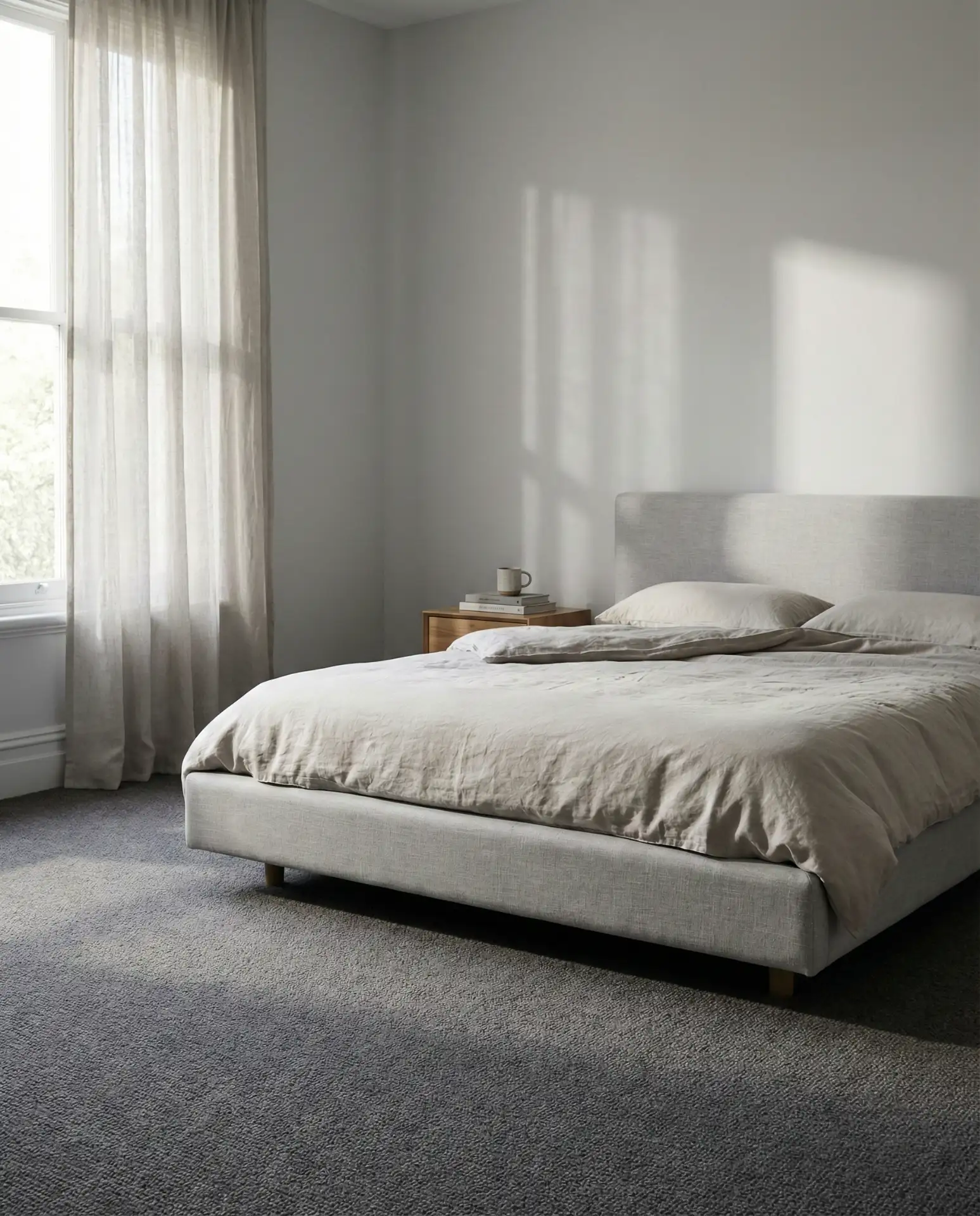
Quality carpet has made a quiet comeback in bedrooms after years of hardwood dominance, particularly among those prioritizing comfort and sound dampening. Modern options in grey, charcoal, or warm taupe provide neutral backgrounds that work with various design directions while adding necessary softness underfoot. The acoustic benefits are substantial in apartment buildings or homes where sound transmission matters. Look for dense, short-pile options in durable fibers that won’t show wear patterns or trap allergens.
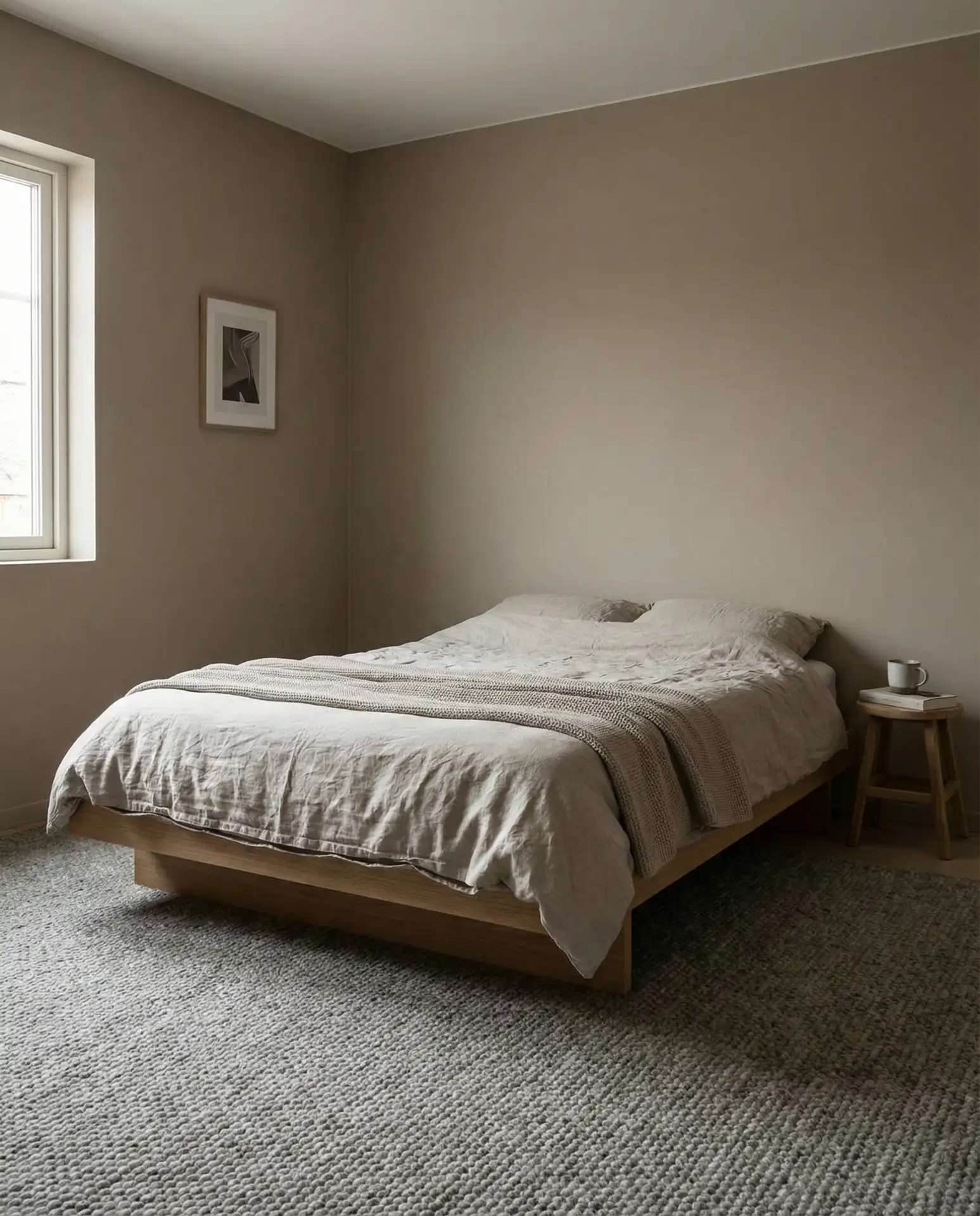
Expert commentary: Interior designers note that carpet’s thermal properties make a measurable difference in heating efficiency, particularly relevant in colder climates or in older homes with less effective insulation. Beyond the practical benefits, there’s something psychologically comforting about carpet in bedrooms—it signals a space designed specifically for private retreat rather than public presentation, which many men find appealing after years of hardwood-everywhere design trends.
18. Mixed Wood Tones for Visual Interest
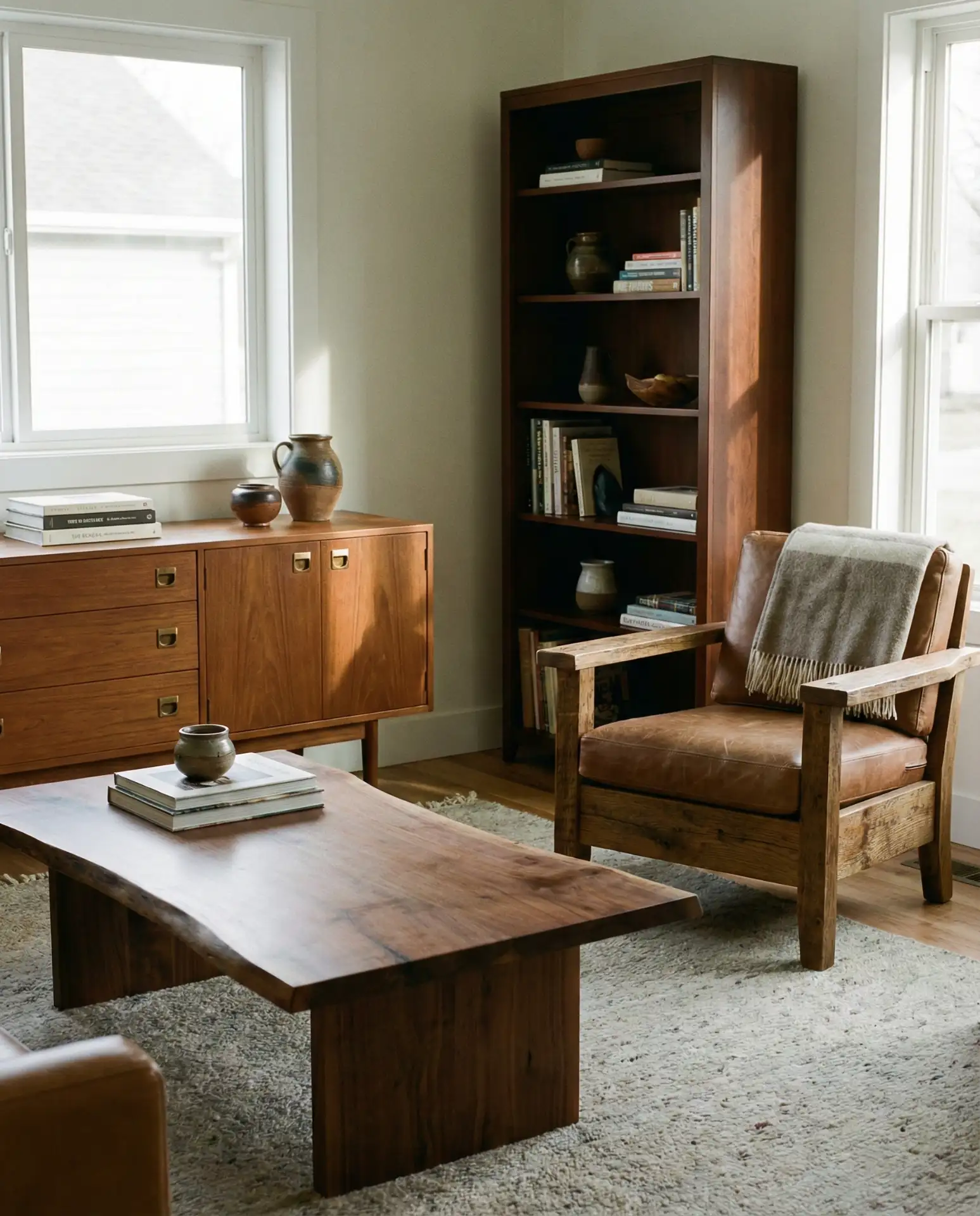
The outdated rule about matching all wood finishes has thankfully faded, opening up significantly more flexibility in furniture selection. A wooden bed frame in walnut can coexist beautifully with oak nightstands and a teak dresser, provided you maintain some common thread—whether that’s similar undertones (all warm or all cool), consistent grain visibility, or comparable finish sheens. This approach allows you to acquire quality pieces over time rather than buying complete matching sets, and it creates more authentic, collected-looking spaces.
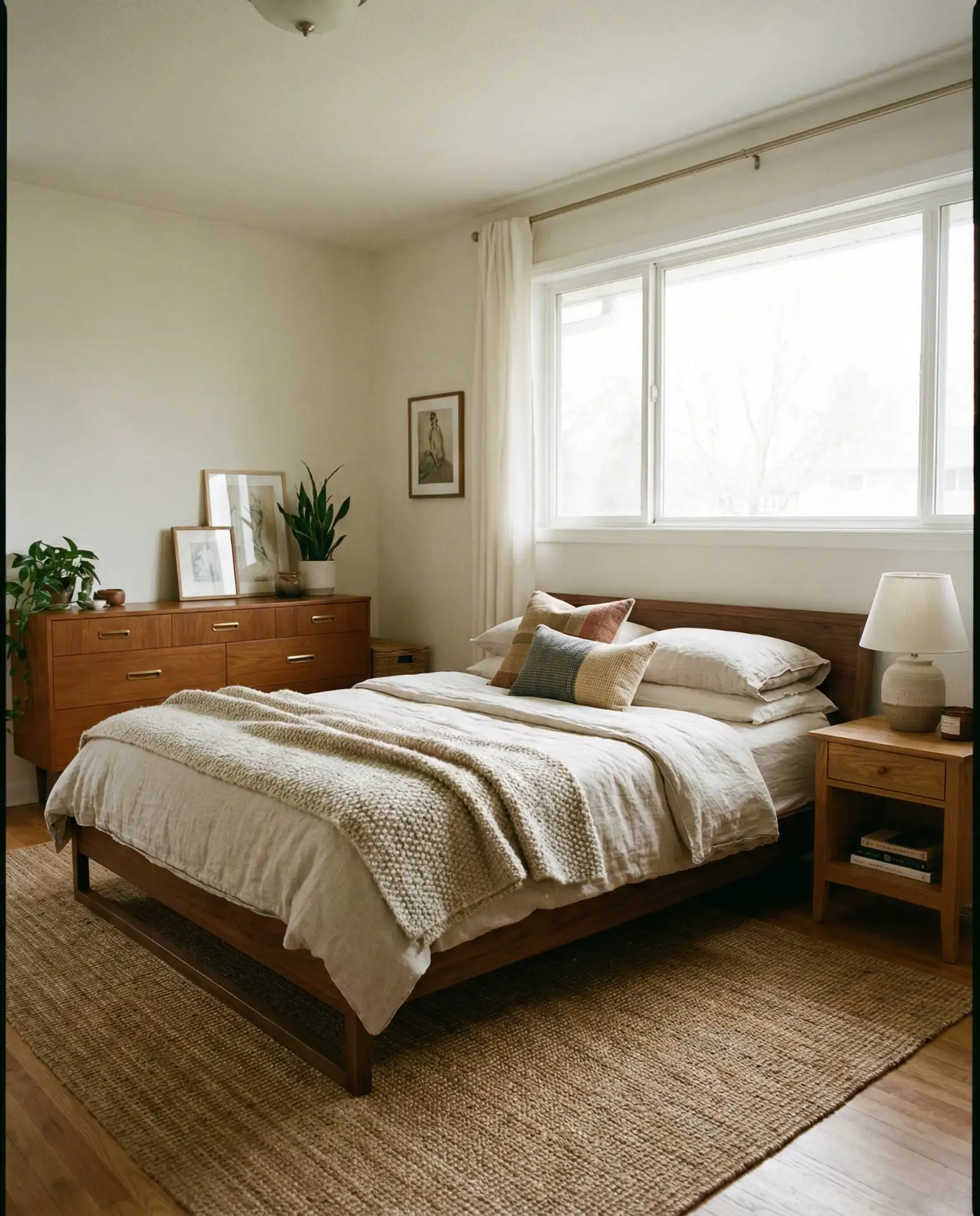
Practical insight: When mixing woods, the safest approach is to vary them by function rather than clustering different tones in one area. For example, keep the bed frame and nightstands similar, but choose a different wood for a dresser on the opposite wall. This creates intentional variation rather than the appearance of failed matching. Alternatively, if pieces are in close proximity, make the difference obvious—pair very light ash with very dark walnut rather than trying to approximate similar medium tones.
19. Reading Nook with Comfortable Seating
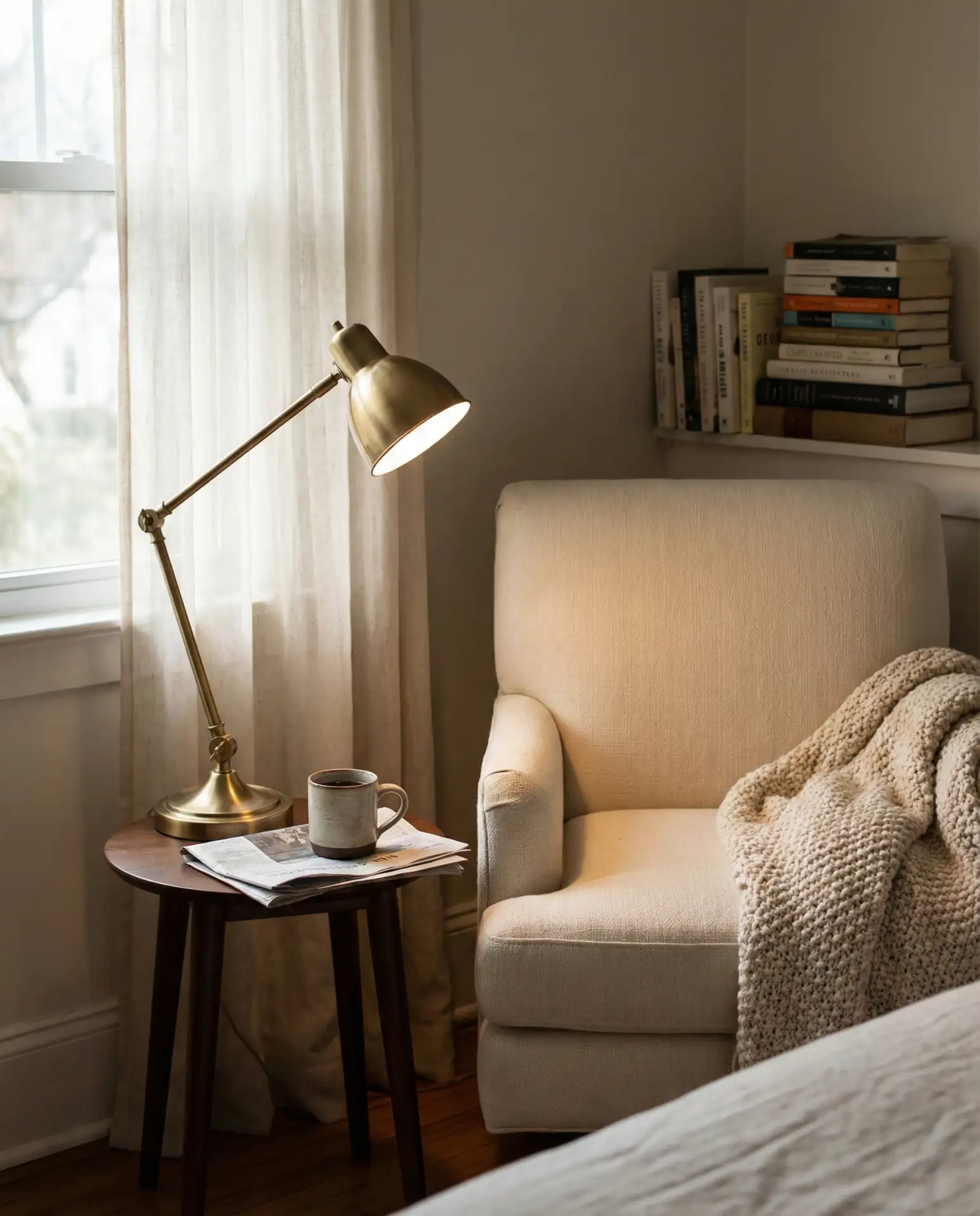
If your bedroom has sufficient space, dedicating a corner to reading creates a zone for quiet transition between waking and sleeping states. A quality chair or small couch paired with good task lighting and a side table for books and coffee transforms a bedroom from a purely functional sleeping space into a genuine retreat. Choose seating that’s actually comfortable for extended periods—many “bedroom chairs” are too upright or shallow. A leather club chair, an upholstered recliner with clean lines, or even a compact sofa if space allows all serve this purpose.
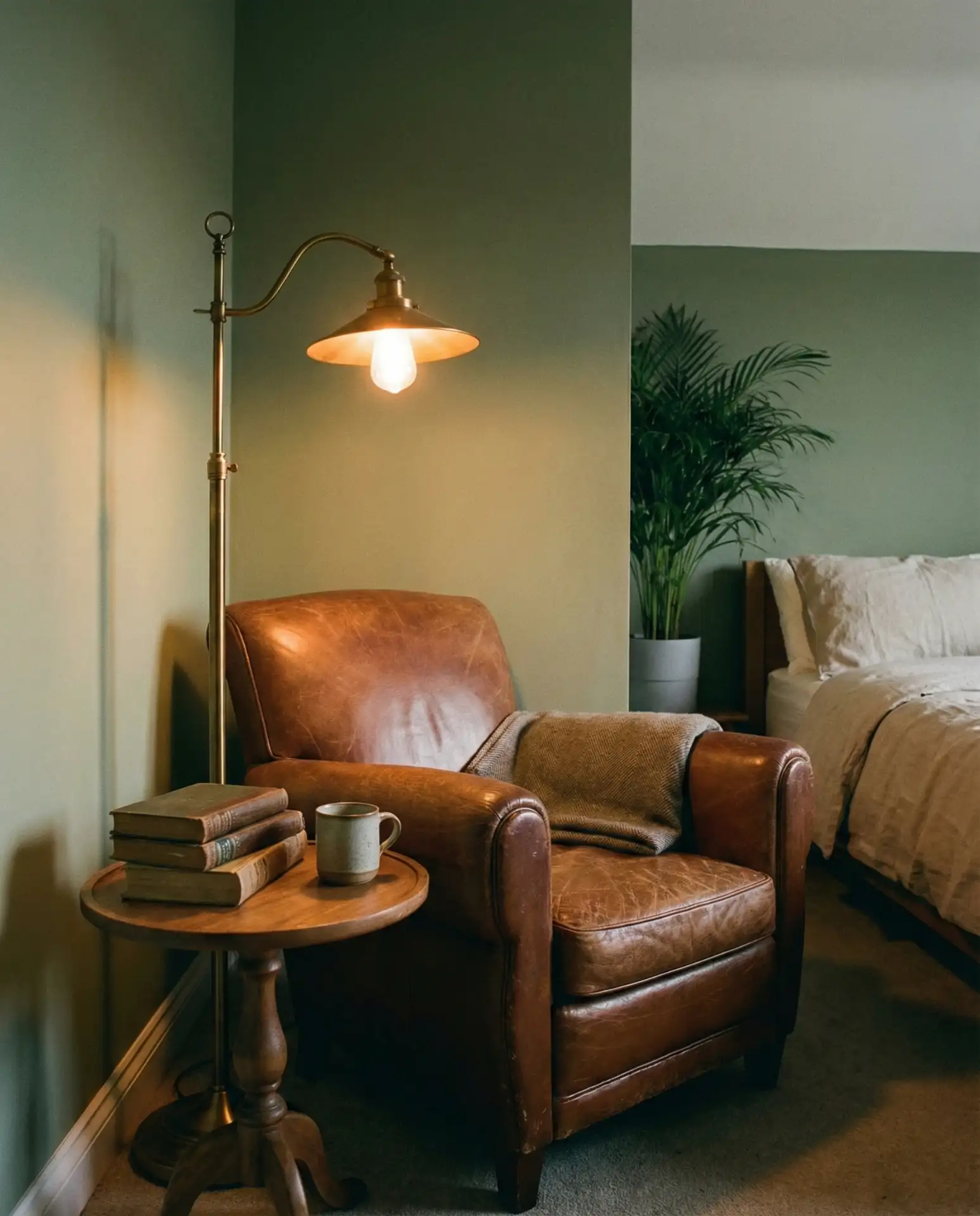
A micro-story: A colleague who works from home found that adding a reading chair to his bedroom fundamentally improved his sleep quality—not because he spent more time reading, but because having a designated spot for that transition activity meant he stopped using his bed for anything except sleep. The physical separation of activities, even within the same room, helped establish better sleep hygiene without requiring complex behavioral changes.
20. Concrete and Wood Industrial Fusion
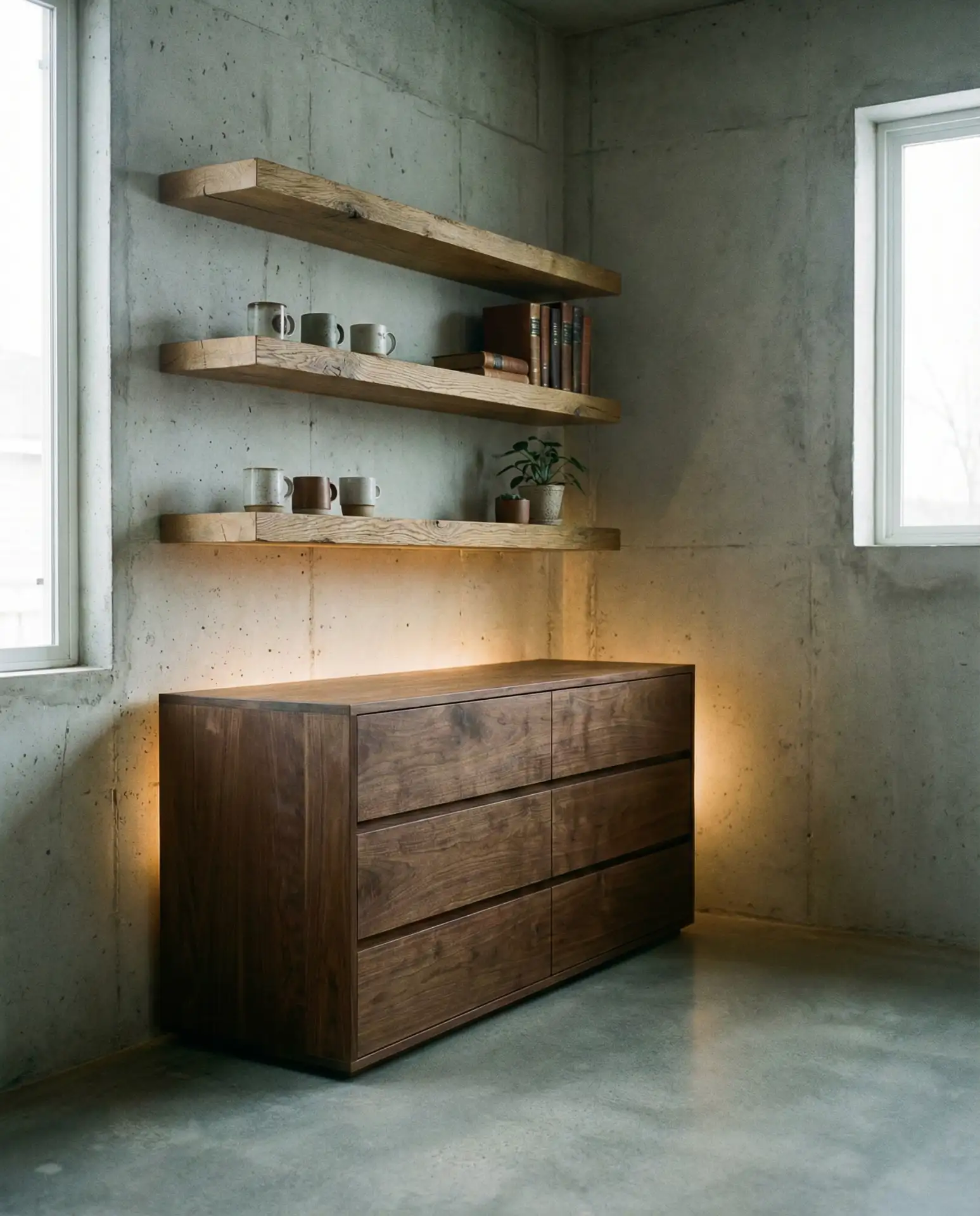
Exposed concrete paired with warm wood creates industrial rooms that feel substantial rather than cold. This combination works particularly well in loft conversions or modern builds that embrace raw materials honestly. A concrete accent wall or concrete-look tile behind the bed provides architectural weight, while wooden furniture, wood ceiling beams, or even a wood slat feature wall introduces necessary organic warmth. The contrast between the materials’ hard and soft qualities creates visual interest without requiring color or pattern.
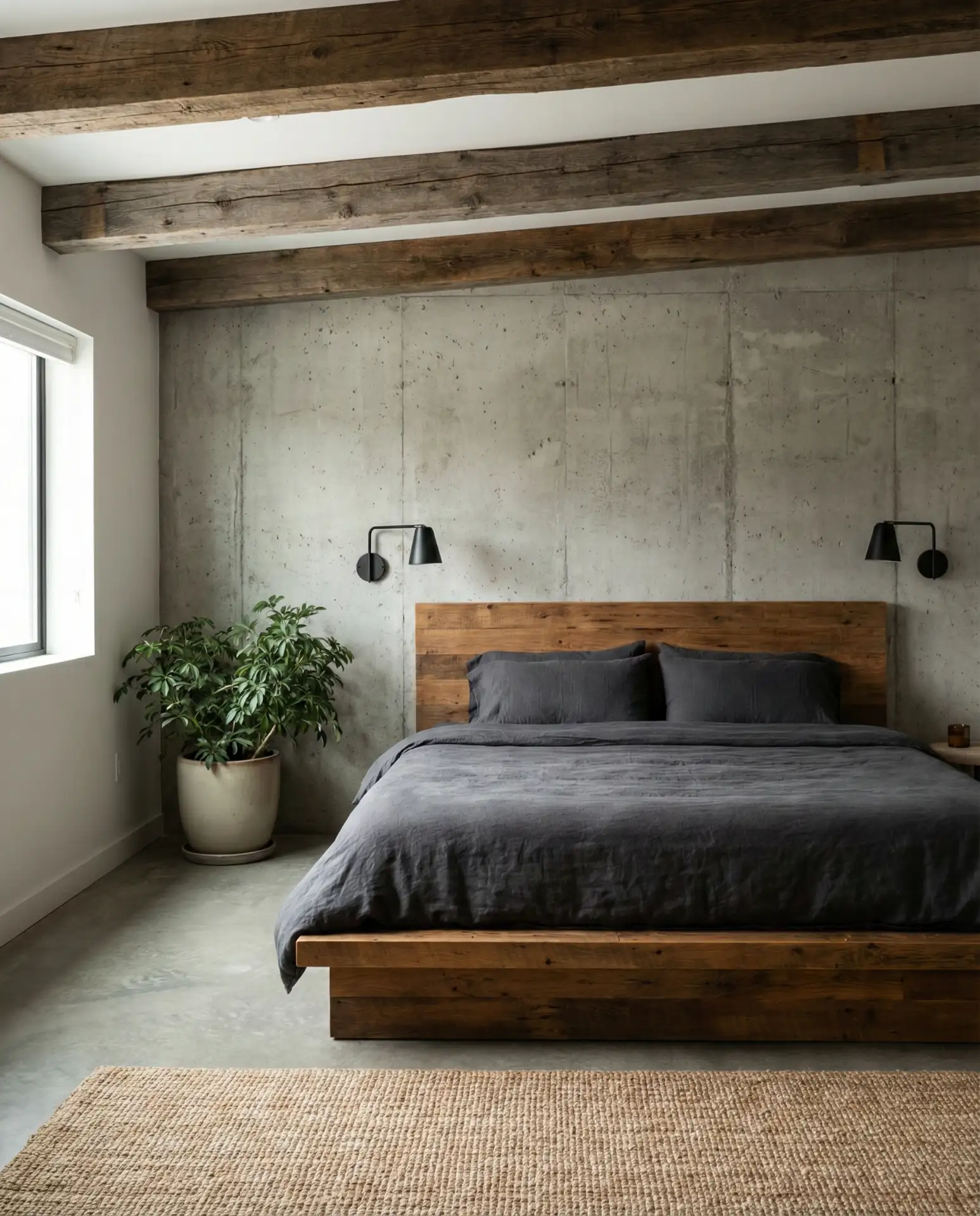
Budget consideration: True concrete walls aren’t necessary—several manufacturers now produce concrete-look tile, panels, and even wallpaper that deliver the aesthetic at a fraction of the cost and weight. Similarly, faux wood beams made from polyurethane can mimic reclaimed timber convincingly while being easier to install and significantly cheaper. The goal is the material contrast and visual texture, not architectural purity, so strategic use of high-quality imitations often makes more practical sense.
21. Navy and Copper Modern Elegance
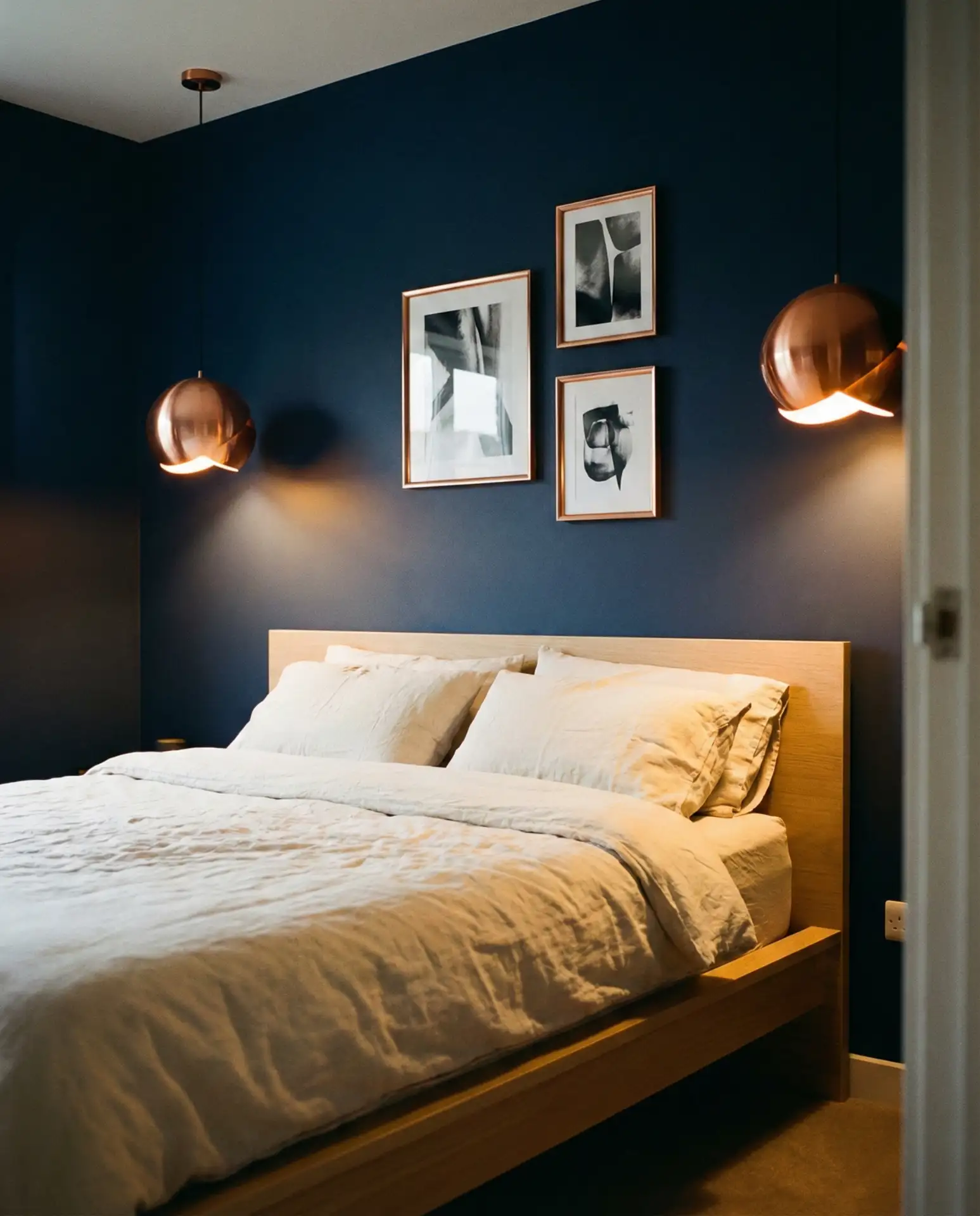
Deep navy blue walls paired with copper accents create sophistication that feels both current and timeless. The warmth of copper prevents navy from reading as cold or formal, while the navy provides enough depth to make copper accents genuinely pop rather than getting lost against lighter backgrounds. Use copper in lighting fixtures, picture frames, or even as an accent color in textiles. Keep the overall approach restrained—this combination is rich enough that it doesn’t need excessive layering or decoration.
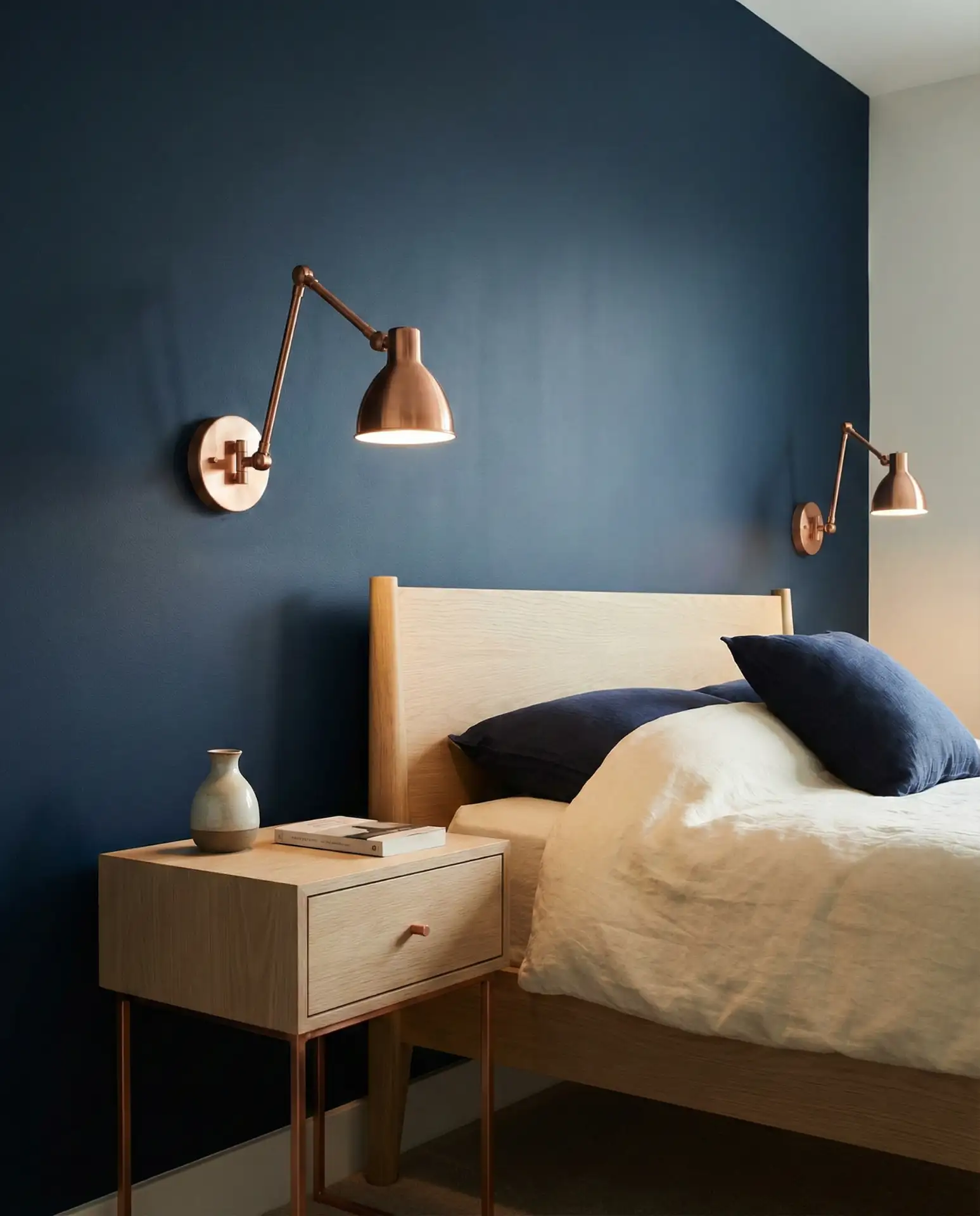
Real homeowner behavior: Several men I’ve interviewed who chose navy and copper did so specifically because the combination photographs exceptionally well for dating apps and social media without looking like it was staged solely for that purpose. There’s an honest appeal to a color scheme that serves both personal enjoyment and external presentation without requiring constant styling or maintenance to look its best.
22. Earth Tones with Natural Fiber Textiles
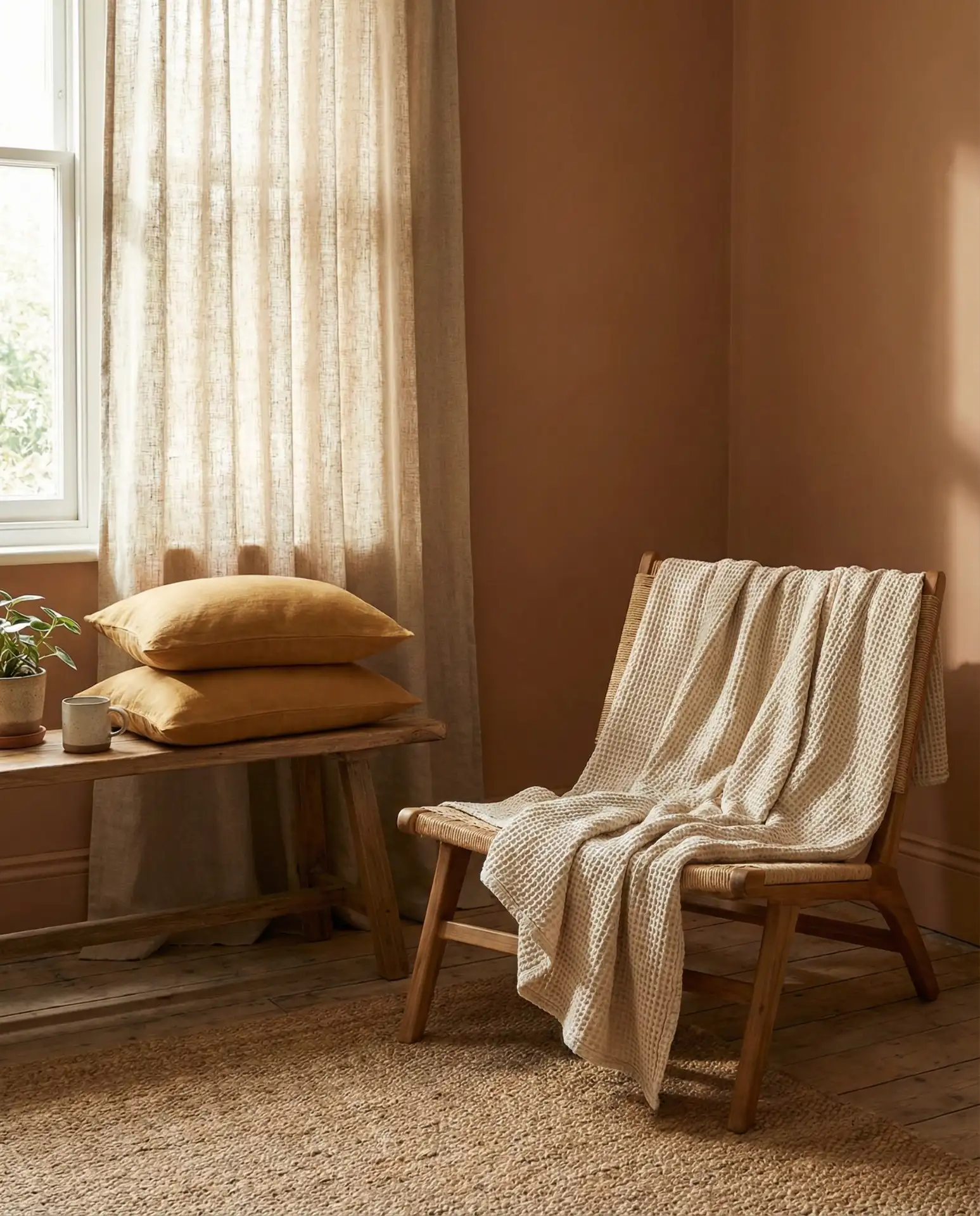
Building a bedroom around earth tones—terracotta, sand, clay, and ochre—creates warmth without heaviness. This palette references desert landscapes and natural clay, feeling particularly appropriate in Southwestern states but translating well anywhere with strong sunlight. Pair these wall colors with natural fiber textiles: linen bedding, jute rugs, cotton waffle-weave blankets, and hemp curtains. The combination of earthy color and organic texture results in rooms that feel grounded and restorative, providing genuine cozy refuge without sliding into rustic cliché.
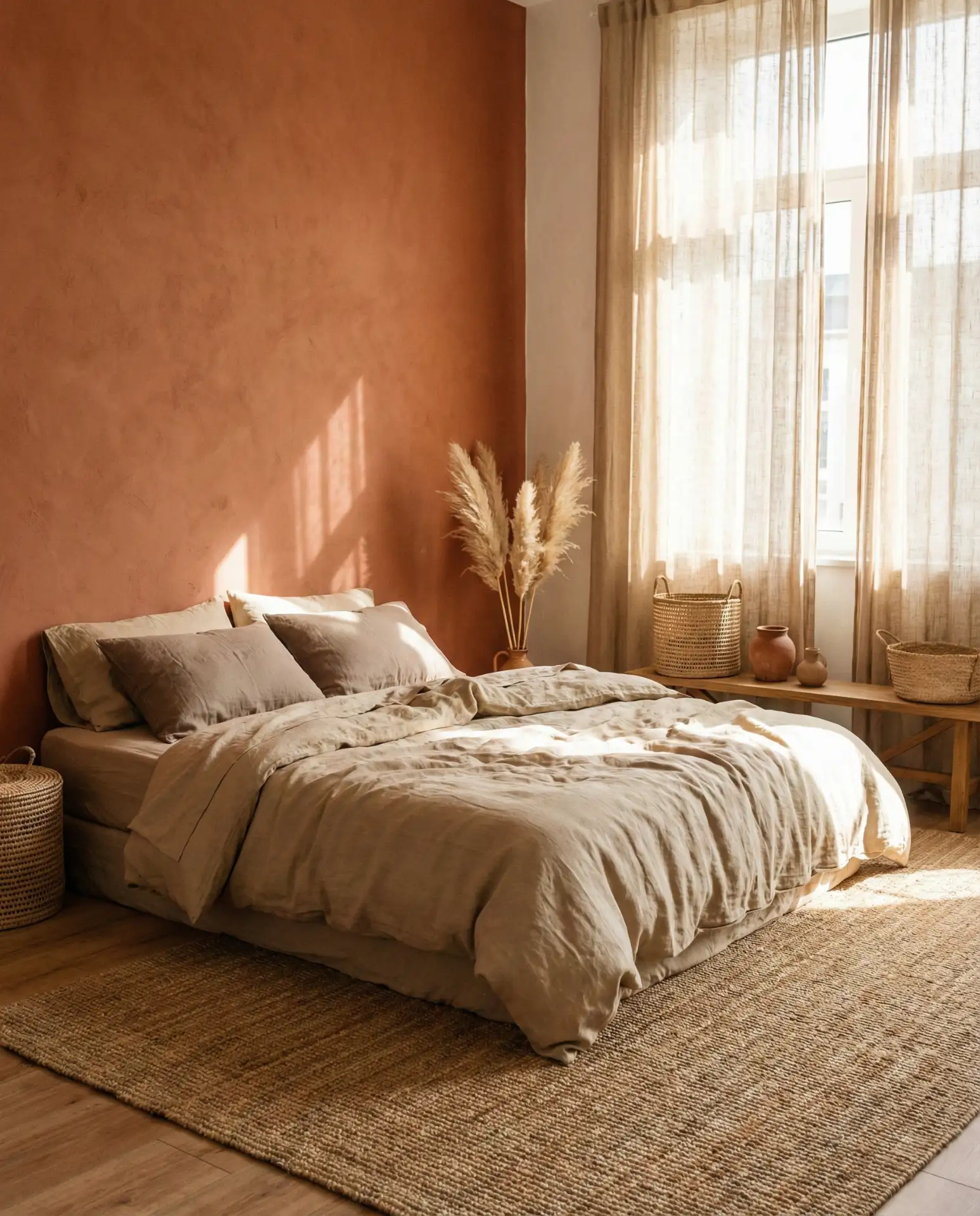
Common mistake to avoid: Earth-tone bedrooms can inadvertently feel dated if you rely too heavily on the orangey terracottas popular in the 1970s. Modern interpretations lean toward more muted, dusty versions of these colors—think sun-bleached clay rather than bright Arizona pottery. The difference is subtle but significant in determining whether the room feels contemporary or retro. When in doubt, test paint samples in your actual light conditions and err toward the subtler option.
Conclusion
Bringing these ideas to life doesn’t require starting from scratch or committing to a single aesthetic. The most successful bedrooms often blend elements from multiple approaches—perhaps navy walls with wood accents and layers of cozy textiles, or dark grey tones warmed by copper fixtures and natural fiber rugs. Take what resonates, adapt it to your space and budget, and remember that the best bedroom is one that genuinely reflects how you want to live rather than what design magazines say you should want. What bedroom transformation are you considering? Share your thoughts or questions in the comments below.