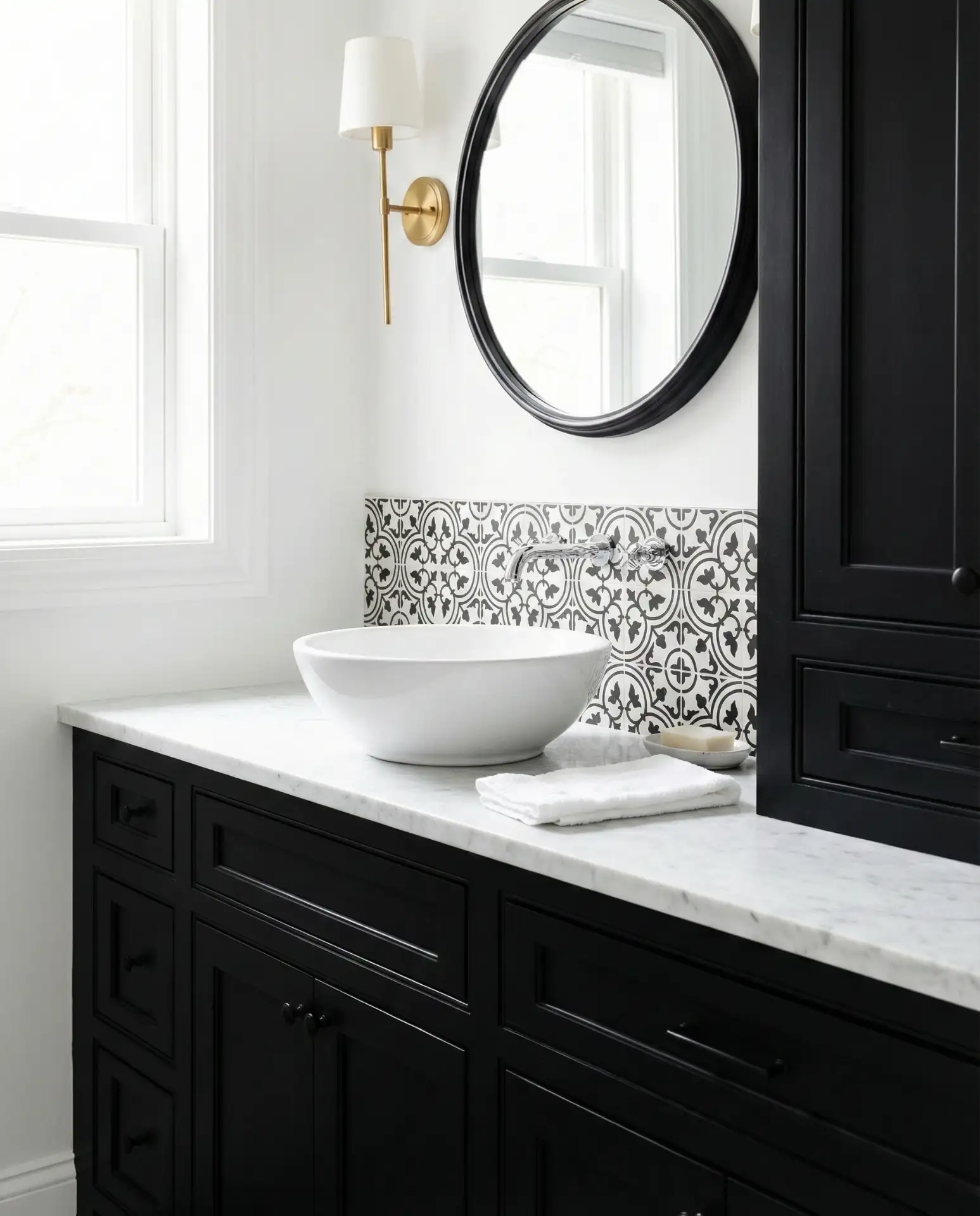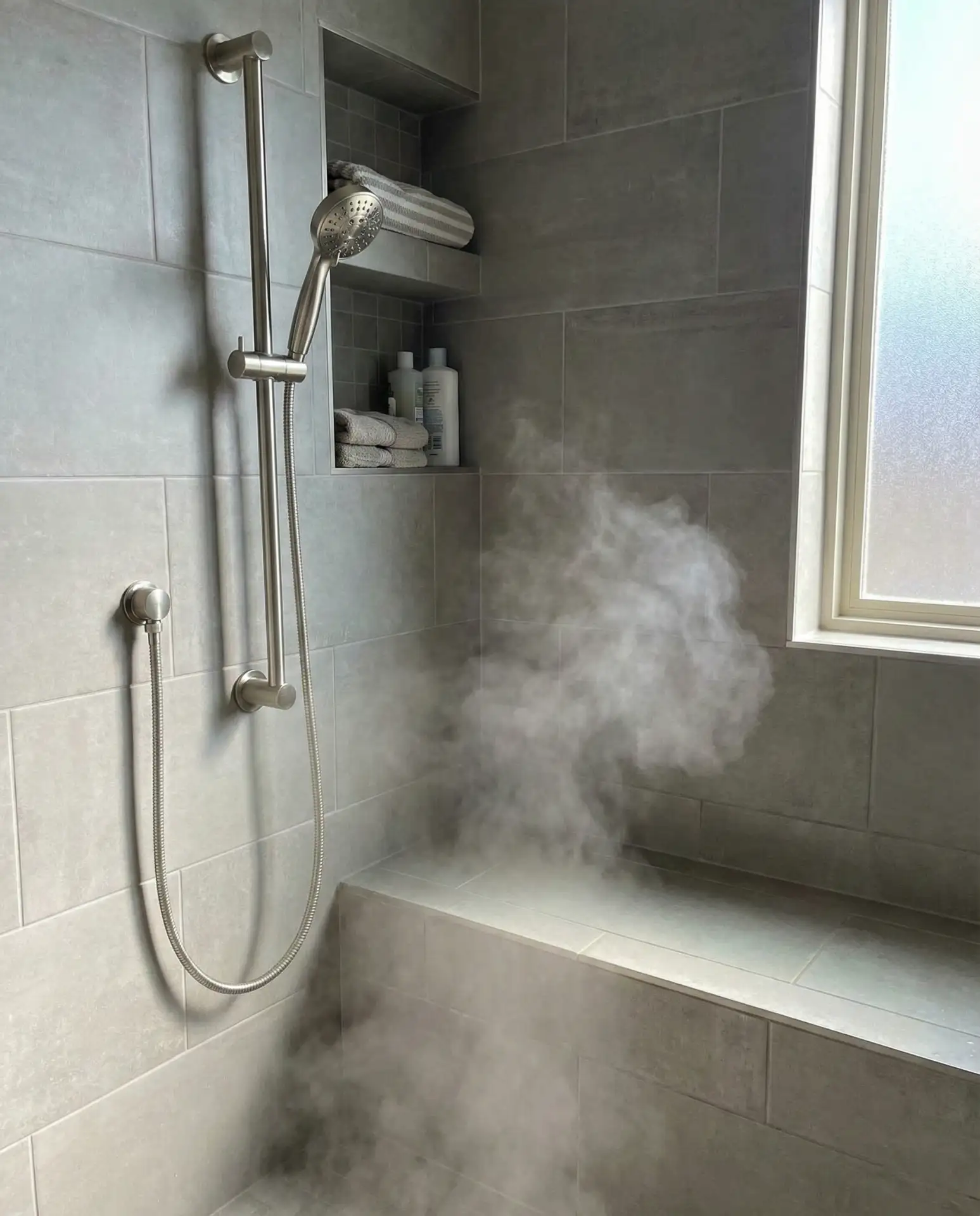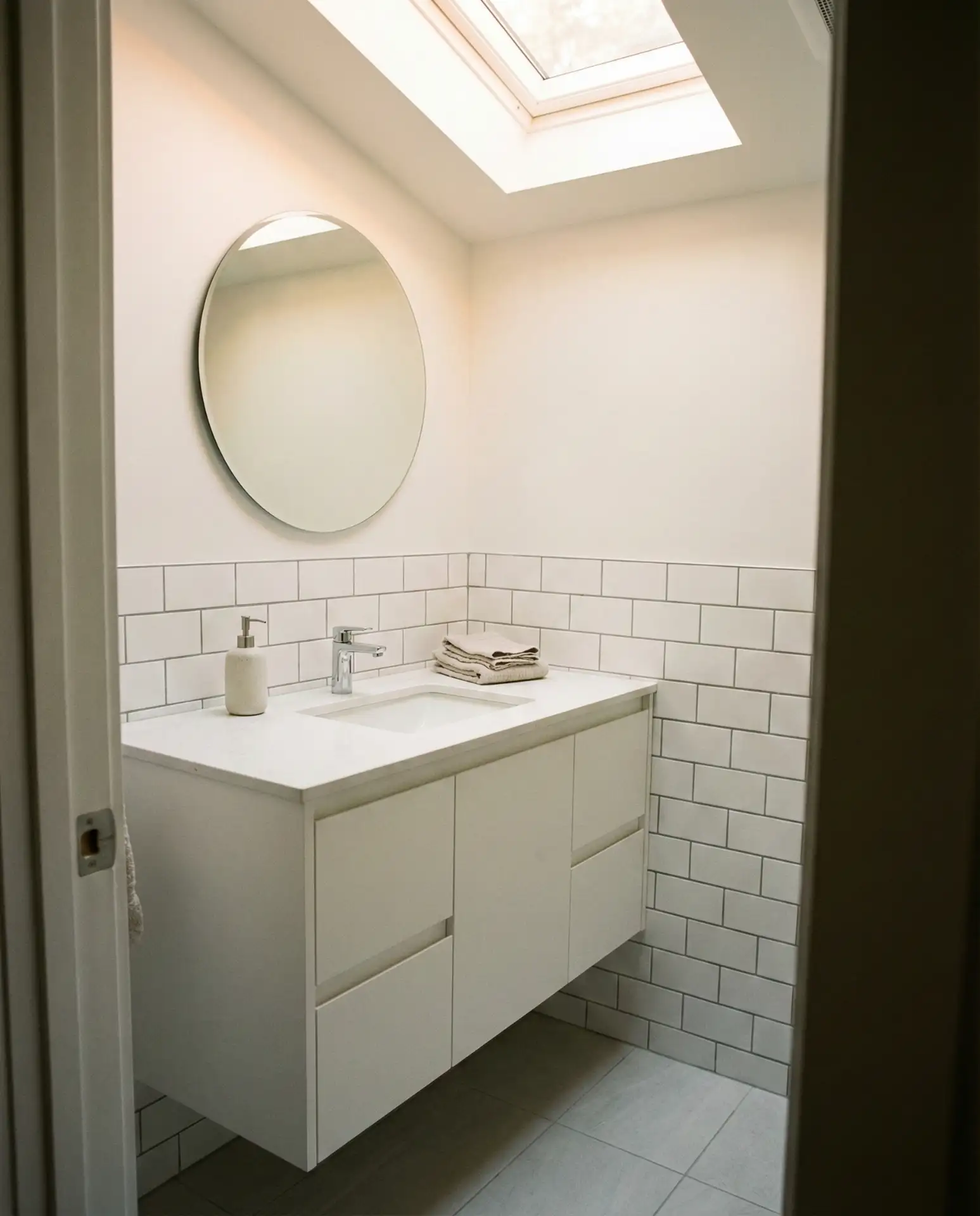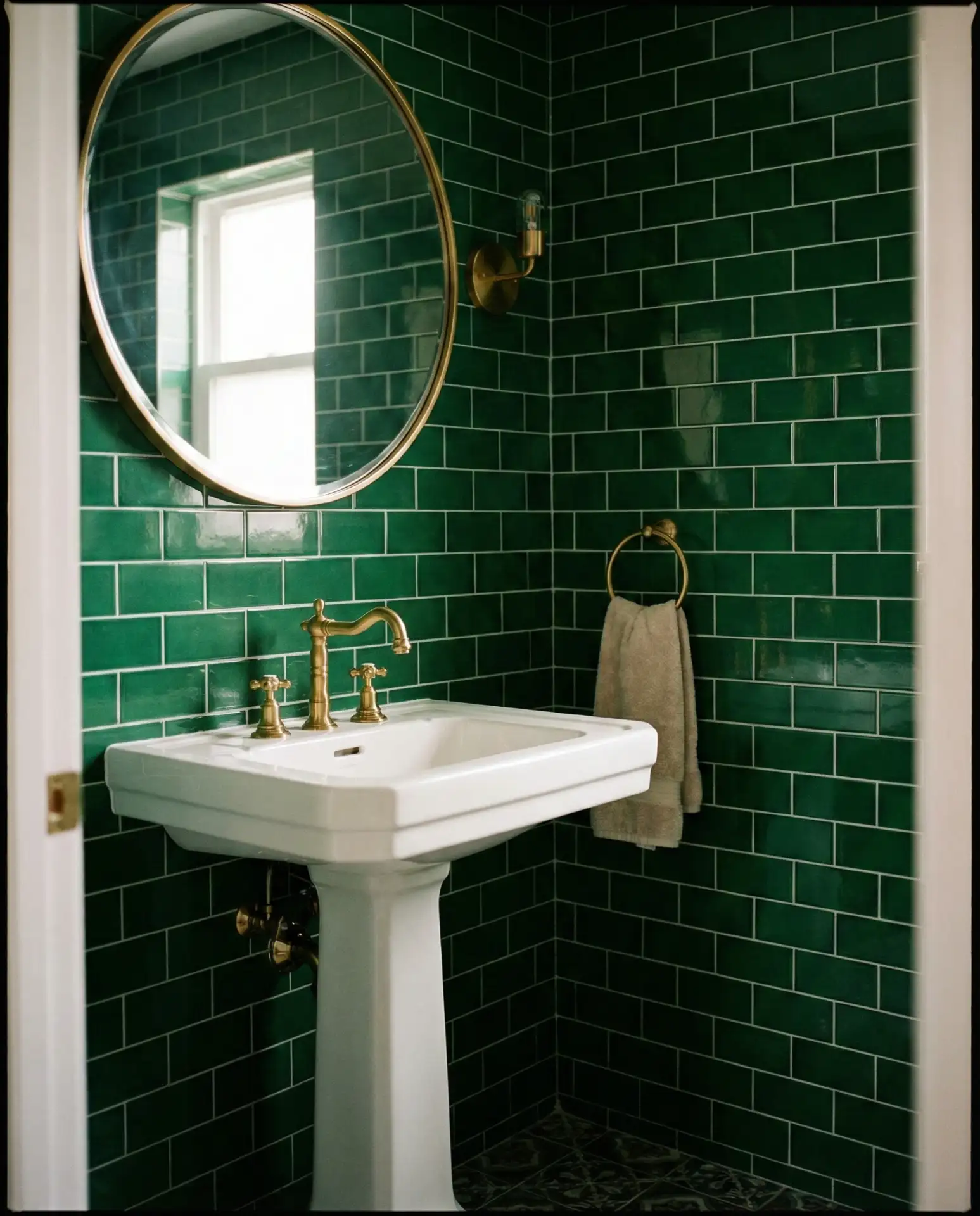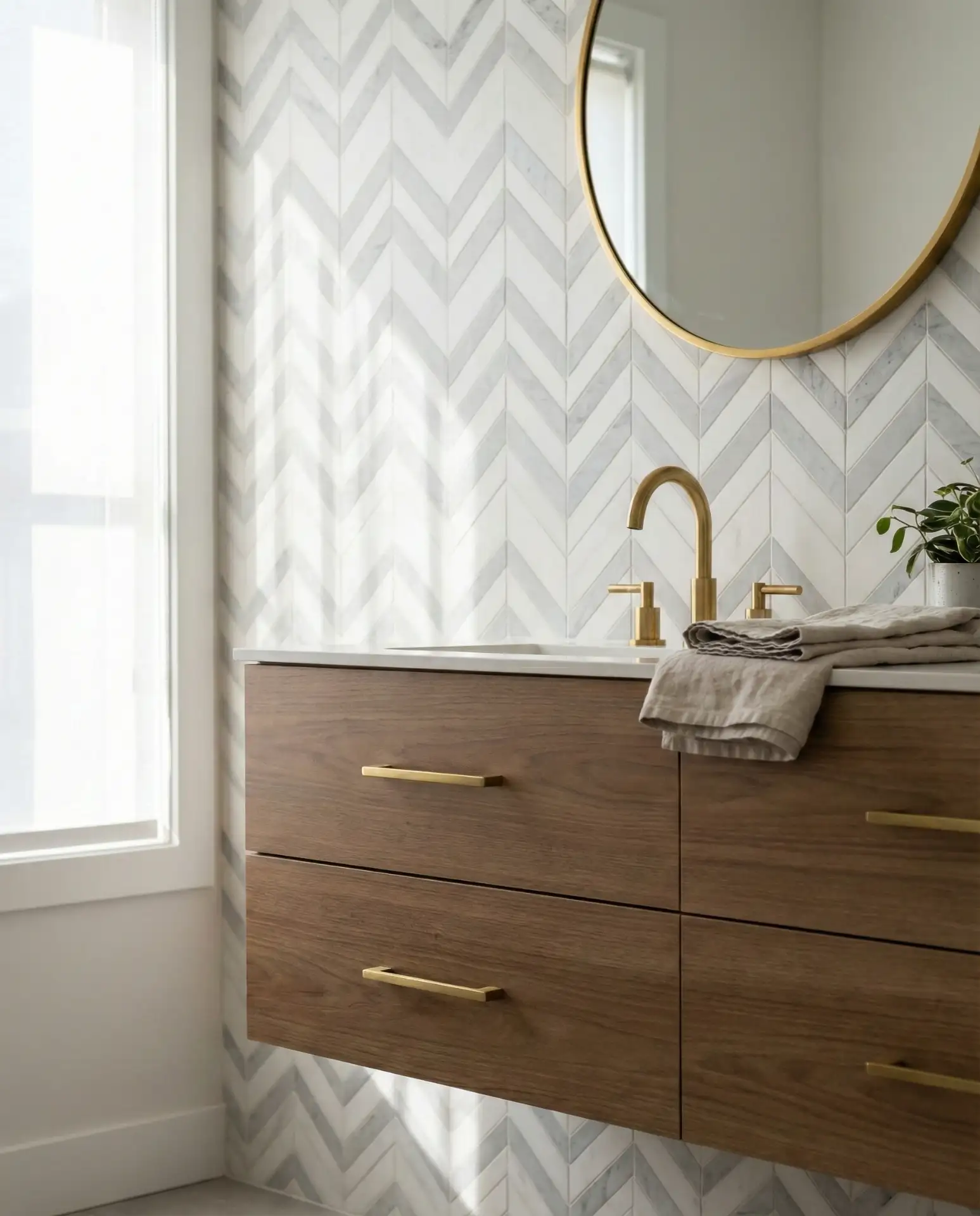
Black and white bathrooms are having a major moment in 2026, and it’s easy to see why. This timeless color pairing feels both classic and contemporary, offering endless design flexibility whether you’re working with a powder room or a spacious master bath. Americans are flocking to Pinterest for fresh takes on this iconic palette, seeking ways to blend drama with serenity, pattern with simplicity, and vintage charm with modern edge. From bold geometric tiles to soft neutral accents, these ideas will show you how to create a black and white bathroom that feels distinctly yours—no matter your style or budget.
1. Modern Minimalist Monochrome Retreat
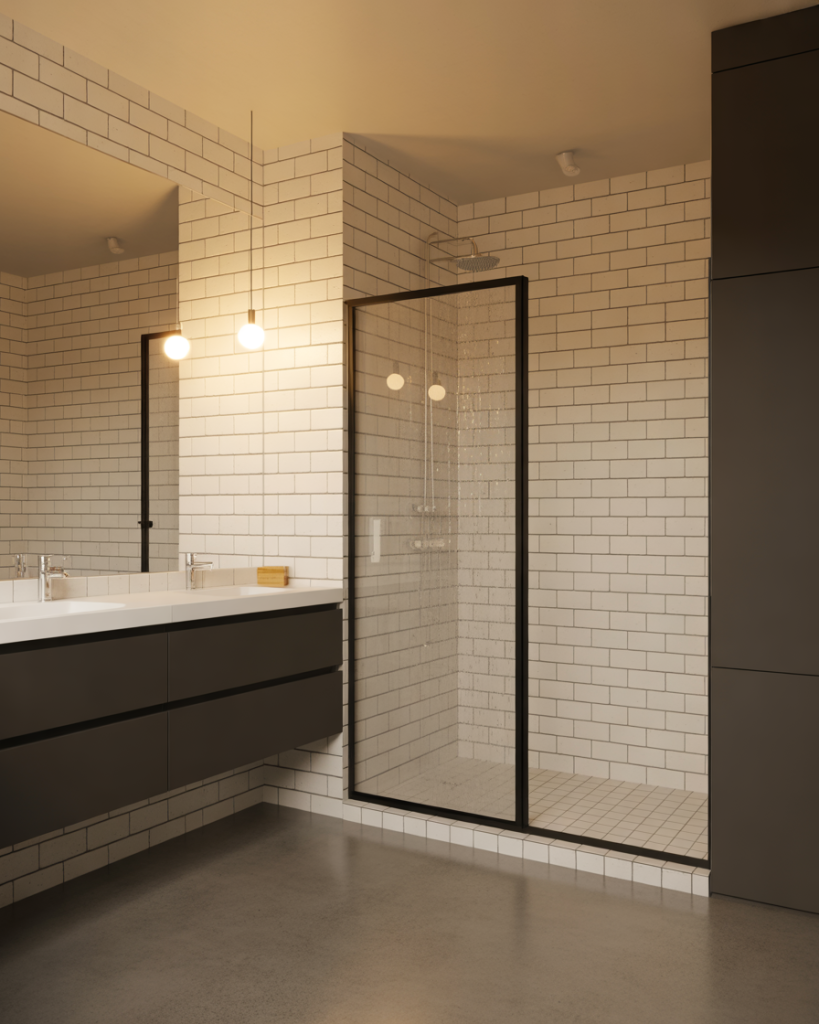
A modern minimalist black and white bathroom strips away the excess, focusing on clean lines and intentional choices. Think matte black fixtures against crisp white subway tiles, a floating vanity with integrated storage, and a frameless glass shower that keeps sightlines open. This approach works beautifully in urban apartments where space is limited but style expectations run high. The minimalist philosophy here isn’t about deprivation—it’s about making every element count, from the sculptural faucet to the perfectly positioned modern pendant light. 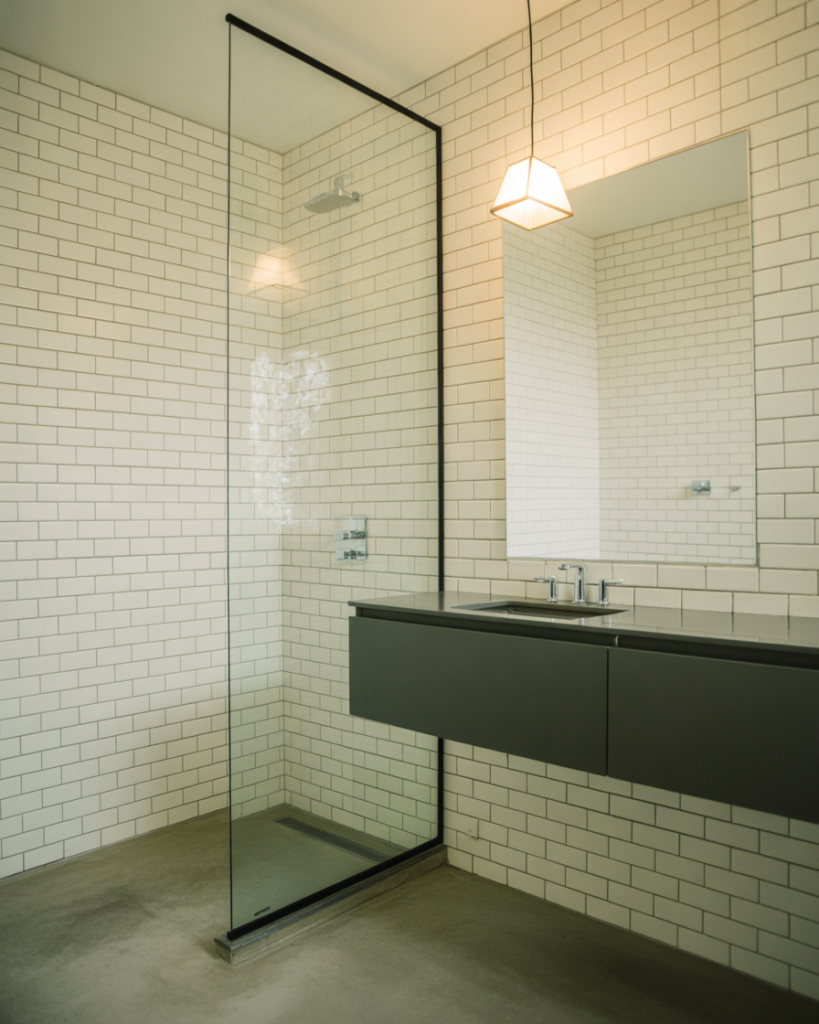
Where this design truly shines is in newer construction or recently renovated spaces where plumbing and electrical are already optimized. The streamlined aesthetic requires fewer decorative accessories, which means less visual clutter and easier daily maintenance. Homeowners in tech hubs like Seattle and Austin have embraced this look precisely because it delivers maximum impact with minimal fuss—a reflection of how they want to live overall.
2. Classic Checkerboard Floor Revival
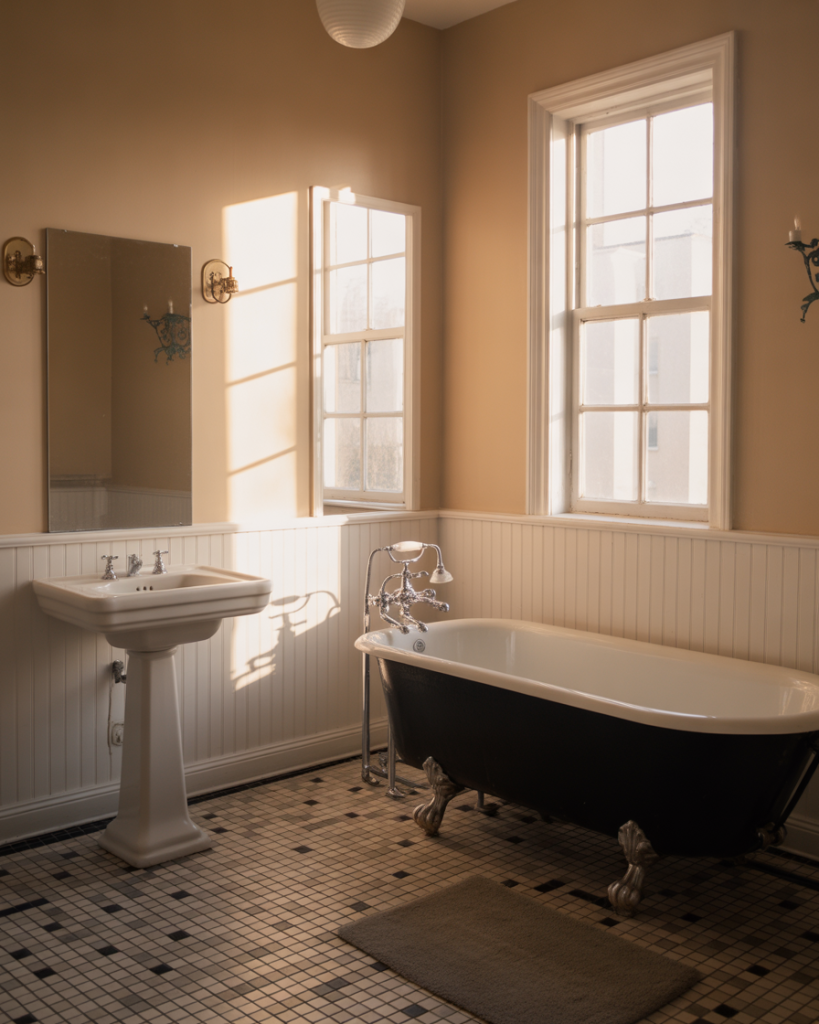
The classic checkerboard floor is back with a vengeance, proving that some design moves never truly disappear. This pattern brings instant visual interest to any bathroom, whether you’re working with traditional ceramic tiles or durable luxury vinyl. It’s a nod to mid-century diners and European estates alike, offering a foundation that supports both vintage fixtures and contemporary hardware. The key is scale—larger tiles read more modern, while smaller squares lean traditional. 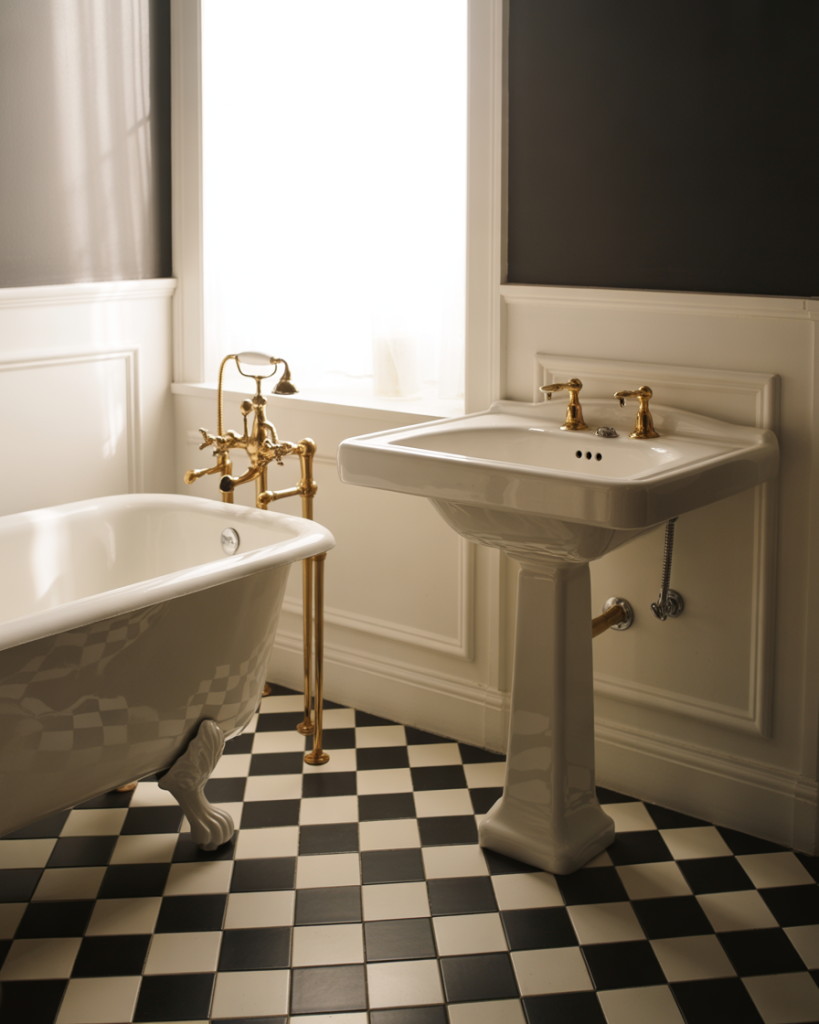
Budget-conscious renovators love this option because you can install checkerboard flooring yourself over a long weekend with the right prep work and patience. The pattern is forgiving of minor imperfections and can hide wear better than solid colors. Many homeowners choose to splurge on quality tiles for high-traffic bathrooms since the investment pays off in durability—expect to spend between $8 and $15 per square foot for good ceramic options.
3. Scandinavian Spa Simplicity
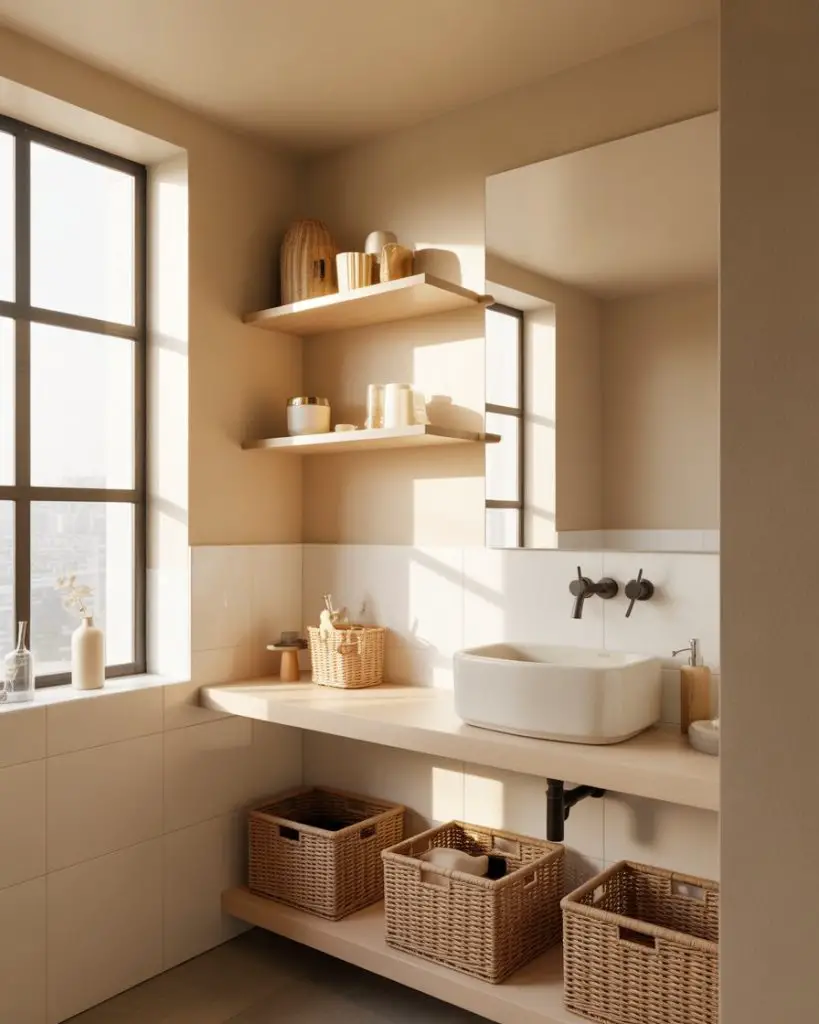
A Scandinavian approach to the black and white bathroom embraces hygge through texture and warmth. Pale wood accents soften the stark contrast, while woven baskets and linen towels add tactile interest. The palette stays true to black and white but incorporates natural materials that prevent the space from feeling cold or sterile. This style thrives in homes where light is precious—those large windows and reflective surfaces characteristic of modern Scandinavian design help bounce illumination throughout the room. 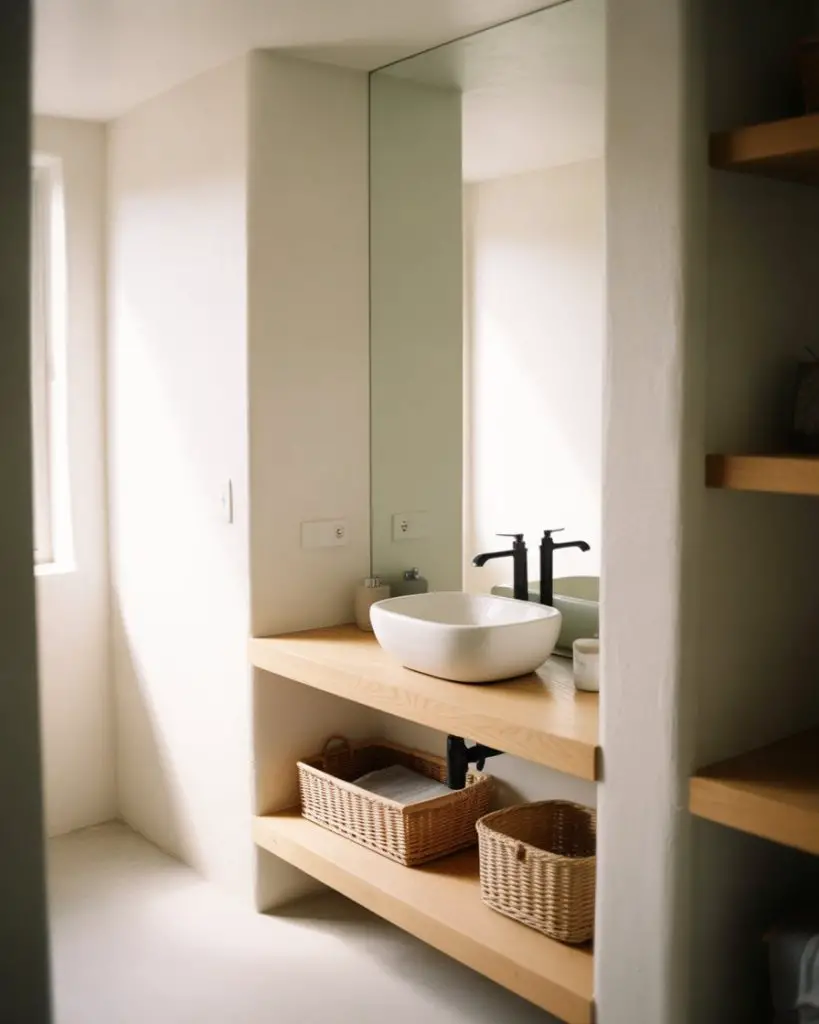
One common mistake is over-accessorizing this style with too many decorative objects. The Scandinavian aesthetic demands restraint—each item should serve a purpose or bring genuine joy. A single architectural plant, a hand-thrown soap dish, and quality hand towels are often enough. Resist the urge to fill every surface, and you’ll achieve that effortless, breathable quality that defines the look.
4. Industrial Edge with Exposed Elements
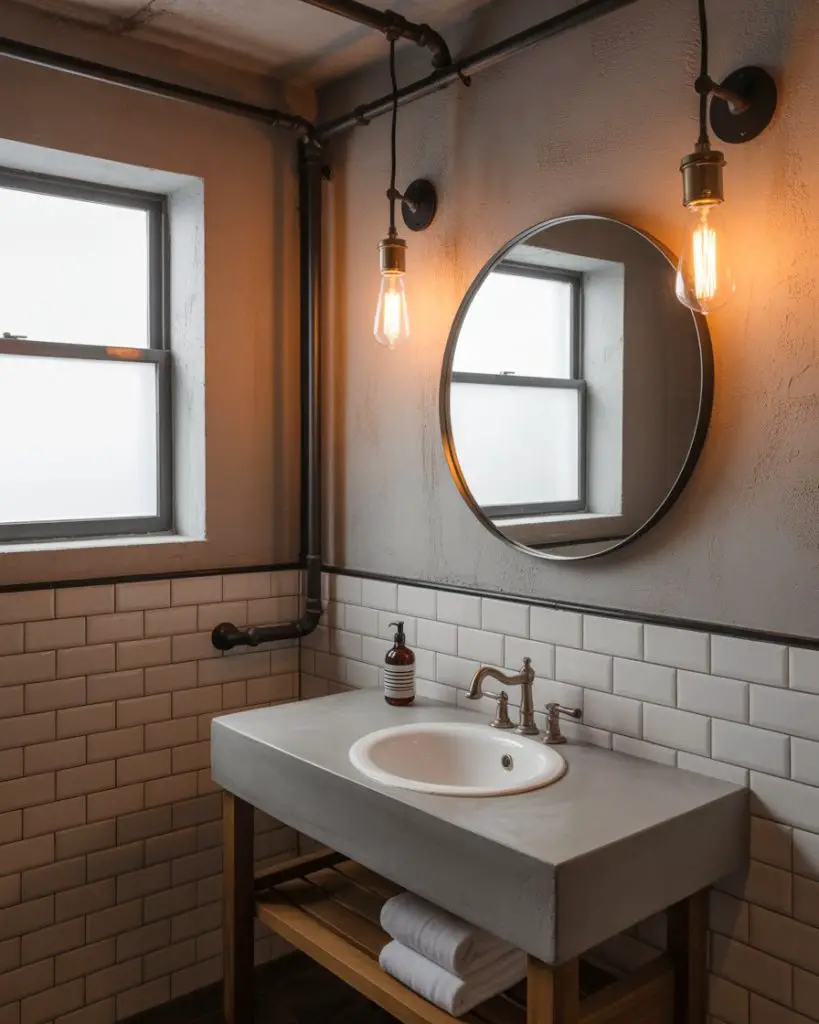
An industrial black and white bathroom celebrates raw materials and architectural honesty. Exposed pipes become design features rather than eyesores, matte black finishes contrast against white concrete or subway tiles, and metal-framed mirrors add geometric punch. This aesthetic originated in converted loft spaces but has migrated to suburban homes where homeowners want an urban edge. The modern industrial bathroom balances roughness with comfort—think Edison bulbs alongside heated floors. 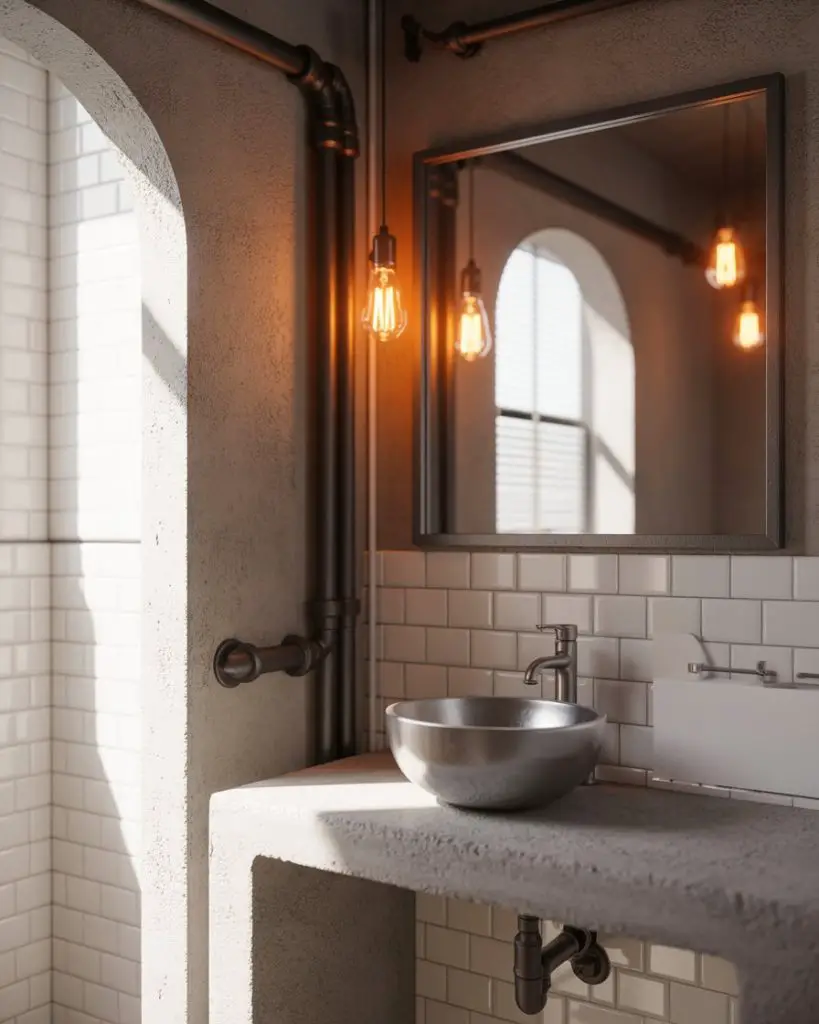
This style works exceptionally well in older homes with good bones—those vintage radiators and cast iron tubs you might otherwise hide become celebrated focal points. One interior designer in Brooklyn mentioned that clients often regret concealing original plumbing during renovations, only to recreate that industrial look with new materials later. If you already have exposed elements, work with them rather than against them for an authentic result.
5. Farmhouse Charm Meets Contemporary Lines
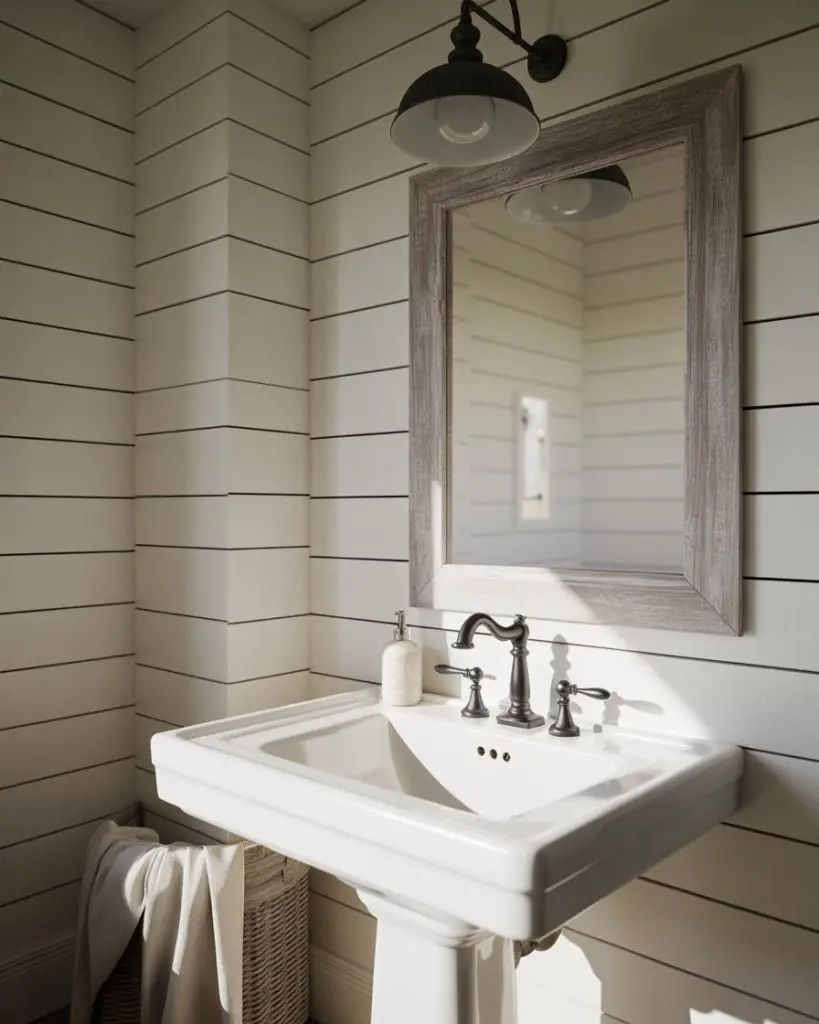
The farmhouse bathroom in black and white balances rustic warmth with clean geometry. Shiplap walls painted bright white provide textured backdrop for matte black hardware, while a reclaimed wood mirror frame or floating shelf adds organic contrast. This isn’t the overly distressed, heavily antiqued farmhouse of previous years—it’s a refined version that borrows rural simplicity without sacrificing modern convenience. Homeowners in the South and Midwest particularly gravitate toward this approach, which honors regional building traditions while embracing contemporary lifestyle needs. 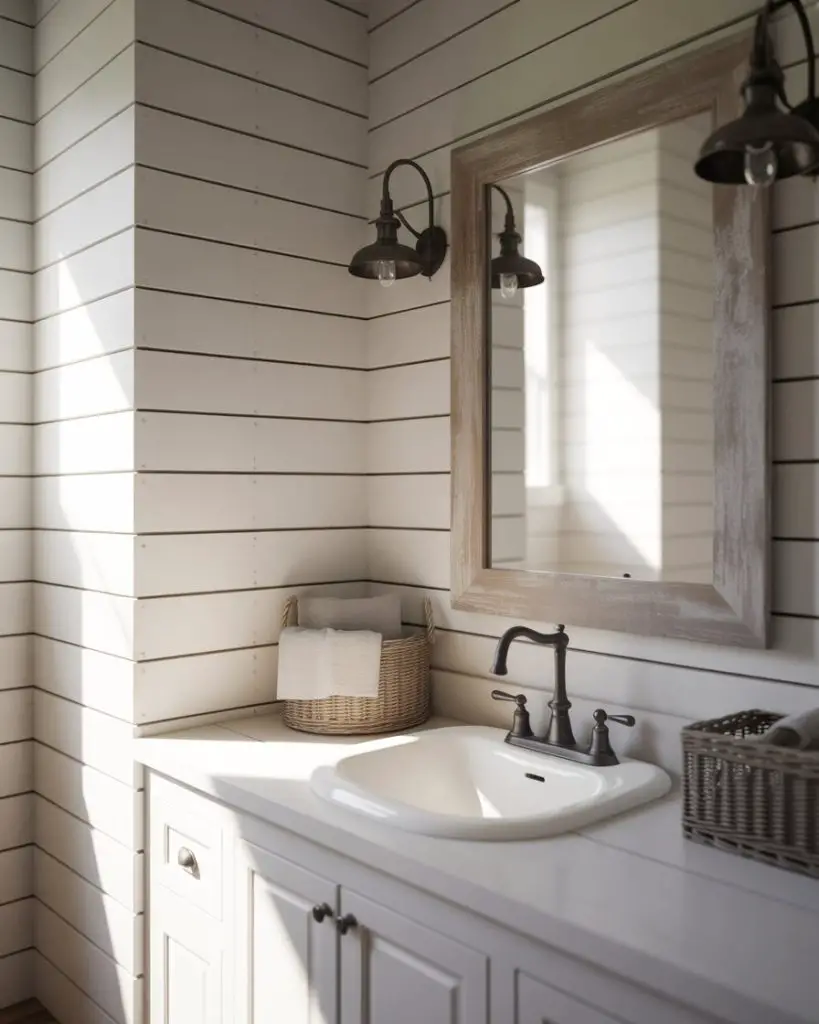
Where this works best is in homes with existing architectural character—crown molding, tall ceilings, and natural light from multiple exposures. The farmhouse aesthetic relies heavily on proportion and scale, so cramming too many rustic elements into a small space can feel cluttered rather than cozy. Focus on one or two statement pieces and keep surrounding elements simple for breathing room.
6. Dramatic Wallpaper as the Focal Point
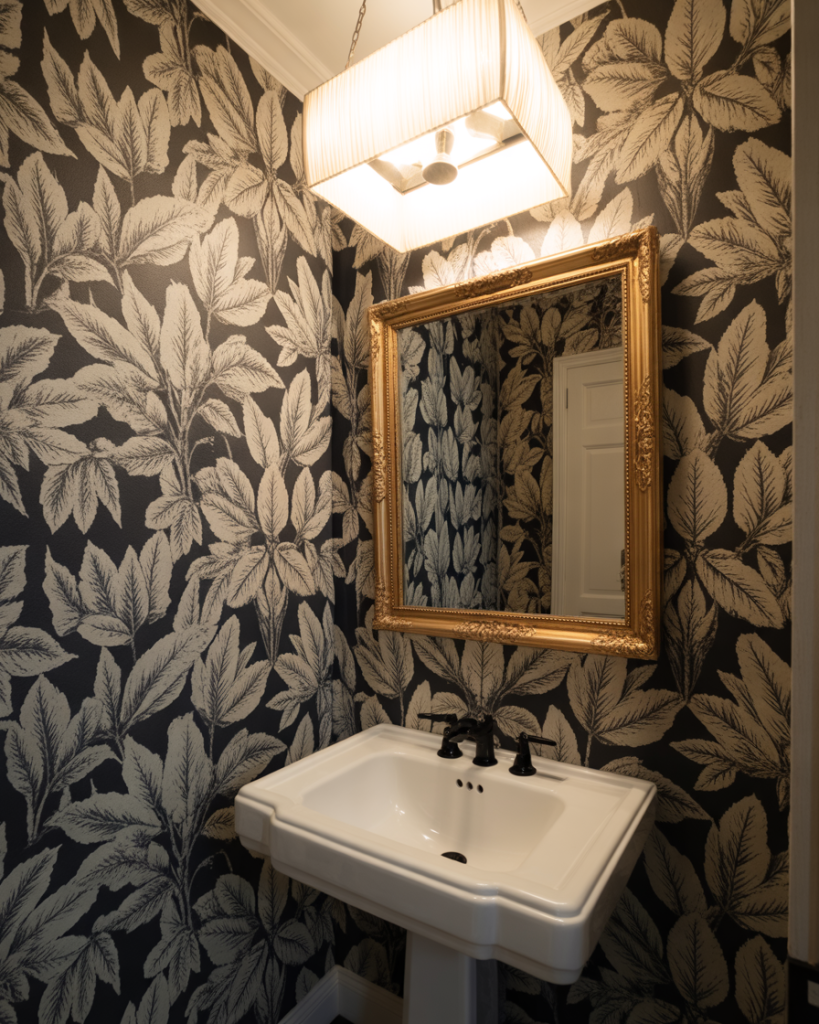
Bold wallpaper transforms a black and white bathroom from basic to breathtaking in a single afternoon. Whether you choose geometric patterns, botanical prints, or abstract designs, wallpaper provides instant personality without permanent commitment. The moisture-resistant varieties available now mean you can safely apply pattern even in high-humidity areas, though it’s still wise to keep it away from direct shower spray. A powder room is the perfect testing ground for adventurous wallpaper choices since the smaller space amplifies impact without overwhelming budgets. 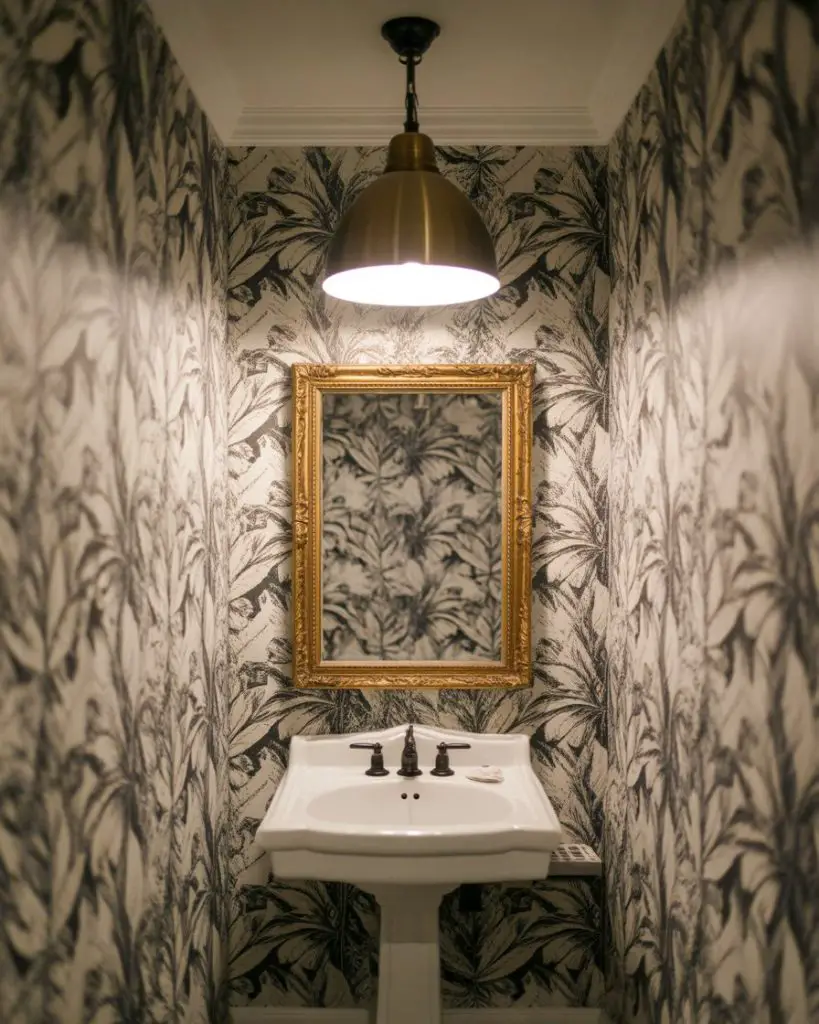
Real homeowners often start with a small accent wall behind the vanity or toilet to test their comfort level with pattern. If you love it, you can always extend coverage to remaining walls during your next refresh. Peel-and-stick options have improved dramatically in quality and now offer semi-permanent solutions perfect for renters or the commitment-phobic. Expect to spend between $30 and $120 per roll depending on designer versus mass-market options.
7. Coastal Calm with Organic Textures
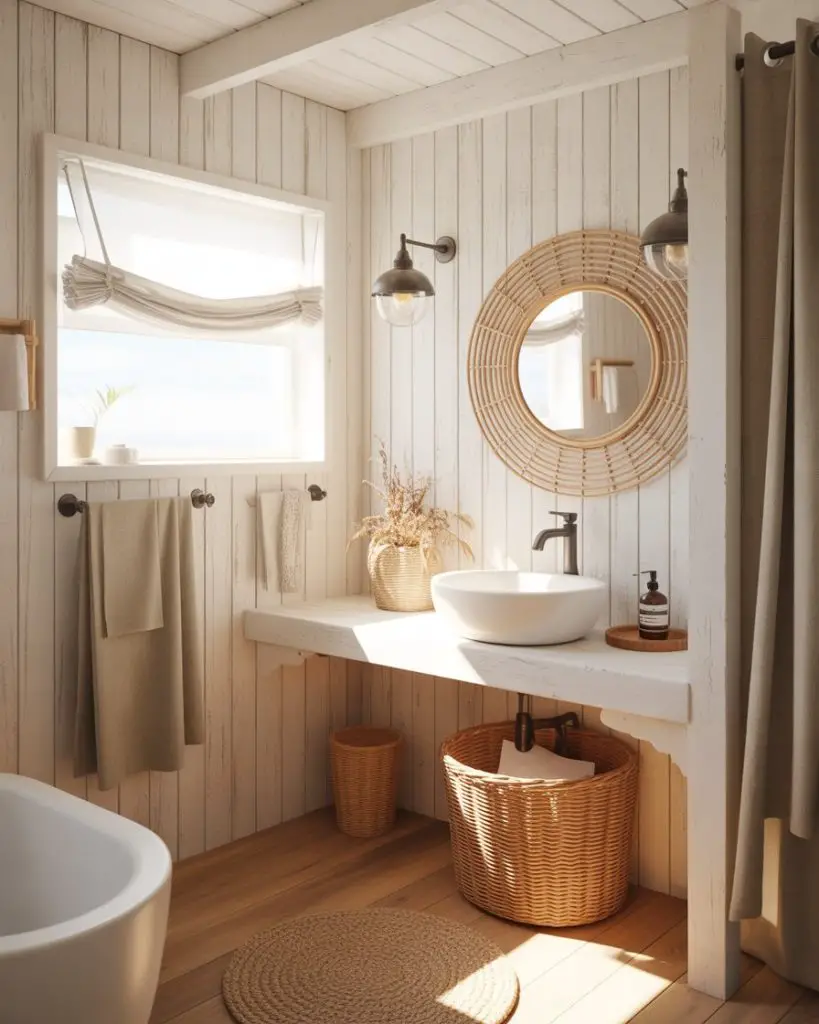
A coastal black and white bathroom reinterprets beach house style without the expected blues. White-washed wood, rattan accents, and natural fiber rugs bring seaside serenity while maintaining the graphic contrast of the color palette. This approach feels fresh and unexpected—modern in its restraint yet inviting in its warmth. Homeowners in Florida, California, and the Carolinas appreciate how this style handles humidity while still feeling vacation-worthy every day. 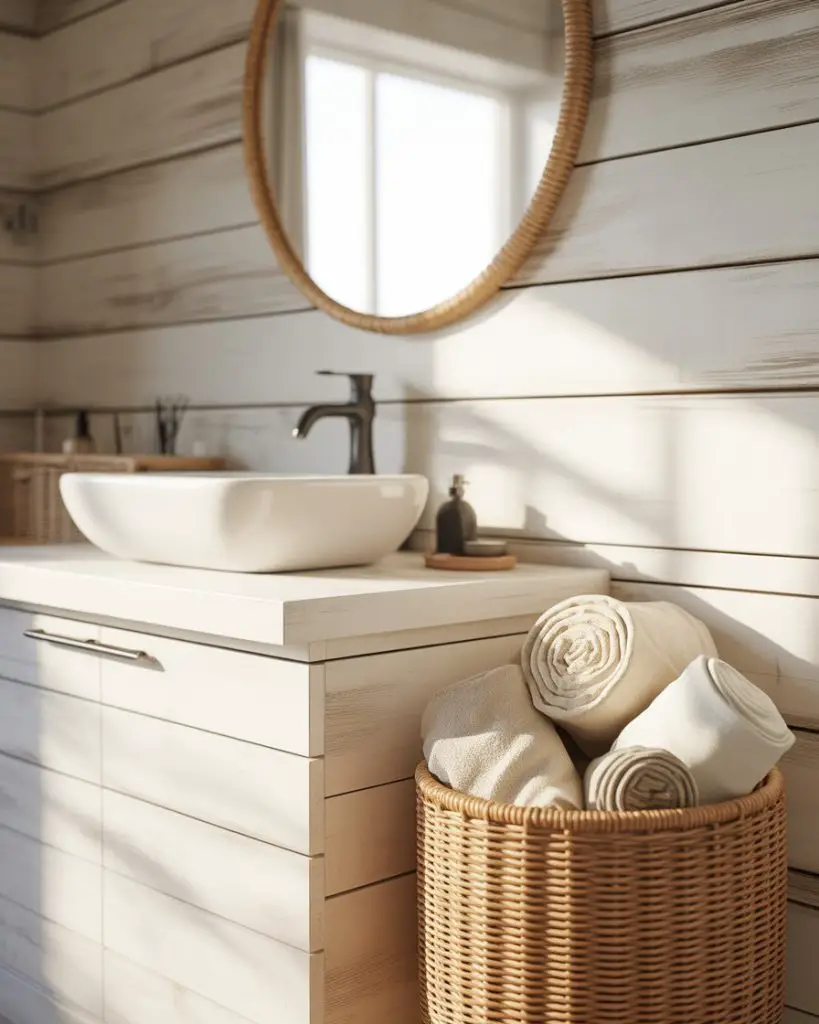
The practical insight here is temperature regulation—natural materials like rattan and linen actually help moderate humidity and keep the space from feeling stuffy. This becomes especially important in Southern climates where air conditioning runs constantly. The porous nature of these materials allows air circulation while adding visual softness that prevents the hard surfaces of tile and porcelain from dominating.
8. Modern Luxury Master Bath Sanctuary
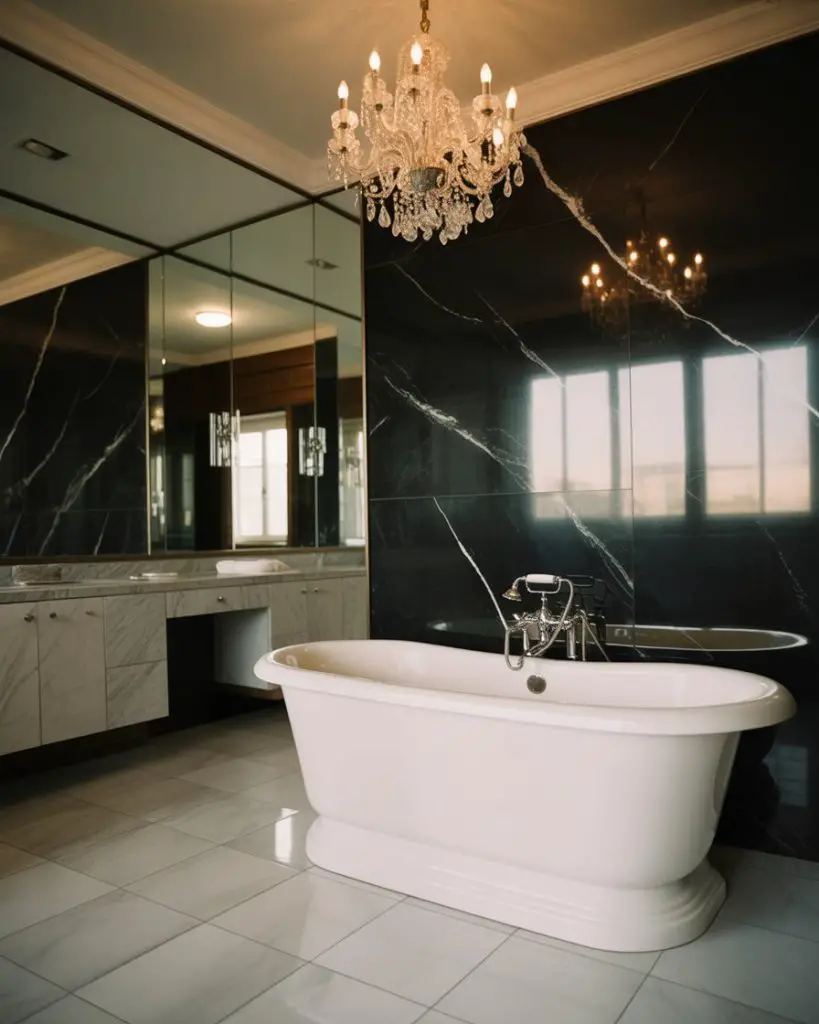
A modern luxury black and white bathroom elevates everyday routines into spa-like rituals. Think heated floors, a freestanding soaking tub positioned beneath a statement chandelier, and a double vanity with undermount sinks. High-end finishes like marble countertops, polished chrome fixtures, and custom cabinetry create a master bath vanity that feels truly indulgent. This is where homeowners invest in quality over quantity—fewer elements, but each one carefully selected for both beauty and durability. 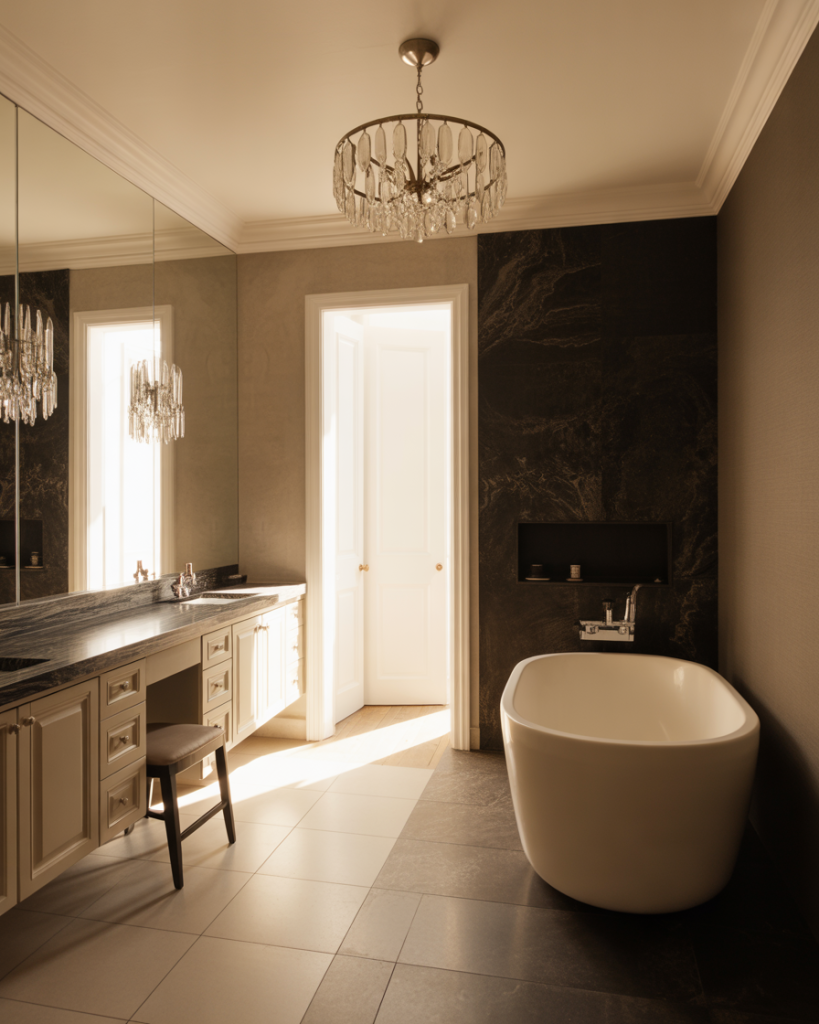
One designer based in Dallas shared that her clients often underestimate lighting needs in luxury bathrooms. Multiple light sources—ambient recessed cans, task lighting at the vanity, and accent lighting for architectural features—are essential. Dimmer switches allow mood adjustment from bright morning prep to relaxing evening soak. Budget around 10-15% of your total bathroom renovation for quality lighting and electrical work.
9. Bohemian Eclecticism with Global Accents
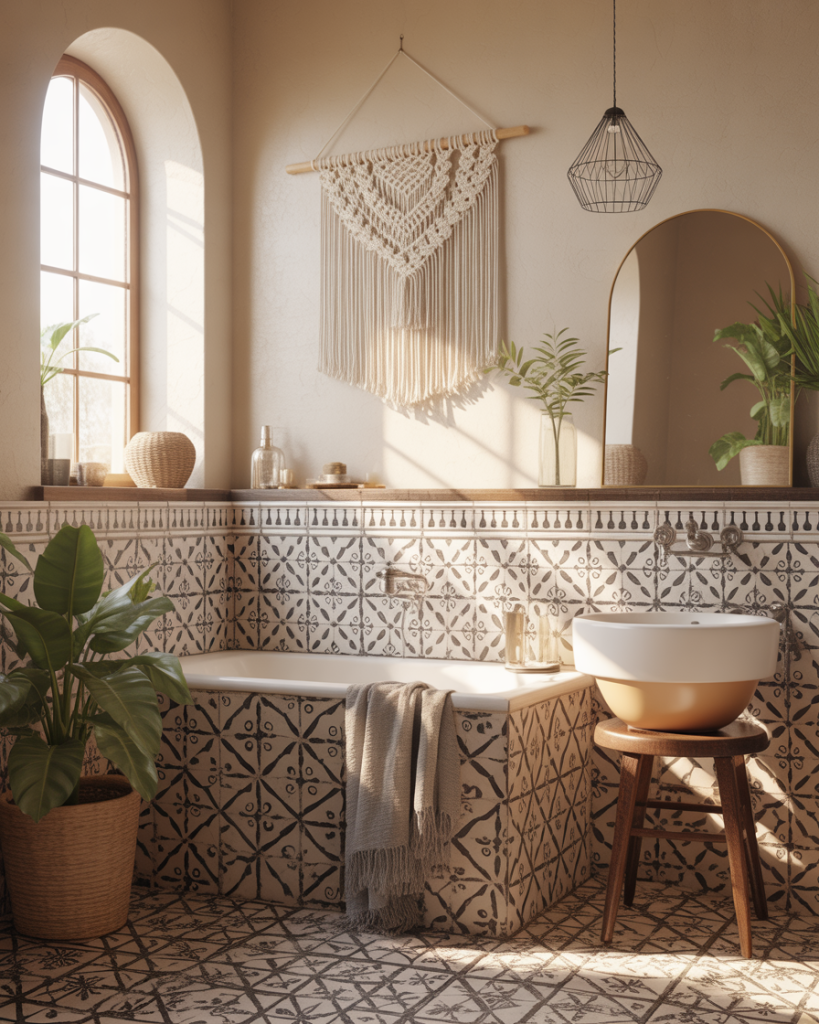
A bohemian black and white bathroom proves that this color scheme doesn’t have to feel minimal or serious. Layered textiles, mixed metal finishes, and globally inspired decor create relaxed sophistication. Moroccan-style tiles, macramé plant hangers, and vintage finds from flea markets add personality without breaking the monochrome palette. This style invites collected-over-time charm rather than perfectly coordinated sets, making it ideal for creative types who resist conformity.
A micro anecdote from a Portland homeowner captures this style perfectly: she found an ornate black vintage mirror at an estate sale for $40, paired it with a modern white vessel sink, and suddenly had the anchor piece that made her entire bathroom renovation click. The bohemian approach rewards patient treasure hunting and personal curation over buying everything new from a single retailer.
10. Apartment-Friendly Rental Solutions
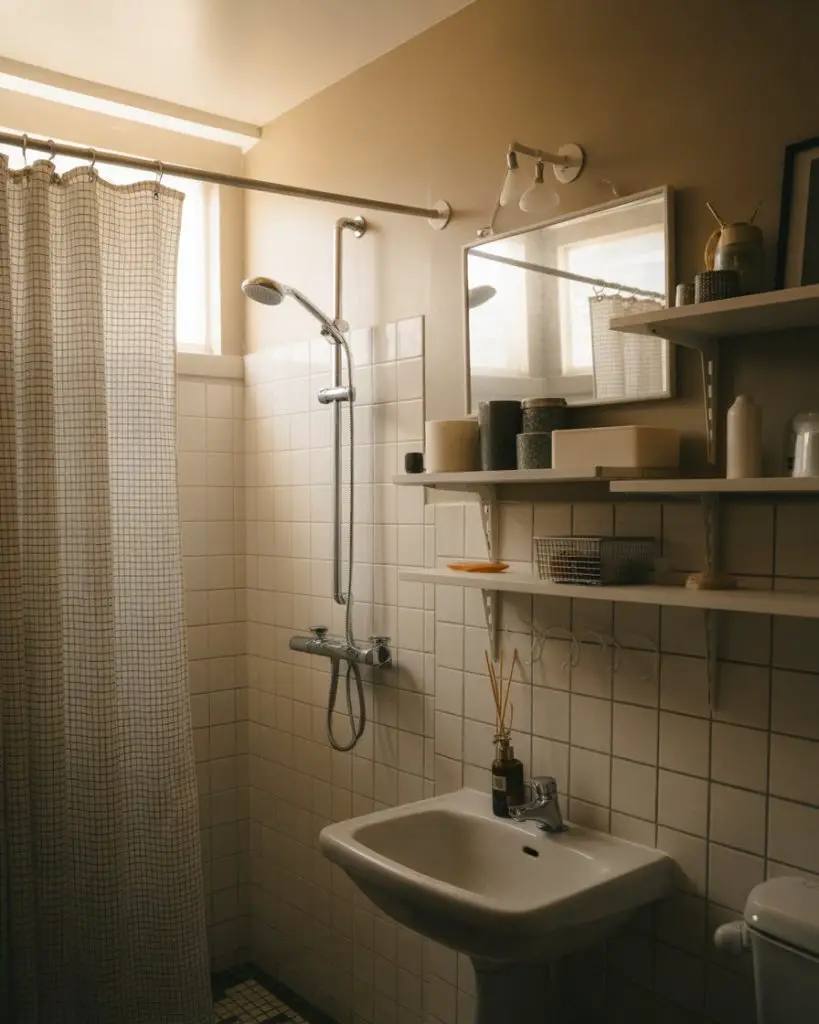
Creating a stunning black and white bathroom in an apartment requires creativity within landlord limitations. Removable peel-and-stick tiles for floors or accent walls, adhesive hooks instead of drilled hardware, and tension rod shower curtains allow dramatic transformation without security deposit risk. The decor focus shifts to accessories—coordinated towels, a statement shower curtain, and well-chosen storage containers can completely change the space. Urban renters have become experts at maximizing impact through temporary interventions. 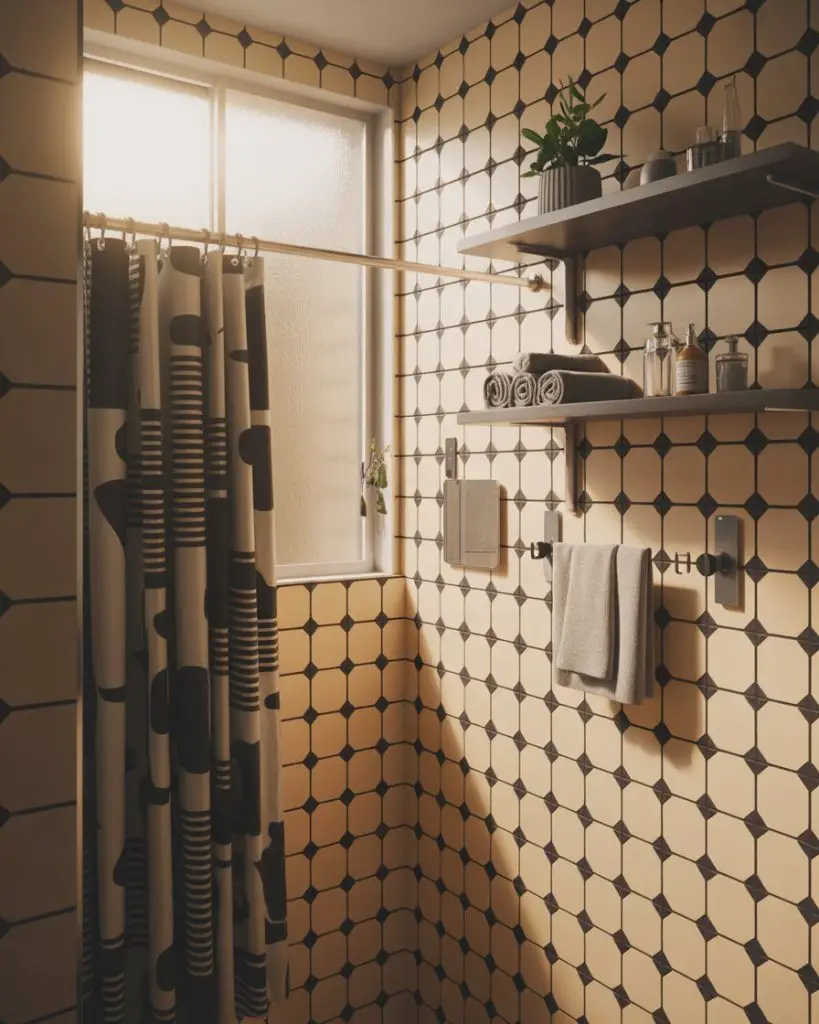
The real homeowner behavior here is strategic—renters often purchase a few high-quality pieces they can take to their next place rather than investing in permanent fixtures. A beautiful black framed mirror, quality bath linens, and a designer soap dispenser become portable elements of personal style. This approach actually builds a collection over time that eventually furnishes a future owned home.
11. Cute Powder Room with Personality
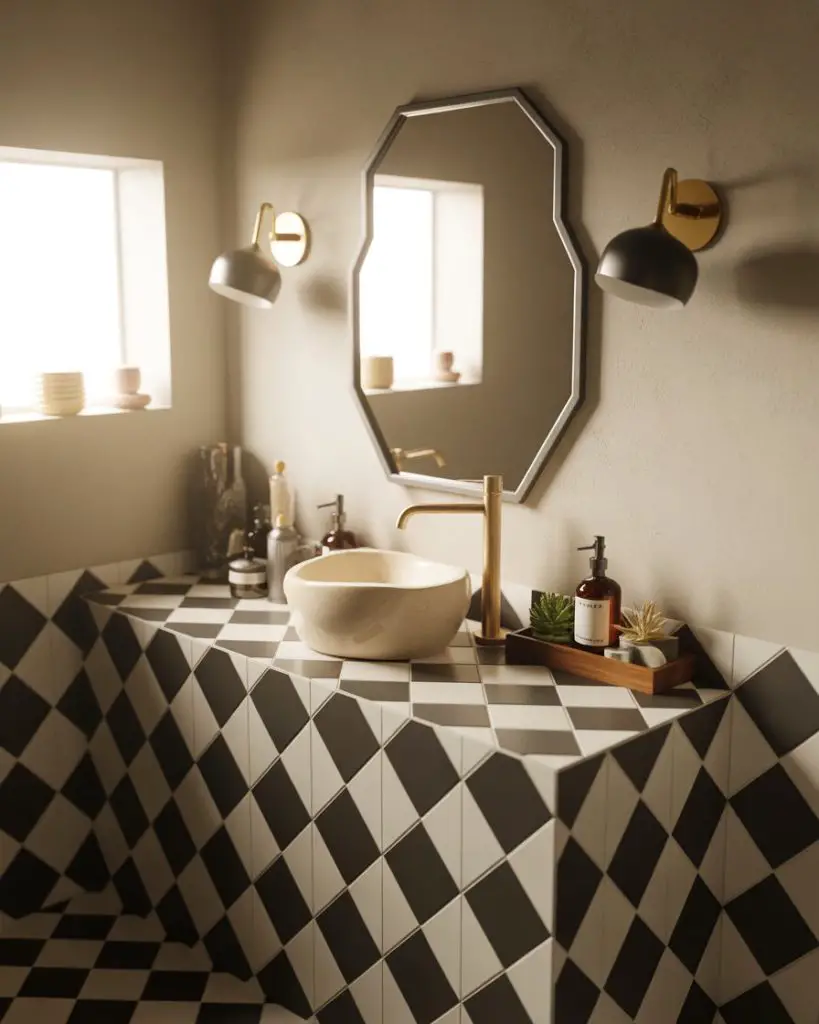
A cute black and white powder room is where you can take risks without commitment. This small space handles bold choices beautifully—think graphic floor tiles, a playful sink shape, or whimsical lighting. Without the practical demands of a full bath (no shower moisture, less traffic), the powder room becomes a design laboratory. Guests notice and remember these spaces, making them worth the creative investment. The decor can be more trend-forward here since you’re not looking at it during morning routines. 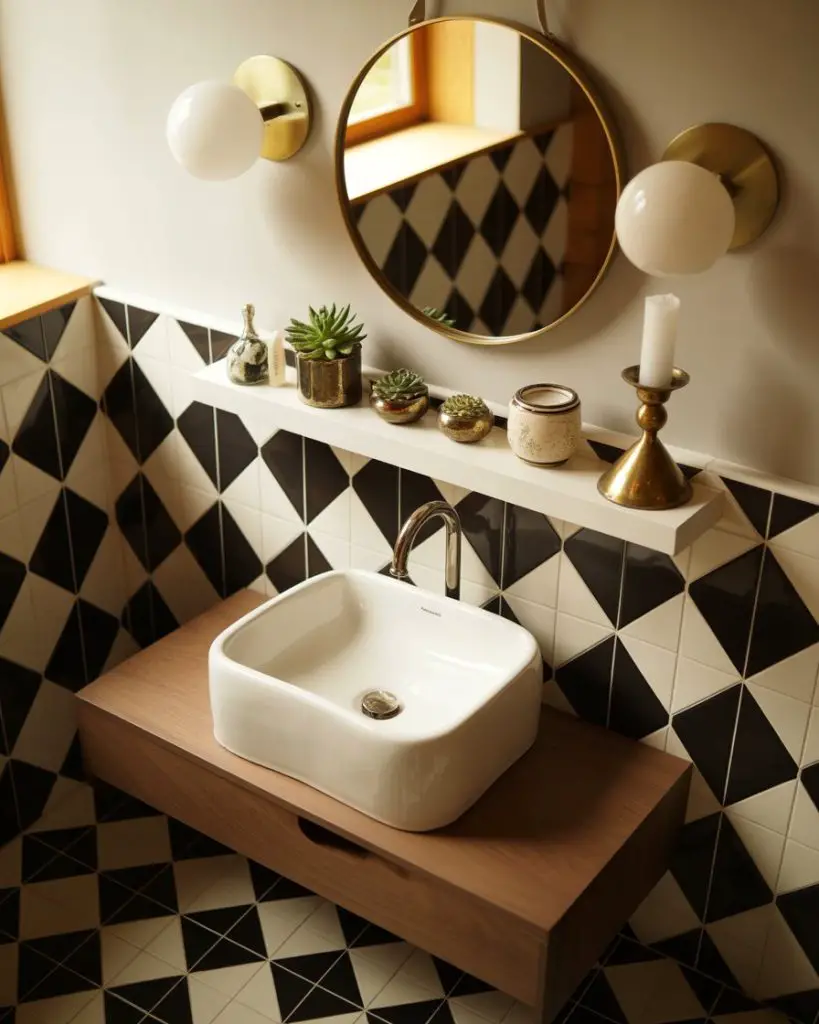
Expert designers often recommend spending proportionally more on powder room fixtures since the smaller square footage means materials and labor costs are contained. That designer faucet or handmade tile you couldn’t justify in the main bathroom suddenly becomes affordable when you only need a fraction of the quantity. It’s where splurge meets smart—maximum style impact with manageable budget reality.
12. Grey Gradient Sophistication
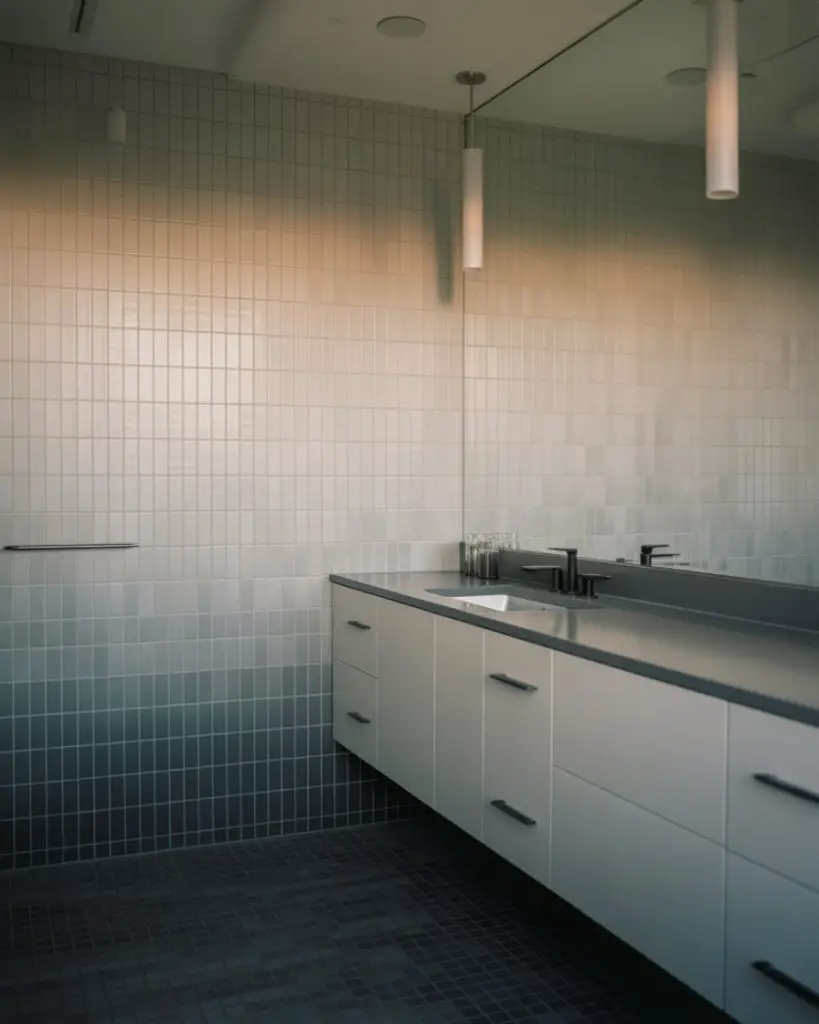
Introducing grey into your black and white bathroom creates gradient sophistication that softens stark contrast. Charcoal tiles transition to white walls, or a medium grey vanity bridges the gap between black hardware and white countertops. This subtle addition adds depth and dimension while maintaining the monochromatic feel. The grey acts as a neutral mediator, making spaces feel more layered and thoughtfully composed without introducing true color. 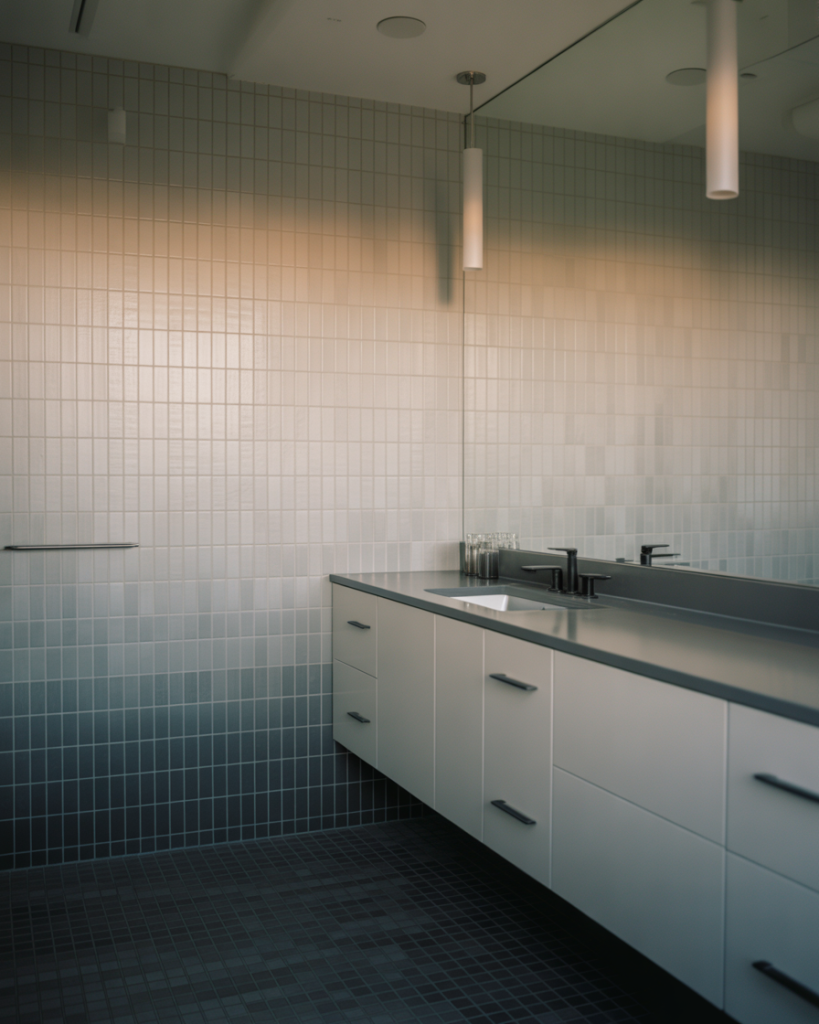
This approach works particularly well in bathrooms with challenging lighting—north-facing rooms or those without windows. The grey tones prevent the stark white from feeling too cold or institutional while avoiding the cave-like effect that can happen with too much black. Balance is key: use grey as approximately 20-30% of your palette for optimal results that feel cohesive rather than confused.
13. Vintage Glamour with Period Details
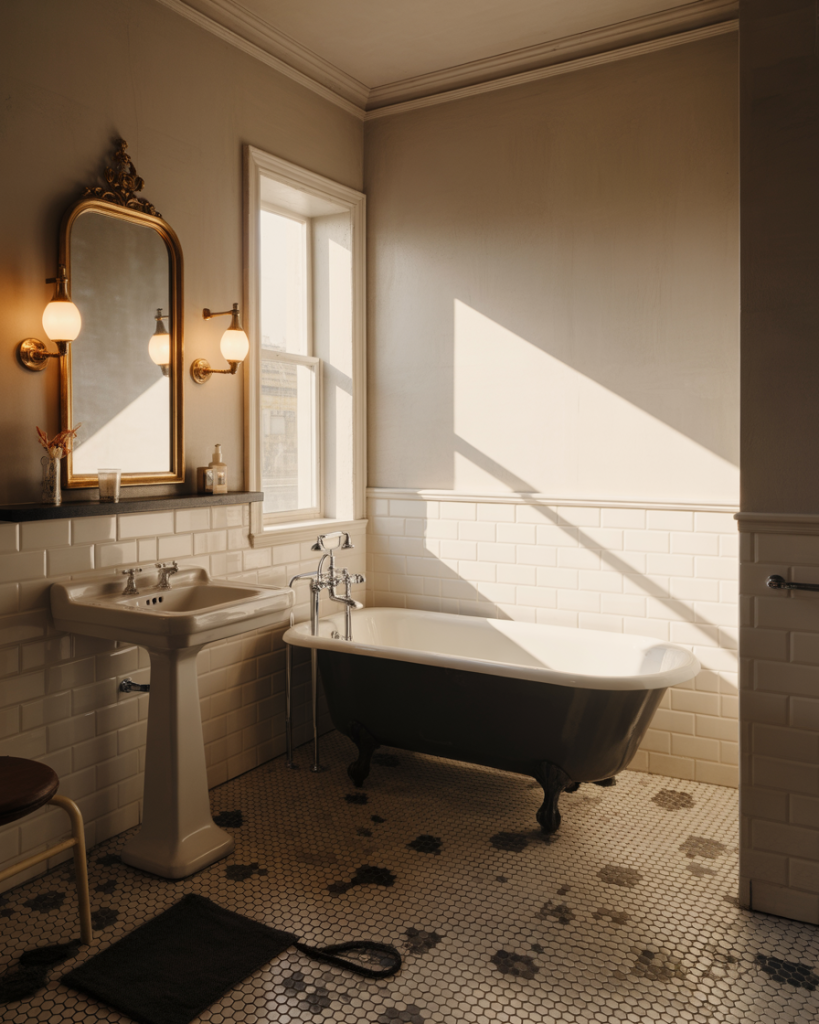
A vintage black and white bathroom channels old Hollywood glamour through period-appropriate fixtures and details. Hexagonal floor tiles, a pedestal sink with sculptural lines, and polished chrome or brass hardware honor early 20th-century design. The goal isn’t museum-perfect restoration but rather capturing the spirit of an era when bathrooms transitioned from purely functional to deliberately beautiful. This style particularly suits older homes where modern interventions can feel jarring against original architecture. 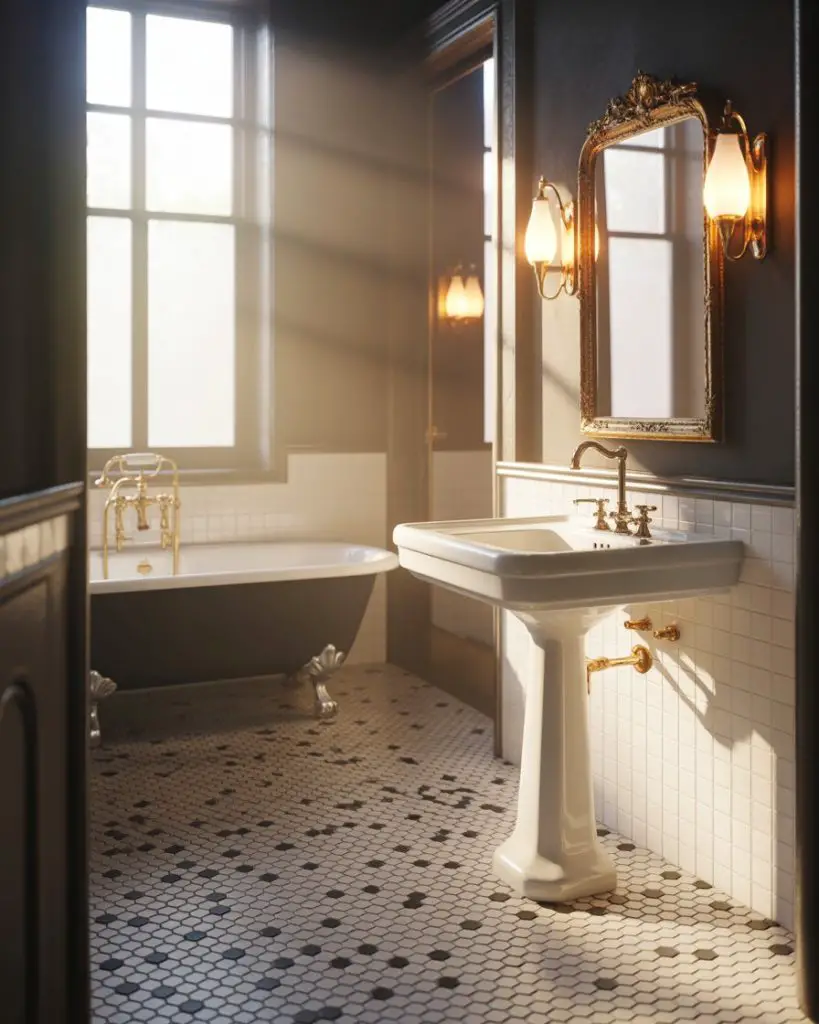
Where American lifestyle context matters is in maintaining functionality alongside period aesthetics. Modern plumbing hidden behind vintage facades, water-efficient fixtures that mimic historical designs, and contemporary lighting wired into vintage-style housings allow you to have the best of both worlds. Many reproduction fixture manufacturers now offer pieces that look authentically aged but perform to current standards.
14. Rustic Industrial Hybrid
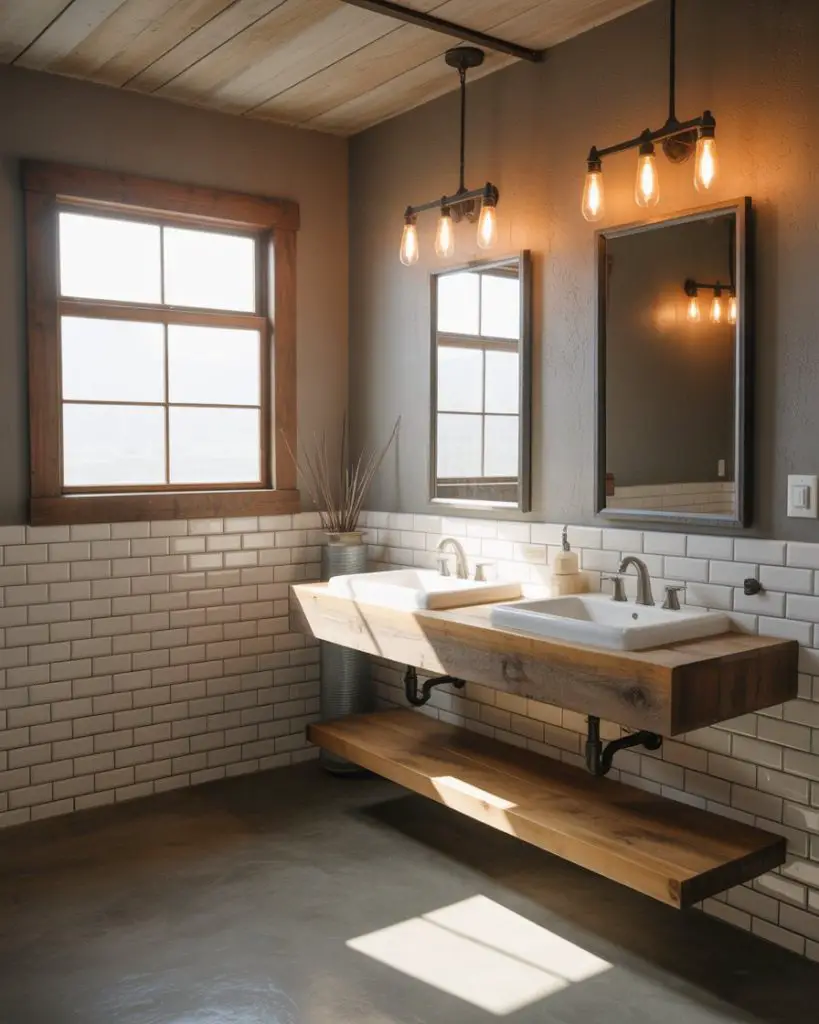
Combining rustic warmth with industrial edge creates a black and white bathroom that feels both grounded and urban. Reclaimed wood beams or shelving contrast with concrete floors and metal fixtures. This hybrid approach works beautifully in renovated barns, warehouses, or suburban homes seeking character. The key is balancing rough textures with smooth surfaces—a weathered wood vanity might pair with sleek white subway tiles and matte black hardware for visual interest without chaos. 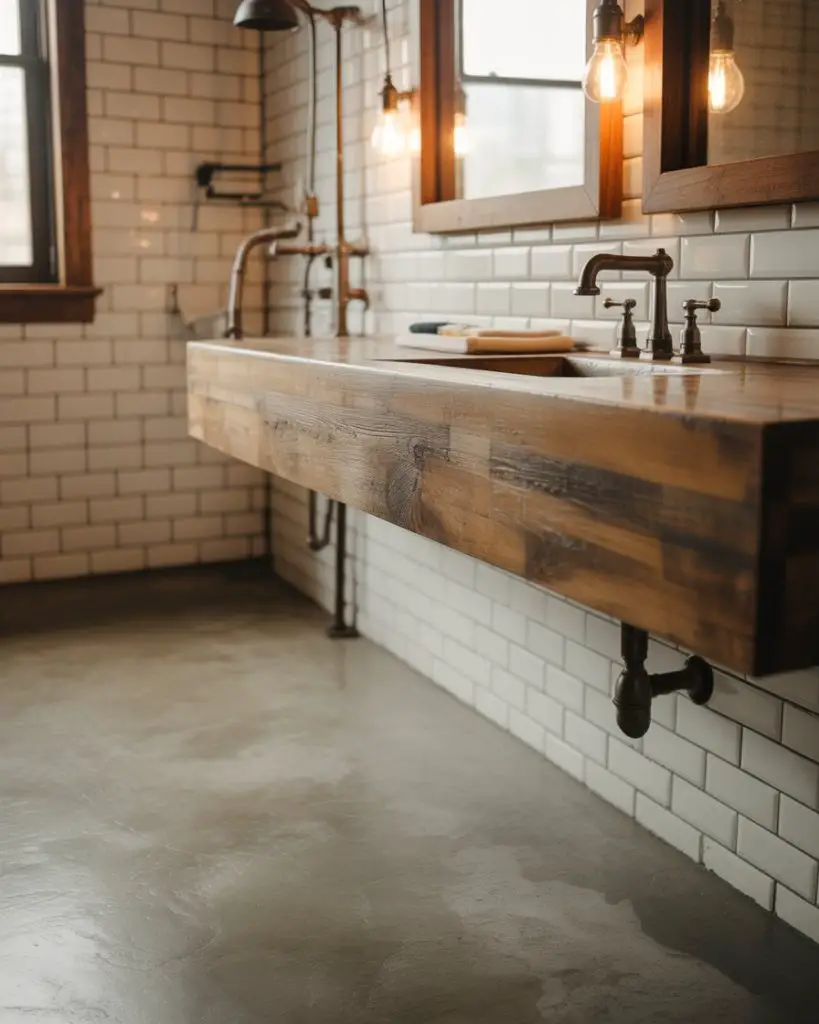
A common mistake is assuming rustic means distressed everything. The most successful rustic-industrial bathrooms feature one or two authentically weathered pieces complemented by cleaner, simpler elements. Over-distressing creates theme-park artificiality rather than genuine character. If you’re salvaging reclaimed materials, properly seal and treat them for bathroom humidity—untreated wood warps quickly in moisture-rich environments.
15. Pink Accents for Unexpected Warmth
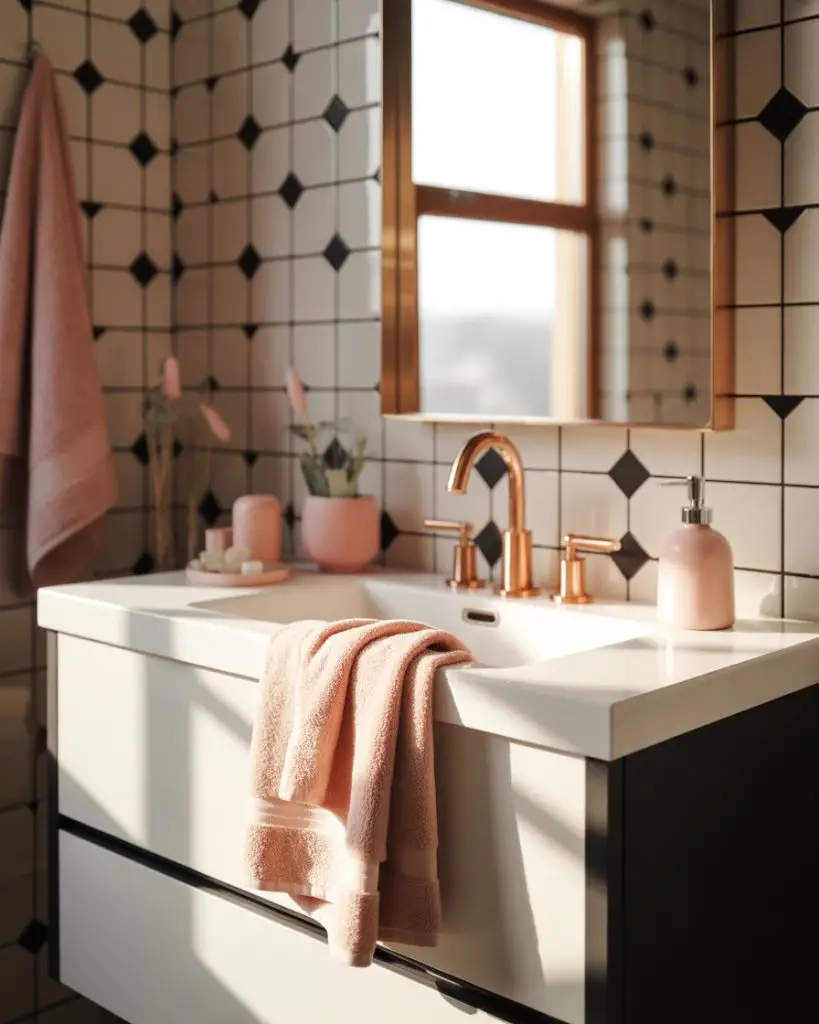
Adding pink accents to a black and white bathroom introduces unexpected warmth and femininity. Blush towels, a rose-toned soap dispenser, or even a single stem of pink flowers softens the graphic quality of the monochrome palette. This is especially effective in spaces that might otherwise feel too stark or masculine—a pop of color creates approachability. The pink reads as barely-there blush rather than bubblegum, maintaining sophistication while adding personality. 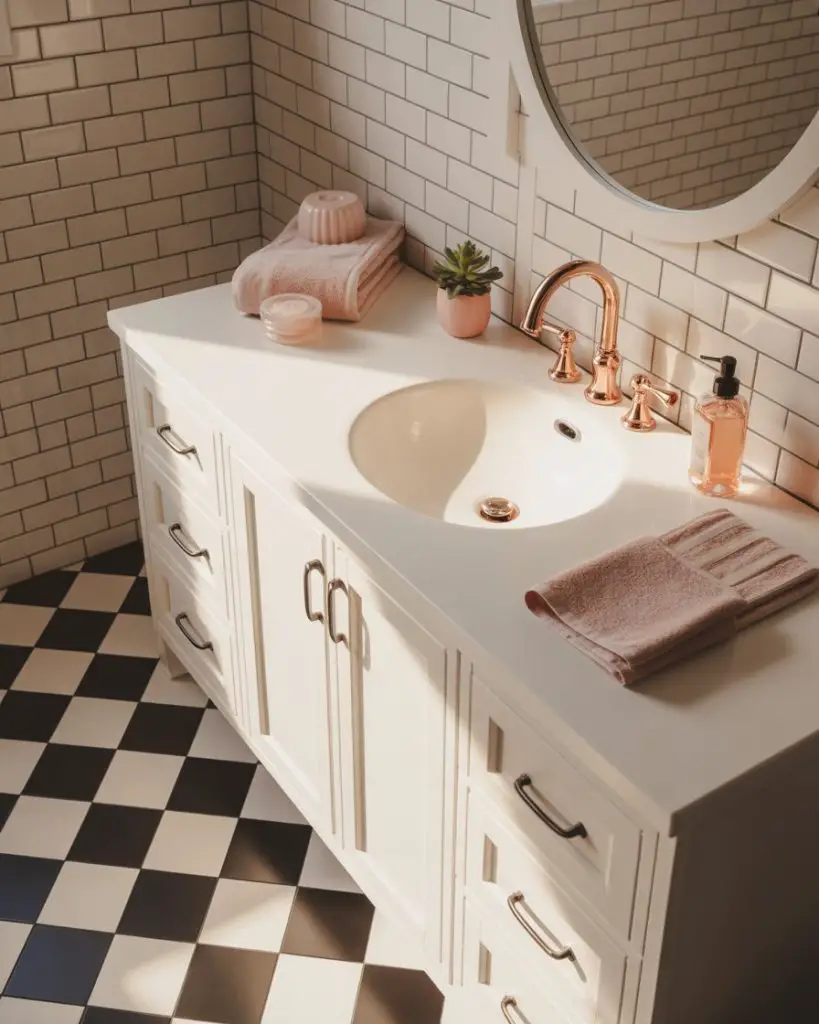
Where this works best is in master bathrooms or powder rooms where personal expression matters more than universal appeal. The pink accents are easily swapped if tastes change—you haven’t committed to pink tiles or permanent fixtures. This low-risk approach to incorporating a pop of color lets you experiment with warmer tones without full commitment, perfect for those testing boundaries of their comfort zone.
16. Red Accents for Bold Drama
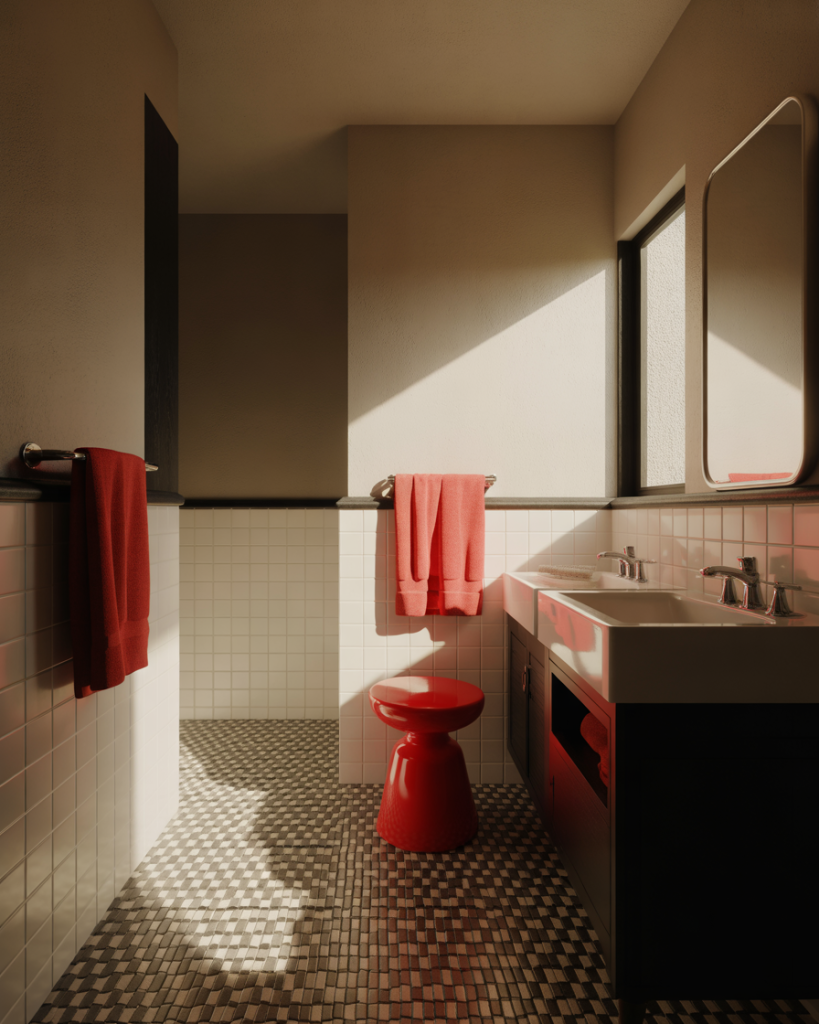
Strategic red accents electrify a black and white bathroom with instant energy. A crimson bath mat, red-handled faucets, or a single red stool provides visual punctuation that draws the eye and creates memorable impact. This isn’t a timid choice—red demands attention and transforms the bathroom from neutral backdrop to confident statement. The approach works particularly well in spaces with good natural light, where the red truly pops rather than appearing muddy or dark.
Real homeowner behavior shows that people who choose red accents tend to be design-confident individuals comfortable making strong statements. They’re less concerned with resale neutrality and more focused on creating spaces that reflect personality. The beauty of using red through accessories rather than permanent fixtures means you can dial intensity up or down seasonally—swap in burgundy for winter depth or coral-red for summer brightness.
17. Tub as Sculptural Centerpiece
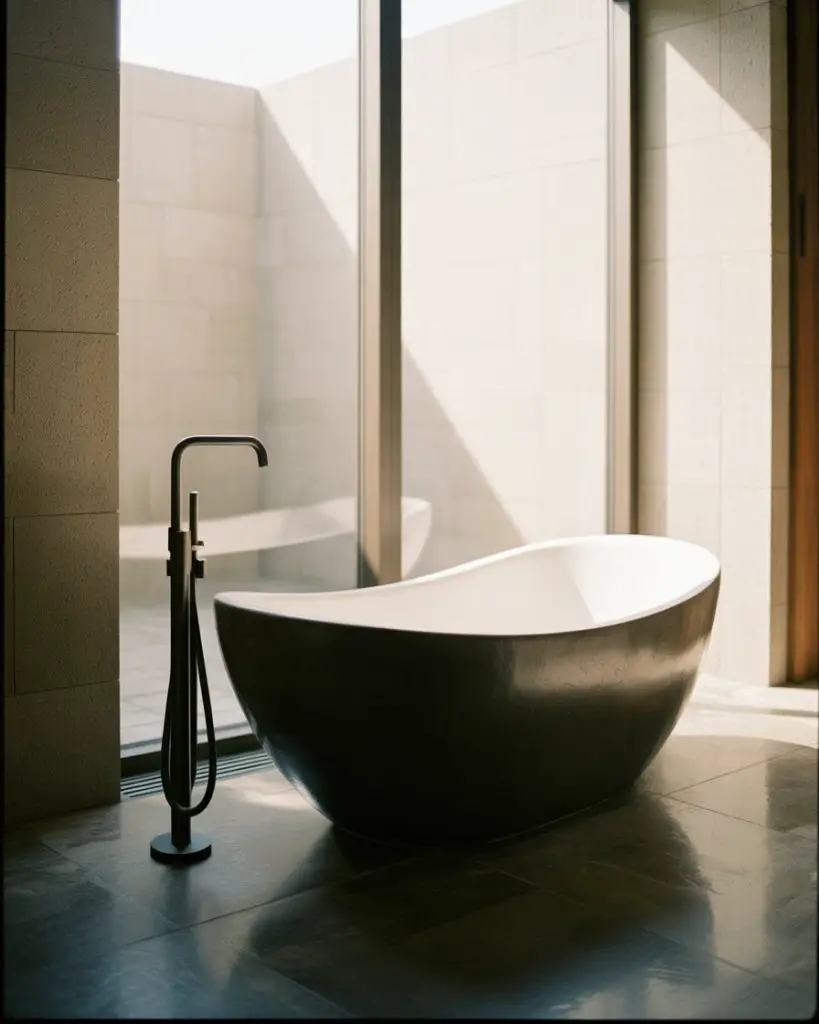
Making the tub the focal point transforms a black and white bathroom into a spa-like retreat. A freestanding soaking tub—whether matte black on the exterior or glossy white throughout—becomes sculptural art that happens to be functional. Position it beneath a window for natural light during daytime soaks, or center it in the room for maximum dramatic impact. The modern luxury this conveys goes beyond the fixture itself to what it represents: time, self-care, and intentional relaxation. 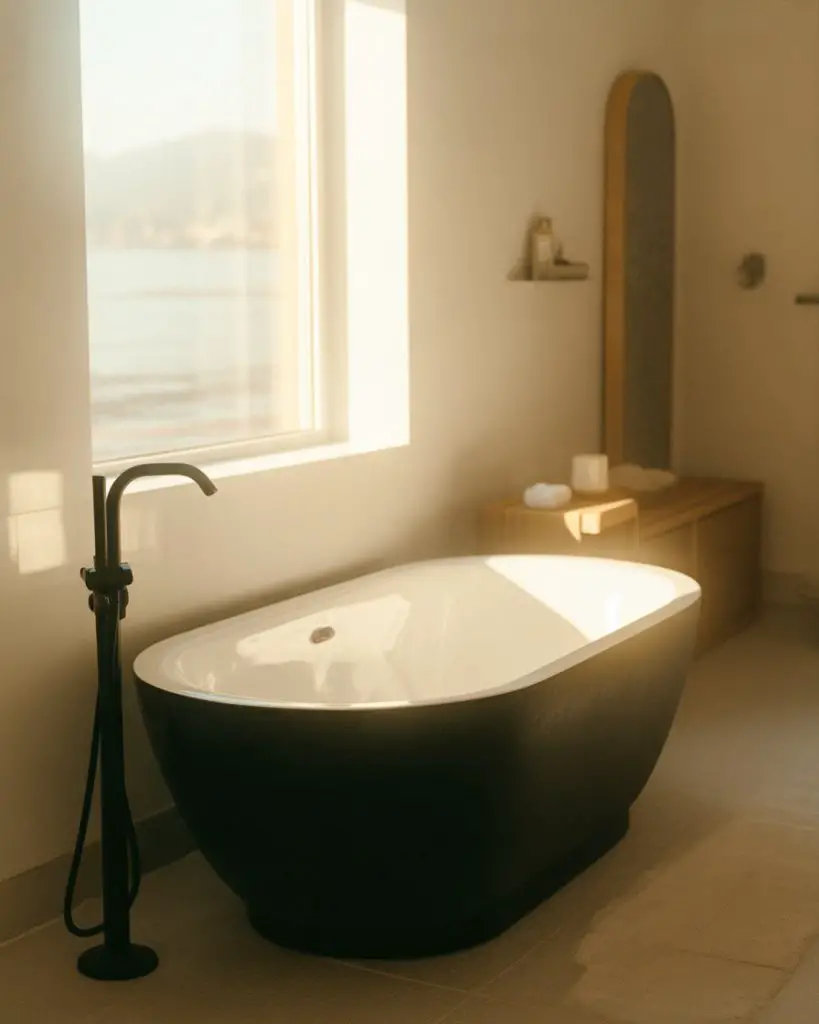
One practical insight often overlooked is floor loading—freestanding tubs filled with water and a person can weigh 800+ pounds. Verify your floor structure can handle this weight, especially in older homes or second-story bathrooms. Some homeowners discover this requirement during planning and opt for reinforcement or choose a smaller tub model. It’s an unglamorous detail that prevents expensive and dangerous structural problems later.
18. DIY Wall Art for Personal Expression
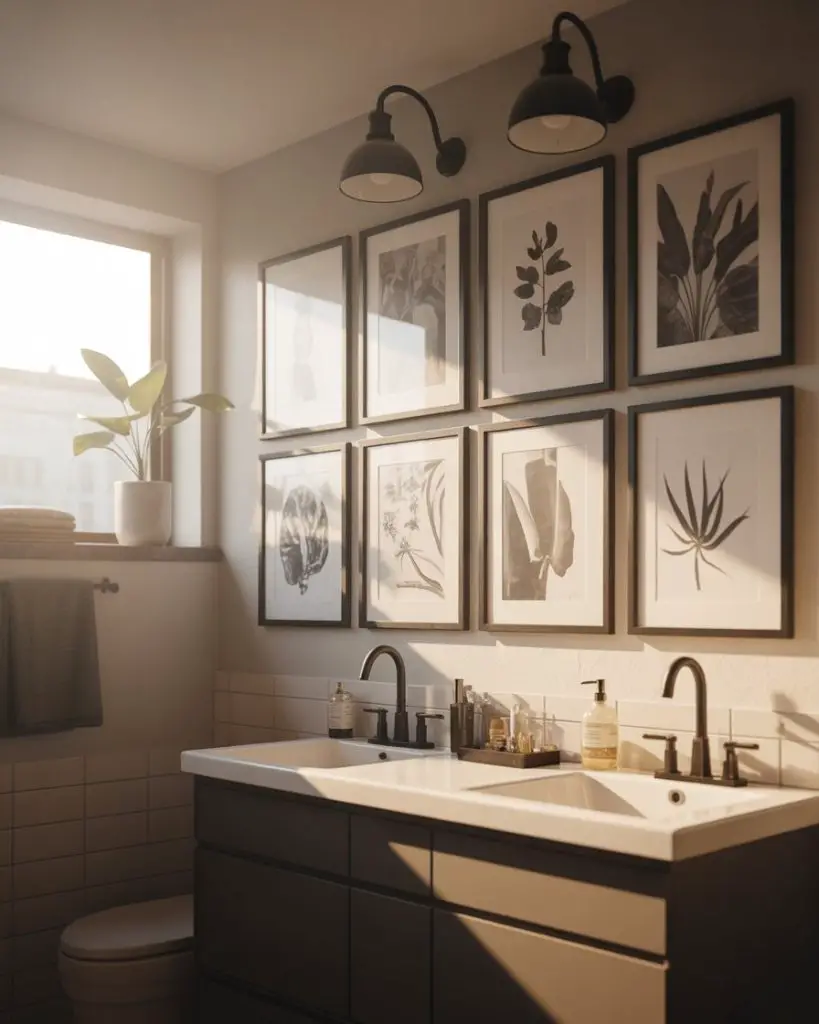
Creating your own decor diy wall art for a black and white bathroom adds personality without professional designer fees. Simple framed botanical prints, abstract ink paintings on canvas, or even typography pieces make meaningful impact. The key is working within the monochrome palette while expressing something personal—a favorite quote, a meaningful pattern, or images from a memorable trip. This approach transforms generic space into something distinctly yours, telling visual stories about who you are. 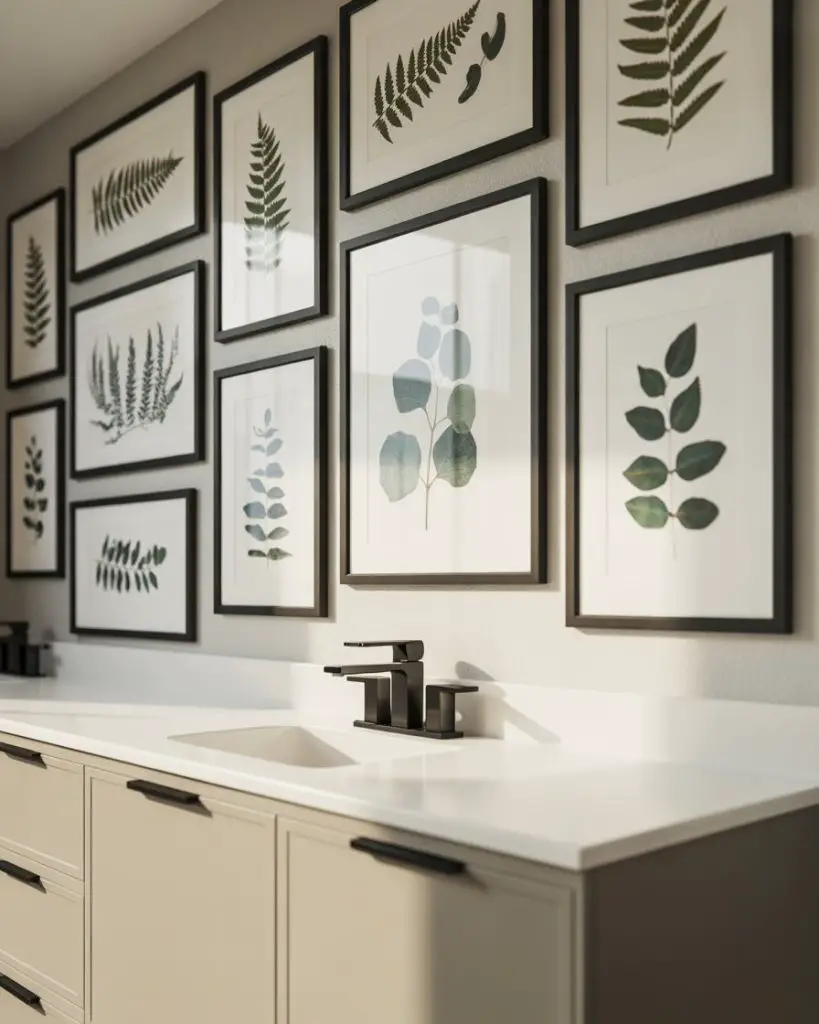
Budget-wise, DIY wall art is unbeatable—you can create professional-looking results for under $50 using printable art from Etsy, thrifted frames painted matte black, and basic framing from craft stores. A trio of 11×14 prints makes more impact than a single larger piece and allows you to mix orientations and subjects for visual interest. Avoid the temptation to fill every wall; strategic placement creates breathing room that lets each piece shine.
19. Green Plants as Living Accents
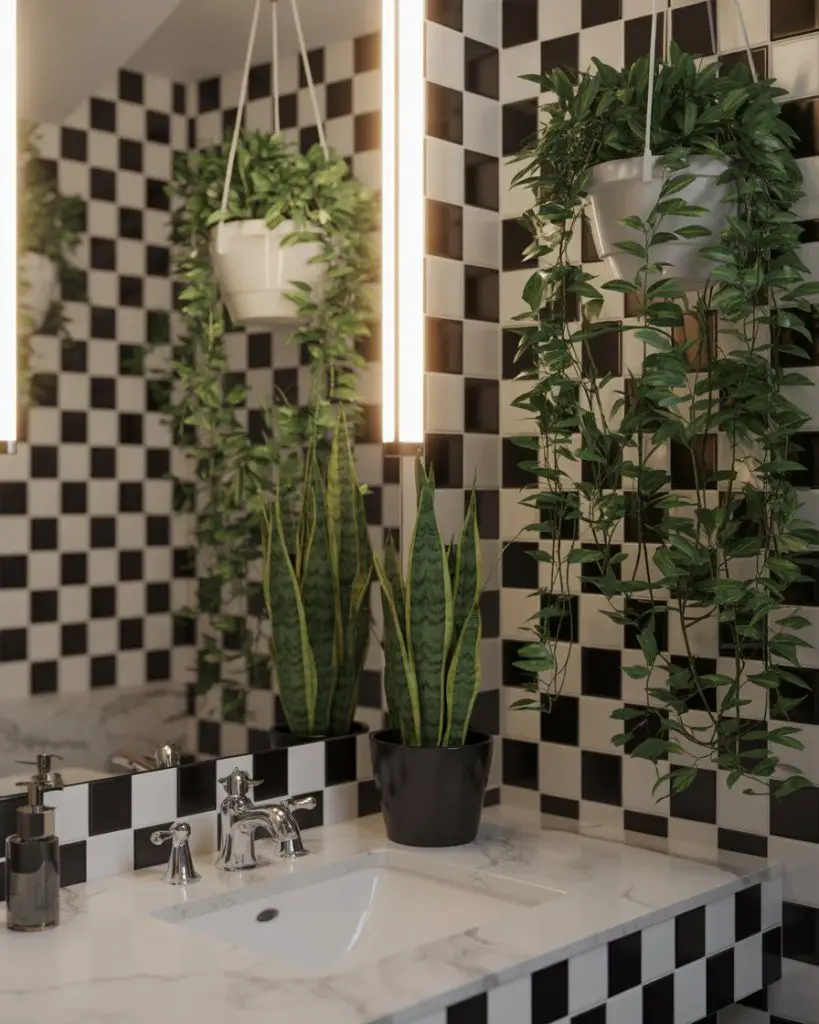
Introducing green through plants provides the only color needed in a black and white bathroom. Snake plants, pothos, and ferns thrive in humid bathroom environments while softening hard surfaces with organic shapes. The living green reads as fresh and health-conscious, aligning with wellness trends that prioritize natural elements indoors. Plants also improve air quality—a practical benefit that enhances the sensory experience of the space beyond pure aesthetics. 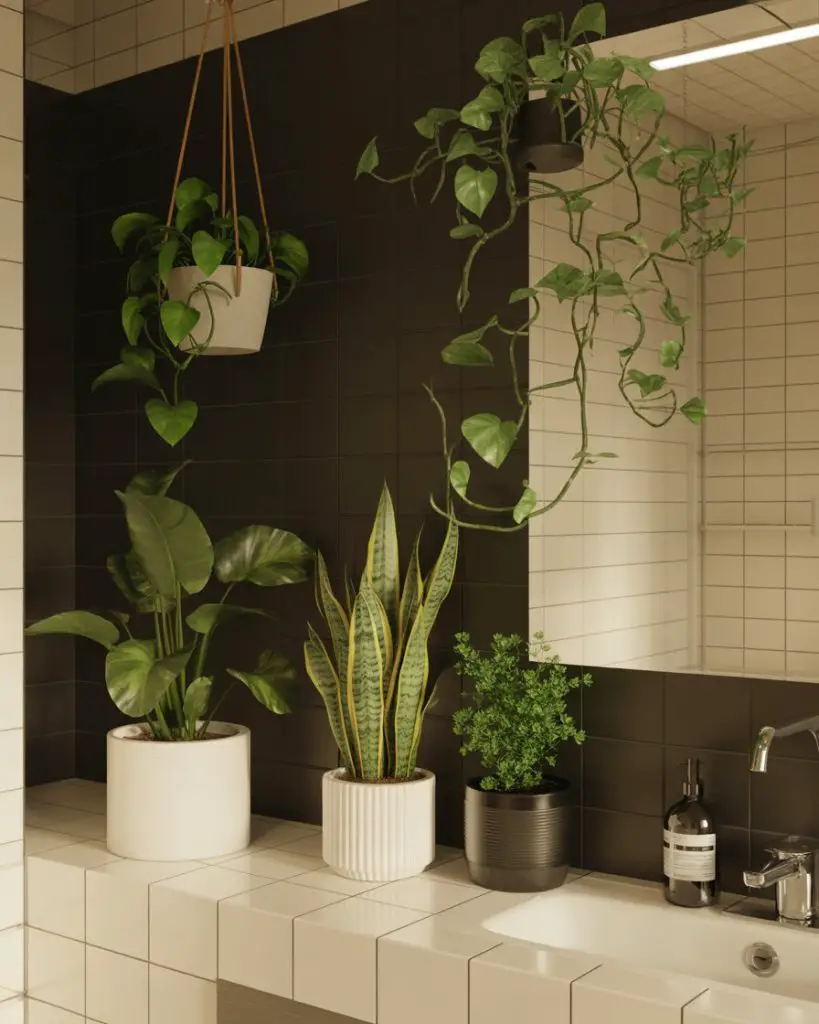
Where this works best is in bathrooms with natural light, though some varieties like pothos and snake plants tolerate lower light conditions. A west-facing window provides ideal afternoon sun for plant growth without overwhelming morning brightness. Many homeowners rotate plants between bathrooms and other rooms to ensure all their greenery gets adequate light exposure—it’s a simple maintenance strategy that keeps plants healthy and bathrooms fresh.
20. Modern Decor Through Minimalist Accessories
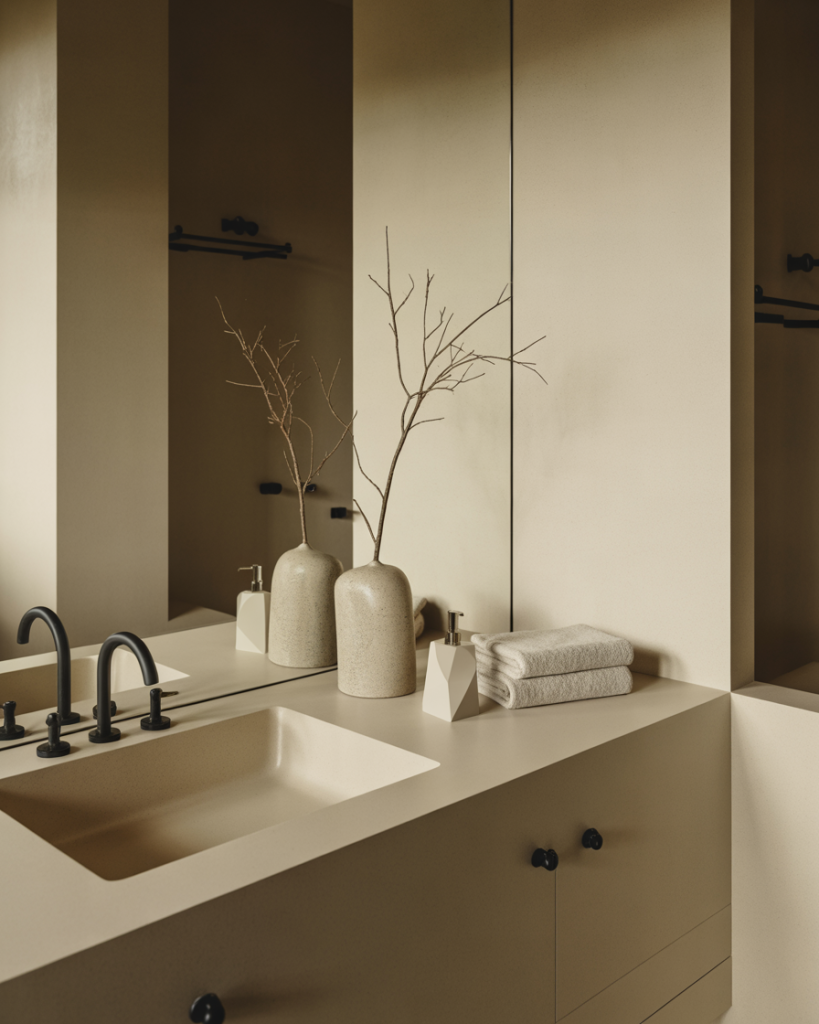
Achieving modern decor in a black and white bathroom often means knowing what to leave out. Streamlined soap dispensers, a single architectural vase, and matched towel sets create cohesion without clutter. The minimalist approach to accessories focuses on quality over quantity—each item should be both beautiful and functional. This restraint creates visual calm that makes the bathroom feel larger and more serene, counteracting the busy-ness many Americans experience in daily life. 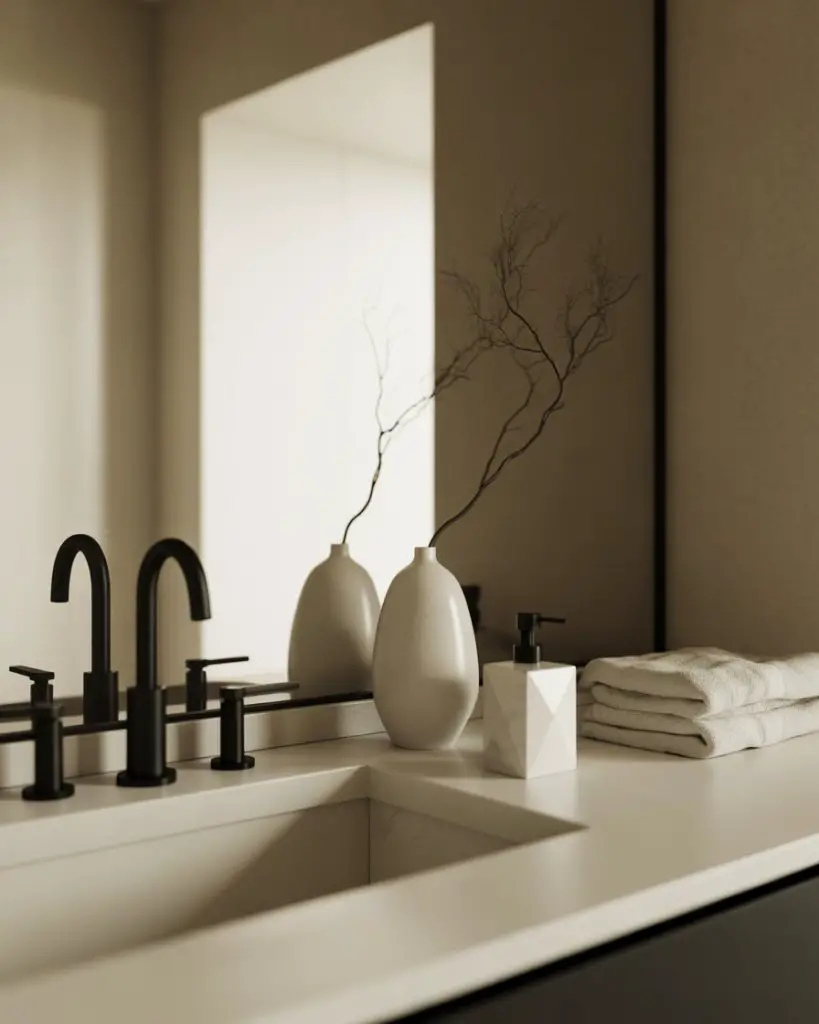
Common mistakes include purchasing decorative sets that match too perfectly—this creates a staged, showroom feeling rather than a lived-in space. Mix high and low: a designer soap dispenser paired with affordable but quality towels feels more authentic than everything from the same big-box store collection. Edit ruthlessly; if you haven’t used that decorative tray or candle in two weeks, it’s probably just creating visual noise.
21. Gray Flooring as Neutral Foundation
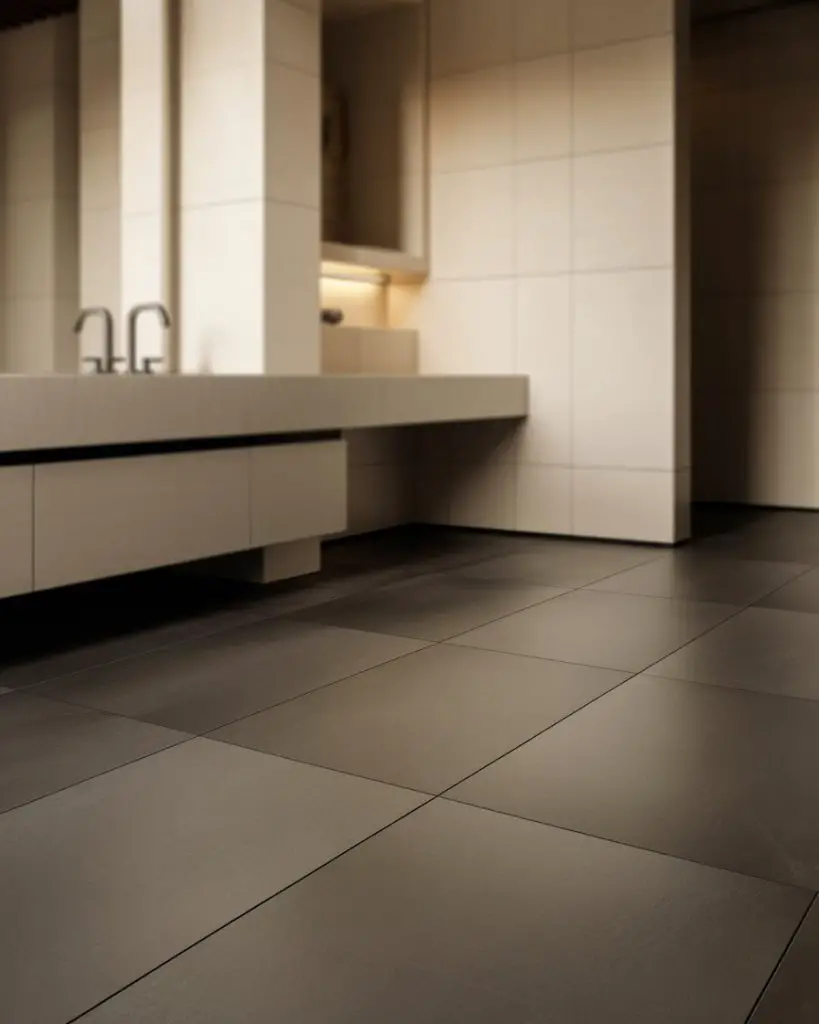
Choosing gray flooring provides a neutral foundation that grounds black and white elements without competing for attention. Large-format gray tiles, polished concrete, or luxury vinyl planks in medium gray tones create sophistication that feels current and enduring. This flooring choice is particularly smart in high-traffic family bathrooms where the gray hides dirt and wear better than stark white while avoiding the potentially gloomy effect of black floors in smaller spaces. 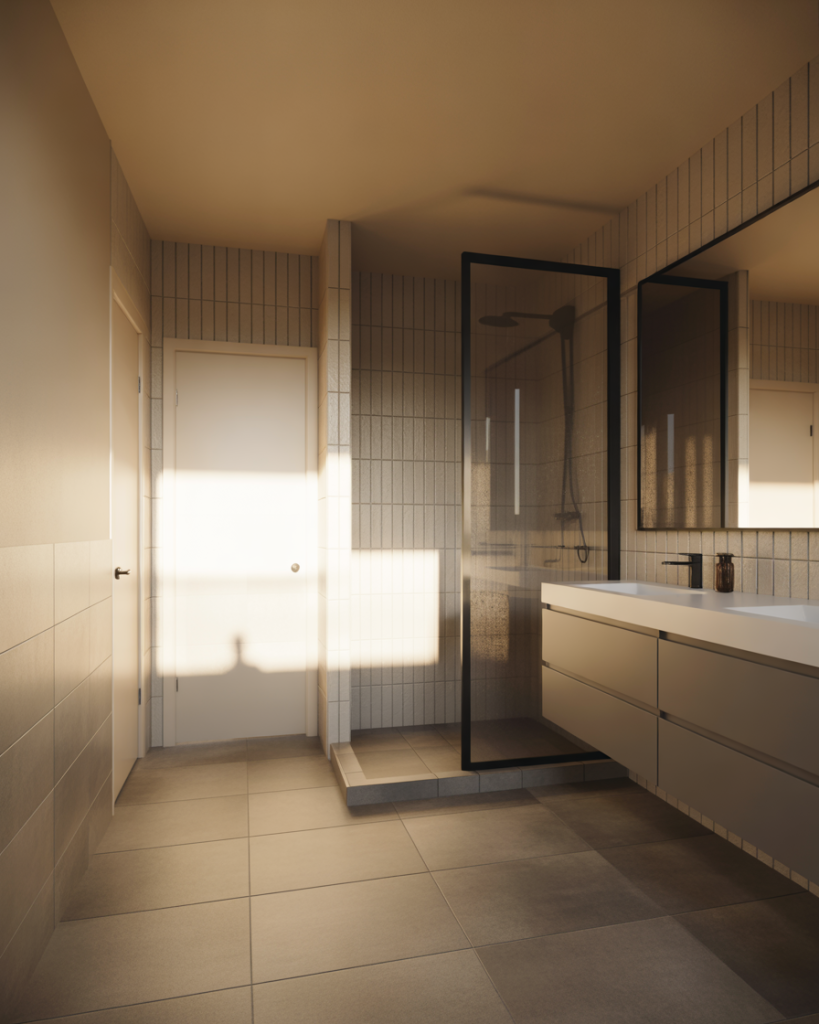
Regional context matters here—in the Pacific Northwest where natural light can be limited, medium gray floors prevent the cave-like feeling that black floors might create while still providing visual weight. In sunnier climates like Arizona or Southern California, you can go darker with gray tones since abundant natural light keeps the space from feeling enclosed. Consider your specific light conditions when selecting your gray shade.
22. Master Bath Vanity as Design Anchor
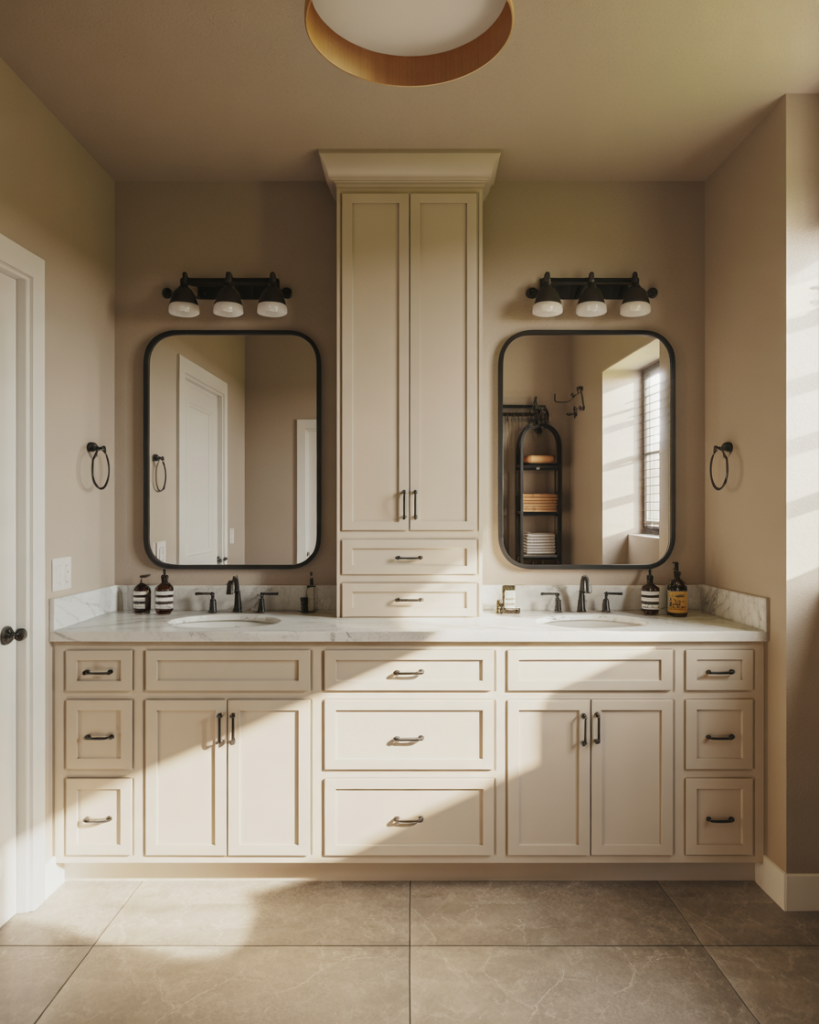
The decor master bath vanity serves as the design anchor for the entire space, setting the tone for everything else. Whether you choose a double vanity with symmetrical styling or a single statement piece with asymmetric storage, this element receives the most daily interaction and deserves careful consideration. In black and white bathrooms, the vanity becomes even more critical—its material, finish, and hardware choices establish whether the space skews modern, traditional, or somewhere in between. 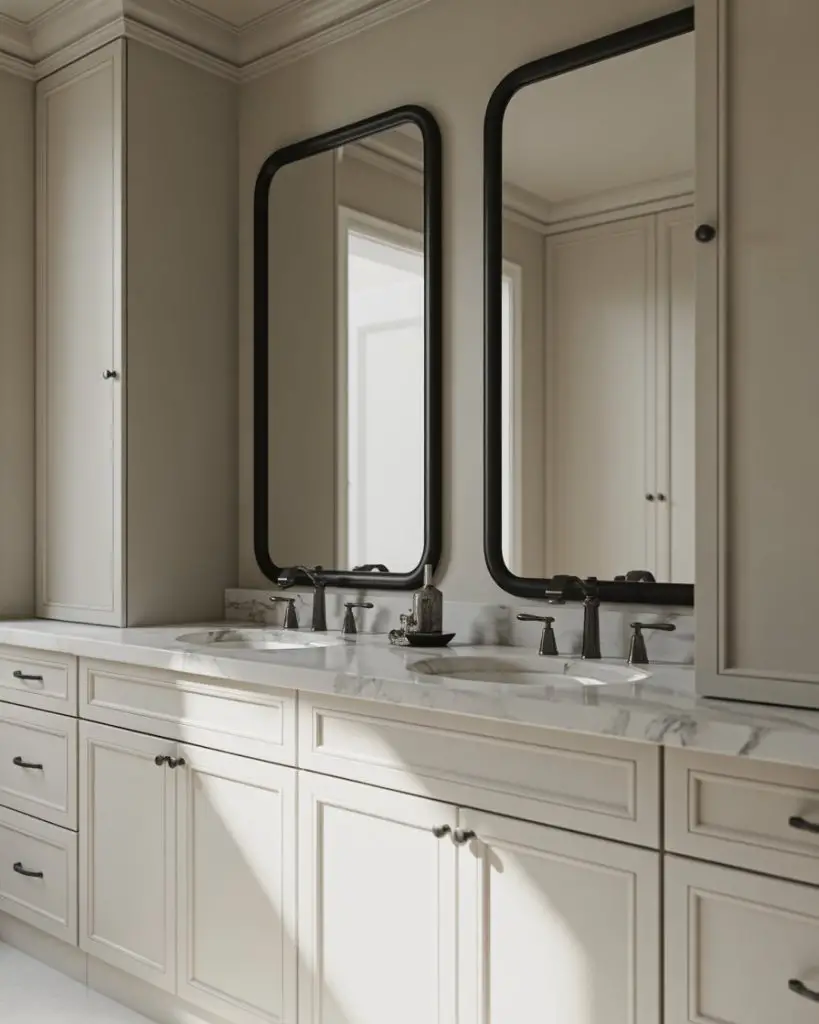
Expert designers emphasize that vanity storage should be planned around actual daily routines—drawer dividers for makeup, pull-out hampers for dirty towels, and dedicated outlets for electric toothbrushes and hair tools. The most beautiful vanity fails if it doesn’t accommodate how you actually live. Measure your existing toiletry bottles and tools before finalizing cabinet specs to ensure adequate height clearance in drawers and shelves.
23. Layered Lighting for Mood and Function
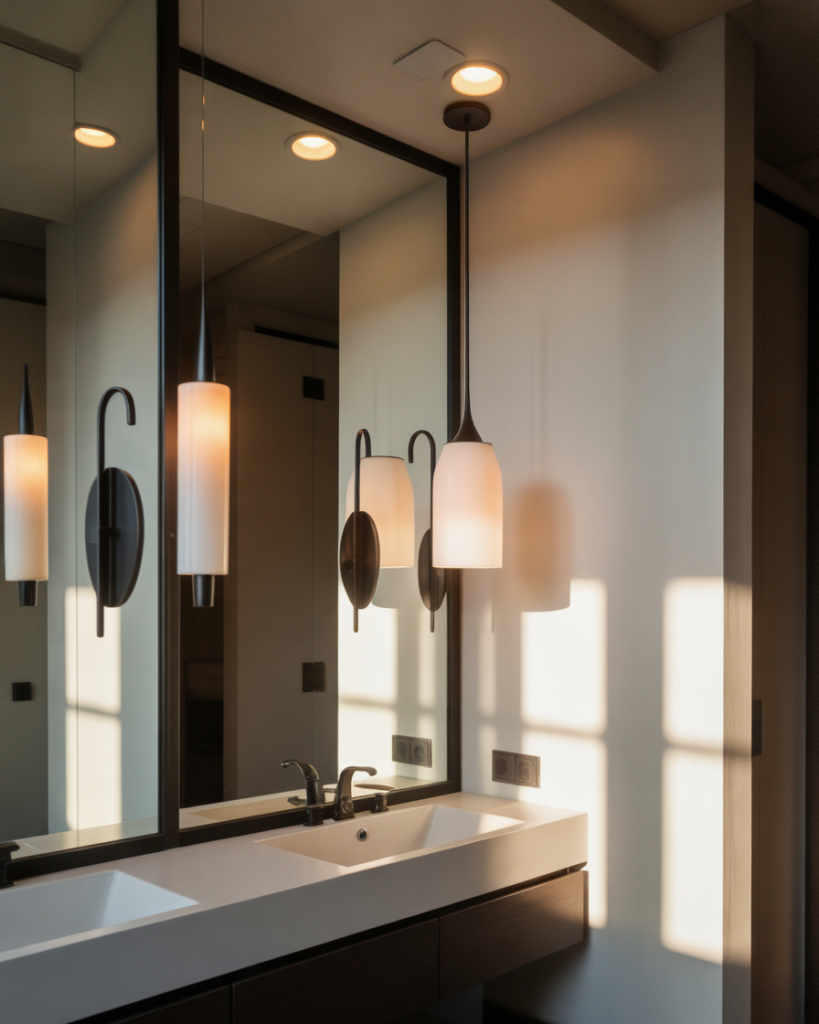
Successful black and white bathrooms depend on layered lighting that serves both practical and atmospheric needs. Combine recessed ceiling lights for ambient illumination, sconces flanking the mirror for shadow-free grooming, and perhaps a statement pendant or chandelier for architectural drama. The interplay of light and shadow becomes especially important in monochrome spaces where you can’t rely on color to create visual interest. Dimmer switches allow adjustment from bright morning prep to relaxed evening wind-down. 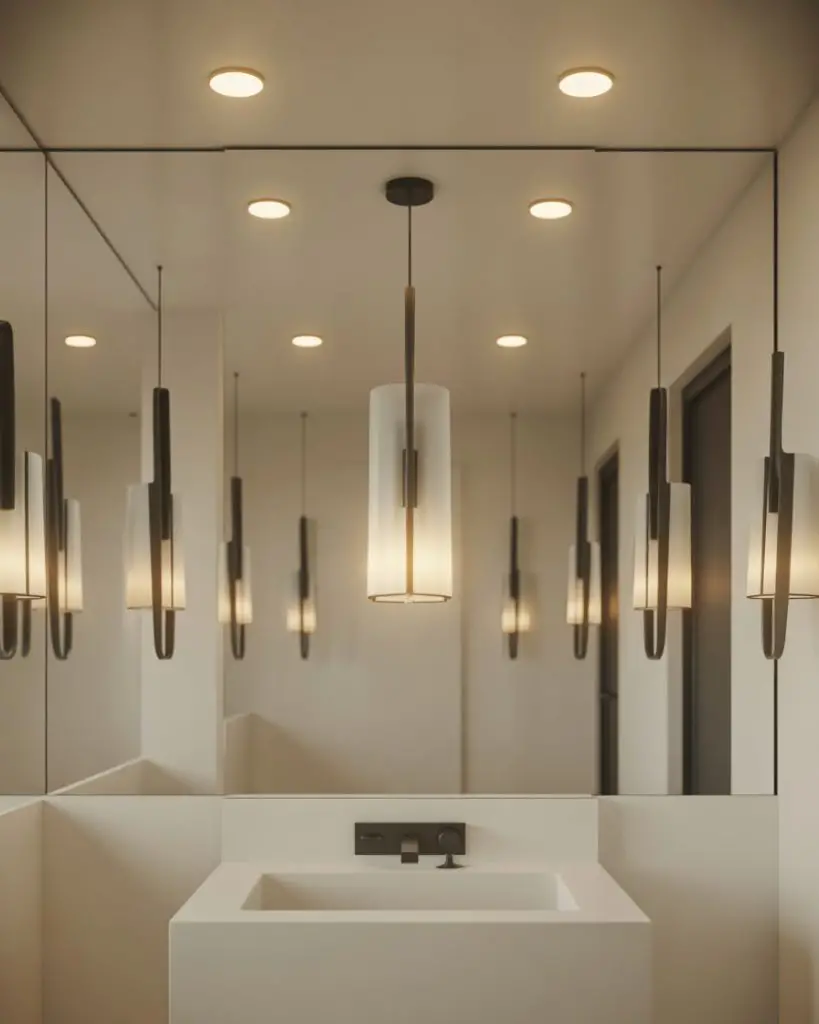
A lighting designer in Atlanta shared that clients often install adequate task lighting but neglect ambient layers, resulting in harsh, unflattering illumination. The rule of thumb is at least three separate light sources in a full bathroom: overhead, vanity, and either shower or tub lighting. Color temperature matters too—warm white (2700-3000K) feels more residential and flattering than cool white, which can make both skin tones and white surfaces look sterile.
Conclusion
These 23 black and white bathroom ideas prove that this classic color combination offers far more variety than you might expect. Whether you’re drawn to minimalist simplicity or bohemian eclecticism, there’s a version of this palette that fits your style and space. Which approach resonates with your own bathroom vision? Share your favorite ideas and any creative combinations you’re considering in the comments below—we’d love to see how you’re making this timeless palette your own.