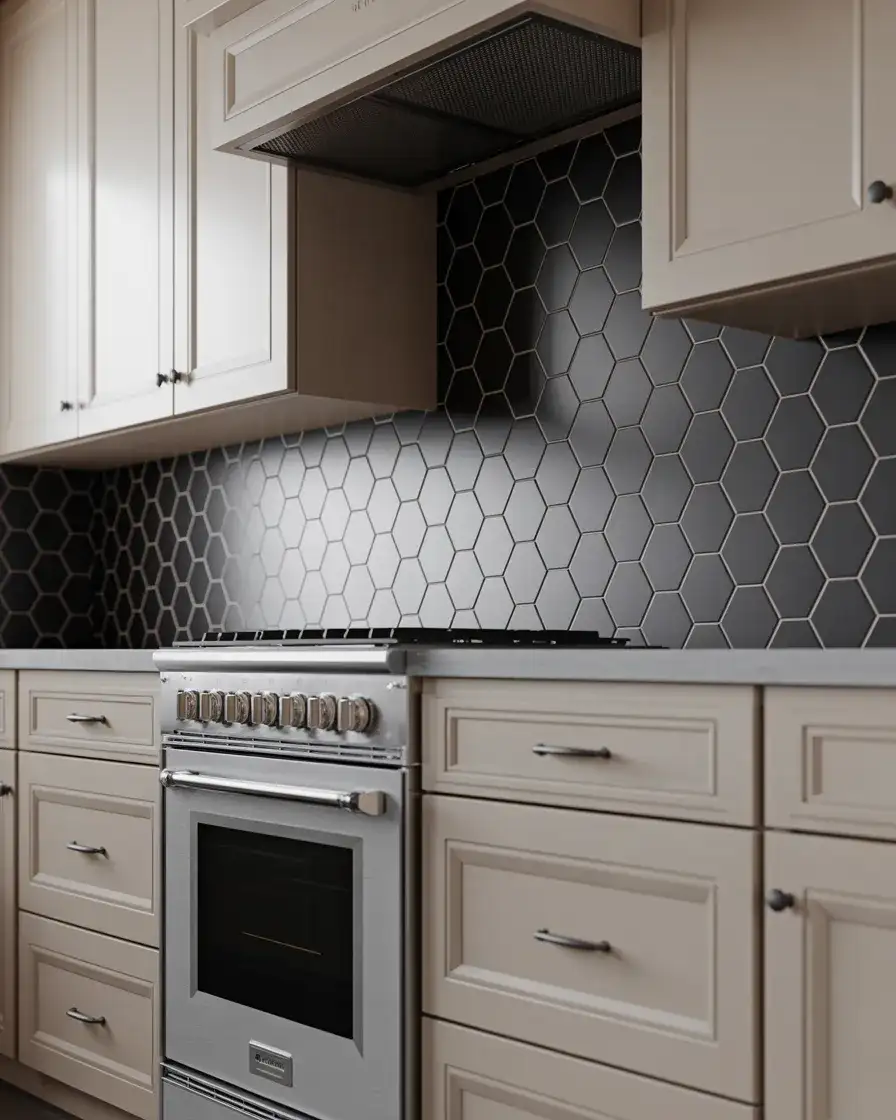
Black kitchen cabinets have never been more popular in American homes, and as we move through 2026, they continue to dominate Pinterest boards and renovation wishlists. Homeowners across the country are drawn to their dramatic sophistication, versatility, and ability to anchor a kitchen’s design with confidence. Whether you’re working with a compact urban galley or a sprawling open-concept space, black cabinetry creates a striking foundation that pairs beautifully with natural wood, gleaming metallics, and crisp white surfaces. This collection showcases inspiring ideas that blend timeless elegance with contemporary trends, helping you discover the perfect black cabinet style for your home.
1. Black Cabinets with White Countertops and Gold Hardware
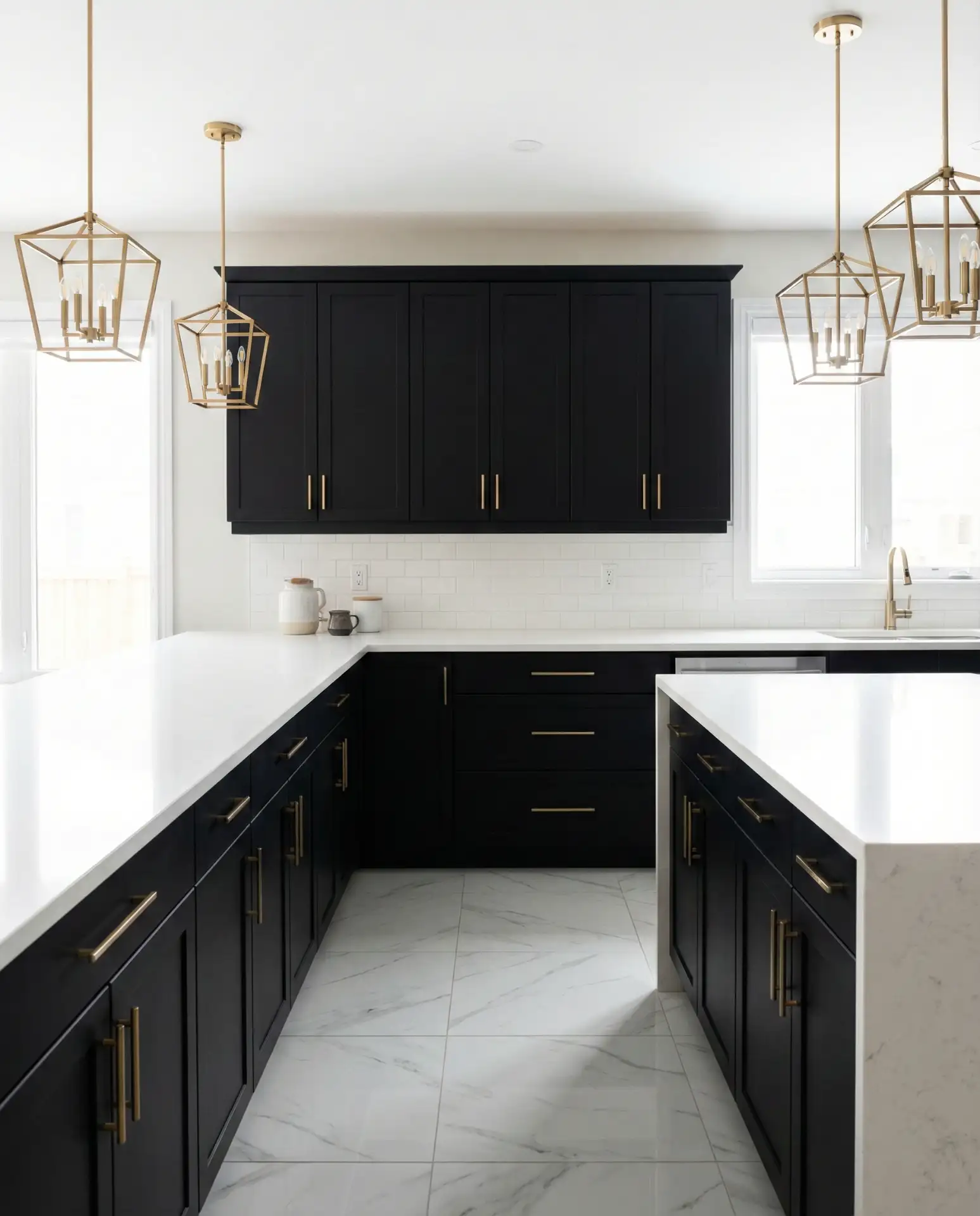
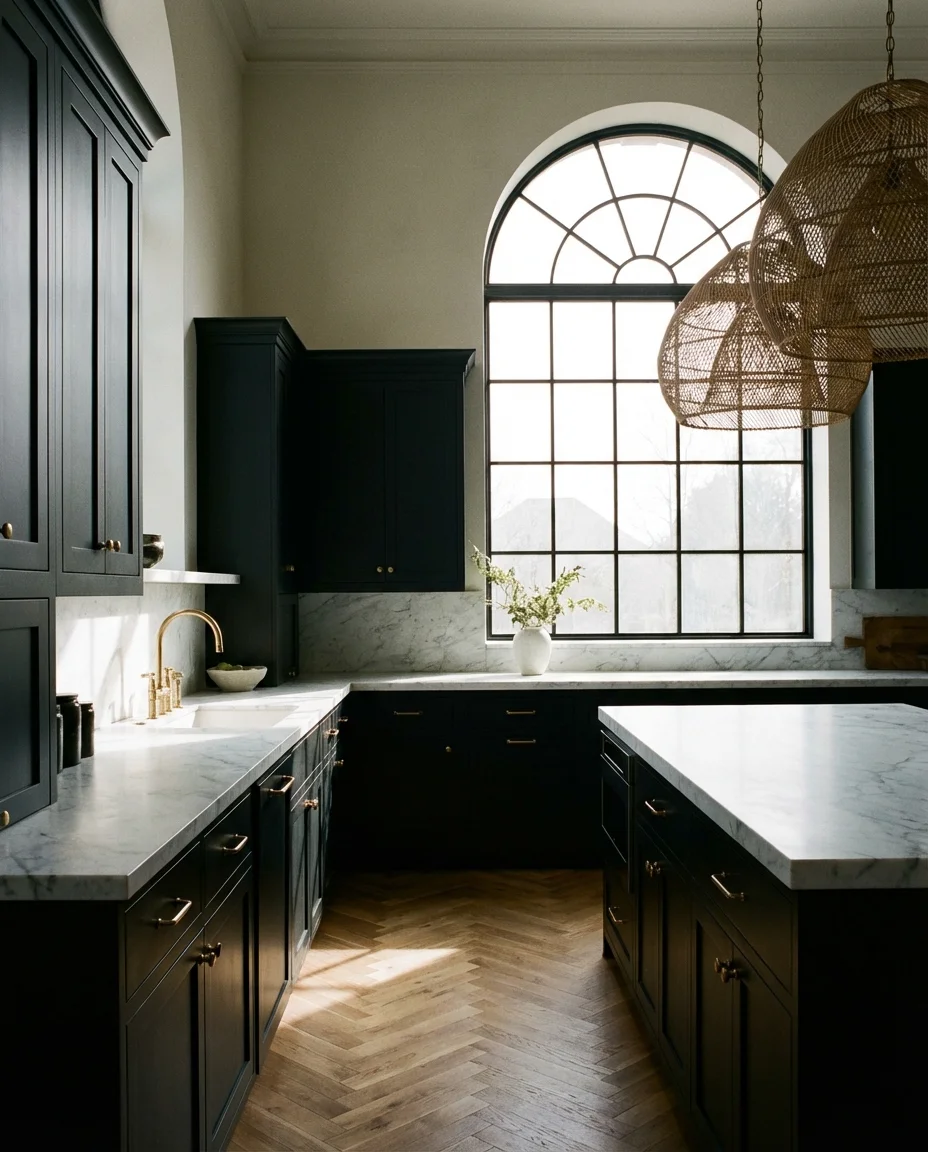
The classic pairing of black kitchen cabinets with white countertops creates a high-contrast foundation that feels both modern and timeless. Adding gold handles elevates this combination into genuine luxury territory, where the warm metallic accents catch natural light and add a jewelry-like quality to your cabinetry. This approach works beautifully in kitchens with ample natural light, where the white surfaces reflect brightness while the black cabinets ground the space with visual weight and drama.
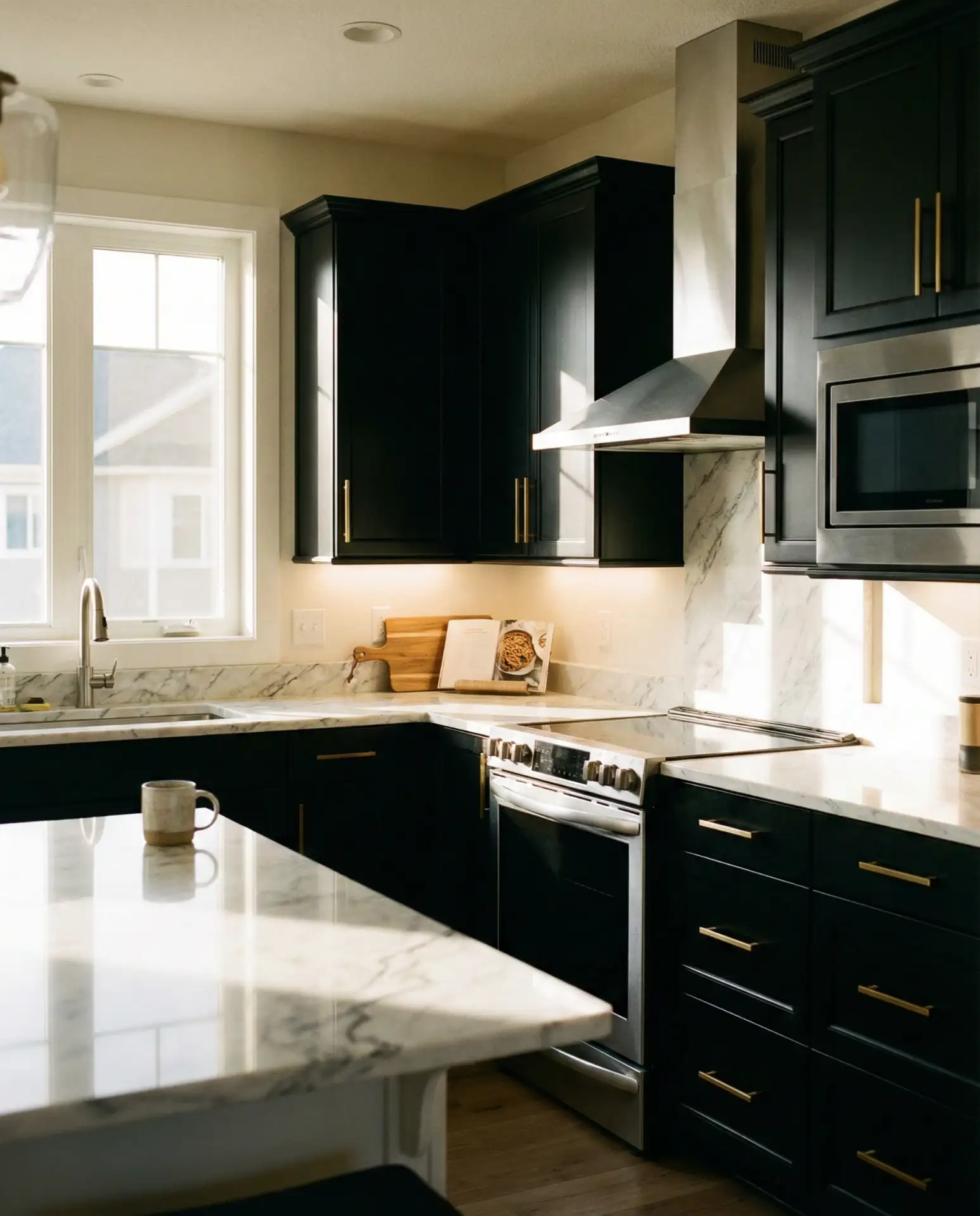
Where this works best is in kitchens with good natural light sources—southern or western exposures in particular—because the white counters amplify available light while preventing the black cabinets from making the space feel cave-like. If you’re worried about maintenance, opt for a matte or satin finish on your black cabinets rather than glossy lacquer, which shows fingerprints more readily. The gold hardware doesn’t need to match perfectly across every piece; mixing brushed and polished gold creates subtle visual interest that feels collected rather than overly coordinated.
2. Rustic Black Cabinets with Butcher Block Countertops
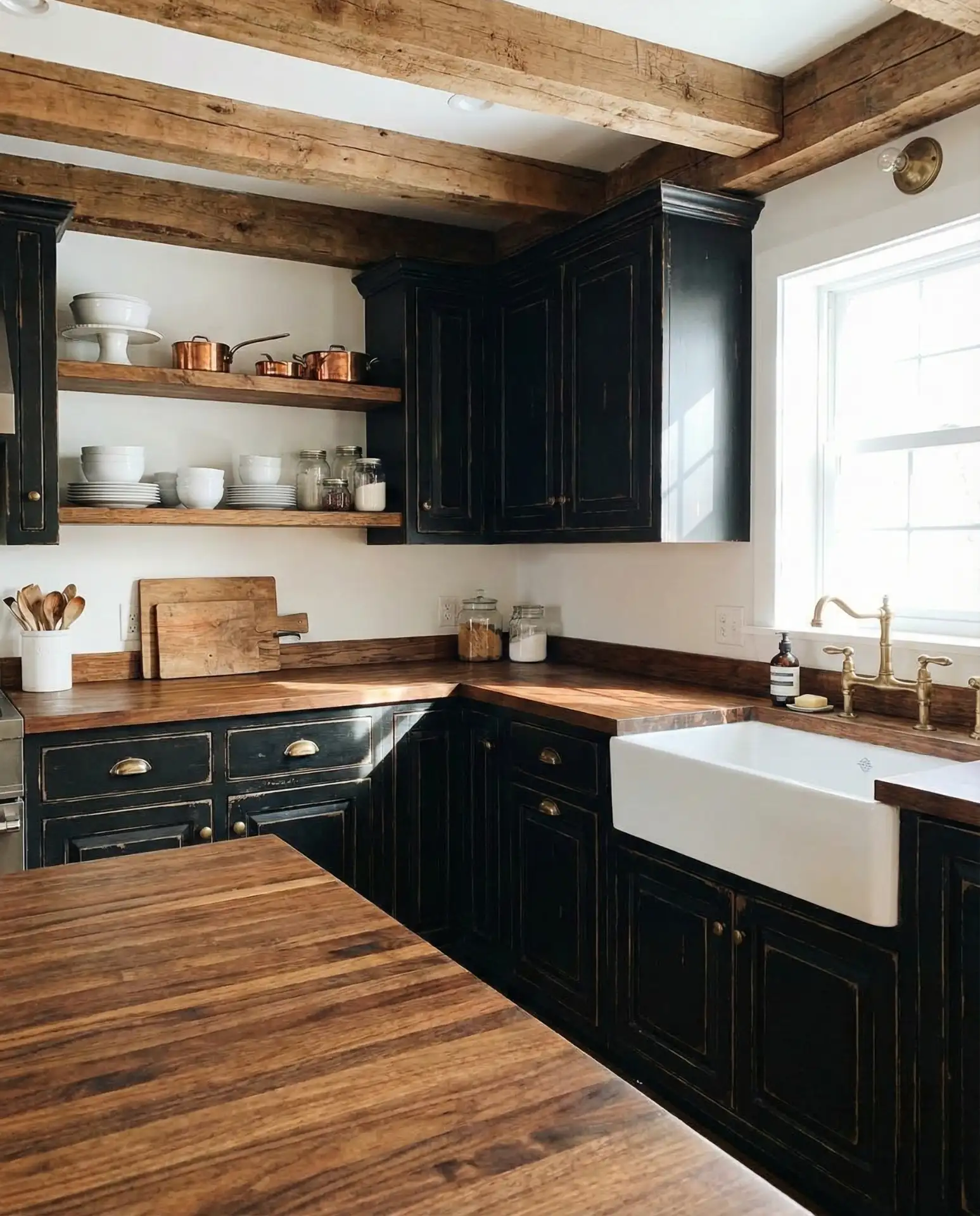
Combining rustic black cabinetry with warm butcher block countertops brings together the best of farmhouse charm and modern sophistication. The natural wood grain of butcher block counters softens the boldness of black cabinets, creating a kitchen that feels both grounded and welcoming. This pairing has surged in popularity across the Midwest and Pacific Northwest, where homeowners appreciate the balance between contemporary style and organic warmth that recalls traditional American farmhouses.
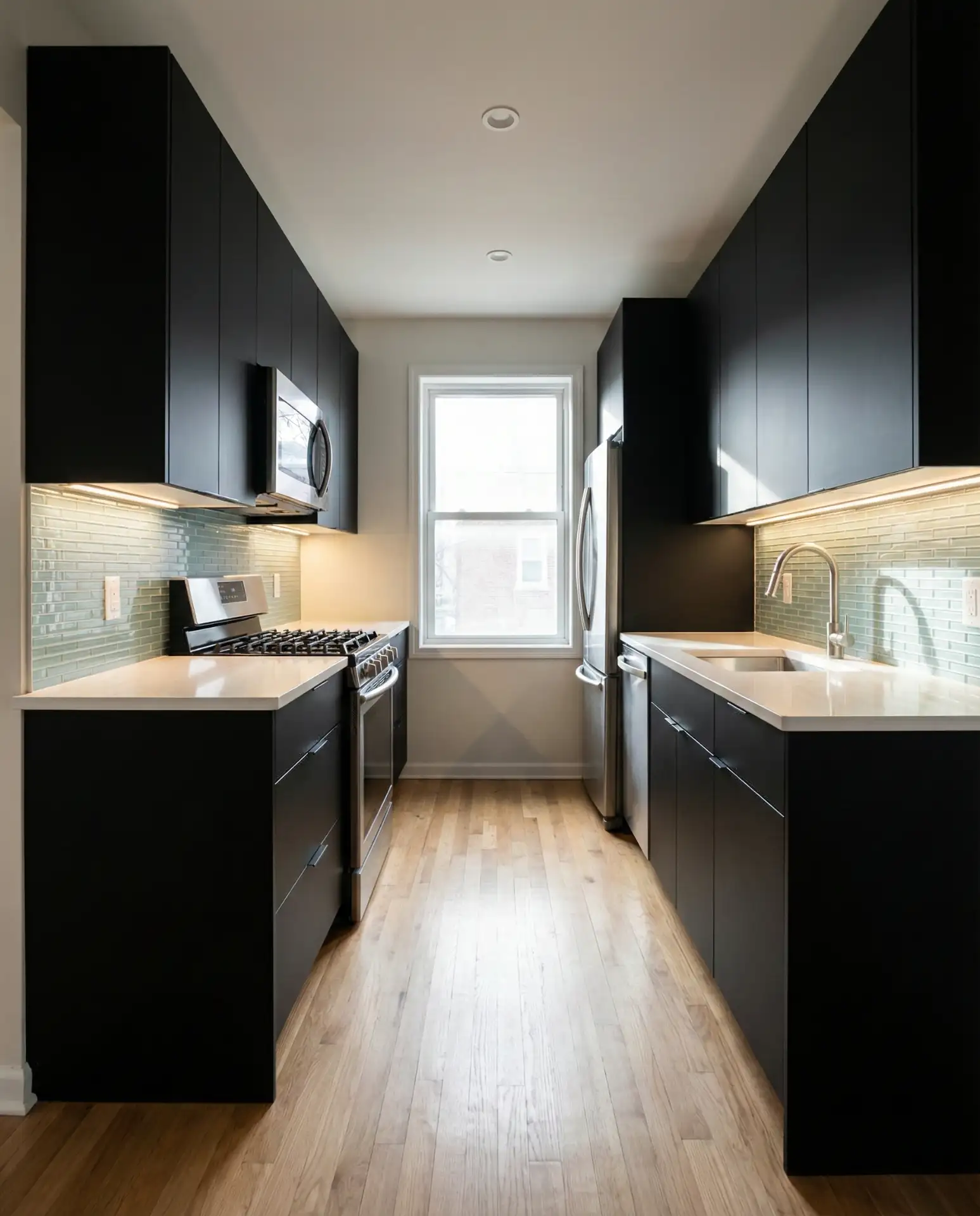
A designer I know in Vermont always recommends sealing butcher block counters with food-safe mineral oil rather than polyurethane if you actually plan to use them as cutting surfaces. The maintenance is slightly higher—monthly oiling keeps the wood from drying out—but the patina that develops over time adds authentic character that can’t be replicated. She’s seen homeowners fall in love with how their counters age alongside their families, with small knife marks and water rings telling the story of meals prepared and memories made.
3. Small Kitchen with Matte Black Cabinets
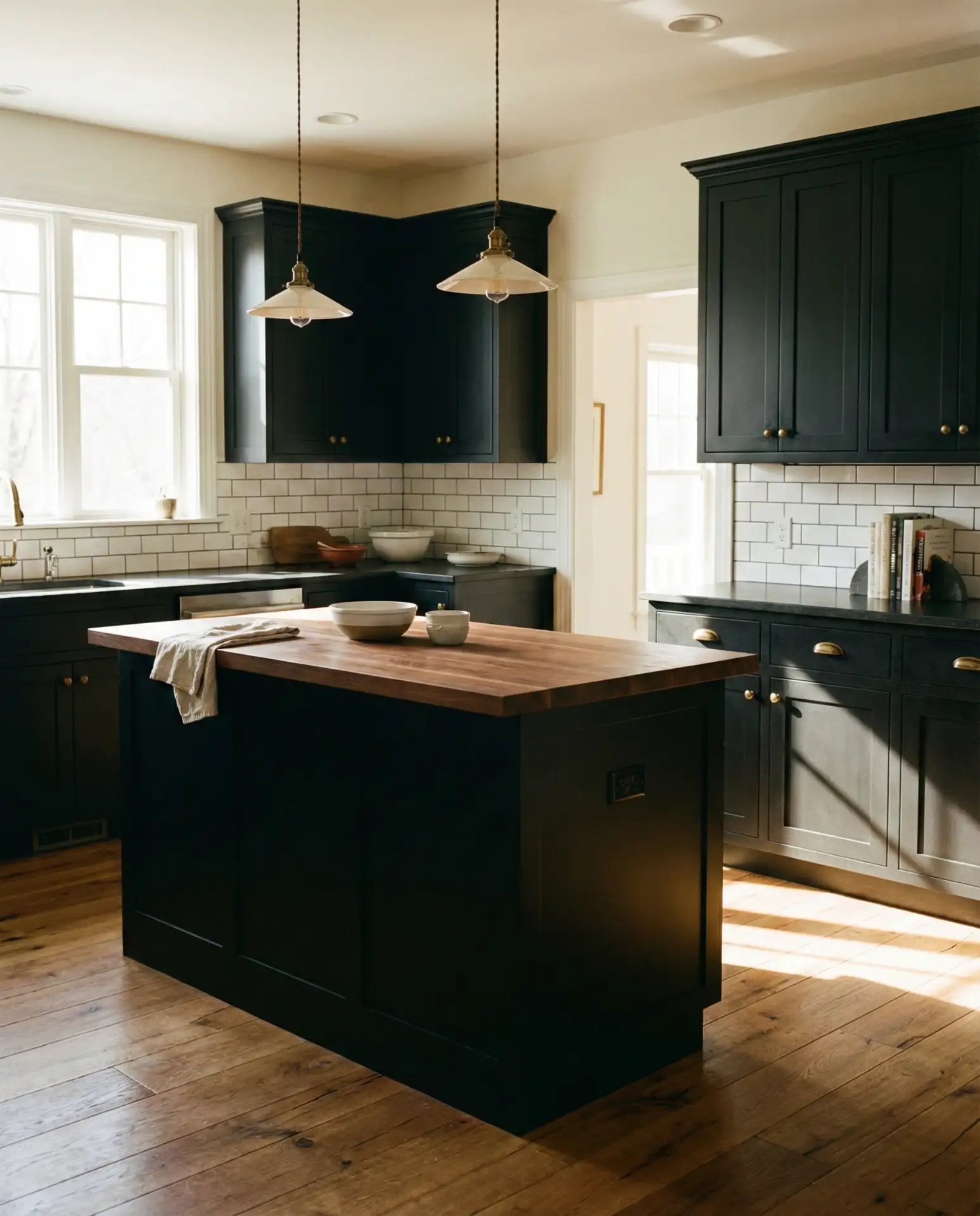
Dark cabinets in a small kitchen might seem counterintuitive, but matte black finishes actually create surprising depth when executed properly. The key lies in maximizing reflective surfaces elsewhere—white countertops, glossy backsplash tiles, and strategic lighting—to bounce light around the compact space. Matte black cabinets eliminate the visual noise of competing reflections, allowing your eye to move smoothly through the space rather than getting caught on glossy surfaces that can make tight quarters feel busier.
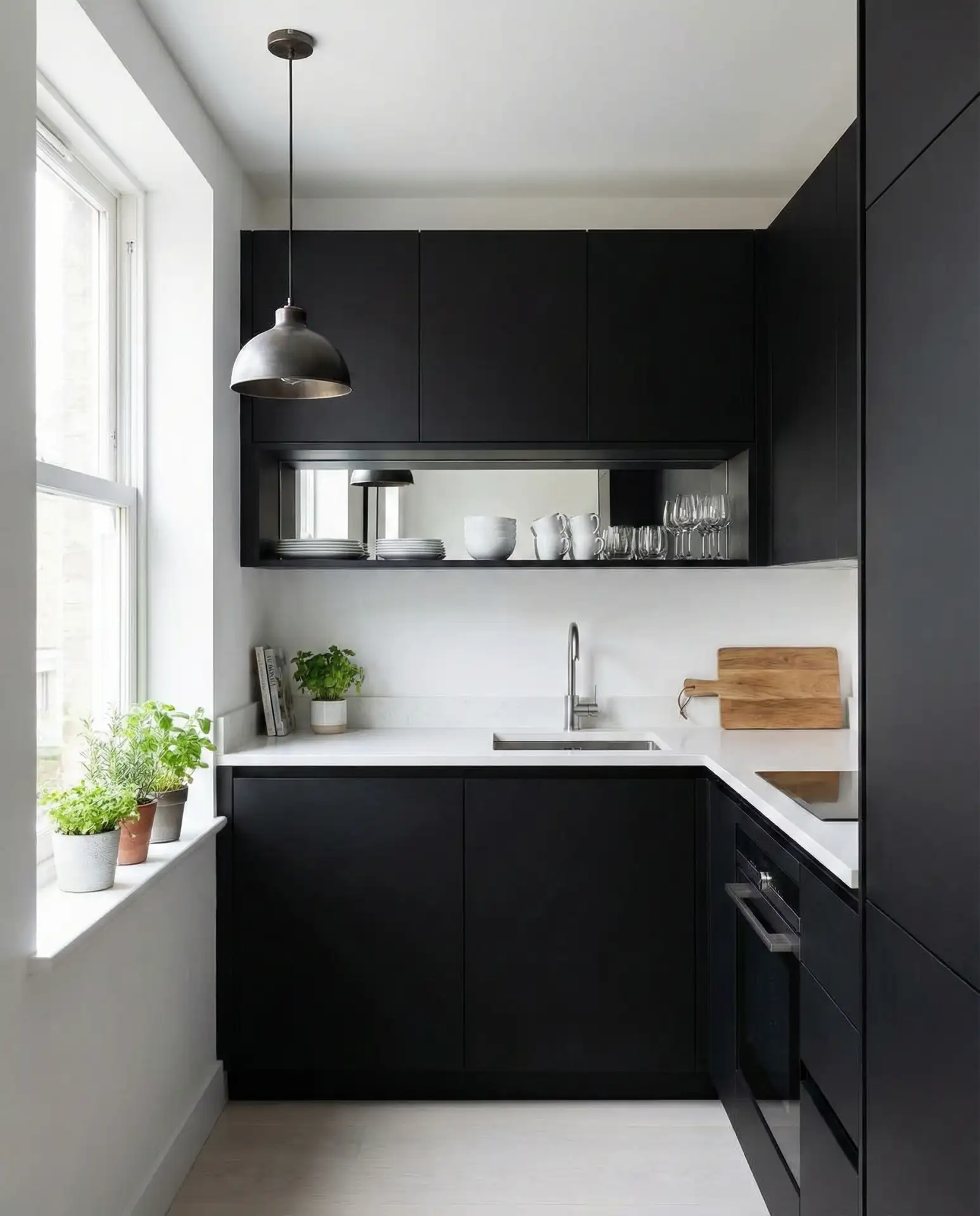
The common mistake here is going too dark on everything else—walls, floors, and counters included. Real homeowners who’ve nailed this look typically paint walls in warm whites or soft grays and choose light-toned flooring to create breathing room. In studio apartments and urban condos where the kitchen opens directly into living spaces, matte black cabinets actually help define the cooking zone without requiring physical barriers, making small homes feel more intentionally designed rather than just cramped.
4. Black and White Kitchen with Contrast Hardware
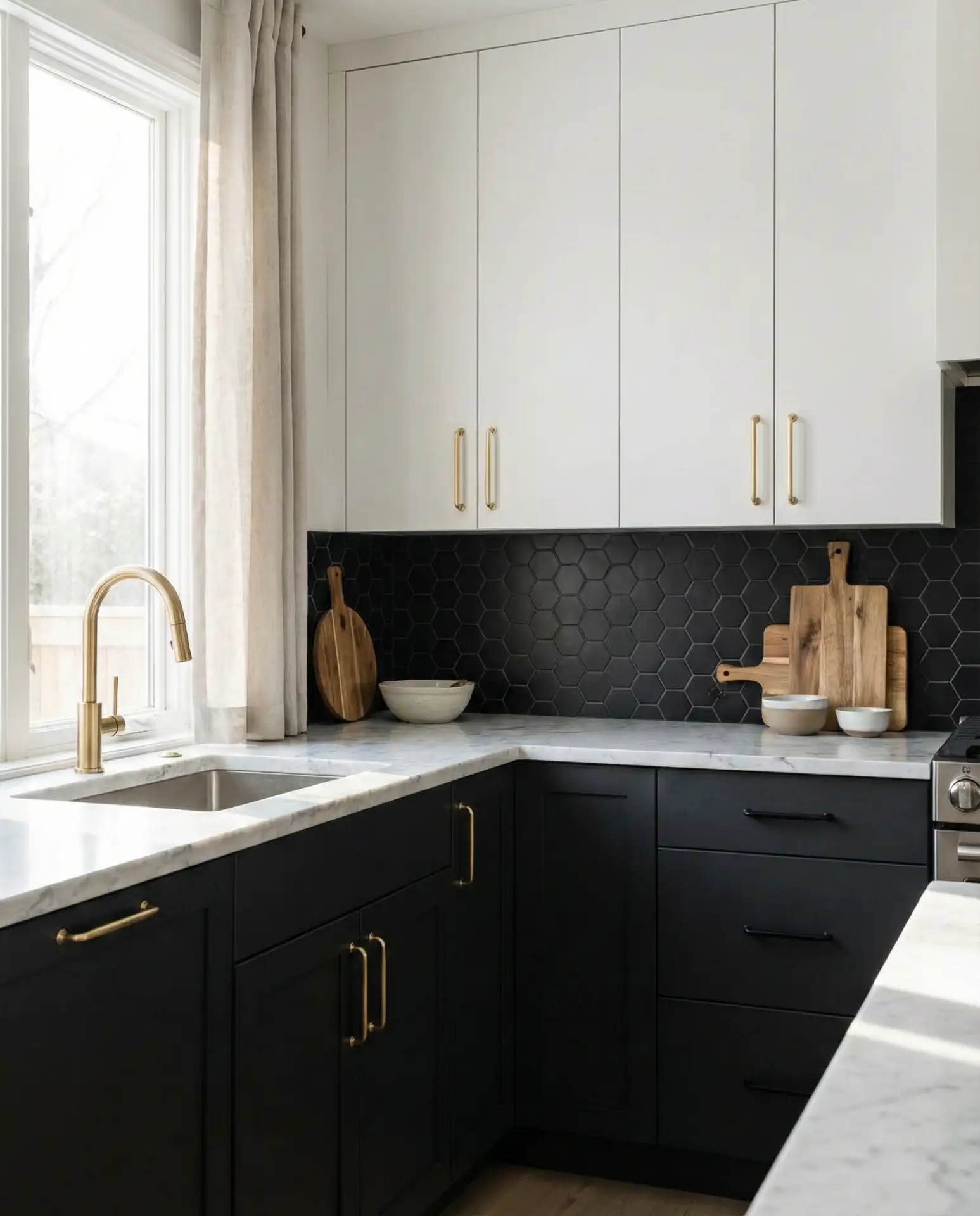
The timeless white and black color scheme remains a Pinterest favorite because it delivers maximum impact with minimal complexity. When you introduce contrasting hardware—think matte black pulls on white upper cabinets and polished chrome or brass on black lowers—you add a layer of visual sophistication that prevents the palette from feeling too stark. This approach gives you the crisp, clean foundation of monochrome while introducing just enough variation to keep the eye engaged.
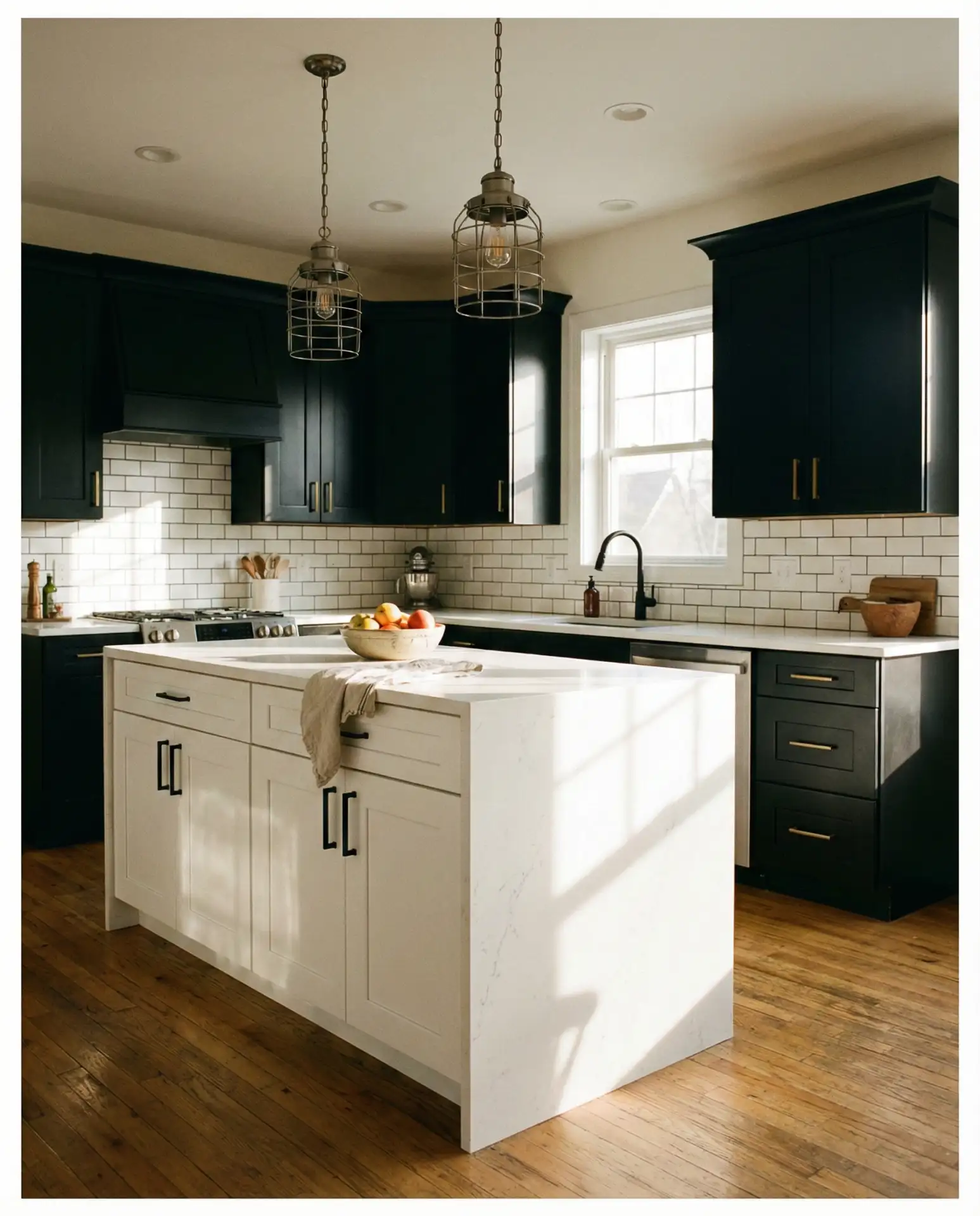
From a budget perspective, mixing hardware finishes is actually practical—you’re not locked into one expensive option across every cabinet pull and knob. Many homeowners start with less expensive black matte pulls on the majority of cabinets, then splurge on statement brass or copper pieces for the island or key focal points. This strategy keeps costs reasonable while still achieving that custom, designer-specified look that makes guests wonder if you hired a professional.
5. Black Cabinets with White Oak Countertops
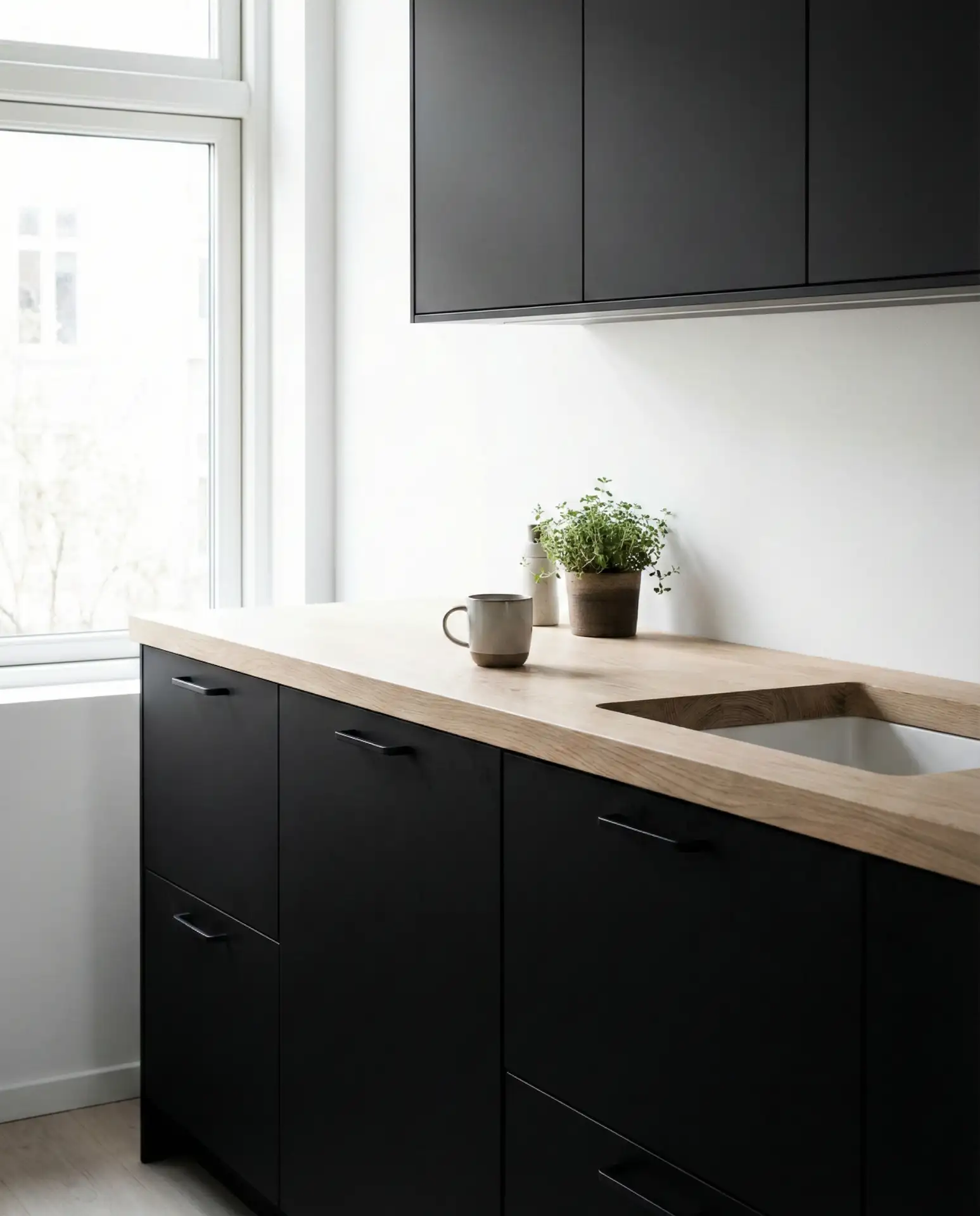
Pairing black cabinetry with white oak counters or wood countertops creates a Scandinavian-meets-modern aesthetic that’s gaining serious traction in American homes. White oak brings cooler, more neutral undertones than traditional butcher block, which means it complements black cabinets without competing for attention. The pale wood grain adds organic texture while maintaining a contemporary feel that works beautifully in minimalist and transitional kitchen designs alike.
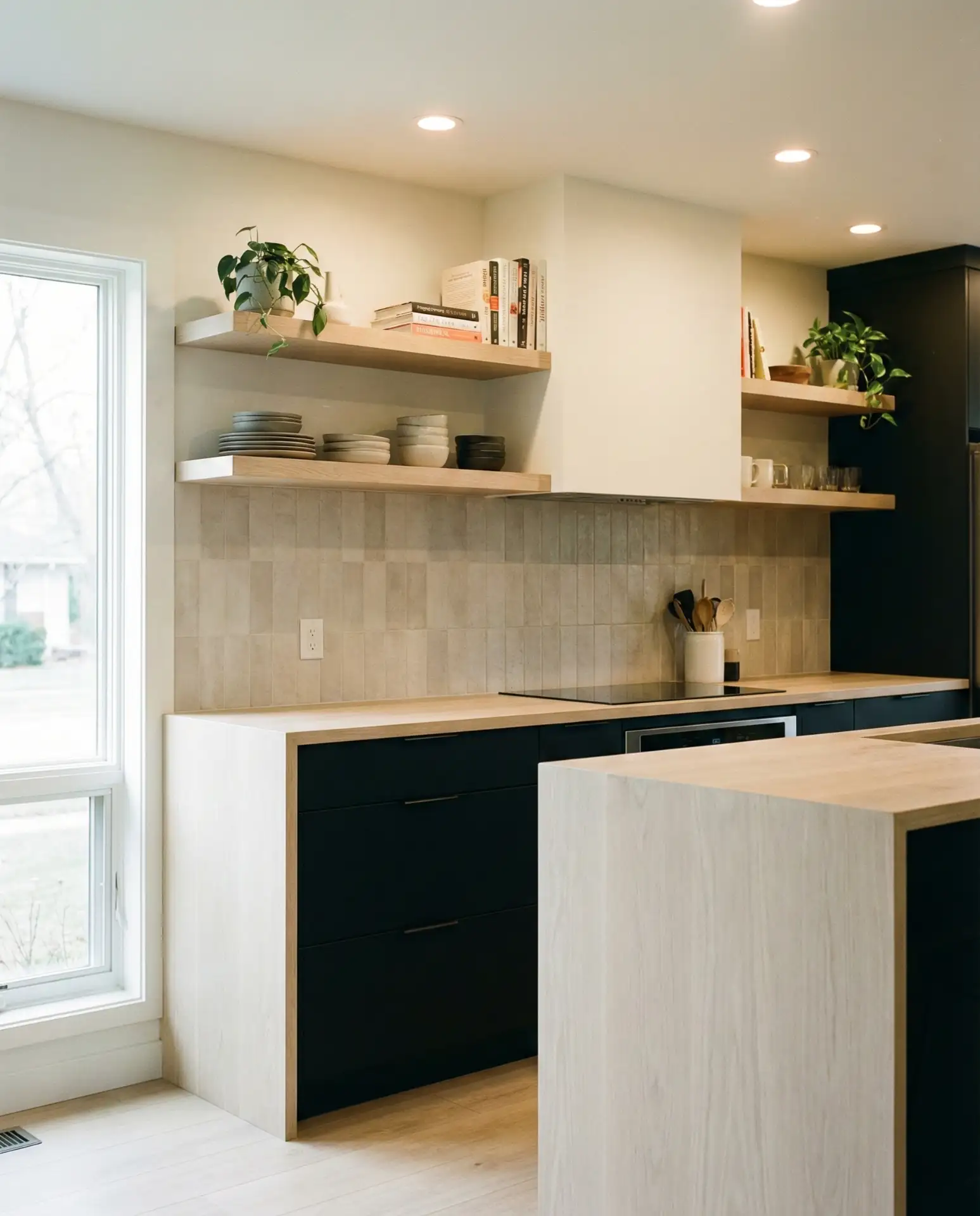
This combination works best in open-concept homes where the kitchen flows into dining and living areas, because the lighter wood tones help the space feel connected rather than isolated. The white oak brings enough warmth to prevent the black cabinets from reading as cold or austere but stays neutral enough not to clash with existing furniture in adjacent rooms. It’s particularly popular in Pacific Northwest and Mountain West homes, where there’s a strong design tradition of bringing natural materials indoors.
6. Black Cabinets with Black Countertops for Drama
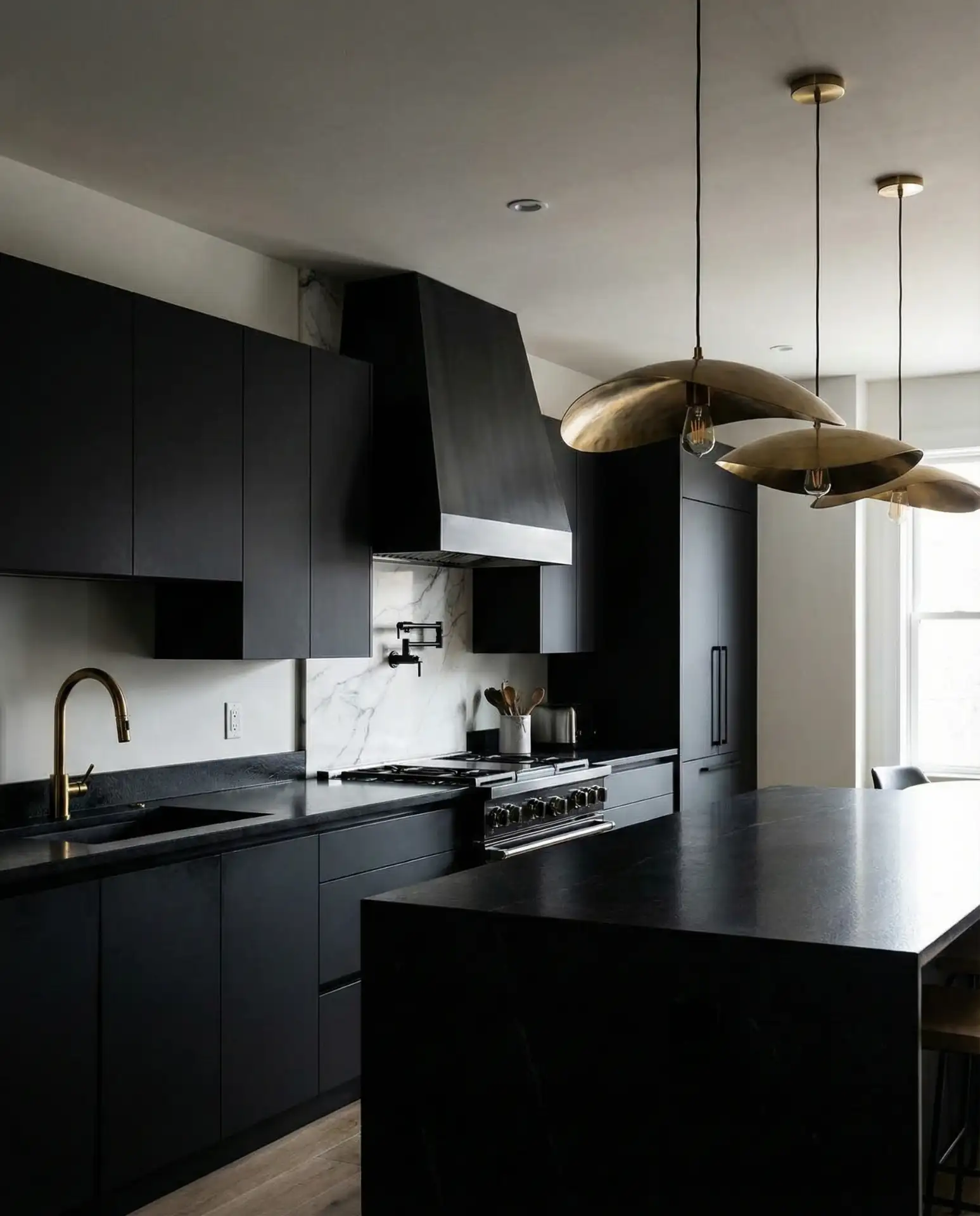
Going monochromatic with black countertops and black kitchen cabinets creates an undeniably bold statement that feels both luxurious and edgy. This approach requires confidence and careful lighting design, but when executed well, it transforms your kitchen into a dramatic, gallery-like space. Matte black soapstone or honed granite counters paired with matte black cabinets create subtle tonal variation that prevents the space from feeling flat, while polished black quartz adds reflective glamour.
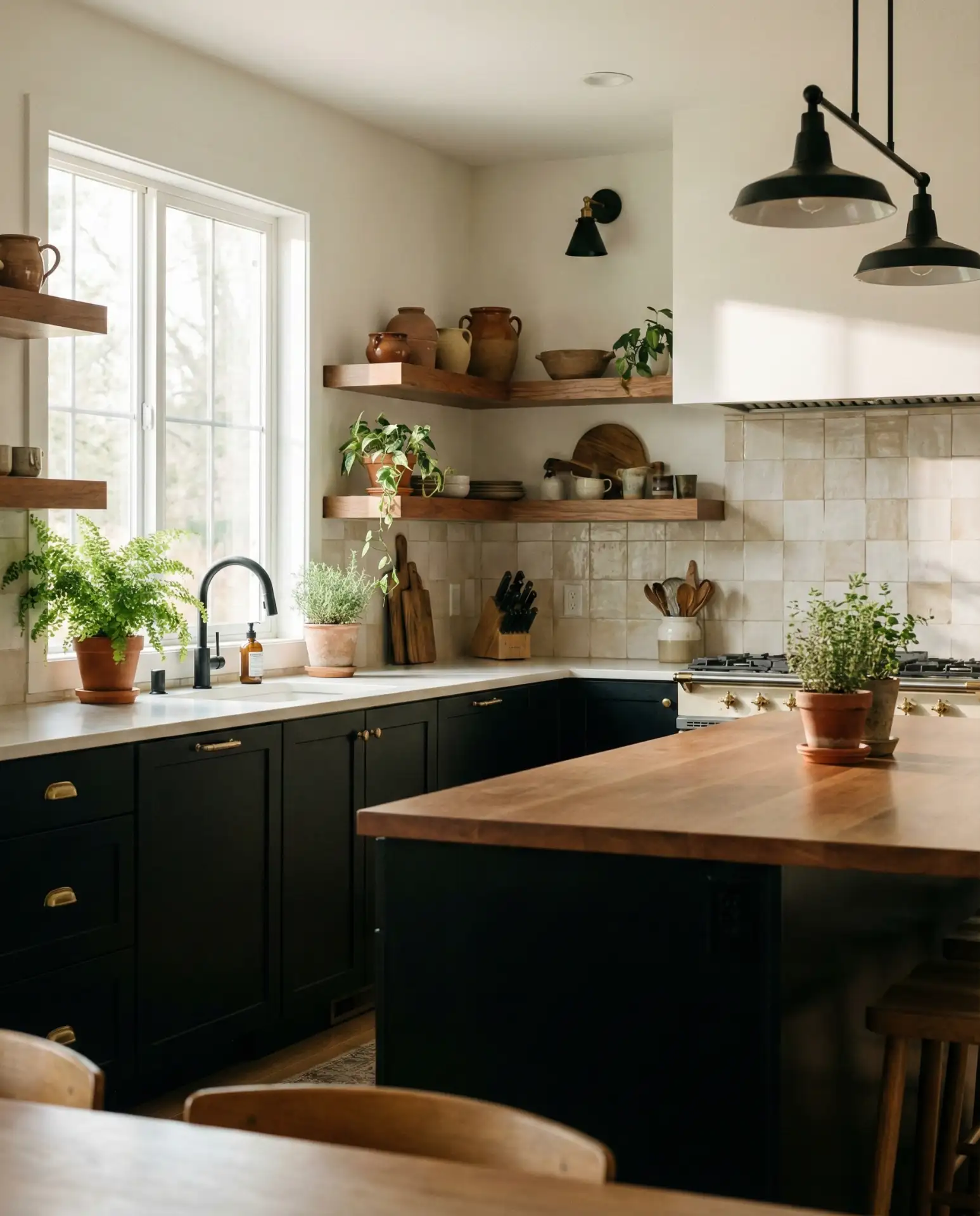
A kitchen designer in Brooklyn told me about a client who insisted on all-black everything despite initial hesitation. They installed layered lighting—under-cabinet LEDs, pendants over the island, and recessed ceiling spots—which completely transformed the space. The lighting plan made all the difference, turning what could have been oppressively dark into something genuinely theatrical. Now the client hosts dinner parties specifically to show off the kitchen, which has become the apartment’s signature feature rather than a risky design choice.
7. Black Cabinets with Wood and Natural Accents
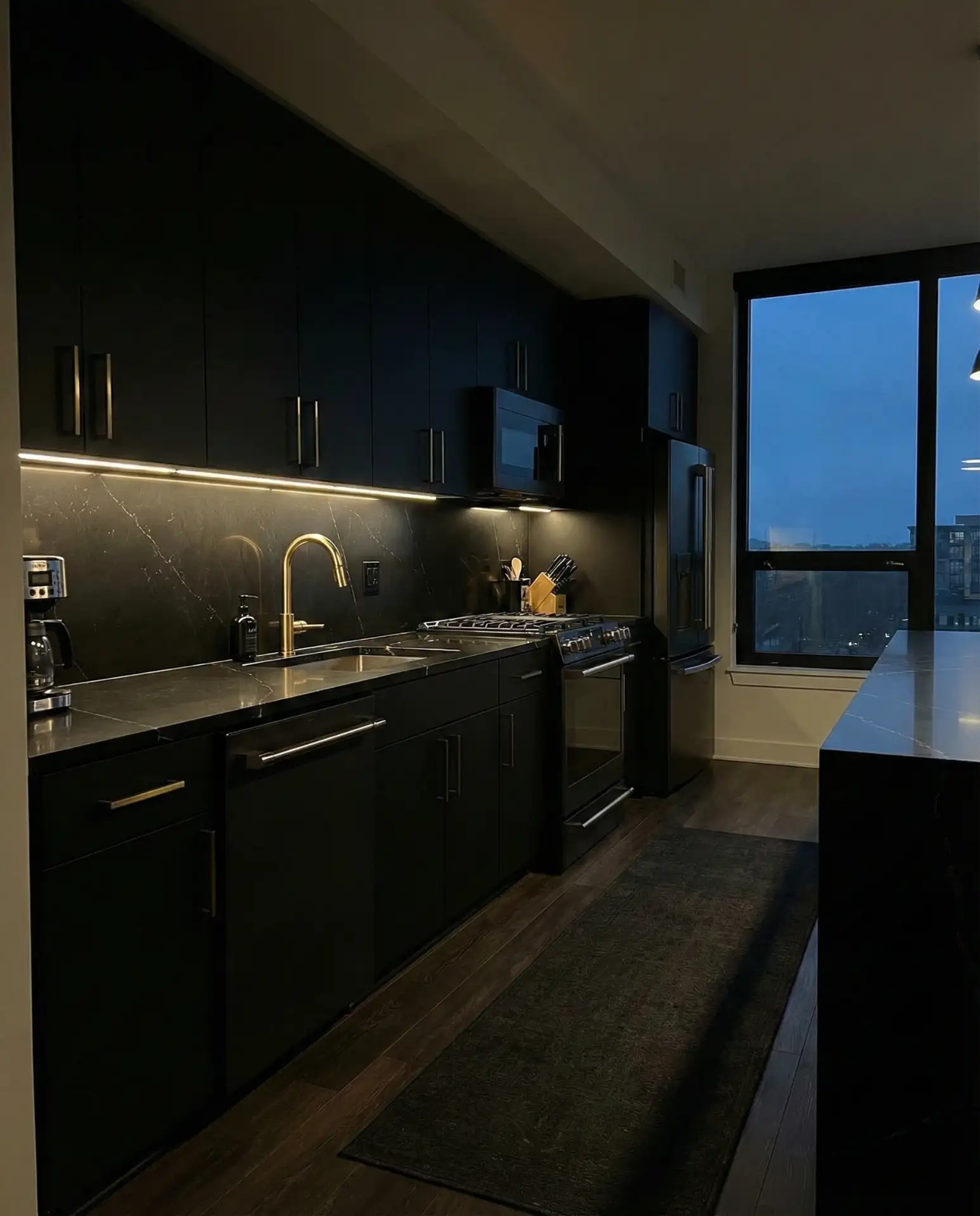
Introducing wood and natural elements alongside black cabinetry creates balanced warmth that prevents dark kitchens from feeling cold or sterile. Whether it’s wood countertops, open shelving in warm walnut, or a wood counter on the island, these organic touches soften the graphic quality of black cabinets while adding textural interest. This combination has become particularly popular in mountain homes and craftsman-style houses where there’s already an established relationship between dark finishes and natural wood.
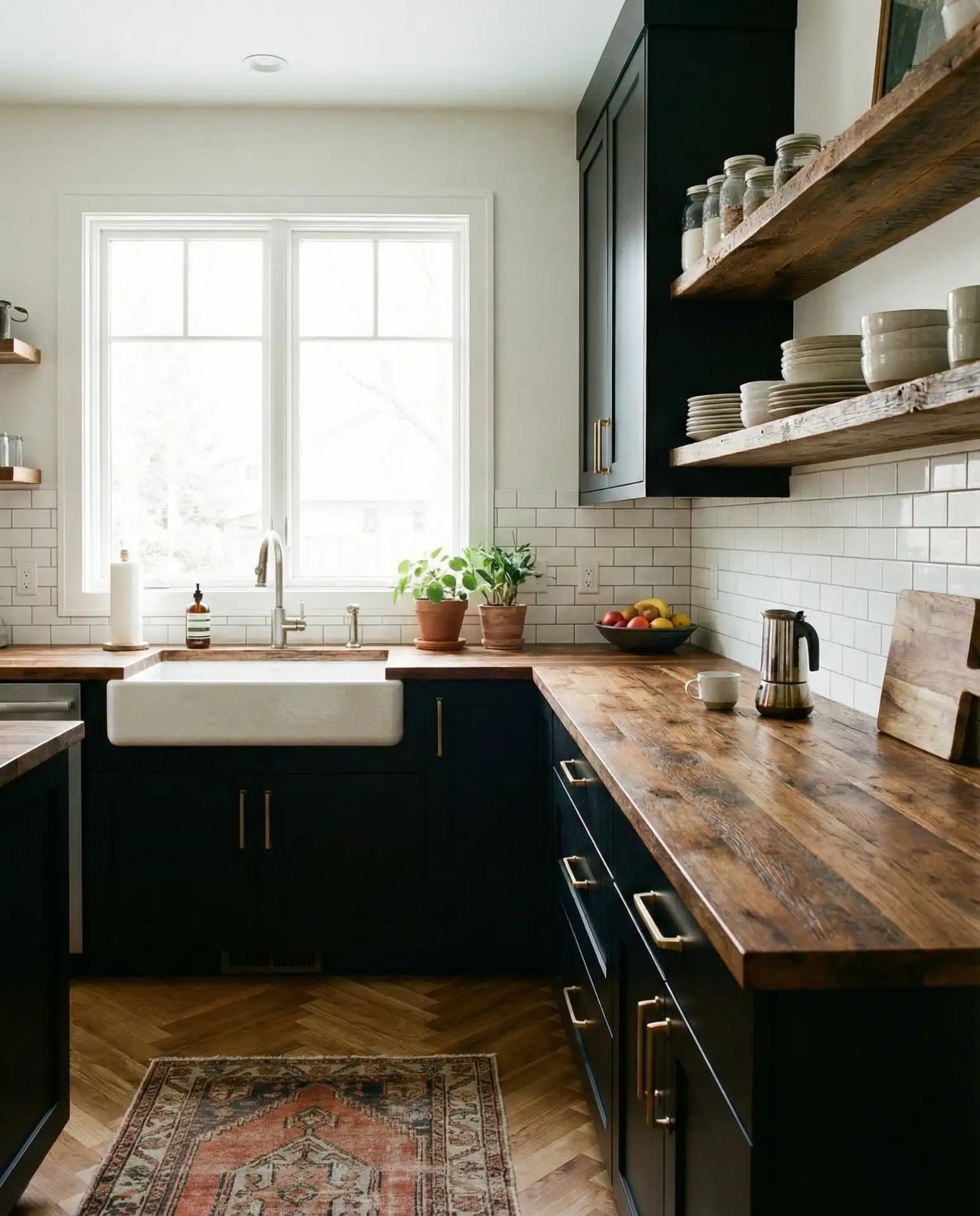
Practical insight: when combining black cabinets with wood elements, pay attention to the wood’s undertones. Cooler woods like ash or maple keep the look contemporary, while warmer species like cherry or mahogany push it toward traditional territory. Most American homeowners find the sweet spot with medium-toned woods—walnut, white oak, or hickory—that bridge the gap between warm and cool, making the kitchen feel current without being trendy or dated.
8. Black Cabinets with Gold Handles in Transitional Style
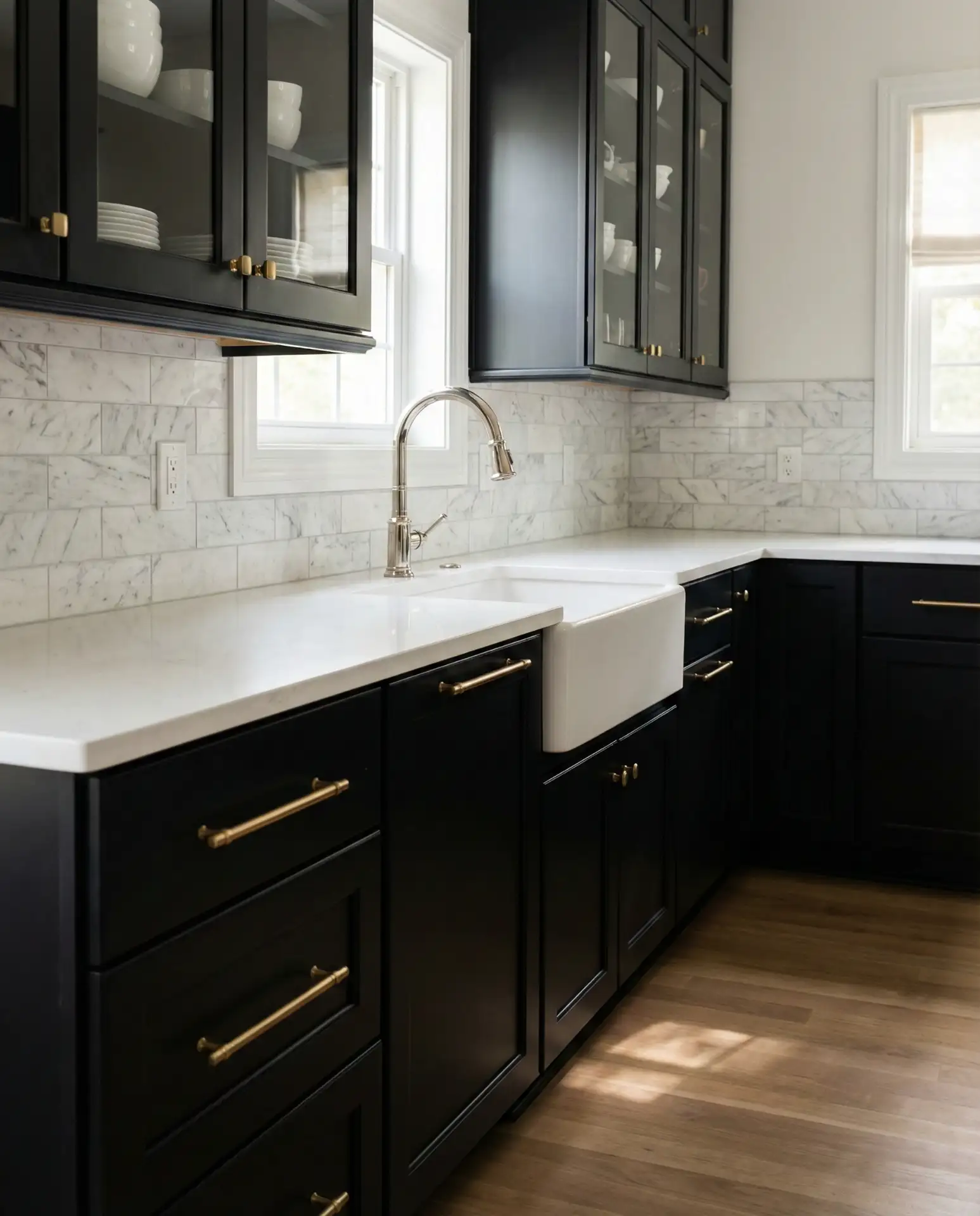
Transitional kitchens strike the perfect balance between traditional elegance and modern simplicity, and gold handles on black cabinets exemplify this approach beautifully. The warm metallic finish adds a classic jewelry-like quality that nods to traditional design, while the clean lines of contemporary handles keep things current. This combination works especially well in homes built in the last twenty years that blend architectural elements from different periods, creating cohesive spaces that feel both fresh and timeless.
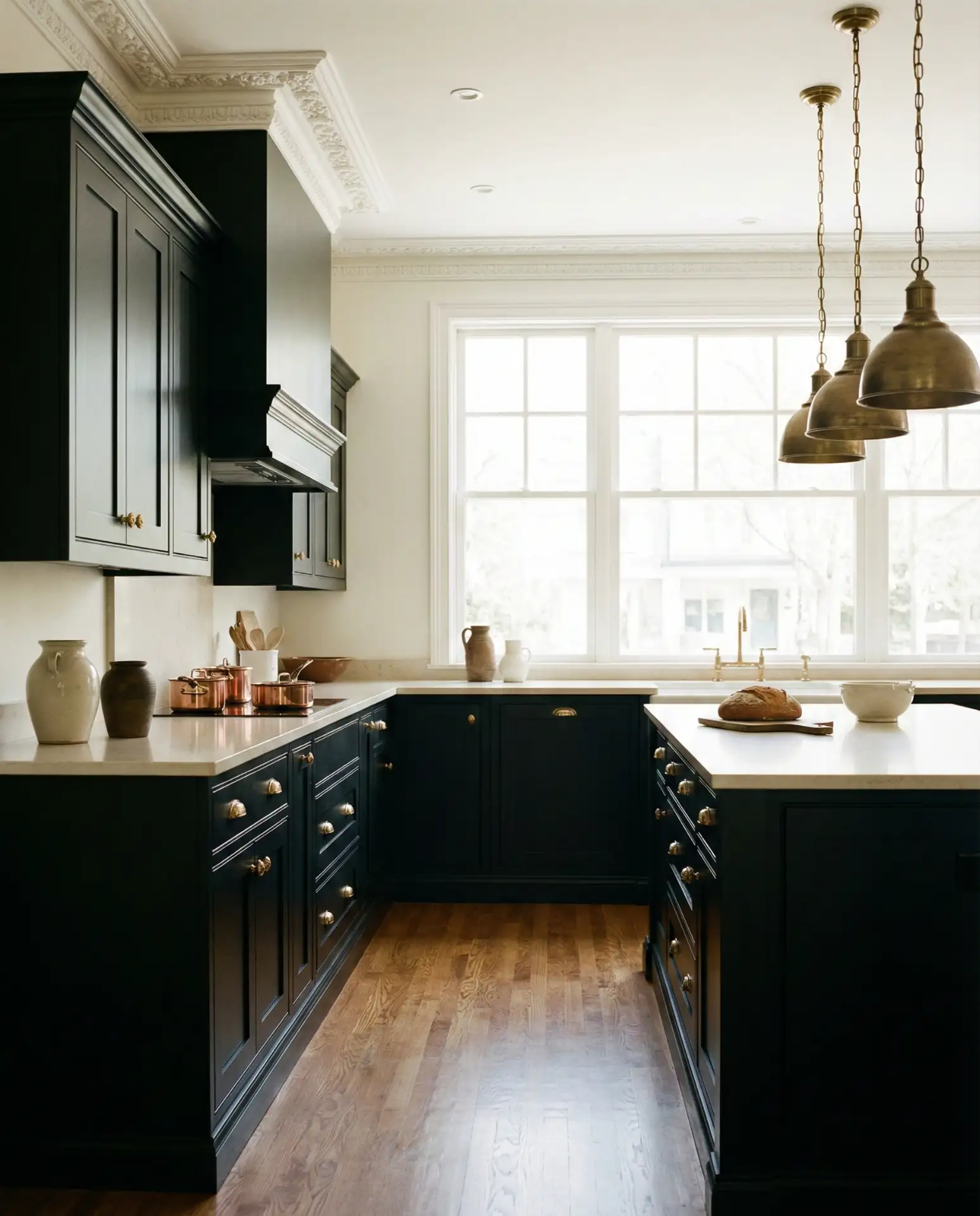
In terms of real homeowner behavior, many people start with a single hardware finish but gradually realize they want more variety once they live with it. Adding gold handles to black cabinets is actually one of the easier updates to DIY during a weekend afternoon—you’re just swapping out pulls and knobs without any painting or major construction. It’s a relatively affordable way to refresh your kitchen’s personality without committing to a full renovation, which is why it’s become such a popular Pinterest search among homeowners looking for high-impact, low-effort changes.
9. Black Cabinets with Green and Natural Elements
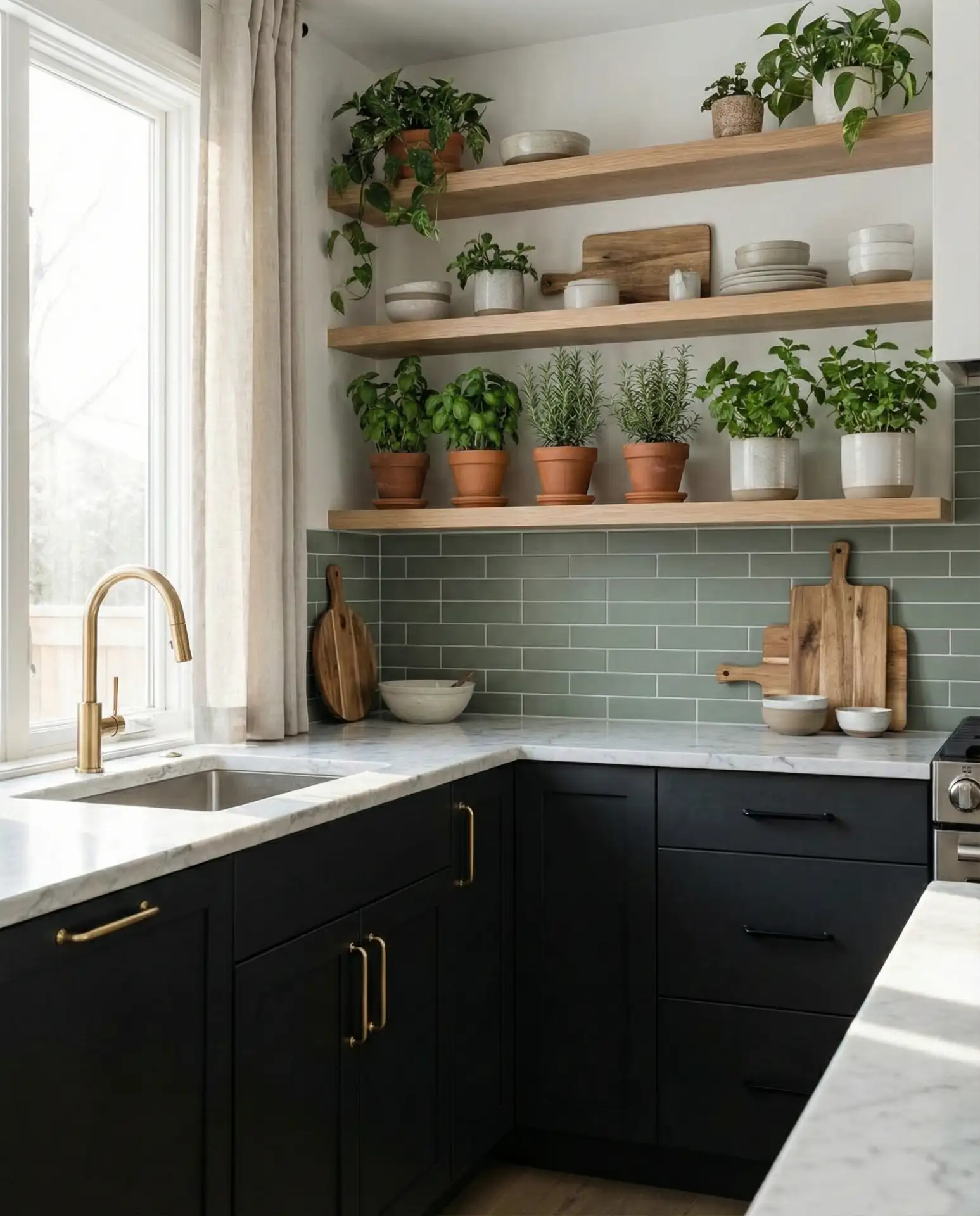
Pairing black cabinetry with green and organic accents—whether through backsplash tile, painted island bases, or abundant plants—creates a fresh, botanical-inspired kitchen that feels alive. The combination of deep black and various green tones references the natural contrast found in forest settings, bringing an unexpected softness to what could otherwise be a stark space. This palette has gained particular popularity in Portland, Seattle, and other cities where residents prioritize bringing outdoor beauty into their homes year-round.
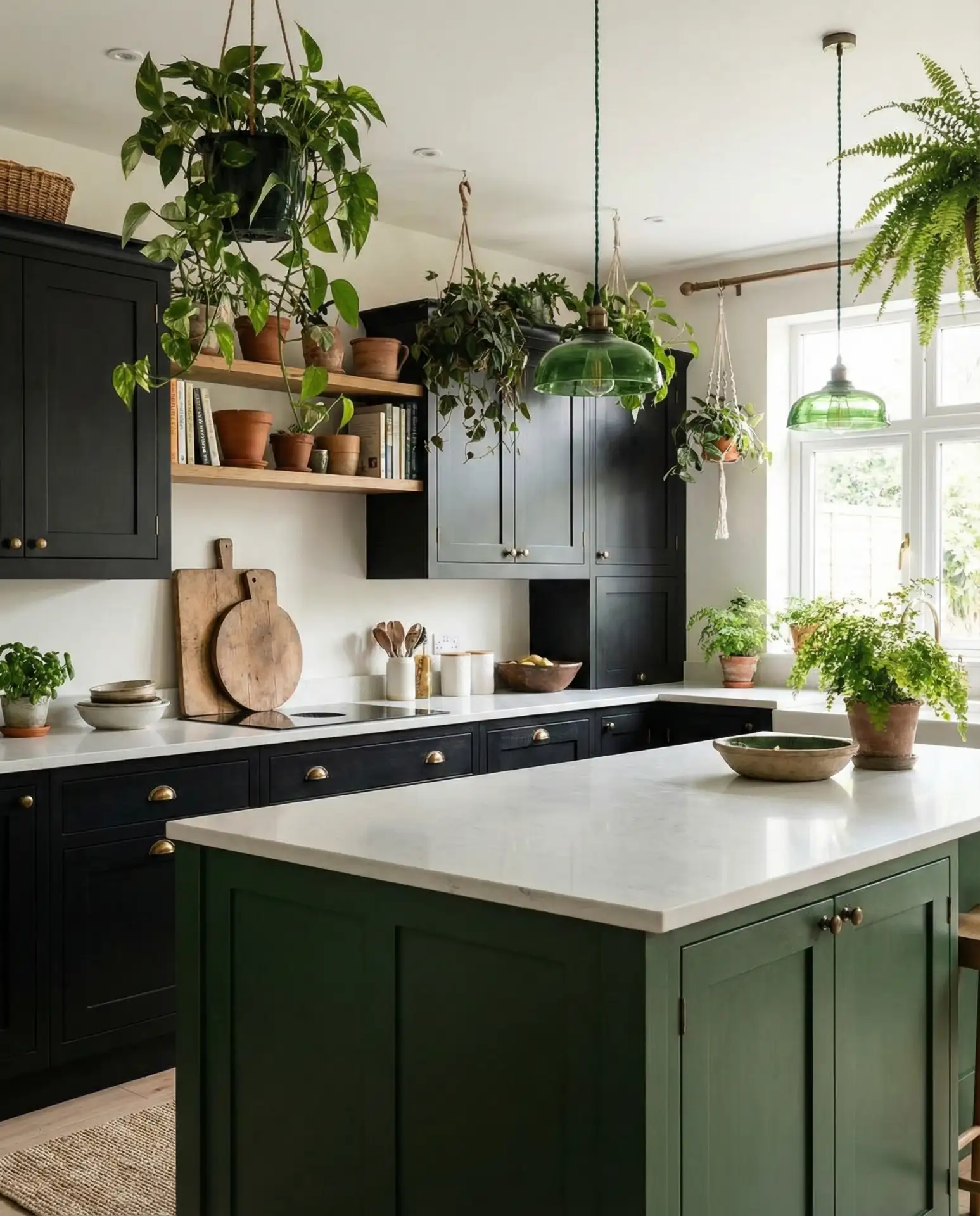
Expert-style commentary suggests that this color combination works because black and green share similar visual weight—neither overwhelms the other. Unlike pairing black with pale pastels that can look washed out, deeper sage, hunter, or emerald greens hold their own against dark cabinetry. The key is choosing greens with enough saturation to register clearly rather than looking muddy or indistinct when placed adjacent to black surfaces.
10. Black Shaker Cabinets with Butcher Block Rustic Look
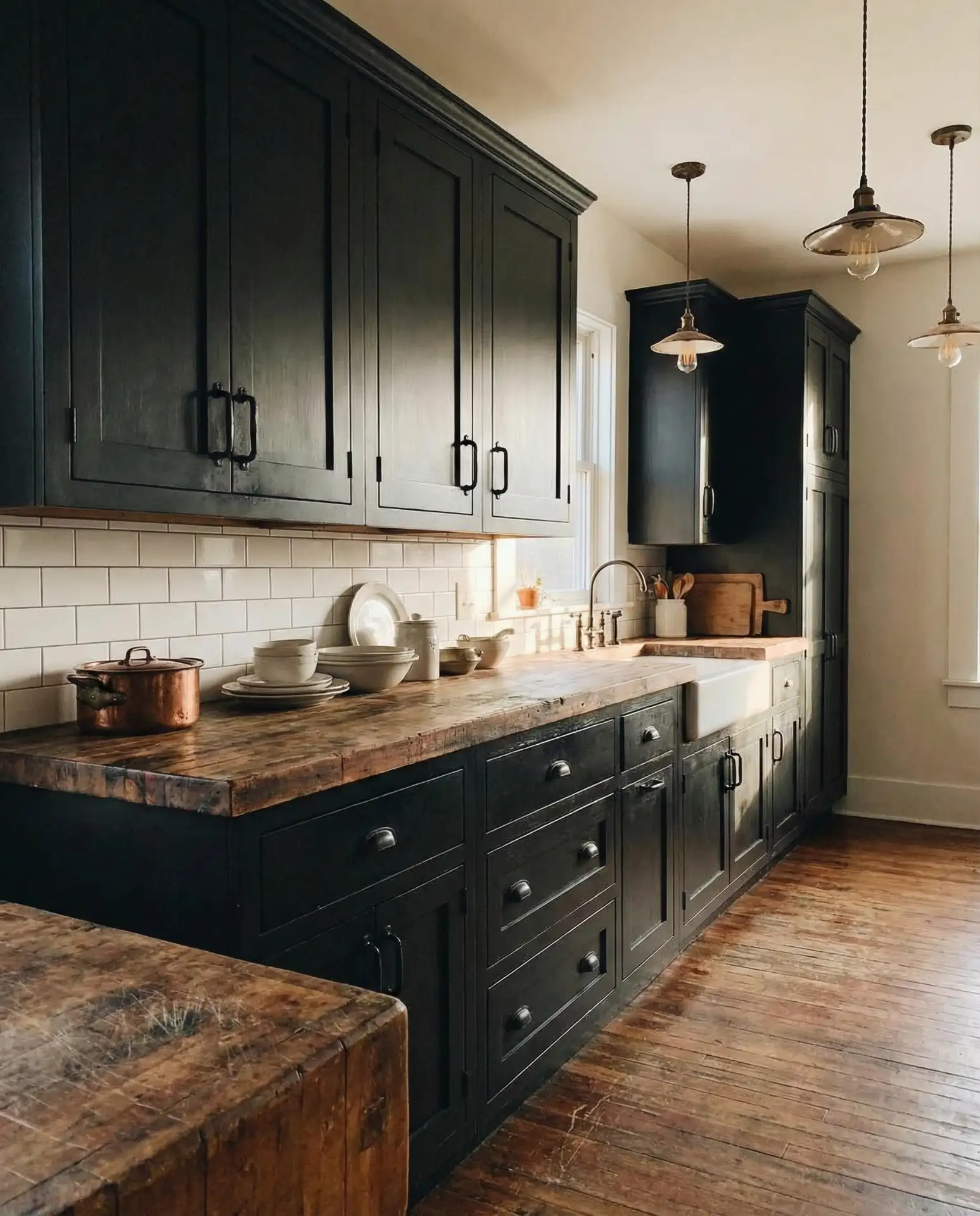
The shaker cabinet profile brings traditional craftsmanship to modern black finishes, and when topped with butcher block counters and rustic styling, the result is a kitchen that honors both contemporary and heritage design. The recessed panel detail of shaker doors adds subtle dimension that prevents flat black surfaces from appearing monotonous, while butcher block counters deliver the warm, lived-in character that makes kitchens feel like true gathering spaces. This combination has become incredibly popular in renovated farmhouses and suburban homes where families want durability wrapped in style.
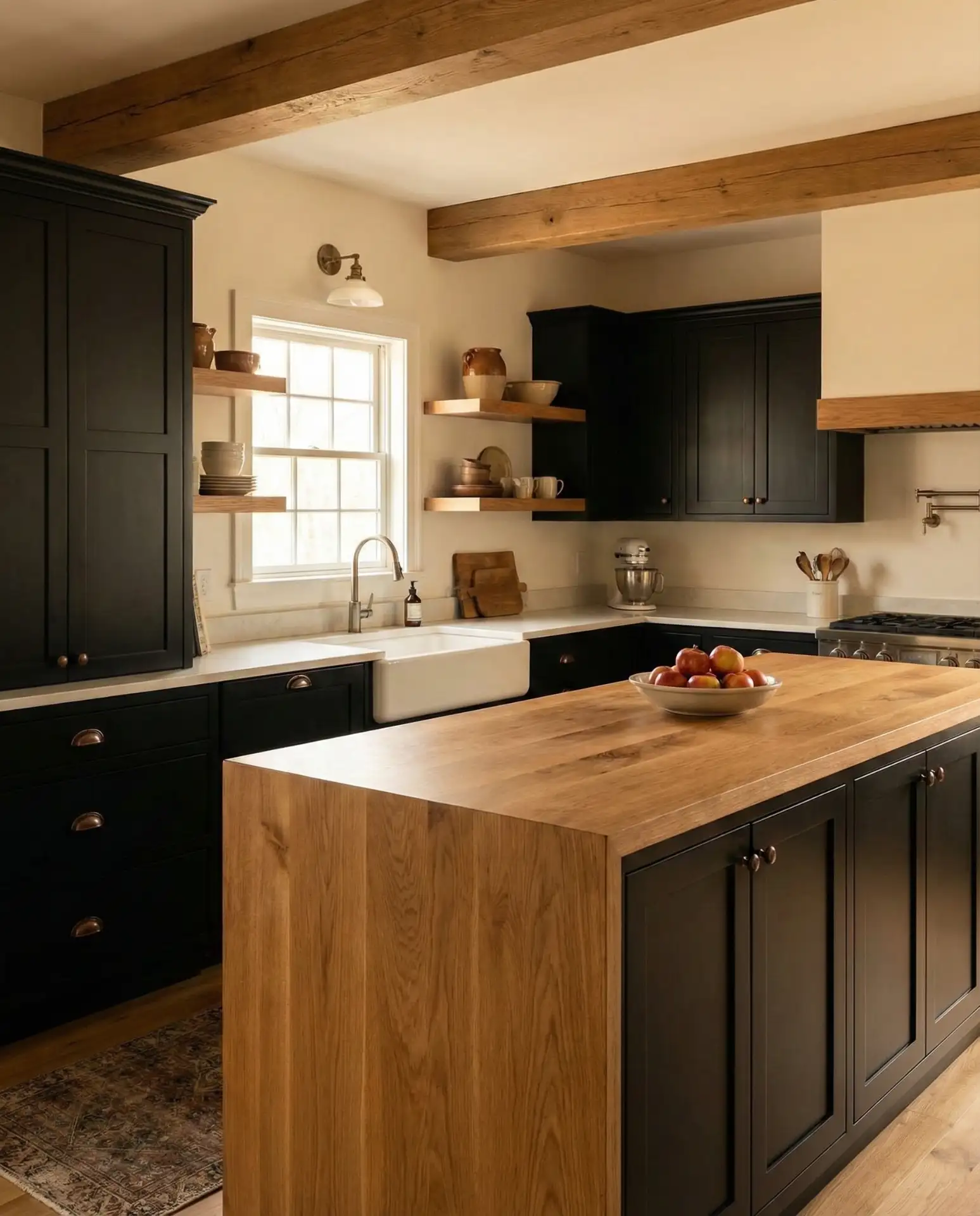
This works best in homes where you’re embracing a slightly imperfect, collected-over-time aesthetic rather than pursuing showroom perfection. The butcher block will develop character marks—knife scratches, water rings, slight discoloration from hot pans—and that’s not only acceptable but desirable in this style. Families with young children particularly appreciate this forgiving quality; instead of stressing over every ding and dent, they can relax knowing that these marks actually enhance the rustic authenticity they were pursuing in the first place.
11. Black Cabinets Painted in Tricorn Black Tone
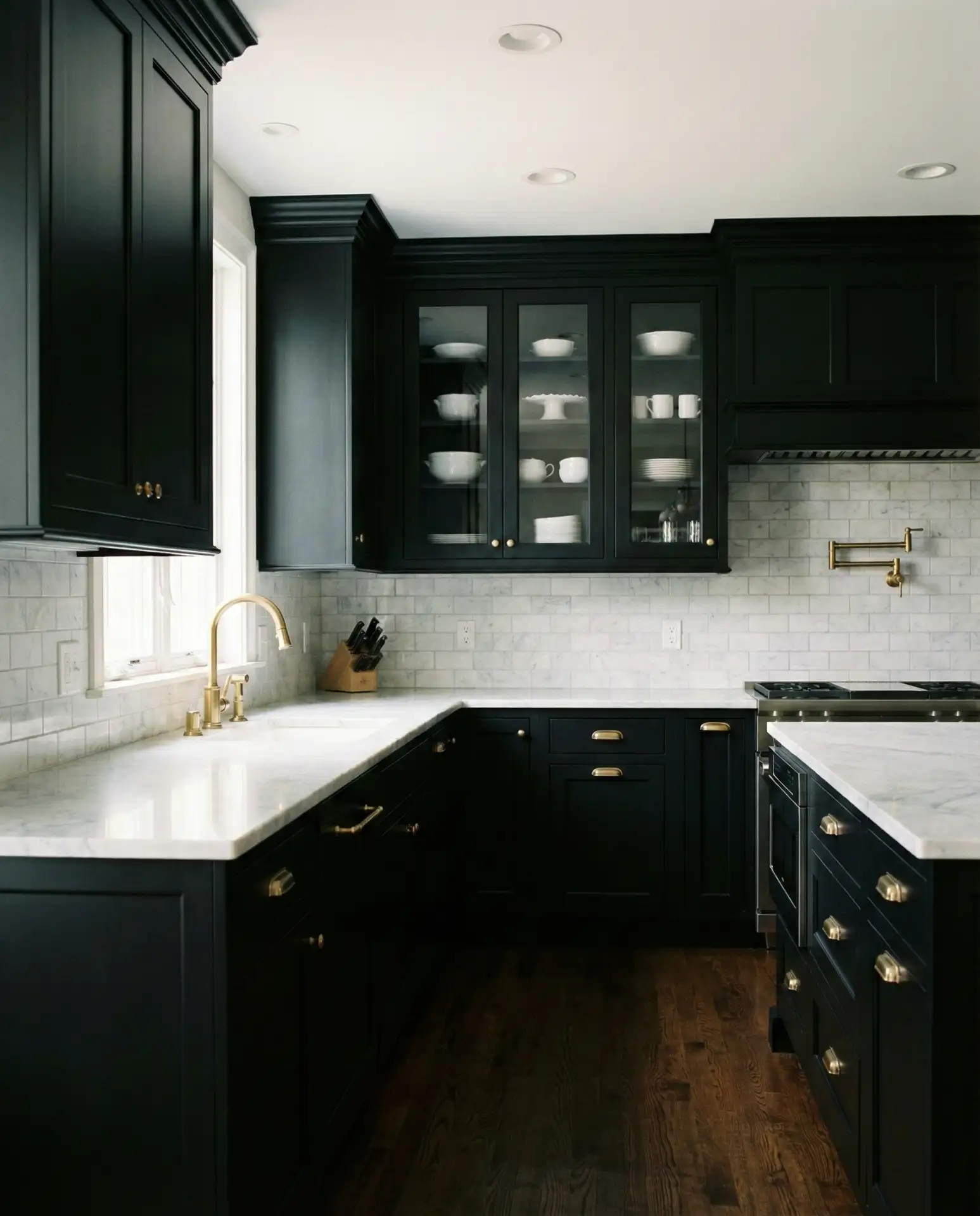
Sherwin-Williams Tricorn Black has become the go-to paint color for homeowners seeking a true, clear black without undertones that can read blue, brown, or green in different lighting. This tone delivers consistent drama across morning and evening light, maintaining its character whether your kitchen faces north or south. Many DIY renovators and professional painters alike swear by this particular black because it provides the sophisticated depth that makes high-end kitchens look expensive without the premium cost of custom finishes.
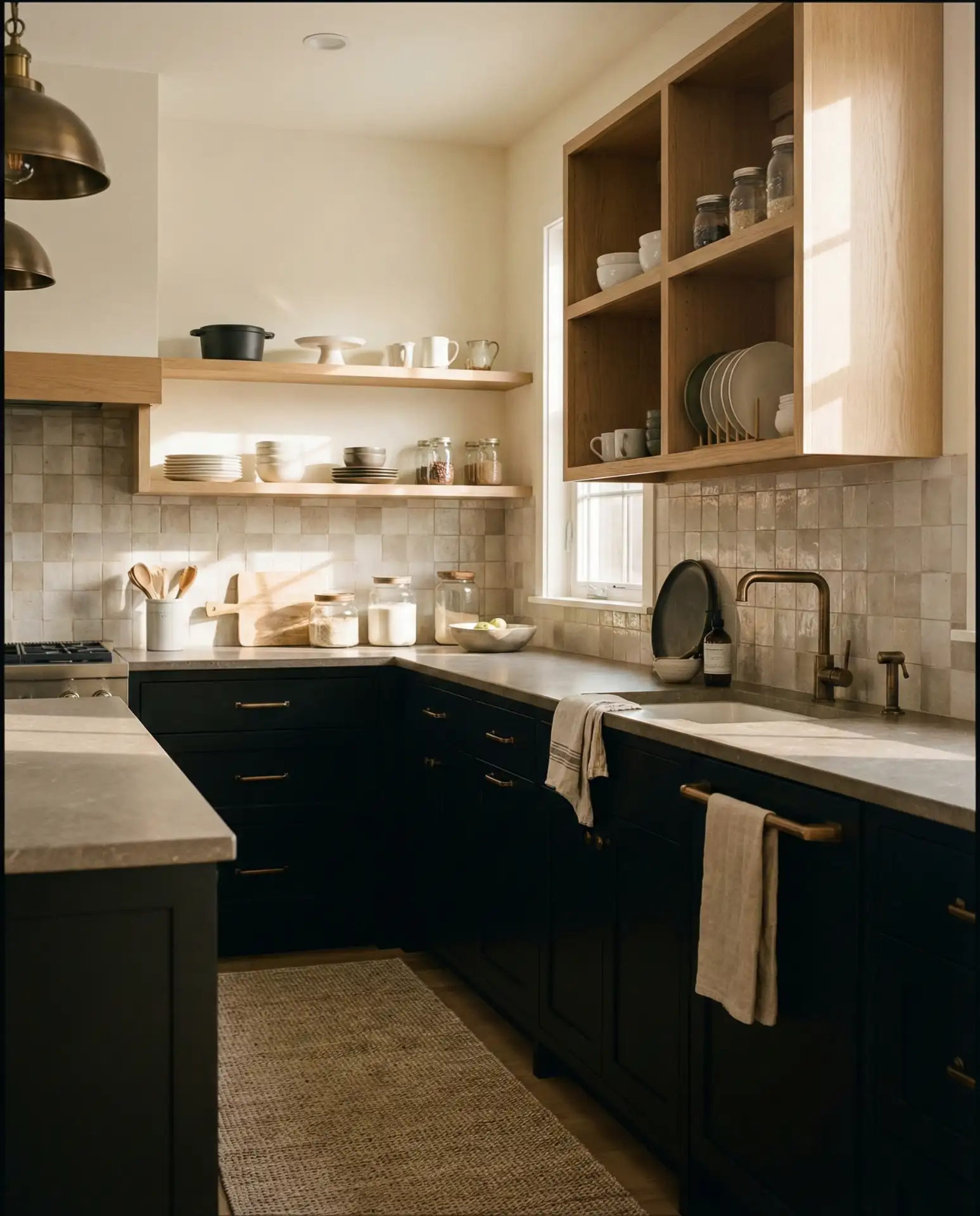
If you’re planning to paint existing cabinets rather than ordering new ones, Tricorn Black typically requires a high-quality primer and at least two coats for even coverage, especially if you’re painting over light-colored wood or previous paint. Most professionals recommend a satin or semi-gloss sheen in a kitchen environment for easier cleaning, though matte devotees argue the extra maintenance is worth the sophisticated, non-reflective finish. Budget-wise, a DIY cabinet painting project runs around $300-$600 for paint and supplies in an average kitchen, compared to $8,000-$15,000 for new cabinets—making it one of the most cost-effective ways to achieve this look.
12. Black Cabinets with Taupe and Neutral Palette
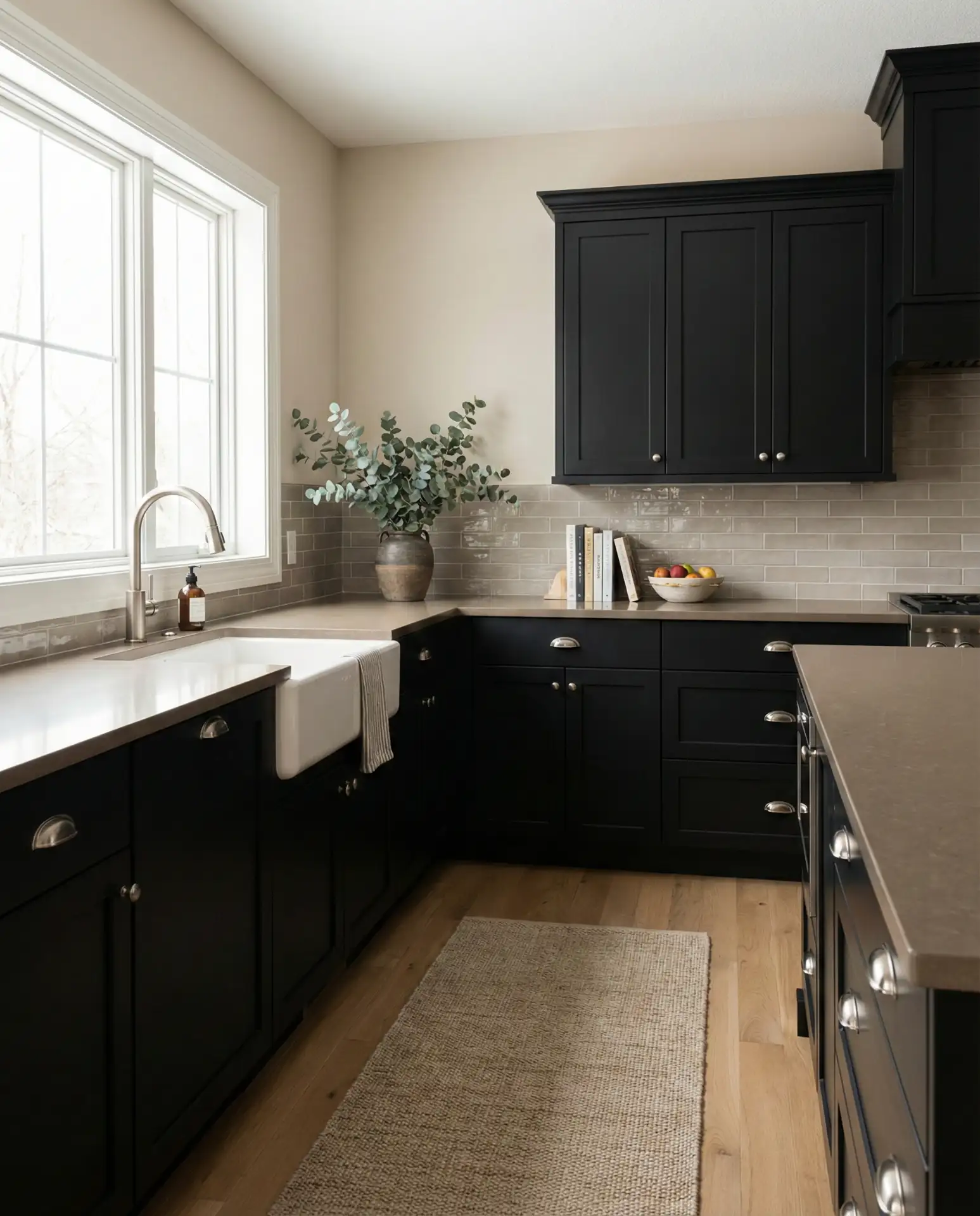
Introducing taupe and warm neutral tones alongside black cabinets creates a sophisticated palette that feels grounded rather than stark. Taupe and greige backsplashes, countertops, or wall colors provide a soft backdrop that allows black cabinetry to make a statement without overwhelming the space. This combination has particular appeal in Southern and Southwestern homes, where cooler black-and-white schemes can feel too crisp against warm climates and architectural traditions that favor earthy, sun-baked tones.
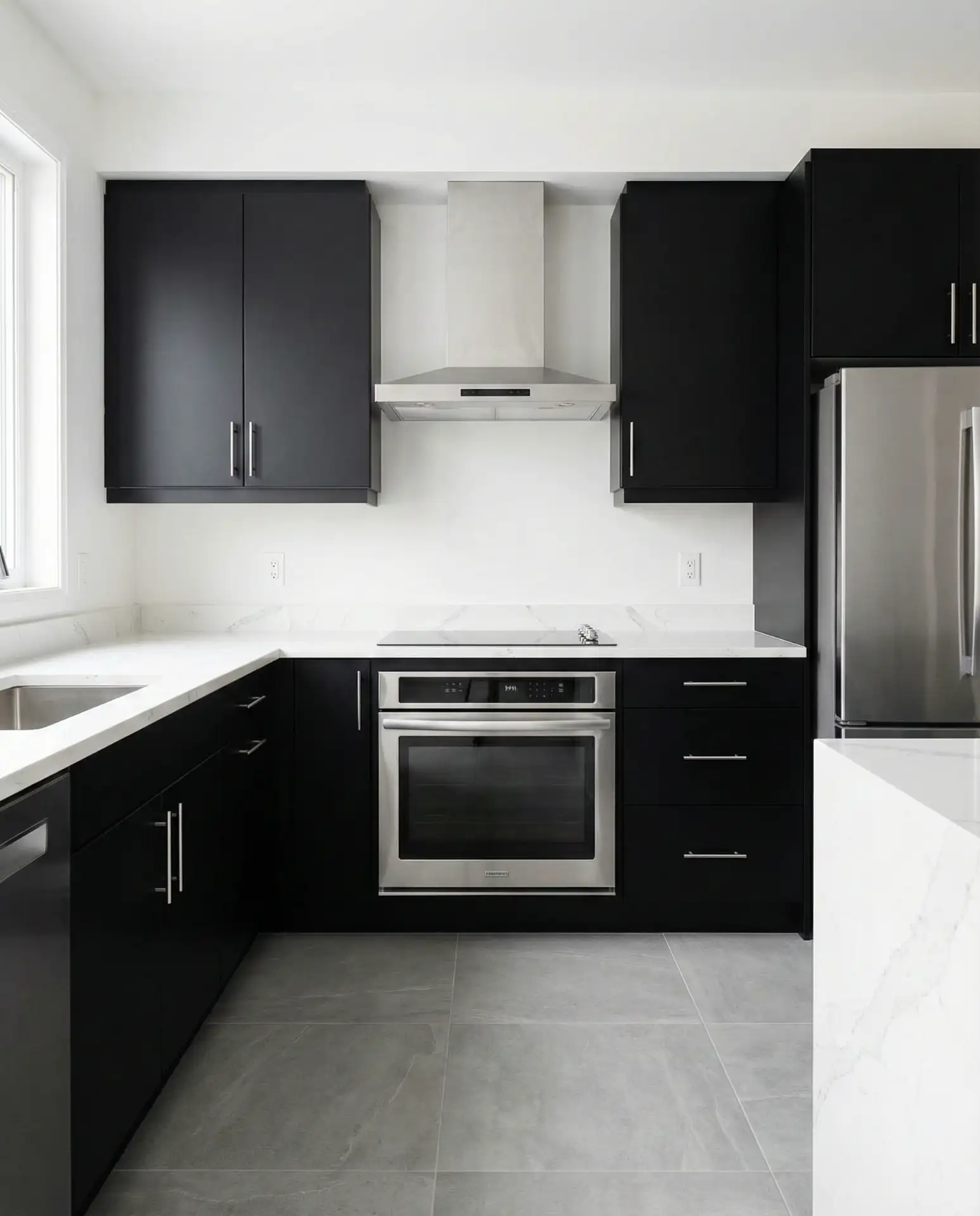
From an American lifestyle perspective, this palette ages beautifully because neutrals never go out of style the way trendy colors do. Homeowners in their forties and fifties particularly appreciate this combination when planning their “forever kitchen”—it’s distinctive enough to feel special but versatile enough to work with changing décor preferences over decades. The neutral foundation also makes it easier to sell your home down the line, since potential buyers can envision their own style working within the space rather than feeling they need to gut everything immediately.
13. Black Cabinets with Brown and Wood Tones
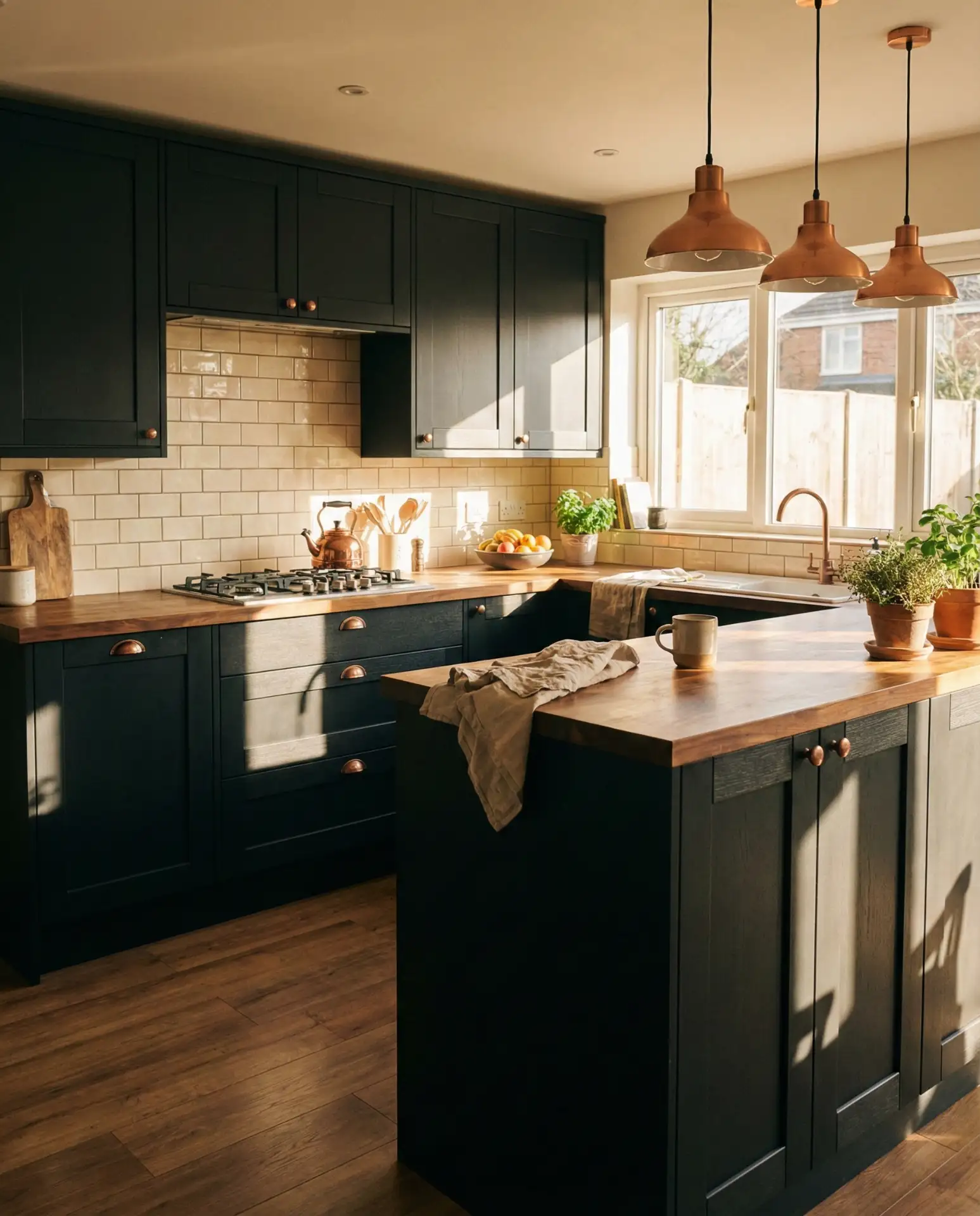
Layering brown and wood elements with black cabinetry creates unexpected warmth that challenges the assumption that dark kitchens must feel cold. Whether through wood countertops, brown countertop materials like leather-finished granite, or wood flooring, these warm tones prevent black cabinets from dominating the space. This approach has found particular favor in Midwest and Northeast homes, where people spend long winters indoors and crave cozy, enveloping spaces rather than bright, clinical kitchens.
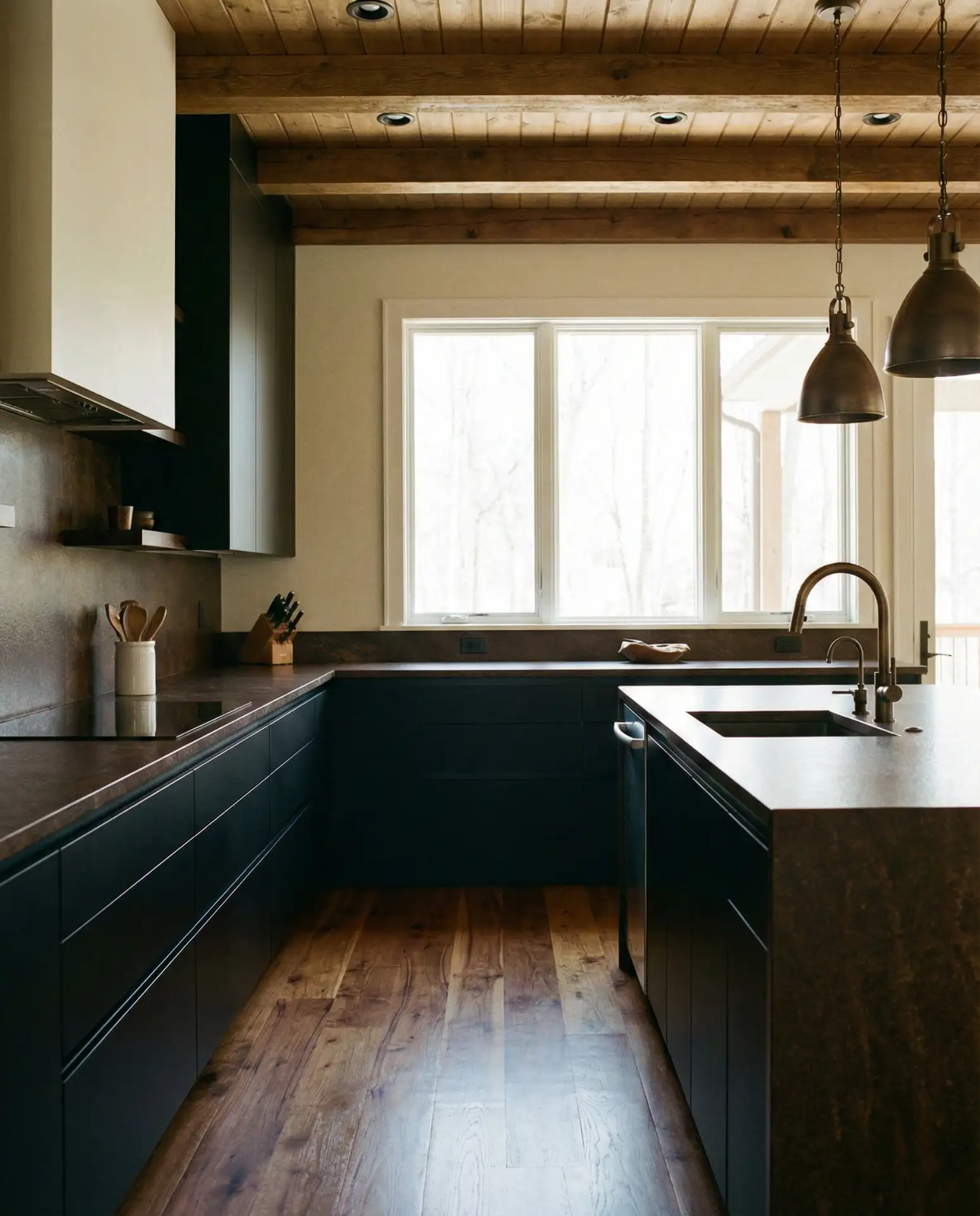
A common mistake is assuming all wood tones work equally well with black. Orangey oak and golden pine can clash, creating a disjointed 1980s vibe rather than intentional warmth. Instead, look for woods with neutral to cool undertones—walnut, hickory, white oak—or woods with rich chocolate tones that complement rather than fight the black. The goal is a cohesive color story where browns and blacks feel like natural partners rather than competing for attention.
14. Black Cabinets with Brown Countertop Material

Choosing a brown countertop in natural stone or engineered quartz with brown tones brings organic warmth to black cabinetry in a more permanent way than wood. Materials like leathered brown granite, quartzite with caramel veining, or concrete with brown pigment create durable work surfaces that soften the graphic quality of black kitchen cabinets. This combination appeals to homeowners who want the warmth of natural materials without the maintenance requirements of butcher block, making it particularly popular among busy families and working professionals.
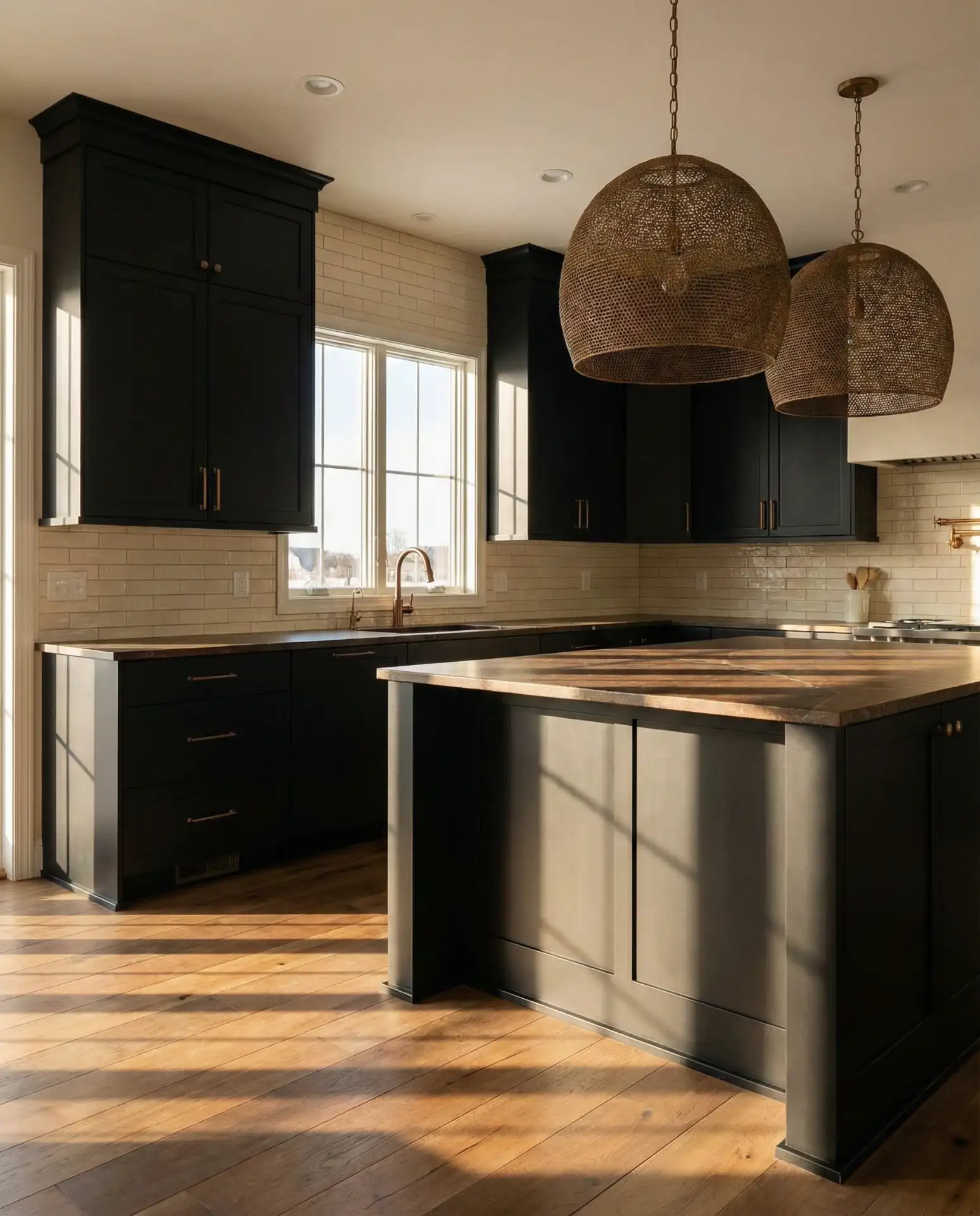
Regional context matters here: in the Southwest, brown granite with warm beige undertones complements both black cabinets and the adobe-influenced architecture common in Arizona and New Mexico. In the Northeast, cooler brown quartzites with gray veining feel more at home alongside colonial and craftsman architectural details. Understanding your home’s regional style helps ensure your brown countertop choice feels organic to the space rather than imported from a different design tradition.
15. Black Stained Wood Cabinets for Rich Texture
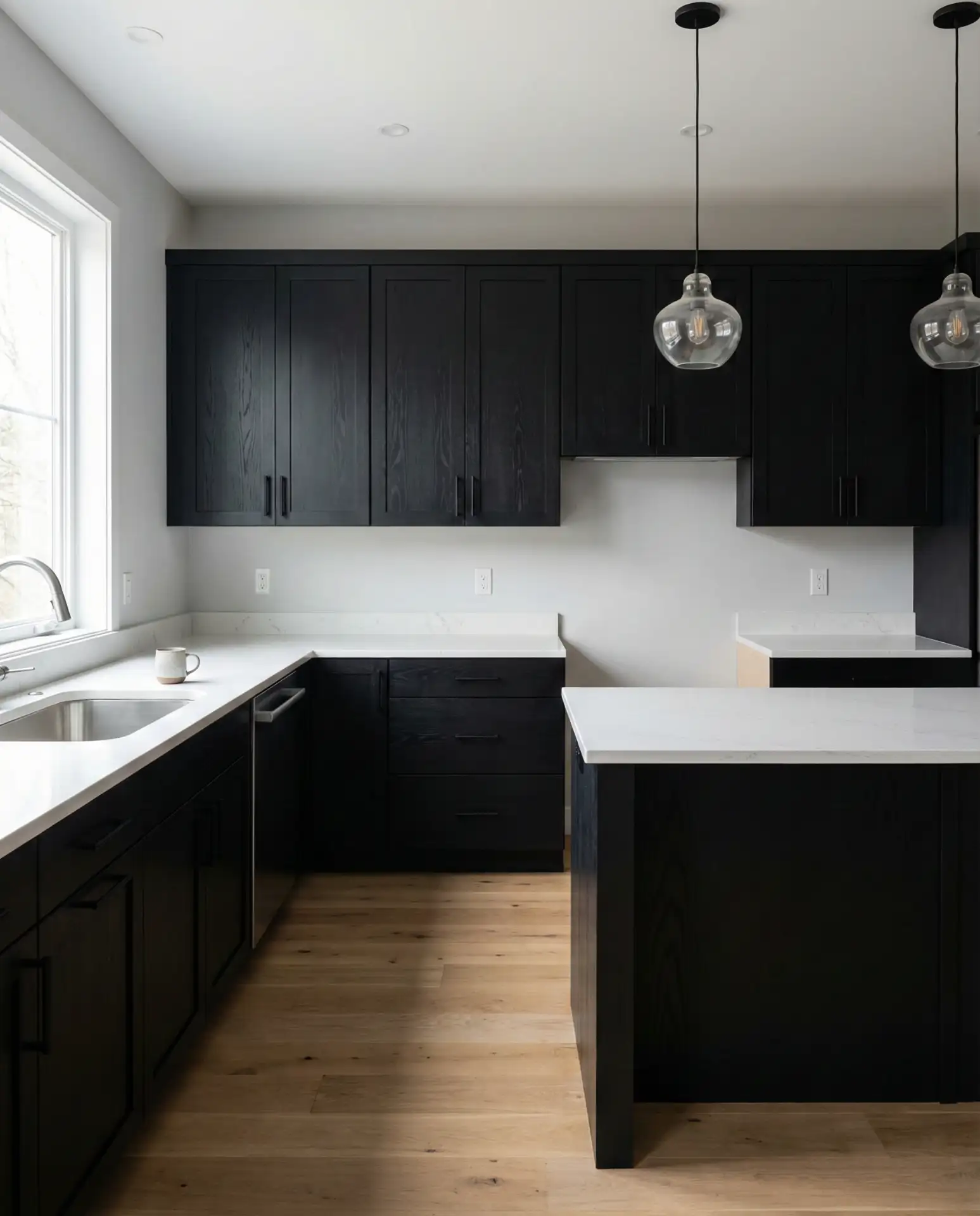
Stained black cabinets that allow the wood grain to show through offer a completely different aesthetic from opaque painted finishes. This technique—popular in both traditional and contemporary kitchens—reveals the natural beauty of oak, maple, or hickory while still delivering the drama of dark cabinetry. The grain pattern adds subtle texture and visual interest that prevents the tone from feeling flat, and the transparent quality of the stain means the wood’s character remains visible rather than being completely masked.
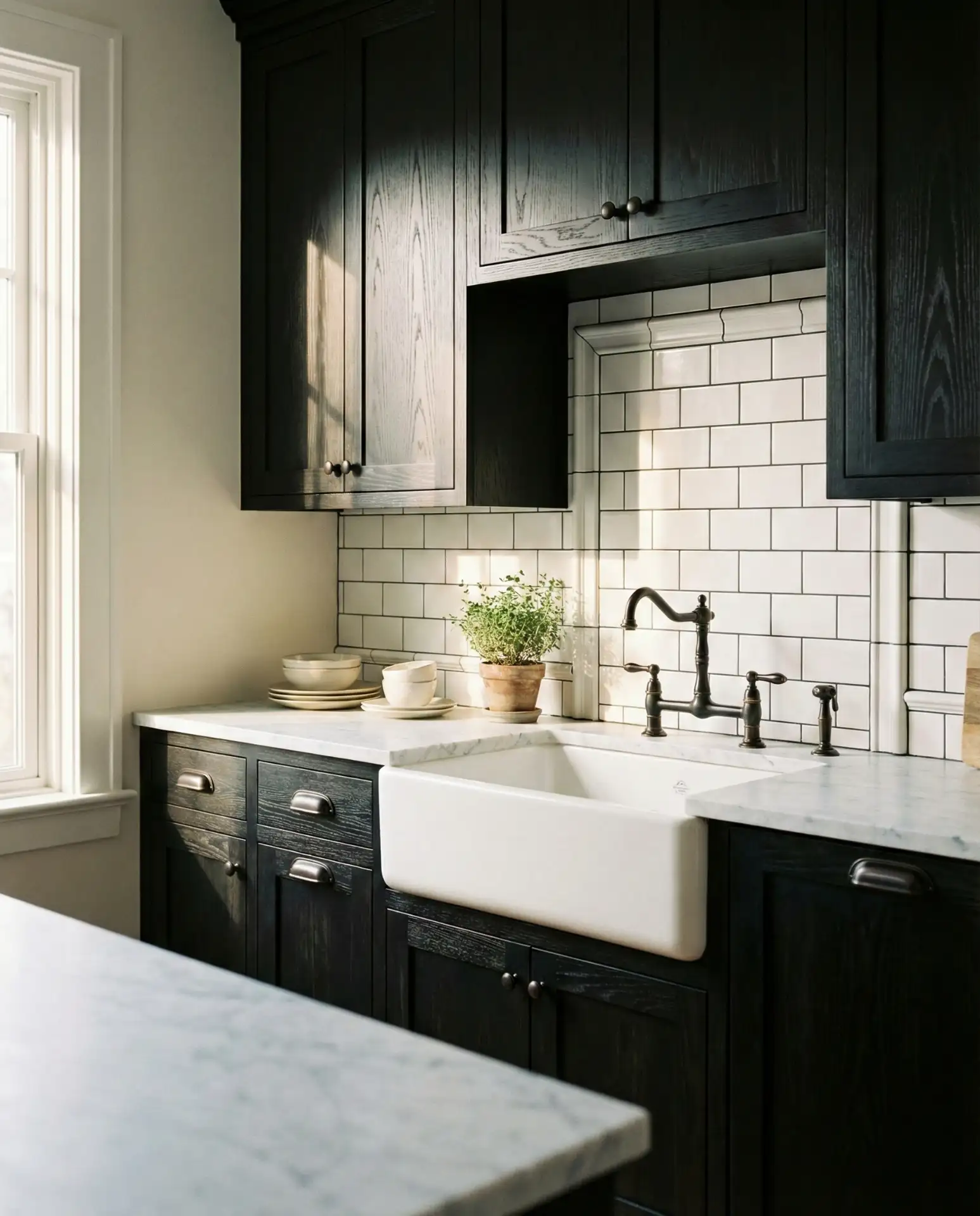
One practical insight: stained finishes tend to be more forgiving of minor dings and scratches than painted cabinets, since any damage reveals more wood rather than a contrasting primer color underneath. This makes them particularly suitable for households with active kids, pets, or anyone who uses their kitchen heavily. The stain can also be refreshed more easily than paint—a light sanding and new coat of stain is simpler than the priming and painting process required for solid-color cabinets.
16. Black Lower Cabinets with Open Upper Shelving
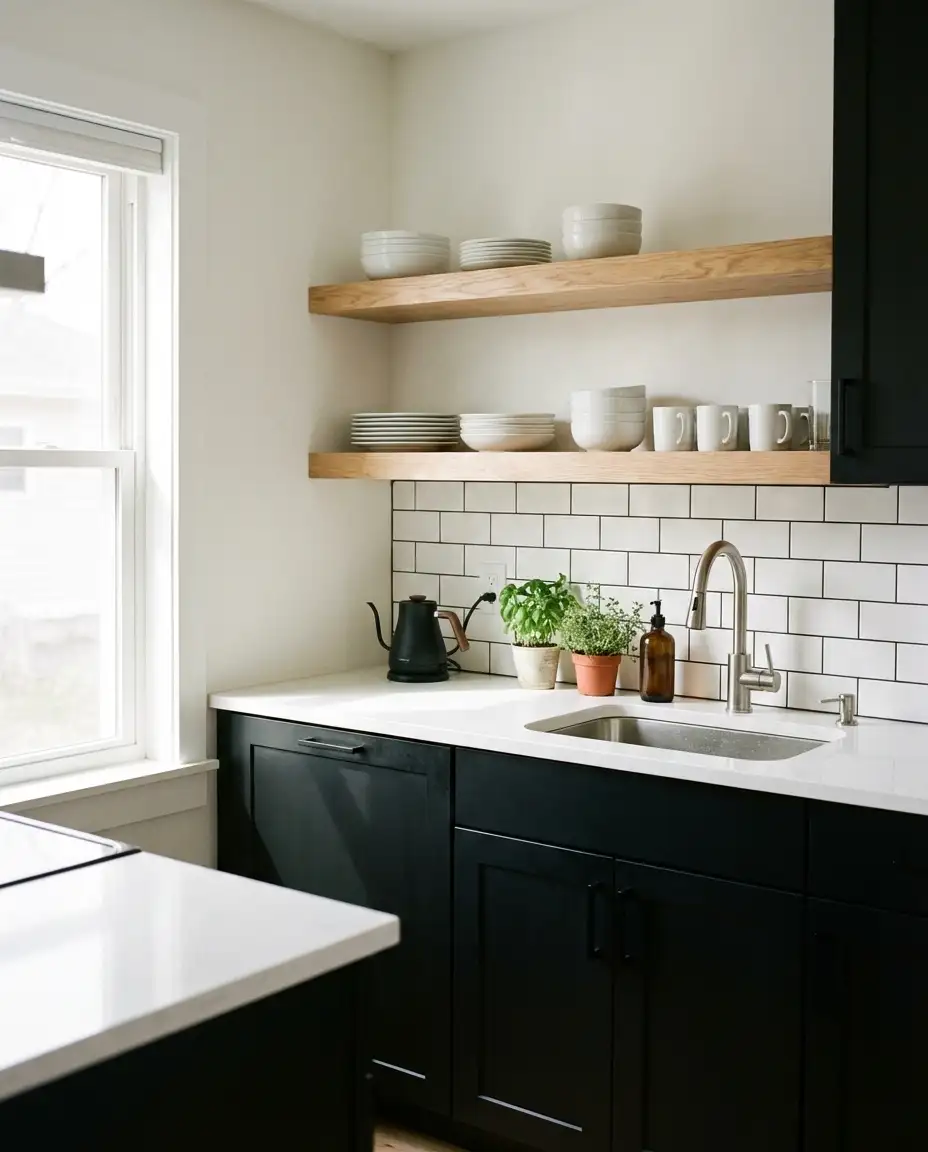
Combining black base cabinets with open shelving above creates visual breathing room that prevents dark cabinetry from feeling overwhelming in smaller kitchens. This design strategy—removing upper cabinet doors entirely or replacing solid uppers with open shelves—has become a signature move in small kitchen renovations where every design decision must maximize both function and visual spaciousness. The black lowers ground the space, while floating shelves add airy display opportunities for dishes, glassware, and decorative objects.
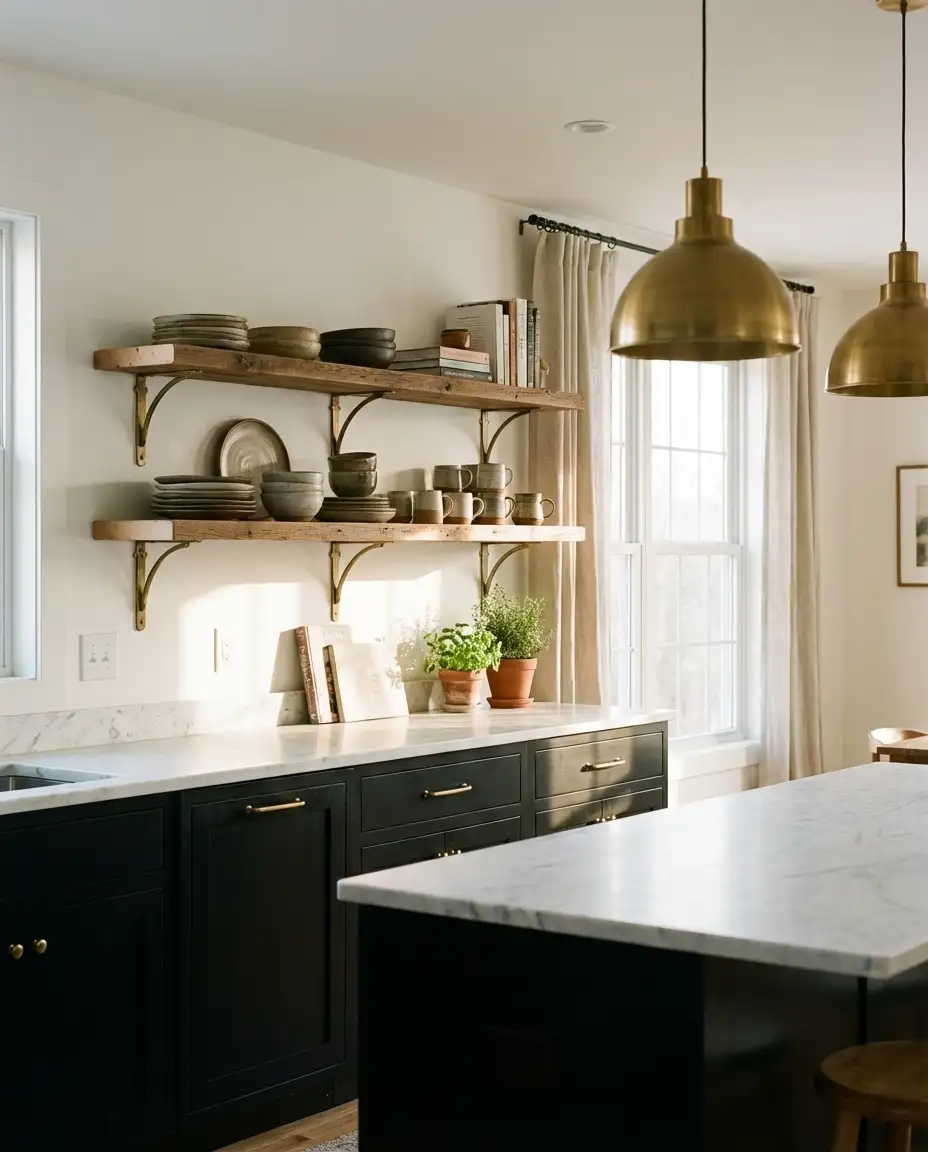
Real homeowners often discover this configuration after living with full upper cabinets and feeling claustrophobic, especially in galley or U-shaped layouts. Removing uppers is relatively inexpensive compared to full renovations—you’re essentially installing shelves rather than custom cabinetry—and the transformation can be dramatic. The trade-off is reduced storage and the need to keep displayed items tidy, but for many people, the visual expansion and opportunity to showcase beautiful dishware is worth the compromise. It’s particularly popular among empty nesters downsizing from family homes who no longer need storage for years’ worth of kid dishes and plastic containers.
17. Black Cabinets with Beige and Soft Neutral s
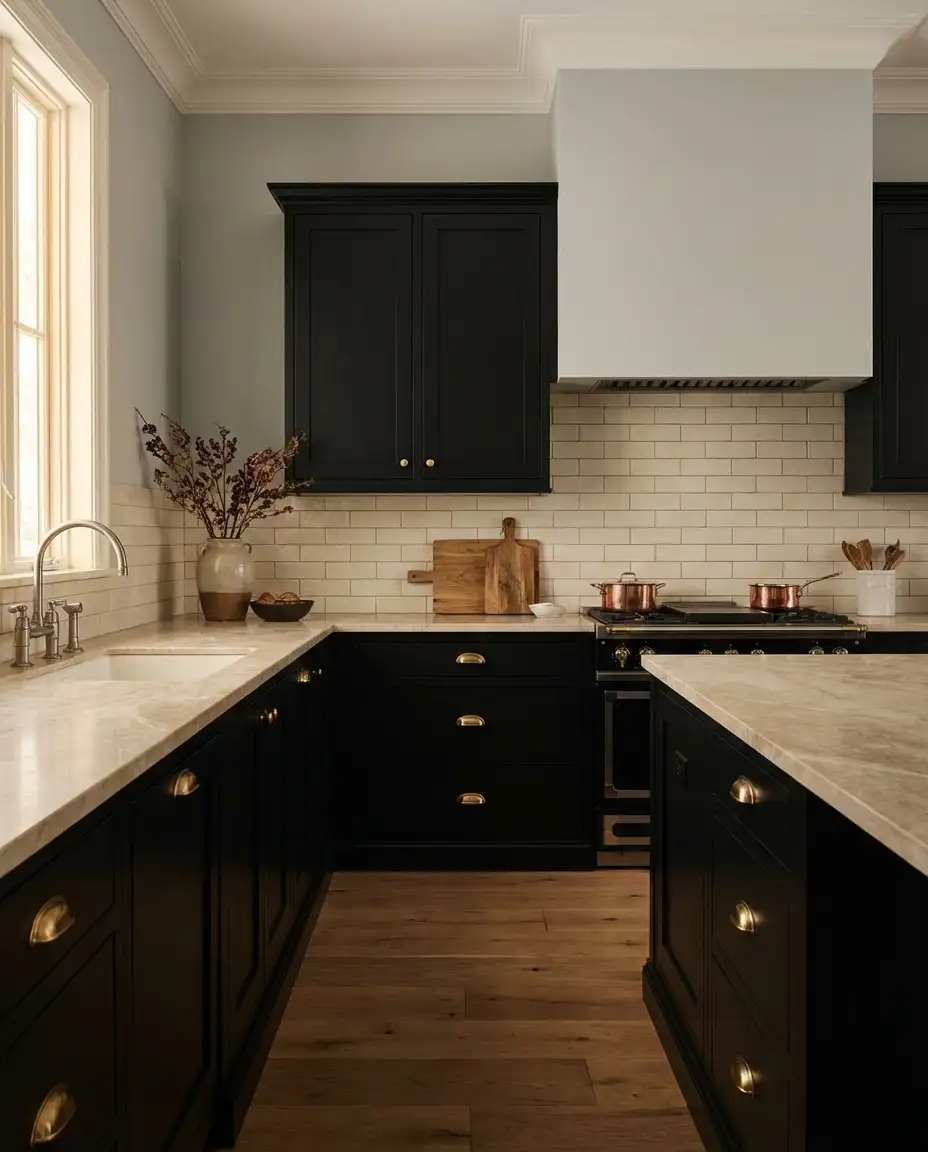
Softening black cabinetry with beige and warm neutral tones creates an approachable elegance that prevents the kitchen from feeling too severe or masculine. Beige and cream countertops, walls, or backsplashes provide a gentle counterpoint to black’s intensity, resulting in a balanced space that feels both sophisticated and livable. This palette has particular appeal in traditional and transitional homes where the goal is updating classic aesthetics without abandoning warmth and comfort.
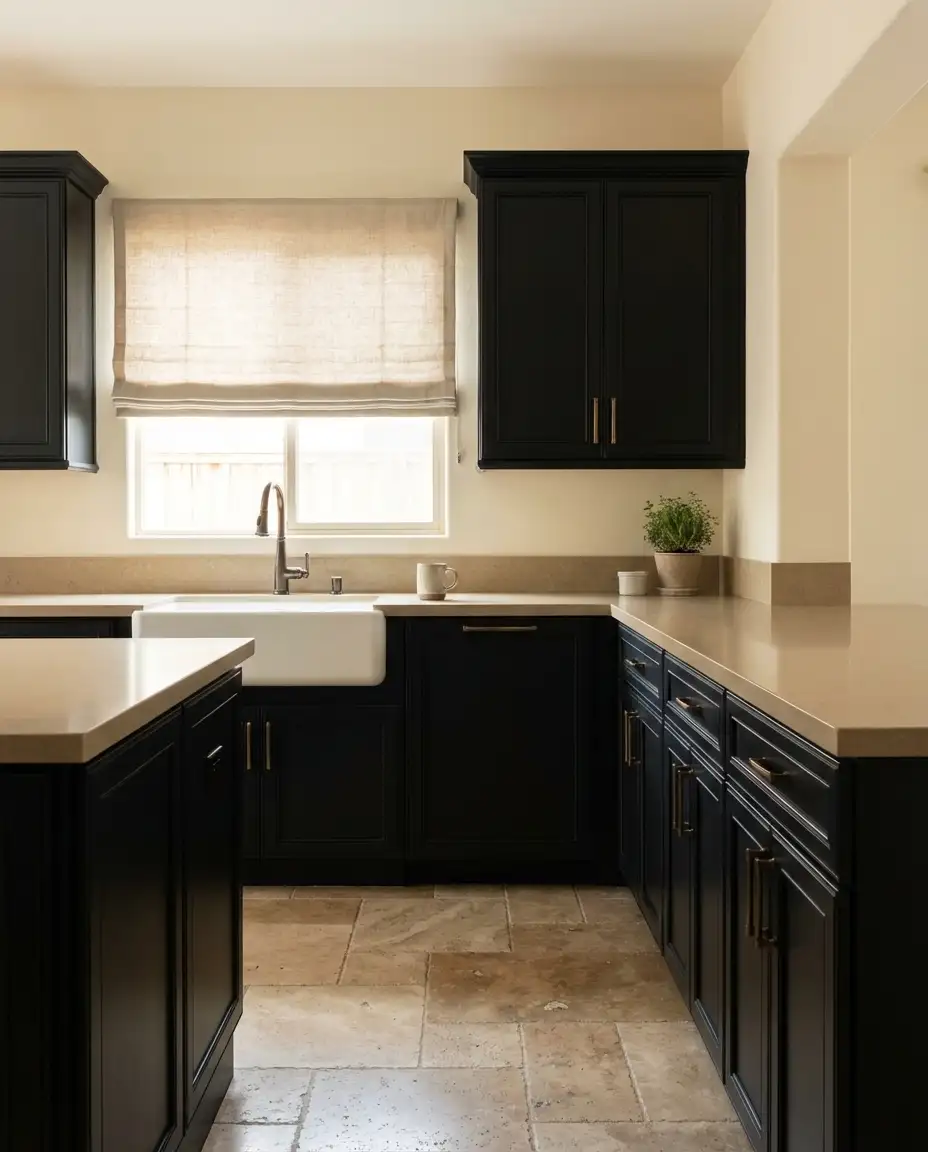
Expert-style commentary suggests this palette succeeds because it references timeless combinations—think tuxedo formal wear or classic French bistros—that our eyes already recognize as sophisticated. The warmth of beige prevents black from reading as harsh while maintaining the crisp definition that makes the cabinetry feel intentional. It’s also extraordinarily versatile for seasonal decorating; you can shift the mood from cozy fall (rust and amber accents) to fresh spring (green and white accessories) without the background palette ever feeling wrong.
18. Black Cabinets in Contemporary Minimalist Design
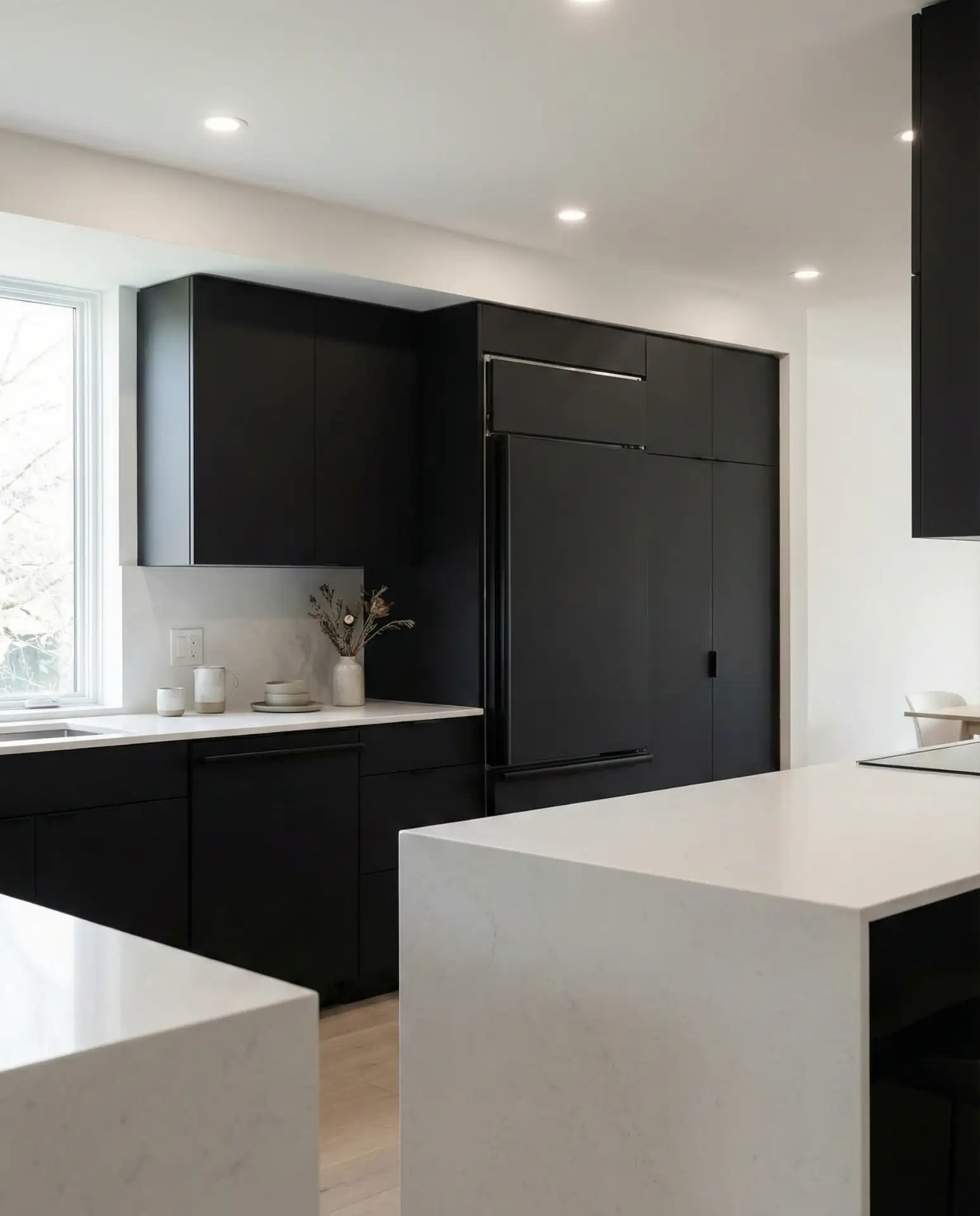
Ultra-minimal kitchens with handleless black kitchen cabinets exemplify contemporary design’s “less is more” philosophy, creating sleek surfaces that prioritize clean lines over decorative elements. Push-to-open mechanisms eliminate the need for visible hardware, resulting in uninterrupted black planes that read as architectural features rather than furniture. This approach has gained traction in urban lofts and modern builds where the kitchen is treated as a sculptural element within an open floor plan, and every detail is edited down to its essential function.
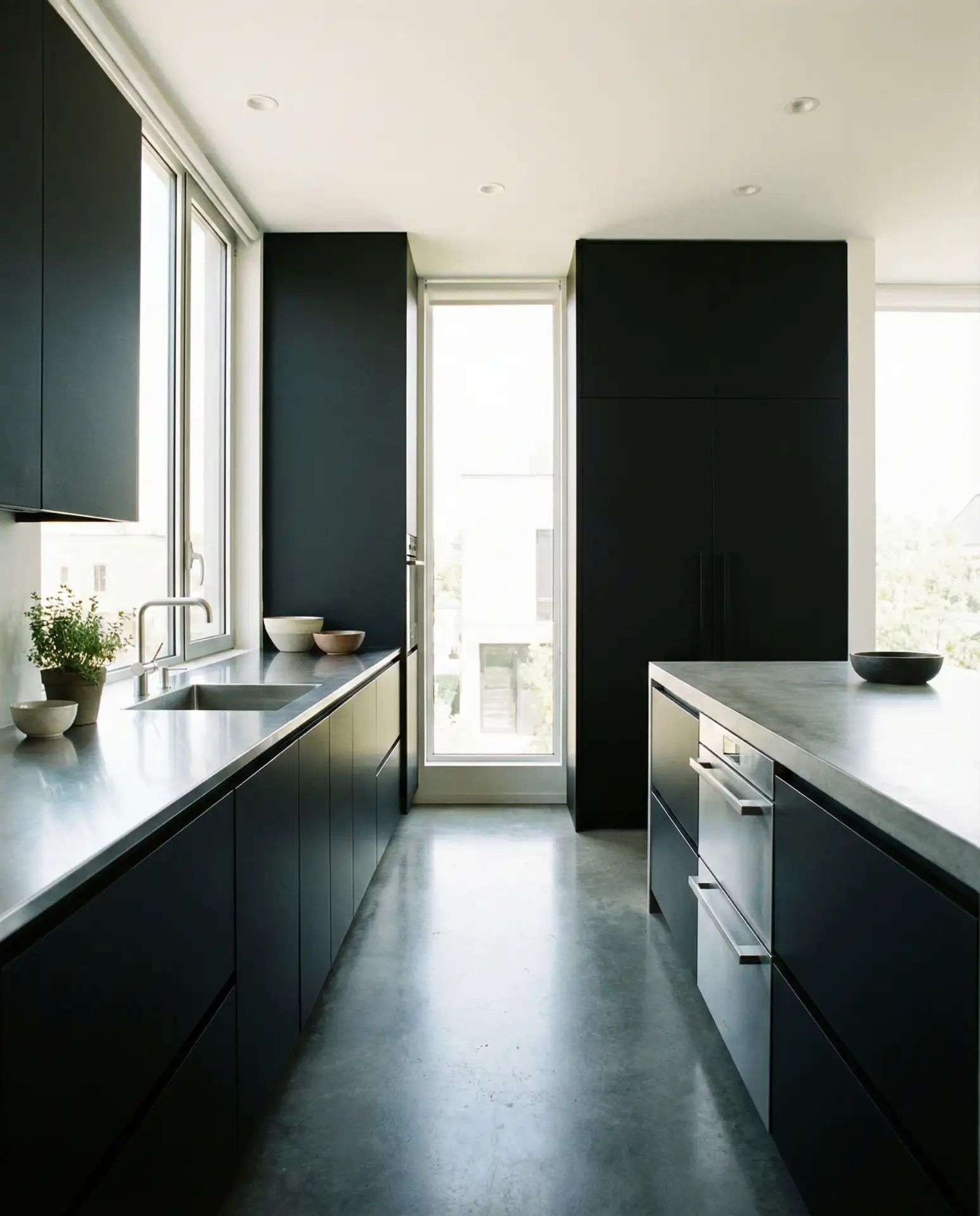
Where this works best is in homes with truly committed minimalists—people who maintain disciplined organization and genuinely prefer empty counters and concealed storage. Without the visual anchors of hardware and displayed objects, any clutter becomes immediately obvious, so this style demands more maintenance of order than busier design approaches. It’s particularly popular in West Coast cities, where mid-century modern and contemporary architecture set expectations for edited, intentional interiors.
19. Black Cabinets with Mixed Metal Accents
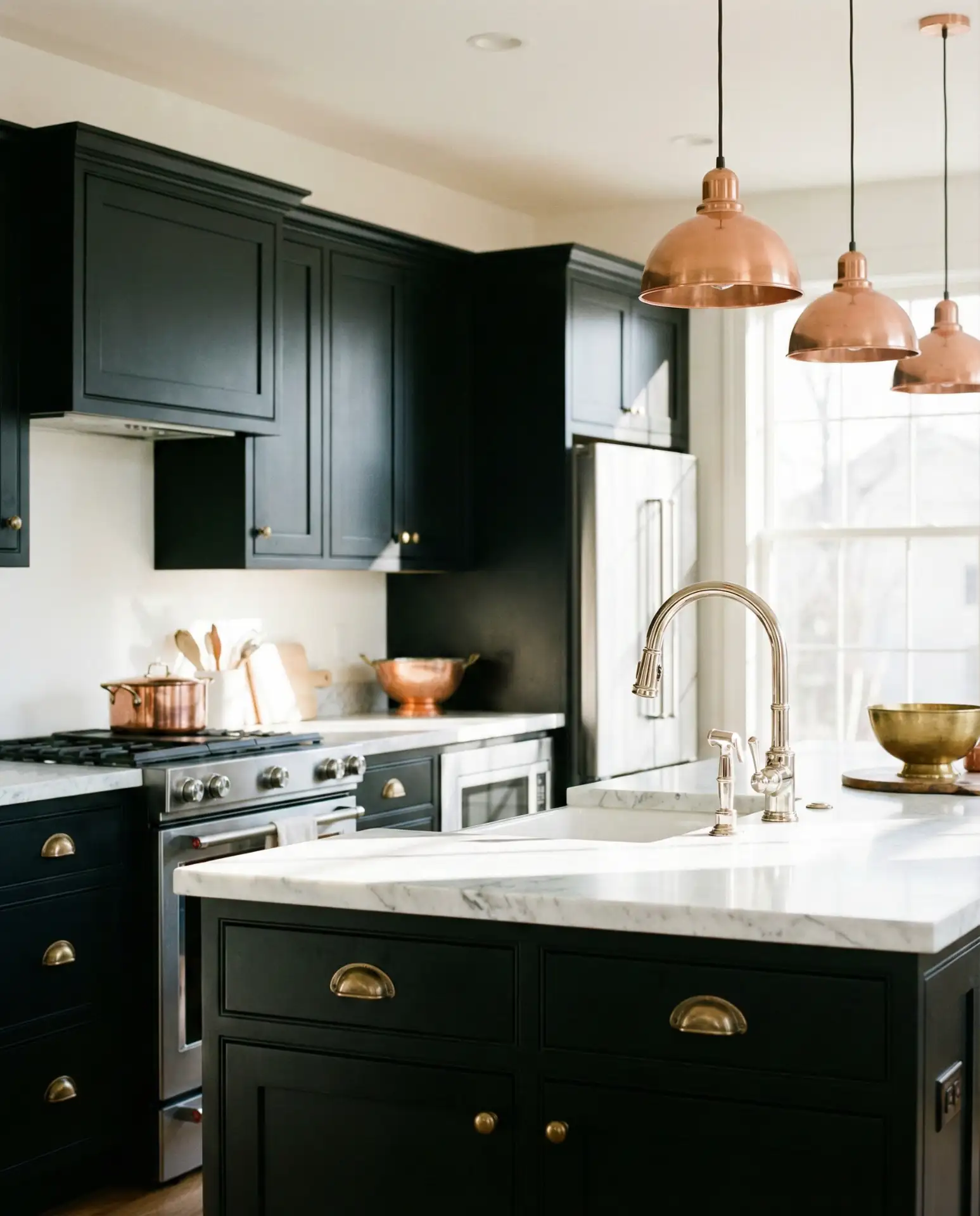
Combining multiple metal finishes—gold handles, brass faucets, stainless appliances, and nickel light fixtures—creates layered sophistication against black cabinetry. This mixed-metal approach, once considered a design faux pas, has become a hallmark of collected, high-end kitchens that feel curated rather than catalog-ordered. The variety of metallic tones adds visual richness that a single finish can’t achieve, and it provides flexibility as you update individual elements over time without everything suddenly looking mismatched.
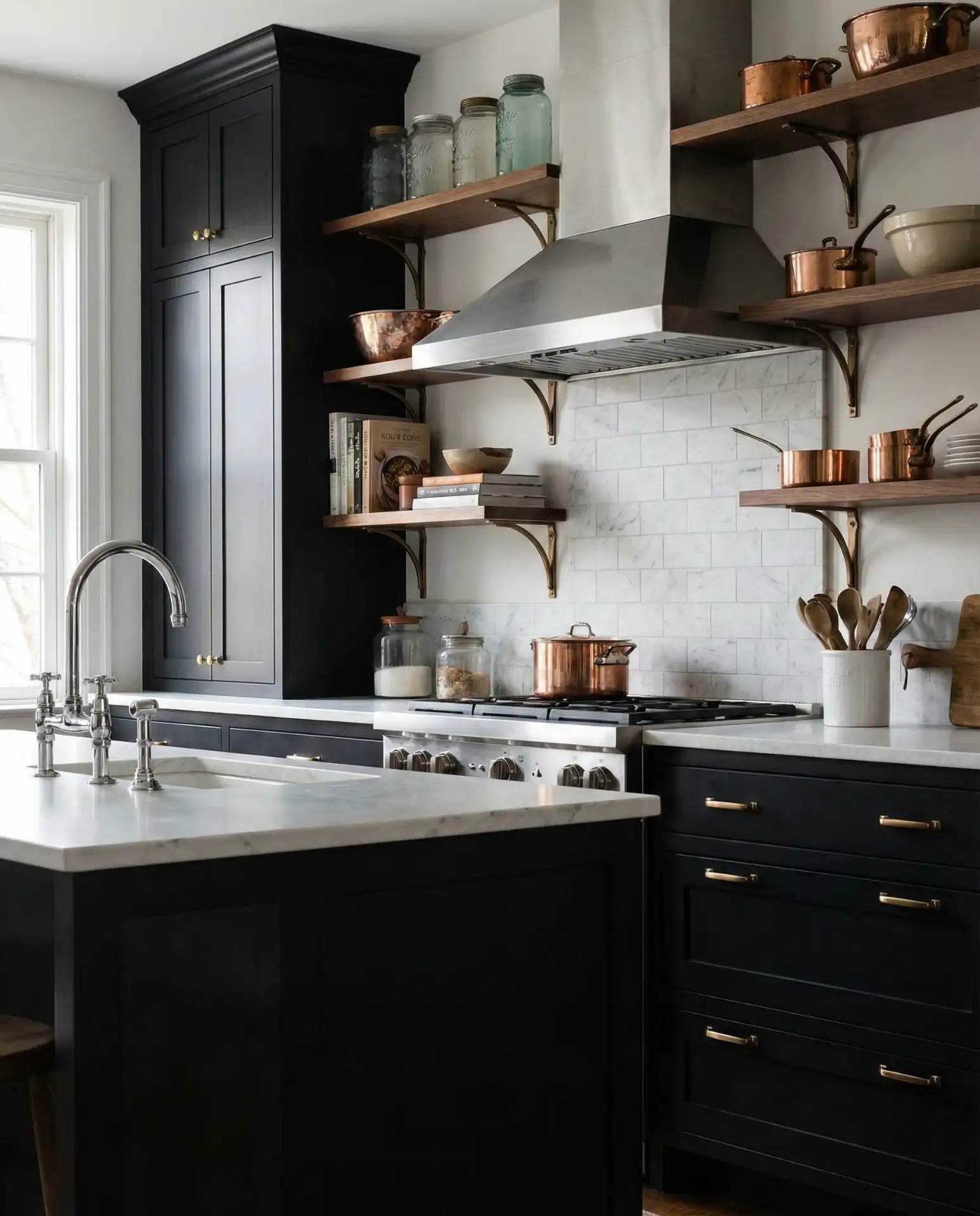
Budget-conscious homeowners appreciate this approach because it means you don’t have to replace everything when you want to change one element. If your brass faucet fails and you find a great deal on a nickel replacement, it won’t look wrong against your gold cabinet pulls. The black cabinets serve as a neutral backdrop that accommodates metallic variety the way a little black dress works with different jewelry—the foundation is strong enough to support diverse accents without visual chaos.
20. Black Cabinets in Vintage-Inspired Farmhouse
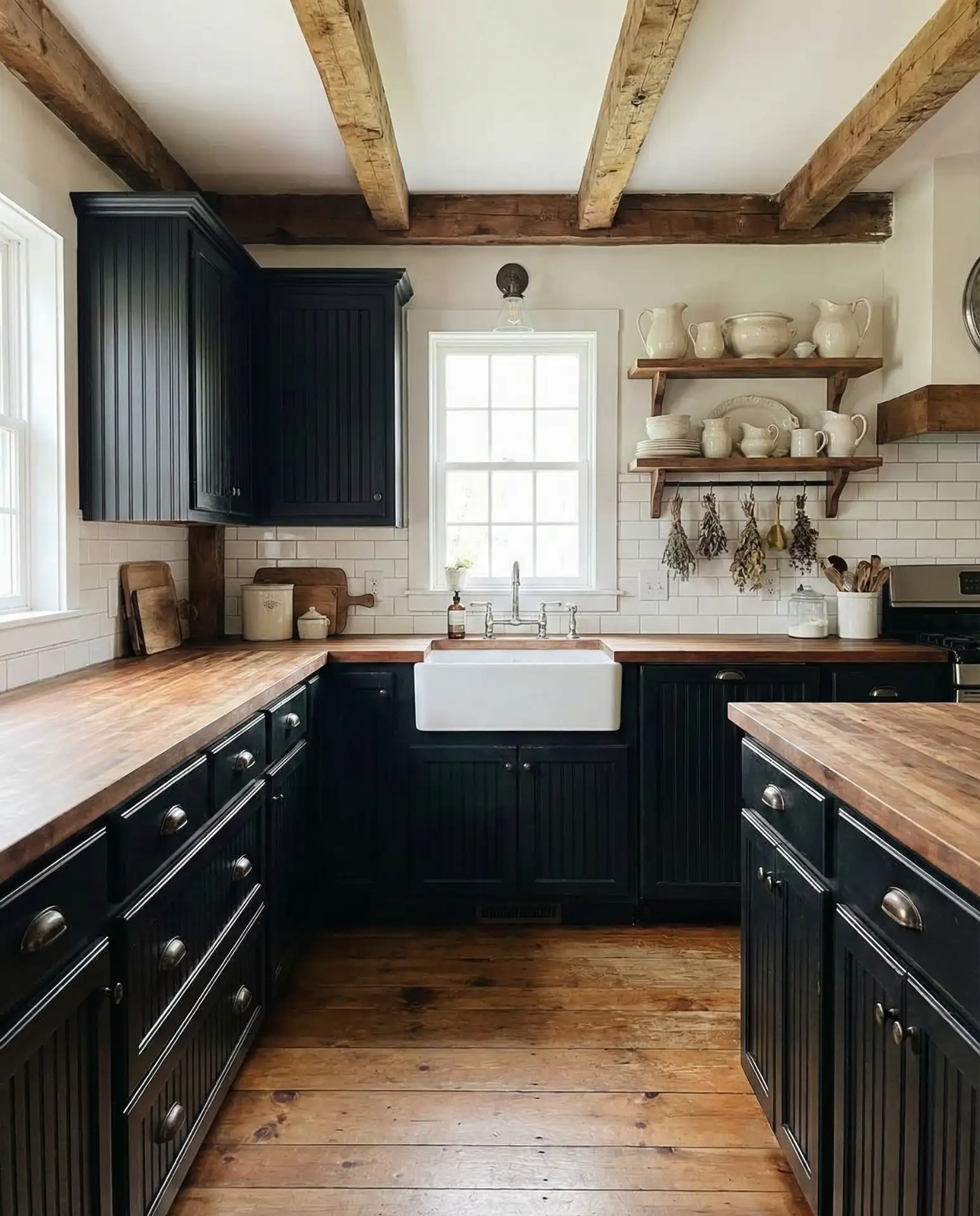
Incorporating black kitchen cabinets into farmhouse kitchens with vintage-inspired elements—apron sinks, open shelving, and butcher block surfaces—creates a fresh take on traditional country style. Black grounds the space and prevents it from tipping into overly sweet or kitschy territory while maintaining all the warmth and character that makes farmhouse design so appealing. This updated approach has resonated particularly well with younger homeowners in suburban and rural areas who want to honor regional architectural traditions while asserting their own contemporary sensibility.
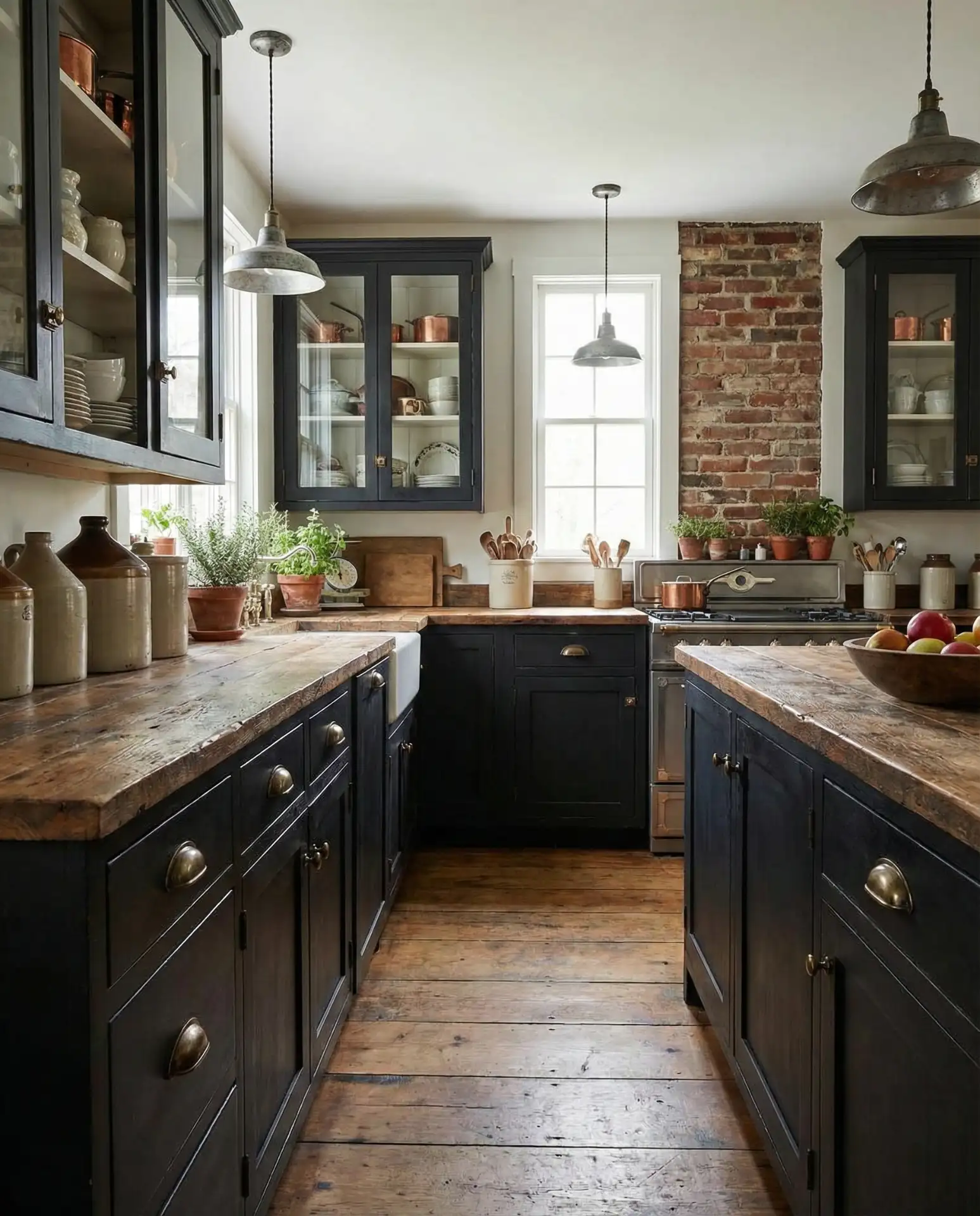
One homeowner in Tennessee renovated her 1920s farmhouse kitchen by painting the original cabinets black and adding butcher block counters. She kept the vintage hardware and apron sink, creating a bridge between the home’s history and modern living. The black cabinets immediately made the space feel more intentional and less like a dated kitchen no one had bothered updating, while still honoring the home’s agricultural heritage. Now visitors consistently ask if the kitchen is original—the highest compliment when trying to blend old and new seamlessly.
21. Black Cabinets with White Island Contrast
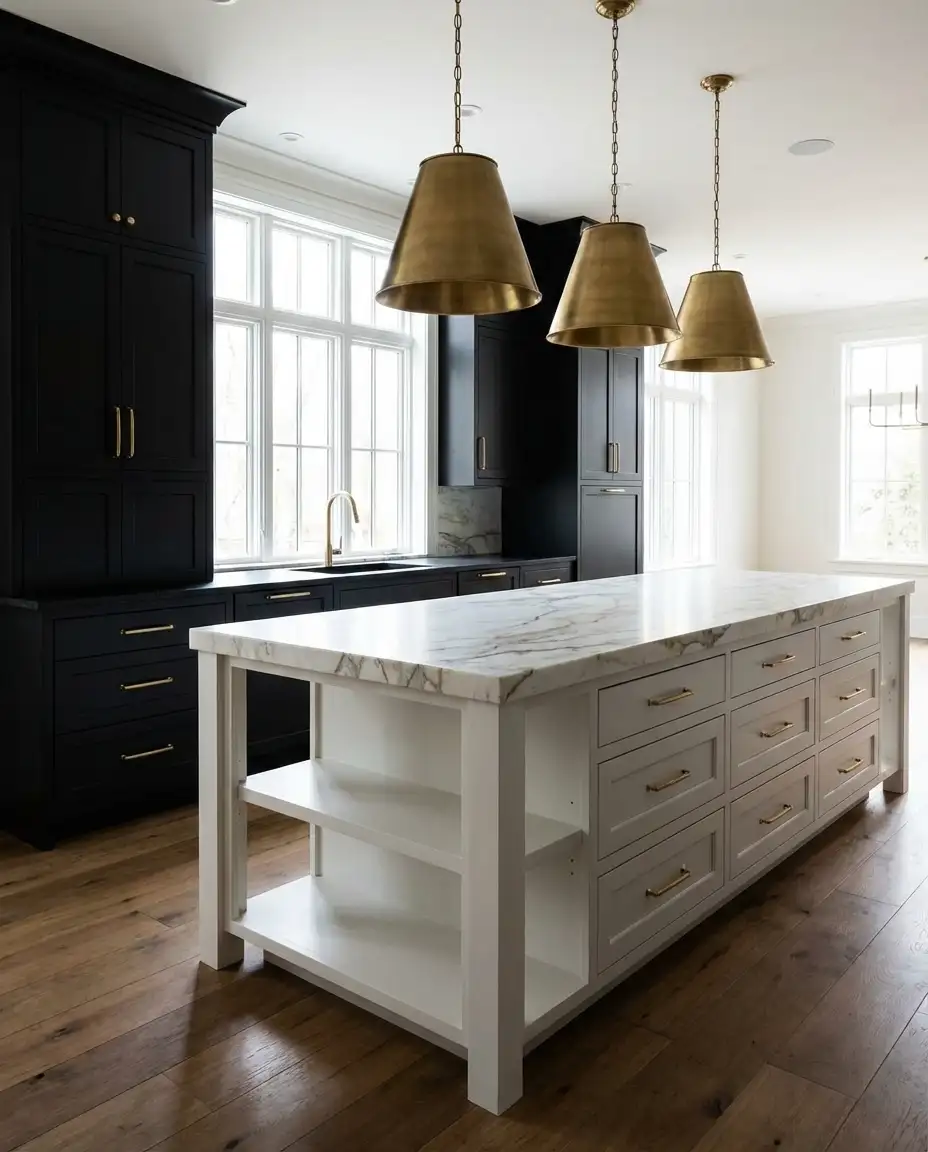
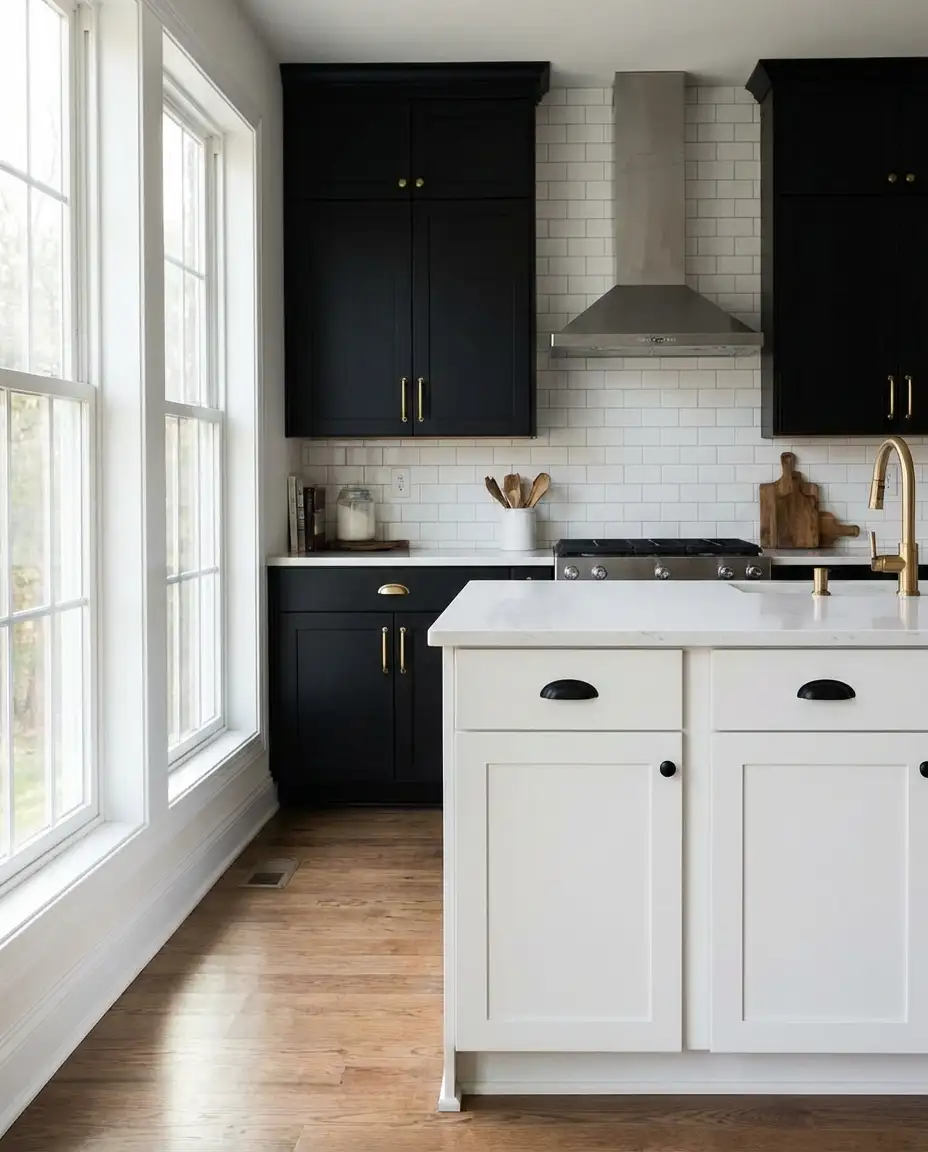
Creating drama through contrast, white and black two-tone kitchens feature black perimeter cabinets with a white island that serves as both a functional workspace and a visual anchor. This configuration draws the eye to the kitchen’s center while maintaining the sophistication of black cabinetry along the walls. The white island also provides a practical work surface that shows flour and messes better than dark counters, making it easier to keep truly clean during food preparation—a detail bakers and serious home cooks particularly appreciate.
Common mistakes in this configuration include making the white island too small—it needs sufficient size to register as a deliberate design choice rather than looking like you ran out of black cabinets. Designers typically recommend the island be at least six feet long to create meaningful visual impact. Also avoid putting different hardware finishes on the black versus white cabinets; using the same hardware throughout unifies the two-tone look and prevents it from appearing like two separate kitchen designs awkwardly combined.
22. Black Cabinets in Industrial Loft Style
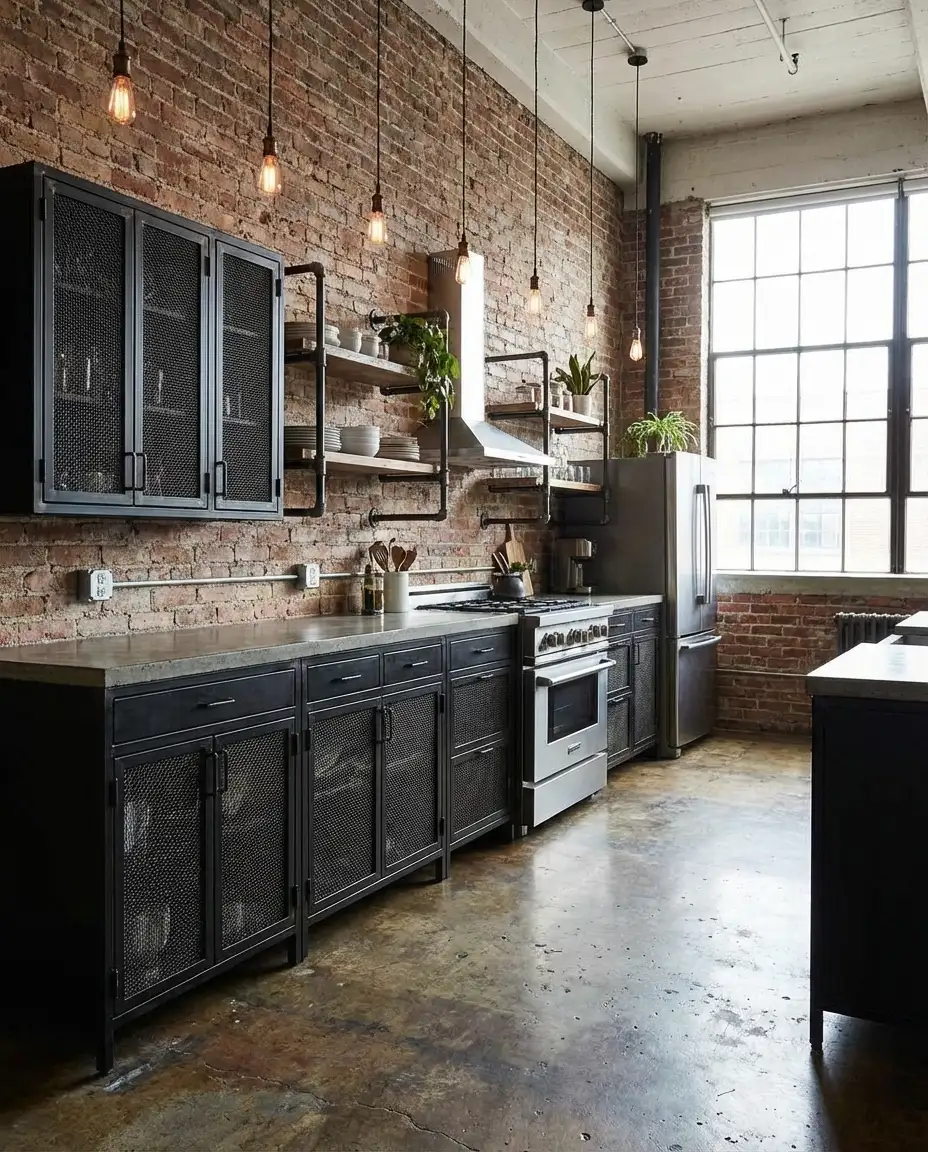
Black kitchen cabinets feel naturally at home in industrial-style kitchens, where exposed brick, metal accents, and concrete surfaces create an urban edge. The dark cabinetry echoes industrial materials like cast iron and steel, while hardware in unlacquered brass or matte black reinforces the utilitarian aesthetic. This style has found its strongest following in converted loft buildings and new construction that references warehouse architecture, particularly in cities like Brooklyn, Chicago, and Portland, where industrial design heritage runs deep.
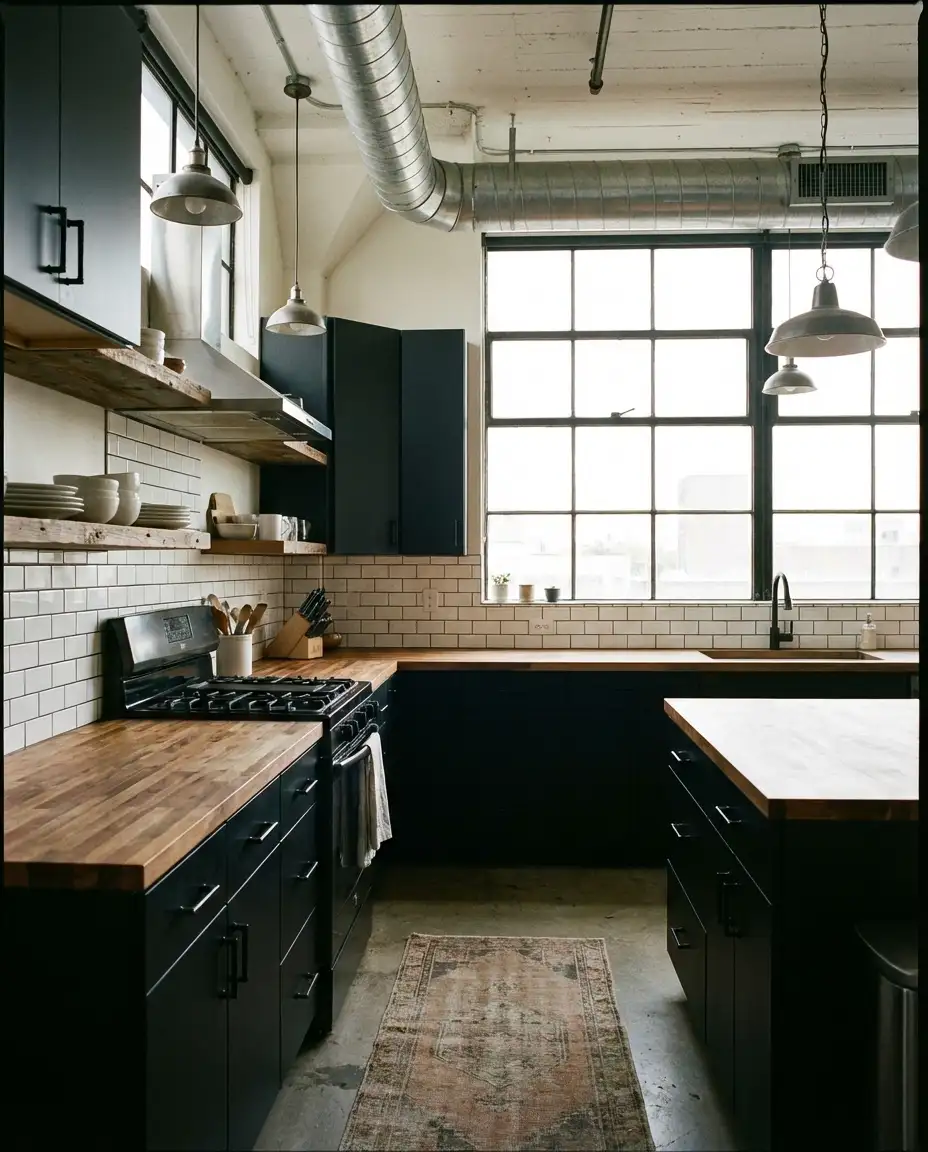
American lifestyle factors make this style particularly practical for urban dwellers who entertain frequently—the industrial aesthetic is inherently casual, forgiving of wear, and improves with age rather than looking damaged. A few dings in black cabinets paired with patinated metal fixtures actually enhance the authentic industrial character. This contrasts sharply with pristine contemporary kitchens where every scratch feels like a failure, making industrial style especially appealing to people who want their homes to feel lived-in and real rather than showroom perfect.
23. Black Cabinets with Natural Stone Backsplash
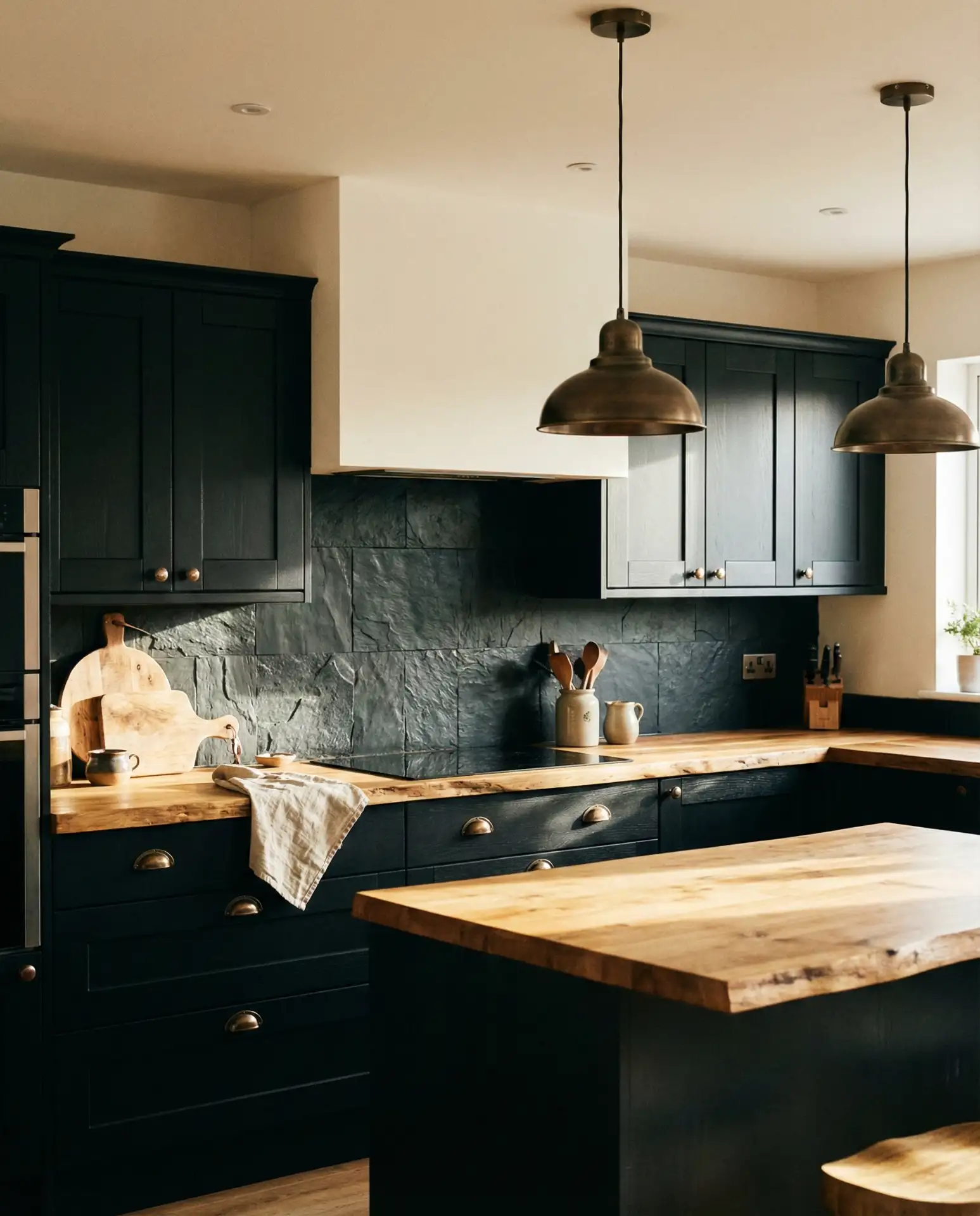
Pairing black cabinetry with natural stone backsplash materials—marble, quartzite, soapstone, or slate—creates textural richness that prevents dark kitchens from feeling flat or one-dimensional. The organic veining and color variation in natural stone provide visual interest that manufactured materials can’t replicate, while the tone range in the stone can tie together white countertops, wood countertops, or other elements in your design. This combination has particular appeal among homeowners who appreciate natural materials and want their kitchens to reference the same organic beauty found in high-end restaurants and hotel kitchens.
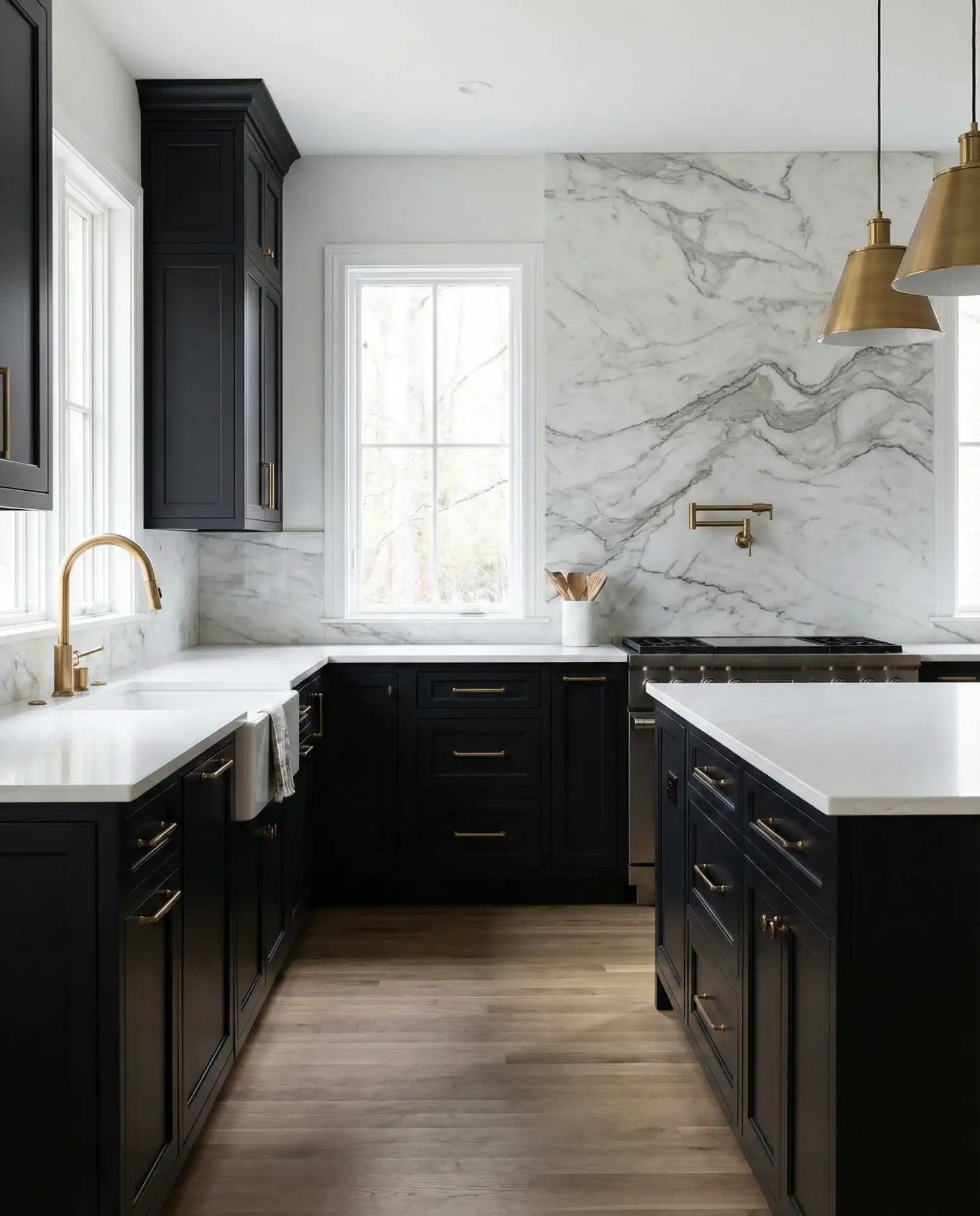
Real homeowners often underestimate the impact of the backsplash—it’s the one surface you see every time you work at the counter, so investing in beautiful stone here delivers daily enjoyment that justifies the premium cost. Natural stone backsplashes typically run $60-$150 per square foot installed, compared to $15-$40 for ceramic tile, but many people find the investment worthwhile for the visual and tactile quality that stone provides. Since backsplashes cover relatively small square footage compared to countertops or flooring, you can afford higher-end materials without the project becoming prohibitively expensive.
Conclusion
These ideas demonstrate just how versatile black kitchen cabinets can be in 2026—from rustic farmhouse warmth to sleek urban sophistication, there’s a style that works for virtually every American home and aesthetic preference. Whether you’re planning a full renovation or a strategic update, black cabinetry offers timeless drama that adapts to your personal style while making a confident statement. Which of these looks resonates most with your vision? Share your favorite combination in the comments below, or let us know what other elements you’re considering pairing with your black cabinets.