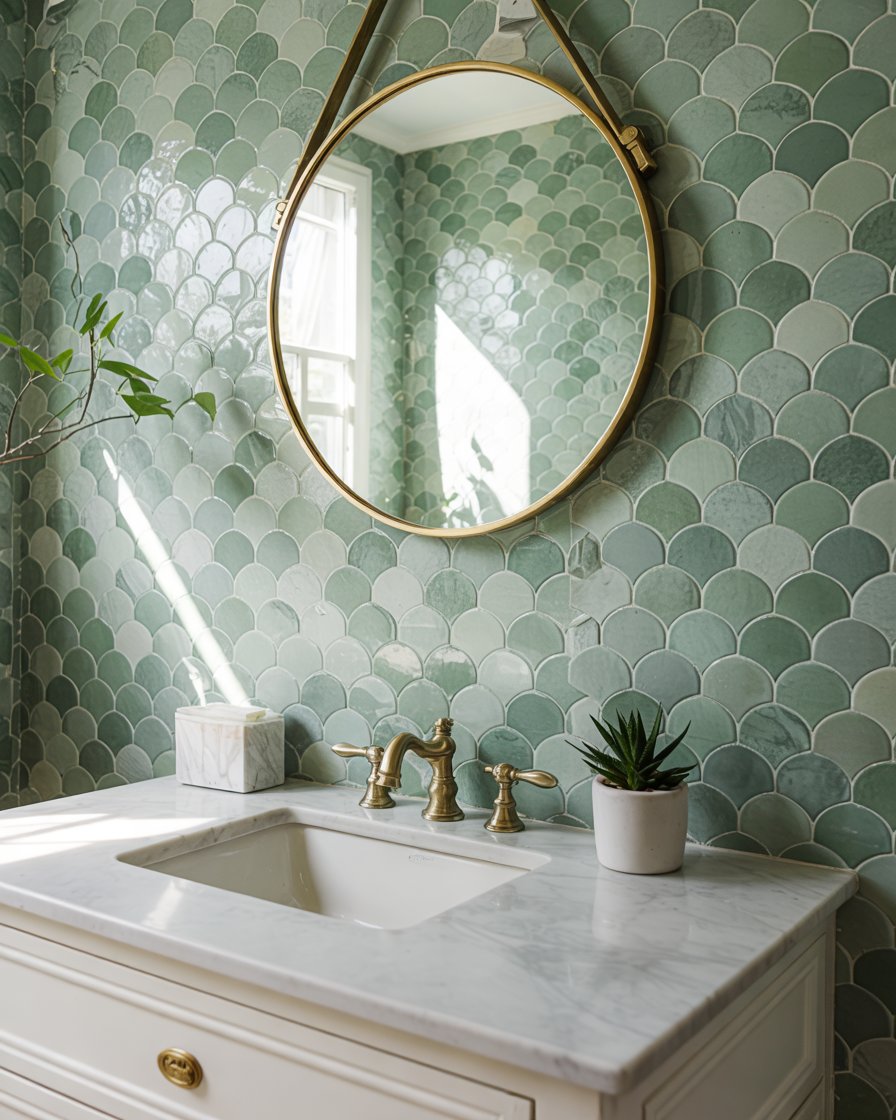
Blue bathrooms are having a major moment in 2026, and it’s easy to see why Americans are flocking to Pinterest for inspiration. This versatile color brings a sense of calm, sophistication, and personality to one of the most intimate spaces in your home. Whether you’re drawn to moody navy tones, breezy coastal hues, or unexpected color pairings, blue offers endless possibilities for creating a bathroom that feels both timeless and on-trend. In this guide, you’ll discover fresh ideas that showcase how blue can transform your bathroom into a space that’s uniquely yours, from bold tile choices to subtle accessory touches.
1. French Coastal Blue Bathroom Elegance
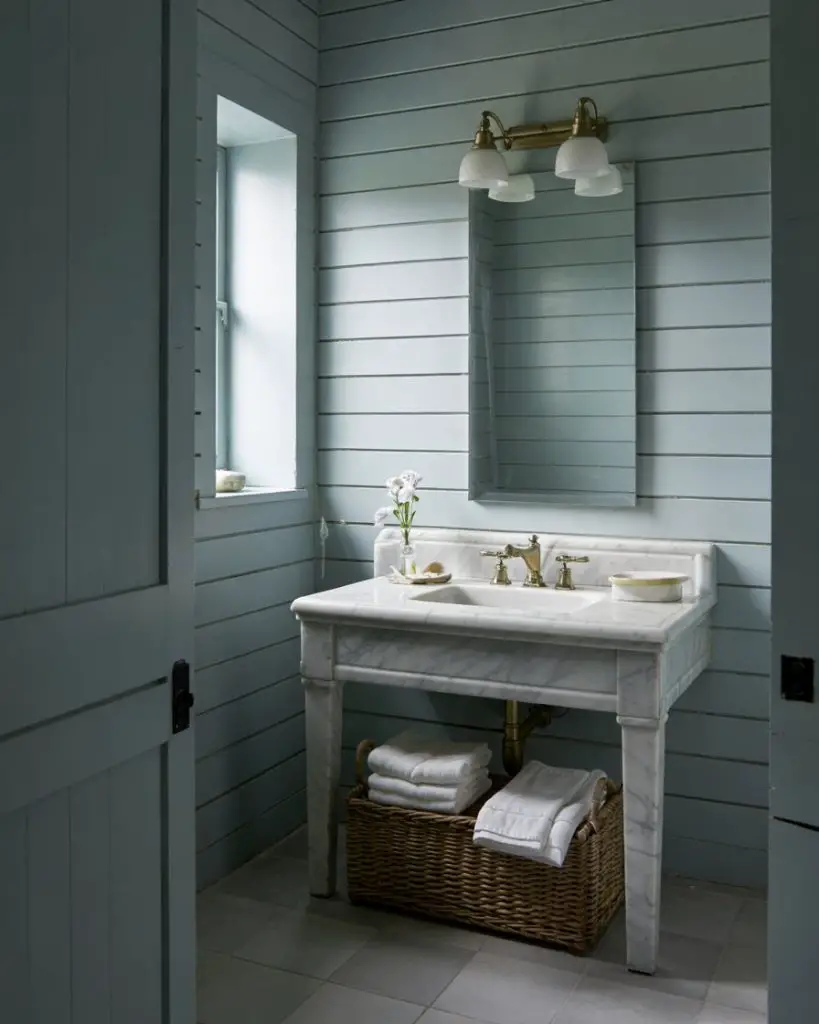
A French-inspired blue bathroom combines Old World charm with coastal airiness, creating a space that feels both sophisticated and relaxed. Soft powder blues on shiplap walls pair beautifully with vintage brass fixtures and marble countertops, while woven baskets and linen towels add texture. This style works especially well in homes with traditional architecture, where the marriage of French refinement and beachy ease feels natural and inviting. 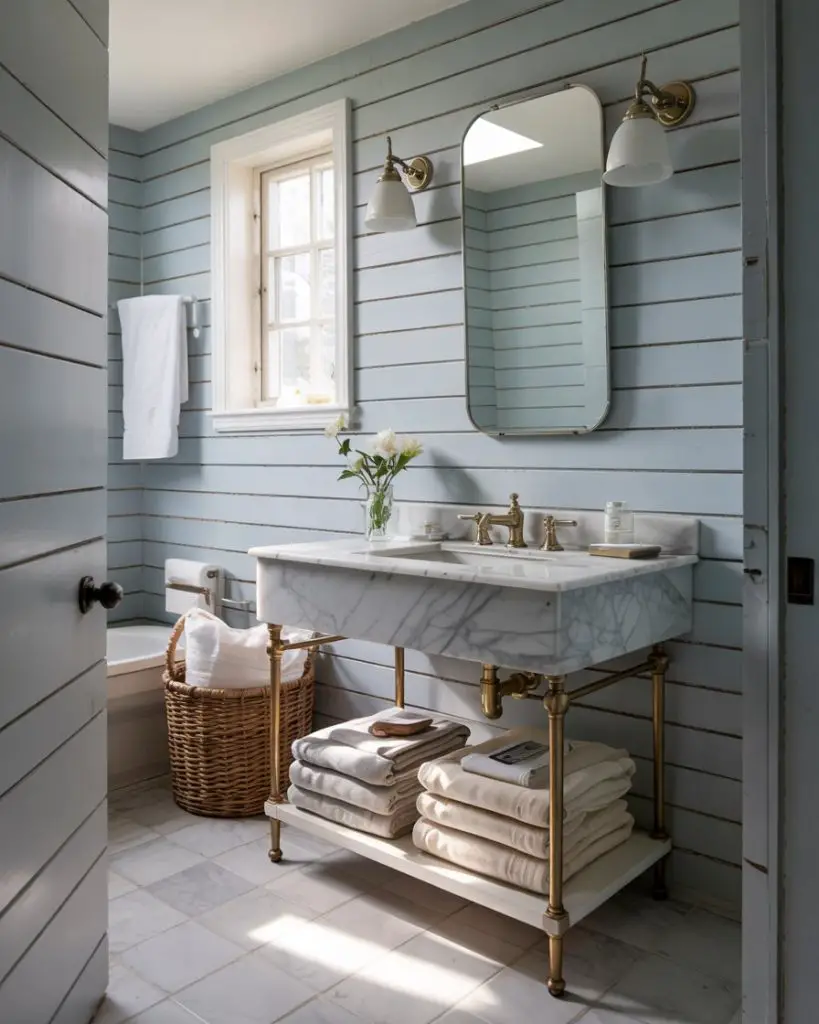
The beauty of this approach lies in its versatility—you can lean heavier into French elements with ornate mirrors and carved wood details, or keep things more coastal with rope accents and whitewashed finishes. Many homeowners find that starting with a neutral base and introducing blue through paint allows for easier updates down the line. Consider adding a vintage chandelier or sconces to enhance the French country atmosphere while keeping the overall palette light and breezy.
2. Moody Navy Blue Sanctuary
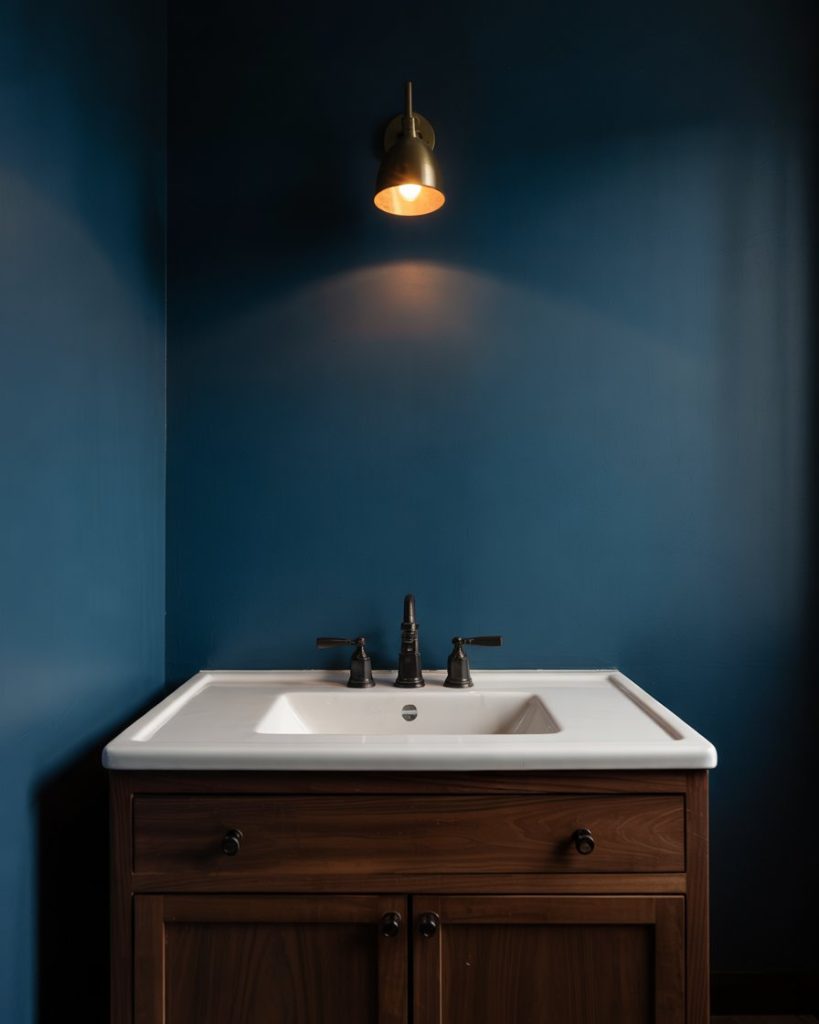
For those who crave drama, a moody blue bathroom wrapped in deep navy tones creates an intimate, cocoon-like atmosphere. Black and navy combinations work particularly well in powder rooms or primary bathrooms where you want to make a bold statement. Matte black hardware, dark wood vanities, and minimal metallic accents prevent the space from feeling too heavy while maintaining that sophisticated, enveloping quality. 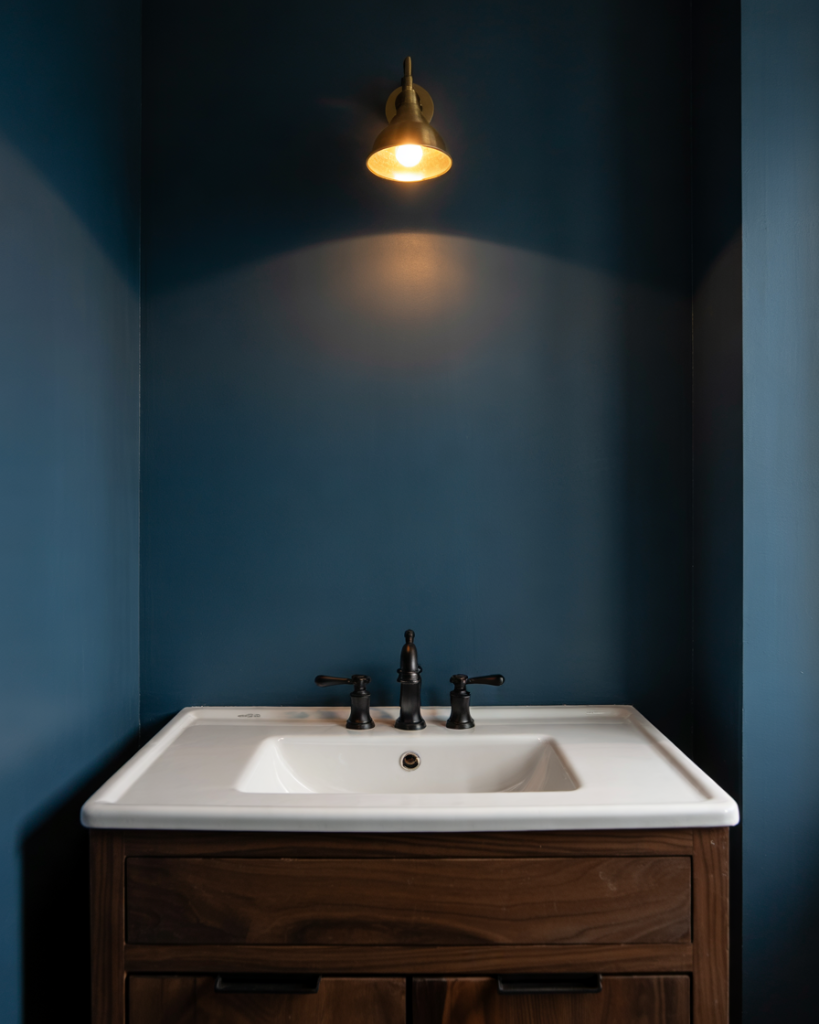
Here’s what works best: moody blues shine in bathrooms with good ventilation and at least one light source, as they can feel oppressive in windowless spaces. A common mistake is pairing dark walls with dark flooring—instead, try white or light gray tiles to create contrast and prevent the room from feeling like a cave. In the Pacific Northwest and Northeast, where gray days are common, homeowners often add warm-toned lighting to balance the coolness of navy.
3. Pale Blue Minimalist Retreat

Pale blue walls create a serene backdrop that works beautifully in small bathrooms where you want to maximize the sense of space. This whisper-soft shade pairs naturally with white fixtures, chrome hardware, and light wood accents for a Scandinavian-inspired feel. The color reads almost neutral but provides just enough personality to keep the space from feeling sterile or cold. 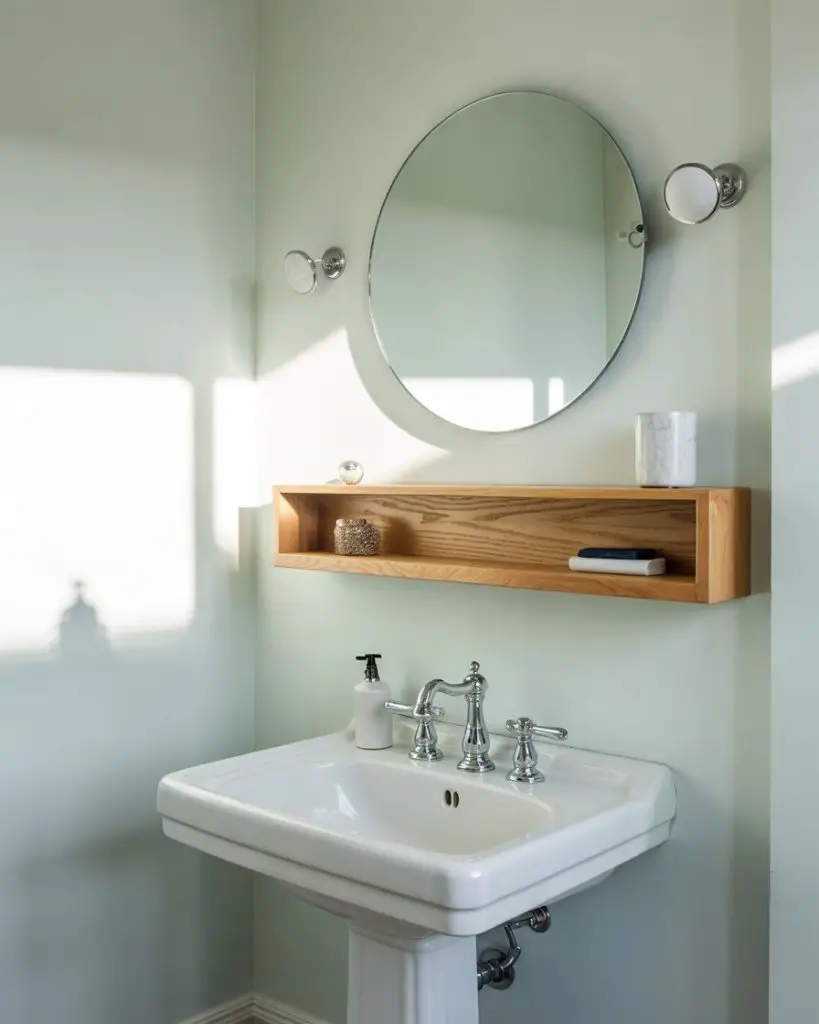
Pale blues work exceptionally well in coastal regions and sunny climates where natural light enhances their airy quality. One practical insight: this shade is forgiving when it comes to water spots and fingerprints compared to stark white, making it ideal for family bathrooms. Consider adding texture through woven window treatments, a jute rug, or ceramic accessories to prevent the space from feeling too flat. The key is layering different tones of white and cream alongside the blue.
4. Retro Aqua Blue Tile Revival
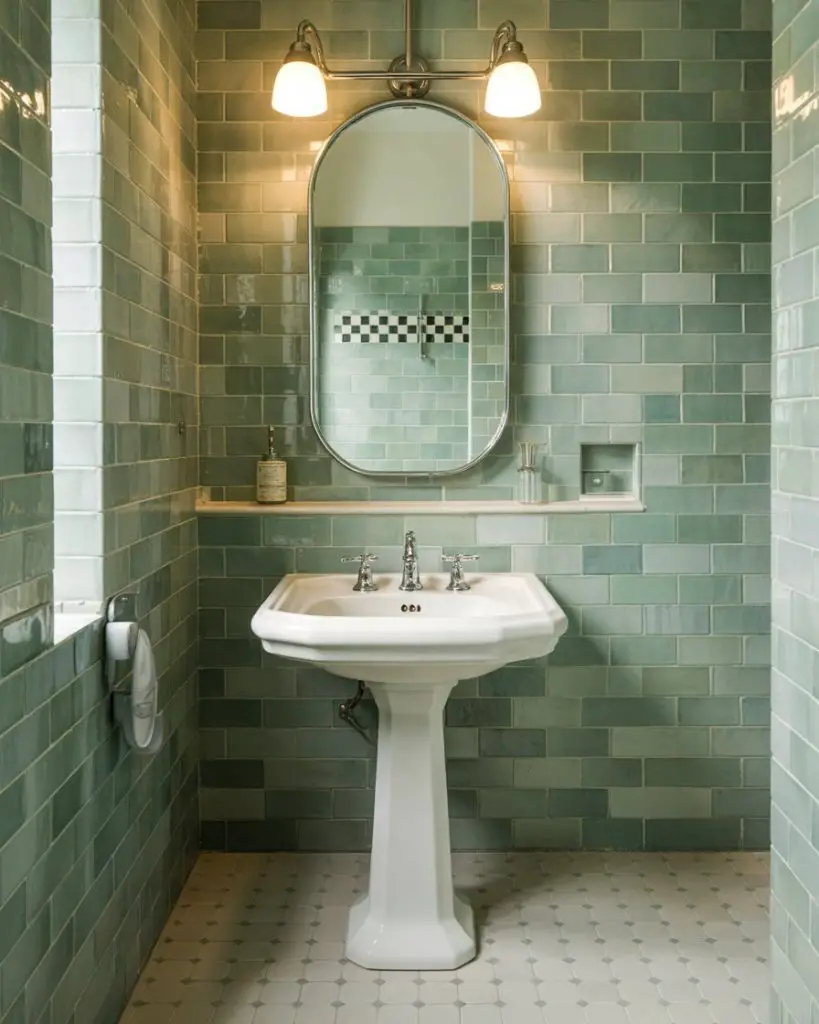
Retro aqua blue tiles are making a comeback, bringing playful nostalgia to modern bathrooms. Think glossy subway tiles in that distinctive mid-century turquoise, paired with white grout and chrome fixtures for an authentic 1950s diner vibe. Tile ideas in this palette work particularly well as a shower surround or wainscoting, allowing you to embrace the color without overwhelming the entire room.
A homeowner in Portland recently told me she chose aqua tiles for her 1940s bungalow bathroom because they honored the home’s era while feeling fresh and unexpected. The trick is balancing vintage elements with modern conveniences—heated floors, updated plumbing, and good lighting—so the space feels collected rather than dated. Keep countertops and larger fixtures neutral to let the tile be the star, and add period-appropriate accessories like apothecary jars or a vintage step stool.
5. Dusty Blue and Natural Wood Harmony
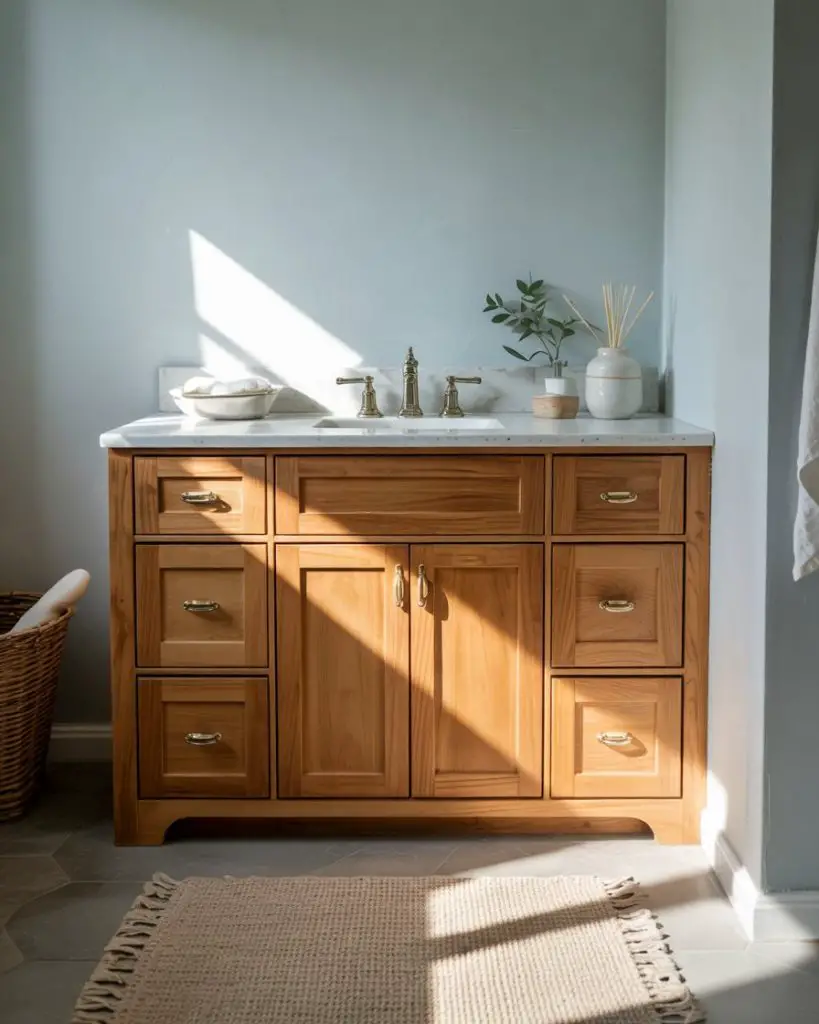
Dusty blue offers a more grounded alternative to bright blues, with gray undertones that create a sophisticated, lived-in feel. This muted shade pairs beautifully with warm wood tones, from honey oak vanities to walnut shelving, creating a balance between cool and warm that feels inherently cozy. It’s an excellent choice for homeowners who want color but worry about committing to something too bold. 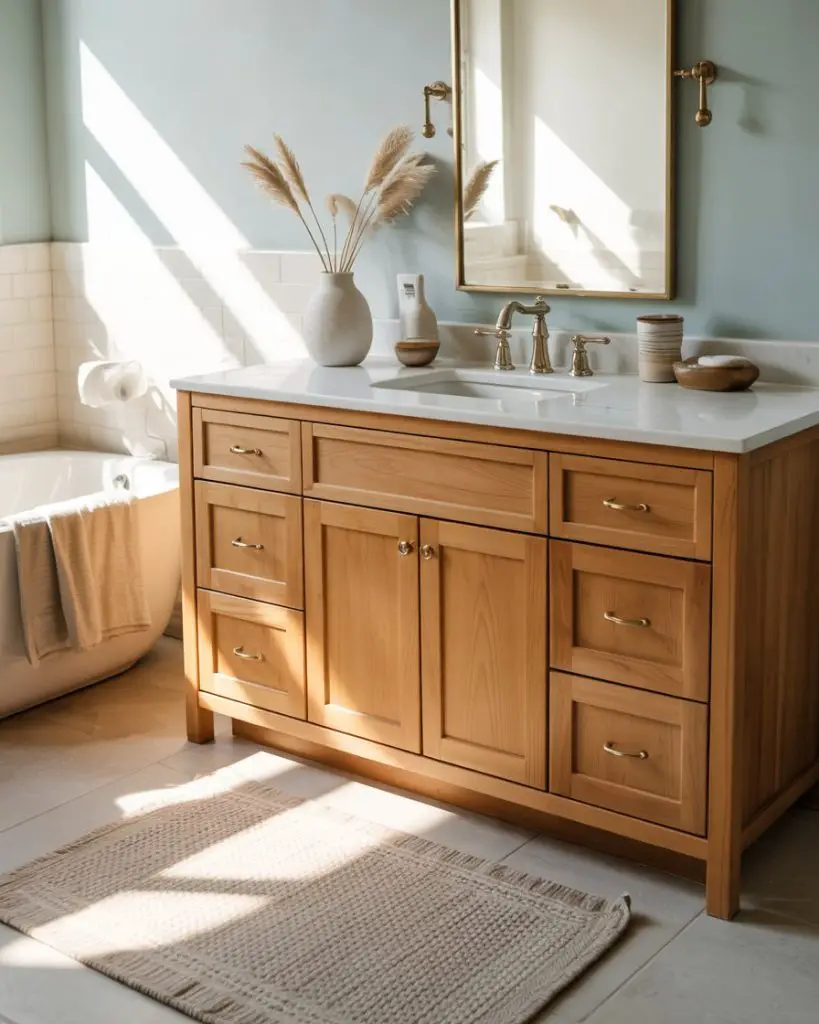
Where it works best: dusty blue shines in bathrooms with abundant natural light, particularly in Southwestern and Western states where the color echoes the sky and sage-covered landscapes. Budget-conscious renovators love this shade because it transforms a space through paint alone—no expensive tile work required. Pair it with crisp white trim and warm metallics like brass or copper to enhance the sophisticated yet approachable vibe.
6. Sky Blue Ceiling Treatment
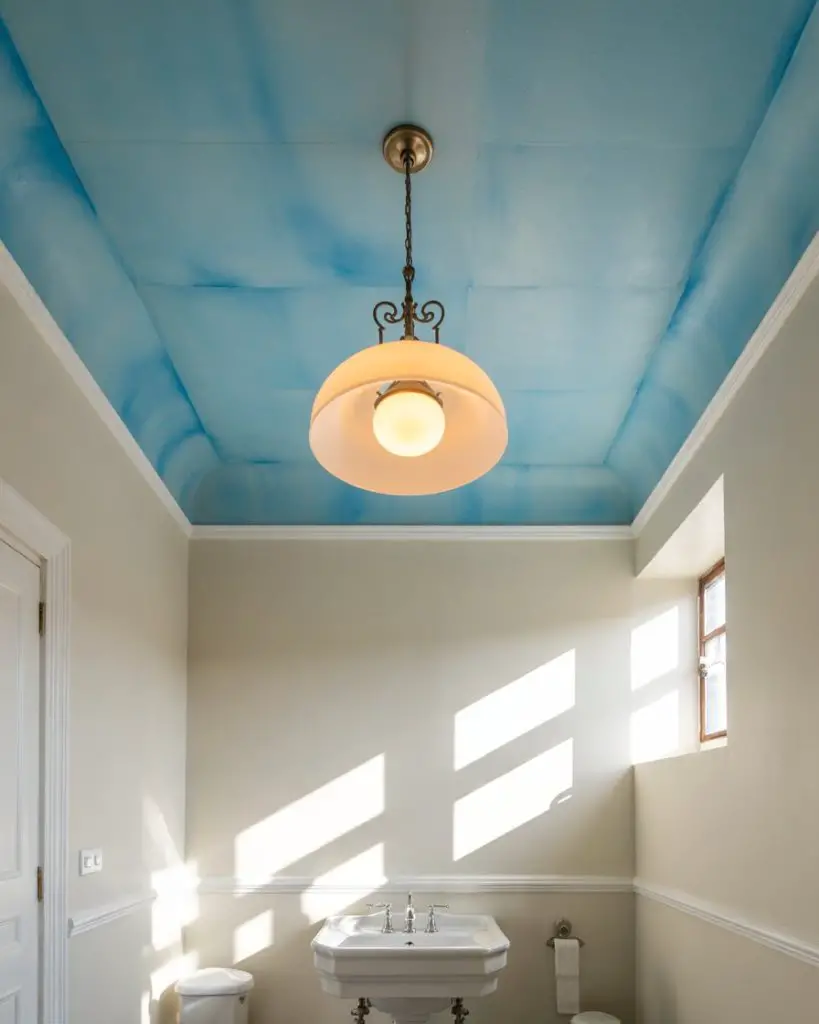
Painting your bathroom ceiling sky blue is an unexpected design move that draws the eye upward and creates the illusion of height. This ideas decoration technique works especially well in bathrooms with white or neutral walls, where the pop of color overhead feels intentional and refreshing. The effect mimics looking up at a clear day, bringing an outdoor element into your daily routine. 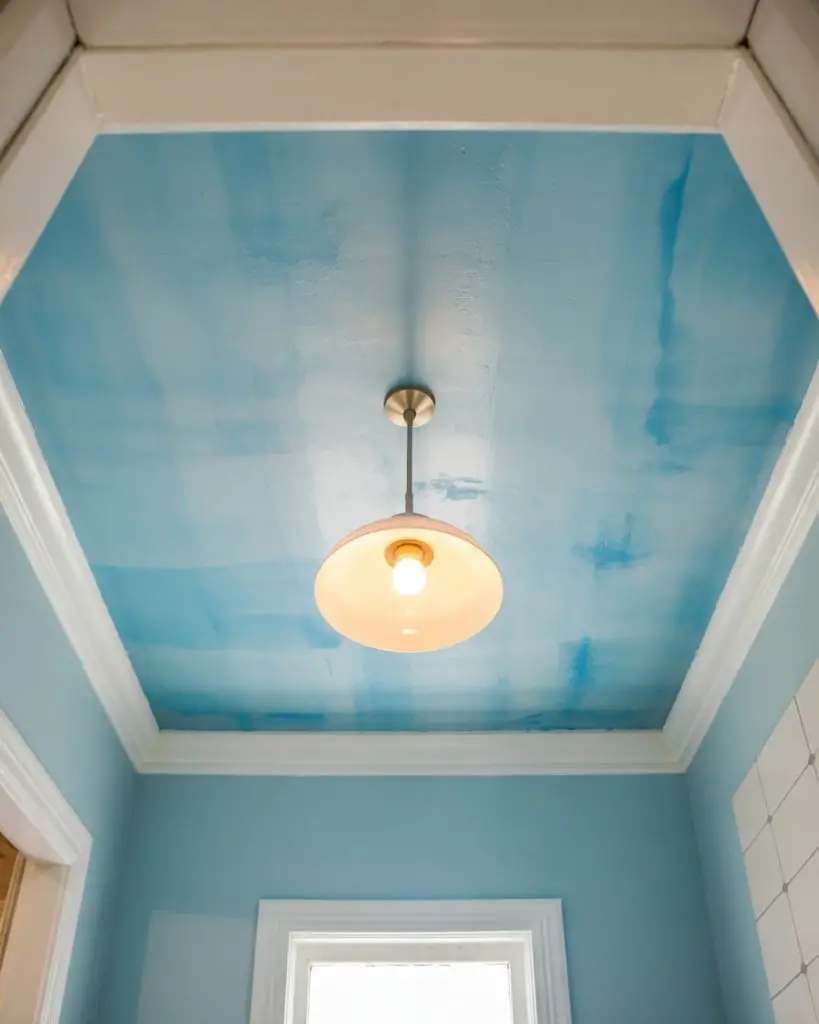
This approach is particularly popular in farmhouse-style homes across the Midwest and South, where it adds a touch of whimsy without overwhelming traditional aesthetics. One common mistake is choosing too dark a blue—stick with lighter, true sky blues to maintain the airy feeling. The technique requires minimal investment but delivers maximum impact, making it perfect for renters who can paint or homeowners testing their comfort with color before committing to walls.
7. Blue and Beige Soft Contrast
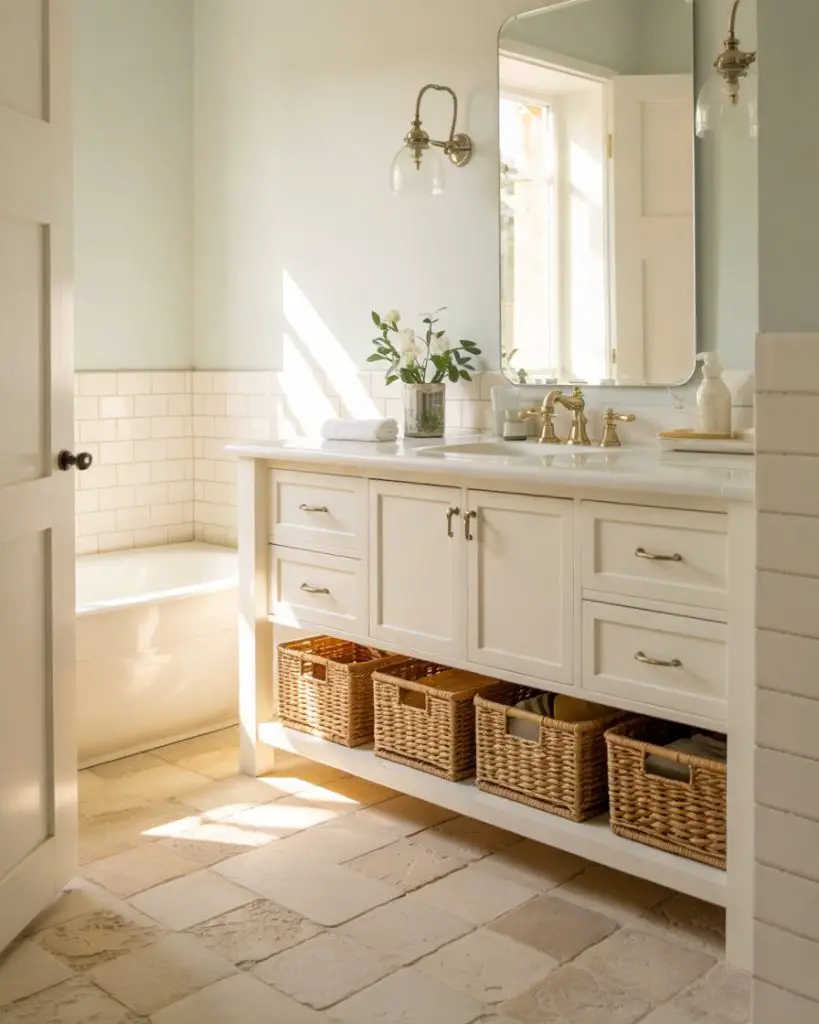
Beige and blue create a gentle contrast that feels both current and timeless, perfect for those who want to move away from all-white bathrooms without going too bold. Warm beige tiles on the floor or lower walls ground the space, while soft blue paint or upper wall tiles add personality and visual interest. This combination works across various design styles, from traditional to transitional to modern farmhouse. 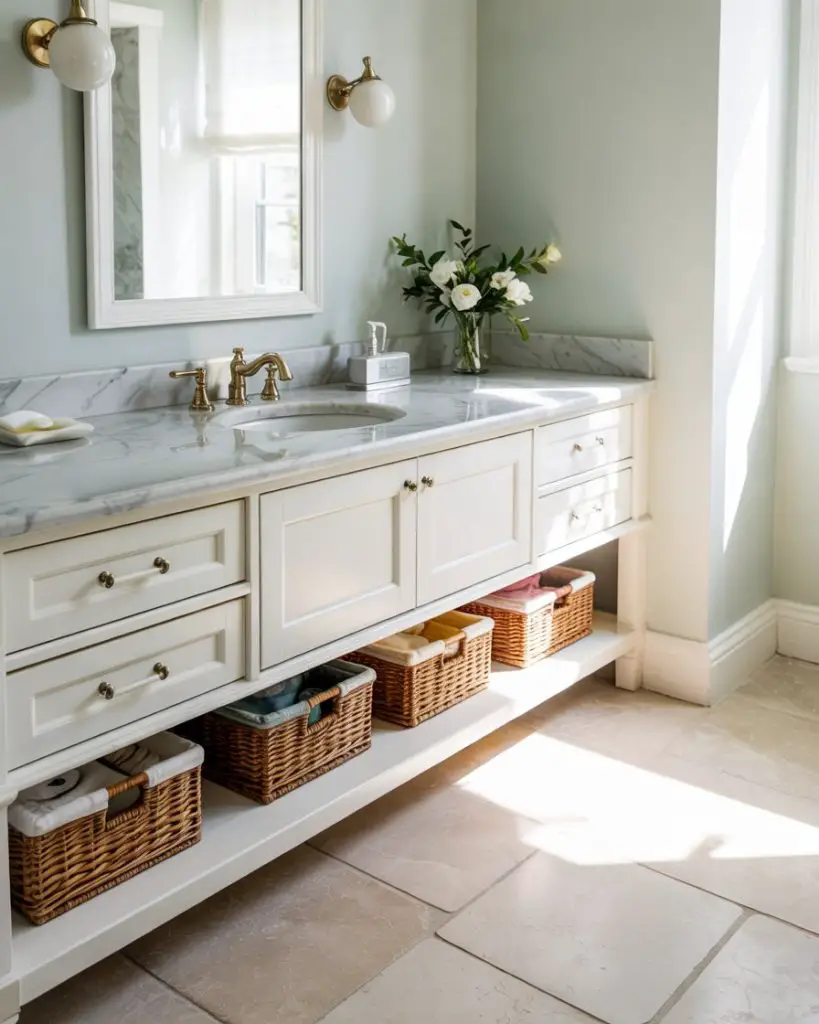
Expert designers often recommend this pairing for bathrooms that connect to bedrooms with warm wood flooring or beige carpeting, as it creates visual continuity between spaces. The 60-30-10 rule works perfectly here: 60% beige through tile and larger surfaces, 30% blue on walls or accent areas, and 10% white through fixtures and trim. Add warmth through bronze or brass hardware, and consider natural textures like rattan or jute to enhance the organic, relaxed feeling.
8. Royal Blue Accent Wall Drama
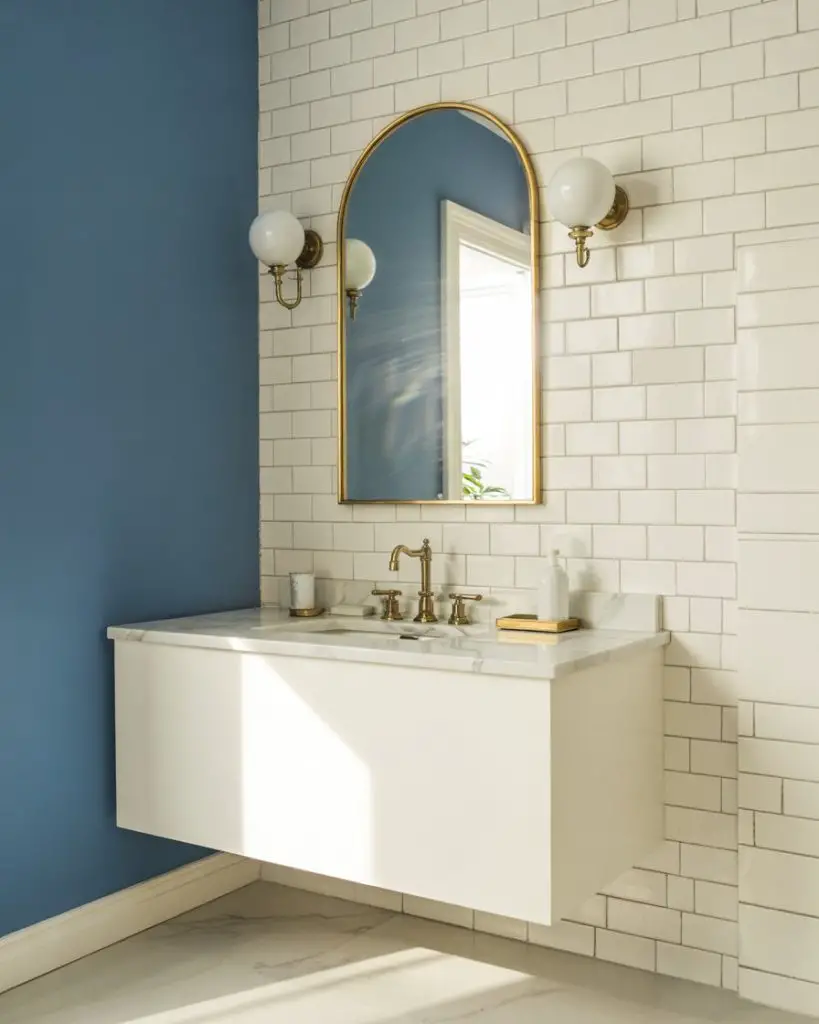
A single royal blue accent wall transforms a neutral bathroom into something memorable without requiring a complete color overhaul. This rich, saturated hue works beautifully behind a floating vanity or as a shower wall, providing depth and personality while letting the rest of the room breathe. Pair it with crisp white fixtures and warm wood tones for a look that’s both bold and balanced. 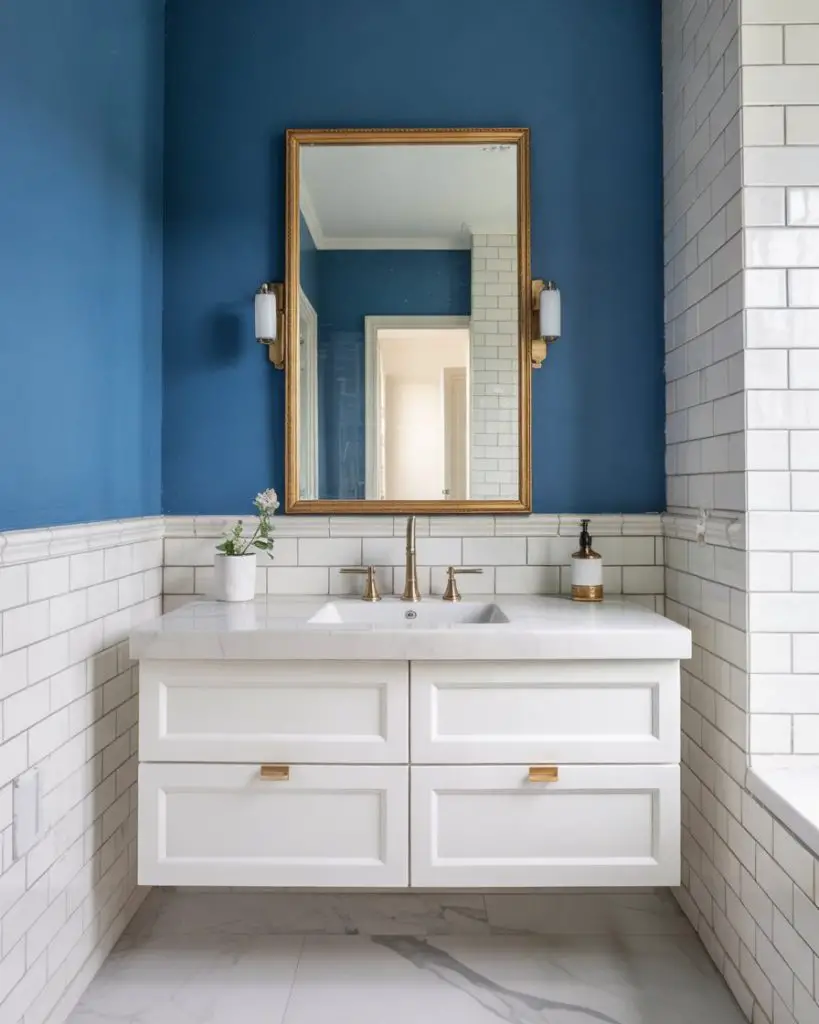
Real homeowner behavior shows that people often start with an accent wall as a “test drive” before committing to more extensive color use. In terms of budget, painting a single wall costs under $50 in materials but delivers a designer-level impact. The key is ensuring good lighting—royal blue needs adequate illumination to avoid feeling cave-like. Consider installing sconces on either side of the mirror and overhead recessed lighting to properly showcase the wall’s richness.
9. Green and Blue Botanical Bathroom
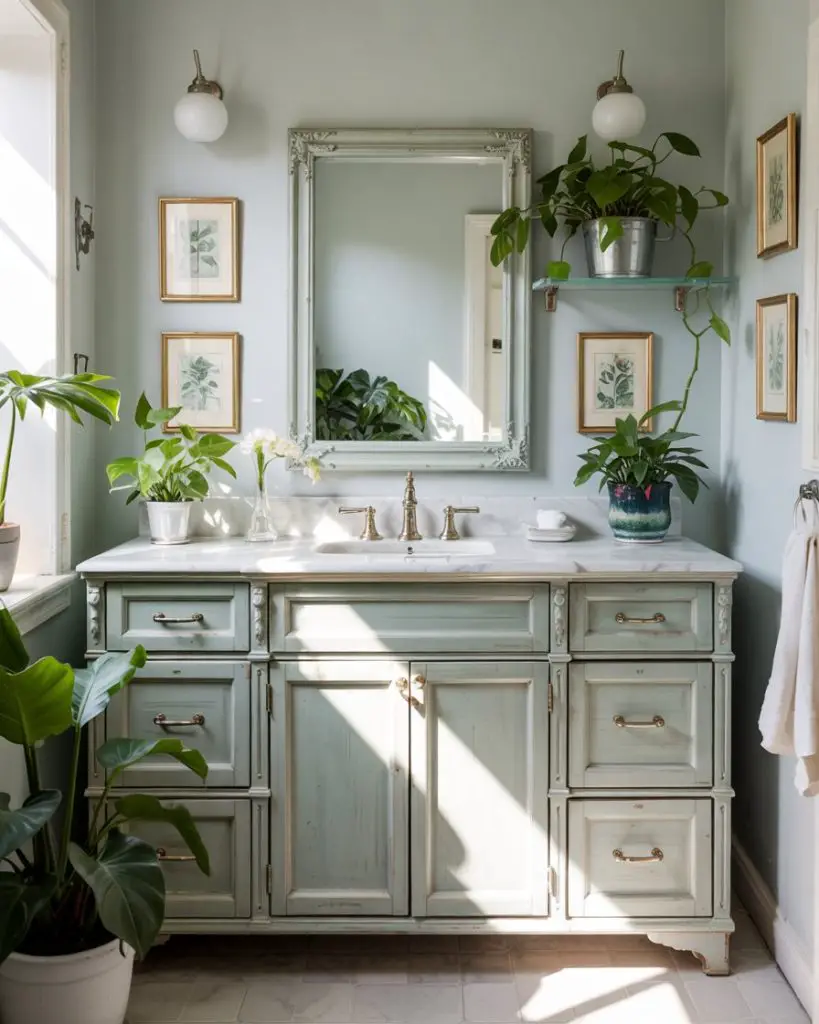
Green and blue create a natural, botanical-inspired bathroom that feels like a breath of fresh air. Sage green lower cabinets paired with soft blue walls evoke a garden atmosphere, while plants, woven baskets, and natural wood accents reinforce the organic theme. This color combination works particularly well in bathrooms with windows, where real plants can thrive and enhance the nature-inspired aesthetic. 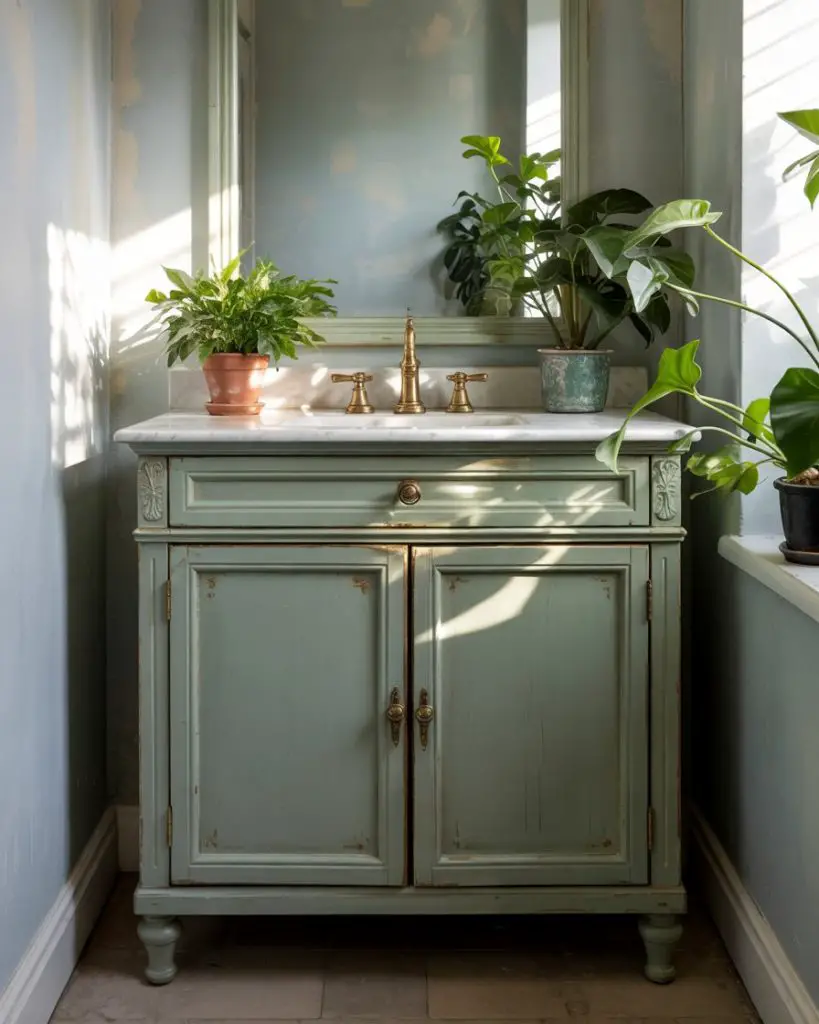
A designer in Charleston explained that this combination resonates with clients seeking wellness-focused spaces—the colors are scientifically proven to reduce stress and promote calm. To avoid the bathroom feeling too busy, stick to matte finishes and limit pattern use to one or two elements, like a geometric floor tile or striped towels. The green-blue pairing is forgiving with different undertones, so you have flexibility in choosing shades that work with your existing fixtures and lighting.
10. Grey and Blue Industrial Modern
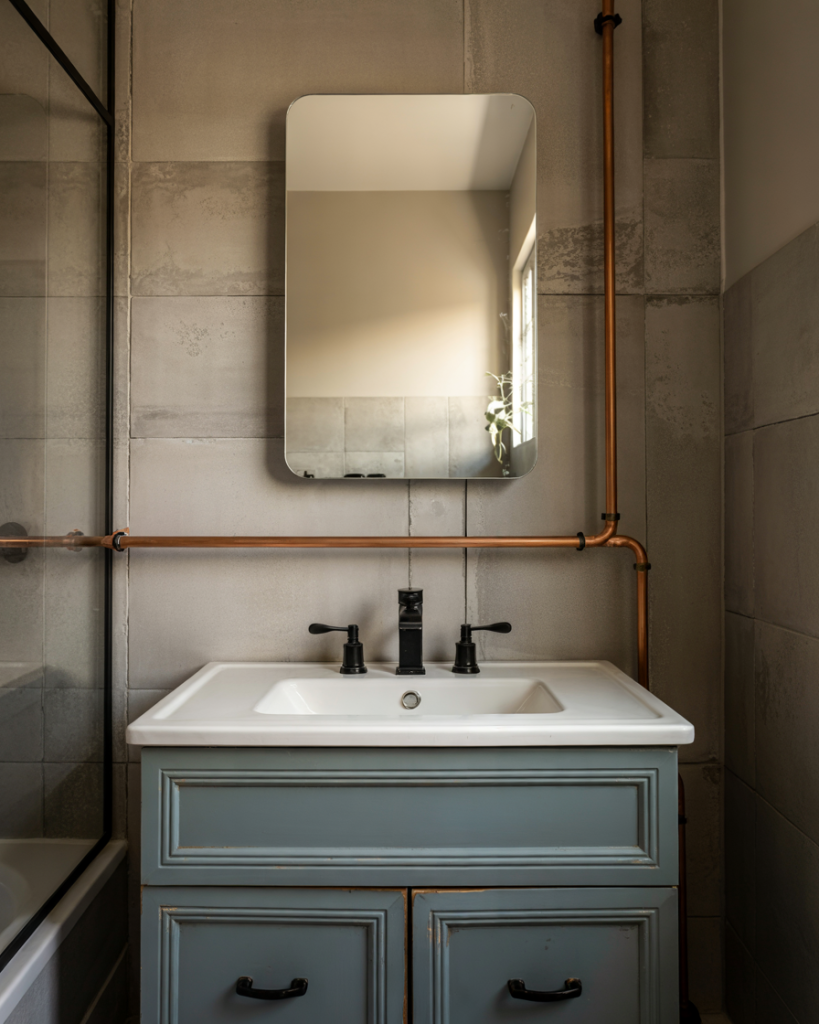
Grey and blue combine to create a sophisticated, industrial-modern bathroom that feels urban and polished. Concrete-look gray tiles paired with slate blue walls or cabinetry offer a masculine edge while remaining sophisticated and refined. Matte black fixtures, exposed piping, and minimalist hardware complete the look, making this combination popular in loft apartments and contemporary new builds across major cities. 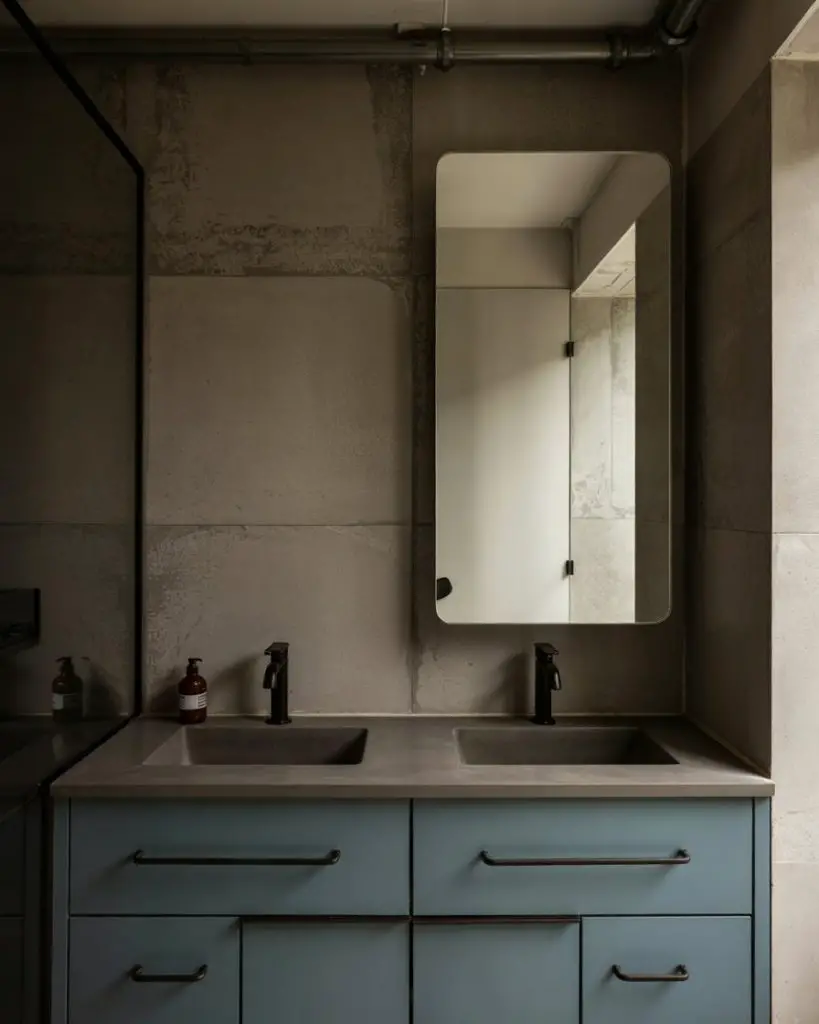
Where it works best: this style thrives in urban environments, particularly in converted industrial spaces or modern high-rises in cities like Chicago, Denver, and Seattle. One practical insight—gray tile is excellent at hiding water spots and soap scum, making it ideal for low-maintenance households. To prevent the space from feeling cold, incorporate wood elements through the vanity top or shelving, and add warmth through your lighting choices, favoring warm white bulbs over cool white.
11. Pink and Blue Playful Sophistication
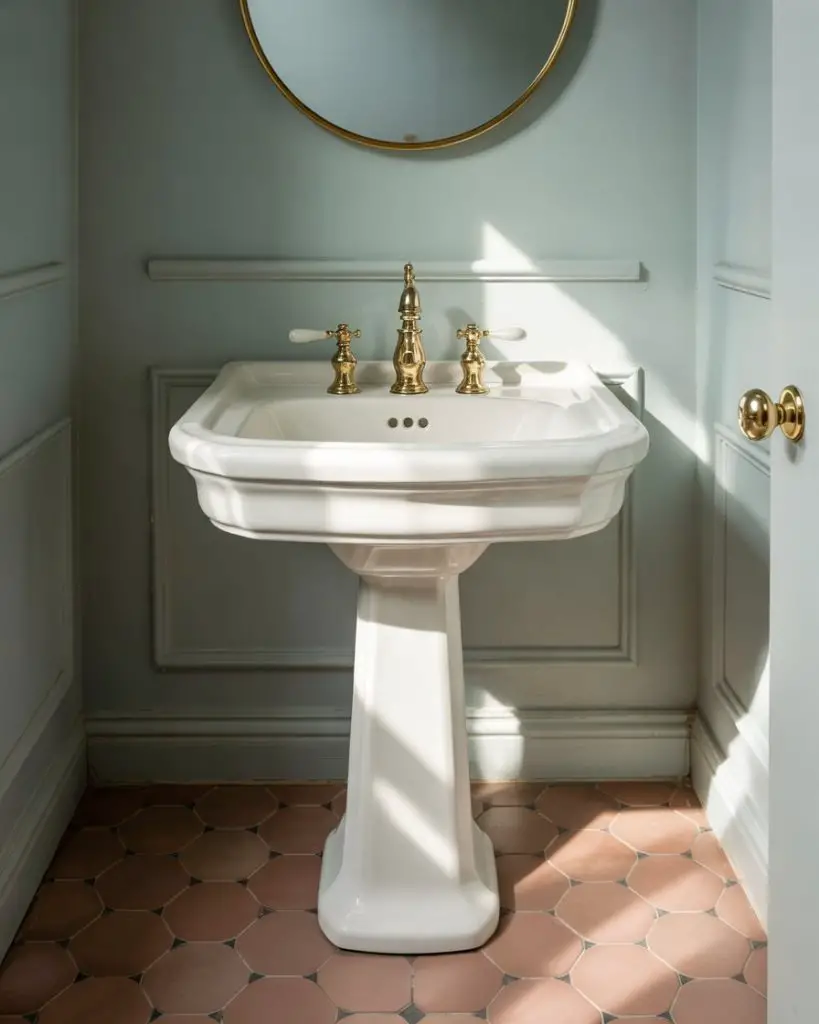
Pink and blue might sound unexpected, but this combination creates a bathroom that’s both playful and sophisticated when executed with the right tones. Think dusty rose tiles paired with powder blue walls, or blush pink fixtures against a slate blue backdrop. This pairing works particularly well in powder rooms or guest bathrooms where you can take more design risks without affecting your daily routine. 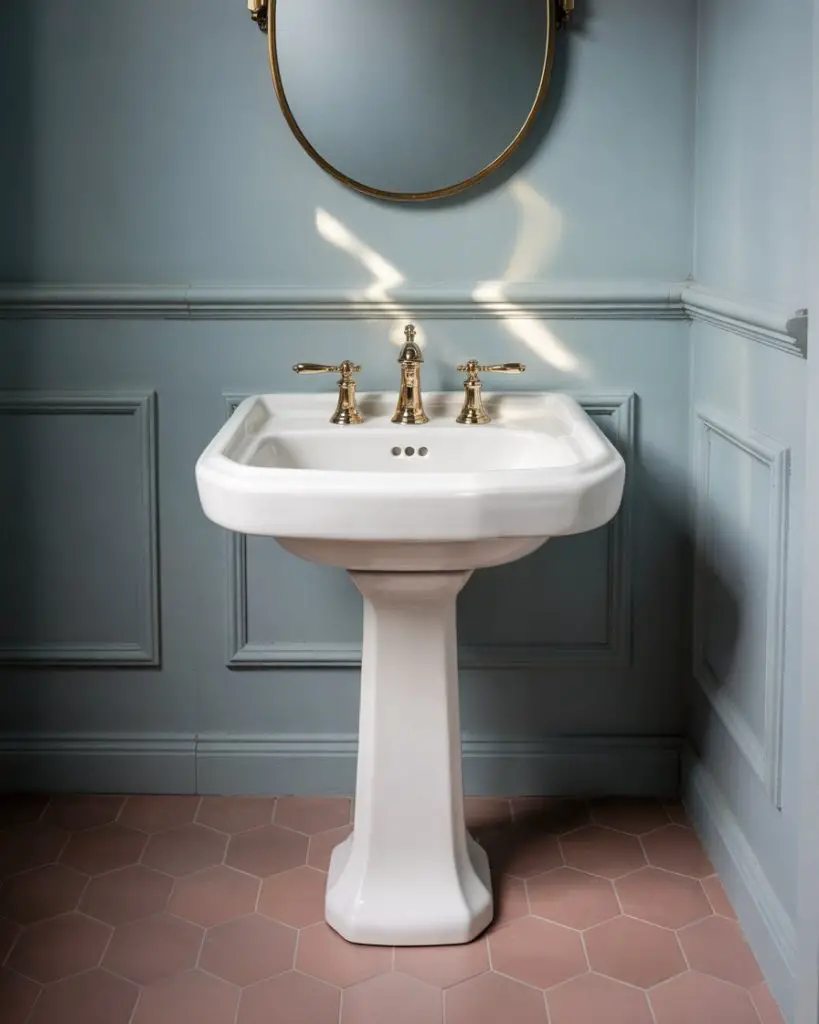
A homeowner in Austin shared that her pink and blue bathroom gets more compliments than any other room in her house—guests love how unexpected yet harmonious it feels. The key is choosing muted, sophisticated versions of both colors rather than bright, primary shades. Keep the ceiling white to maintain balance, and use gold or brass hardware to tie the two colors together. This combination photographs beautifully, making it a favorite among design bloggers and Instagram influencers.
12. Blue Bathroom Aesthetic with Natural Light
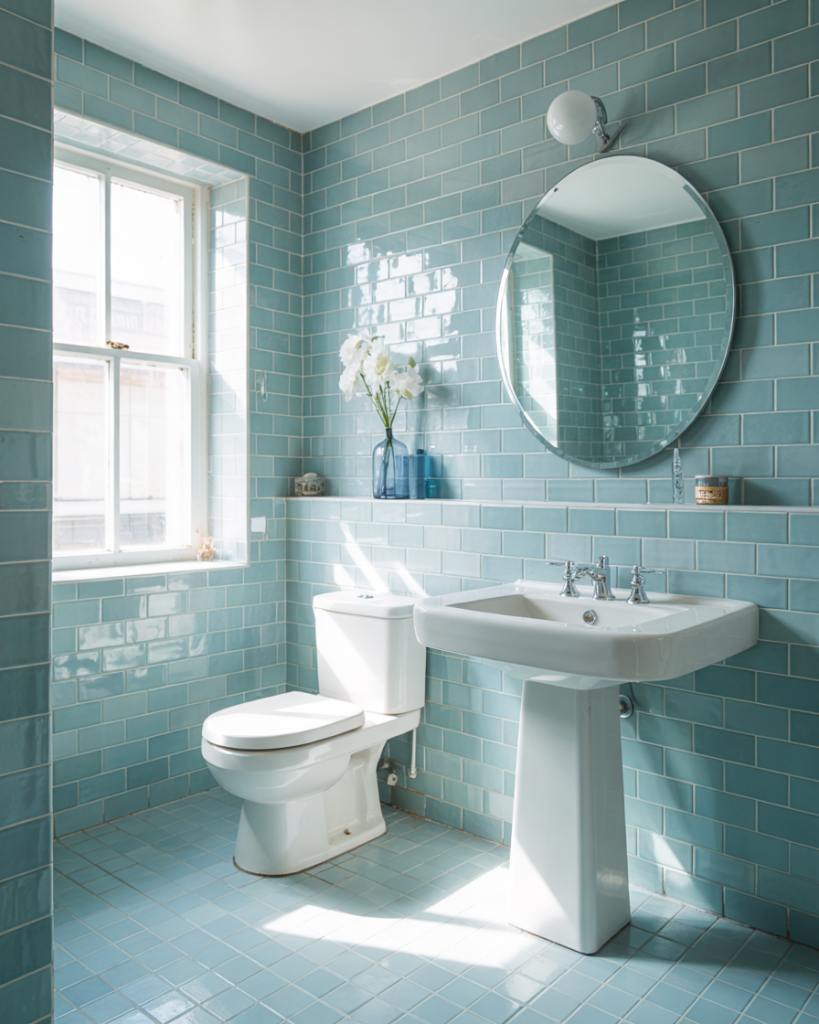
Creating the perfect blue bathroom aesthetic hinges on maximizing natural light to prevent the space from feeling cold or dark. Large windows, skylights, or even a glass block wall can flood the room with sunshine that makes blue tones glow and shift throughout the day. Layer in mirrors strategically to bounce light around the room, and choose reflective surfaces like glossy tiles or polished chrome to enhance the bright, airy feeling. 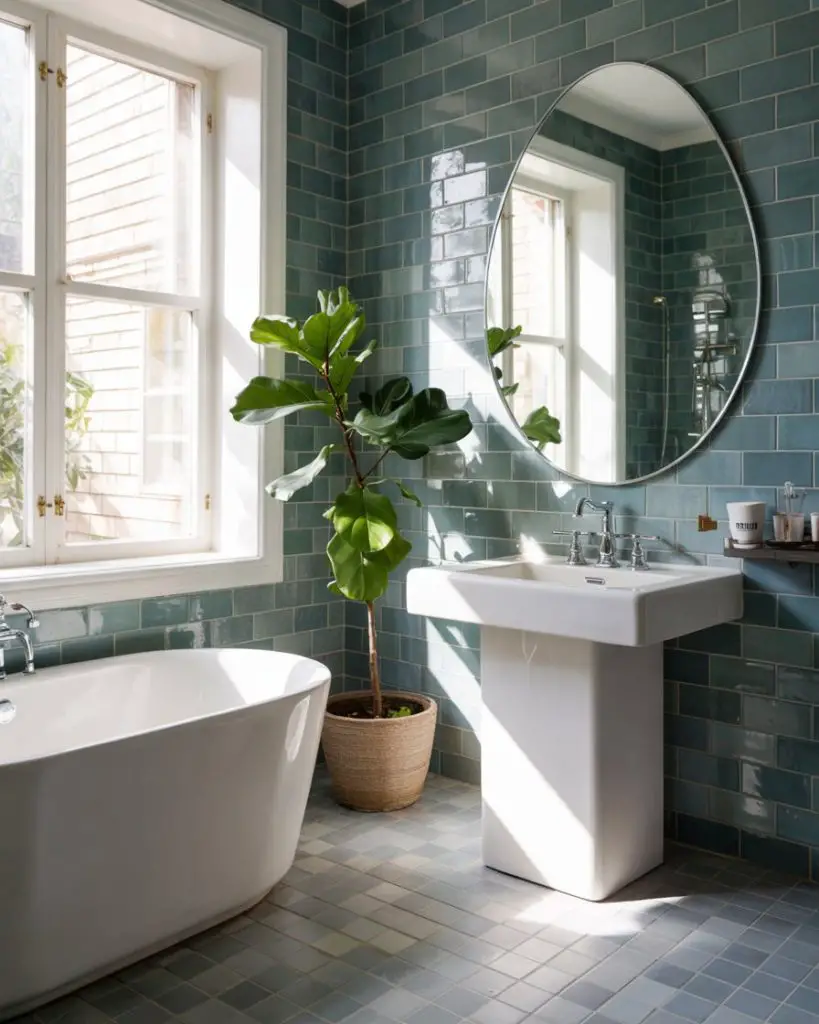
Common mistakes include choosing too dark a blue in already dim bathrooms or blocking windows with heavy treatments. Instead, opt for sheer curtains or top-down bottom-up shades that provide privacy while allowing light flow. In Northern states where daylight is limited in winter, supplement with layered lighting—a combination of overhead, task, and accent lights—to ensure the blue doesn’t become depressing during darker months. The investment in good lighting pays dividends in how you experience the space daily.
13. Blue Floor Tile Foundation
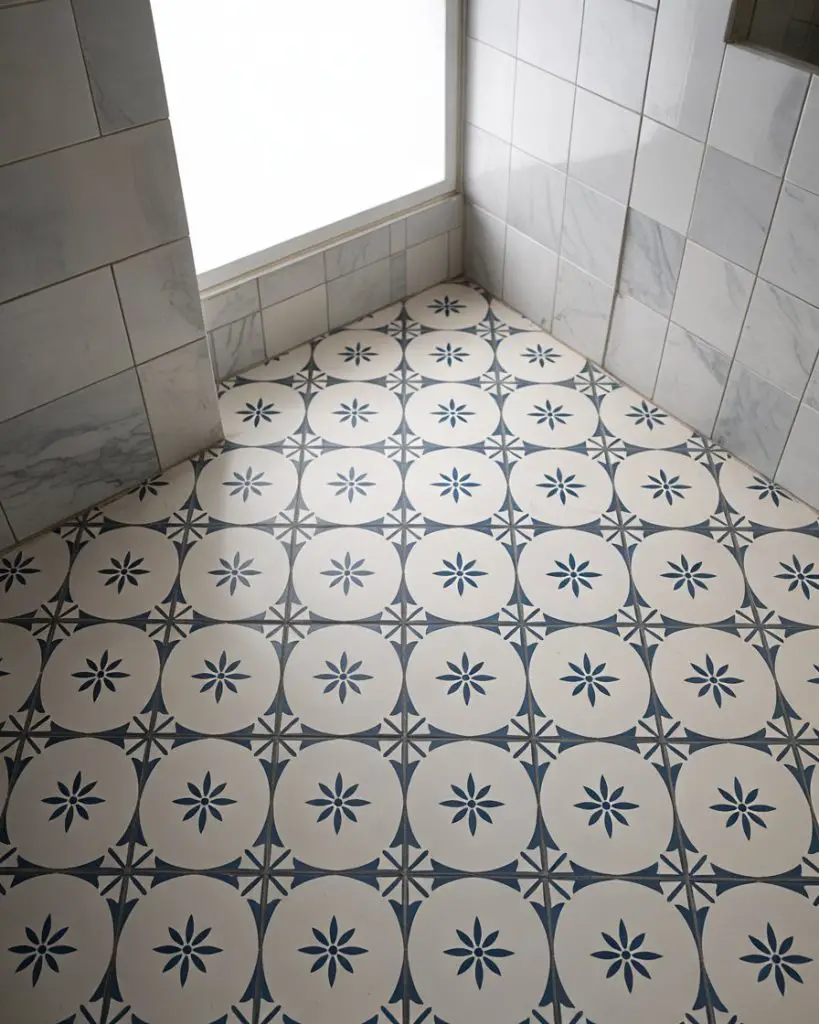
Floor tile in blue creates a stunning foundation that allows you to keep walls neutral while still making a statement. From Moroccan-inspired cement tiles in cobalt and white patterns to solid slate blue porcelain planks, the floor becomes the room’s focal point. This approach is particularly practical because it’s less likely to feel dated than blue walls, and it hides dirt and water spots better than white or light-colored flooring. 
Budget-wise, patterned cement tiles run $8-15 per square foot, while solid blue porcelain tiles can be found for $3-7 per square foot, making this an accessible way to add personality. In coastal areas like Florida and Southern California, homeowners favor lighter blues that echo beach glass and ocean waters, while in Northeast and Midwest regions, deeper blues create cozy warmth. Pair blue floors with white or light gray walls to prevent visual overwhelm, and add warmth through wood vanities and brass fixtures.
14. Brown and Blue Earthy Elegance
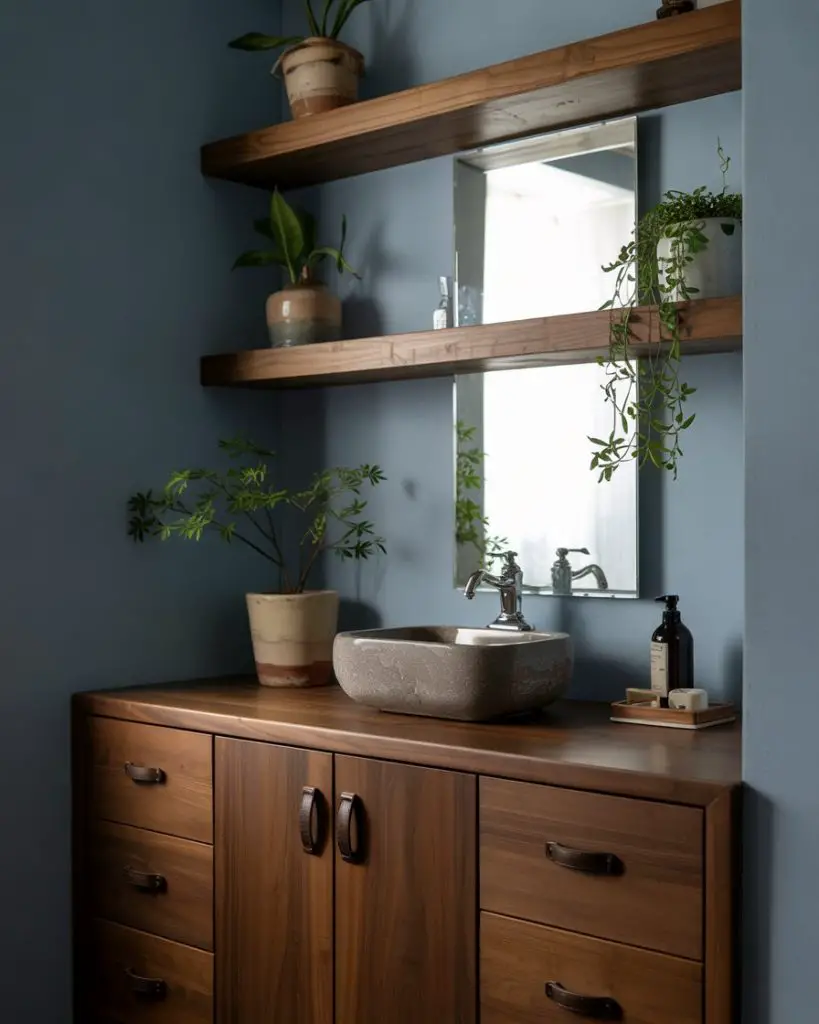
Brown and blue create an earthy, grounded bathroom that feels both masculine and organic. Rich walnut or chocolate brown vanities paired with slate or denim blue walls evoke a natural landscape—think earth and sky. This combination works beautifully in craftsman-style homes and mountain retreats, where the connection to natural materials feels authentic and intentional. 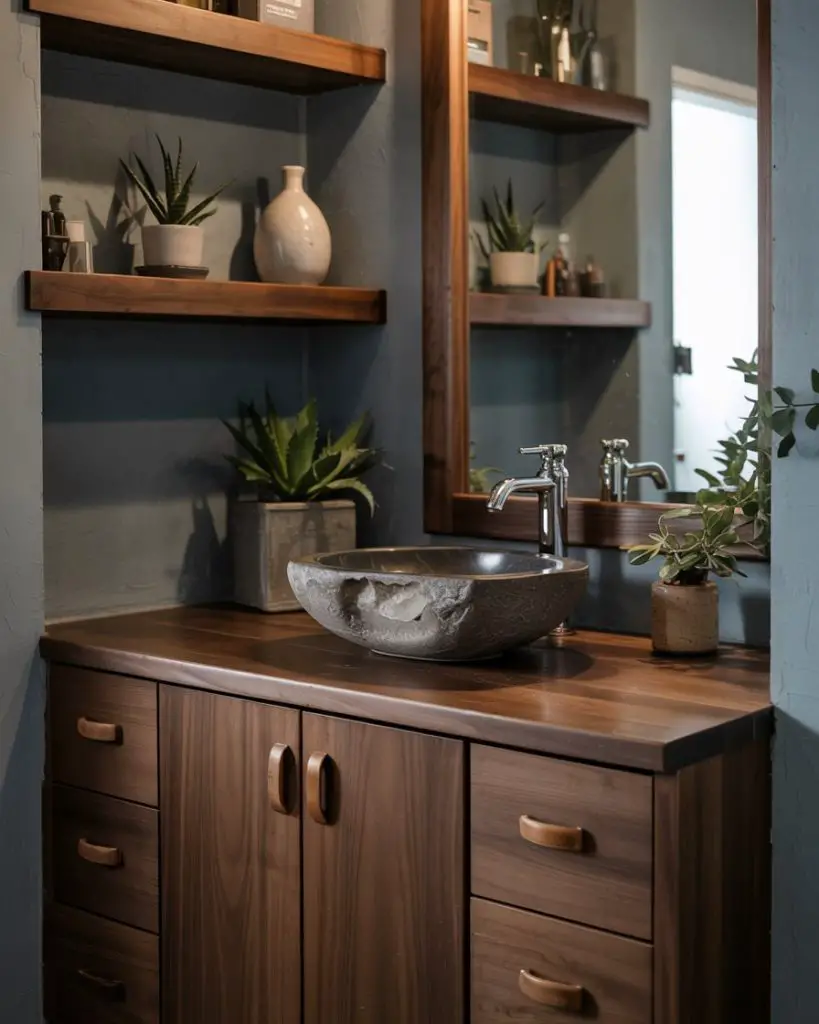
This pairing is particularly popular in Colorado, Montana, and other Rocky Mountain states, where the color scheme echoes outdoor landscapes visible through bathroom windows. To prevent the space from feeling too dark, incorporate plenty of white through fixtures, countertops, and trim. Consider adding texture through stone countertops, woven baskets, or a jute rug—these natural elements enhance the earthy aesthetic while providing visual interest beyond just color.
15. Duck Egg Blue Vintage Charm
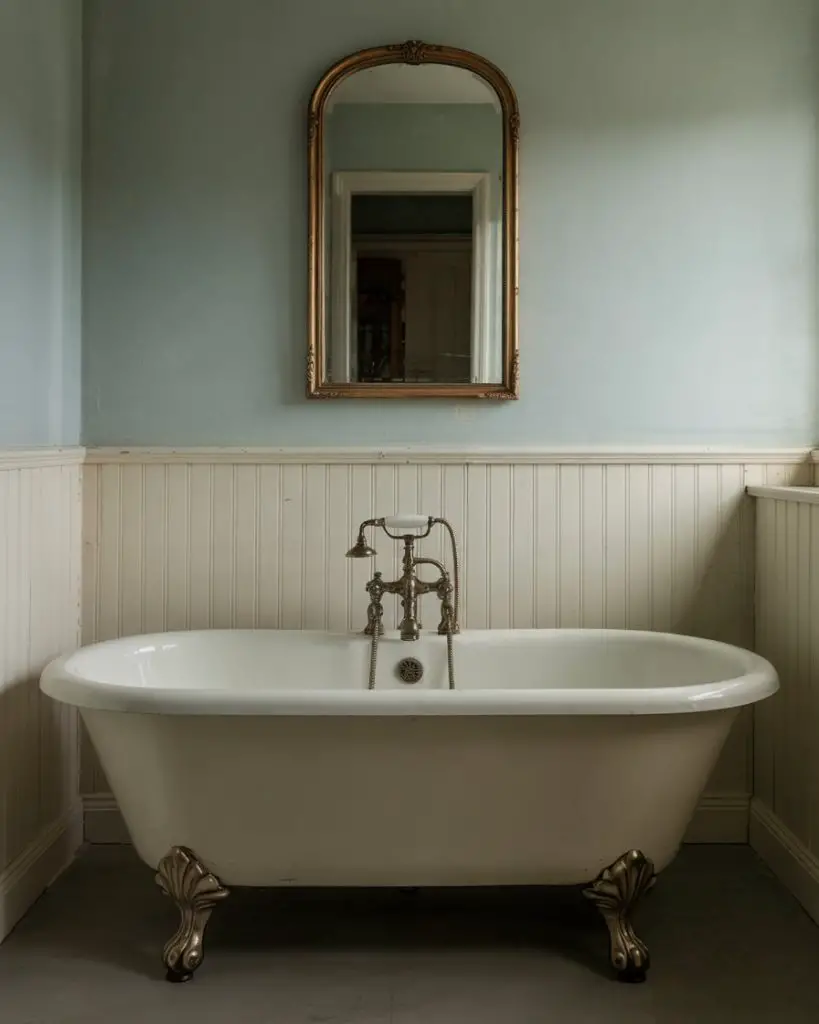
Duck egg blue brings a soft, vintage charm that’s simultaneously sophisticated and approachable. This gray-tinged blue-green works beautifully in traditional and transitional bathrooms, particularly when paired with white beadboard wainscoting and vintage-inspired fixtures. The color has a chameleon quality—it can read more blue in bright light and more green in dimmer conditions, adding subtle complexity to your space. 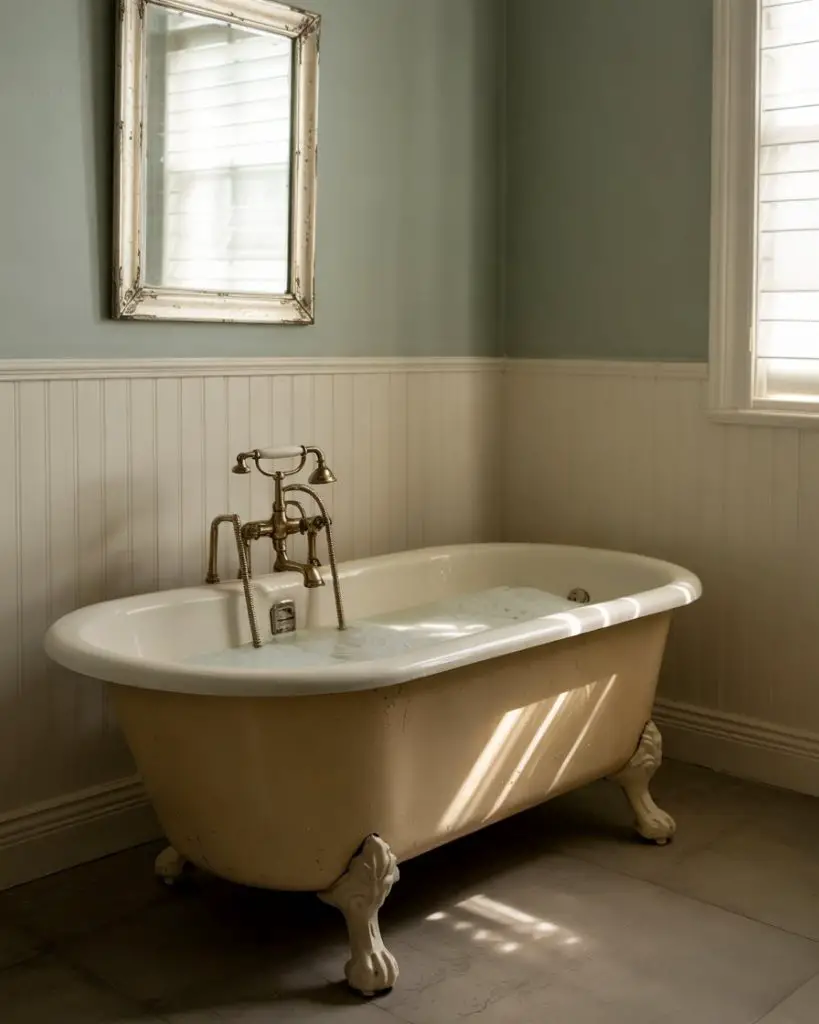
Duck egg blue has been popular in English country homes for decades, and American homeowners are increasingly embracing it for its versatility and timeless quality. One practical advantage: the color is forgiving with various skin tones and doesn’t cast unflattering shadows like some cooler blues can. It pairs beautifully with both silver and gold-toned fixtures, giving you flexibility in hardware choices. For the most authentic vintage feel, add a crystal chandelier, pedestal sink, and traditional black-and-white floor tiles.
16. Yellow and Blue Cheerful Energy
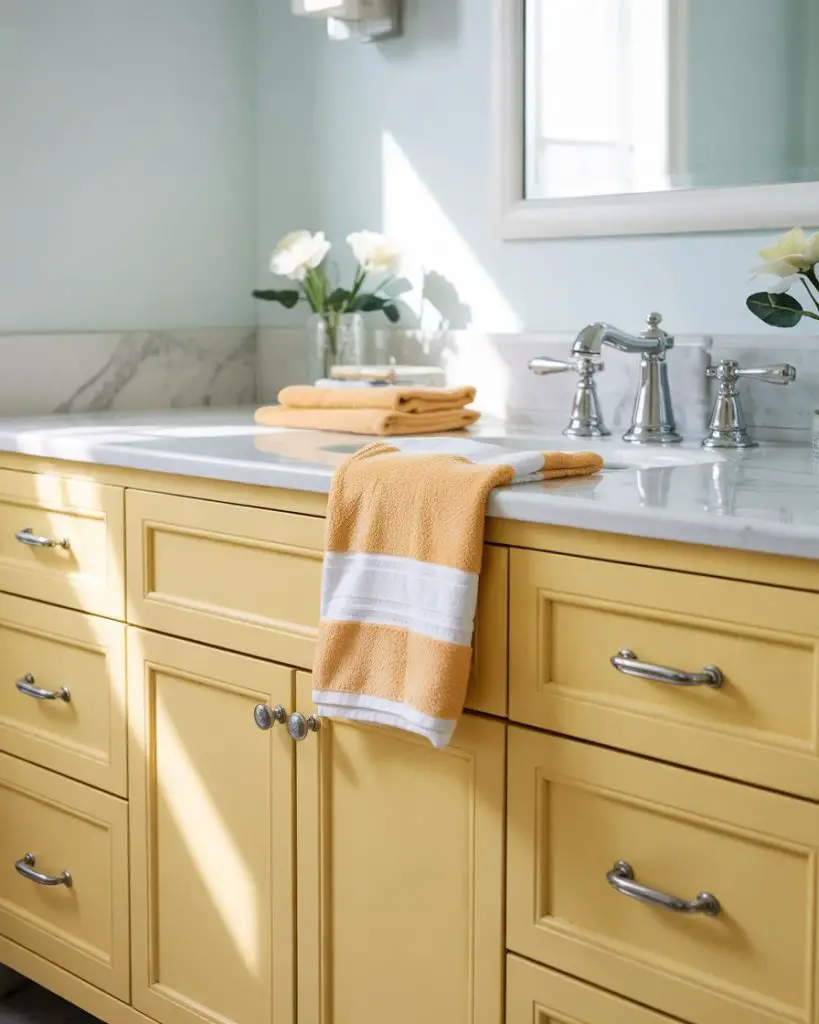
Yellow and blue create a cheerful, energizing bathroom that’s perfect for morning routines. Sunny yellow accents through towels, accessories, or a painted vanity pop beautifully against soft blue walls, creating a space that feels perpetually sunny regardless of weather outside. This combination works particularly well in kids’ bathrooms or guest baths where you want to create an uplifting, welcoming atmosphere. 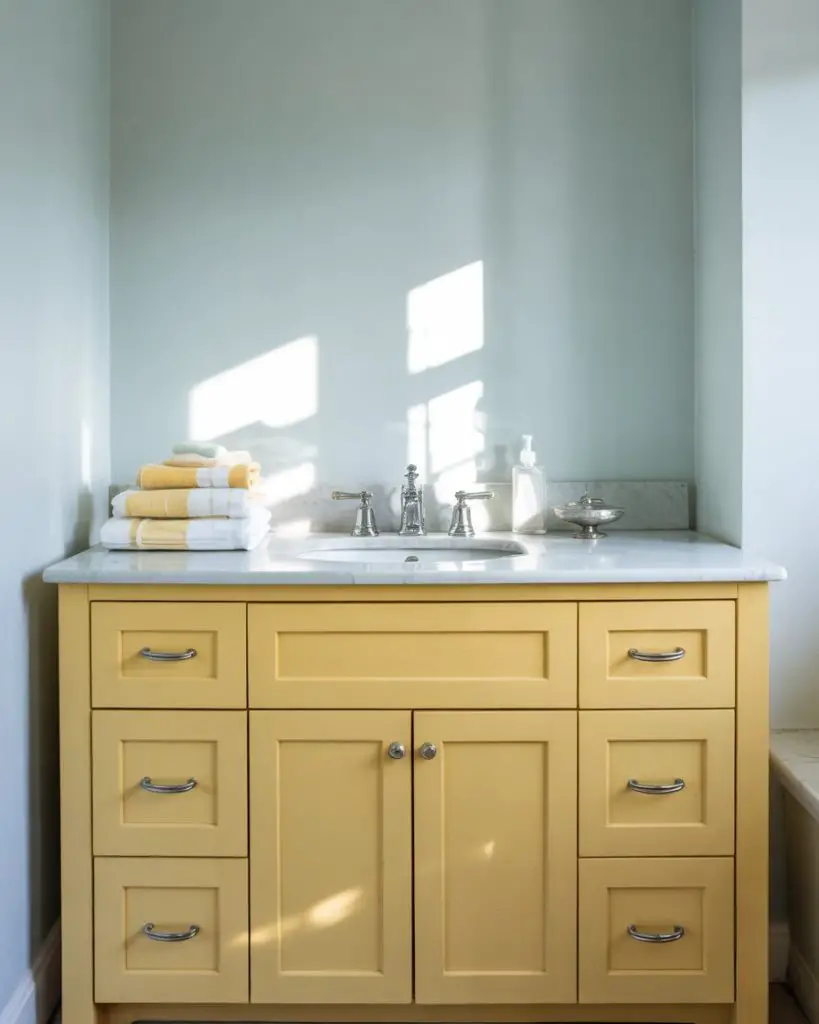
A family in suburban Chicago painted their shared kids’ bathroom in this palette and reported that morning routines became noticeably smoother—the cheerful colors seemed to ease the transition from sleep to wakefulness. The key is balancing the proportions: too much yellow can feel overwhelming, so use it as the accent (20-30% of the color scheme) rather than the dominant shade. White fixtures and plenty of natural light keep the combination feeling fresh rather than childish, allowing it to grow with your family or appeal to adult guests.
17. Red and Blue Bold Statement
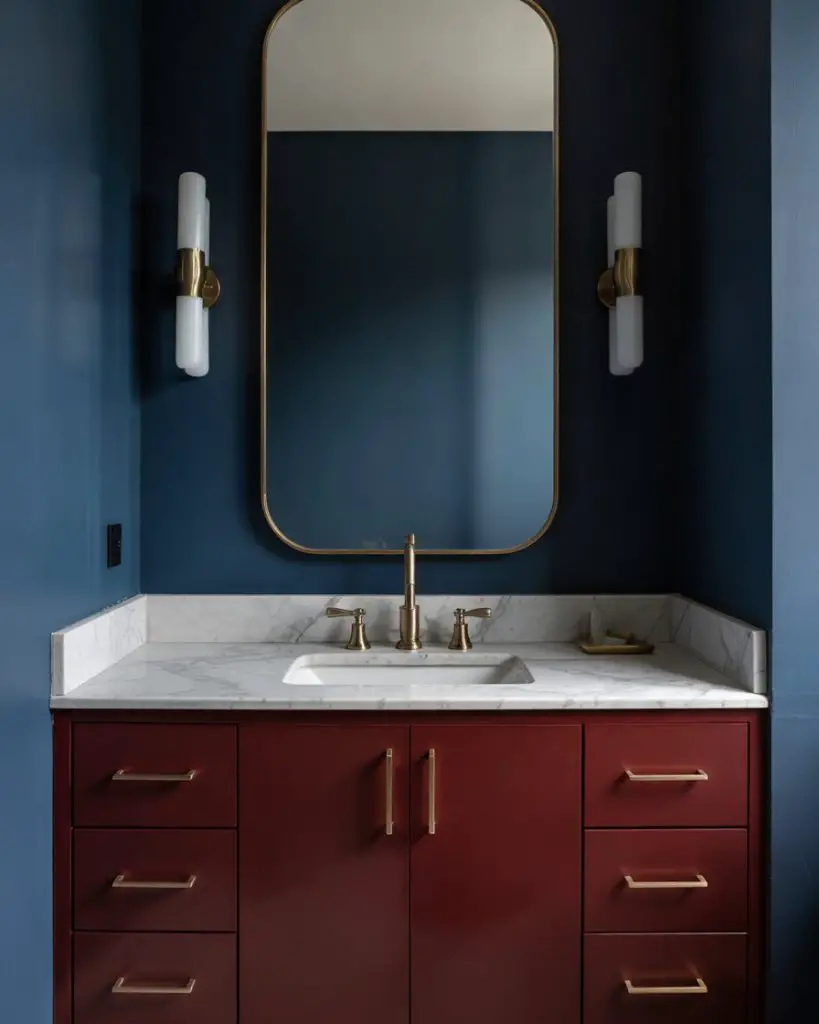
Red and blue might seem like an unconventional pairing, but when done with sophistication, it creates a bathroom with serious personality and visual impact. Think deep navy walls with burgundy or terracotta accents through towels, artwork, or a painted vanity. This combination draws inspiration from classic Americana and nautical themes but feels fresh when executed with modern fixtures and clean lines. 
Where it works best: this dramatic pairing shines in powder rooms and guest bathrooms where you can make bold choices without living with them daily. A common mistake is using bright, primary versions of both colors—instead, choose sophisticated shades like navy and burgundy or denim and terracotta. Keep floors and fixtures neutral in white or cream, and limit patterns to avoid visual chaos. The red elements should feel intentional and curated rather than random or overwhelming.
18. Coastal Blue Bathroom Ideas
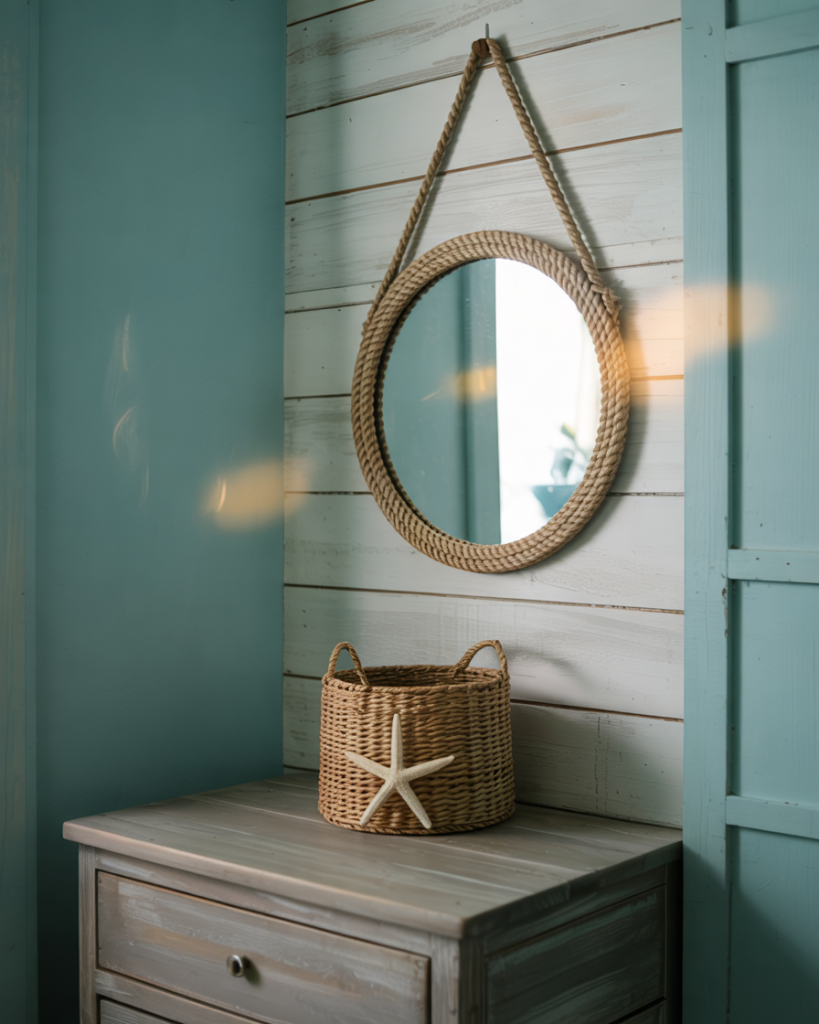
Coastal blue bathroom ideas remain enduringly popular, especially in beach communities and among anyone longing for vacation vibes at home. Soft aqua or turquoise walls paired with white shiplap, rope mirrors, and weathered wood accents create that breezy, beachy feeling. Add natural textures through seagrass baskets, linen shower curtains, and coral or shell accessories to complete the coastal narrative. 
Real homeowner behavior shows that coastal bathrooms are most successful when they avoid literal beach themes—no anchor wallpaper or “seas the day” signs needed. Instead, focus on the feeling of the coast through color, texture, and natural materials. In landlocked states, this style brings vacation vibes home, while in actual coastal areas, it honors local surroundings without feeling clichéd. Keep the palette simple—blues, whites, natural wood tones—and let quality materials and thoughtful details tell the story.
19. Orange and Blue Complementary Warmth
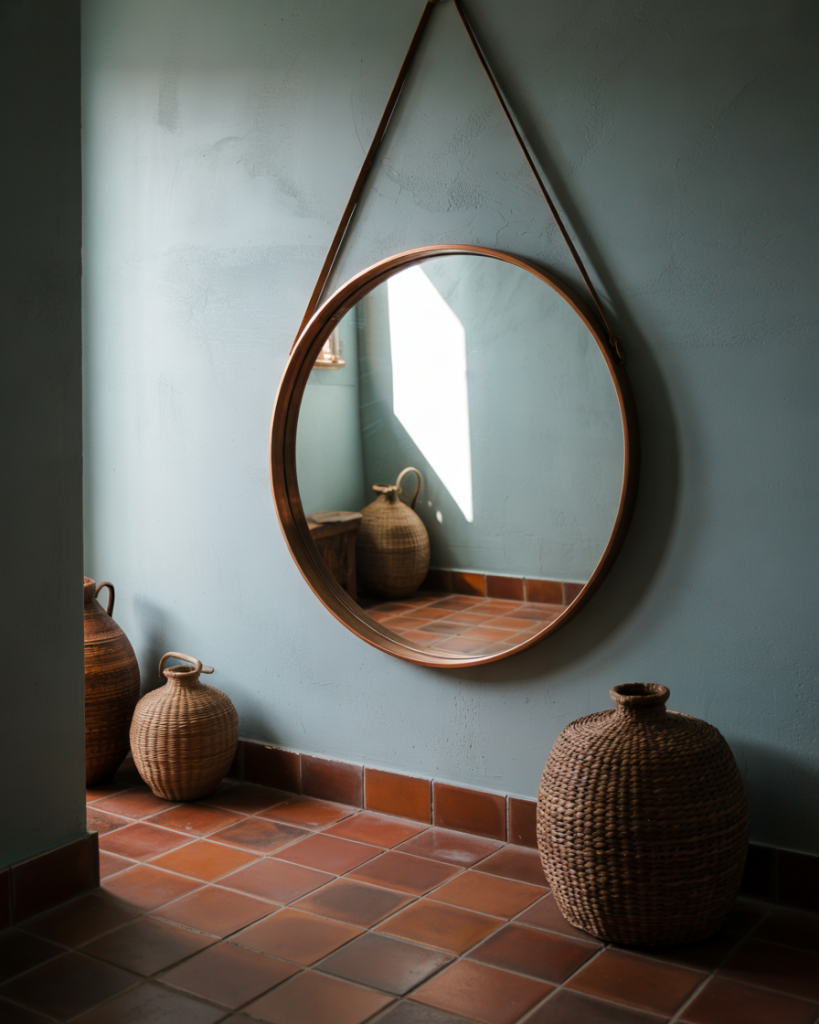
Orange and blue sit opposite each other on the color wheel, creating a vibrant, energetic combination that’s surprisingly sophisticated when done right. Burnt orange or terracotta accents through tile, towels, or artwork pop beautifully against powder blue or slate blue walls. This pairing has roots in Southwestern and Mediterranean design, bringing warmth and personality to bathrooms that might otherwise feel cool or sterile.
This color scheme is particularly popular in the Southwest—New Mexico, Arizona, and Southern California—where it echoes natural desert landscapes and Spanish colonial architecture. Budget-conscious renovators can introduce orange through easily changeable elements like towels, rugs, and accessories while committing to blue through longer-lasting paint or tile. The combination photographs beautifully in natural light, creating a warm glow that makes the bathroom feel inviting regardless of size. Balance is key: use blue as the dominant color (60-70%) with orange as the energizing accent.
20. Blue Tile Ideas with Mixed Patterns

Tile ideas in blue offer endless creative possibilities, from Moroccan zellige to geometric patterns to classic subway layouts. Mixing different blue tiles—perhaps a patterned floor with solid blue shower walls—adds depth and interest without requiring multiple colors. This approach allows you to embrace blue fully while maintaining visual variety through pattern, texture, and finish differences (matte versus glossy). 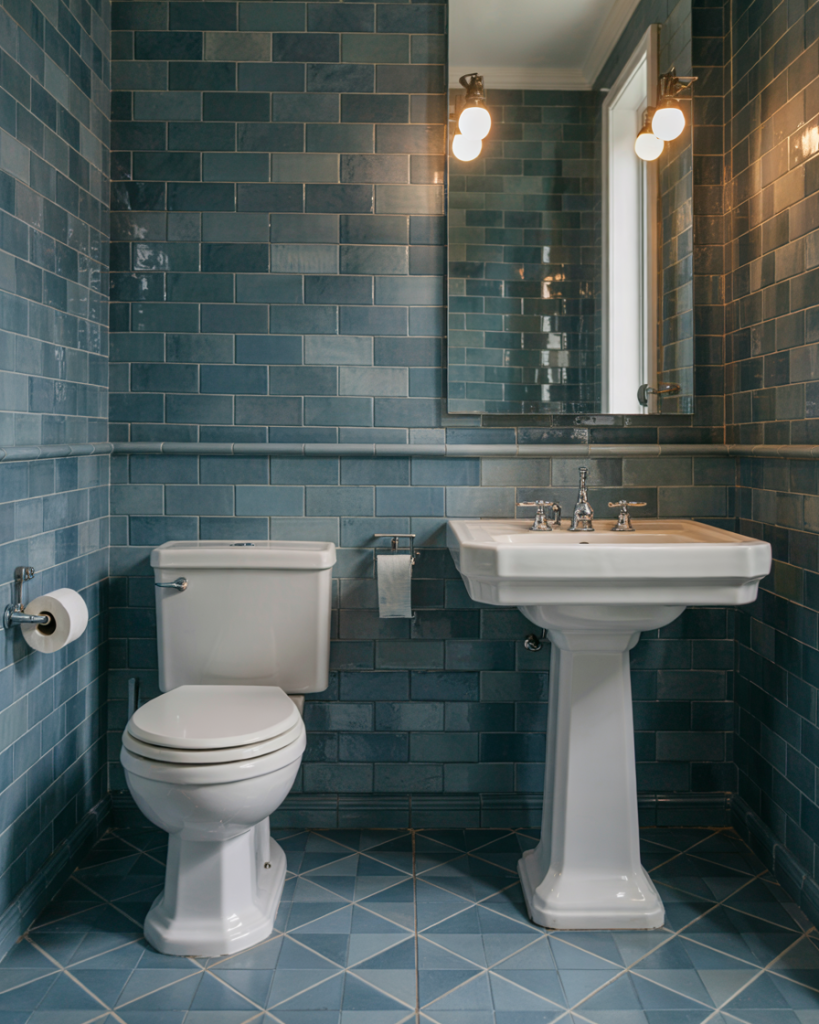
An expert tip: when mixing patterns, stick to a consistent color family (all blues) but vary the scale—small geometric floor tiles, medium subway wall tiles, and a large-scale decorative border or accent strip. This creates visual interest without chaos. In terms of budget, tile prices vary wildly from $2 per square foot for basic ceramics to $25+ for handmade or designer options. The good news is you can splurge on a small quantity of special tiles for an accent area while using affordable options for larger surfaces, achieving a high-end look at a moderate price point.
21. Blue Accessories for Subtle Integration

For those hesitant to commit to permanent blue features, introducing the color through accessories offers a flexible, low-risk approach. Blue towels, bath mats, soap dispensers, artwork, and storage containers can transform a neutral bathroom’s personality without paint or tile. This method allows you to test different shades, adjust seasonally, or switch to another color family entirely without renovation costs or commitment. 
A practical insight from budget-conscious homeowners: buying bathroom accessories in sets (coordinating soap dispensers, toothbrush holders, and waste baskets) creates a more intentional, designed look than mixing random pieces. Stores like Target and HomeGoods offer affordable blue bathroom accessory collections starting around $30-50 for a complete set. To avoid a “matchy-matchy” look, vary the shades slightly—pair navy towels with a lighter blue bath mat and medium blue artwork. This layered approach feels curated rather than catalog-ordered.
22. Blue Bathroom Ideas for Small Spaces

Implementing blue bathroom ideas in small spaces requires strategic choices to avoid making the room feel cramped or dark. Lighter shades like powder blue, sky blue, or pale aqua reflect light and create the illusion of more space, while strategic use of mirrors and glossy tile finishes amplify the effect. Reserve darker blues for accent areas only—perhaps a single wall or lower cabinets—while keeping ceilings and upper walls light. 
Common mistakes in small bathrooms include using too many colors or patterns, which creates visual clutter and makes the space feel even smaller. Instead, stick to a simple palette—blue and white with minimal accents—and let good lighting do the heavy lifting. A homeowner in Brooklyn transformed her tiny bathroom by painting it pale blue and installing a large mirror across one full wall, effectively doubling the visual space. Wall-mounted fixtures and floating vanities also help by keeping floor space visible, which makes the room feel larger than its actual square footage.
23. Retro Blue Bathroom Revival
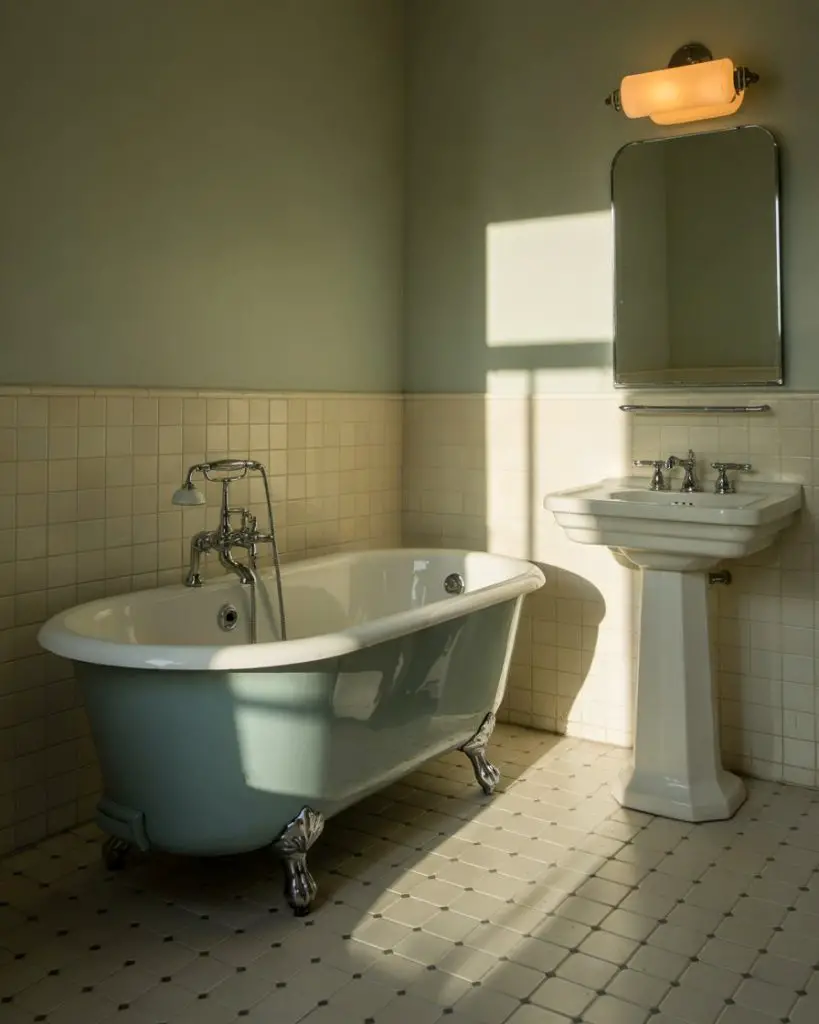
Embracing retro blue bathroom design means celebrating rather than covering up vintage blue fixtures—those pink-and-blue era toilets, tubs, and sinks from the 1950s-60s that many homeowners inherit. Rather than expensive replacement, lean into the vintage charm by pairing original blue fixtures with complementary tile, black-and-white checkered floors, and period-appropriate lighting. This approach honors architectural history while creating a unique space that stands out from cookie-cutter modern renovations. 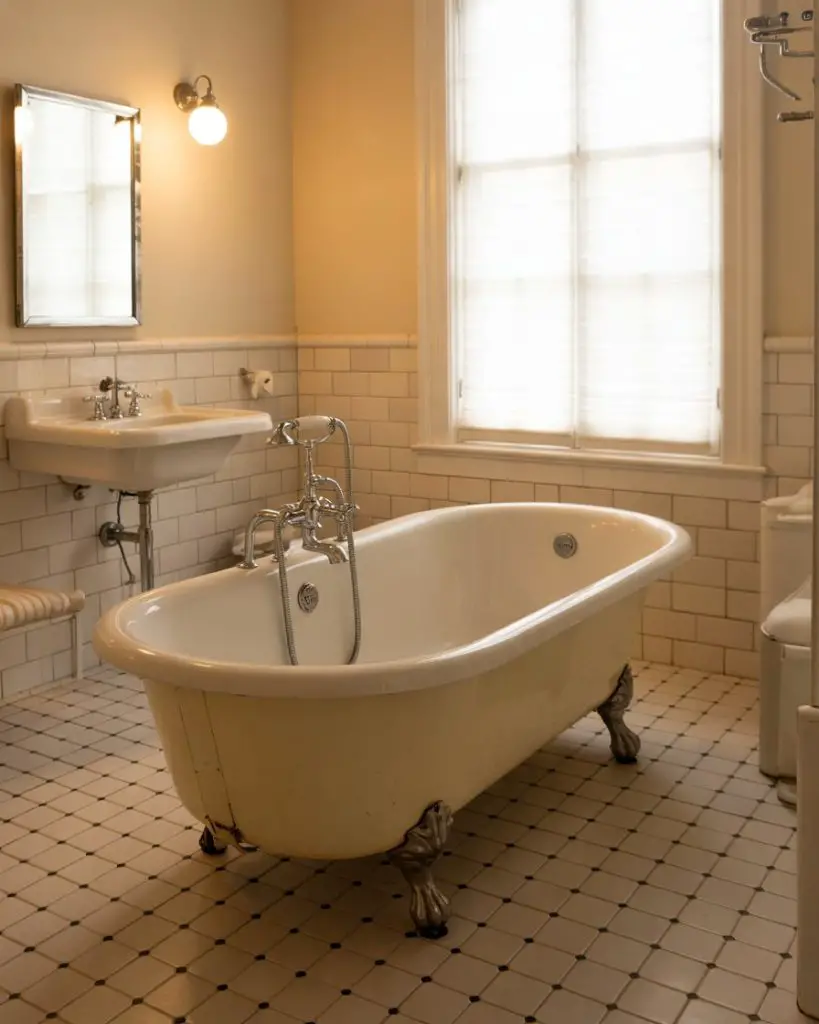
Across the country, particularly in older neighborhoods of cities like Portland, San Francisco, and Pittsburgh, homeowners are discovering that vintage blue fixtures are desirable rather than dated. Replacing them costs thousands, while embracing them costs nothing and creates instant character. The key is surrounding these fixtures with intentional choices that feel curated rather than neglected—fresh paint, updated lighting, and quality towels and accessories show you’re celebrating the vintage elements by choice, not necessity. This approach is both the most budget-friendly and environmentally conscious option, reducing waste while creating a one-of-a-kind bathroom.
Conclusion
Blue bathrooms offer remarkable versatility, whether you’re drawn to moody drama, coastal calm, or playful pattern mixing. The ideas shared here demonstrate that blue works across budgets, styles, and space sizes—from simple accessory swaps to complete tile installations. Which blue bathroom concept resonates most with your style? Share your thoughts, questions, or your own blue bathroom projects in the comments below. We’d love to hear which direction you’re considering for your space.