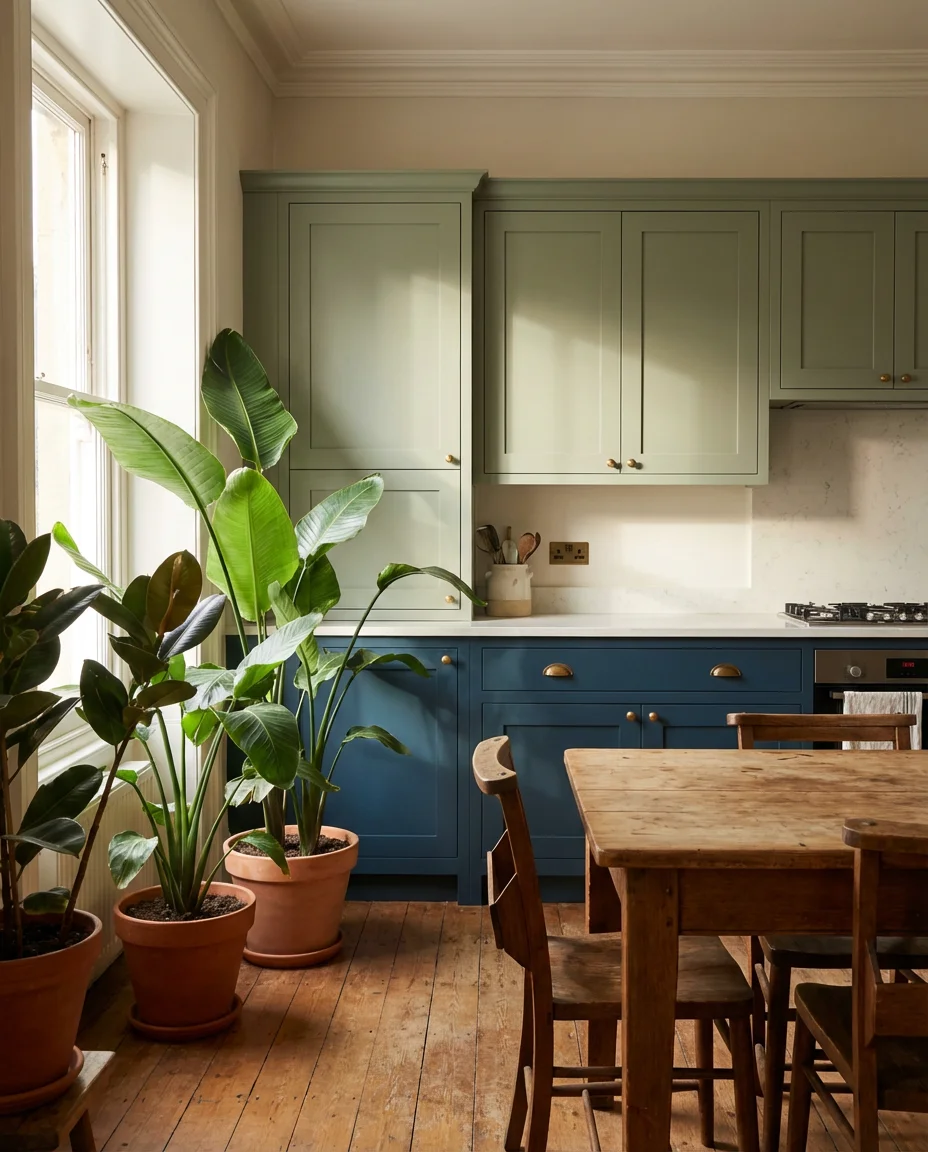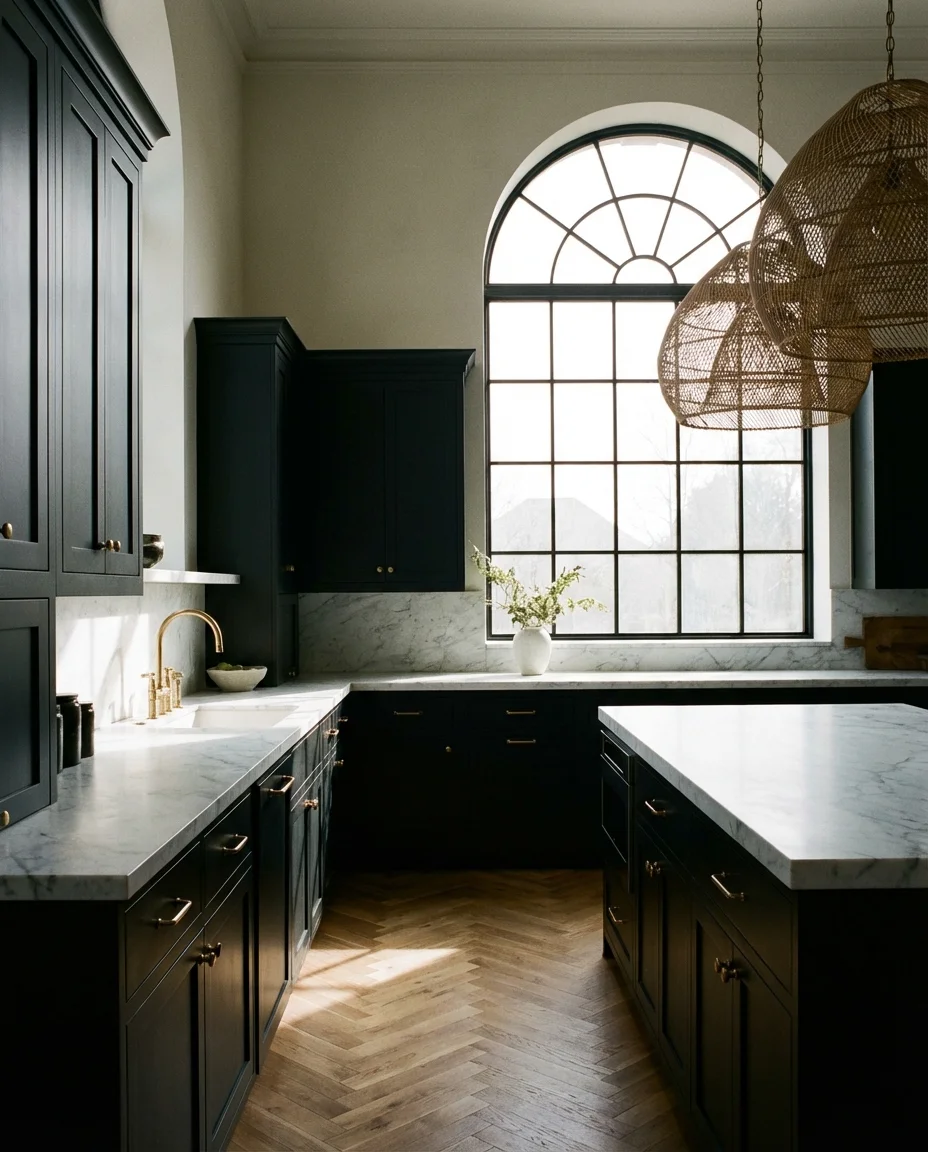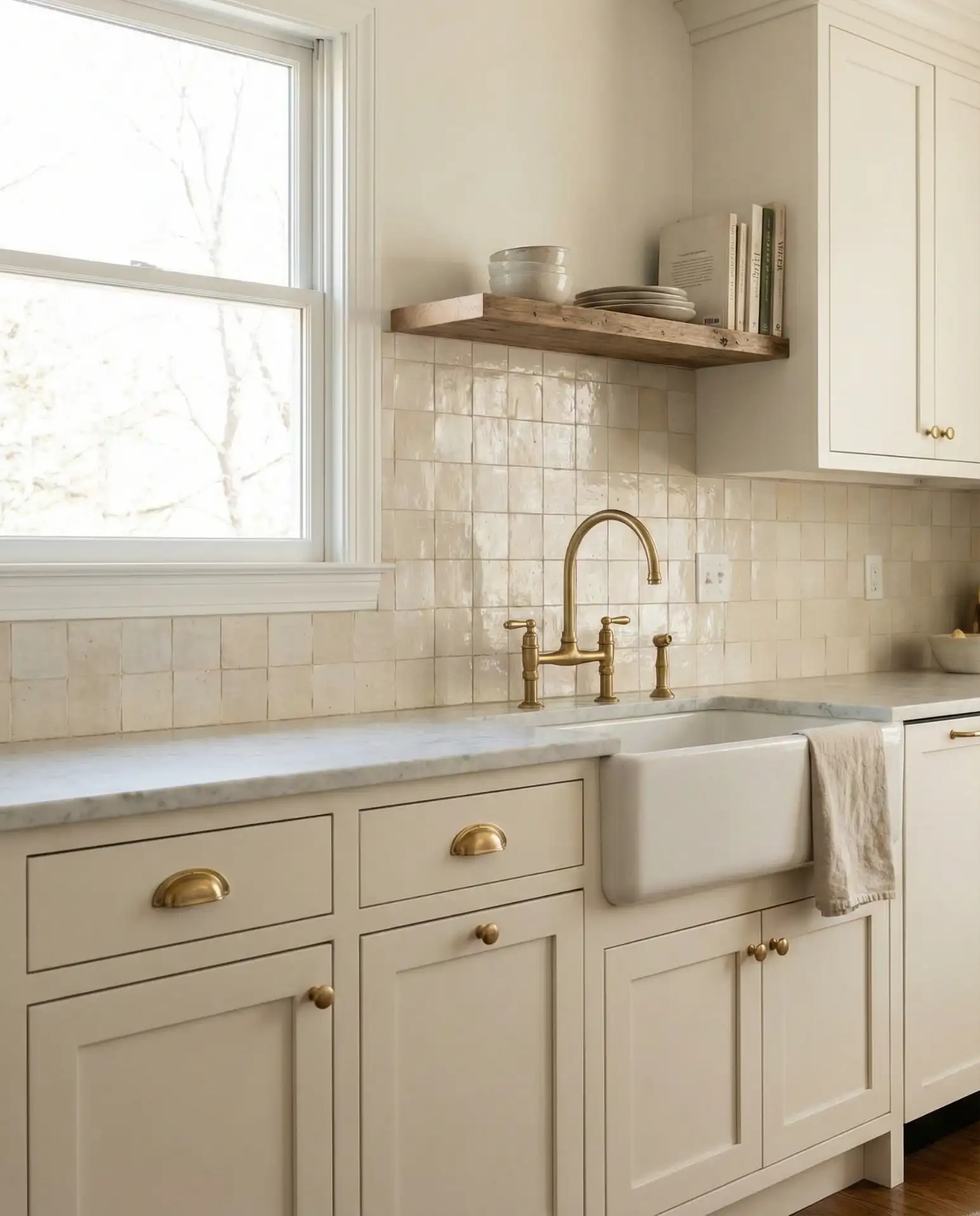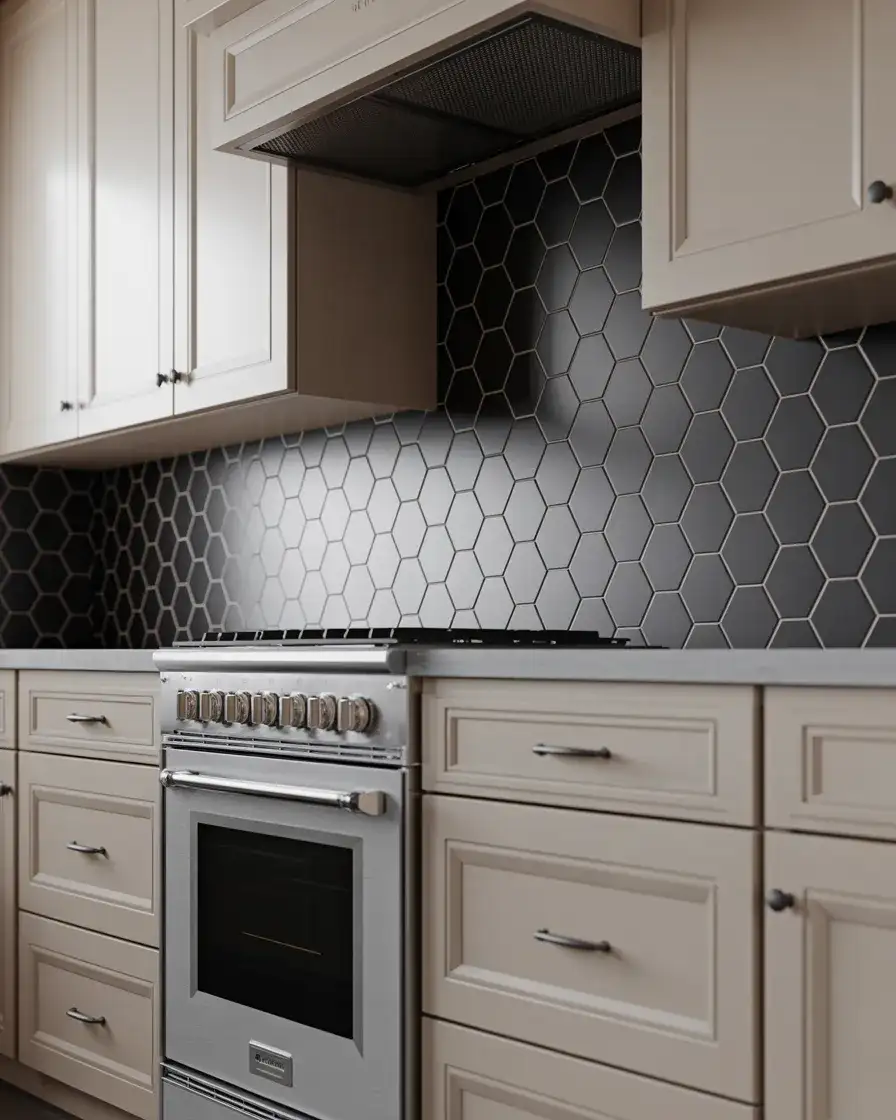
Blue kitchens are having a major moment in 2026, and it’s no surprise why. From serene coastal vibes to bold statement walls, blue brings depth, personality, and a refreshing alternative to the all-white kitchen trend that dominated the past decade. Whether you’re drawn to soft pastels, dramatic navy cabinetry, or unexpected color pairings, there’s a shade of blue that can transform your cooking space into something truly special. Americans searching Pinterest for blue kitchen inspiration are discovering that this versatile color works beautifully across styles—from modern farmhouse to sleek contemporary—and pairs effortlessly with natural materials like wood, stone, and brass. In this guide, we’re exploring stunning blue kitchen ideas that showcase the range, warmth, and timeless appeal of this color in real homes.
1. Navy Blue Shaker Cabinets with Brass Hardware
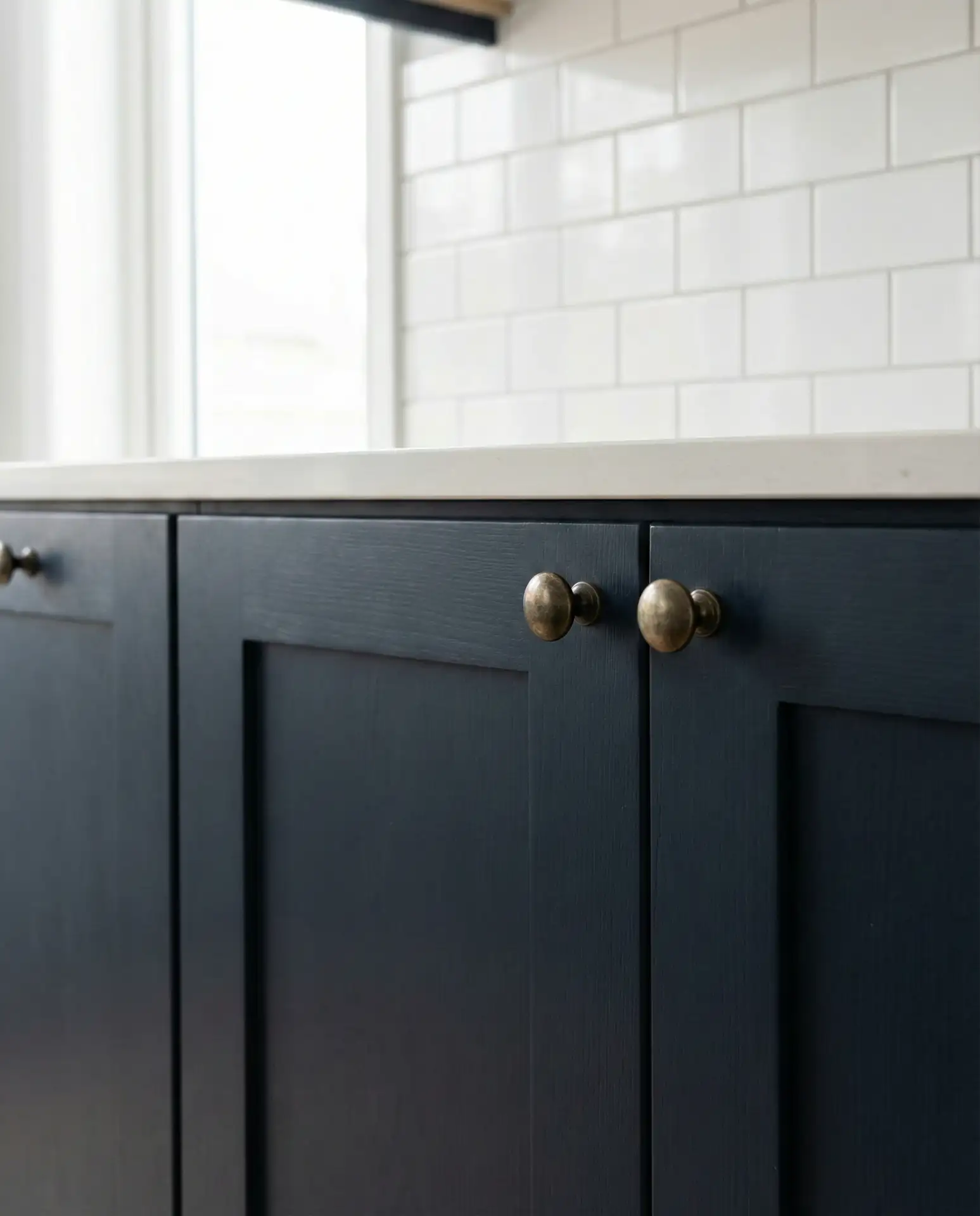
The classic shaker-style cabinet gets a sophisticated update with a deep navy finish that feels both traditional and completely current. This look works especially well in kitchens with ample light, where the rich color can shift from almost black in shadows to vibrant blue near windows. Pair with warm brass pulls and fixtures to create a luxurious contrast that elevates the entire space. White marble or quartz countertops keep things bright while letting the cabinetry take center stage.
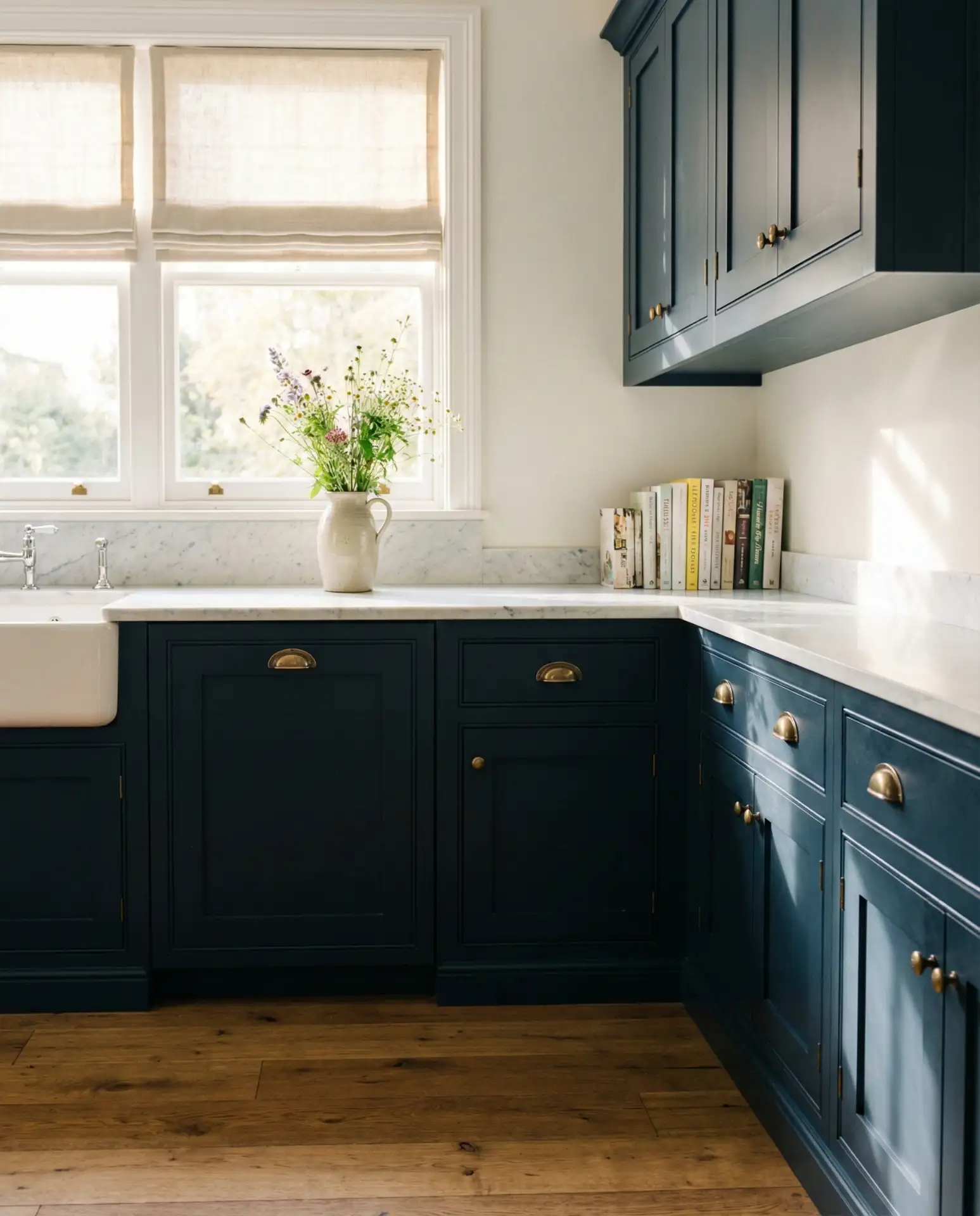
One thing many homeowners get wrong is choosing navy that’s too dark for a small kitchen—always test your paint color in different lighting conditions throughout the day. Navy cabinets can actually make a compact kitchen feel more intentional and designed rather than cramped, as long as you balance with enough white or light wood elements. Consider painting just the lower cabinets navy while keeping the uppers white or glass-fronted to maintain an open feel.
2. Pale Blue Cottage Kitchen with Open Shelving
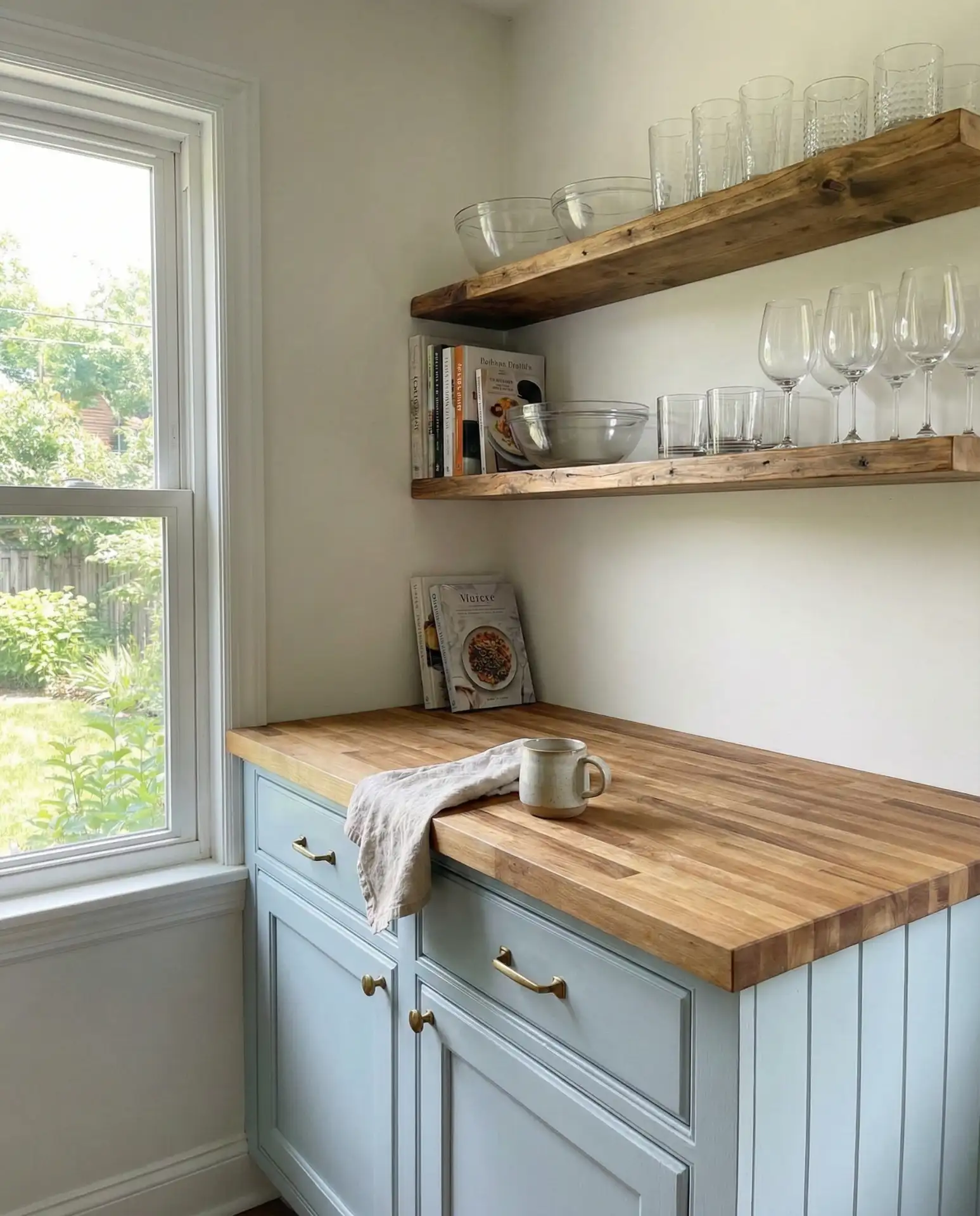
A pale blue kitchen channels the relaxed charm of a seaside cottage, creating a space that feels airy and welcoming. This softer approach to the blue kitchen trend works beautifully in smaller homes or apartments where you want color without visual weight. Open shelving in natural wood adds warmth and breaks up the blue while displaying everyday dishes and glassware. The combination feels effortlessly collected rather than overly designed.
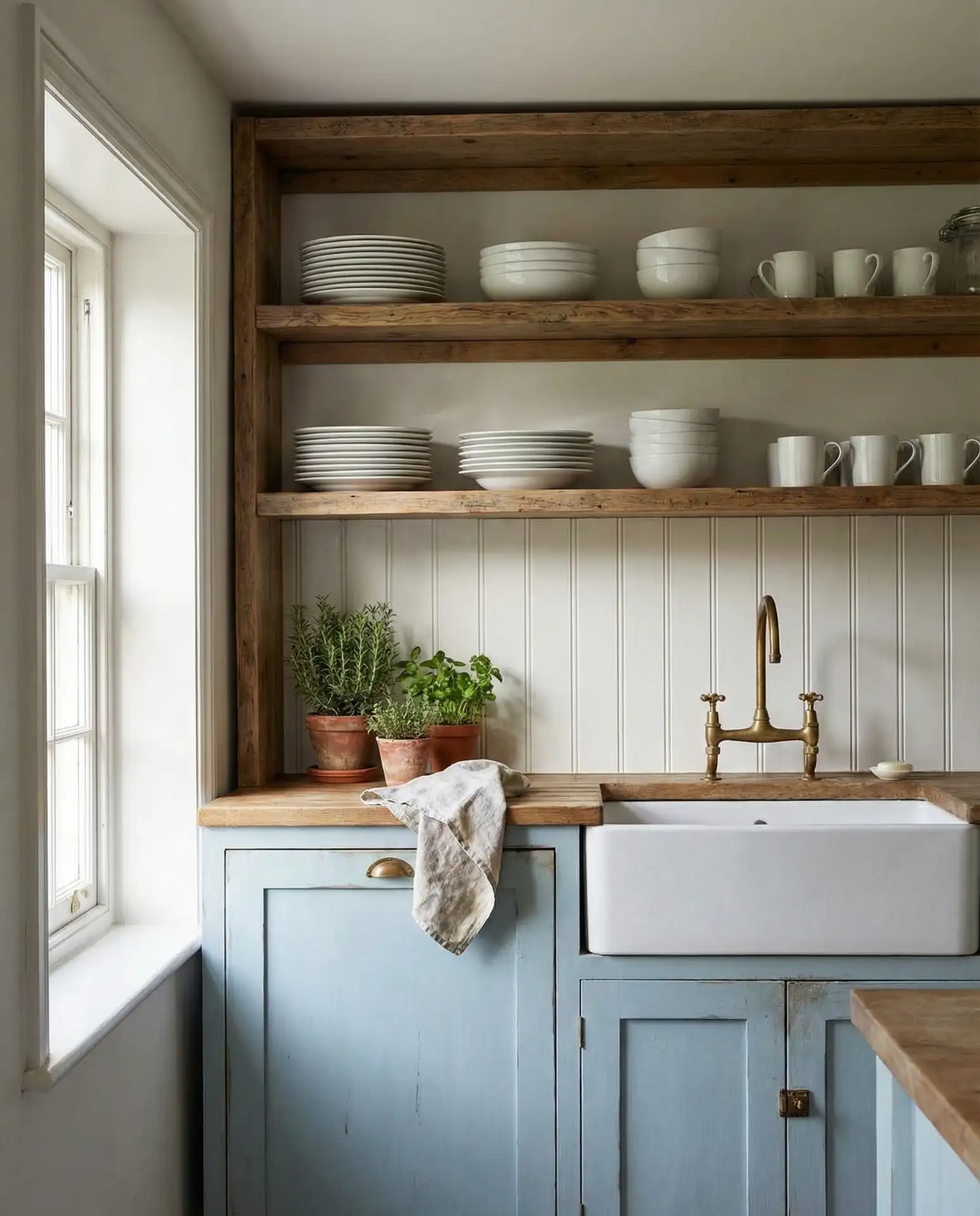
This style thrives in homes with good natural light, particularly those with east- or south-facing windows that bring in warm sunshine. The pale blue reads almost neutral during golden hour but maintains its color identity in overcast conditions. It’s particularly popular in coastal regions from Maine to California, where homeowners want to echo the colors of sky and sea without going full nautical theme.
3. Two-Tone Blue and White Kitchen Island
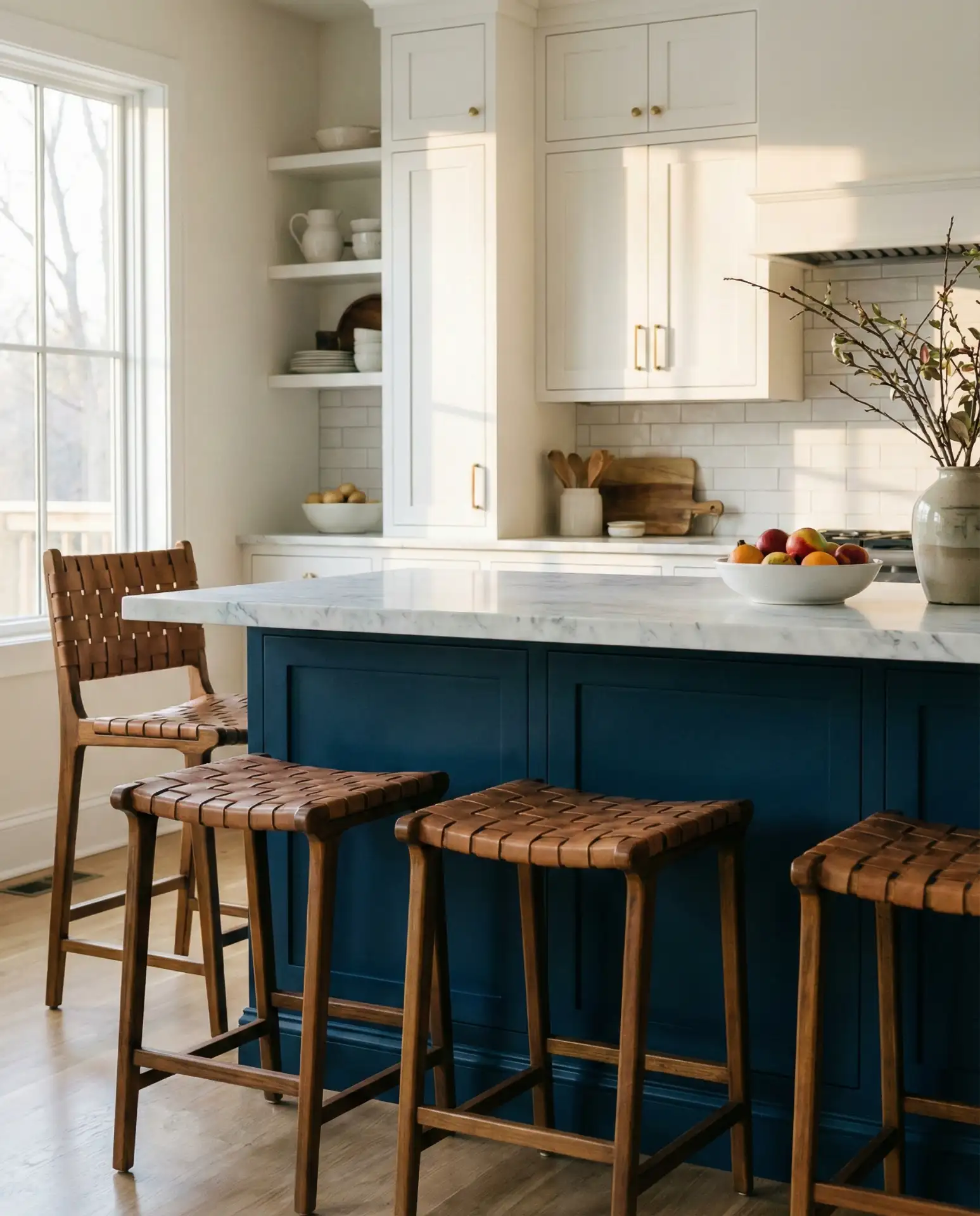
The two-tone kitchen remains one of the smartest design choices for 2026, and pairing white and blue is a combination that feels fresh without being trendy. Paint your perimeter cabinets in crisp white while giving the island a standout blue finish—this creates a natural focal point and adds architectural interest to an open-plan space. The contrast helps define zones in a kitchen that flows into a dining or living area.
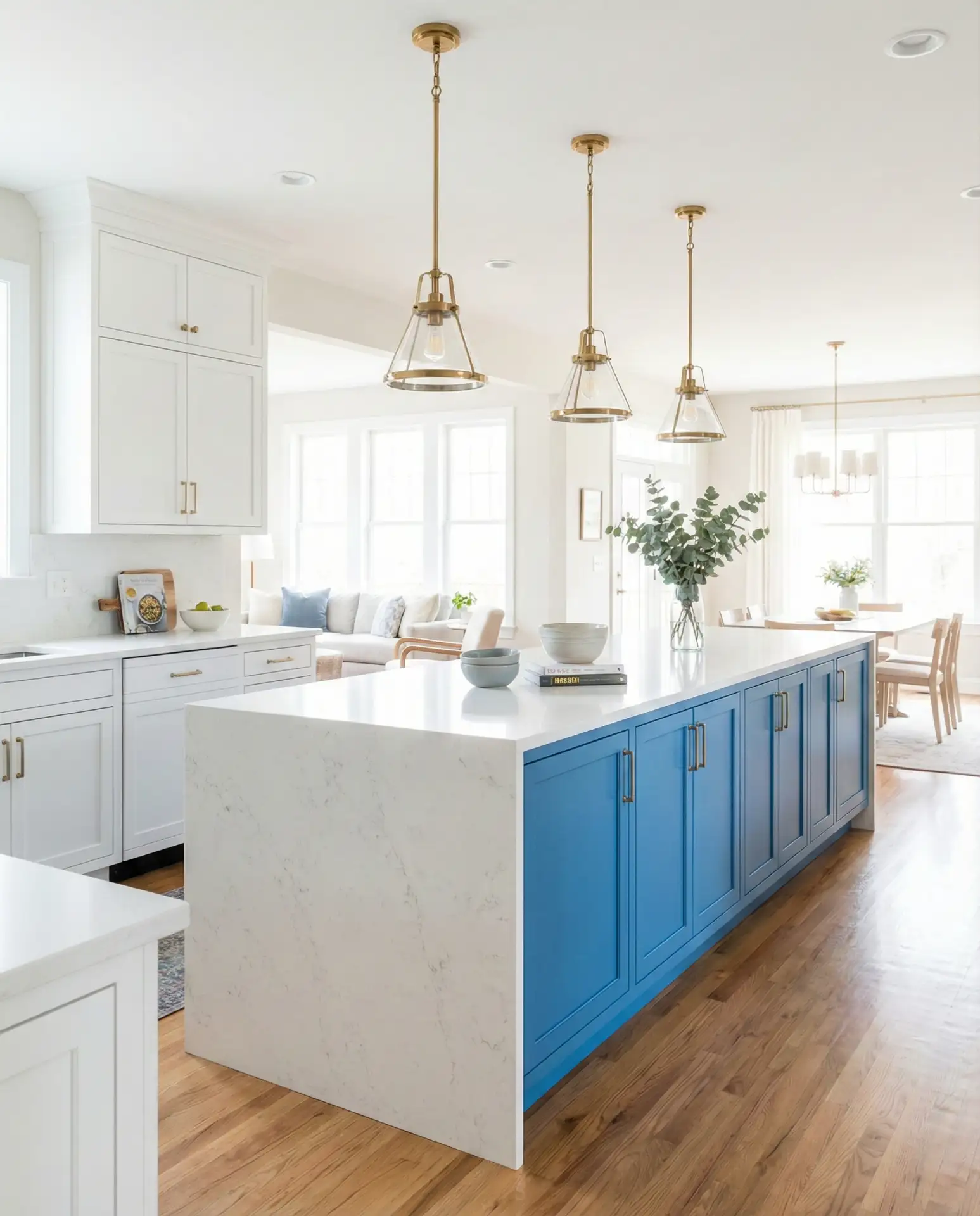
Budget-conscious renovators love this approach because you can start with just painting the island and leave the perimeter cabinets as-is if they’re already white or in good condition. A gallon of quality cabinet paint runs about $50-75, and an island typically requires just one gallon for multiple coats. This means you can dramatically transform your kitchen’s look for under $100 in materials if you’re willing to DIY the painting over a weekend.
4. Dark Moody Blue Kitchen with Black Accents
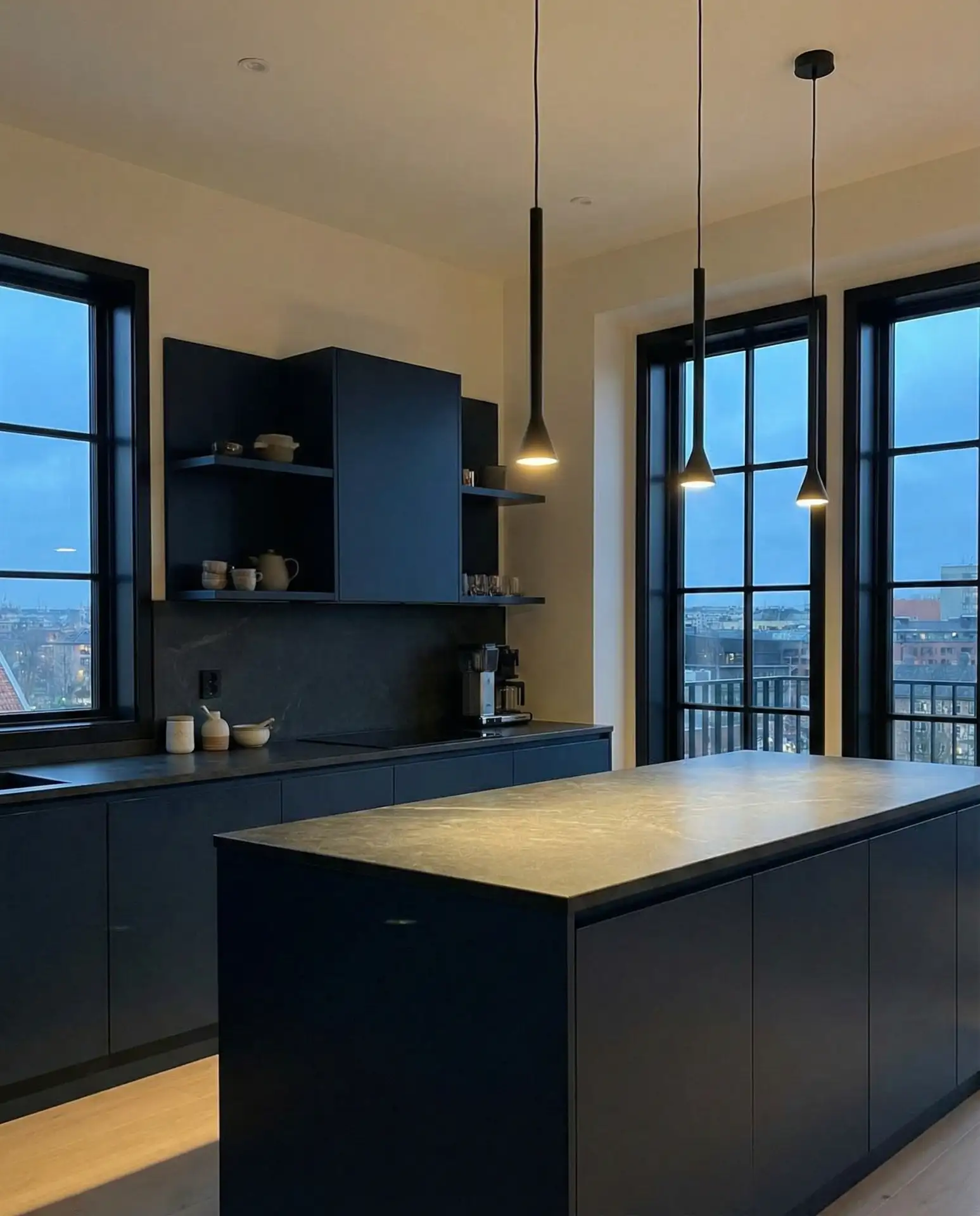
For homeowners ready to fully commit to drama, a dark blue kitchen creates an enveloping, intimate atmosphere that’s unexpectedly cozy. This isn’t your grandmother’s kitchen, but it draws on the same principle that darker spaces can feel more comfortable and less institutional than stark white rooms. Pair deep blue cabinets with matte black hardware, fixtures, and appliances for a monochromatic scheme that feels intentional and modern.
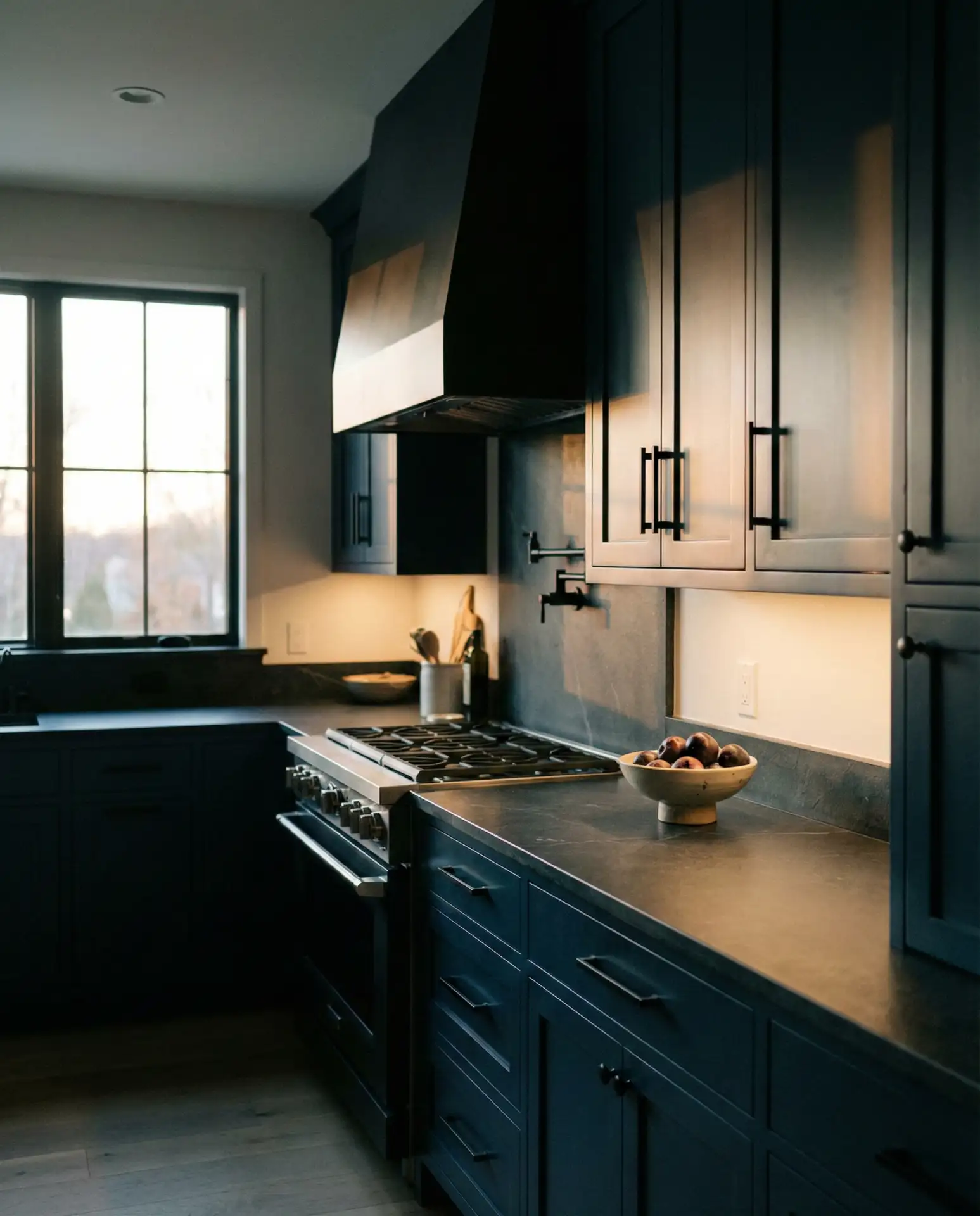
A designer friend once told me that dark kitchens actually hide wear and fingerprints better than white ones—something real families with kids appreciate after a few years of living in the space. The key is ensuring you have excellent task lighting under cabinets and over work surfaces, since ambient light alone won’t cut it. Consider adding a statement light fixture or two to create pools of warm illumination that make the space feel inviting rather than cave-like.
5. French Country Blue with Natural Wood Tones
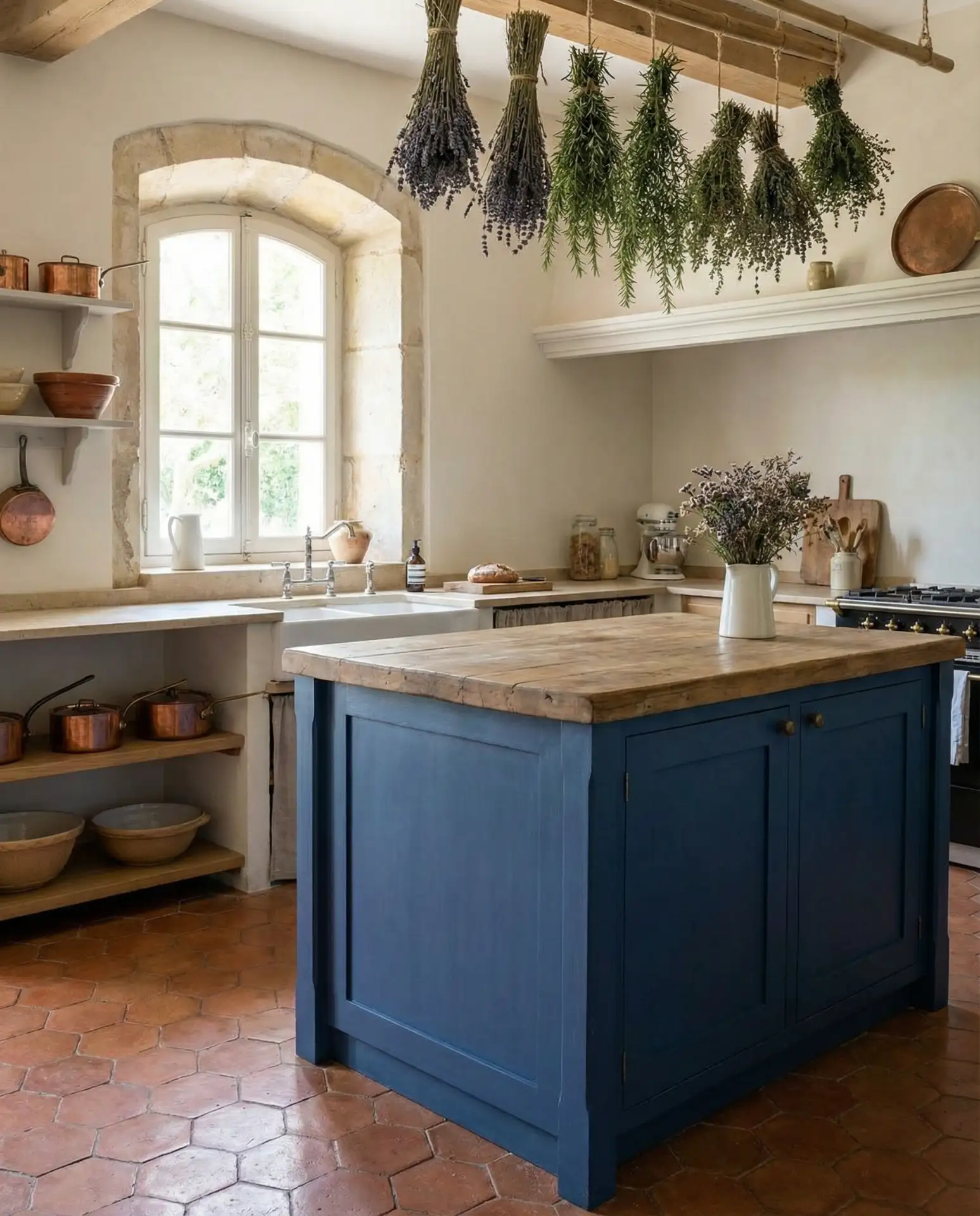
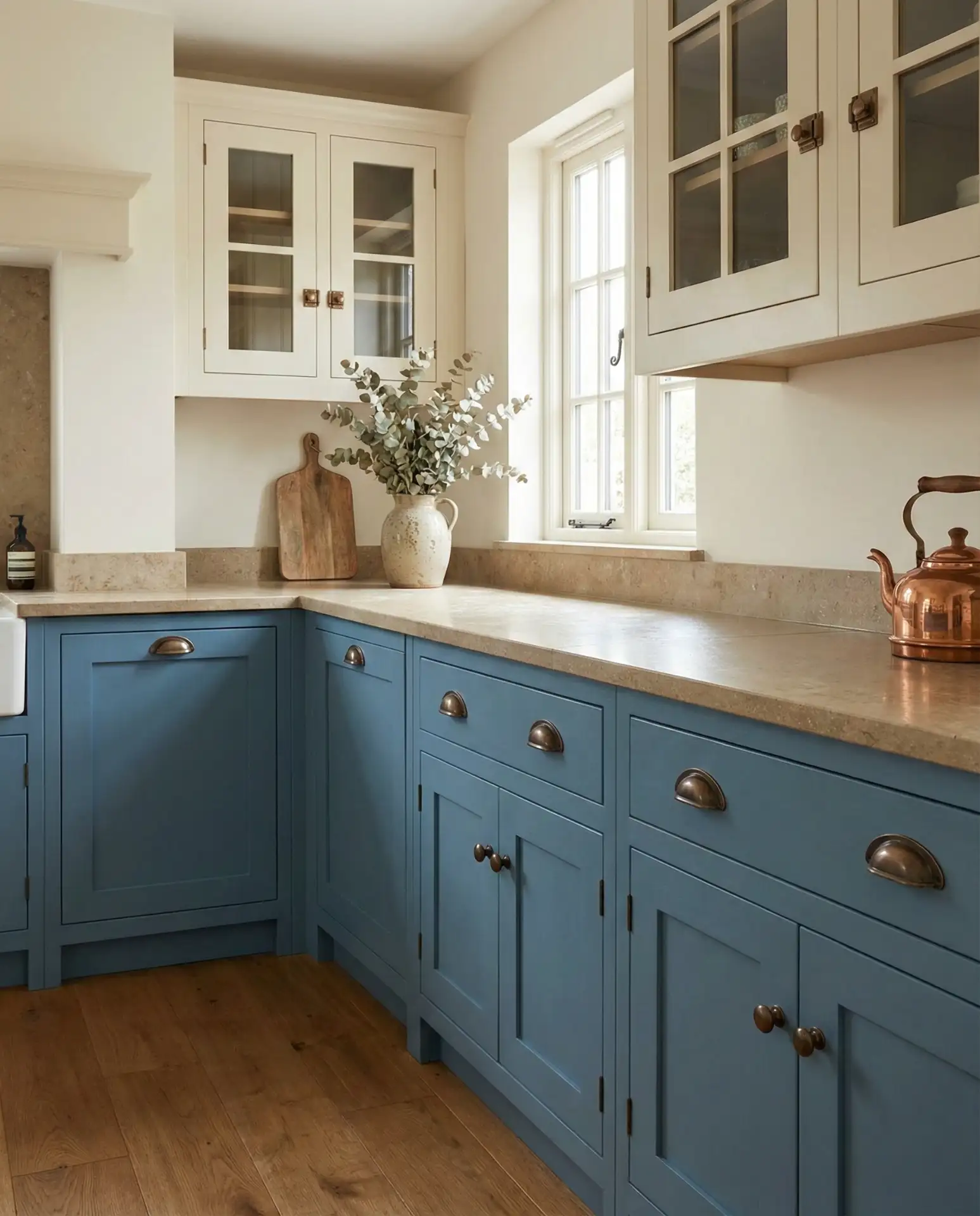
The French country kitchen gets a contemporary interpretation when you pair soft blue cabinetry with natural wood and stone elements. Think dusty blue-gray painted cabinets alongside reclaimed wood beams, a farmhouse table, or butcher block countertops. This combination brings together the romance of European design with the warmth Americans crave in a kitchen where families actually gather.
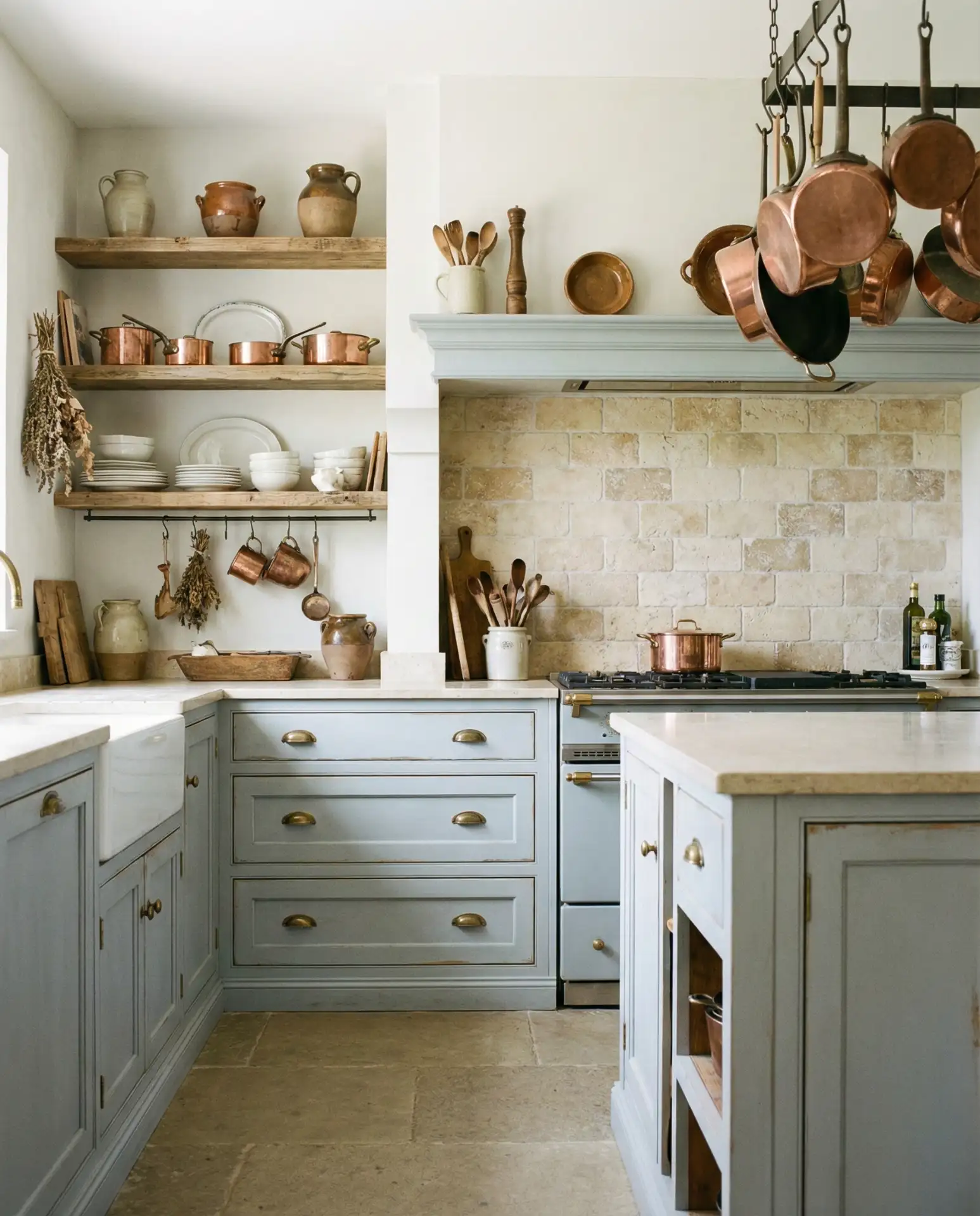
This aesthetic works best in homes with some existing architectural character—exposed beams, plaster walls, or hardwood floors that have genuine age and patina. In newer construction, you can achieve a similar feel by choosing matte paint finishes, adding vintage-inspired hardware, and incorporating genuinely old pieces like an antique baker’s rack or farmhouse table. The blue should look slightly faded, as if it’s been there for decades, which usually means choosing colors with gray undertones rather than bright primary blues.
6. Pastel Blue Kitchen with Gold Fixtures
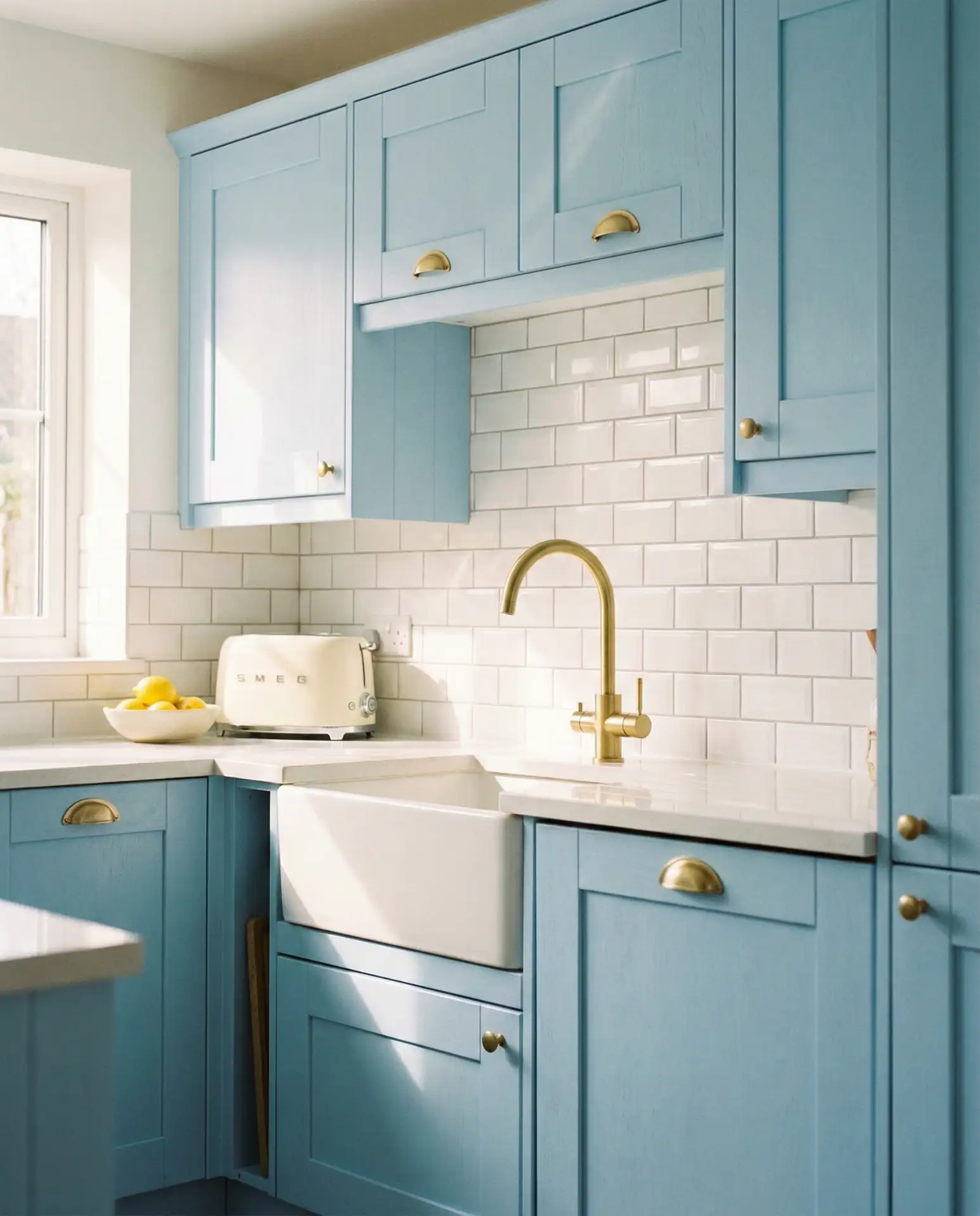
A pastel blue kitchen brings an unexpected touch of whimsy without feeling childish when balanced with sophisticated metallic accents. Soft robin’s egg or powder blue cabinets paired with brushed gold or champagne hardware creates a combination that’s both playful and grown-up. This approach works especially well in kitchens with vintage or retro inspiration, channeling mid-century charm with modern functionality.
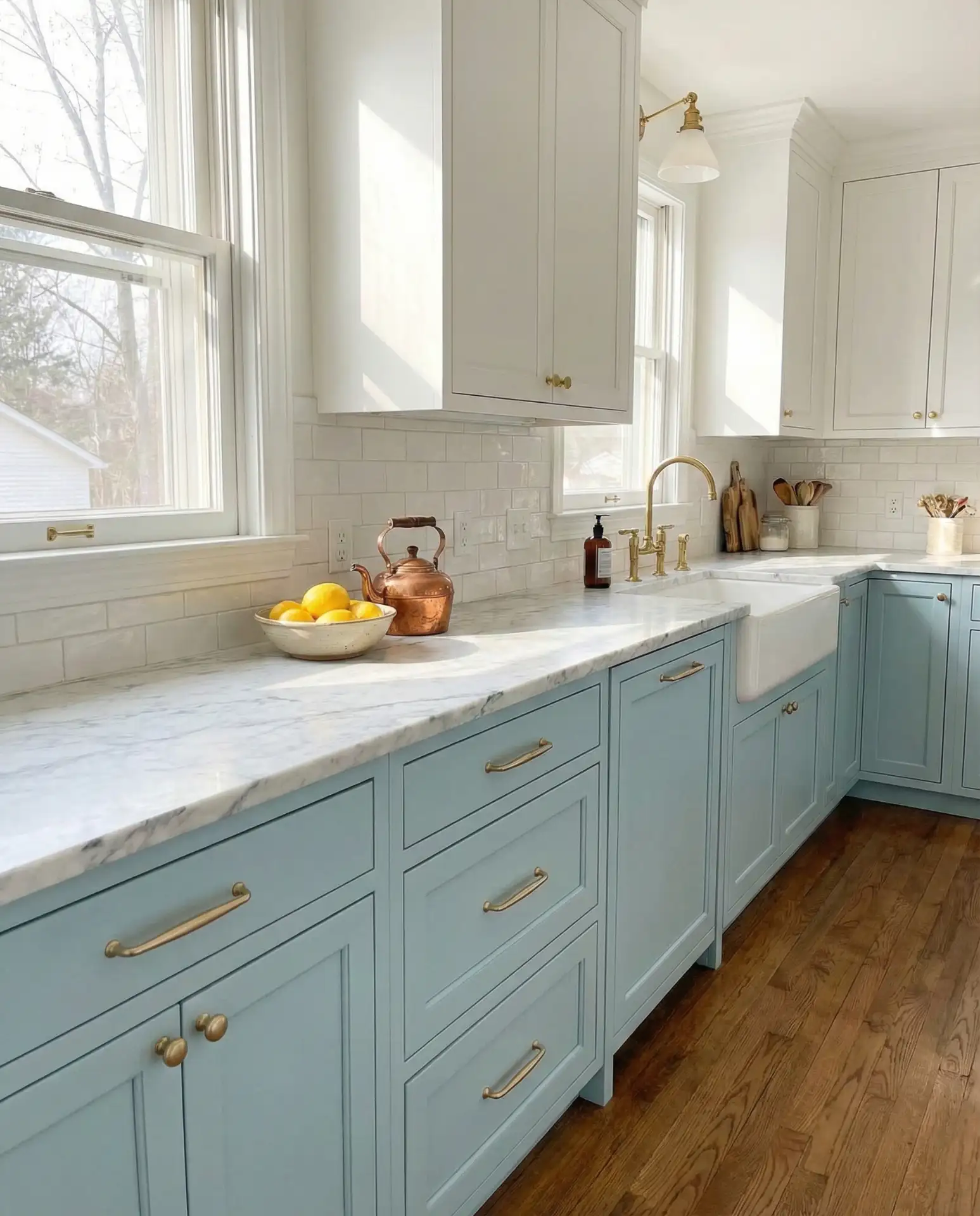
Real homeowners who choose pastel blue often report that it’s one of the few colors that genuinely makes them smile every morning—there’s something inherently optimistic about it. The color reads differently depending on your home’s lighting: in north-facing kitchens, it stays cool and crisp, while south-facing spaces bring out warmer, almost aqua undertones. Either way, it’s a color that photographs beautifully, which explains its popularity on Pinterest among people planning kitchen renovations.
7. Duck Egg Blue Kitchen with Marble Countertops
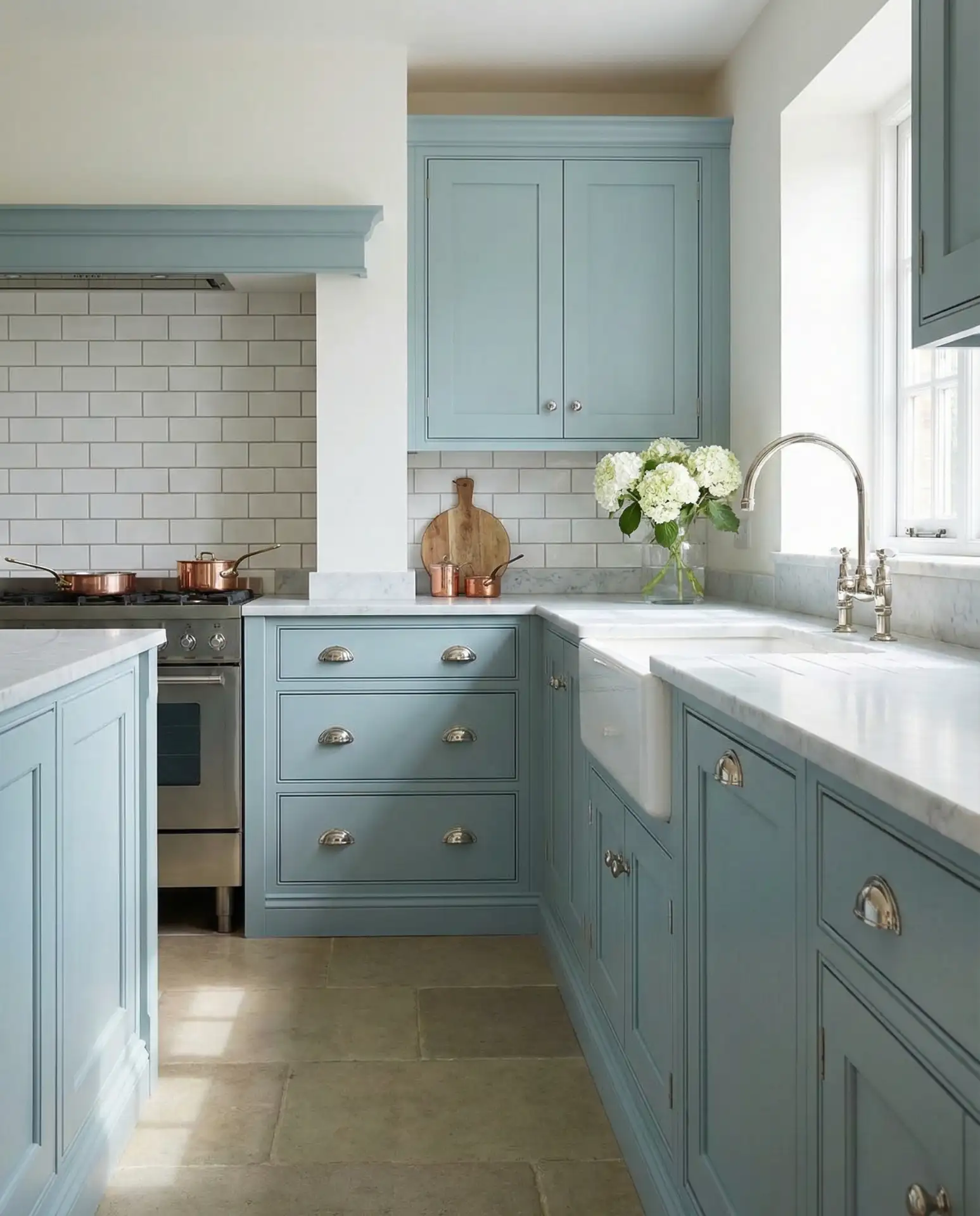
Duck egg blue is that perfect blue-green hybrid that manages to feel both calming and sophisticated, particularly popular in traditional and transitional kitchen designs. This muted shade has just enough gray to avoid looking too sweet, making it appropriate for homes with classic architecture. Pair it with white or gray-veined marble countertops and polished nickel hardware for a look that could work in a historic brownstone or a newly built colonial revival.
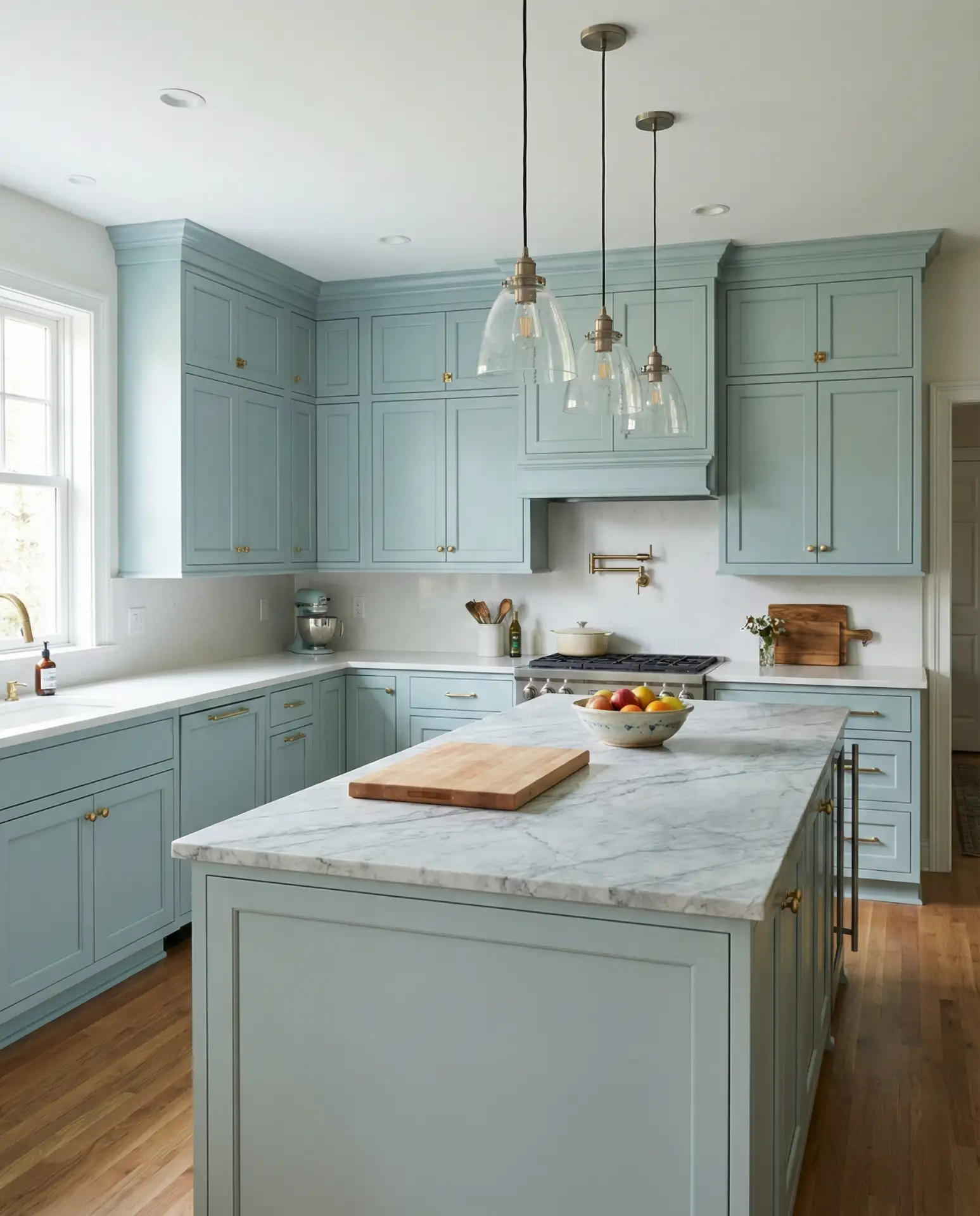
From an expert perspective, duck egg blue is one of the most forgiving paint colors for kitchens because it works across a wide range of lighting conditions and doesn’t compete with other colors in adjacent rooms. Interior designers often recommend it for open-plan homes where the kitchen flows into living spaces painted in neutrals—it provides just enough color to define the kitchen zone without creating a jarring transition. The color has staying power too, having been popular in European interiors for decades before catching on widely in American homes.
8. Blue Kitchen Walls with White Cabinets
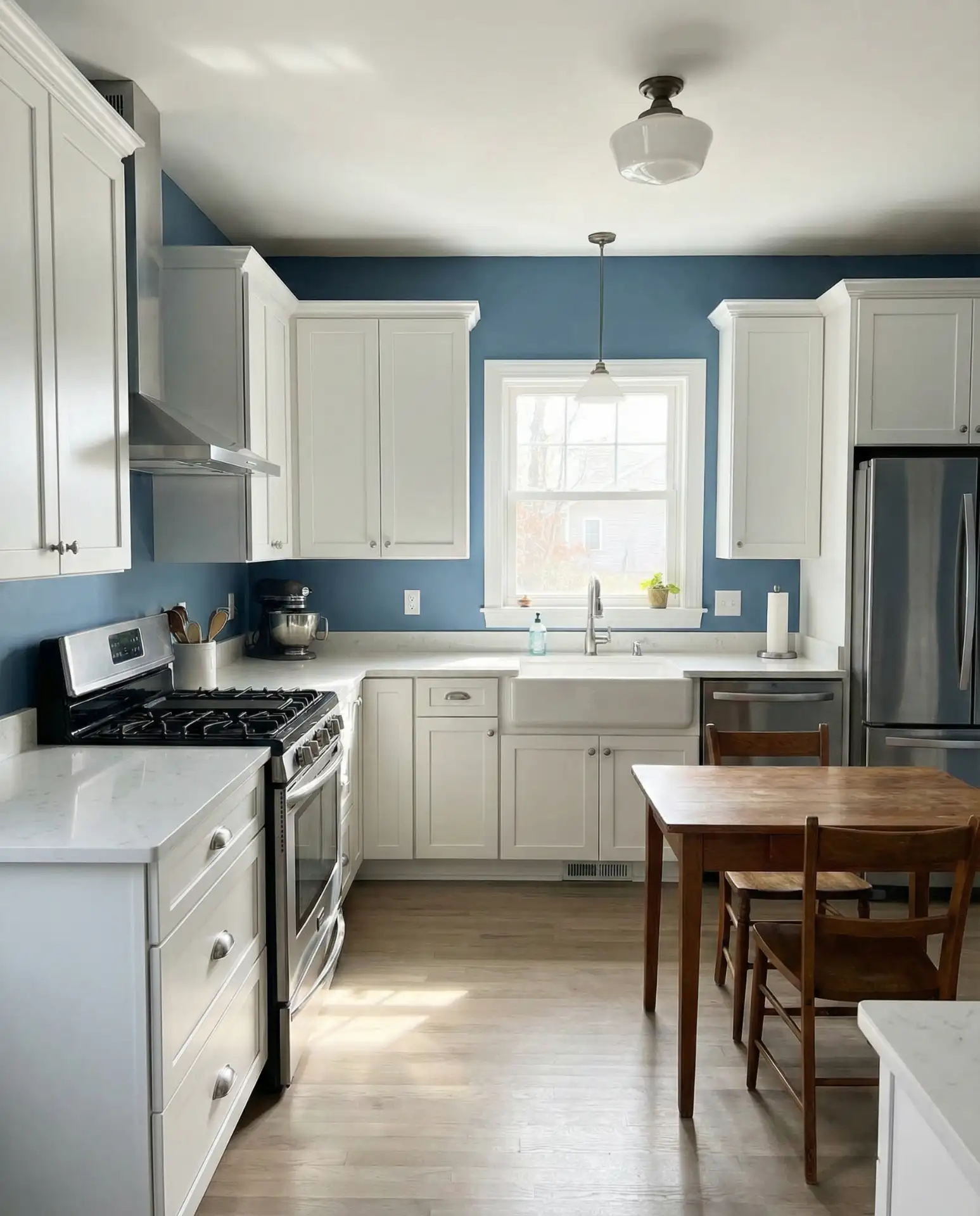
If you’re not ready to commit to blue cabinets, painting your walls blue while keeping cabinets white offers a reversible way to bring color into the kitchen. This approach is particularly smart for renters or anyone who wants the flexibility to change their mind down the road—a weekend painting project versus a major renovation. Choose a shade that complements your existing white cabinetry, whether that’s bright white, cream, or something with warm undertones.
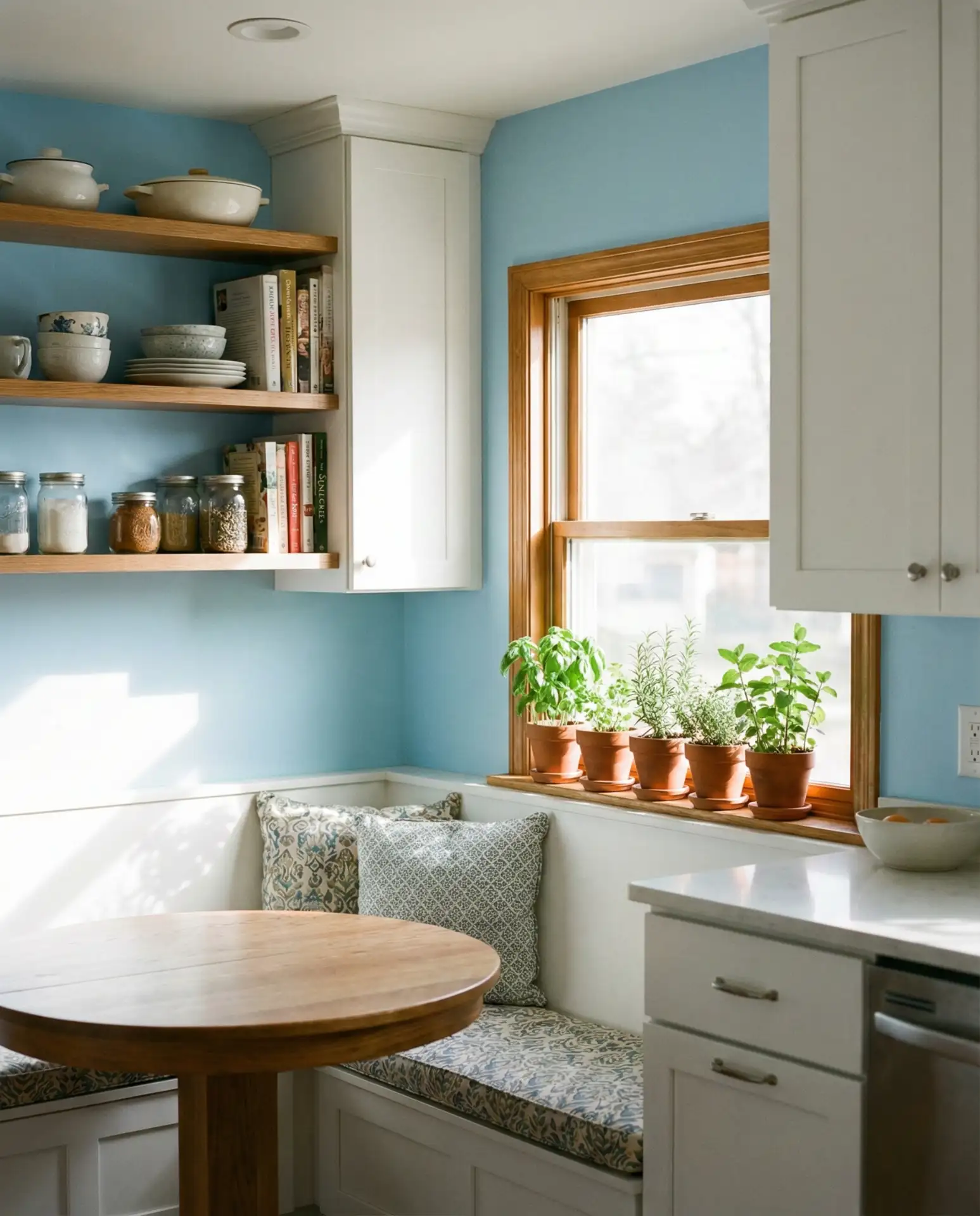
This configuration works best in kitchens with at least one exterior wall and good natural light—dark blue walls in a windowless galley kitchen can feel oppressive rather than cozy. Consider the kitchen’s orientation: east-facing kitchens with morning light can handle cooler blues, while west-facing spaces that get warm afternoon sun look better with blue-grays that won’t turn purple in golden hour. Test large paint swatches on different walls and observe them throughout the day before committing.
9. Cobalt Blue Accents in White Kitchen
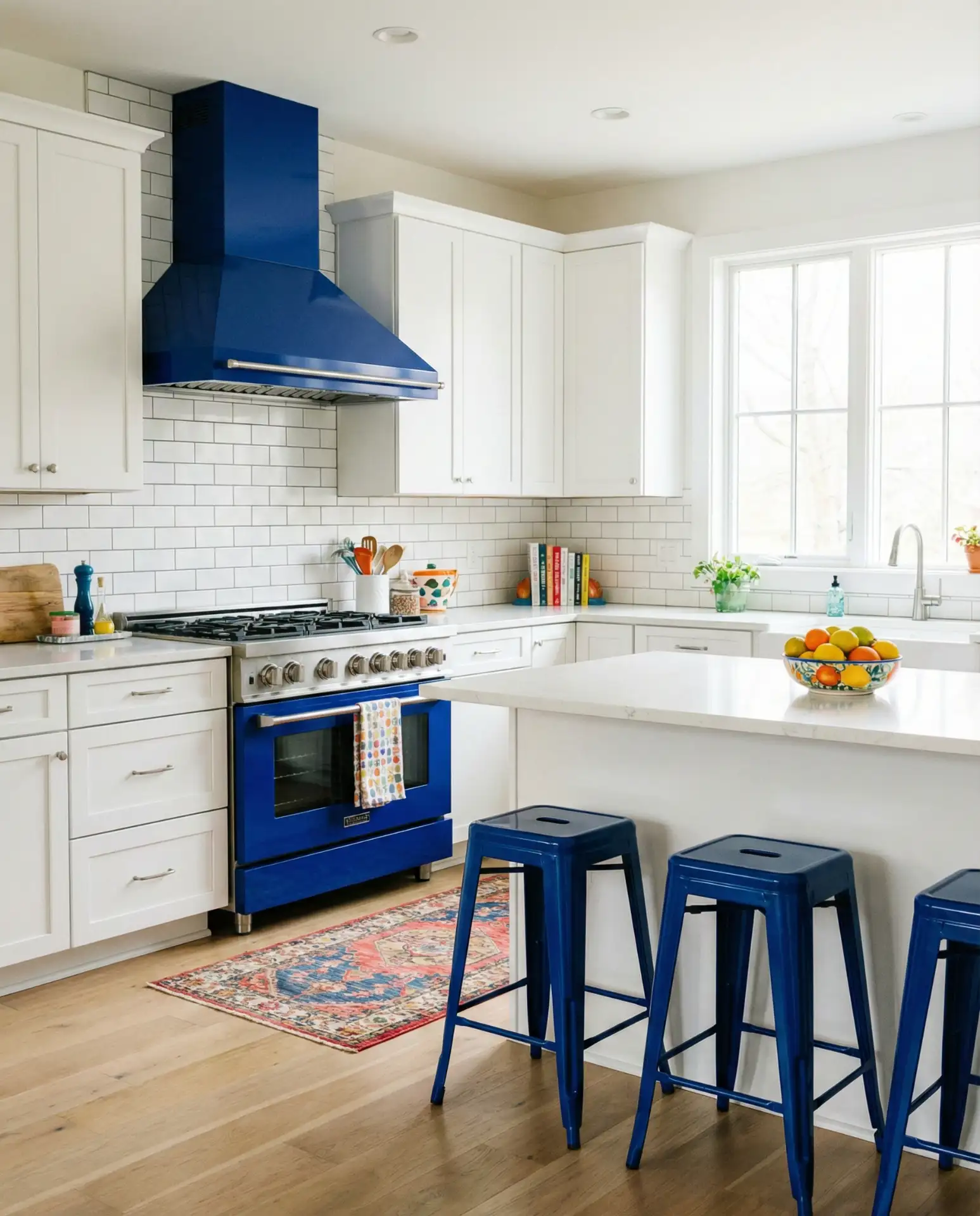
For those who love bold color but prefer a more subtle approach, cobalt blue accents in an otherwise white kitchen create moments of visual interest without overwhelming the space. Think a cobalt blue range, a vibrant backsplash, or even just bar stools and small appliances in this saturated jewel tone. The decor approach lets you test-drive the color before making permanent choices.
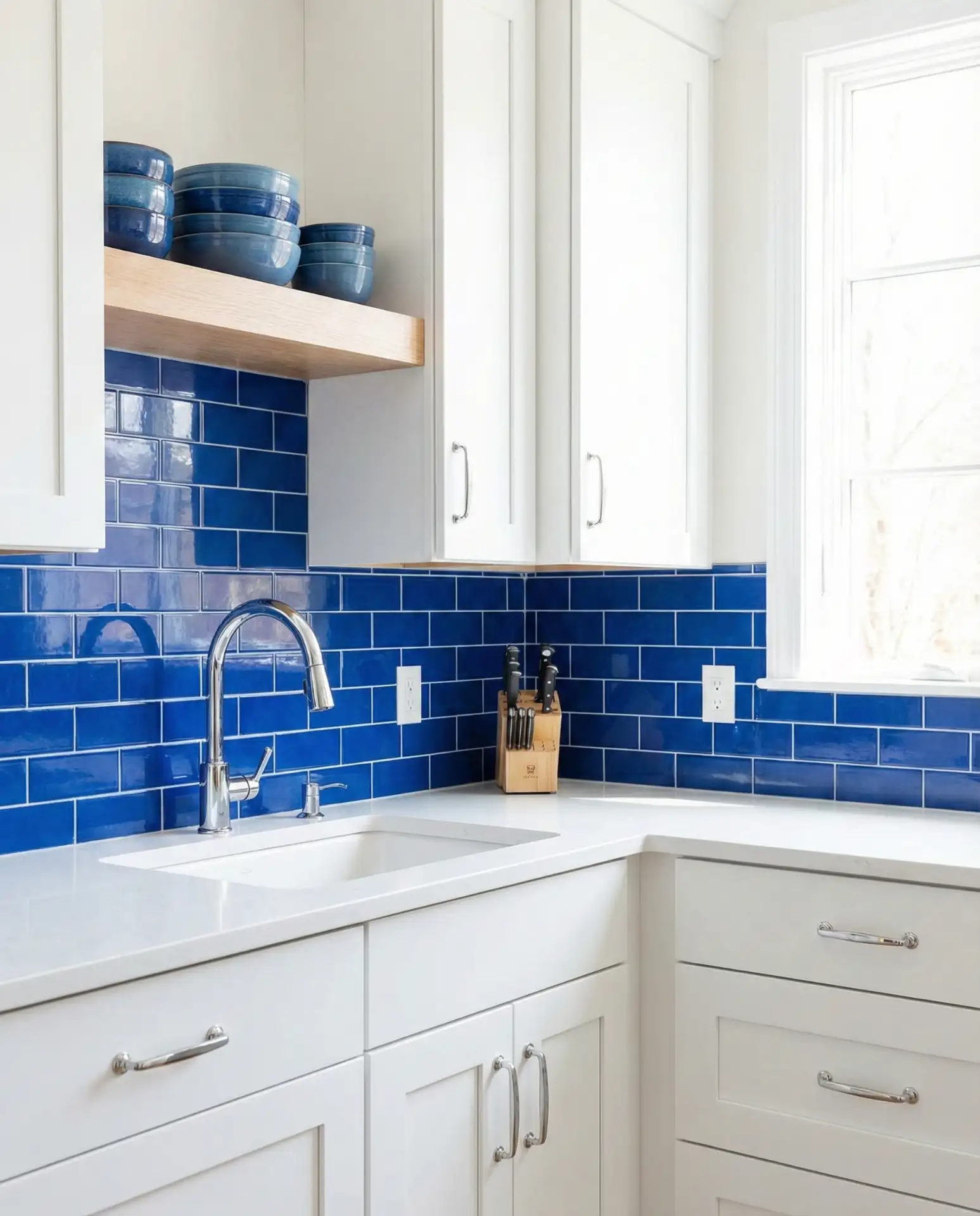
In the Midwest and Southwest, where bright sunshine is common, homeowners gravitate toward these punchy blue accents because they hold their intensity even in harsh light. A cobalt blue La Cornue or Lacanche range can run $10,000-15,000, but you can achieve a similar effect with a standard range and a professional powder-coating service for around $1,500-2,000. Alternatively, start small with a $300 cobalt KitchenAid mixer and some blue textiles to see if the color works in your space before investing in larger pieces.
10. Dusty Blue Kitchen with Concrete Counters
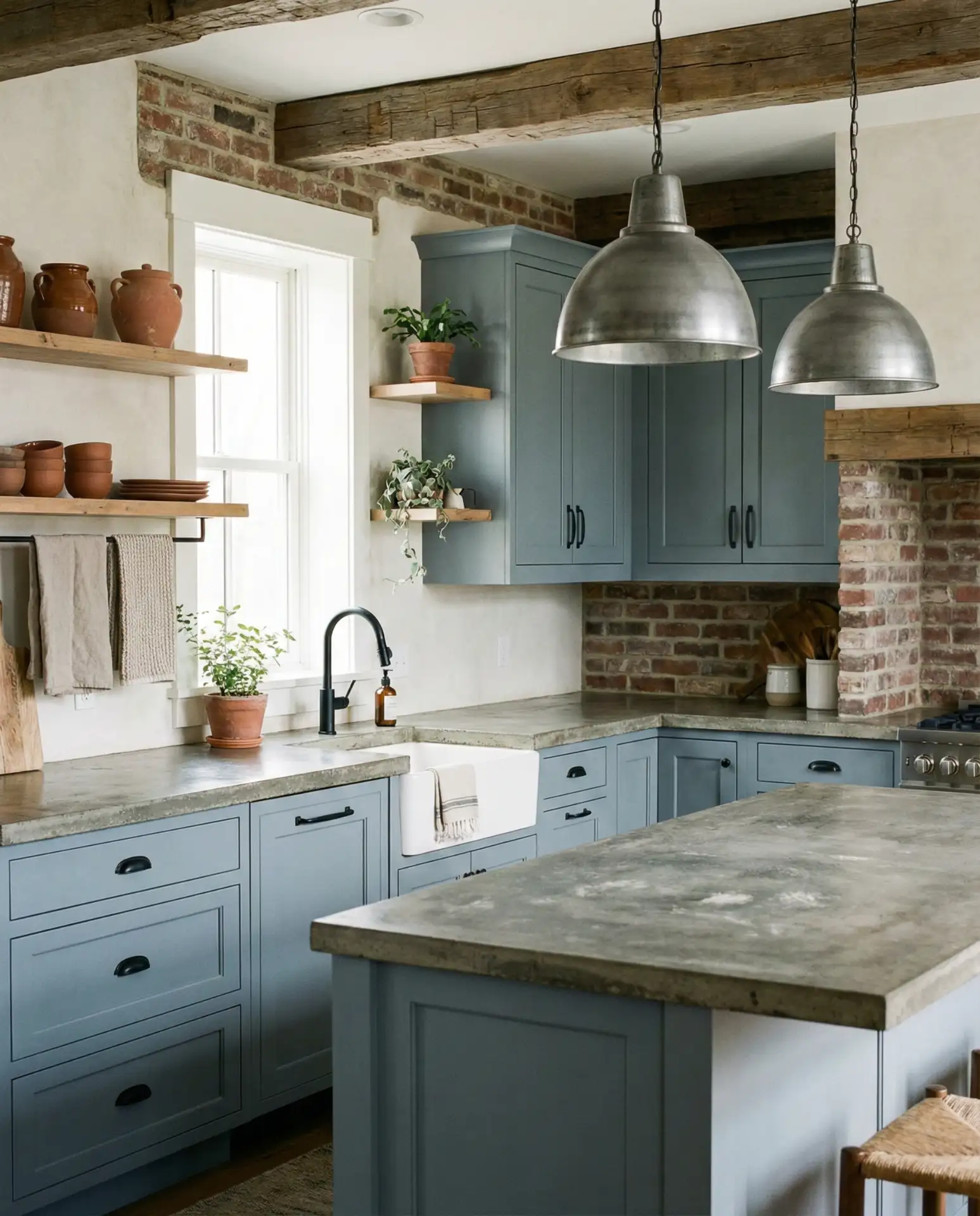
A dusty blue kitchen paired with concrete countertops creates an industrial-meets-farmhouse aesthetic that feels current without chasing trends. This muted, slightly weathered blue has enough gray to complement raw materials like concrete, steel, and reclaimed wood. The combination works particularly well in loft spaces, converted barns, or modern farmhouses where you want to honor the building’s character while creating a functional, beautiful kitchen.
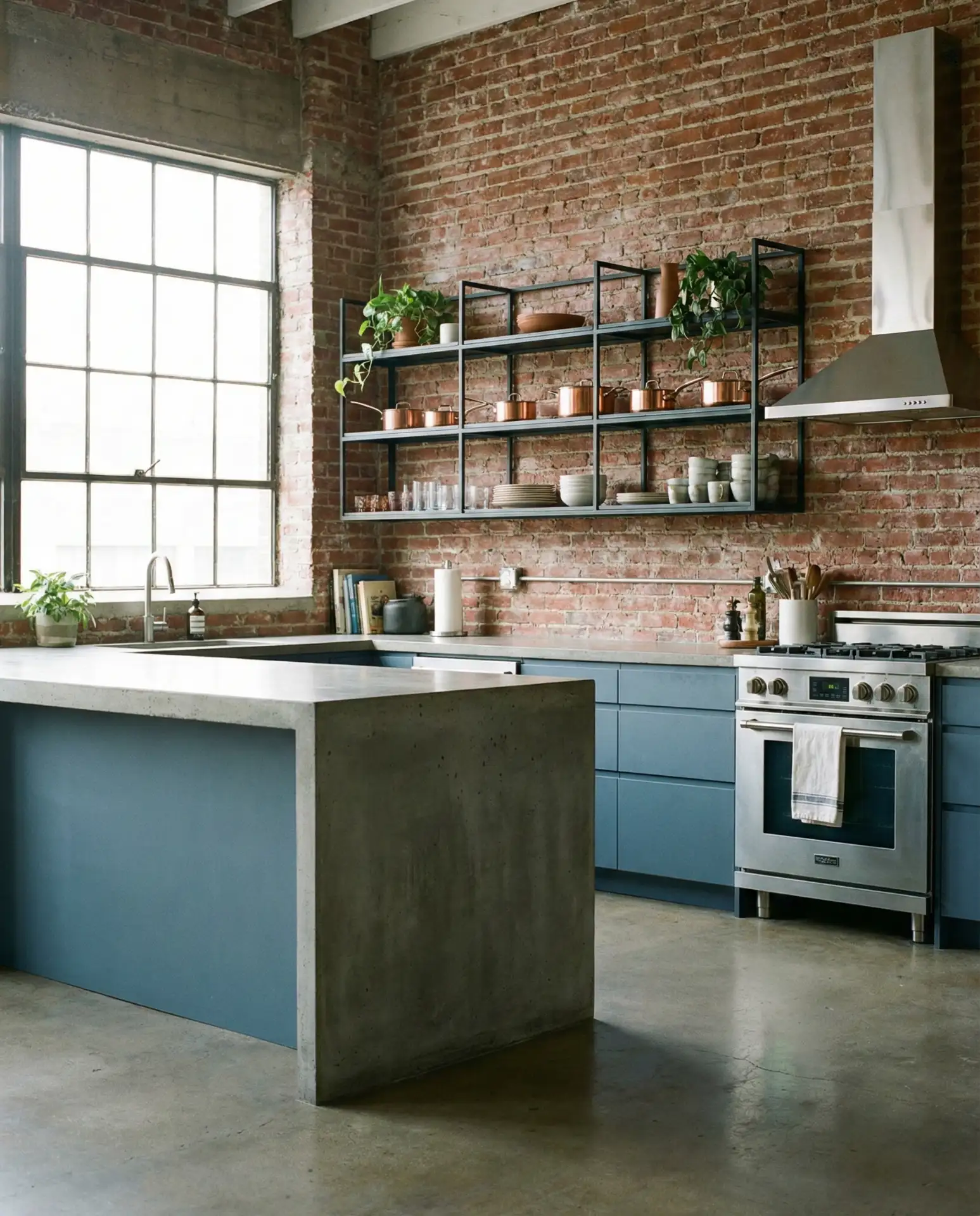
The dusty blue shade is particularly practical because it’s somewhat forgiving of wear—unlike bright whites or deep darks, this mid-tone color doesn’t show every fingerprint or scuff mark. Real families living with this combination report that the concrete counters develop a beautiful patina over time, especially when properly sealed and maintained. The initial sealing process takes some effort, but afterward, concrete counters need only periodic resealing and can actually be easier to maintain than marble or other porous stone.
11. Sky Blue Kitchen with Subway Tile
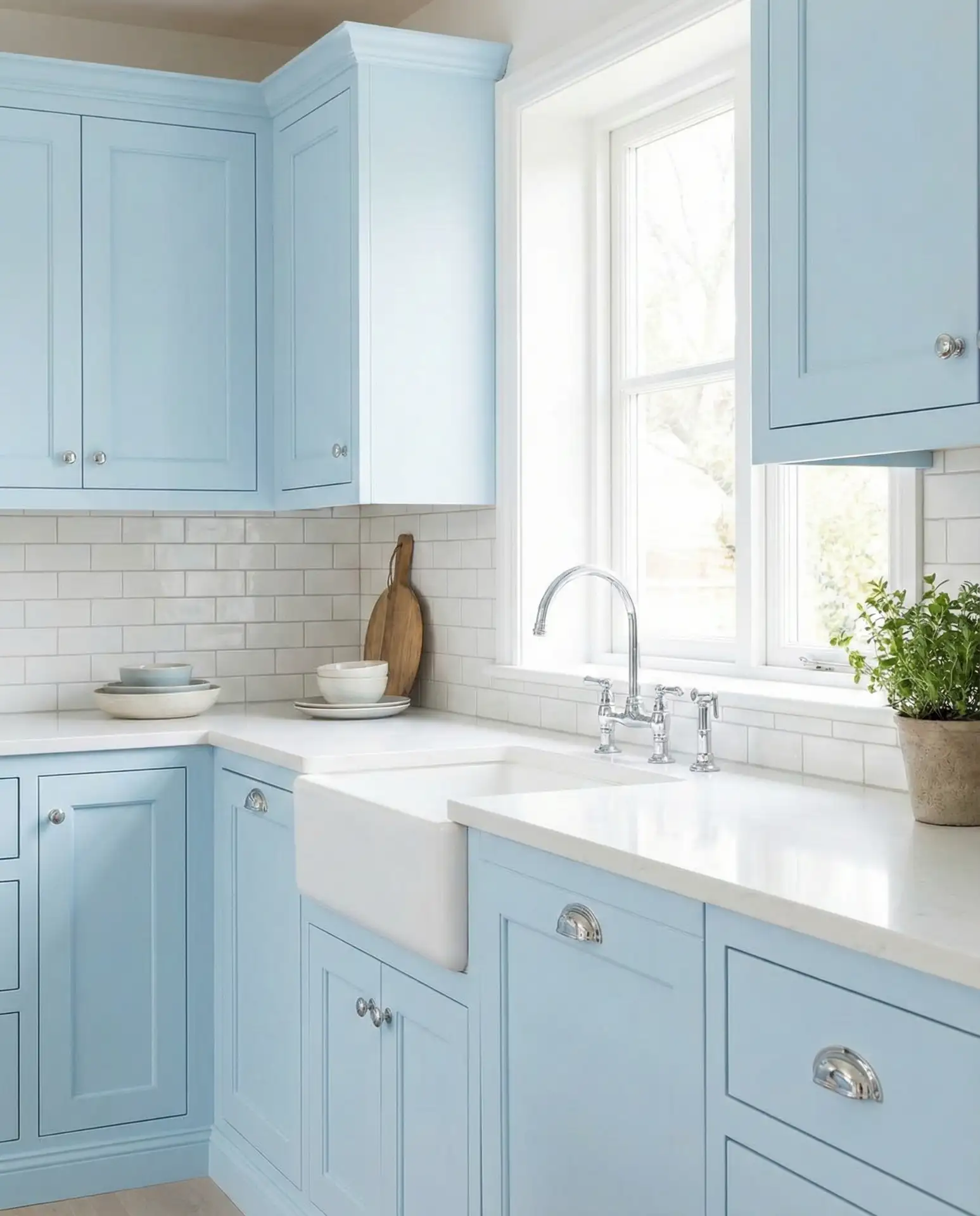
A sky blue kitchen brings the cheerful clarity of a perfect spring morning into your home, creating a space that feels perpetually bright and optimistic. This lighter shade works beautifully with a classic white subway tile backsplash—a combination that’s been popular in American kitchens for over a century but still feels fresh. The pairing is especially effective in smaller kitchens or those with limited natural light, where darker blues might feel too heavy.
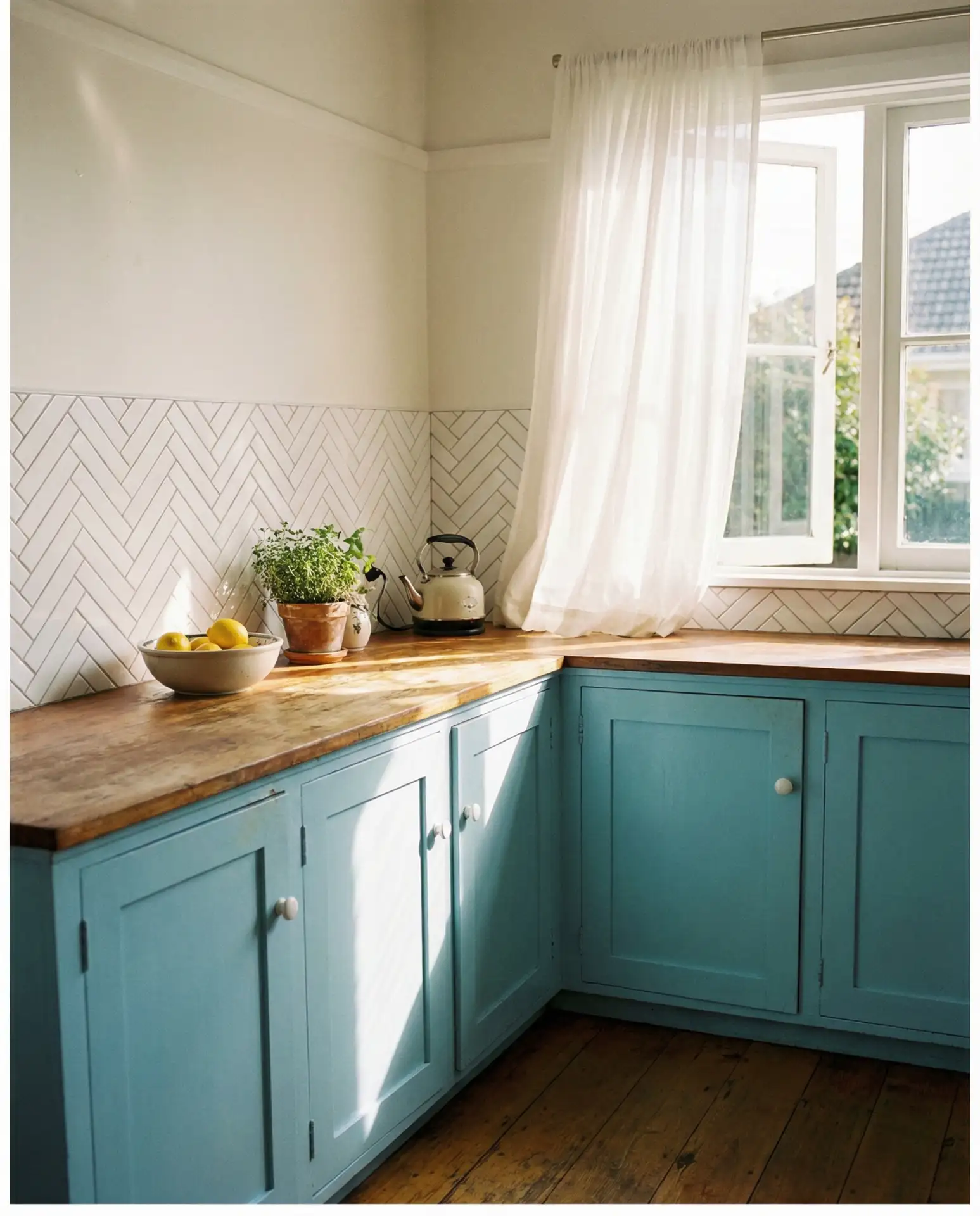
This color scheme is beloved in beach communities from the Carolinas to Southern California, where the blue echoes coastal skies and the white tile suggests ocean foam. Even inland, the combination creates a vacation-house feel that makes everyday cooking feel a bit more special. The key is choosing a sky blue that’s saturated enough to read as blue rather than baby blue or powder blue—you want color with clarity, not a nursery pastel.
12. Blue and Yellow Kitchen Color Blocking
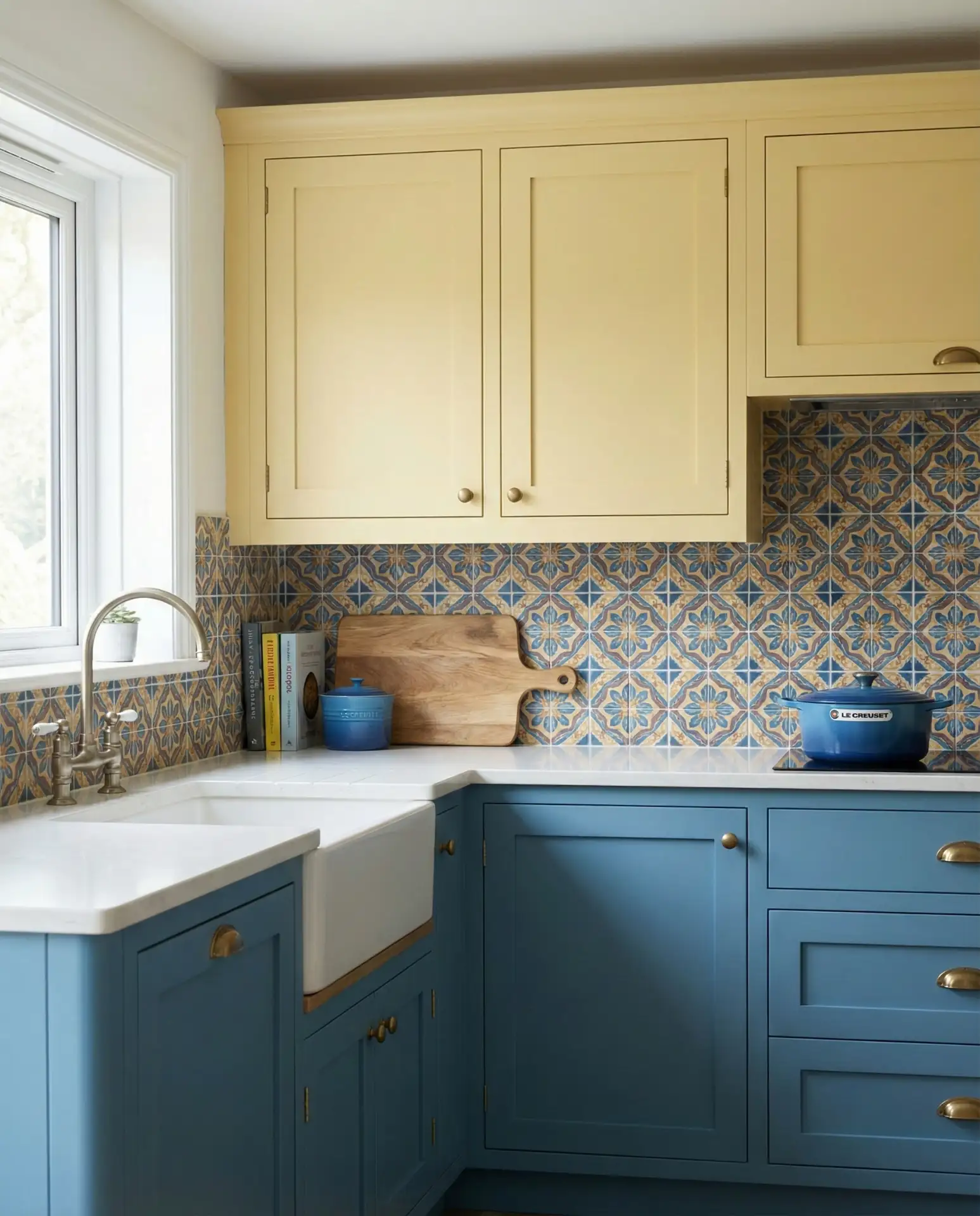
The complementary pairing of yellow and blue creates a kitchen that’s energetic without being overwhelming, perfect for homeowners who want something genuinely unique. This isn’t about matchy-matchy coordination but rather about using the two colors in distinct zones—perhaps blue lower cabinets with yellow uppers, or a blue island in a kitchen with yellow walls. The combination has a slightly retro, Mediterranean quality that feels joyful and sun-soaked.
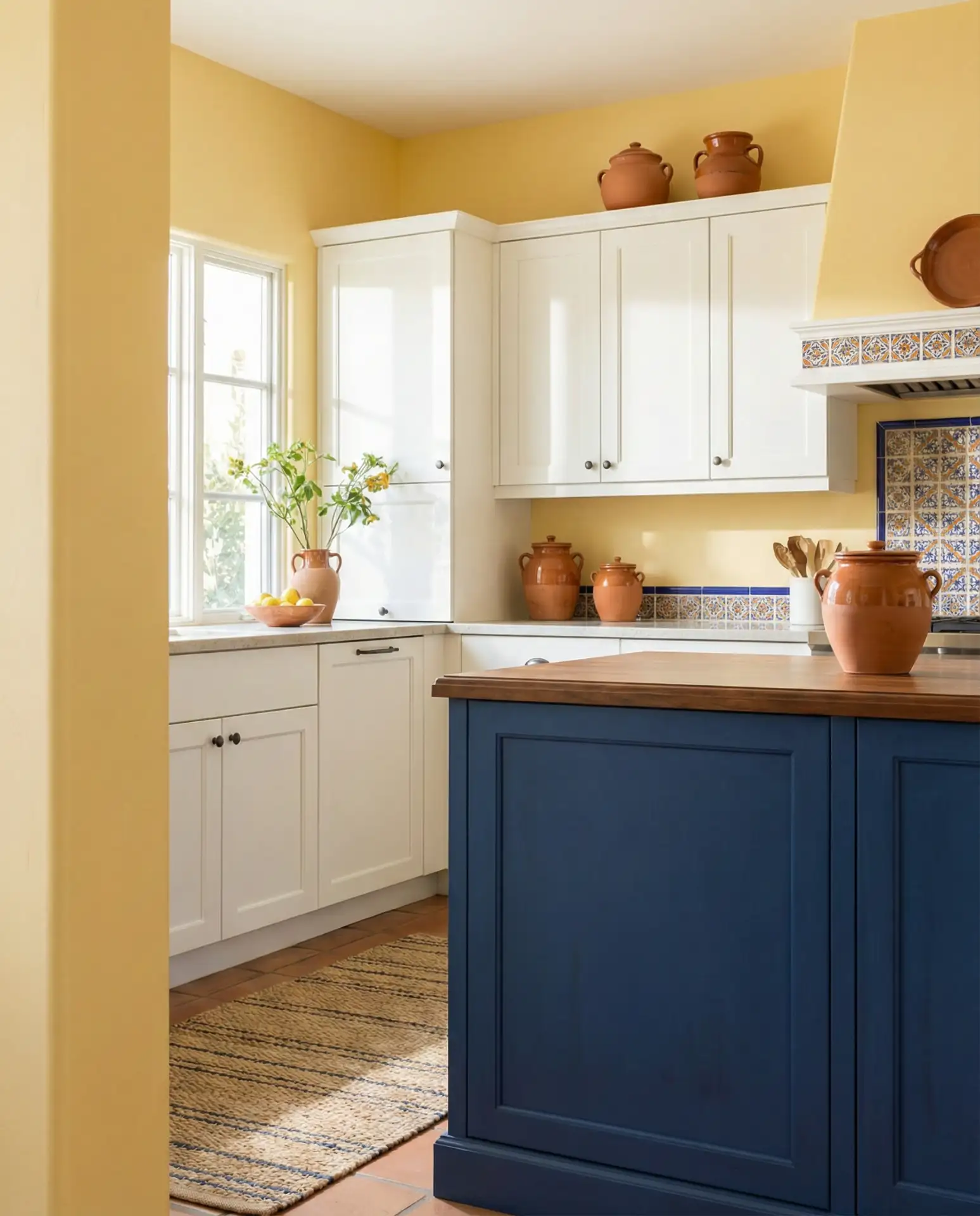
A common mistake with this color combination is choosing shades that are too saturated or too similar in value—you’ll end up with a space that vibrates unpleasantly. Instead, pair a muted blue with a soft, creamy yellow, or go bold with navy and bright lemon but separate them with plenty of white. The safest approach is to use one color as the dominant and the other as an accent, rather than trying to balance them 50-50, which can feel chaotic.
13. Blue and Grey Modern Minimalist Kitchen
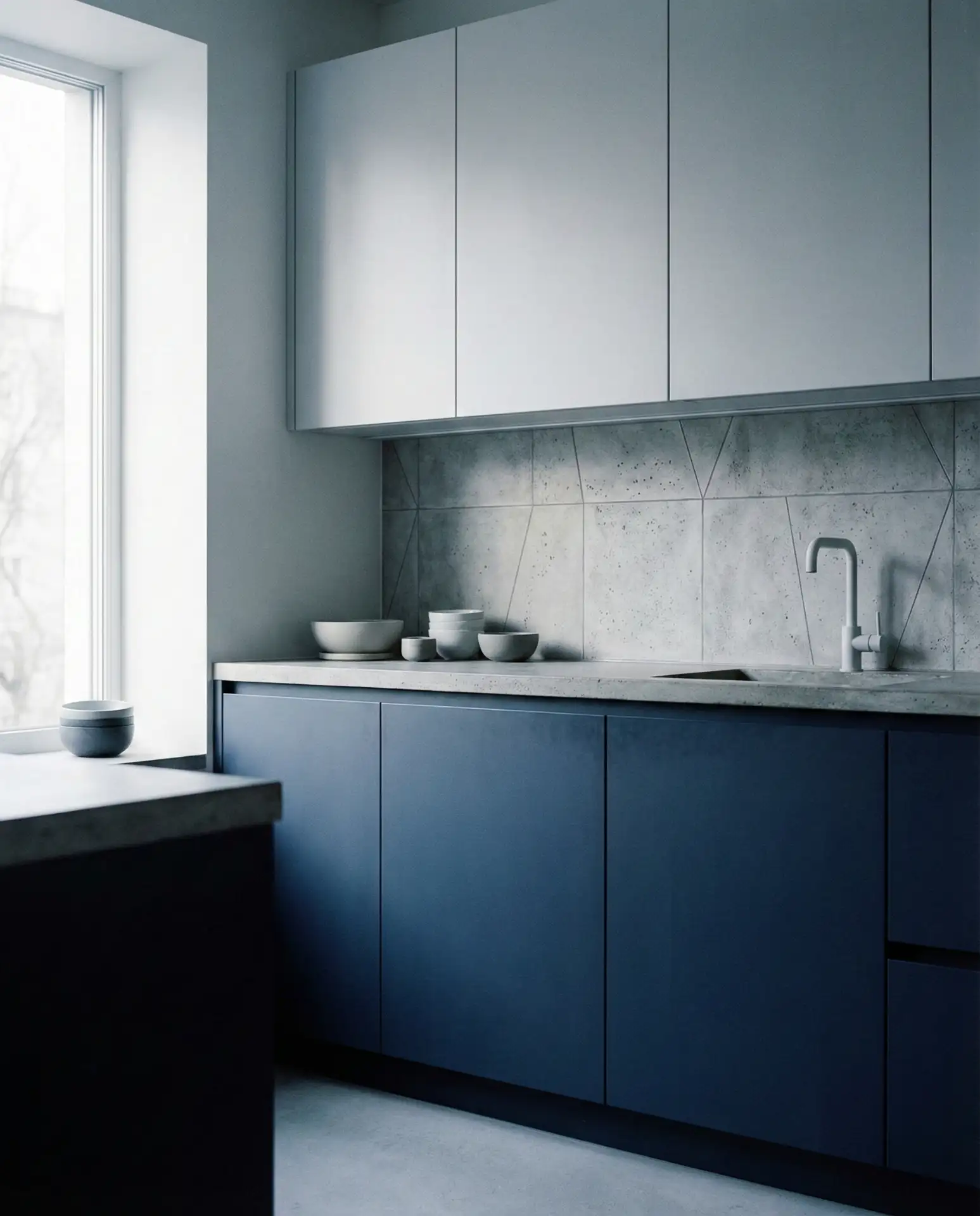
The sophisticated pairing of grey and blue creates a modern kitchen that’s cool-toned without feeling cold, perfect for contemporary and minimalist interiors. Think blue-gray cabinets paired with concrete-look countertops, stainless appliances, and minimal hardware for a streamlined aesthetic. This combination is popular in urban apartments and modern suburban homes where clean lines and a monochromatic palette create a sense of calm.
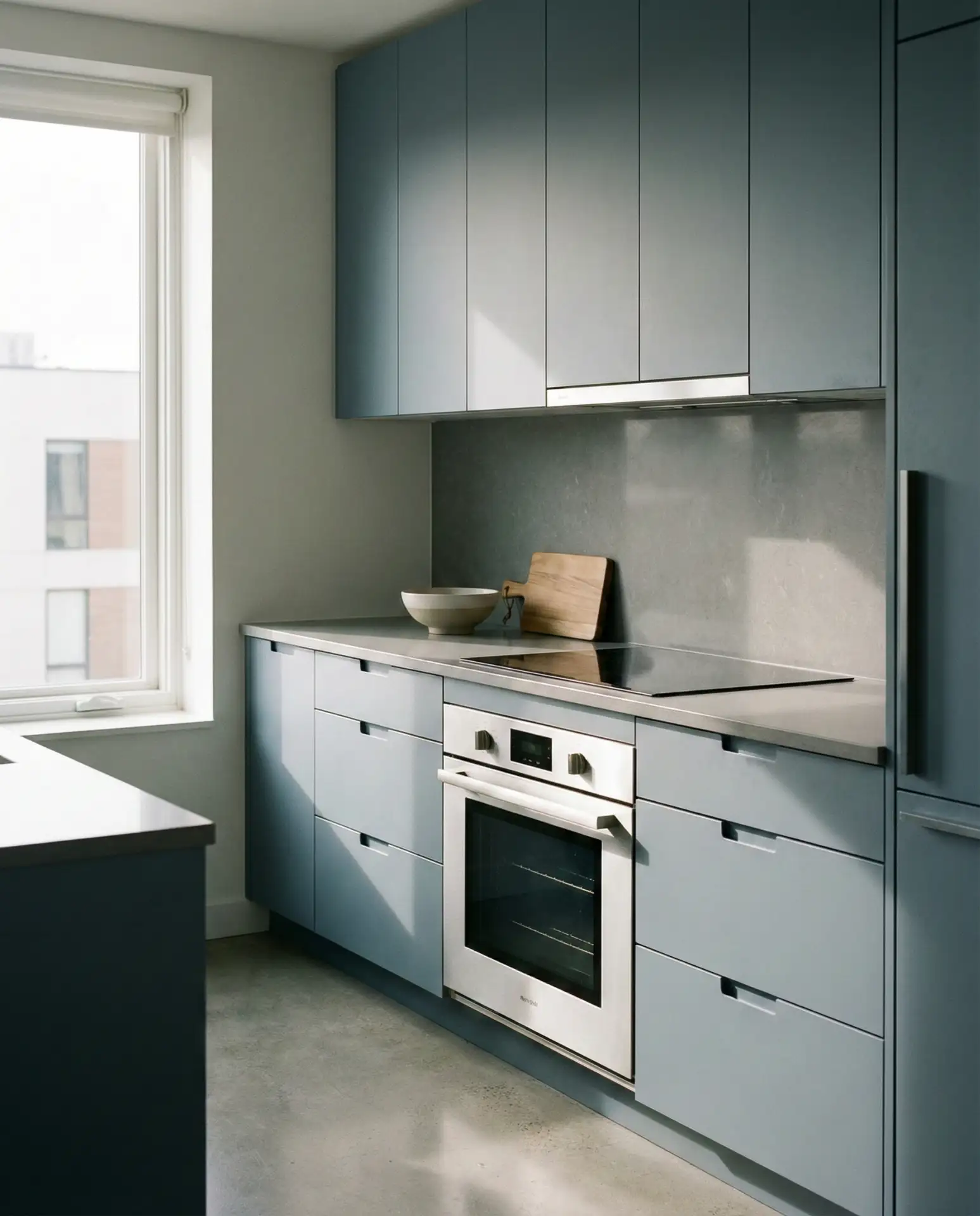
In major metros like New York, San Francisco, and Seattle, where condo and apartment kitchens are often compact, this cool palette helps small spaces feel larger and more open. The trick is to include enough variation in tone and texture—say, matte cabinets, glossy backsplash, and natural stone counters—so the space doesn’t feel flat or one-dimensional. Adding warm wood floors or a single walnut cutting board provides just enough contrast to keep things from feeling too clinical.
14. Powder Blue Kitchen with Vintage Details
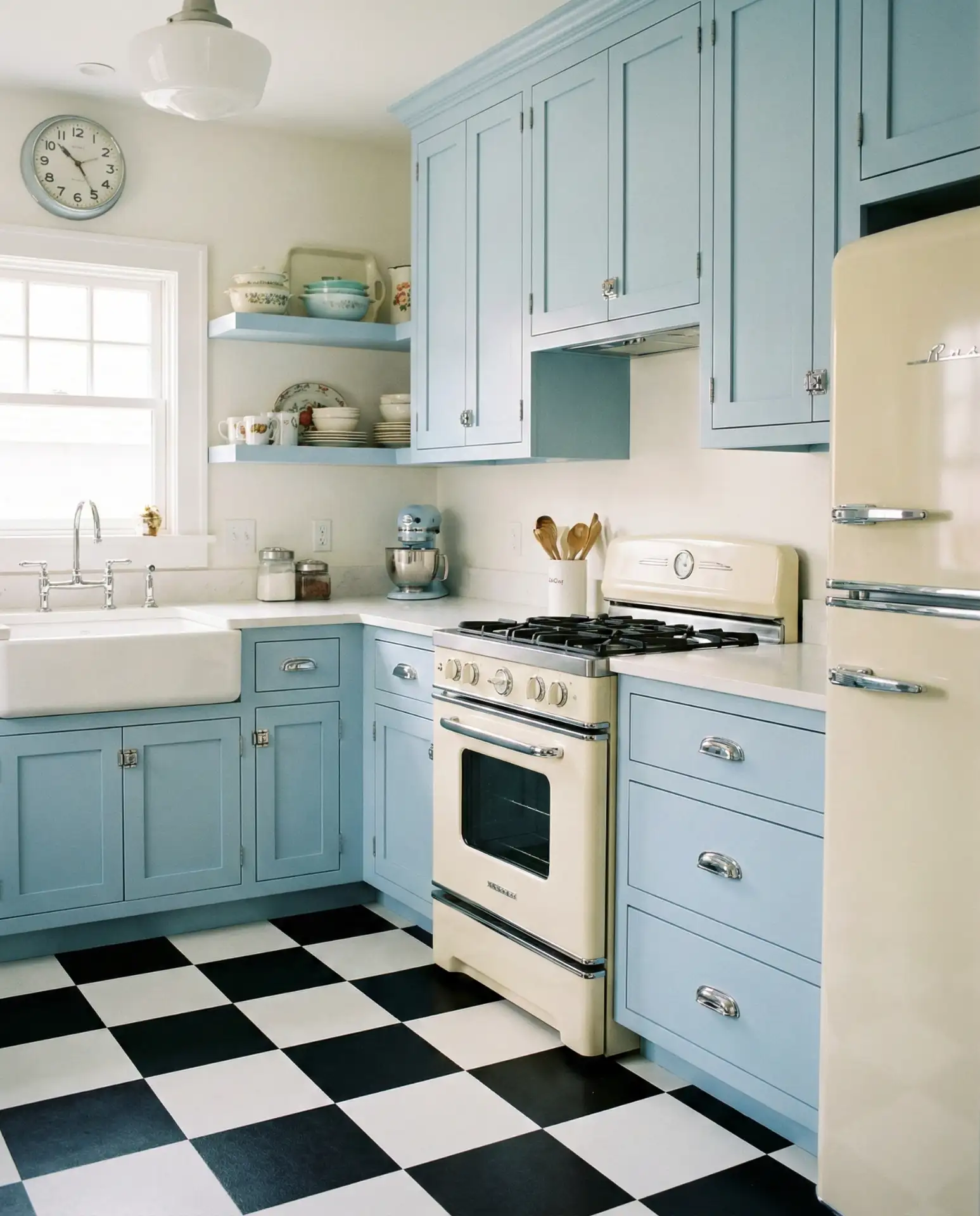
Powder blue cabinetry paired with vintage or vintage-inspired details creates a kitchen that could have existed in the 1950s but feels completely relevant today. Think chrome fixtures, checkerboard floors, and retro-style appliances in a space anchored by soft blue cabinets. This aesthetic appeals to homeowners who love mid-century design but want something more personal than the typical wood-toned MCM kitchen.
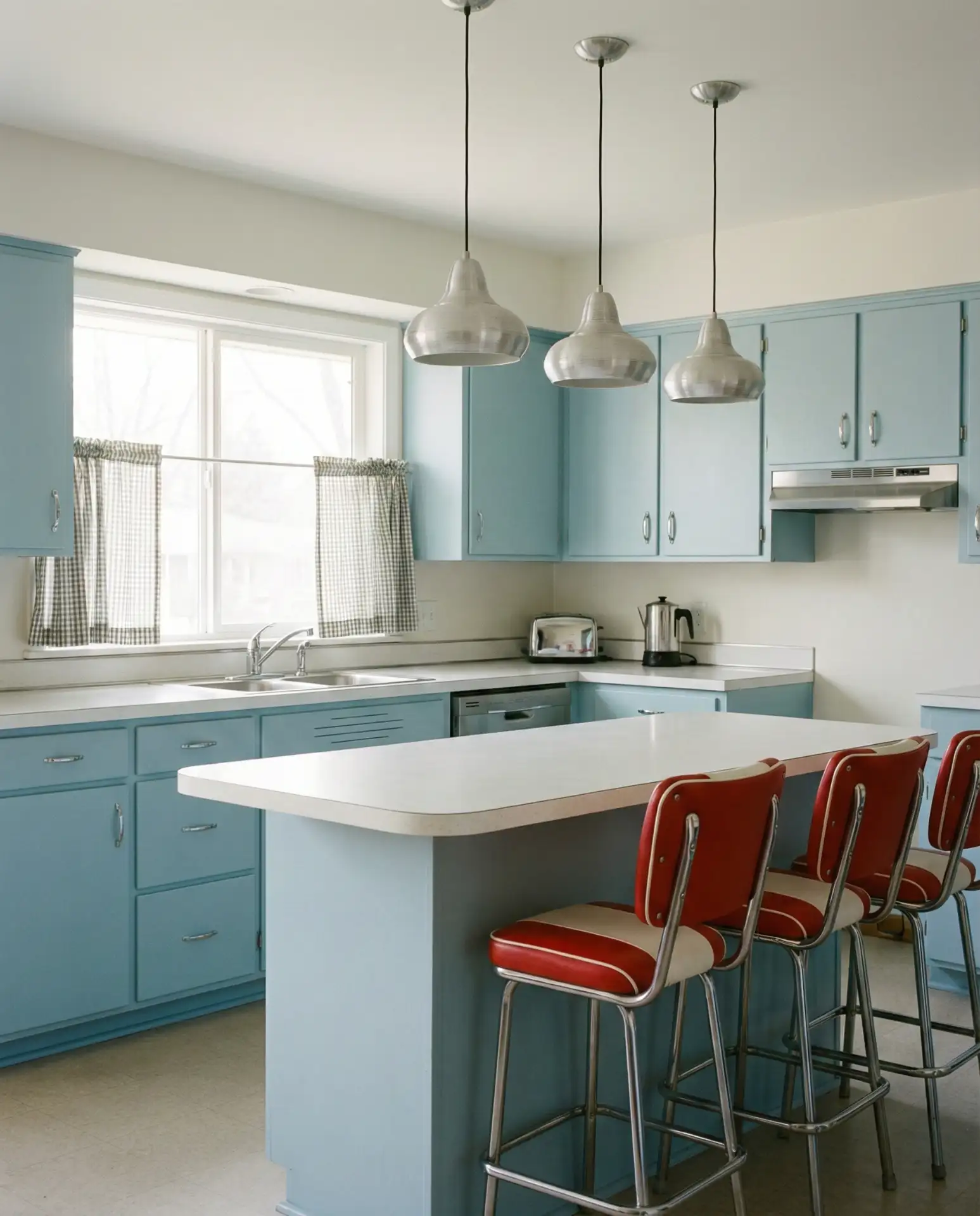
Homeowners attempting this look often find that true vintage appliances are charming but unreliable, so they opt for modern appliances with retro styling—brands like Big Chill and Smeg offer refrigerators, ranges, and dishwashers that look period-appropriate but have contemporary energy efficiency and features. A vintage-look fridge runs $3,000-5,000, which is actually competitive with high-end standard models, making it a reasonable splurge if this aesthetic is what you truly want.
15. Cornflower Blue Kitchen with Brass and Marble
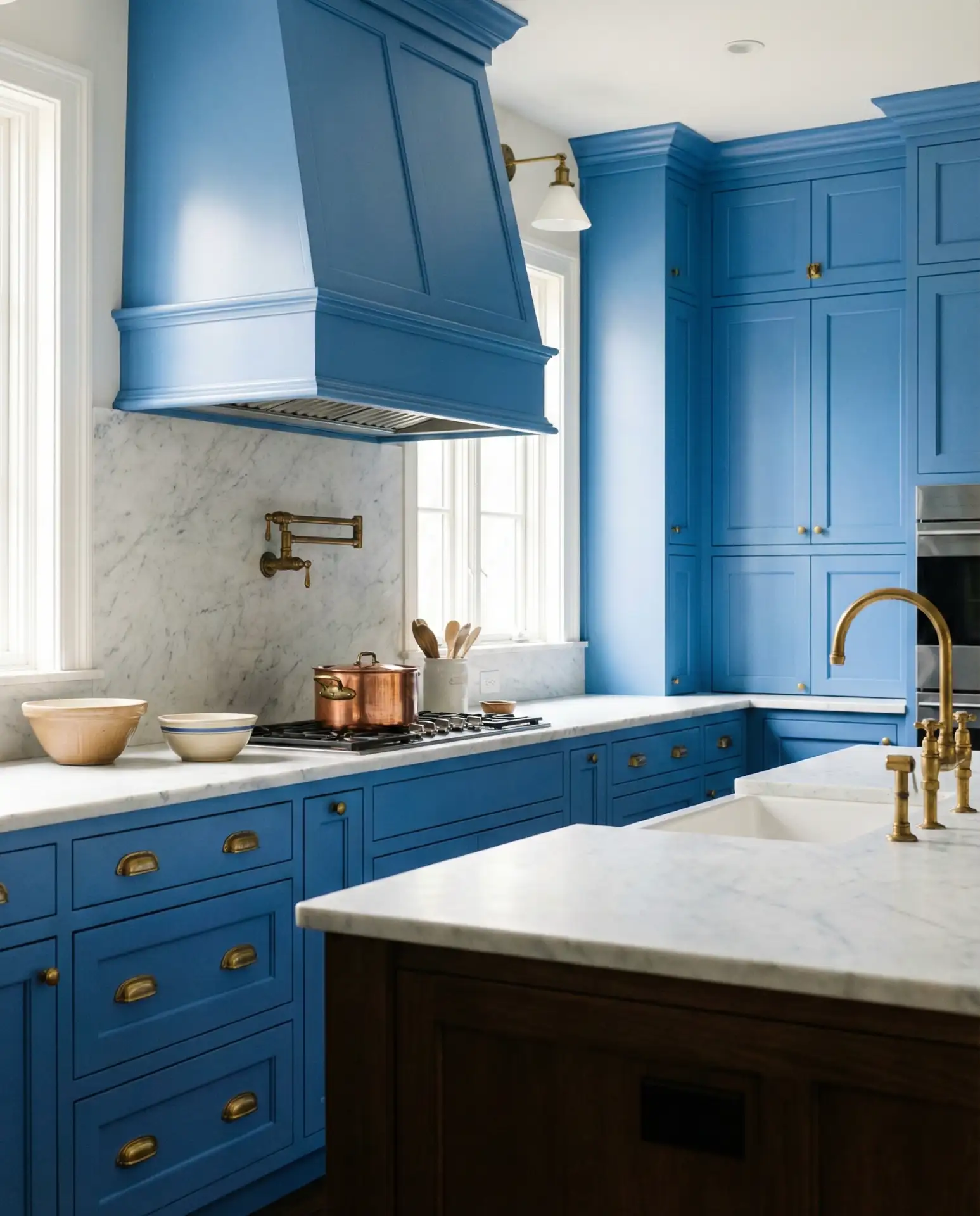
Cornflower blue sits beautifully between sky blue and navy, offering a clear, vibrant color that feels both classic and contemporary. When paired with warm brass fixtures and white marble countertops, it creates a luxe traditional kitchen that doesn’t feel stuffy or overly formal. This combination is particularly popular in historic homes being renovated with respect for their original character but updated for modern living.
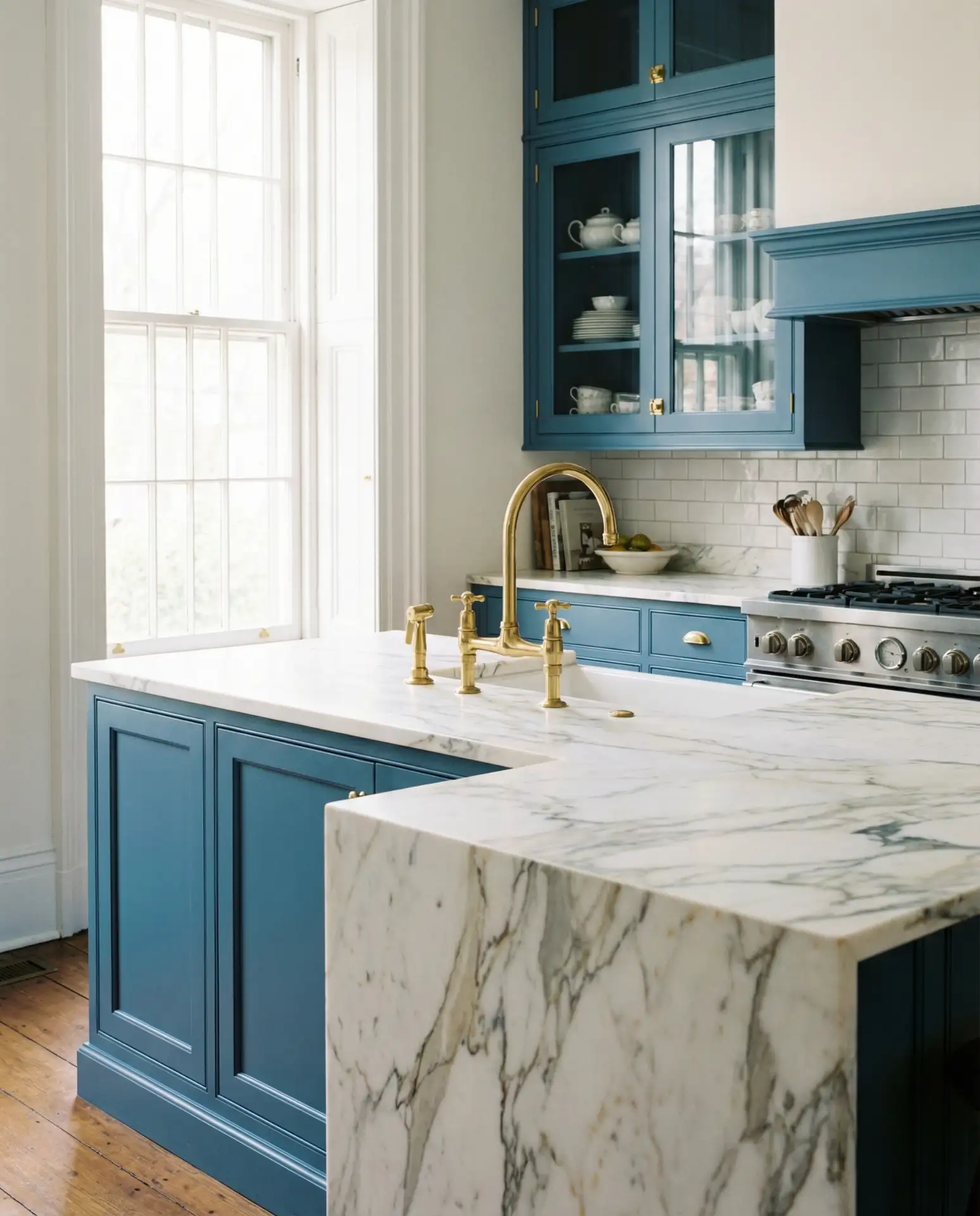
From a design perspective, cornflower blue is interesting because it reads as a “true” blue—not veering toward green, purple, or gray—which makes it surprisingly versatile. It works in both warm and cool color schemes, looks good with both warm and cool whites, and doesn’t clash with most wood tones. This versatility means you’re less likely to regret the color choice in five years when trends shift, making it a smart investment for a kitchen renovation.
16. Blue and Green Kitchen with Natural Light
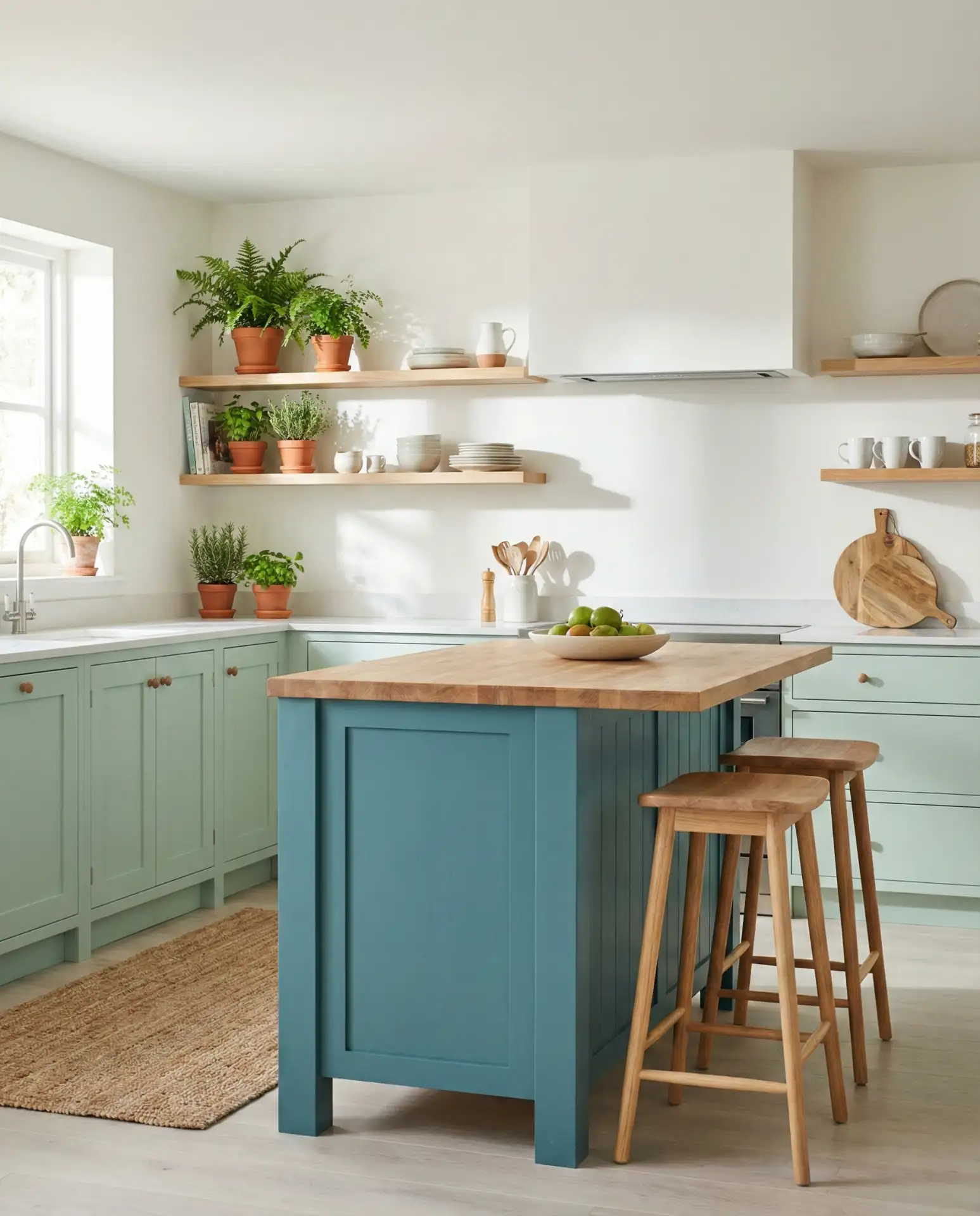
Combining green and blue creates an unexpected palette that feels organic and nature-inspired, particularly effective in kitchens with views of gardens or landscapes. This could mean blue cabinets with a green tile backsplash or alternating blue and sage green cabinets for a cottage garden effect. The key is choosing shades that share similar saturation and value so they feel harmonious rather than jarring.
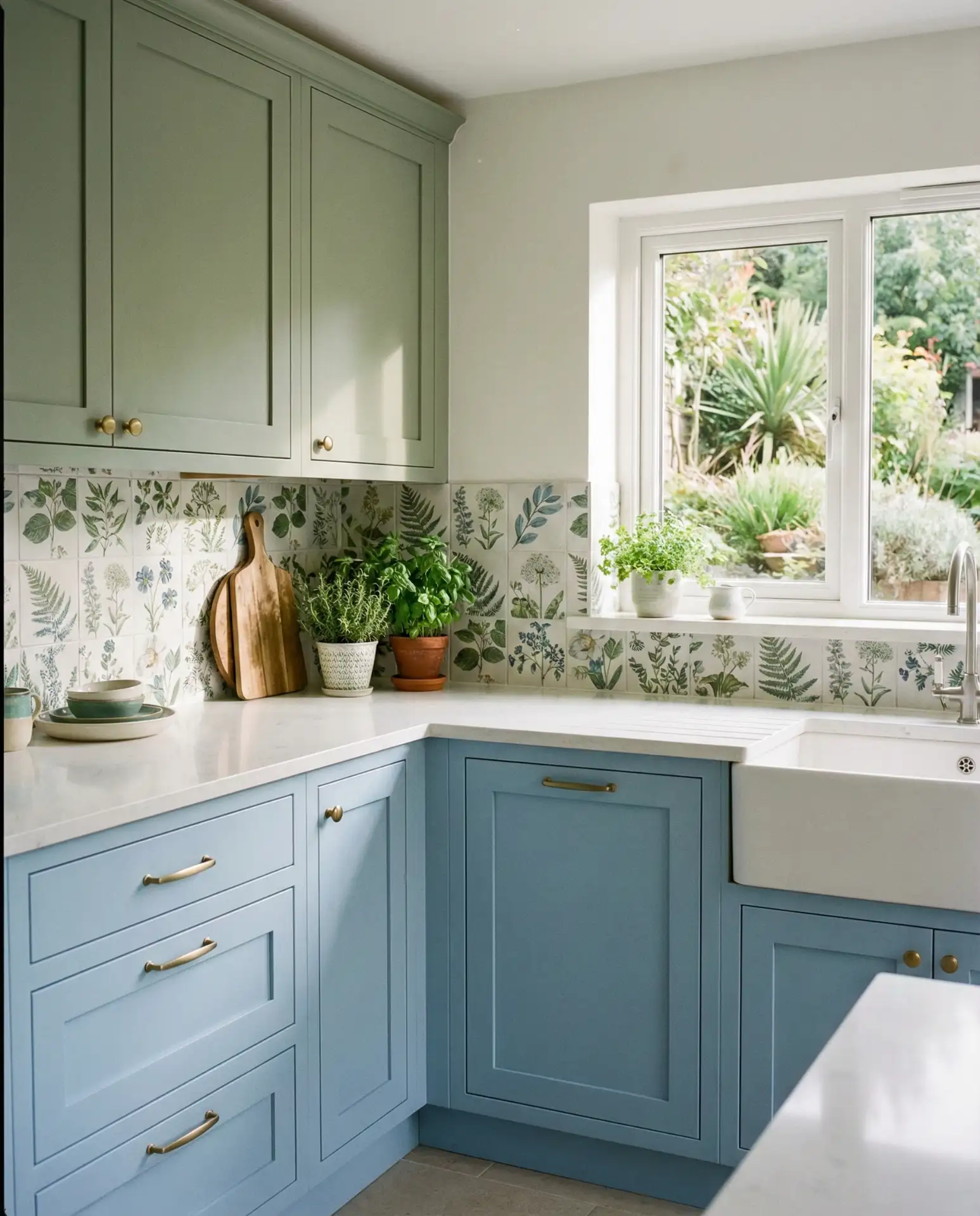
This color scheme works best in kitchens with southern or western exposure, where abundant natural light can bring out the nuances in both colors. In dimmer kitchens, the blue and green can muddy together and lose their individual character. If you’re working with limited light, consider using one color on cabinets and the other in accessories, tile, or paint that can be easily changed if it doesn’t work as planned.
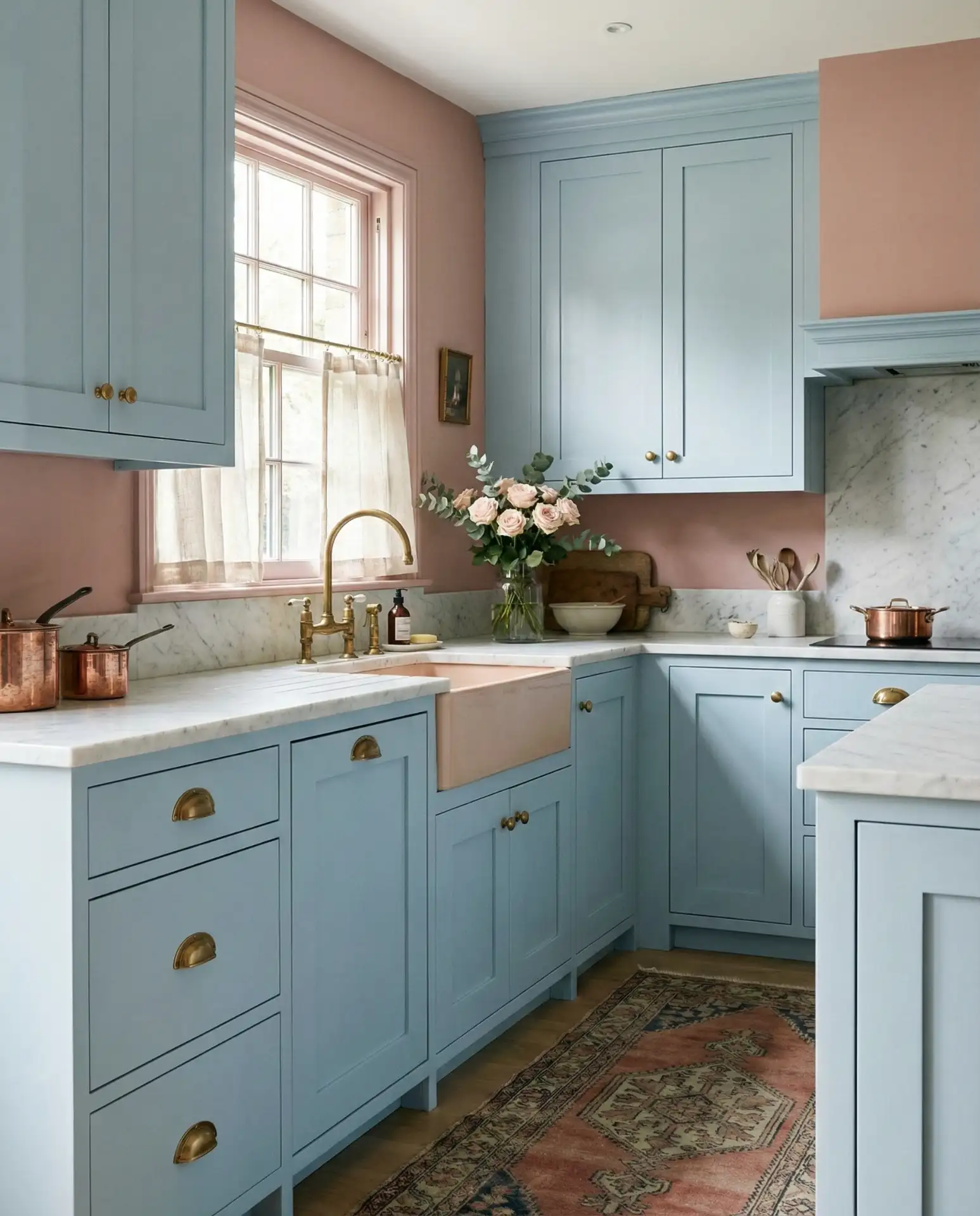
17. Pink and Blue Kitchen Pastel Combination
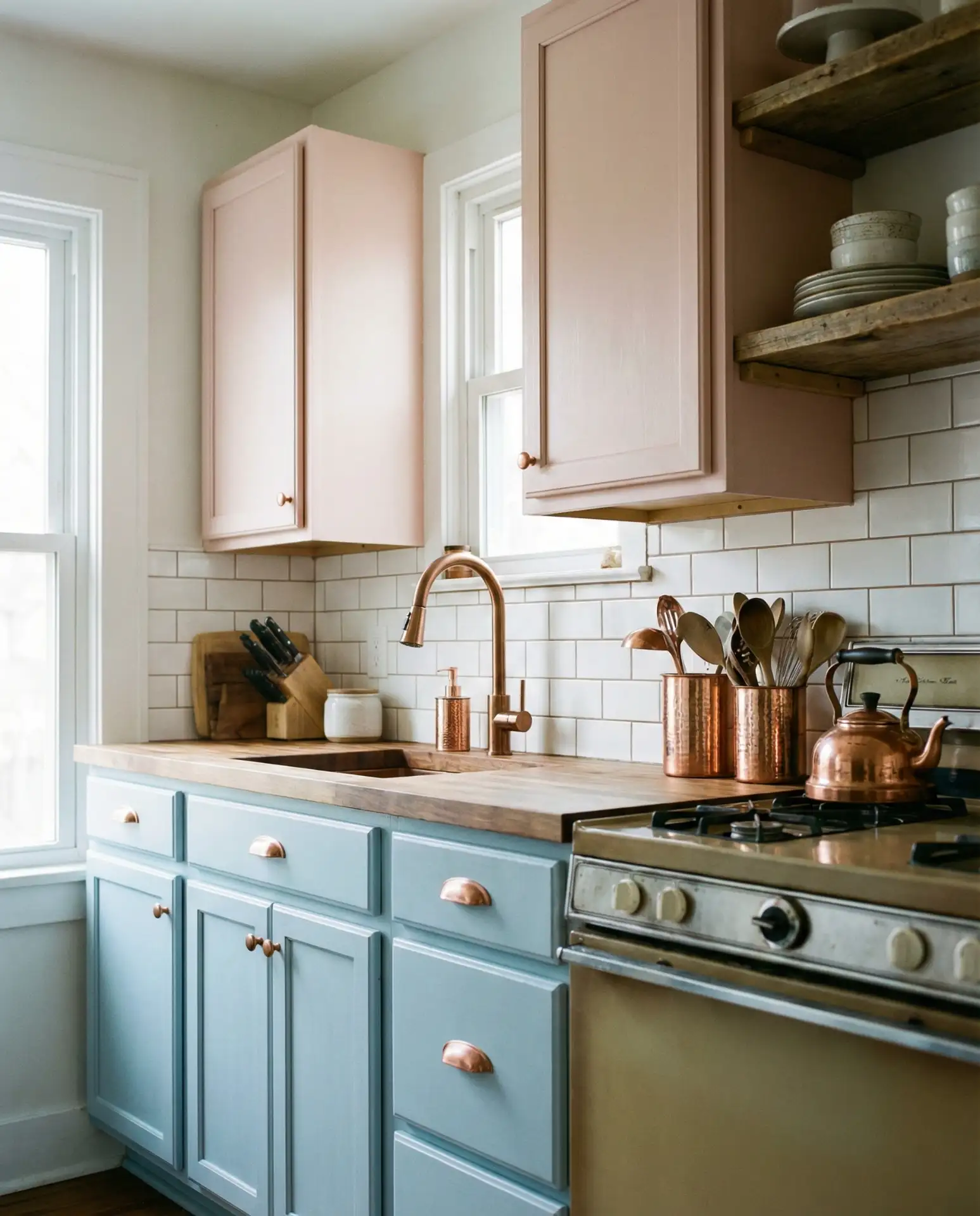
The pink and blue combination might seem risky, but when executed in soft, dusty pastels, it creates a kitchen that’s romantic without being saccharine. Think blush pink walls with powder blue cabinets, or vice versa, unified by white or cream accents and warm brass or copper hardware. This palette is having a moment among homeowners who want something genuinely unique that still feels sophisticated.
Real homeowners who’ve tried this combination emphasize the importance of testing the colors together in your actual space—what looks magical in a Pinterest photo might feel overwhelming in your specific lighting. They recommend painting large poster boards in your chosen colors and living with them propped against the walls for a week, observing how they look at different times of day. Most find that deeper, more saturated versions of pink and blue compete for attention, while pastels blend more harmoniously.
18. Blue and Cream Traditional Kitchen
The timeless pairing of blue and cream creates a traditional kitchen with warmth and character, avoiding the starkness of blue and pure white combinations. Cream-colored countertops, backsplashes, or upper cabinets soften the blue while maintaining a classic feel. This combination works beautifully in colonial, craftsman, or traditional homes where you want a kitchen that feels appropriate to the architecture.
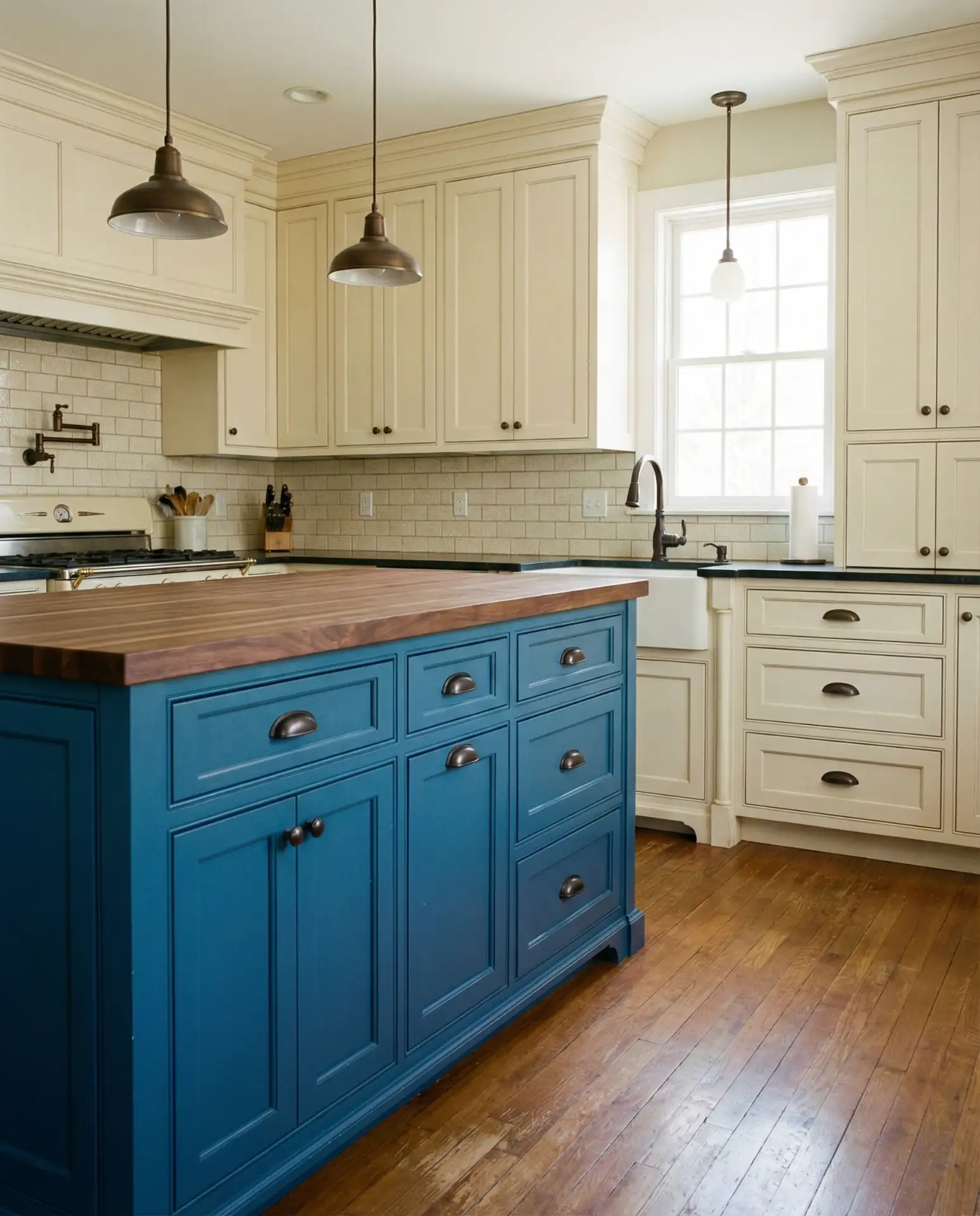
In the South and Northeast, where historic homes are common, designers often recommend cream instead of white because it’s more sympathetic to the warm-toned plaster, wood, and stone found in older houses. Cream also ages more gracefully—it doesn’t show yellowing or dirt as obviously as pure white, which matters in a high-traffic space like a kitchen. The combination of blue and cream feels settled and established rather than newly renovated, which some homeowners prefer.
19. Teal Blue Kitchen with Industrial Elements
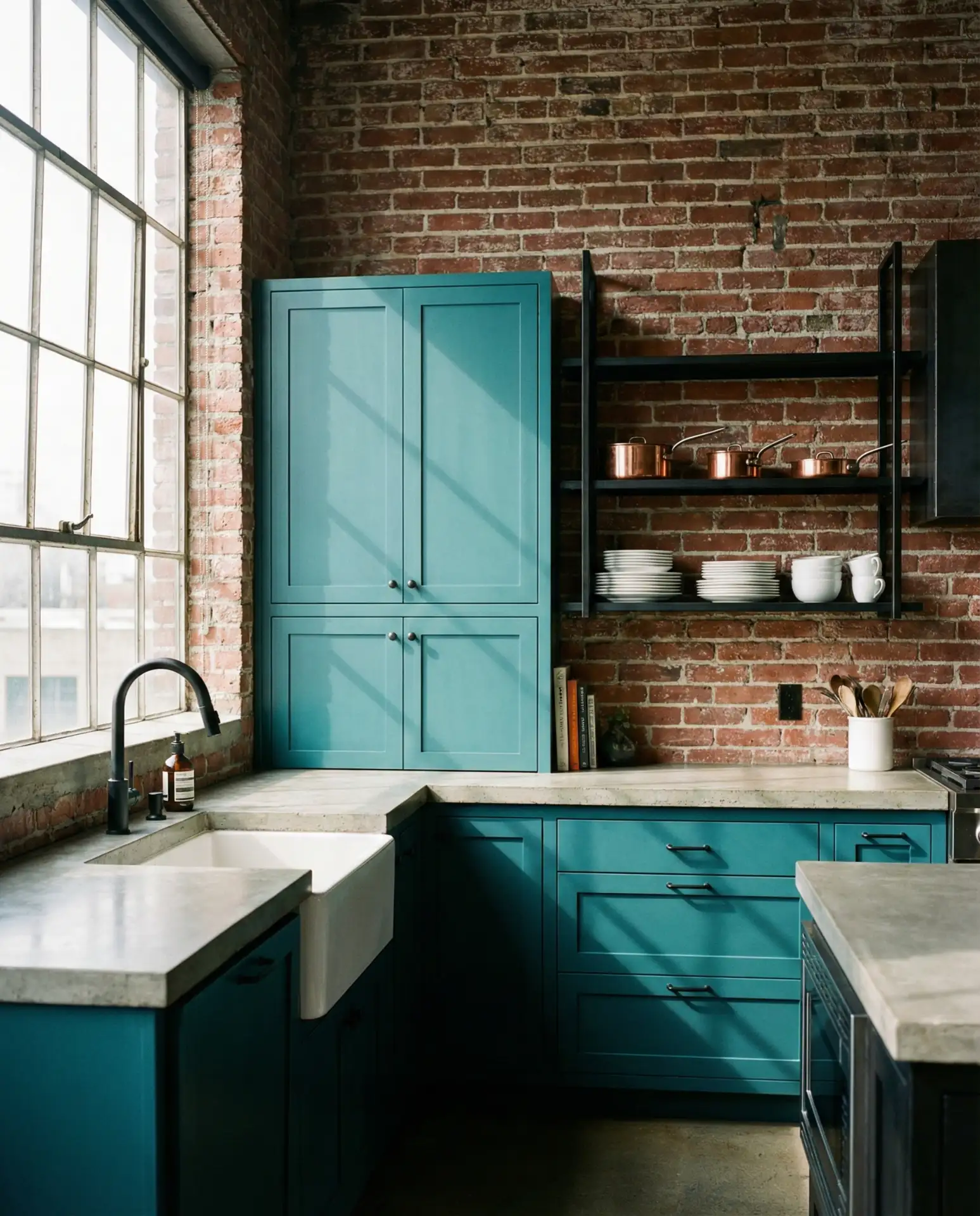
Teal—that blue-green hybrid—brings unexpected depth to industrial-style kitchens with exposed brick, metal fixtures, and concrete or wood counters. This shade works particularly well in loft conversions and urban spaces where you want color but don’t want to soften the raw, architectural character of the space. Pair teal cabinets with matte black hardware, open metal shelving, and Edison-style lighting for a look that’s both edgy and approachable.
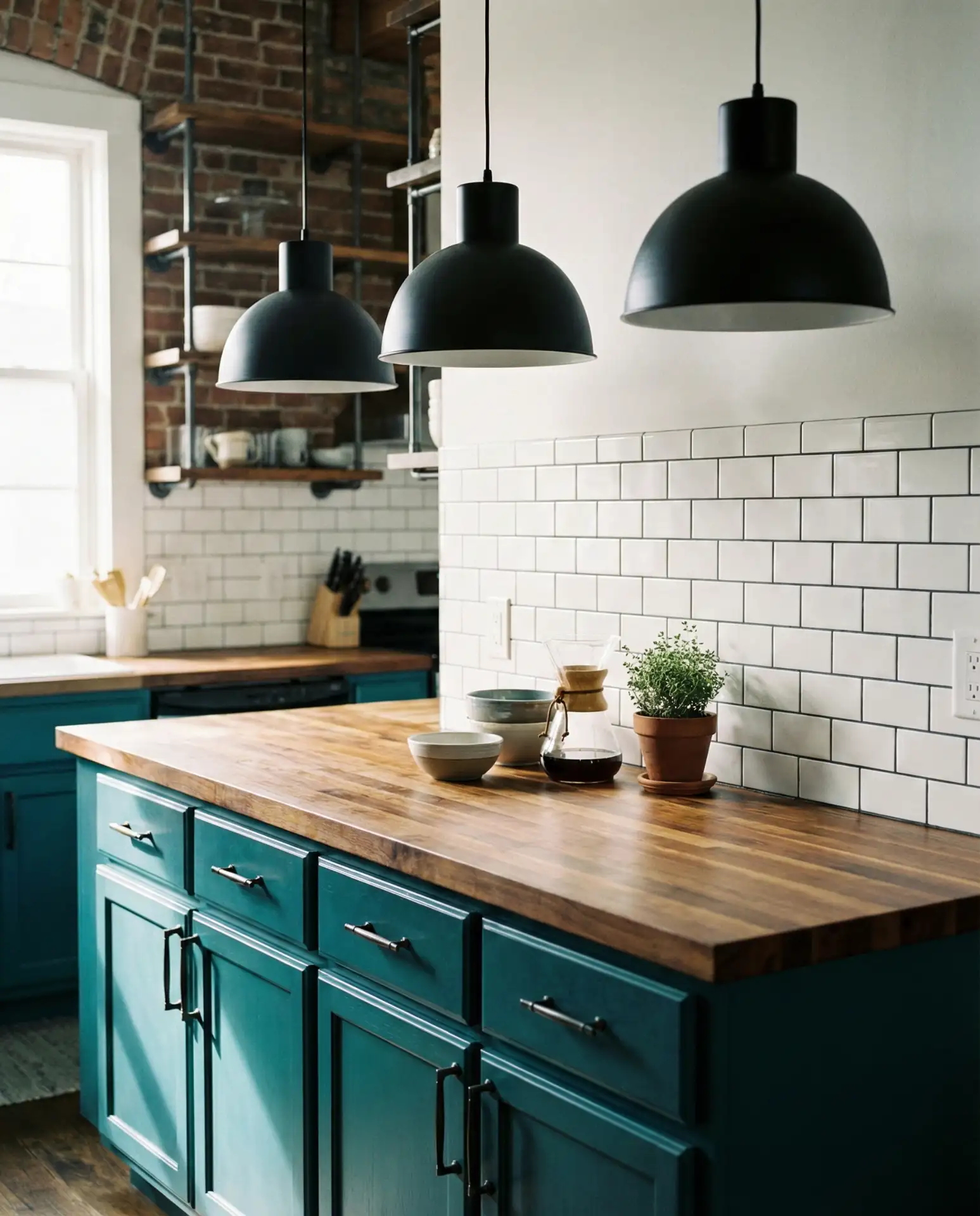
One practical insight about teal in kitchens: it’s one of the few bold colors that doesn’t clash with stainless steel appliances, making it a good choice if you’re not ready to invest in panel-ready or colored appliances. The blue-green undertones actually complement the cool gray of stainless, whereas warmer colors can make stainless look cheap or out of place. This makes teal a relatively low-risk option for homeowners who want color but are working with existing stainless appliances.
20. Blue Beadboard Kitchen with Coastal Style
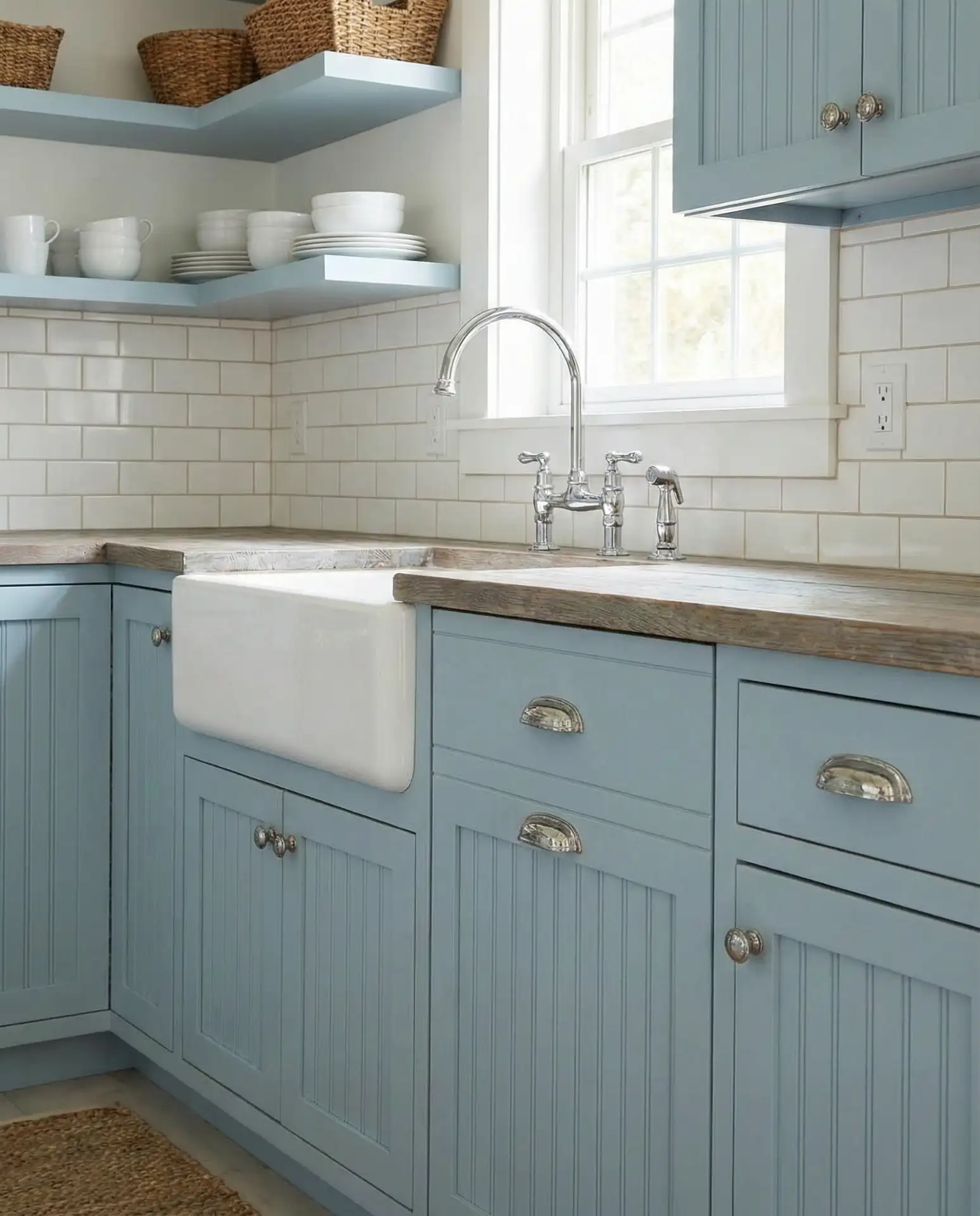
Beadboard cabinetry painted in soft blue creates an instantly coastal kitchen that feels relaxed and vacation-ready. This cottage-style detail adds texture and visual interest while reinforcing the casual, comfortable aesthetic that defines coastal design. Pair with open shelving, white countertops, and nickel or chrome hardware for a look that works from Cape Cod to the Gulf Coast.
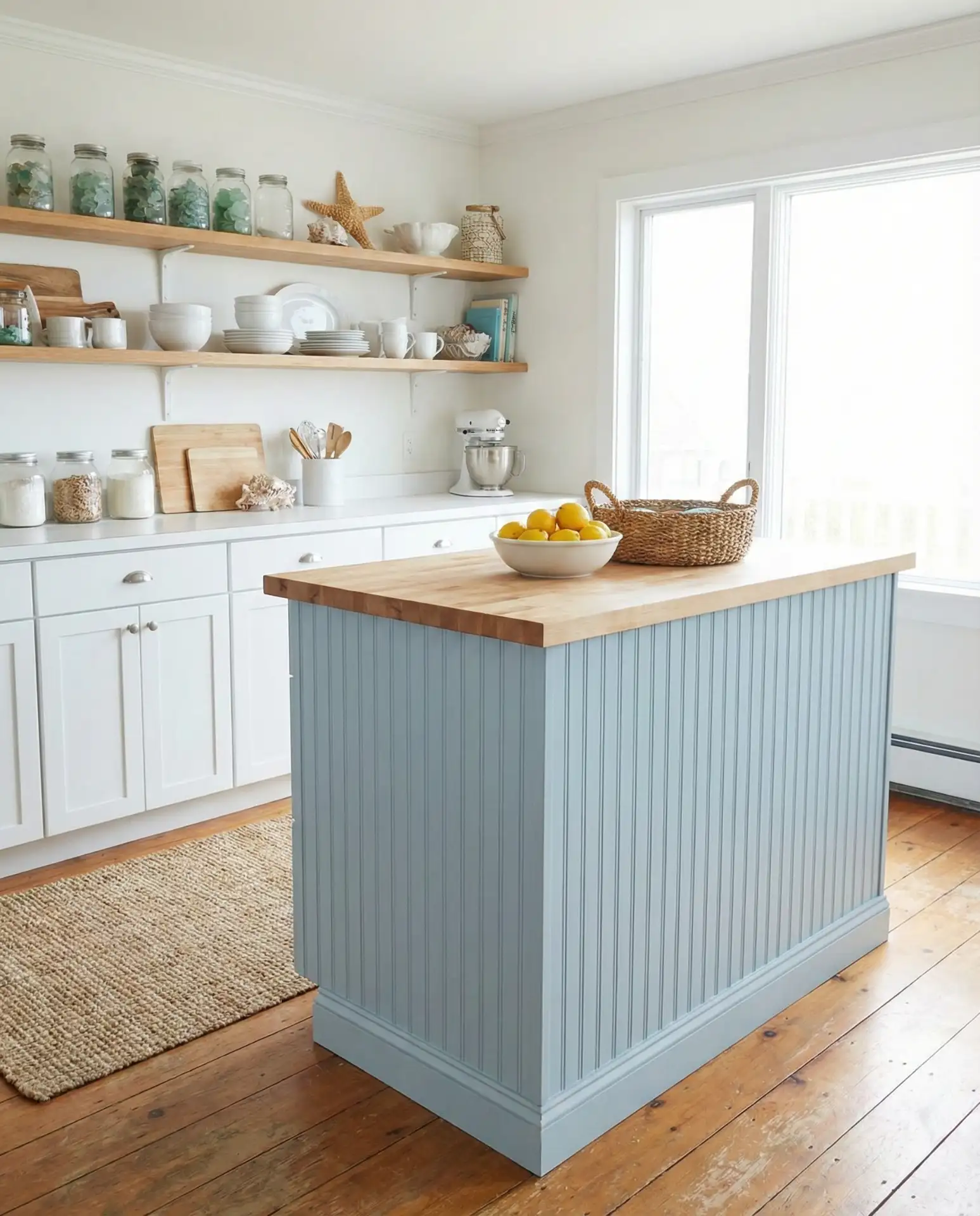
A designer working primarily in beach communities once shared that beadboard cabinets are actually more durable than flat-panel in sandy, salty environments because the grooves hide wear better than smooth surfaces. The texture means you don’t notice every little ding or scratch the way you would on a perfectly smooth painted surface. For families with kids and pets—especially in vacation homes that get heavy use—this practical benefit matters as much as the aesthetic appeal.
21. Slate Blue Kitchen with Modern Farmhouse Style
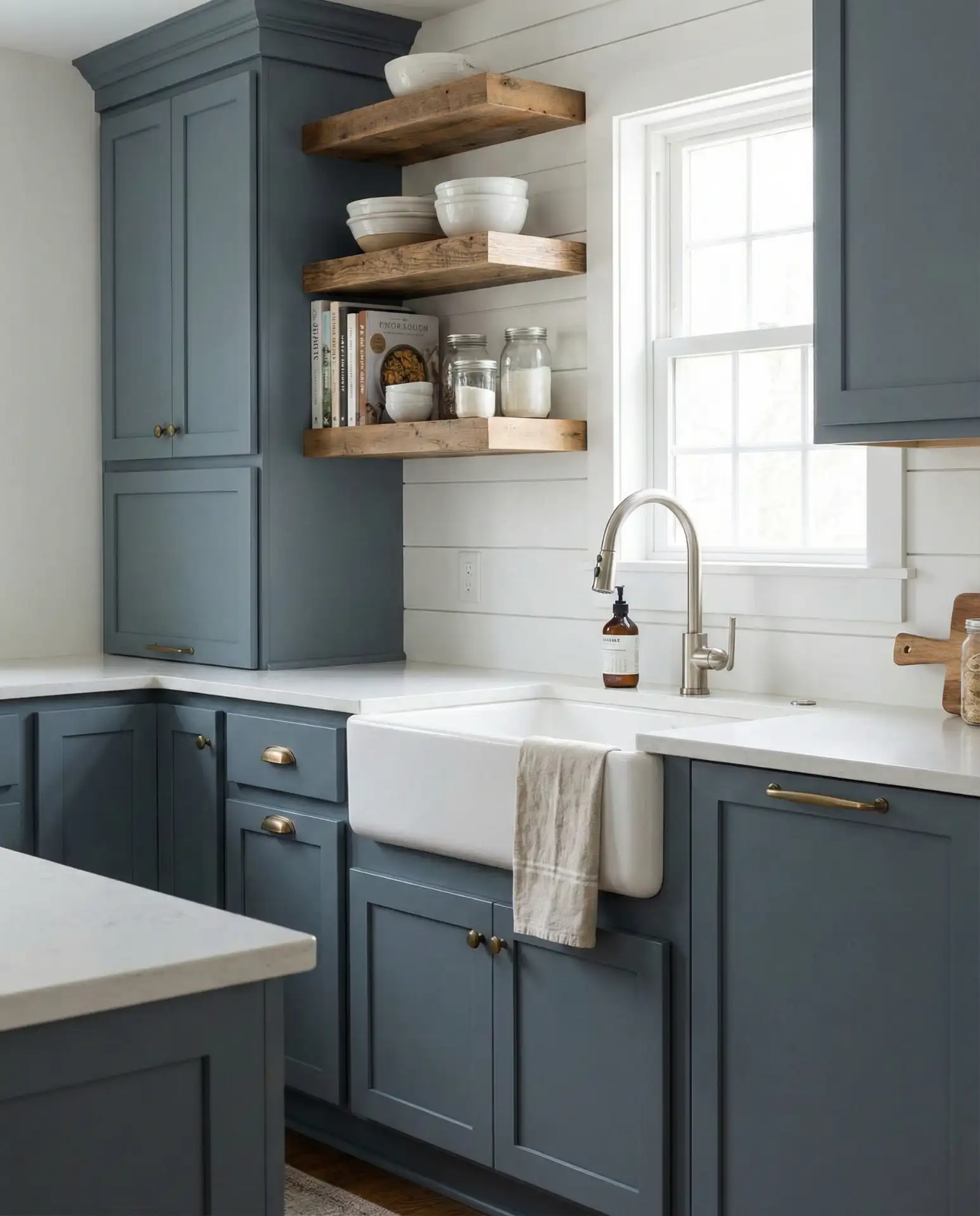
Slate blue—a sophisticated gray-blue—anchors the modern farmhouse kitchen with a color that’s more complex than standard navy or powder blue. This shade pairs beautifully with the signature elements of farmhouse style: apron-front sinks, open shelving, shiplap or plank walls, and mixed metals. It provides the color punch that modern farmhouse needs while maintaining the style’s emphasis on warmth and livability.
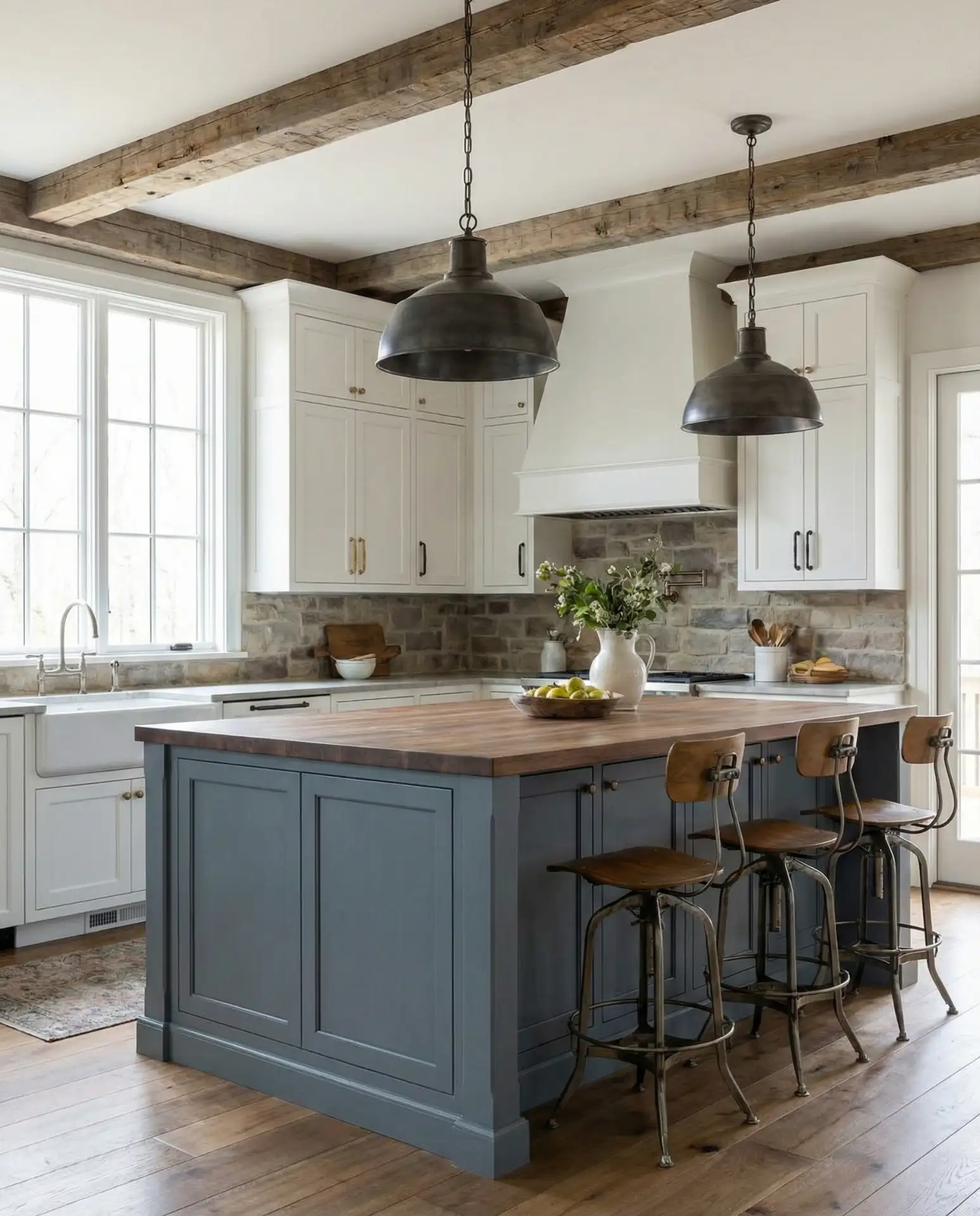
In rural areas and small towns across the Midwest and South, where modern farmhouse style dominates new construction and renovations, slate blue has emerged as the go-to alternative to the all-white kitchen. It provides visual interest without feeling too bold or urban for these more conservative markets. Local cabinet shops report that slate blue is now requested almost as often as white or gray, signaling a real shift in what American homeowners want in their kitchens.
22. Periwinkle Blue Kitchen with Eclectic Mix
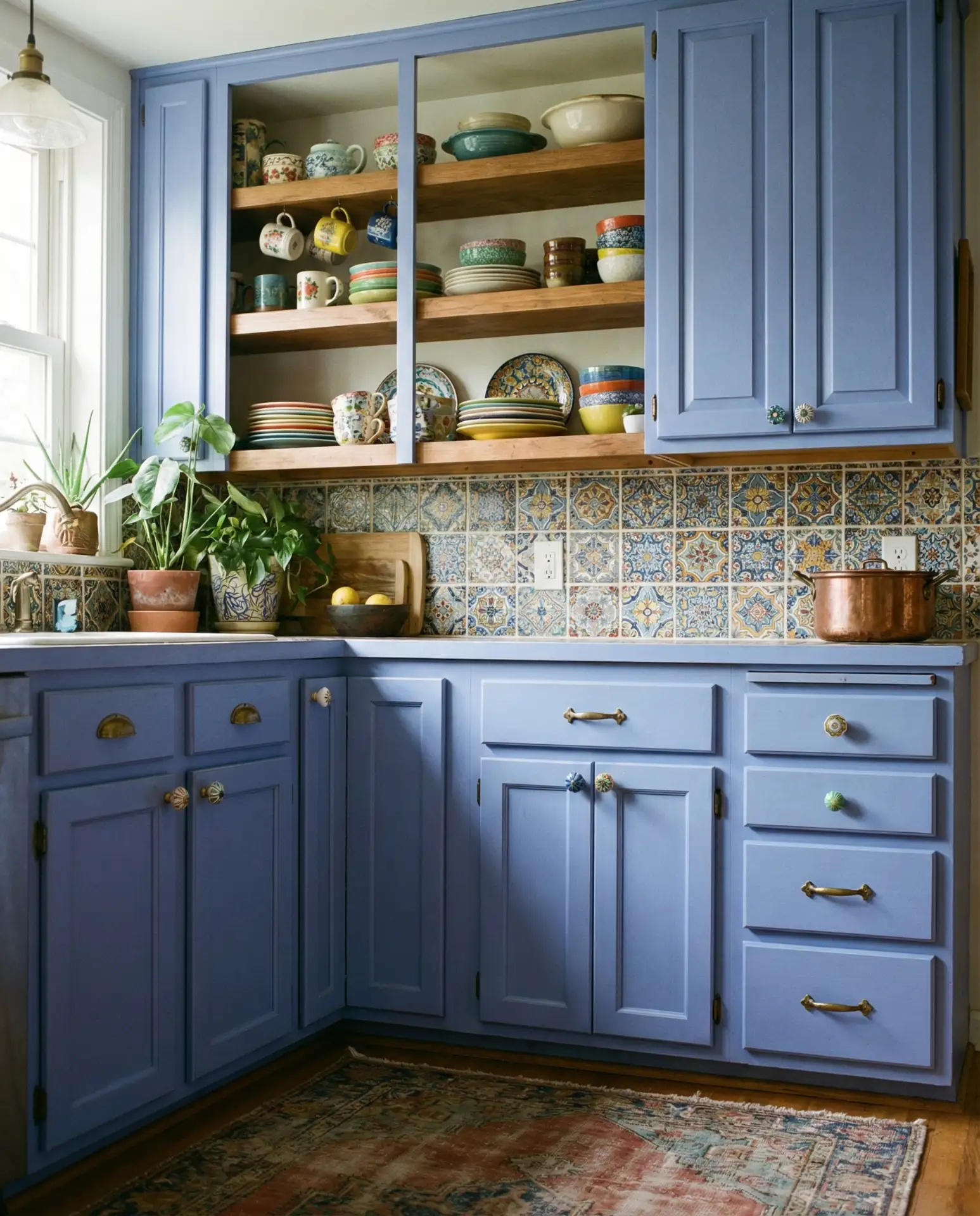
Periwinkle—that purple-tinged blue—creates a kitchen that’s playful and personal, perfect for homeowners who embrace an eclectic, collected-over-time aesthetic. This shade works with mixed cabinet styles, varied hardware, open shelving displaying colorful dishware, and a general sense of “more is more.” It’s the antithesis of the minimal modern kitchen, celebrating personality and individuality instead.
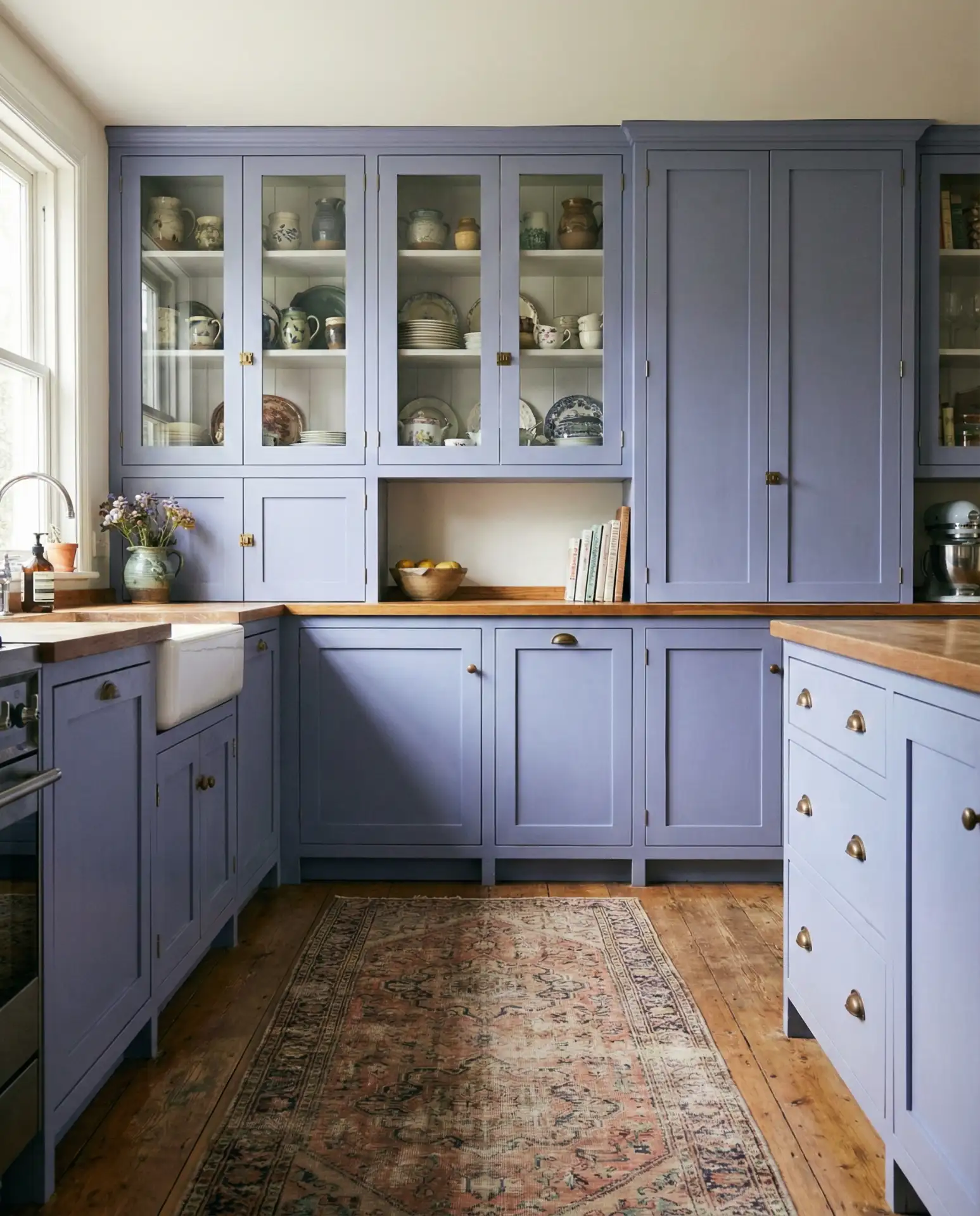
Homeowners who choose periwinkle tend to be confident in their personal style and less worried about resale value or what’s currently trending. They’re creating kitchens for themselves, not for a theoretical future buyer, which often results in spaces with genuine character and warmth. If this describes you, periwinkle might be your color—just make sure you’re committed, as this isn’t a shade that will blend into the background if you change your mind.
Conclusion
Blue kitchens in 2026 prove that color in the kitchen is here to stay, offering endless possibilities for personal expression while maintaining broad appeal. Whether you’re drawn to the drama of navy, the serenity of pale blue, or unexpected combinations like blue and pink, there’s a blue kitchen approach that will work for your home, your style, and your life. The key is choosing shades and combinations that feel authentic to you rather than simply following what’s popular on Pinterest. We’d love to hear which of these blue kitchen ideas resonates with you—share your thoughts and your own blue kitchen plans in the comments below.