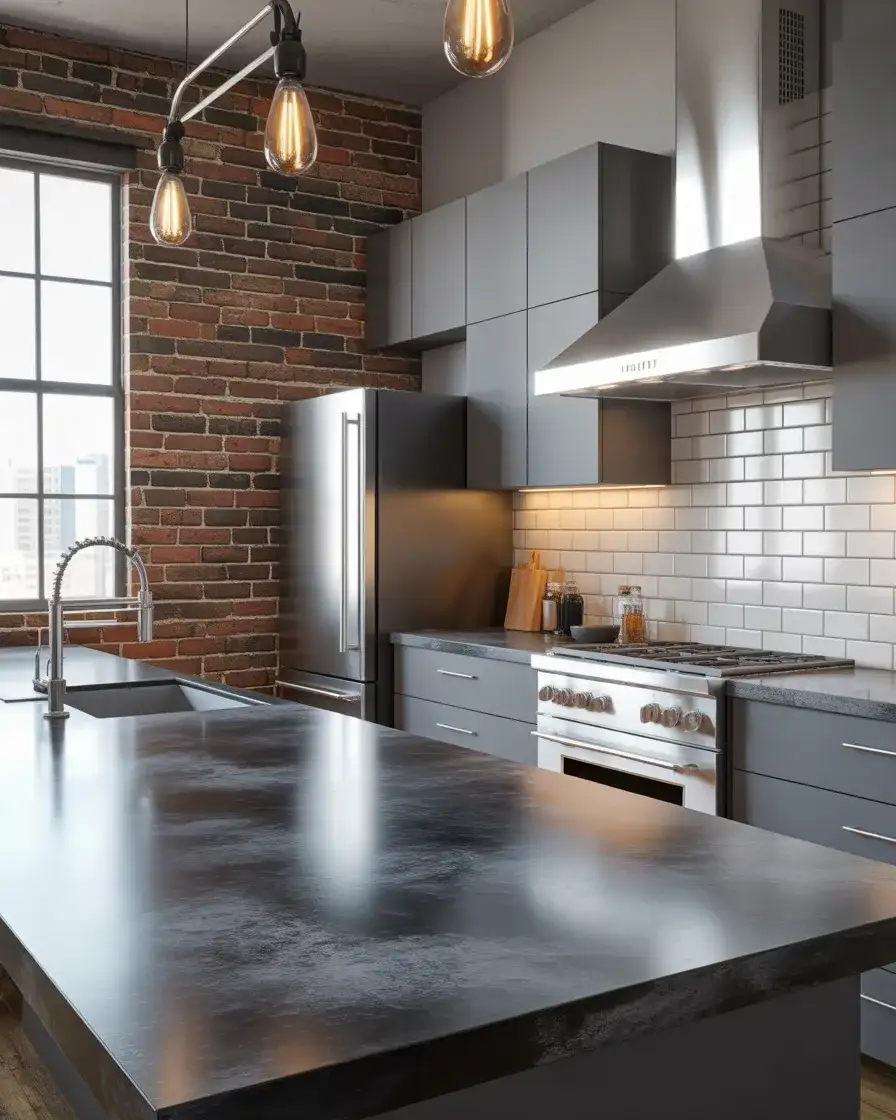
Blue kitchens have quietly become the most-pinned kitchen color of the decade, and in 2026, they’re showing no signs of slowing down. Whether you’re drawn to a moody midnight navy or a breezy powder blue, there’s a shade for every home, every budget, and every personality. Americans are increasingly ditching the all-white kitchen in favor of something with more soul—and blue delivers exactly that. In this article, you’ll find beautifully distinct blue kitchen ideas ranging from light and airy to dramatically dark, each with styling tips, practical advice, and creative inspiration to help you plan your own perfect kitchen.
1. Navy Blue Kitchen with White Marble Countertops
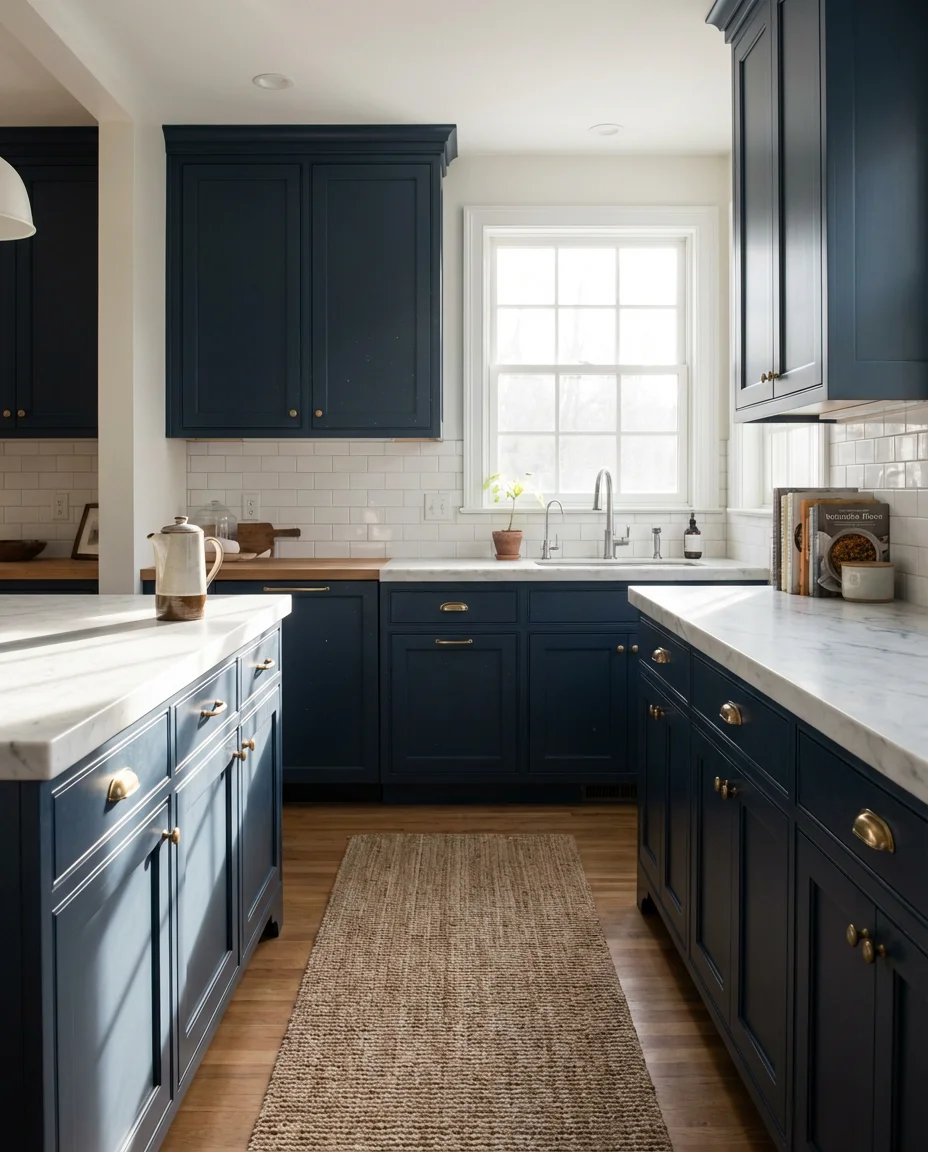
There’s a reason navy has become the go-to dark kitchen color for American homeowners—it reads as sophisticated without trying too hard. Pairing deep navy cabinets with crisp white marble countertops creates that high-contrast, editorial look you keep saving on Pinterest. The white and navy combination works especially well in open-plan homes where the kitchen shares space with a dining or living area, giving it a defined, intentional look without walls to separate it.
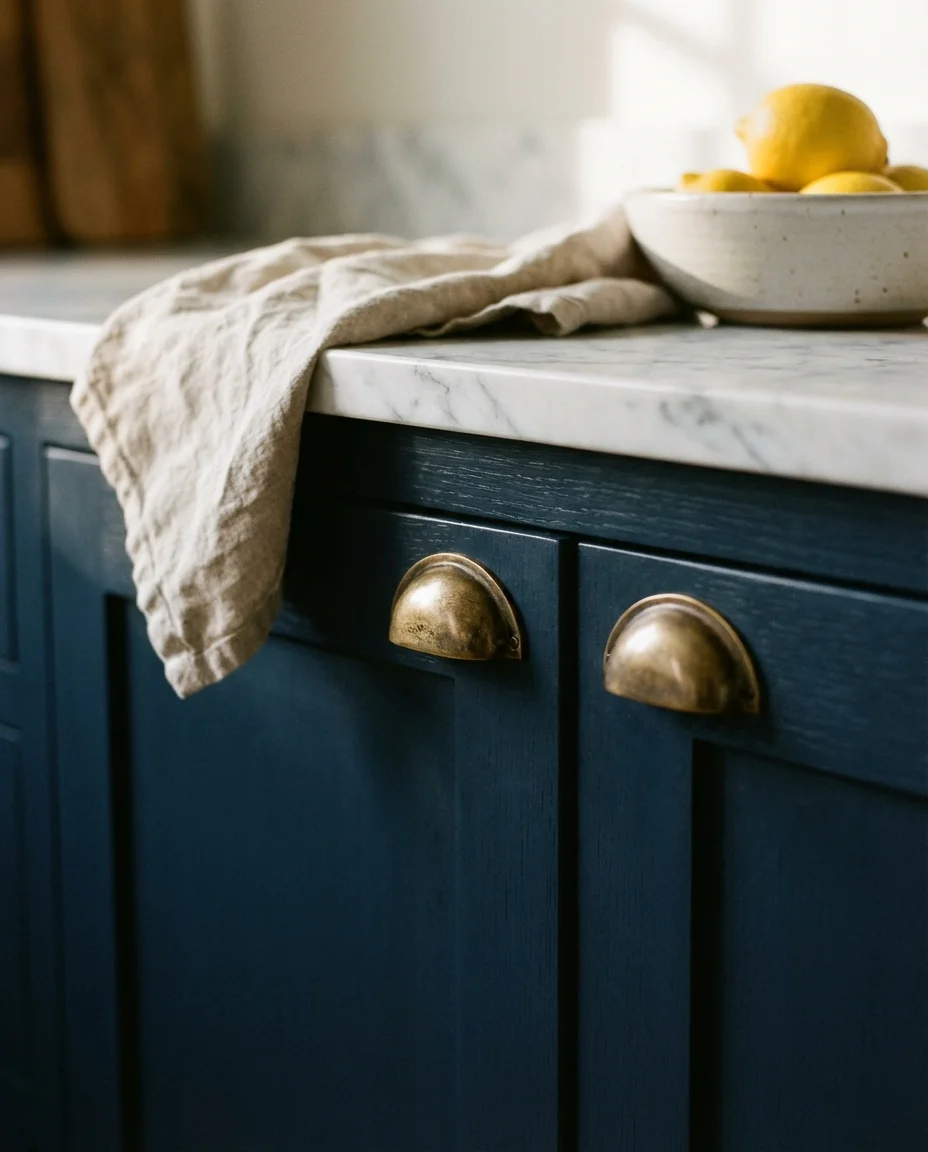
If you’re worried navy will make your kitchen feel smaller, consider painting only the lower cabinets navy and keeping the uppers white. This is a trick designers use constantly in compact American kitchens, and it keeps the space feeling open without sacrificing that rich color payoff. Gold or unlacquered brass hardware is the finishing touch that makes this combination feel genuinely luxurious rather than just trendy.
2. Light Blue French Country Kitchen
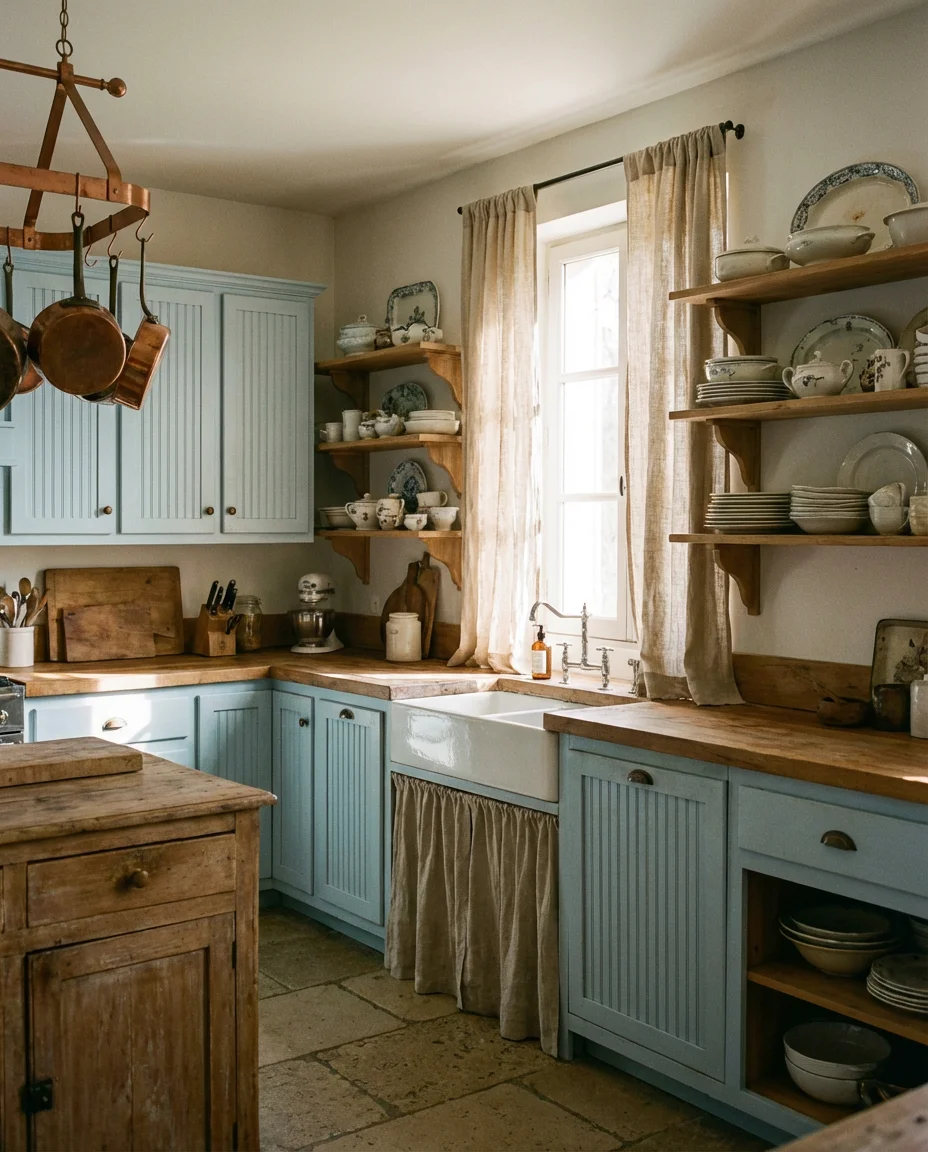
A French country kitchen in light blue is the visual equivalent of a long Sunday morning—unhurried, warm, and full of character. Think soft blue-painted cabinets with beadboard paneling, open shelves displaying mismatched vintage ceramics, and worn butcher block counters that tell a story. This style works beautifully in older American homes, especially in the South and Midwest, where farmhouse and cottage aesthetics already feel natural.
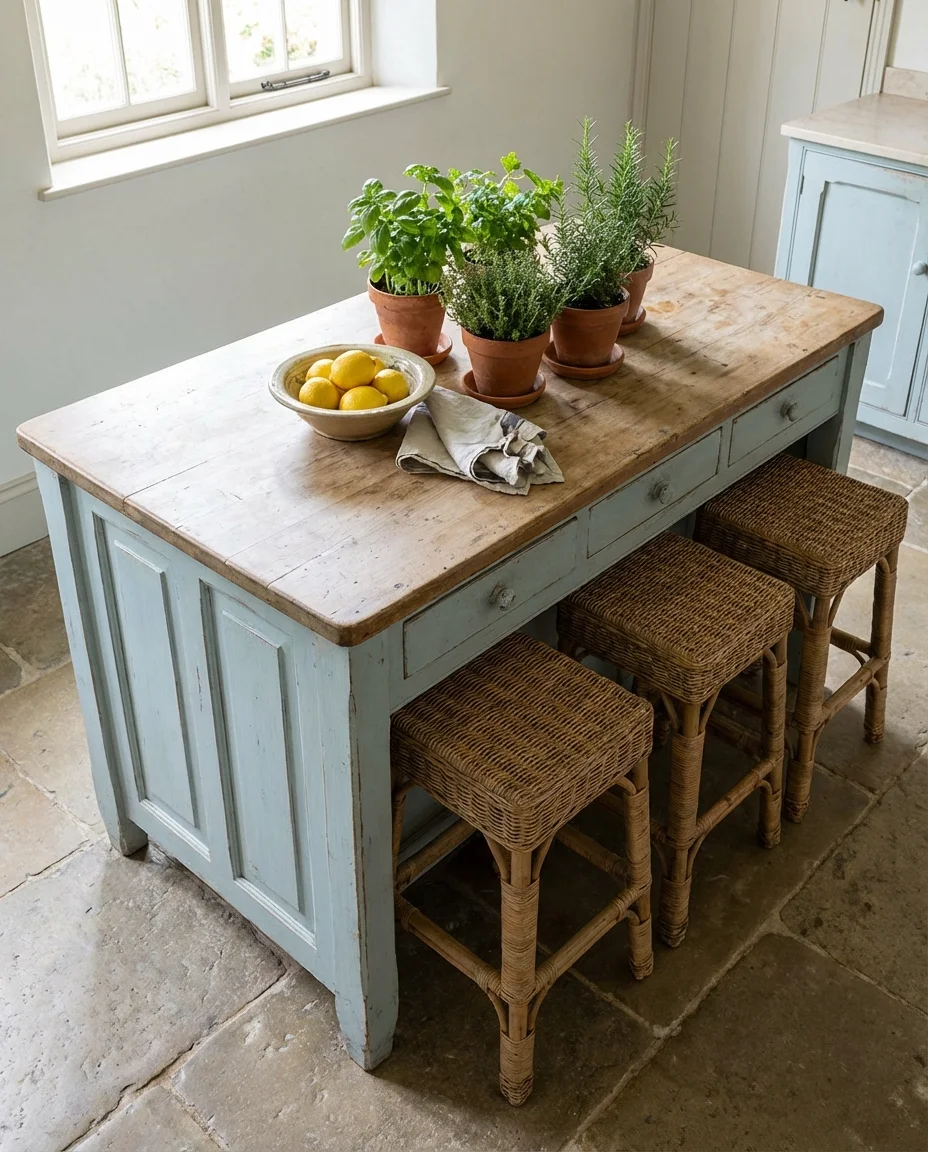
One homeowner in Nashville described her light blue French kitchen as “the only room in the house where everyone ends up on a Saturday morning”—and that’s the real magic of this style. It invites people in. To pull it off without it feeling costume-y, stick to matte or eggshell finishes on the cabinets, layer in natural textures like linen and rattan, and resist the urge to over-accessorize. Restraint is what separates charming from cluttered.
3. Dark Moody Blue Kitchen with Black Accents
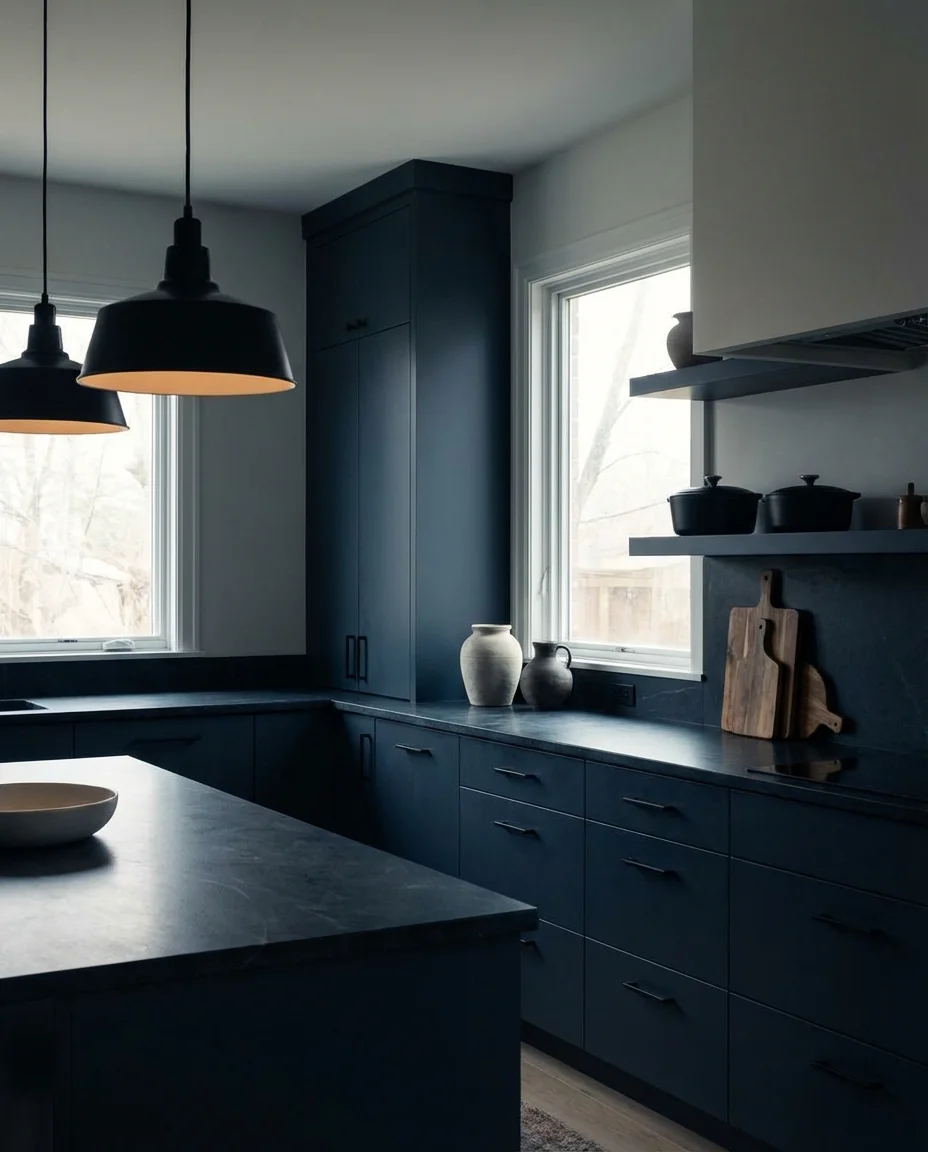
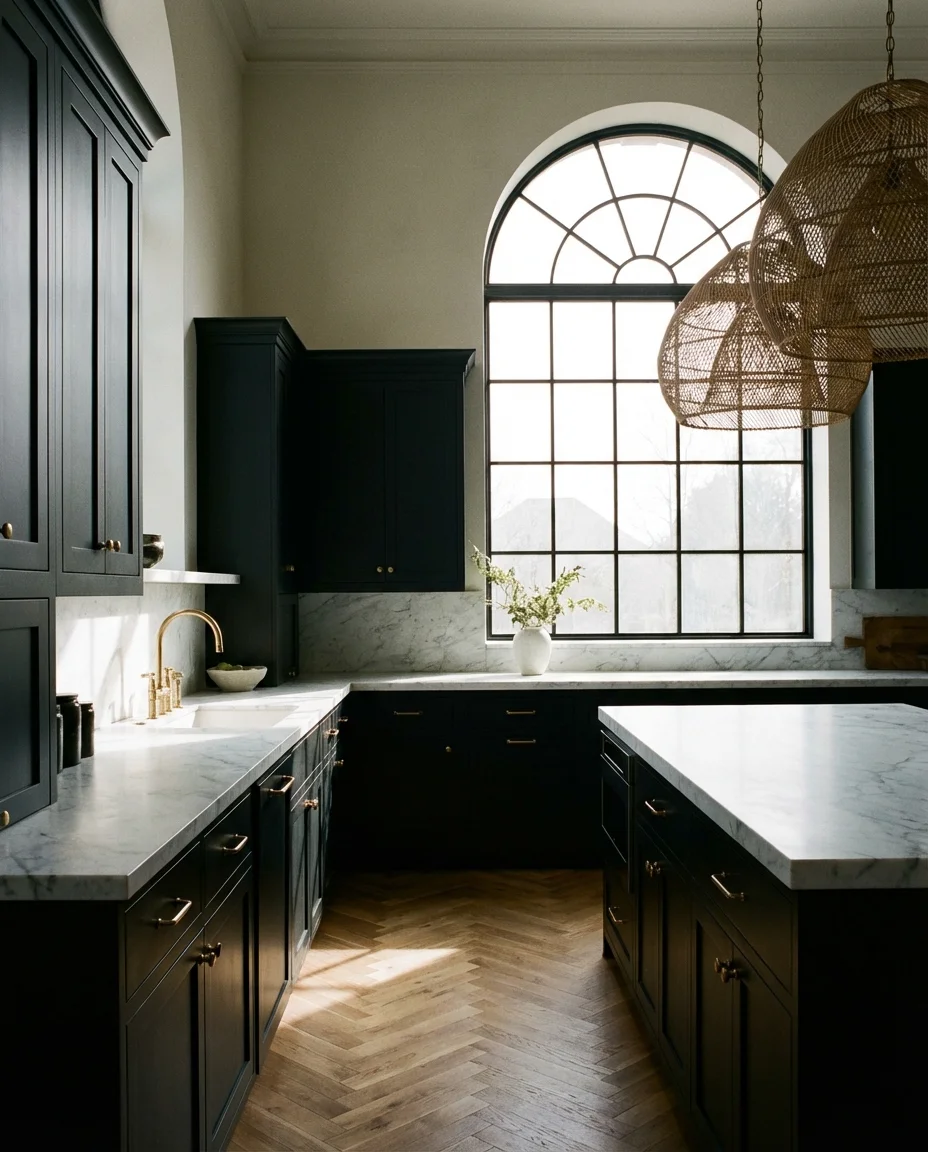
For those who want their kitchen to feel like a scene from a design magazine, a moody, dark blue with matte black accents is the combination to beat in 2026. Deep teal-blues, indigo, and near-black navy pair dramatically with black hardware, dark grout, and even black ceiling fixtures. This look is bold—and absolutely intentional. It’s not for the timid but for homeowners who want their kitchen to have the same gravitas as a well-designed cocktail bar.
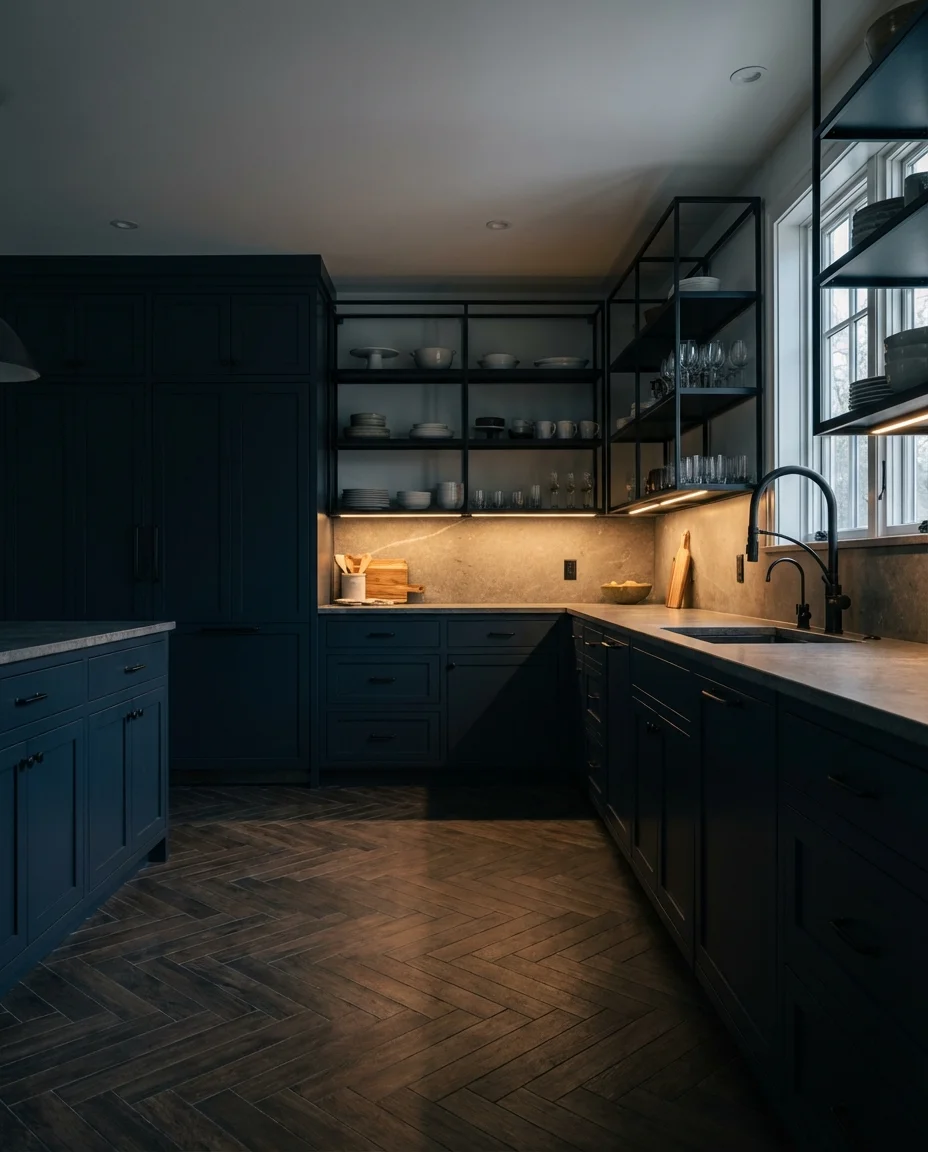
The most common mistake people make with dark kitchens is skimping on lighting. In a moody blue kitchen, layered lighting isn’t optional—it’s the whole strategy. Pair under-cabinet LED strips with statement pendants and at least one source of natural light. If your kitchen doesn’t have a window, consider adding a mirrored backsplash tile to bounce light around the space. Done right, dark kitchens feel cozy and enveloping rather than cave-like.
4. Blue and Wood Kitchen with Warm Natural Tones
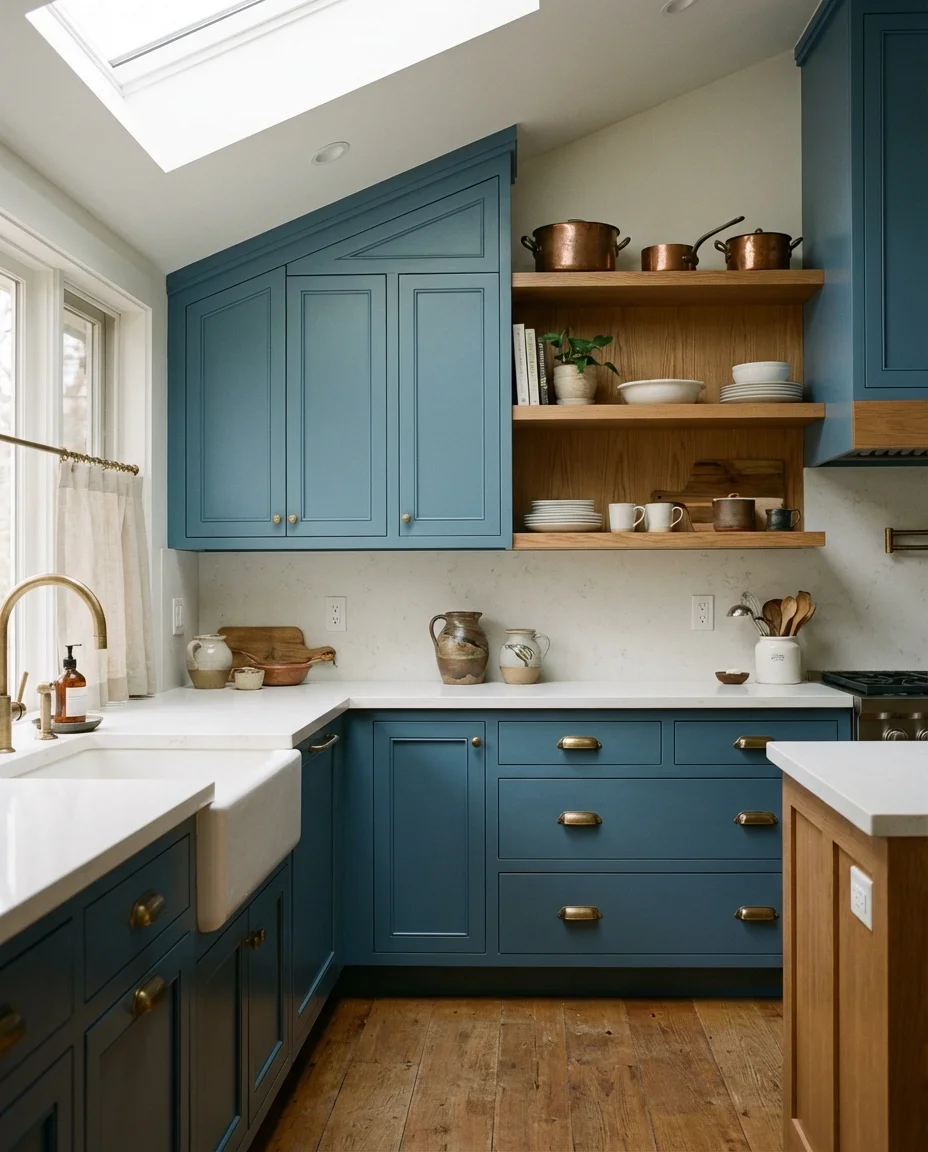
The pairing of blue cabinetry with wood and natural materials is one of the most reliably beautiful combinations in kitchen design right now. Medium-toned oak or walnut floating shelves or a warm wood island base alongside blue perimeter cabinets creates a balance between cool and organic that feels incredibly livable. It’s the kind of kitchen that photographs gorgeously on Pinterest but also actually functions well for real American family life—school lunches, coffee routines, and all.
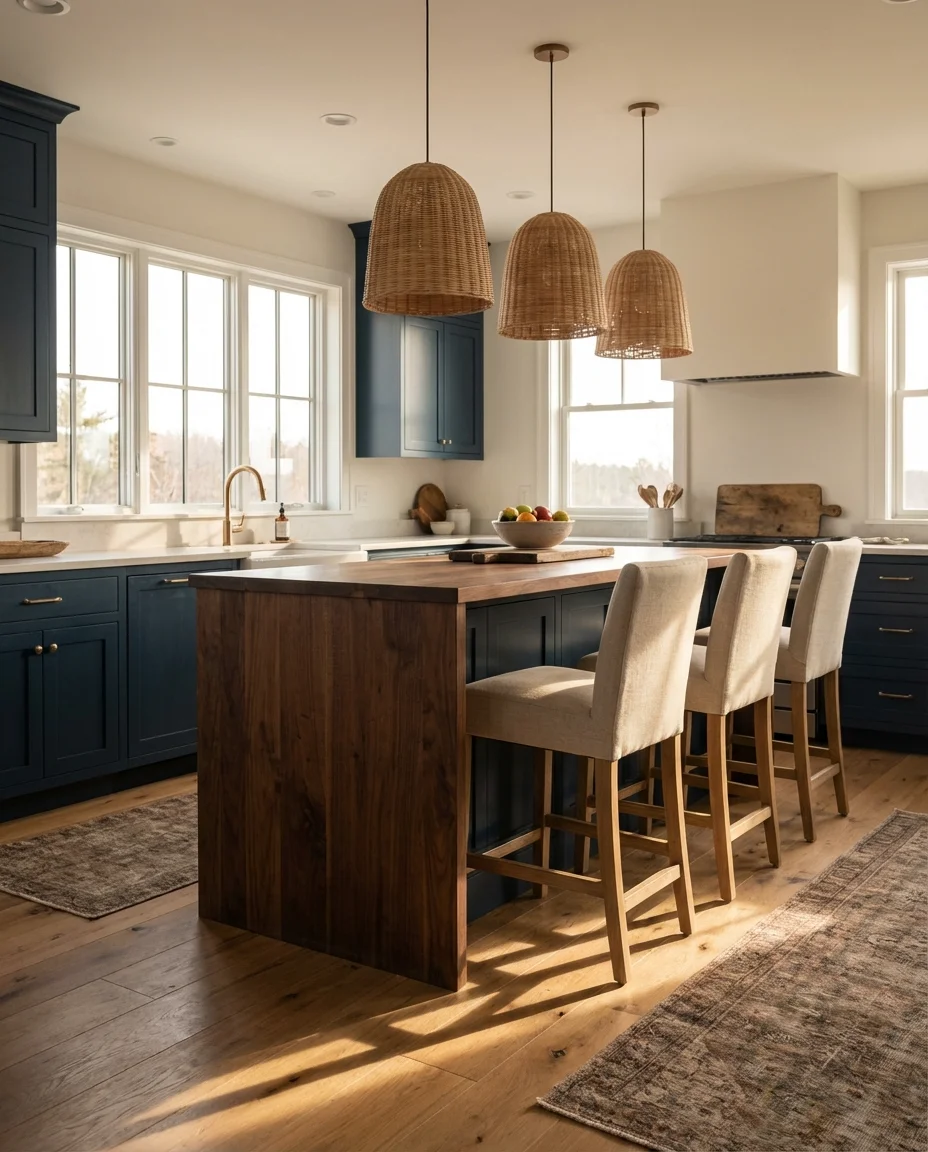
This combination works best when the wood tone leans warm rather than gray. Cool gray wood against blue can feel flat and disconnected, while honey oak, medium walnut, or even whitewashed pine brings life and contrast. If you’re working with an existing wood floor, pull a sample and hold it up against cabinet swatches before committing—the undertones in wood vary wildly, and that relationship will define the whole room.
5. Powder Blue Kitchen with Cream Accents
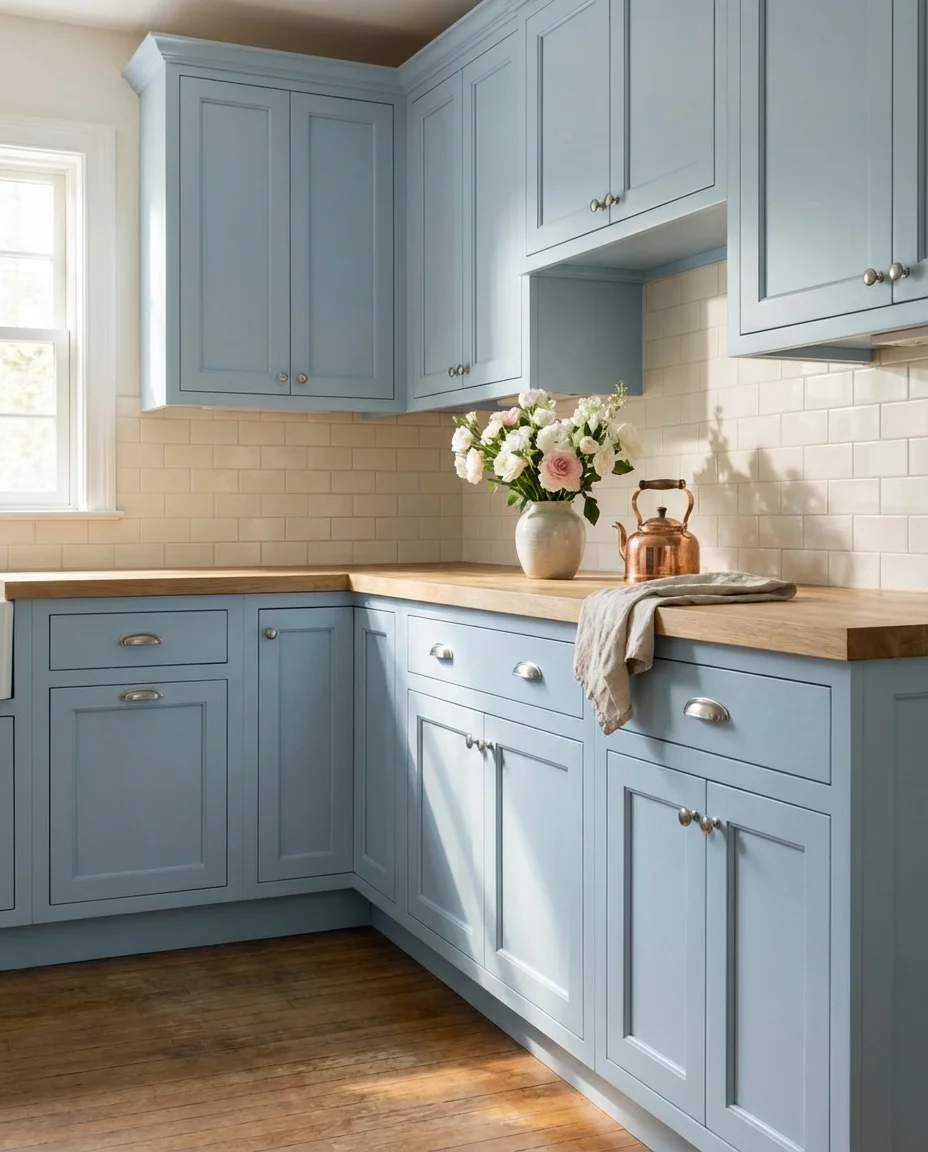
Powder blue is having its most significant moment yet in 2026, and nowhere does it shine more than in the kitchen paired with soft cream and off-white tones. It’s gentle, it’s sophisticated, and it manages to feel both fresh and timeless simultaneously. Unlike stark white, cream adds warmth to the palette, preventing the kitchen from feeling clinical. Think powder blue shaker cabinets, creamy linen curtains, and ceramic pendants with the faintest warm glow.
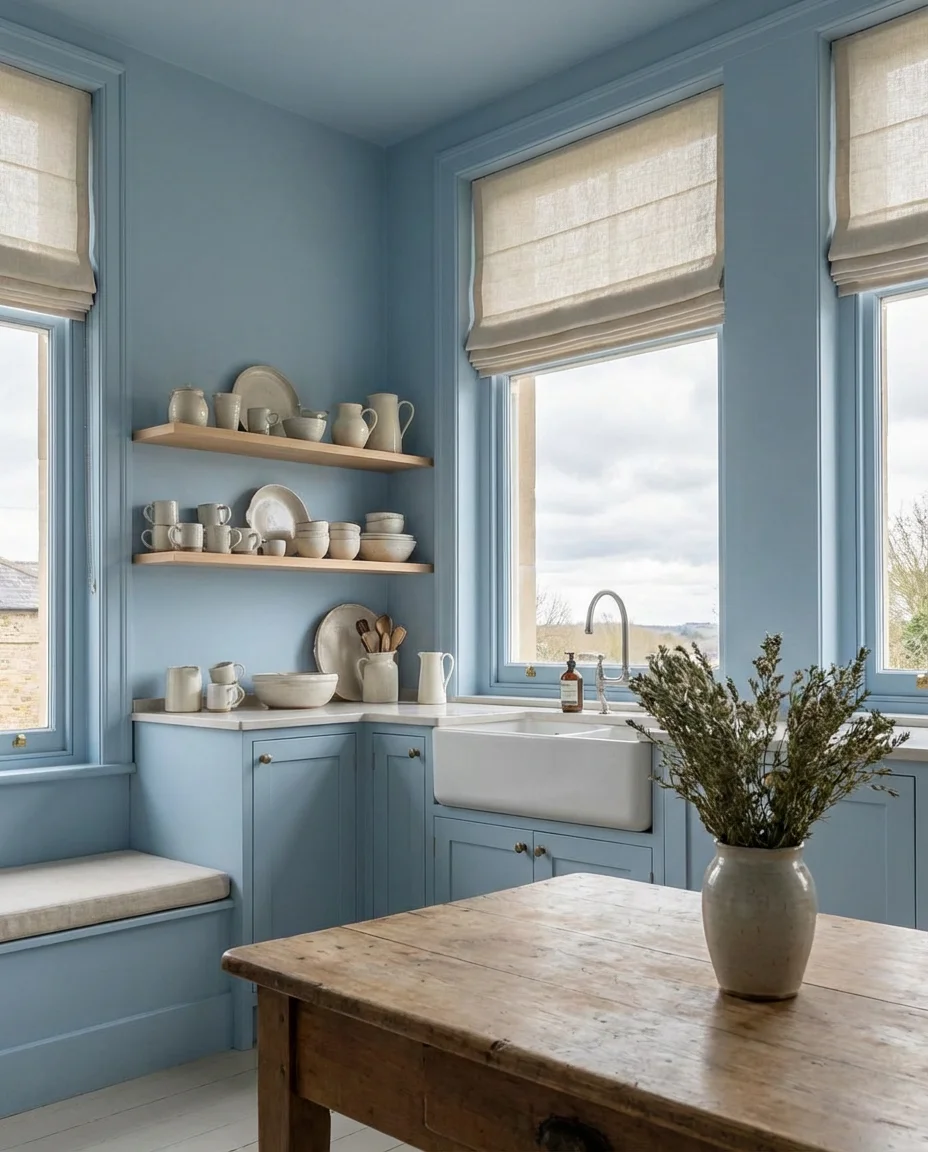
This palette is particularly popular in the Northeast—think New England coastal homes and Brooklyn brownstones where residents want color without aggression. At a price point, powder blue paint is one of the most affordable ways to refresh a dated kitchen. A gallon of quality cabinet paint runs $50–$80, and the return on that investment in terms of both resale appeal and daily enjoyment is genuinely hard to overstate. It’s one of the highest-impact, lowest-cost kitchen updates you can make.
6. Sky Blue Kitchen with Open Shelving
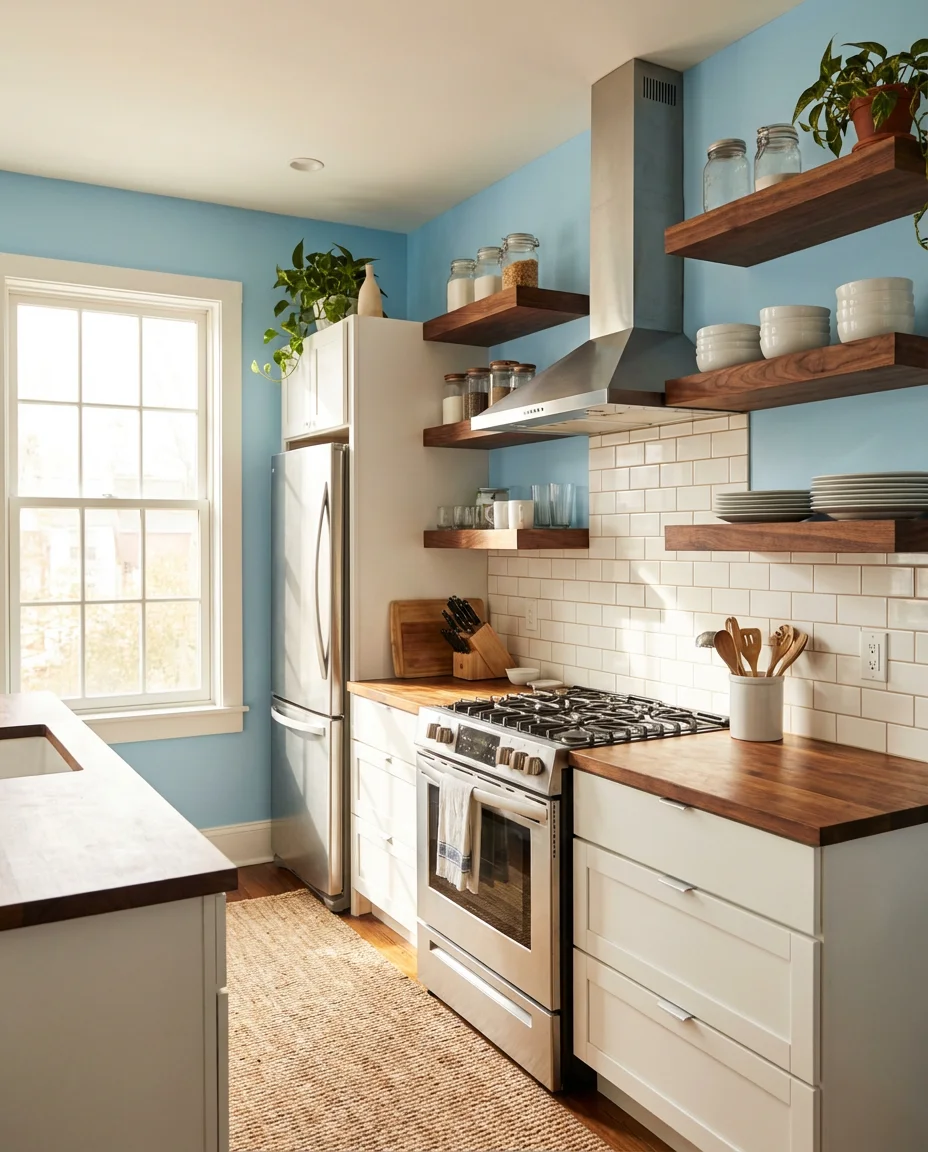
A sky blue kitchen has the uncanny ability to make you feel like you’re cooking with a view even when you’re nowhere near a window. That particular mid-blue—bright but not electric, airy but not pale—brings a sense of outdoor ease into the most interior of rooms. Paired with natural wood open shelving, it creates a display-friendly kitchen that looks curated but not overdone. This is the kind of interior that feels genuinely joyful to be in every single day.
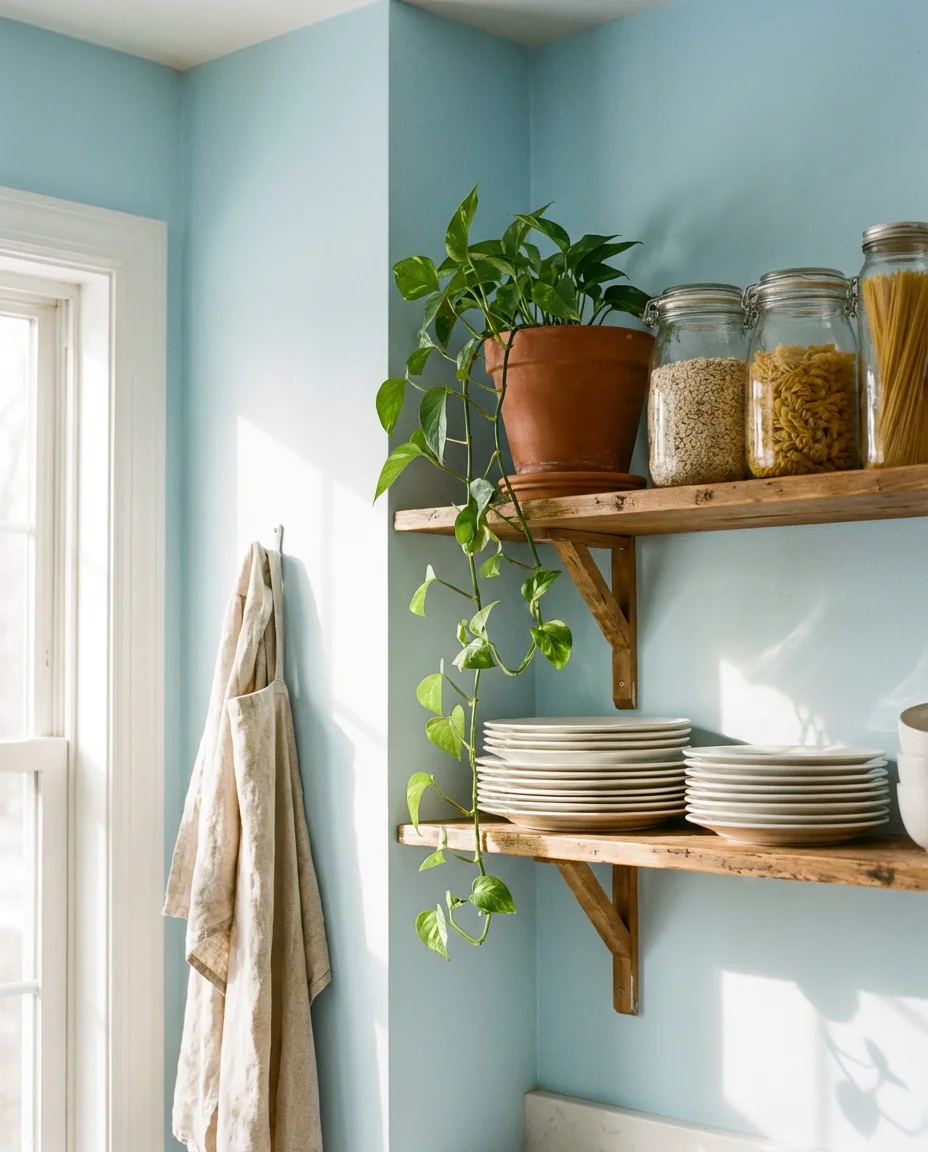
Open shelving in a sky blue kitchen works best when you’re actually organized—which is something worth being honest with yourself about before you commit to it. The shelves become part of the design, which means whatever you put on them is on display. The trick real homeowners use is keeping one-third of the shelf space truly empty, which instantly makes the rest look intentional. Floating shelves in white oak or pine complement sky blue beautifully without competing for attention.
7. Duck Egg Blue Kitchen with Vintage Charm
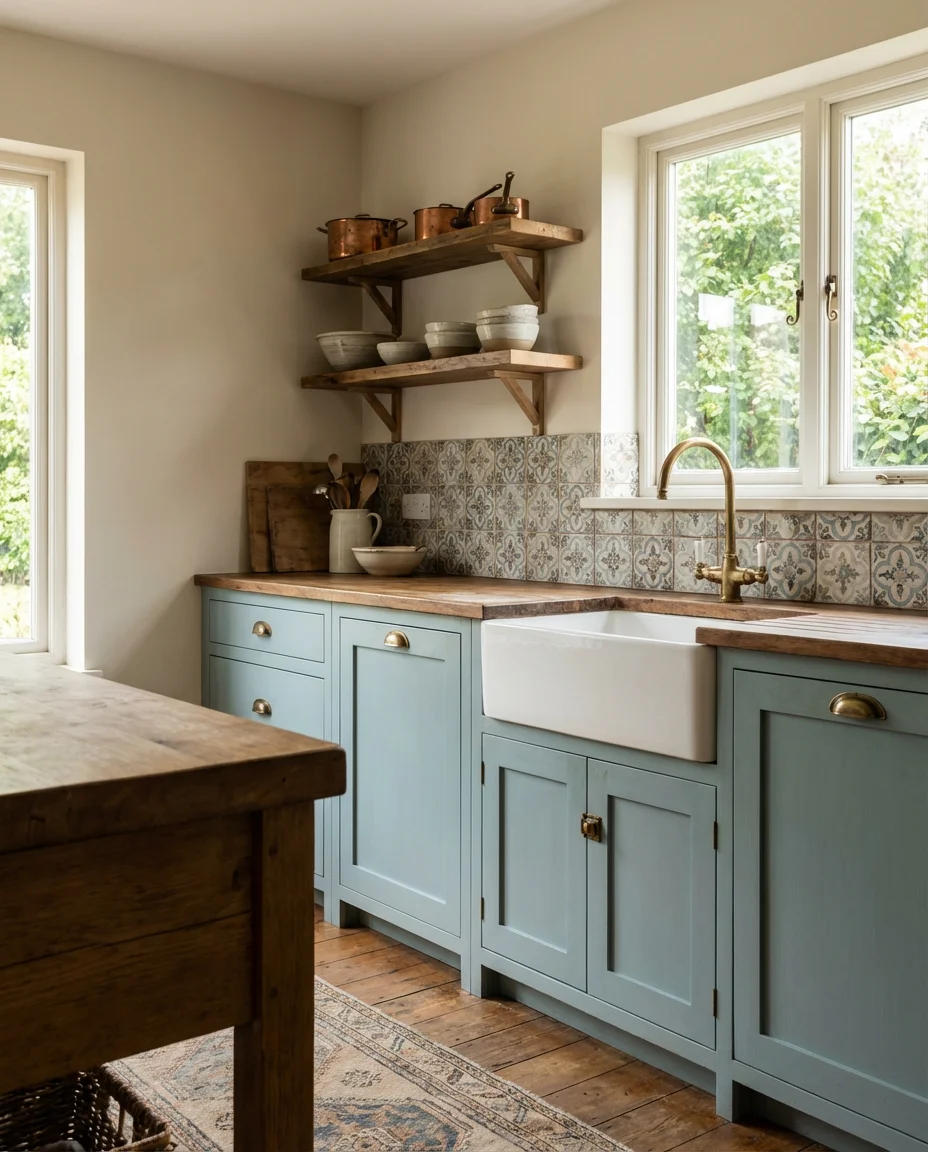
Duck egg blue is one of those colors that somehow feels both antique and completely current—which is exactly why it keeps appearing in kitchen mood boards year after year. Slightly more green than a true blue, it has a handmade, organic quality that pairs beautifully with aged brass, reclaimed wood, and ceramic tile. It’s the color of a beloved grandmother’s kitchen reimagined for a modern lifestyle, and inspiration for it is everywhere right now, from Vermont farmhouses to renovated California bungalows.
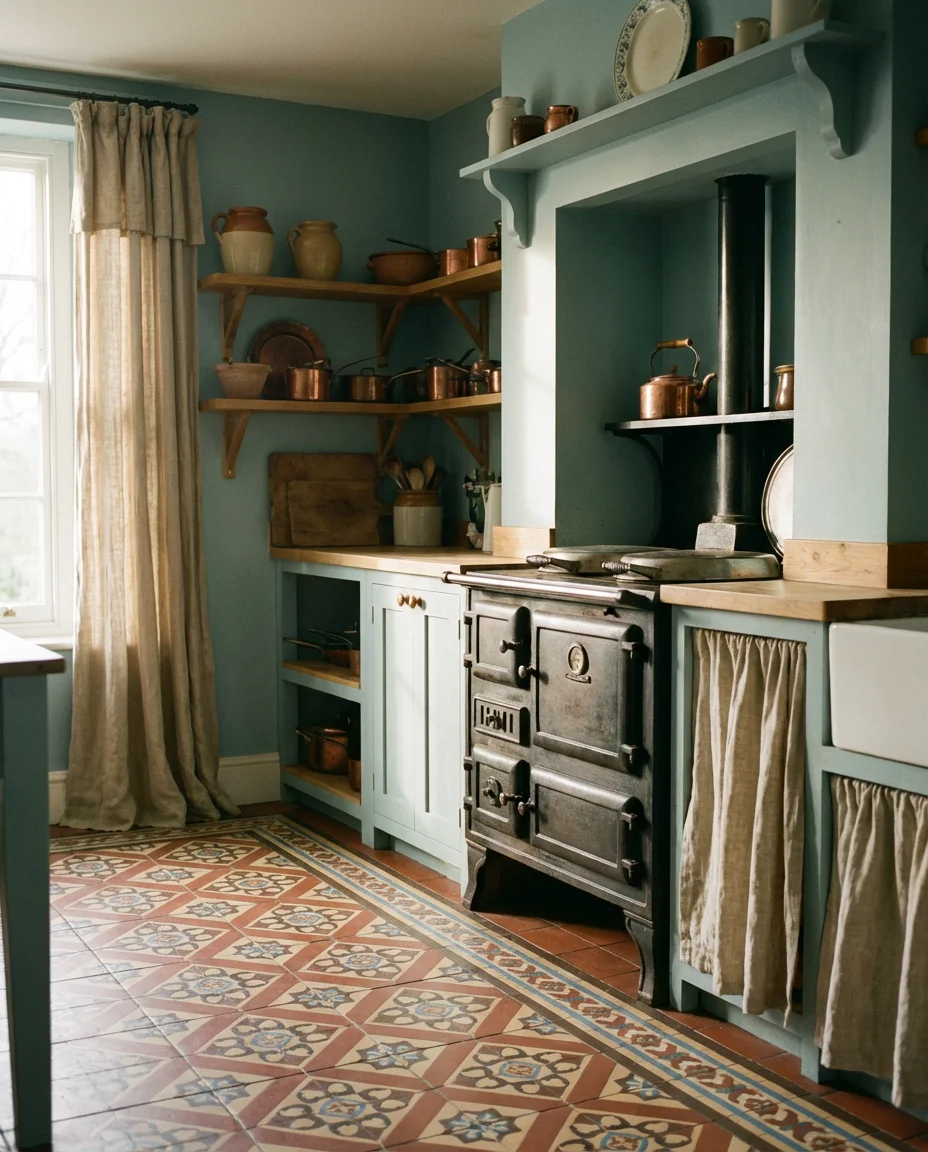
An interior designer based in Portland put it well: “Duck egg blue is the only color I’ve specified in kitchens that clients never regret. It ages beautifully, it photographs well, and it never feels like a mistake five years later.” That longevity is worth considering when you’re making a decision that involves cabinetry—something you’re likely to live with for a decade or more. It’s a shade that rewards patience and intentional styling.
8. Blue Kitchen Walls with White Cabinets
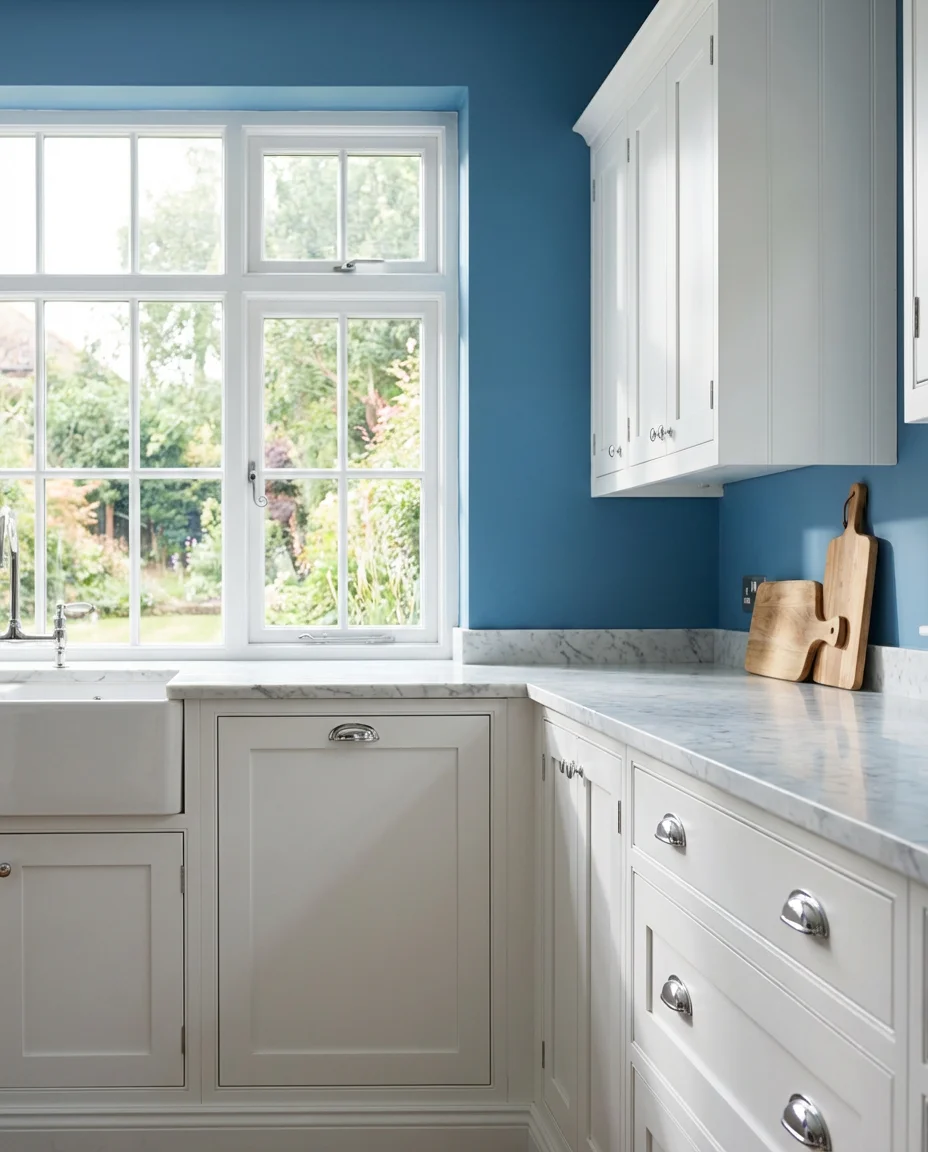
If you’re not ready to commit to painted cabinets, putting blue on the walls is one of the smartest—and most reversible—ways to bring this trend into your kitchen. White cabinetry against a bold or medium blue wall creates a clean, graphic contrast that reads as both contemporary and classic. The designs that work best here tend to use a slightly saturated blue rather than a pale one, so the walls hold their own against the dominant white of the cabinets.
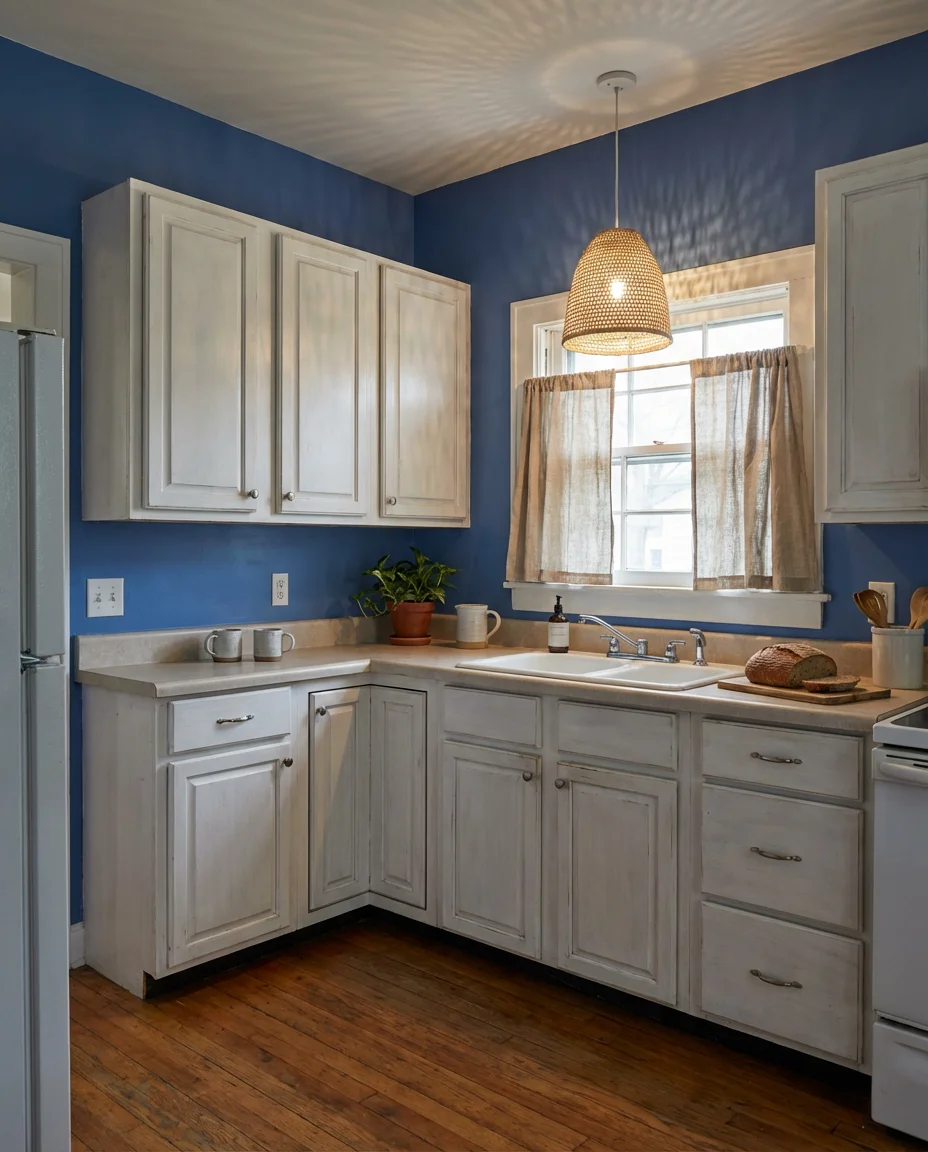
This is the approach most budget-conscious renovators take—and it works remarkably well. In a rental where you can’t touch the cabinets, painting walls is often permitted with landlord approval, and it transforms the space entirely. For homeowners, it’s also a great way to test your commitment to blue before making any cabinet decisions. If you love it on the walls, you’ll love it everywhere. If it’s too much, you’ve only painted walls—and that’s a much easier fix.
9. Cornflower Blue Kitchen with Grey Countertops
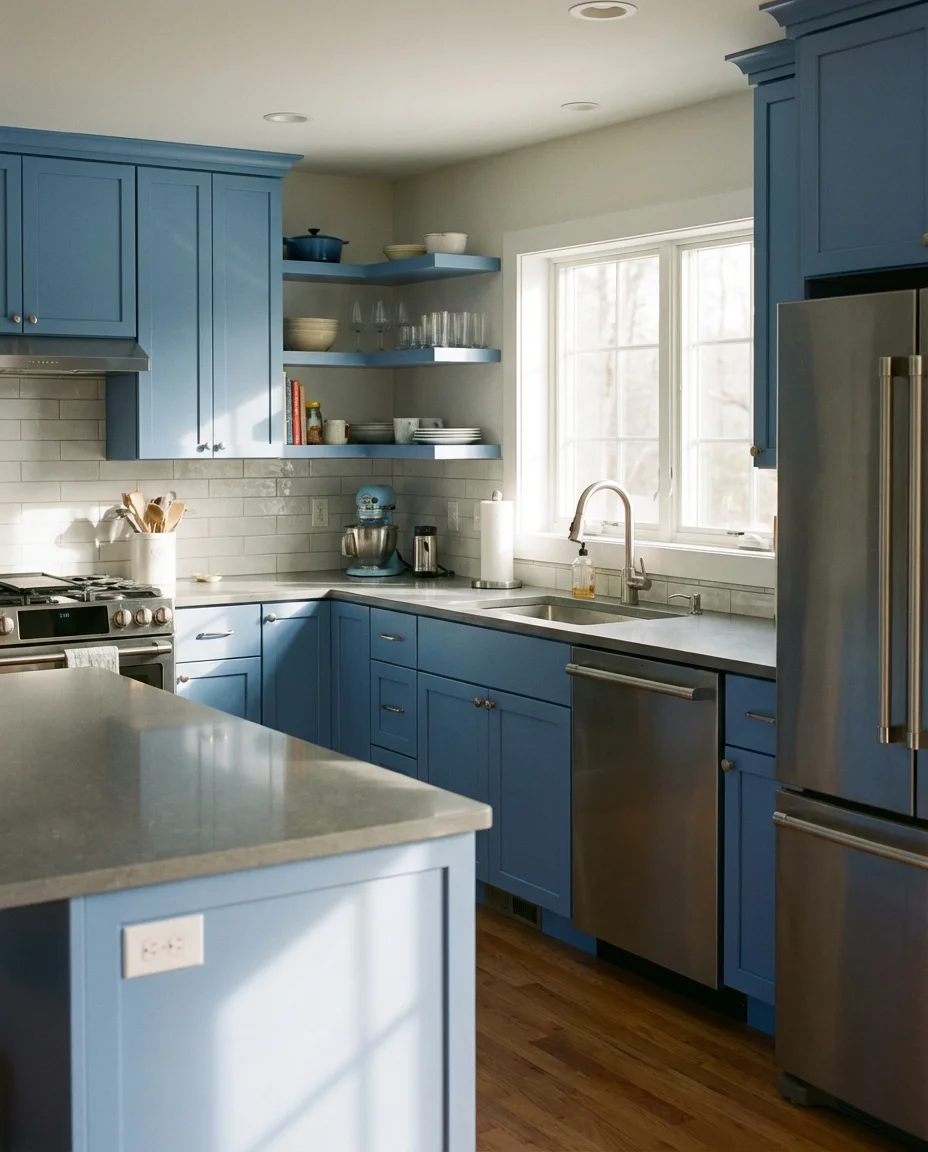
Cornflower blue—that particular cheerful, medium-saturation blue named after the wildflower—is one of the most wearable kitchen cabinet colors going into 2026. It’s bright without being aggressive, colorful without screaming for attention. Pair it with grey quartz or concrete countertops, and you get a contemporary kitchen that feels grounded and mature while still being genuinely beautiful. The cool tones in both colors align harmoniously, creating a cohesive palette that almost styles itself.
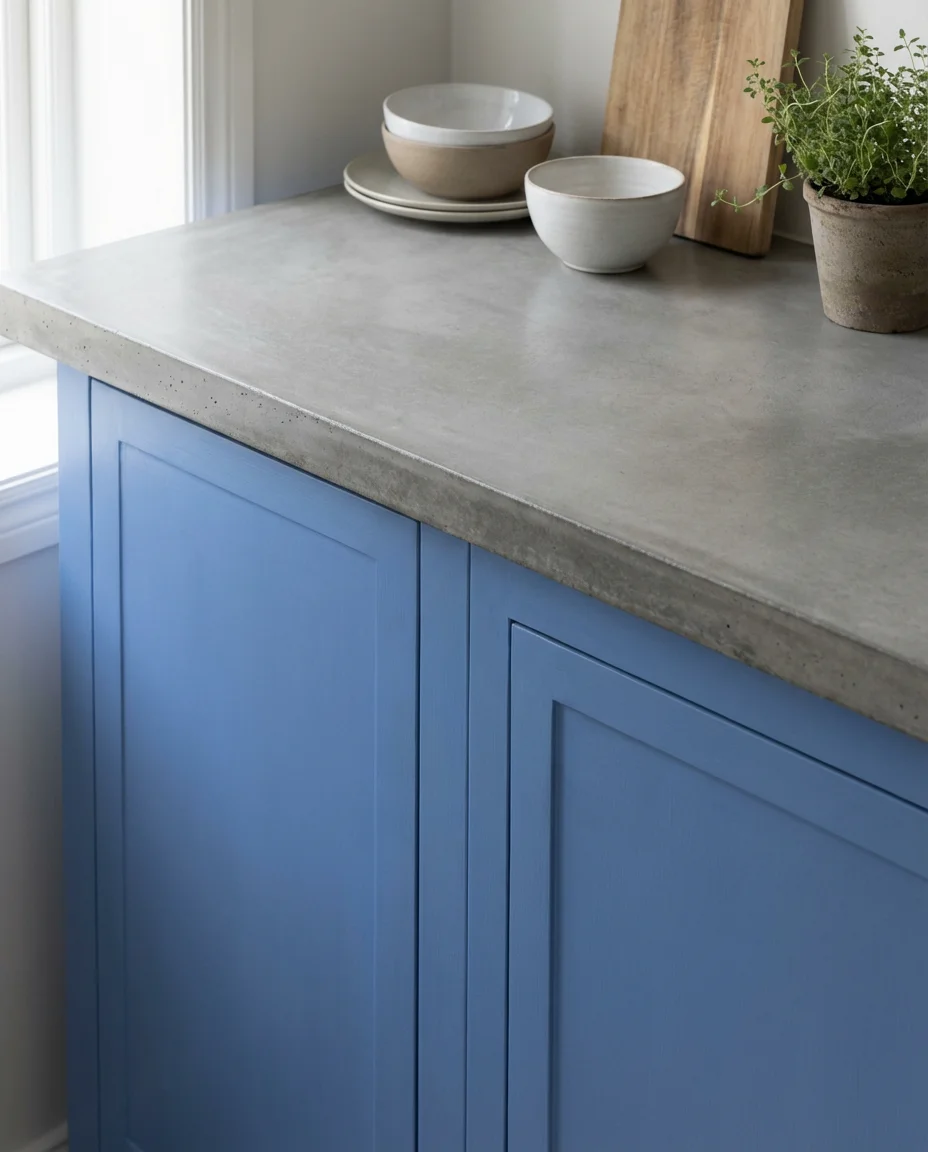
Where cornflower blue kitchens work best is in homes with good natural light and at least some warm accent material—a wood floor, rattan pendants, or woven bar stools—to prevent the space from reading too cool. In a basement kitchen or north-facing room with limited sun, cornflower can lean cold and uninviting. Compensate with warm-toned bulbs (2700K is the sweet spot) and plenty of soft textiles like runner rugs and linen dish towels to bring in the missing warmth.
10. Pastel Blue Kitchen with Floral Decor
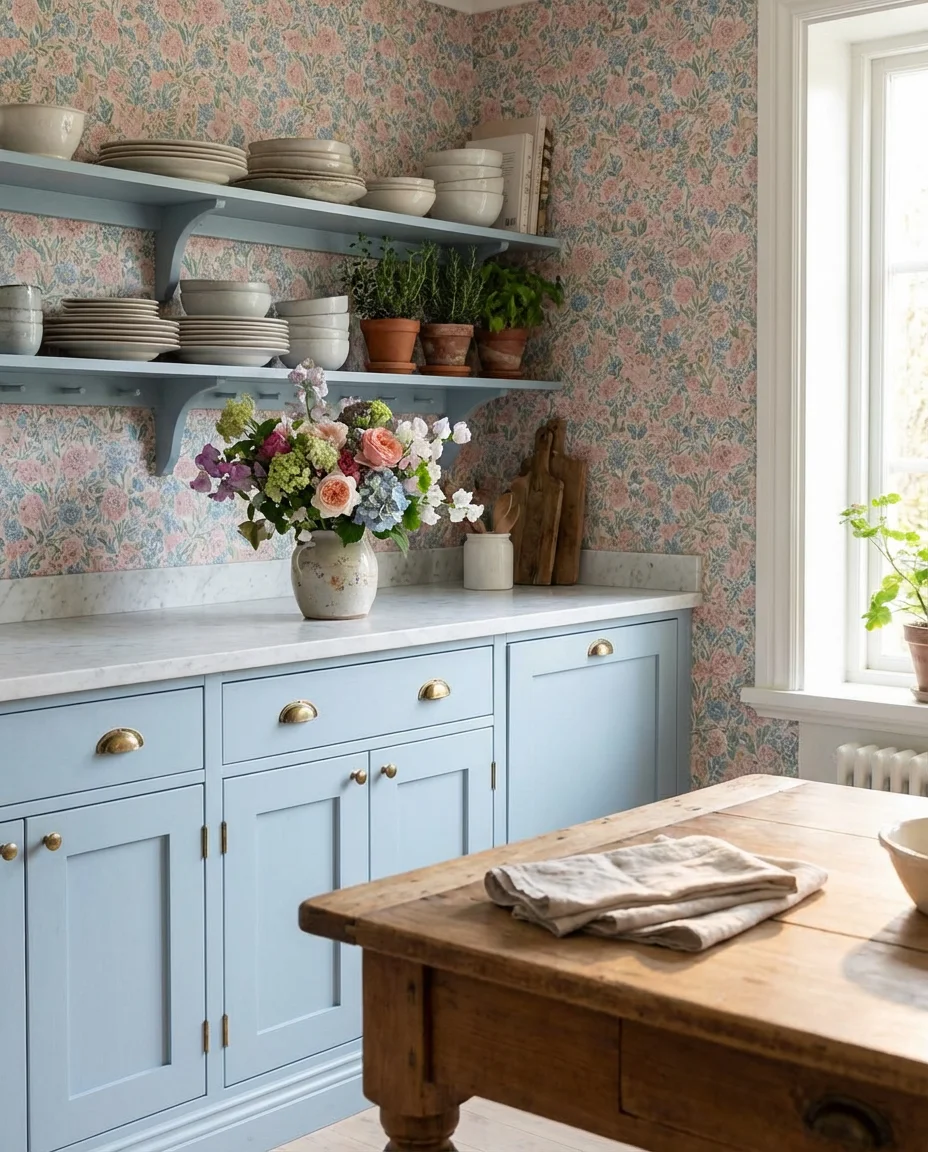
A pastel blue kitchen dressed with floral accents is as close to a garden party as interior design gets. Soft, muted blues in the lavender-adjacent spectrum work beautifully as cabinet colors when balanced with floral wallpaper on a single accent wall, floral-print Roman shades, or even just a rotating selection of fresh seasonal blooms on the counter. This style of decor layers quietly—it’s never one loud statement but a series of gentle details that build into something really special.
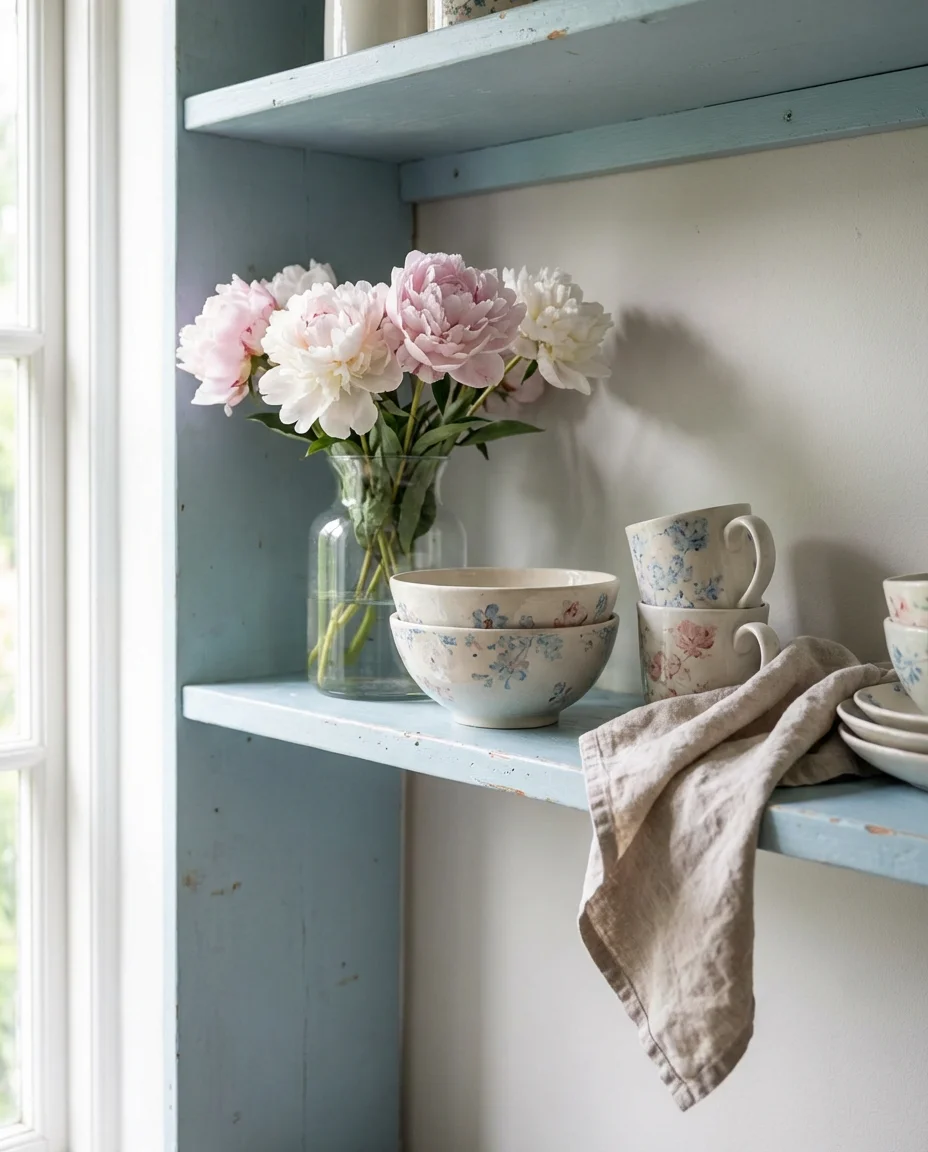
This aesthetic is particularly beloved among American homeowners in the 30–45 age range who grew up with minimalist, neutral interiors and are now deliberately choosing warmth and personality. It photographs stunningly for social media and has enormous Pinterest reach precisely because it’s aspirational without being unattainable. The floral elements don’t need to be expensive—a $12 bunch of dahlias from the farmers market does more work in a pastel blue kitchen than almost any decor item you could buy.
11. Blue and Yellow Kitchen with Sunny Energy
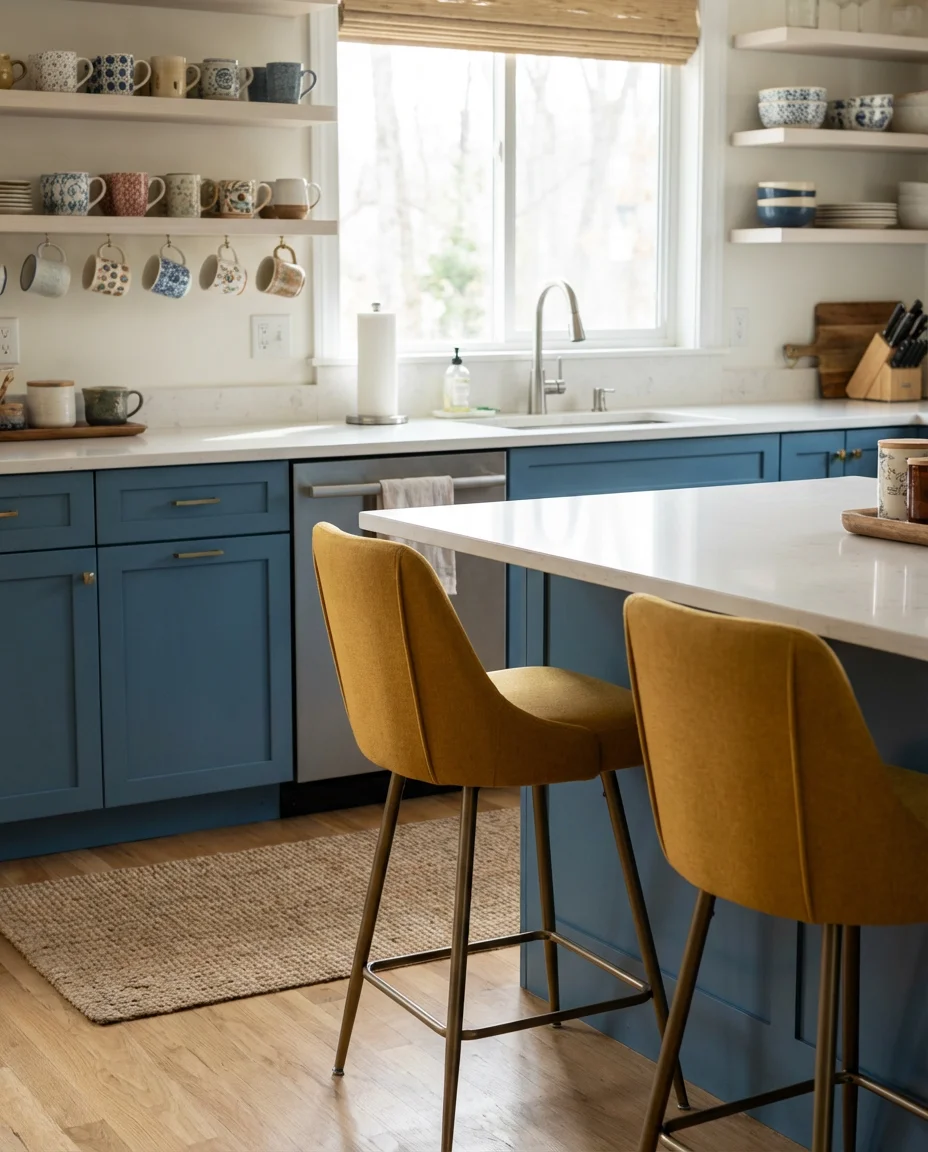
The yellow and blue kitchen combination is a classic for a reason—these two colors sit opposite each other on the color wheel, creating a vibrant complementary contrast that feels energizing and genuinely cheerful. In 2026, the freshest version of this pairing moves away from the retro diner interpretation toward something more refined: dusty or muted mustard yellow accents against a medium or dark blue cabinet, with natural wood and linen pulling it all together. It’s bold but livable.
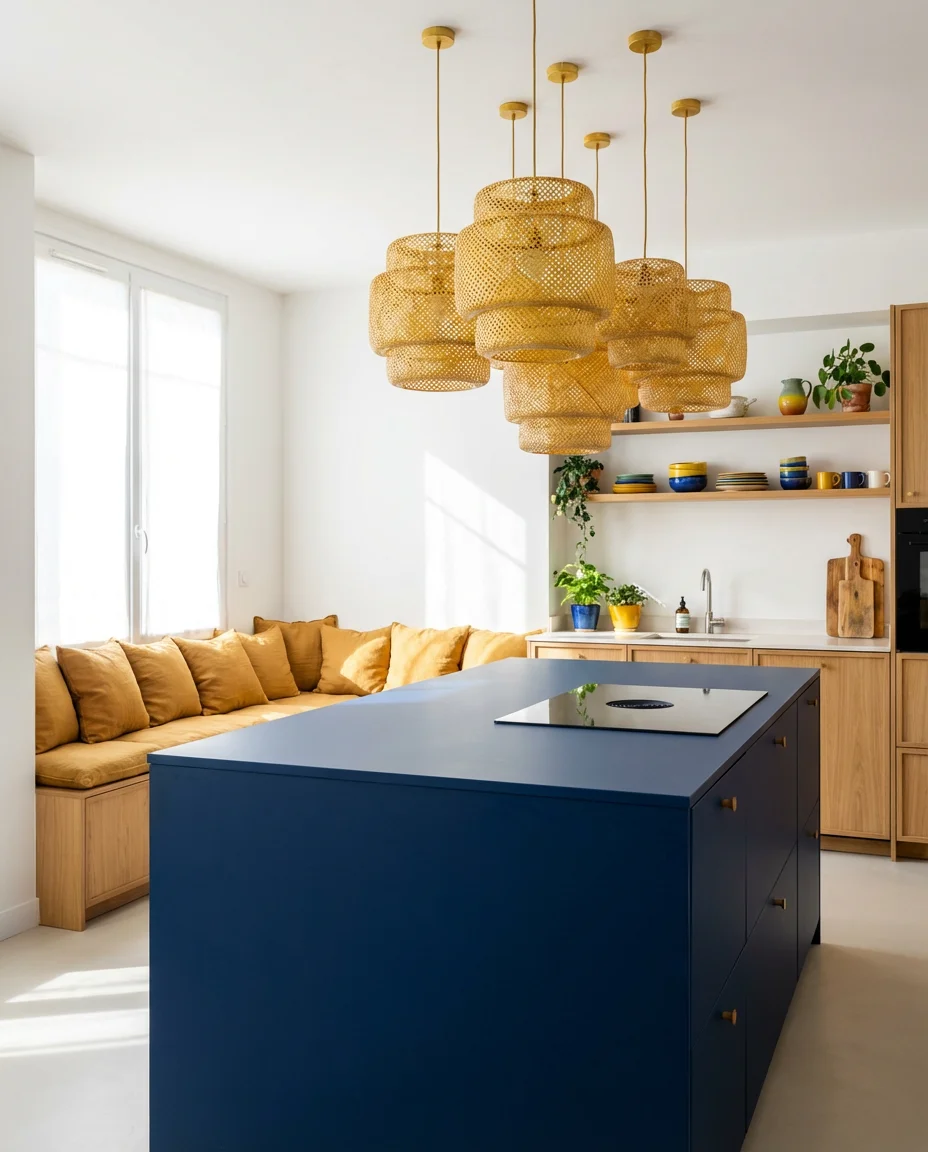
If this combination feels risky, start with yellow as an accent rather than a primary color—a set of vintage-inspired yellow ceramic canisters, a mustard Roman shade, or a pair of amber glass pendants are all low-commitment ways to test the pairing before painting anything. Most people who try it are surprised by how naturally the colors coexist. It’s one of those combinations that sounds louder in theory than it looks in practice, especially when the yellow leans warm and earthy rather than electric.
12. Blue and Pink Kitchen with Playful Contrast
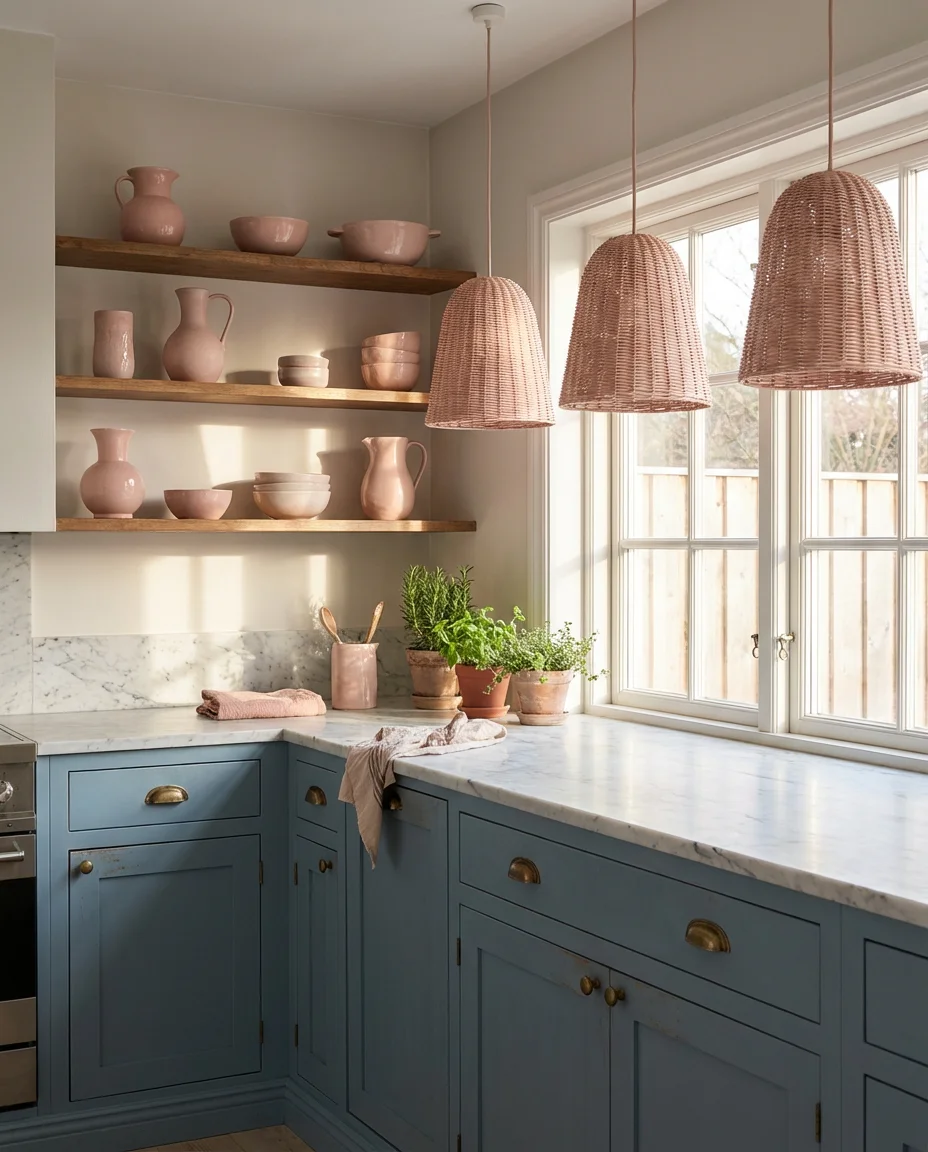
The pink and blue kitchen has gone from unexpected to genuinely covetable in the span of about three years, and in 2026 it’s a fully established aesthetic with its own distinct visual language. The key is keeping both colors in the same tonal family—dusty rose and slate blue, blush and powder blue, or terracotta-pink and denim—rather than mixing a bubblegum pink with an electric blue. When the tones are balanced, the result is surprisingly sophisticated and deeply pale in its overall feel.
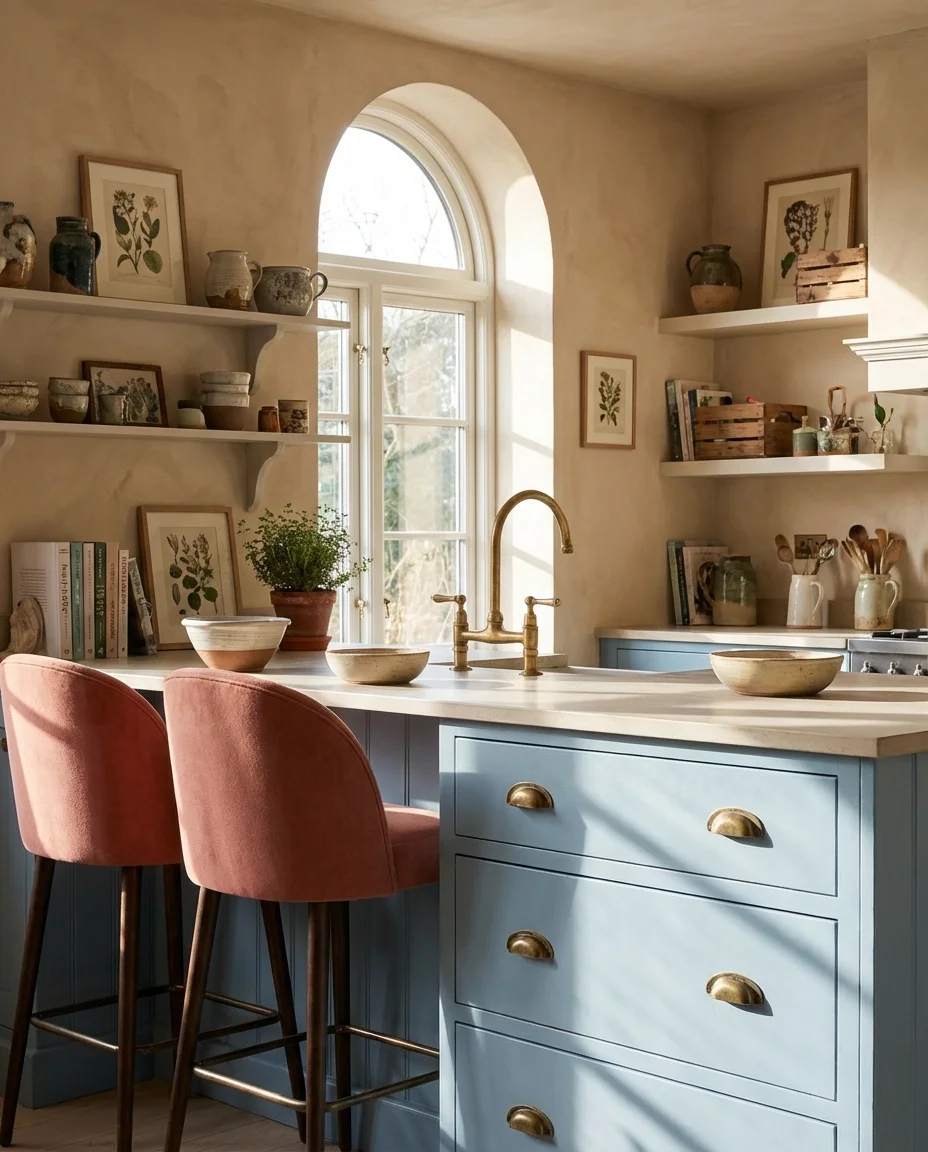
This look shows up most frequently in the kitchens of artists, designers, and creatives who aren’t afraid of color—and it’s become increasingly popular in urban apartments from Brooklyn to Echo Park, where small kitchens benefit from strong personality rather than trying to disappear into neutrality. The practical advice here is to use pink only in removable elements at first: stools, textiles, and small appliances. This lets you commit to the blue cabinetry knowing you can dial the pink up or down as your taste evolves.
13. Blue and Green Kitchen with Botanical Freshness
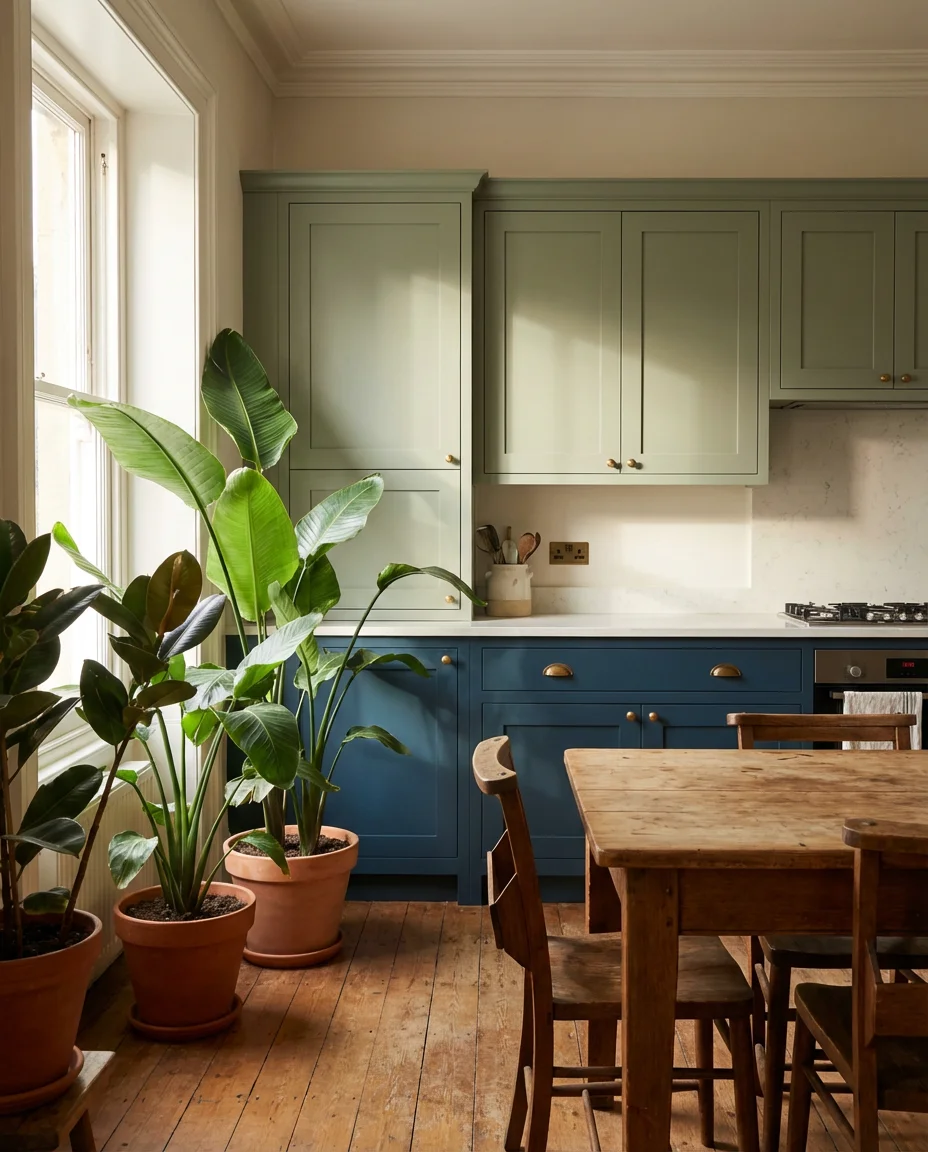
A green and blue kitchen taps into the biophilic design movement that has dominated interiors for several years—the deep human desire to feel connected to nature even inside our homes. Teal, which sits right at the intersection of these two colors, is the obvious anchor, but you can also work with distinct shades: sage green upper cabinets paired with deep blue lowers, or a blue island against green painted walls. The inspiration here is always botanical—the ocean, a rainforest, a garden after rain.
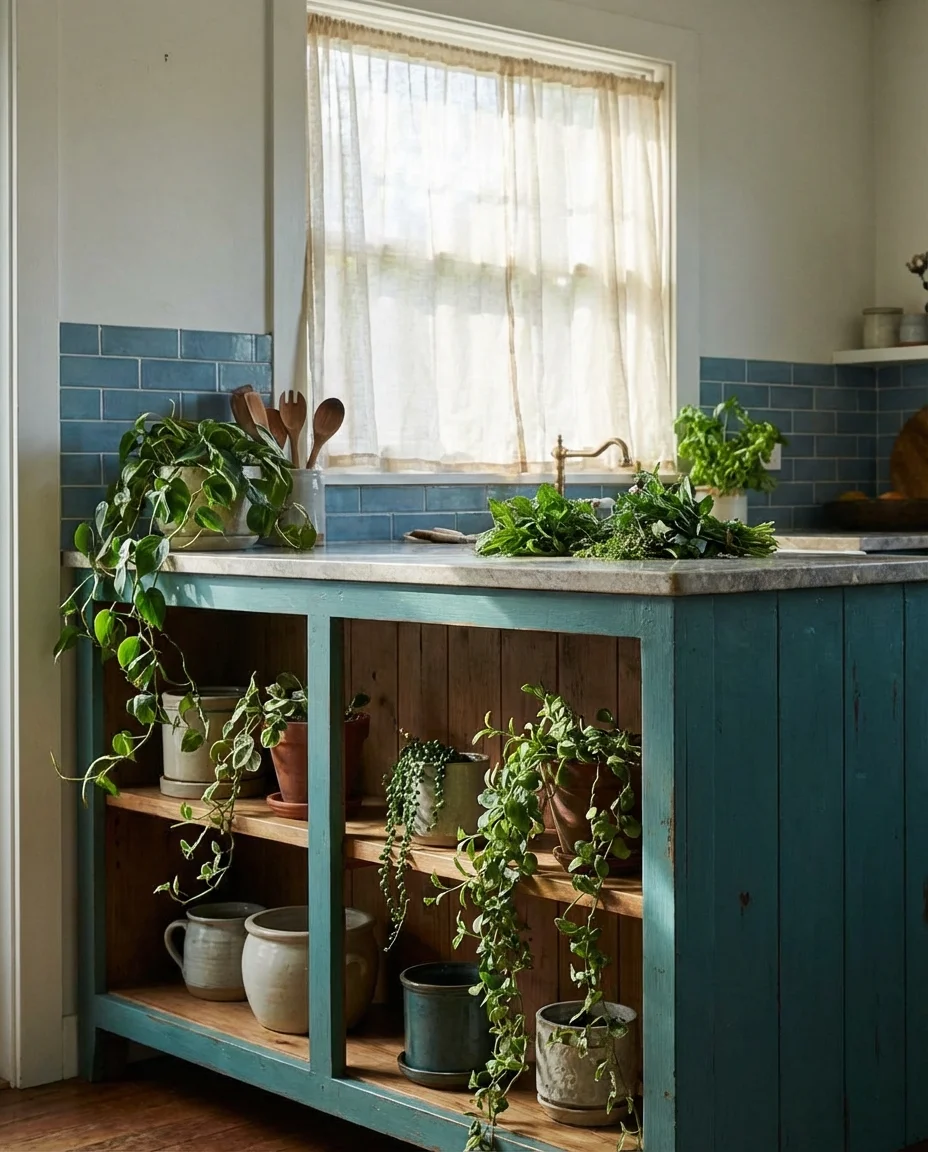
An interior designer in Austin who has specified this combination in several projects notes that it performs particularly well in homes with large windows or easy outdoor access, where the kitchen palette literally echoes what’s happening outside. In Texas, Arizona, and Florida climates, the connection between interior blue-greens and exterior landscaping can feel almost seamless, making small kitchens feel larger by visually extending the space beyond the glass. Adding real plants seals the connection completely.
14. Dusty Blue Kitchen with Aged Brass Hardware
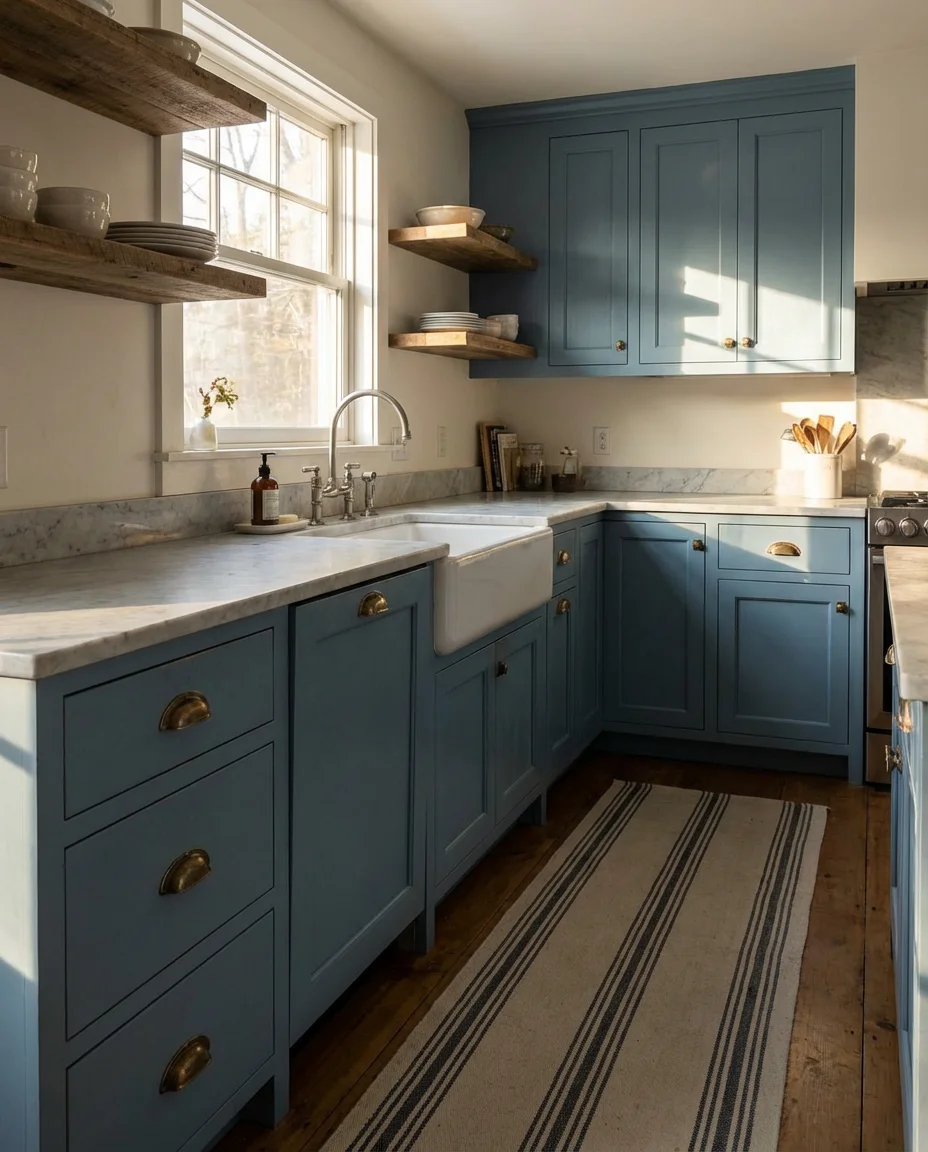
Dusty blue is the grown-up, understated cousin of powder blue—quieter, more complex, with a slight gray undertone that makes it incredibly versatile. When paired with aged or unlacquered brass hardware, it creates a kitchen that looks like it was assembled by someone with genuinely refined taste and a good eye for antiques. This is one of those interior combinations that earns compliments not because it’s flashy but because it’s so clearly considered. Every material choice feels deliberate and earned.
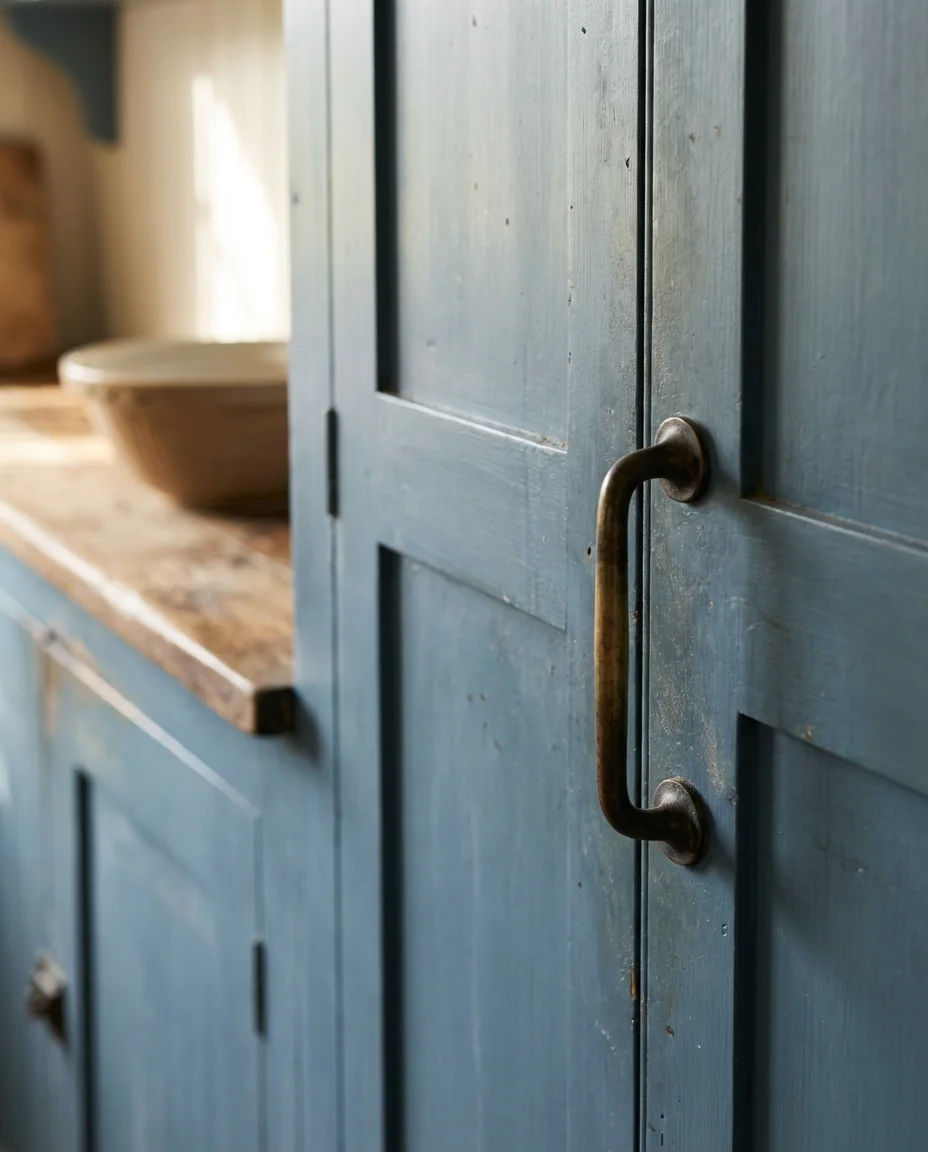
Real homeowners who’ve made this choice often describe the combination as one they never tire of—which is the ultimate test for any kitchen decision. Unlike trend-forward choices that look dated in five years, dusty blue with brass hardware has the quality of an heirloom: it only gets better with age. The brass literally patinas over time, deepening its warmth and character, which means the kitchen grows with you rather than against you. That’s a genuinely rare quality in a design choice.
15. Pale Blue Kitchen with Minimalist Design
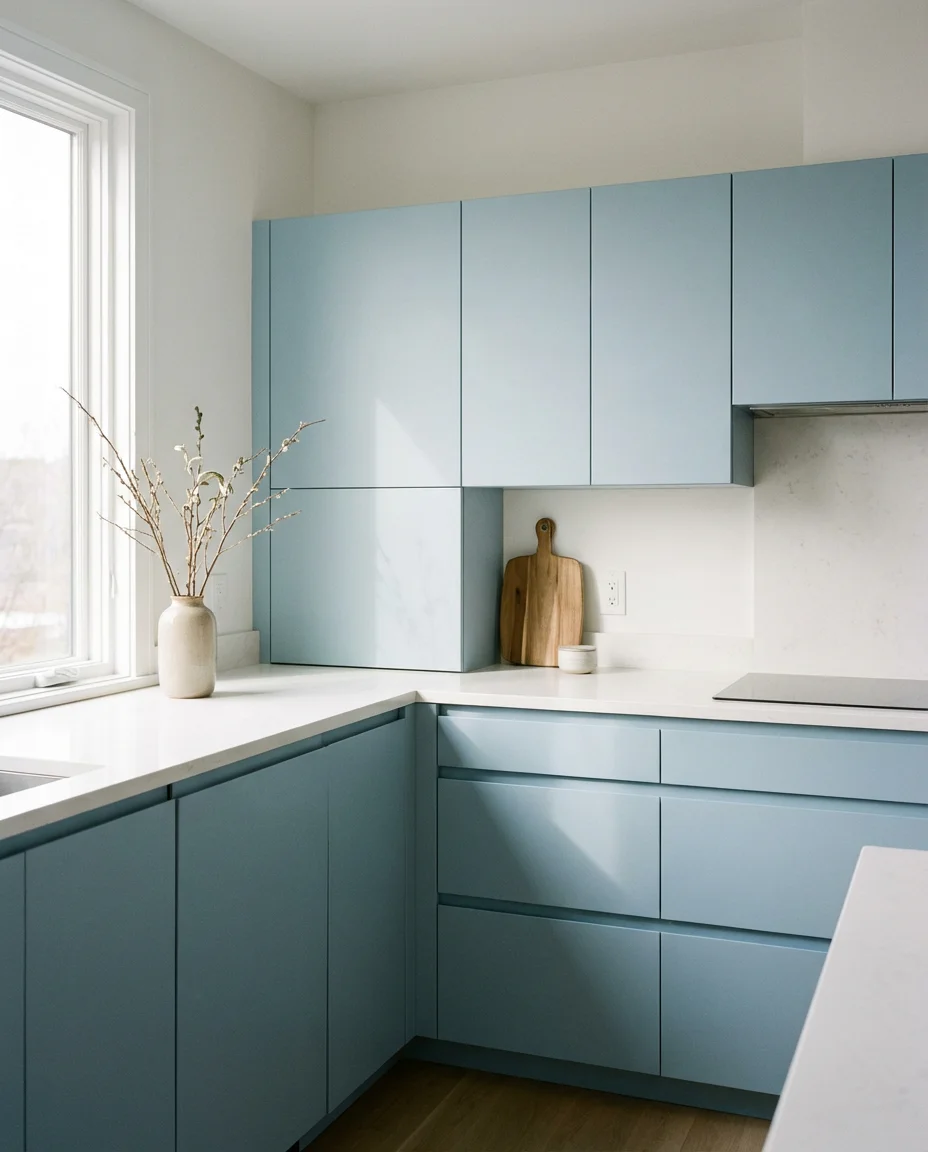
A pale blue kitchen in a minimalist framework is the antidote to the maximalist moment we’ve been living through—and for a certain kind of homeowner, it’s exactly the breath of calm they’re looking for. Barely-there blue cabinets, flat-front handleless doors, a simple white stone countertop, and nothing on the shelves that doesn’t earn its place. It’s a design philosophy as much as an aesthetic, and it rewards the kind of person who finds peace in simplicity.
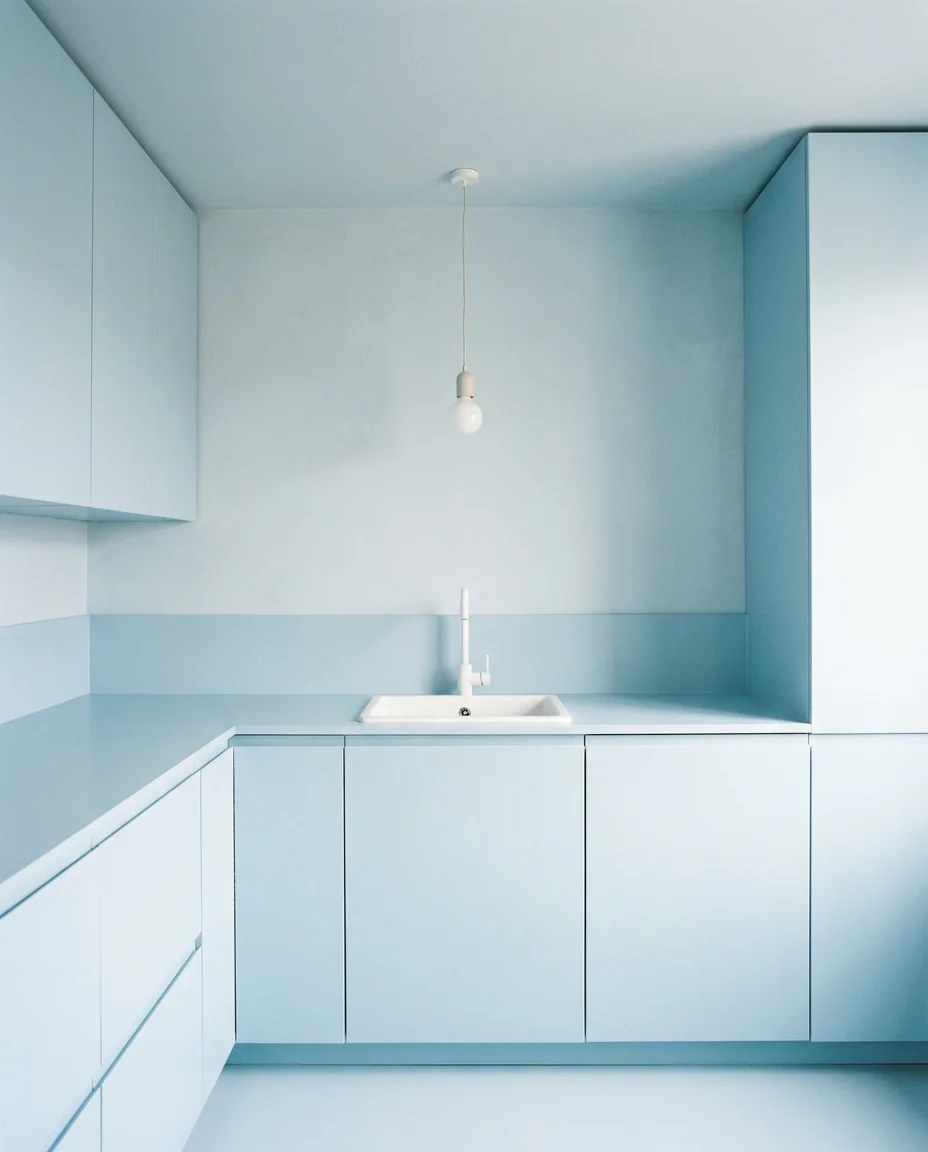
This look performs best in newer construction with flat ceilings, consistent flooring, and well-proportioned windows—which describes a lot of American homes built in the last fifteen years. If your home has older architectural details like crown molding, decorative brackets, or irregular windows, pure minimalism can feel at odds with the space. In that case, a soft, minimal approach—slightly simplified cabinetry, restrained accessories, mostly clear counters—tends to feel more harmonious than rigidly stripping everything away.
16. Navy Blue Kitchen Island as a Statement Piece
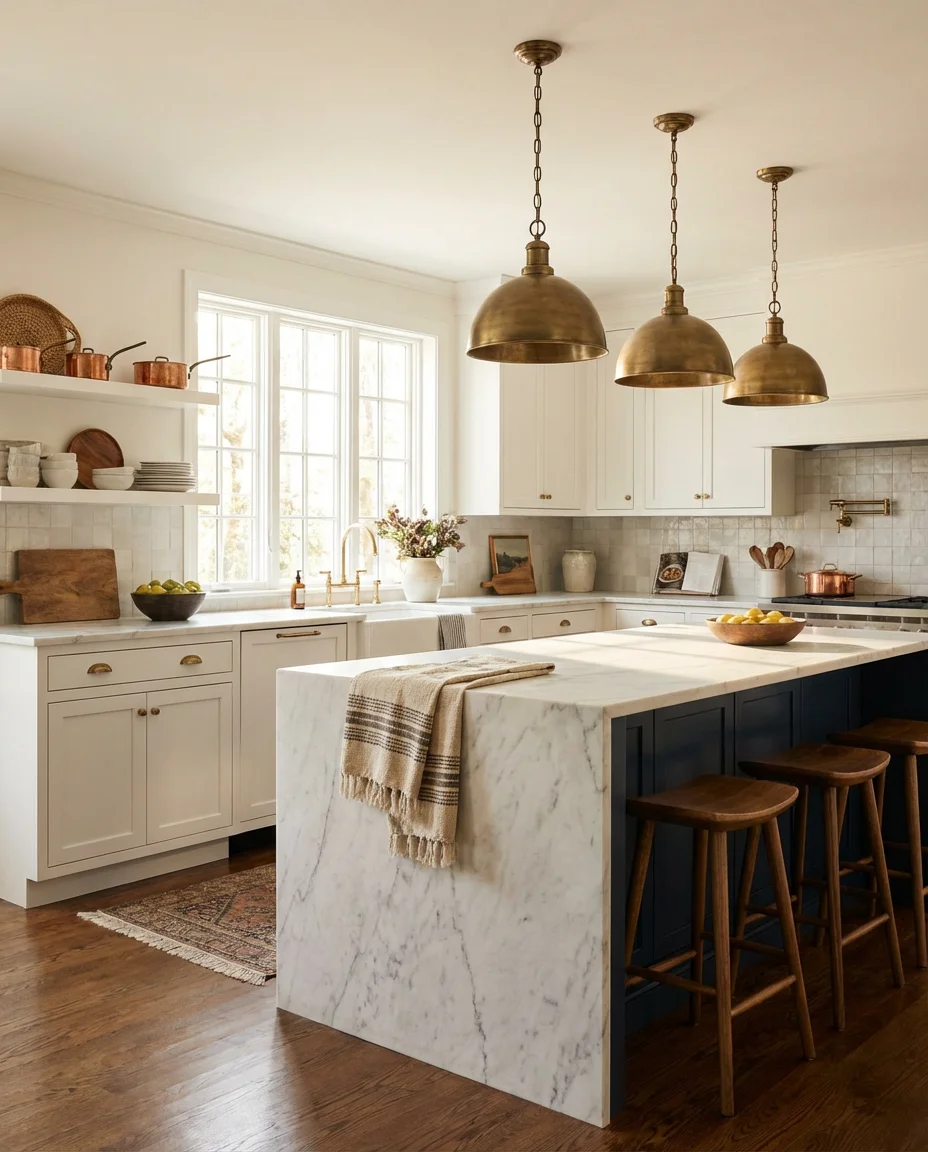
If full blue cabinetry feels like too much of a commitment, a single navy island in an otherwise neutral kitchen is the perfect compromise—and it’s one of the most searched kitchen ideas on Pinterest right now. The island becomes an anchor, a focal point, a piece of furniture rather than just a functional surface. Pair it with white or light wood perimeter cabinets, and you get the full drama of blue without it dominating the room. It’s a dark accent that earns its place and then some.
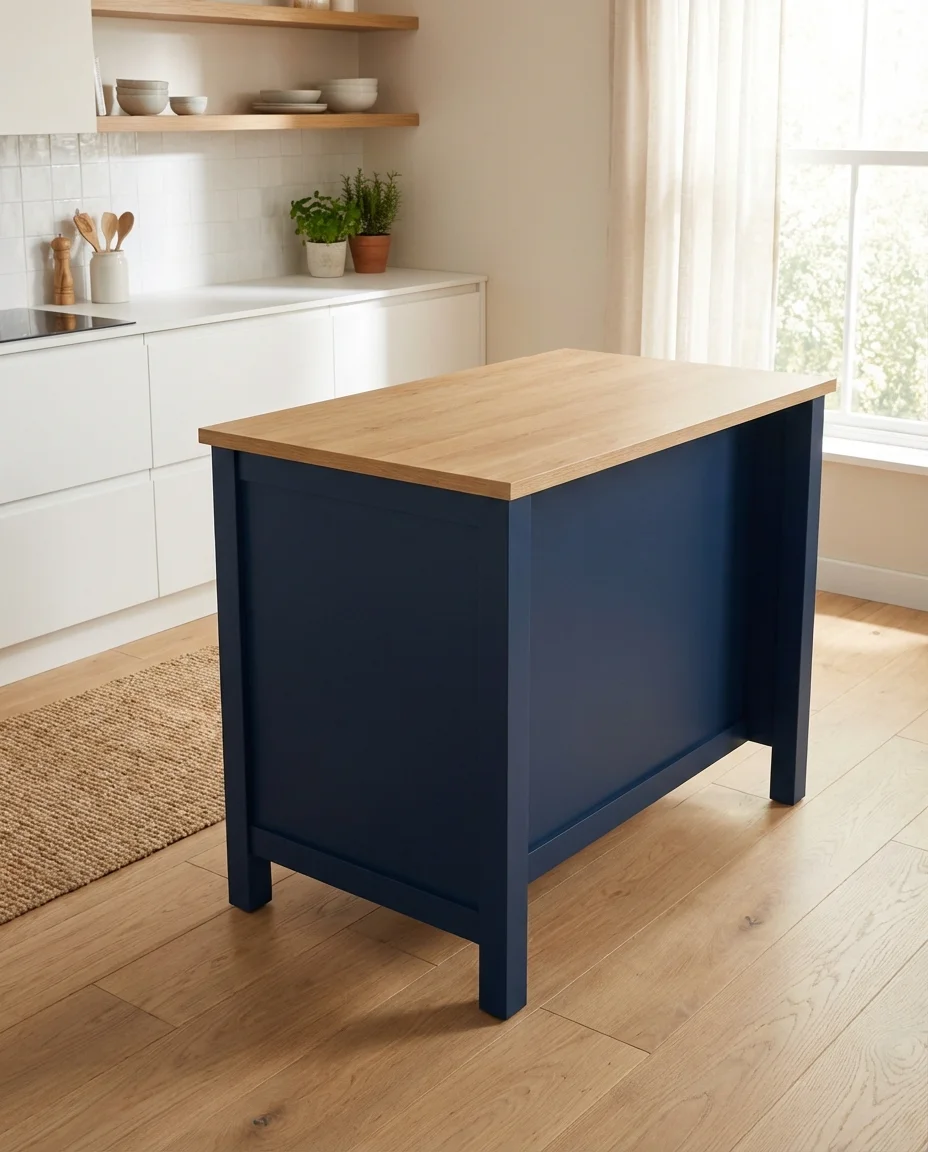
The navy island is also a favorite choice of real estate stagers working in the $500K–$1M home market, where buyers expect personality and polish. A well-executed navy island with quality hardware can literally tip a buyer’s decision—it signals that the house has been loved and cared for, not just flipped. For anyone considering a sale in the next few years, this is one of the smartest single investments you can make in your kitchen without a full renovation.
17. Blue Kitchen with Grey Walls and Industrial Touches
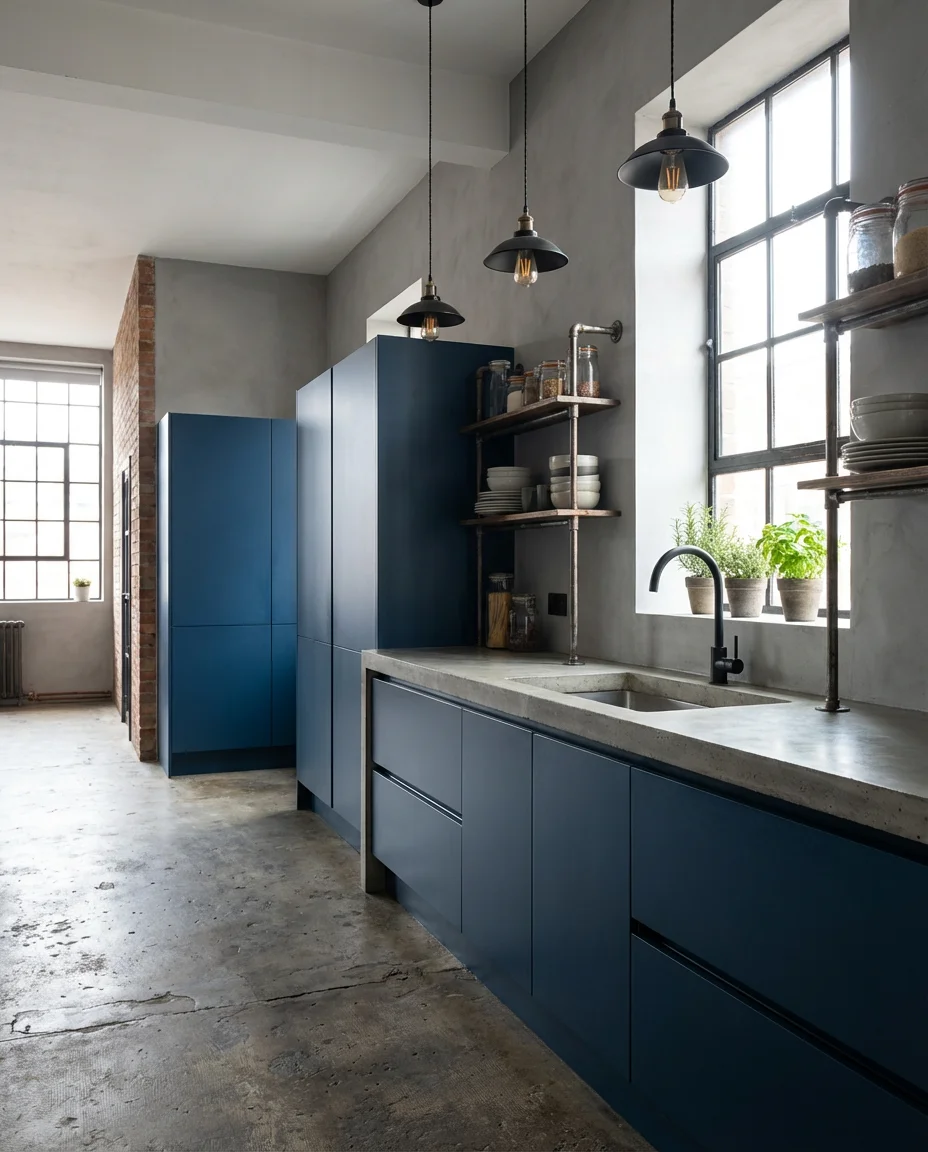
Blue cabinetry against grey walls creates a tonal, layered look that feels deeply considered—like every surface has been chosen to work in conversation with the others. This combination is particularly strong in kitchens with industrial accents: exposed pipe shelving, concrete counters, matte black fixtures, and Edison bulb pendants. The cool neutrality of grey walls allows the blue cabinets to read as a color statement without overwhelming the space. It’s a kitchen that says moody and metropolitan.
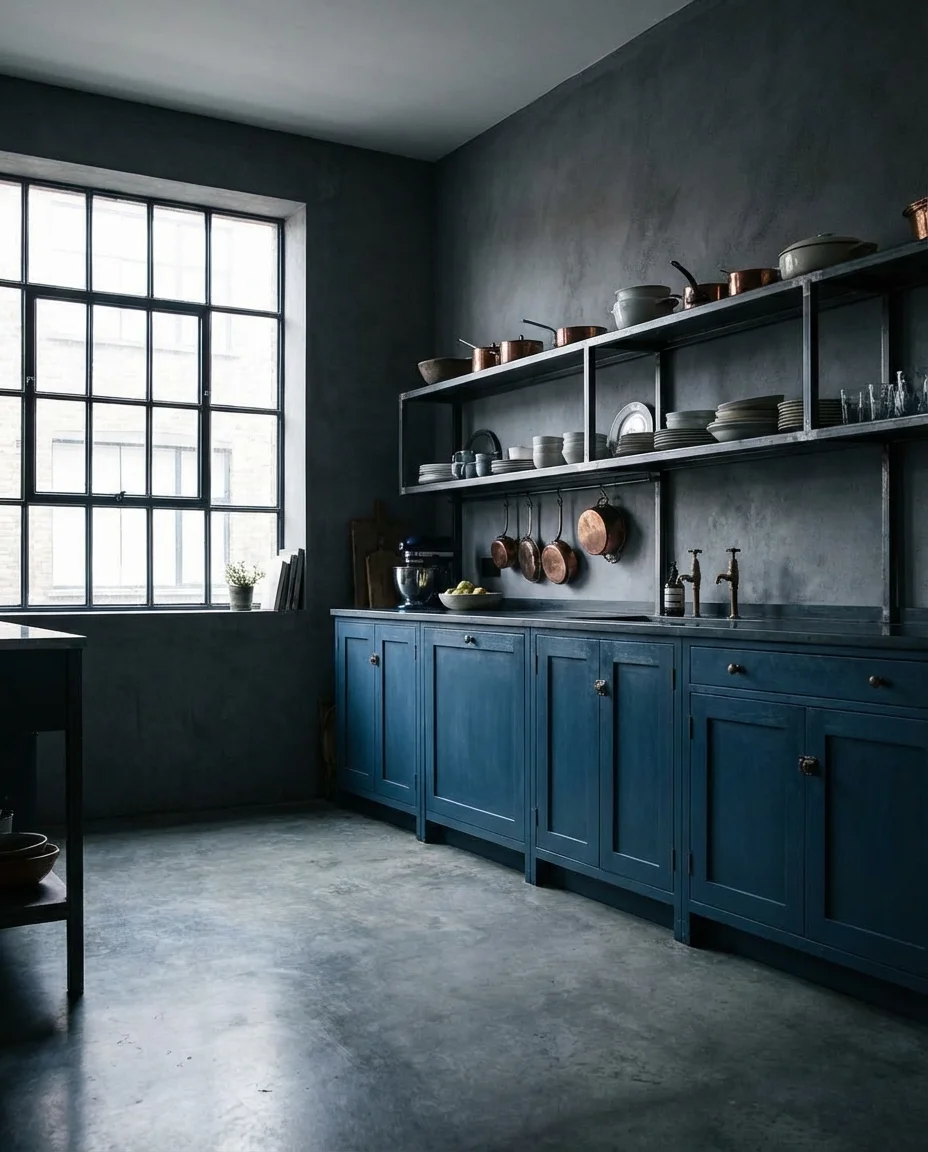
This aesthetic tends to resonate most strongly with homeowners in their 30s and 40s in urban and suburban settings who have outgrown all-white kitchens but aren’t drawn to the warmth of farmhouse style. It’s the kitchen equivalent of a well-tailored blazer: polished, intentional, and appropriate for a wide range of occasions. One practical note—grey walls with cool-toned blue cabinets need warm lighting more than almost any other combination, or the entire room risks feeling like an overcast Monday morning.
18. Blue Kitchen with White and Wood Two-Tone Cabinets
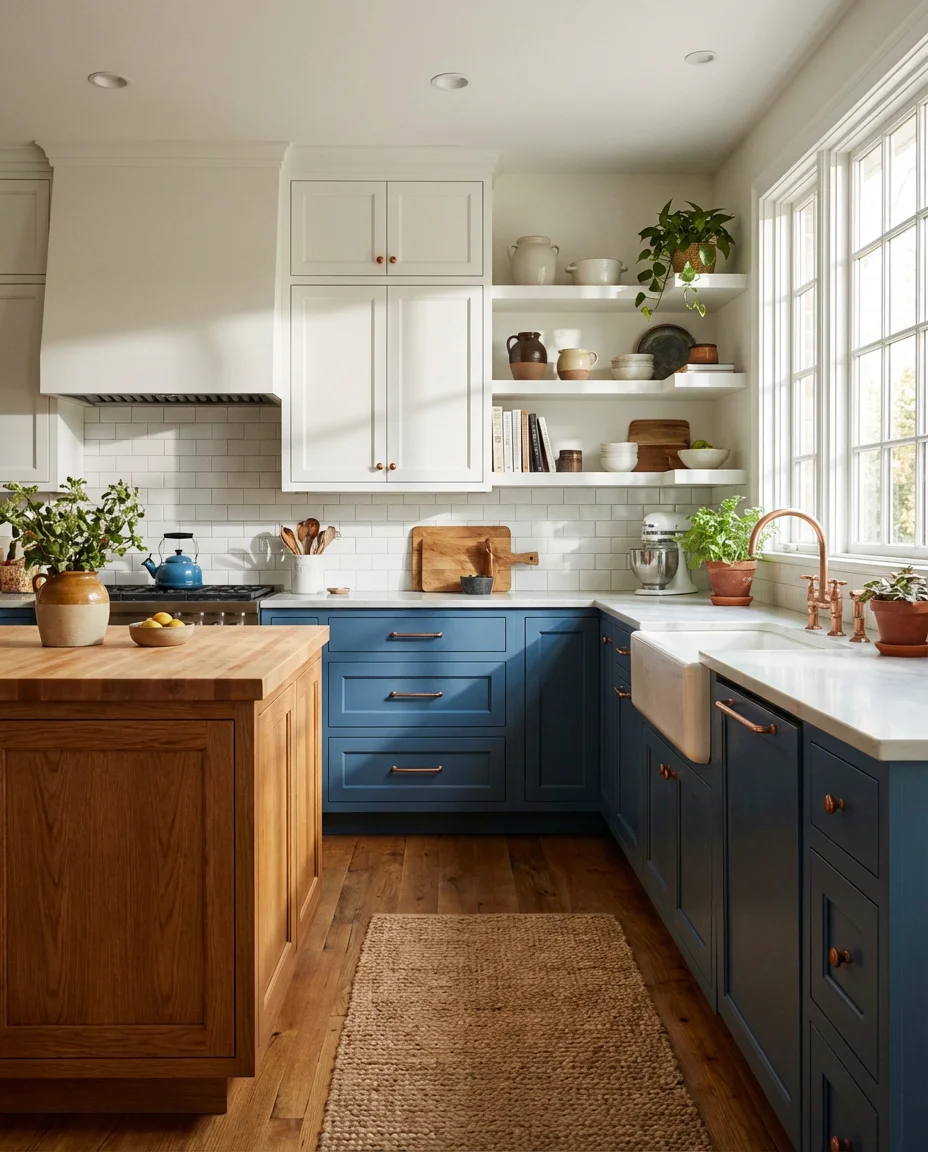
The three-material kitchen—blue, white, and wood—is perhaps the most balanced and broadly appealing configuration in this roundup. It brings together the richness of color, the freshness of white, and the organic warmth of wood into a single cohesive space. A typical arrangement might be blue lower cabinets, white uppers, and a wood-toned island—or a blue island, white walls, and wood shelving. The permutations are nearly endless, which is part of why this approach is so popular for idea generation on Pinterest.
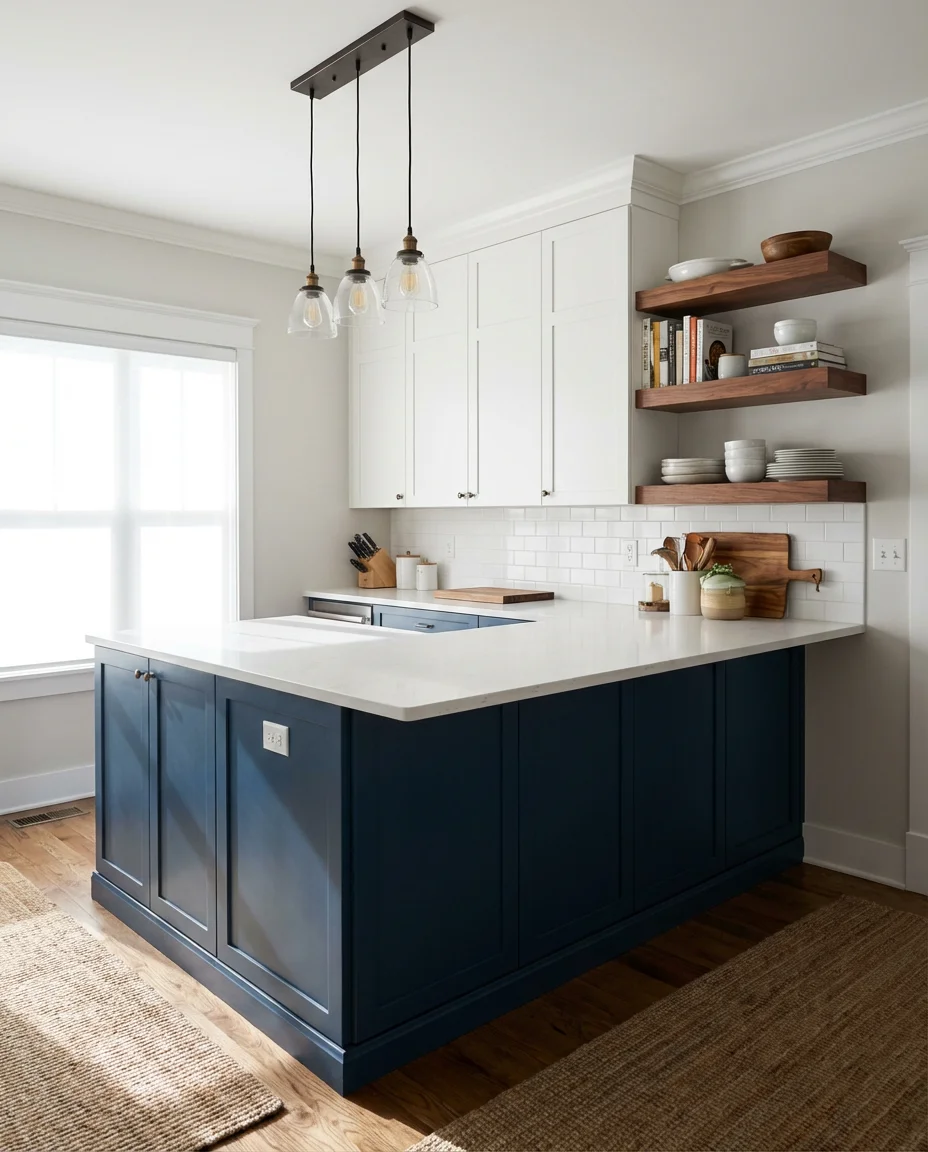
The mistake to avoid here is letting the three materials compete rather than cooperate. The trick is to designate a clear hierarchy: one dominant material (usually white), one secondary (blue or wood), and one accent (whichever of the three is remaining). Stick to that ratio, and the kitchen will look designed rather than indecisive. A good rule of thumb from kitchen designers: 60% white, 30% blue, 10% wood, or 60% white, 30% wood, 10% blue—both ratios tend to resolve beautifully.
19. Light Blue Coastal Kitchen with Woven Textures
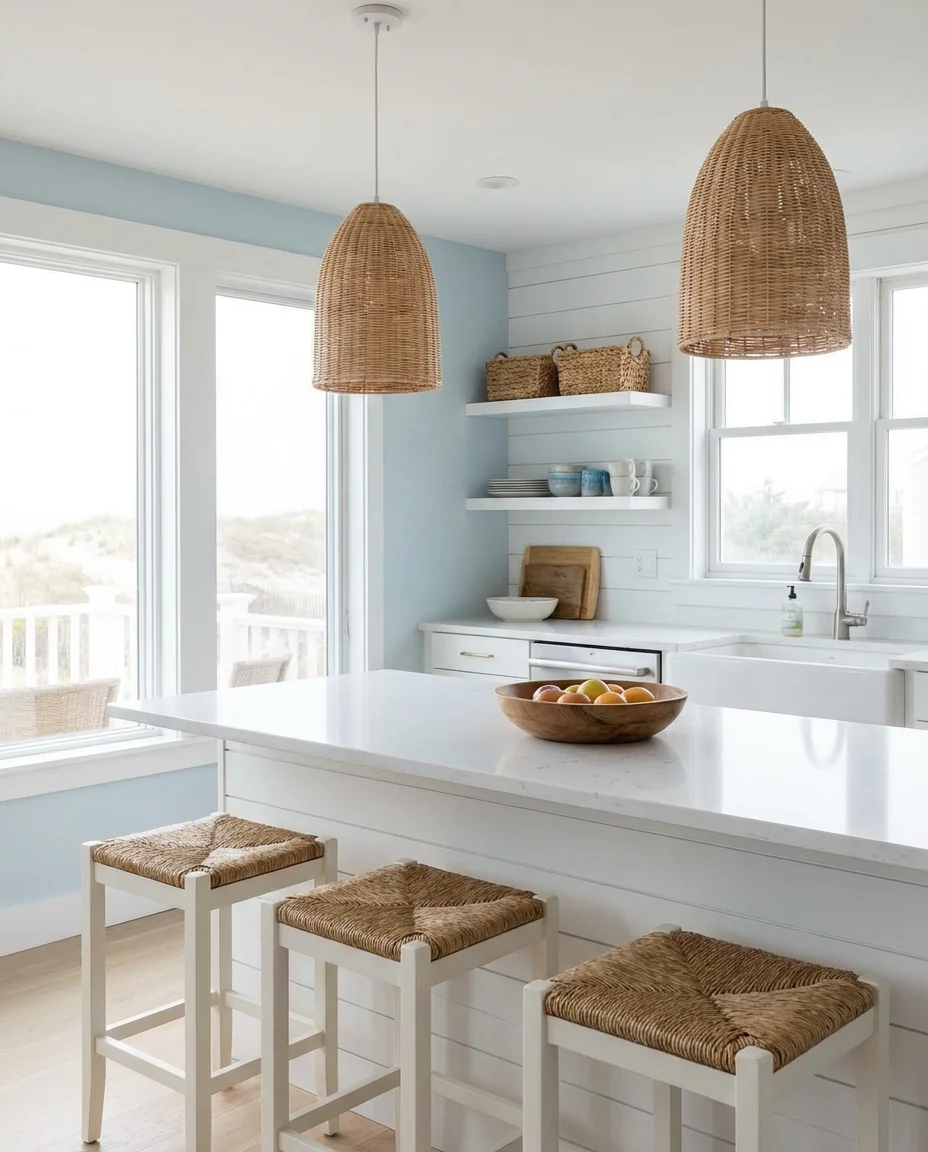
Coastal kitchen style in 2026 has evolved well beyond the clichéd shells-and-anchors aesthetic into something far more refined and livable. A light blue coastal kitchen now means pale, breezy cabinet tones paired with woven textures—rattan pendants, seagrass placemats, wicker bar stools—and natural materials that echo the shore without spelling it out literally. This is pale blue at its most relaxed and effortless, as if the ocean air just drifted in and decided to stay.
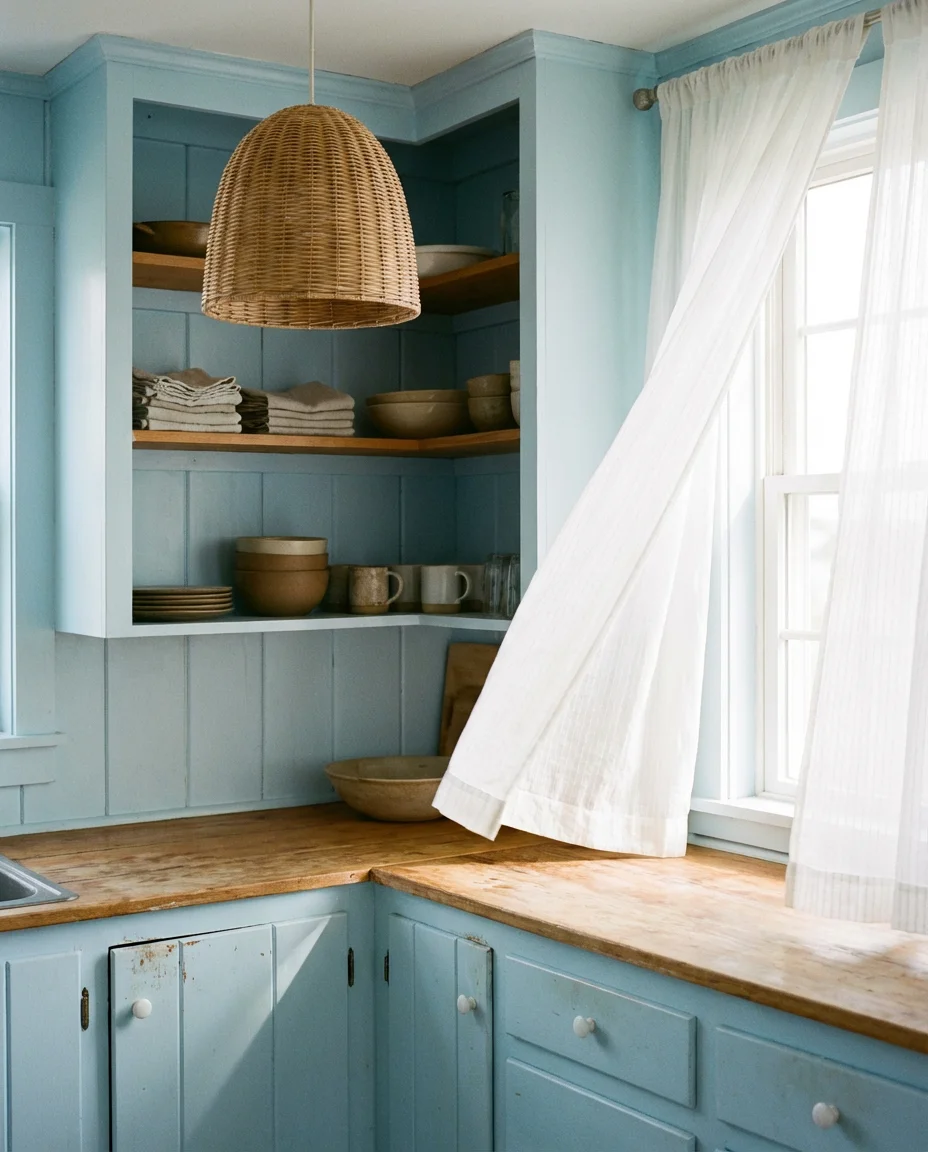
This style is most at home—literally—in beachside communities from the Carolinas to the Pacific Coast Highway, but it works just as beautifully in a landlocked Midwestern kitchen that simply wants to feel like a vacation every morning. The key is restraint in the nautical references: if your kitchen has woven textures, driftwood accessories, and a warm sandy floor, it reads coastal without a single anchor, rope, or lighthouse in sight. That’s the modern interpretation that feels genuinely sophisticated.
20. Deep Blue Velvet-Look Kitchen with Luxury Finishes
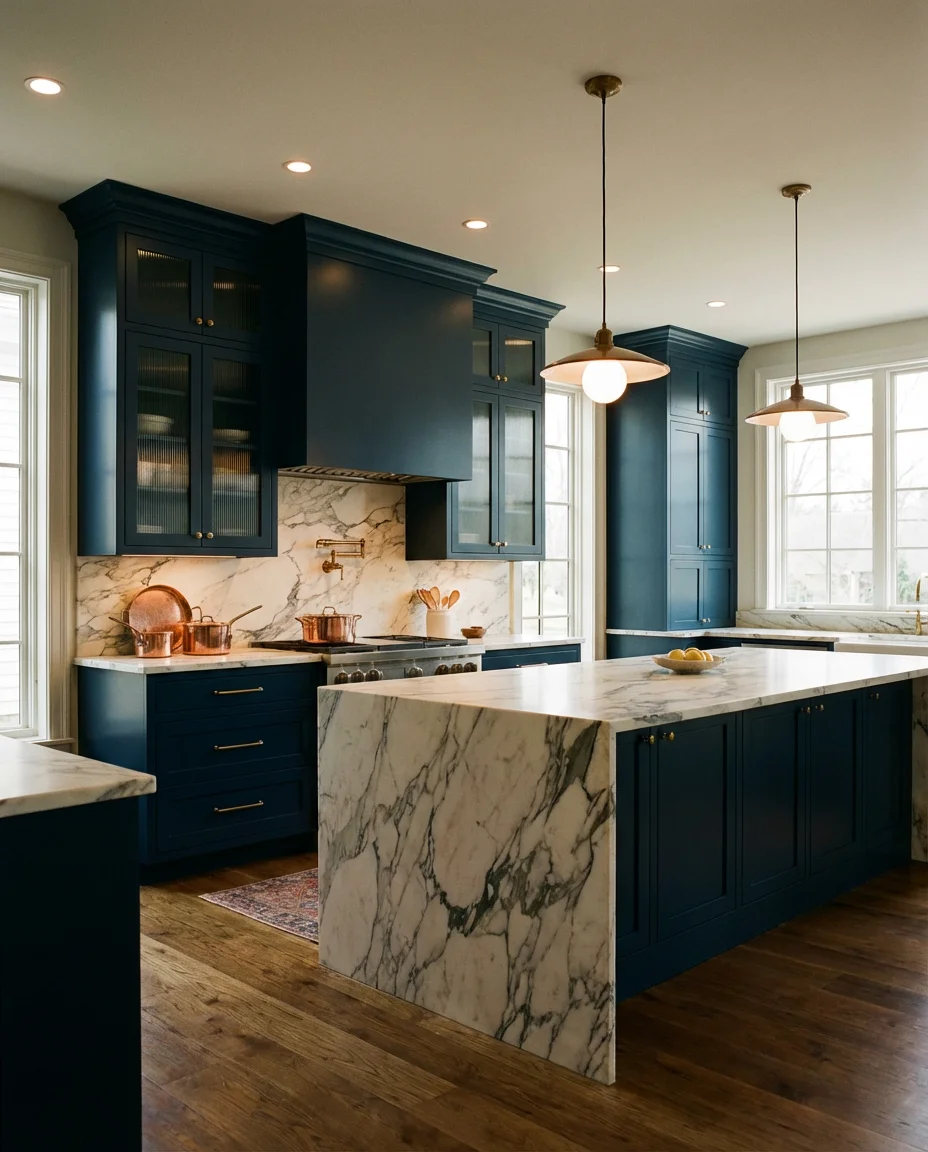
Some of the most breathtaking kitchens being published in 2026 feature deep blue cabinets finished in a suede or velvet-like matte lacquer that practically absorbs light—creating a surface so beautiful it feels almost tactile on screen. This is the high-glamour end of the blue kitchen spectrum, typically paired with unlacquered brass, fluted glass panels, and stone countertops with visible veining. The dark and navy tones used here live at the intersection of European luxury and American scale.
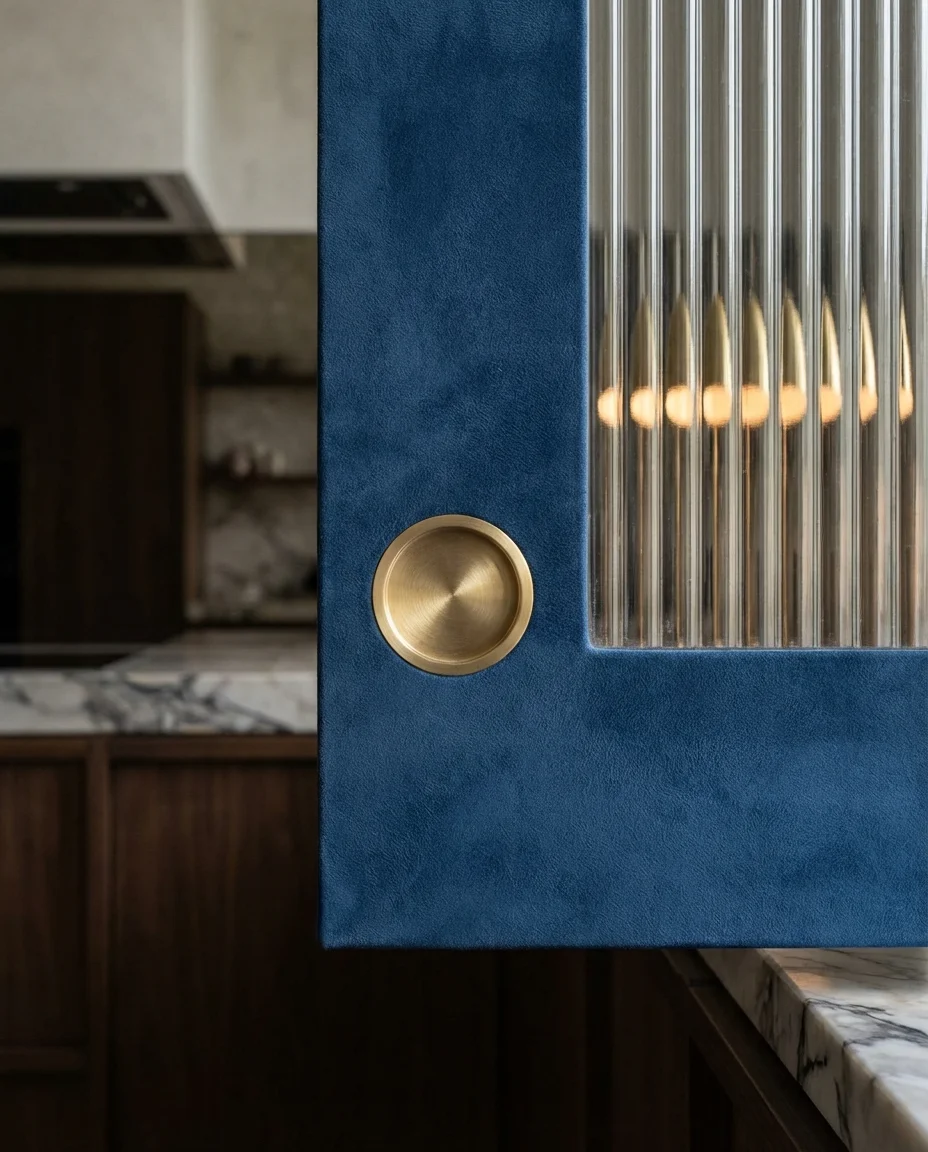
The matte lacquer finish that creates this velvet-like effect typically runs $200–$400 per door front from a quality custom cabinet maker—which adds up quickly in a large kitchen. But for those who can justify the investment, the result is extraordinary and genuinely one of a kind. Unlike mass-produced cabinetry, custom matte-lacquered doors in deep blue will not be found in the neighbor’s kitchen renovation. That exclusivity, for a certain buyer, is precisely the point and entirely worth the premium.
21. Blue Kitchen Backsplash with Neutral Cabinets
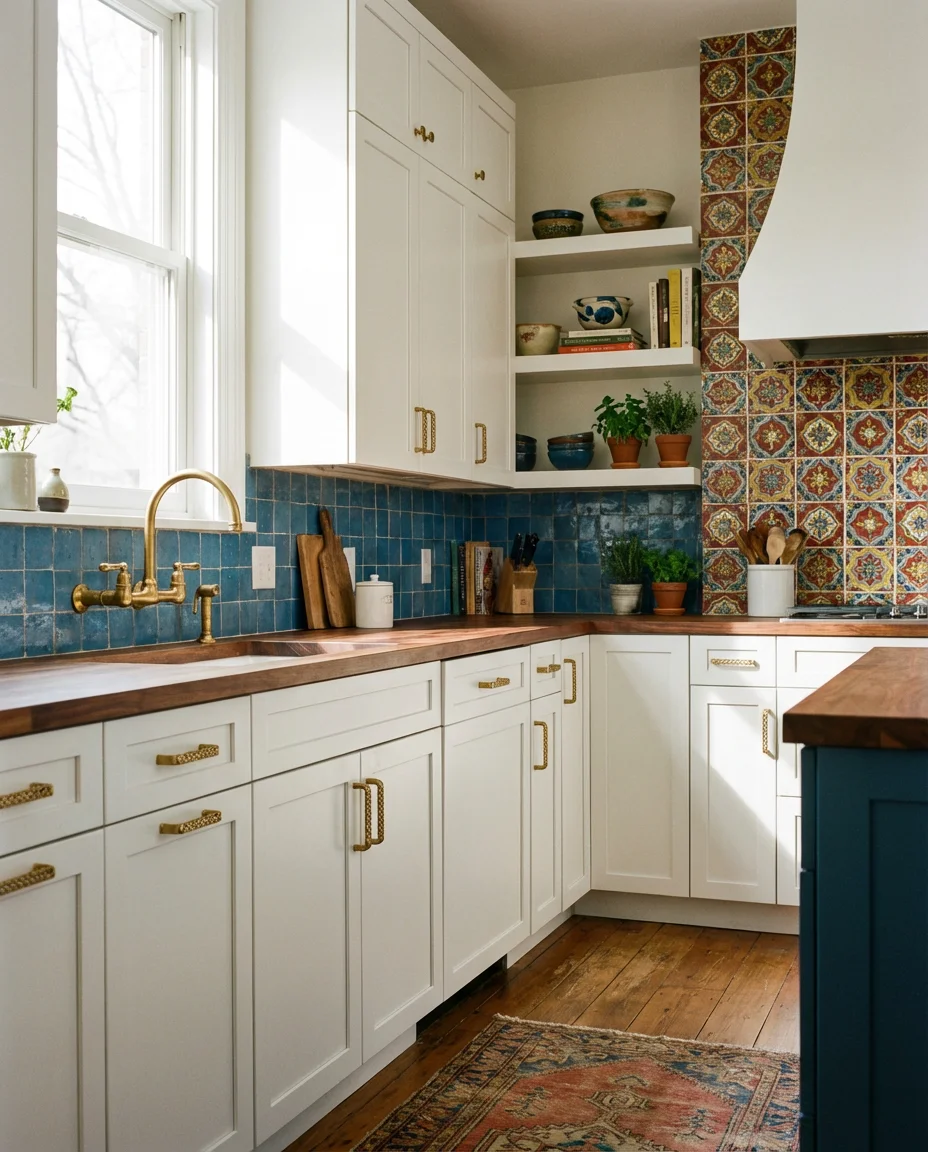
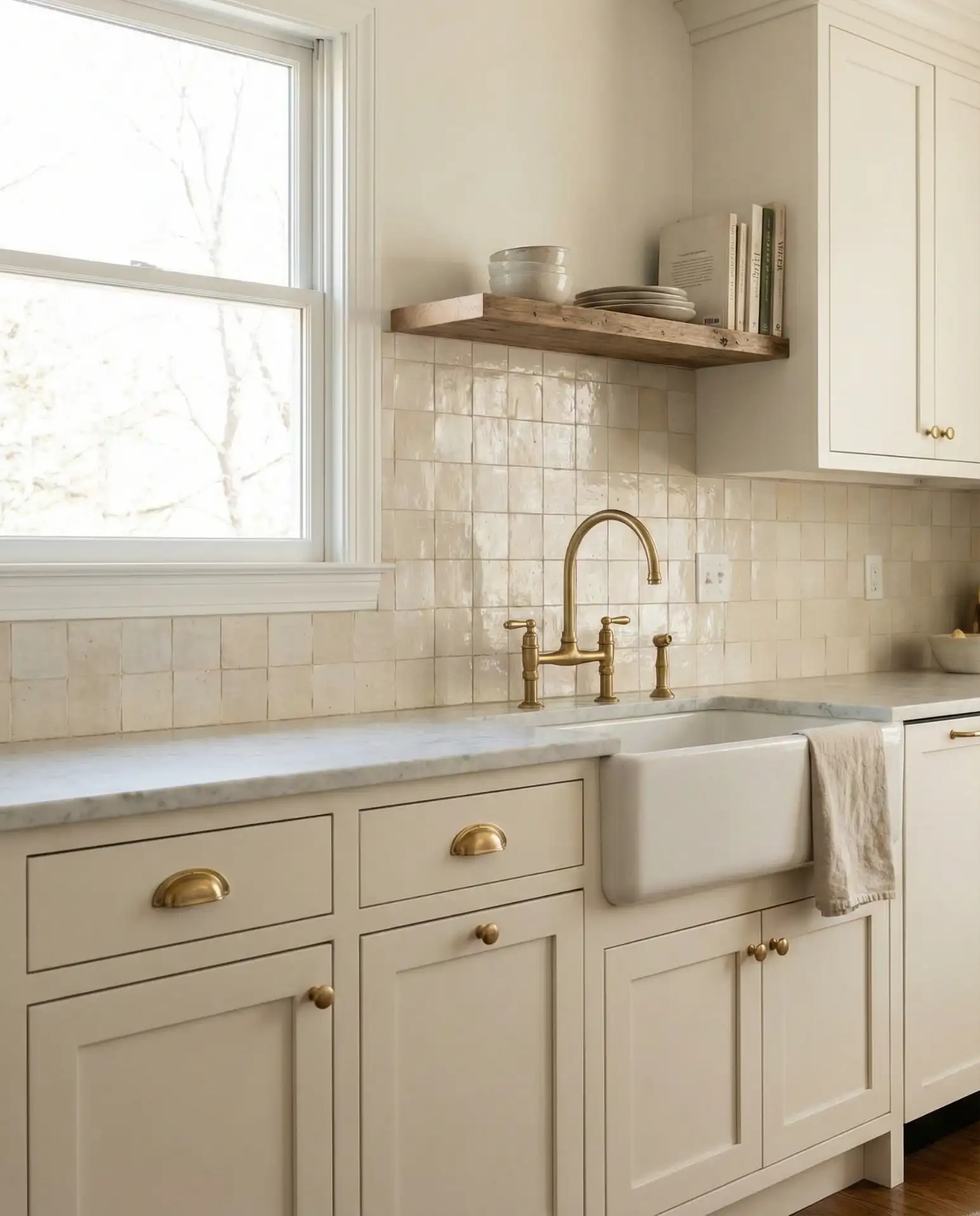
Not everyone wants to repaint their cabinets—and a blue backsplash is arguably the smartest way to introduce color into a neutral kitchen without touching a single door. Blue zellige tile, blue hand-painted Moroccan tile, indigo subway tile, or even a bold cobalt mosaic can transform the kitchen entirely while leaving the cabinetry intact. This approach gives you decor flexibility and enormous inspiration—the backsplash becomes the art, the statement, and the conversation piece.
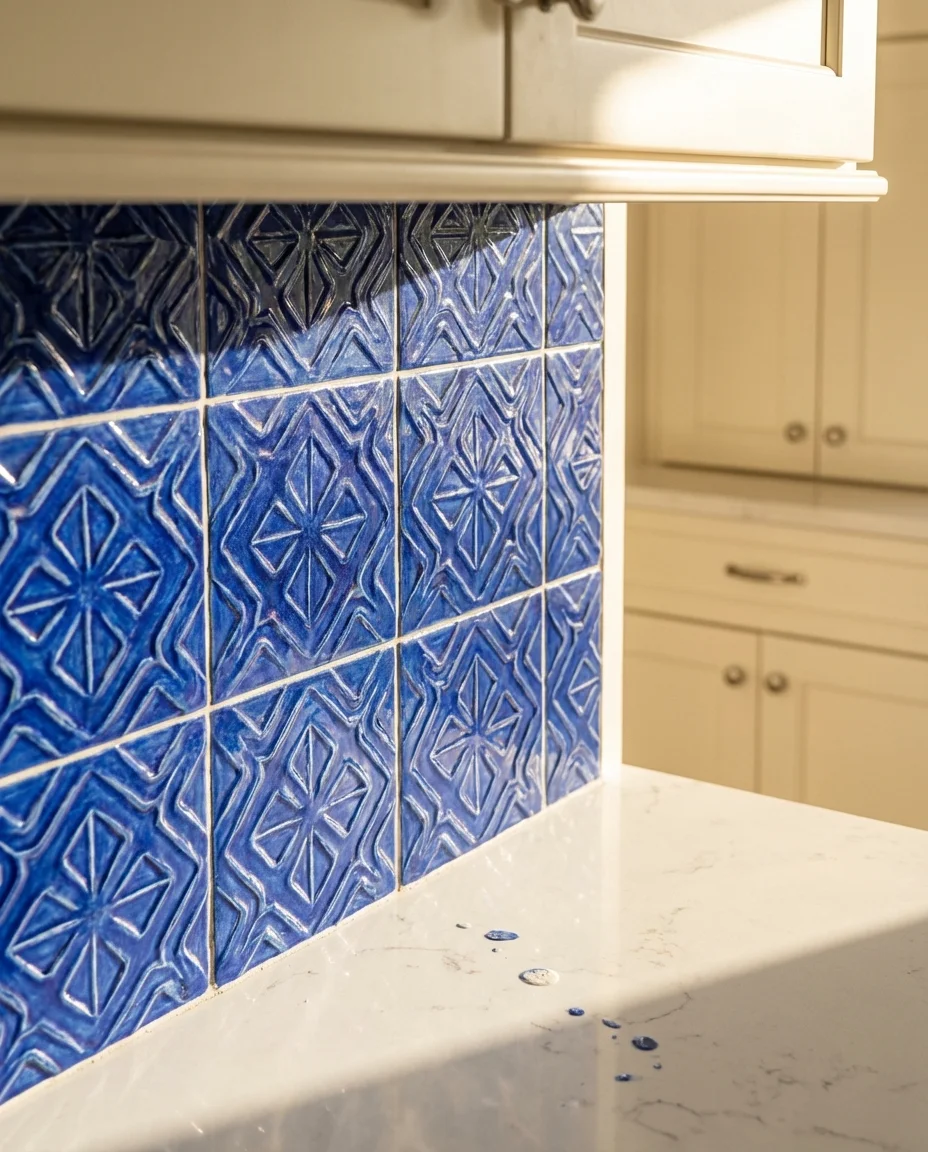
One of the biggest advantages of the blue backsplash approach is its relatively low cost compared to full cabinet replacement. A standard kitchen backsplash typically uses between 20–40 square feet of tile, and even premium handmade zellige or encaustic tile can be installed for $800–$2,500 depending on material and labor costs. Compare that to the $5,000–$20,000 range for a full cabinet repaint or replacement, and the backsplash becomes one of the most compelling value propositions in kitchen design. Big impact, manageable investment.
22. Cream and Blue Kitchen with Warm Timeless Appeal
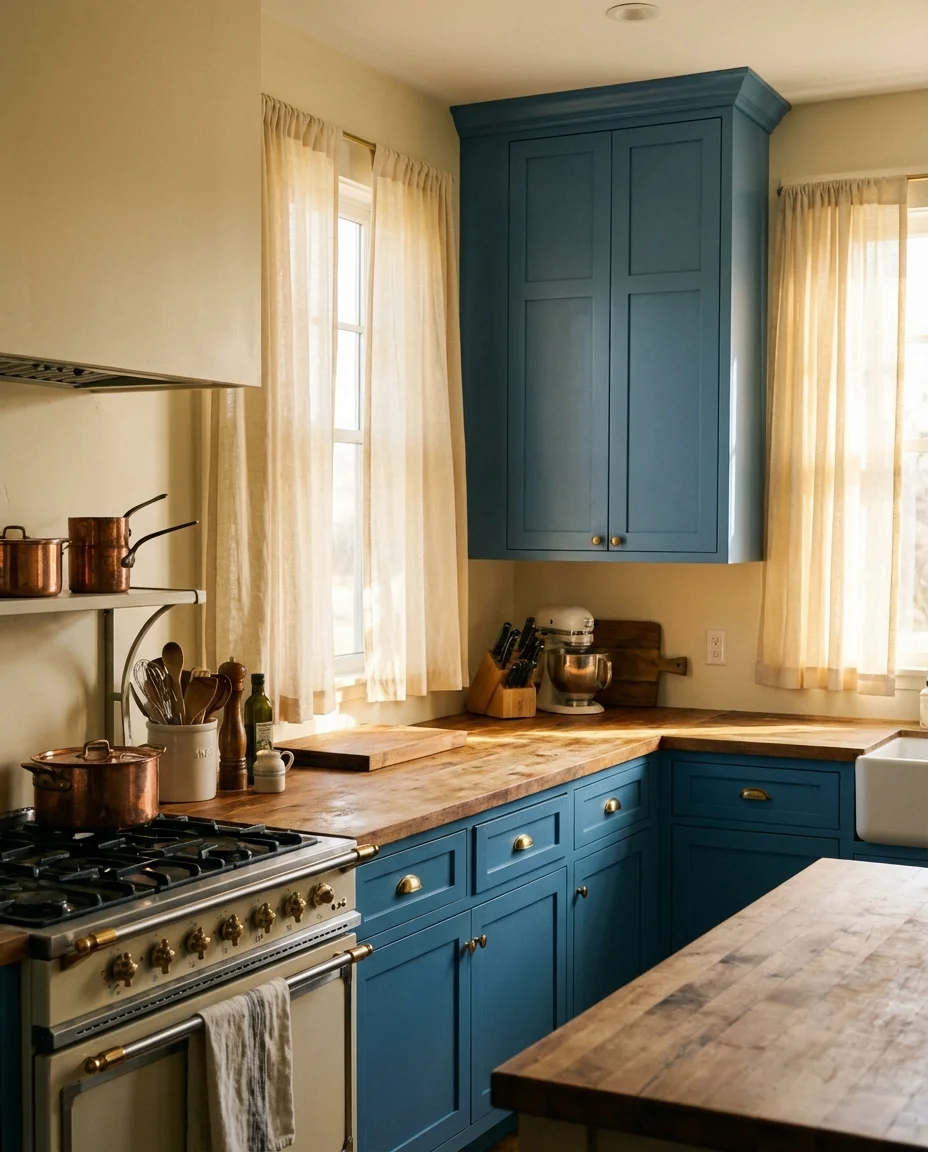
If there’s one blue kitchen combination that will still look beautiful in twenty years, it’s blue paired with cream and warm white tones. This is the kitchen that never goes out of style, that looks equally at home in a Georgian colonial in Connecticut and a Spanish Revival in Pasadena. The warmth of cream softens the blue’s coolness, and together they create a palette that feels genuinely historic—like it belongs to a house with generations of stories behind it. This is light blue done with soul.
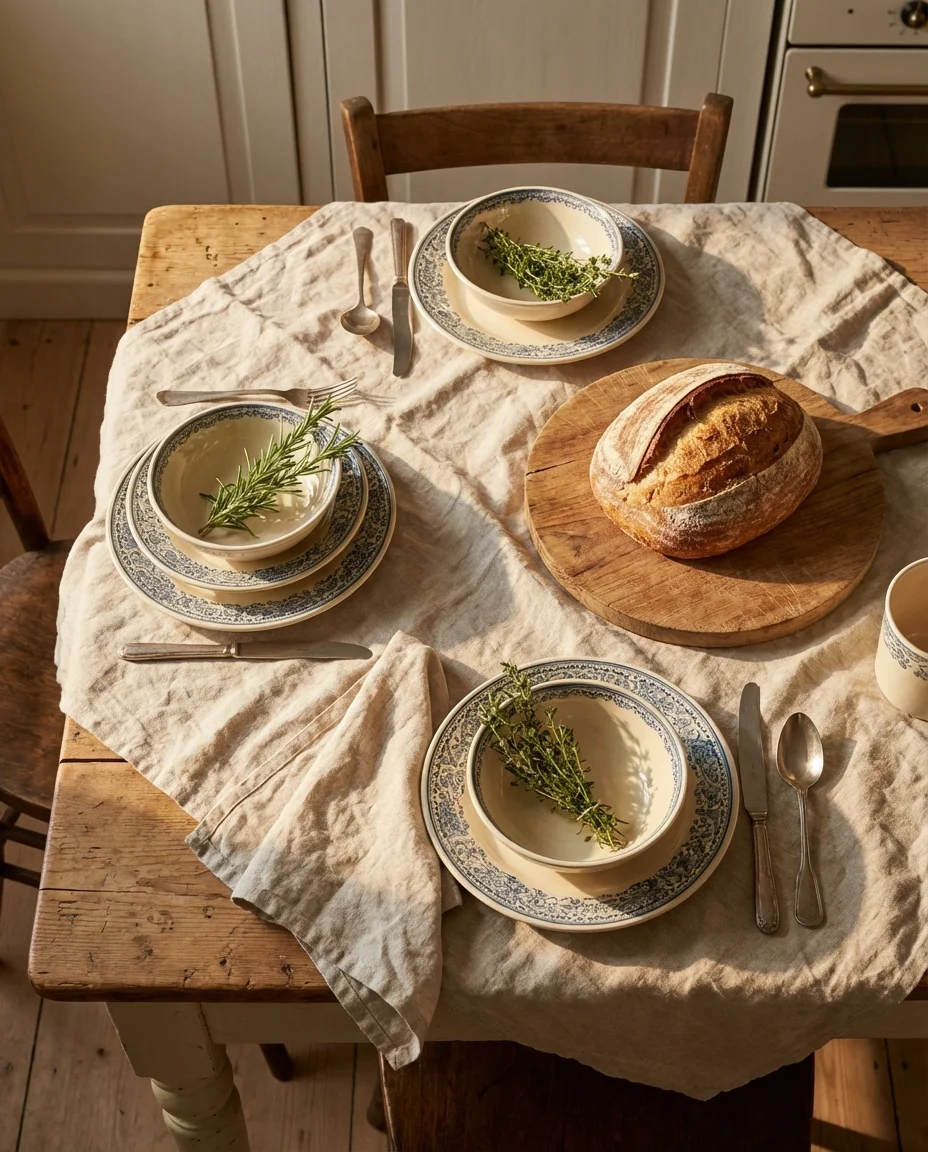
The beauty of this combination is that it doesn’t require a renovation budget to execute. A gallon of cream-toned paint on the walls, a set of blue linen dish towels, a collection of blue-and-white pottery, and a cream-colored runner rug can transform even the most builder-grade kitchen into something that feels thoughtful and warm. Start there—layer in, add slowly, and let the kitchen evolve. The best rooms are never finished all at once. They grow, just like the people who cook in them.
Conclusion
Blue kitchens are one of those rare design decisions that almost no one regrets—and the 22 ideas in this article are proof of just how wide the spectrum really is, from barely-there powder blues to deep, brooding midnights. Whether you’re planning a full renovation or just looking to refresh the feeling of your space with a few well-chosen accents, there’s a version of the blue kitchen that belongs to you. We’d love to hear which direction you’re leaning—drop your favorite idea in the comments below and tell us about the kitchen you’re dreaming of.