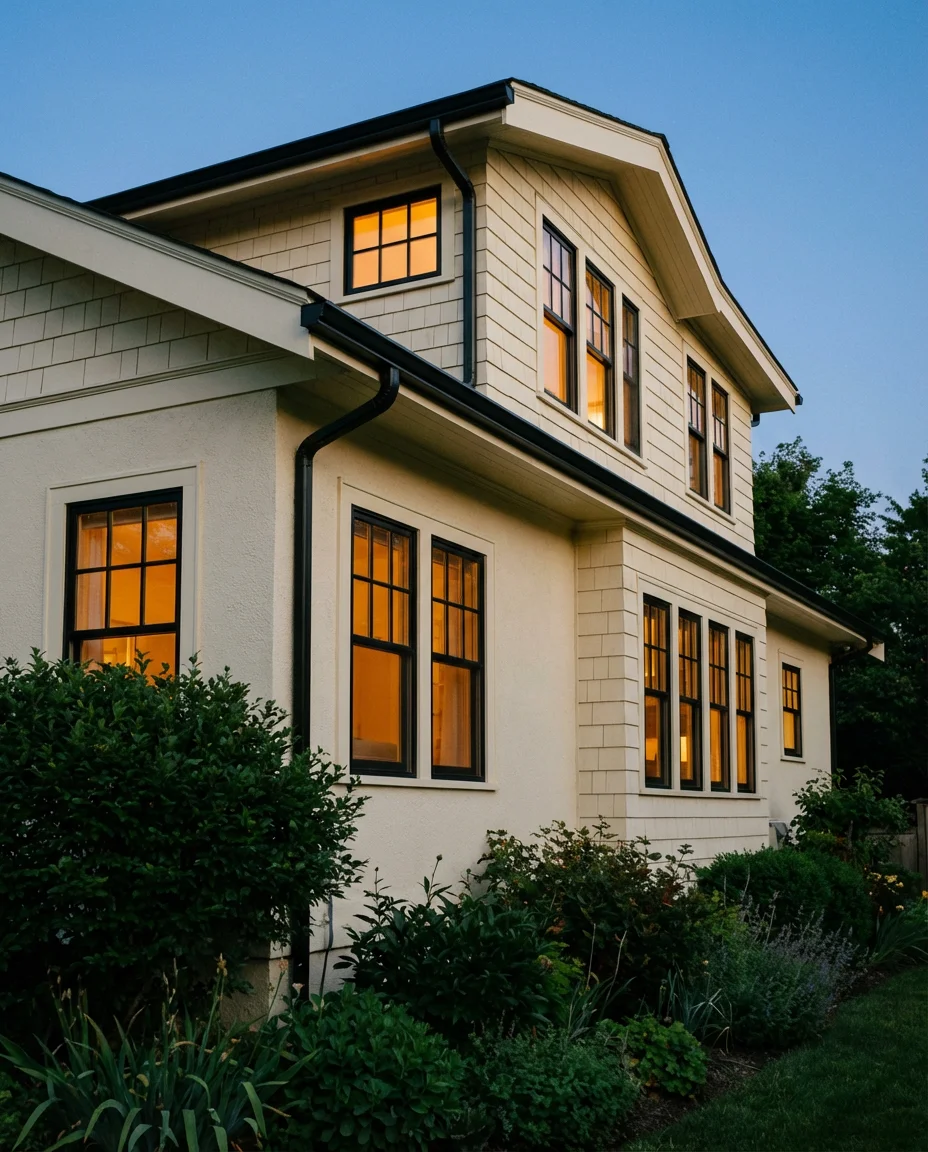
There’s something timeless about a Cape Cod home—the steep roofline, the symmetrical windows, the sense that this house has stories baked into its cedar shingles. But in 2026, homeowners across the country are reimagining what this classic American silhouette can look like on the outside. Whether you landed here from a Pinterest scroll or you’re actively planning a renovation, you’re in the right place. This article walks you through fresh, inspiring exterior ideas that blend old-soul character with modern sensibility—from bold paint colors to landscaping that makes the whole package unforgettable.
1. Crisp White With Black Shutters
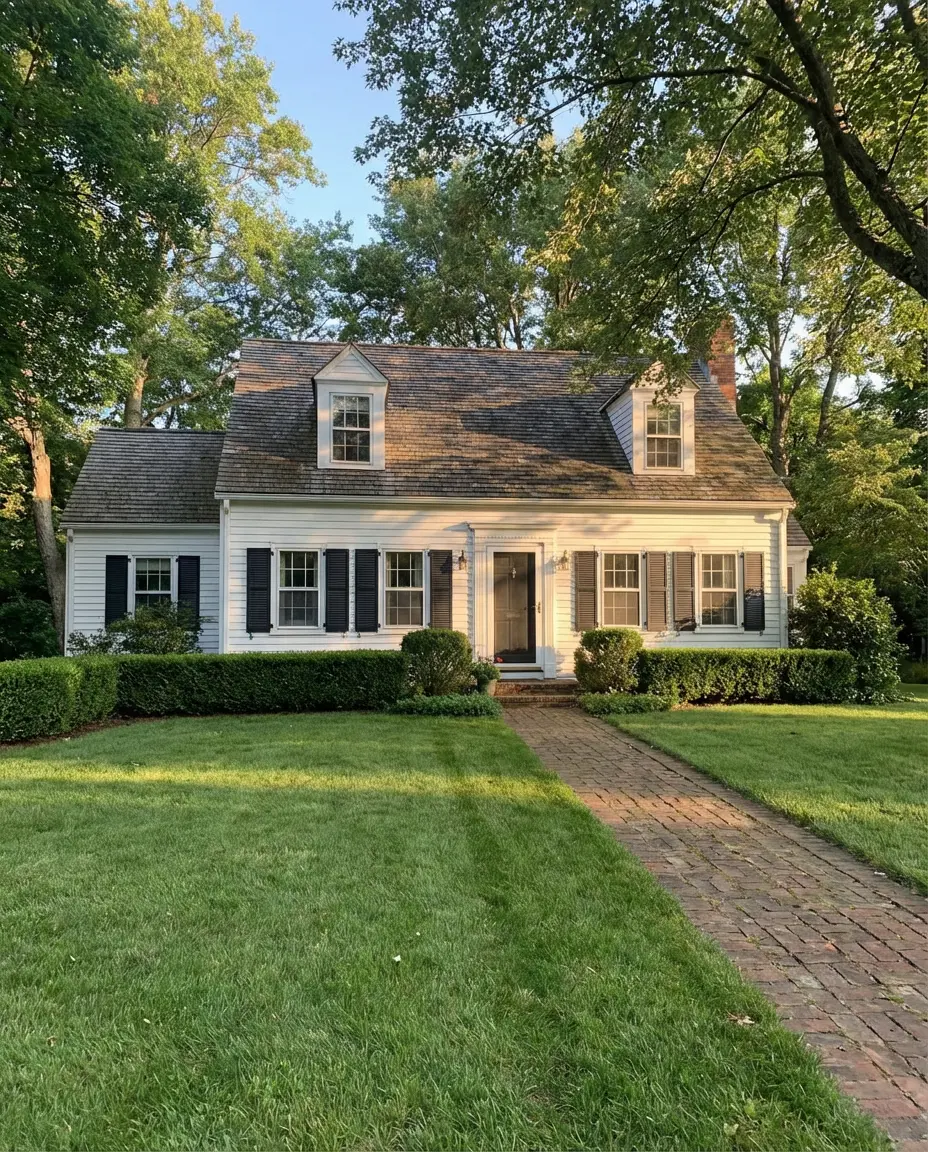
Few combinations in home design are as enduring as white siding paired with black shutters. On a Cape Cod, this contrast sharpens the home’s natural geometry—the steep pitch of the roof becomes even more pronounced when framed in high-contrast trim. It reads as both classic and quietly sophisticated, the kind of curb appeal that stops people mid-stroll. The white doesn’t have to be blinding, either—a warm, slightly creamy white reads as inviting rather than sterile.
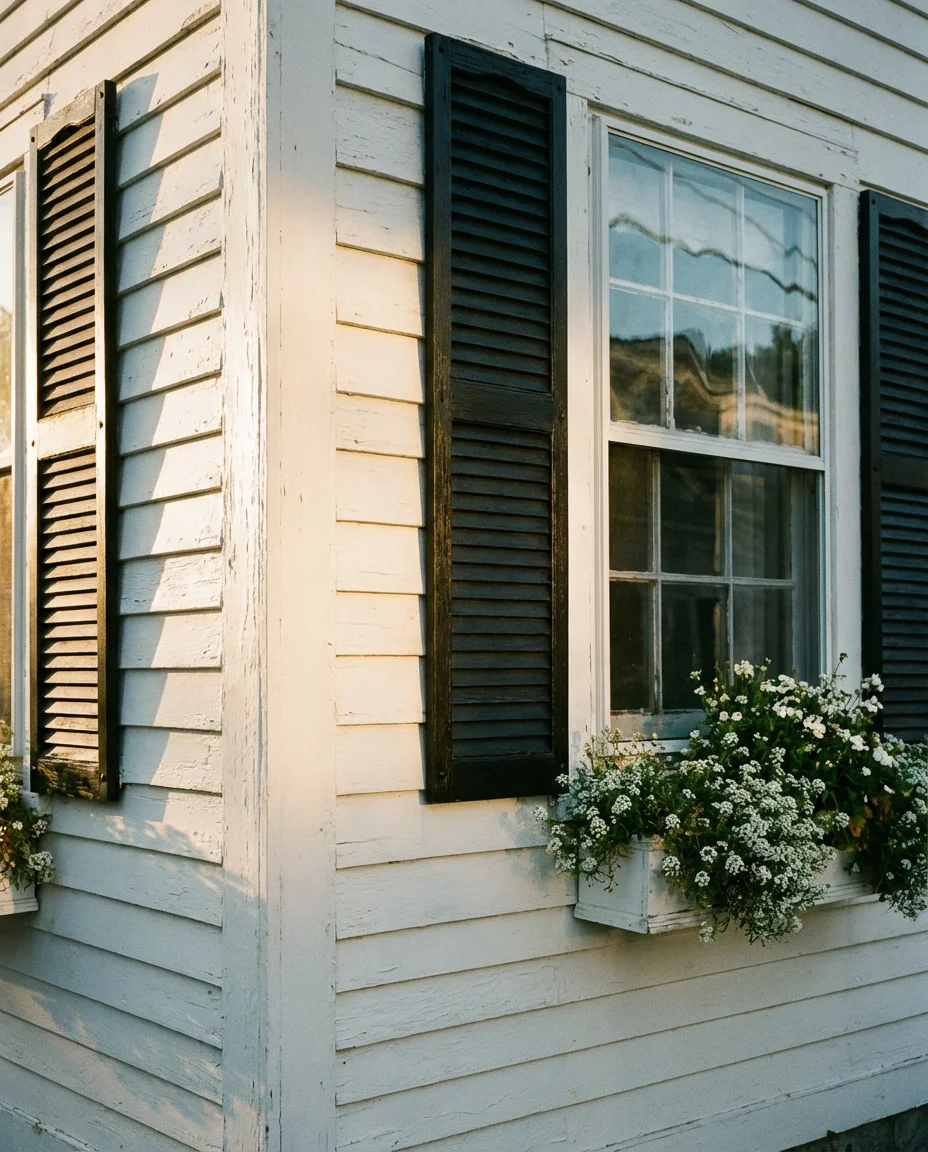
This pairing works especially well in New England neighborhoods where the aesthetic blends right into the landscape. A common mistake homeowners make is choosing a flat-finish white—opt instead for a satin or eggshell finish that holds up to rain and humidity while maintaining that polished look year-round.
2. Coastal Blue Shingles With White Trim
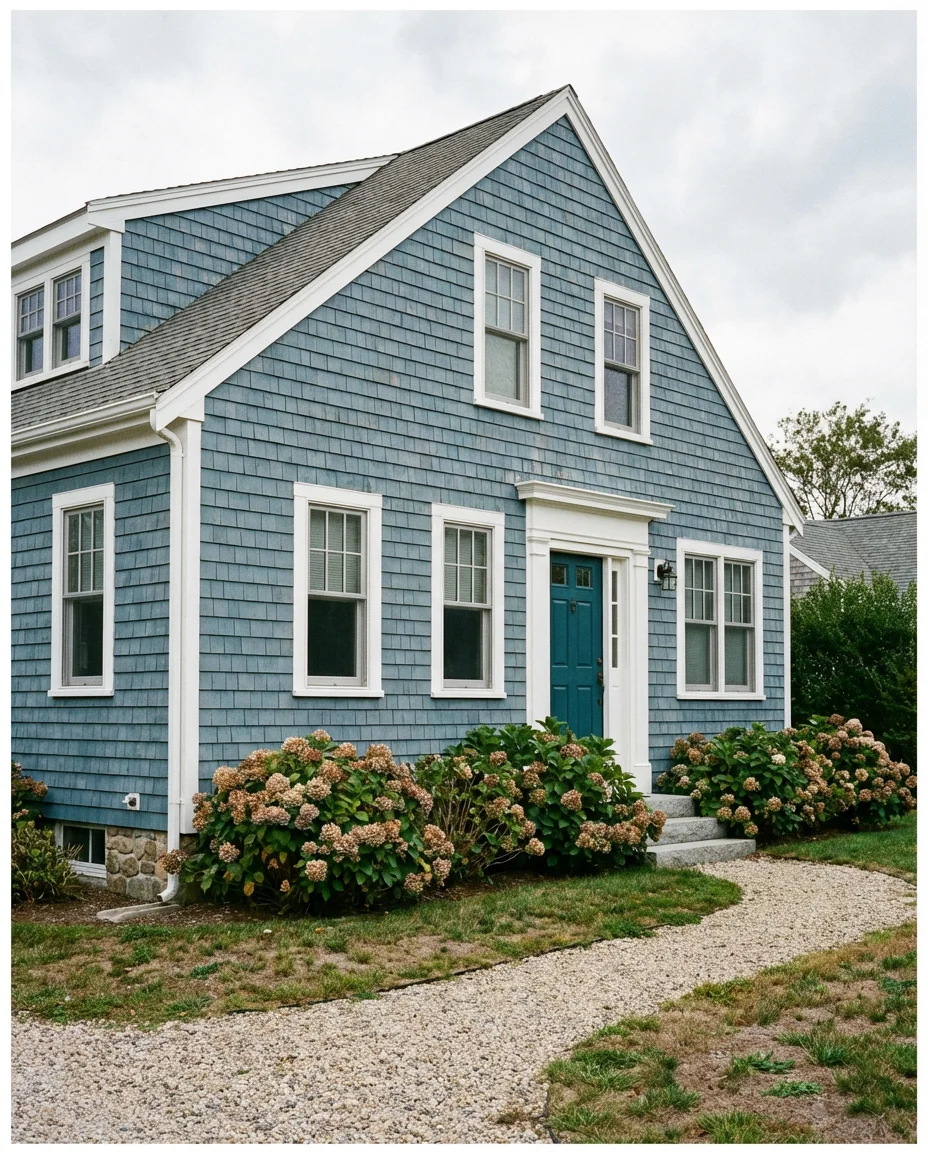
A coastal color palette doesn’t have to mean nautical clichés. When you lean into a dusty, weathered blue for cedar shingles—think the hue of a calm harbor on a cloudy morning—and pair it with bright white trim, the result feels genuinely seaside without being kitschy. This look is particularly popular in beach towns from the Outer Banks to Maine, but it translates beautifully inland too, wherever homeowners want that relaxed, breezy energy.
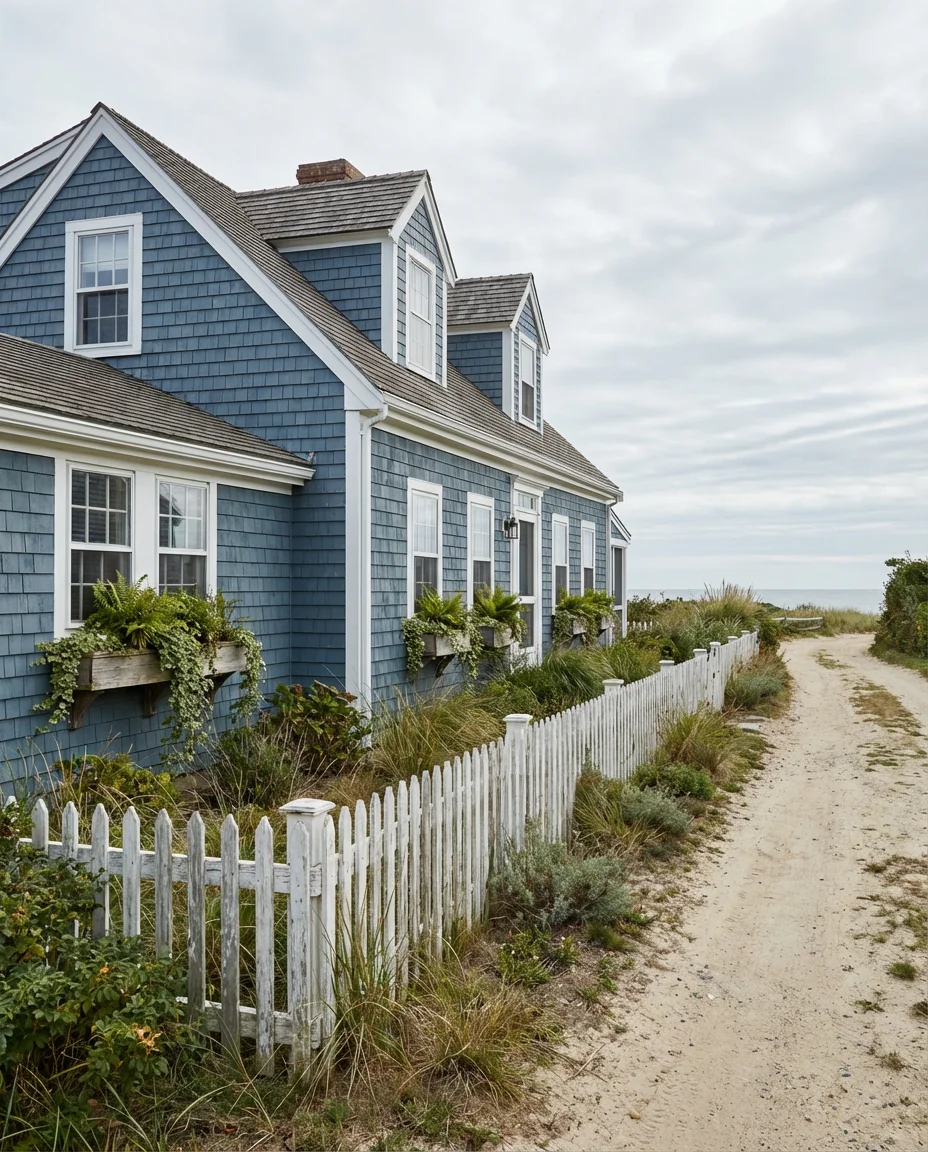
This color scheme works best on homes with at least some natural greenery nearby—the blue shingles pop beautifully against dark leafy shrubs or ornamental grasses. Real homeowners who’ve gone this route often say the color changes character throughout the day, looking almost grey at dusk and deeply blue in midday sun, which makes the house feel alive.
3. Dark Green Siding With Stone Accents
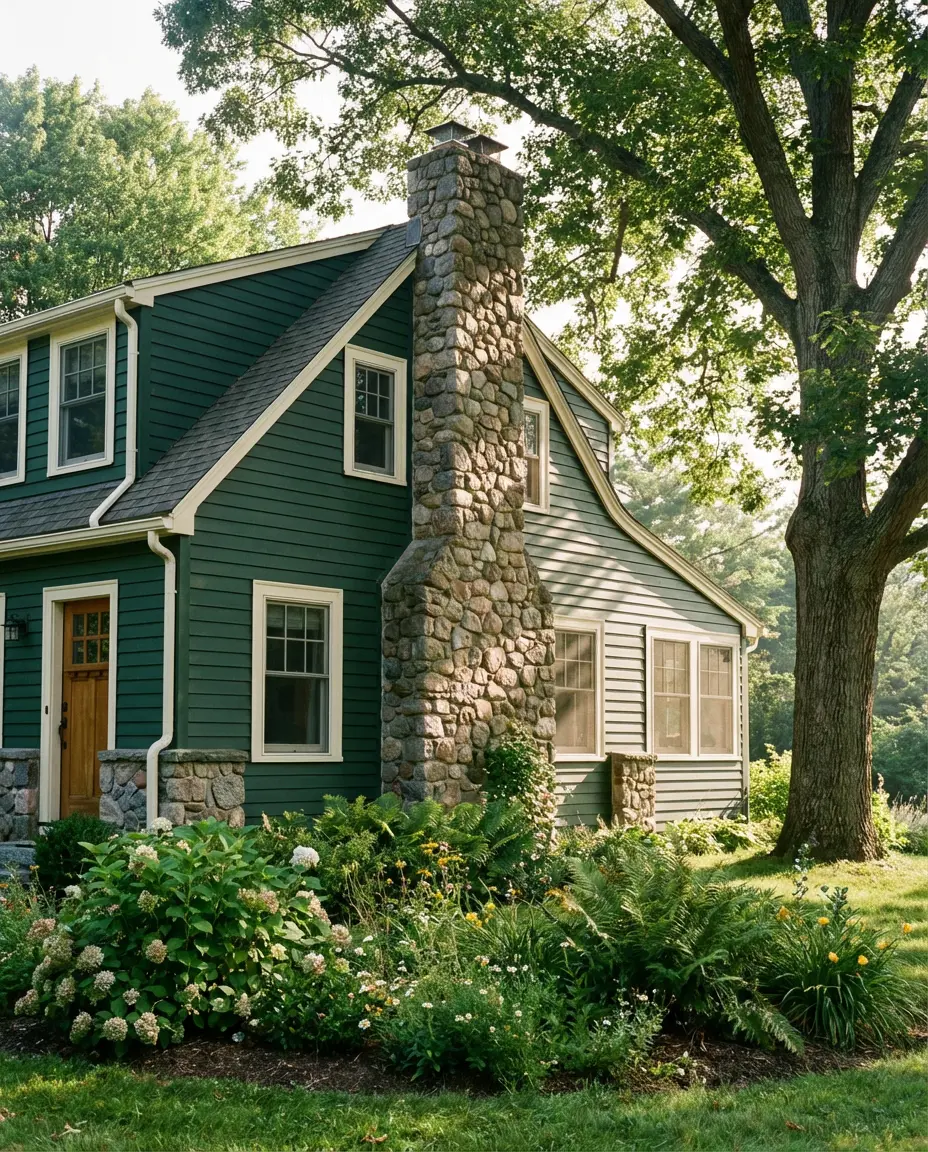
If you want your Cape Cod to feel grounded and a little moody, dark green siding is having a serious moment right now. Paired with natural stone accents—a fieldstone chimney, a stone foundation skirt, or even a slate pathway—it creates a richly layered exterior that looks like it grew out of the landscape. The combination reads as both contemporary and deeply rooted, the visual equivalent of a home that’s been loved for generations.
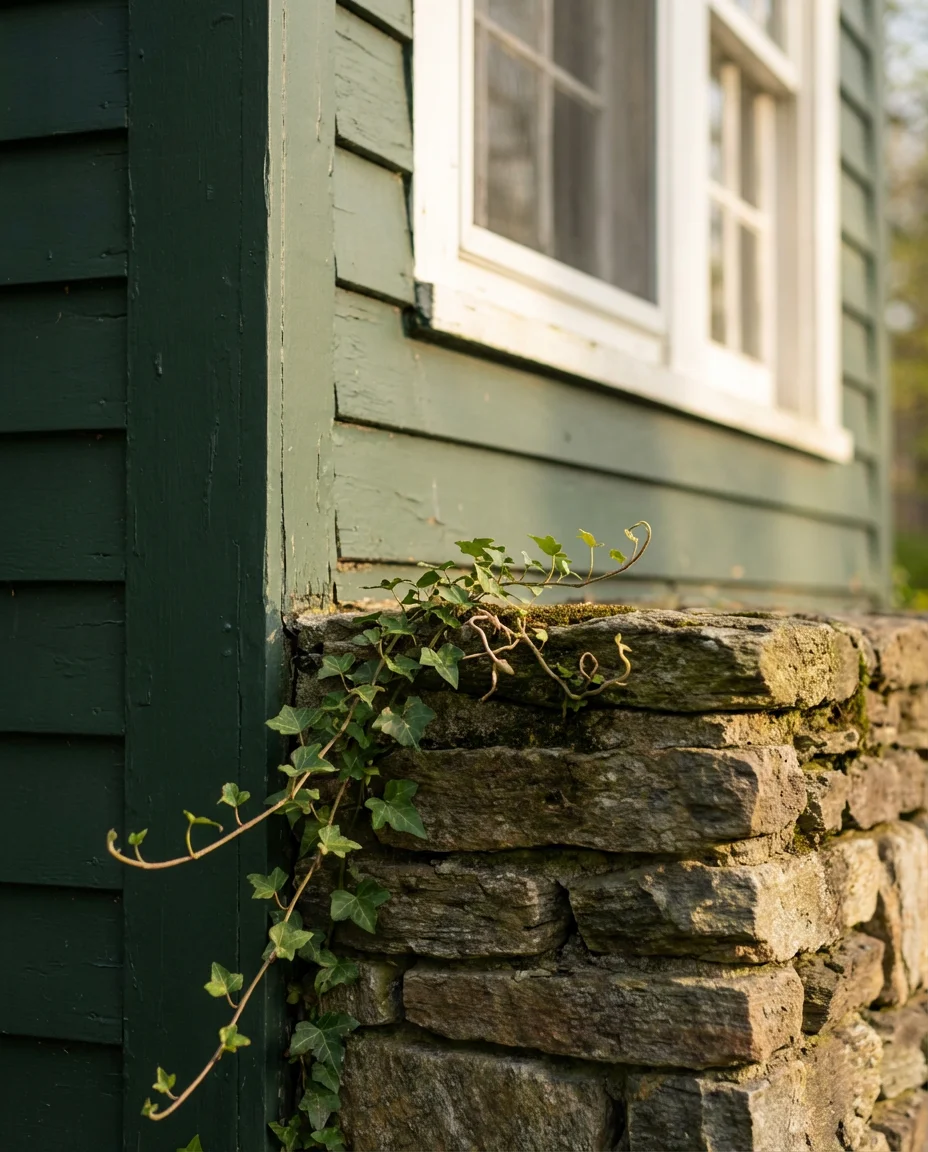
An expert paint consultant would tell you that dark green siding requires more frequent touch-ups than lighter tones in humid climates—but the trade-off in visual drama is absolutely worth it. Choose a paint with UV-resistant additives to keep the color from fading into an olive-brown after a few summers of direct sun.
4. Warm Yellow Front Door Pop
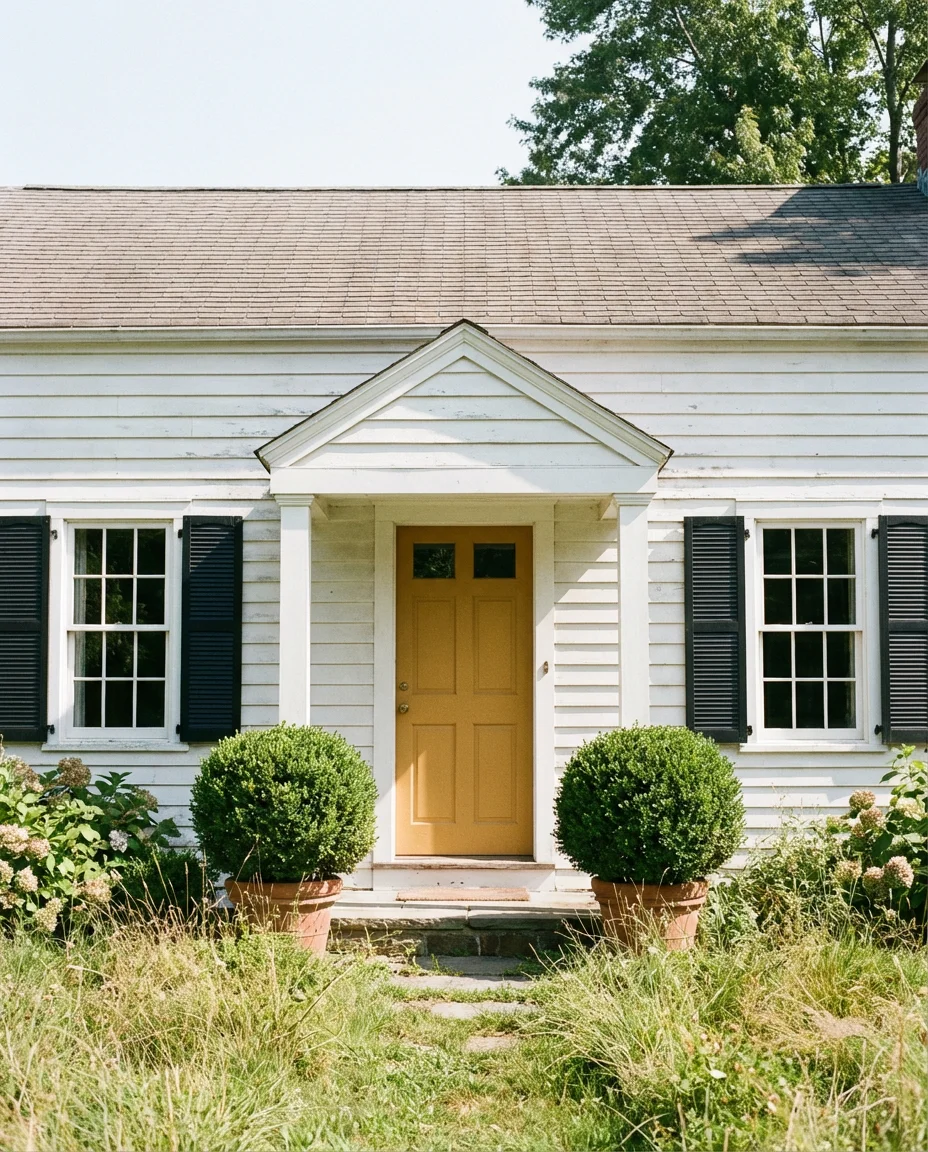
One of the easiest and most rewarding exterior updates you can give a Cape Cod is a bold front door color. A warm, saturated yellow—not neon, but the rich golden tone of late-afternoon light—can completely reframe a white or grey house. It signals welcome before anyone even reaches the porch. On a Cape Cod’s classic symmetrical façade, a centered bright door draws the eye exactly where it should go, making the home feel intentional and cared for.
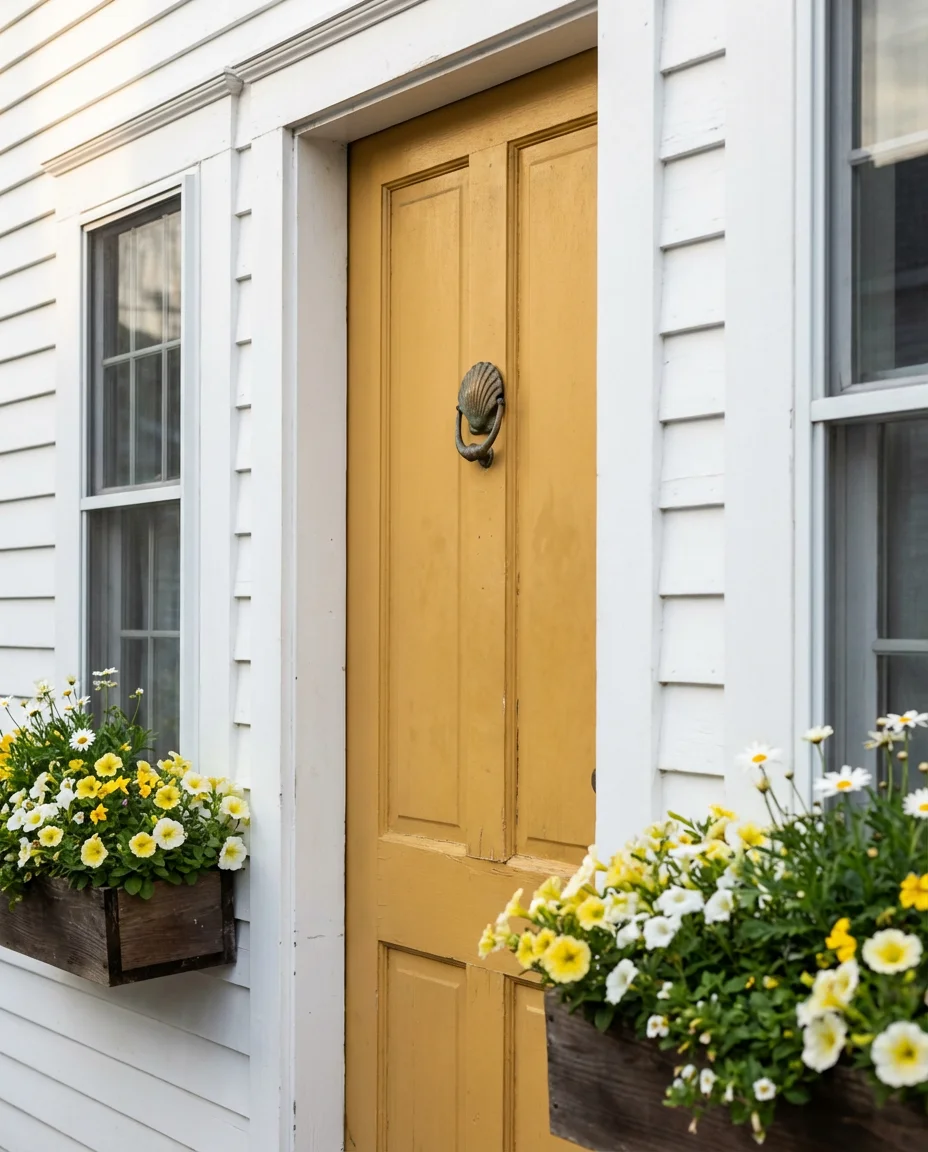
Think of this as a weekend project with outsized results—a single door can be repainted in a Saturday afternoon for under $100 in materials. Homeowners from the Midwest to the Southeast have embraced this approach as an affordable way to personalize a home without committing to a full exterior repaint.
5. Grey Weathered Shingles With a Wraparound Porch
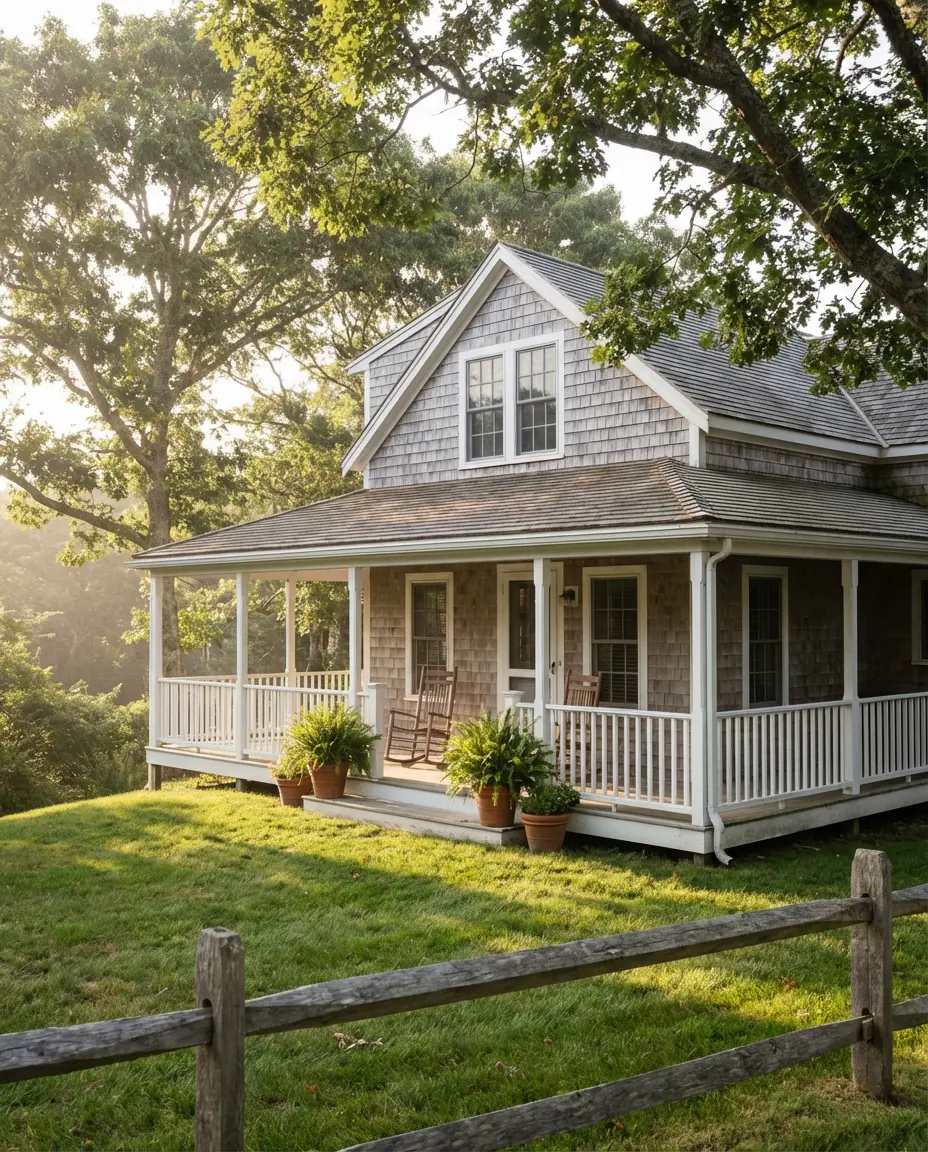
There’s something deeply nostalgic about a Cape Cod wrapped in grey weathered shingles—it’s the look that defined summer houses from Martha’s Vineyard to Cape Cod itself for over a century. Add a wraparound porch with white-painted railings and rocking chairs, and you’ve created a home that practically invites you to sit down with a glass of lemonade and forget your to-do list. This is coastal Americana at its most genuine.
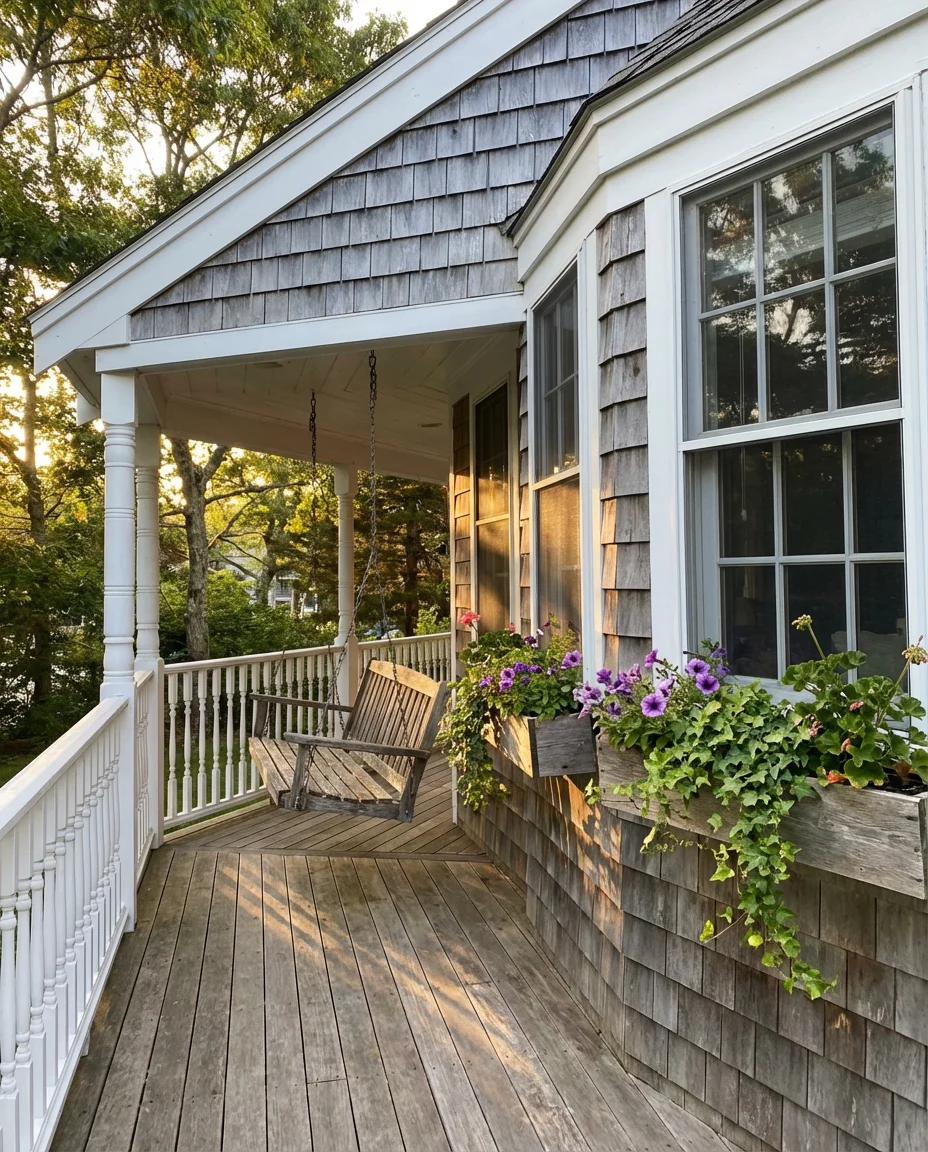
Where this works best: wooded lots or properties near water, where the grey shingles echo the color of natural surroundings—silver birch bark, driftwood, weathered dock planks. The home almost disappears into the landscape in the best possible way, feeling like it has always been there.
6. Classic Red Brick Foundation With White Siding
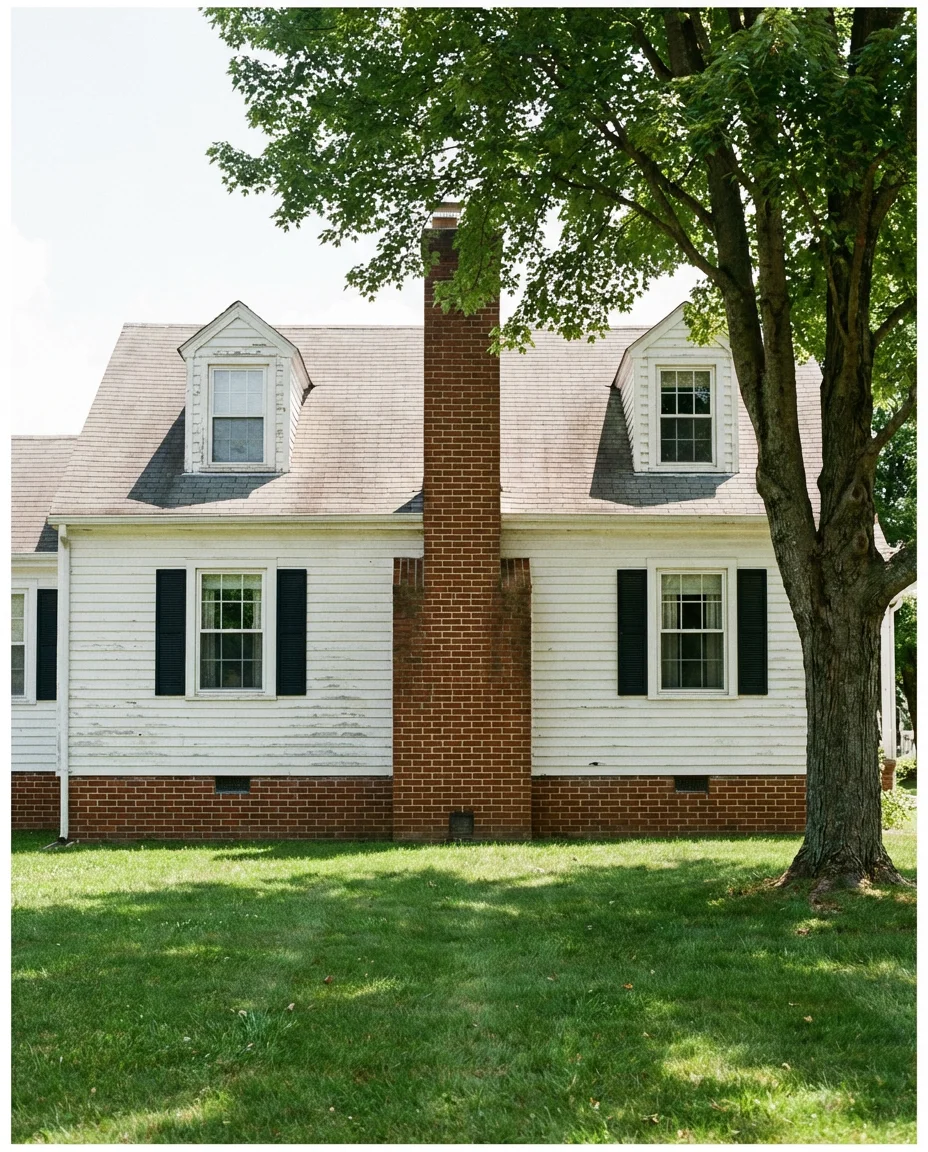
There’s a reason the brick-and-white combination has persisted in American residential architecture for more than two centuries. On a Cape Cod, exposing a red brick foundation or adding a brick chimney stack against white siding creates a sense of permanence and craftsmanship that newer materials simply can’t replicate. It’s a detail that says: this house was built to last.” The warmth of terracotta brick against crisp white clapboard is one of the most quietly beautiful contrasts in exterior design.
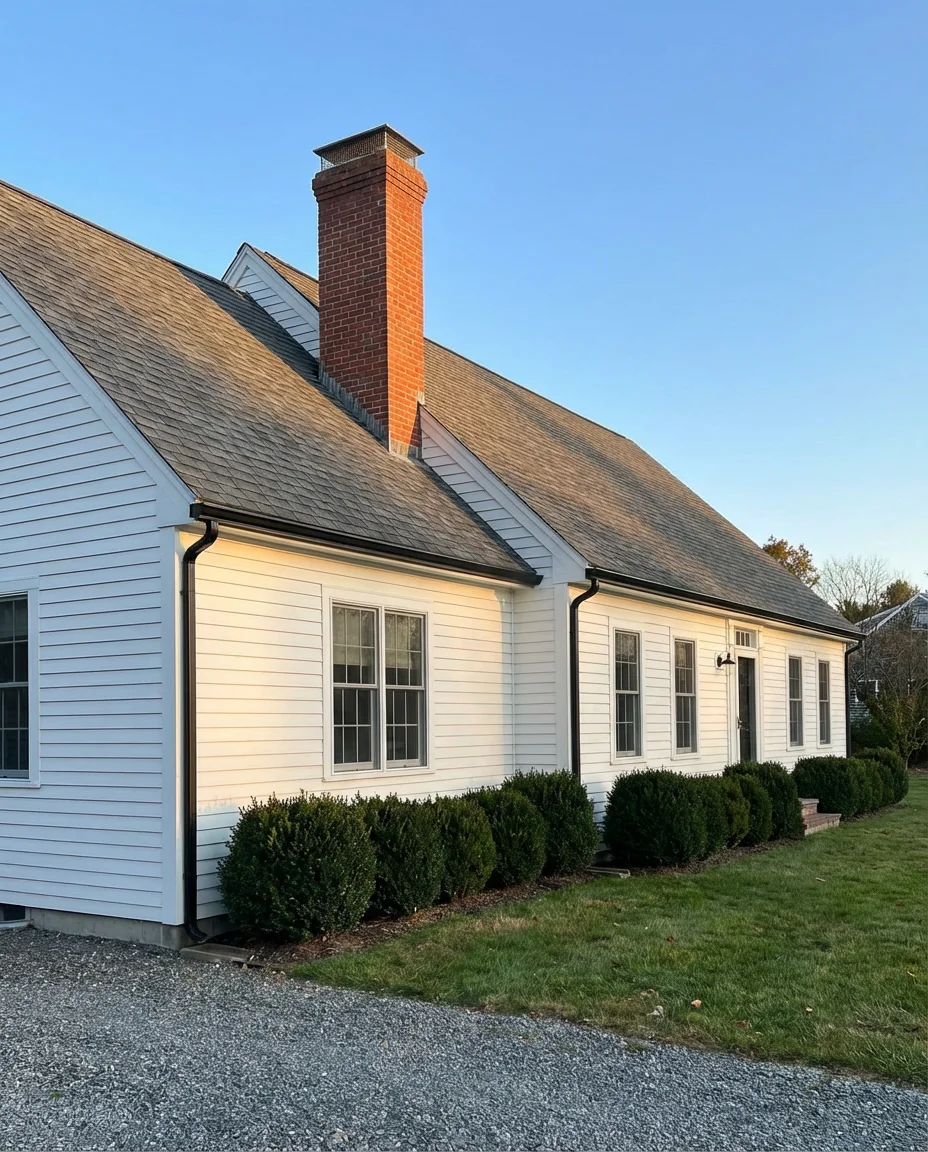
A real homeowner in Connecticut described adding a brick chimney to her 1950s Cape Cod as the single renovation that made the house feel “real” for the first time. She said it added a visual anchor the home had always been missing—and dramatically boosted the home’s perceived value at resale.
7. Colonial-Inspired Shutters and Window Grilles
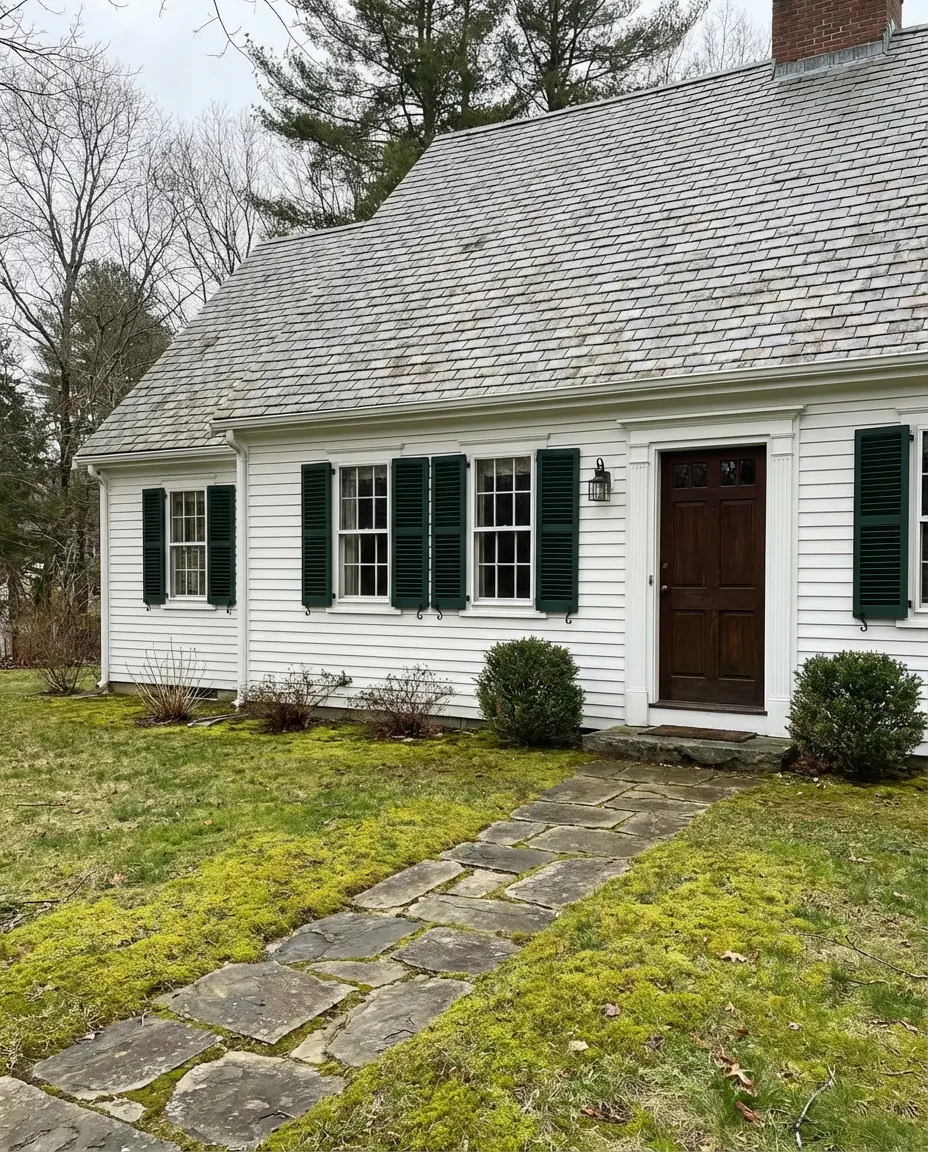
Cape Cod architecture shares deep DNA with Colonial design traditions brought from England in the 17th century—the low profile, the central chimney, and the small windows that conserved heat. Leaning into that heritage with historically accurate louvered shutters and true divided-light window grilles gives a home a quiet, learned elegance. These details reward close inspection, and they tell a story about a home that’s rooted in something older and more meaningful than trend cycles.
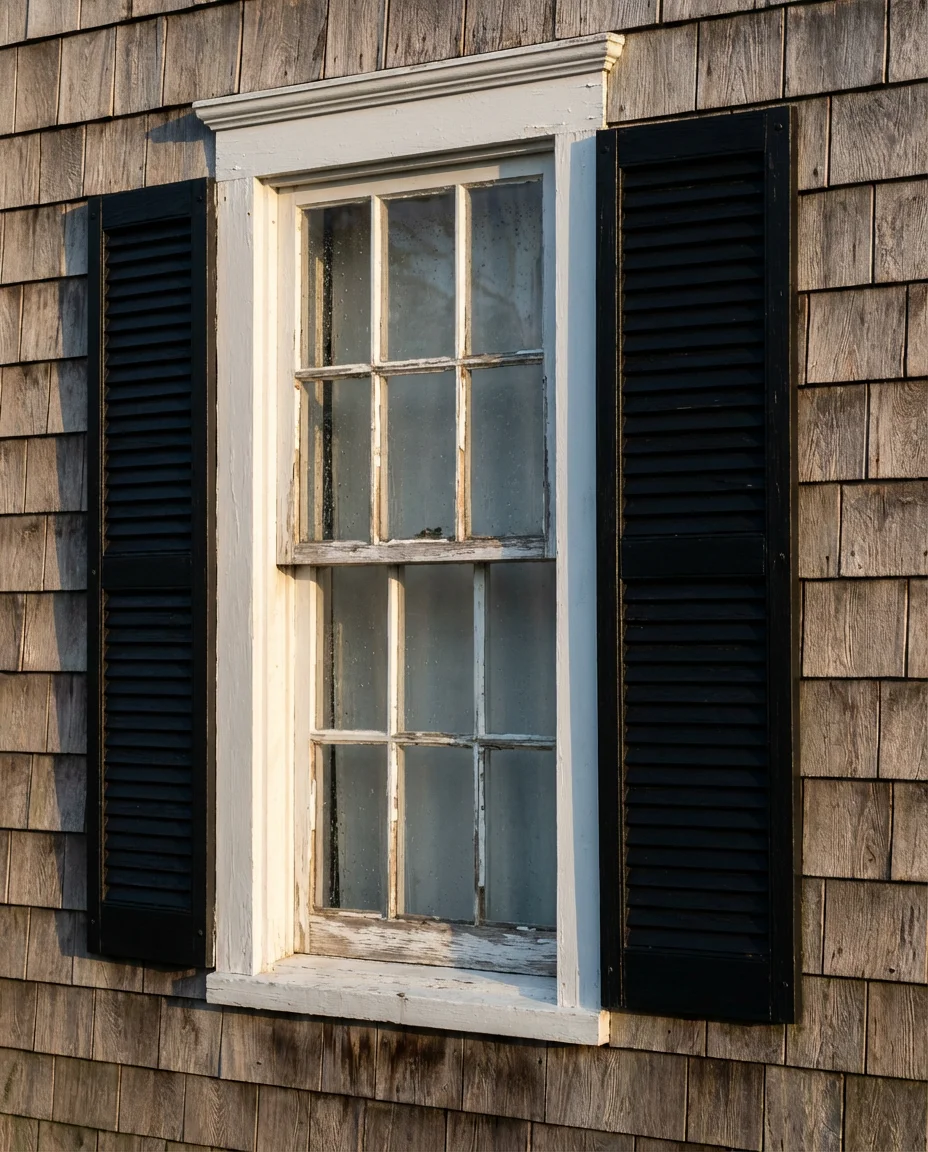
Budget note: authentic wood louvered shutters from a millwork shop are significantly more expensive than vinyl alternatives—often $300–$600 per pair—but they’re proportionally correct and age beautifully. Vinyl shutters at $50–$100 per pair are tempting but often look flat and incorrect in scale, which can actually undercut the home’s character rather than enhance it.
8. Contemporary Black Exterior With Minimalist Landscaping
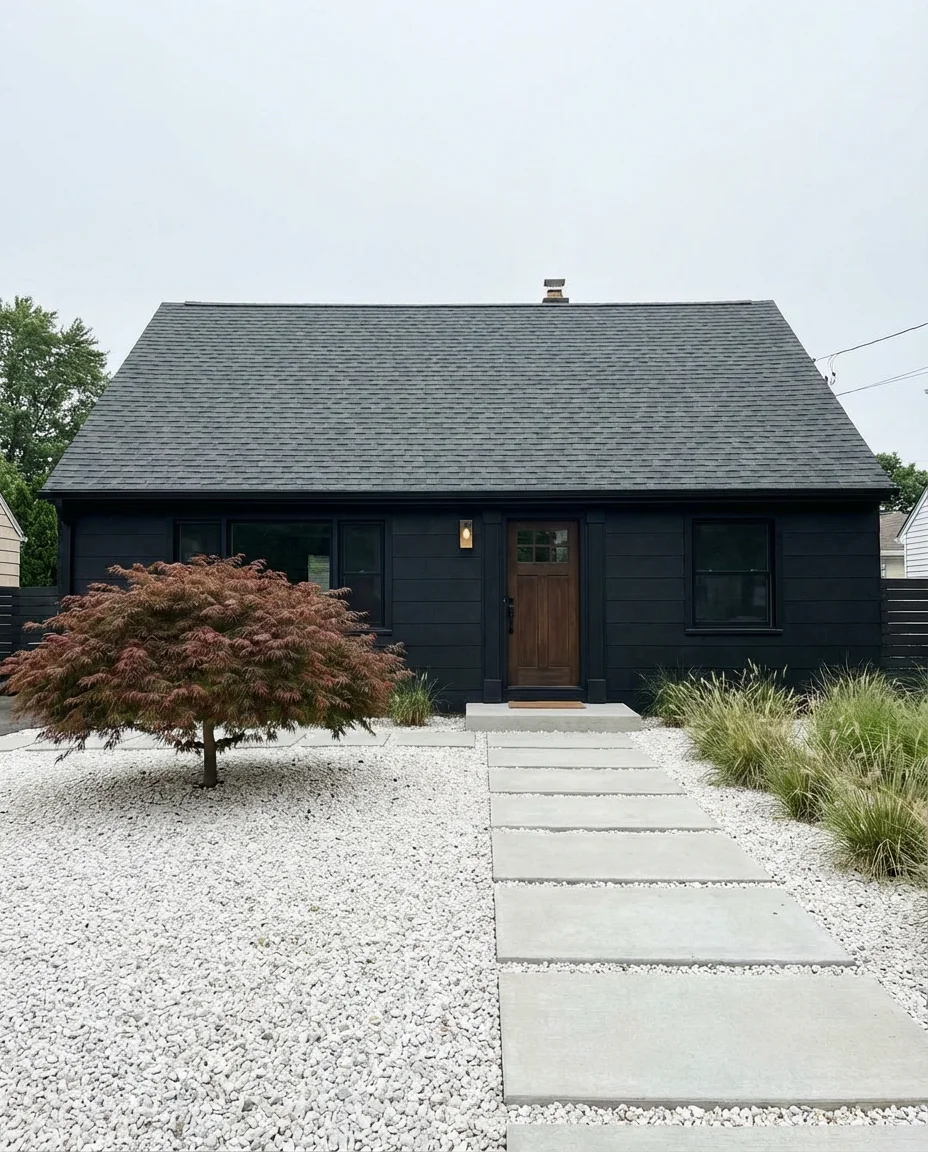
The most daring direction a Cape Cod can take in 2026 is going fully dark: a matte black exterior that turns the home’s silhouette into a stark, sculptural form. Paired with contemporary landscaping—gravel beds, architectural ornamental grasses, and a single statement tree—the result is a home that feels bold, edited, and unapologetically modern while still honoring Cape Cod’s original roofline geometry. This is not for the faint of heart, but the results are extraordinary.
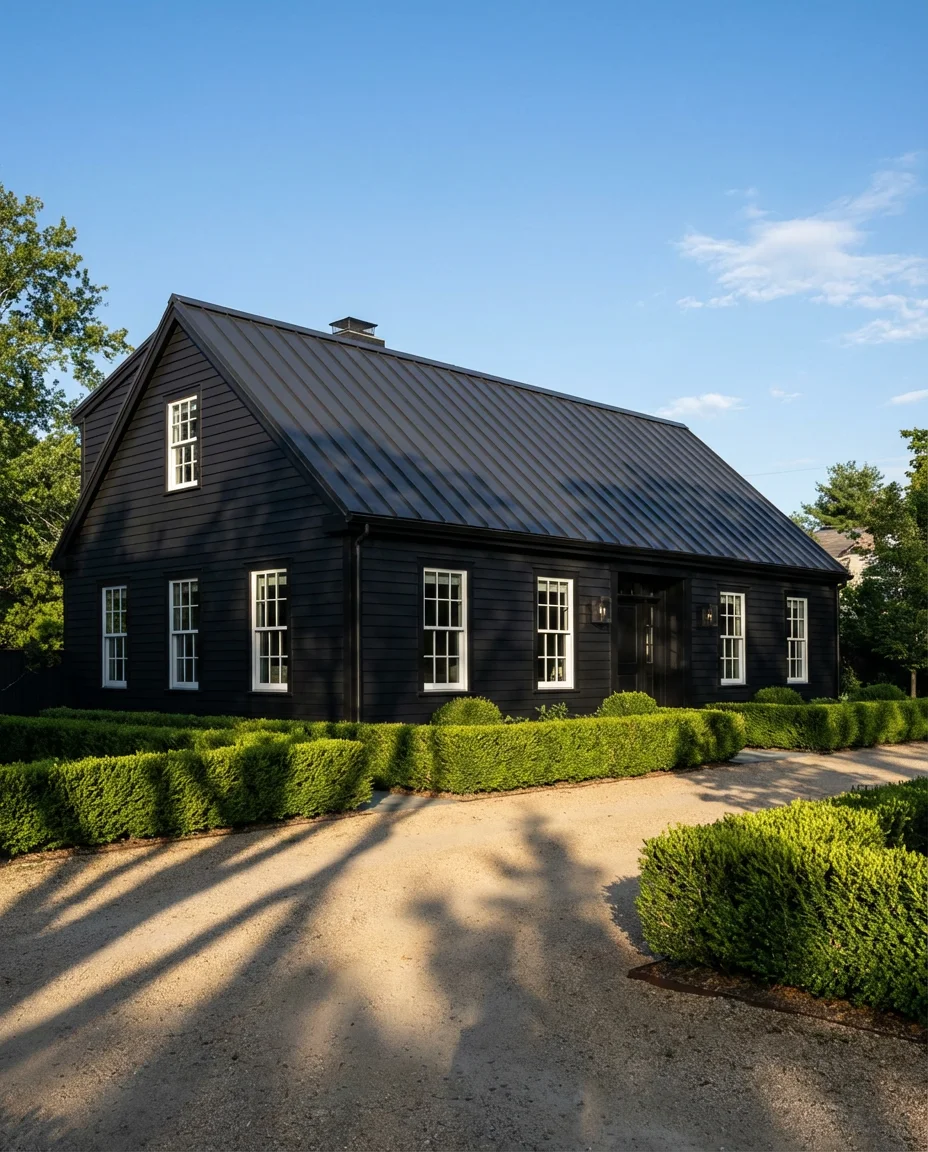
This look works best in neighborhoods with mature tree canopies—the interplay of light and shadow on a dark surface is endlessly dynamic throughout the day. What many homeowners don’t realize is that dark paint in modern formulations reflects more IR light than it used to, keeping interior temperatures more stable than you might fear.
9. Antique White With Sage Green Trim
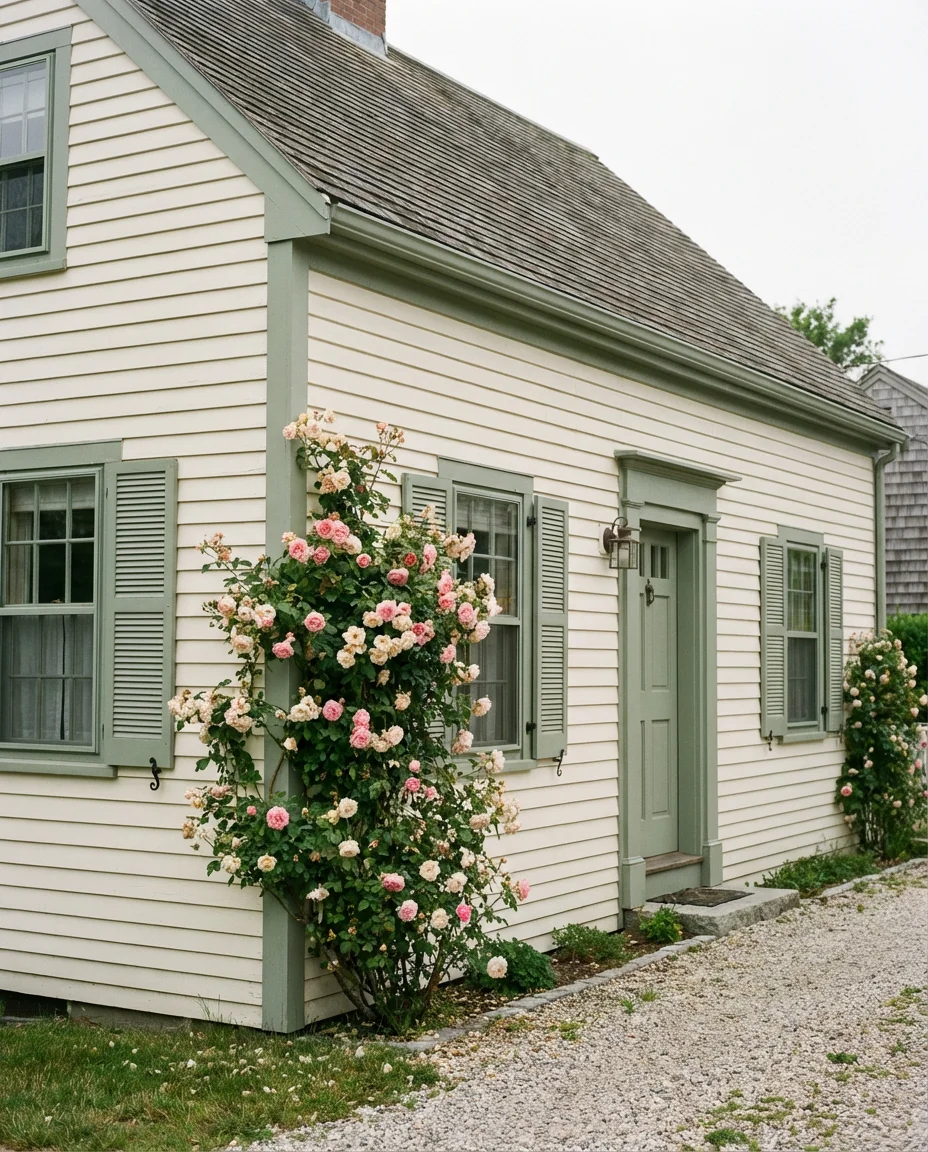
For those who want warmth without going full color, antique white siding with sage green trim is a combination that feels simultaneously fresh and gently nostalgic. The sage green doesn’t compete—it complements, like lichen growing on an old stone wall. It’s a palette that references the colors of the natural world without forcing anything. On a Cape Cod with classic proportions, this combination gives the home an heirloom quality that’s very hard to achieve with more modern color pairings.
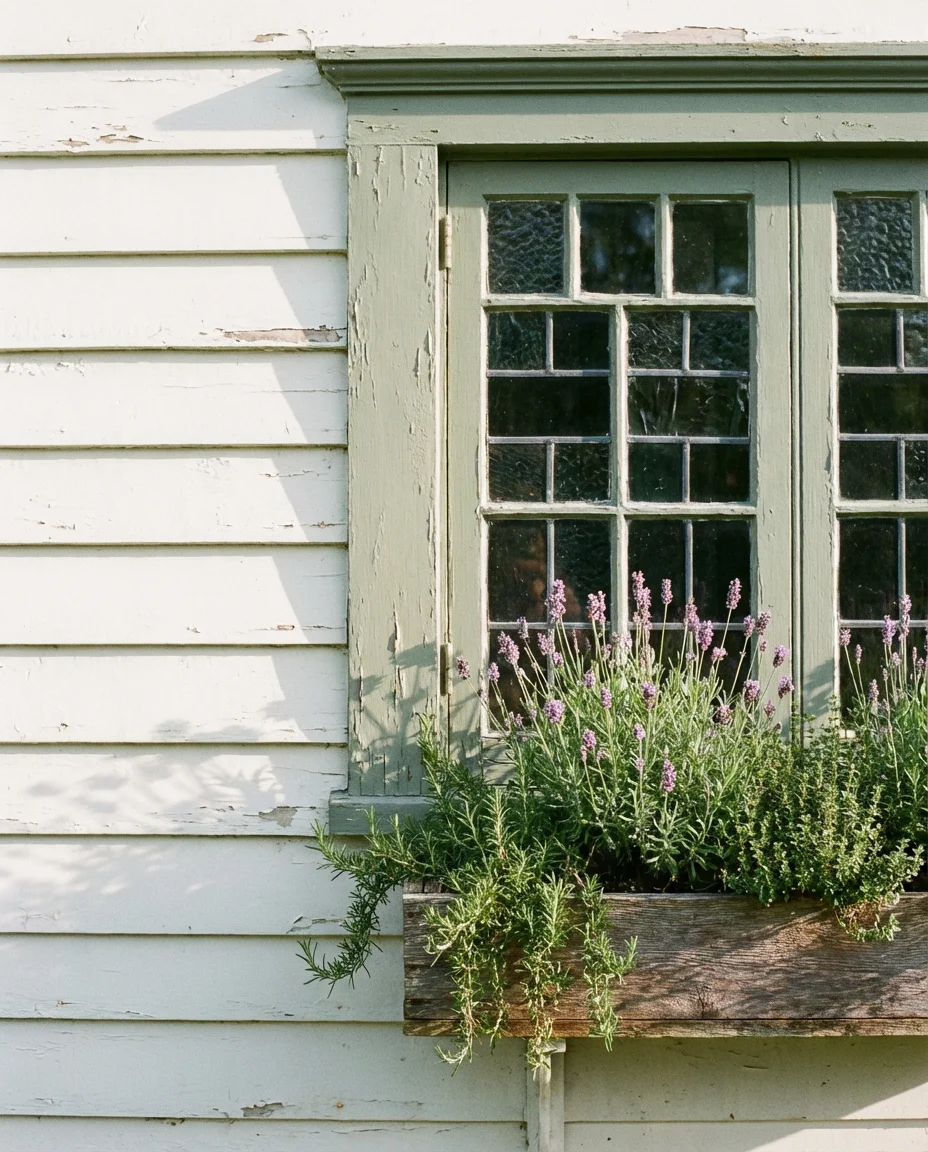
Interior designers turned exterior renovation consultants have been championing this palette for the past few years as a counter to the all-grey siding trend that peaked around 2018. It reads as layered and intentional in a way that grey rarely achieves—and it photographs exceptionally well in Pinterest-style natural light imagery, which explains its enduring popularity on the platform.
10. Light Blue Shingles With Driftwood Accents
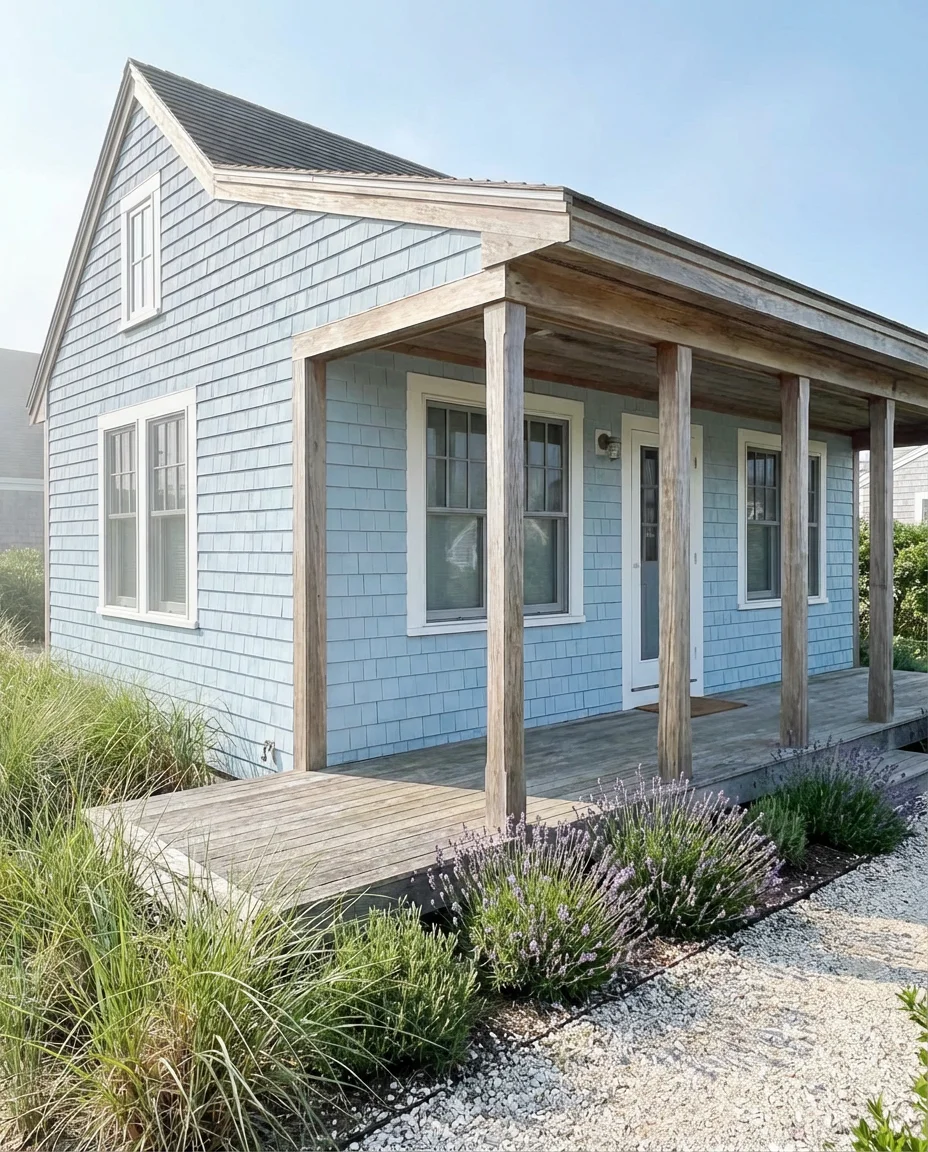
Light blue cedar shingles have an almost ethereal quality in morning sunlight—they seem to hold the color of clear sky right in the surface of the wood. Paired with natural driftwood-toned wood accents at the eaves, porch posts, and deck, this creates a coastal color palette that feels genuinely collected rather than designed. It’s the exterior equivalent of finding beautiful objects on a beach walk and composing them instinctively. This look pairs naturally with cottage-style landscaping—sea grasses, lavender, and rosemary hedges.
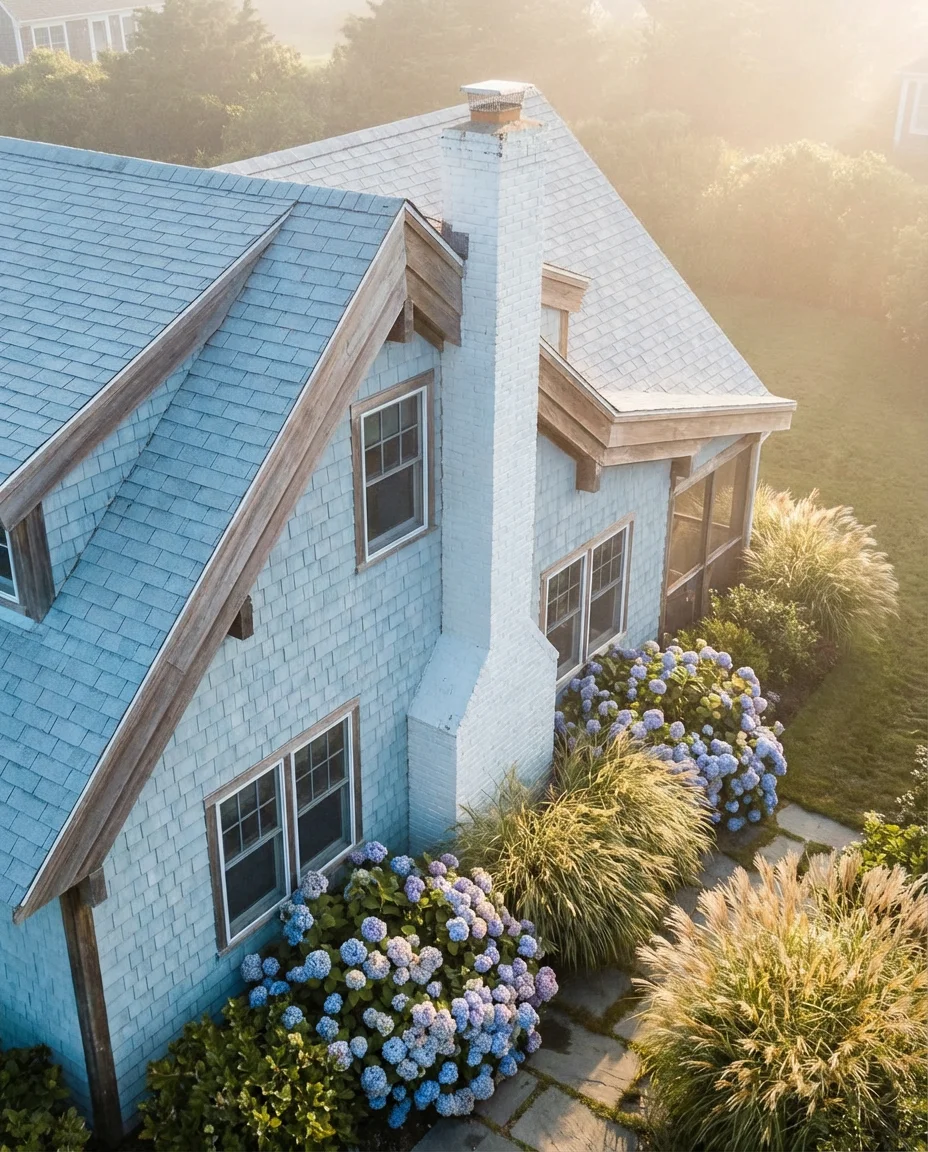
Micro-anecdote: a couple in Chatham, Massachusetts, stripped their 1963 Cape Cod down to bare shingles and let them silver naturally before painting just a portion light blue—the result was a layered, imperfect mix of natural grey and pale blue that looked like the house had been built by the sea itself. Their neighbors began copying the look within two summers.
11. Large Dormer Expansion With Black Trim
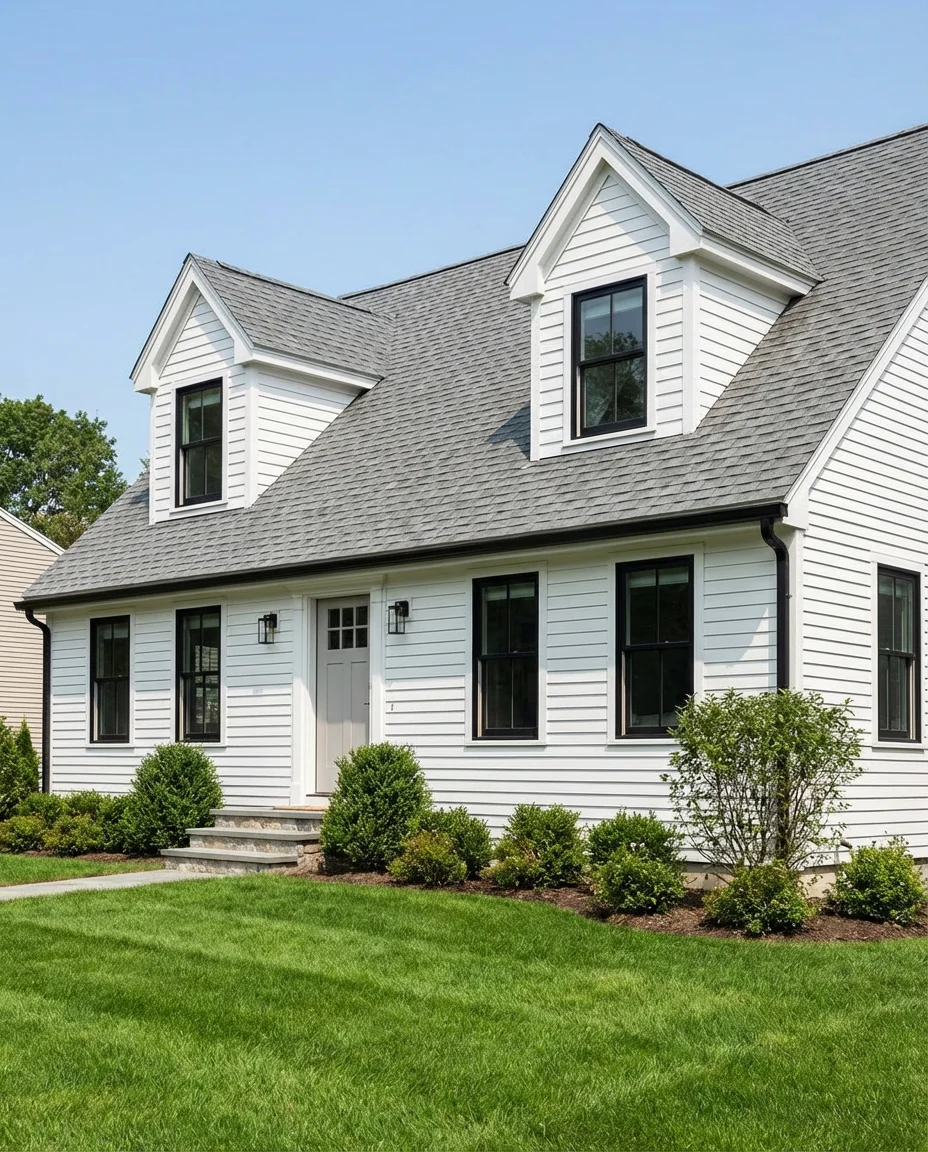
One of the most practical ways to modernize a Cape Cod while dramatically improving its exterior character is adding or expanding dormers. A large shed dormer across the rear or a pair of gable dormers on the front elevates the home’s roofline into something genuinely architectural. Pair the expanded dormers with black trim—window casings, gutters, and fascia—and the home moves from charming cottage to contemporary statement without losing its original bones.
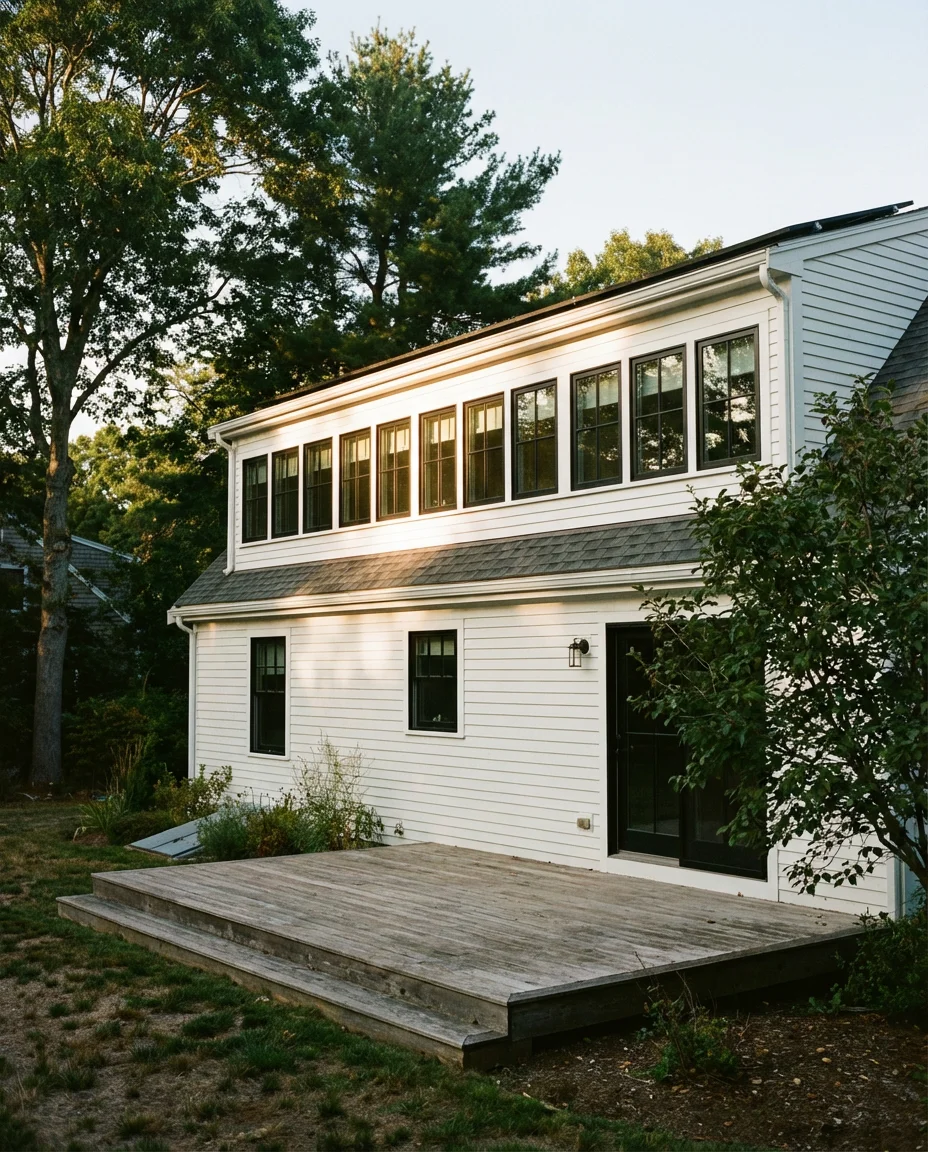
From a structural standpoint, dormer additions are among the most cost-efficient square-footage gains available to a Cape Cod owner—typically running $15,000–$40,000 depending on scope and region, but adding significantly more in appraised value and livable space. The exterior transformation alone often justifies the investment, even before you account for the interior gain.
12. Deep Navy Siding With Copper Gutters
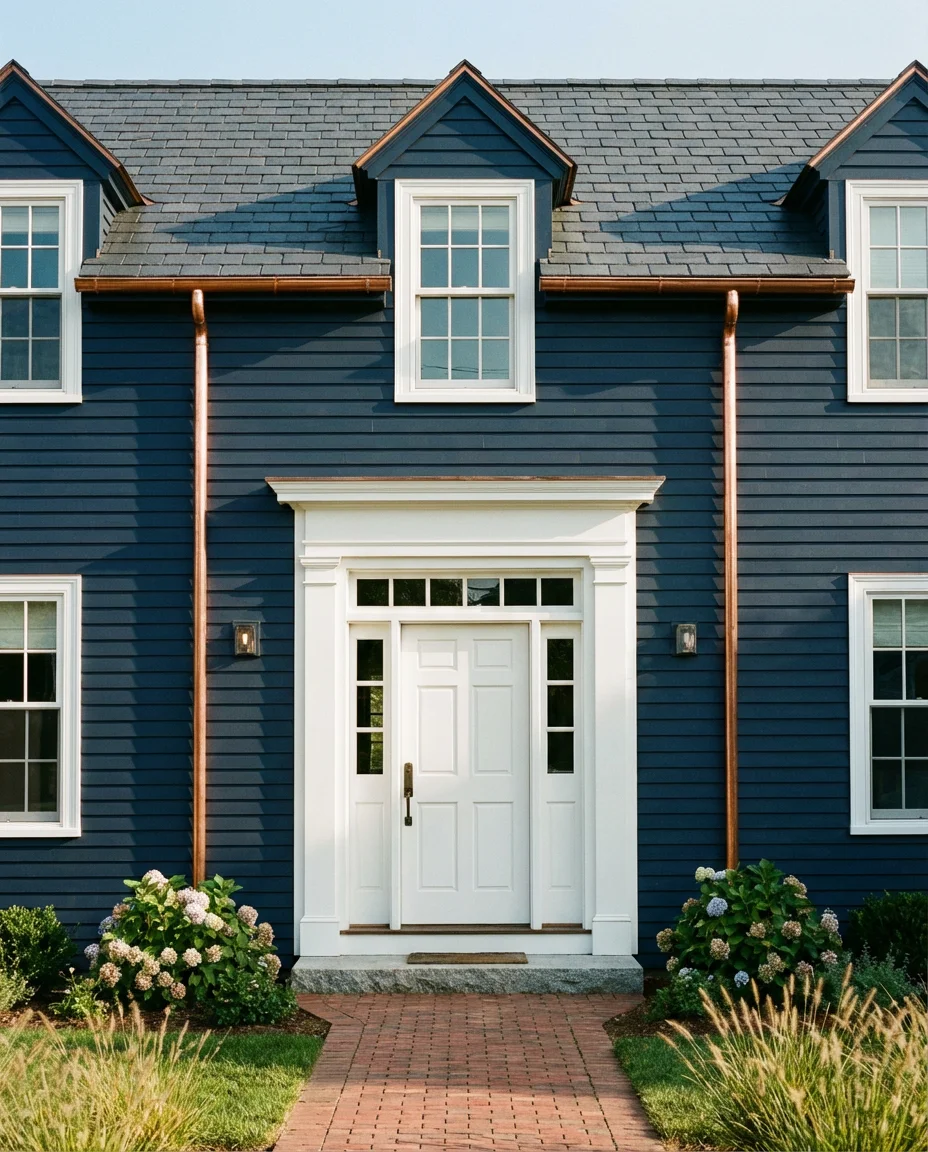
Navy blue is the sophisticated older sibling of coastal blue—deeper, moodier, and undeniably refined. On a Cape Cod, navy siding with copper gutters and downspouts creates a material conversation that’s genuinely luxurious. The copper starts bright and orange-gold when new, then develops a green patina over the years—an aging process that makes the home’s exterior look more beautiful with every passing season. Add white window trim, and the effect is complete: a home that manages to feel both formal and relaxed.
This is a combination that professional architects recommend often when clients want a Cape Cod that reads as elevated without undertaking a full structural renovation. The copper gutters do the heavy lifting—they signal investment and craft in a way that aluminum or vinyl simply never will, regardless of color.
13. Green Painted Exterior With Cottage Landscaping
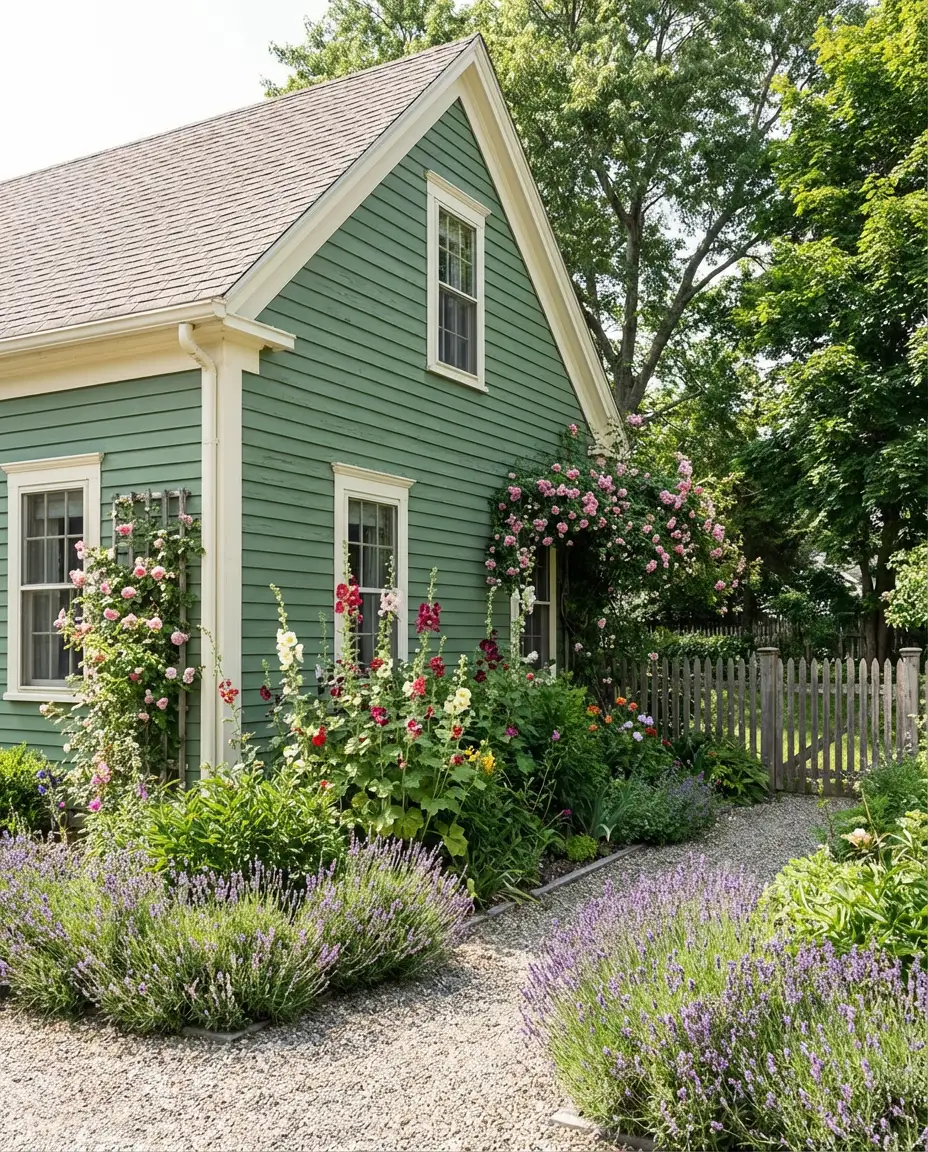
A medium green exterior—somewhere between sage and hunter—wrapped in cottage-style landscaping creates one of the most photogenic Cape Cod looks possible. Think: climbing roses, hollyhocks against the siding, a front path lined with lavender, and window boxes overflowing with herbs. The house seems to merge with the garden, making it feel less like a structure and more like a living thing. This aesthetic is enormously popular on Pinterest precisely because it photographs like a painting.
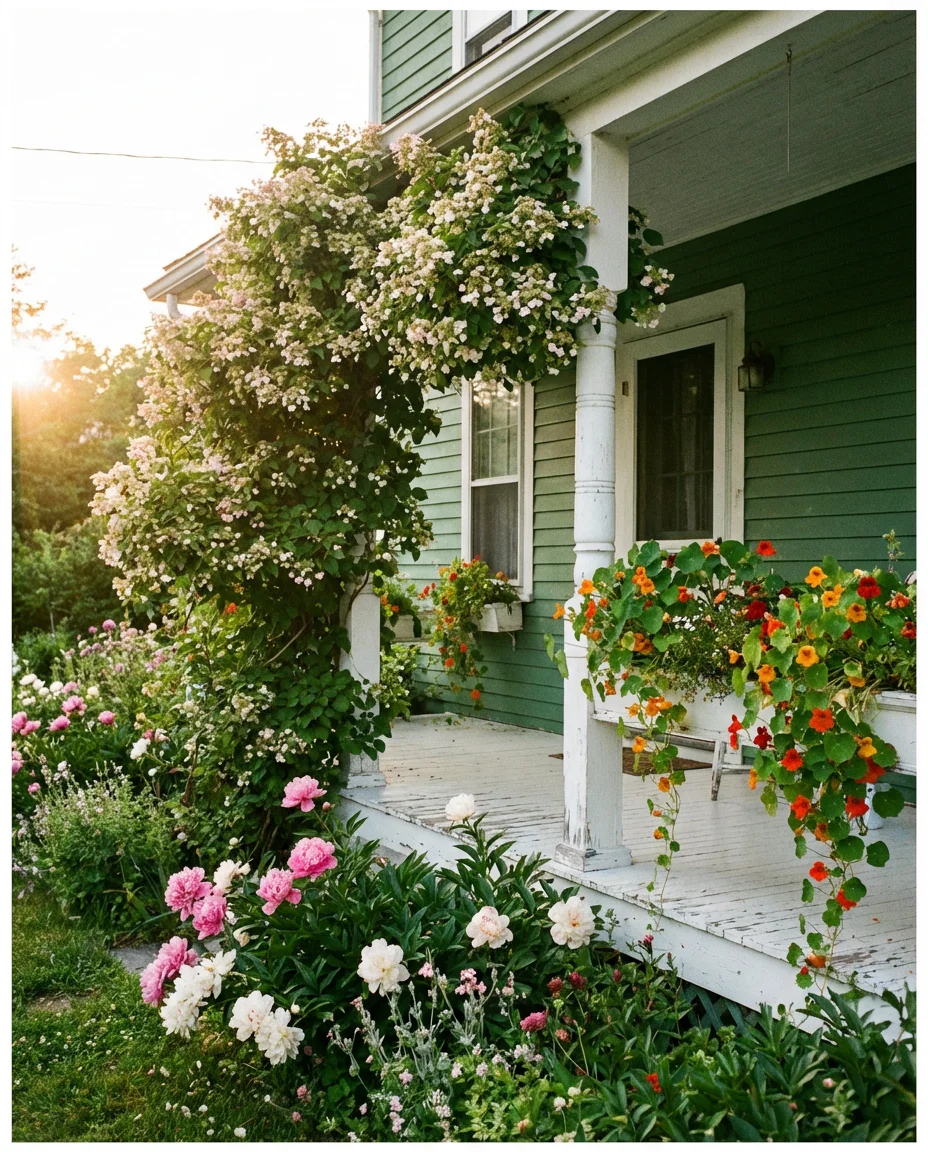
American lifestyle context: this aesthetic is particularly popular in the Pacific Northwest and upper Midwest, where the lush growing seasons make maintaining an abundant cottage garden realistic for most homeowners. In drier climates, drought-tolerant alternatives like Russian sage, catmint, and ornamental grasses can achieve a similar lush visual effect with far less water.
14. Stone Veneer Lower Half With White Upper Siding
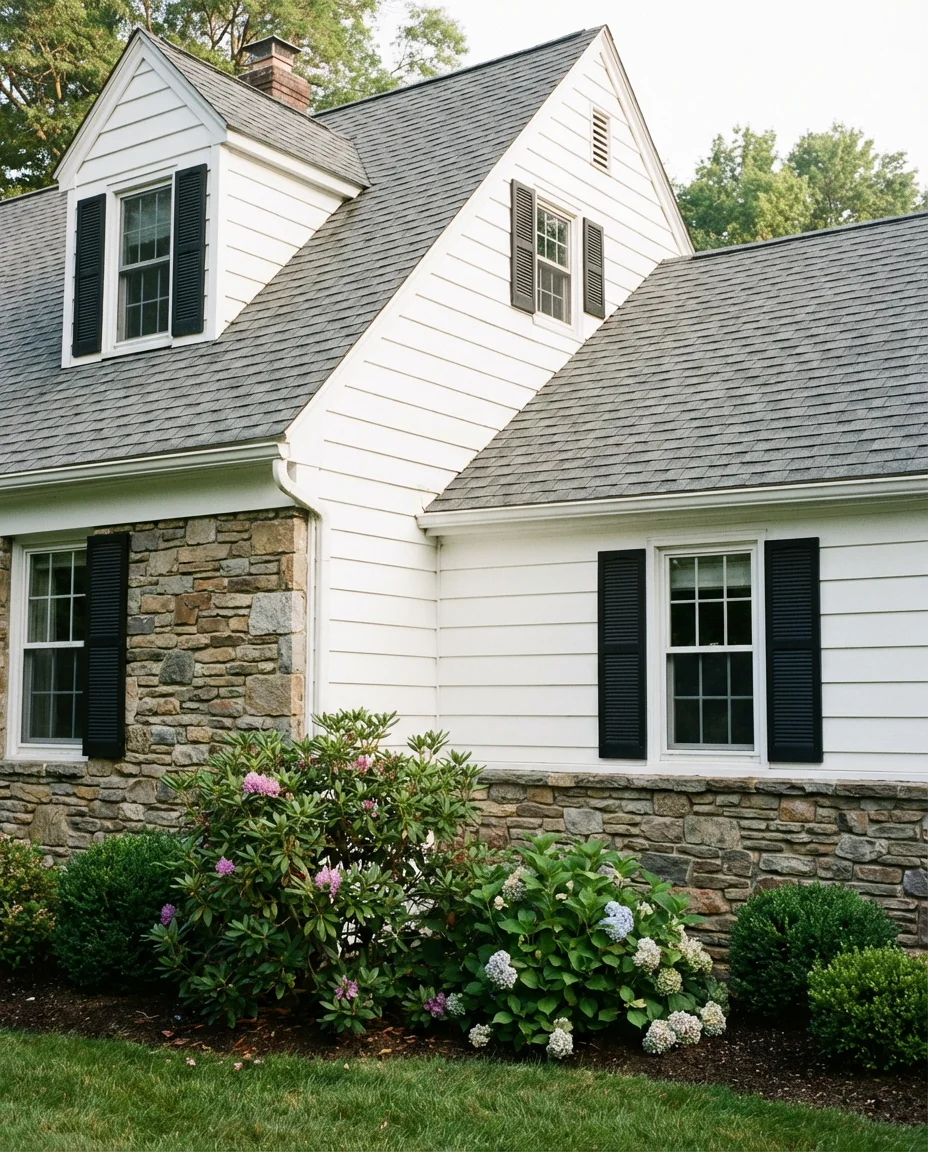
Splitting a Cape Cod exterior between stone veneer on the lower half and white clapboard above is a material combination that adds tremendous visual weight and credibility to the home’s presence. The stone grounds it—literally and figuratively—while the white siding keeps the upper portion light and airy. It’s a look that evokes the old farmhouses of New England and the mid-Atlantic, where stone foundations were structural necessities that became defining visual elements over centuries.
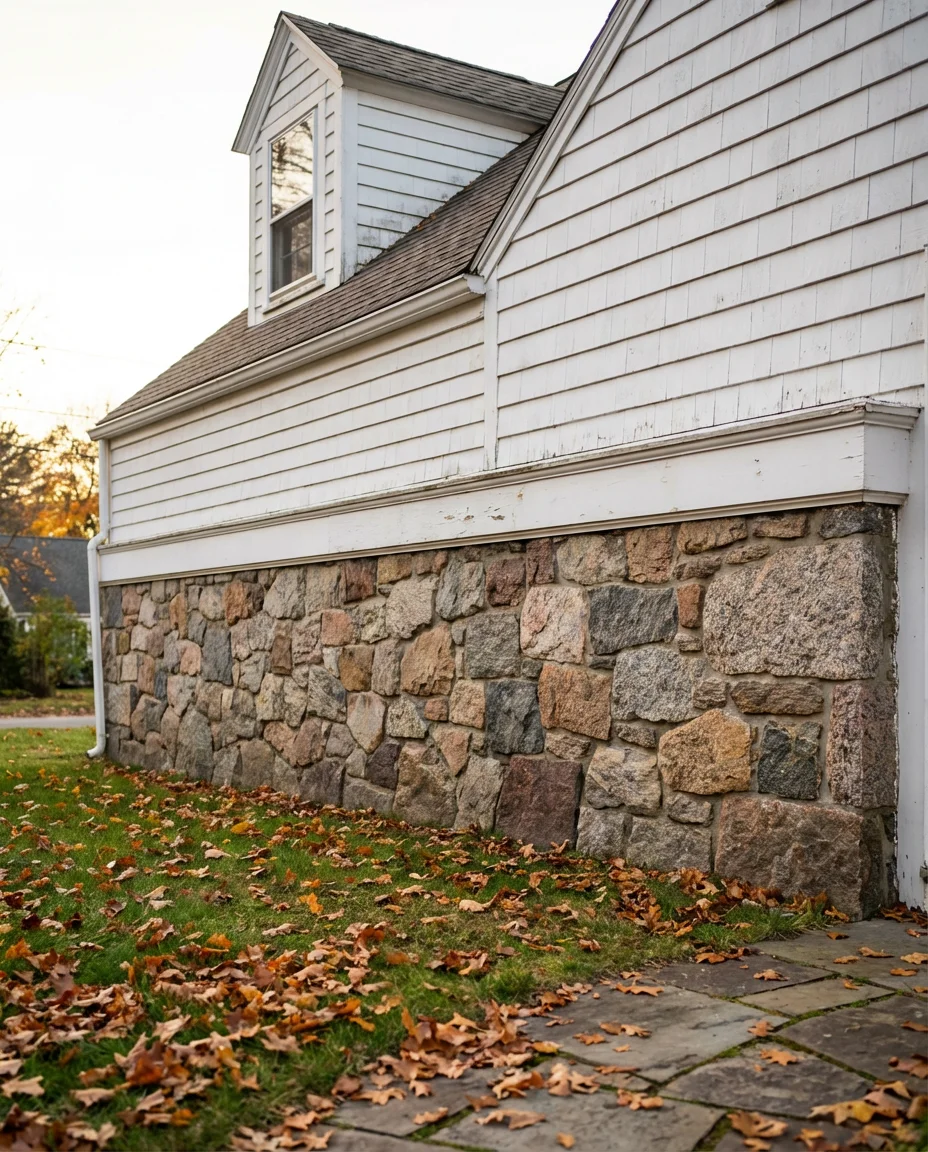
Common mistake: homeowners who use overly uniform, manufactured stone veneer—the kind with perfectly repeated patterns—undercut the handcrafted quality that makes this look so compelling. Seek out natural or naturalistic stone veneer with irregular coursing and color variation. The irregularity is the entire point.
15. All-Grey Coastal Palette With Dark Roof
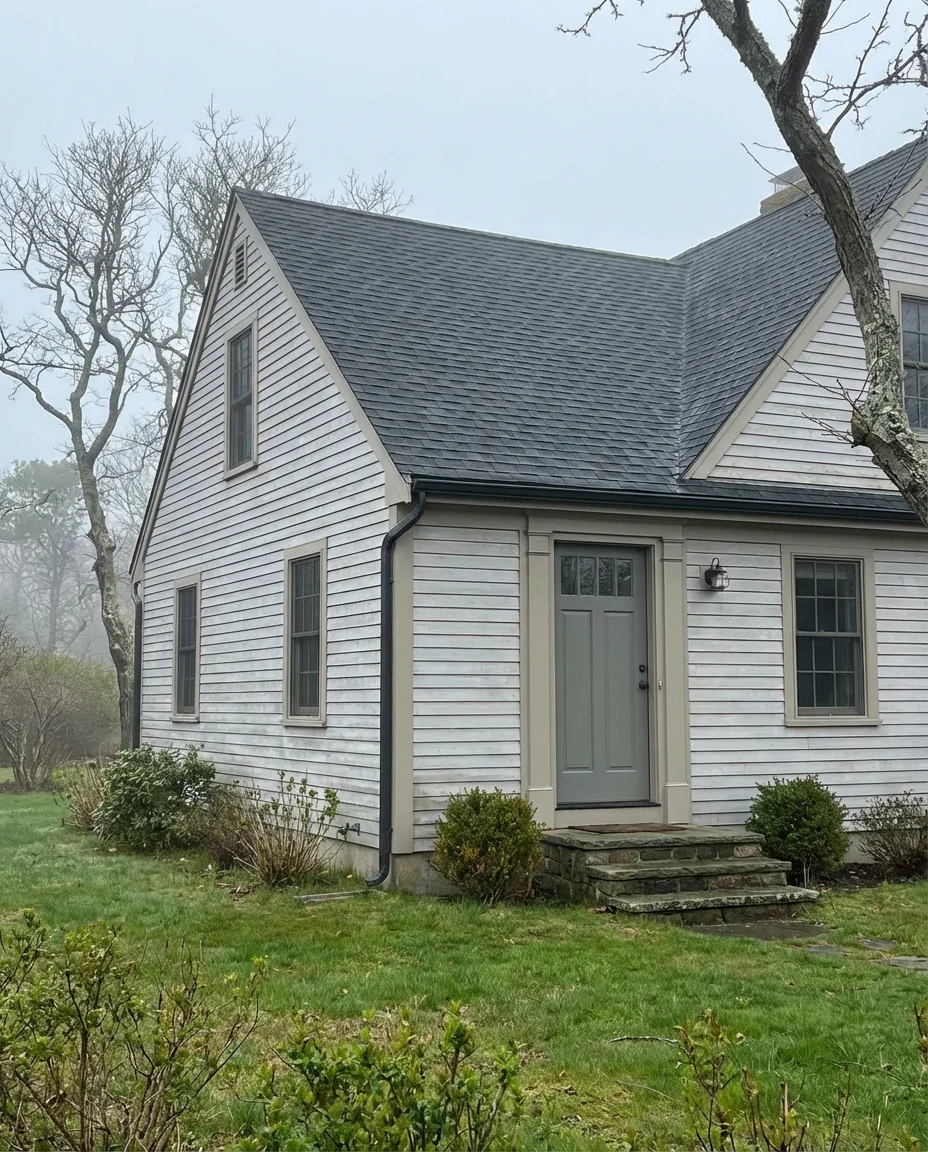
When done thoughtfully, an all-grey exterior on a Cape Cod is anything but boring. The key is layering—a lighter silver-grey for the siding, a warmer greige for the trim, and a deep charcoal or black for the roof. This coastal color palette draws from the colors of storm-washed shingles, foggy mornings, and weathered dock pilings. It creates a home that looks as though it has always belonged exactly where it stands, shaped by decades of salt air and Atlantic weather—whether or not the story is actually true.
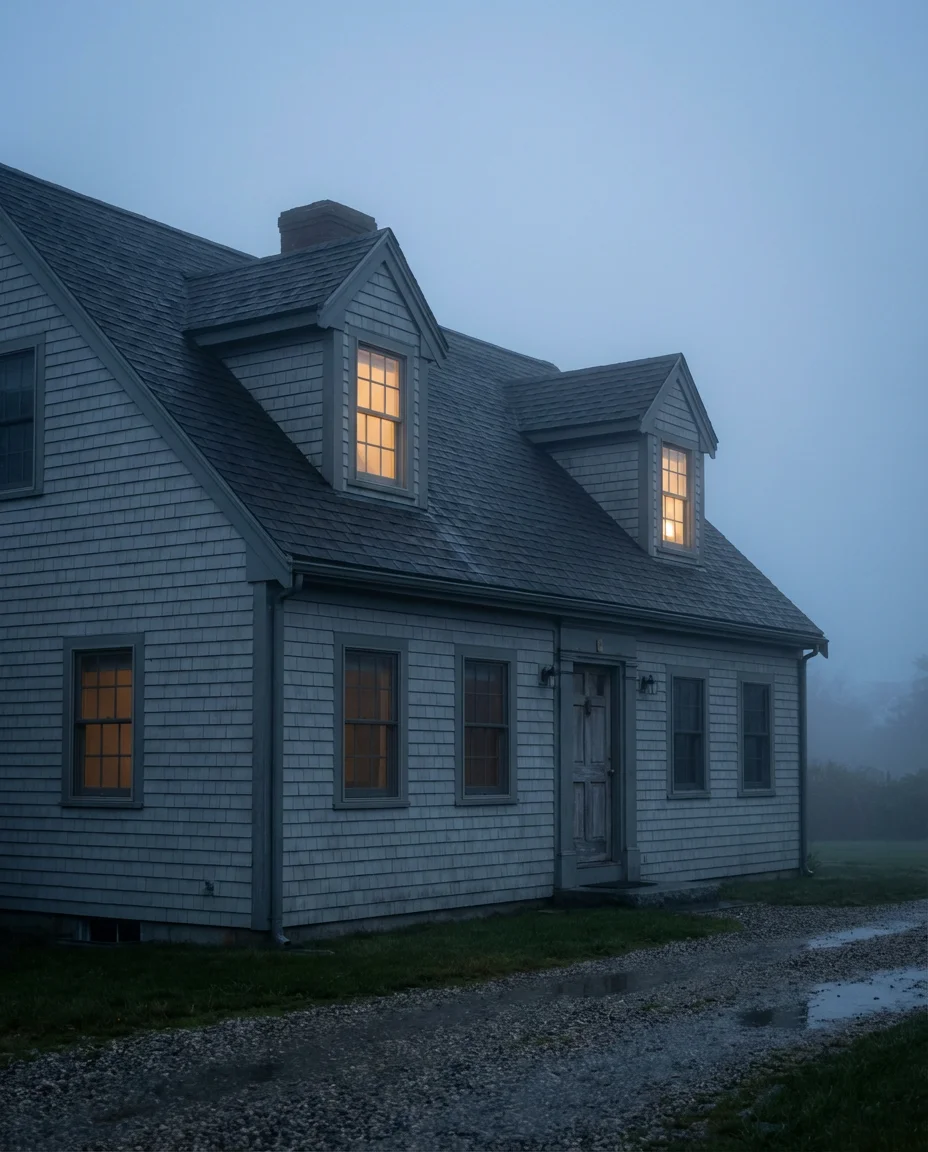
This palette works best when the home is surrounded by natural, unmanicured greenery—wild grasses, native shrubs, informal hedges—rather than formal, clipped landscaping. The contrast between the structured grey house and the loose, organic planting makes both more beautiful by comparison.
16. Porch Addition With Painted Tongue-and-Groove Ceiling
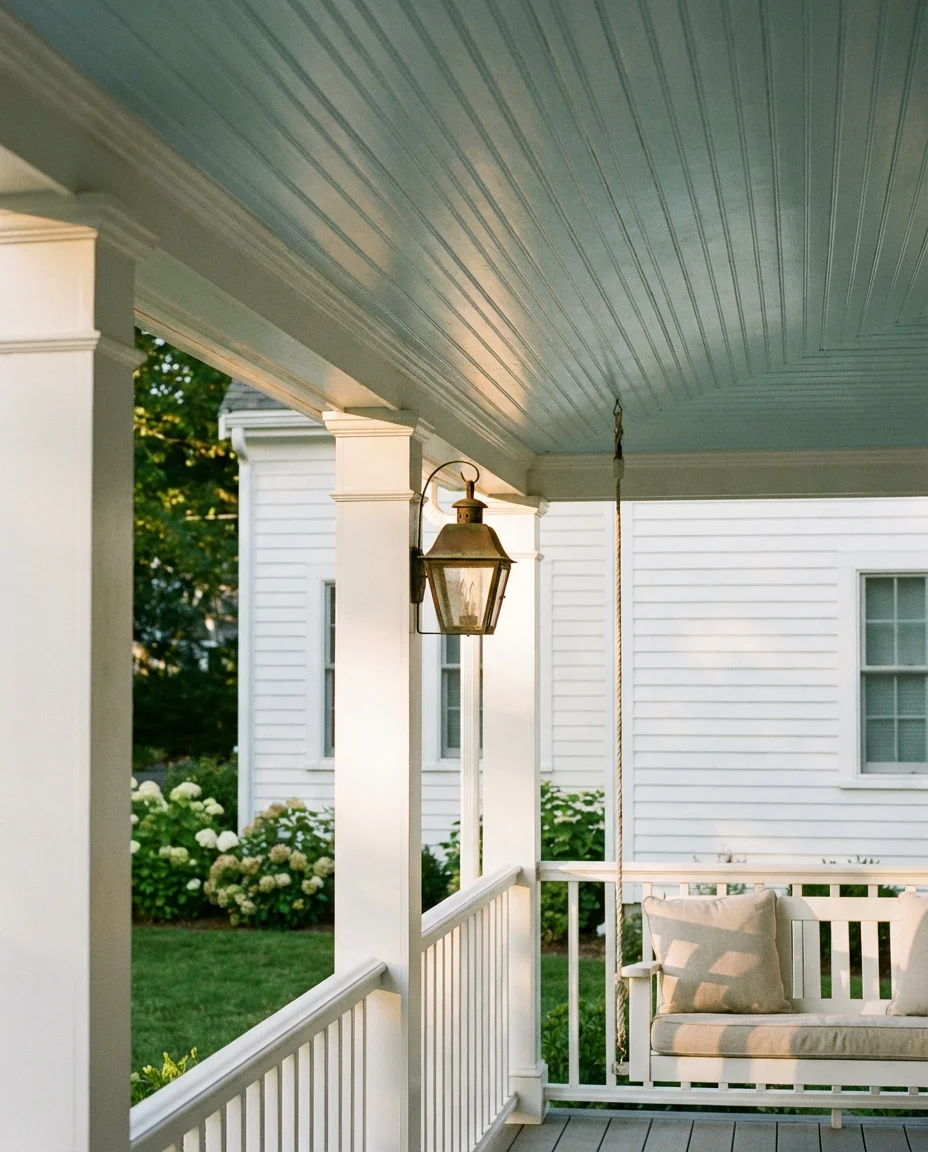
Adding a porch to a Cape Cod is one of the most transformative exterior upgrades possible—but the ceiling detail is what separates a good porch from a truly memorable one. Painting the tongue-and-groove ceiling boards in “haint blue”—a traditional Southern ceiling color somewhere between sky blue and seafoam green—is a practice rooted in Gullah tradition and has become one of the most beloved details in American porch design. On a classic Cape Cod, it adds depth and surprise to an otherwise understated architecture.
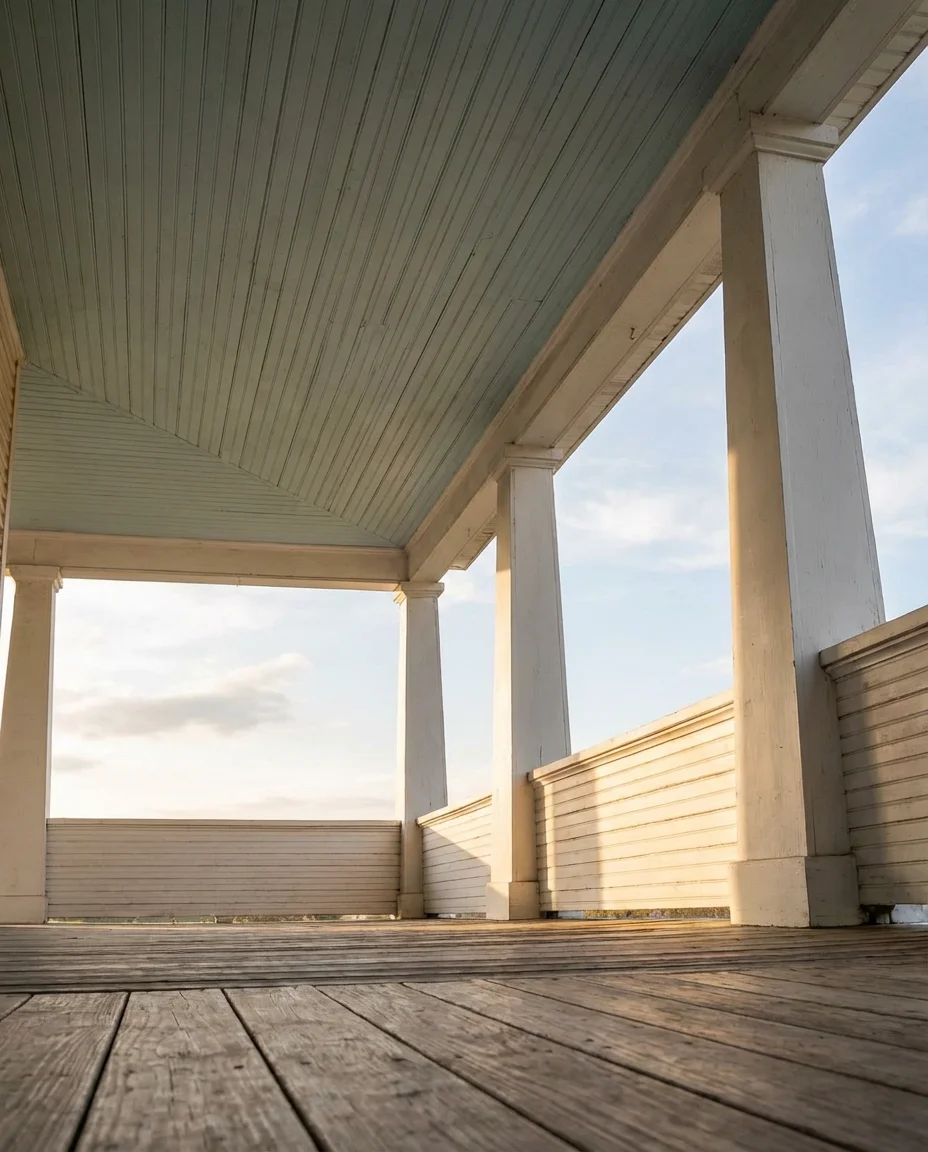
Practical insight: tongue-and-groove porch ceiling boards should always be primed on all six sides before installation—including the back and edges—to prevent moisture infiltration from above that causes the boards to cup and warp. This one preparation step is what separates a porch ceiling that stays beautiful for thirty years from one that begins to fail within five.
17. Painted Brick Cape Cod in Deep Charcoal
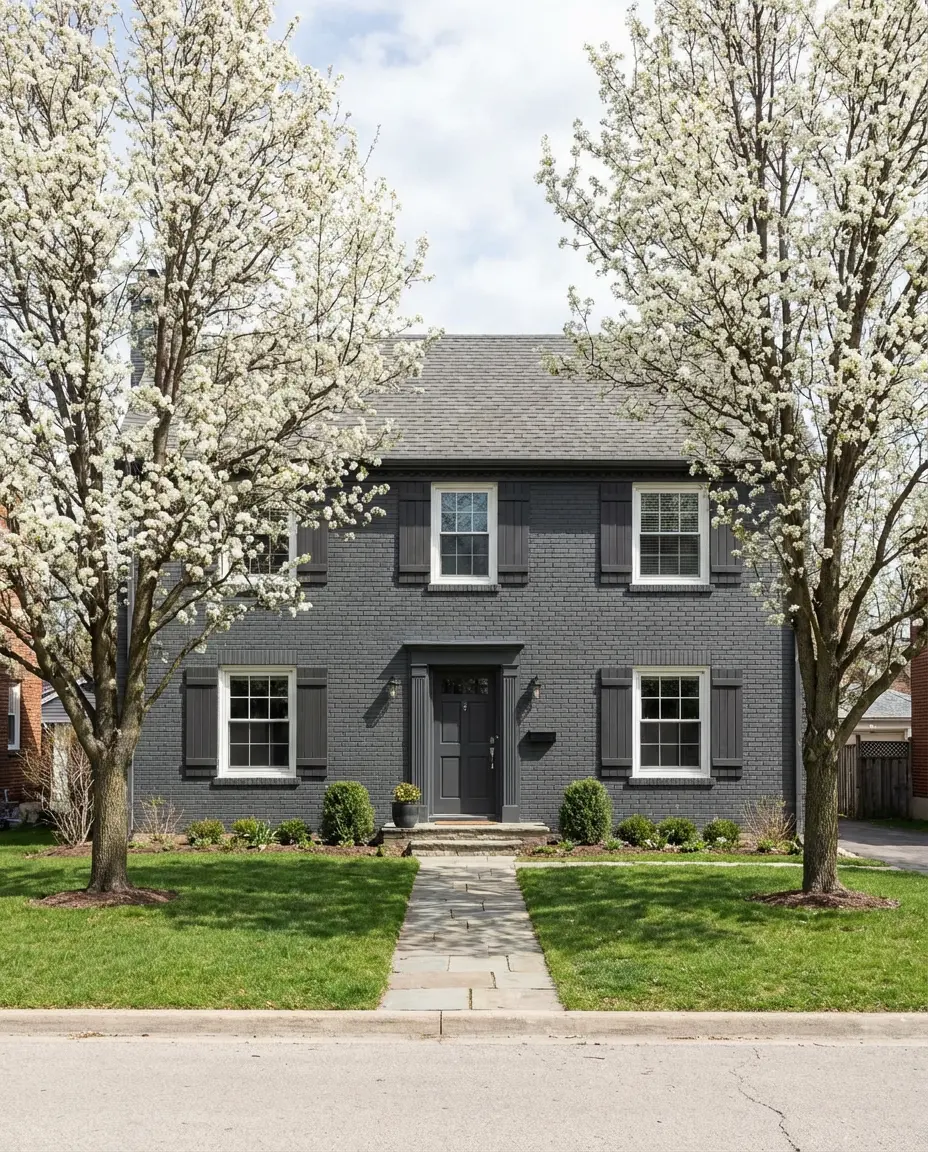
For Cape Cod homes built with full brick construction—more common in the mid-Atlantic states than in New England—painting the entire exterior in a deep charcoal grey is a transformation that’s genuinely dramatic. The painted brick retains its tactile texture while taking on an entirely new character. It’s one of the most striking paint color choices available for a brick Cape Cod, turning a traditional mid-century home into something that reads as sophisticated and current without altering its historic structure in any irreversible way.
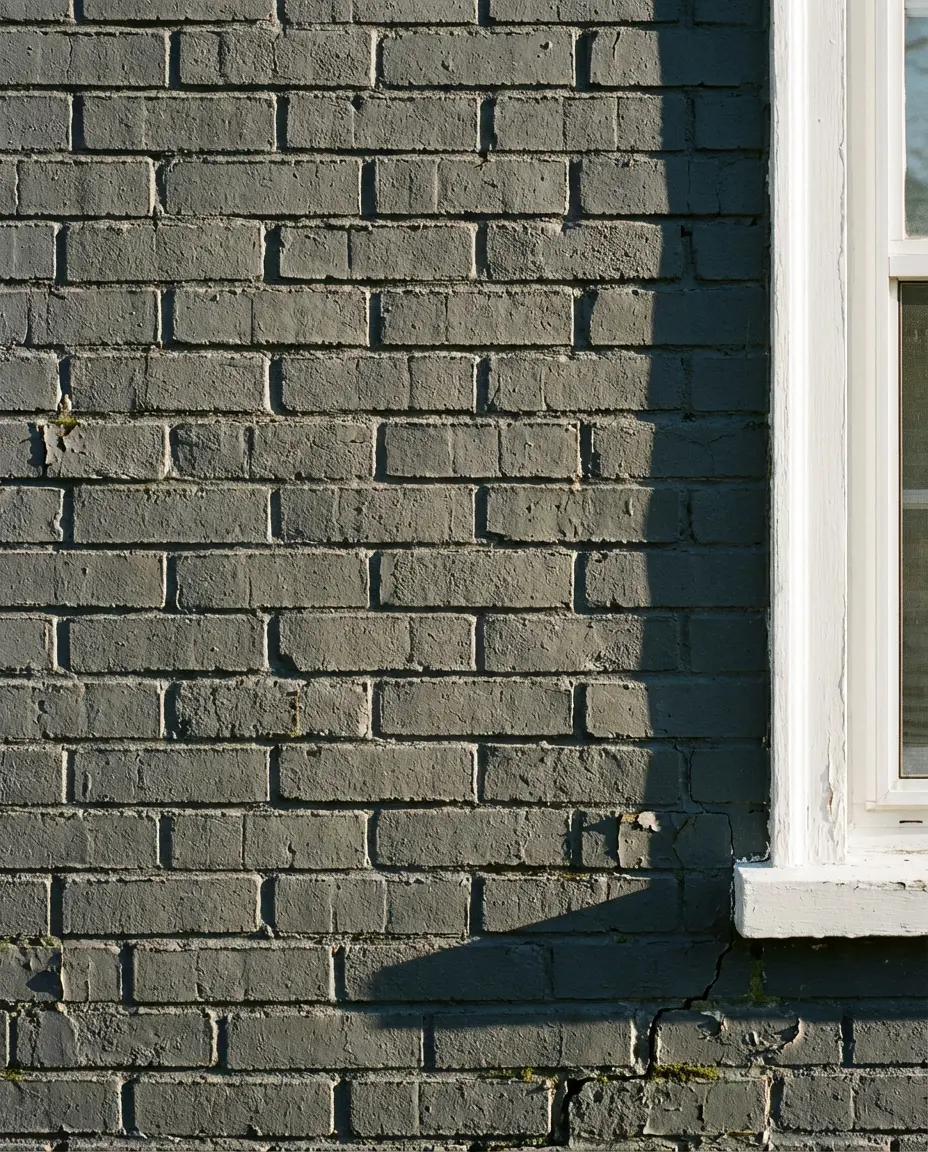
Regional context: this approach is particularly popular in Virginia, Maryland, and Pennsylvania, where all-brick Cape Cods were commonly built in the 1940s through 1960s and frequently hit the resale market today. A full exterior paint job on a brick Cape Cod typically costs $3,000–$8,000 professionally, making it one of the most impactful renovations per dollar spent on these homes.
18. White Cape Cod With Boxwood Formal Landscaping
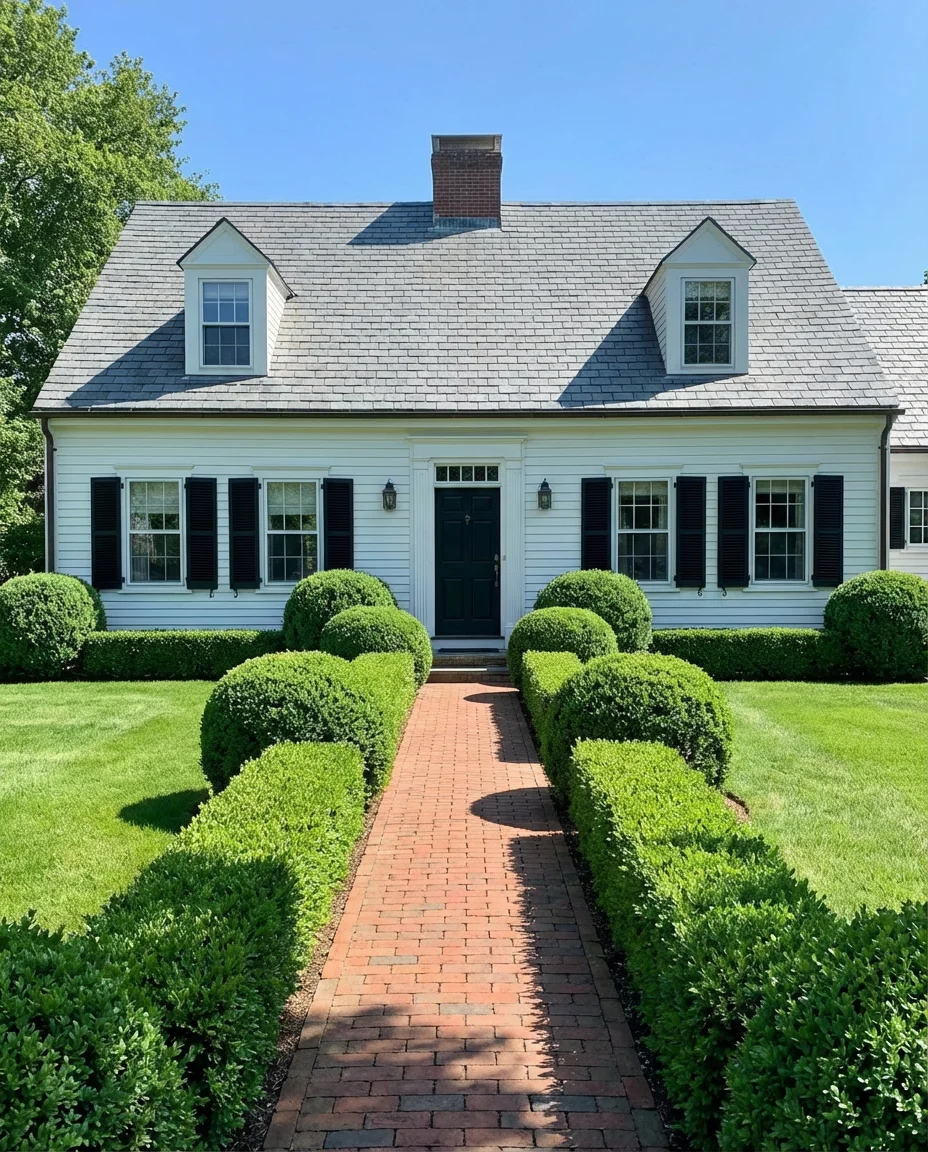
There’s an undeniable elegance to a white Cape Cod fronted by clipped boxwood hedges in a formal arrangement. The manicured greenery reinforces the home’s symmetrical geometry, creating a visual conversation between the architecture and the landscaping that reads as intentional and refined. This is the Cape Cod in its most tailored, composed expression—every element in its right place. It suits homeowners who appreciate order and quiet grandeur over exuberant informality.
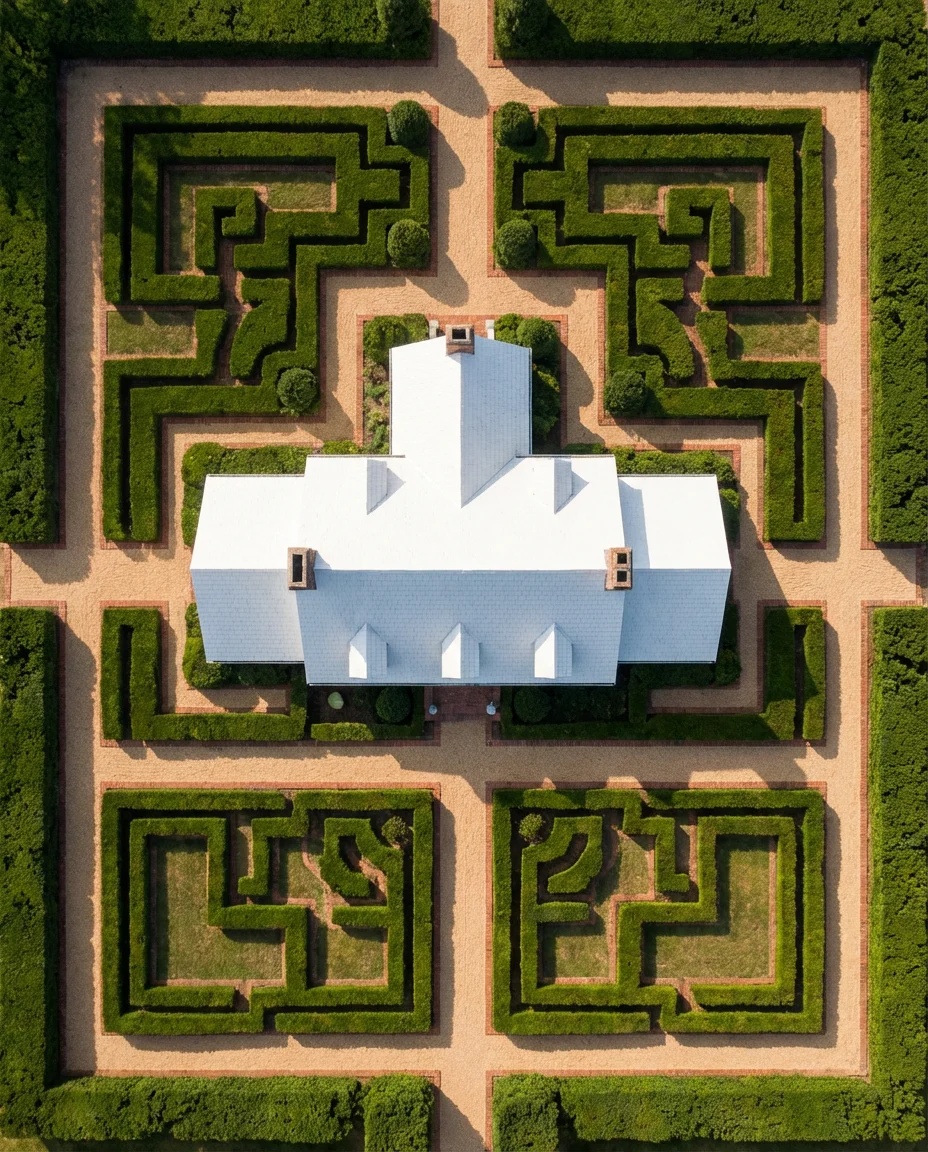
Common mistake: homeowners who plant boxwood too close to the foundation create a moisture problem that invites pests and rot. Leave at least 18–24 inches between the clipped hedge and the siding—the gap reads as intentional at the design level and protects the structure at the practical level. It also makes maintenance painting dramatically easier.
19. Barn Red Shutters on a Pale Grey House
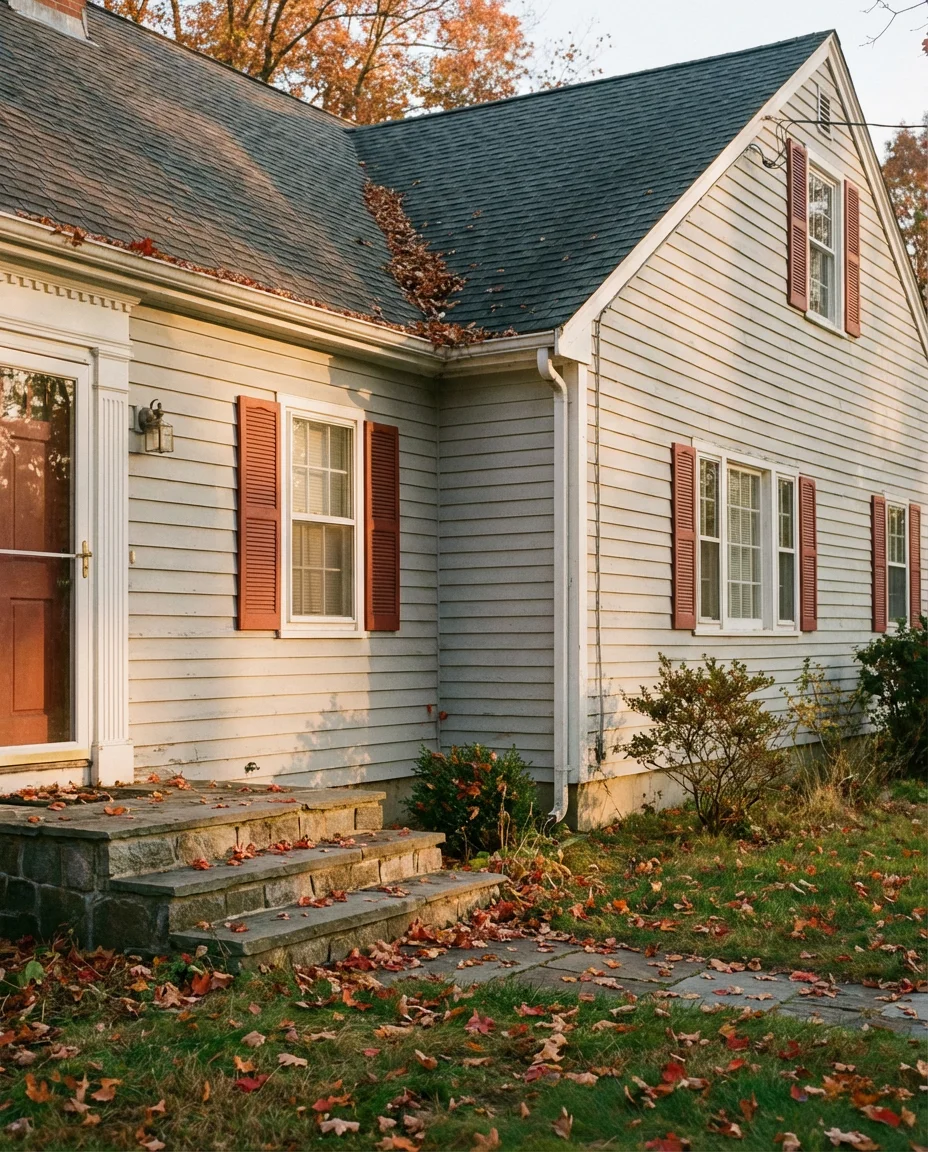
Barn red shutters on a pale grey Cape Cod is a color combination that references the American agricultural landscape—the classic red barn against a grey New England sky—and brings it into the residential realm with complete ease. The red pops without overwhelming, and the grey foundation keeps the palette feeling restrained rather than festive. It’s one of those combinations that immediately reads as American and rooted, the kind of design ideas that come from understanding regional vernacular architecture rather than chasing fashion.
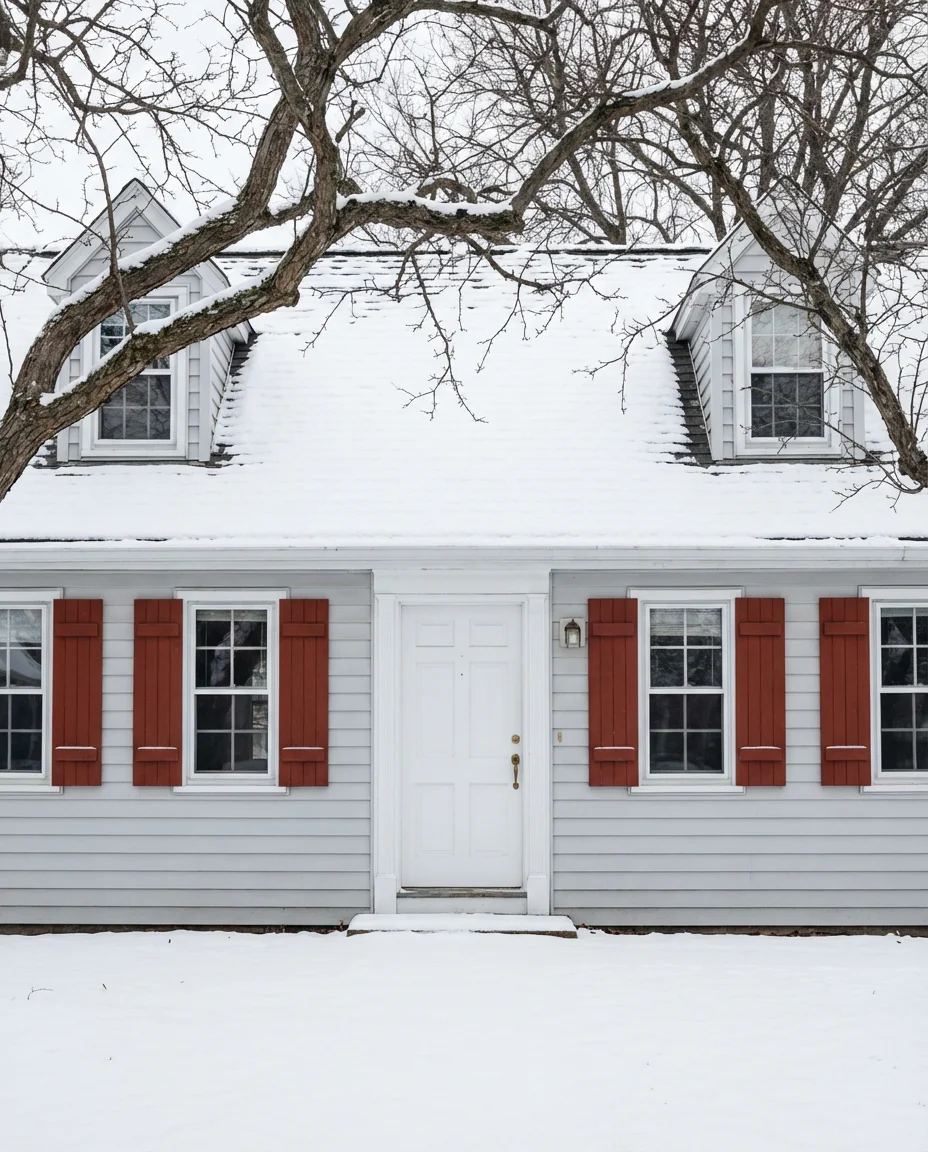
A design journalist visiting a restored 1952 Cape Cod in Vermont once wrote that the barn red shutters were the first thing she noticed from a quarter-mile up the road—and the thing she remembered weeks later. Color details at an accent scale can carry a home’s entire personality when chosen with conviction rather than caution.
20. Soft Coastal Color Palette With Natural Wood Door
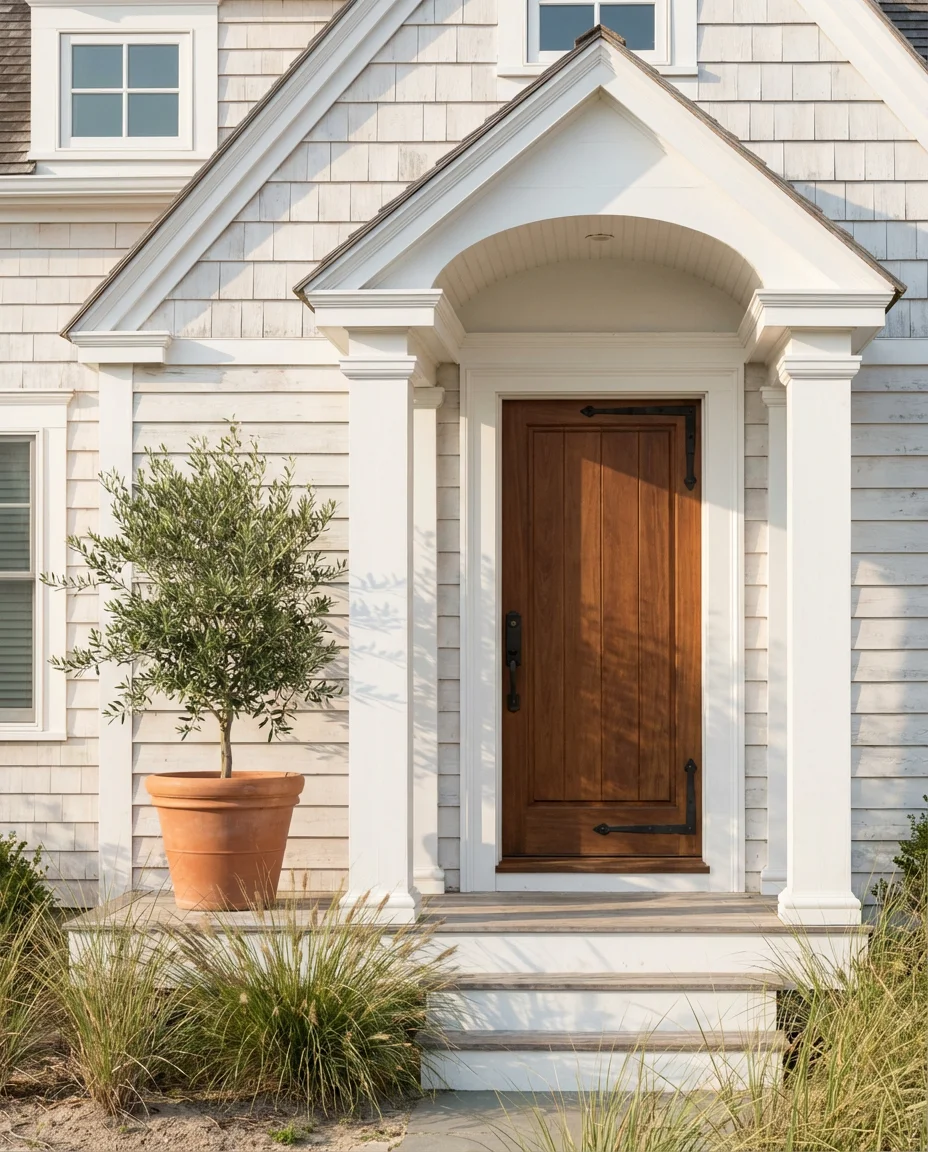
A coastal color palette doesn’t always need to center on paint—sometimes the most coastal detail is no color at all. Pairing a soft white or sand-toned exterior with a natural, unstained wood front door brings warmth and material authenticity that painted doors can struggle to match. The wood grain against the clean light siding feels gathered and handmade, like the home was built with intentions that went beyond the purely aesthetic. It’s a subtle statement, but it lands with people who pay attention.
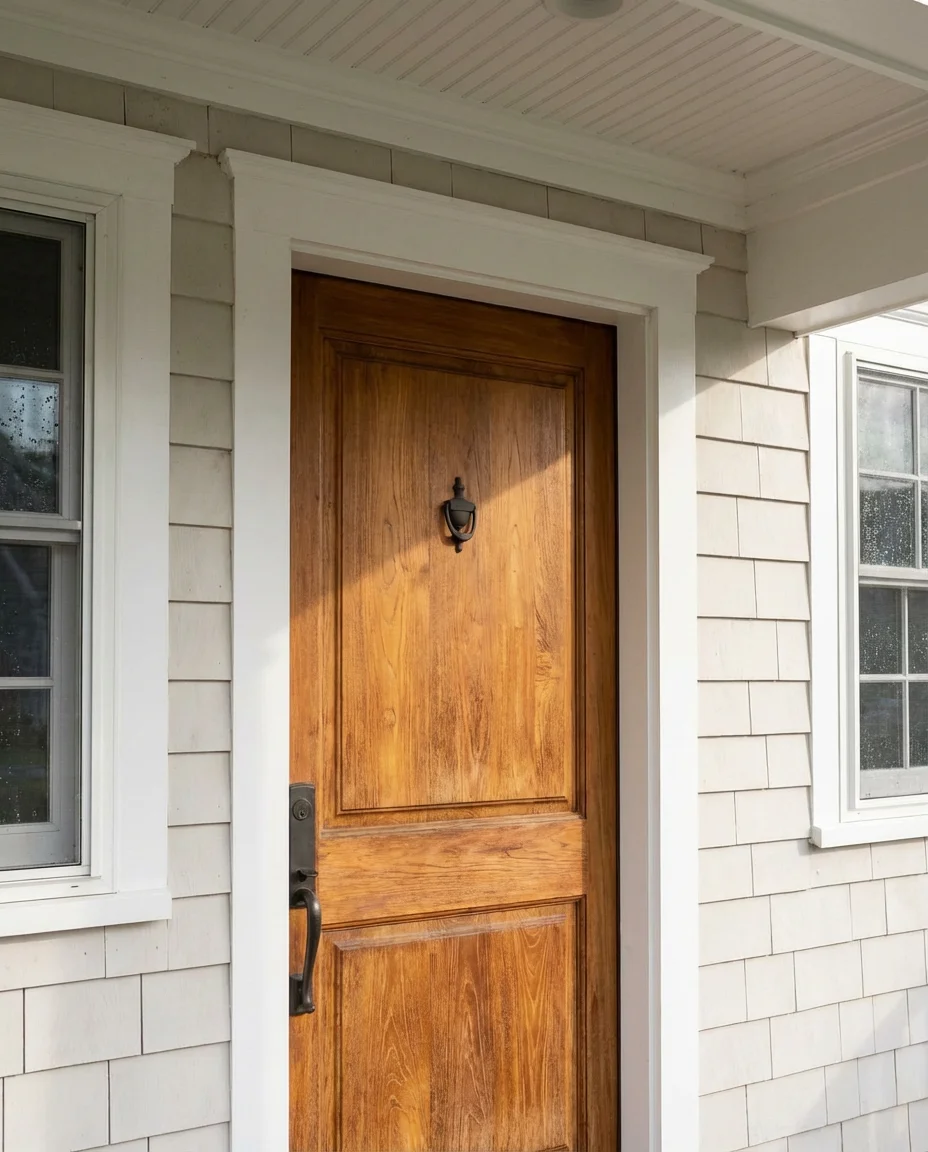
Natural wood doors require more maintenance than fiberglass alternatives—they need refinishing every two to three years in harsh climates—but homeowners who commit to the care consistently say they’d never go back. The aging of real wood has a beauty that no manufactured material replicates over time.
21. Black Window Frames on an All-White House
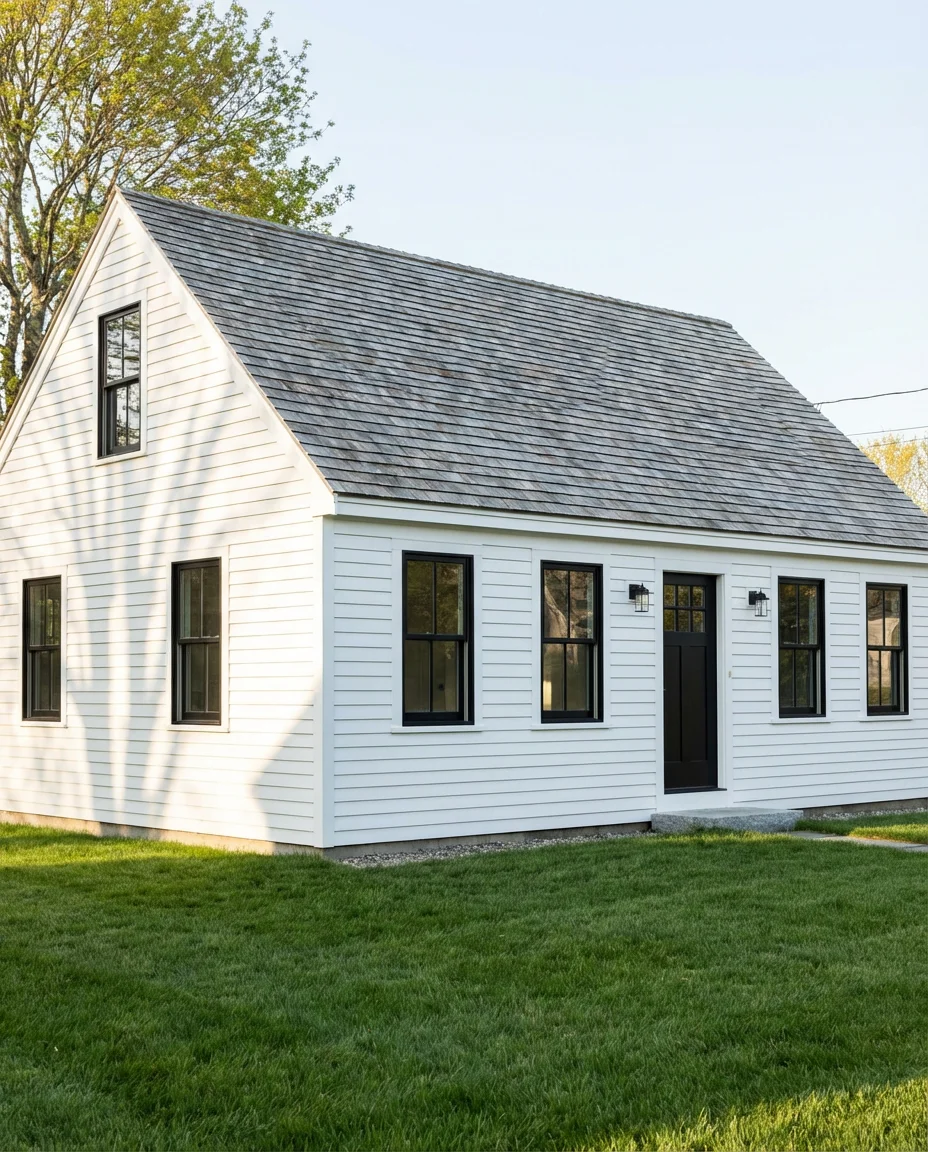
If you want a Cape Cod that reads as both classic and genuinely current, the formula is simpler than you might think: an all-white exterior with matte black window frames. The black frames define the windows as precise, graphic elements against the clean white field of the siding—they look like drawings of windows rather than just functional openings. This interplay between white and black is eternally stylish and avoids the risk of dated trend-chasing while still feeling unmistakably contemporary.
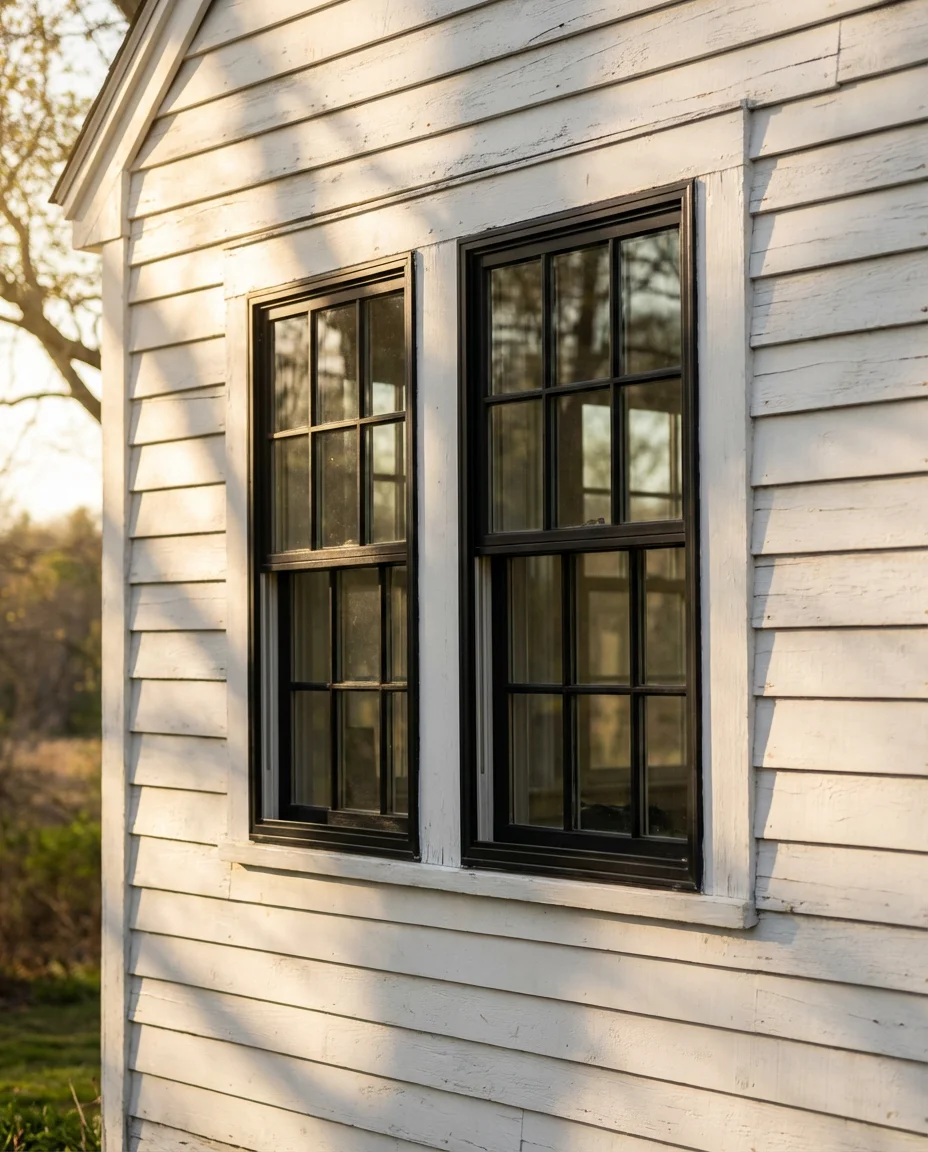
Insider tip from renovation architects: when painting existing window frames black, don’t stop at the exterior casing—paint the interior window jamb and sash in the same black as well. The cohesion makes the entire window system feel designed rather than retrofitted, and it looks spectacular from inside the home as you look out through dark frames at the landscape beyond.
22. Painted Brick Colonial Revival Cape Cod
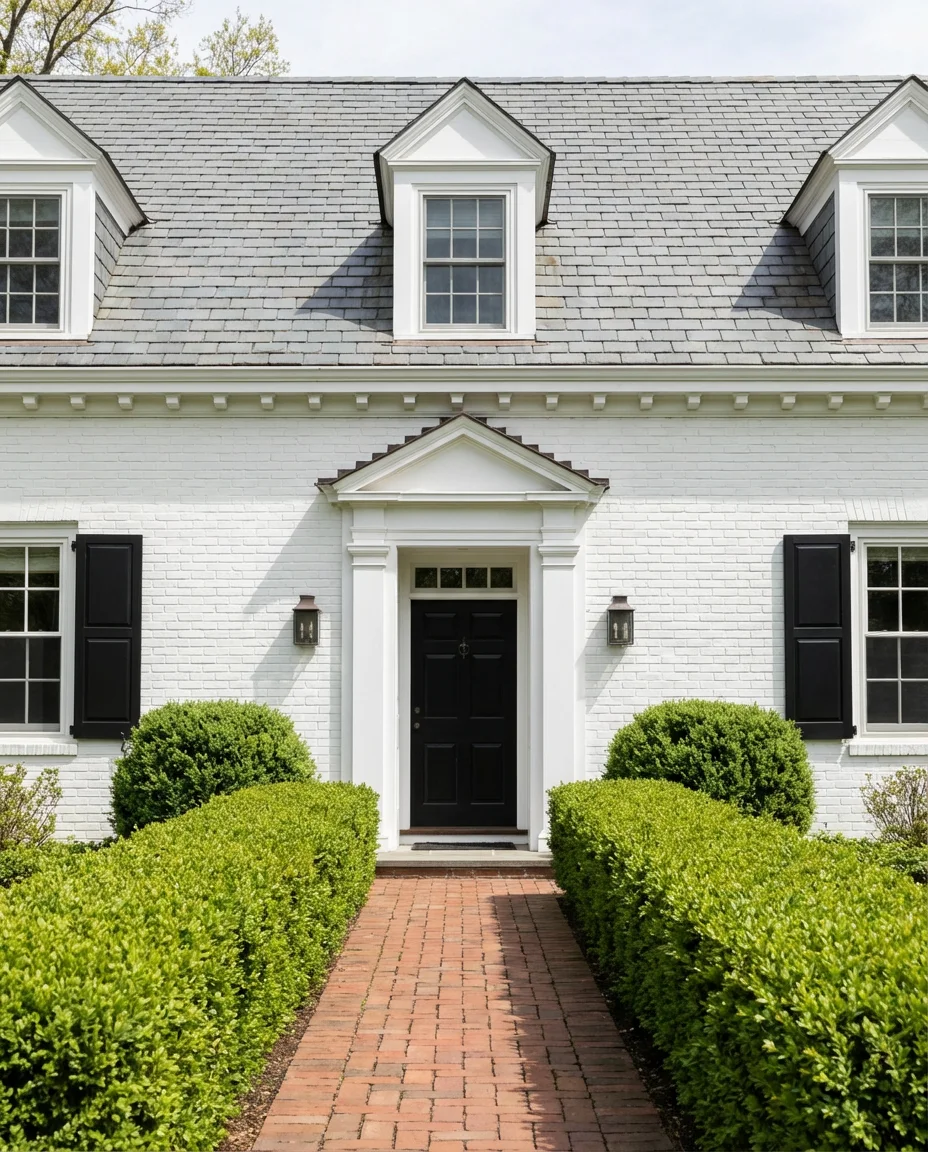
A Colonial Revival Cape Cod takes the home’s original inspiration—the modest worker’s cottages of 17th-century England transplanted to the Massachusetts coast—and elevates it with more formally composed architectural details: pediment doorways, dentil moldings, and pilastered entry surrounds. When executed on a brick Cape Cod painted in a warm white or oyster tone, the effect is a home that feels both deeply antique and perfectly polished, the kind of house that seems to have a pedigree even if it was built in 1958.
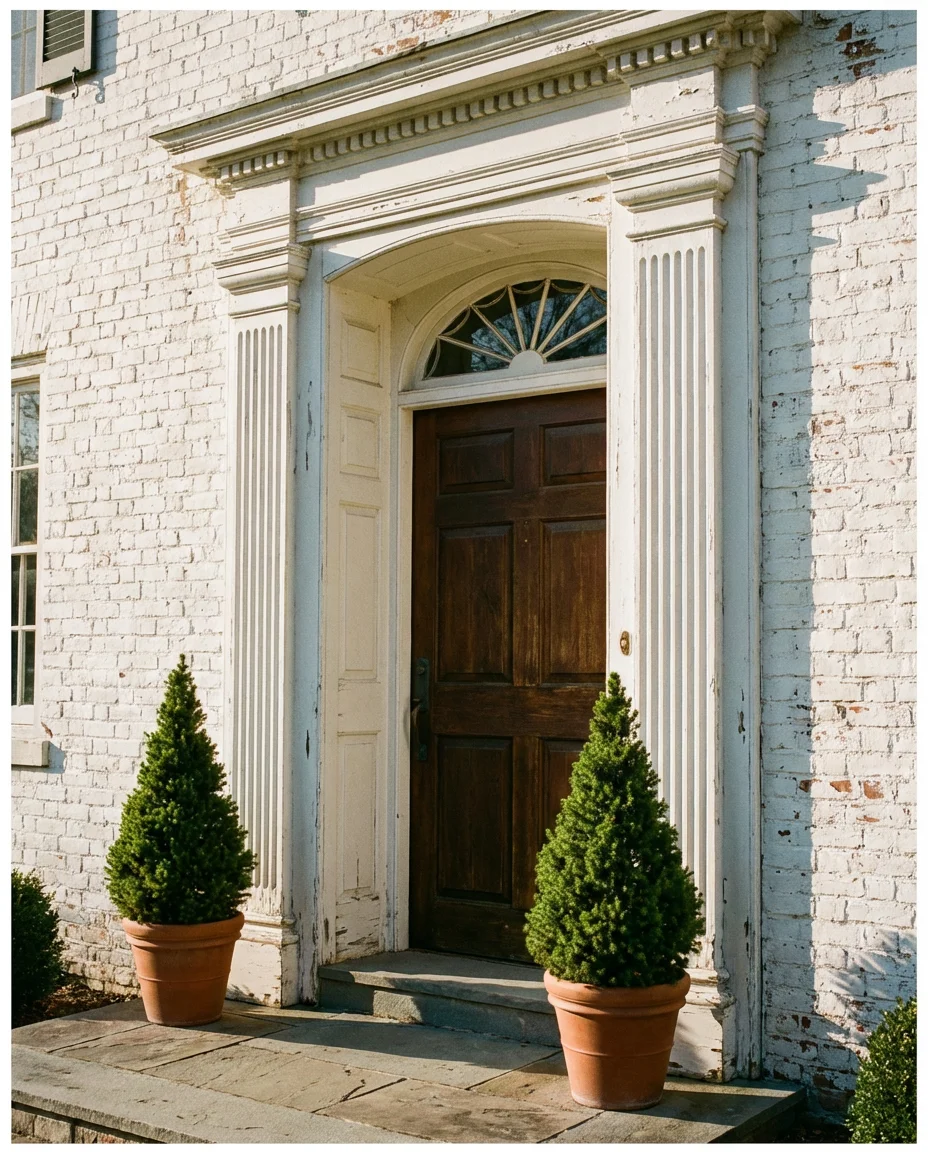
This is a home that tells a story through its architectural language. Every molding and detail has a historical precedent—and homeowners who research that lineage before adding details tend to make choices that feel coherent and genuine rather than randomly accumulated. Even a single well-proportioned pediment doorway can anchor a whole house’s character.
23. Bold Green Entry Door on a Light-Colored Cape Cod
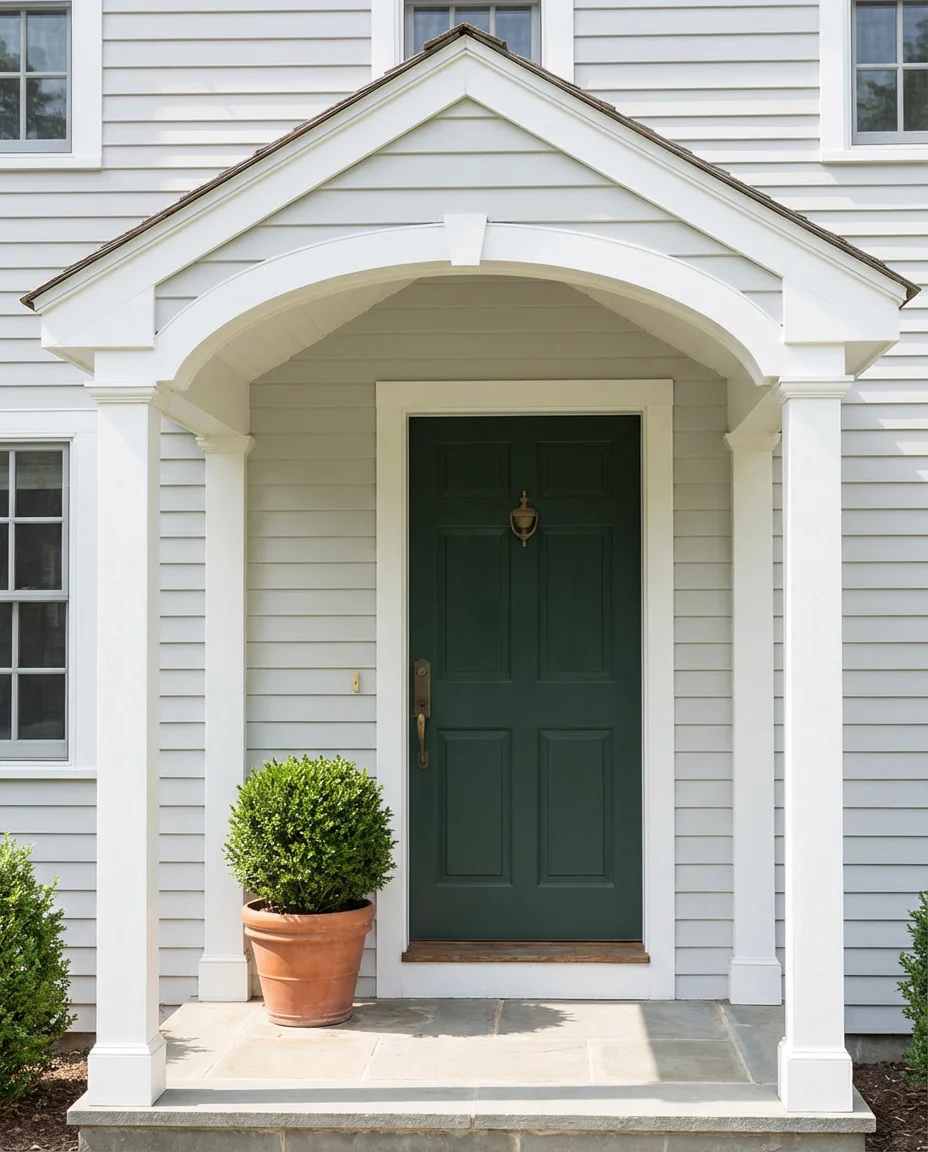
A rich, saturated green front door—forest green, bottle green, or British racing green—on a light-colored Cape Cod exterior is the kind of exterior accent that makes passers-by stop and look twice. It draws the eye with the confidence of someone who knows exactly what they’re doing. Paired with brass or aged bronze hardware, it feels layered and collected rather than decorative. The dark green door anchors the home’s façade without competing with the lighter siding—it works because of the contrast, not despite it.
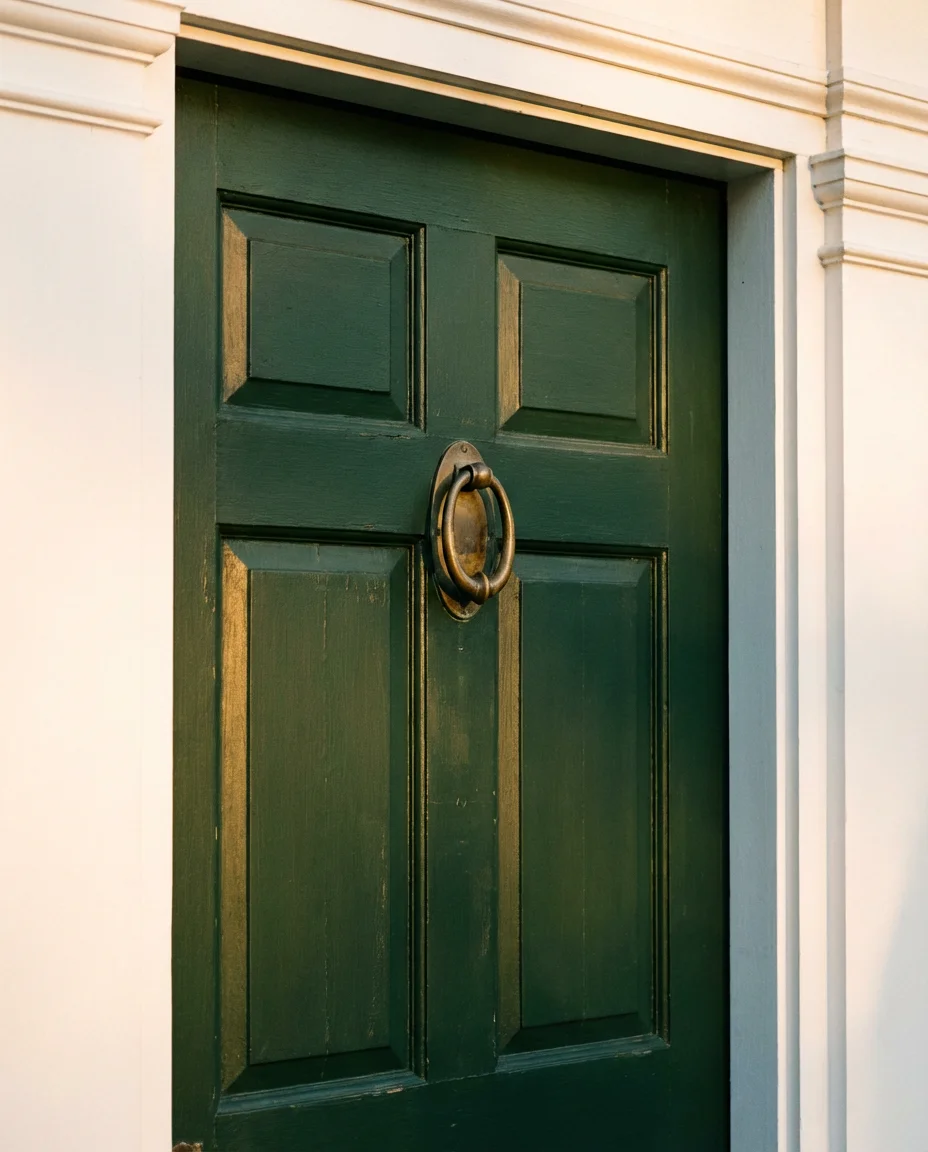
Homeowners who’ve made this swap consistently report the same thing: they didn’t realize how much they’d been ignoring their front door until it became a green that demanded to be noticed. It’s a $150 weekend project—one quart of exterior paint, a quality brush, and a Saturday morning—that changes the entire personality of a home every single time.
Conclusion
Whether you’re dreaming of weathered grey shingles and a wraparound porch, a moody black exterior with sculptural landscaping, or simply a green front door that finally feels like you—there has never been a better moment to fall in love with Cape Cod all over again. These homes reward thoughtful attention to detail, and every exterior choice you make tells part of the home’s ongoing story. Which of these ideas has captured your imagination? Share your thoughts in the comments below—and if you’re in the middle of your own Cape Cod renovation, we’d love to hear what direction you’re taking.