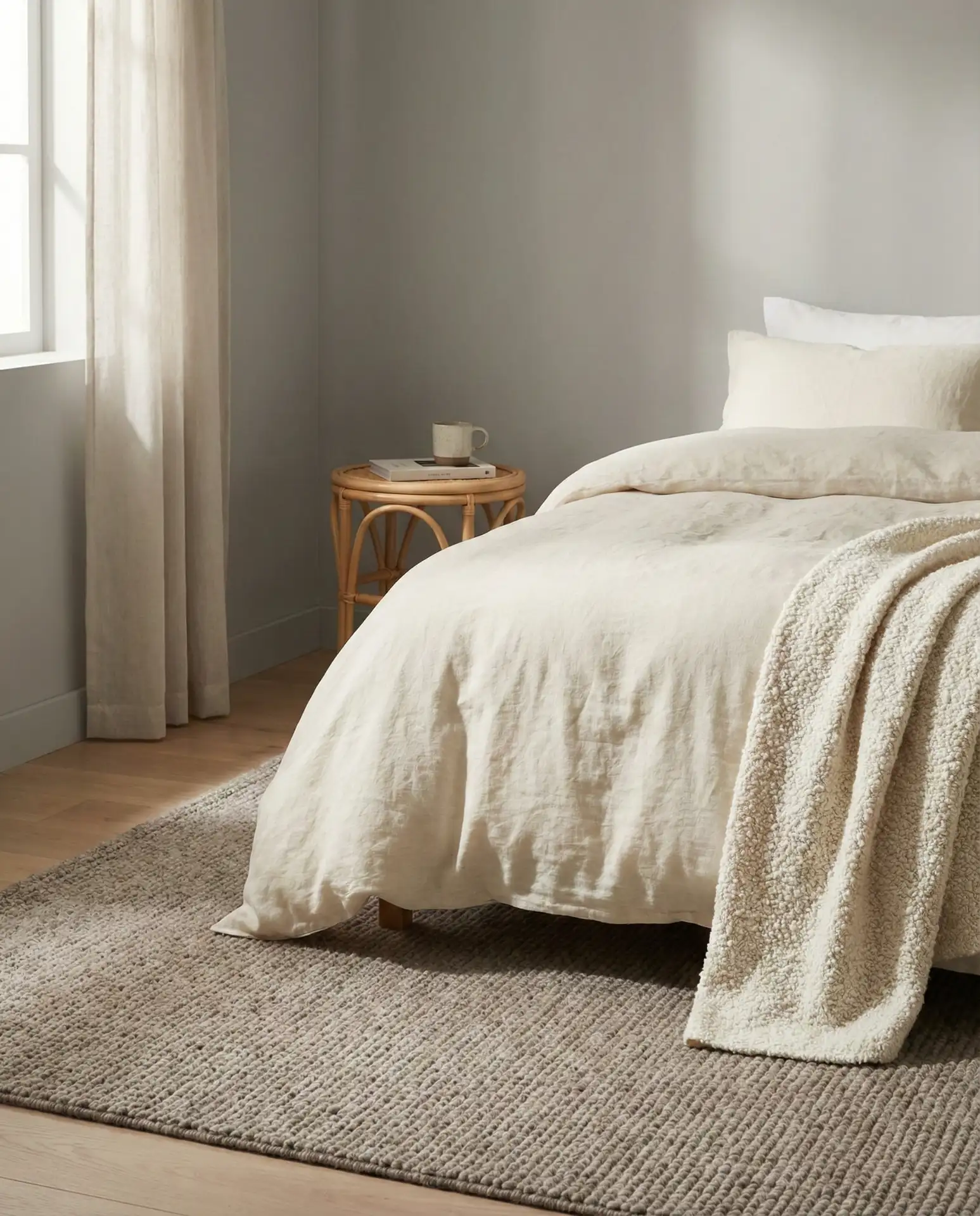
Dresser decor has become one of the most searched home styling topics on Pinterest in 2026, as Americans seek creative ways to transform functional furniture into beautiful focal points. Whether you’re refreshing a bedroom aesthetic, styling a guest room, or adding personality to a nursery, the top of your dresser offers prime real estate for self-expression. From minimalist white setups to coastal-inspired vignettes, the possibilities are endless. This guide walks you through 23 fresh, actionable ideas that blend style with practicality—perfect for renters, homeowners, and anyone craving a Pinterest-worthy space without the overwhelm.
1. Layered Mirror and Greenery Combo
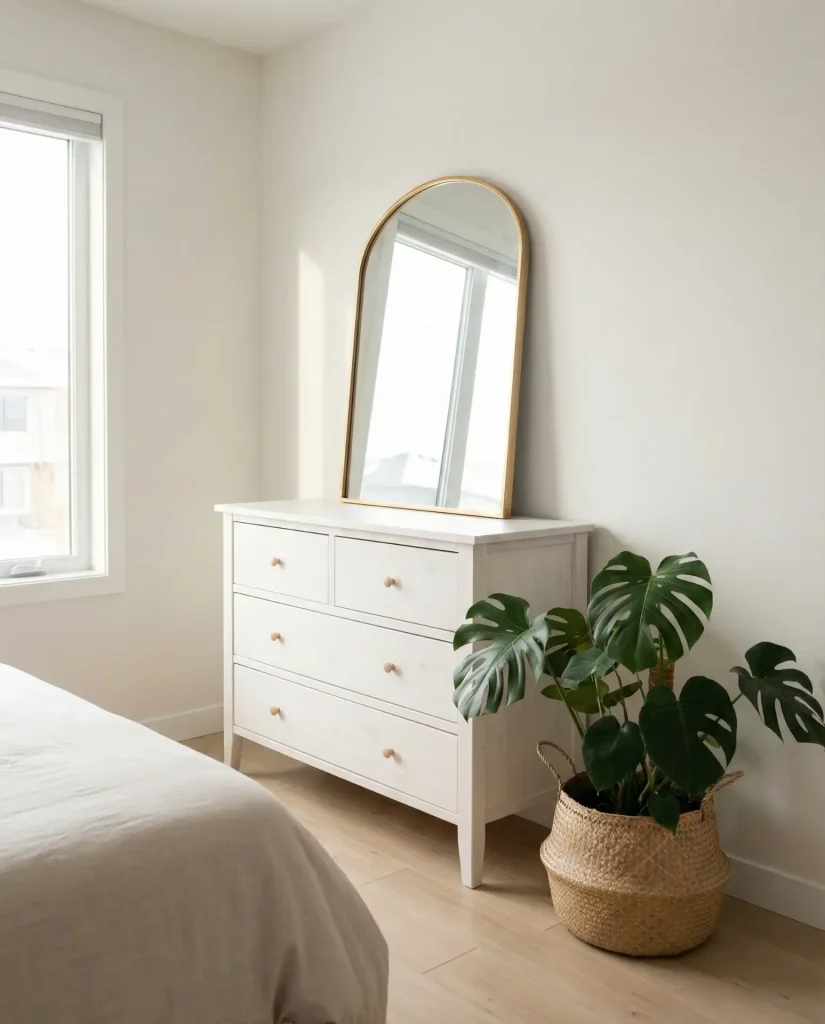
A large leaning mirror paired with trailing potted plants creates instant depth and life atop any dresser. This approach works beautifully in bedroom spaces where natural light bounces off reflective surfaces, making smaller rooms feel larger. The aesthetic leans effortlessly modern, yet the organic textures keep it grounded and warm. Choose a mirror with a thin black or wood frame to anchor the look without competing with your greenery.
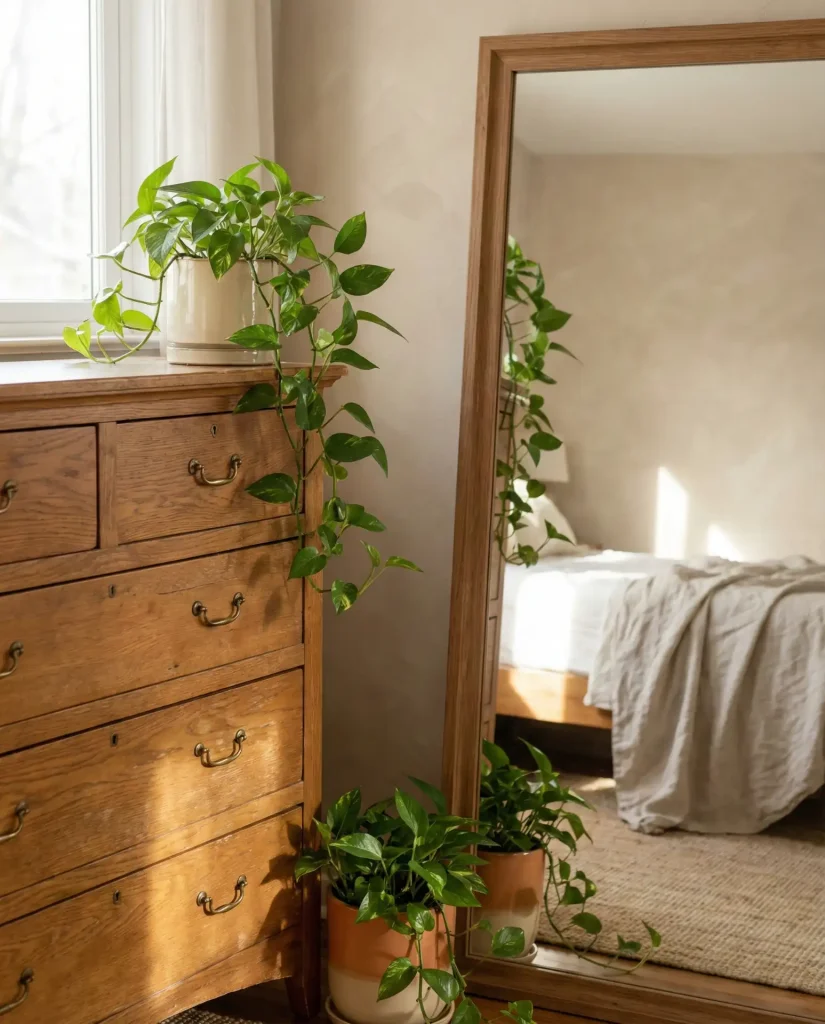
This setup thrives in apartments where wall-mounting isn’t an option, giving renters a flexible styling solution that travels well. The vertical emphasis draws the eye upward, which is especially useful in rooms with lower ceilings. Budget-conscious decorators can find affordable mirrors at thrift stores and propagate plants from cuttings, keeping costs under fifty dollars while achieving a high-end look that feels collected over time.
2. Vintage Tray Vignette with Personal Treasures
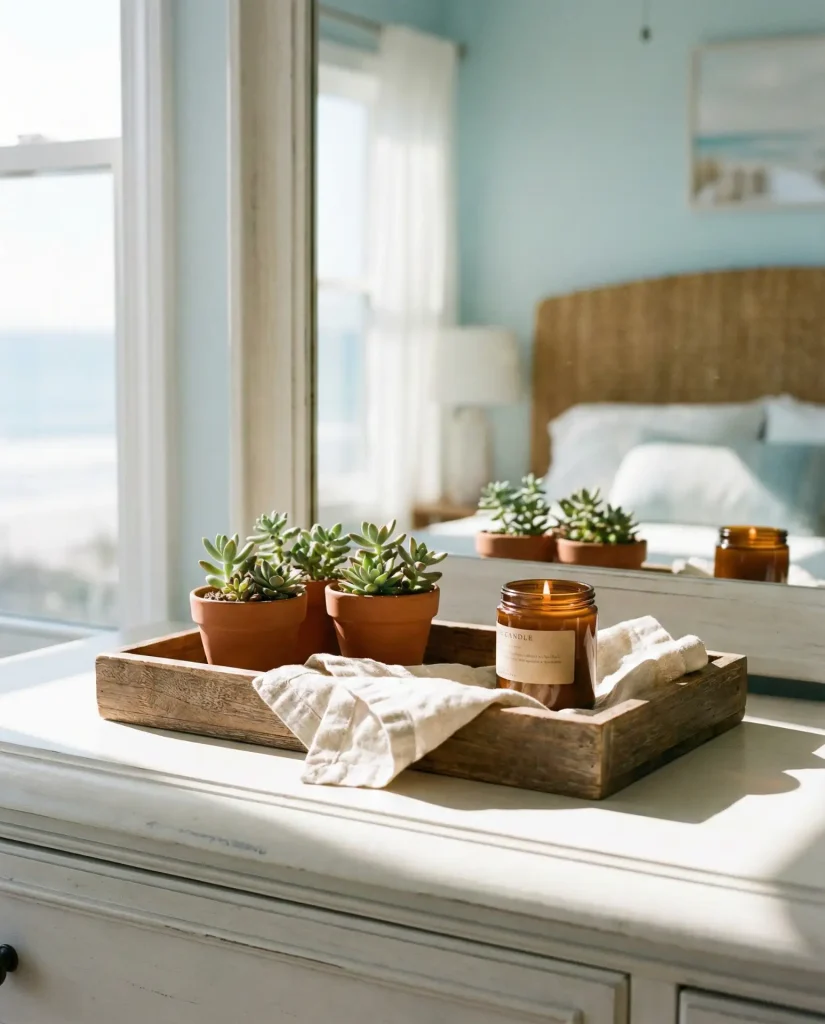
Using an antique tray as a foundation brings instant cohesion to your dresser display, corralling smaller items like candles, jewelry dishes, and perfume bottles into one curated moment. The tray method is wildly popular on Pinterest for good reason—it creates a “shop your nightstand” feel without the clutter. Opt for brass, silver, or weathered wood trays that echo other finishes in your room. This technique works especially well on long dressers where you need to break up horizontal space.
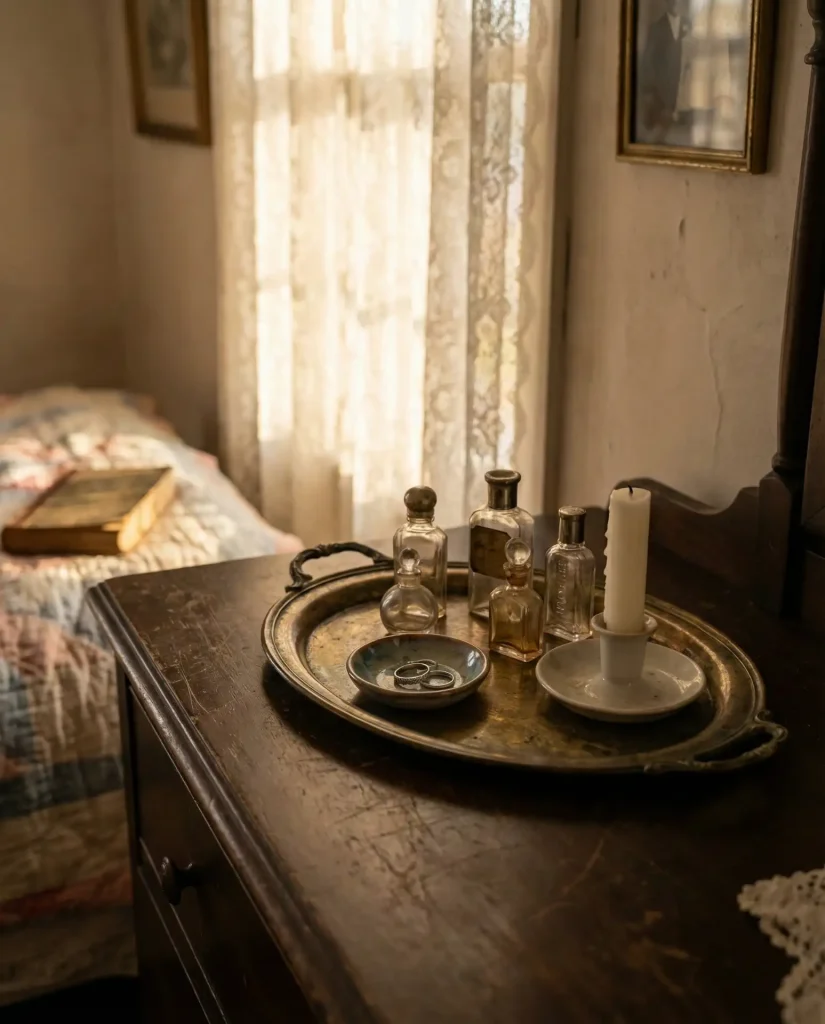
Where it works best: primary bedrooms and guest rooms where you want to offer a landing spot for keys, watches, or earrings without sacrificing style. The tray keeps dust at bay and makes daily tidying a thirty-second task. Many homeowners report that this simple trick transforms their morning routine, turning a chaotic surface into a place that actually invites calm.
3. Gallery Wall Above the Dresser
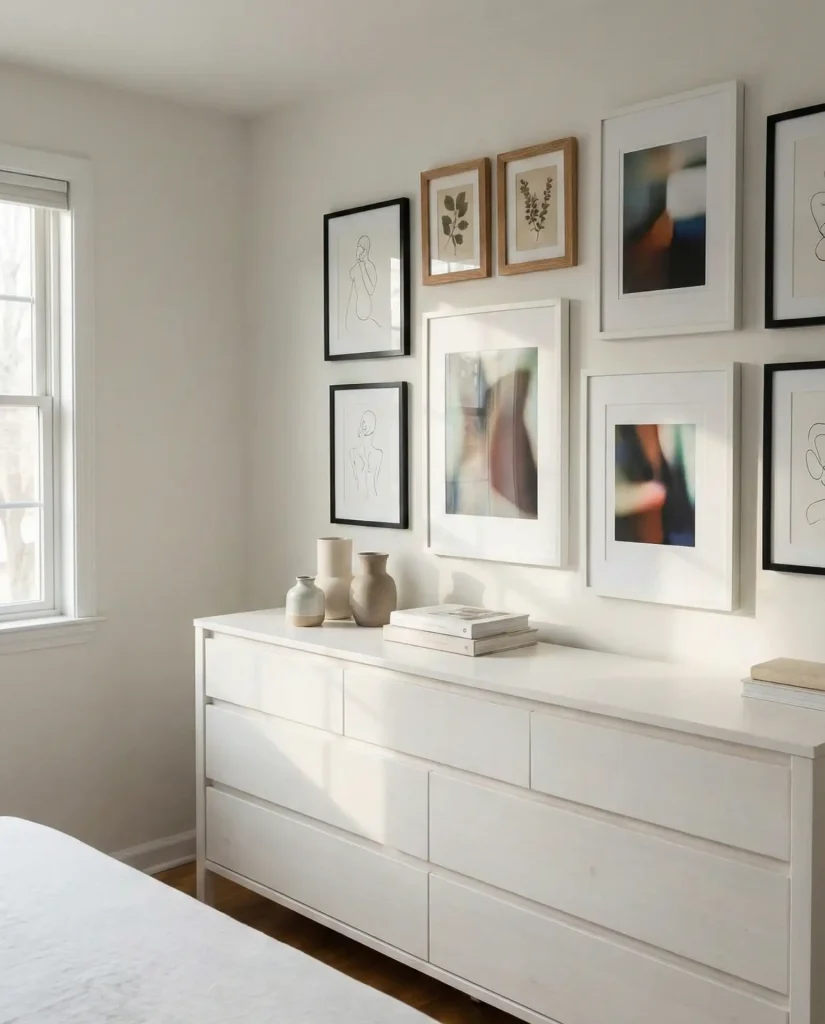
Hanging a curated mix of frames and prints directly above your dresser transforms it into a vertical feature wall that commands attention the moment you enter the room. This approach shines in modern bedroom setups where you want art to do the heavy lifting while keeping the dresser surface intentionally spare. Mix frame finishes—black, natural wood, and even brass—to add dimension without overwhelming the eye. Scale matters here: aim for the gallery to span roughly two-thirds the width of your dresser for balanced proportions.
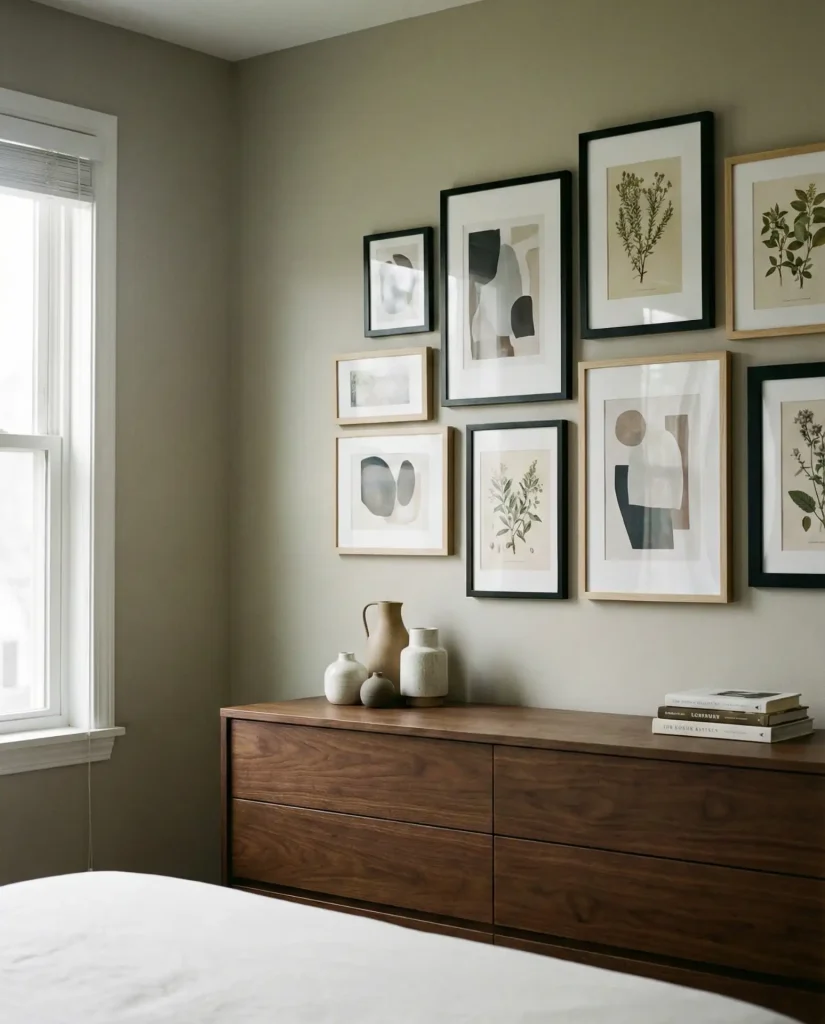
A common mistake is hanging frames too high or too far apart, which breaks the visual connection to the furniture below. Aim to start your lowest frame about six to eight inches above the dresser top, and keep spacing between frames consistent—usually two to three inches. This creates a grounded, intentional look rather than a floating afterthought, and it’s one of those small details that separates amateur styling from designer-level execution.
4. Statement Lamp with Sculptural Base
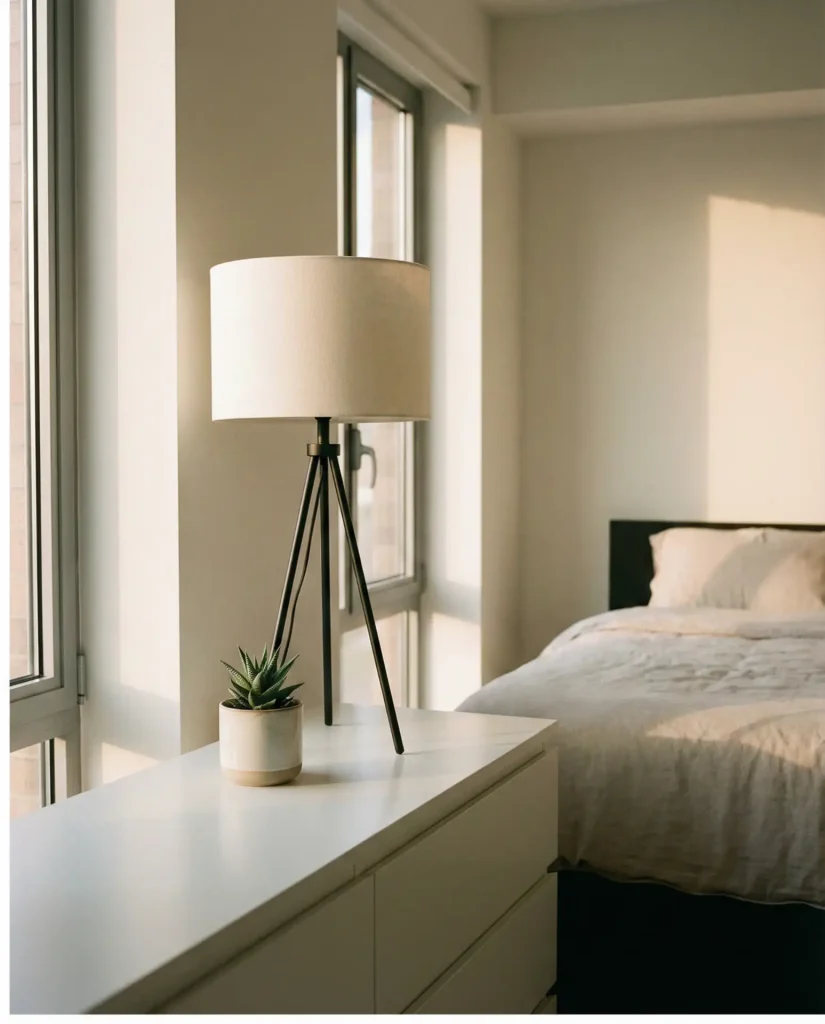
A tall lamp with an architectural or organic base instantly elevates your dresser into something that feels gallery-worthy, especially when paired with a linen or textured shade that diffuses light beautifully. This works particularly well in bedroom spaces where overhead lighting feels harsh and you crave softer, layered illumination. The lamp itself becomes sculptural decor even when switched off, so choose a base that speaks to your style—think ceramic curves, turned wood, or matte black metal.
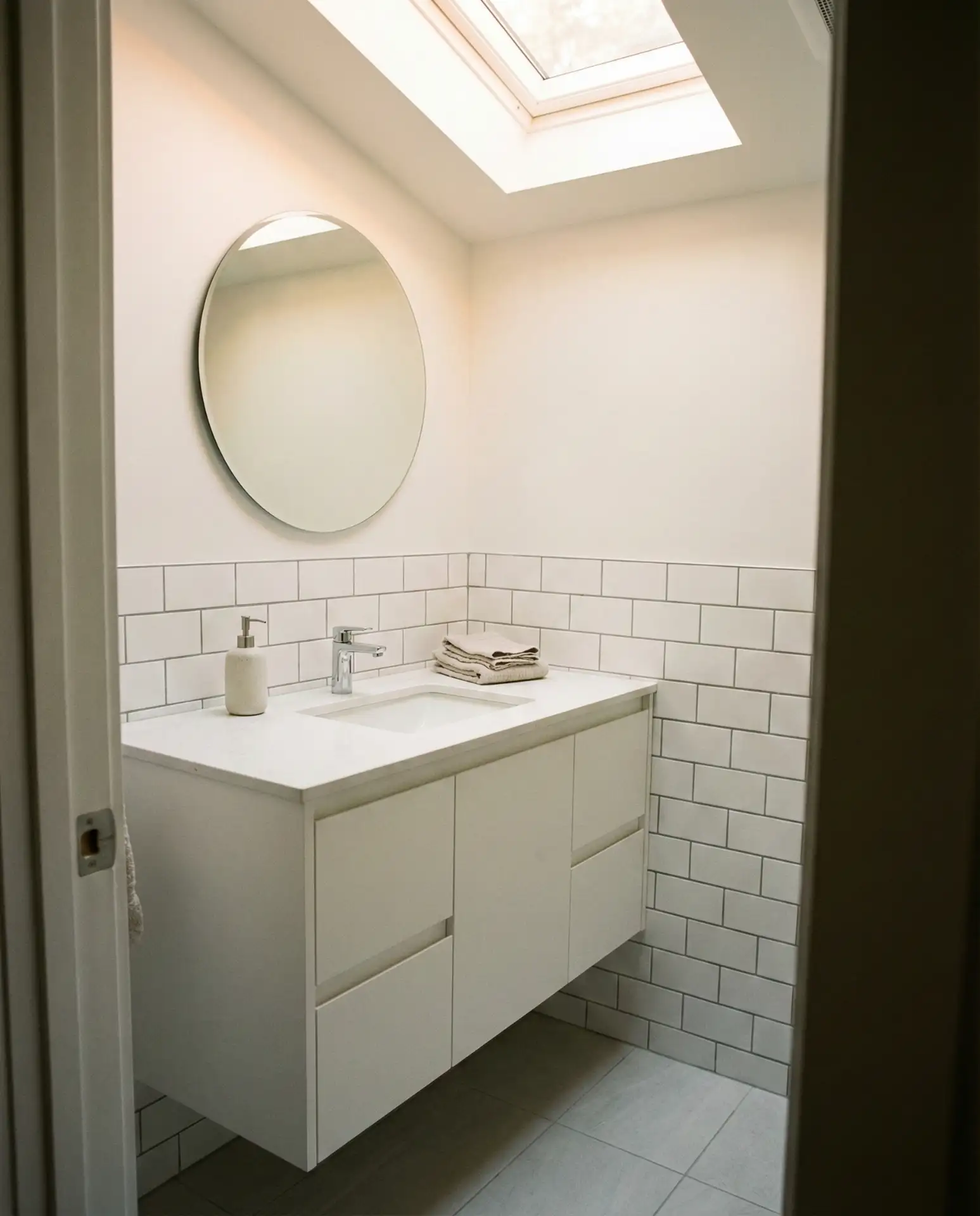
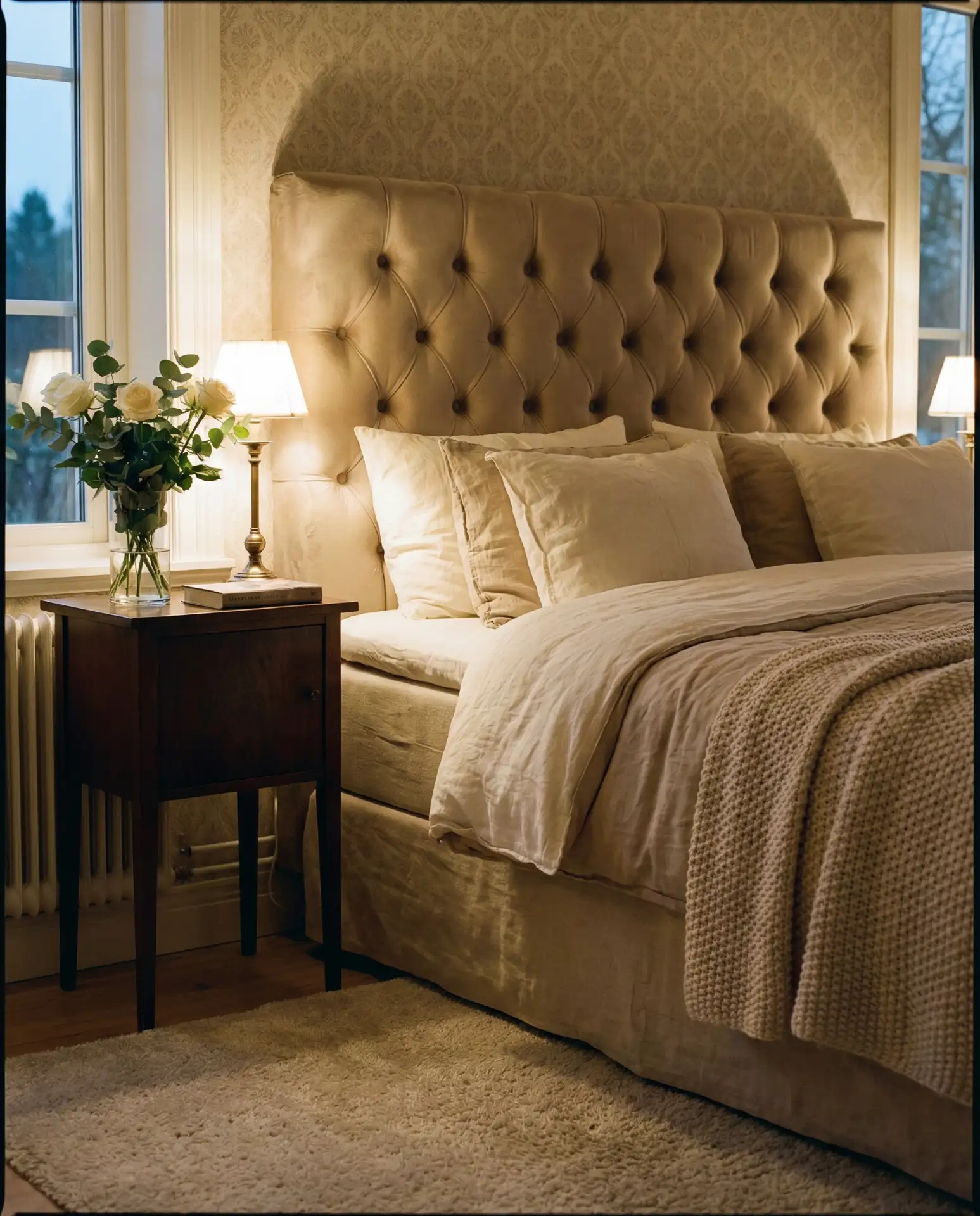
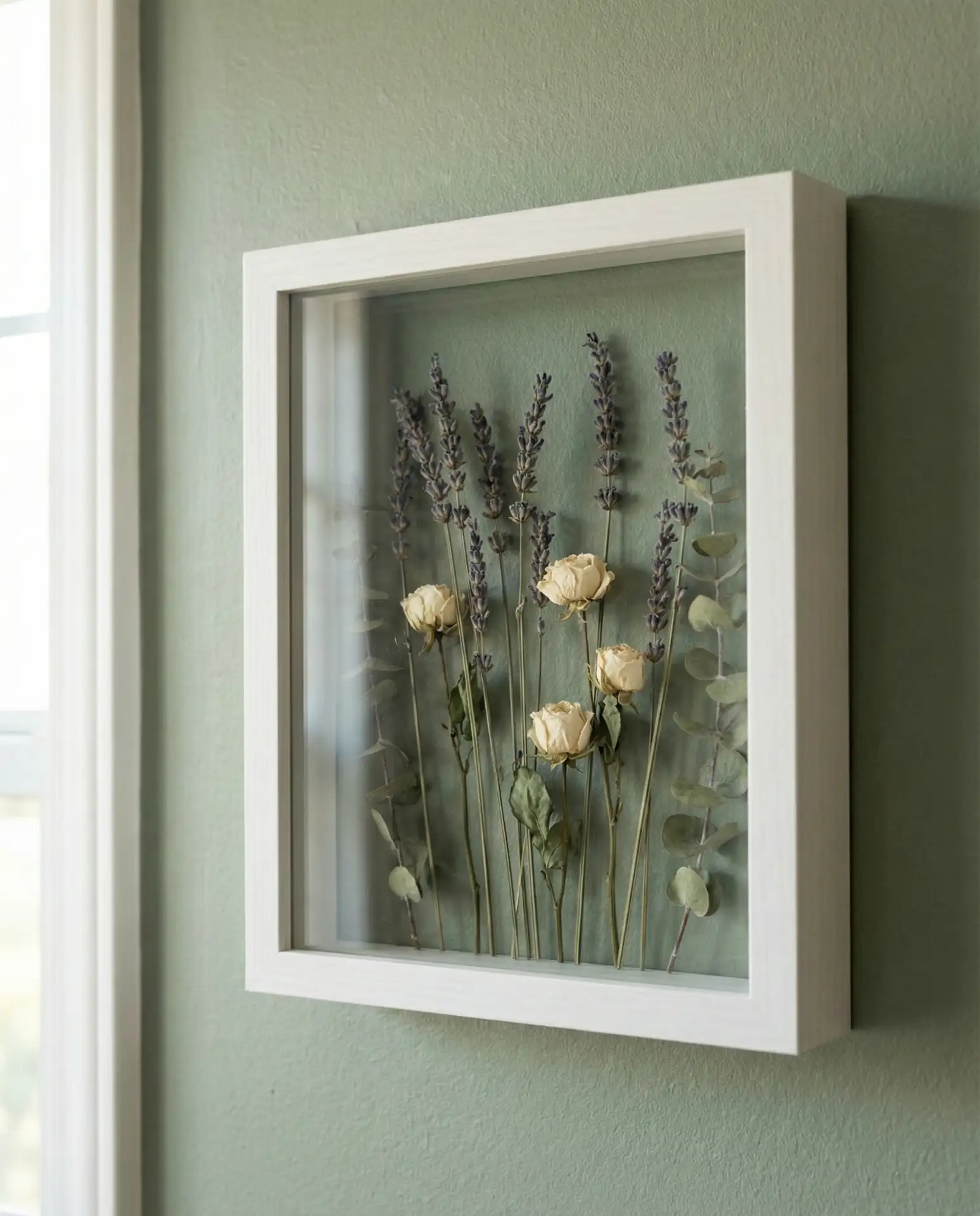
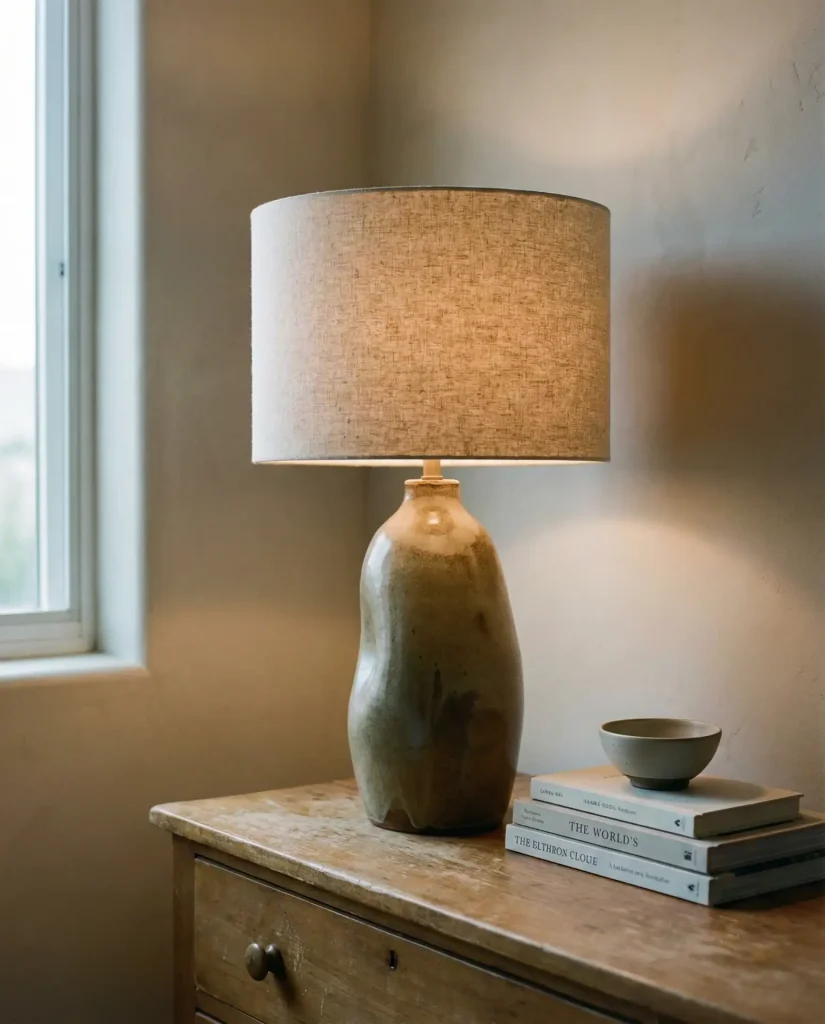
In the Pacific Northwest and Northeast, where natural light is scarce several months of the year, homeowners increasingly rely on task lighting like this to create warmth and functionality. A well-chosen lamp on your dresser means you can get ready in the morning without flipping on every ceiling fixture, saving energy and setting a calmer tone. It’s one of those upgrades that pays dividends in daily mood and usability.
5. Floating Shelves Stacked Above
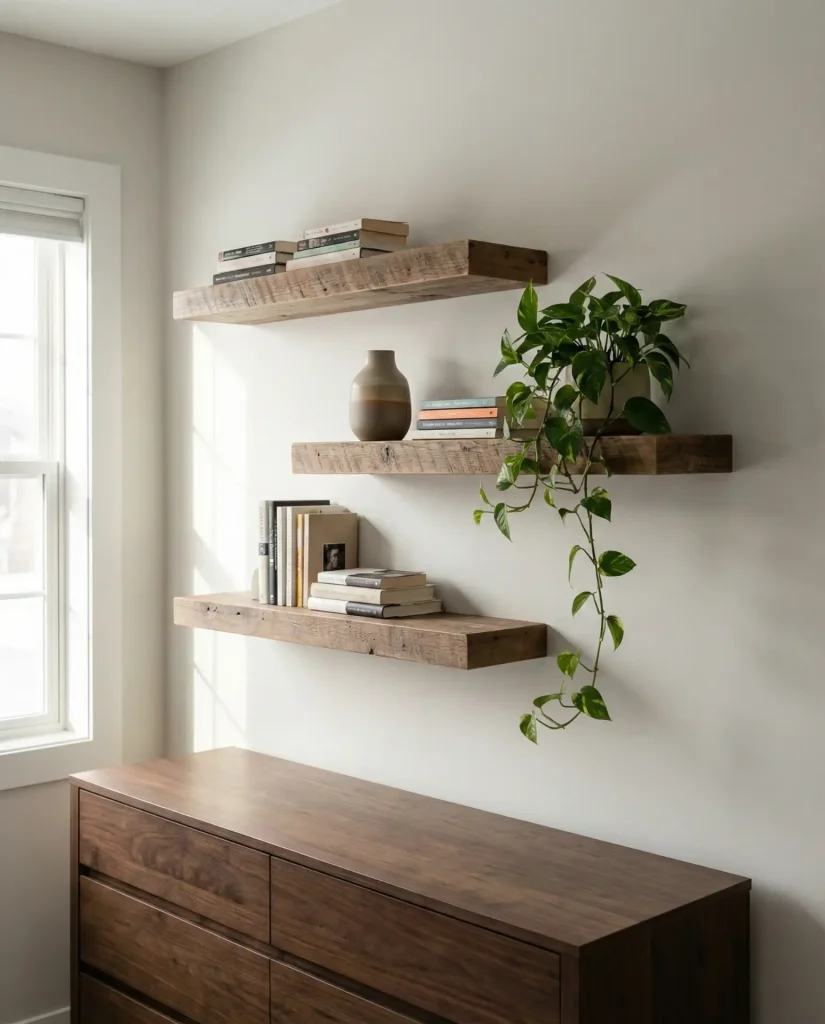
Installing two or three slim floating shelves directly above your dresser multiplies your display real estate while maintaining an airy, open feel that’s perfect for modern and minimalist bedrooms. This setup allows you to layer books, small plants, framed photos, and decorative objects in a way that feels curated rather than cramped. Choose shelves in a finish that either matches your dresser or contrasts it intentionally—natural wood against a white dresser, or black metal brackets for an industrial edge.
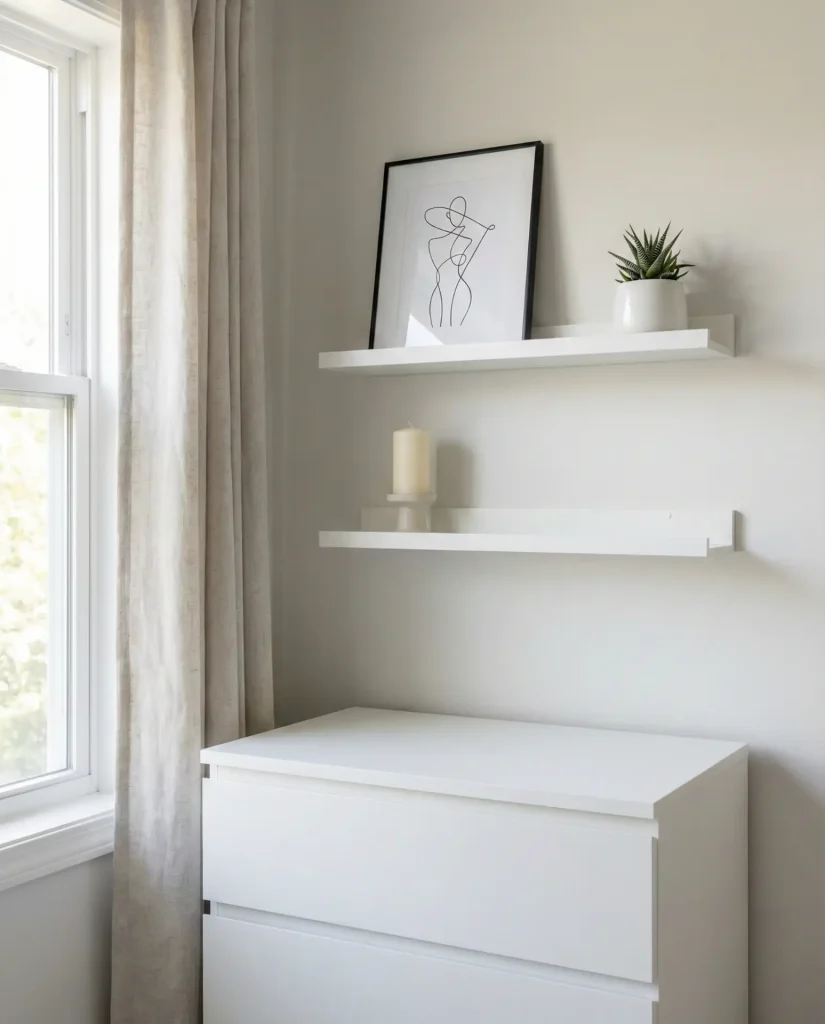
Many renters assume shelves are off-limits, but removable adhesive strips and damage-free mounting systems have changed the game entirely. You can install and remove shelves without losing your security deposit, making this a viable option even in temporary living situations. The key is distributing weight properly and not overloading each shelf—stick to lightweight decor and avoid heavy hardcovers or pottery that might strain the mounts over time.
6. Seasonal Styling with Natural Elements
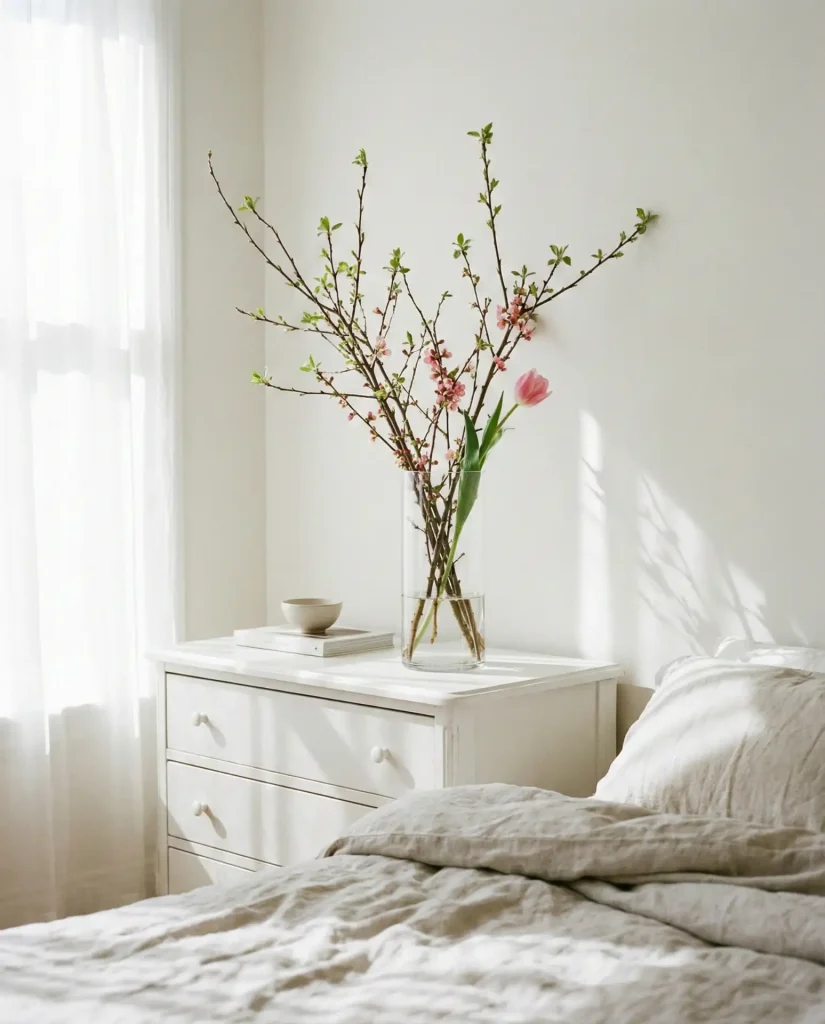
Swapping in branches, dried florals, pinecones, or fresh cuttings keeps your dresser decor feeling fresh and connected to the changing seasons, a practice especially beloved in the Midwest and New England, where four distinct seasons inspire home styling year-round. In spring, cherry blossoms or tulips; in fall, wheat stalks or maple leaves; for Christmas, evergreen sprigs and berries. This approach costs almost nothing and takes minutes to update, yet it makes your space feel intentional and alive.
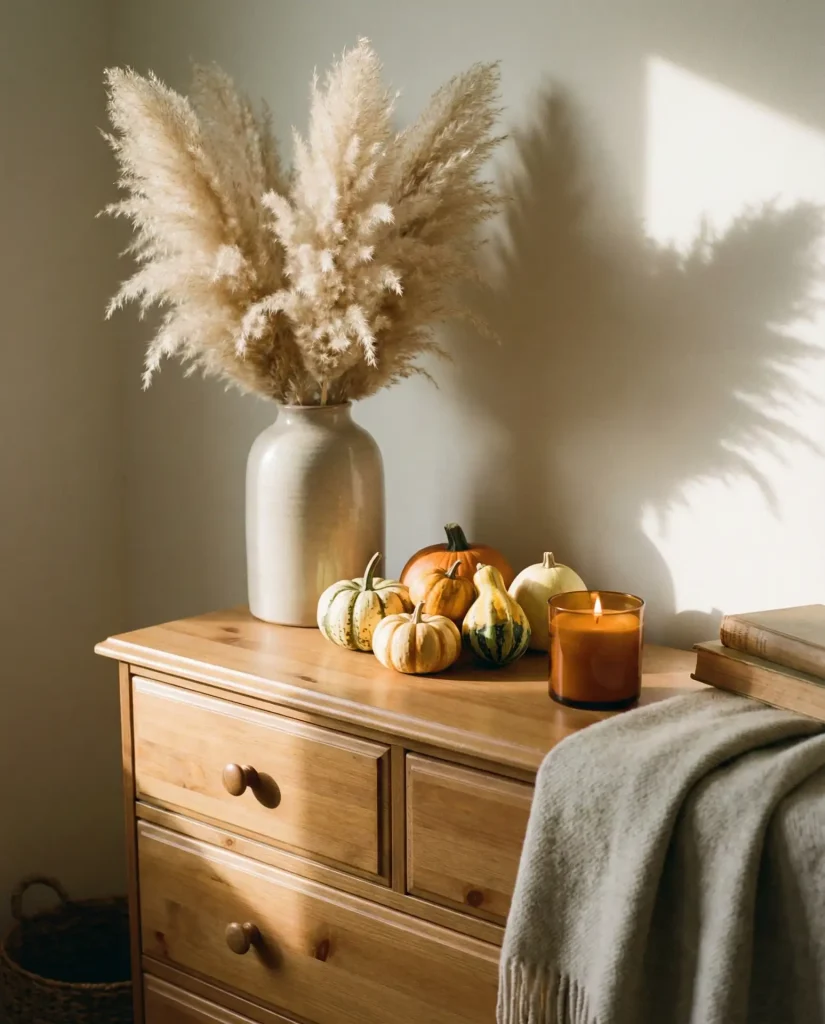
A micro anecdote: one Vermont homeowner keeps a basket of foraged items near her back door and rotates them onto her dresser every few weeks, bringing the outdoors in without a trip to the store. It’s a grounding ritual that turns styling into a meditative practice rather than a chore, and it gives each season a tangible presence in the home.
7. Jewelry Display as Decor
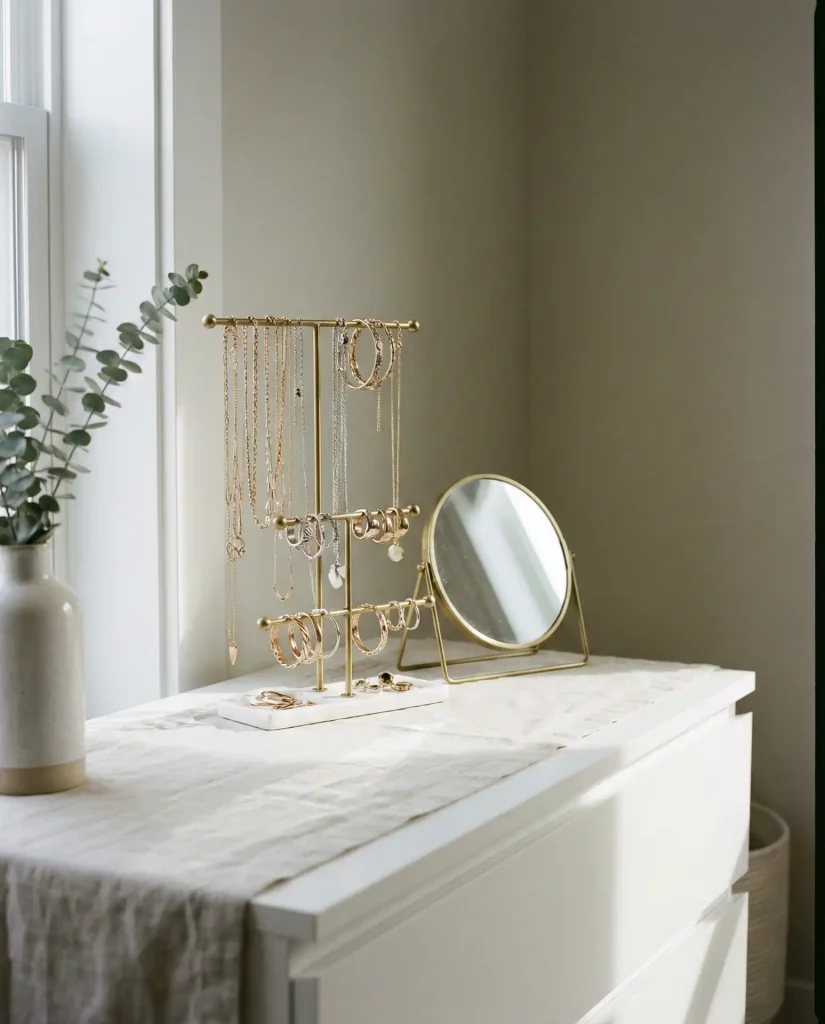
Turning your jewelry into visible, organized art solves two problems at once: you’ll actually wear the pieces you own, and your dresser gains instant personality and sparkle. Use a small tiered stand, a velvet ring holder, or even a vintage dish to showcase necklaces, bracelets, and earrings in a way that feels both practical and beautiful. This styling trick is especially popular among younger homeowners who want their spaces to feel lived-in and authentic rather than staged. Pair it with a small mirror so you can try pieces on right there.
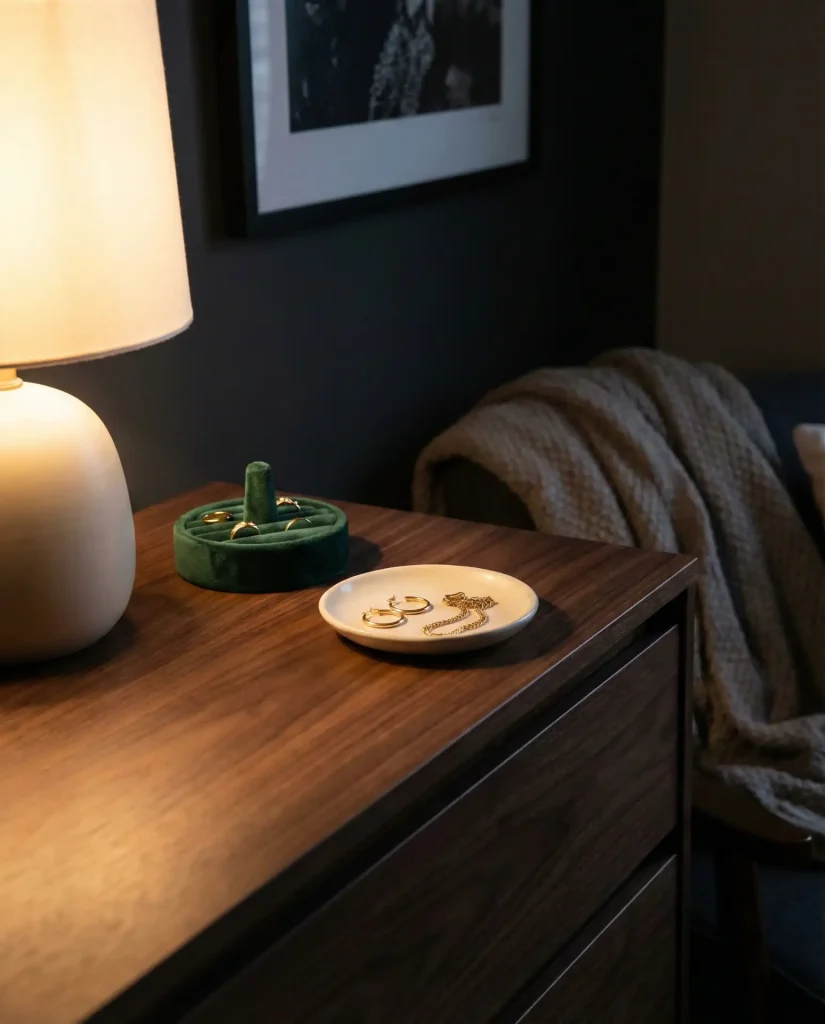
Expert stylists often recommend the “edit and rotate” method: keep only your current favorites on display and store the rest in a drawer to avoid visual overwhelm. This prevents your dresser from looking like a jewelry store exploded and ensures each piece gets its moment to shine. It’s also a gentle reminder to wear what you love rather than letting beautiful things gather dust in a forgotten box.
8. TV Integration with Concealed Storage
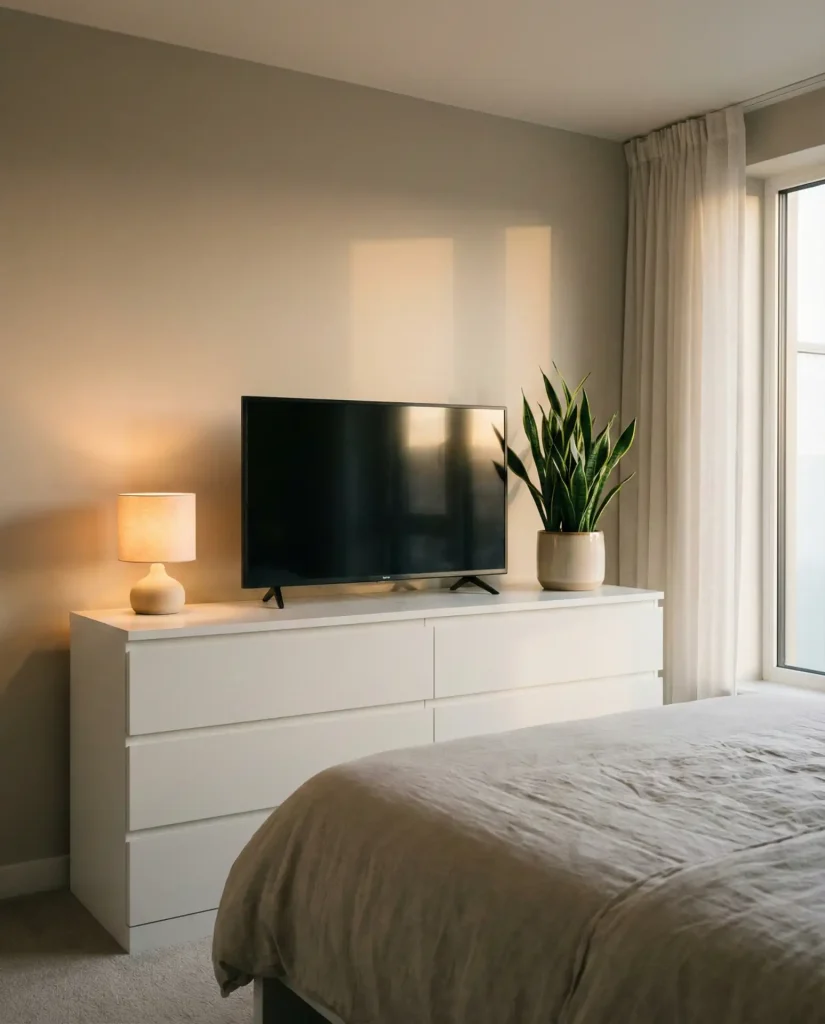
Placing a flat screen directly on your dresser turns it into a dual-purpose media console, a solution that’s skyrocketed in popularity for bedrooms with tv setups where space is at a premium. The key is balancing the tv with symmetrical styling on either side—matching lamps, plants, or small baskets—so it feels integrated rather than plopped down as an afterthought. Choose a dresser with drawers or cabinets to hide remotes, chargers, and other tech clutter, keeping the surface clean and intentional.
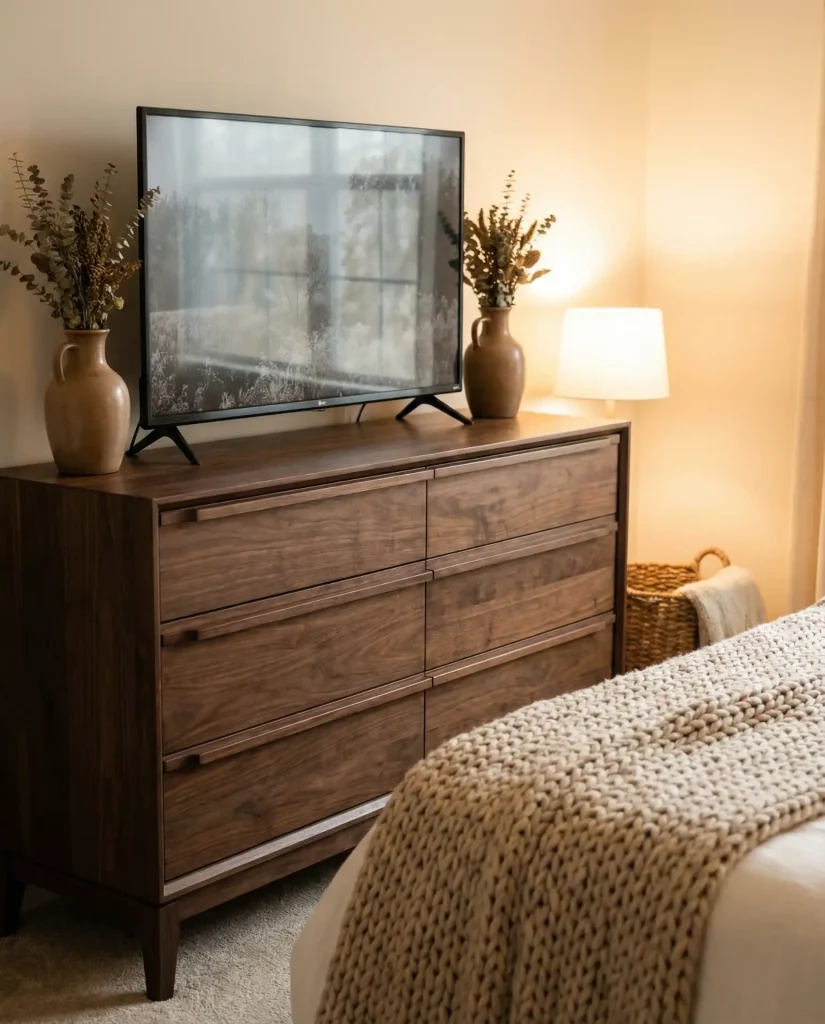
In urban apartments, especially studio and one-bedroom layouts, this setup eliminates the need for a separate TV stand and frees up valuable floor space for seating or storage. Make sure your dresser height puts the screen at a comfortable eye level when you’re in bed—typically around 42 to 48 inches—to avoid neck strain. It’s a small ergonomic detail that makes a big difference in everyday comfort.
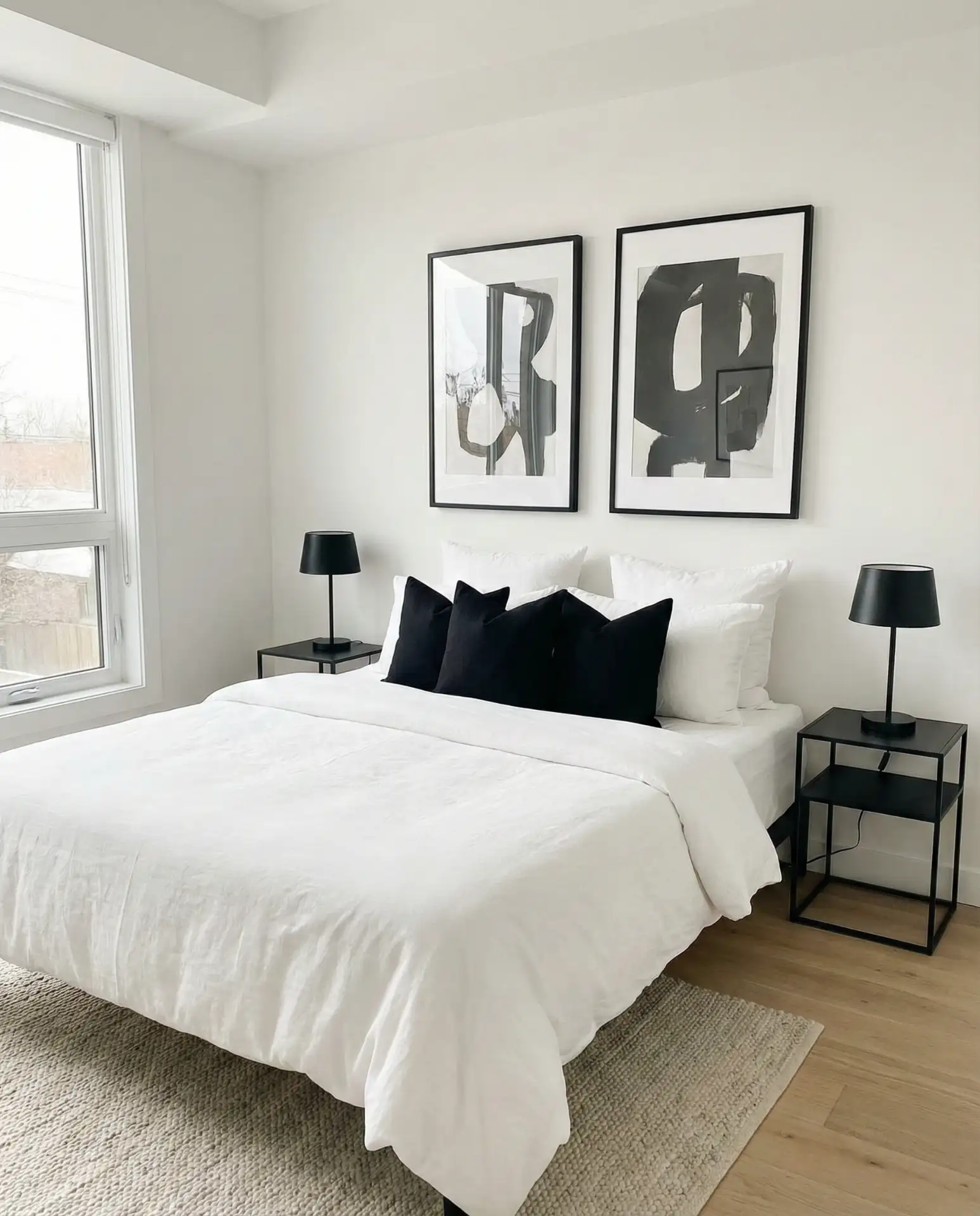
9. Minimalist Monochrome Palette
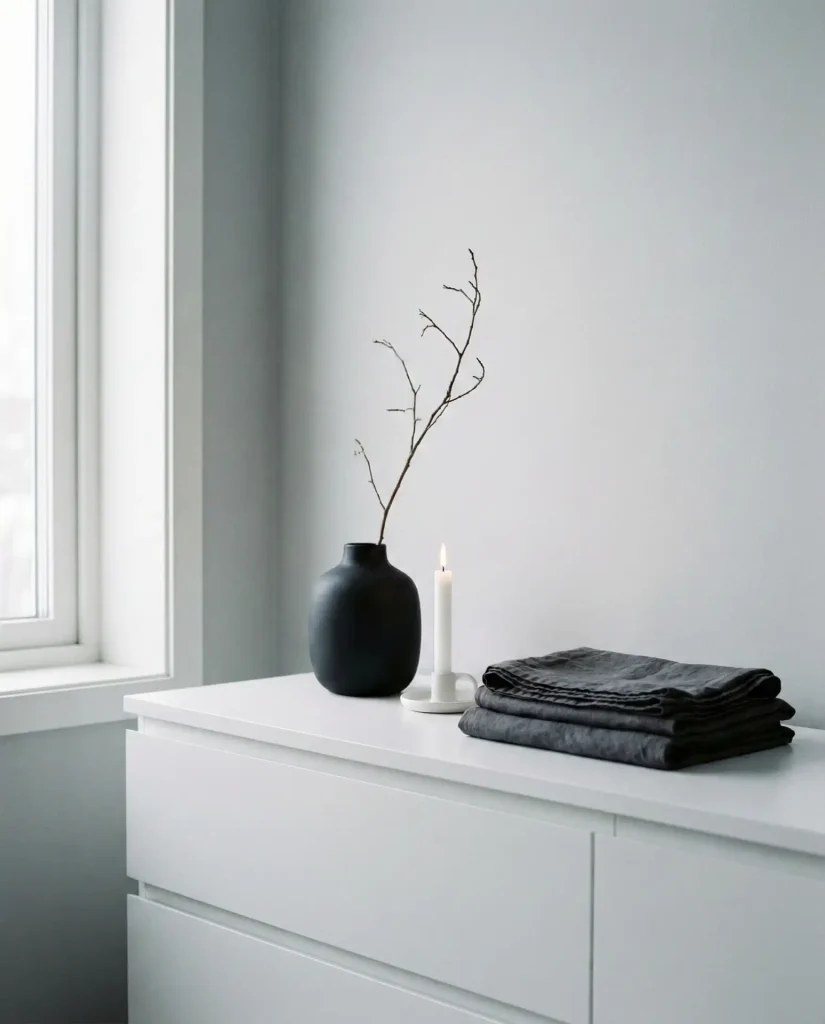
Sticking to a strict white, black, and gray color scheme on your dresser creates a serene, gallery-like moment that feels effortlessly chic and never chaotic, even when you add or subtract items over time. This aesthetic thrives on texture rather than color—think matte ceramics, linen textiles, concrete vessels, and smooth glass. The restraint forces you to be intentional about every object, which paradoxically makes styling faster and more foolproof.
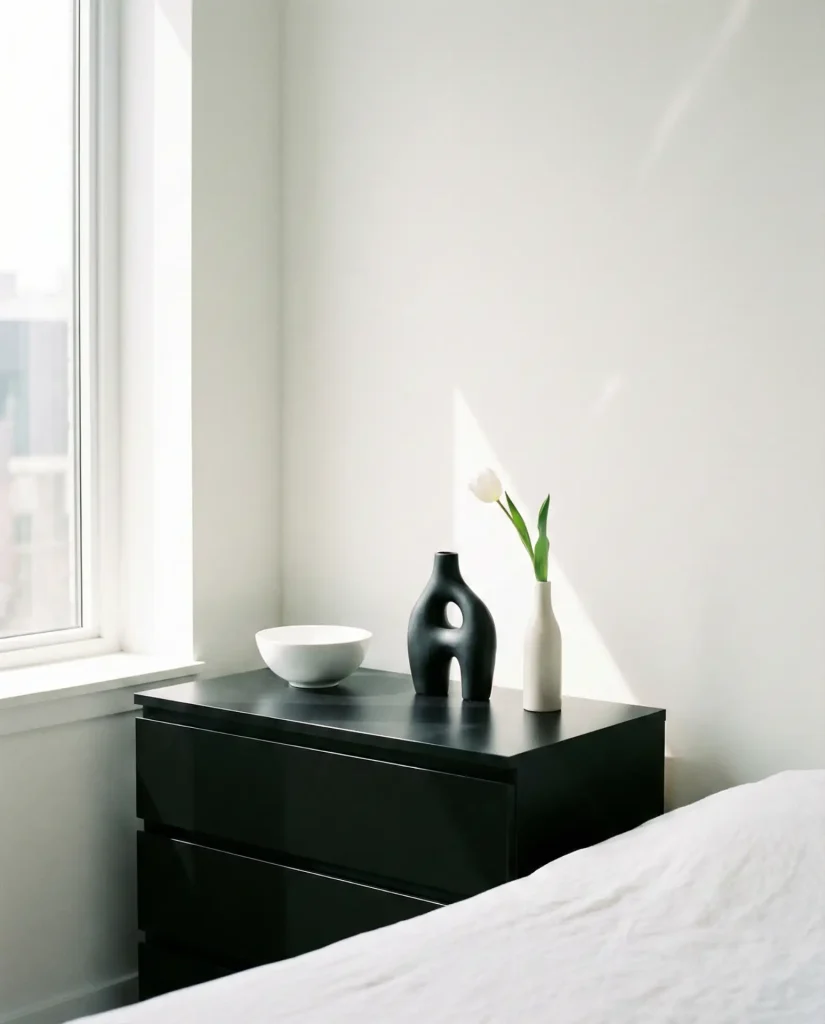
This approach is particularly forgiving for anyone who struggles with color coordination or decision fatigue. By removing color as a variable, you simplify the styling process and create a backdrop that works with any bedding, wall color, or seasonal change. It’s also budget-friendly since you’re not chasing specific hues—thrift stores and discount retailers always stock neutral pieces in abundance.
10. Oversized Art Leaning Casually
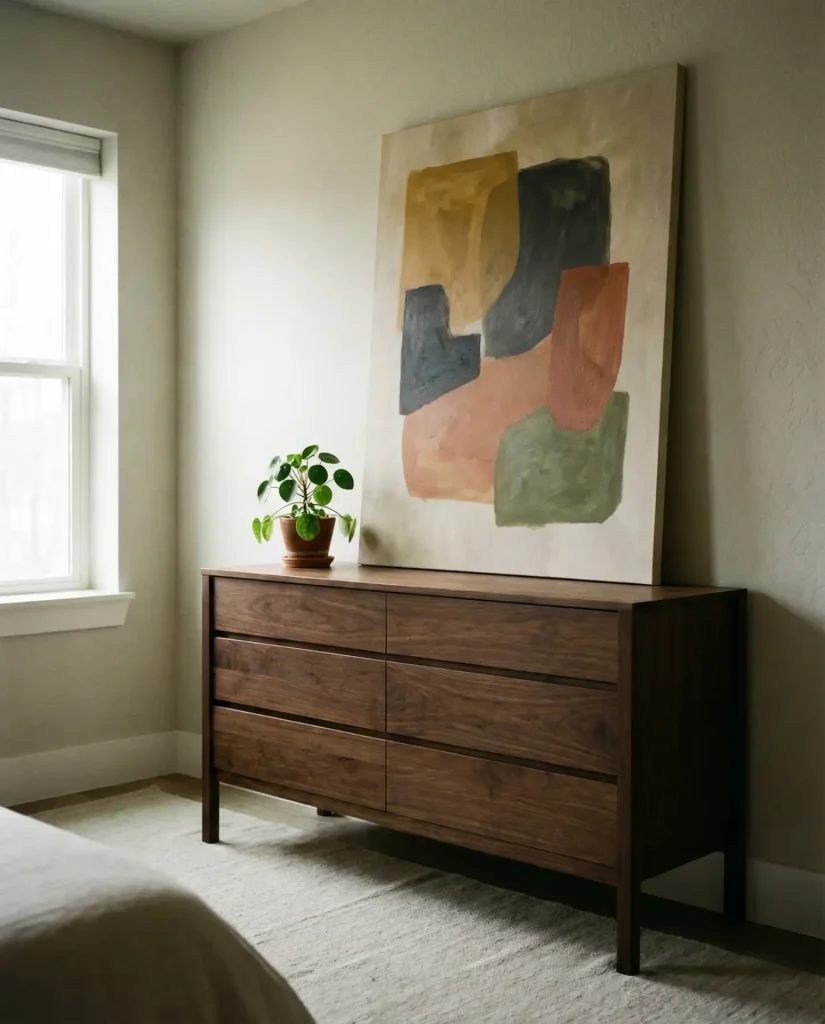
Propping a large canvas or framed print against the wall atop your dresser delivers instant drama and a collected, lived-in vibe that feels more “art collector” than “mass retail.” This works beautifully on long dressers where you have the horizontal space to let a piece breathe, and it’s a favorite among renters who want impact without the commitment of hanging heavy frames. Choose abstract work, photography, or even a vintage poster that echoes colors elsewhere in your bedroom.
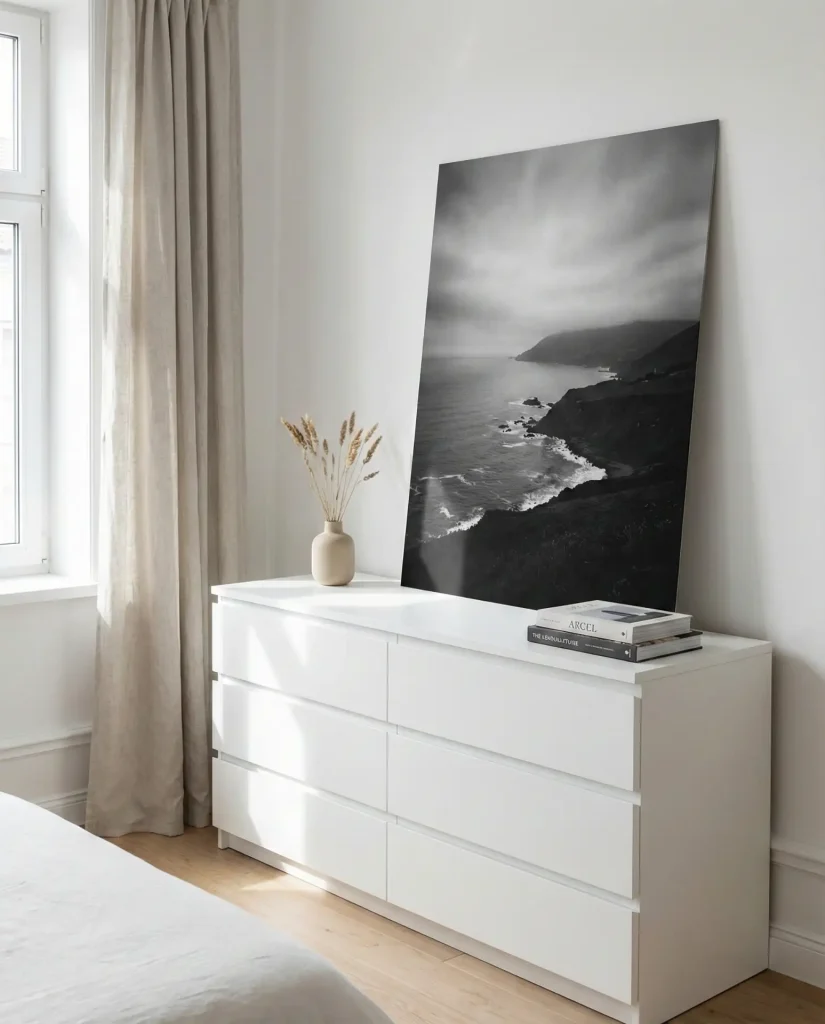
Real homeowners often swap leaning art seasonally or when they find a new piece they love, which is far easier than rehanging and repatching walls multiple times a year. The flexibility is part of the charm—you’re not locked into one look, and you can experiment with scale and subject matter without the permanence of nails and picture hooks.
11. Symmetrical Bookend Styling
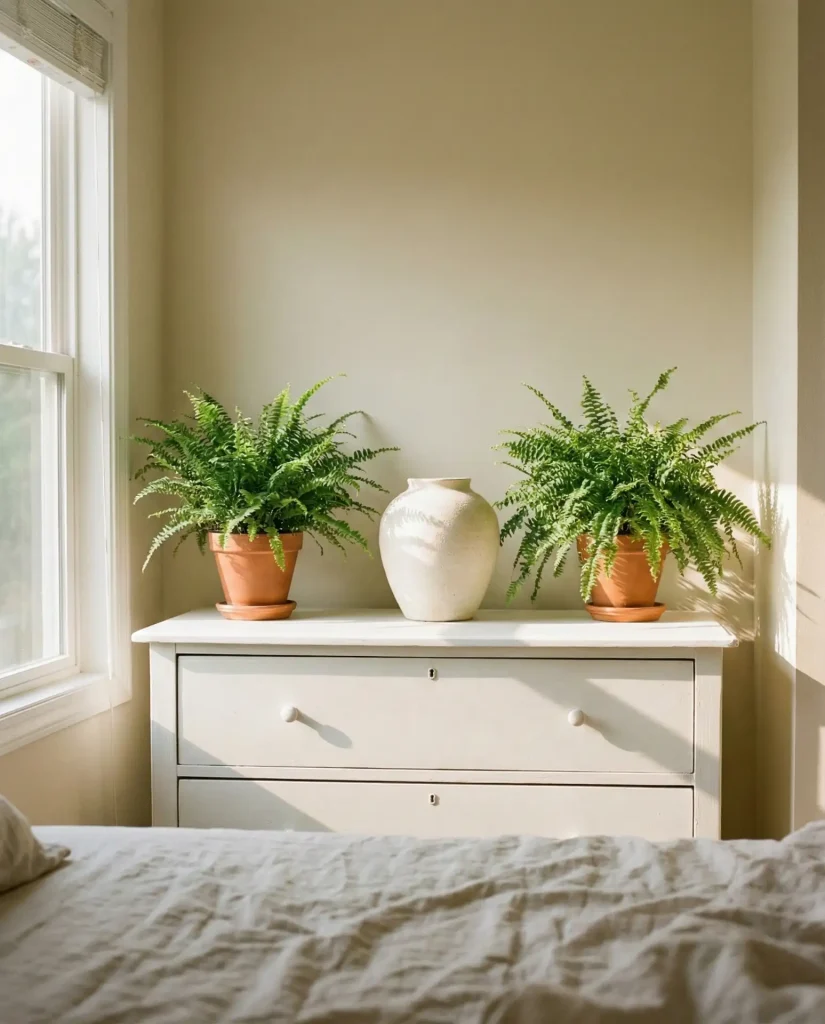
Flanking the center of your dresser with matching or mirrored objects—two lamps, two plants, two candles—creates a balanced, formal look that feels grounded and intentional, perfect for master bedrooms where you want a polished, hotel-like aesthetic. This classical approach to styling never goes out of fashion because it taps into our natural attraction to symmetry and order. Keep the center open or occupied by a single focal piece like a vase or mirror to complete the composition.
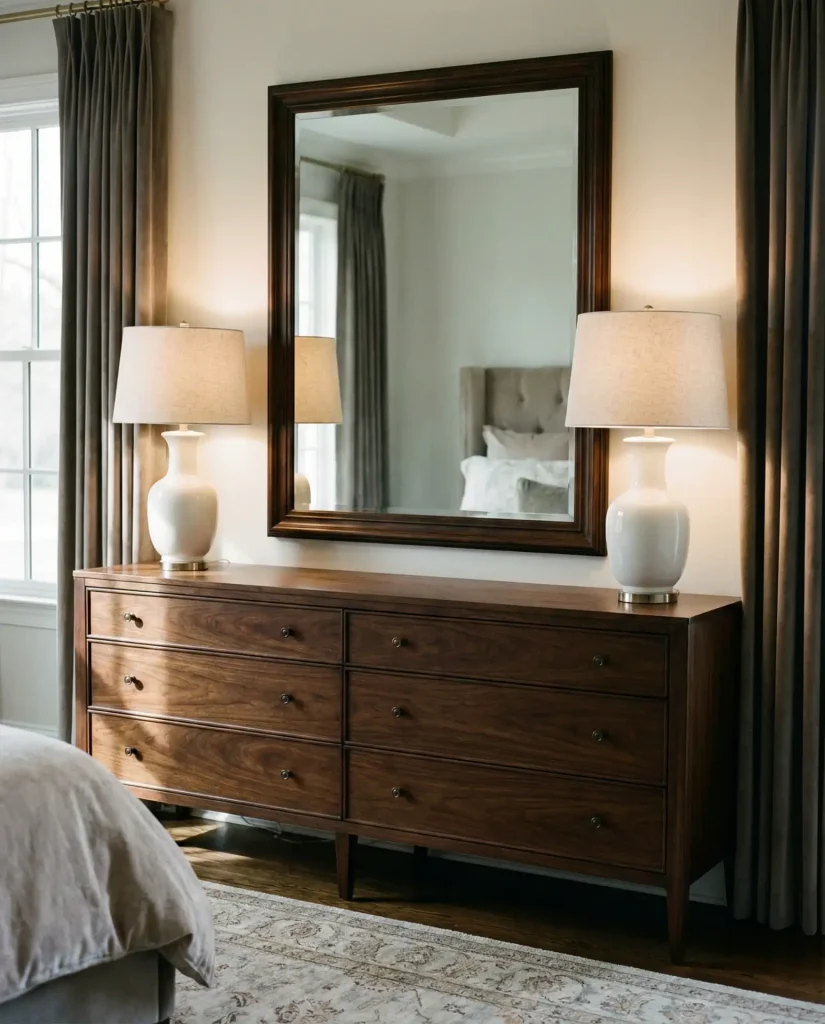
Where it works best: primary bedrooms and formal guest rooms where you want to signal calm and order rather than eclectic personality. The symmetry also makes the space feel larger and more intentional, especially in smaller rooms where visual clutter can quickly overwhelm. It’s a foolproof formula that even novice decorators can execute with confidence and immediate results.
12. Coastal Texture Mix
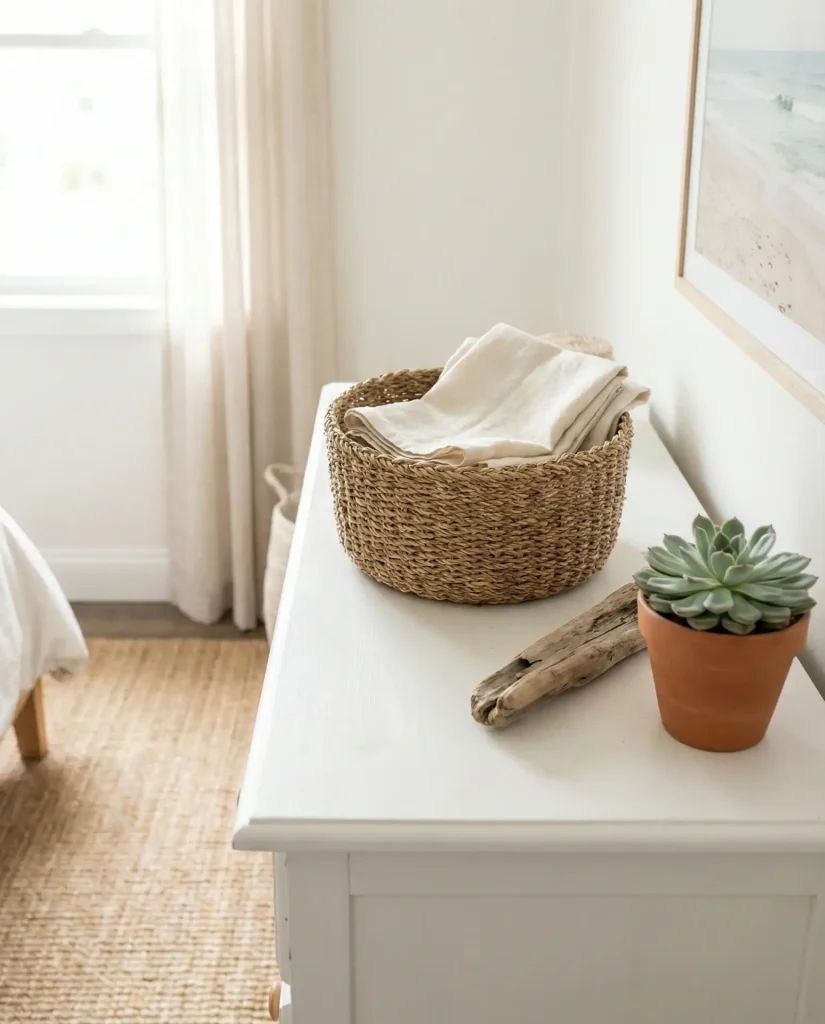
Layering rattan, driftwood, linen, and ceramic in sandy neutrals brings that breezy coastal feeling to your dresser, no ocean required—this look has taken off nationwide as Americans crave calm, airy interiors that feel like a permanent vacation. Think woven baskets, bleached wood frames, a linen runner, or a ceramic bowl in soft cream. The textures do the talking here, so you don’t need bold color to make an impact. Pair it with a few shells or smooth stones if you want to lean into the theme without crossing into kitsch.
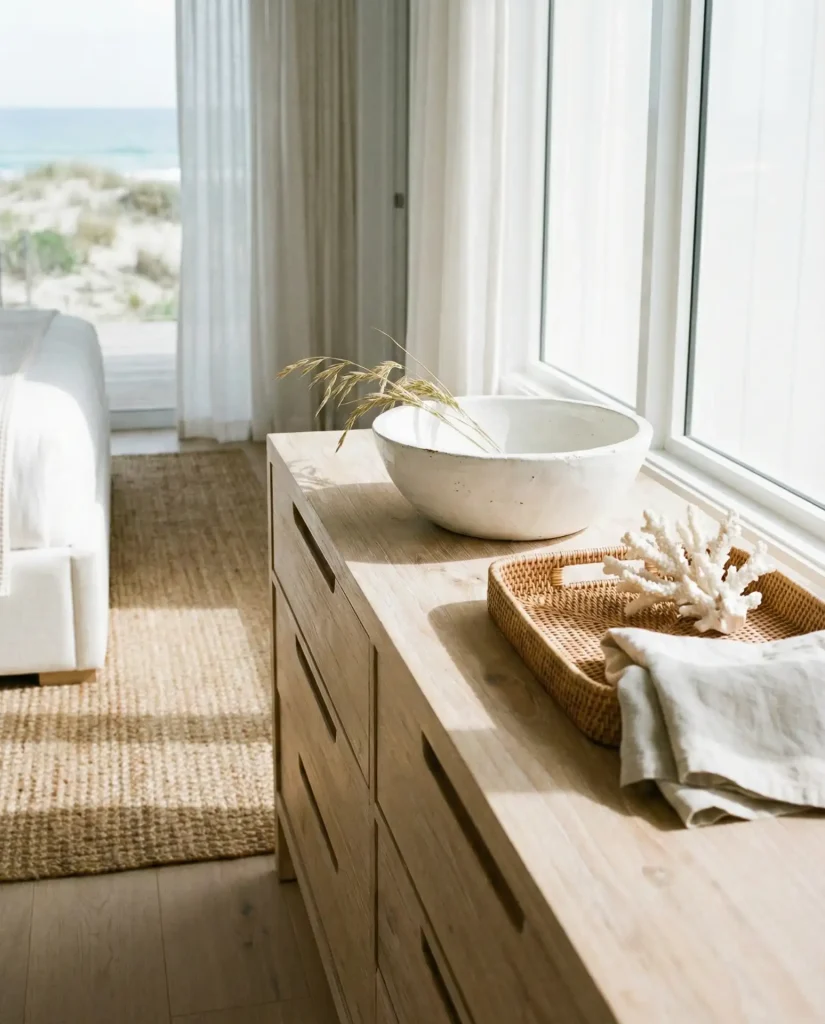
In landlocked states like Colorado and Arizona, this aesthetic offers a mental escape and a sense of openness that counters the often-harsh desert or mountain landscapes outside. The style is also remarkably forgiving—nothing needs to match perfectly, and slightly weathered or asymmetrical pieces actually enhance the organic, collected-over-time feel that makes coastal decor so inviting.
13. IKEA MALM Hack with Custom Hardware
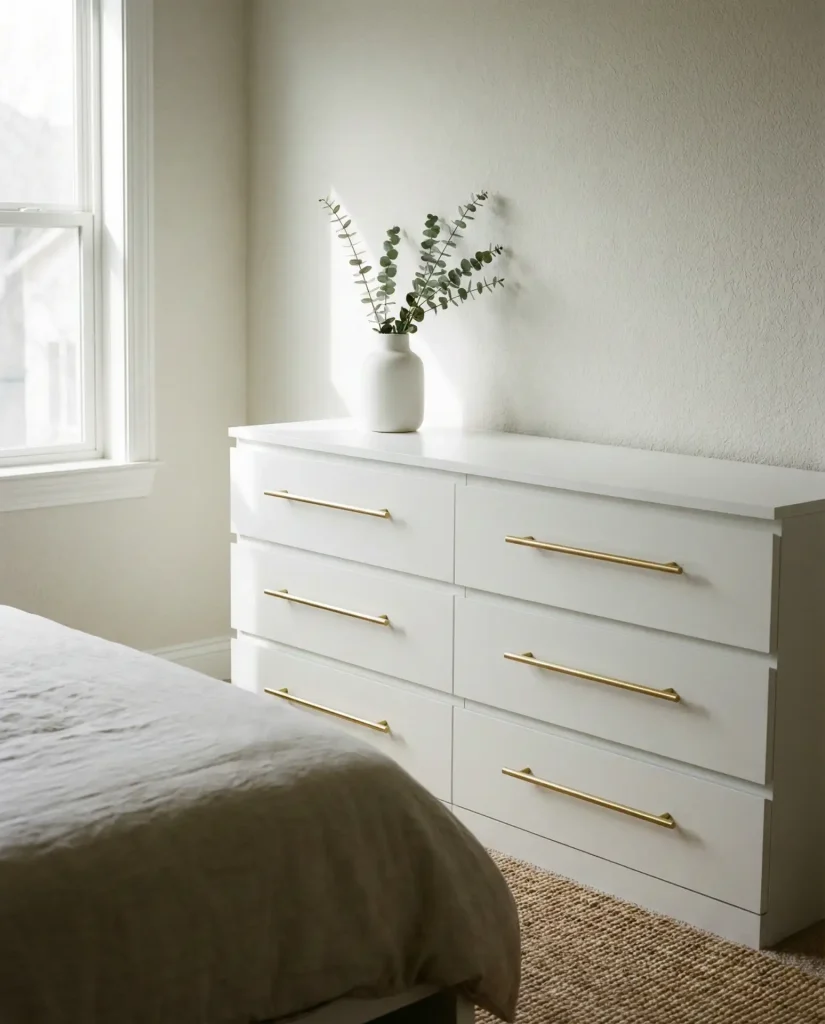
Swapping out the standard knobs on an IKEA MALM dresser for brass pulls, leather straps, or ceramic handles instantly elevates the piece from budget basic to custom showpiece, a transformation beloved on Pinterest for its simplicity and dramatic payoff. This hack costs under thirty dollars and takes less than an hour, yet it completely changes the dresser’s character. Choose hardware that reflects your style—mid-century brass, farmhouse black iron, or minimalist brushed nickel—and suddenly your furniture feels bespoke.
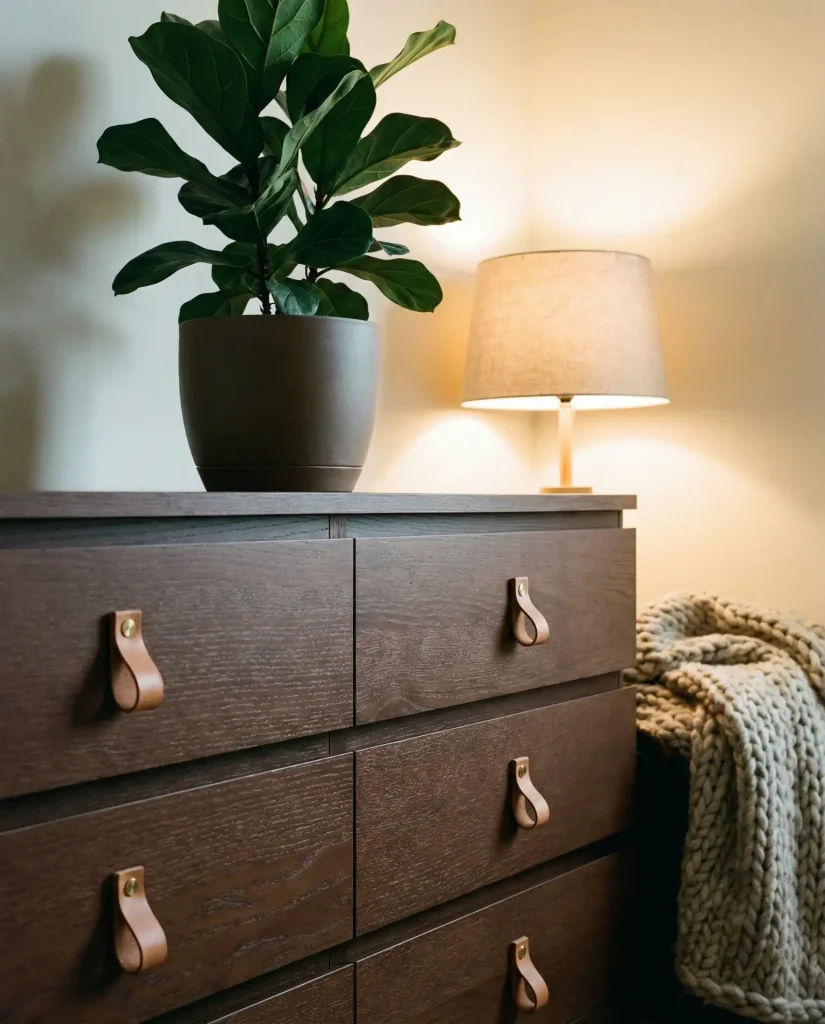
Budget-conscious shoppers can hit hardware stores during sales or scour clearance bins for mismatched pulls—mixing metals or styles across drawers is actually trendy and adds an eclectic, personalized touch. The key is using a template or measuring twice before drilling, since a crooked pull will haunt you every time you open a drawer. It’s a small detail that separates DIY success stories from regrettable Pinterest fails.
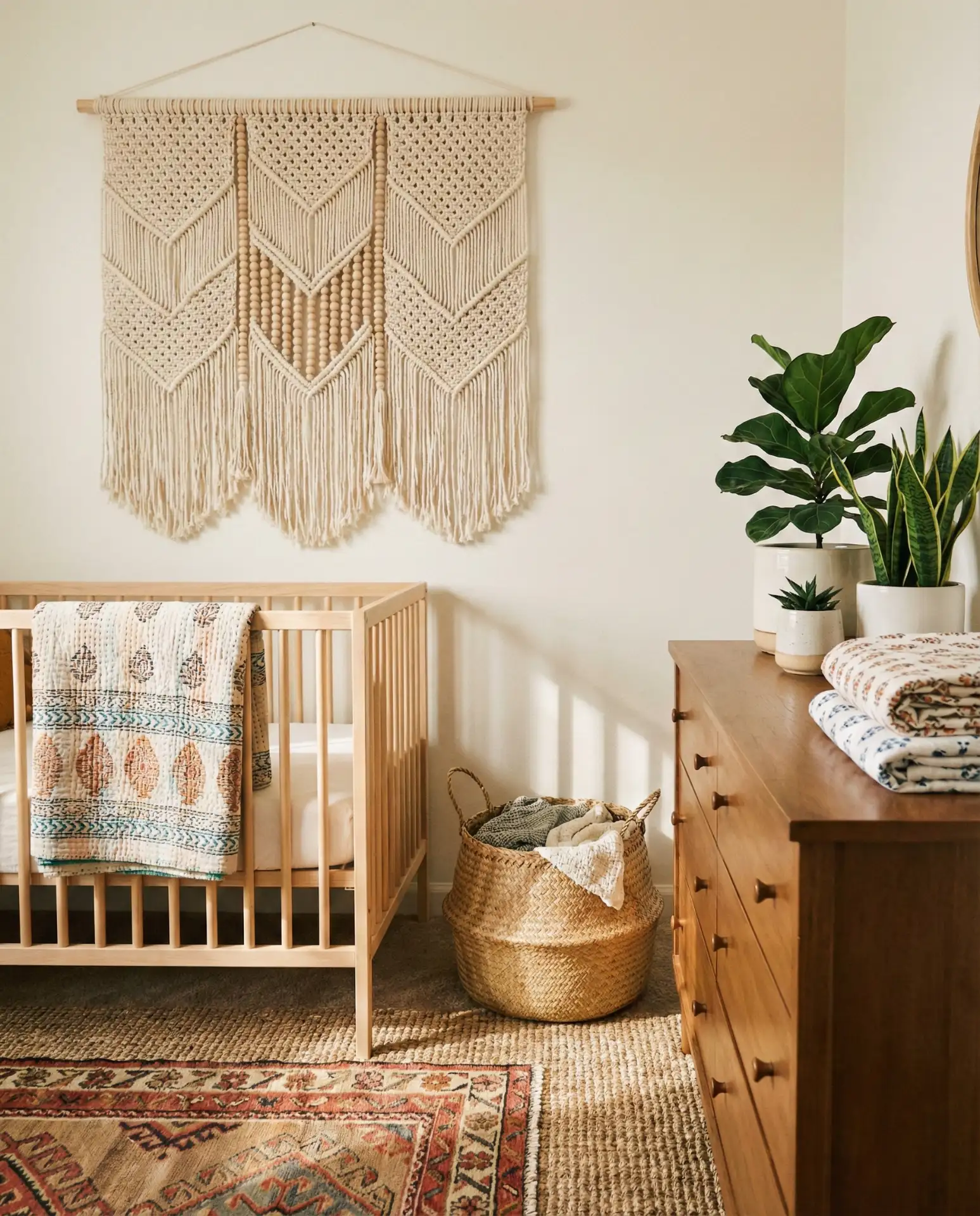
14. Nursery-Specific Soft Styling
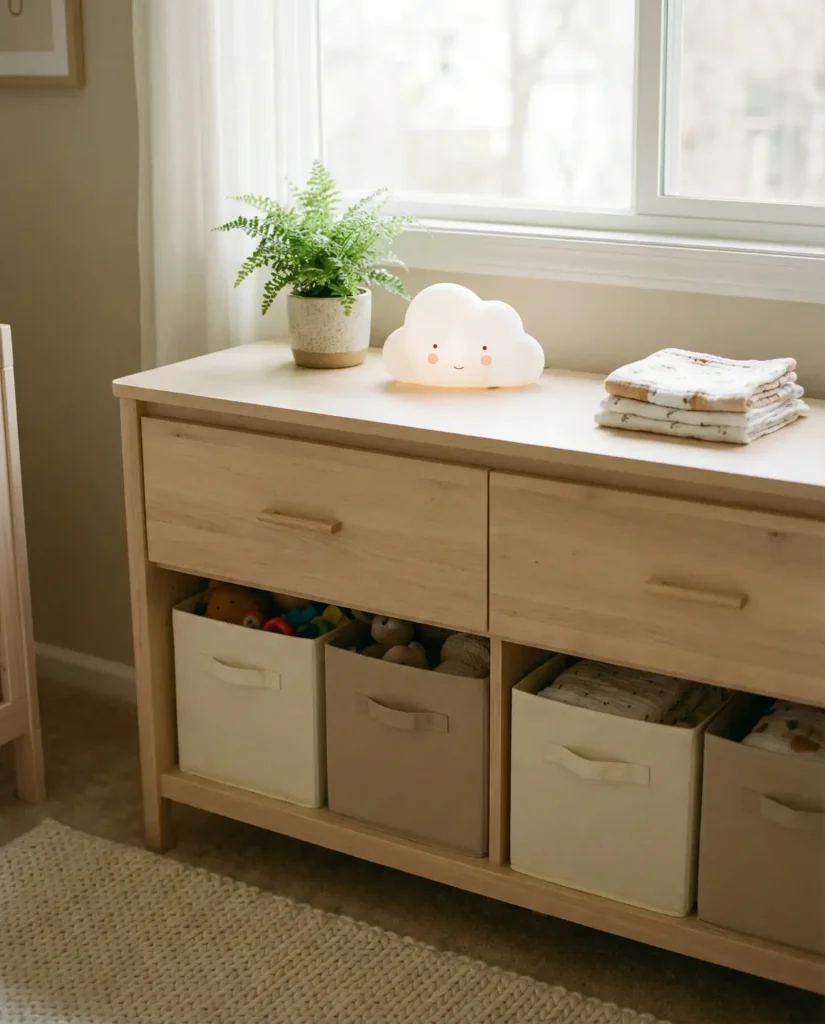
In a nursery, your dresser doubles as a changing station, so styling must balance function with softness—think a plush basket for diapers, a ceramic lamp for nighttime changes, and a small framed photo or two to keep the space feeling warm rather than clinical. Keep everything within arm’s reach: wipes, creams, and burp cloths tucked in decorative containers that look intentional, not utilitarian. Avoid anything with sharp edges or that could tip easily, and stick to muted, calming tones that won’t overstimulate a baby’s developing vision.
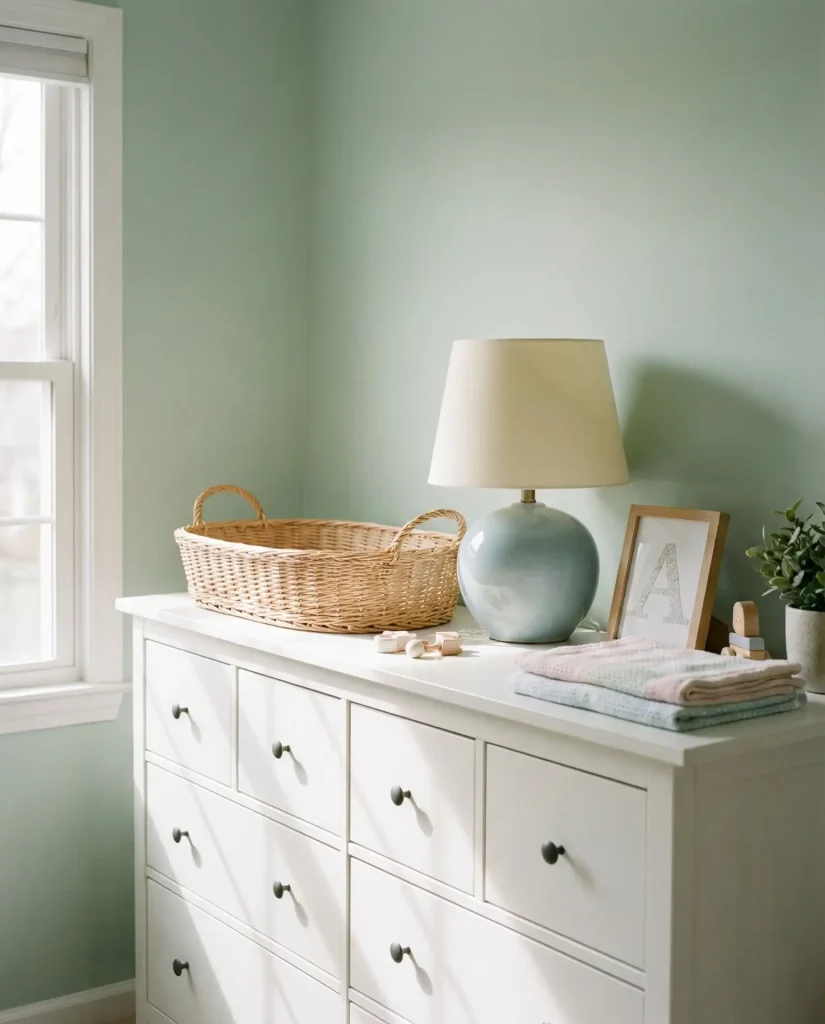
Many new parents make the mistake of over-decorating the dresser top, then realize they need every inch of space during those bleary 3 a.m. diaper changes. Keep it minimal and practical—you can always add more decor as your child grows and the changing phase passes. The goal is a space that soothes both you and the baby, not one that looks perfect in photos but fails in real-life use.
15. Mounted TV with Concealed Dresser Below
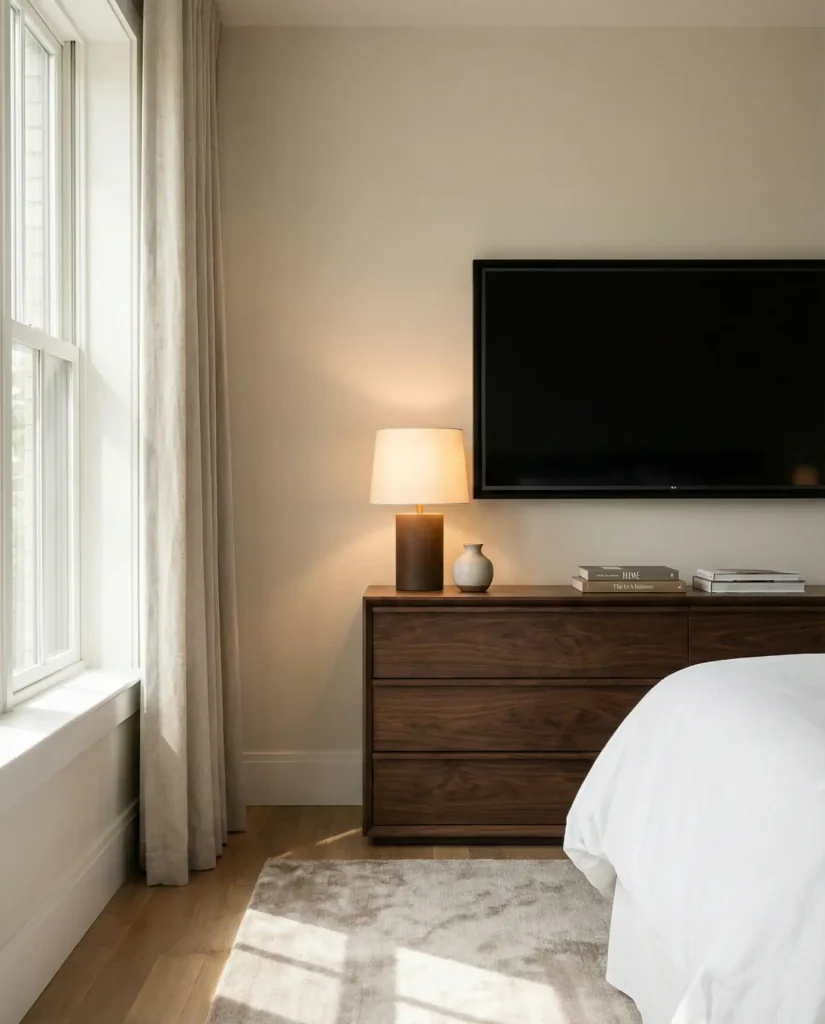
Mounting your tv on the wall directly above the dresser creates a clean, floating effect that maximizes floor space and gives your bedroom with a mounted TV a streamlined, modern feel—especially popular in urban apartments where every square foot counts. The dresser below then becomes pure storage and styling real estate, free from the visual weight of a screen sitting on top. Run cables through the wall or use a cord cover to keep everything tidy, and style the dresser with low-profile items that won’t block the screen or create glare.
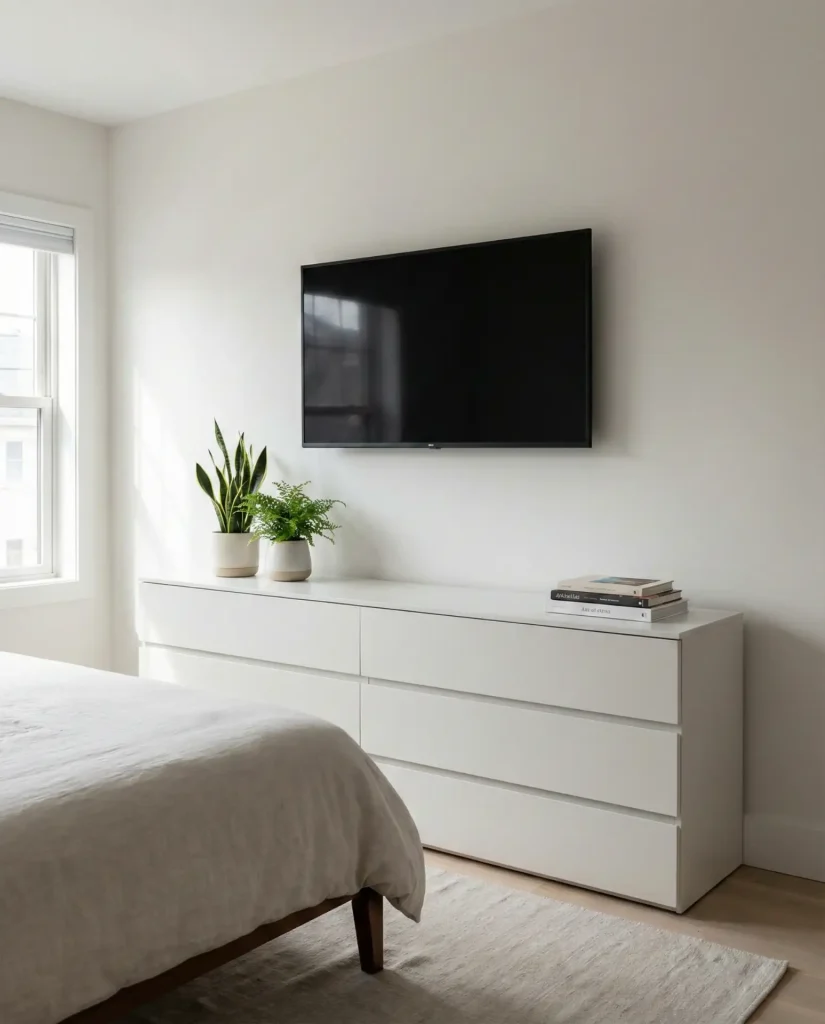
A practical insight: mount the TV so the center is at eye level when you’re seated or lying in bed, which is typically 42 to 48 inches from the floor depending on your bed height and mattress thickness. Too high, and you’ll strain your neck; too low, and it feels awkward. Measure twice, mount once, and you’ll thank yourself every evening when you settle in to watch something without discomfort.
16. Western Eclectic Mix
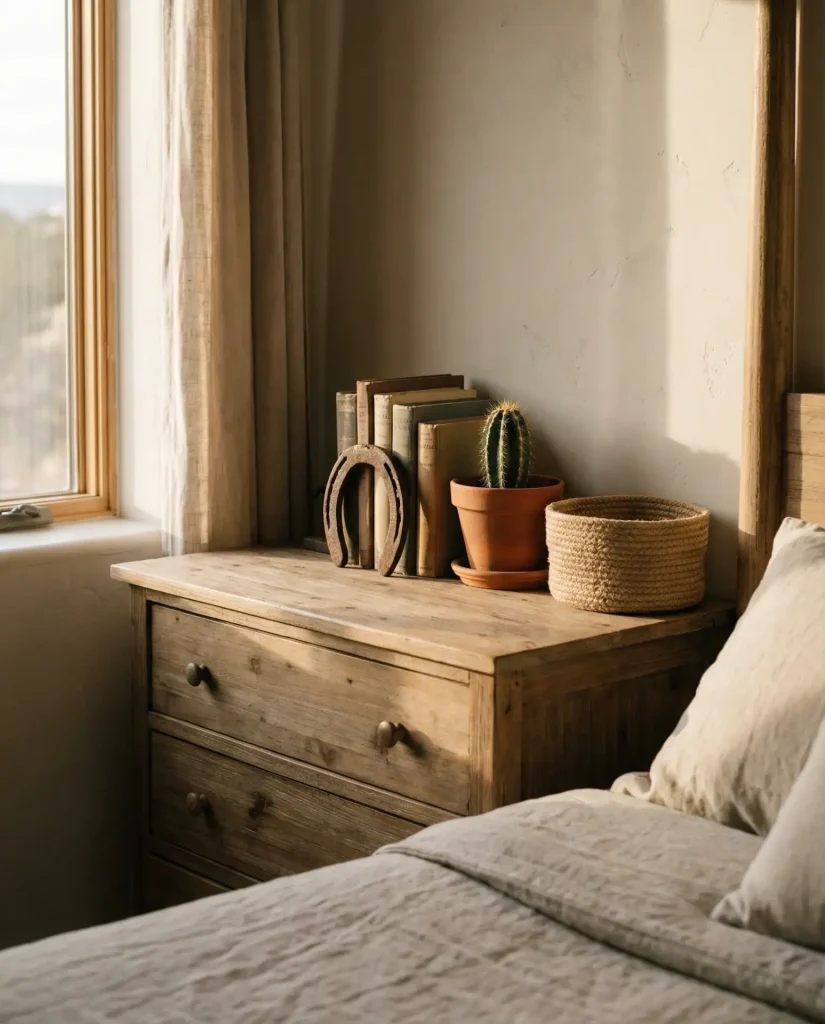
Bringing in Western-inspired elements—cowhide, turquoise accents, leather-wrapped vessels, or a vintage wagon wheel—adds rugged personality to your dresser and taps into the enduring Americana aesthetic that’s having a major moment in interior design. This look thrives on contrast: pair a rough-hewn wooden tray with a delicate ceramic vase, or a leather-bound book stack with a soft linen runner. The goal is “collected ranch” rather than costume party, so edit ruthlessly and let each piece have room to breathe.
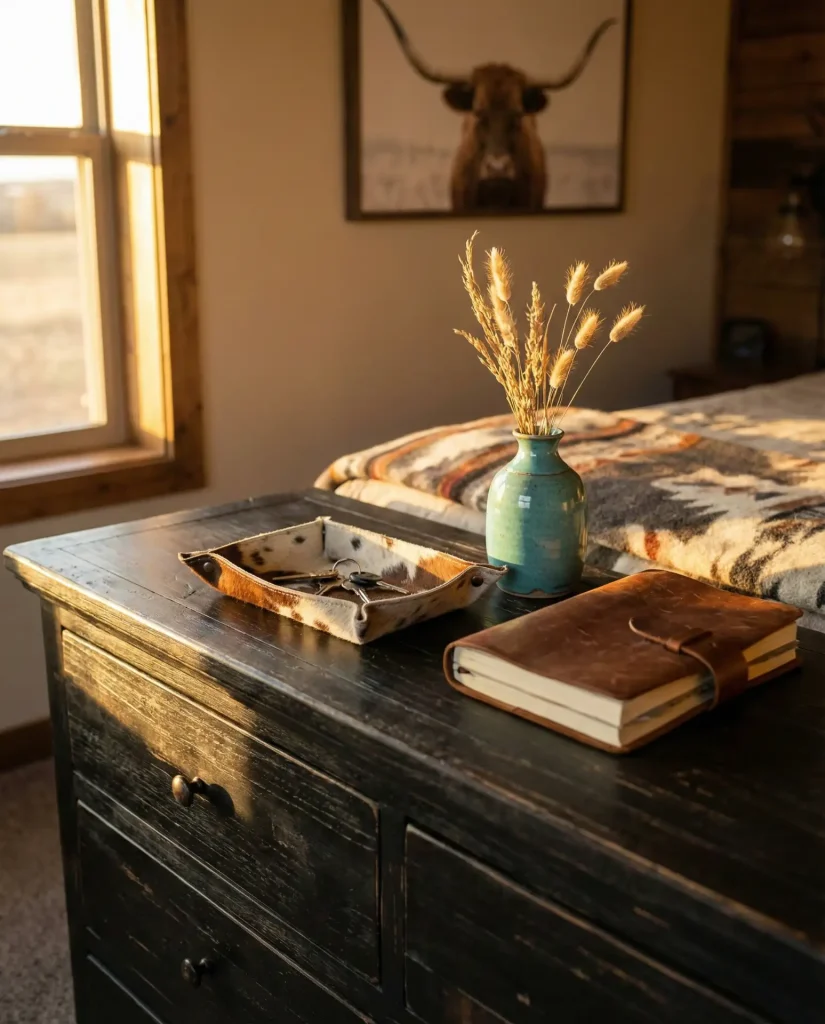
In Texas, Montana, and throughout the Southwest, this aesthetic feels like home, while coastal and northern dwellers use it to inject warmth and texture into spaces that might otherwise skew too minimalist or cold. The key is authenticity—vintage finds from flea markets or family heirlooms carry far more soul than mass-produced “western decor” from big-box stores. It’s about honoring a lifestyle, not imitating one.
17. Brown Wood Warmth
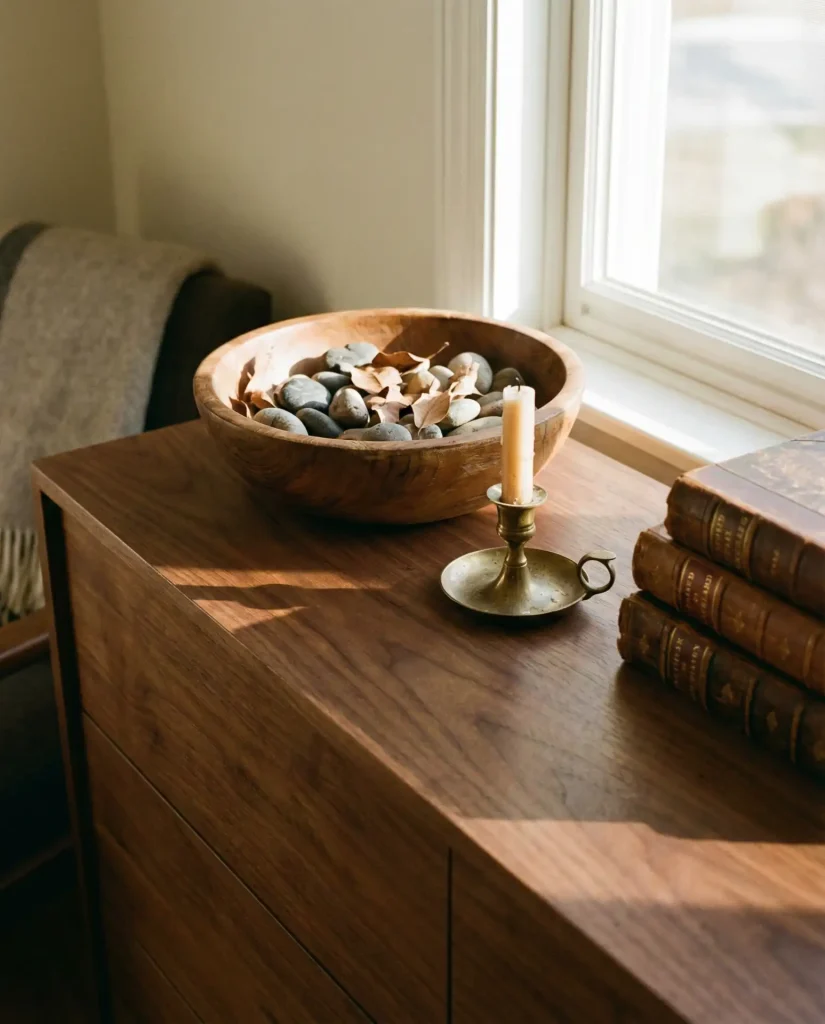
Embracing brown wood tones across your dresser and its styling—walnut finishes, teak bowls, and leather accents—creates a grounded, earthy warmth that’s become a major trend as people react against years of all-white interiors. This palette feels inherently cozy and pairs beautifully with greenery, brass, and textured textiles. Layer different wood tones rather than trying to match everything perfectly; the variation adds depth and keeps the look from feeling flat or too matchy.
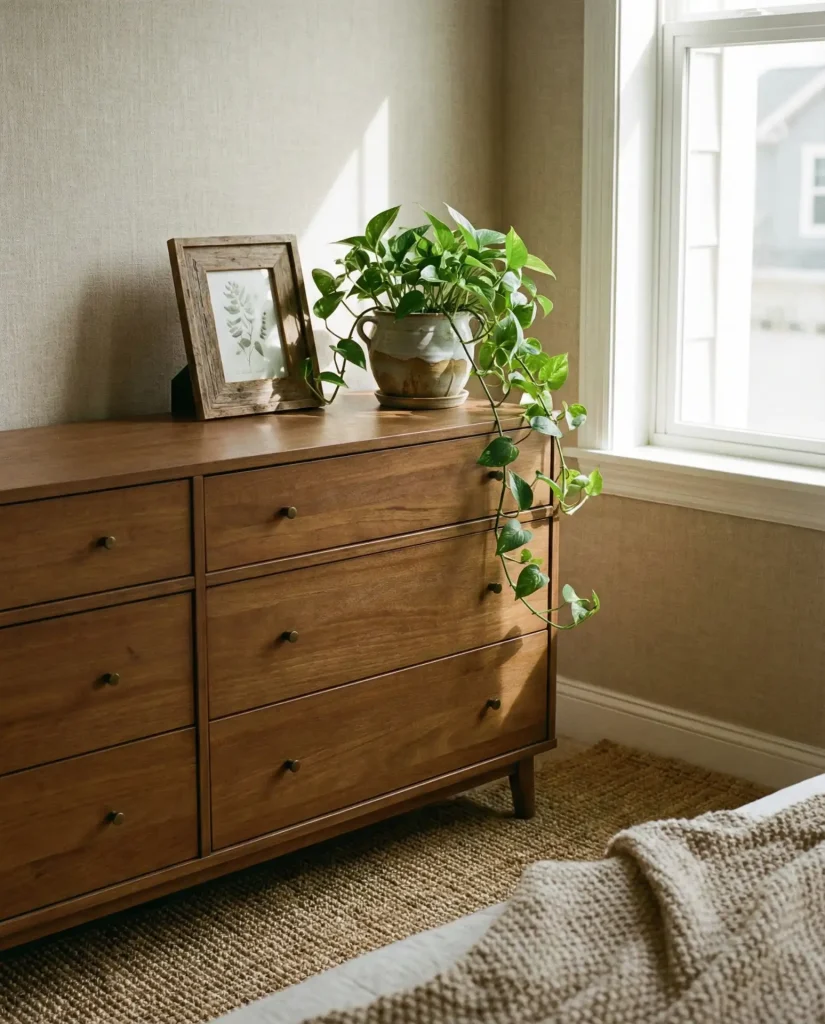
This approach is especially effective in northern climates and mountain regions, where long winters make warm, cocoon-like interiors essential for mental well-being. The brown-on-brown layering absorbs and reflects light differently throughout the day, creating subtle visual interest without demanding attention. It’s a sophisticated, timeless choice that ages gracefully and never feels dated or trendy.
18. Elevated Inspo Board
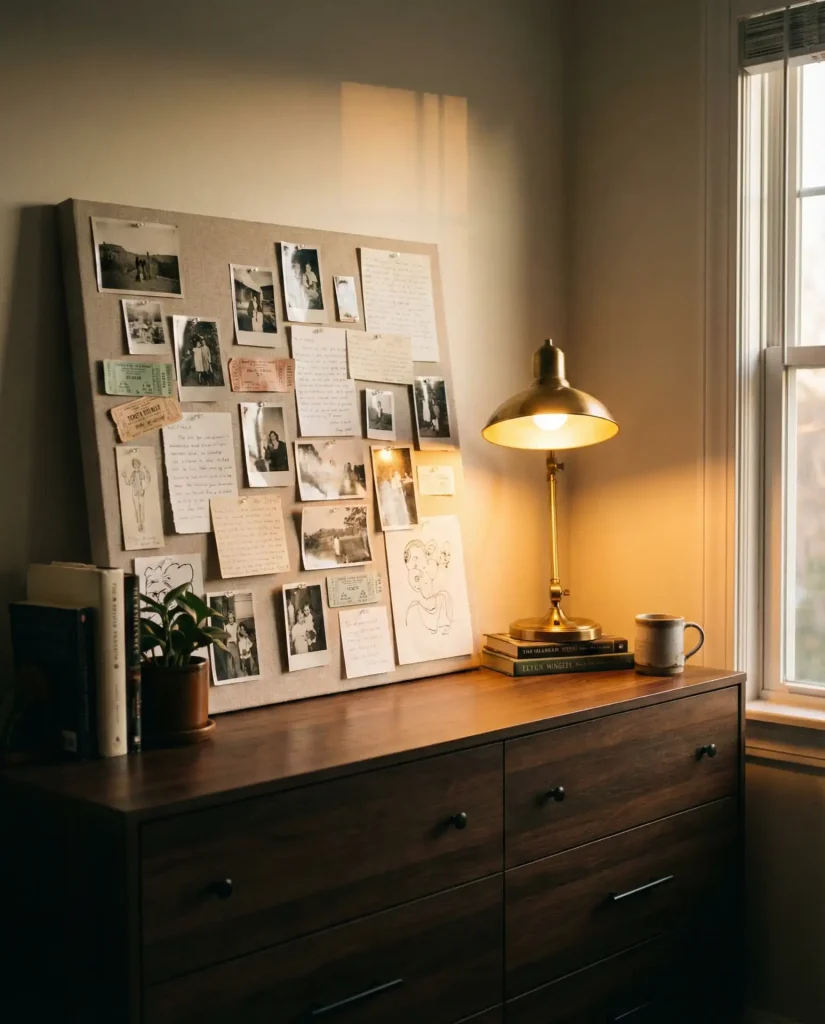
Leaning a large corkboard or pin board against the wall on your dresser turns it into a functional inspo station where you can rotate photos, postcards, fabric swatches, and mood images—perfect for creatives, students, or anyone who loves having visual reminders of goals and dreams within arm’s reach. Frame the board with clips, washi tape, or ribbons to keep the look curated rather than chaotic, and swap content seasonally to keep your space feeling current and reflective of where you are in life.
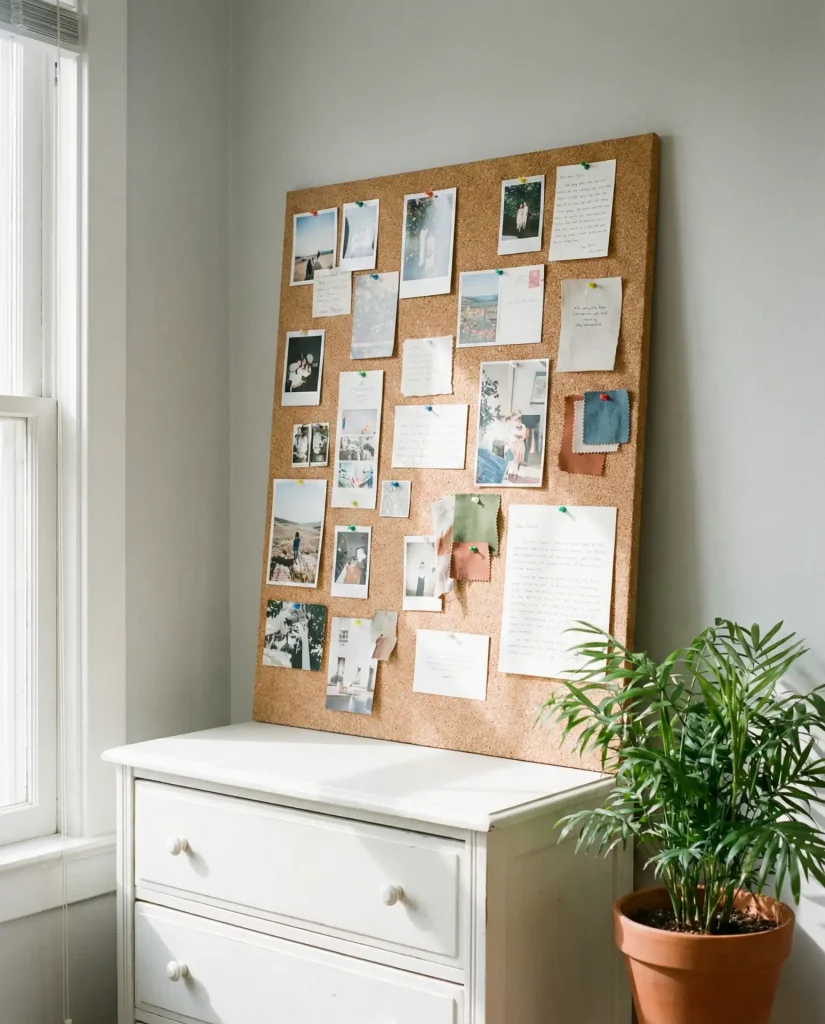
Expert-style commentary: vision boards have been scientifically shown to improve goal achievement and motivation when placed in high-visibility areas you see daily. Your dresser is prime real estate for this—you pass it every morning and night, reinforcing the images and intentions you’ve curated. It’s part decor, part life coaching tool, and it’s one of the few styling choices that actively serves your personal growth alongside aesthetics.
19. Guest Room Welcoming Touches
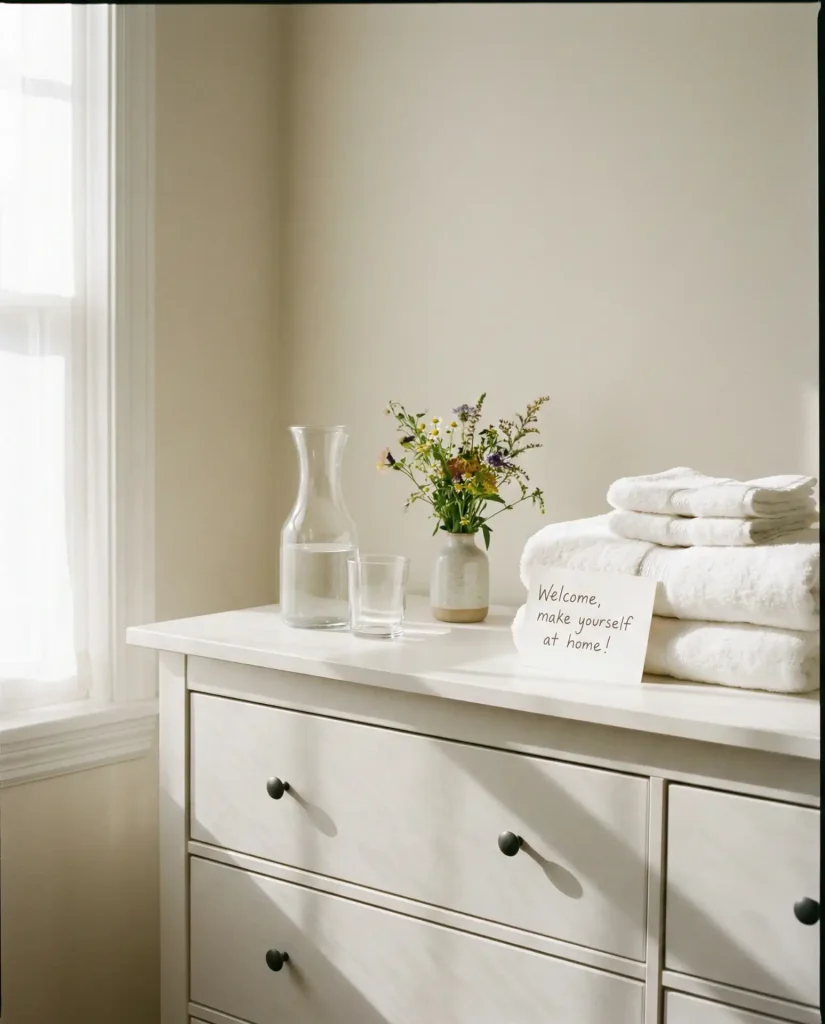
In a guest room, your dresser should signal hospitality—think a carafe of water with a glass, a small basket of toiletries, fresh flowers, and perhaps a handwritten welcome note in a frame. These thoughtful details cost almost nothing but transform a space from “spare bedroom” to “boutique hotel experience” that makes visitors feel genuinely cared for. Clear at least two drawers completely so guests have space to unpack, and style the top in a way that’s beautiful but doesn’t require them to move twenty fragile objects to set down their phone.
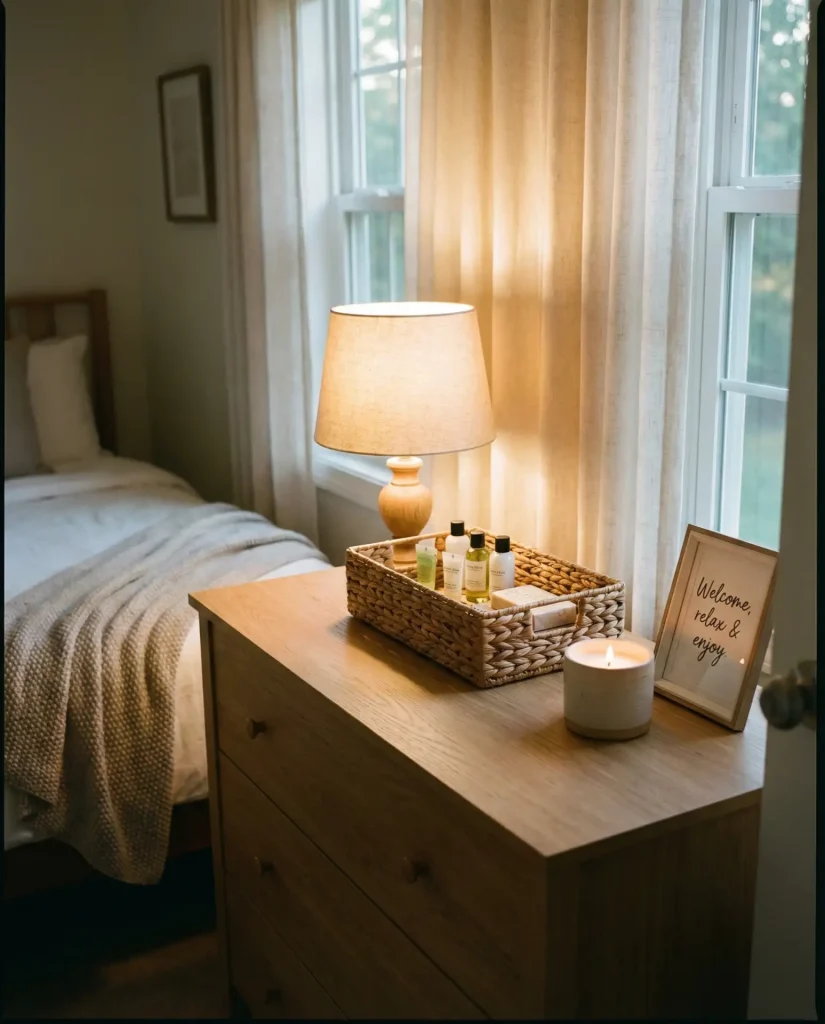
A real homeowner tip: keep a “guest basket” stored in your closet with mini soaps, a phone charger, fresh sheets, and extra towels, then pull it out and style the dresser ten minutes before anyone arrives. This makes hosting effortless even on short notice, and guests invariably mention these small touches in thank-you texts because they’re so rare in practice, even if they seem obvious in theory.
20. Christmas Seasonal Vignette
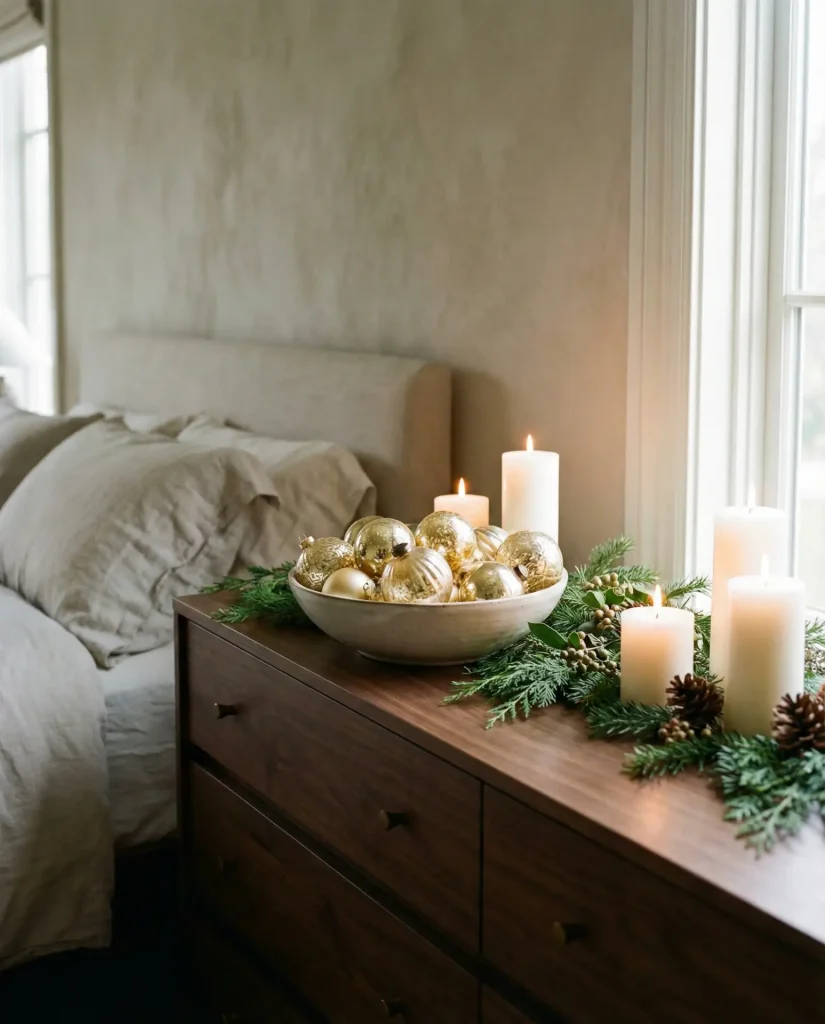
During the holidays, your dresser becomes prime real estate for a Christmas vignette that brings festive cheer without requiring a full room overhaul—think a small faux tree, candles in mercury glass, pine garland, or a bowl of ornaments. The beauty of styling a dresser for the season is that it’s self-contained and easy to swap out in January without much fuss. Stick to a consistent color palette—classic red and green, modern white and gold, or rustic wood and plaid—to keep it cohesive with the rest of your decor.

Many homeowners report that the act of styling their dresser for Christmas marks the official start of the season in their minds, making it a small but meaningful ritual. Keep the display simple enough that you’re not dreading the takedown in January—three to five thoughtfully chosen pieces will deliver more impact than a crowded tableaux that starts to feel cluttered after a few days.
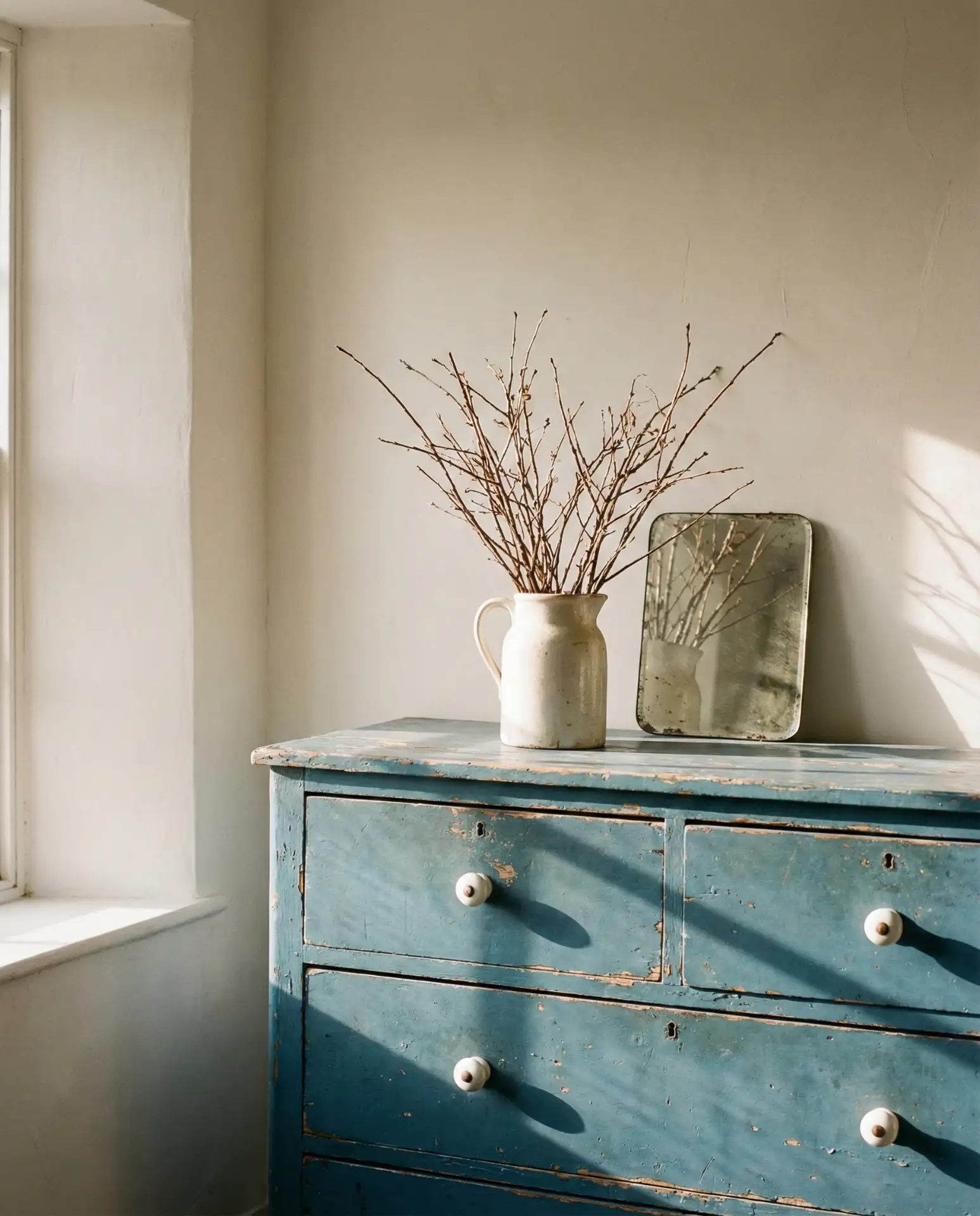
21. Antique Revival with Patina
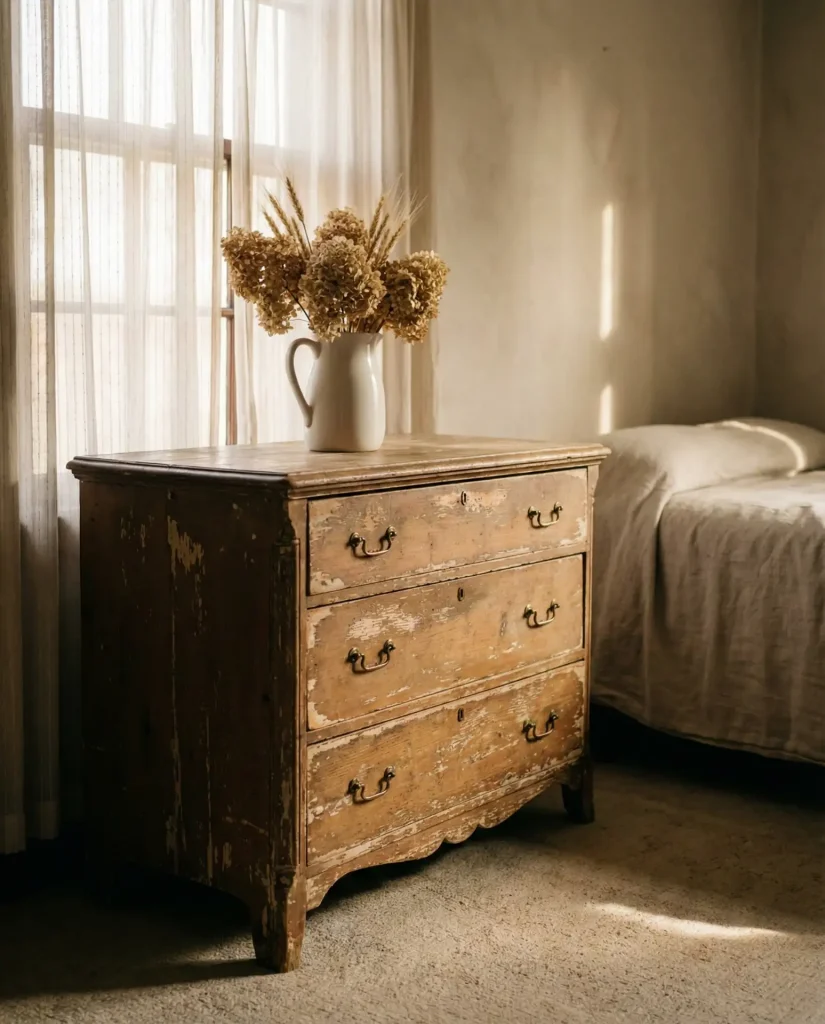
Styling an antique dresser requires a lighter touch than modern pieces—the furniture itself is the star, so your job is to enhance rather than compete with its history and character. Let the wood grain, hardware, and any wear marks shine by keeping the top simple: a single brass candlestick, a small stack of vintage books, or a weathered frame. Avoid anything too modern or plastic that would clash with the dresser’s age, and embrace the patina and imperfections that tell the piece’s story.
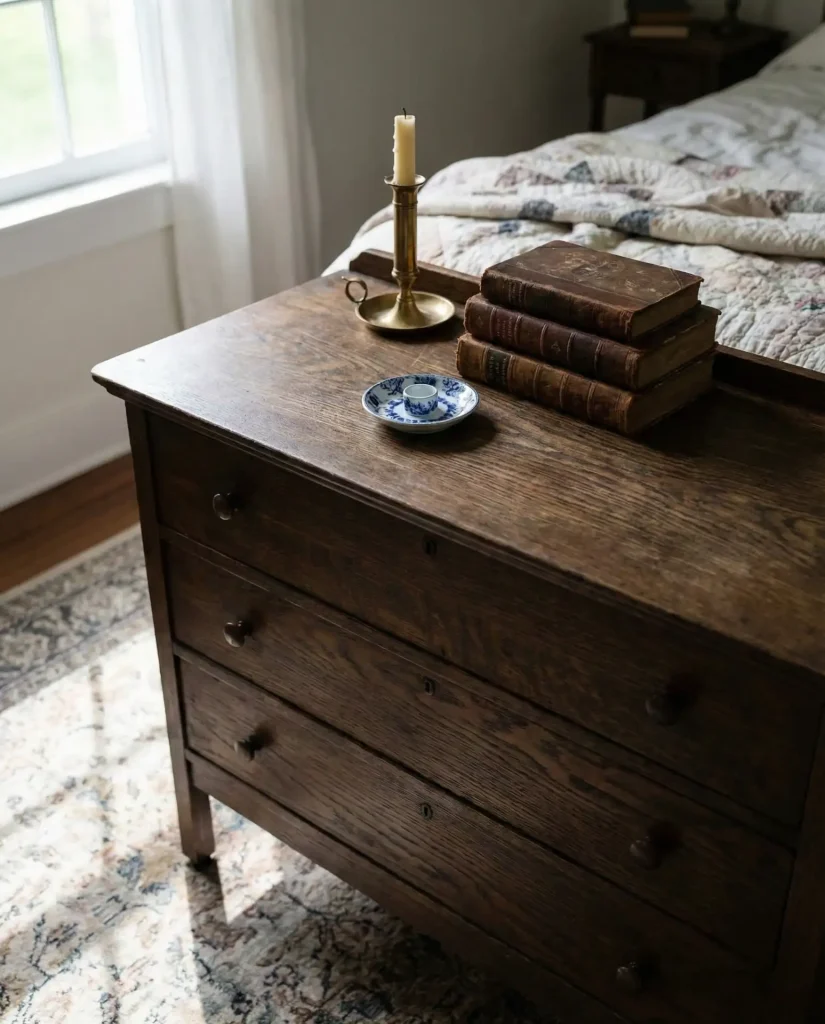
Common mistakes include over-restoring or painting over beautiful original finishes, which strips away the value and character that made the piece special in the first place. If your antique dresser has seen better days, consider a gentle cleaning and waxing rather than a full refinish. The goal is preservation and celebration, not transformation into something it was never meant to be.
22. Dual-Height Layering
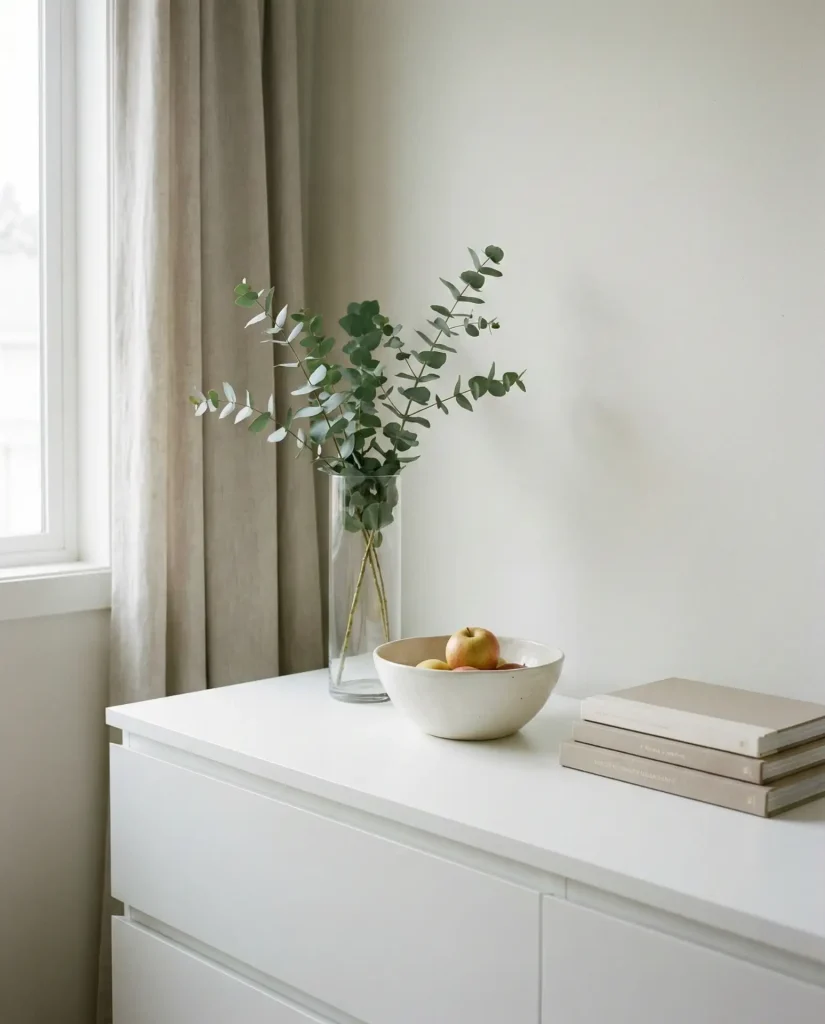
Varying object heights—a tall vase paired with a short stack of books, or a lamp next to a low bowl—creates visual interest and keeps your dresser from feeling flat or one-dimensional, a designer trick that instantly upgrades any vignette. This principle, often called “the rule of three heights,” guides the eye around the composition and makes even simple arrangements feel dynamic. Aim for one tall element, one medium, and one low, and you’ll land on a balanced look almost every time.
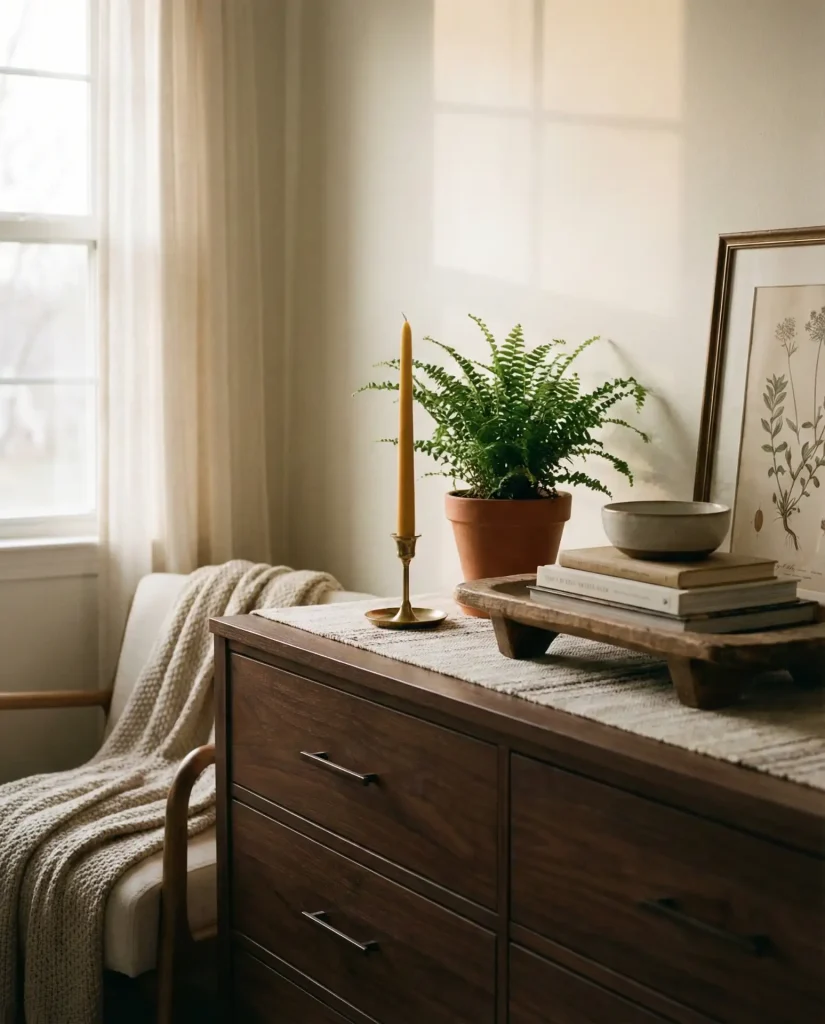
This technique is especially useful on long dressers where you need to fill horizontal space without creating visual clutter. The height variation naturally breaks up the expanse and gives each item its own breathing room, preventing that dreaded “everything blends together” effect that happens when all your decor sits at the same level.
23. Personalized Memory Display
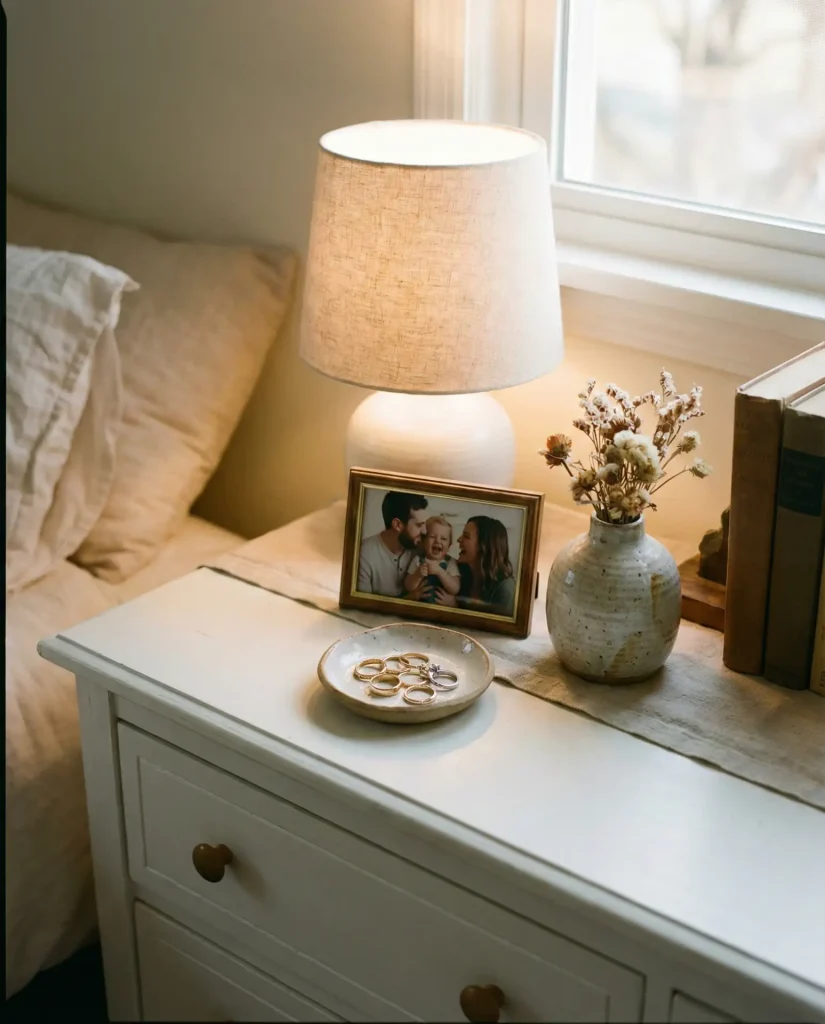
Dedicating your dresser to meaningful personal items—framed family photos, travel souvenirs, heirloom jewelry boxes, or handmade pottery—transforms it from generic decor into a curated reflection of your life and the people you love. This approach takes courage because it risks not looking “magazine perfect,” but the trade-off is a space that feels deeply yours and tells your story rather than following trends. Mix these sentimental pieces with a few neutral anchors like a simple vase or linen cloth to keep it from feeling cluttered.
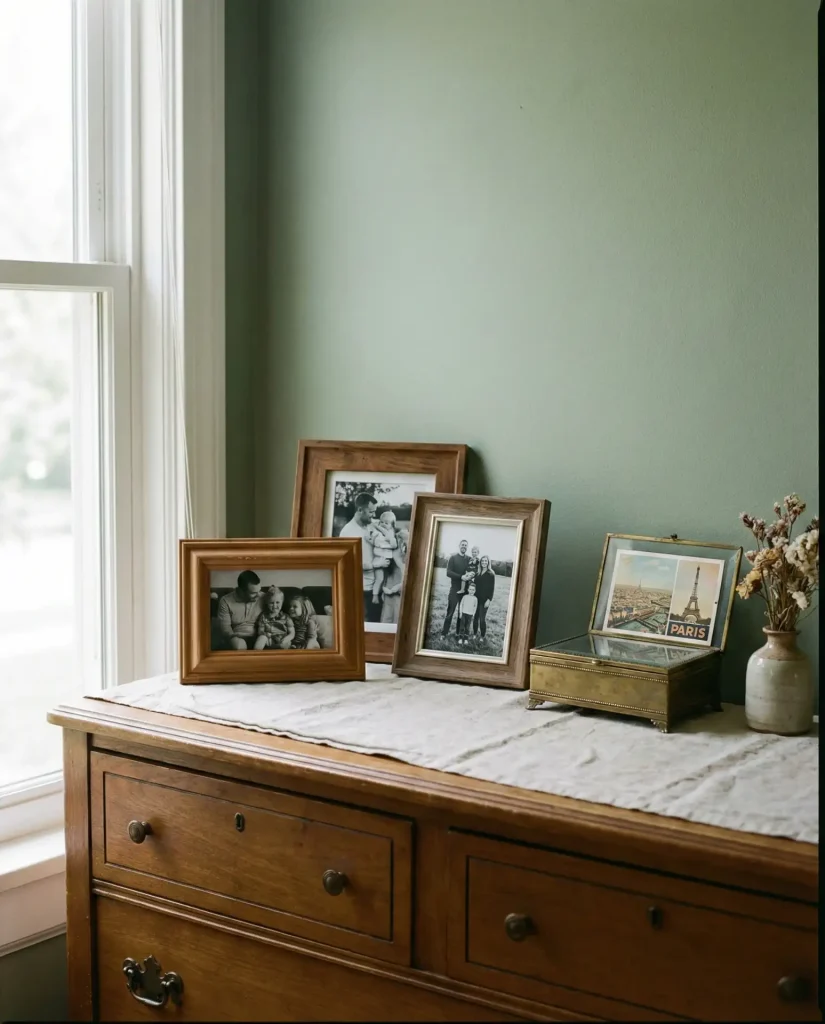
One design philosophy holds that a home should make you smile when you walk in, and a dresser styled with personal meaning delivers on that promise every single day. It’s a gentle reminder of where you’ve been, who matters most, and what you’ve built—far more valuable than any Pinterest-perfect tableau that leaves you feeling nothing at all.
Conclusion
Now that you’ve explored these 23 diverse approaches to dresser decor, it’s time to choose the ideas that resonate with your space, lifestyle, and budget. Mix elements from multiple concepts, trust your instincts, and remember that the best styling evolves over time rather than happening all at once. Drop a comment below and share which ideas you’re planning to try first—or post photos of your own dresser transformations to inspire the community!