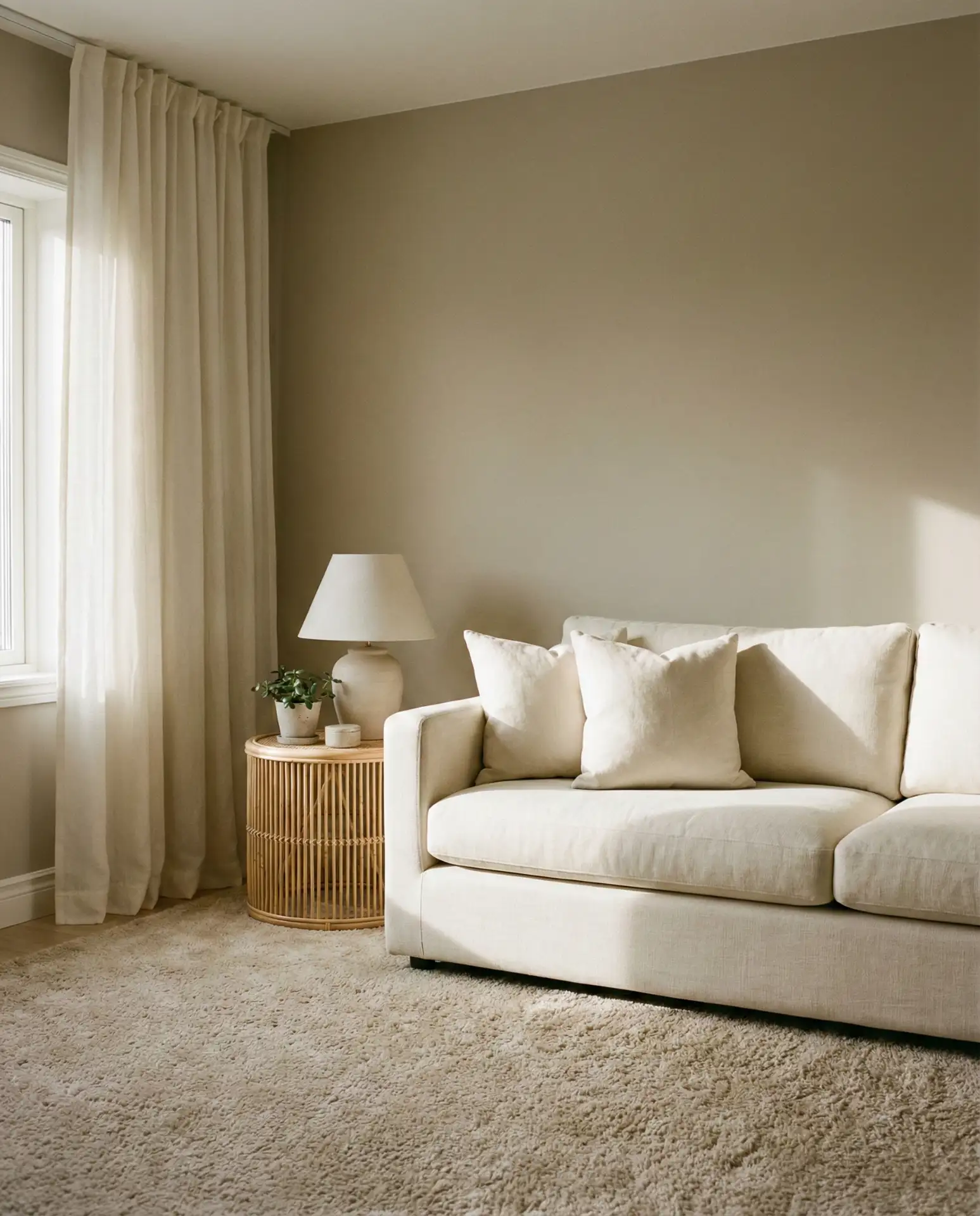
Farmhouse living rooms continue to evolve in 2026, blending timeless rustic charm with fresh modern sensibilities that resonate deeply with American homeowners. Whether you’re drawn to the cozy warmth of reclaimed wood, the crisp elegance of neutral palettes, or the eclectic mix of vintage and contemporary elements, this style offers endless possibilities for creating a space that feels both lived-in and beautifully curated. Pinterest users are flocking to farmhouse inspiration now more than ever, seeking rooms that balance comfort with visual interest—spaces where family gatherings feel natural and every corner tells a story. In this article, you’ll discover distinct farmhouse living room ideas that capture the spirit of 2026, each offering practical design strategies, styling tips, and inspiration to help you craft a room that feels uniquely yours.
1. Modern Rustic Foundation with Whitewashed Beams
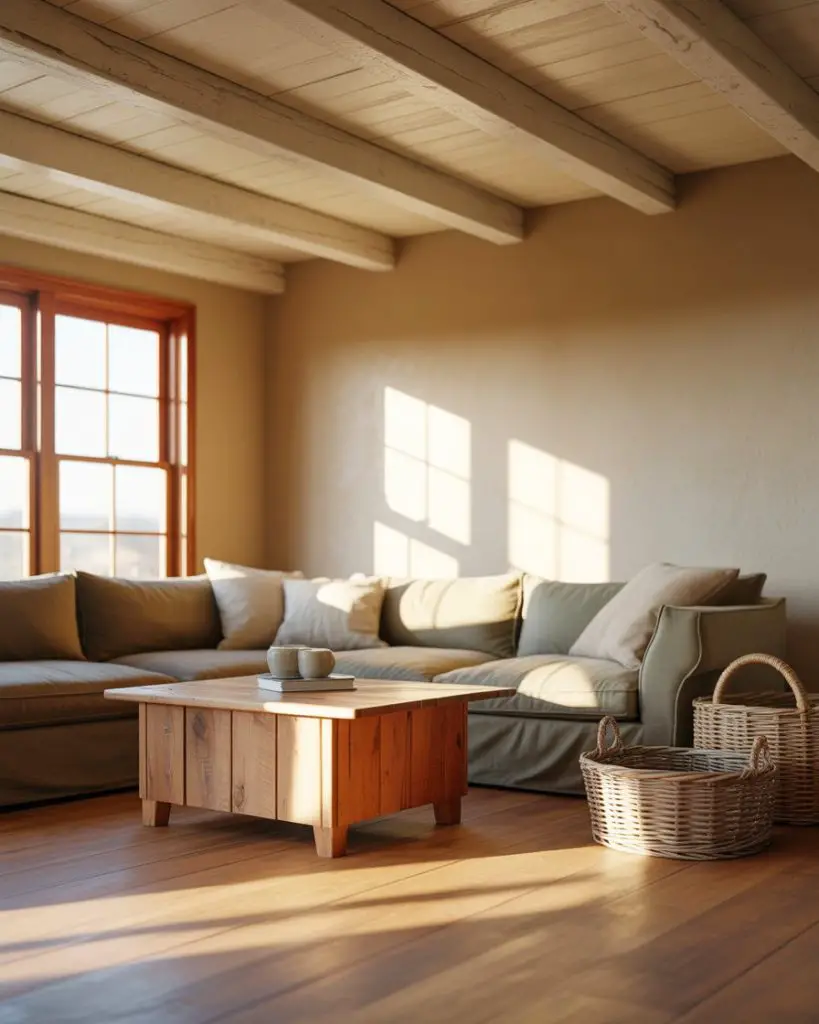
Exposed ceiling beams painted in soft white or cream tones create an instant modern rustic foundation that feels airy rather than heavy. This approach works beautifully in homes with standard ceiling heights, as the lighter color draws the eye upward without the visual weight of dark wood. Pair these beams with gray couch seating and layered textures like linen throws and woven baskets to establish a cozy base that feels both structured and inviting. The whitewashed treatment keeps the farmhouse character intact while allowing the room to feel contemporary and bright. 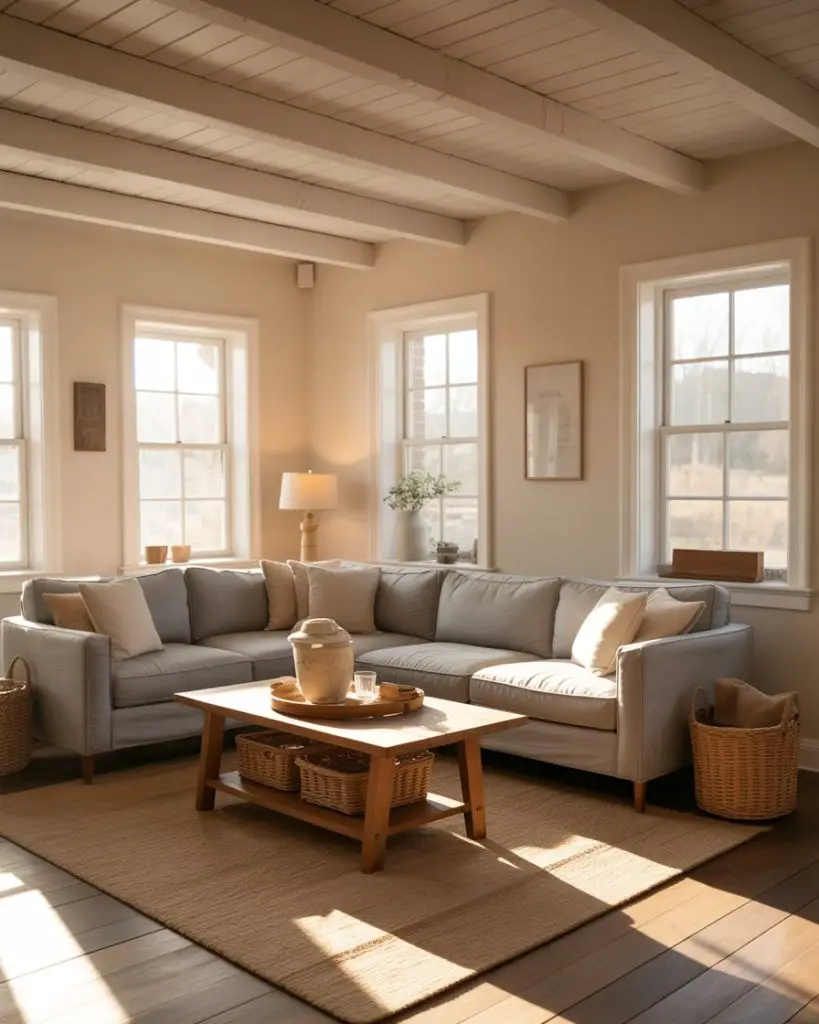
This design strategy works especially well in open-concept homes where the living room flows into the kitchen or dining area, as the beams help define the space without walls. Homeowners often underestimate how much a single architectural element can anchor an entire room’s aesthetic—whitewashed beams provide that anchor while maintaining flexibility for evolving décor choices. Consider this approach if you’re renovating and want a feature that won’t feel dated in three years.
2. Cozy Modern Sectional Arrangement with Natural Textures
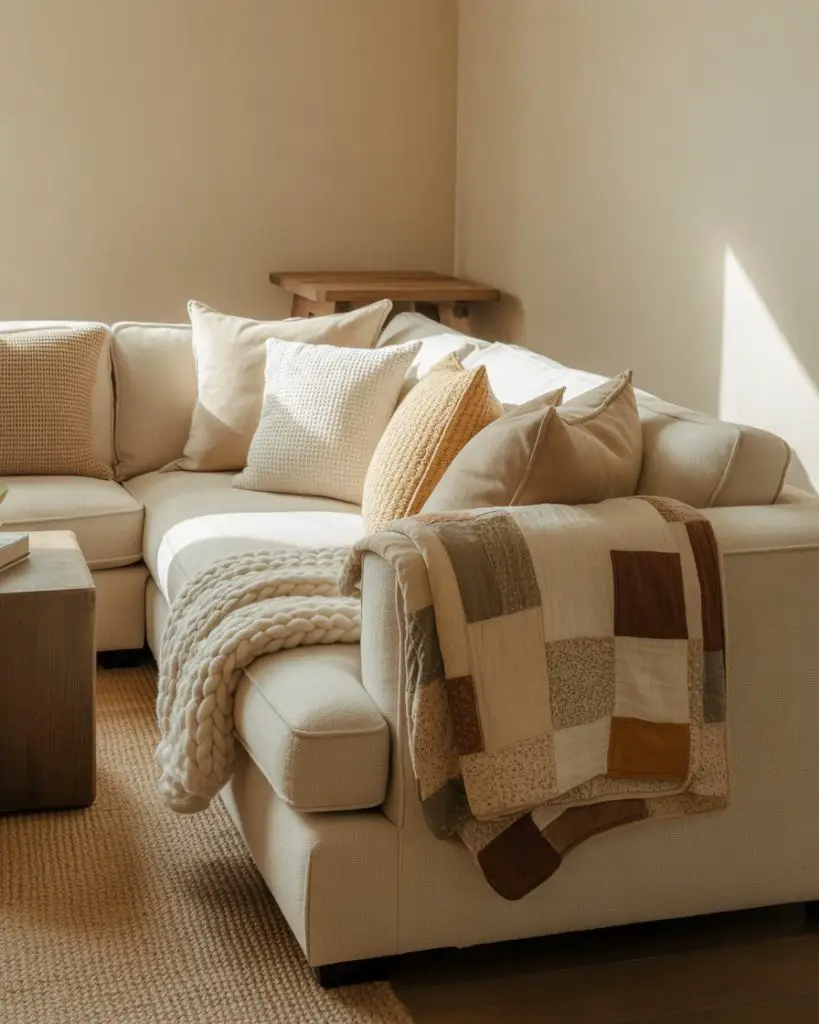
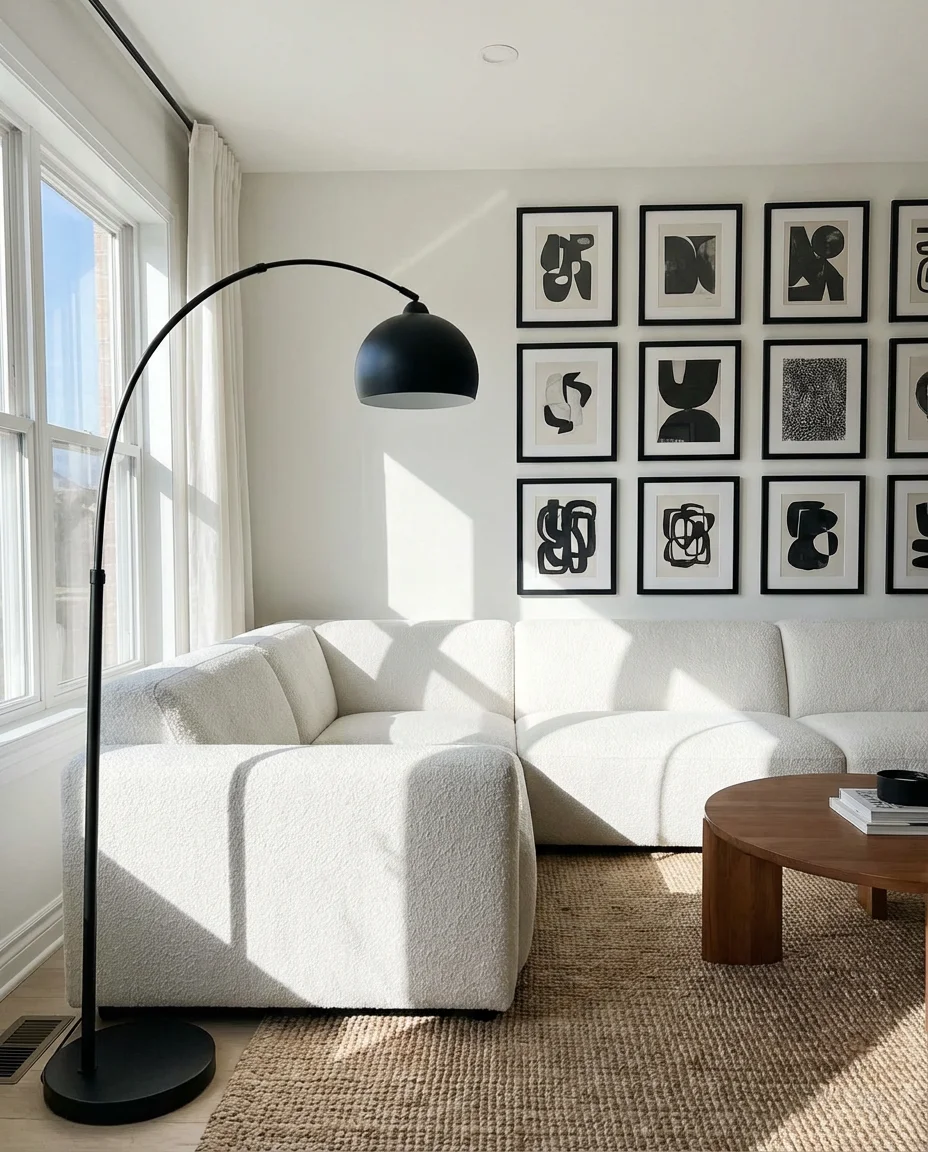
A deep, comfortable sectional in warm neutral tones becomes the heart of a cozy modern farmhouse living room when styled with intention. Look for pieces upholstered in durable performance fabrics that can withstand daily family life while maintaining a refined appearance. Layer in vintage quilts, chunky knit throws, and an assortment of textured pillows to create visual depth without sacrificing the clean lines that define contemporary farmhouse style. The key is balancing soft, touchable elements with the sectional’s streamlined silhouette. 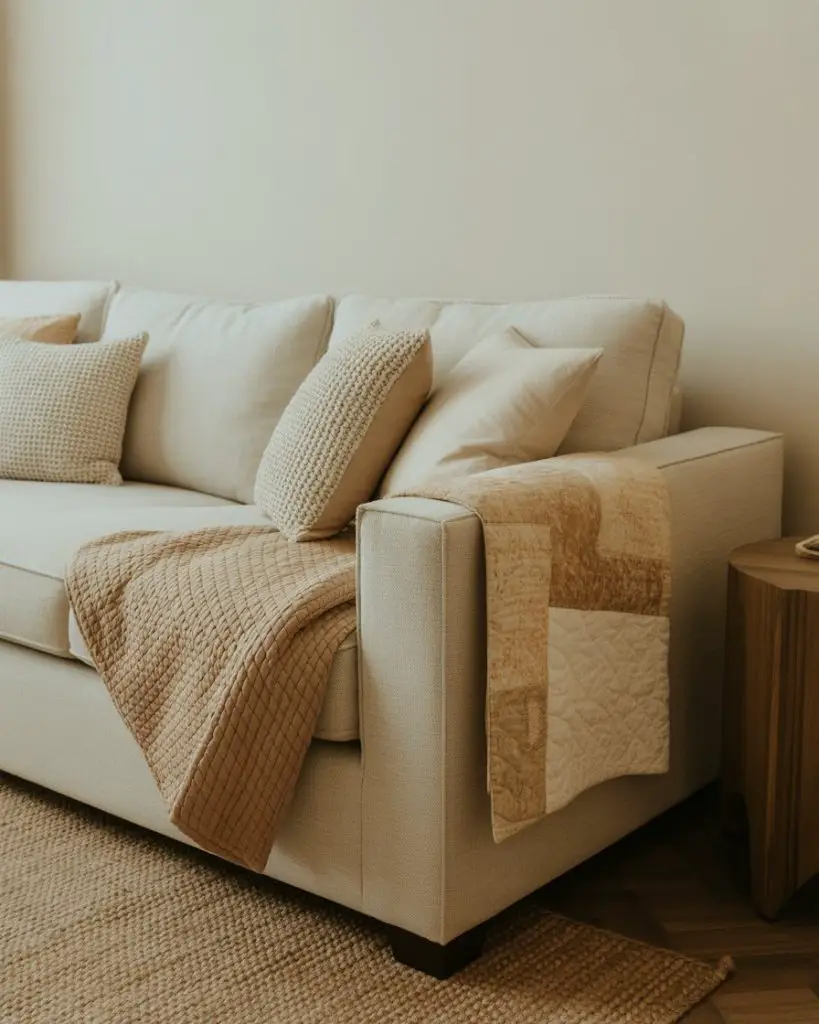
Many American families are choosing sectionals over traditional sofa-and-loveseat arrangements because they maximize seating without crowding the room—particularly valuable in homes where the living room serves as both entertainment hub and quiet retreat. The investment pays off when you select quality construction; a well-built sectional can last 15 years or more. Look for hardwood frames and eight-way hand-tied springs if your budget allows, as these features dramatically improve longevity and comfort.
3. Country Kitchen Views Through Arched Doorways
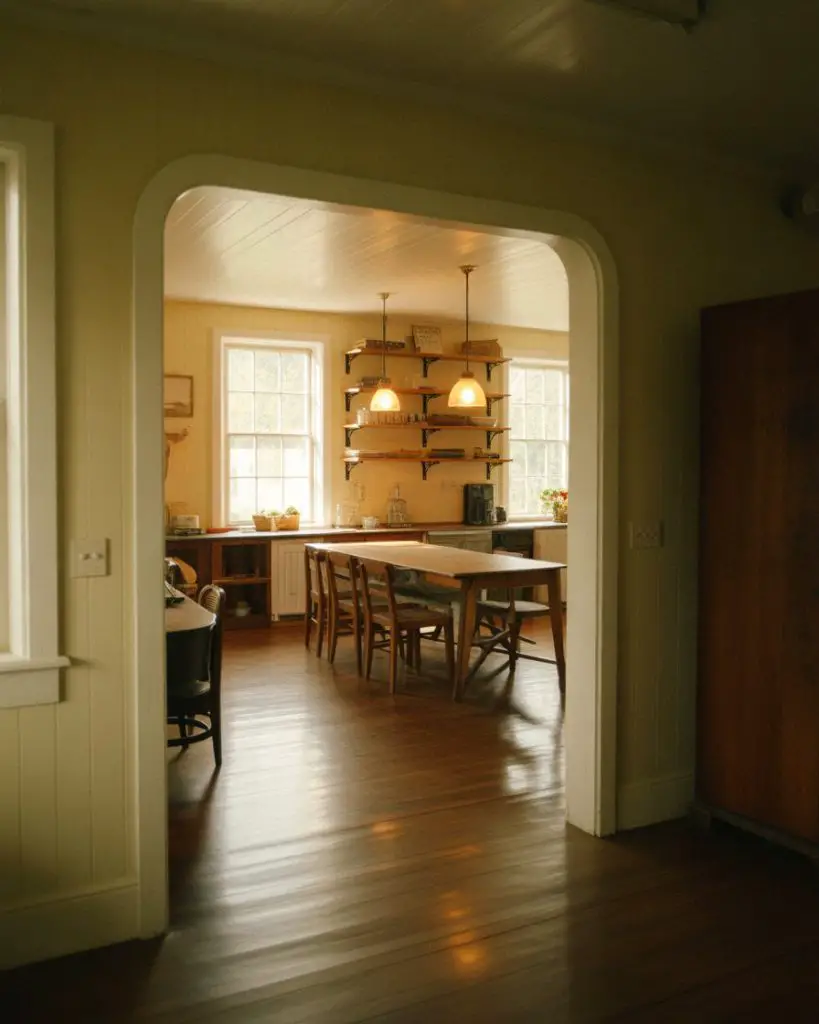
Open sightlines between the living room and kitchen create a sense of flow that defines modern American farmhouse living. Arched doorways or wide cased openings painted in crisp white trim frame these views beautifully, allowing country kitchen elements—open shelving, farmhouse sinks, rustic cabinetry—to become part of the living room’s visual experience. This architectural connection reinforces the cottage feeling of informal, connected spaces where cooking, conversation, and relaxation happen simultaneously. The archway detail adds subtle architectural interest without overwhelming the room’s simplicity. 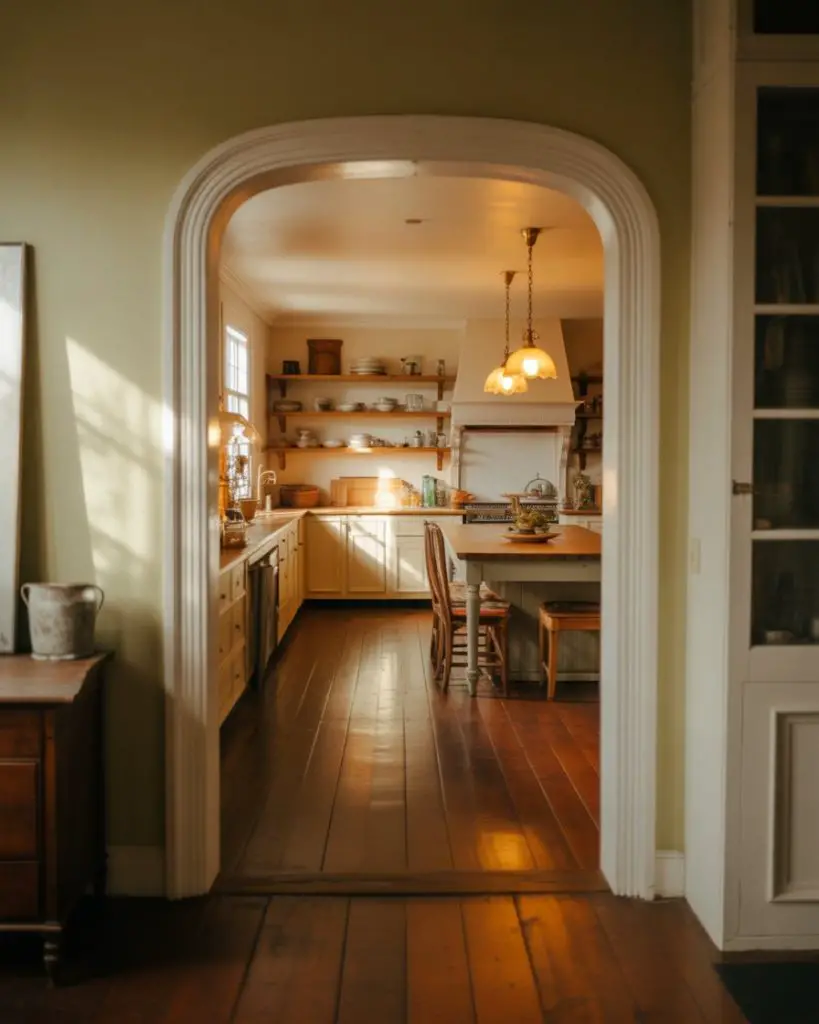
This layout works best in ranch-style homes or single-story layouts common across the Midwest and South, where the kitchen naturally sits adjacent to main living areas. A 2024 survey found that 67% of homeowners prioritize open kitchen-living room connections when renovating, citing the ability to supervise children while cooking and the ease of entertaining as primary motivations. If structural changes aren’t possible, consider widening existing doorways or removing upper cabinet sections to create visual openings.
4. Boho Farmhouse Layering with Macramé and Greenery
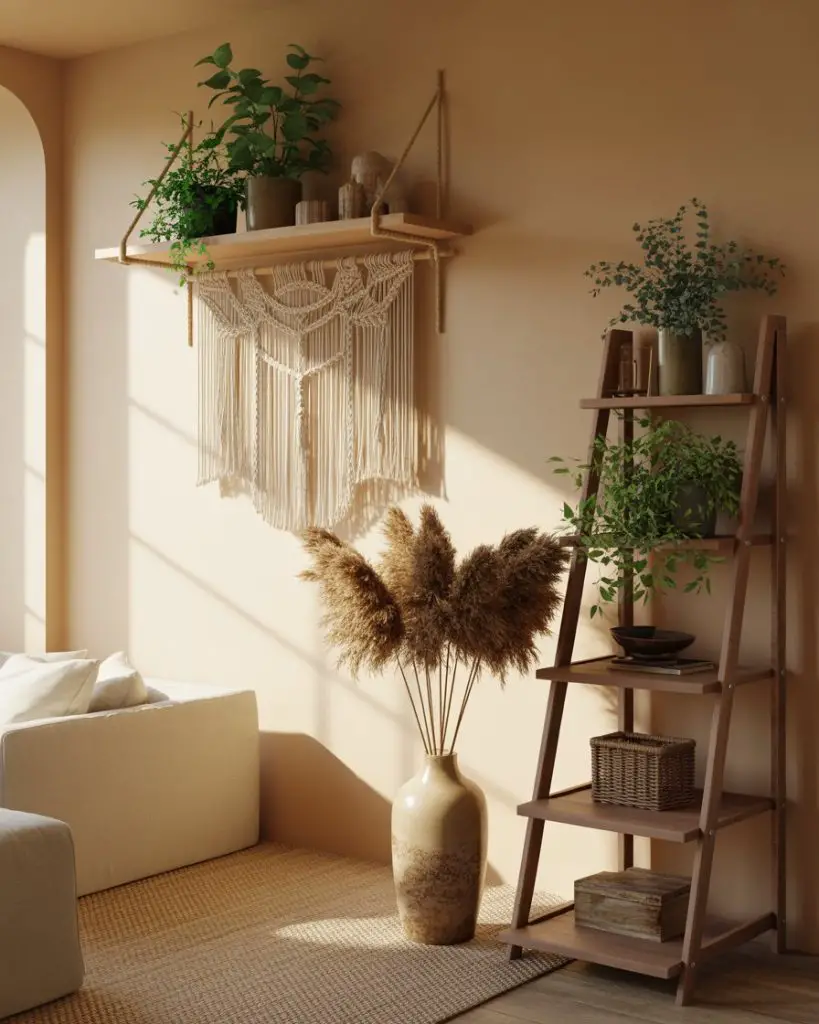
The intersection of boho and farmhouse styles creates living rooms that feel collected and personal rather than matchy-matchy. Incorporate macramé wall hangings, hanging plants in ceramic pots, and wall decor featuring natural materials like dried pampas grass or eucalyptus branches. This layered approach works particularly well when you maintain a neutral base palette—think whites, creams, and warm taupes—allowing the organic textures and greenery to provide visual interest. The cozy factor increases exponentially when you mix heights and scales, from floor-standing fiddle leaf figs to trailing pothos on floating shelves. 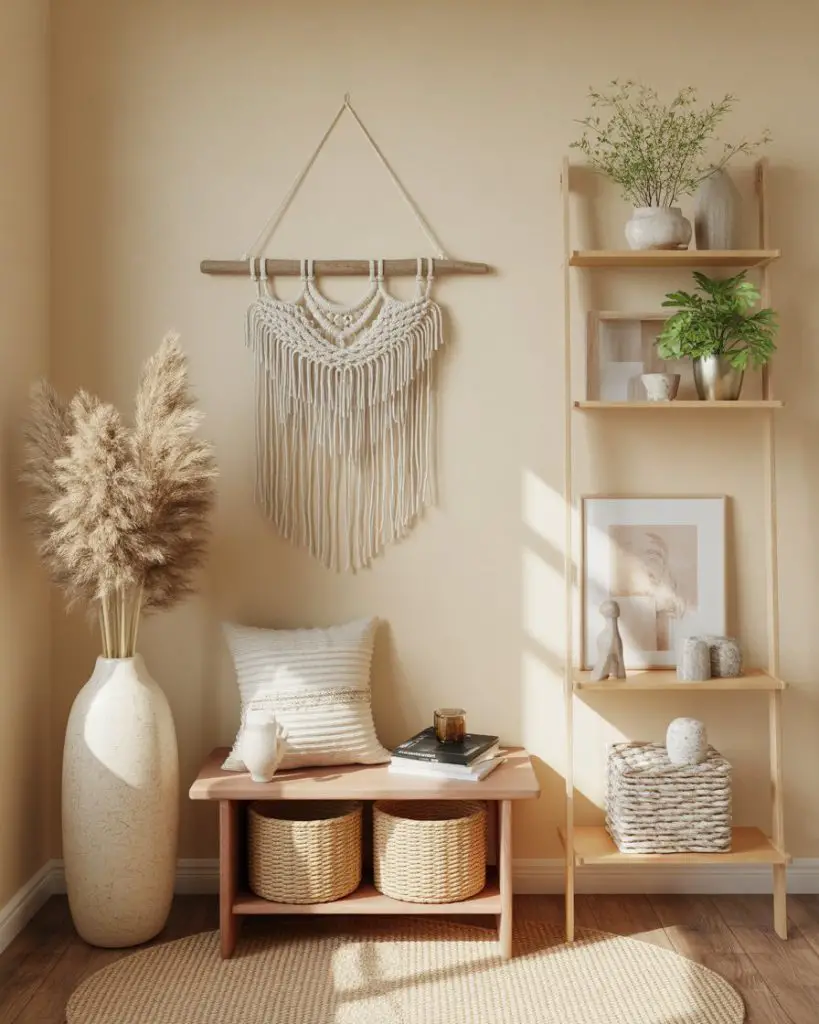
Plant care shouldn’t intimidate you—many American homeowners now use self-watering planters and choose low-maintenance varieties like snake plants, pothos, and ZZ plants that thrive even in lower-light farmhouse interiors. The macramé trend has staying power because it’s budget-friendly; many pieces run $30-80 at retailers like Target and West Elm, and DIY tutorials abound for those who enjoy crafting. Common mistakes include overcrowding shelves or choosing plants that require more light than the room offers.
5. Coastal Farmhouse with Weathered Wood Accents
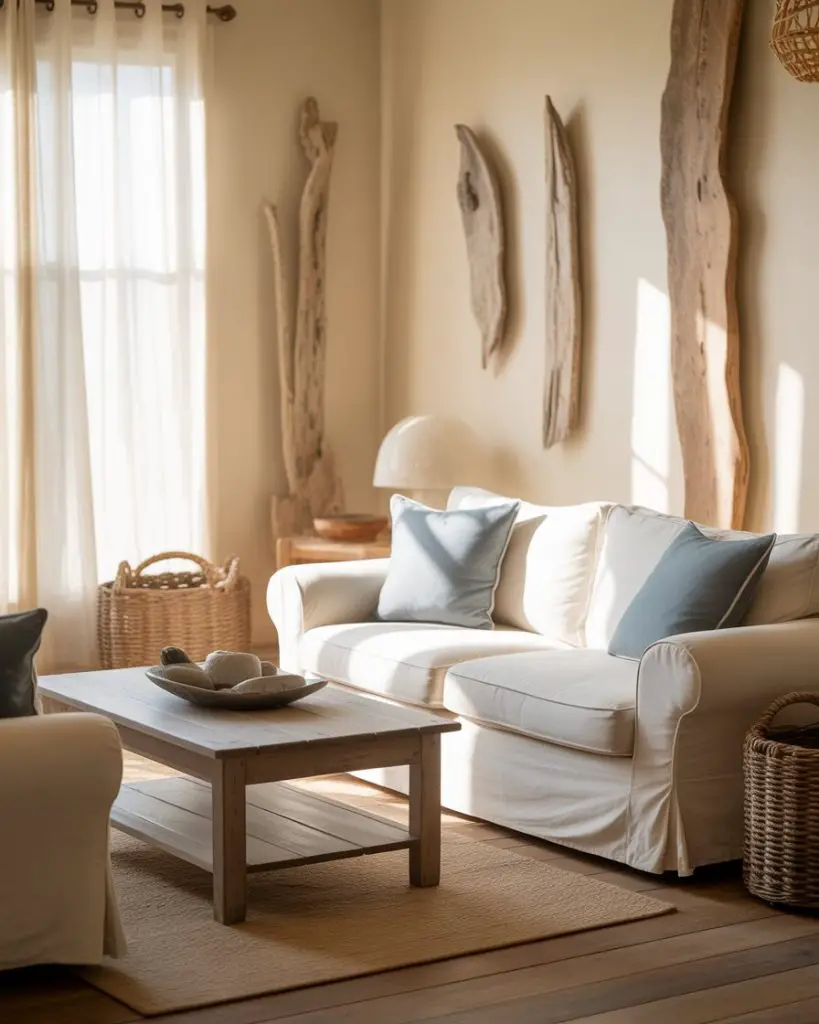
Bringing coastal elements into farmhouse design creates a breezy, relaxed atmosphere that appeals to homeowners far from the shore. Weathered wood coffee tables, driftwood-inspired wall decor, and a palette of soft blues, sandy beiges, and crisp whites establish this hybrid aesthetic. The key difference from traditional farmhouse is the lighter, sun-bleached quality of the wood tones and the incorporation of nautical-adjacent elements like rope baskets, linen slipcovers, and sea glass colors. This style feels particularly fresh in 2026 as homeowners seek spaces that evoke vacation serenity in everyday life.
Expert designers note that coastal farmhouse works beautifully in unexpected locations—landlocked states like Colorado and Arizona have embraced this style because it brings a sense of calm and openness to drier climates. The weathered wood doesn’t need to be authentic reclaimed beachwood; many furniture makers now offer finishes that replicate the look at accessible price points. Avoid the trap of over-theming with obvious nautical symbols; subtlety is what makes this hybrid style sophisticated rather than kitschy.
6. Western-Inspired Leather and Hide Accents
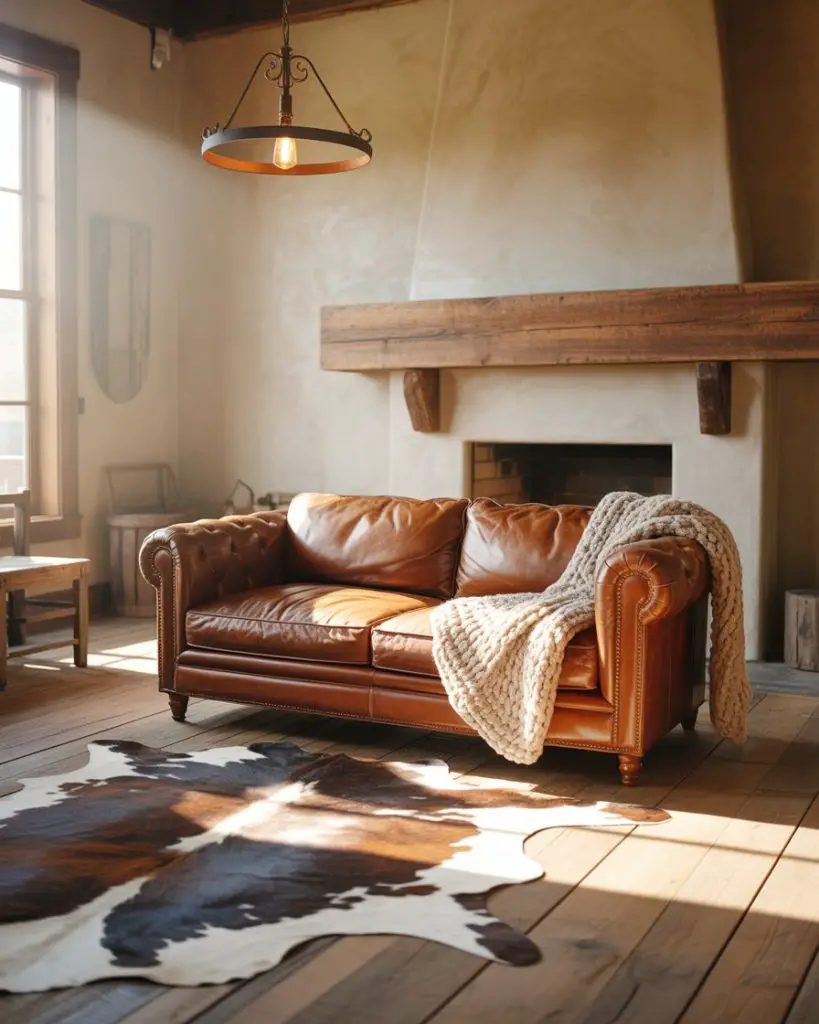
Incorporating western elements gives farmhouse living rooms a rugged, heritage-rich quality that resonates particularly in Texas, Montana, and the Southwest. A quality leather sofa in warm cognac or tobacco tones anchors the space, while cowhide rugs, horn-handled cabinet pulls, and wrought iron accents reinforce the aesthetic. The modern interpretation avoids cliché by keeping quantities restrained—one statement piece like a leather club chair rather than a room full of cowboy motifs. This approach honors western American design traditions while maintaining the clean, edited feel contemporary homeowners prefer. 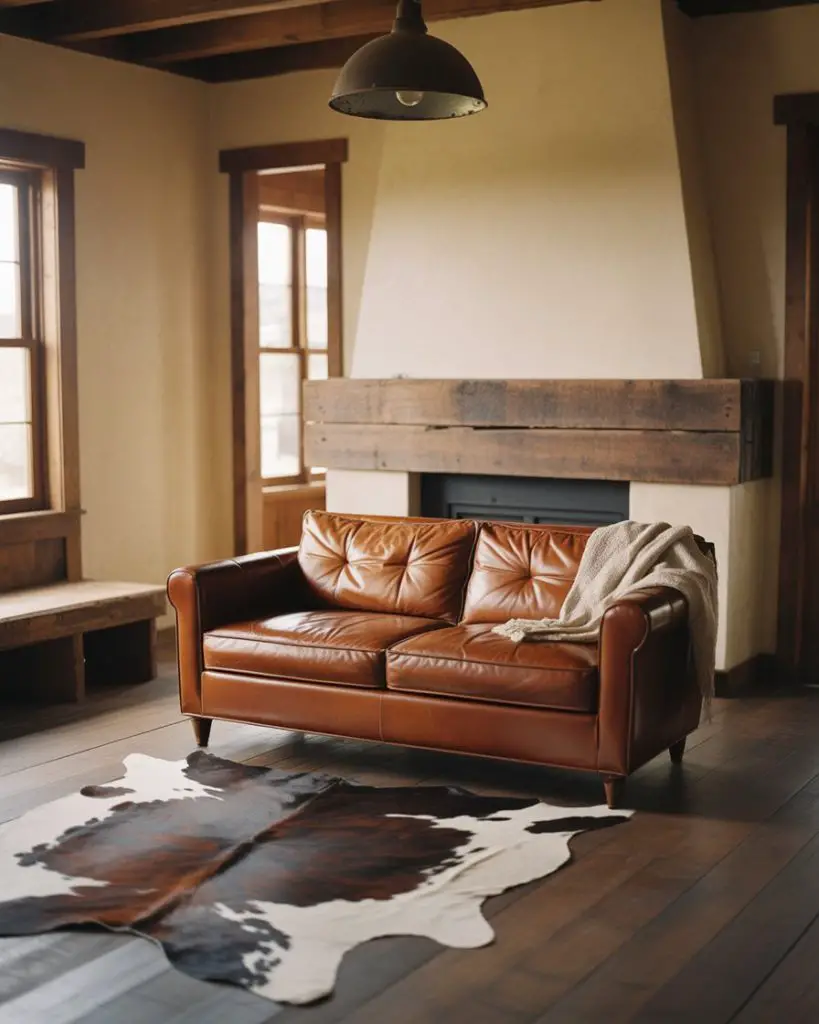
Real homeowners often struggle with incorporating leather because they worry about maintenance, but modern leather furniture with protective finishes resists stains and actually develops more character with age—a perfect match for farmhouse philosophy. Quality leather sofas start around $2,000 but can last 20+ years with basic care, making them surprisingly economical compared to fabric pieces that need replacing every 7-10 years. Position leather away from direct sunlight to prevent fading, and condition it twice yearly with products designed for furniture-grade leather.
7. French Country Elegance with Muted Pastels
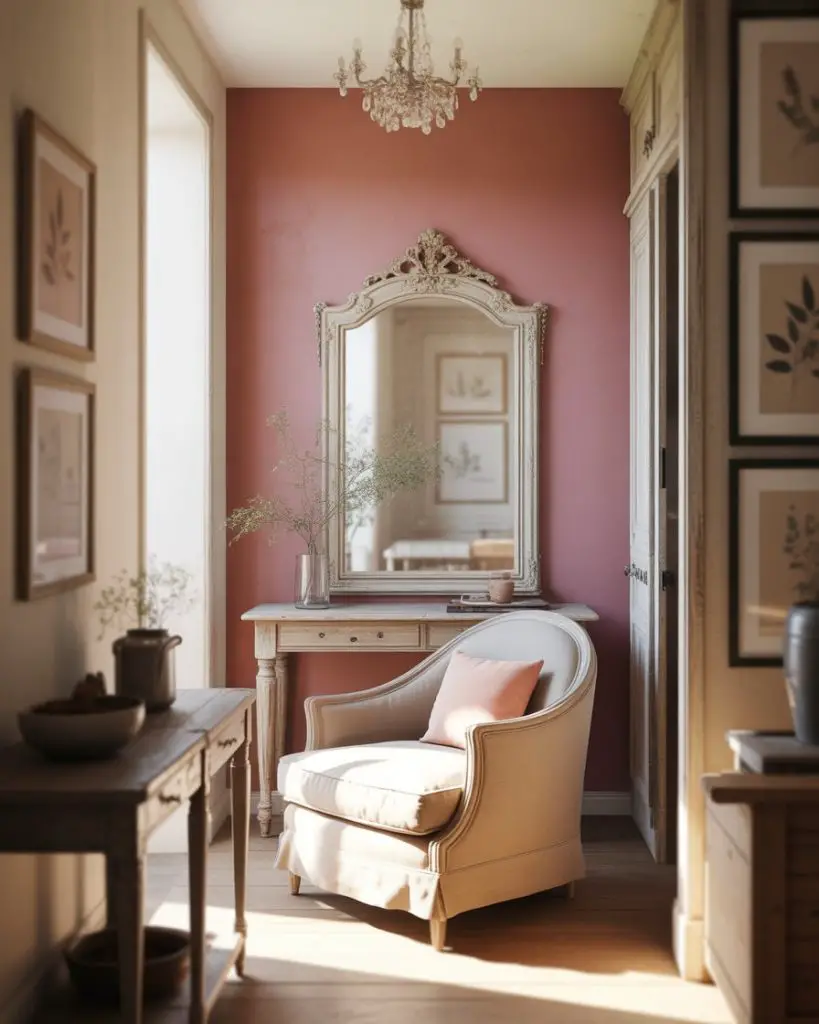
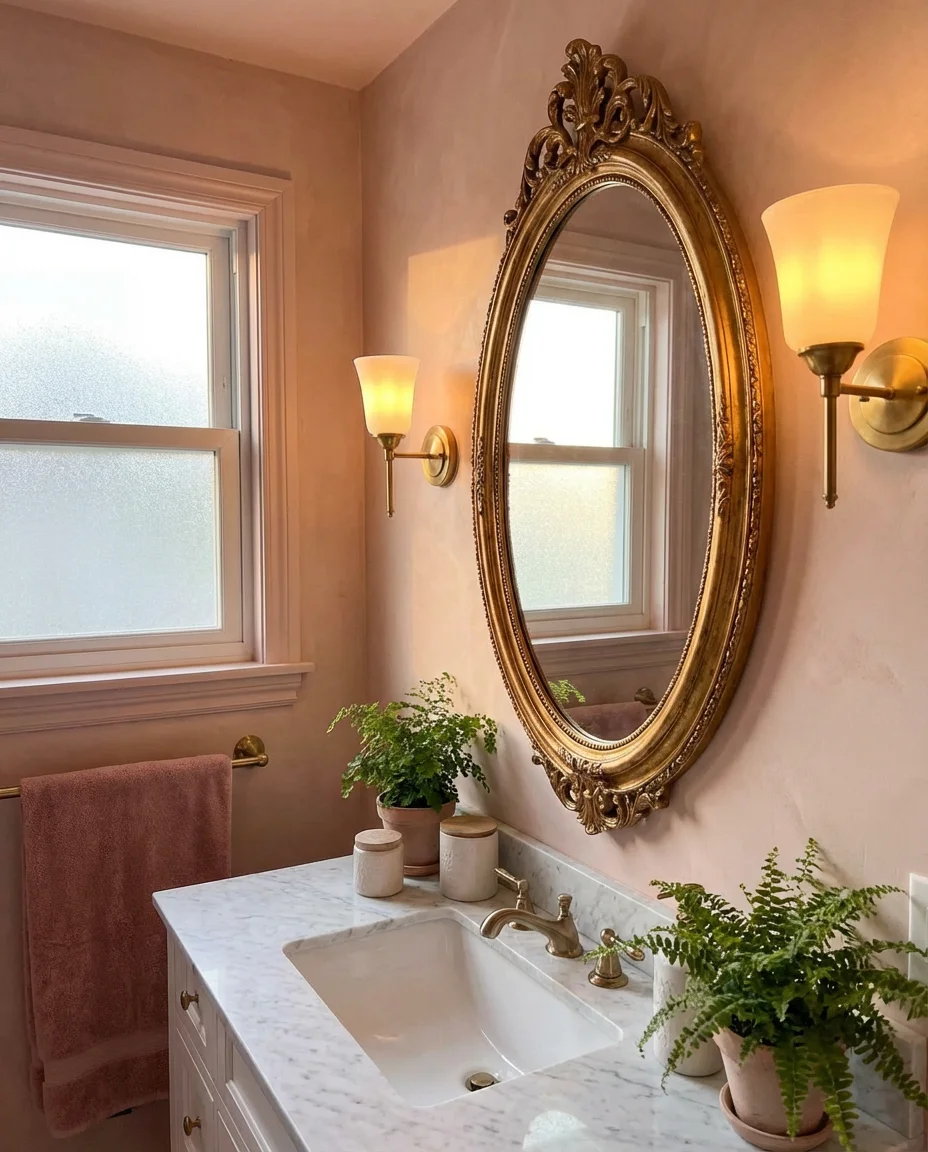
The French farmhouse approach introduces refined elements—curved armchairs, ornate mirrors, crystal chandeliers—while maintaining the relaxed comfort of American country style. Muted pastel paint colors like dusty rose, sage green, or powder blue on accent walls create a softer, more romantic atmosphere than stark white. Incorporate antique pieces selectively: a weathered armoire for storage, vintage gilt frames around botanical prints, or a distressed farm table as a console. The result feels collected over time rather than purchased in one shopping trip, which is precisely the appeal for homeowners seeking authentic character. 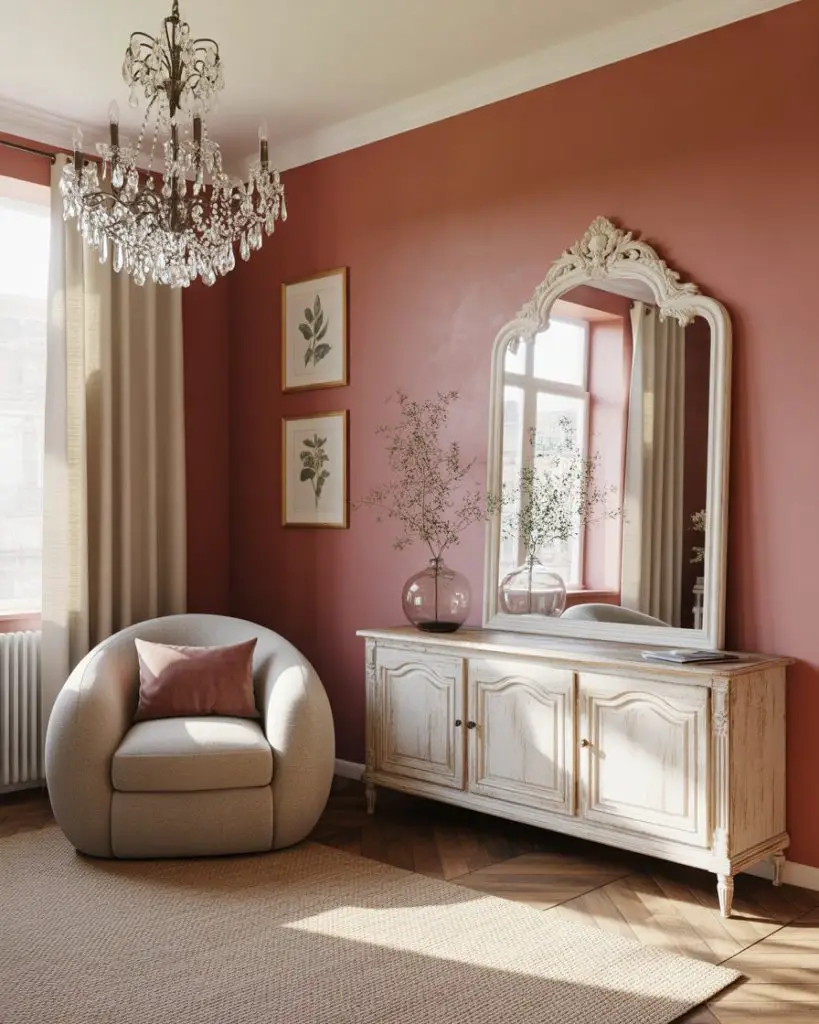
Where this works best: homes with traditional architecture, higher ceilings, or period details like crown molding that support the more formal French elements. A friend who renovated a 1920s bungalow in Portland found that adding French country touches to her farmhouse base elevated the entire home’s character, making architectural details that had seemed outdated feel intentionally preserved. The pastel walls soften the look without sacrificing sophistication, creating a gentler alternative to the all-white trend.
8. Industrial Farmhouse with Metal Accents
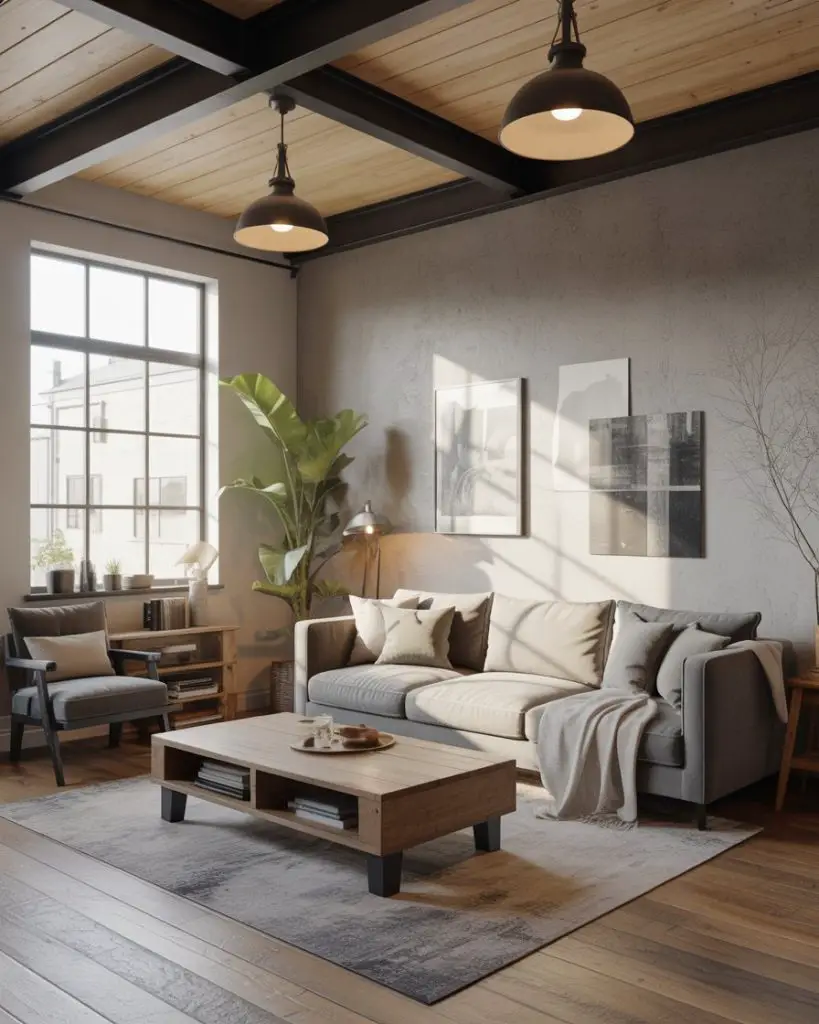
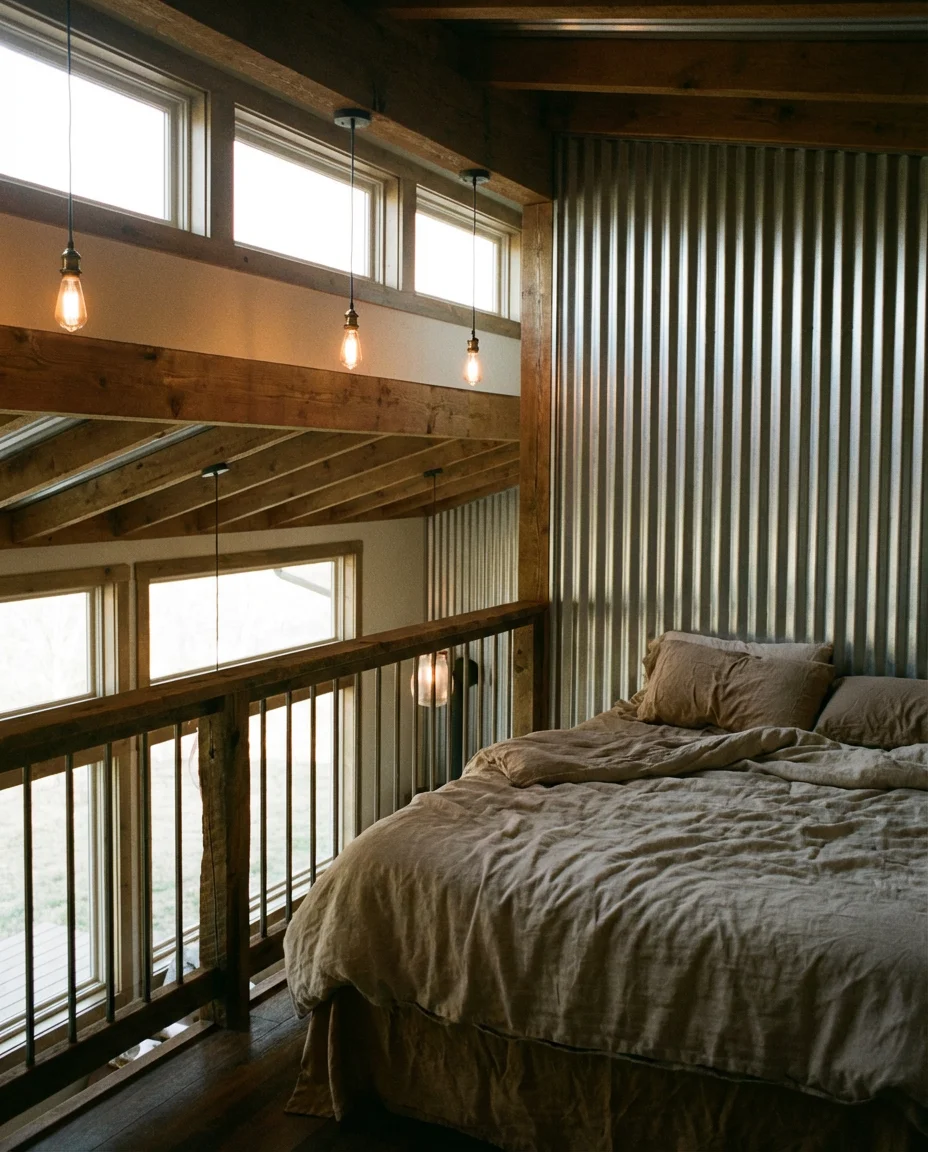
Blending industrial materials with farmhouse warmth creates living rooms with an urban edge that appeals to city dwellers and loft residents. Exposed metal beams, factory-style lighting fixtures, and steel-framed windows or doors provide raw, architectural interest against cozy farmhouse elements like upholstered seating and soft textiles. The contrast between hard and soft, refined and raw, makes these spaces feel dynamic and layered. Keep the color palette neutral—grays, blacks, whites, warm woods—to let the material contrast do the visual work. 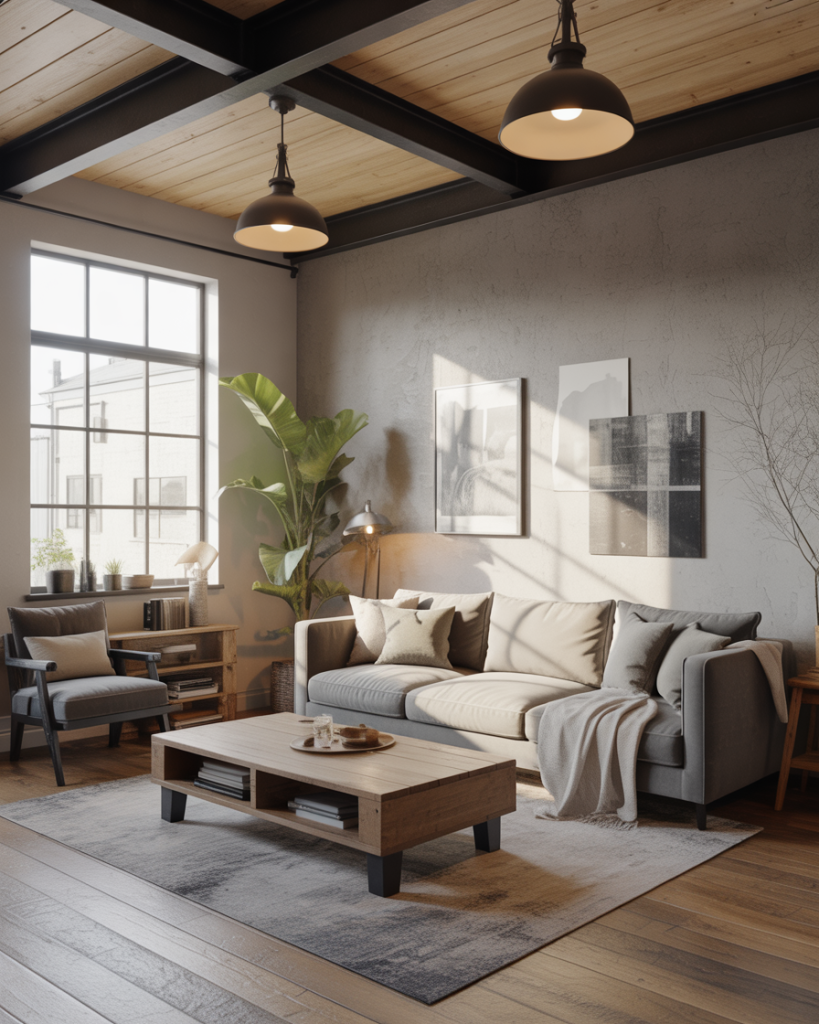
This hybrid style typically runs 15-25% higher in material costs than standard farmhouse due to custom metalwork and industrial lighting, but the investment creates a distinctive look that photographs beautifully—a consideration for homeowners who share their spaces on social media. The industrial elements also add durability; metal shelving, pipe-frame furniture, and commercial-grade fixtures withstand heavy use better than purely decorative alternatives. Avoid making the space feel cold by ensuring at least 40% of visible surfaces are warm materials—wood, fabric, natural fiber rugs.
9. Moody Farmhouse with Dark Painted Walls
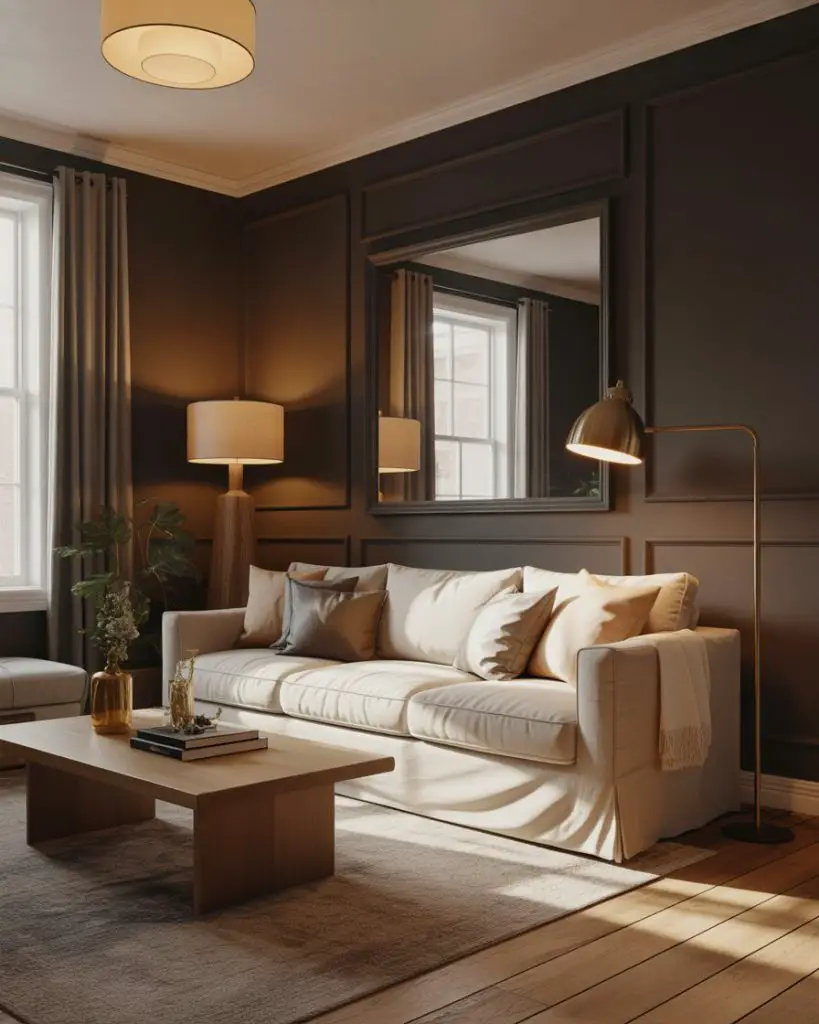
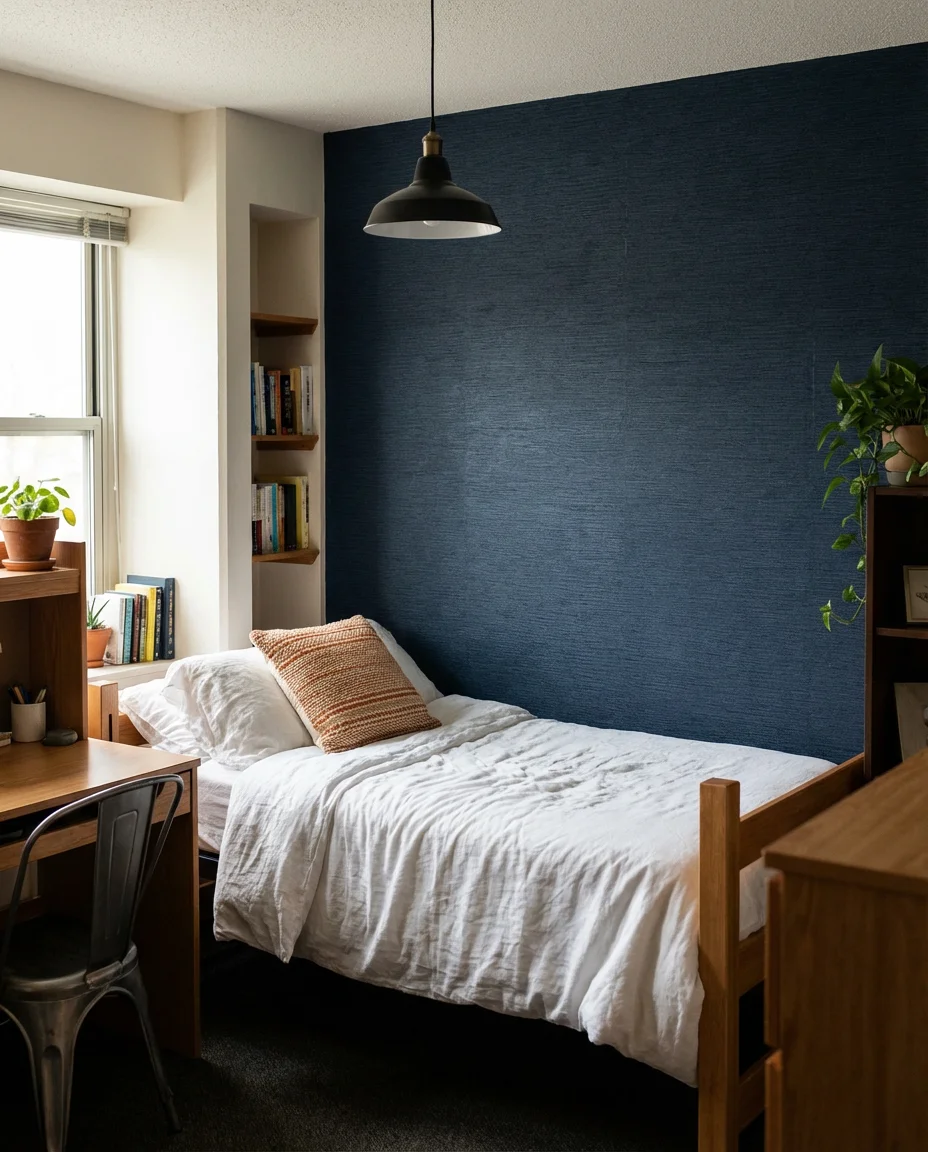
The moody farmhouse trend embraces dark wall colors—charcoal, navy, forest green, even black—to create dramatic, cocooning spaces that feel intimate and sophisticated. This approach works surprisingly well in farmhouse contexts when balanced with plenty of warm wood tones, brass or gold accents, and layered lighting from multiple sources. The modern edge comes from keeping furniture lines clean and avoiding overly rustic accessories that might make dark walls feel cave-like. Strategic placement of mirrors and light-reflecting surfaces prevents the space from feeling too heavy or closed-in. 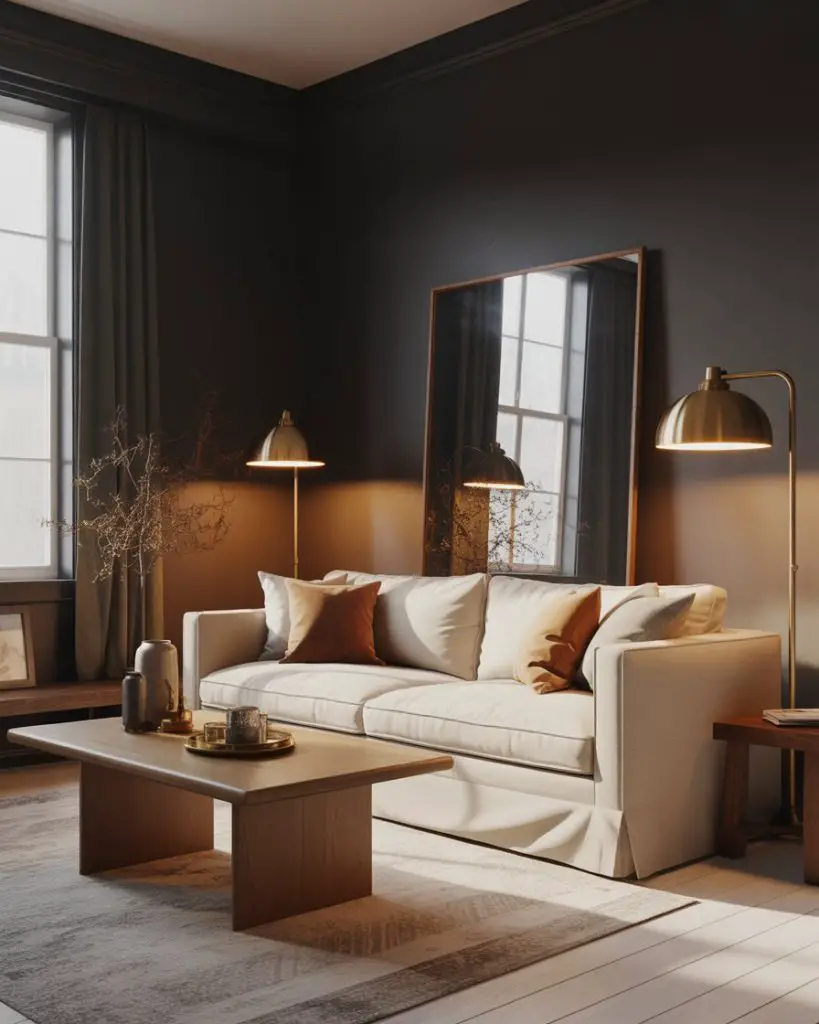
Many American homeowners hesitate to go dark, worrying about resale value, but real estate agents increasingly report that well-executed dark rooms photograph beautifully in listings and help homes stand out in crowded markets. The key is ensuring adequate natural light or compensating with excellent artificial lighting—aim for three to five light sources in different positions (overhead, floor, table, accent) to eliminate shadows and create depth. Dark paint also hides imperfections in older walls better than white, a practical consideration in farmhouses with genuine age and character.
10. Gray Couch Centerpiece with Warm Accents
A substantial gray couch in medium to charcoal tones provides the perfect neutral foundation for a farmhouse living room that can shift styles seasonally. The sophisticated gray reads contemporary while allowing you to layer in warm farmhouse elements—rust-colored throws, amber glass lamps, natural wood side tables—that prevent the space from feeling cold or sterile. Choose a gray with warm undertones rather than cool blue-grays to maintain the inviting quality essential to farmhouse aesthetics. This combination works particularly well in homes with white or cream walls, creating a balanced tonal palette.
Gray upholstery proves remarkably practical for families with children and pets—it hides dirt and wear better than lighter fabrics while maintaining a polished appearance that cream or beige sofas struggle to achieve after a few years. Mid-range gray couches from retailers like Article, West Elm, or Room & Board typically run $1,200-2,500 and offer good quality construction at accessible prices. Common mistakes include choosing grays that are too cool-toned for farmhouse settings or failing to balance them with enough warm textiles and wood elements.
11. Paint Color Strategy with Warm Neutrals
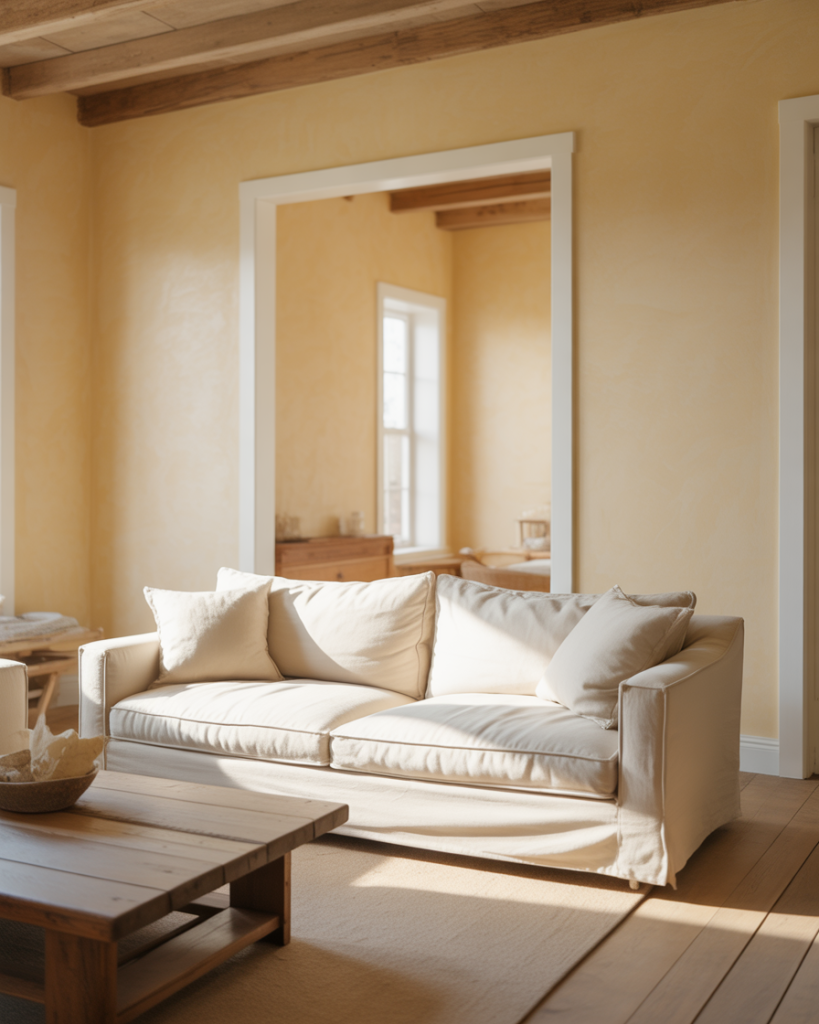
Selecting the right paint colors establishes the entire mood of a farmhouse living room, and in 2026, the trend favors warm, complex neutrals over stark white. Colors like Benjamin Moore’s Swiss Coffee, Sherwin Williams’ Accessible Beige, or Farrow & Ball’s Pointing offer creamy warmth that flatters wood tones and creates a cozy backdrop for layered decor. These shades work across various lighting conditions—crucial in farmhouse homes where windows might be smaller or oddly placed. Consider painting trim and walls in different shades of the same neutral family rather than the traditional white trim approach for a more cohesive, modern look. 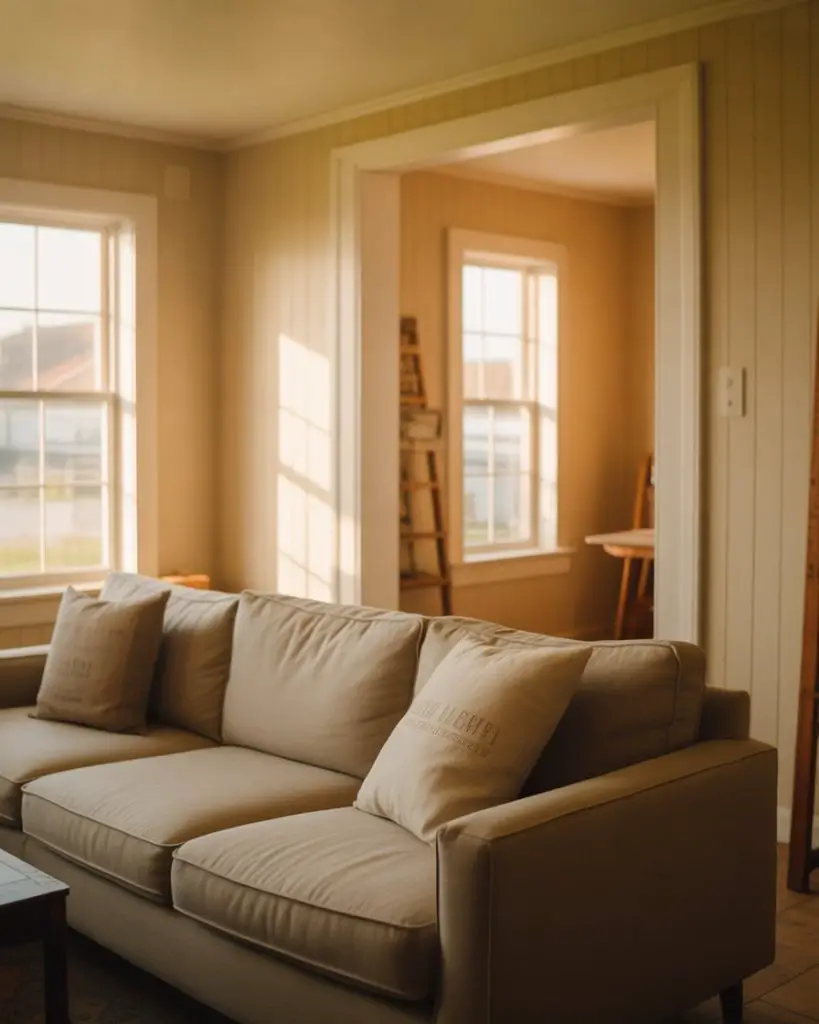
Professional painters recommend testing paint samples in multiple areas of the room and observing them at different times of day—morning light can make warm neutrals appear yellow, while evening light brings out pink or peach undertones. A gallon of quality paint costs $50-75 but covers approximately 400 square feet, making it one of the most budget-friendly transformations you can make. Many homeowners waste money on cheap paint that requires three coats; invest in premium brands with excellent coverage and you’ll actually save time and money on labor.
12. Cottage-Style Built-In Shelving with Open Display
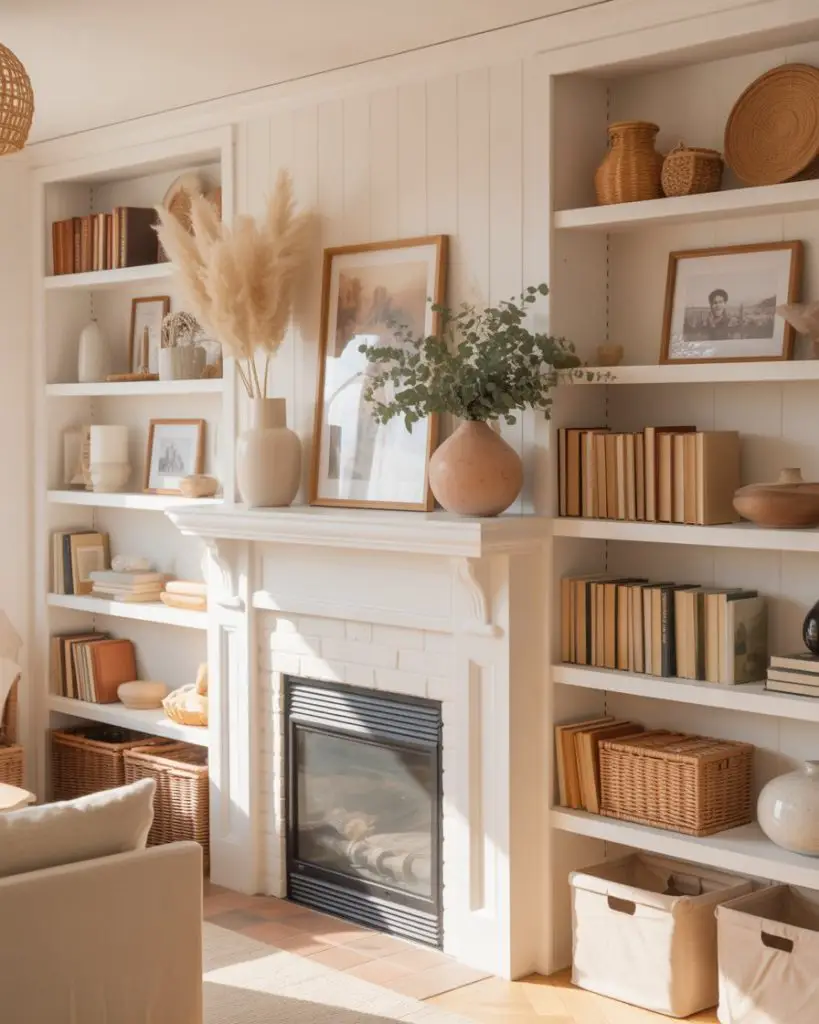
Custom or semi-custom built-in shelving flanking a fireplace or entertainment center creates the cottage storage and display opportunity that makes farmhouse living rooms feel personal and curated. Paint these units in soft white or cream to maintain an airy feel, then style shelves with a mix of books, ceramic pieces, family photos in simple frames, and organic elements like dried botanicals or small plants. The European approach to styling—leaving some empty space, clustering items in odd numbers, varying heights—prevents the shelves from looking cluttered or overly precious. This built-in solution adds significant perceived value to your home while solving real storage needs. 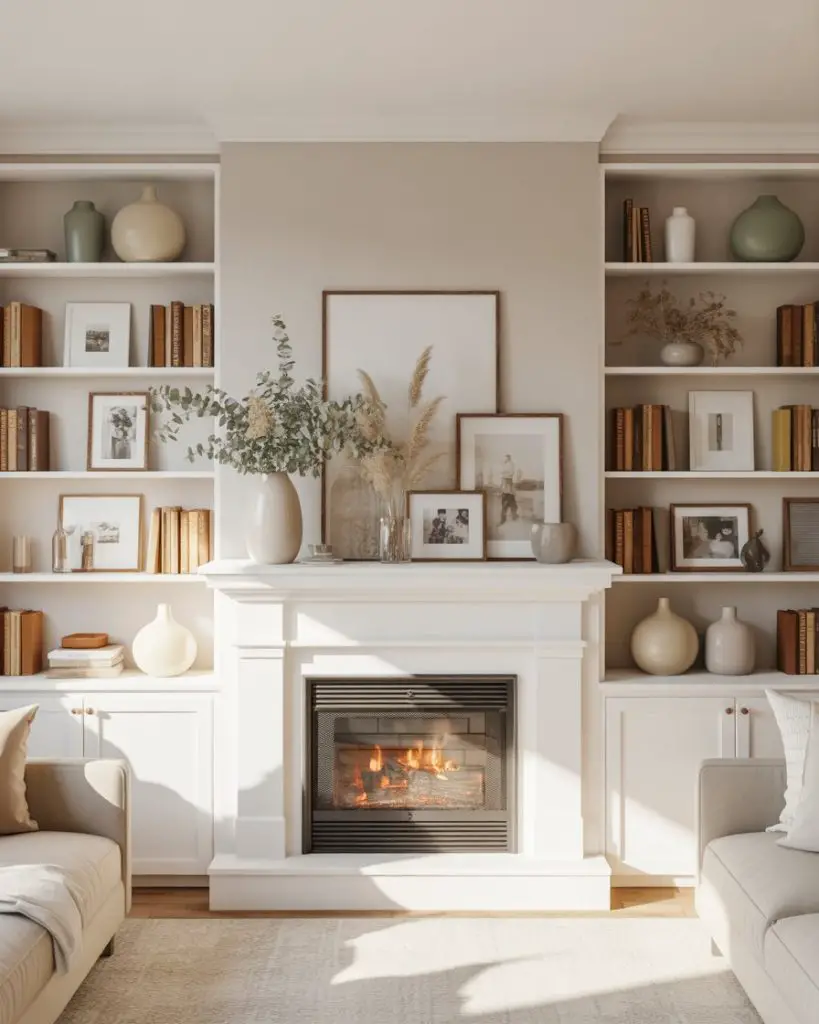
Built-ins represent a significant investment—expect $3,000-8,000 for professional installation depending on size and complexity—but they’re one of the few renovations that reliably increase home value while improving daily function. If custom work exceeds your budget, companies like IKEA offer PAX or BILLY systems that can be hacked to look built-in with added trim, crown molding, and professional paint. The key is ensuring units are properly secured to walls and that styling feels intentional rather than like every available surface has been filled.
13. Antique Furniture as Statement Pieces
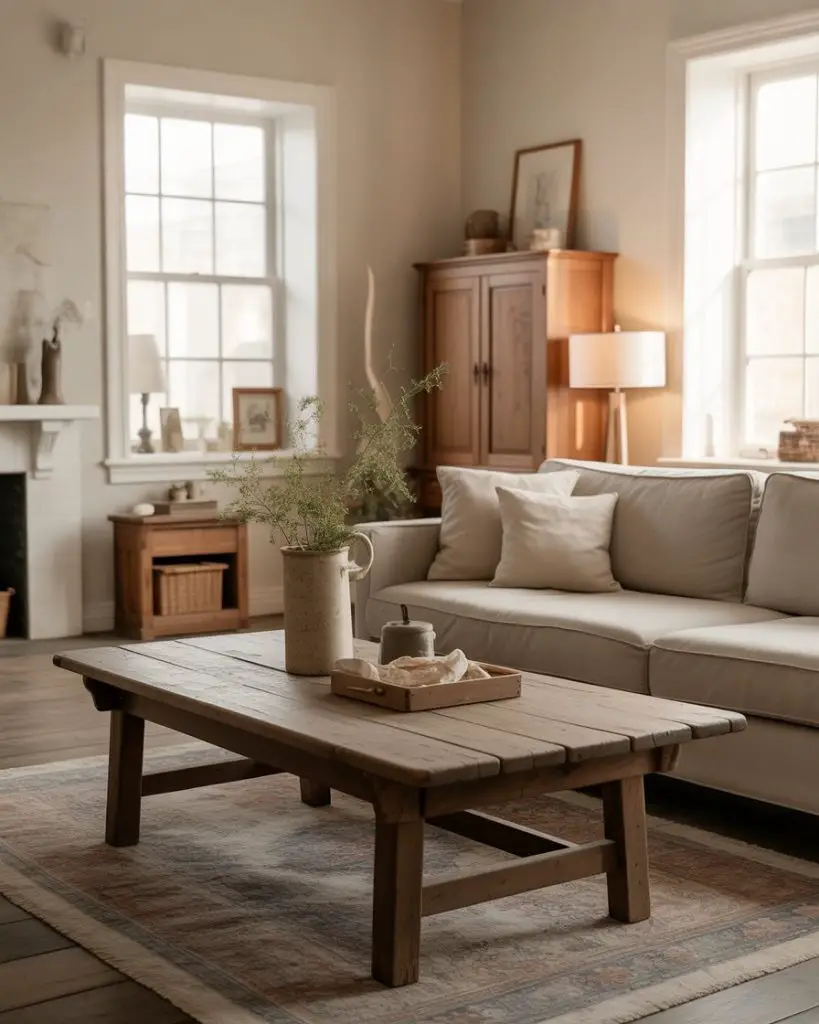
Incorporating genuine antique furniture—a weathered farm table, vintage trunk coffee table, or heirloom cabinet—gives farmhouse living rooms authentic character that new purchases can’t replicate. These pieces work best when allowed to shine individually rather than competing with multiple statement items; pair one substantial antique with simpler, contemporary furnishings to create visual balance. The patina, wear marks, and craftsmanship of older pieces tell stories that resonate with the farmhouse philosophy of valuing history and quality construction. Mixing eras prevents the space from feeling like a museum or stage set. 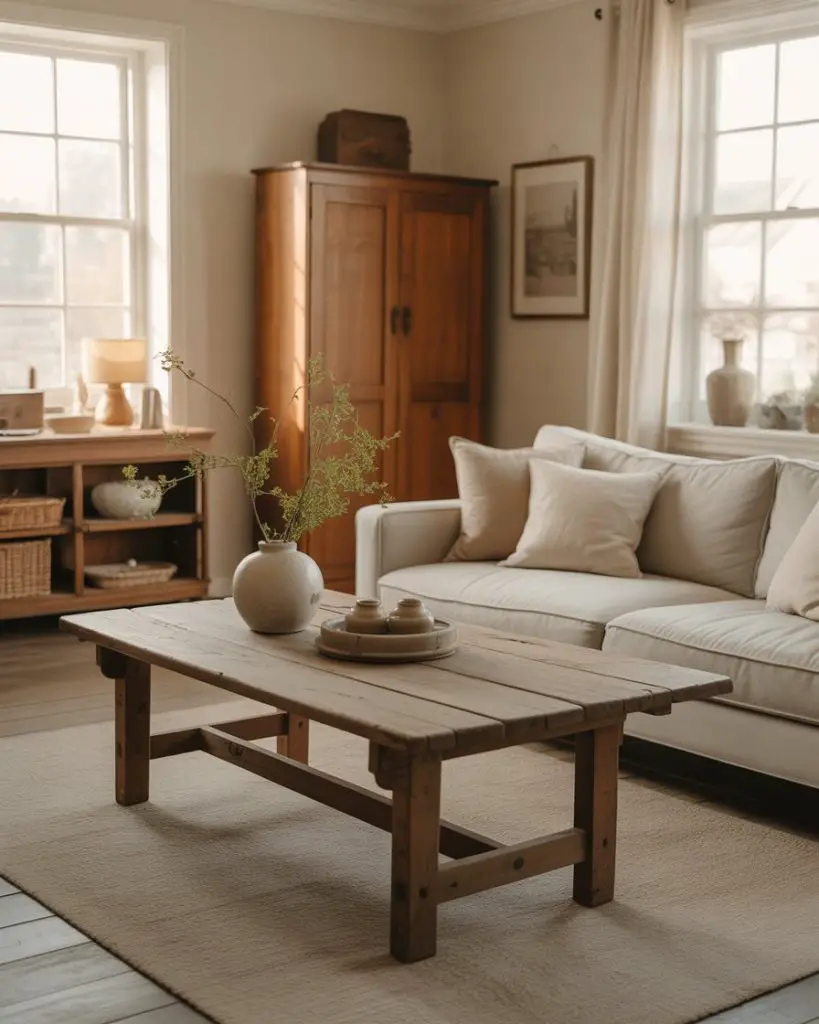
A family in Vermont shared that their most complimented piece is a pine farmhouse table from the 1890s that serves as their living room console—purchased for $400 at a local estate sale and requiring only cleaning and conditioning. Shopping estate sales, auctions, and architectural salvage yards often yields better quality at lower prices than antique stores, though you’ll need patience and a willingness to make repairs. Avoid pieces that need extensive structural work unless you have restoration skills; focus on finding items with great bones and authentic wear rather than damaged furniture masquerading as shabby chic.
14. TV Wall Integration with Shiplap or Board-and-Batten
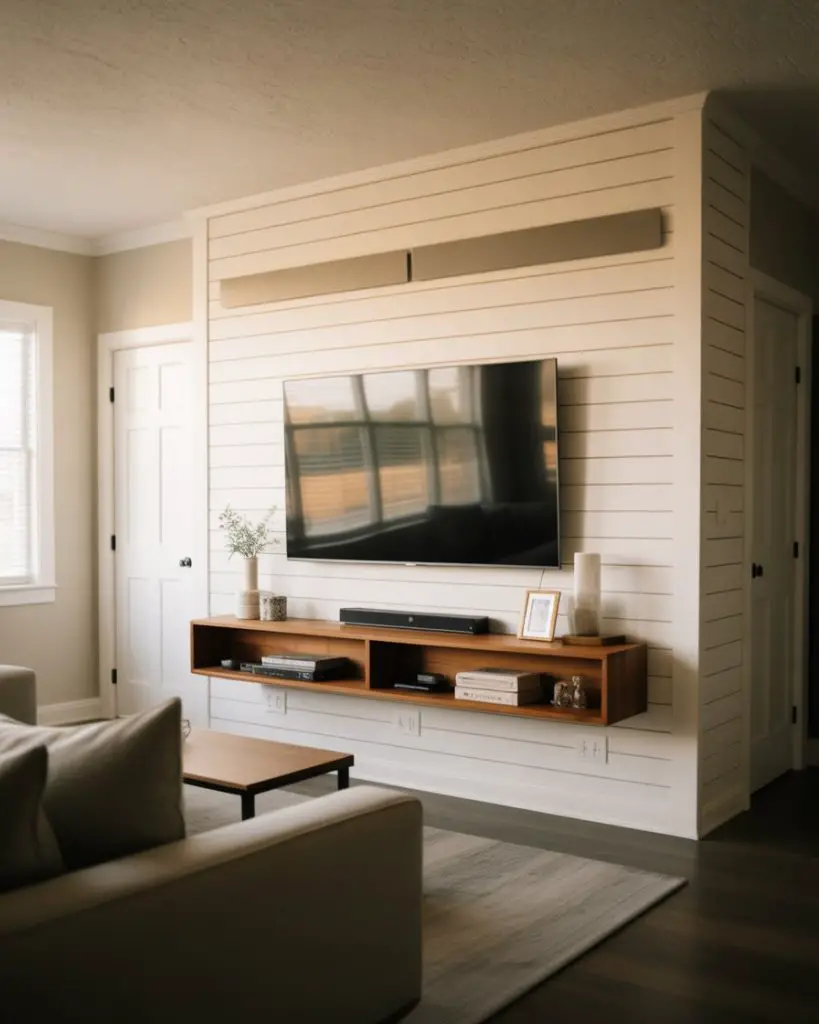
Creating a dedicated TV wall using shiplap, board-and-batten, or reclaimed wood planking helps the screen feel integrated rather than like an afterthought in your farmhouse living room. Painting the treatment in the same color as surrounding walls but with a subtle texture difference creates sophisticated depth, while contrasting colors—like dark charcoal against cream walls—make the TV wall a genuine focal point. This approach works equally well with wall-mounted screens or when the TV sits in a built-in console. The architectural detail provides the visual interest farmhouse style requires while solving the modern challenge of incorporating technology gracefully. 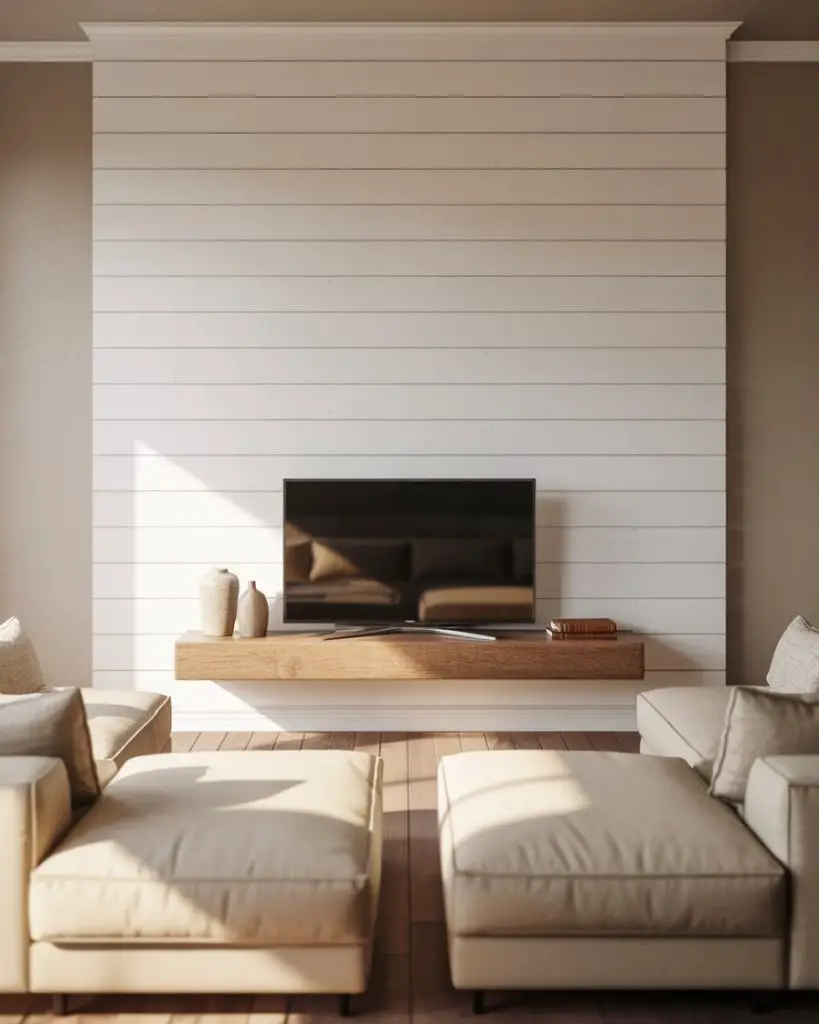
This works best in rectangular rooms where one wall naturally serves as the viewing focal point—typically the longest wall or one opposite main seating. DIY shiplap installation costs approximately $1.50-3 per square foot for materials if you’re comfortable with basic carpentry, while professional installation runs $4-8 per square foot including labor. The most common mistake is placing the TV too high; the center of the screen should be at seated eye level, typically 42-48 inches from the floor for standard sofa heights.
15. Black and White Photography Gallery Wall
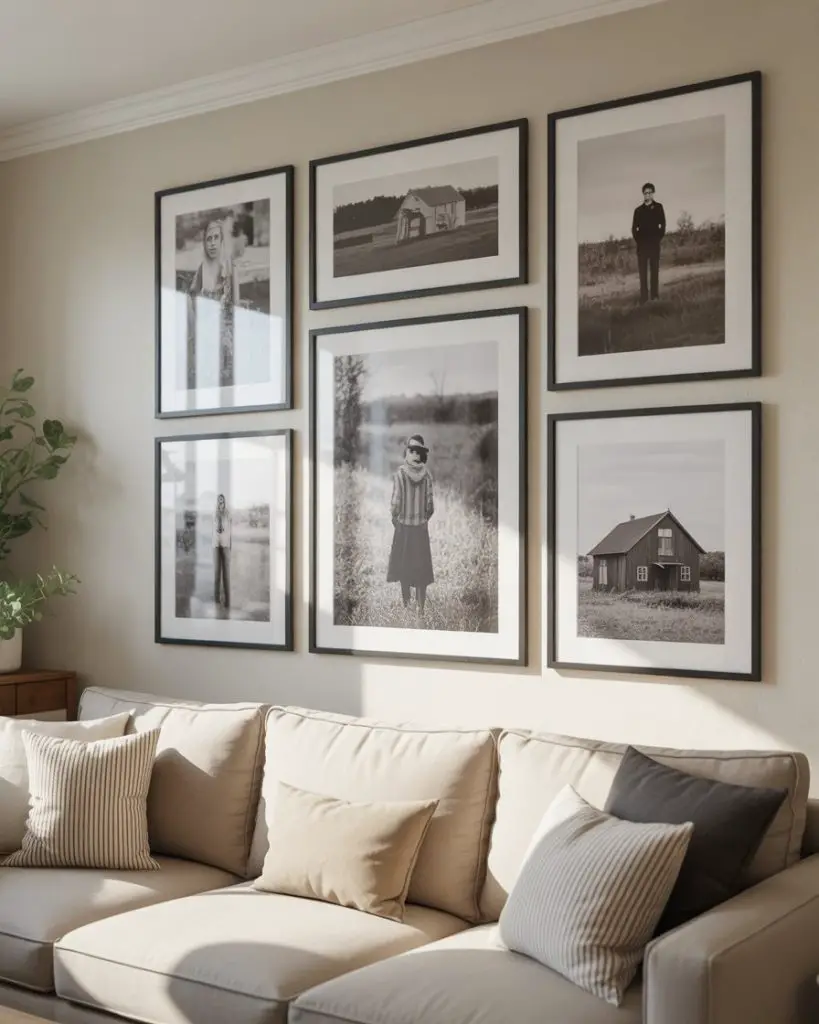
A curated gallery wall featuring black and white photography creates sophisticated wall decor that feels timeless in farmhouse living rooms. Mix frame sizes and orientations while maintaining consistent matting (white or cream) and frame color (black or natural wood) for cohesive visual impact. Choose images with personal meaning—family portraits, landscape photography from meaningful trips, architectural details—rather than generic art prints. The modern farmhouse aesthetic appreciates this classic approach because it provides strong visual interest without introducing color that might compete with other design elements. The monochromatic scheme also allows easy seasonal decorating changes in the rest of the room. 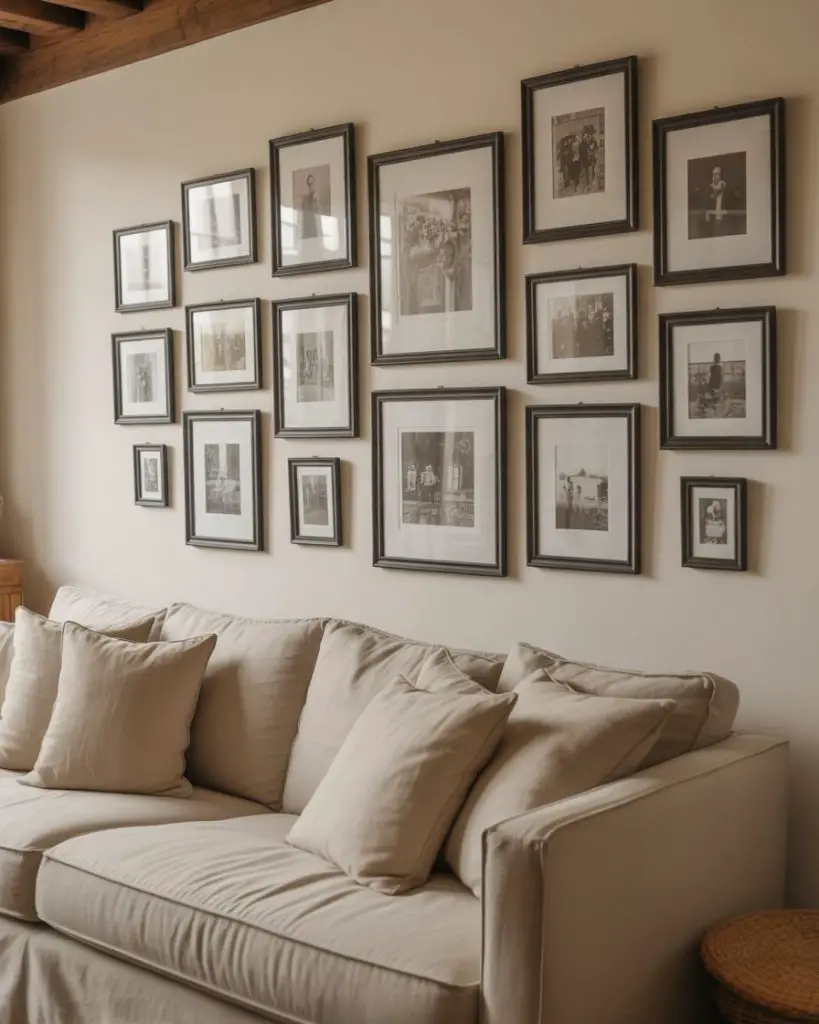
Gallery walls intimidate many homeowners, but the process becomes manageable when you create a paper template first—trace each frame, tape templates to the wall, adjust until satisfied, then hang the actual pieces matching your template placement. Standard frame sizes (8×10, 11×14, 16×20) are significantly cheaper than custom framing; IKEA and Target offer frames for $10-30 that work beautifully in farmhouse settings. Plan for odd numbers (7, 9, or 11 pieces) and aim for 2-3 inches of space between frames for a professional look that doesn’t feel crowded.
16. Modern Coastal Farmhouse with Nautical Subtlety
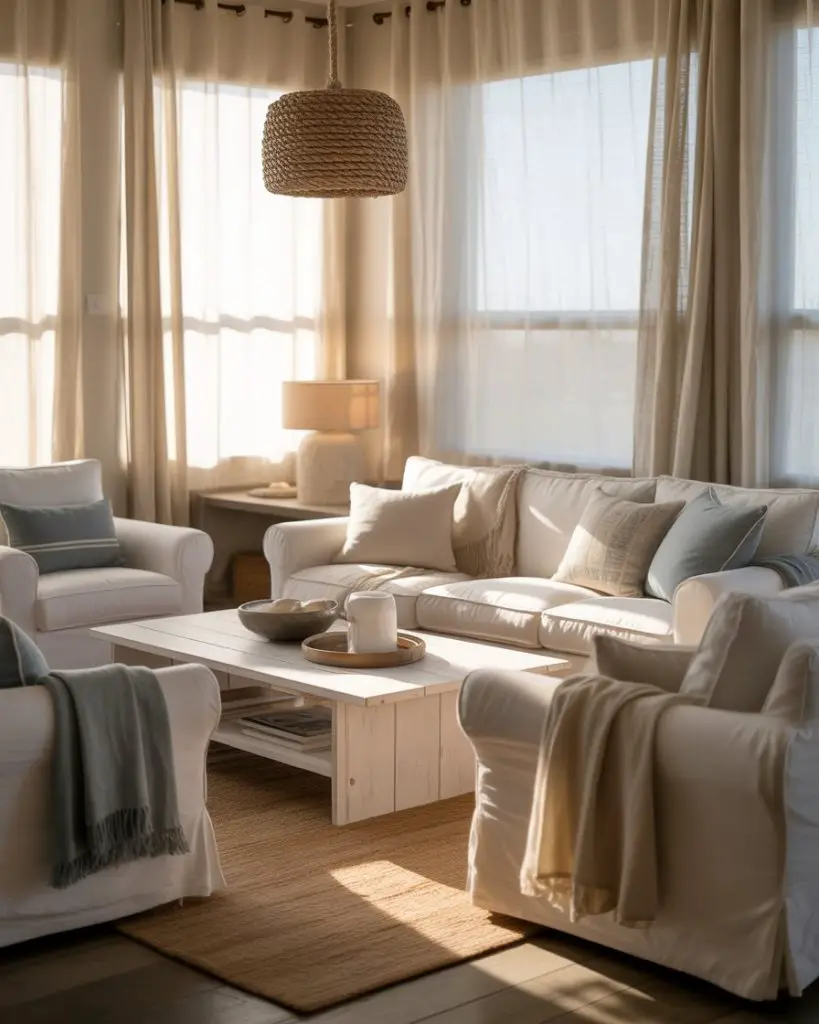
The modern coastal approach to farmhouse design brings together the best of both aesthetics—weathered wood, soft blues, natural textures—while avoiding obvious beachy clichés. Incorporate rope-wrapped lighting fixtures, driftwood sculptures, or linen fabrics in seafoam or aqua tones against your neutral farmhouse base. The key is subtlety; instead of seashell collections and anchor motifs, focus on colors and textures that evoke coastal living—bleached wood tones, sea glass blues, sandy beiges. This creates a refreshing interpretation of country style that feels vacation-inspired without being theme-park obvious. 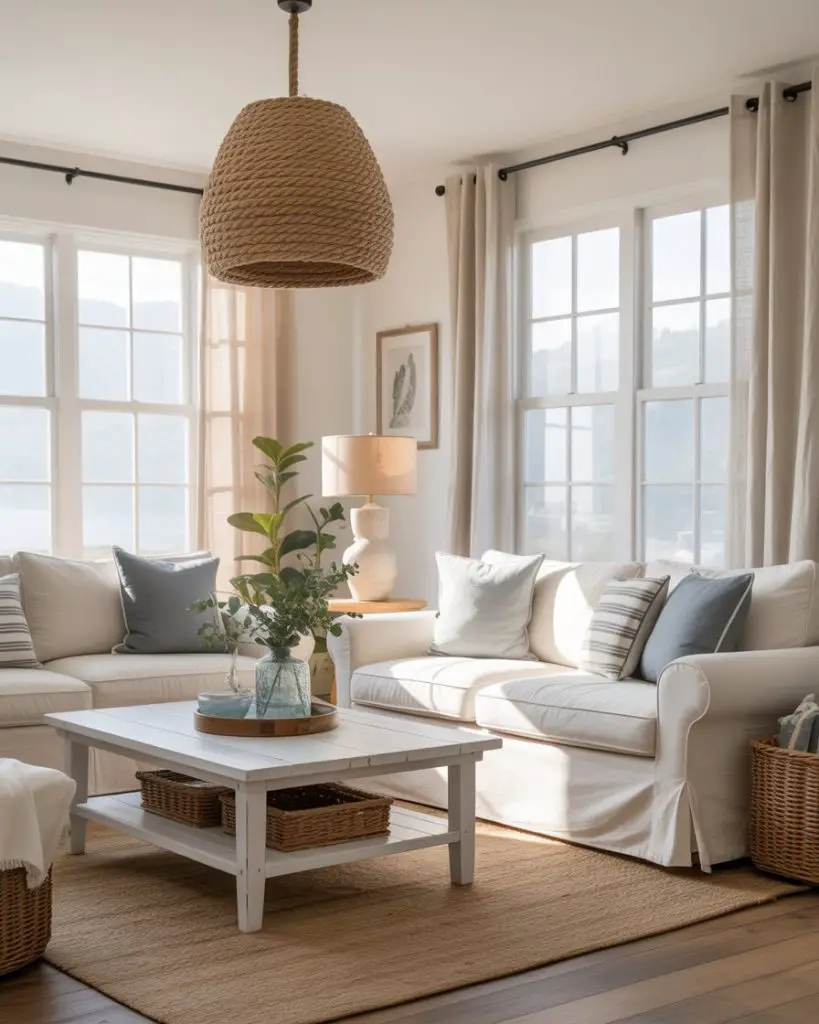
This style appeals particularly to homeowners in suburban and urban areas who want to bring vacation serenity into their everyday environment. The soft blues and greens work psychologically to reduce stress and promote relaxation—research consistently shows cool colors with low saturation create calming spaces. Budget-wise, coastal farmhouse can be achieved affordably through paint and textile choices; save on basics like slipcover sofas (often under $1,000 at retailers like IKEA or Pottery Barn) and splurge on one or two quality lighting fixtures that really capture the aesthetic.
17. Grey Living Room with Layered Textiles
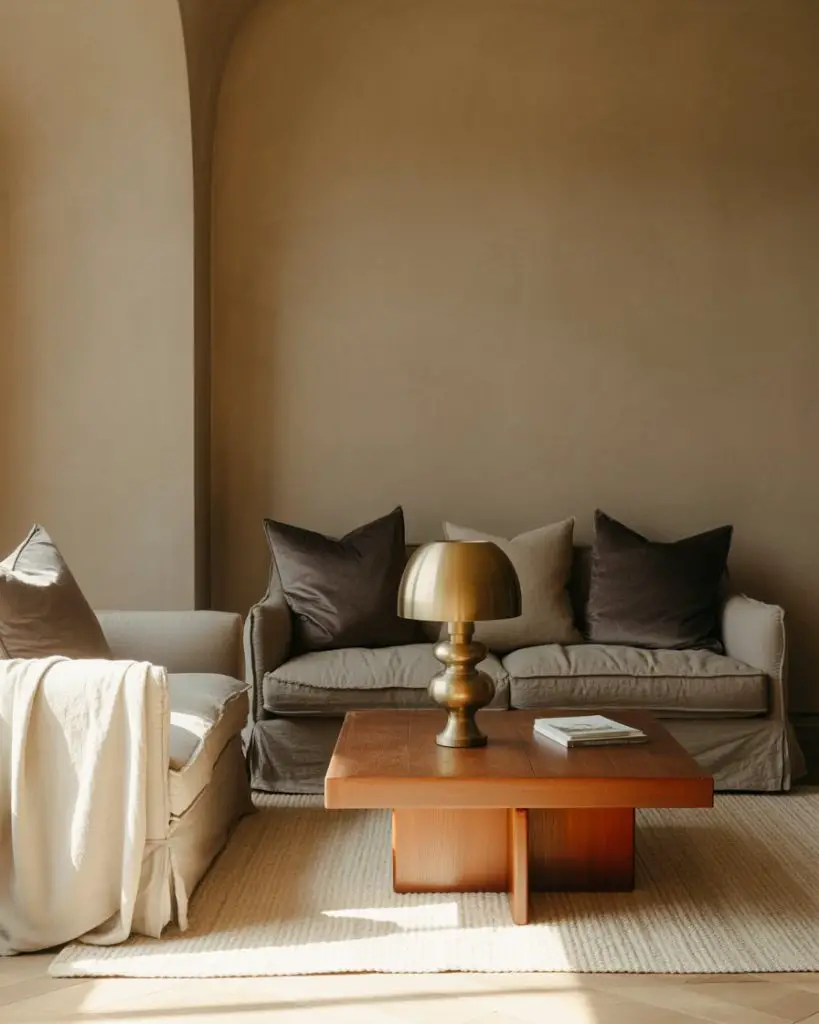
Building an entire grey living room palette might sound risky, but when executed with careful attention to undertones and texture variation, the result feels sophisticated and cozy modern. Start with greige walls (gray with warm beige undertones), add medium-gray upholstered seating, layer in darker charcoal accents through pillows or throws, and ground everything with a light gray or cream rug. The critical element is introducing varied textures—linen, velvet, chunky knits, smooth leather—to prevent the space from feeling flat or monochromatic. Warm wood furniture and brass or gold metal finishes prevent the gray from feeling cold or institutional. 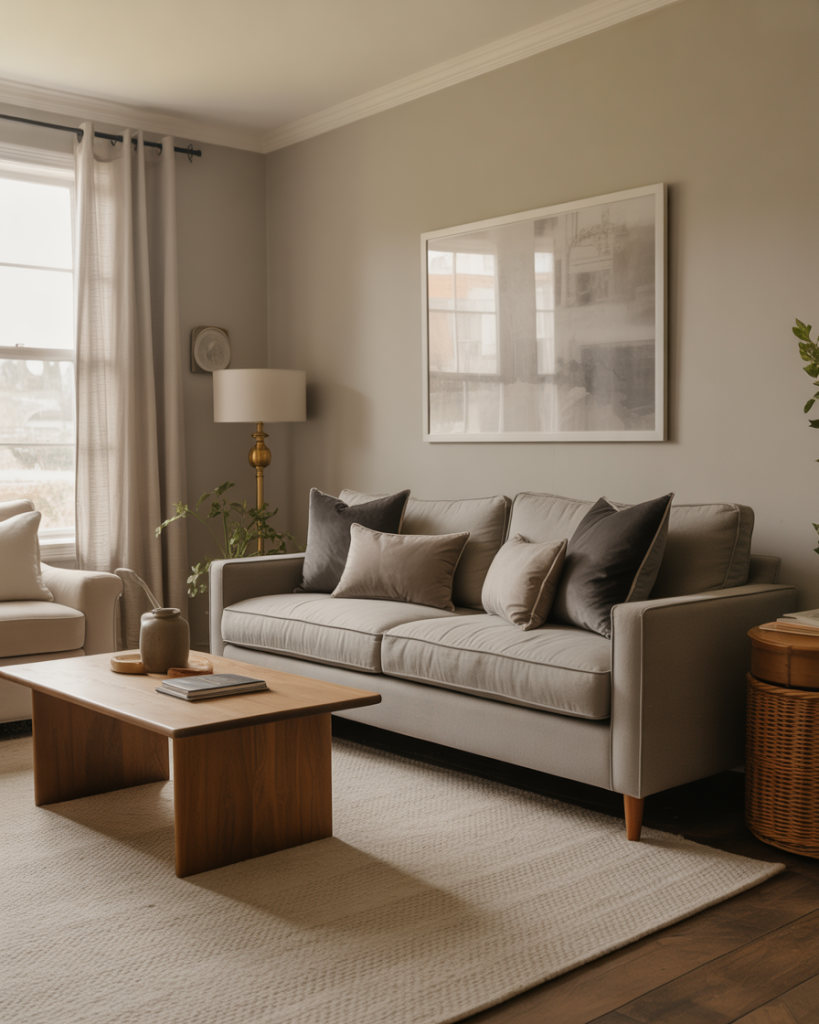
Grey’s popularity persists because it’s significantly more forgiving than white in terms of showing dirt, handprints, and general wear—a practical consideration that American families with children especially appreciate. The color also photographs beautifully in both natural and artificial light, important for homeowners who share their spaces online. When selecting grays, always test samples next to your existing wood tones and flooring; some grays have blue or purple undertones that clash with warm oak or pine, while others have green undertones that look muddy against certain paint colors.
18. European-Inspired Linen Slipcovers
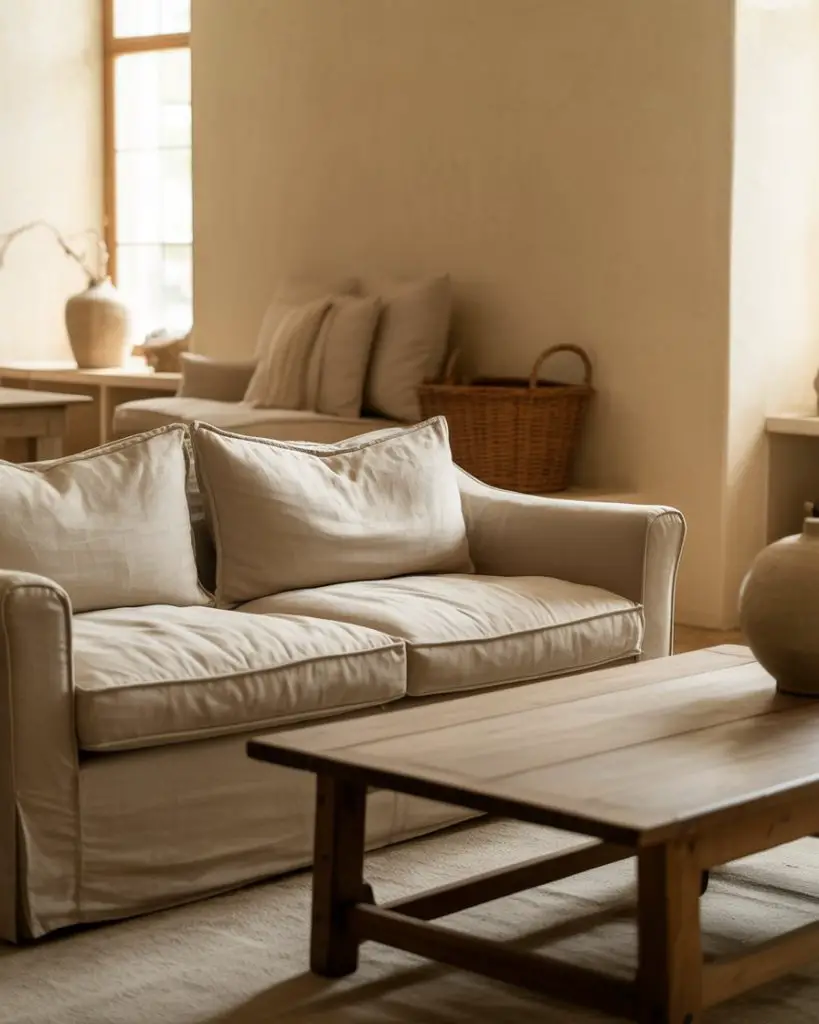
The European farmhouse tradition of linen slipcovers brings casual elegance and practical washability to American living rooms. Natural, undyed linen in oatmeal or flax tones drapes beautifully over sofas and chairs, creating soft folds and a relaxed silhouette that feels effortlessly chic. Unlike fitted upholstery, slipcovered pieces can be laundered when needed—invaluable for homes with pets, children, or frequent entertaining. The slightly rumpled quality of linen actually looks better than perfectly smooth fabrics in farmhouse settings, embracing the lived-in aesthetic that defines this style. Pair slipcovered seating with more structured elements—a clean-lined coffee table, geometric rug—to prevent the room from feeling too soft. 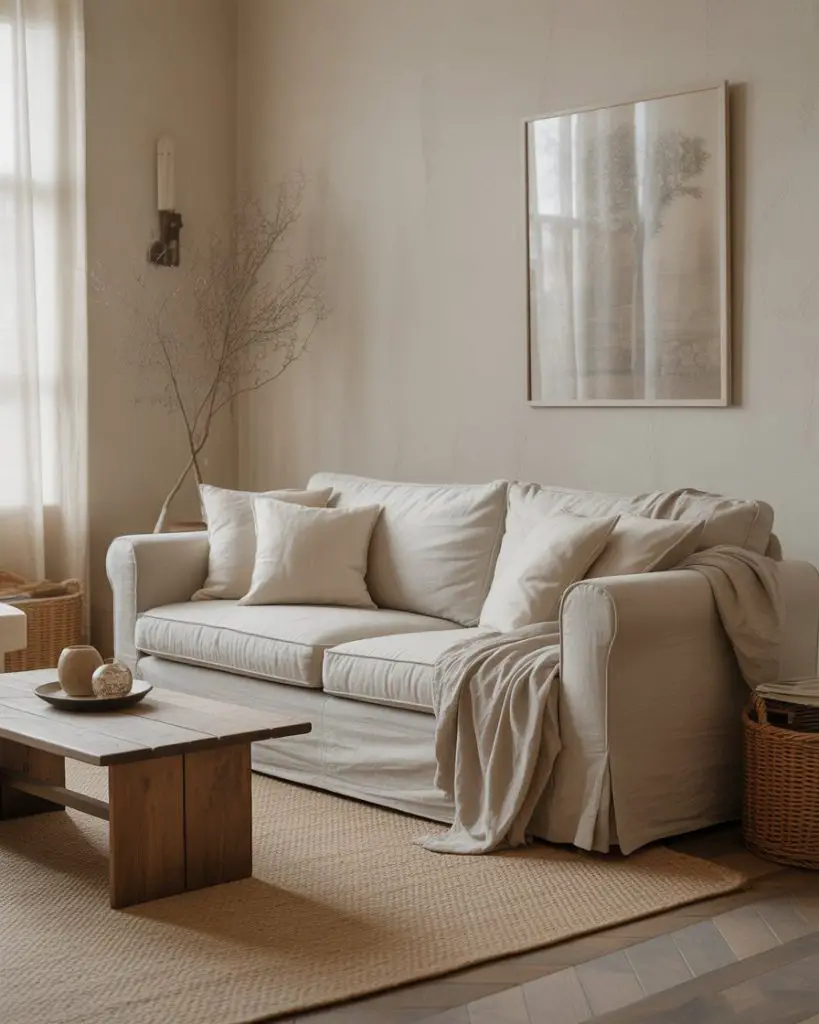
Real European farmhouses have used slipcovers for centuries as a practical solution for protecting valuable upholstery, and this tradition translates beautifully to modern American homes. Quality linen slipcovers represent an investment—expect $600-1,200 for a sofa from makers like Bemz, Comfort Works, or Pottery Barn—but they extend furniture life significantly and can be replaced more affordably than reupholstering. Pre-wash linen before making slipcovers if sewing them yourself; linen shrinks 3-5% in its first wash, and accounting for this prevents future fitting issues.
19. Vintage Lighting Fixtures as Focal Points
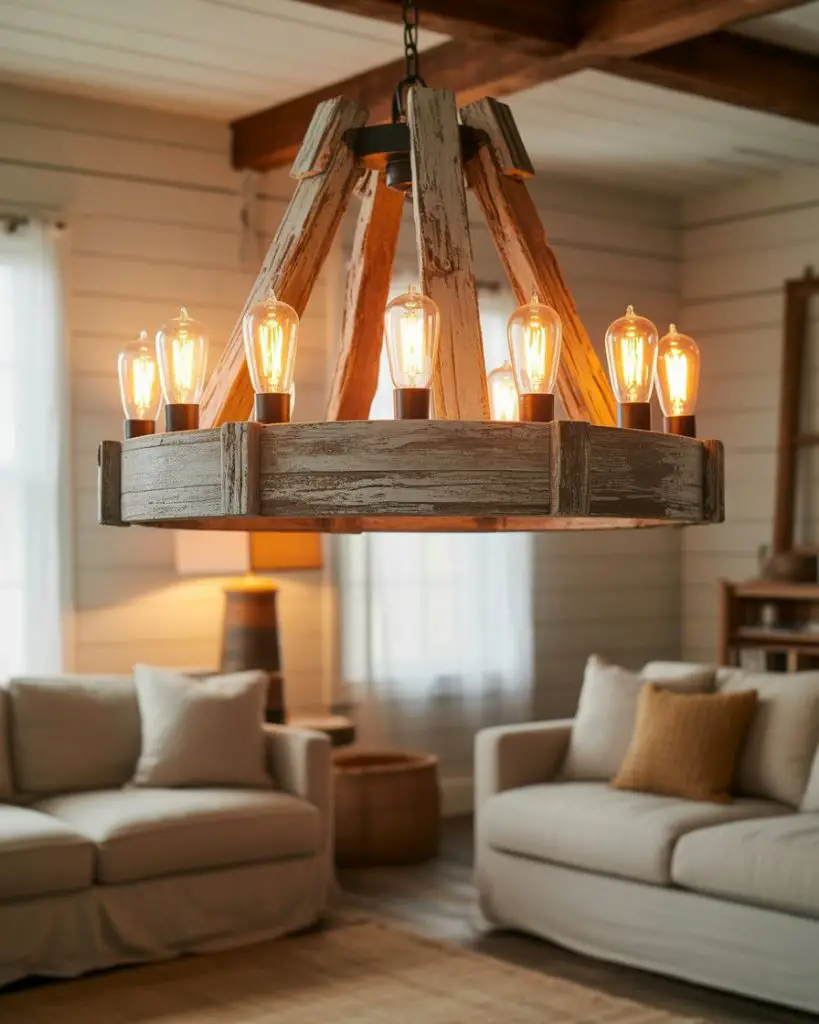
Oversized vintage lighting—a weathered wood chandelier, industrial pendant cluster, or antique farmhouse lanterns—creates instant architectural interest in living rooms with standard ceilings. These fixtures draw the eye upward and establish the room’s style instantly, making them worthy investment pieces that anchor your entire design. Look for fixtures with patina, character, and substantial presence; avoid overly delicate or small-scale options that get lost in the space. Modern rustic interpretations often feature Edison bulbs, exposed wiring, or mixed materials like wood and metal that bridge historical and contemporary aesthetics. 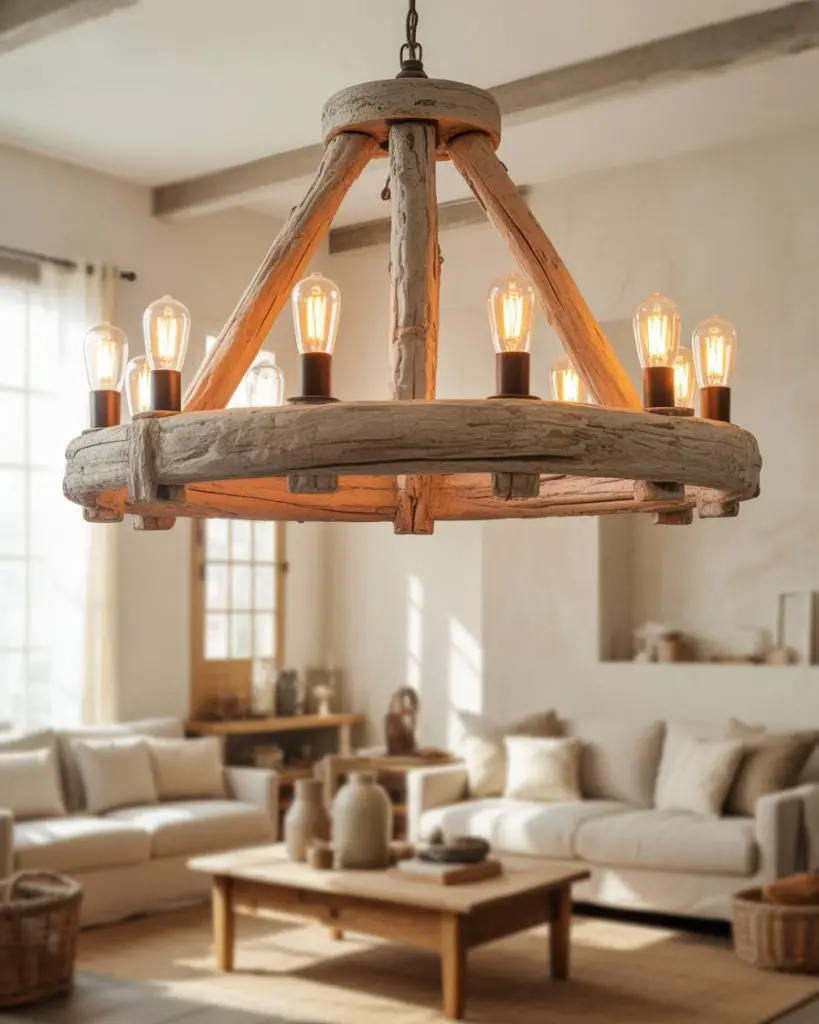
Lighting is where budget-conscious homeowners should consider splurging; a $500-900 statement fixture creates more impact than the same money spent on multiple smaller purchases. Installation requires proper ceiling support—chandeliers weighing 50+ pounds need ceiling joists or blocking, not just drywall anchors, so factor in electrician costs if you’re uncertain about existing support. The most common mistake is hanging fixtures too high; chandelier bottoms should sit 7-8 feet above the floor in rooms with standard 8-foot ceilings, allowing clearance while maintaining visual presence.
20. Layered Neutral Rugs for Depth and Comfort
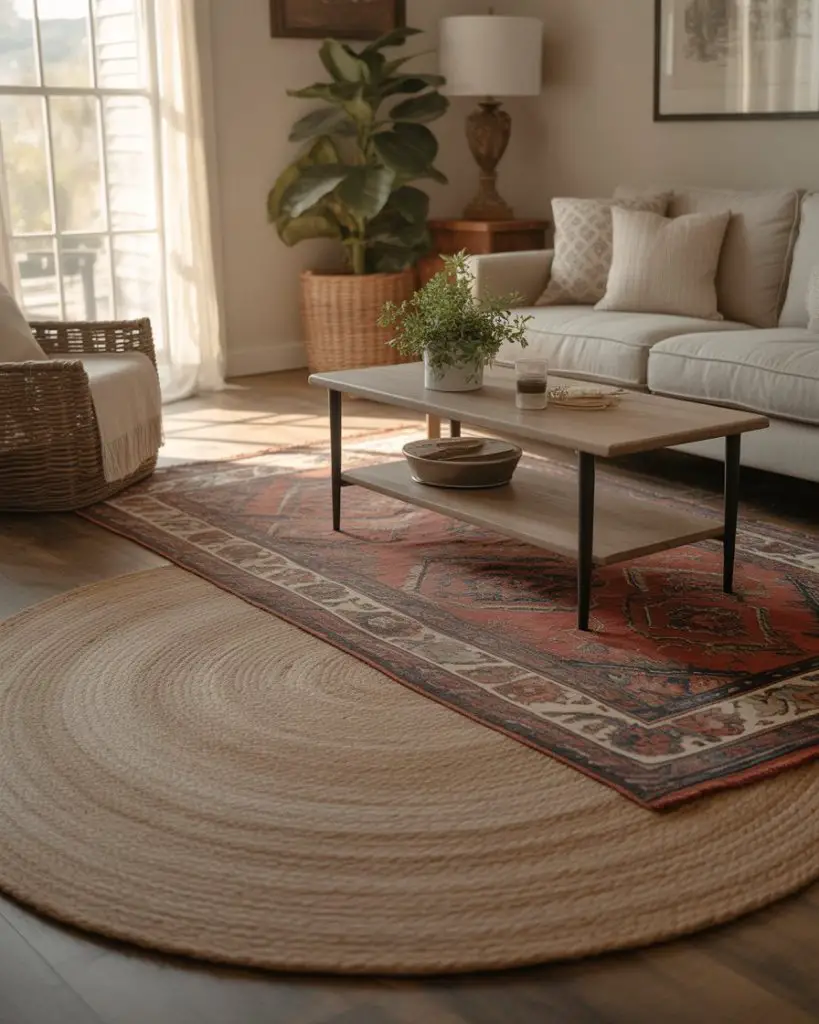
Layering rugs—typically a large natural fiber jute or sisal base with a smaller patterned or textured rug on top—creates the visual depth and cozy comfort that defines successful farmhouse living rooms. This technique allows you to introduce pattern and color through the top rug while maintaining the organic, grounding quality of natural fibers underneath. The layered approach also solves the common problem of standard rug sizes not quite fitting room dimensions; a 9×12 jute rug topped with a 5×7 vintage Turkish rug can perfectly define a seating area that falls between standard size options. This strategy reads as intentionally layered rather than “we couldn’t find the right size.” 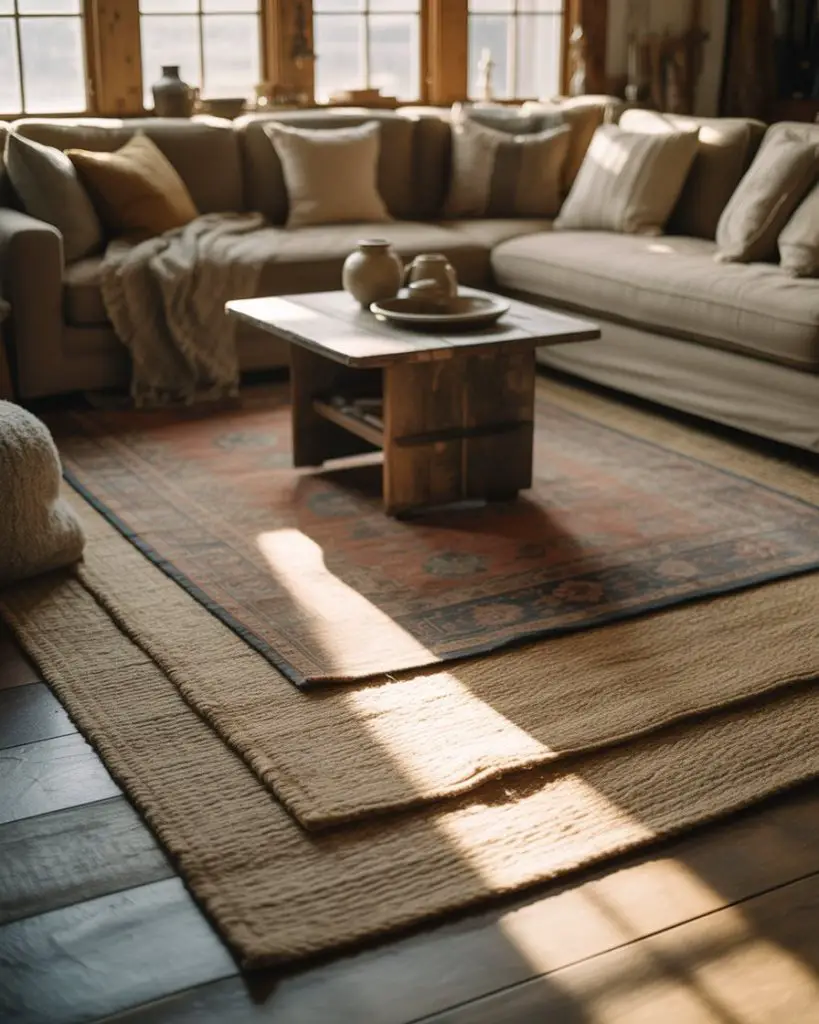
Rug layering proves surprisingly budget-friendly because large natural fiber rugs cost significantly less than similarly sized wool or synthetic options—a 9×12 jute rug typically runs $200-400 compared to $800-2,000 for quality wool. You can then invest in a smaller statement rug ($300-600 for a good vintage or handwoven piece) that provides character without breaking the budget. Practical tip: use rug pads between layers to prevent shifting, especially in high-traffic areas where the top rug might slide and create a tripping hazard.
21. Seasonal Styling Flexibility with Neutral Foundations
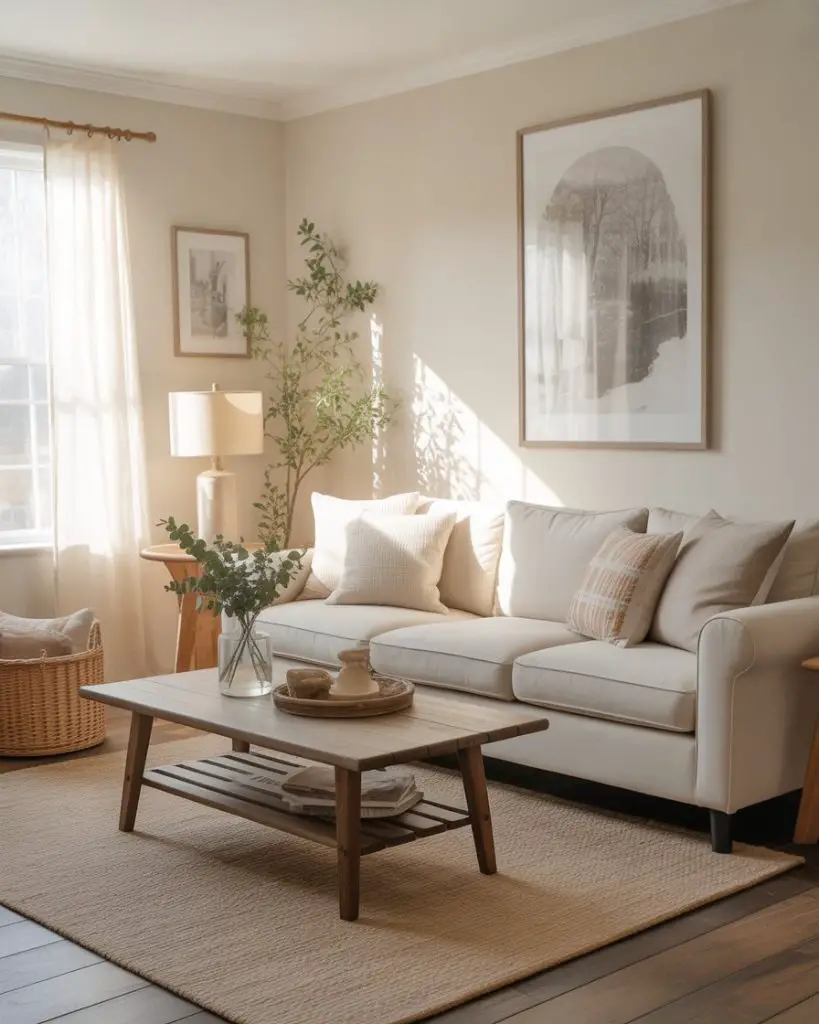
The smartest farmhouse living rooms are designed with neutral foundations—paint colors, major furniture, flooring—that allow easy seasonal styling through textiles, accessories, and decor. This approach means you can shift from cozy fall (rust pillows, chunky knits, amber accents) to fresh spring (soft greens, linen throws, botanical prints) to coastal summer (blues, whites, lighter textures) without requiring major purchases or renovations. Americans increasingly value this flexibility as it allows personal expression and prevents spaces from feeling static or stale. Build your base with quality neutrals, then have fun with changeable elements that reflect seasons, holidays, or simply your evolving preferences. 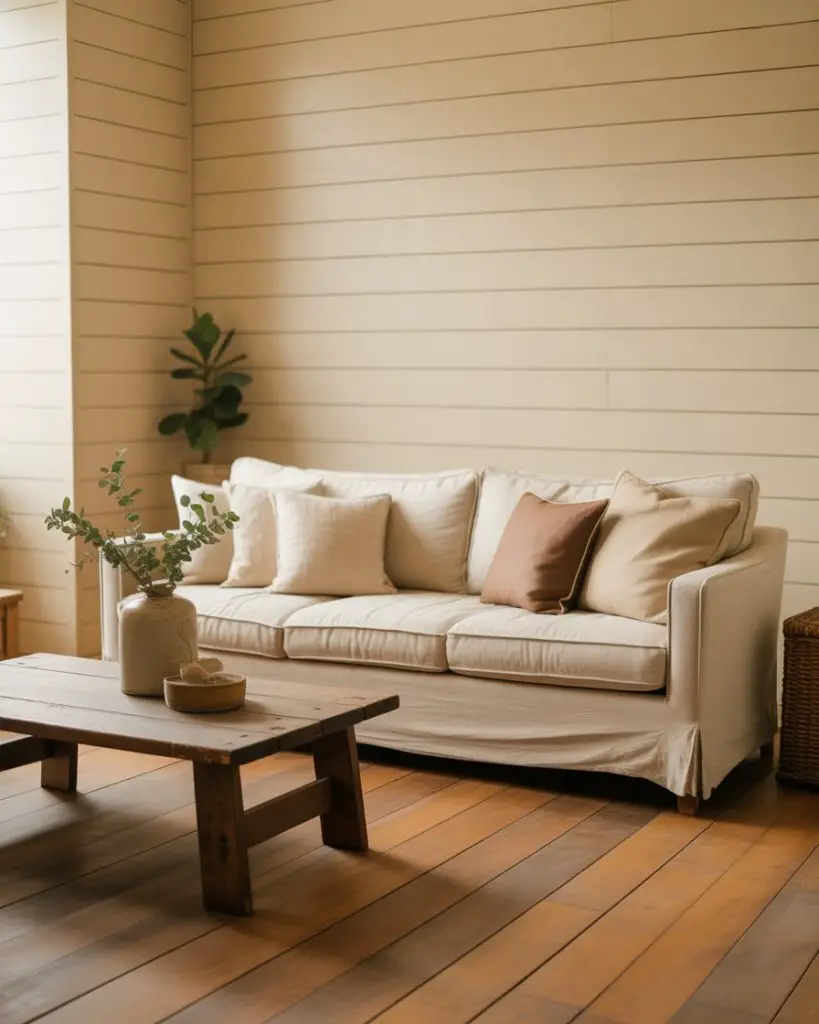
This strategy proves remarkably economical over time—instead of replacing major furniture pieces every few years to stay current, you’re updating with $100-300 in seasonal textiles and accessories. Store off-season items in labeled bins (one for fall, one for spring/summer) to make transitions effortless twice a year. The neutral foundation also makes your home more marketable should you decide to sell; potential buyers can envision their own style more easily in neutral spaces than in rooms with strong, specific color schemes or heavily themed decor.
Conclusion
Creating a farmhouse living room that feels both authentic and current in 2026 comes down to thoughtful balance—honoring the style’s rustic roots while incorporating the comfort, function, and refined simplicity that modern American life demands. Whether you’re drawn to moody dark walls, coastal touches, industrial accents, or classic European-inspired elegance, the common thread is creating spaces that feel genuinely lived-in, layered over time, and deeply personal. We’d love to hear which of these ideas resonates most with your own farmhouse vision—share your thoughts, questions, or your own styling tips in the comments below and join the conversation about what farmhouse style means to you in this new year.