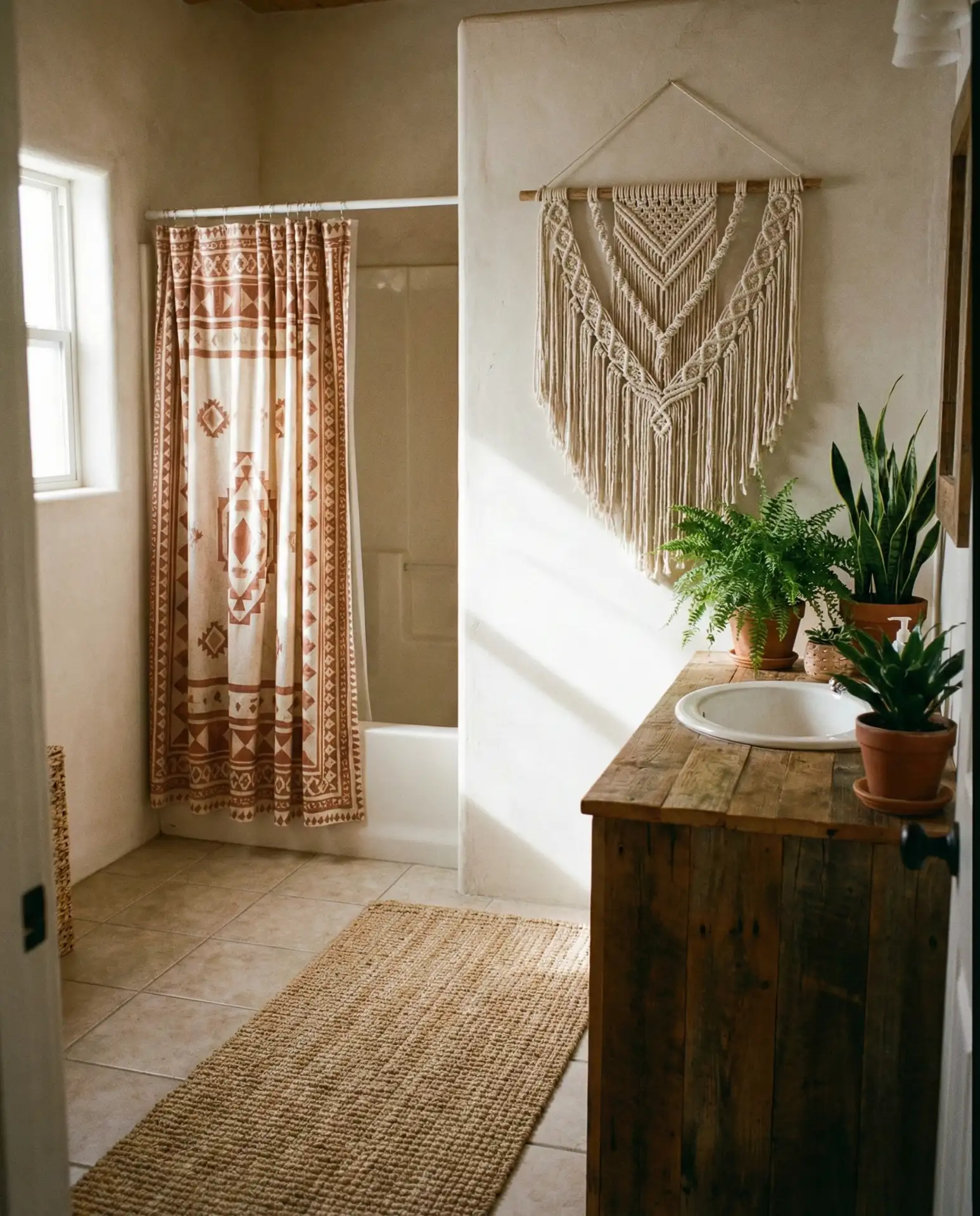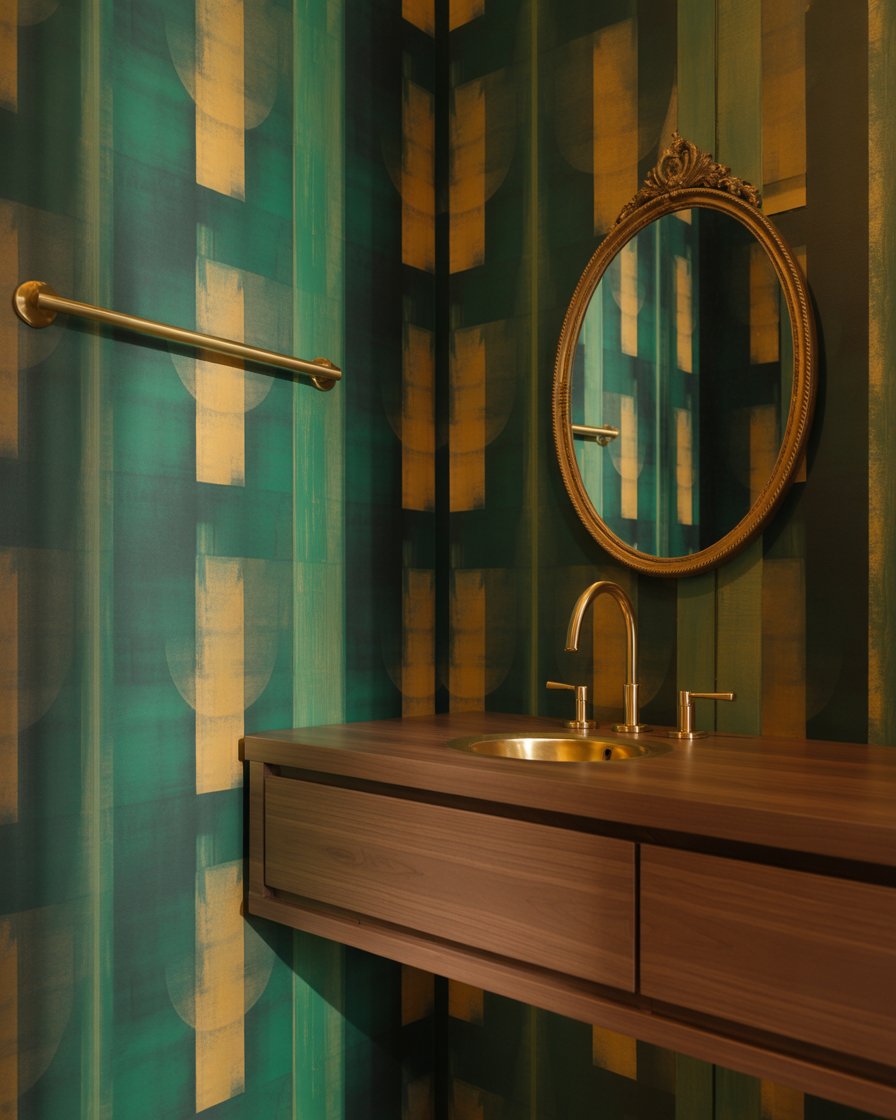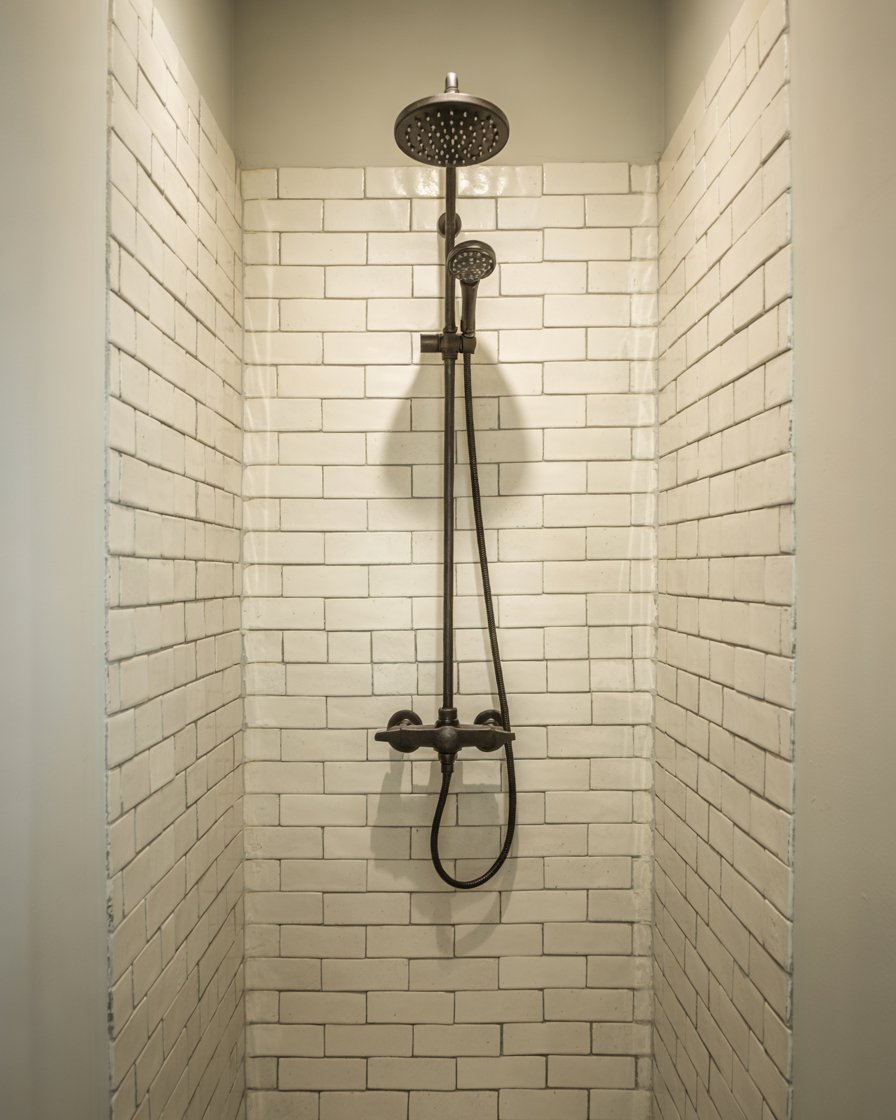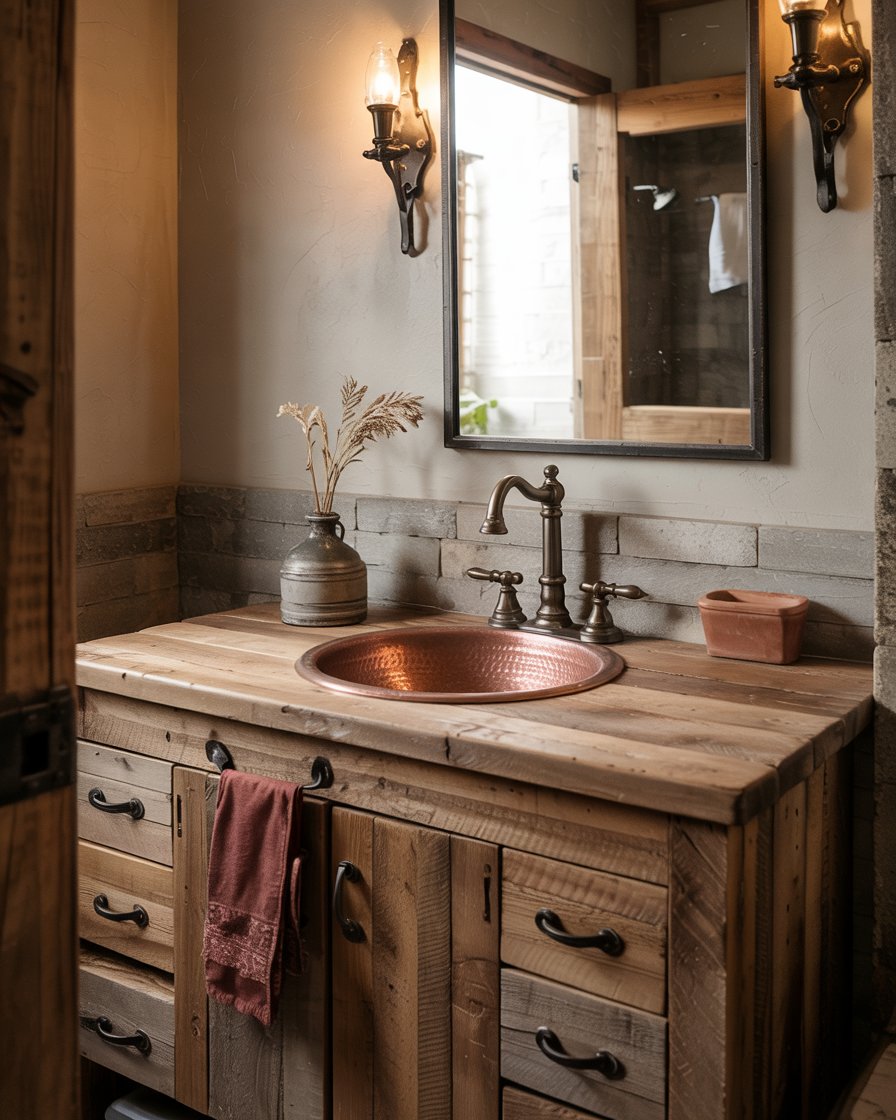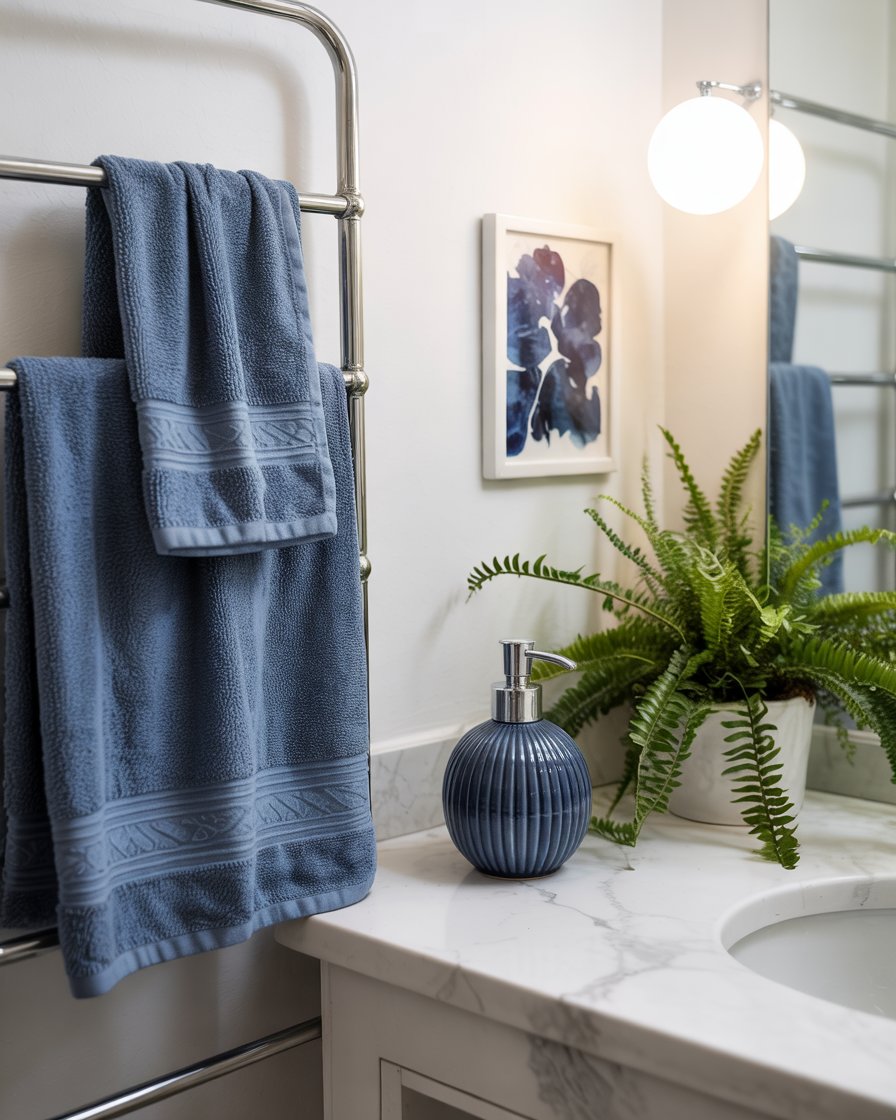
Green tile is having a major moment in 2026, and it’s easy to see why. From deep forest tones to soft minty hues, green brings a sense of calm, connection to nature, and timeless elegance to any bathroom. Americans are turning to Pinterest in droves for green tile inspiration, searching for ways to make their bathrooms feel like personal sanctuaries without sacrificing style. Whether you’re renovating a powder room or dreaming up a spa-like retreat, green tile offers endless possibilities. In this guide, you’ll discover inspiring ideas that blend color, texture, and smart design to help you create a bathroom that feels both current and enduringly beautiful.
1. Dark Green Subway Tile with Brass Fixtures
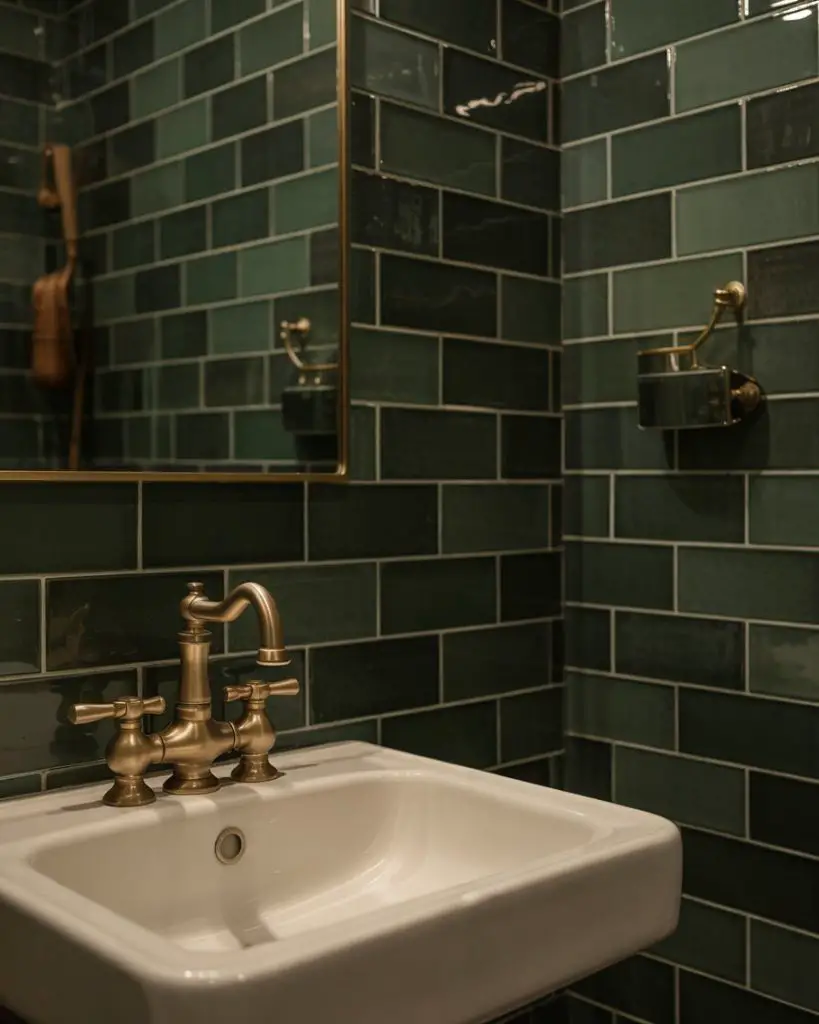
A dark green subway tile wall instantly adds drama and sophistication to a bathroom, especially when paired with warm brass or gold fixtures. This look works beautifully in both small powder rooms and larger primary bathrooms, offering a rich backdrop that feels both moody and inviting. The classic subway layout keeps things grounded, while the deep green shade makes the space feel cocooned and intimate. It’s a choice that balances timeless appeal with a bold, contemporary edge. 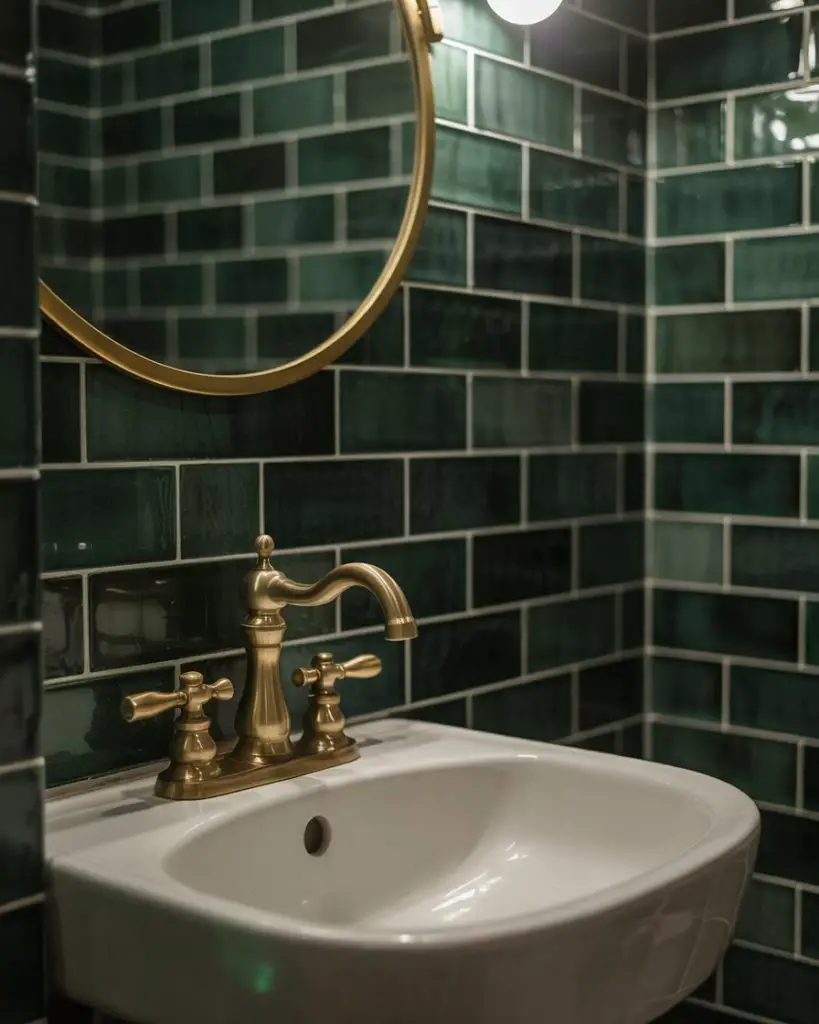
This style works best in homes with good natural light or layered lighting plans, as the dark walls can absorb light and make a space feel smaller if not thoughtfully lit. Consider adding sconces on either side of the mirror and a statement pendant overhead to keep the room feeling open and airy. The brass fixtures aren’t just decorative—they warm up the green and prevent the palette from feeling too cold or clinical, which is a common mistake with dark-toned bathrooms.
2. Mint Green Hexagon Floor Tile
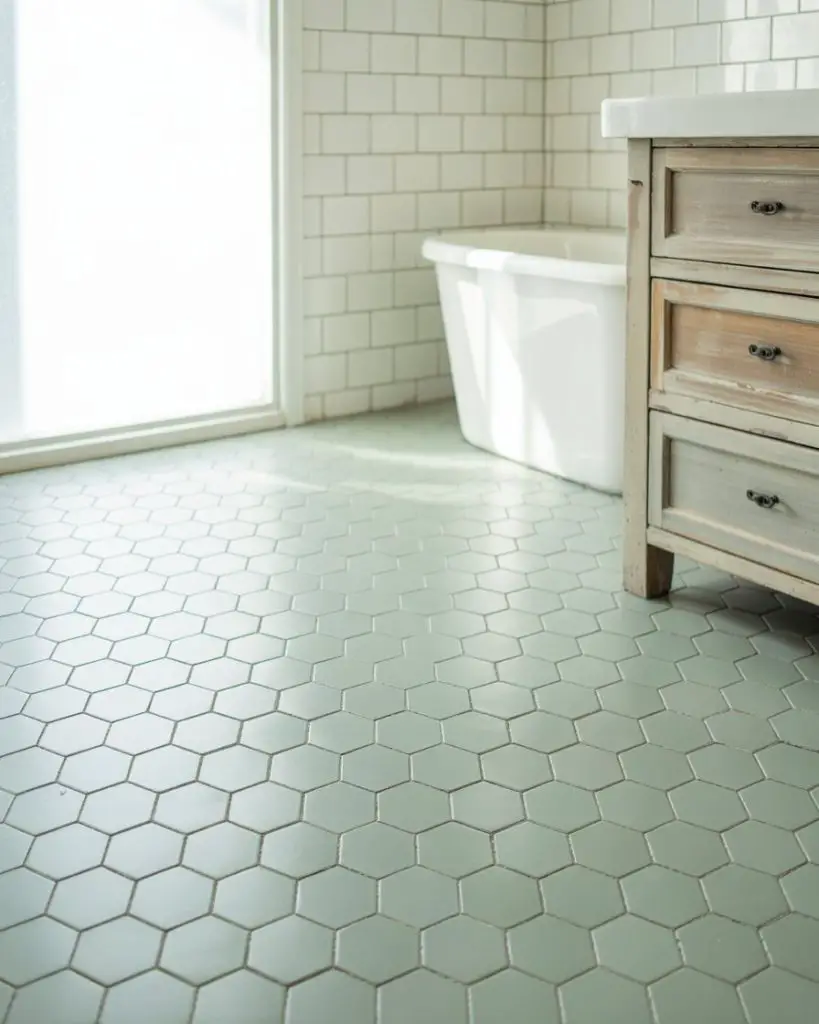
Hexagon floor tile in a soft mint green shade brings playful geometry and vintage charm to any bathroom. This design choice nods to mid-century and retro aesthetics while still feeling fresh and modern in 2026. The honeycomb pattern adds visual interest underfoot without overwhelming the space, making it ideal for bathrooms of any size. Pair it with white and natural wood accents to let the floor truly shine. 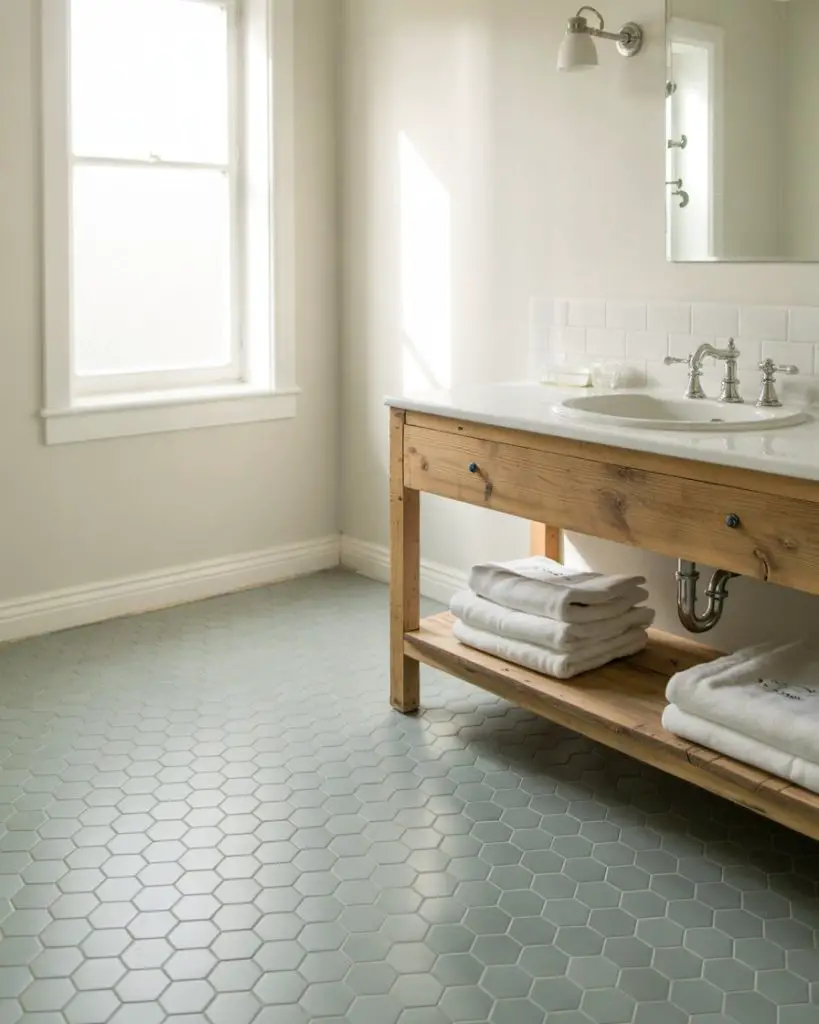
Many homeowners in the Pacific Northwest and New England love this look because it brings a sense of calm and nostalgia to their morning routines. A neighbor of mine installed mint hex tile in her 1920s bungalow bathroom, and she says it’s the one design choice that always gets compliments from guests. The key is keeping the grout lines crisp and clean—gray or white grout both work beautifully, but gray tends to hide wear better over time.
3. Olive Green Zellige Tile Shower
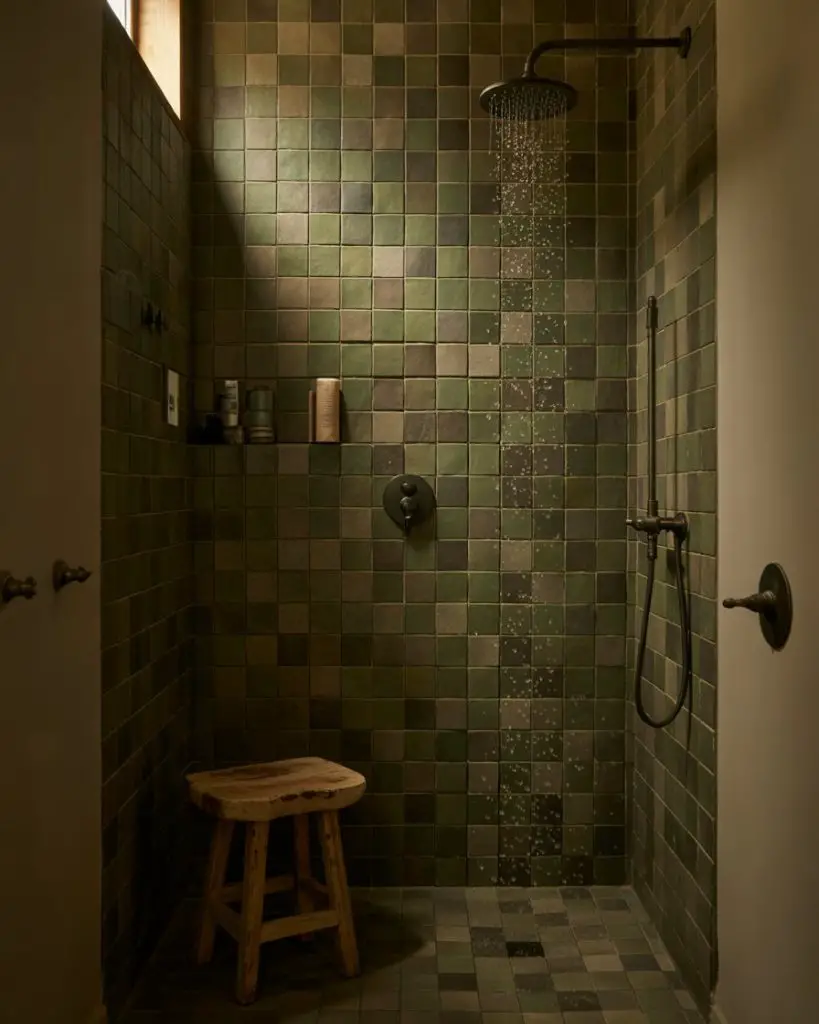
Handmade Moroccan zellige tile in olive green tones creates a textured, artisan feel in the shower that’s both organic and luxurious. The slightly irregular surface and subtle glaze variations catch the light beautifully, adding depth and warmth to the space. This style pairs particularly well with natural stone, matte black fixtures, and warm wood elements. It’s a sophisticated choice for anyone looking to move beyond builder-grade uniformity. 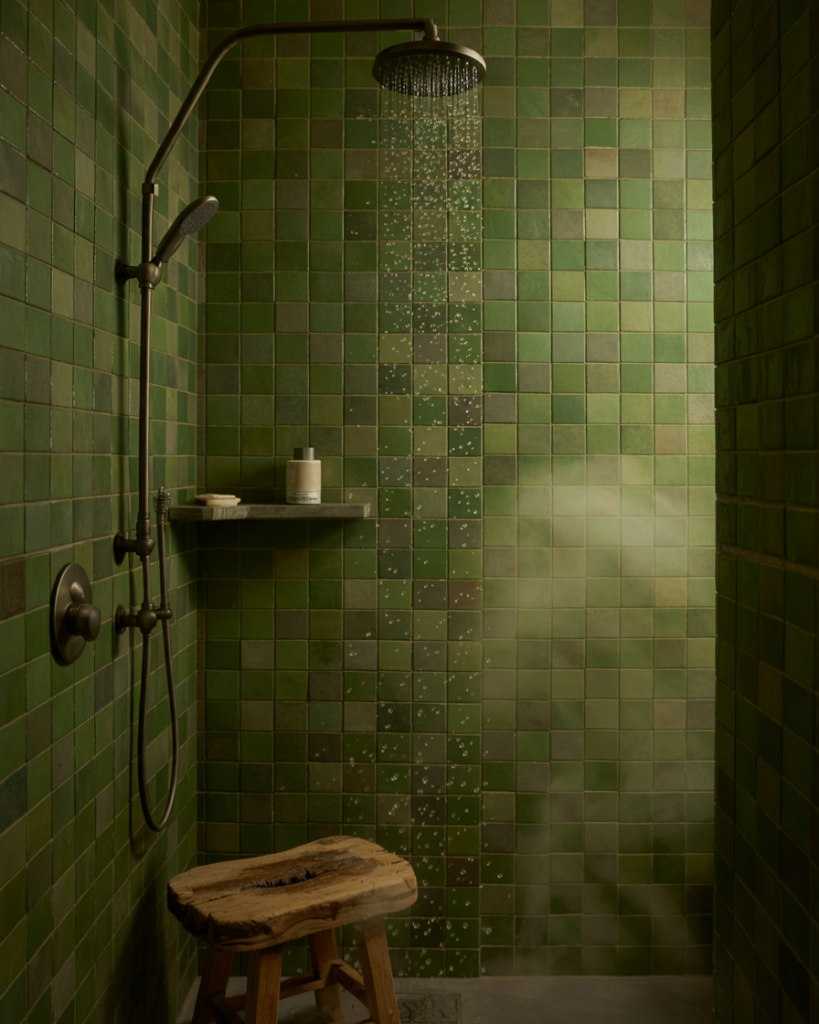
Where it works best: in larger showers with good ventilation and natural light, where the tile’s texture and color can be fully appreciated. Zellige tile does require a bit more maintenance than standard ceramic—it’s porous and benefits from sealing, especially in wet areas. But for many design-conscious homeowners, the character and craftsmanship are worth the extra care. Just avoid harsh chemical cleaners that can dull the glaze over time.
4. Sage Green Penny Round Tile Accent Wall
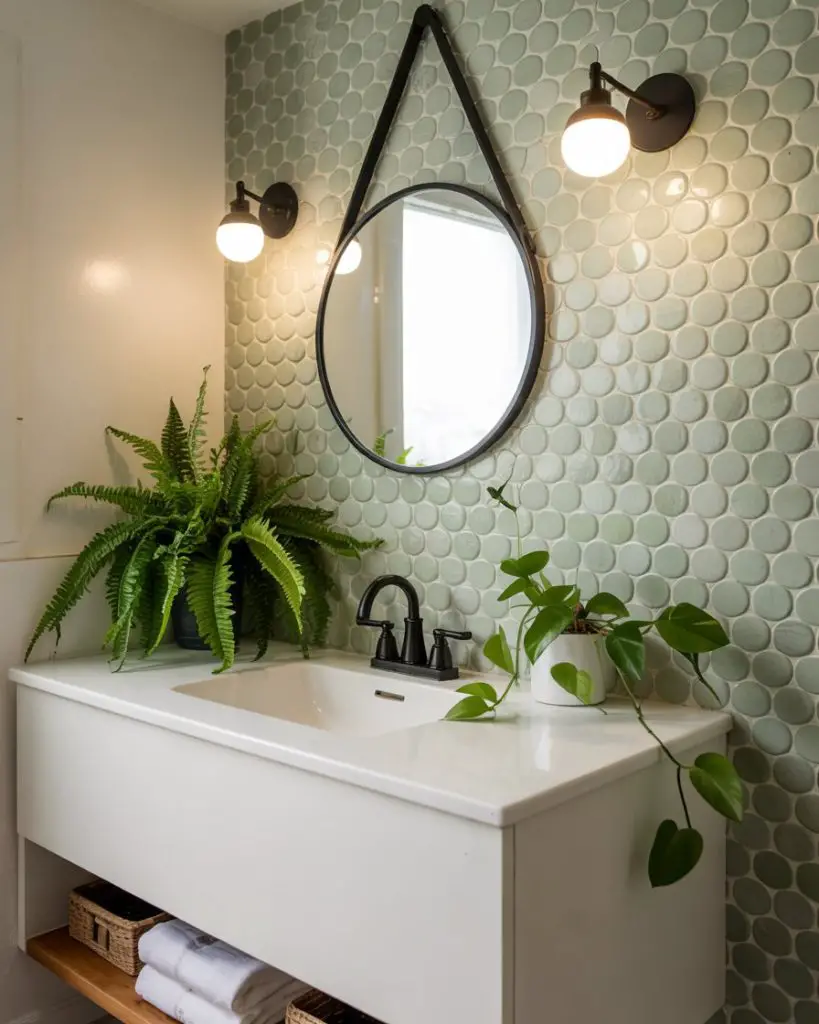
Penny round tile in a soft sage green creates a gentle, spa-like atmosphere that’s perfect for a bathroom accent wall behind the vanity or tub. The circular shape softens the space and adds a tactile, almost soothing quality that flat tile can’t replicate. This is a light green that works well in smaller bathrooms or those with limited natural light, as it reflects rather than absorbs illumination. Combine it with white cabinetry and matte black hardware for a balanced, contemporary look. 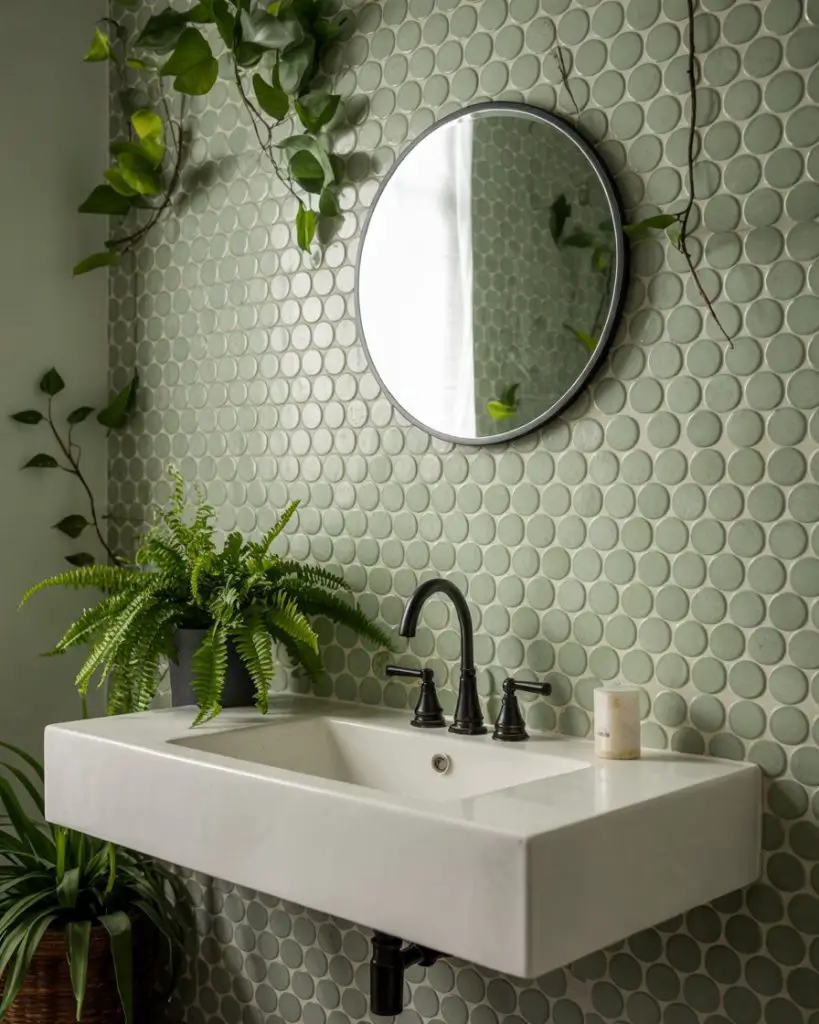
Practical insight: penny round tile takes longer to install than larger formats due to the sheer number of individual pieces, which can add to labor costs. Budget around $12–$18 per square foot for materials and $8–$15 per square foot for professional installation in most U.S. markets. The result, however, is a bathroom that feels thoughtfully designed and visually interesting without being overly trendy or loud.
5. Emerald Green Large Format Tile Behind Freestanding Tub
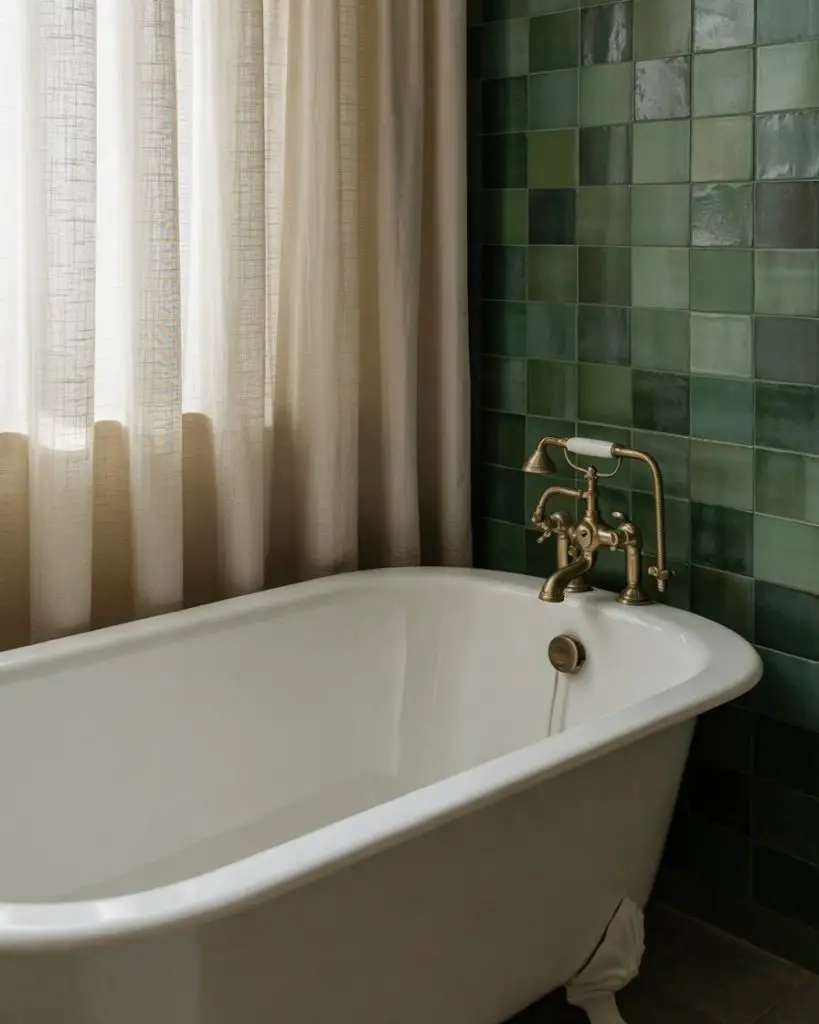
Using large format tile in a rich emerald green behind a freestanding tub creates an instant focal point and a sense of luxury. The fewer grout lines mean easier cleaning and a more seamless, gallery-like appearance that lets the color take center stage. This approach works beautifully in primary bathrooms where the tub is the star of the space. Pair with polished chrome or brass fixtures and plenty of natural textures to keep the green from feeling too intense. 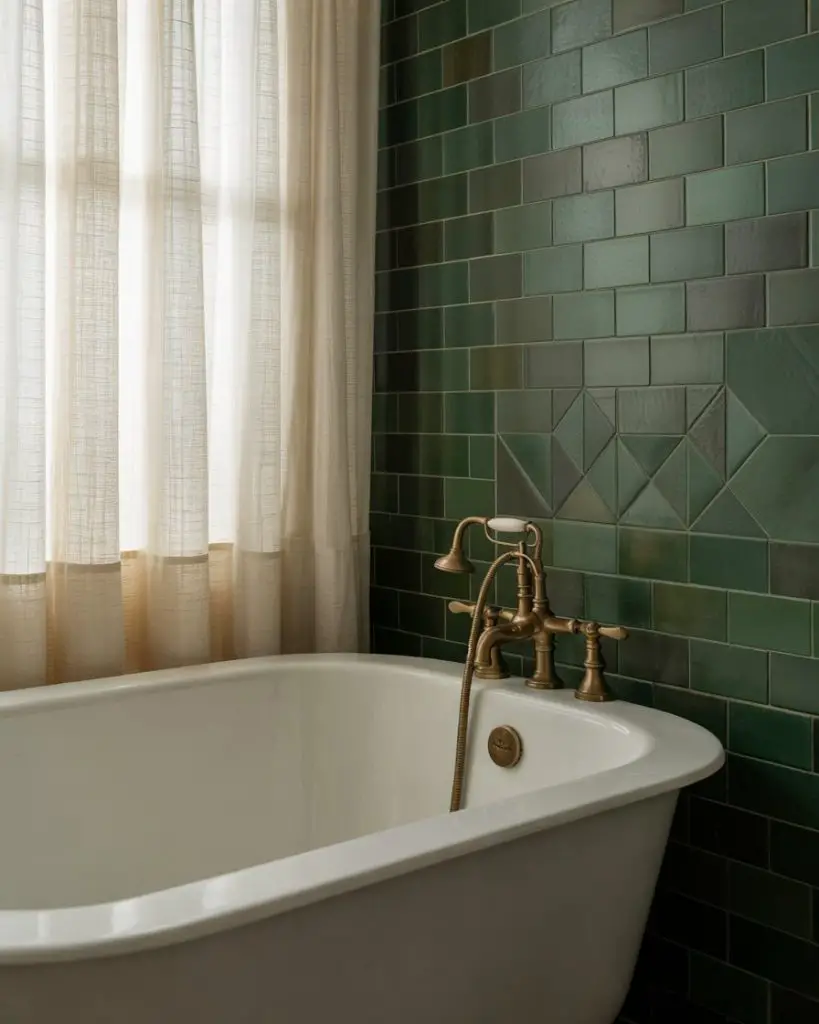
Expert-style commentary: large format tile (typically 12″×24″ or larger) is trending in 2026 because it creates a cleaner, more modern look with less visual clutter. The key is ensuring your substrate is perfectly level—any imperfections will show through large tiles more readily than smaller ones. Many tile professionals recommend using a leveling system during installation to avoid lippage, which is when one tile edge sits higher than its neighbor.
6. Seafoam Green and White Checkerboard Floor
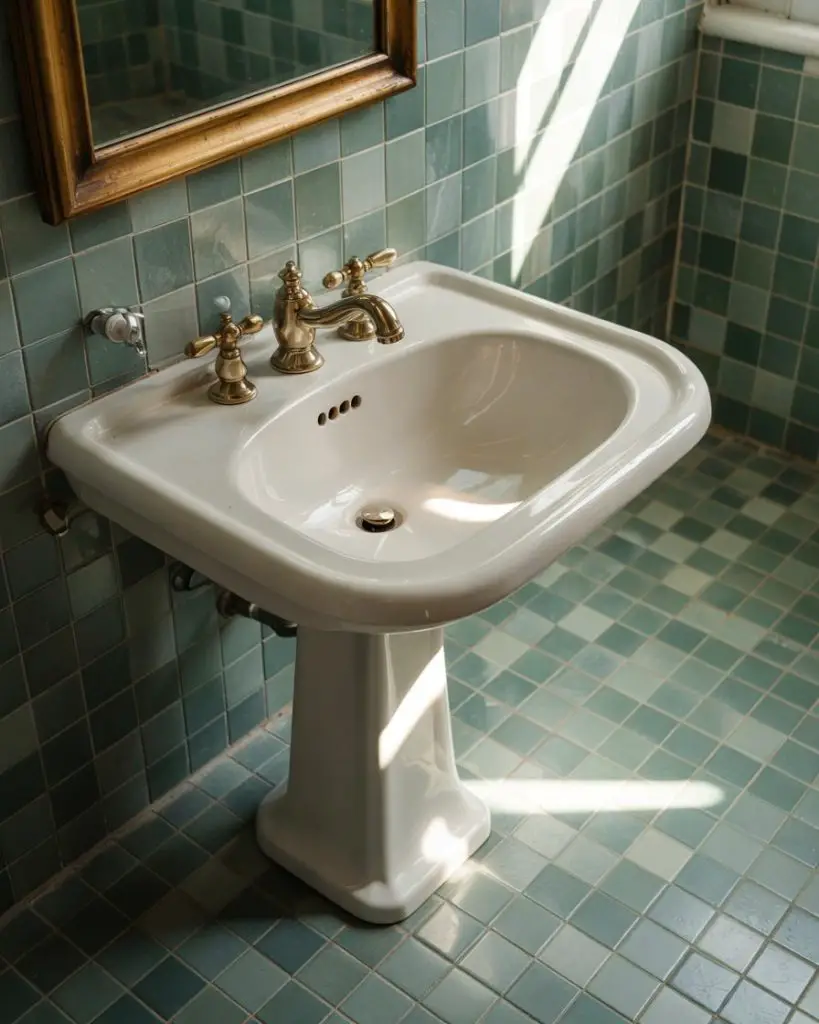
A classic checkerboard pattern using seafoam green and white and tiles brings instant personality and vintage charm to a bathroom floor. This playful design works particularly well in powder rooms, kid’s bathrooms, or any space where you want to make a bold statement without committing to wall-to-wall color. The contrasting pattern also helps hide minor imperfections and everyday wear, making it as practical as it is pretty. It’s a look that nods to 1950s diners and mid-century homes while still feeling relevant today. 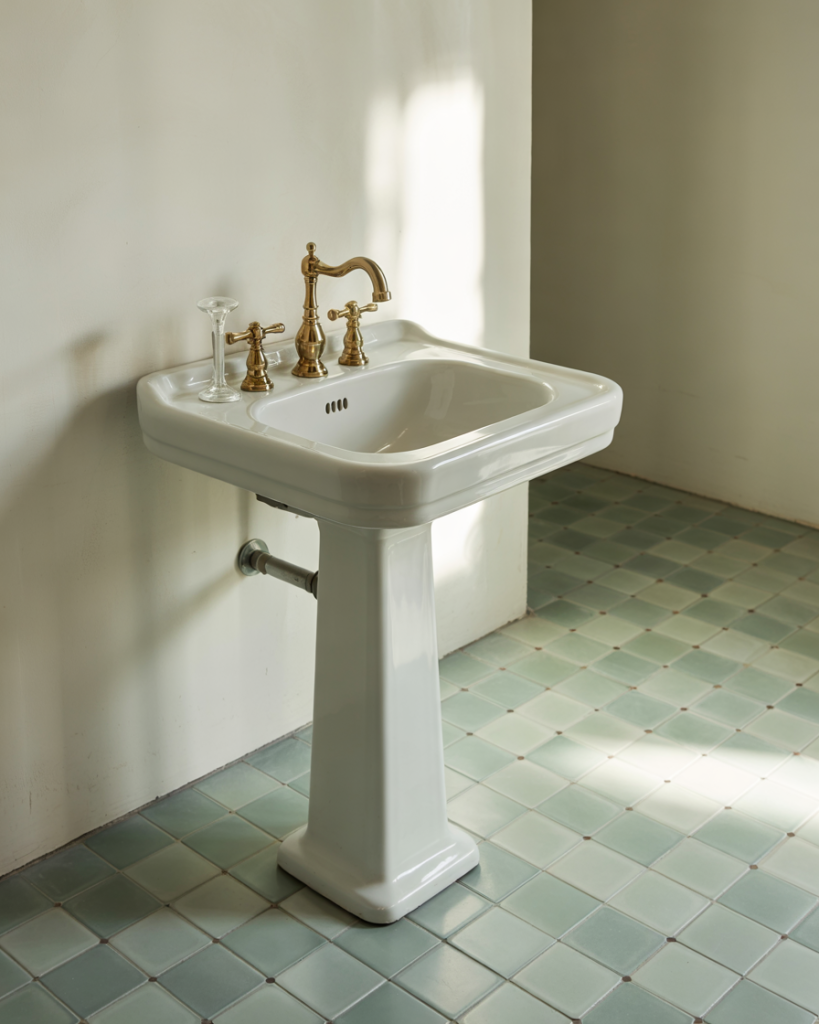
Real homeowner behavior: many people choose checkerboard floors for high-traffic family bathrooms because the pattern naturally camouflages dirt and scuffs between cleanings. If you’re considering this look, opt for a matte or slightly textured finish rather than high-gloss tile, which can be slippery when wet. Also, make sure your tile installer uses a layout that centers the pattern on the room’s focal point—usually the door or vanity—for the most balanced, intentional appearance.
7. Forest Green Vertical Subway Tile
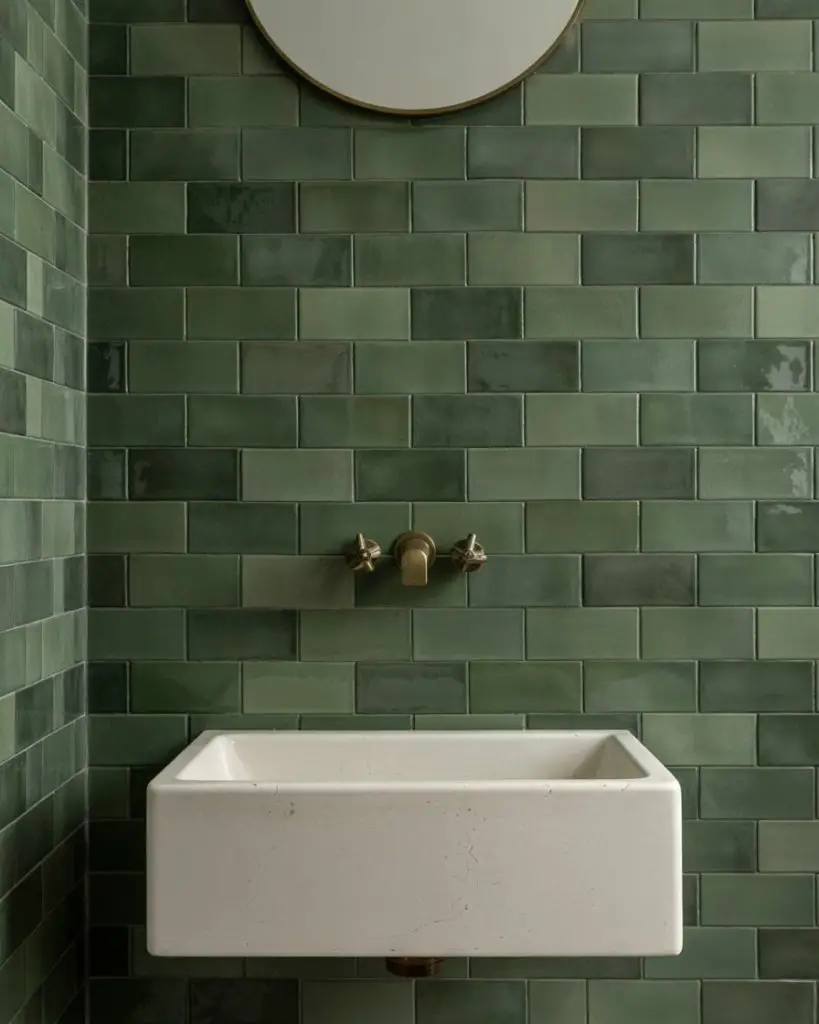
Installing subway tile in a vertical orientation rather than the traditional horizontal layout adds height and visual interest to any bathroom. When done in a deep forest green, this approach feels modern and a bit unexpected, drawing the eye upward and making ceilings appear taller. It’s particularly effective in bathrooms with standard 8-foot ceilings or narrow layouts where you want to create a sense of spaciousness. Pair with white and natural elements to keep the look balanced and breathable. 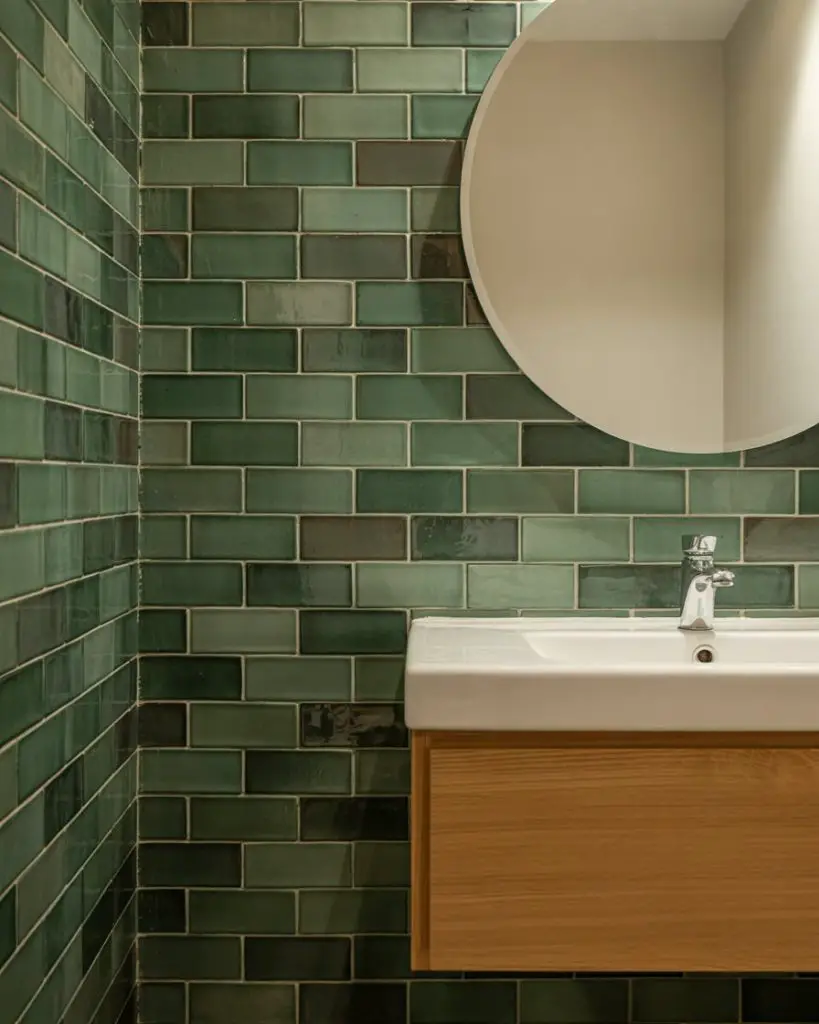
Where it works best: in powder rooms, guest bathrooms, or primary bath shower stalls where you want to make a design statement without overwhelming the entire space. The vertical installation does require a bit more planning and precision from your tile installer, as any slight misalignment will be more noticeable than in a standard horizontal layout. Budget an extra hour or two of labor time, and make sure your installer is comfortable with this orientation before starting the project.
8. Jade Green Fish Scale Tile Backsplash

Fish scale (or scallop) tile in a luminous jade green adds a touch of whimsy and elegance to a bathroom backsplash or accent wall. The overlapping curves create a beautiful play of light and shadow that shifts throughout the day, making the tile feel almost three-dimensional. This style works especially well in bathrooms with good natural light or in spaces where you want to add a focal point without committing to floor-to-ceiling color. It’s a design choice that feels both timeless and distinctly of the moment. 
A friend recently installed jade fish scale tile in her Brooklyn brownstone bathroom, and she mentioned that the installation took a full day longer than anticipated because each scallop needs to align perfectly with its neighbors. The result, though, is stunning—guests always ask where she sourced the tile. The key is using a high-quality adhesive and allowing adequate drying time between rows to prevent slippage. Also, consider pairing this tile with simple, clean-lined fixtures so the scallop pattern remains the star.
9. Sage Green and Pink Tile Combination
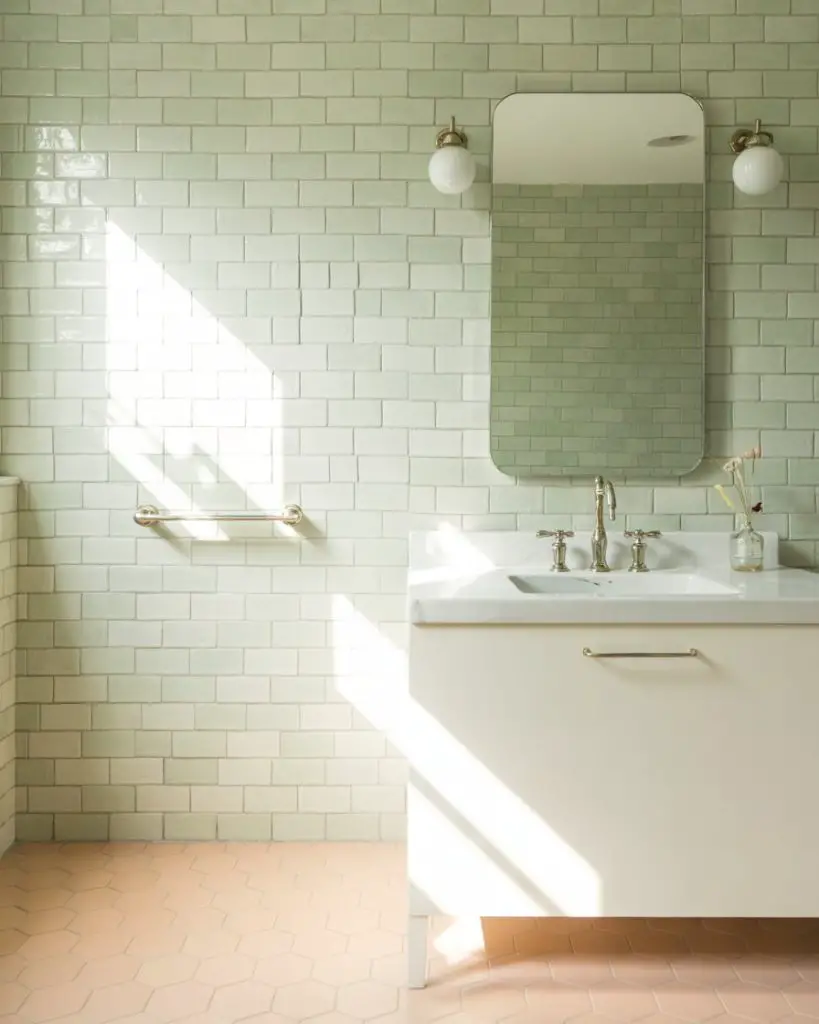
Pairing soft sage green with blush pink and creates a dreamy, feminine palette that’s both soothing and sophisticated. This color combination works beautifully when one color dominates (usually the green) and the other serves as an accent through smaller tile details, accessories, or painted surfaces. The result is a bathroom that feels like a personal retreat—calm, warm, and thoughtfully designed. It’s a look that’s particularly popular in master bathrooms and powder rooms where you have the freedom to take creative risks. 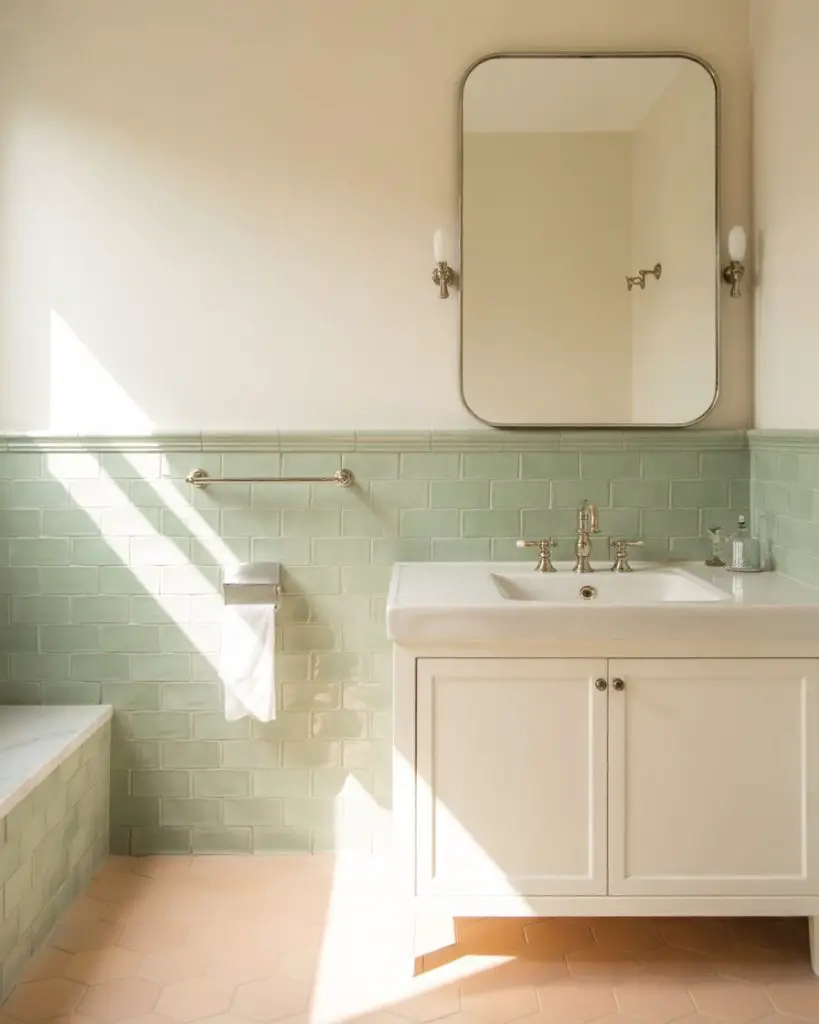
Practical insight: when working with two colors, it’s smart to order samples and test them together in your actual bathroom before committing to full quantities. Lighting—both natural and artificial—can dramatically shift how these colors appear and interact. What looks perfect in the showroom might read too warm or too cool in your space. Most tile suppliers will send 2–3 samples for free or a small refundable fee, which is money well spent to avoid costly mistakes.
10. Hunter Green Encaustic Patterned Floor
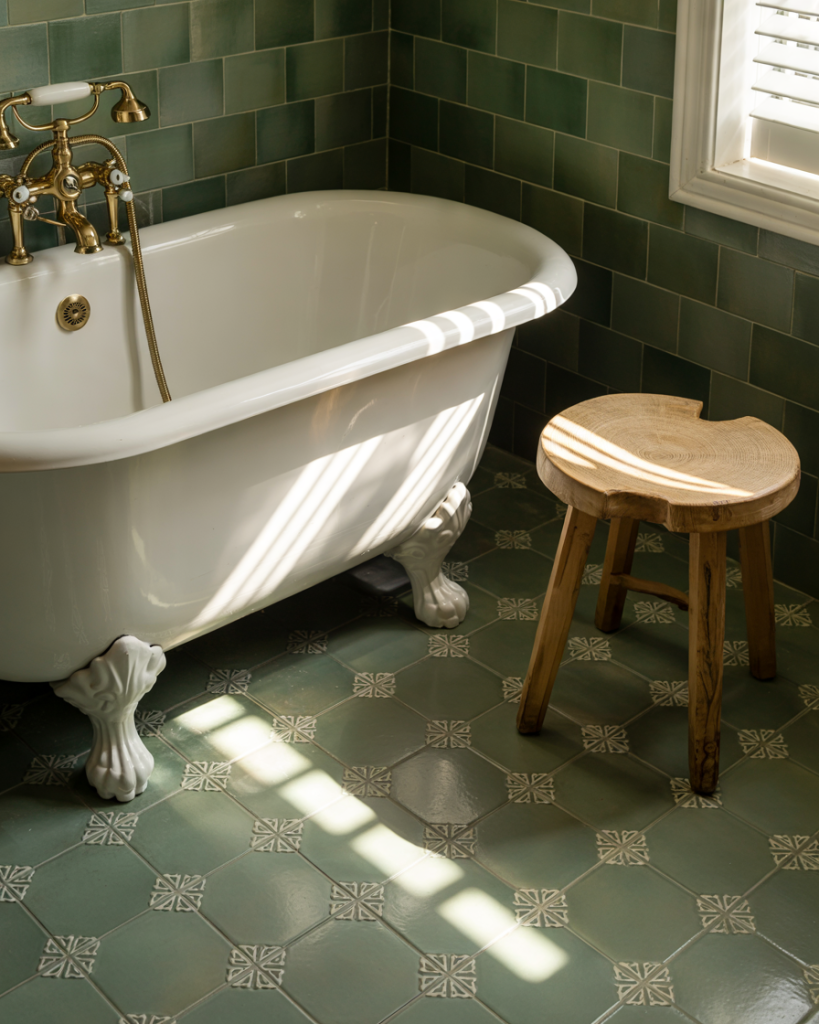
Encaustic-style tile in hunter green with geometric patterns brings Old World charm and visual complexity to a bathroom floor. These cement-look tiles (often porcelain for durability) feature intricate designs that add character and personality without requiring any additional décor. The green tones can range from dark forest to softer sage, often combined with cream, gray, or terra cotta accents within the pattern itself. This is a statement floor that works in both traditional and eclectic interiors. 
Budget angle: authentic encaustic cement tile can run $8–$20 per square foot just for materials, with installation adding another $10–$15 per square foot in most U.S. markets. Porcelain versions that mimic the look are more affordable ($4–$10 per square foot) and far easier to maintain, as they don’t require sealing and are less prone to staining. For most homeowners, the porcelain option delivers the aesthetic impact without the ongoing maintenance, making it a smarter long-term investment.
11. Mint and Blue Gradient Tile Shower
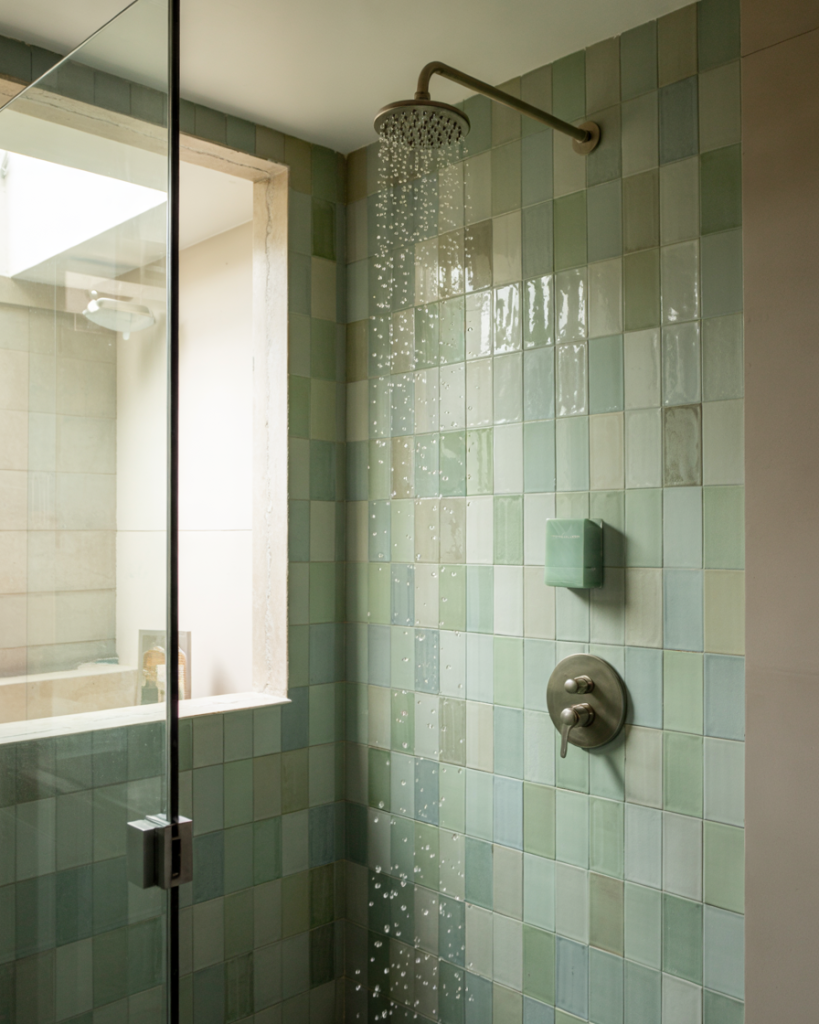
Creating a gradient effect from mint green at the top to soft blue at the bottom brings a serene, ocean-inspired feel to a shower. This ombré approach adds visual movement and depth without pattern or texture, making it ideal for modern or minimalist bathrooms. The gradual color shift can be achieved with a single tile style in multiple shades or by blending different tiles within the same color family. It’s a sophisticated technique that requires careful planning but delivers stunning results. 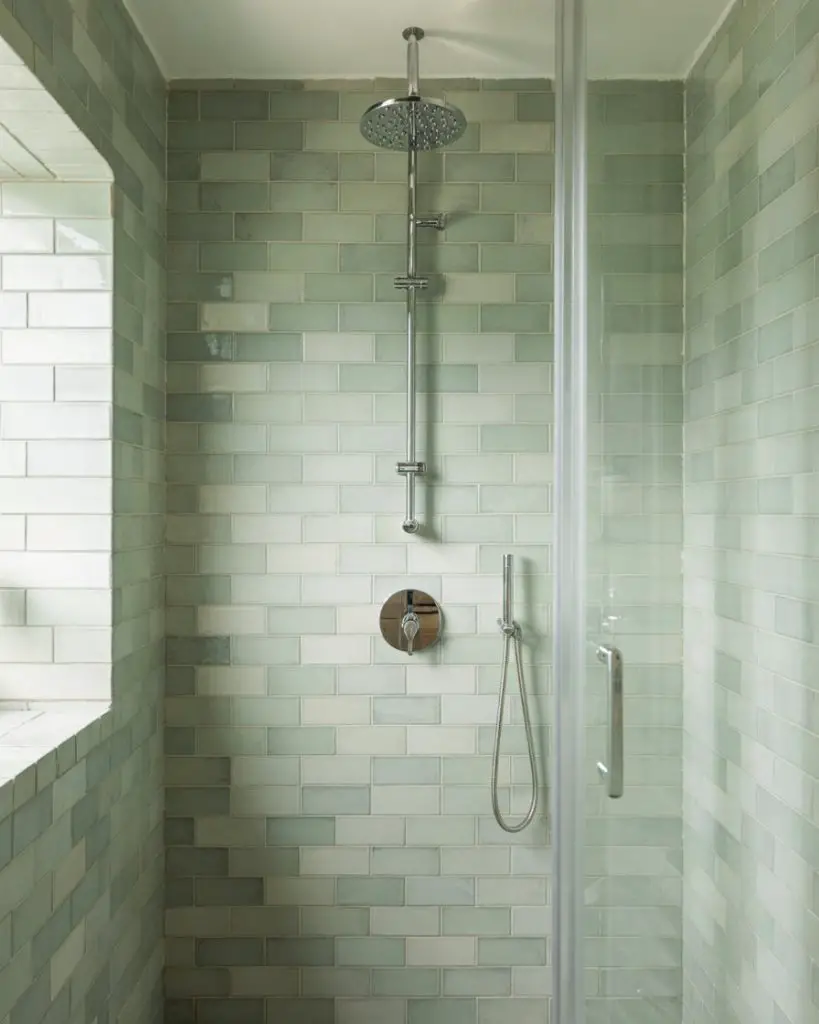
Expert-style commentary: achieving a smooth gradient requires ordering tiles from the same production lot to ensure color consistency, and it’s wise to dry-lay the pattern before installing to visualize the transition. Many tile professionals recommend starting with the lightest shade at eye level and working up and down from there, which creates the most natural-looking gradient. Also, use a consistent grout color (usually white or light gray) throughout to keep the focus on the color transition rather than the grid lines.
12. Olive Green Square Tile with Dark Grout

Simple square tile in a matte olive green with contrasting dark grout creates a clean, graphic look that’s both modern and earthy. The grid pattern is straightforward and timeless, while the dark grout adds definition and visual interest without requiring complex installation. This combination works beautifully on shower walls, tub surrounds, or as a full wall treatment in larger bathrooms. It’s a look that pairs well with natural wood, black metal, and organic textures. 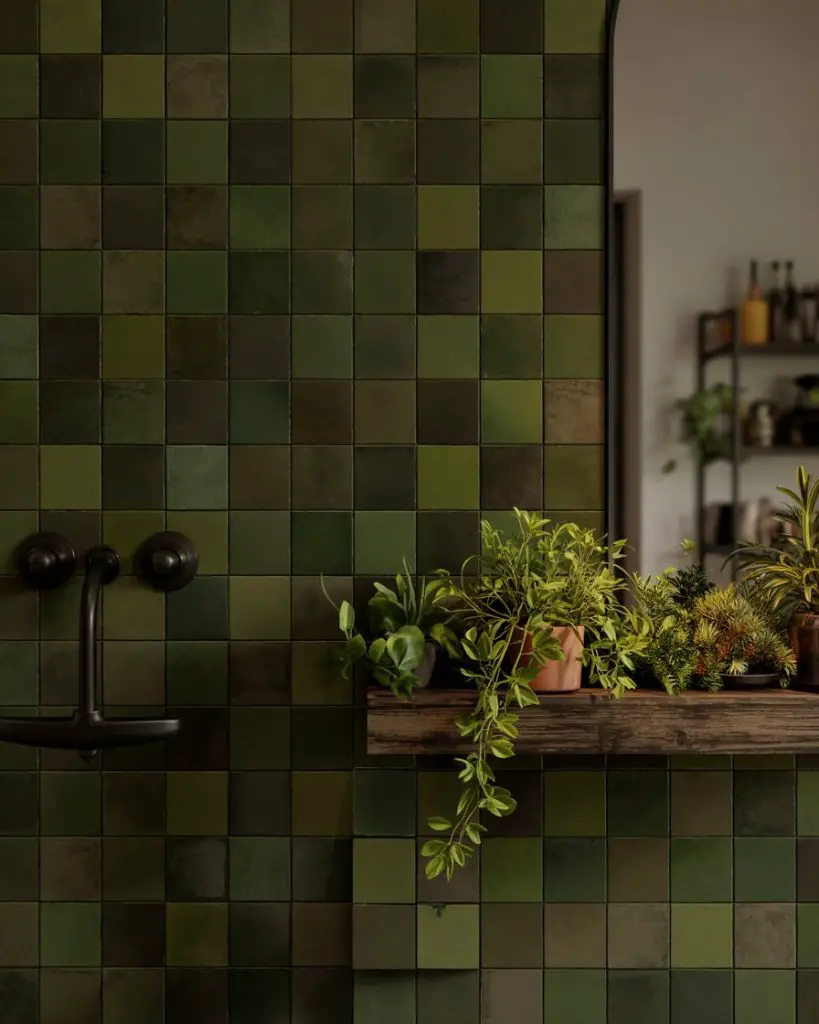
Common mistake: many people default to white grout with colored tile, thinking it will keep things light and bright, but this can actually make the space feel busy and fragmented. Dark grout with medium to dark green tile creates a more cohesive, intentional look and has the practical benefit of hiding dirt and mildew between cleanings. Just make sure to seal the grout properly during installation—this prevents staining and makes long-term maintenance much easier.
13. Moss Green Beveled Subway Tile
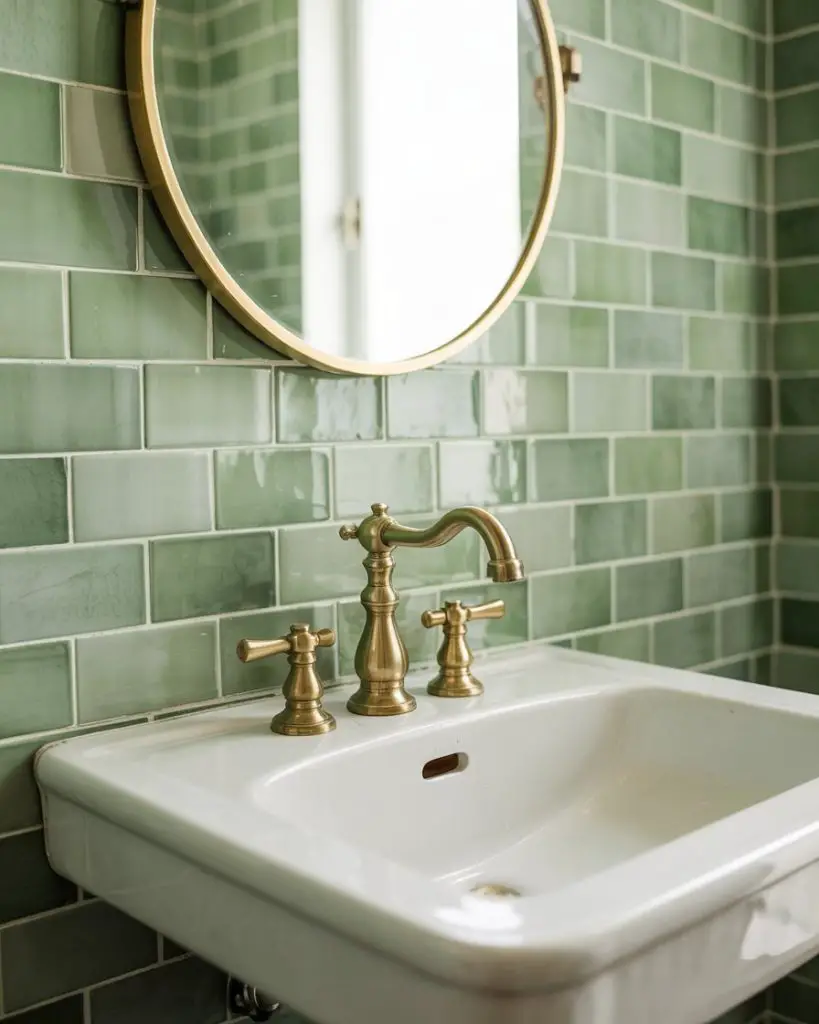
Beveled subway tile in a soft moss green adds subtle dimensionality and a hint of vintage charm to any bathroom wall. The beveled edge catches light and creates gentle shadows that make the tile more dynamic than flat subway tile, adding depth without additional pattern or color. This style works particularly well in bathrooms with good natural or layered artificial lighting, where the dimensional quality can be fully appreciated. Pair with brass or matte black and fixtures for a balanced, contemporary look. 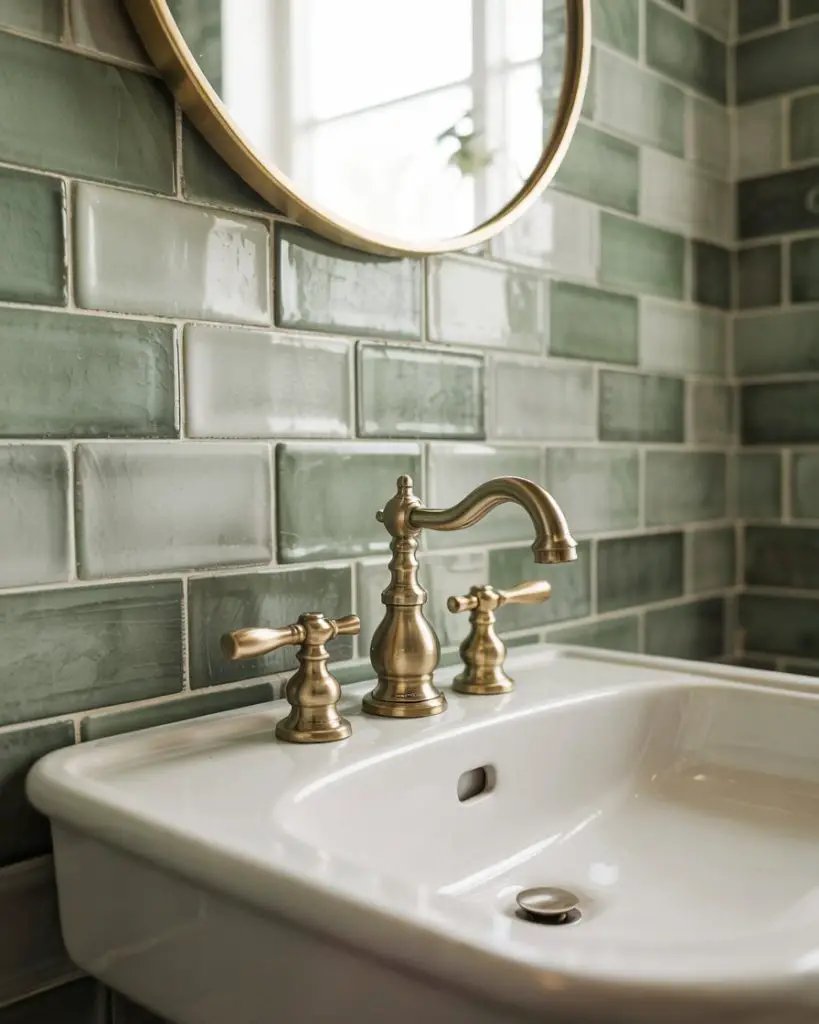
American lifestyle context: in the Midwest and South, where many homes feature traditional architecture, beveled subway tile bridges the gap between classic and contemporary design. It honors the region’s love of timeless materials while introducing fresh, nature-inspired color. Local tile shops often stock beveled options in standard sizes, making them accessible without special ordering, which can save both time and shipping costs on renovation projects.
14. Emerald Green Herringbone Floor
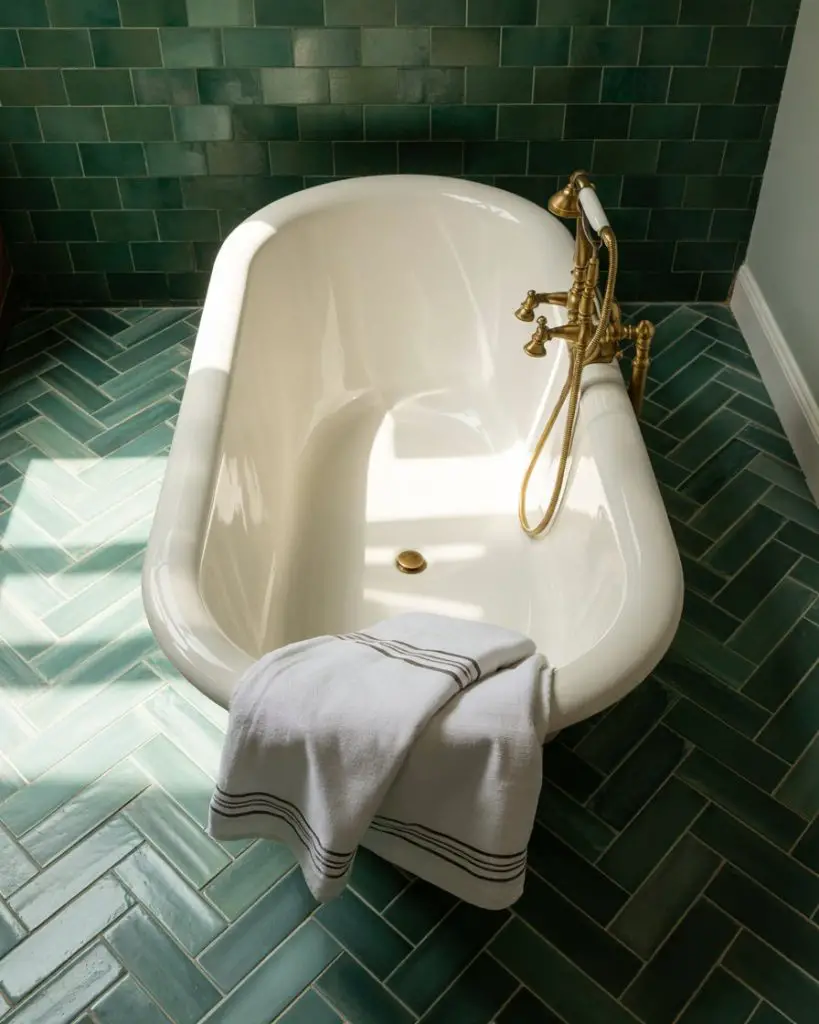
A herringbone pattern in emerald green tile brings movement and sophistication to a bathroom floor, creating a sense of luxury that’s hard to achieve with standard grid layouts. The angled pattern draws the eye across the space and can make even small bathrooms feel larger and more dynamic. This works especially well in primary bathrooms, powder rooms, or any space where the floor is a key design element. Pair with neutral walls and natural materials to let the floor be the focal point. 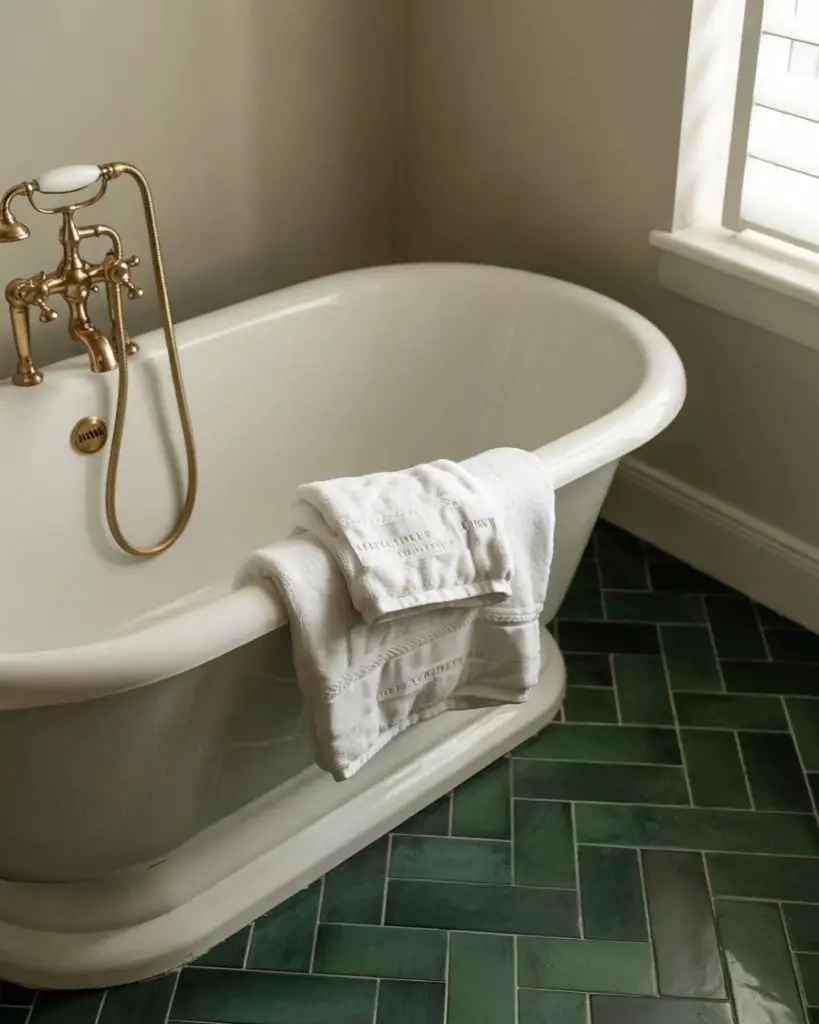
Real homeowner behavior: many people choose herringbone for its ability to hide imperfections in subfloors, as the busy pattern naturally camouflages minor unevenness. However, this pattern does require more tile (typically 10–15% overage for cuts and waste) and more installation time, which increases costs. Expect to pay $15–$25 per square foot installed in most markets. The investment is worth it for the visual impact and the fact that herringbone never goes out of style.
15. Seafoam Green Arabesque Tile
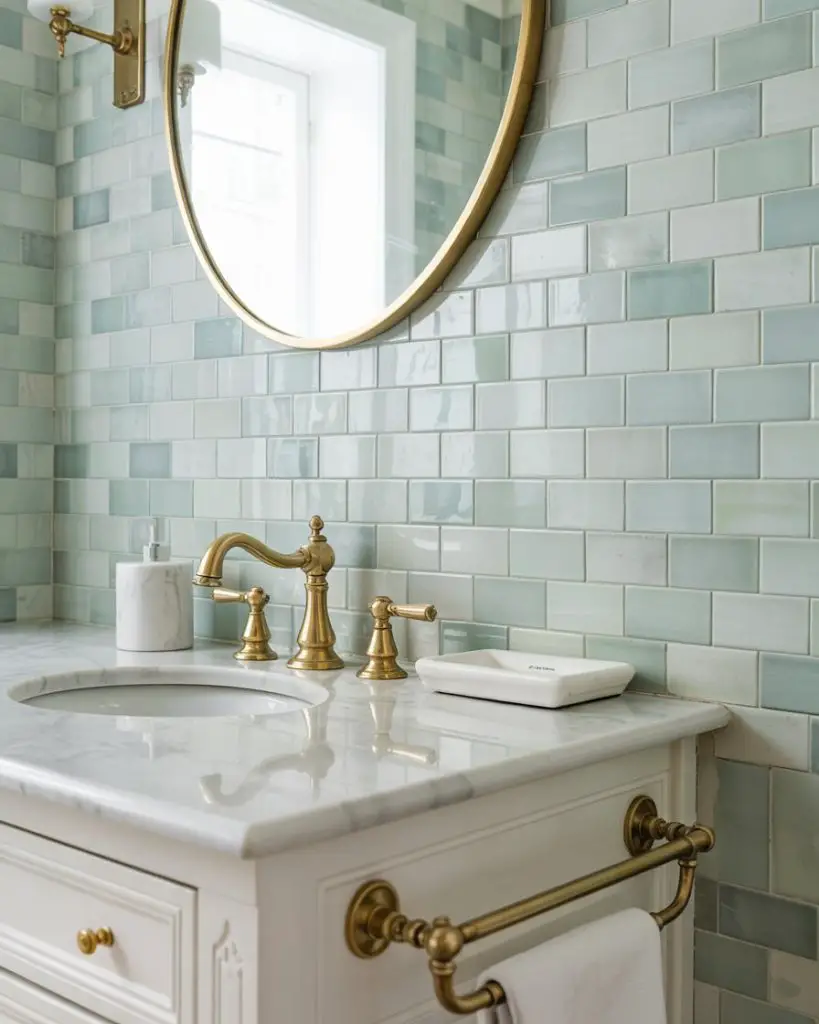
Arabesque (also called lantern) tile in a soft seafoam green creates an elegant, flowing pattern that adds movement and Old World charm to bathroom walls. The curving shapes feel feminine and sophisticated, making this an ideal choice for a vanity backsplash, tub surround, or accent wall. This tile style works beautifully in both traditional and transitional bathrooms, especially when paired with marble countertops and polished fixtures. The gentle green tone keeps the ornate pattern from feeling too heavy or overwhelming. 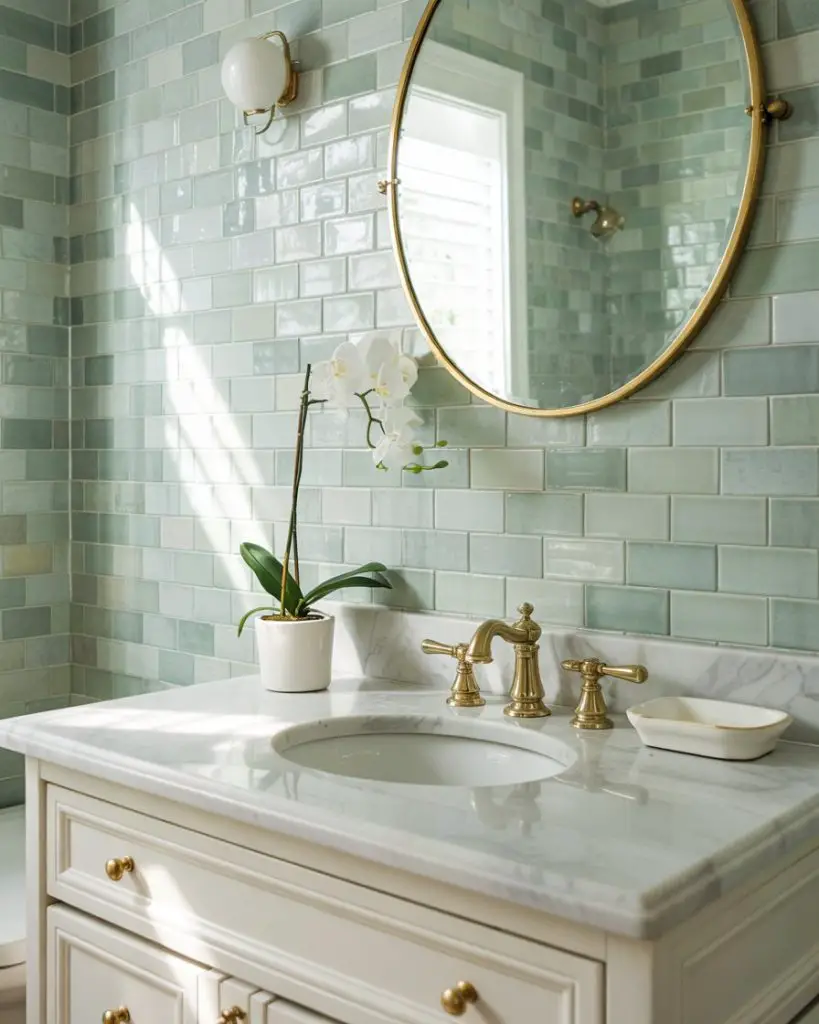
Practical insight: arabesque tile is slightly more challenging to install than standard subway or square tile because of its curved edges and the need for precise spacing. It’s worth hiring an experienced tile setter who’s worked with this pattern before to ensure clean grout lines and proper alignment. The cost is typically $12–$20 per square foot for materials plus $10–$18 per square foot for professional installation, but the result is a bathroom that feels custom and thoughtfully detailed.
16. Pine Green Retro Bathroom with Pastel Accents
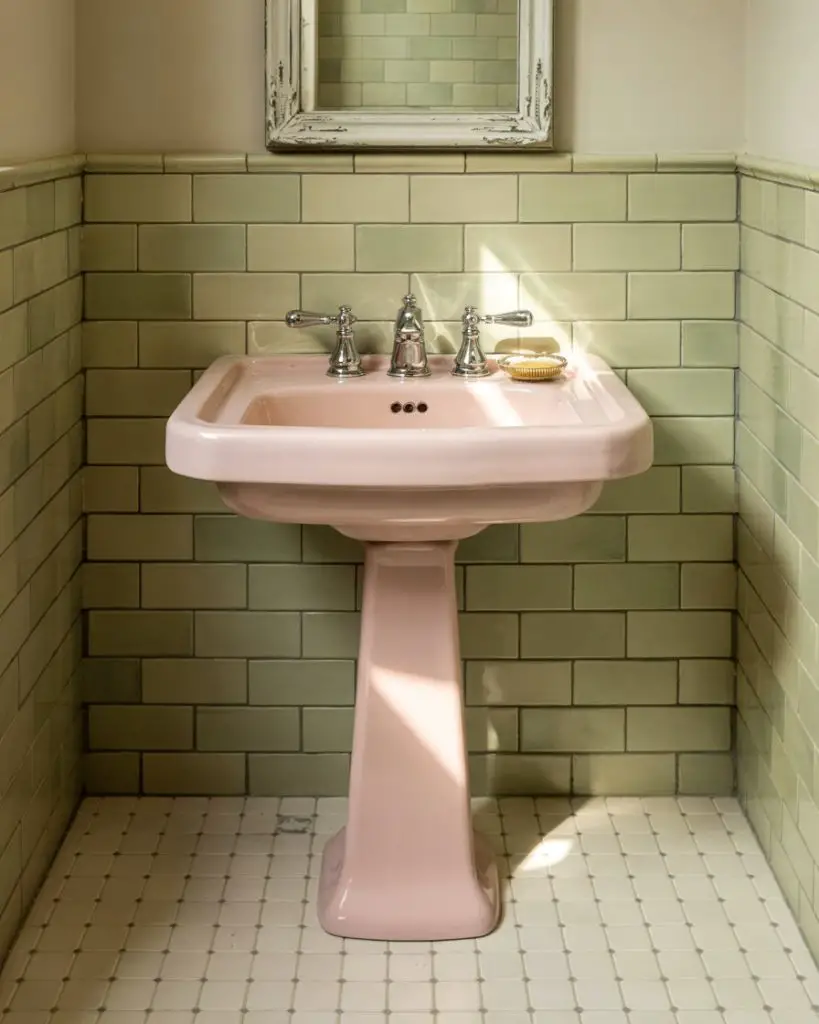
A retro-inspired bathroom featuring pine green tile paired with pastel pink or yellow accents channels 1950s nostalgia while still feeling fresh for 2026. This playful palette works particularly well with vintage-style fixtures, pedestal sinks, and chrome hardware. The key is balancing the green with lighter, softer tones so the space doesn’t feel too heavy or dark. Think checkerboard floors, subway tile walls, and colorful accessories that nod to mid-century design without looking like a museum piece. 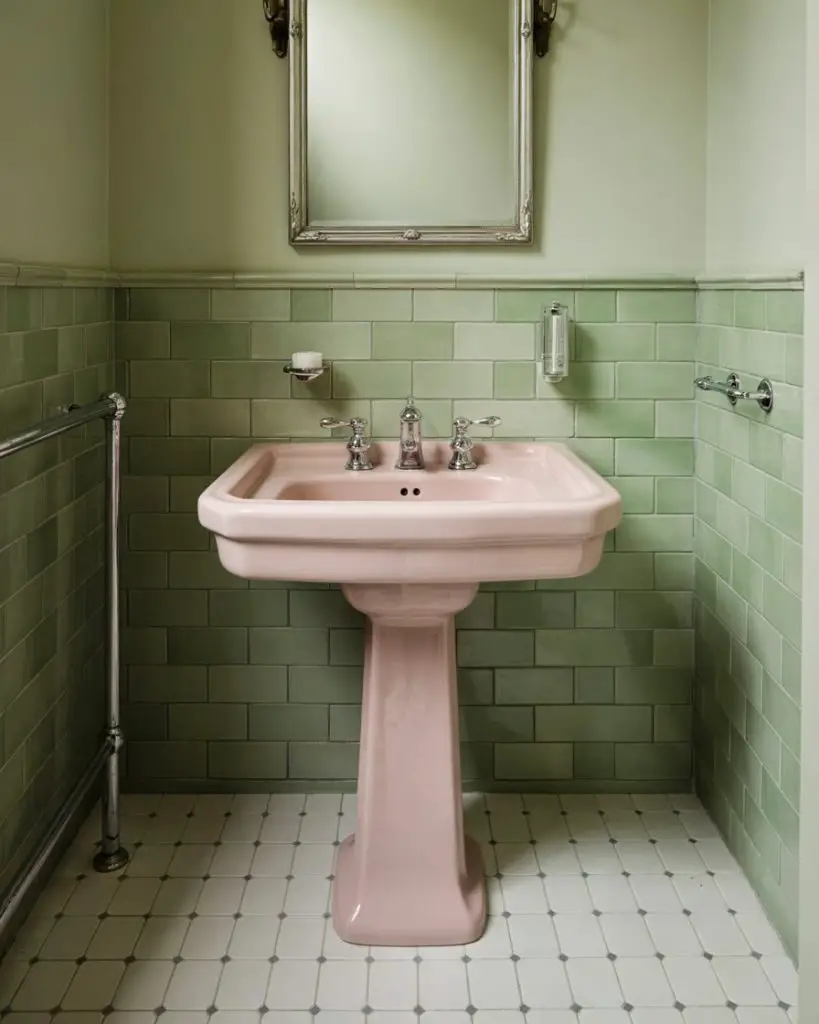
Where it works best: in homes with original mid-century architecture or in urban apartments where owners want to inject personality and charm into builder-grade bathrooms. This style is particularly popular in Portland, Austin, and parts of California where vintage aesthetics blend seamlessly with modern lifestyles. Just avoid overdoing the retro accessories—a few well-chosen pieces (vintage mirror, period-appropriate light fixture) are more effective than filling every surface with kitschy décor.
17. Celadon Green and White Patchwork Tile
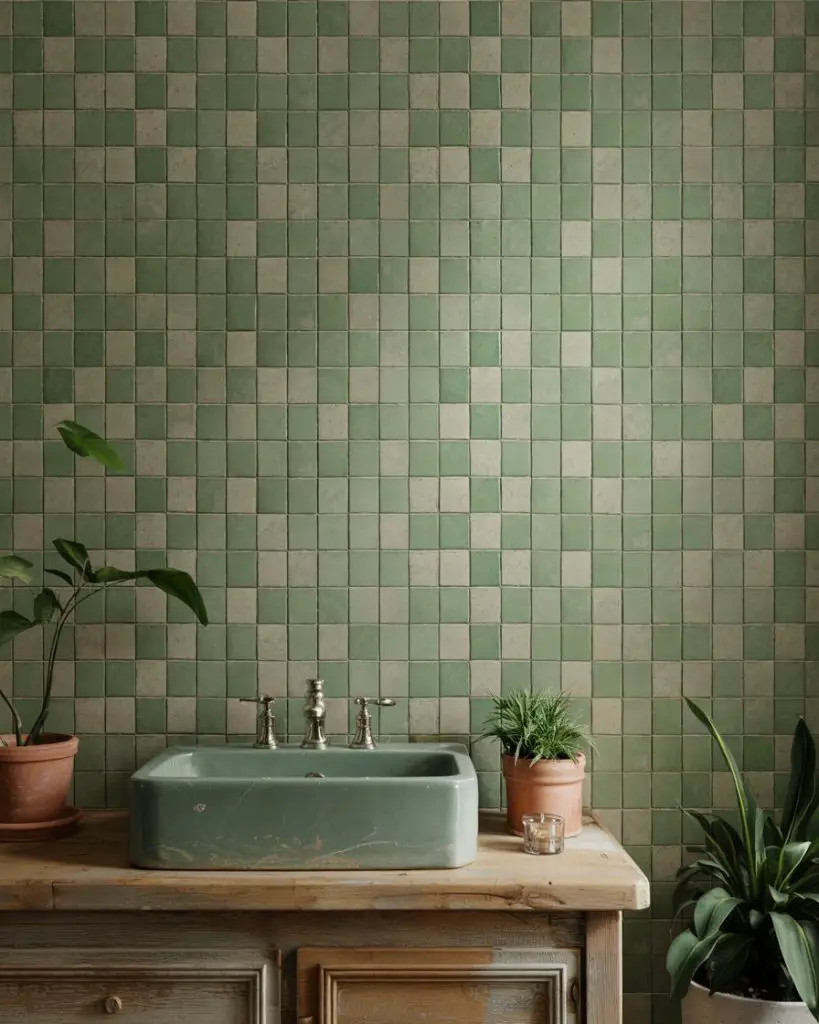
A patchwork or mixed tile approach using celadon green and white and cream tones creates a collected, artisan look that feels both curated and relaxed. This style works by combining different tile shapes, patterns, or finishes within the same color family—think zellige squares mixed with glossy subway tile and matte hexagons. The result is a bathroom that looks like it evolved over time rather than being installed all at once. It’s perfect for eclectic or bohemian interiors where imperfection is part of the charm. 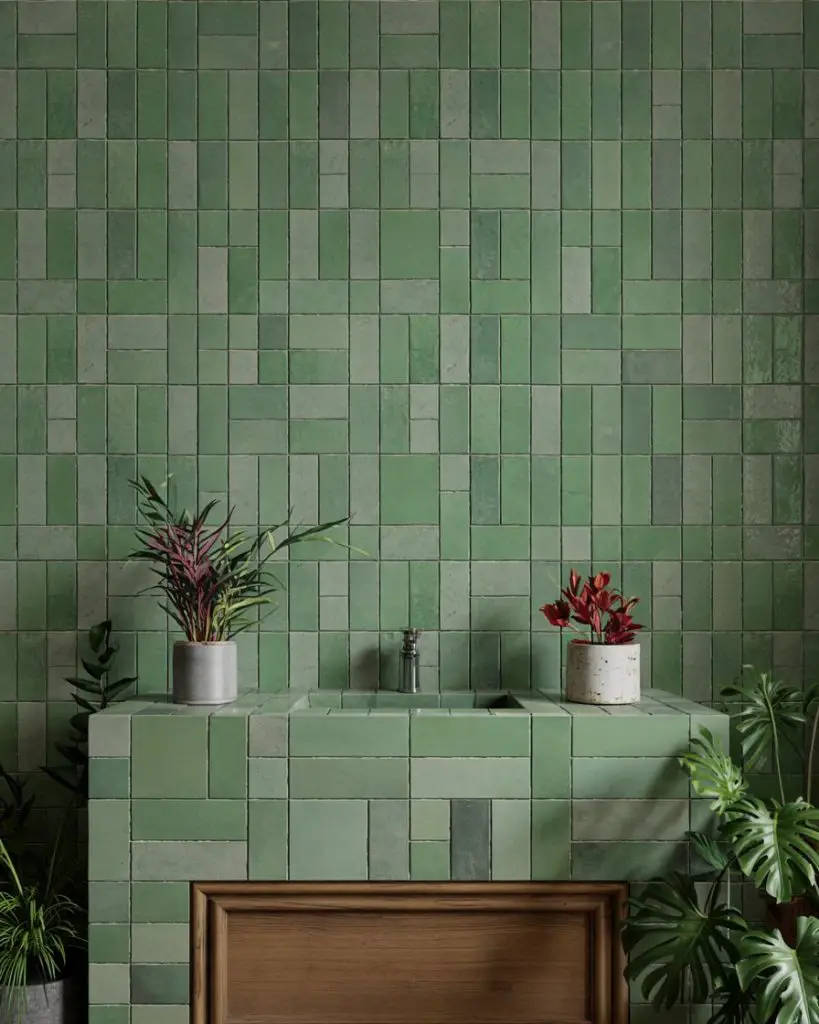
A designer friend in Charleston uses this approach in her historic home renovations, mixing reproduction tiles with salvaged pieces to create bathrooms that honor the building’s age while meeting modern functional needs. She recommends starting with one dominant tile and then layering in 2–3 complementary styles in small doses. The key is maintaining a consistent color palette and grout color so the mix feels intentional rather than chaotic. This approach can actually save money since you can use leftover or discounted tiles from different projects.
18. Dark Green Floor with White Subway Tile Walls
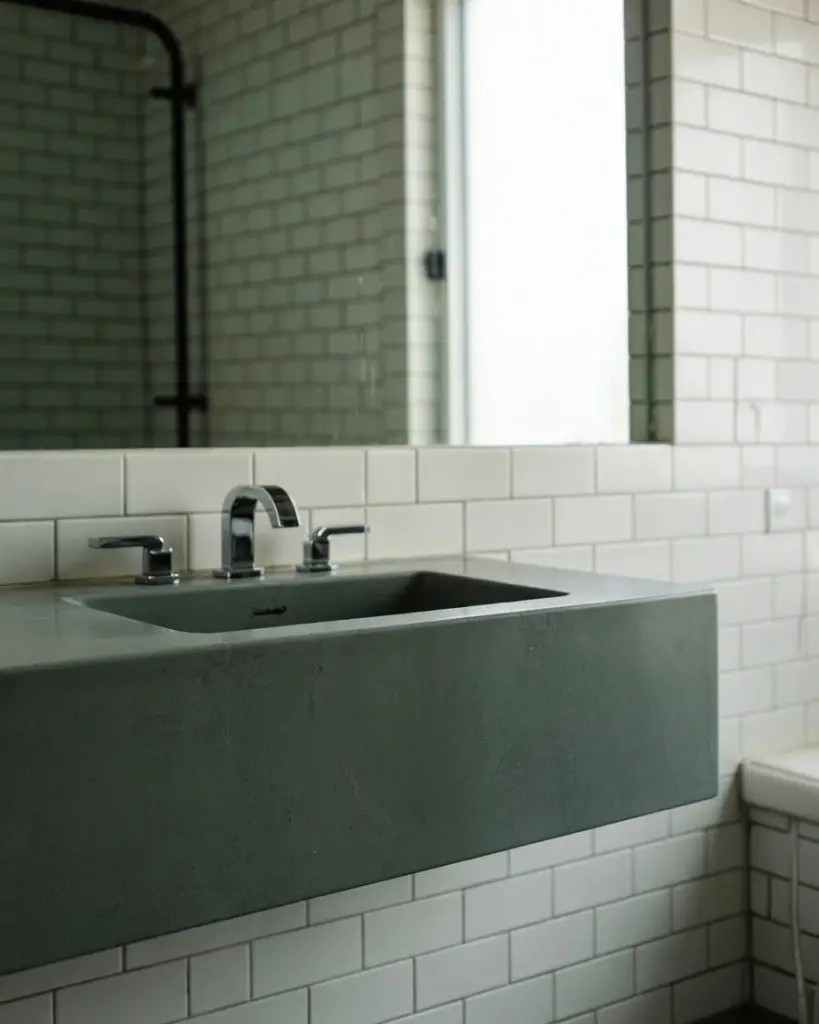
Pairing a dark green floor with crisp white subway tile walls creates a grounded, classic bathroom that feels both fresh and timeless. This combination allows you to enjoy the richness of dark green without the space feeling too enclosed or heavy. The white walls reflect light and keep the room bright, while the green floor anchors the design and adds unexpected color. This is a particularly smart choice for bathrooms with good natural light or those with larger footprints where you can afford to go bold underfoot. 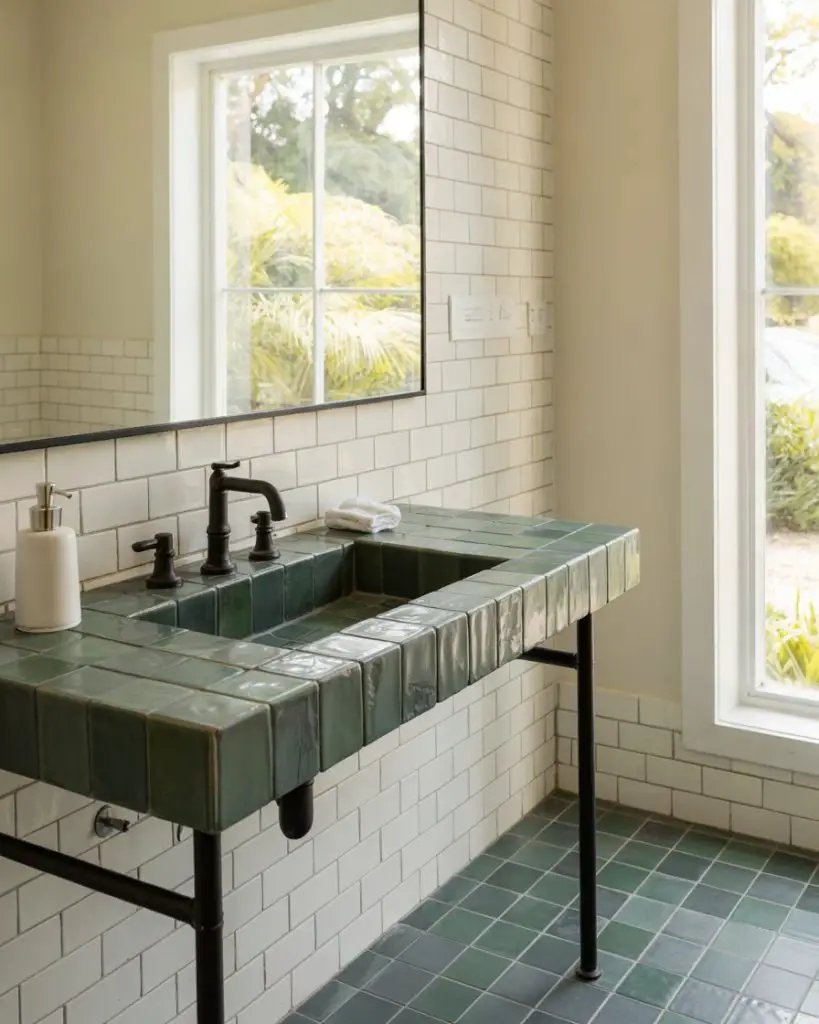
Budget angle: using a more expensive or decorative tile on the floor and keeping walls simple with affordable white subway tile is a smart way to maximize visual impact while controlling costs. Quality green floor tile might run $8–$15 per square foot, while basic white subway tile can be found for $1–$3 per square foot. This strategy lets you invest where it matters most—the element that grounds the entire space—without blowing your renovation budget.
19. Sage Green Shower Niche with Contrasting Tile
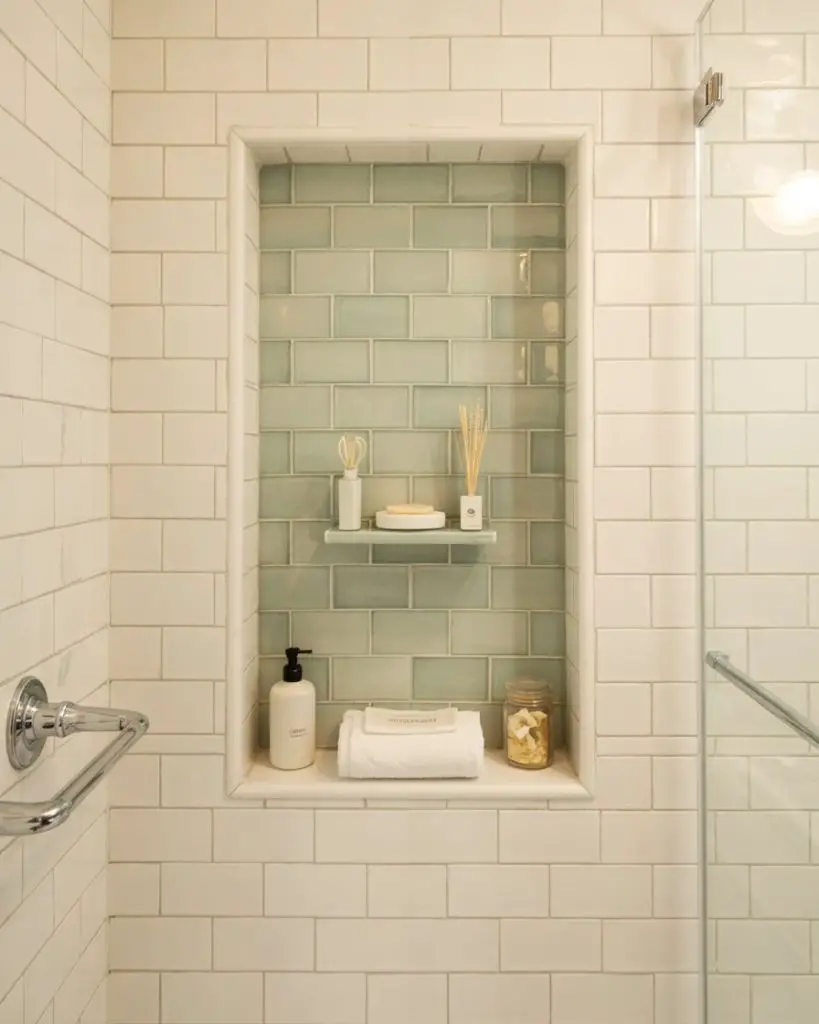
Creating a shower niche lined with sage green tile while the surrounding walls remain white or neutral adds a subtle but impactful design detail. This approach highlights the functional niche as a design feature rather than an afterthought, turning built-in storage into a focal point. The contrasting tile also helps define the space and adds depth to what might otherwise be a plain shower. It’s a simple upgrade that makes a big difference in the overall feel of the bathroom. 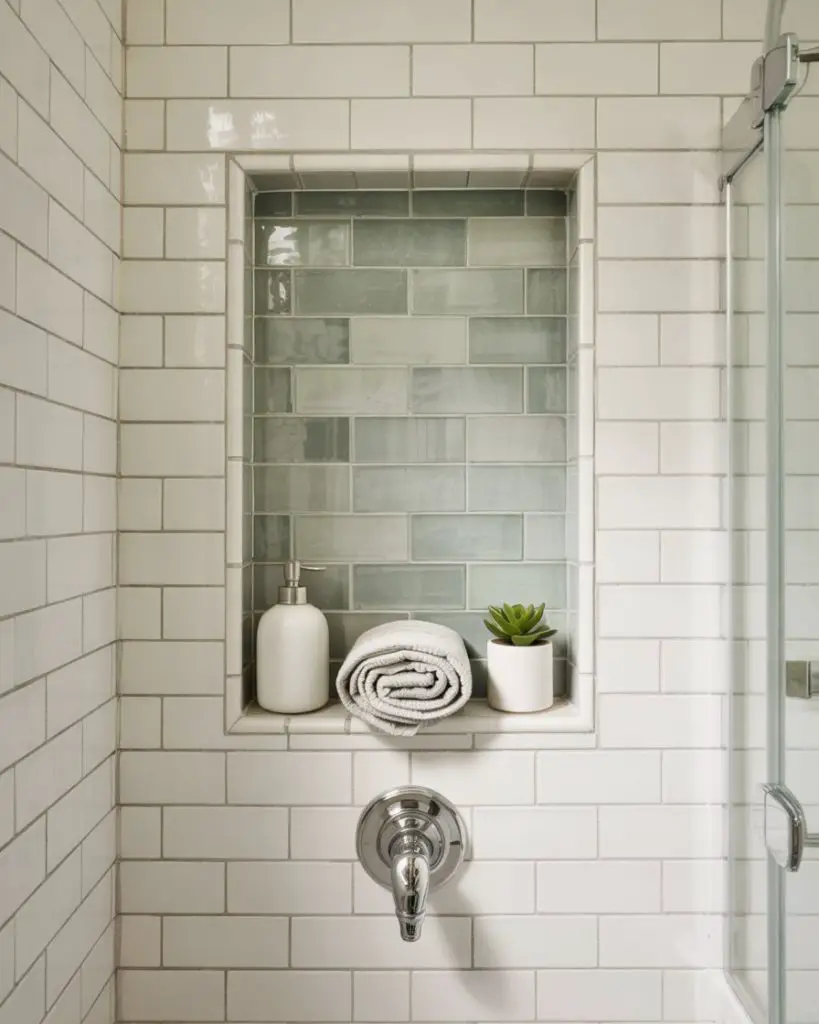
Practical insight: when planning a tiled niche, work with your tile installer to ensure the niche is sized to accommodate full tiles without awkward cuts—this typically means planning dimensions around the tile size you’ve chosen. A standard niche is 12″×12″ or 12″×24″, but these can be adjusted based on your tile’s dimensions. Also, make sure the niche has a slight slope toward the shower to prevent water from pooling on the shelves, which can lead to mildew and soap scum buildup over time.
20. Aloe Green Glass Tile Accent Strip
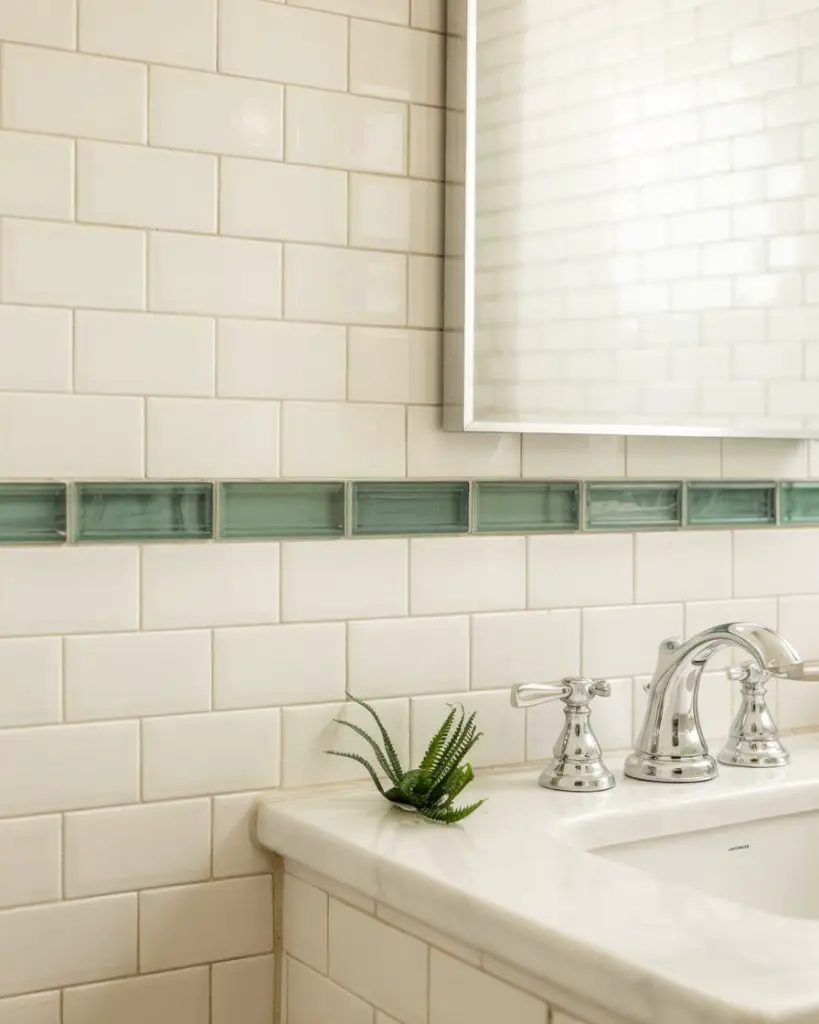
A horizontal accent strip of aloe green glass tile running through a white or neutral bathroom adds just a touch of color and visual interest without overwhelming the space. This works particularly well at eye level around the perimeter of the room or as a border between different tile styles or heights. Glass tile reflects light beautifully, making the green appear luminous and jewel-like, especially in bathrooms with good lighting. It’s a subtle design move that adds sophistication and a pop of nature-inspired color. 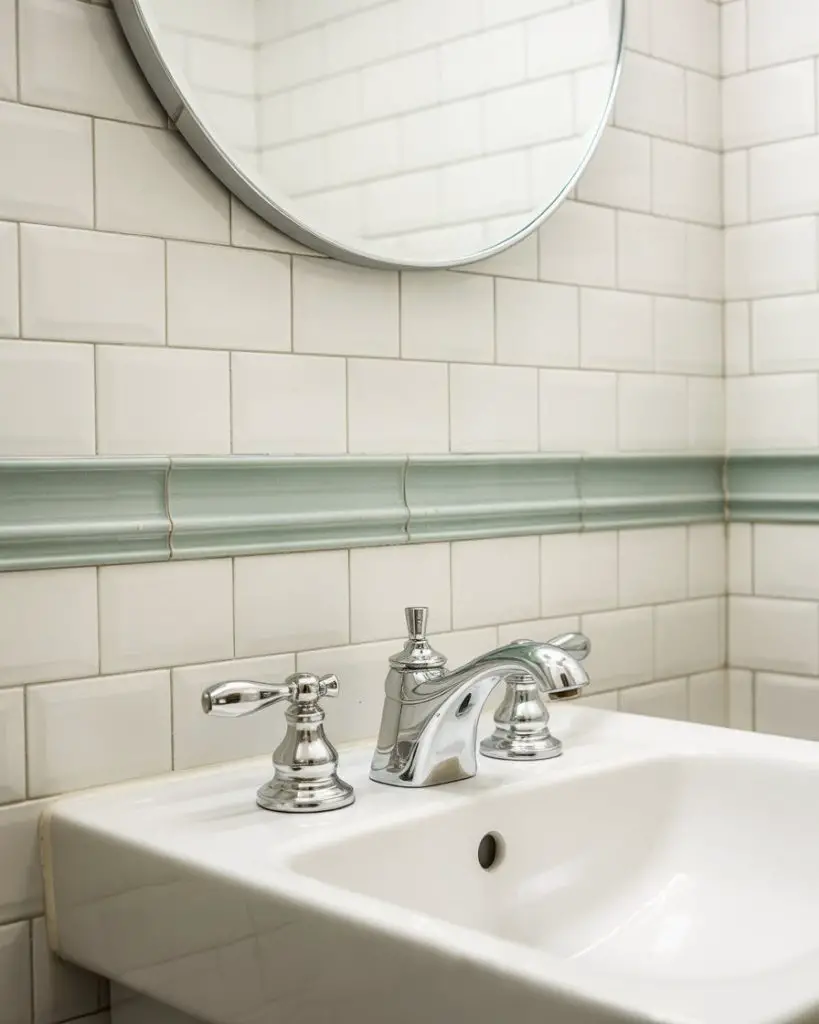
Common mistake: using accent strips that are too narrow (1–2 inches) or too wide (6+ inches)—both can look dated or awkward. The sweet spot is typically 3–4 inches, which is substantial enough to register as a design feature without dominating the wall. Also, be mindful of where the strip lands—running it through the middle of a mirror or awkwardly intersecting with a window frame will draw attention for the wrong reasons. Plan the placement carefully during your tile layout to ensure clean, intentional alignment.
21. Forest Green and Black Bathroom with Industrial Fixtures

Combining forest green tile with black and matte black fixtures creates a dramatic, masculine bathroom with strong interior design presence. This palette works particularly well in loft-style apartments, modern farmhouse homes, or any space where you want a bold, sophisticated look. The deep green provides warmth and depth, while the black fixtures add structure and edge. Incorporate natural wood, concrete, or metal accents to reinforce the industrial-meets-organic aesthetic. 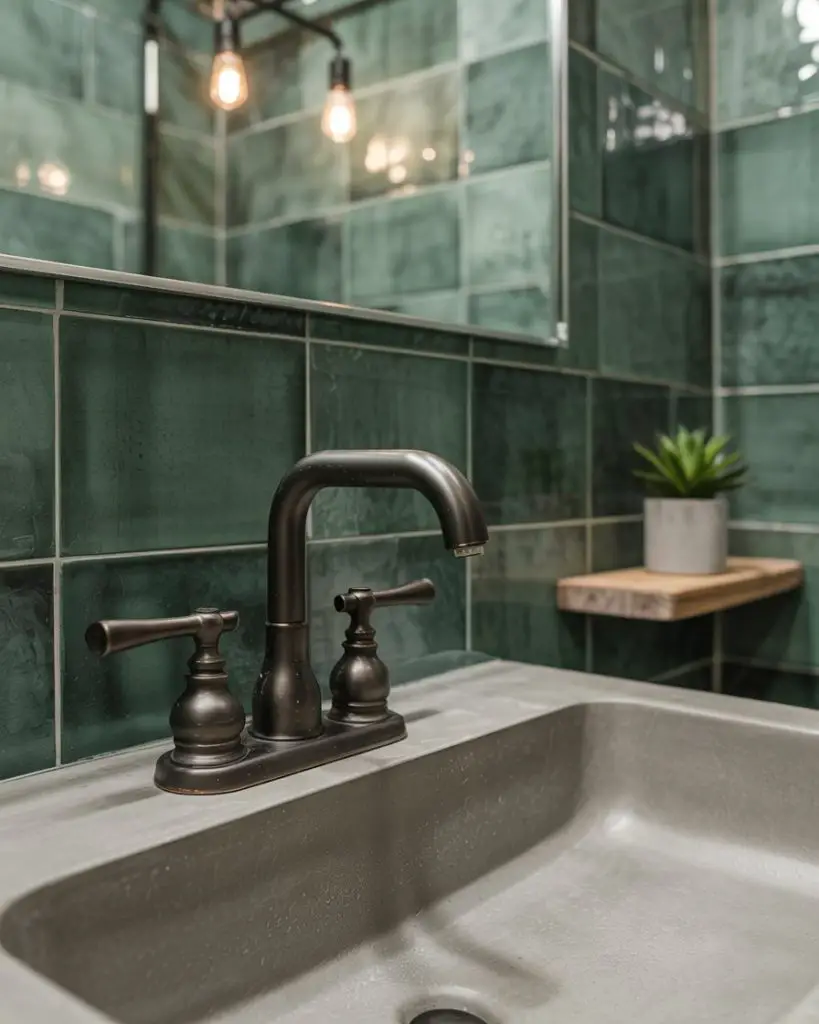
American lifestyle context: this style is particularly popular in urban areas like Brooklyn, Portland, and Oakland, where industrial aesthetics blend with a love of natural materials and sustainable design. It appeals to homeowners who want their bathrooms to feel intentional and design-forward without being overly precious or traditional. The look does require commitment—it’s bold and won’t suit everyone’s taste—but for those who love it, it creates a bathroom that feels like a true personal statement.
22. Mint Green and Brass Vintage-Style Bathroom
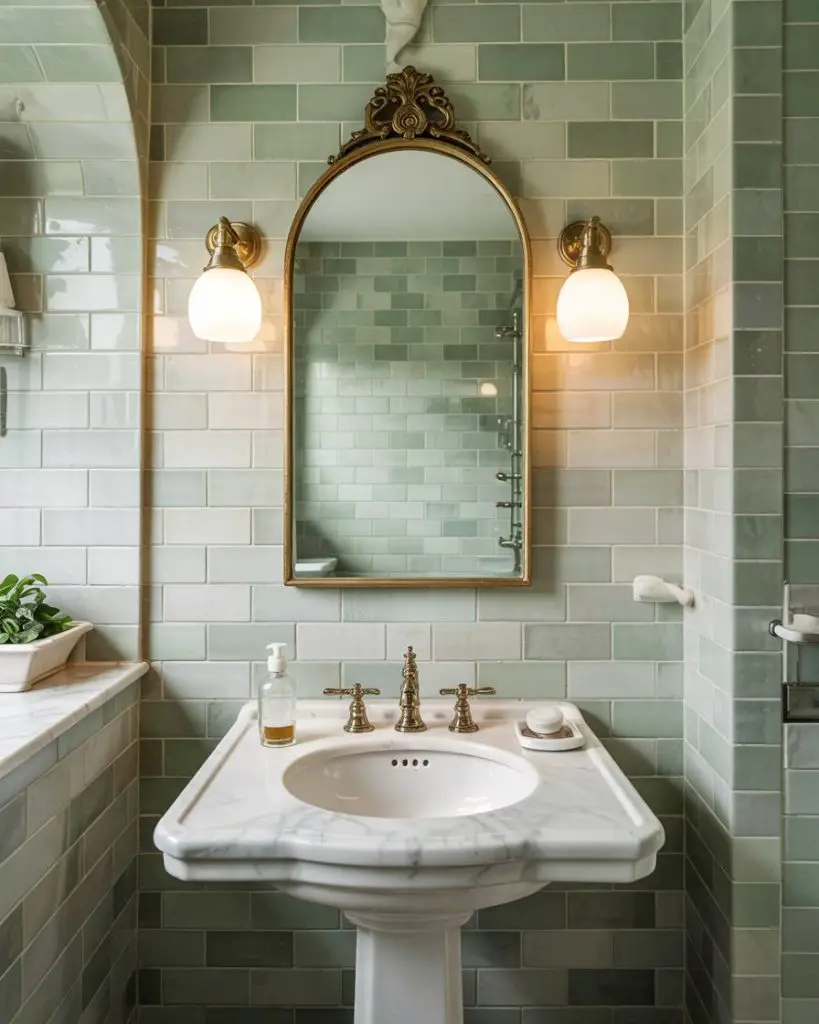
A vintage-inspired bathroom featuring mint green tile and warm brass fixtures channels the glamour of 1920s and 1930s bathrooms with a fresh, contemporary twist. This palette is soft, sophisticated, and endlessly flattering—the mint provides a cool base while the brass adds warmth and richness. Consider pairing with marble countertops, white pedestal sinks, and vintage-style mirrors to complete the look. This combination works beautifully in historic homes or in new construction where you want to layer in character and charm. 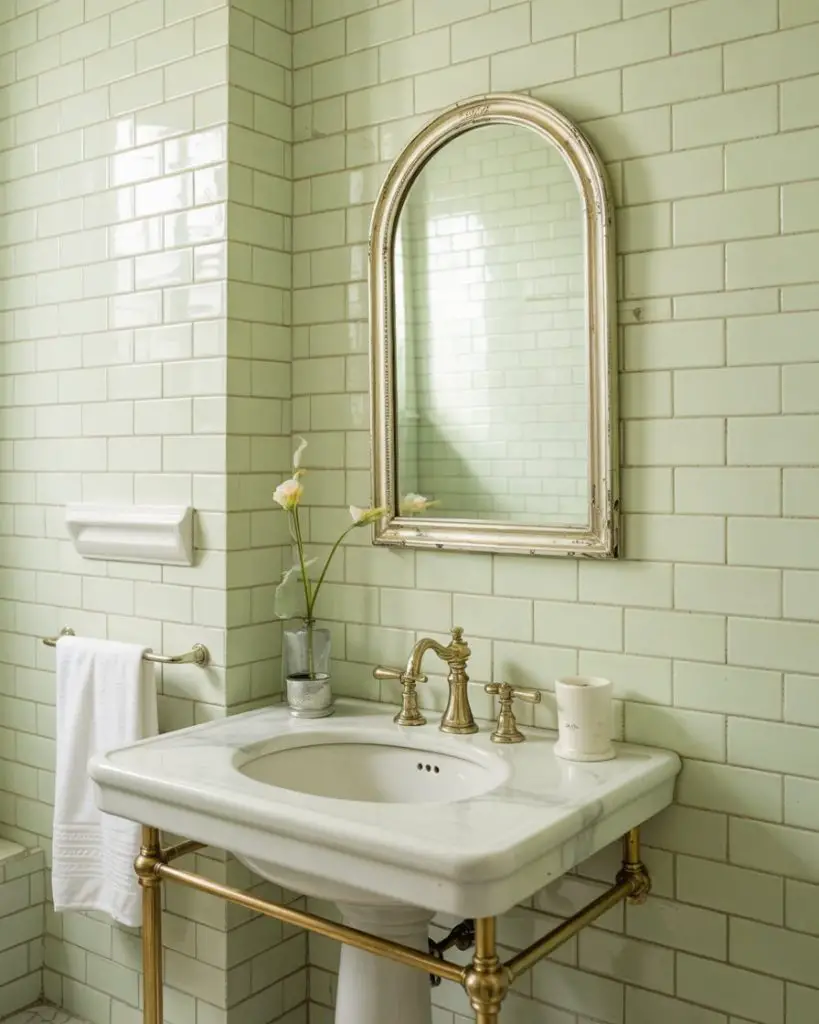
Real homeowner behavior: many people choose this style for guest bathrooms and powder rooms where they can take design risks without worrying about long-term functionality or resale concerns. The mint-and-brass combination photographs beautifully, making it a favorite for design enthusiasts who share their homes on social media. Just be aware that brass requires regular polishing to maintain its luster—unlacquered brass will develop a patina over time, which some people love and others find too high-maintenance for a bathroom setting.
23. Sage Green Tile with Natural Wood Vanity
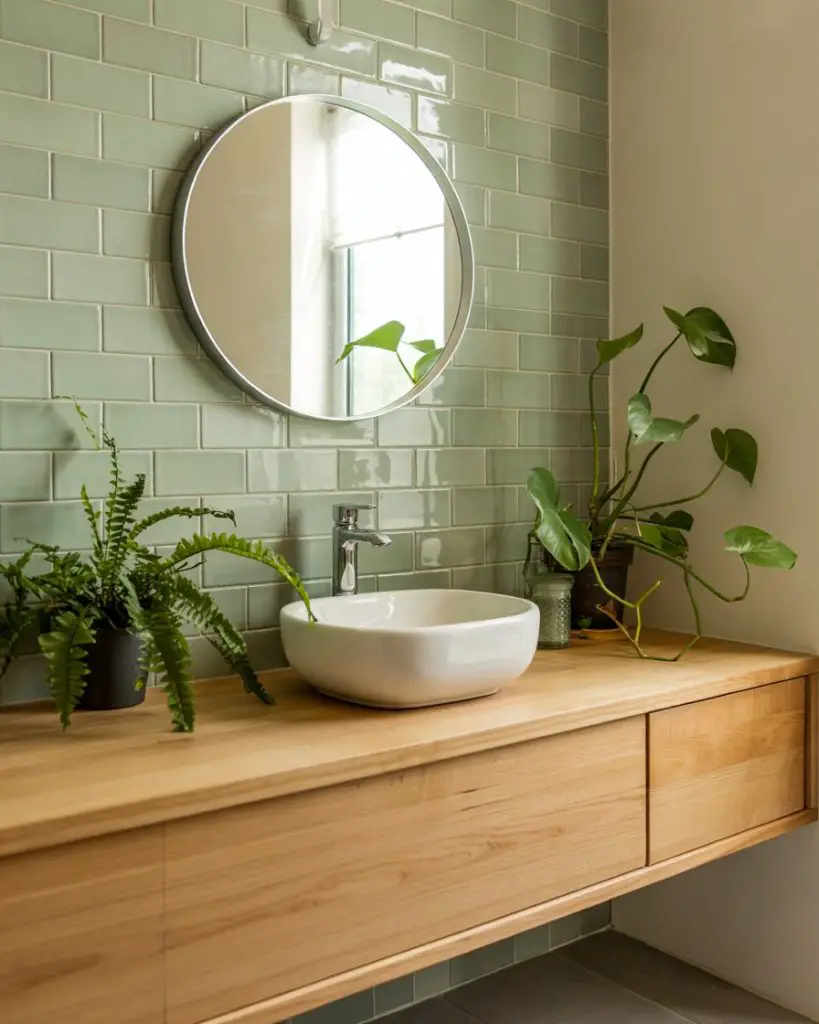
Pairing soft sage green tile with a natural wood vanity creates a bathroom that feels grounded, organic, and serene—perfect for creating a spa-like atmosphere at home. The green brings the calming energy of nature indoors, while the warm wood tones add texture and visual warmth. This combination works in bathrooms of any size and pairs beautifully with white fixtures, linen textiles, and plenty of greenery. It’s a design approach that prioritizes comfort and natural beauty over trend-driven choices. 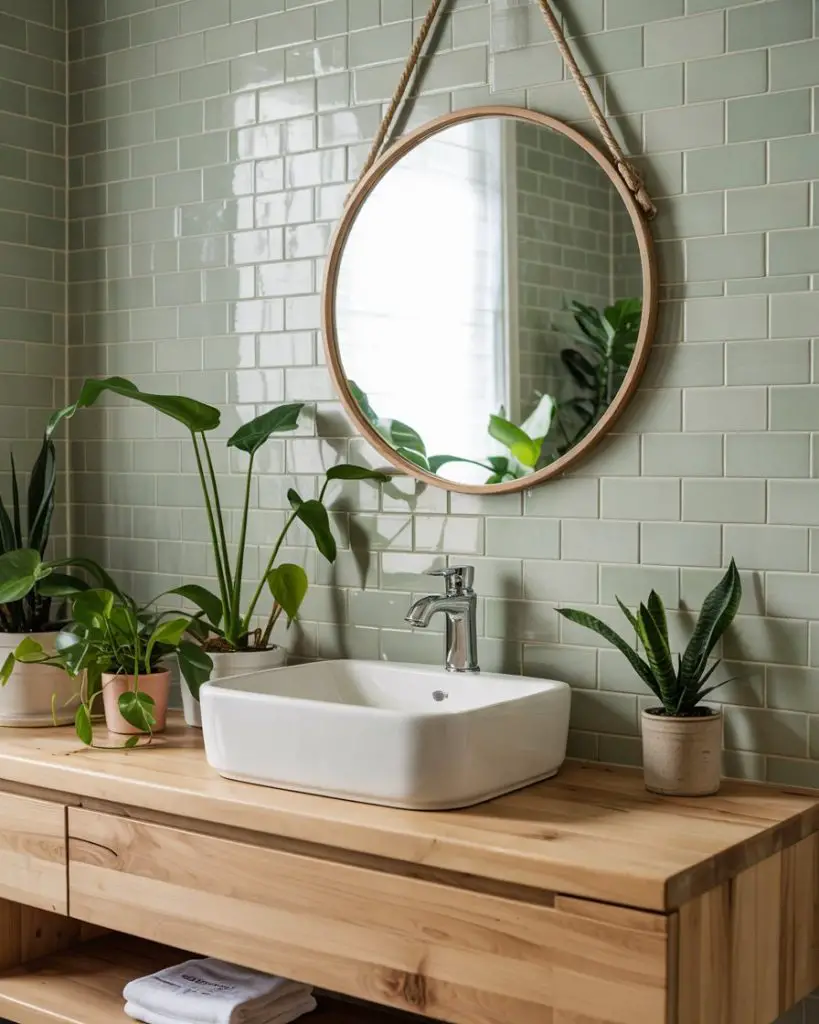
Expert-style commentary: when selecting wood for a bathroom vanity, look for hardwoods like oak, teak, or walnut that can withstand humidity better than softer woods like pine. Make sure the wood is properly sealed with a water-resistant finish to prevent warping, staining, or mold growth over time. In terms of color pairing, lighter woods (oak, ash) create a Scandinavian-inspired feel with sage green, while darker woods (walnut, mahogany) add more drama and traditional elegance. Both approaches work beautifully—it just depends on the overall mood you’re trying to create in the space.
Conclusion
Green tile is more than just a trend—it’s a versatile design choice that brings nature, calm, and personality into one of the most important rooms in your home. Whether you’re drawn to moody forest tones, soft mint hues, or something in between, there’s a green tile idea here that can transform your bathroom into a space you’ll love for years to come. What’s your favorite look from this list? Drop a comment below and let us know which style you’re planning to try—we’d love to hear how you’re bringing green into your home.