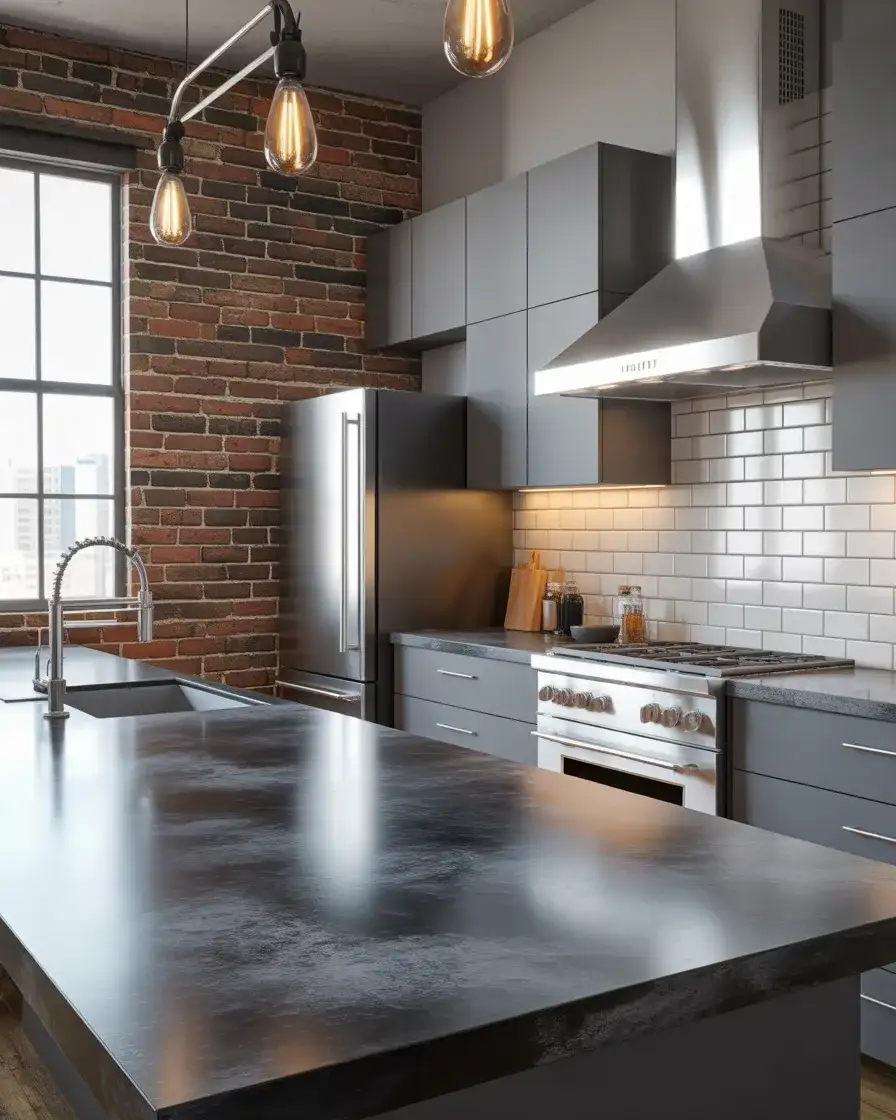
If there’s one thing that never stops trending on Pinterest, it’s kitchen cabinet inspiration—and heading into 2026, the conversation has never been more exciting. From moody dark wood finishes to airy white oak frames, homeowners across the country are rethinking what their kitchens can feel like. Whether you’re planning a full renovation or a weekend makeover, the ideas circulating right now are bold, livable, and surprisingly achievable. This guide walks you through 23 kitchen cabinet ideas that are shaping the way Americans cook, gather, and design in 2026.
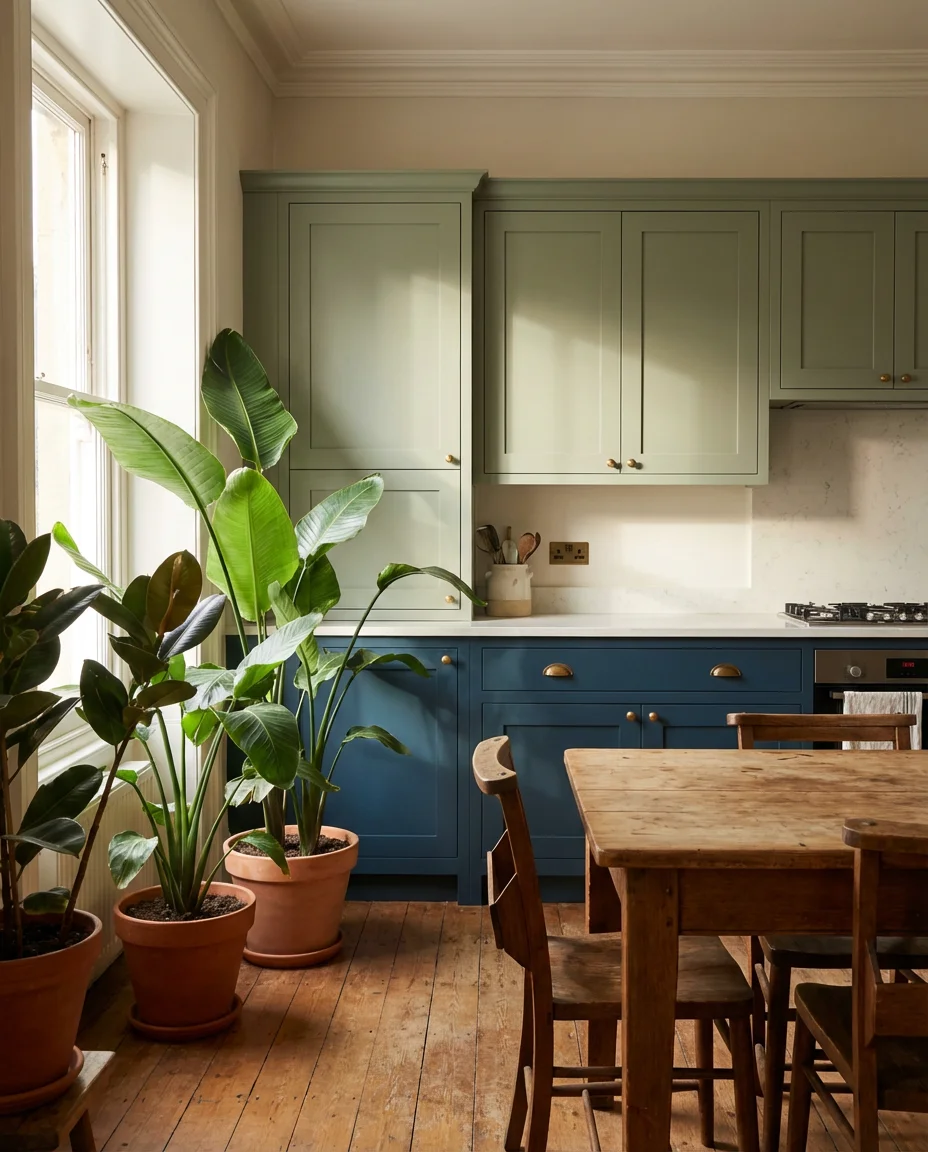
1. Sage Green Cabinets with Warm Brass Hardware
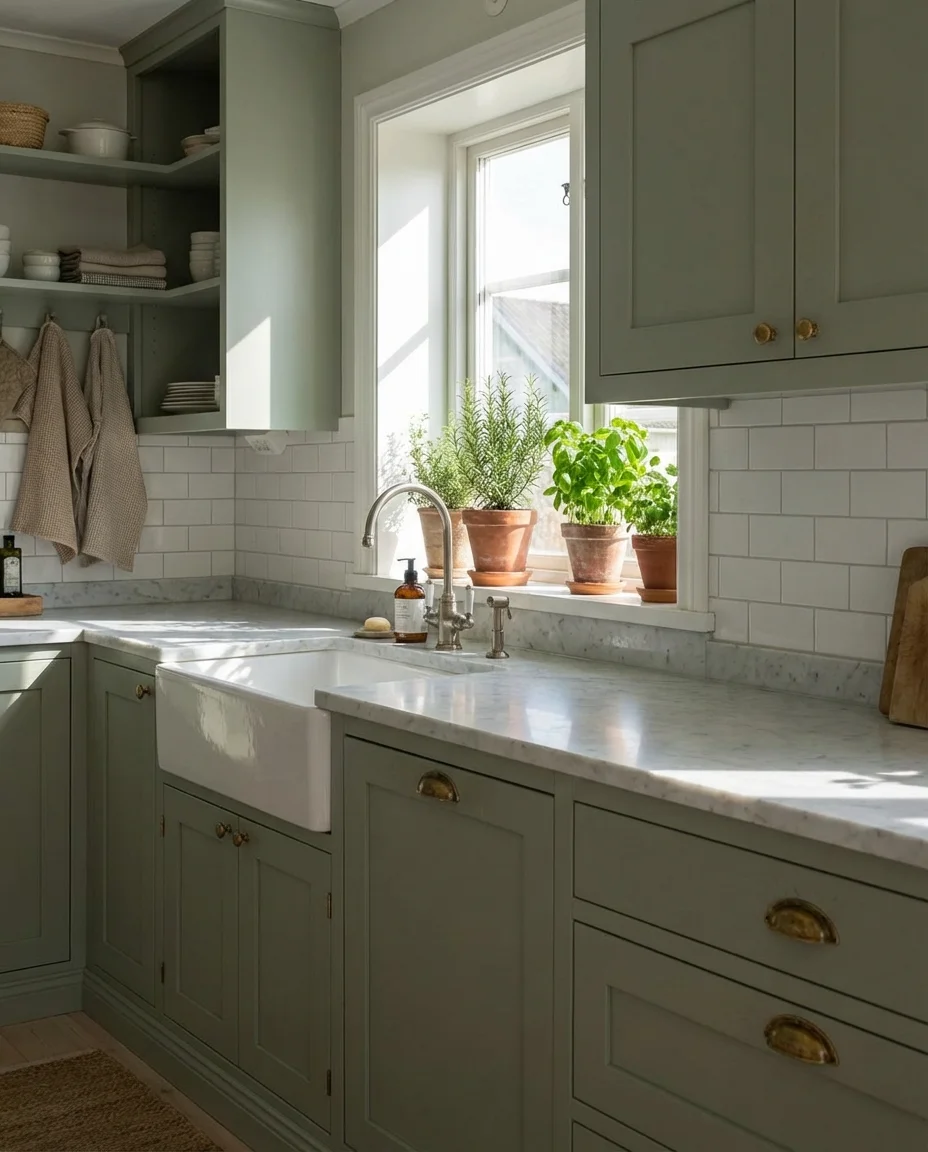
There’s something quietly irresistible about sage green in a kitchen. It’s not as bold as emerald and not as cold as mint—it sits right in that sweet spot that feels both earthy and refined. Pair it with warm brass pulls, and you have one of the most celebrated color ideas of the year. This combination works especially well in open-plan homes where the kitchen flows into living areas, giving the whole space a cohesive, organic feel that never looks overdone.
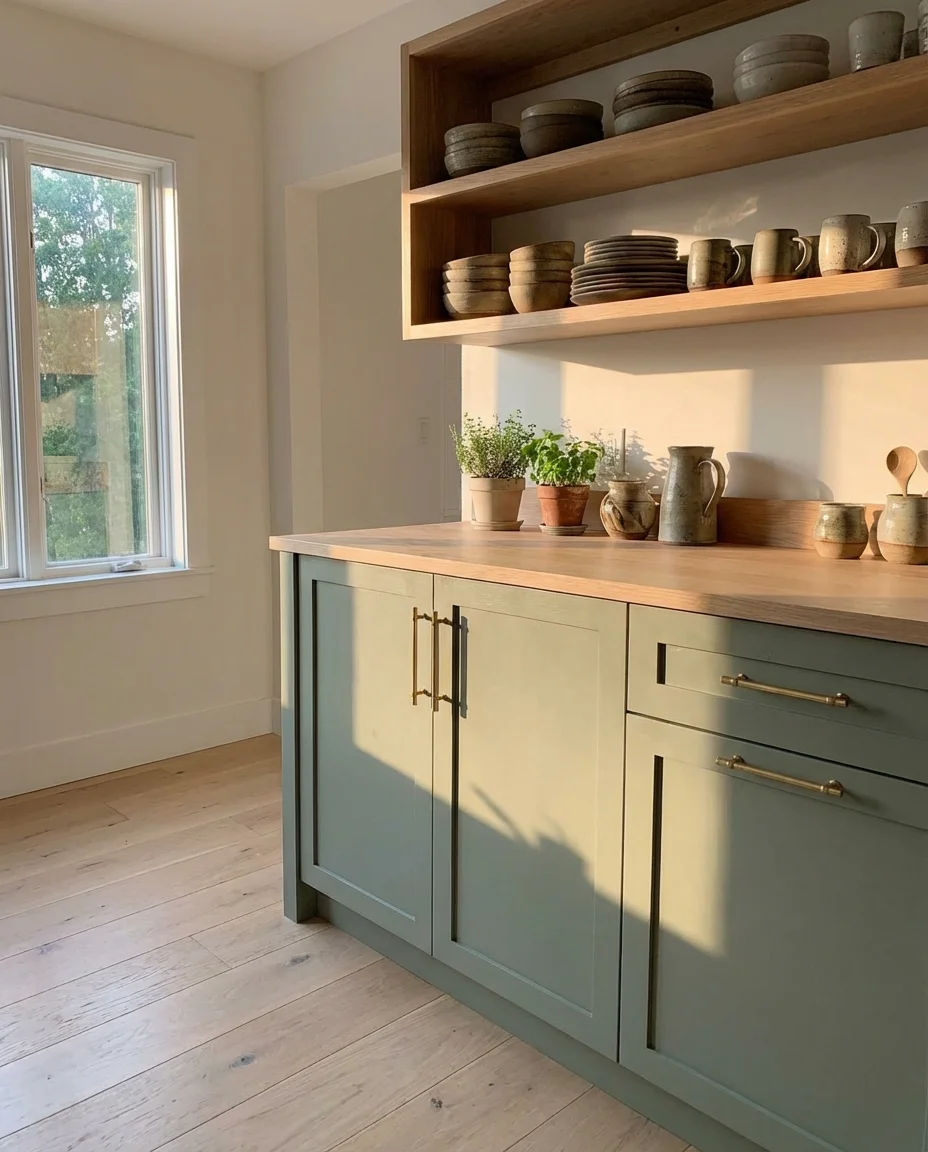
Interior designers consistently point to sage green as the color with the longest staying power in the kitchen—it photographs beautifully, complements nearly every countertop material, and ages gracefully as trends shift. If you’re worried about committing, start with lower cabinets only and leave uppers white. That split approach is one of the smartest budget moves you can make, giving you maximum visual impact without painting every cabinet in the room.
2. Crisp White Cabinets with Black Matte Fixtures
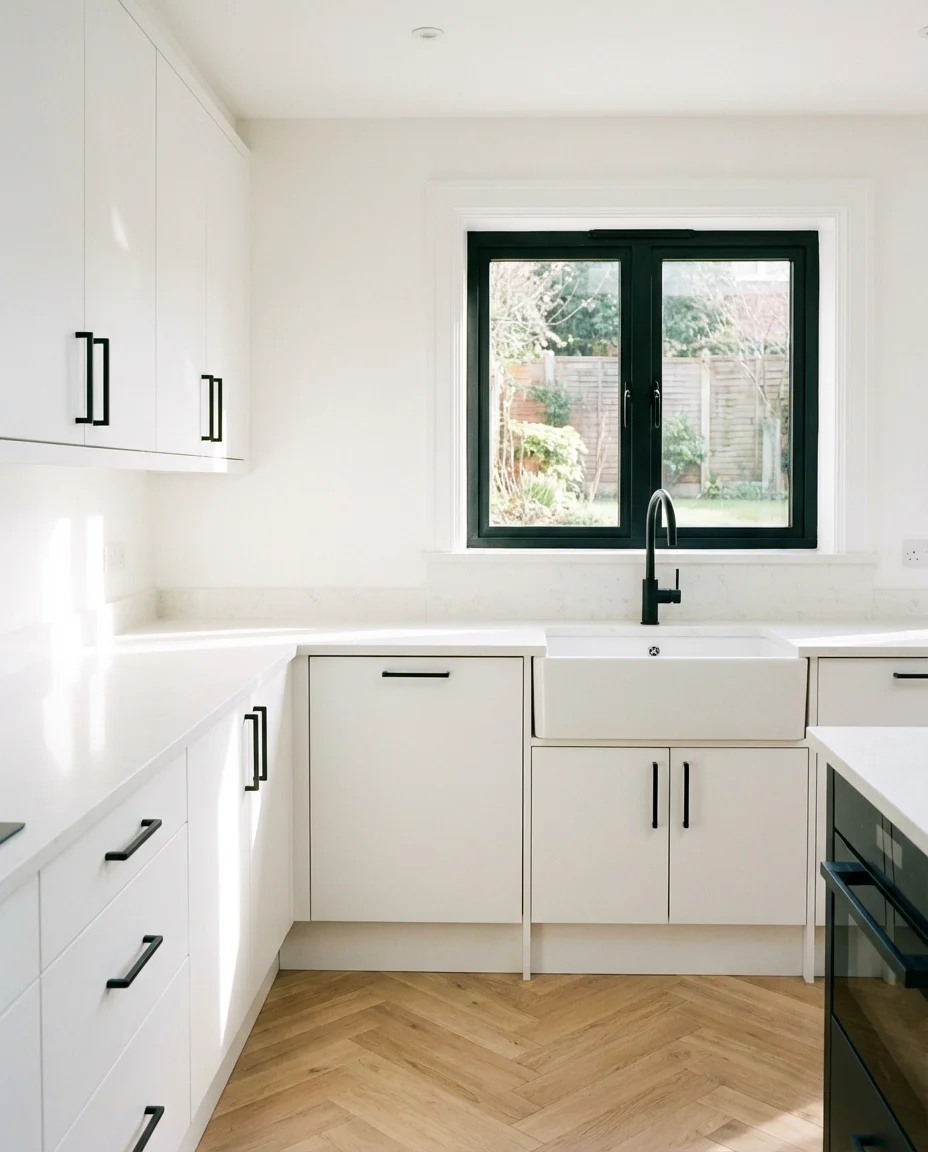
White kitchens aren’t going anywhere—but in 2026, the way designers are styling them has shifted dramatically. The sweet secret lies in contrast: pair those clean white cabinets with matte black hardware, faucets, and lighting pendants, and suddenly the whole kitchen has an edge. This combo works in everything from farmhouse-style homes in the South to sleek urban condos in Chicago or Seattle. It’s timeless but with enough tension to feel completely current.
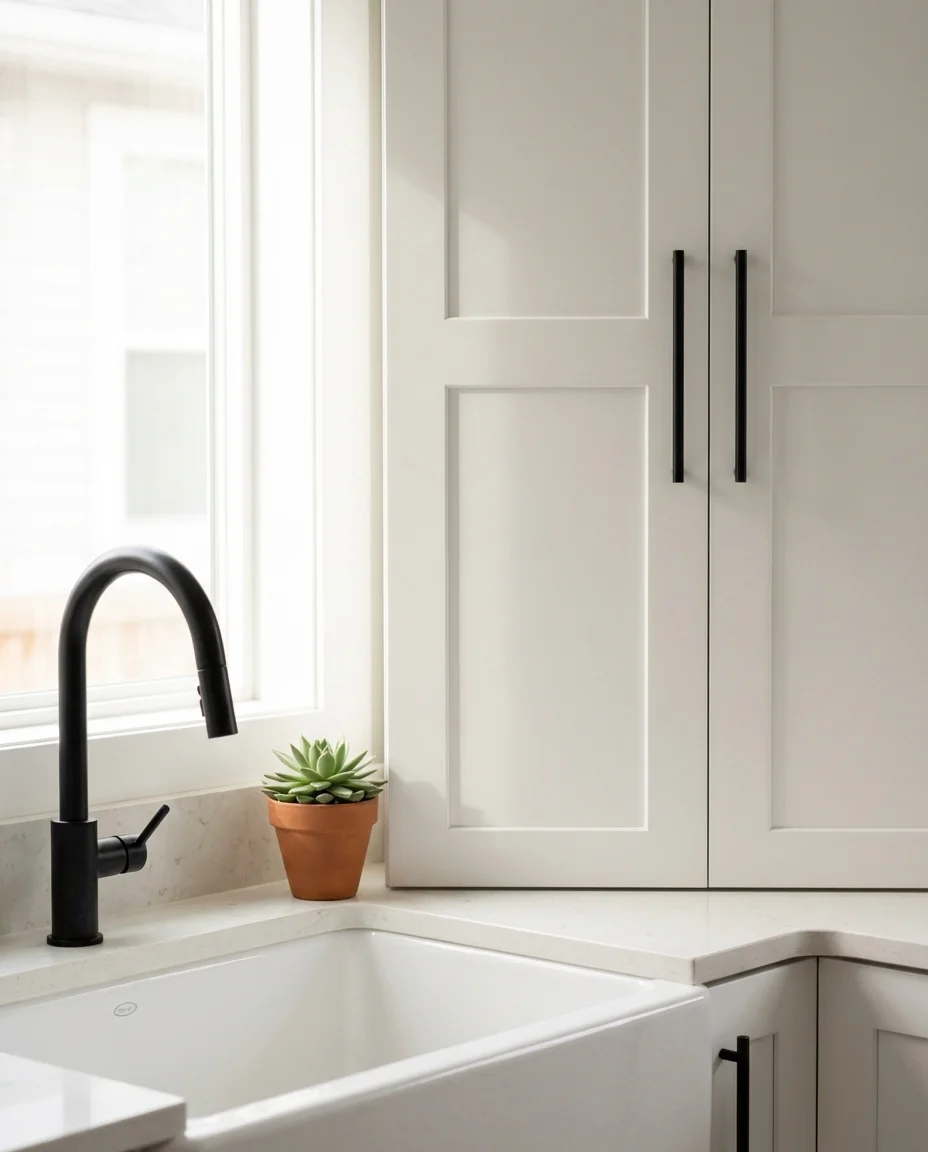
Think about where you spend the most time in your kitchen—if it’s at the sink or the island, those are the anchor points where black fixtures make the biggest visual statement. One common mistake homeowners make is choosing chrome or gold accents alongside matte black, which muddies the palette. Keep your metals consistent, and the look holds together beautifully across every corner of the room.
3. Dark Wood Cabinets with a Modern Twist
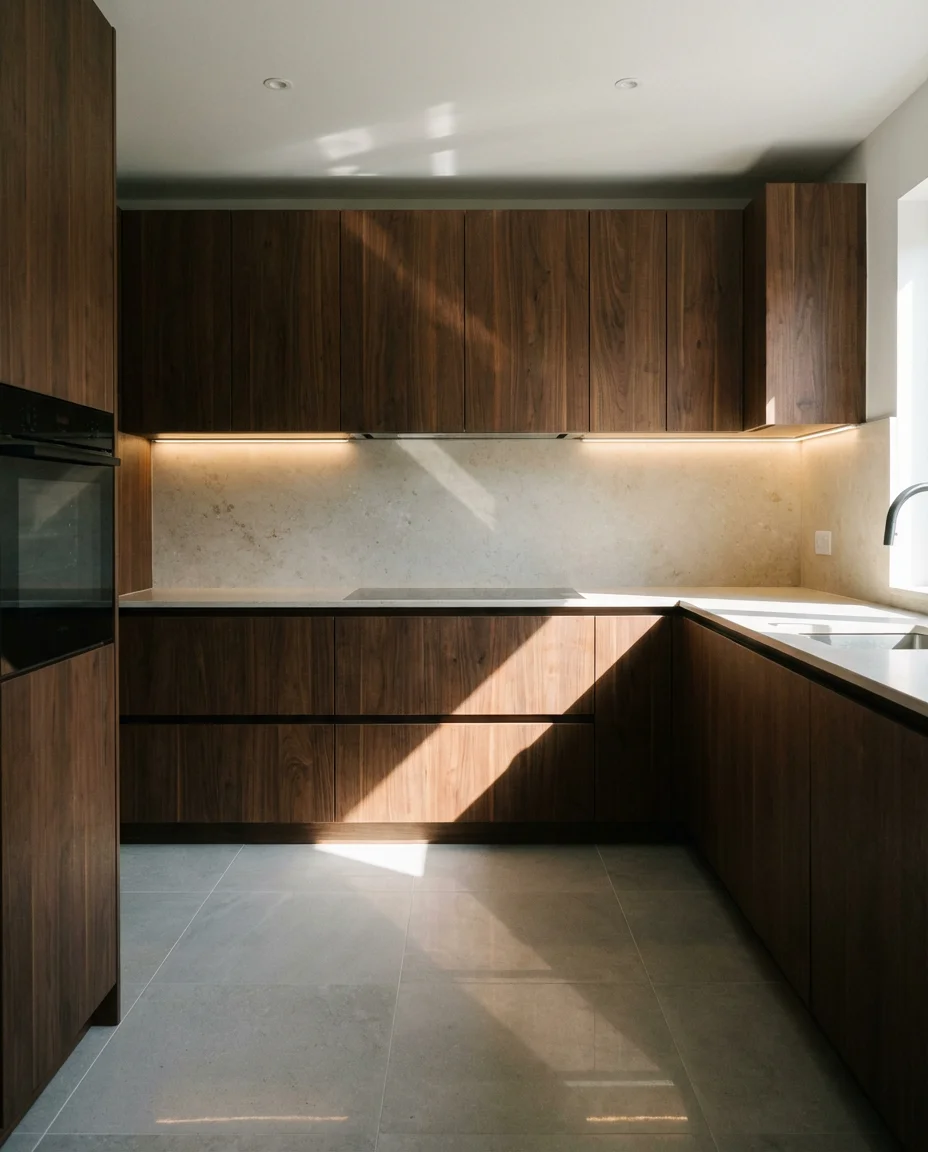
Dark wood cabinetry is having a full-on renaissance. Where it once read as heavy or dated, modern interpretations lean into clean lines and flat profiles that keep things from feeling too traditional. Think rich walnut tones paired with integrated handles, light stone countertops, and open shelving accents. This is the kind of kitchen that looks like it belongs in an architectural magazine while still feeling entirely livable for a family that actually cooks.
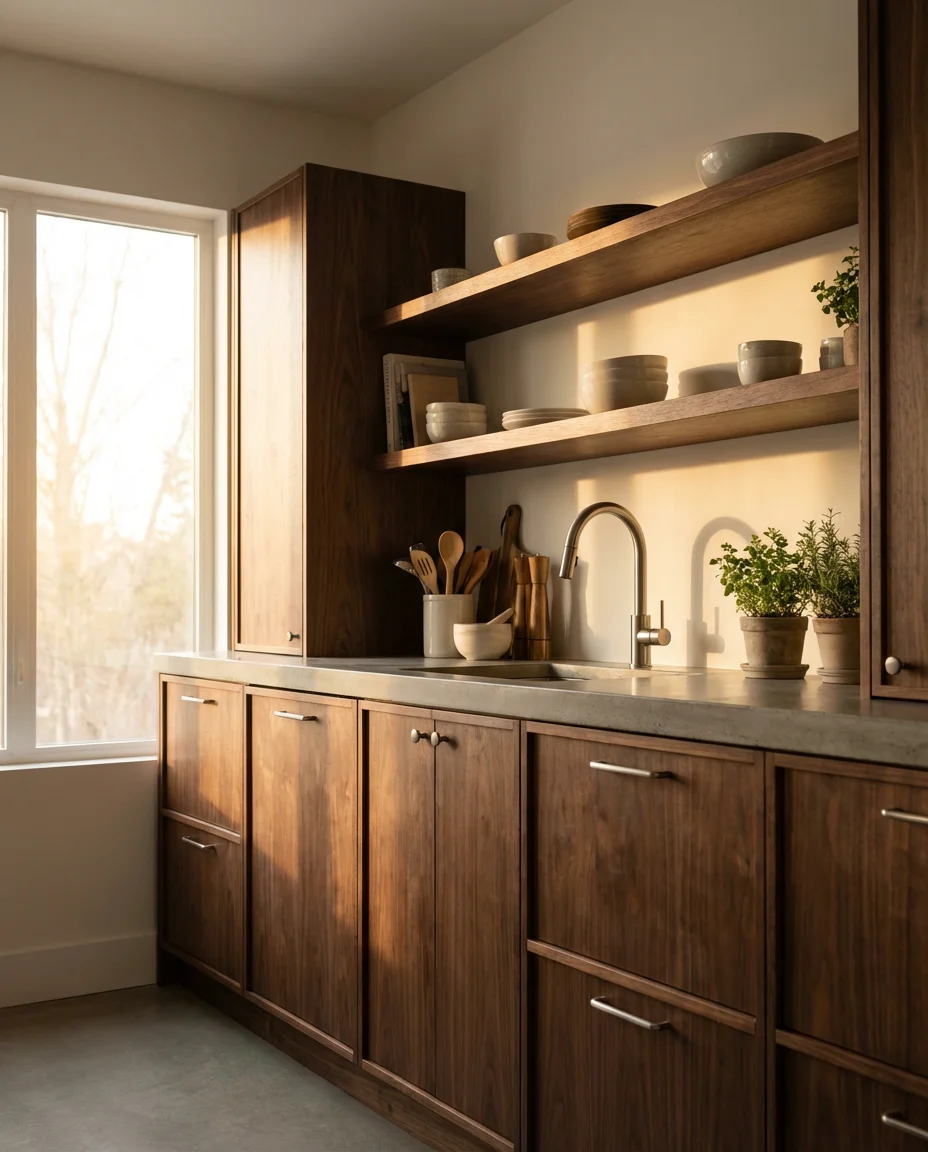
A homeowner in Austin shared that switching from painted white cabinets to dark walnut veneer completely transformed how her kitchen felt at night—it went from starkly bright to warm and enveloping. That’s the real magic of dark wood: it performs differently across the hours of the day. To keep it from overpowering a smaller kitchen, balance the lowers with lighter uppers or skip upper cabinets entirely in favor of open shelving.
4. Navy Blue Island as a Focal Statement
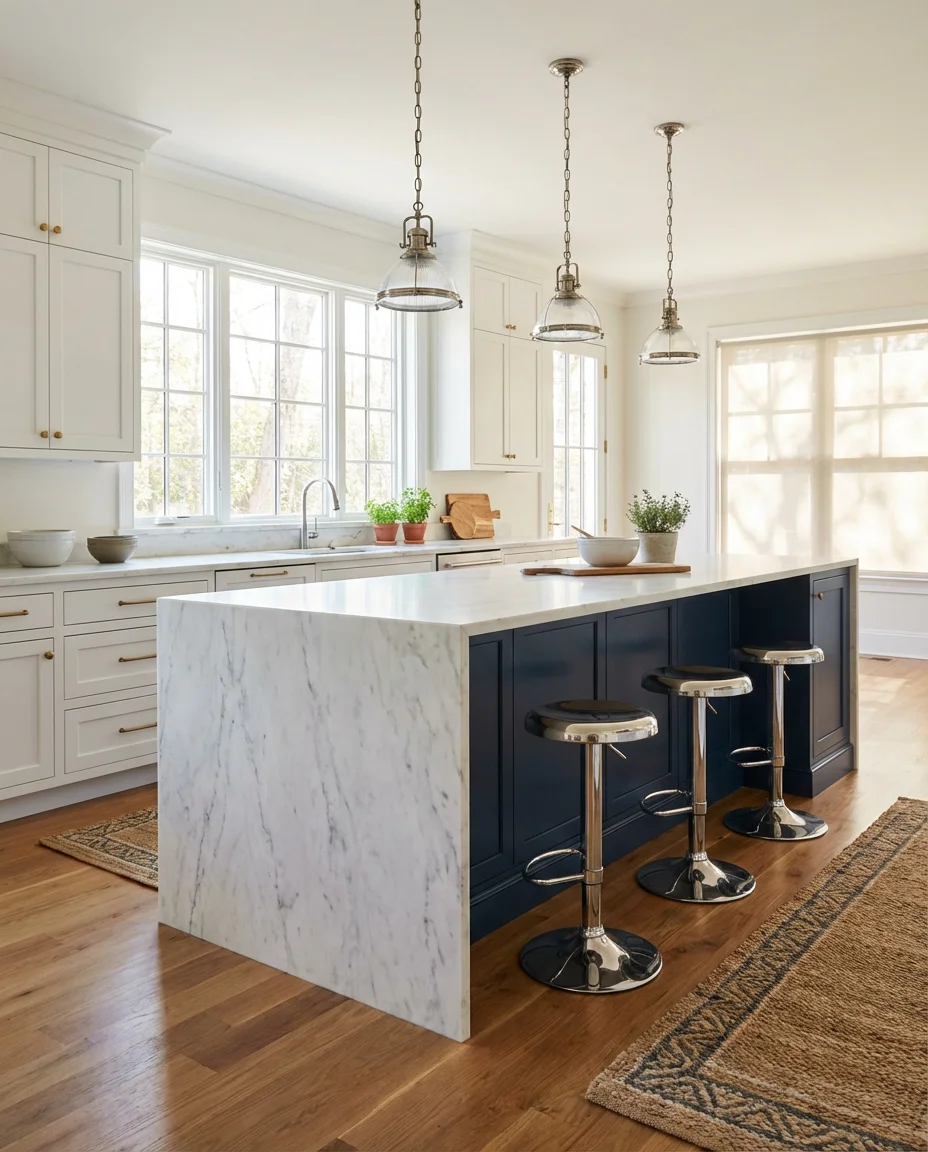
A navy blue kitchen island is one of the most Pinterest-worthy decisions you can make in 2026 — and it’s also one of the most practical. It grounds the entire room visually, draws the eye immediately, and creates a natural gathering point. Pair your navy blue island with surrounding white or cream perimeter cabinets, and you’ve got an effortlessly layered look that feels custom without the custom price tag. Polished nickel or chrome hardware amplifies the nautical sophistication beautifully.
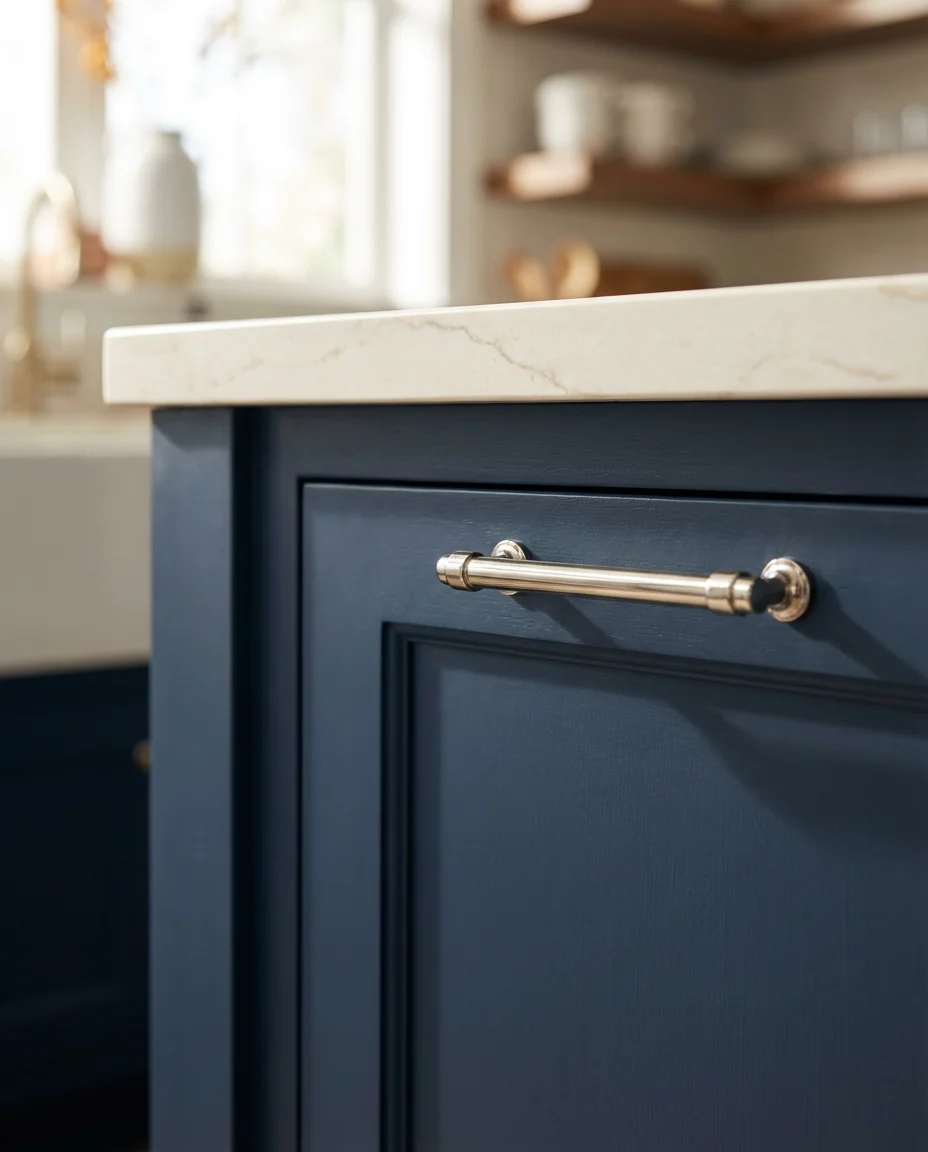
This is a particularly brilliant strategy for homeowners who want color without commitment—if you ever want to refresh the look, you’re only repainting one piece of furniture instead of an entire kitchen. In terms of where it works best, the navy island approach thrives in medium to large kitchens where the island can truly be a centerpiece. In very small kitchens, it can read as too dense. When in doubt, test the color on your existing cabinet fronts before ordering anything new.
5. White Oak Cabinets for a Natural, Organic Feel
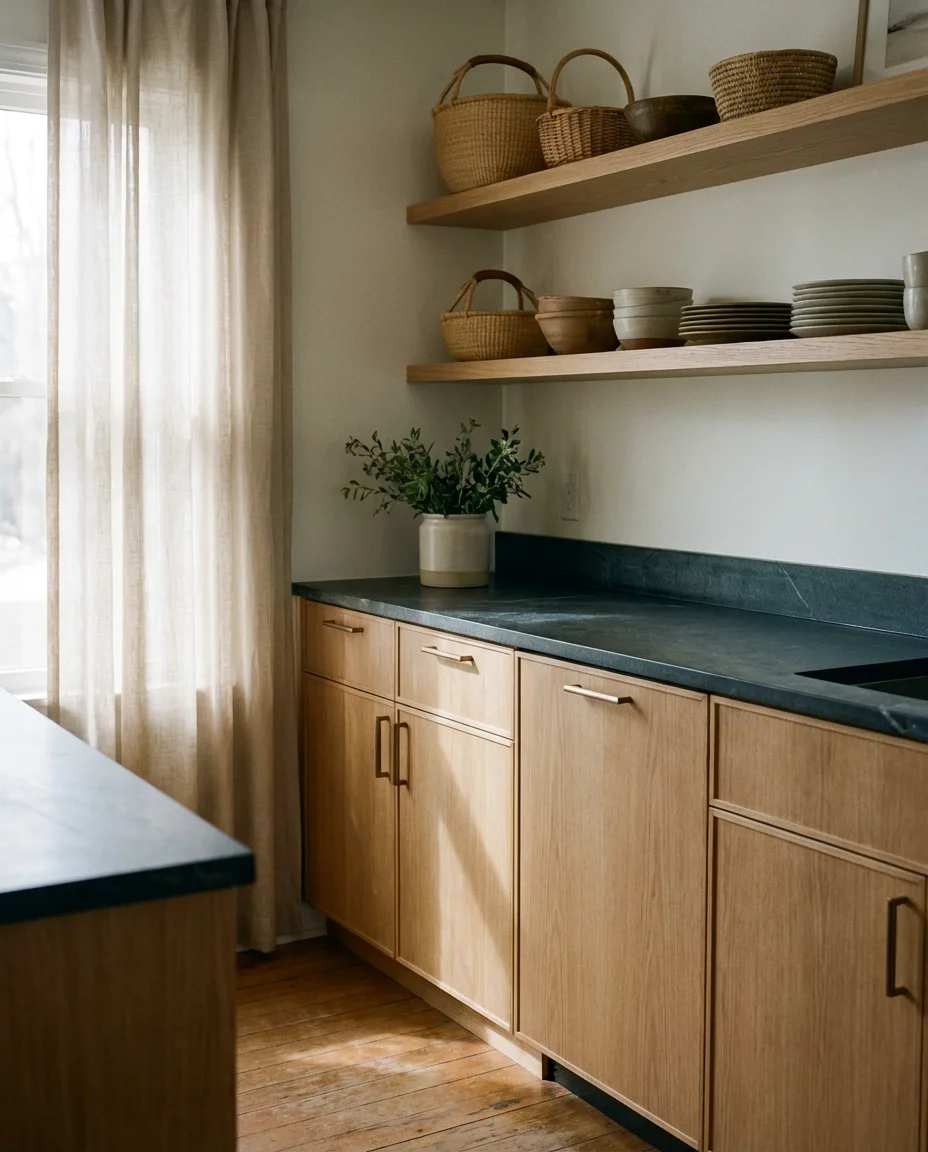
If there’s a single material defining kitchen design in 2026, it’s white oak. The pale, textured grain of white oak sits between the warmth of honey wood and the cool neutrality of painted cabinetry—and it belongs in both modern and traditional spaces. White oak cabinets paired with a honed stone countertop and linen-white walls feel extraordinarily calm, the kind of kitchen that makes you want to slow down and actually enjoy cooking. The look is effortlessly Scandinavian without feeling cold or sterile.
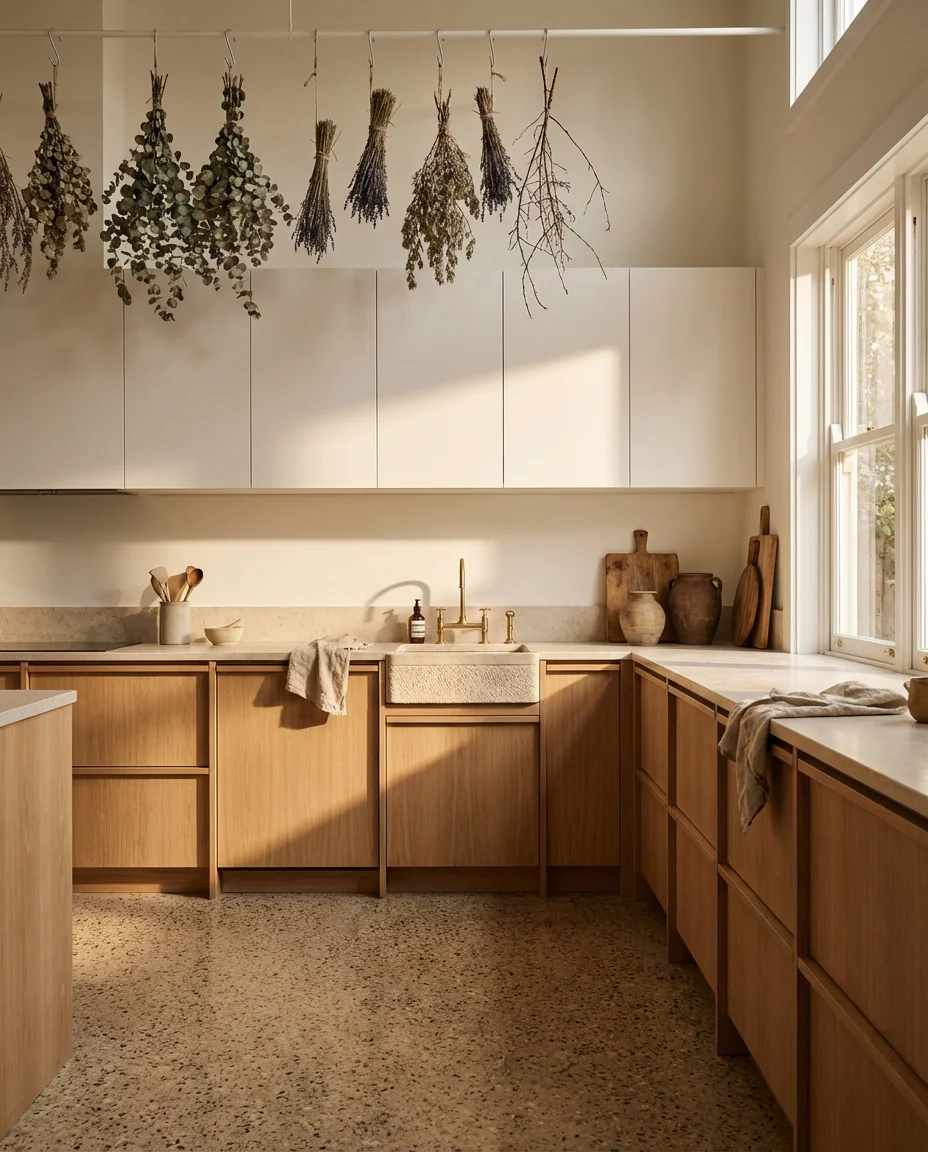
From a budget standpoint, white oak cabinetry tends to fall in the mid-to-upper range—real white oak veneer or solid fronts aren’t cheap, but they hold their value well. If you’re renovating to sell, real estate agents in markets like Portland, Denver, and the Pacific Northwest consistently report that natural wood kitchens photograph exceptionally well and tend to attract serious buyers faster than their painted counterparts.
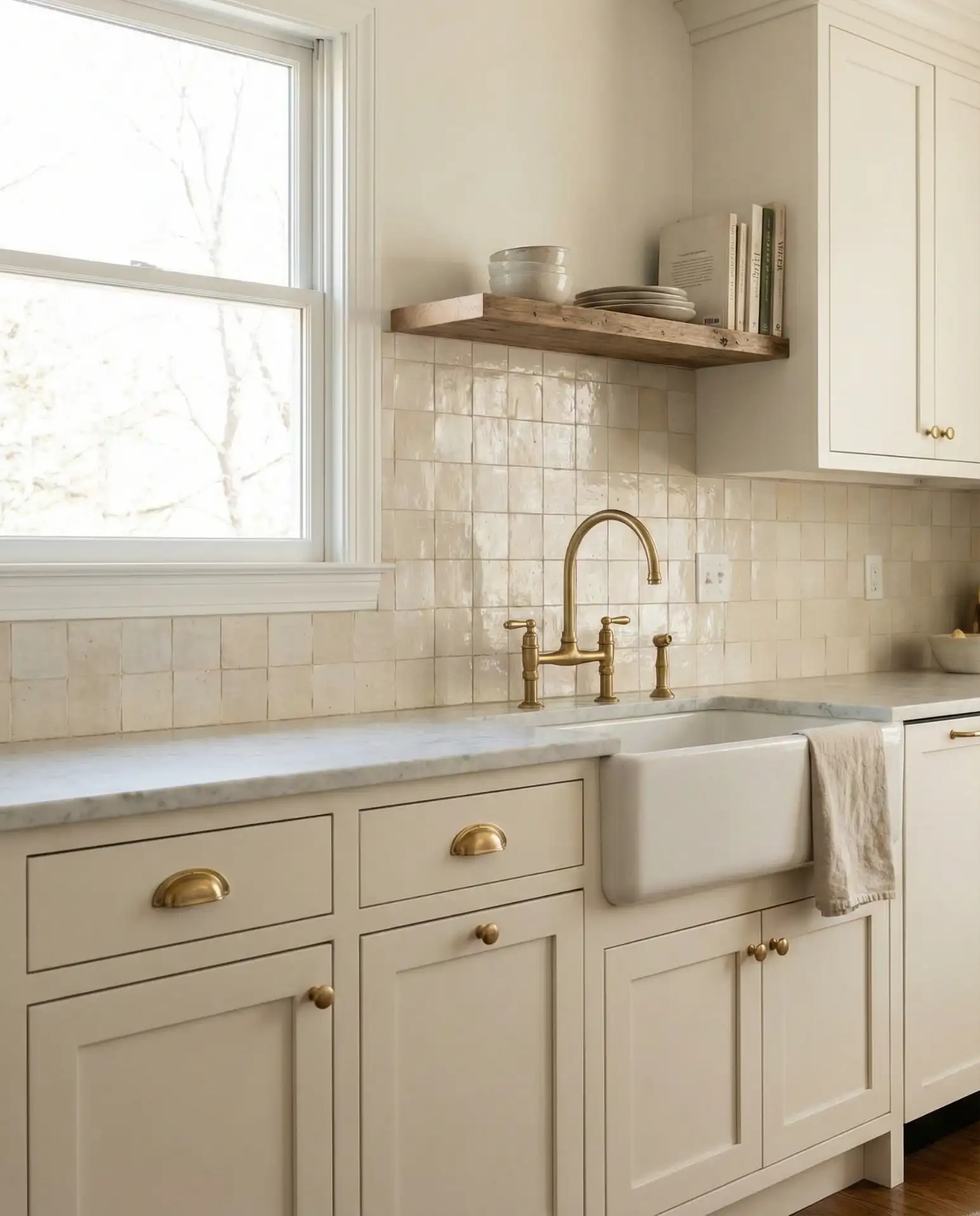
6. Beige and Taupe Tones for a Cozy, Timeless Kitchen
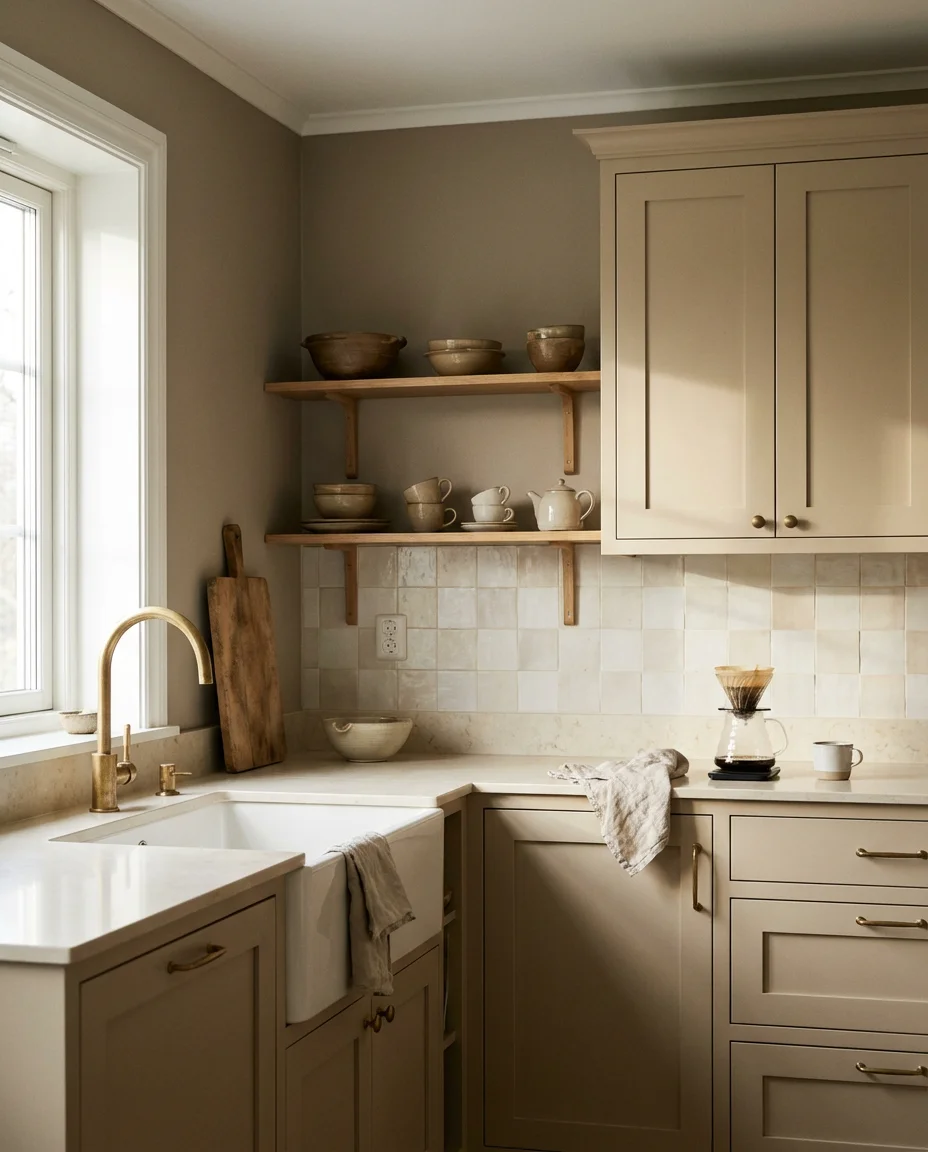
The comeback of beige and taupe is real, and it’s earned. After years of stark whites dominating kitchen design, homeowners are gravitating toward warmer neutrals that feel less clinical and more lived-in. A kitchen dressed in layered beige tones—from sandy cabinet faces to taupe walls and cream stone countertops—creates an atmosphere that’s genuinely cozy. It feels like a kitchen that welcomes Sunday morning pancakes as much as dinner parties.
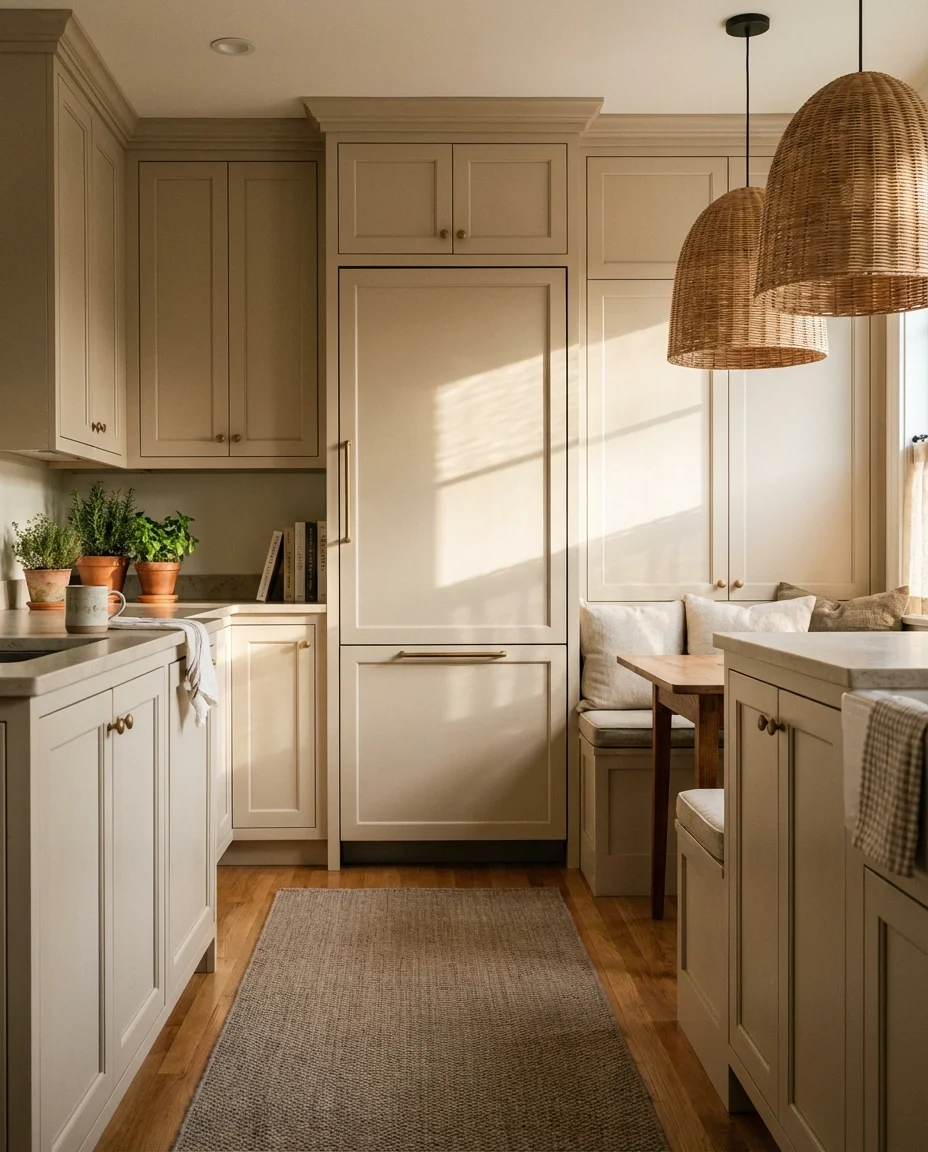
One of the smartest things about committing to a beige-taupe palette is its compatibility with nearly every accent color. Terracotta, olive, dusty blue, and deep burgundy all layer beautifully on top—which means you can shift the seasonal feel of the kitchen without touching a single cabinet. This is a particularly popular approach in the South and Southwest, where earthy tones align naturally with the regional architectural vernacular and the abundant warm sunlight that fills these homes year-round.
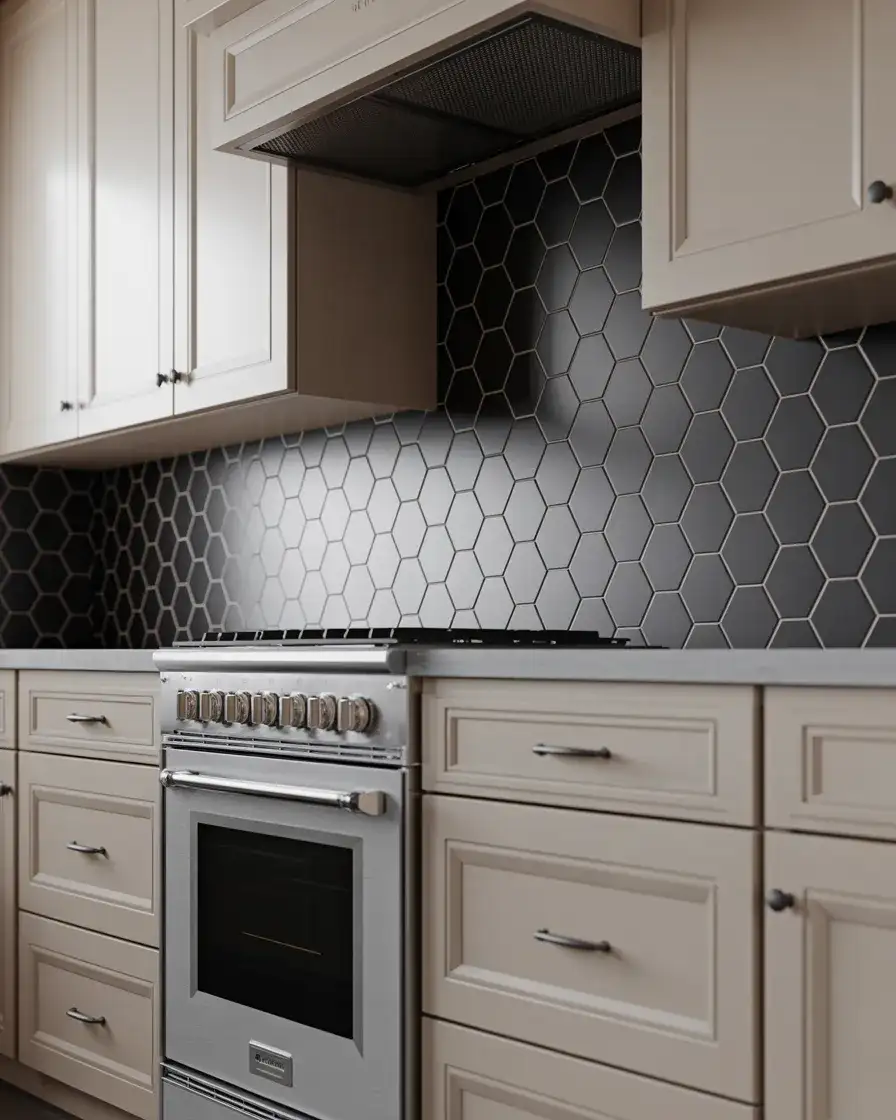
7. Gray Cabinets That Actually Feel Warm
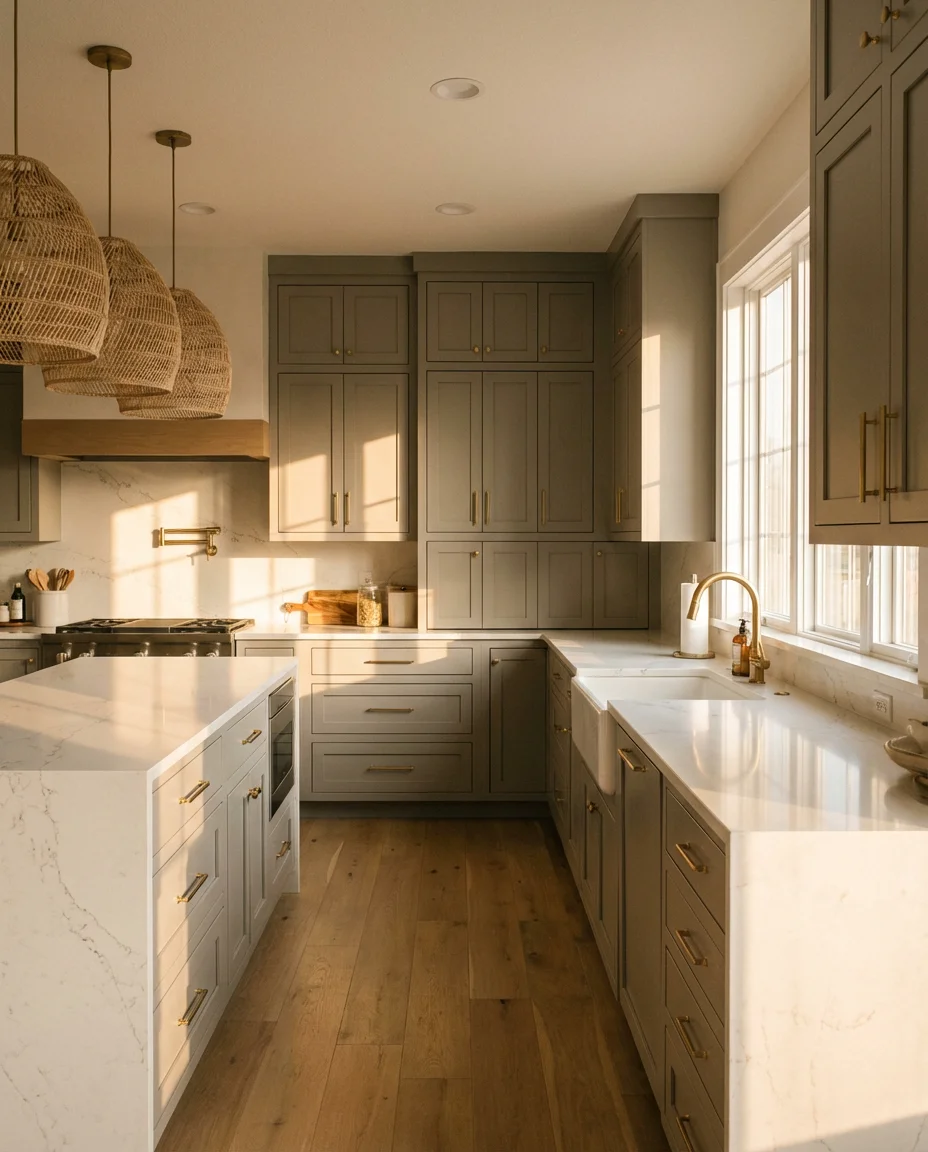
Gray got a bad reputation in the early 2010s when poorly chosen cool-toned grays made kitchens feel like parking garages. But the grey cabinets of 2026 are an entirely different animal. Designers are now reaching for warm gray—tones with gentle undertones of greige, mushroom, or lavender—that feel sophisticated and cozy at once. When paired with white oak or light wood floors and brushed gold hardware, warm gray cabinetry strikes a balance that photographs beautifully and feels even better in person.
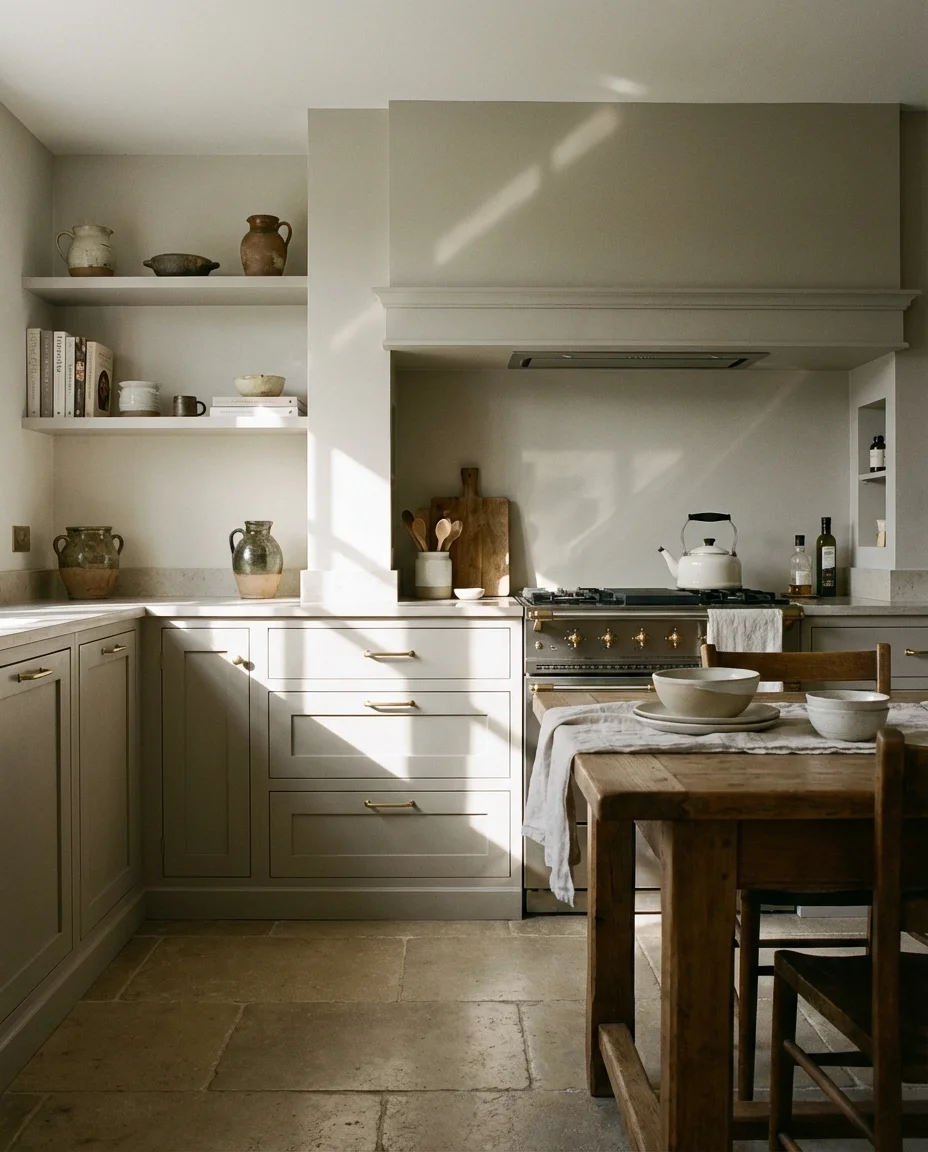
The key to getting warm gray right is testing swatches under your kitchen’s specific lighting—not the store’s lighting, which is almost always brighter and more flattering than what you’ll have at home. Bring home five to seven samples and observe them at different times of day. A color that looks warm and inviting at noon may turn cold and lavender-tinted under your evening kitchen lights. This one step saves thousands of dollars in regrets and repaints.
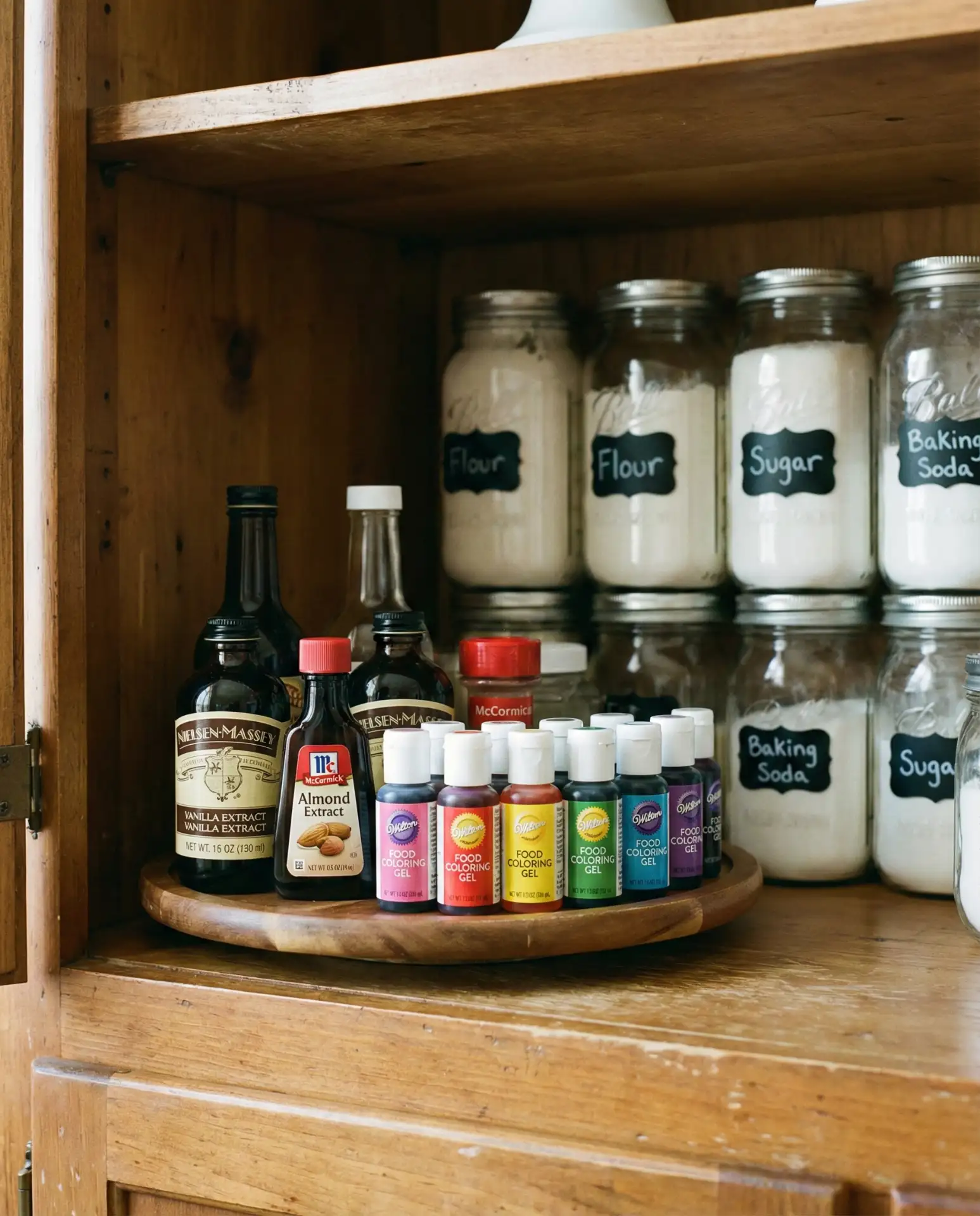
8. Smart Cabinet Organization That Changes Everything
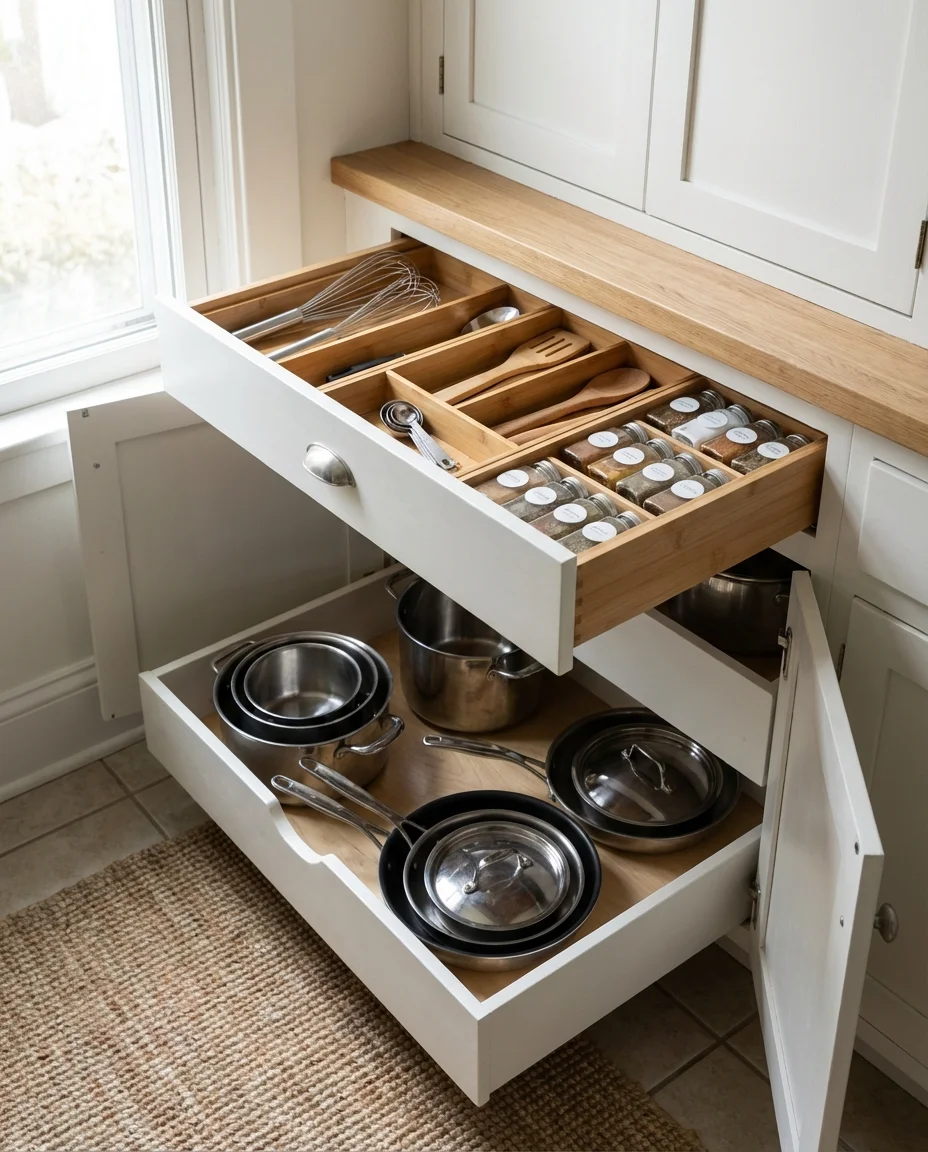
Beautiful cabinets are only as good as what’s happening inside them—and in 2026, organization has become just as much a design priority as the exterior finish. Pull-out shelves, built-in spice racks, custom drawer dividers, and appliance garages are all becoming standard requests in kitchen renovations. When the interior of your cabinets is as intentional as the exterior, your whole kitchen functions better, and you end up using every inch of the space you paid for.
Real homeowners who’ve invested in interior cabinet systems report a consistent finding: they use their kitchen more and enjoy it more. One family in suburban Ohio shared that after adding pull-out drawers to their lower cabinets, they stopped leaving appliances on the counter because everything finally had a logical home. If a full renovation is out of budget, retrofit pull-out systems are an affordable, drill-it-yourself upgrade available from major home improvement retailers for under $100 per cabinet.
9. Black Cabinets That Command the Room
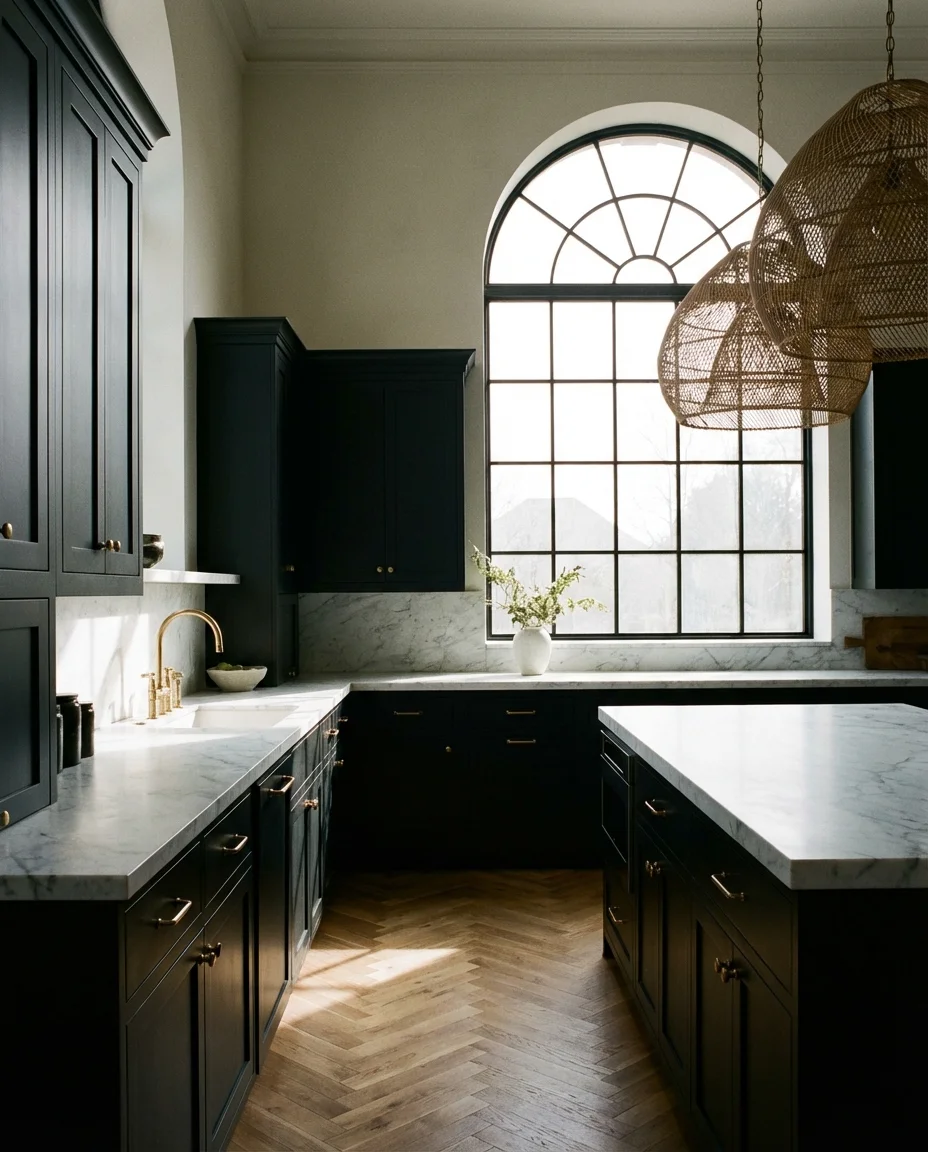
Choosing black cabinets is one of the most confident design decisions a homeowner can make—and when it works, it’s absolutely stunning. Dark cabinetry in matte or satin black grounds a kitchen with an almost theatrical presence, and it pairs brilliantly with brass hardware, marble countertops, and warm wood floors. The look is particularly dramatic in kitchens with high ceilings where the vertical mass of the cabinets doesn’t feel overwhelming. Think of it as the interior design equivalent of a perfectly tailored suit.
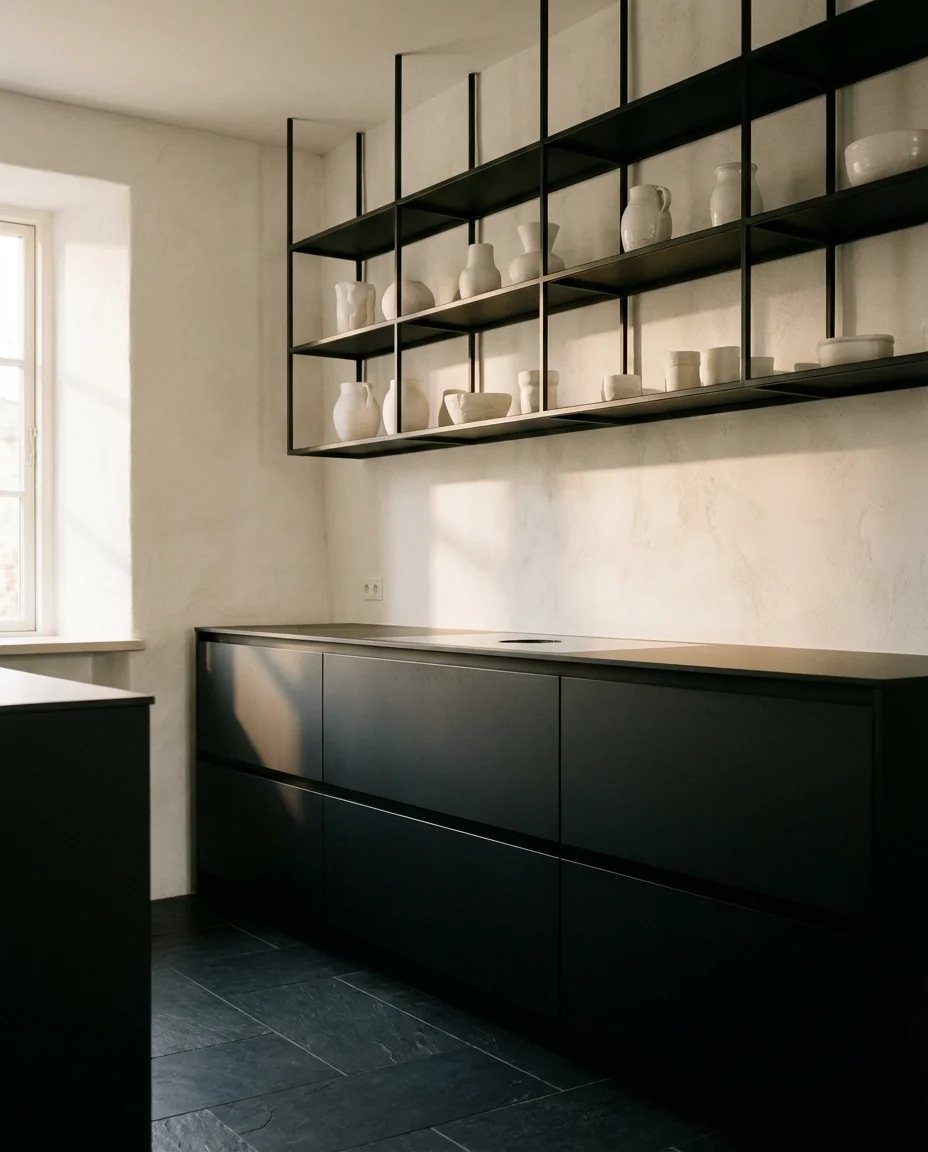
Black kitchens perform exceptionally well in homes with abundant natural light—south-facing or east-facing kitchens where morning light pours in freely. In darker kitchens, add task lighting under upper cabinets and inside glass-front sections to prevent the space from feeling cave-like. Experts in high-end residential design note that black cabinetry tends to age incredibly well: fingerprints and minor scuffs are far less visible on matte black than on high-gloss white, which is a practical advantage that surprises many first-time buyers.
10. Corner Cabinet Solutions That Finally Make Sense
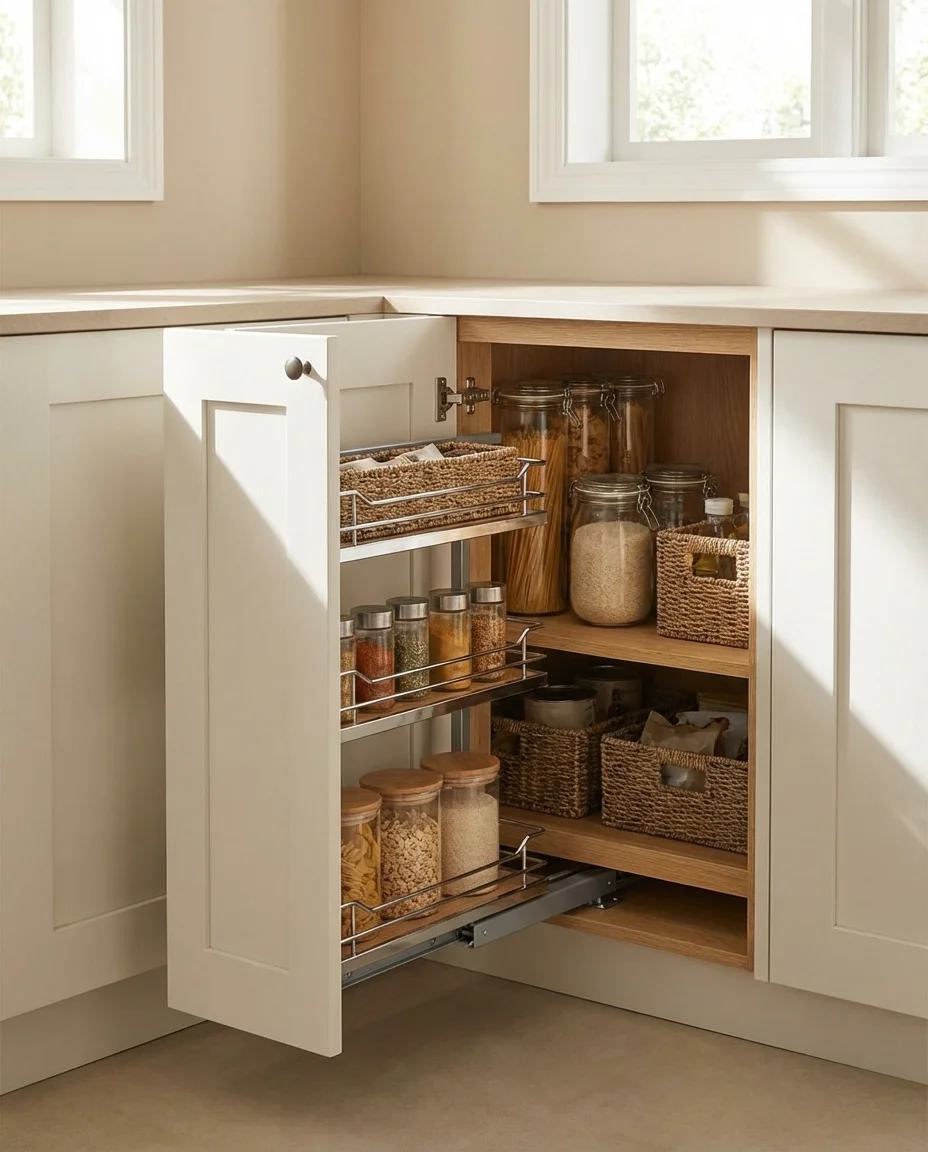
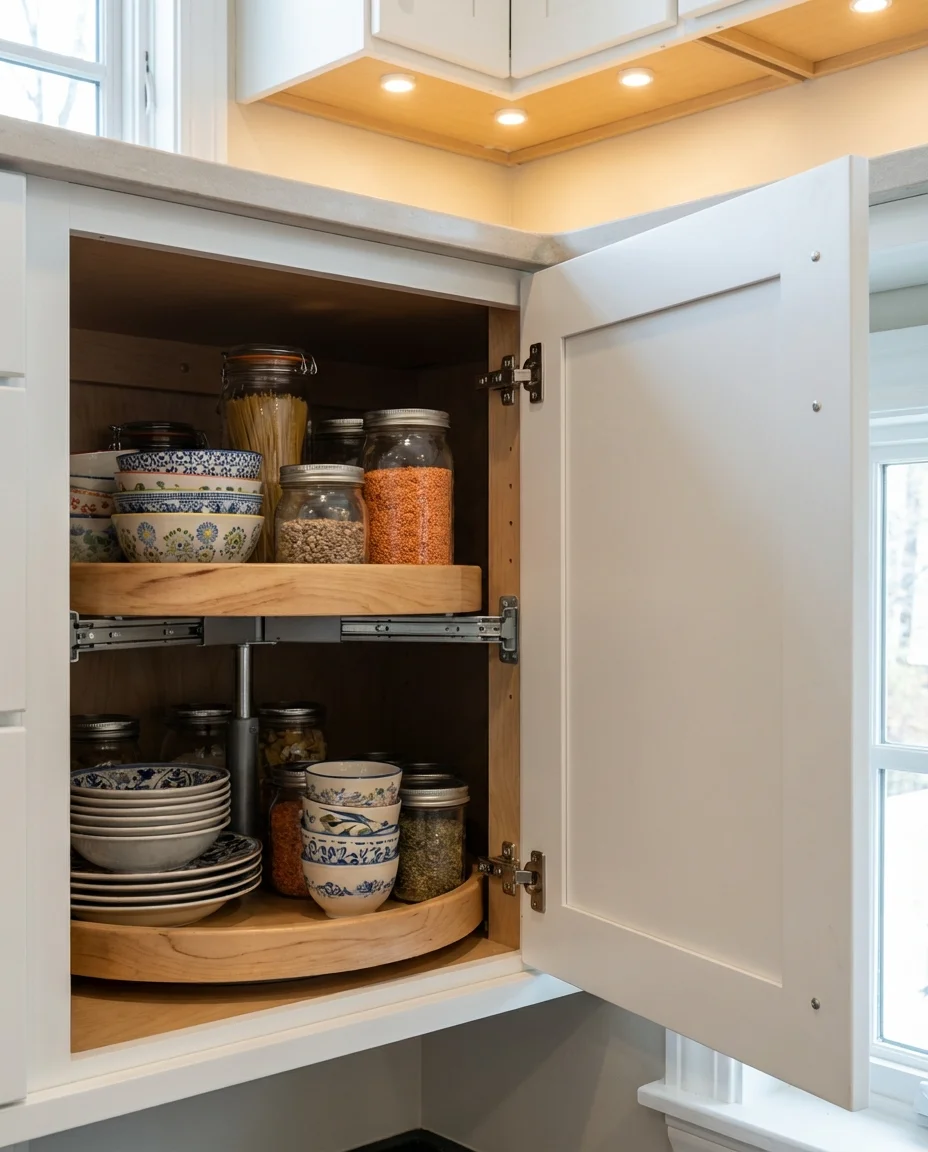
The dreaded corner cabinet—that black hole where storage goes to die—is getting a serious redesign in 2026. Innovative solutions like magic corner systems, diagonal drawer cabinets, and pull-out L-shaped shelves are turning the most awkward kitchen real estate into highly functional space. Corner drawer units are especially popular right now, offering full-extension drawers that swing out and forward so you can actually see and reach everything inside without crouching on the floor or losing items to the back.
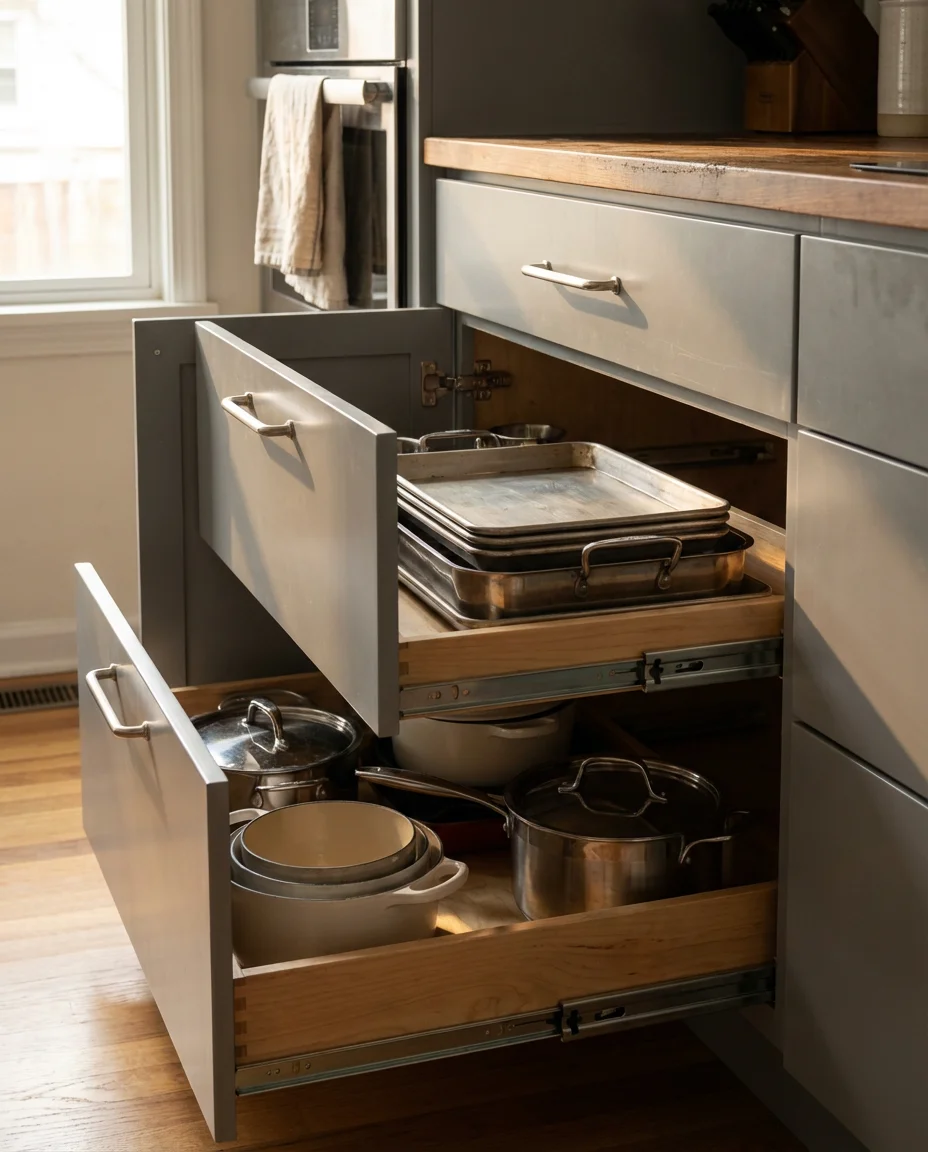
Here’s where Americans tend to go wrong with corner cabinets: they pick a solution based on looks alone without considering how often they actually access those items. A lazy Susan is charming but can be frustrating if you’re constantly hunting for things. A magic corner system costs more upfront but is far more efficient for everyday use. If you cook seriously, invest in the best mechanical corner hardware your budget allows—you’ll interact with it every single day, so it’s worth every dollar.
11. Cream Cabinets with Unlacquered Brass for Vintage Warmth
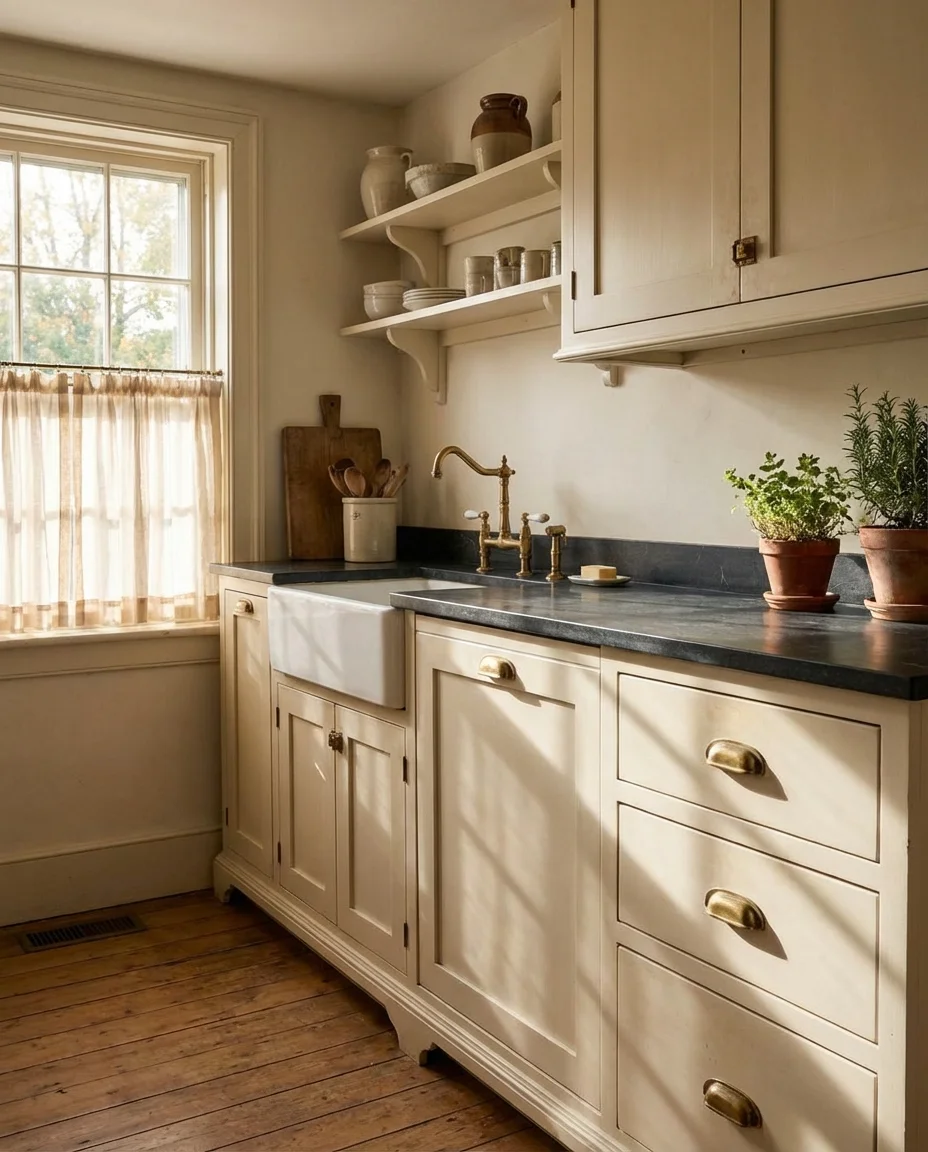
Cream is not white—and that distinction matters enormously in a kitchen. Where white reads clean and modern, cream reads warm and nostalgic, evoking the kind of kitchens you find in New England farmhouses or Italian countryside villas. Combine that cream with unlacquered brass hardware that will naturally patina over time, and you’ve created something that looks better with every passing year. This is an intentionally imperfect, beautifully lived-in aesthetic that can’t be faked with shiny chrome alternatives.
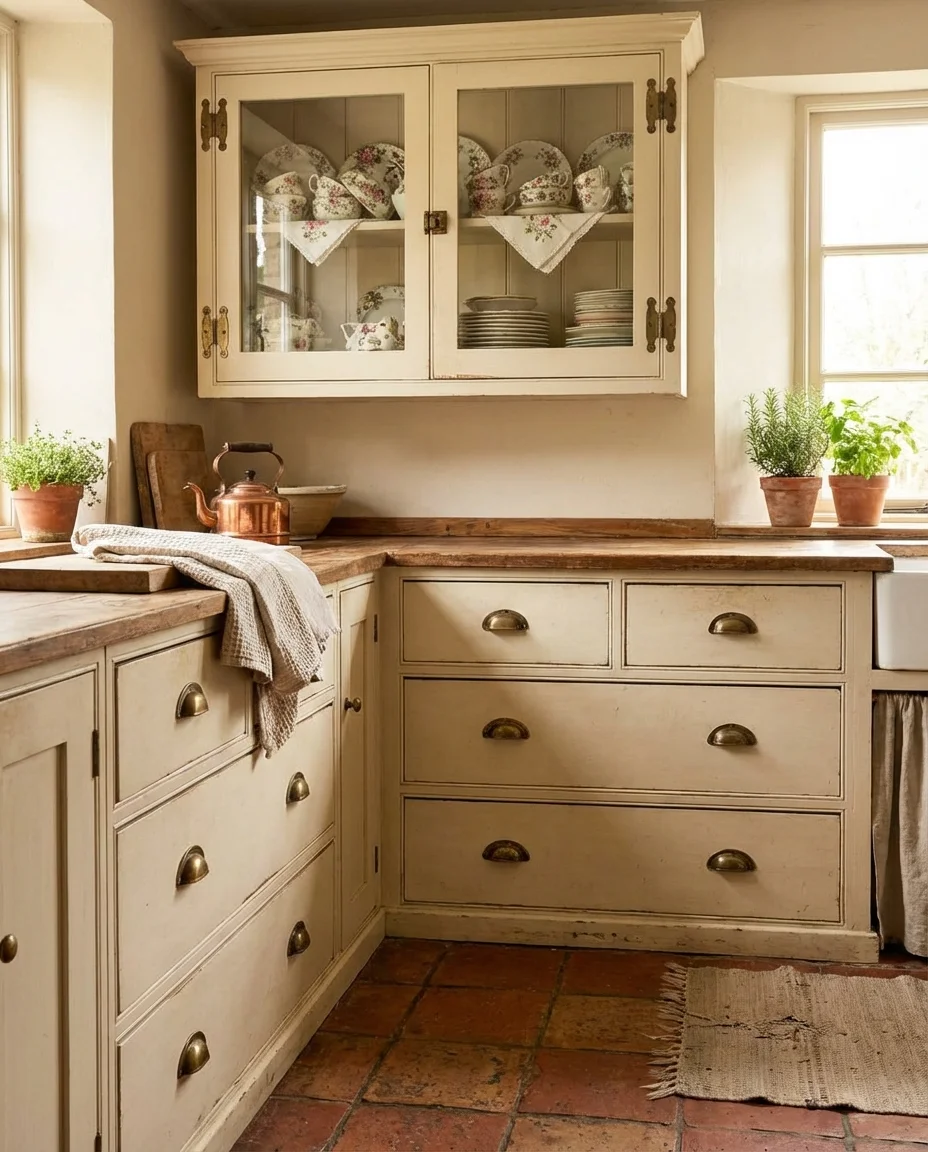
From a practical standpoint, cream cabinets in an oil or semi-gloss finish are surprisingly easy to touch up—a slightly warmer tone means minor scuffs and yellowing are far less noticeable than on stark white. This is genuinely good news for families with young kids or anyone who actually cooks regularly. The cream-and-brass combination works especially well in American homes built before the 1980s, where it honors the original character of the architecture without resorting to a full period restoration.
12. Dark Green Cabinets for a Dramatic Garden-Inspired Kitchen
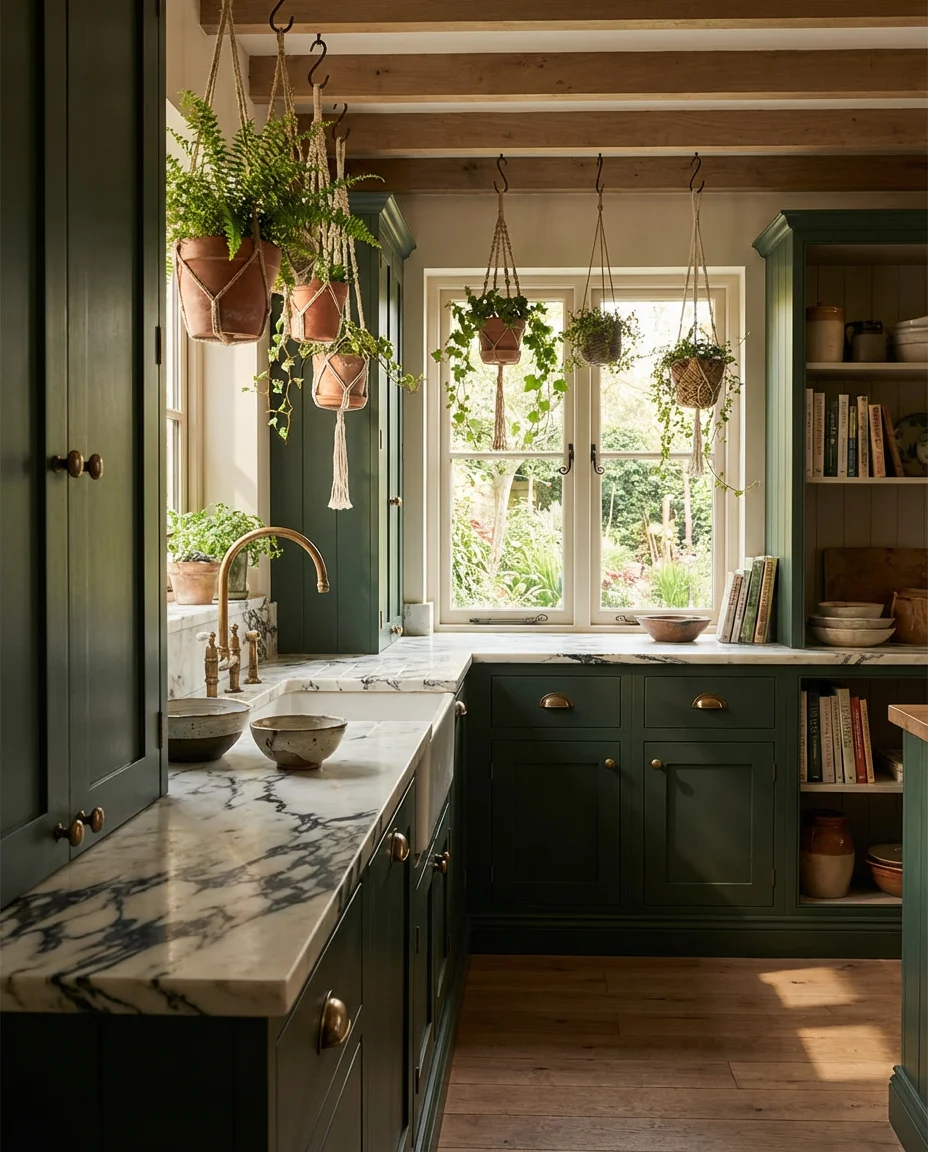
Dark green cabinets entered the mainstream a few years ago and have only deepened in sophistication since. Forest green, hunter, and bottle green—these deeply saturated tones bring the visual weight of dark cabinetry with an organic, nature-forward quality that black simply can’t replicate. The green family of colors taps into something primal and comforting in the human brain, which may explain why dark green kitchens consistently perform as some of the most-saved images on Pinterest year after year.
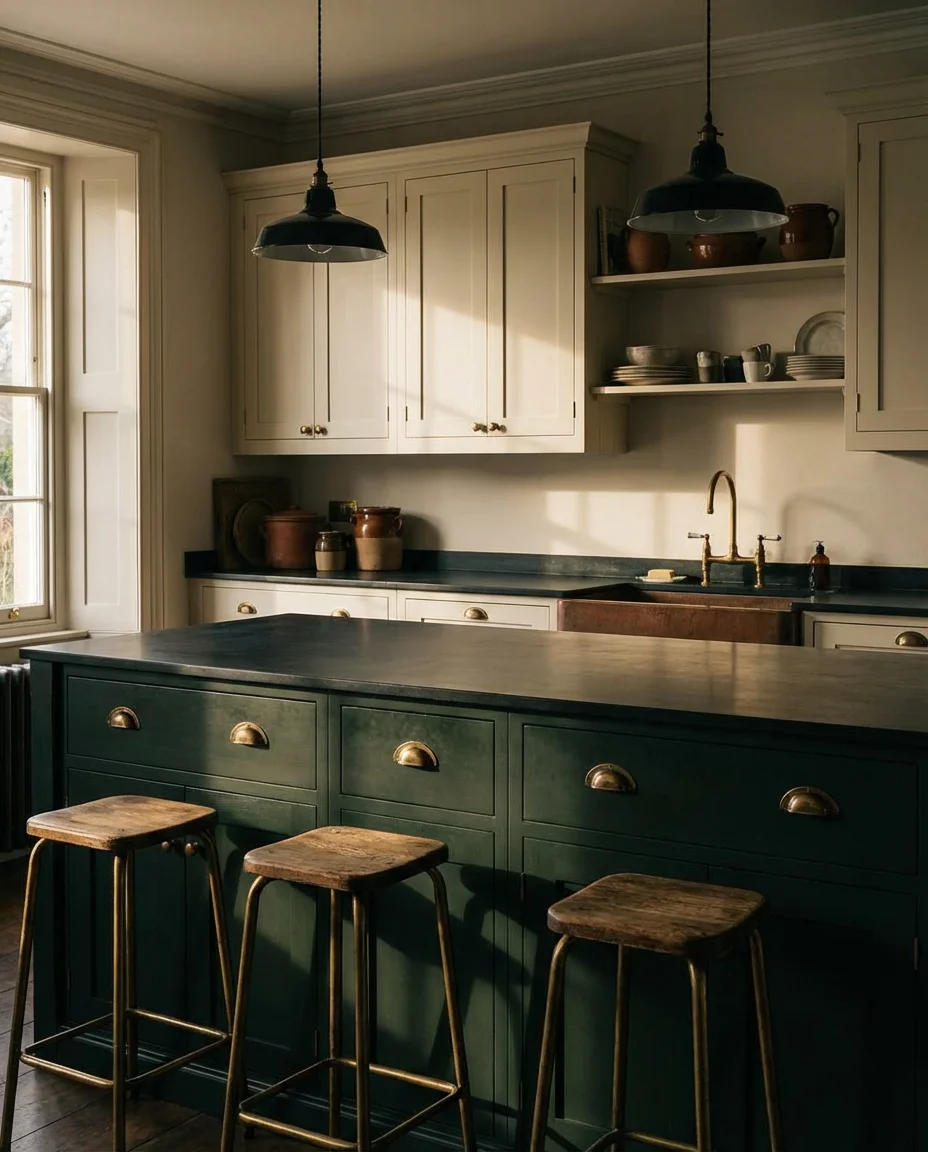
An interior design expert in New York puts it simply: dark green is the one cabinet color that makes a kitchen feel like it has genuine personality rather than one that’s been designed for resale. That said, if resale is on your radar, stick to a single green cabinet wall or island rather than going all-in throughout. That way, prospective buyers see the drama without feeling overwhelmed—and you still get to live with the look you love.
13. Light Wood Cabinets for an Airy, Modern Scandinavian Look
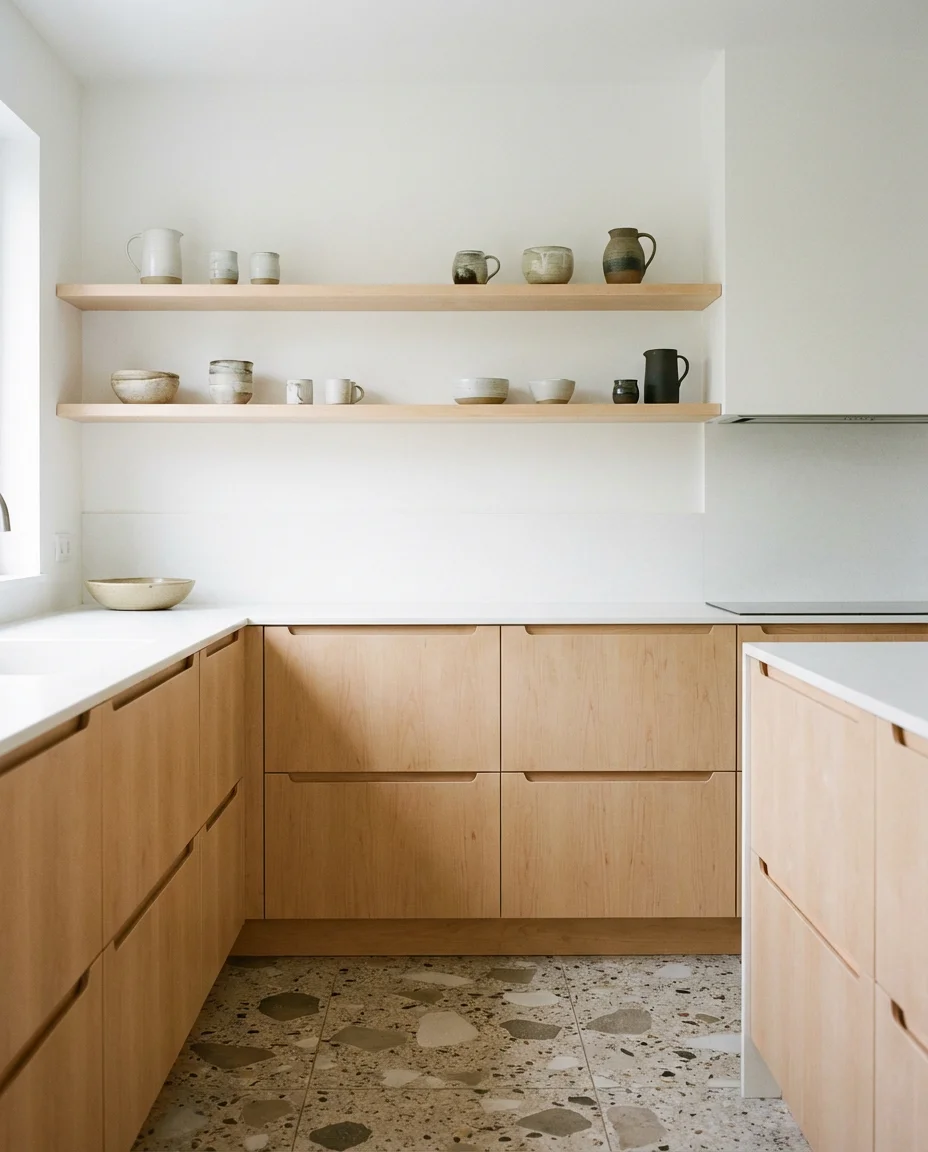
Light wood cabinetry has a quality that few other materials can match: it makes small kitchens feel larger, dark kitchens feel brighter, and any kitchen feel more connected to the natural world outside. Maple, birch, and lighter oak variants are all having a moment, especially when paired with integrated hardware that lets the wood grain be the star. The effect is clean and modern without the coldness that sometimes comes with all-white kitchens—it’s warmth without heaviness, which is a genuinely rare balance to achieve.
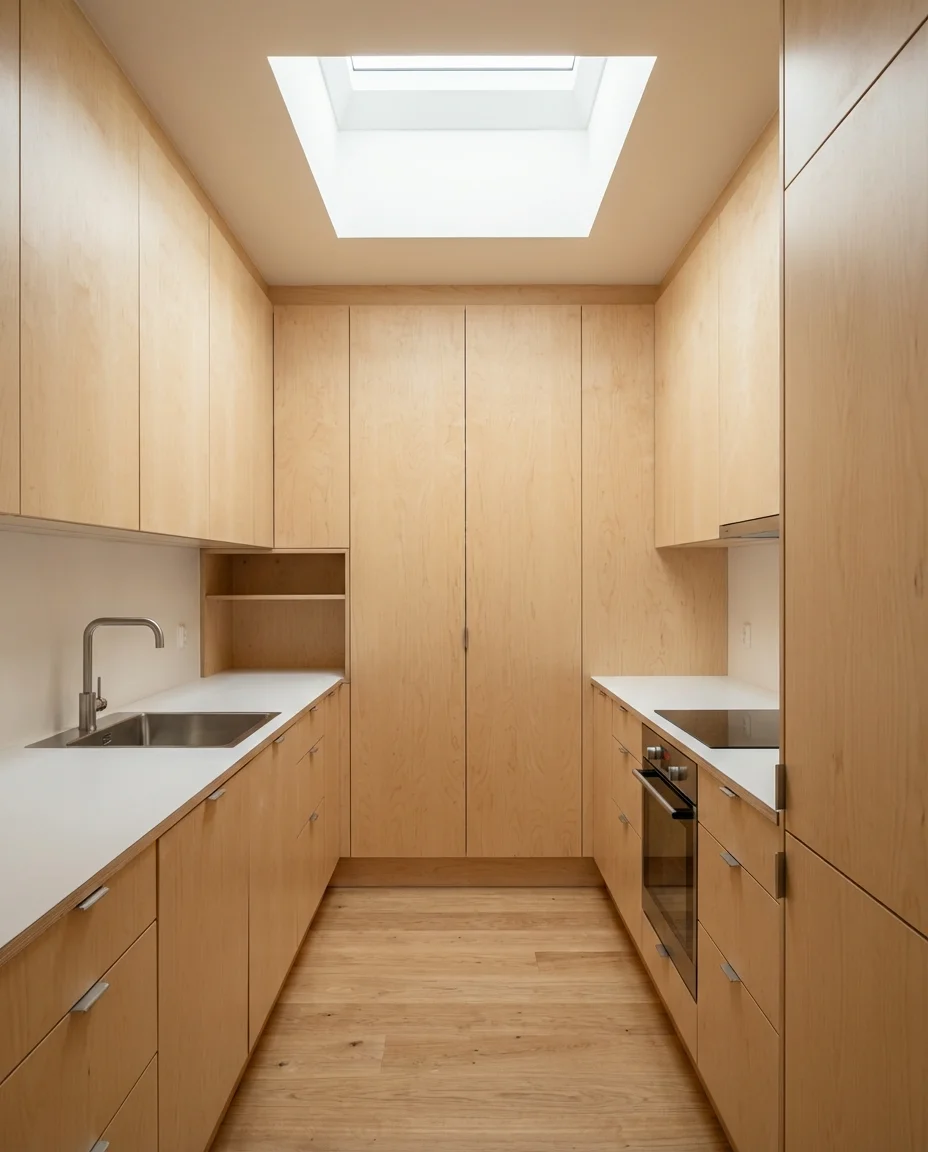
Light wood kitchens tend to look best when the rest of the home follows a similarly restrained material palette. If you’re working with existing dark floors or heavily patterned tile, the contrast might work against you. A simple test: hold a swatch of your cabinet sample against your floor material in your kitchen’s natural light. If the combination feels intentional and complementary, you’re on the right track. If it feels random, consider whether a slightly warmer or cooler tone in the same wood family might bridge the gap better.
14. Brown Cabinets Reimagined for the Modern Home
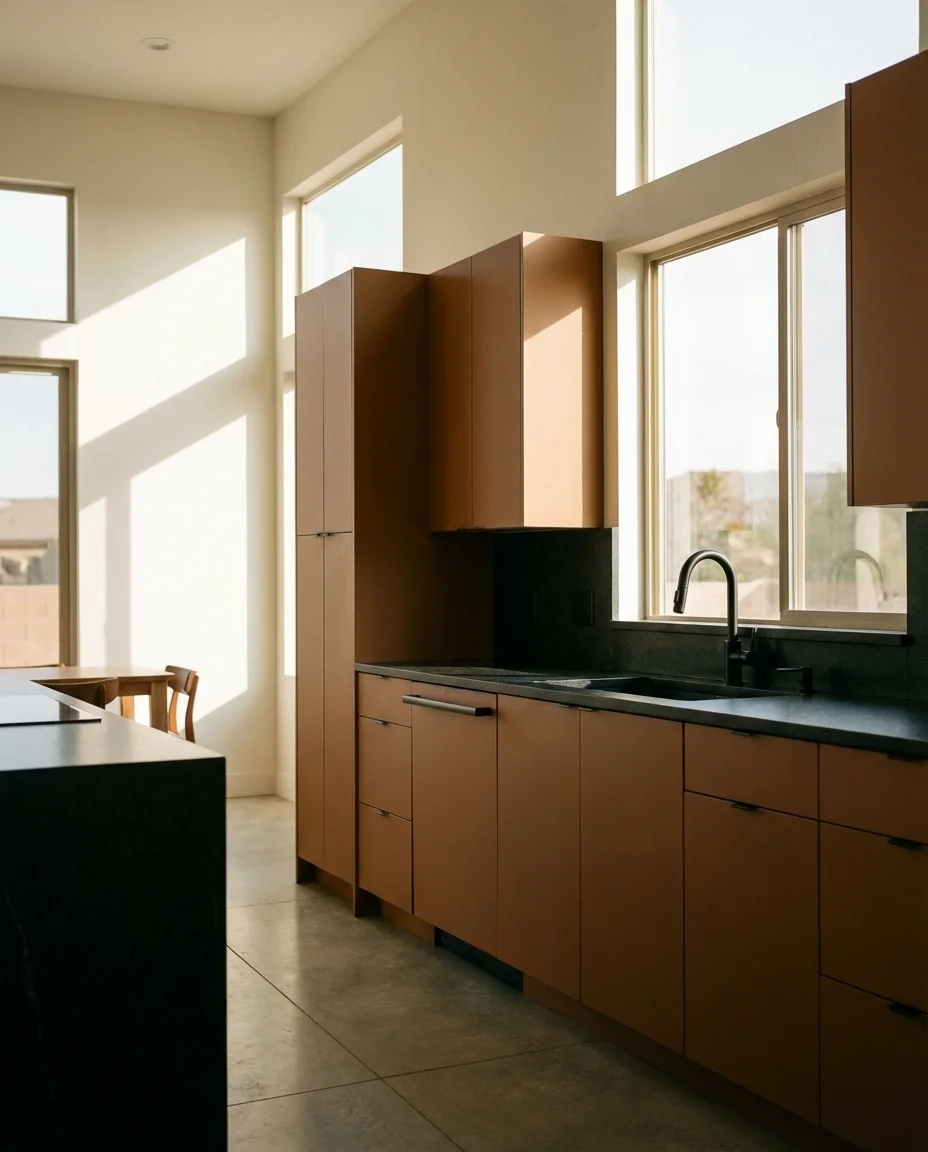
Brown cabinets are back—and they’ve shed the dated connotations they carried through the 2000s entirely. Today’s brown kitchen leans into caramel, cognac, and chocolate tones presented in sleek flat or minimal-profile shaker styles. The result is a kitchen that feels genuinely earthy and sophisticated, especially when balanced with stone countertops and matte black hardware. Brown reads differently in every lighting condition—warm amber in afternoon sun, rich and cocooning under evening lighting—and that versatility is a big part of its appeal.
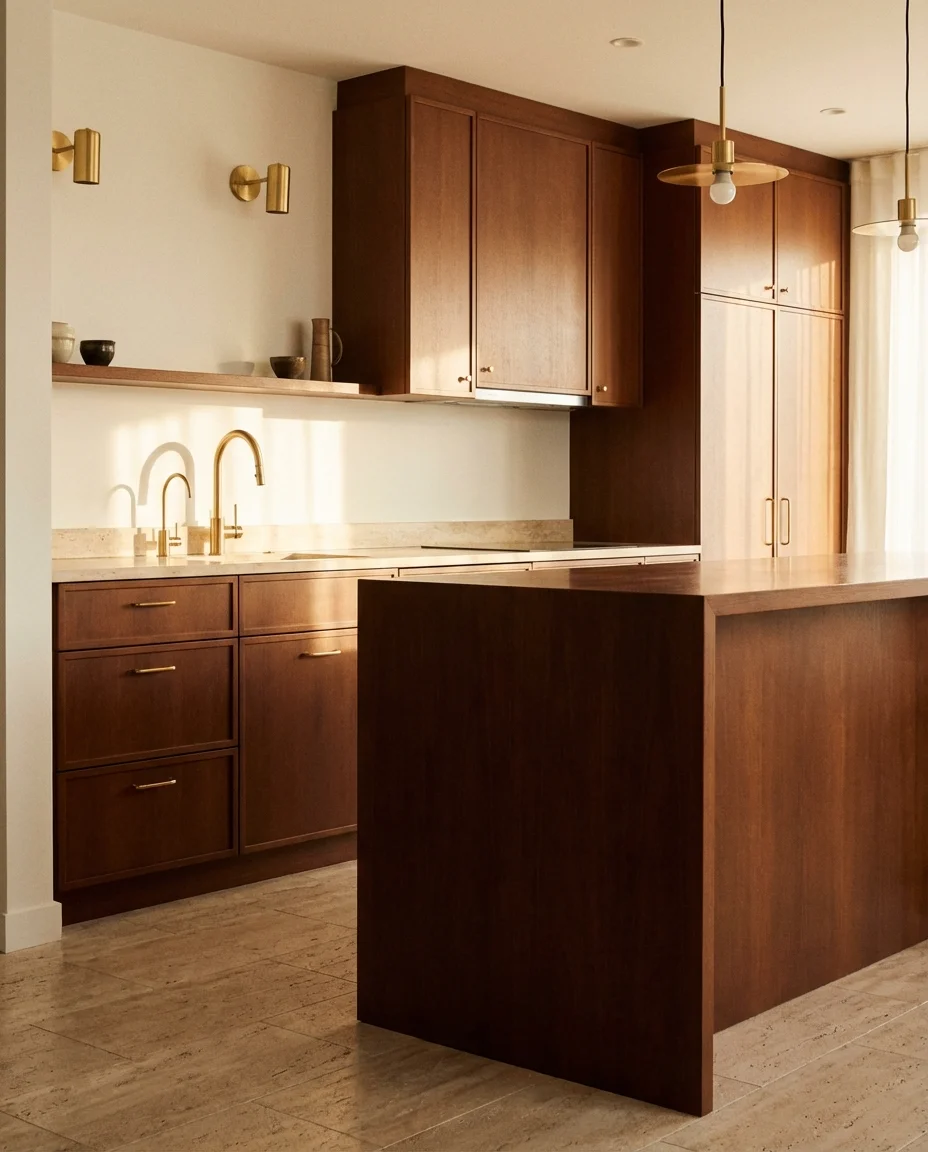
One of the biggest mistakes people make with brown cabinets is choosing a stain that mimics the look of cheap builder-grade wood rather than genuinely beautiful timber. The difference usually comes down to the quality of the underlying wood species and the transparency of the finish. Ask your cabinet maker to show you samples on real wood rather than MDF — on painted cabinetry it doesn’t matter as much, but when you’re relying on wood tones to do the work, the substrate matters enormously.
15. Two-Tone Cabinet Color Ideas That Elevate the Whole Space
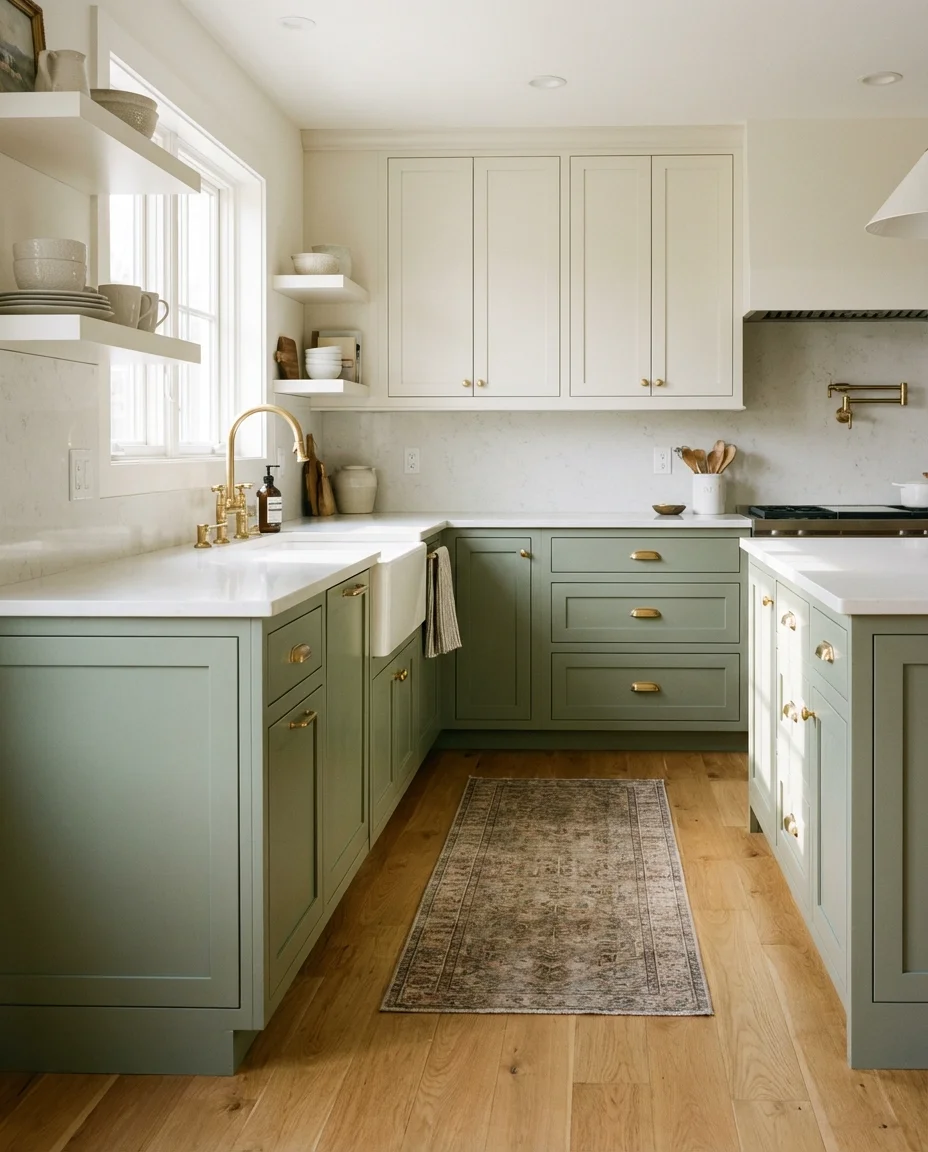
Two-tone kitchens are one of the most powerful design moves available to homeowners who want visual depth without adding architectural complexity. The classic approach pairs colors from opposite ends of the value scale—dark lower cabinets, light upper cabinets—but the most interesting contemporary color ideas are more nuanced. Think sage lower cabinets with cream uppers, or navy lowers with warm gray uppers. The key is maintaining tonal harmony so the two choices feel like a deliberate conversation rather than an accidental mismatch.
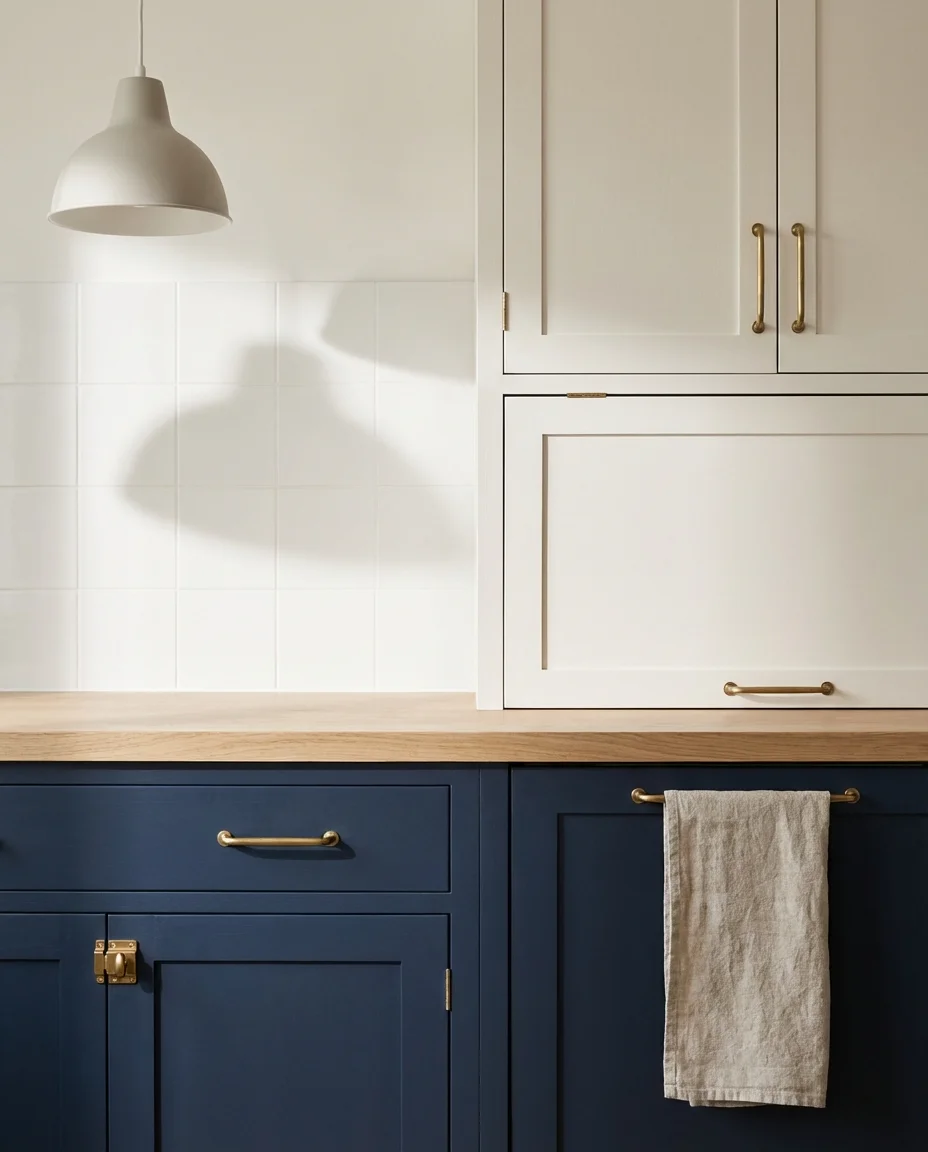
Two-tone kitchens thrive in American homes with traditional layouts—think U-shaped or L-shaped kitchens with a clear visual divide between upper and lower cabinet zones. In galley kitchens, two-tone can feel chaotic if you’re not careful. A practical trick used by professional designers: decide on one dominant color (usually the lower cabinets, since they occupy more visual mass) and let the upper color play a supporting role. The dominant color should be the one you love absolutely—you’ll be living with it at eye level every day.
16. Cabinet Makeover on a Budget That Looks Completely Custom
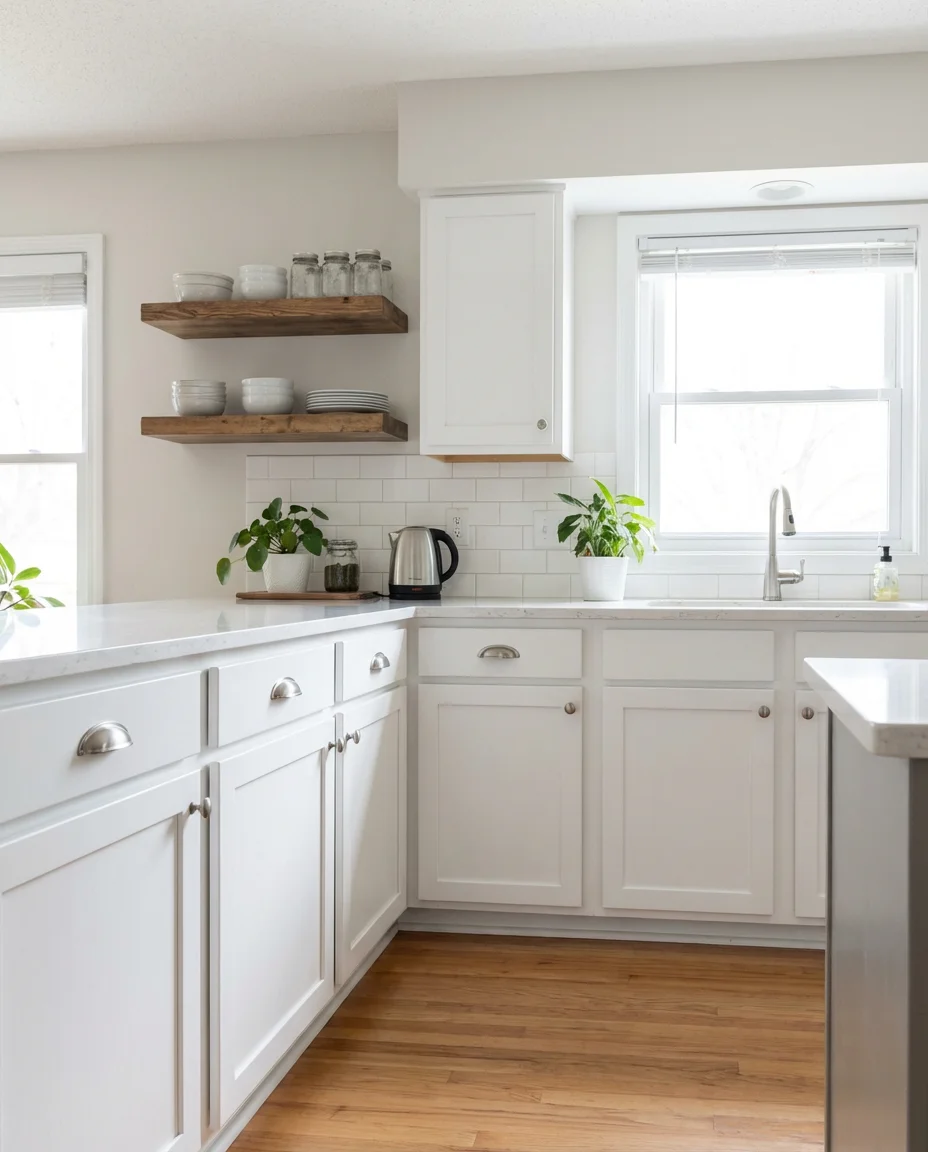
A full kitchen renovation is a significant investment—but a strategic cabinet makeover can deliver 80% of the visual transformation for a fraction of the cost. Repainting existing cabinet boxes and replacing the doors and hardware is one of the most cost-effective upgrades in residential interior design. In 2026, the makeover trend has become even more sophisticated, with homeowners mixing in one set of glass-front uppers or adding beadboard panel inserts to flat-slab doors to create the illusion of a full custom kitchen without the full custom price tag.
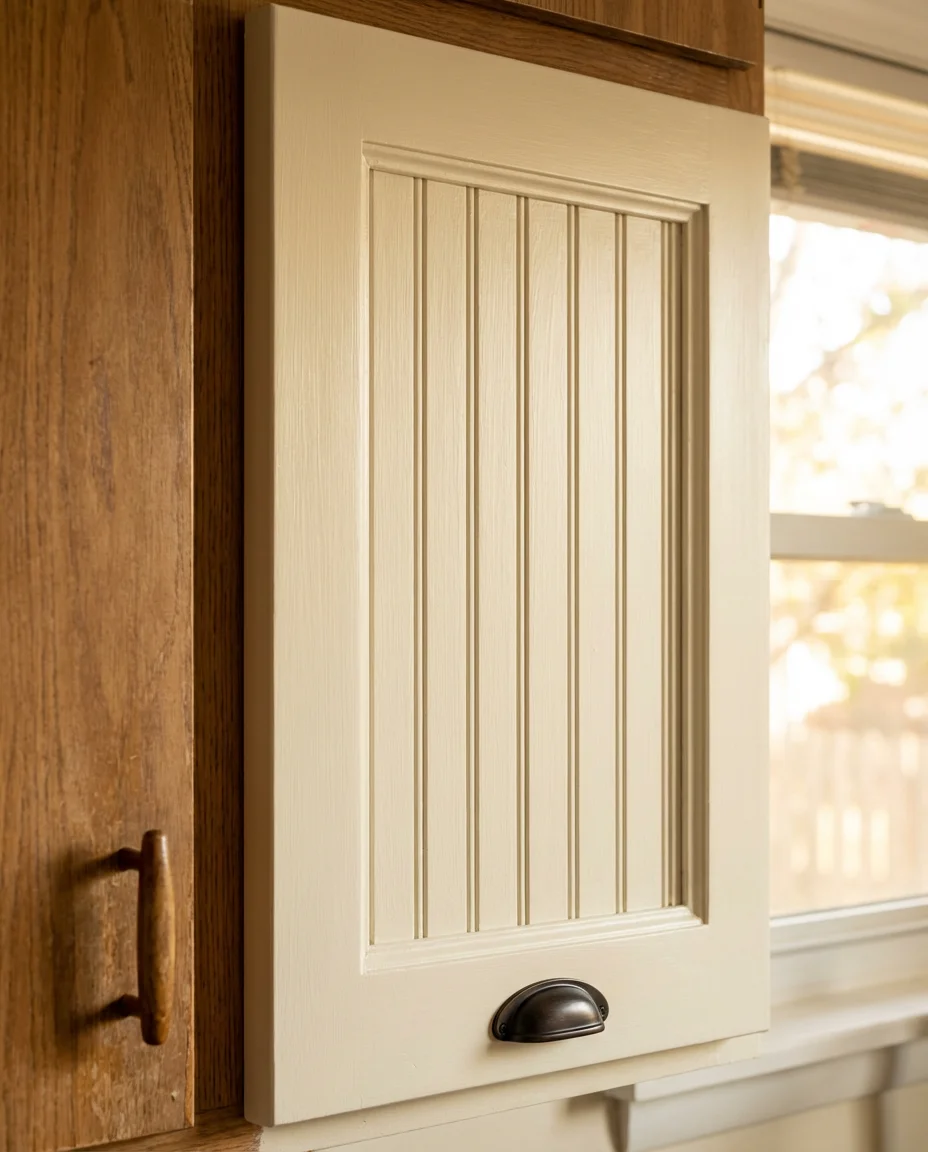
Painting cabinets yourself is doable but comes with real risks if you skip the prep work. Cabinet painting pros consistently say the same thing: the prep accounts for 70% of the final result. That means degreasing thoroughly, sanding every surface to dull the existing finish, applying a high-adhesion primer, and using a quality cabinet-specific paint in a sprayer or mini-roller rather than a brush. Skip any of those steps and you’ll have peeling paint within a year—which is significantly more demoralizing than leaving the cabinets as is.
17. Oak Cabinets with a Modern Matte Finish
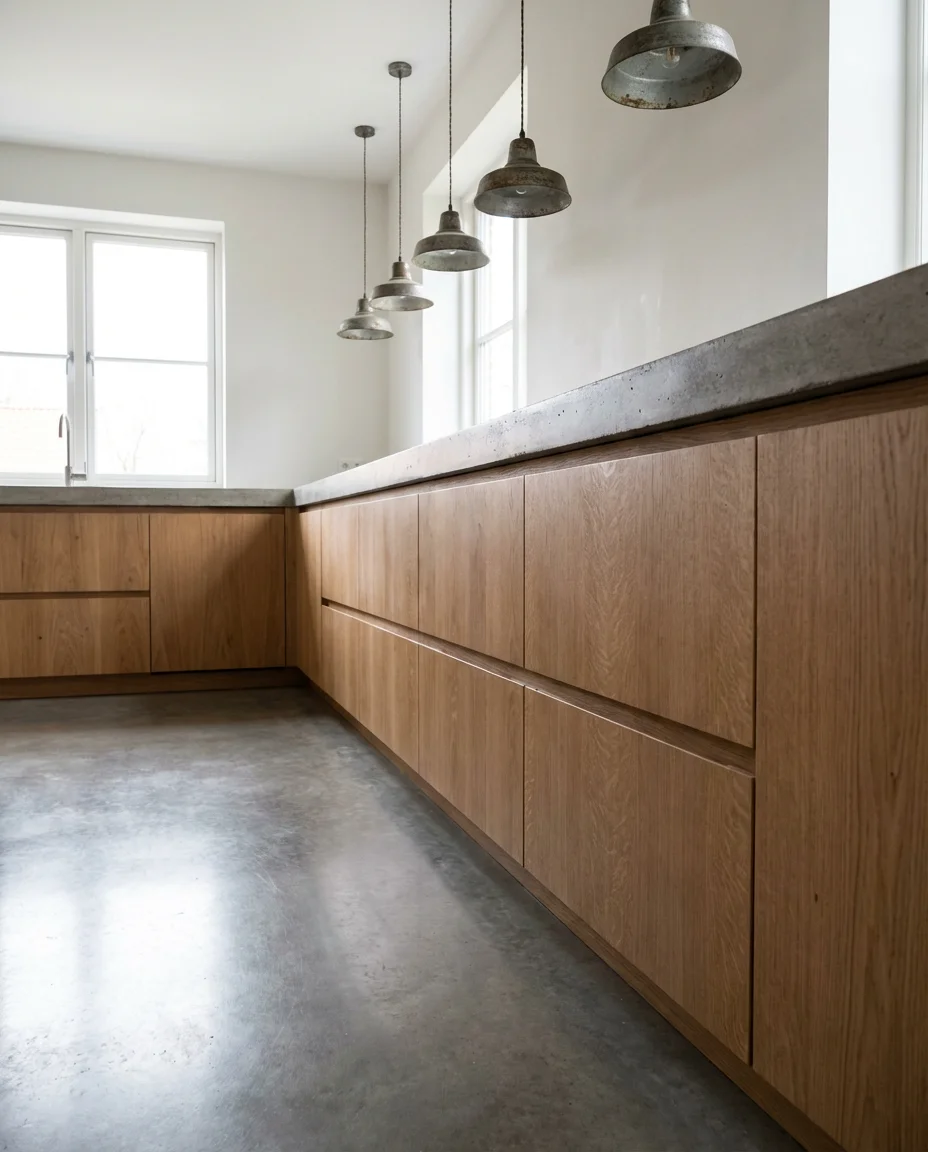
Traditional oak cabinets had a moment in the 1990s that left a complicated legacy—poky grain filler, orange-toned stains, and heavy country styling made them feel dated almost overnight. But natural oak with a flat, matte finish and a contemporary door profile is a completely different proposition. The raw, open grain of oak looks extraordinary in a matte sealer, and modern quarter-sawn oak cuts reveal a striking ray pattern that adds visual interest without any additional ornamentation or detailing needed.
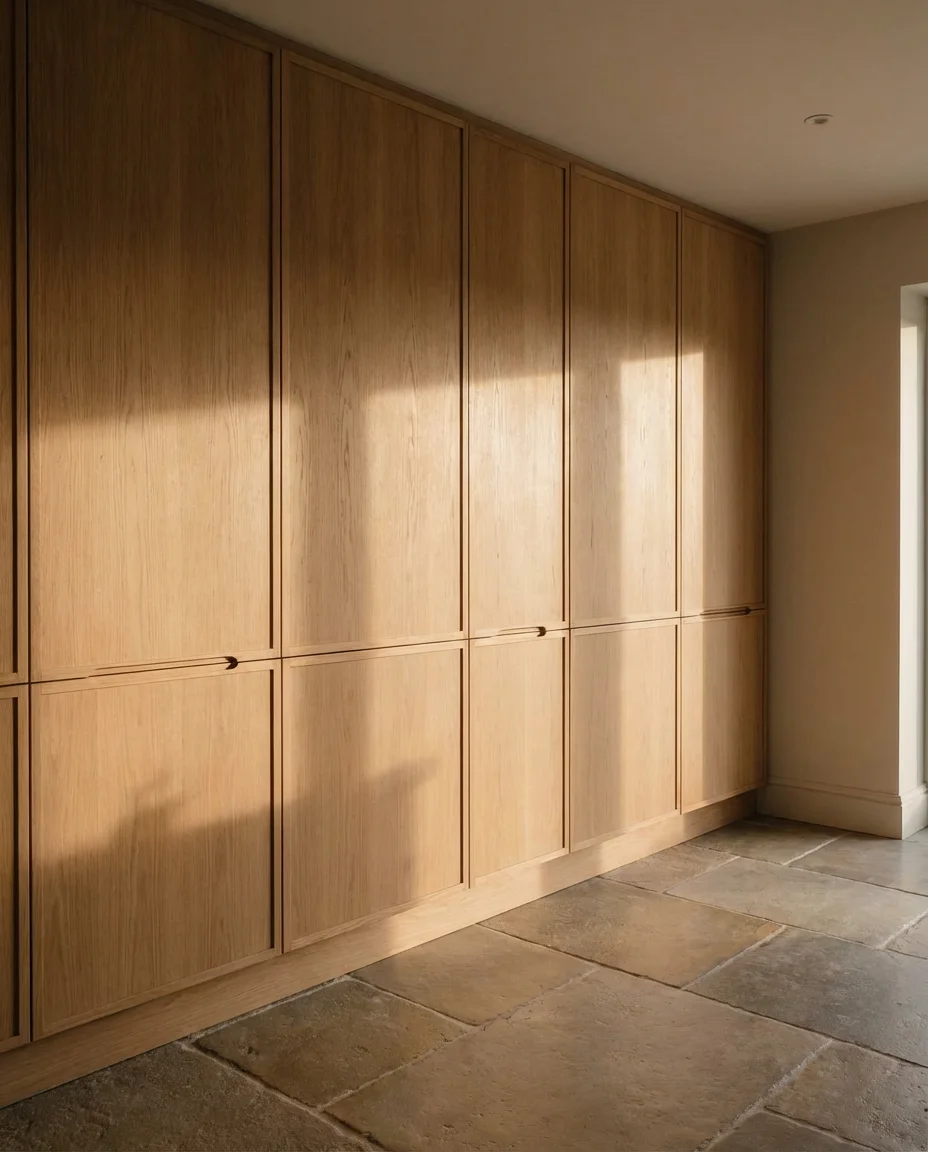
For American homeowners considering a kitchen renovation in the Pacific Northwest, New England, or Colorado—regions with strong outdoor cultures and a love of natural materials—matte oak cabinetry feels almost inevitable. It resonates deeply with the regional design identity without resorting to rustic clichés. If you’re working with a mid-range budget, flat-front doors in rift-cut or quarter-sawn oak represent some of the best value available: they’re genuinely beautiful materials presented in the simplest possible way, which keeps fabrication costs lower while delivering high-end results.
18. Blue Kitchen Cabinets in Unexpected Shades
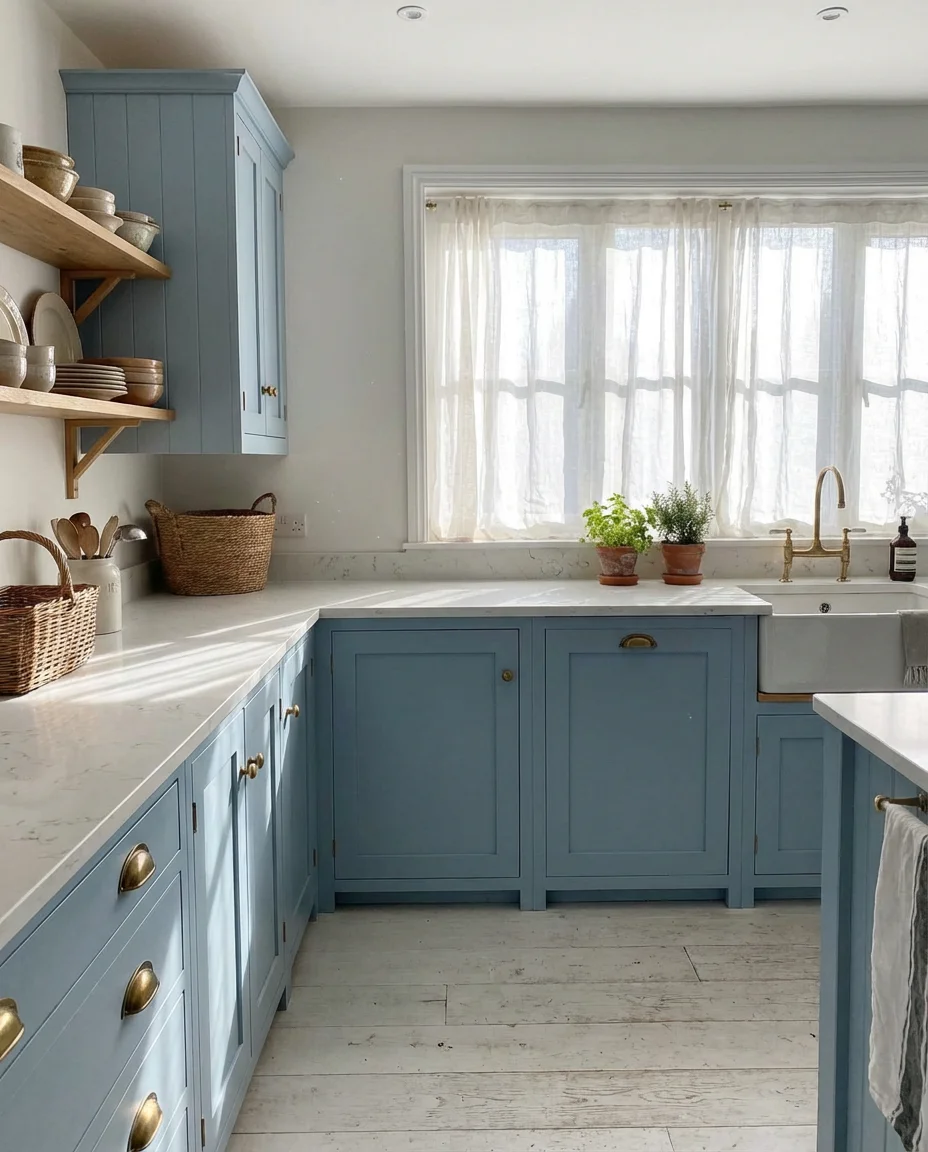
Beyond navy blue, the world of blue cabinet options in 2026 is wonderfully expansive. Dusty French blue, muted powder blue, deep indigo, and slate blue—each brings a distinctly different energy to a kitchen. A soft dusty blue with white oak accents reads as coastal and serene; a deep indigo with unlacquered brass feels almost jewel-like and luxurious. The beauty of blue is that it has a natural calm that makes the kitchen a better place to be in, whether you’re making coffee at 7 a.m. or cleaning up after dinner.
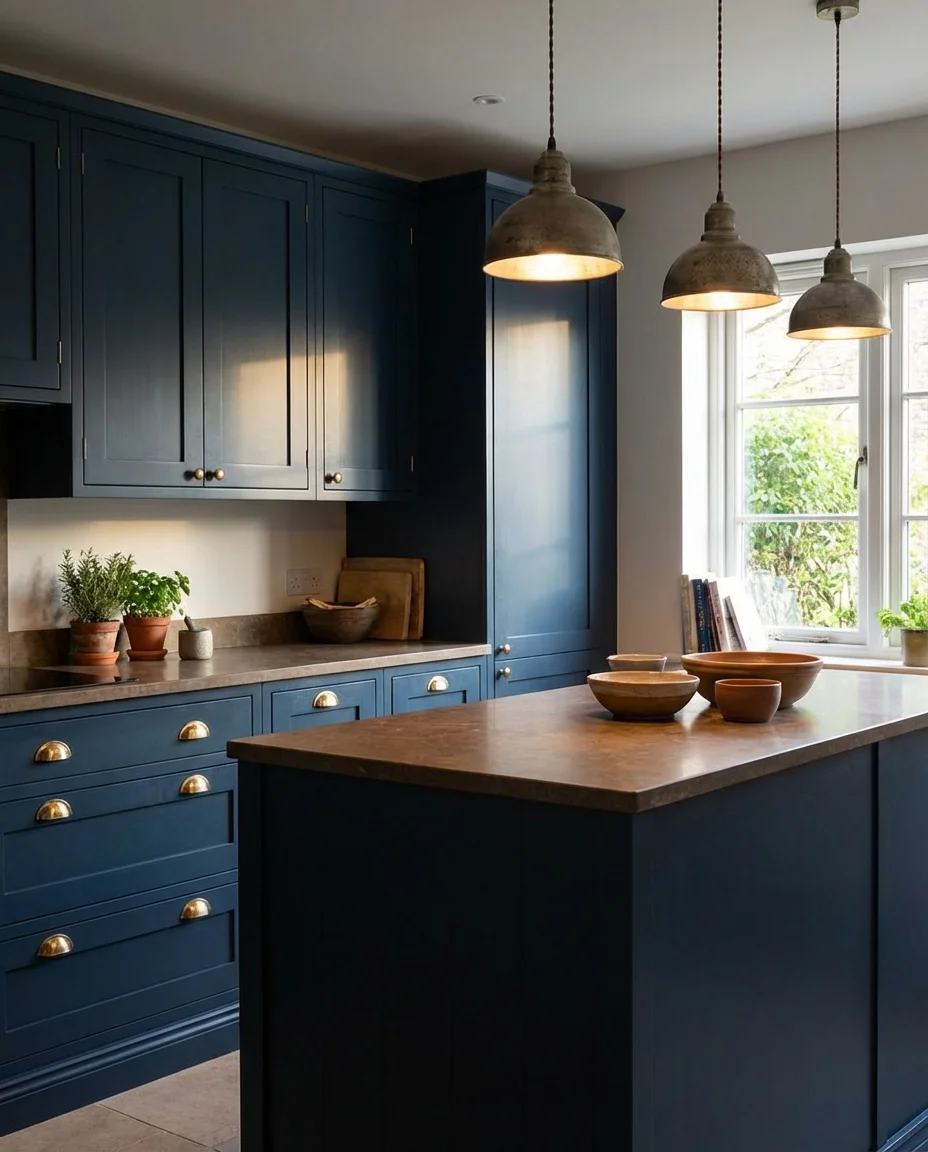
Blue cabinets are one of the few color families where the undertone matters even more than the base hue. A blue with a slight green undertone can look aqua under certain lights—beautiful in a beach cottage, jarring in a contemporary urban kitchen. A blue with a gray undertone reads more sophisticated and universal. Before committing, get large sample boards and observe them through a full day and evening cycle in your specific kitchen. The lighting conditions in your home will always tell you more than any designer’s recommendation can.
19. Walnut Cabinets with Integrated Lighting for Drama
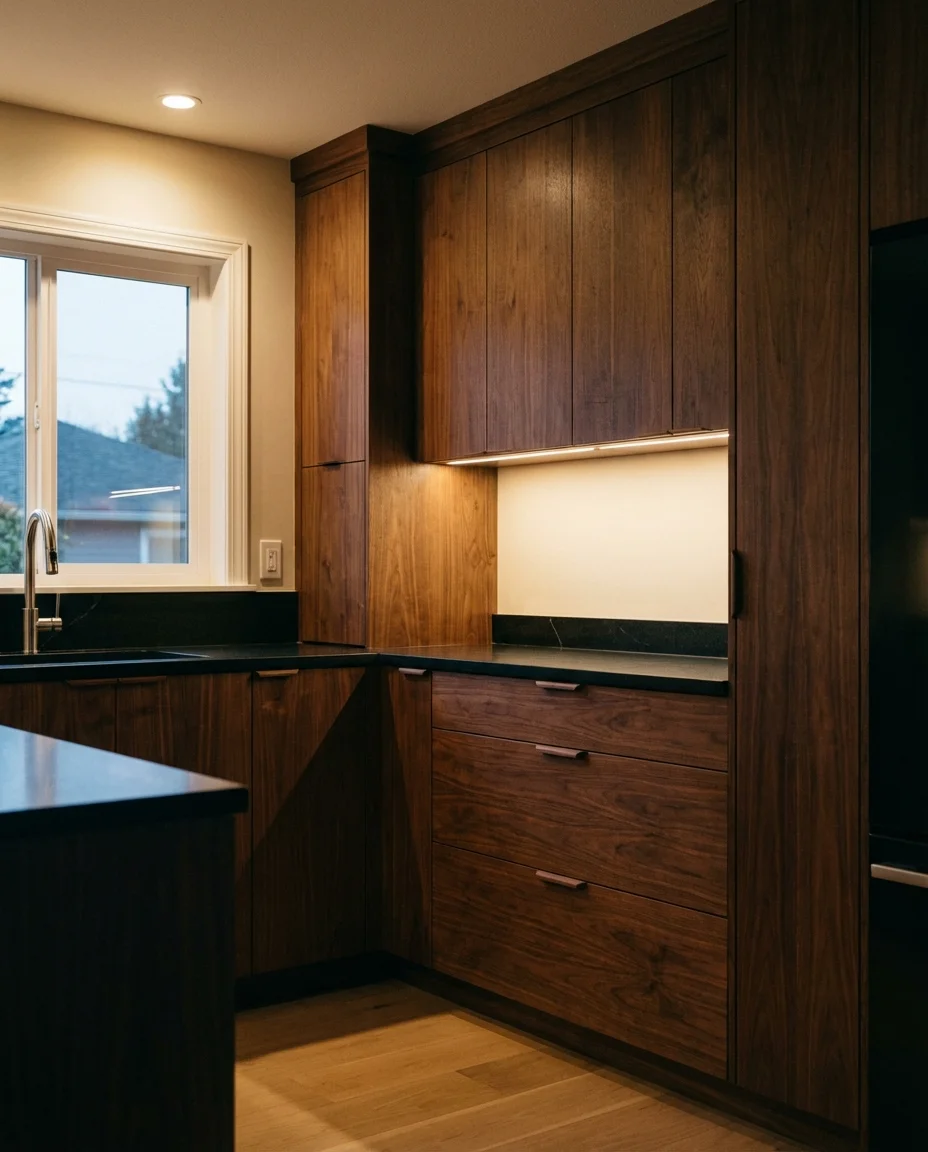
Rich walnut cabinetry paired with integrated LED lighting is one of the most cinematically beautiful combinations in contemporary kitchen design. Warm LEDs tucked under upper cabinets or inside glass-front lowers illuminate the gorgeous chocolate grain of walnut in a way that natural light alone never quite achieves. The material itself has a warmth and depth that synthetic wood simply can’t replicate, and under the right lighting, it shifts from brown to near-plum, revealing complex undertones that make the kitchen feel alive and dynamic at every hour.
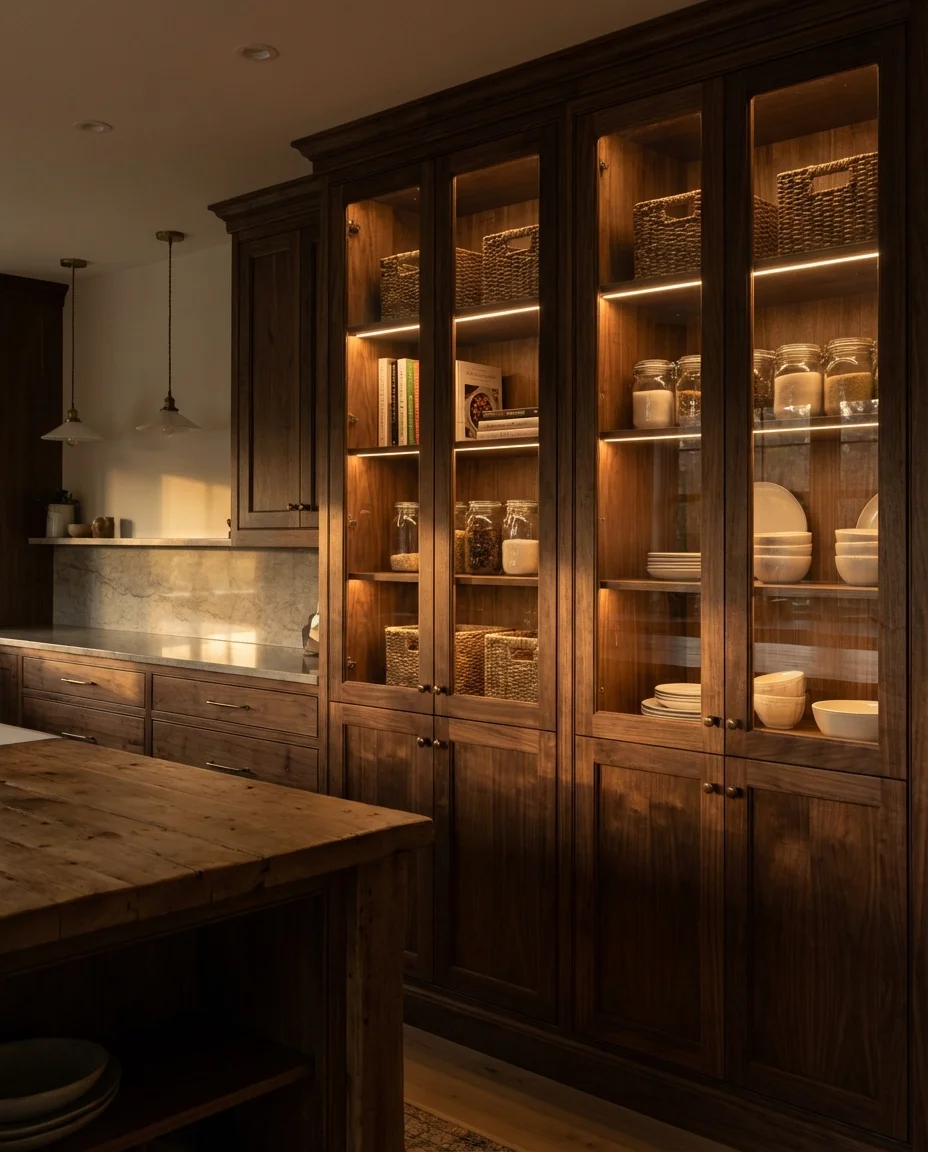
Walnut is one of the most premium cabinet materials on the market, which makes it worth being strategic about where you use it. Many designers recommend using walnut as an accent—on an island, a pantry wall, or a specific section of perimeter cabinetry—rather than throughout the entire kitchen. This approach dramatically reduces material costs while still delivering the visual impact of the wood. Paired with matte painted uppers in a complementary warm tone, selective walnut cabinetry feels intentional rather than budget-conscious.
20. Full-Height Cabinet Design for a Sleek, Seamless Look
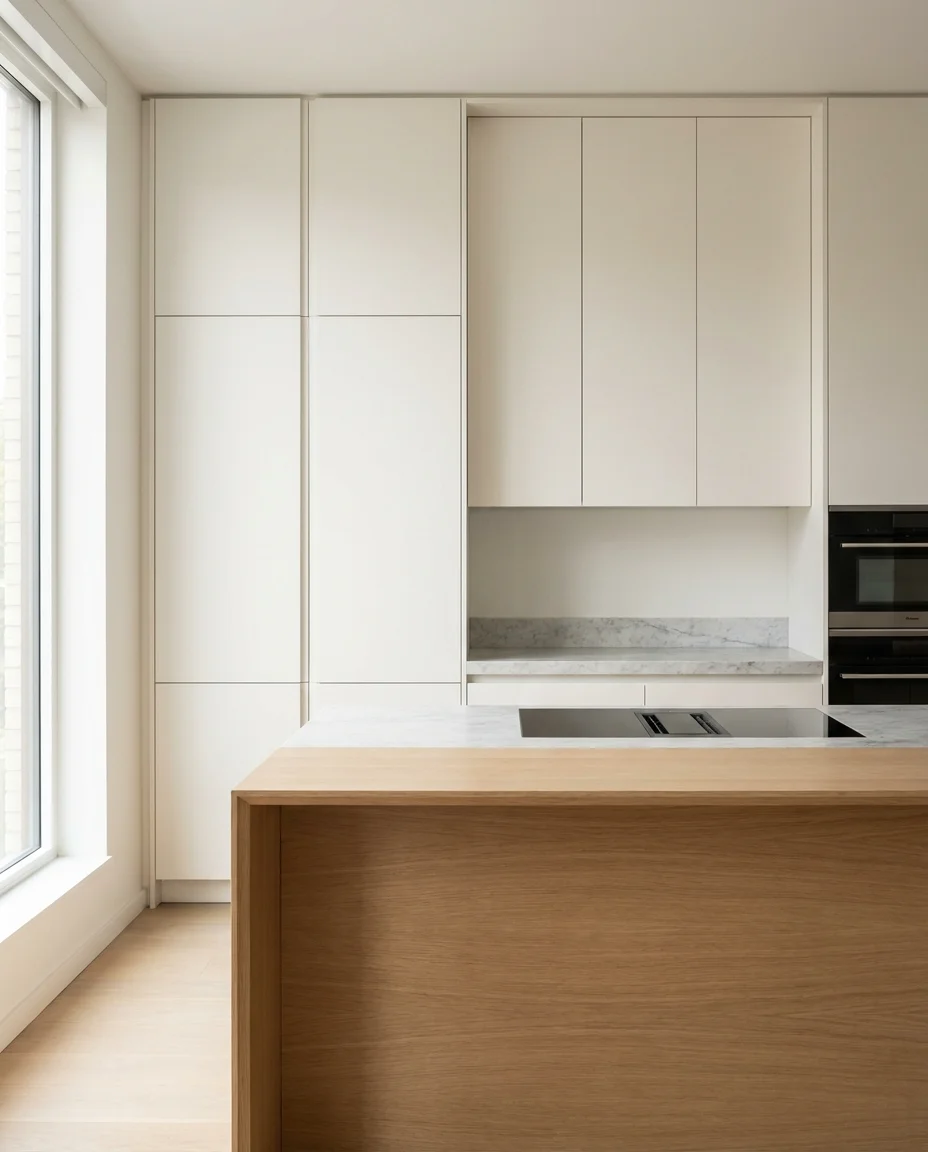
One of the most impactful kitchen design decisions you can make costs nothing extra in materials—it’s simply taking your cabinets all the way to the ceiling. Full-height cabinetry eliminates the awkward gap above standard upper cabinets where dust collects and clutter accumulates. It makes ceilings feel higher, rooms feel more intentional, and the overall effect is a kitchen that reads as fully considered rather than assembled from standard components. Whether you choose tone-on-tone or contrast, the floor-to-ceiling approach is one of 2026’s defining cabinet moves.
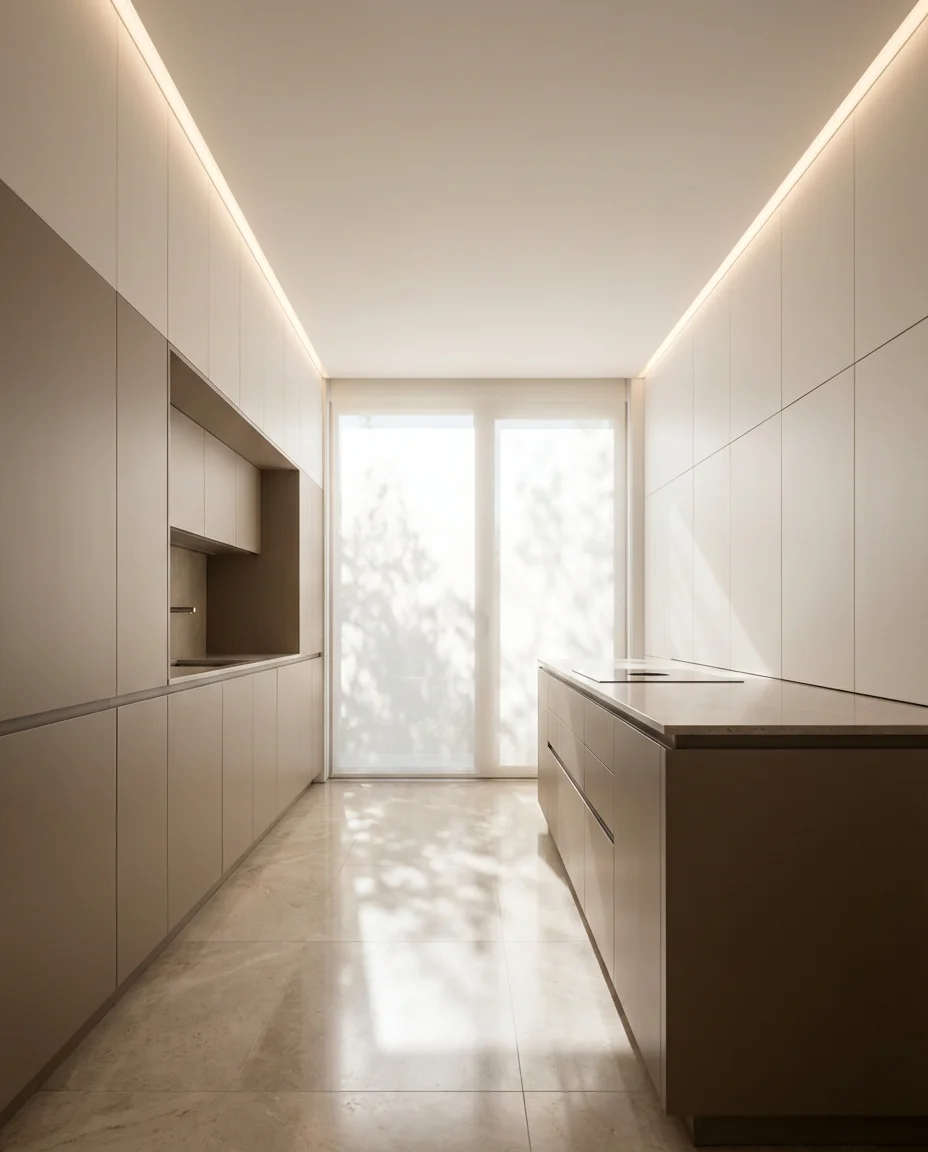
Full-height cabinets are most successful when the home has ceilings of at least nine feet—at standard eight-foot ceilings, the visual impact is reduced and the proportions can feel compressed rather than expansive. Also consider accessibility: those upper sections above eight feet will require a step stool every time, so reserve them for items you use seasonally—holiday platters, extra small appliances, or bulk storage—rather than everyday dishes. The trade-off in utility is real, but for many homeowners, the aesthetic reward is absolutely worth it.
21. Muted Tone-on-Tone Cabinet Styling for Sophisticated Restraint
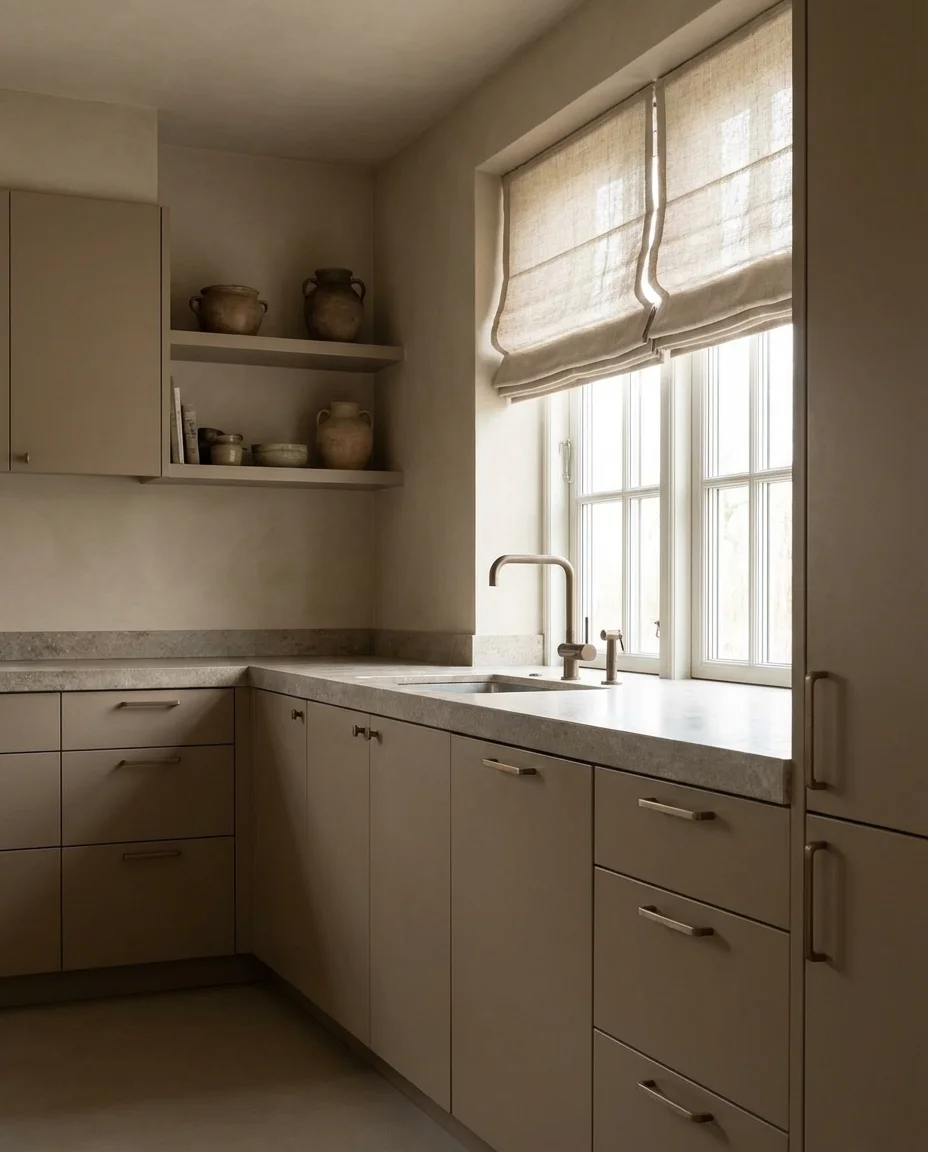
Sometimes the most powerful design statement is one of deliberate quiet. Tone-on-tone kitchens—where the cabinets, walls, and countertops all exist within a very close value range—are achieving something increasingly rare in a world of high-contrast, maximalist interiors: a sense of genuine calm. A kitchen built around layered variations of one tone, say the entire spectrum of warm taupe from almost-cream to deep mushroom, feels monastic and incredibly sophisticated without trying hard. It’s a look that never shouts and therefore never gets tiresome.
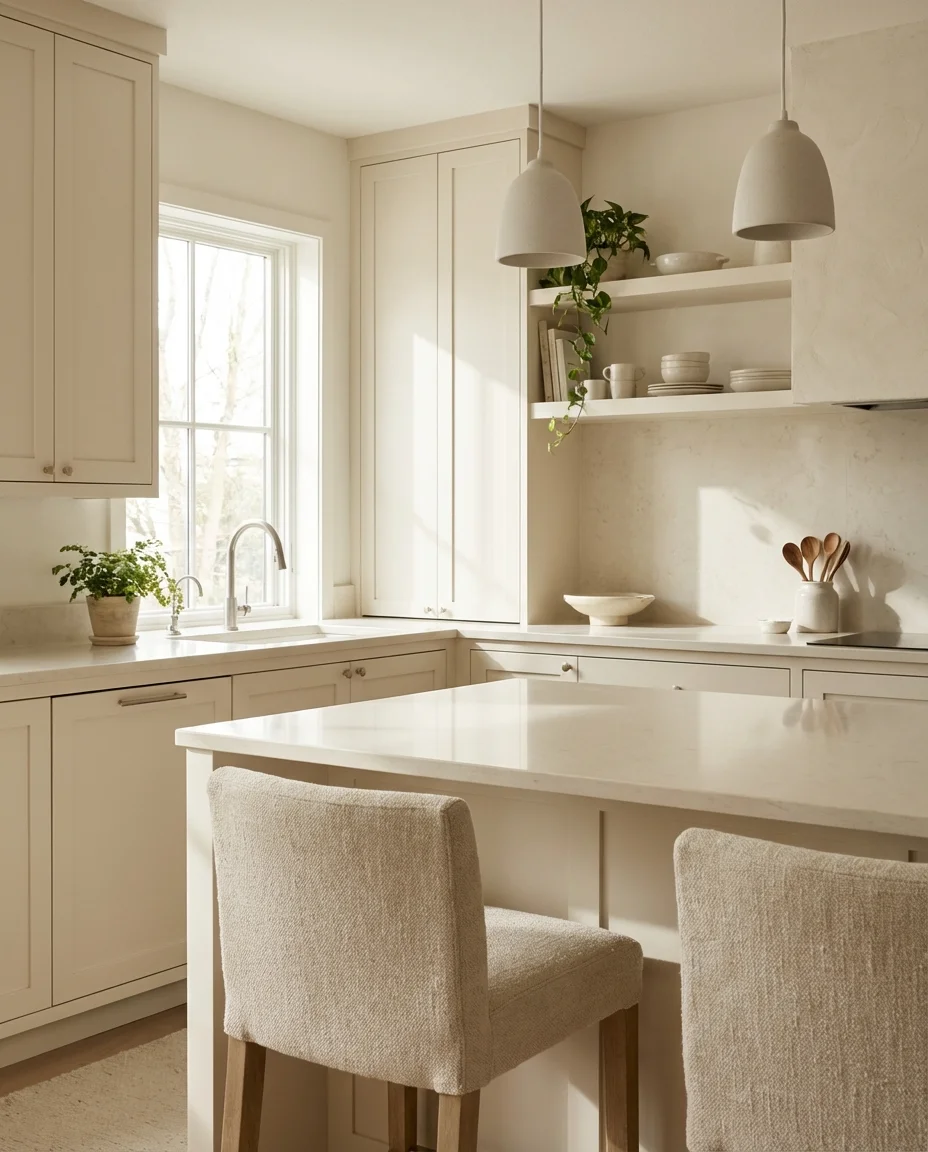
Tone-on-tone kitchens demand a high level of material quality because there’s nowhere to hide. When every surface is a close cousin of the same color, the texture, sheen, and craftsmanship of each material become the story. This is the approach favored by homeowners who’ve already lived with a bold kitchen and found it exhausting after a few years. It’s also the kitchen that ages most gracefully—as decor trends shift, the quiet backdrop simply accommodates whatever the next chapter of the home’s design might bring.
22. Mixed Material Cabinets Combining Wood and Painted Finishes
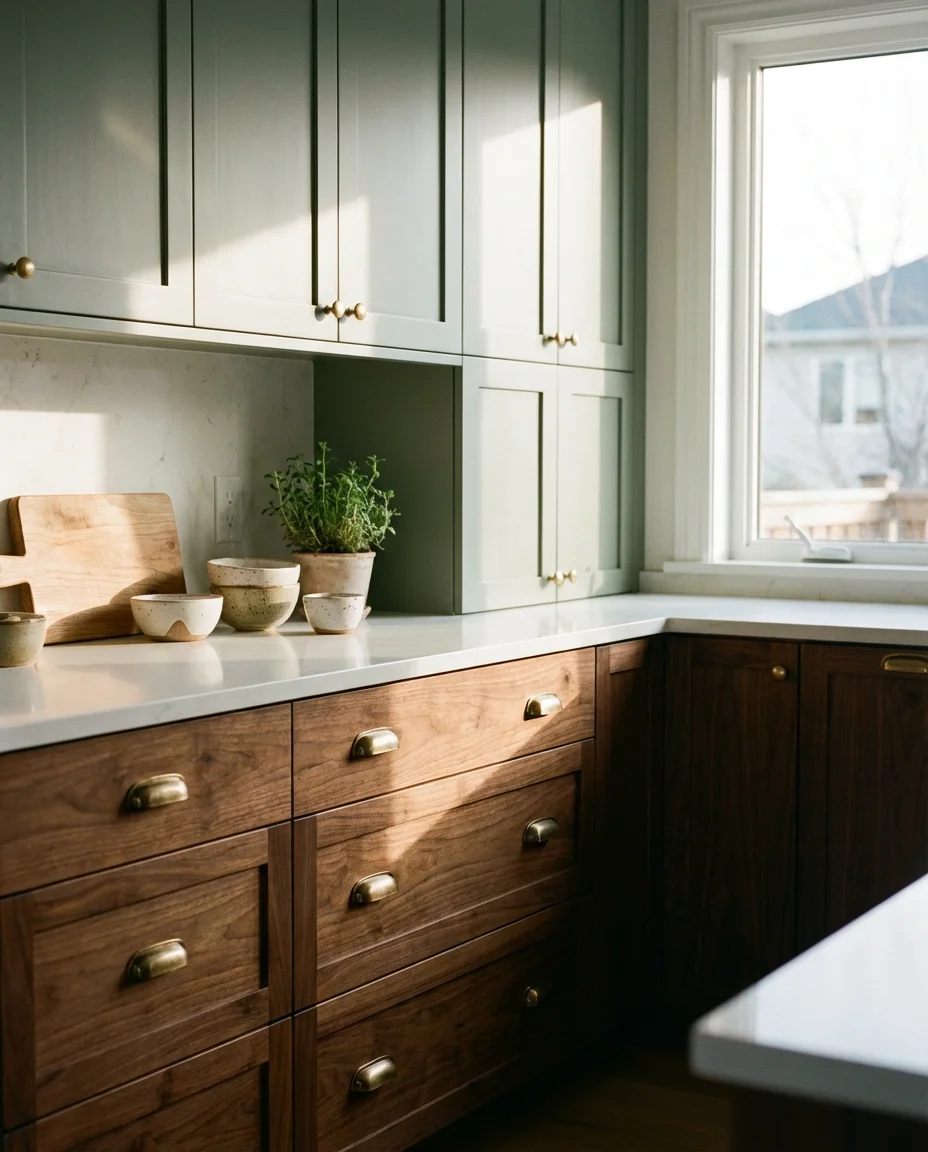
The most interesting kitchens of 2026 rarely commit to a single material—they mix. Combining natural oak or walnut sections with painted cabinetry in a coordinating color creates a layered, bespoke quality that’s difficult to achieve with any single material alone. The wood brings warmth and organic texture; the paint delivers crispness and color. Together, they balance each other in a way that feels genuinely custom, because no two combinations of wood grain and painted tone will ever look exactly alike.
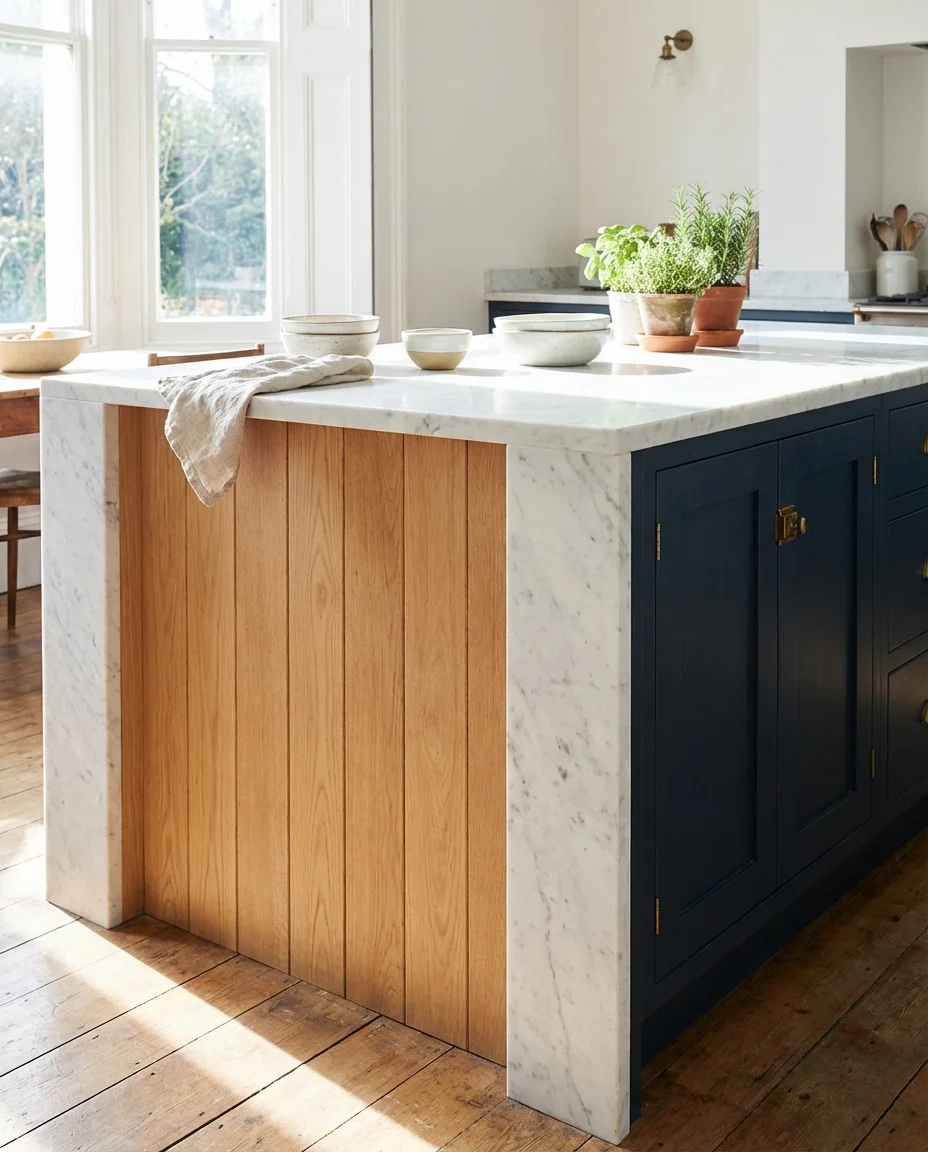
Mixed material kitchens work best when there’s a clear organizing principle—the wood and paint should meet at a logical architectural break, like the countertop line or a change in cabinet height, rather than appearing randomly distributed throughout the room. A random scattering of wood and paint across the same wall reads as unfinished rather than designed. Think of it the way a skilled chef thinks about a plate: every element should be where it is for a reason, and the composition should make immediate intuitive sense when you walk into the room.
23. Minimalist Dark Kitchen with Hidden Handles and Quiet Luxury
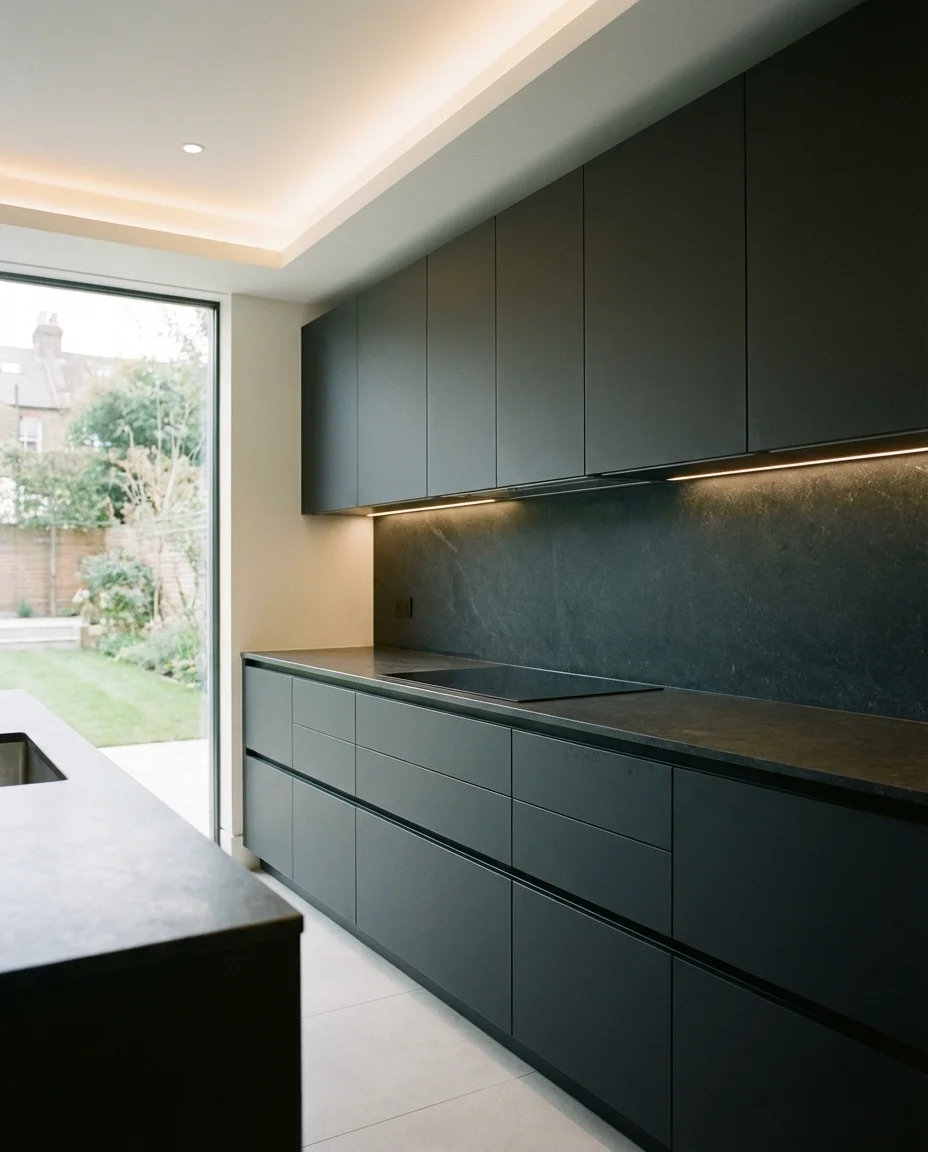
The concept of quiet luxury has migrated fully from fashion into kitchen design—and nowhere is it more beautifully expressed than in the minimalist dark kitchen with concealed hardware. Dark flat-front cabinets in charcoal, espresso, or deep brown with push-to-open or routed grip hardware eliminate the visual noise of pulls and handles entirely, leaving only the pure geometry of the cabinetry itself. The result is a kitchen that feels expensive in a way that’s almost impossible to articulate—it simply looks as though every decision was made with complete intentionality and zero compromise.
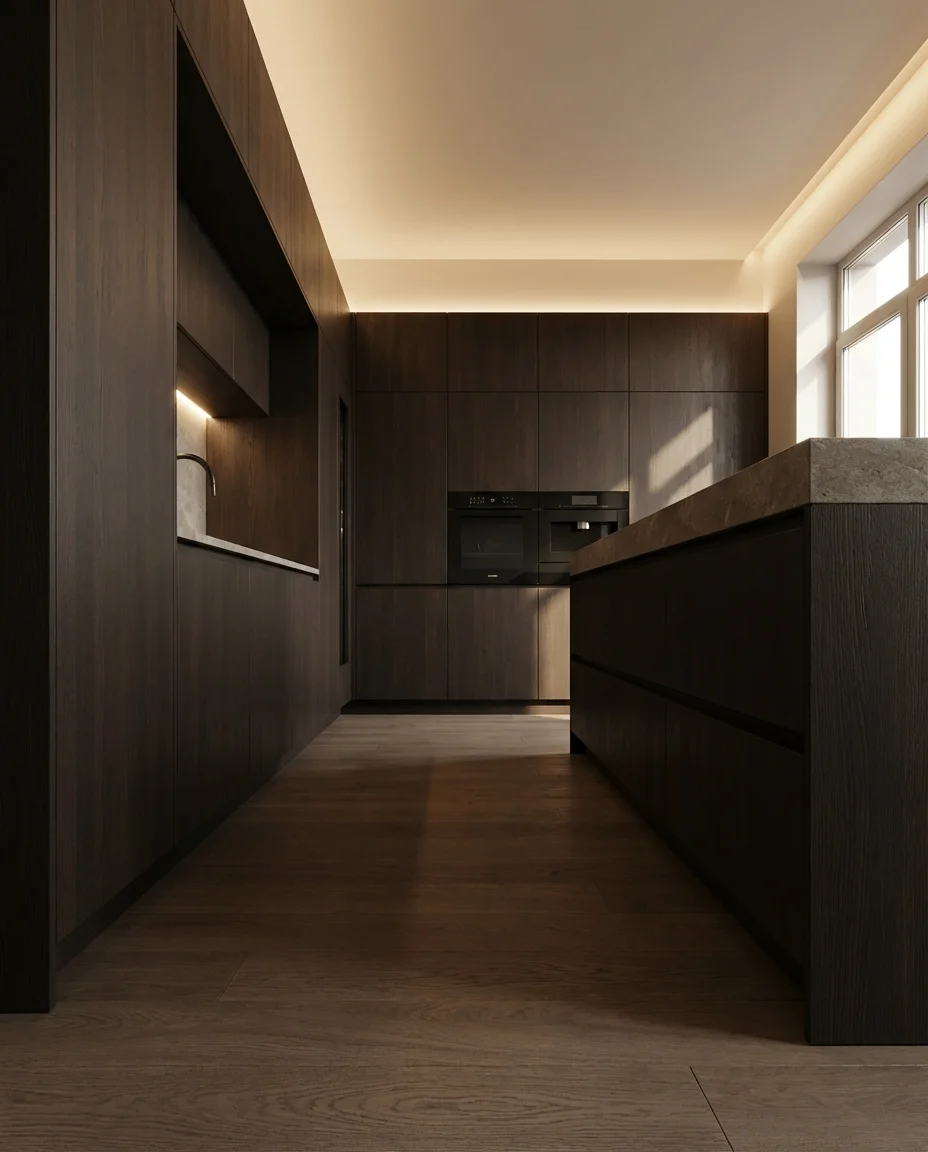
This is a kitchen for the homeowner who has figured out exactly what they want and has no interest in following trends—because the handleless dark kitchen transcends them. It requires a certain confidence in paring back rather than adding on, and it demands that the materials themselves do all the work. If you’re considering this direction, invest in the best cabinet construction you can afford: with no hardware to distract the eye, every door alignment, every subtle gap, and every millimeter of craftsmanship will be immediately visible to anyone who walks into the room.
Conclusion
From the sun-bleached warmth of white oak to the deep drama of dark green and charcoal, kitchen cabinet design in 2026 offers something genuinely exciting for every taste, budget, and lifestyle—and the best part is that there’s no single right answer. Whether you’re planning a full renovation or simply dreaming for now, we’d love to hear which of these ideas speaks most to your home. Drop a comment below and tell us: which look are you most inspired by this year?