Linen closets have become a focal point of home organization in 2026, especially as more Americans embrace intentional living and visually cohesive storage solutions. Whether you’re working with a narrow hallway nook or a spacious built-in system, the goal is the same: transform chaos into calm. Pinterest users are searching for smart ways to fold sheets, store bulky comforters, and maximize every inch of shelf space—especially in rental-friendly setups. This guide offers practical, beautiful ideas that blend function with style, from budget-friendly Dollar Tree hacks to sleek Ikea systems that look custom-built.
1. Hallway Linen Closet with Built-In Dividers
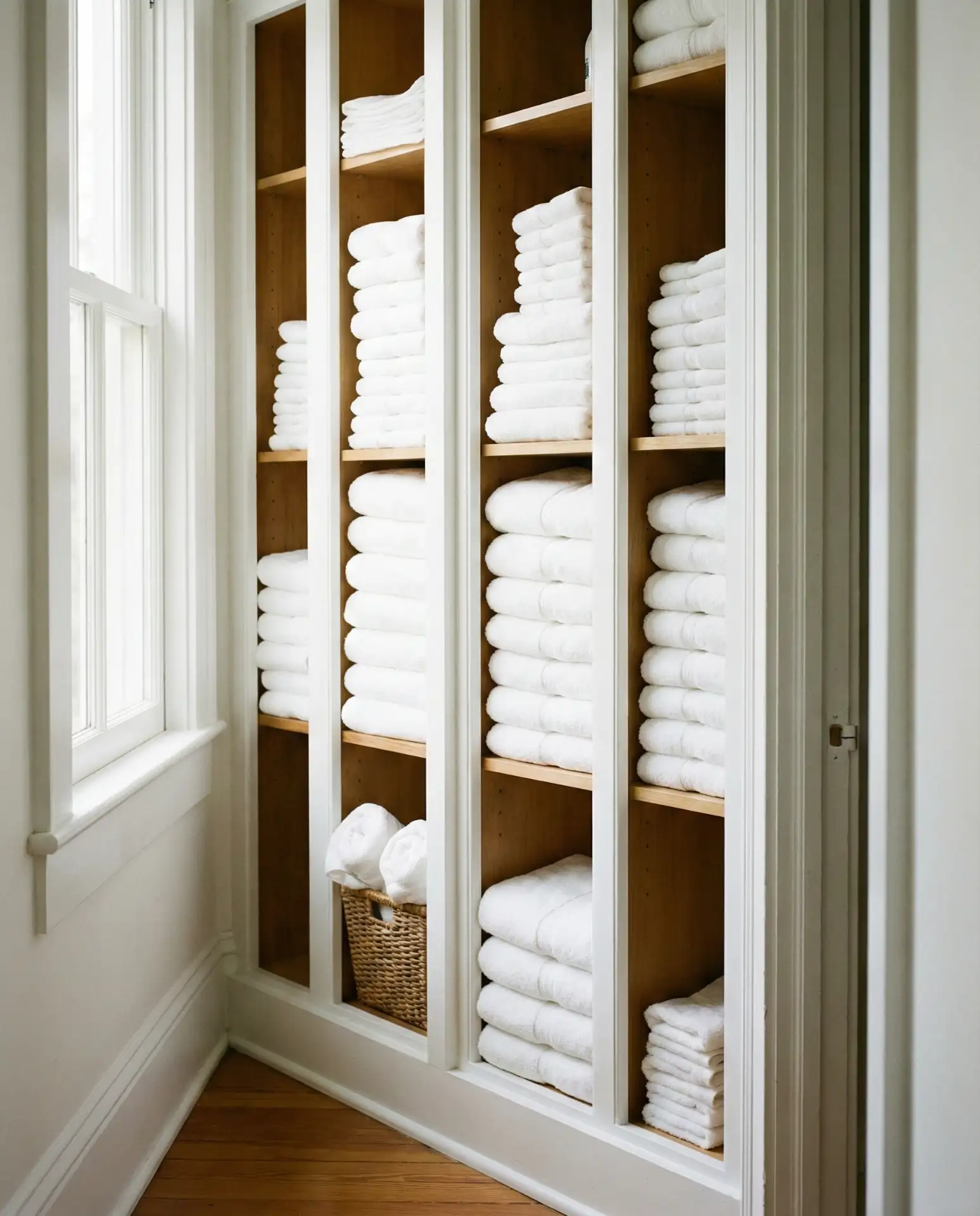
A hallway linen closet often suffers from deep shelves that swallow folded items whole. Installing vertical dividers transforms that space into a series of narrow columns, each dedicated to a specific category—bath towels, hand towels, or washcloths. This approach prevents the dreaded avalanche when you pull out a single item and keeps folding efforts from collapsing into disorder. The dividers can be custom-cut plywood painted to match your trim, or you can use adjustable shelf organizers from home improvement stores.
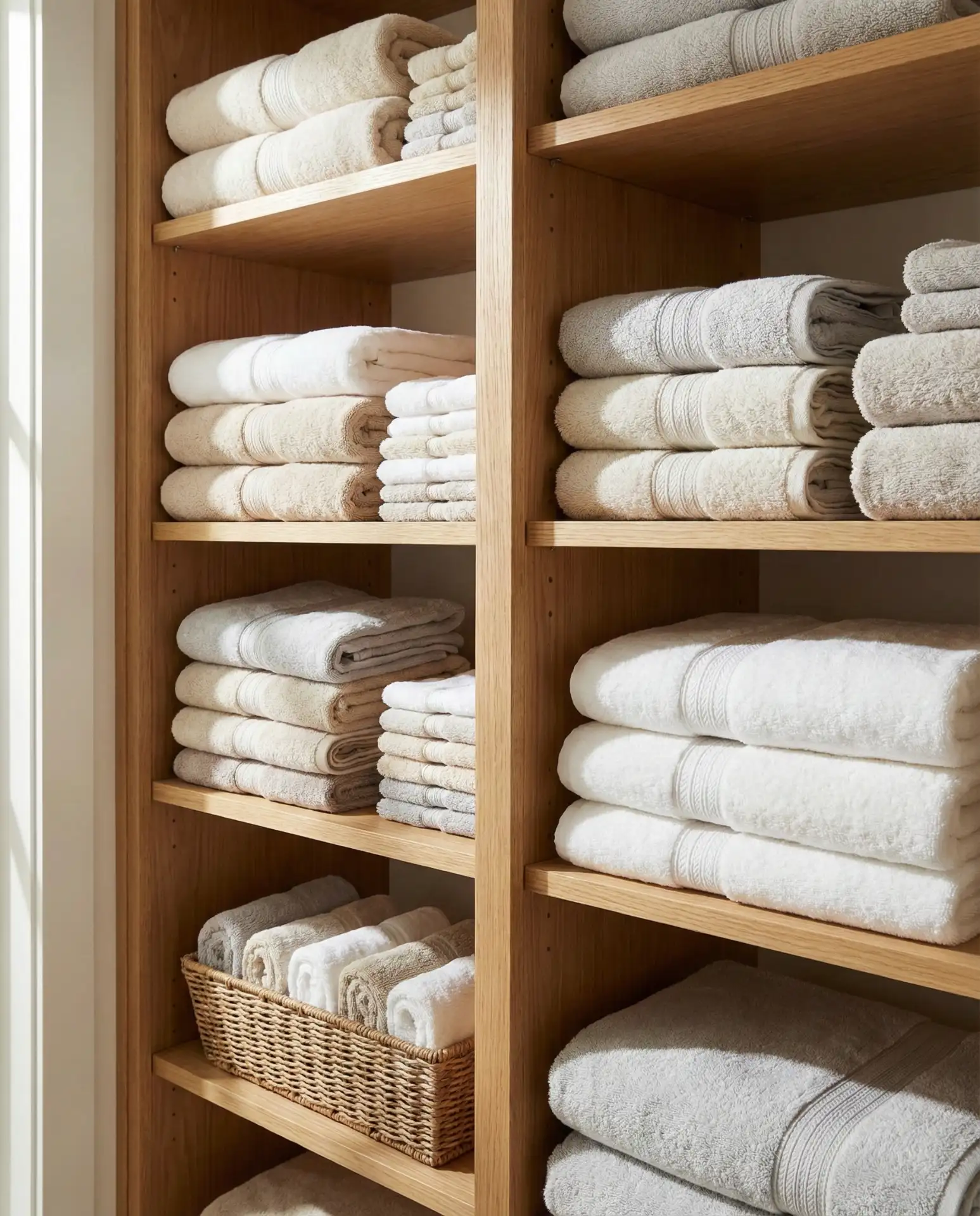
This setup works best in homes where the linen closet doubles as a high-traffic pass-through zone. Family members can grab what they need without disturbing the entire stack, which is especially helpful in households with teenagers who tend to yank items from the middle. The vertical organization also makes it easier to see inventory at a glance, reducing the chance you’ll accidentally buy duplicate sheet sets or run out of washcloths mid-week.
2. Tiny Closet Tension Rod Trick
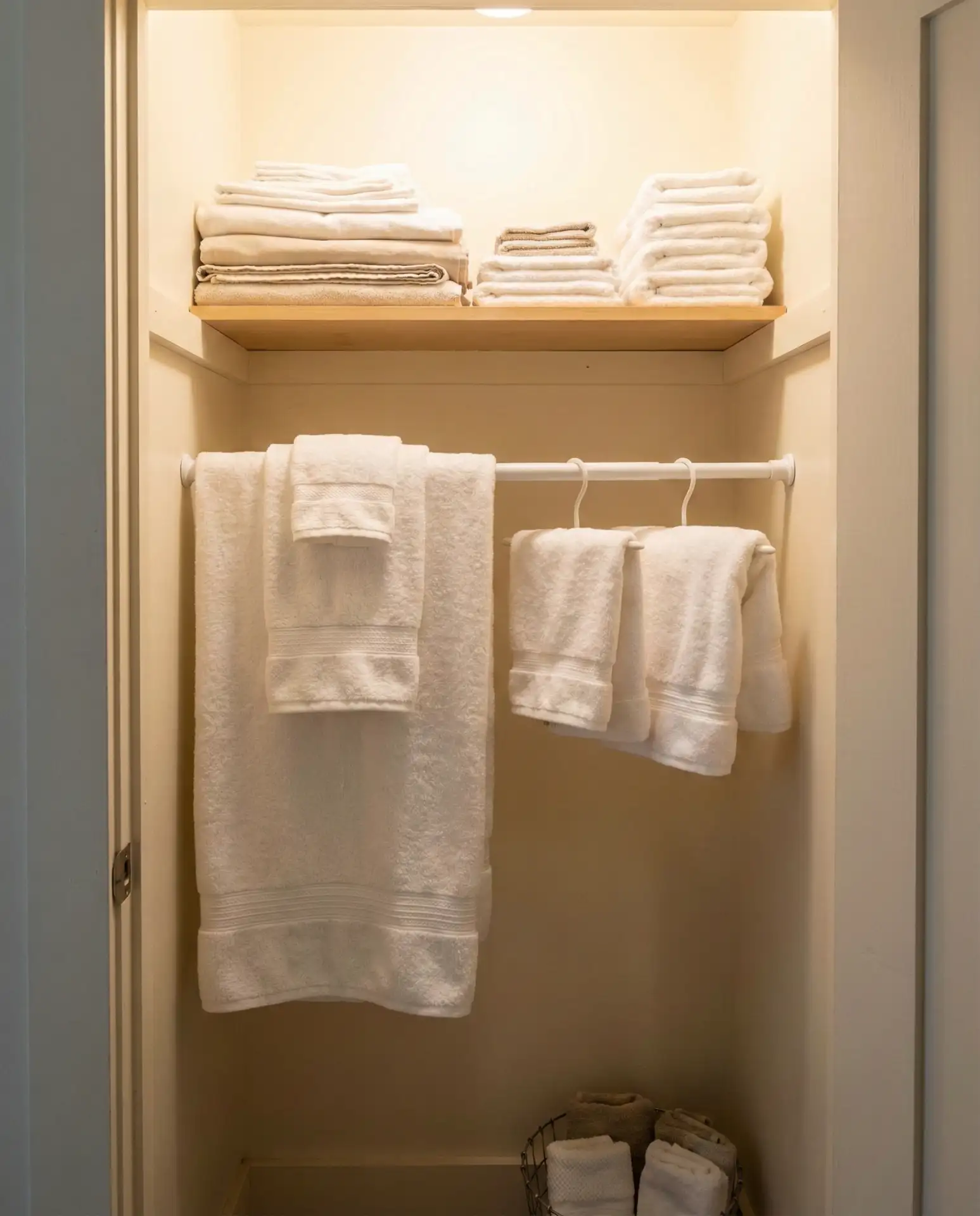
When your tiny linen closet measures barely two feet wide, every cubic inch counts. A simple tension rod installed midway down creates an instant hanging zone for spare towel sets, keeping them wrinkle-free and easily accessible. This trick works especially well for guest towels you want to display without dedicating premium shelf real estate. The rod can also hold cloth storage bags filled with seasonal items like beach towels or extra pillow covers.
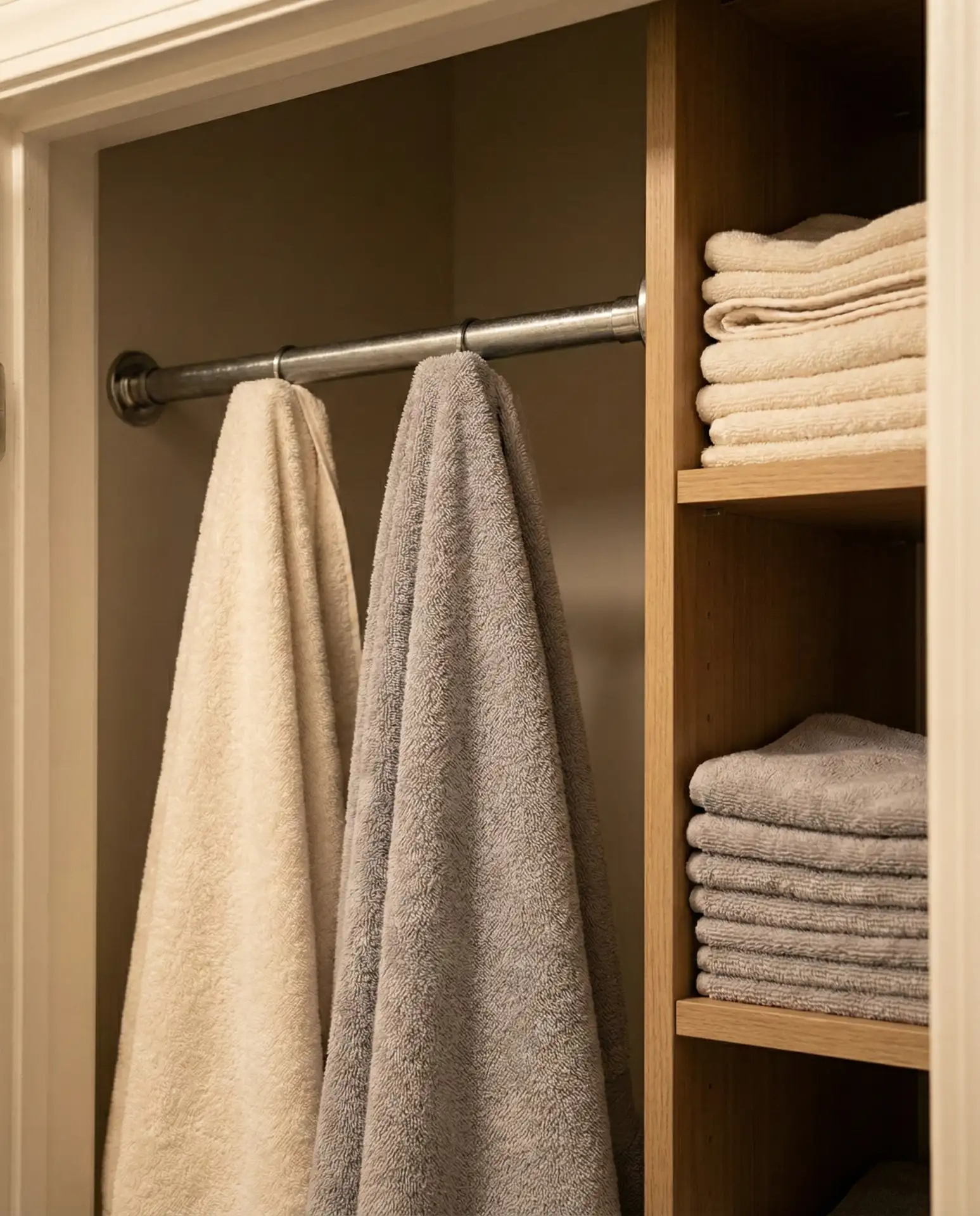
One common mistake is installing the rod too high, which wastes the vertical space below. Position it about 30 inches from the floor so you can still stack bins or baskets underneath. If your closet has wire shelving above, the tension rod prevents items from slipping through the gaps and creates a visual break that makes the space feel less cluttered, even when it’s packed full.
3. Large Closet Zone System
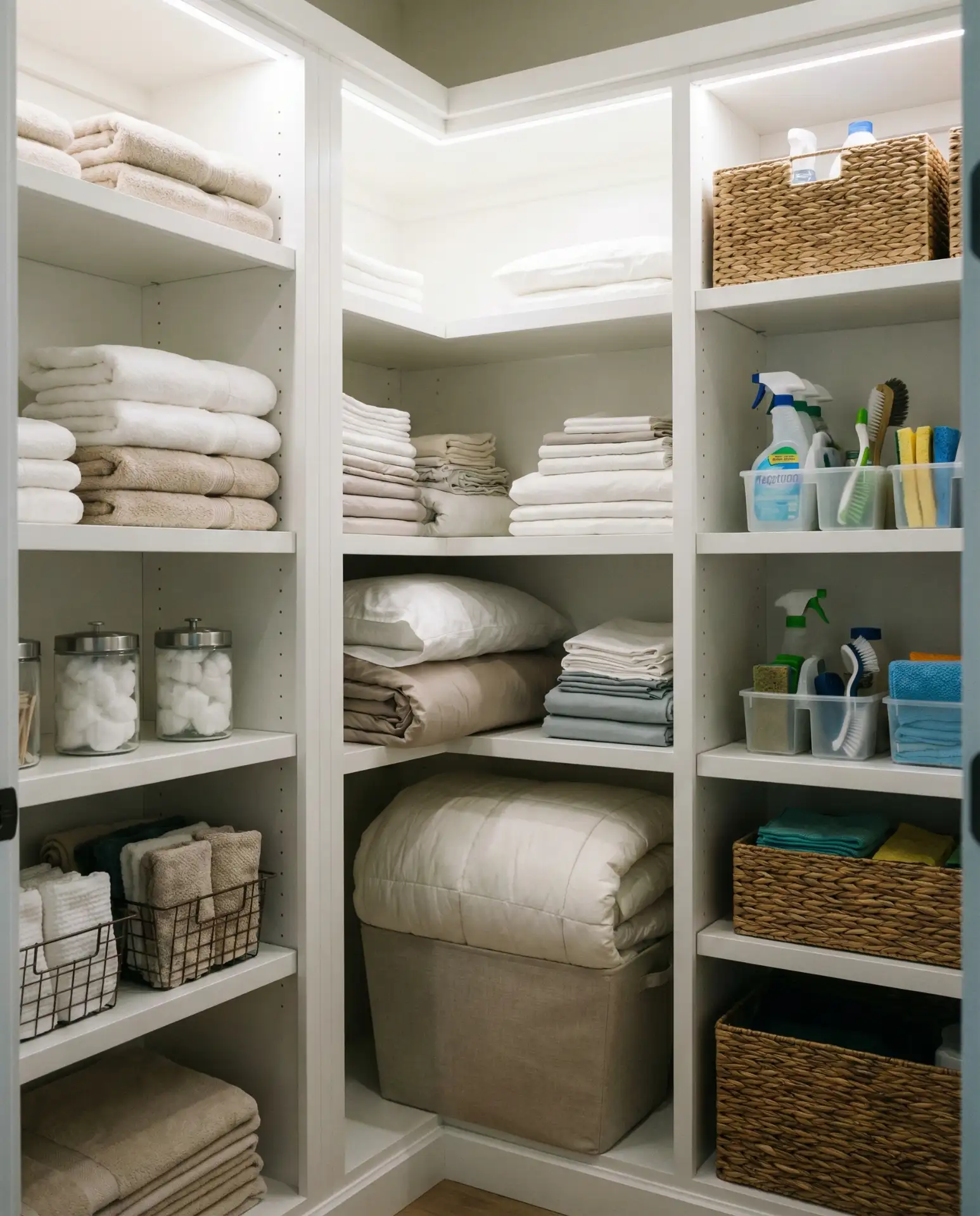
A large linen closet can paradoxically feel harder to organize than a small one because there’s no forced discipline. The zone system divides your space into dedicated areas: bath linens on the left, bed linens in the center, and cleaning supplies on the right. Each zone gets its own shelf height and container style, so you’re never digging through blankets to find a hand towel. Labels on shelf edges keep the system running smoothly even when other household members put things away.
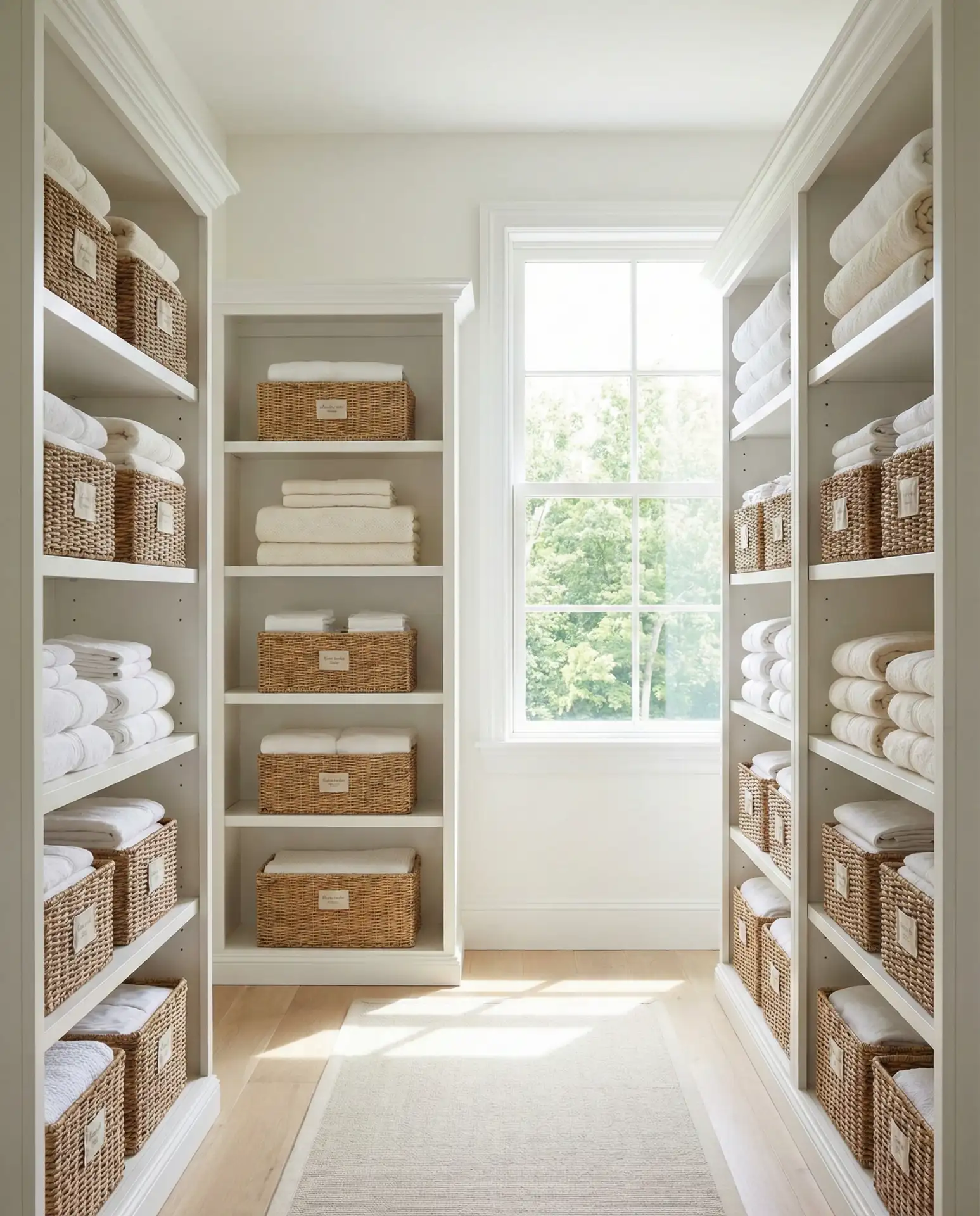
In suburban homes with multiple bathrooms, this approach prevents the frustration of running upstairs to grab a bath mat when it’s actually stored in the hall closet. The zone system also makes seasonal swaps easier—winter flannel sheets live in a high zone during summer, then rotate down when temperatures drop. It’s a strategy borrowed from retail merchandising, and it works just as well in residential spaces that need to function like a well-run stockroom.
4. Dollar Tree Basket Risers
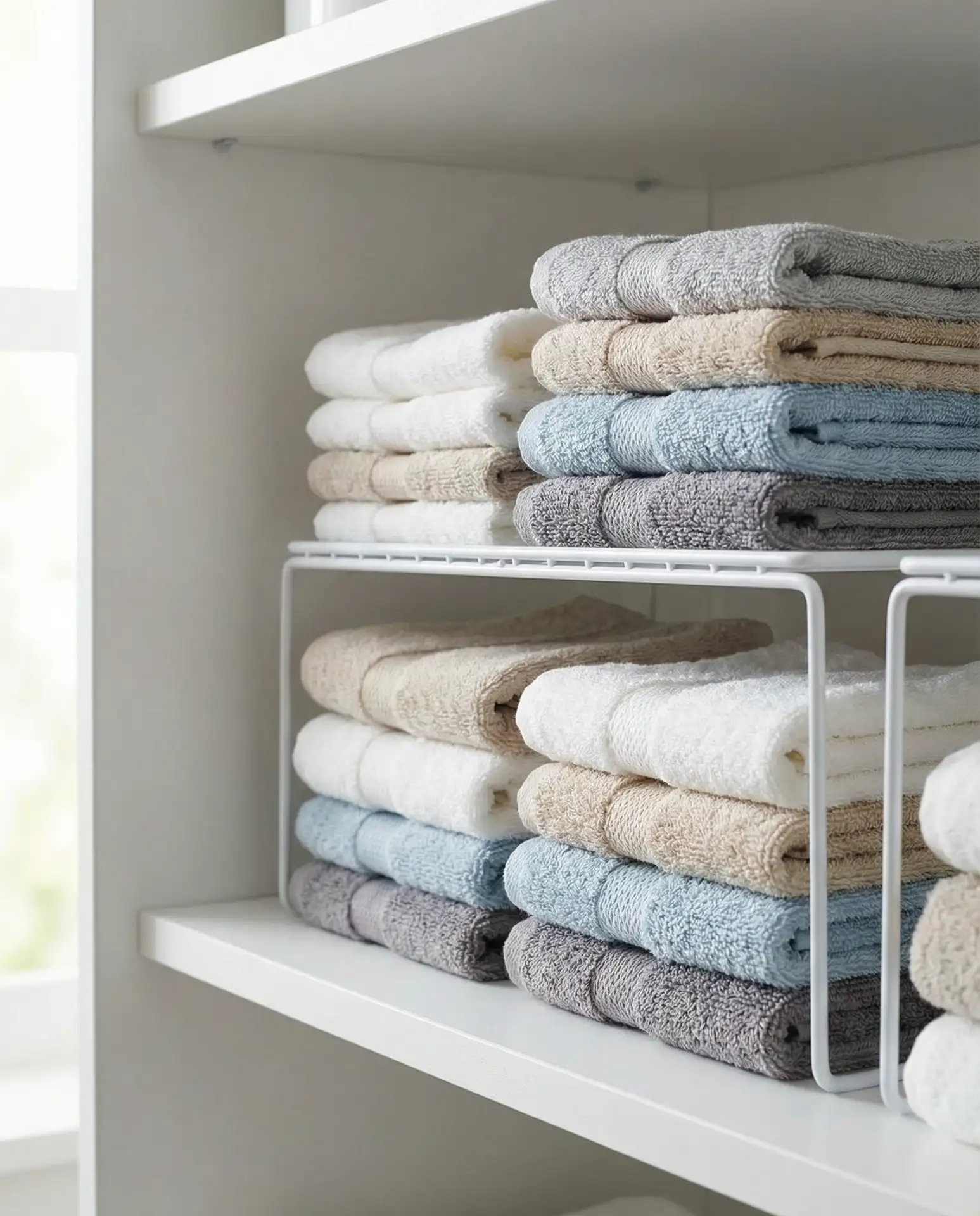
Budget-conscious organizers have discovered that Dollar Tree wire dish racks make perfect shelf risers in linen closets. Stack two or three on a single shelf to create tiered levels, then use the elevated platforms for washcloths, hand towels, or rolled sheets. The open wire design maintains airflow and visibility, so you can see exactly what’s on each level without having to crouch down or move items around. This hack costs under ten dollars and can double or triple your usable shelf space.


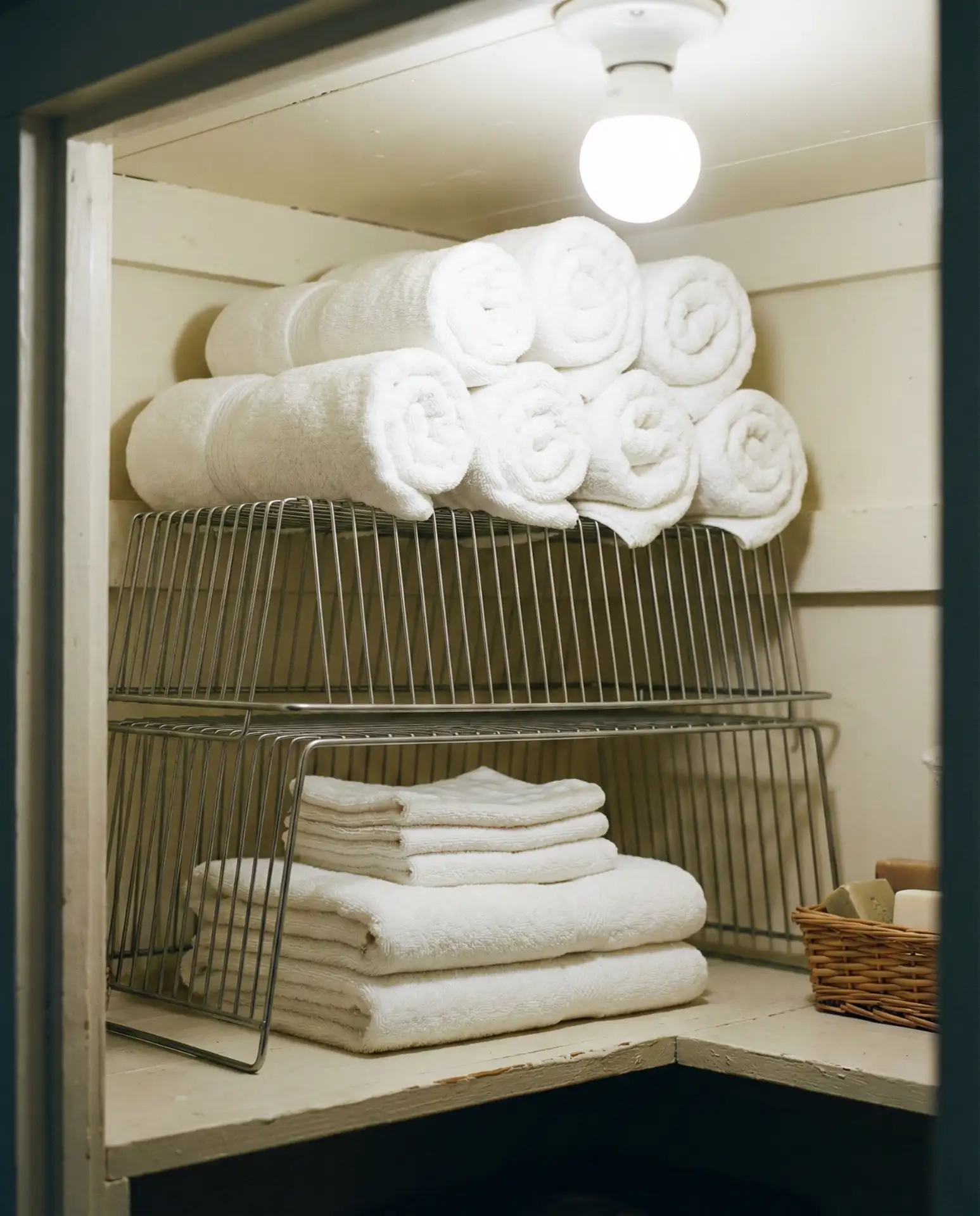
Real homeowners in apartments often rely on this trick because it’s renter-friendly and requires zero installation. My neighbor in a Chicago walk-up tripled her bathroom linen capacity using five dish racks from Dollar Tree, and the system has held up for two years without sagging. The key is to avoid overloading each tier—stick to lightweight items and distribute weight evenly across the rack’s surface.
5. Bathroom Shelves Overflow Solution
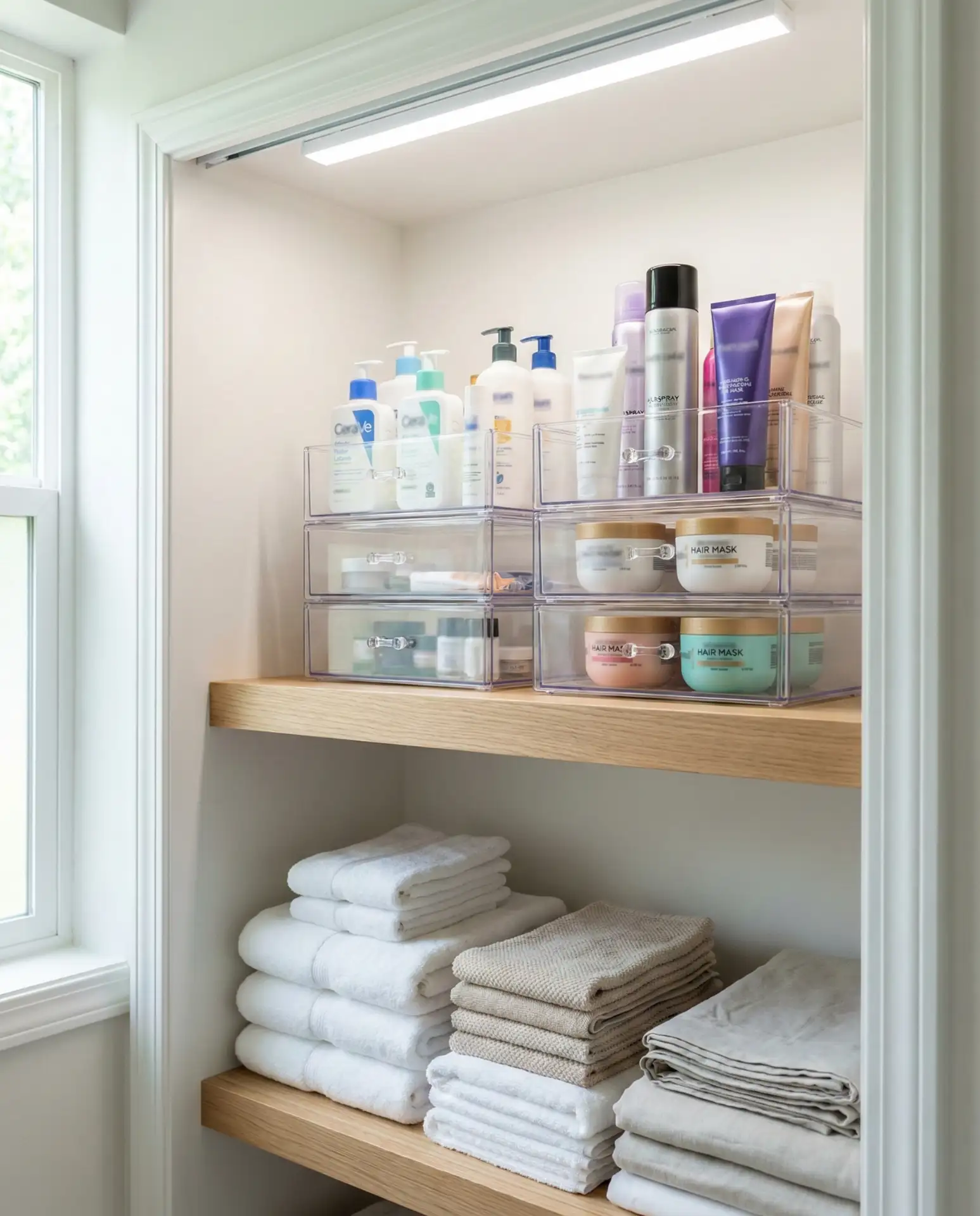
When bathroom shelves run out of room, the linen closet becomes the natural overflow zone for toiletries, hair tools, and extra skincare. Rather than tossing these items onto existing linen stacks, dedicate one shelf to bathroom overflow using clear acrylic bins with handles. Group items by category—hair care, first aid, skincare backups—and slide the bins in and out as needed. This keeps your towel shelves pristine and prevents bottles from leaking onto fabric.
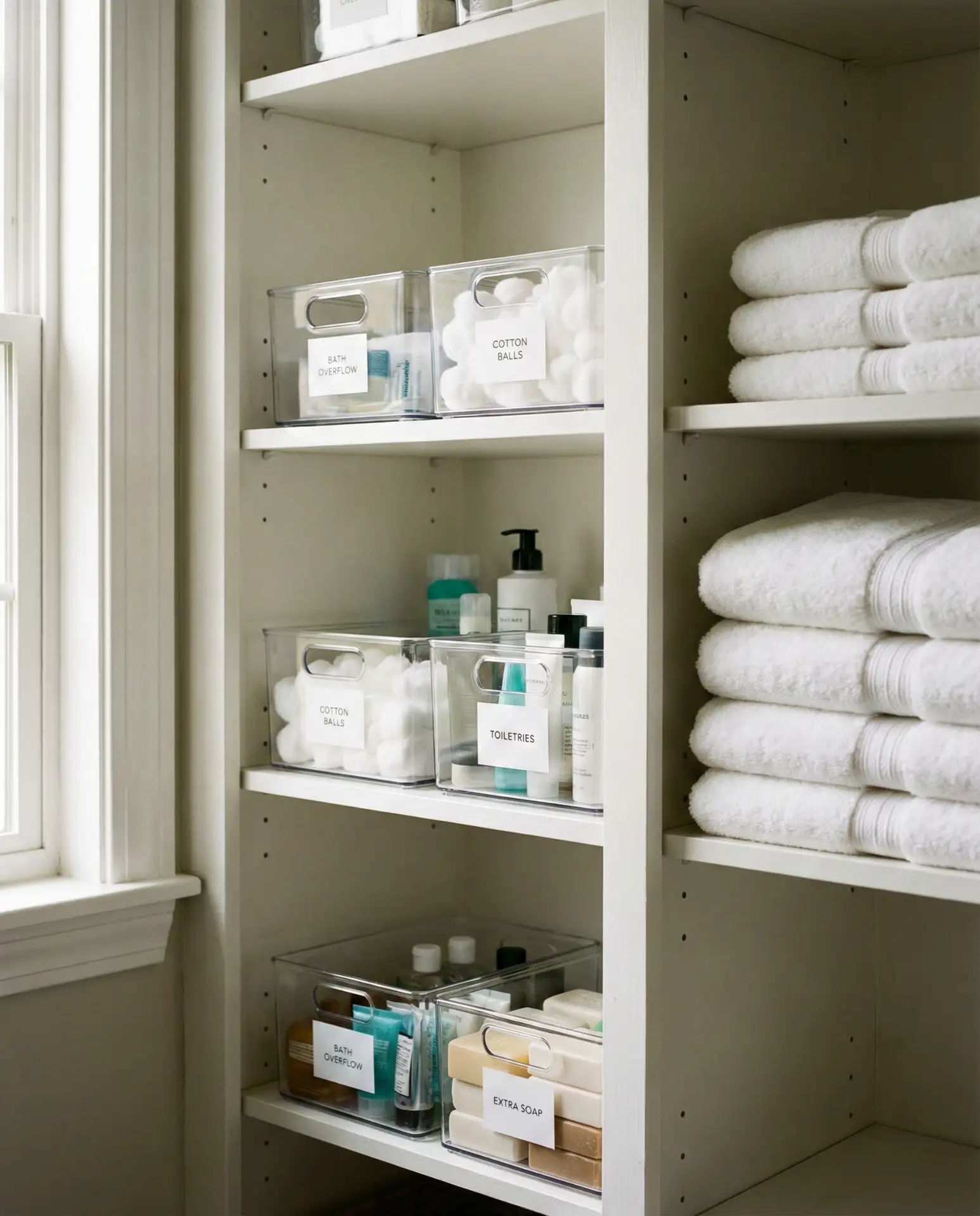
This setup is particularly popular in homes with pedestal sinks or wall-mounted vanities that offer minimal storage. The clear bins let you inventory supplies at a glance, which helps prevent the classic mistake of buying a third backup bottle of shampoo because you forgot you already had two. Handles make it easy to pull the entire bin out during a deep clean or when you need to access something at the back.
6. Deep Shelf Pull-Out System
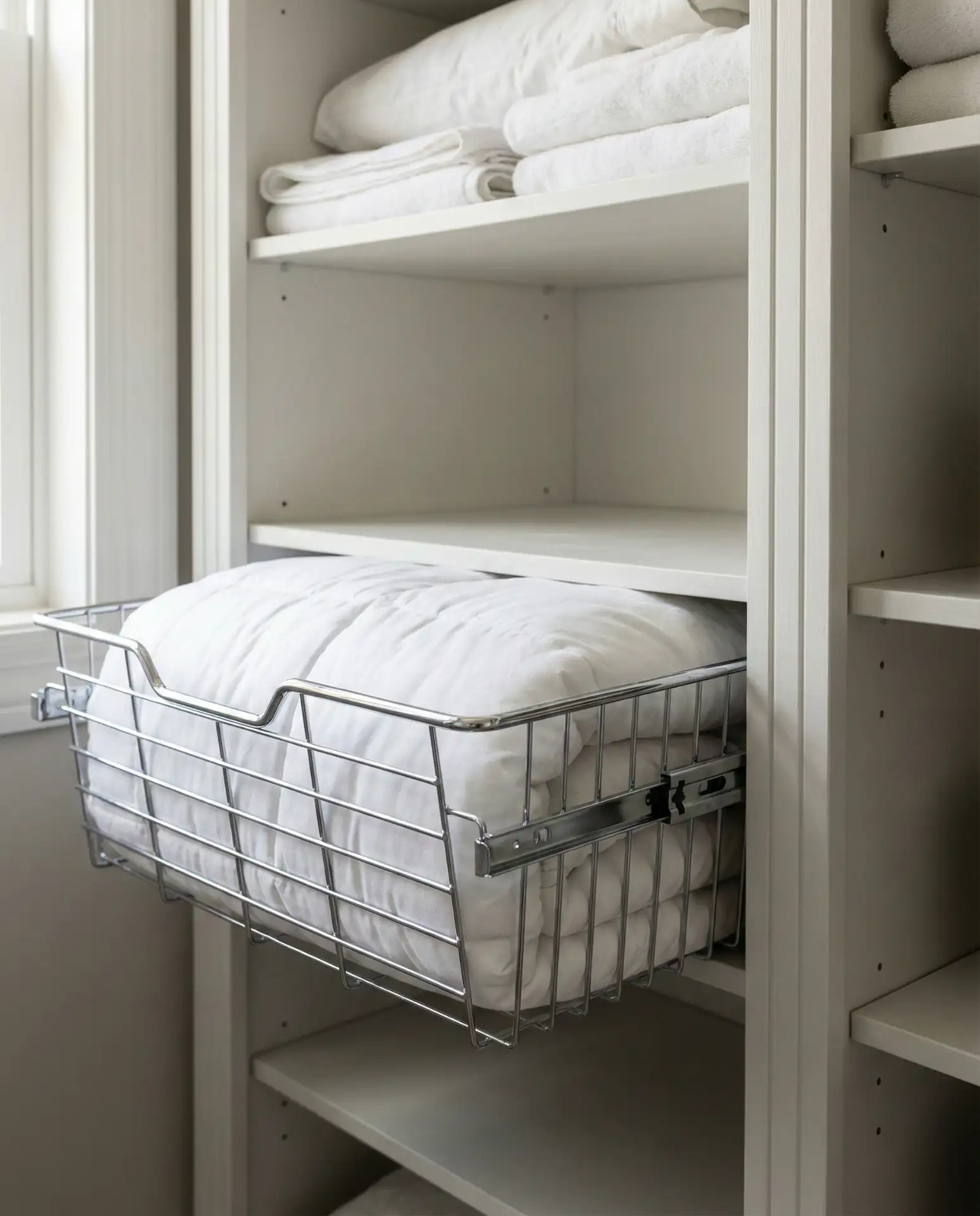
Standard linen closets often feature deep shelf configurations that extend 18 to 24 inches back, creating a black hole where items disappear. Installing pull-out wire baskets or sliding drawer inserts brings everything to the front with a single tug. These systems are especially useful for storing comforters and seasonal bedding that you only access a few times a year. The sliding mechanism prevents the need to unstack and restack items every time you need something from the back row.
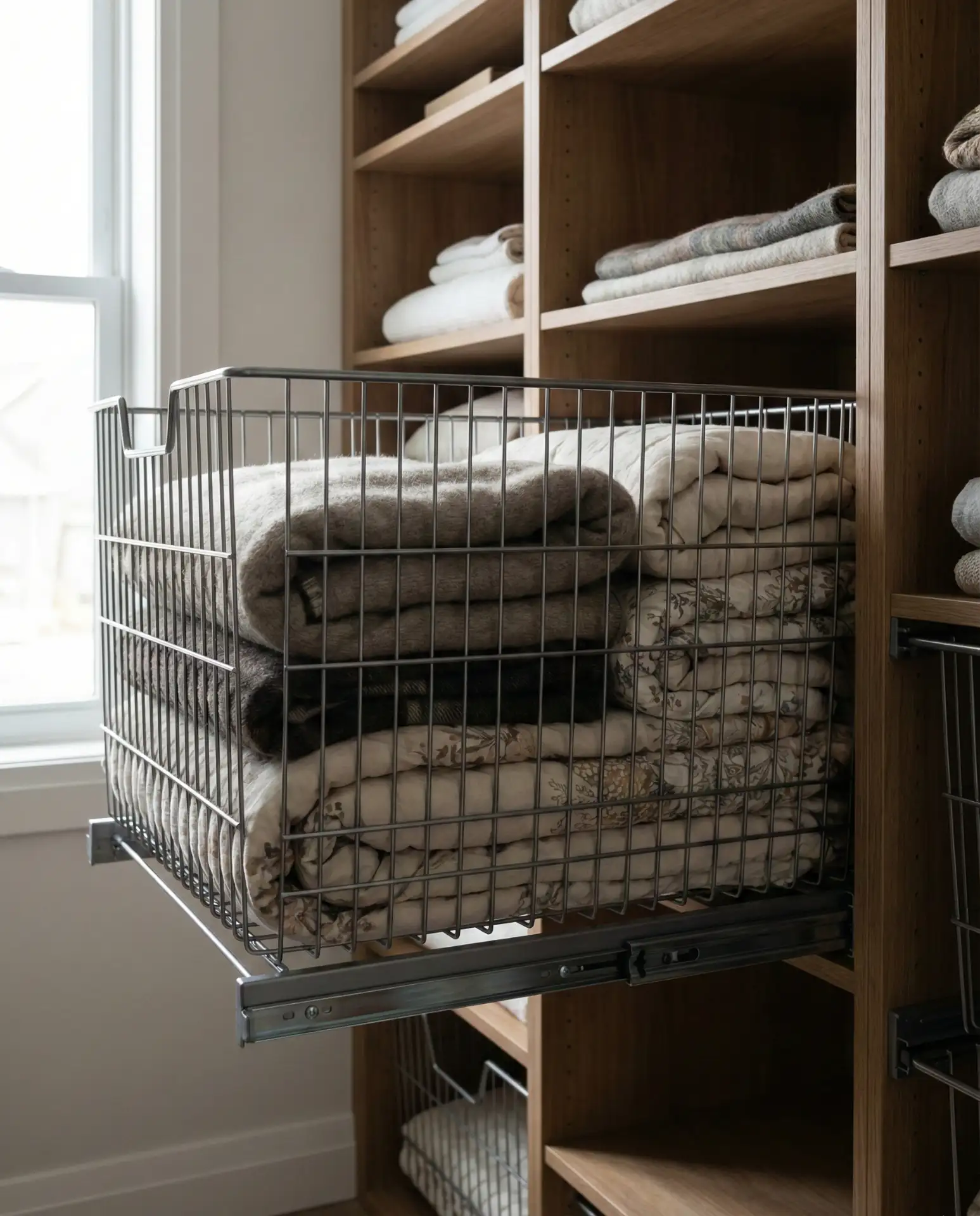
In Southern homes where attic storage gets too hot for linens, the deep linen closet becomes the primary repository for off-season bedding. Pull-out systems make seasonal swaps painless—just slide out the summer quilts in October and swap them for flannel duvets. The investment usually runs between forty and eighty dollars per shelf, depending on weight capacity and finish, but it pays off in saved time and reduced frustration over the life of your home.
7. Wire Shelving Liner Upgrade
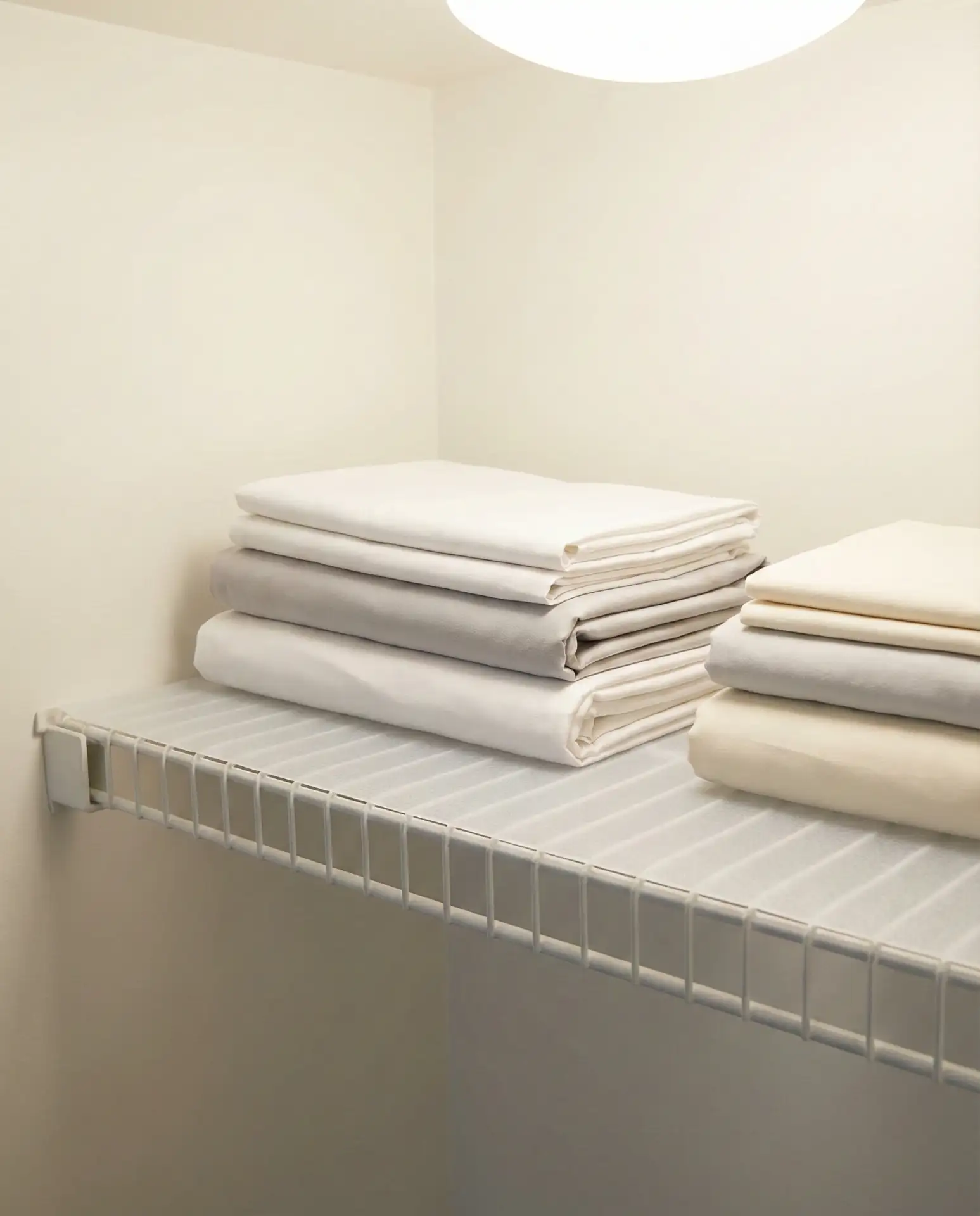
Wire shelving is standard in many builder-grade closets, but the gaps create permanent crease marks in folded linens and allow smaller items to slip through. A simple fix involves cutting shelf liner or thin plywood to fit each shelf, creating a smooth surface that protects your sheets and prevents fold lines from becoming permanent. Choose non-slip liners with a subtle texture to keep stacks from sliding around when you open and close the door. This upgrade takes about thirty minutes per closet and dramatically improves the finished look.
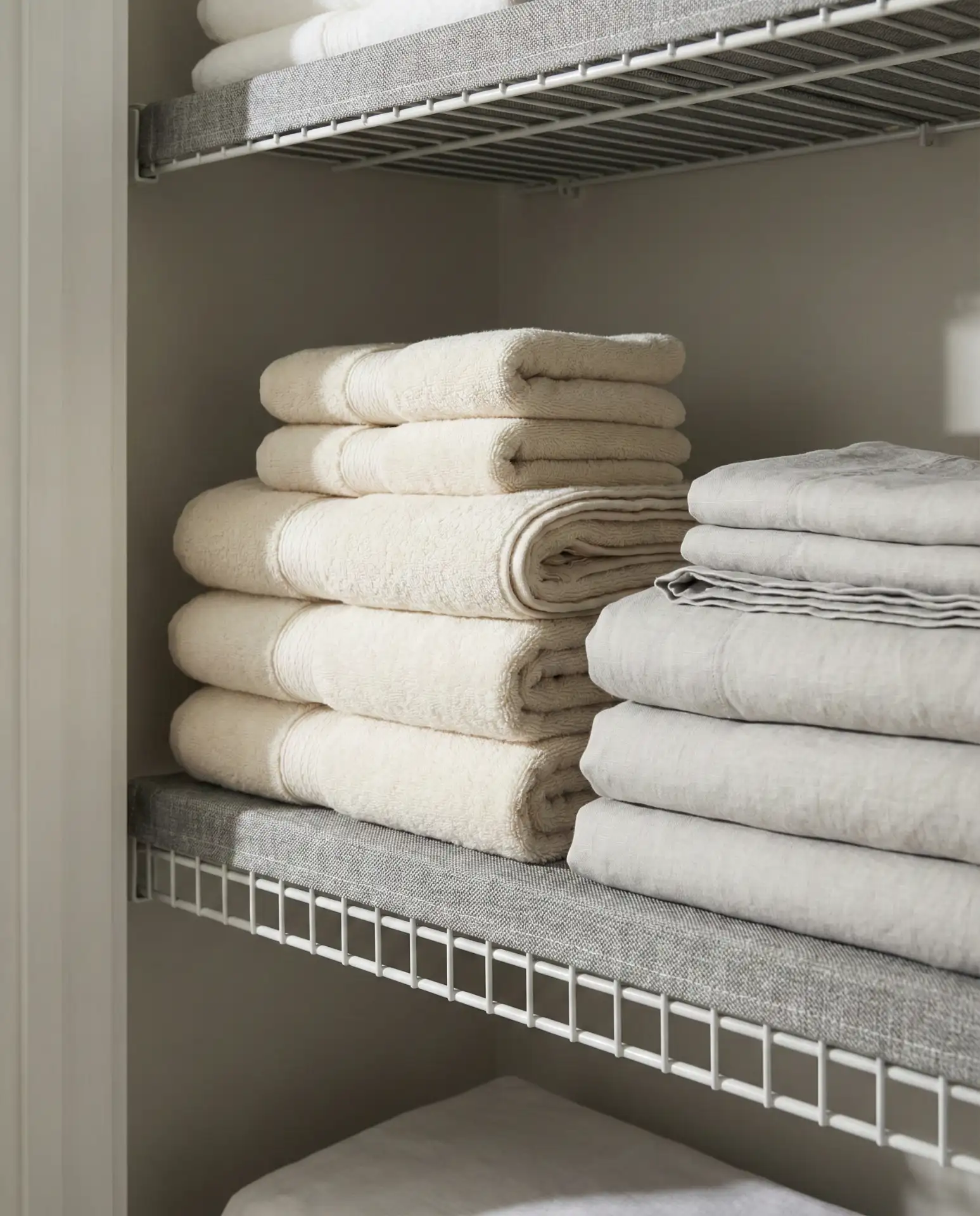
Renters appreciate this solution because it’s completely reversible—just peel up the liners when you move out. The liners also make it easier to wipe down shelves during seasonal closet cleanouts, since dust and lint don’t settle into the wire grid. Some homeowners use adhesive-backed liners for a more permanent installation, while others prefer loose-fit versions that can be removed and washed as needed.
8. Folding Station Inside the Door
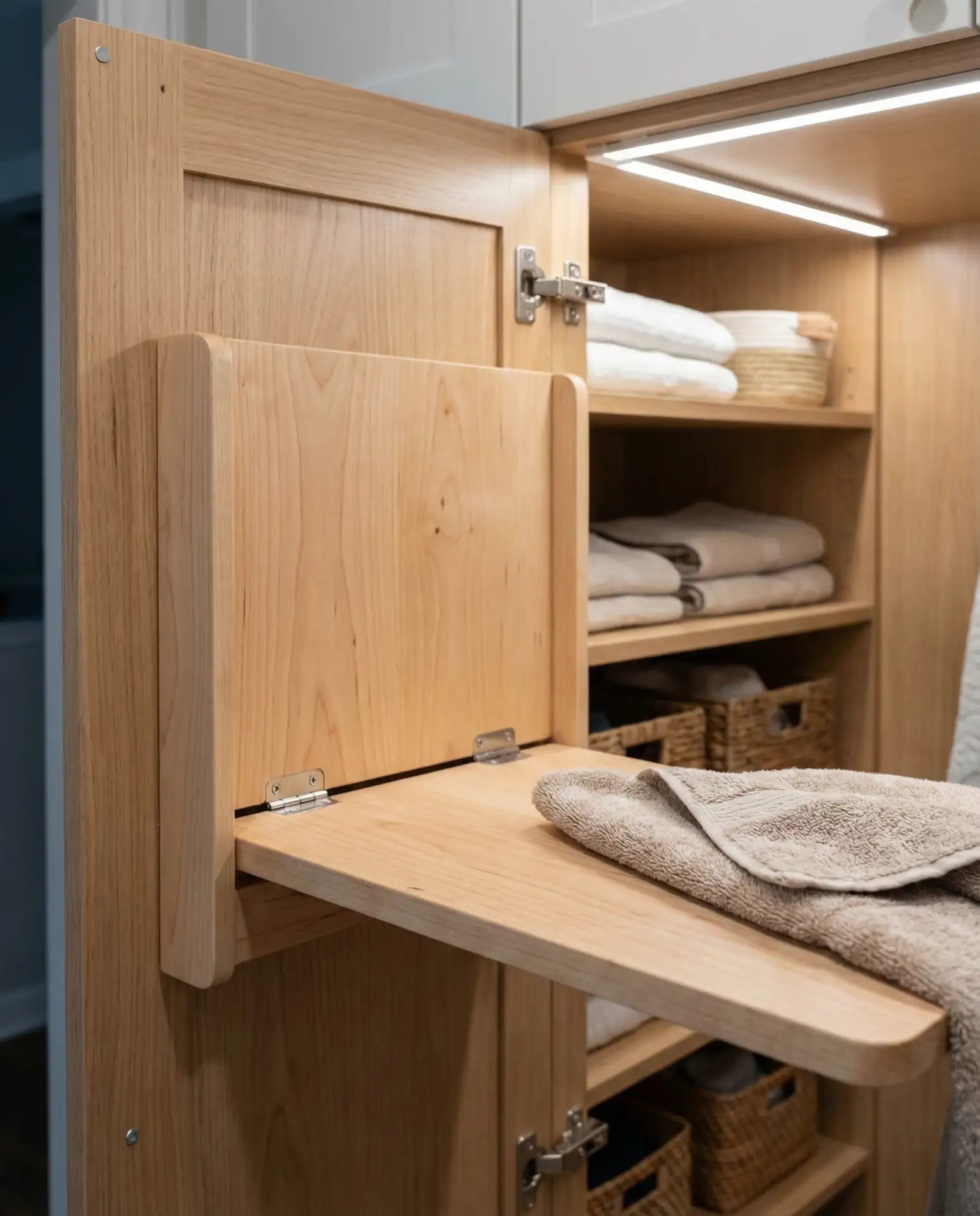
A wall-mounted folding board attached to the inside of your linen closet door creates a dedicated workspace for achieving crisp, uniform folds. This is especially helpful for fitted sheets, which notoriously resist neat folding. The board can be a simple hinged shelf that folds flat against the door when not in use or a more elaborate setup with printed fold lines that guide you to consistent dimensions. Having the folding station right where you’ll store the items eliminates the temptation to dump unfolded laundry onto the shelf.
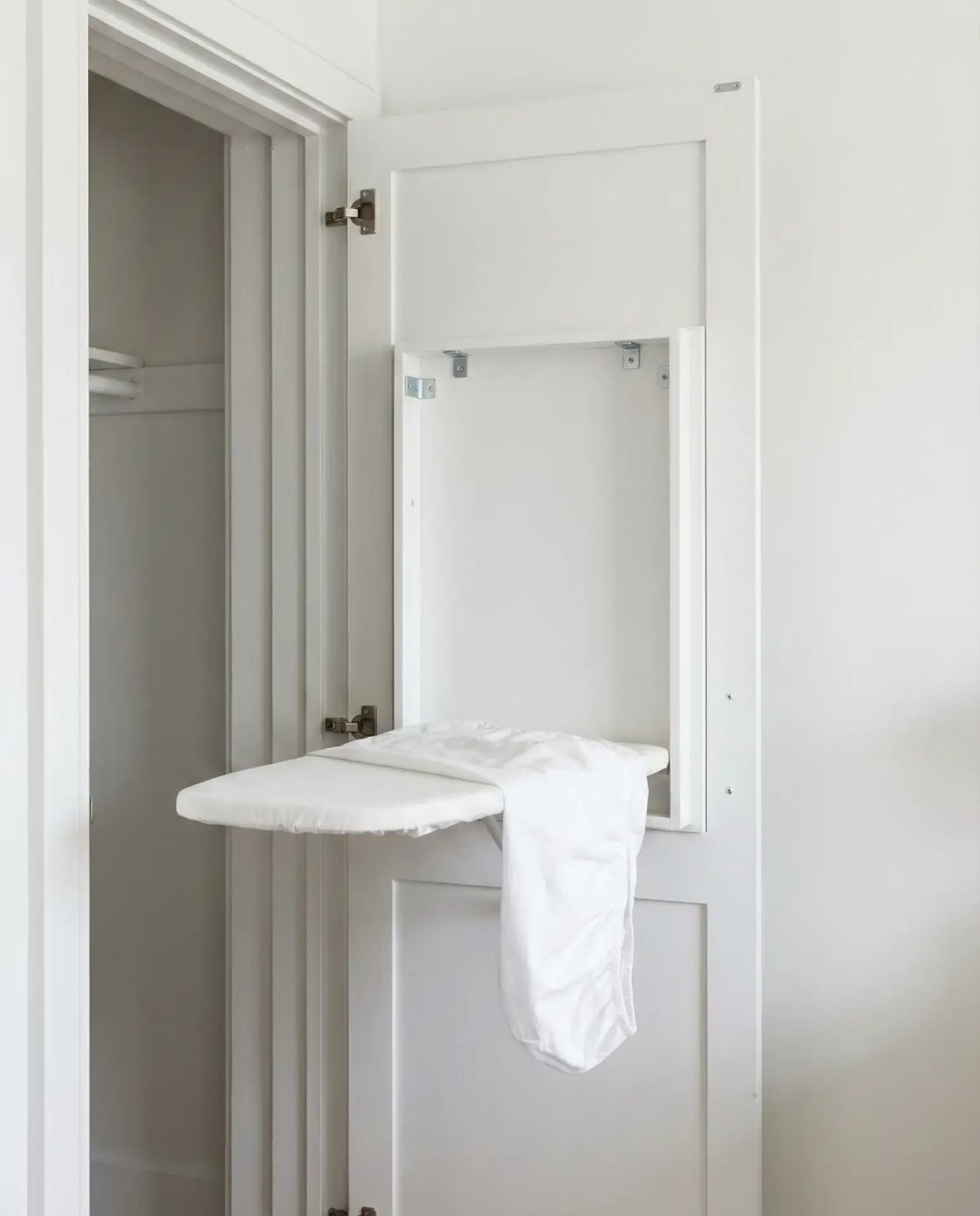
This works best in closets with solid doors that can support a few pounds of weight. Hollow-core doors may need reinforcement or a lighter-duty board. I’ve seen this hack transform the laundry routine in homes where multiple people share folding duties—everyone uses the same board, so all the towels end up the same size and stack perfectly. It’s a small detail that makes a significant visual difference when you open the closet.
9. Sheet Set Storage Envelope Method
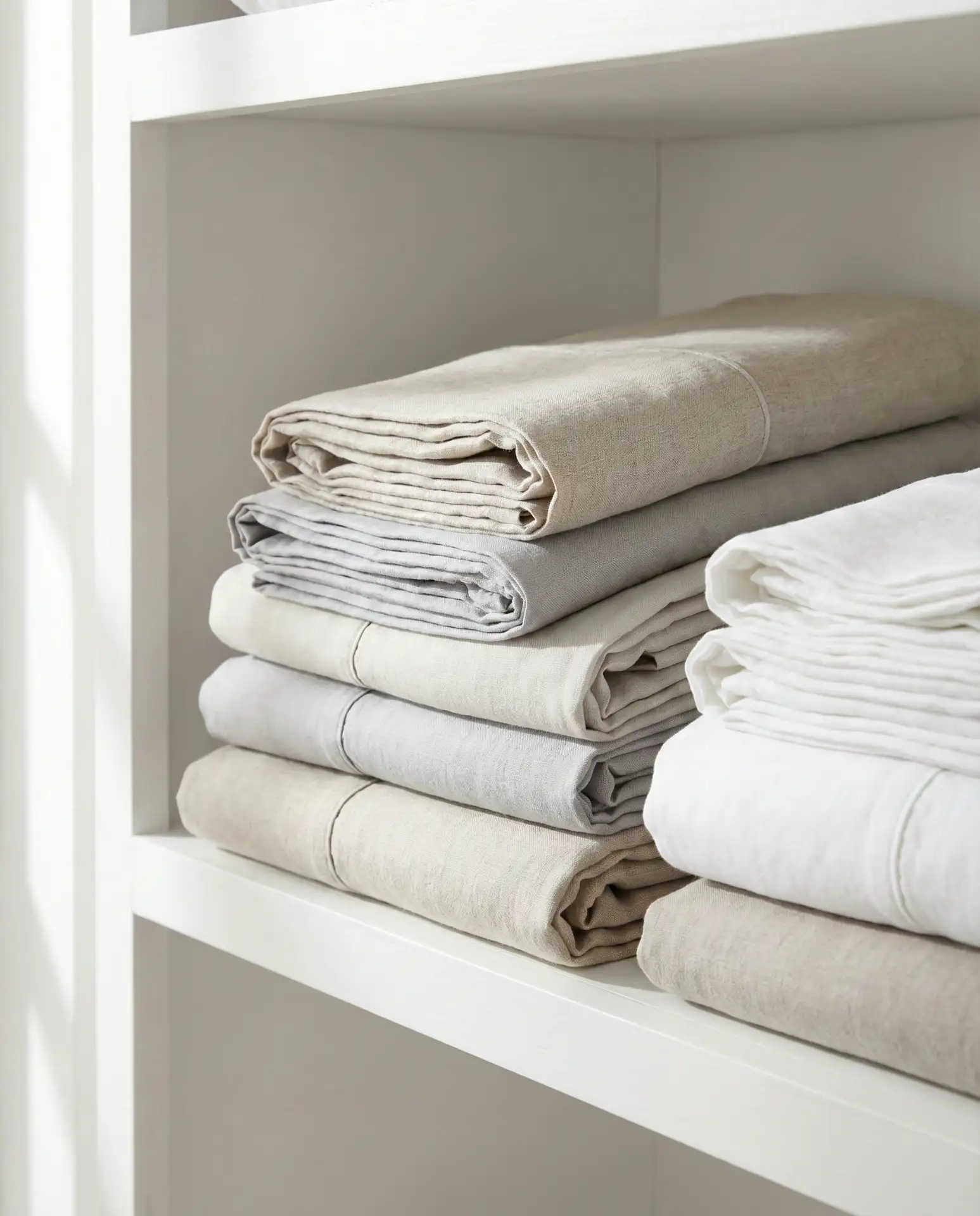
Instead of stacking flat sheets, fitted sheets, and pillowcases separately, tuck the entire set inside one of its own pillowcases to create a tidy fabric envelope. This Pinterest-favorite trick keeps sheets together as a unit and eliminates the frustration of hunting for matching pieces across multiple shelves. The bundled sets stack neatly and take up less horizontal space than traditional folding methods. You can even label the outside of each pillowcase with a small tag indicating bed size and season.
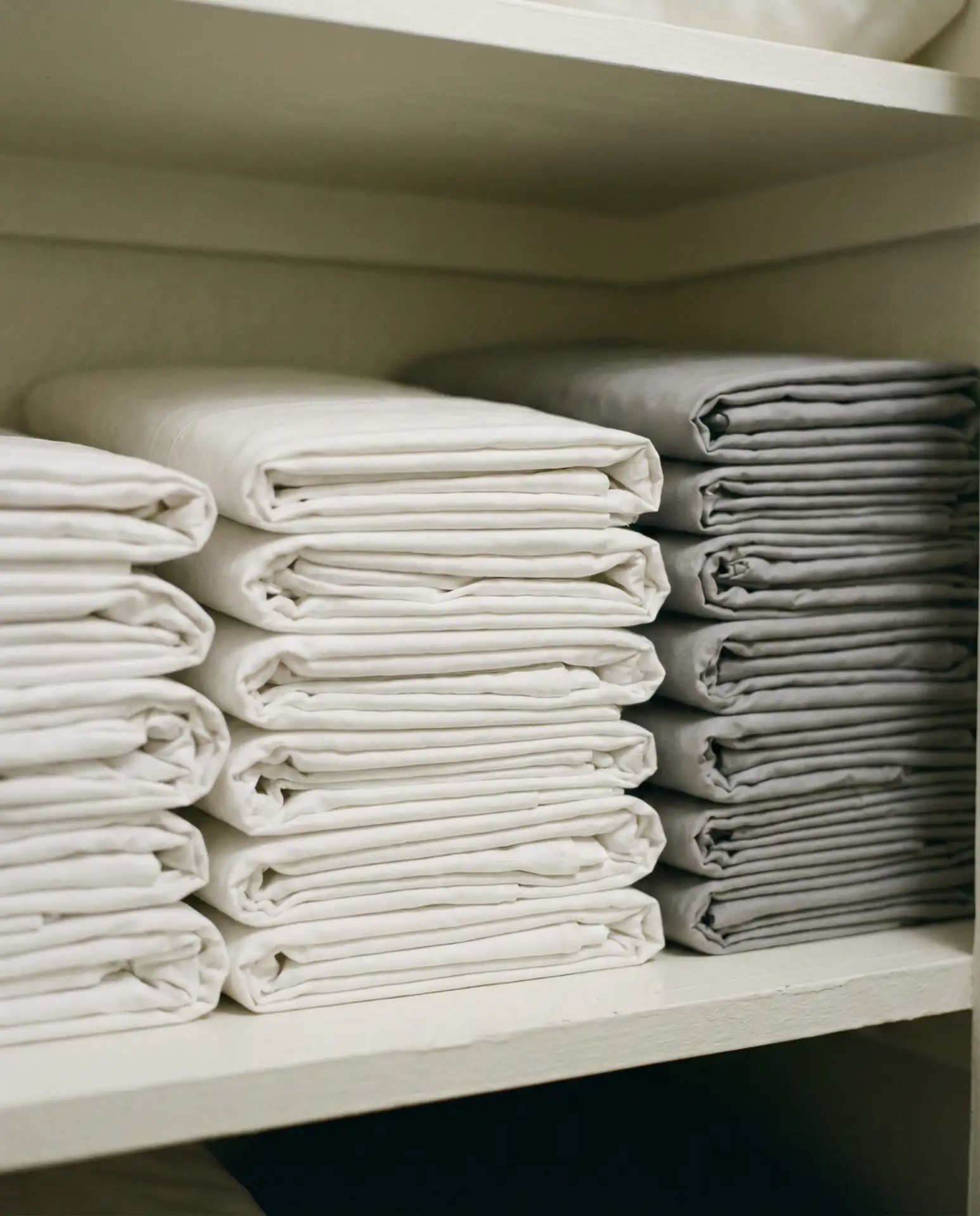
Families with kids appreciate this method because children can grab their own bedding for sheet-changing day without creating chaos. The envelope method also prevents the common scenario where you end up with three orphaned flat sheets and no fitted sheets to match. On Pinterest, this idea has been repinned millions of times, often with the caption “life-changing”—and for once, the hyperbole is justified.
10. Towel Rolling for Spa Aesthetic
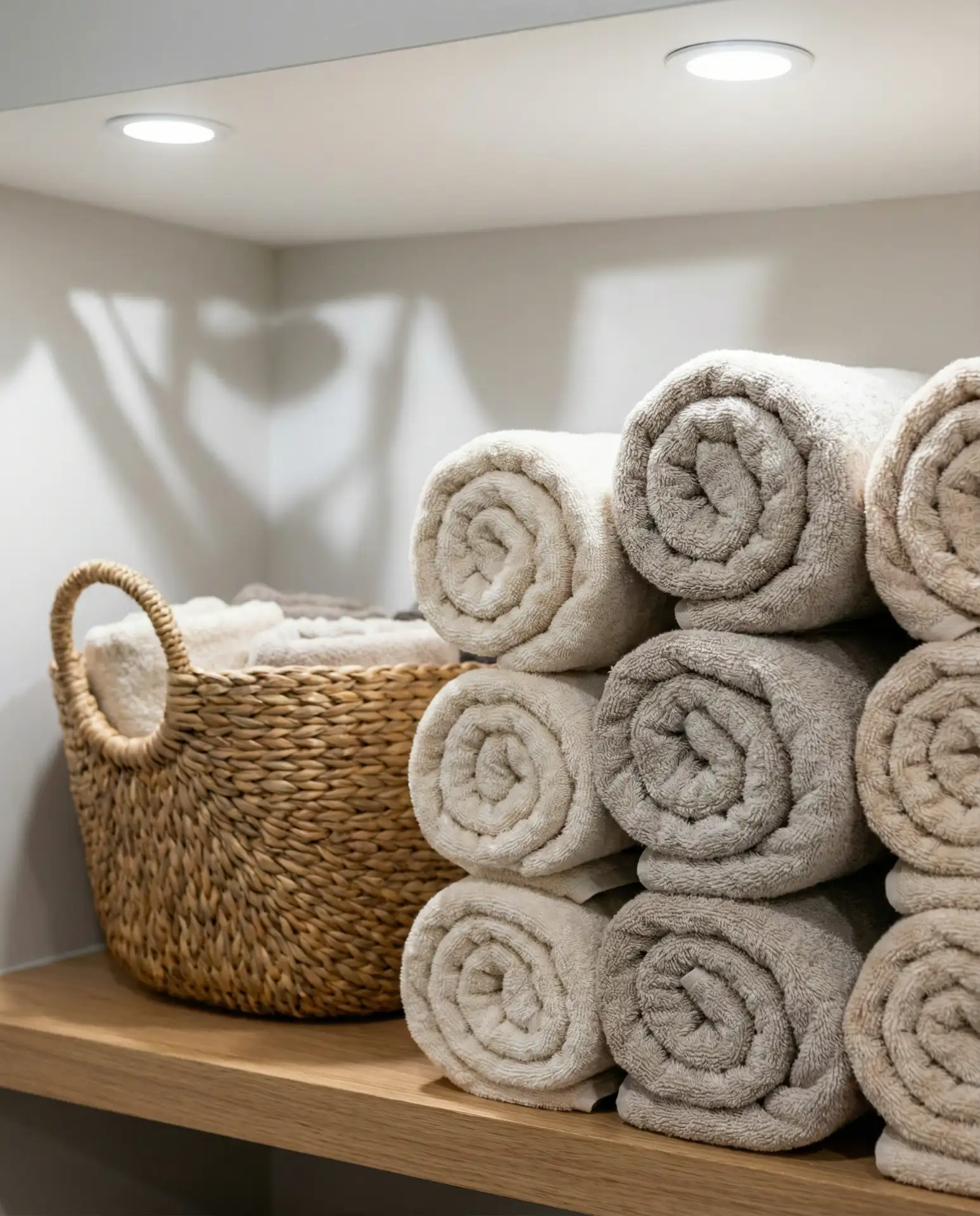
Rolling towel sets instead of folding them creates a hotel-spa look that feels especially luxurious in guest bathrooms or master suites. Rolled towels fit perfectly in baskets, bins, or even wine racks repurposed as bathroom storage. This method also maximizes vertical space in deep shelf closets, since you can stack rolled towels several layers high without worrying about toppling. The cylindrical shape prevents the center-of-the-fold crease that folded towels develop over time.
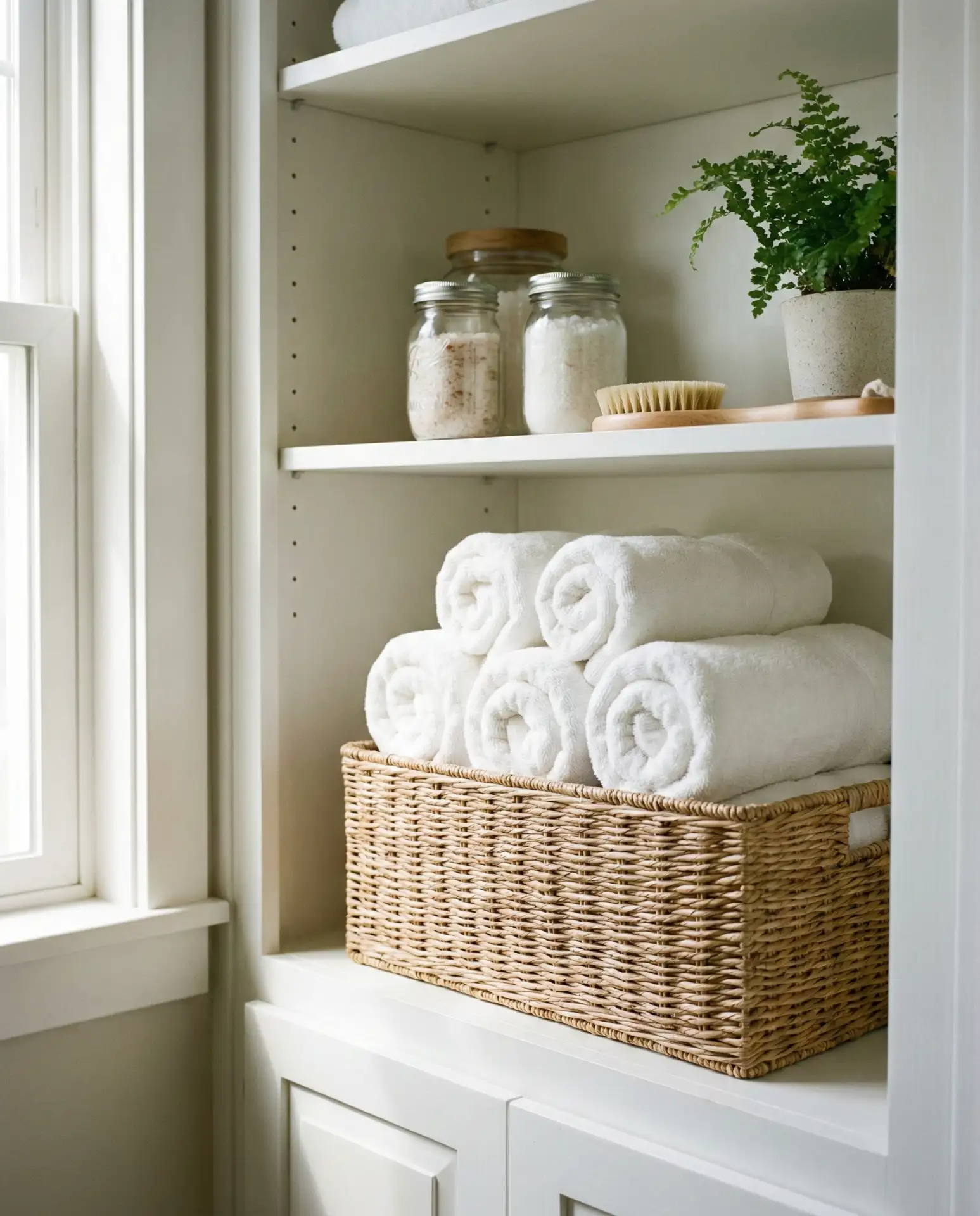
Budget-wise, this approach costs nothing but delivers a high-end look that makes even builder-grade closets feel custom. The rolling technique works best with thicker, plush towels—thinner towels tend to unroll themselves. Many homeowners reserve rolling for display towels in guest areas and stick with traditional folding for everyday family towels to save time on laundry day.
11. Vacuum Accessory Wall Rack
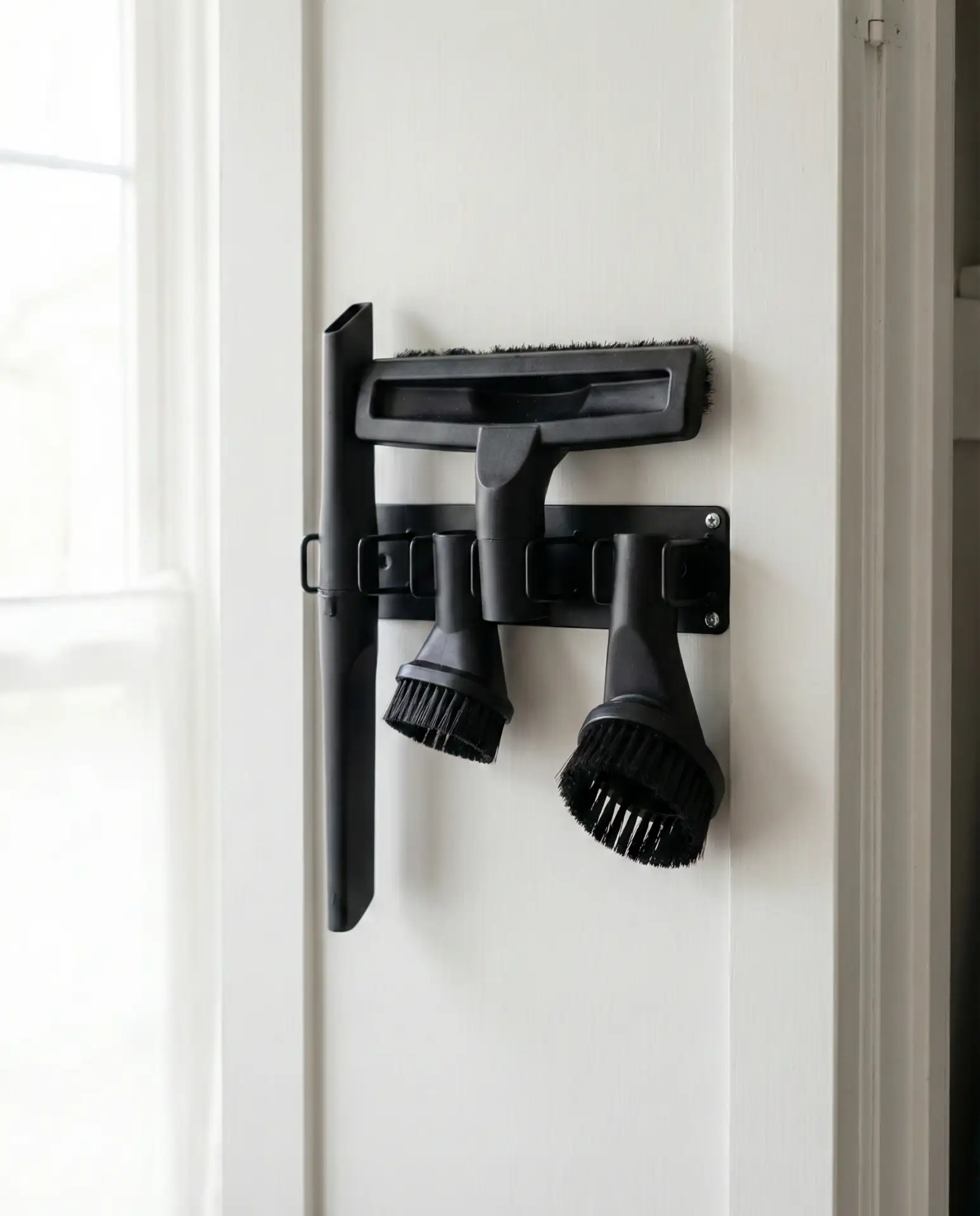
Linen closets often become de facto cleaning supply storage, which means vacuum attachments end up rattling around in a bin or scattered across the floor. A simple wall-mounted tool rack on the inside of the closet door or on a side wall corrals crevice tools, dusting brushes, and extension wands in one visible location. This prevents the scenario where you need the upholstery attachment but can’t find it until you’ve already dragged the vacuum three rooms away. The rack keeps everything within arm’s reach and takes up zero shelf space.
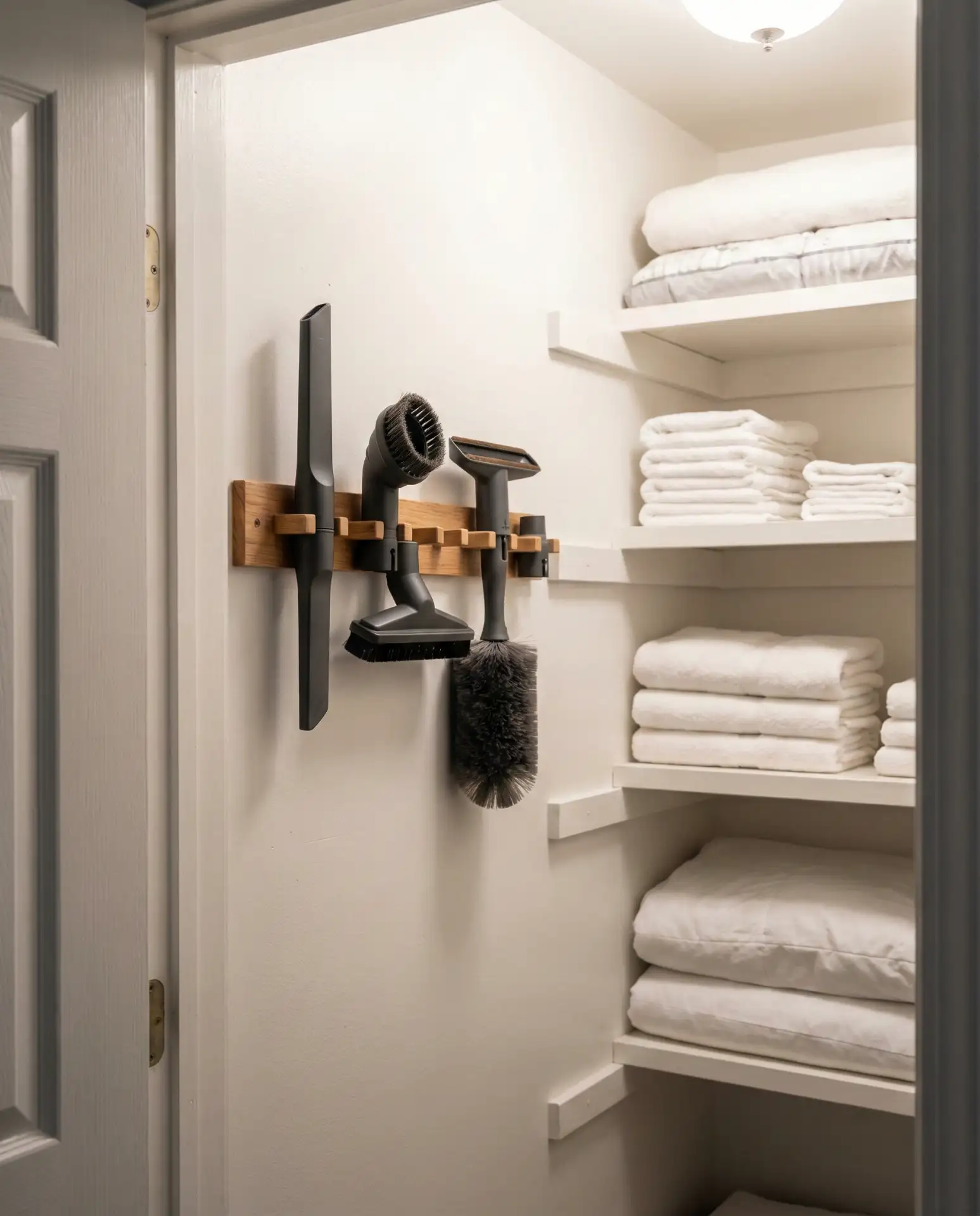
In regions with hardwood floors and area rugs, like the Pacific Northwest, vacuum accessories get heavy use and need to be easily accessible. The wall rack solution is especially popular in homes with cordless stick vacuums, where the main unit hangs on a charging dock and the accessories need their own dedicated spot. A fifteen-dollar rack saves countless minutes of rummaging and reduces the frustration that comes with rushed cleaning sessions.
12. Ikea Skubb Box System
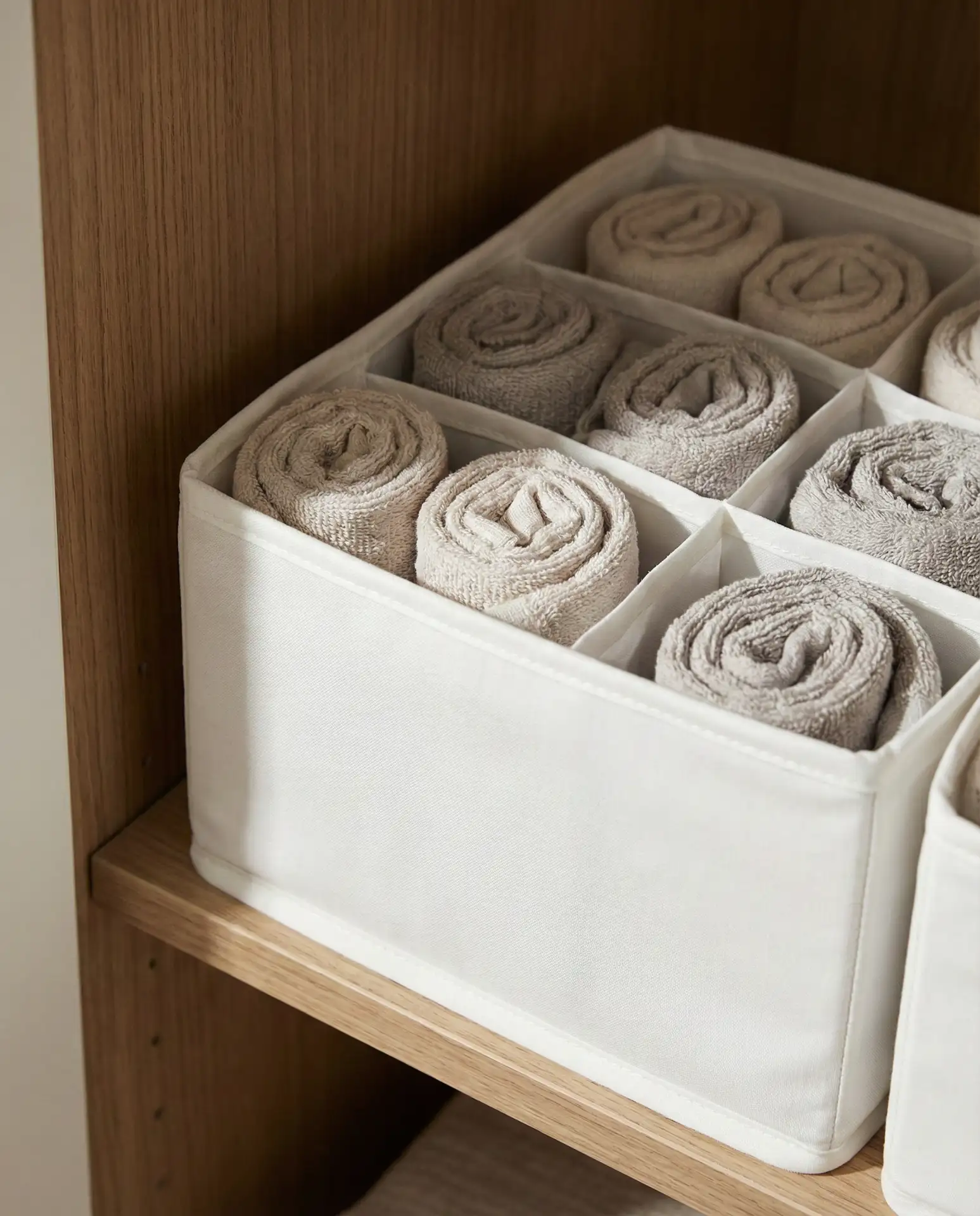
Ikea Skubb boxes fit perfectly on standard linen closet shelves and come in a range of sizes designed for specific items. The six-compartment box works beautifully for sorting washcloths by color or grouping towel sets by bathroom. The larger boxes can hold full sets of king-size sheets or bulky winter comforters. Because they’re fabric with handles, Skubb boxes are lighter and easier to maneuver than rigid plastic bins, and they collapse flat when not in use. The uniform black or white colorway creates visual cohesion across all your shelves.
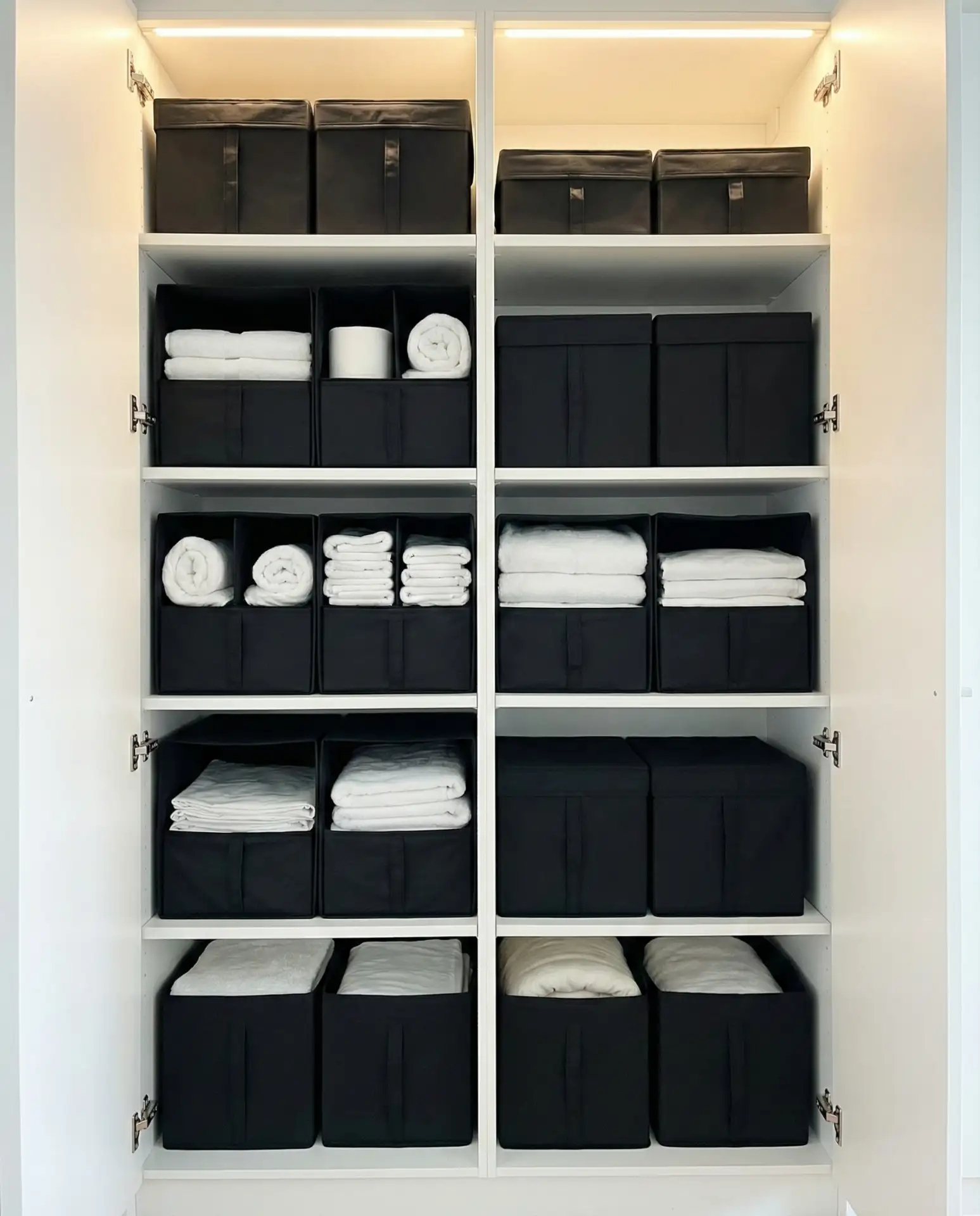
Homeowners in urban apartments love this system because Ikea stores are easily accessible and the price point is low—most Skubb boxes cost under fifteen dollars. The boxes also protect linens from dust, which is particularly valuable in older homes where closet doors don’t seal tightly. One trick is to label each box with a small luggage tag attached to the handle so you can identify the contents without pulling every box off the shelf.
13. Kmart Cube Storage Hack
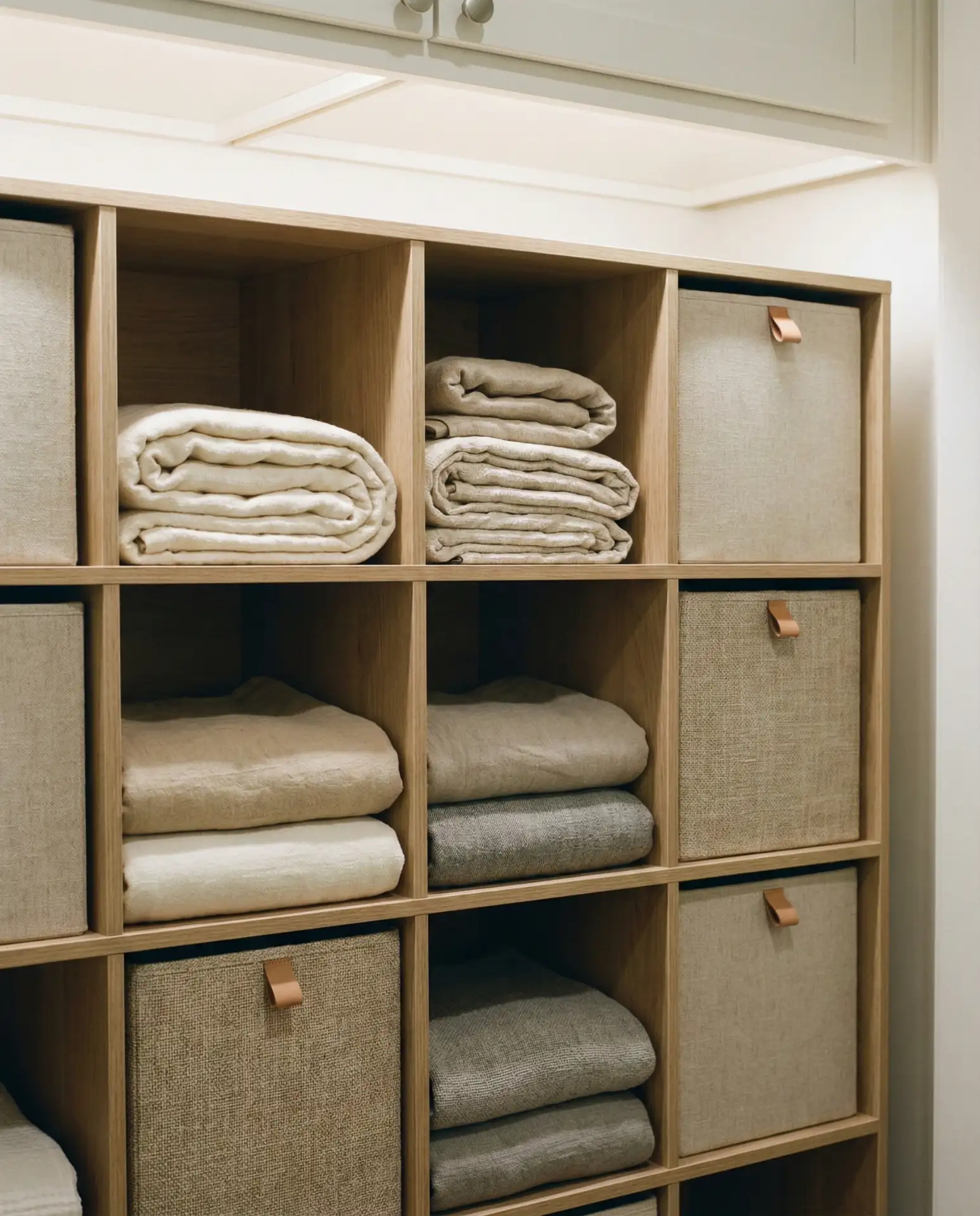
Kmart cube organizers designed for kids’ rooms translate beautifully into linen closet systems when turned on their side and stacked. Each cube becomes a dedicated space for a specific linen category—guest towels, gym towels, kitchen linens, and seasonal blankets. The open-front design makes it easy to grab what you need, and the uniform cube size creates a grid system that looks intentional and styled. You can mix solid cubes with fabric bins in coordinating colors to hide less attractive items while displaying your prettiest linens.
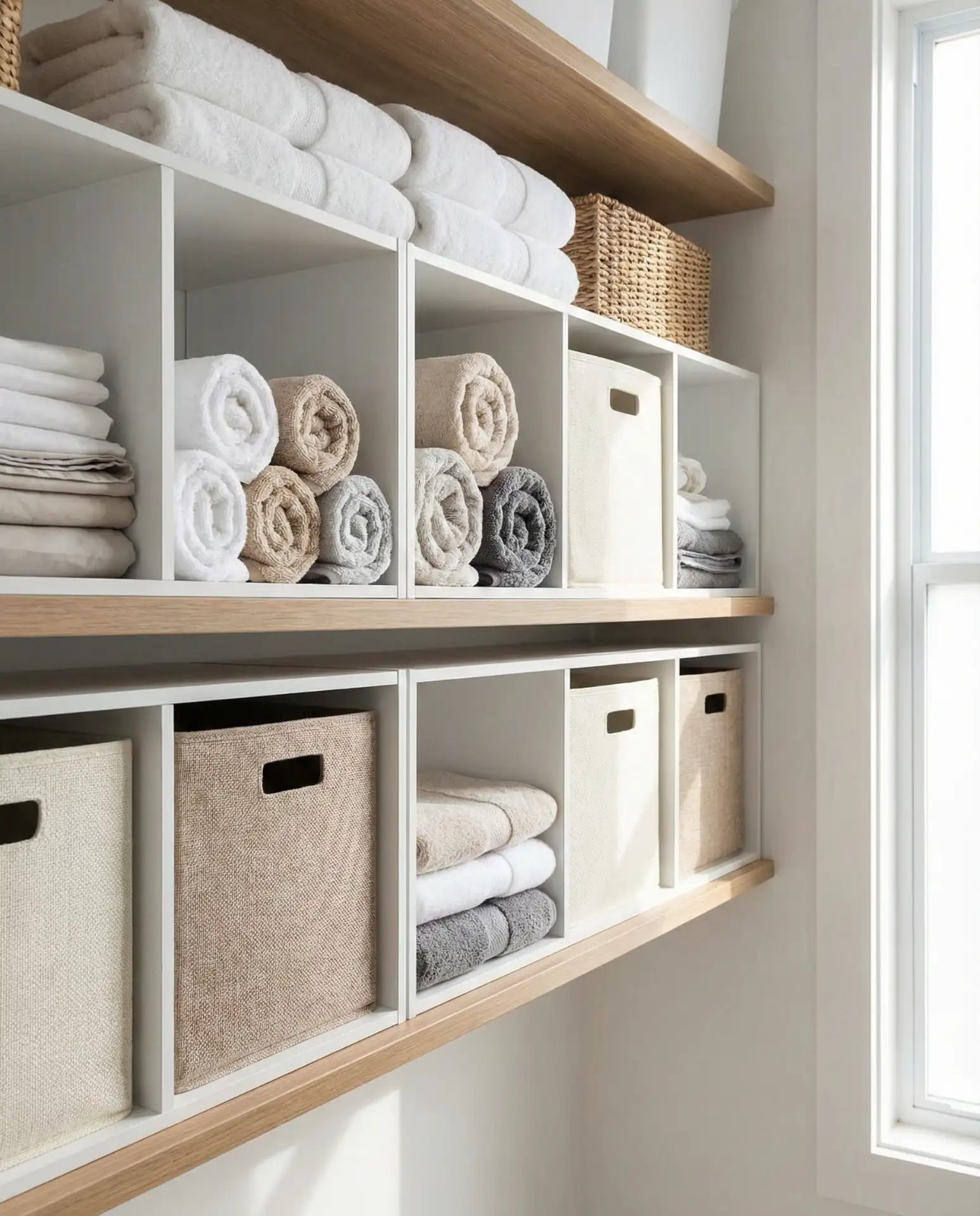
This approach works best in walk-in linen closets or under-stairs storage areas where you have floor space to build upward. The cubes can be secured to the wall with L-brackets for stability or left freestanding if weight is evenly distributed. Common mistakes include overloading the top cubes, which can make the whole unit top-heavy. Keep heavier items like extra bedding in the lower cubes and reserve the upper cubes for lightweight everyday towels.
14. Blanket Ladder Display
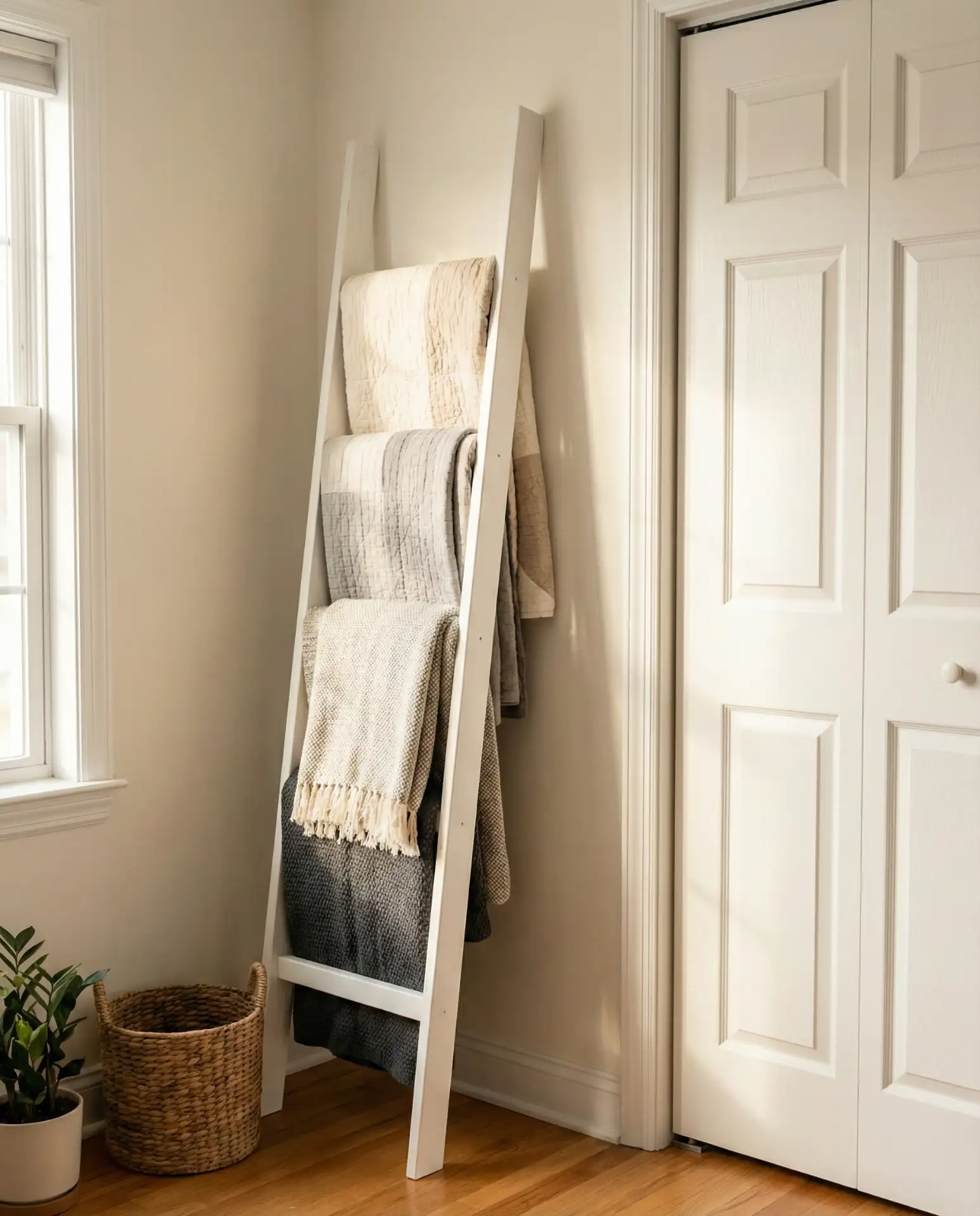
If your linen closet opens into a bedroom or living area, a decorative ladder can hold your most beautiful blankets in plain sight while freeing up shelf space inside the closet. Drape throws over each rung for easy access during movie nights or chilly mornings. This works especially well for lightweight blankets and quilts that benefit from air circulation between uses. The ladder becomes functional decor that adds texture and warmth to the room while solving a storage problem.
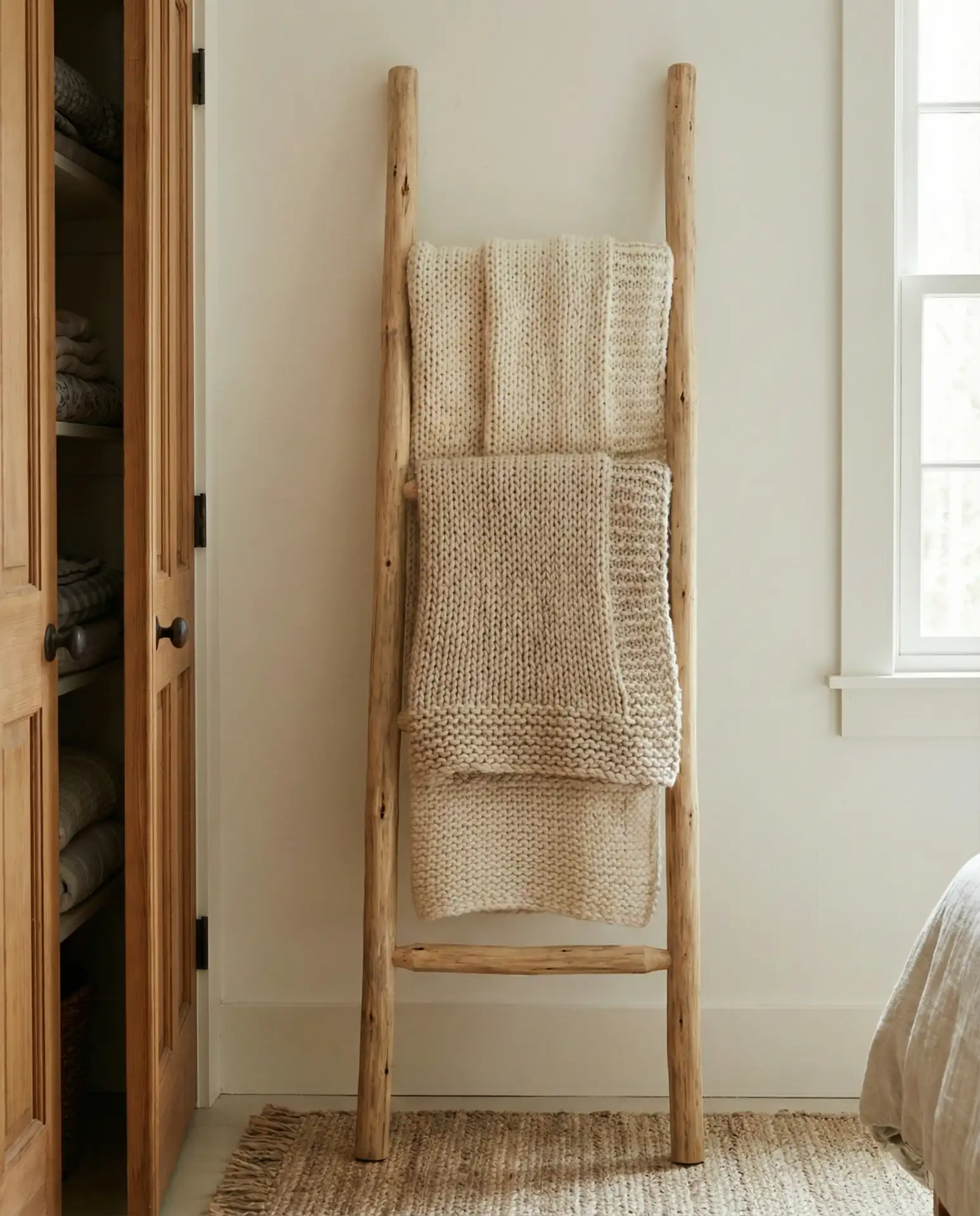
In studio apartments or open-plan homes, the blanket ladder serves double duty as a room divider and storage element. This setup is particularly popular in farmhouse and Scandinavian-inspired interiors where visible storage is part of the design language. The key is to rotate blankets seasonally and wash them regularly, since they’re exposed to more dust and pet hair than closet-stored items.
15. Comforter Compression Bags
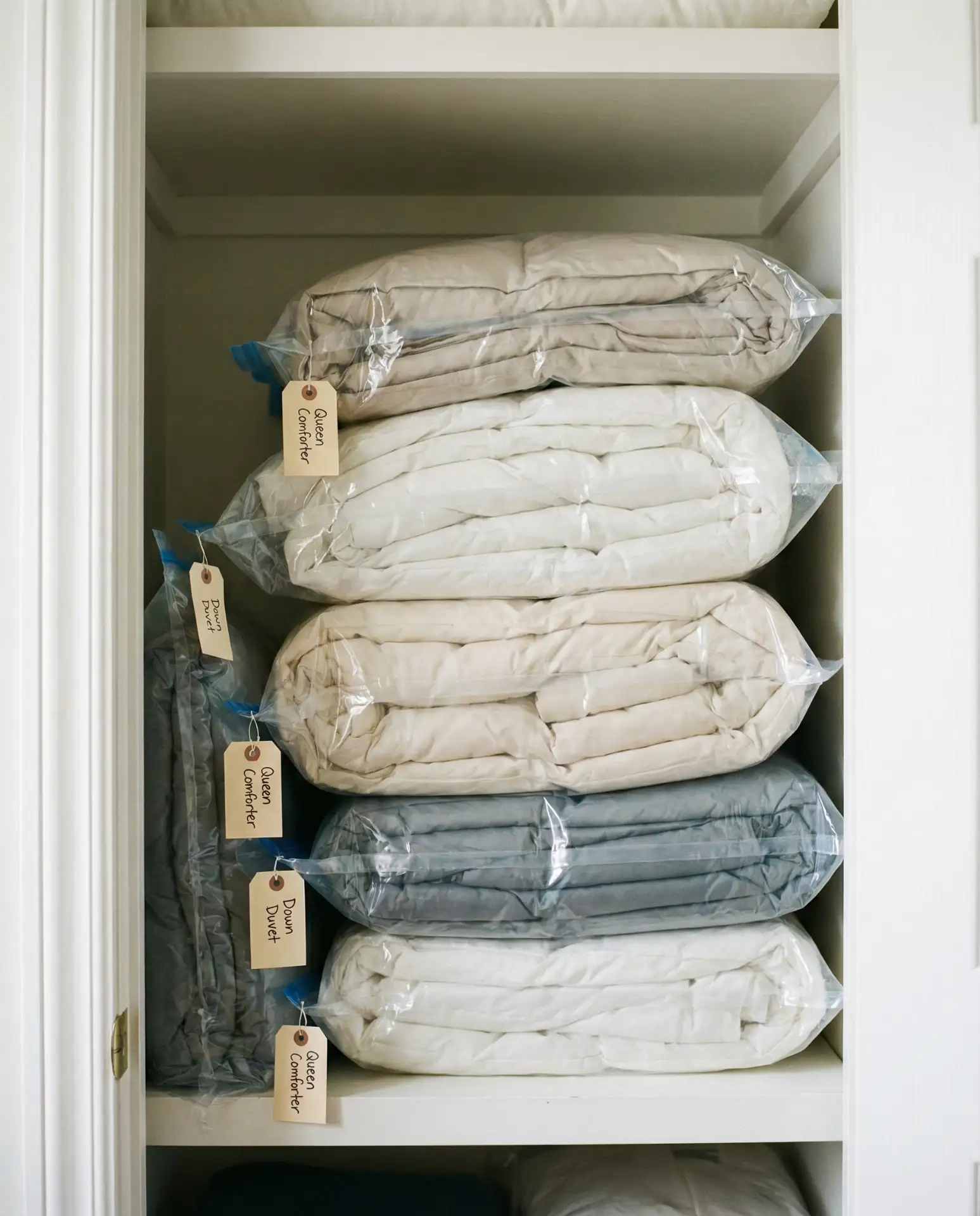
Off-season comforters devour shelf space, but vacuum-seal compression bags can reduce their volume by up to 75 percent. Store summer quilts flat during winter months, then swap them back in when temperatures rise. The compressed bags stack like flat files, making them ideal for deep shelf closets where you can slide them in vertically rather than horizontally. Label each bag with bed size and season so you don’t have to decompress and recompress to find what you need.
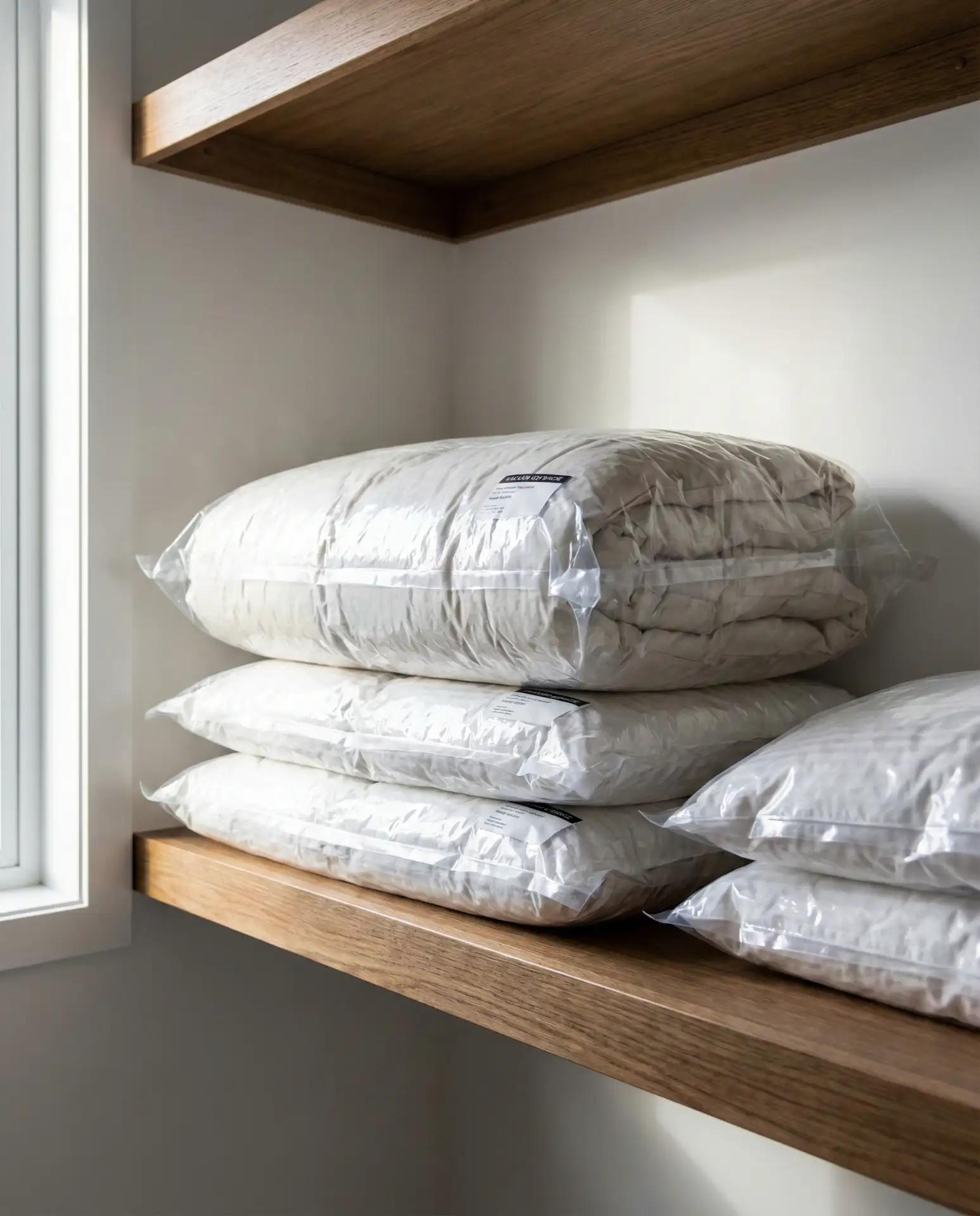
This solution is especially valued in regions with extreme seasonal temperature swings, like the upper Midwest, where you need both down comforters and lightweight cotton coverlets depending on the month. Some experts worry that long-term compression can damage down fill, so limit bag storage to six months at a time and allow comforters to fully loft for 24 hours before first use. The bags themselves cost between five and fifteen dollars each and are reusable for years.
16. Ideas for Hallway Built-Ins
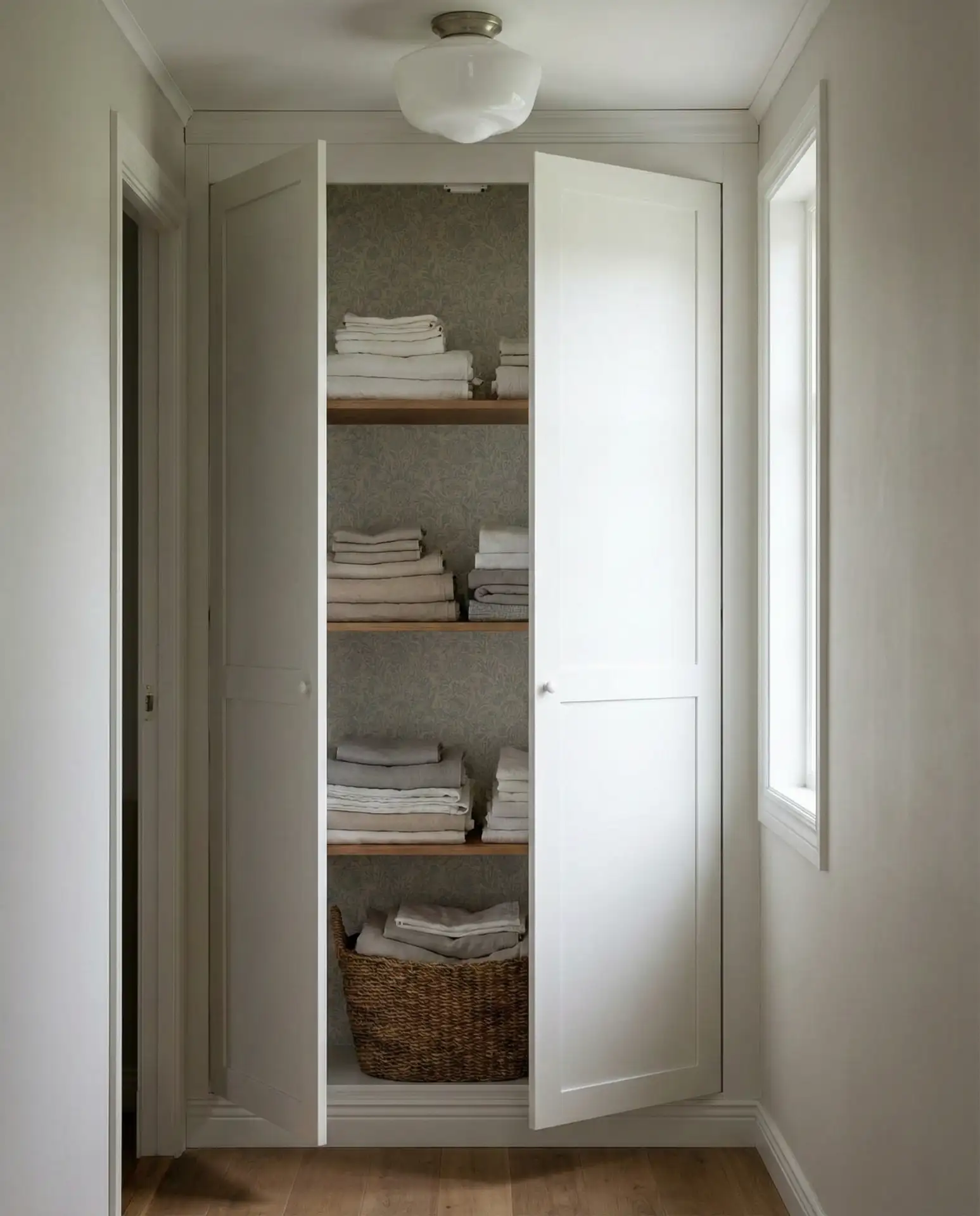
Custom hallway built-ins transform dead space into high-functioning linen storage that looks like original architecture. Floor-to-ceiling cabinetry with adjustable shelves provides dedicated zones for towels, sheets, and cleaning supplies, while upper cabinets can hold bulky items like extra pillows or seasonal comforters. Paint the interior shelves a contrasting color or add wallpaper to the back wall for a designer touch that makes opening the doors feel special. Soft-close hinges and integrated lighting elevate the functionality.
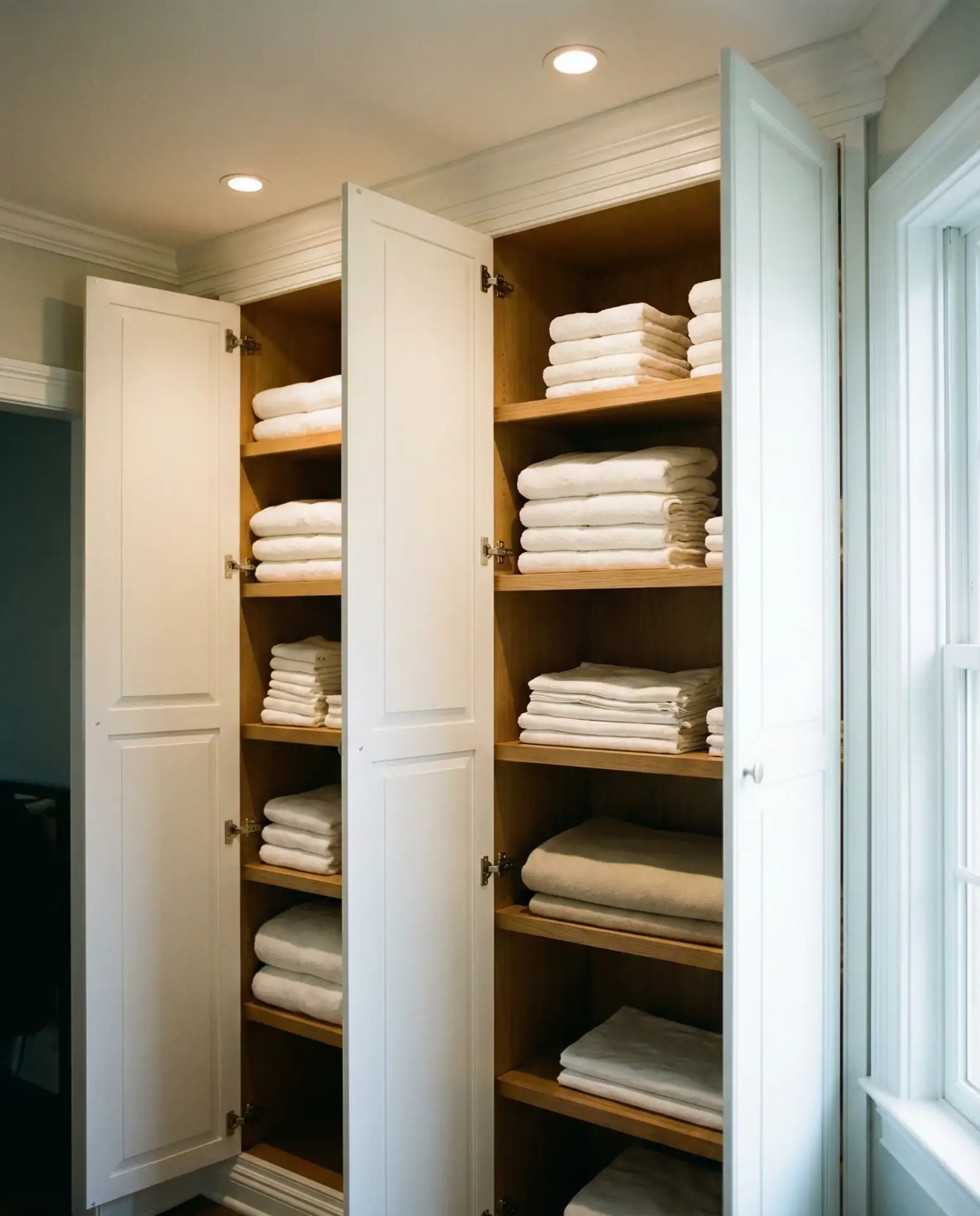
Built-ins work best in hallways at least four feet wide, where the cabinetry won’t create a bottleneck. Many homeowners in older homes with long, narrow hallways have discovered this is the perfect spot for linen storage that serves all the upstairs bedrooms. The investment typically ranges from two to five thousand dollars depending on materials and finishes, but it can add significant resale value and eliminates the need for standalone linen closets in bedrooms.
17. Color-Coded Towel System
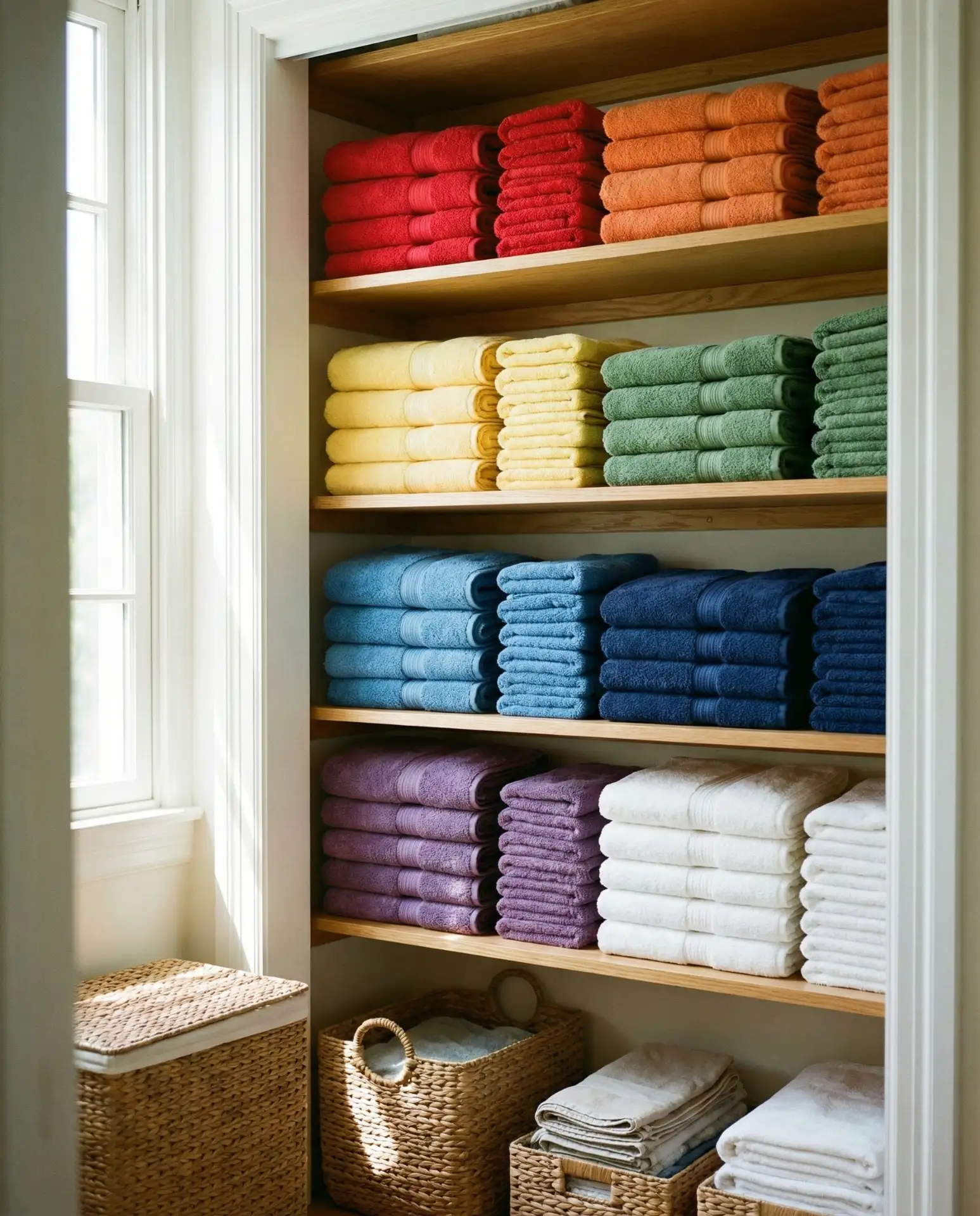
Assign each family member or bathroom a specific towel color, then organize your linen closet accordingly. All navy towels live on one shelf, white on another, and gray on a third. This system eliminates arguments about whose towel is whose and makes it visually obvious when supplies are running low. Kids can easily identify and return their own towels to the correct shelf, teaching organization skills while reducing your mental load. The color blocking also creates an aesthetically pleasing display that looks intentional rather than random.
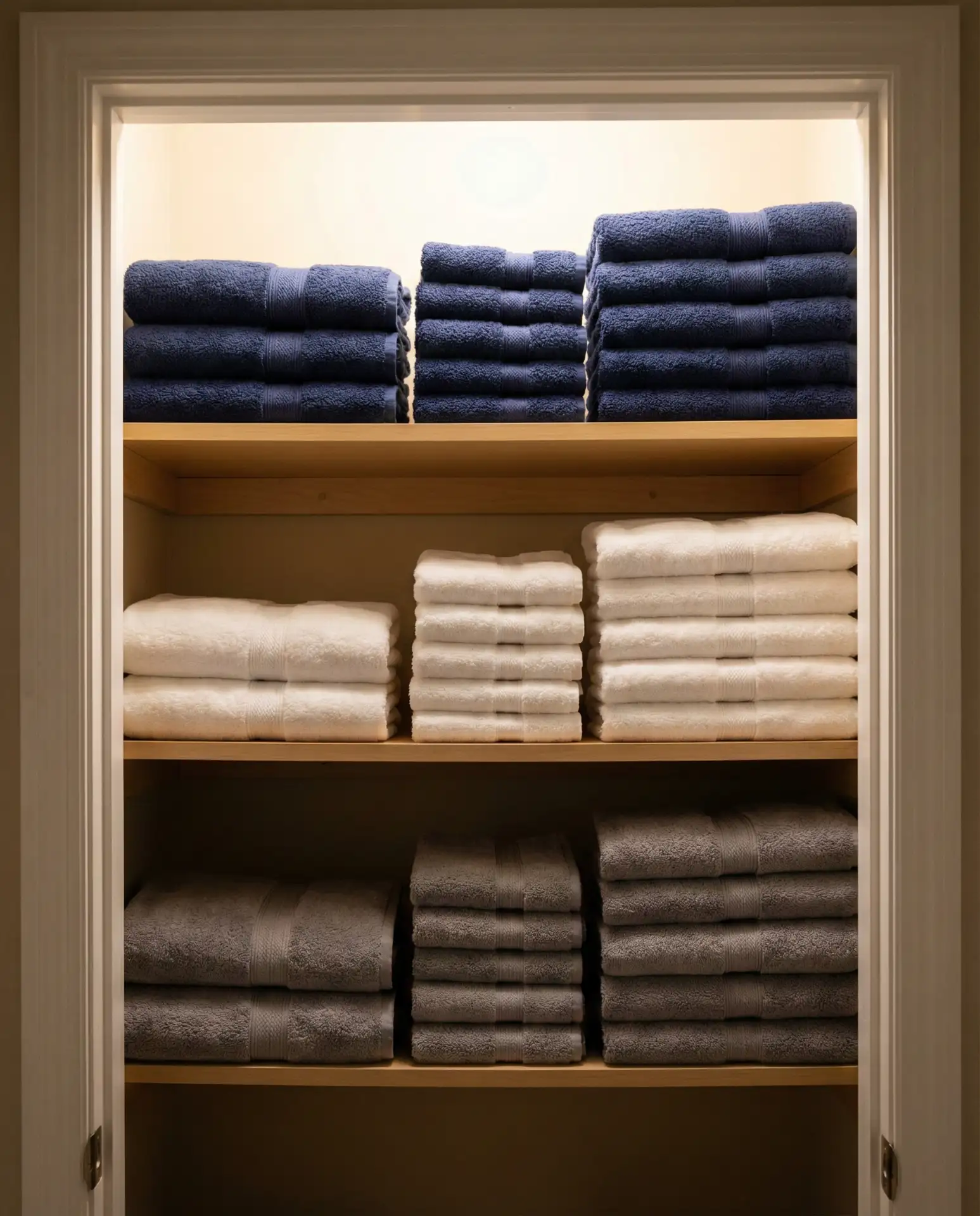
Families with young children find this system reduces laundry confusion and helps kids become more independent with self-care routines. One Texas mom reported that her three kids, ages five through ten, now handle their own towel rotation without prompting. The system does require an initial investment in coordinating towels, but you can transition gradually by replacing mismatched towels as they wear out rather than buying everything at once.
18. Lazy Susan for Small Items
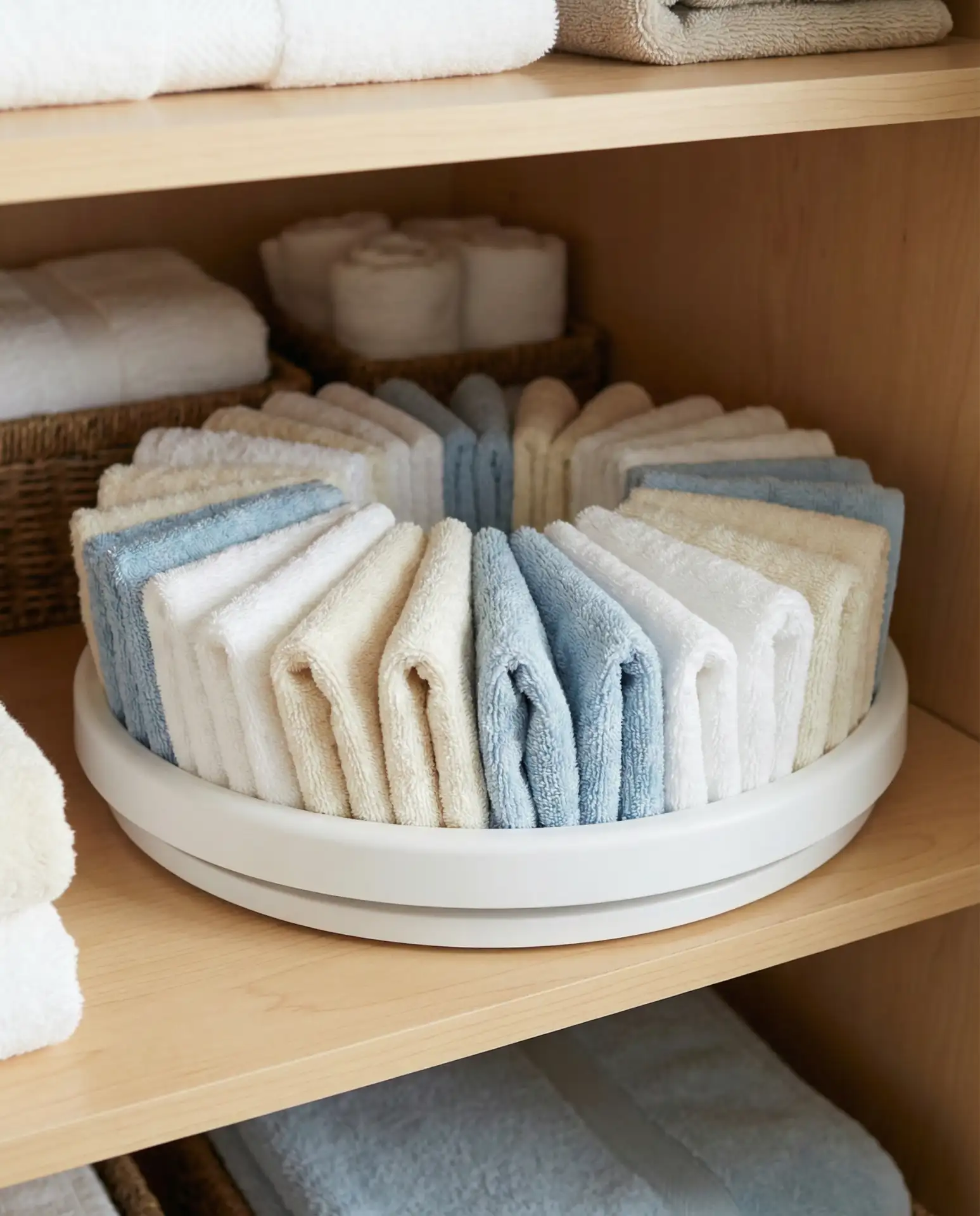
A turntable or lazy Susan on a deep shelf brings small items like washcloths, hand towels, and cleaning cloths to the front with a simple spin. This works especially well in corner closets or L-shaped configurations where reaching the back wall requires awkward stretching. Load the lazy Susan with folded items standing upright like files rather than stacked flat, so you can see every item at once. The rotating base makes it easy to grab exactly what you need without disturbing the rest of the arrangement.
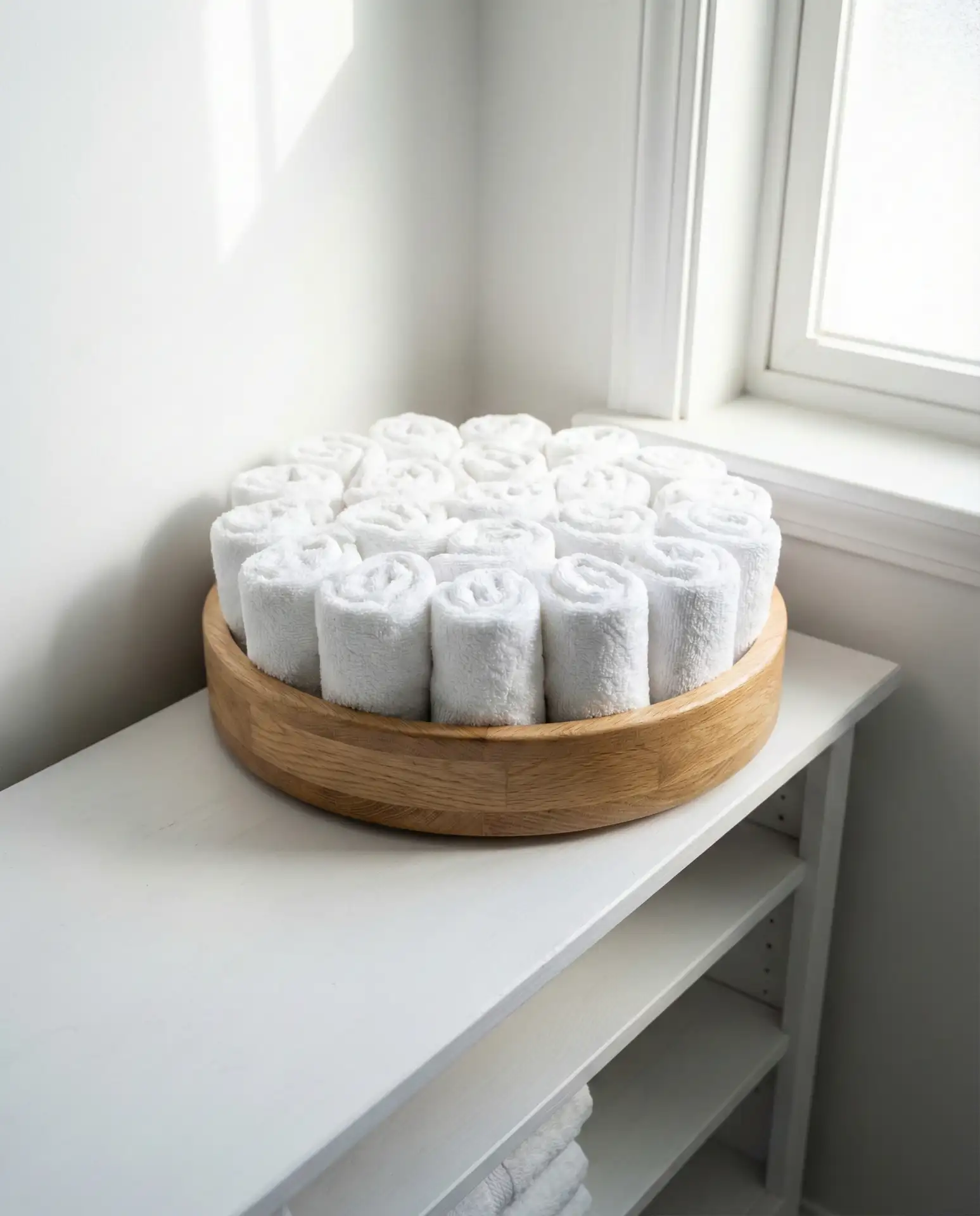
This trick borrowed from kitchen organization translates perfectly to linen closets, especially for homes with mobility limitations where reaching and stretching can be painful. The lazy Susan costs between ten and twenty-five dollars depending on size and material, and it installs in seconds with no tools required. Avoid overloading it with heavy items, as weight can make the spinning mechanism stick or fail over time.
19. Seasonal Rotation Front-to-Back
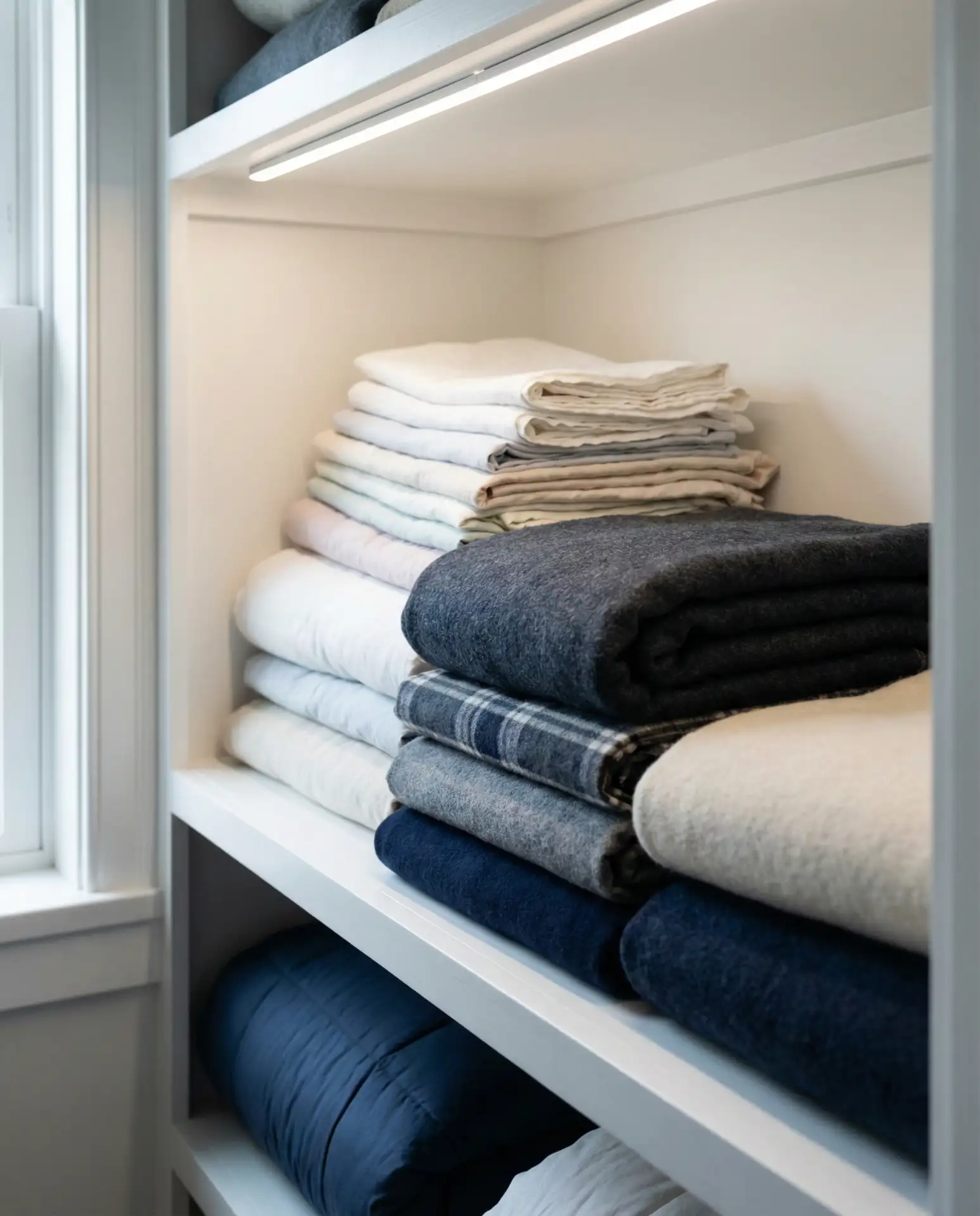
Organize your linen closet so summer items live at the front of shelves in June and migrate to the back in November, with winter blankets and flannel sheets moving forward. This front-to-back rotation system keeps your most-used items accessible while seasonal pieces stay protected but ready. Use a consistent rotation schedule—many homeowners swap on the spring and fall equinoxes—and combine it with a quick inventory check to identify items that need replacing before the season starts.
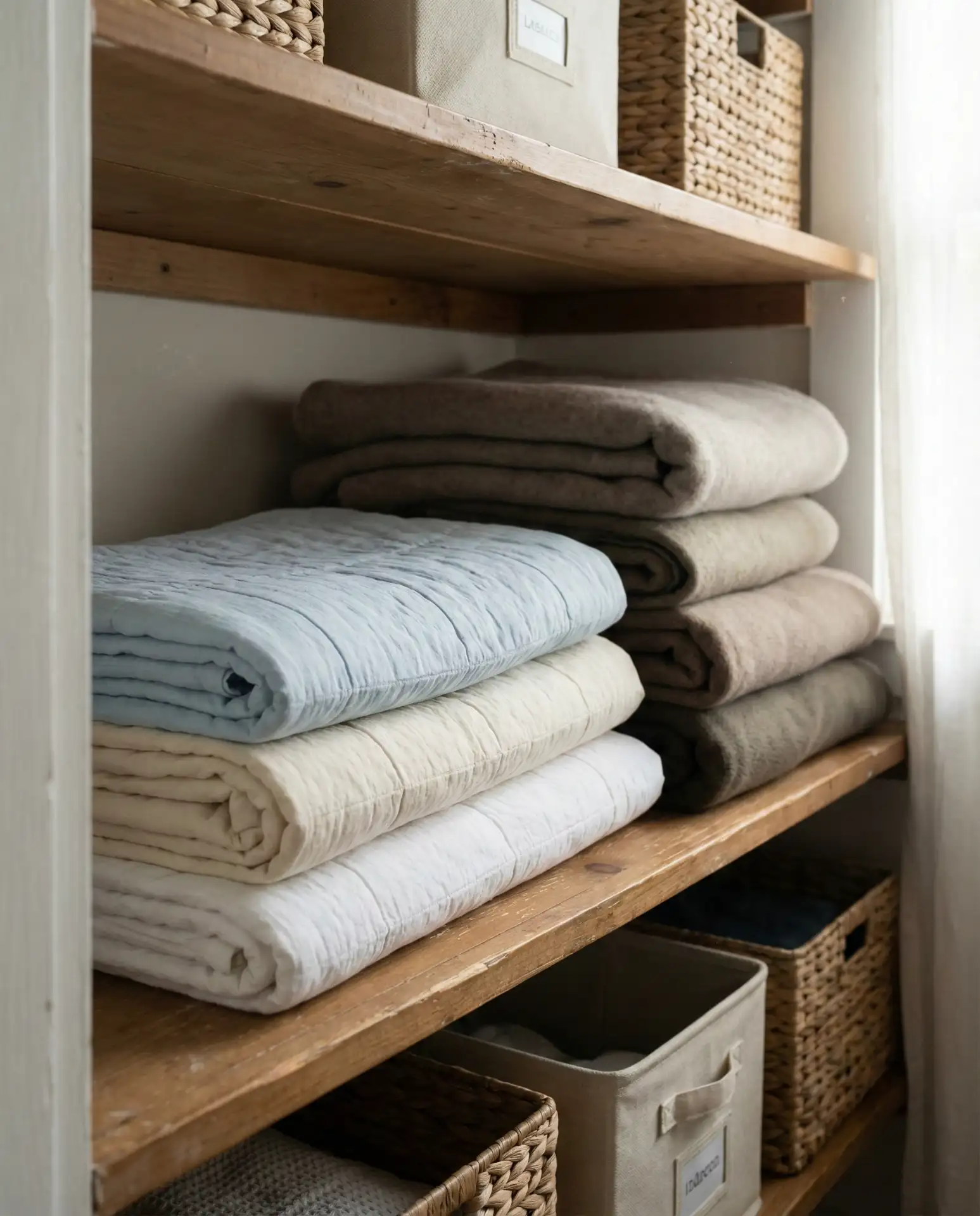
This method is particularly effective in regions with dramatic seasonal weather shifts, where your July bedding is completely useless in January. The twice-yearly rotation becomes a ritual that marks the changing seasons and offers a natural opportunity to refresh your bedroom decor. Some homeowners add cedar blocks or lavender sachets to off-season linens during rotation to keep them fresh and pest-free.
20. Pegboard Door Organizer
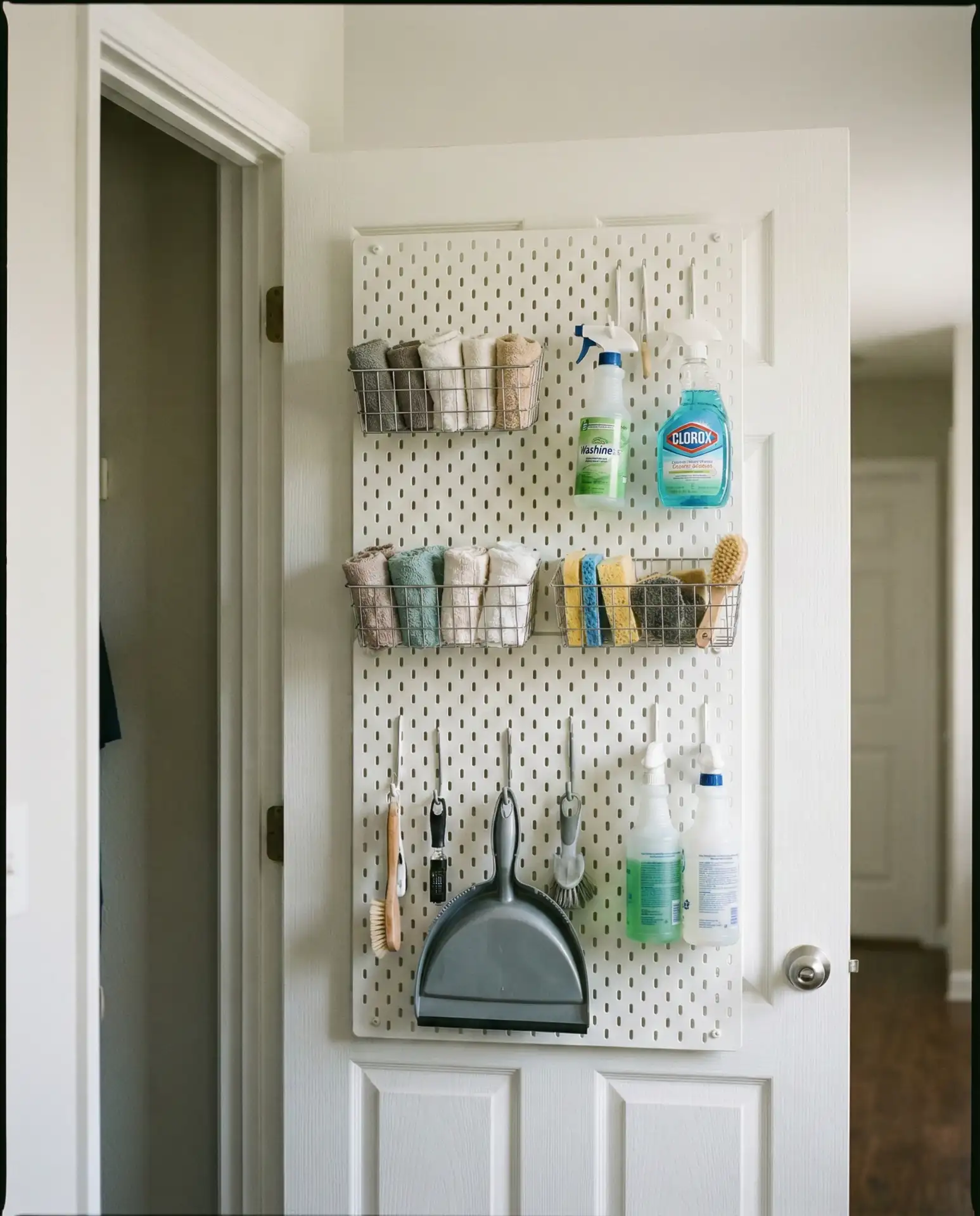
Installing a pegboard panel on the inside of your linen closet door creates customizable storage for anything from cleaning bottles to folding tools. Use hooks, baskets, and small shelves to configure exactly the setup you need, and rearrange as your storage needs change. The pegboard keeps frequently used items visible and accessible without taking up shelf space. Paint the pegboard to match your closet interior, or choose a bold contrasting color for a pop of personality in an otherwise neutral space.
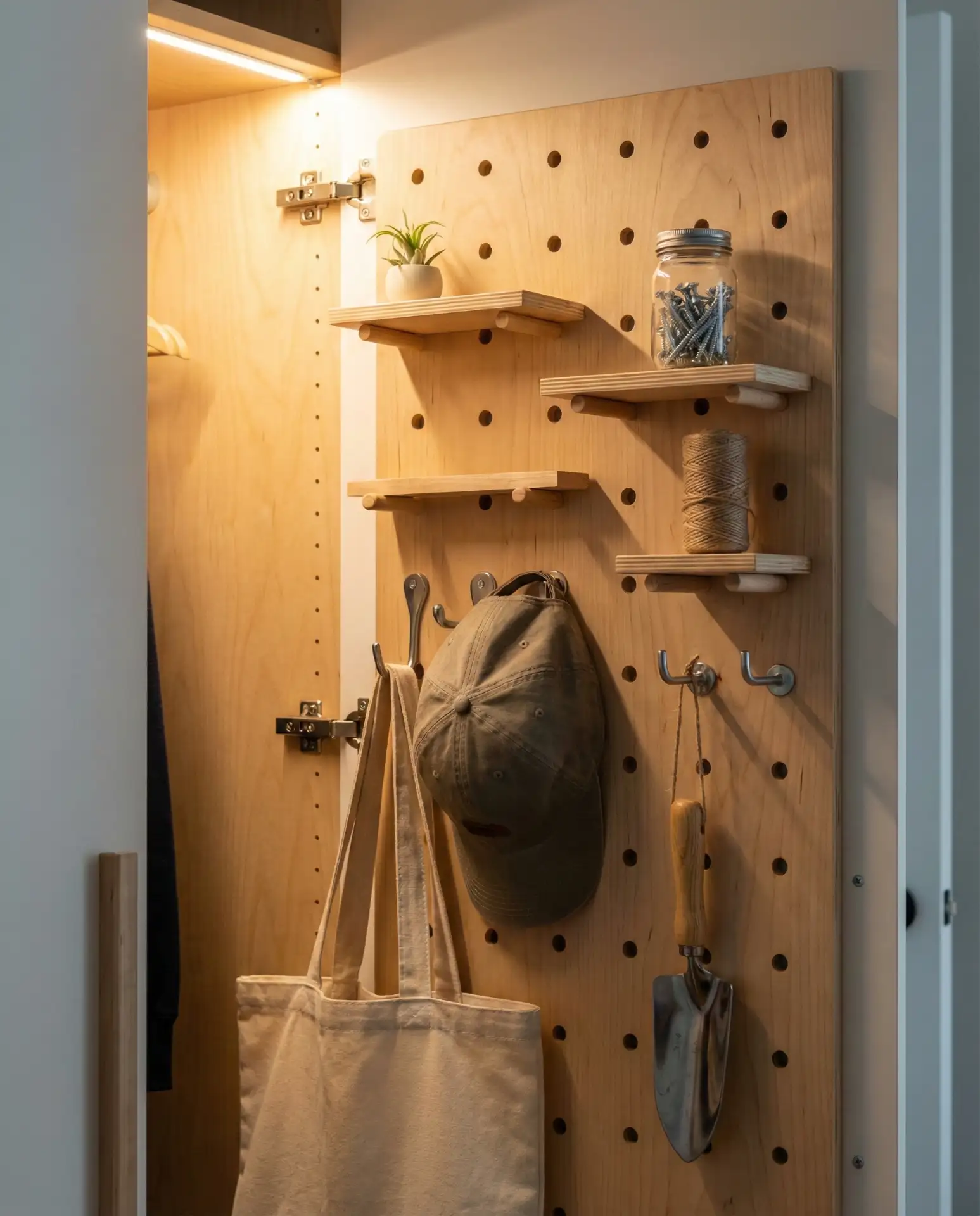
Renters love pegboard systems because installation is minimal—often just a few screws that can be patched when you move—and the investment is low. A two-by-four-foot pegboard panel costs around twenty dollars, and basic hook and basket sets add another fifteen. The system shines in small spaces where every surface needs to multitask, and it’s particularly popular in urban lofts and converted apartments where closet space is at a premium.
21. Under-Shelf Hanging Baskets
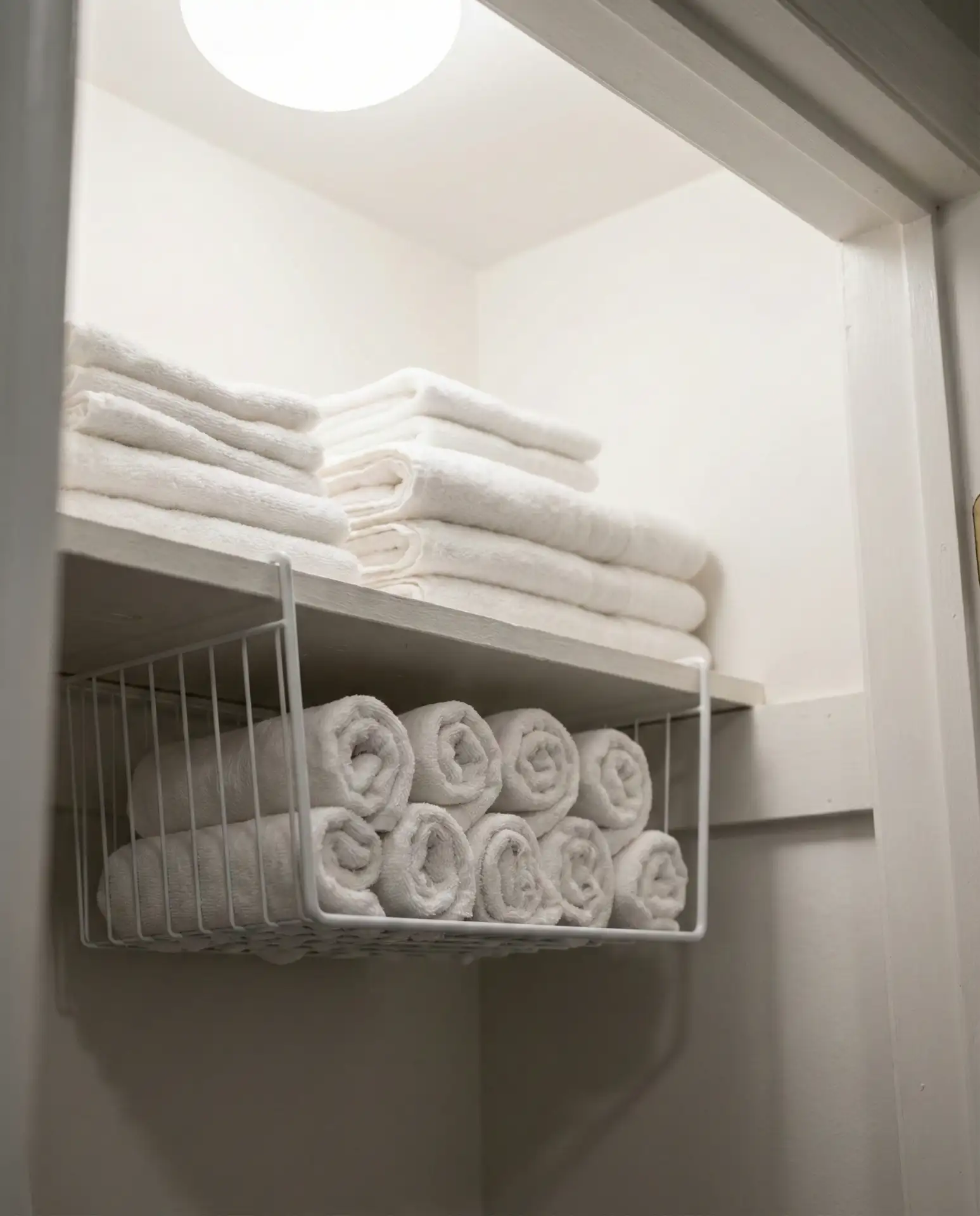
Under-shelf baskets that hook over existing shelves create an entirely new storage layer without requiring installation. These work beautifully for lightweight items like washcloths, hand towels, or guest bathroom shelf overflow. The baskets hang from the bottom of one shelf and rest just above the shelf below, utilizing vertical space that would otherwise go unused. Look for wire or fabric baskets with secure hooks that won’t shift when you pull items out.
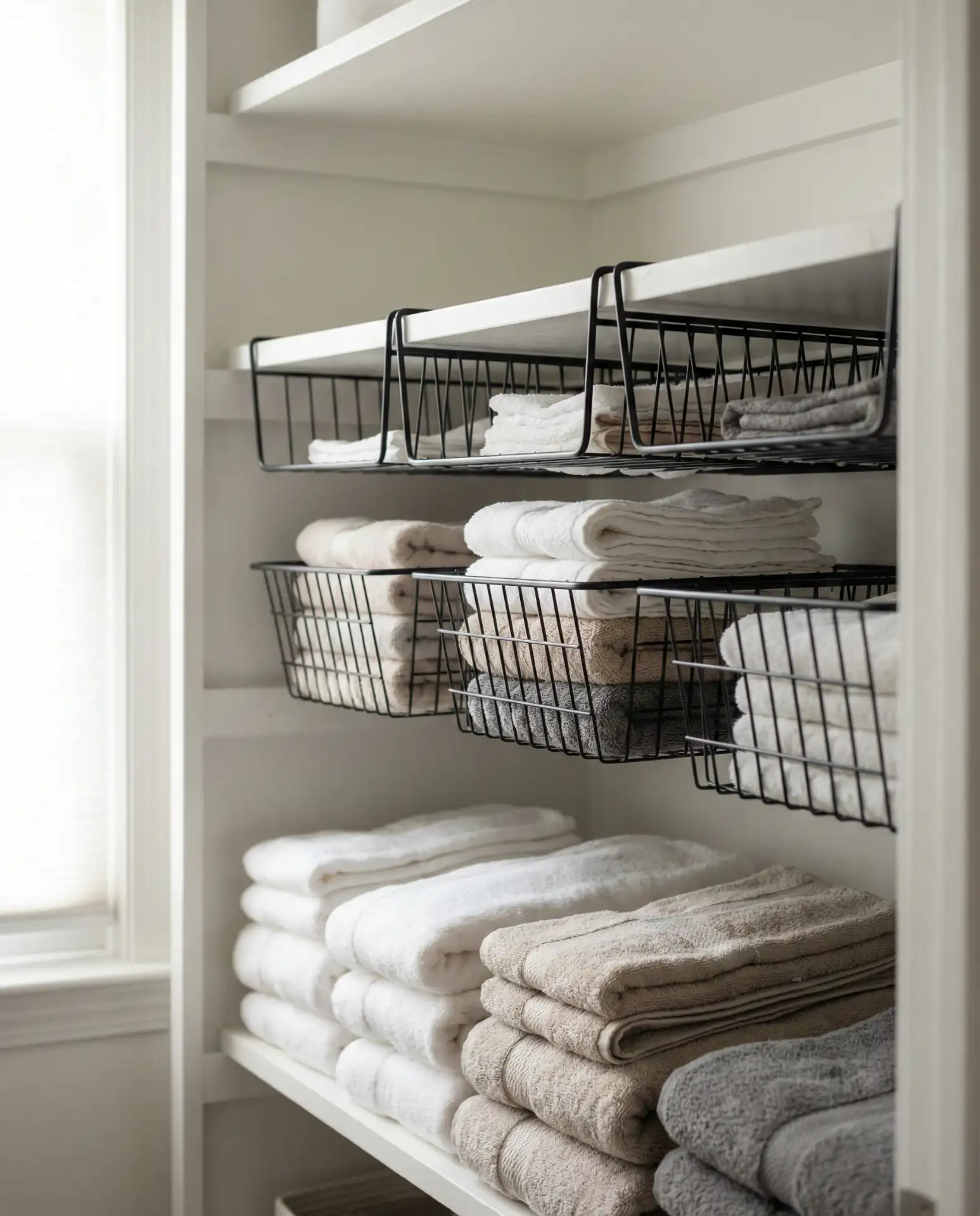
This solution is ideal for renters or anyone who wants to add storage without power tools. The baskets typically cost between eight and fifteen dollars each and can be repositioned instantly if you change your organizational scheme. Avoid overloading them with heavy items, as the hook mechanism relies on the weight of the basket to stay in place, and too much weight can cause it to sag or slip off the shelf edge.
22. Fragrance Sachets on Every Shelf
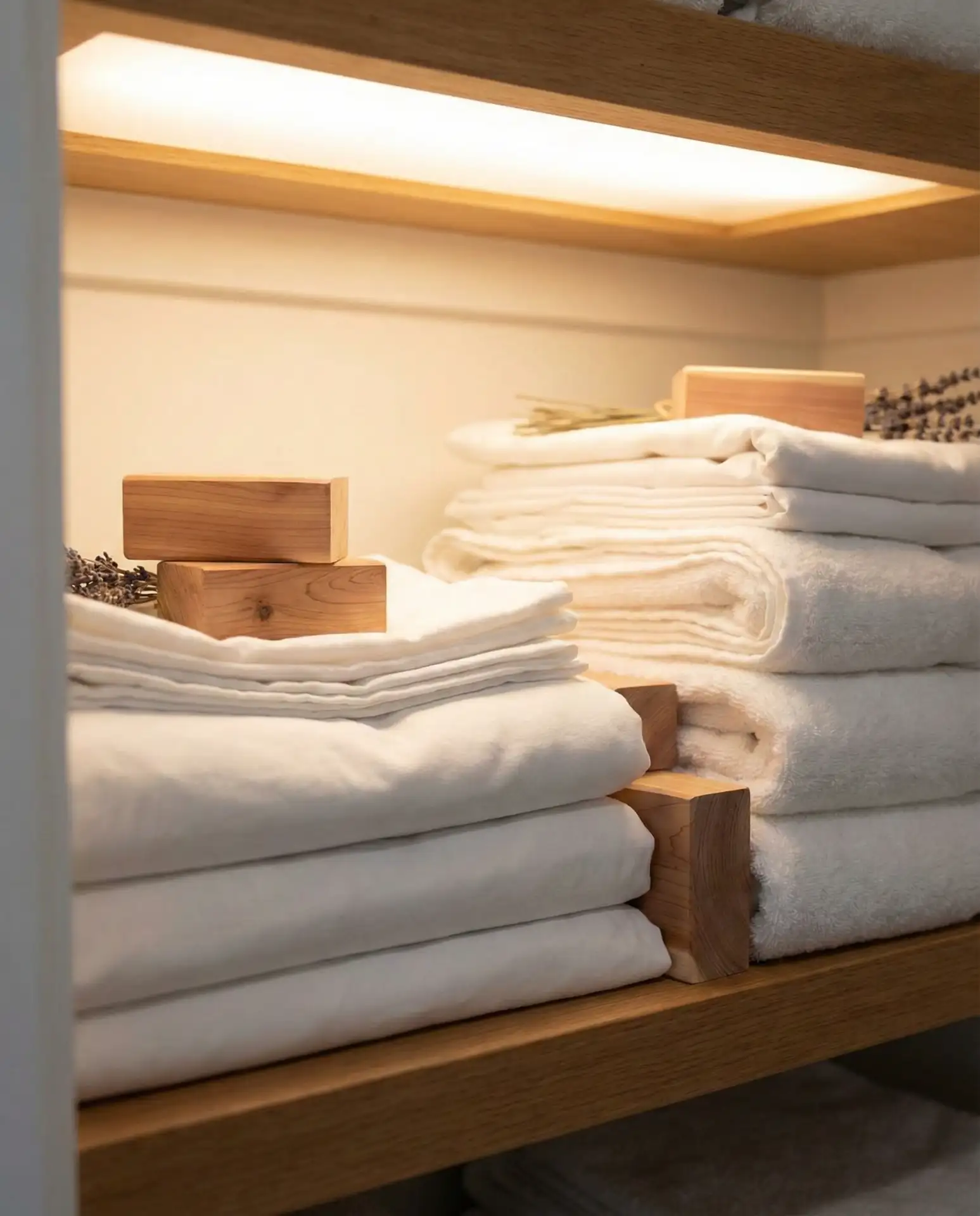
Tuck lavender sachets, cedar blocks, or dryer sheets between stacks of towel sets to keep everything smelling fresh between uses. This is especially important in humid climates where closed closets can develop musty odors. Choose natural materials over synthetic air fresheners to avoid chemical residue on items that touch your skin. Replace sachets every three to six months, or when you notice the scent fading. Position them toward the back of stacks so they’re not visible when you open the closet door.
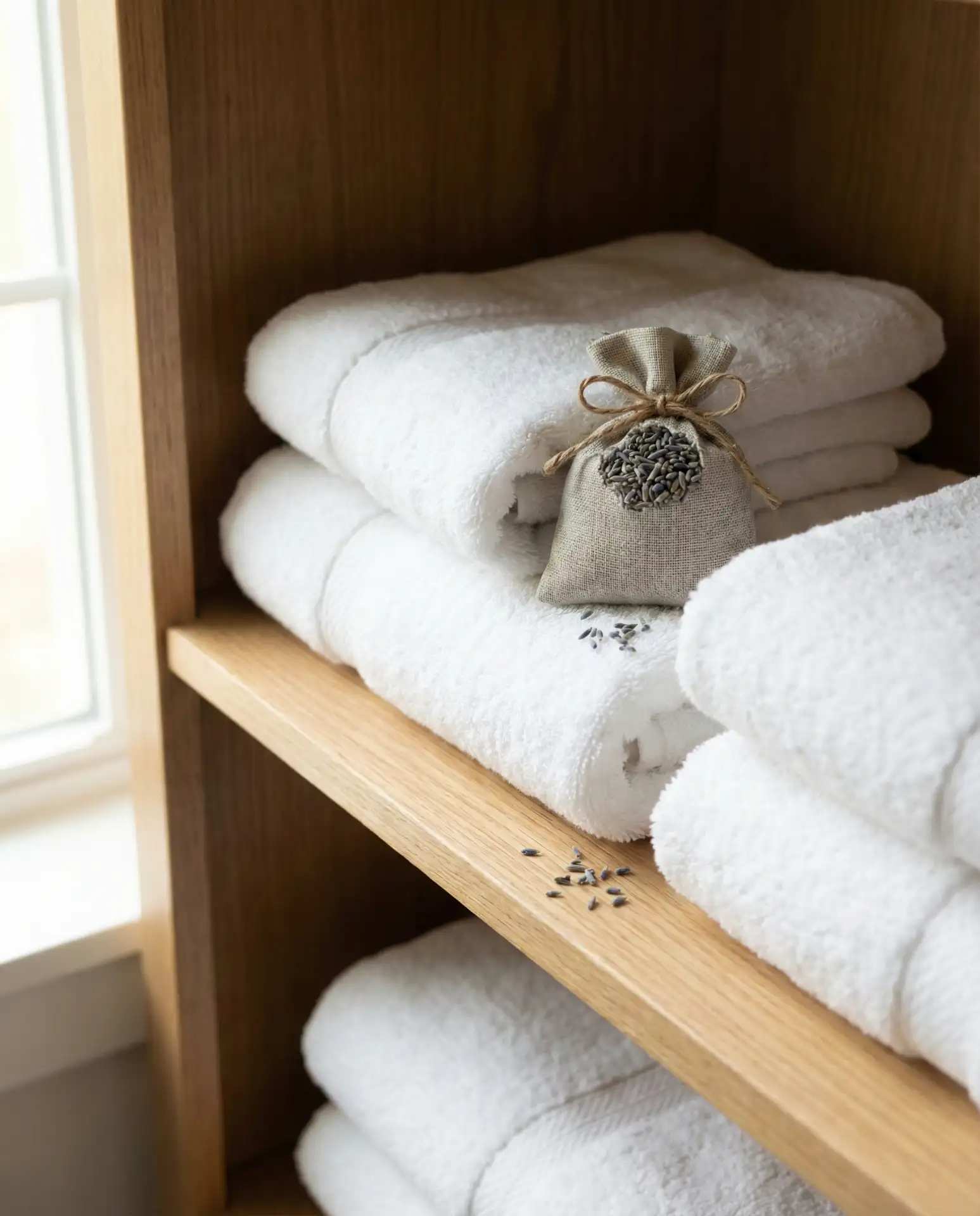
In coastal areas where salt air and humidity create persistent dampness issues, this practice becomes essential rather than optional. Many homeowners DIY their sachets using muslin bags filled with dried lavender from their gardens or rice mixed with essential oils. The sachets also help deter moths and silverfish, which are attracted to natural fibers in cotton and linen textiles. It’s a small detail that makes a big sensory difference every time you reach for fresh towels.
23. Clear Labels on Everything
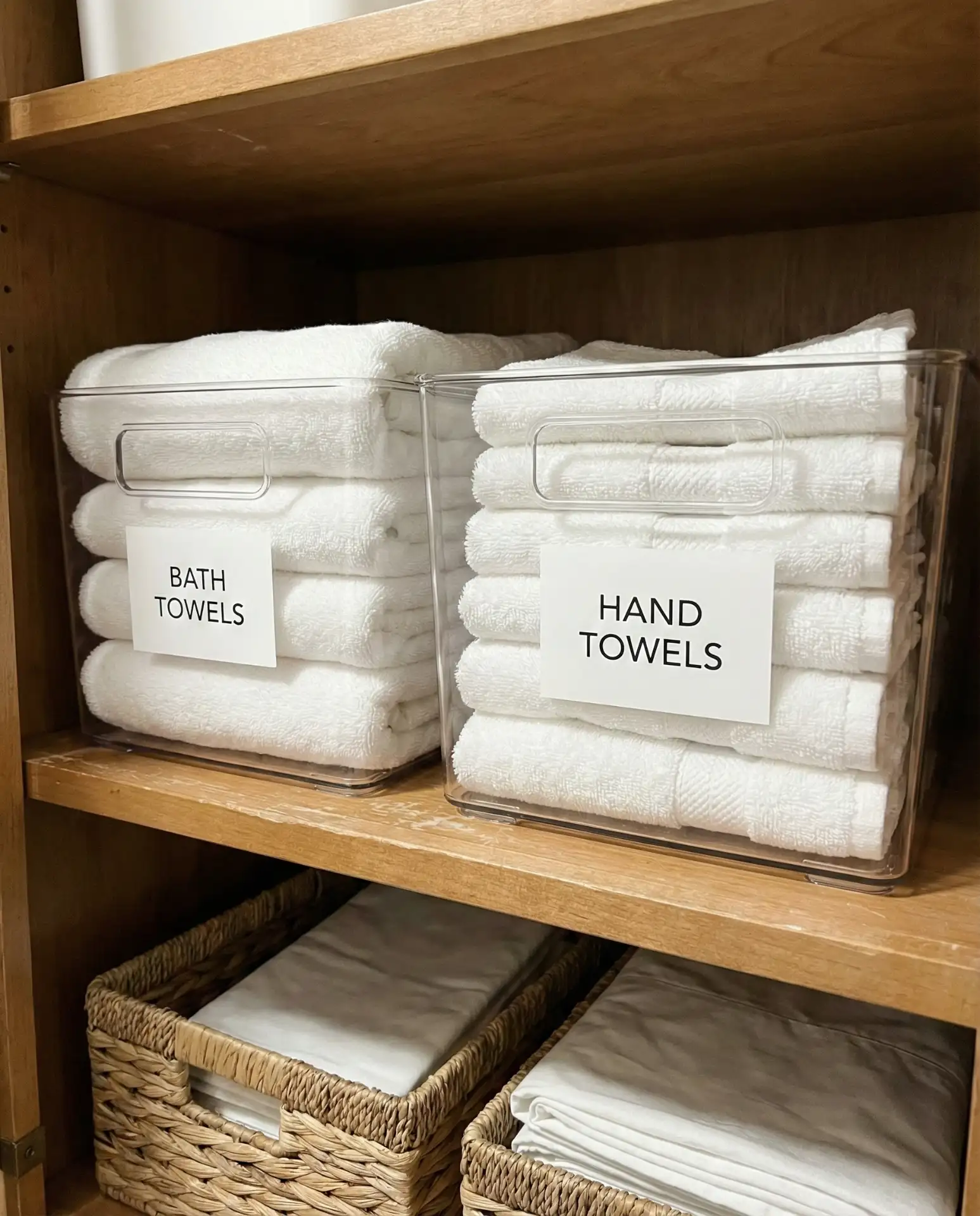
Even the most beautiful linen closet system falls apart without clear labels that everyone in the household can understand. Use a label maker, chalkboard labels, or simple cardstock tags to mark each shelf, bin, and basket with its contents. Include size information for sheets—”Queen fitted,” “King flat”—to eliminate confusion during hurried bed changes. Labels also help guests and teenagers put items back in the right spot, maintaining your organizational system even when you’re not supervising.
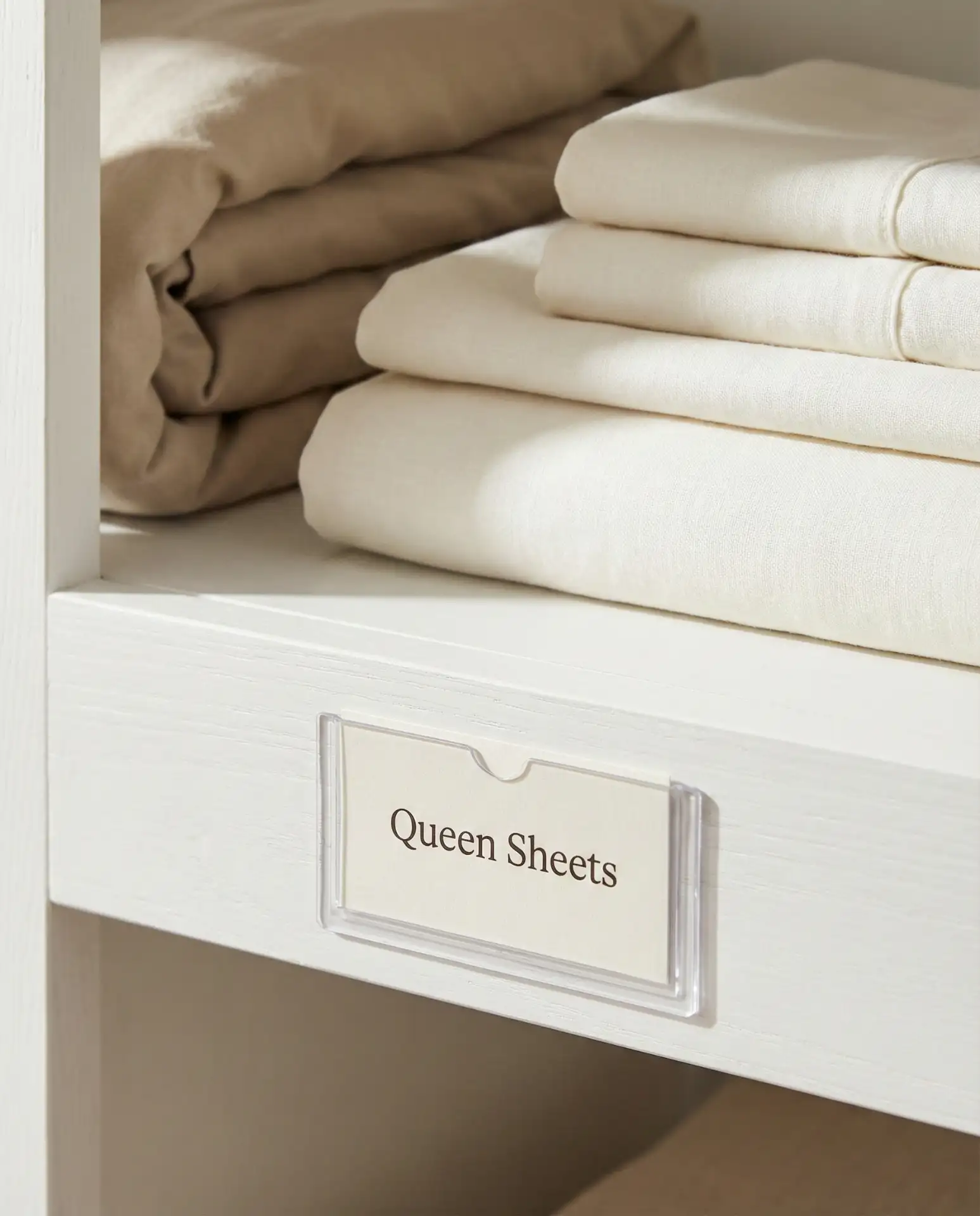
Professional organizers emphasize that labeling is the single most important step in maintaining any storage system long-term. Without labels, even you will forget where things belong after a few months, and other household members will never learn the system in the first place. Invest in a simple label maker for about twenty dollars, or use free printable templates online and laminate them for durability. The few minutes spent labeling everything pays dividends in time saved searching for items over the years ahead.
Conclusion
Whether you’re working with a cramped apartment hallway closet or a spacious walk-in, these 23 ideas offer practical solutions that blend organization with visual appeal. The key is choosing strategies that match your space, lifestyle, and aesthetic preferences—then committing to the system long enough for it to become habit. Share your favorite linen closet transformation in the comments below, or tell us which idea you’re planning to try first.