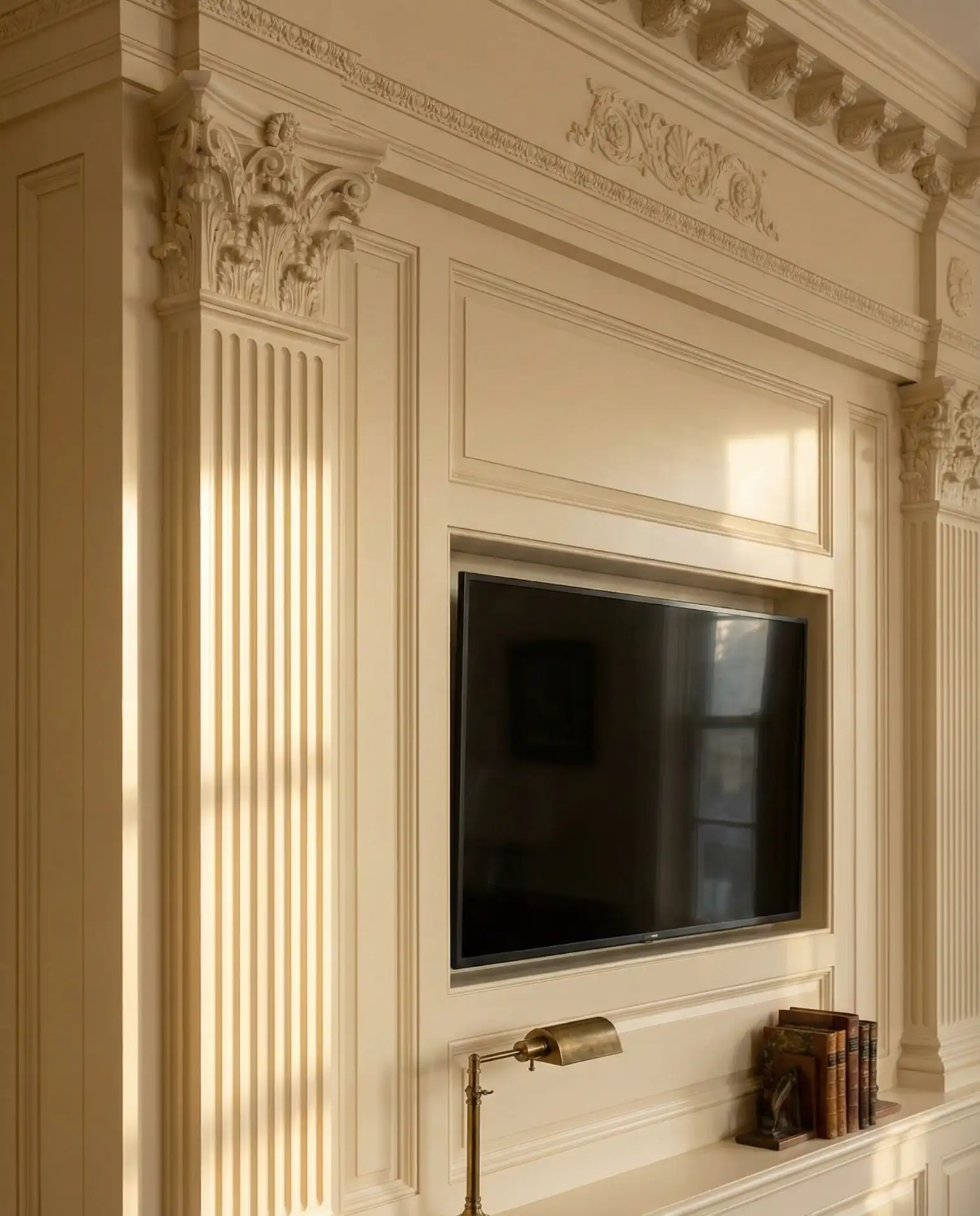
Mid-century modern design continues to captivate American homeowners in 2026, blending timeless elegance with functional simplicity that feels fresh decades after its inception. Pinterest users are flocking to MCM living room inspiration as they seek spaces that balance clean lines, organic forms, and a warm, lived-in aesthetic that works beautifully in everything from compact apartments to spacious suburban homes. This style’s enduring appeal lies in its versatility—it pairs effortlessly with contemporary touches, vintage finds, and bold color experiments. Whether you’re starting from scratch or refreshing your current space, these ideas will help you create a mid-century modern living room that feels both authentic and perfectly suited to how we live today.
1. Warm Walnut and Mustard Yellow Foundations
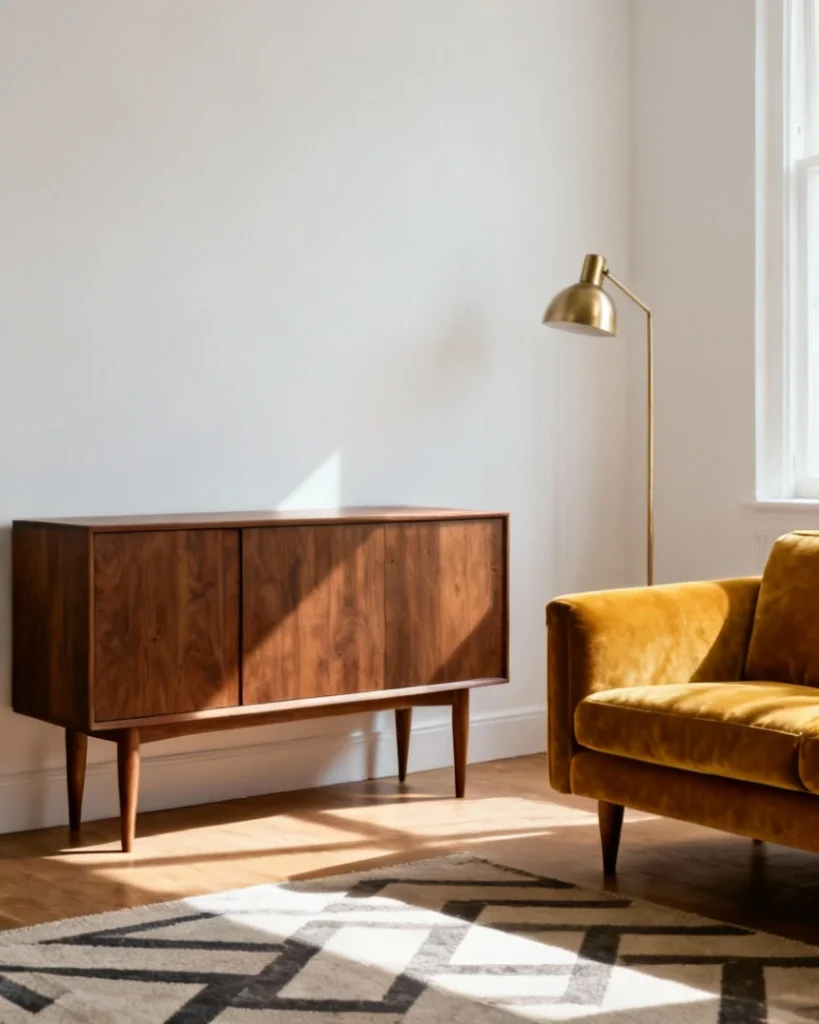
A classic mid-century modern living room starts with the rich warmth of walnut wood paired with mustard yellow accents that instantly evoke the era’s optimistic spirit. This combination works beautifully in open-concept spaces where furniture pieces like a low-slung credenza or tapered-leg sofa anchor the room without overwhelming it. The golden tones create an inviting atmosphere that feels particularly striking against white or cream walls, while the wood grain adds organic texture that keeps the space from feeling too polished or sterile. 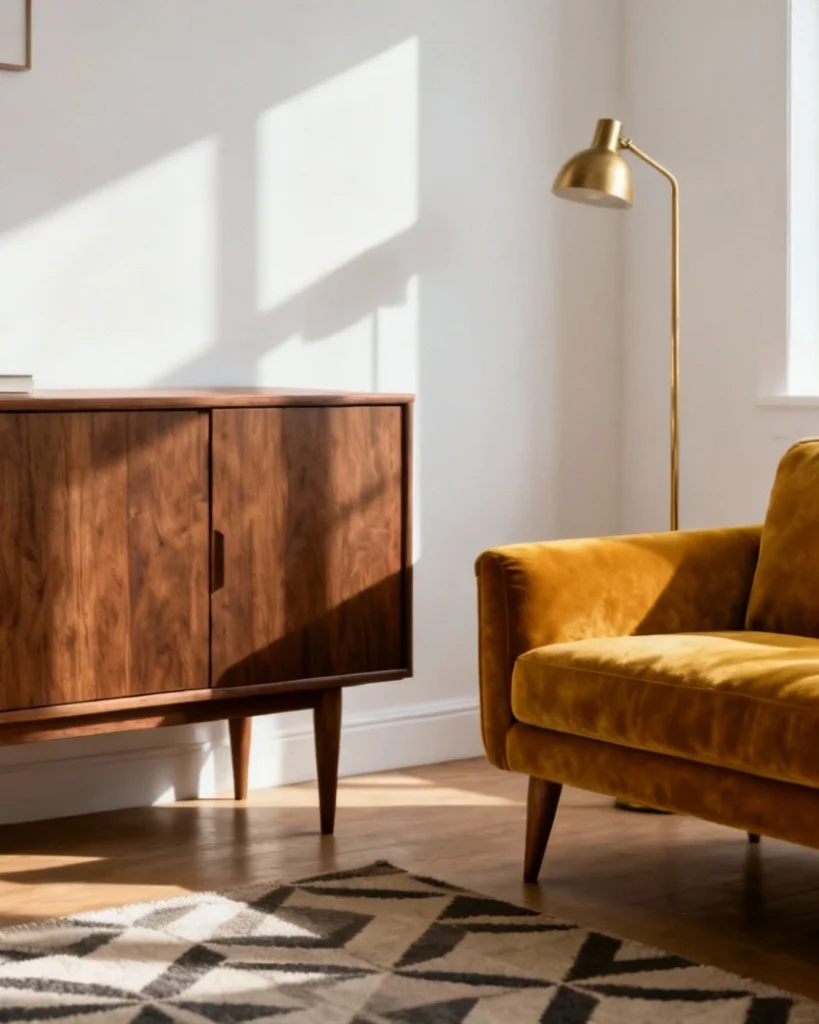
This palette works exceptionally well in Midwestern and Pacific Northwest homes where natural light can be softer and cooler—the warm tones compensate beautifully. Consider investing in authentic vintage walnut pieces from estate sales or quality reproductions that capture the era’s craftsmanship. Layer in mustard through throw pillows, a statement armchair, or even a bold area rug to control your budget while achieving maximum visual impact.
2. Sunken Living Room Revival
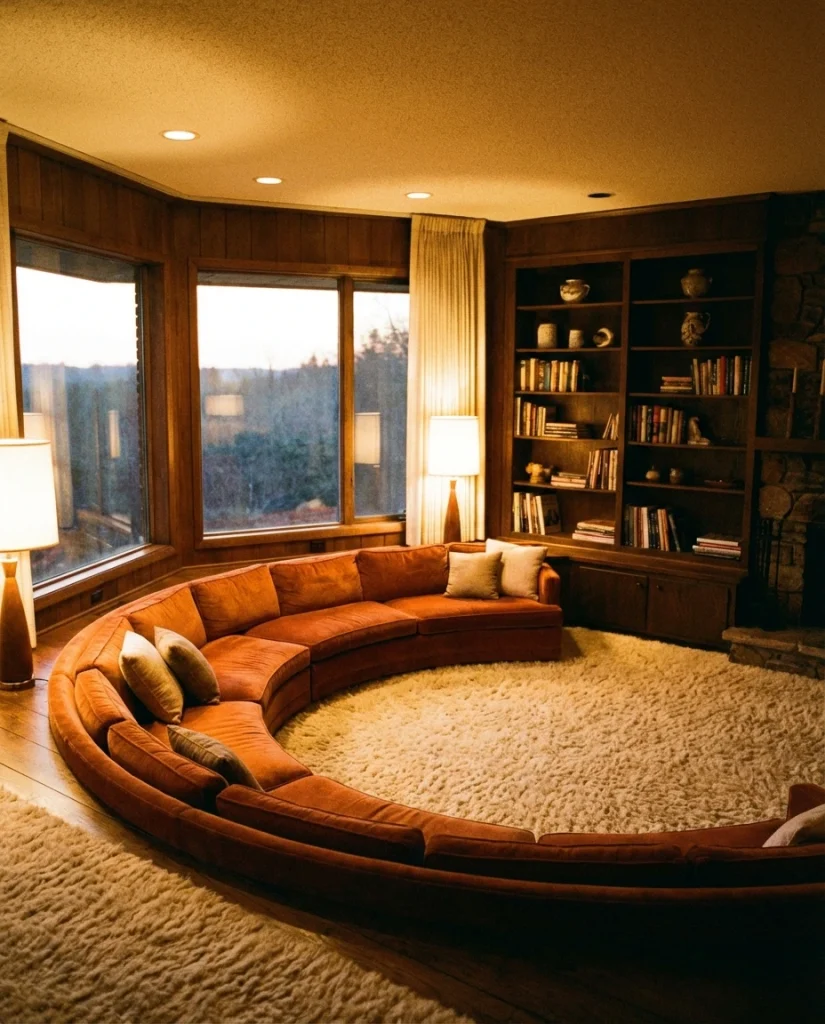
The conversation pit is making a dramatic comeback in 2026, transforming living rooms into intimate gathering spaces that feel both retro and remarkably relevant for today’s focus on intentional entertaining. This architectural feature creates natural zones within larger spaces and encourages face-to-face interaction in ways that traditional furniture arrangements can’t quite achieve. Whether you’re working with an existing sunken area or considering a renovation, the mid-century aesthetic provides the perfect framework with low-profile seating and clean-lined built-ins. 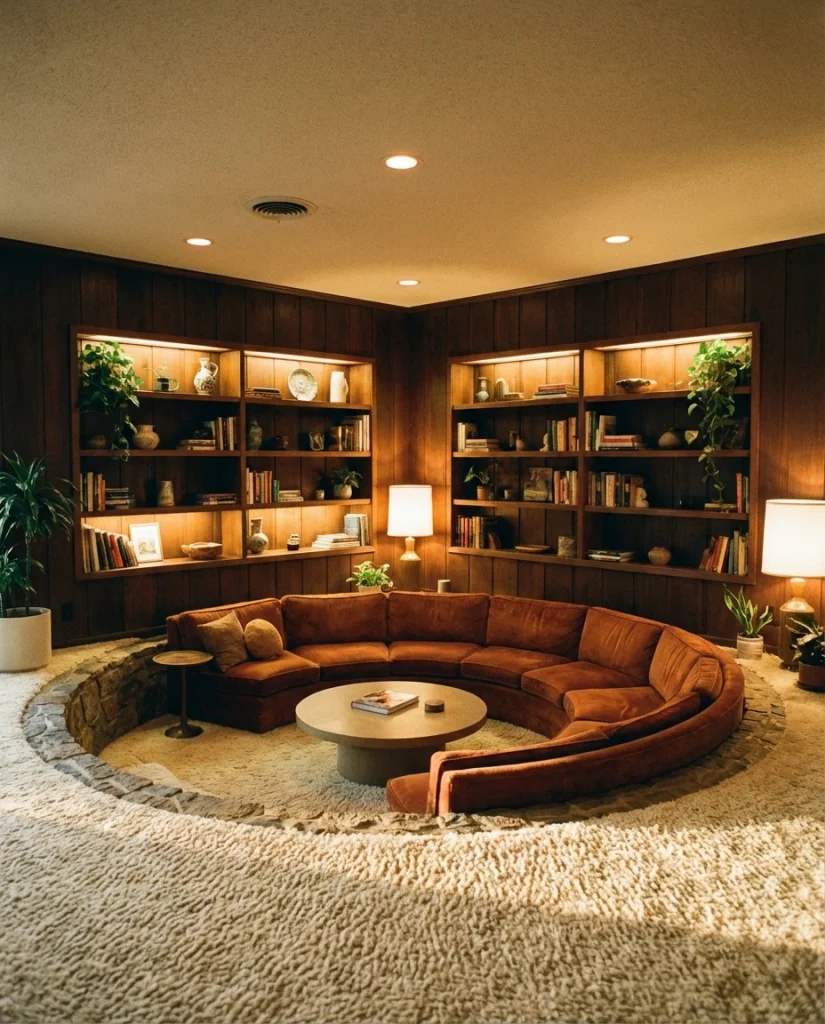
In Southern California and Arizona, these spaces often incorporate indoor-outdoor flow with sliding glass doors that blur boundaries between the sunken living area and exterior patios. The key is ensuring adequate cushioning and back support—vintage conversation pits sometimes sacrificed comfort for style. Modern foam densities and ergonomic proportions make today’s versions far more livable for actual daily use beyond the occasional cocktail party.
3. Gallery Wall of Vintage Finds
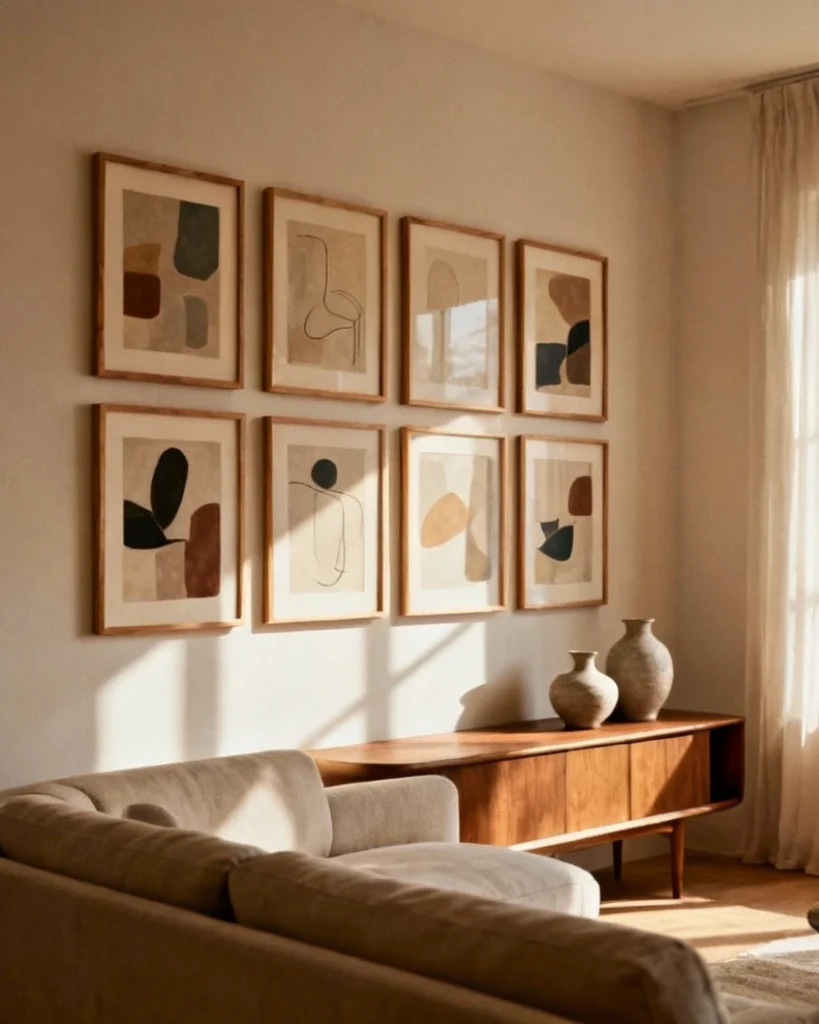
A thoughtfully curated gallery wall brings personality and visual interest to mid-century modern spaces without competing with the furniture’s clean lines. Focus on vintage abstract prints, architectural drawings, and black-and-white photography from the 1950s and 60s that complement rather than overwhelm the room’s aesthetic. The frames themselves become part of the design story—slim wood or metal frames in walnut, teak, or brass finishes maintain the period-appropriate feel. 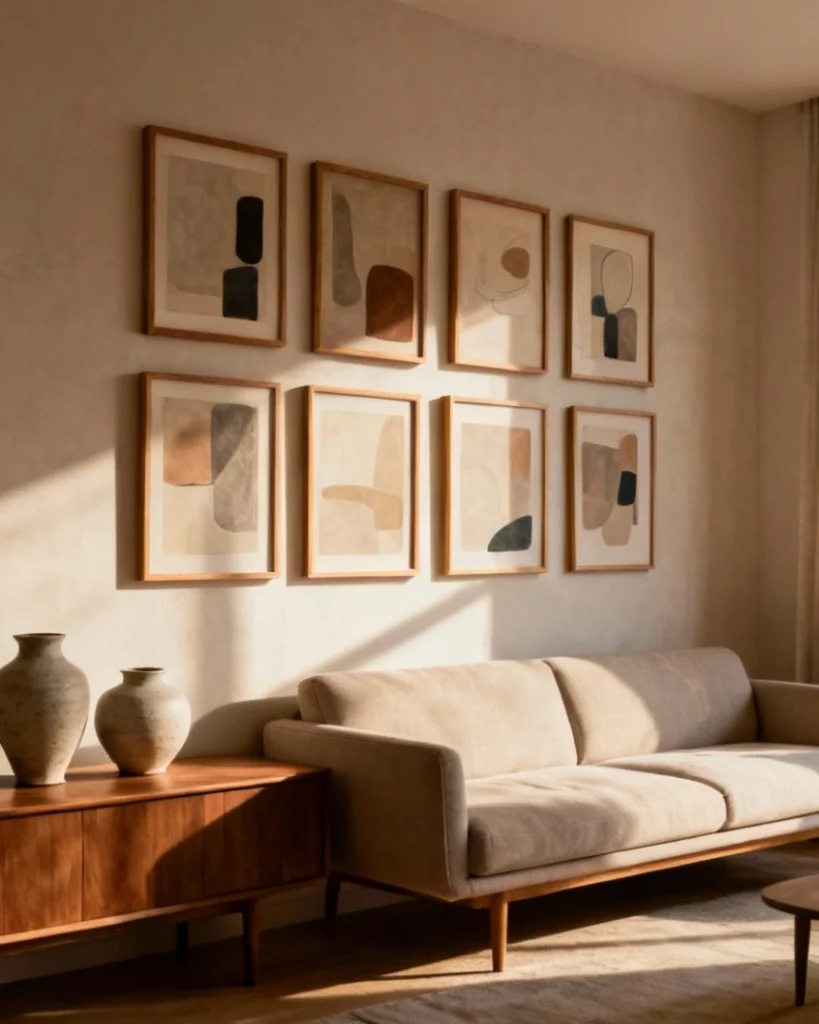
Start with larger anchor pieces and build outward, maintaining roughly equal spacing between frames for a collected-over-time appearance rather than an overly calculated grid. Flea markets in cities like Portland, Austin, and Philadelphia offer treasure troves of affordable original prints, while online vintage sellers provide authenticated pieces for collectors willing to invest. A neighbor recently transformed her bland rental living room with fifteen dollars’ worth of thrifted art and basic frames—the impact was immediate and entirely reversible.
4. Terrazzo Resurgence in Accent Pieces
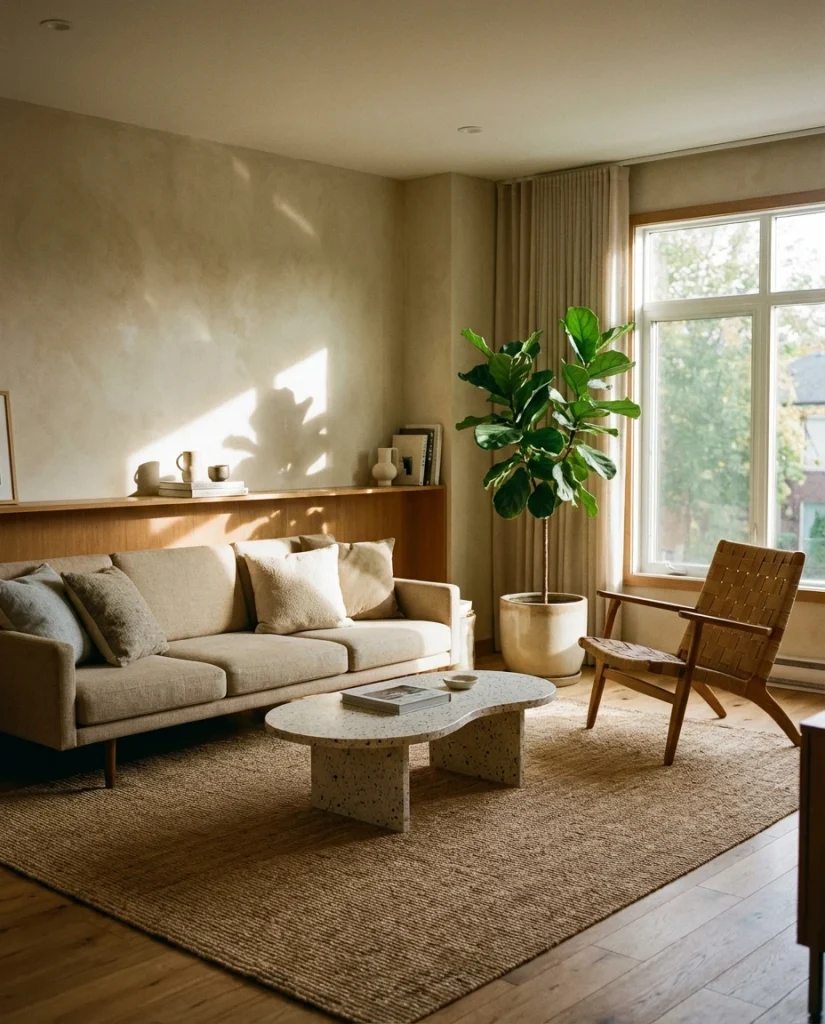
Terrazzo’s playful speckled pattern is experiencing a major moment in interior design, appearing in coffee tables, planters, and decorative objects that inject colorful texture into neutral living rooms. This material’s mid-century credentials are impeccable, yet contemporary makers are producing pieces in fresh colorways that feel current rather than costume-like. The key is restraint—one or two terrazzo elements create interest, while too many can overwhelm the space’s sophisticated simplicity.
The common mistake here is treating terrazzo as a neutral when it actually functions as a pattern—pair it with solid colors rather than competing prints or busy textiles. In open-plan homes, a terrazzo coffee table can visually anchor the living zone without requiring the commitment of permanent flooring. Prices range from forty dollars for small planters to several thousand for custom furniture, making it accessible across budget levels.
5. Floor-to-Ceiling Built-In Shelving
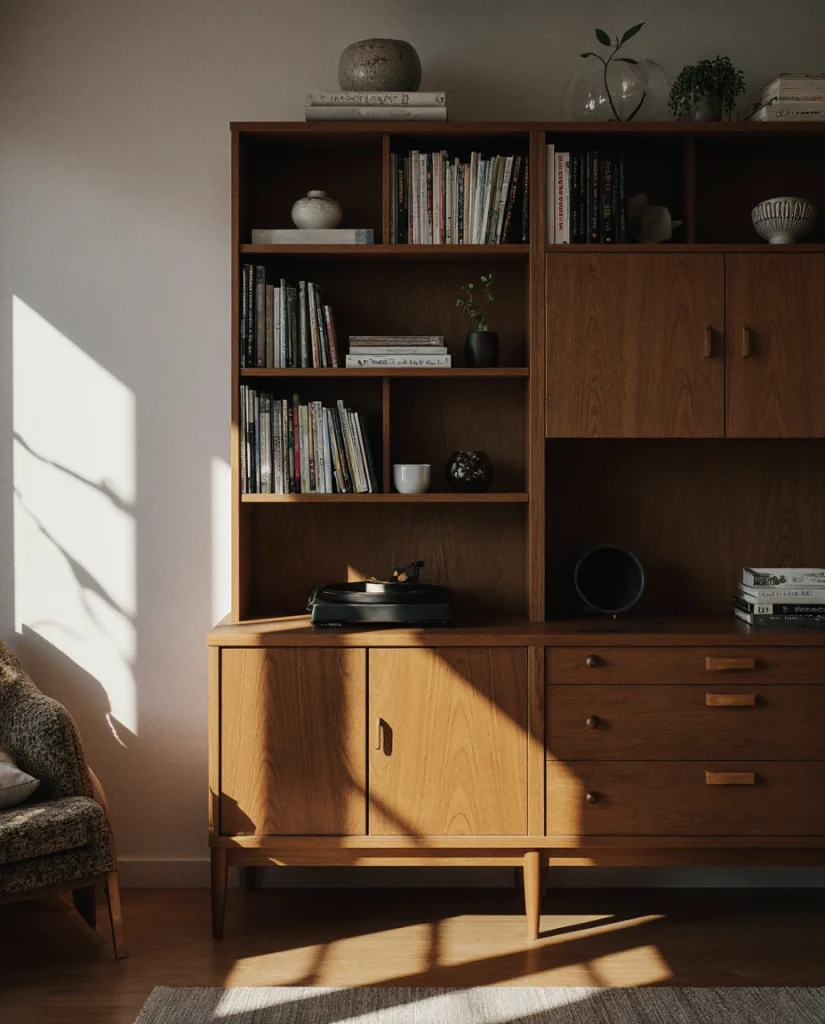
Custom millwork was a hallmark of quality mid-century homes, and ideas for built-in shelving continue to deliver both storage and architectural drama in contemporary living rooms. These floor-to-ceiling units often combined open shelving with closed cabinets, creating display opportunities for books, ceramics, and audio equipment while concealing less attractive necessities. The horizontal emphasis of these designs—wide, low proportions rather than tall and narrow—reinforces the era’s architectural principles. 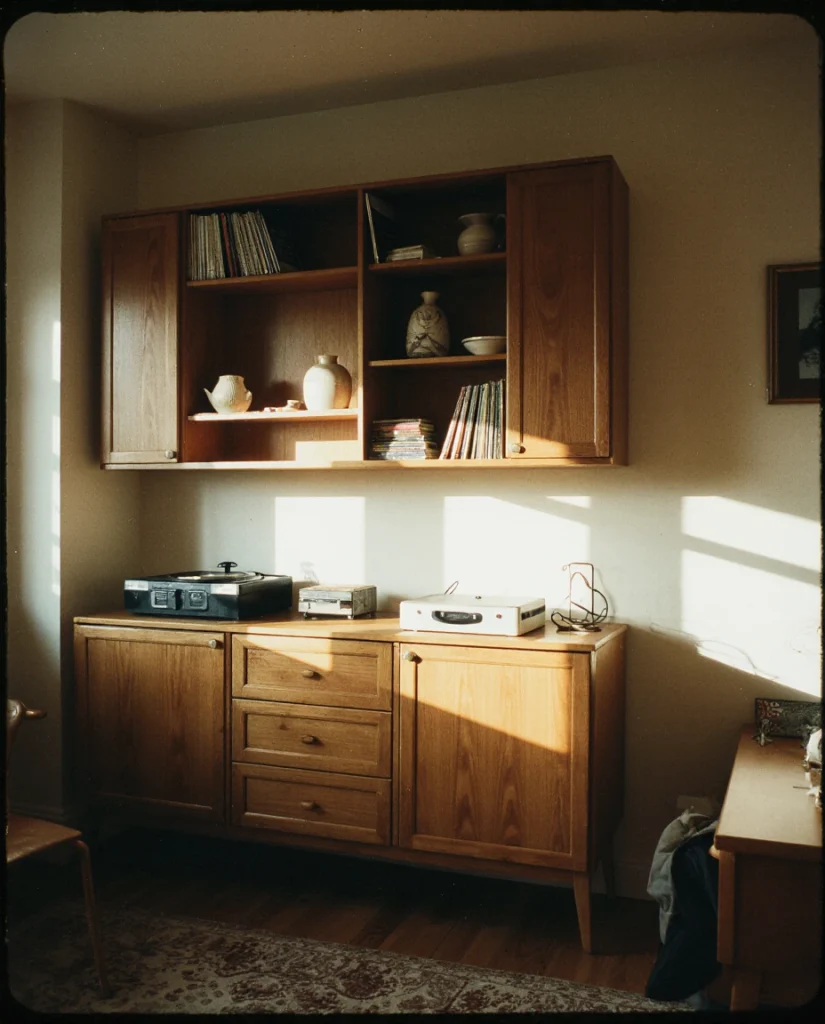
This approach works best in homes with eight-foot or higher ceilings where the units can achieve their intended impact without overwhelming the room. Northeast urban apartments often feature these as custom solutions that maximize vertical storage in smaller footprints. Budget-conscious renovators can achieve similar effects with high-quality modular systems from Scandinavian manufacturers that capture the aesthetic at a fraction of custom carpentry costs.
6. Statement Fireplace with Geometric Tile
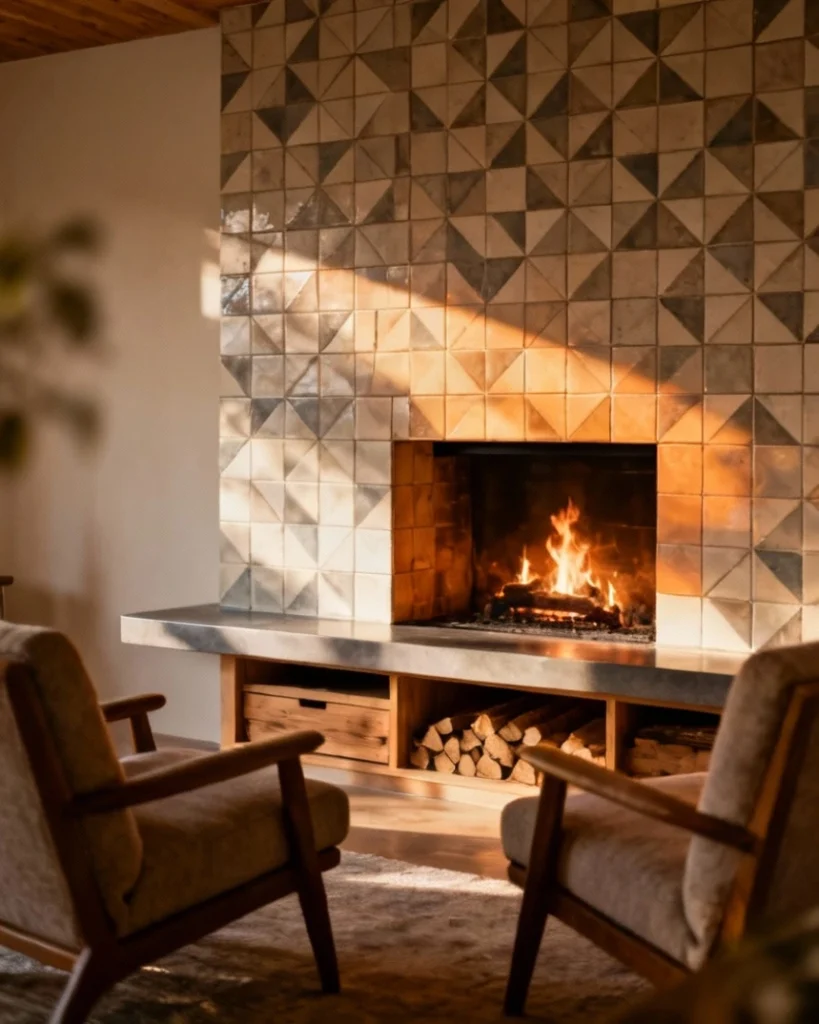
The fireplace served as the living room’s focal point in mid-century homes, often clad in floor-to-ceiling brick, stone, or dramatic tile work that commanded attention. Today’s interpretations embrace colorful geometric tile patterns in triangles, hexagons, or abstract mosaics that honor the era’s love of pattern while introducing contemporary color palettes. Whether gas, wood-burning, or electric, the surround becomes a sculptural element that anchors the entire seating arrangement.
In Colorado and Montana mountain homes, these statement fireplaces often incorporate local stone for regional character while maintaining clean modern lines. The biggest mistake is undersizing the surround—mid-century design embraced bold scale, so a timid tile treatment will read as an afterthought rather than an intention. Tile alone can range from eight to thirty dollars per square foot, with installation adding significantly to the budget depending on pattern complexity.
7. Jewel-Toned Velvet Seating
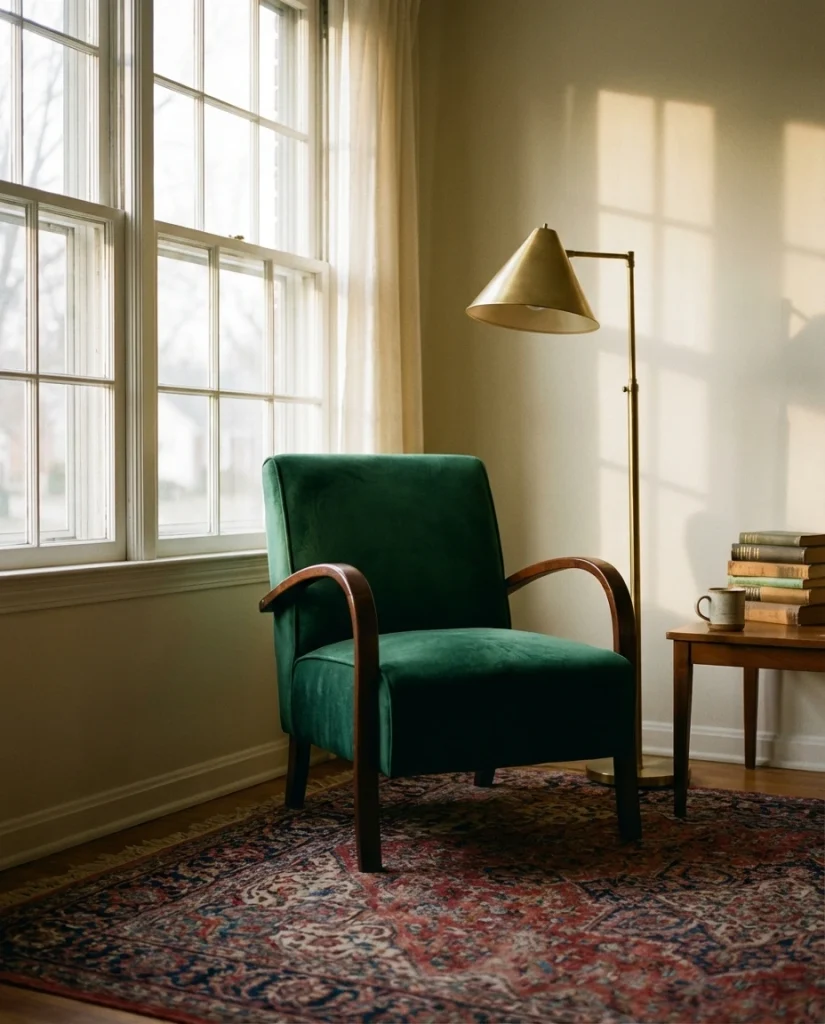
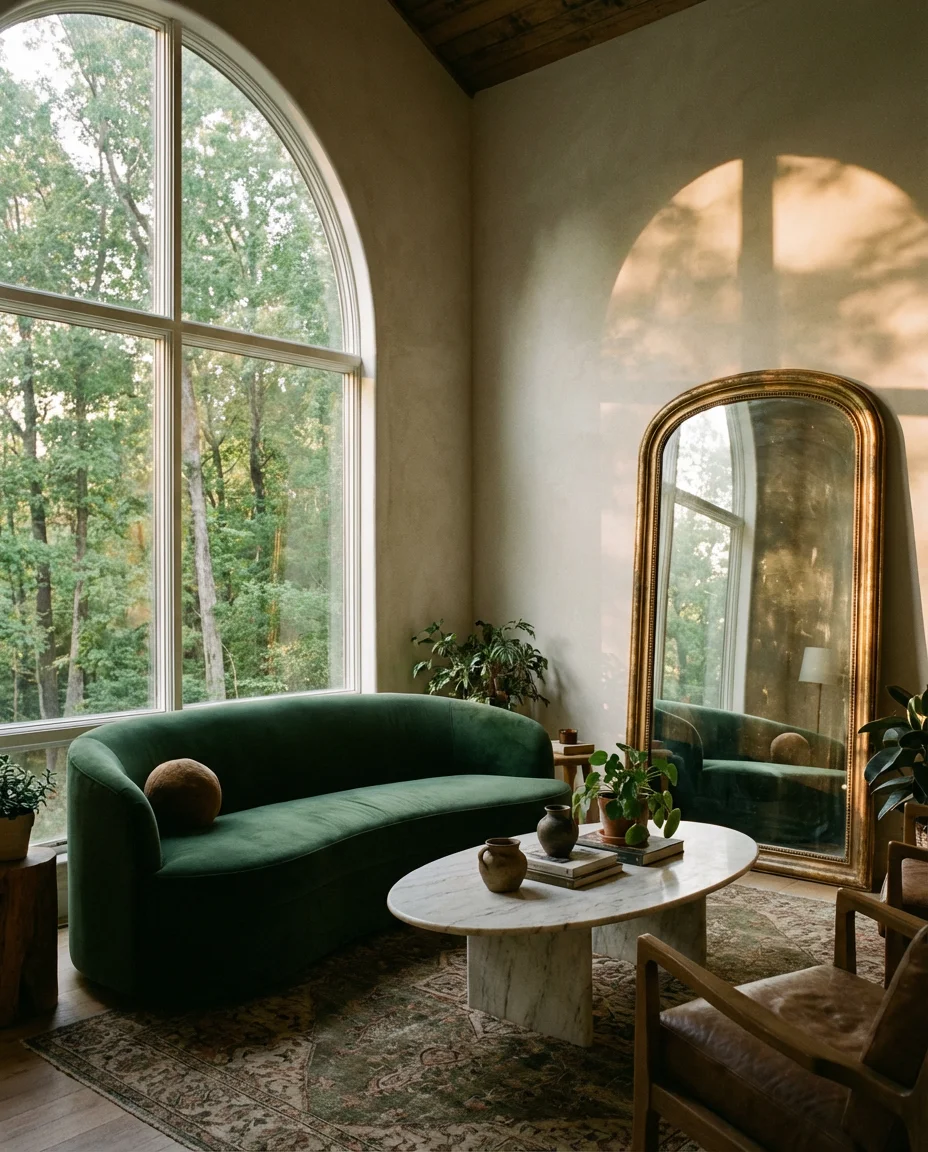
Rich green, sapphire blue, and burnt orange velvet upholstery offer luxurious texture and saturated color to mid-century living rooms, bringing in without sacrificing the clean-lined silhouettes that define the style. A vintage Selig or Thayer Coggin chair reupholstered in deep emerald velvet is an instant focal point, while a velvet sofa in cognac or navy grounds the space with presence, as it is substantial. The subtle sheen on the pile catches natural light throughout the day, dynamically shifting the day with light. 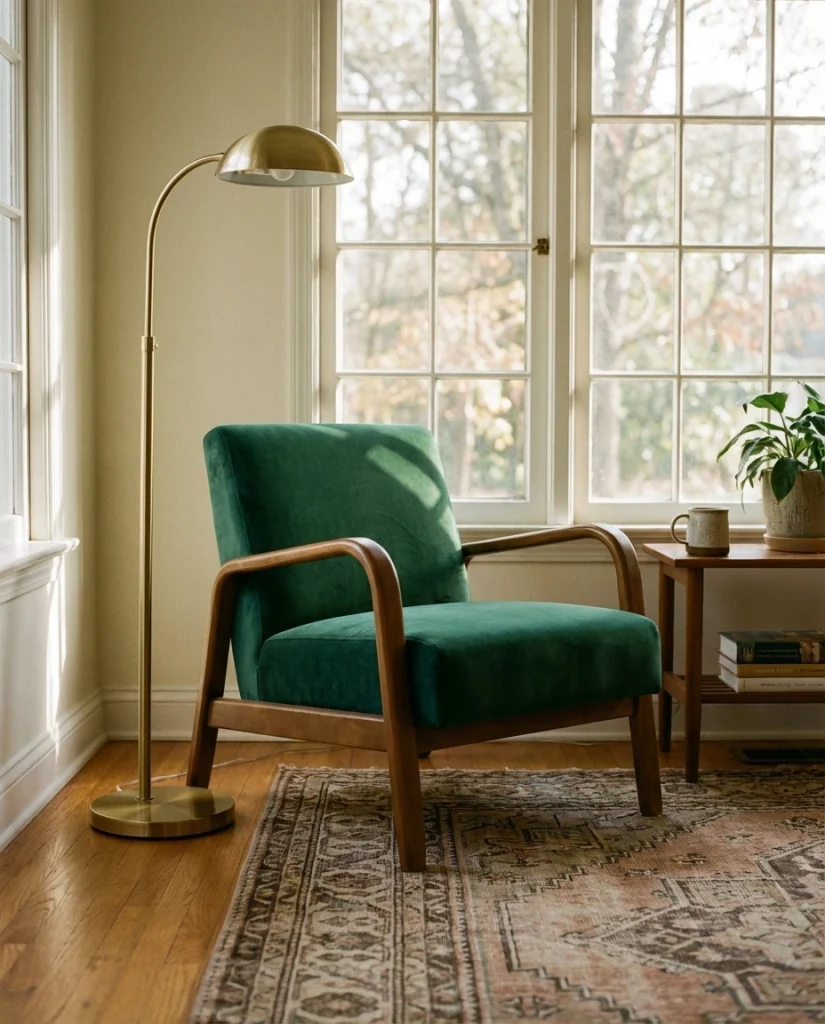
Velvet’s durability has improved dramatically with modern weaving techniques—today’s performance velvets resist staining and wear far better than vintage fabrics, making them practical for families with children or pets. In Southern humidity, opt for cotton or cotton-blend velvets that breathe better than synthetics. Reupholstery costs typically run from one hundred fifty to four hundred dollars per chair depending on fabric choice and local labor rates, often worthwhile for quality vintage frames.
8. Organic Sculptural Lighting
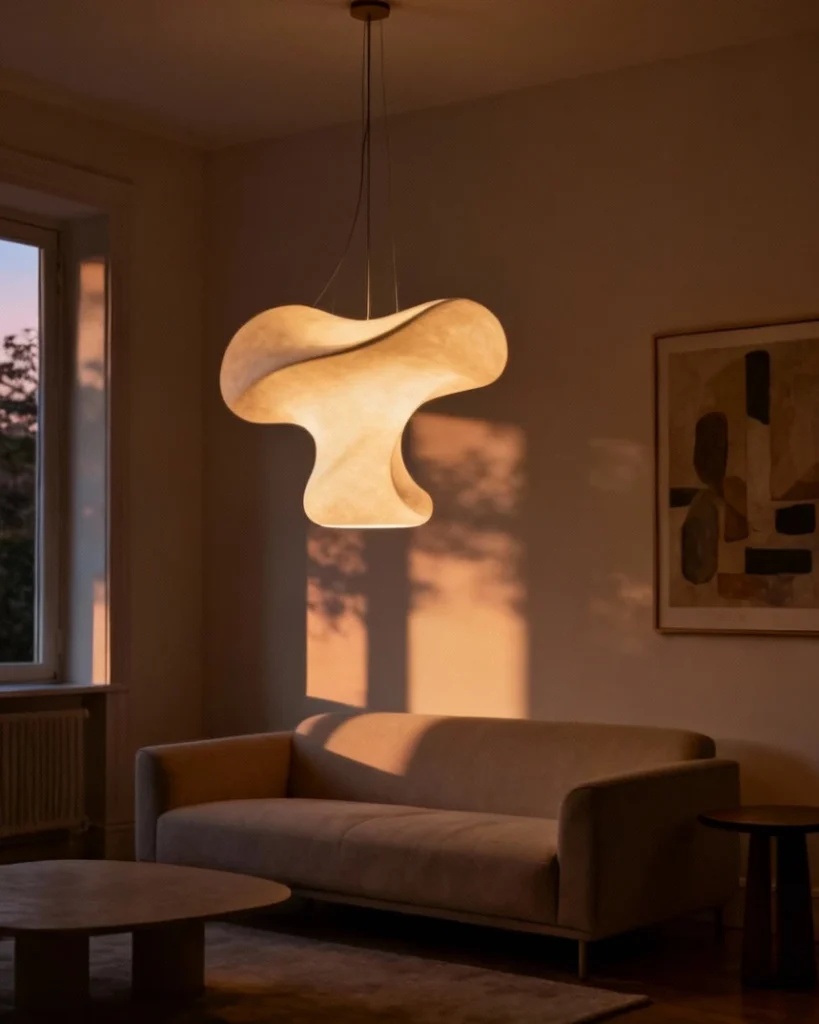
Lighting fixtures in mid-century modern spaces often functioned as sculpture, with organic forms inspired by nature’s curves and asymmetry rather than rigid geometry. Sputnik chandeliers, Nelson bubble lamps, and Noguchi paper lanterns remain iconic, but countless lesser-known designs offer similar visual impact at more accessible price points. The key is selecting fixtures with clear design intention—simple forms executed beautifully rather than ornate decoration. 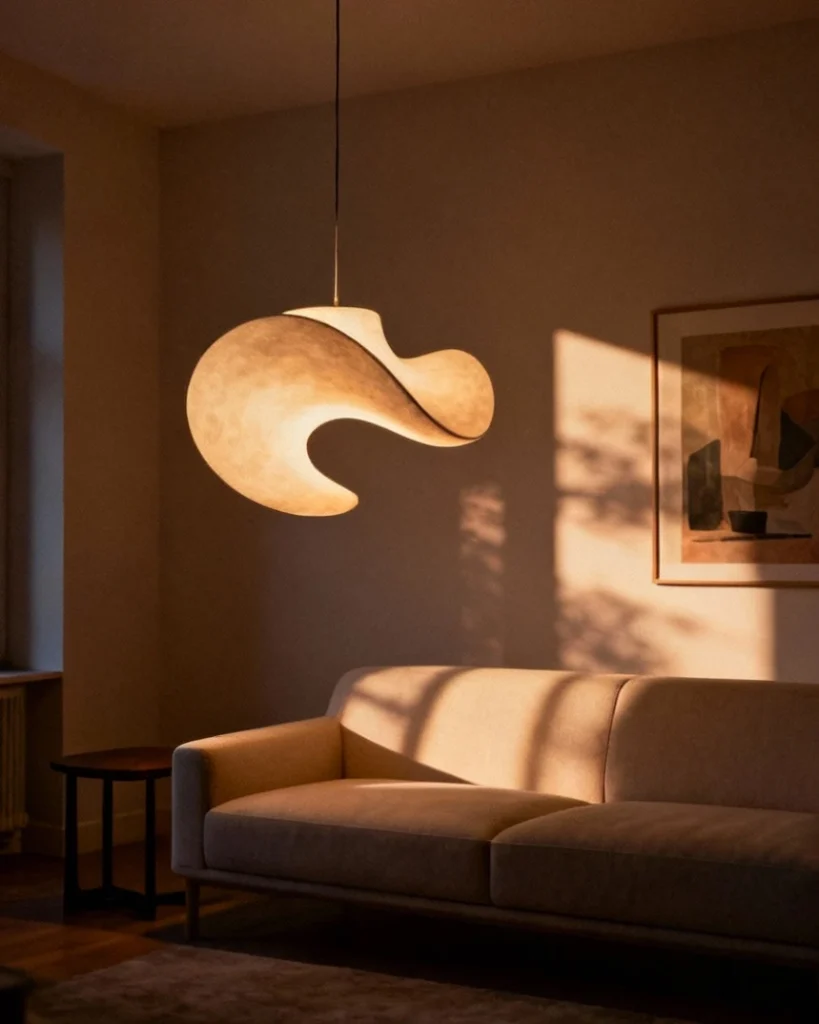
Where this works best is in rooms with nine-foot or higher ceilings that can accommodate dramatic pendants without creating head-clearance issues. A friend recently installed a reproduction Sputnik chandelier in her Denver bungalow’s living room and immediately regretted the scale—it dominated rather than complemented the space. Consider room proportions carefully, and remember that multiple smaller fixtures often succeed where one oversized piece fails.
9. Low-Profile Platform Seating Arrangements
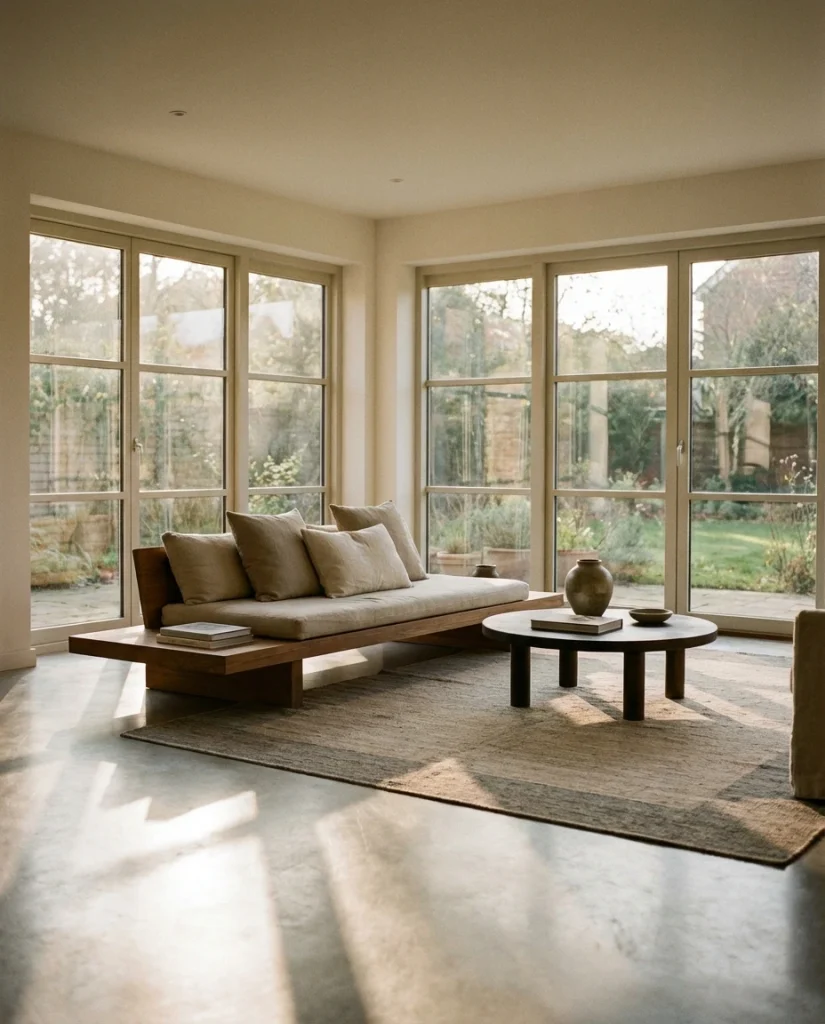
The characteristic low furniture profile of mid-century modern design creates an expansive, breathable feeling in living rooms by emphasizing horizontal lines and leaving generous visual space between furniture tops and the ceiling. Platform sofas, low-slung armchairs, and coffee tables that hover just inches above the floor make even modest-sized rooms feel more spacious. This approach also draws the eye to windows and architectural features rather than bulky furniture masses. 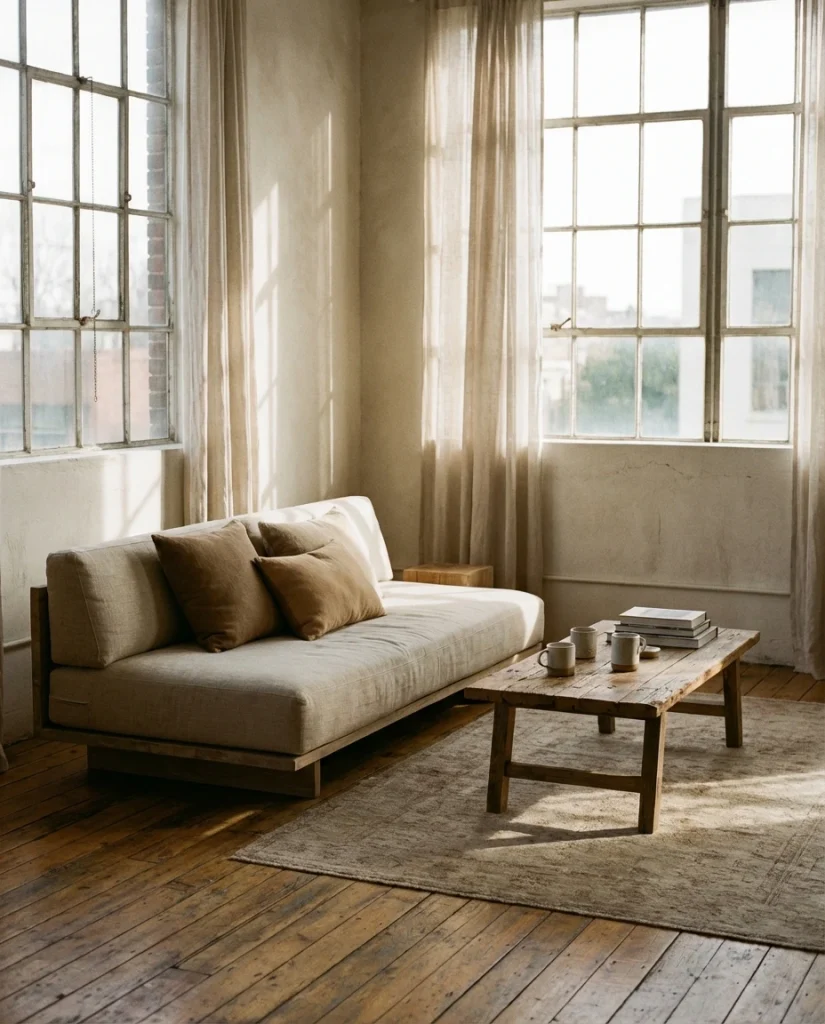
This layout style particularly suits West Coast homes with abundant natural light and views worth showcasing. The practical insight here is that low seating requires careful cushion selection—too soft and it becomes difficult to stand, too firm and it’s uncomfortable for extended sitting. Quality foam with proper density ratings (around 35-40 for seat cushions) ensures both comfort and longevity while maintaining the sleek visual profile.
10. Biophilic Design with Oversized Plants
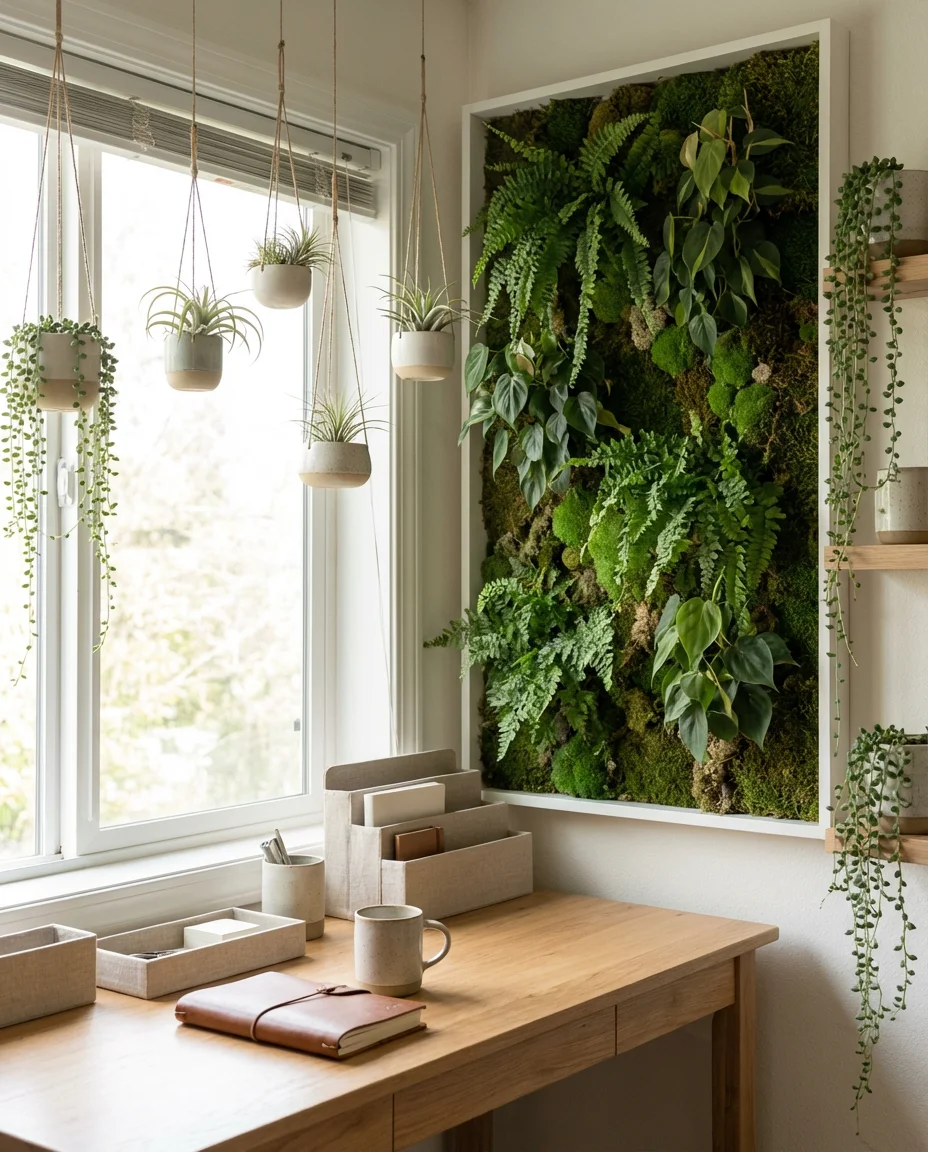
Indoor plants were essential to mid-century interior design, with large-scale specimens like fiddle leaf figs, monstera, and rubber trees bringing organic forms and living texture into cozy living spaces. Today’s interpretations often go even bigger, with floor-to-ceiling palms or dramatic bird of paradise plants creating a jungle-like atmosphere without sacrificing the style’s clean aesthetic. Strategic plant placement softens hard edges and fills vertical space without requiring permanent built-ins. 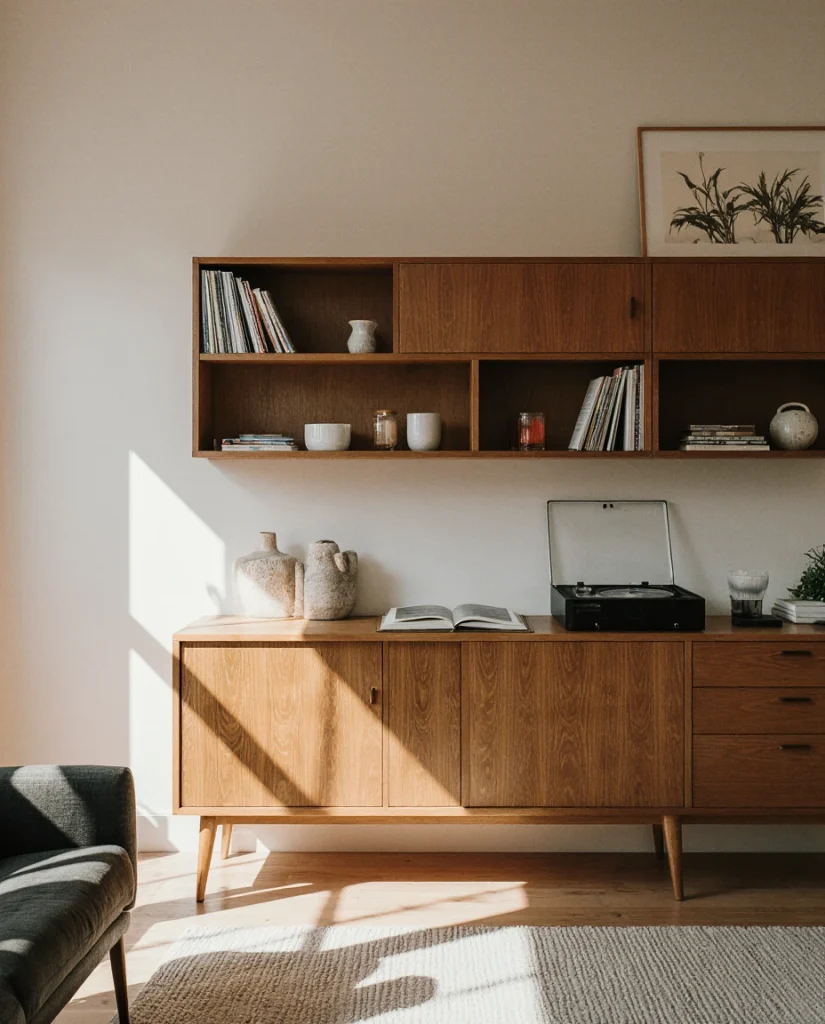
The common mistake is selecting plants based purely on aesthetics without considering your home’s actual light conditions and your maintenance commitment. That gorgeous fiddle leaf requires bright indirect light and consistent care—in a north-facing room, you’ll fight a losing battle. Snake plants, pothos, and ZZ plants offer sculptural presence with far greater tolerance for neglect and lower light, making them smarter choices for most American living rooms regardless of climate zone.
11. Contrasting Textile Layers
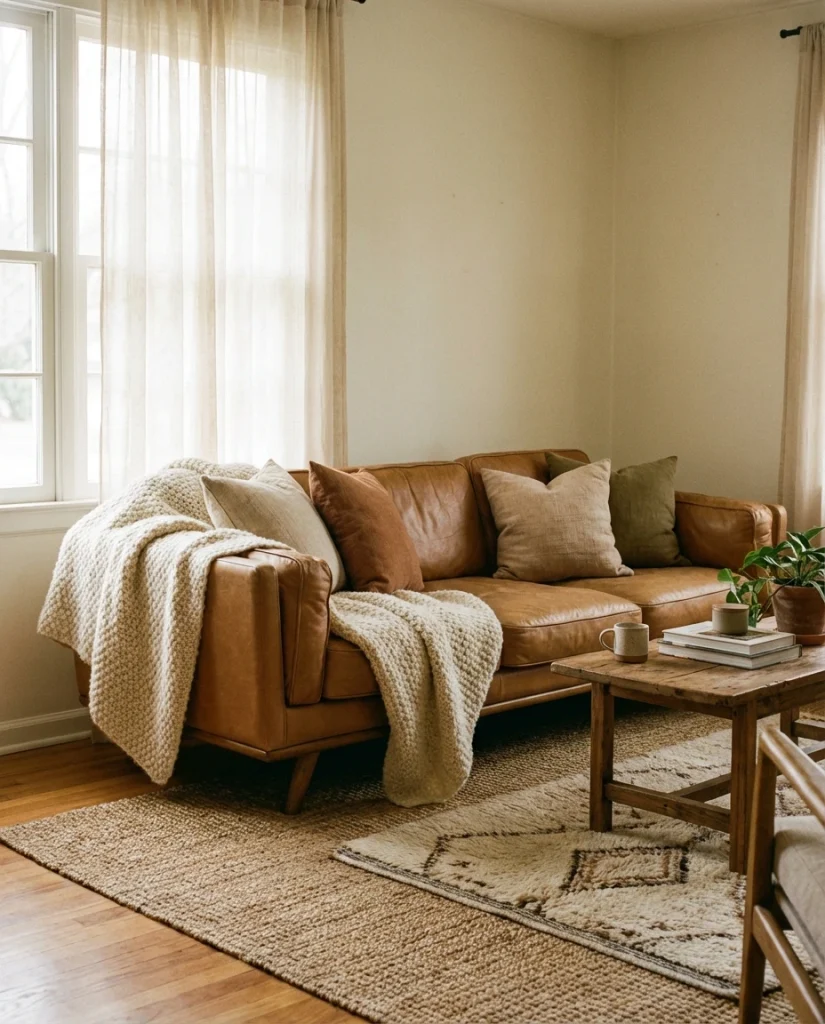
Layering different textile textures—a rug with deep pile, nubby linen throw pillows, smooth leather seating, and perhaps a chunky knit blanket—adds warmth and tactile interest to spaces that might otherwise feel too austere. This approach aligns with Scandinavian hygge principles while maintaining mid-century’s edited aesthetic. The key is varying texture while maintaining a cohesive color story, typically neutrals with one or two accent colors that appear across multiple textile categories. 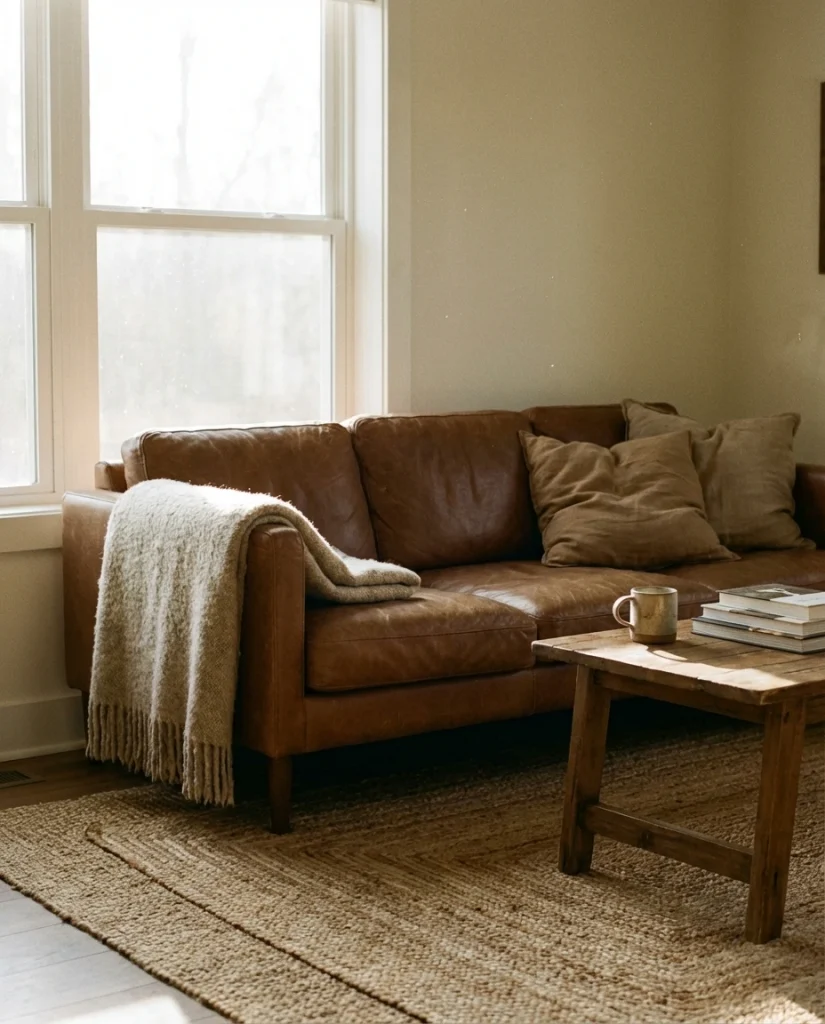
Budget-wise, this is where the most can be realized for the least amount of actual money spent. For example, a seventy-dollar vintage estate sale rug and twenty dollars in linen pillow covers, along with a thirty-dollar throw, can create a very rich and layered look for very little. In areas where color is too minimal, texture can also be a very important element to keep it from looking too stark or cold. Rotating textiles can also keep the space looking refreshed without needing to update furniture.
12. Walnut Media Console as Art Piece
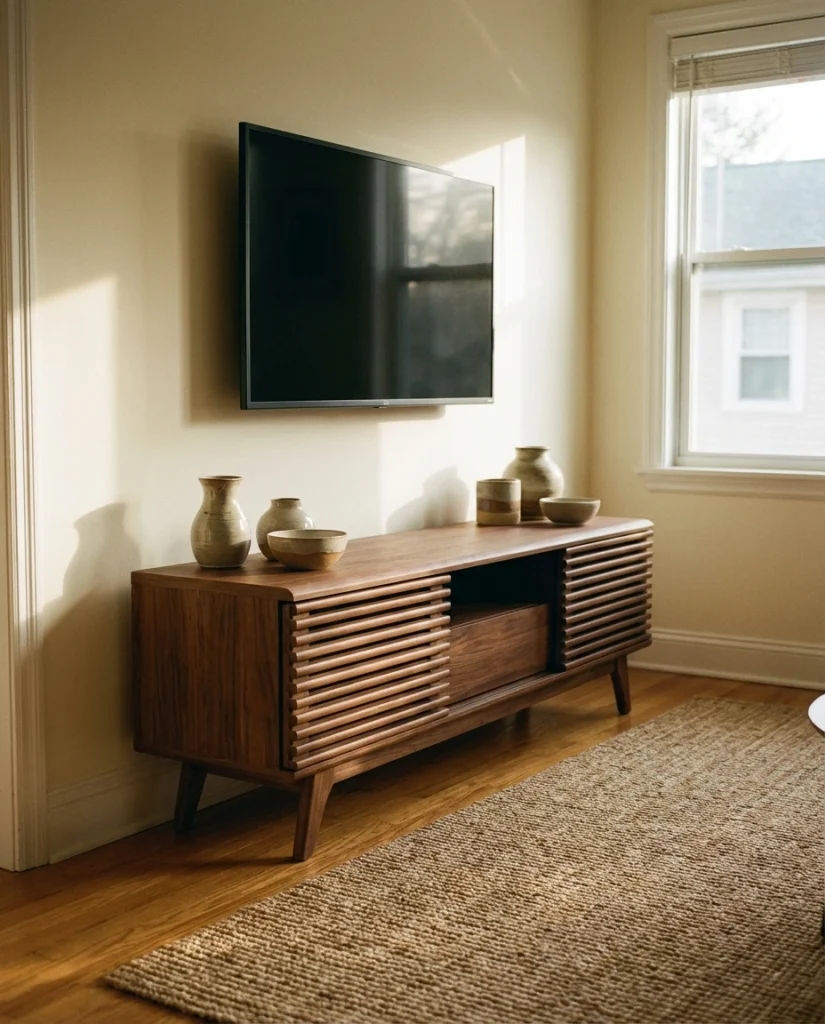
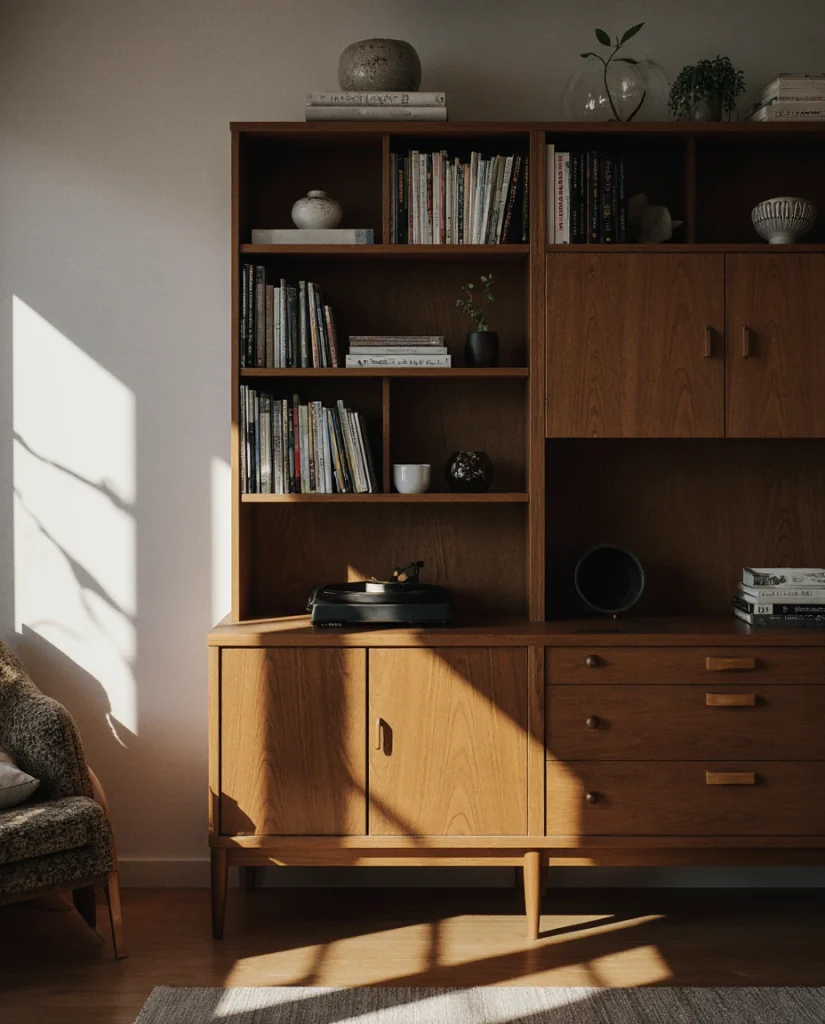
The media console is also an important feature to consider in the mid-century living rooms, where TV integration needs to find a balance between modern technology and period style. For vintage credenzas, it is also a good choice, since it comes with beautiful and elegant storage with tambour doors, sliding panels, or hinged cabinets that conceal blocks of electronics while showing selected objects. Its low horizontal form and warm-grained wood also become a focal point of the mid-century character of the room. In addition, it can add functionality and elegance to the room. 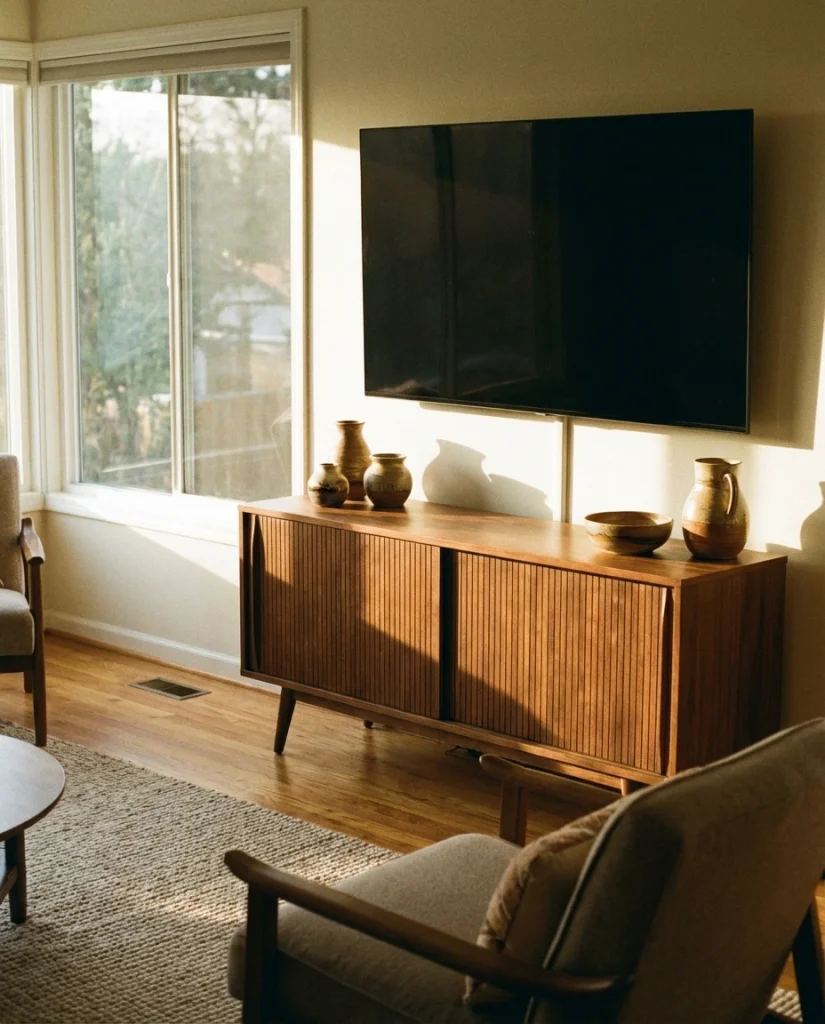
Expert designers recommend measuring your equipment precisely before purchasing vintage pieces—drawer heights and cabinet depths designed for 1960s stereos often can’t accommodate modern receivers and gaming consoles. In tech-heavy households, consider custom modifications like cable management solutions or ventilation improvements. Prices for quality vintage credenzas range from four hundred to three thousand dollars depending on maker, condition, and regional market, with reproduction pieces offering similar aesthetics starting around six hundred dollars.
13. Accent Wall in Sage or Terracotta
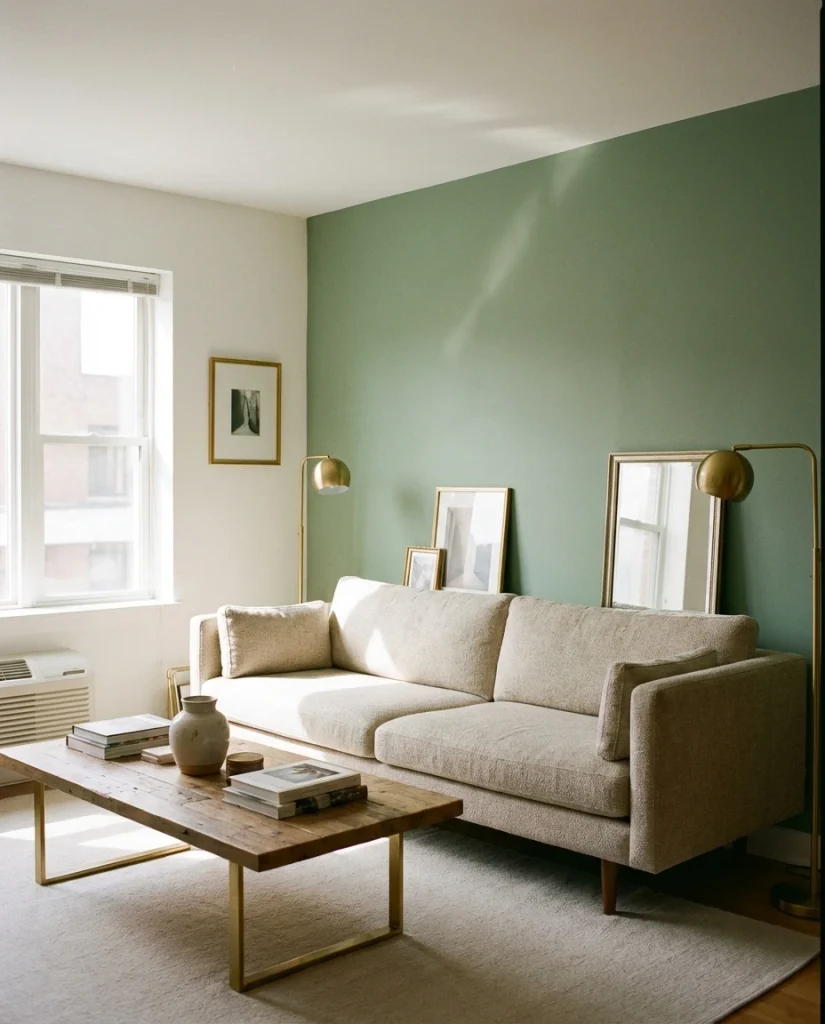
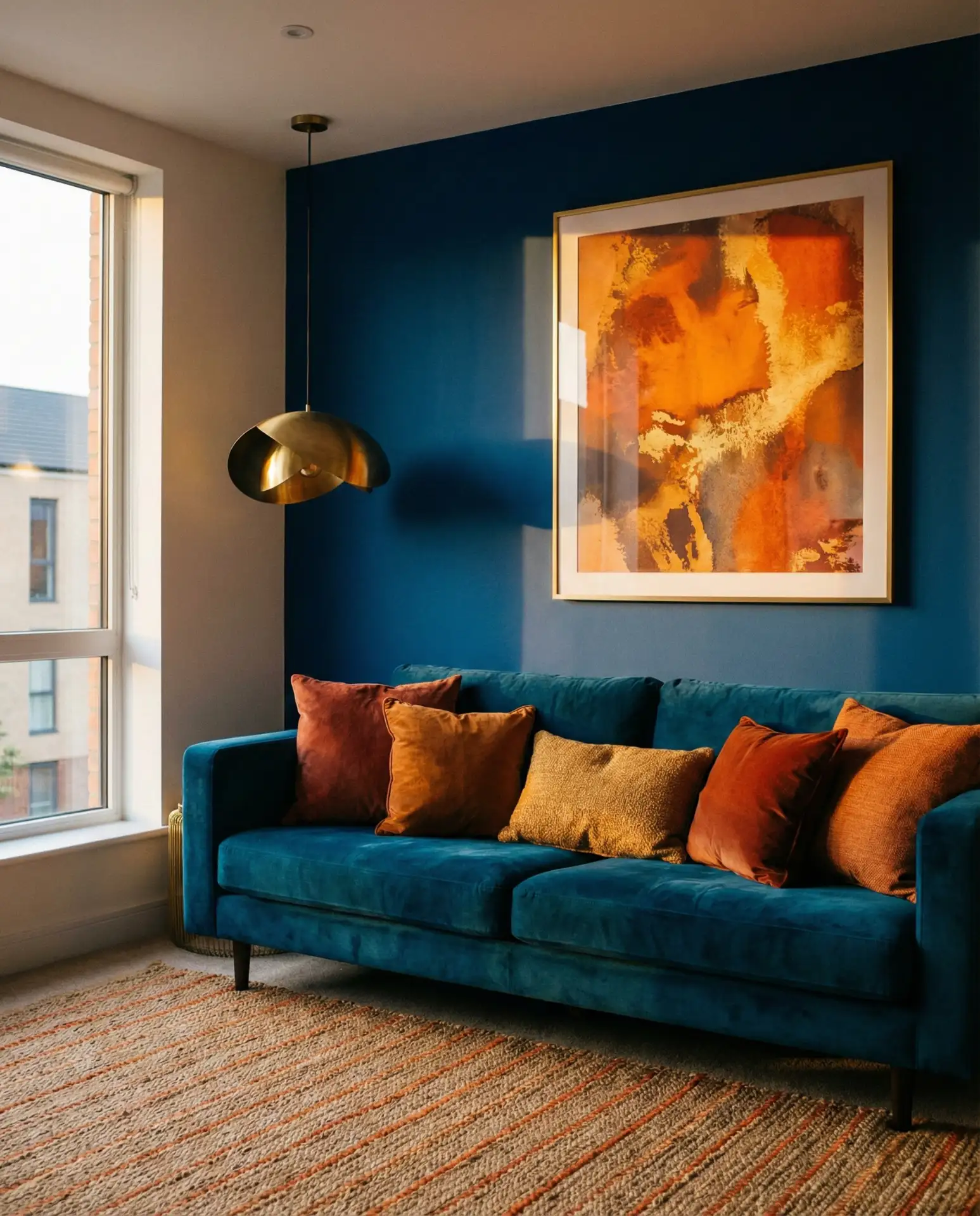
A single painted accent wall in period-appropriate colors like sage green, terracotta, or warm gray creates depth and interest without overwhelming the mid-century modern living room’s clean aesthetic. This approach honors the era’s occasional use of bold color while maintaining the breathing room that white or neutral walls provide. The accent wall typically appears behind the sofa or fireplace, creating a backdrop that highlights furniture and art without competing for attention.
In small apartments, particularly in cities like Chicago or Boston where natural light may be limited, darker accent walls can paradoxically make spaces feel more intimate and intentional rather than cramped. The mistake to avoid is painting the wall with windows—you want your accent wall to receive light rather than block it. Paint costs remain minimal for this high-impact change, typically under sixty dollars for quality paint to cover a standard living room wall.
14. Asymmetric Furniture Arrangements
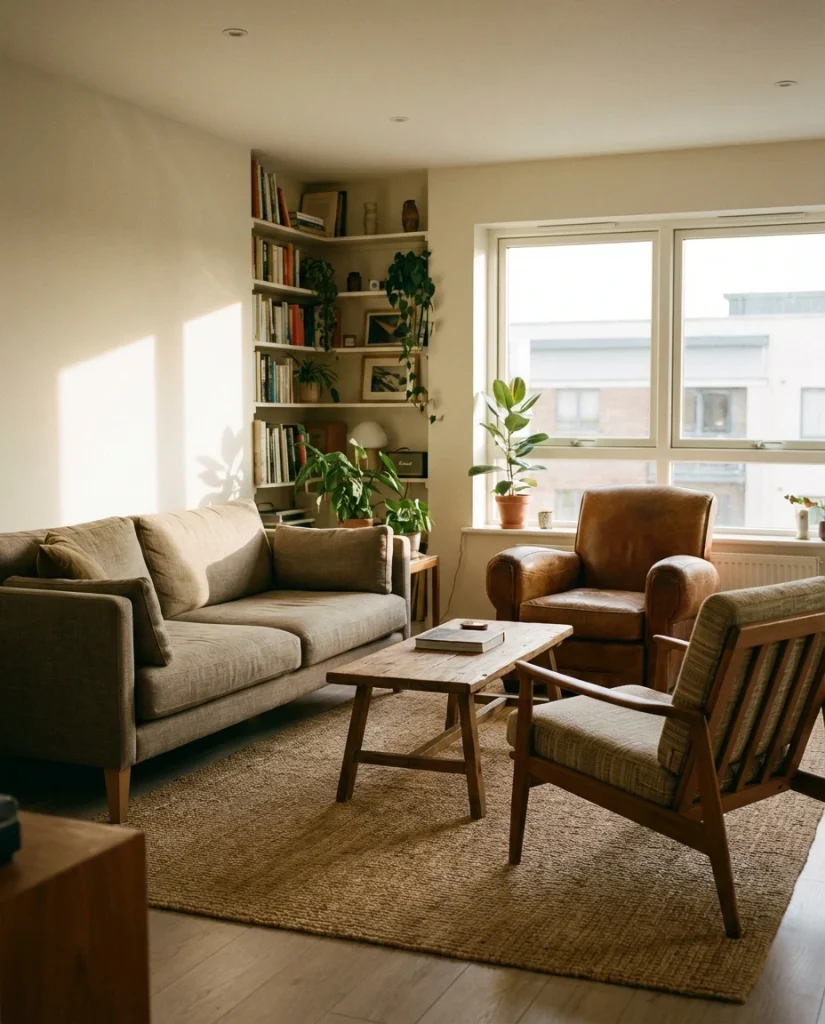
Breaking away from matchy-matchy furniture sets, mid-century eclectic living rooms embraced asymmetric arrangements where pieces of different scales and styles create dynamic visual tension. A large sectional might anchor one side while two different chairs—perhaps one lounge chair and one armchair—balance the opposite side. This approach feels collected and personal rather than showroom-staged, reflecting how real people actually accumulate furniture over time. 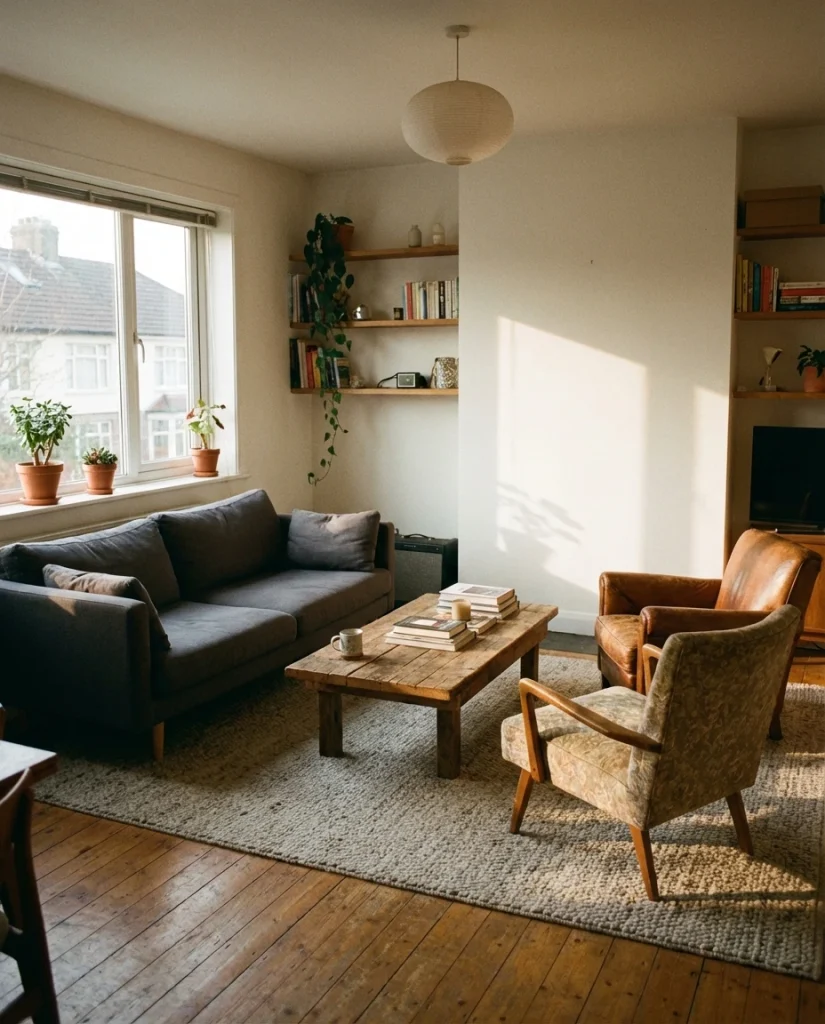
This layout strategy particularly suits open-concept spaces where the living room flows into dining or kitchen areas—asymmetry helps to define zones without the need for physical barriers. There is a practical consideration of keeping clear pathways for traffic; although it is not symmetrical, it should not block flow through the space.
Primary walkways are typically given a recommended clearance of thirty inches, whereas secondary walkways are given a recommended clearance of eighteen inches.
15. Woven Wall Hangings and Fiber Art
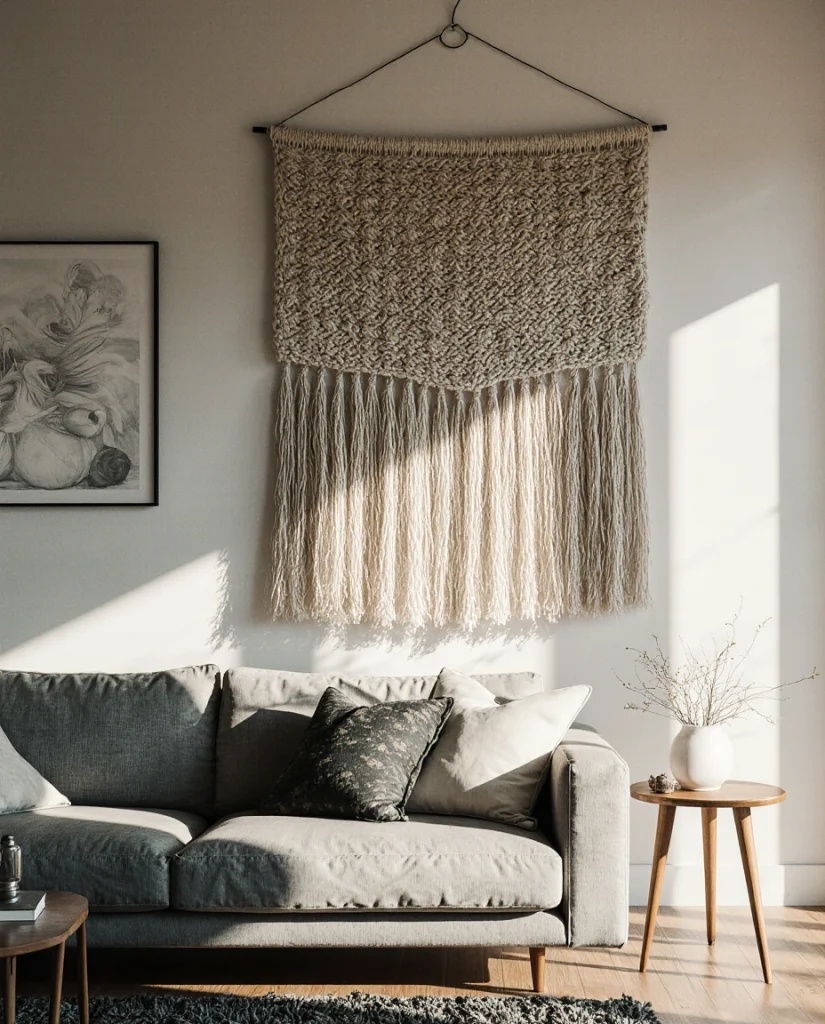
Textiles in the form of macramé and fiber art offer soft texture and handmade warmth appreciated in mid-century modern design. Artworks balance the industrial feel of the style and soften the hard surfaces and provide sound dampening in wood- and glass-heavy spaces. They complement the fibers and neutral color tones of these artworks, which are also perfect for the earthy crafts typical of the days of the period. 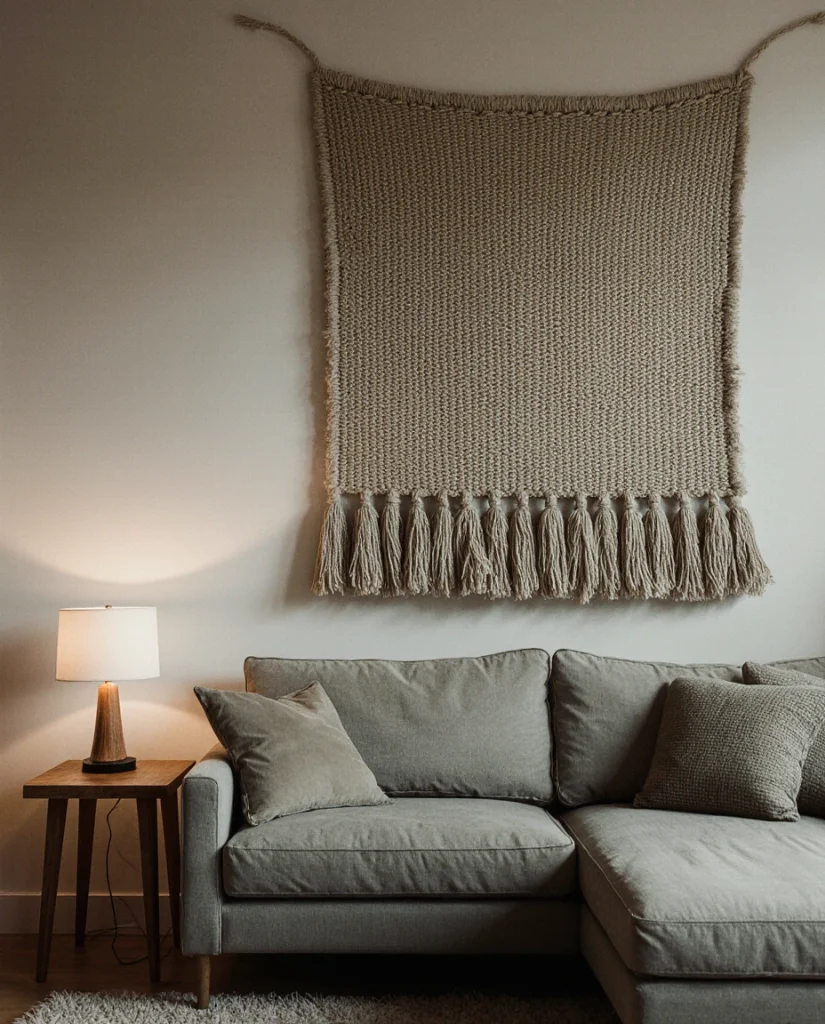
The best spaces to use these artworks are ones that have little in the way of patterns. For example, areas that have busy geometric rugs and patterned throw pillows may use a fiber art piece to achieve visual interest. This style, which embraces the textiles and earthy colors, is particularly enjoyed in Southwest and California homes. Artworks by local fiber craft artisans can typically be spotted in these homes. Prices for artworks in this style range from fifty dollars for smaller mass-produced pieces to several thousand for commissioned artworks.
16. Picture Windows Framed as Art
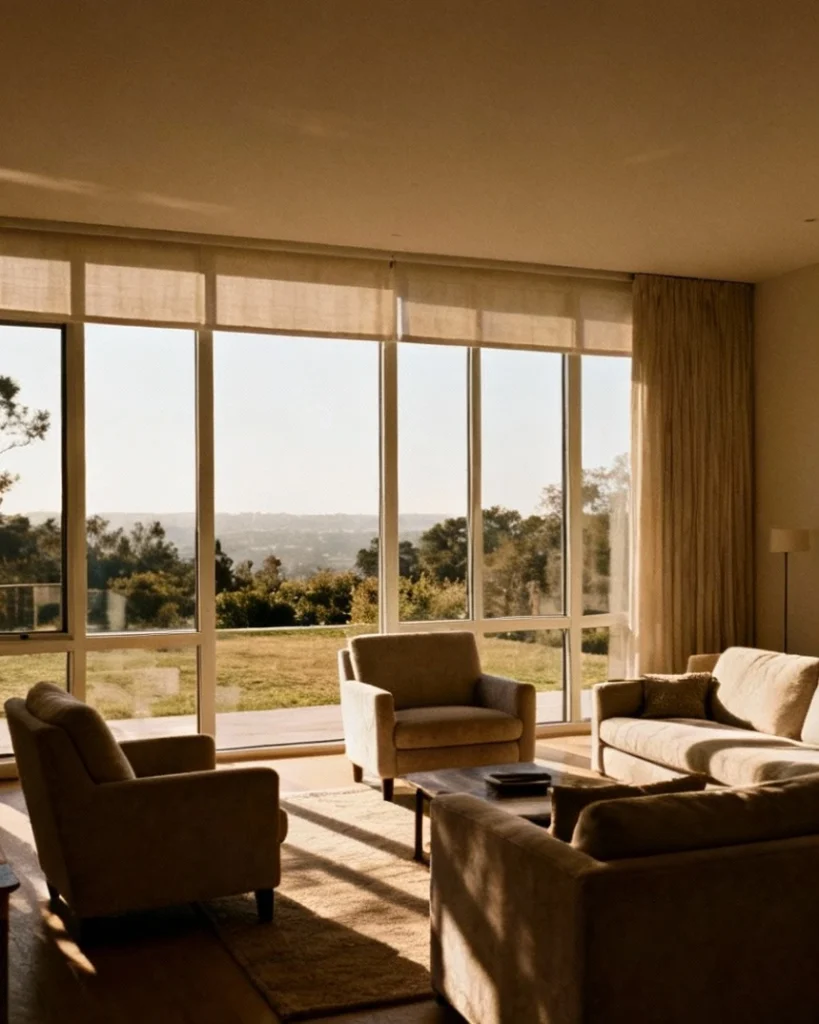
Mid-century architecture celebrated the connection between indoor and outdoor spaces through expansive picture windows that framed views like living paintings. In contemporary mid-century modern living room designs, honoring this principle means minimizing window treatments—or eliminating them entirely where privacy permits—to maximize natural light and visual connection to landscaping. The window itself becomes architectural art, requiring thoughtful furniture placement that takes advantage of the view. 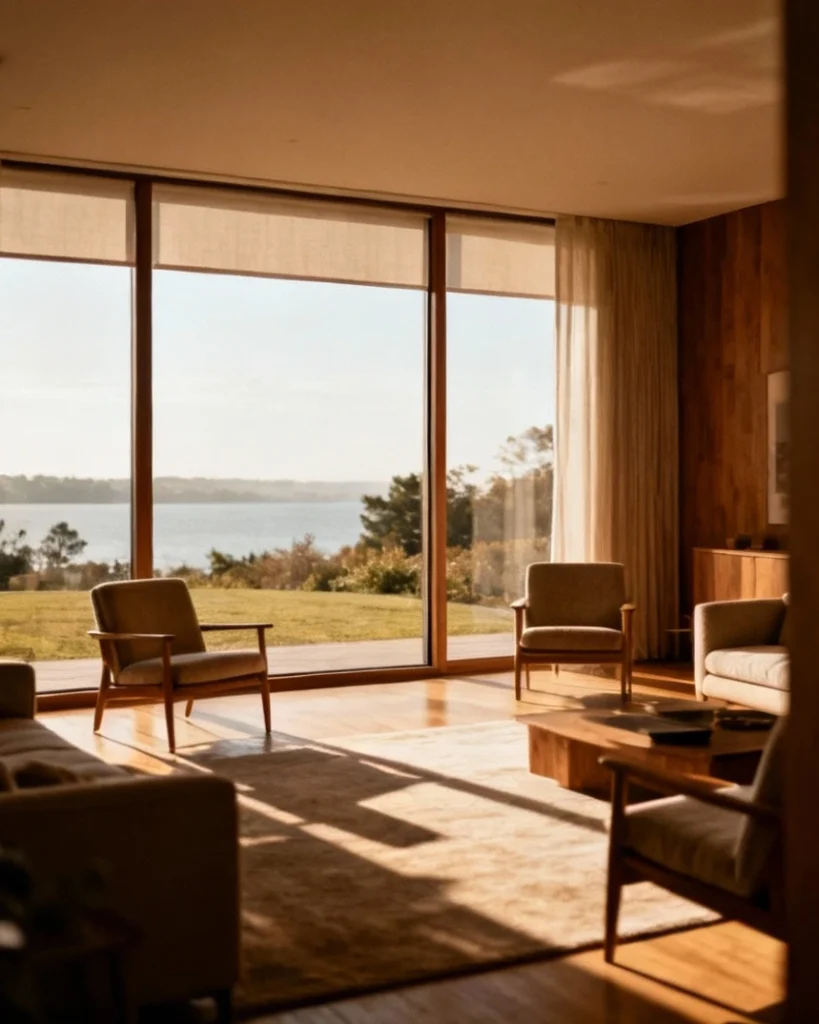
In urban settings where privacy is necessary, consider motorized shades that disappear when not needed or sheer curtains that filter light without blocking views. A designer friend recently worked on a Nashville home where the clients initially wanted heavy drapes for a stunning valley view—she convinced them to try sheers first, and they never looked back. The investment in quality window treatments ranges from two hundred to over a thousand dollars per window depending on size and mechanism complexity.
17. Graphic Black and White Photography
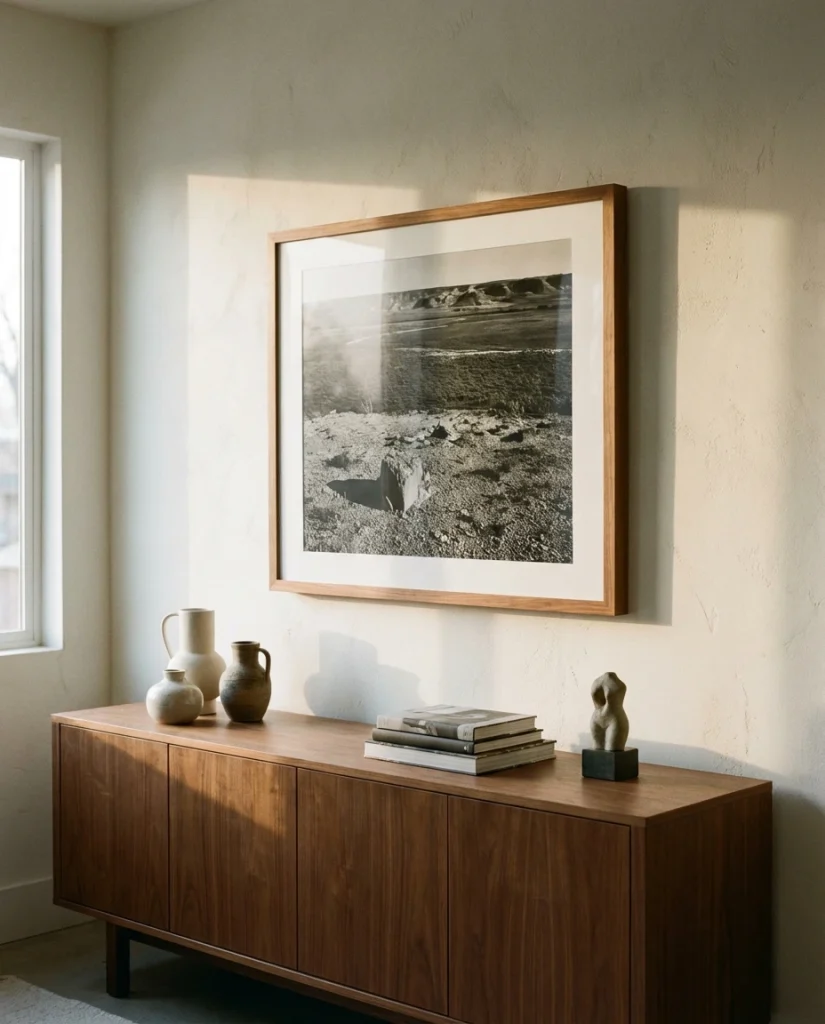
Large-scale black and white photography brings sophisticated visual impact to mid-century modern living rooms without the color complexity that might compete with furniture and textile choices. Architectural photography, abstract compositions, or portraits from the era create strong focal points while maintaining the restrained palette. Oversized prints—thirty by forty inches or larger—make bold statements that honor the period’s appreciation for dramatic scale. 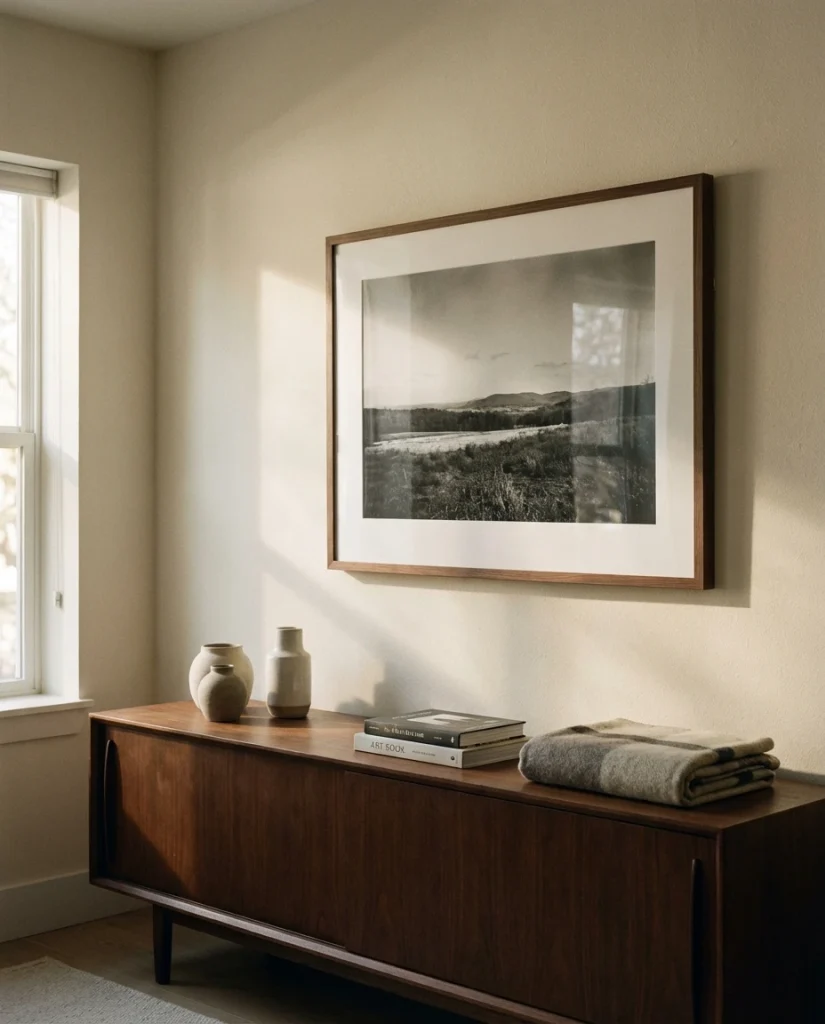
People don’t often think about how striking black and white art can be compared to colorful pieces, yet many people lack this consideration because they don’t think about how less noise in art and a more neutral palette can enhance a space’s color palette, increase a piece’s contrast, and thus create a more impactful piece to look at. This effect can be increased if the black and white art is printed on expensive archival paper. There are many online shops that do this with prices starting at around 150 for large-format prints, and it can get quite expensive with custom frame jobs, even if they are large.
18. Conversation-Focused Seating Clusters
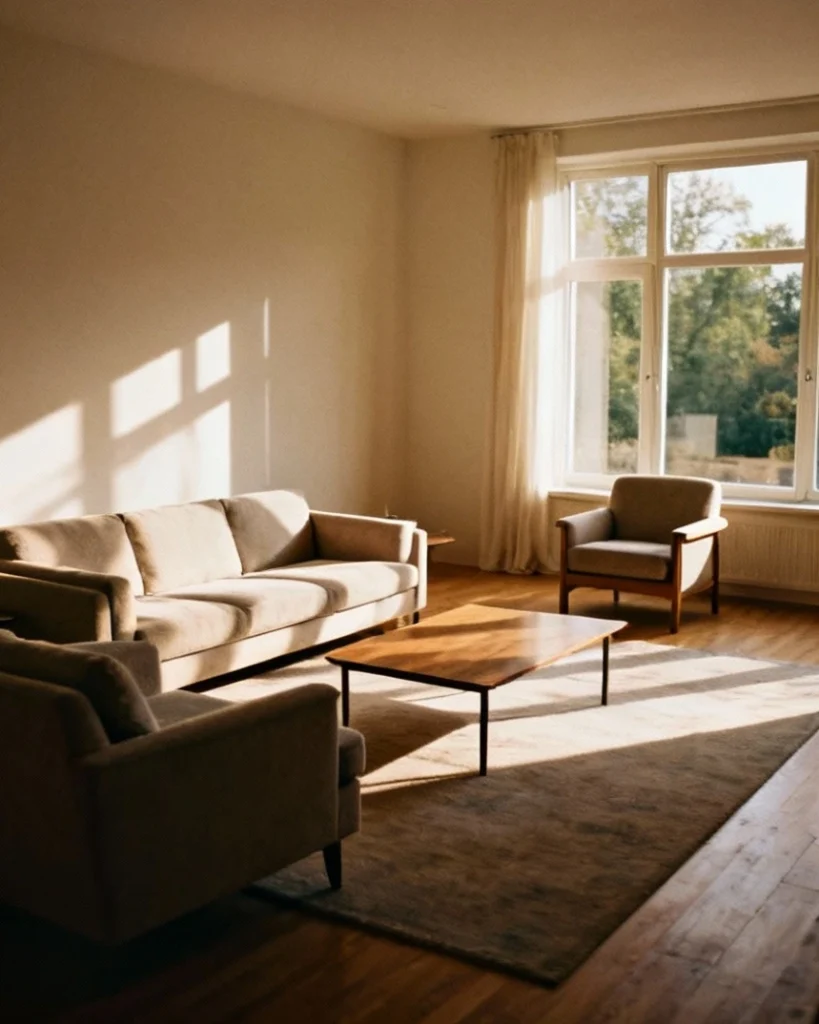
Mid-century living rooms prioritized actual conversation and gathering, with seating arranged in intimate groupings that encouraged face-to-face interaction rather than TV-focused layouts. Multiple seating clusters—perhaps a primary sofa group near the fireplace and a secondary chair pairing by windows—create flexibility for different activities and group sizes. This approach feels particularly relevant in our screen-saturated era when intentional spaces for connection carry renewed value.
This works exceptionally well in larger living rooms (over three hundred square feet) where multiple zones prevent the space from feeling empty or echoing. The common mistake is creating seating groups too far apart—twelve to fourteen feet between facing sofas or chairs maintains comfortable conversation distance. In homes where the living room genuinely serves multiple functions—reading, entertaining, music listening—distinct zones acknowledge this reality rather than forcing everything to orient toward a single focal point.
19. Brass and Wood Material Mixing
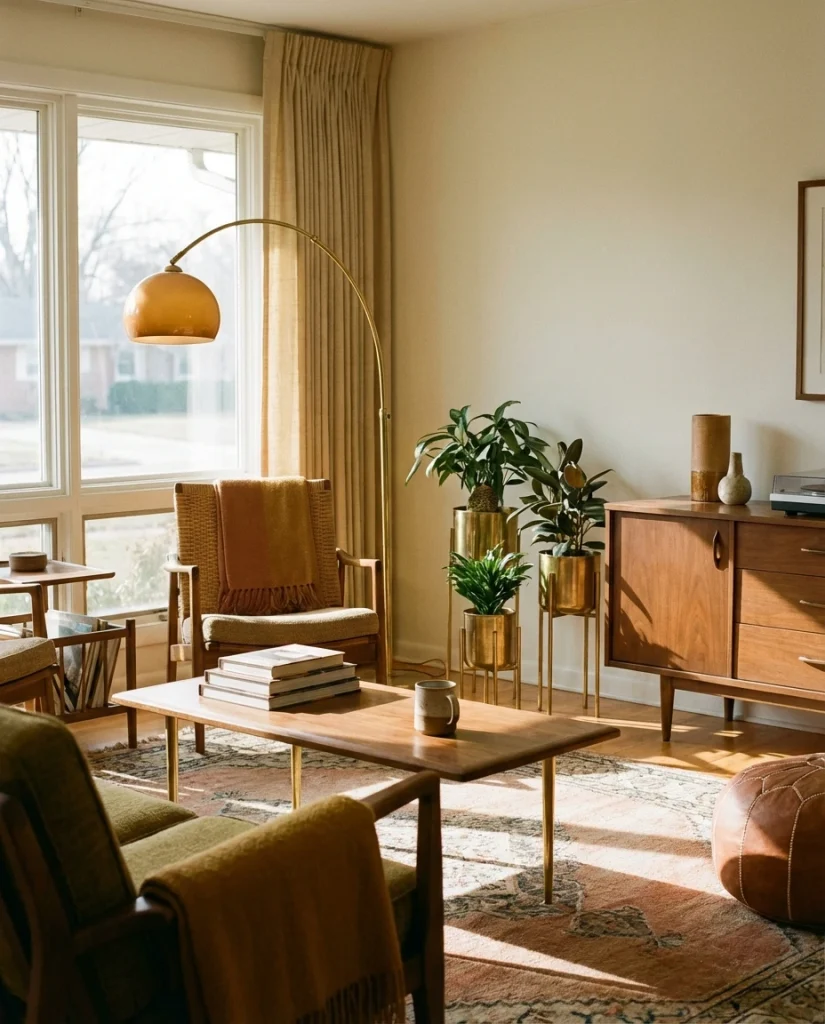
The warm glow of brass hardware, lighting, and decor objects creates beautiful material contrast against the prevalent wood tones in mid-century modern living room spaces. This mixing prevents the potential monotony of all-wood environments while adding a touch of glamour that balances the style’s casual accessibility. Coffee table legs, lamp bases, picture frames, and even plant stands in brass introduce subtle metallic notes throughout the room. 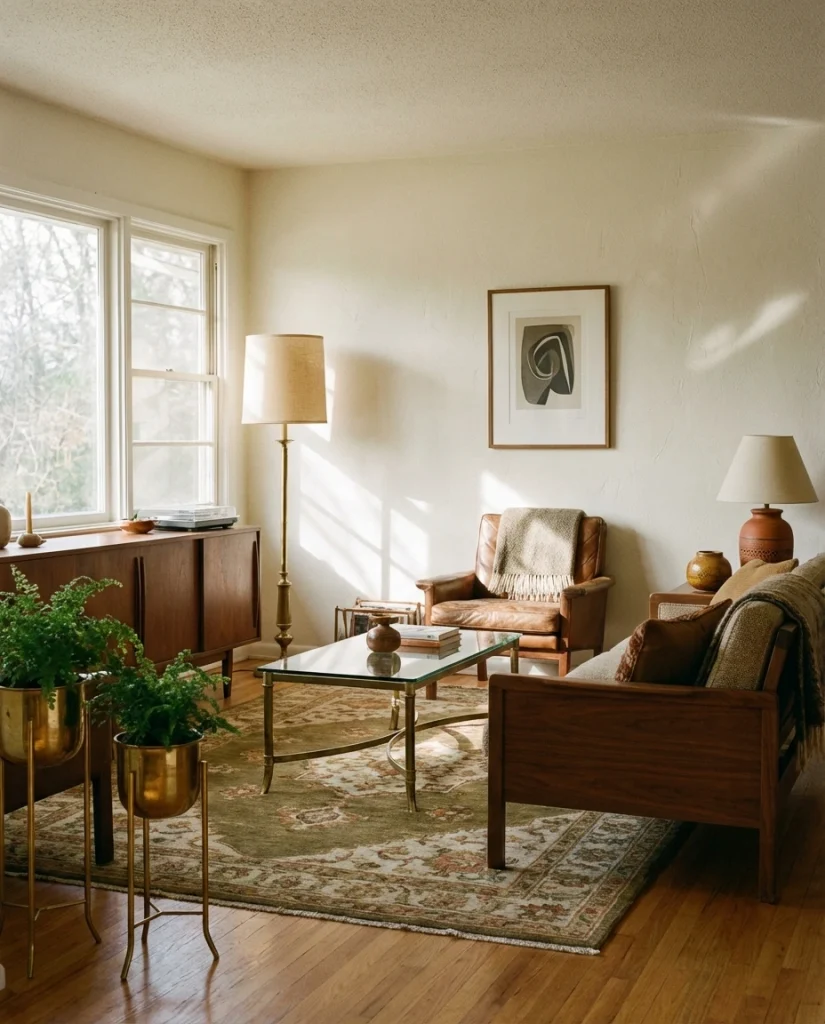
The budget angle here is encouraging—brass-finished pieces don’t require solid brass to achieve the desired effect. Quality brass-plated or PVD-finished items deliver similar warmth at a fraction of the cost, with pieces like table lamps starting around sixty dollars compared to four hundred plus for solid brass. Avoid mixing brass with other metallics like chrome or nickel in mid-century spaces; the warm metals were period-appropriate, while cooler tones feel anachronistic unless you’re intentionally pursuing a contemporary fusion aesthetic.
20. Modular Shelving Systems
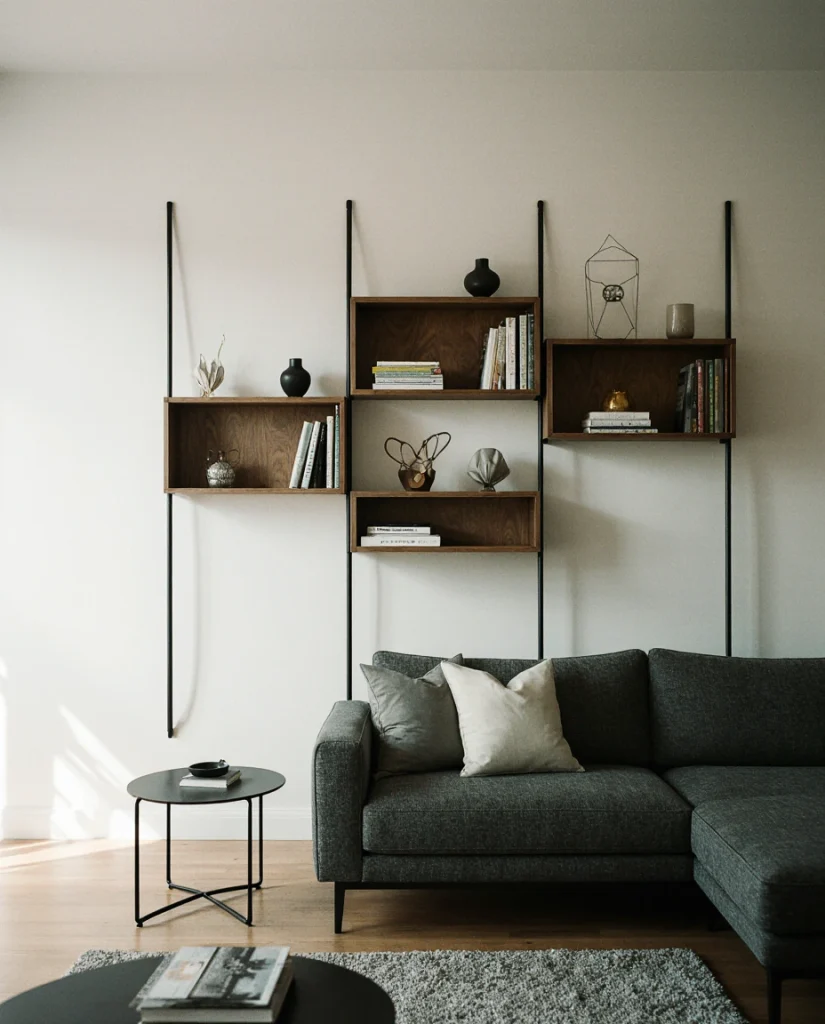
Modular shelving units like vintage Cado systems or contemporary String shelves offer the clean-lined storage that mid-century interiors require while providing incredible flexibility for changing needs and spaces. These wall-mounted systems create visual lightness through their suspension, leaving floor space clear and maintaining the style’s emphasis on horizontal flow. The ability to reconfigure shelf heights and add or remove components means the system grows and adapts with you. 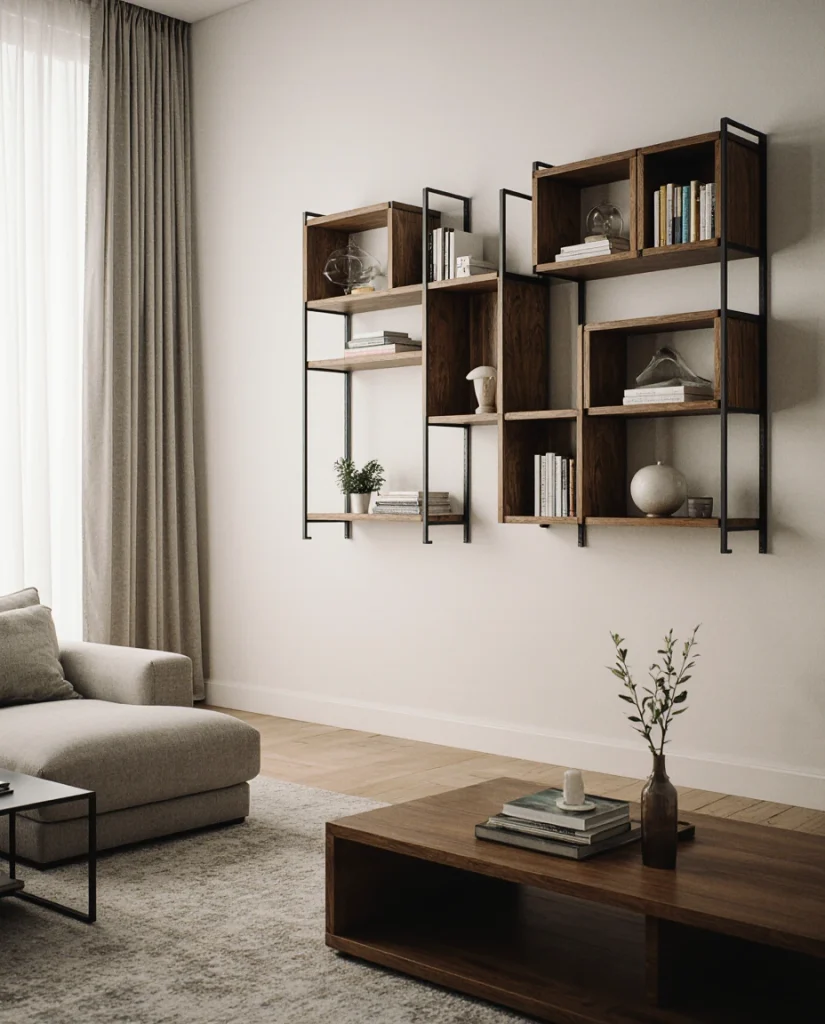
In apartment settings where renters need solutions that can move with them, high-quality modular systems justify their investment through portability and longevity—a String shelf system can follow you through multiple homes across decades. The mistake to avoid is overloading these systems beyond manufacturer weight recommendations; the minimal aesthetic depends on structural integrity that excessive weight compromises. Starter configurations begin around three hundred dollars and expand from there based on size and material choices.
21. Vintage Bar Cart Styling
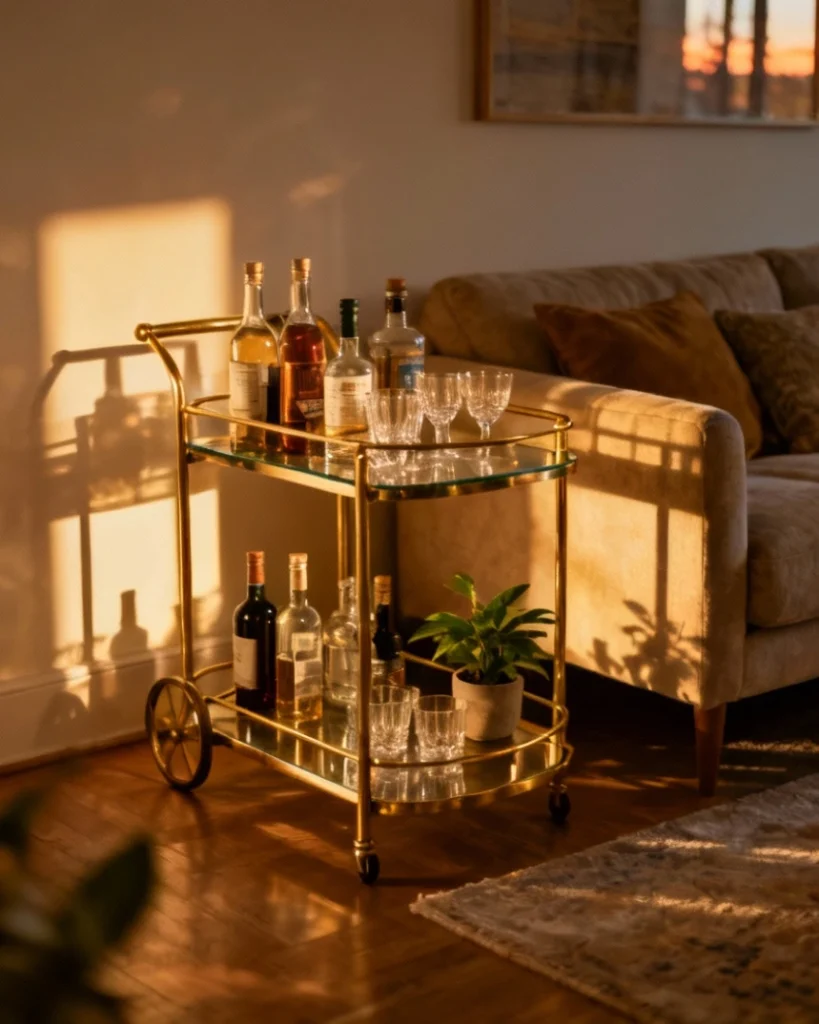
A well-styled bar cart adds functional elegance to mid-century modern living room spaces, serving both as an entertainment essential and a sculptural object when thoughtfully curated. Brass carts with glass shelves remain iconic, but teak wood varieties and two-tone combinations offer equally authentic alternatives. The key is edited styling—a few quality bottles, attractive glassware, and perhaps a small plant or art object rather than cluttered excess. 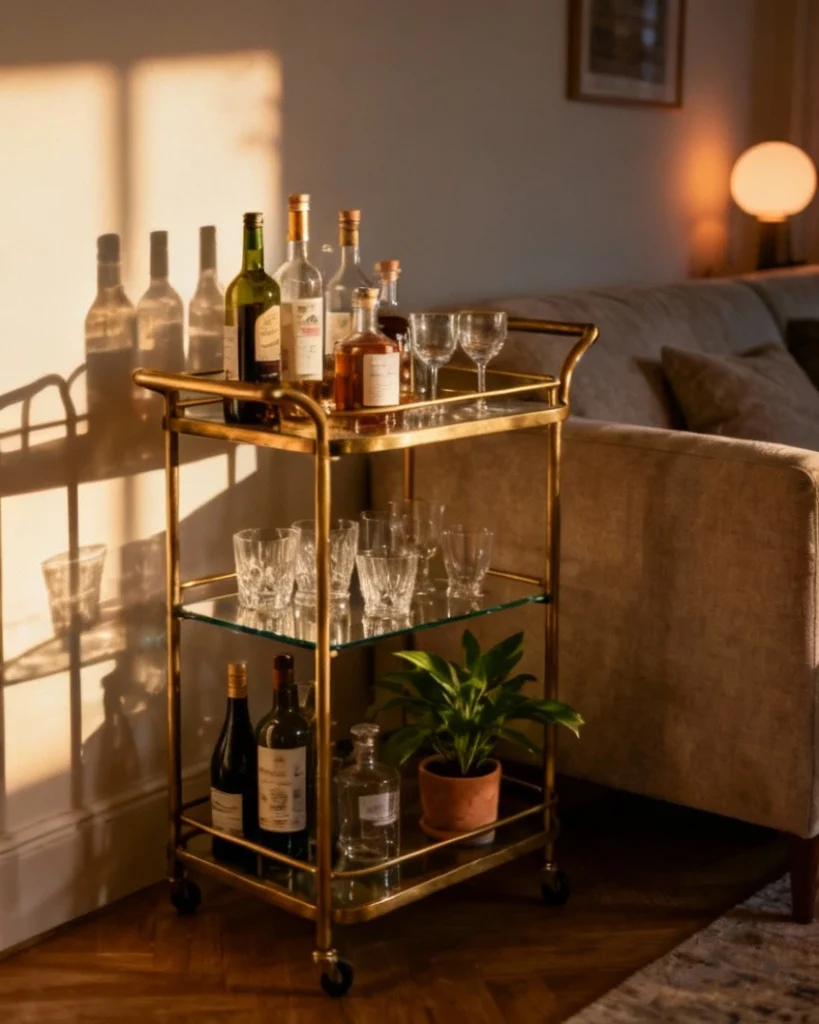
Bar carts function particularly well in boho-influenced mid-century spaces where the slightly eclectic mix of objects feels at home. Real homeowners often use these for purposes beyond cocktails—coffee stations, plant displays, or even book storage—which speaks to their versatility beyond the Instagram-perfect martini setup. Vintage carts range from one hundred fifty to six hundred dollars depending on condition and maker, while quality reproductions start around one hundred twenty dollars for basic models.
Conclusion
Creating your perfect mid-century modern living room in 2026 means honoring the style’s core principles—clean lines, quality materials, purposeful design—while making it work for contemporary life. Whether you’re drawn to bold color experiments, prefer restrained neutrals, or want to mix authentic vintage with modern reproductions, these ideas provide starting points for spaces that feel both timeless and entirely current. Which elements resonate most with your vision? Share your thoughts and your own mid-century modern living room projects in the comments below.