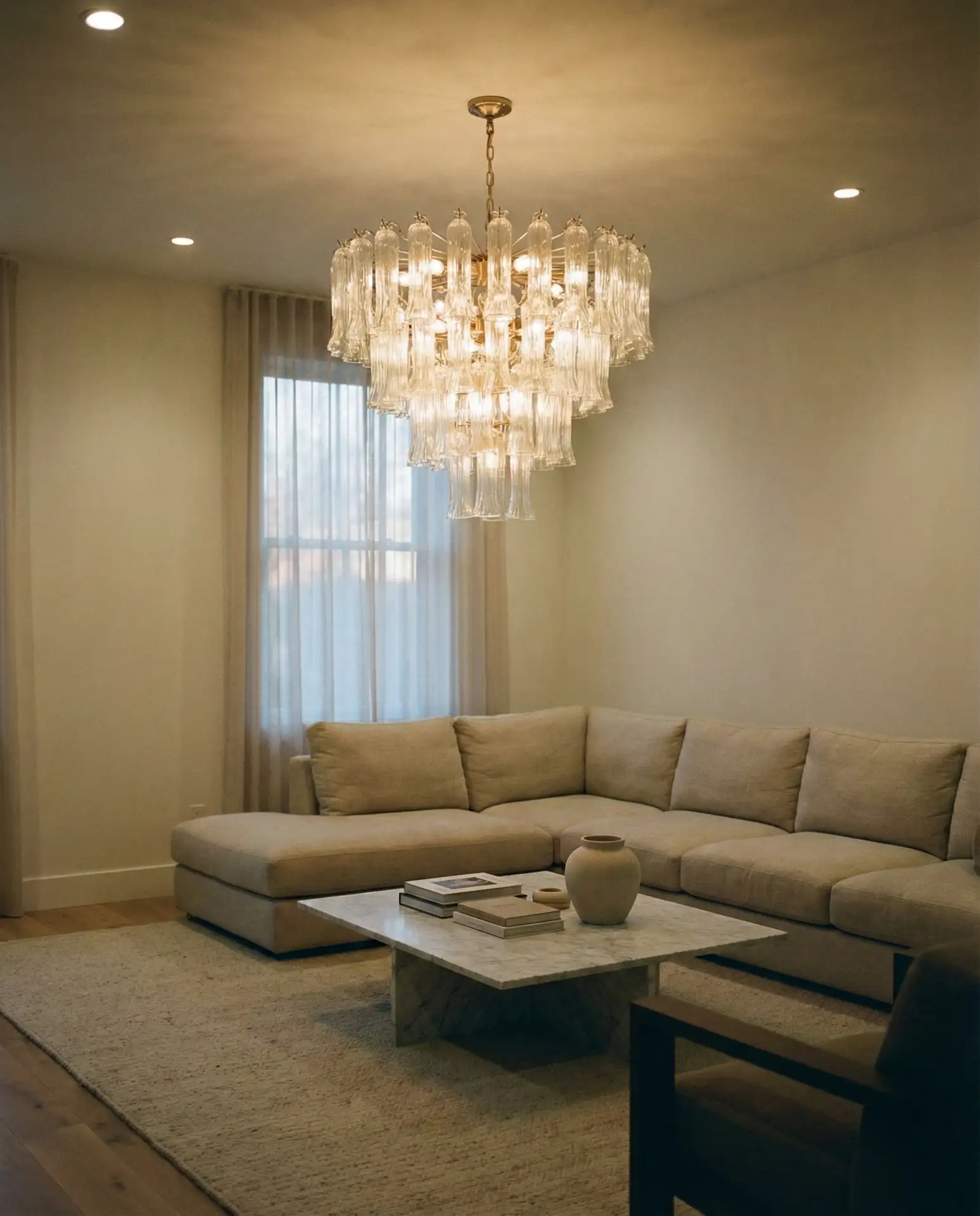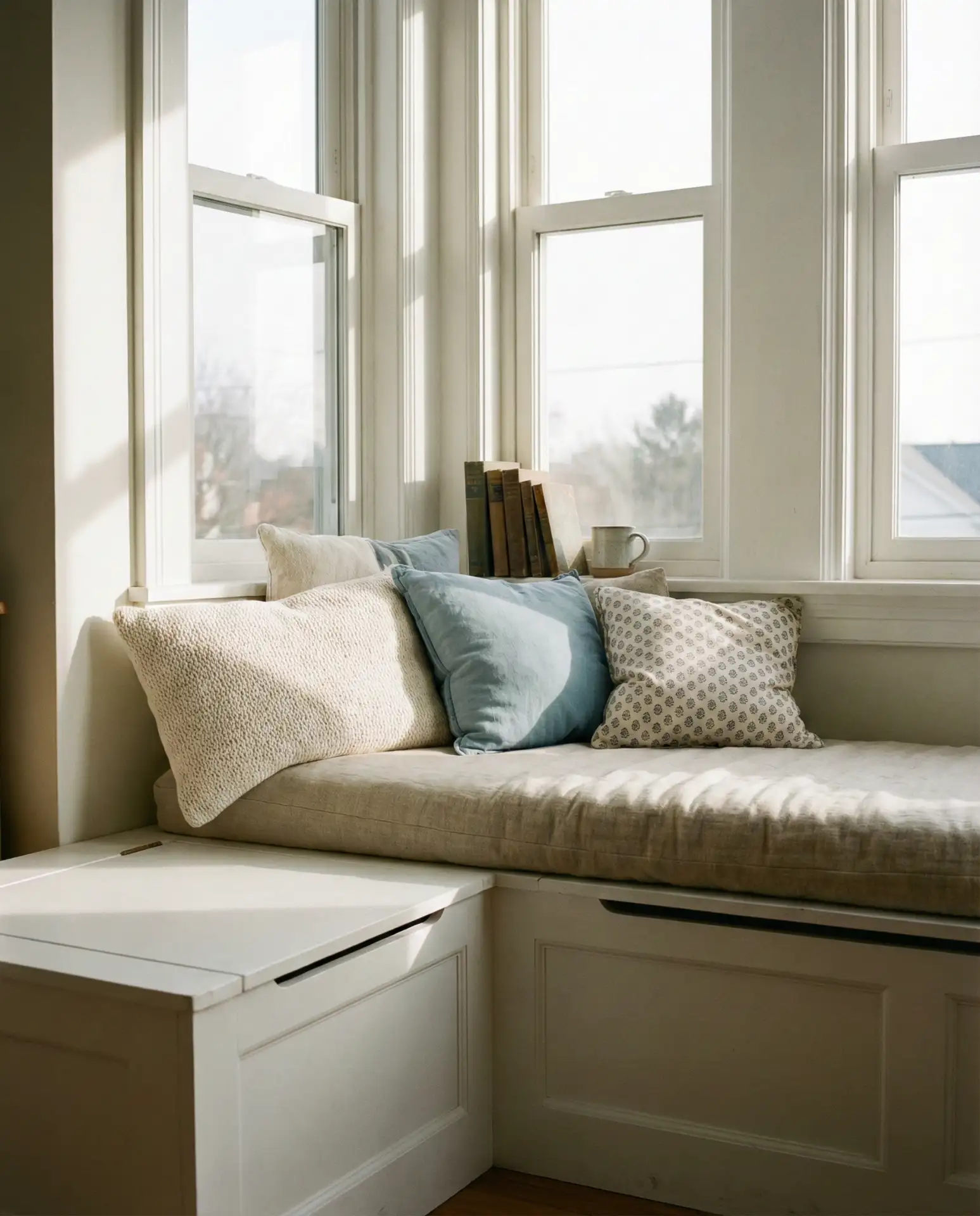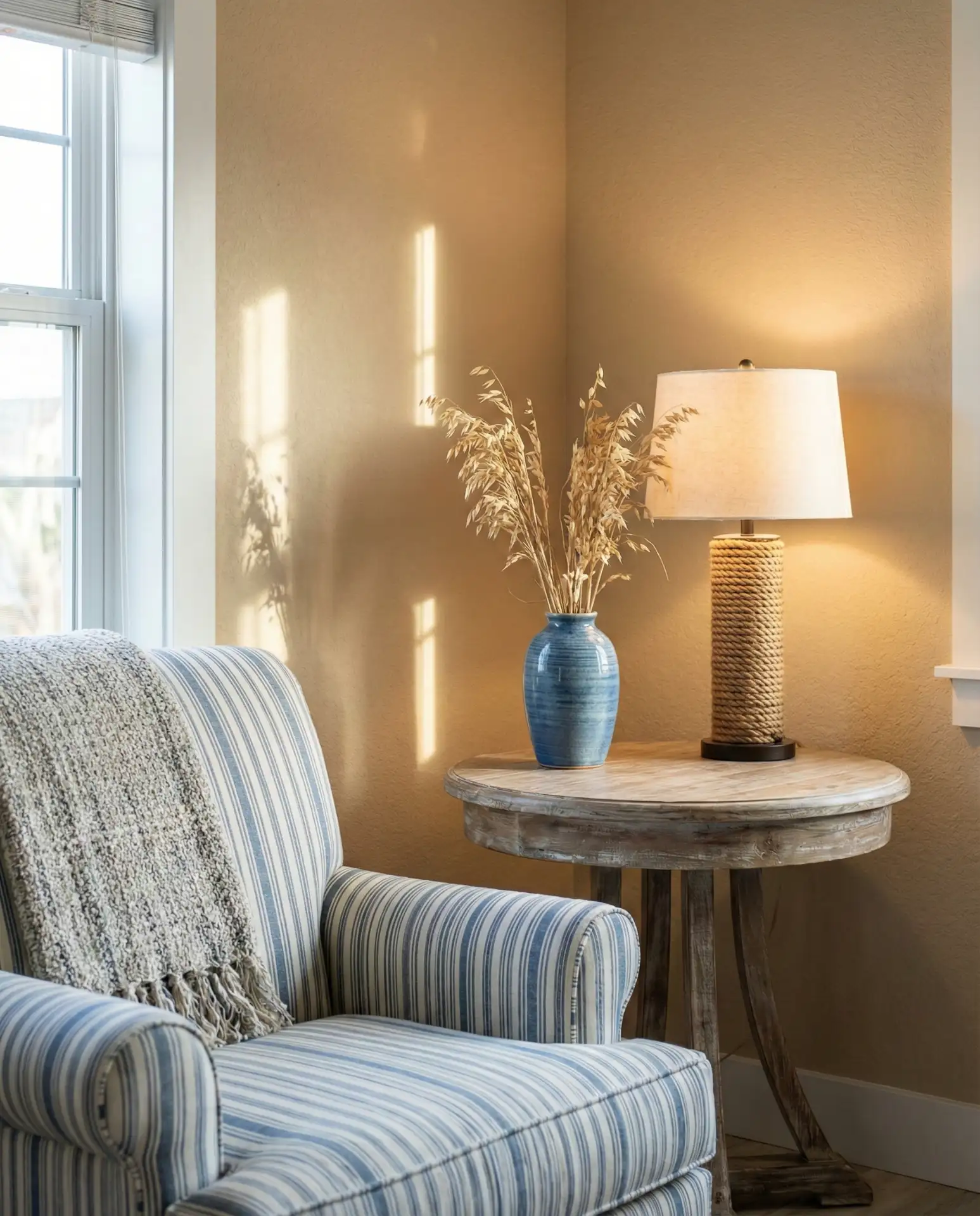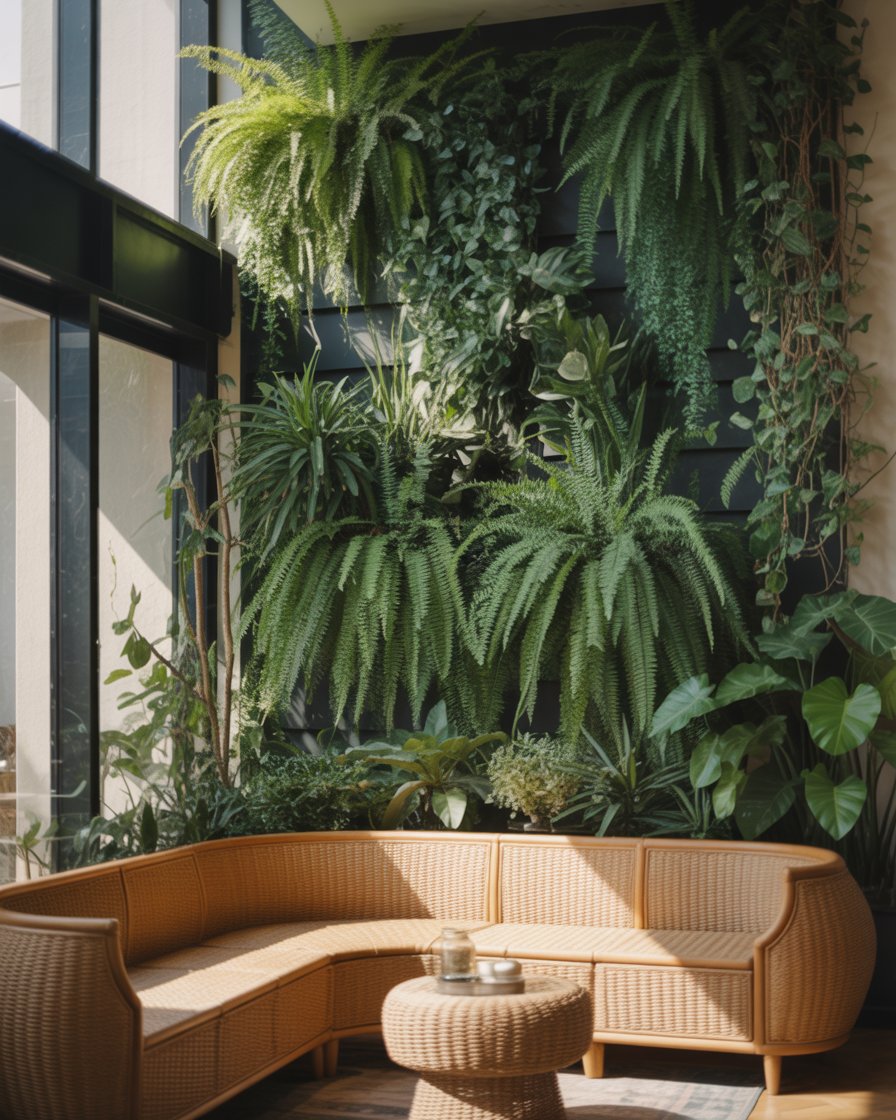
The modern farmhouse living room has evolved into one of the most searched interior design styles on Pinterest in 2026, blending rustic charm with contemporary clean lines. American homeowners from coast to coast are drawn to this aesthetic because it feels both timeless and fresh, offering warmth without sacrificing sophistication. Whether you’re working with a small space or designing around a brown couch or grey couch, the modern farmhouse style adapts beautifully to your needs. This guide presents 23 distinct ideas that showcase how to layer textures, incorporate color, and create inviting spaces that reflect the relaxed elegance Pinterest users crave.
1. Shiplap Accent Wall with Vintage Finds
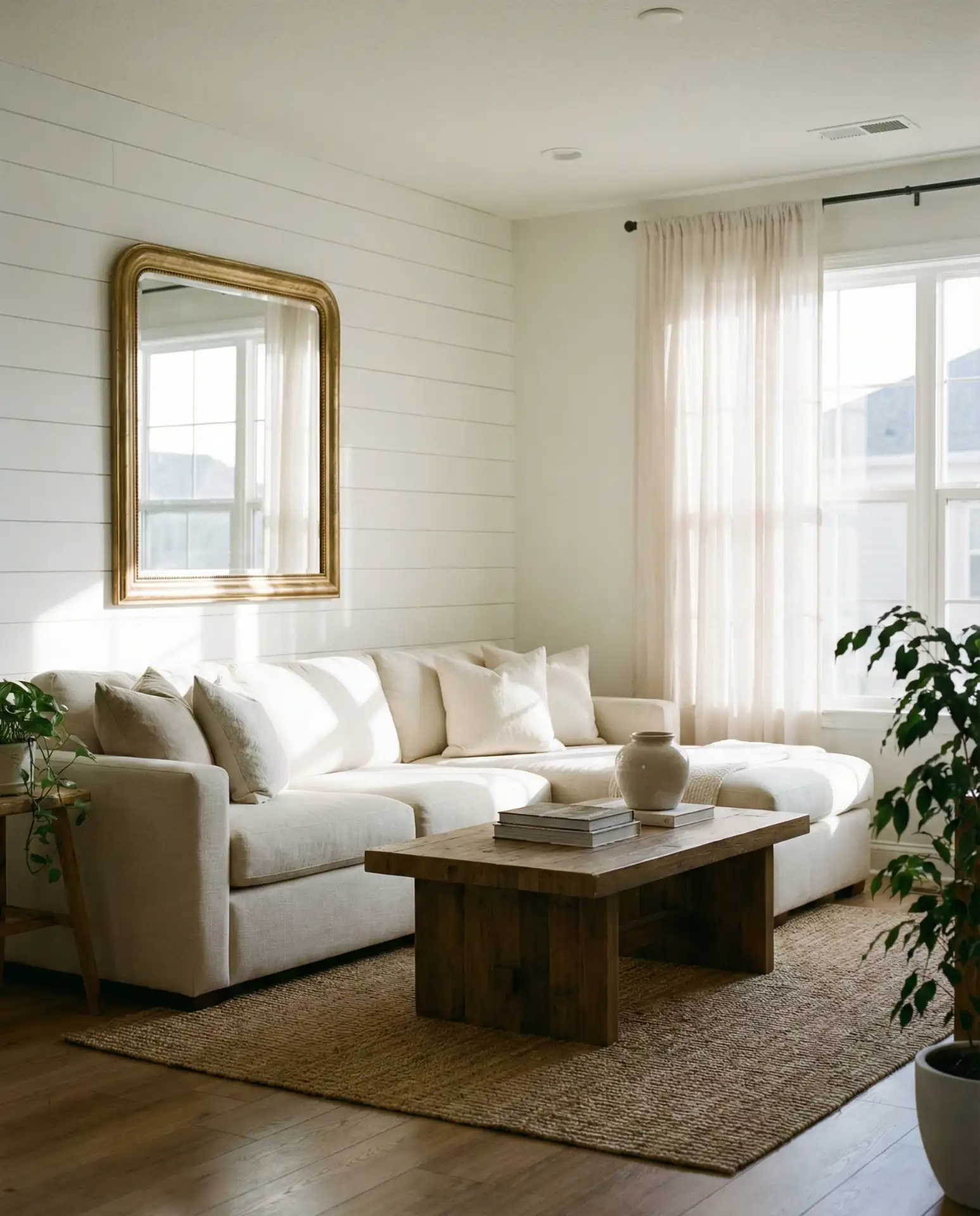
A shiplap accent wall instantly establishes that Joanna Gaines-approved farmhouse foundation while keeping the room grounded in modern simplicity. Pair the white or weathered wood planks with vintage metal signs, reclaimed mirrors, or antique window frames as wall decor to add character without clutter. This approach works especially well behind a TV, creating a textured backdrop that doesn’t compete with your screen. The key is balancing the rustic wood with streamlined furniture so the space feels curated rather than country-heavy.
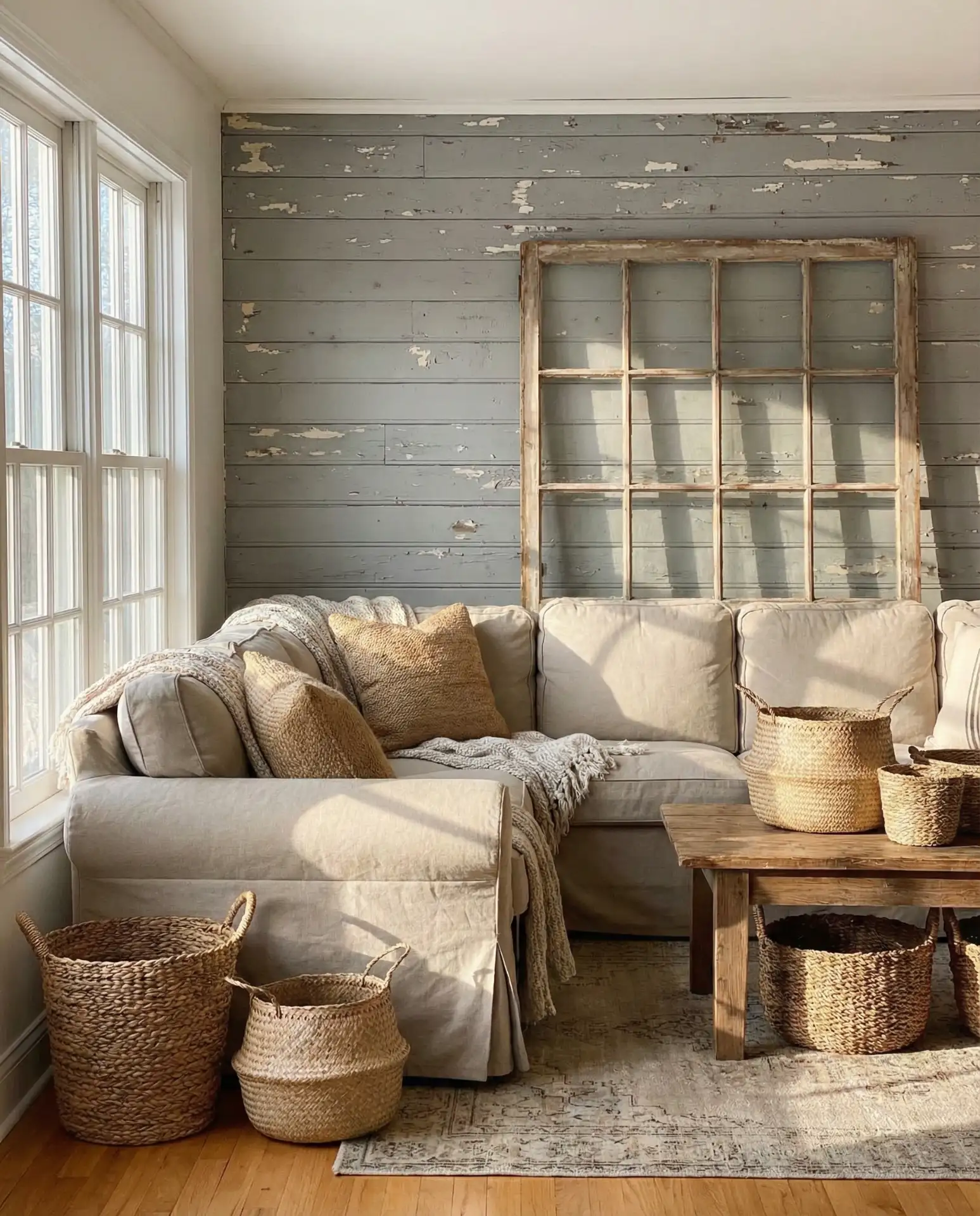
In regions like Texas and Tennessee, where farmhouse style runs deep, homeowners often source their shiplap from local mills or salvage yards, which adds authentic texture and supports small businesses. The vertical or horizontal orientation of the planks can subtly influence how spacious the room feels—horizontal lines widen, while vertical lines lift the ceiling visually. Mixing in industrial light fixtures or Edison bulbs keeps the aesthetic from skewing too sweet, ensuring your living room maintains that modern edge.
2. Leather Sectional with Neutral Textiles
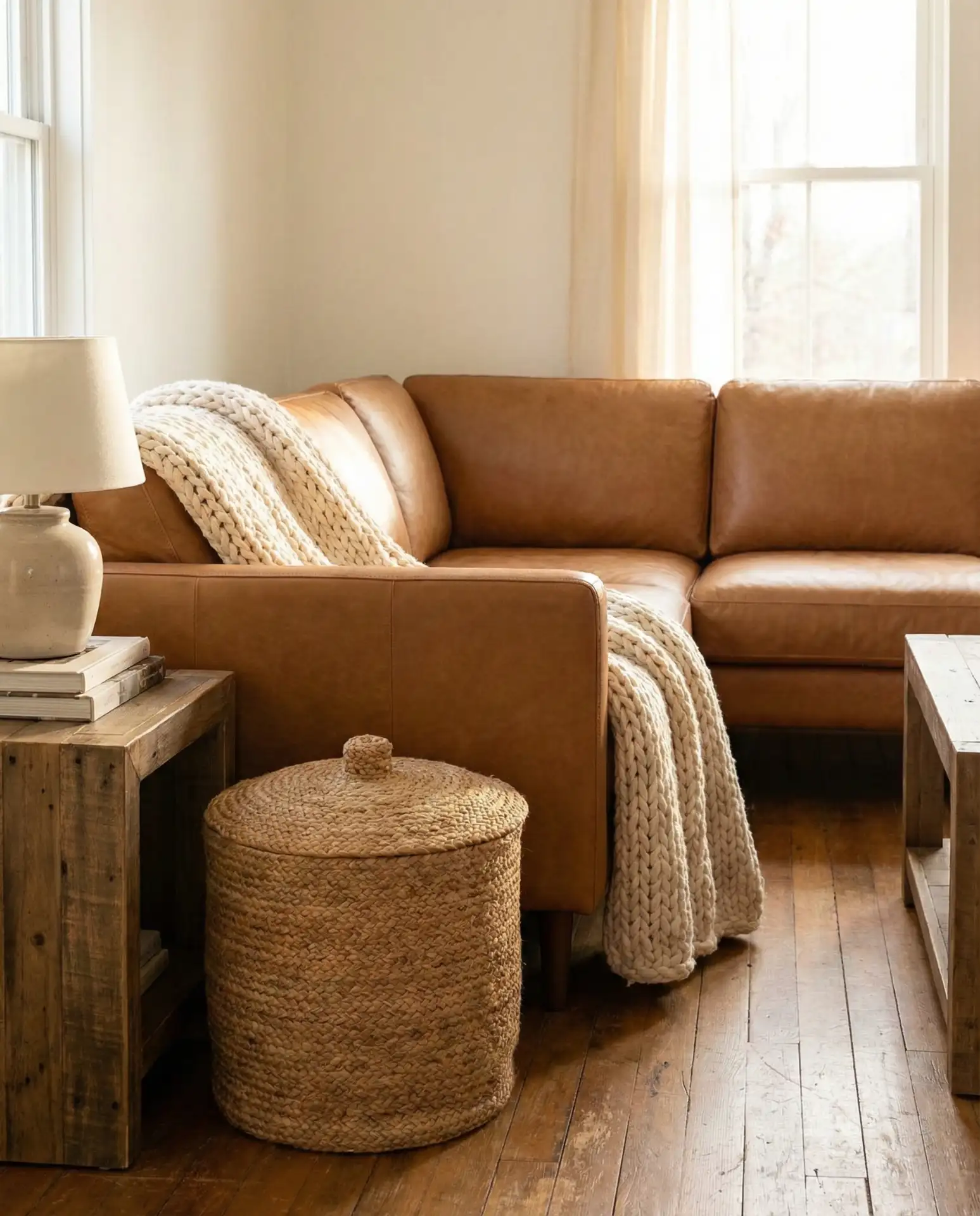
A cognac or caramel leather sectional introduces rich warmth and ages beautifully over time, developing a patina that feels both lived-in and luxurious. Layer it with chunky knit throws, linen pillows, and a jute or wool rug to soften the leather’s formality and anchor the seating area. This combination is popular across the Midwest and Pacific Northwest, where families want durability without sacrificing style. The neutral palette allows you to swap in seasonal accents—think green velvet pillows in spring or charcoal wool in winter—without redecorating entirely.
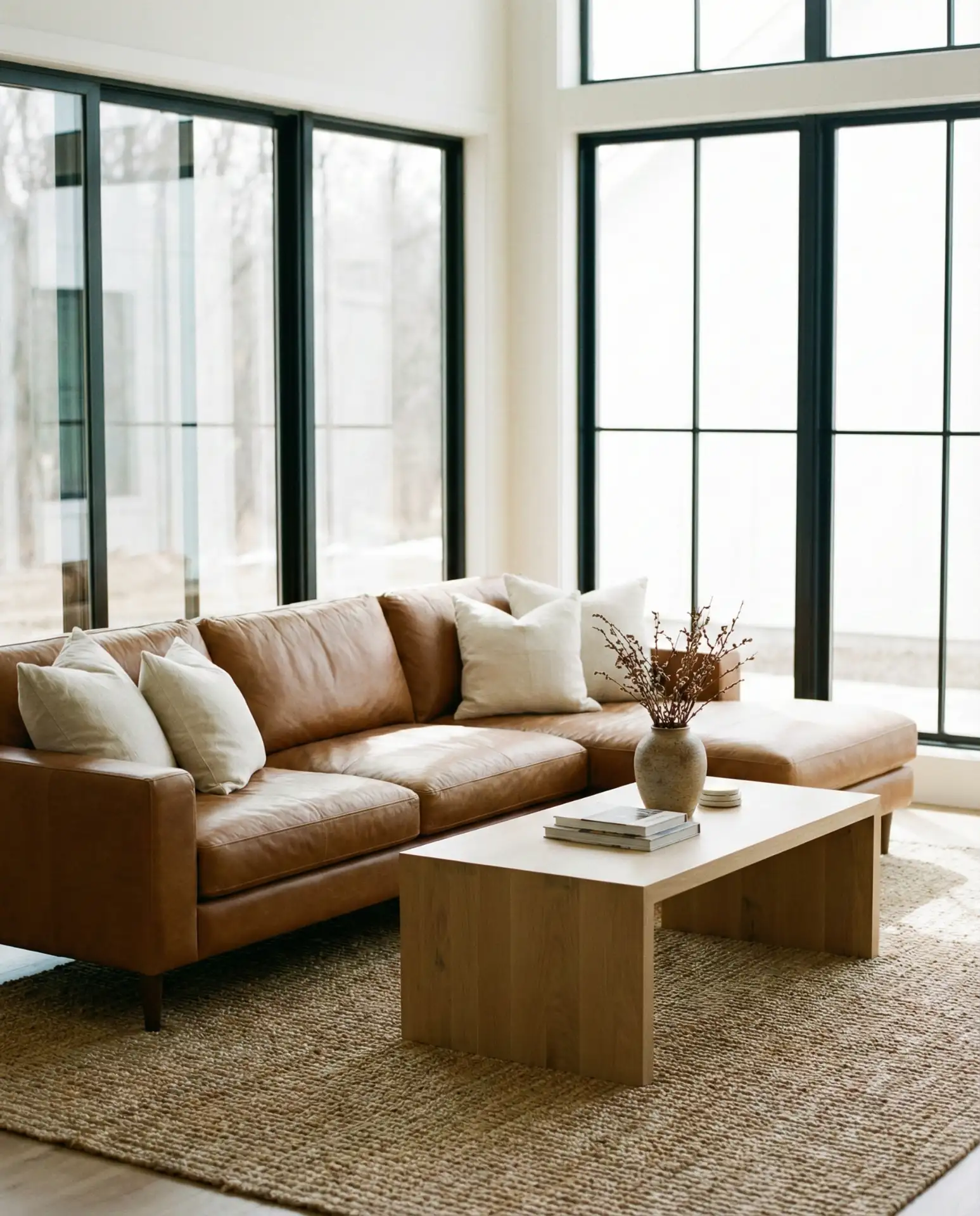
One common mistake is choosing leather that’s too stiff or shiny, which reads more corporate than farmhouse. Look for top-grain or full-grain leather with a matte or slightly distressed finish—it feels more organic and pairs better with rustic wood tones. Budget-conscious shoppers can find quality leather sectionals starting around $1,800 during holiday sales, making this investment piece more accessible than many assume.
3. Statement Beam Ceiling
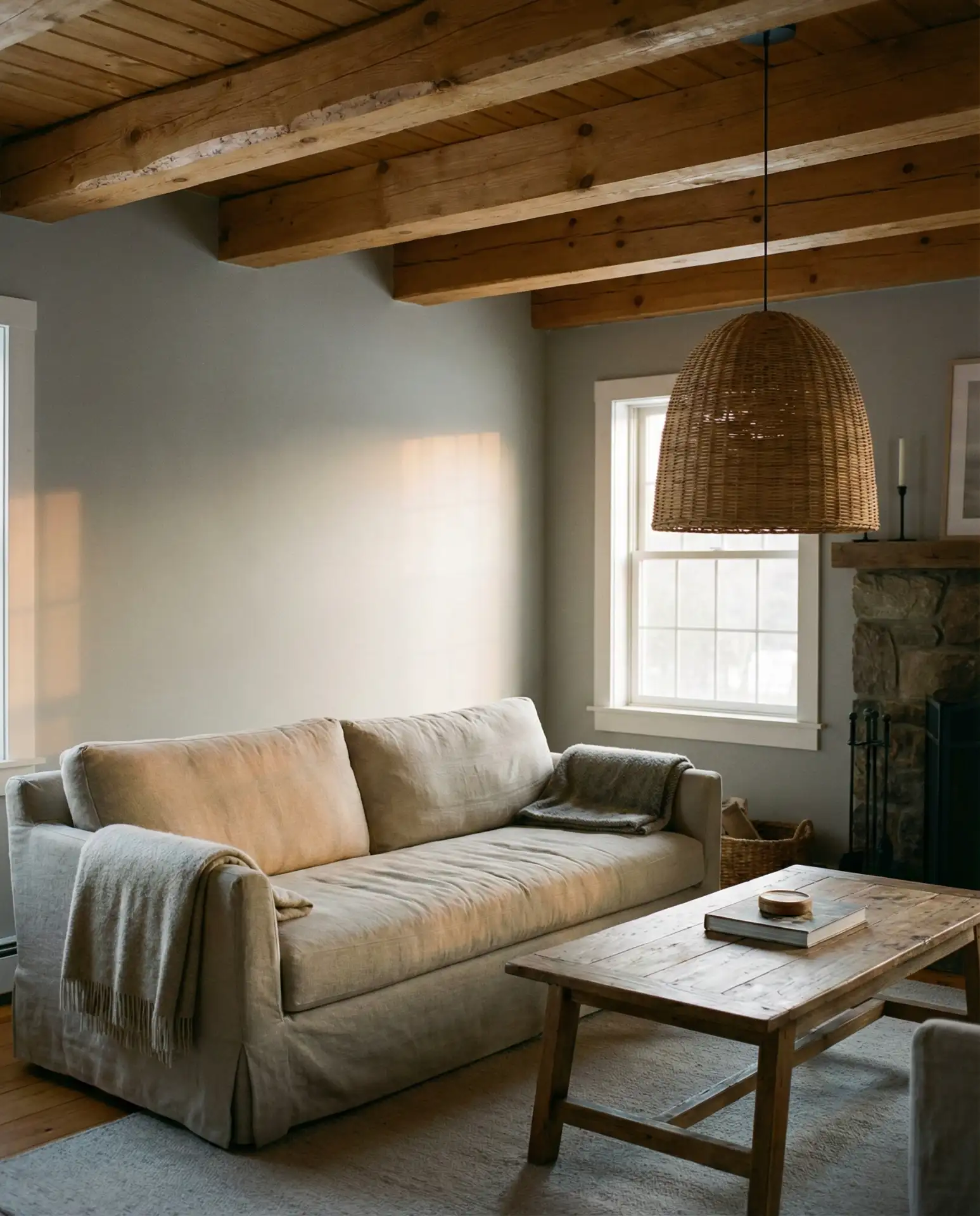
Exposed wooden beams—whether structural or decorative—draw the eye upward and add architectural drama that’s central to the farmhouse aesthetic. Stain them in a rich walnut or leave them natural for contrast against white or light-paint-colored walls. Even in homes with standard eight-foot ceilings, faux beams made from lightweight wood or polyurethane can create the illusion of height and history. This detail works beautifully in open-concept layouts, defining the living zone without physical barriers.
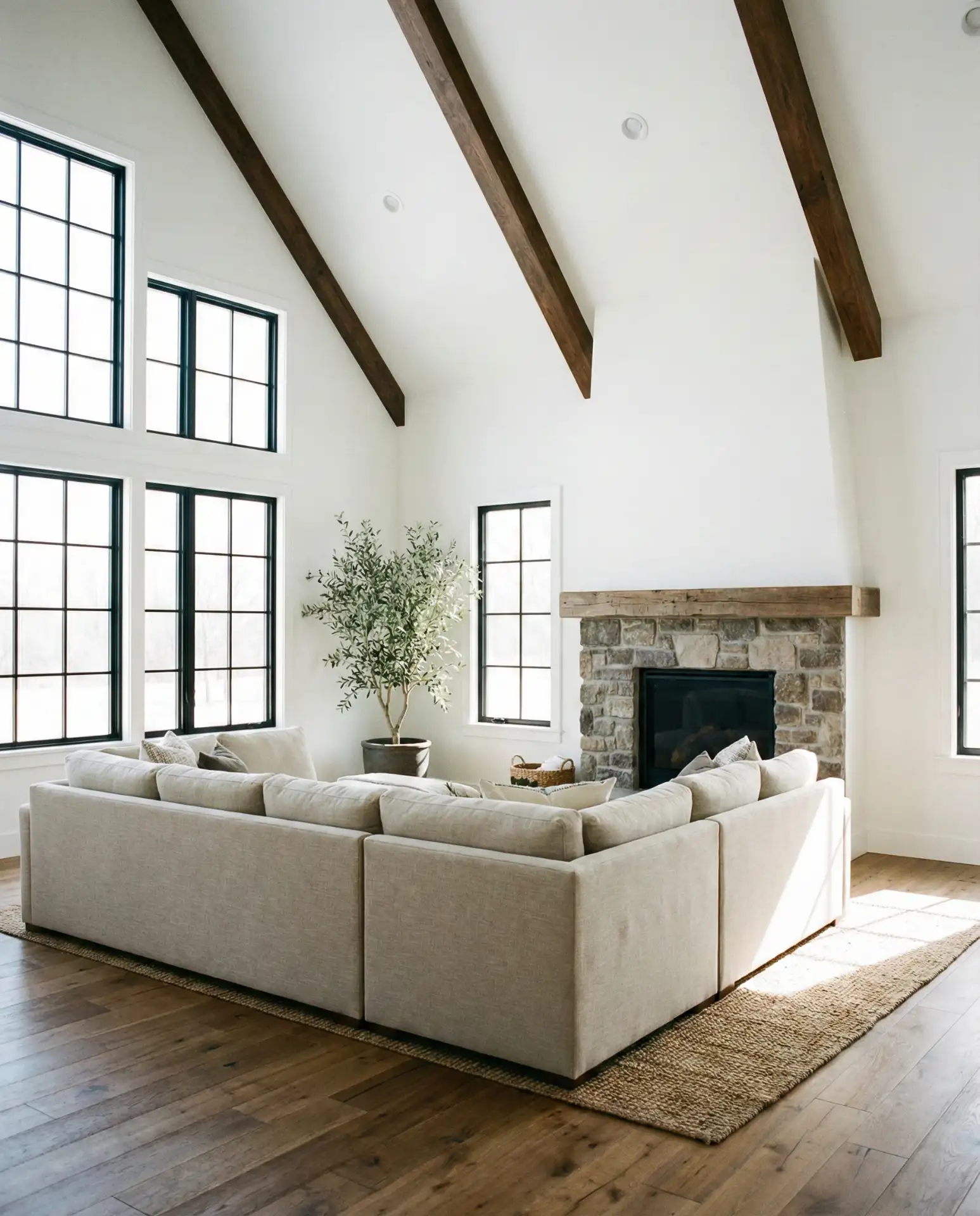
Across suburban developments in states like North Carolina and Colorado, builders are increasingly including beam ceilings as a standard feature in new construction, recognizing the style’s enduring appeal. The beams also provide a practical mounting point for statement chandeliers or track lighting, helping you layer ambient and task lighting effectively. If you’re retrofitting beams, hire a carpenter to ensure they’re properly anchored—poorly installed faux beams can sag or detach over time.
4. Moody Charcoal and Wood Pairing
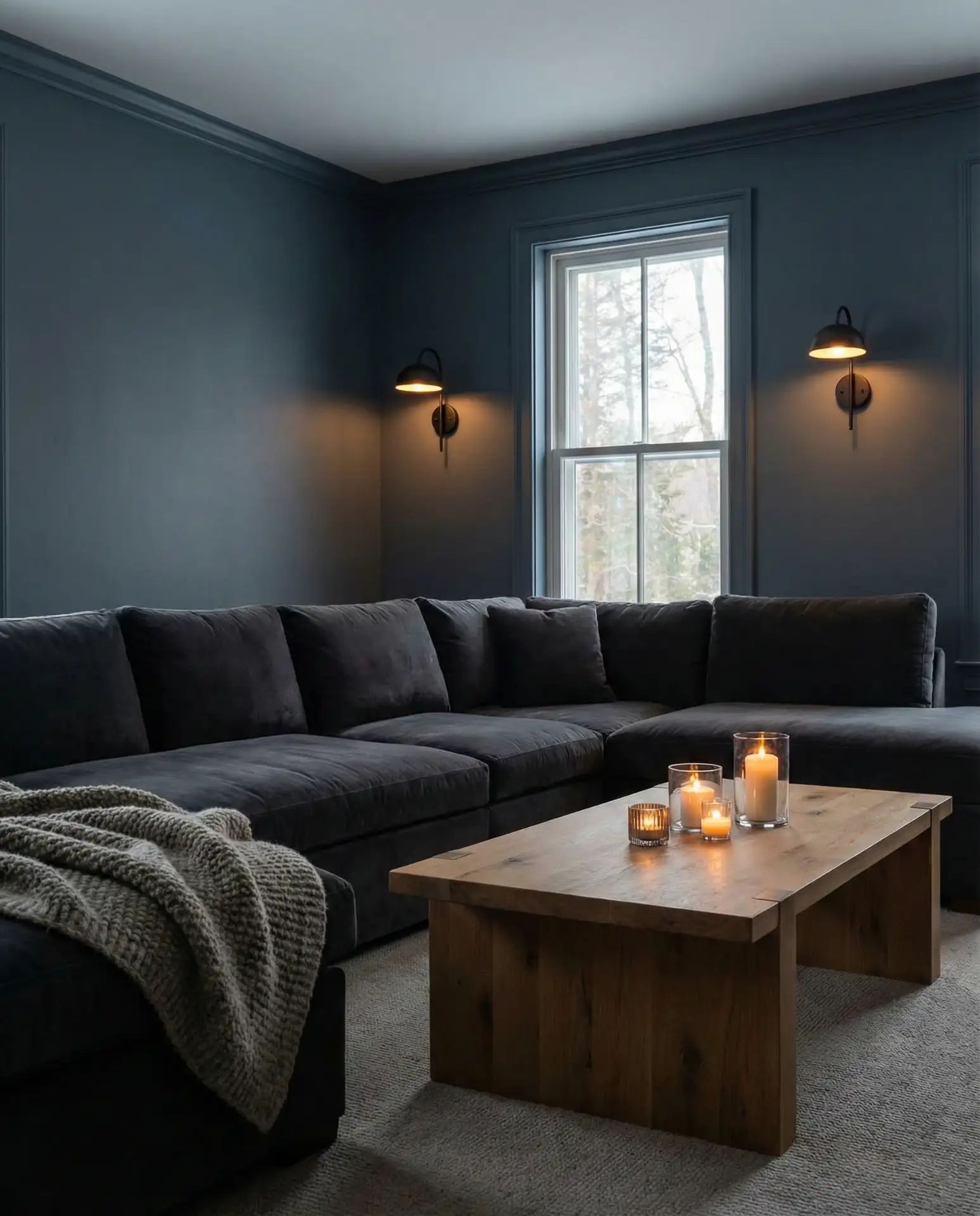
For those craving a moody twist on traditional farmhouse style, deep charcoal or slate walls paired with warm wood tones create a sophisticated, gallery-like backdrop. This palette highlights the grain and texture of reclaimed wood furniture, making every piece feel intentional. A dark couch in charcoal linen or velvet blends seamlessly, while brass or matte black hardware and fixtures add modern polish. The result is a living room that feels intimate and cocoon-like, perfect for long evenings and cozy gatherings.
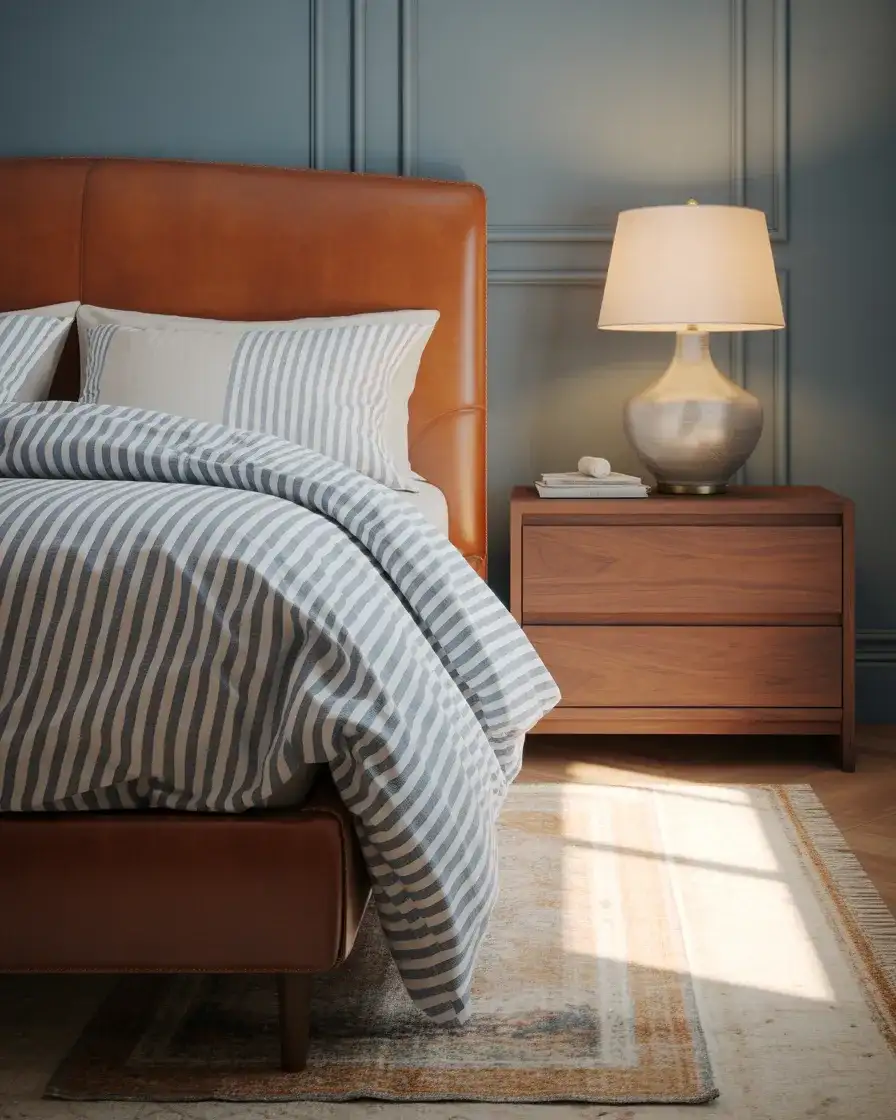
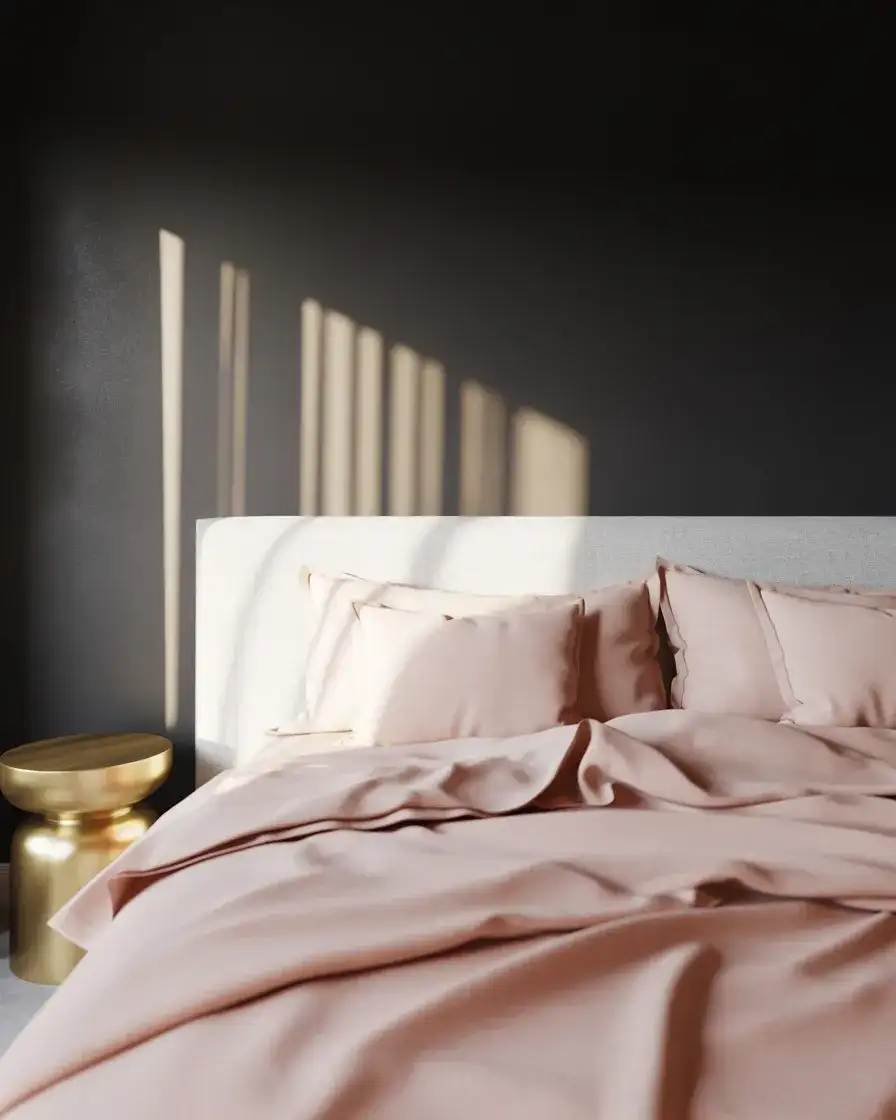
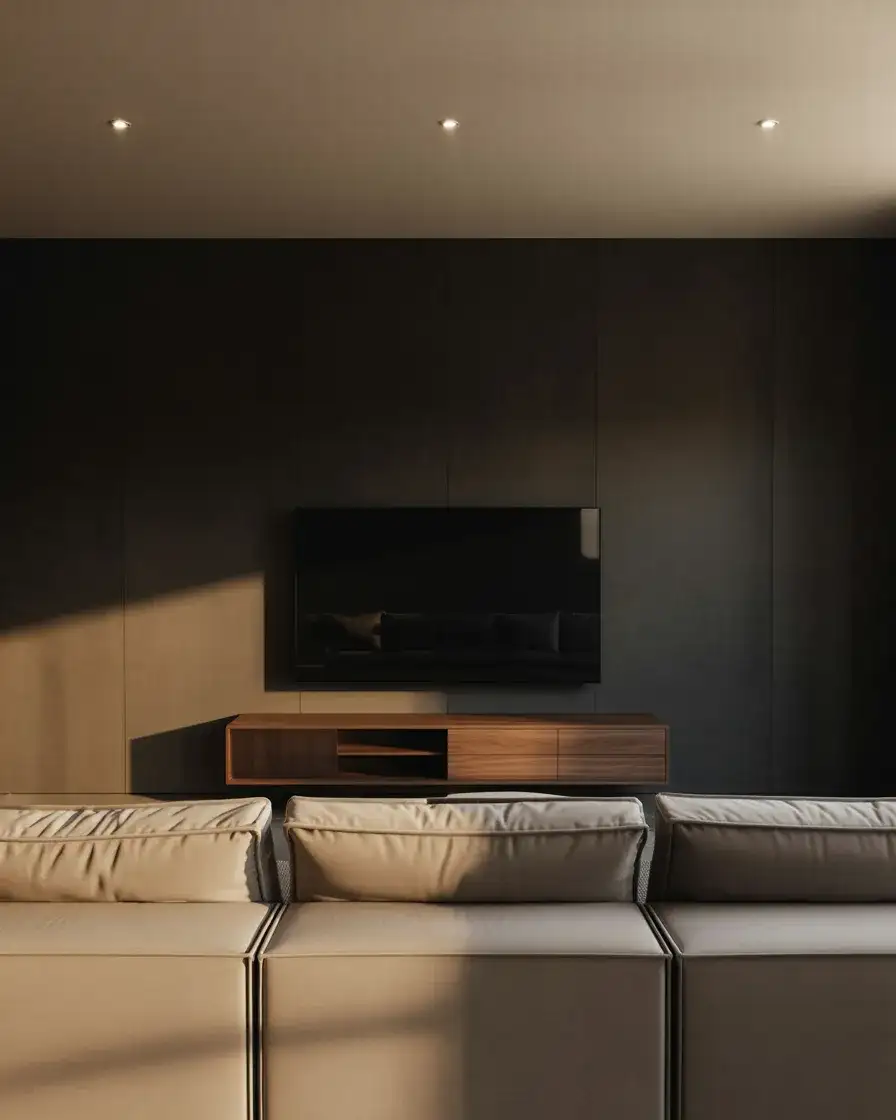
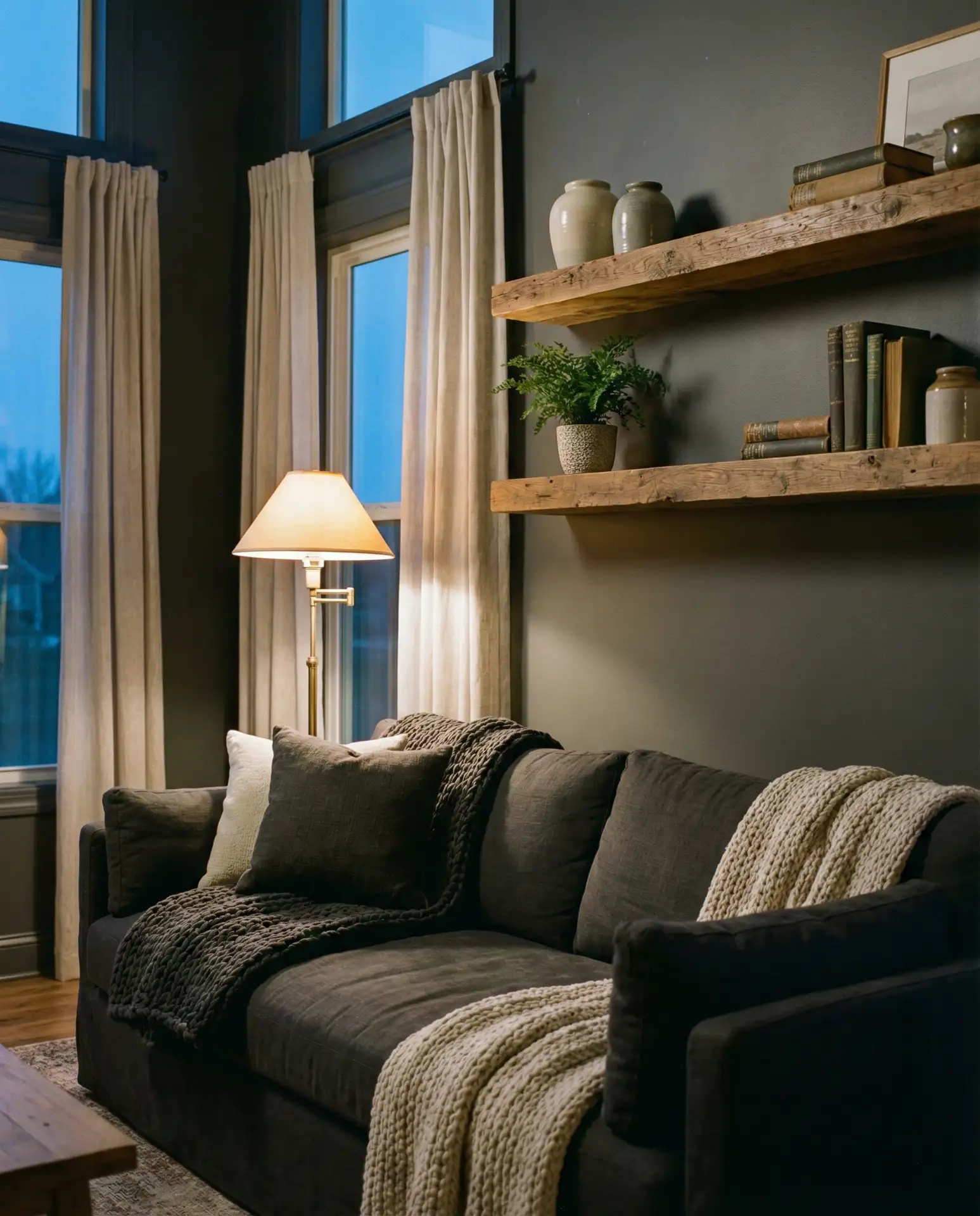
This look works best in rooms with ample natural light or high-quality layered lighting—otherwise, dark walls can make a space feel cramped. A homeowner in Portland recently shared that she balanced her moody living room by installing oversized windows and adding a statement mirror, which doubled the perceived light and made the charcoal feel luxurious rather than heavy. Budget around $300 for premium low-VOC paint that won’t require excessive coats to achieve true depth.
5. Farmhouse Gallery Wall with Mixed Frames
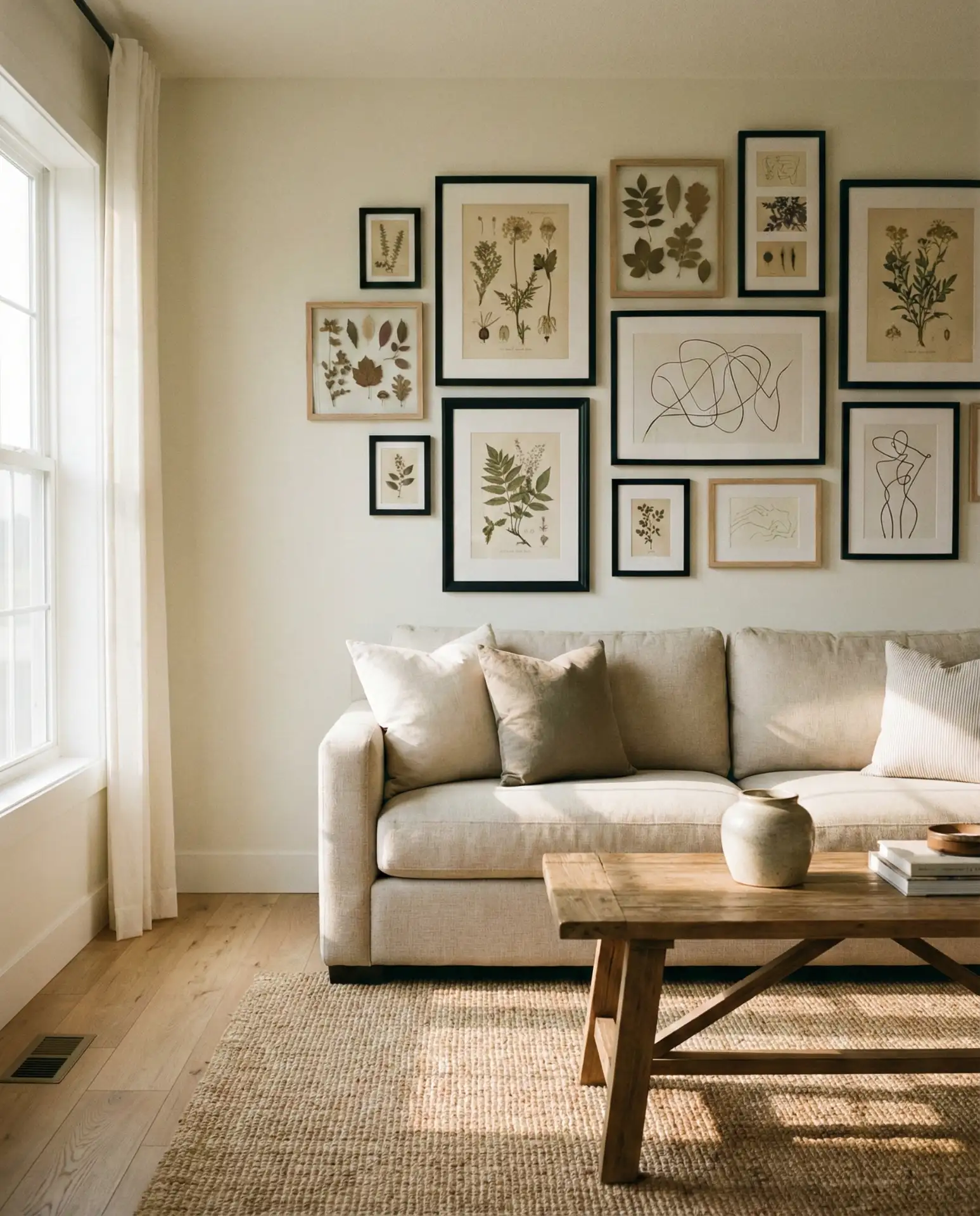
A curated gallery wall featuring a mix of black, white, and natural wood frames brings personality and visual interest without overwhelming the simplicity of modern farmhouse design. Include family photos, botanical prints, vintage maps, or abstract art to reflect your personal story while maintaining a cohesive color scheme. This wall decor strategy is especially effective above a sofa or console table, filling vertical space in a way that feels organic rather than staged. The asymmetry keeps things relaxed and approachable, true to the farmhouse ethos.
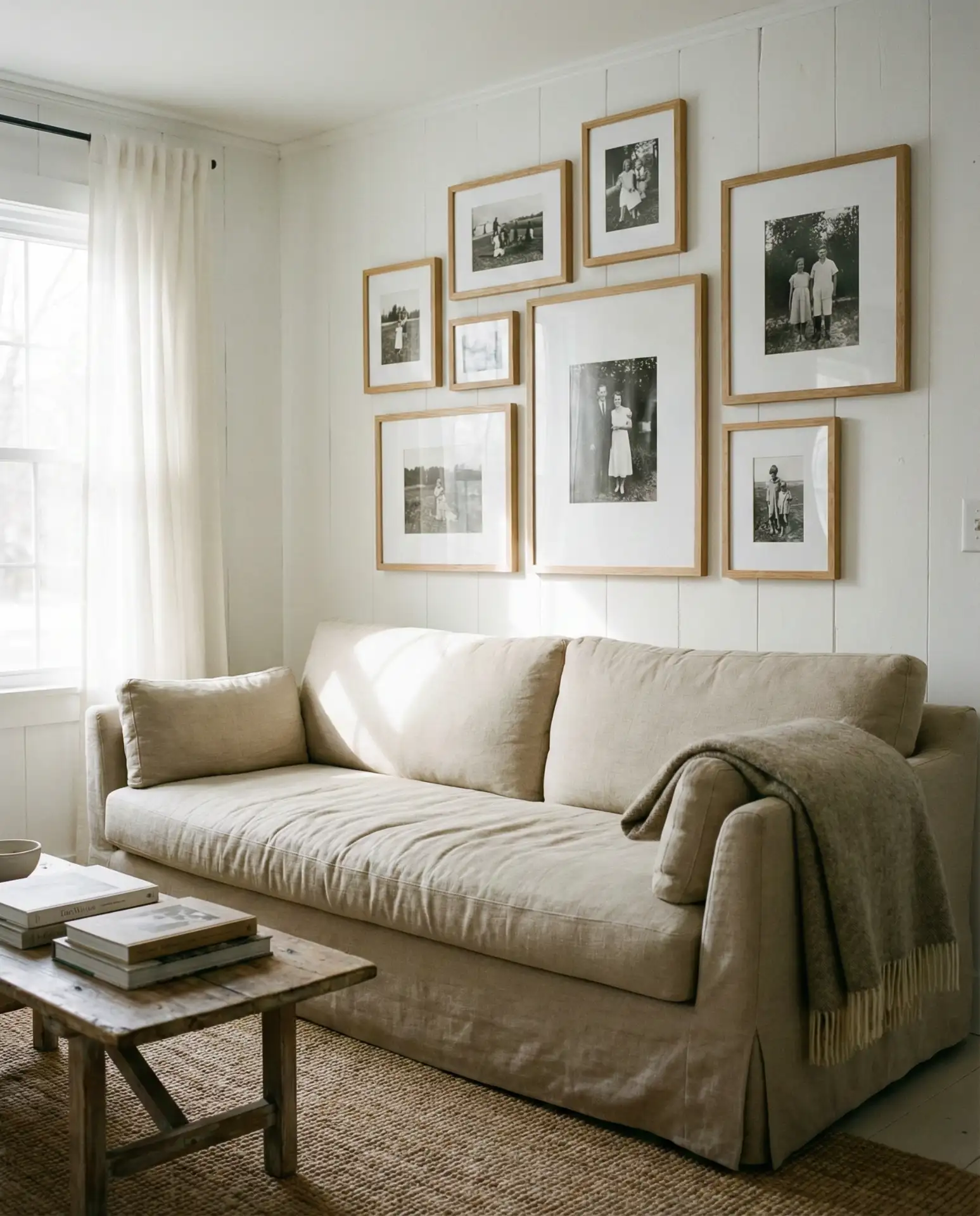
Many homeowners make the mistake of hanging frames too high or too far apart, which fragments the composition. Aim to keep the center of your gallery at eye level—roughly 57 to 60 inches from the floor—and maintain 2 to 3 inches of space between frames for visual cohesion. Laying out the arrangement on the floor first or using painter’s tape on the wall helps you refine the design before committing to nail holes.
6. Sliding Barn Door as Room Divider
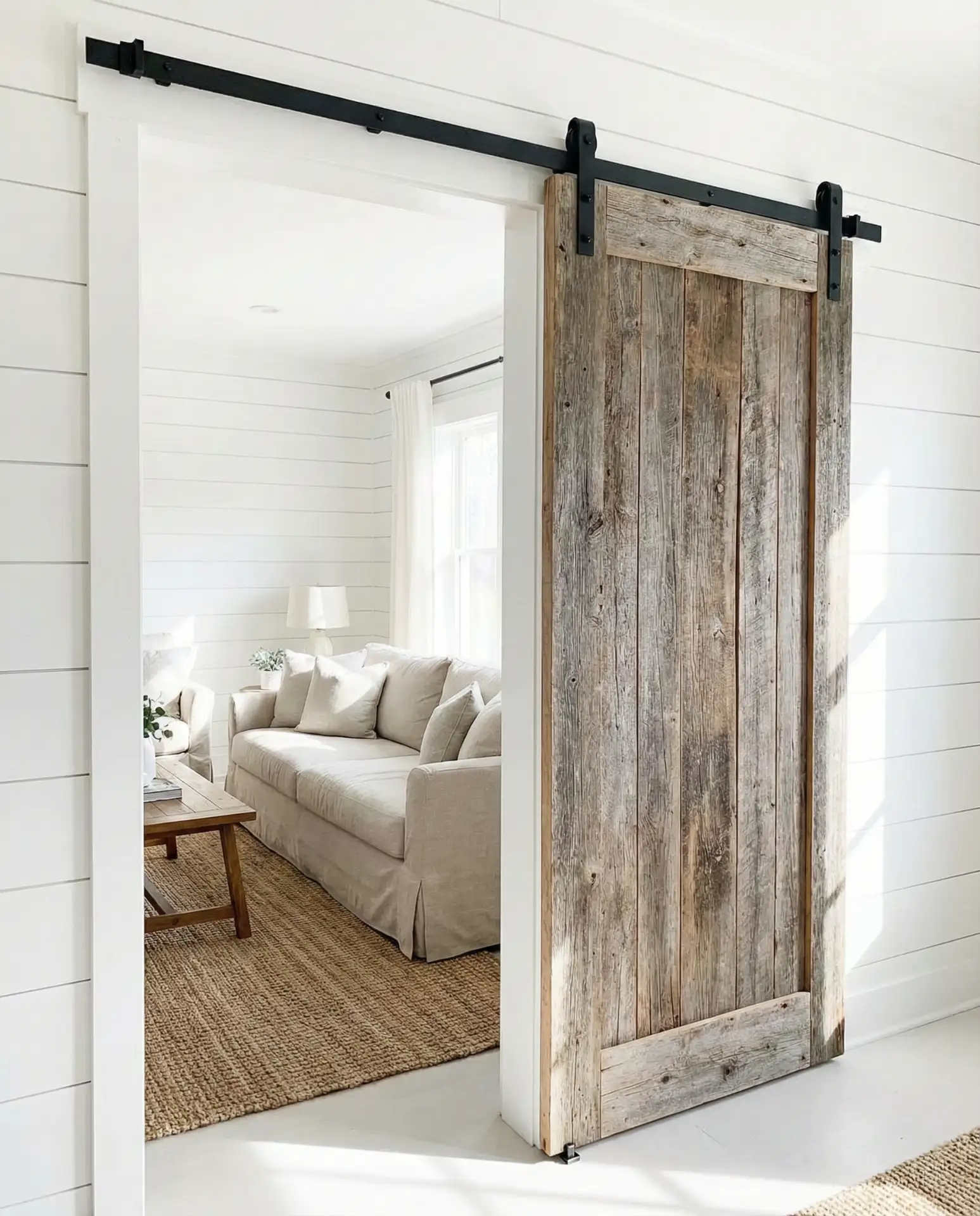
A sliding barn door offers both function and farmhouse flair, serving as a flexible room divider that can close off a home office, playroom, or den when needed. Choose reclaimed wood for authenticity or a sleek painted finish to keep the look modern. The exposed track hardware in matte black or oil-rubbed bronze doubles as a design feature, adding industrial contrast. This solution is particularly popular in open-concept homes where privacy is desired without sacrificing natural light flow.
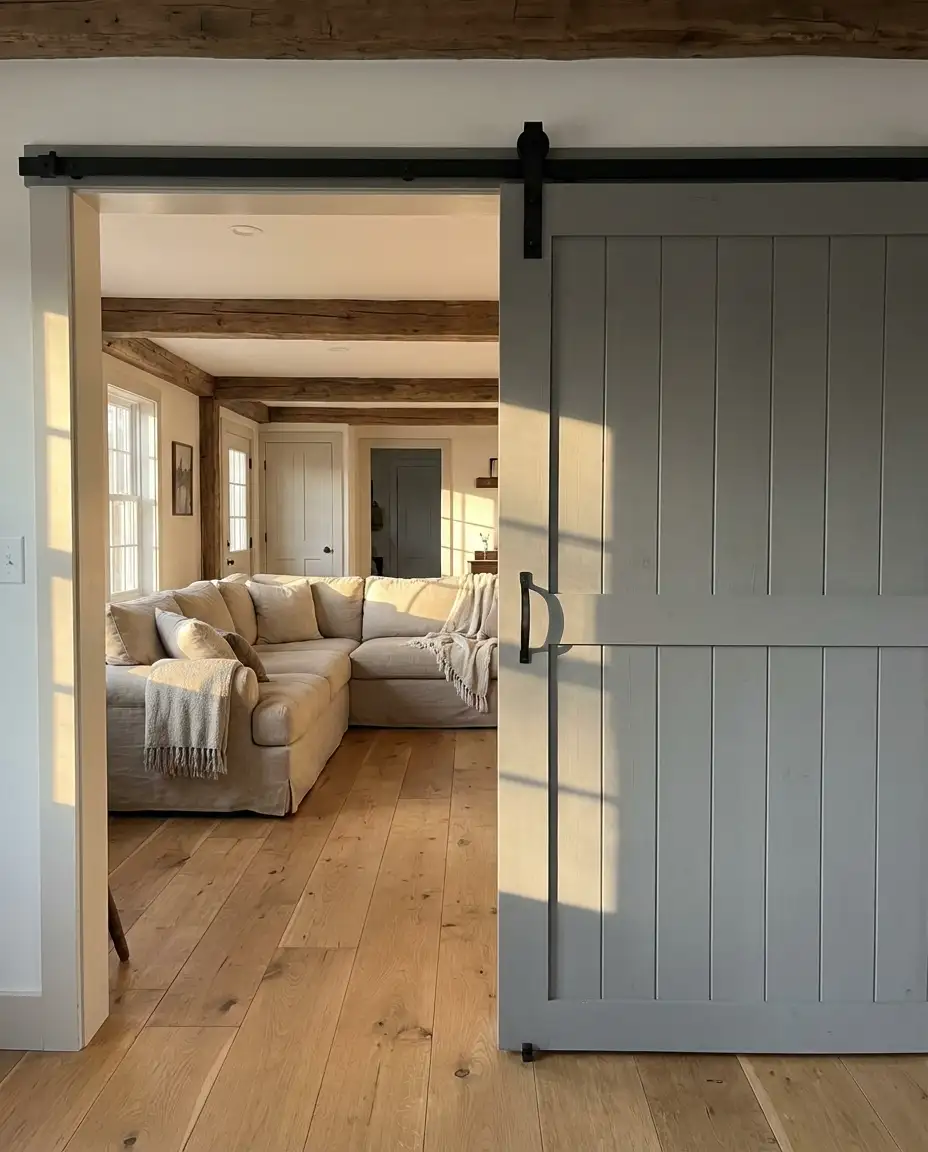
In the South, barn doors are often sourced from actual tobacco barns or old fences, giving each piece unique weathering and nail holes that tell a story. Installation requires a sturdy wall and proper header support—most standard kits handle doors up to 200 pounds, but heavier reclaimed wood may need reinforced framing. Expect to invest $400 to $800 for quality hardware and a custom door, though DIY enthusiasts can find budget-friendly kits starting around $150.
7. Neutral Gray Couch with Pops of Blue
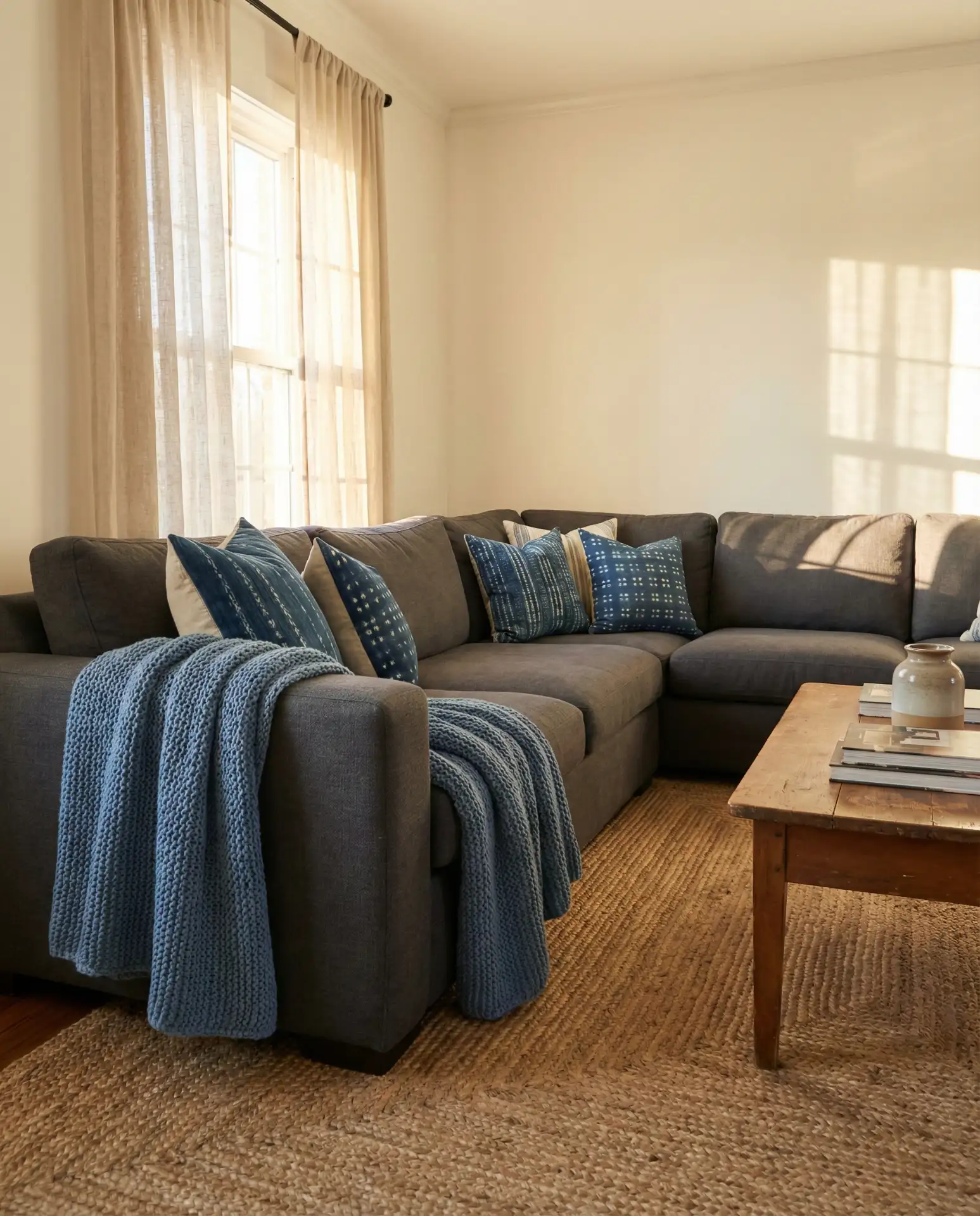
A versatile gray couch serves as the perfect neutral anchor, allowing you to introduce seasonal blue accents through pillows, throws, or ceramics without committing to a full room refresh. Soft sky blues evoke calm and pair beautifully with warm wood tones, while deeper navy or indigo adds depth and contrast. This combination is a Pinterest favorite because it feels fresh yet timeless, suitable for coastal farmhouse interpretations as well as traditional Midwestern aesthetics. The gray upholstery also hides everyday wear better than lighter shades, making it practical for families.
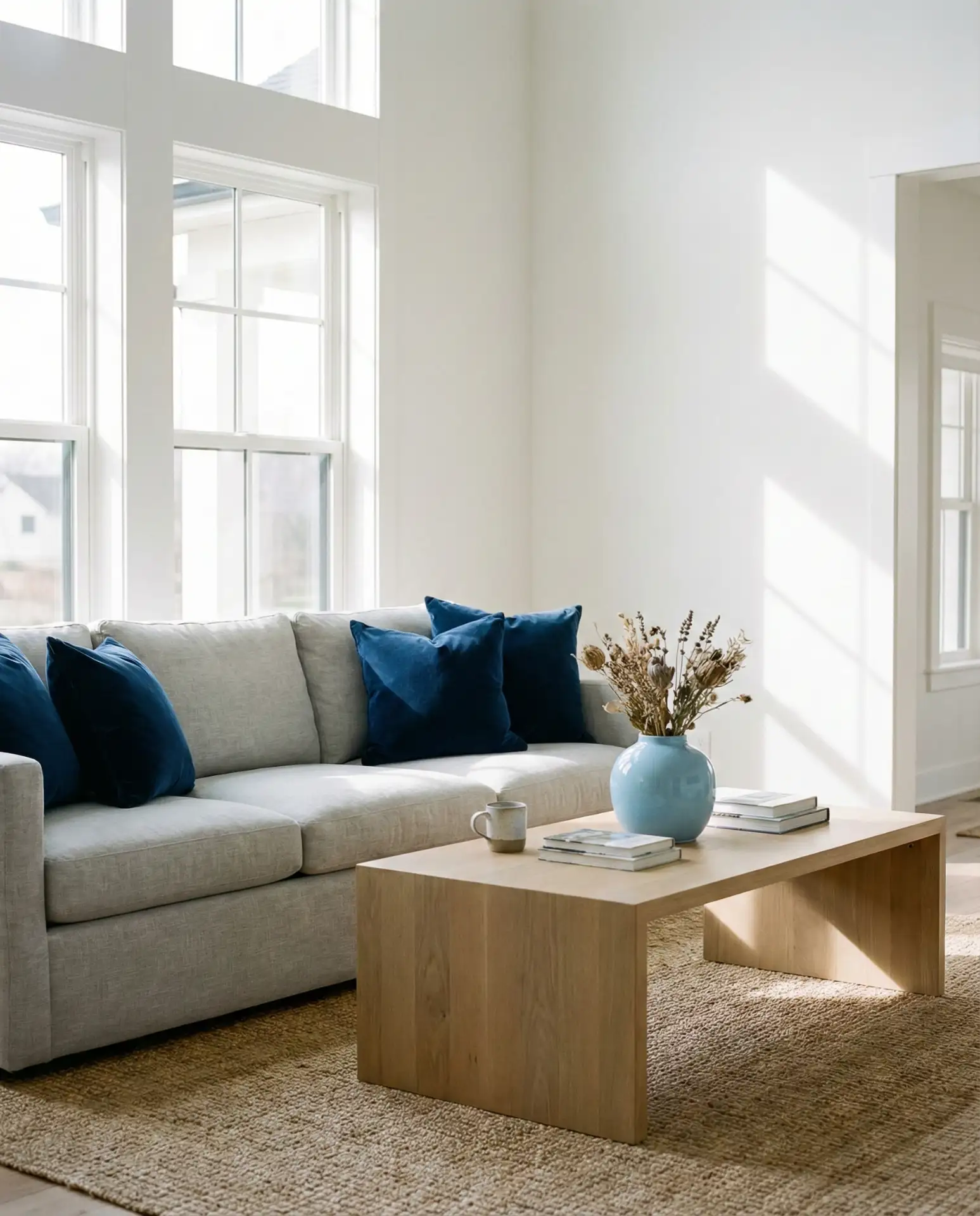
One designer I spoke with in Charleston noted that clients often underestimate how much natural light affects gray tones—cool grays can read almost purple in north-facing rooms, while warm grays appear taupe in southern exposures. She recommends testing fabric swatches in your actual space at different times of day before purchasing. Most quality gray sofas range from $1,200 to $2,500, with performance fabrics adding $300 to $500 to the base price.
8. Reclaimed Wood Coffee Table Centerpiece
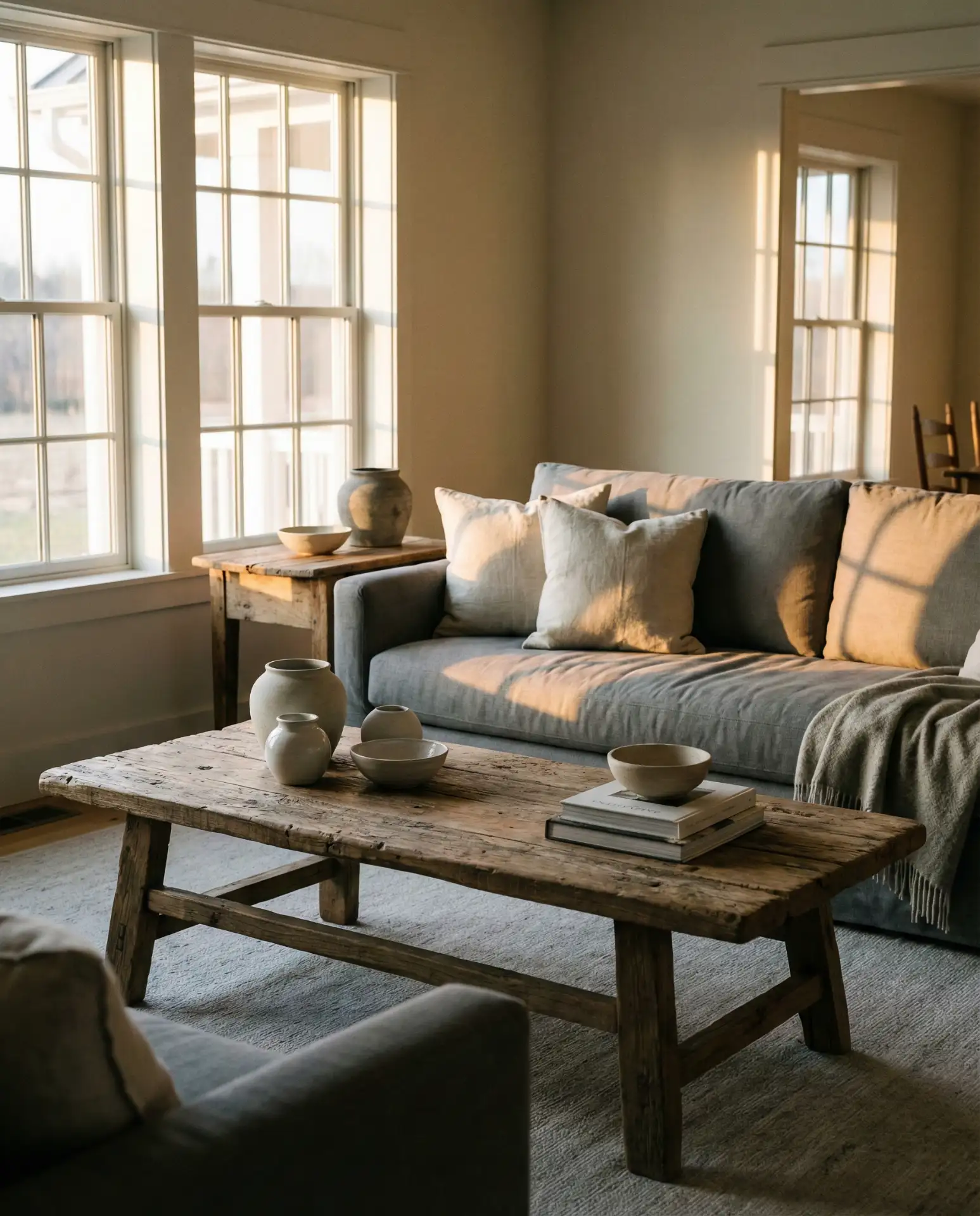
A chunky reclaimed wood coffee table grounds the living room with organic texture and serves as both a functional surface and a sculptural element. Look for pieces with visible knots, cracks, and color variation that showcase the wood’s history. Pair it with sleeker sofas in linen or leather to prevent the room from feeling too rustic. This type of furniture works across various farmhouse substyles, from rustic to refined, and its substantial presence makes it a natural gathering point for books, trays, and seasonal decor.
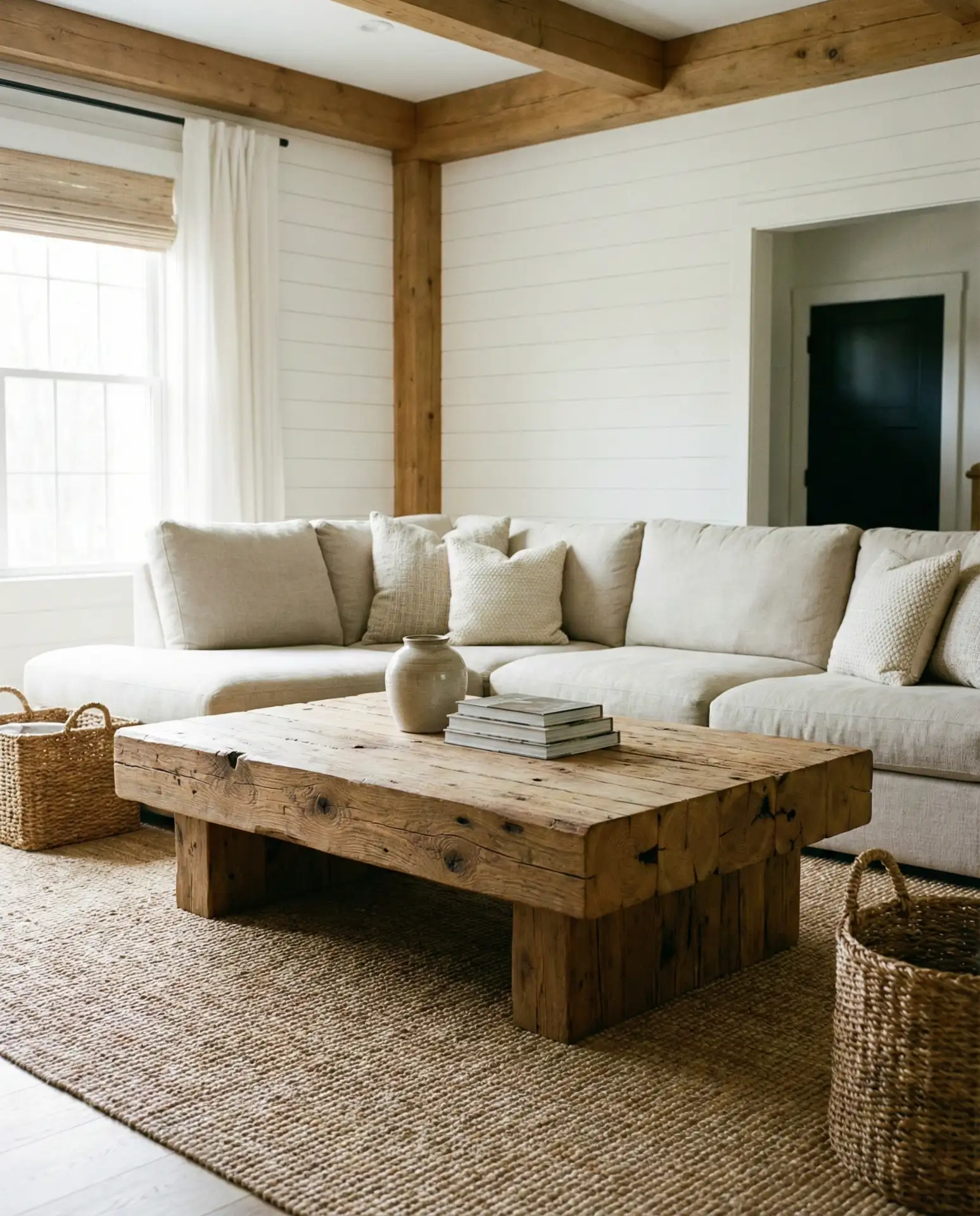
Real homeowners often choose reclaimed tables for their durability and eco-friendly appeal, knowing each piece diverts wood from landfills. The aged patina requires minimal maintenance—just occasional conditioning with food-safe mineral oil keeps the surface protected. Prices vary widely based on size and craftsmanship, ranging from $400 for smaller pieces to $2,000+ for custom designs with metal bases or waterfall edges.
9. Olive Green Velvet Accent Chairs
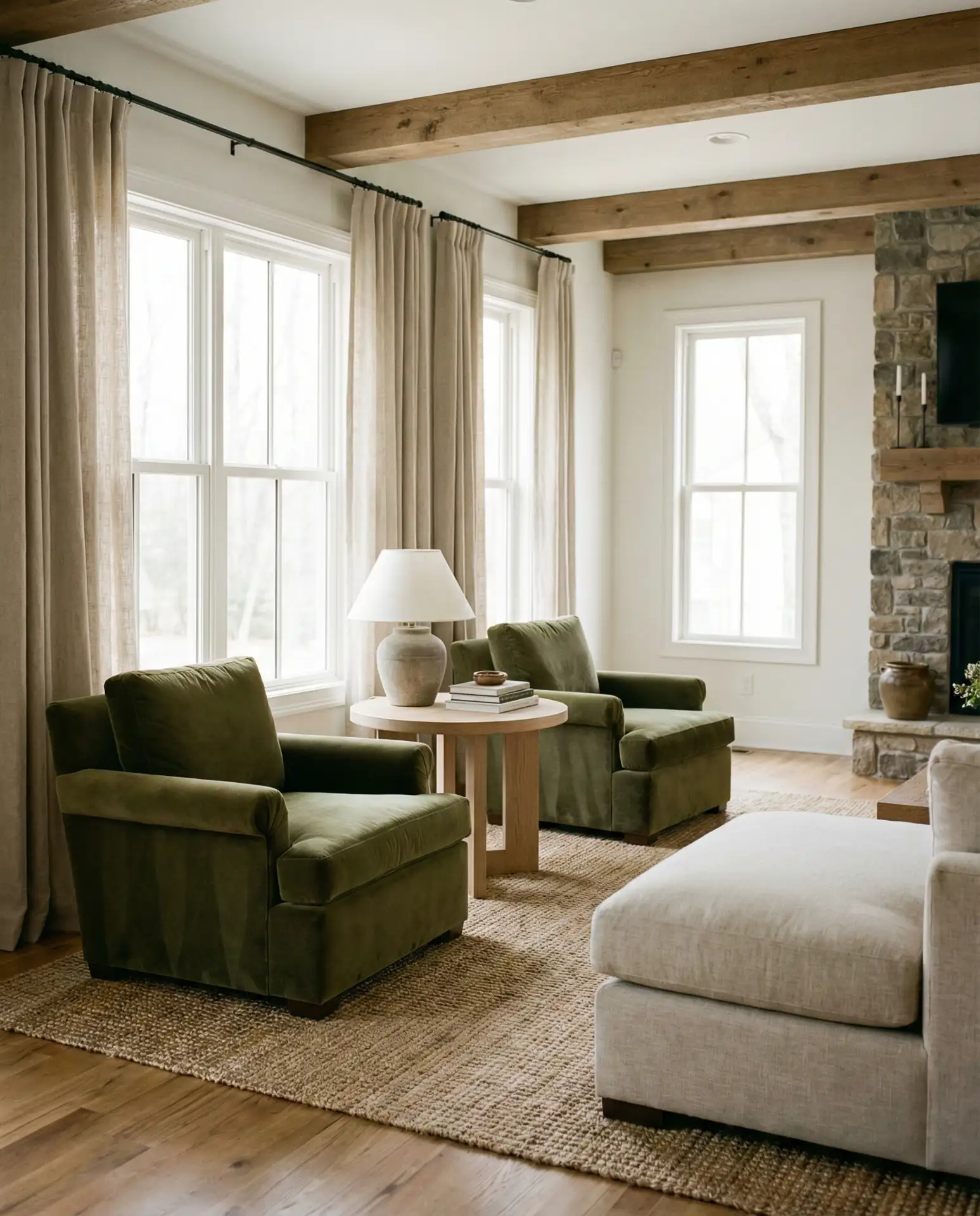
Introducing green through a pair of olive or sage velvet accent chairs brings life and sophistication to an otherwise neutral palette. Velvet’s subtle sheen catches light beautifully, adding dimension without overwhelming the farmhouse simplicity. Position them flanking a fireplace or opposite your main seating to create conversational balance. This organic hue complements both warm and cool undertones, making it easier to coordinate with existing paint color schemes and wood finishes throughout the room.
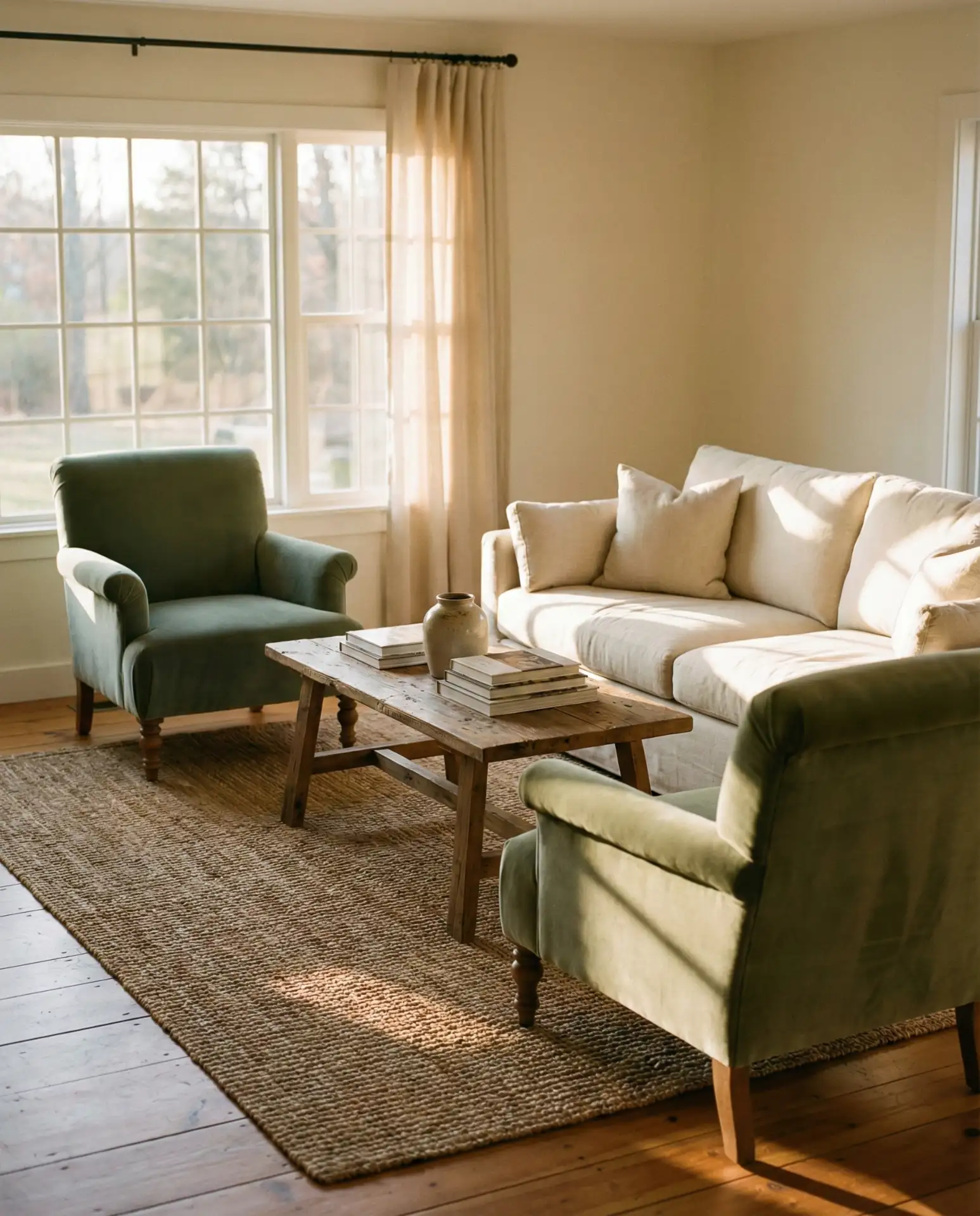
This works best in living rooms with good natural light or layered artificial lighting, where the velvet’s texture can truly shine. Rooms with limited windows may make the green feel muddy or flat, so consider adding a floor lamp or sconces nearby. Expert designers suggest balancing the richness of velvet with linen or cotton elsewhere in the room to keep the overall feel airy and approachable rather than overly formal.
10. Built-In Shelving with Ladder Access
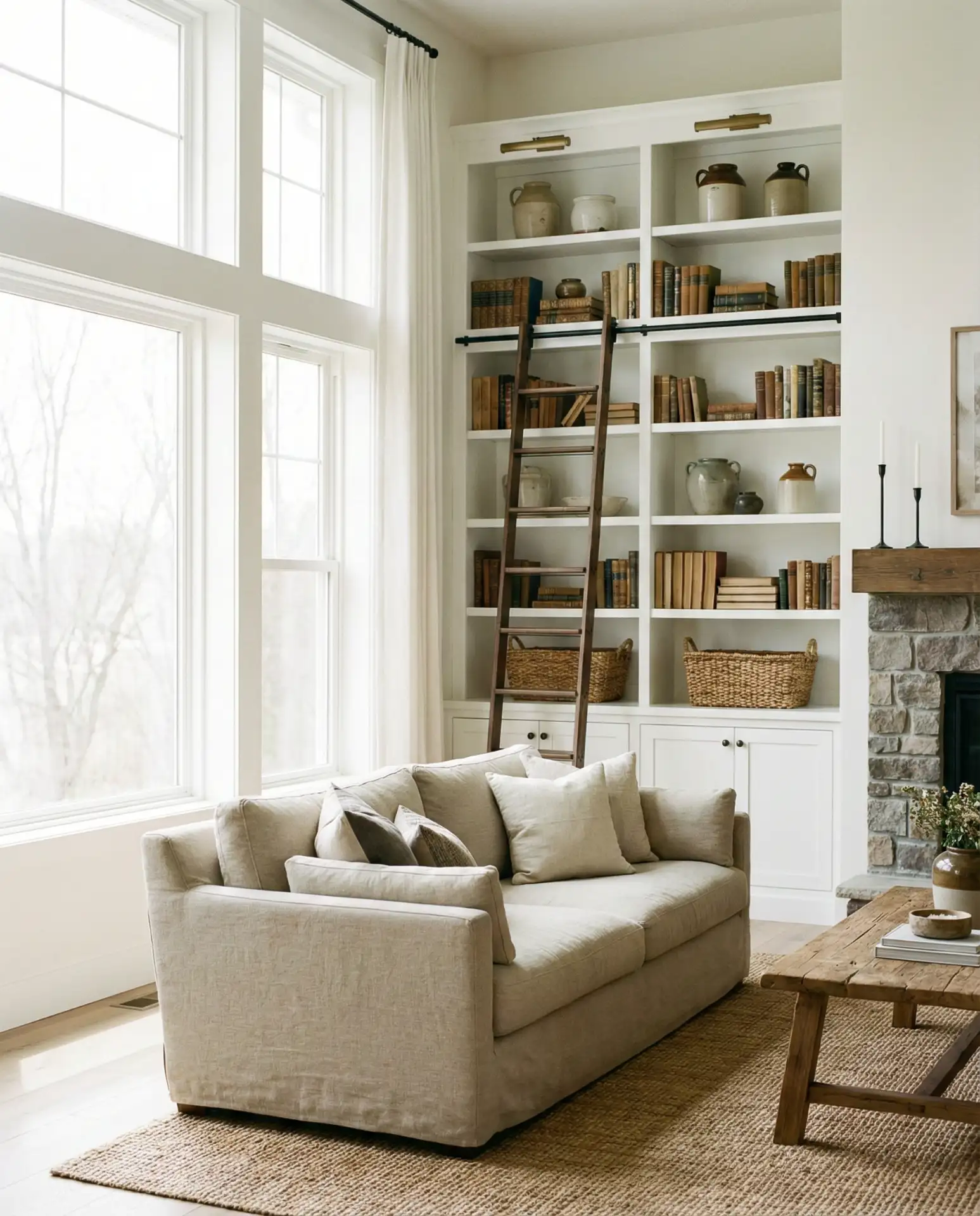
Floor-to-ceiling built-in shelving with a rolling library ladder maximizes vertical storage while channeling farmhouse charm with a touch of old-world elegance. Paint the shelves white or a soft greige to keep things light, then style them with books, baskets, pottery, and curated objects that reflect your interests. The ladder itself becomes a focal point, adding movement and a sense of craftsmanship. This setup is especially valuable in small-space living rooms where every square inch counts.
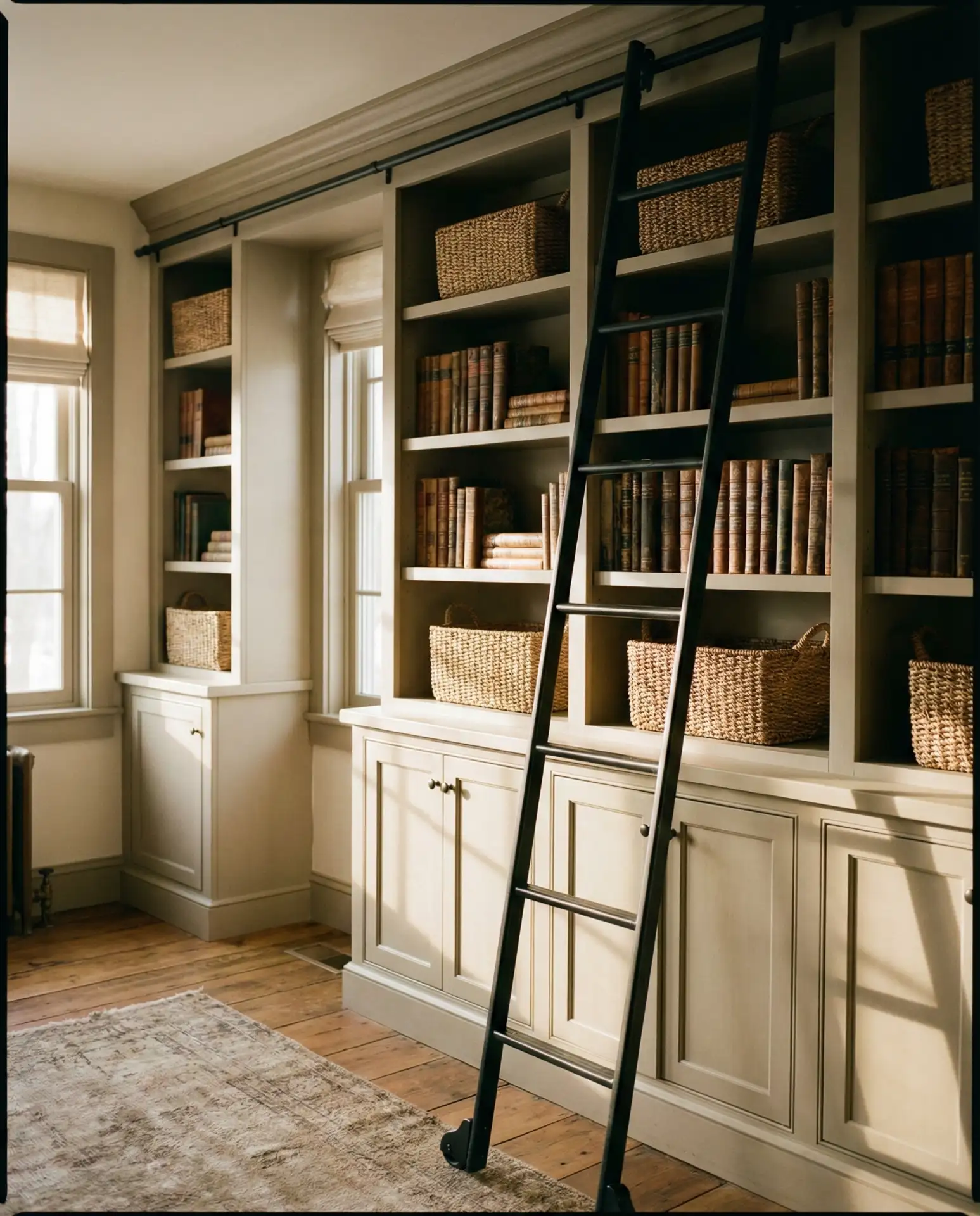
In urban apartments and smaller homes across cities like Seattle and Austin, built-ins are often retrofitted into awkward alcoves or around windows to create custom storage without sacrificing floor space. A carpenter can install a basic system starting around $1,500, while more elaborate designs with lighting and molding can reach $5,000 or more. The ladder hardware alone typically costs $300 to $600, but it’s a worthy investment for both function and visual impact.
11. Cozy Fireplace Surround with Stone
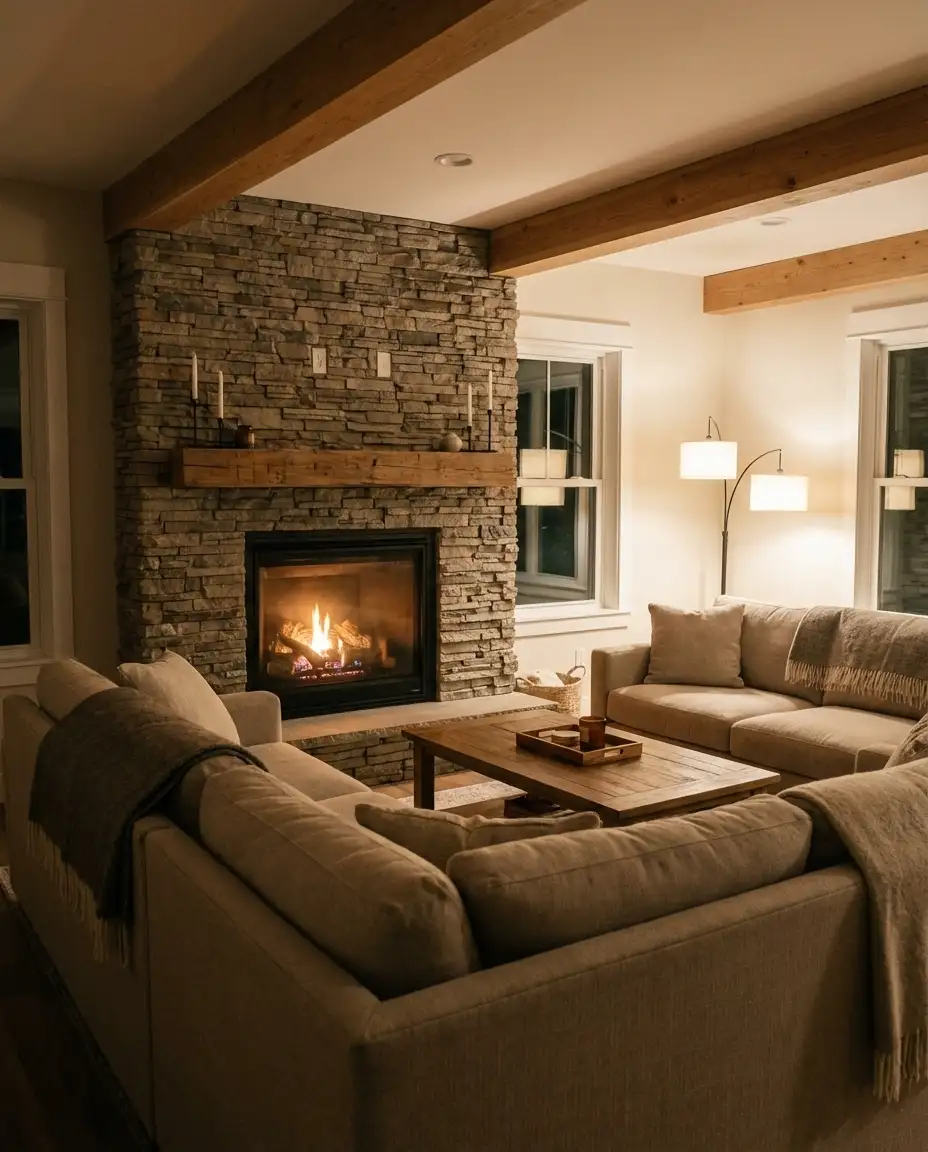
A cozy stone fireplace surround—whether stacked ledgestone, river rock, or smooth limestone—anchors the living room and provides a natural textural contrast to painted walls and upholstered furniture. Top it with a thick reclaimed wood mantel for displaying seasonal greenery, candlesticks, or framed family photos. This combination creates a warm, inviting focal point that encourages gathering, especially during colder months. The stone’s earthy tones harmonize beautifully with neutral palettes and add architectural weight to new construction homes that might otherwise feel generic.
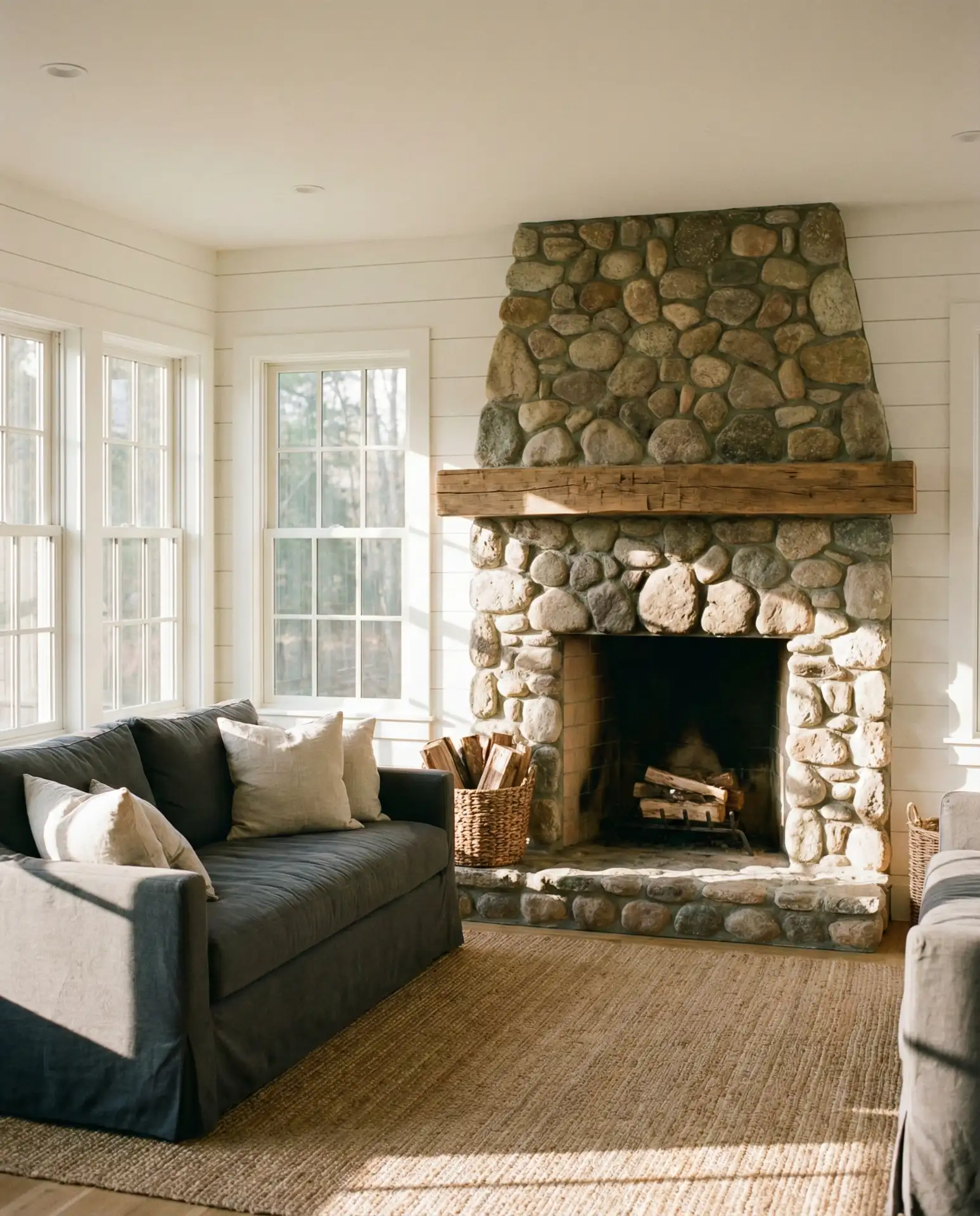
Regional preferences vary—New England homeowners often favor traditional brick, while Rocky Mountain residents lean toward native stone that echoes the surrounding landscape. If you’re retrofitting a fireplace, check local codes regarding clearance requirements and ventilation, as improper installation can pose safety risks. Material and labor costs for a stone surround typically range from $2,000 to $7,000 depending on the stone type and the size of the fireplace.
12. Woven Pendant Lights for Texture
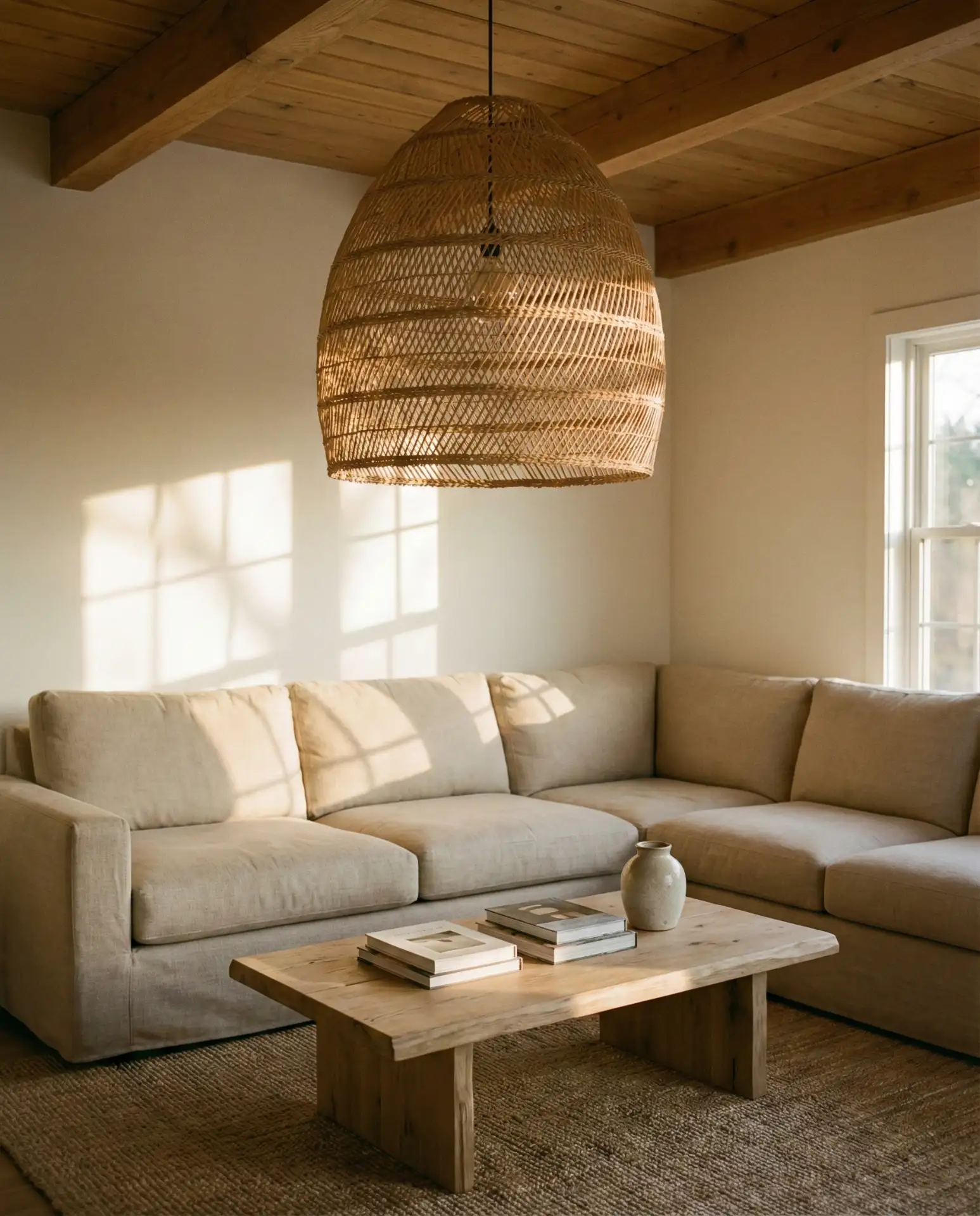
Large woven pendant lights in seagrass, rattan, or jute introduce organic texture overhead while casting warm, diffused light that enhances the cozy atmosphere. Hang one as a statement piece above a coffee table, or cluster several at varying heights in open layouts for visual drama. These fixtures align perfectly with the farmhouse emphasis on natural materials and handcrafted details. They also complement a range of color schemes, from all-white to moody charcoals, and work equally well in coastal or rustic interpretations of the style.
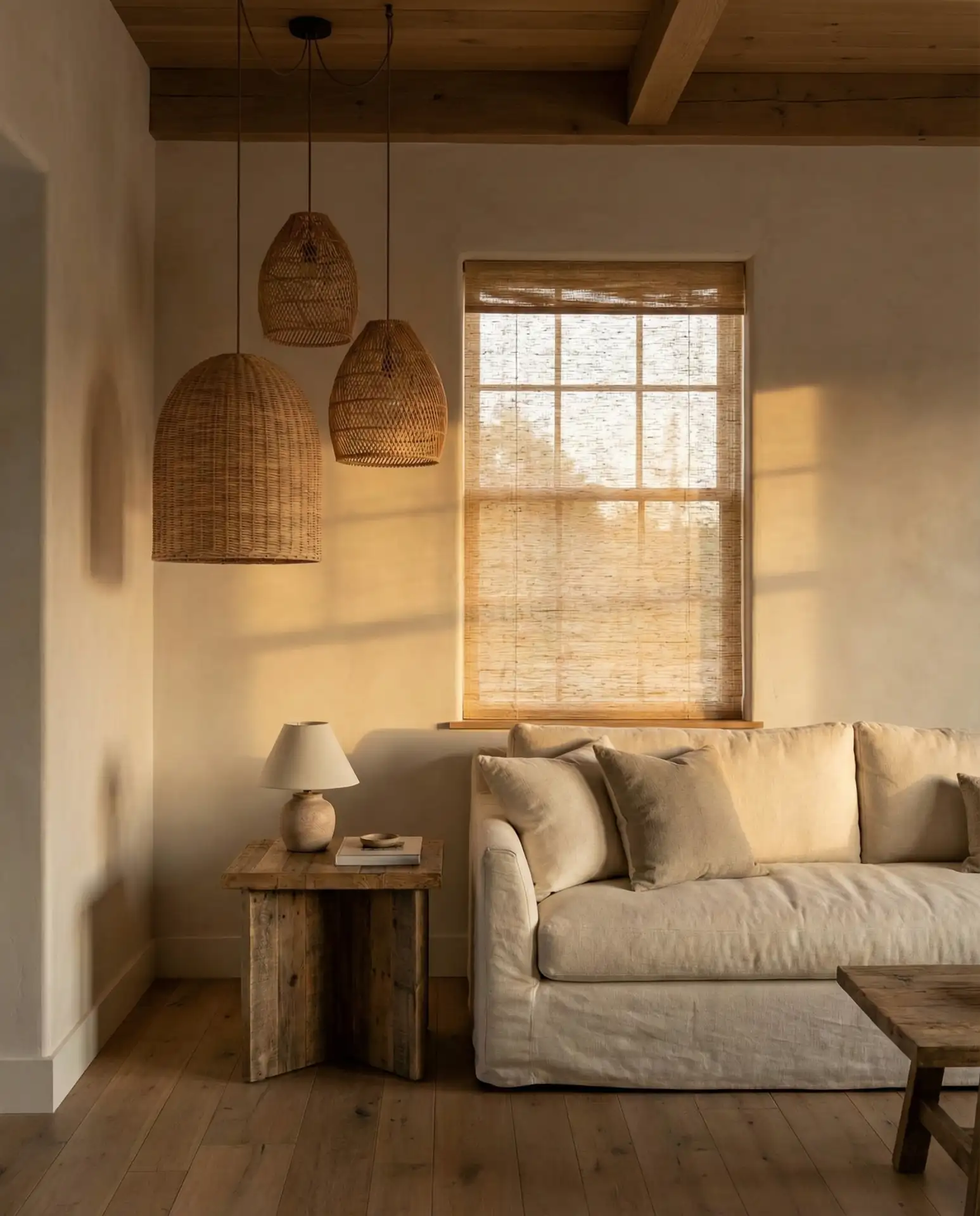
A common mistake is hanging pendants too high or too low—aim for 30 to 36 inches above a coffee table and 60 to 72 inches above the floor in open spaces to maintain proportion and function. Quality woven fixtures start around $150 and can reach $600+ for larger, handwoven designs. They’re relatively lightweight, making installation straightforward for most DIYers with basic electrical experience.
13. Vintage Trunk as Storage and Decor
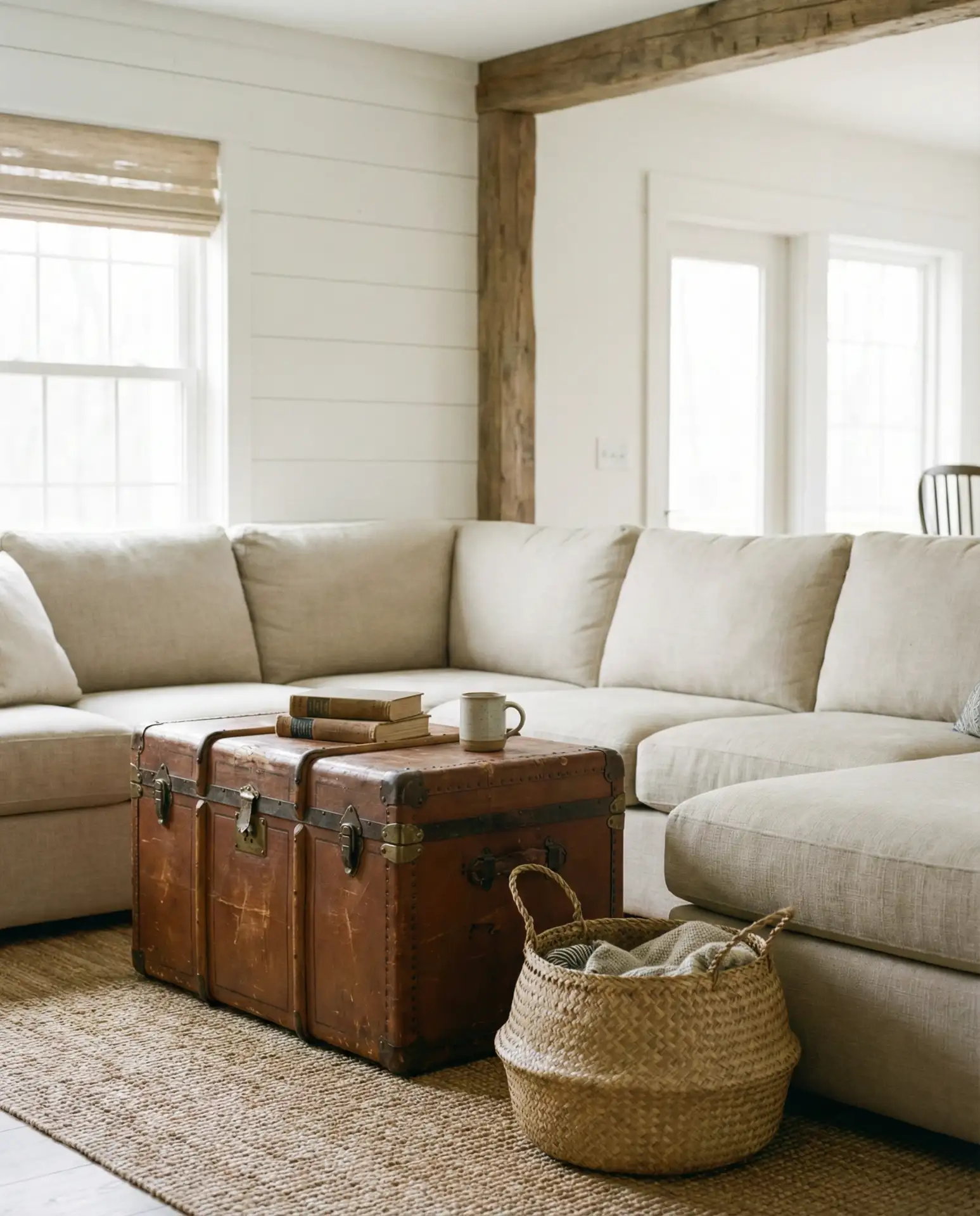
Repurposing a vintage steamer trunk or military chest as a coffee table or end-of-sofa storage adds character and practicality in one move. These pieces bring instant history and texture, with worn leather, metal hardware, and travel stickers that tell a story. Use the interior to stash extra blankets, board games, or magazines, keeping your living room tidy while maintaining the farmhouse aesthetic. This approach is especially popular among inspiration-seeking interior designers who want to layer meaningful, collected objects rather than buy everything new.
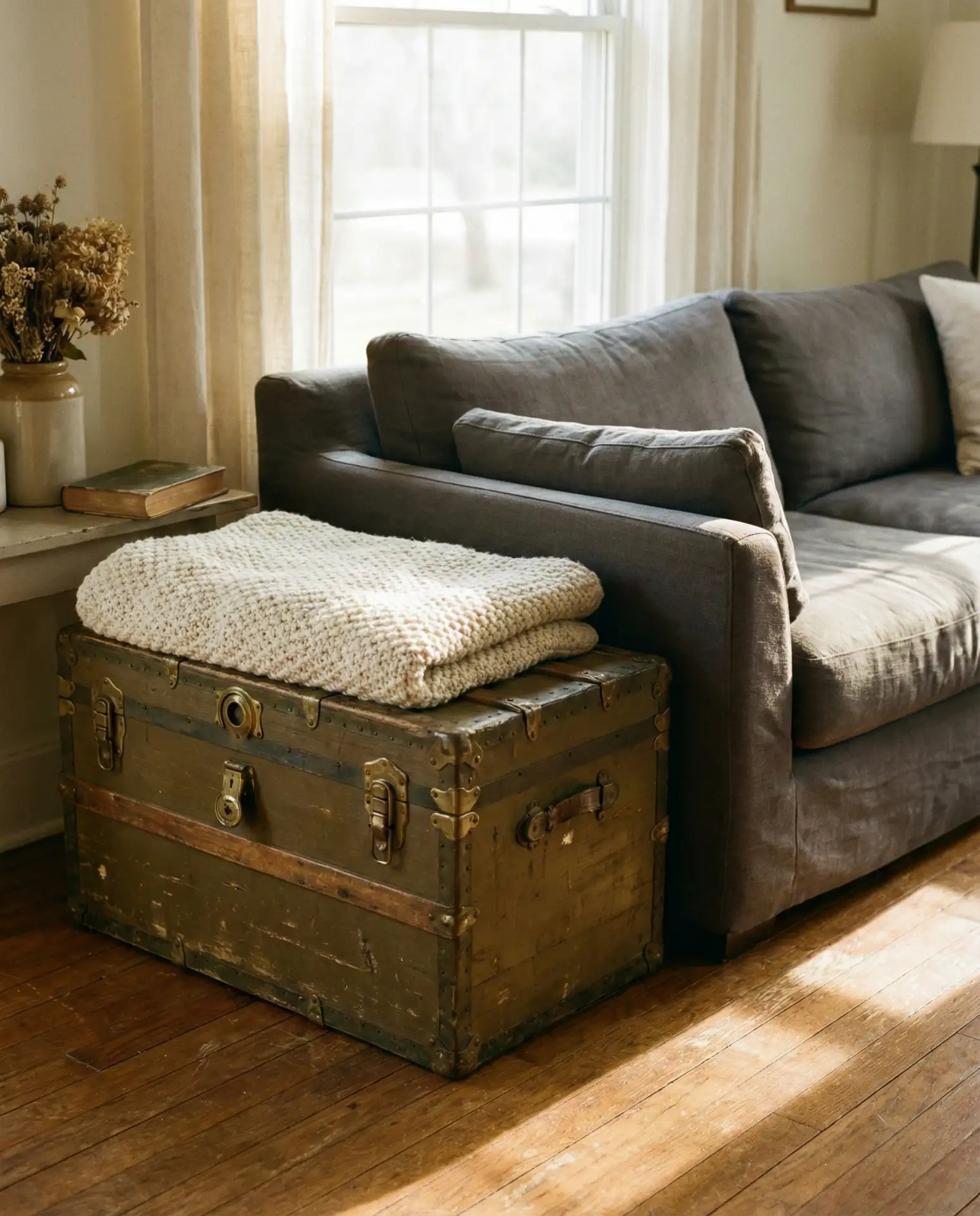
Across antique markets in states like Pennsylvania and Virginia, these trunks can be found for $75 to $300 depending on condition and provenance. If the interior smells musty, line it with cedar planks or activated charcoal pouches before using it for storage. Some homeowners also add furniture pads to the bottom to protect hardwood floors from scratches, especially if the trunk will be moved frequently.
14. Linen Curtains for Soft Light Filtering
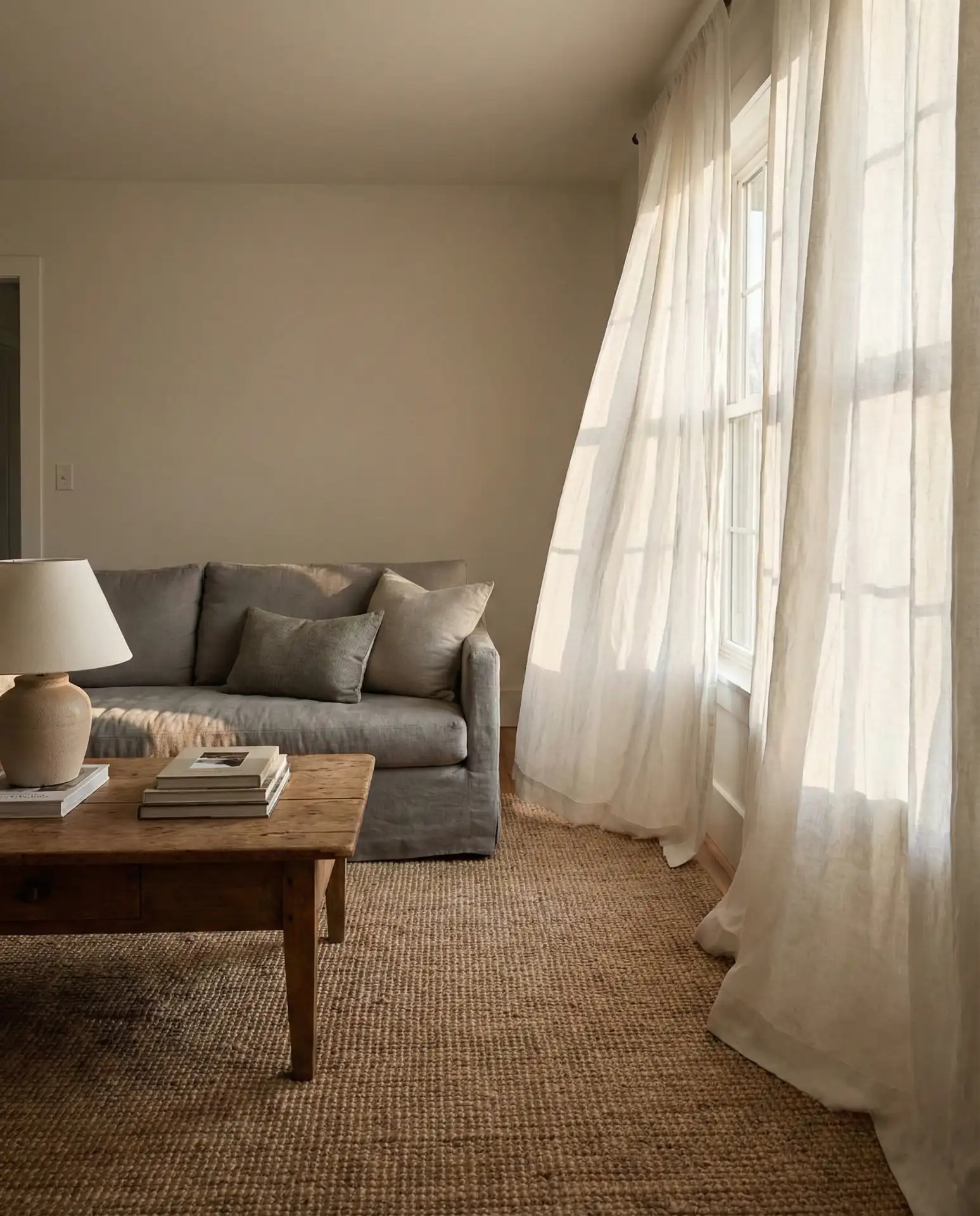
Floor-to-ceiling linen curtains in white, ivory, or soft grey diffuse natural light beautifully while adding a layer of softness to the room’s architecture. The fabric’s natural wrinkles and relaxed drape reinforce the farmhouse ethos of lived-in elegance rather than stiff formality. Hang them high and wide—mount the rod close to the ceiling and extend it several inches beyond the window frame—to create the illusion of larger windows and taller ceilings. This trick is invaluable in small-space living rooms where every visual enhancement counts.
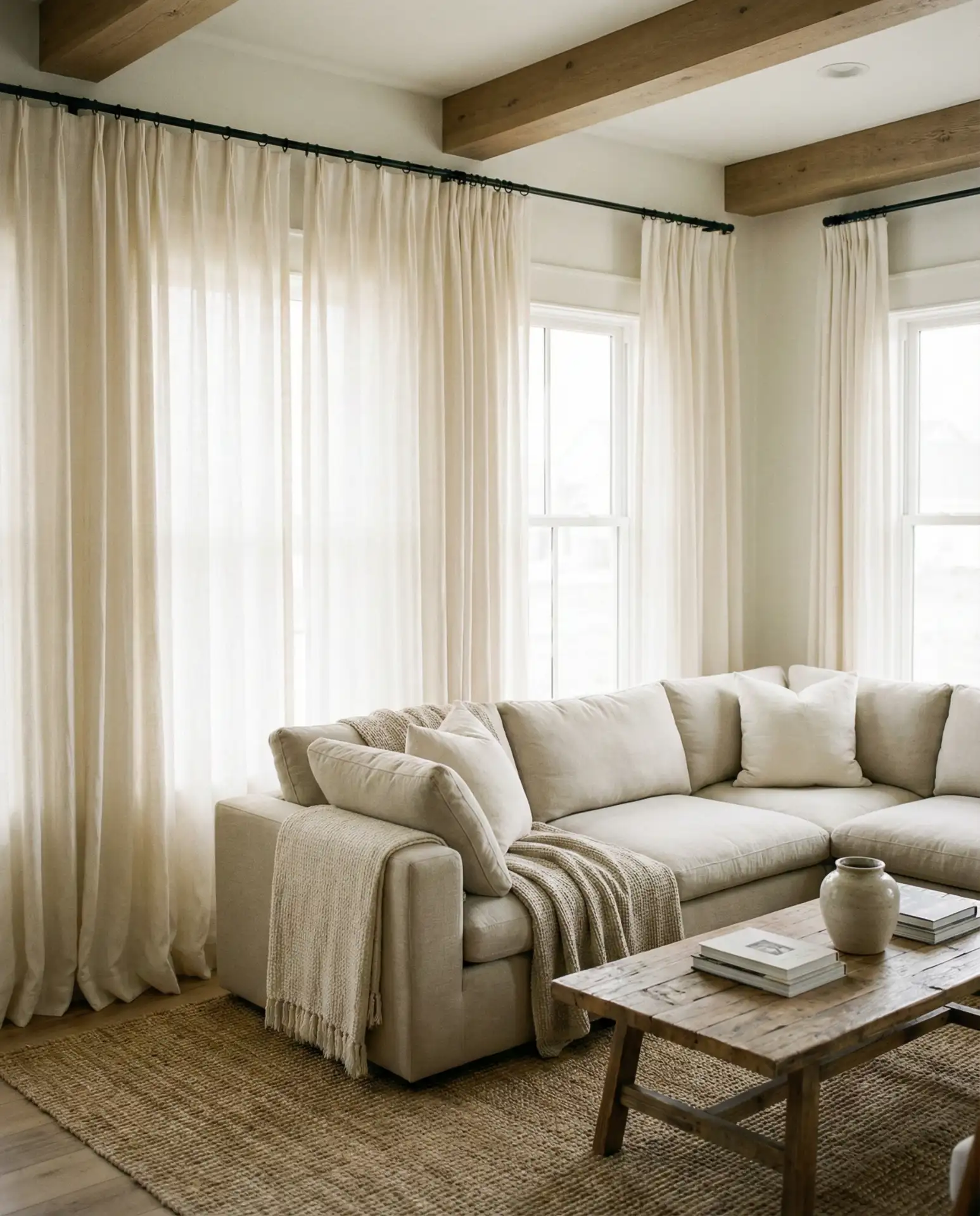
Linen curtains typically cost $50 to $150 per panel for ready-made options, while custom sizes can reach $200+ per panel depending on width and length. Many homeowners prefer to skip dry cleaning in favor of gentle machine washing on delicate cycles, then rehanging while slightly damp to minimize wrinkles—a practical choice for families who want low-maintenance textiles that still look refined.
15. Midcentury Modern Chairs as Accents
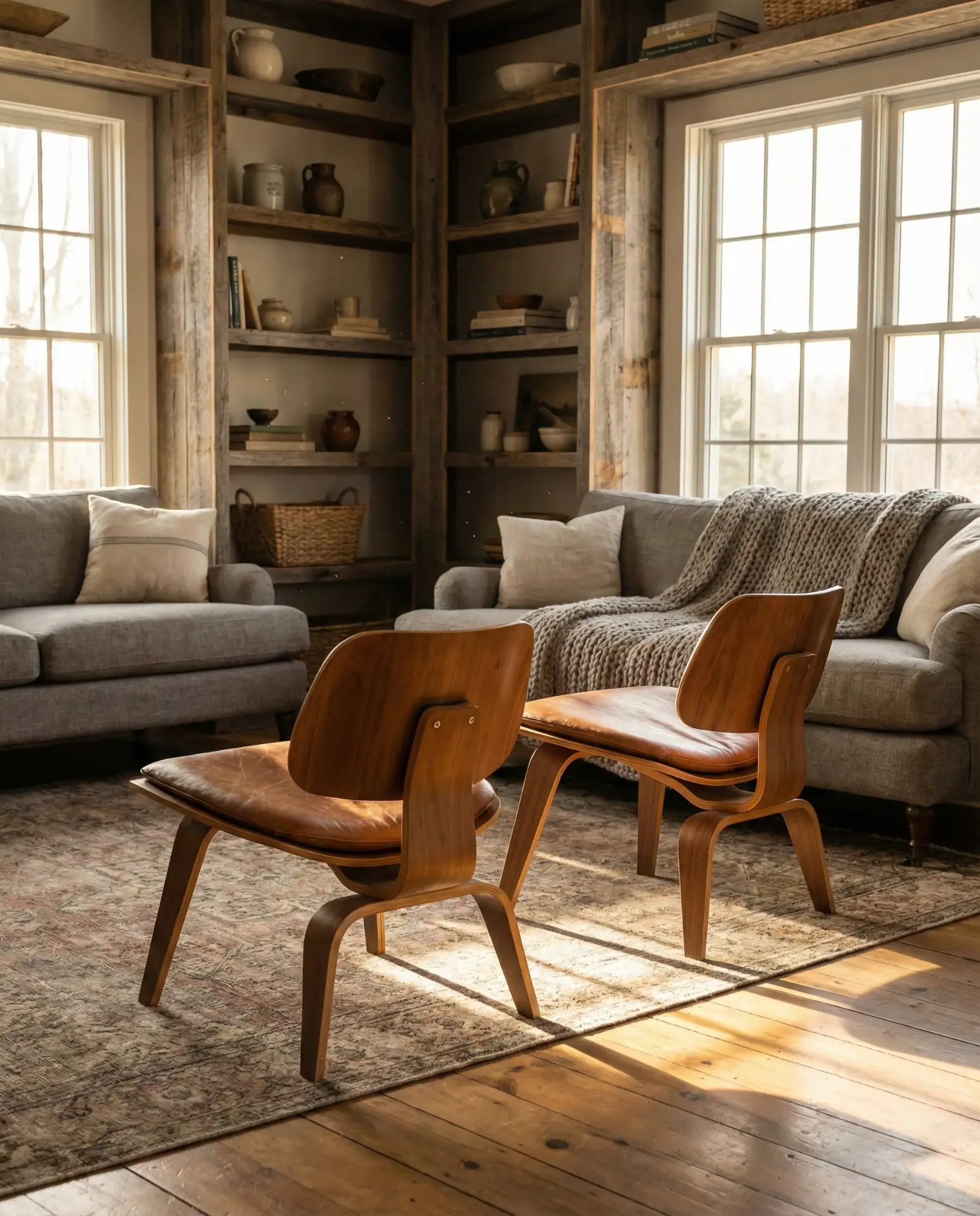
Mixing midcentury modern chairs—think Eames-inspired molded plywood or teak armchairs—into a farmhouse living room creates an unexpected but harmonious blend of eras. The clean lines and tapered legs balance the rusticity of shiplap and reclaimed wood, preventing the space from feeling too country. This approach is part of a broader mid-century farmhouse fusion that’s gained traction on Pinterest, appealing to those who want warmth without kitsch. Choose chairs in natural wood tones or upholstered in neutral fabrics to maintain cohesion.
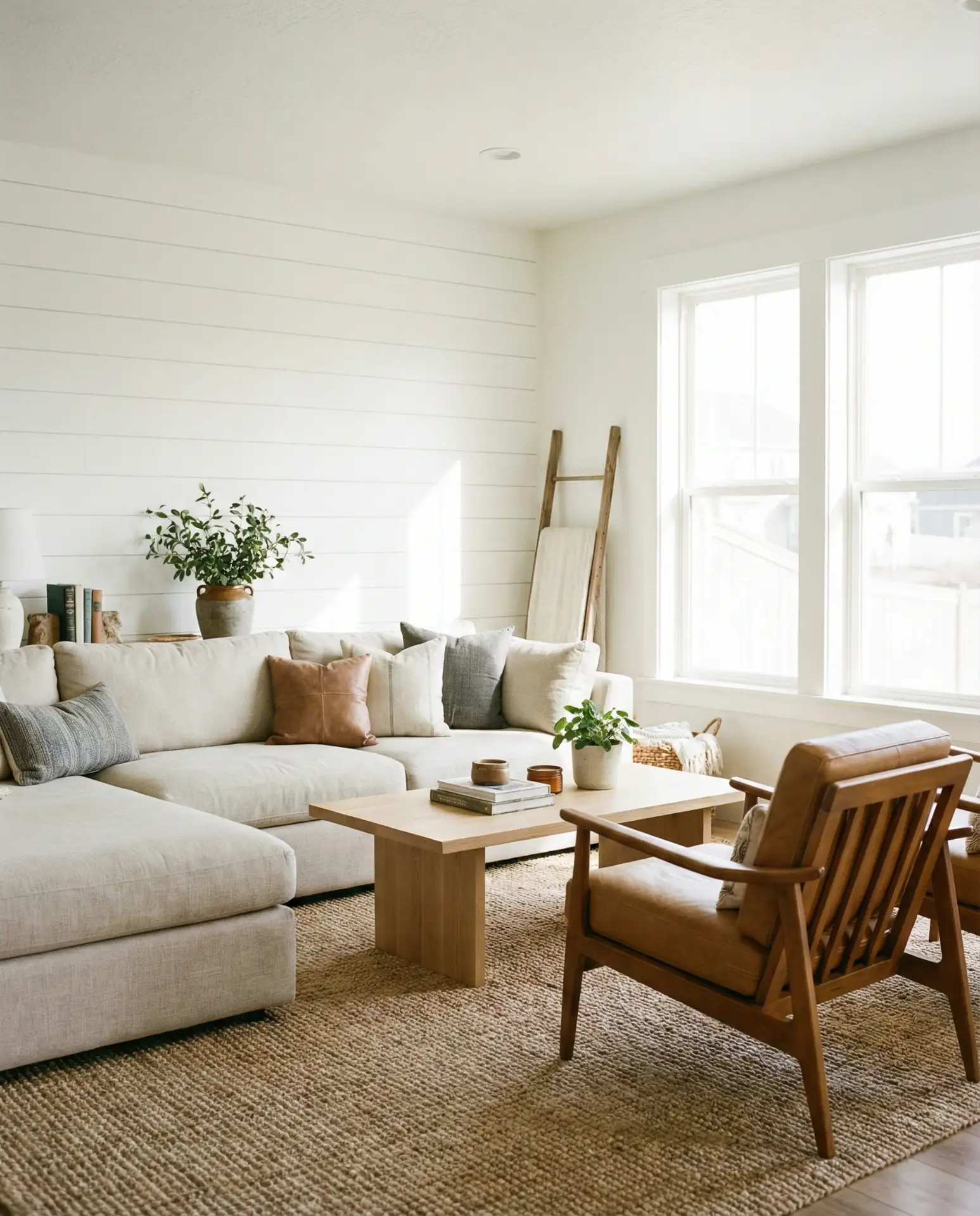
This hybrid style works best in homes with ample natural light and open floor plans, where the distinct furniture silhouettes can be appreciated from multiple angles. A designer in San Francisco shared that she sources authentic midcentury pieces from estate sales and pairs them with new farmhouse textiles, achieving a collected-over-time aesthetic that feels personal. Expect to invest $300 to $1,200 per chair depending on whether you choose reproductions or vintage originals.
16. Statement Area Rug in Natural Fibers
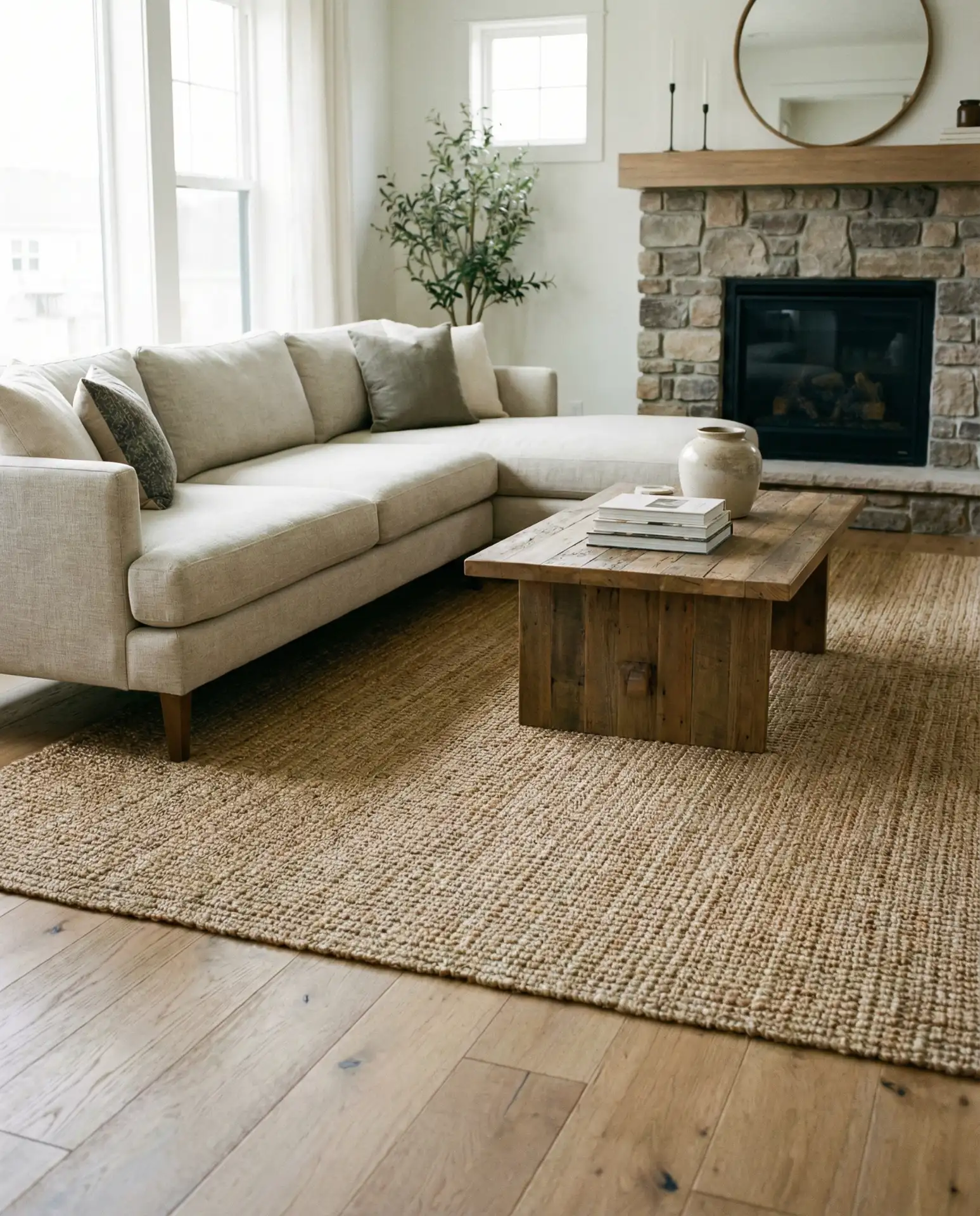
A large rug in jute, sisal, or wool grounds the seating area while introducing organic texture underfoot. Opt for oversized dimensions—at least 8×10 in most living rooms—so the front legs of all seating pieces rest on the rug, unifying the furniture grouping. Natural fiber rugs are durable, hide dirt well, and age gracefully, making them ideal for high-traffic homes. Layer a smaller vintage Persian or kilim on top for added warmth and pattern without sacrificing the farmhouse foundation.
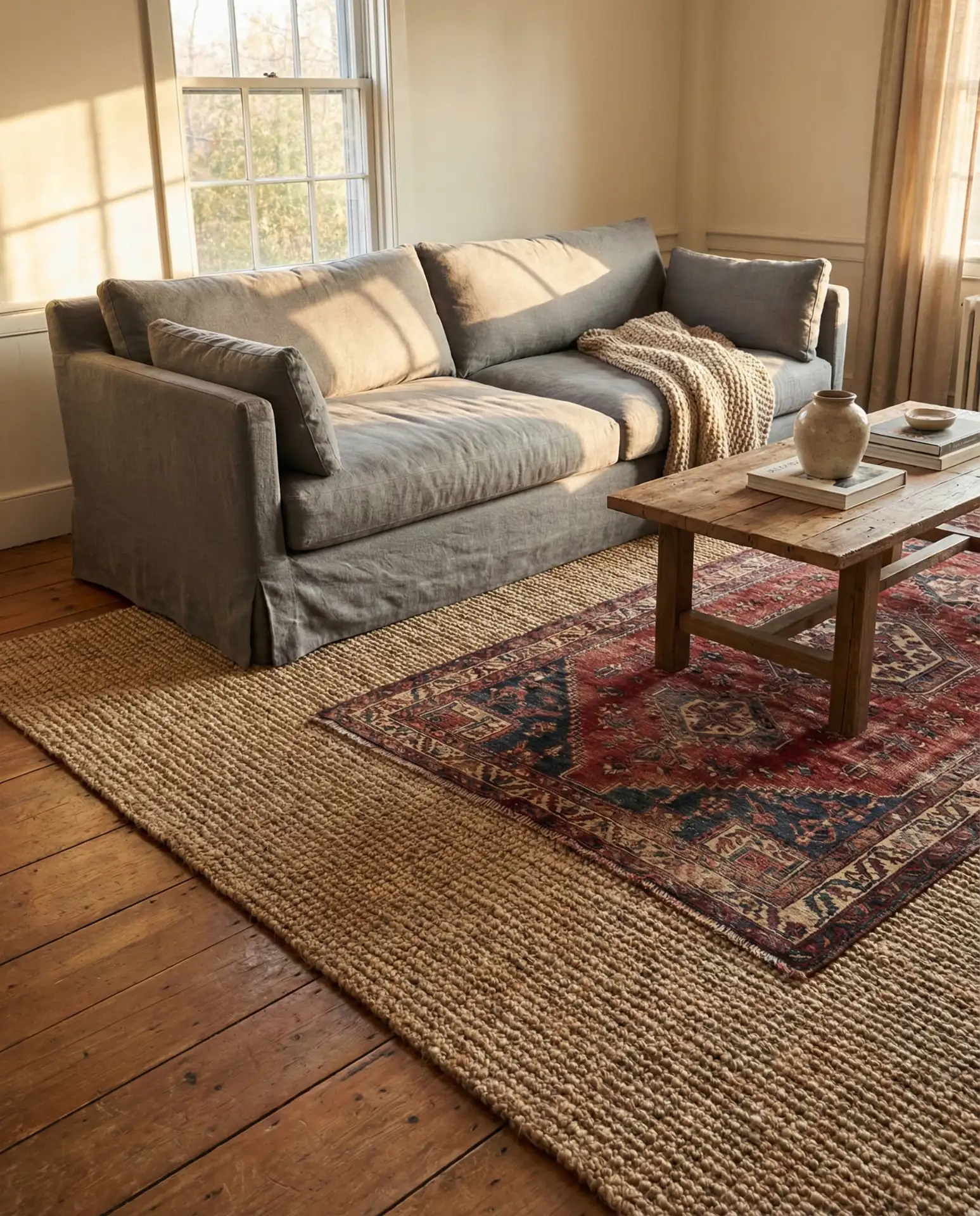
Many real homeowners choose natural fiber rugs for their eco-friendly appeal and easy maintenance—regular vacuuming and spot cleaning with mild soap are usually sufficient. Prices range from $200 for basic jute to $1,500+ for handwoven wool, with the investment paying off in longevity. One common mistake is placing all furniture completely off the rug, which can make the room feel disjointed; even if just the front legs touch the rug, it creates visual unity.
17. Industrial Black Metal Accents
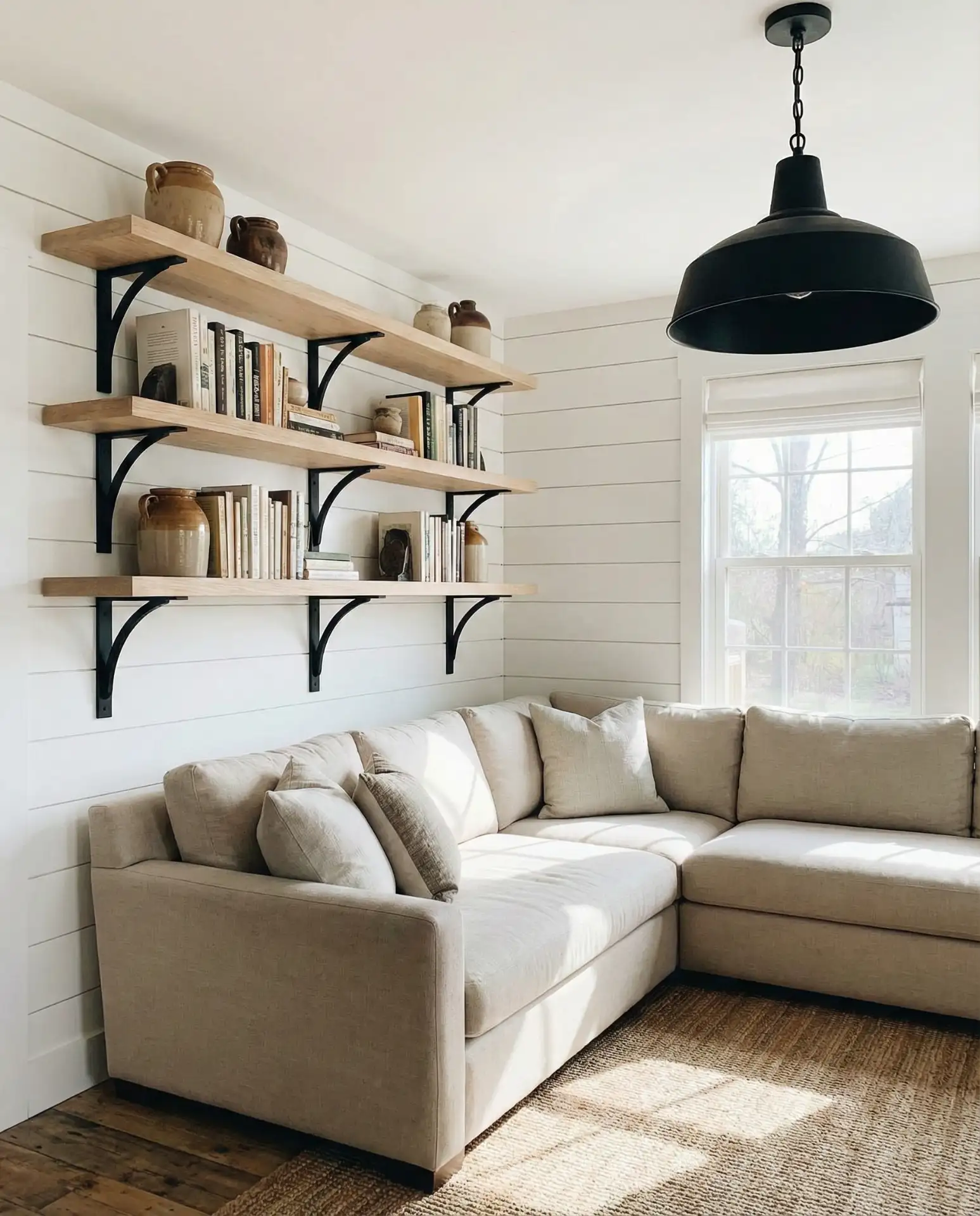
Incorporating black metal accents through light fixtures, shelf brackets, or stair railings adds an industrial edge that prevents modern farmhouse style from feeling too soft or sweet. Matte black finishes are especially popular because they create strong visual contrast against white walls and natural wood without the reflective glare of polished metals. This detail is reminiscent of old barn hardware and factory elements, grounding the aesthetic in functional history. It’s a small change with outsized impact, instantly modernizing the overall look.
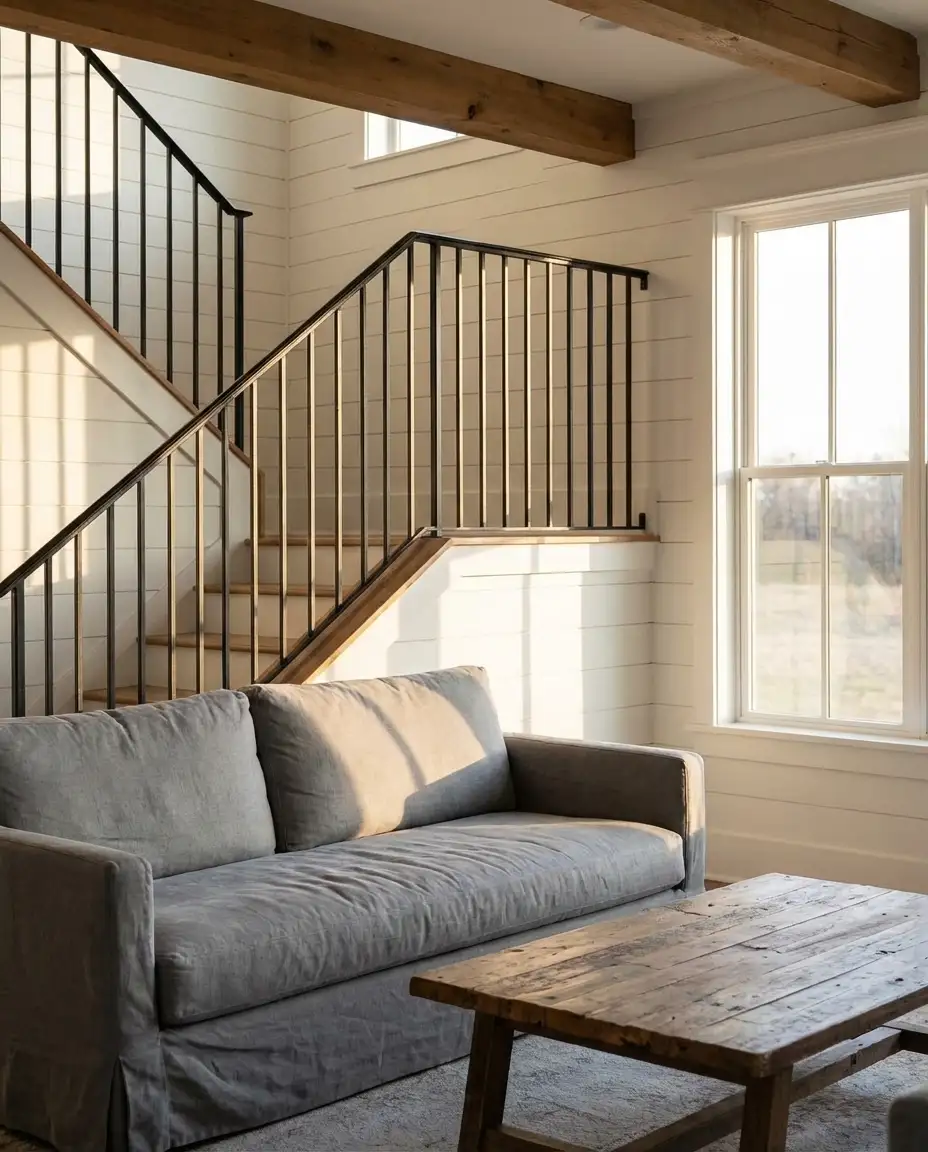
In Midwestern farmhouses, black metal elements often reference agricultural equipment and barn architecture, creating a cohesive narrative. Hardware stores and online retailers offer affordable matte black options—a set of shelf brackets runs $20 to $60, while statement light fixtures range from $150 to $500. The key is balancing these strong accents with softer textures like linen and wool to maintain warmth.
18. Brick Accent Wall Behind Seating
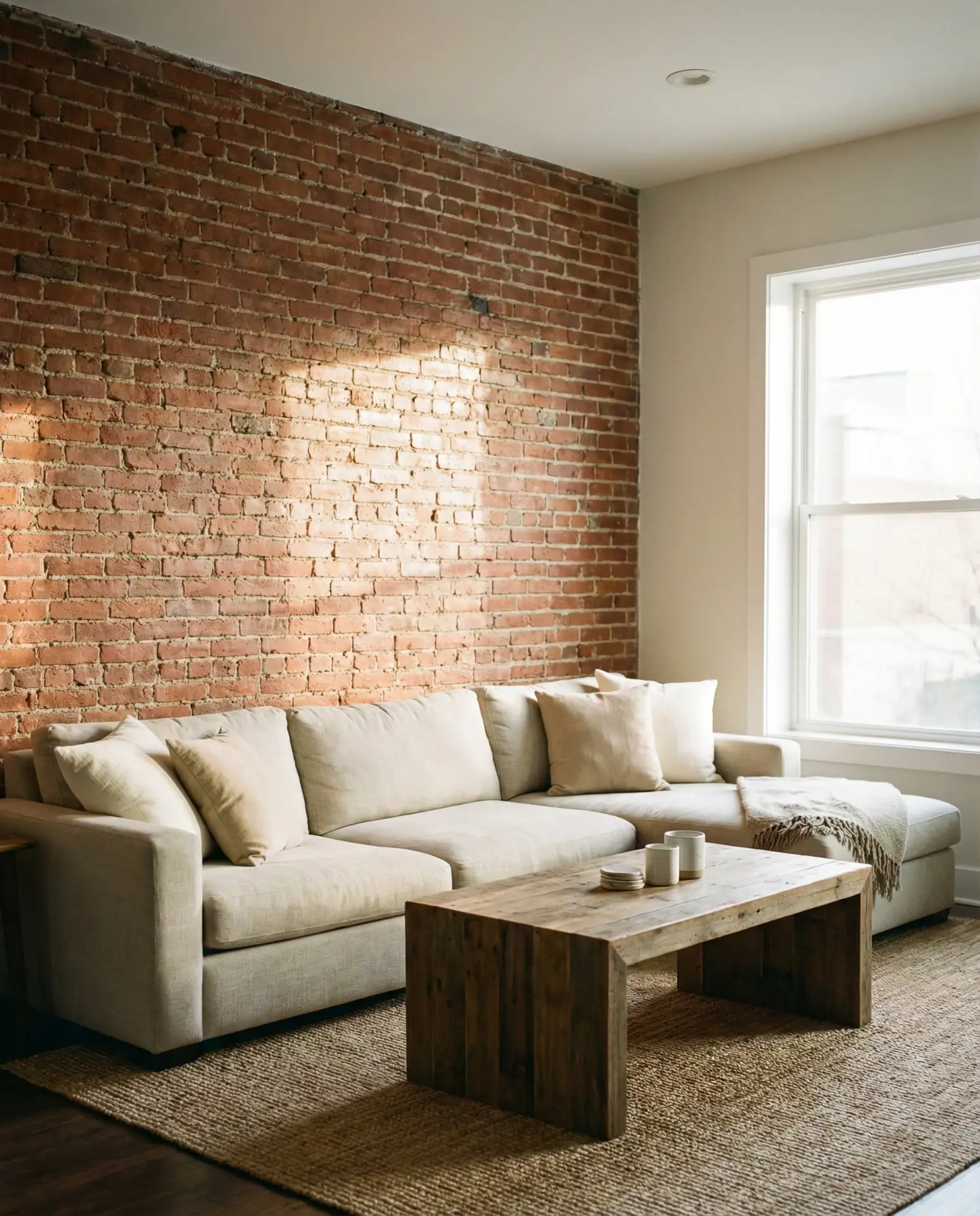
An exposed or faux brick accent wall behind your sofa introduces rich texture and earthy tones that anchor the room with historic character. Whether you’re uncovering original brick in an older home or installing thin brick veneer in new construction, the result adds depth and warmth. Paint it white for a brighter, more modern take, or leave it natural in red, orange, or grey tones for classic farmhouse appeal. This backdrop highlights your furniture and wall decor while providing a sturdy visual foundation.
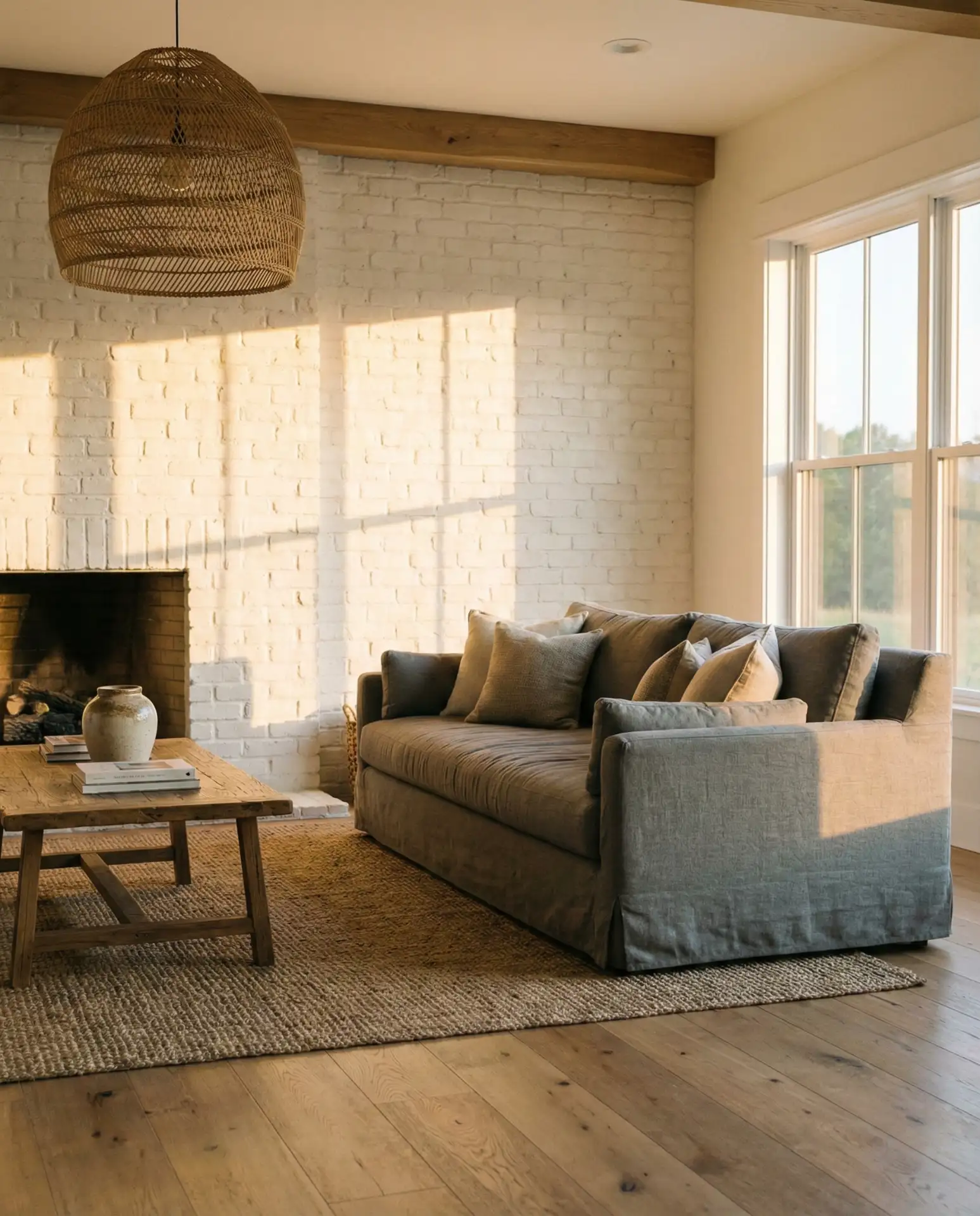
A contractor in Boston recently explained that exposing original brick requires careful prep—sealing and cleaning are essential to prevent dust and mortar crumbling. Thin brick veneer offers a cleaner alternative, costing $7 to $15 per square foot installed, compared to $15 to $30 per square foot for real reclaimed brick. Both options add considerable insulation and soundproofing, a bonus in older homes or shared-wall townhouses.
19. Freestanding Ladder Blanket Rack
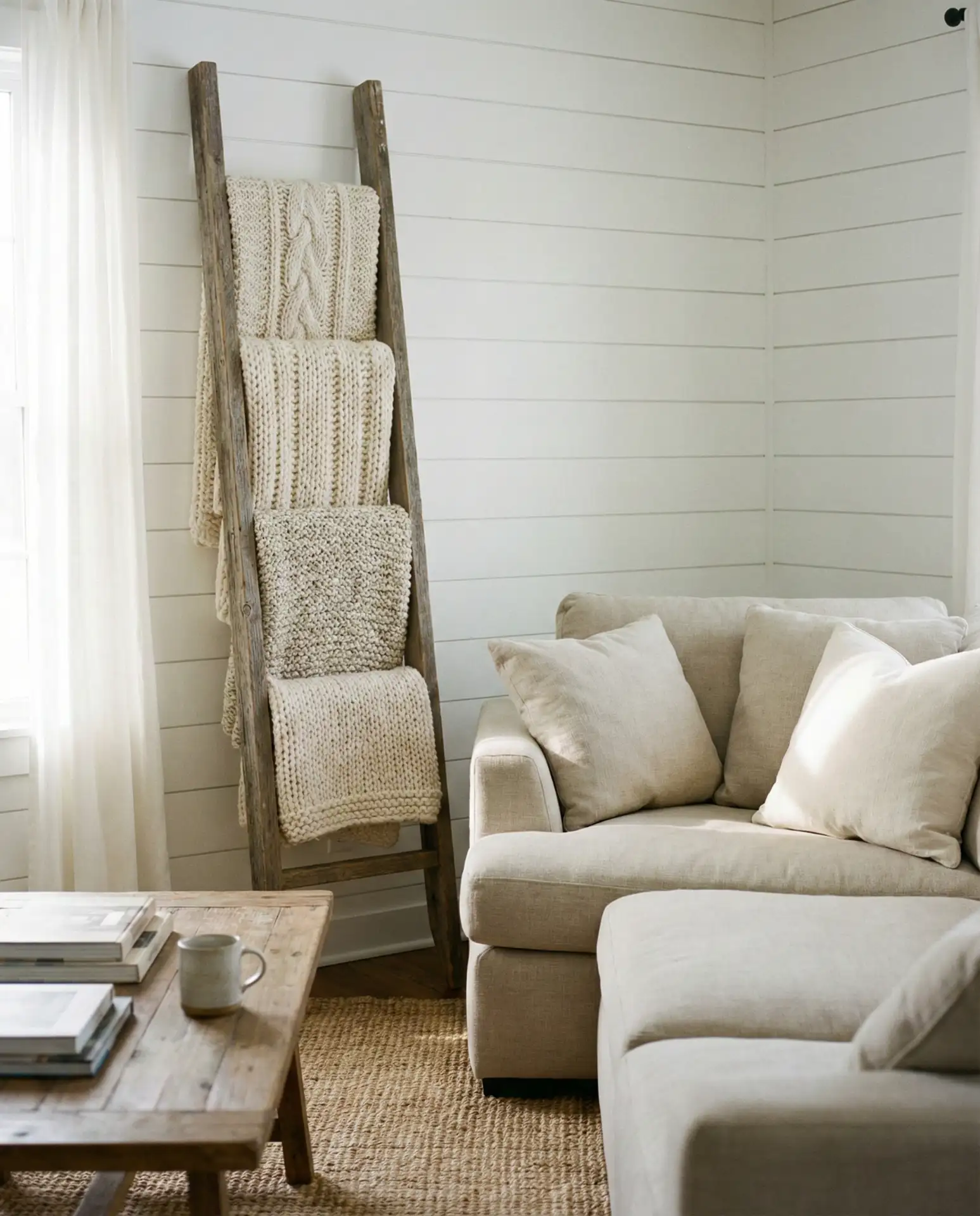
A decorative wooden ladder propped against a wall serves as both sculptural art and practical storage for throws and quilts. This simple addition reinforces the farmhouse aesthetic while keeping cozy textiles within easy reach. Choose a vintage ladder from a flea market or a new one crafted from reclaimed wood, then lean it in an empty corner or beside a reading chair. The vertical lines draw the eye upward, adding height to the room without occupying valuable floor space—perfect for small space living.
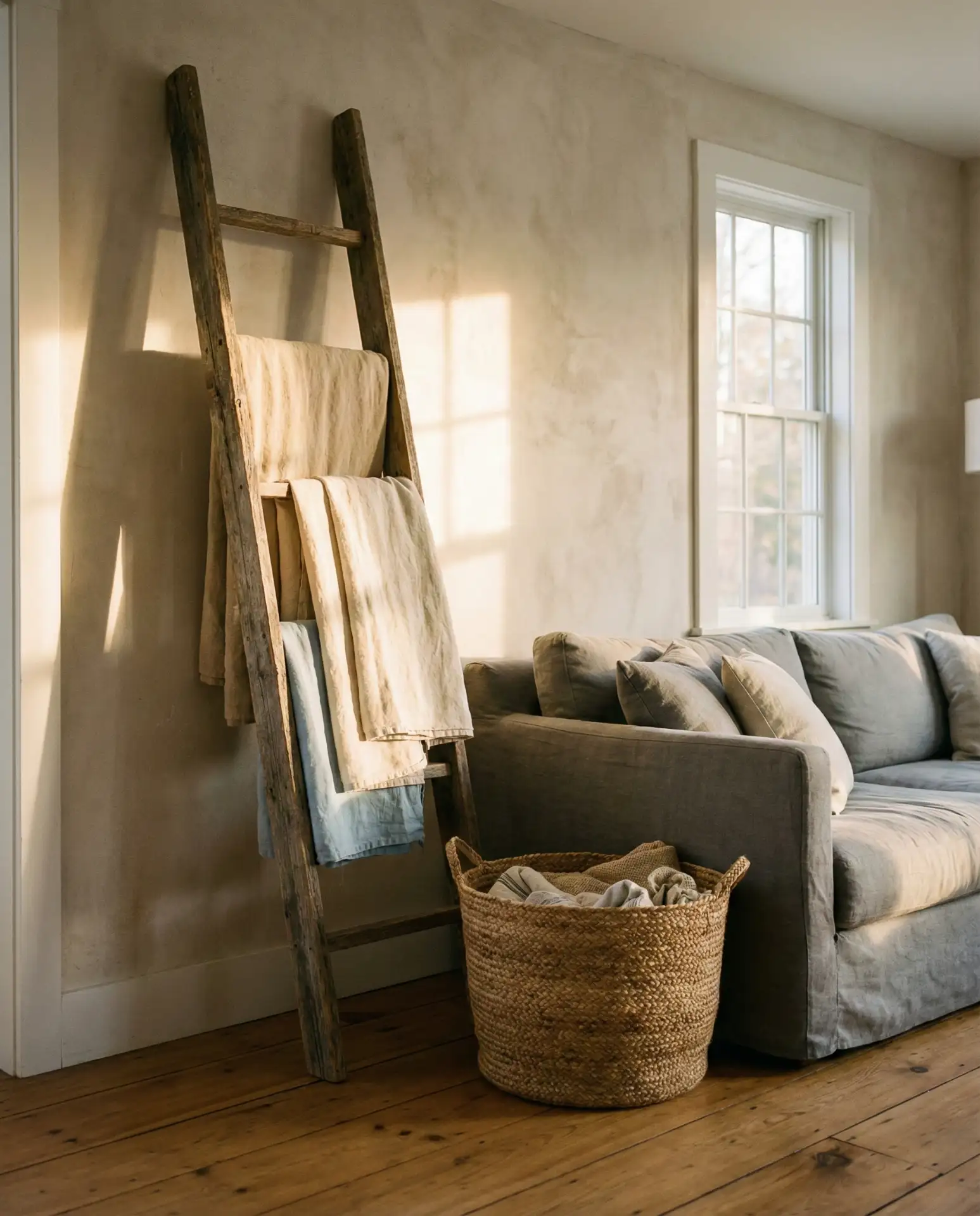
This works best in rooms with high ceilings or ample wall space, where the ladder won’t feel cramped or pose a tripping hazard. Vintage ladders can be found for $30 to $100 at antique shops, while new decorative versions retail for $75 to $200. Some homeowners secure the top of the ladder to the wall with a small bracket for added stability, especially in homes with pets or young children.
20. Natural Wood Beam Mantel
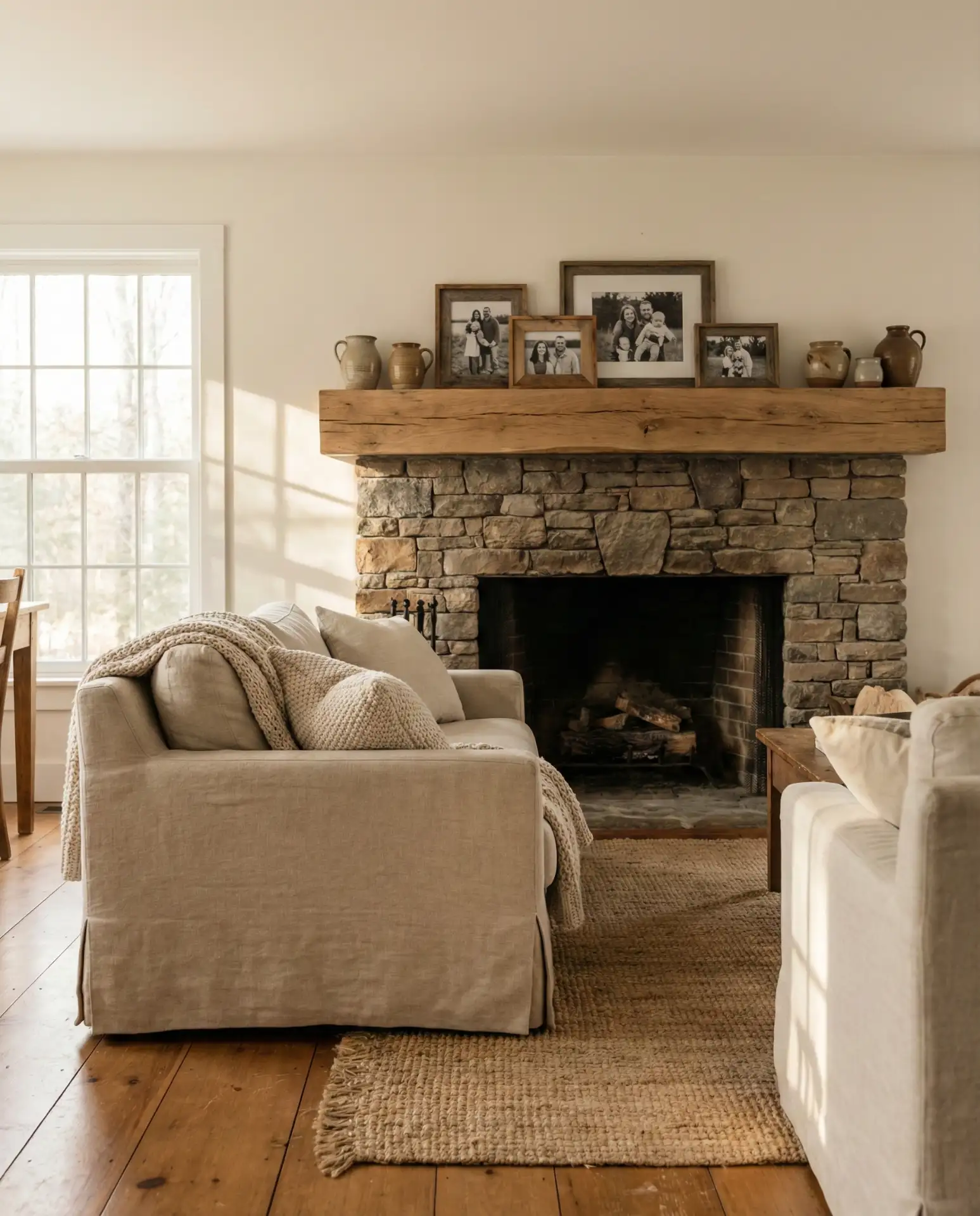
A thick, natural wood beam mantel crowns the fireplace with rustic grandeur while providing a substantial shelf for seasonal decor, candles, and framed photos. Look for beams with visible saw marks, knots, and color variation to maximize character. The heft of a solid beam—often 6×6 or 8×8 inches—creates a striking horizontal line that balances vertical elements like shiplap or brick. This feature is a hallmark of Joanna Gaines-style design, blending old-world craftsmanship with modern sensibility.
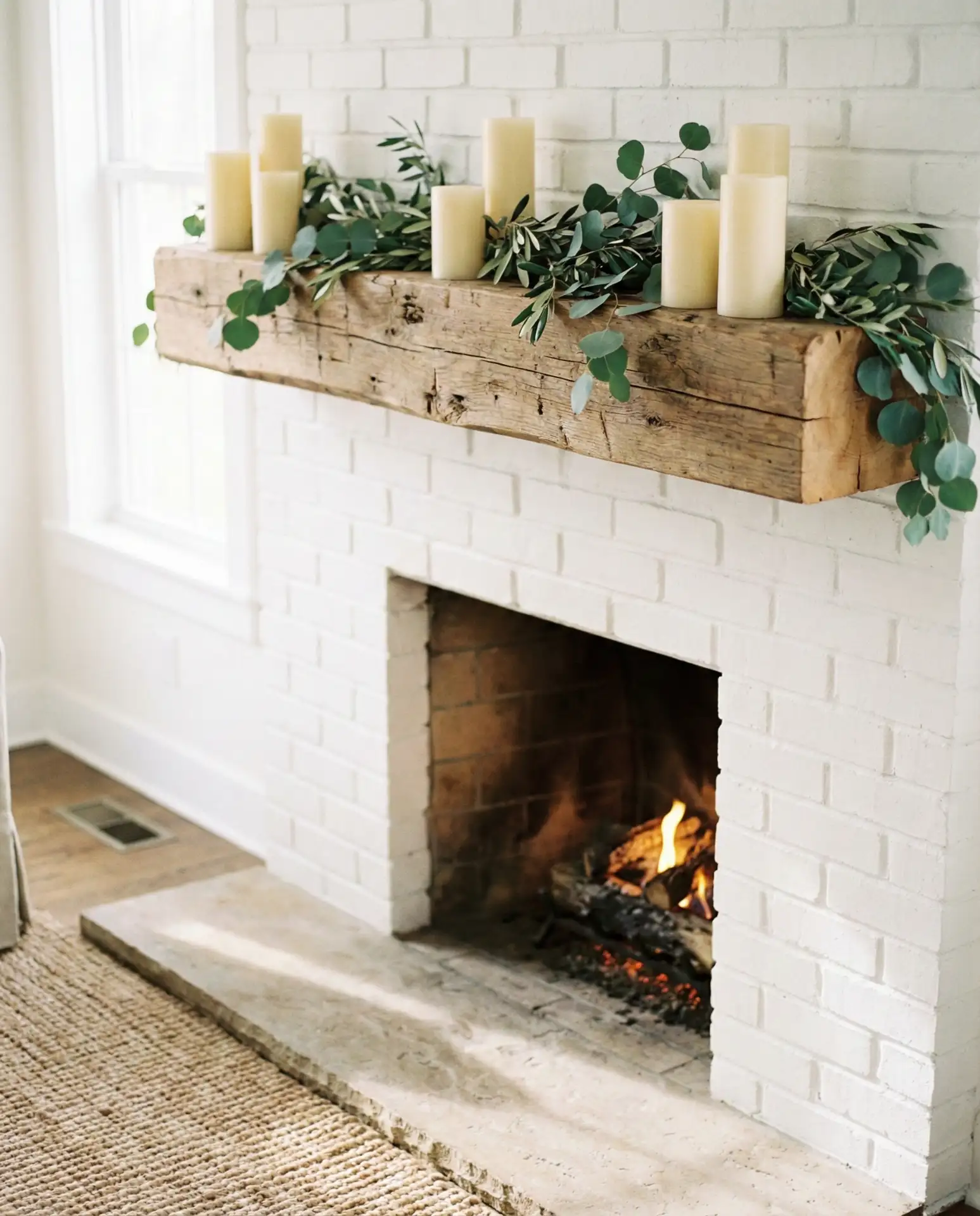
Salvage yards and specialty lumber suppliers across the South and Midwest sell authentic beams reclaimed from barns and mills, typically priced by linear foot—expect $15 to $40 per foot depending on size and species. Installation requires sturdy mounting brackets secured to wall studs, as a 6-foot beam can weigh 50 to 100 pounds. Many homeowners finish the beam with a clear sealer or light stain to protect it from heat and moisture while preserving its natural beauty.
21. Whitewashed Wood Ceiling
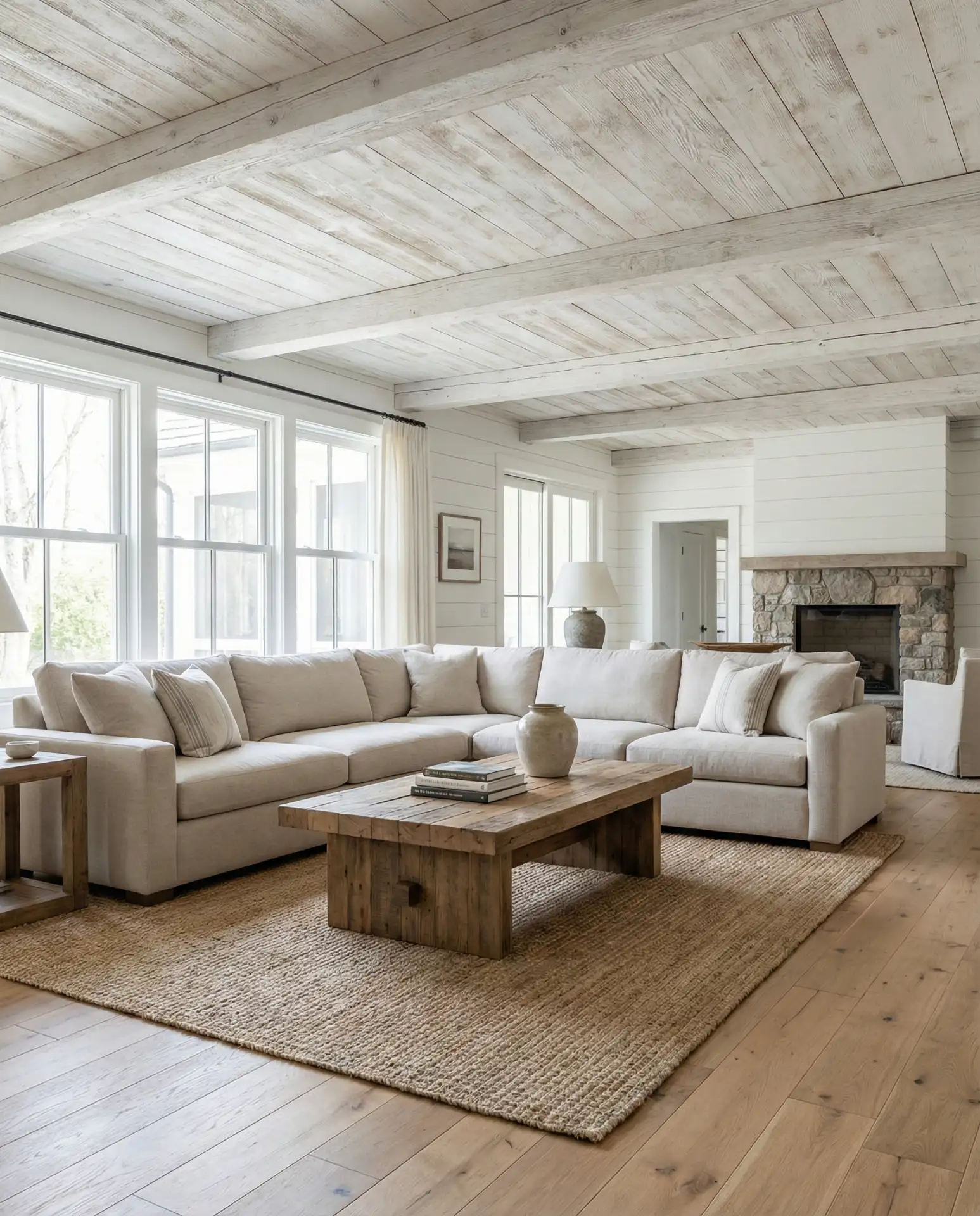
Whitewashing a wood plank ceiling brightens the room while retaining the grain and texture that bring warmth and dimension. This treatment is especially effective in living rooms with lower ceilings or limited natural light, as the pale finish reflects light and visually lifts the space. The technique involves diluting white paint color with water and applying it in thin layers, allowing the wood to show through subtly. It’s a softer, more modern alternative to stark white drywall or dark-stained beams.
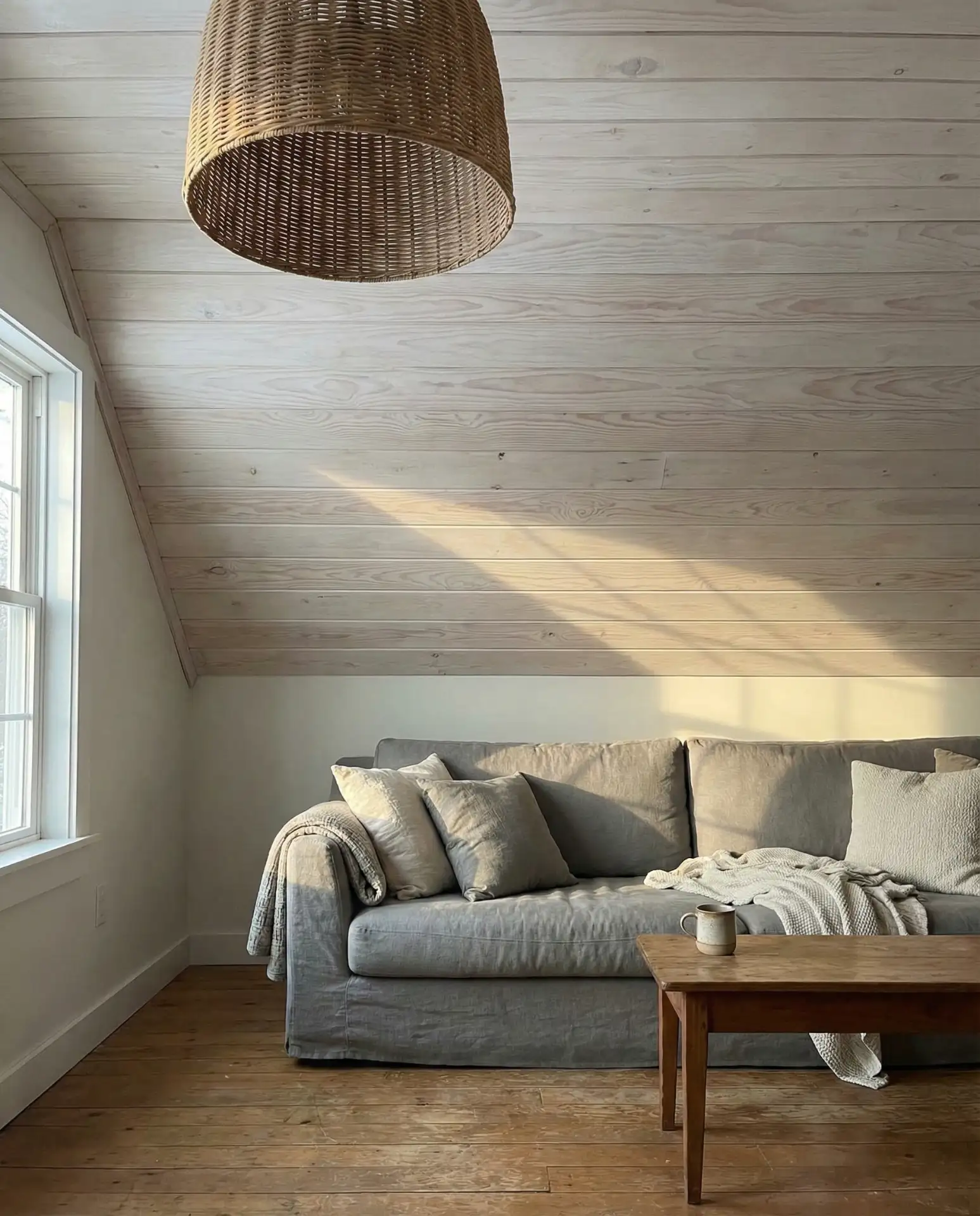
Many DIYers tackle whitewashing as a weekend project, using a 1:1 ratio of white latex paint to water and applying it with a brush or rag to control coverage. The cost is minimal—usually under $100 for paint and supplies—making it one of the most budget-friendly ways to transform a room. If you’re working with new wood, consider a pre-stain conditioner to ensure even absorption and prevent blotchiness.
22. Bloxburg-Inspired Digital Mood Board
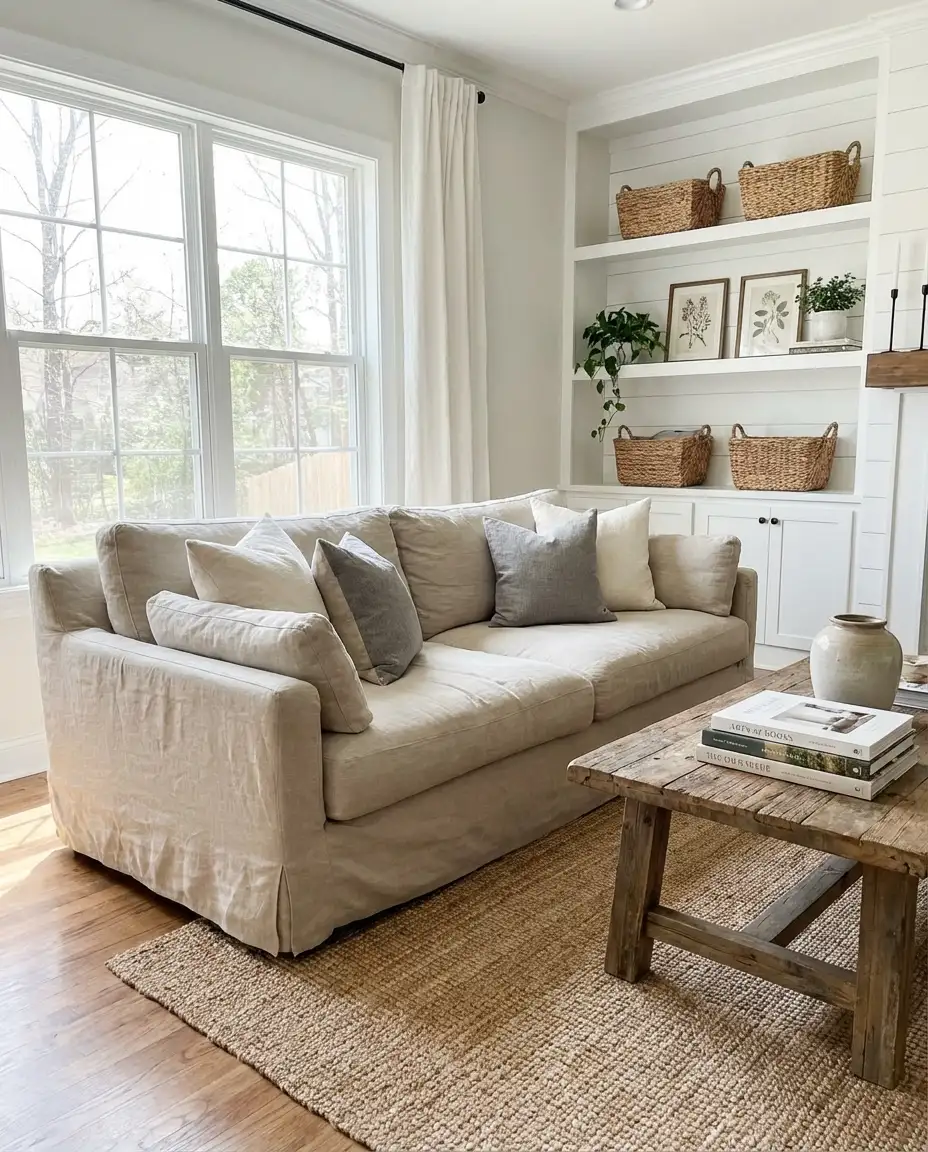
Creating a Bloxburg-inspired digital mood board before decorating helps you visualize color palettes, furniture arrangements, and decor elements in a risk-free virtual space. The popular Roblox game has introduced a younger generation to interior design principles, and many players translate their in-game aesthetics into real-world projects. Compile screenshots, Pinterest pins, and product links into a cohesive board that reflects your modern farmhouse vision, then use it as a shopping and planning guide. This step prevents costly mistakes and ensures every purchase aligns with your overall concept.
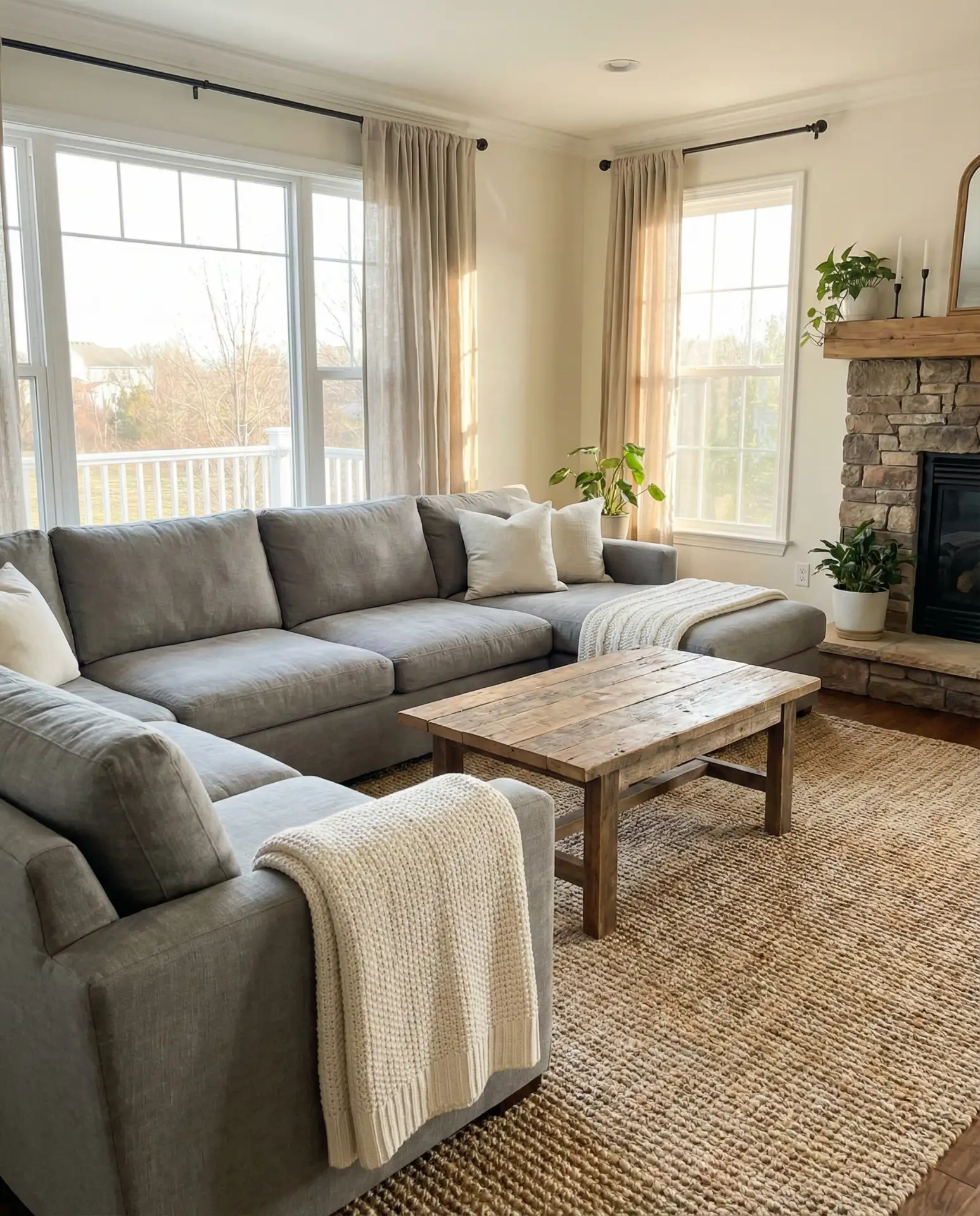
Common mistakes include collecting too many disparate ideas without a unifying thread, which leads to a disjointed final result. Instead, limit your board to 15 to 20 carefully chosen images that share a consistent color story and level of formality. Free tools like Canva, Pinterest, and Milanote make it easy to organize and share your vision with partners, roommates, or designers, ensuring everyone is aligned before any purchases are made.
23. Brown Couch with Layered Neutrals
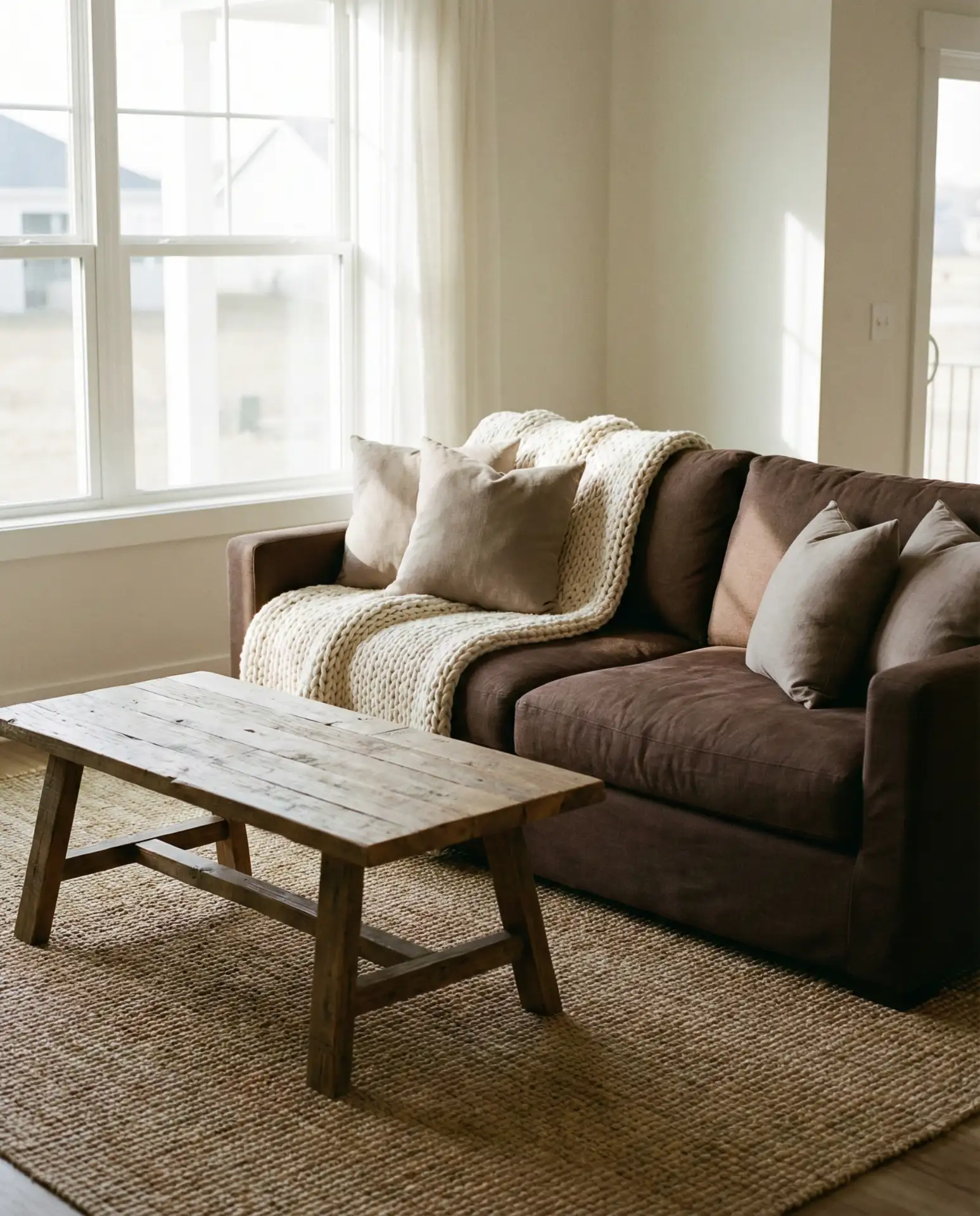
A brown couch in rich cognac, chocolate, or caramel serves as a warm, grounding element that anchors layered neutral tones throughout the living room. Pair it with cream, taupe, and soft grey pillows, throws, and rugs to create depth without introducing bright color. This monochromatic approach feels sophisticated and timeless, allowing natural materials like wood, metal, and linen to shine. The brown upholstery also hides everyday wear better than lighter fabrics, making it a practical choice for busy households.
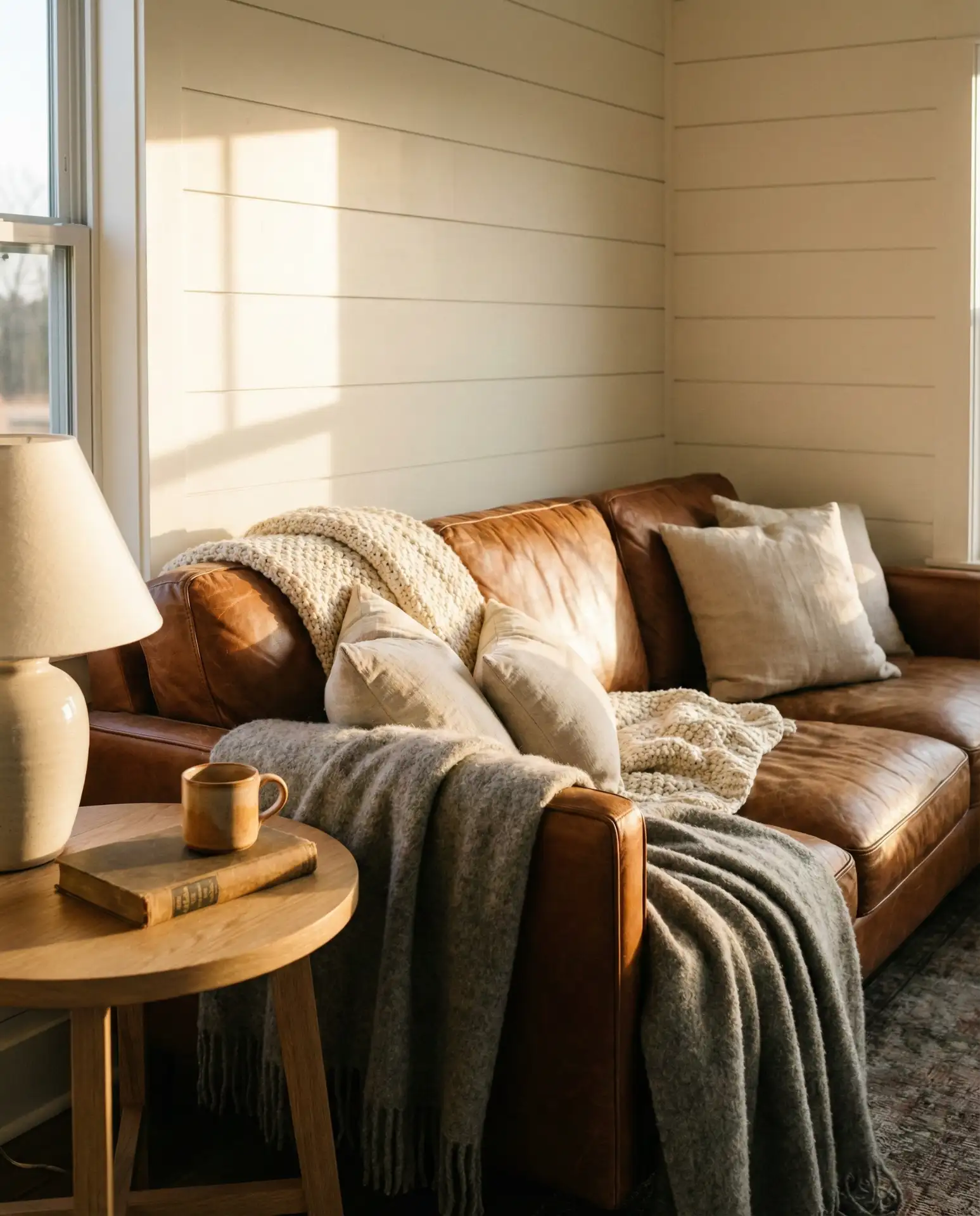
Expert designers suggest varying the shades of neutral rather than sticking to one exact tone—mix warm taupes with cool greys, or creamy whites with deeper tans—to create visual interest. This prevents the room from reading as flat or one-dimensional. Quality brown sofas in linen or performance fabric start around $1,500, while leather options begin at $2,000, with the investment paying off in durability and aging characteristics that actually improve over time.
Conclusion
Whether you’re drawn to the cozy appeal of stone fireplaces, the clean lines of midcentury accents, or the textural richness of woven pendants and natural rugs, modern farmhouse style in 2026 offers endless ways to personalize your living room. These ideas demonstrate how versatile the aesthetic can be, adapting to small spaces, accommodating dark couches and grey couches alike, and embracing both moody palettes and bright, airy schemes. Share your favorite combinations in the comments below, and let us know which ideas you’re planning to bring into your own home this year.