Pantry design has become one of the most searched home topics on Pinterest in 2026, as American homeowners continue to prioritize both beauty and function in their kitchens. Whether you’re working with a sprawling walk-in space or a narrow cabinet tucked beside the fridge, a well-planned pantry can transform the way you cook, shop, and live. From moody butler’s pantries to minimalist Japandi-inspired shelving, today’s designs blend smart storage with stunning visual appeal. In this guide, we’re sharing inspired pantry ideas that reflect the latest trends while staying rooted in real-life needs—perfect for anyone seeking a mix of inspiration and practical takeaways.
1. Walk-In Pantry with Floor-to-Ceiling Open Shelving
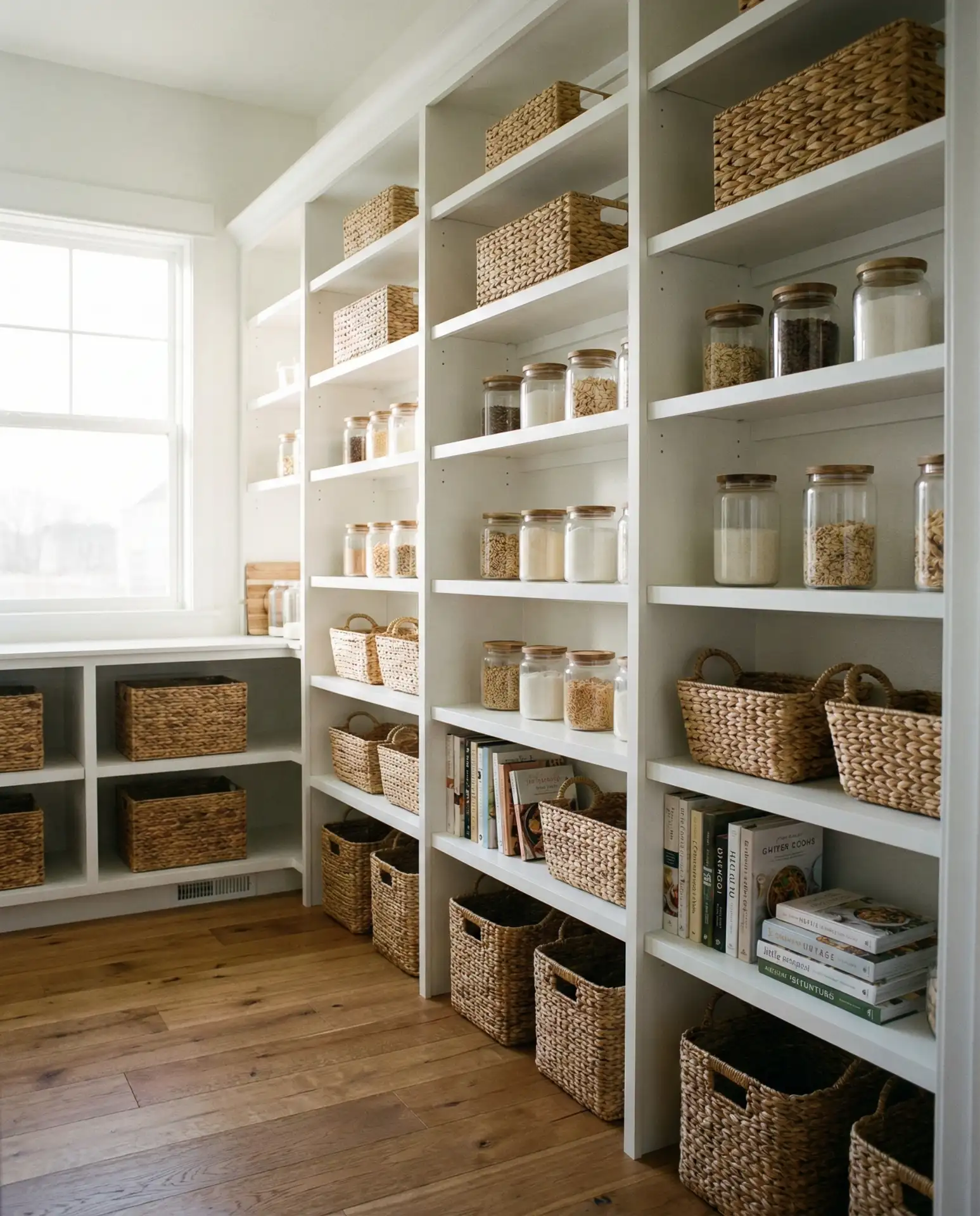
A walk-in pantry with open shelving offers unbeatable visibility and accessibility, especially in large kitchens where storage volume is essential. The design relies on uniform containers and labeled bins to maintain visual order while keeping everything from spices to bulk grains within arm’s reach. This setup works particularly well in homes where multiple people cook, as it eliminates the guesswork of digging through deep cabinets. The openness also encourages better inventory management, reducing food waste and making grocery planning more intuitive.
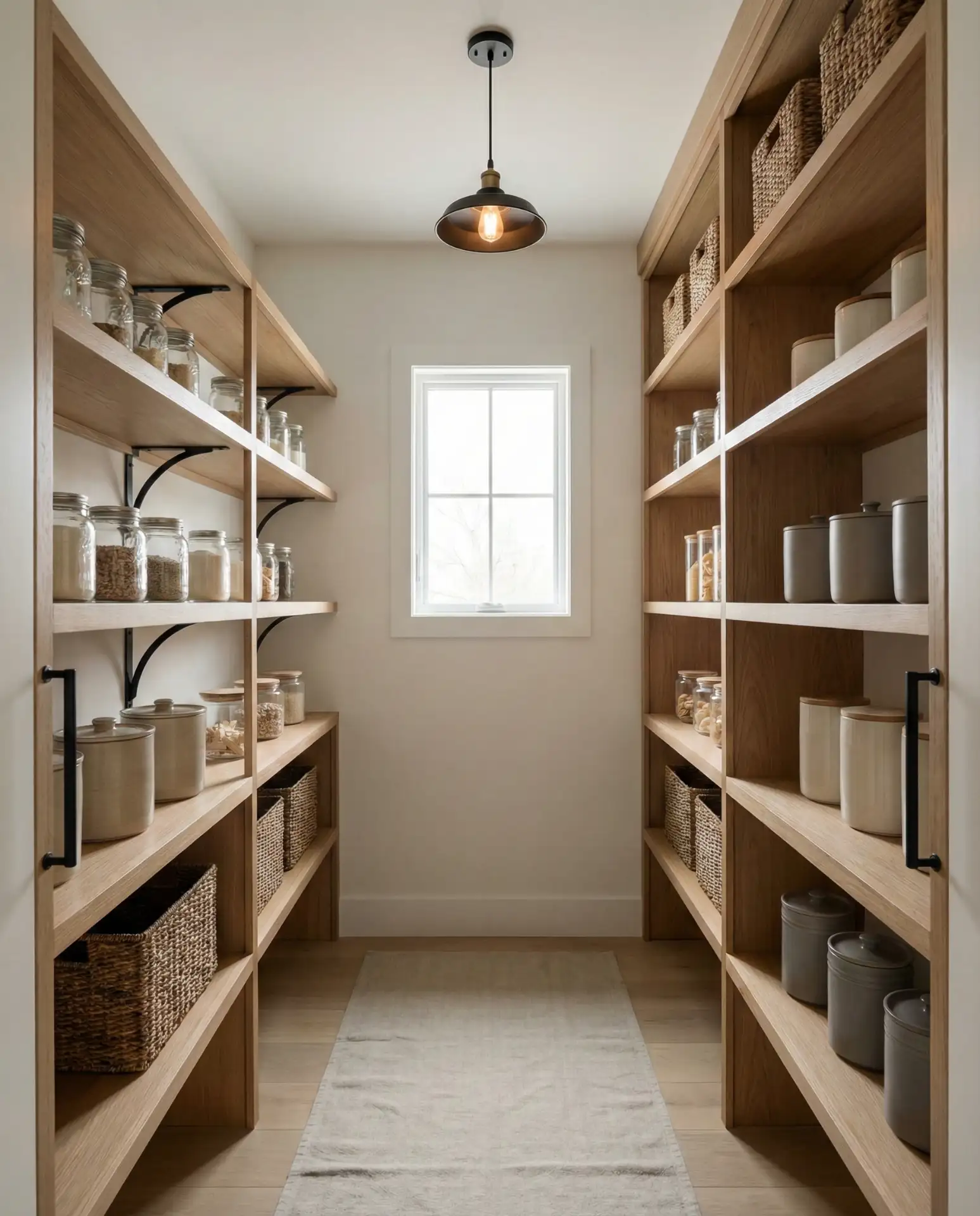
One common mistake is underestimating how much visual clutter open shelving can create if items aren’t uniformly stored. Investing in matching containers and clear labels upfront prevents the space from feeling chaotic. Another pitfall is failing to leave enough vertical clearance between shelves—taller items like cereal boxes or oil bottles need at least 14 inches of clearance. Measure your most-used items before installing shelves to avoid costly adjustments later.
2. Compact Pantry Cabinet for Small Kitchens
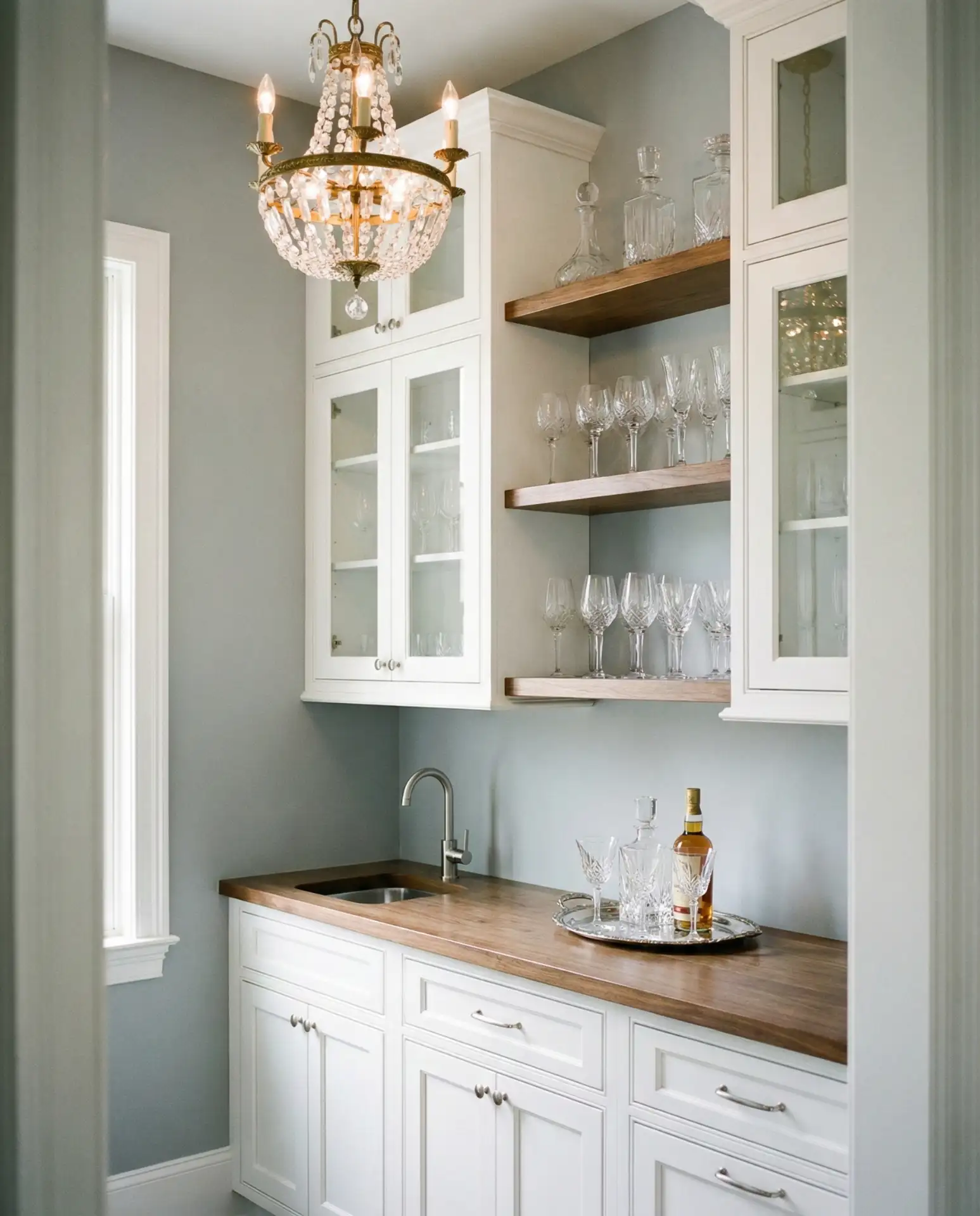
In a small kitchen, every inch counts, and a tall, narrow pantry cabinet can be a game-changer. These slim units—often just 12 to 18 inches wide—slide into gaps beside the fridge or between counters, offering pull-out shelves or swing-out racks that maximize vertical storage. The key is choosing a design with adjustable shelving to accommodate everything from canned goods to baking sheets. This approach keeps essentials organized without eating into valuable prep or dining space.
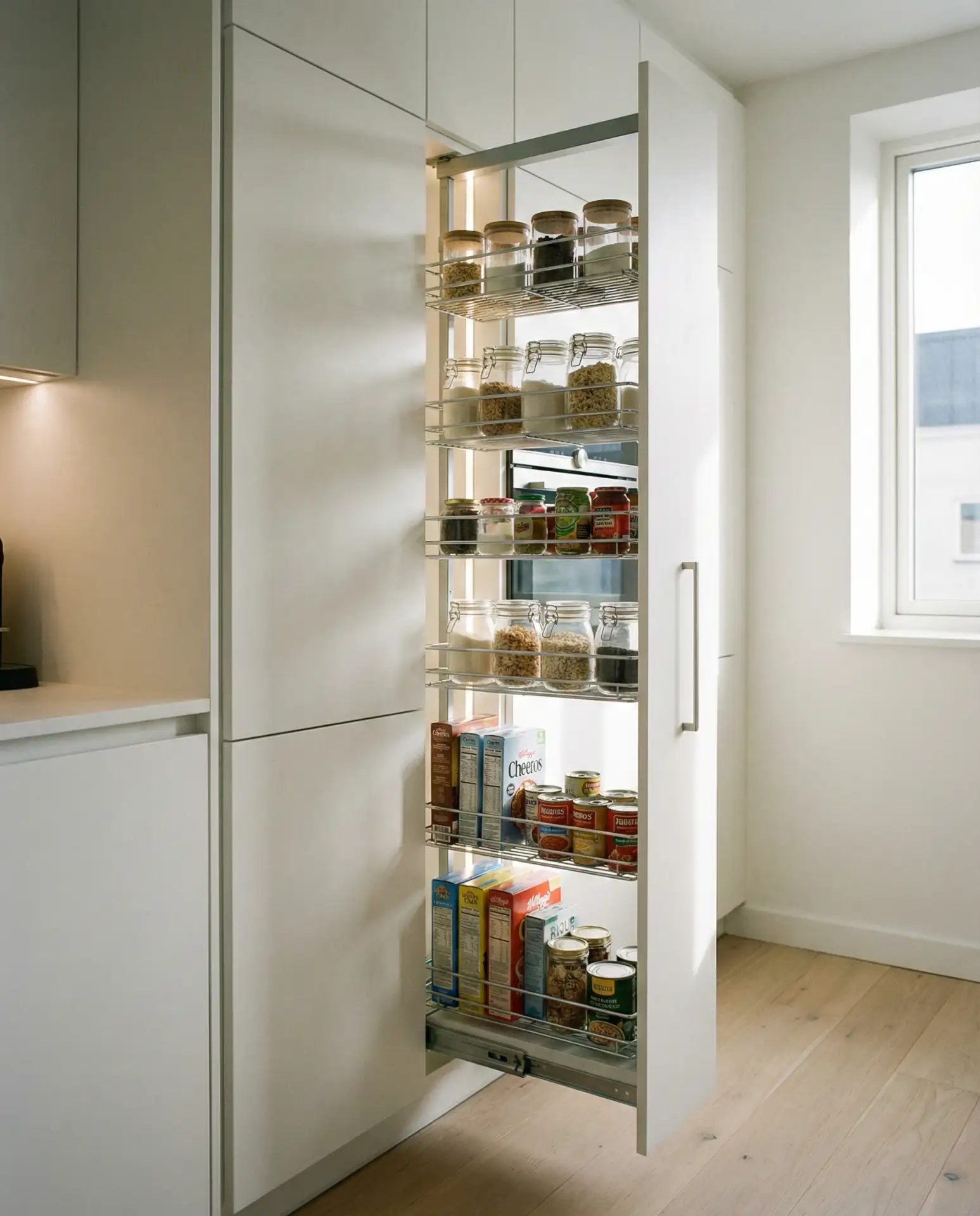
This solution works best in galley kitchens or urban apartments where square footage is limited but vertical space is available. Pull-out mechanisms make it easy to see and grab items from the back, eliminating the black hole effect of traditional deep cabinets. Even in a 300-square-foot studio, a well-designed narrow pantry can hold a week’s worth of groceries and still feel unobtrusive.
3. Butler’s Pantry with Wine Storage and Glassware Display
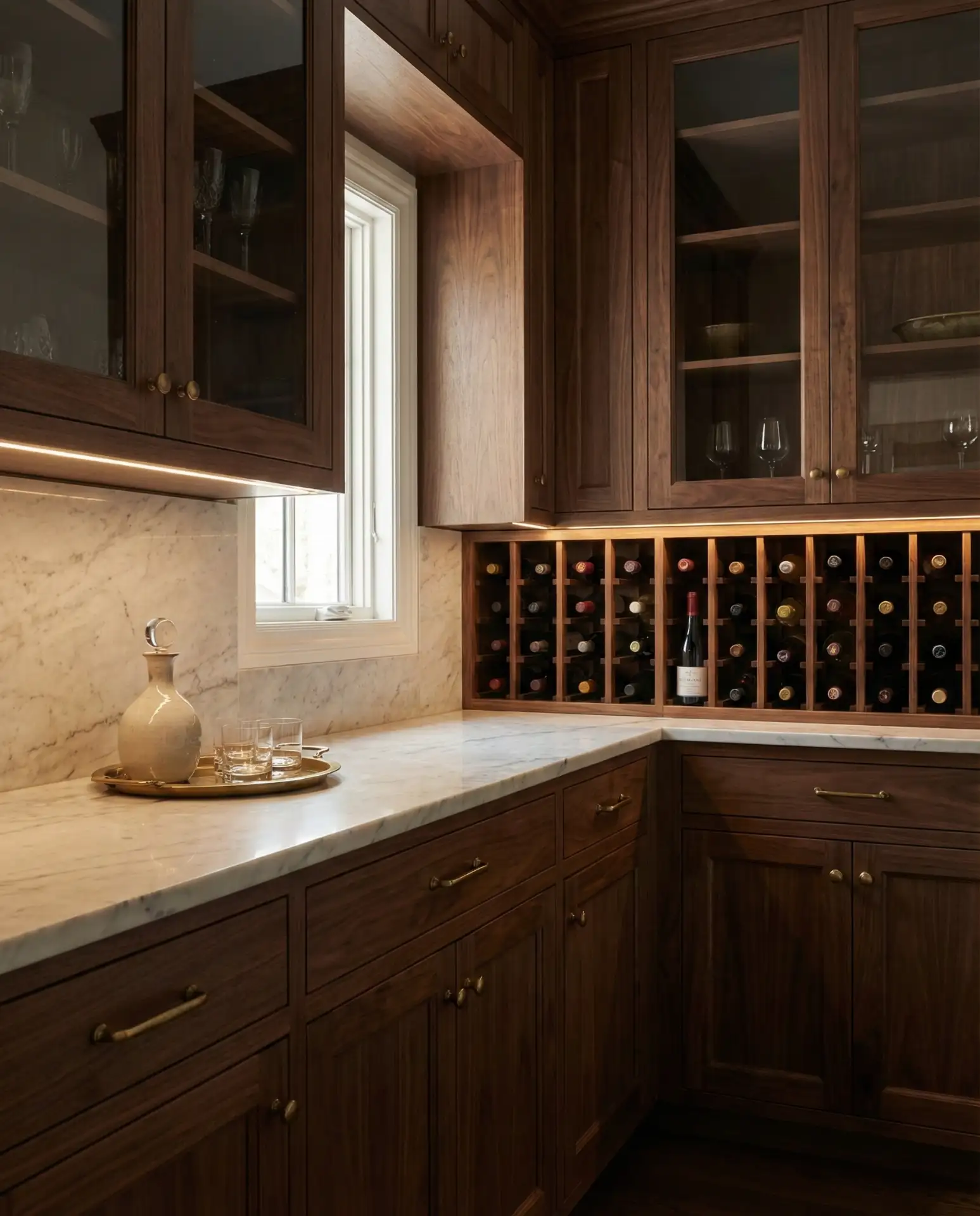
A butler’s pantry serves as a transitional zone between the kitchen and dining area, blending prep space with elegant display. Classic designs often feature glass-front cabinetry for stemware, built-in wine racks, and a small countertop for mixing drinks or plating appetizers. This setup is particularly popular in homes that entertain frequently, as it keeps serving essentials within reach while keeping the main kitchen clutter-free during gatherings.
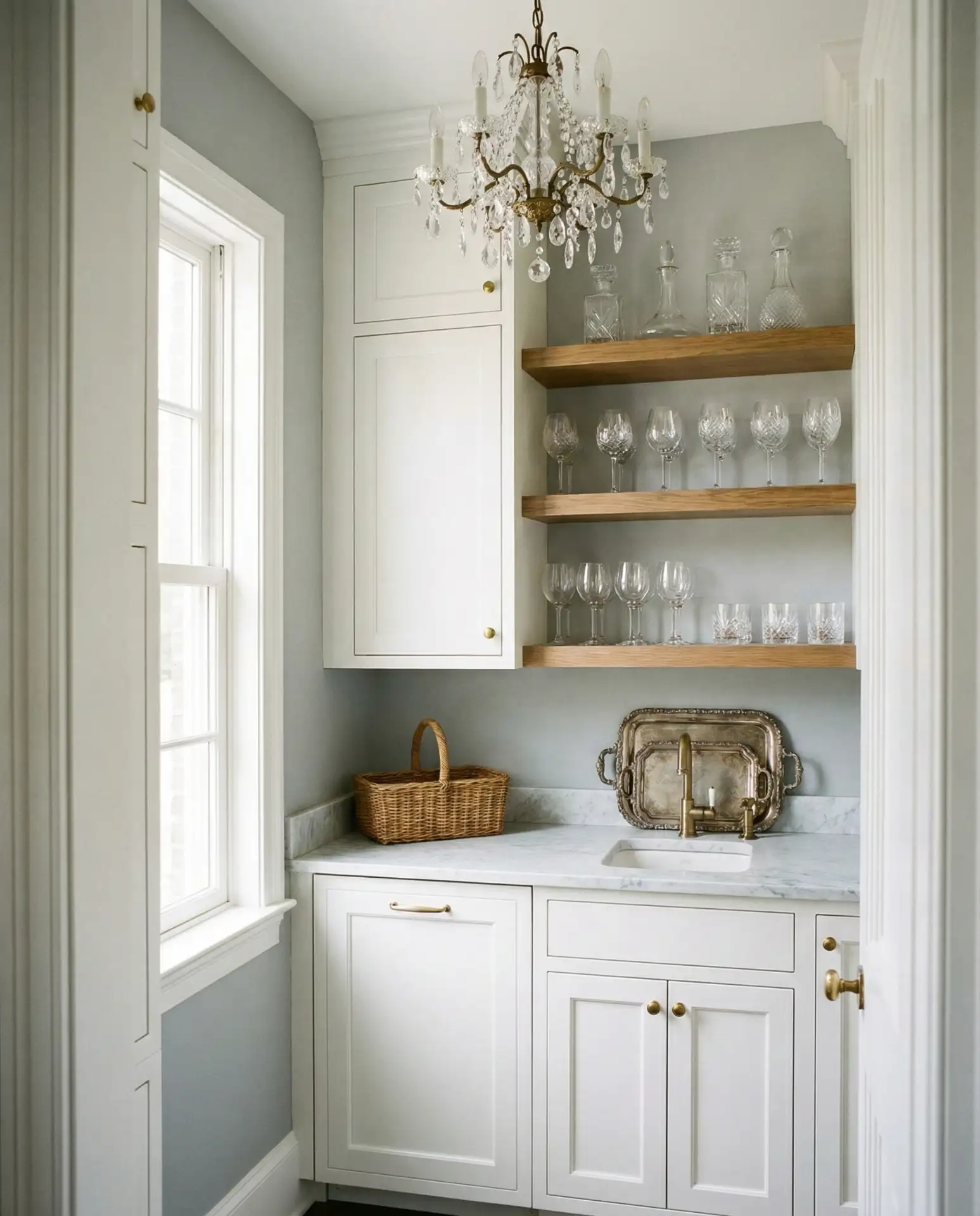
A colleague who recently renovated her 1920s colonial added a butler’s pantry off the kitchen and says it completely changed how she hosts. Instead of shuttling dirty dishes through the main space, she can discreetly stage and clean up in the pantry. The wine storage also doubles as a conversation starter, with bottles arranged by region and occasion.
4. Japandi-Inspired Minimalist Pantry

The Japandi aesthetic—a fusion of Japanese simplicity and Scandinavian warmth—has gained serious traction in American pantry design this year. Think clean lines, natural wood tones, matte black hardware, and a restrained color palette of whites, grays, and beiges. This style emphasizes functional beauty, with every item thoughtfully curated and stored in handcrafted ceramic jars or woven baskets. The result is a calming, clutter-free space that feels more like a retreat than a storage closet.
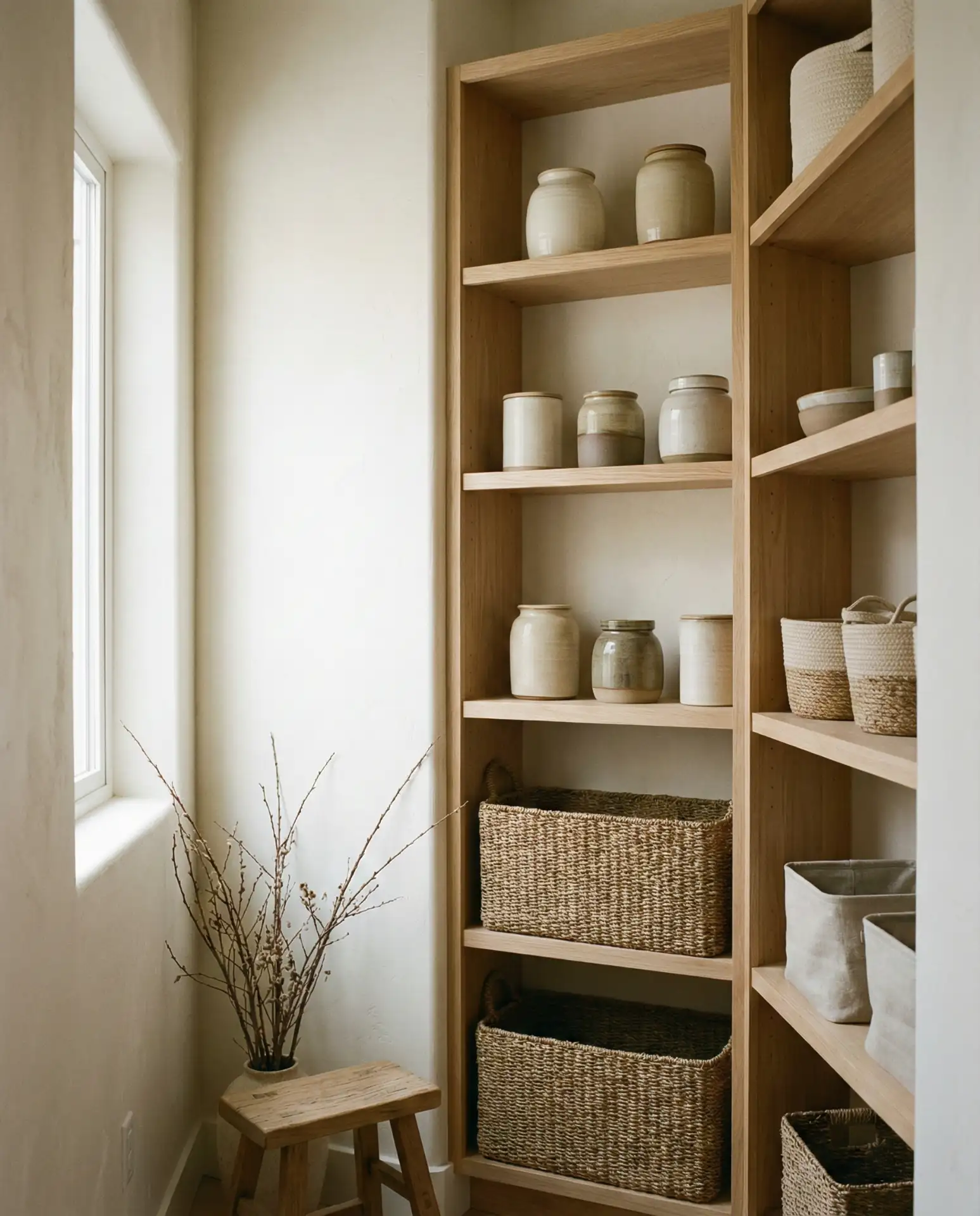
Budget-wise, this look can be achieved without breaking the bank. Start with affordable birch or bamboo shelving from home improvement stores, then layer in thrifted ceramics and natural fiber baskets. The key is restraint—resist the urge to overfill shelves, and leave breathing room between items. This approach not only looks intentional but also makes daily use more pleasant and efficient.
5. Industrial Pantry with Metal Shelving and Edison Bulbs
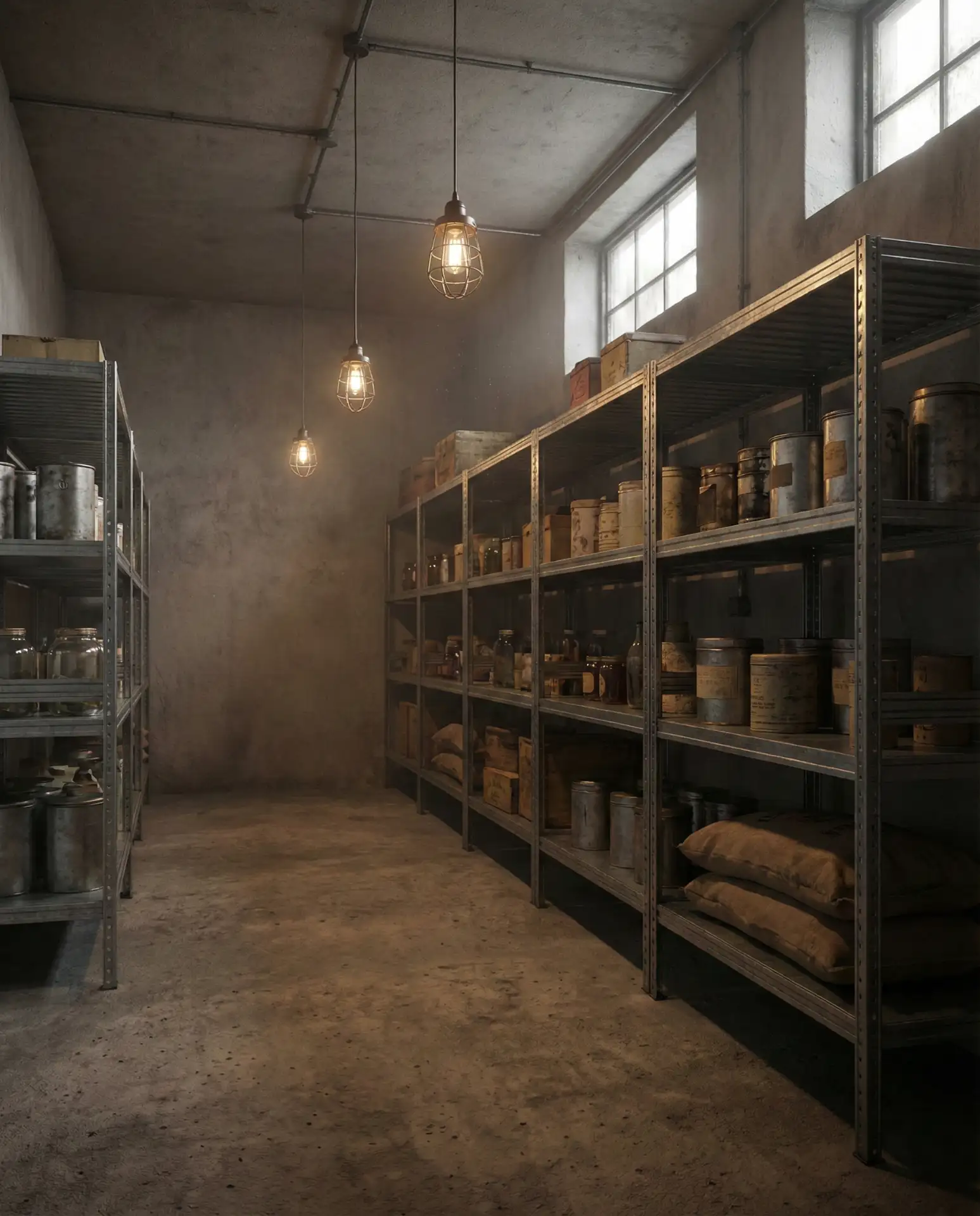
An industrial-style pantry embraces raw materials—exposed metal shelving, concrete or brick walls, and vintage-inspired lighting like Edison bulbs or wire cage fixtures. This design works especially well in loft apartments or renovated warehouses, where the pantry can echo the building’s architectural heritage. The sturdy metal racks can hold heavy bulk items, and the open design keeps everything visible, making it easy to rotate stock and avoid forgotten ingredients.
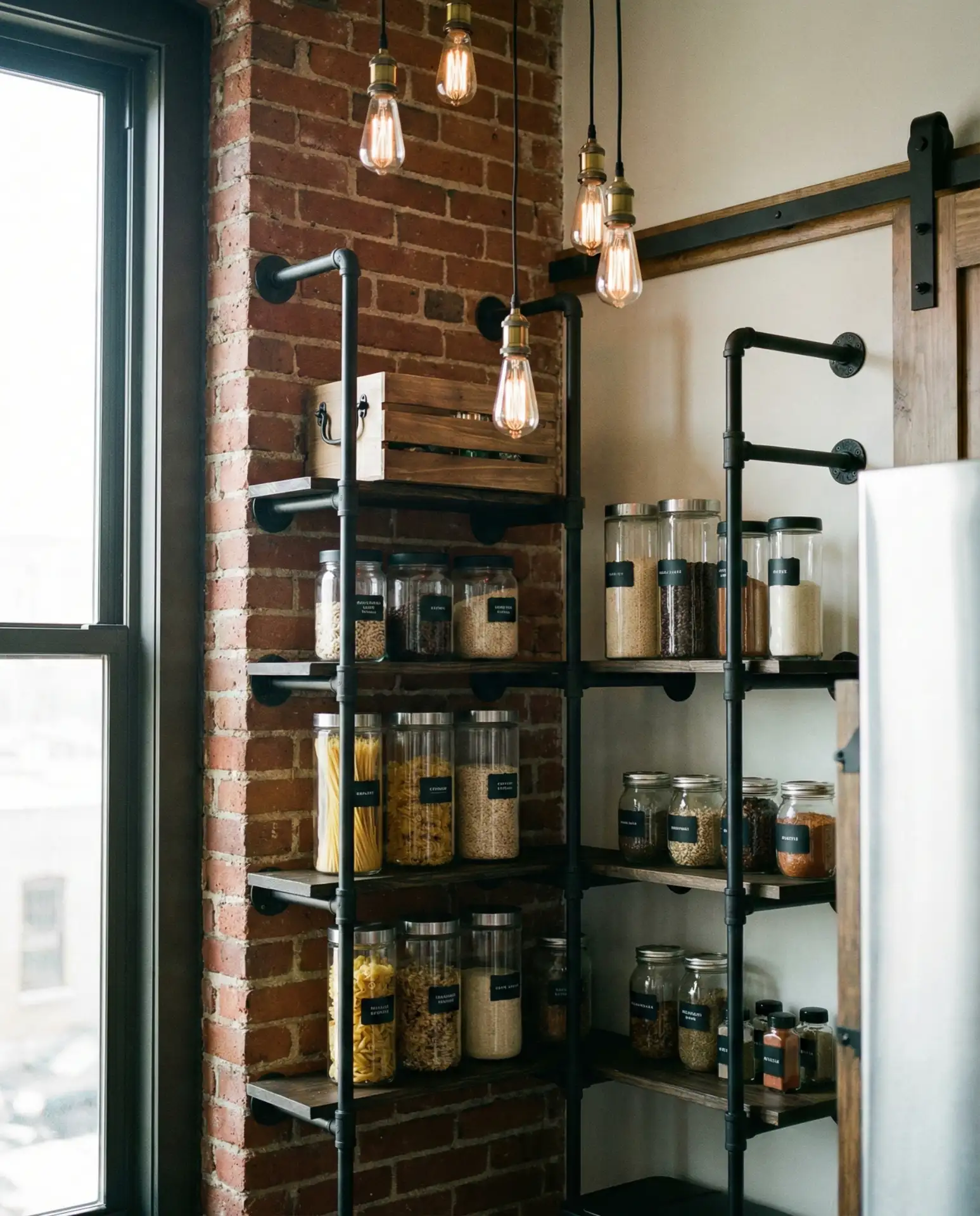
In cities like Brooklyn or Portland, where industrial chic remains a dominant trend, this style feels both on-brand and highly practical. The metal shelving is affordable and easy to install, and it can be reconfigured as needs change. Pair it with reclaimed wood accents or vintage signage to add warmth without softening the edge too much.
6. Modern Luxury Kitchen Pantry with Custom Cabinetry

A modern luxury kitchen pantry often features custom floor-to-ceiling cabinetry, integrated lighting, and high-end finishes like lacquered wood, marble countertops, or brass hardware. These spaces are designed to feel like an extension of the kitchen itself, with seamless door fronts that blend into the surrounding walls. Inside, you’ll find pull-out drawers, soft-close hinges, and bespoke organizers for everything from spices to small appliances. This level of customization comes at a premium, but it delivers both beauty and long-term functionality.
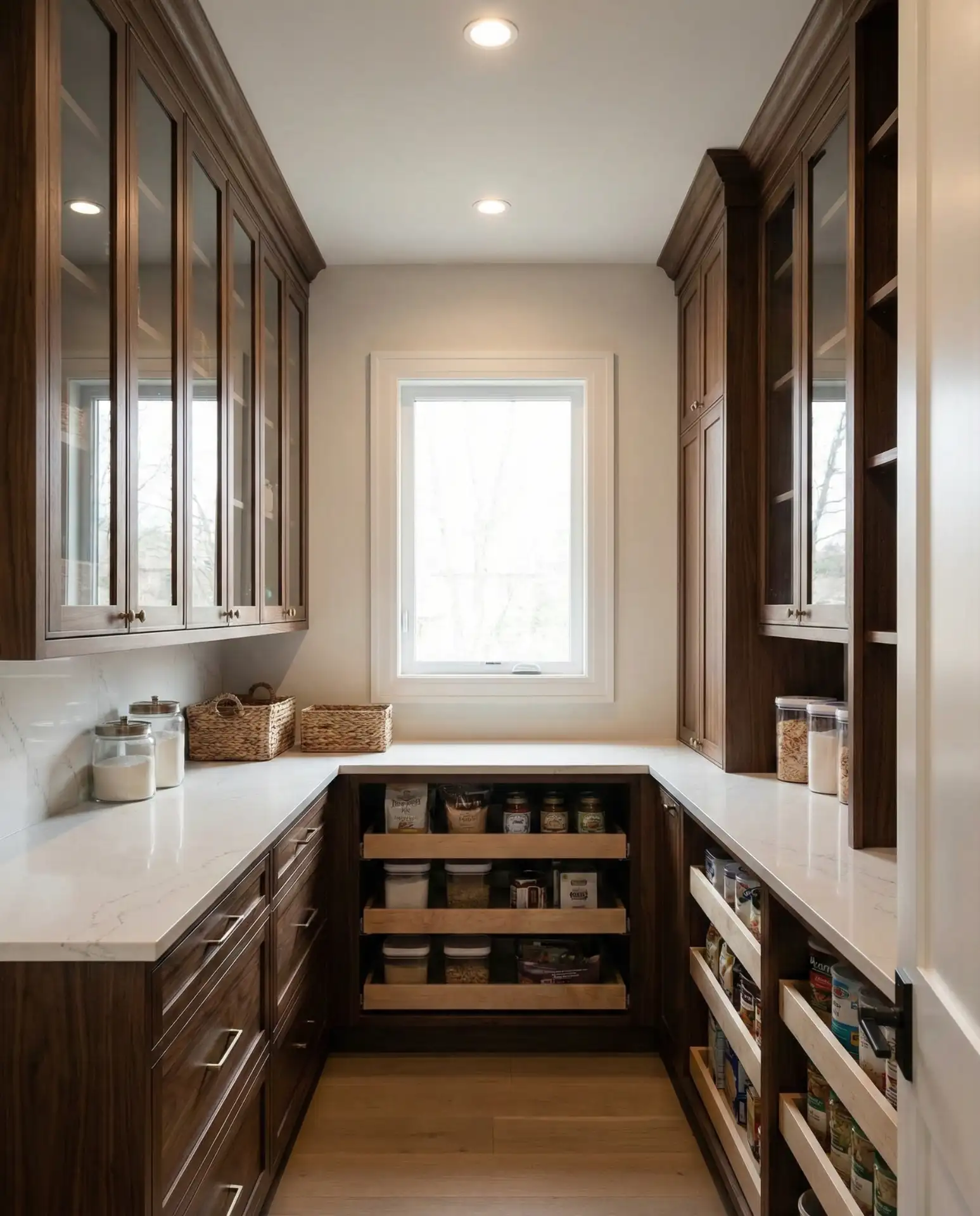
Real homeowners who invest in custom pantries often report that the upfront cost is offset by the improved daily experience and the boost in home resale value. In markets like California or Texas, where kitchen upgrades are highly scrutinized by buyers, a well-executed pantry can be a significant selling point. Even small touches—like velvet-lined drawer inserts or built-in charging stations for electronics—can elevate the space from functional to extraordinary.
7. Corner Walk-In Pantry with L-Shaped Shelving
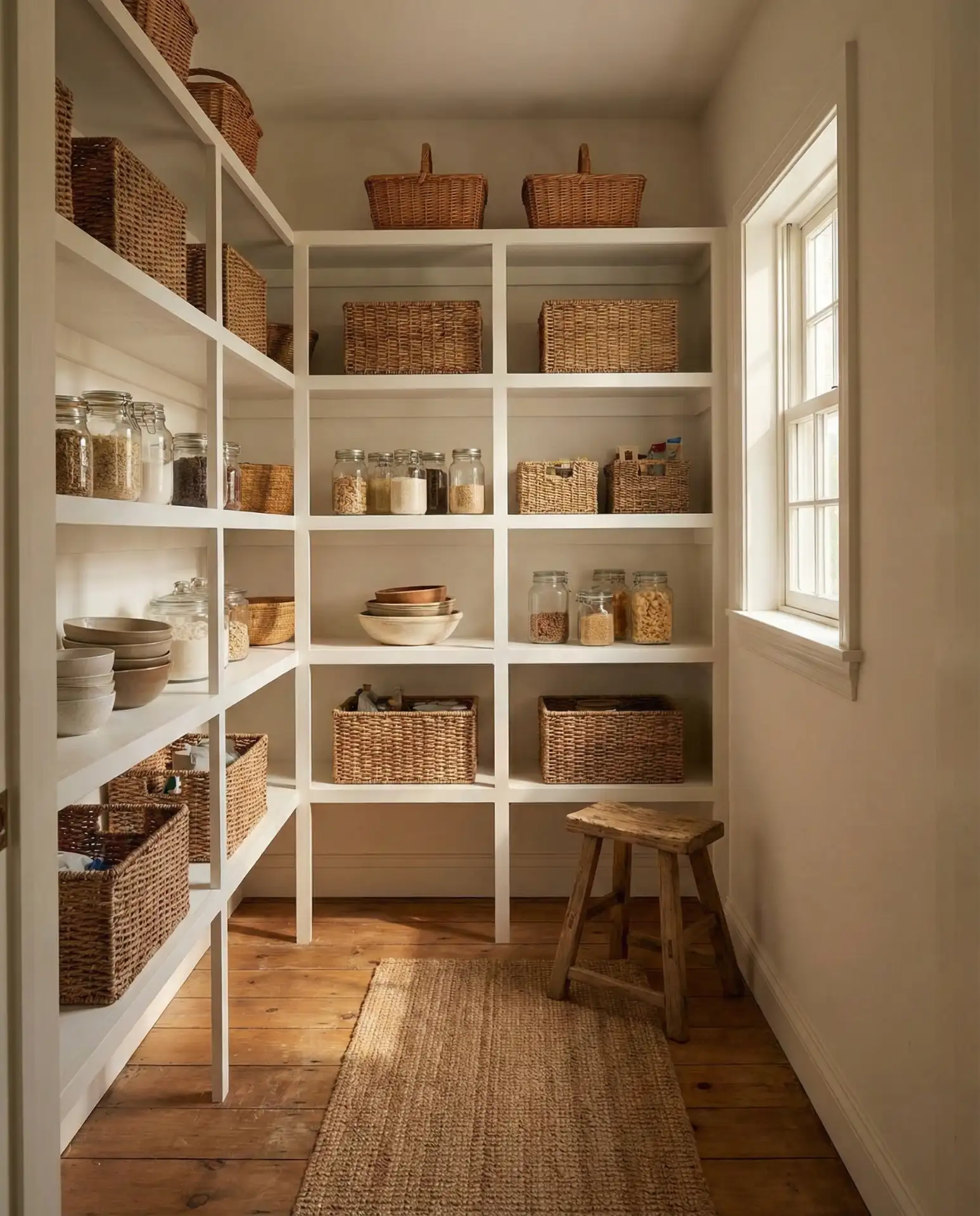
A walk-in corner pantry makes smart use of an often underutilized area, transforming awkward angles into highly efficient storage. L-shaped shelving wraps around two walls, maximizing capacity without requiring a large footprint. This layout is ideal for homes where a dedicated pantry room isn’t possible, but a corner nook or closet can be repurposed. Add a small step stool for upper shelves and task lighting to brighten the interior, and you’ve got a surprisingly spacious solution.
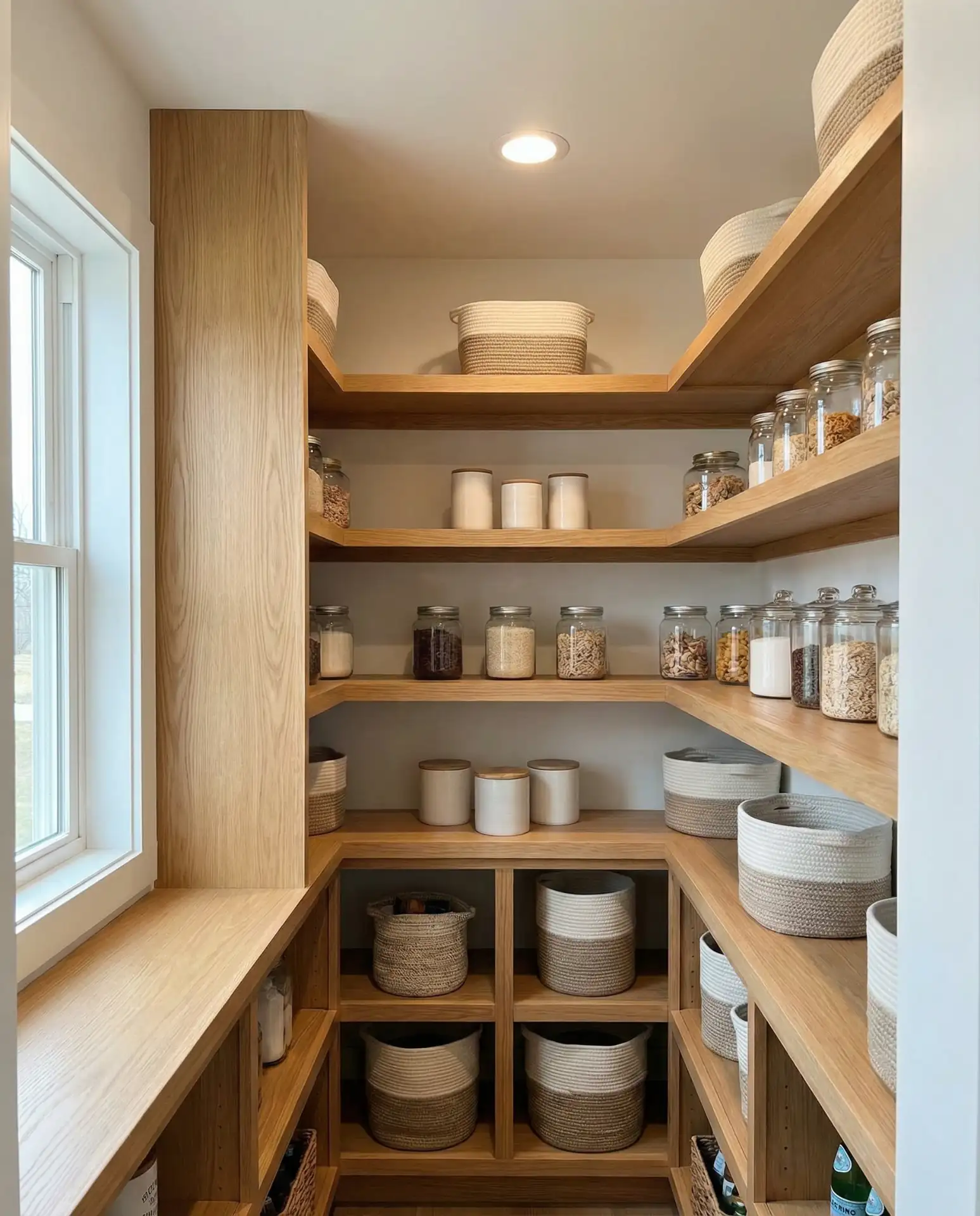
This design is particularly popular in Midwestern and Southern homes, where older floor plans often include breakfast nooks or secondary closets that can be converted. The L-shape also allows you to create zones—one wall for dry goods, the other for small appliances or cleaning supplies. It’s a smart way to gain walk-in functionality without a full room remodel.
8. Moody Dark-Painted Pantry with Brass Accents
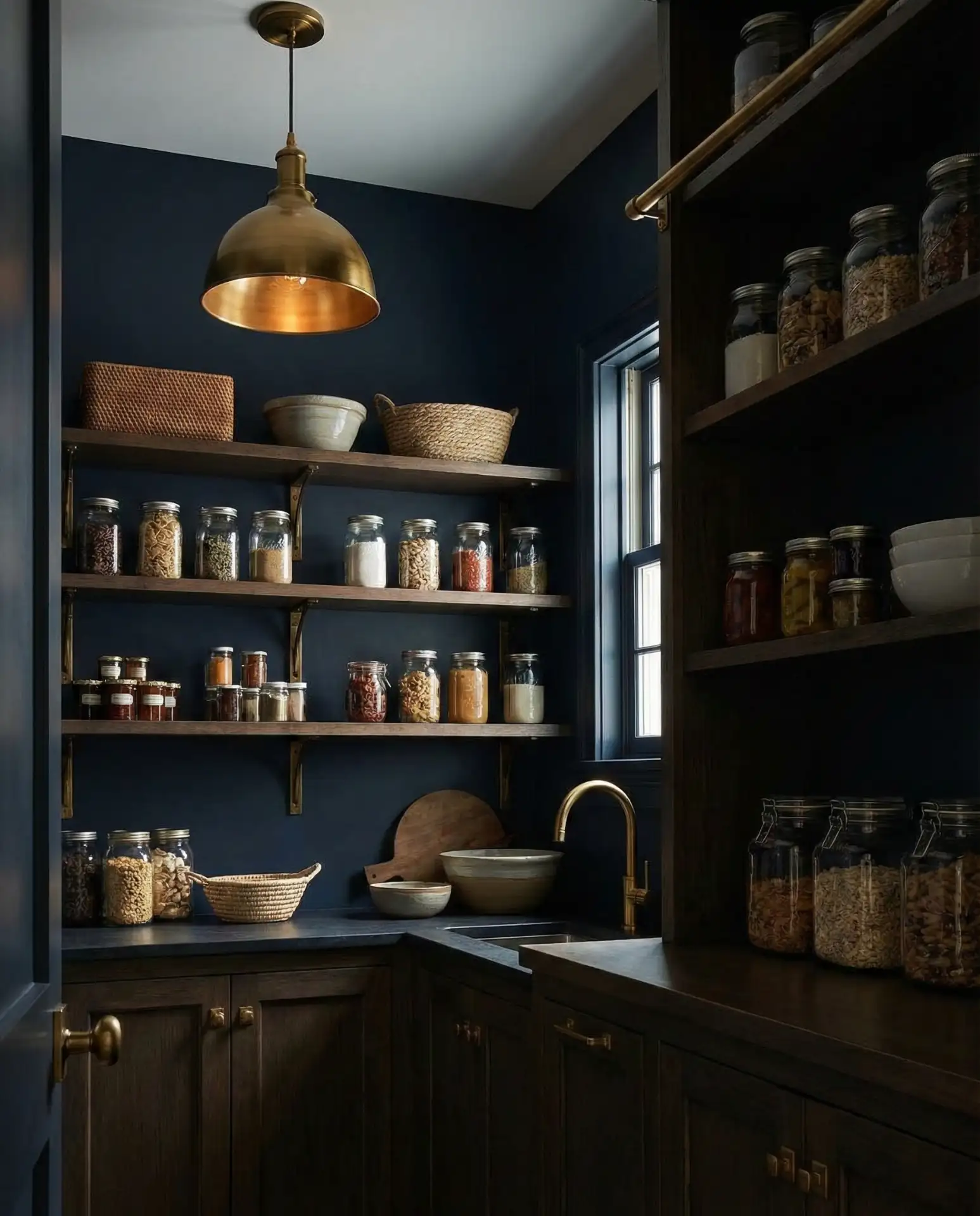
For those drawn to drama, a moody pantry painted in deep charcoal, navy, or forest green creates an intimate, jewel-box atmosphere. Brass or gold hardware adds warmth and contrast, while open shelving or glass-front cabinets prevent the space from feeling too enclosed. This style has surged in popularity on Pinterest, where users seek bold, personality-driven interiors that move beyond all-white kitchens. It’s proof that a pantry can be both practical and a true design moment.
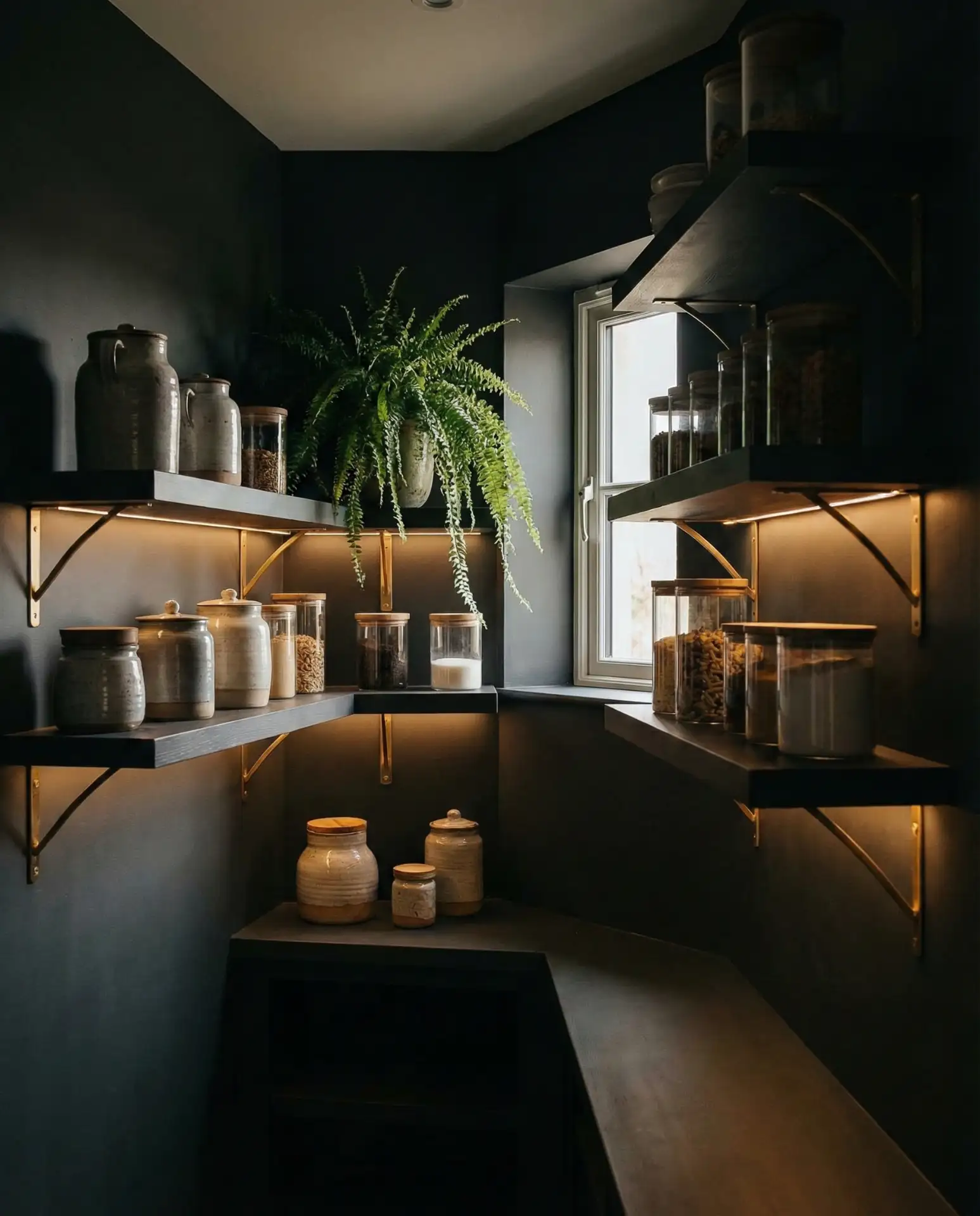
From a practical standpoint, dark colors can hide scuffs and smudges better than lighter shades, which is helpful in high-traffic areas. However, lighting becomes critical—install under-shelf LEDs or a statement fixture to ensure visibility. One designer I spoke with recommends using a semi-gloss or satin finish on dark walls to reflect light and make the space feel less cave-like.
9. Pantry with Built-In Coffee and Beverage Station
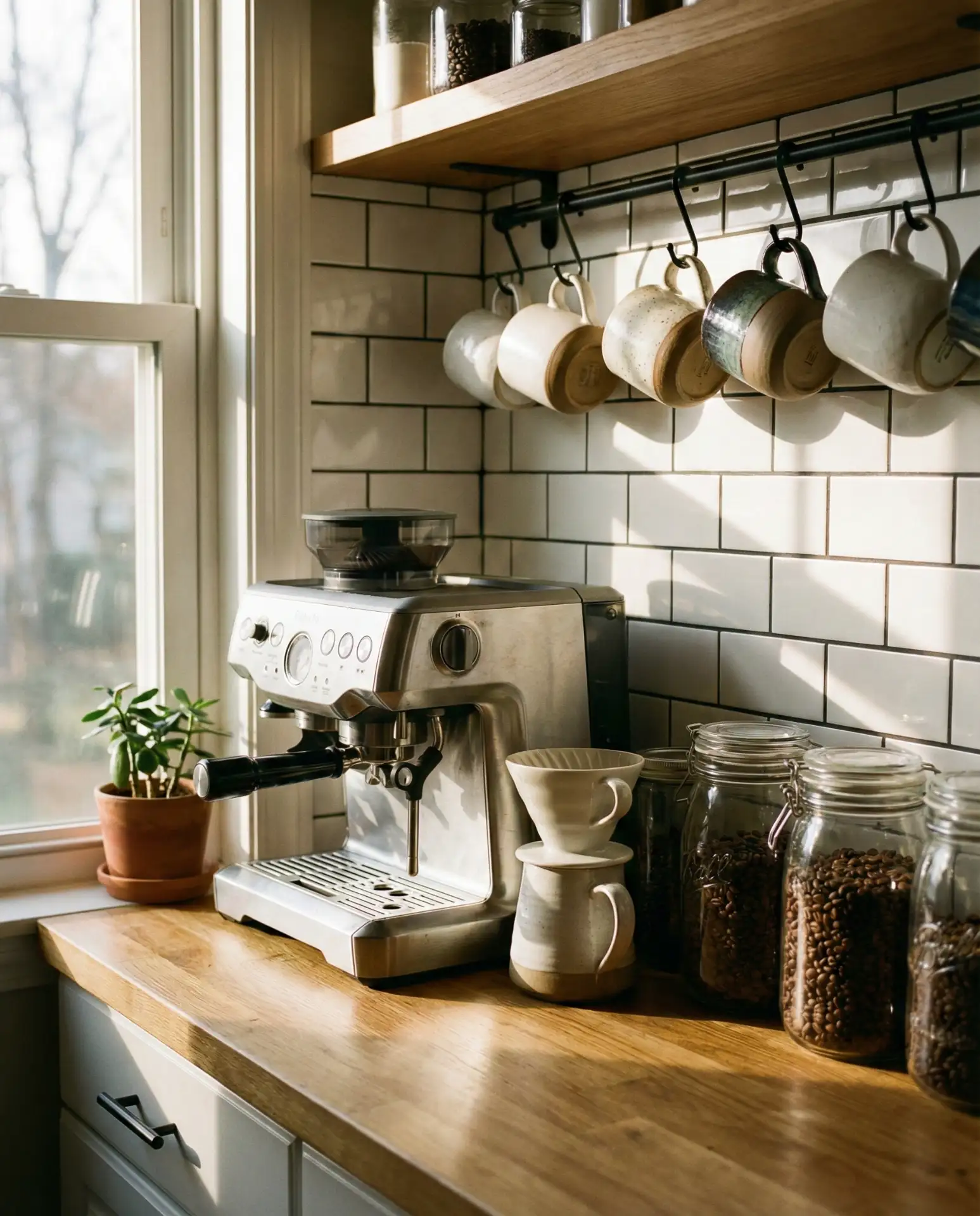
A dedicated coffee station within the pantry is a dream for anyone who wants to streamline their morning routine. This setup typically includes a small countertop with an outlet, open shelving for mugs and syrups, and storage for beans, filters, and tea. By keeping all beverage supplies in one spot, you free up counter space in the main kitchen and create a functional zone that feels almost like a home café. Some homeowners even add a small sink for easy cleanup.
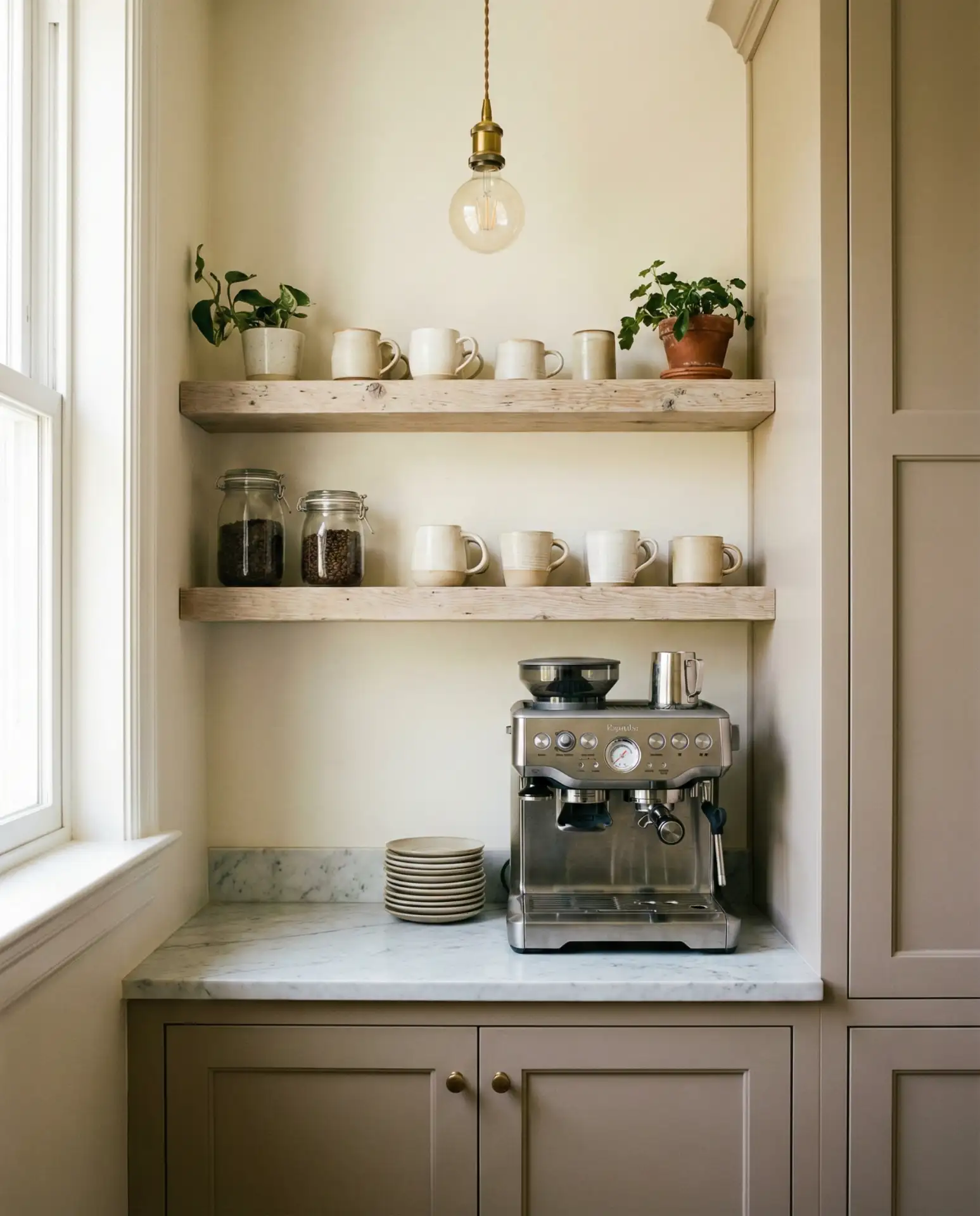
This idea works best in walk-in or larger pantries where there’s room for a dedicated counter. In smaller spaces, even a narrow shelf with a plug-in coffee maker and a wall-mounted mug rack can achieve a similar effect. It’s especially popular among remote workers who want a designated spot for midday caffeine breaks without cluttering the main prep area.
10. White Shaker-Style Pantry with Glass Canisters

A white Shaker-style pantry offers timeless appeal and versatility, fitting seamlessly into both traditional and contemporary homes. The clean lines of Shaker cabinetry provide a crisp backdrop for glass canisters filled with flour, pasta, and grains, which add visual interest and make it easy to monitor supply levels. This classic look is enduringly popular on Pinterest because it feels fresh without being trendy, and it pairs well with virtually any kitchen style.
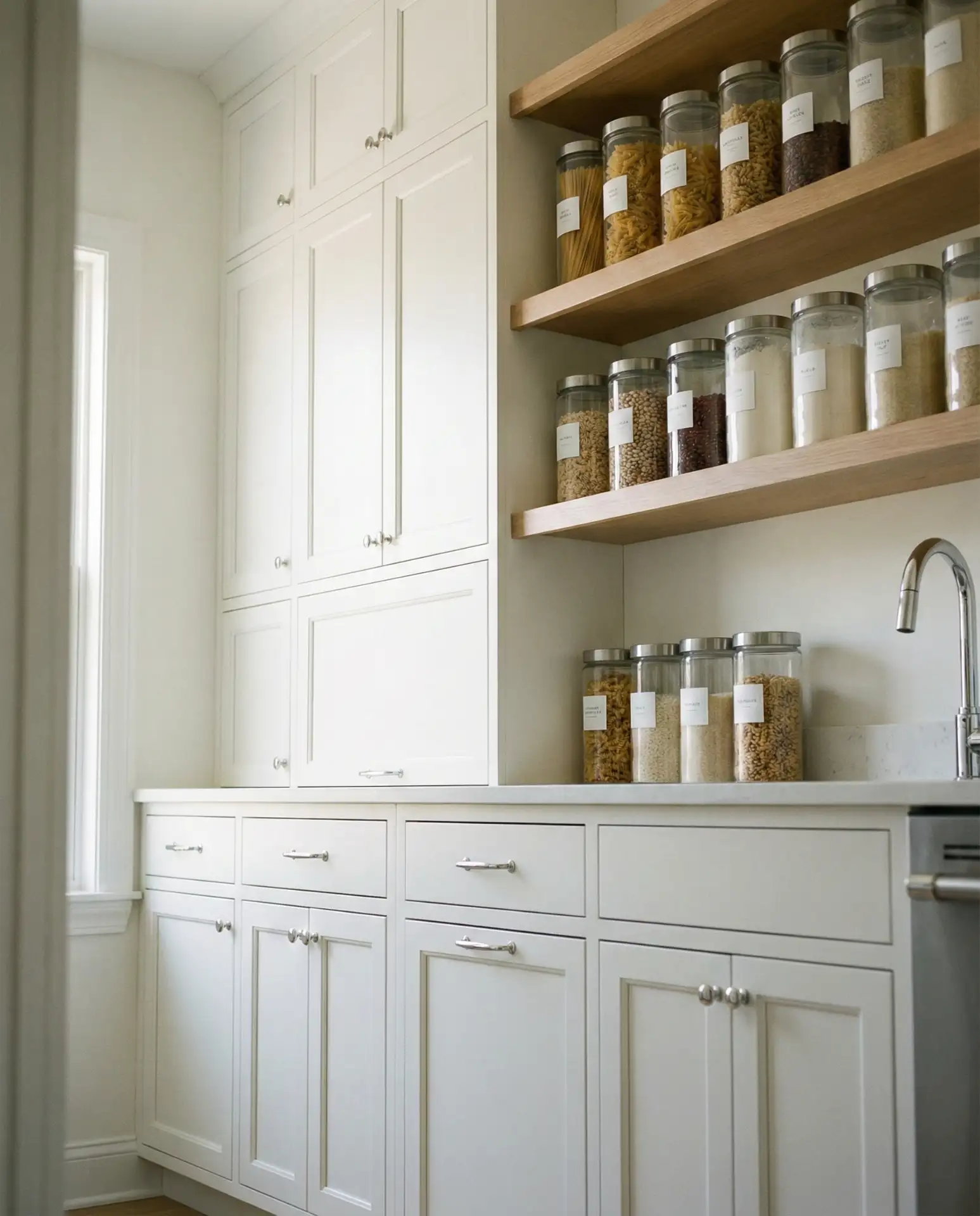
Budget-conscious homeowners often opt for ready-to-assemble Shaker cabinets from big-box retailers, which can be customized with paint and upgraded hardware for a semi-custom look at a fraction of the cost. Glass canisters are widely available at stores like Target or HomeGoods, making it easy to achieve a cohesive, Instagram-worthy pantry without a designer price tag.
11. Under-Stairs Pantry in a Compact Home
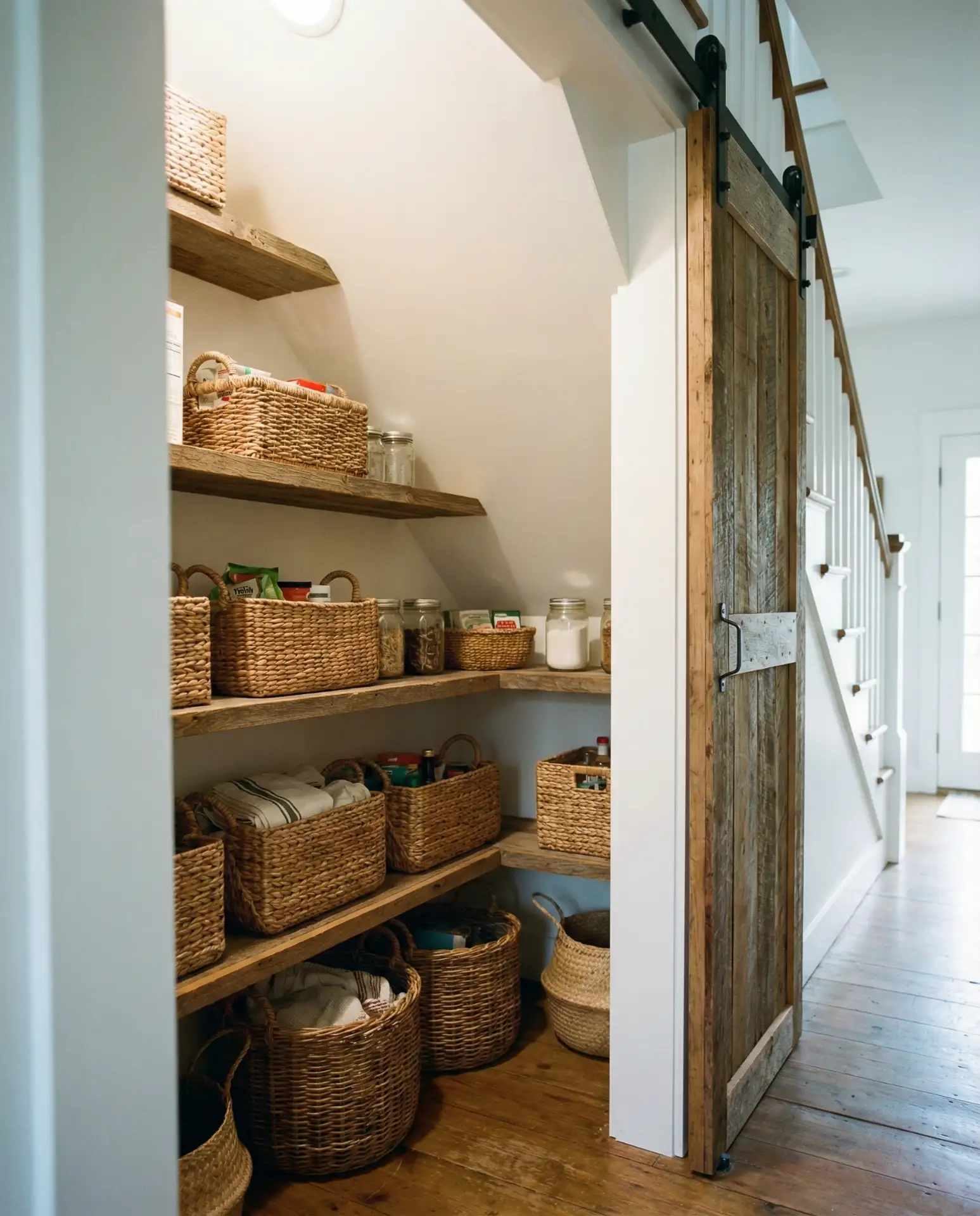
The space beneath a staircase is often wasted, but with thoughtful planning, it can become a highly functional pantry. Custom shelving that follows the slope of the stairs makes the most of the odd dimensions, and a sliding or pocket door keeps the pantry concealed when not in use. This solution is especially clever in row houses, split-levels, or homes where a traditional pantry isn’t an option. It’s proof that creative problem-solving can turn a quirky layout into a storage asset.
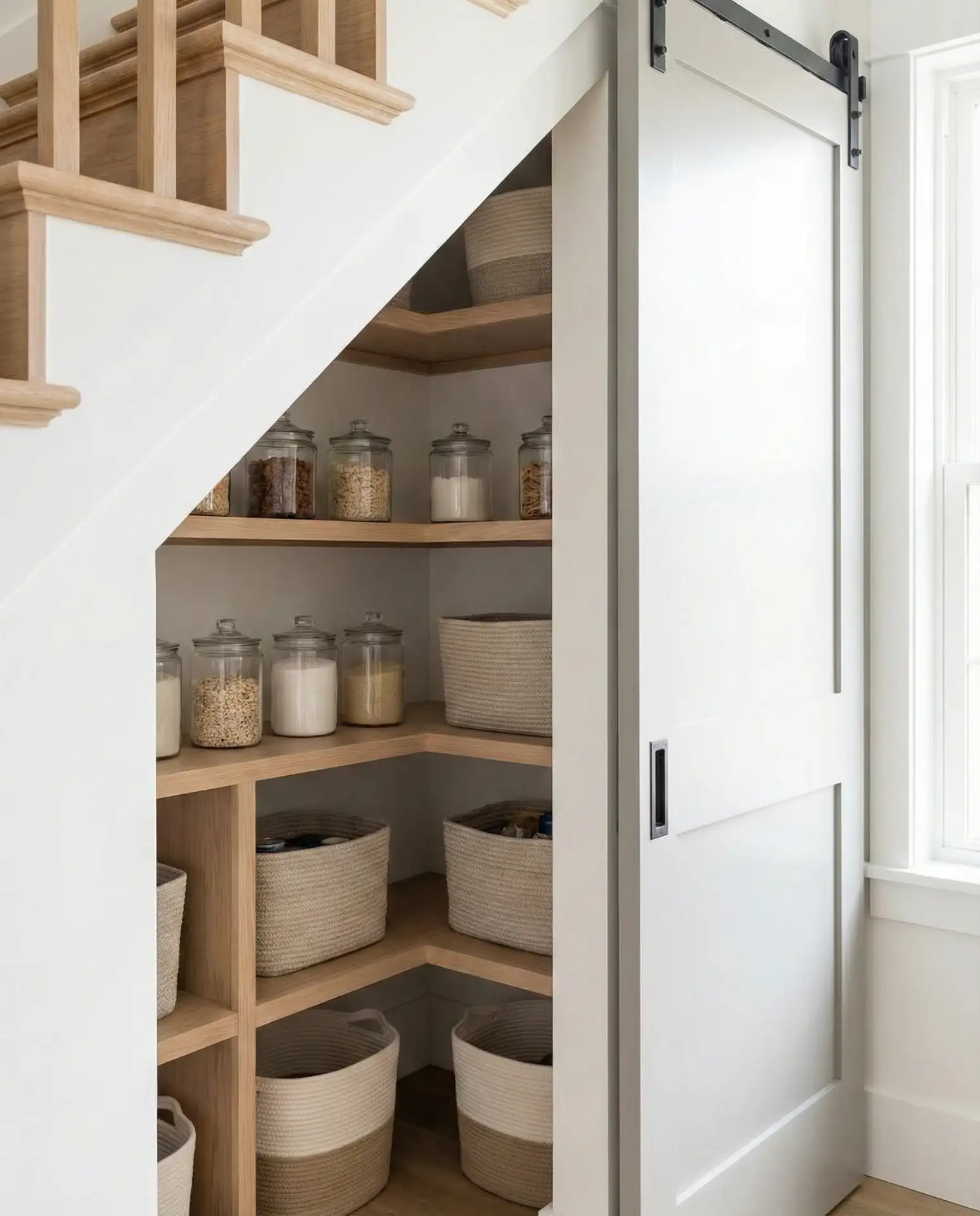
One common mistake is failing to account for the ceiling height when installing shelves. The tallest section near the door should hold bulky items, while the lower, sloped area is perfect for smaller jars or cans. Measure carefully and consider adjustable shelving so you can adapt the layout as your storage needs evolve.
12. Small Walk-In Pantry with Pull-Out Drawers
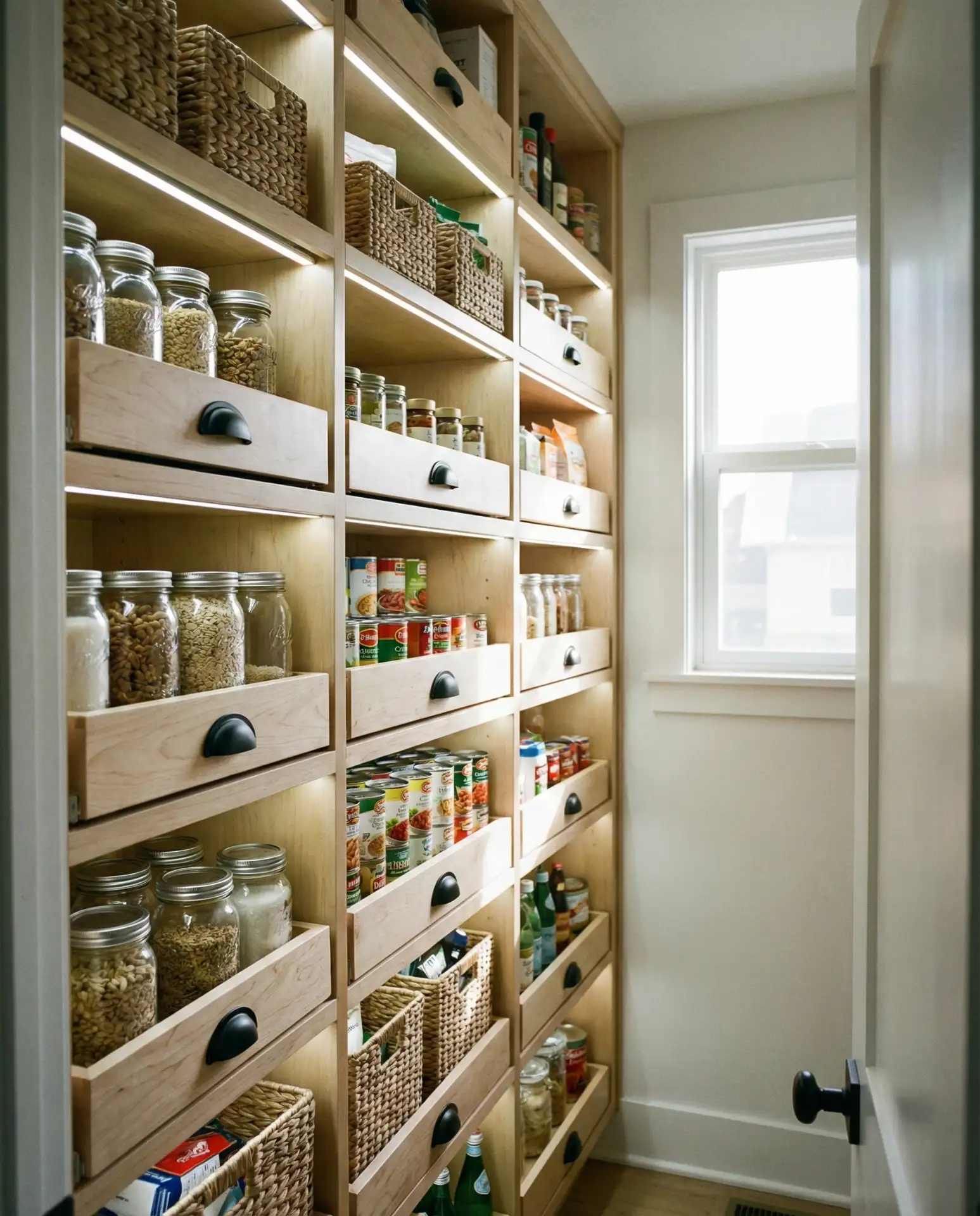
A small walk-in pantry can feel surprisingly spacious when outfitted with pull-out drawers instead of fixed shelves. These drawers glide forward, offering full visibility and easy access to items stored at the back—a major upgrade over deep, static shelves where things get lost. This configuration is ideal for storing canned goods, jars, and packaged snacks, and it makes inventory checks quick and efficient. Even a closet-sized pantry can become highly organized with this approach.
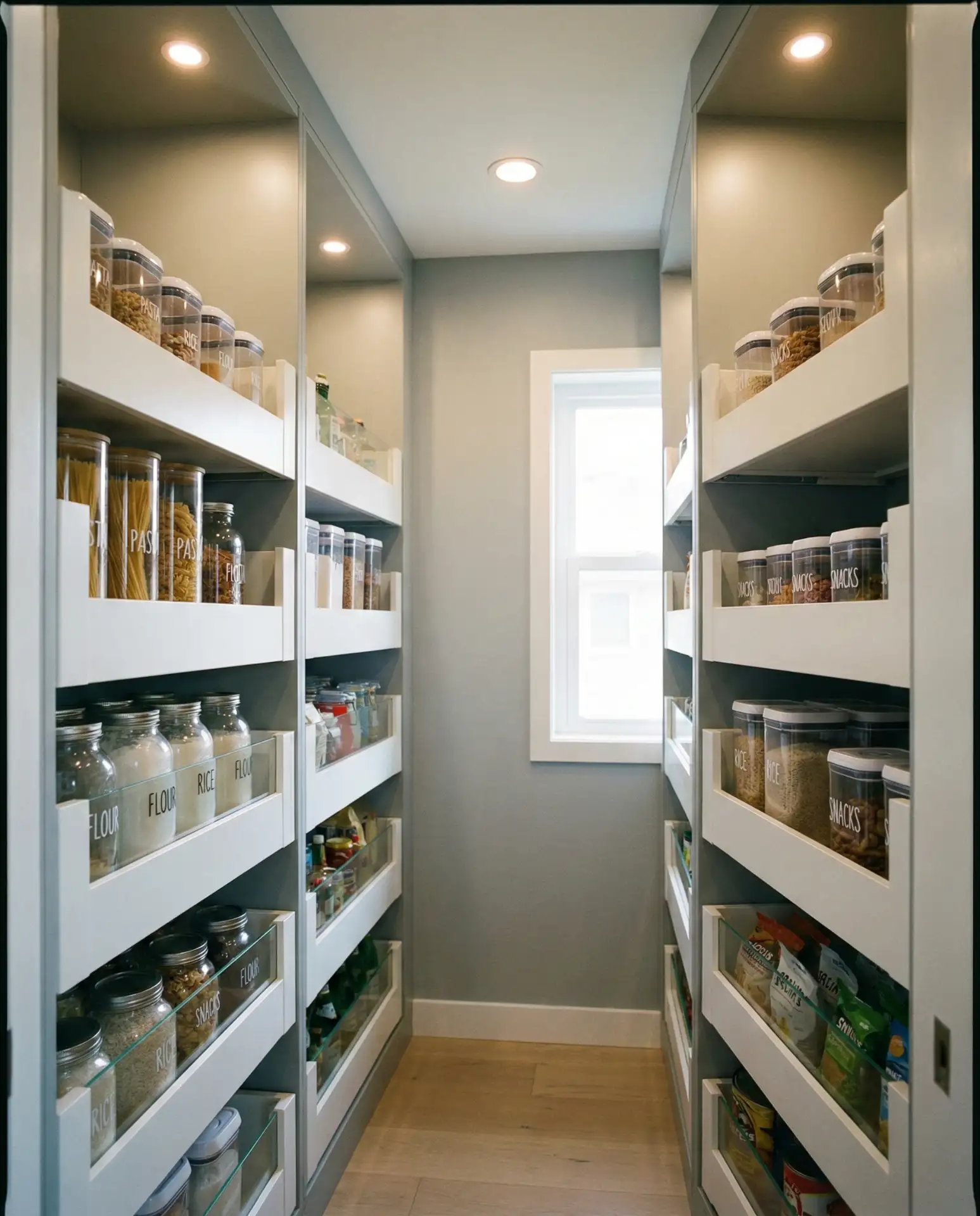
This setup works best in homes where the pantry is accessed daily by multiple family members. The pull-out mechanism eliminates the need to reach or climb, making it accessible for kids and adults alike. It’s also a smart choice for aging-in-place design, as it reduces bending and stretching.
13. Pantry Designed for Community Food Sharing
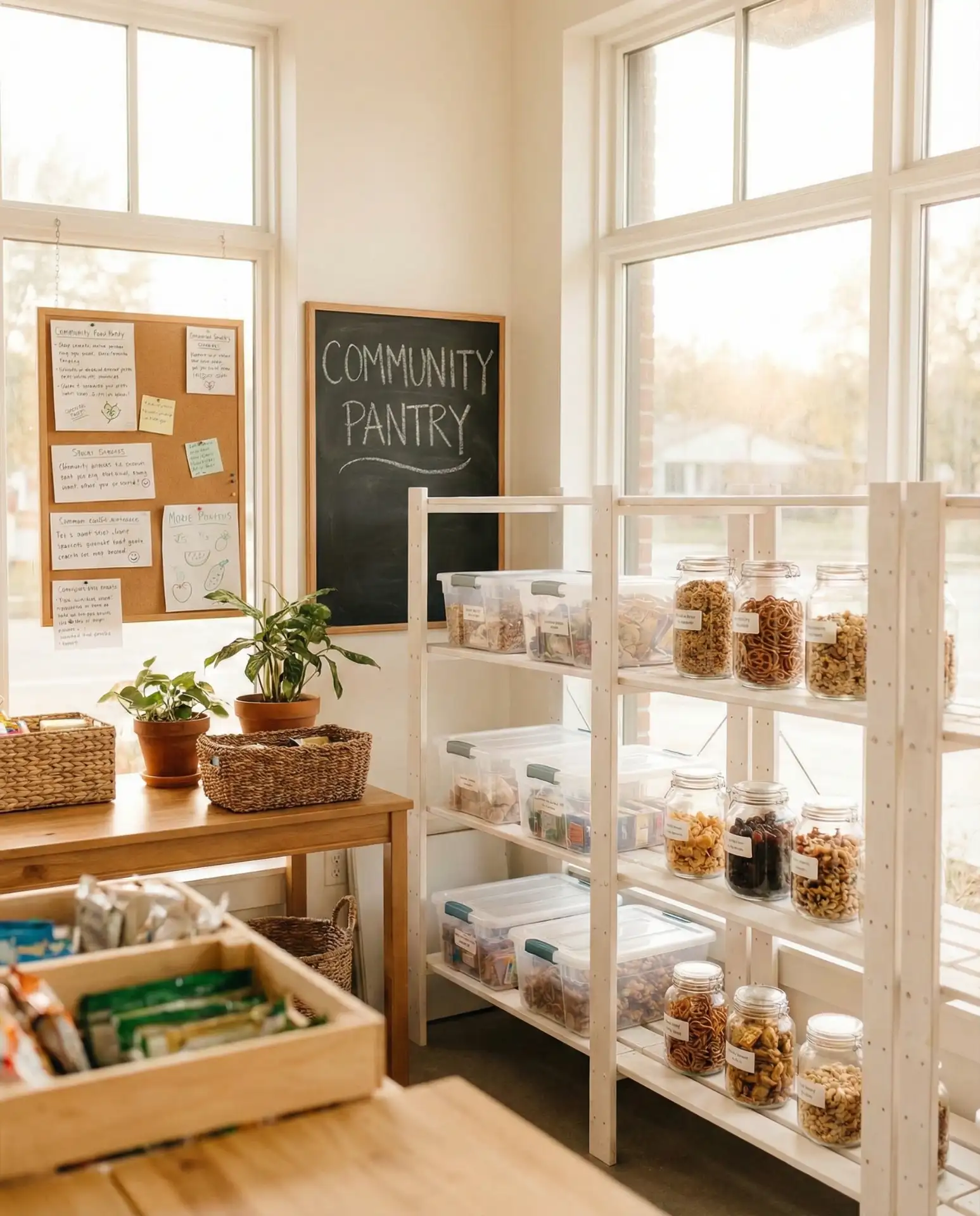
A community food pantry in a shared living space, such as a co-housing development or multi-family building, is designed for collective use and generosity. Open shelving, labeled zones, and a donation basket encourage neighbors to contribute and take as needed. This model has gained traction in urban areas where residents want to reduce waste and build connections. The design emphasizes transparency and accessibility, with clear sightlines and simple organization that anyone can navigate.
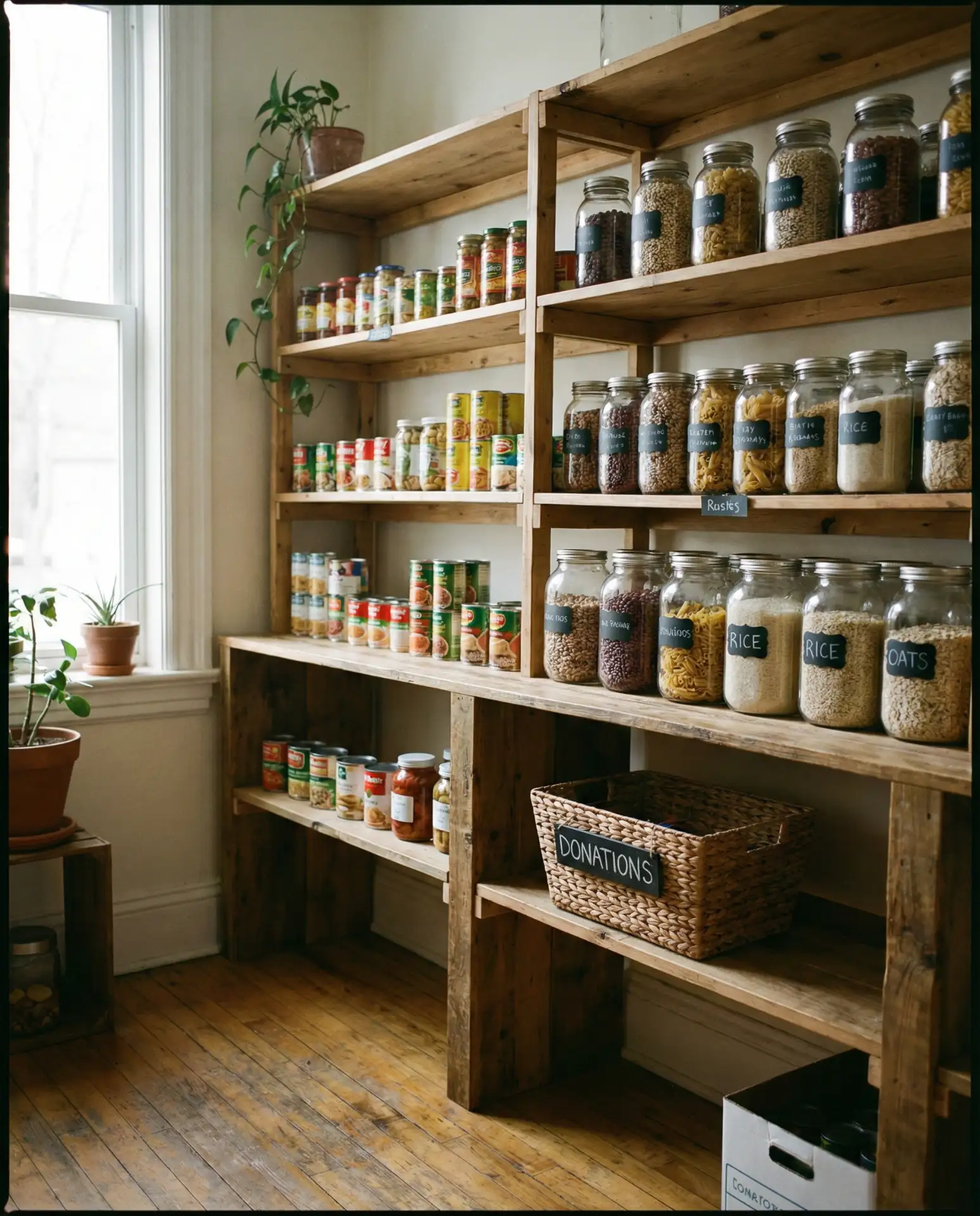
In Seattle and Portland, where co-housing is relatively common, these pantries often include a small library of cookbooks or recipe cards to inspire shared meals. The key is creating a system that’s low-maintenance and self-regulating, so the space doesn’t become cluttered or contentious. Simple rules and clear labeling go a long way toward making it work.
14. Indian Kitchen Pantry with Spice Organization
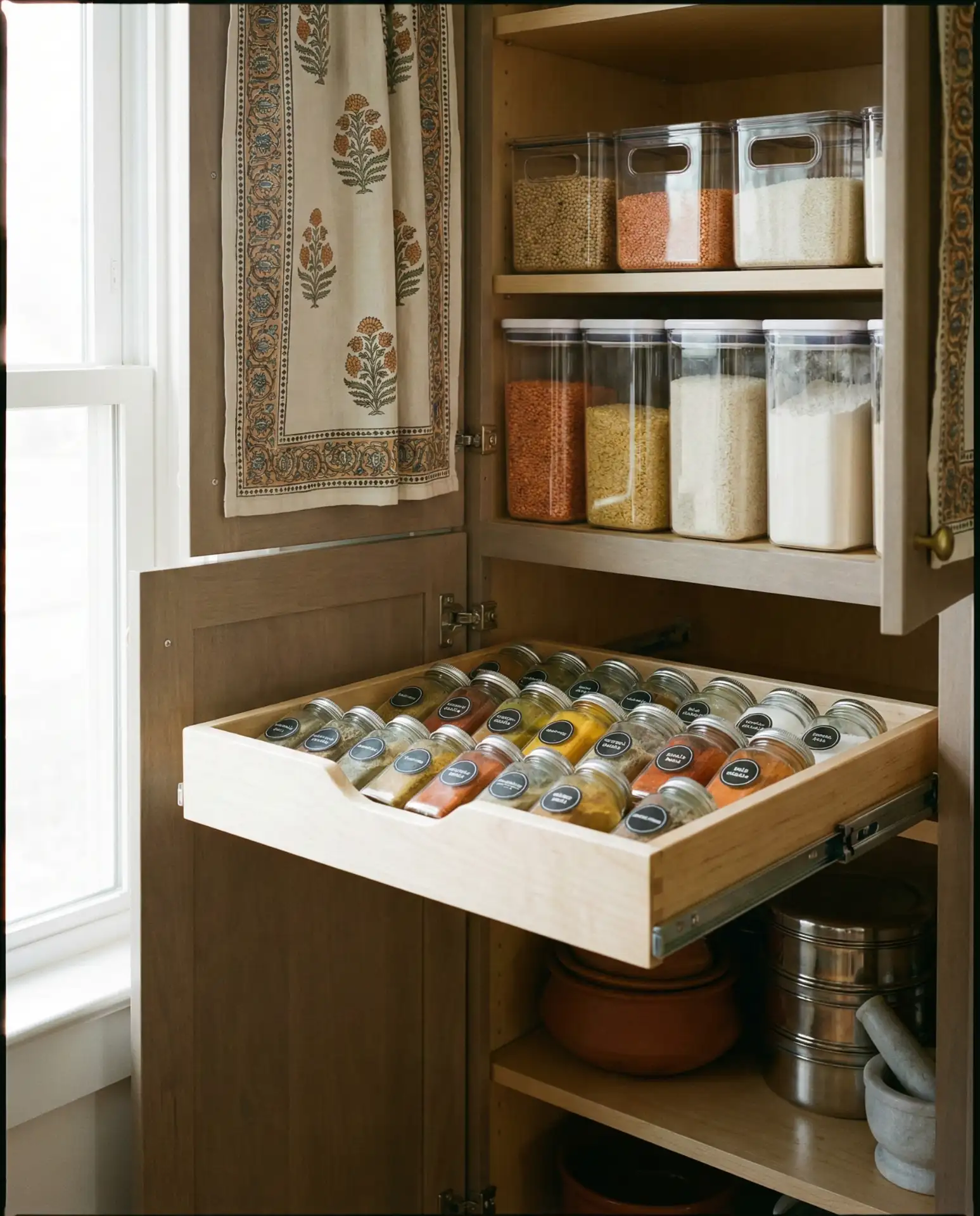
An Indian kitchen pantry often requires specialized storage for the wide array of spices, lentils, and grains central to the cuisine. Tiered spice racks, pull-out trays, and labeled glass jars make it easy to find turmeric, cumin, or garam masala at a glance. Dedicated bins for rice, atta flour, and dals keep staples fresh and accessible. This type of pantry reflects the cooking style’s complexity and the need for precision, where having the right ingredient on hand can make or break a dish.
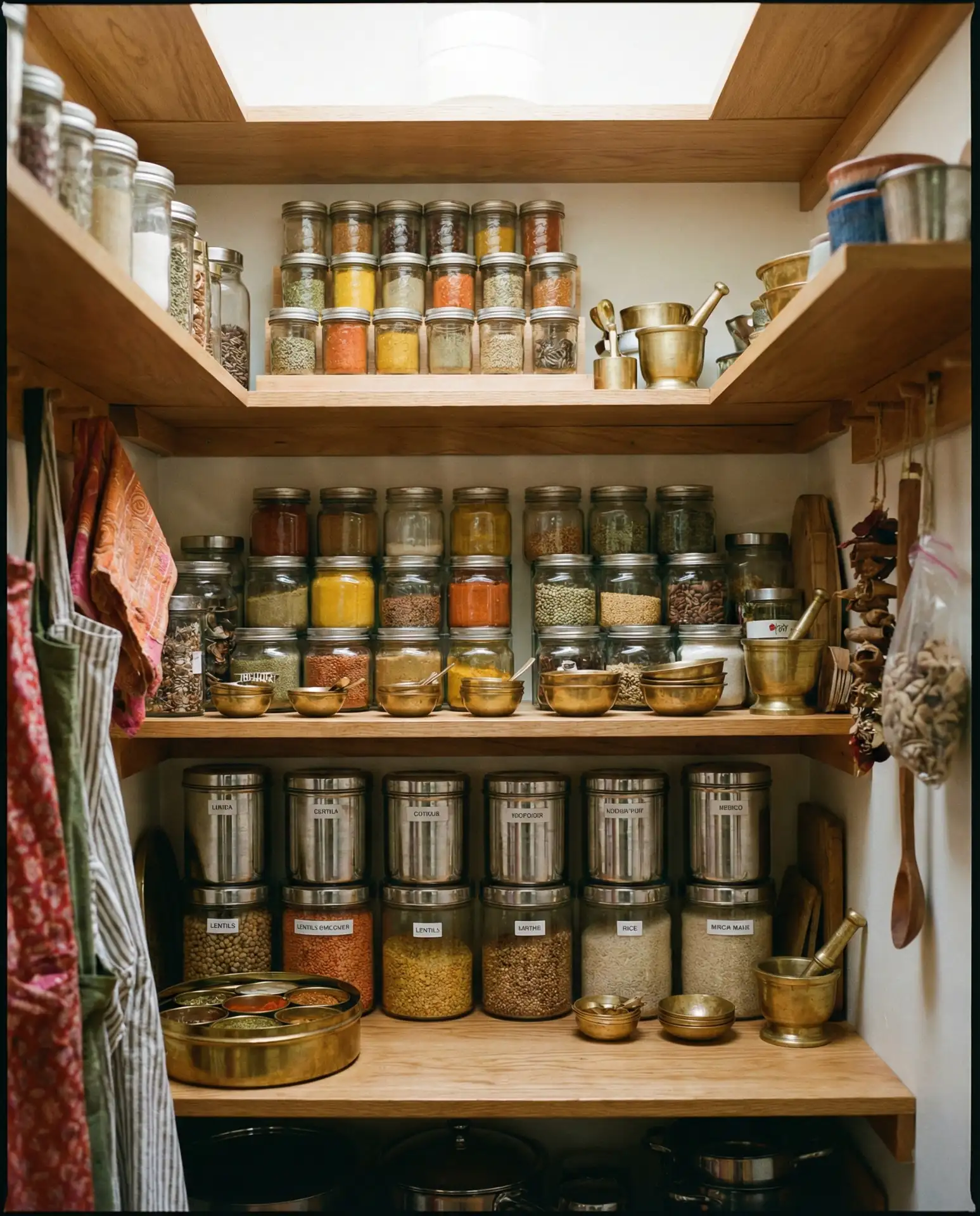
Many Indian-American households blend traditional pantry needs with modern American storage solutions. Pull-out spice carousels or magnetic strips mounted inside cabinet doors are popular hacks. Some families also dedicate a section to bulk purchases from Indian grocery stores, which often come in large bags that need decanting into airtight containers to maintain freshness.
15. Bloxburg-Inspired Stylized Pantry for Gaming Enthusiasts
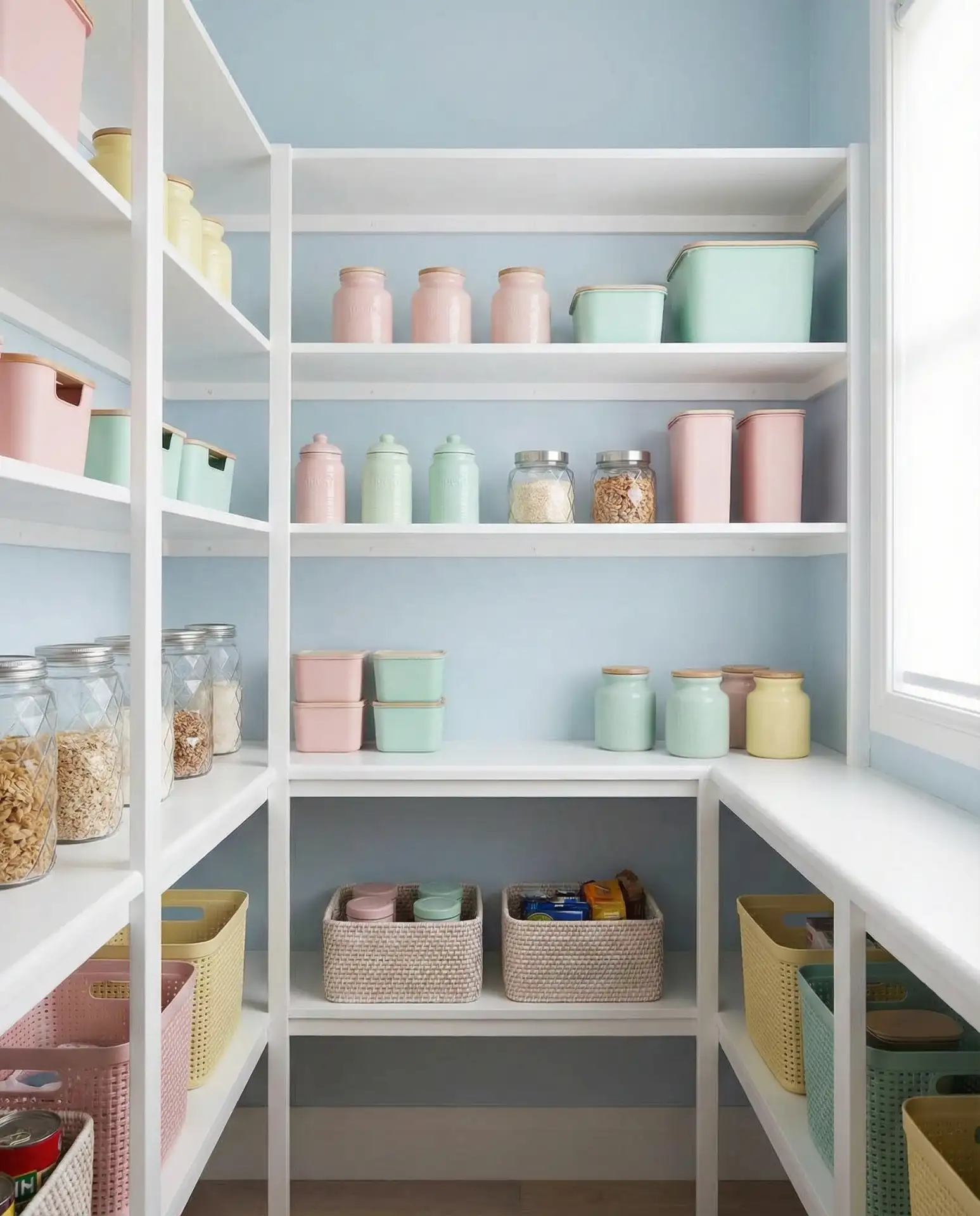
For fans of Roblox’s Bloxburg, translating the game’s aesthetic into a real-world pantry means embracing clean geometry, pastel or monochrome color schemes, and playful yet functional design. Think symmetrical shelving, matching containers, and minimalist decor that mirrors the game’s customizable homes. This trend has taken off among younger homeowners and renters who want their spaces to feel curated and Instagram-ready, with a nod to their digital hobbies.
This style is budget-friendly because it relies on uniform, affordable storage from brands like IKEA or The Container Store. The key is consistency—once you pick a color scheme and container style, stick with it throughout the space. It’s a fun way to bring a bit of virtual world whimsy into everyday life.
16. Pantry with Integrated Fridge and Freezer
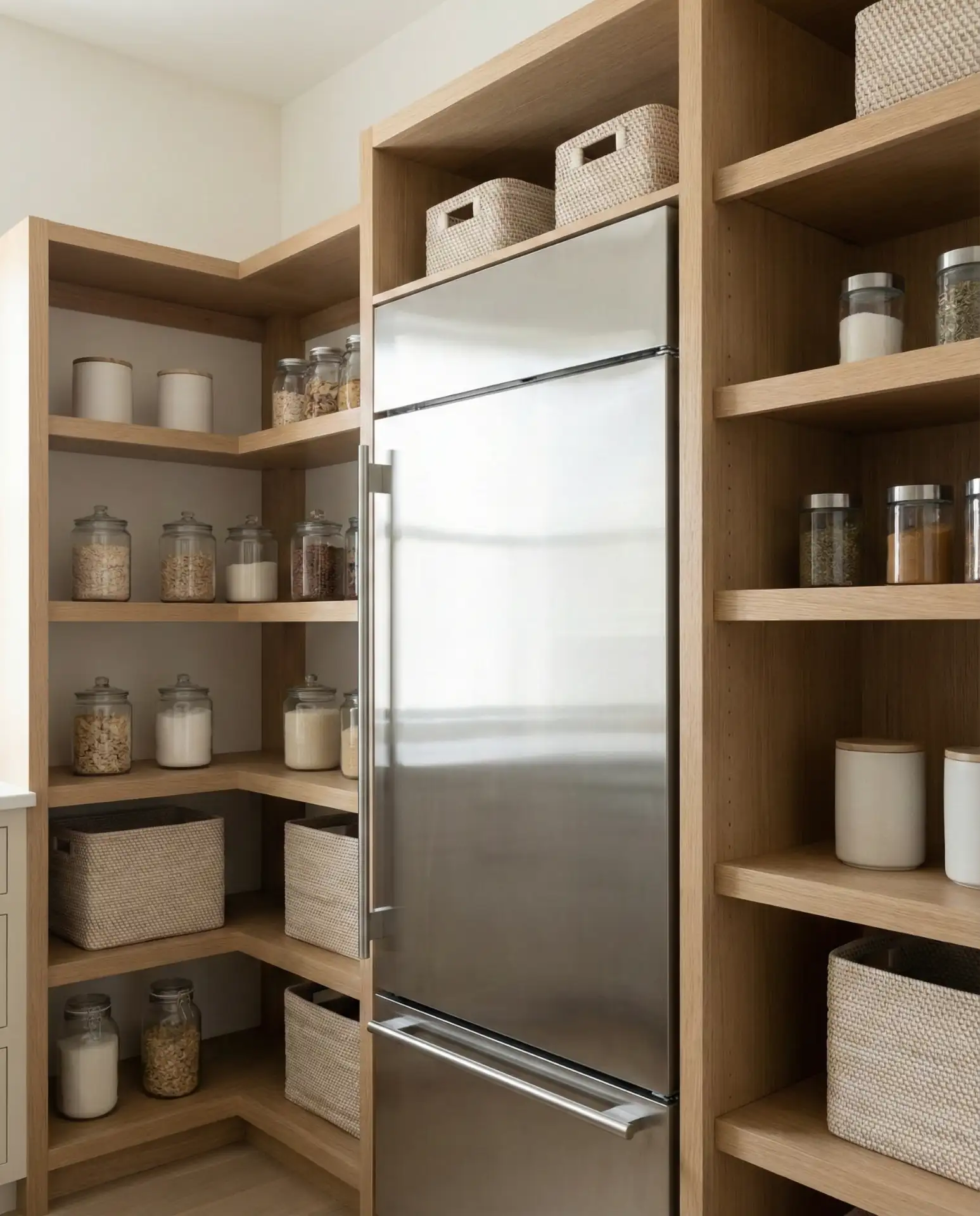
A walk-in pantry that houses a secondary fridge or freezer is a game-changer for families who buy in bulk or entertain frequently. This setup consolidates cold and dry storage in one location, reducing trips back and forth across the kitchen. The refrigerator can be a full-size unit or a compact undercounter model, depending on space and needs. Paired with floor-to-ceiling shelving, this layout turns the pantry into a complete provisioning hub.
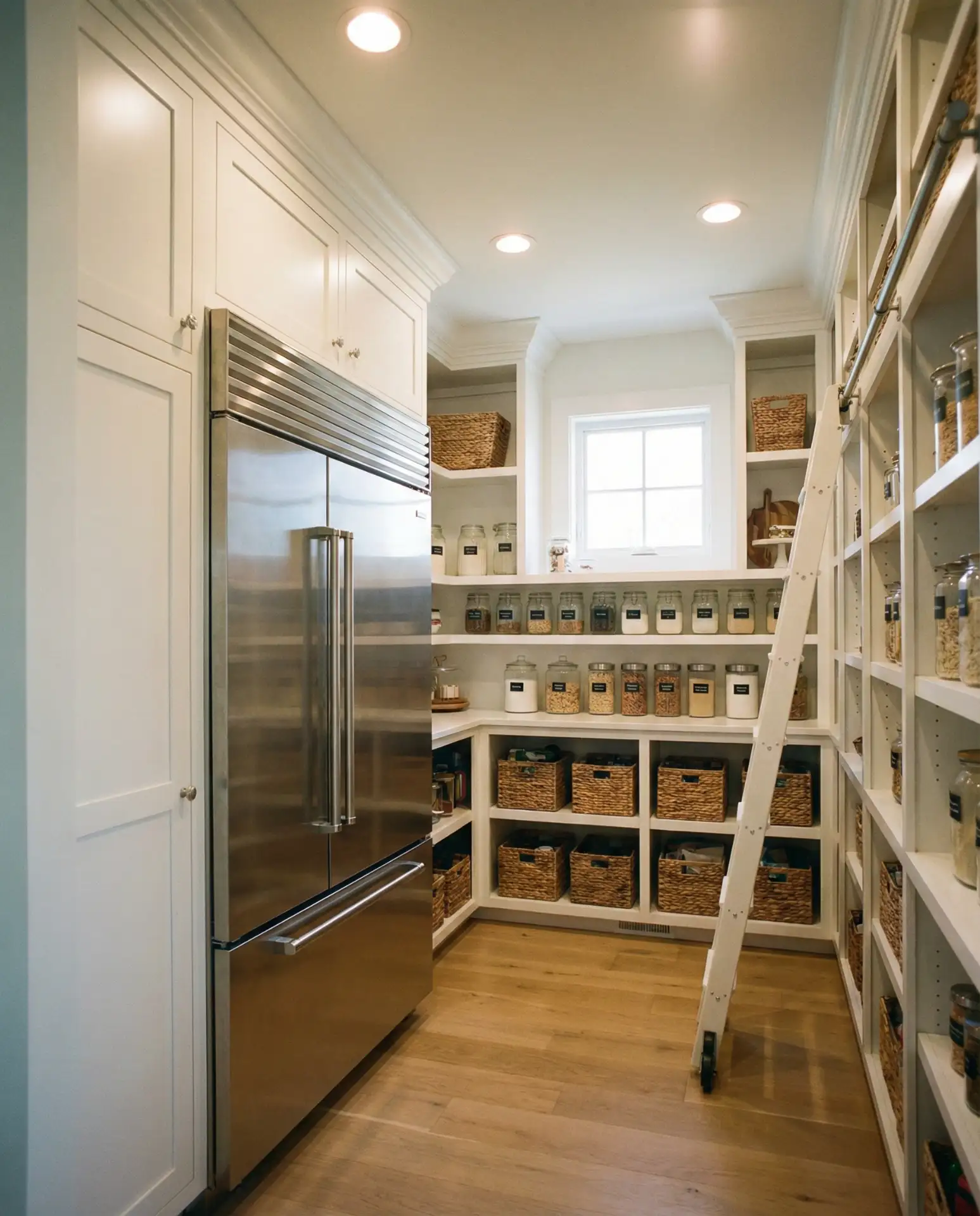
Expert designers note that adding a fridge to a pantry requires adequate ventilation and access to plumbing if you want a water line for ice. It’s also worth considering noise levels, especially if the pantry is near a living area. However, when done right, this setup can significantly improve kitchen workflow and reduce clutter in the main cooking zone.
17. Square Pantry with Central Island
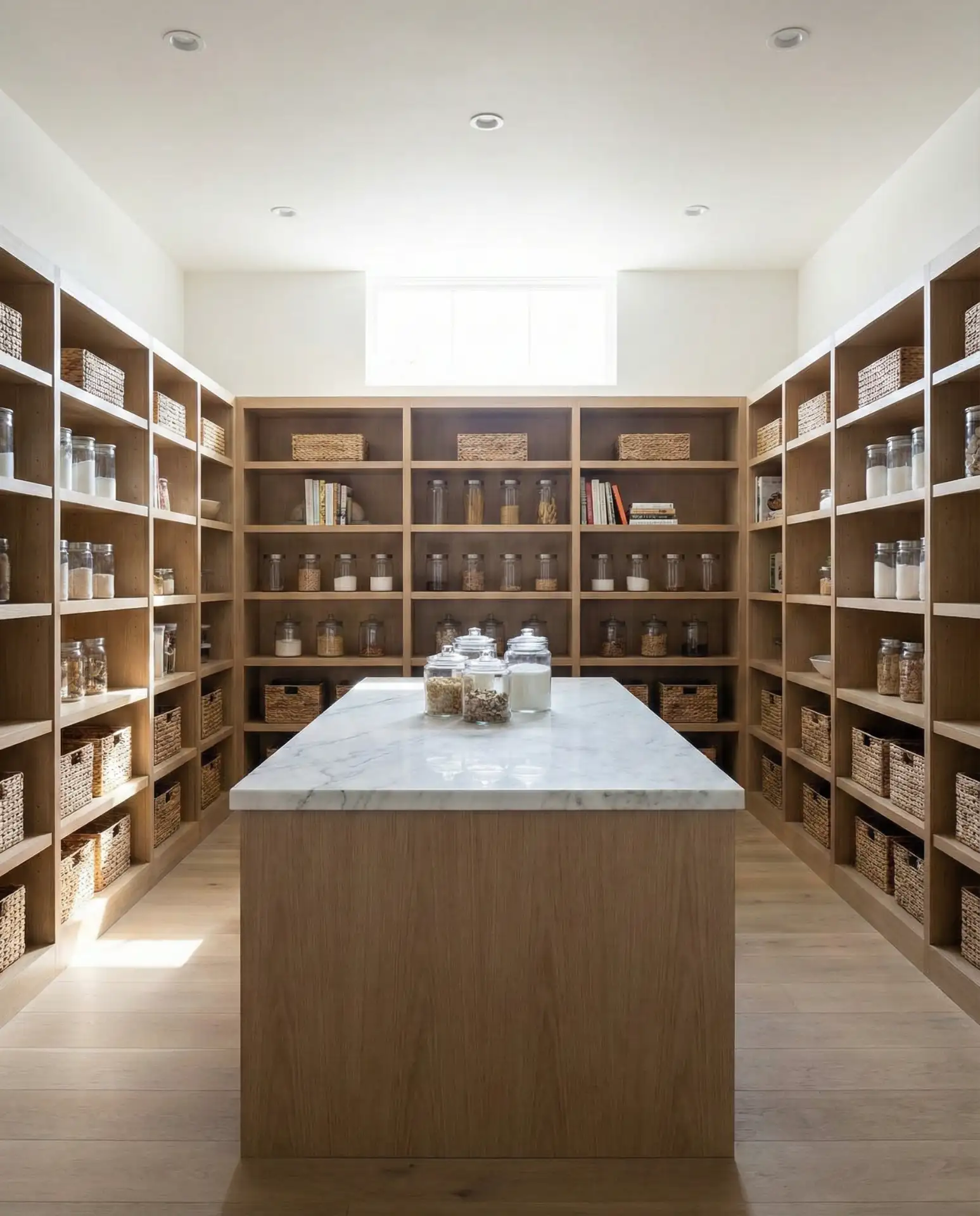
A square pantry with a central island offers a boutique grocery store feel, with shelving on all four walls and a freestanding workspace in the middle. The island can double as a prep station for meal planning, a spot to sort bulk purchases, or extra storage with drawers and cabinets below. This layout is ideal for large pantries in homes with serious cooking ambitions, where the pantry is more than just storage—it’s an extension of the kitchen itself.
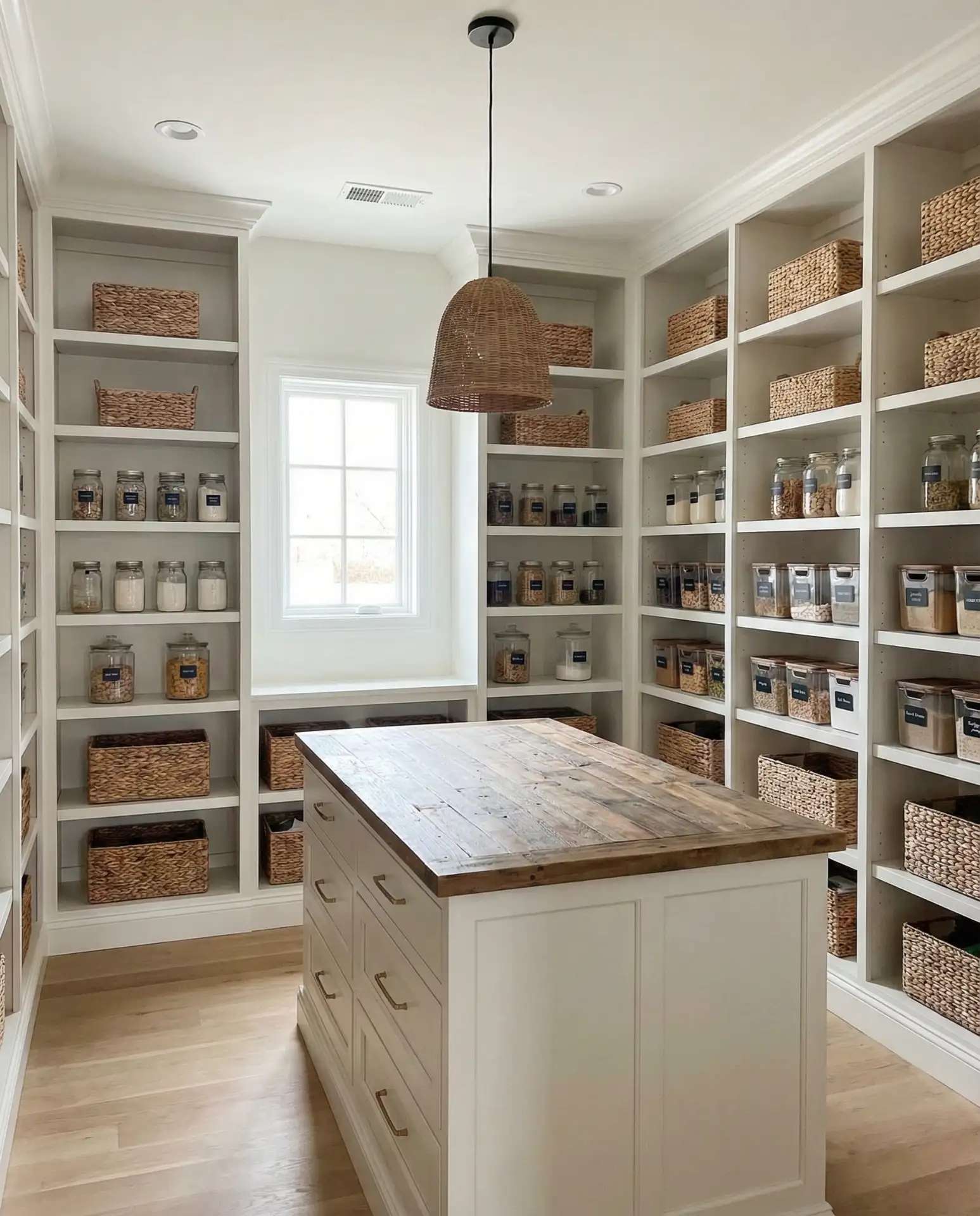
This design works best in homes with at least 80–100 square feet dedicated to the pantry, ensuring there’s enough clearance around the island for comfortable movement. It’s particularly popular in suburban homes with open floor plans, where the pantry can be accessed from multiple entry points and serves as a behind-the-scenes command center for the household.
18. Hotel-Inspired Minimalist Pantry
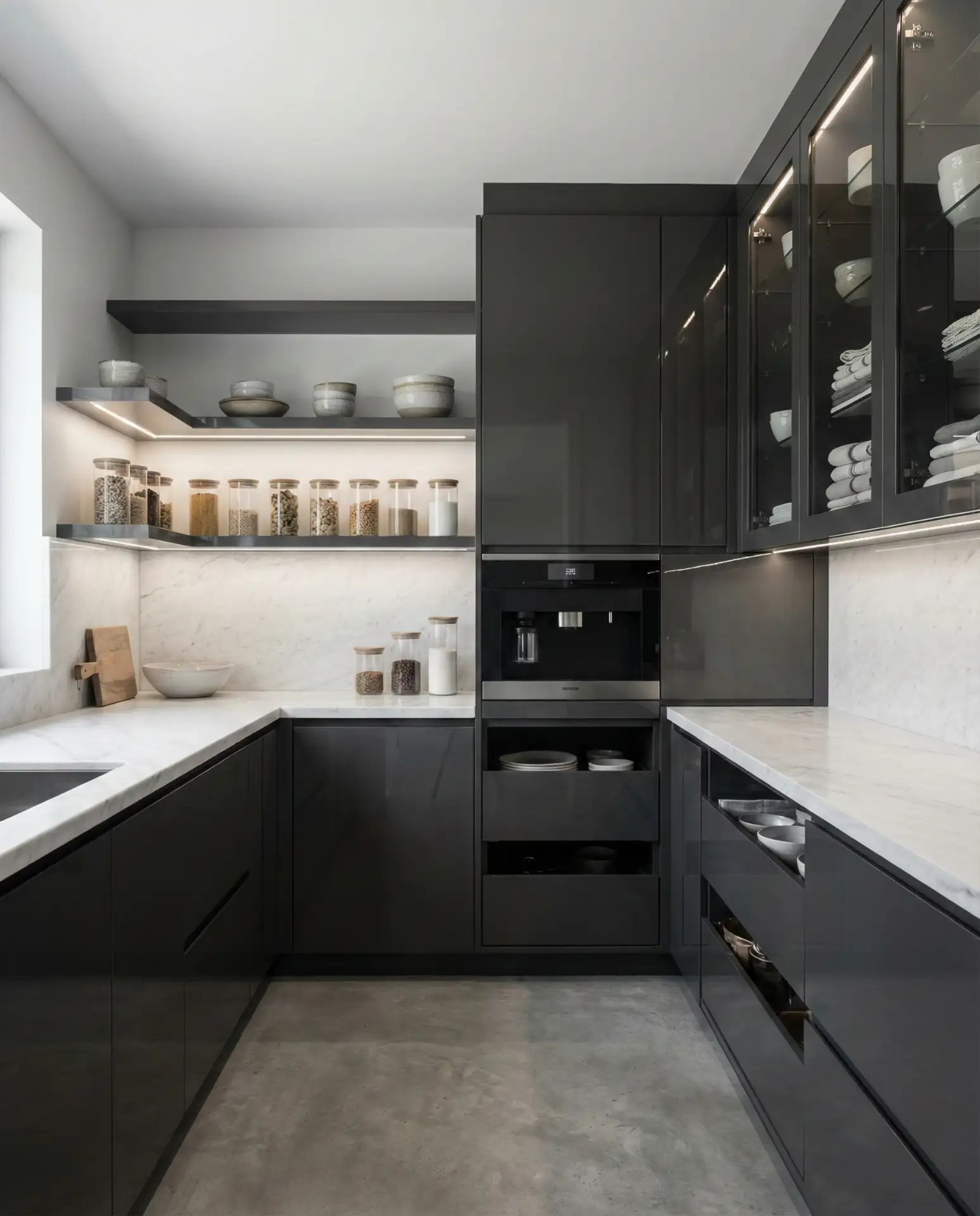
A hotel-style pantry emphasizes understated luxury and meticulous organization, with everything hidden behind sleek cabinetry or concealed in matching containers. The goal is a serene, clutter-free space that feels more like a boutique hotel minibar than a typical storage closet. Soft-close drawers, integrated lighting, and a monochromatic color palette contribute to the sense of calm. This approach appeals to homeowners who value aesthetics as much as function and want their pantry to feel like a retreat.
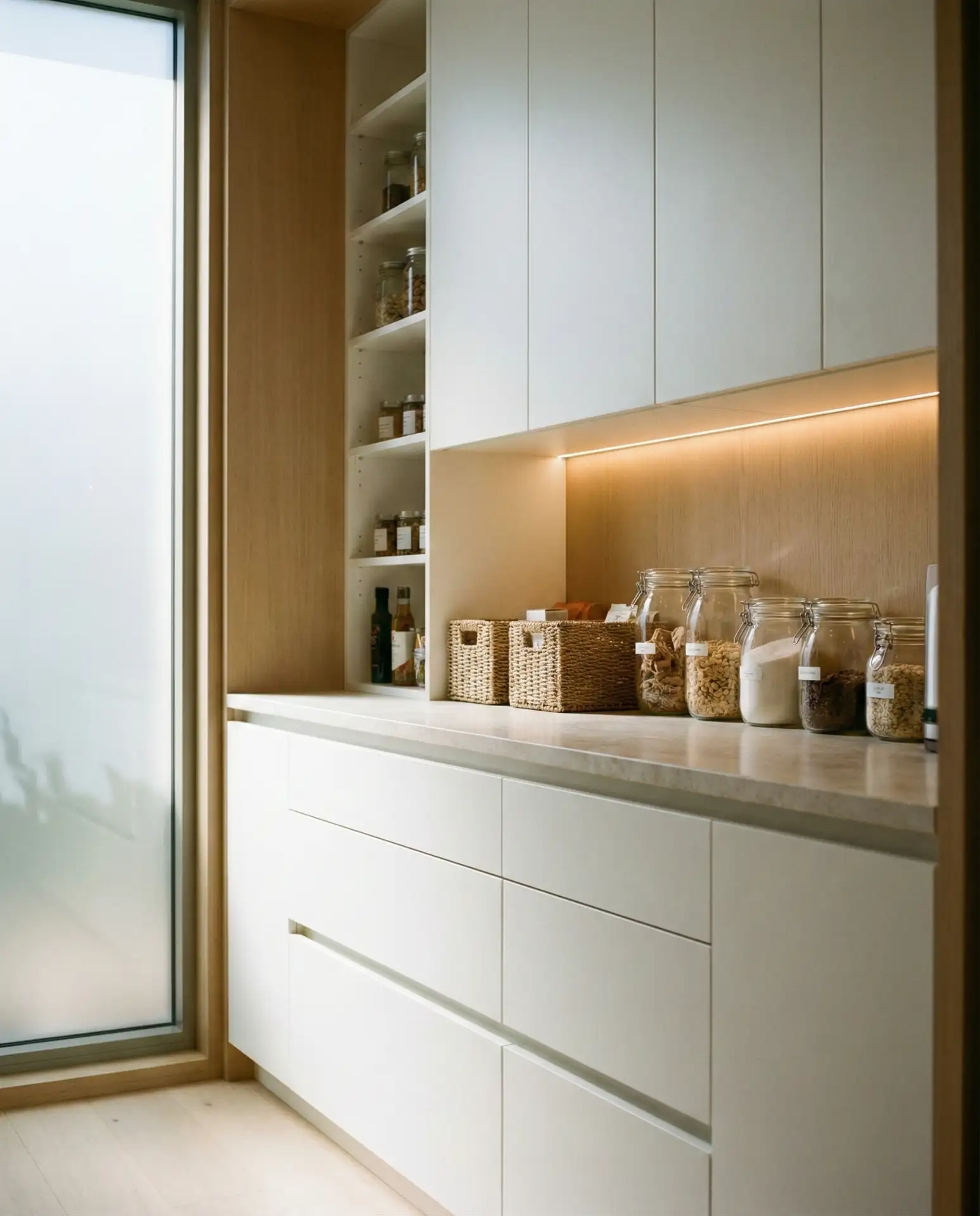
One real homeowner who renovated with this style in mind noted that the key is ruthless editing—only keep what you actually use, and store everything else elsewhere. The visual payoff is significant, but it requires discipline to maintain. It’s a style that rewards those who are naturally tidy and prefer a calm, uncluttered environment.
19. Functional Pantry with Zones for Meal Prep and Baking
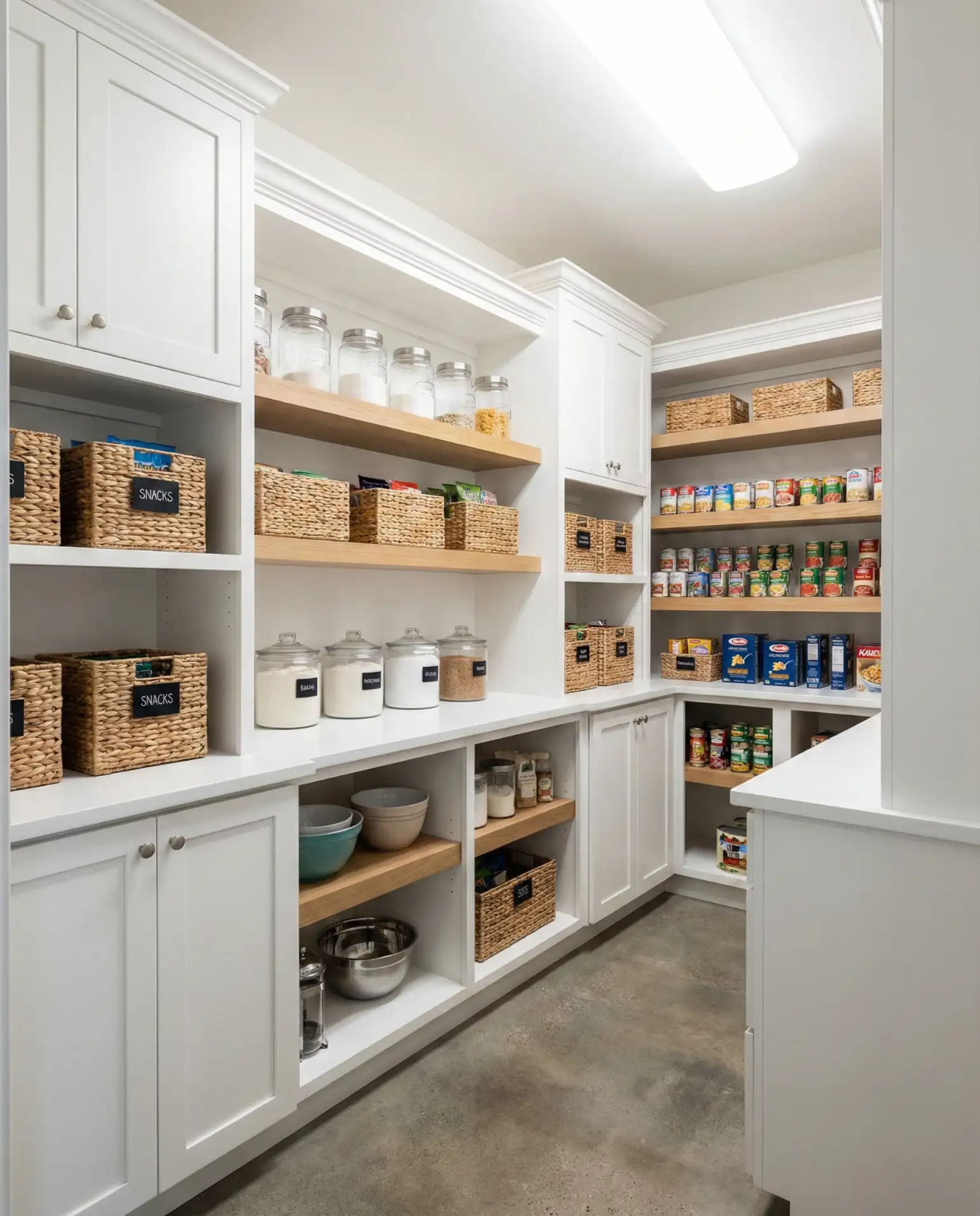
A truly functional pantry is organized by activity, with distinct zones for meal prep, baking, snacks, and cleaning supplies. Grouping items by task reduces search time and makes cooking more intuitive. For example, the baking zone might include flour, sugar, baking powder, and measuring cups all within arm’s reach, while the meal prep area holds oils, grains, and canned goods. This system is especially helpful in busy households where multiple people cook and need to find things quickly.
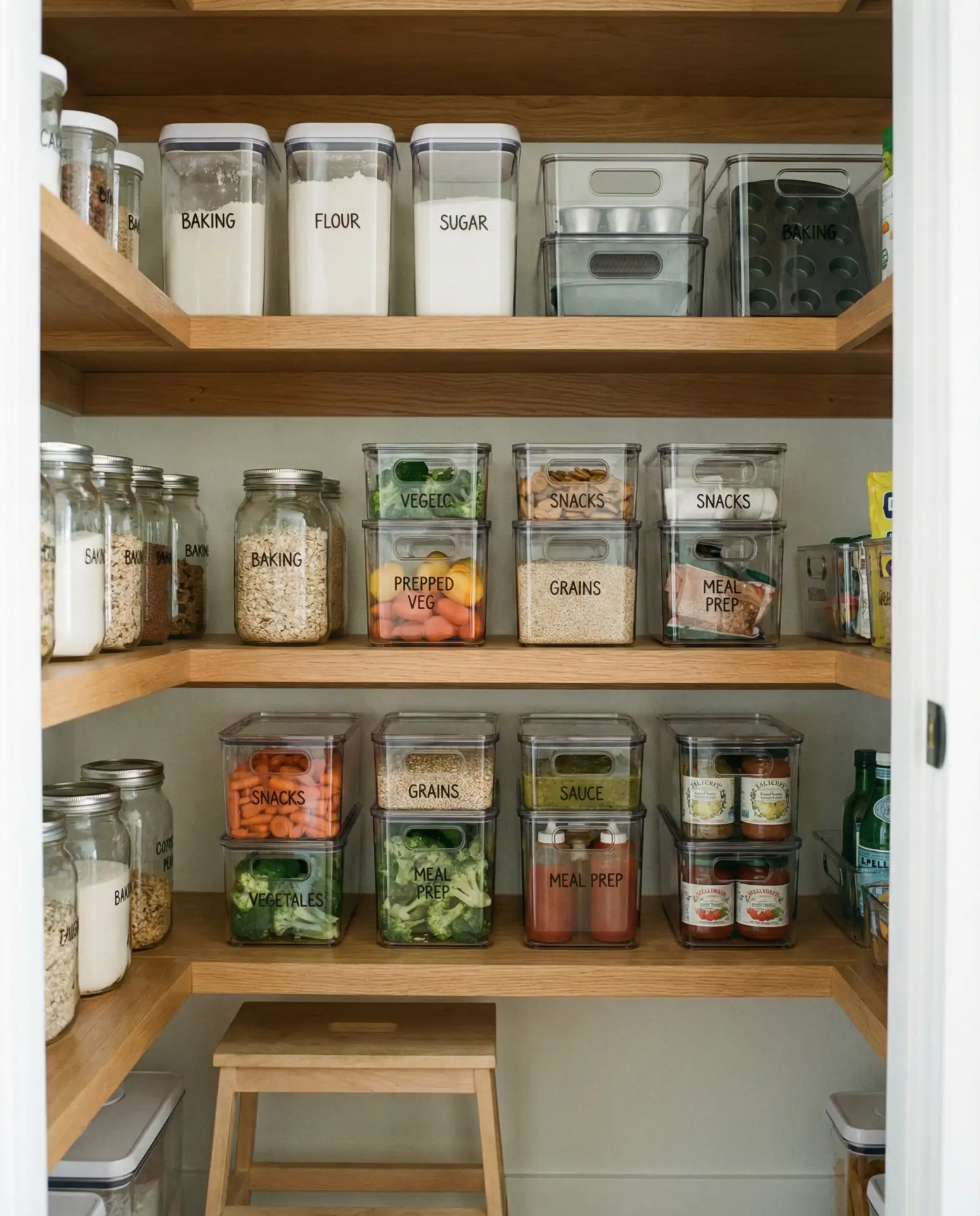
Where this works best is in walk-in or large pantries where you have the luxury of spreading out. In smaller spaces, you can still create mini-zones within a single cabinet by using shelf risers and drawer dividers. The investment in time upfront—labeling, sorting, and assigning homes—pays off in smoother daily routines and less kitchen stress.
20. Office-Adjacent Pantry for Home-Based Workers
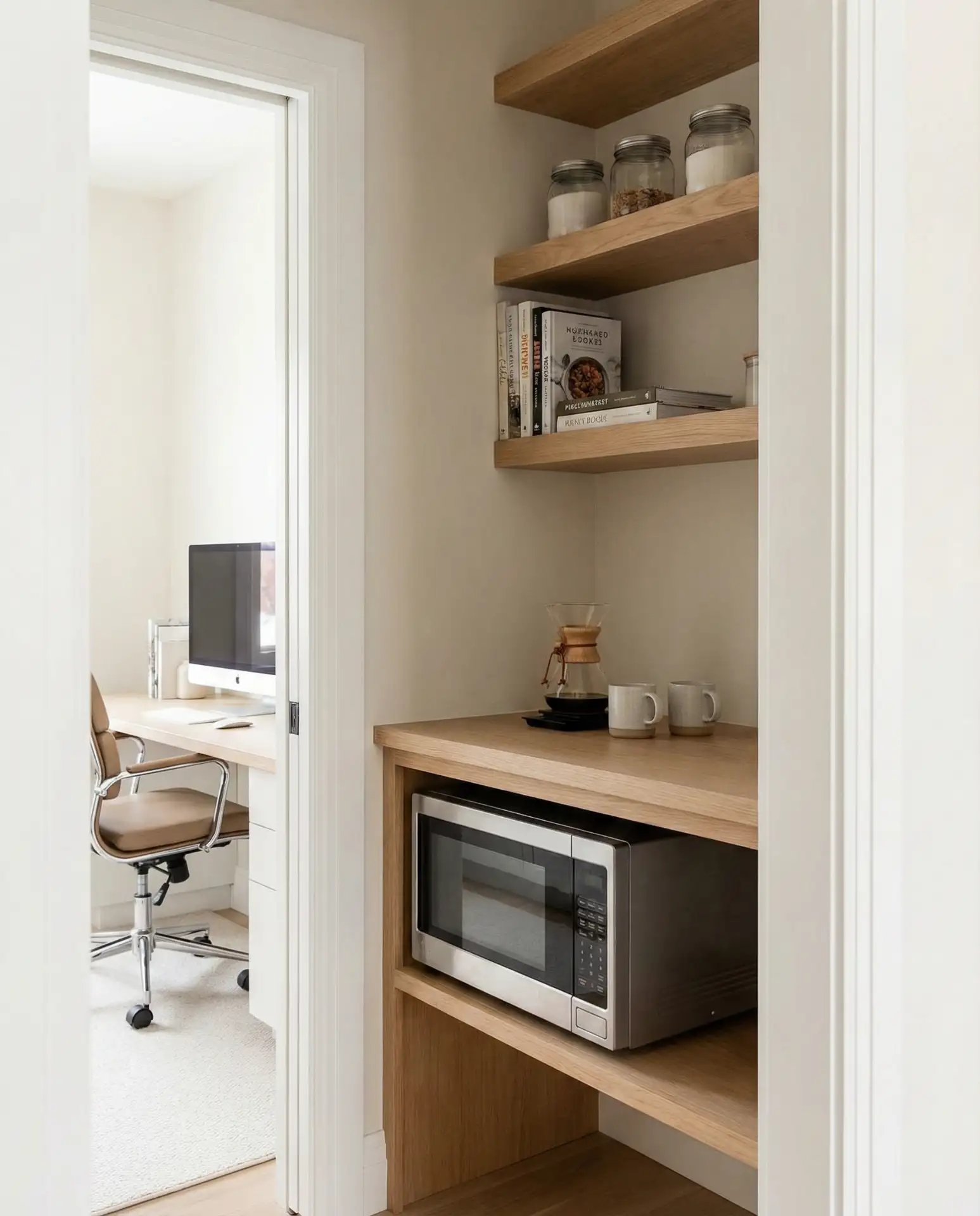
As remote work remains a fixture in American life, some homeowners are integrating pantries into or near their home office spaces. This setup allows for quick access to snacks, coffee, and lunch prep without leaving the work zone. A small pantry cabinet or closet with a countertop, microwave, and mini-fridge can create a self-contained break area. It’s a practical solution that reduces midday kitchen traffic and helps maintain focus during the workday.
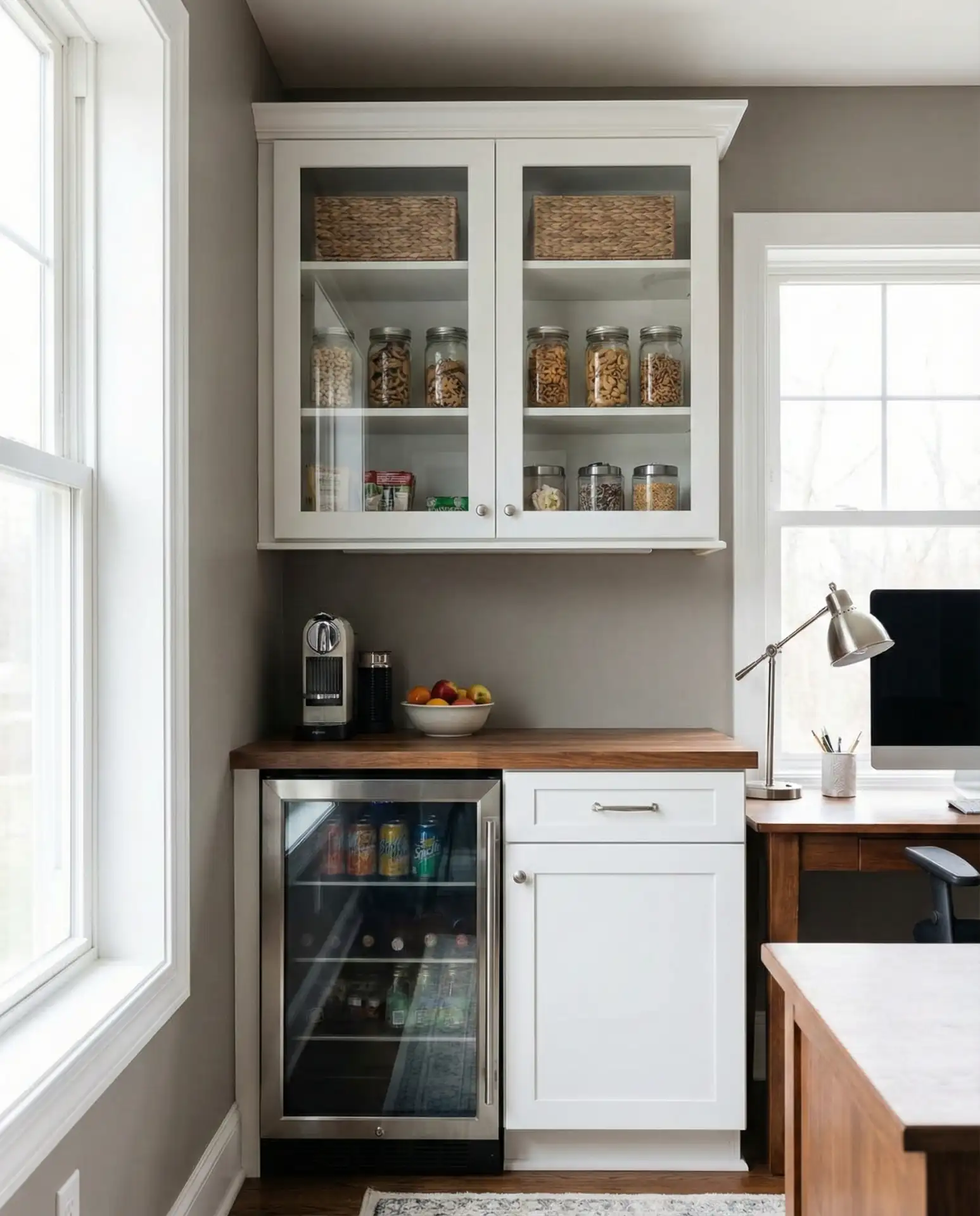
This trend is particularly popular in suburban homes where bonus rooms or basements have been converted into full-time offices. Real homeowners report that having food and drink nearby reduces interruptions and helps them stay in the flow. It’s a small addition that can make a big difference in daily productivity and comfort.
21. Pantry with Glass Doors for Visual Appeal
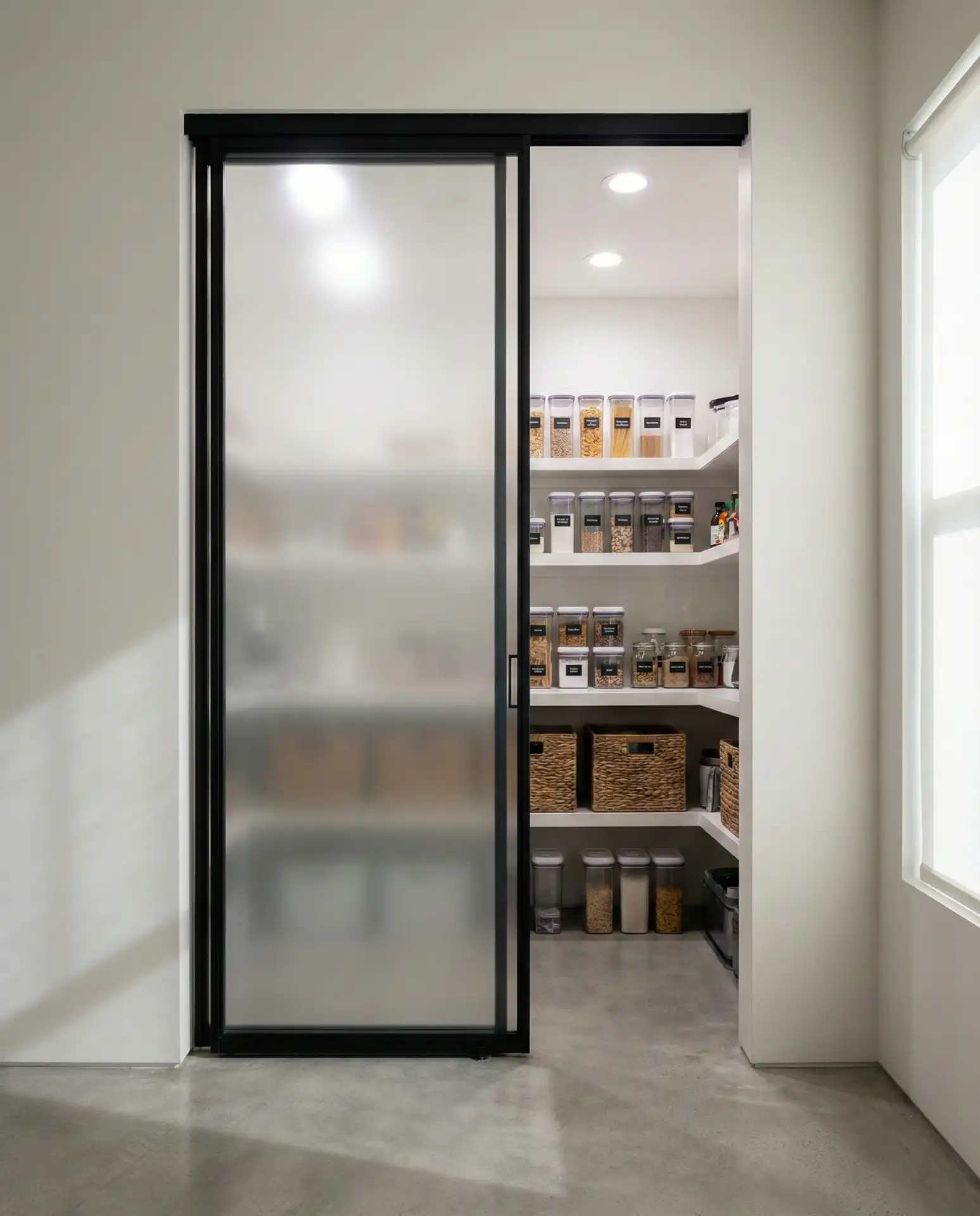
Glass-front pantry doors offer the best of both worlds: the organization stays on display, creating a curated, visually appealing moment, while the door provides a barrier against dust and keeps the space feeling contained. This design is especially striking in modern luxury kitchen settings, where the pantry becomes part of the overall aesthetic rather than a hidden afterthought. Frosted or seeded glass can soften the look if full transparency feels too exposed.
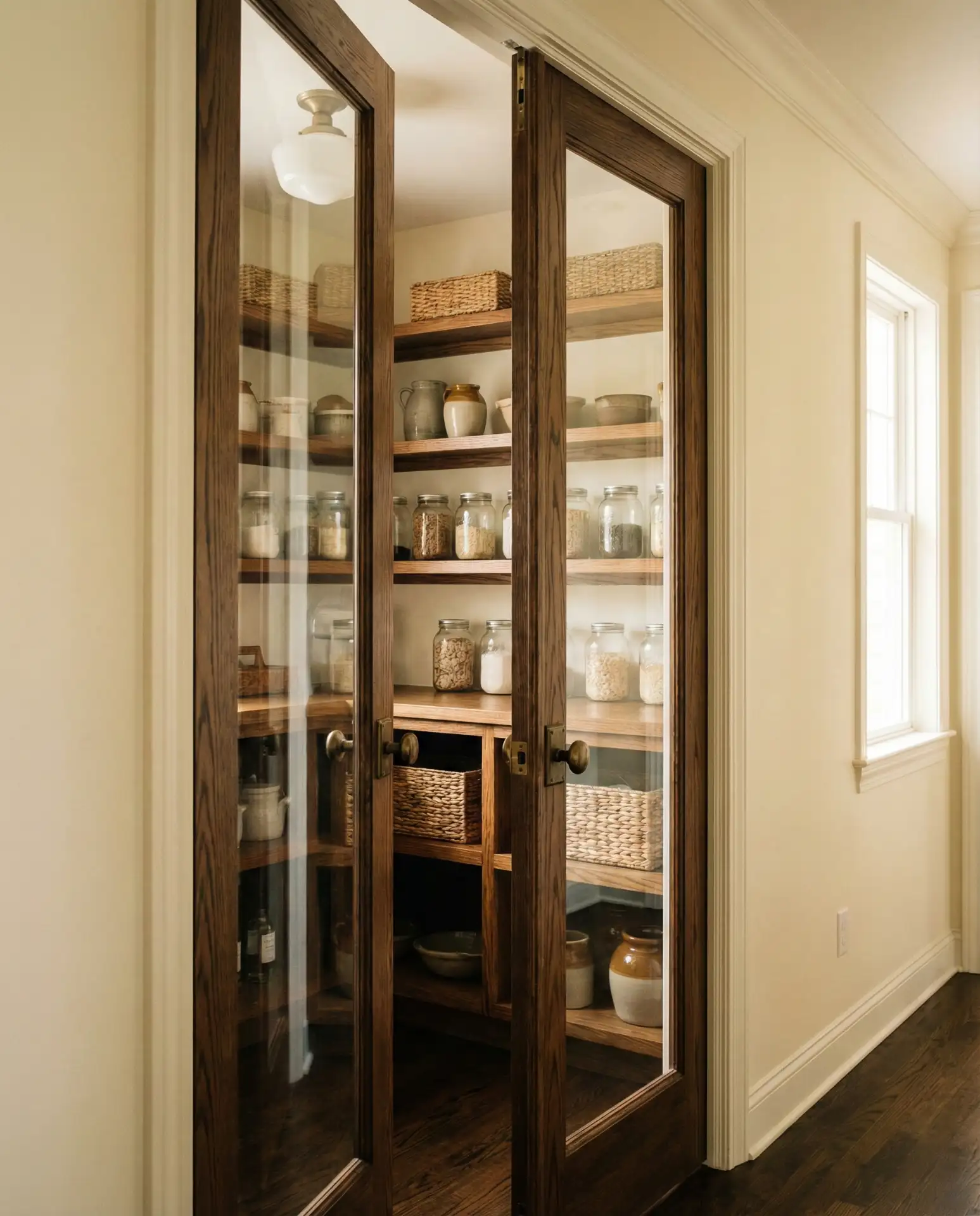
The challenge with glass doors is that they demand a higher level of upkeep—everything inside needs to look tidy at all times. But for those who enjoy the process of organizing and styling, this can be a motivating factor. It’s also a great way to showcase beautiful dishware, vintage canisters, or color-coordinated storage that doubles as decor.
22. Food Pantry with Meal Planning Station and Chalkboard
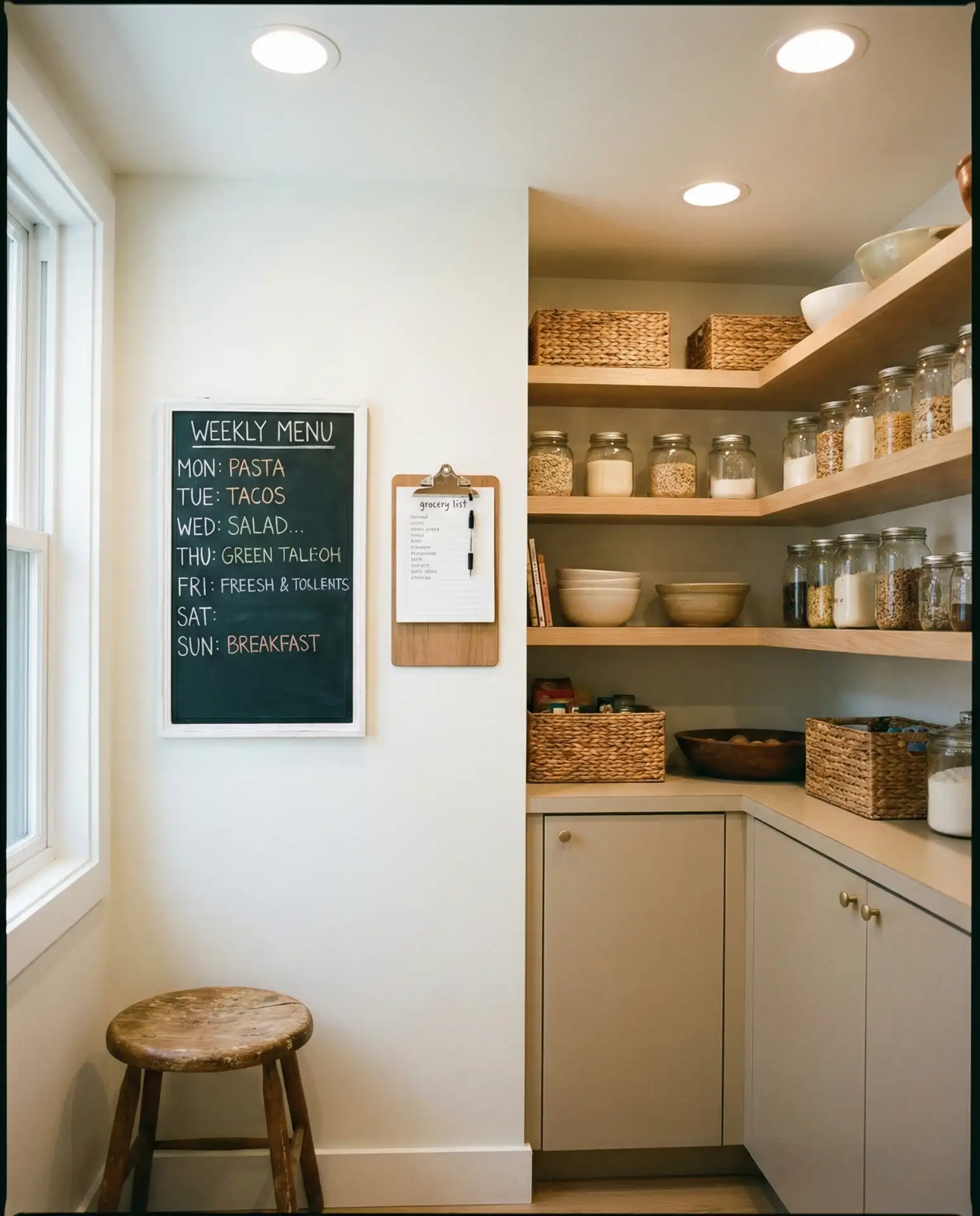
A food pantry that includes a meal planning station with a chalkboard or whiteboard helps families stay organized and reduce waste. The board can display the week’s menu, shopping lists, or recipe ideas, while the surrounding shelves hold the ingredients needed to execute the plan. This setup encourages intentional cooking and makes it easier to involve kids in meal prep decisions. It’s a practical feature that blends organization with family engagement.
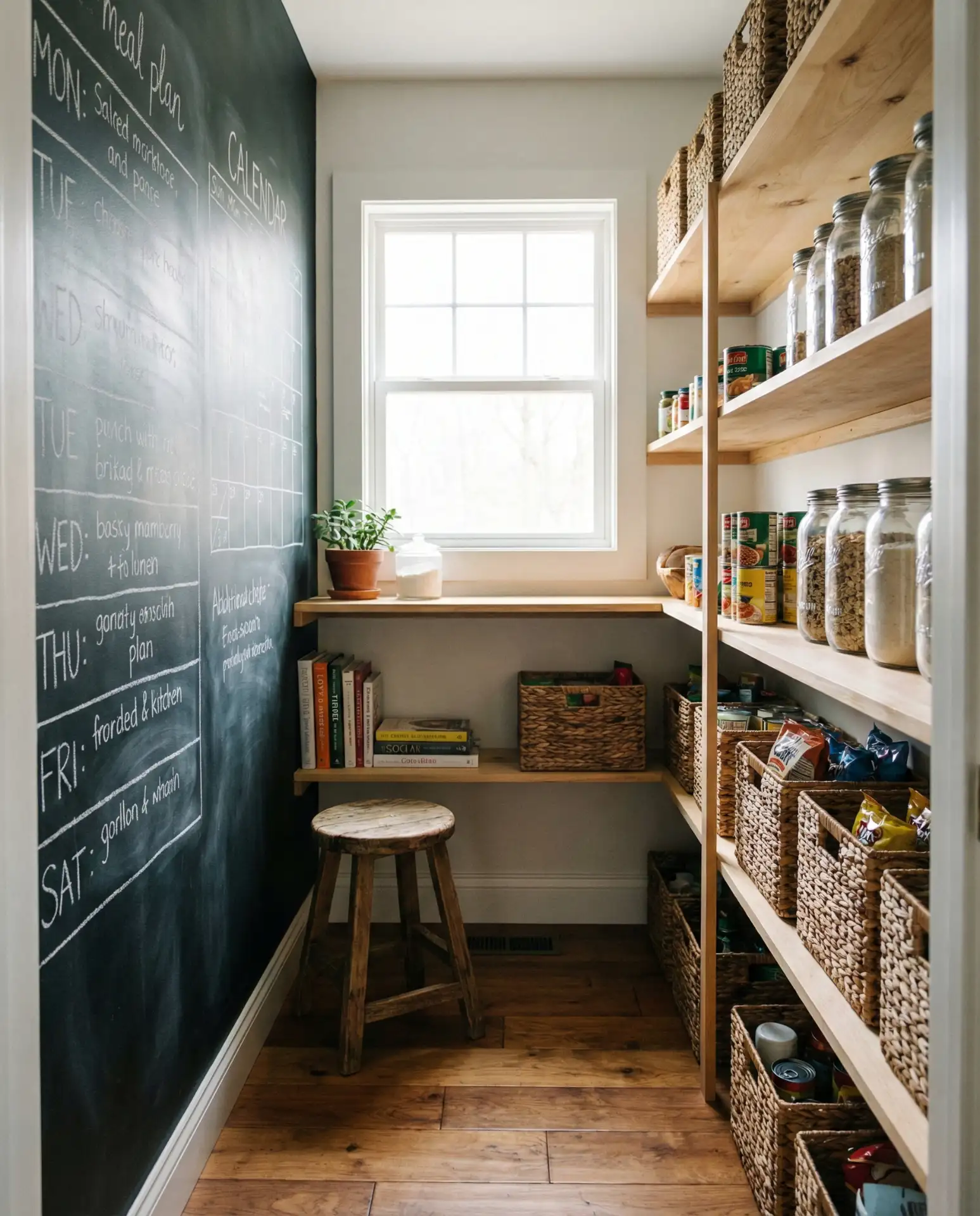
This idea is especially popular in homes with school-age children, where weekly routines and meal planning are essential. One parent shared that having the board in the pantry rather than the main kitchen keeps the workspace uncluttered while still being accessible. It’s a small touch that can significantly improve household organization and communication.
Conclusion
Whether you’re transforming a narrow nook, reimagining a walk-in closet, or investing in custom cabinetry, the right pantry design can elevate your daily routine and add lasting value to your home. These ideas showcase the range of possibilities—from moody paint colors to tech-forward coffee stations—all tailored to fit American lifestyles and Pinterest-worthy aesthetics. Take what resonates, adapt it to your space, and make it your own. We’d love to hear which ideas you’re planning to try—share your thoughts in the comments below.