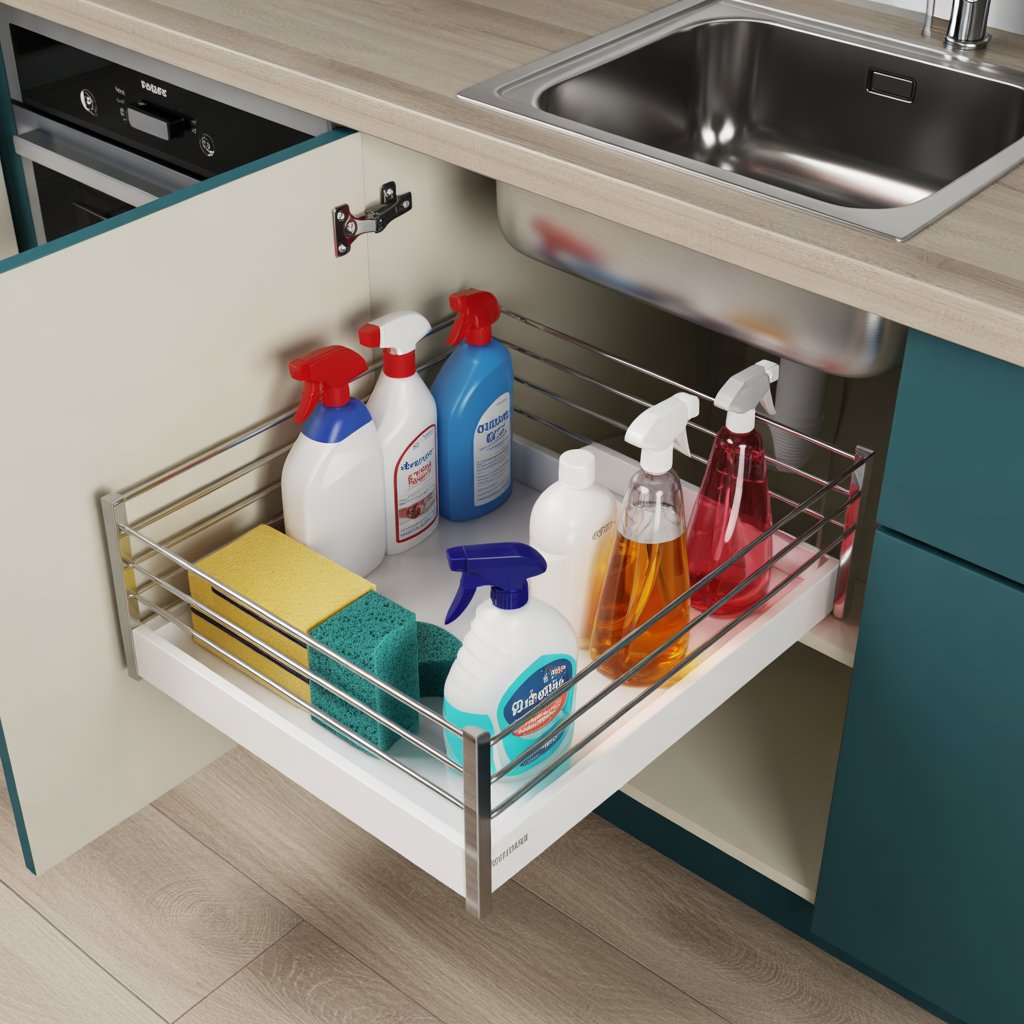
Pantry organization is having a moment in 2026, and it’s not just about aesthetics—though the visual appeal certainly doesn’t hurt when you’re scrolling through Pinterest at midnight. Americans are rethinking how they store food, prep meals, and navigate their kitchens, especially as more people cook at home and seek systems that actually work for their lifestyles. Whether you’re dealing with a sprawling walk-in or a cramped cabinet, the right setup can transform your daily routine. Below, you’ll find 22 practical, inspiring ideas that blend function with style, from budget-friendly hacks to farmhouse-worthy displays.
1. Clear Container Cascades for Quick Meal Prep
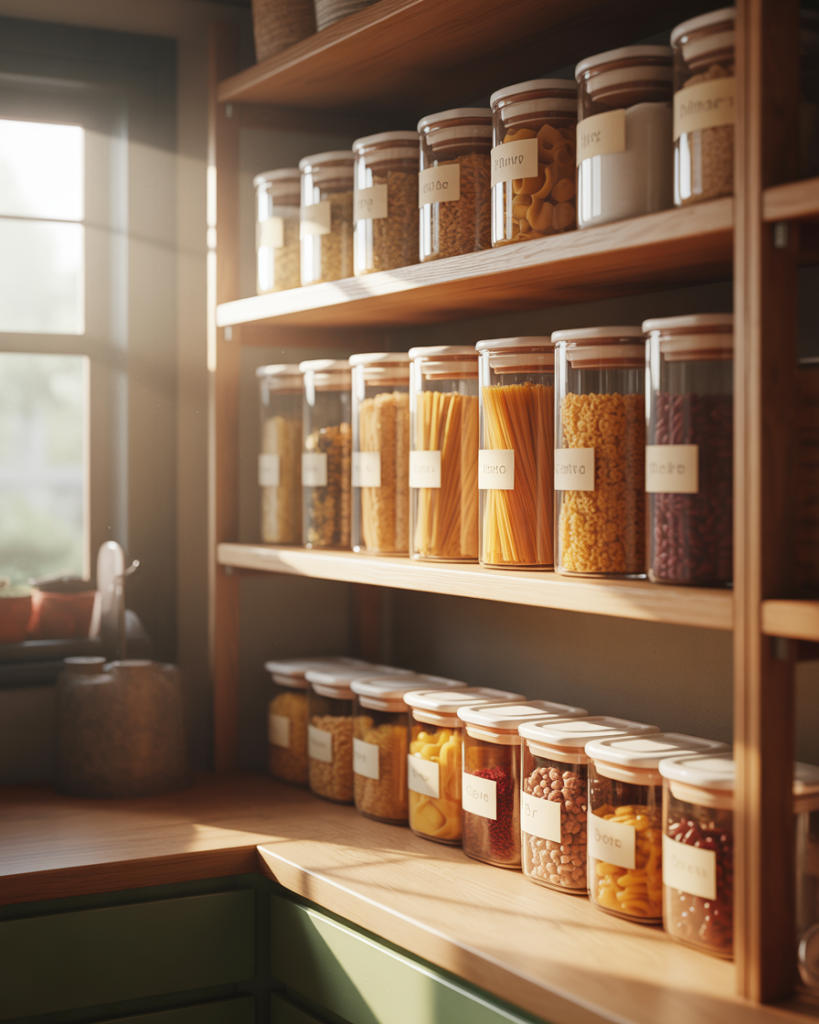
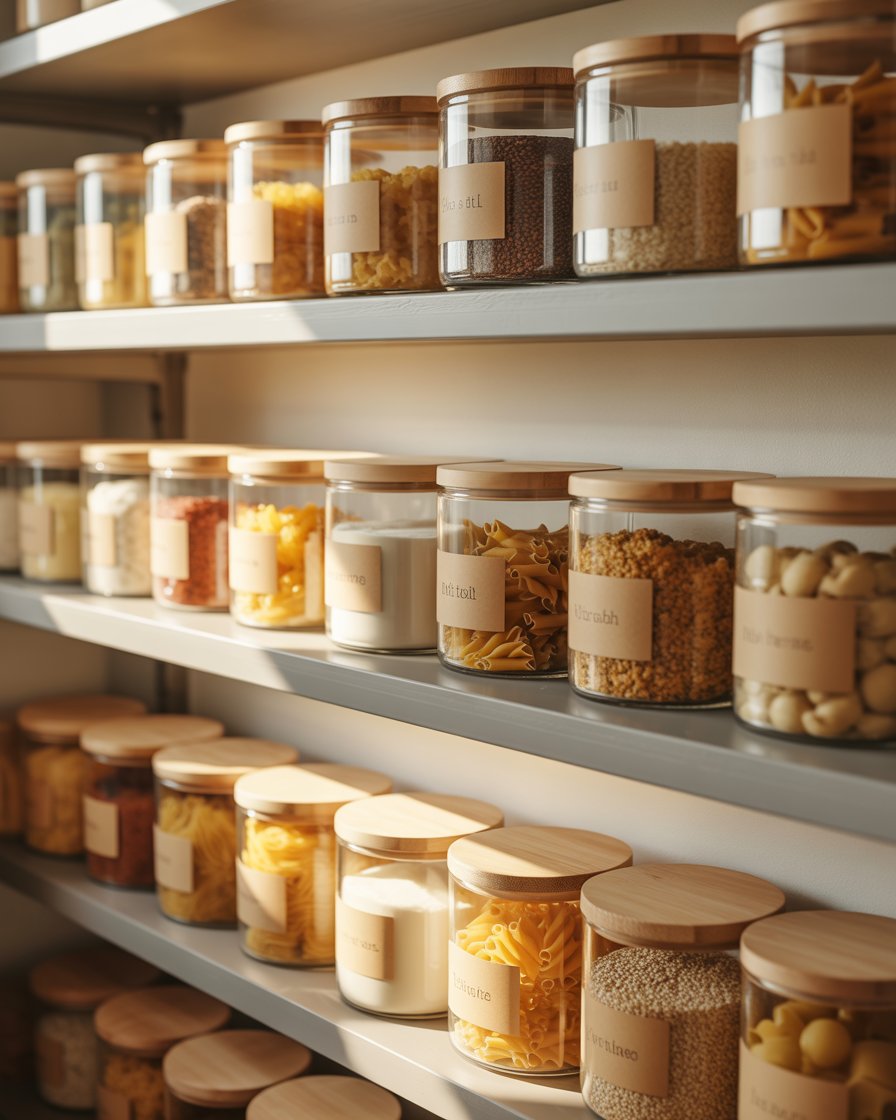
One of the most effective ways to streamline your pantry is by transferring dry goods into clear, stackable containers. This approach works beautifully in small kitchens where every inch counts, and it’s a favorite among those who prioritize quick meals during busy weeknights. Labels on the front make it easy to spot rice, pasta, or oats at a glance, eliminating the guesswork that comes with mismatched packaging. The uniformity also creates a minimalist look that feels intentional rather than cluttered.
Where this works best: homes with multiple household members who need to grab ingredients quickly. Families with kids especially appreciate the transparency—no more shaking boxes to check what’s left. It’s also a smart move if you buy in bulk and want to avoid pantry moths or staleness. Just make sure to invest in airtight seals, which protect freshness far better than those flimsy plastic bags you get from the store.
2. Tiered Risers for Maximum Visibility
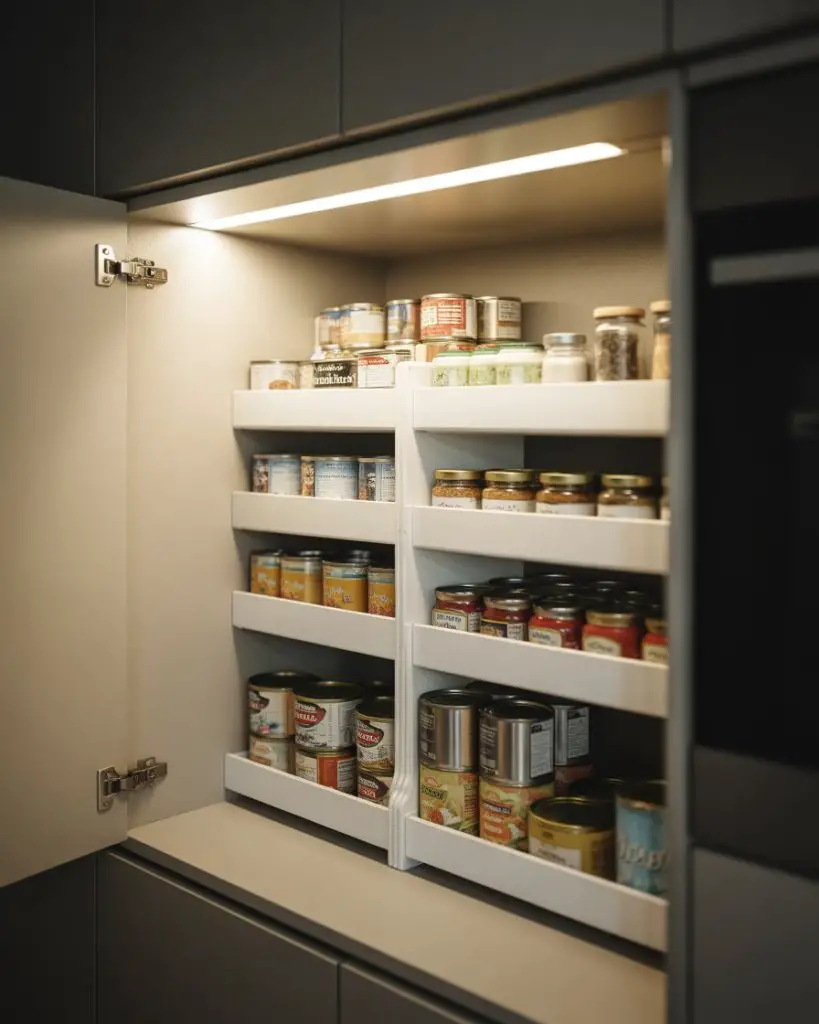
Tiered shelves are a game-changer when you’re working with deep cabinet space that tends to swallow smaller items. These risers lift jars, cans, and spice bottles so everything sits at a different height, giving you a clear view of what’s in stock. They’re particularly useful in small spaces where vertical real estate is your best friend. You’ll find versions in bamboo, acrylic, or coated wire, each offering a slightly different vibe.
A practical insight: risers prevent the dreaded “shove everything to the back” habit that leads to expired cans and forgotten condiments. By elevating items, you’re forced to confront what you actually have, which cuts down on waste and unnecessary grocery runs. Some people even use them in the fridge for bottles and yogurt containers, proving their versatility goes beyond the pantry alone.
3. Dollar Store Bins for Budget-Friendly Zones
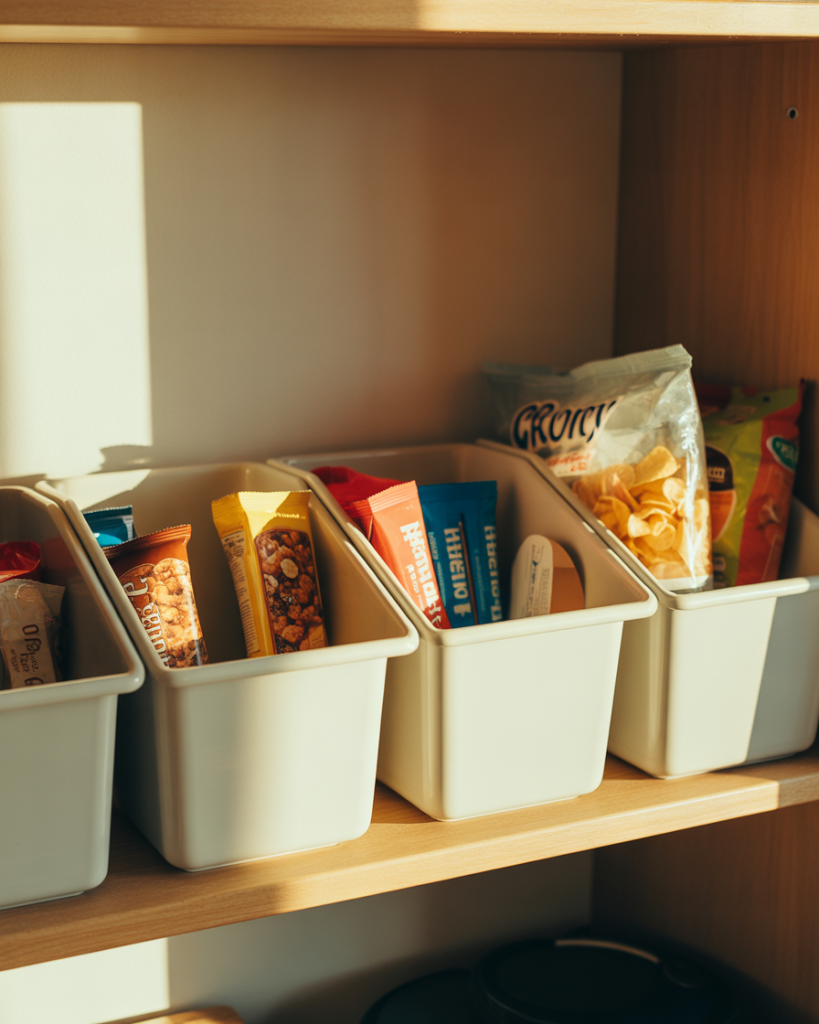
You don’t need to drop a fortune to create a functional pantry system, and dollar stores prove it. Grab a handful of matching plastic or wire baskets to corral snacks and treats, baking supplies, or breakfast items into dedicated zones. This method is especially popular for those organizing on a budget, and it’s surprisingly effective at keeping things tidy. The key is choosing a consistent size or color so the bins don’t look chaotically mismatched.
Real homeowner behavior: many people start with just three or four bins and add more as they figure out what categories actually make sense for their household. You might discover that grouping all your baking essentials together saves time, or that separating kids’ snacks from adult options reduces after-school chaos. The flexibility is the beauty—rearrange as your needs shift without feeling locked into an expensive system.
4. Lazy Susans for Corner Access
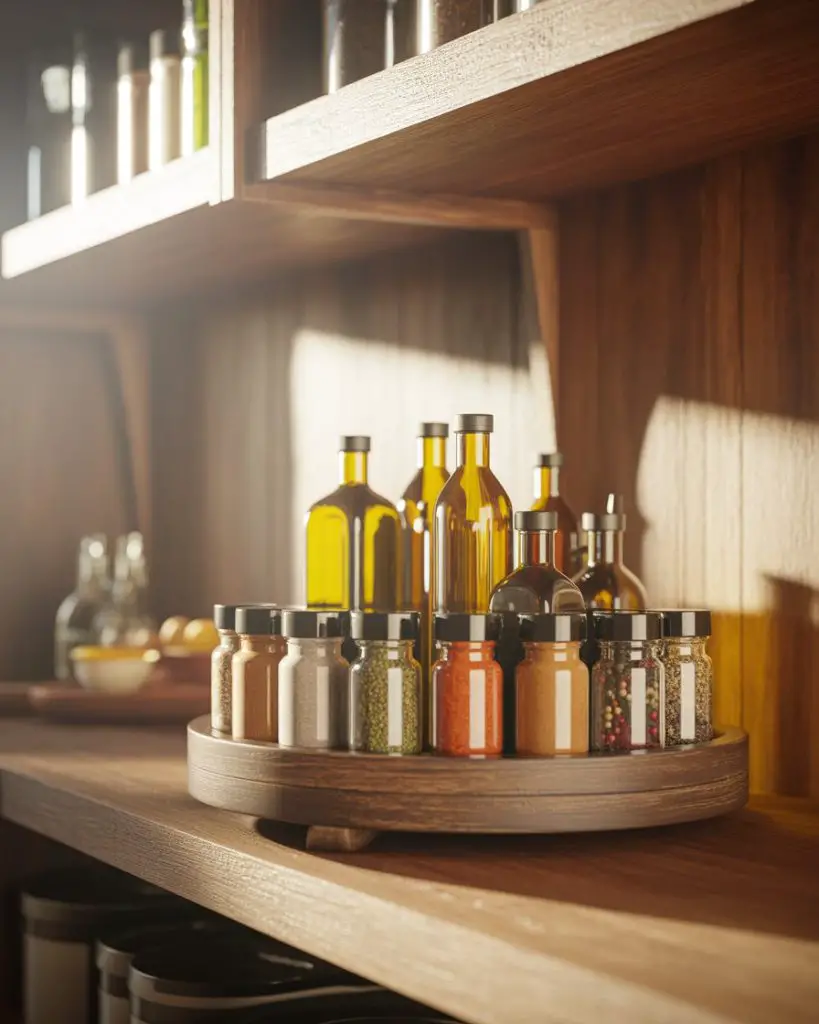
Corner shelves are notoriously awkward, but a lazy Susan solves that problem with a single spin. Load it up with oils, vinegars, sauces, or canned goods, and you’ll never have to reach blindly into the back again. This trick is especially handy in walk in pantries where corner shelving is common, or in small closet conversions where every surface needs to pull its weight. The circular motion feels almost satisfying once you get used to it.
Expert-style commentary: designers often recommend lazy Susans for households that cook frequently with a rotating roster of ingredients. If you’re someone who experiments with different cuisines—say, jumping from Italian to Thai to Mexican in a single week—this setup keeps your flavor bases accessible. It’s also a subtle way to encourage yourself to use what you have instead of buying duplicates because you forgot something was buried in the corner.
5. Over-the-Door Racks for Tiny Kitchens
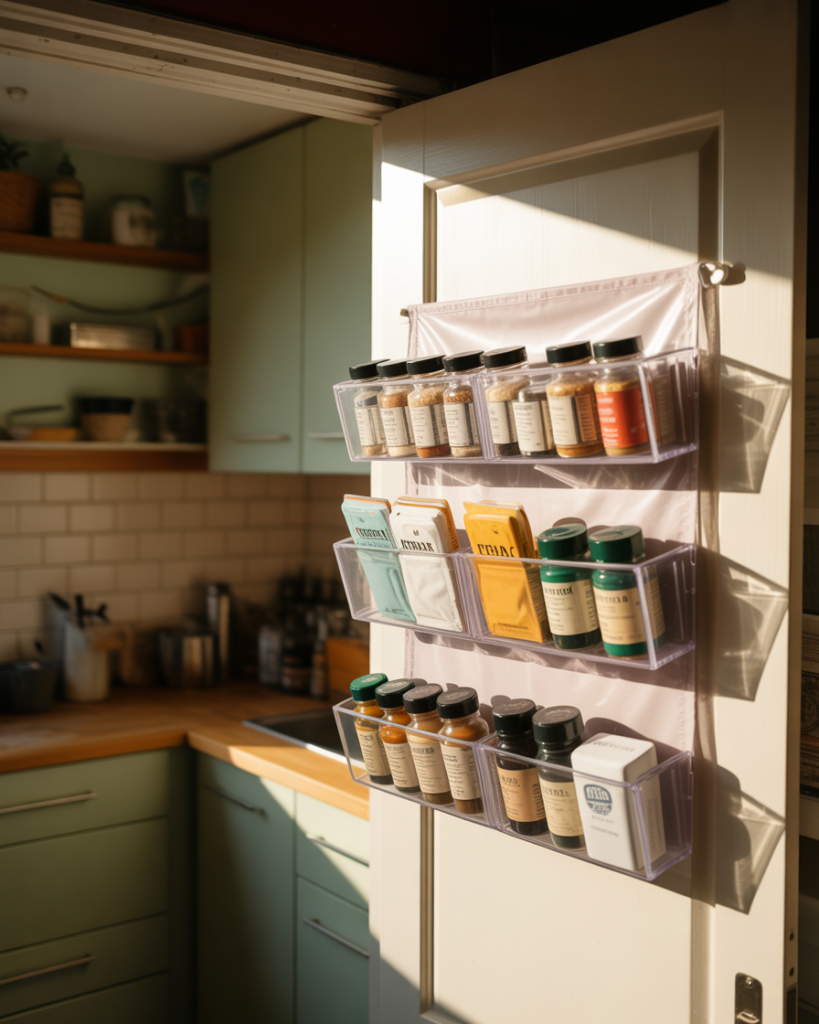
When floor and shelf space are at a premium, look up—or rather, behind the door. Over-the-door racks are lifesavers in tiny kitchens or small closet pantries, offering slots for spices, foil, plastic wrap, or even cleaning supplies. Installation is usually tool-free, which makes them renter-friendly and easy to reposition if your needs change. The pockets or shelves hang flat against the door, so they don’t interfere with closing it.
Where it works best: studio apartments, galley kitchens, or any space where a traditional pantry doesn’t exist. One common mistake is overloading the door, which can strain hinges or cause the rack to slip. Stick to lighter items and check that the hooks are secure, especially if you’re using heavier glass jars. It’s a small fix that prevents bigger headaches down the line.
6. Woven Baskets for a Farmhouse Feel

If you’re drawn to a farmhouse style aesthetic, woven baskets bring warmth and texture to your pantry without sacrificing function. Use them to hold onions, potatoes, bread, or packaged snacks—anything that doesn’t require airtight sealing. They also work well on open shelves where you want the look to feel curated rather than clinical. Natural fibers like seagrass or rattan add an organic touch that softens the space.
A micro anecdote: a friend in North Carolina switched from plastic bins to woven baskets and noticed her kids were more inclined to put things back. The tactile, homey feel made the pantry less sterile and more like a part of the house they actually wanted to interact with. Sometimes the psychology of a space matters just as much as the layout.
7. Chalkboard Labels for Flexibility
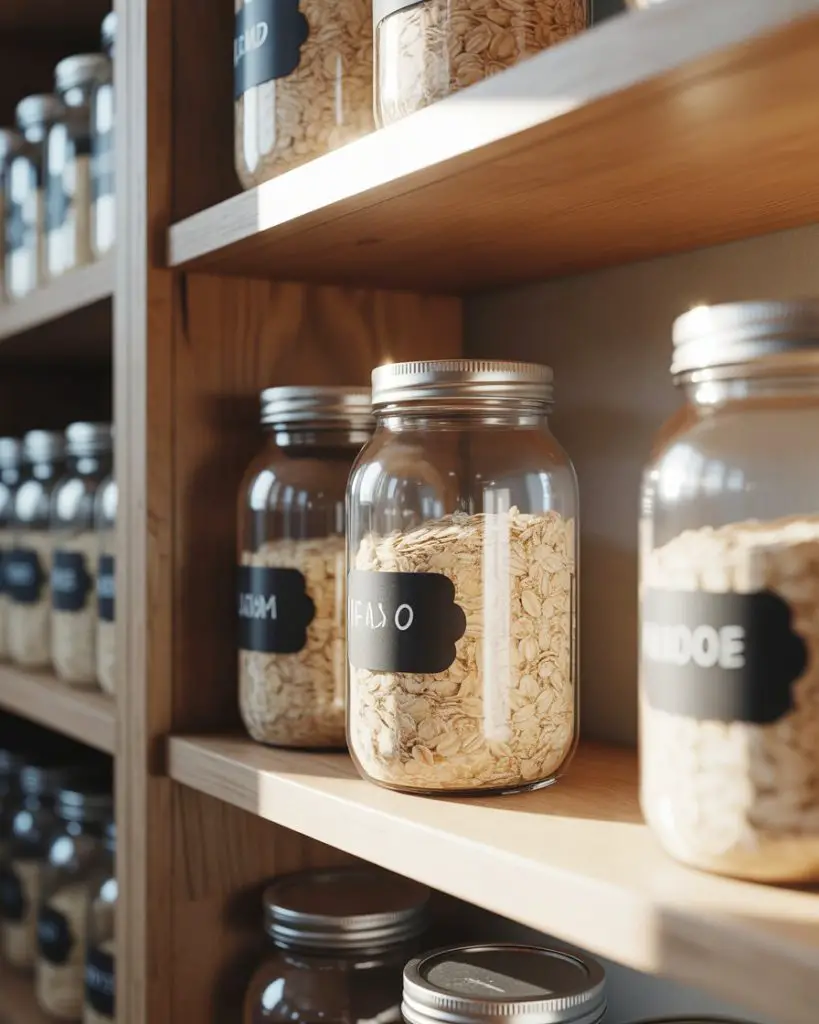
Chalkboard labels offer a forgiving alternative to permanent markers, letting you relabel jars and bins as your pantry contents evolve. They’re perfect for households that rotate between different grains, flours, or snacks and treats depending on the season or dietary phase. The matte black finish also lends a subtle aesthetic that works in both modern and farmhouse style kitchens. You’ll find them as stickers or even paint-on versions.
Practical insight: chalkboard labels are especially useful if you experiment with bulk buying or meal prep trends. One month you might store quinoa, the next it’s farro. Instead of peeling off stickers or crossing things out, you just wipe and rewrite. It’s a low-commitment system that adapts as you do, which is ideal for anyone still figuring out their ideal pantry setup.


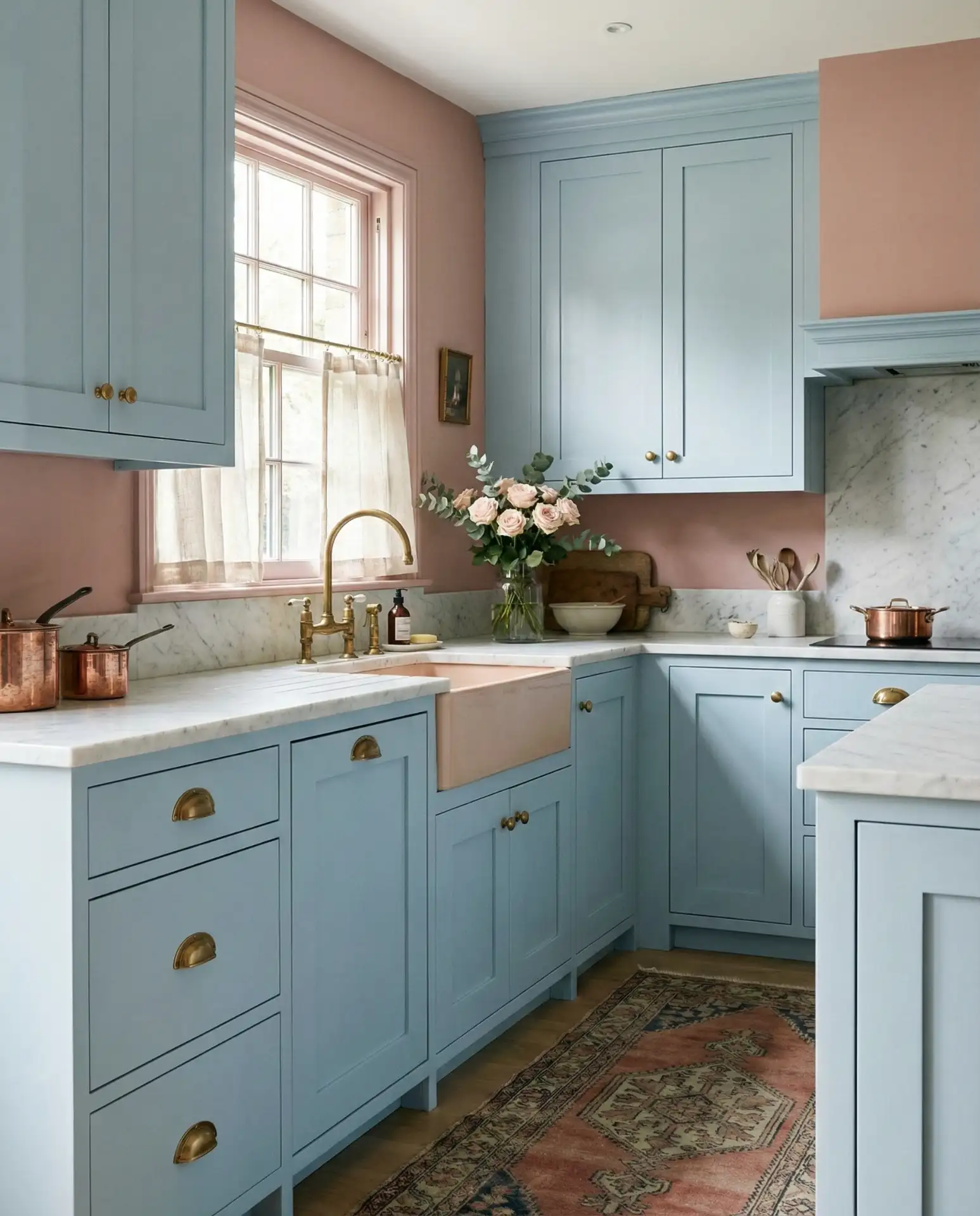
8. Pull-Out Drawers for Deep Cabinets
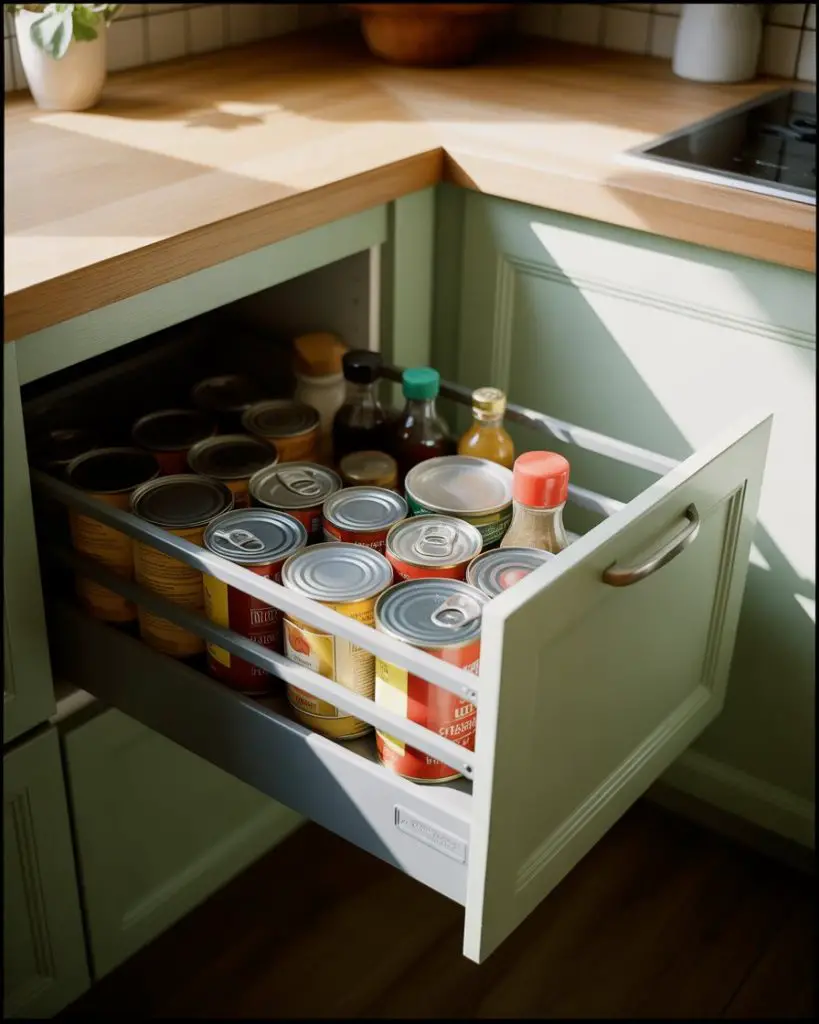
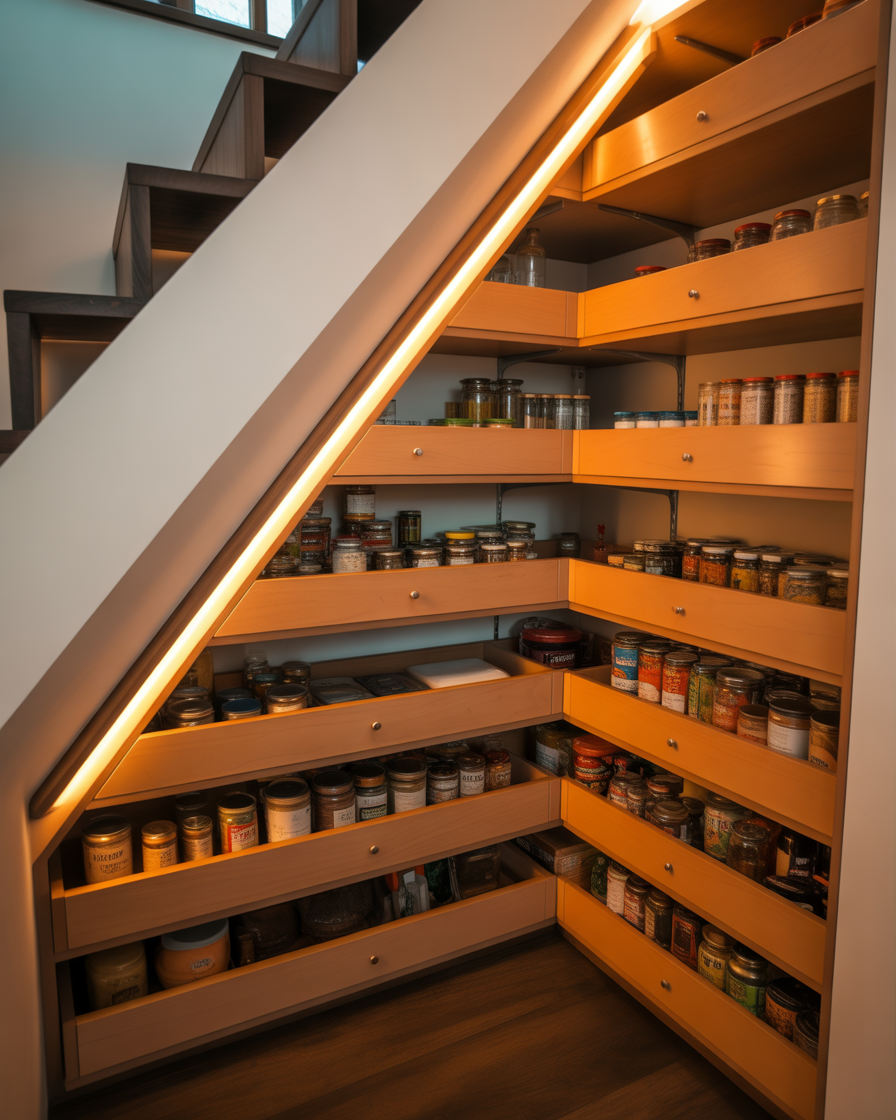
Deep cabinet shelves can become black holes where canned goods and boxes disappear forever. Installing pull-out drawers—either DIY or custom—transforms that dead space into accessible storage. You slide the drawer out like a file cabinet, revealing everything at once. This is a favorite upgrade in kitchen renovations, particularly for households that cook frequently and need quick meals prep to feel seamless.
Budget angle: pull-out systems can range from thirty dollars for simple wire racks to several hundred for custom wood solutions. If you’re handy, there are plenty of tutorials for installing basic versions yourself, which keeps costs down. Even a single pull-out in your busiest cabinet can make a noticeable difference in how smoothly your kitchen functions day to day.
9. Magnetic Spice Jars on Metal Strips
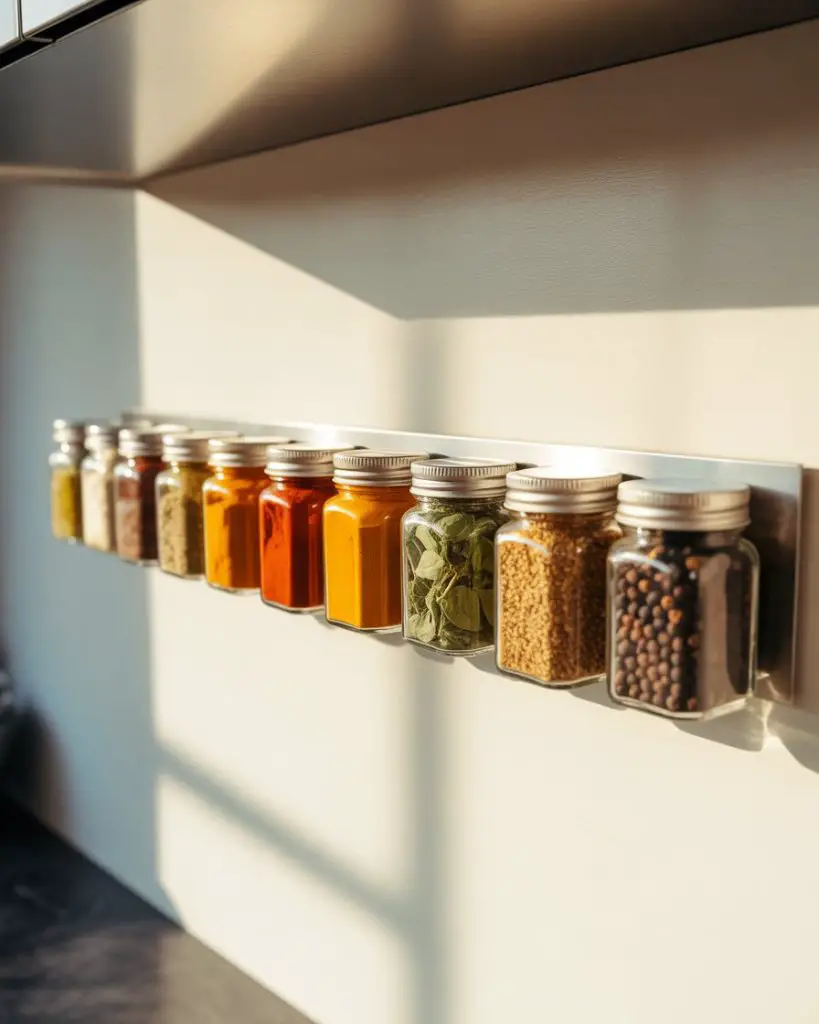
Magnetic spice jars stuck to a metal strip free up shelf space and put your spices at eye level, which is surprisingly handy when you’re mid-recipe. This setup is popular in small kitchens where counter and cabinet real estate is tight, and it adds a modern, almost industrial edge to the aesthetic. The jars are usually uniform in size, creating a clean, organized look that’s also functional.
Where it works best: renters who can’t install shelving, or anyone with limited drawer space. One common mistake is placing the strip too high or too low—aim for just below eye level so you can read the labels without straining. Also, make sure the magnets are strong enough to hold a full jar. Cheap versions sometimes slide off, which defeats the purpose and creates a mess.
10. Glass Canisters for a Minimalist Vibe
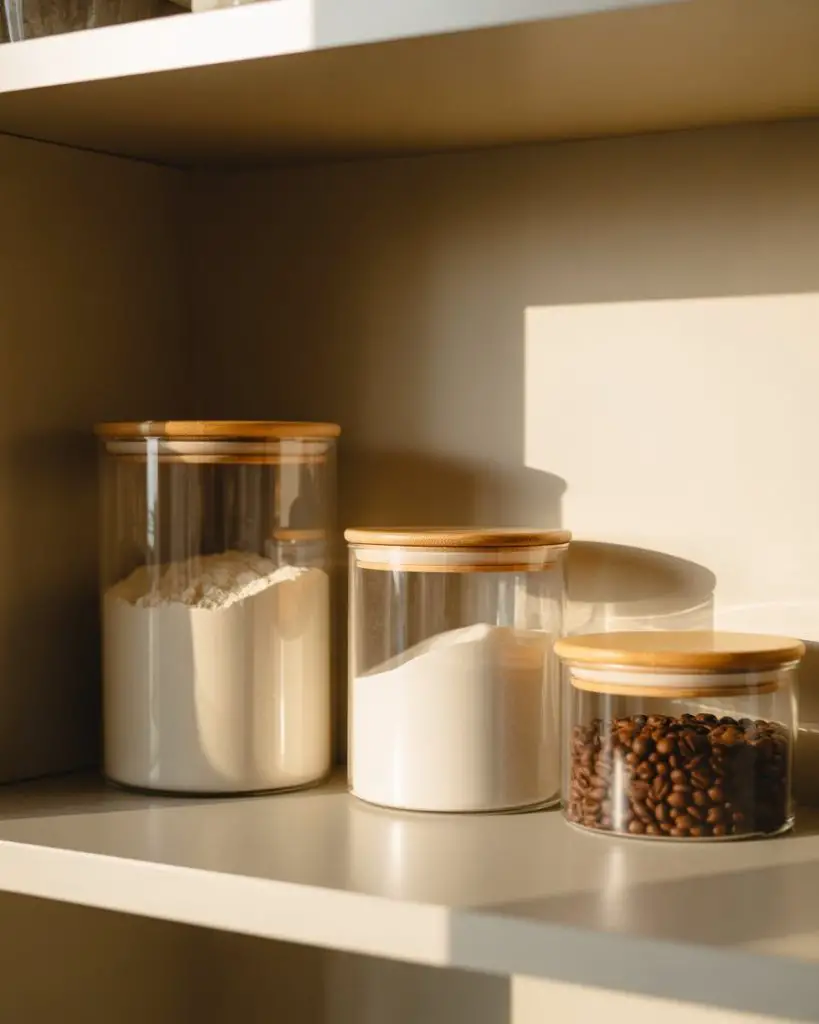
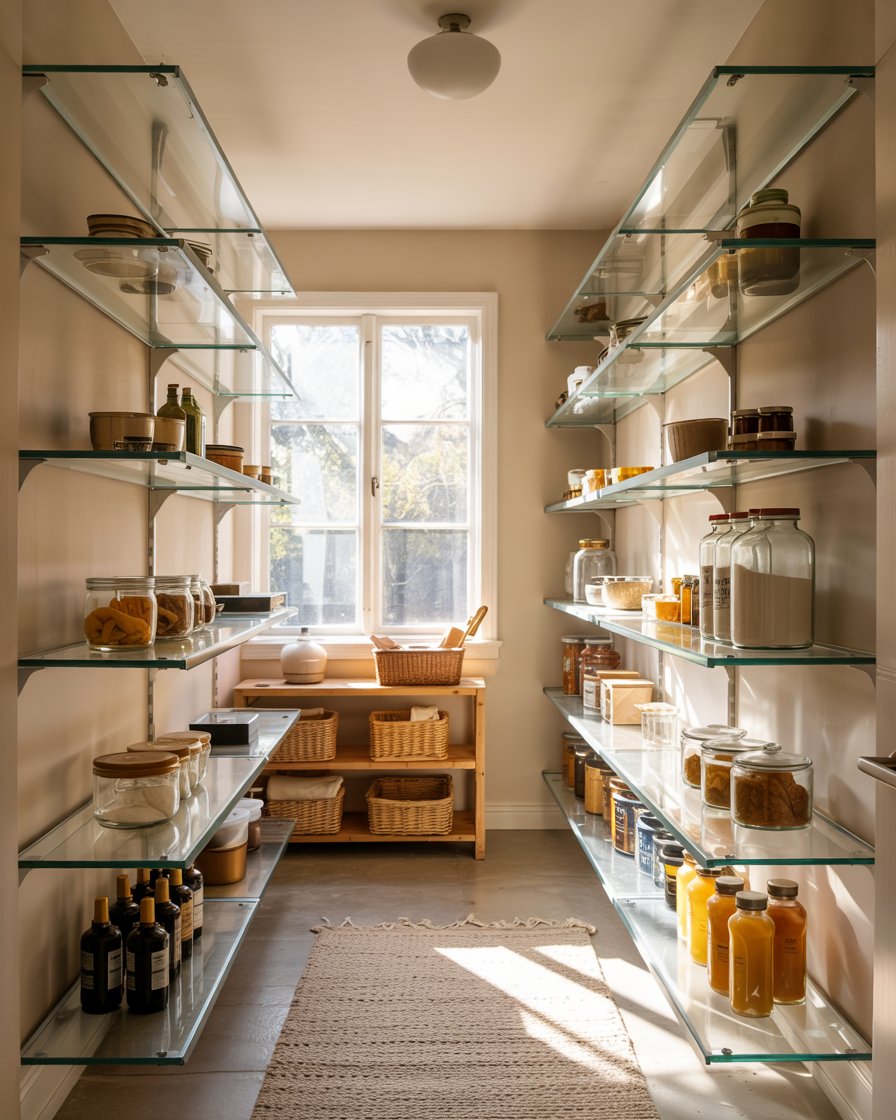
Glass canisters bring a sense of calm and order to your pantry, especially if you’re leaning into a minimalist approach. The transparency lets you see exactly how much flour, sugar, or coffee you have left, which reduces overbuying and waste. They also photograph beautifully, which explains their popularity on Pinterest among users who want their kitchen to feel both functional and photogenic. Look for versions with airtight bamboo or silicone lids.
American lifestyle context: the minimalist pantry trend has been gaining traction in cities like Portland, Austin, and Denver, where people are drawn to pared-down aesthetics that still feel warm. It’s not about deprivation—it’s about clarity. When you can see everything you own, you’re less likely to let things expire or accumulate duplicates. Plus, the visual uniformity makes even a small closet pantry feel more spacious.
11. Wire Shelf Dividers for Vertical Stacking
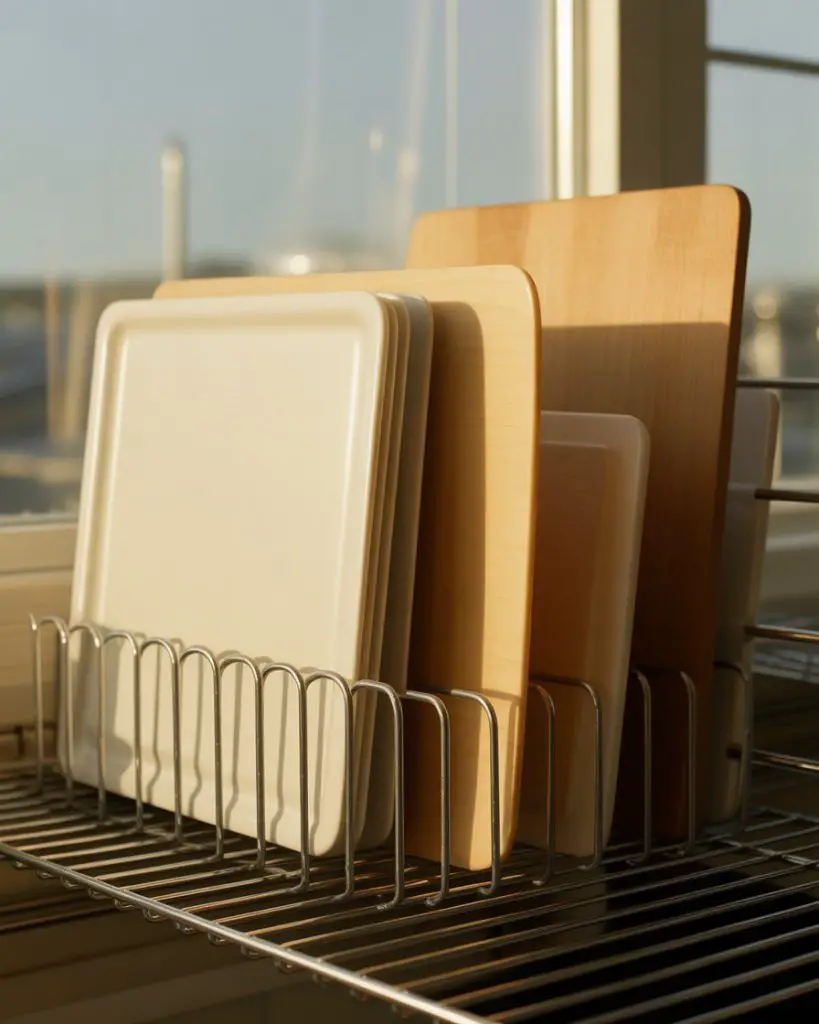
If you’ve ever tried to stack cutting boards, baking sheets, or serving platters on a wire shelf, you know they tend to topple over. Shelf dividers solve this by creating vertical slots that keep items upright and separated. They’re especially useful in small spaces where horizontal storage isn’t an option, and they slip right onto most standard wire shelving without tools. The metal construction is durable and easy to wipe down.
Practical insight: dividers also work for organizing pot lids, which otherwise tend to clatter around in drawers or get stacked precariously. If you’re someone who owns multiple sizes of lids or platters, this system keeps them accessible without the risk of an avalanche every time you reach for one. It’s a small fix that has an outsized impact on daily ease.
12. Adjustable Shelving for Custom Heights

Not all pantry items are the same height, so why should your shelves be fixed? Adjustable shelving lets you move brackets up or down to accommodate tall cereal boxes, short spice jars, or anything in between. This flexibility is especially valuable in walk in pantries or closet conversions where you’re building storage from scratch. You can reconfigure as your needs change, whether that’s a new baby requiring formula storage or a sourdough phase demanding extra flour space.
Expert-style commentary: interior organizers often recommend starting with the tallest items and building your shelf heights around those, leaving shorter shelves for smaller goods. It’s also wise to leave a bit of extra clearance—an inch or two—so you’re not struggling to slide things in and out. Adjustability means you’re never locked into a layout that stops working for you.
13. Snack Station Bins for Kid-Friendly Access
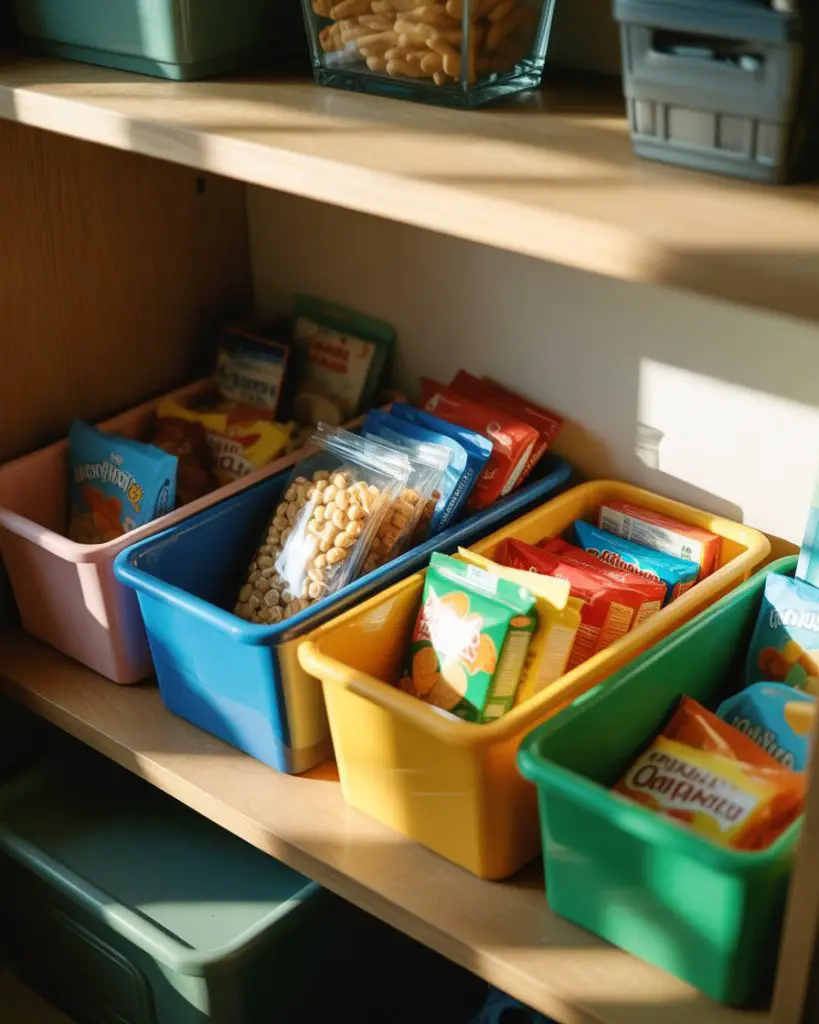
Designating a low shelf or bin specifically for snacks and treats empowers kids to make their own choices without rummaging through the entire pantry. Use clear or labeled containers so they can see what’s available, and rotate options weekly to keep things interesting. This approach is popular in households where independence is encouraged, and it cuts down on the constant “Can I have a snack?” interruptions. Just set boundaries on portion sizes to avoid entire bags disappearing in one sitting.
Real homeowner behavior: parents often report that a snack station reduces power struggles because kids feel a sense of autonomy. The boundary is clear—anything in this bin is fair game, but everything else requires asking. It’s a simple system that respects both the child’s growing independence and the parent’s need to maintain some structure around eating habits.
14. Slide-Out Spice Racks Between Appliances
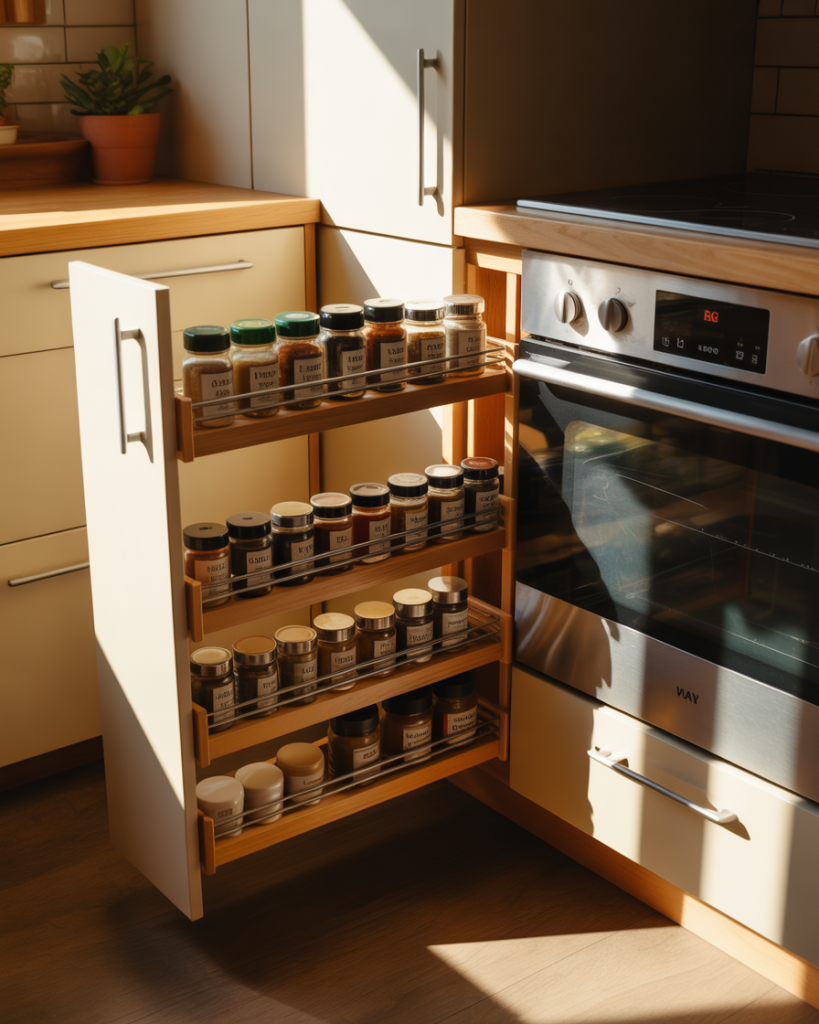
That narrow gap between your fridge and counter? It’s prime real estate for a slide-out spice rack. These slim, vertical units pull out like a drawer and can hold dozens of spice bottles in a footprint that’s barely five inches wide. They’re ideal for small kitchens where every square inch matters, and they keep spices accessible without cluttering your shelves or counters. Installation usually requires minimal hardware.
Where it works best: galley kitchens, apartments, or any layout where wall cabinets are limited. One common mistake is underestimating the clearance needed—measure the gap carefully and account for any baseboards or trim. Also, consider whether you’ll be reaching for spices while something’s on the stove. Placing the rack too far from your cooking zone can slow you down rather than speed you up.
15. Healthy Snack Bins at Eye Level
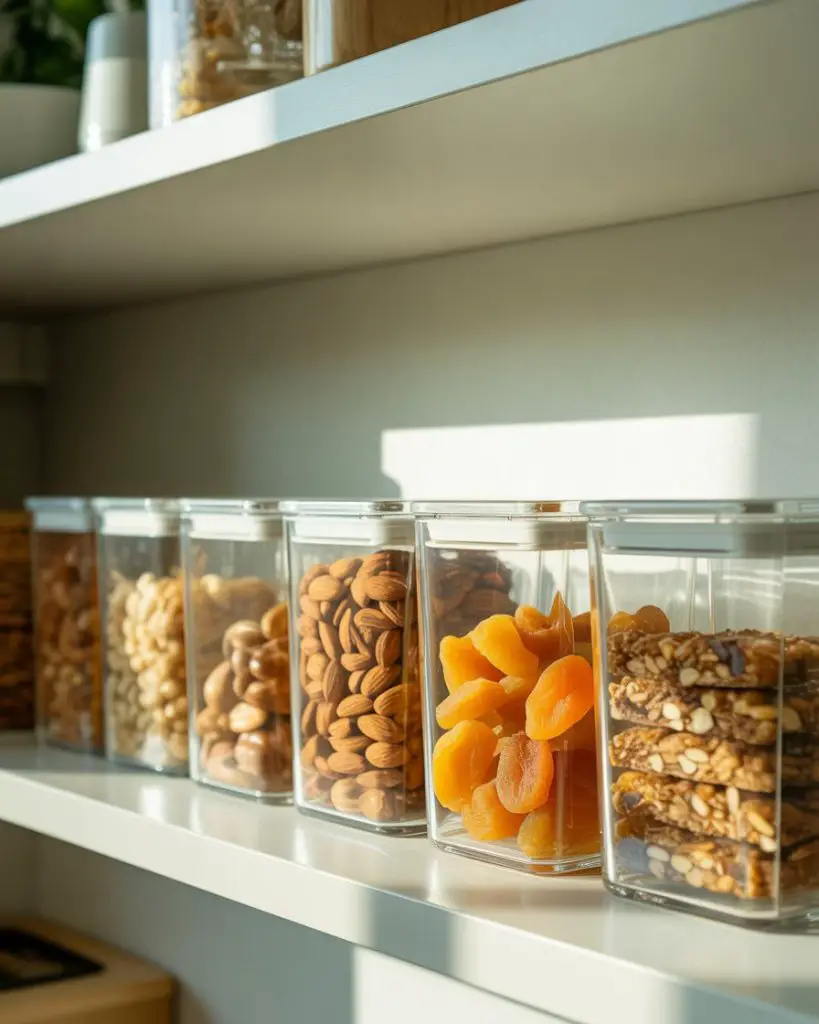
If you’re trying to make healthy choices easier, place those options at eye level where you’ll spot them first. Stock bins with nuts, dried fruit, granola bars, or other nutritious snacks and treats that don’t require refrigeration. This setup works in both traditional pantries and small closet conversions, and it’s a gentle nudge toward better habits without feeling preachy. The less-healthy options can live on higher or lower shelves, making them slightly less convenient.
American lifestyle context: the “healthier at eye level” strategy is backed by behavioral science and has been adopted widely in schools and workplaces across the U.S. Applying it at home is just an extension of the same principle—what you see first is often what you grab. It’s not about restriction; it’s about making the default choice align with your goals.
16. Dollar Tree Drawer Organizers for Small Items

Loose tea bags, seasoning packets, and tiny jars of spices tend to get lost in the shuffle, but dollar tree drawer organizers corral them beautifully. These small trays or dividers fit inside drawers or on shelves, creating compartments for items that would otherwise roll around or get shoved to the back. It’s an affordable fix that works in nearly any kitchen or pantry setup, and you can mix and match sizes to fit your specific needs.
Budget angle: for less than five dollars, you can outfit an entire drawer with dividers that keep things sorted. The key is measuring your drawer or shelf space before you shop so you know which sizes will fit. Some people even use these organizers stacked on pantry shelves, turning them into mini filing systems for smaller items that tend to get buried.
17. Indian Spice Tin Collections for Authenticity
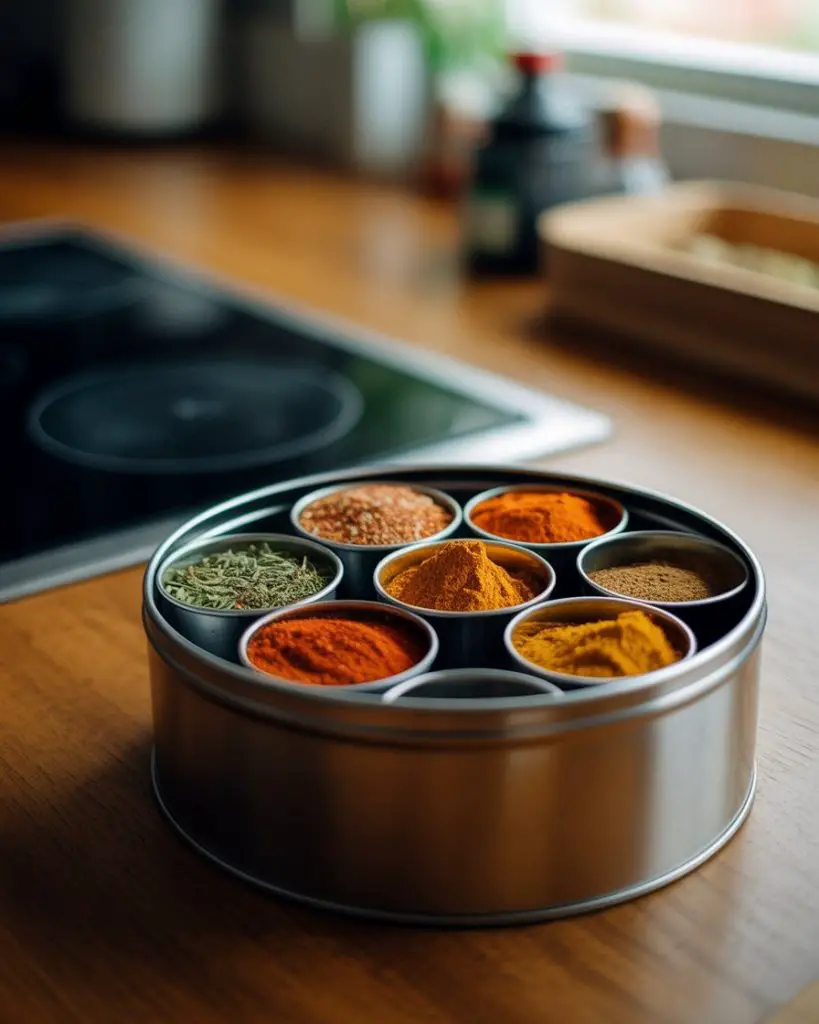
If you cook Indian cuisine regularly, a traditional spice tin (masala dabba) keeps your essentials organized and within arm’s reach. These round steel containers hold smaller lidded compartments for cumin, coriander, turmeric, and other staples, and they sit neatly on a shelf or counter. The design is both functional and cultural, offering a touch of authenticity to your kitchen that feels far more intentional than a random assortment of jars. Plus, the compact footprint is ideal for small kitchens.
A micro anecdote: a colleague who grew up in Mumbai swears by her masala dabba, saying it cuts her prep time in half because everything she needs for a base curry is in one spot. She doesn’t have to dig through a drawer or cabinet—it’s all there, ready to go. If you cook frequently with the same spice palette, this kind of specialized storage is a smart investment.
18. Hanging Baskets for Produce Ventilation
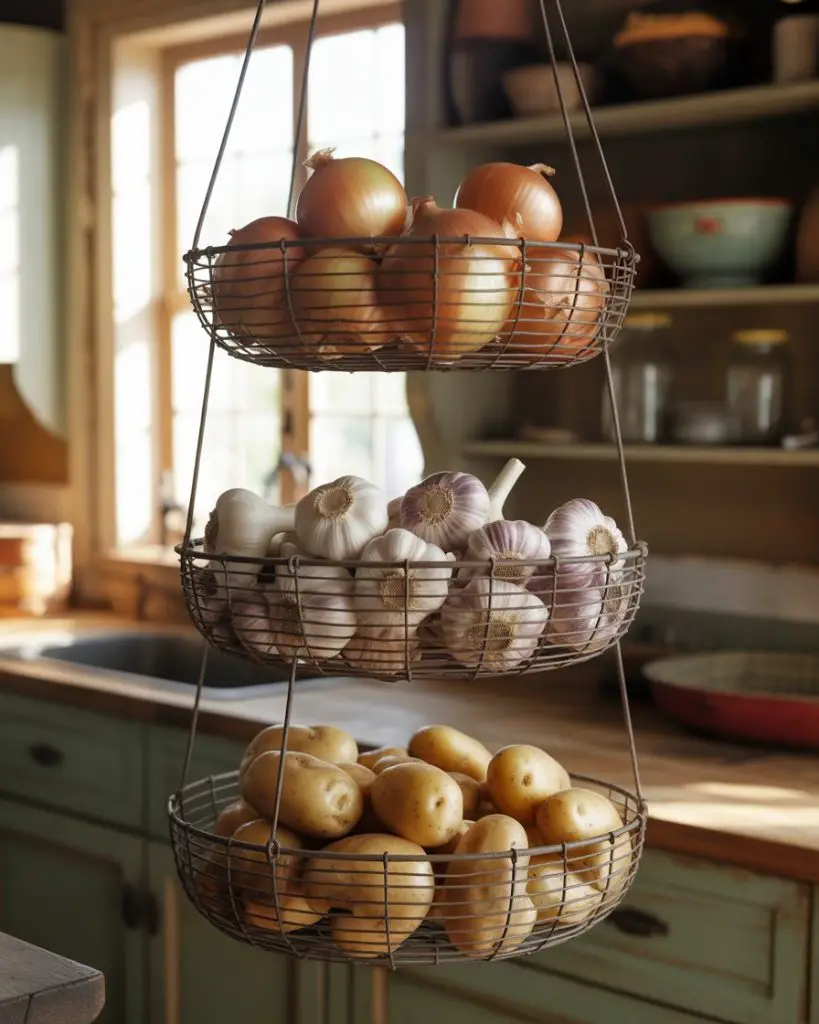
Wire or woven hanging baskets offer a practical way to store food like onions, garlic, and potatoes while allowing airflow that extends shelf life. They free up counter and shelf space, and the vertical arrangement works beautifully in tiny kitchens or walk in pantries where floor space is limited. The baskets can hang from ceiling hooks or wall-mounted racks, and they add a rustic, lived-in vibe that feels both functional and charming.
Where it works best: kitchens with high ceilings or empty wall space near the pantry entrance. One common mistake is overloading the baskets, which stresses the hooks and can cause tearing in woven styles. Stick to lighter produce and check the weight limits on your hardware. It’s also smart to place a small tray or mat underneath to catch any stray dirt or peelings.
19. Inside-the-Door Chalkboard for Inventory
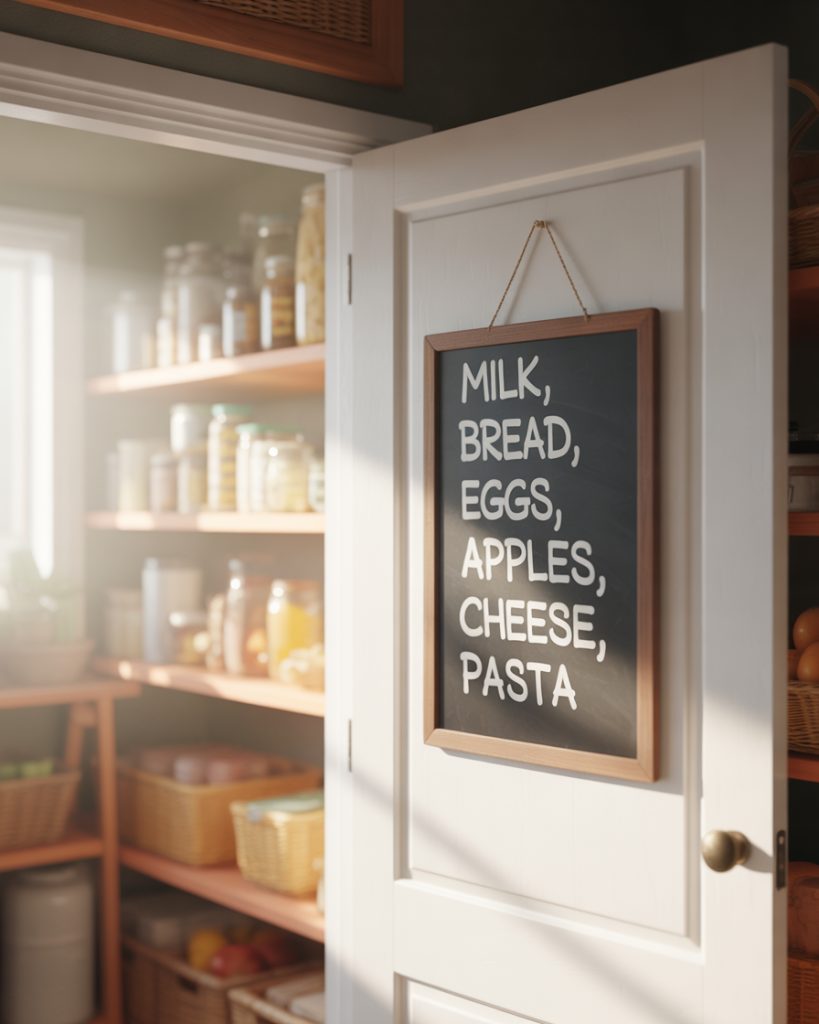
Mounting a small chalkboard on the inside of your pantry door creates a running grocery list that’s always visible when you’re putting things away or checking stock. Jot down items as they run low, and you’ll never forget what you need at the store. This low-tech solution works in any pantry setup, from spacious walk in designs to small closet conversions, and it’s especially helpful for households with multiple people who might not communicate about what’s empty. The chalkboard can also double as a meal plan or recipe note space.
Practical insight: placing the chalkboard inside the door keeps it out of sight for a cleaner look, but it’s right there when you need it. Some families add a small cup or hook for chalk and an eraser, turning it into a complete system. It’s analog, yes, but there’s something satisfying about physically crossing off items or adding to the list as you go about your day.
20. Wire Baskets on Sliding Tracks
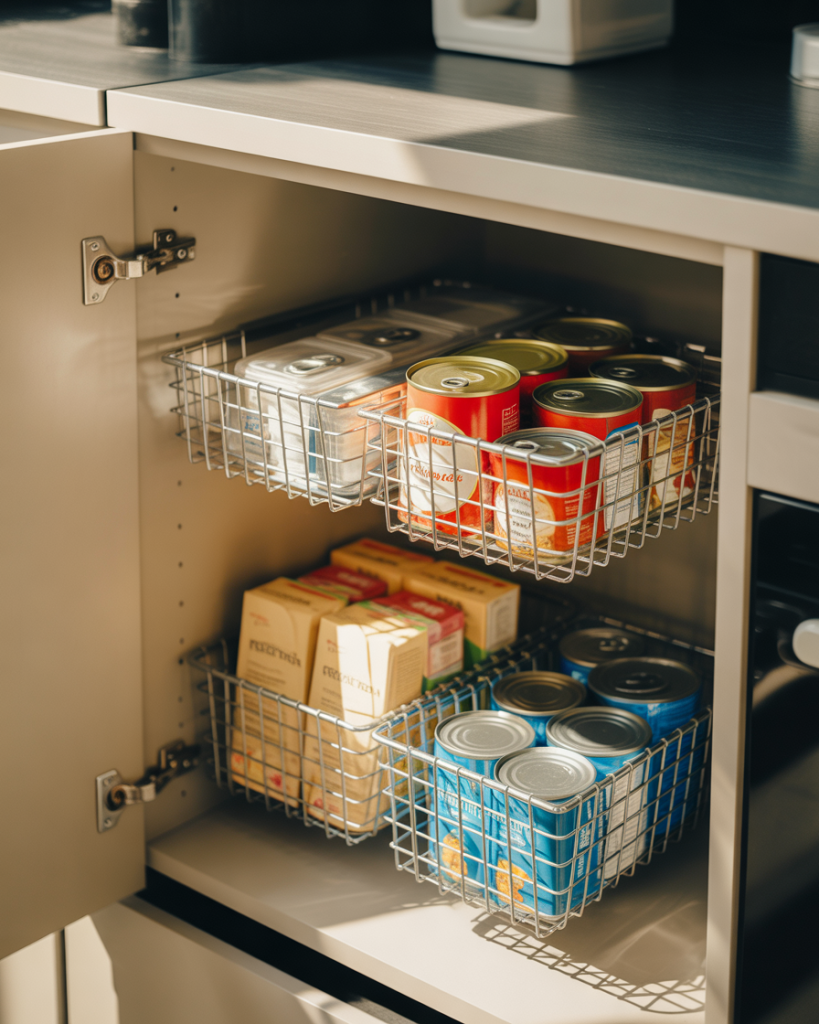
Wire baskets mounted on sliding tracks turn a standard cabinet or closet into a pull-out pantry that maximizes depth without sacrificing accessibility. Each basket slides out independently, so you’re not digging through layers of items to reach the back. This system is popular in kitchen renovations and works equally well in small spaces where every cubic inch needs to earn its keep. The open design lets you see what’s inside at a glance, which reduces the chance of forgotten or expired items.
Expert-style commentary: this type of system is often recommended for corner cabinets or spaces where traditional shelves would waste potential. The baskets can be customized to different heights, so you might have shallow ones for spices and deeper ones for bulkier items. If you’re planning a kitchen remodel or pantry overhaul, sliding wire baskets are worth considering for their blend of durability and ease of use.
21. Aesthetic Labels with Matching Fonts

If you’re drawn to a cohesive, aesthetic look, investing time in matching labels can elevate your pantry from functional to magazine-worthy. Choose a single font and label style—whether that’s printed vinyl, handwritten calligraphy, or minimalist type—and apply it across all your containers. This attention to detail resonates with Pinterest users who value visual harmony, and it makes your space feel intentional. Consistency in labeling also speeds up quick meals prep because everything is easy to read and identify.
Real homeowner behavior: many people start with just a few labels and gradually expand as they find containers or bins they like. There’s no rush to do it all at once. In fact, taking your time lets you test different systems and figure out what actually works for your household before committing to a full set of expensive labels or containers.
22. Quick-Access Breakfast Station

Grouping all your breakfast essentials—cereal, oatmeal, coffee, tea, honey—into one designated zone streamlines your morning routine and makes quick meals feel effortless. This approach works in any pantry size, from a single shelf in a small closet to a dedicated section in a walk in setup. Kids can grab their own breakfast, and adults don’t have to hunt for the coffee filters before they’ve had their first cup. It’s a small organizational win that pays off every single day.
Where it works best: busy households where mornings are chaotic and everyone’s on a different schedule. Having everything in one spot cuts down on decision fatigue and keeps the kitchen from becoming a free-for-all of open cabinets and scattered items. It’s also a kind gesture to guests or family members who might be helping themselves to breakfast—they know exactly where to look.
Conclusion
Whether you’re drawn to the simplicity of clear containers or the warmth of woven baskets, the pantry ideas above offer a range of approaches that blend function with style. The best organization system is the one you’ll actually maintain, so start with the strategies that resonate most with your lifestyle and space. Drop a comment below and let us know which ideas you’re planning to try—we’d love to hear what works in your home.