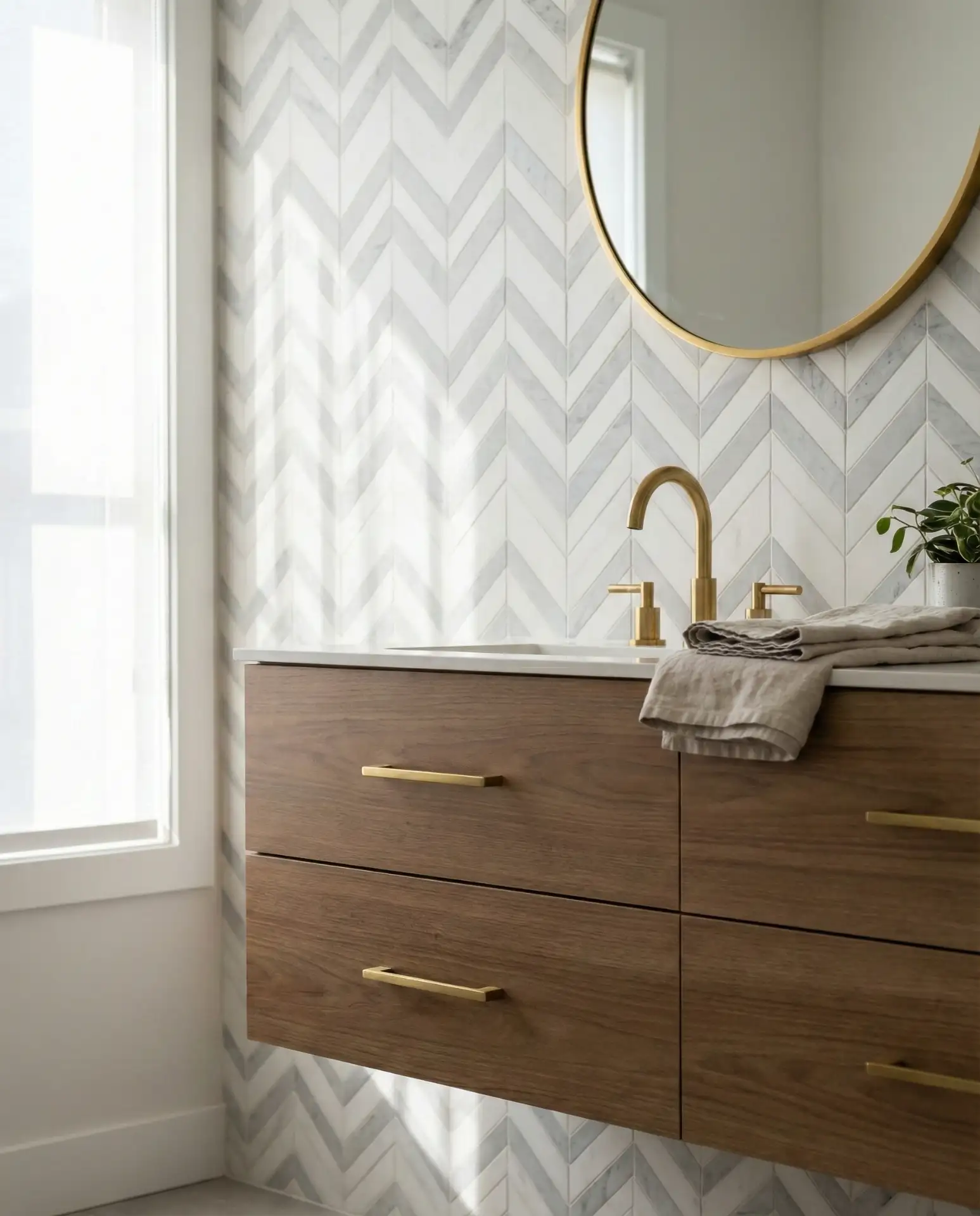
Powder rooms may be small, but they’re mighty when it comes to making a statement in your home. As we move into 2026, these half-baths have become the favorite canvas for bold design experiments—think unexpected color palettes, artisan finishes, and textures that surprise. Americans are turning to Pinterest in droves for inspiration, searching for ways to transform these compact spaces into memorable experiences for guests. Whether you’re working with a tiny closet-sized nook or a more generous footprint, this year’s trends balance personality with practicality, proving that even the smallest room deserves thoughtful design.
1. Moody Black and White Drama
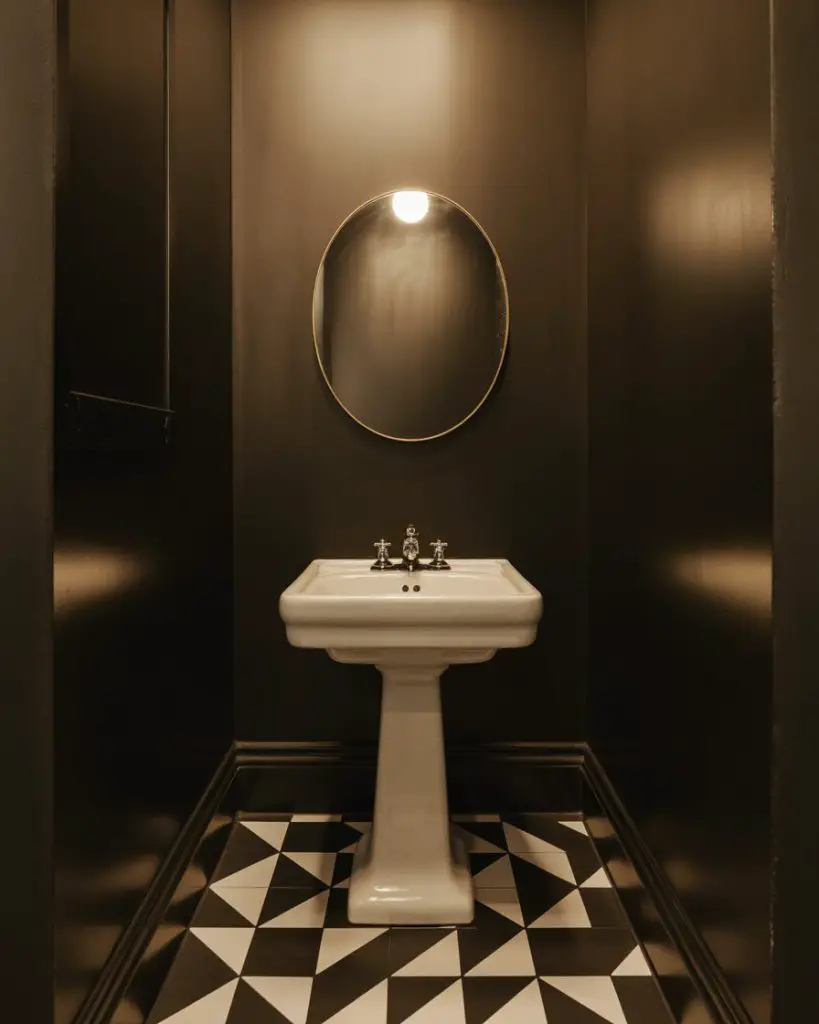
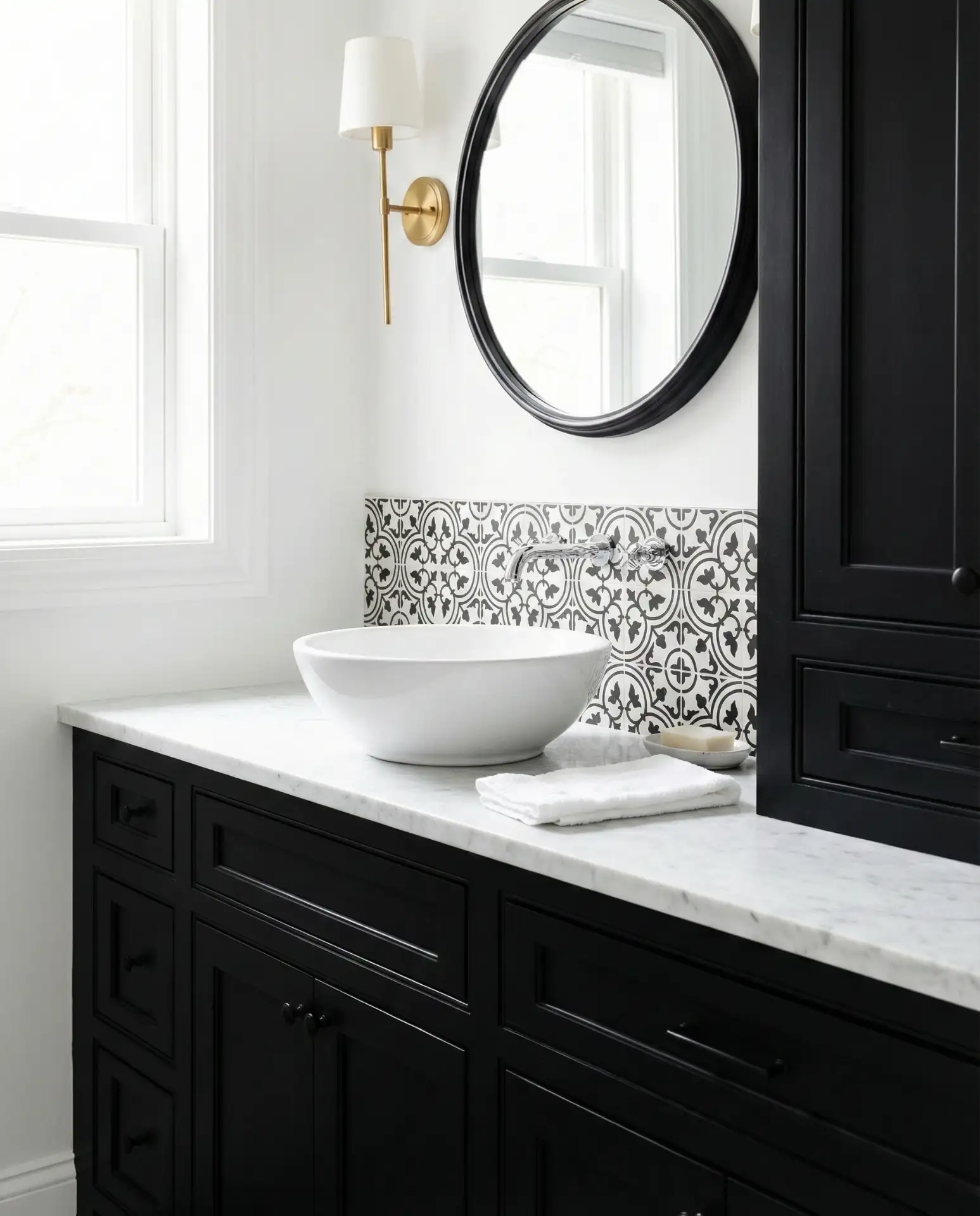
A black and white powder room never goes out of style, but 2026 versions lean into contrast with moody matte black walls paired against crisp white fixtures. This classic combination works especially well in small spaces where you want to create intimacy rather than fight against limited square footage. The high contrast draws the eye upward, making ceilings feel taller while adding a sophisticated edge that feels both timeless and thoroughly modern. 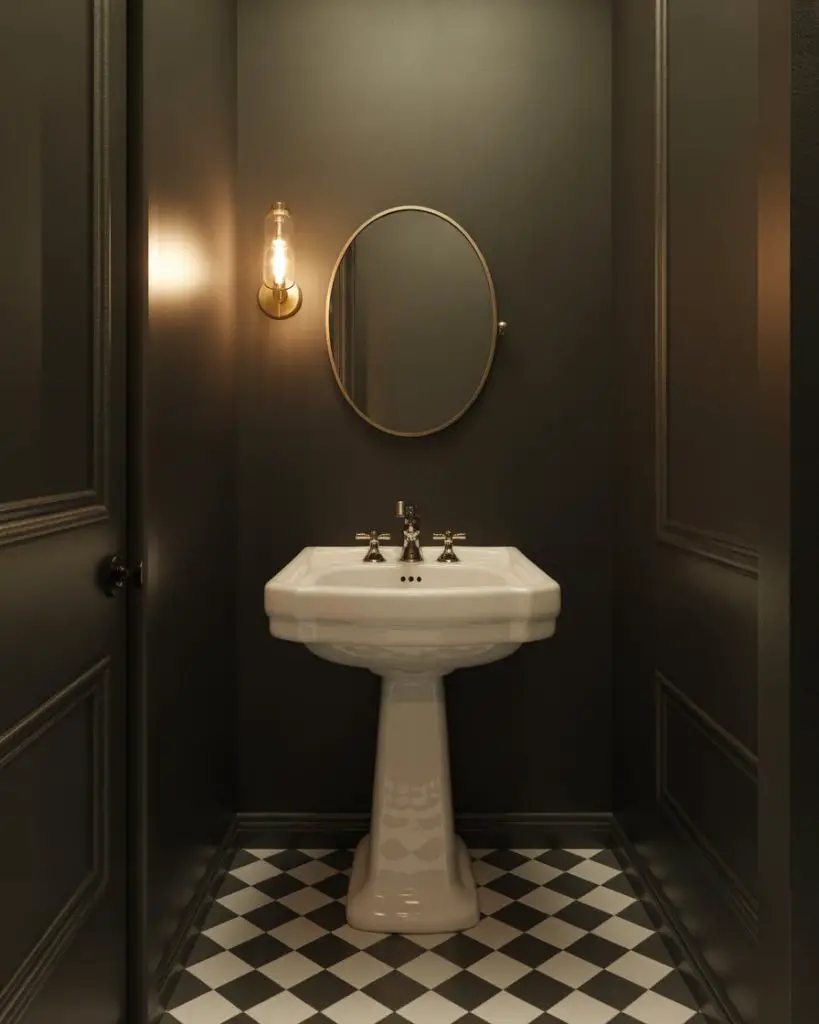
This approach works best in homes with plenty of natural light elsewhere—the drama of a dark powder room becomes a pleasant surprise when you step away from sun-filled living areas. Consider adding a statement mirror with a metallic frame to bounce light around and prevent the space from feeling cave-like. The key is balancing the darkness with reflective surfaces and at least one source of warm, flattering light that makes guests feel good when they catch their reflection.
2. Spa-Inspired Serenity
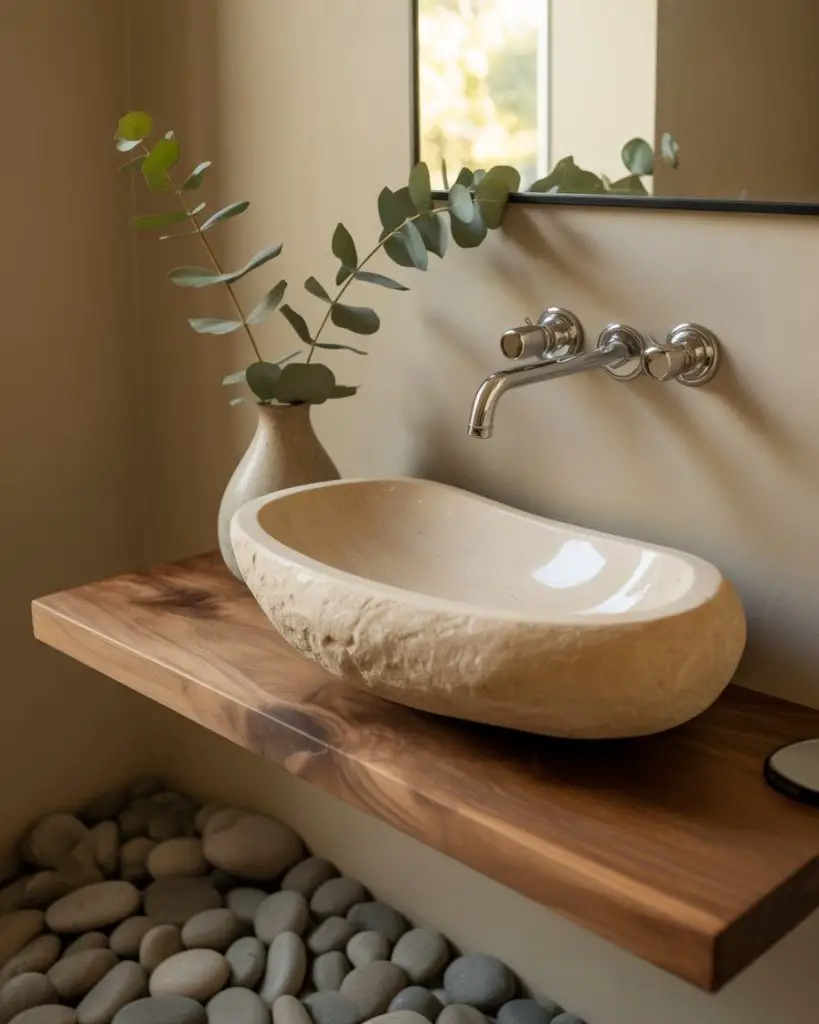
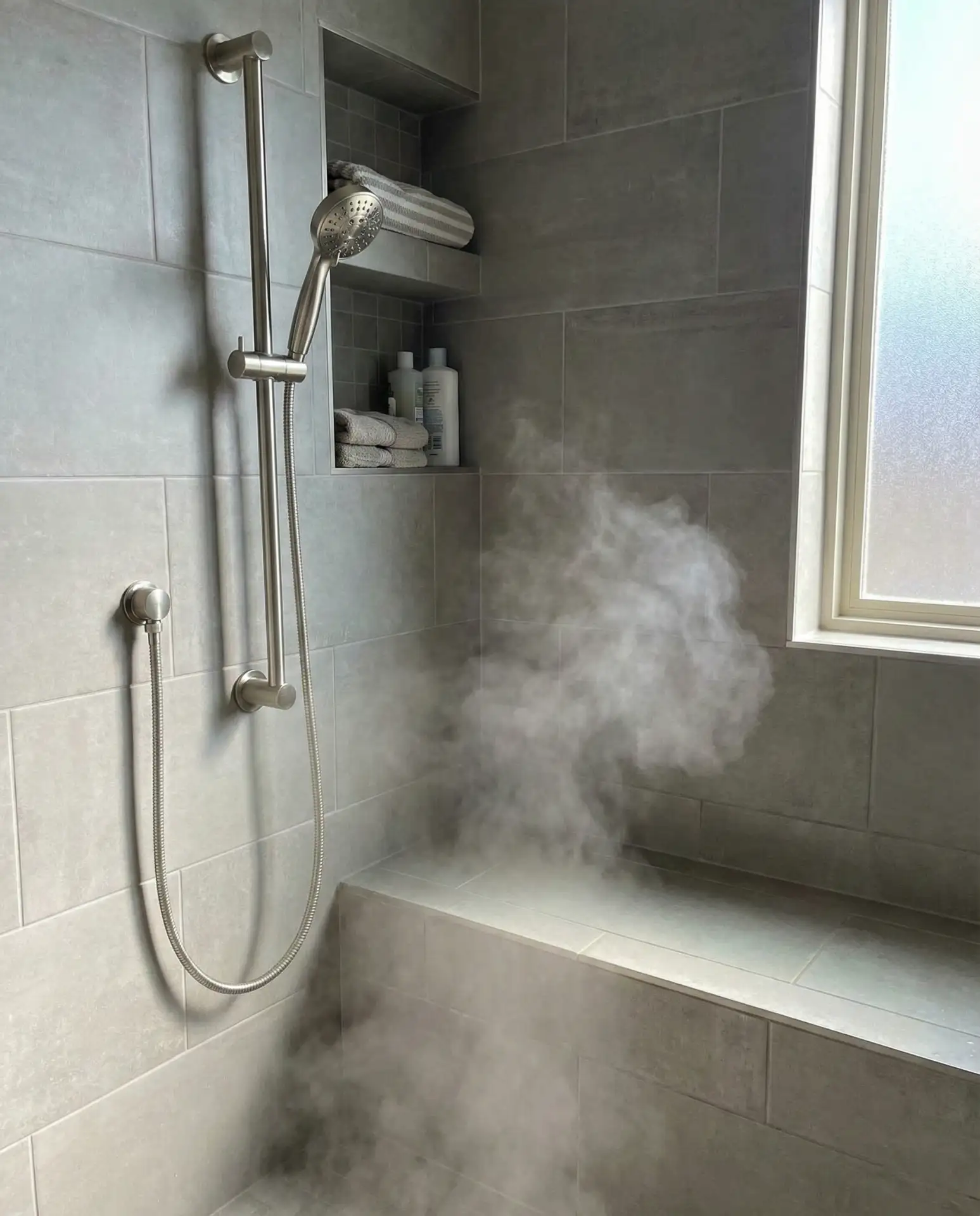
The spa-inspired powder room brings earthy materials and neutral tones into a space designed for calm. Think natural stone vessels, warm wood vanities, and textures that invite touch—this isn’t about clinical minimalism but rather about creating a sensory retreat. These rooms often incorporate elements like pebble flooring underfoot, live plants that thrive in humidity, and that perfect balance of organic materials that make you feel grounded the moment you close the door. 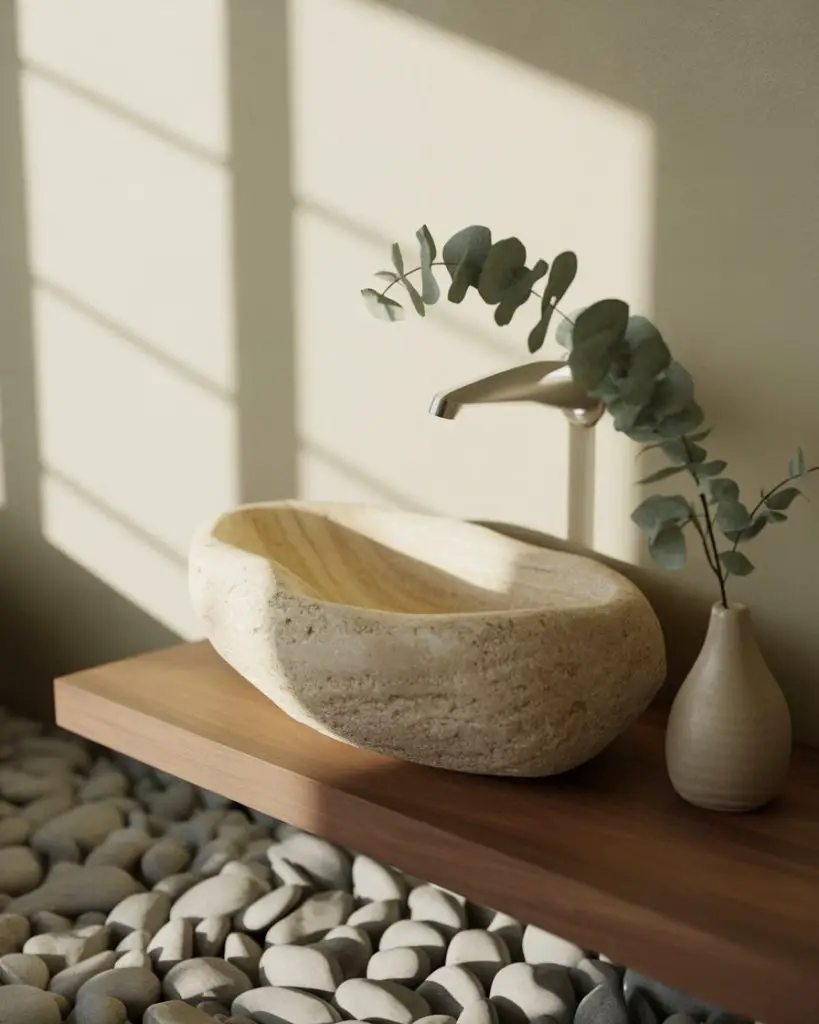
Where this works best is in homes near nature—mountain houses, lakeside retreats, or even suburban homes with wooded views. Many homeowners make the mistake of over-accessorizing these spaces; the spa aesthetic depends on restraint. Keep counters clear except for one beautiful soap dispenser and perhaps a single stem in a bud vase. The less visual clutter, the more the natural materials can breathe and create that coveted resort-at-home feeling.
3. Tiny But Mighty Color Pop
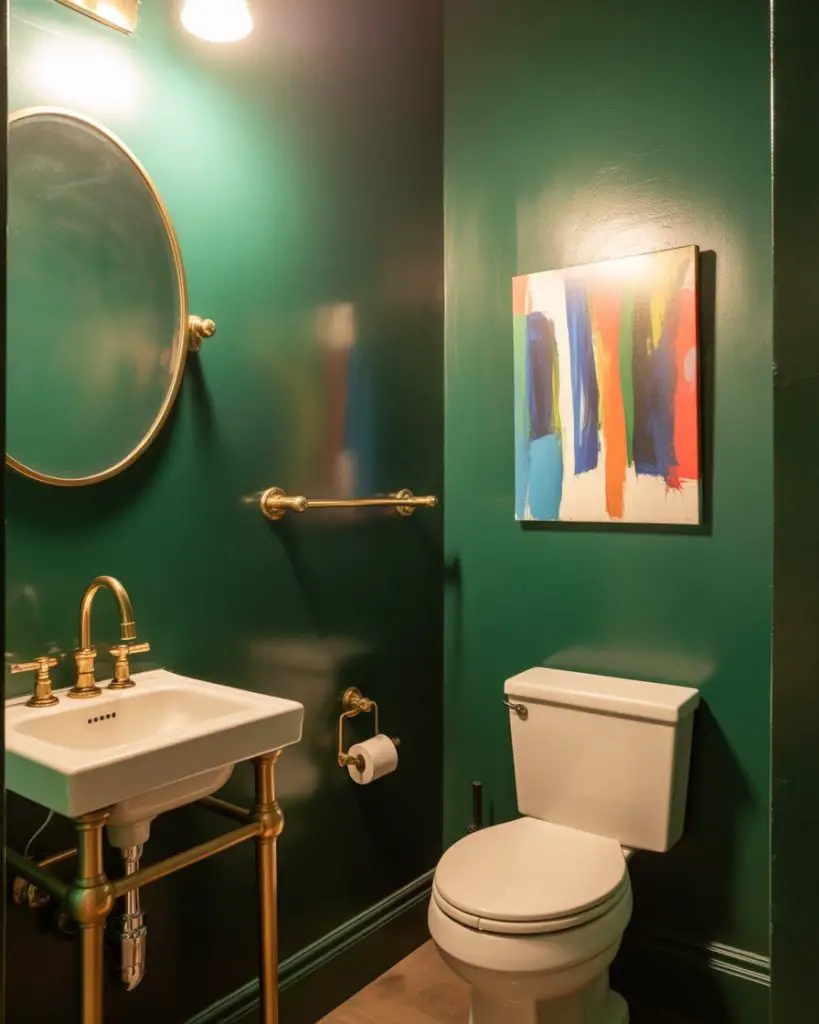
A tiny powder room is the perfect place to experiment with that bold paint color you’d never commit to in a larger space. Fun jewel tones like emerald green, sapphire blue, or even millennial pink work beautifully when you only need one gallon of paint and minimal time commitment. The confined space actually intensifies the color experience, wrapping you in pigment in a way that feels intentional and designed rather than overwhelming. 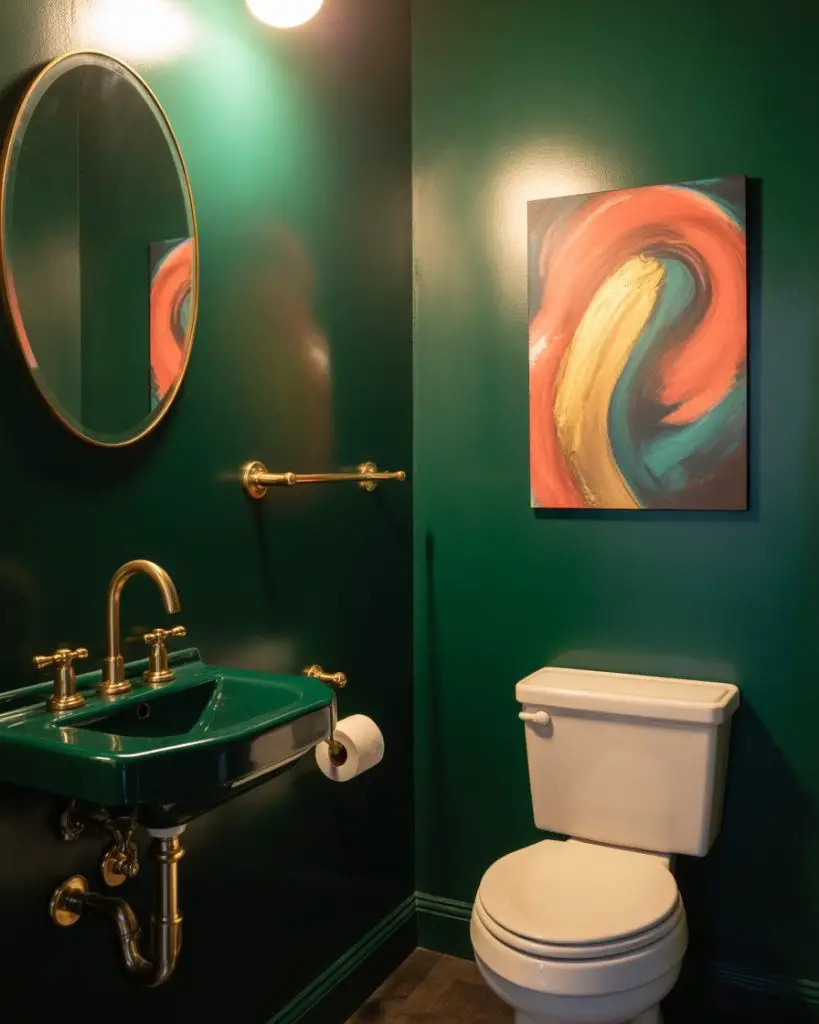
Budget-conscious homeowners love this approach because you’re painting maybe forty square feet of wall space—even premium paint won’t break the bank. A designer friend once told me she tests all her “risky” colors in powder rooms first, and if clients love it, they often extend the palette into adjacent spaces. Just remember to use a semi-gloss or satin finish that can handle the occasional splash and wipes down easily without showing every fingerprint.
4. Coastal Calm with Organic Textures
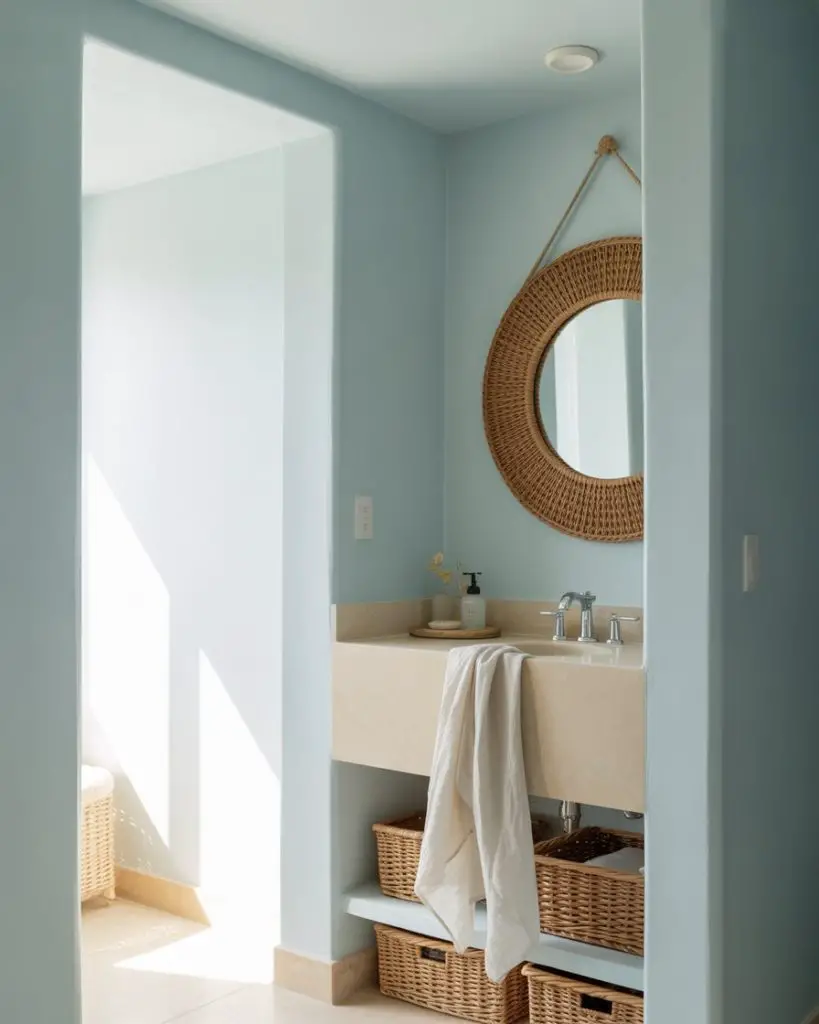
The coastal powder room has evolved beyond nautical clichés into something more sophisticated and organic modern. We’re seeing soft blues and sandy neutral tones paired with natural materials—rattan mirrors, driftwood-inspired shelving, and handmade ceramic sinks that feel artisan rather than mass-produced. This aesthetic captures the relaxed elegance of seaside living without a single anchor or rope in sight. 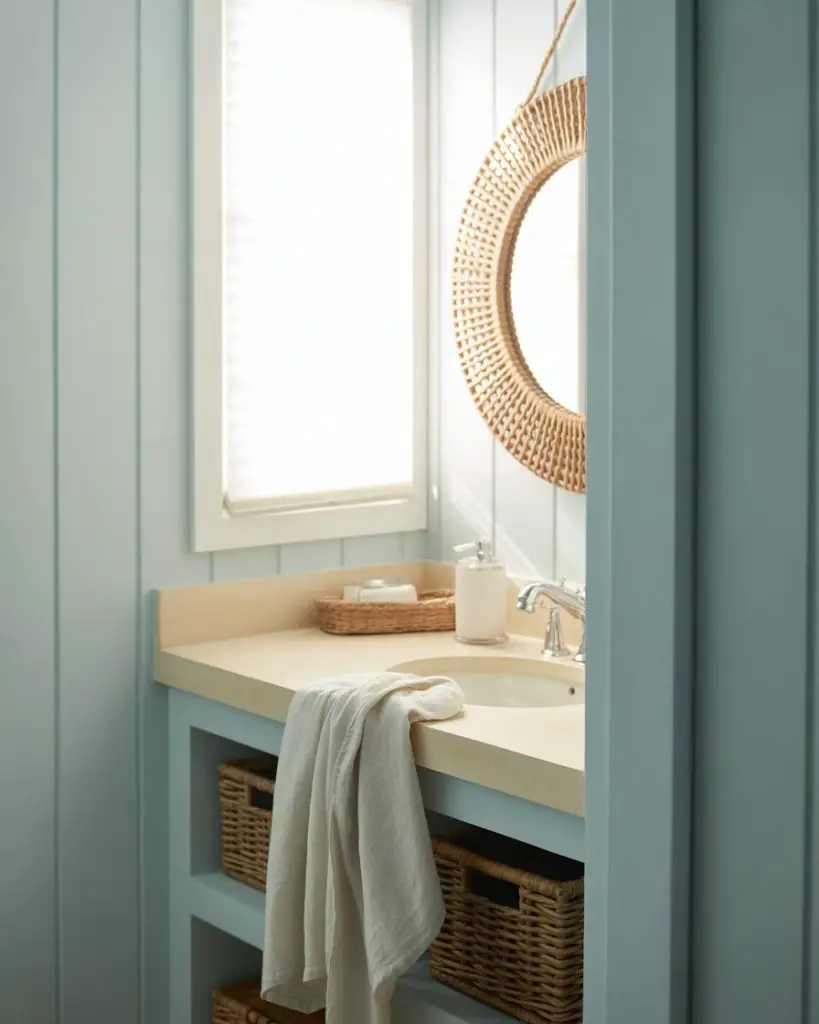
This works exceptionally well in beach communities and waterfront properties, but suburban homeowners have embraced it as an escape-to-the-coast fantasy. The practical insight here is that coastal doesn’t mean cold—layer in warm wood tones and creamy whites to prevent the space from feeling stark. Real homeowners report that guests consistently comment on these rooms feeling “calm” and “happy,” which is exactly what you want in a space designed for brief but frequent visits.
5. Pedestal Sink Elegance
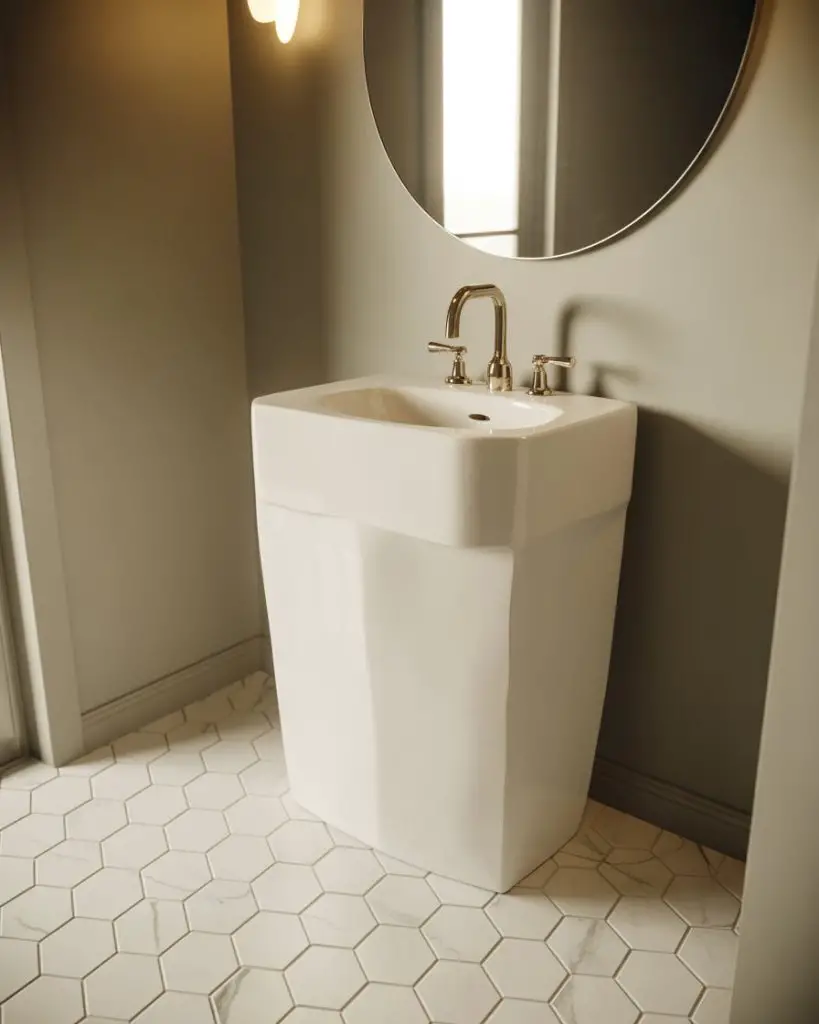
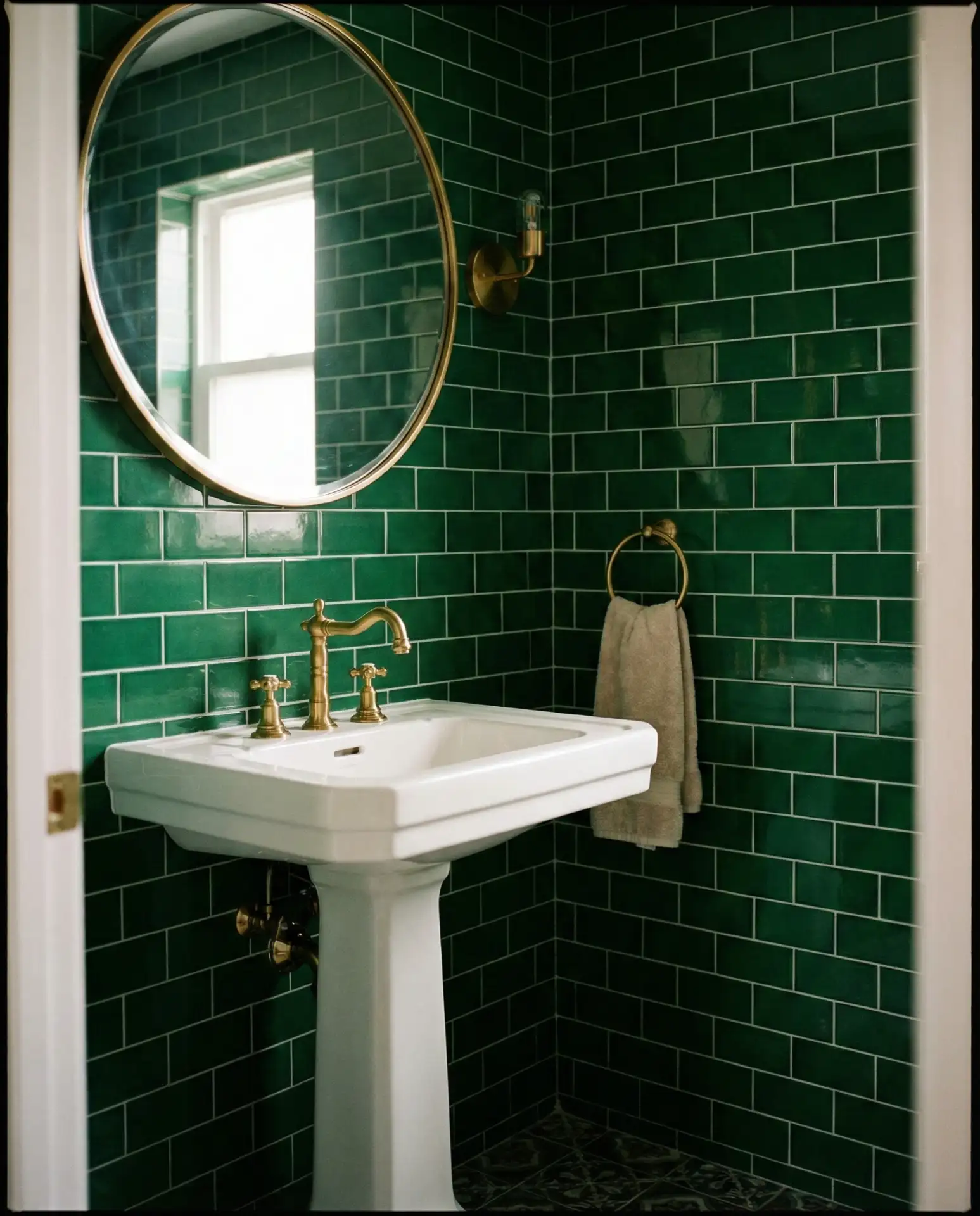
The pedestal sink is having a renaissance, particularly in elegant tiny powder rooms where floor space is at a premium. Modern luxury versions come in sculptural shapes that function as art pieces, with smooth curves and unexpected proportions that elevate the humble sink into something gallery-worthy. This choice creates visual lightness—without a bulky vanity, even a cramped powder room can feel surprisingly open and breathable. 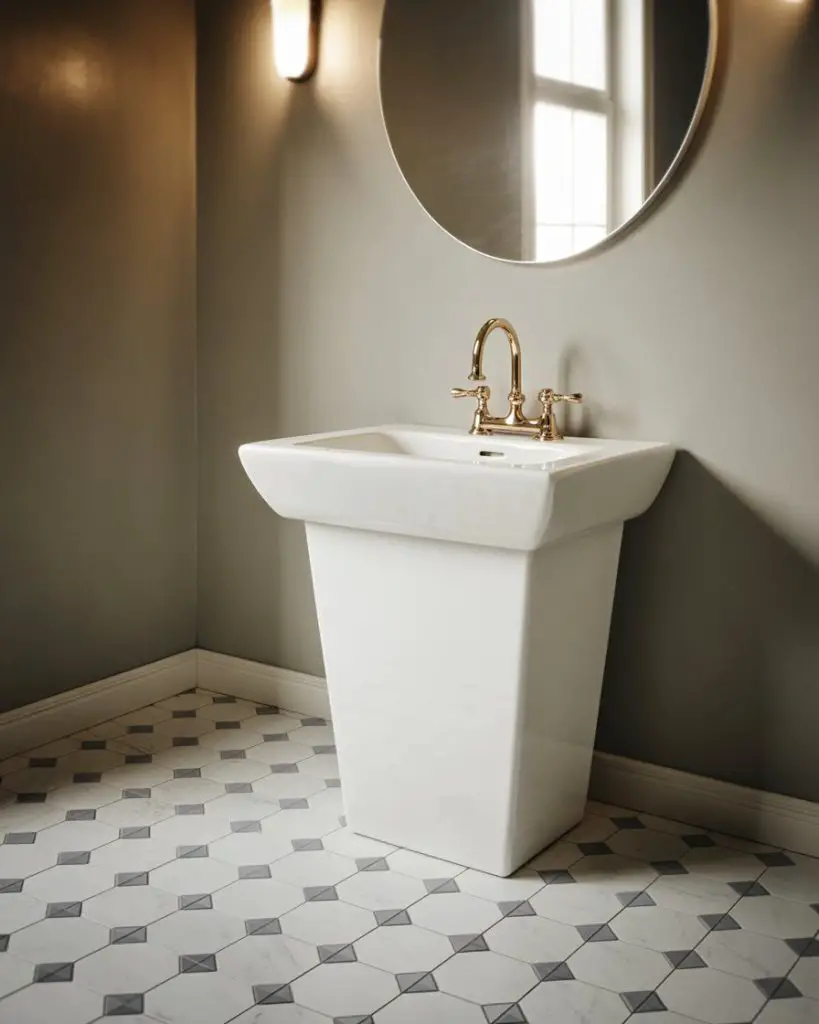
The common mistake is forgetting about storage—pedestal sinks offer zero counter space, so you’ll need creative solutions. Wall-mounted shelves, a small medicine cabinet, or a slim tower in the corner can hold necessities without cluttering sightlines. In older American homes with original pedestal sinks, homeowners are restoring rather than replacing them, appreciating the craftsmanship and proportions that modern reproductions often lack. It’s a choice that honors both form and function when executed thoughtfully.
6. Japandi Minimalism Meets Warmth
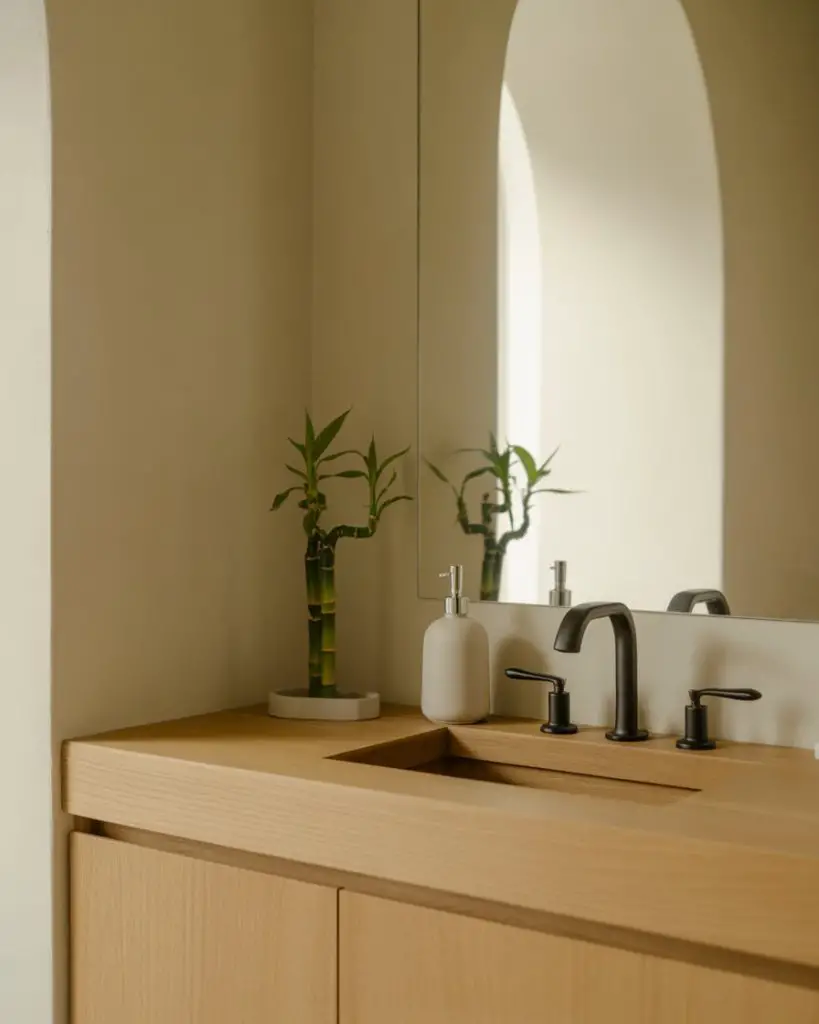
The Japandi powder room fuses Japanese minimalism with Scandinavian coziness, creating a space that’s both pared-down and inviting. Clean lines dominate, but earthy materials like oak, bamboo, and clay keep things from feeling sterile. This aesthetic prizes negative space as much as the objects within it—every element serves a purpose, and nothing feels arbitrary or excessive. 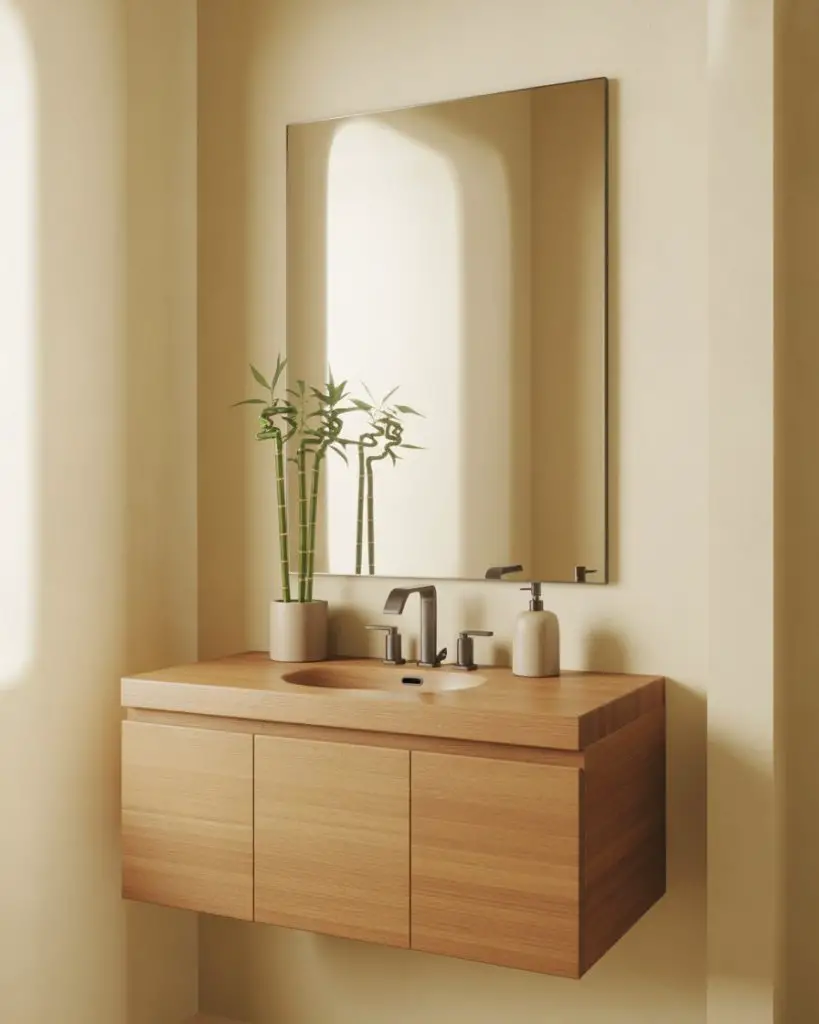
Where this works best is in urban apartments and modern homes where the architecture already leans minimal. A designer colleague notes that Americans initially worry Japandi will feel “too empty,” but once they live with it, they rarely want to add more—the breathing room becomes addictive. Stick to a palette of three materials maximum, and let the quality of those materials speak for themselves rather than layering pattern upon pattern.
7. Mediterranean Romance in Small Spaces
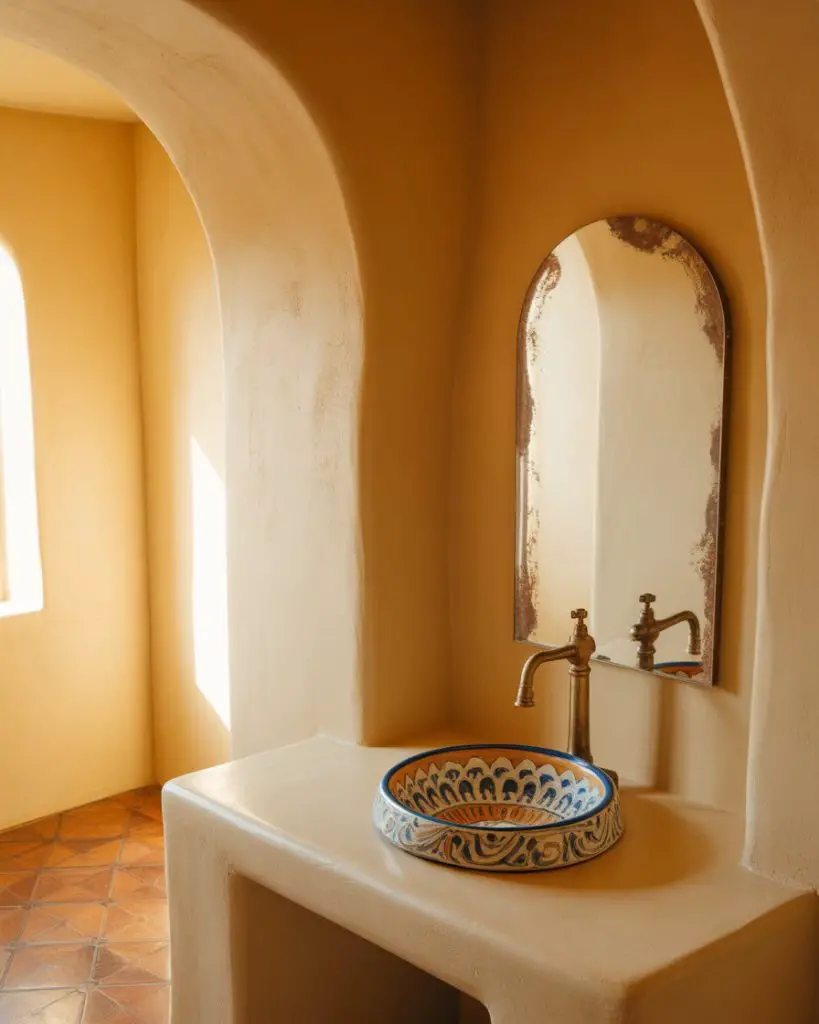
A Mediterranean powder room transports you to sun-drenched villas with terra-cotta tiles, textured plaster walls, and colorful hand-painted ceramics. These spaces embrace imperfection—slightly uneven walls, artisan tiles with subtle variations, and vintage-inspired fixtures that look like they’ve been there for decades. The vibe is warm, lived-in, and utterly charming, even when executed in a small American suburban half-bath. 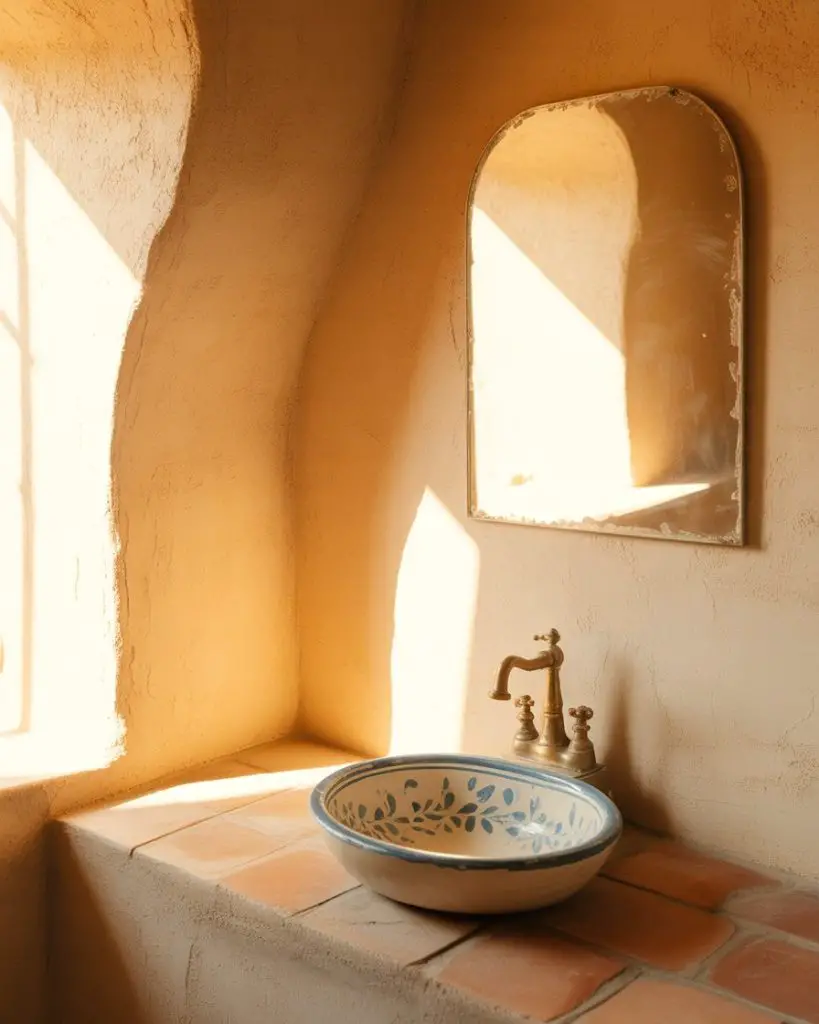
This aesthetic has exploded in popularity across warmer American regions—think Southern California, Arizona, and Florida—where the climate supports the fantasy. The budget angle here is interesting: while authentic imported tiles can be pricey, domestic artisans are producing beautiful alternatives at mid-range prices. Focus your splurge on one statement piece like a hand-painted sink, then balance it with simpler elements elsewhere to keep costs reasonable while maintaining that curated, collected-over-time feeling.
8. Dark and Dramatic Basement Beauty
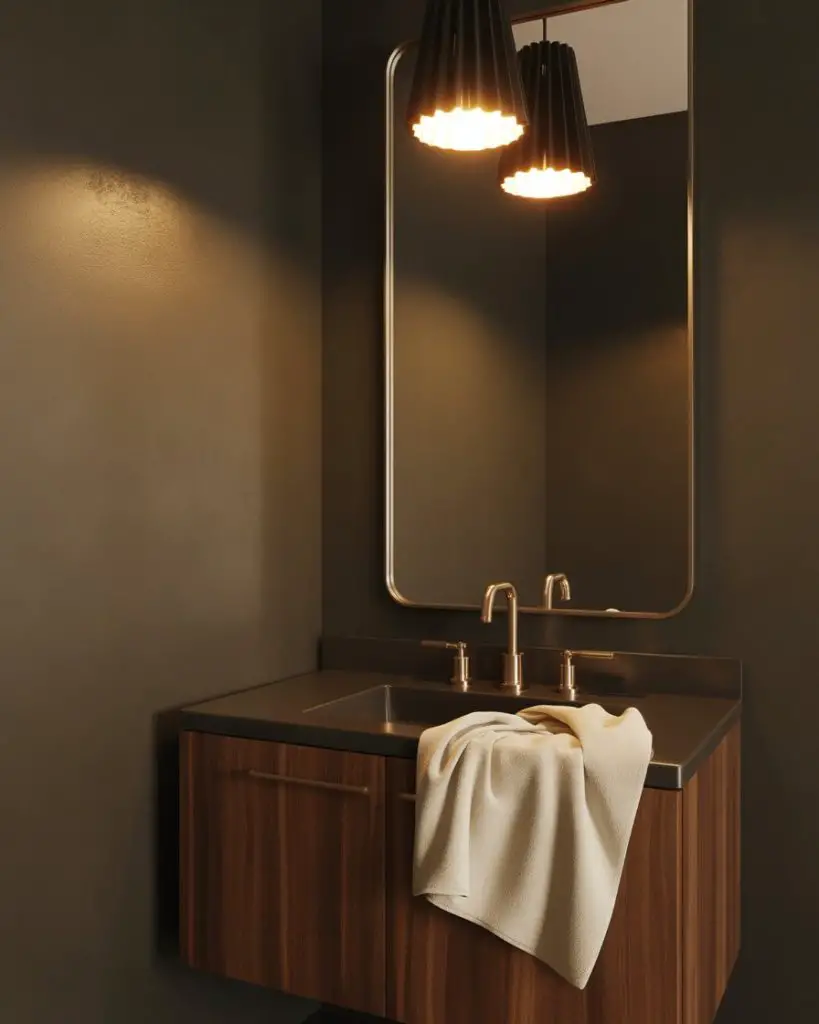
The basement powder room often gets relegated to afterthought status, but dark walls and dramatic lighting can turn this below-grade space into a destination. Without natural light to preserve, you’re free to go moody with deep charcoal, navy, or even black walls that create an intimate, lounge-like atmosphere. Add layered lighting—a statement pendant, sconces, and perhaps LED strips under floating elements—and suddenly your basement bath rivals any upstairs space. 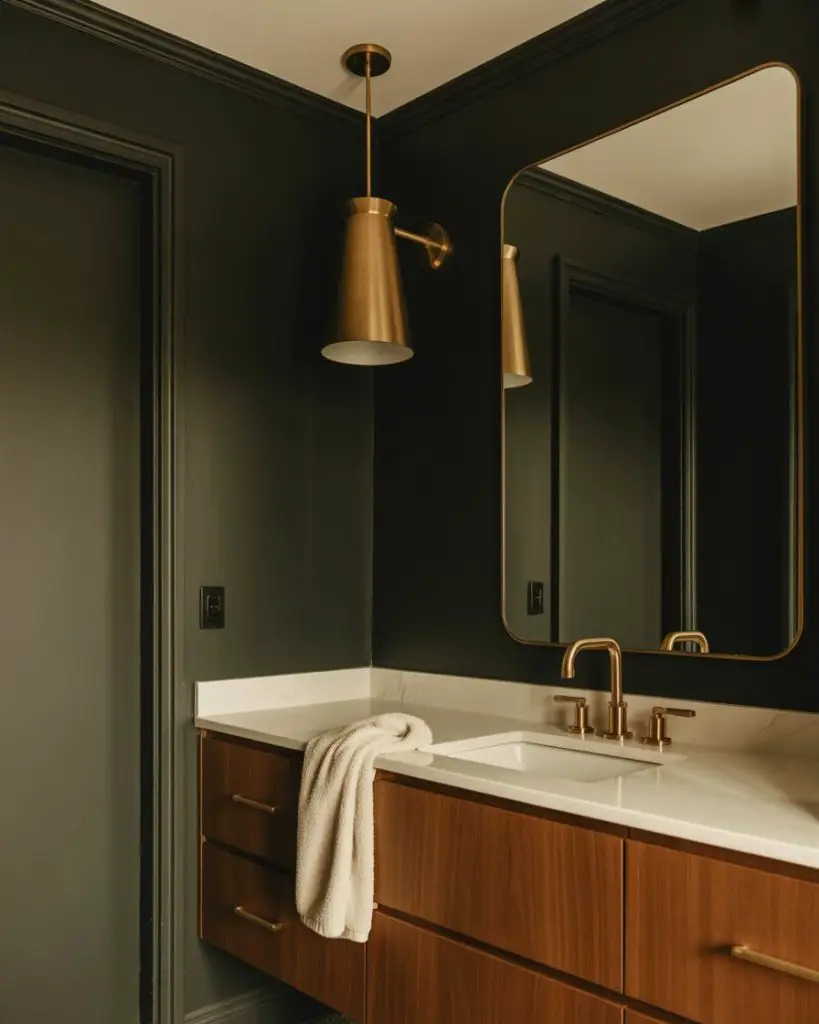
Real homeowner behavior shows that people are increasingly finishing basements as entertaining spaces, which elevates the importance of the powder room down there. A common mistake is inadequate ventilation—basement baths need excellent exhaust fans to prevent moisture issues, so don’t cheap out on mechanical systems even if you’re splurging on finishes. The darkness reads as luxurious rather than dungeon-like when you get the lighting layers right and choose finishes with some sheen to reflect what light you have.
9. French Country Charm Scaled Down
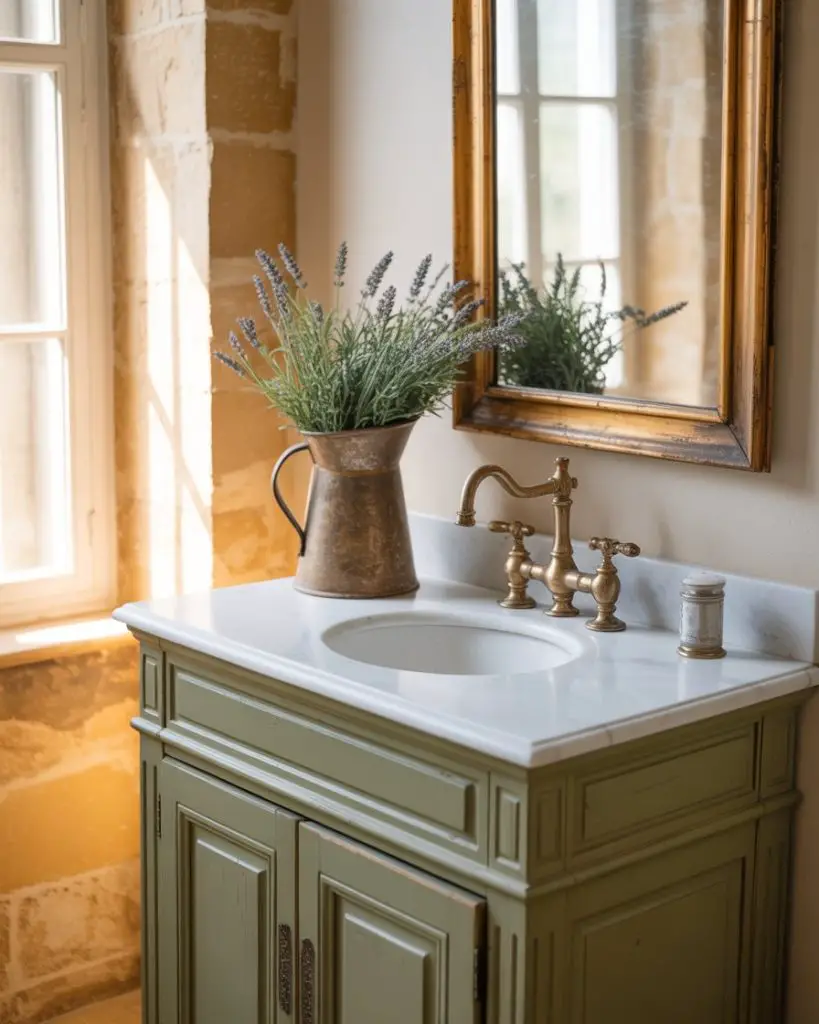
The French country powder room brings Provincial warmth to American homes through curated vintage touches and soft, aged finishes. Think worn limestone floors, a painted vanity with delicate hardware, and perhaps an antique mirror with its original silvering showing through. These spaces feel collected rather than decorated, as if each element has a story and arrived over time rather than all at once from a single retailer. 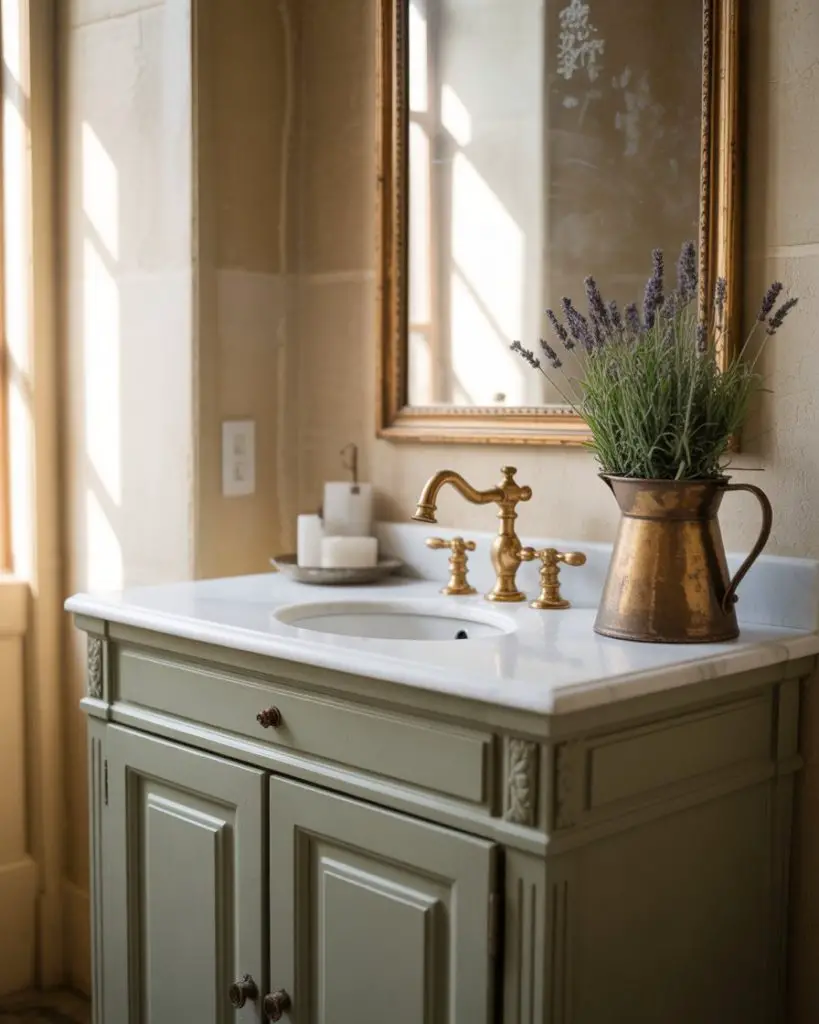
This aesthetic thrives in regions with established antique markets—New England, the Mid-Atlantic, and parts of the South where flea market culture runs deep. The practical insight is that you don’t need everything to be authentically old; mixing one or two genuine vintage pieces with quality reproductions creates the look without the price tag or fragility of a museum installation. Focus on patina and texture over perfection, and the space will reward you with timeless appeal that transcends trend cycles.
10. Modern Farmhouse with Fresh Perspective
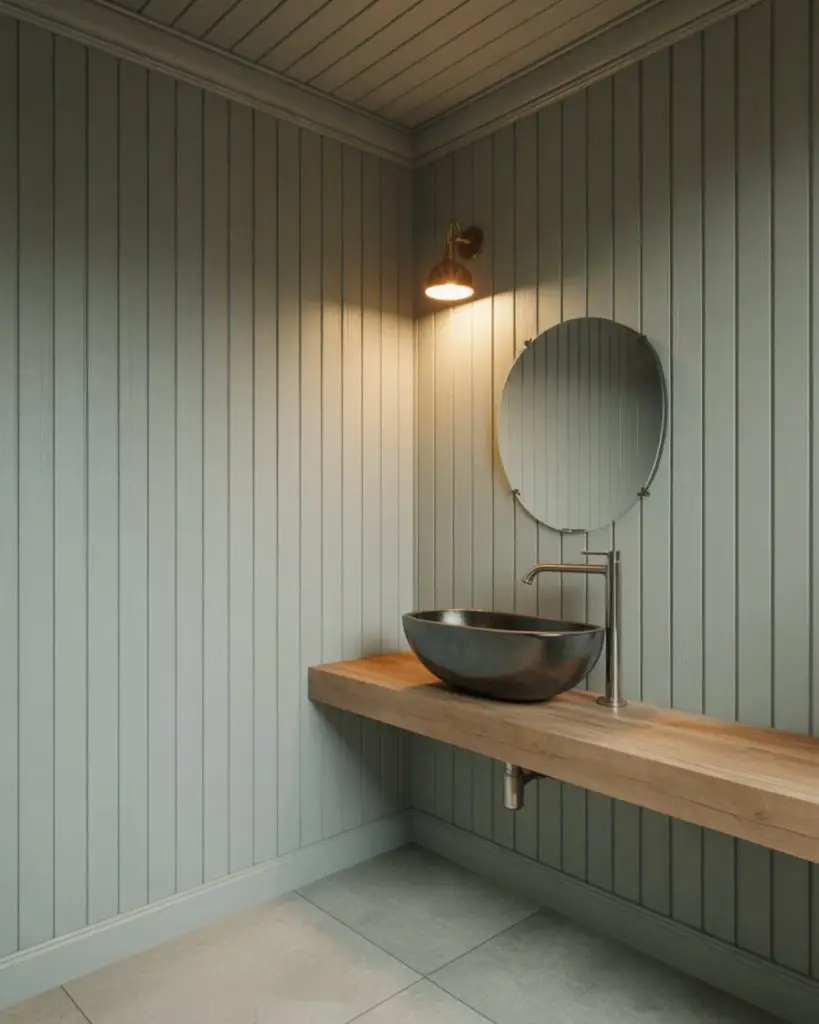
The modern farmhouse powder room has matured beyond shiplap overload into something more refined and regionally adapted. Today’s versions might feature board-and-batten walls painted in unexpected hues, industrial-style lighting with a handmade quality, and a mix of metals that feels curated rather than matched. The key is balancing rustic elements with clean-lined modern touches so the space feels current rather than stuck in a trend that peaked years ago. 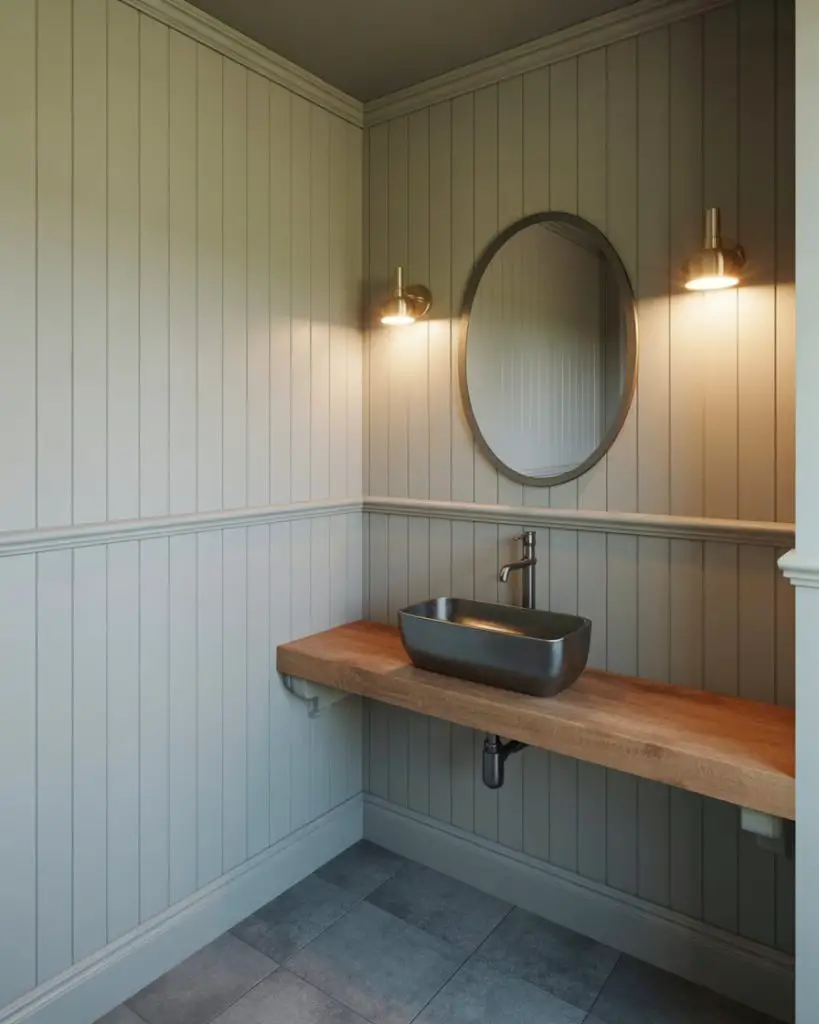
Where this works best is in actual rural and suburban American homes where the farmhouse reference feels honest rather than ironic. A builder I spoke with mentioned that clients are specifically requesting “farmhouse but not Pinterest 2017″—they want the warmth without the clichés. The solution is restraint: choose two or three farmhouse signifiers and let the rest of the design breathe with simpler, more contemporary choices. This prevents the space from feeling like a theme park version of itself.
11. Large Powder Rooms with Room to Breathe
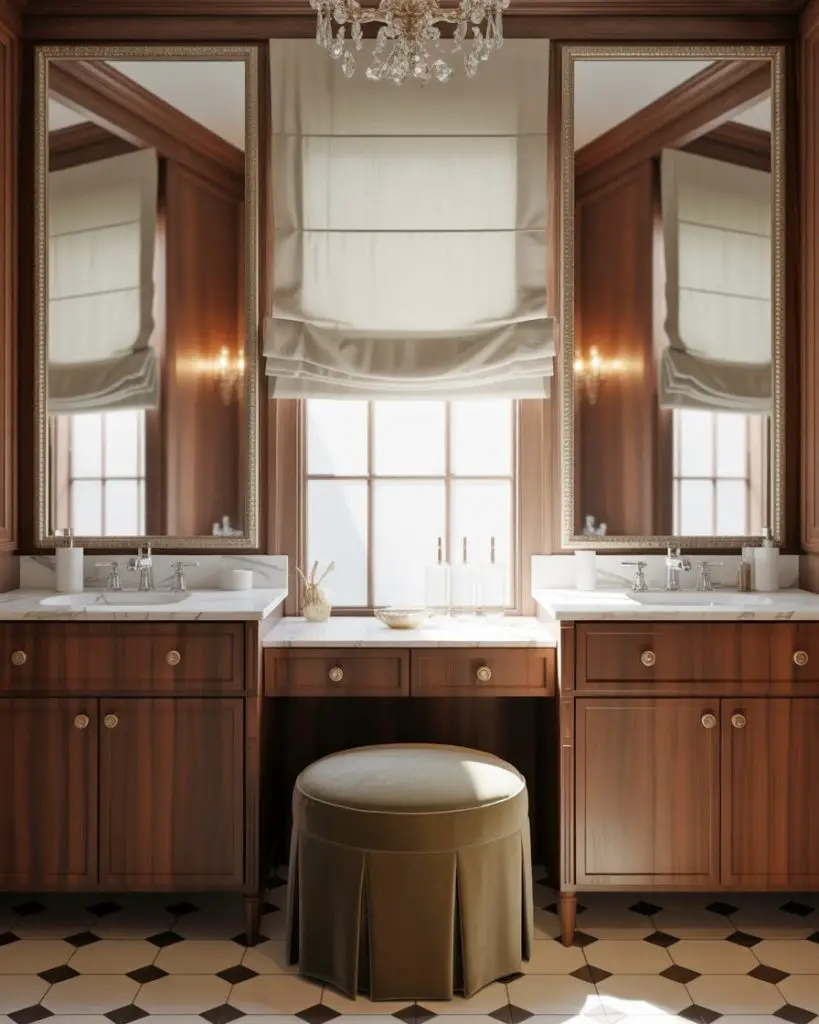
When you’re blessed with a large powder room—perhaps a repurposed space or new construction with generous square footage—the design challenge shifts from maximizing space to filling it meaningfully. These rooms can accommodate furniture-style vanities, seating areas with a small upholstered stool, or even a window with treatments that add softness. The luxury here is space itself, allowing you to create an experience rather than just a functional pit stop. 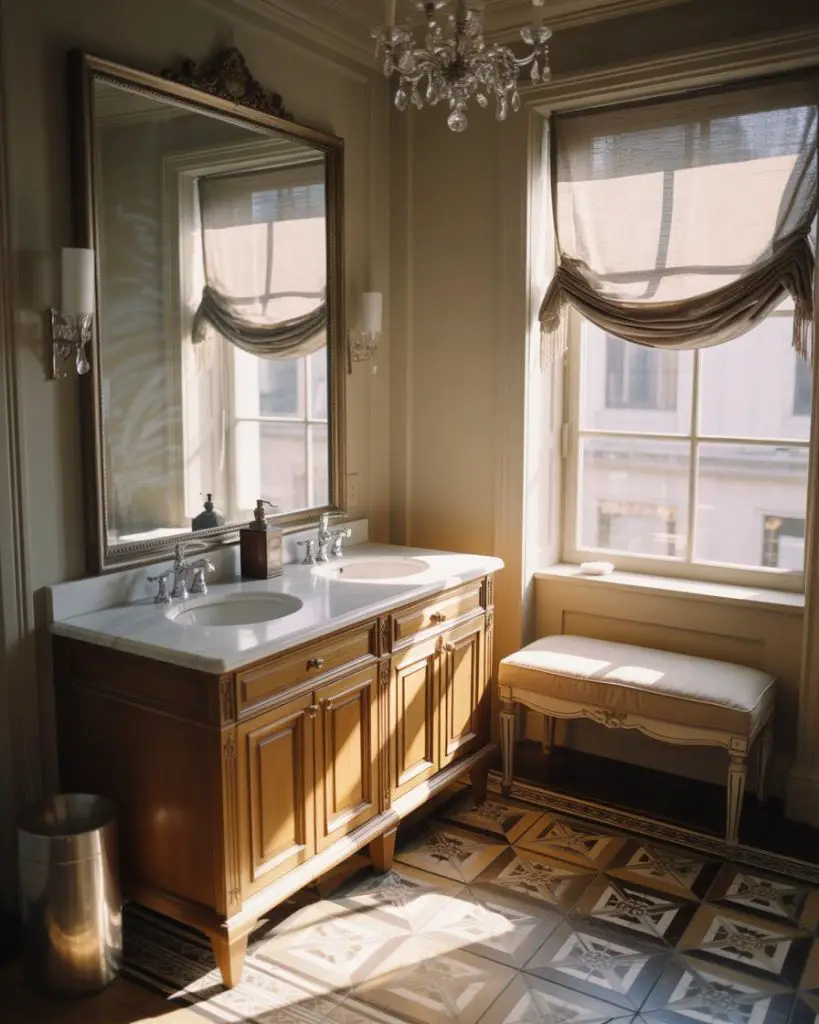
The common mistake in large powder rooms is leaving them too empty—underfurnished spaces feel unfinished rather than minimal. Consider adding elements you’d never fit in a smaller powder room: a small bookshelf with design books, a piece of art scaled to the wall size, or even a small console table opposite the vanity for display. Real homeowners with these spaces report that guests sometimes don’t realize it’s “just” a powder room because it feels so complete and considered, which is the ultimate compliment to your design choices.
12. Colorful Maximalism in Miniature
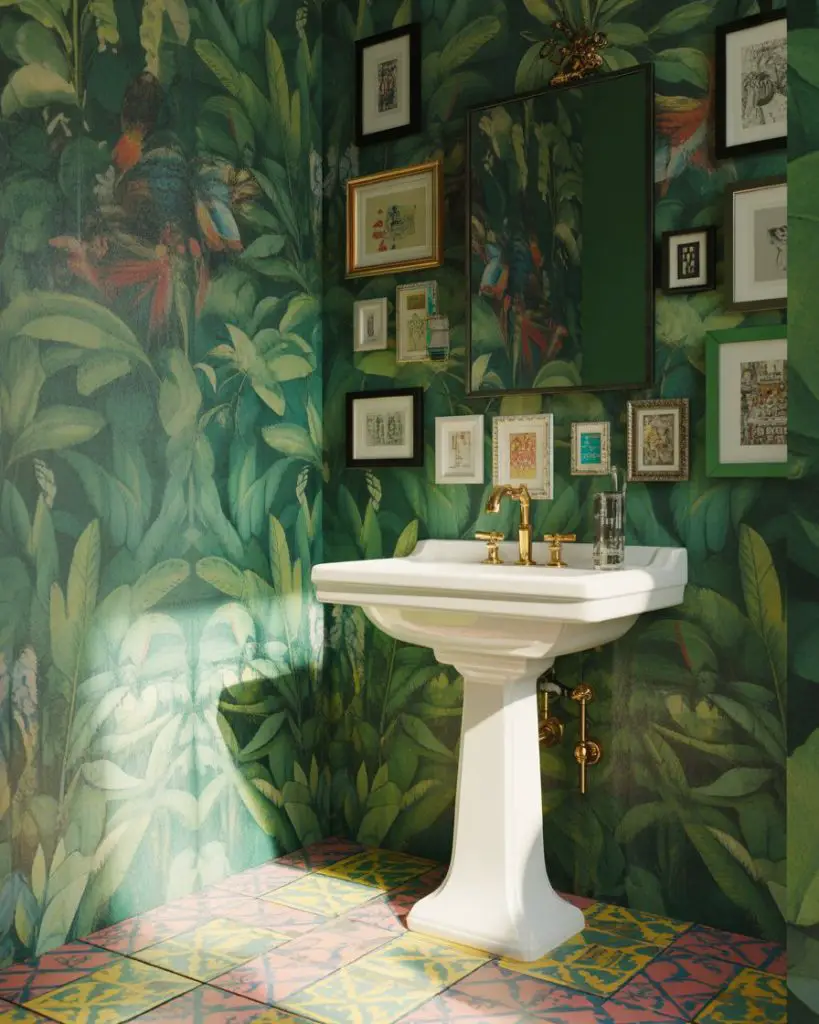
The colorful maximalist powder room is where pattern, color, and personality collide in the best possible way. Wallpaper with bold prints, fun patterned floor tiles, and collections of artwork create a visual feast that’s energizing rather than overwhelming because you’re only in the space for a few minutes at a time. This is your permission slip to go wild with that tropical print, geometric pattern, or vintage-inspired design you’d hesitate to use anywhere else. 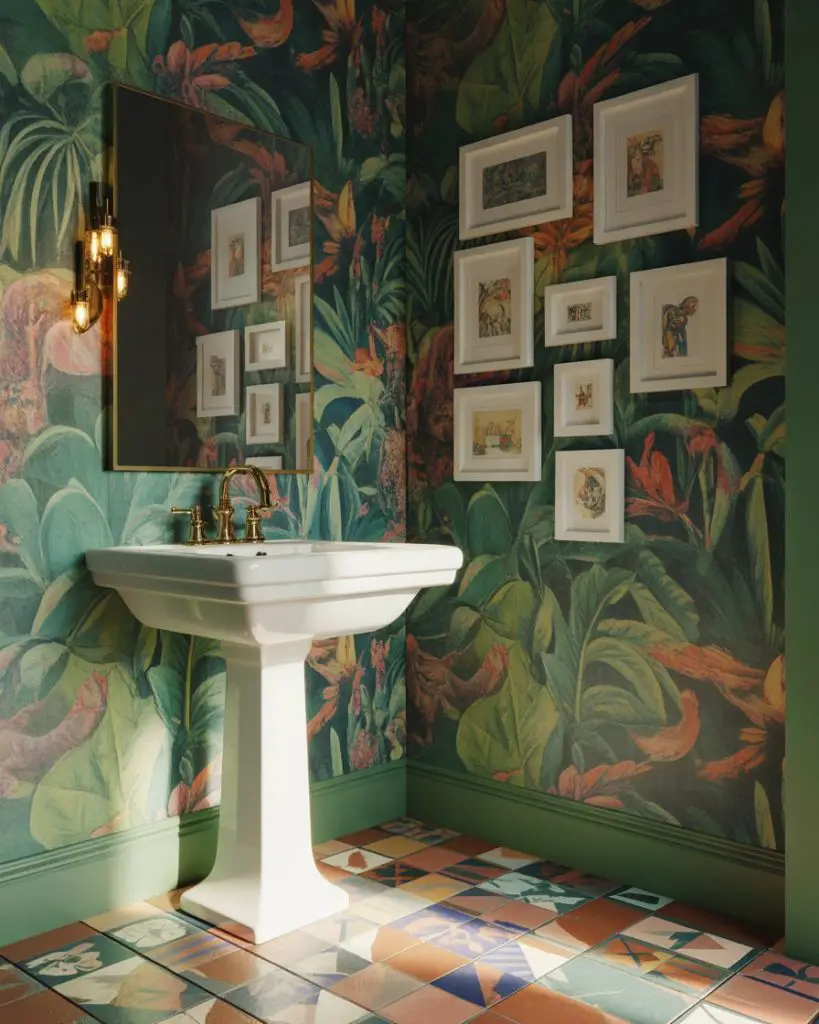
Budget-wise, this approach can actually be economical because you’re covering minimal square footage—one roll of luxury wallpaper might do the whole room, and even expensive decorative tiles are affordable when you only need a few square feet. My neighbor tried this in her powder room after years of playing it safe elsewhere, and now she says it’s her favorite room in the house. The joy is palpable, and guests consistently smile when they emerge, which is worth any design risk you might feel you’re taking.
13. Blue Depths and Serenity
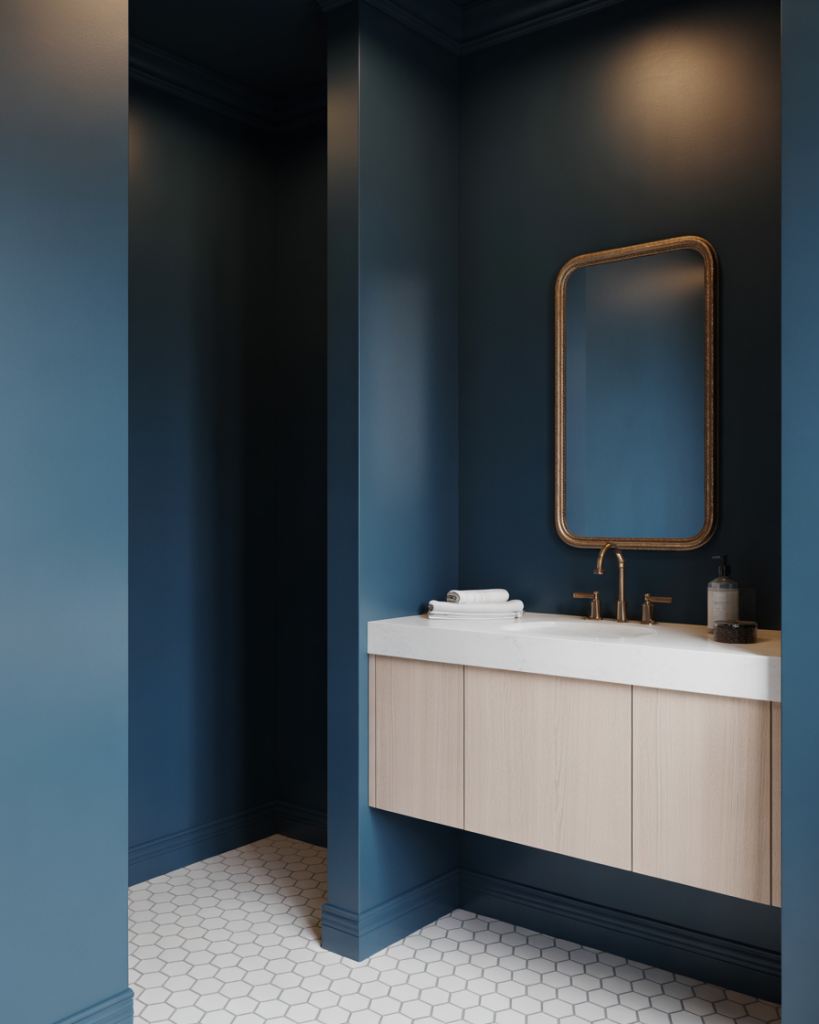
A blue powder room can range from coastal aqua to deep navy, each shade creating a completely different mood. Lighter blues evoke breezy beach houses and feel expansive, while darker teals and navies bring sophistication and intimacy. The beauty of blue is its versatility—it pairs beautifully with warm brass and gold, cool chrome and nickel, natural woods, and stark white, making it incredibly forgiving if you want to change accessories or fixtures down the line. 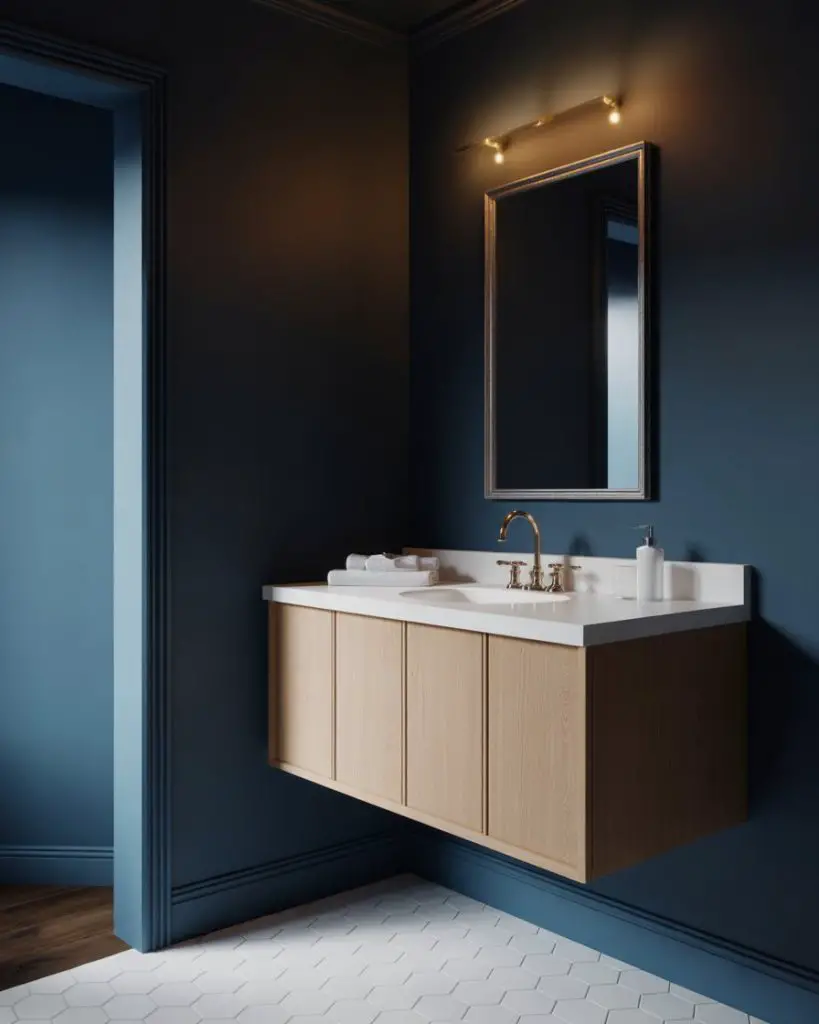
This works particularly well in homes across the Mid-Atlantic and New England where blue has traditional resonance, though West Coast homeowners are embracing it in lighter, beachier iterations. The expert commentary here is about undertones—cool blues can feel stark without warm lighting, while blue with gray undertones provides more flexibility. Test your paint in the actual space at different times of day, because powder rooms often lack windows, and artificial light can shift blue dramatically from your expectations based on the paint chip alone.
14. Green as the New Neutral
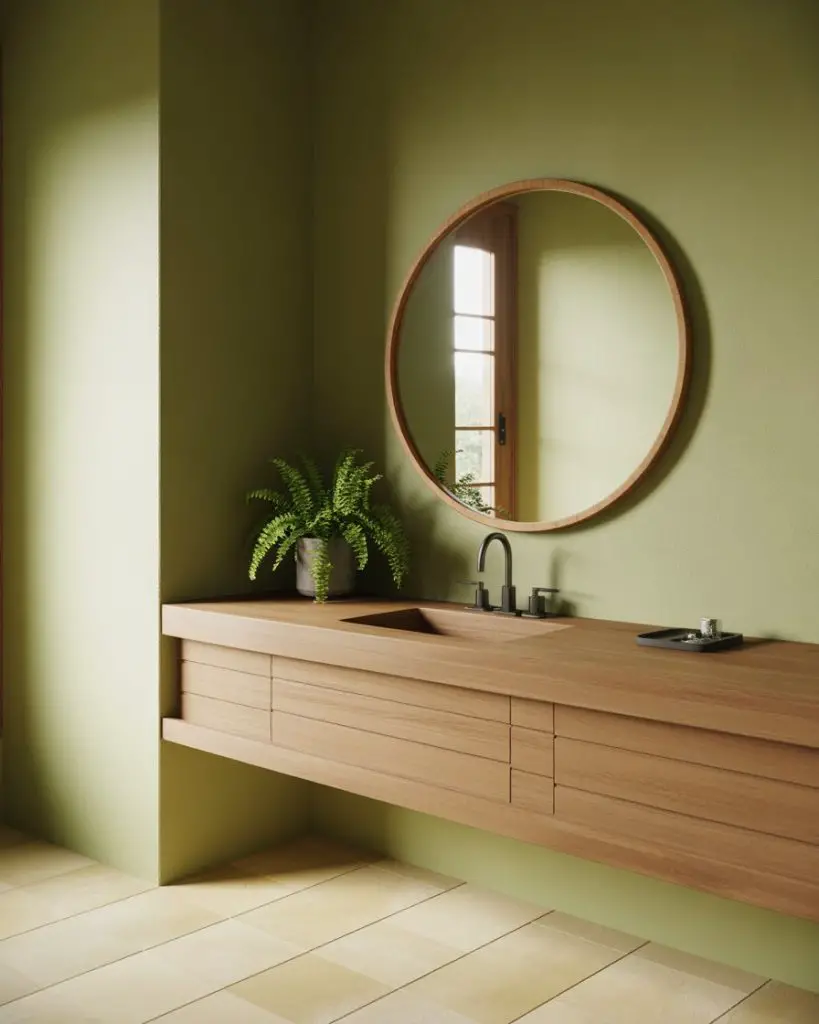
Designers are calling green the new neutral, and powder rooms are proving grounds for this claim. From soft sage to deep forest tones, green creates a connection to nature that feels both grounding and sophisticated. It’s particularly effective in organic modern and earthy schemes where you want color that doesn’t fight with natural materials but enhances them. Green plays beautifully with brass, wood, stone, and even unexpected metallics like copper or black fixtures. 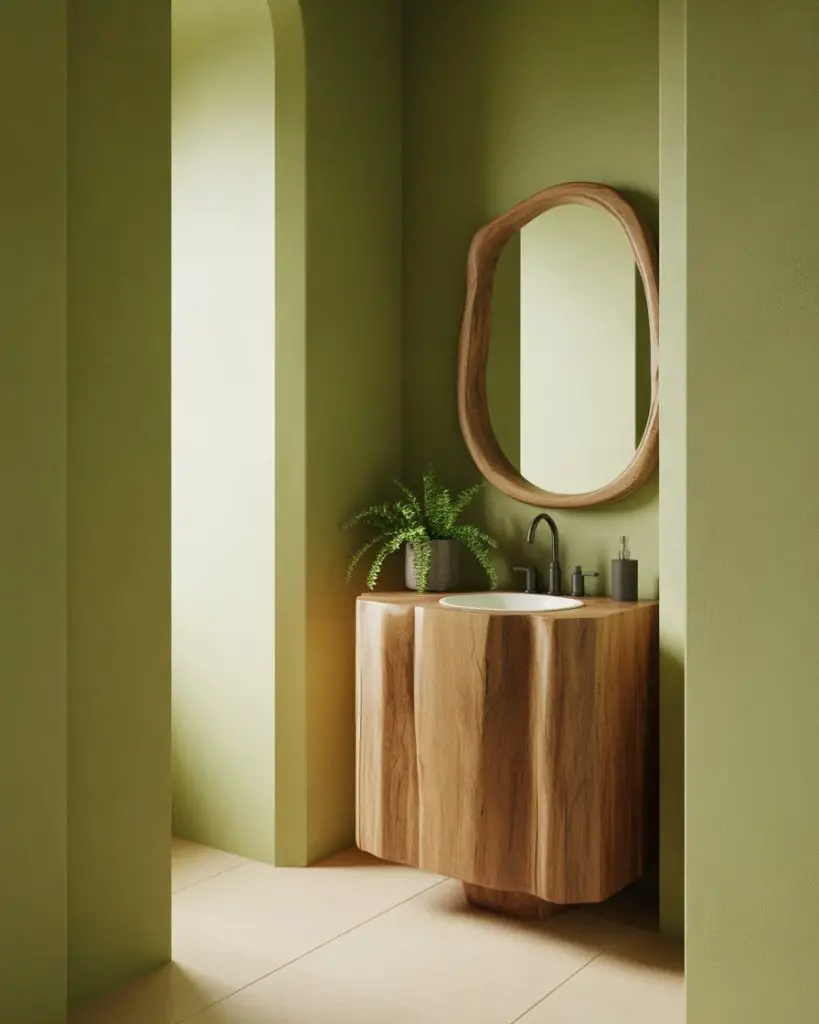
Where this works best is in homes with views of greenery or in urban spaces where occupants crave a nature connection they can’t get outside. A color consultant mentioned that green is uniquely forgiving—it rarely clashes with skin tones in mirror reflections, which matters more than people realize in a space where you’re checking your appearance. Avoid the cheapest paint grades though; green can go muddy or artificially bright with poor pigment quality, so invest in mid-to-high-end paint for the truest, most beautiful color that ages well.
15. Pink Beyond the Obvious
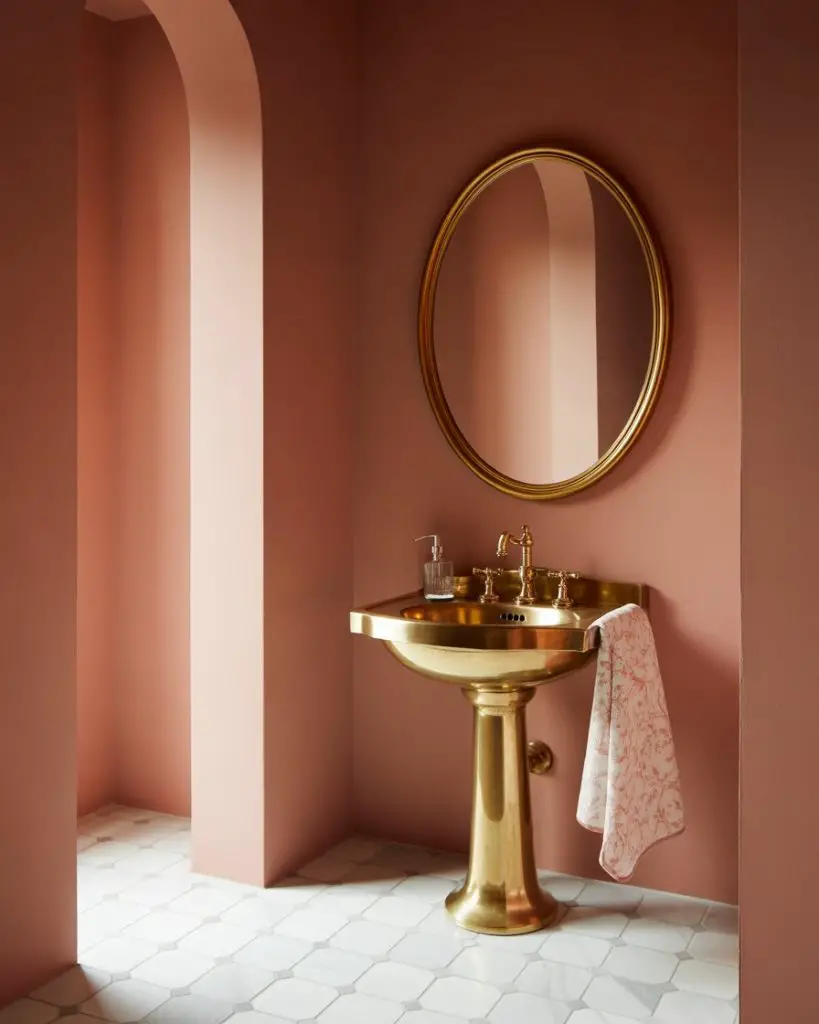
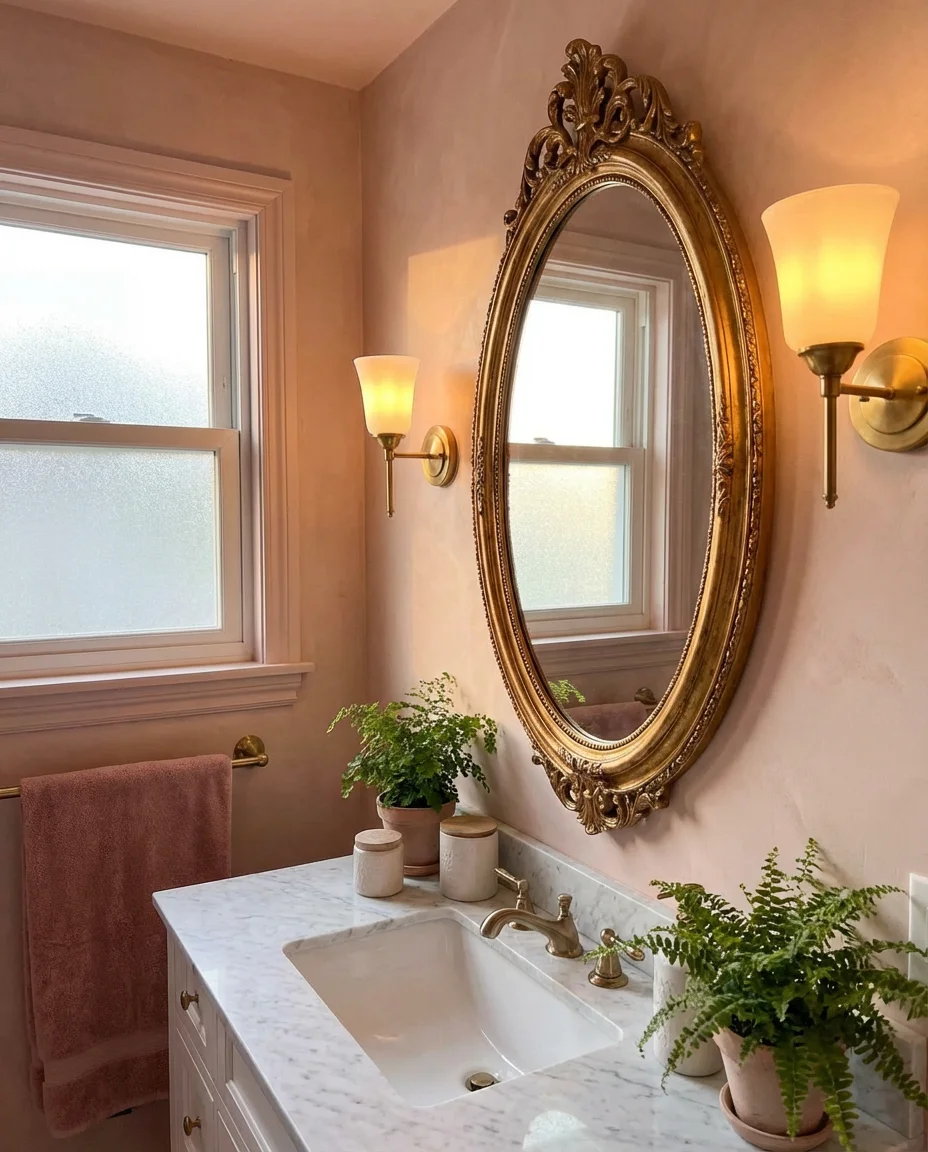
Today’s pink powder rooms have moved far beyond Pepto-Bismol territory into sophisticated territory—think dusty rose, terracotta-tinged blush, or even dramatic deep coral. These evolved pinks work in both modern luxury and classic settings, providing warmth without reading overly feminine or juvenile. Paired with the right materials—marble, brass, dark wood—pink becomes utterly grown-up and seriously chic. 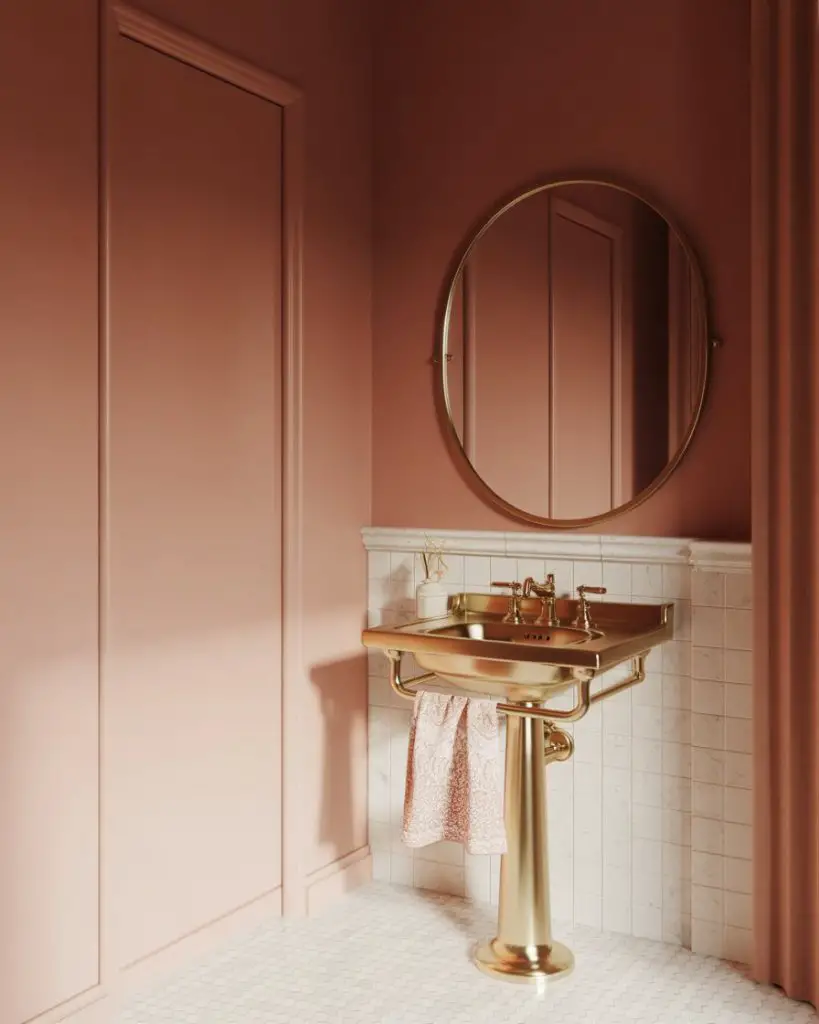
Real homeowner behavior shows that people who choose pink in powder rooms tend to be confident decision-makers who trust their instincts over resale concerns—and interestingly, they’re often proven right when appraisers note that distinctive, well-executed design choices can actually increase perceived value. The trick is balancing the pink with neutrals and letting it be the star rather than competing with multiple bright colors. One pink wall with neutrals elsewhere, or pink throughout with neutral fixtures, both work beautifully depending on your risk tolerance and the room’s proportions.
16. Classic Elegance That Endures
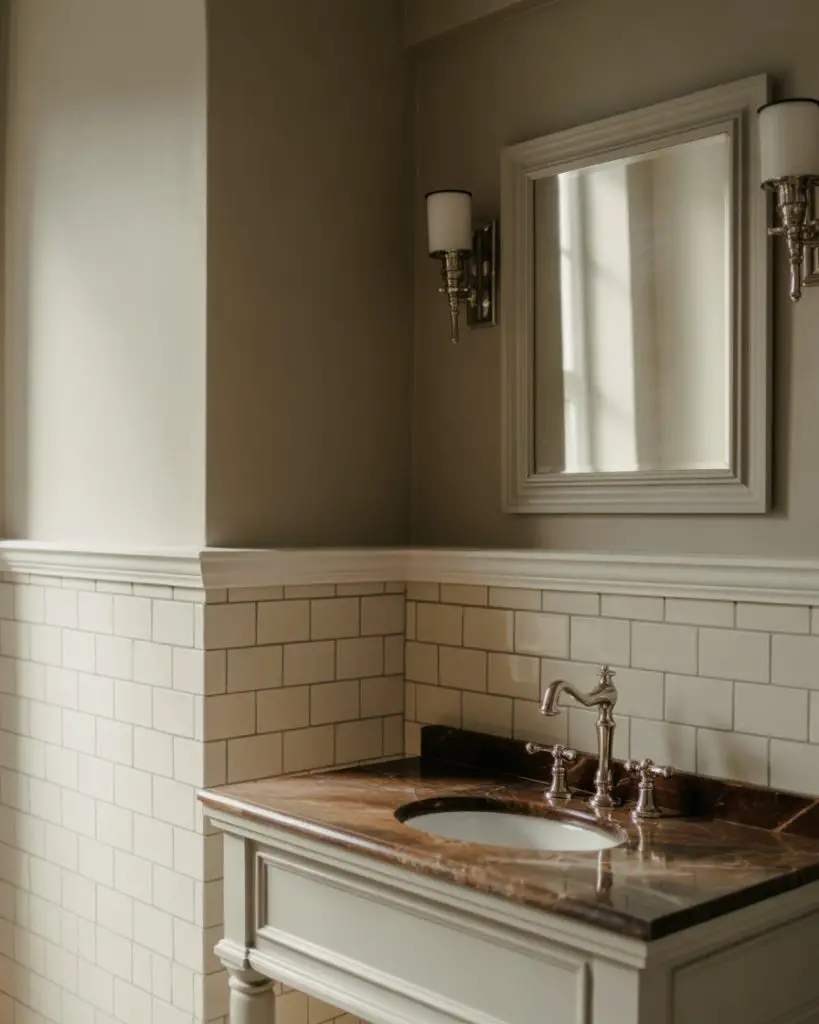
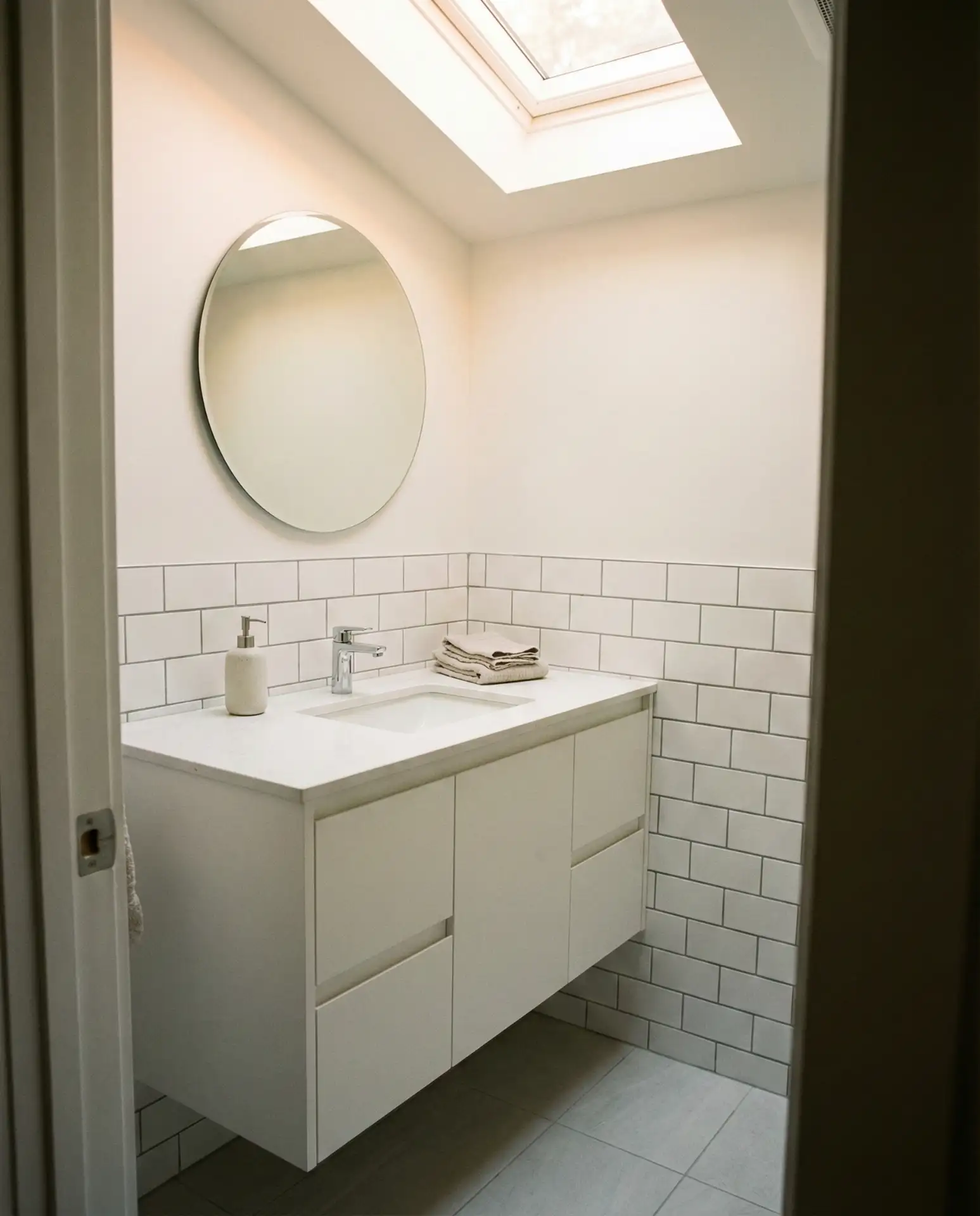
A classic powder room embraces timeless design principles—symmetry, traditional proportions, and quality materials that age gracefully. Think marble countertops, simple white subway tile, polished nickel fixtures, and architectural details like crown molding or wainscoting. These spaces reject trend-chasing in favor of enduring beauty that will look as appropriate in twenty years as it does today, which particularly appeals to homeowners in established neighborhoods with period architecture. 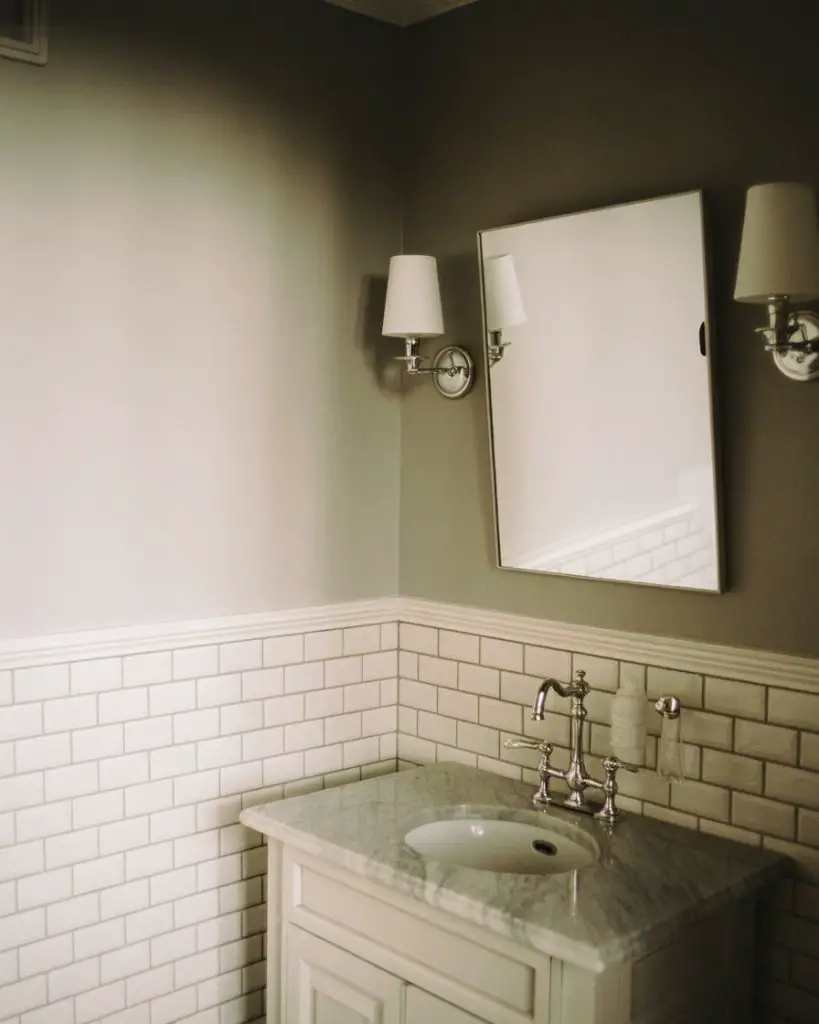
The budget angle here is thinking long-term—classic materials and finishes might cost more upfront, but they don’t require trendy updates every few years, which saves money over the life of your home. A mistake to avoid is confusing classic with boring; the beauty is in the details and quality of execution rather than flashy statement pieces. Focus your budget on the permanent fixtures and finishes—the sink, tile, and hardware—and you can refresh the look over time with different paint colors, mirrors, and accessories without gutting the whole space.
17. Neutral Sophistication Done Right
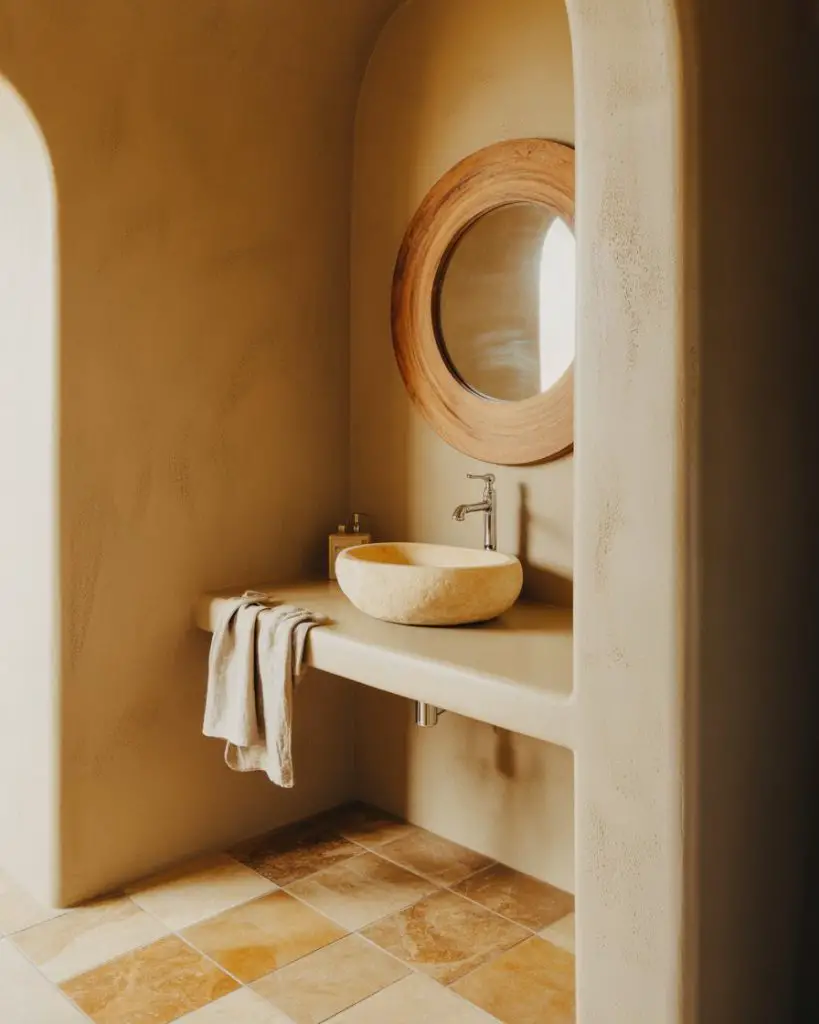
The neutral powder room has nothing to do with playing it safe and everything to do with intentional restraint. Layers of cream, beige, taupe, and warm grays create depth through texture—think plaster walls, natural stone, woven elements, and matte finishes that absorb light rather than bounce it harshly. The sophistication comes from the subtle interplay of tones and the quality of materials rather than relying on color to do the heavy lifting. 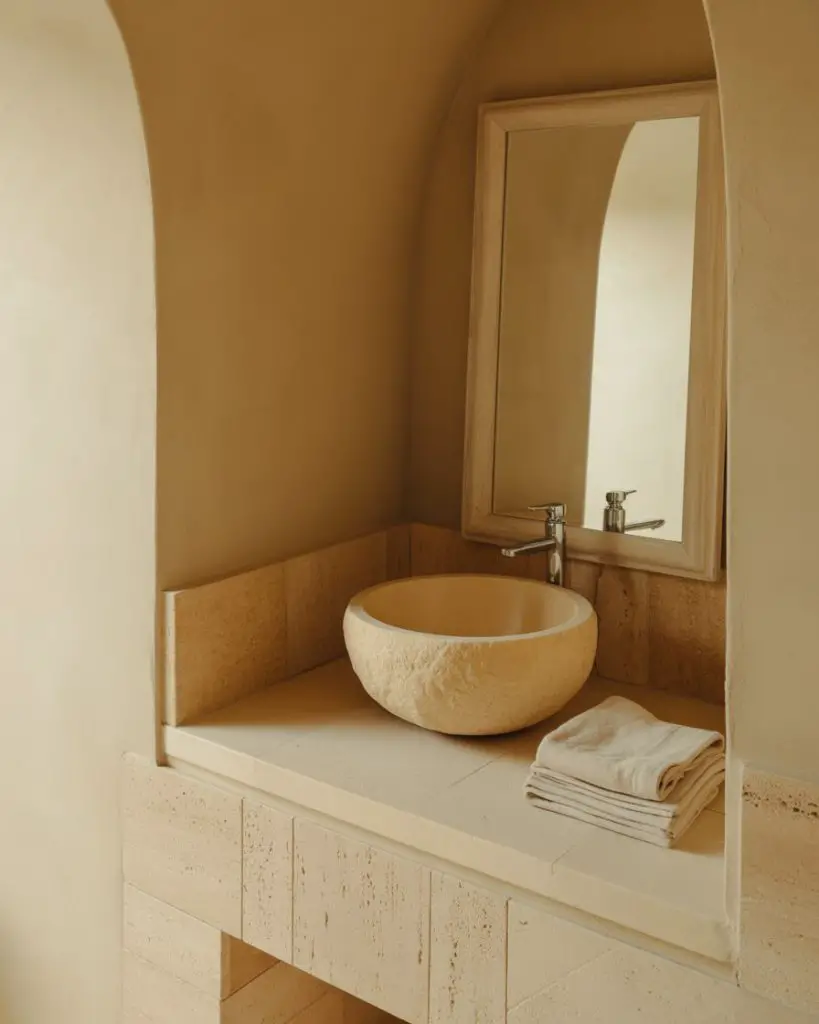
This approach works beautifully in open-concept homes where the powder room opens off main living areas—the neutral palette creates visual continuity without the jolt of stepping into a dramatically different color story. The practical insight is that neutral doesn’t mean maintenance-free; these spaces show every smudge and water spot, so choose finishes appropriately. Matte and honed surfaces hide wear better than high-gloss options, and installing a good exhaust fan prevents the moisture issues that plague powder rooms and show up fastest on light-colored surfaces.
18. Modern Luxury in Compact Footprints
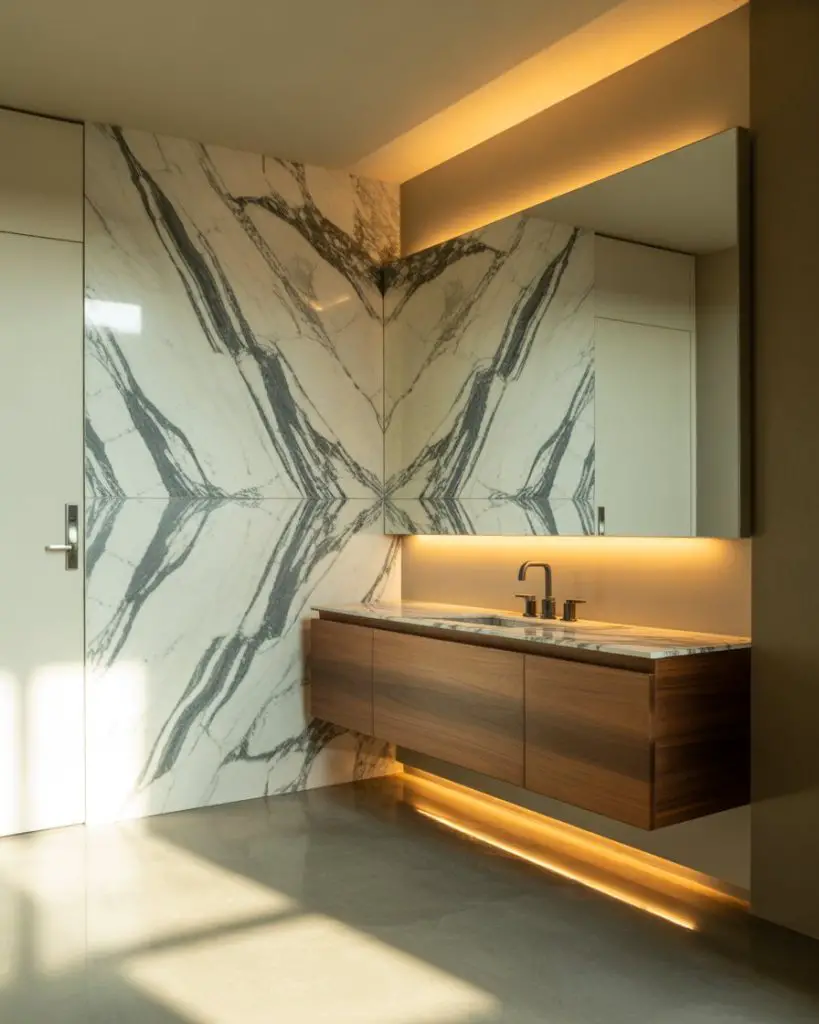
A modern luxury powder room proves that high-end design isn’t about square footage but about material quality and considered details. Book-matched marble, custom millwork, designer fixtures, and integrated lighting create a jewel-box effect that makes every inch count. These spaces often feature unexpected materials—leather tile, quartzite slabs, or handmade Zellige—that elevate the ordinary into something extraordinary through craft and rarity. 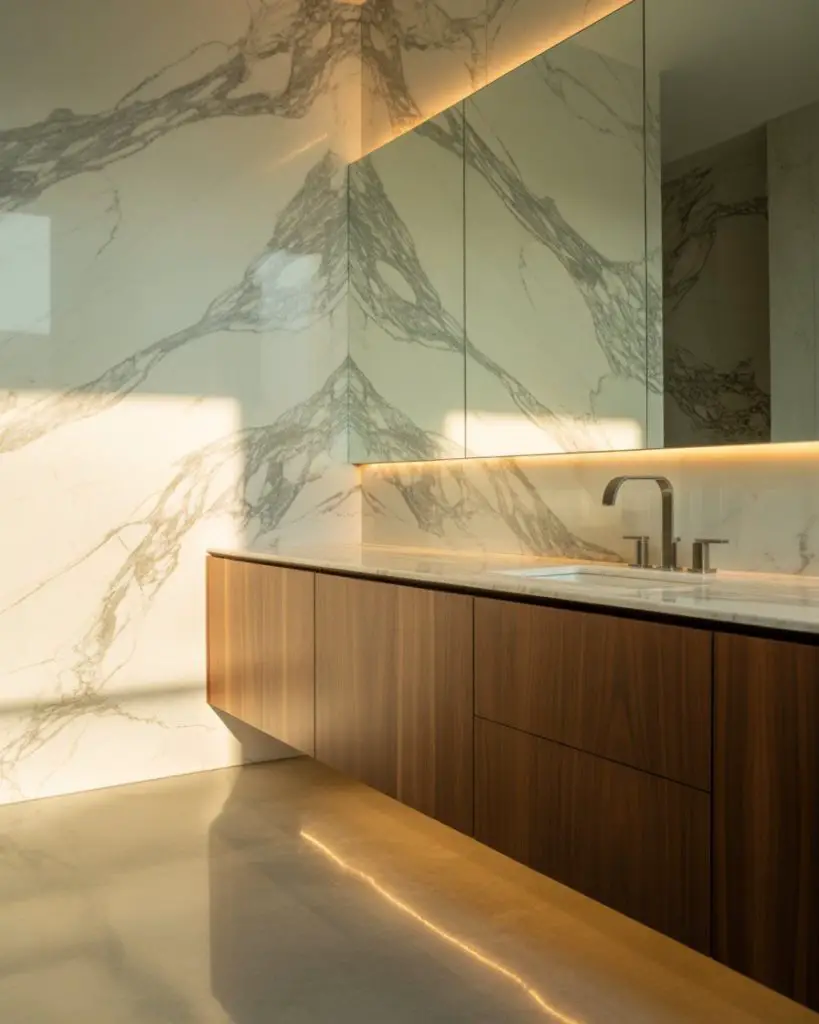
Where this works best is in urban condos and upscale suburban homes where buyers expect luxury details throughout, or in older homes where a strategic powder room renovation can lift the entire property’s perceived value. A designer shared that clients often allocate more per-square-foot budget to powder rooms than even primary baths because the compact size makes splurges manageable—that stone you could never afford for a full bathroom suddenly fits the budget when you only need two slabs. The return on investment isn’t just financial; it’s the daily pleasure of beautiful materials in a space you and guests use constantly.
19. Tiny Powder Room Power Moves
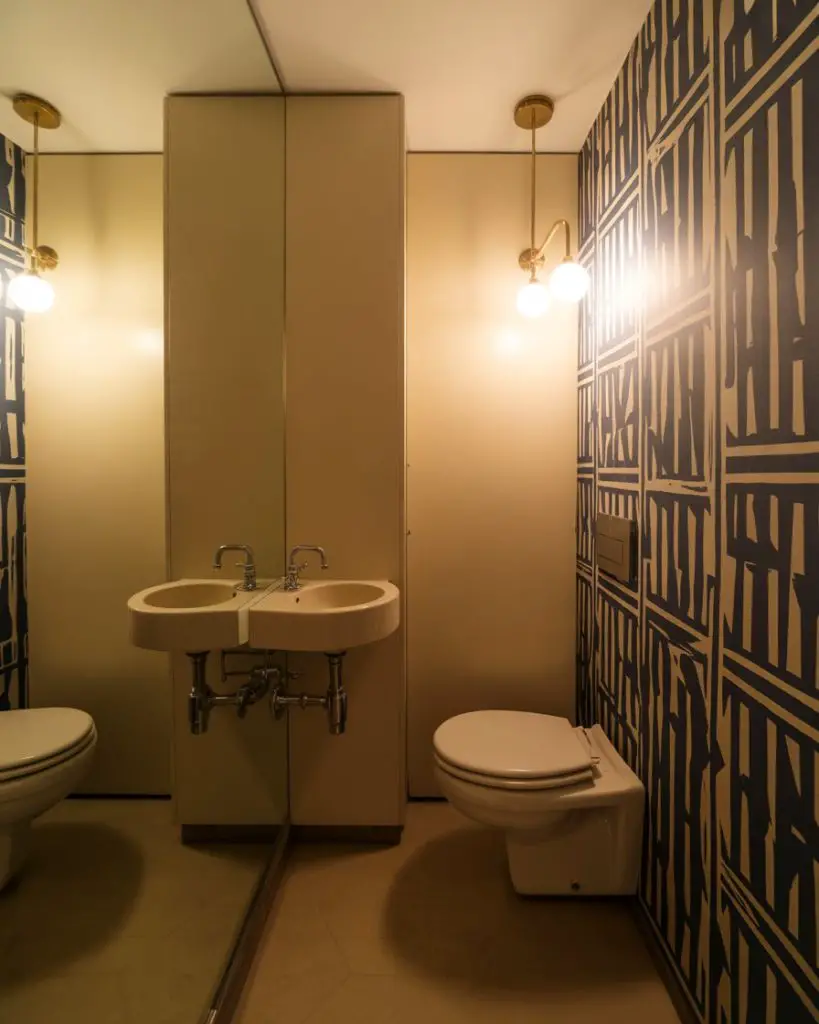
Working with a truly tiny powder room—we’re talking closet-sized, barely-turn-around spaces—requires strategic thinking rather than resignation. Wall-mounted toilets free up visual floor space, pocket doors eliminate swing radius, and mirrors that span entire walls create the illusion of double the square footage. The fun part is that these constraints force creativity, often resulting in the most memorable and photographable rooms in the house. 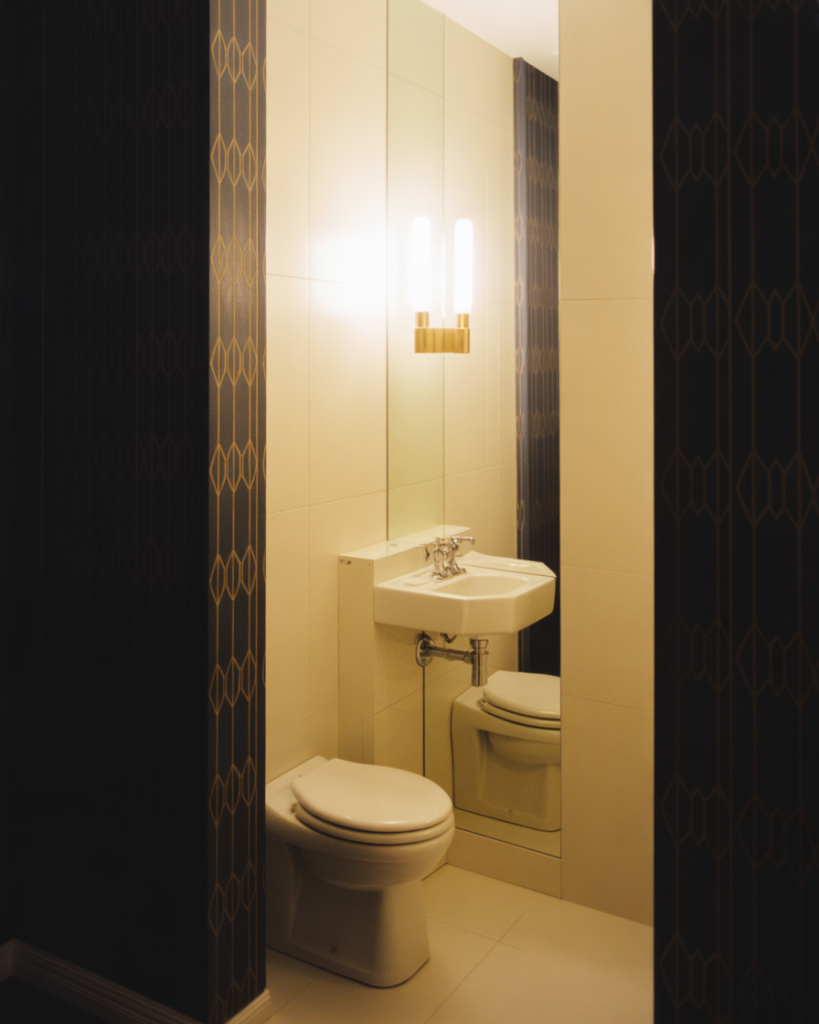
The common mistake in tiny powder rooms is trying to make them feel bigger through all-white everything, which can feel sterile and bathroom-stall-like. Instead, embrace the coziness with saturated color or bold pattern—if you’re already in a shoebox, make it an interesting shoebox. Real homeowners report that guests are often more charmed by a thoughtfully designed tiny powder room than a generic larger one, perhaps because the constraint itself demonstrates care and problem-solving that reads as hospitality.
20. Earthy Tones and Natural Connection
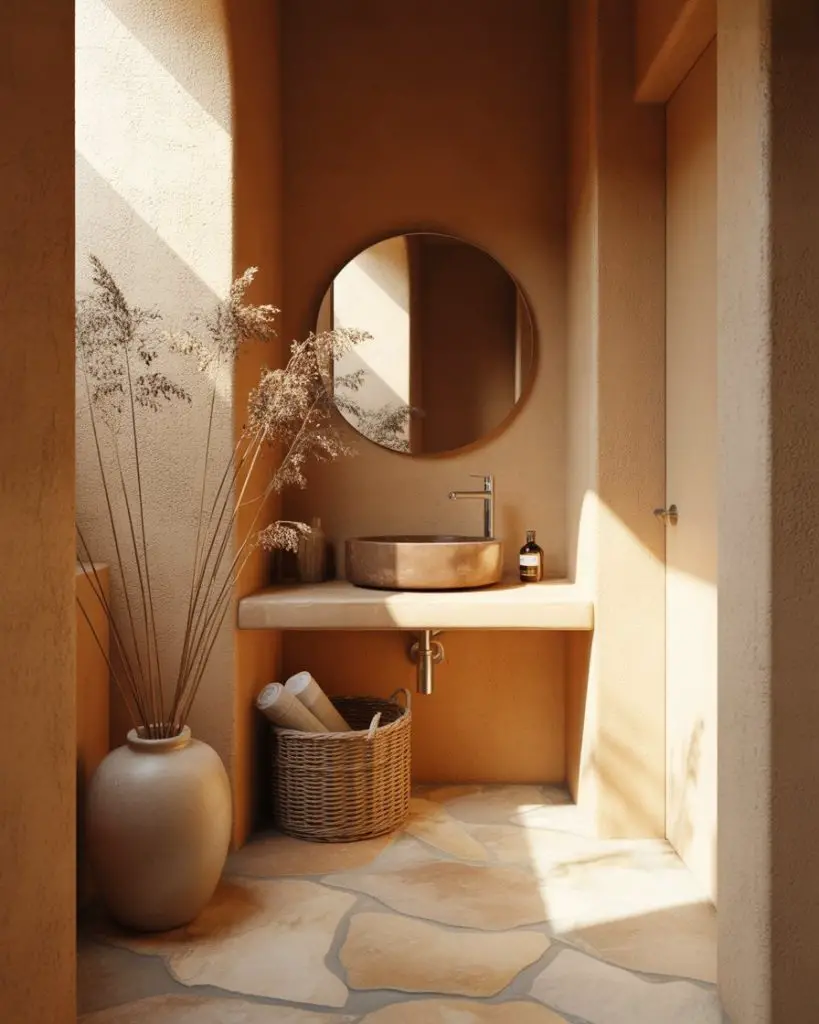
The earthy powder room grounds you immediately with materials pulled straight from nature—clay plaster walls, sand-colored limestone, wood with visible grain, and textiles in ochre, rust, and bark brown. This palette feels inherently warm and welcoming, creating a sensory experience that’s both visually and tactilely satisfying. It’s the antithesis of cold minimalism, instead offering a warm minimalism that Americans are increasingly drawn to as a counterbalance to screen-saturated lives. 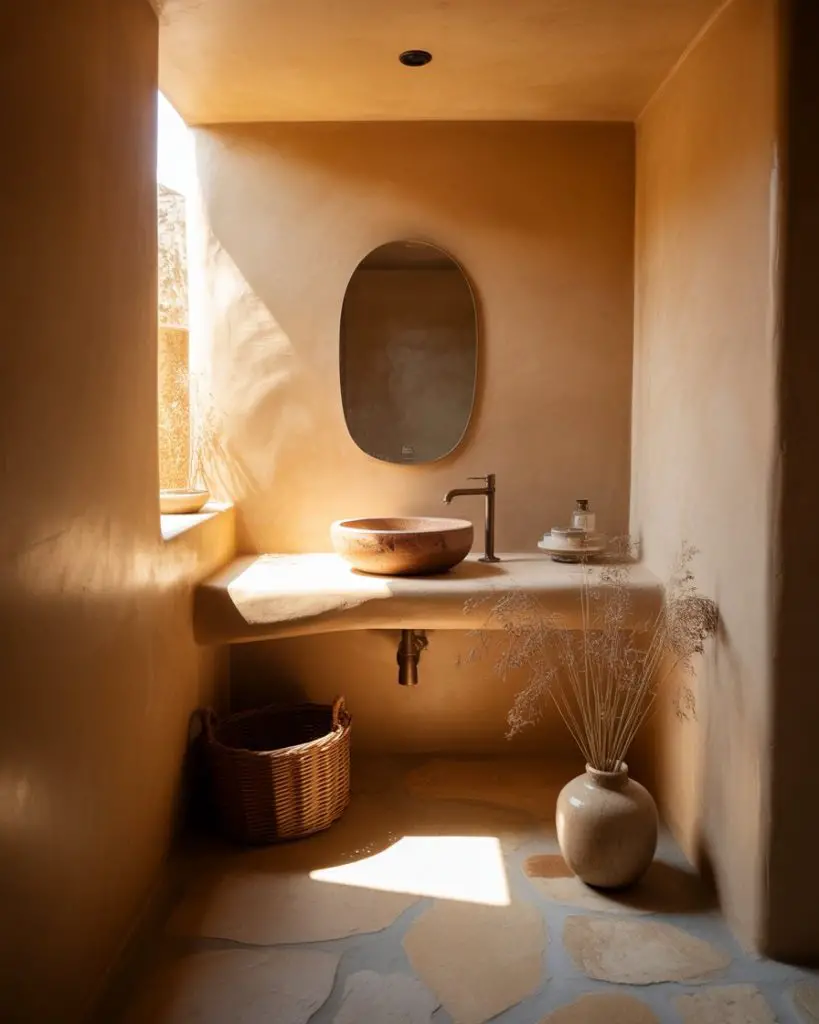
This aesthetic thrives in the American Southwest where it echoes the landscape, but it’s being adopted nationwide by people seeking that grounded feeling regardless of climate or region. The budget perspective is that many earthy materials—clay, wood, stone—have wide price ranges, so you can achieve the look at various investment levels. Focus on getting the wall color right first (consider limewash or clay paint for authentic texture), then build around it with whatever natural materials your budget allows, knowing that even affordable terracotta pots and wooden accessories will read as intentional within this cohesive palette.
21. Trending from 2025 into the Future
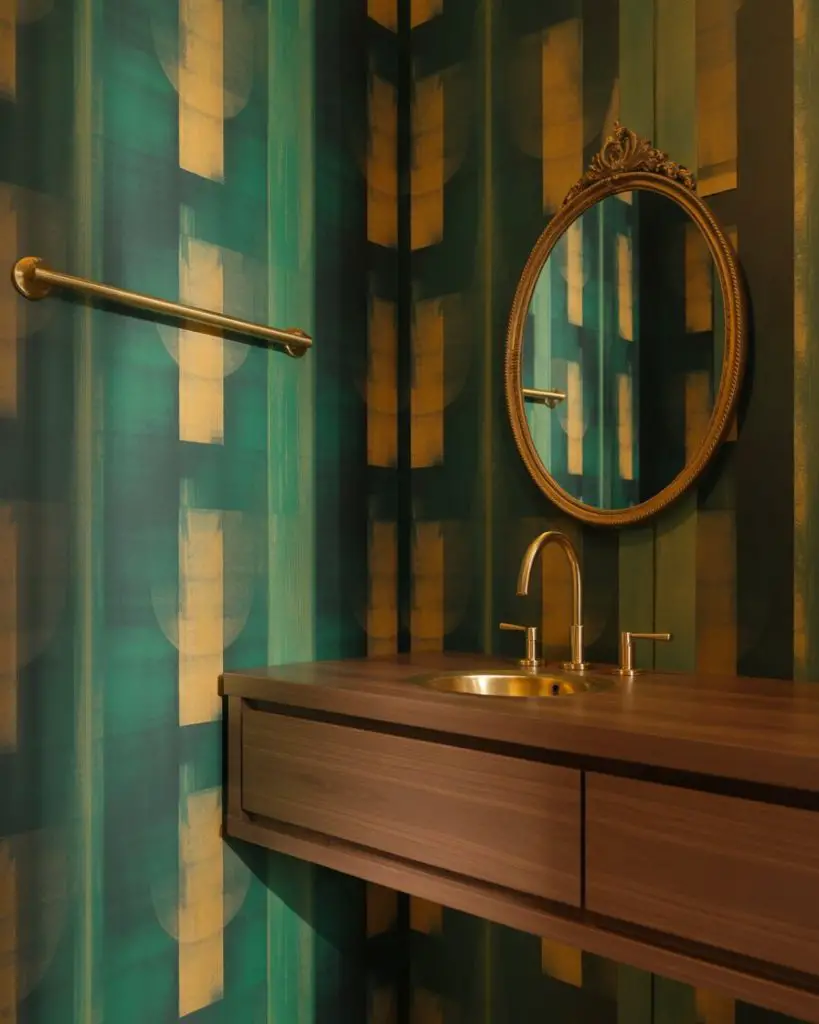
Looking at what trended in 2025, we’re seeing certain themes carry forward with refinement—the move toward warmer metals continues, wallpaper remains popular but with more artistic and less literal patterns, and the integration of vintage and antique elements with contemporary design shows no signs of slowing. What’s shifting is the scale of pattern and the confidence in color, with homeowners moving beyond safe choices toward more personal, expressive design that reflects individual taste rather than algorithmic recommendations. 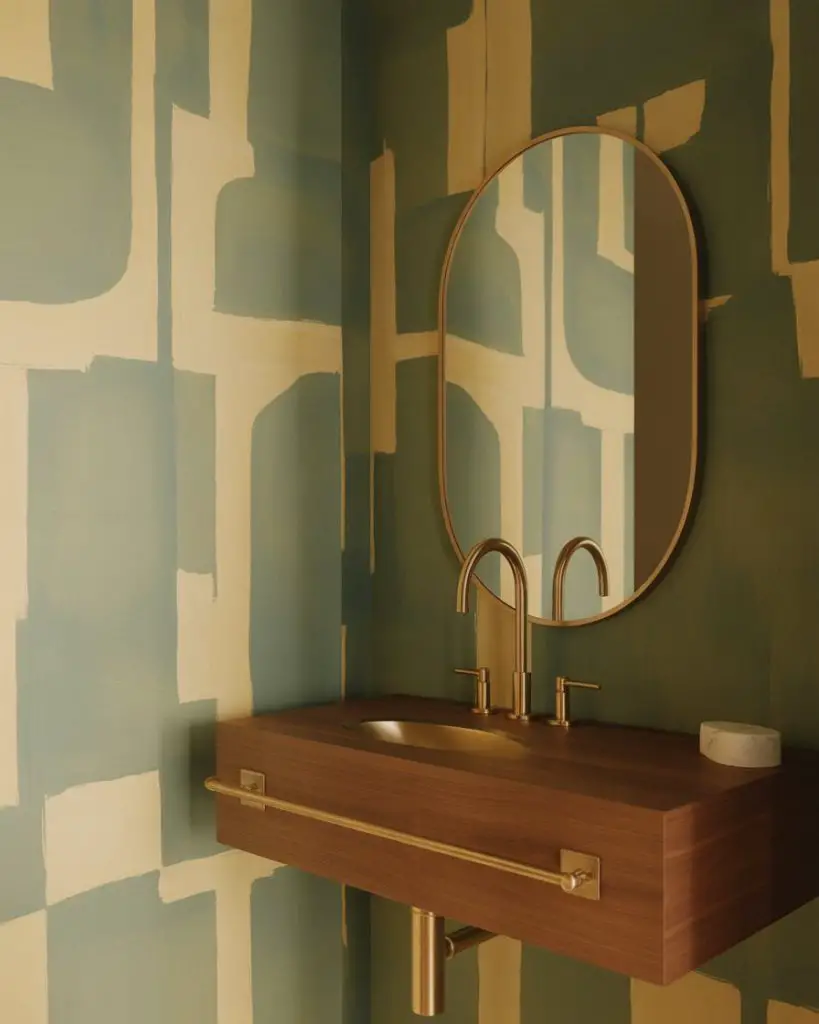
Expert commentary suggests that the Pinterest-to-reality gap is narrowing as more homeowners recognize that powder rooms are low-risk spaces to try trends they see online. Unlike a kitchen renovation, you can completely change a powder room in a weekend with paint and new fixtures, which makes them ideal testing grounds. The trend toward personalization over perfection means we’re seeing more DIY confidence, more mixing of styles, and more willingness to live with choices that might not please everyone but absolutely delight the homeowner—which is, ultimately, what makes a house feel like home.
22. The Elegant Tiny Jewel Box
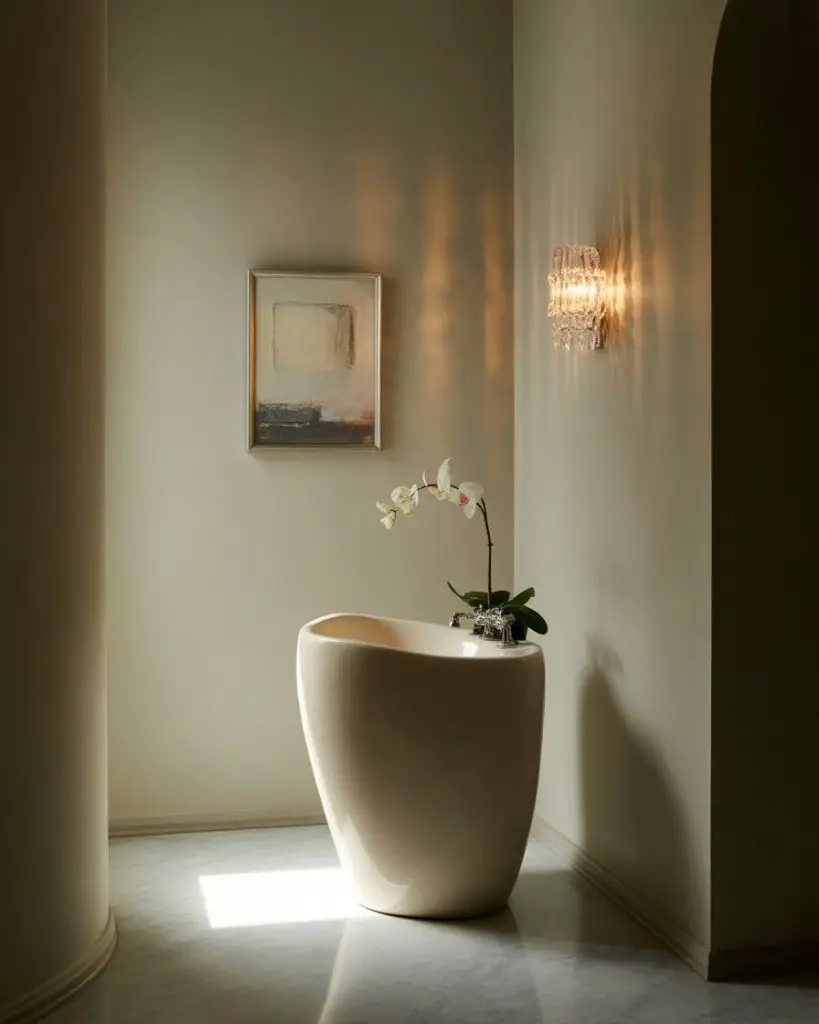
An elegant tiny powder room treats constraints as an opportunity for refinement rather than a limitation to overcome. Every element is carefully selected for its beauty and function—a slim pedestal sink in a sculptural shape, perhaps a single stunning light fixture that becomes jewelry for the ceiling, and one perfect piece of art at eye level. The elegance comes from what you leave out as much as what you include, creating breathing room even in limited square footage. 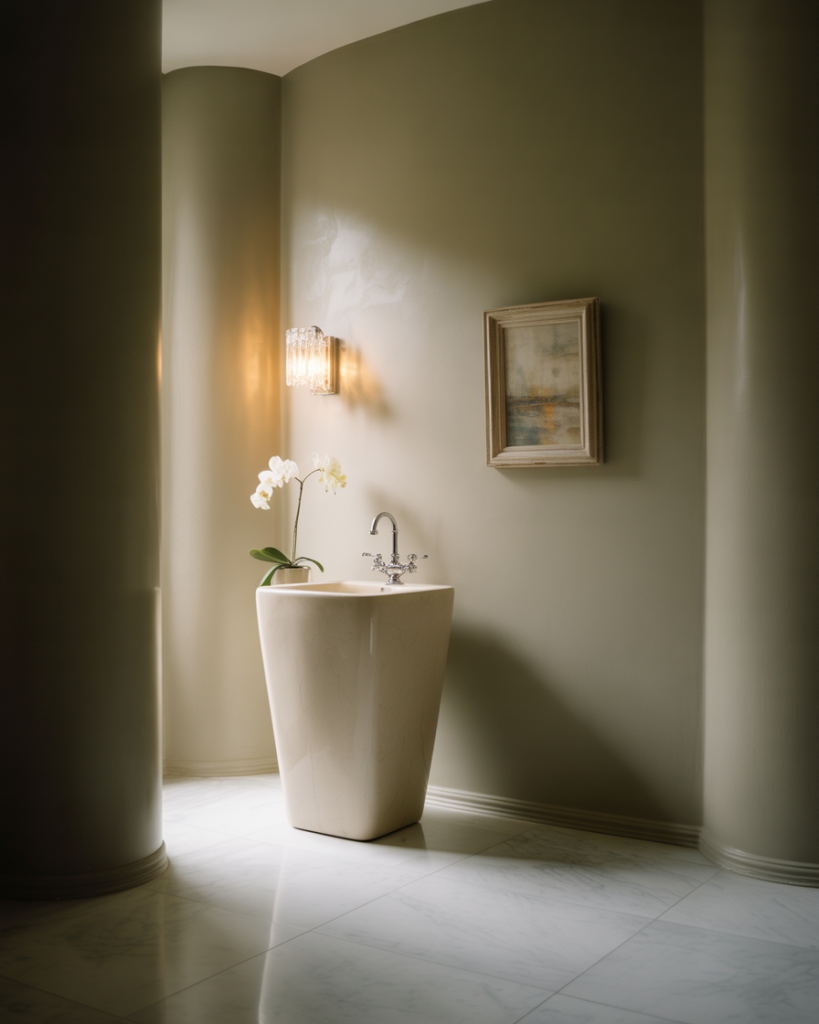
This works particularly well in older homes with small original powder rooms where expanding isn’t an option, or in new construction where the builder left you with minimal space. A common mistake is over-decorating these tiny elegant spaces—three hand towels where one would do, multiple pieces of art competing for attention, or fussy window treatments that eat up visual real estate. Instead, choose your one or two most beautiful things, give them space to breathe, and let the simplicity itself become the luxury. The best compliment is when guests ask if you worked with a designer, even if every choice was yours alone.
23. Bold Statements in Small Packages
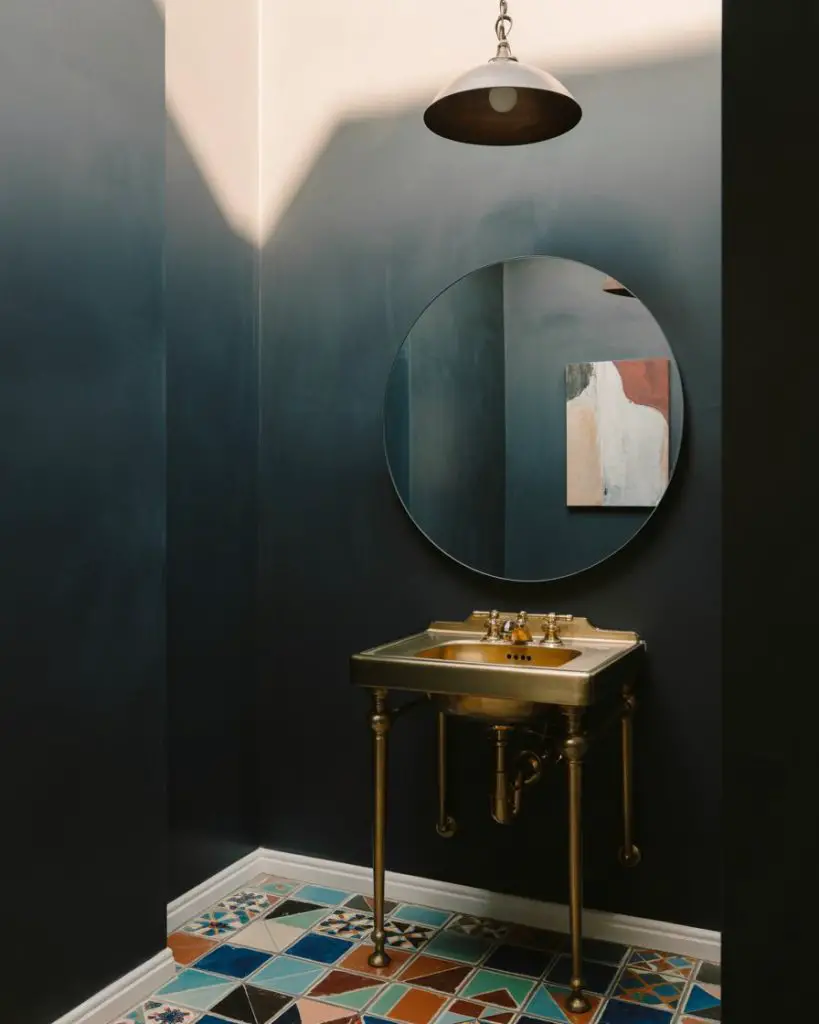
The boldest powder rooms combine multiple risk factors—dark walls meet colorful tile, fun wallpaper mixes with unexpected fixtures, or moody paint provides a backdrop for gleaming metallics and dramatic lighting. These spaces reject the notion that small rooms require timid choices, instead celebrating the freedom that comes from a space with low stakes and high impact potential. This is where homeowners with otherwise conservative design sensibilities let loose and surprise themselves. 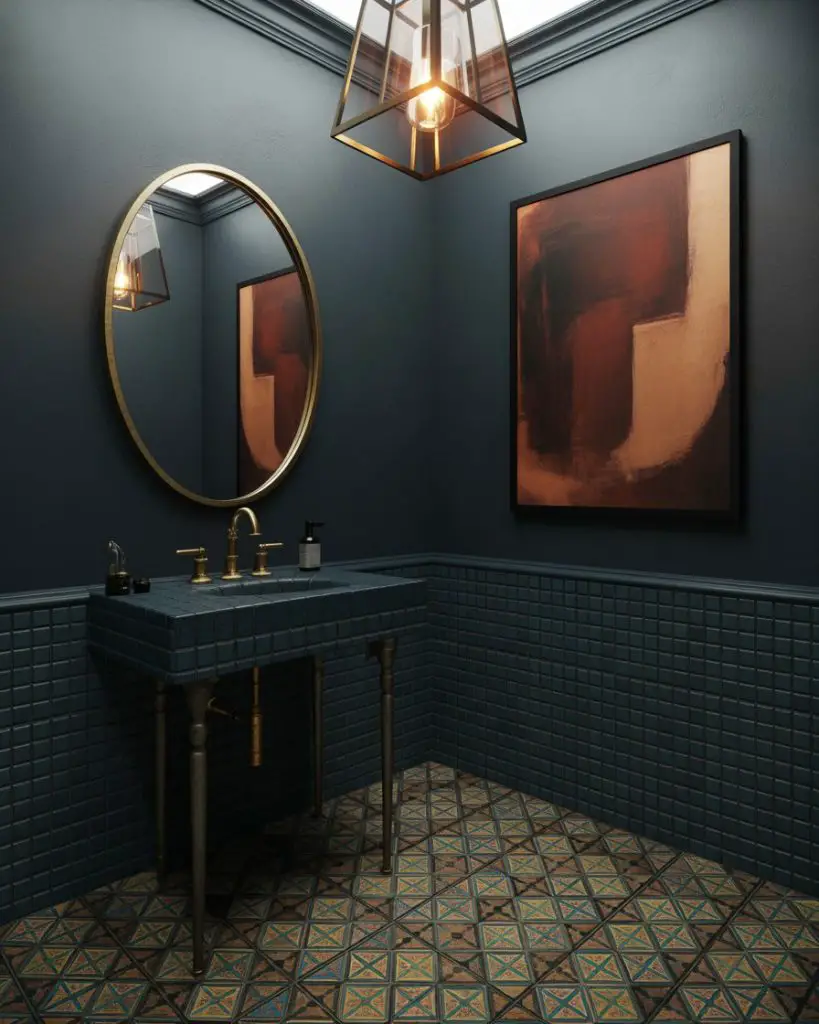
Real homeowner stories often highlight the powder room as the gateway drug to bolder design choices elsewhere—once you live with that deep teal or that wild wallpaper and realize the sky doesn’t fall, other rooms start looking boringly safe by comparison. The practical insight is that bold doesn’t have to mean expensive; a gallon of dramatic paint is under fifty dollars, and even if you hate it, you can repaint in a few hours. This low-risk, high-reward ratio makes the powder room the perfect space to discover your actual design preferences rather than the safe ones you think you should have, and that journey of self-discovery through design is one of the quieter joys of homeownership.
Conclusion
Your powder room might be the smallest space in your home, but as these ideas demonstrate, it has enormous potential to make an impression and reflect your personal style. Whether you’re drawn to the serene calm of spa-inspired design or the bold energy of maximalist color, 2026 offers permission to experiment and take risks in these compact canvases. We’d love to hear which ideas resonated with you—drop a comment below sharing your powder room plans or the challenges you’re working with in your space.