Rustic kitchens have always held a special place in American homes, but in 2026, the style is evolving in exciting new directions. Pinterest users are searching for ways to blend timeless warmth with modern functionality, creating spaces that feel both lived-in and intentional. Whether you’re drawn to weathered wood, handcrafted details, or the charm of open shelving, today’s rustic kitchen embraces contrast—pairing raw textures with sleek appliances and natural materials with bold color choices. This collection of ideas will show you how to bring that perfect balance of old and new into your own home, no matter your square footage or budget.
1. Dark Wood Beam Ceiling with Modern Lighting
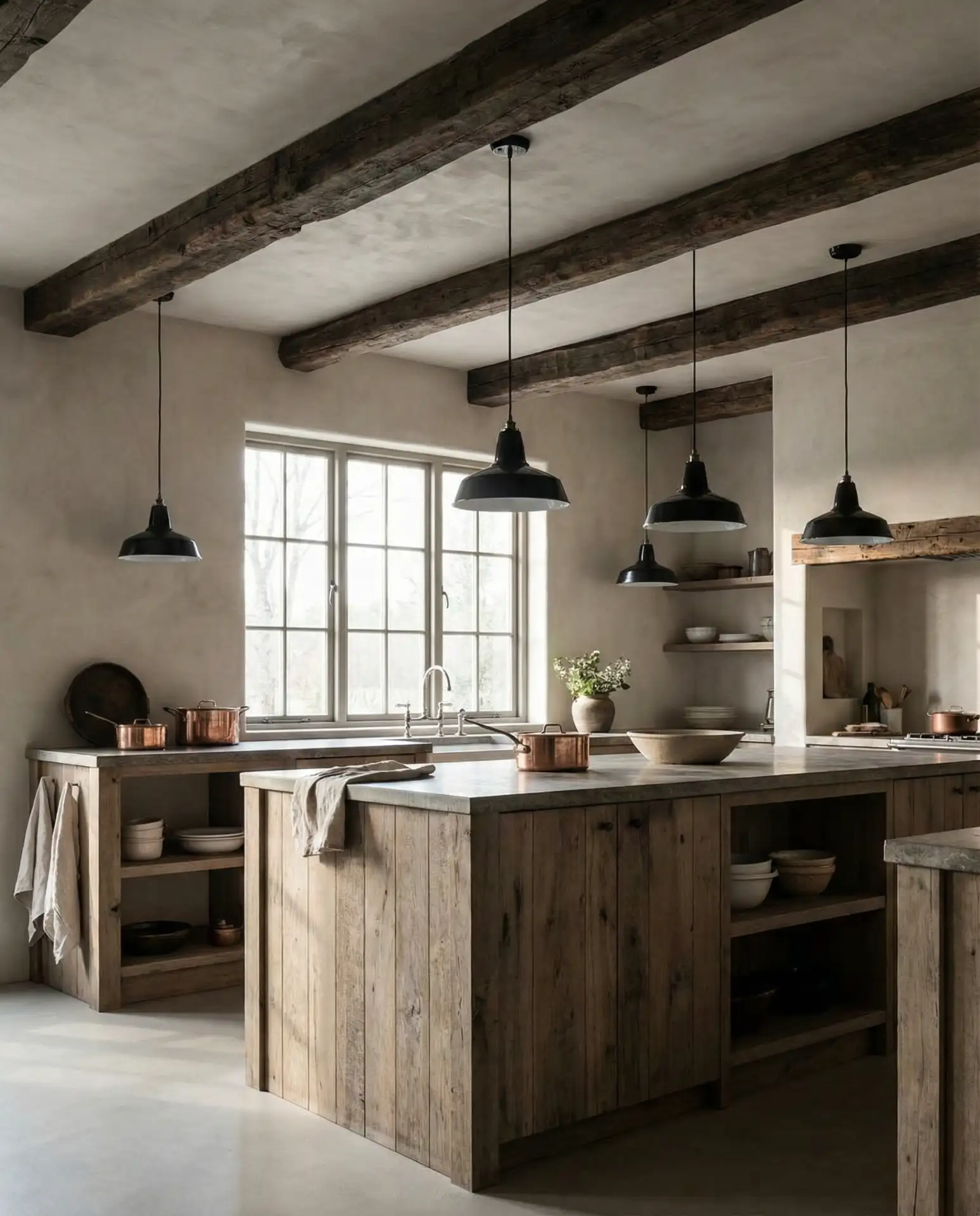
Exposed dark wooden beams instantly anchor a kitchen in rustic tradition, but when paired with contemporary pendant lights, the effect becomes something entirely modern. This approach works beautifully in homes with vaulted ceilings or renovated barns, where original architectural elements can be preserved and celebrated. The contrast between aged timber and polished metal fixtures creates visual tension that feels both grounded and current, perfect for homeowners who want character without sacrificing style.
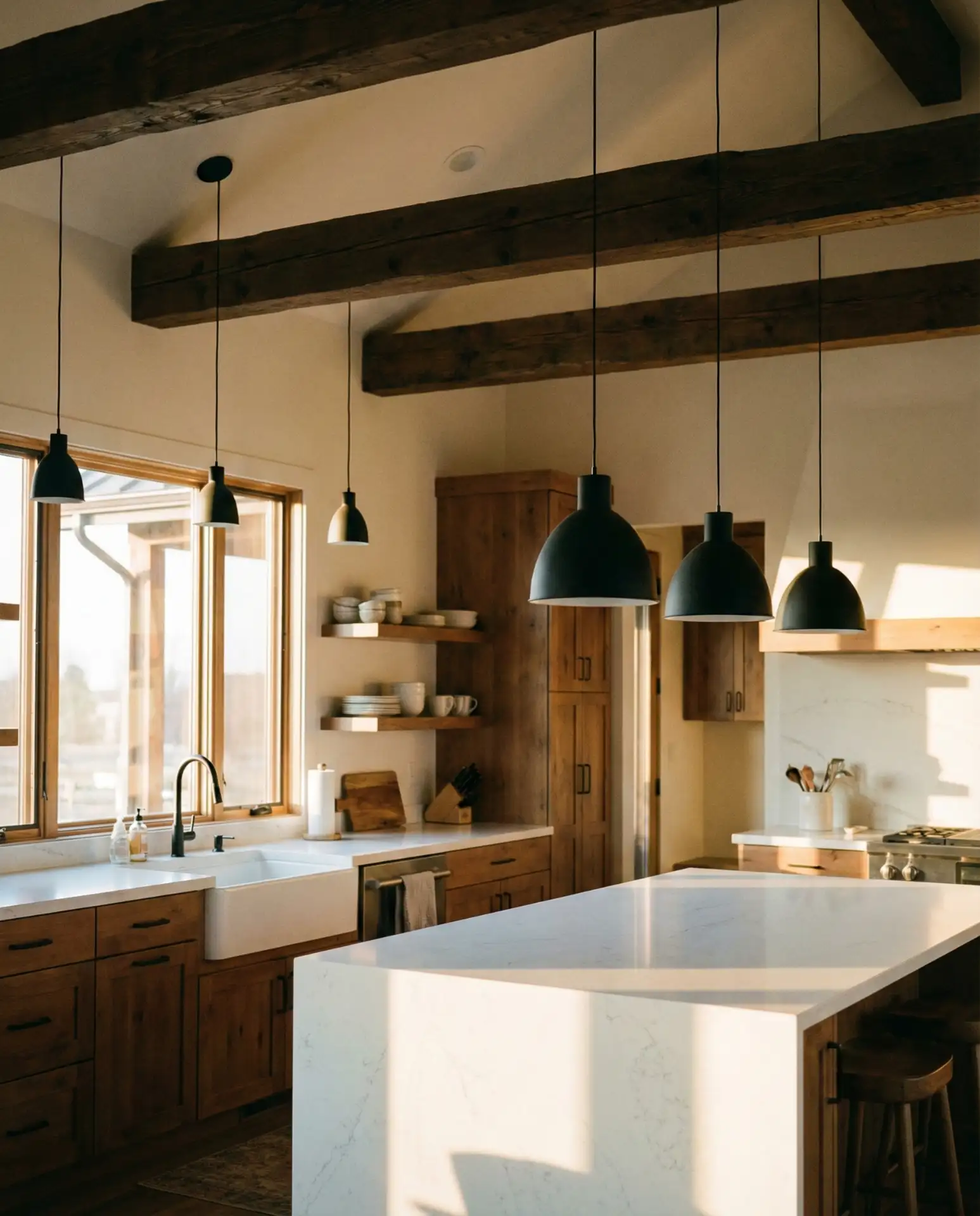
Where this works best: Open-concept layouts where the kitchen flows into living areas. The beams help define zones without adding walls, while modern lighting ensures the space doesn’t feel too heavy or cave-like. In ranch-style homes across Texas and Montana, this combination has become the go-to for maintaining ranch heritage while updating for contemporary family life. Just make sure your ceiling height can support the visual weight—anything under nine feet might feel compressed.
2. Green Cabinets with Brass Hardware
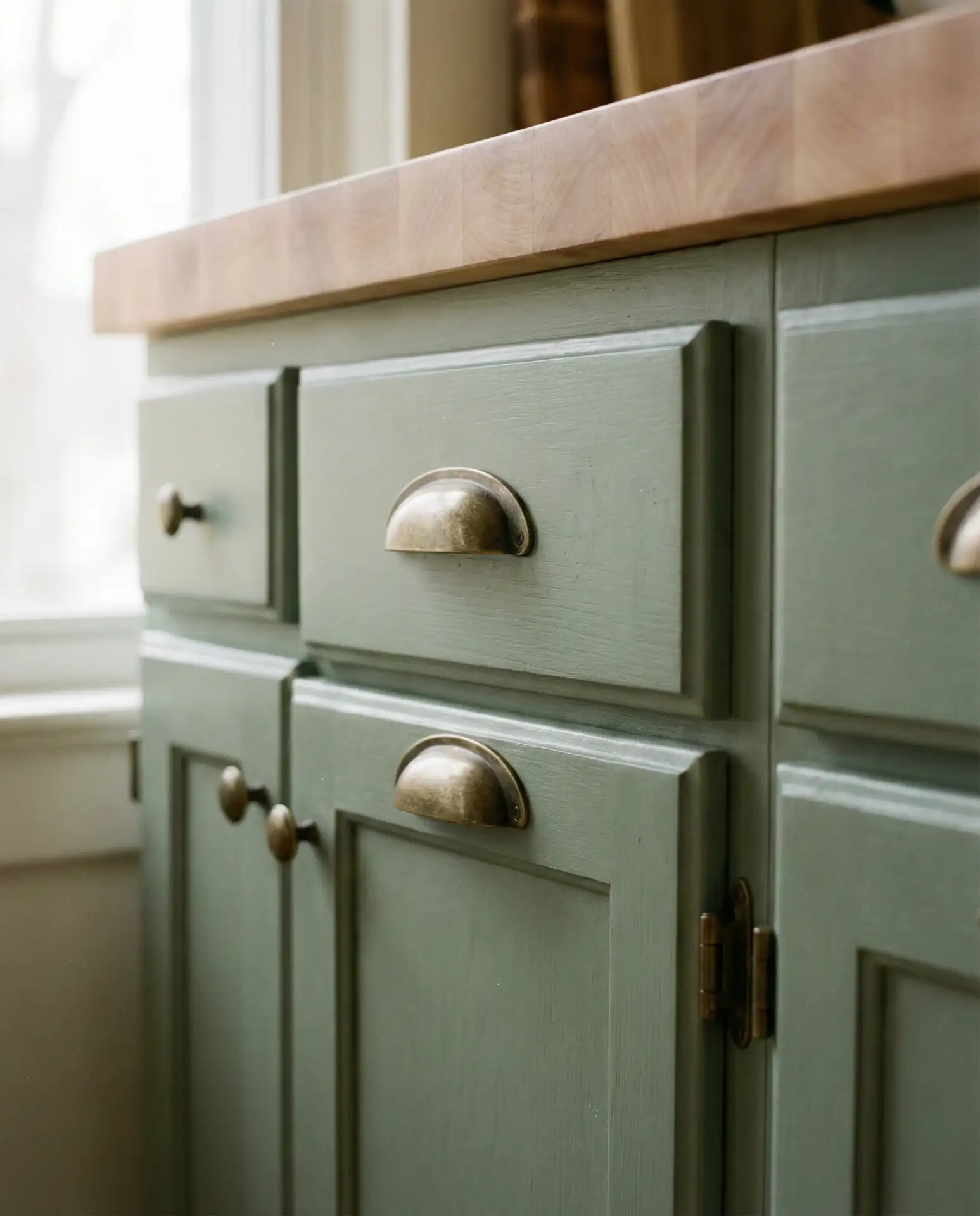
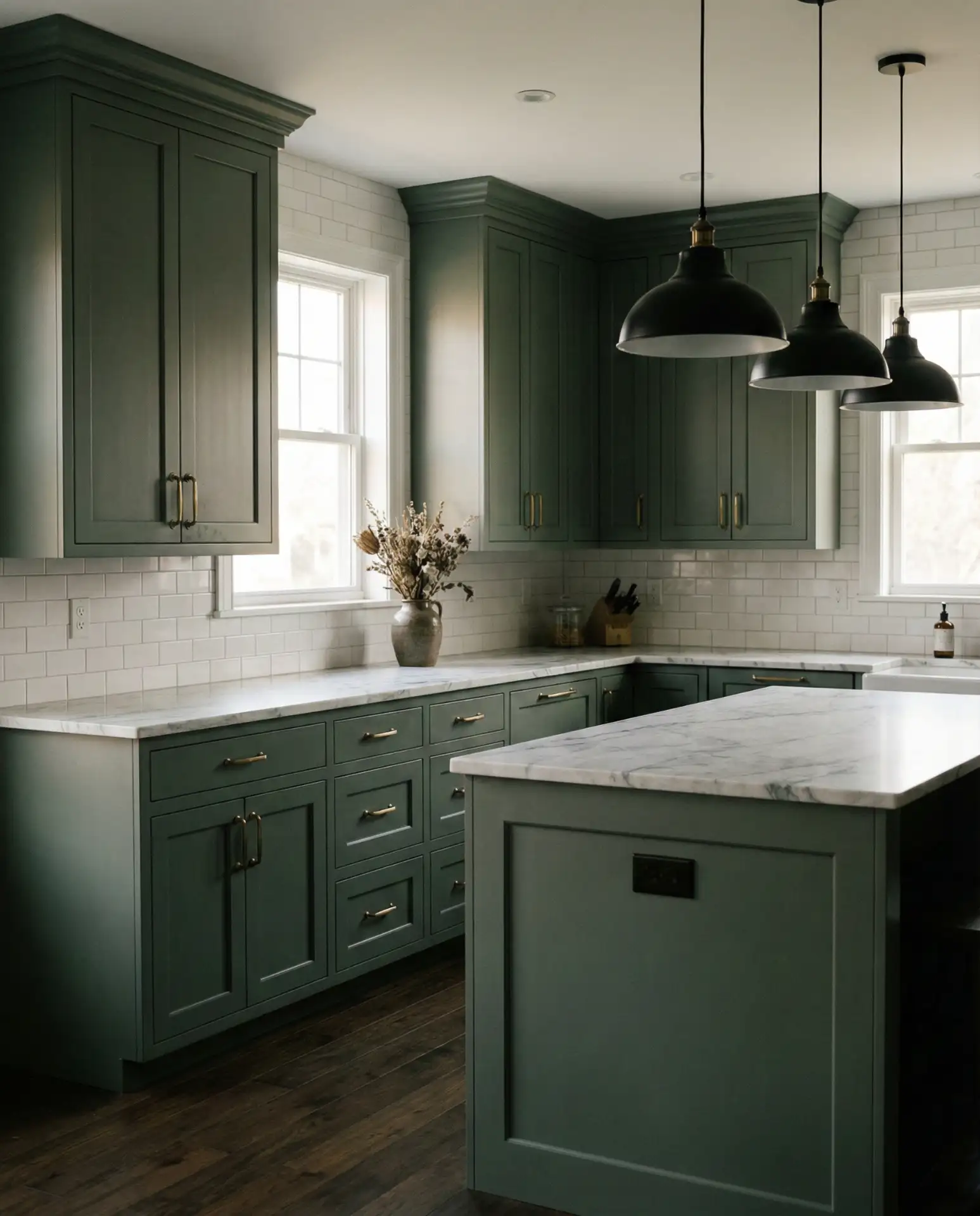
Deep forest green cabinets have emerged as the sophisticated alternative to traditional wood stains, bringing organic color into the kitchen while maintaining that earthy, grounded feeling. Paired with warm brass pulls and hinges, these cabinets feel both vintage-inspired and completely current. The green doesn’t overwhelm—instead, it acts as a neutral that complements natural wood countertops, stone backsplashes, and the inevitable collection of plants that find their way into rustic spaces.
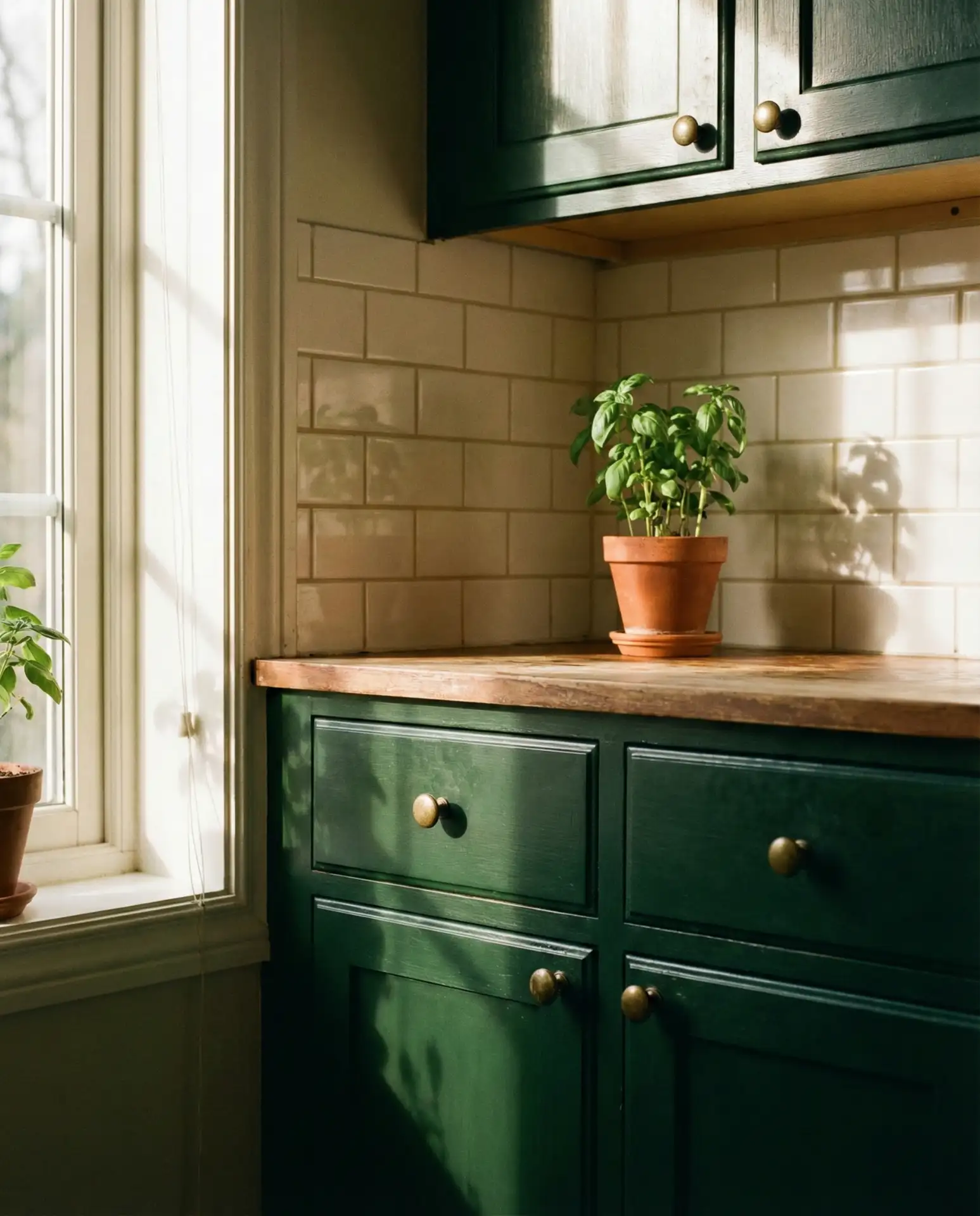
A common mistake is choosing brass that’s too shiny or obviously new. The magic happens when you select unlacquered brass that will develop a patina over time or opt for antique brass finishes that already have depth and variation. This creates the layered, collected-over-time look that defines successful rustic design. If you’re worried about commitment, start with upper cabinets in green and keep lowers in natural wood—it’s a gentler introduction that still delivers impact.
3. Reclaimed Wood Island with Stone Countertop
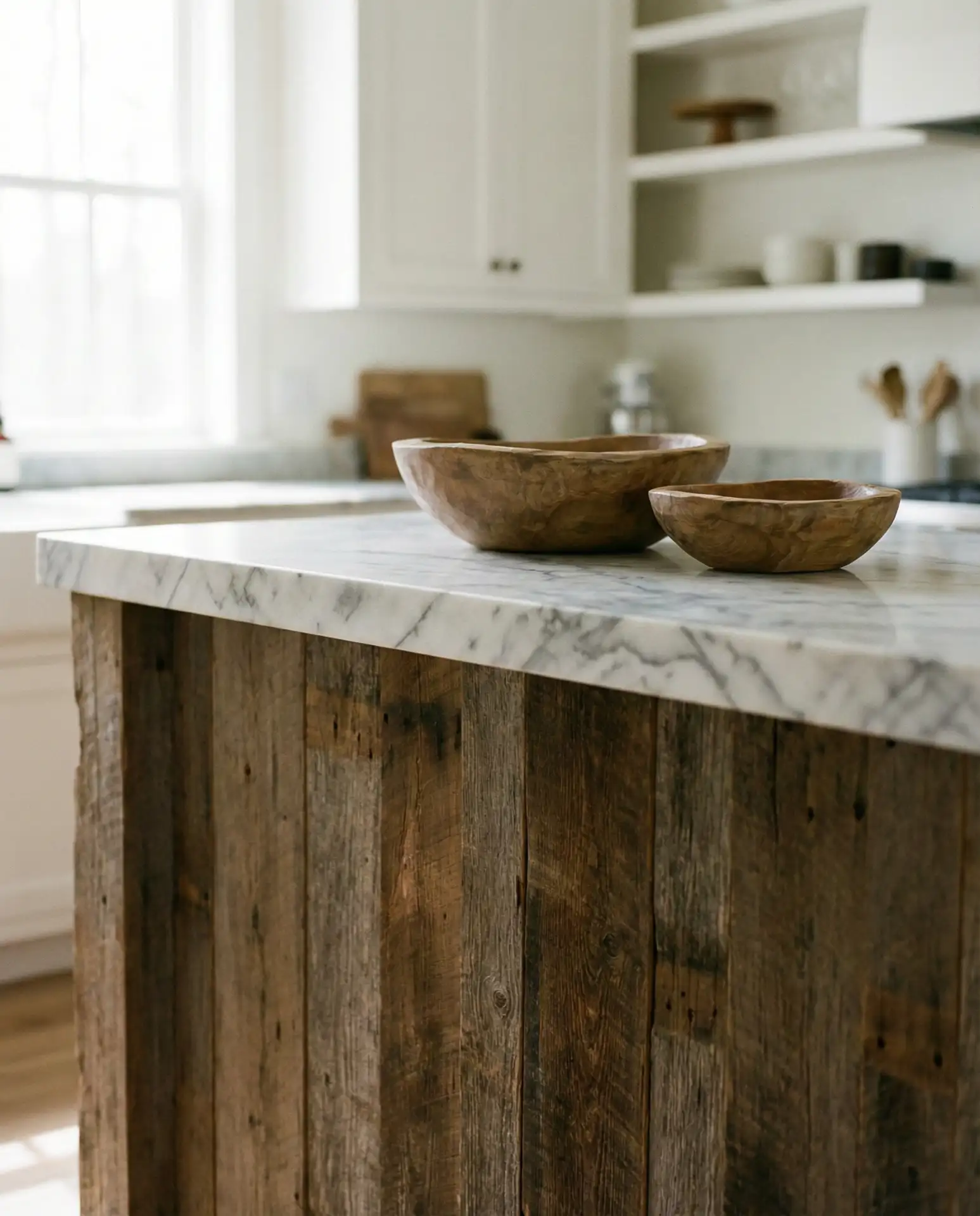
A kitchen island built from salvaged barn wood or old factory beams becomes the immediate focal point of any rustic kitchen, telling a story before a single meal is cooked. When topped with honed marble, soapstone, or thick granite, the combination of rough and refined creates that essential rustic-modern balance. The island serves triple duty as prep space, casual dining area, and conversation piece, particularly when the wood shows its history through nail holes, saw marks, and color variations.
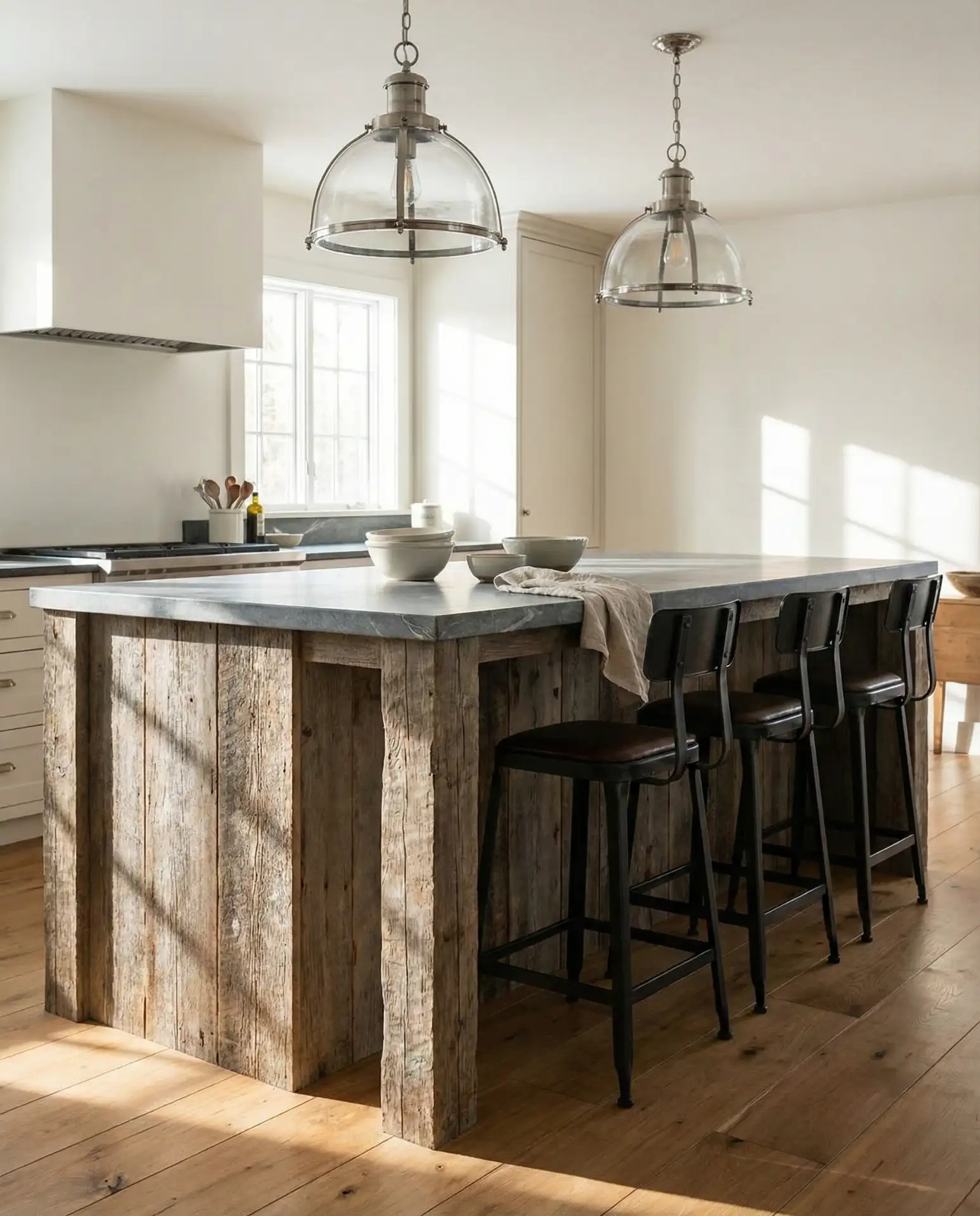
In the Pacific Northwest, architectural salvage yards report that reclaimed Douglas fir and old-growth cedar are their fastest-moving materials for kitchen projects. Homeowners appreciate knowing their island once supported a different structure, and the dense, tight grain of old timber outperforms new lumber in durability. Budget-wise, expect to pay more for authentic reclaimed materials, but the investment pays off in uniqueness—no two islands will ever look identical.
4. White Subway Tile Backsplash with Dark Grout
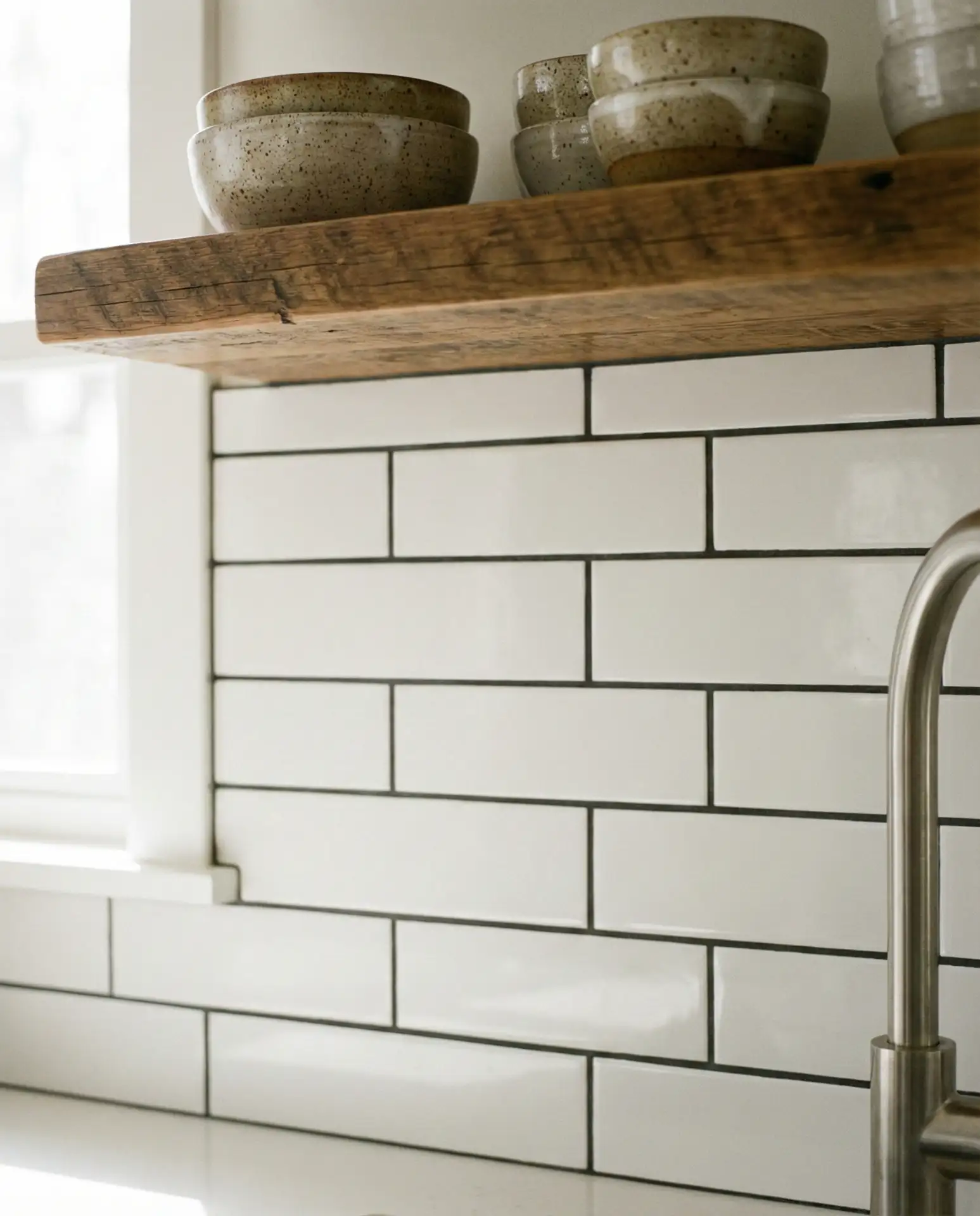
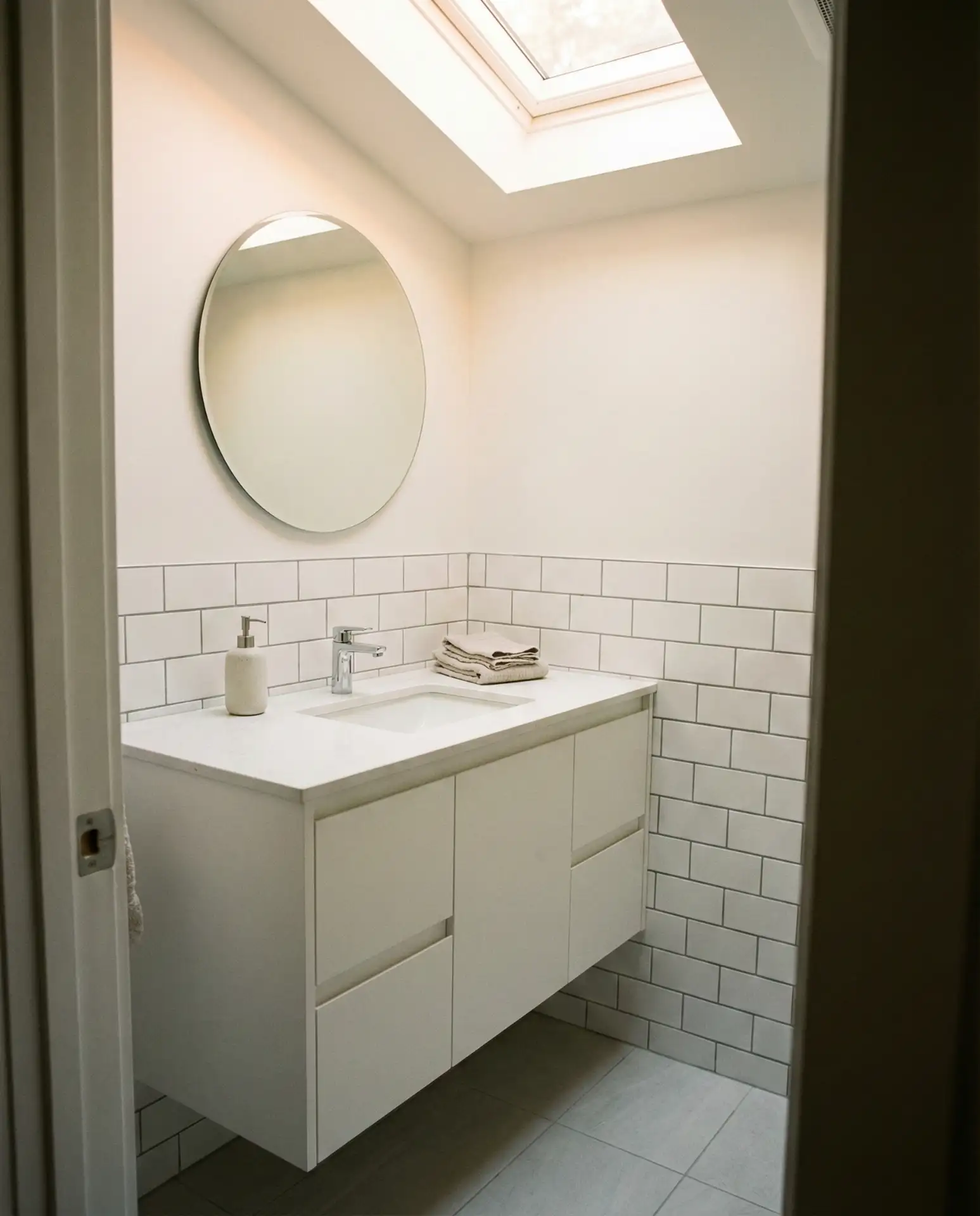
Classic white subway tile remains a rustic kitchen staple, but the game-changer in 2026 is pairing it with charcoal or black grout for definition and practical durability. This backsplash approach bridges traditional and contemporary aesthetics, offering the clean simplicity rustic spaces need while adding subtle graphic interest. The dark grout lines create a grid pattern that draws the eye without demanding attention, and they hide cooking splatters far better than standard white grout ever could.
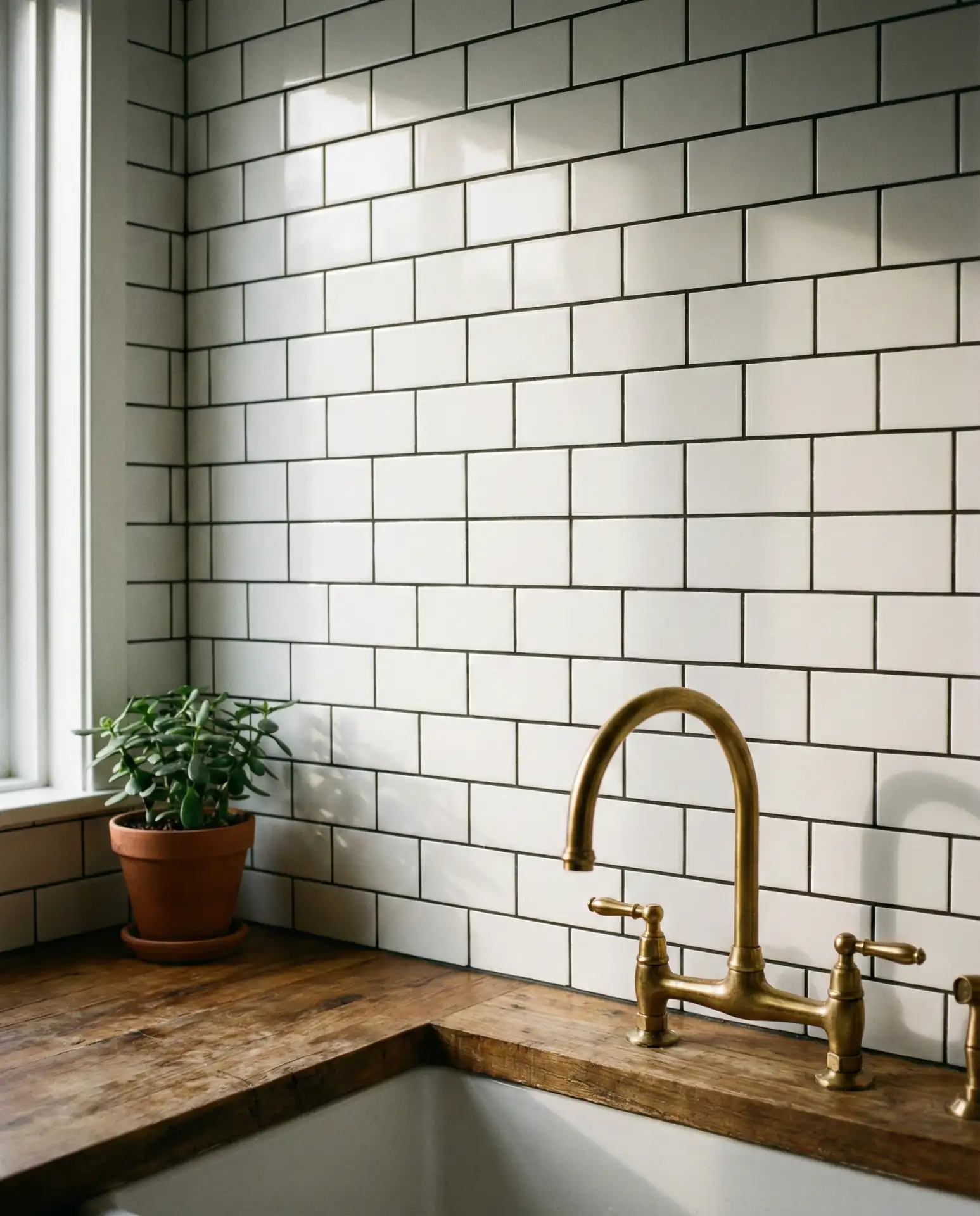
My neighbor renovated her 1940s farmhouse kitchen last summer and initially resisted dark grout, worried it would look too modern. Three months in, she says it’s her favorite decision of the entire project—it photographs beautifully and shows zero staining despite daily cooking. The lesson here is that rustic doesn’t mean impractical or high-maintenance. Smart material choices enhance the aesthetic while making your life easier.
5. Open Wooden Shelves Instead of Upper Cabinets
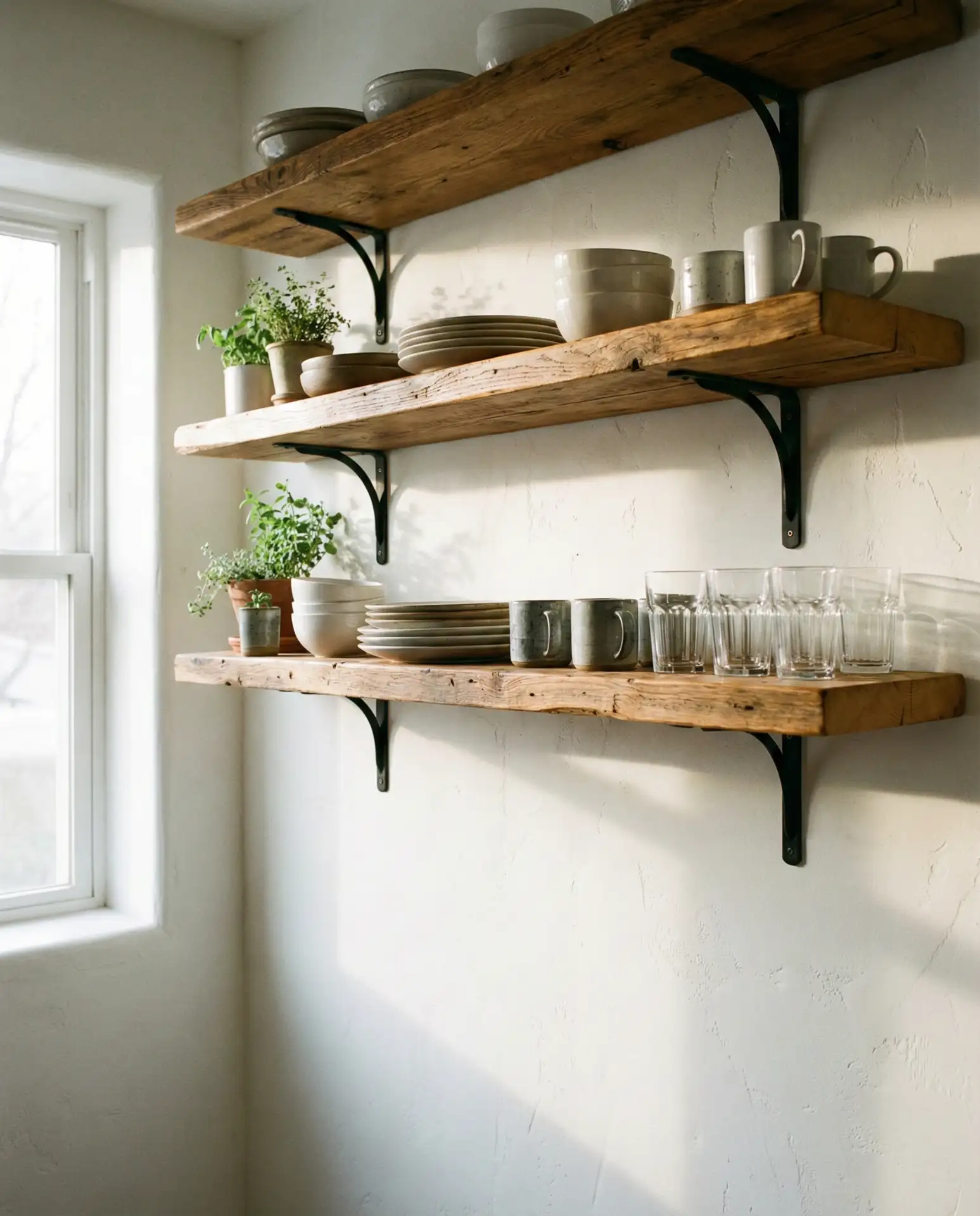
Removing upper cabinets in favor of thick wooden shelves instantly opens up a kitchen, making it feel larger and more breathable while showcasing your dishware as part of the design. This choice works particularly well in rustic kitchens where the goal is an unfussy, accessible aesthetic rather than sleek minimalism. Floating shelves made from two-inch-thick walnut, oak, or reclaimed barn wood can support considerable weight while maintaining clean lines that don’t fight with the room’s other rustic elements.
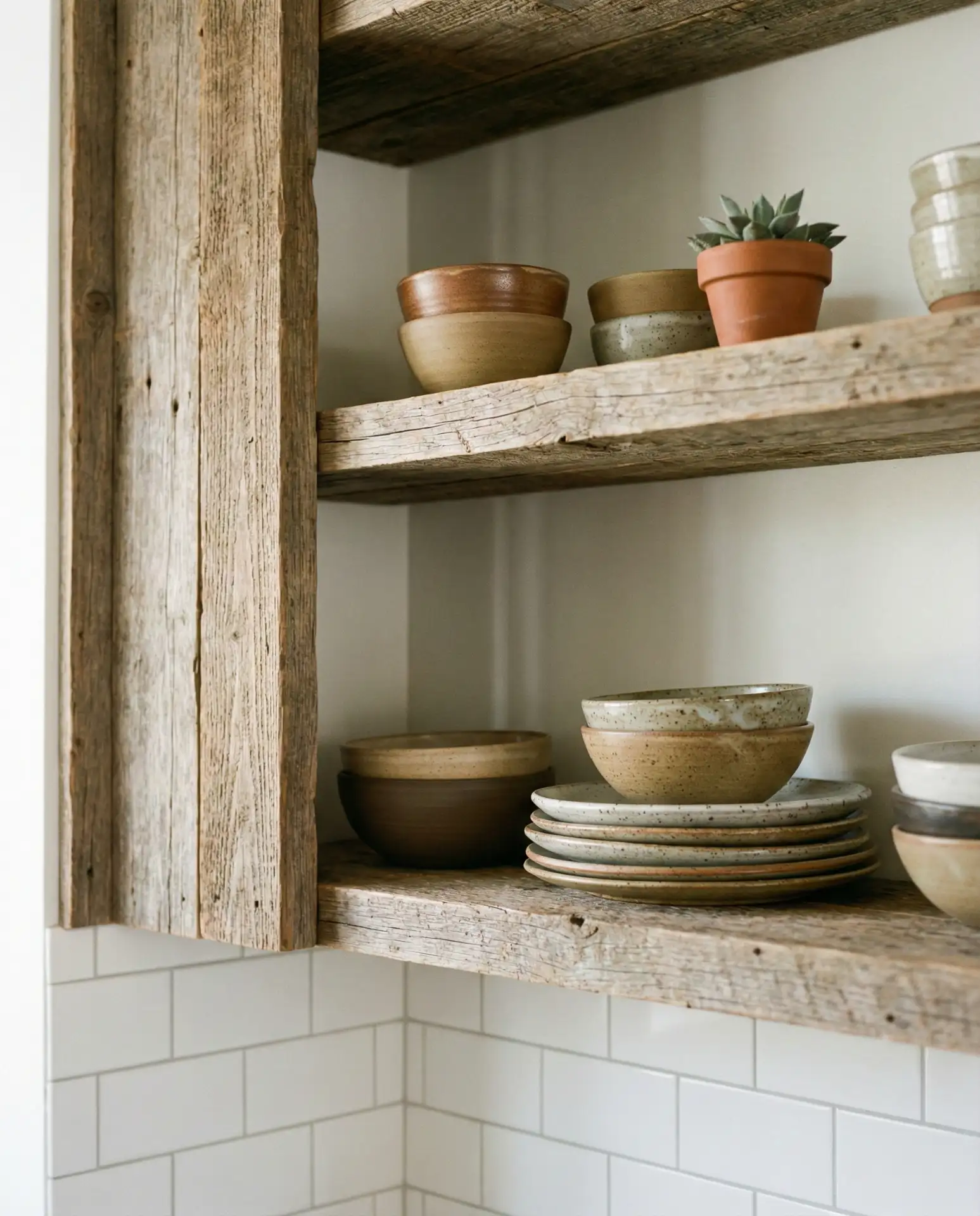
The practical reality: open shelving requires curation and regular dusting, which some homeowners love and others find exhausting. It works best for people who cook frequently and rotate through their dishes rather than storing everything they own. In smaller kitchens under 120 square feet, removing upper cabinets can be transformative, preventing the cramped galley feeling that closed cabinetry often creates. Just be honest with yourself about maintenance before committing to the full wall treatment.
6. Farmhouse Sink with Exposed Front
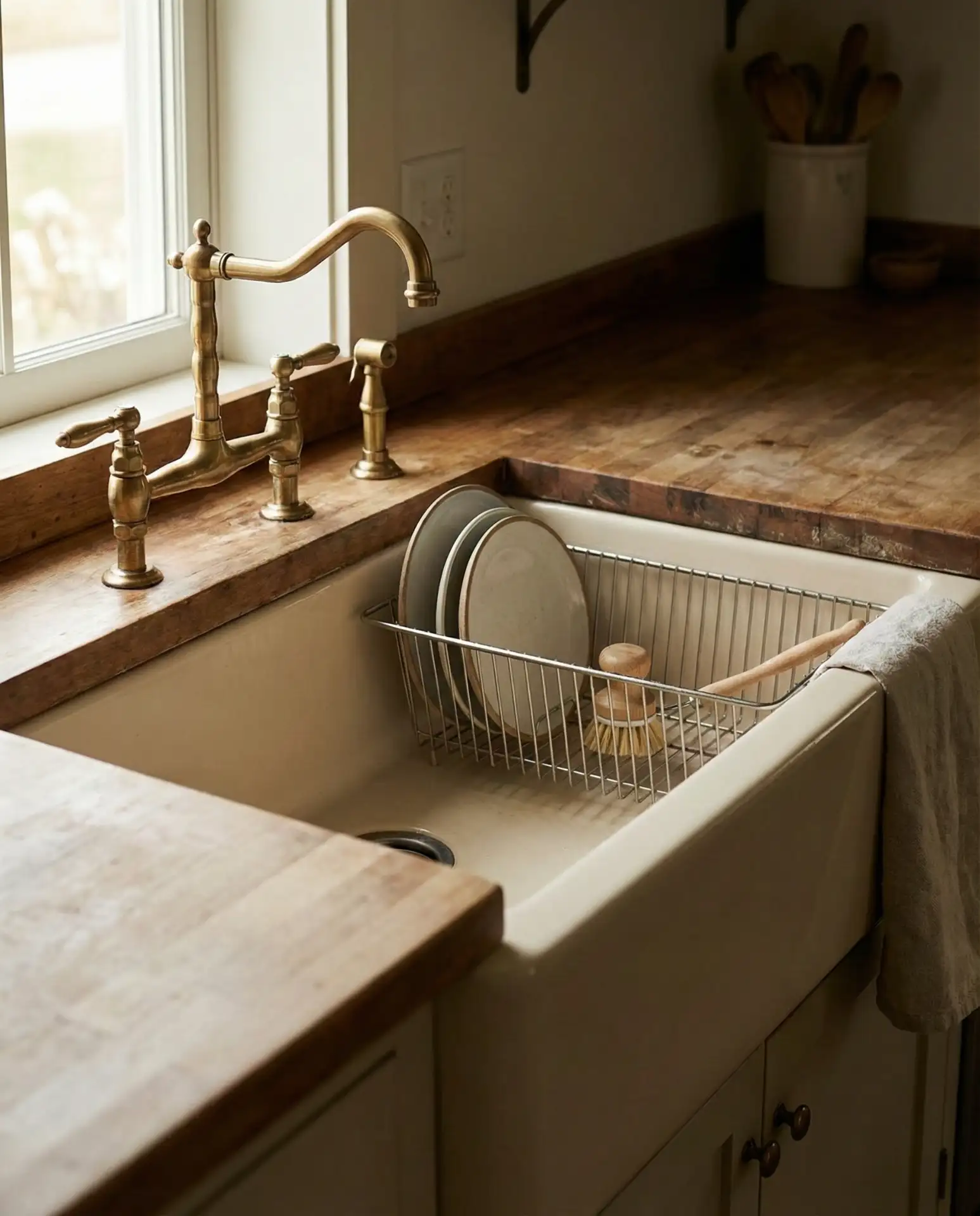
The classic apron-front farmhouse sink remains central to rustic kitchen design, and in 2026 we’re seeing both traditional white fireclay and more unexpected materials like hammered copper or black composite. The exposed front panel eliminates the need for a cabinet door, creating a focal point at the sink station while offering ergonomic benefits—you can stand closer without cabinet edges pressing into your legs. This sink style works in kitchens of any size, from compact urban condos to sprawling country homes.
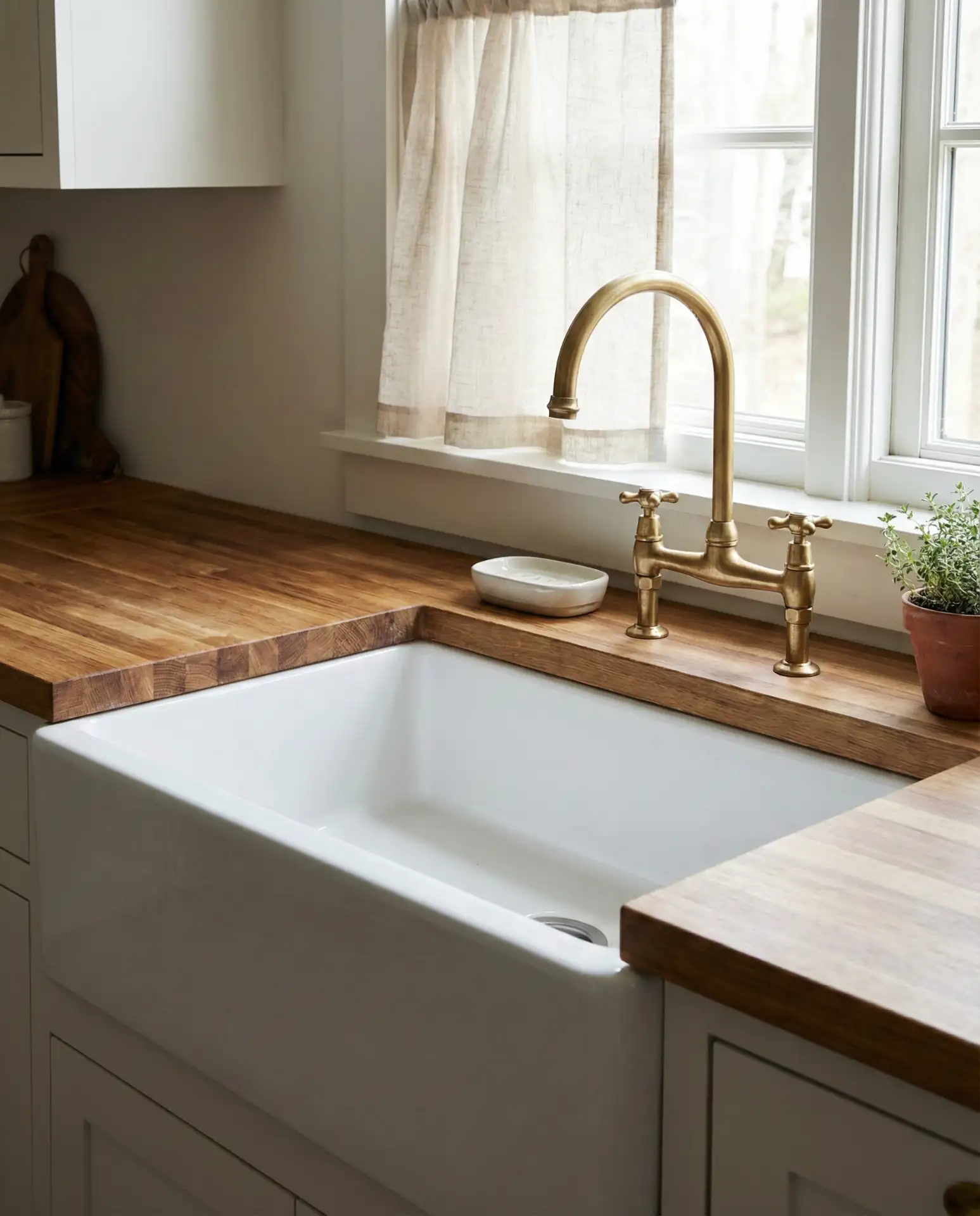
Where this works best: In kitchens where the sink faces a window or open room rather than a wall, maximizing the visual impact. The sink becomes a design statement rather than a purely functional element. Across New England and the Mid-Atlantic, restoration of historic homes almost always includes installing period-appropriate farmhouse sinks, but the style has traveled well beyond its agricultural origins. Even ultra-modern rustic kitchens benefit from this grounding element that references tradition without demanding full commitment to vintage aesthetics.
7. Black Iron Hardware and Fixtures
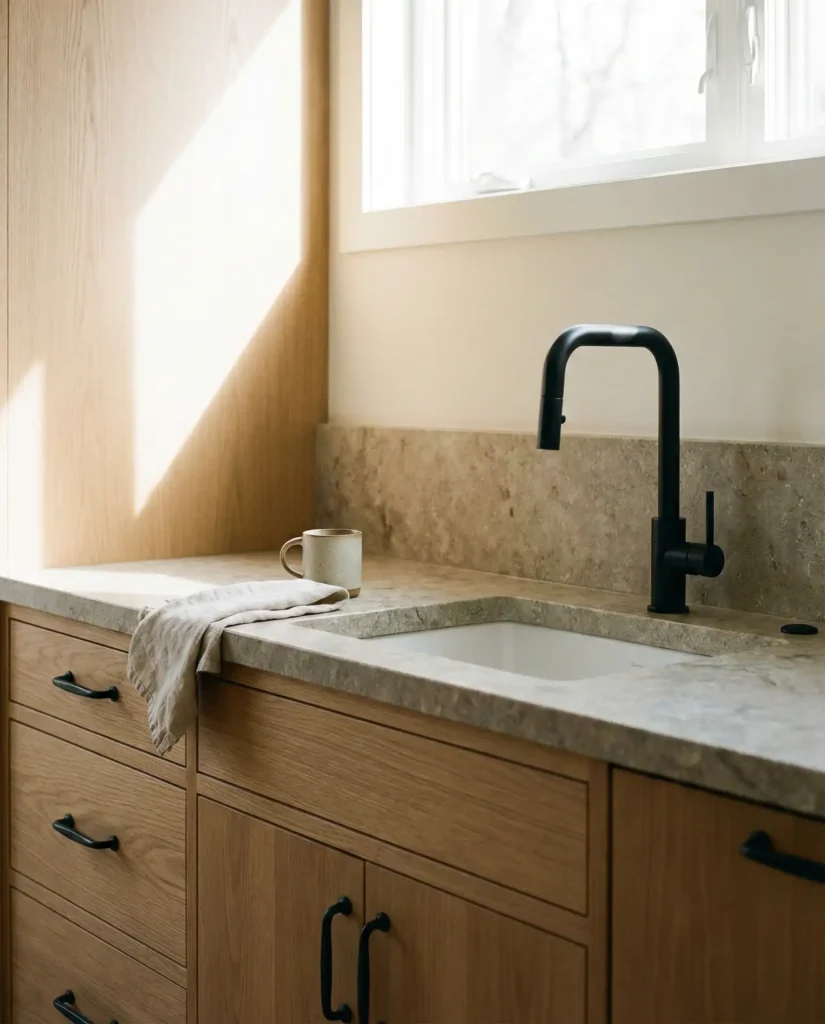
Matte black iron cabinet pulls, hinges, and faucets provide the strong contrast rustic kitchens need to avoid looking washed-out or overly matchy. This hardware choice works across multiple rustic styles—from industrial lofts to refined farmhouse spaces—because black iron reads as both utilitarian and elegant depending on its context. The metal’s slightly rough texture and matte finish prevent it from looking too polished or contemporary, maintaining that essential handcrafted quality.
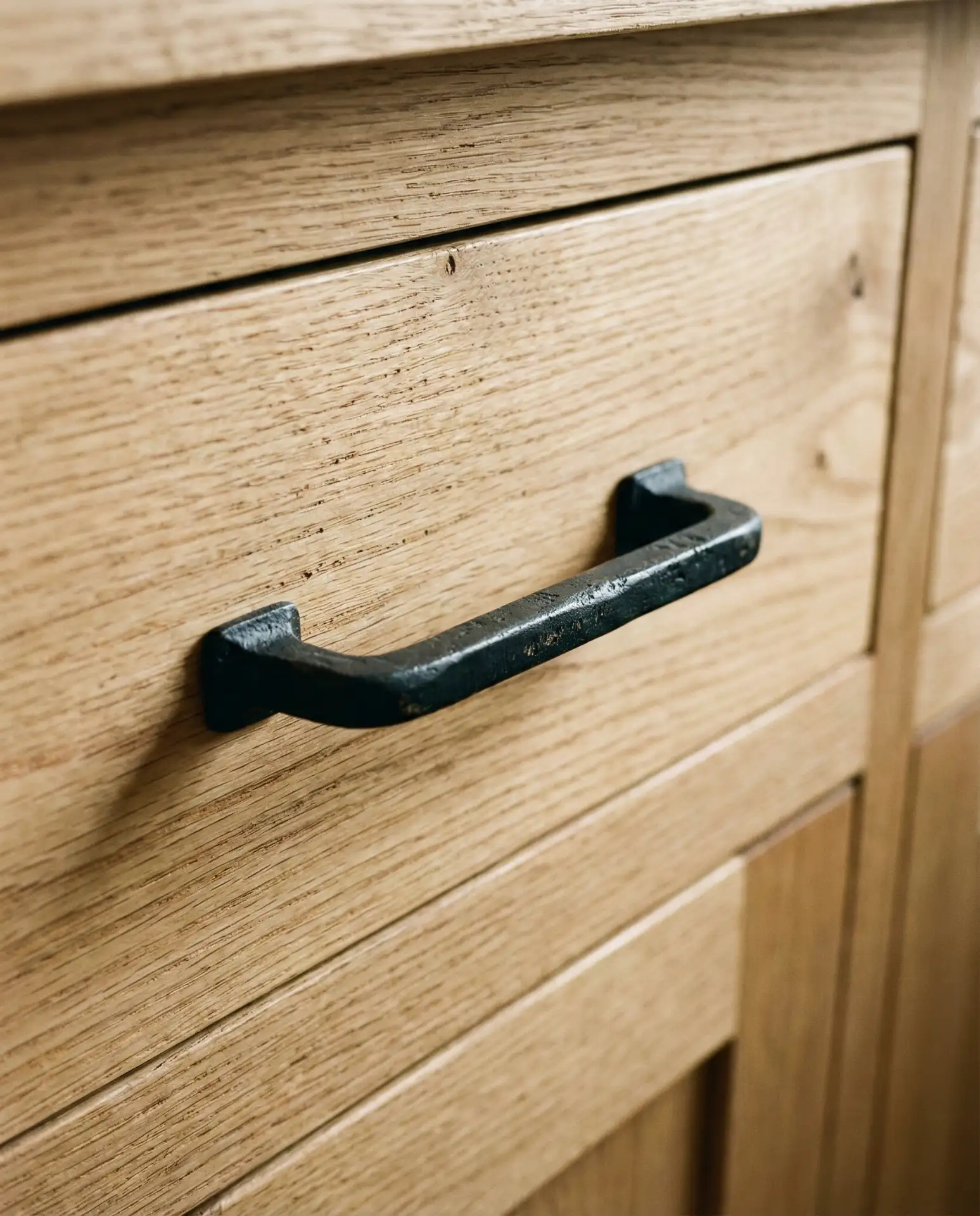
A practical insight worth noting: black iron finishes show water spots and fingerprints more readily than brushed nickel or chrome, which matters in high-traffic family kitchens. Many manufacturers now offer living finishes that develop character over time rather than looking worn-out, similar to how leather ages. If you’re particular about pristine surfaces, this might not be your hardware choice—but if you appreciate materials that tell a story through use, black iron delivers authenticity that’s hard to fake.
8. Butcher Block Countertops with Natural Edge
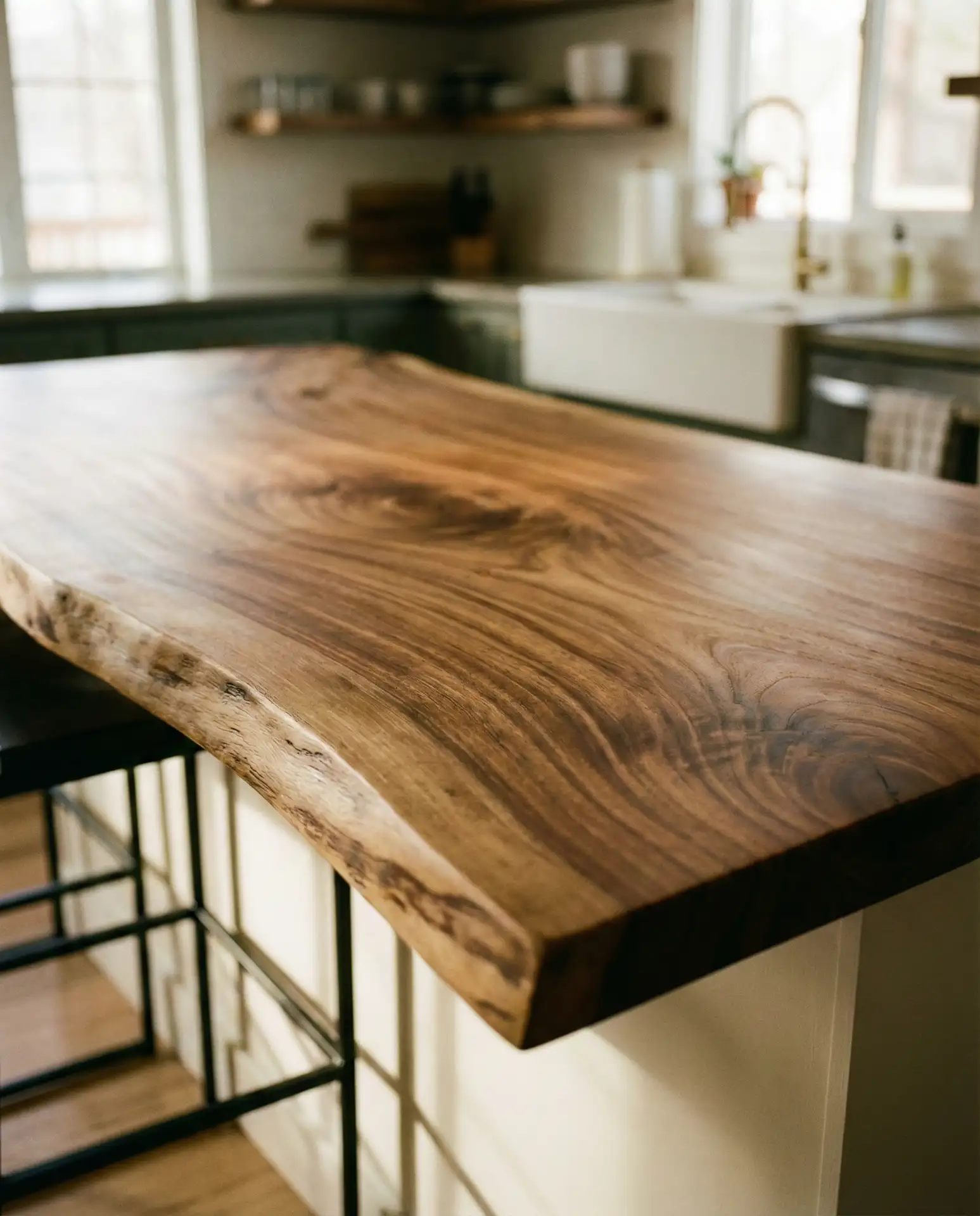
Wood countertops remain one of the most authentic choices for rustic kitchens, and the live-edge trend has brought a new dimension to traditional butcher block. Leaving one or both edges in their natural state—complete with bark lines and irregular curves—adds organic movement to what could otherwise be a flat, predictable surface. These countertops warm up kitchens instantly and improve with age, developing a patina from daily use that synthetic materials can never replicate.
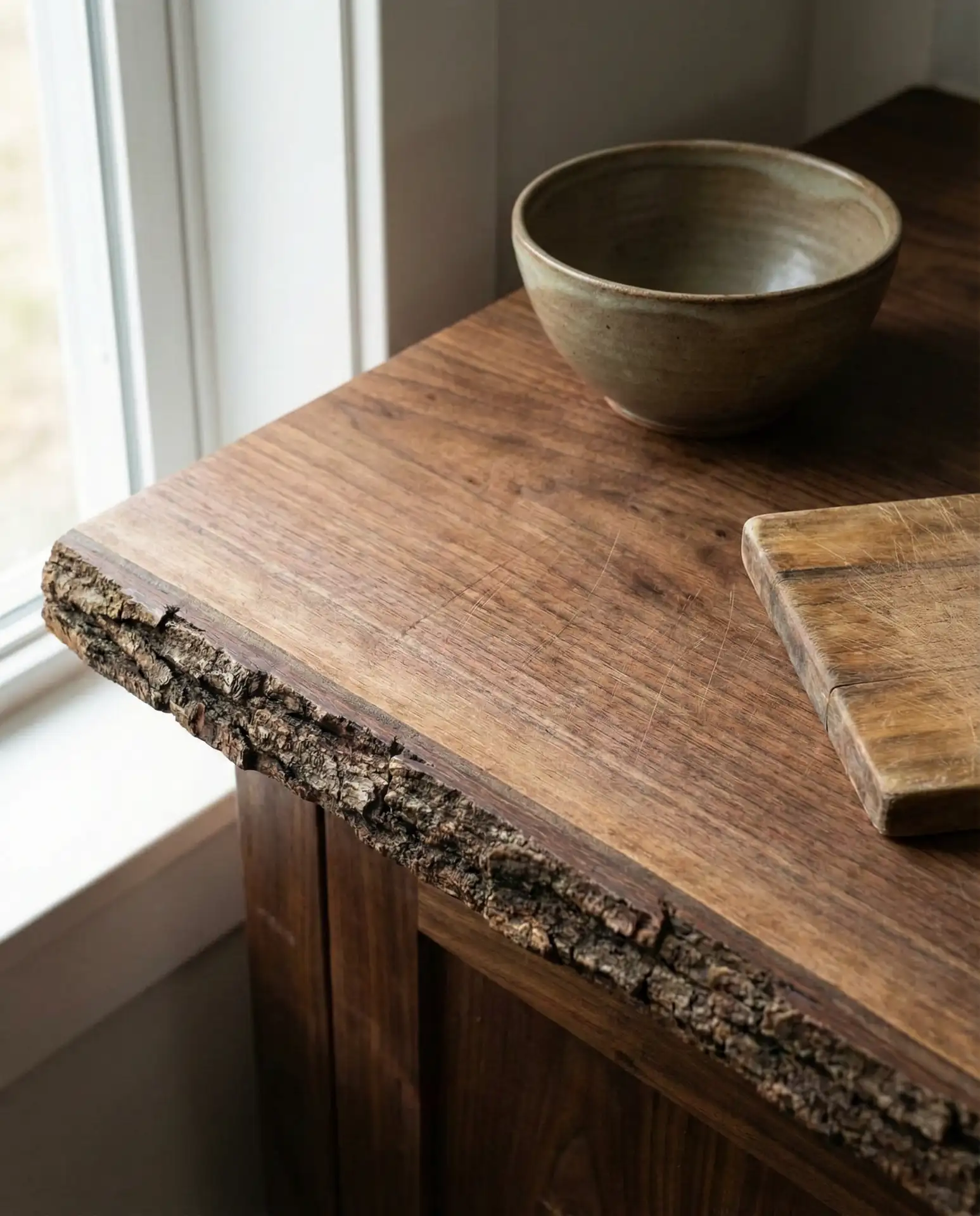
Budget considerations: Expect to pay $60-120 per square foot for quality hardwood countertops with live edges, compared to $40-70 for standard butcher block. The price reflects both material waste (natural edges mean irregular shapes) and the labor involved in finishing. That said, wood countertops often cost less than high-end stone while delivering equal visual impact. Maintenance involves monthly oiling and occasional sanding—not difficult, but something to factor into your lifestyle.
9. Industrial Metal Pendant Lights
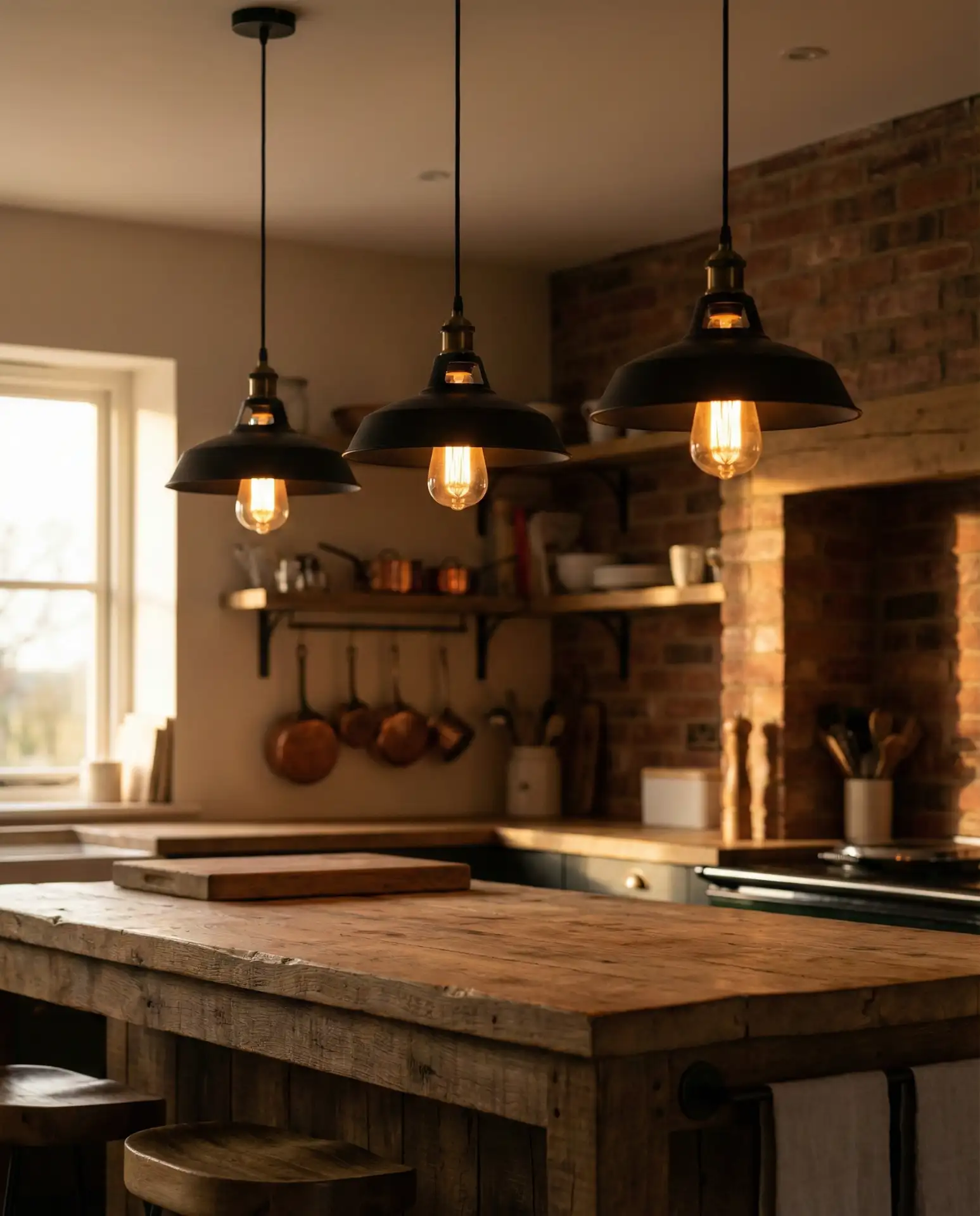
Oversized metal pendant lights with industrial origins—think warehouse cages, factory shades, or repurposed farm equipment—bring necessary task lighting while reinforcing rustic character. The beauty lies in mixing different metals or vintage styles rather than matching perfectly, creating an eclectic, collected-over-time feeling. These fixtures work particularly well over islands or dining tables, defining zones in open-concept spaces while adding vertical interest that draws the eye upward.
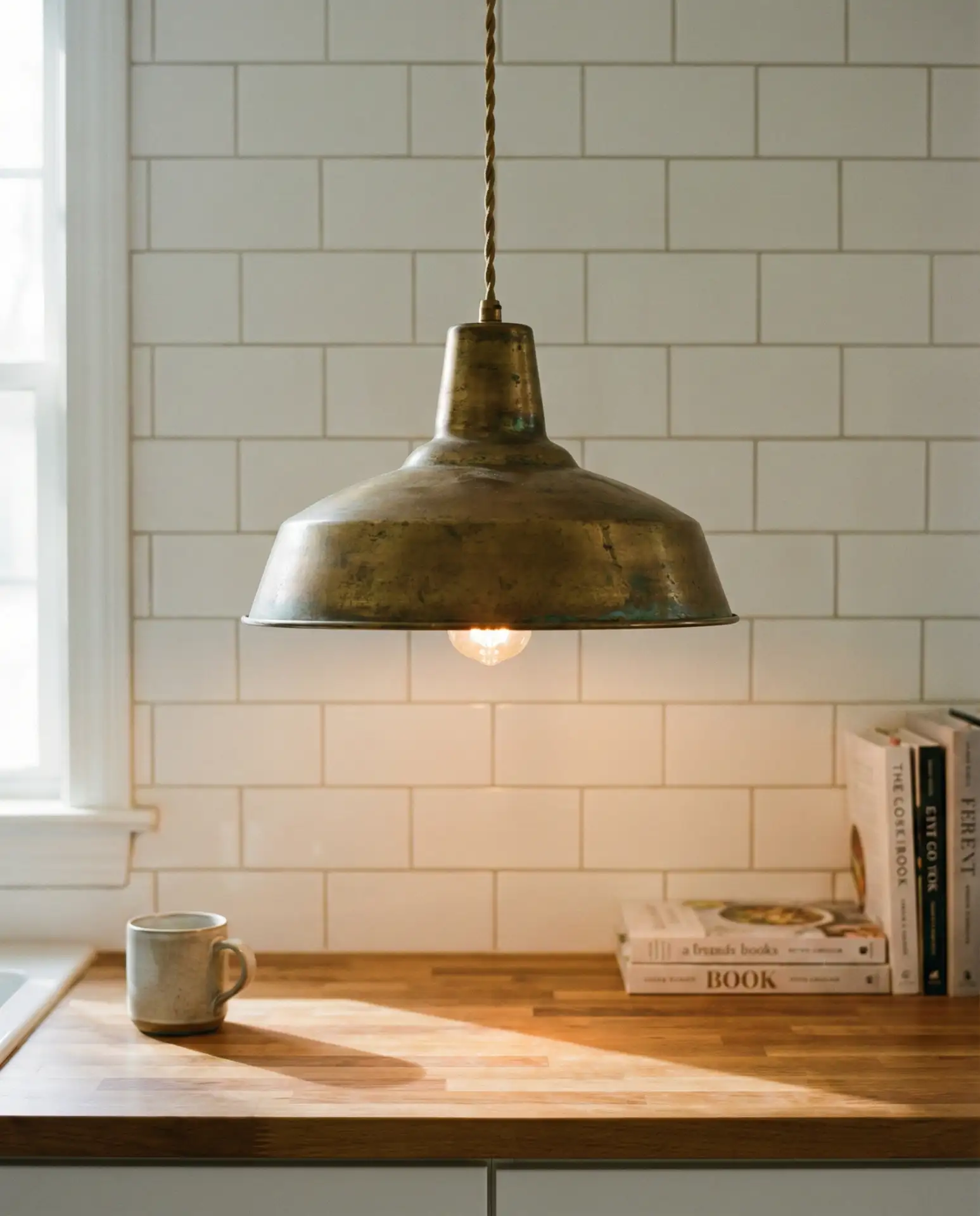
Real homeowner behavior: Most people install dimmer switches with these statement fixtures, allowing them to serve both as functional task lighting during meal prep and ambient mood lighting during dinner. The versatility justifies the investment, particularly in kitchens that double as entertaining spaces. In loft conversions across Brooklyn and Portland, original industrial fixtures are often retained and restored rather than replaced, honoring the building’s history while serving modern needs.
10. Shiplap or Plank Wall Accent
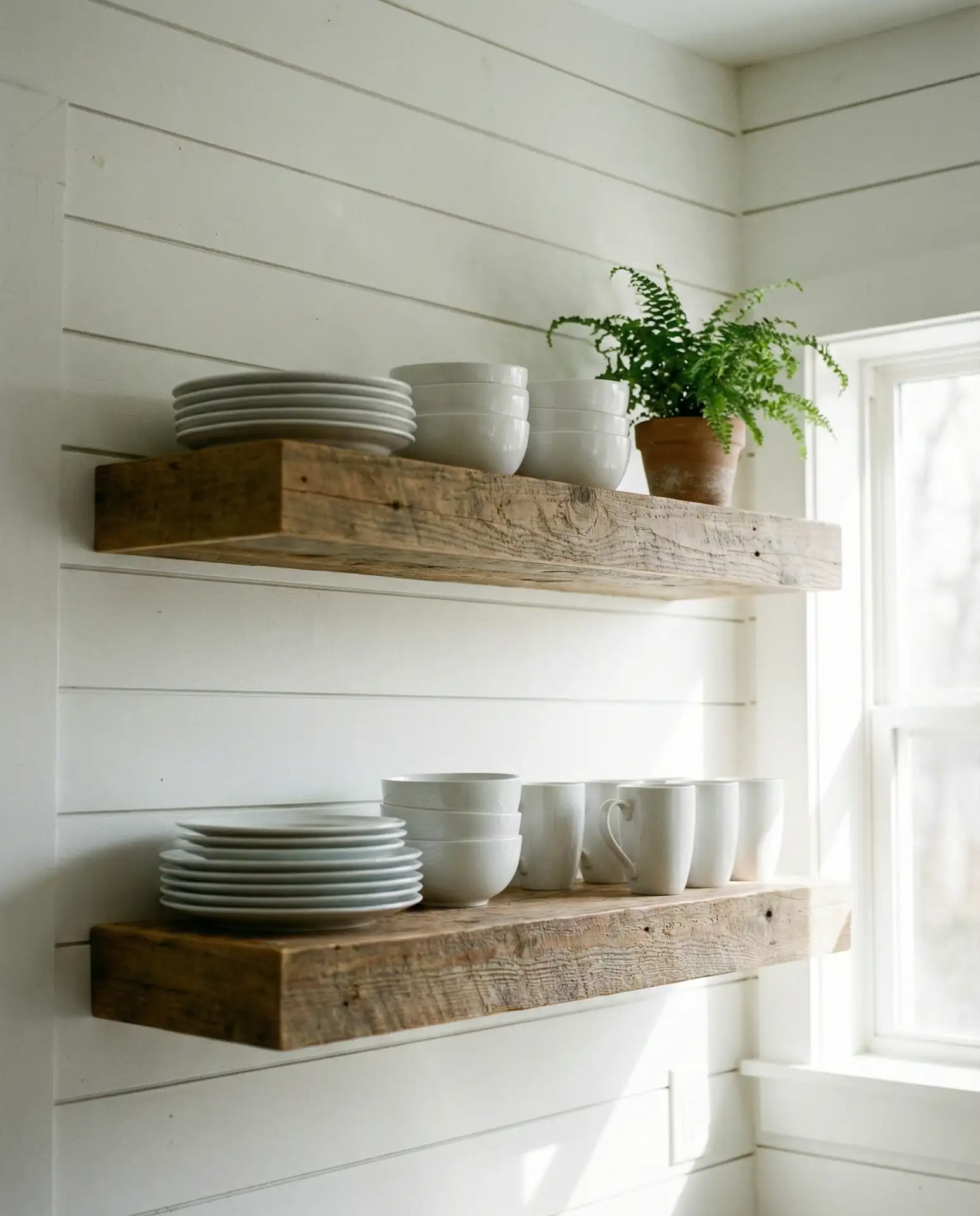
A single wall clad in horizontal shiplap or wider wood planks adds texture and warmth without overwhelming the space, serving as a neutral backdrop that enhances rather than competes with your kitchen’s other elements. This treatment works beautifully behind open shelves, creating depth and definition that helps dishes and glassware pop visually. The wood can be painted white for a brighter farmhouse feel or left natural for more pronounced rustic character, depending on your kitchen’s overall light levels and color palette.
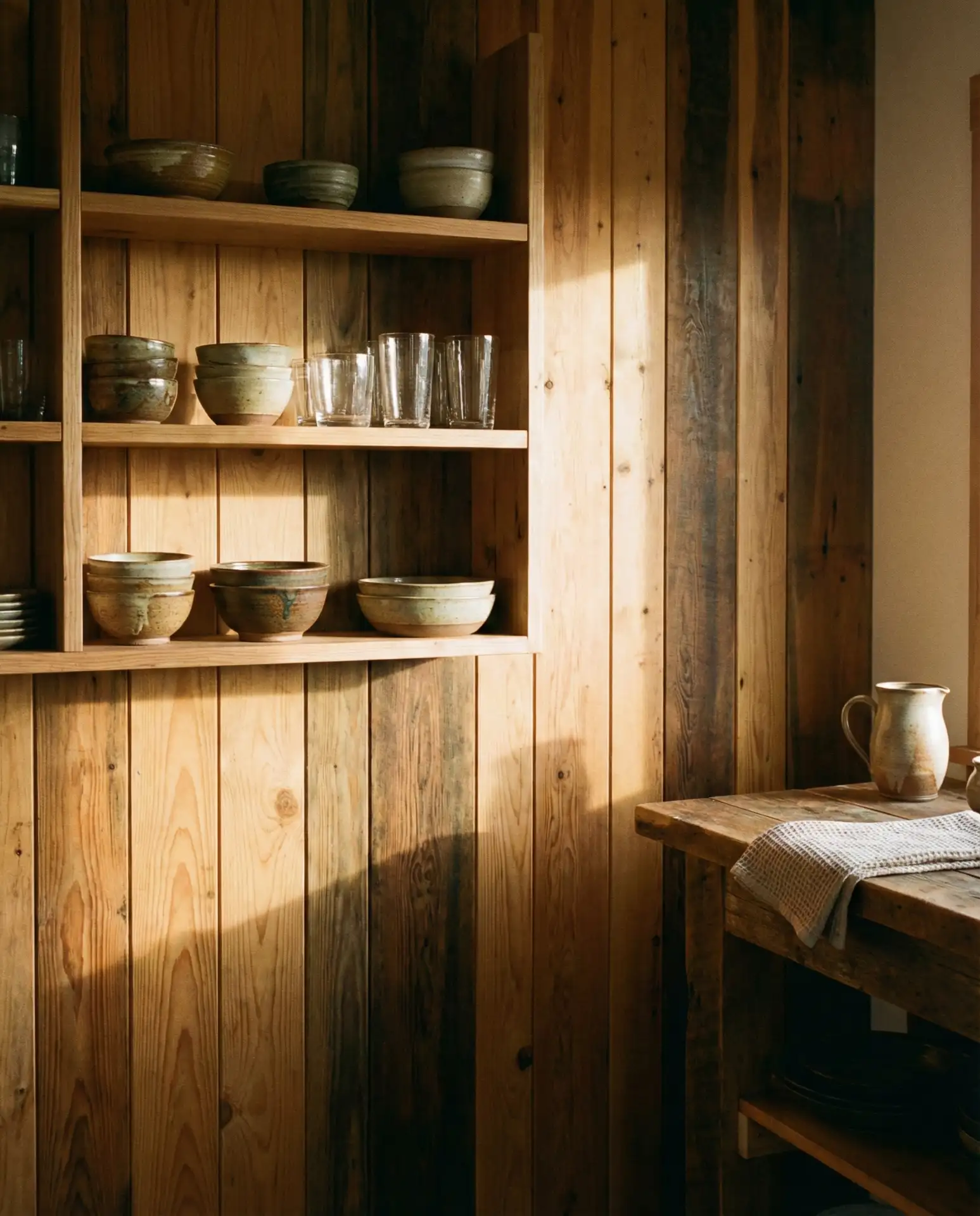
Common mistake: Installing shiplap on every wall in a kitchen, which can quickly veer into theme-restaurant territory rather than authentic home design. The key is restraint—one accent wall provides the rustic reference point without making the space feel like a set piece. This approach has become standard in renovated historic homes throughout the South, where original plank walls might exist in other rooms, and the kitchen accent wall creates visual continuity without requiring full preservation of aged materials in a working cooking space.
11. Large Farmhouse Table as Eat-In Island
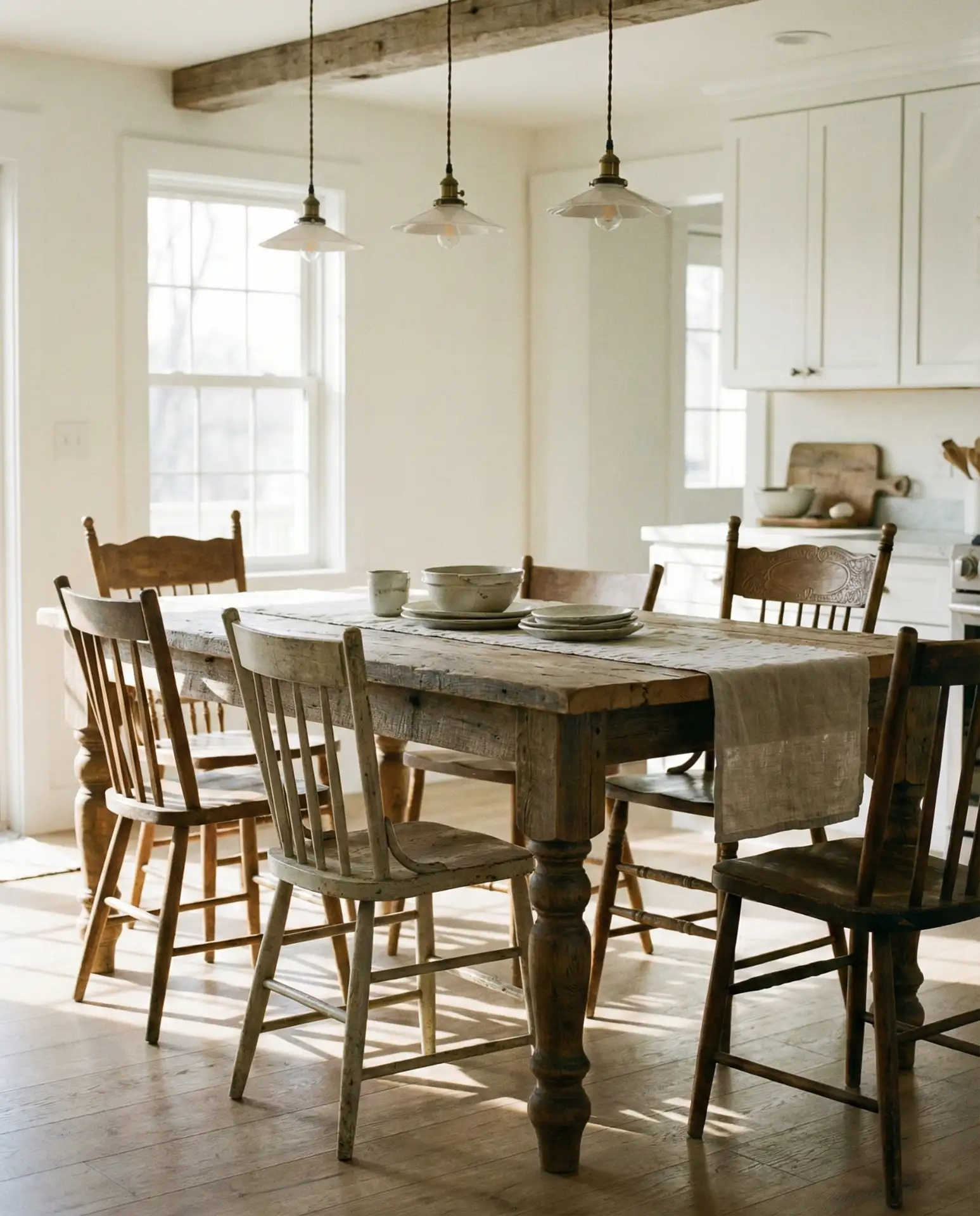
Instead of a traditional built-in island, a freestanding farmhouse table offers flexibility, character, and instant rustic credibility, particularly in kitchens where mobility matters or in older homes where permanent installations feel too contemporary. These substantial tables—typically 36-40 inches wide and 6-8 feet long—provide prep surface, casual dining, and a homework central station all in one piece. The worn wood surface welcomes real use rather than demanding pristine maintenance, making this choice ideal for families who actually live in their kitchens.
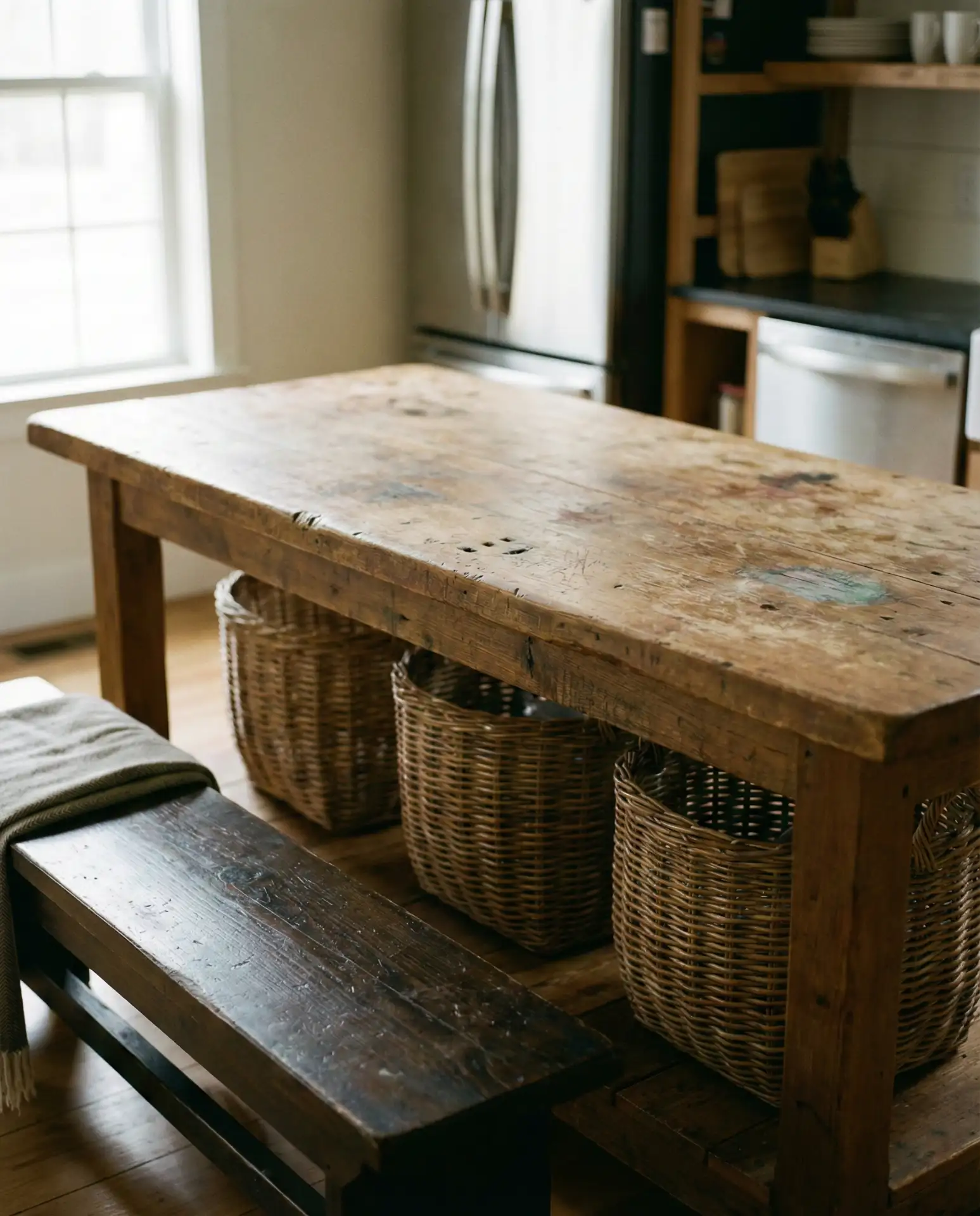
This setup works best in kitchens with at least 42 inches of clearance on all sides, allowing comfortable traffic flow even when chairs are pulled out. In open-plan homes, the table helps define the kitchen zone without requiring walls or half-walls. I’ve noticed that families with this arrangement tend to gather more naturally than those with standard islands—there’s something about a real table that invites lingering over coffee or homework in a way that counter seating doesn’t quite achieve.
12. Stone or Brick Backsplash Feature Wall
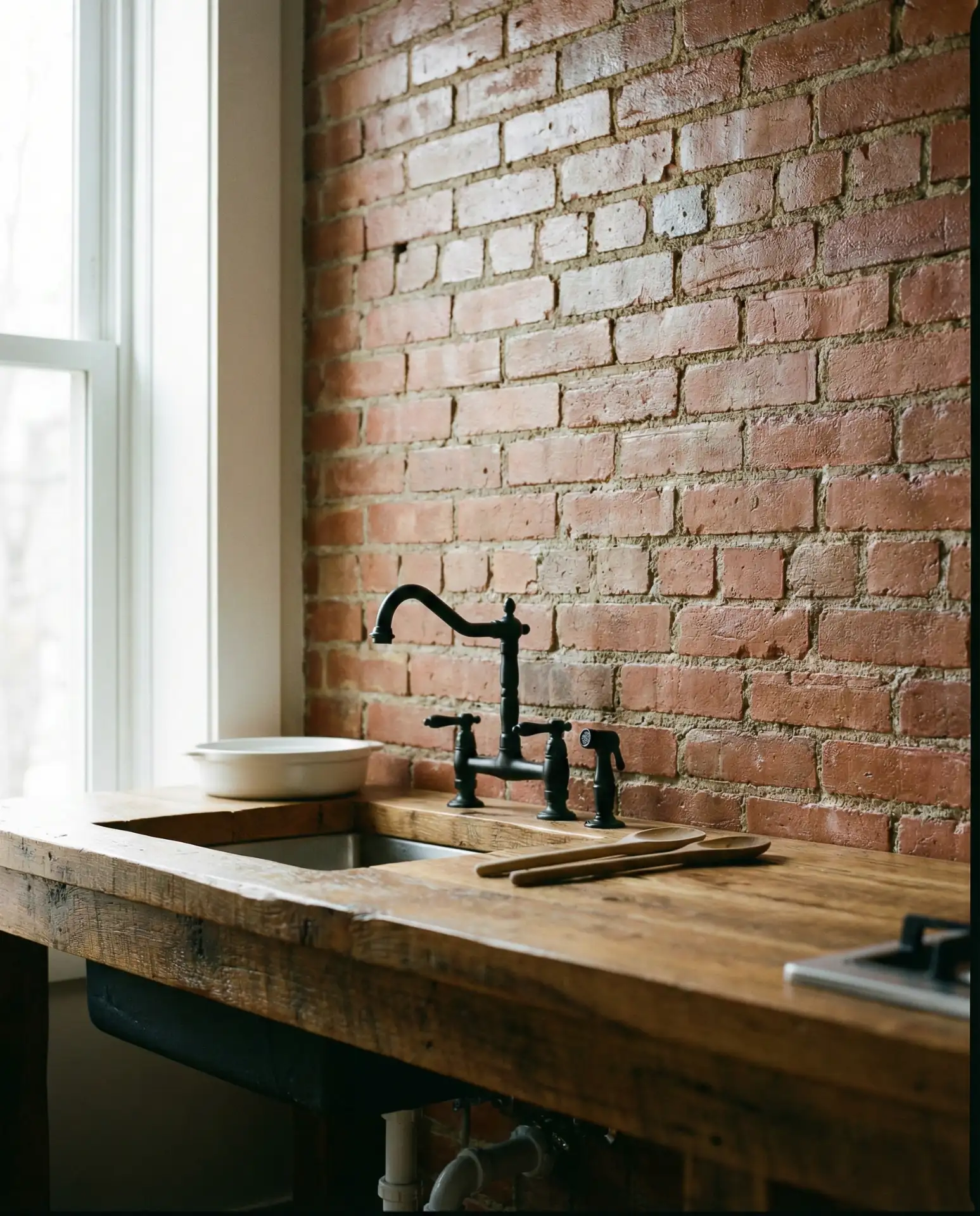
Exposed brick or stacked stone as a kitchen backsplash brings raw texture that’s impossible to replicate with tile, creating an immediate connection to historic building methods and natural materials. This approach works especially well in renovated industrial spaces or homes built in the 19th and early 20th centuries where original brick might be hiding under drywall. The irregular surface and varied color within the stone or brick provide organic visual interest that remains engaging even in minimal kitchens with few other decorative elements.
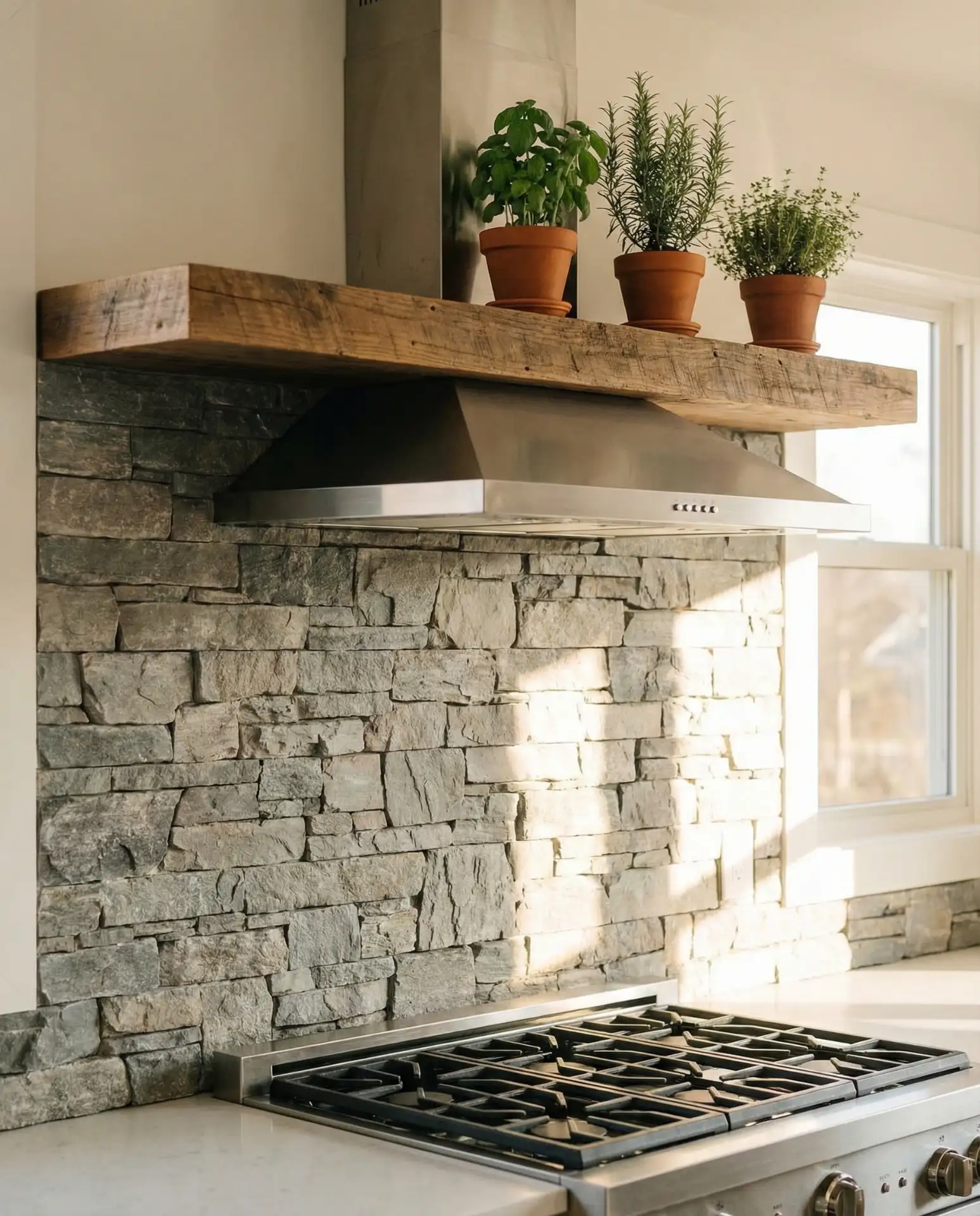
Practical insight: Brick and stone backsplashes require proper sealing to resist grease and moisture, something not all contractors mention upfront. Without adequate sealing, these porous materials will stain and darken over time, especially behind cooking surfaces. The good news is that properly sealed brick needs minimal maintenance and actually improves in appearance as it develops character. Many homeowners report that minor staining adds to the authenticity rather than detracting from it—a different mindset than gleaming tile requires.
13. Vintage-Inspired Appliances in Modern Sizes
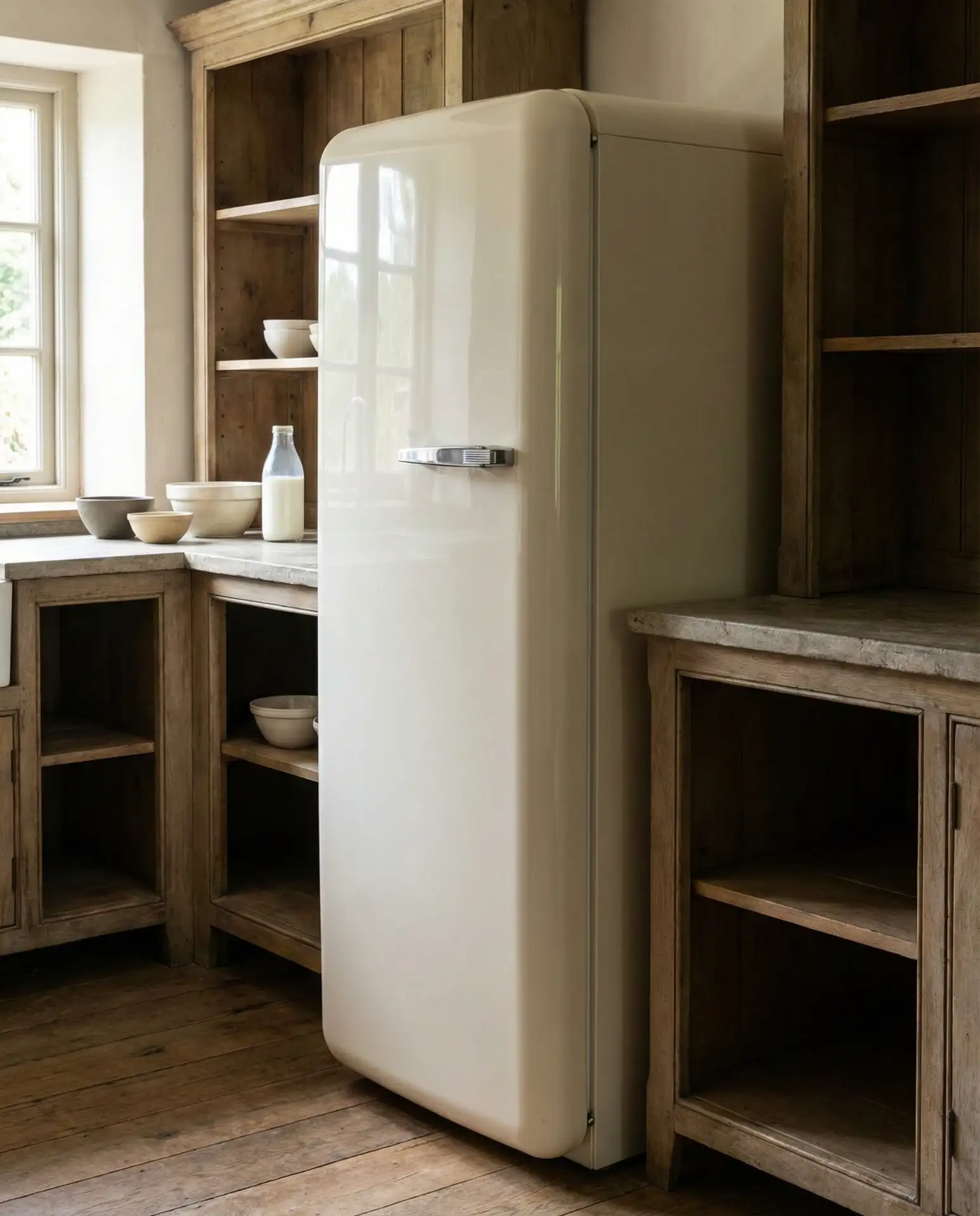
Brands like Big Chill, Smeg, and BlueStar now offer refrigerators, ranges, and dishwashers that combine retro styling with contemporary performance, solving the rustic kitchen’s biggest challenge: how to integrate necessary modern appliances without breaking the aesthetic. These pieces often feature rounded edges, vintage color options, and chrome details that reference mid-century design while delivering current energy efficiency and cooking technology. The investment is significant, but for homeowners committed to cohesive rustic design, it eliminates the jarring presence of standard stainless steel appliances.
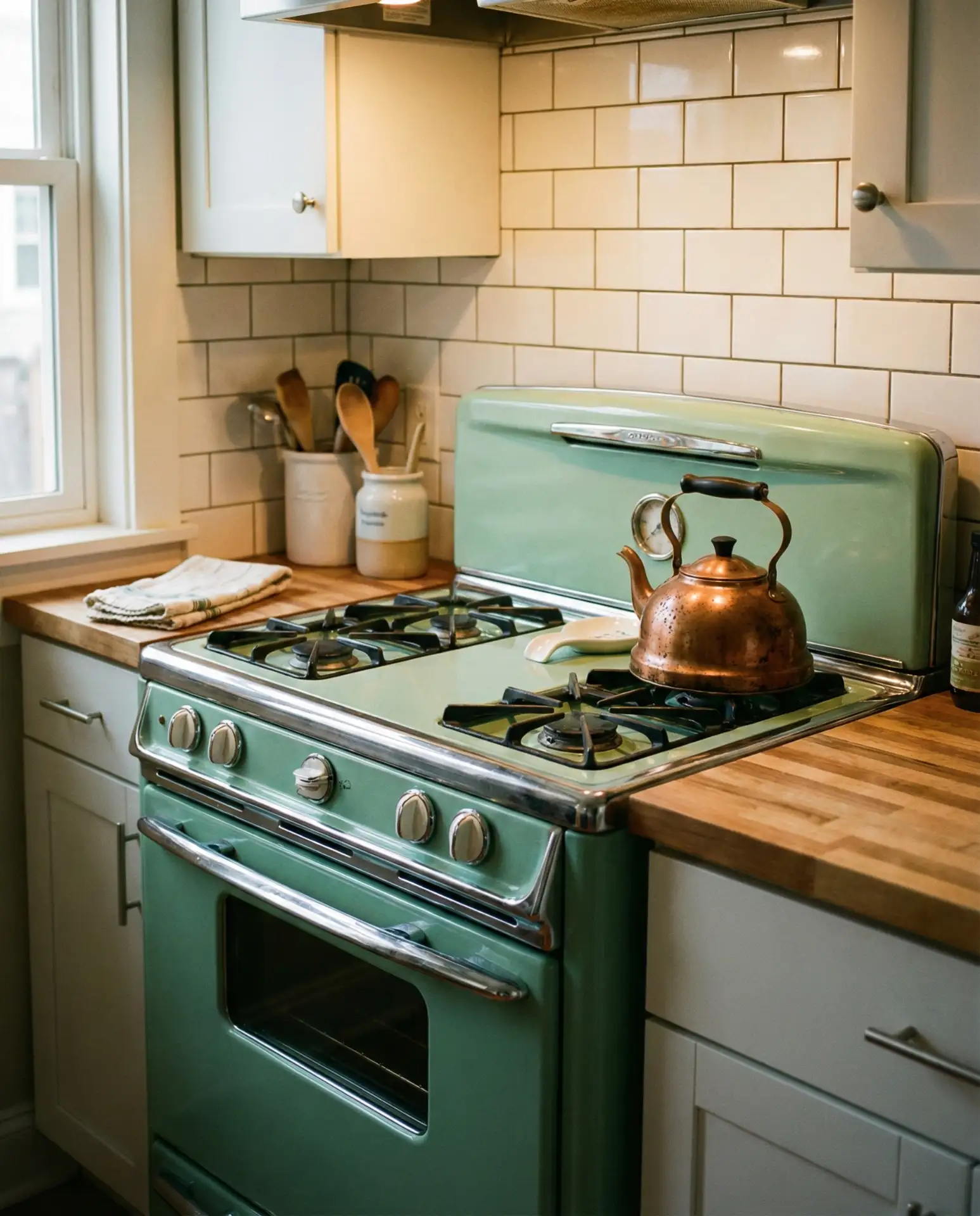
Budget angle: Expect to pay 20-40% more than comparable standard appliances, with vintage-inspired ranges starting around $3,000 and refrigerators beginning at $2,500. For many budgets, this means prioritizing one statement appliance—usually the range or refrigerator—and keeping others standard. The good news is that even one vintage-inspired piece significantly impacts the overall aesthetic. In renovated farmhouses across Wisconsin and upstate New York, a colorful vintage-style range has become the signature element that defines the kitchen’s personality.
14. Natural Linen or Cotton Window Curtains
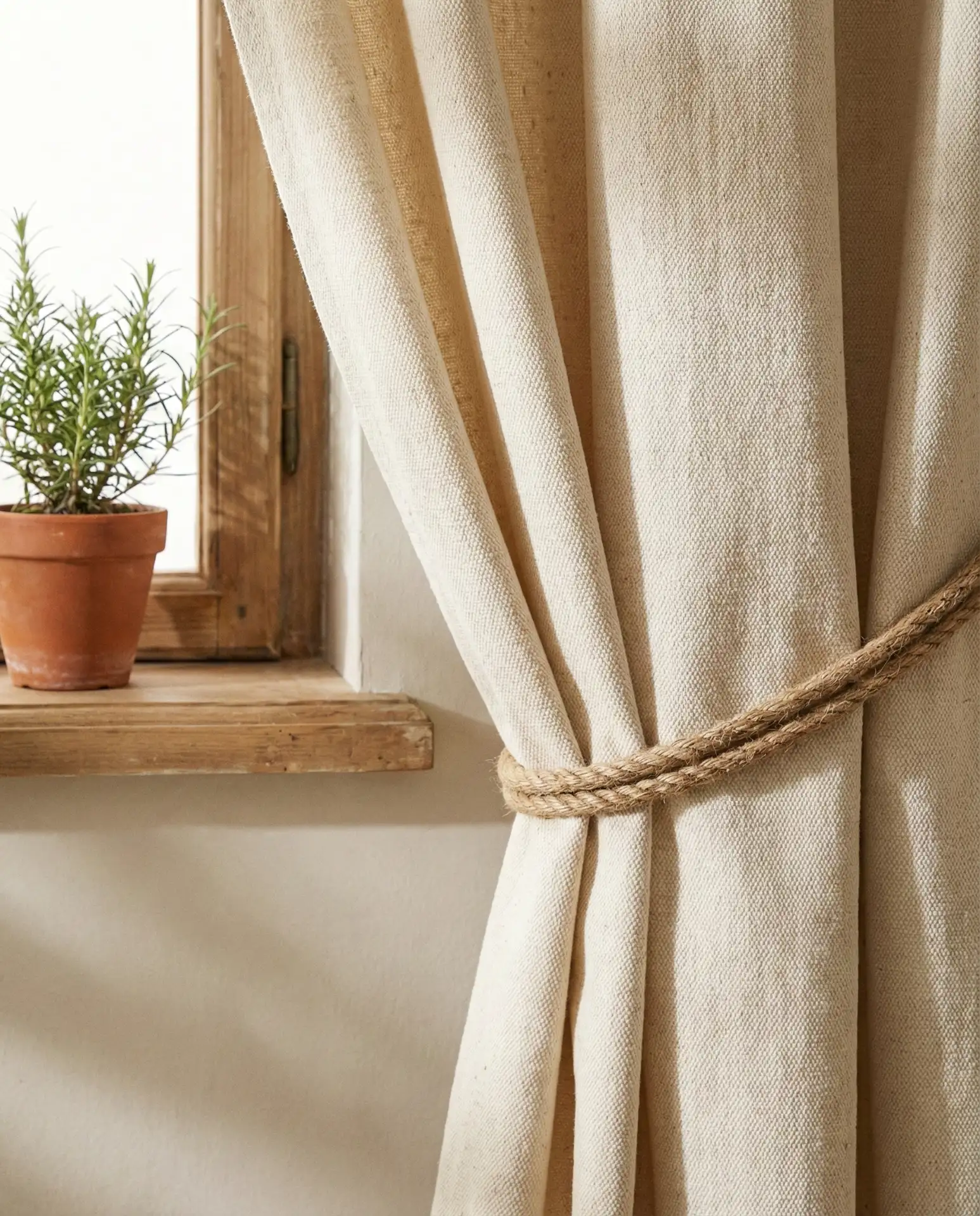
Simple curtains in natural fibers soften rustic kitchens without adding fuss, filtering light beautifully while maintaining the unpretentious character these spaces require. Heavyweight linen in cream, oat, or soft gray provides privacy and light control without the formality of heavy drapes or the starkness of blinds. The slight texture and occasional wrinkle of natural fabric reinforce the handcrafted, unfussy aesthetic, and these materials age gracefully rather than looking shabby over time.
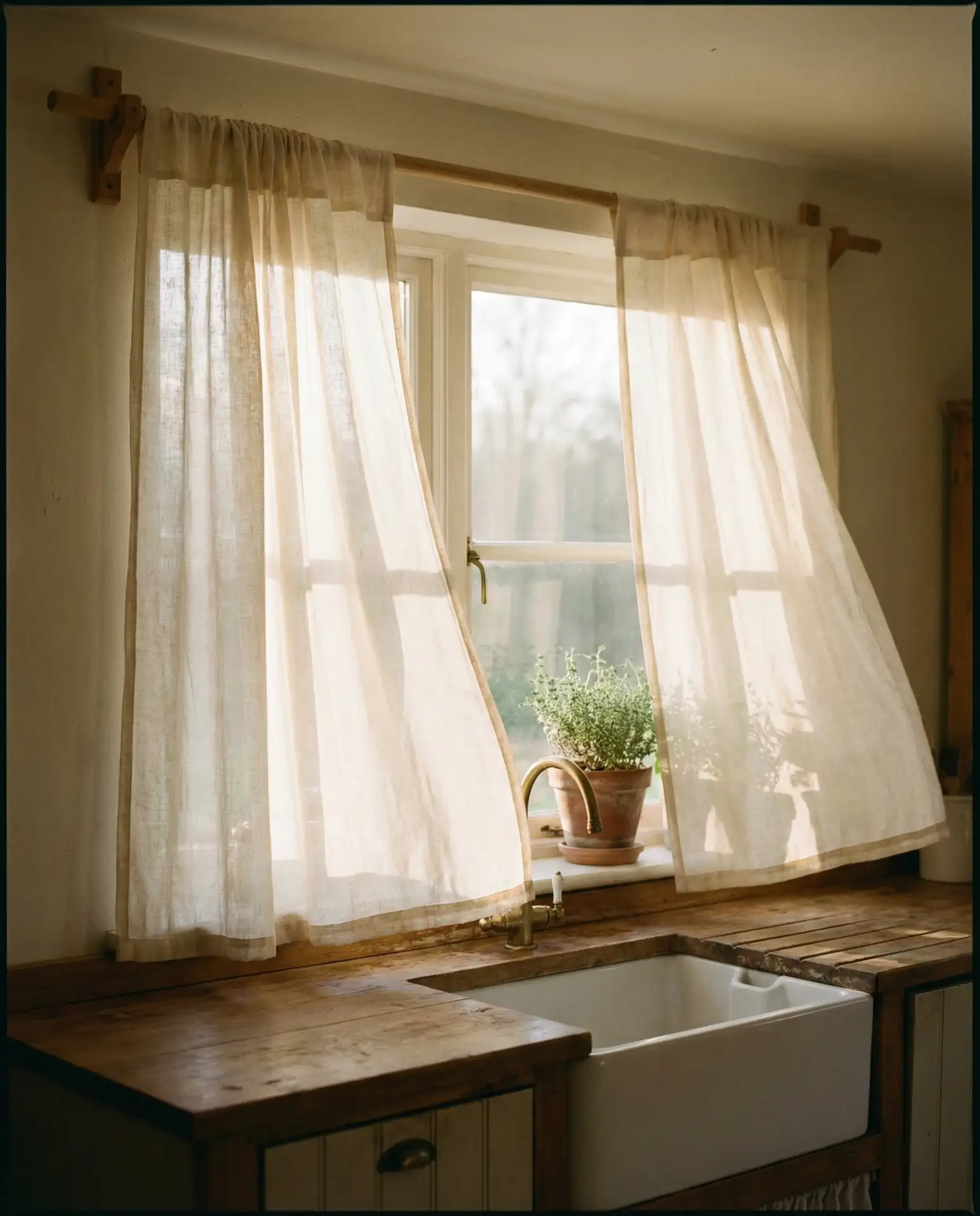
Where this works best: In kitchens with windows that face neighbors or streets rather than private yards, where you need adjustable privacy throughout the day. The beauty of simple curtain panels is their flexibility—tied back for maximum light, partially closed for filtered glow, or fully drawn for evening privacy. Across the Northeast and Midwest, where kitchen windows often face side yards and driveways, this soft treatment provides necessary privacy without resorting to heavy shutters or shades that can make spaces feel closed off.
15. Mixed Metal Finishes for Visual Interest
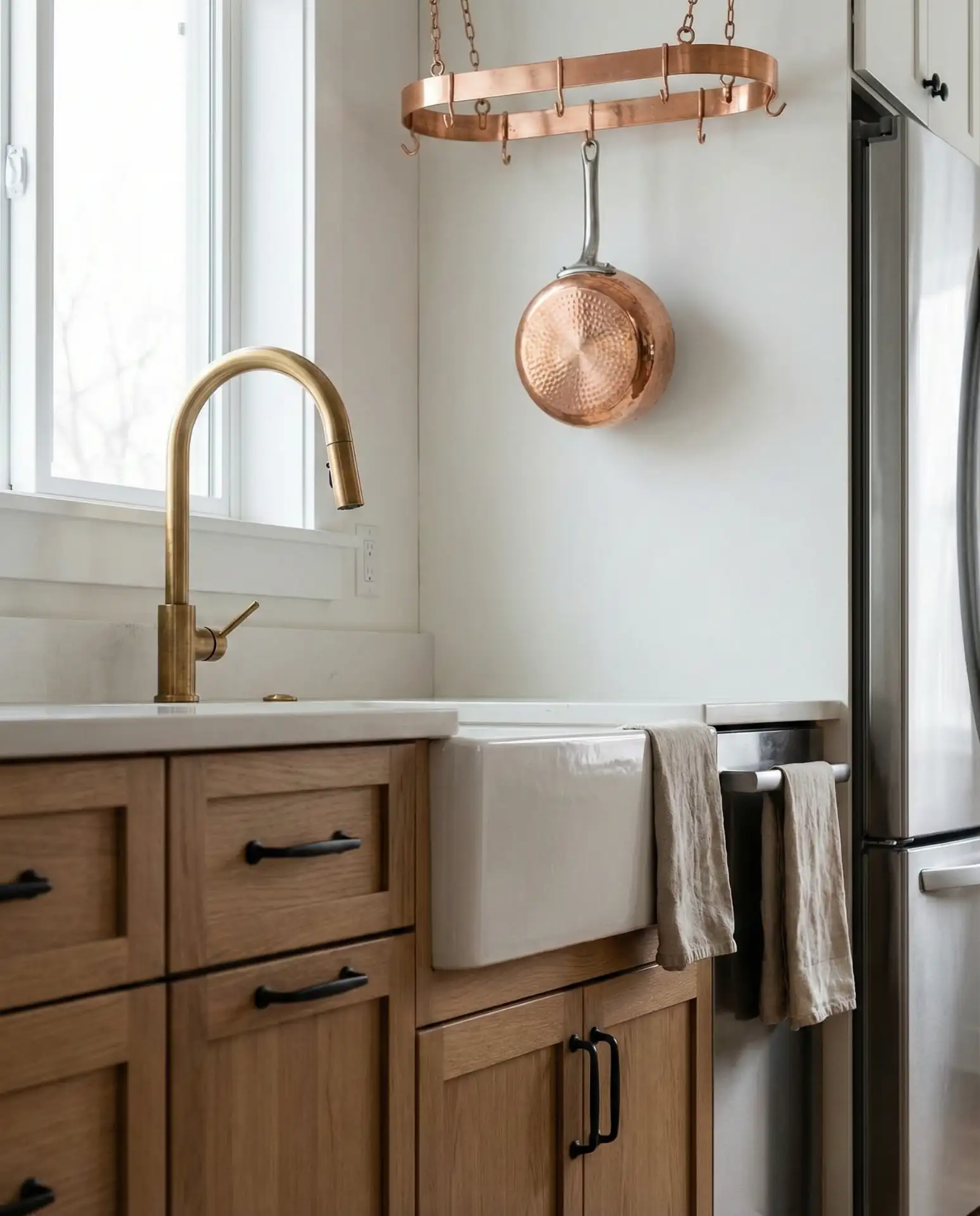
Gone are the days when every metal finish in a kitchen needed to match perfectly—today’s successful rustic spaces combine brass, copper, black iron, and even brushed nickel within the same room. This layered approach feels collected rather than purchased all at once, adding depth and preventing the sterile uniformity that can plague designed spaces. The key is distributing metals throughout the room rather than clustering them, so your eye travels and discovers new details rather than getting stuck on any single element.
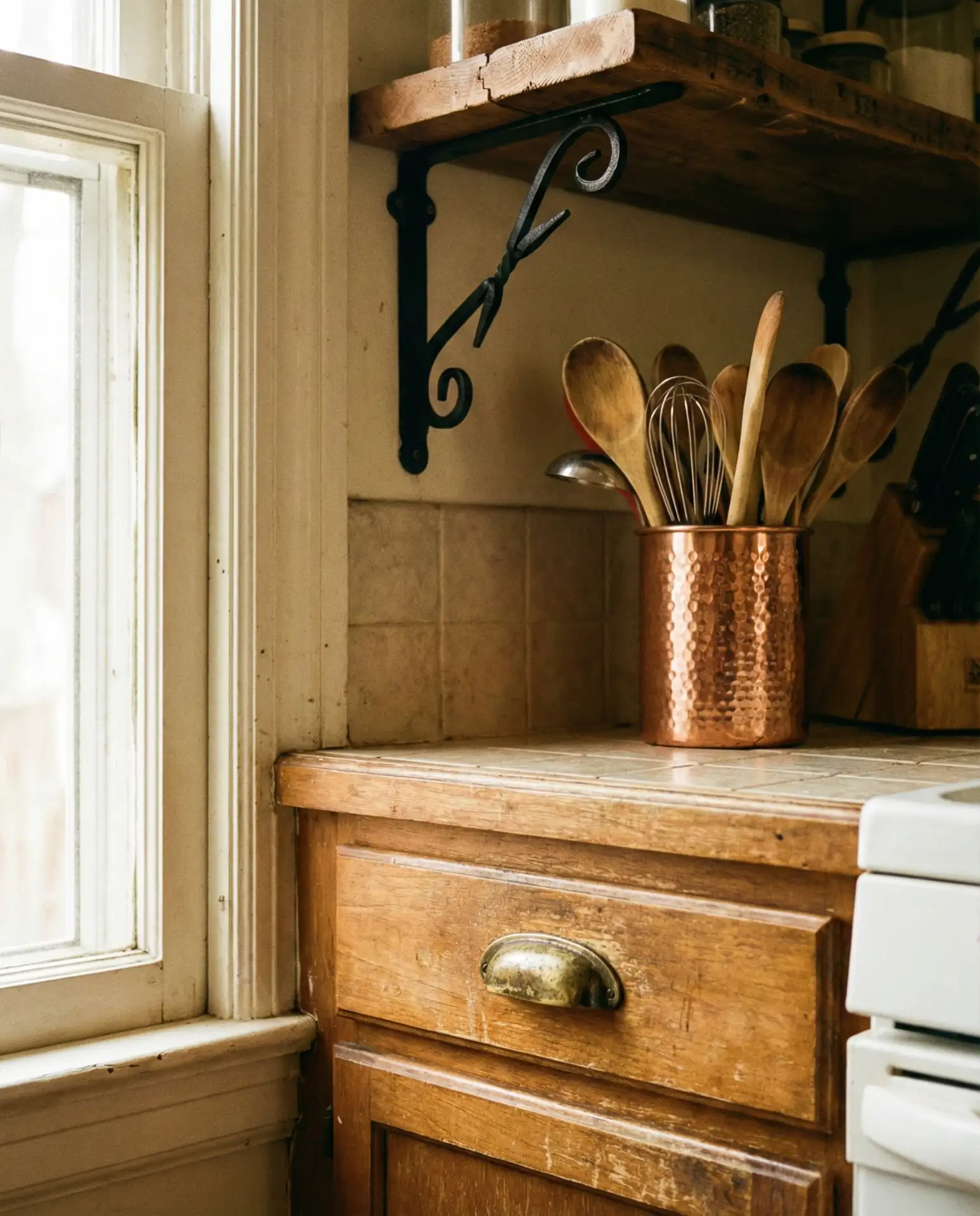
A common mistake is mixing too many metal finishes or choosing metals that don’t share any common undertone. The guideline that works: stick to 2-3 different metals maximum, and ensure they’re either all warm-toned (brass, copper, bronze) or cool-toned (black iron, stainless, chrome), or intentionally mix one warm with one cool. This prevents visual chaos while maintaining the collected eclecticism that makes rustic kitchens feel personal. Mixing metals also gives you freedom to replace one element without needing to match everything else perfectly.
16. Concrete Countertops with Warm Wood Base
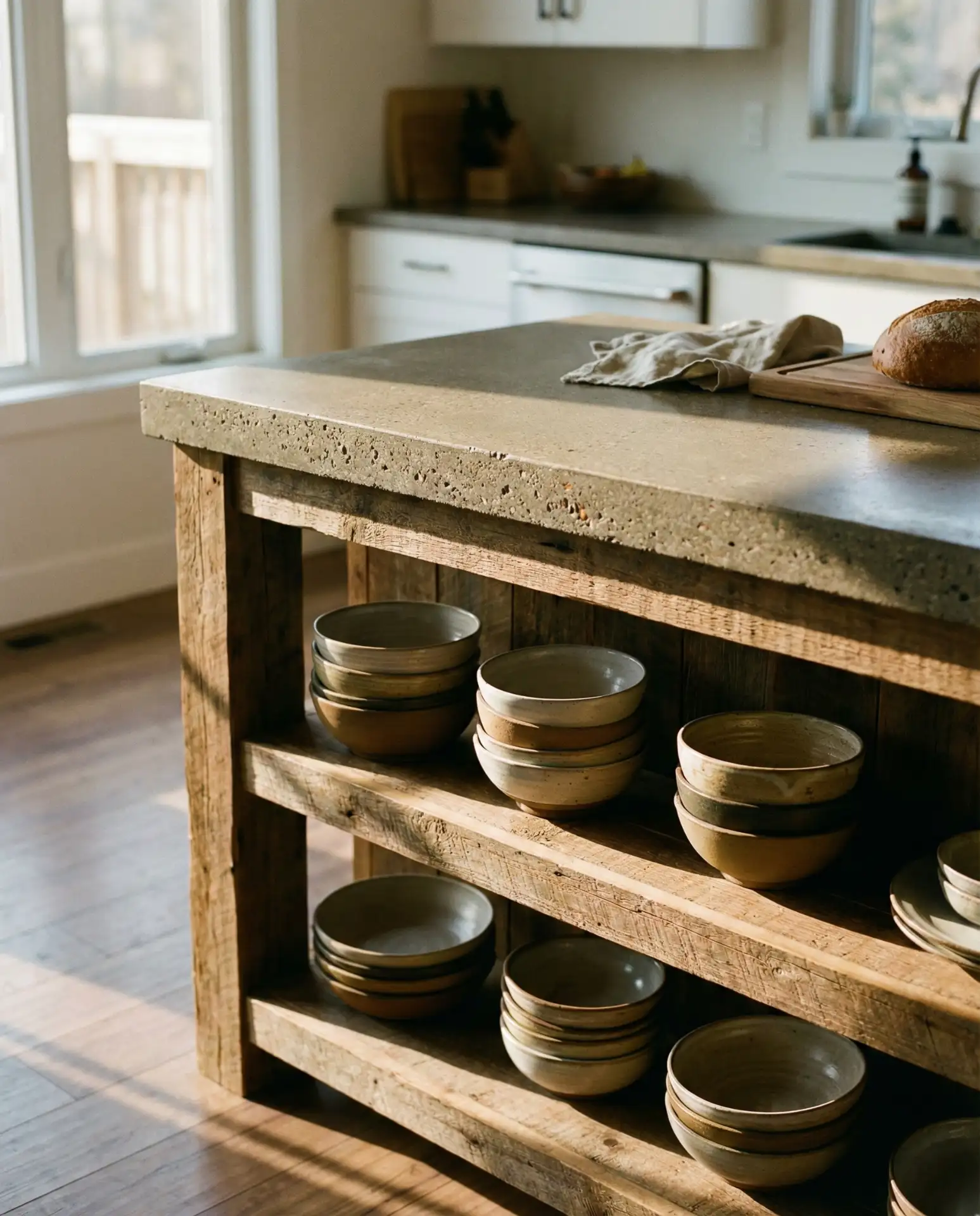
Polished concrete countertops bring an industrial edge to rustic kitchens while offering remarkable durability and heat resistance that wood and stone can’t match. When paired with warm wood cabinets or bases, the cool gray concrete becomes balanced and approachable rather than cold or institutional. The material can be tinted, textured, and finished in dozens of ways, from smooth and glossy to rough and matte, allowing customization that makes each installation unique.
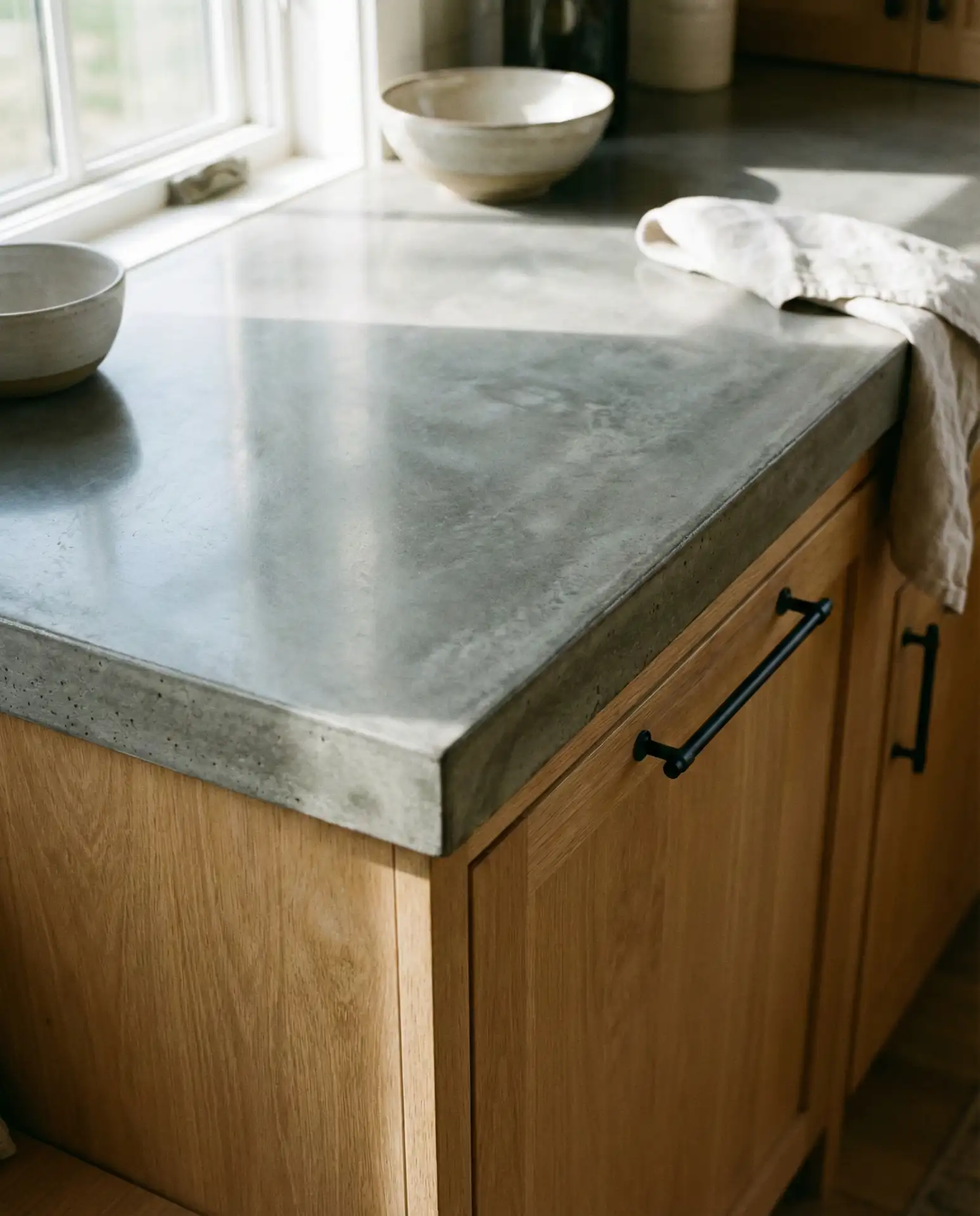
Expert commentary: Concrete requires proper sealing to resist staining, much like natural stone, and will develop a patina over time that some homeowners love and others find concerning. The material is also custom-poured and finished on-site in most cases, meaning installation takes longer than prefabricated options. But for kitchens aiming for modern rustic or industrial-farmhouse aesthetics, concrete delivers a singular look that immediately distinguishes your space. Expect costs comparable to mid-range granite, around $75-150 per square foot installed.
17. Open Floor Plan with Kitchen as Central Hub
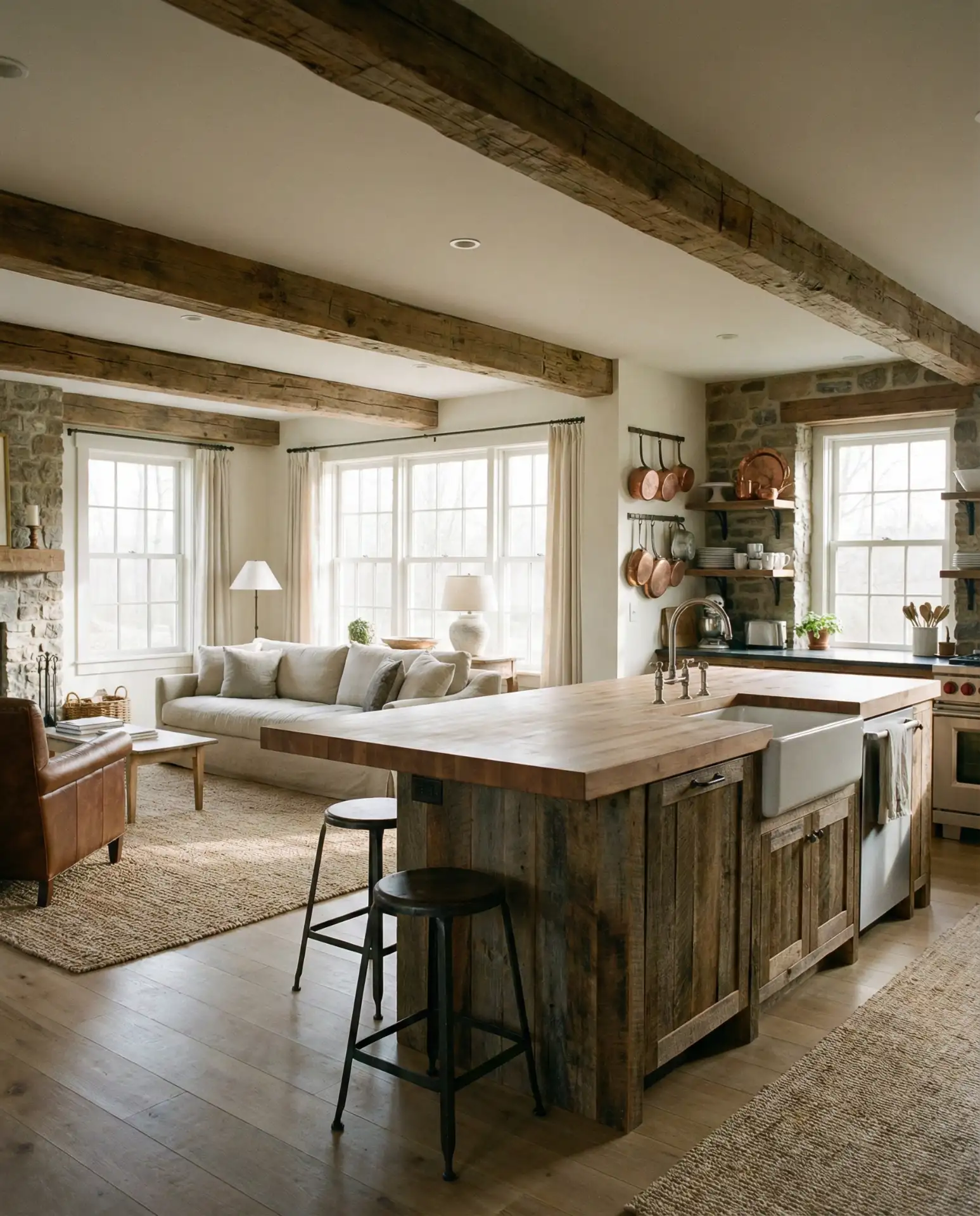
The new American kitchen increasingly flows into living and dining areas without walls, making rustic design inspiration even more important as the kitchen becomes a visible centerpiece of the home. This openness demands that the kitchen’s aesthetic integrate seamlessly with adjacent spaces while maintaining its functional core. Rustic materials—wood, stone, and natural fibers—transition beautifully between zones, providing cohesion that sleek modern styles sometimes struggle to achieve across large open areas.
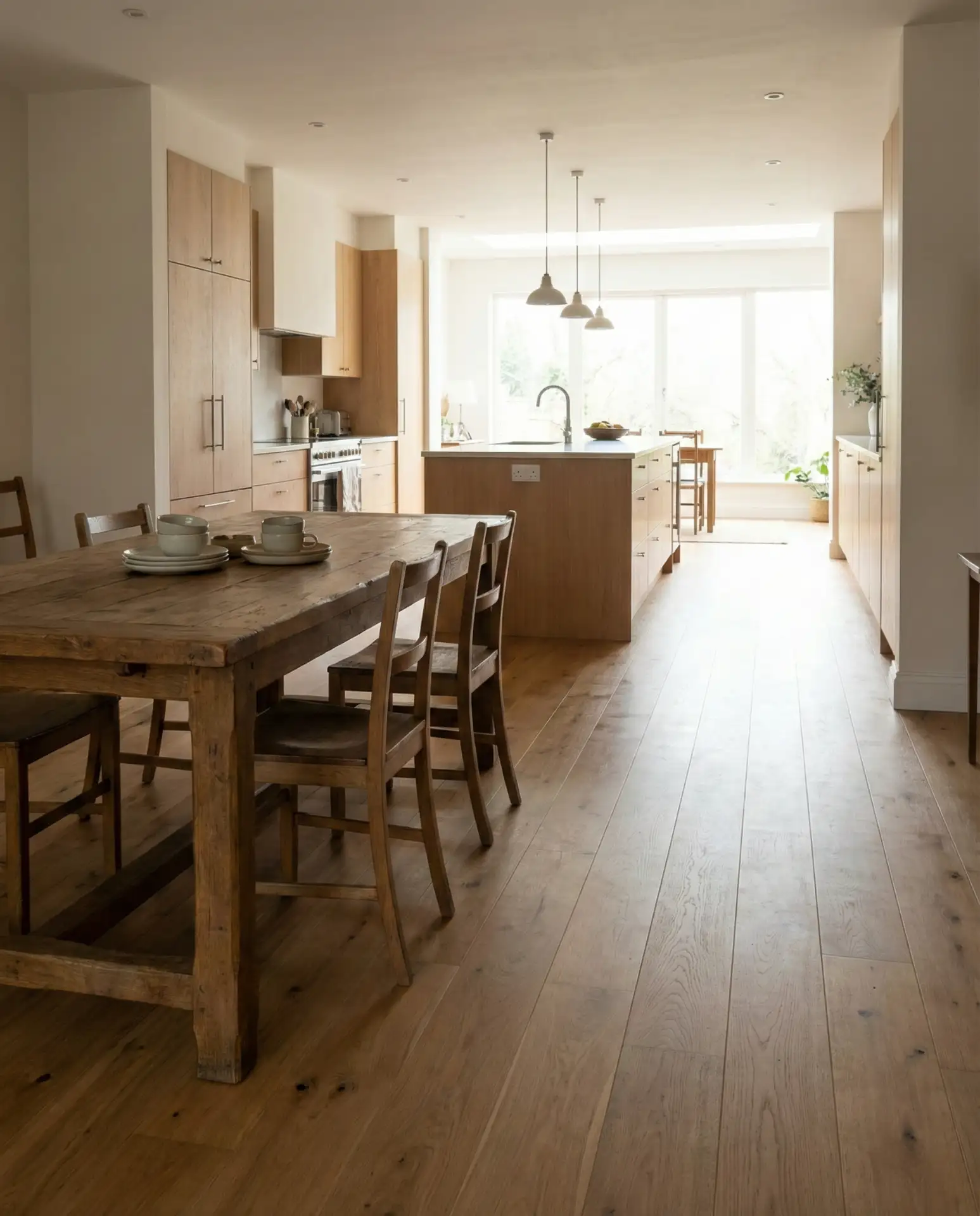
Where this works best: In homes built or renovated in the last 20 years, where structural walls have been removed or never existed. The trade-off is reduced storage and decreased noise isolation—cooking sounds carry throughout the home. But for families who value togetherness and visual spaciousness over separate rooms, the open plan with a rustic kitchen anchor creates the gathering space that defines daily life. Throughout suburban developments in Colorado, Arizona, and Nevada, this layout has become the default new home design.
18. Breakfast Nook with Built-In Seating
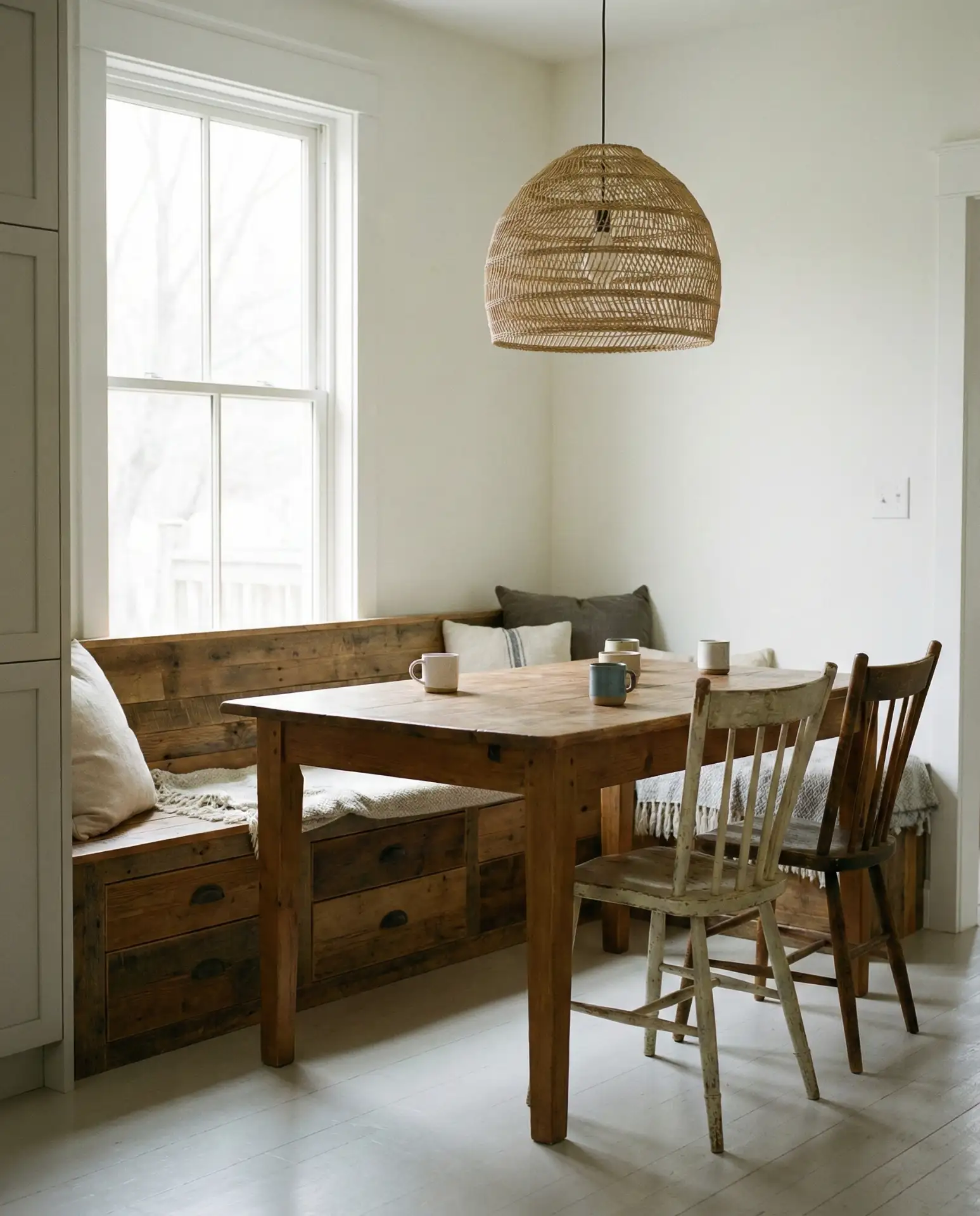
A corner banquette or window-seat-style breakfast nook maximizes seating in compact kitchens while adding the cozy, tucked-away feeling that rustic design ideas often aim for. Built-in benches with storage underneath solve multiple problems at once, providing pantry overflow space, seasonal item storage, or kid toy containment. The setup typically includes a farmhouse-style table and can accommodate more people than individual chairs would in the same footprint, making it ideal for families or frequent entertainers.
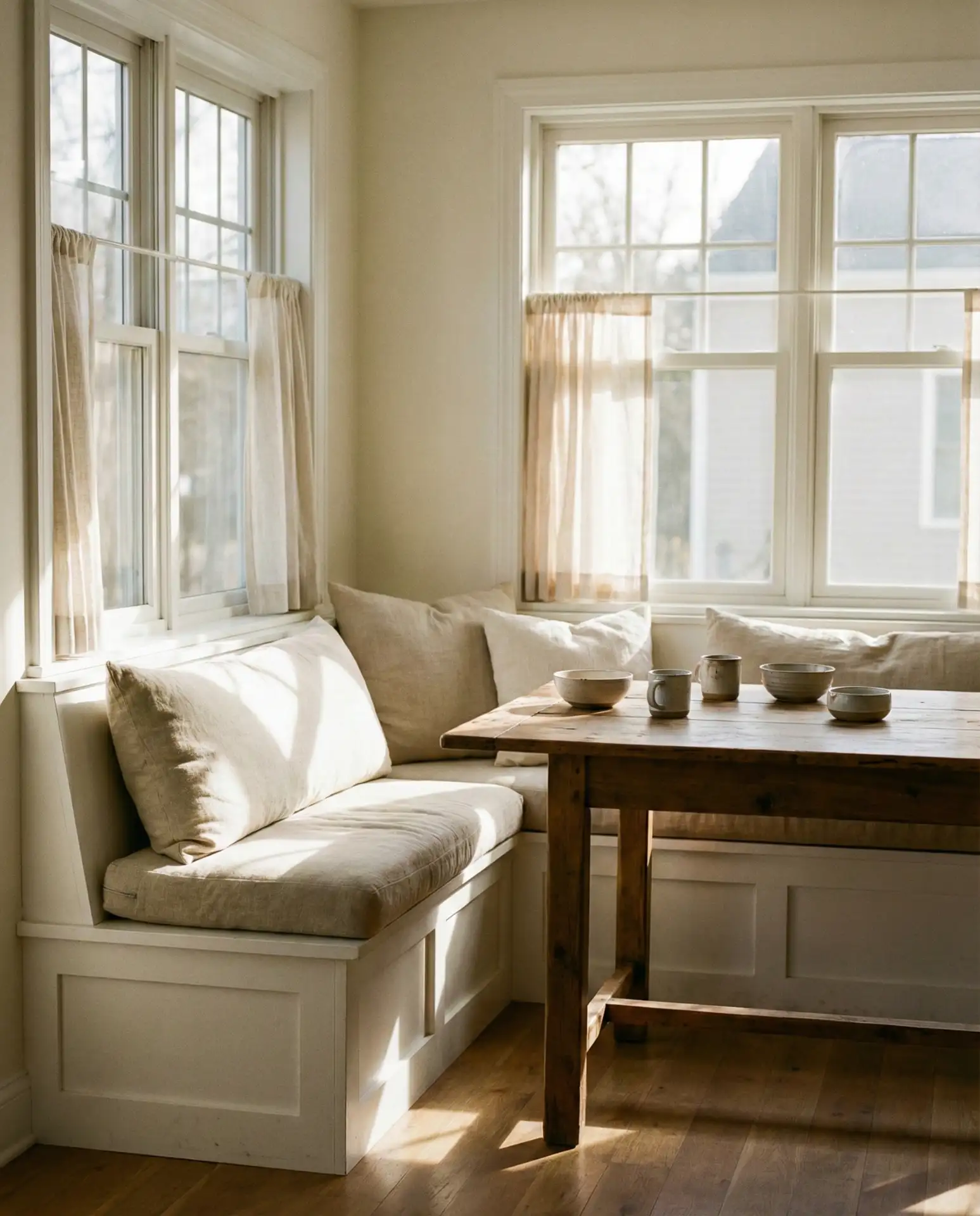
Real homeowner behavior: People with breakfast nooks report using them constantly—not just for meals but for homework, laptop work, and casual conversation while someone cooks. The enclosed feeling creates intimacy that an island or dining table in an open space can’t replicate. In regions with extreme climates, positioning the nook near south-facing windows provides passive solar heating in winter, and it becomes the most-used spot in the house. Just ensure you have 24 inches of seating width per person for comfortable long-term sitting.
19. Pot Rack or Hanging Storage Display
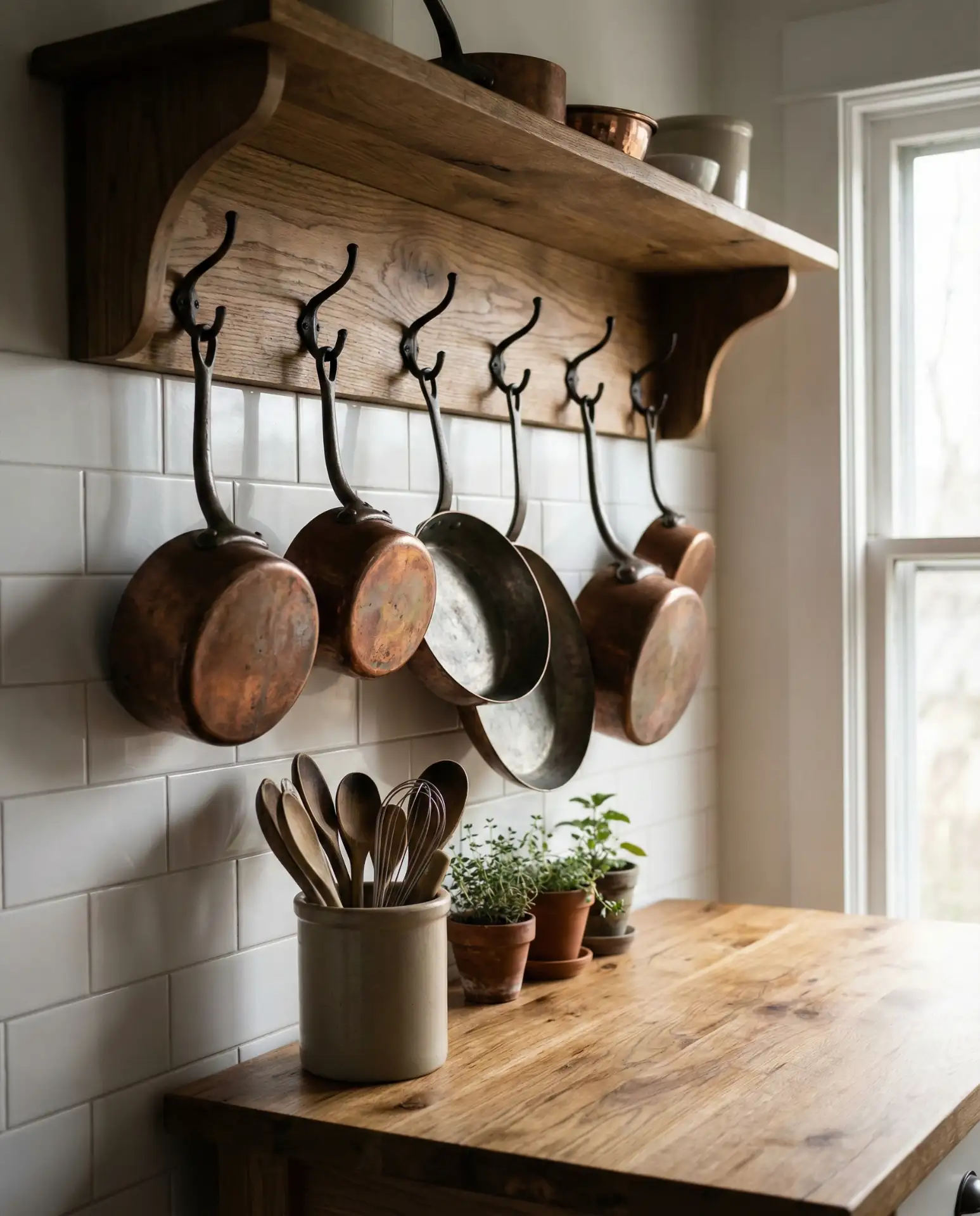
Overhead pot racks transform functional storage into rustic sculpture, displaying well-used cookware as evidence of a kitchen that’s actually lived in. Whether it’s a ceiling-mounted iron grid, a wall-mounted bar system, or a shelf unit with hooks underneath, hanging storage frees up valuable cabinet space while keeping daily-use items within arm’s reach. The look works particularly well in kitchens with high ceilings, where the hanging pots add mid-level visual interest that would otherwise be empty space.
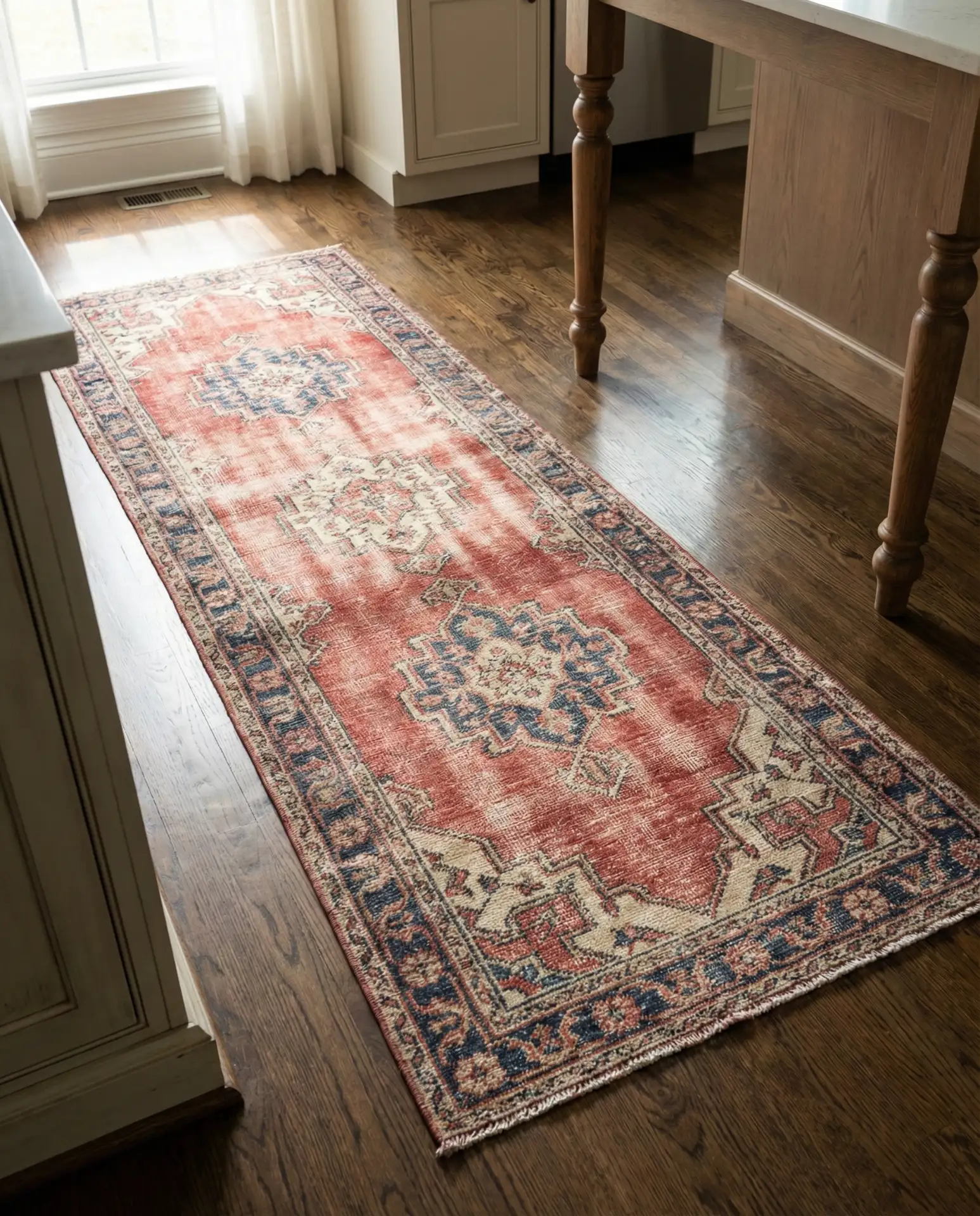
Common mistakes to avoid: Hanging pots too low (minimum 72 inches from floor to bottom of pans for comfortable clearance) or displaying mismatched, damaged cookware that reads as cluttered rather than curated. The goal is attractive utility, not exhaustive pot collection. Most successful installations include 5-8 pieces maximum, rotating seasonally or based on cooking patterns. Also consider that overhead pots collect grease and dust faster than cabineted items, requiring regular cleaning if positioned near the stove.
20. Vintage Rug or Runner for Warmth Underfoot
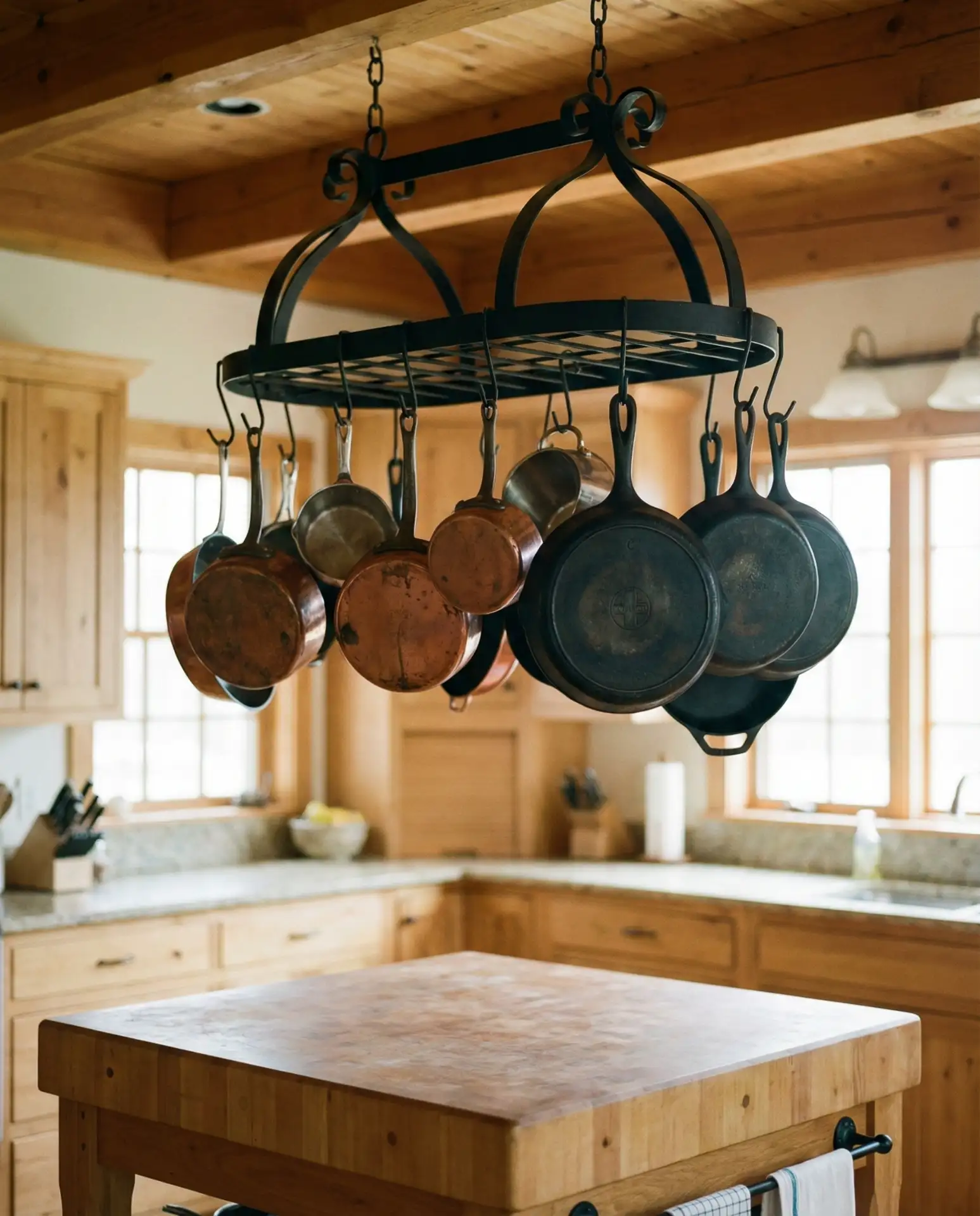
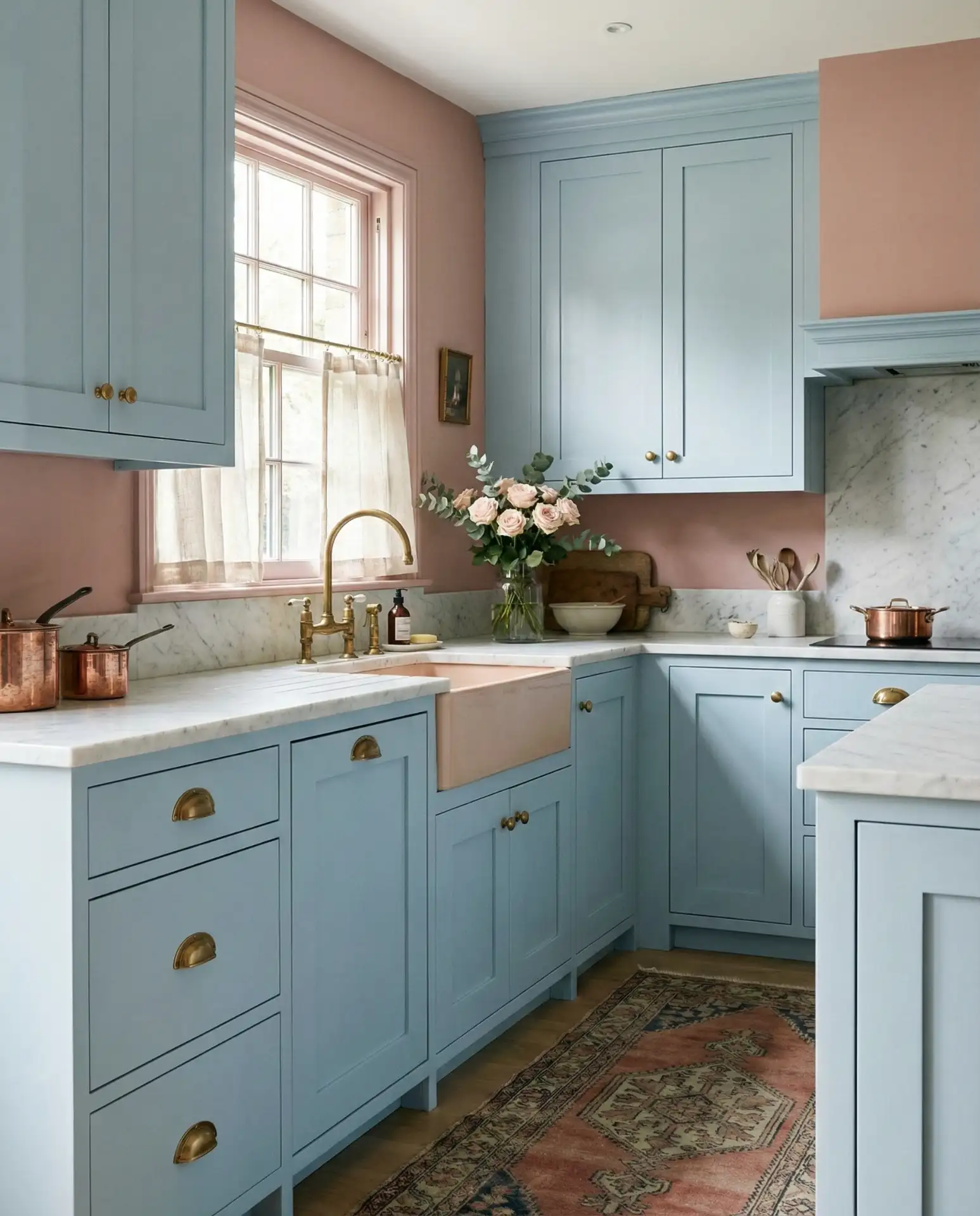
A worn Persian runner or vintage Turkish rug brings unexpected softness and color into rustic kitchens, defining work zones while adding comfort for feet that spend hours standing at counters and sinks. The faded colors and lived-in patterns introduce age and history without requiring actual antique furnishings, and they hide spills far better than pristine solid-color rugs. This choice works particularly well with hard flooring like tile, concrete, or wide-plank wood, where the contrast between rough floor and soft textile becomes part of the design story.
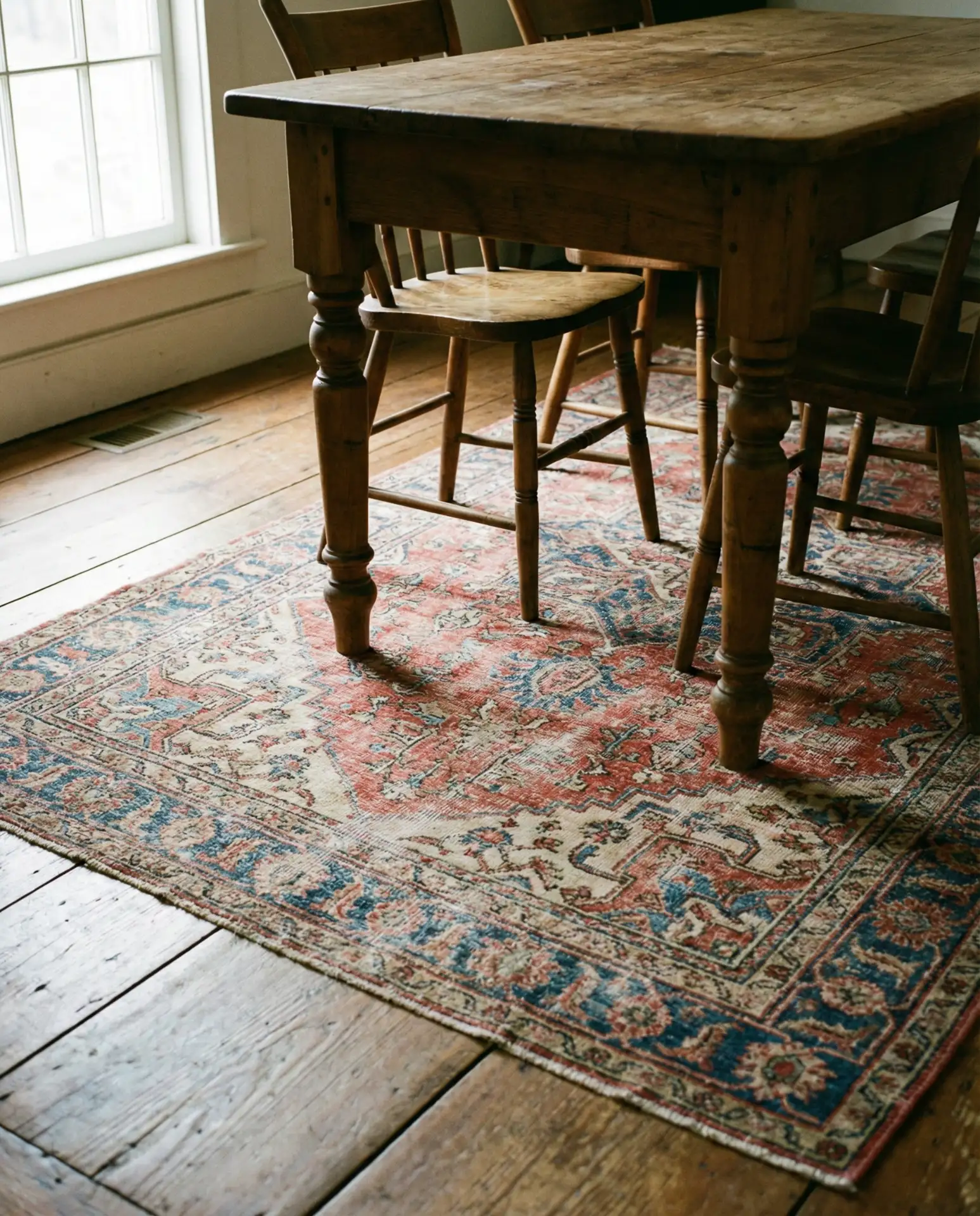
A practical insight: Choose low-pile rugs rated for high-traffic areas, and avoid placing them directly in front of the sink or stove where water and grease are inevitable. Many designers recommend layering a thin rug pad underneath for safety and longevity. In farmhouse kitchens across Virginia and North Carolina, this element has become almost expected—the rug signals that the kitchen is a living space rather than just a work zone, and the imperfect, faded quality aligns perfectly with rustic values of authenticity over perfection.
21. Wood-Burning or Display Fireplace
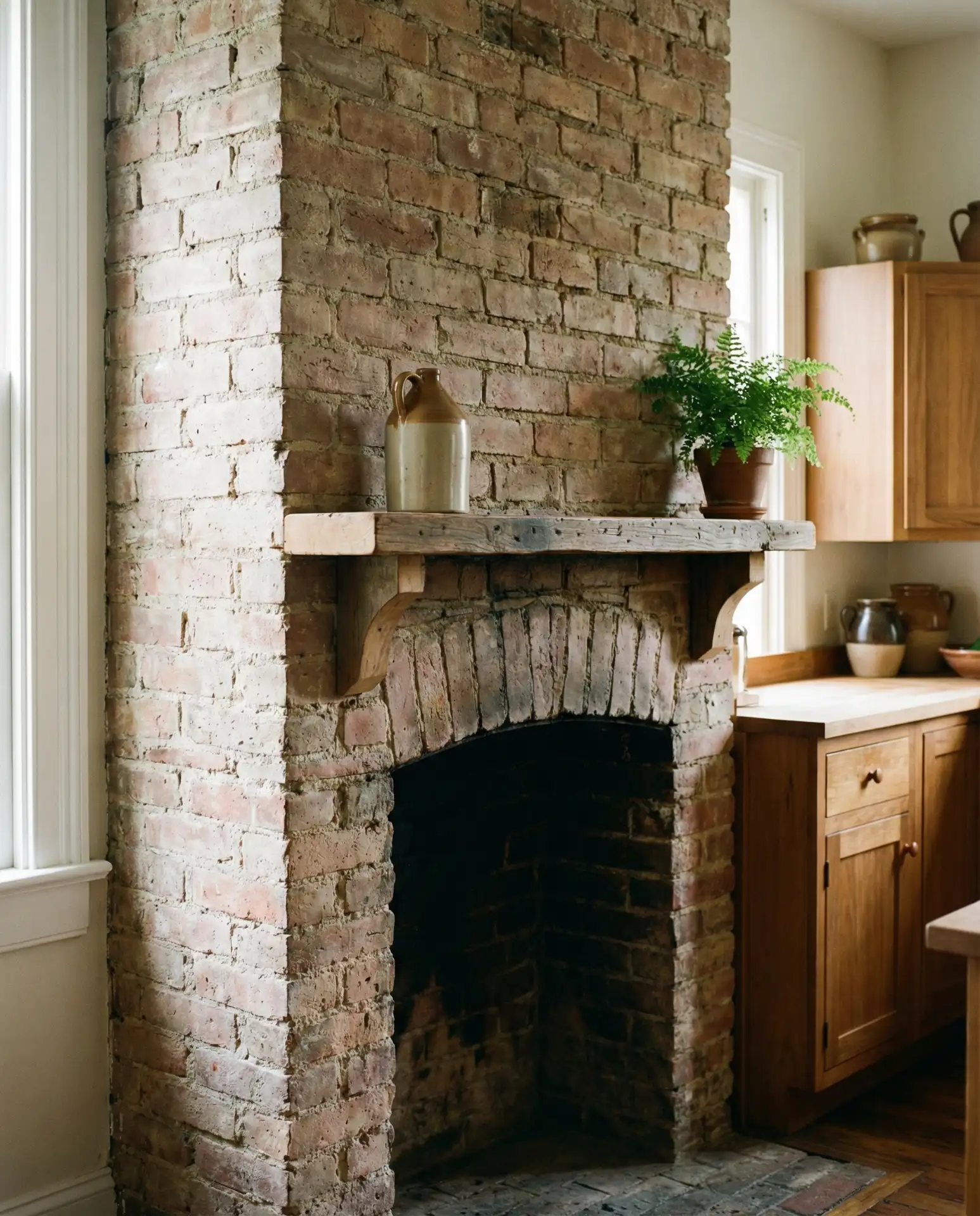
In colder climates, a working fireplace in or adjacent to the kitchen transforms the space into the true heart of the home, where warmth radiates both literally and figuratively. Even non-functional fireplaces or converted coal-burning hearths serve as powerful rustic focal points, providing mantels for seasonal displays and architectural weight that grounds the room. This element works particularly well in historic home renovations where original fireplaces exist or in new construction where a see-through fireplace can serve both the kitchen and adjoining living spaces.
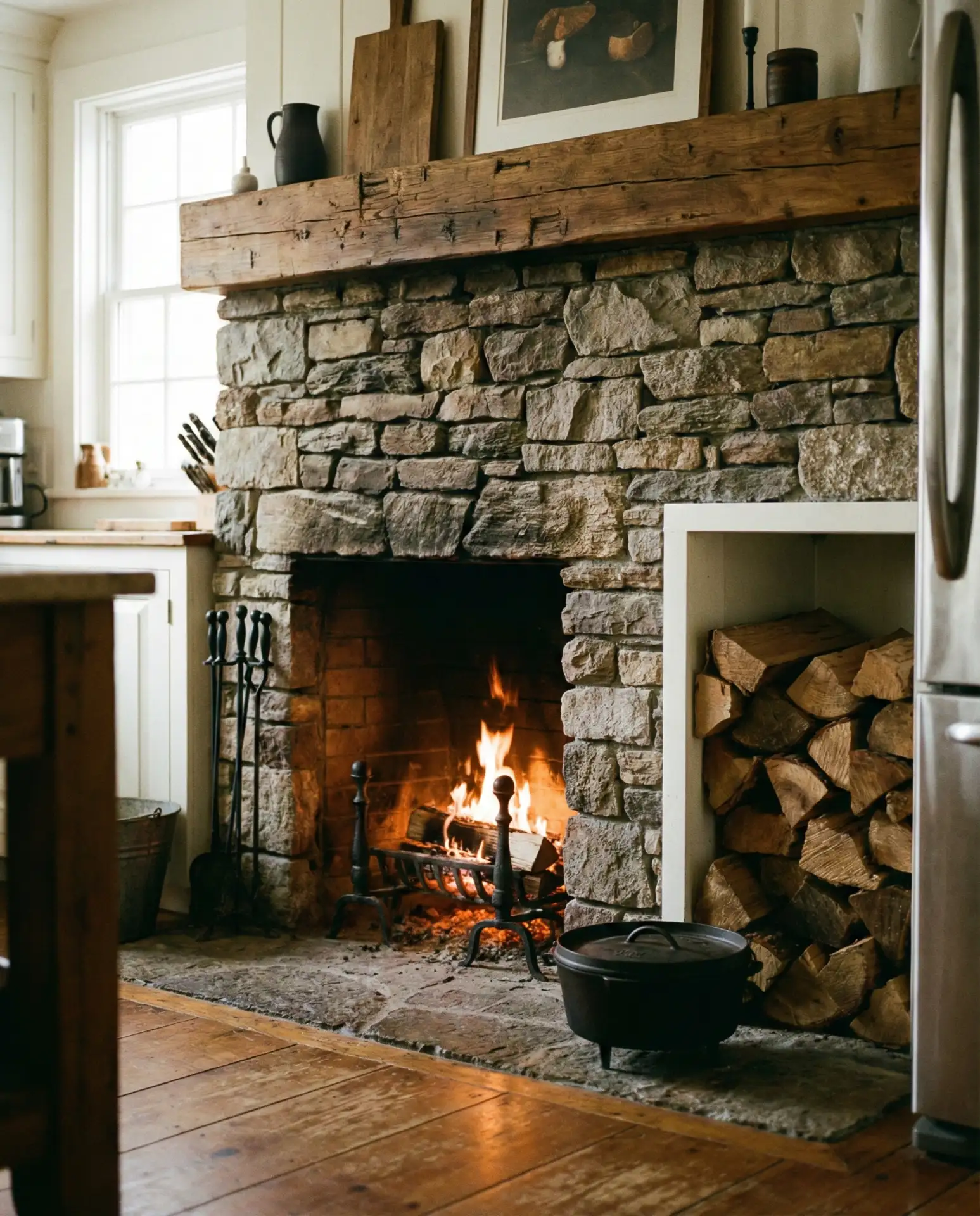
American lifestyle context: This feature resonates particularly strongly in New England, the Pacific Northwest, and mountain states, where winter dominates half the year. The fire becomes a gathering point for morning coffee and evening wine, extending the kitchen’s use beyond meal preparation. Building codes vary significantly by region regarding wood-burning appliances, so verify local requirements early in planning. Many homeowners opt for gas inserts that provide flame ambiance without smoke or ash, maintaining the rustic visual while simplifying operation.
22. Personal Collections as Wall Decor
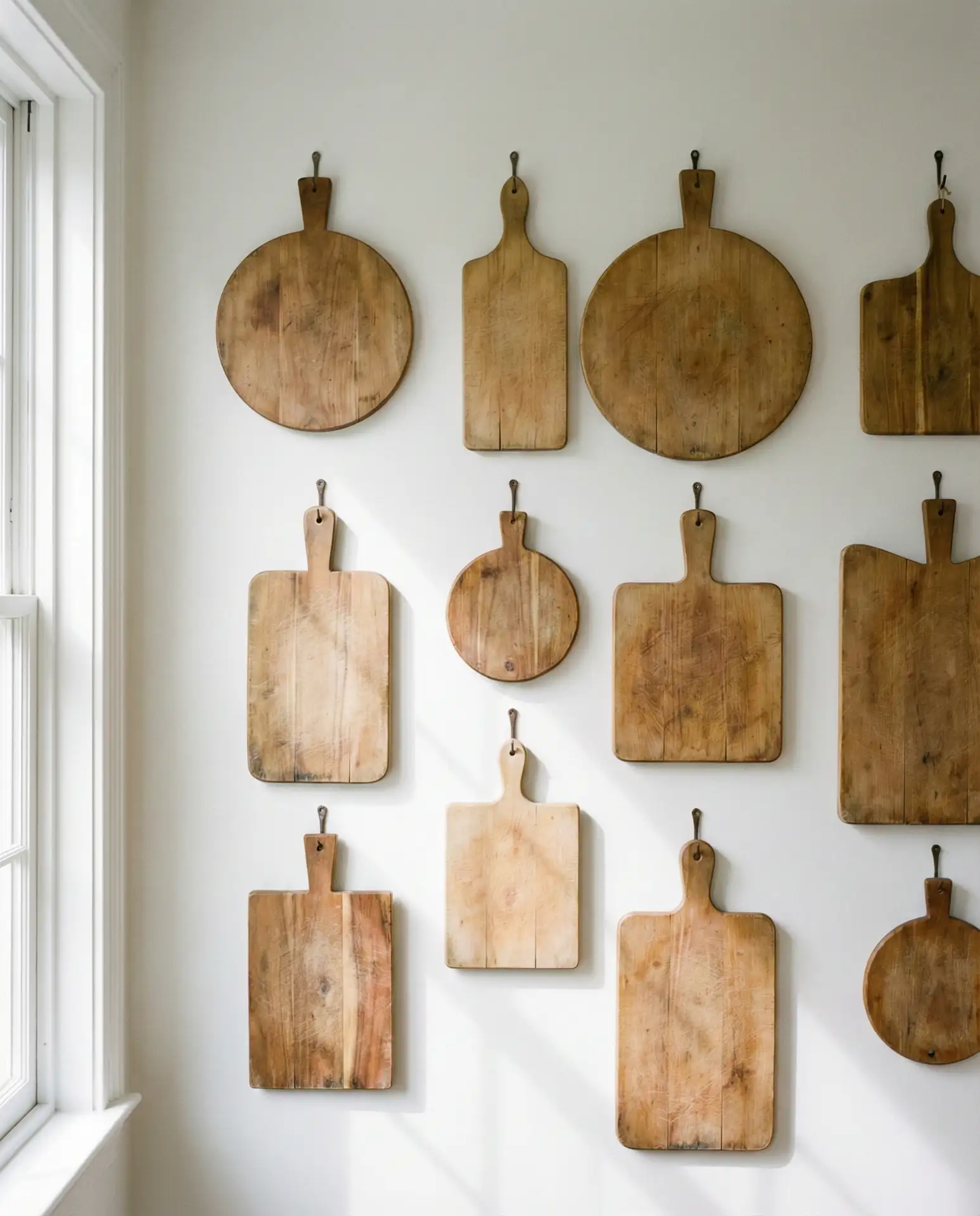
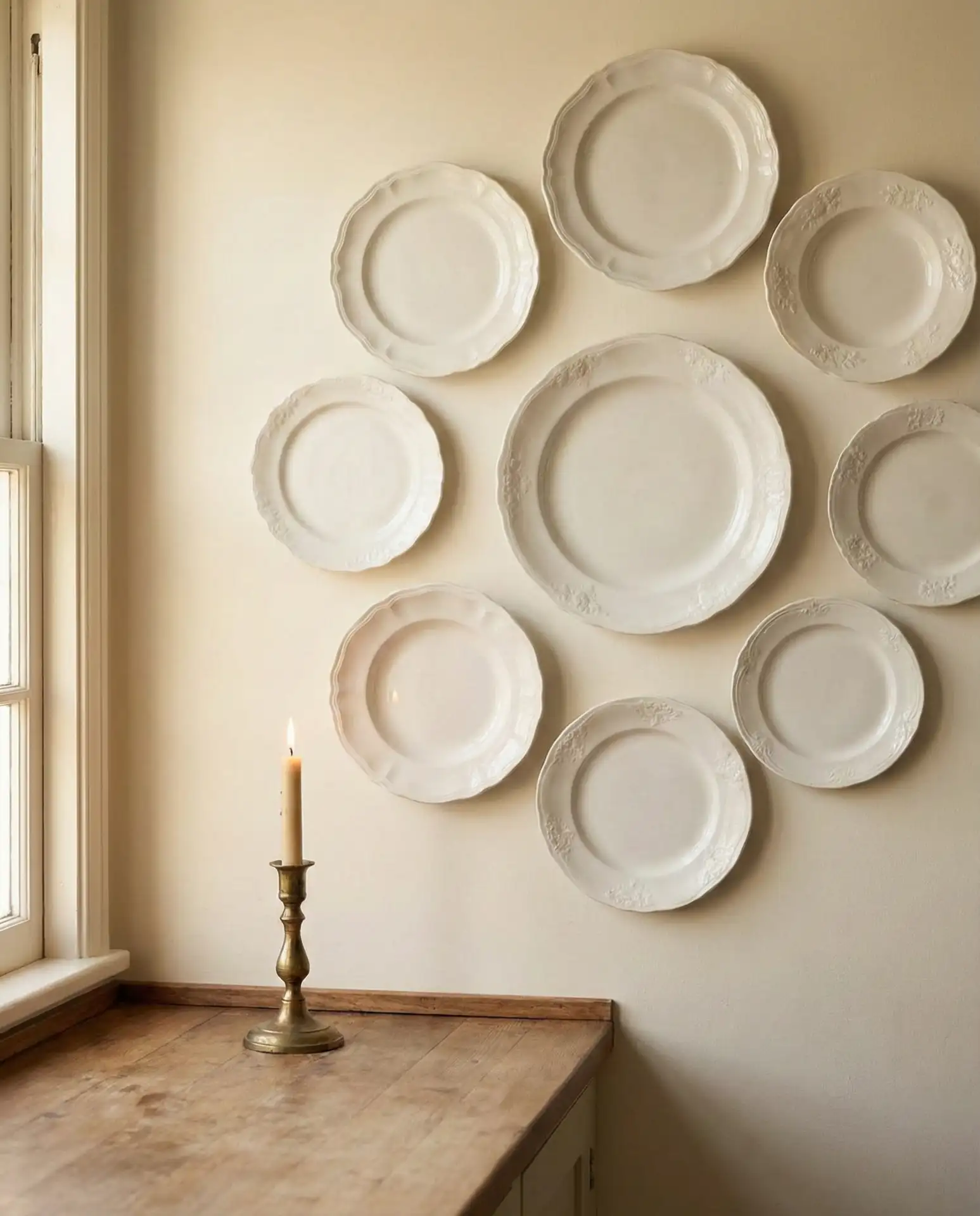
Groupings of vintage cutting boards, antique breadboards, copper molds, or ironstone plates displayed on walls transform functional items into art while celebrating the kitchen’s purpose. This type of wall decor feels authentic to rustic aesthetics because it references the room’s function rather than importing unrelated decorative objects. The repetition of similar items creates visual impact without fussiness, and the collection can grow over time as you discover new pieces at flea markets, estate sales, or antique shops.
A micro-anecdote worth sharing: A colleague installed a wall of vintage kitchen tools—whisks, graters, and rolling pins—above her breakfast nook, using them as both design inspiration and conversation starters when guests visit. Turns out, each tool connects to a family story or travel memory, transforming functional decor into personal narrative. This approach costs almost nothing if you already collect these items, and it solves the perennial problem of bare walls in ways that feel natural rather than forced. The display changes seasonally as she rotates pieces, keeping the space dynamic rather than static.
Conclusion
These ideas show how rustic kitchen design in 2026 balances tradition with contemporary living, creating spaces that honor the past while serving modern needs. Whether you’re planning a full renovation or looking for smaller updates, the key is choosing elements that resonate with your personal style and daily routines. Let us know in the comments which ideas you’re most excited to try in your own kitchen—we’d love to hear how you’re blending rustic character with your unique home story.