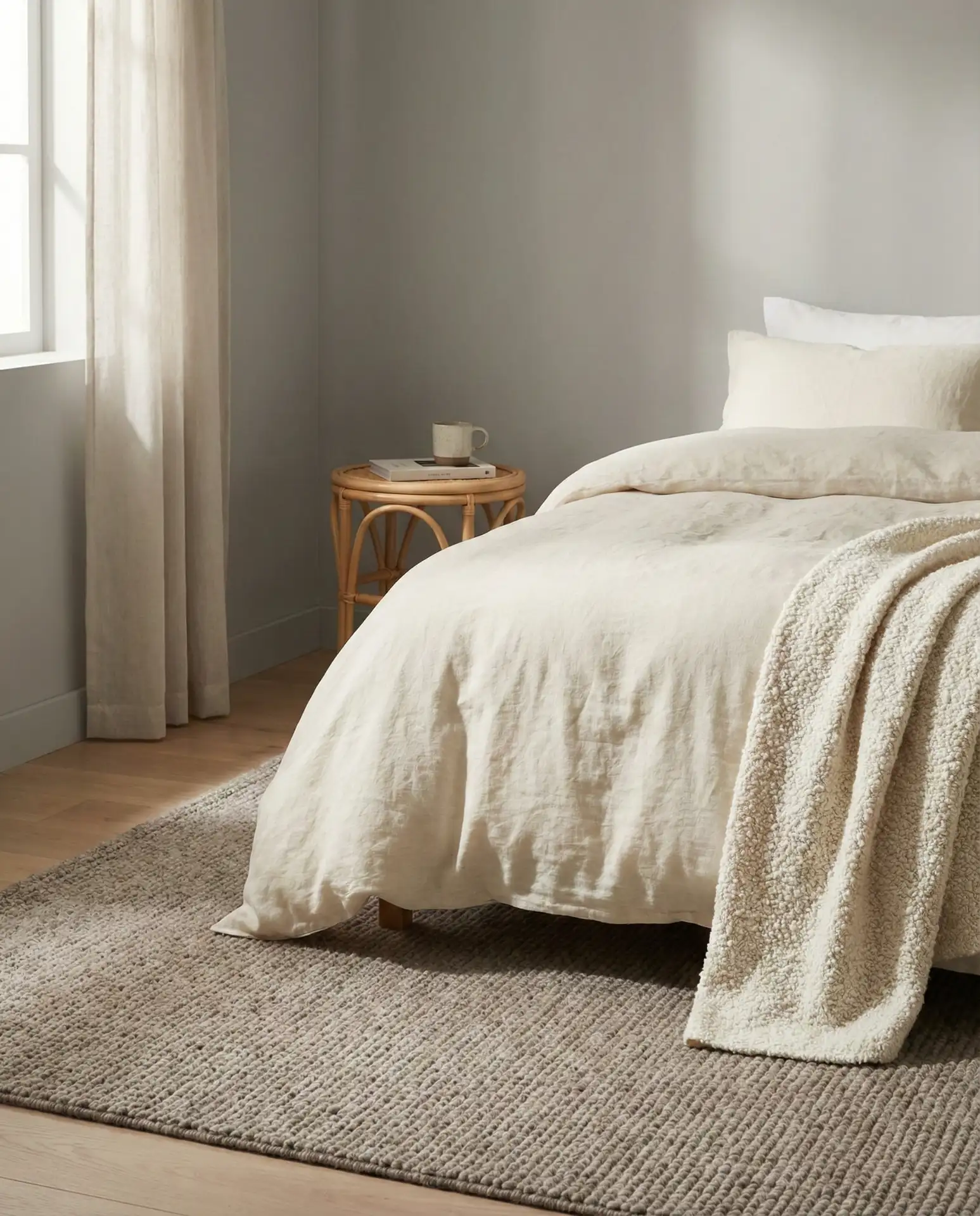
Small bedrooms are having a major moment in 2026, and it’s not just about making do with less space—it’s about making that space work smarter, look better, and feel like home. Americans are searching Pinterest in droves for ideas that blend style with function, especially as urban living continues to trend and housing costs push us to rethink every square foot. Whether you’re decorating a kid’s room, a teen’s sanctuary, or your own cozy retreat, this year’s design trends prove that small doesn’t mean sacrificing comfort or personality. In this article, you’ll find fresh, actionable ideas that blend modern aesthetics with real-world practicality, from clever storage hacks to calming color palettes that make tight quarters feel open and inviting.
1. Vertical Storage Wall with Floating Shelves
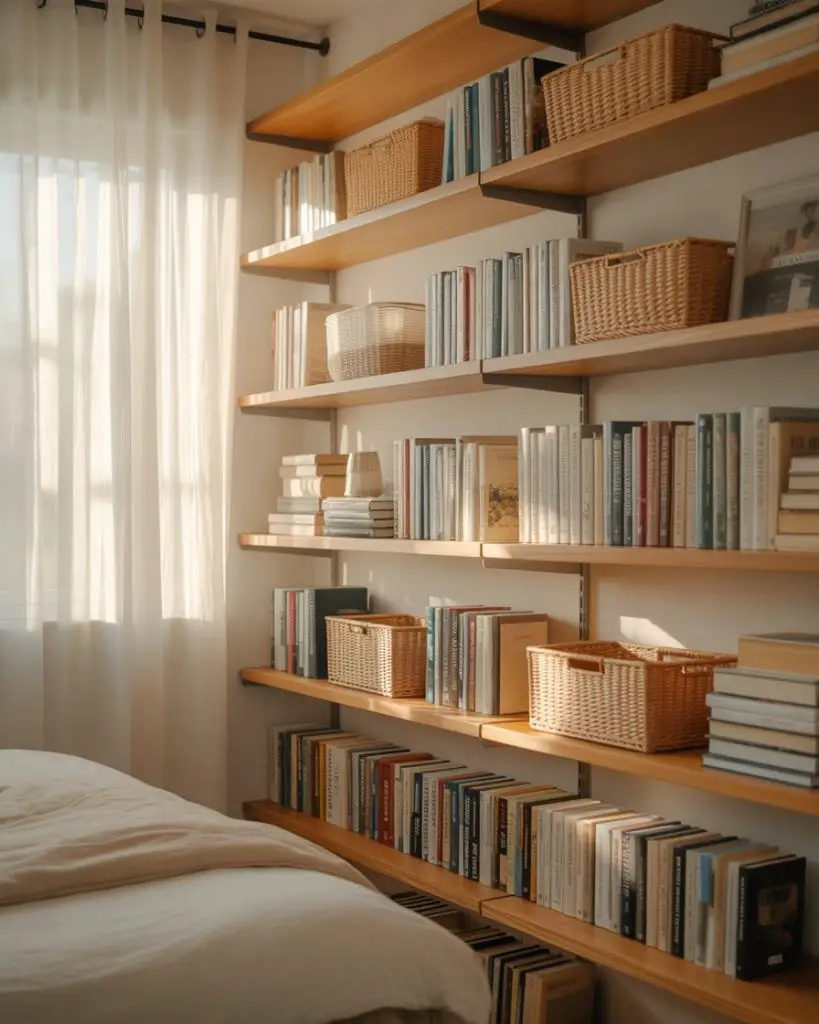
Maximize your vertical real estate by installing a full wall of floating shelves that run from waist height to ceiling. This approach is ideal for storage ideas in small bedrooms, letting you display books, plants, and decor while keeping floor space open. The key is varying shelf depths—use shallow ledges for framed photos and deeper ones for baskets that hide clutter. In minimalist spaces, stick to light wood or white finishes that blend into the wall, creating the illusion of more room. 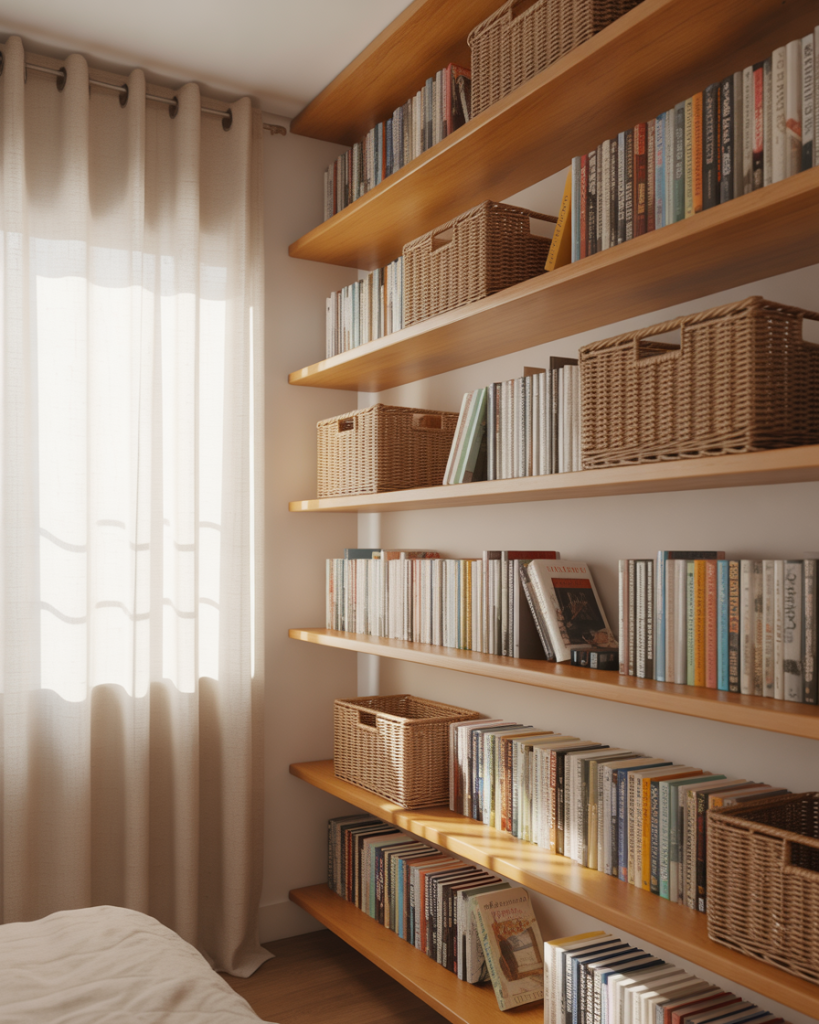
Budget-conscious renters love this idea because it’s removable and doesn’t require built-ins. You can find floating shelf kits at big-box stores for under $50, and installation takes just an afternoon with a drill and level. The real payoff comes when you realize how much visual breathing room you’ve created by lifting items off the floor and nightstand.
2. Under-Bed Drawers on Casters
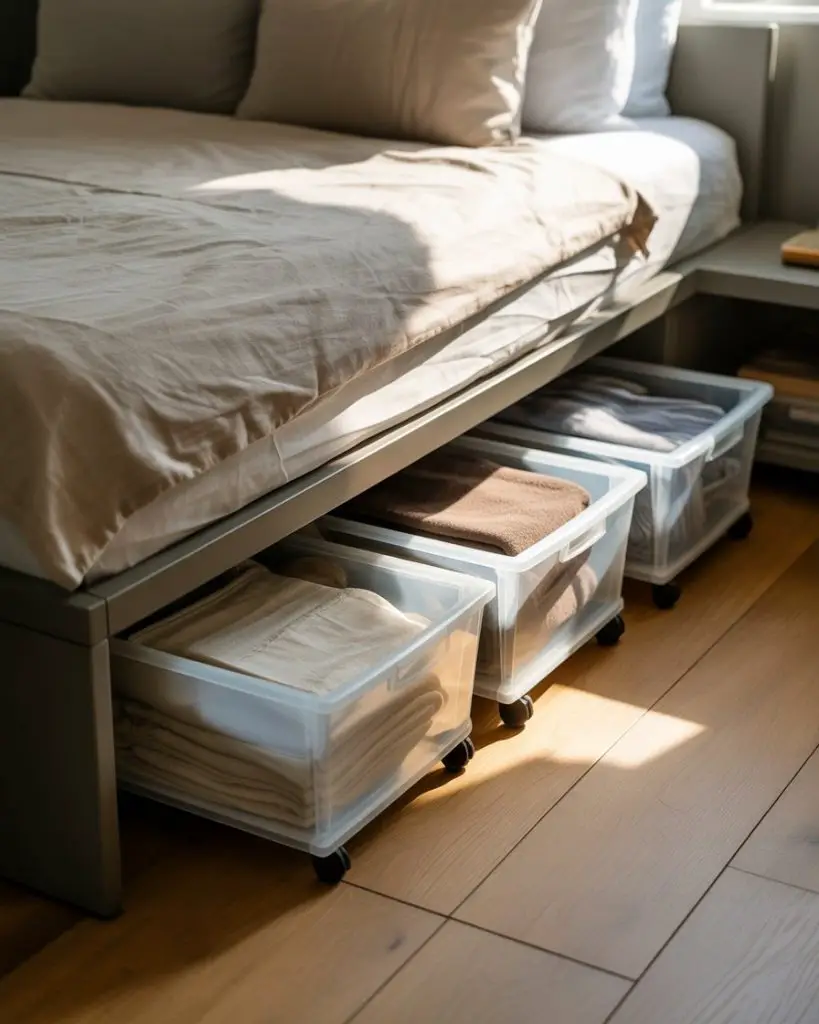
Rolling storage drawers that slide under your bed frame are a game-changer for organization ideas and closet ideas overflow. Choose shallow bins on wheels—about 6 to 8 inches tall—so they glide easily on carpet or hardwood. Use them for off-season clothing, extra linens, or shoe collections that would otherwise crowd a small closet. Transparent bins let you see what’s inside at a glance, while fabric-covered options keep the look cohesive if your bed skirt doesn’t reach the floor. 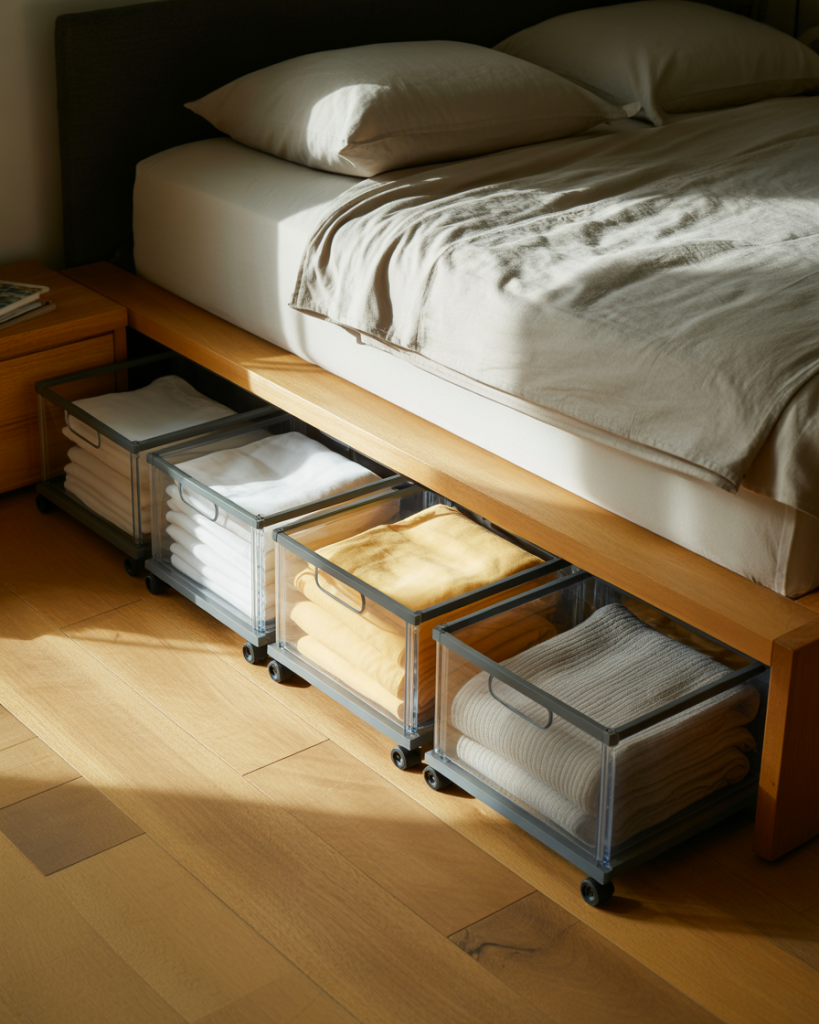
In the Midwest and Northeast, where seasonal wardrobes shift dramatically, homeowners report reclaiming an entire closet shelf by moving winter sweaters and boots under the bed. It’s a simple shift that takes five minutes but delivers daily convenience—no more digging through overstuffed drawers or piling clothes on chairs.
3. Murphy Bed with Integrated Desk
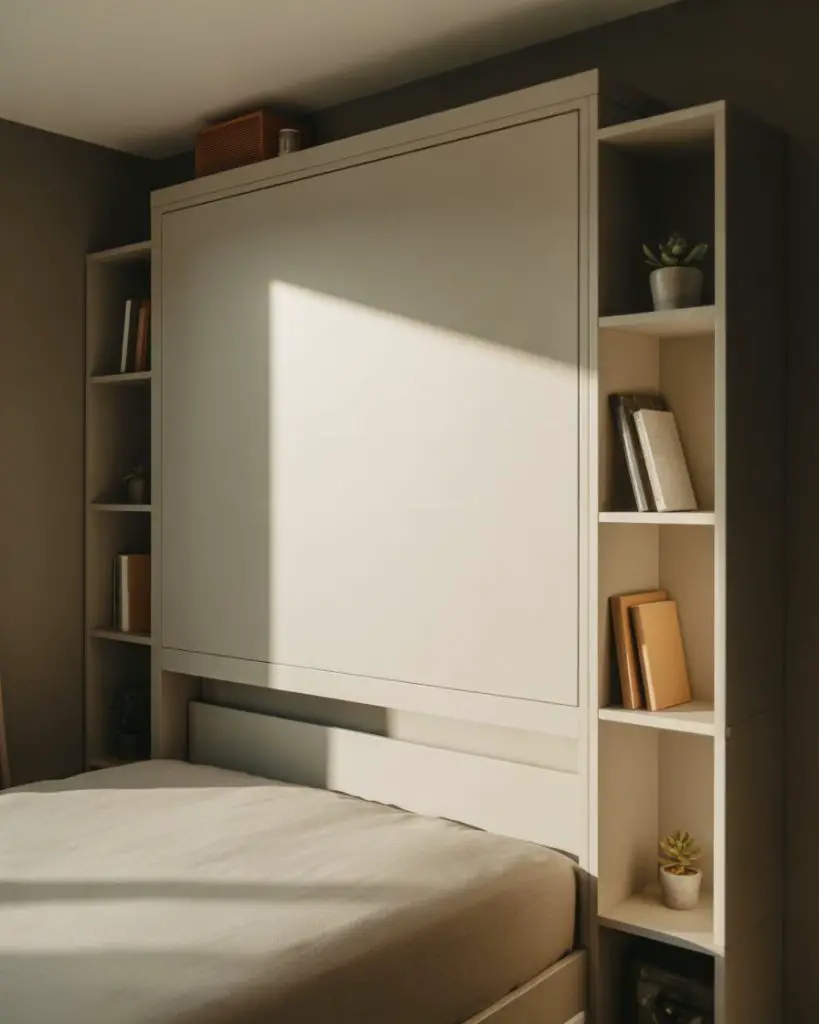
A wall-mounted Murphy bed that folds up to reveal a desk underneath is the ultimate space-saver for studio apartments or home office setups. When the bed is stowed, you gain a full work surface; when it’s down, the desk components fold neatly out of the way. Look for models with built-in shelving on either side to hold books, supplies, or decorative objects, creating a cohesive wall unit that serves double duty. 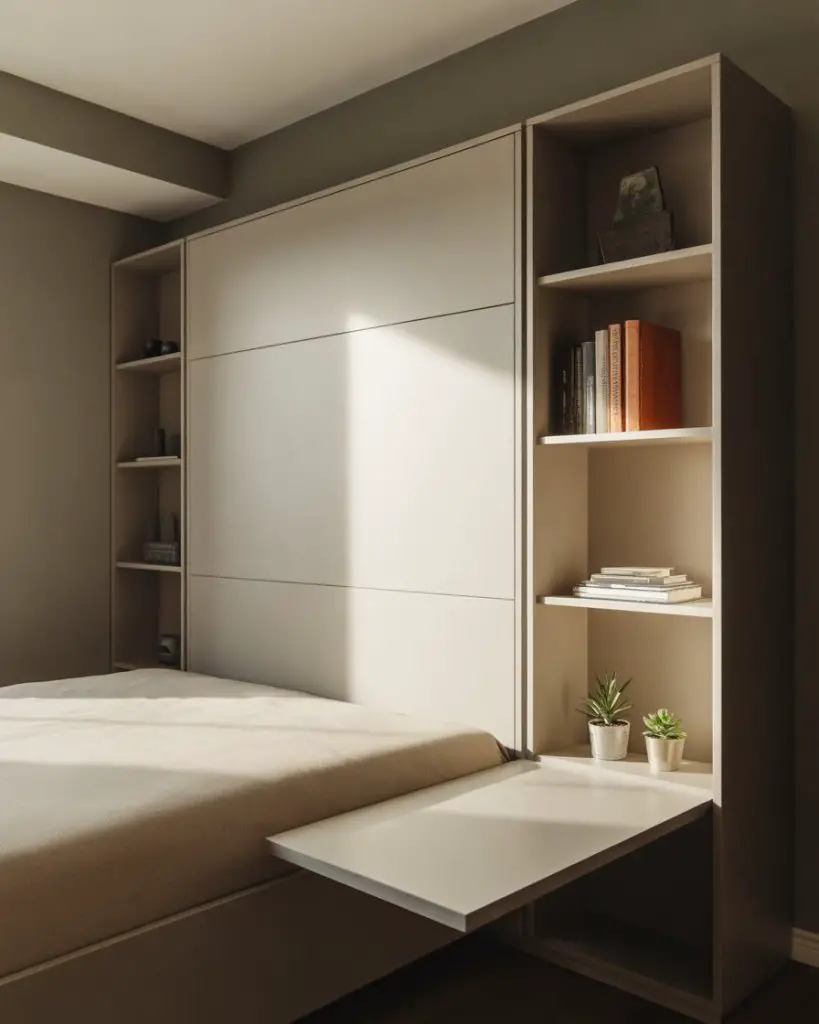
Common mistakes include choosing a bed that’s too heavy to lift comfortably or skipping professional installation, which can lead to safety issues. Invest in a quality hydraulic system and have it mounted into wall studs by a carpenter. The upfront cost—typically $1,500 to $3,000—pays off in square footage reclaimed and the flexibility to host overnight guests without sacrificing your workspace.
4. Japandi-Inspired Neutral Palette
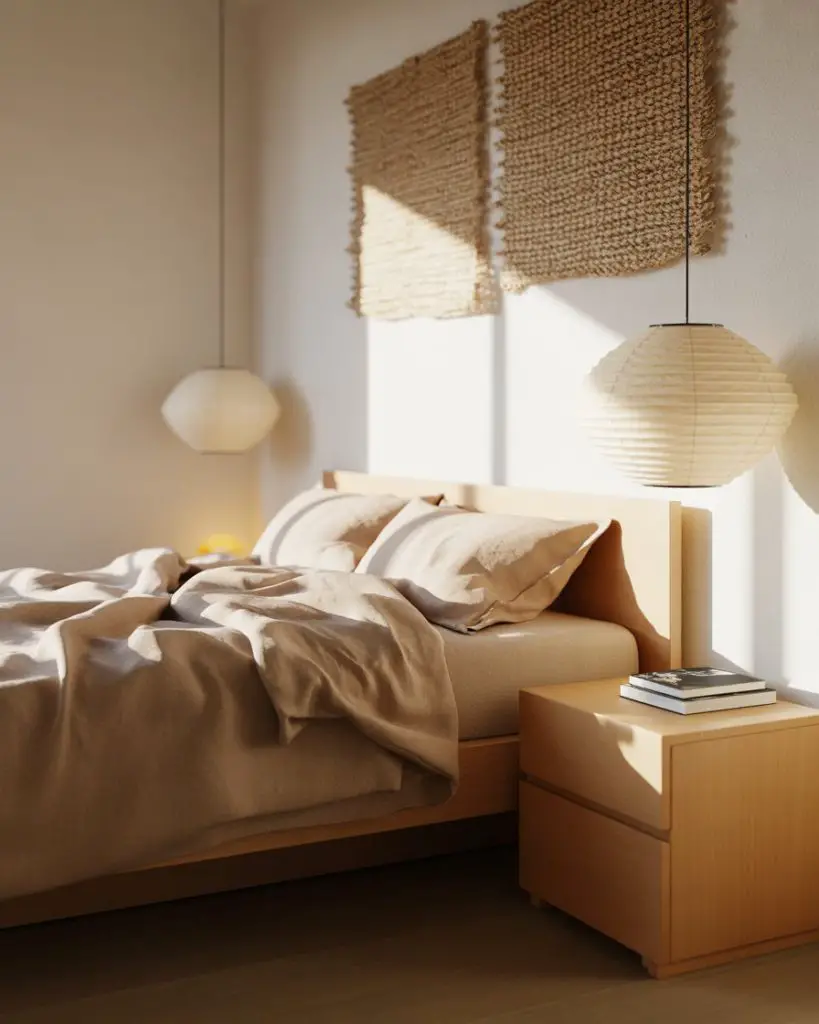
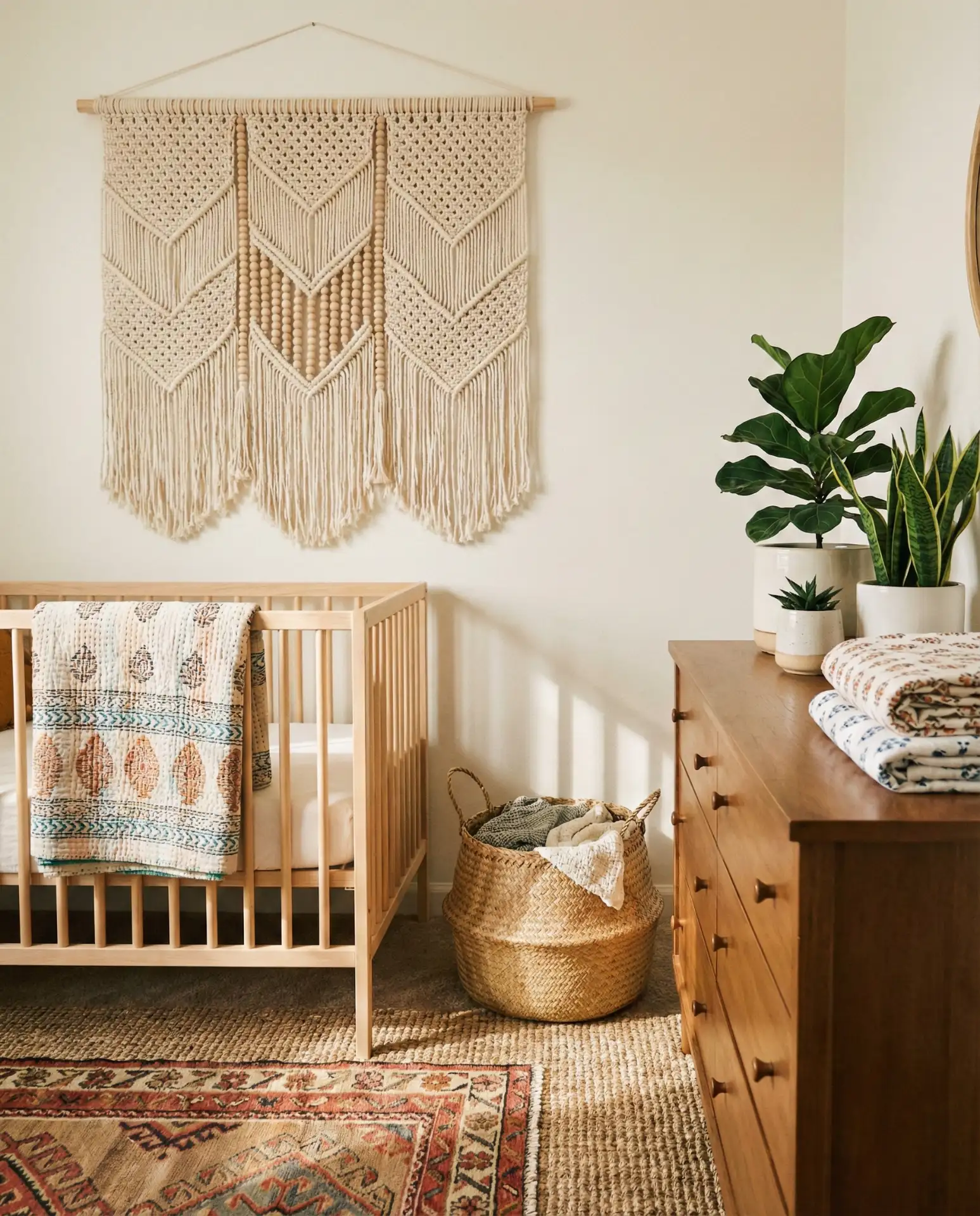
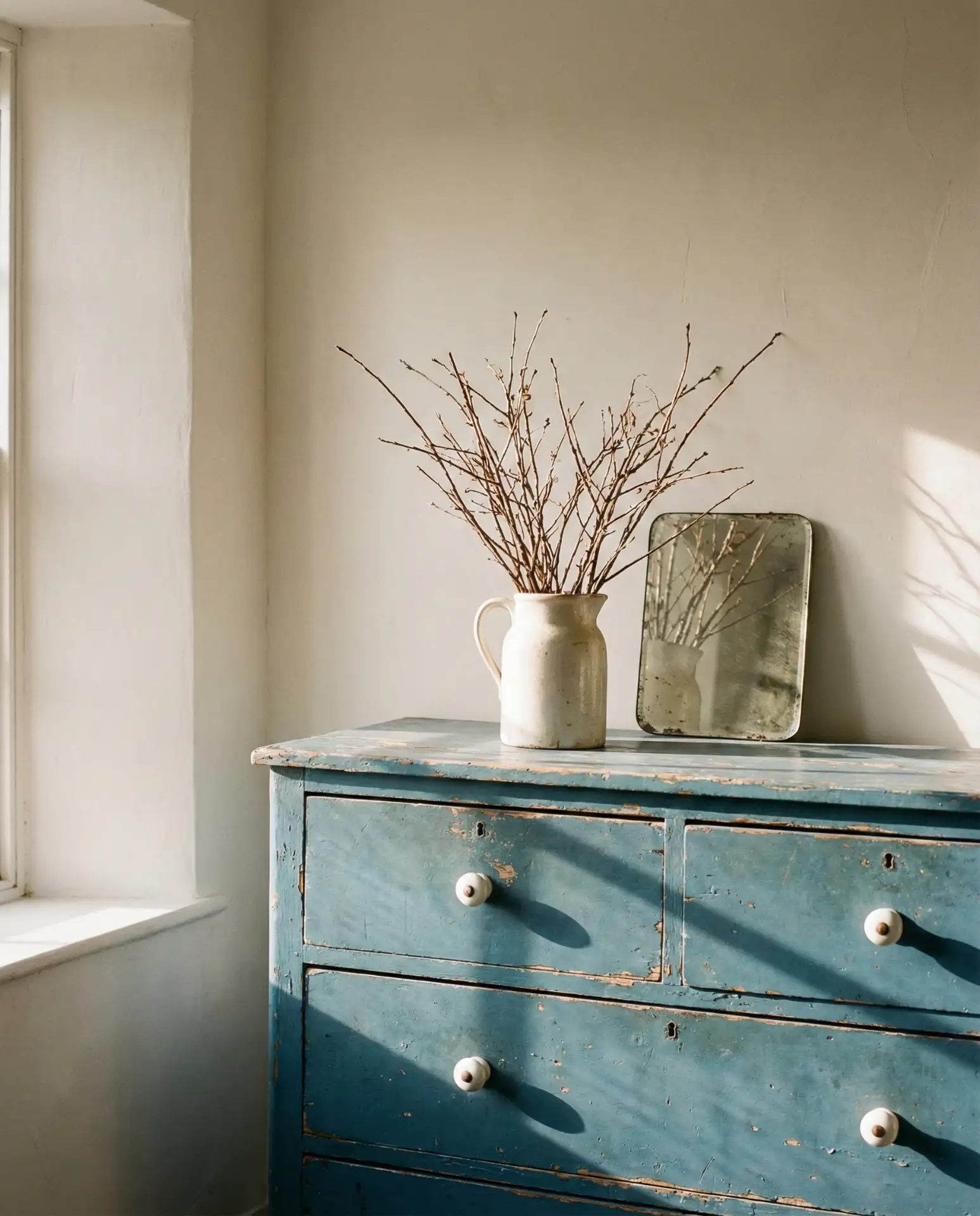
The Japandi aesthetic—a blend of Japanese minimalism and Scandinavian warmth—is perfect for small bedrooms craving calm and simplicity. Start with a base of soft whites, warm grays, and beige, then layer in natural textures like linen bedding, woven wall hangings, and light wood furniture. Keep decor minimal: a single ceramic vase, a low-profile platform bed, and perhaps a paper lantern pendant light to soften overhead glare. 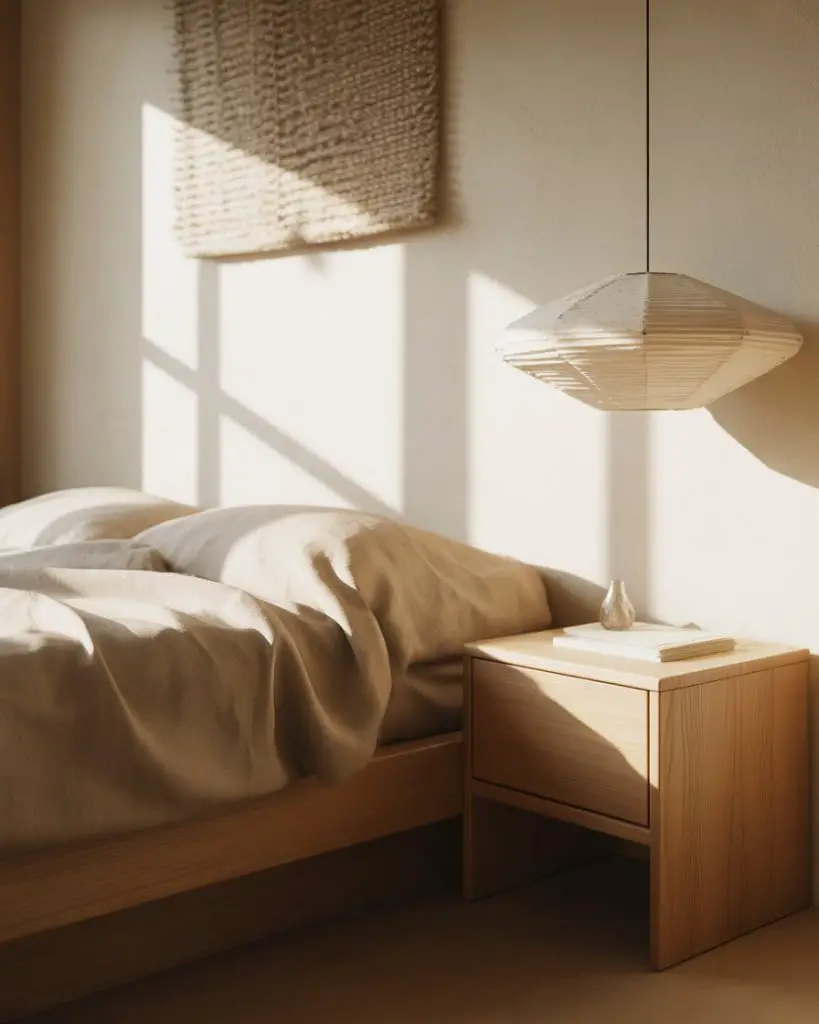
Where it works best: West Coast cities like Portland and Seattle, where design-conscious renters gravitate toward uncluttered, nature-inspired interiors. The palette also photographs beautifully, making it a favorite among Pinterest users who want that effortlessly curated look. Just remember to introduce at least one or two darker accents—a charcoal throw pillow or black picture frame—to ground the space and prevent it from feeling washed out.
5. Built-In Cabinets Around the Bed
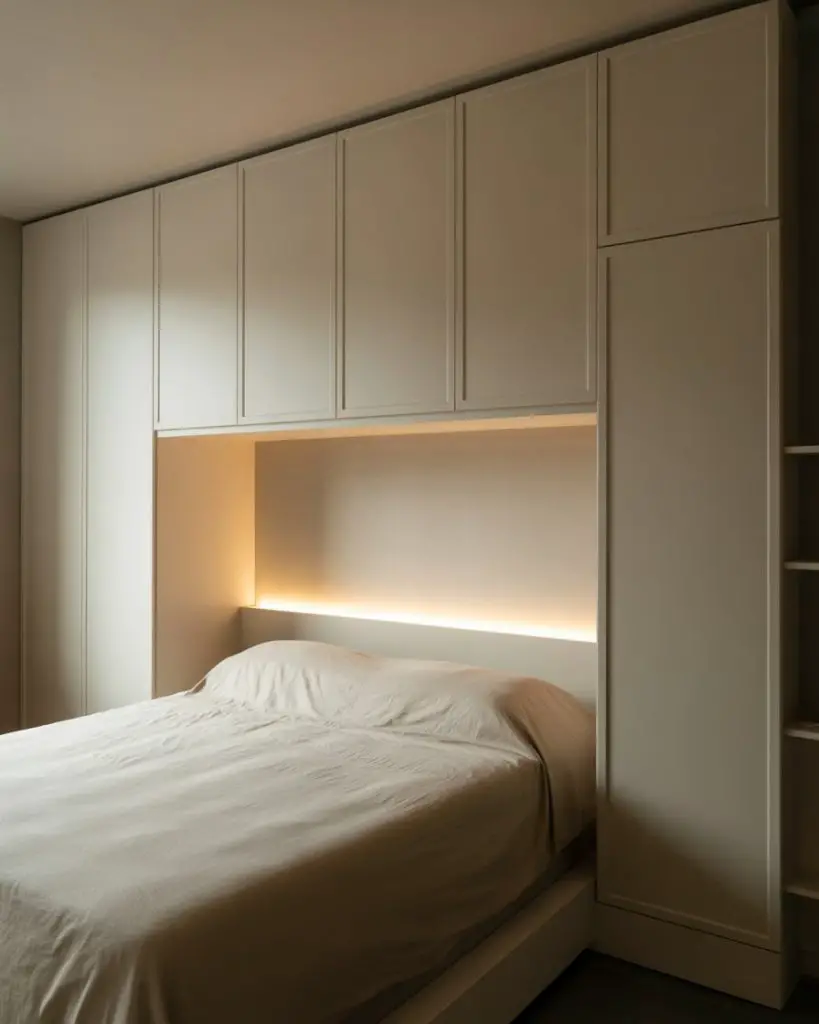
Custom cabinets for small bedrooms can transform a plain wall into a storage powerhouse. Frame your bed with floor-to-ceiling cabinetry on both sides and overhead, creating a cozy alcove that holds everything from books and electronics to clothing and bedding. Choose push-to-open doors for a sleek, handle-free look, and paint the units the same color as your walls to make them blend in rather than dominate the room. 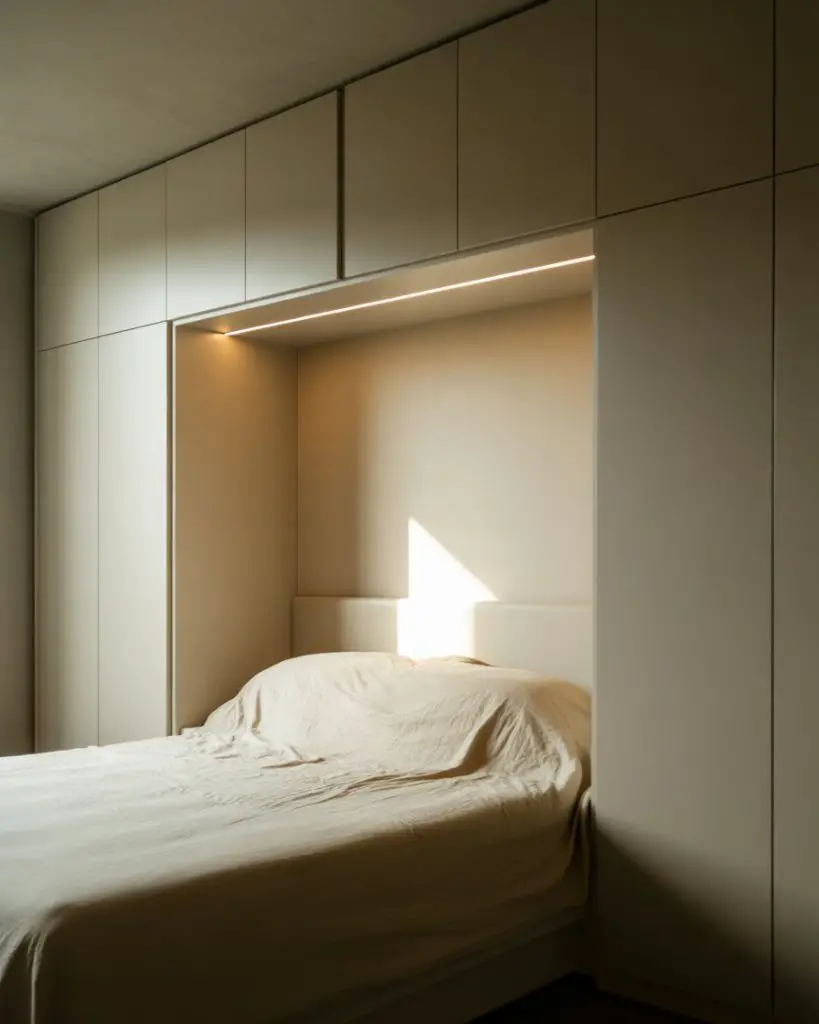
A homeowner in Brooklyn shared that she spent about $4,000 on custom cabinets but eliminated the need for a dresser, nightstands, and a bookshelf—freeing up nearly 30 square feet of floor space. The investment makes even more sense in high-cost urban markets where every inch counts, and the clean, streamlined look appeals to buyers if you ever decide to sell.
6. Lofted Bed for Kids with Play Space Below
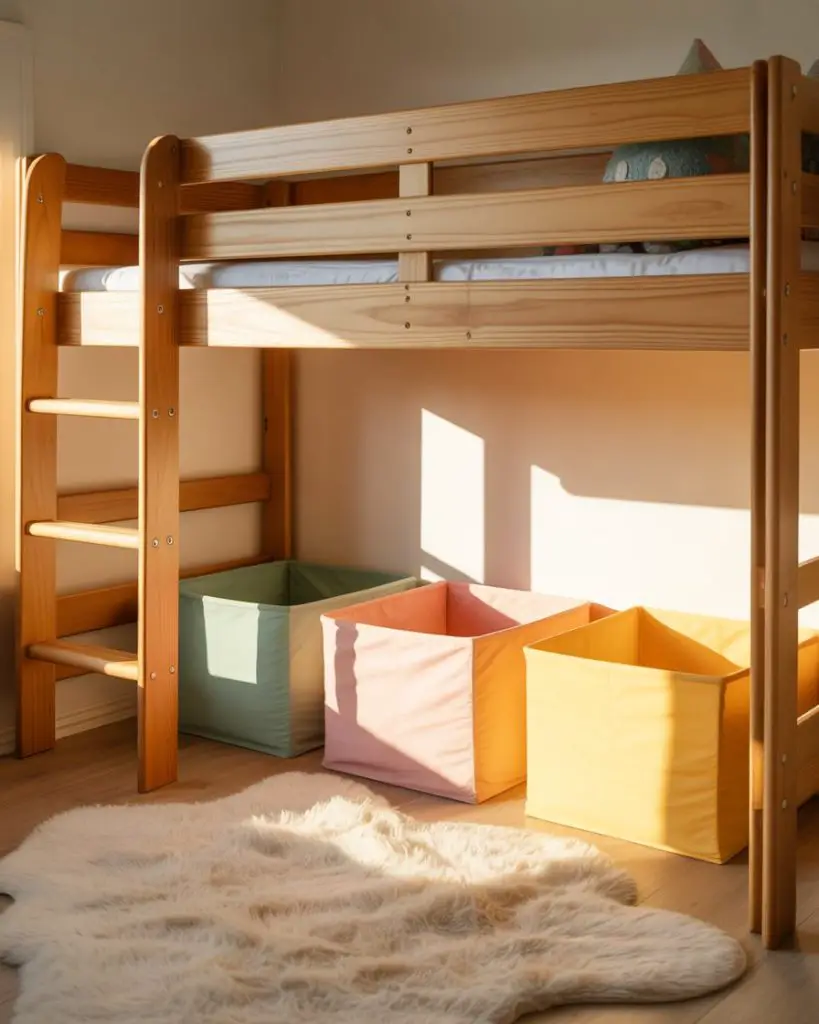
Elevate the mattress on a sturdy loft frame to create a dedicated play or study zone underneath—a brilliant solution for ideas for kids who need both sleep and activity areas in one small room. Choose a mid-height loft (about 4 to 5 feet off the ground) so younger children can climb safely, and outfit the lower area with a reading nook, toy storage bins, or a small craft table. Soft rugs and floor cushions make the space inviting without eating up precious square footage. 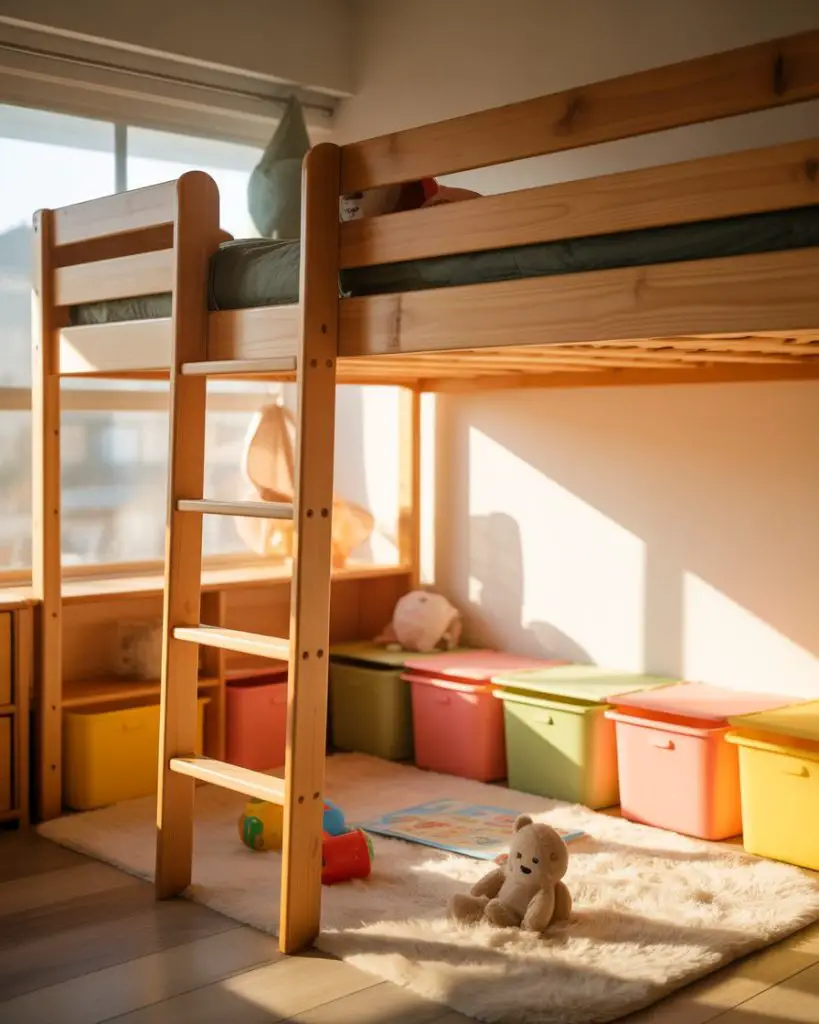
Expert designers recommend securing the loft to the wall for added stability and choosing a ladder with flat, wide steps rather than round rungs, which can be uncomfortable on little feet. Parents in suburban developments—where bedrooms average around 10×10 feet—find this setup invaluable for giving kids a sense of personal space without requiring a larger home.
7. Sliding Barn Door Wardrobe
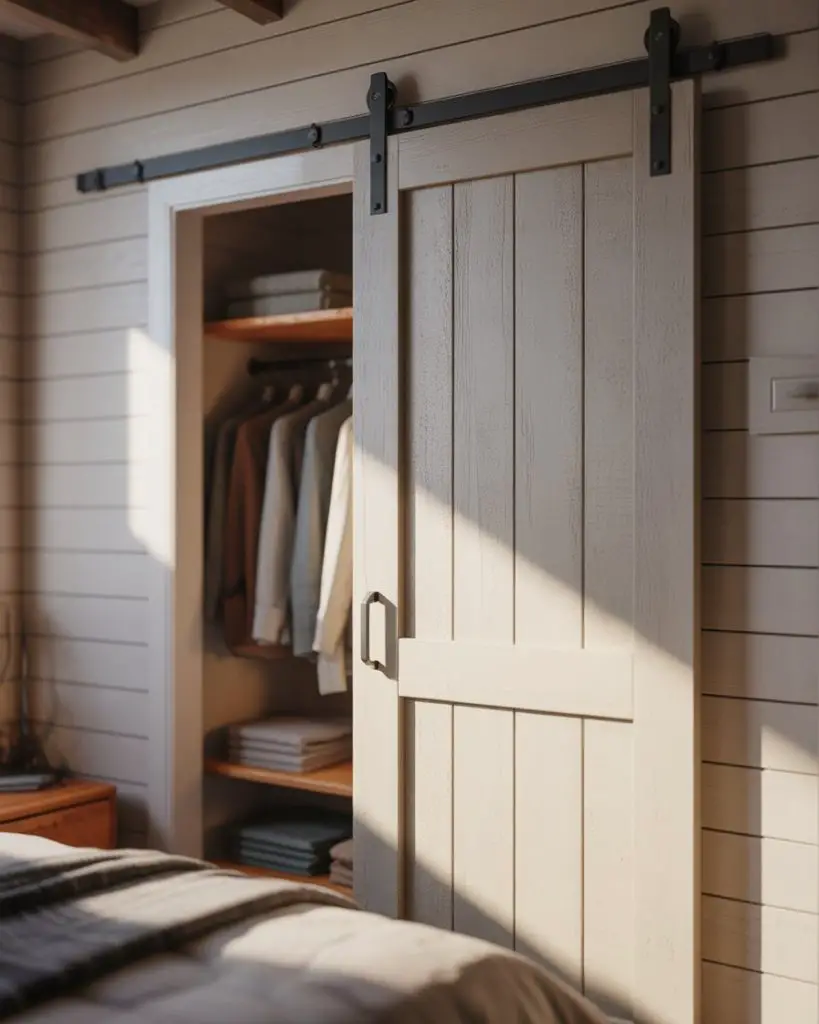
Replace a traditional hinged closet door with a sliding barn door to save the swing clearance and add farmhouse-chic character. This works especially well for wardrobe closets in tight quarters where every inch matters. You can DIY a barn door from reclaimed wood or buy a ready-made kit at home improvement stores, then mount it on a track above the door frame. Paint or stain it to match your room’s aesthetic—crisp white for modern spaces, weathered gray for rustic vibes. 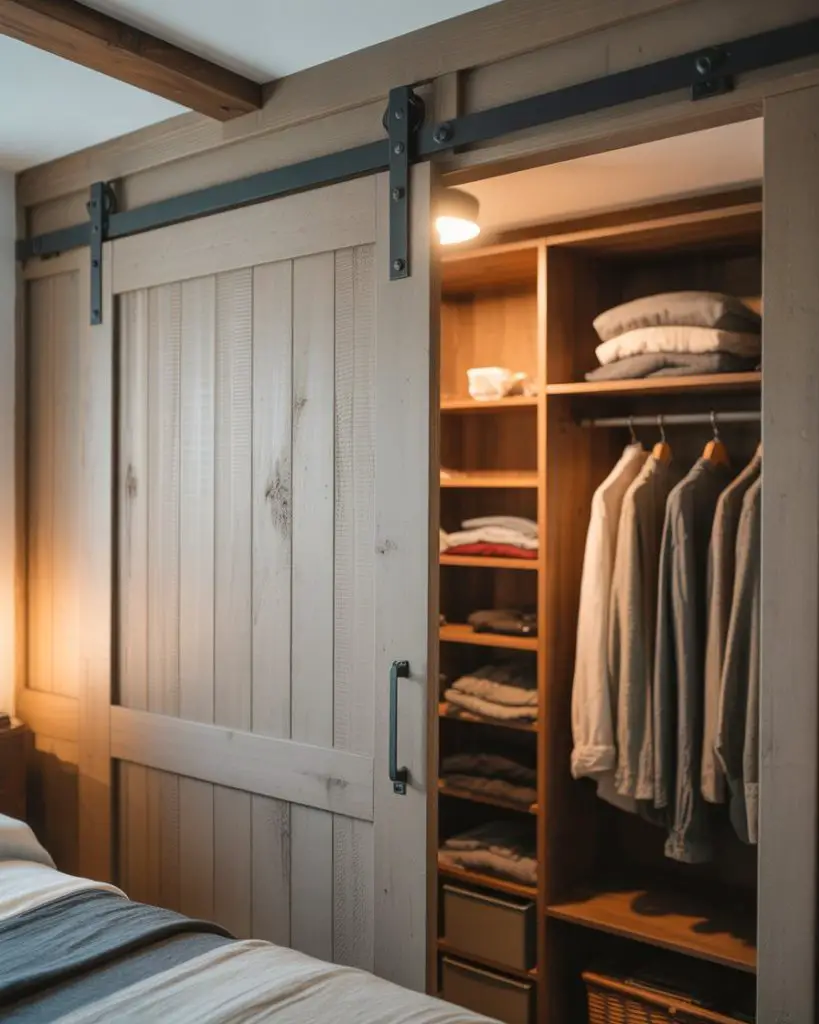
In Southern states like Texas and Georgia, where modern farmhouse design remains wildly popular, this detail elevates an ordinary bedroom into something Pinterest-worthy. The practical bonus: sliding doors don’t swing into your walking path, so you can place furniture closer to the closet without worrying about clearance—a small but meaningful gain in a cramped room.
8. Dual-Purpose Bunk Bed for Two Kids
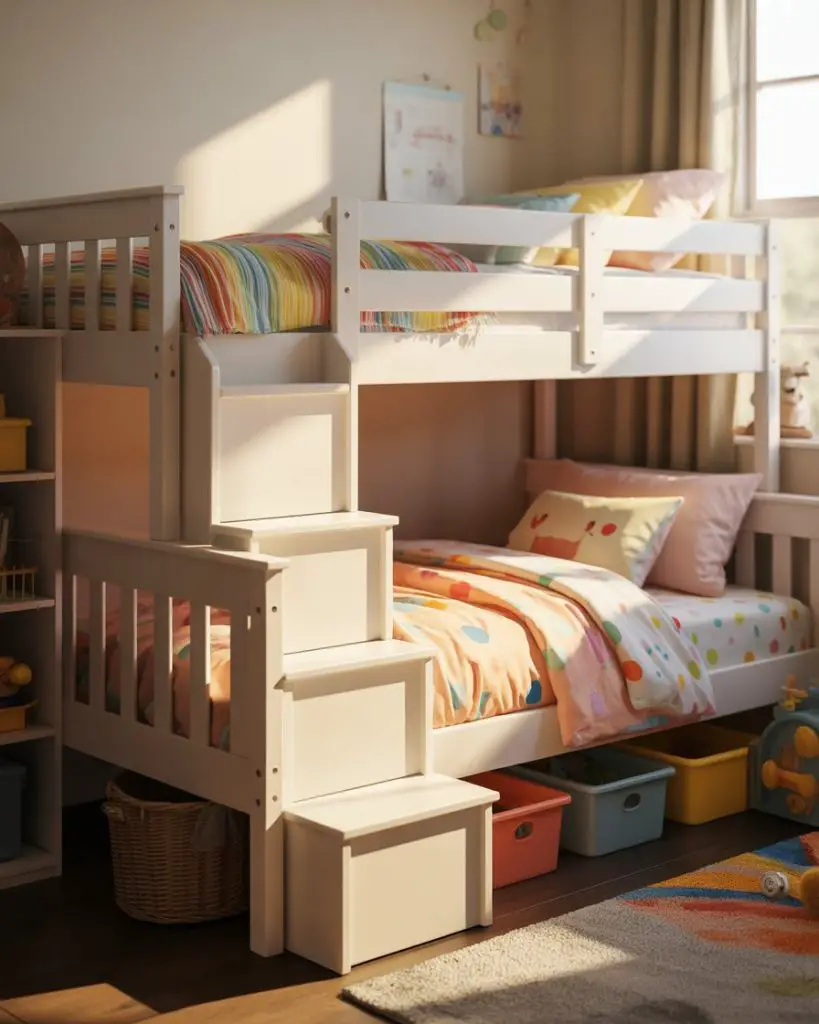
When siblings share a small bedroom, bunk bed ideas for two kids become essential. Opt for a sturdy hardwood or metal frame with built-in storage drawers in the steps or underneath the lower bunk. Each child gets their own sleeping zone, and you free up floor space for a shared play area or individual desks. Choose neutral bed frames so you can personalize each bunk with different bedding colors or patterns, giving each child a sense of ownership. 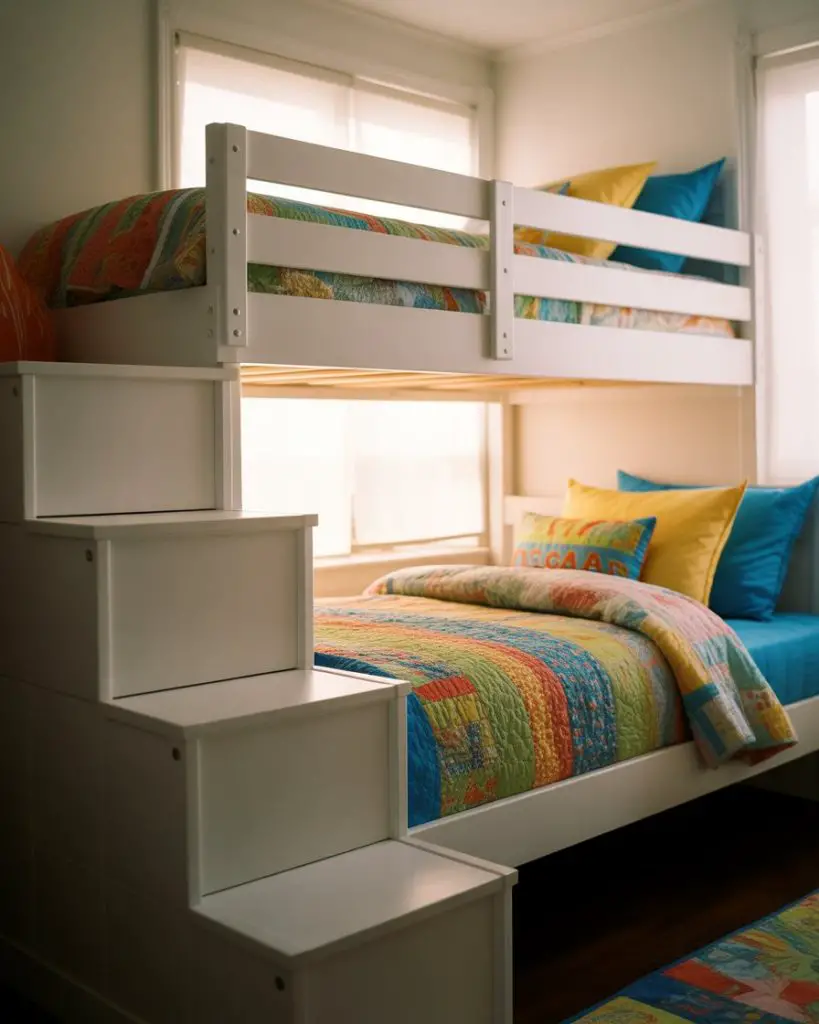
Real homeowner behavior shows that kids adapt quickly to bunks, and parents appreciate the newfound floor space for a reading corner or toy chest. Just be sure to install a guardrail on the top bunk and choose a ladder that’s easy to climb, especially for younger children. Safety aside, bunks can make a small room feel like an adventure rather than a compromise.
9. Wall-Mounted Folding Desk
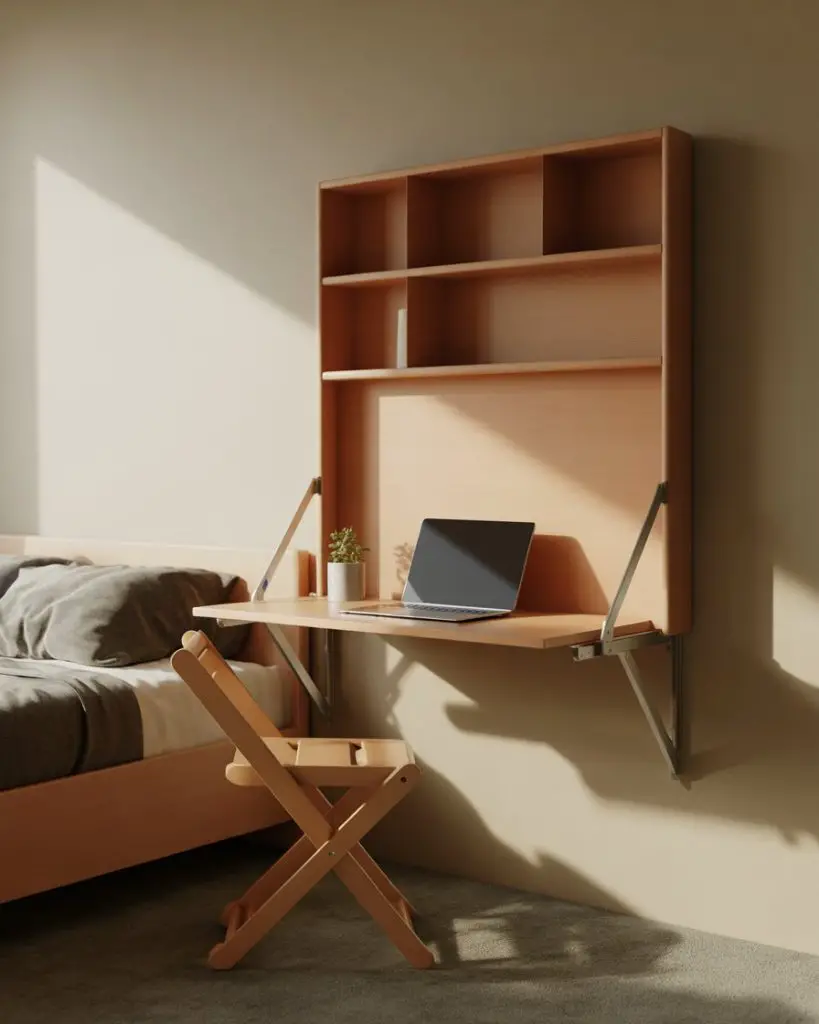
A wall-mounted drop-leaf desk is a perfect match for a small bedroom that doubles as a home office or study table area. Mount a hinged desktop to the wall at sitting height, then fold it down when you need to work and tuck it up flat when you’re done. Pair it with a fold-up chair or stool that hangs on a wall hook, and you’ve got a complete workspace that vanishes in seconds, leaving room for yoga, dressing, or just moving around freely. 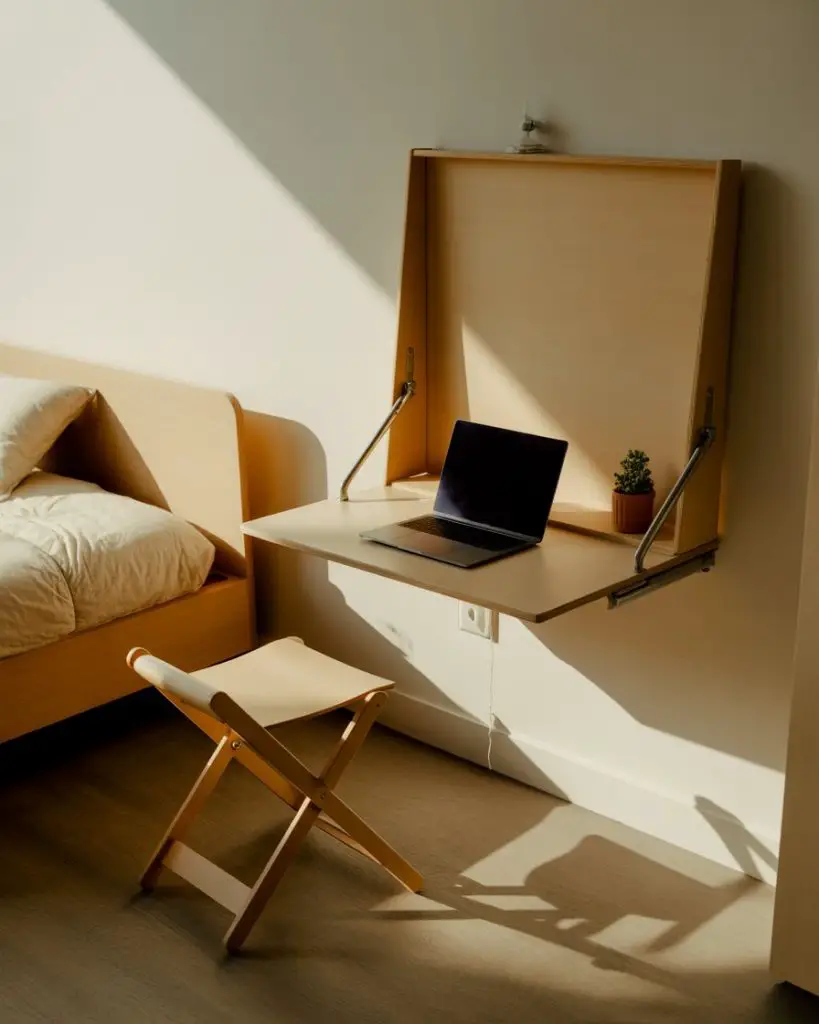
Practical insight: this setup is ideal for renters who can’t install permanent built-ins but still need a dedicated work surface. A simple bracket-and-hinge system costs under $30, and installation takes about an hour. The result is a clutter-free bedroom that serves multiple functions without feeling cramped or chaotic.
10. Cozy Reading Nook in the Corner
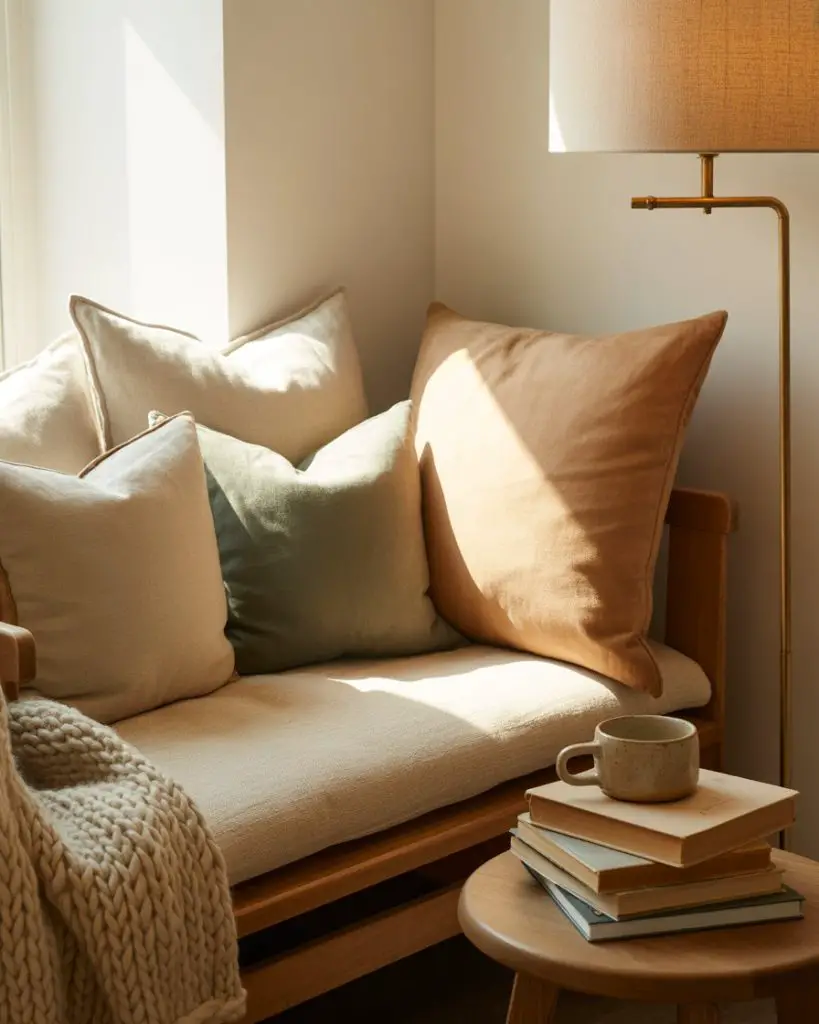
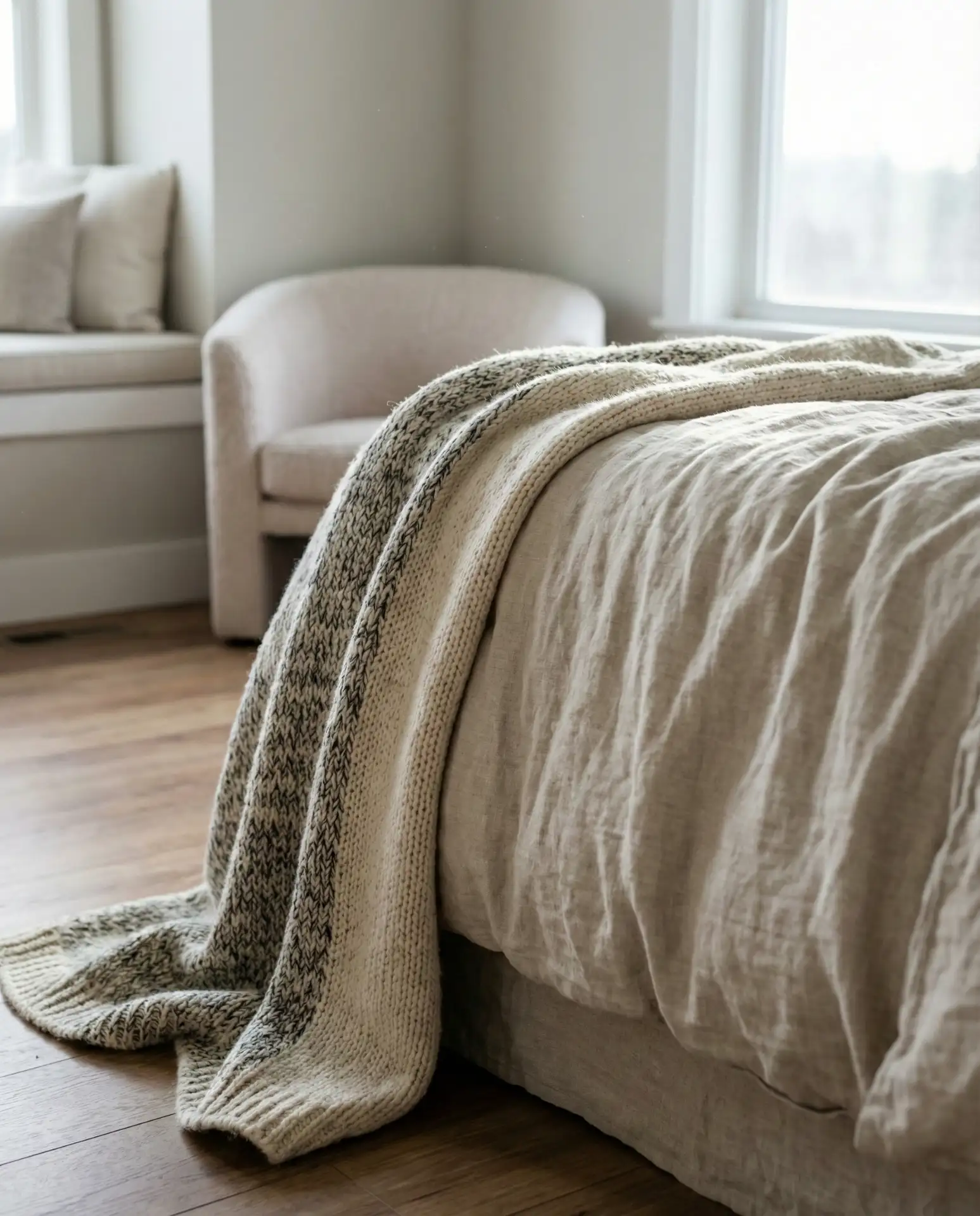
Transform an empty corner into a cozy room decor haven with a low cushioned bench, throw pillows, and a small side table for books and tea. Layer soft textiles—a chunky knit blanket, linen pillow covers—to create an inviting retreat within your bedroom. Add a floor lamp or wall sconce for task lighting, and consider a floating shelf above the nook to display favorite reads or small plants. This corner becomes your go-to spot for unwinding, proving that even the smallest bedroom can offer a dedicated relaxation zone. 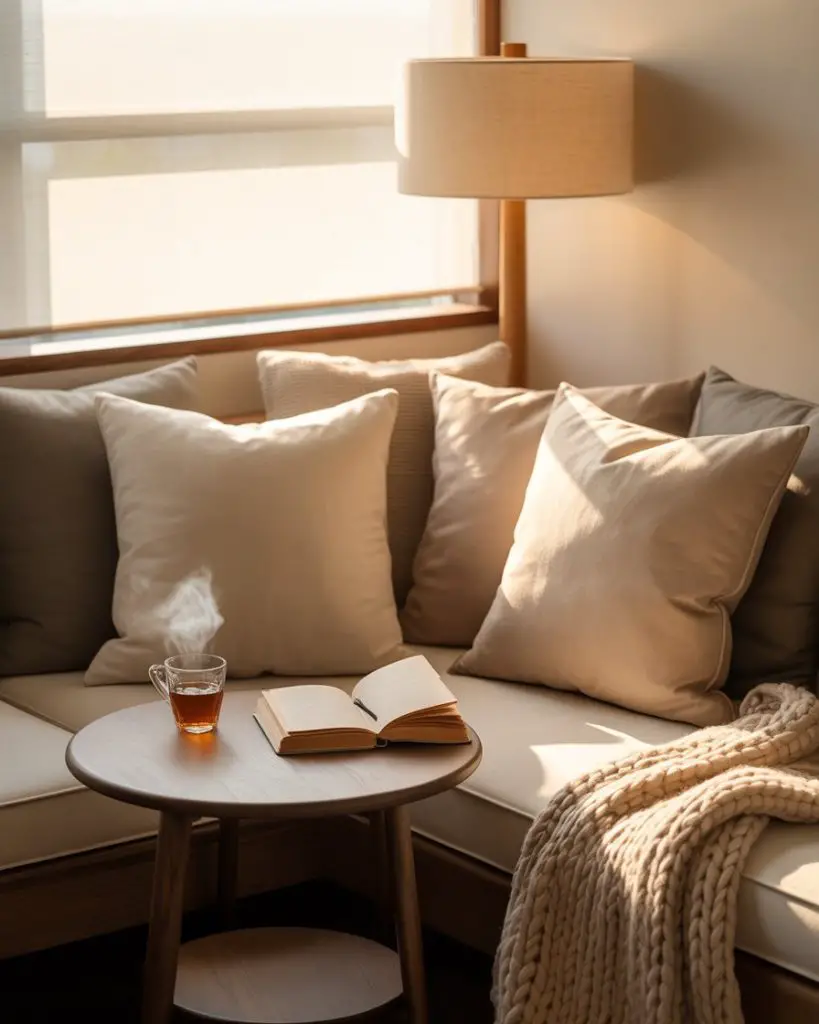
In the Pacific Northwest, where rainy days are common, homeowners swear by these cozy corners as their escape for reading, journaling, or simply sipping coffee. It’s a design move that costs very little—often under $200 for cushions, a lamp, and a small table—but delivers outsized emotional value. The key is choosing a corner that doesn’t block traffic flow or interfere with closet doors.
11. Mirrored Closet Doors for Illusion of Space

Mirrored sliding doors on a closet instantly make a small bedroom feel larger and brighter by reflecting light and creating visual depth. They also eliminate the need for a separate full-length mirror, saving wall space and streamlining your morning routine. Opt for frameless mirrors for a sleek, modern look, or choose mirrors with thin metal frames if you want a touch of industrial style. Either way, the effect is dramatic—what once felt enclosed suddenly opens up. 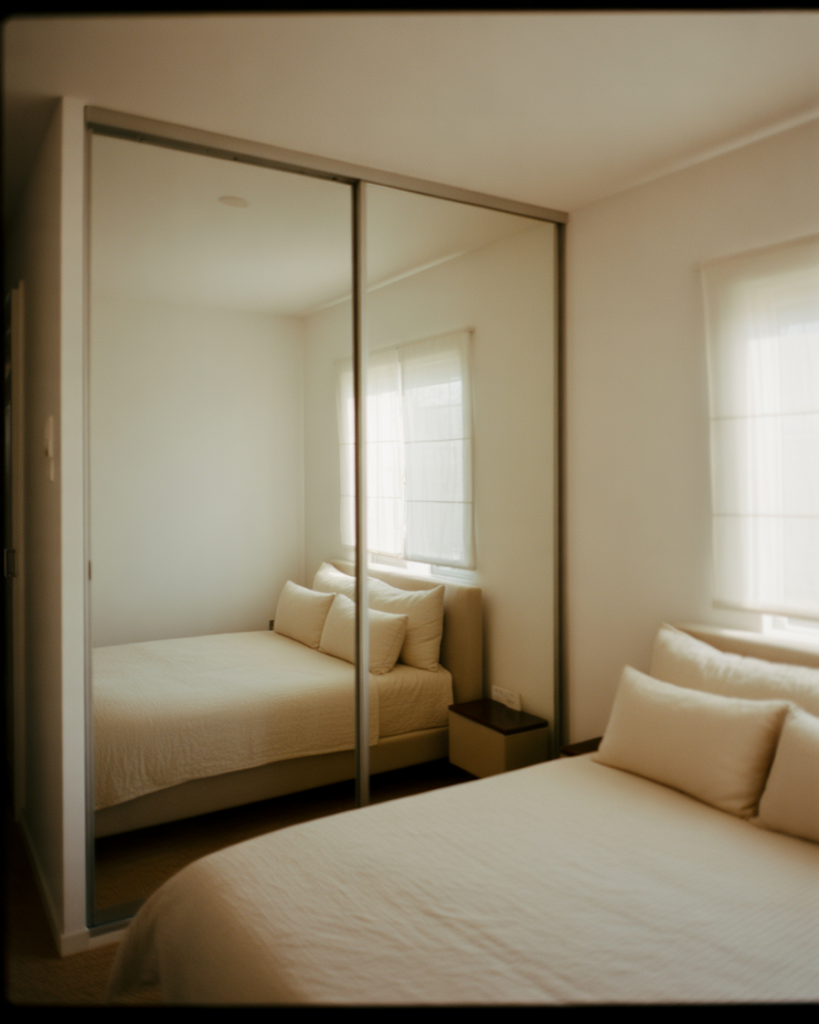
Where it works best: apartments in dense urban areas like New York, San Francisco, or Chicago, where bedrooms often lack natural light. The mirrors bounce whatever sunlight you do have around the room, making mornings feel less dim. Just be mindful of placement—avoid positioning mirrors directly opposite the bed if you find it disorienting to wake up and see your reflection first thing.
12. Floating Nightstands to Free Up Floor Space
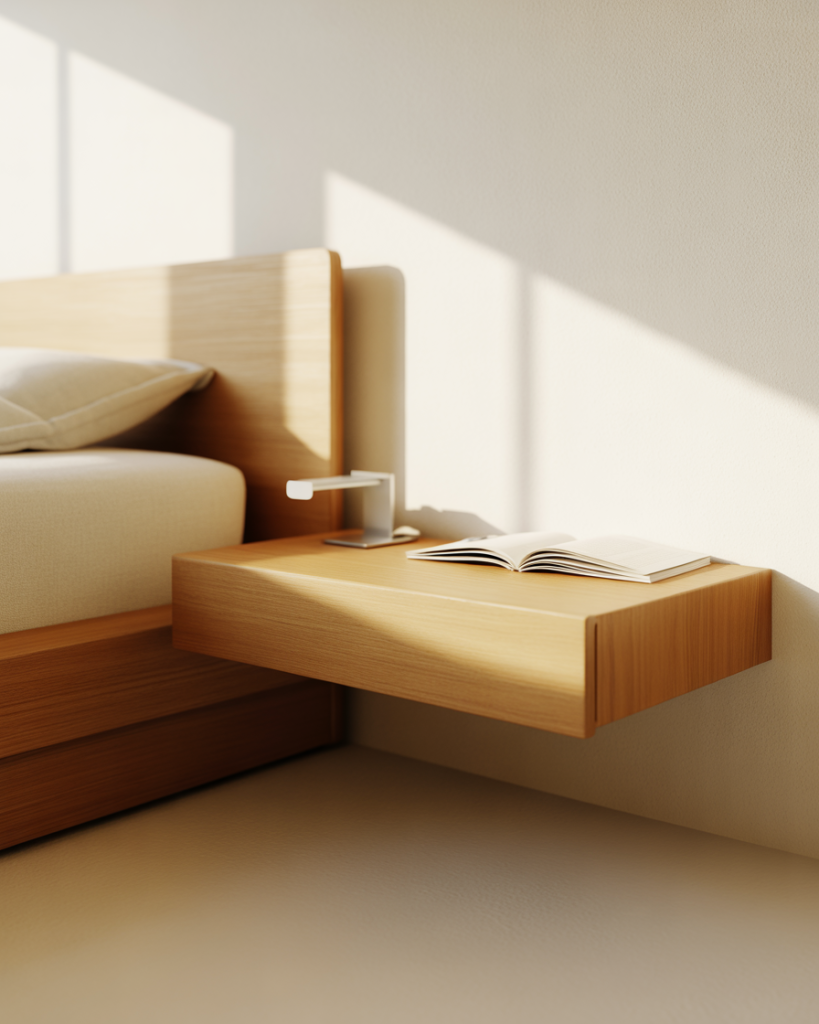
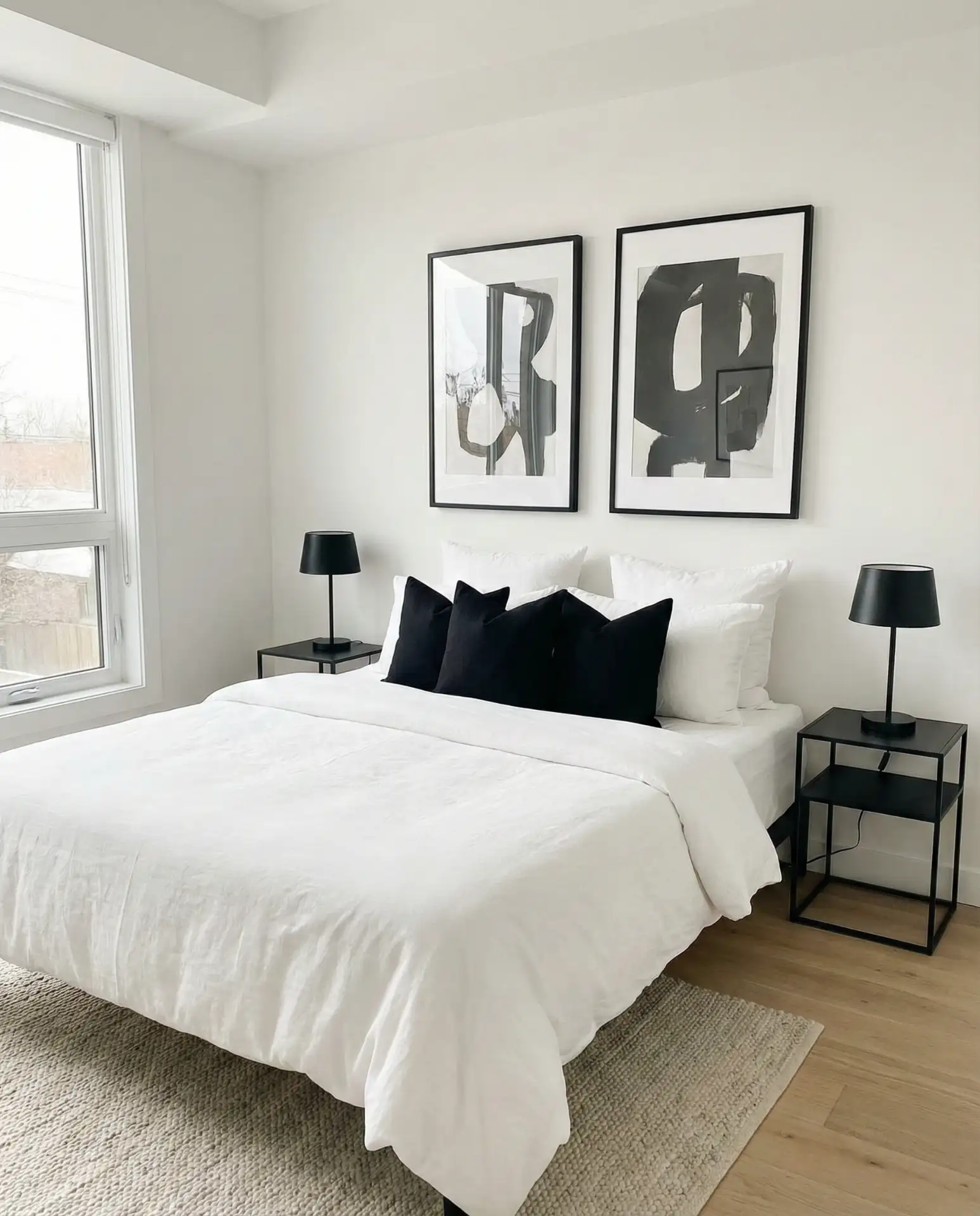
Wall-mounted nightstands with a single drawer or open shelf provide essential bedside storage without taking up floor real estate. This approach is especially helpful in minimalist and aesthetic cozy bedrooms where you want clean lines and a sense of openness. Choose nightstands in natural wood, matte black metal, or crisp white finishes to match your decor, and mount them at a height that aligns with your mattress top for easy reach from bed. 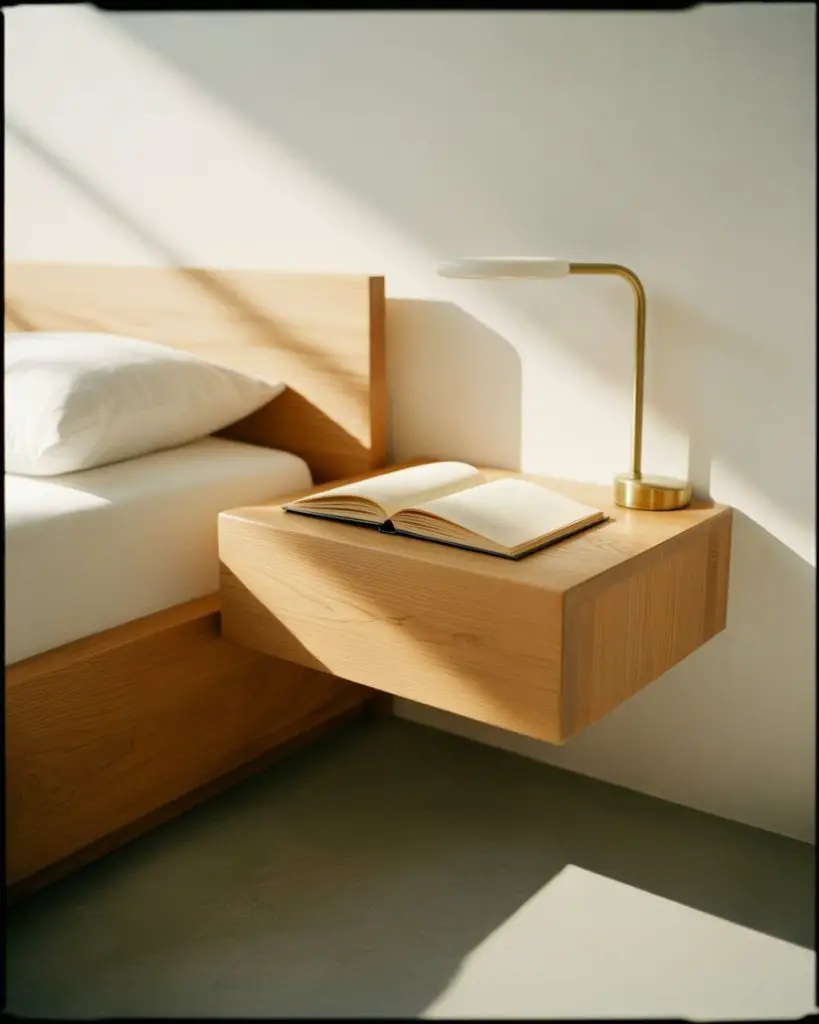
A design tip from West Coast Interiors: pair floating nightstands with wall-mounted reading lamps to eliminate the need for table lamps altogether, further reducing clutter. Homeowners in small condos report that this combo creates a hotel-like feel—sleek, uncluttered, and surprisingly luxurious. Installation is straightforward; just make sure to anchor into studs for stability.
13. Teen Bedroom with Pegboard Organizer
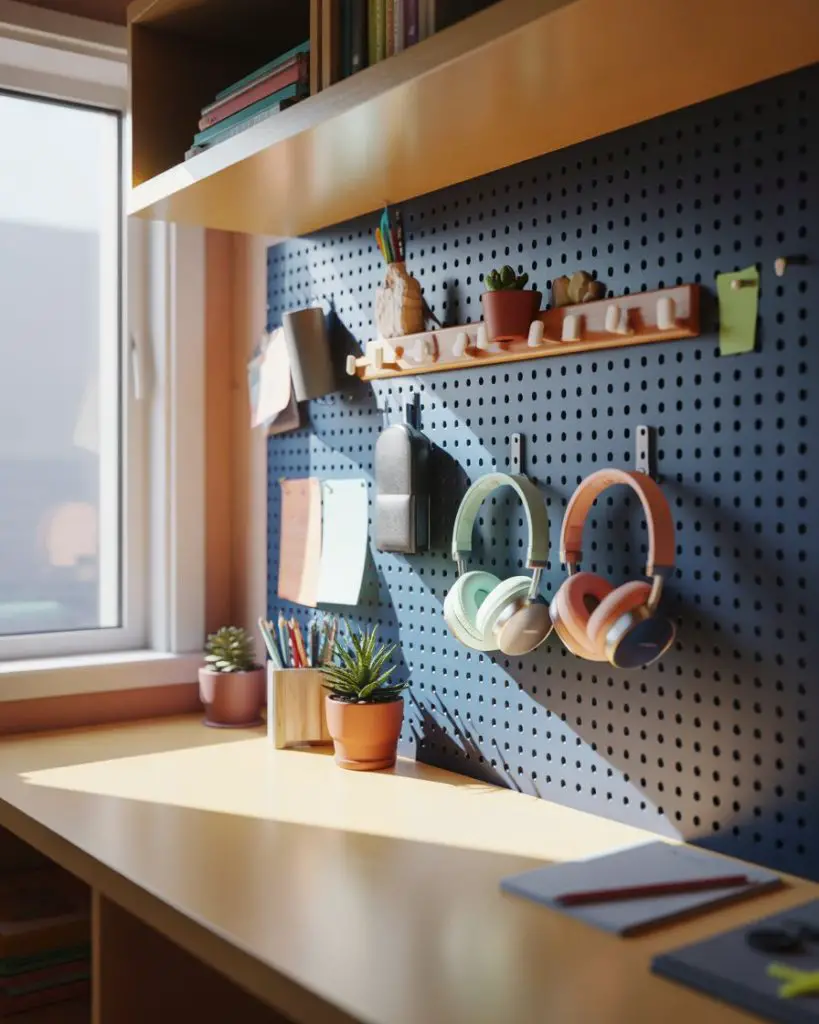
Pegboard walls are having a renaissance in teen bedrooms, offering flexible storage ideas and a fun DIY project for teens who want to personalize their space. Paint a large pegboard panel in a bold color—navy, blush, or charcoal—and mount it above a desk or dresser. Use hooks, small shelves, and baskets to organize school supplies, jewelry, headphones, and art supplies. The beauty of pegboard is its adaptability: rearrange hooks and accessories anytime without drilling new holes.
Teens love the control this gives them over their space, and parents appreciate that it keeps clutter off the floor and surfaces. In suburban homes across the Sun Belt, where bedrooms for teens often measure 10×12 feet, pegboard organizers have become a go-to solution for combining function with self-expression. Kits are available at craft stores for under $50, making it an affordable weekend project.
14. Compact Dressing Table with Fold-Out Mirror
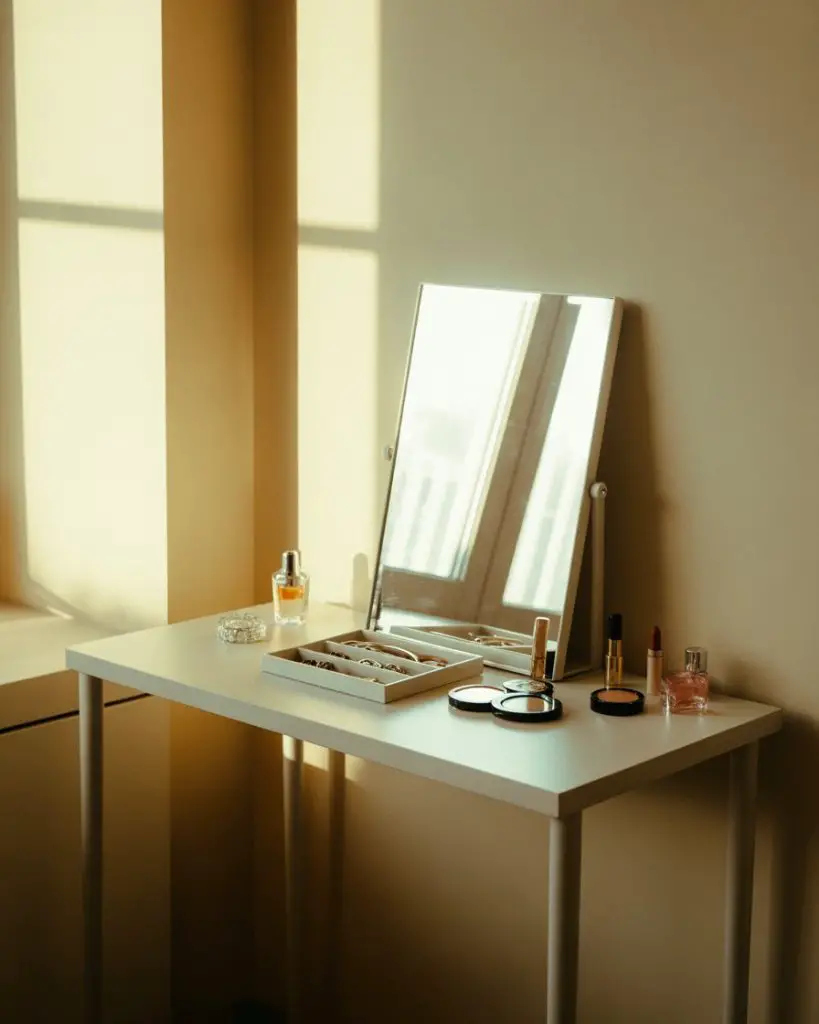
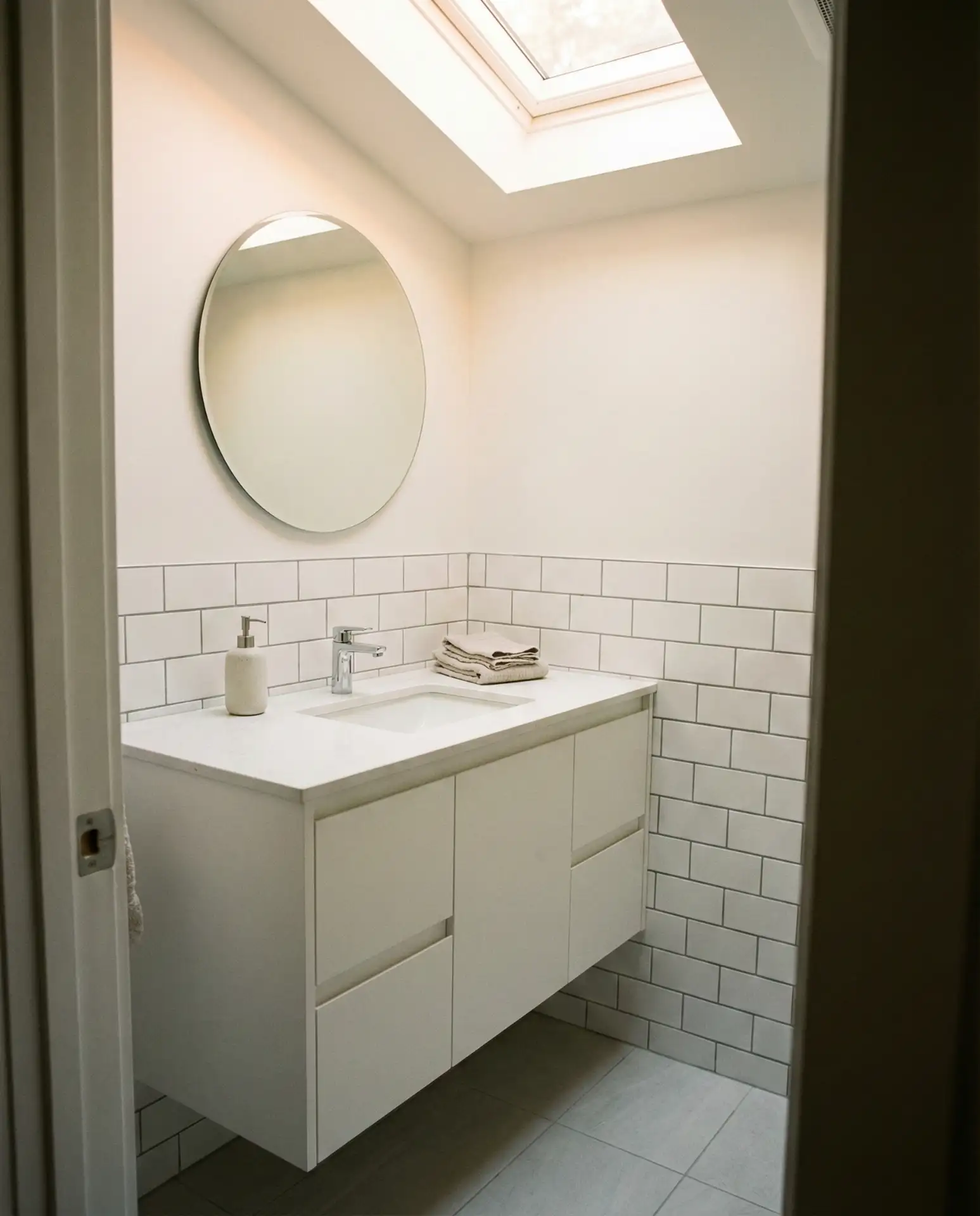
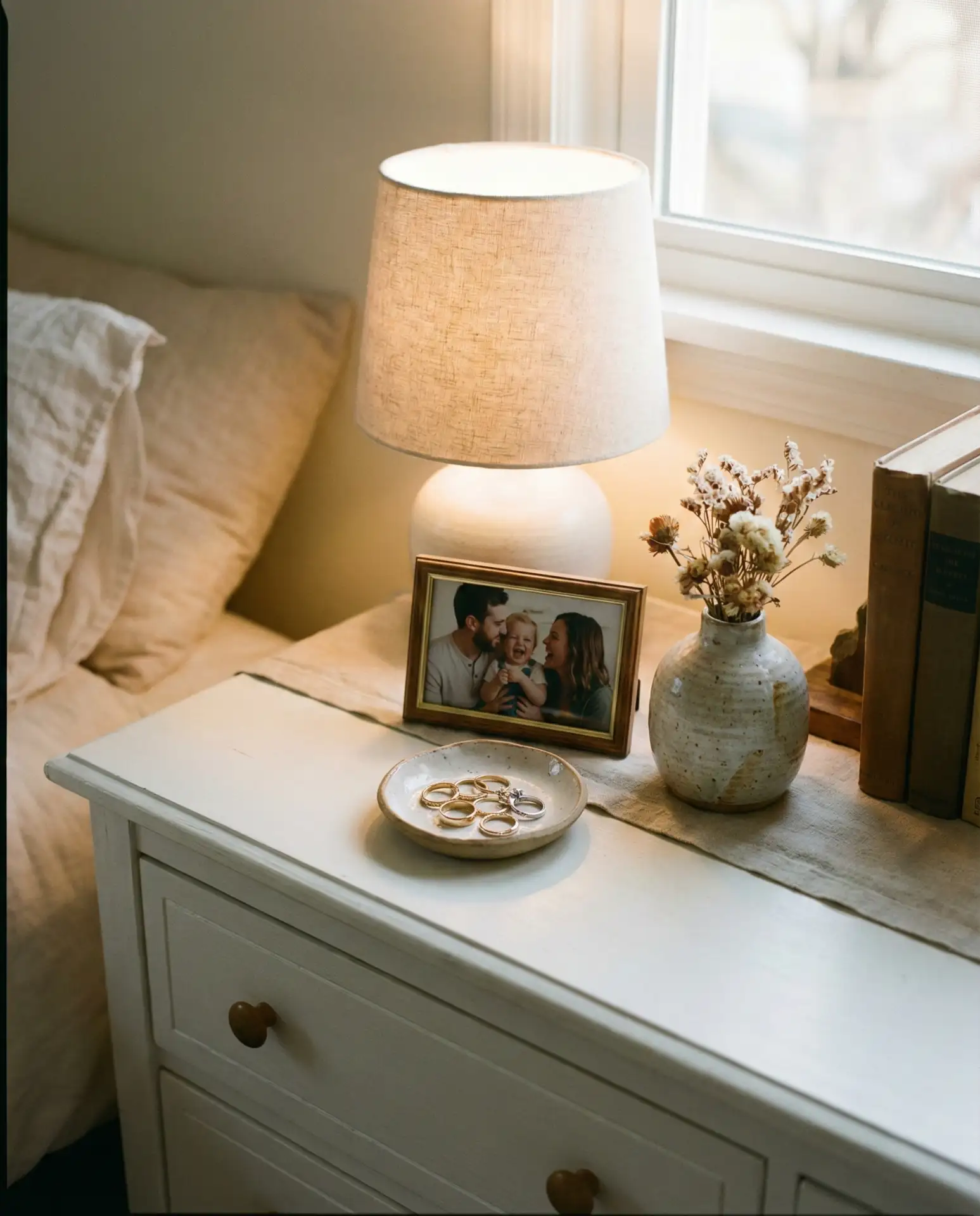
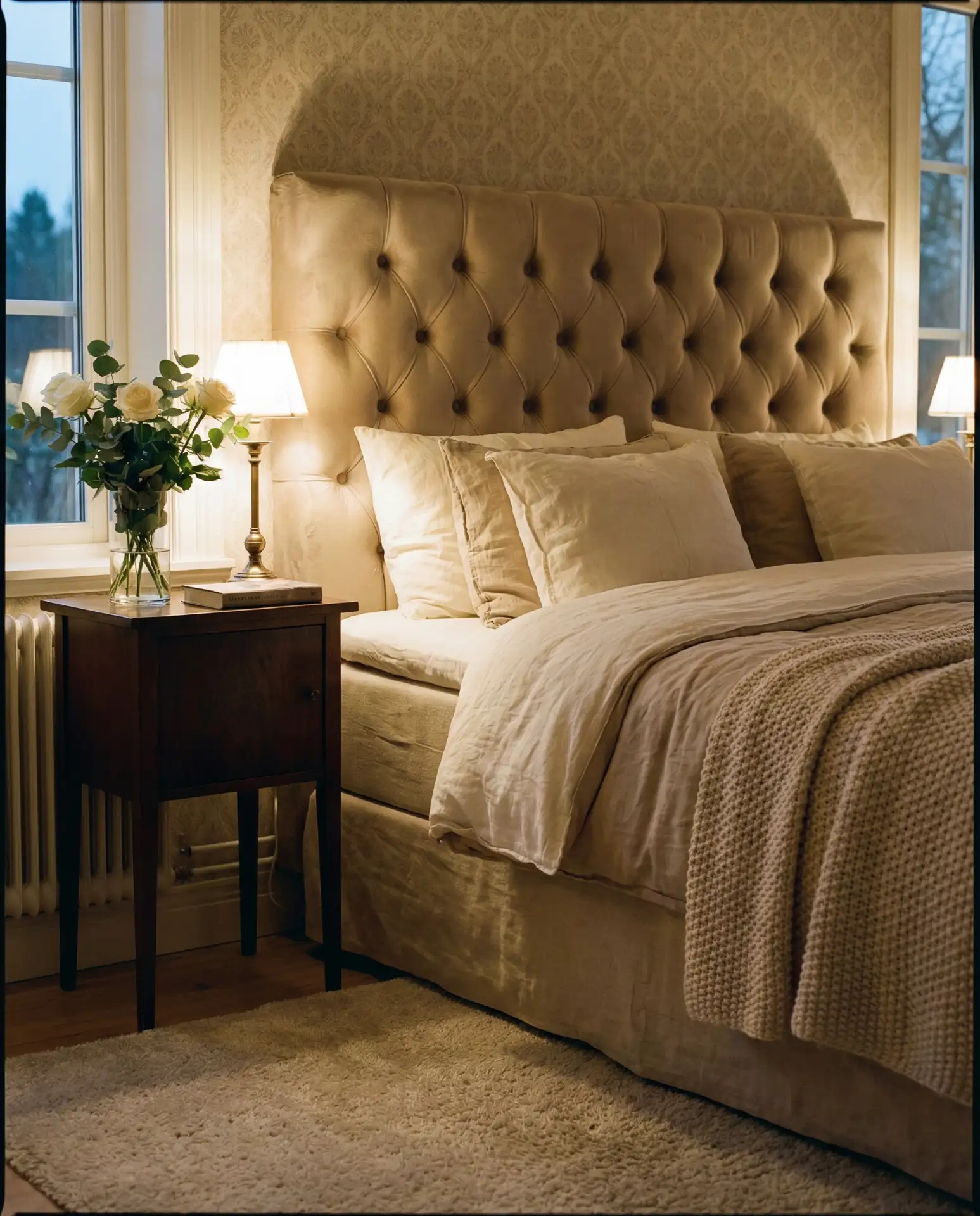
A narrow console table paired with a fold-out or wall-mounted mirror creates a functional dressing table setup without dominating the room. Choose a table no deeper than 12 inches to maximize floor space, and use drawer organizers or small trays to keep makeup, jewelry, and grooming tools tidy. Mount the mirror on a hinge so it can swing up flat against the wall when not in use, or opt for a tabletop mirror that folds down for storage. 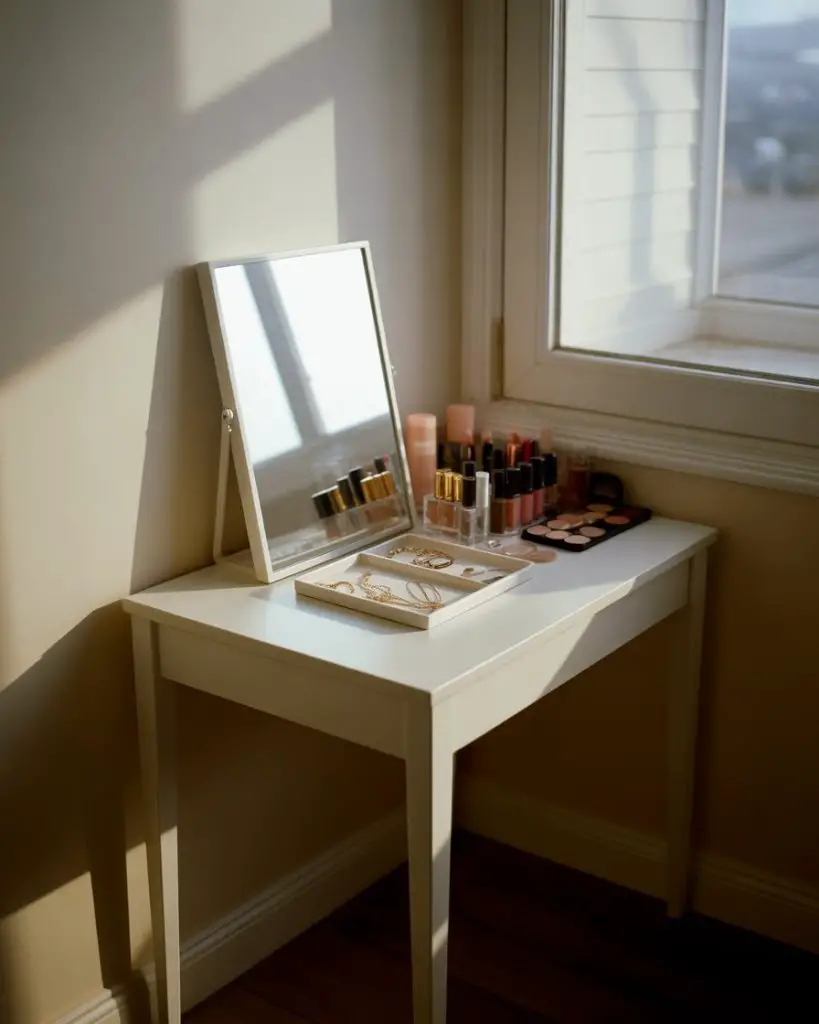
In the Northeast, where older apartments often lack built-in vanity areas, renters DIY this setup to add a touch of glamour without sacrificing walkability. The key is choosing a chair or stool that tucks completely under the table when you’re done, maintaining the room’s flow and preventing that crowded feeling.
15. Modern Ceiling Design with Recessed Lighting

Recessed LED lights installed in a tray or coffered ceiling add architectural interest and improve lighting without eating up headroom—perfect for modern ceiling design updates in small bedrooms. This approach works best in rooms with at least 8-foot ceilings; the recessed fixtures create ambient light that’s softer and more even than a single overhead fixture. Pair with dimmer switches so you can adjust brightness for different moods, from energizing morning routines to calm evening wind-downs. 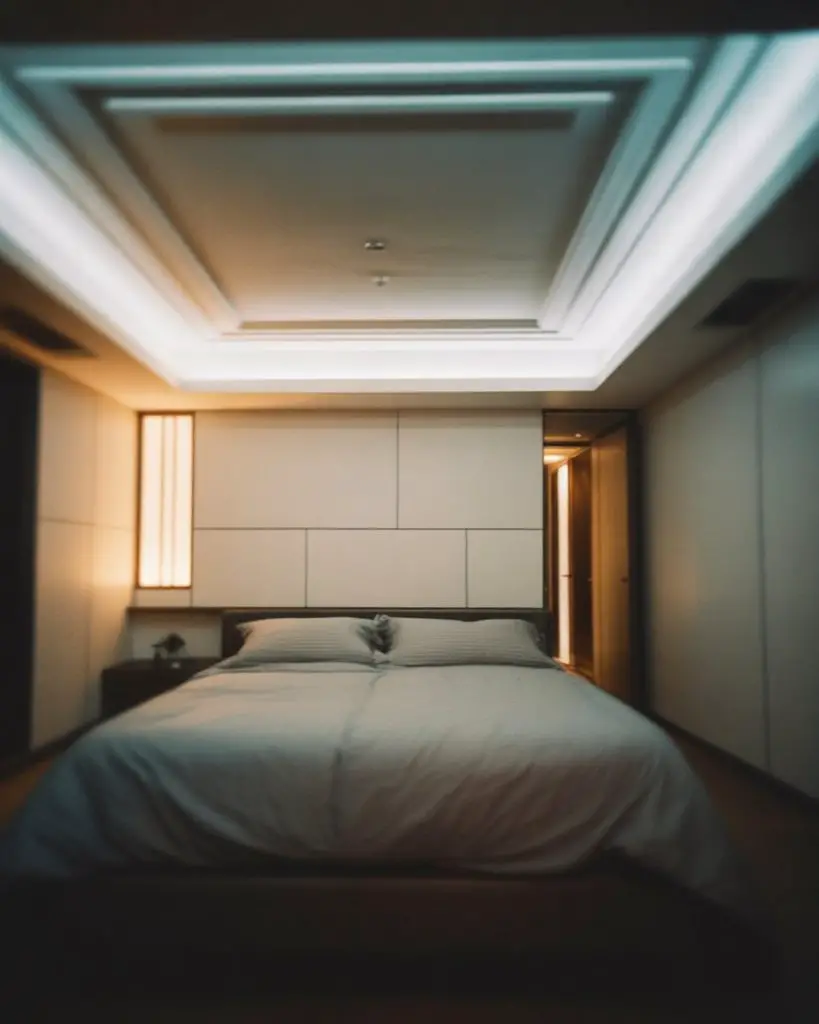
Common mistakes include installing too many lights, which can make the room feel like an operating theater, or skipping the dimmer, which limits flexibility. Electricians recommend spacing recessed cans about 4 feet apart in a small bedroom and choosing warm white bulbs (2700-3000K) to keep the atmosphere cozy. The upfront cost—around $500 to $1,000 for materials and installation—adds lasting value and modern appeal.
16. King Bed Layout with Floating Side Tables
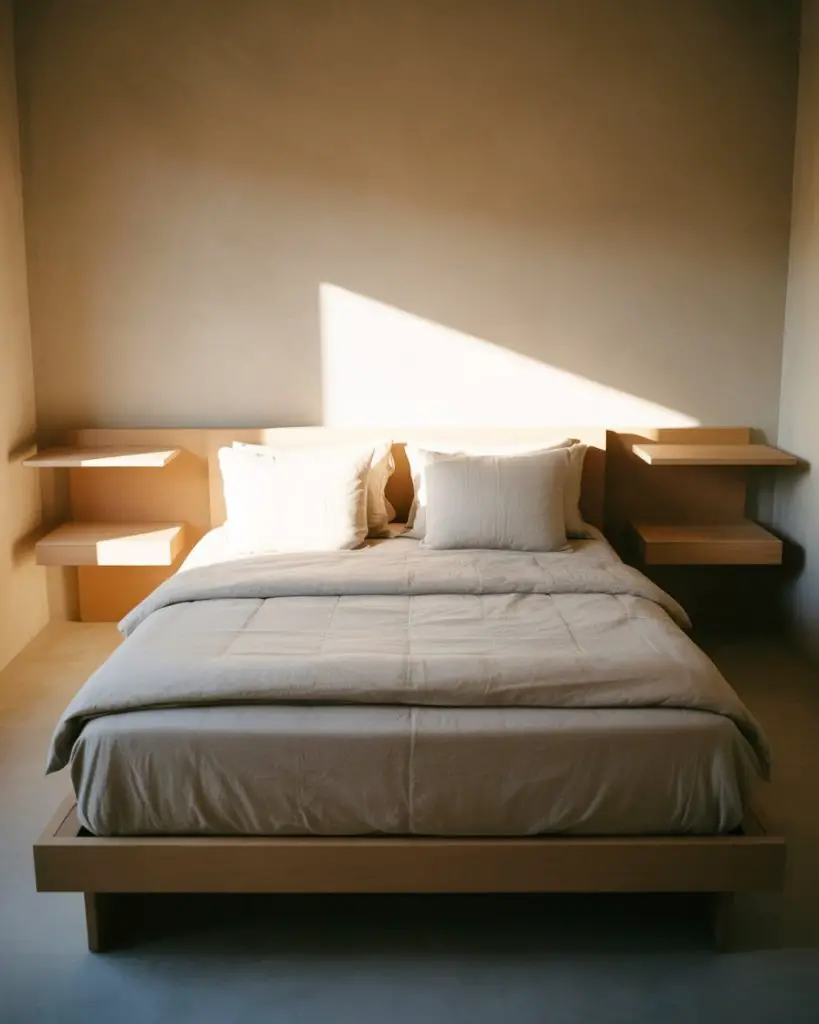
Yes, you can fit a king bed layout in a small bedroom if you’re strategic. Push the bed against one wall to free up walking space on the other side, and use floating nightstands on both sides to eliminate bulky furniture. Keep the foot of the bed clear—no benches or trunks—so the room doesn’t feel blocked. Choose a low-profile platform bed without a footboard to maintain sightlines and create the illusion of more space. 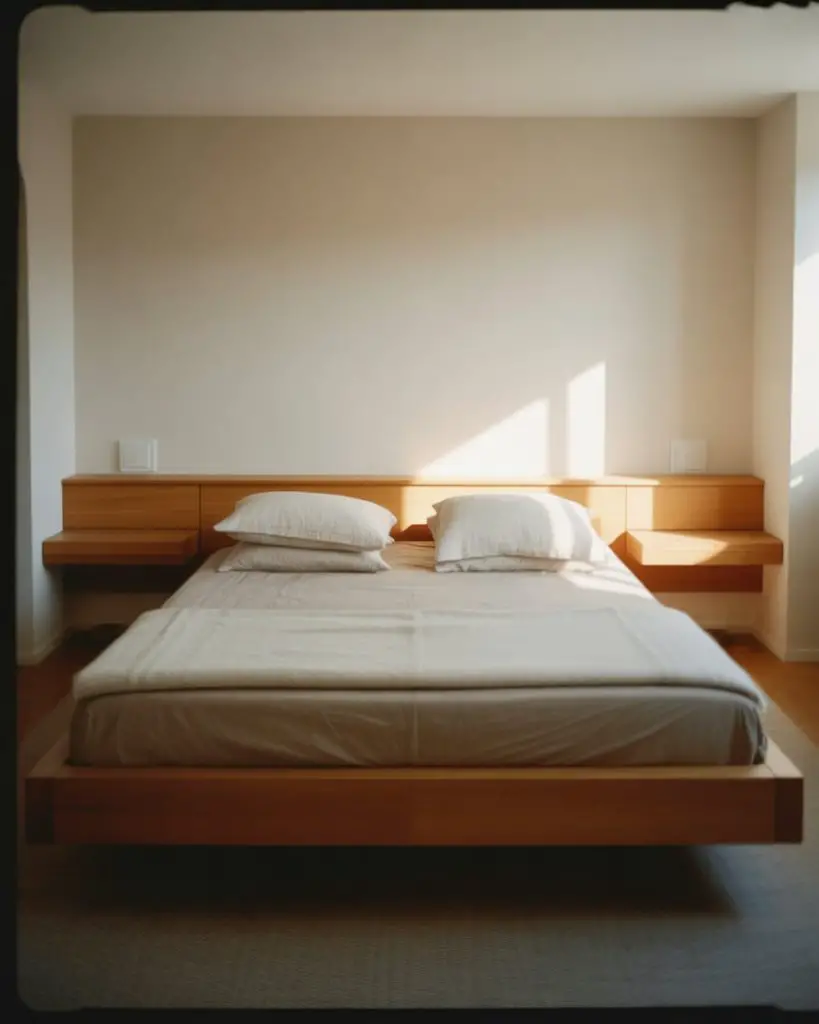
In master bedrooms that measure 12×14 feet—common in newer construction across the South—homeowners report that this layout works surprisingly well. The trade-off is narrower walkways on one side, but the comfort of a king mattress often outweighs the squeeze. Just measure carefully before you buy: leave at least 24 inches of clearance on the walking side to avoid a cramped, claustrophobic feel.
17. Home Gym Corner with Wall-Mounted Rack
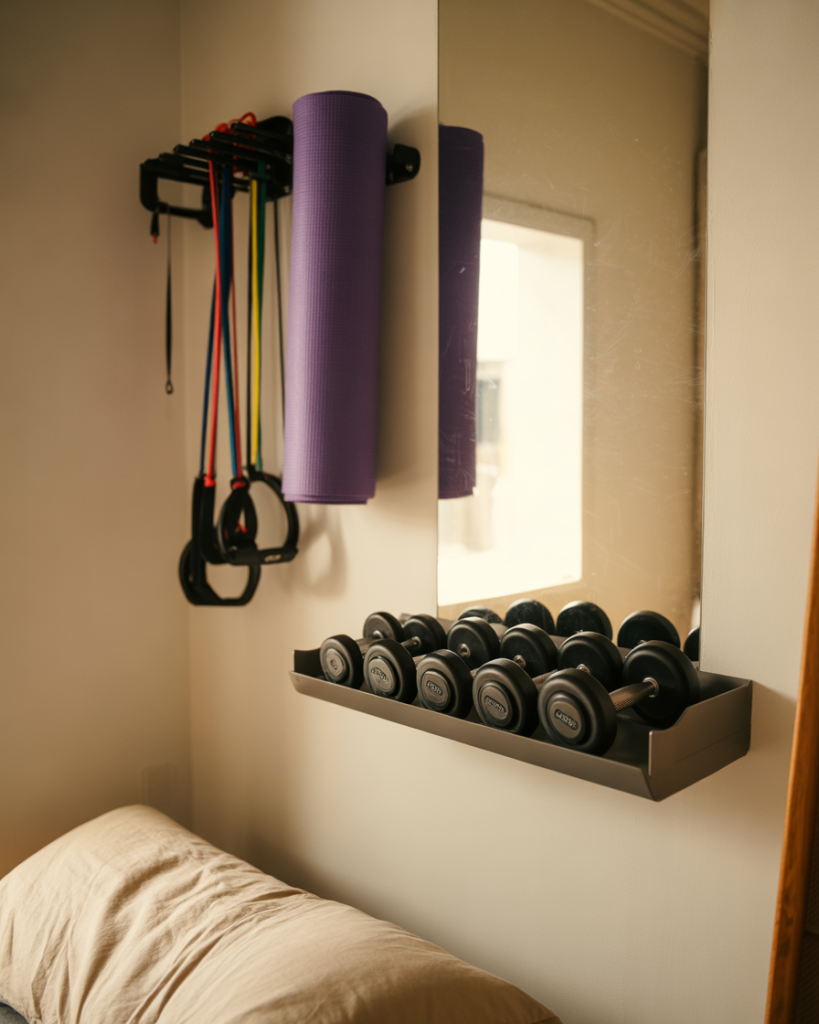
Carve out a mini fitness zone in your bedroom with wall-mounted racks for resistance bands, yoga mats, and light dumbbells—ideal for gym ideas in small spaces. Install a floating shelf or pegboard to hold equipment off the floor, and roll out a compact yoga mat when it’s time to work out. Choose foldable or stackable weights and resistance tools that store neatly when not in use, keeping the area tidy and multipurpose. 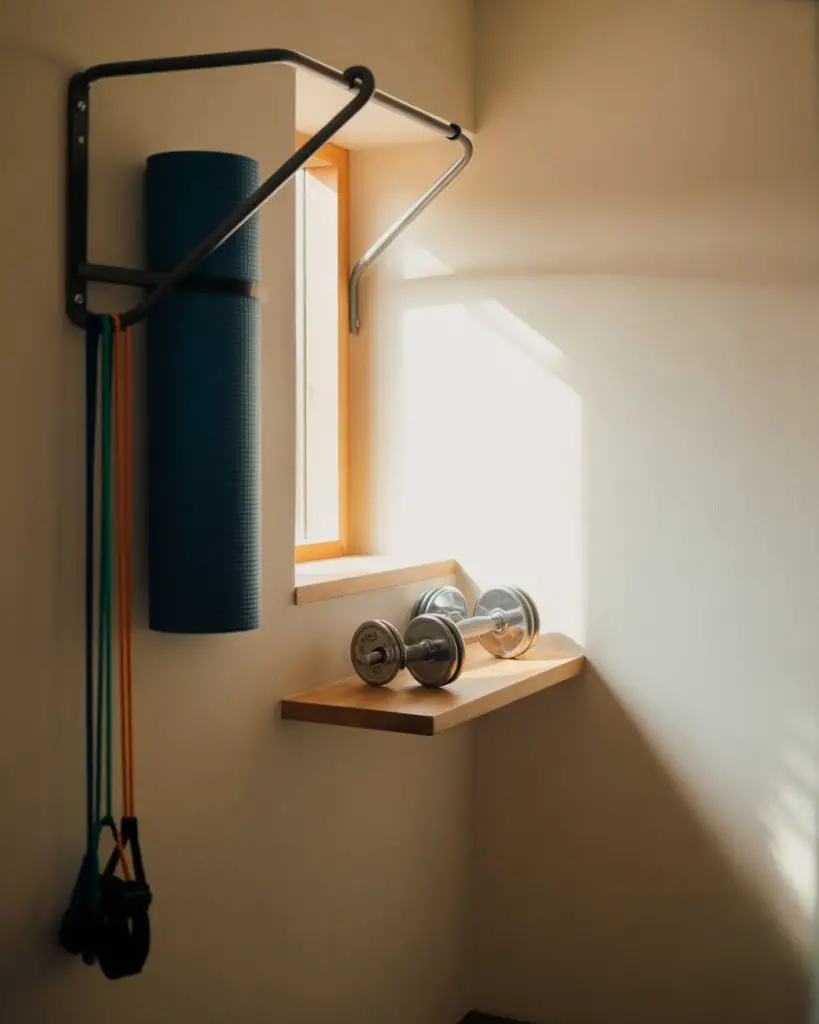
This setup appeals to urban professionals who don’t have room for a dedicated gym but still want to maintain a fitness routine. In cities like Denver and Austin, where active lifestyles are prized, homeowners maximize square footage by combining bedroom and workout space. The key is discipline: put everything back after your session to avoid clutter creep.
18. Couple’s Bedroom with Dual Nightstands

For designs for couples, matching or complementary nightstands on each side of the bed create balance and give both partners equal access to storage and lighting. Choose slim tables—no wider than 18 inches—to preserve walking space, and outfit each with a small lamp, charging station, and drawer for personal items. This symmetry makes the room feel intentional and well-planned, even when space is tight. 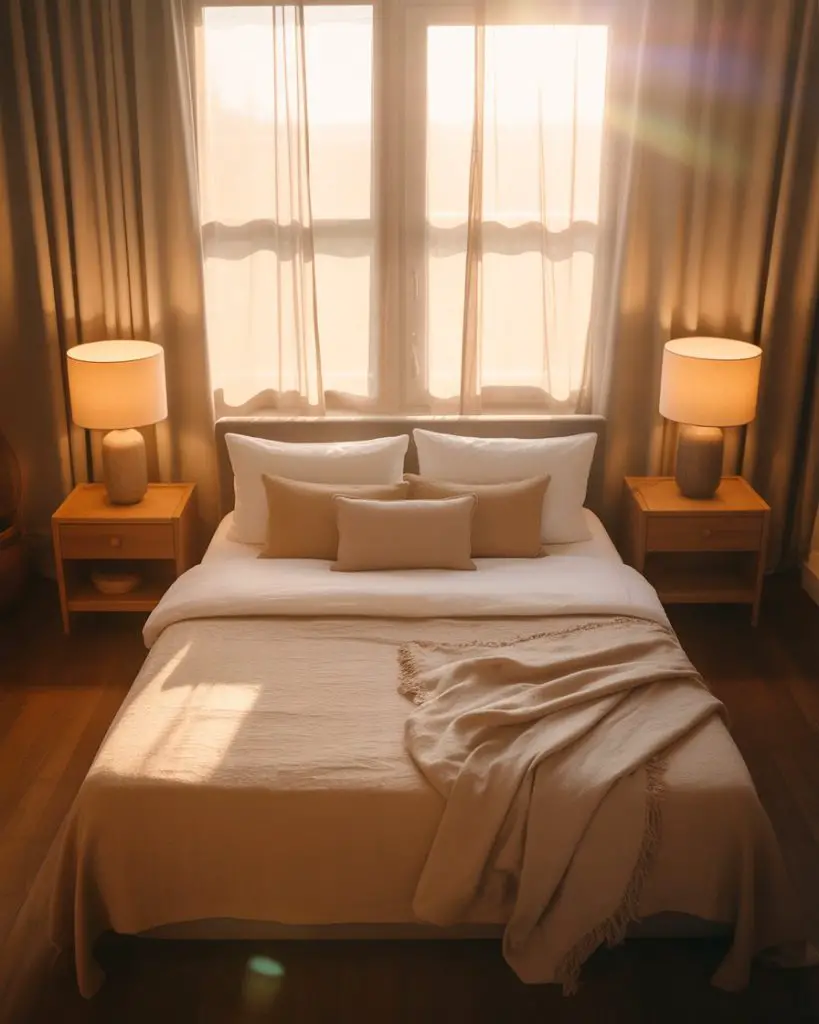
Expert-style commentary: designers recommend choosing nightstands with closed storage rather than open shelves to keep the space looking tidy, especially in shared bedrooms where clutter can multiply quickly. In Midwestern homes, where traditional aesthetics still reign, matching wood nightstands in walnut or oak add warmth and a sense of stability, grounding the room without overwhelming it.
19. Soothing Color Ideas with Soft Blues and Greens
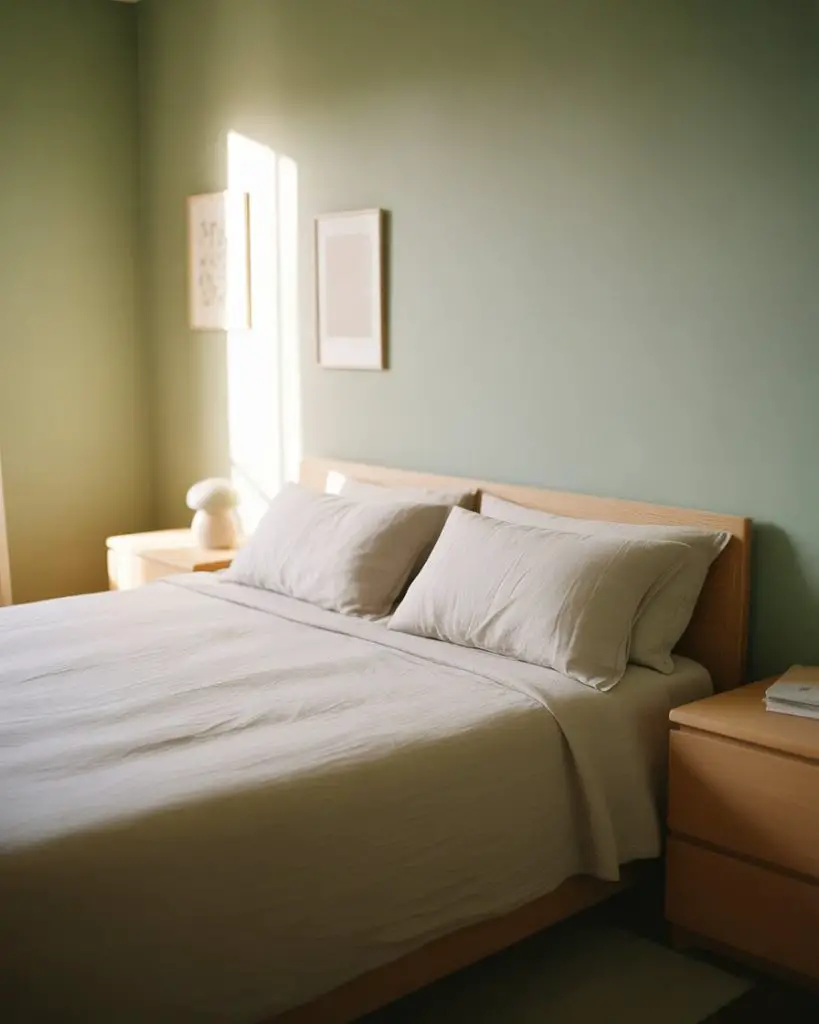
Soft, cool color ideas like sage green, powder blue, or seafoam create a calming atmosphere that makes a small bedroom feel more spacious and serene. Paint the walls in one of these hues, then layer in white or cream bedding and natural wood accents to keep the palette light and airy. Avoid dark, heavy colors that can make tight quarters feel closed in; instead, think beach cottage or spa-inspired tones that invite relaxation. 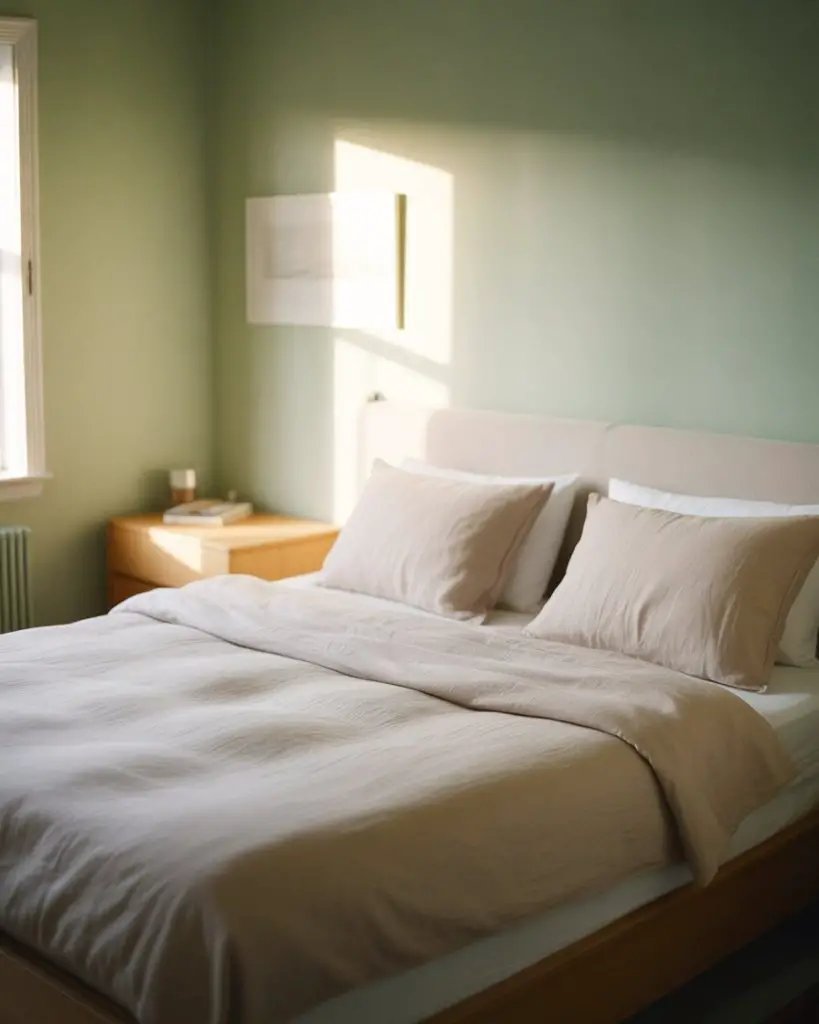
In coastal regions like the Carolinas and Southern California, these colors reflect the local landscape and make bedrooms feel like a breath of fresh air. The psychological benefit is real: cooler tones are proven to lower stress and promote better sleep, which is especially valuable in a small room where you spend a significant amount of time. A single gallon of quality paint costs around $40 and can completely transform the vibe in an afternoon.
20. En Suite Bathroom with Pocket Door
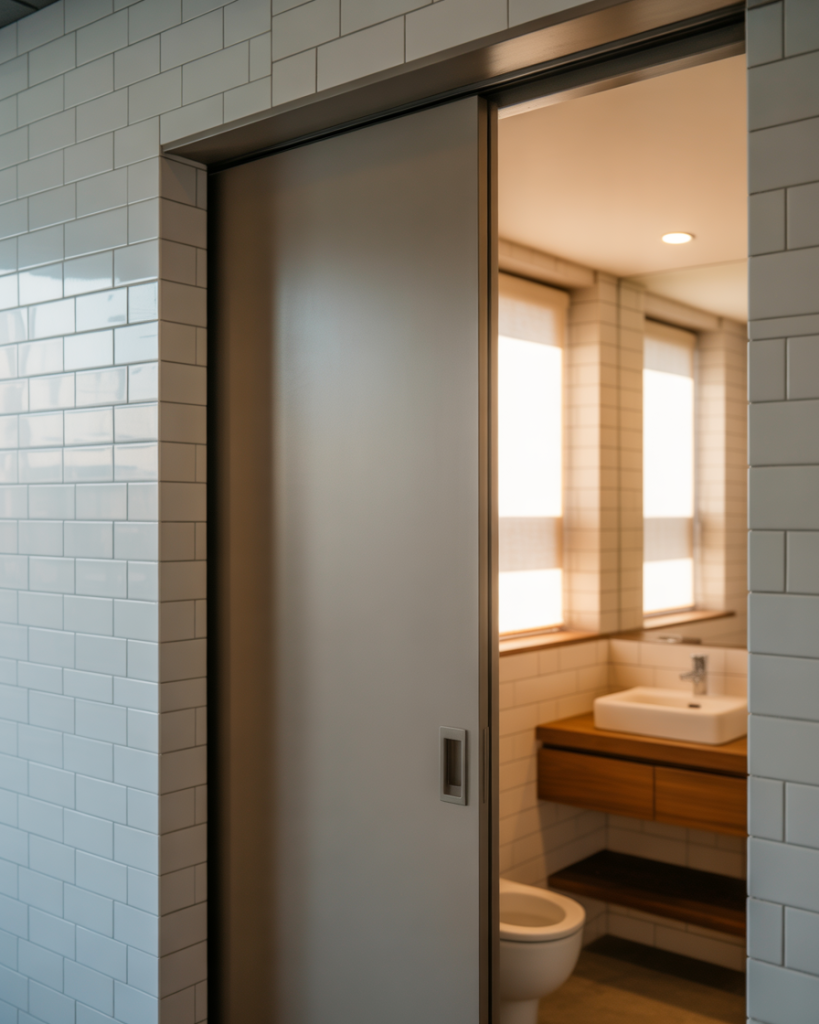
If your small bedroom includes a bathroom, swap a traditional swinging door for a pocket door that slides into the wall cavity. This simple upgrade frees up several square feet and makes both rooms feel less cramped. Pocket doors are particularly useful when the bathroom is located off a tight hallway or corner, where a swinging door would block furniture placement or create awkward dead space. 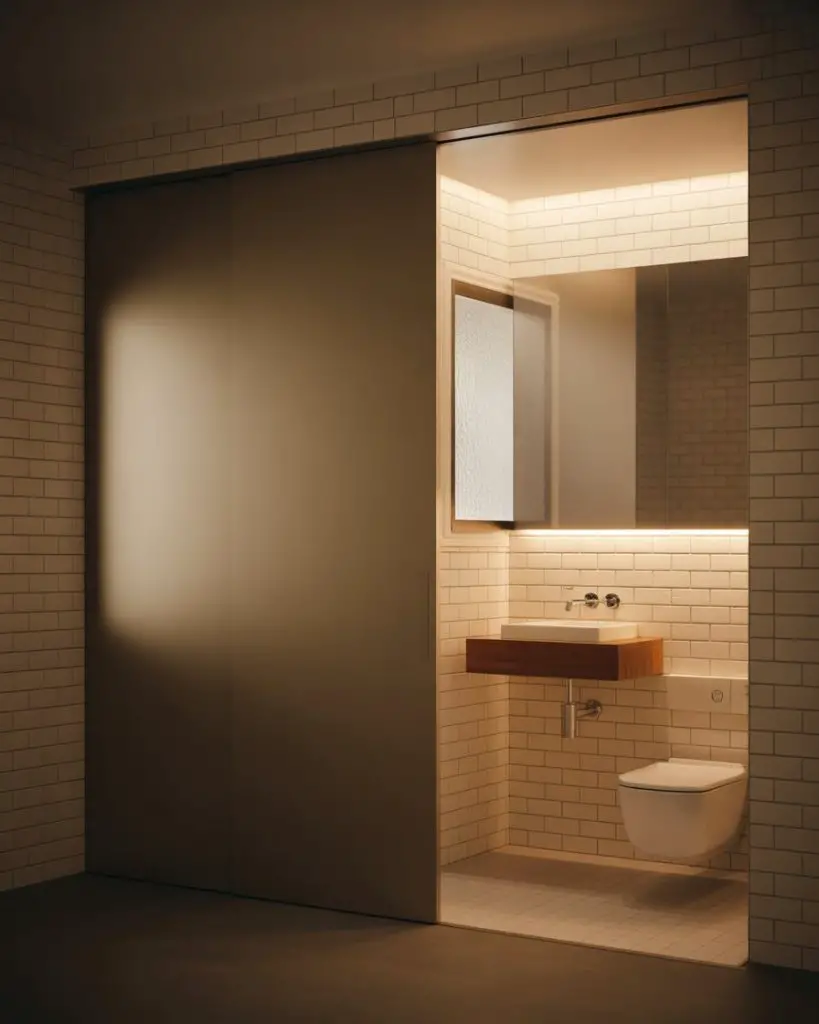
Homeowners in older homes—especially in the Northeast and Midwest—find this renovation worthwhile when remodeling. Installation typically costs $1,000 to $1,500, including the door and hardware, but the payoff in usable space and improved flow is immediate. Just be sure to work with a contractor who can verify that your wall has enough depth to accommodate the pocket; not all walls are suitable without some structural adjustment.
21. Multipurpose Bedroom with Study Table and Storage

Combine a study table with built-in organization ideas to create a bedroom that works for sleeping, studying, and storage all in one compact footprint. Choose a desk with drawers and overhead shelving, then position it near a window for natural light. Invest in matching bins, file organizers, and desk accessories to keep supplies tidy and maintain a cohesive look. This setup is especially valuable for teens, college students, or remote workers who need a dedicated workspace but don’t have the luxury of a separate home office. 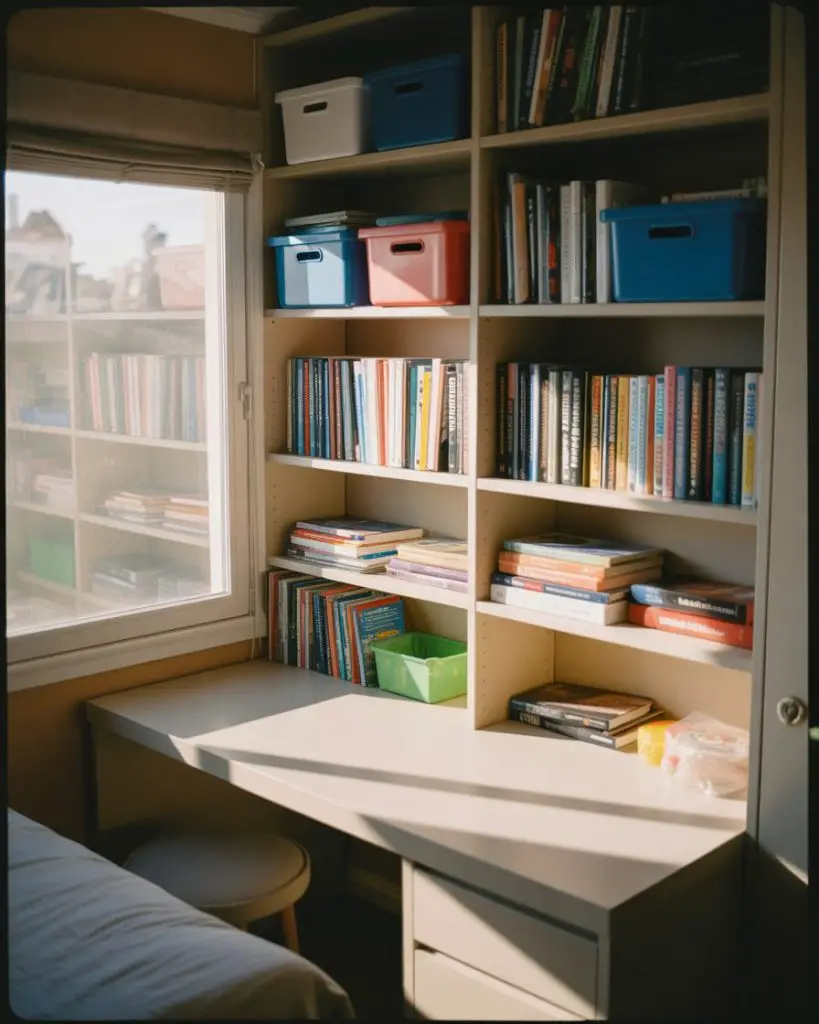
Real homeowner behavior shows that this type of multipurpose setup reduces stress and increases productivity by creating clear zones for different activities. In apartment complexes across the Sun Belt, where young professionals and students rent smaller units, this all-in-one approach is the norm. The trick is to keep the desk area visually separate from the sleep area—use a small rug, different lighting, or even a room divider to signal the shift from work mode to rest mode.
Conclusion
Small bedrooms in 2026 are all about smart choices and creative problem-solving, and we hope these 21 ideas have sparked some inspiration for your own space. Whether you’re drawn to Japandi simplicity, clever storage ideas, or cozy room decor touches, there’s a solution here that can make your compact bedroom feel like a personal retreat. Drop a comment below and let us know which idea you’re excited to try first—we’d love to hear how you’re making the most of your small space!