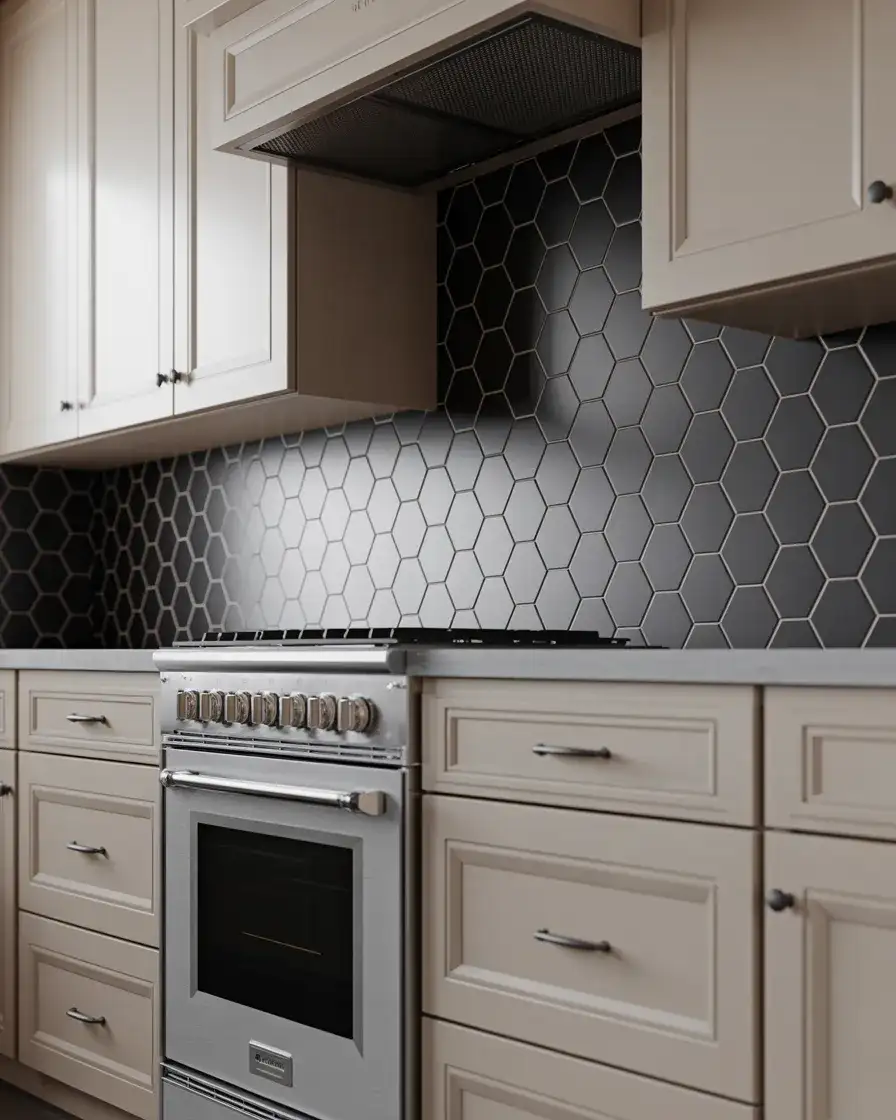
White kitchen cabinets have been a design staple for years, but 2026 is bringing fresh perspectives that feel less “builder-grade basic” and more intentionally curated. Americans searching Pinterest for white kitchen inspiration aren’t just looking for clean surfaces—they’re after warmth, contrast, and personality that reflects how we actually live and cook. Whether you’re renovating a cramped city apartment or refreshing a sprawling suburban home, the updated approaches to white cabinetry balance timelessness with unexpected touches. From hardware swaps to countertop pairings that defy convention, these ideas prove white kitchens are evolving beyond the sterile all-white aesthetic. Here are ways to make white cabinets feel completely new this year.
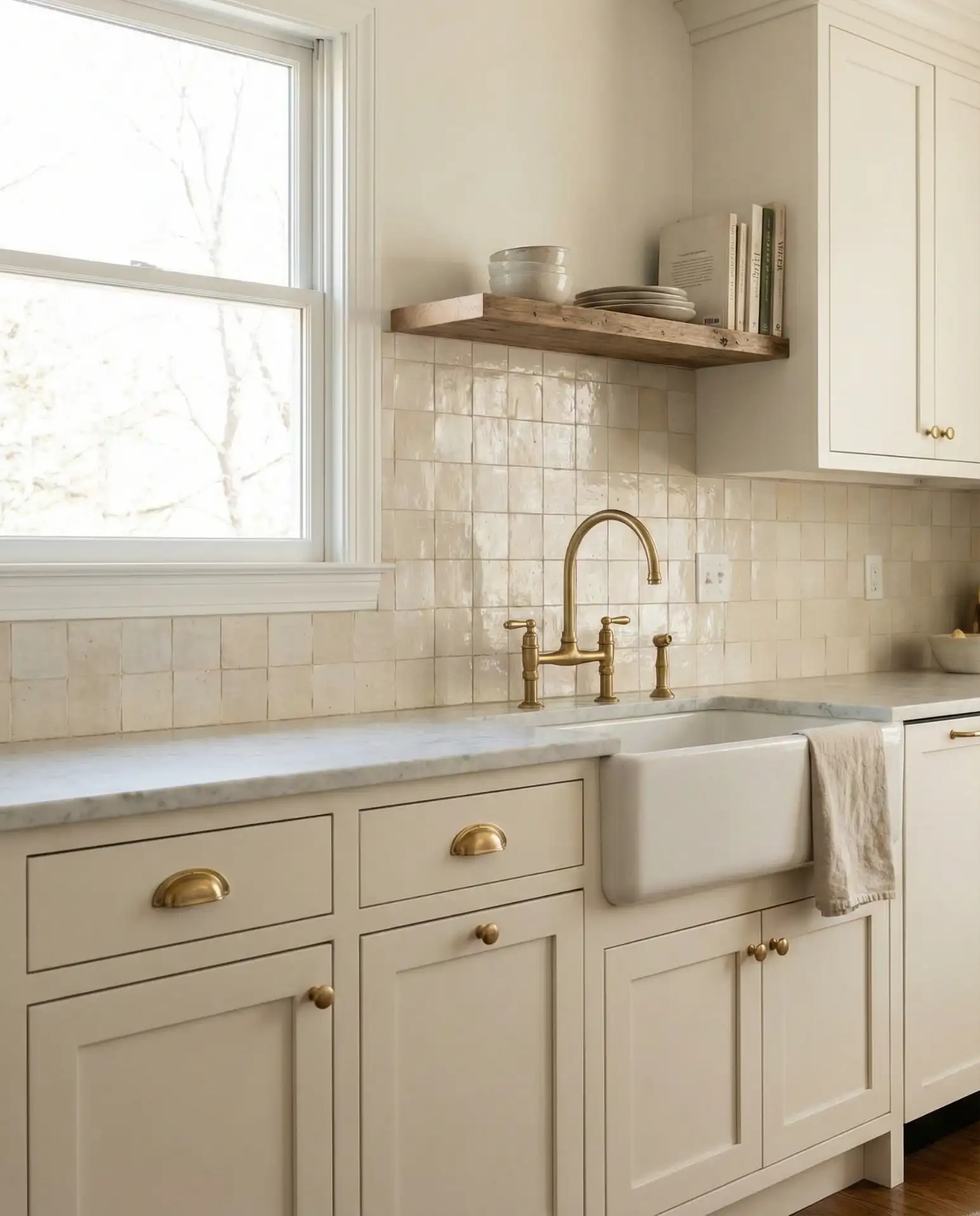
1. Off-White Cabinets with Warm Undertones
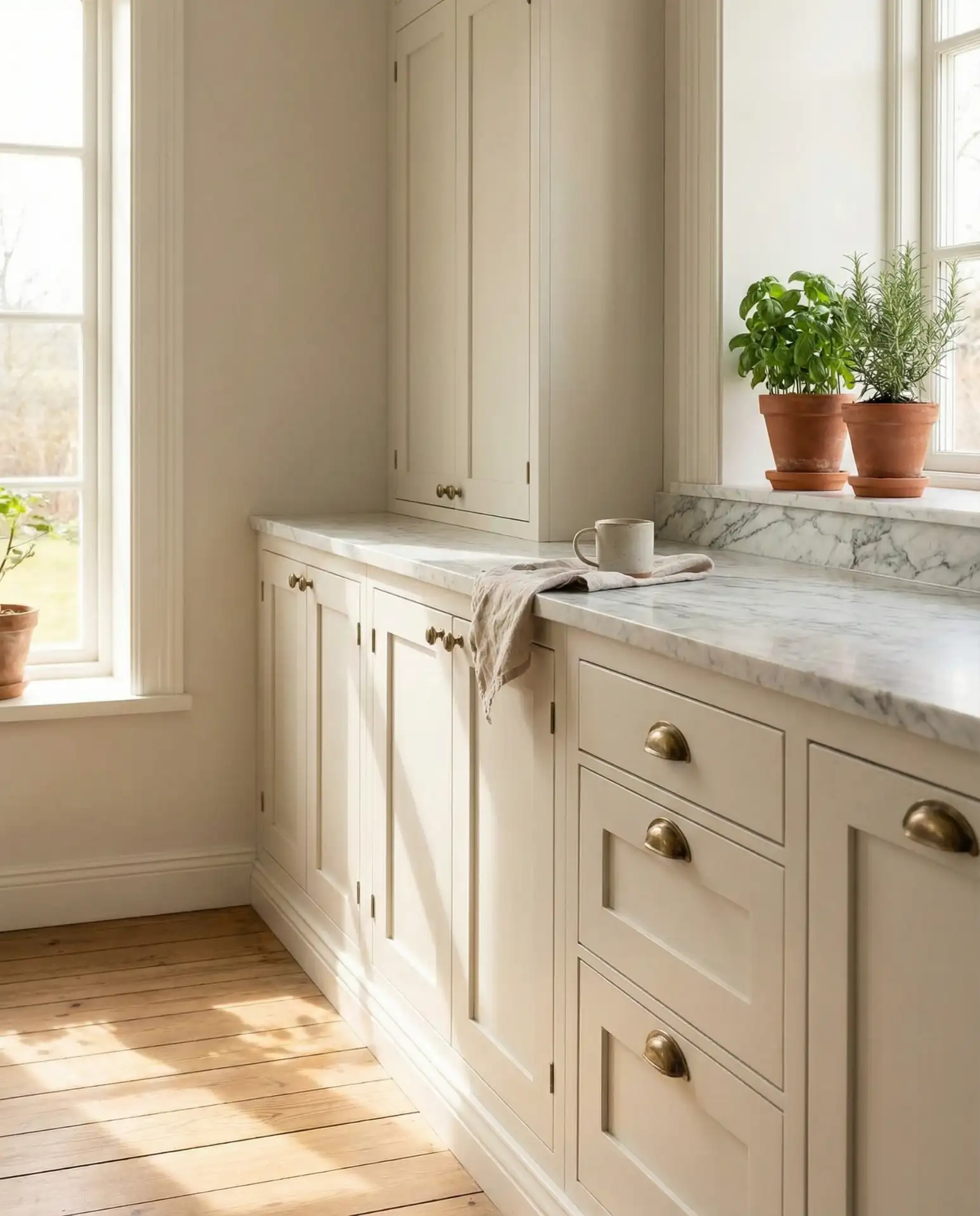
Pure white cabinets can feel clinical, especially under harsh overhead lighting. Off-white shades with creamy or beige undertones soften the entire room, creating a backdrop that feels lived-in rather than staged. These warmer whites work beautifully in homes with oak flooring or brick accents, tying together elements that stark white would clash against. The shift is subtle but transformative—your kitchen suddenly feels less like a showroom and more like the heart of a home.
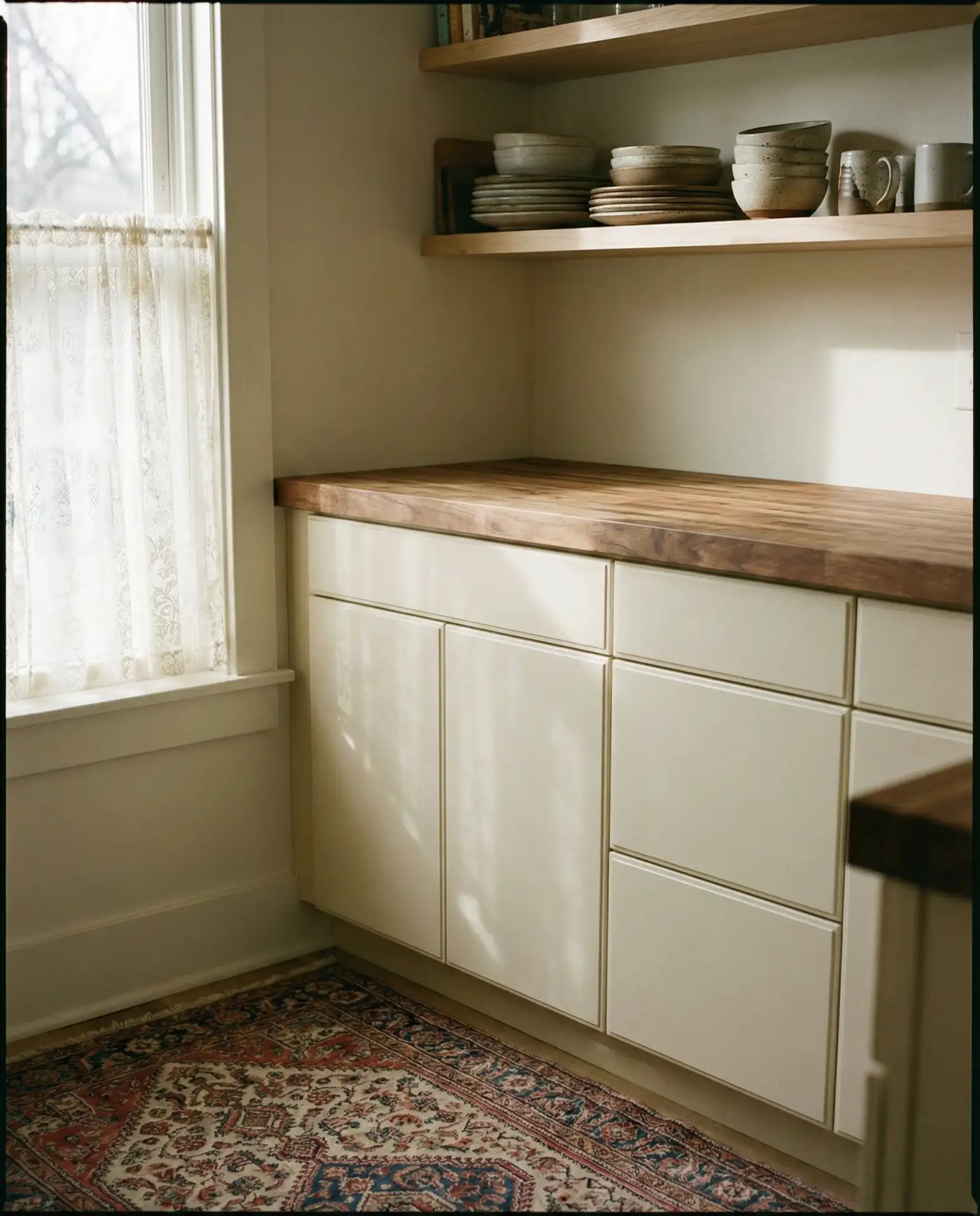
Many homeowners regret choosing bright white after installation, noticing how it amplifies every smudge and feels cold in low light. Off-white hides minor imperfections better and ages more gracefully, especially in kitchens that see heavy daily use. If you’re working with existing warm-toned elements like terracotta tiles or reclaimed wood beams, this choice creates cohesion without requiring a complete overhaul of your space.
2. Black Hardware on White Cabinets
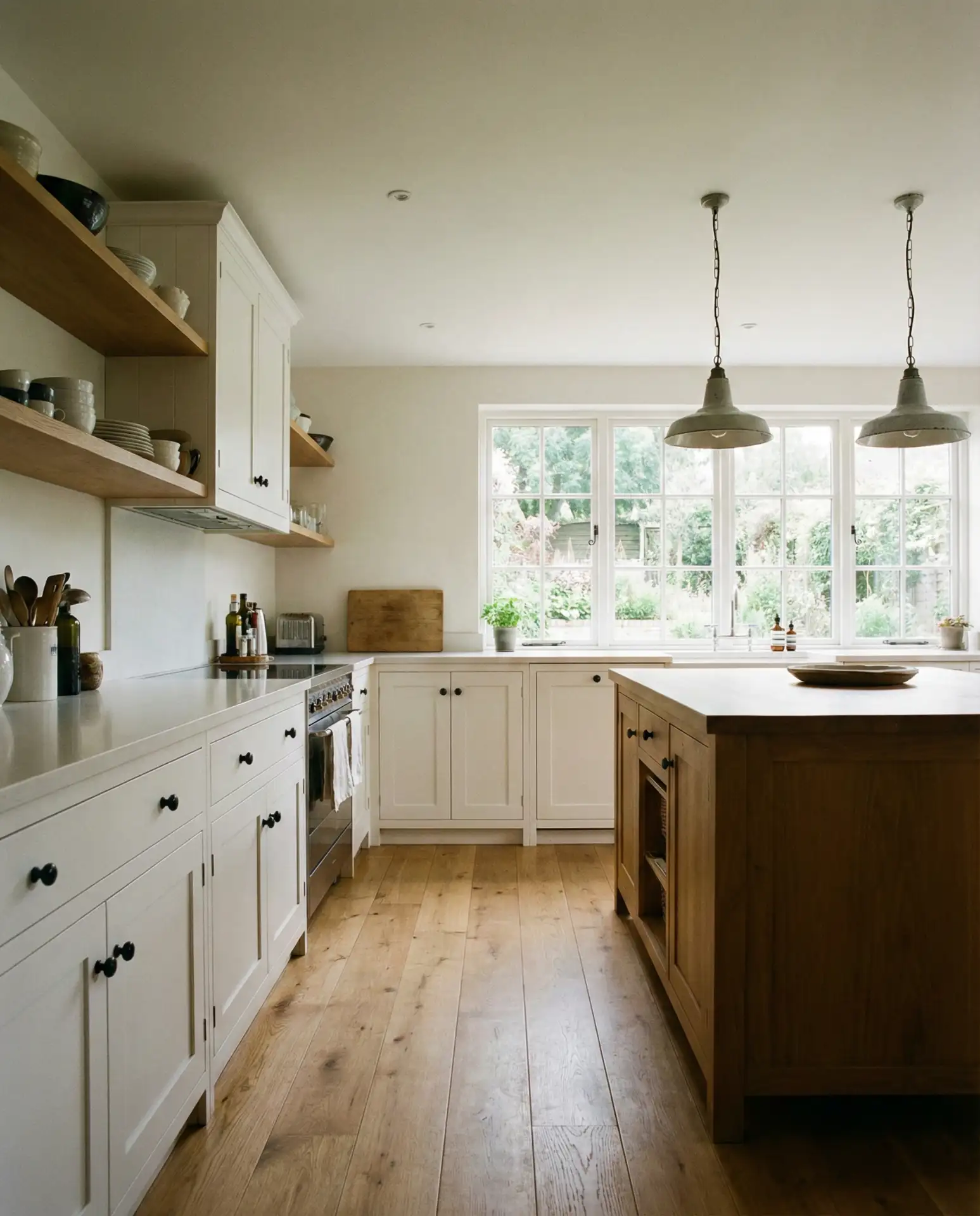
The pairing of black hardware with white cabinetry has moved from trendy to foundational. Matte black pulls and knobs create instant definition, turning flat cabinet fronts into architectural statements. This combination works across styles—from farmhouse to contemporary—because the contrast is both bold and neutral. Black pulls also offer practical benefits, showing less wear than polished metals and maintaining their finish through years of handling.
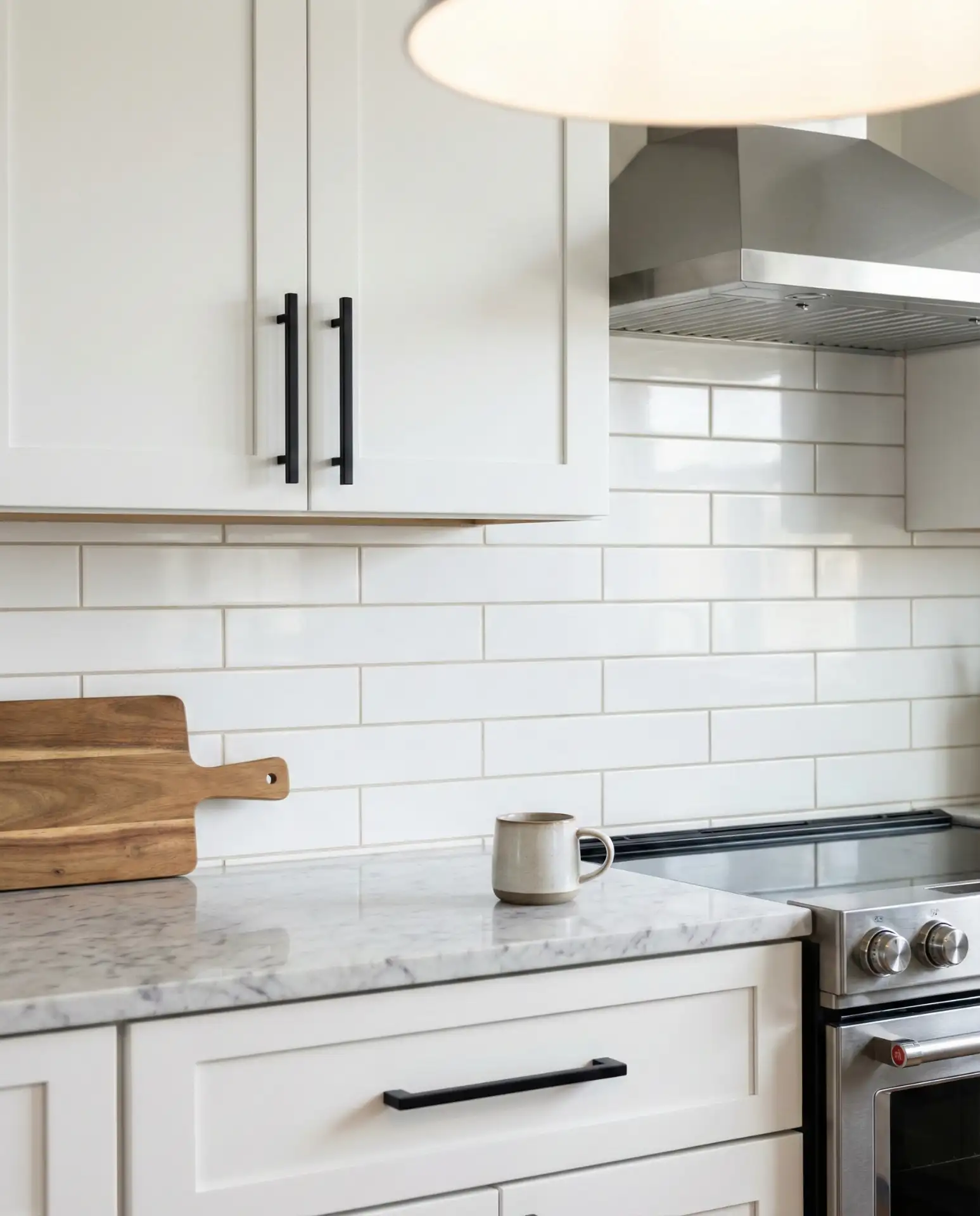
In open-concept homes where the kitchen flows into living spaces, black hardware acts as visual punctuation that prevents the room from feeling washed out. The key is consistency—mixing metals can work, but black hardware should appear on all cabinetry to avoid a disjointed look. Budget-conscious renovators appreciate that swapping hardware is one of the most cost-effective ways to update a kitchen, often costing under $300 for an entire set.
3. White Cabinets with Wood Island
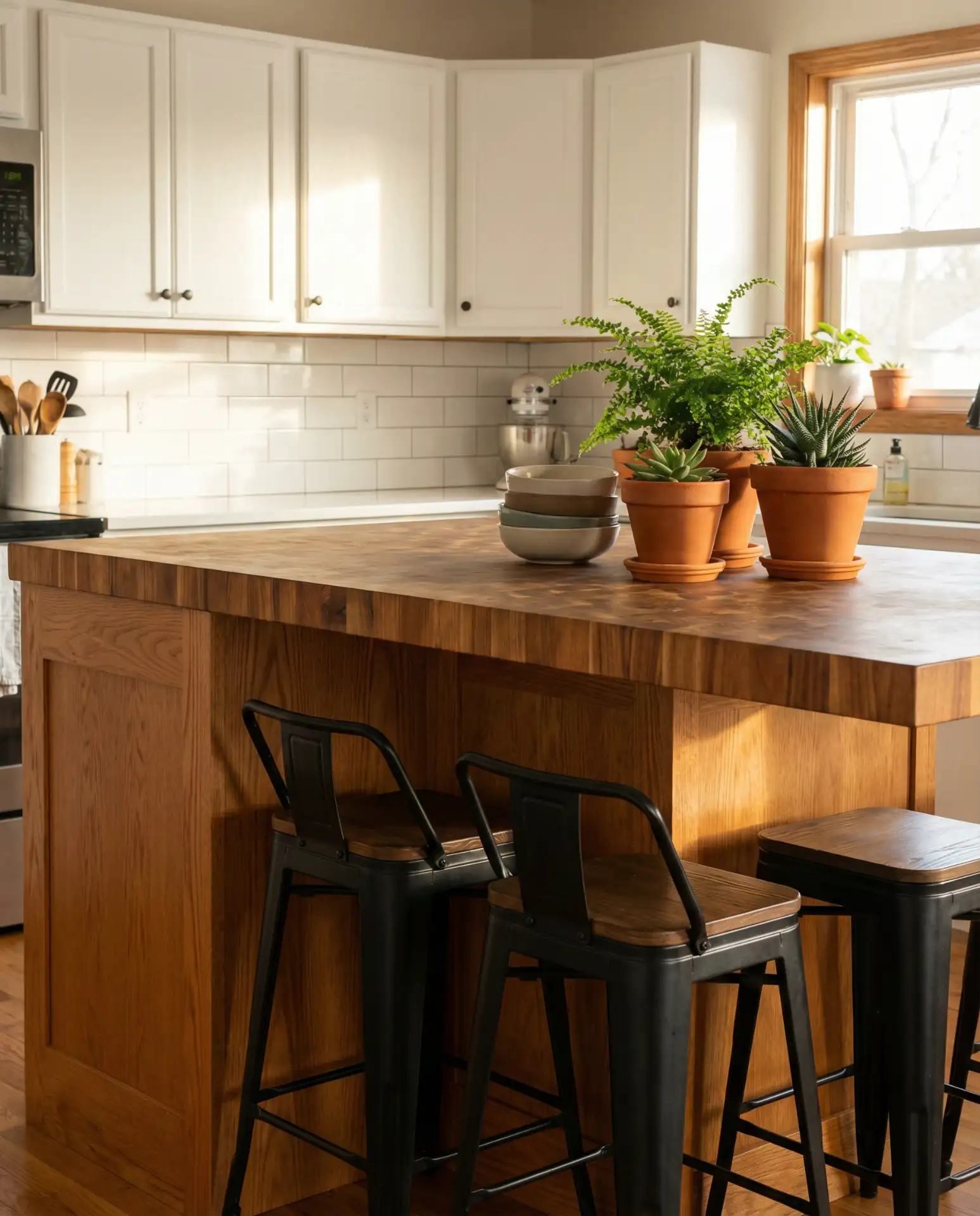
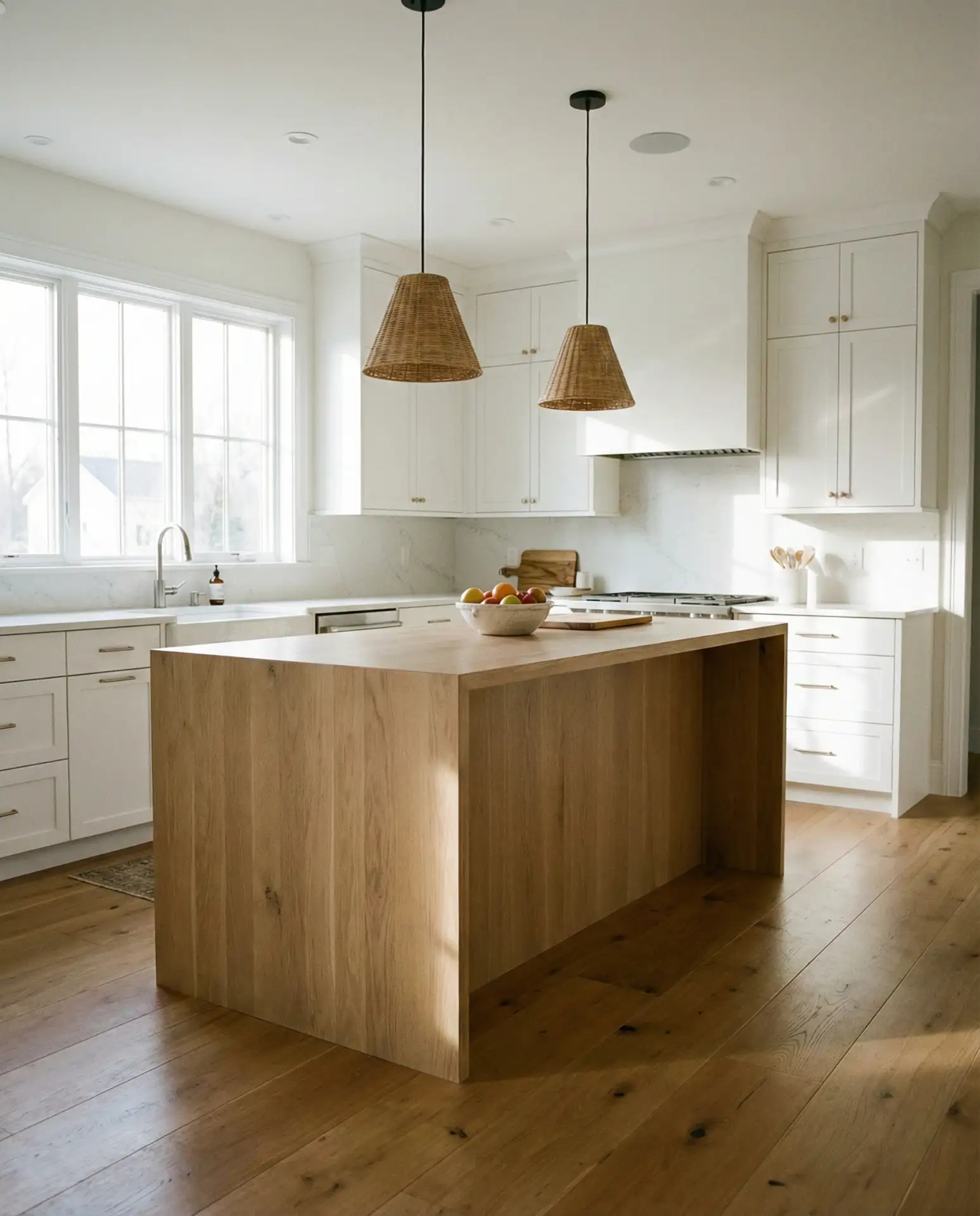
A wood island anchors a white kitchen without overwhelming it, introducing texture and warmth exactly where you need it most. White oak and walnut are popular choices for 2026, offering grain patterns that feel organic rather than overly rustic. This approach works particularly well in kitchens that lack natural wood flooring or exposed beams, providing that crucial material contrast. The island becomes a focal point rather than just additional counter space.
This works best in medium to large kitchens where the island has enough presence to stand out. In smaller spaces, consider a butcher block top on white cabinetry instead—you’ll still get the wood element without fragmenting the visual flow. Real homeowners often report that wood islands feel more inviting for casual meals and homework sessions, transforming the kitchen into a true gathering spot rather than just a cooking zone.
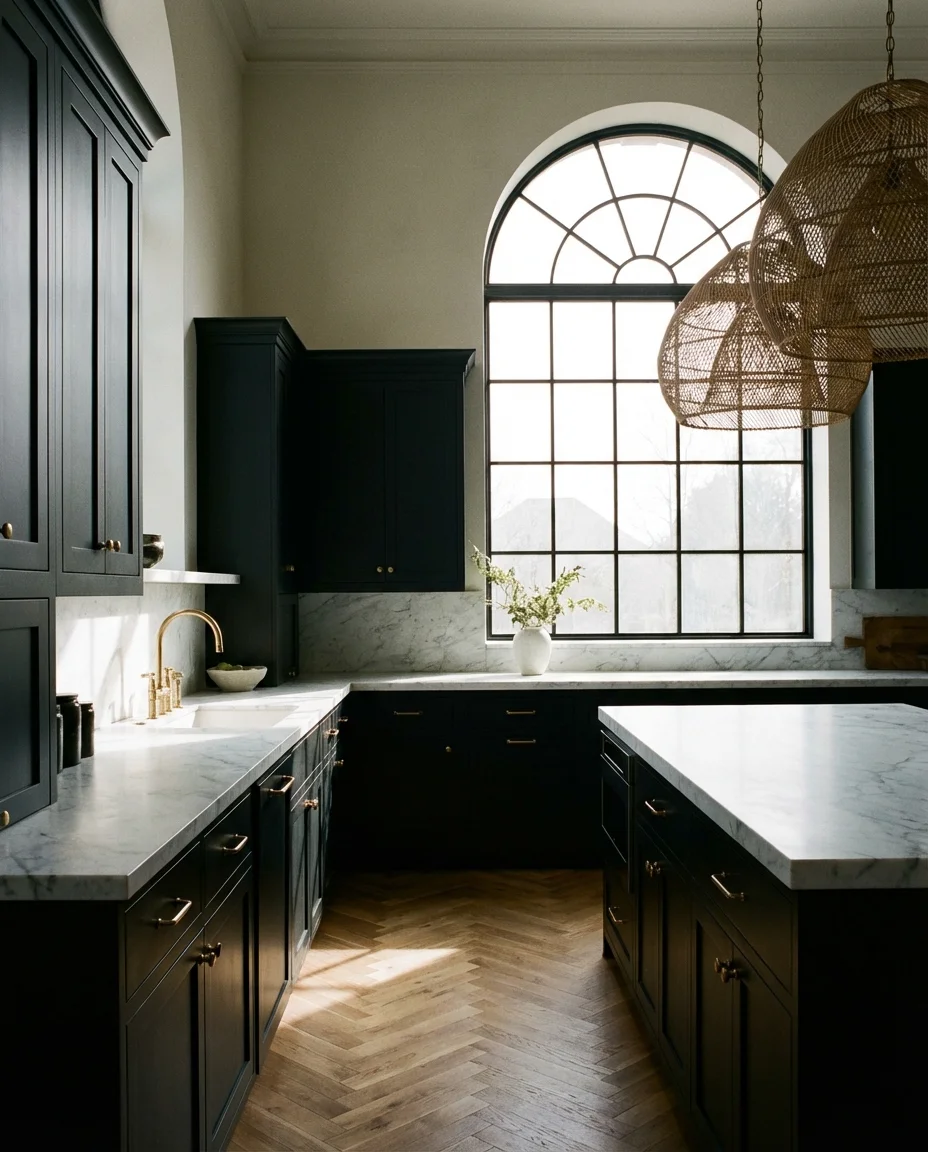
4. White Cabinets with Black Countertops
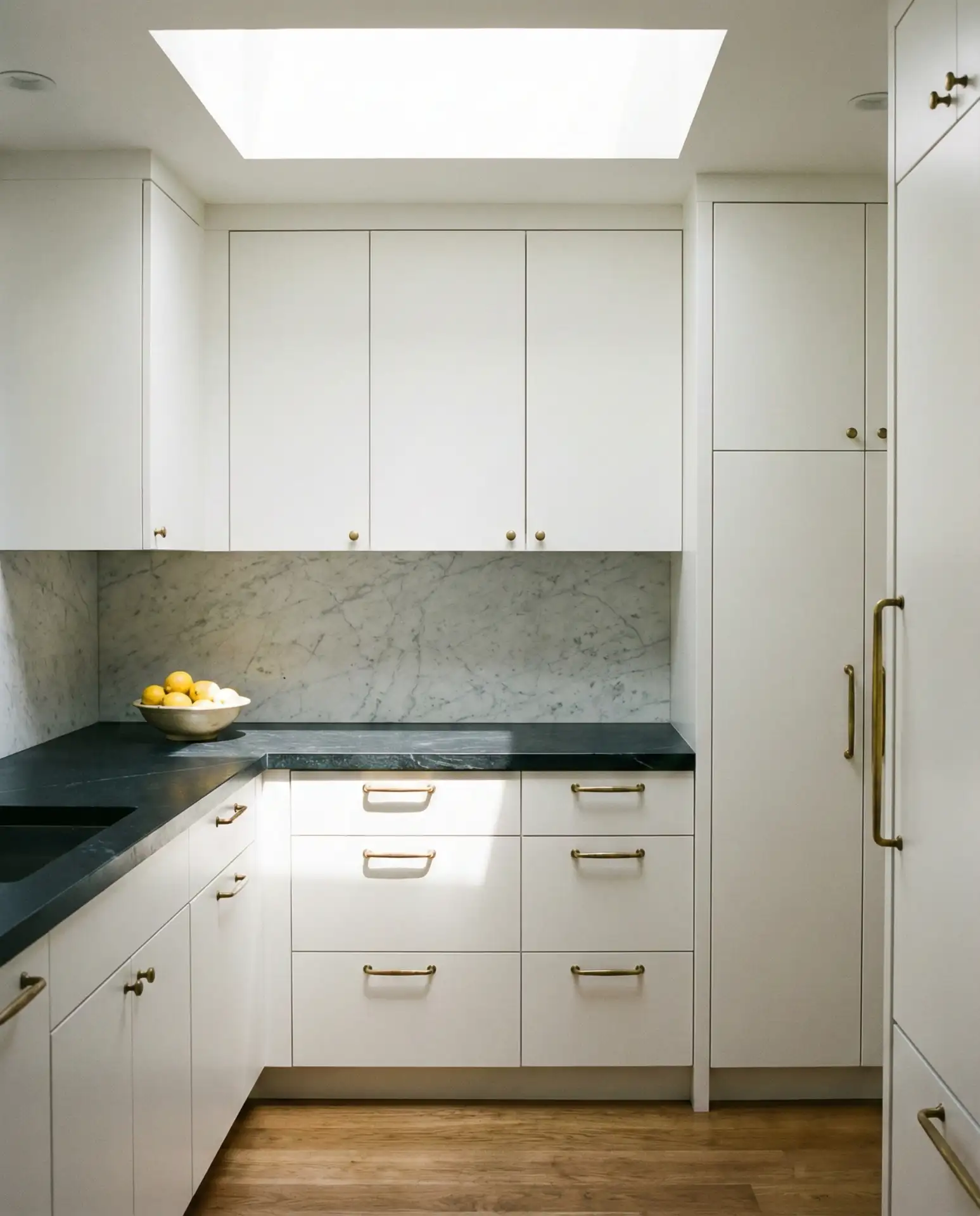
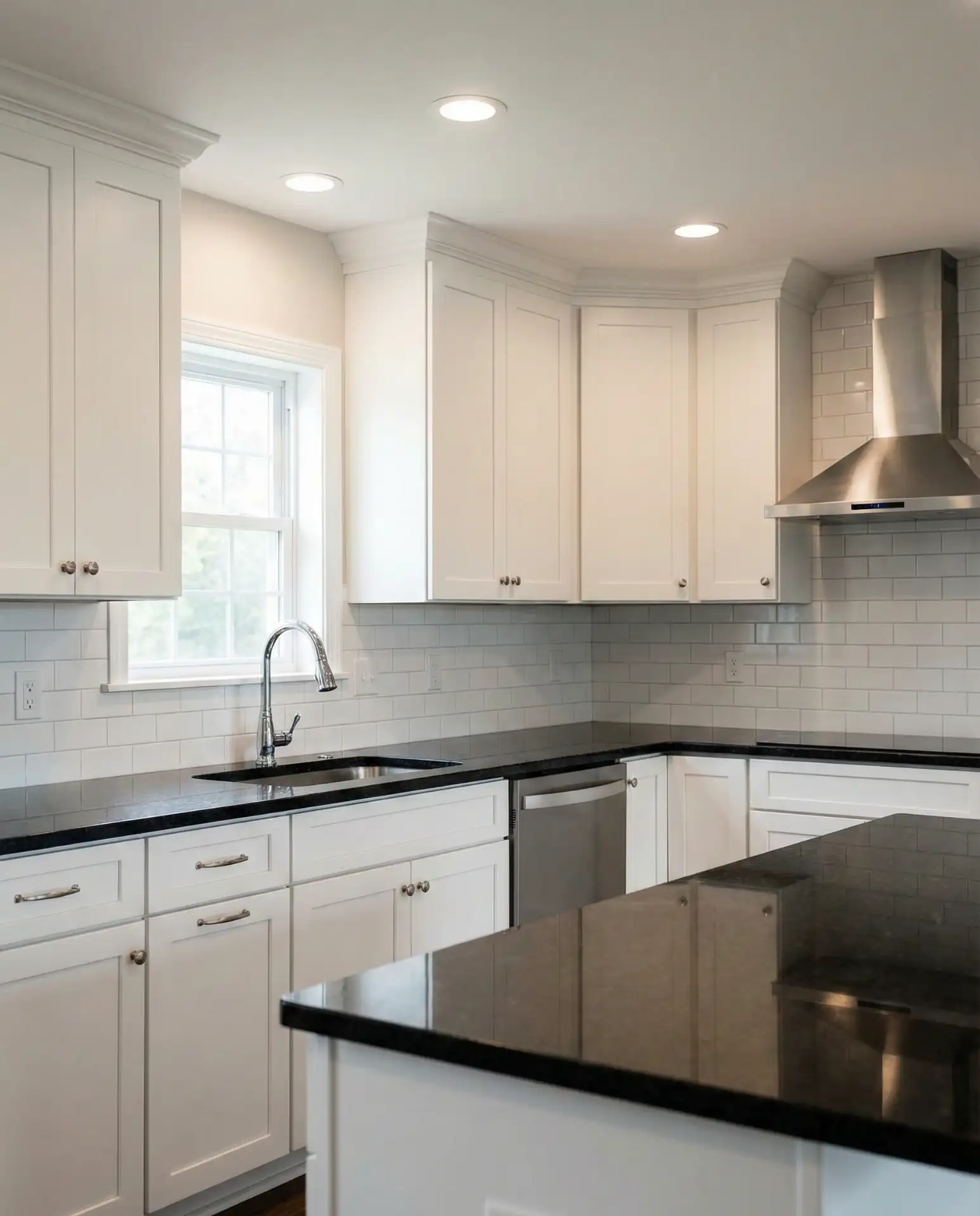
Pairing white cabinetry with black countertops creates drama without requiring bold paint colors or patterned tile. Granite in deep charcoal or honed black soapstone delivers weight and sophistication, grounding the airiness of white in a way that feels intentional. This combination has roots in classic bistro design but translates effortlessly to American homes, especially those with high ceilings that can handle darker horizontal surfaces.
A designer once told me that black countertops are the easiest way to make a budget kitchen look expensive—the contrast does the heavy lifting. The practical side matters too: black surfaces hide coffee stains and water spots better than white marble, making them ideal for busy households. Just ensure adequate lighting, as dark counters can absorb light if your kitchen faces north or has small windows.
5. Shoji-Inspired White Cabinets
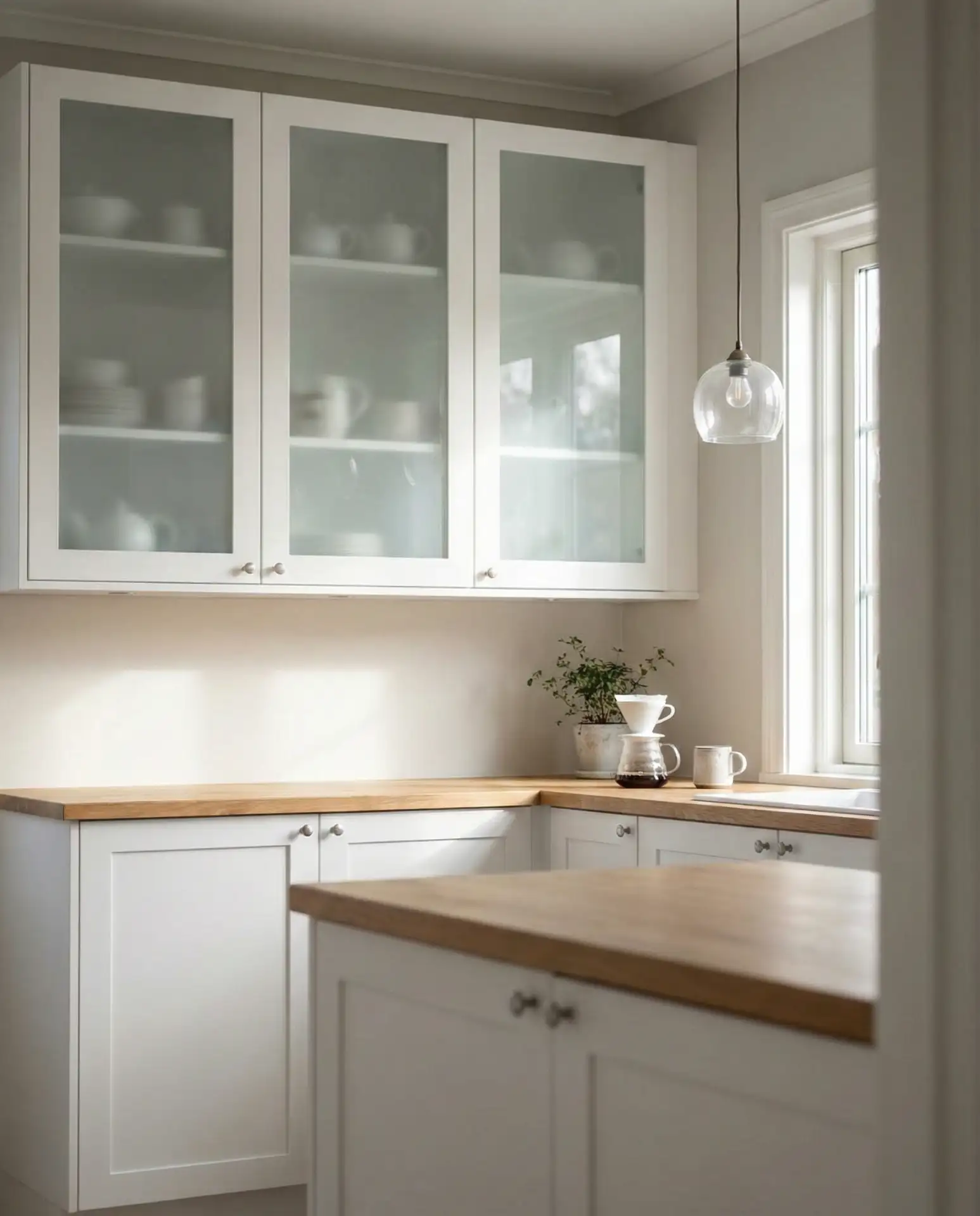
Taking cues from Japanese shoji screens, some cabinetry now features frosted glass or reeded glass inserts within white frames. This approach maintains the clean lines of white cabinets while adding subtle texture and visual interest. The translucency softens the contents of upper cabinets—glassware and dishes become soft shapes rather than cluttered displays. It’s particularly effective in smaller kitchens where solid doors can feel heavy.
This trend reflects a broader move toward serene, uncluttered kitchens that still feel personalized. The glass inserts don’t require perfect organization inside—the frosting provides just enough concealment while maintaining an open feel. For homeowners in urban apartments where kitchens often lack natural architectural detail, shoji-style cabinet fronts introduce character without overwhelming limited square footage.
6. White Cabinets with Gold Hardware
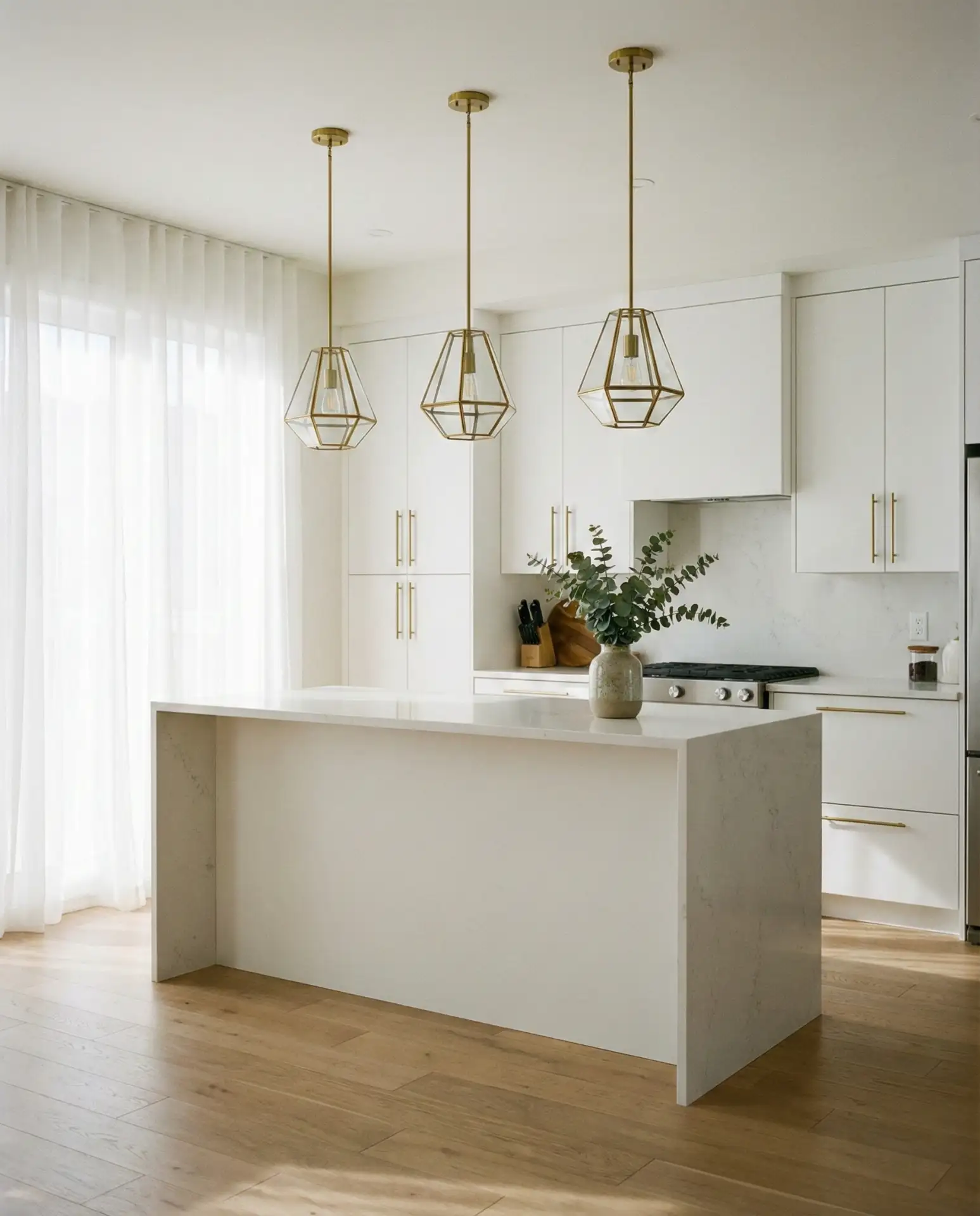
While black hardware dominates, gold hardware offers warmth that black can’t replicate. Brushed brass or champagne gold handles catch light differently throughout the day, adding a jewelry-like quality to white cabinets. This pairing skews traditional but works in transitional spaces when balanced with modern fixtures. The key is choosing muted gold tones rather than shiny brass, which can read as dated.
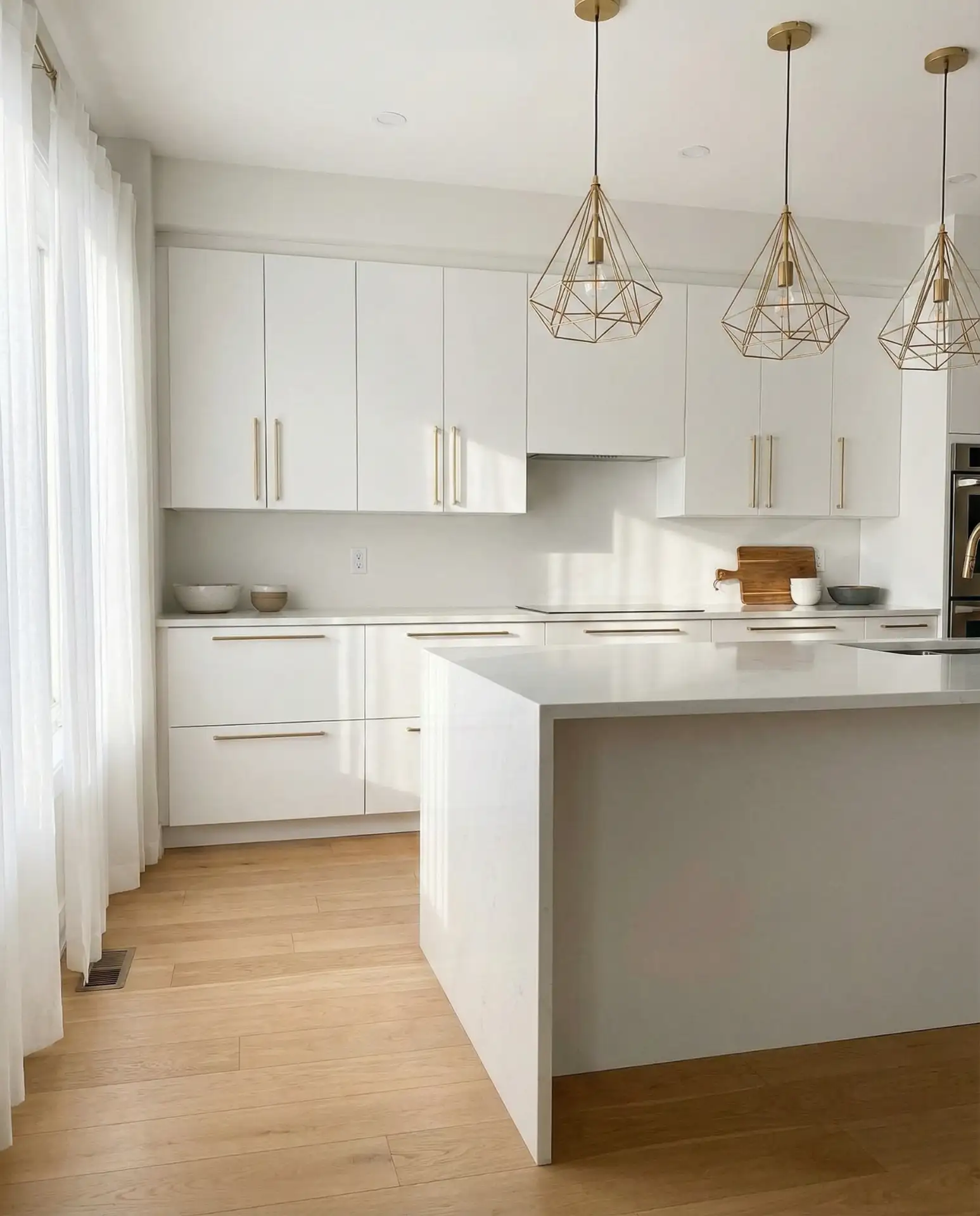
Gold hardware typically costs 20-40% more than black alternatives, but the investment pays off in perceived luxury. It’s especially effective in kitchens with existing warm metals—think brass faucets or copper pot racks—creating a cohesive metallic thread throughout the space. Avoid mixing gold with chrome or nickel in the same room unless you’re confident in your design skills, as competing metal finishes can fragment the visual flow.
7. Glossy White Cabinets
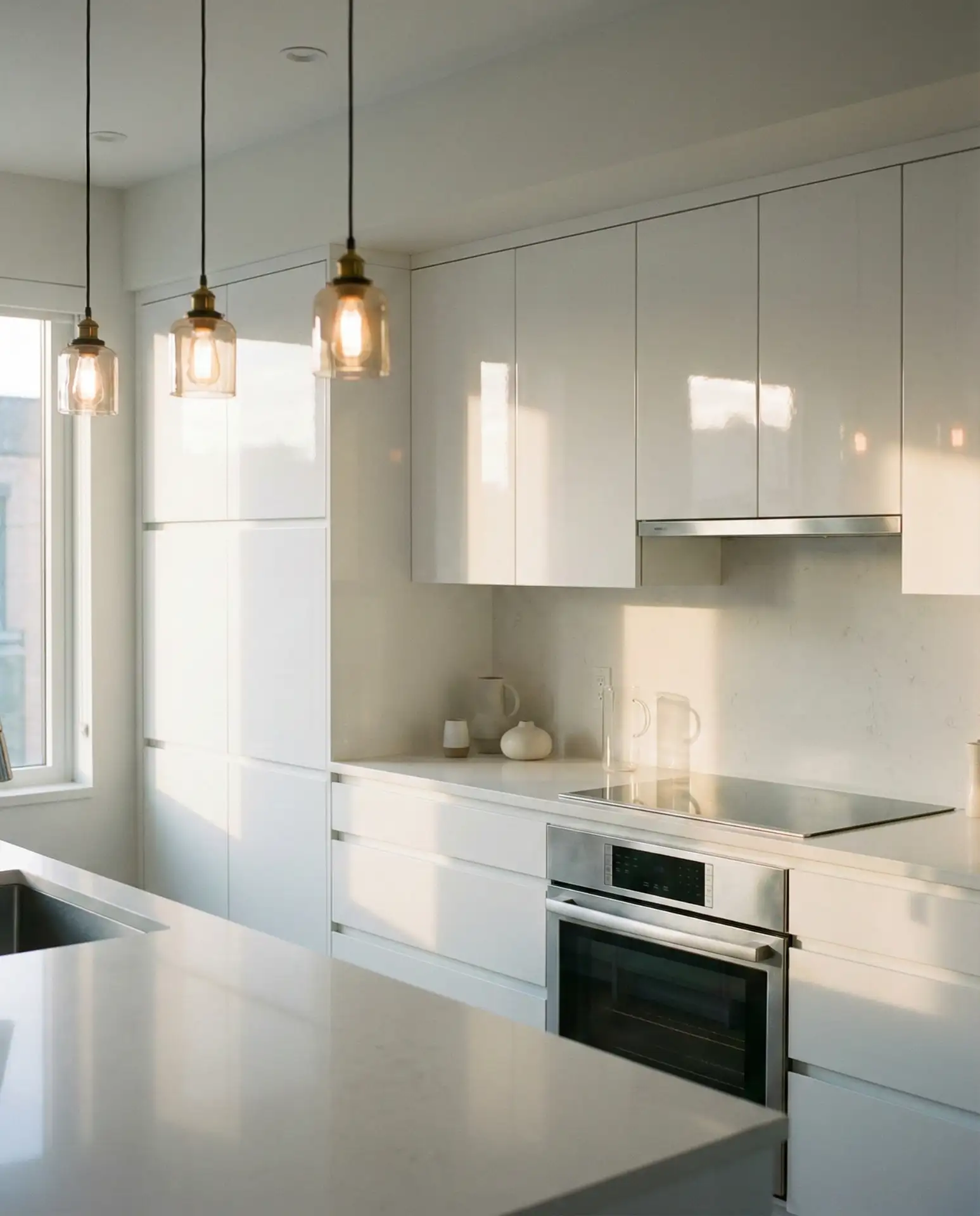
Matte finishes have dominated for years, but glossy white cabinets are resurging in 2026 with a more refined application. High-gloss doors reflect light beautifully in kitchens with limited windows, essentially doubling the brightness. This finish works best on flat-panel or slab-front cabinets where the reflective surface becomes the star rather than competing with trim details. European-style kitchens have long embraced this look, and American designers are finally catching up.
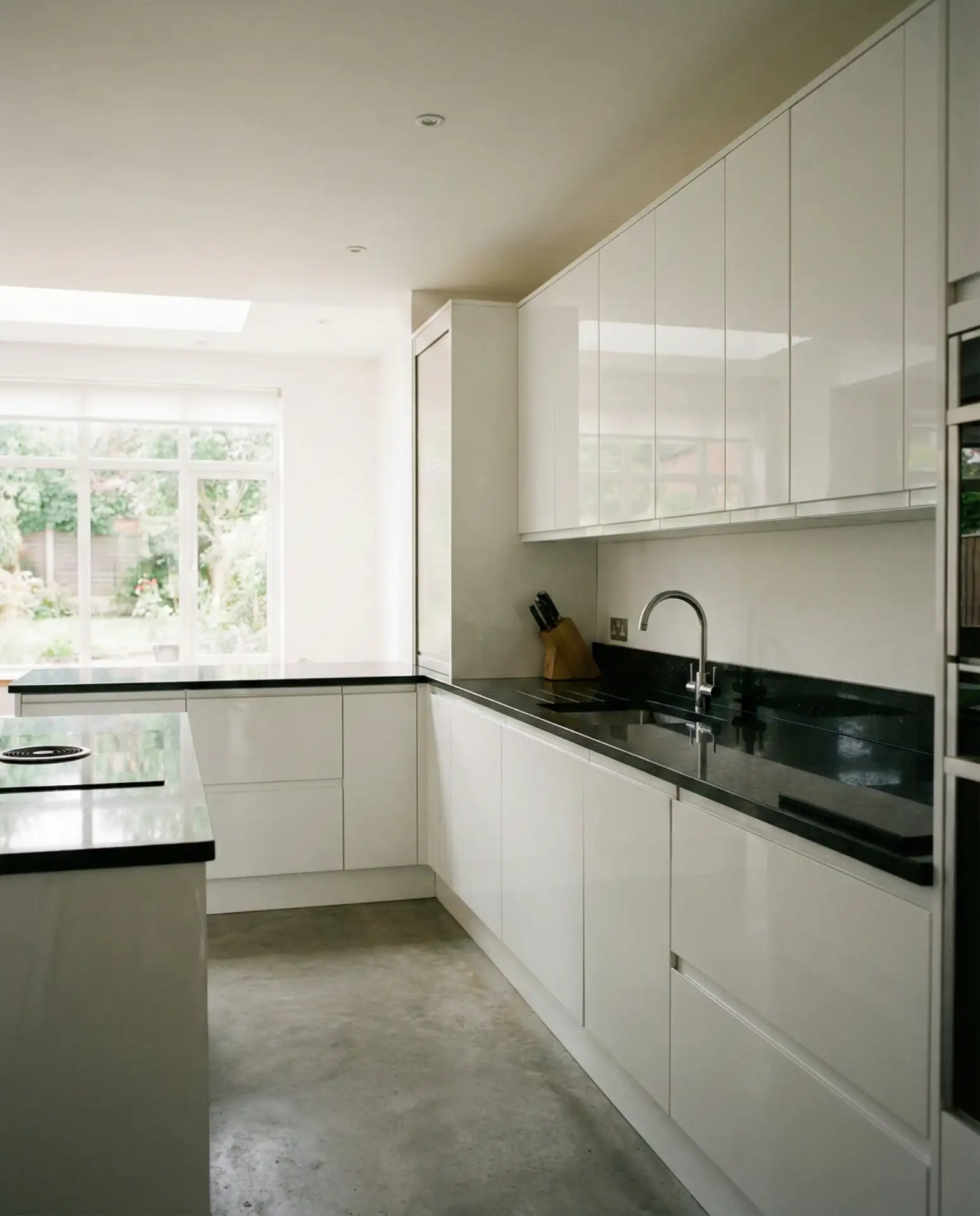
Common mistakes include choosing glossy finishes in kitchens that get direct afternoon sun, which can create uncomfortable glare. The reflective surface also shows fingerprints more readily than matte, so consider this if you have young children who touch everything. That said, glossy cabinets wipe clean more easily than textured surfaces, making them surprisingly practical for splatter-prone zones near the stove or sink.
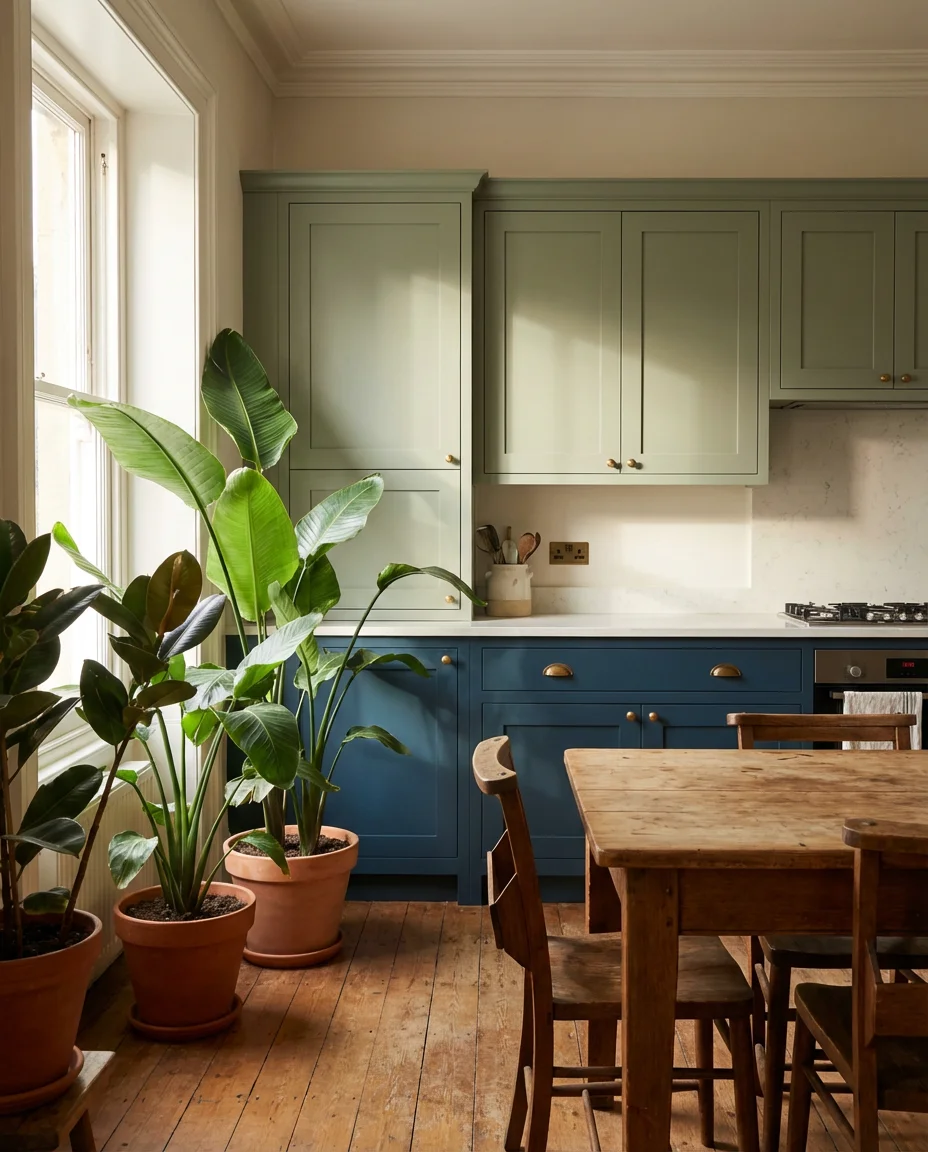
8. White Cabinets with Green Accents
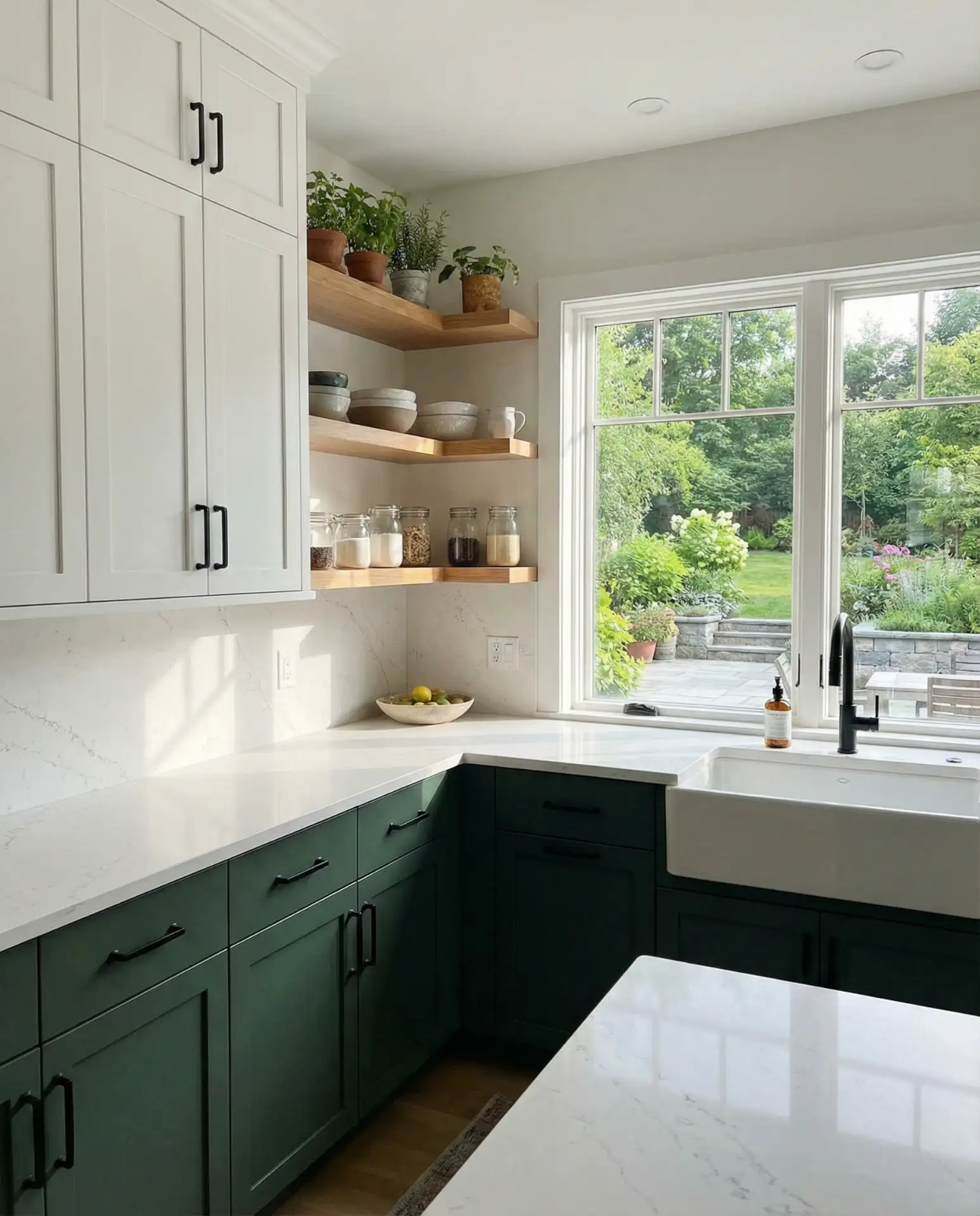
Incorporating green and white creates a kitchen that feels connected to nature without going full farmhouse. Deep sage or forest green islands paired with white perimeter cabinets bring in color while maintaining flexibility—green reads as neutral in a way that bolder hues don’t. This combination particularly appeals to homeowners who want personality but worry about trend fatigue, since green has staying power across decades.
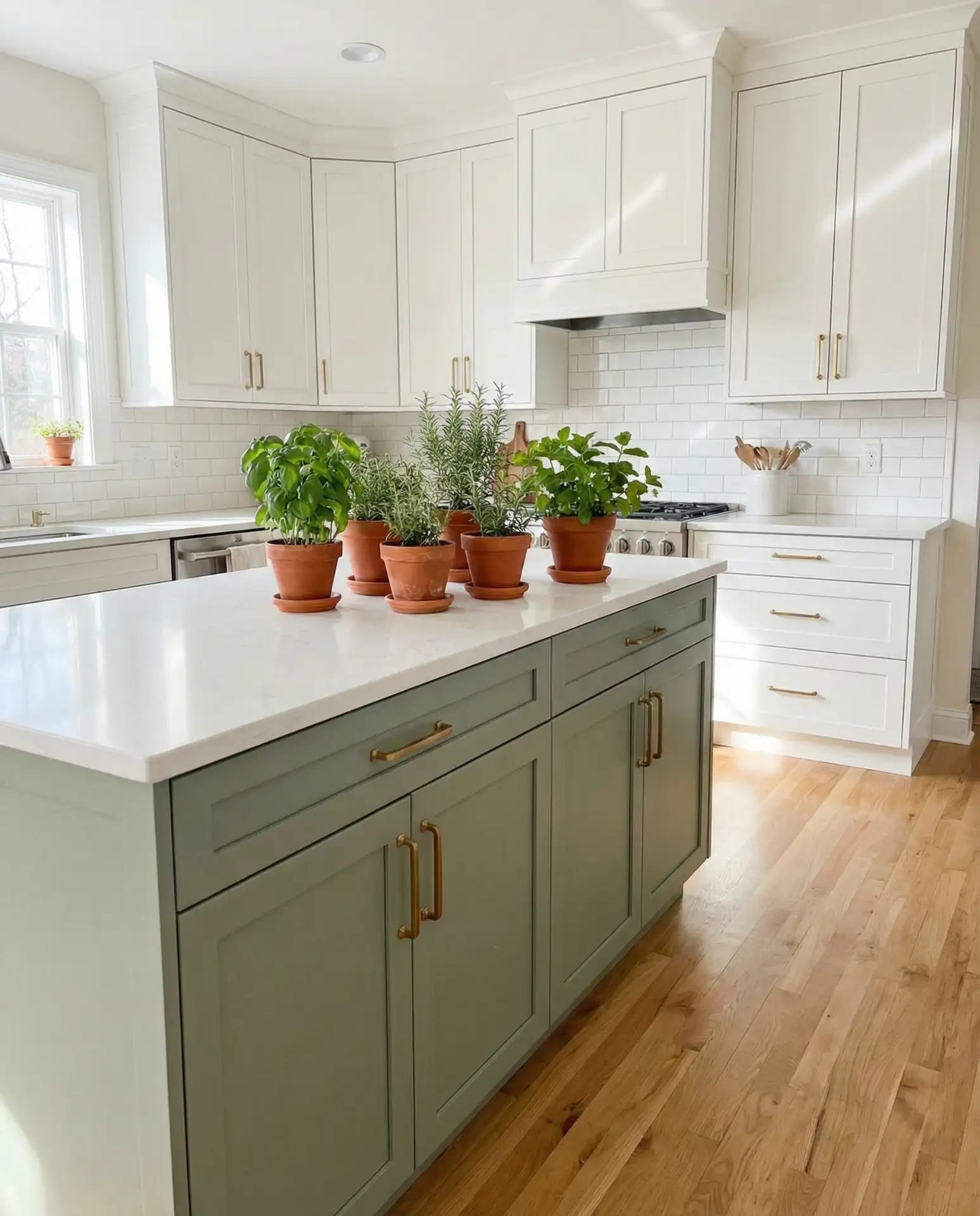
This works best in kitchens with ample natural light, where green can shift between warm and cool tones throughout the day. In the Pacific Northwest, where misty light prevails, sage green feels right at home. In sun-drenched Southwestern kitchens, deeper hunter greens provide grounding contrast against bright white walls. The color pairing also offers built-in flexibility—swap out green backsplash tiles or paint an island without redoing the entire room.
9. White Cabinets with Blue Island
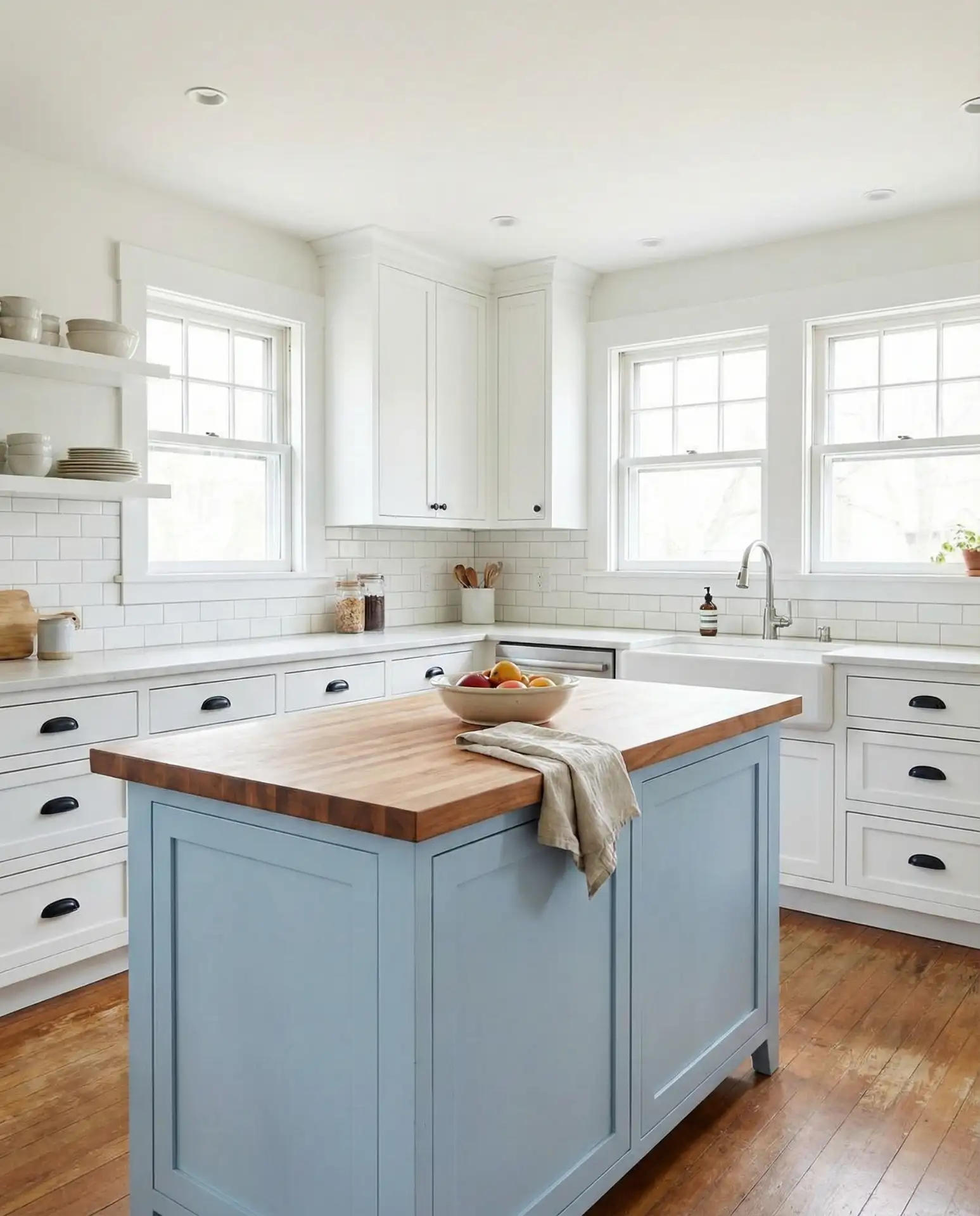
A blue and white kitchen channels coastal calm without requiring beachy accessories. Navy islands ground white cabinetry with sophistication, while softer slate or powder blues create a more relaxed vibe. This combination feels inherently American—think Cape Cod cottages and Nantucket summer homes—but translates well beyond waterfront properties. The color psychology matters too: blue in kitchens can actually suppress appetite slightly, which some find beneficial.
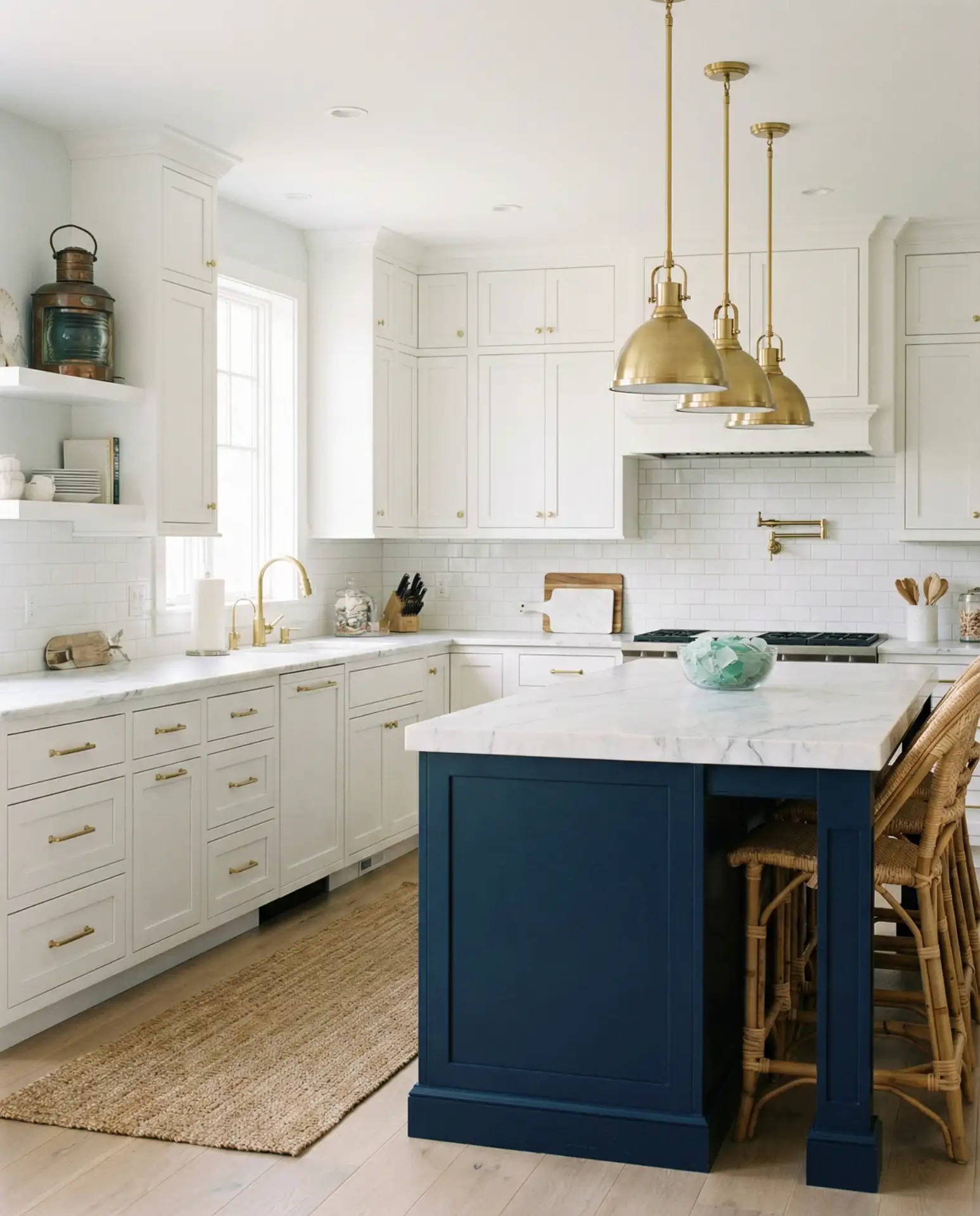
A neighbor recently painted her island a dusty blue and mentioned it completely changed how the family uses the space—suddenly everyone gravitates toward the island for conversation rather than retreating to other rooms. Blue provides enough contrast to define zones in open-concept layouts without erecting visual barriers. If you’re hesitant about commitment, start with a blue island and keep everything else white; you can always add blue upper cabinets later if the color grows on you.
10. White Cabinets with Rustic Touches
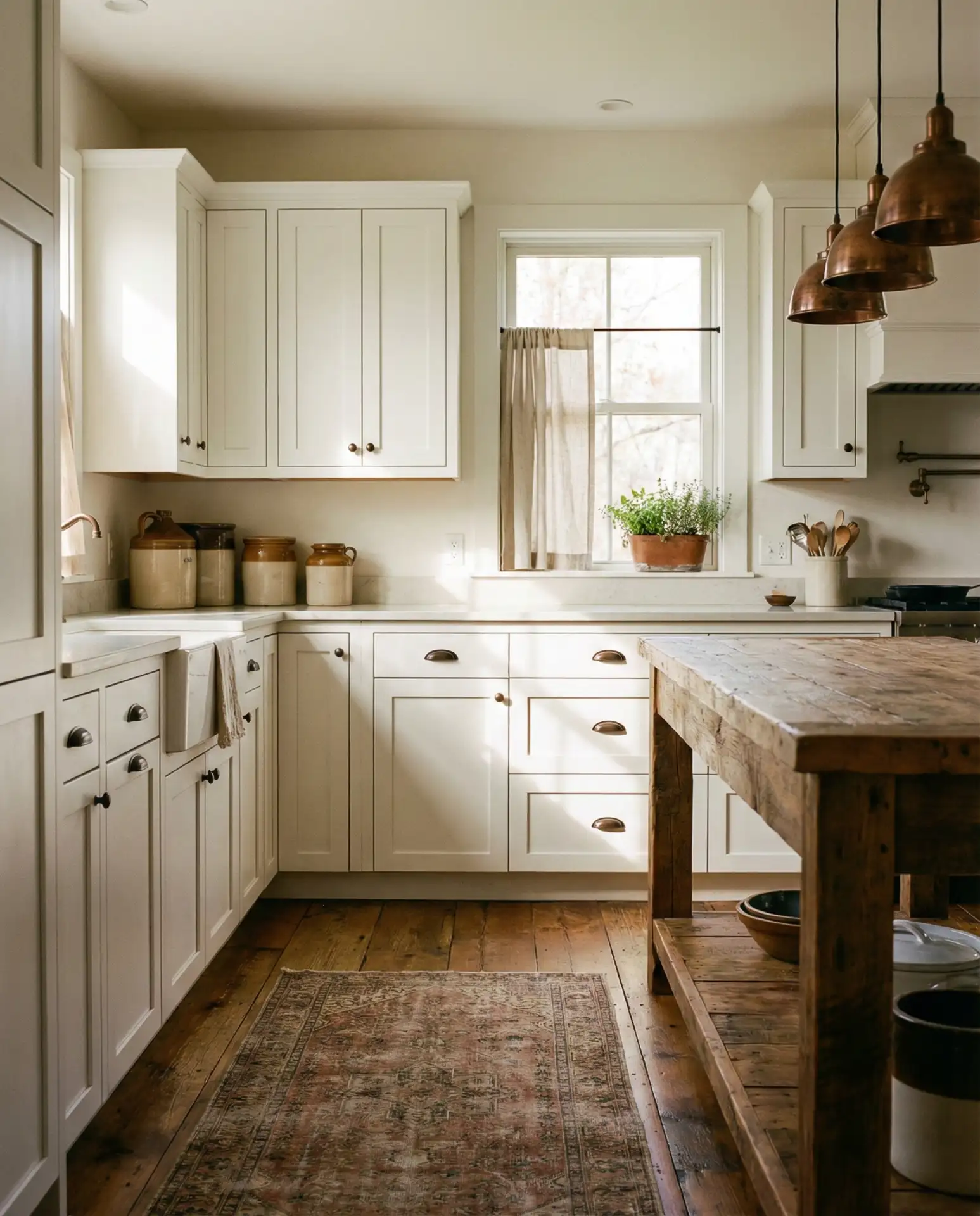
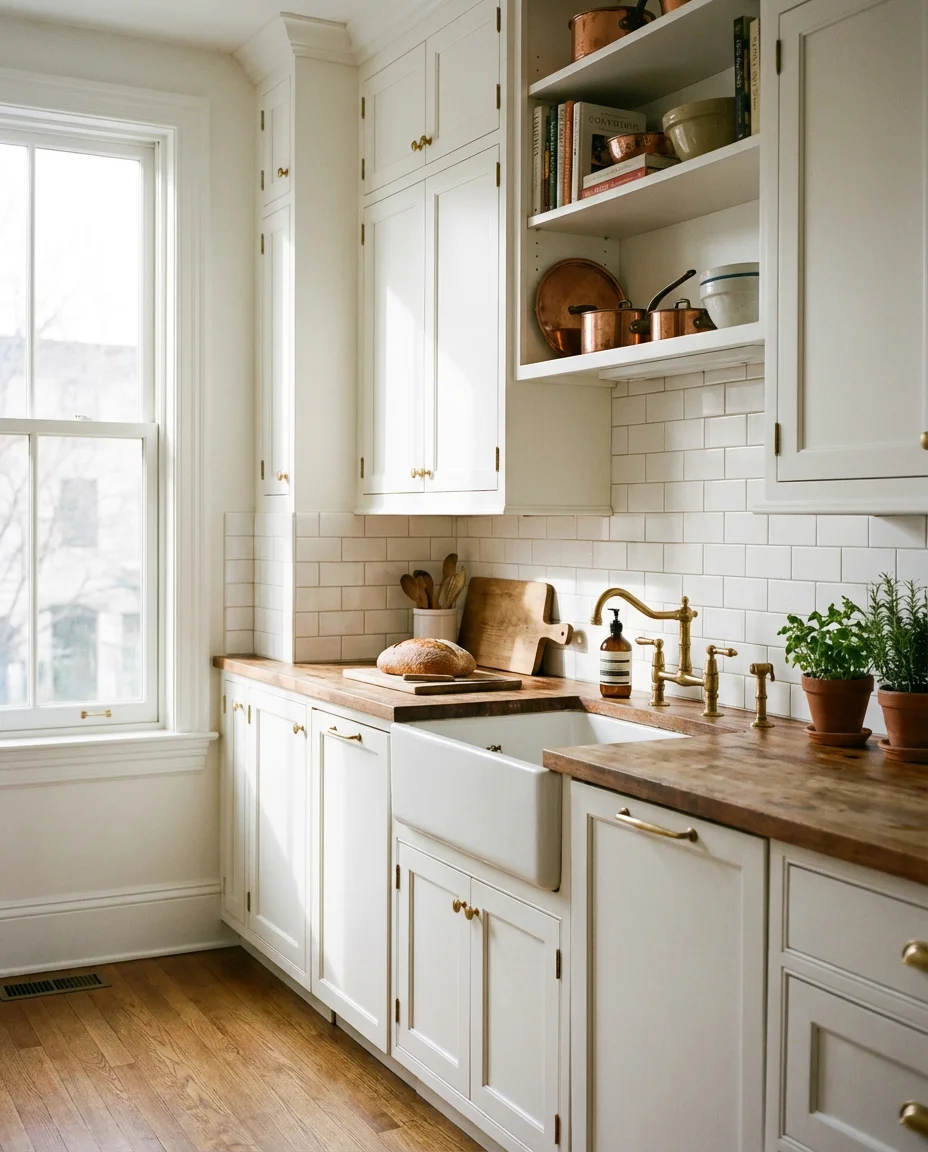
Pairing white cabinets with rustic elements like reclaimed wood shelving or hammered copper sinks softens the clinical edge that can plague all-white kitchens. Wood and white are the foundational combination here, but the wood should show age—think weathered barn beams or vintage cutting boards displayed openly. This approach appeals to homeowners who want modern cleanliness with vintage soul, a balance increasingly common in renovated farmhouses and historic urban homes.
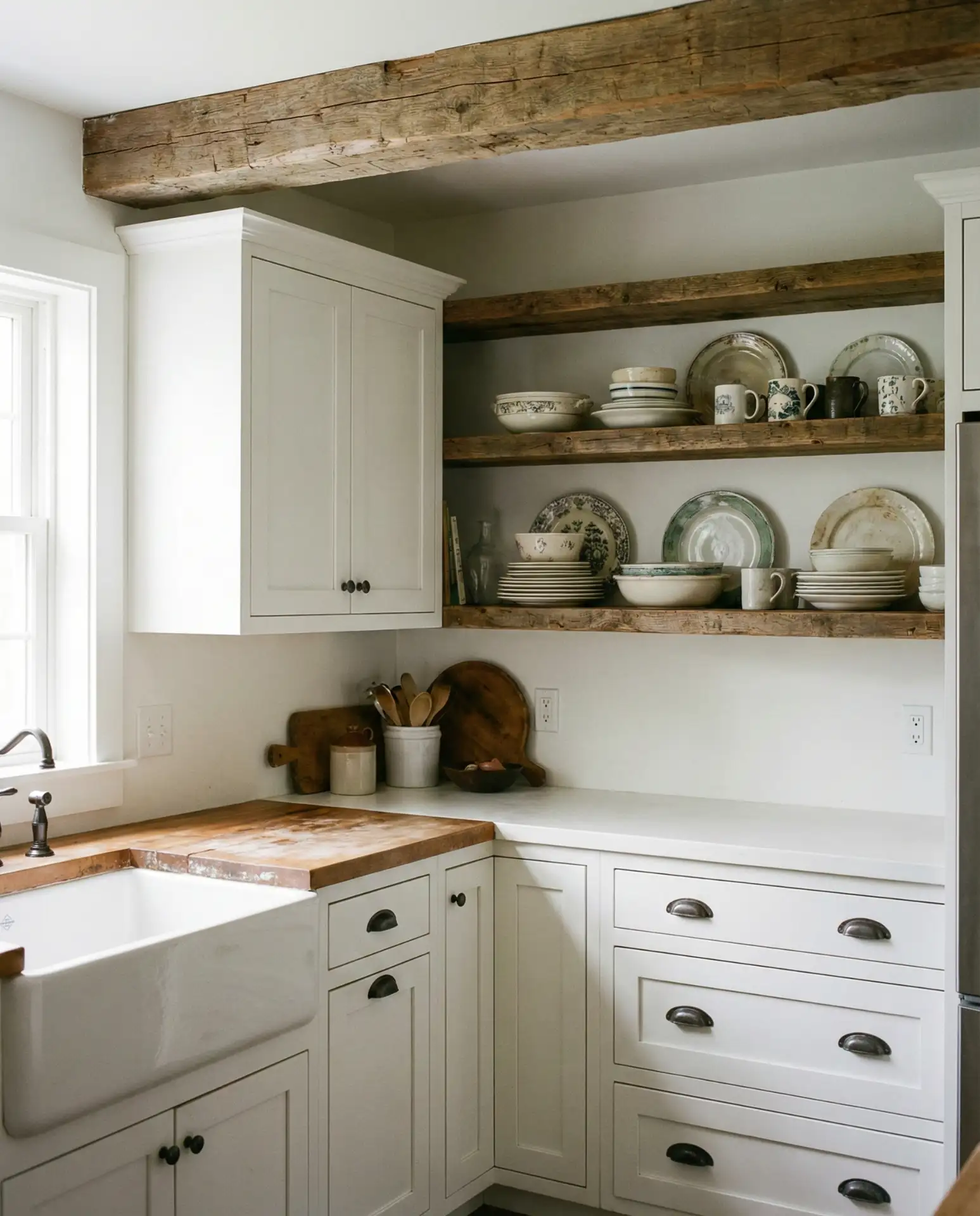
The mistake many make is overdoing the rustic elements, ending up with a kitchen that feels themed rather than authentic. Choose one or two statement pieces—maybe a reclaimed wood hood or antique ladder for pot storage—and let white cabinets provide breathing room. This approach works particularly well in rural areas and small towns where rustic materials are locally sourced and budget-friendly, often salvaged from estate sales or barn demolitions.
11. White Cabinets with Quartz Countertops
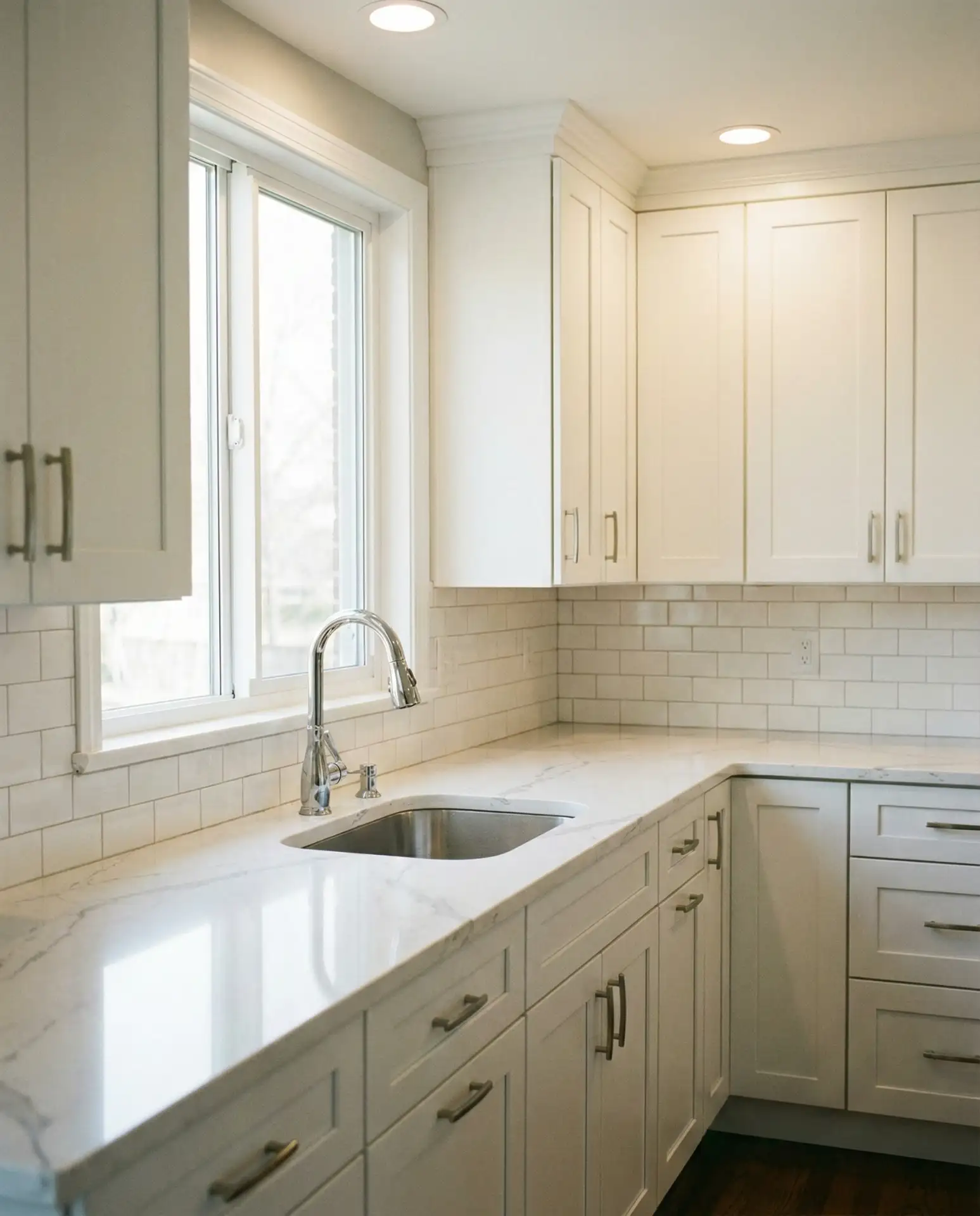
Quartz has become the default countertop for white cabinets, offering durability without the maintenance anxiety of marble. The engineered stone comes in hundreds of patterns, from pure white to veined designs that mimic Carrara or Calacatta. For families with kids or frequent entertainers, quartz’s non-porous surface means no sealing, no staining from red wine or turmeric, and simple cleanup. The material pairs with white cabinets to create a streamlined, modern foundation that doesn’t compete for attention.
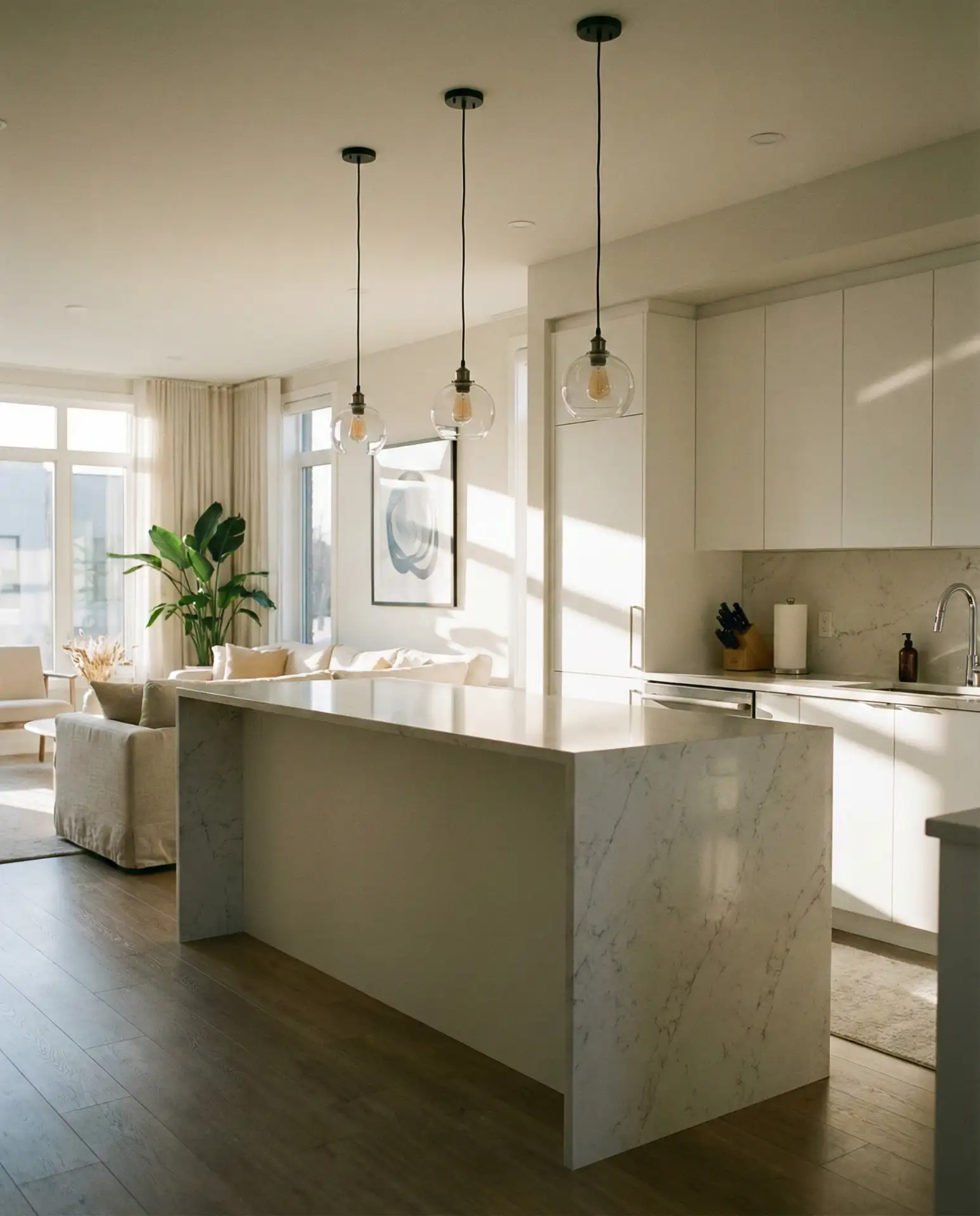
Across the Midwest and South, where large families and frequent hosting are common, homeowners consistently choose quartz for its forgiving nature. Unlike marble, which etches from acidic foods, quartz can handle lemon juice spills and tomato sauce splatters without permanent damage. The investment typically ranges from $50 to $100 per square foot installed, positioning it between laminate and natural stone—a sweet spot for quality without breaking renovation budgets.
12. White Cabinets with Butcher Block Countertops
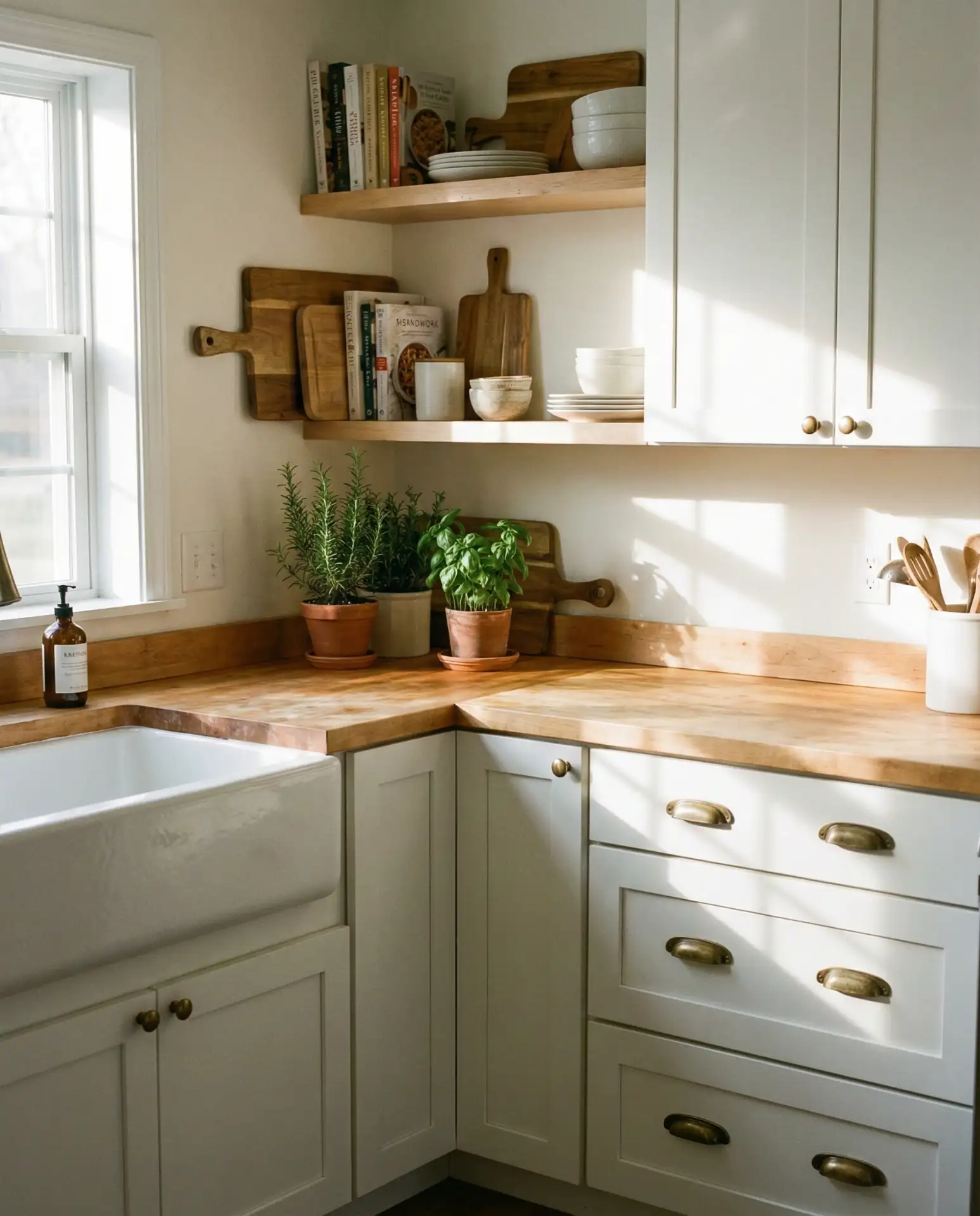
Installing a butcher block top on white cabinets introduces warmth and practicality in one move. The wood surface invites actual use—kneading bread, rolling pastry, and chopping vegetables directly on the counter—in ways cold stone doesn’t. Wood and white create visual relief that feels inviting rather than stark. This combination particularly shines in kitchens that emphasize cooking over entertaining, where function trumps formality.
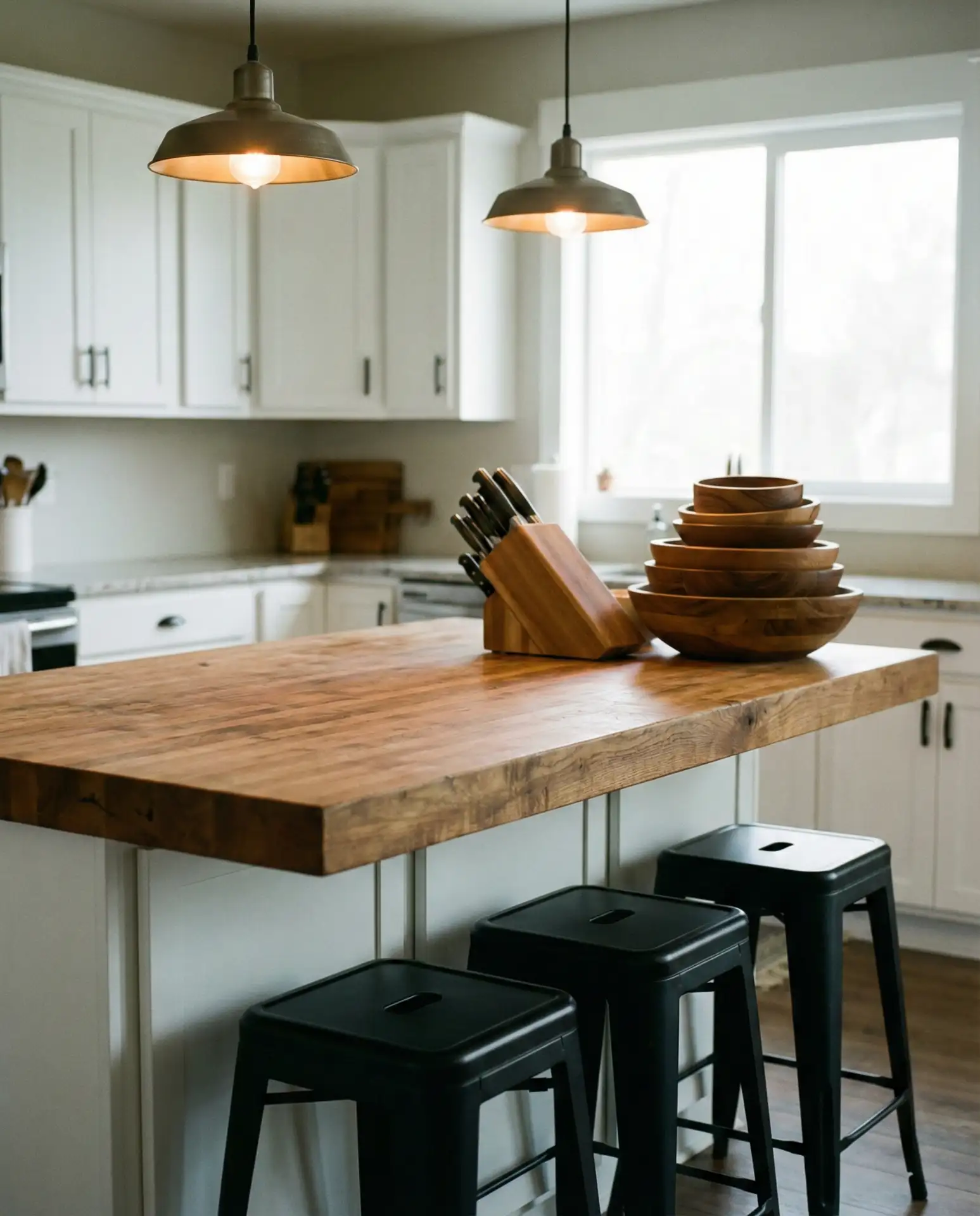
An avid baker I know swears by her butcher block island, claiming the wood surface provides just the right amount of give for working dough. The material does require maintenance—regular oiling and the occasional sanding to remove knife marks—but many homeowners find the ritual meditative rather than burdensome. Wood counters also age beautifully, developing a patina that tells the story of meals prepared and gathered around, something sterile surfaces can never replicate.
13. White Cabinets with Grey Accents
The grey and white combination has evolved beyond the trendy grey-wash look of the 2010s into something more intentional. Charcoal grey islands or deep slate backsplashes provide sophisticated contrast without the starkness of black. This pairing works across regions and home styles because grey functions as a true neutral, complementing both warm and cool undertones. It’s particularly effective in contemporary homes where the goal is calm sophistication rather than bold statements.
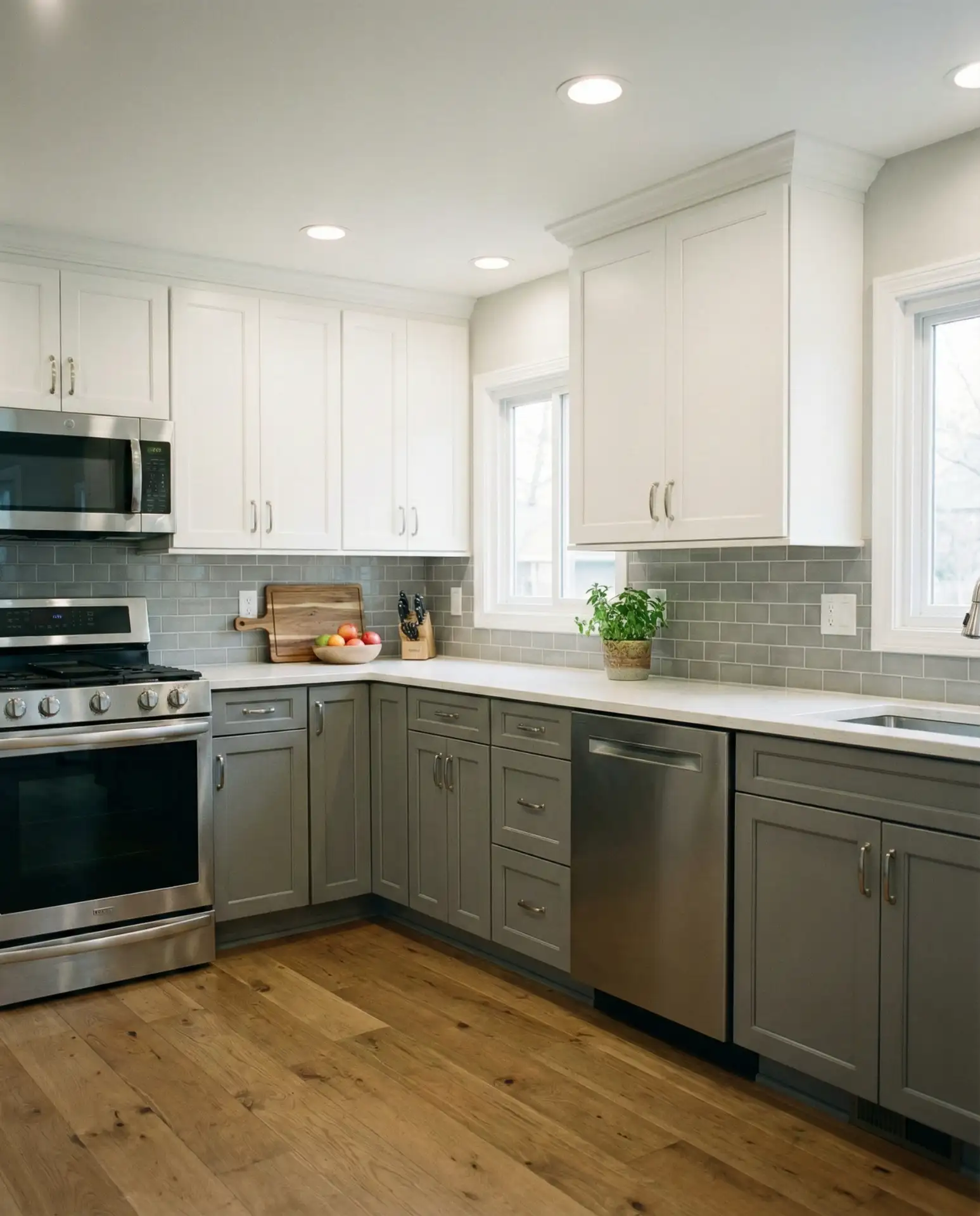
This works best when the grey element has clear definition—a grey island or grey lower cabinets create intentional contrast, while grey-painted walls can muddy the effect and make white cabinets look dingy. The color combination also provides flexibility for future updates: swap out the grey backsplash for patterned tile or change the cabinet paint without touching the white majority. Many homeowners appreciate having a “safe” color scheme that won’t feel dated in five years, and grey-white delivers that reliability.
14. White Cabinets with Statement Backsplash
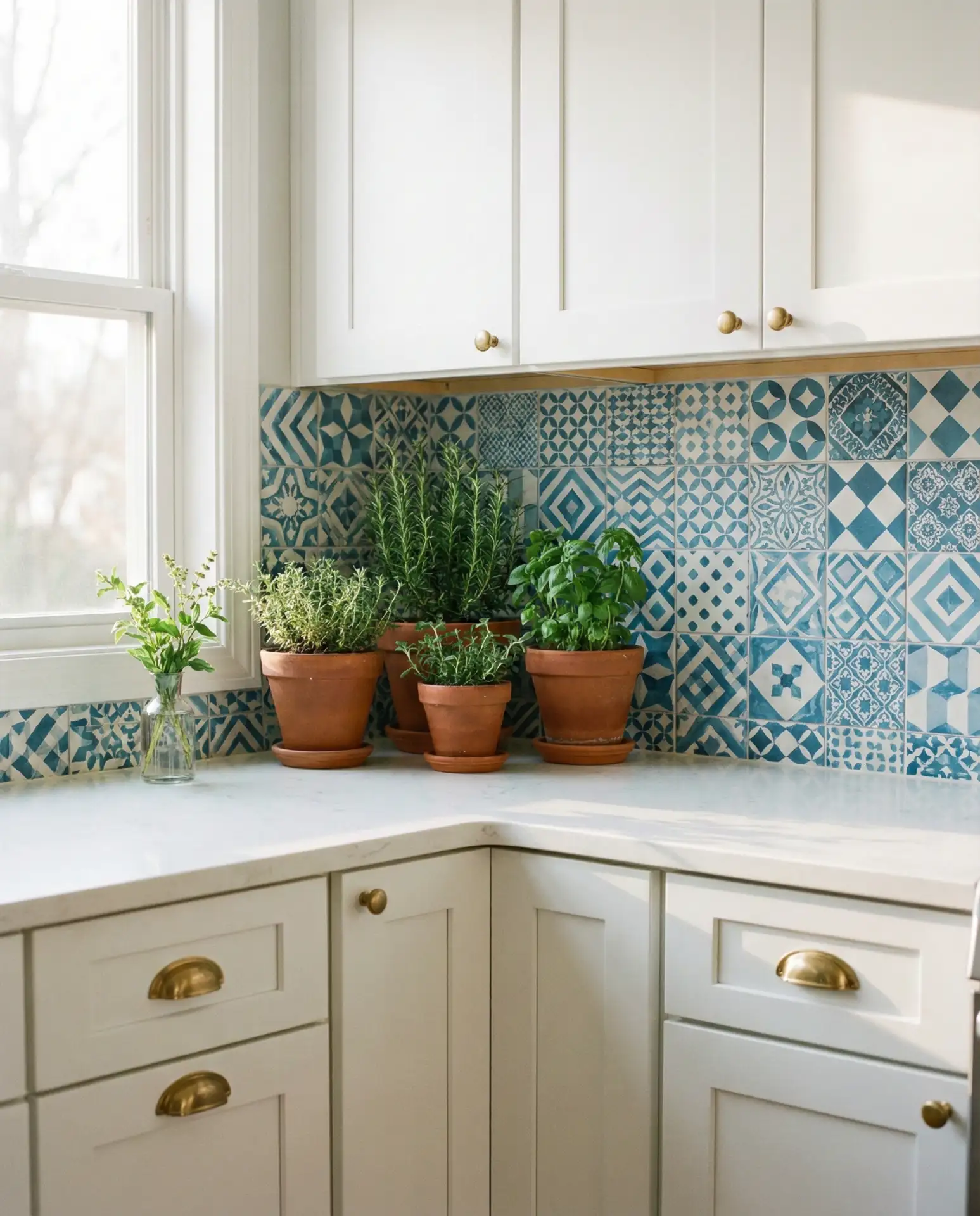
White cabinets provide the perfect canvas for backsplash ideas that might overwhelm a busier kitchen. Moroccan zellige tile, graphic cement patterns, or bold terrazzo styles can take center stage without competing with cabinetry. This approach allows for personality and trend participation in a replaceable format—you can update a backsplash in a weekend without the commitment of painting all your cabinets. The strategy works particularly well in rental-turned-ownership situations where you inherited white cabinets but want to make the space your own.
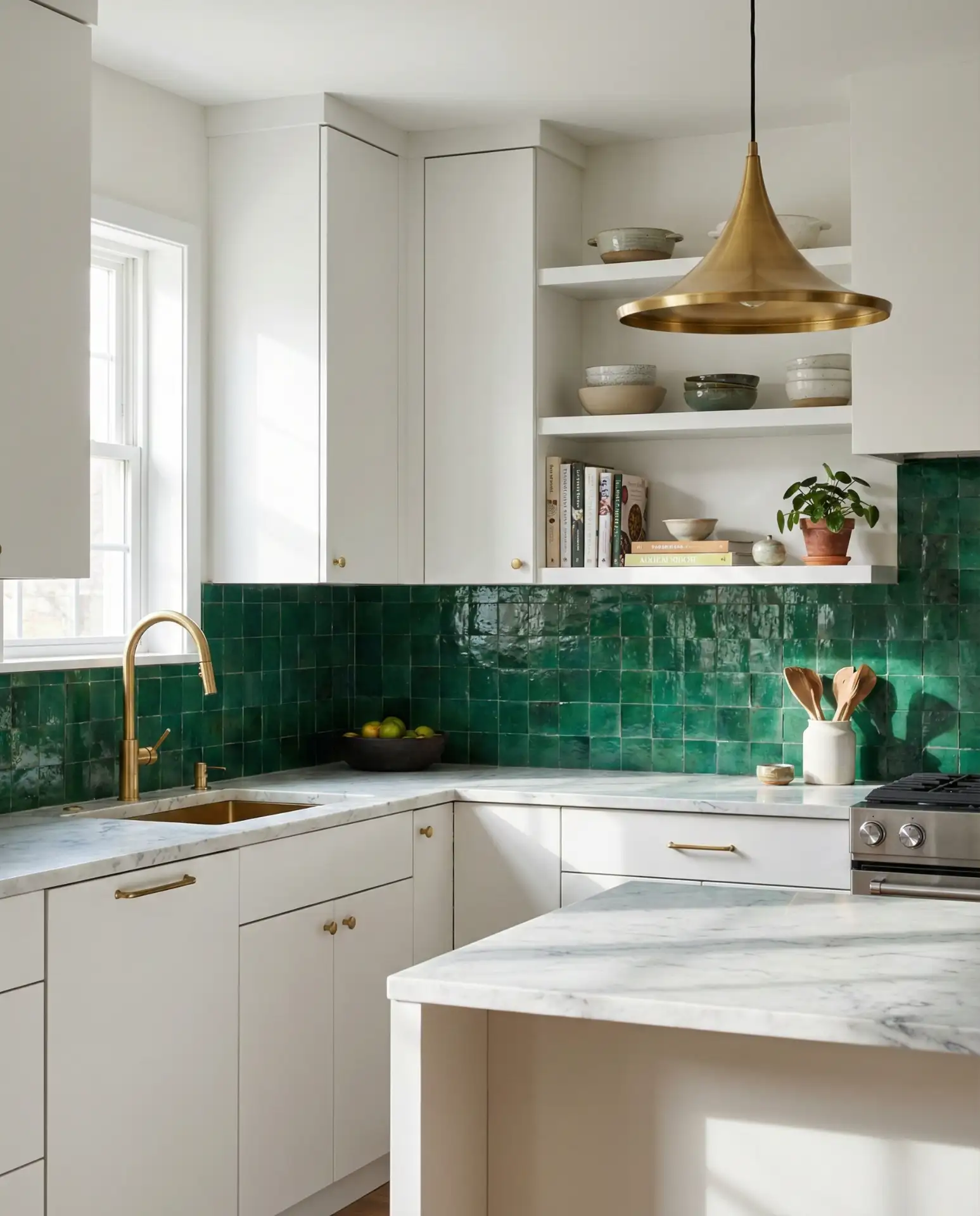
Real homeowners often report that a bold backsplash becomes the conversation piece of their kitchen, the element guests comment on immediately upon entering. The investment varies wildly—cement tiles run $8-20 per square foot while standard subway tile costs $3-5—but even high-end choices remain affordable given the limited square footage involved. The common mistake is choosing a backsplash that clashes with countertops; pull colors from your stone to create cohesion rather than competition.
15. White Cabinets with Brown Tones
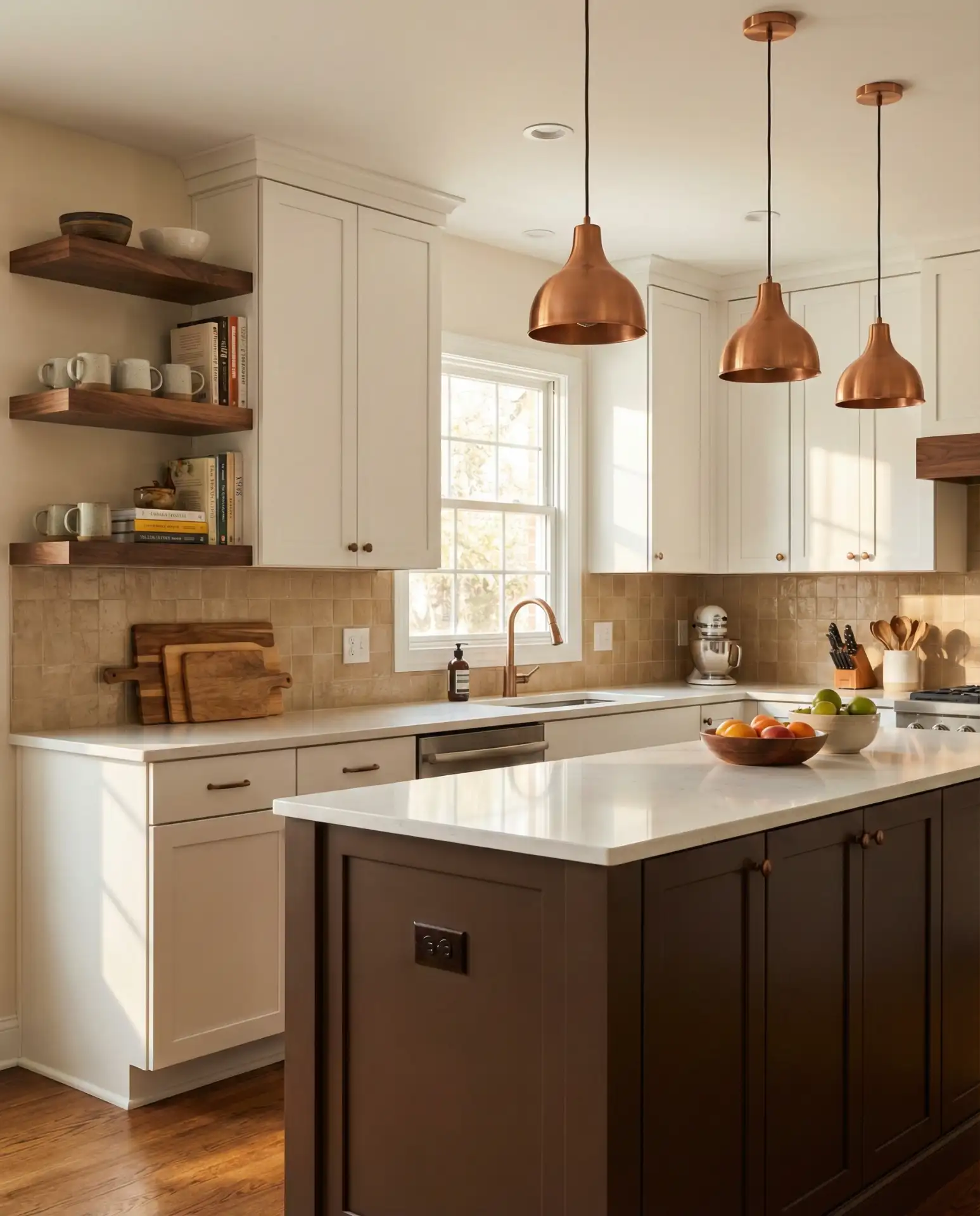
Pairing white cabinets with brown and tan elements—leather bar stools, terracotta backsplash, warm wood floors—creates a kitchen that feels grounded and approachable. This combination avoids the coldness that plagues all-white spaces while maintaining the brightness that draws people to white cabinets initially. The brown tones can come from natural materials or painted surfaces, but the key is warmth rather than cool greys or blues. It’s an aesthetic that feels equally at home in Southwest adobes and New England colonials.
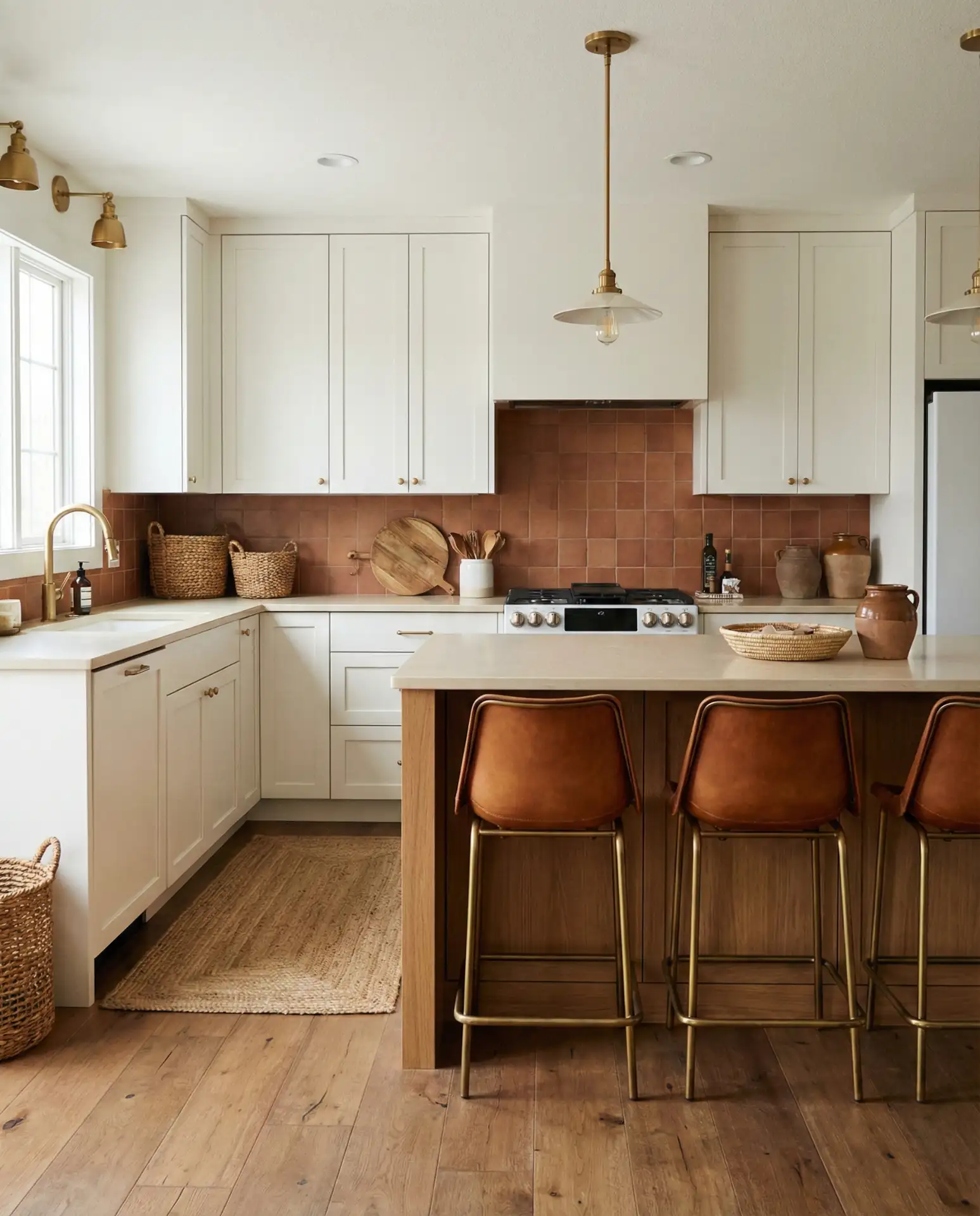
This trend reflects a broader cultural shift away from stark minimalism toward interiors that acknowledge our need for comfort and warmth. In colder climates like the Upper Midwest, brown tones make kitchens feel cozier during long winters. The color psychology research supports this—warm browns reduce stress and create a sense of security that cooler palettes can’t match. For homeowners who cook as therapy or gather large families regularly, this warmth matters.
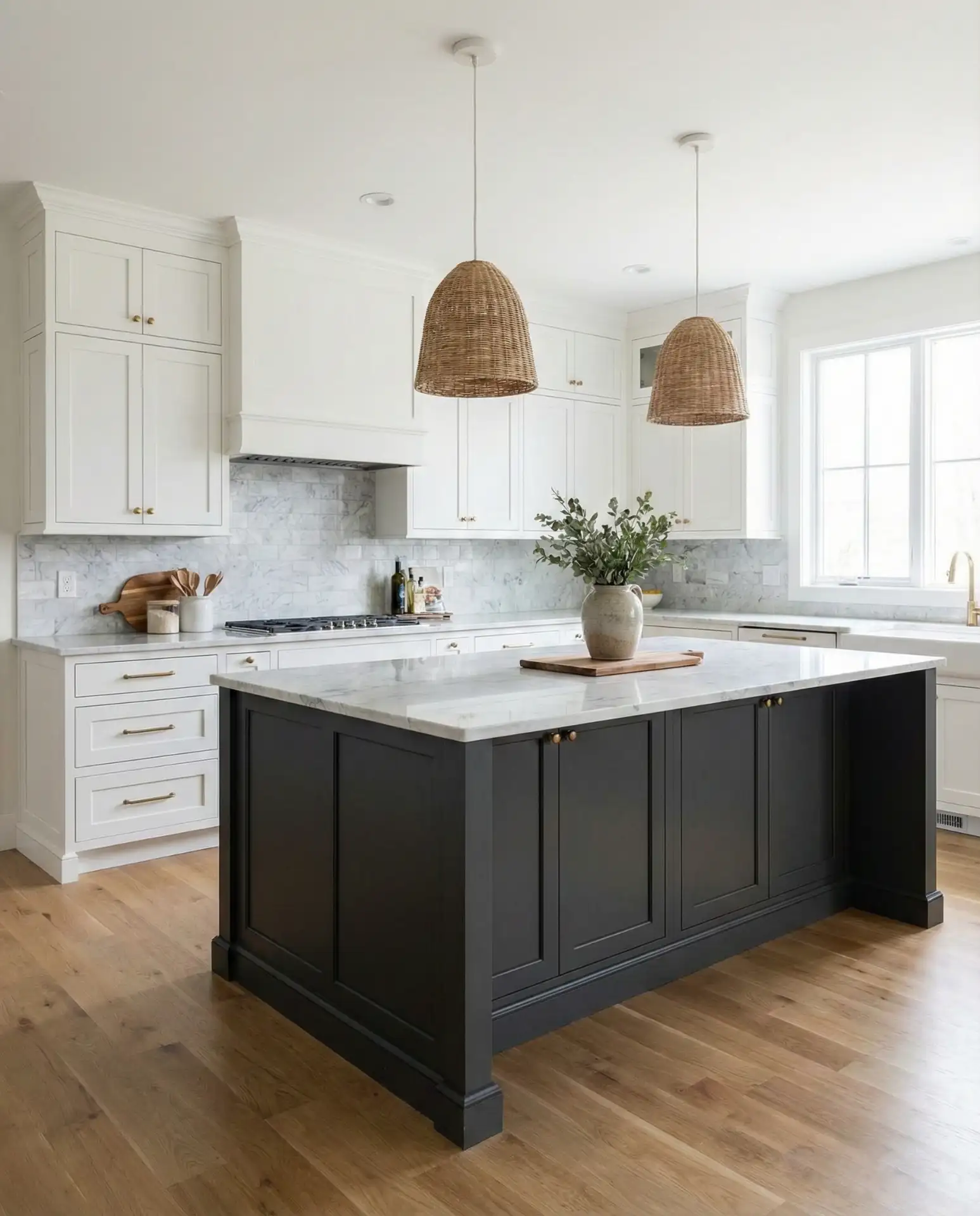
16. White Cabinets with Black Island
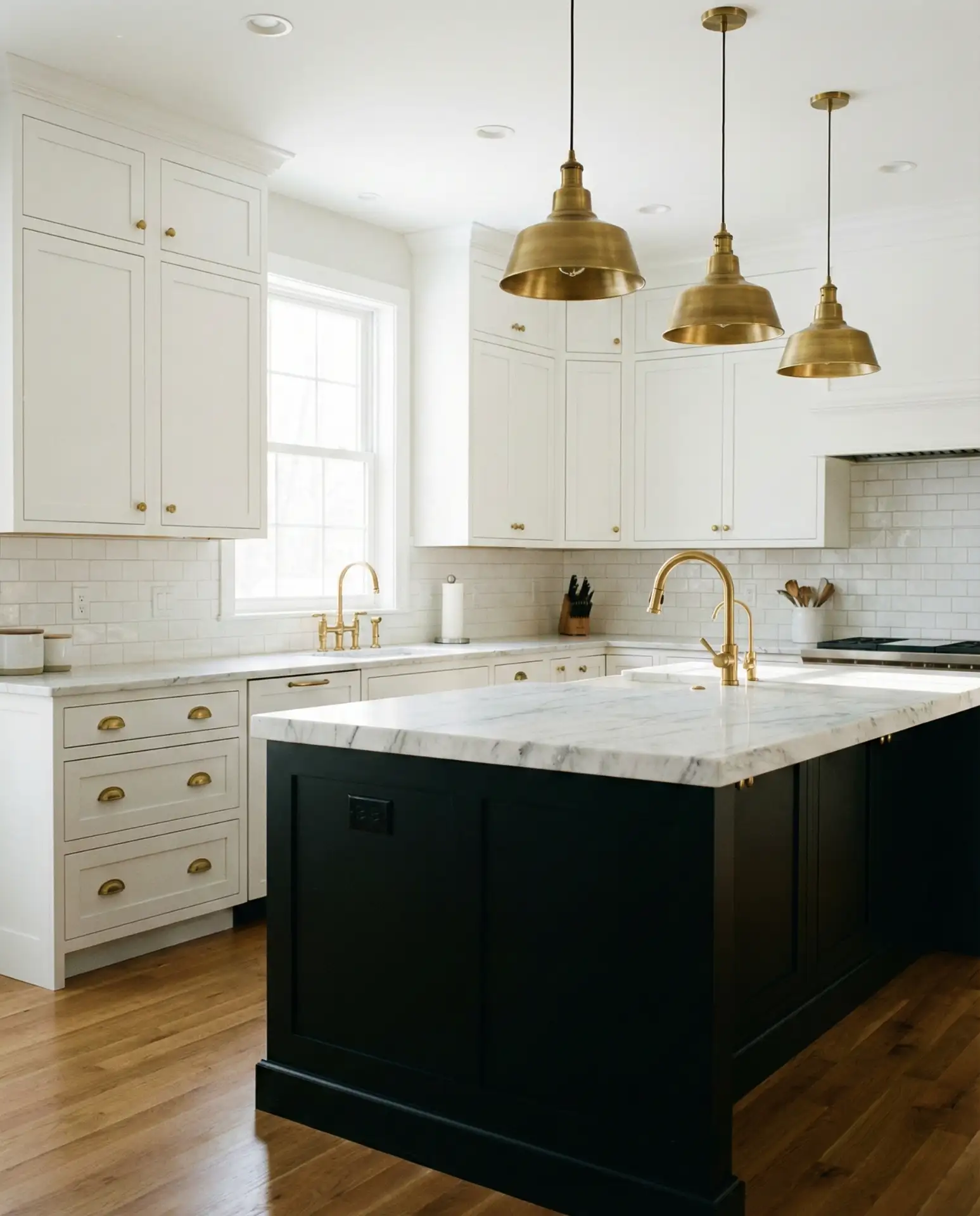
A black island against white perimeter cabinets creates instant drama and defines zones in open-concept layouts. The contrast is more pronounced than grey or navy, making it ideal for large kitchens where you want the island to command attention. Black and white is timeless rather than trendy, a combination that appears in classic French bistros and modern Scandinavian homes alike. The black grounds the space, preventing it from feeling too ethereal or washed out.
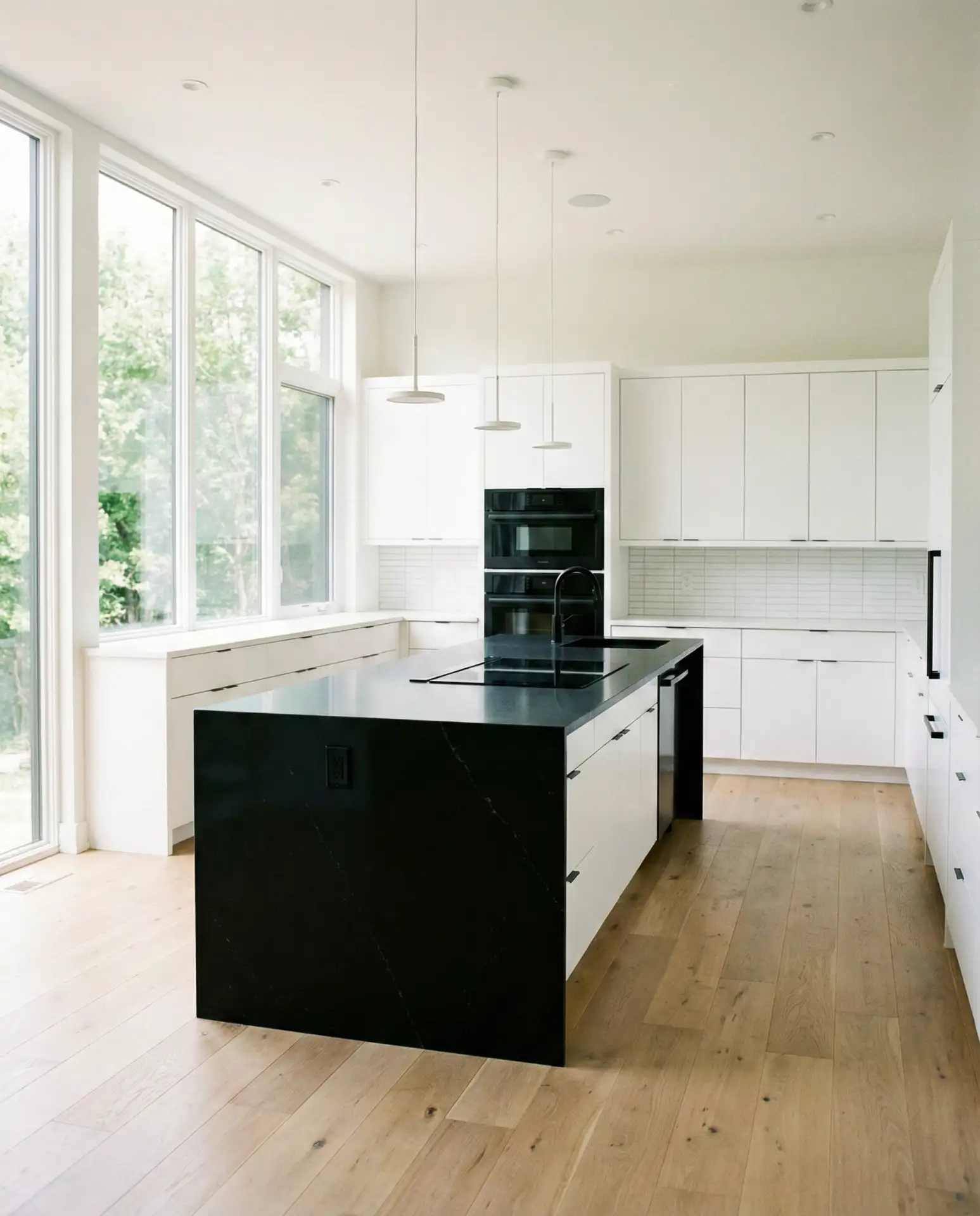
In New York and other urban markets where kitchens flow directly into living spaces, black islands act as architectural punctuation that defines the kitchen boundary without walls. The practical benefits matter too—black hides scuffs and wear better than white, making it smart for high-traffic islands where kids do homework and guests congregate. Budget-wise, painting an existing island black costs under $100 in materials, making this one of the most affordable dramatic updates available.
17. White Cabinets with Antique Hardware
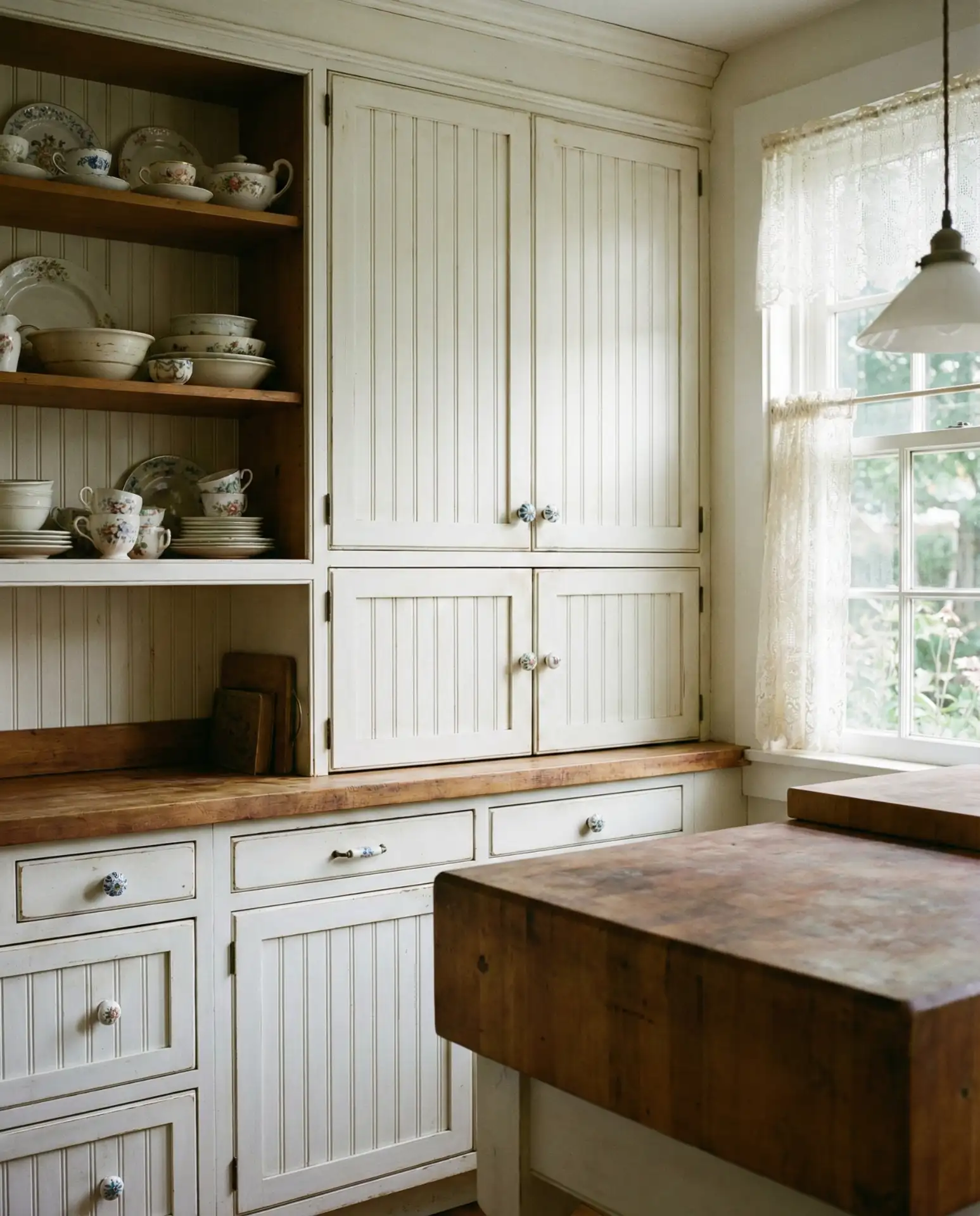
Swapping modern hardware for antique brass or vintage glass knobs transforms white cabinets from builder-grade to collected-over-time. These pieces introduce patina and character that new hardware can’t replicate, creating the sense that the kitchen has evolved rather than been installed wholesale. Flea markets and architectural salvage shops offer authentic options at various price points, while retailers now produce convincing reproductions. This approach particularly suits older homes where period-appropriate details matter.
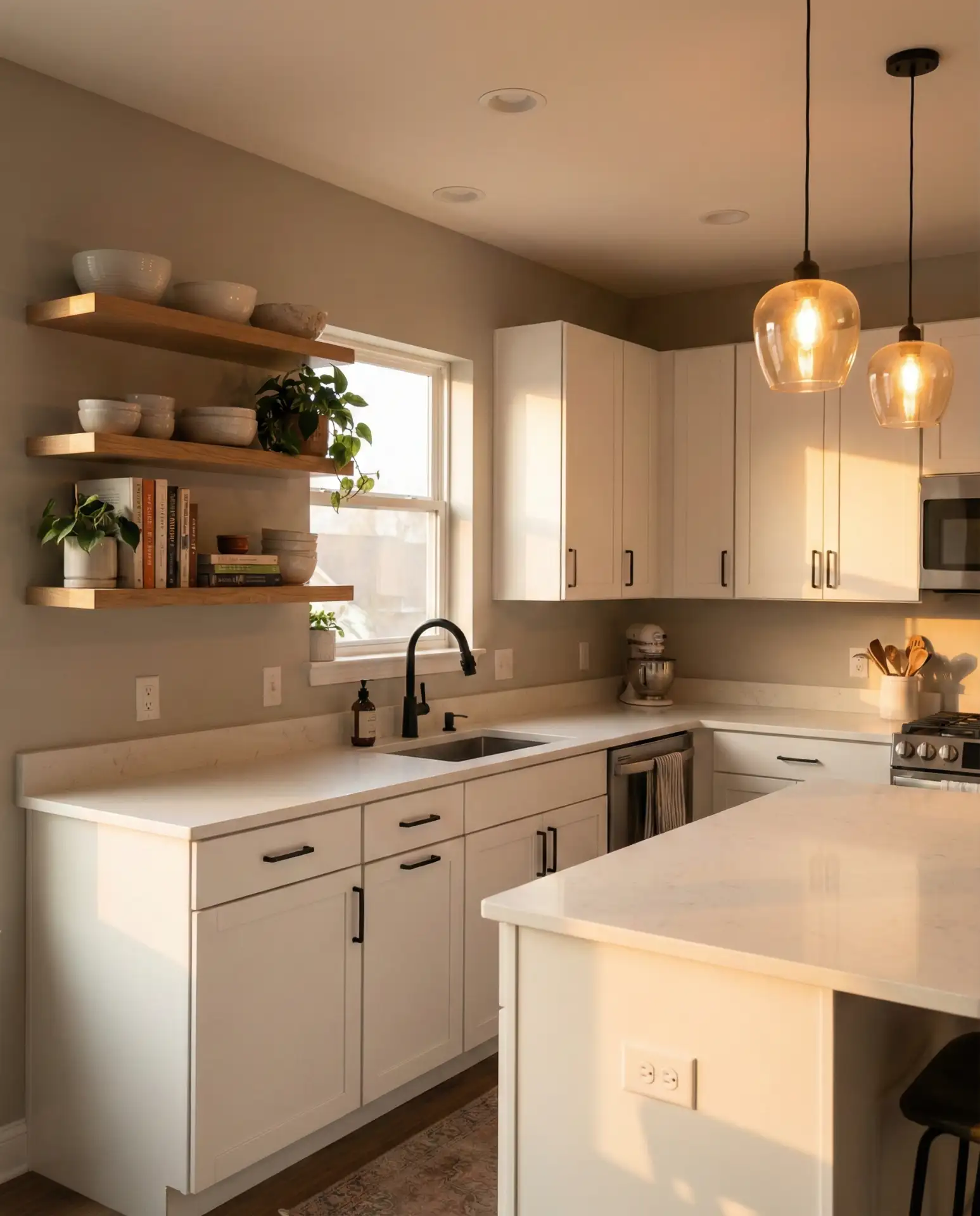
A common mistake is mixing too many hardware styles, creating visual chaos rather than collected charm. Stick to two or three complementary styles maximum—perhaps brass bin pulls on drawers and glass knobs on doors. The beauty of this approach is its flexibility: you can start with a few antique pieces and add others as you find them, building a collection over months or years rather than completing everything in one shopping trip.
18. White Cabinets with Warm Wall Colors
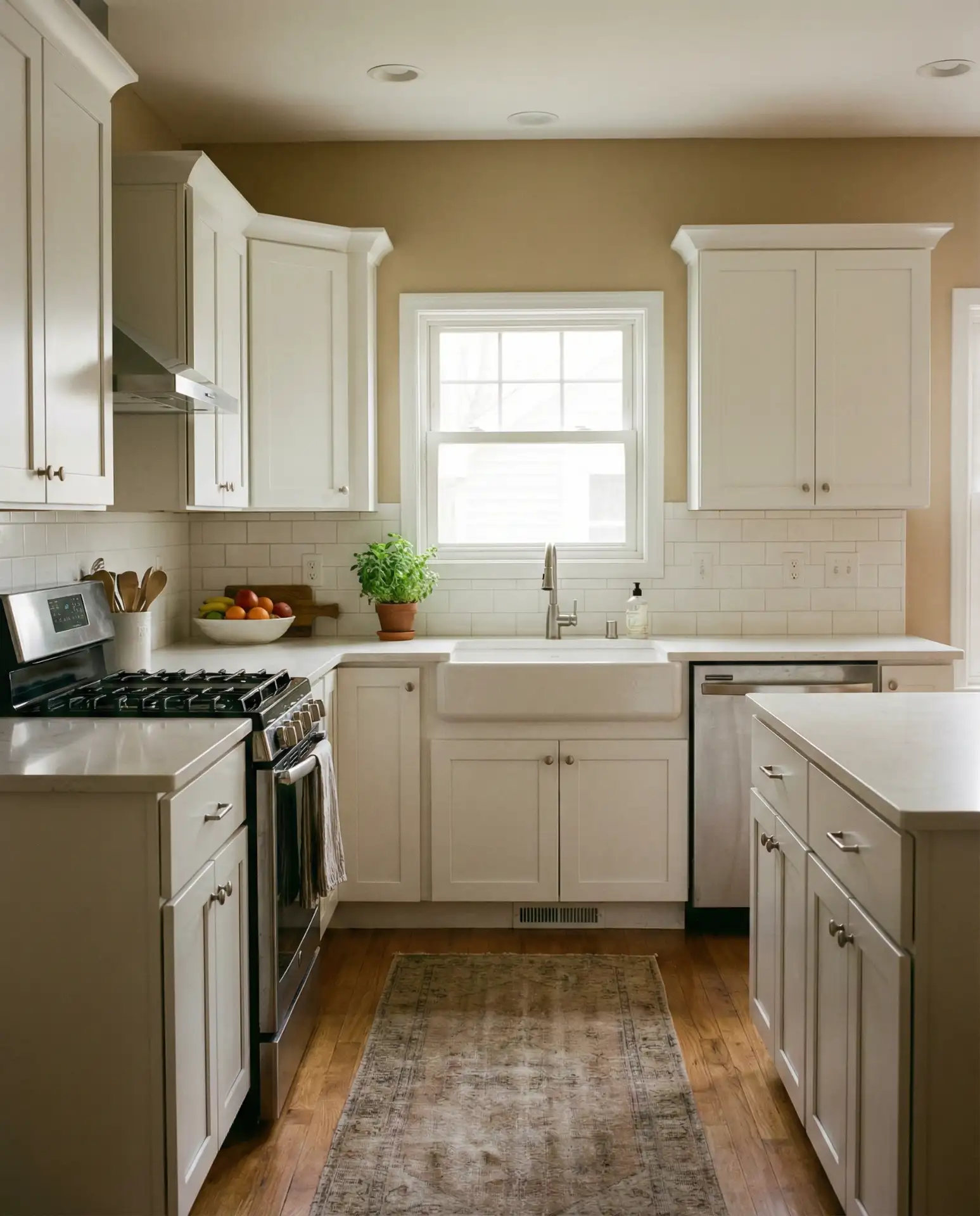
While white walls often accompany white cabinets, wall color ideas in warm neutrals—soft beige, warm greige, and creamy off-white—add depth without overwhelming. These colors create a cohesive envelope around white cabinetry, preventing the room from feeling too clinical or cold. The wall color shows off the white cabinets as intentional design choices rather than default selections. This approach works particularly well in kitchens with limited natural light, where warm walls compensate for grey skies or north-facing windows.
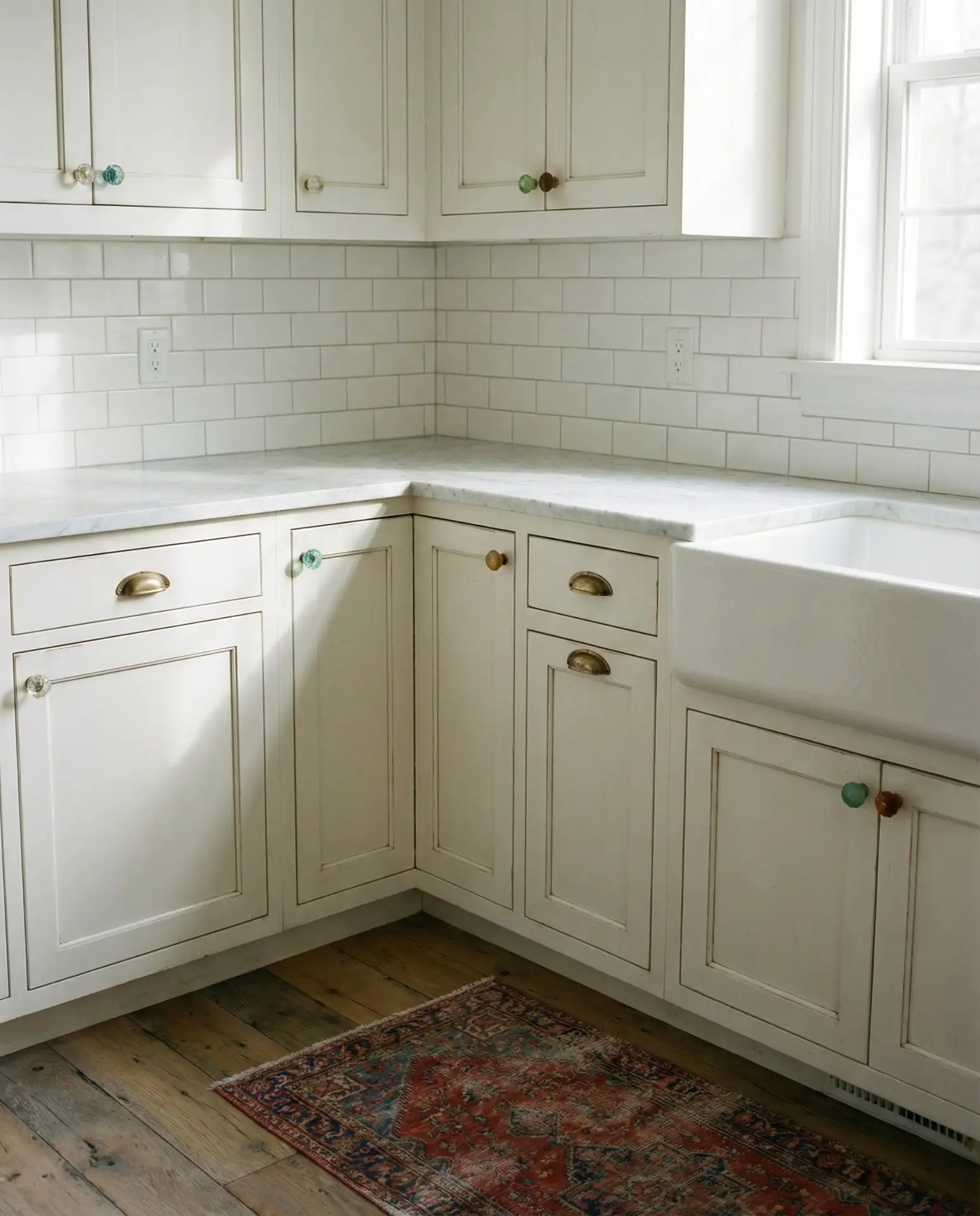
This works best in closed kitchens or those with defined walls; in fully open-concept homes, painting only kitchen walls can create awkward transitions. Test paint samples in your actual lighting conditions before committing—colors shift dramatically between morning and evening light. Many homeowners find that a shade or two darker than they initially considered ends up feeling more enveloping and intentional, especially in larger kitchens where expanses of wall need visual weight.
19. White Oak Cabinets with White Trim
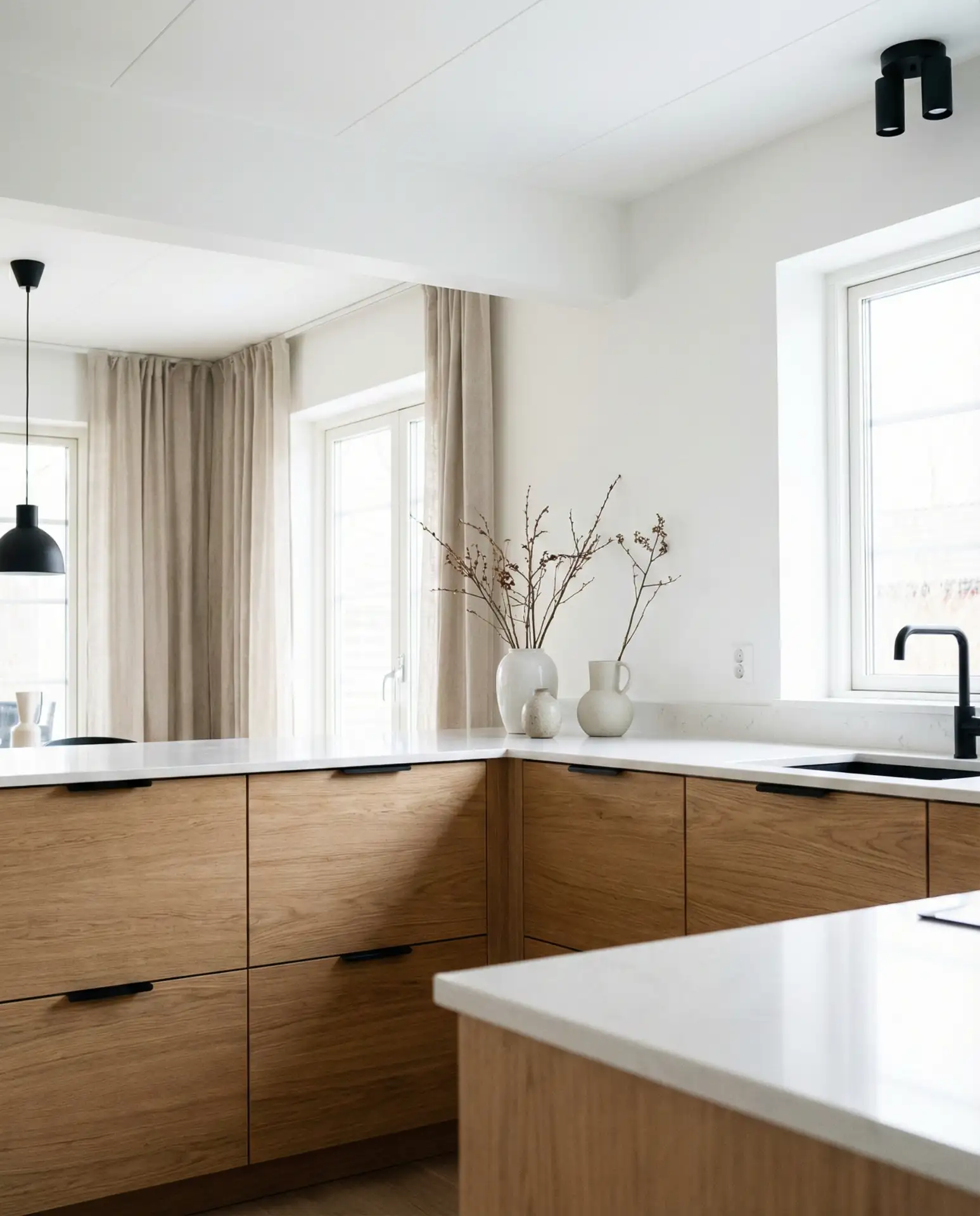
Natural white oak cabinets with visible grain, paired with bright white trim and ceilings, create a Scandinavian-inspired aesthetic that’s gained traction in 2026. The wood tone provides warmth while maintaining the bright, airy quality people seek in white kitchens. This isn’t painted wood showing through—it’s natural oak celebrated for its blonde tones and subtle grain patterns. The approach appeals to homeowners who want wood without darkness and modern without cold.
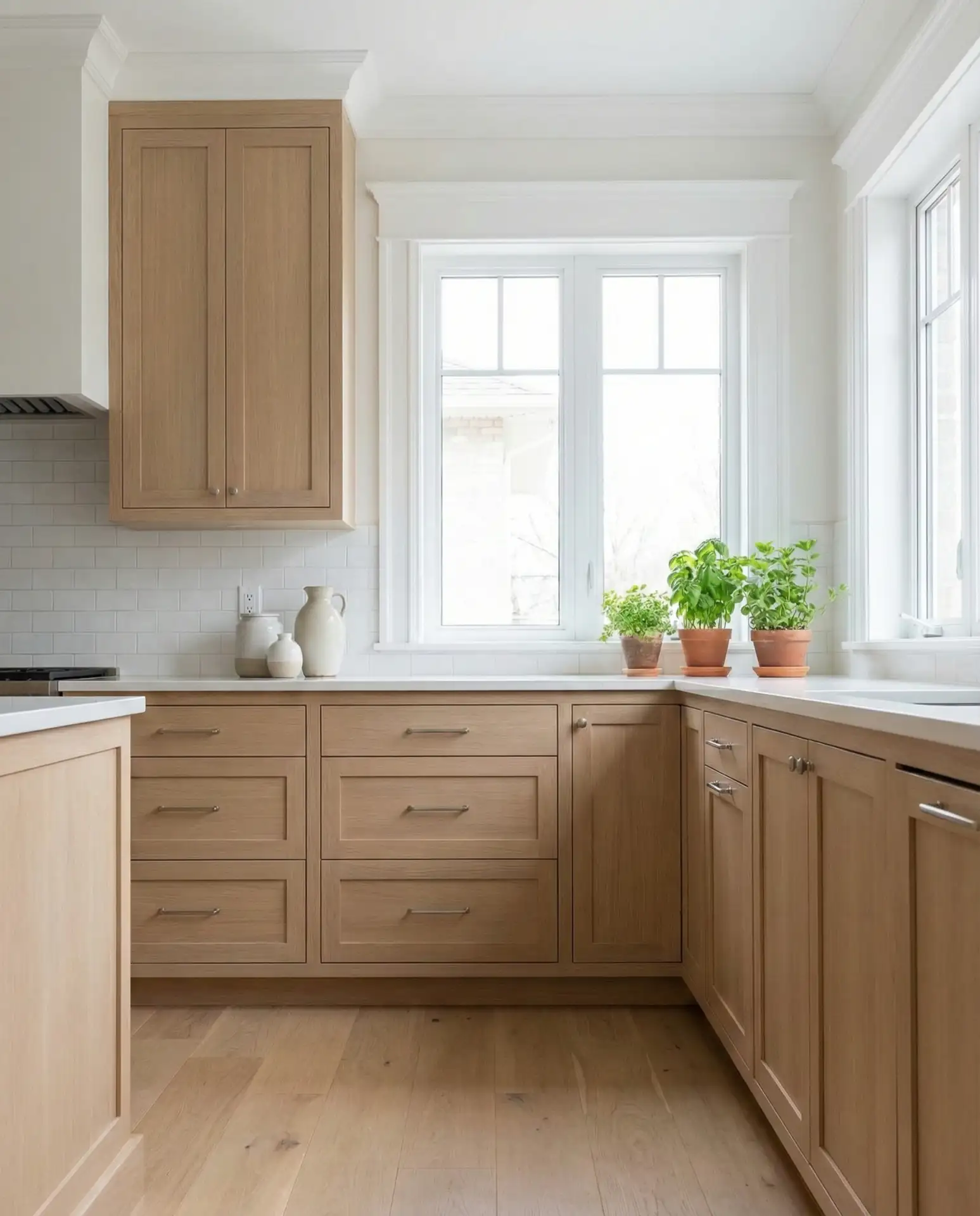
In Pacific Northwest cities like Portland and Seattle, this aesthetic has become almost default in new construction, reflecting regional values around natural materials and light-filled spaces. The practical side: white oak is durable and less prone to showing wear than painted surfaces, making it ideal for active households. The investment runs higher than painted cabinets—expect 30-50% more—but many view this as worthwhile for the warmth and longevity natural wood provides.
20. White Cabinets with Mixed Metals
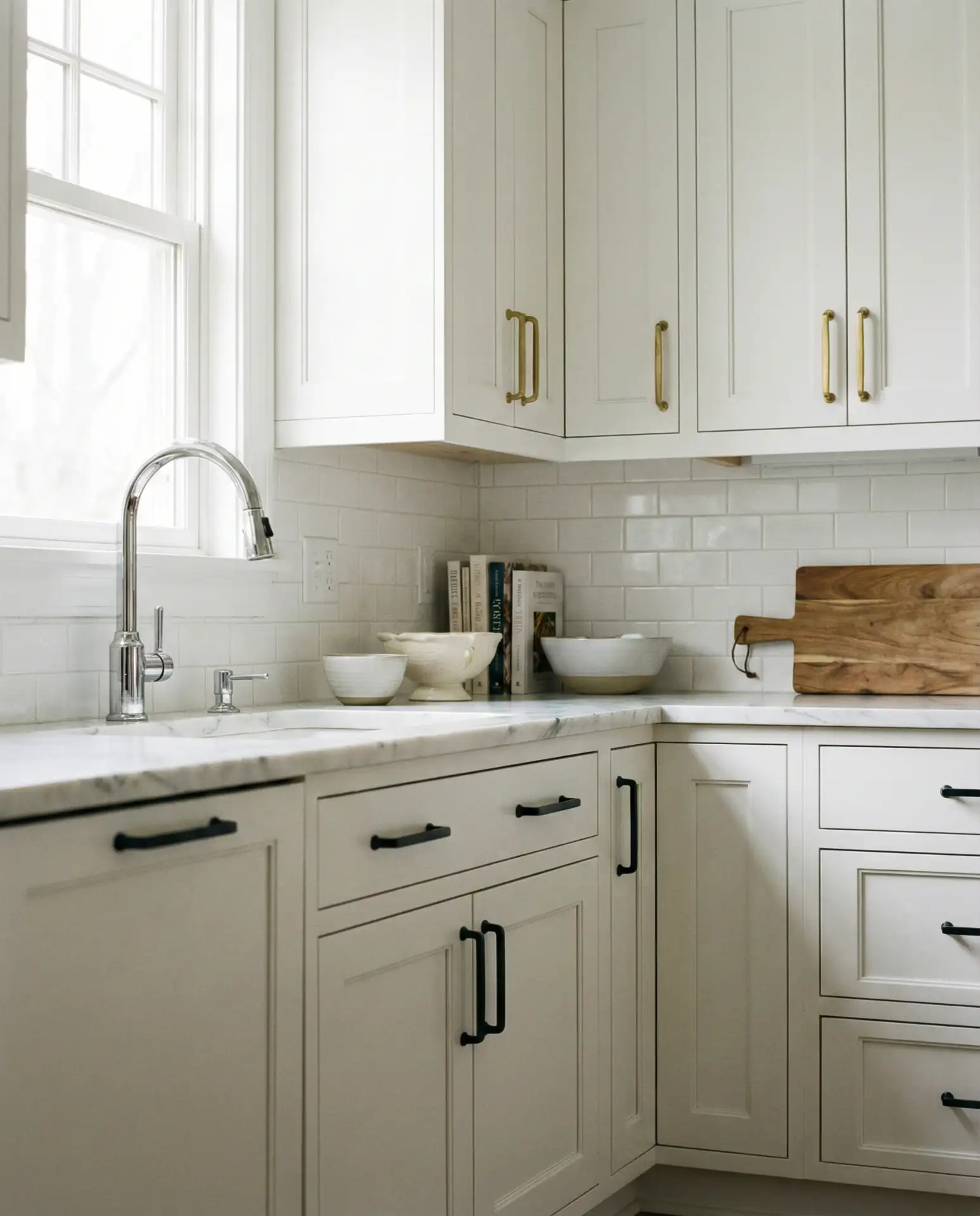
Thoughtfully mixing metals—gold handles on uppers with black hardware on lowers, or brass faucets with nickel cabinet pulls—adds sophistication that single-metal schemes can’t achieve. White cabinets make this possible by providing a neutral backdrop that doesn’t compete with the metallic variation. The key is intentionality: choose two metals and distribute them consistently rather than randomly mixing. This approach feels collected and layered, suggesting the kitchen evolved over time.
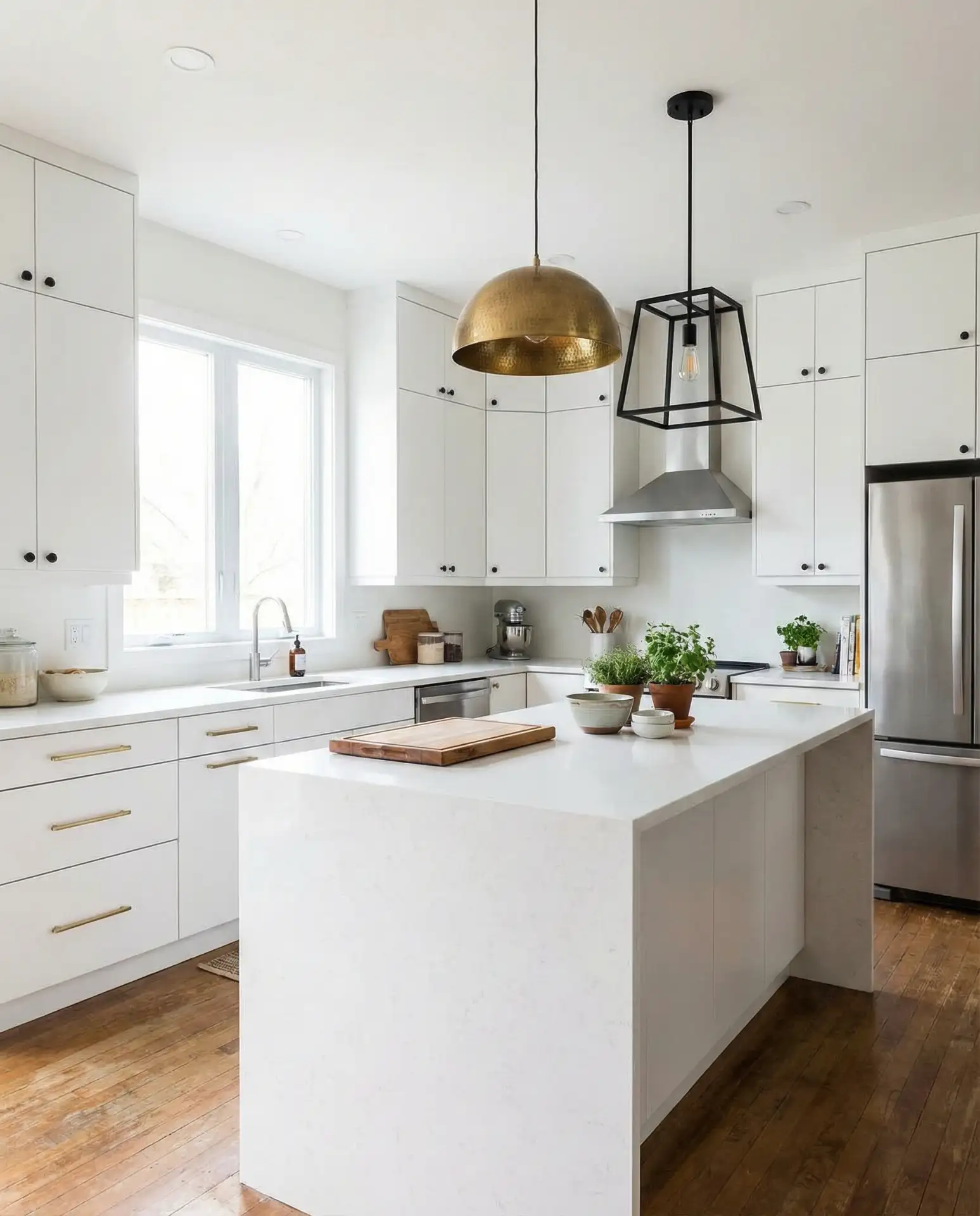
A designer once explained that the rule is really “mixed finishes” rather than “mixed metals”—pair matte black with brushed brass, not polished versions of both. The contrast in sheen matters as much as color. Real homeowners sometimes discover this through trial and error, initially mixing polished chrome and polished gold only to find it looks confused. The benefit of white cabinets is that hardware swaps are relatively simple, allowing for experimentation without major commitment or expense.
21. White Cabinets with Open Upper Shelving
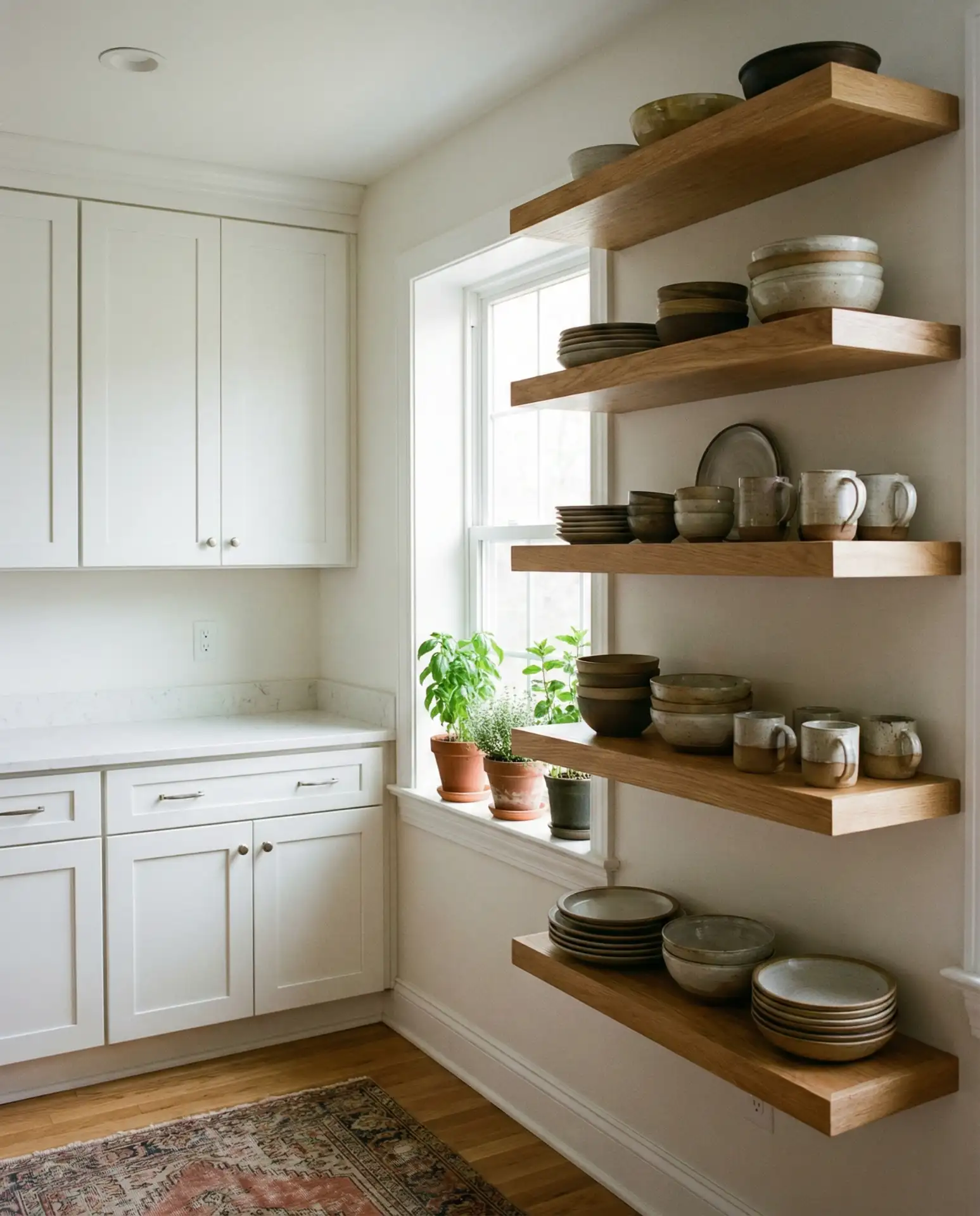
Replacing some upper white cabinets with open shelving prevents the boxed-in feeling that can occur with floor-to-ceiling cabinetry. Wood and white shelves break up expanses of white while displaying dishes and glassware as decor. This works particularly well in smaller kitchens where upper cabinets can feel oppressive and in homes where entertaining matters more than storage volume. The open shelves also force a certain discipline—everything displayed must earn its spot.
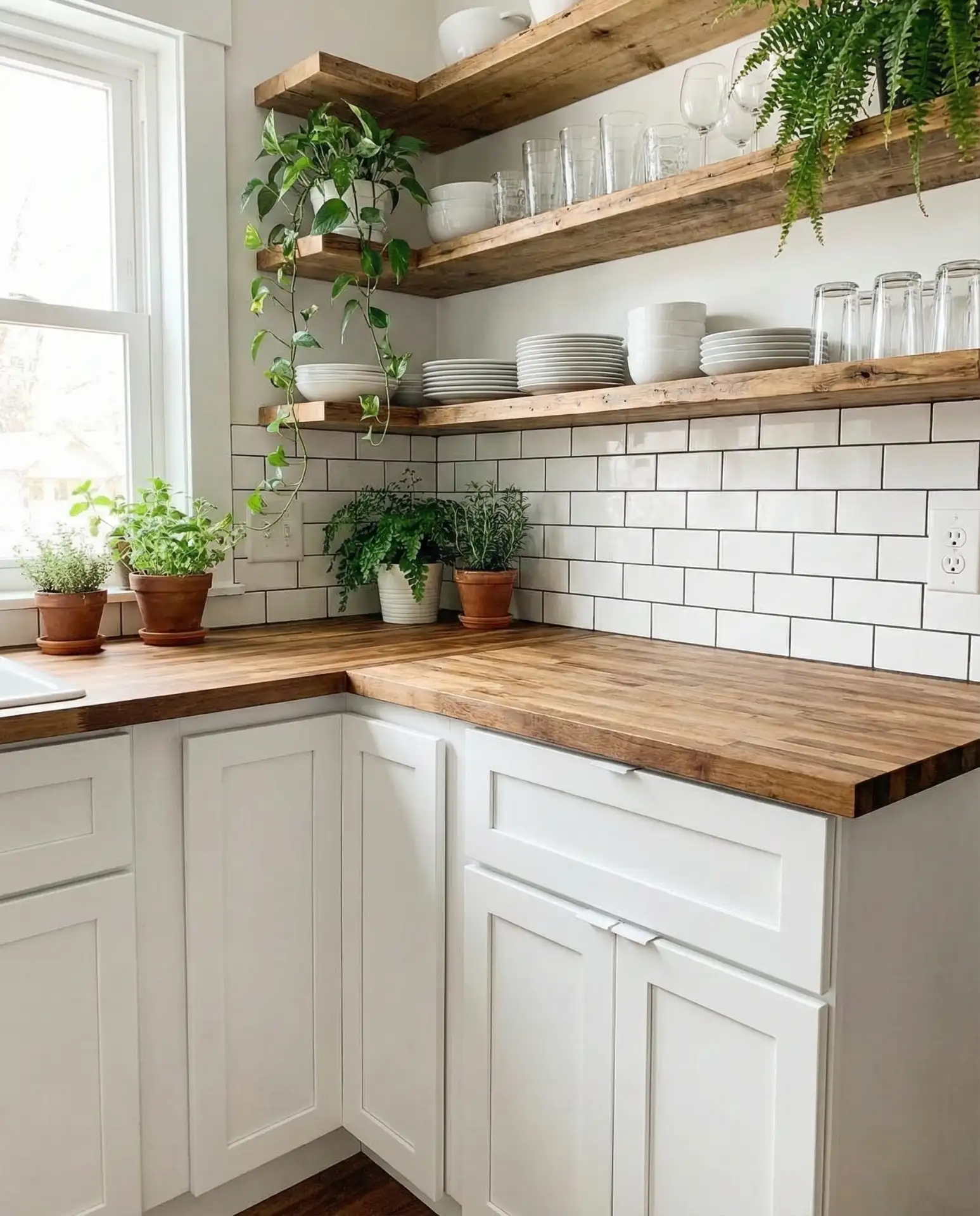
The practical considerations are real: open shelves collect dust and require regular maintenance that closed cabinets don’t. Homeowners in dry climates report fewer issues than those in humid regions, where grease particles settle more readily. Budget-wise, this can actually reduce costs since shelving is cheaper than cabinet boxes, though you’ll need attractive dishes to display. The visual reward—a lighter, more breathable kitchen—often outweighs the extra wiping for those who embrace the aesthetic.
22. White Cabinets in Small Kitchens
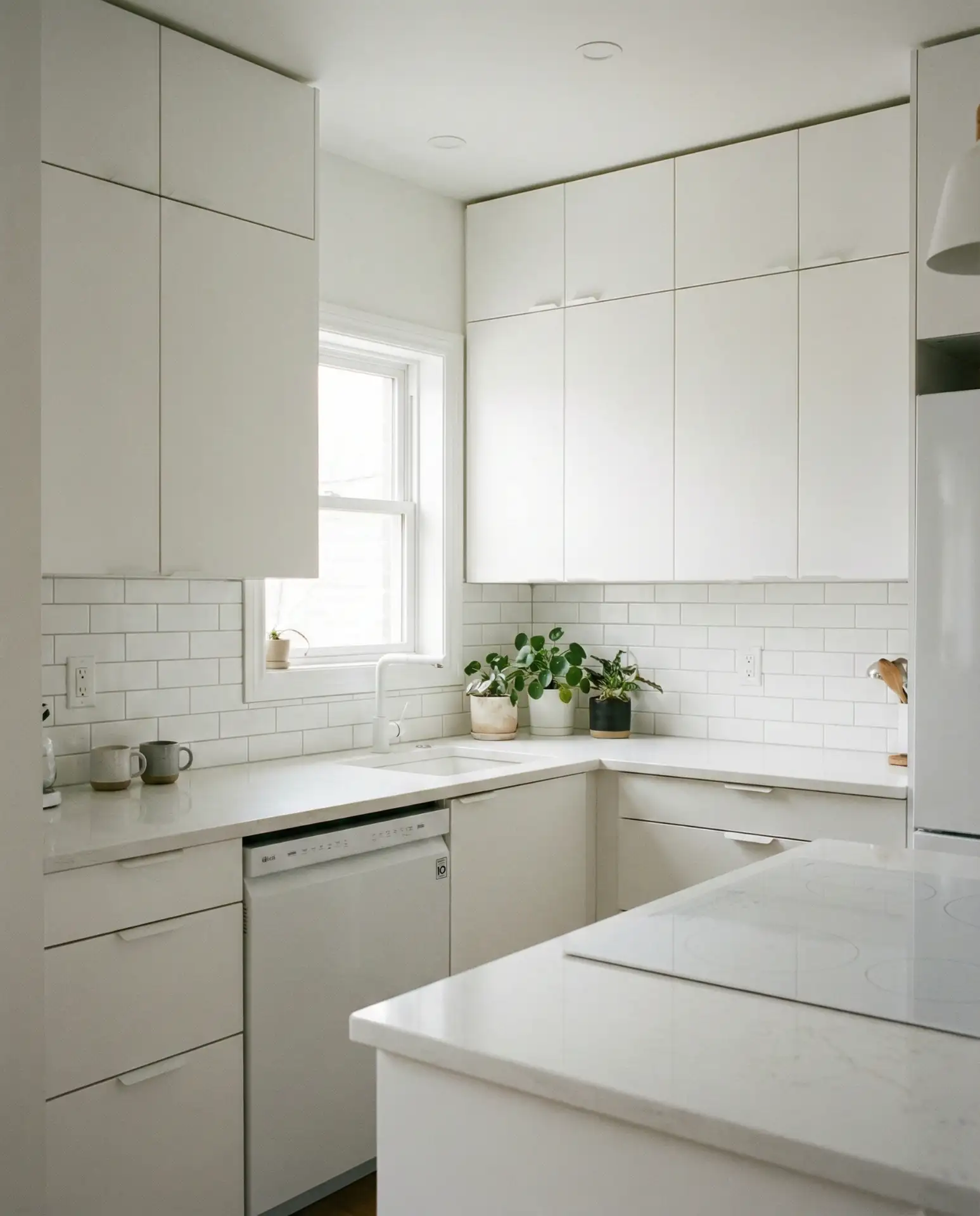
In compact urban kitchens or galley layouts, white cabinets maximize light reflection and create the illusion of more space. The key is extending white cabinets to the ceiling rather than stopping short—the continuous vertical line makes ceilings feel higher. Glossy finishes enhance this effect further by bouncing light around the room. Small kitchens benefit from simplified hardware choices and minimal color contrast, allowing white to work its spatial magic without interruption.
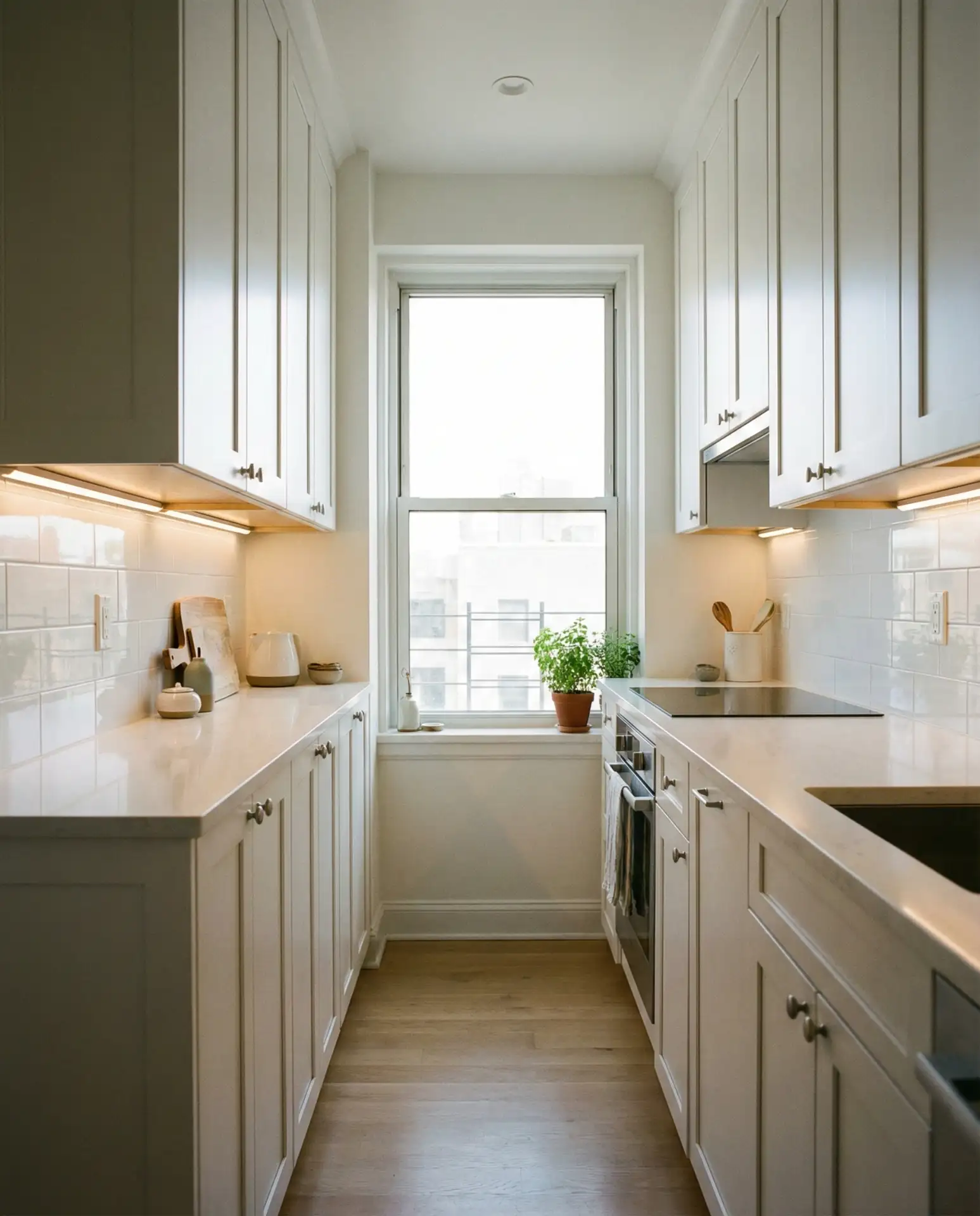
In cities with notoriously small apartments—San Francisco, Boston, and New York—white cabinets are practically standard because they make 80-square-foot kitchens feel usable rather than claustrophobic. The common mistake is adding too many colors or patterns in an attempt to inject personality, which fragments the space and makes it feel even smaller. Instead, let white dominate and add personality through one or two carefully chosen elements: a colorful rug, unique lighting, or a single painted wall.
23. White Cabinets with Statement Lighting
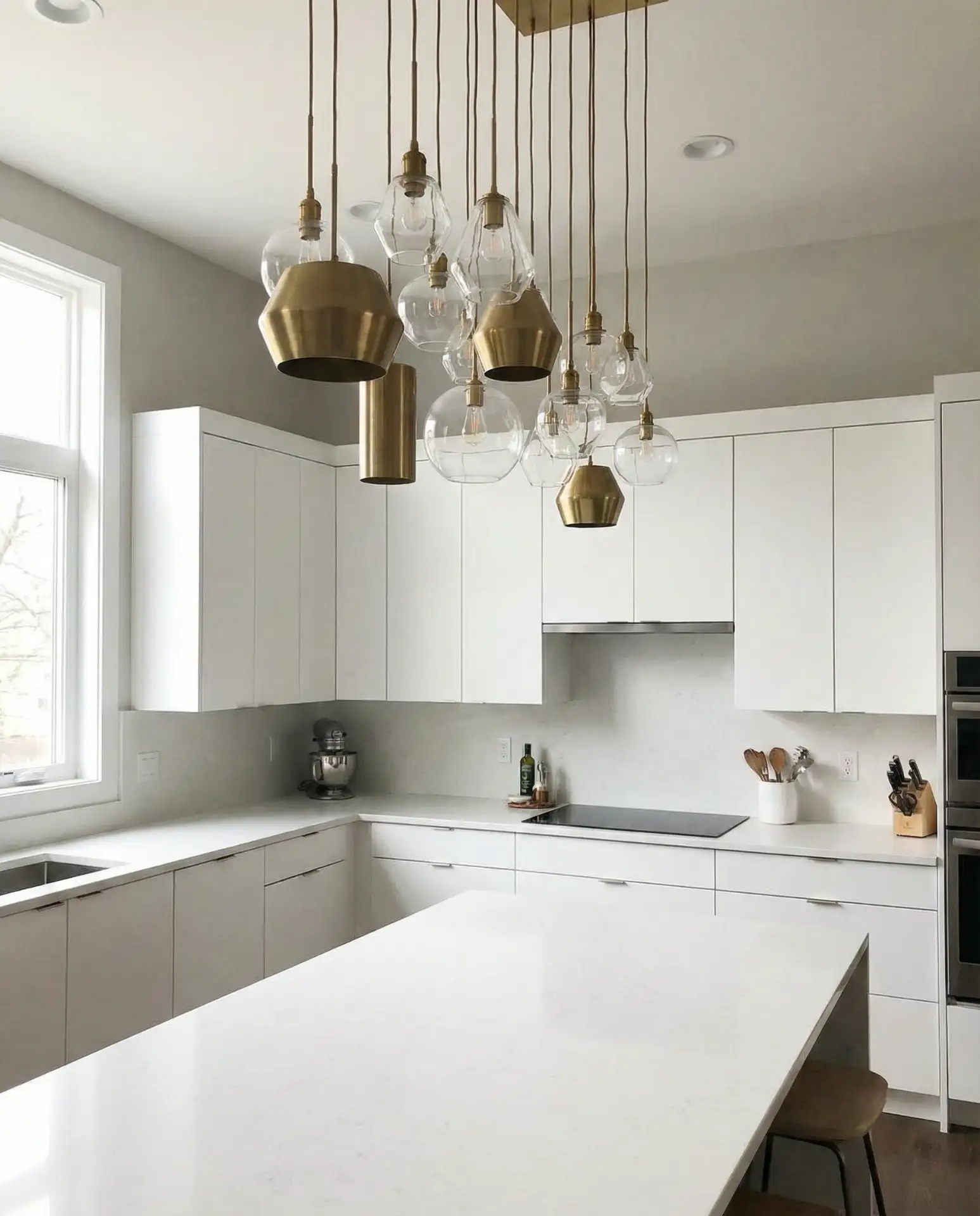
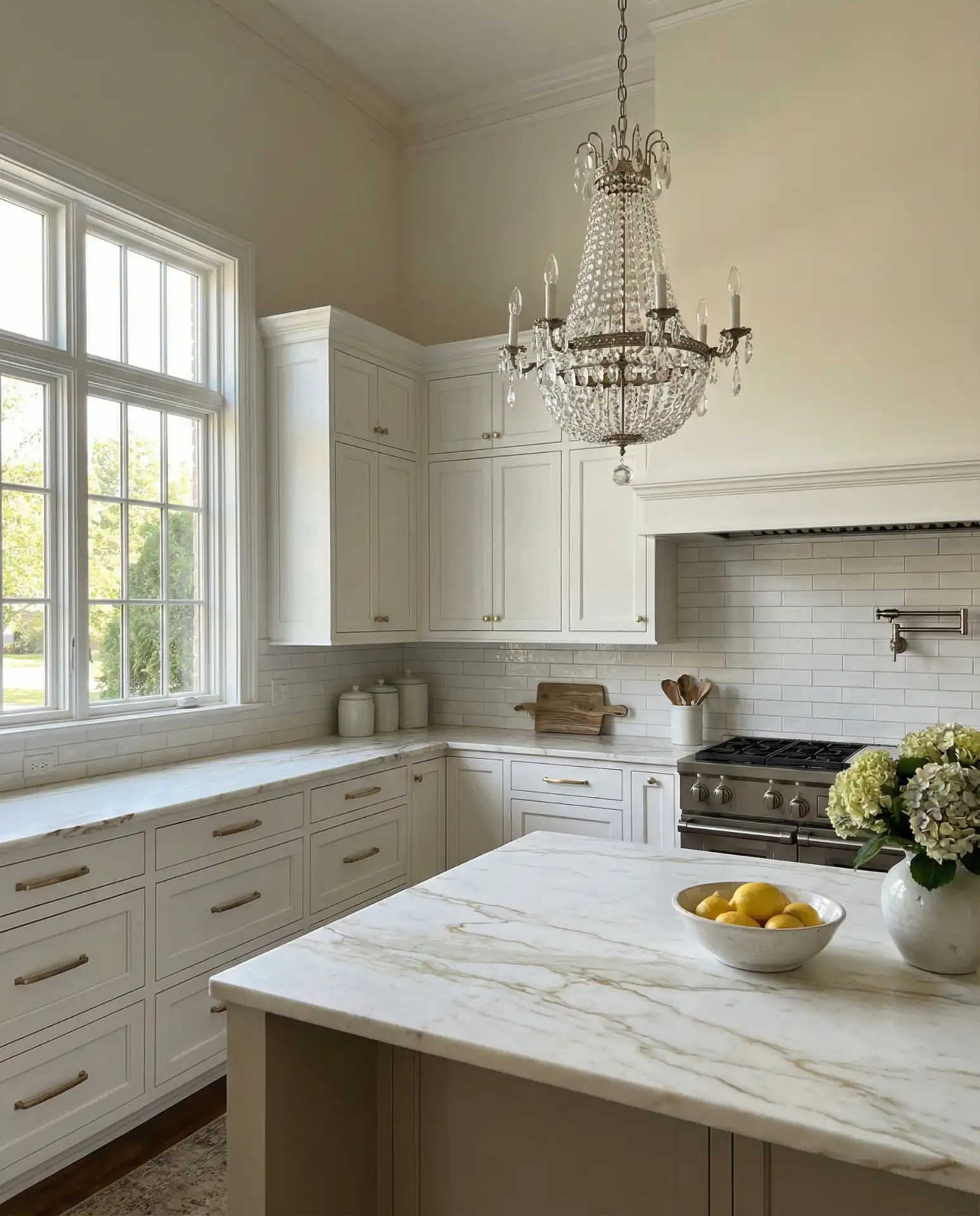
White cabinets allow dramatic lighting fixtures to take center stage without visual competition. Oversized pendants, sculptural chandeliers, or industrial cage lights become jewelry for the kitchen, drawing the eye upward and adding personality that cabinetry alone can’t provide. This approach works across styles—modern glass globes, rustic iron lanterns, or minimalist linear suspensions all pop against white backgrounds. The lighting becomes your design signature, while white cabinets provide timeless versatility.
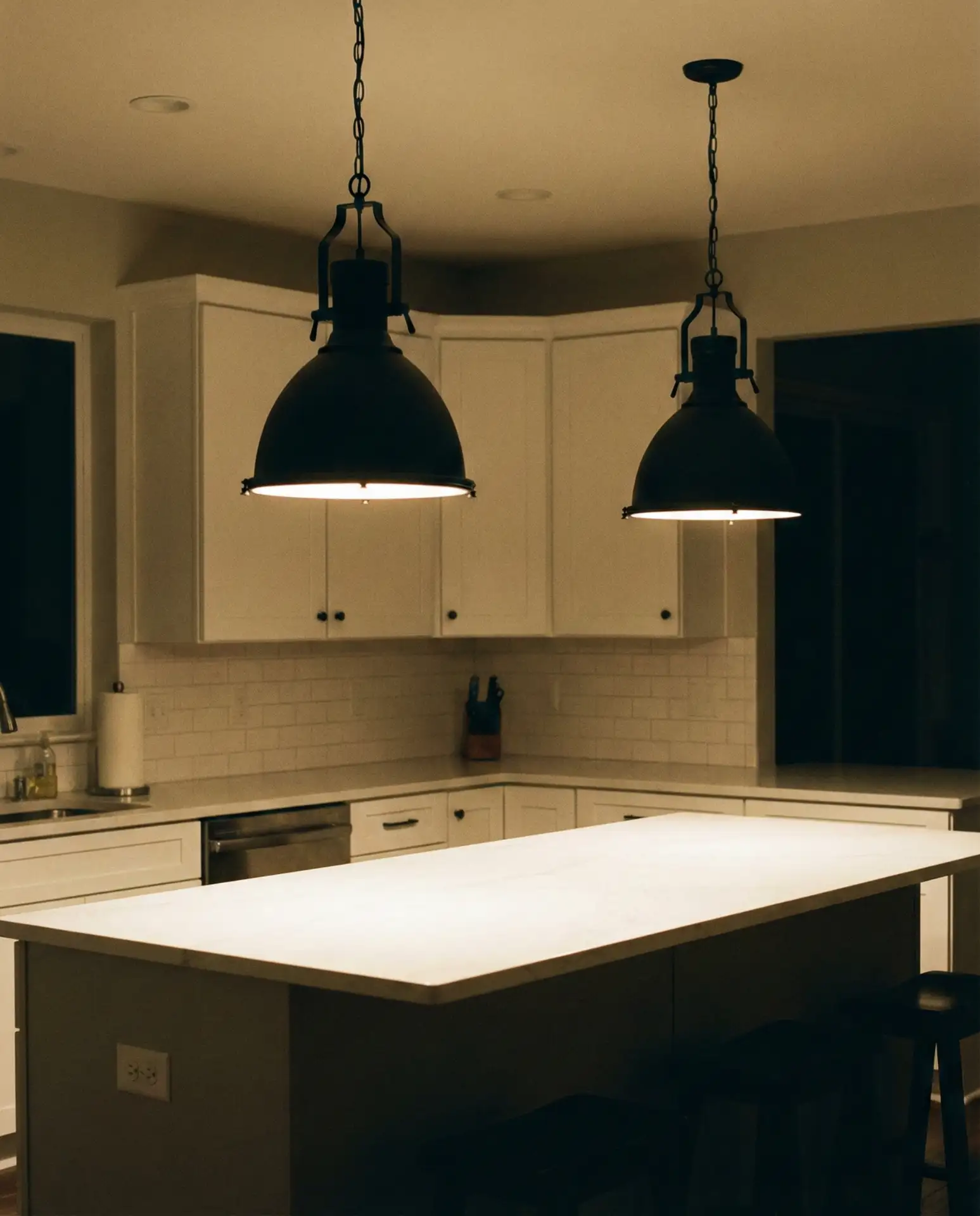
Lighting represents one of the most impactful updates available, often costing less than $500 for a dramatic fixture that completely transforms the space. The investment makes sense because lighting is relatively easy to change as tastes evolve, unlike cabinets that require full renovations. Homeowners frequently report that statement lighting makes their kitchen feel “finished” in a way that generic fixtures never did, turning a functional space into a designed room worthy of the Pinterest boards that inspired this whole project.
Conclusion
White kitchen cabinets continue proving their versatility in 2026, adapting to personal style through hardware, color pairings, and material choices rather than demanding total reinvention. The ideas here show that white doesn’t mean boring—it means possibility. What’s your favorite combination from this list? Drop a comment with your own white kitchen plans or the pairings you’re considering. We’d love to hear which direction you’re leaning and what’s inspiring your decisions this year.