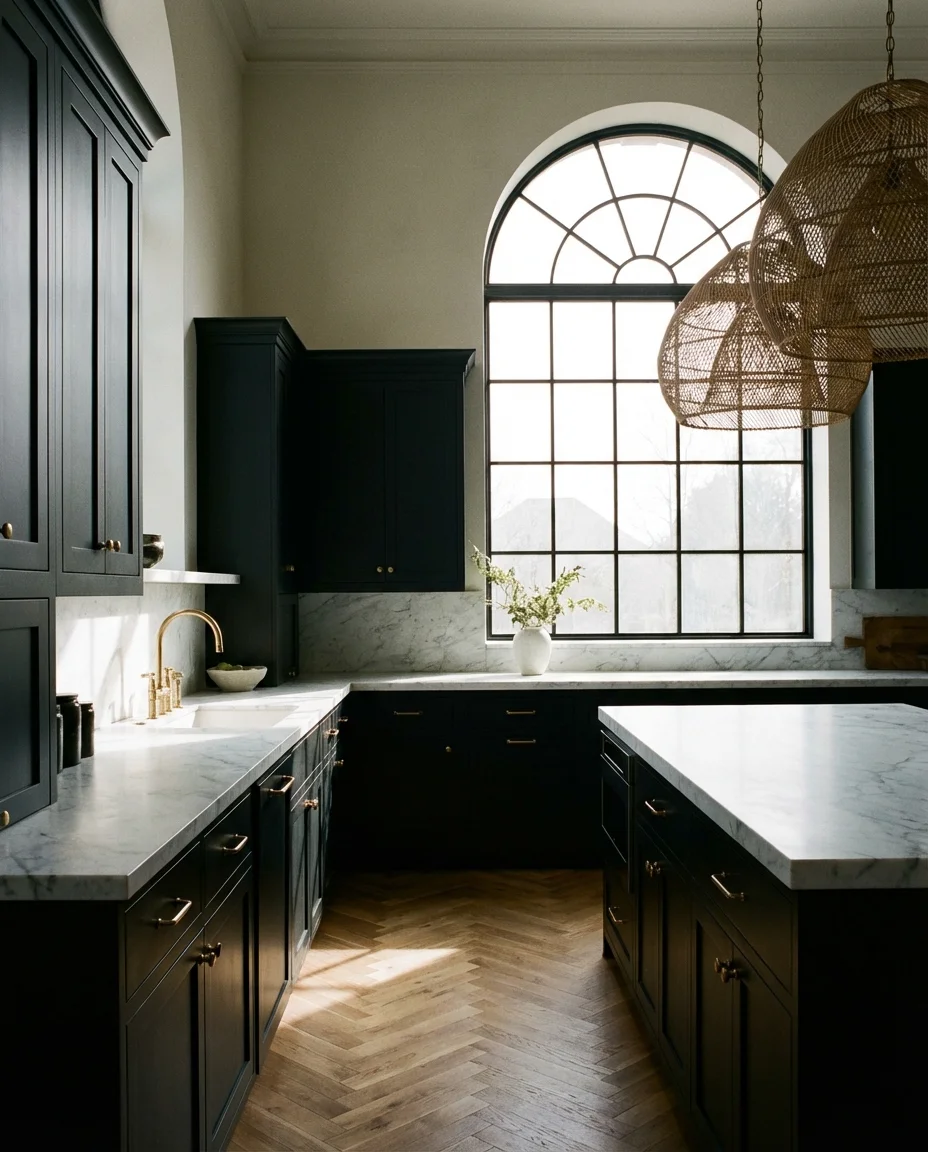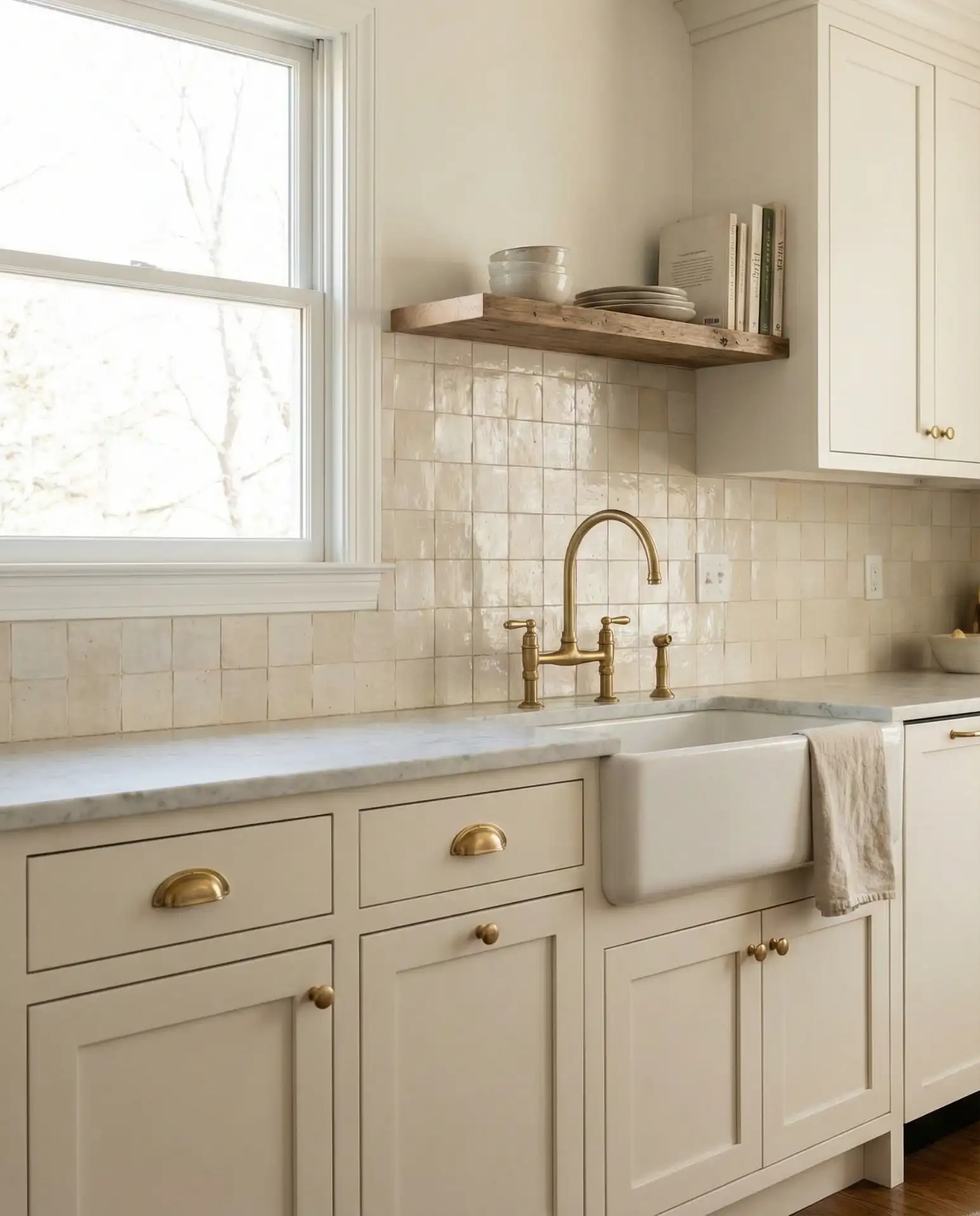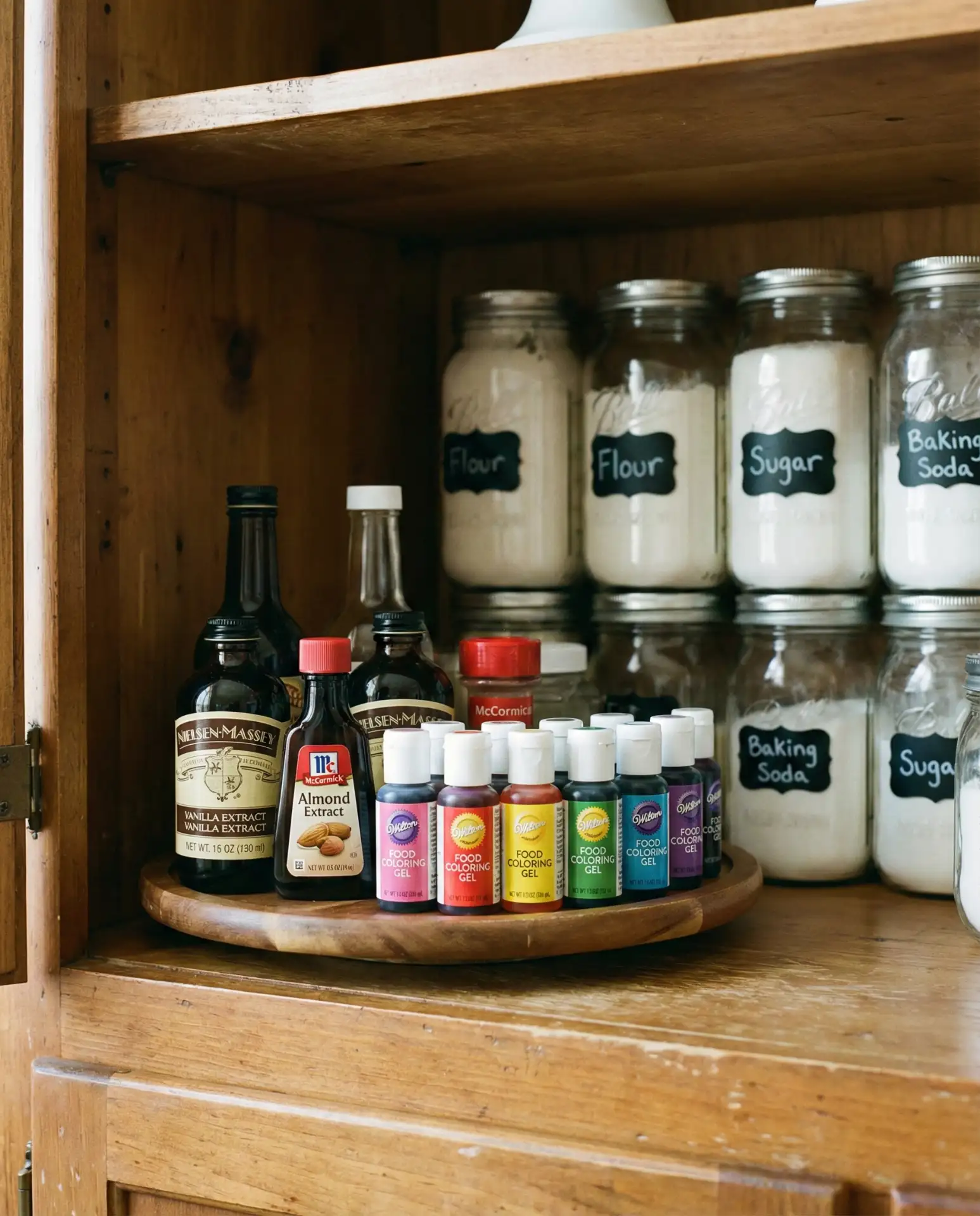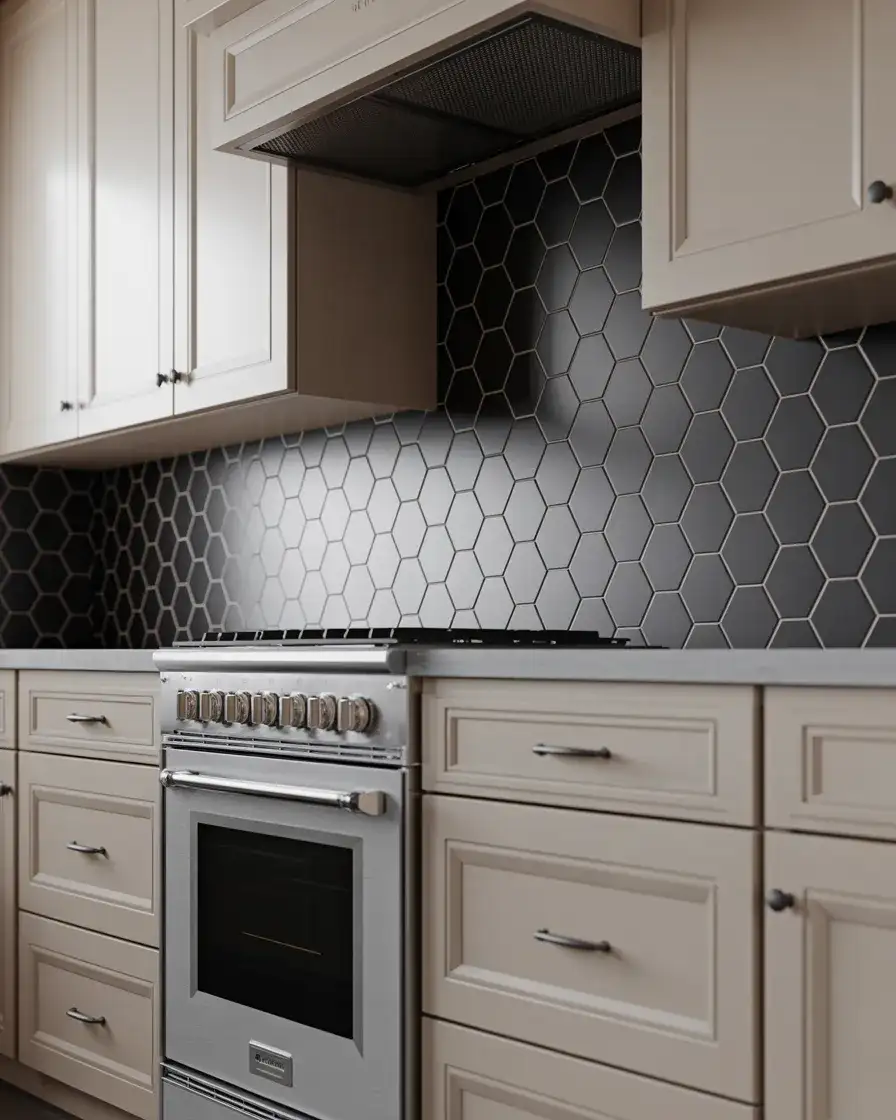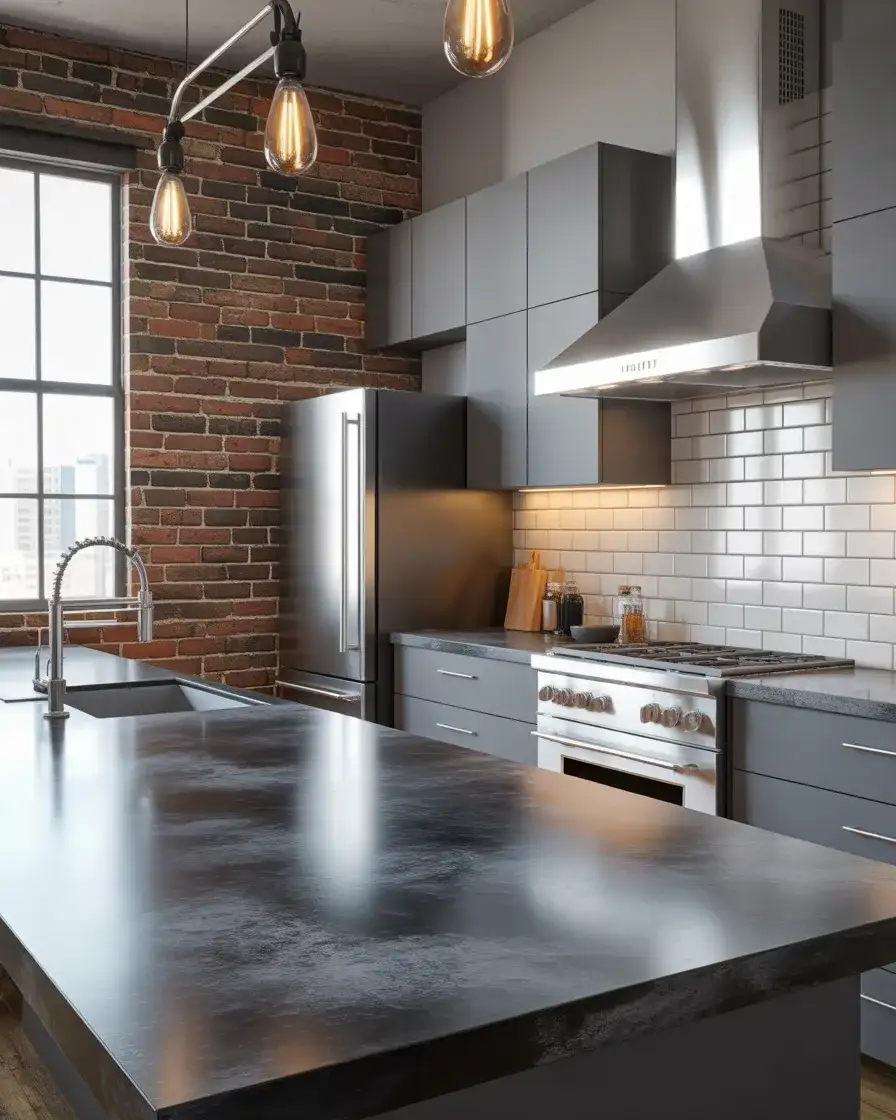
White kitchens aren’t going anywhere—in fact, they’re having a serious moment right now. As we move into 2026, designers are reimagining the all-white kitchen with richer textures, warmer accents, and more personality than ever before. Whether you’re drawn to sleek minimalism or cozy farmhouse charm, there’s a version of this look made for your home. Americans are flocking to Pinterest in droves searching for fresh takes on this classic palette, and this guide brings together 22 of the most inspiring, livable, and downright beautiful white kitchen ideas you’ll want to save—and actually use.
1. White Cabinets with Black Hardware
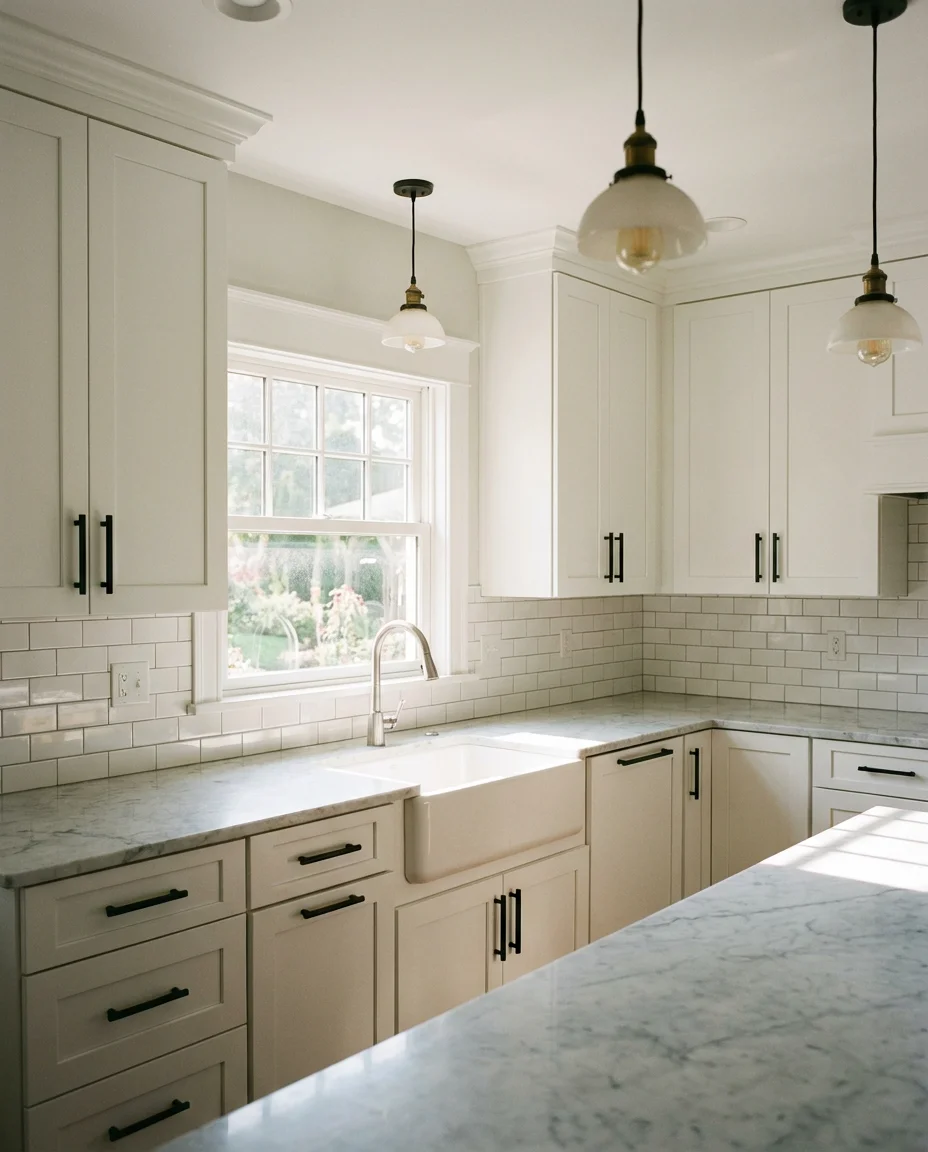
There’s a reason white cabinets paired with black hardware keep topping every designer’s mood board. The contrast is sharp, modern, and effortlessly sophisticated—two-tone tension that makes the whole kitchen feel intentional. This look works beautifully in everything from a renovated Brooklyn brownstone to a sprawling open-plan home in the suburbs. The hardware does the heavy lifting: matte black pulls and knobs read as jewelry against crisp white shaker fronts, giving the space an elevated edge without a full overhaul.
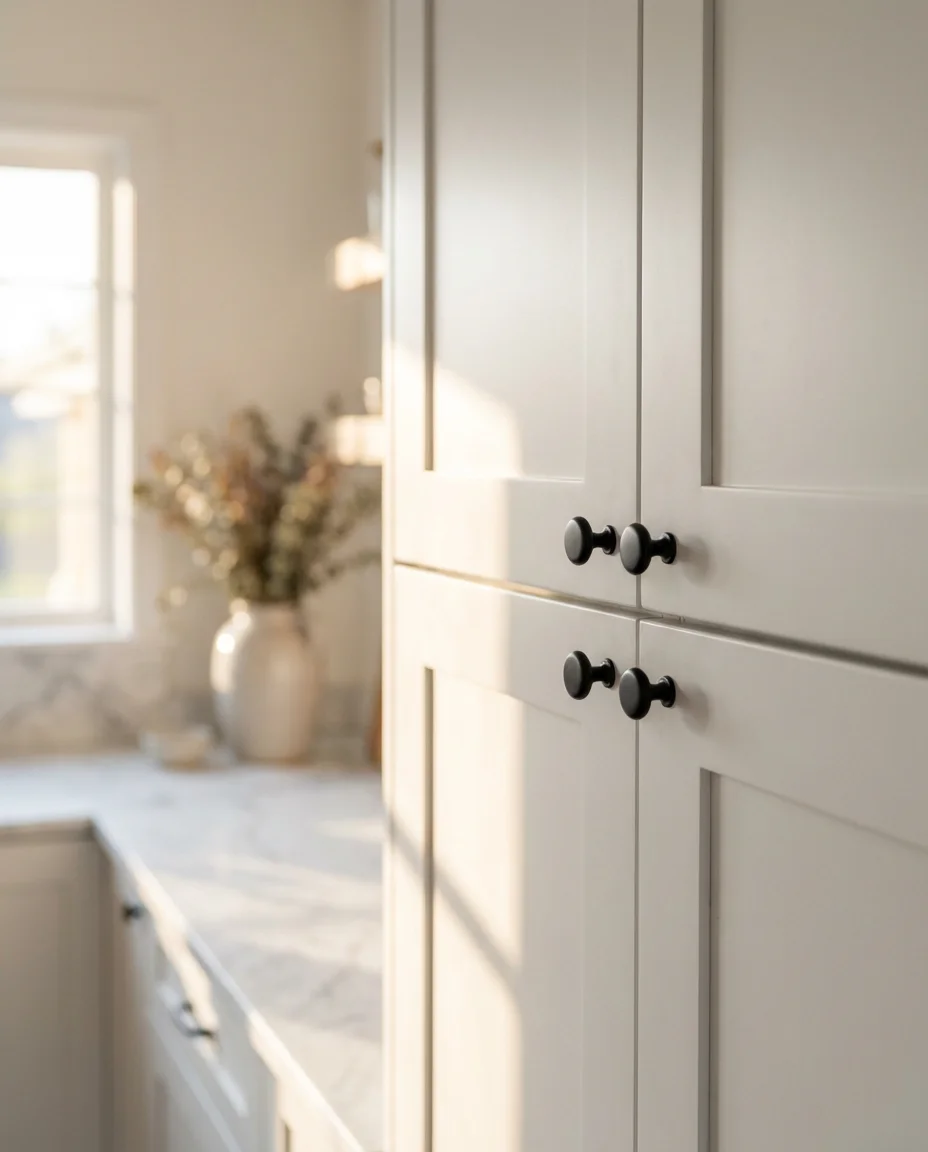
One of the most common mistakes people make with this combination is going too chrome or too mixed-metal. Committing fully to matte black—on faucets, cabinet hardware, and even light fixtures—keeps the palette coherent and avoids that “couldn’t decide” energy. If you already have stainless appliances, a brushed black finish bridges the gap better than polished. Don’t forget: consistency across every metal in the room is what separates a Pinterest-worthy kitchen from a well-intentioned one.
2. White and Wood Kitchen Island
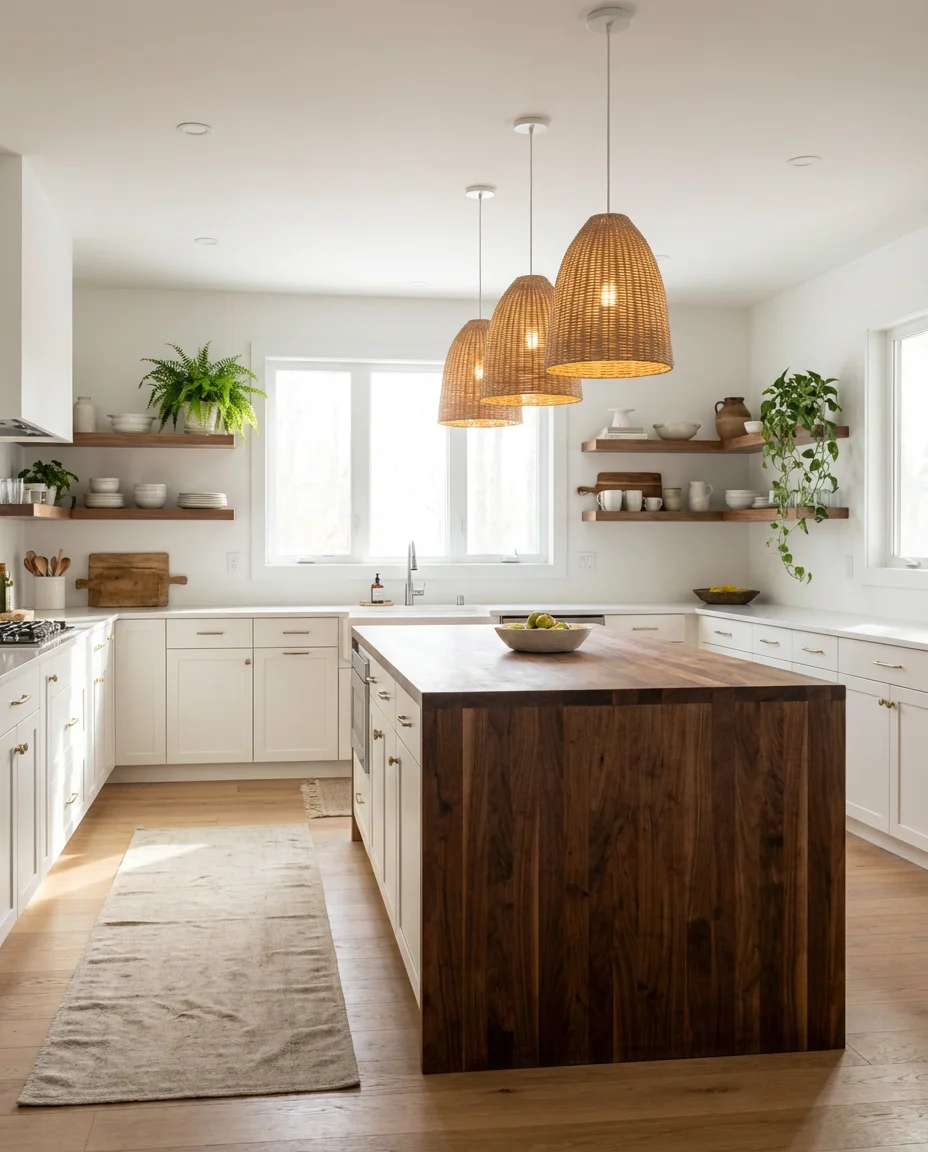
Introducing a wood island into an otherwise white kitchen is one of the smartest moves in modern interior design. It adds warmth, breaks up potential starkness, and gives the room a focal point that feels both natural and curated. Walnut and white is arguably the most coveted pairing right now—the rich chocolate grain against crisp white cabinetry creates that luxurious-but-livable contrast that shows up on every design account worth following. Even lighter woods like maple or ash bring a Scandinavian softness that feels very right for 2026.
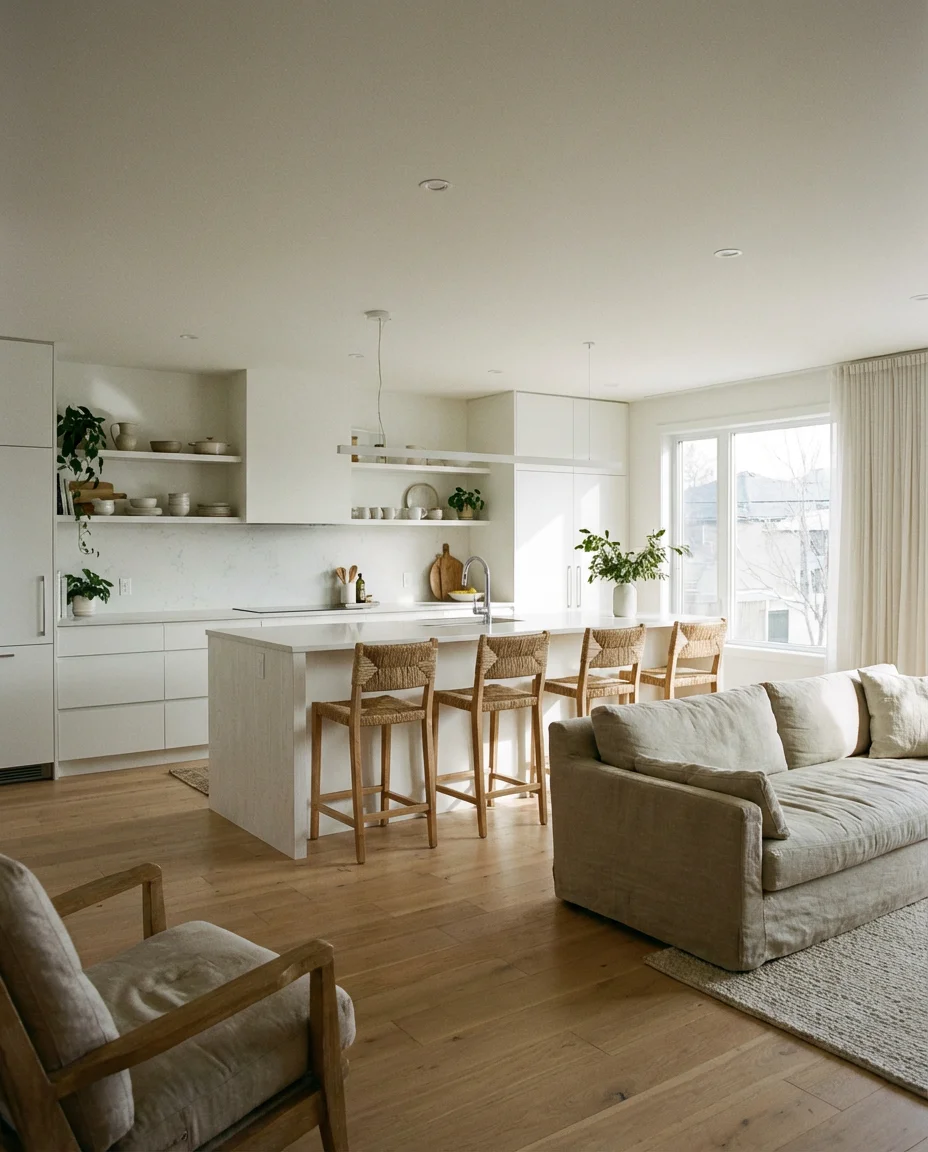
This combination works best in kitchens with enough square footage for the island to breathe—ideally at least 42 inches of clearance on each side. In smaller spaces, a butcher block top on white base cabinets achieves the same warm contrast without dominating the room. A Seattle homeowner who made this swap told a design blogger it was the single change that made her kitchen feel “finally finished.” The wood grounds the white, making the whole room feel less like a showroom and more like a home.
3. White Kitchen with Green Backsplash
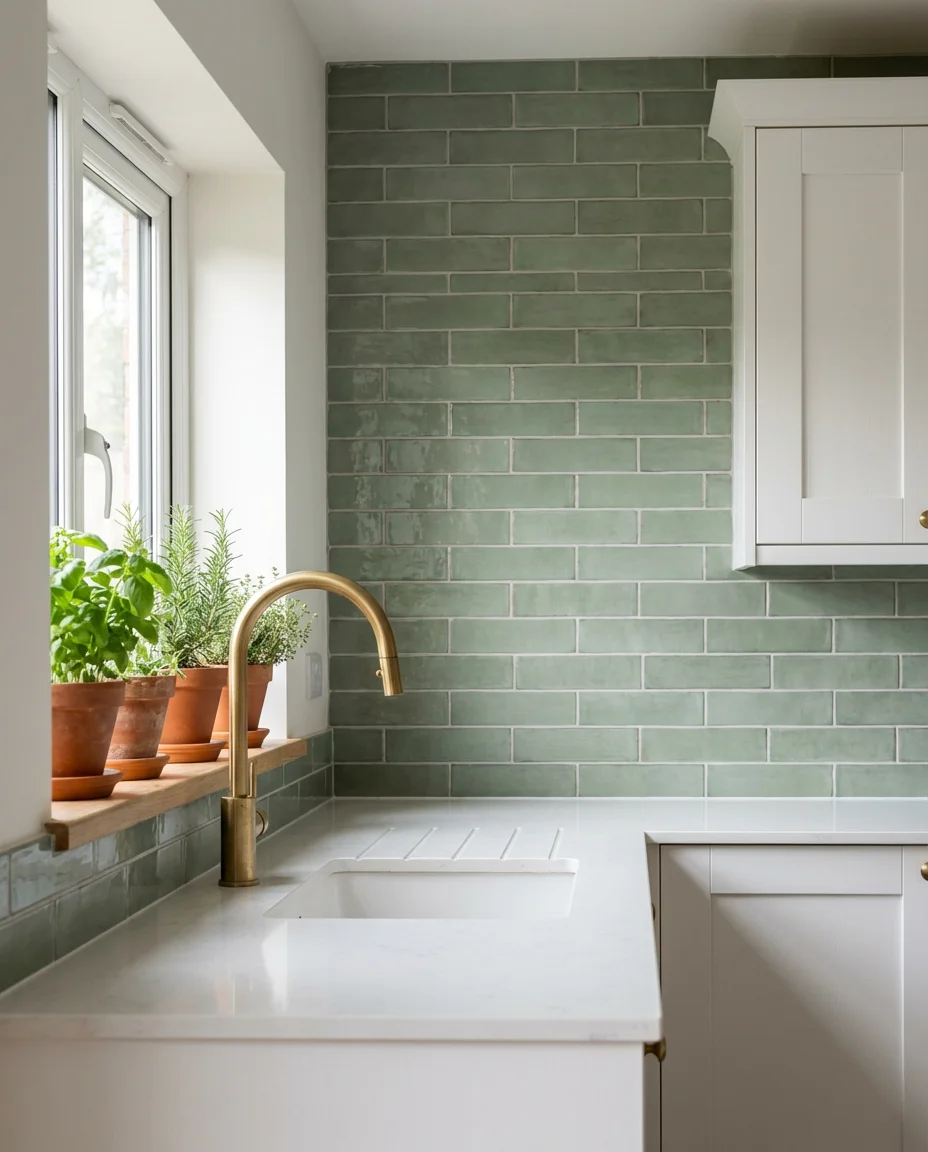
If you’ve been scrolling Pinterest lately, you’ve seen this one everywhere—and for very good reason. A green backsplash against white cabinetry is fresh, unexpected, and surprisingly easy to live with. Sage green glazed tiles in particular have become a signature look of the mid-2020s kitchen, offering just enough color to make the space feel alive without overwhelming the eye. It’s the antidote to the kitchen that plays it too safe—a single bold decision that transforms the whole room’s personality.
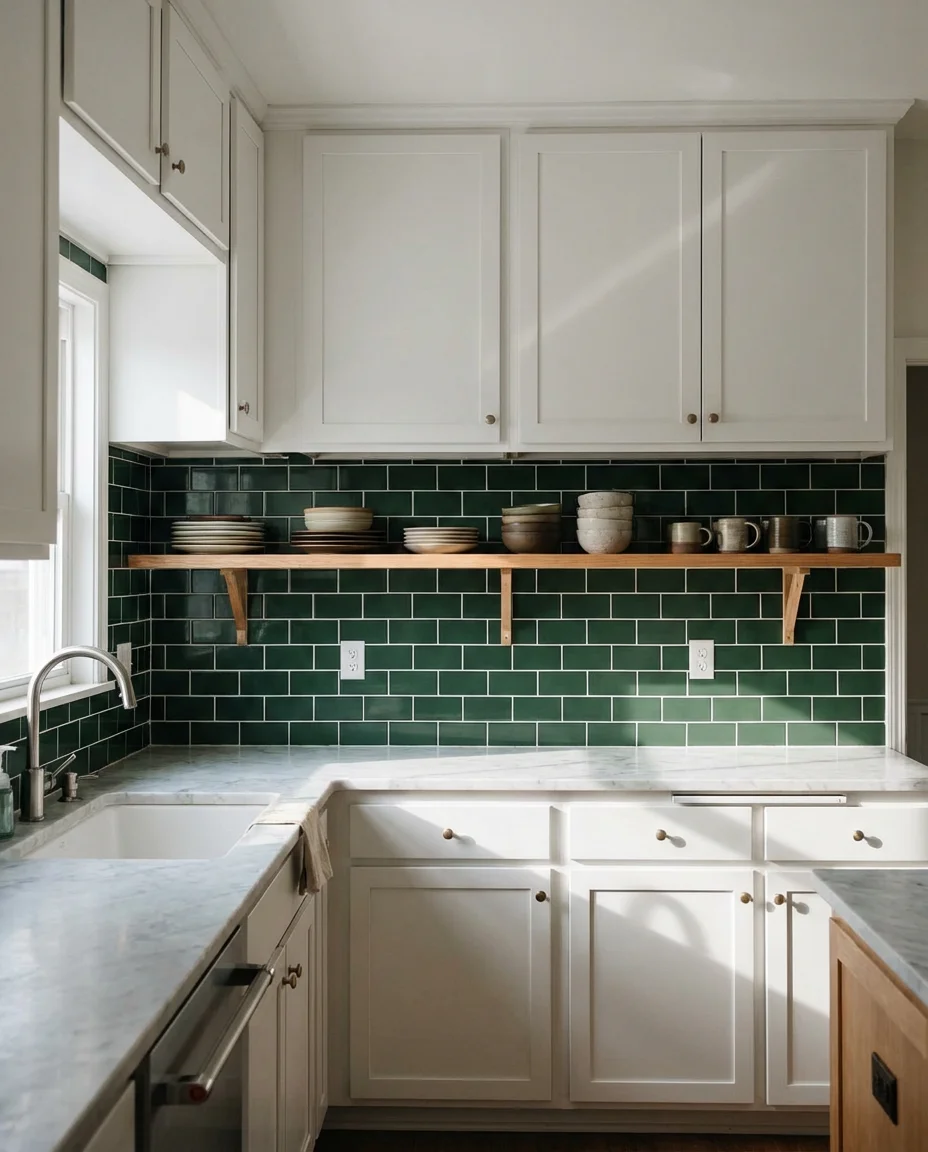
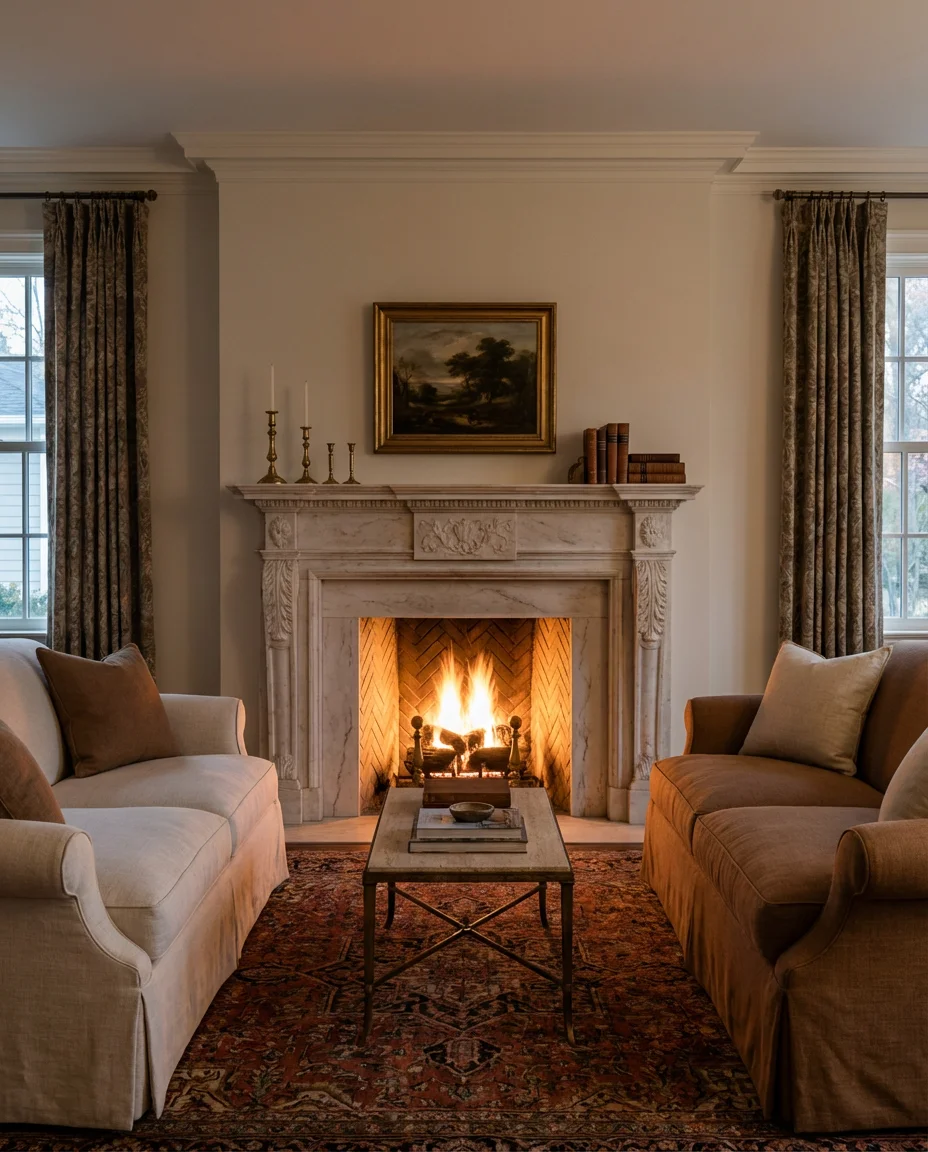
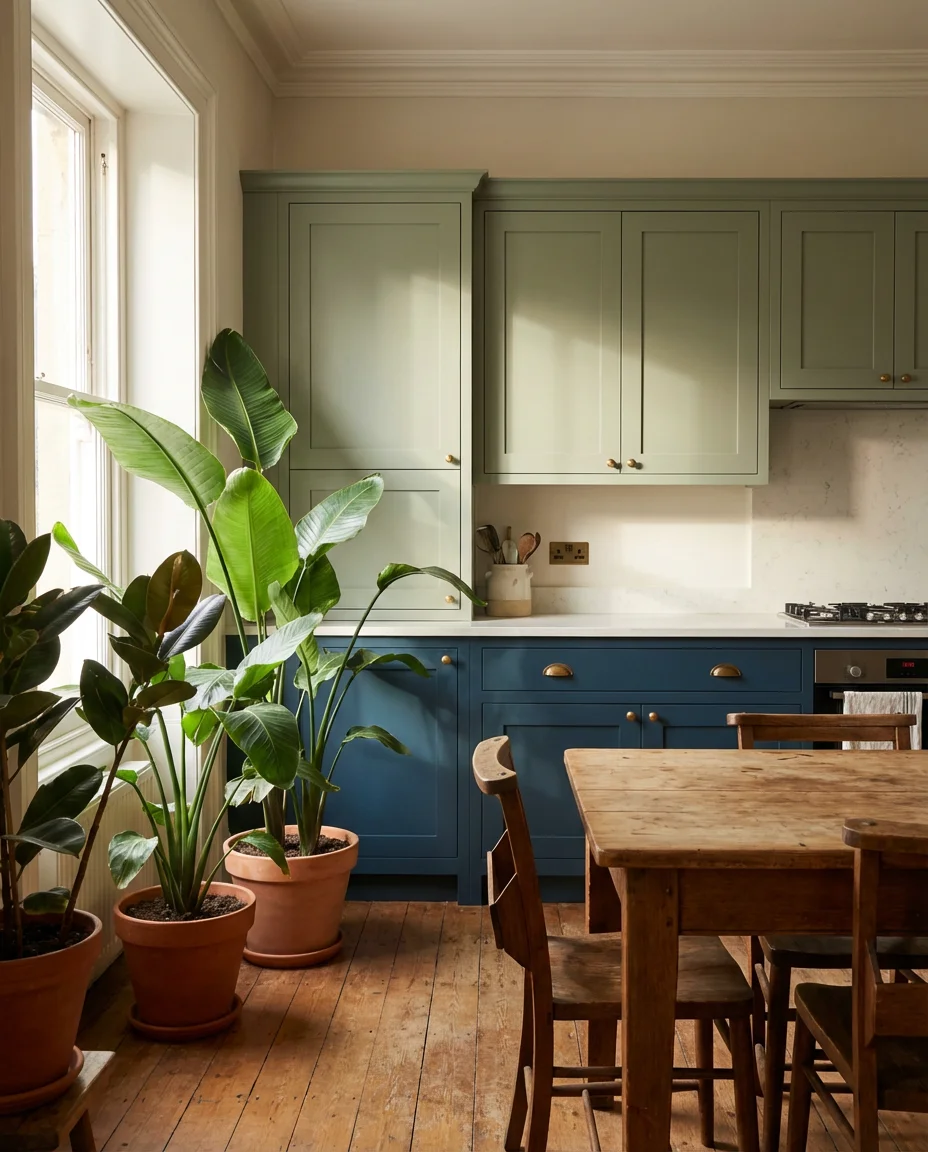
This look works best in kitchens with natural light—the green reads differently under warm vs. cool bulbs, so test a sample tile in your actual space before committing. Darker greens like hunter or forest tend to photograph beautifully but can feel heavier in north-facing kitchens with limited daylight. Sage, mint, and celadon are more forgiving across light conditions. Pair with warm brass or matte gold hardware for a cohesive finish that feels both earthy and refined.
4. White and Gray Kitchen with Marble Countertops
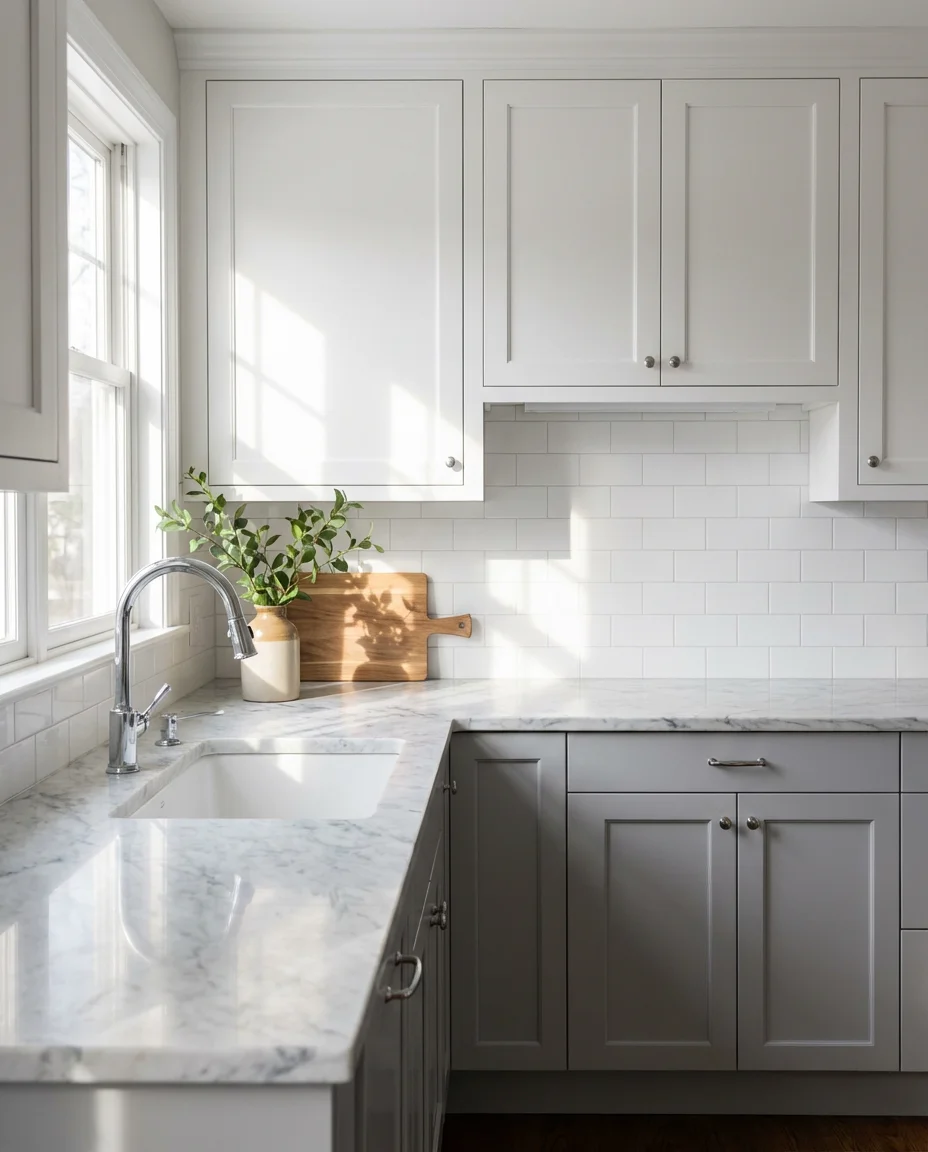
The gray and white kitchen has long been a staple of American home design, and it’s not hard to see why. The combination is timeless, visually calm, and endlessly versatile. When you add countertops in Carrara or Calacatta marble—or a convincing quartz lookalike—the whole palette clicks into place with an understated elegance that works as well in a Manhattan apartment as a Charlotte colonial. Gray lower cabinets grounded beneath white uppers give the space dimension without the drama of a bold color.
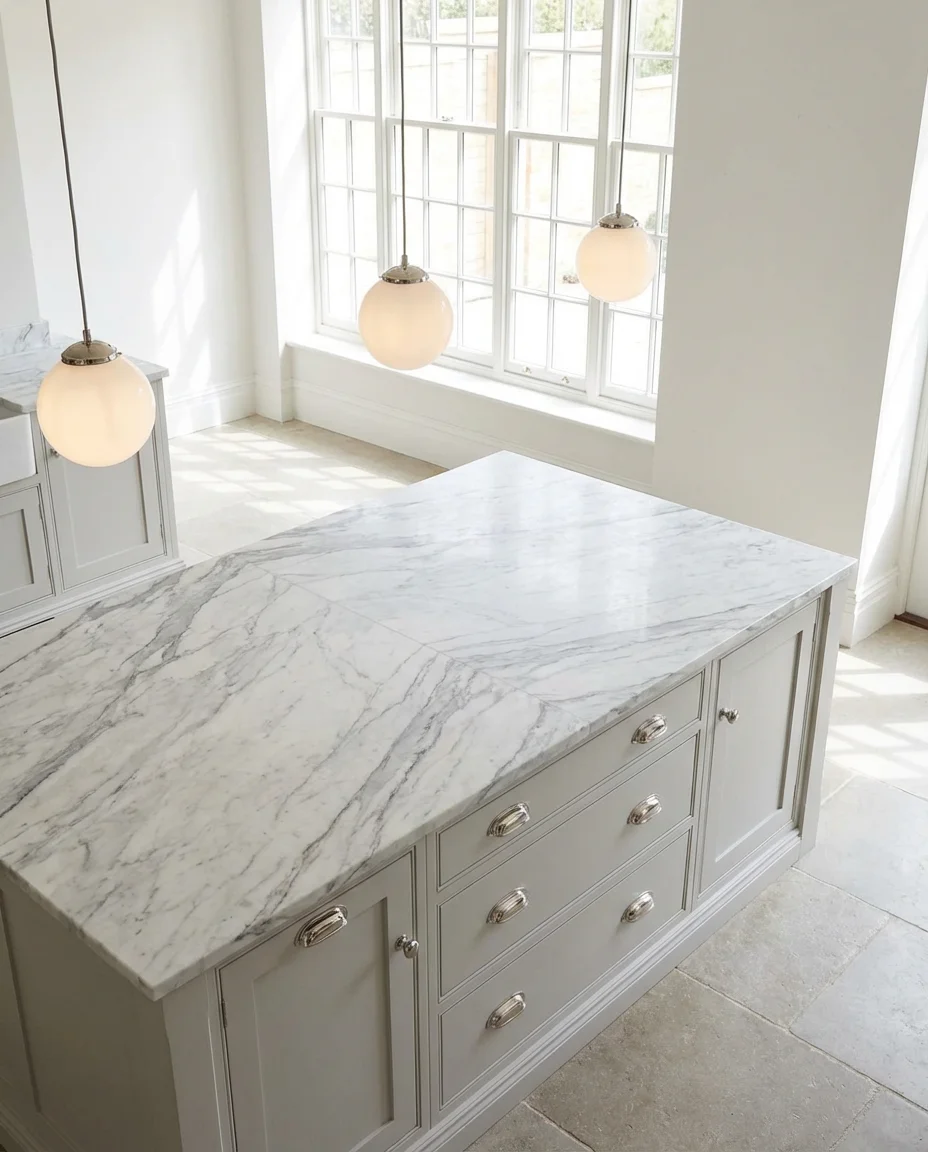
From a budget perspective, this is one of the more accessible interpretations of the luxe white kitchen. You can achieve a nearly identical look with a high-quality quartz countertop that mimics marble veining at roughly half the cost and with zero sealing maintenance. Brands like Silestone and Caesarstone have marble-look collections that genuinely fool the eye in photographs. For renters or first-time buyers doing a partial renovation, pairing gray-painted lower cabinets with a marble-effect quartz top is a smart, cost-conscious way to get the whole look.
5. Classic White Kitchen with Subway Tile
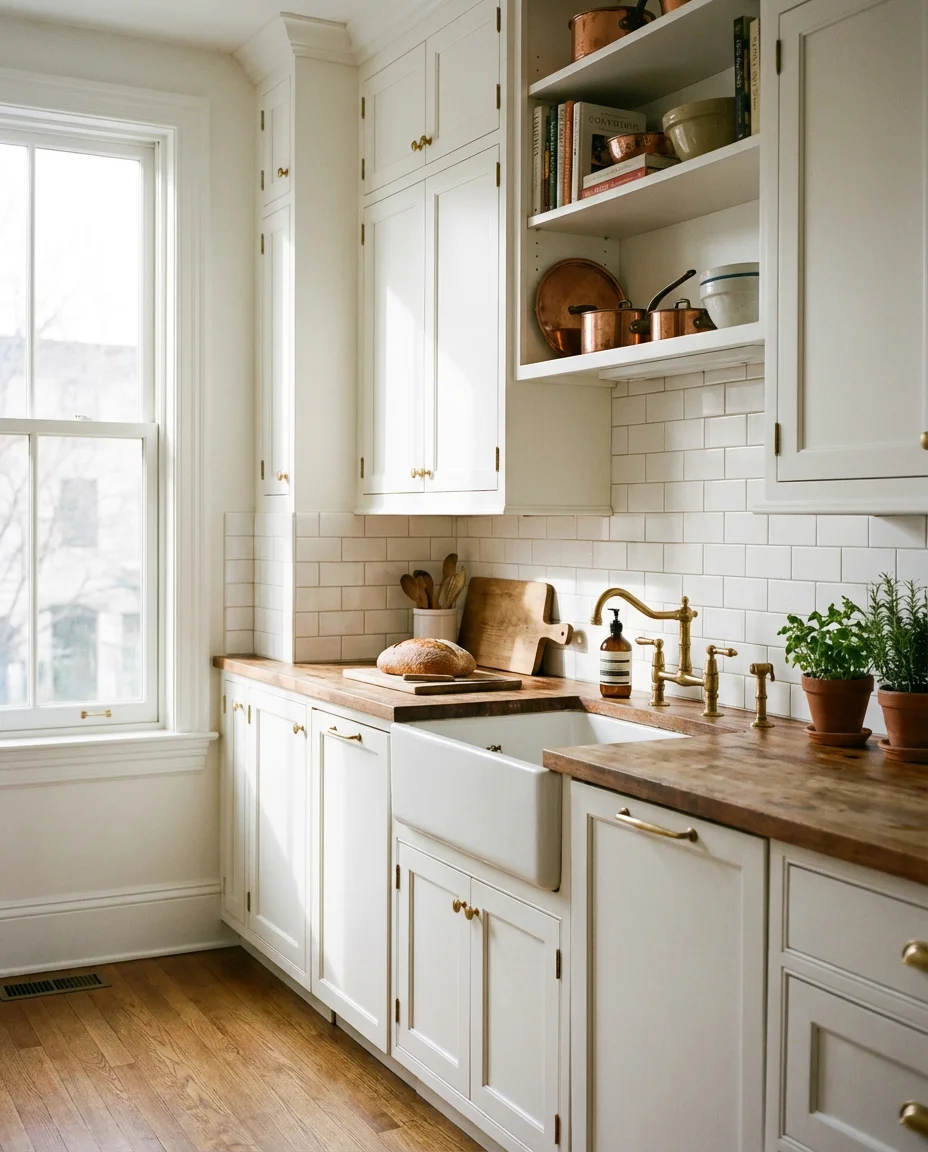
The classic white kitchen with subway tile is the little black dress of home design—it never truly goes out of style, and it always looks right. In 2026, we’re seeing a fresh evolution of this timeless setup: wider format tiles, handmade crackle glazes, and unexpected grout colors (think soft putty, charcoal, and even blush) are giving this familiar format a distinctly modern edge. Backsplash ideas in this vein are among the most-saved on Pinterest right now, signaling that classic doesn’t have to mean boring.
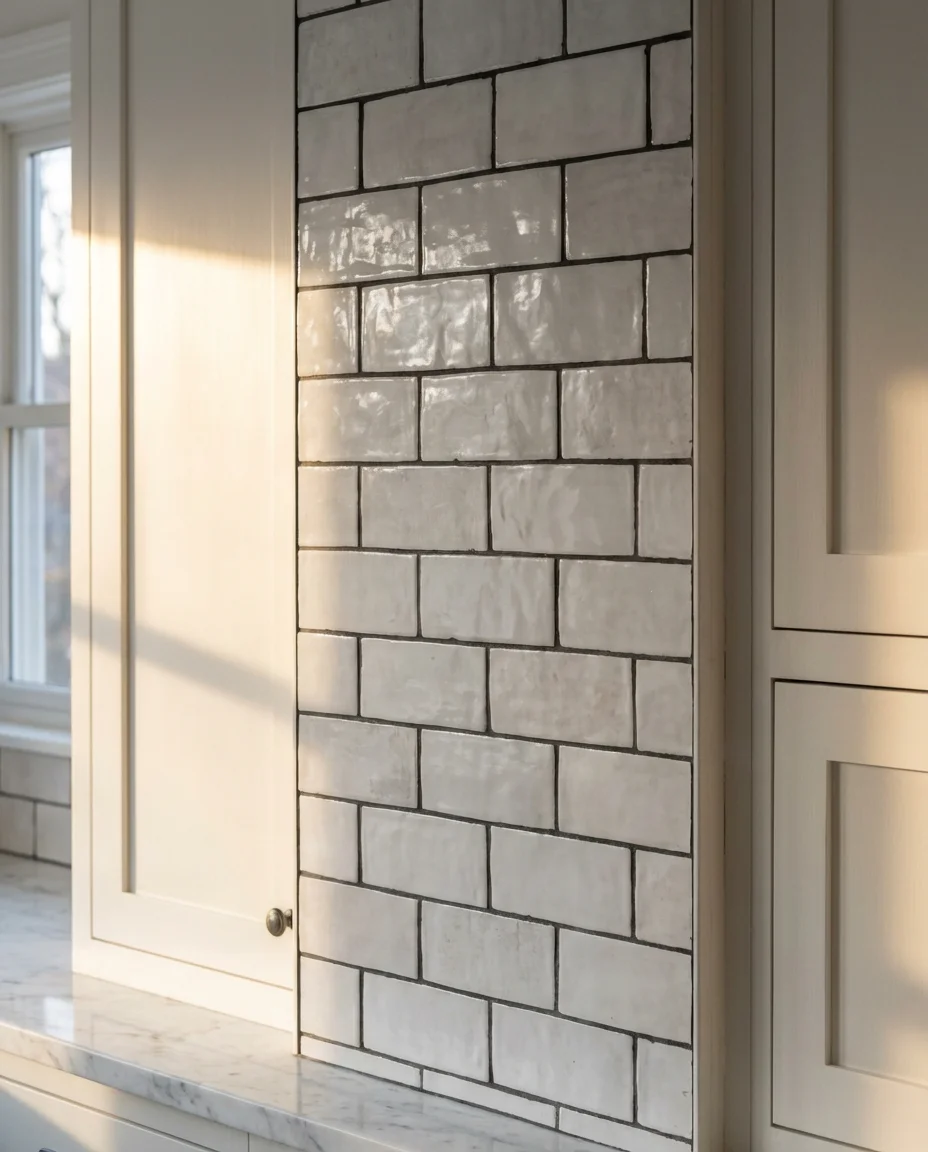
Interior designers frequently recommend the classic white subway tile as the safest resale choice you can make in a kitchen remodel—it appeals to the widest range of buyers and never dates a home the way trendy materials sometimes can. A Nashville realtor noted in an industry roundup that white subway tile in the kitchen was one of the top three features that helped move listings faster in competitive markets. If you’re renovating with resale in mind, this is your most reliable foundation.
6. White and Blue Kitchen
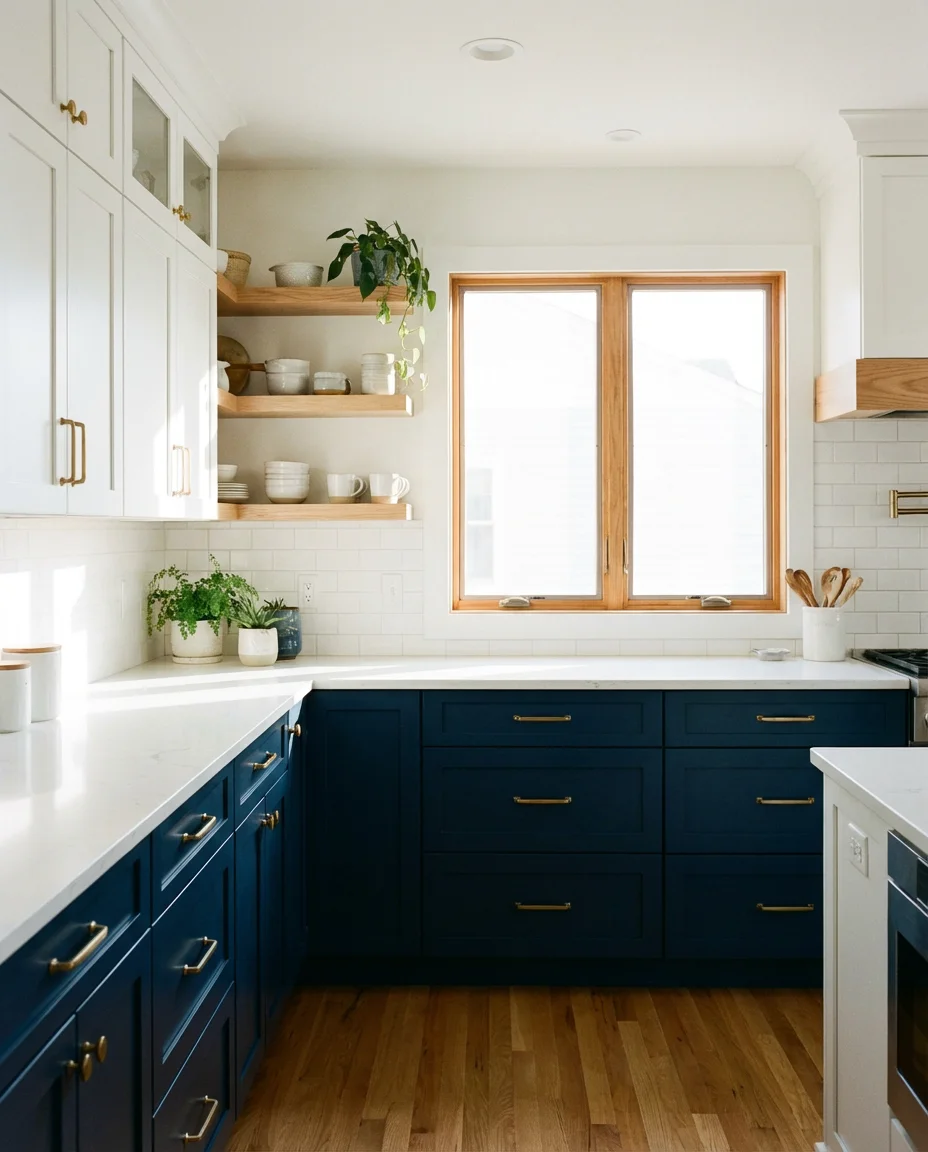
Few color combinations carry the ease and optimism of blue and white—and in kitchens, it translates beautifully into a space that feels both polished and welcoming. Whether you lean into a coastal New England aesthetic or prefer something more contemporary, a navy and white kitchen has that rare ability to feel collected rather than decorated. Navy lower cabinets beneath white uppers are particularly striking: they anchor the room visually while keeping the overall feel light and fresh above the countertop line.
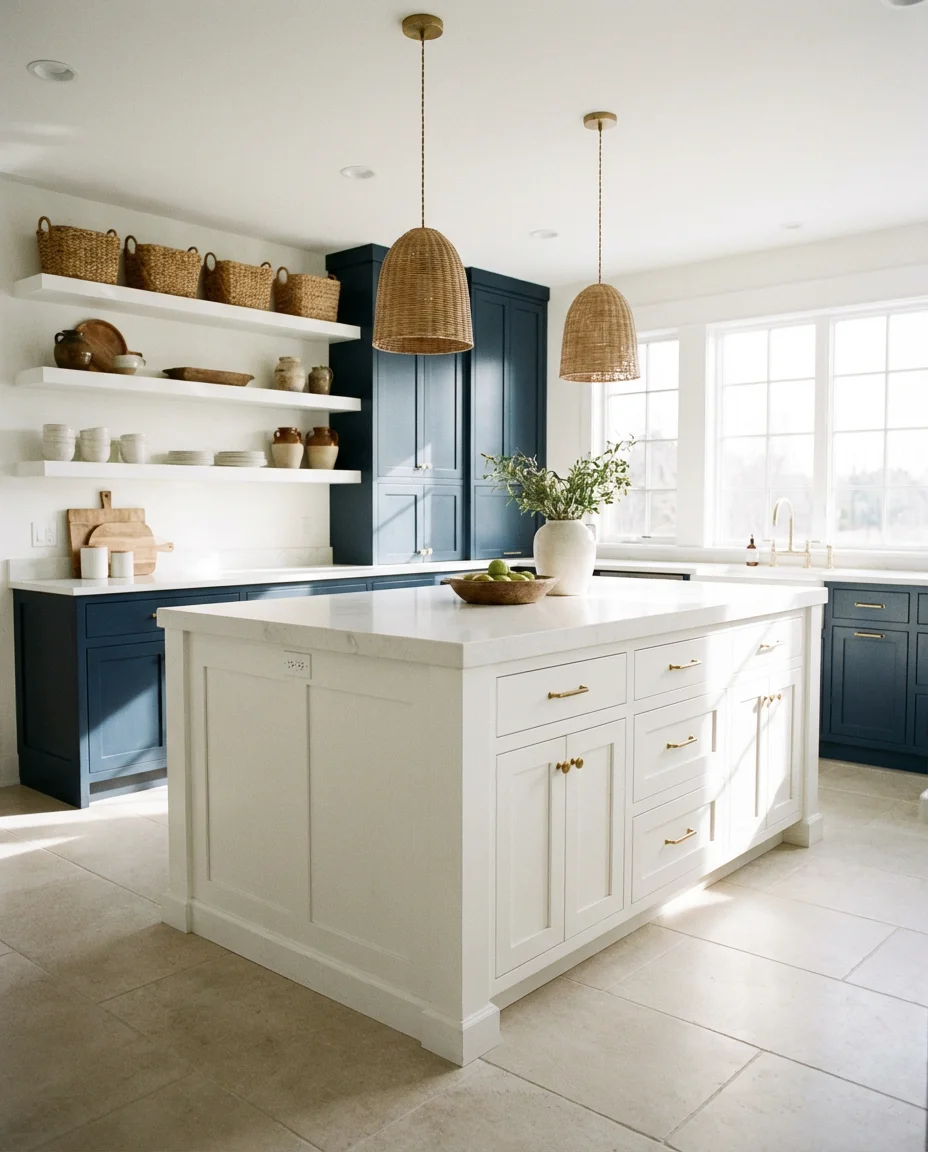
This look has a strong regional following along the East Coast and in coastal communities across the South and Pacific Northwest—anywhere with a connection to water and natural light. But it translates just as easily to landlocked homes when you keep the palette clean and the accessories minimal. Think white ceramic dishes on open shelves, linen towels, and a simple herb garden on the windowsill. The blue grounds the space without making it feel themed, which is the real trick to pulling it off well.
7. White Kitchen with Black Countertops
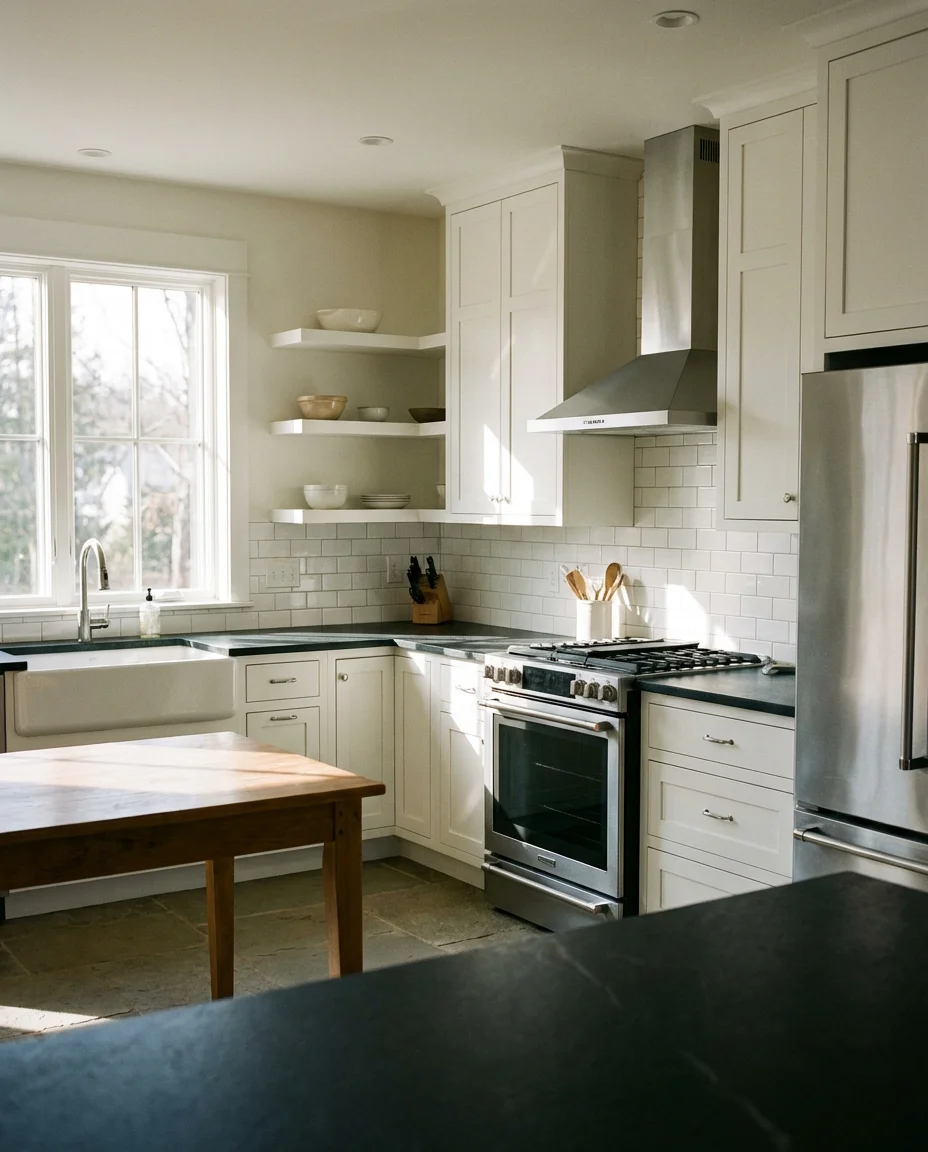
For those who want maximum drama with minimal color, white cabinets paired with a black counter deliver an almost architectural impact. This is the version of the white kitchen that skews boldest—the countertop becomes a visual runway that draws the eye across the room. Honed matte black granite, black soapstone, and leathered quartzite all bring their own texture and character to this pairing. It reads as incredibly sophisticated in person, especially when natural light catches the surface variation in the stone.
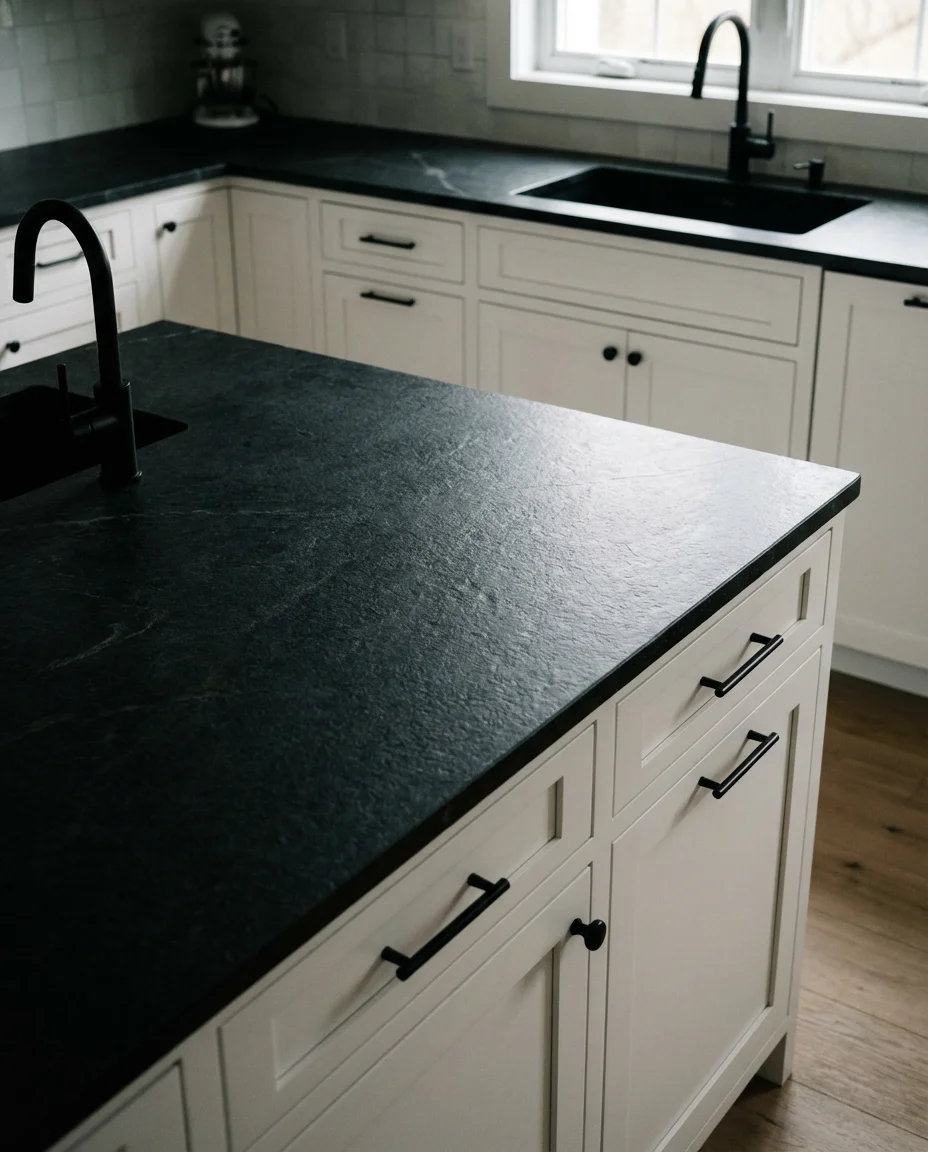
One practical reality with dark countertops: water spots and dust show far more readily than on lighter surfaces. If you have young kids or a busy household, a leathered or honed finish—rather than polished—is much more forgiving day-to-day. A Chicago designer who frequently specs this combination recommends quartz over natural stone for families, since it requires zero sealing and stands up to the chaos of a real working kitchen without losing its richness.
8. White and Oak Kitchen
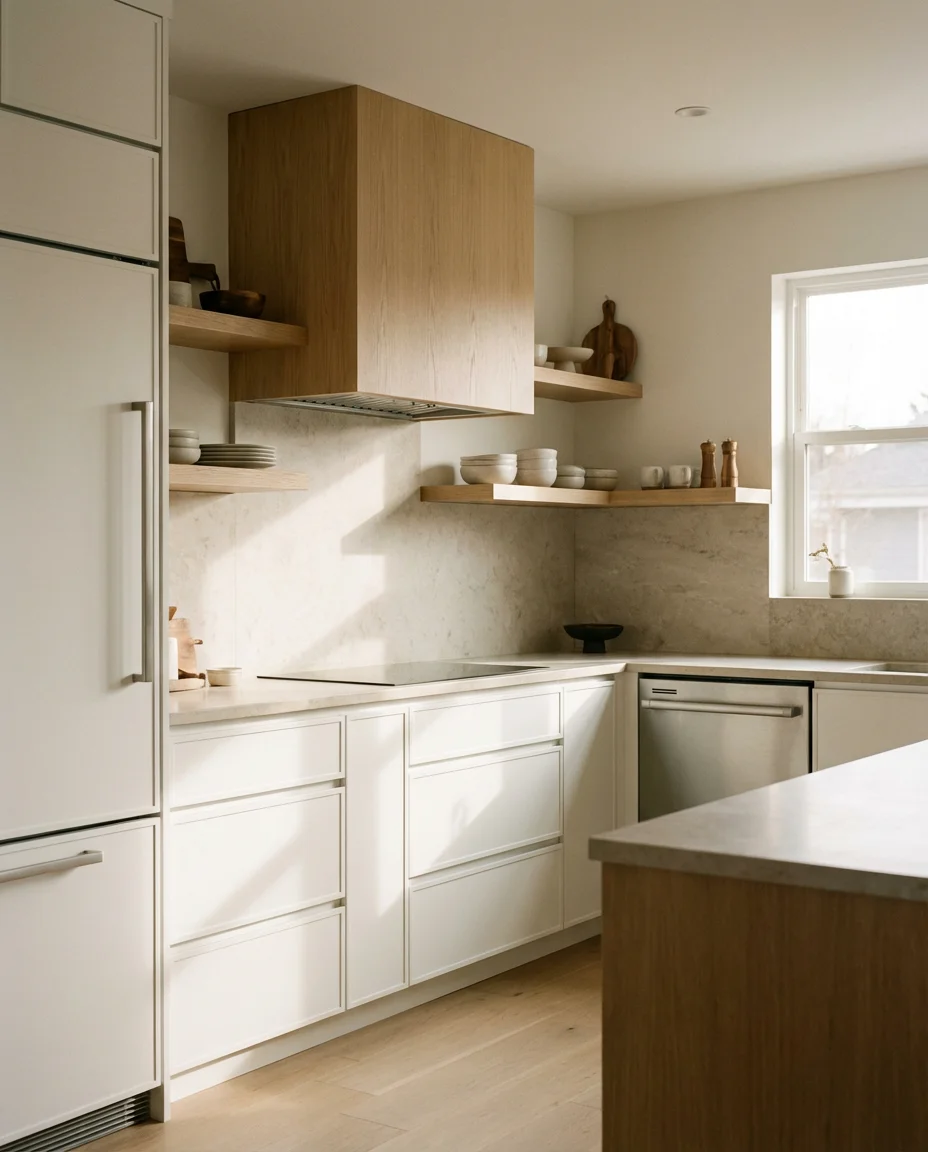
The oak and white kitchen is having a full renaissance, and it looks nothing like your grandmother’s honey-oak cabinets from decades past. Today’s version leans into the natural grain of white oak specifically—its tight, linear pattern reads as refined and modern rather than rustic. Paired with white painted cabinets or flat-panel lacquered fronts, white oak accents in open shelving, islands, or hood surrounds bring a warmth and earthiness that pure white spaces sometimes lack. Wood and white together soften the kitchen without muddying it.
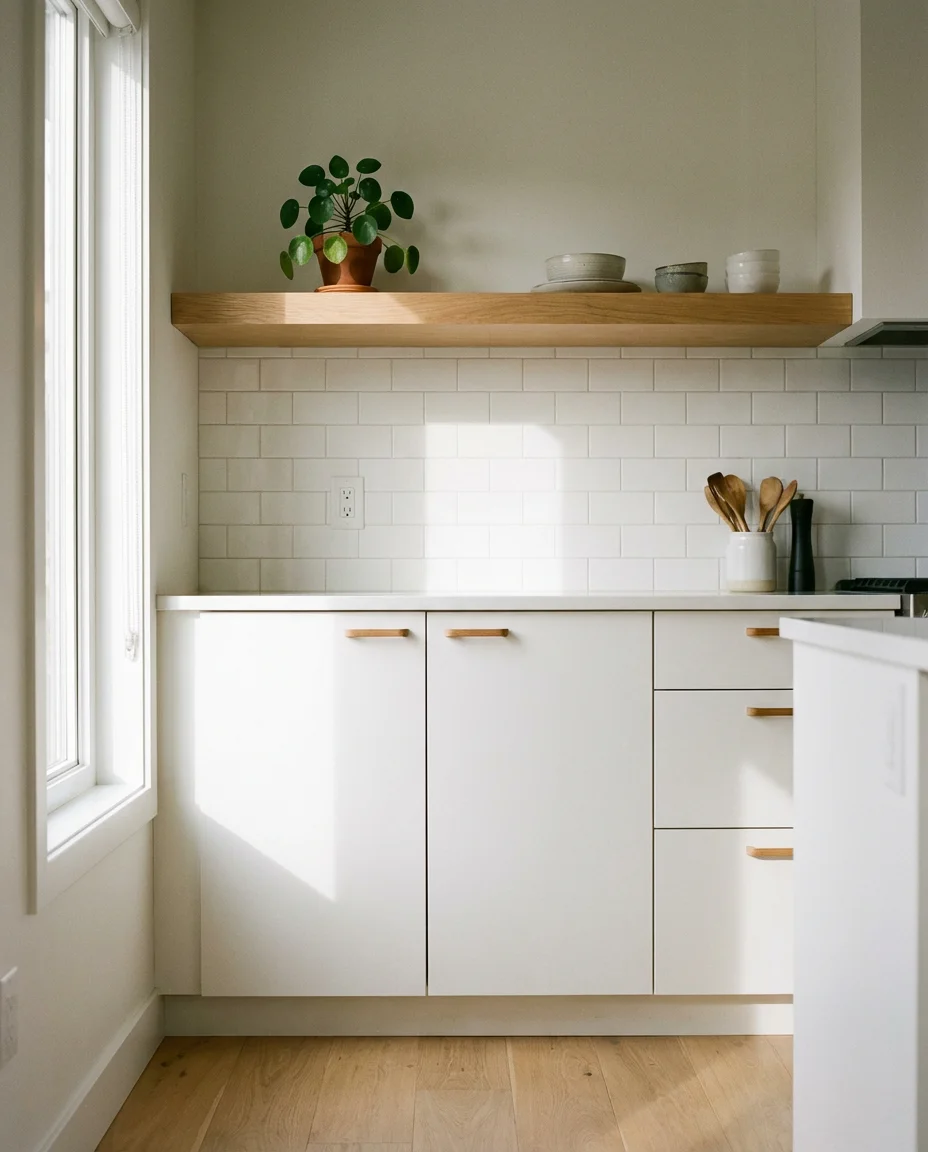
White oak weathers beautifully over time—it develops a subtle patina that makes the kitchen feel more lived-in and personal rather than less. This is the combination that design-savvy buyers in the Pacific Northwest and the upper Midwest are particularly drawn to right now, where the connection to natural materials is deeply embedded in local aesthetics. If you’re renovating a mid-century home, white oak open shelving can bridge the gap between vintage architecture and contemporary finishes seamlessly.
9. All-White Kitchen with Textured Walls
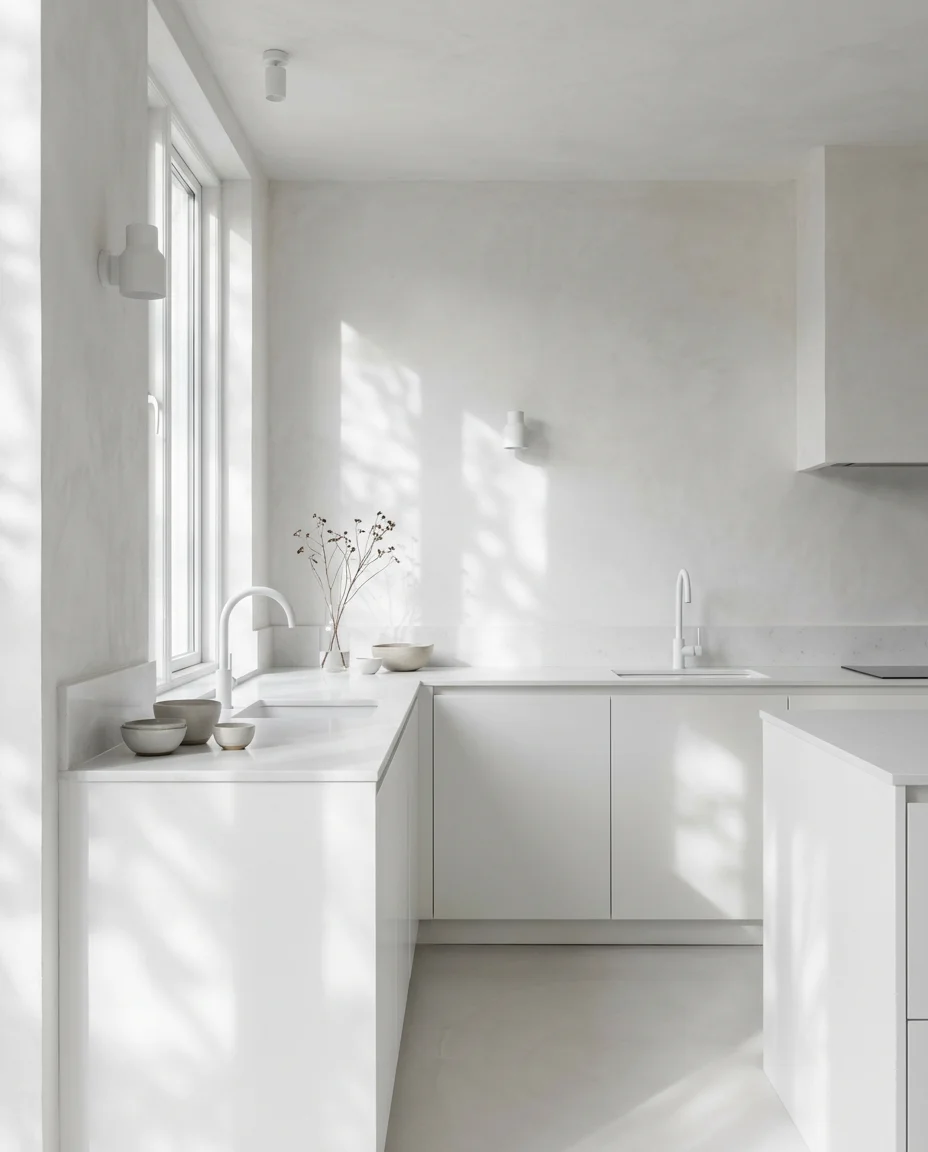
The all-white kitchen gets an interesting update when texture takes center stage. Instead of relying on color contrast, this approach plays with surface variation: limewash paint, textured plaster, or a dimensional tile create depth and visual interest without introducing a single new hue. The result is a kitchen that feels monastic and serene, almost gallery-like, where the architecture and quality of materials do all the talking. This is the version of the white kitchen that design purists and minimalists return to again and again.
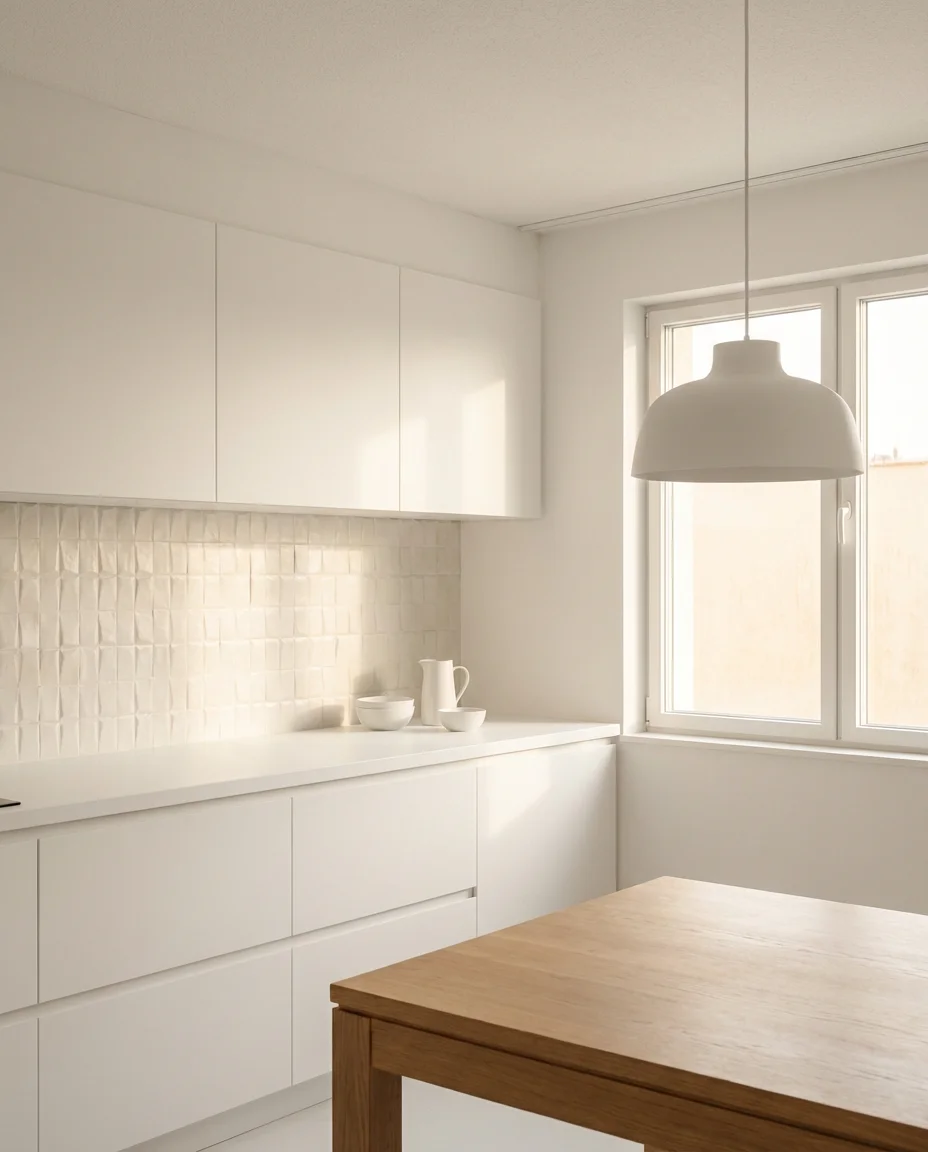
Where this works best: high-ceilinged kitchens in loft-style spaces, renovated Victorian homes with original plaster walls, or any kitchen where the architecture itself has strong bones. The all-white textured approach lets the space breathe and invites the eye to explore subtlety rather than bold contrast. If you’re worried it might feel cold, a butcher block cutting board, a woven jute rug, and a small bowl of seasonal fruit are all it takes to bring warmth and life into the room.
10. White and Beige Kitchen
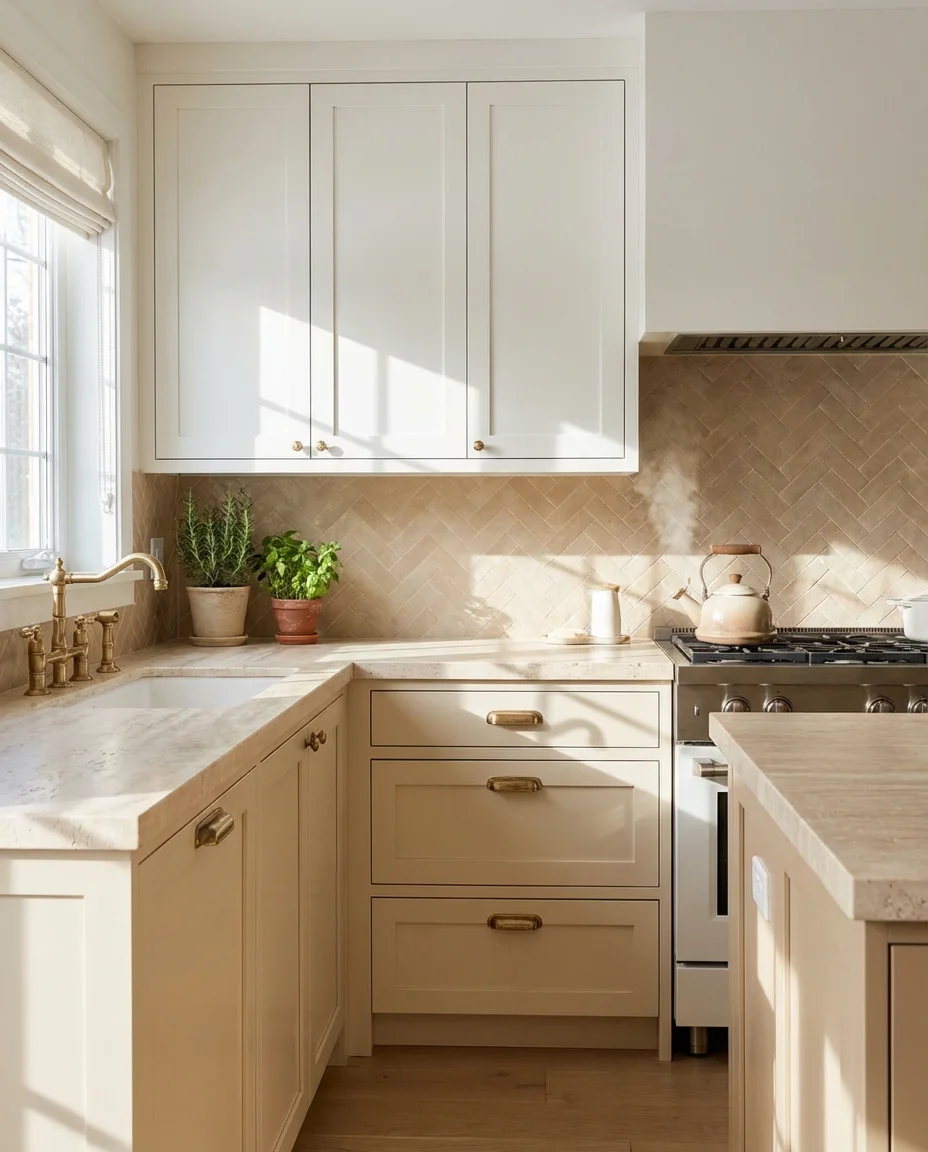
Off-white and beige and white together create one of the most approachable, livable kitchen aesthetics of the moment. Where a stark white kitchen can feel intimidating, the addition of warm beige tones—in tile, stone, or cabinetry—softens the space and makes it feel genuinely cozy. Cream-toned lower cabinets beneath white uppers, limestone-look countertops, and warm travertine floor tiles all contribute to this palette’s quiet confidence. It’s a decidedly grown-up version of the white kitchen that doesn’t shout.
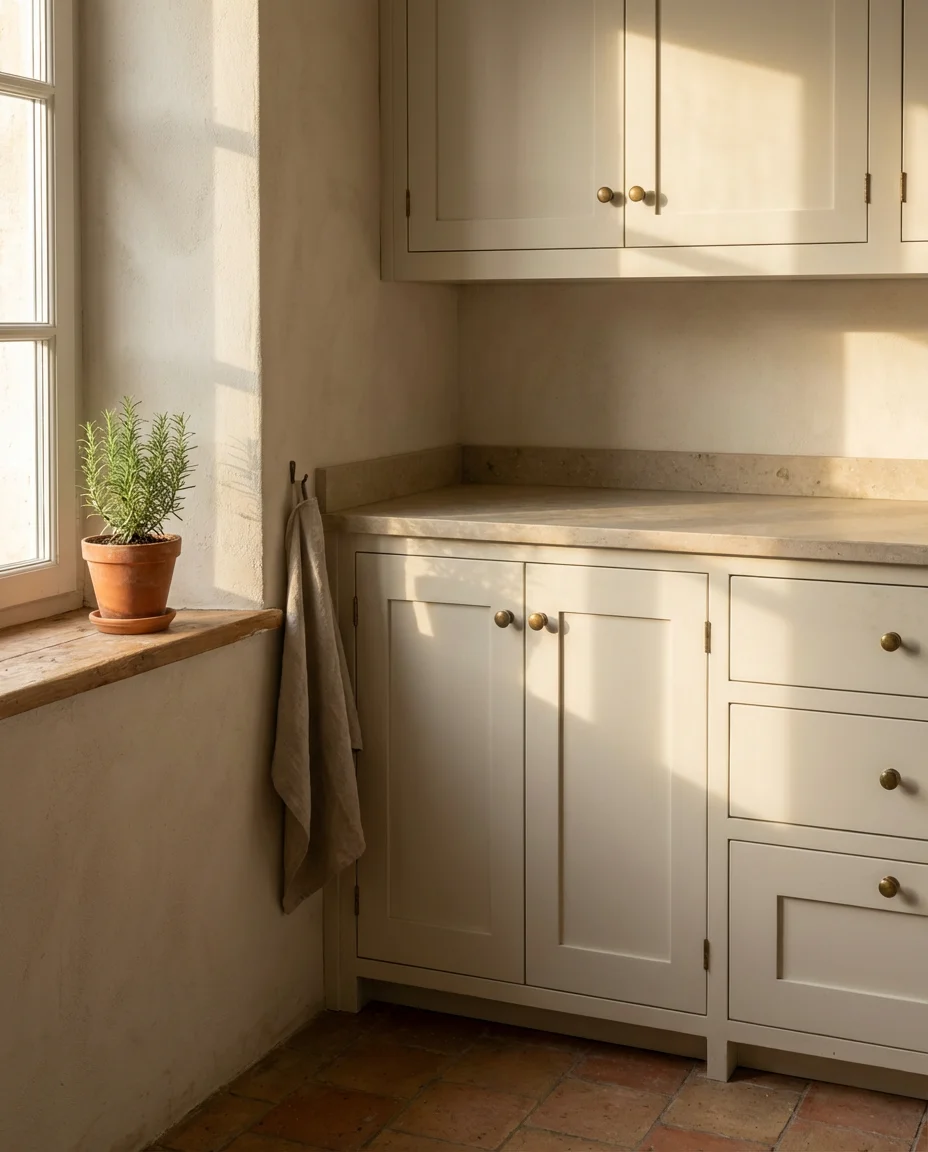
Real homeowners who commit to this palette often report that it photographs beautifully in every season—warm afternoon light makes it glow, while winter morning light gives it a silvery coolness that still looks intentional. It’s also a smart choice for kitchens that open into living or dining spaces with similar neutral tones, as it flows without requiring a sharp visual transition. The key is staying within a tight warm-neutral range—the moment cool grays sneak in, the cohesion breaks apart.
11. White Kitchen Cabinet Ideas with Open Shelving
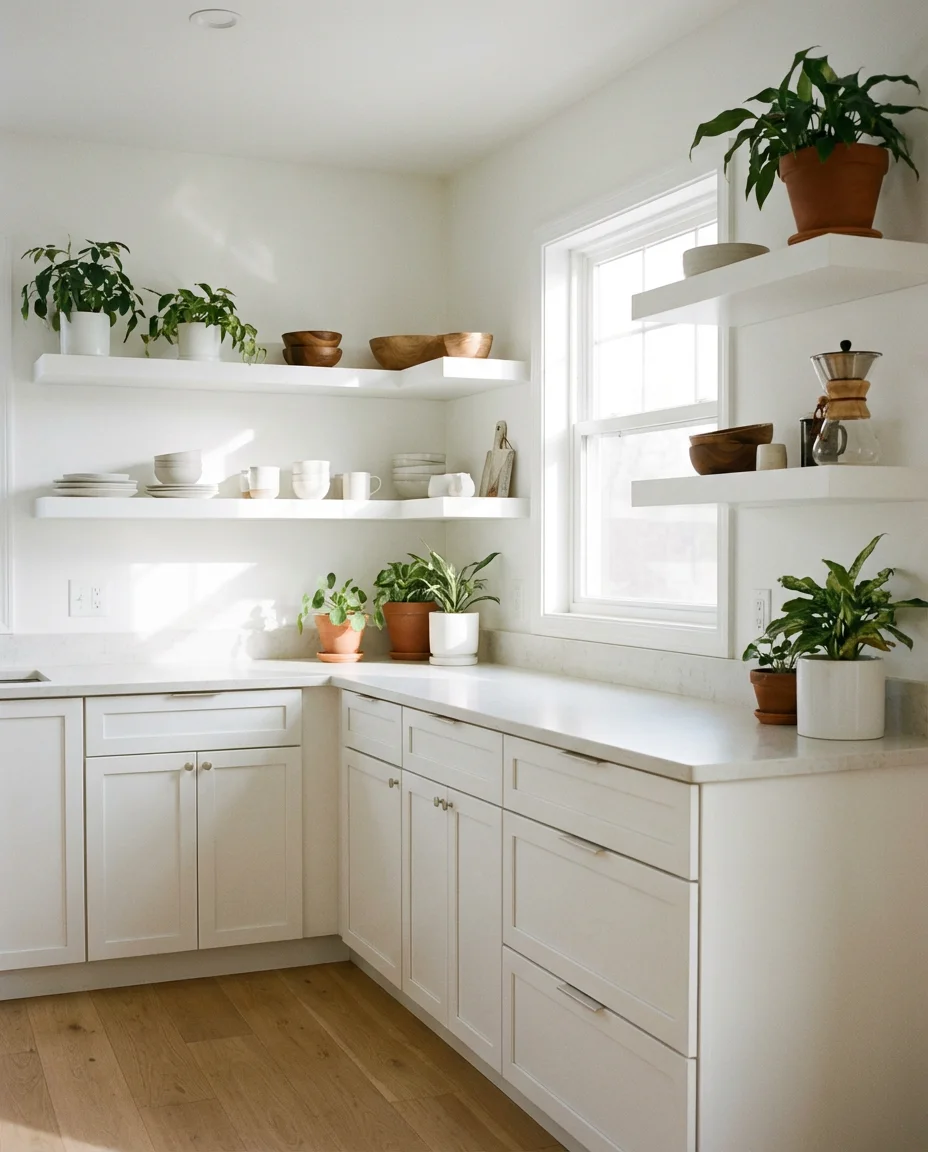
When it comes to cabinet ideas that genuinely change the feel of a kitchen, replacing a few upper cabinet runs with open shelving might be the single most impactful move you can make. White cabinets as a base give open shelving space to breathe—the wall behind becomes part of the design, and whatever you display takes on a curated, intentional quality. This approach is hugely popular in American kitchens right now, particularly among those who want their space to feel more like a living room and less like a utilitarian storage zone.
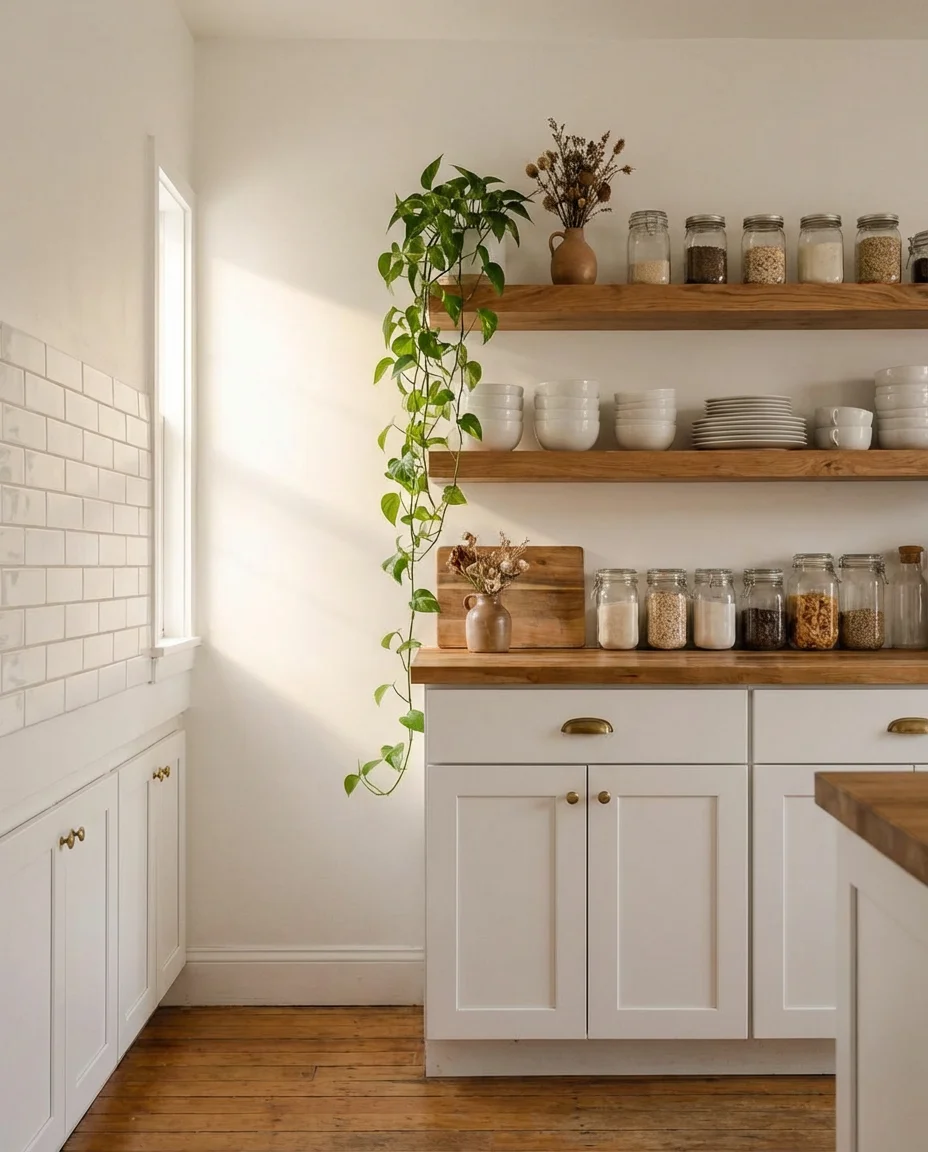
The honest caveat here: open shelving requires commitment to tidiness. Dust accumulates, and whatever is on display is always on display—including the chaos of a weeknight meal prep. The compromise many homeowners land on is mixing: keep closed cabinets for pantry items and everyday clutter, and reserve one or two open shelves for the things you actually want to show off. That hybrid approach gets you the visual lightness without the daily anxiety of maintaining a perfect shelfie.
12. White and Green Kitchen
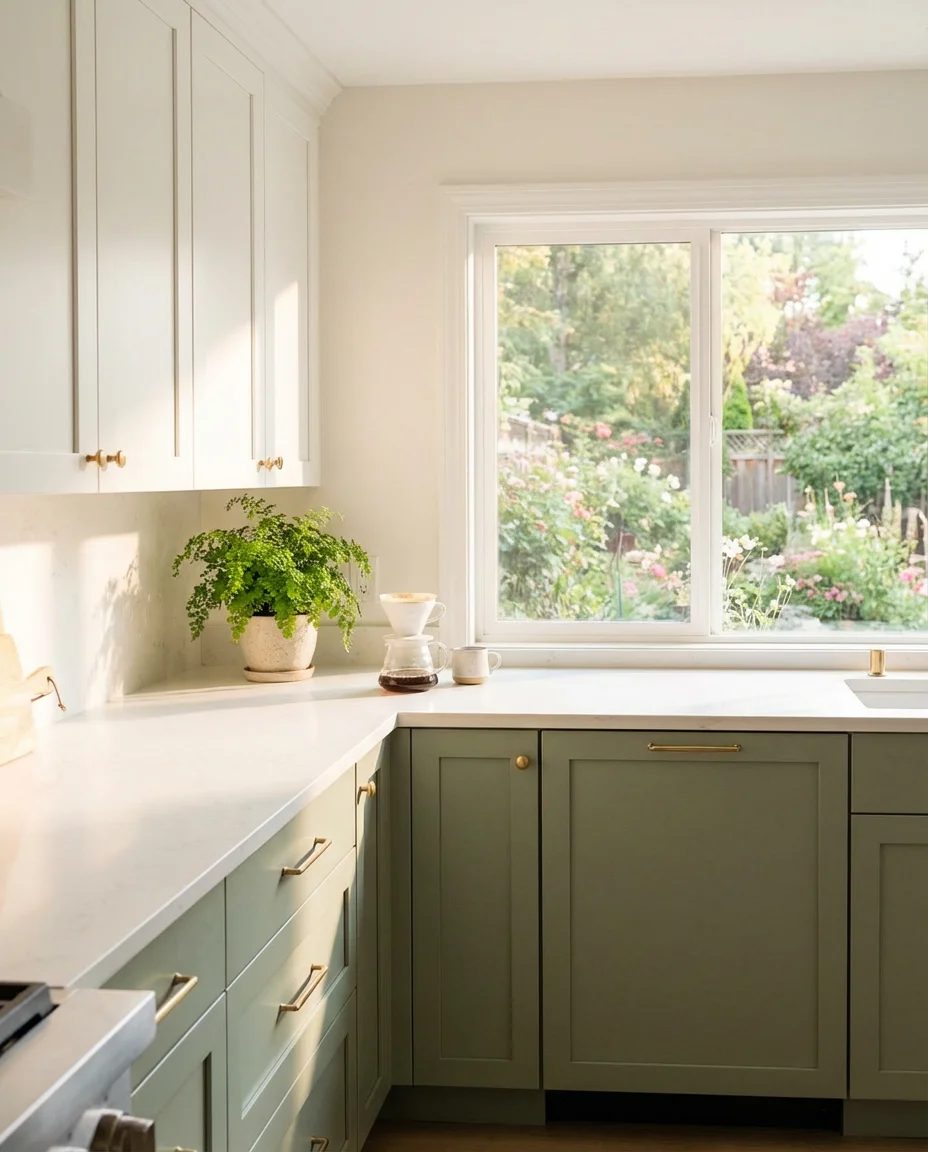
Green and white is the color story dominating kitchen renovations in 2026, and it’s easy to understand why. Green—in all its botanical variations—brings the outdoors inside in a way that no other color quite manages. Against white cabinetry, even a single green element (a painted island, a tiled backsplash, or painted lower cabinets) gives the kitchen a vitality and freshness that’s impossible to ignore. Sage green continues to lead the trend, but deeper tones like olive, juniper, and eucalyptus are gaining serious ground this year.
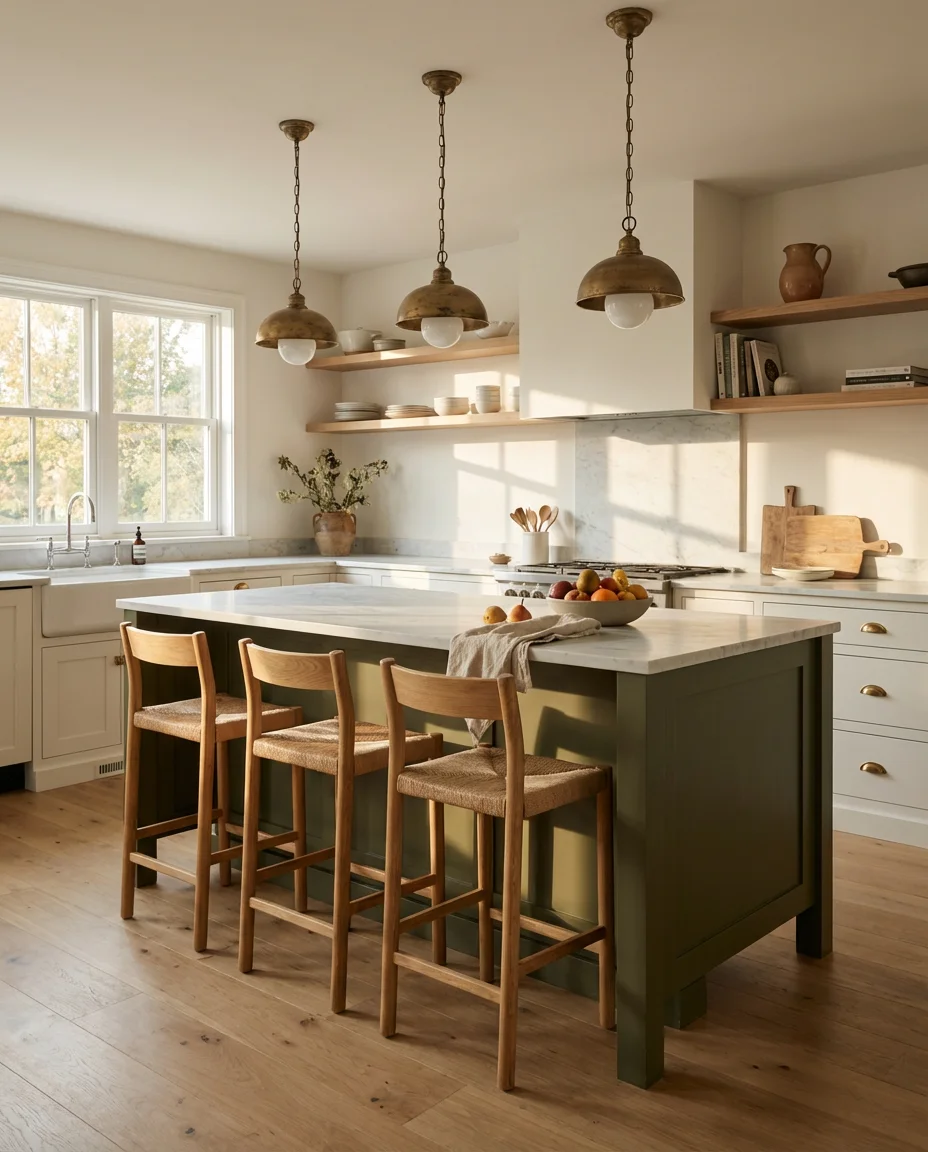
A practical insight worth keeping in mind: green paint colors are notoriously light-sensitive. The same sage that looks like a dream in a south-facing kitchen with abundant natural light can read brown or khaki in a north-facing room. Always test a large swatch on multiple walls and observe it at different times of day before committing. If your kitchen lacks natural light, warmer greens with yellow undertones tend to look more flattering under artificial lighting than cooler blue-greens.
13. White Kitchen with Brown Accents
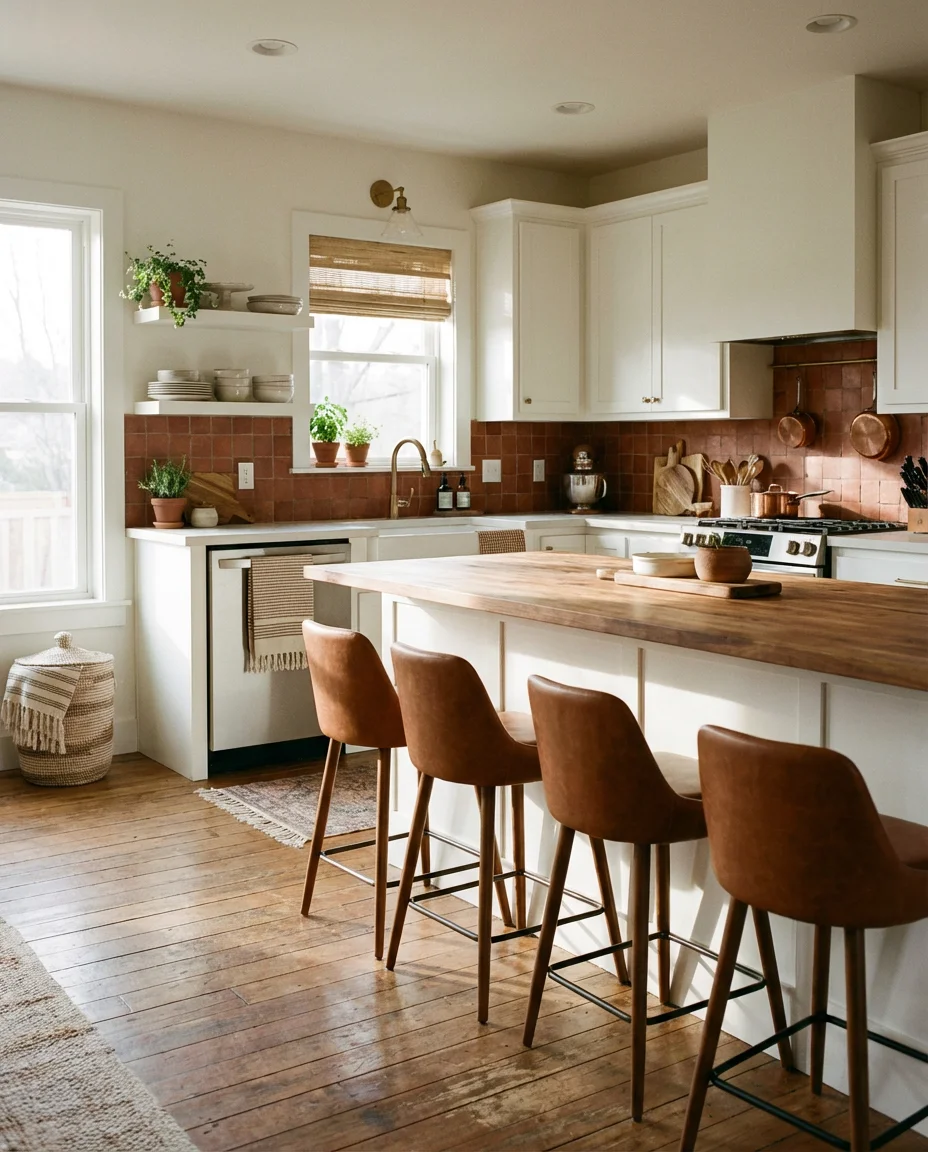
The brown and white kitchen is emerging as one of 2026’s quieter surprises. After years of cool grays dominating, warm brown tones—in leather bar stool seats, terracotta tiles, warm wood accents, and clay-finished accessories—are bringing a new earthiness to white kitchens. This isn’t the chocolate brown of the early 2000s; it’s a considered, restrained use of warm pigment that keeps the space grounded and human. Countertops in warm quartzite or butcher block reinforce this inviting quality without tipping into heavy.
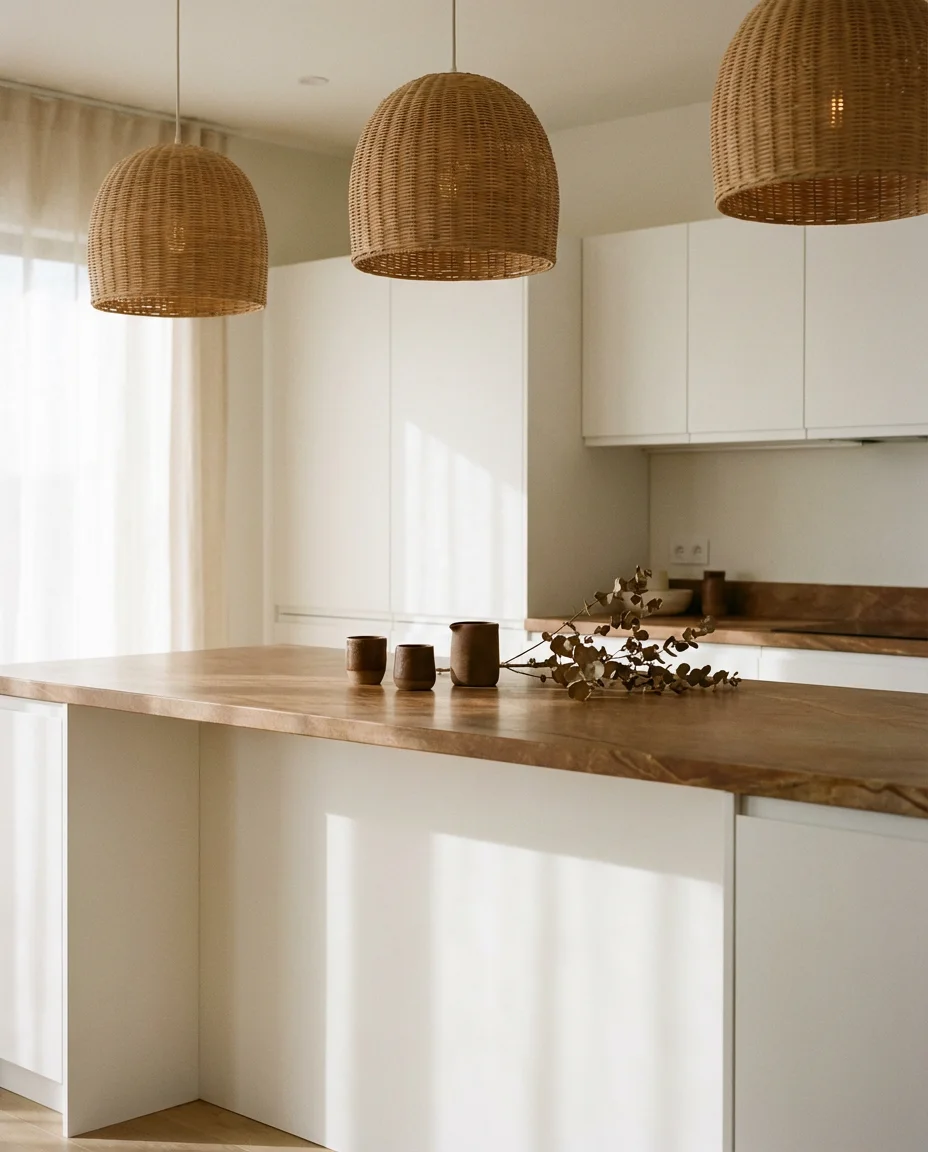
This palette resonates particularly strongly in the American Southwest and in homes throughout Texas and Arizona, where warm desert tones are woven into the regional aesthetic. But it’s equally at home in a Denver farmhouse or a Portland Craftsman. Think of the brown accents as grounding elements—they prevent the white kitchen from floating away into sterile territory and keep it anchored to something warm and tactile. A clay pendant light, a woven trivet, or a set of terracotta mugs on open shelving are all low-commitment ways to test the approach before committing.
14. White Kitchen with Stainless Appliances
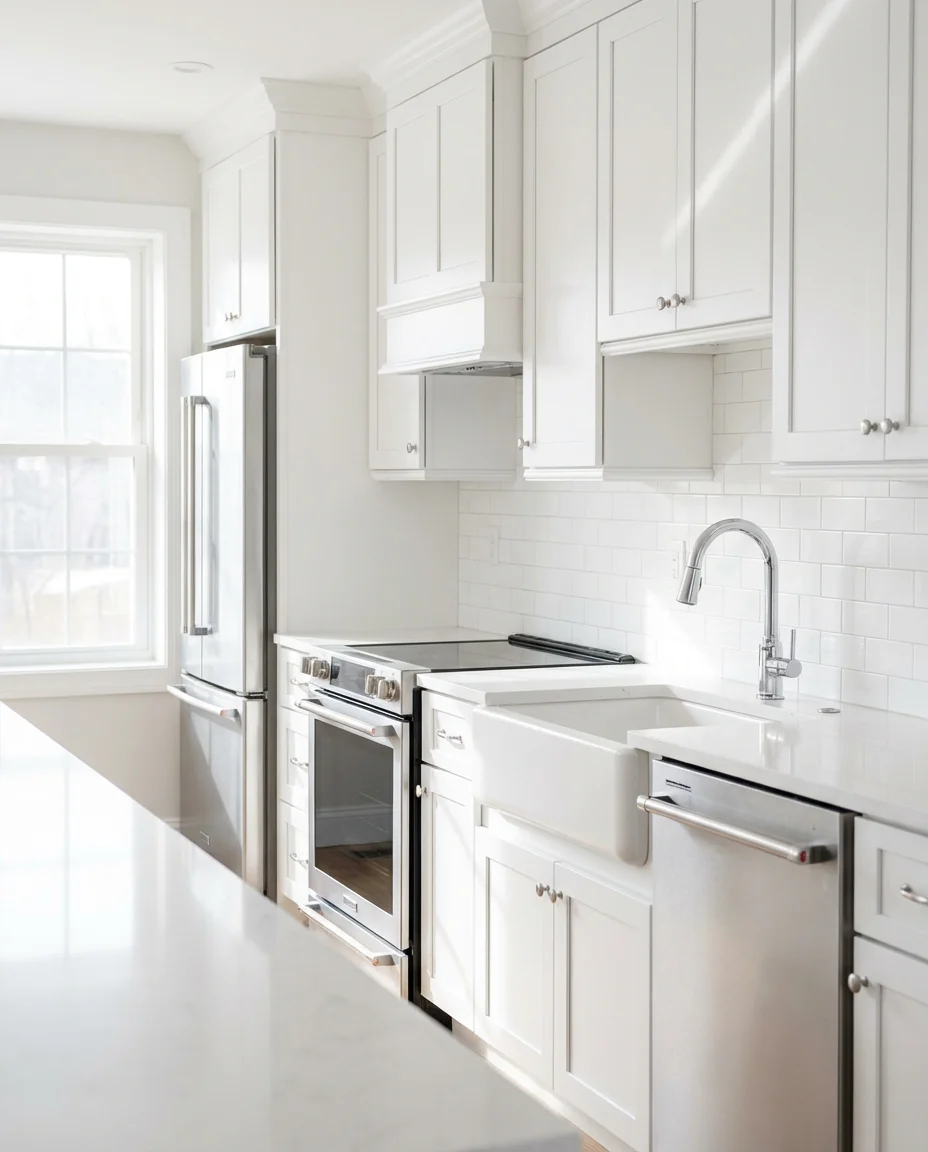
White cabinetry and stainless appliances are the most enduring combination in American kitchen design—and it’s one that photographs beautifully in every kind of light. The chrome-cool gleam of stainless reads as professional and clean against white-painted cabinets, giving even a modest kitchen a sense of culinary seriousness. In 2026, the integration of these appliances is getting more sophisticated: panel-ready fridges, hidden dishwashers, and flush-mounted ranges all contribute to a kitchen that looks effortlessly seamless rather than appliance-heavy.
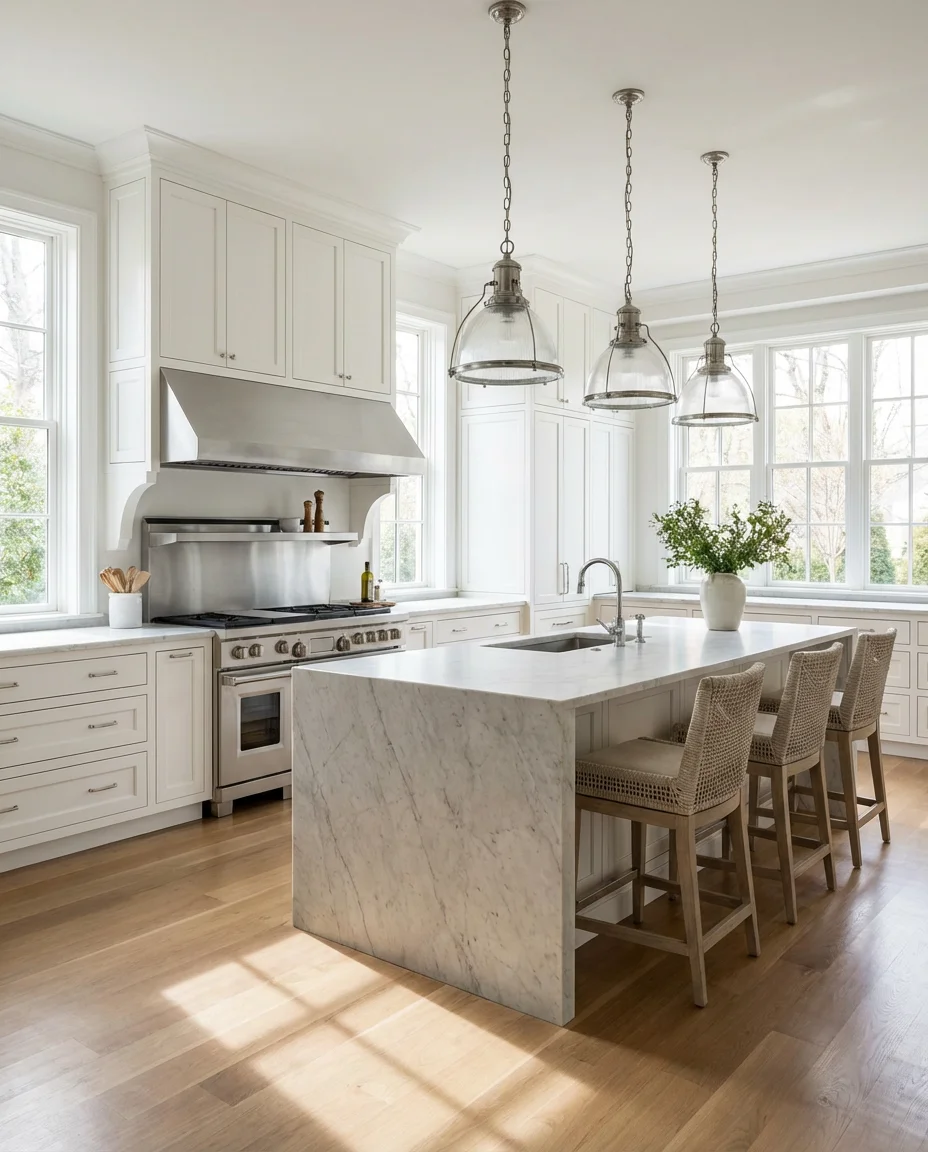
From a resale standpoint, stainless steel appliances consistently poll as one of the top features buyers look for, particularly in the $300k–$700k home price bracket, where kitchen finishes have a measurable impact on offer prices. Even if you’re not selling anytime soon, the durability and universality of stainless make it the lowest-risk appliance choice you can make in a white kitchen. Fingerprint-resistant finishes, widely available across major brands, address the only real maintenance complaint most homeowners have.
15. White Kitchen with Pink Accents
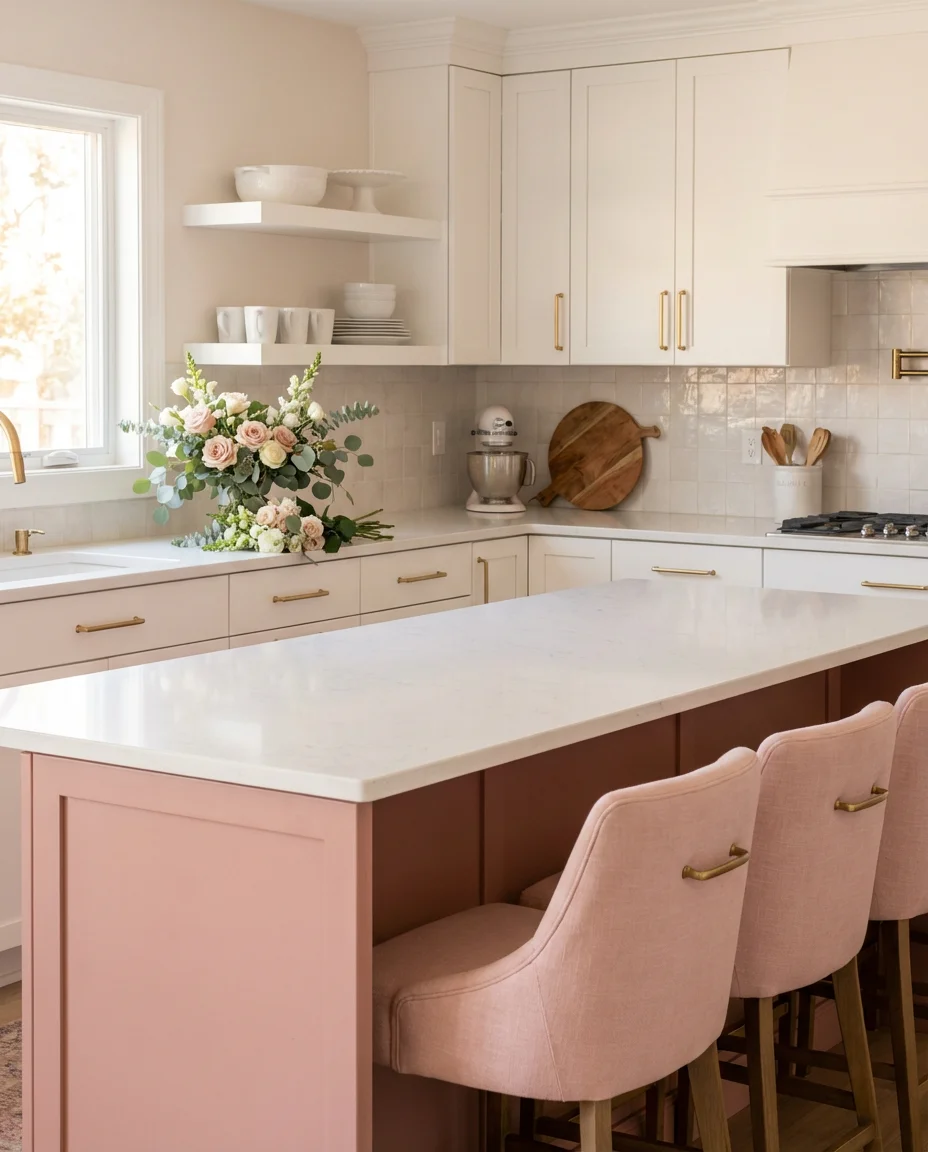
A little unexpected? Yes. Wildly charming? Absolutely. Pink and white kitchens are making a quiet but confident entrance into the design conversation for 2026. This isn’t the bubblegum pink of a child’s bedroom—it’s blush, dusty rose, terracotta-leaning mauve, and warm salmon tones used as thoughtful accents against a crisp white base. Think a blush pink island, a terracotta tile backsplash, pale pink linen stools, or a single wall painted in the softest rose. The white keeps it from reading as saccharine; the pink gives it genuine warmth and personality.
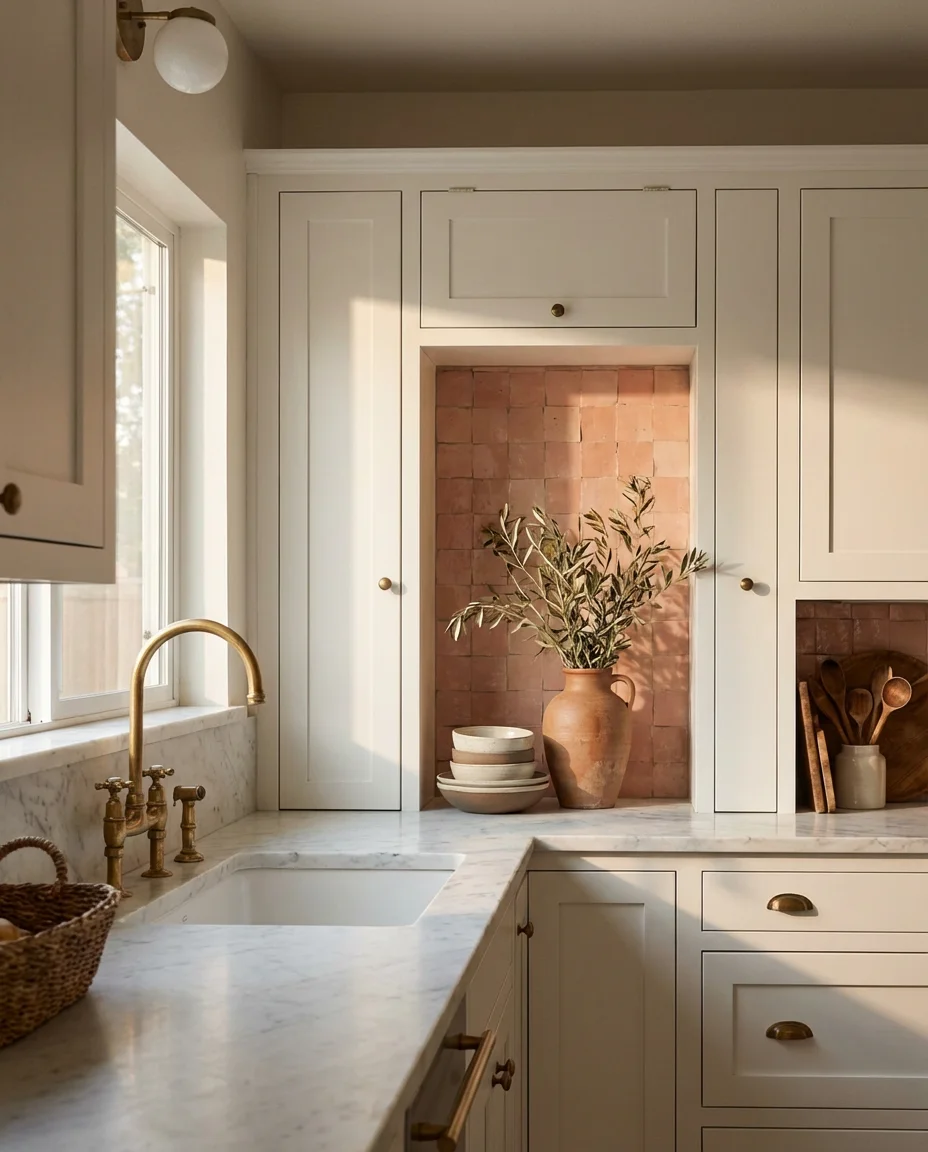
A micro-anecdote worth sharing: a food blogger in Austin repainted her kitchen island in a dusty mauve pink on a whim, posted a before-and-after on her Instagram, and the image was re-saved more than 40,000 times in a week. The response surprised even her—people were hungry for a kitchen that felt joyful and slightly unexpected. If committing a whole island feels like too much, a single painted wall or a set of blush stools is a completely reversible way to test whether this palette is right for your space.
16. White Kitchen with Black and Wood
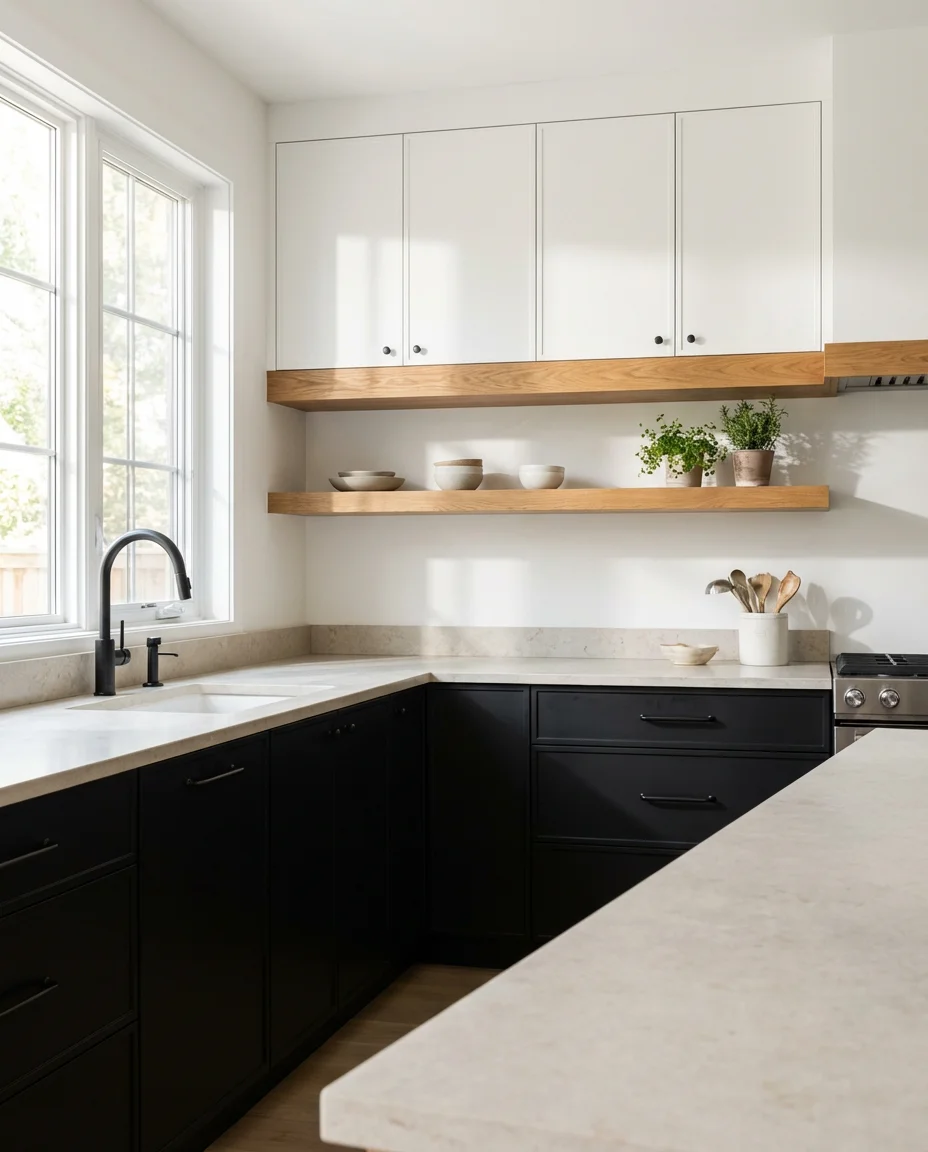
The three-way combination of white, black, and wood might be the most complete kitchen palette of 2026. Each element earns its place: white provides lightness and openness, black brings definition and edge, and wood introduces warmth and organic texture. Together they create a space that feels balanced in a way no two-tone kitchen quite can. Cabinets in crisp white, countertops or an island base in matte black, and open shelving or a wood hood surround—that’s the core framework most designers build from.
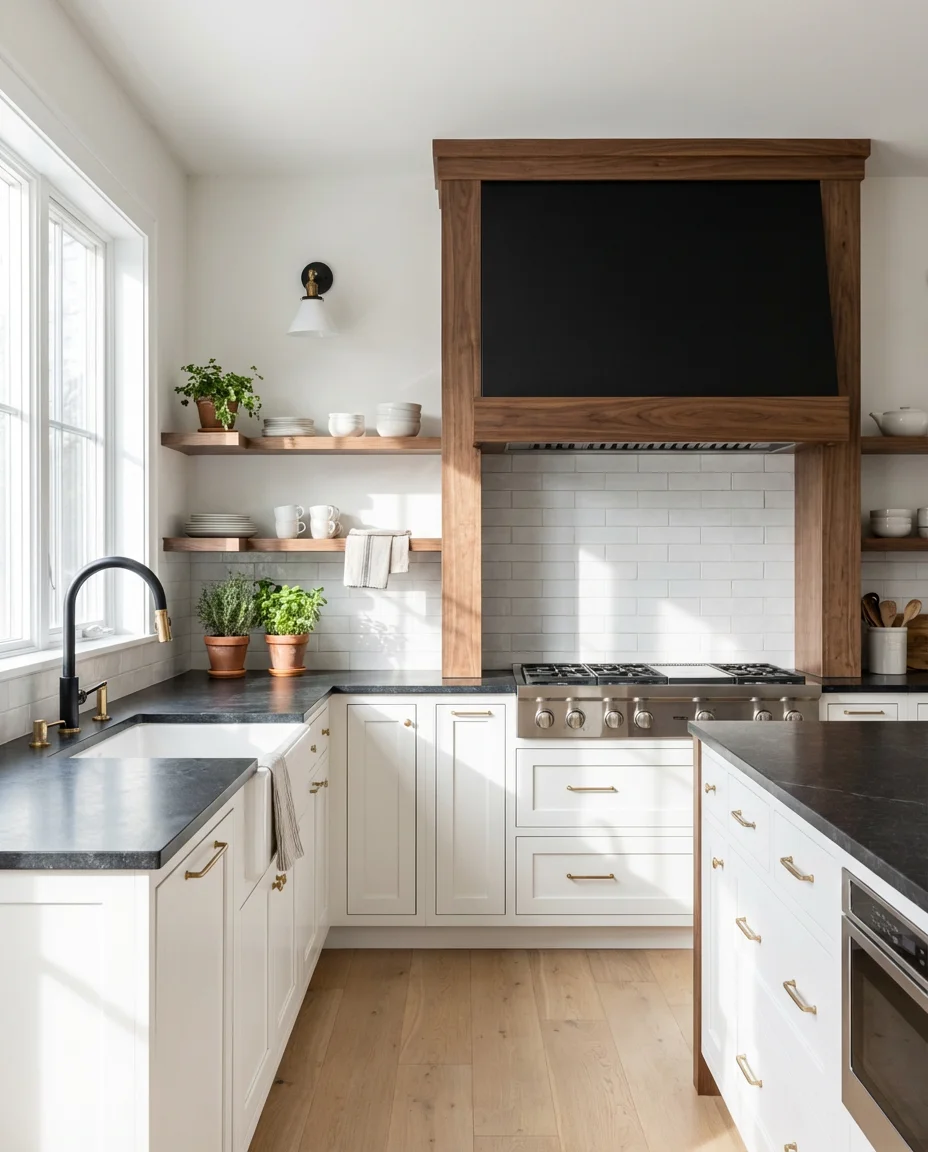
Expert designers who work with this palette consistently advise distributing the three materials around the room rather than clustering them. If wood only appears on the island and never again, it reads as an afterthought. Repeating a material—even in small doses, like wood pulls on white cabinet doors—creates the visual rhythm that makes a tricolor palette feel designed rather than assembled. The repetition rule applies to black as well: if you have a black range hood, echo it in the hardware and possibly the sink faucet for coherence.
17. White Kitchen with Gray Countertops
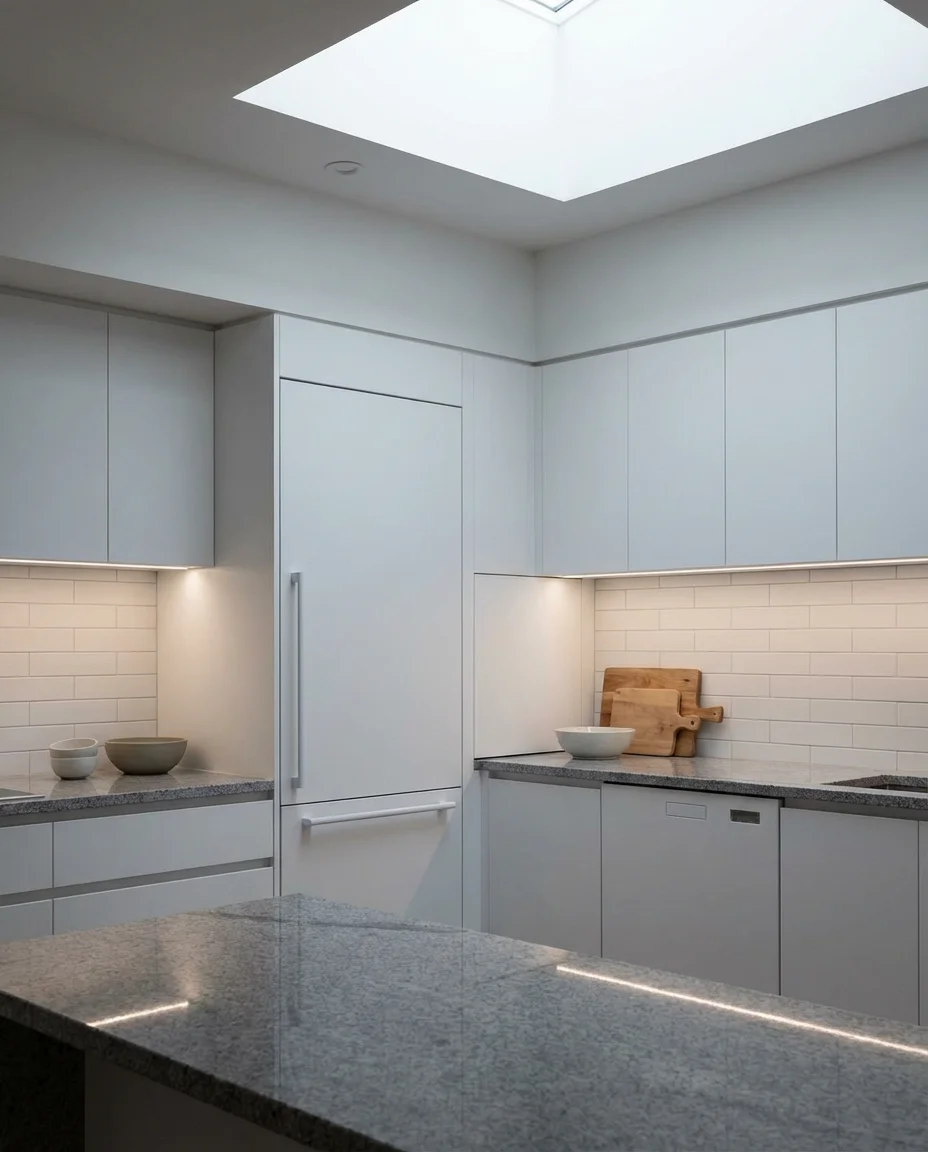
While marble gets most of the attention, gray and stone countertops in their own right—honed gray granite, concrete, or gray quartz—are an incredibly practical and visually strong pairing with white cabinetry. The cool gray reads almost neutral against white, letting the cabinetry take the lead while the counter provides substance and weight. This combination is especially well suited to contemporary kitchens where the aesthetic leans minimal and the appliances are integrated or panel-ready, keeping the visual field clean and deliberate.
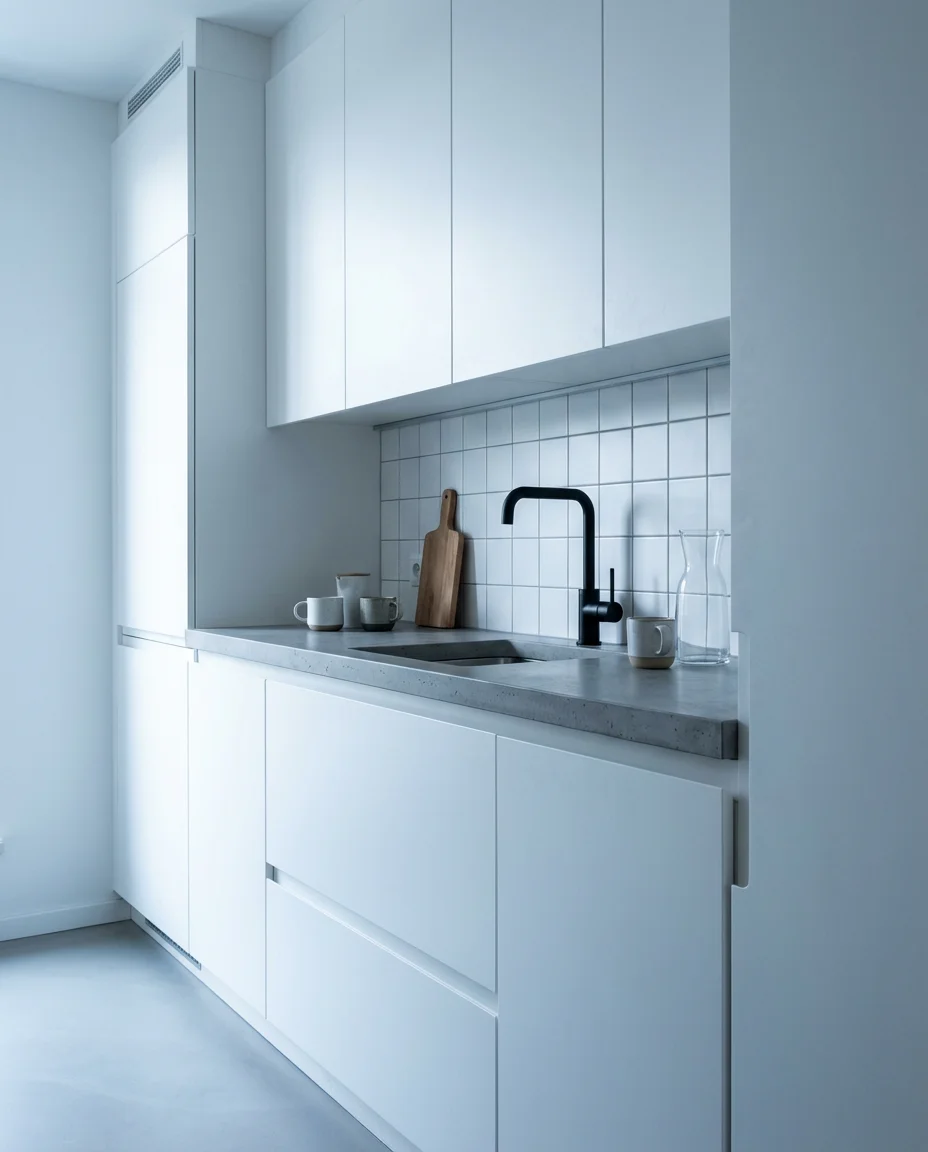
Concrete countertops have a devoted following among DIY renovators, particularly in urban markets where industrial-inspired design aesthetics are popular. A Portland homeowner documented her entire poured-concrete countertop installation on YouTube—it cost under $400 in materials for a full kitchen, compared to thousands for fabricated stone. While the process demands patience and the occasional seal, the result is a uniquely personal surface that no one else in the neighborhood will have. For those who want the look without the DIY risk, concrete-effect quartz achieves roughly 90% of the visual impact at zero maintenance cost.
18. White Kitchen Island with Wood Countertop
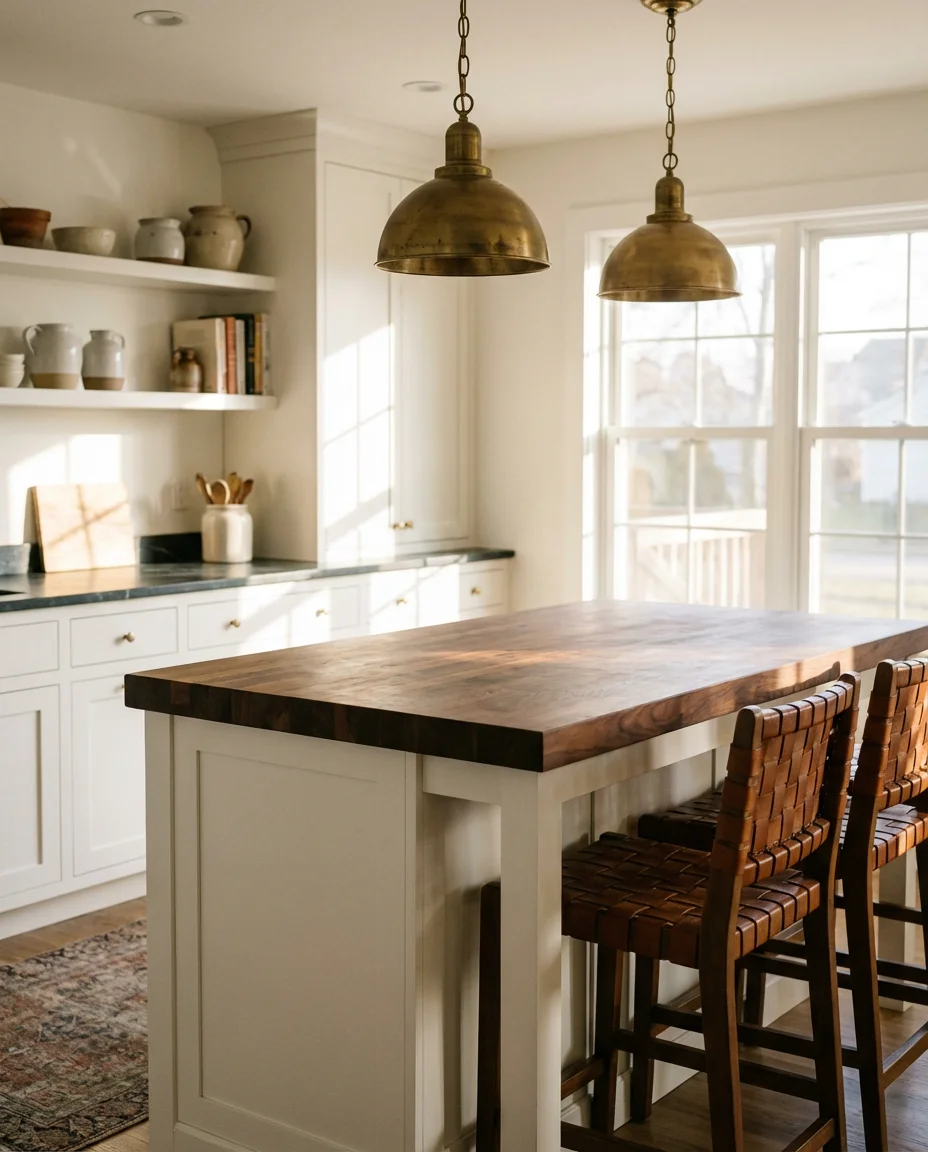
The island is the kitchen’s social center, and nothing makes it feel more welcoming than a warm wood countertop set against a white base. This specific configuration—a white-painted island cabinet with a butcher block or end-grain hardwood top—is a perennial bestseller in kitchen design for good reason. It creates a natural gathering zone that feels different from the perimeter work surfaces, signaling “sit here, linger here.” Walnut and white oak are the top wood choices, both offering a richness that contrasts beautifully with painted cabinetry below.
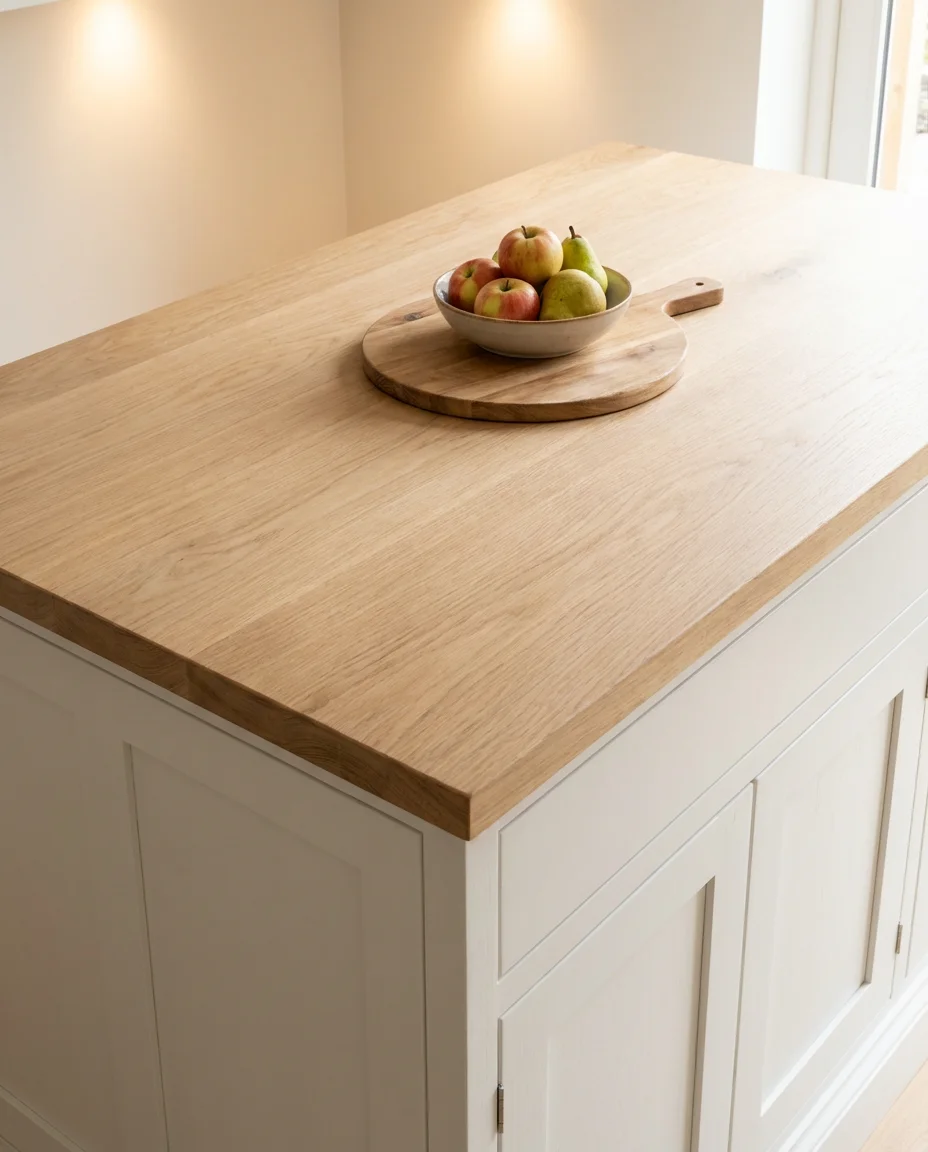
Wood countertops on islands do require some maintenance—oiling every few months and prompt attention to standing water will keep them from drying or cracking. But homeowners who have them are consistently among the most enthusiastic kitchen advocates you’ll meet. There’s a tactile pleasure to working on a wood surface that stone simply can’t replicate, and the patina that develops over years of cooking, gathering, and daily life makes the island feel genuinely personal. If longevity is a concern, teak oil-finished white oak is one of the most durable hardwood options available.
19. White Kitchen with Walnut Cabinets Lower Half
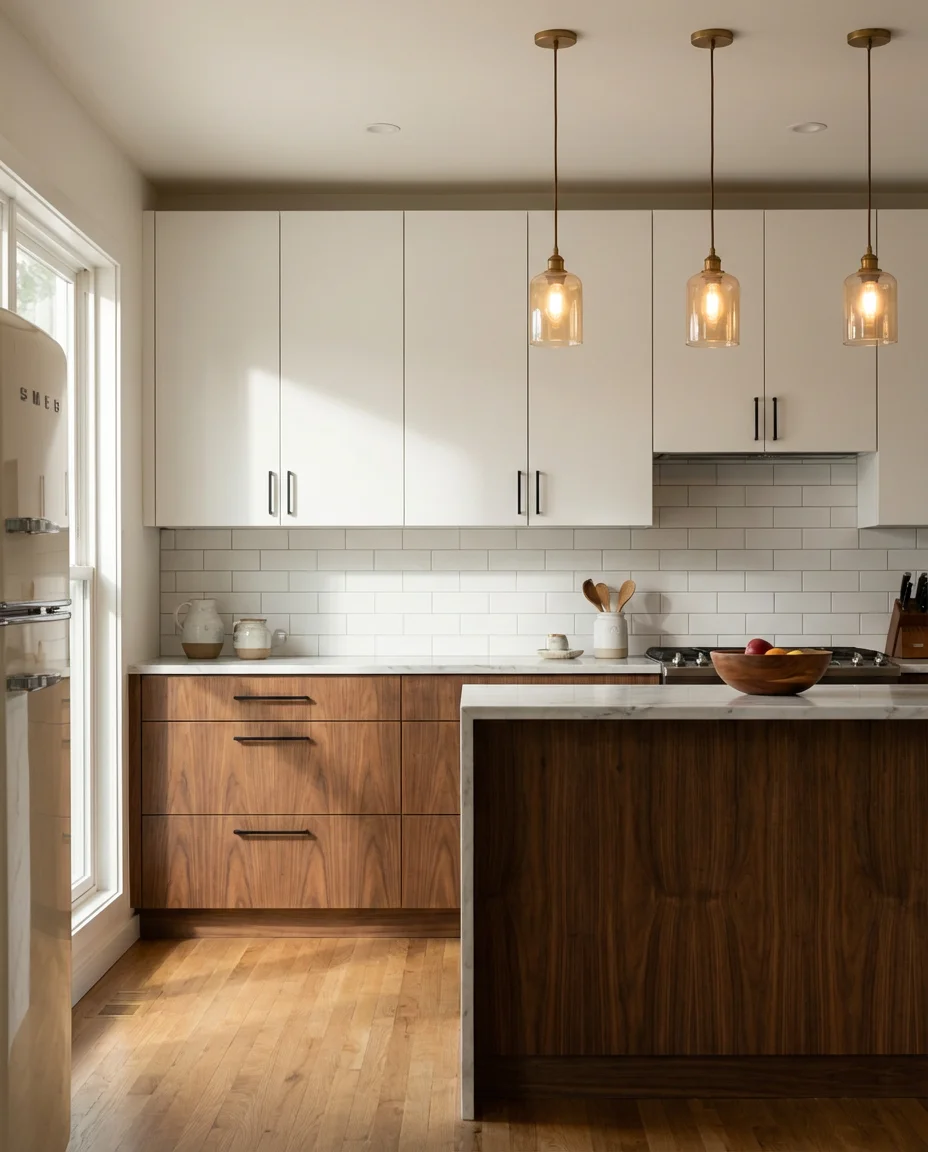
Using white cabinets on the upper half and walnut and wood-toned lower cabinets is a configuration that feels both architectural and warm. The white keeps the room light and open at eye level and above; the walnut grounds it below, adding a richness to the base of the kitchen that reads as solid and intentional. This format is especially popular in larger kitchens where there’s enough cabinet coverage for the material shift to have real visual impact. Black hardware on the walnut lowers completes the look with a sharp, editorial finish.
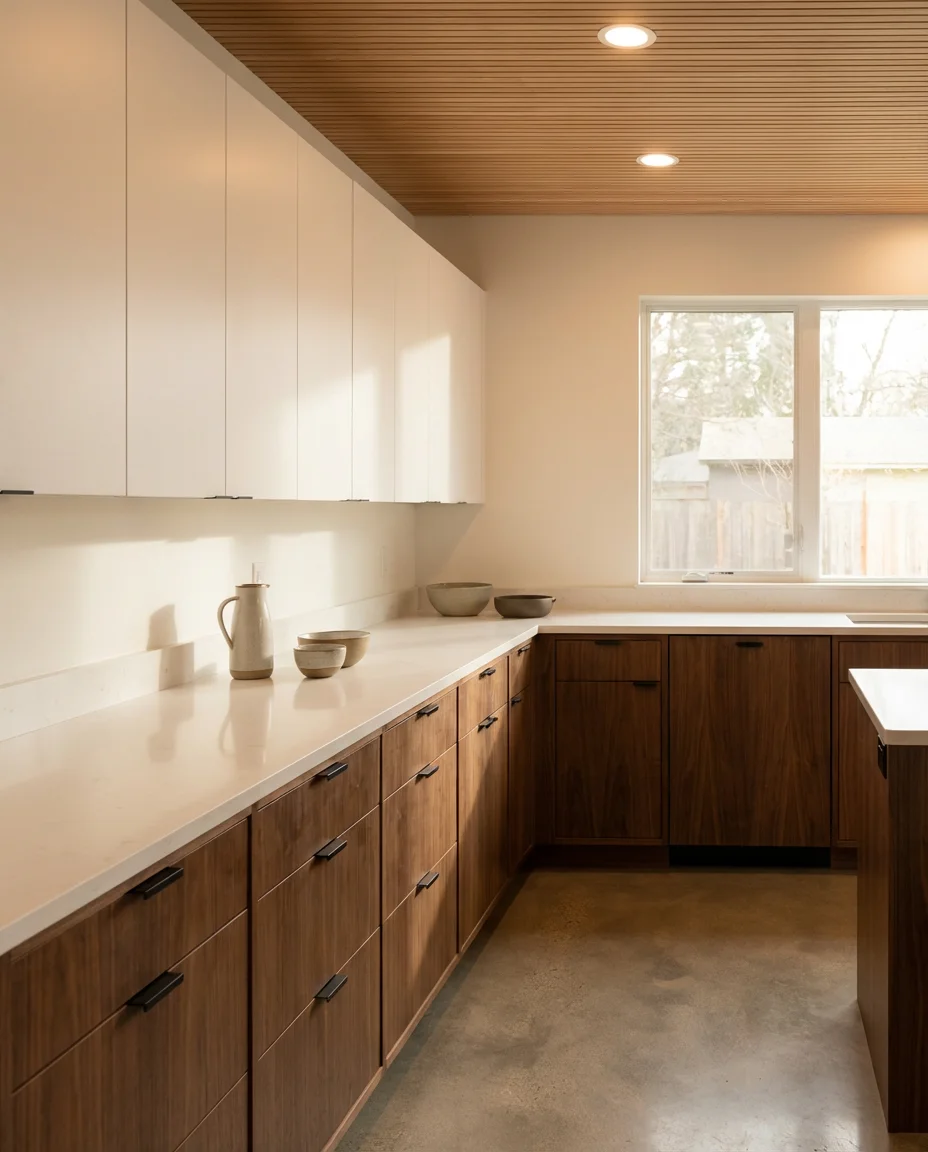
This is a look that requires precision to execute well—the transition line between white uppers and wood lowers should typically land right at the countertop level, creating a clean horizontal break. If that line is inconsistent or the two materials don’t have a shared hardware finish tying them together, the combination can feel mismatched rather than designed. A local kitchen designer or an experienced cabinet installer can help ensure the proportions work before you commit. Getting the cut right is everything with this particular pairing.
20. White Farmhouse Kitchen with Black Sink
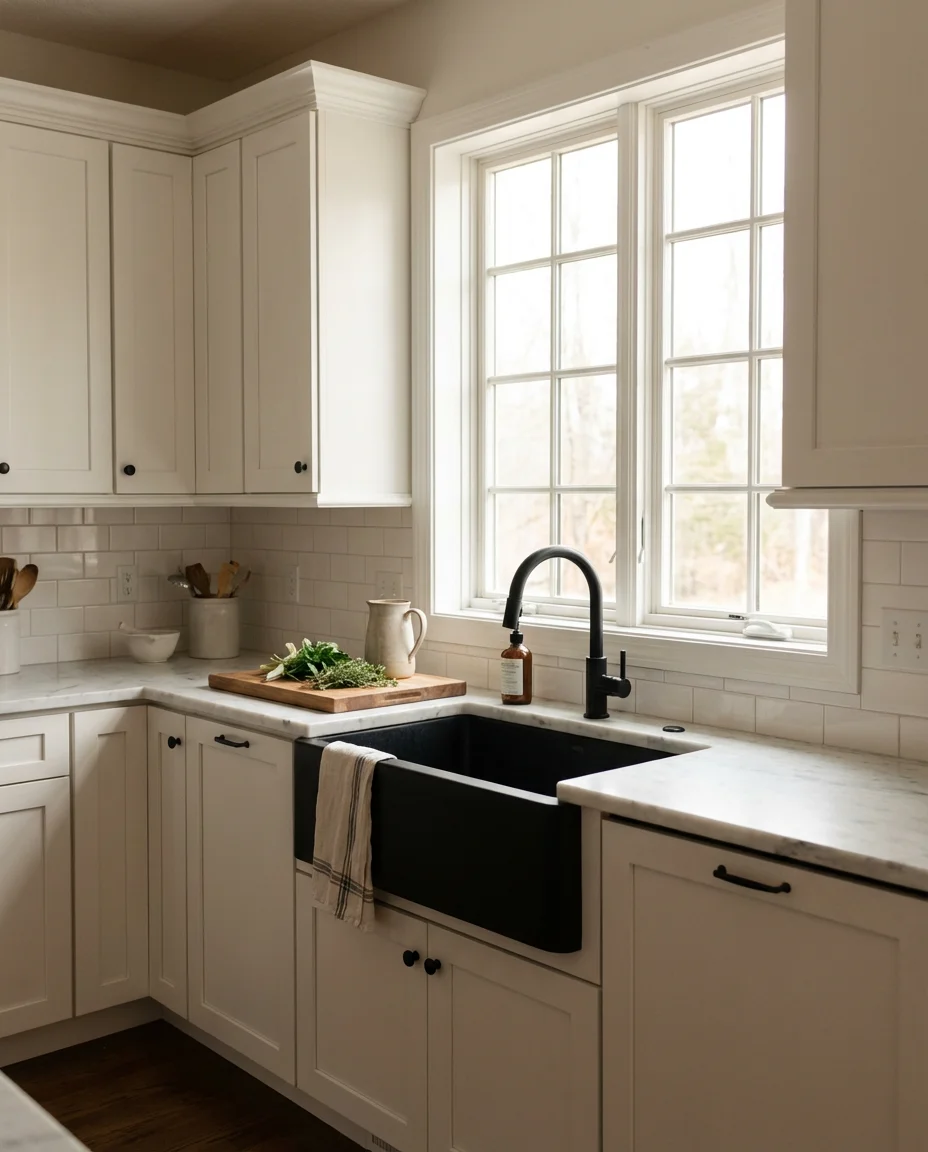
The farmhouse apron-front sink in matte black is one of the most pinned kitchen details of the past two years—and it shows no sign of slowing down. In a white kitchen, it functions as a statement piece that anchors the whole room around a single dramatic focal point. Backsplash ideas that work around it tend toward the simple: white brick-style tile, clean subway, or shiplap all keep the attention on the sink rather than competing with it. The classic farmhouse aesthetic gets an instant edge when the apron front is black rather than the expected white porcelain.
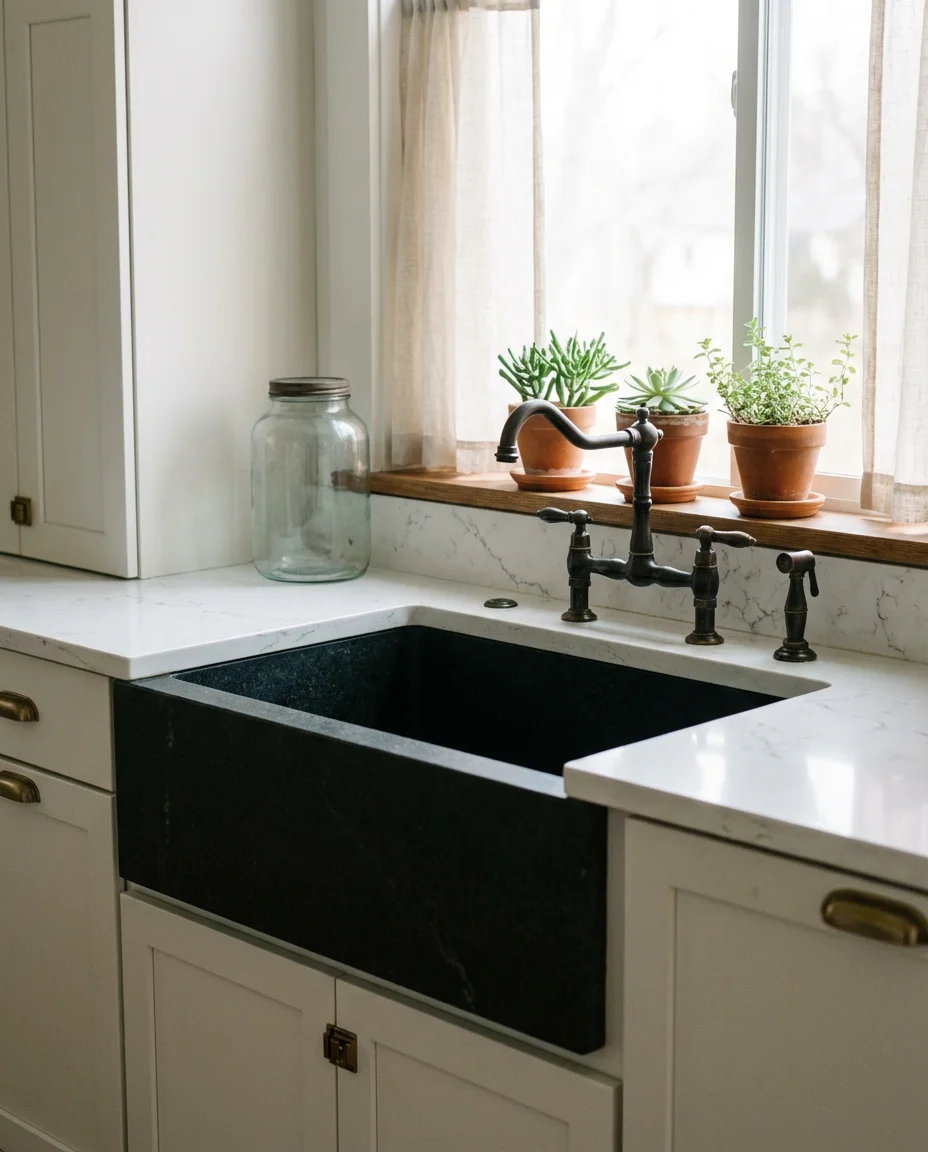
In the American Midwest and South, where the farmhouse aesthetic has deep roots in actual residential history, this look integrates seamlessly into both older homes and new builds trying to capture that sense of heritage and craft. What’s worth noting for budget-conscious renovators: you don’t need to replace your entire sink base cabinet to install an apron-front sink, but you do need to confirm the cabinet dimensions can accommodate the larger footprint. Many standard 33″ base cabinets can be adapted with minimal modification, making this one of the more achievable statement upgrades available.
21. White Kitchen with Navy Island
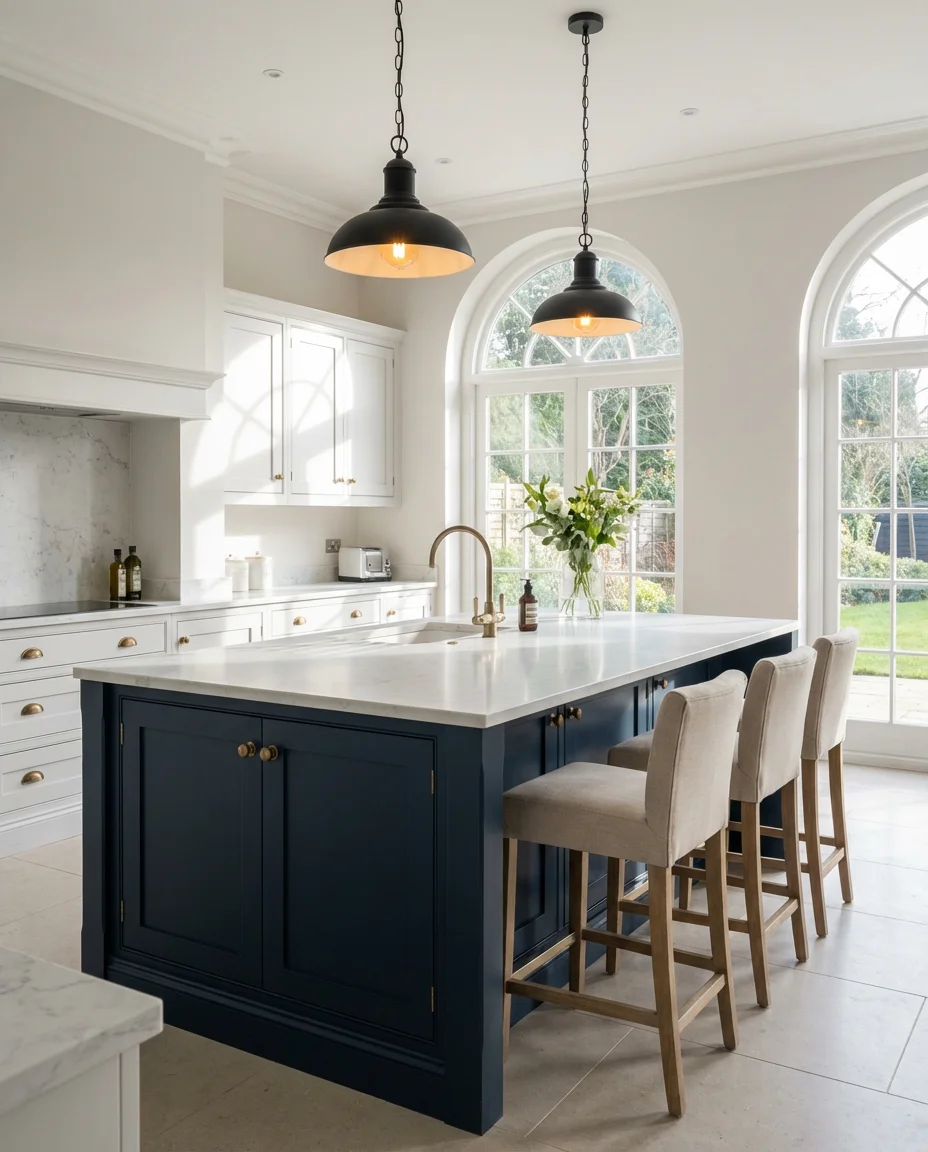
If you’re going to commit to a bold island color, navy and white is the combination that design professionals return to most consistently—and it’s earned that reputation. Navy is dark enough to create real contrast against white perimeter cabinets but sophisticated enough to feel polished rather than playful. Cabinets in white surrounding a navy island create an almost nautical confidence without leaning into themed territory. Pair with brass or gold hardware on the island specifically to warm up the dark blue and prevent the combination from reading cold.
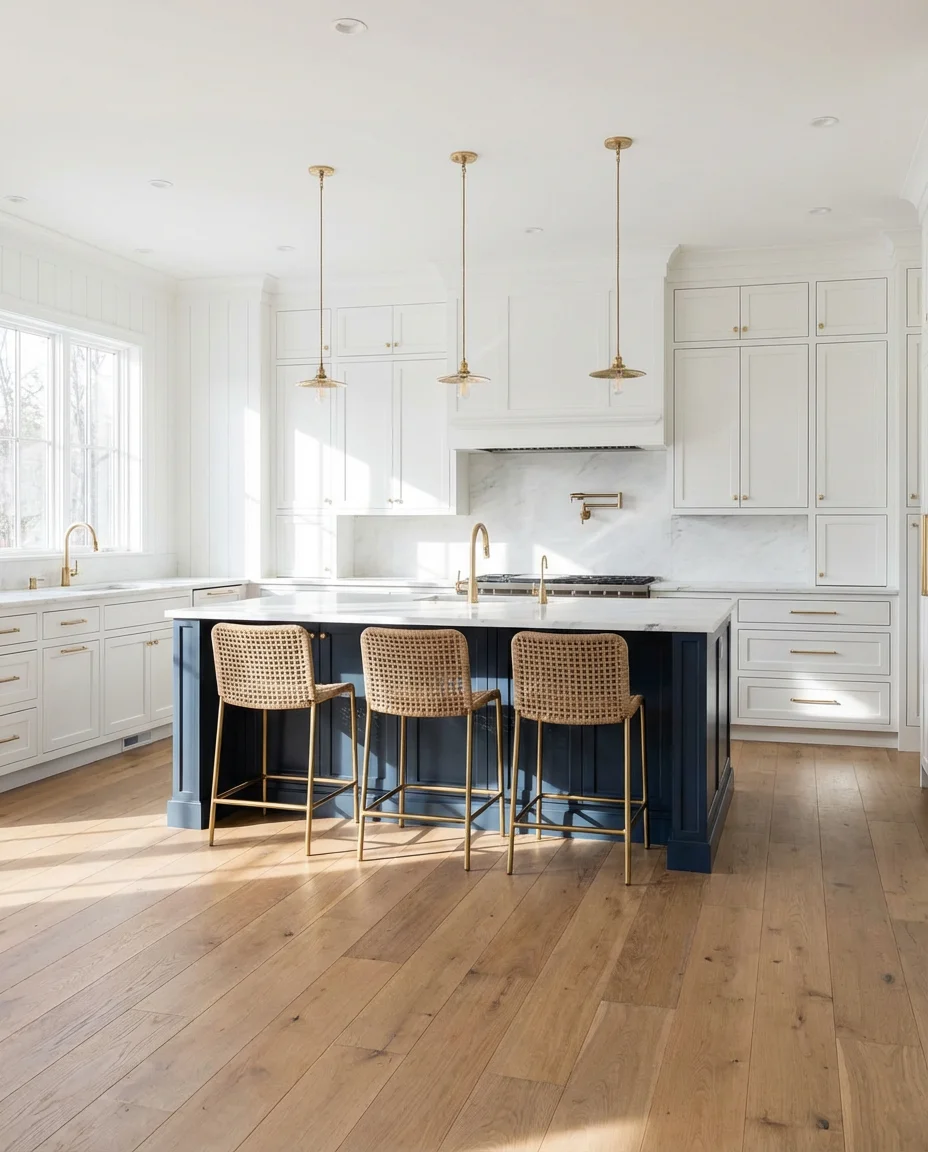
One thing many homeowners don’t anticipate: navy reads very differently at night versus during the day. In artificial light, navy can shift toward purple or appear much darker and heavier than expected. If your kitchen has limited natural light or you spend significant time in it during evening hours, test your specific navy paint color under warm and cool bulbs before committing. Benjamin Moore Hale Navy and Sherwin-Williams Naval are both particularly versatile across light conditions and remain top recommendations from kitchen designers across the country.
22. White Kitchen with Sage Green and Wood
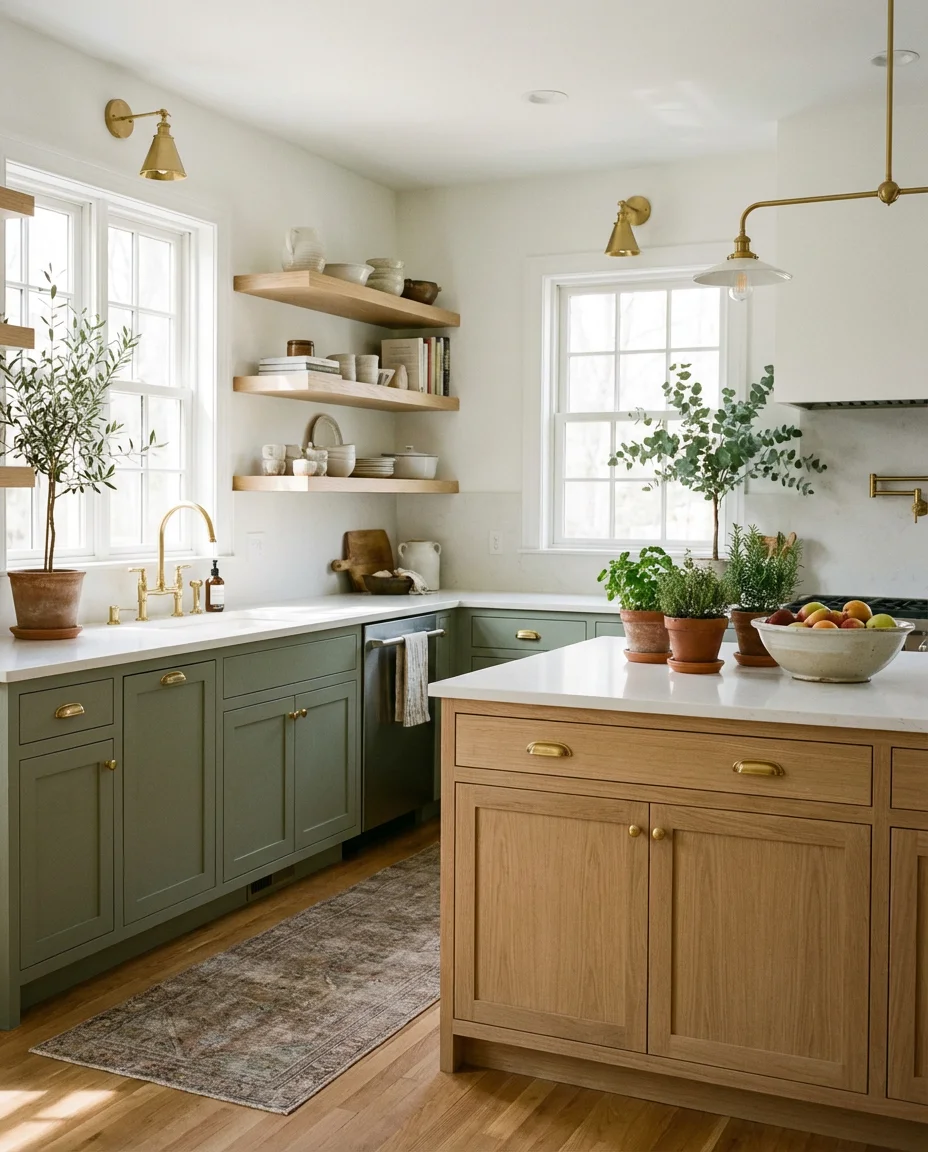
Bringing together white, sage green, and natural wood in a single kitchen space is the trifecta of 2026’s most beloved aesthetic: organic modern. White provides the clean canvas, sage green introduces a muted botanical calm, and wood—whether on the island, shelving, or ceiling—adds the warmth and texture that makes the whole room feel genuinely alive. Wood and green together have a natural affinity that architecture has exploited for centuries, and in a kitchen context, the combination feels both fresh and deeply familiar at once.
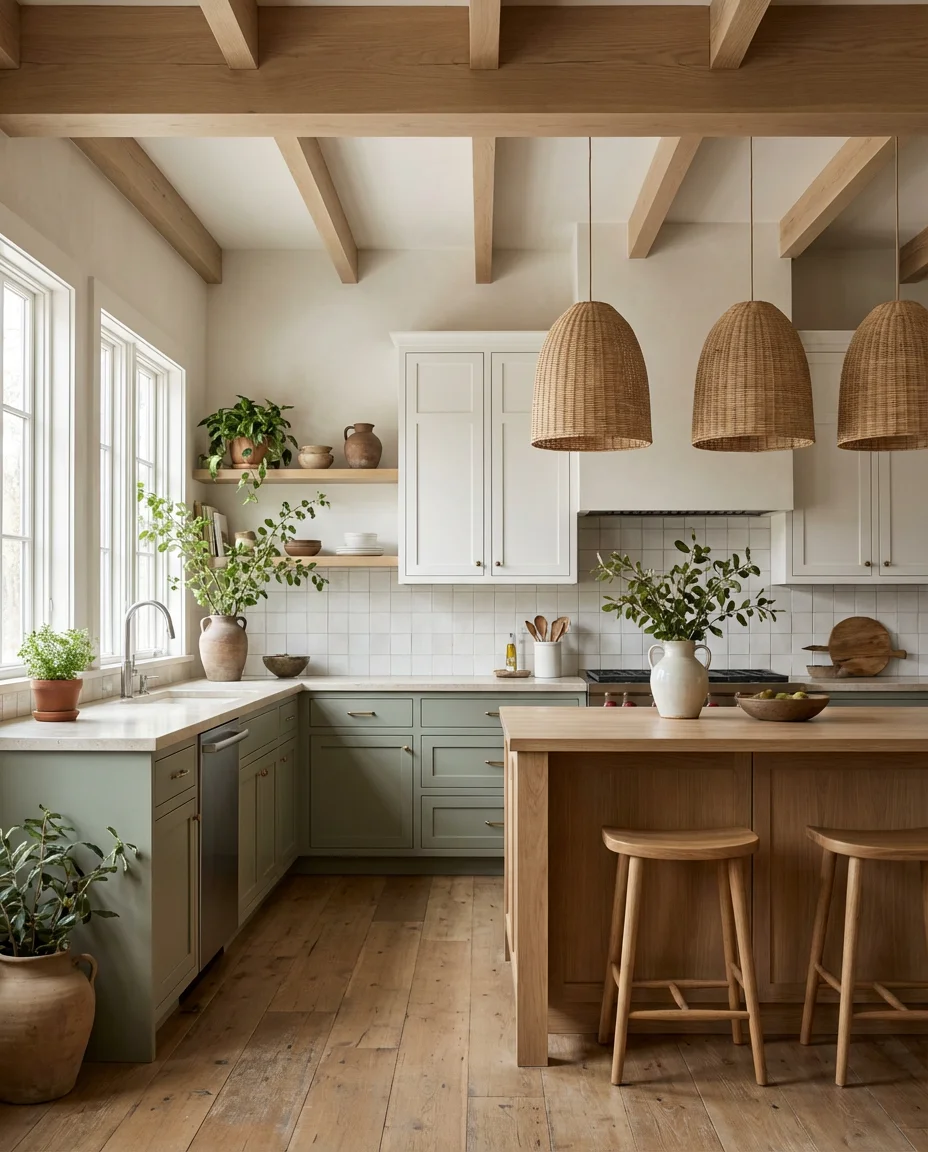
This three-material palette is one of the rare combinations that works across an enormous range of American home styles—from a Craftsman bungalow in the Midwest to a modern farmhouse in the mid-Atlantic to a white stucco home in California. The key is keeping the proportions right: white should dominate (roughly 60%), sage green comes second (roughly 30%), and wood appears as the accent (roughly 10%) in shelving, hardware finish, or a single ceiling element. That hierarchy keeps the room from feeling busy and ensures the sage and wood read as intentional choices rather than clashing add-ons.
Conclusion
White kitchens in 2026 are anything but one-note, and we hope these ideas have shown just how much personality, warmth, and creativity can live within this classic palette. Whether you’re planning a full renovation or just dreaming about future possibilities, there’s a version of the white kitchen that was made for your life and your home. We’d love to hear which ideas spoke to you most—drop a comment below and tell us which look you’re obsessing over right now, or share a photo of your own white kitchen transformation!