For a long time, laundry rooms were simply an afterthought of homebuilders. Now, laundry rooms are being fully integrated into the home design, showcasing the laundry room as a work of art. As we approach 2026, American homeowners are continuing to look for integrated design solutions that work for their specific home layout, whether it be a dark, small room, a garage conversion, or a custom luxury setup. Pinterest has endless inspiration for laundry room design, from stacked washer and dryer combos to cabinets of all colors that make laundry feel like a fun chore. This helps to combine practical solutions that maximize narrow room footprints and capture the design aesthetics of the room.
1. Compact Corner Solution for Tiny Apartments
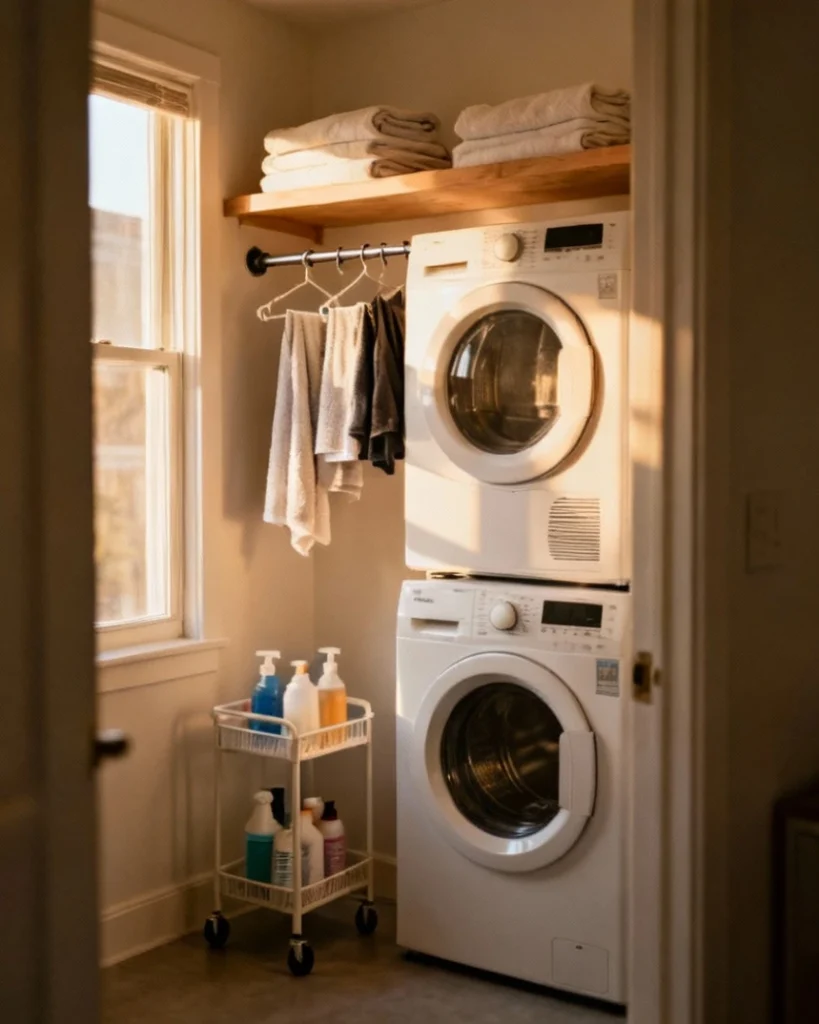
In small apartments, the laundry closet is often placed in a very tight, cramped closet location. In this scenario, a laundry closet that includes vertical stacked appliances and a rolling cart for folded laundry and laundry detergents is a perfect solution. The cabinetry is light for a more open, less claustrophobic feel, and a tension rod across the corner can be used to dry delicates. 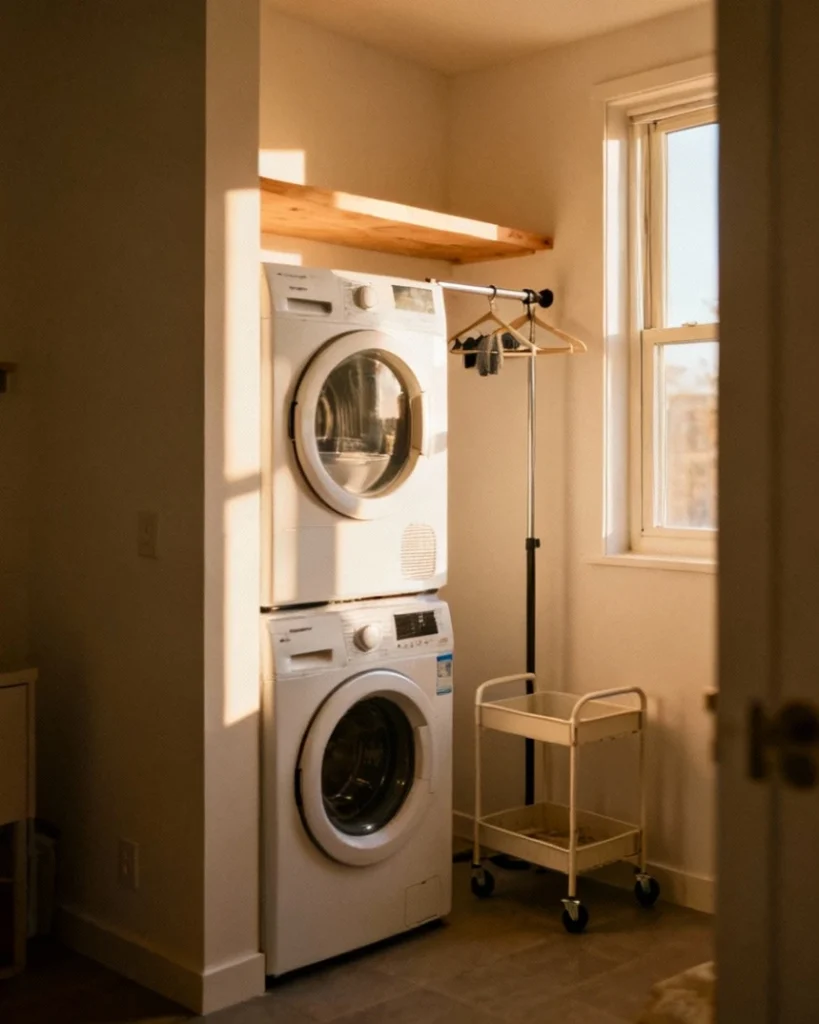
In studio apartments like those in San Francisco and New York, this arrangement is most effective, as constructors frequently cut out 24-inch-wide recesses that seem too small for standard stacked machines. Getting your measurements precise is most important; some European-style compact washers are a few inches shorter than American-made models, which can mean the difference between a working corner and a disaster waiting to happen.
2. Basement Transformation with Industrial Touches
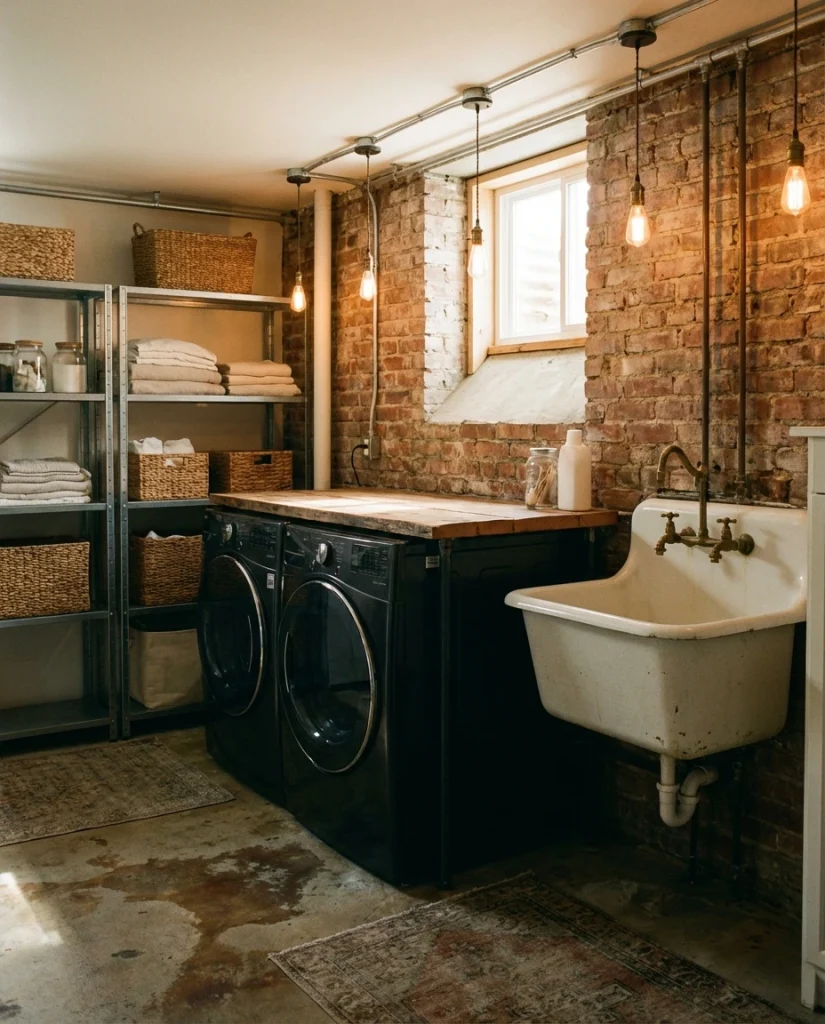
It isn’t necessary for a basement laundry room to resemble a dungeon, especially when you lean into rustic materials that celebrate the space’s utilitarian roots. Exposed brick walls, along with matte black fixtures and open metal shelving, form a surprisingly chic canvas for what’s usually the most unappreciated area in the home. A vintage-style gooseneck utility sink makes washing by hand and plant maintenance a simpler task. 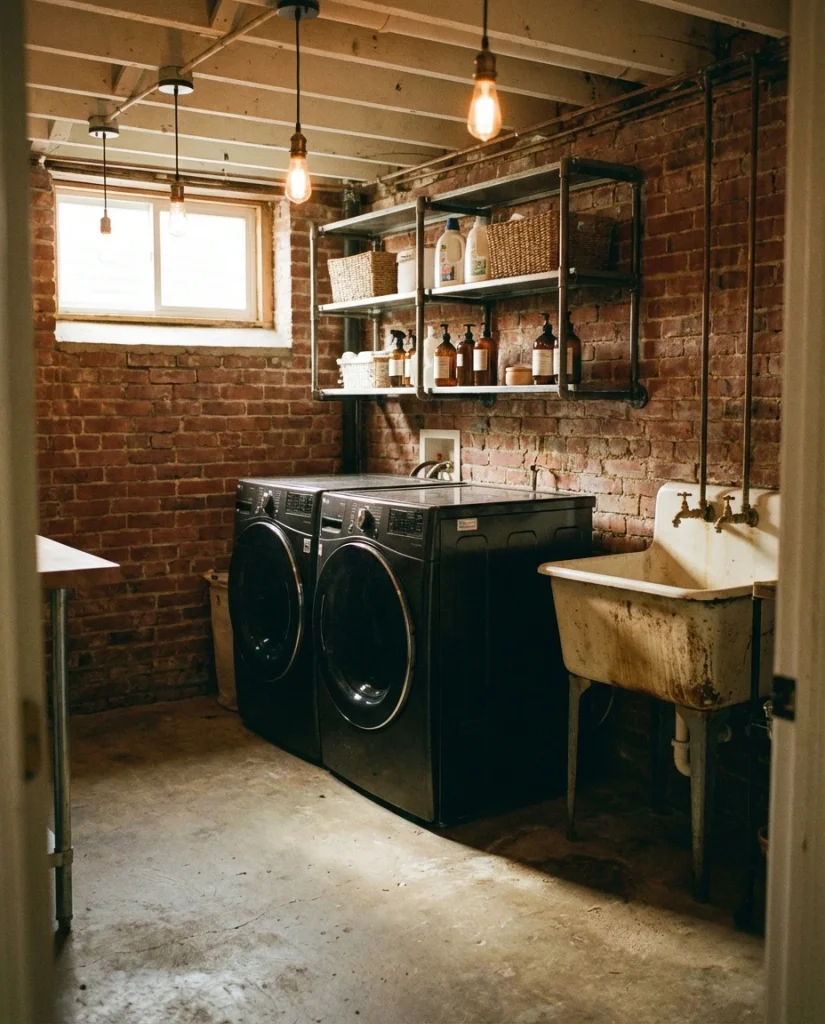
One common mistake homeowners make is neglecting humidity control in basement laundry spaces, which leads to musty odors and potential mold growth. Installing a small dehumidifier and ensuring proper ventilation through a window or exhaust fan keeps the air fresh, protects your clothing, and makes the basement a space you don’t mind spending time in while waiting for the spin cycle to finish.
3. Bloxburg-Inspired Aesthetic for Game Lovers
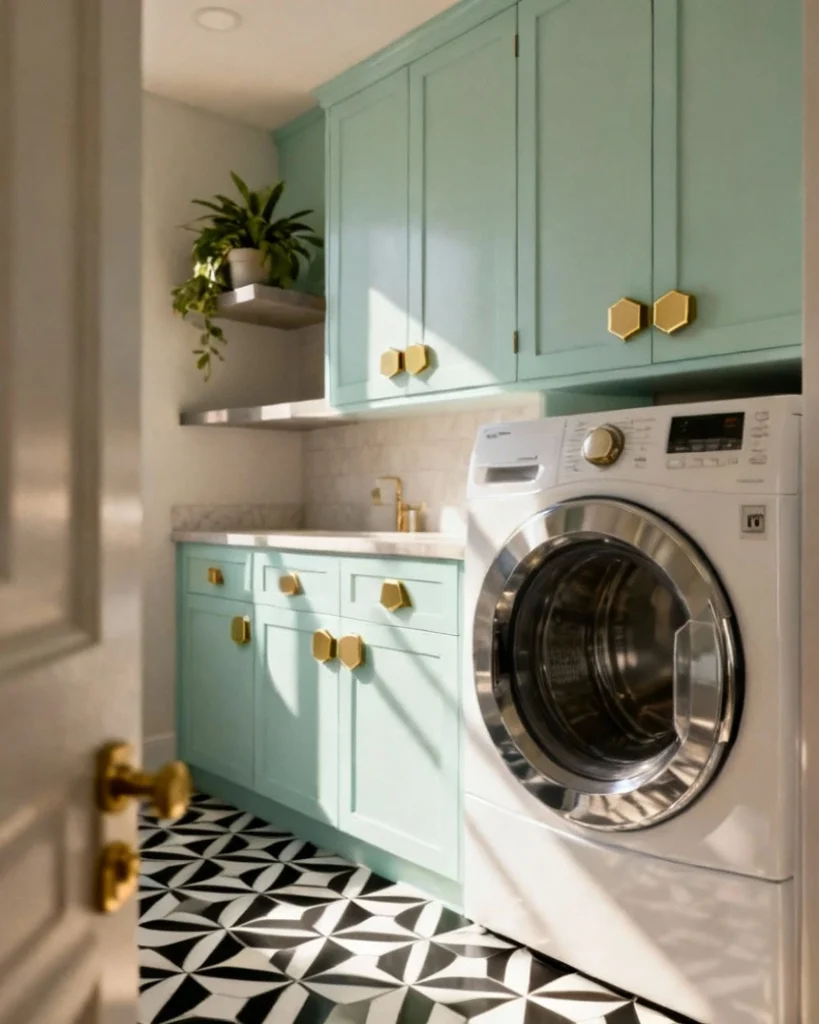
The Bloxburg design community has influenced real-world interiors more than most people realize, with its emphasis on clean lines, pastel palettes, and perfectly symmetrical layouts. Translating this virtual aesthetic into an actual laundry room means choosing soft mint or blush cabinetry, gold-toned hardware, and geometric floor tiles that photograph beautifully. The result feels simultaneously playful and sophisticated, appealing to younger homeowners who grew up customizing digital spaces.
This style works best in homes with good natural lighting, particularly in suburban developments across the Midwest and South, where newer construction often includes dedicated laundry rooms with windows. The pastel tones require ample light to avoid looking washed out, so if you’re working with a windowless space, consider installing bright LED strips under the upper cabinets to maintain that airy, game-inspired feel.
4. Top Load Washer Configurations That Actually Work
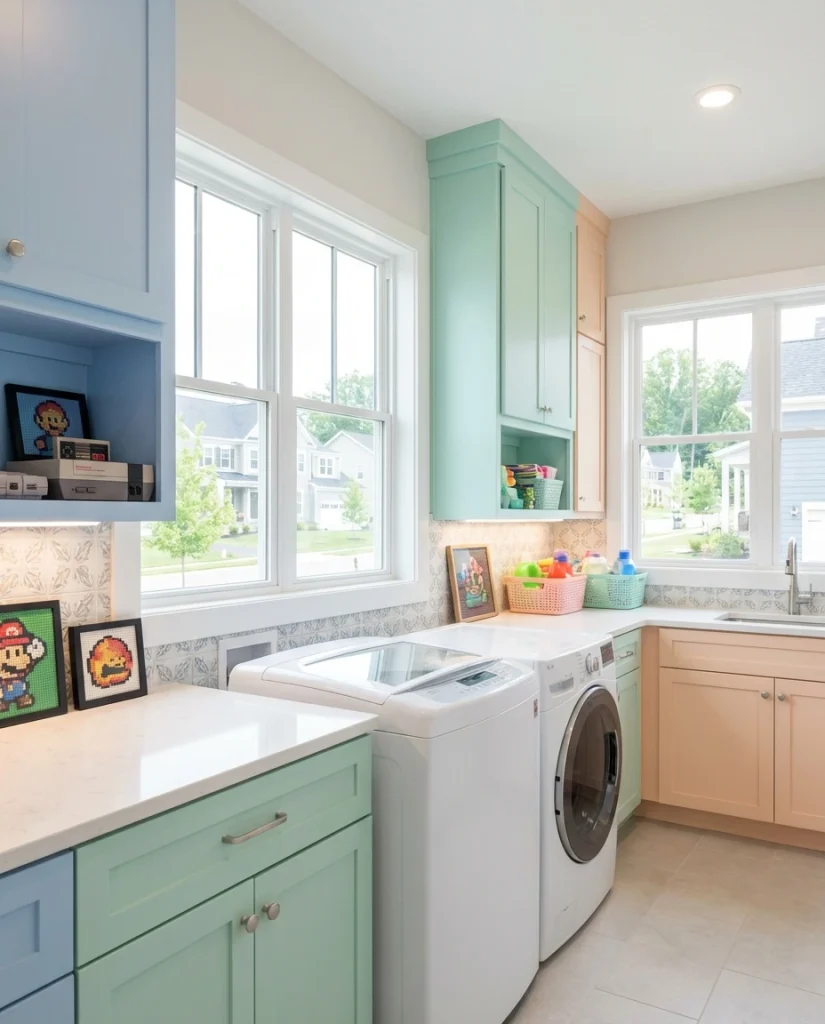
Despite the trend toward front loader machines, many Americans still prefer top-load washer models for their ergonomic advantages and faster cycle times. The challenge is creating a design that doesn’t sacrifice counter space—the solution lies in building a custom platform with a cutout that allows the lid to open fully while extending the work surface on three sides. This gives you folding space without blocking machine access.
A homeowner in Austin recently shared that building this type of platform cost about $400 in materials from a local lumberyard, plus a weekend of work with basic carpentry skills. She mentioned that having the counter height match her kitchen made folding laundry feel less like a separate chore and more like an extension of her regular household flow, which made the project worth every penny.
5. Closet Conversion for Hidden Laundry
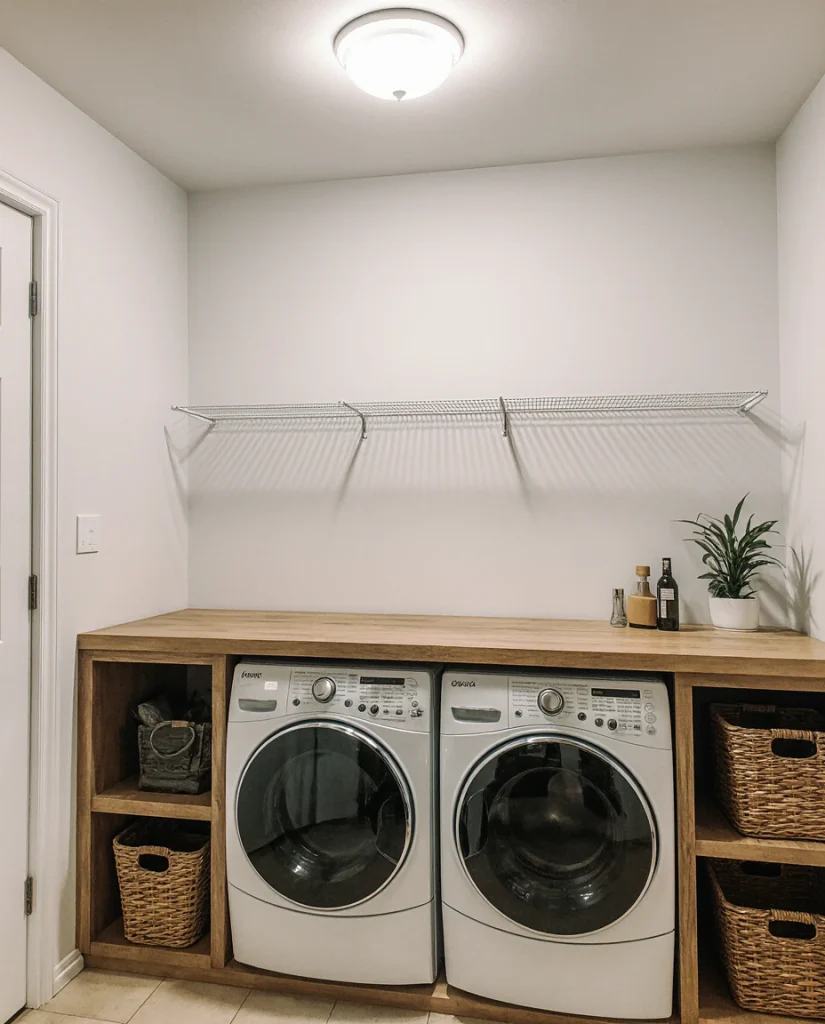
Converting a closet into a laundry zone offers the ultimate in space efficiency, especially in older homes that lack dedicated laundry rooms. A stackable unit fits perfectly in a standard 24-to-30-inch-wide closet, leaving room for tension rods at the top and narrow pullout drawers at the bottom for supplies. Bifold doors or a sliding barn door keep everything concealed when guests visit. 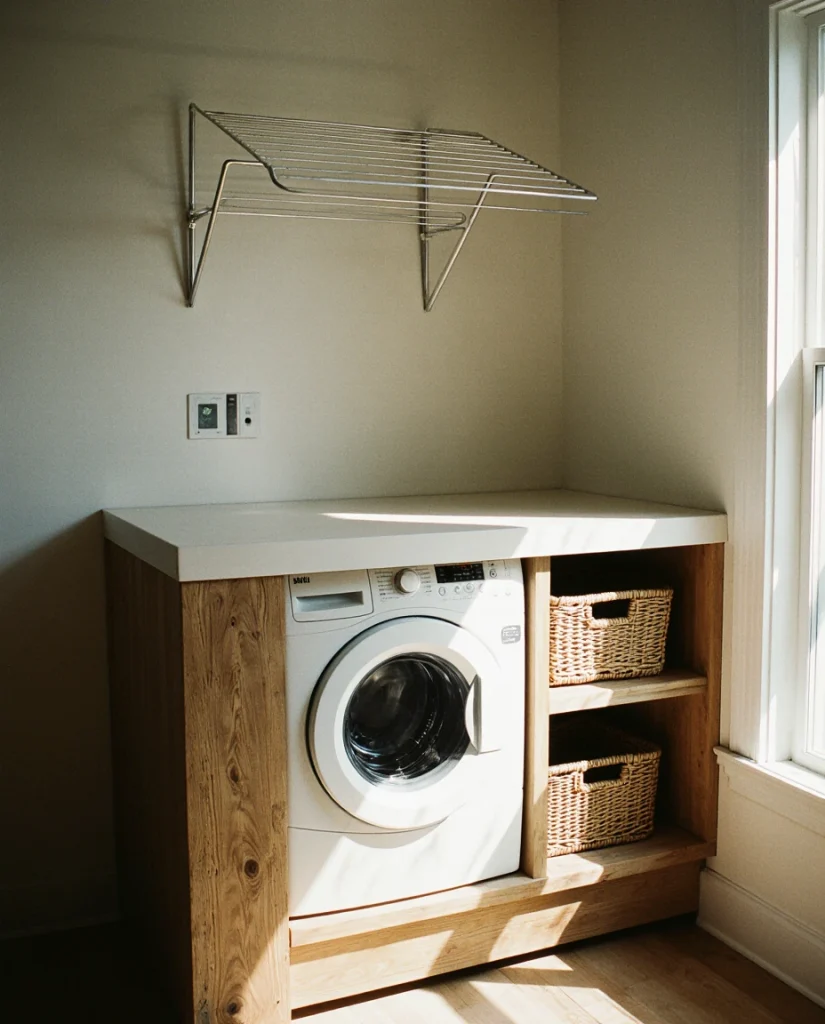
The biggest practical challenge with closet laundries is ventilation—dryers need proper exhaust to prevent moisture buildup and potential fire hazards. Most building codes require a vent that runs to an exterior wall, so before committing to this conversion, check with a licensed contractor about routing options. In condos and apartments, some residents have had success with ventless heat-pump dryers that don’t require traditional ducting.
6. Mudroom-Laundry Hybrid for Active Families
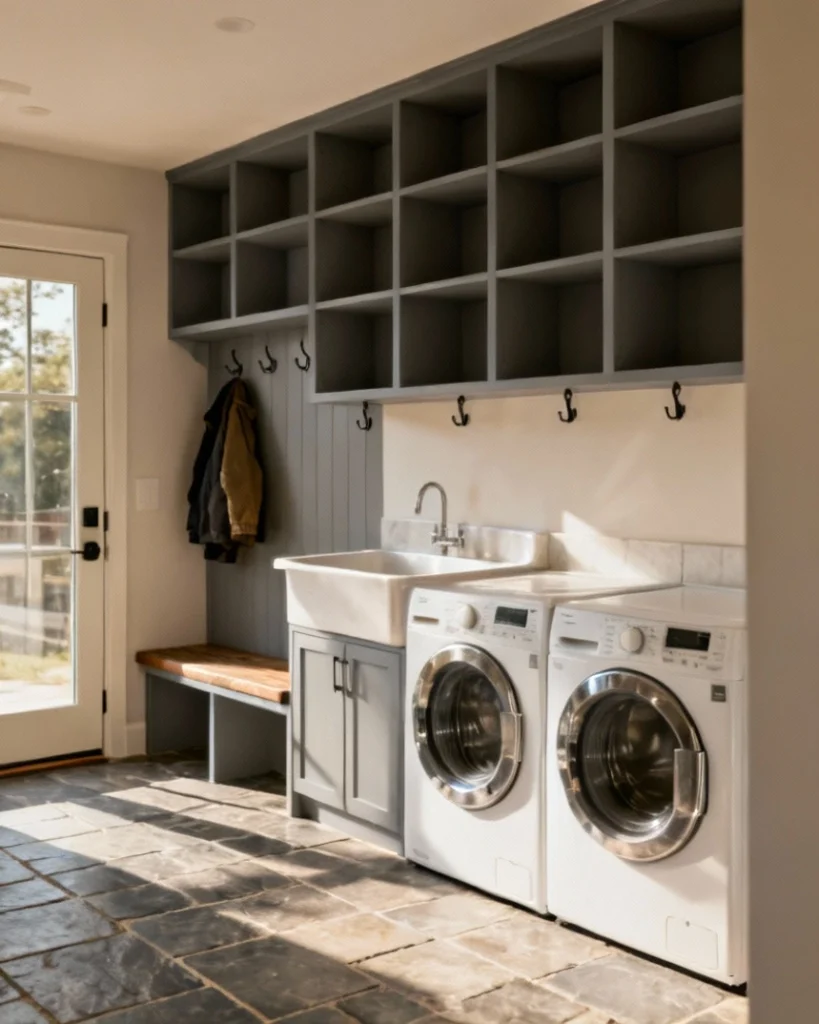
Combining a mudroom with laundry facilities makes perfect sense for families with kids in sports, pets that track in dirt, or anyone who lives in regions with dramatic seasonal changes. Built-in cubbies for shoes and backpacks sit alongside the washer and dryer, with a utility sink positioned between them for pre-treating stains or washing muddy paws. Durable tile flooring handles the inevitable spills and wet footprints.
This configuration is particularly popular in New England and the Pacific Northwest, where weather conditions mean constant cycles of wet gear coming in and out. Budget-wise, expect to invest more in flooring and cabinetry than you would for a standalone laundry room—porcelain tile that can withstand moisture typically runs $8-15 per square foot installed, while custom cubbies add another $1,500-3,000 depending on size and finish.
7. Luxury Finishes That Elevate Daily Chores
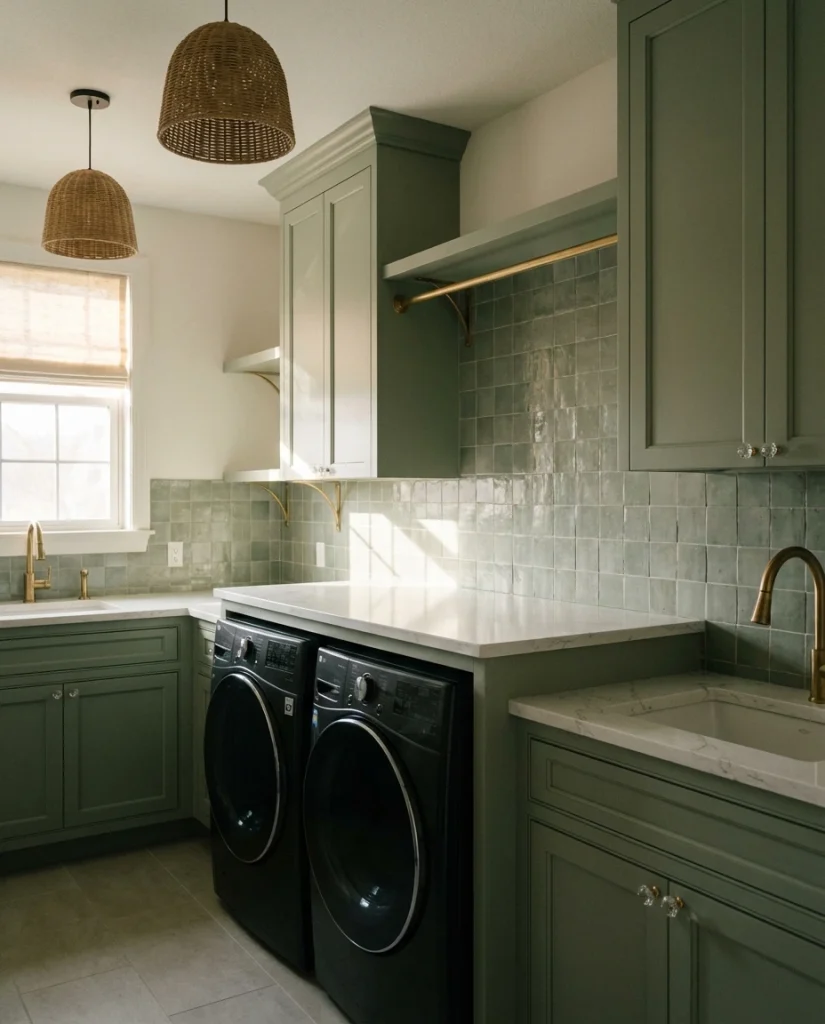
A luxury laundry room isn’t about square footage—it’s about thoughtful material choices that make routine tasks feel special. Marble-look quartz countertops, unlacquered brass faucets that develop a patina over time, and handmade ceramic tile in unexpected places transform the space into something you’d proudly show off. Professional-grade appliances with steam cycles and allergen settings complete the high-end experience. 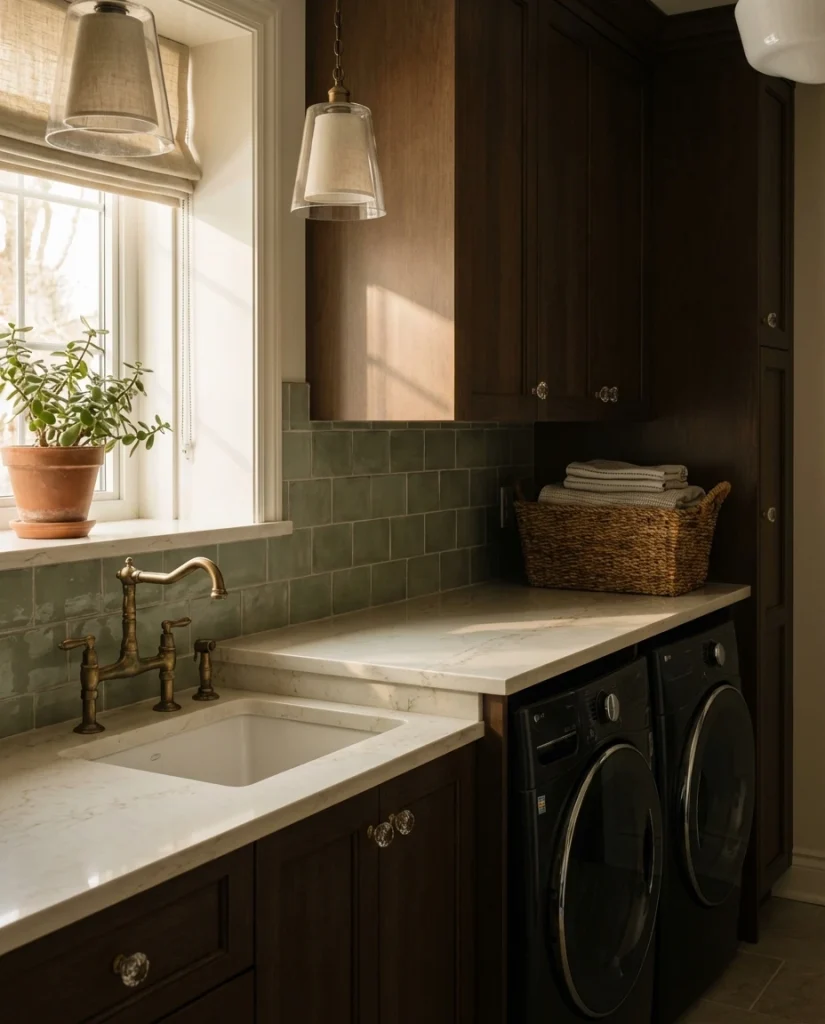
Interior designers note that the laundry room has become a surprising status symbol in upscale home renovations, with clients requesting finishes on par with their kitchens and primary bathrooms. The shift reflects a broader cultural recognition that spaces we use daily deserve the same design attention as those we show guests, even if that space happens to be where we sort whites from colors.
8. Narrow Galley Layout for Hallway Spaces
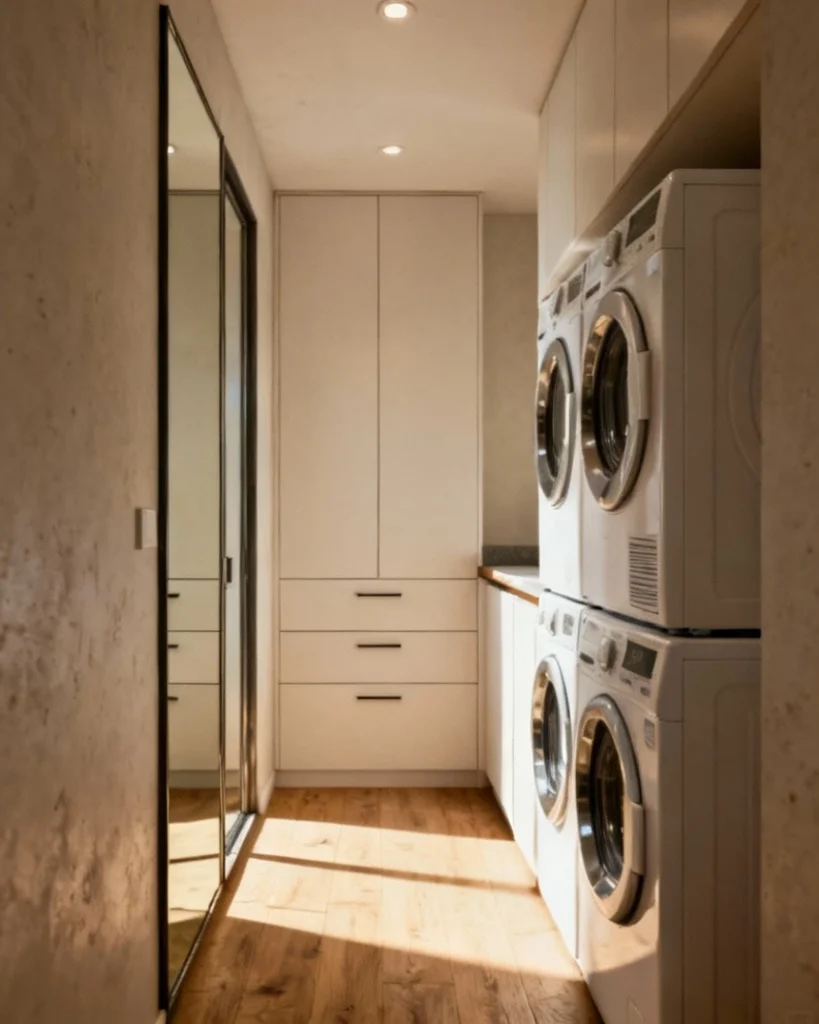
A narrow galley-style laundry room measuring just 3-4 feet wide can still function beautifully with strategic planning. Machines line one wall, while the opposite side features a full-height cabinet with pullouts for sorting bins, a flip-down ironing board, and a countertop that cantilevers slightly over the machines for folding. Mirrored cabinet doors on one side visually expand the space. 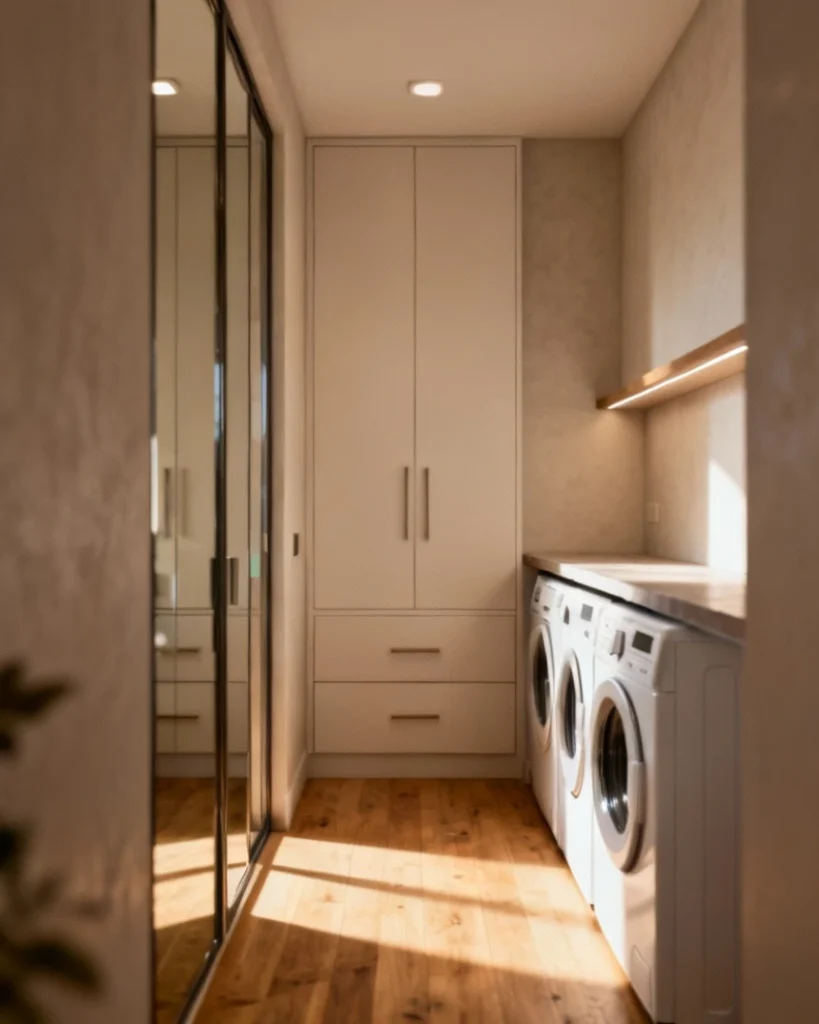
One Chicago homeowner mentioned that her 40-inch-wide galley laundry initially felt impossible to navigate, but after removing a standard door and installing a pocket door, she gained an extra eight inches of usable width that made all the difference. Small changes like swapping door swings or choosing compact-depth machines can turn a frustrating layout into one that works smoothly for years.
9. Large Multi-Purpose Family Command Center
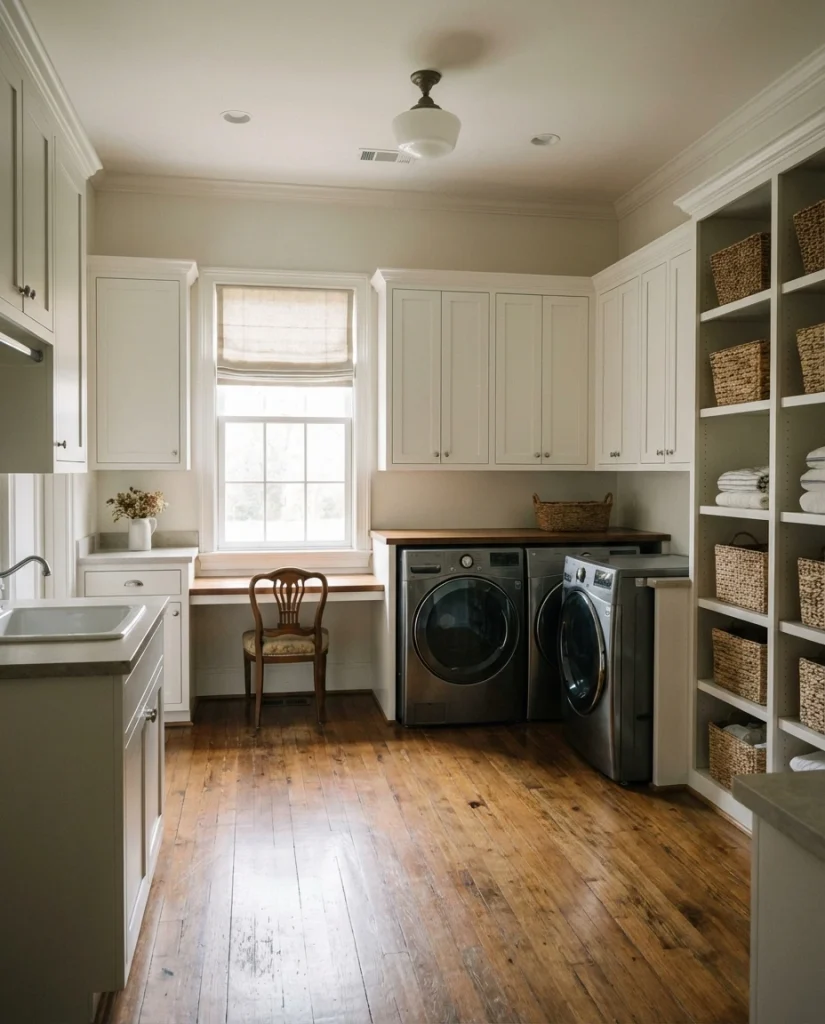
When you have the luxury of a large laundry room, the space can serve multiple functions beyond washing clothes. A built-in desk area becomes homework central or a bill-paying station, while a second sink handles flower arranging and craft projects. Floor-to-ceiling storage accommodates bulk household supplies, seasonal decorations, and anything else that needs a home out of sight.
Real estate agents in suburban markets report that oversized laundry rooms with multi-functional features have become a selling point comparable to updated kitchens, particularly among buyers with children. The ability to centralize household management tasks in one well-organized space appeals to the way many American families actually live, with laundry happening alongside homework help and package wrapping.
10. Stacked Configuration for Maximum Vertical Storage
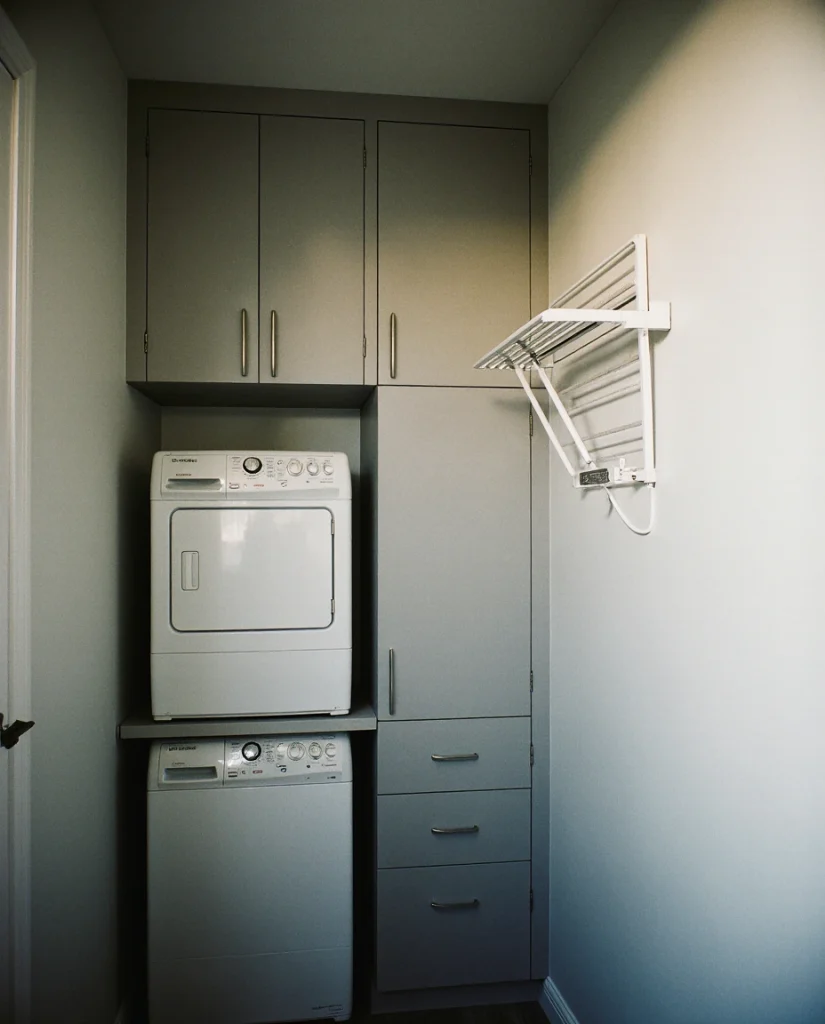
A stacked washer-dryer setup frees up valuable floor space for what really matters in a small, narrow room—storage and counter surface. Installing the units on a 12-15 inch platform creates a drawer below for detergent pods and dryer sheets, while the vertical space above accommodates cabinets that reach the ceiling. Side walls become prime real estate for hooks, fold-down drying racks, and narrow shelves.
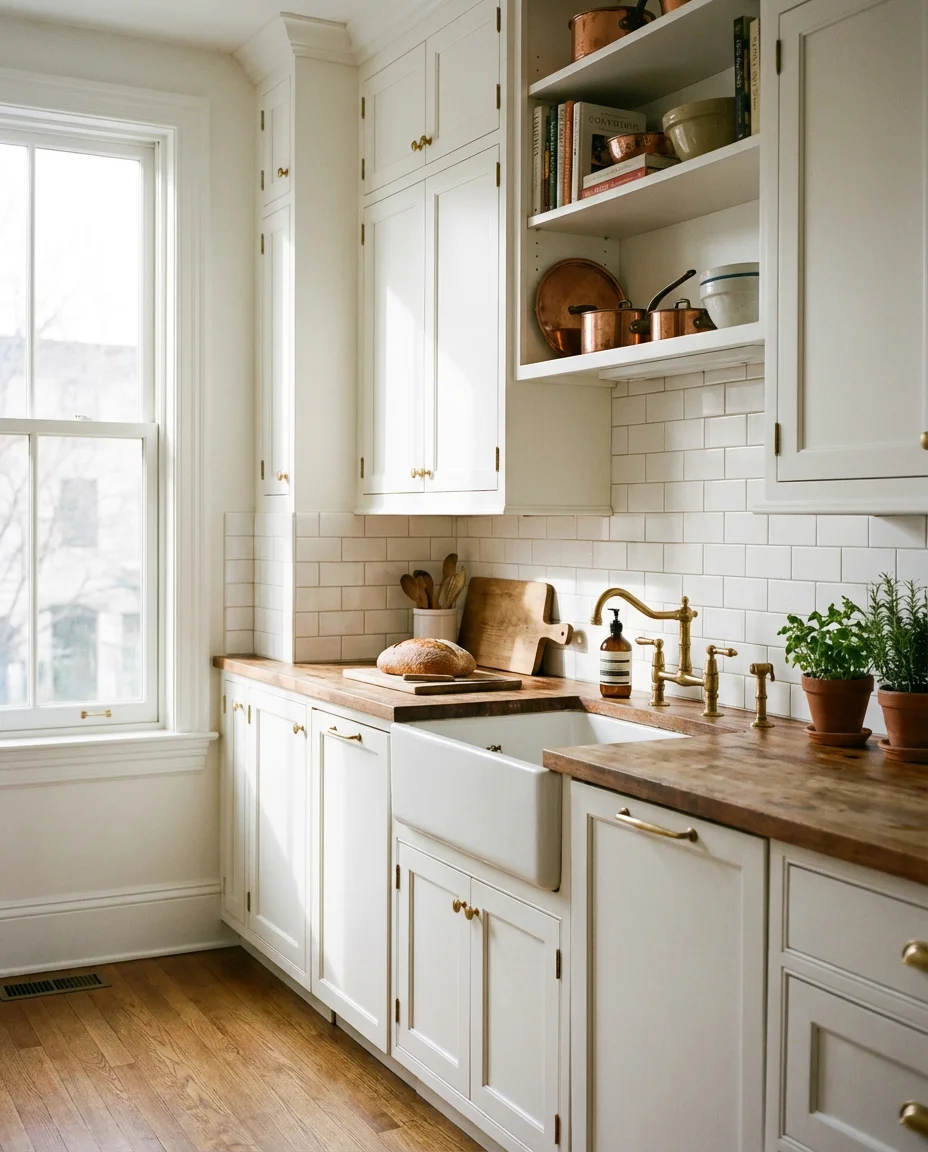
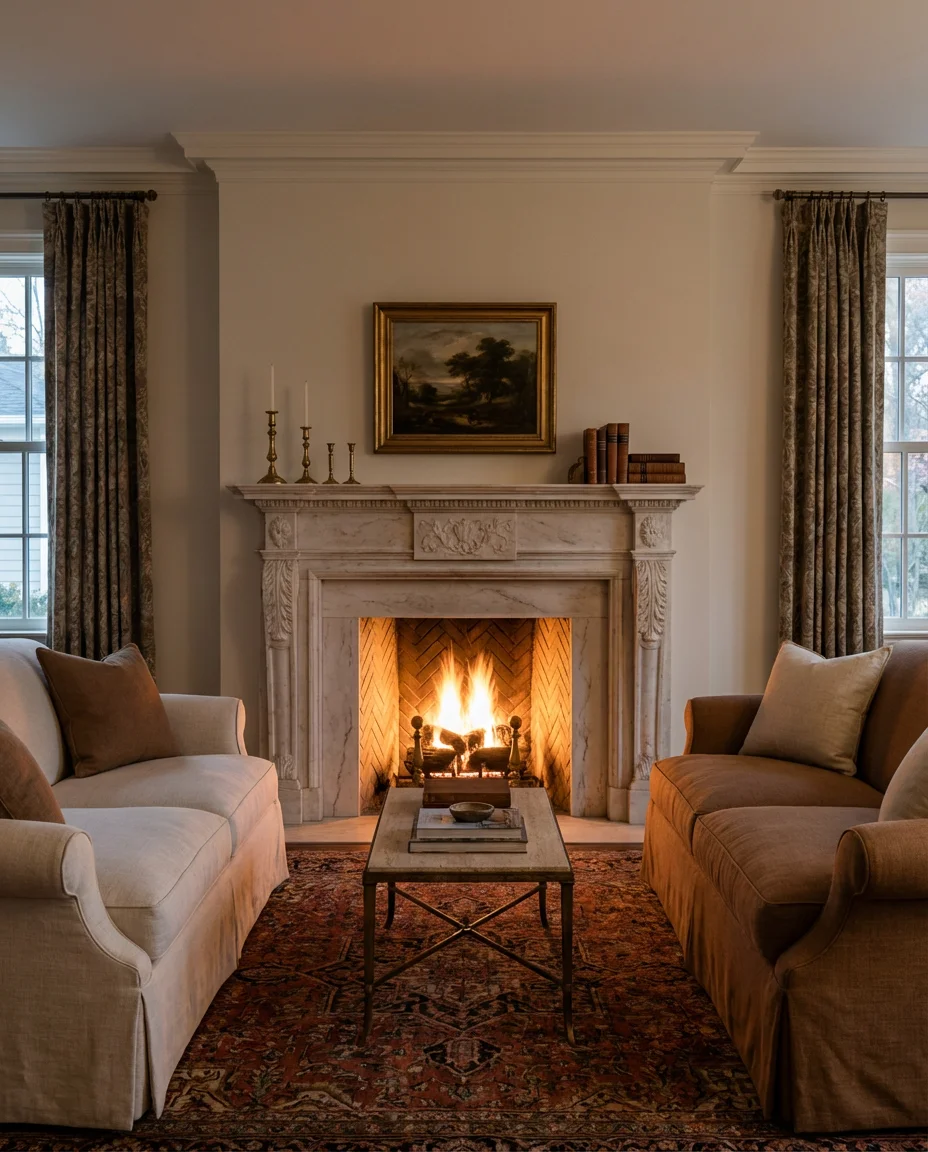
The most common mistake with stacked configurations is failing to account for dryer vent routing—the exhaust needs a clear path to the outside, which can be tricky when units sit against interior walls. Before purchasing stacked machines, measure your vent path and consider whether you’ll need a periscope box (a thin vent adapter) to navigate tight spaces between the dryer and wall.
11. Rustic Farmhouse with Reclaimed Materials
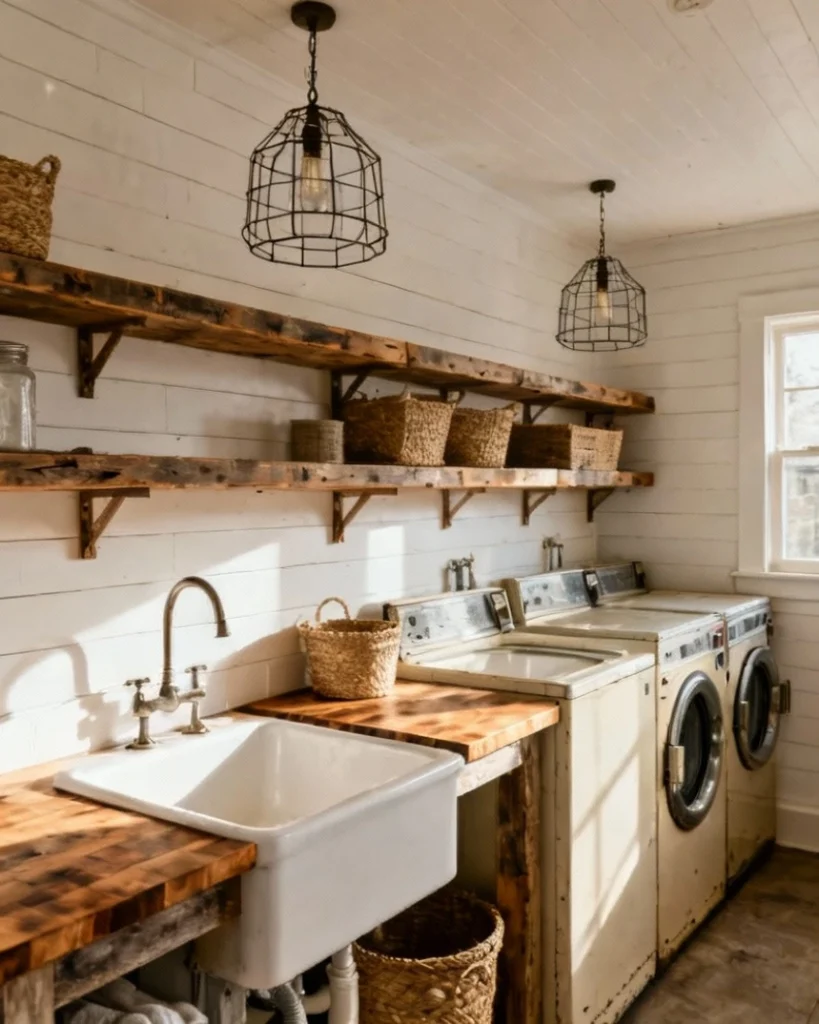
A rustic laundry room embraces imperfection through reclaimed wood shelving, vintage-inspired hardware, and finishes that look better with age. Shiplap walls painted in soft white contrast with a butcher block countertop that can handle wet laundry baskets without worry. A farmhouse sink deep enough to soak stained tablecloths adds authentic functionality, while Edison bulbs in wire cages provide warm ambient lighting. 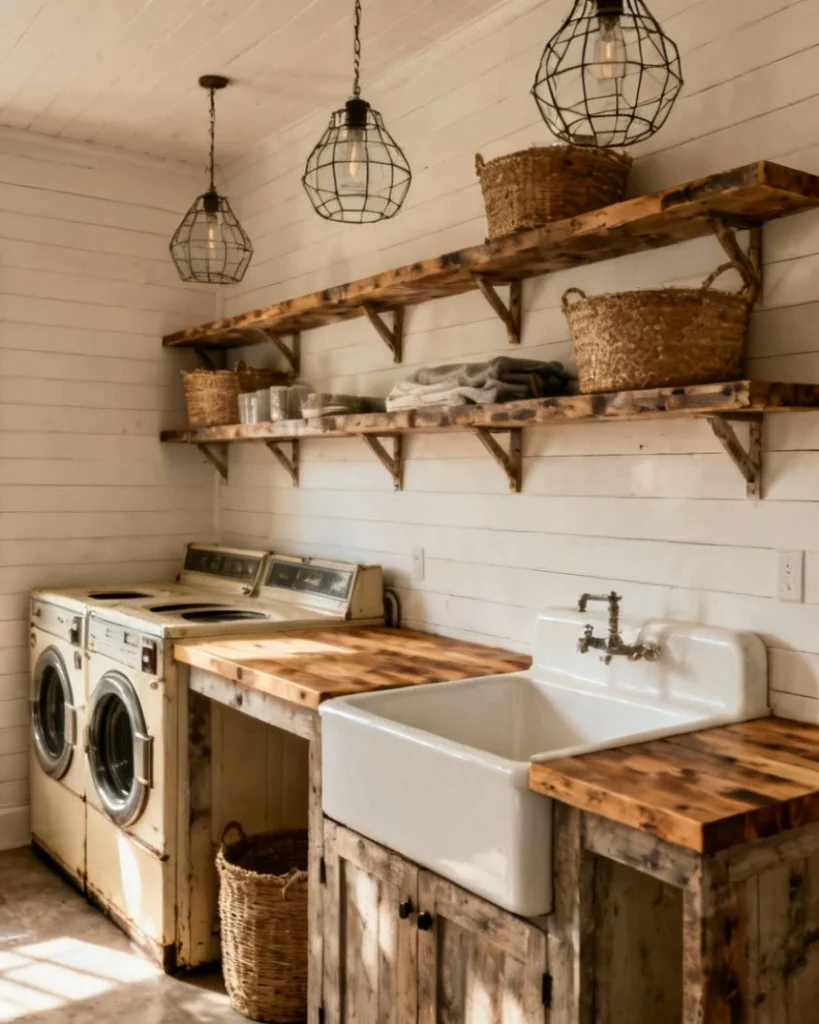
This aesthetic resonates particularly strongly in Texas, Tennessee, and rural areas throughout the South and Midwest, where modern farmhouse style has dominated home design for the past decade. Budget-conscious renovators can achieve the look without breaking the bank—reclaimed wood from salvage yards costs significantly less than new hardwood, and painting existing cabinets white with distressed edges creates instant farmhouse charm for under $200 in materials.
12. Organization Systems for Type-A Personalities
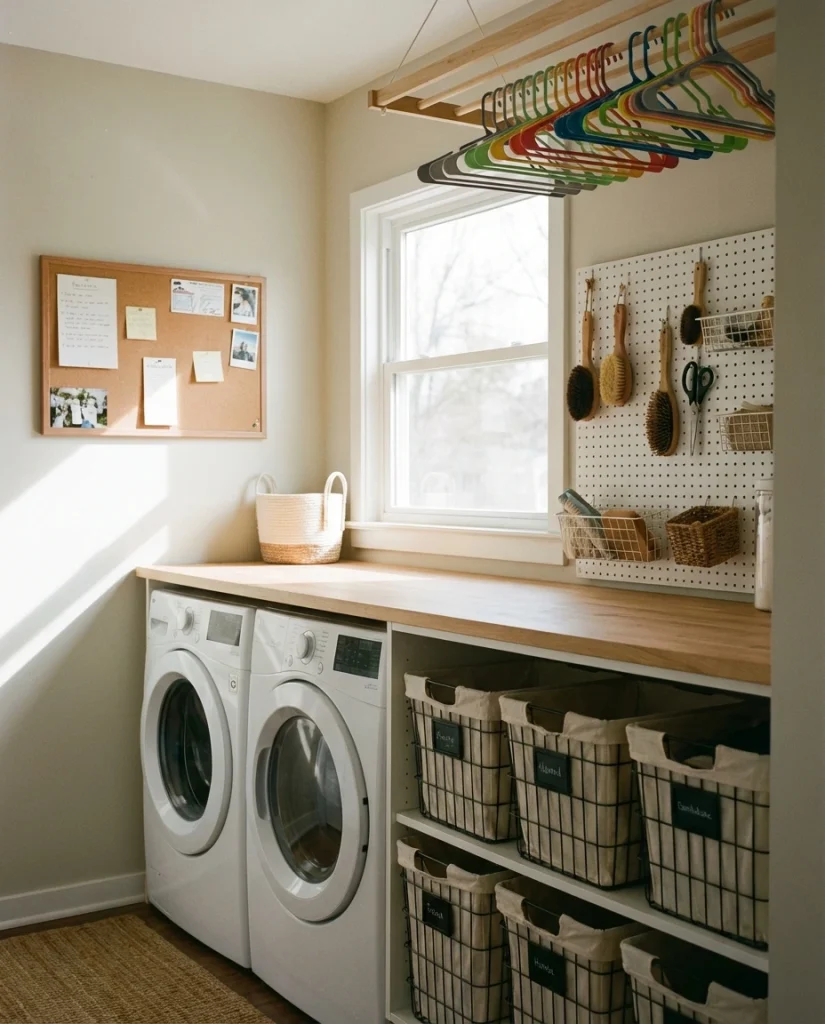
An organization-focused laundry room puts systems front and center, with labeled bins for sorting, a color-coded rod for air-drying by family member, and a pegboard wall that keeps every tool visible and accessible. A countertop with built-in measuring tape helps with craft projects, while a small bulletin board tracks dry-cleaning tickets and alteration deadlines. Everything has a designated home, eliminating the frantic search for lost socks.
Professional organizers note that the clients who invest most heavily in laundry room systems are often the same people who maintain meticulously organized pantries and closets—they understand that spending thirty minutes upfront creating a logical system saves hours of frustration over a lifetime. The pegboard alone, which costs about $40-60 installed, eliminates the “where did I put the stain stick” problem that plagues less organized spaces.
13. Dark and Moody Drama for Bold Homeowners
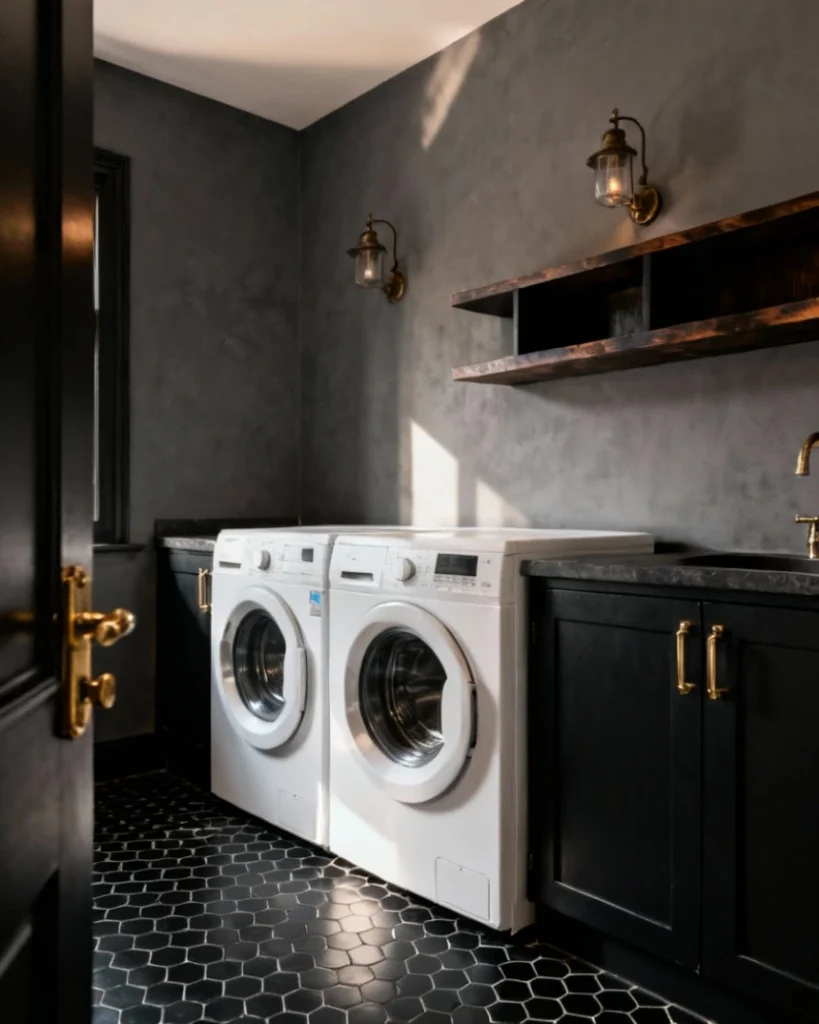
A dark laundry room challenges conventional wisdom about keeping utility spaces bright, instead creating a moody retreat with charcoal walls, matte black cabinetry, and brass accents that gleam against the shadows. This approach works surprisingly well in windowless spaces where artificial lighting can be controlled for ambiance. The dramatic palette makes white appliances pop like sculptural elements rather than boring necessities. 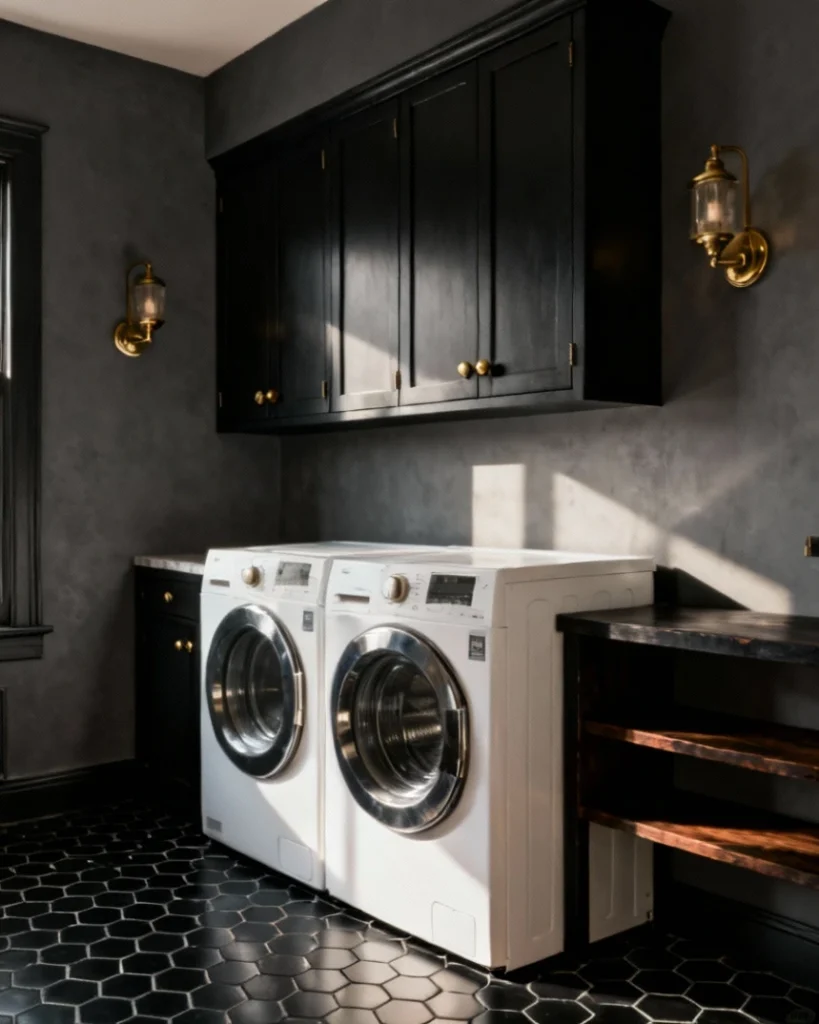
A Los Angeles designer shared that her own moody laundry room has become the most photographed space in her home on Instagram, proving that unexpected design choices create memorable moments. She noted that dark paint actually hides water spots and detergent drips better than white, making it more practical than people assume—though she does recommend using a semi-gloss or satin finish for easier cleaning.
14. Small Space Stackable with Hidden Storage
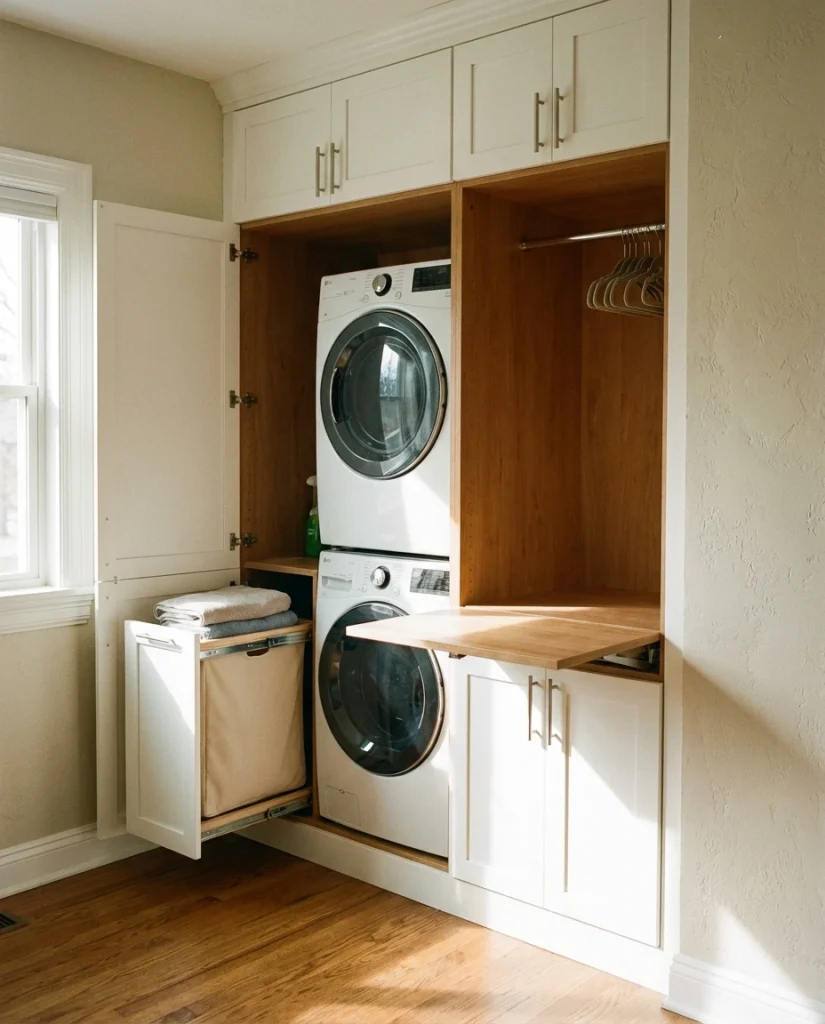
Making a small space stackable unit work means getting creative with every surrounding inch. A custom cabinet built around the machines hides them behind doors when not in use, with the interior fitted for hanging rods, pull-out hampers, and a flip-down table that extends when needed for folding. The closed doors present a clean face to adjacent living spaces, crucial in open-plan apartments.
This approach is especially popular in converted lofts and micro-apartments across urban areas where every room serves multiple purposes. The cabinet construction typically requires a skilled carpenter and runs $2,000-4,000 depending on materials and complexity, but the investment pays off in both functionality and resale value—prospective buyers love seeing laundry seamlessly integrated into the overall design rather than awkwardly exposed.
15. Colorful Cabinets for Personality
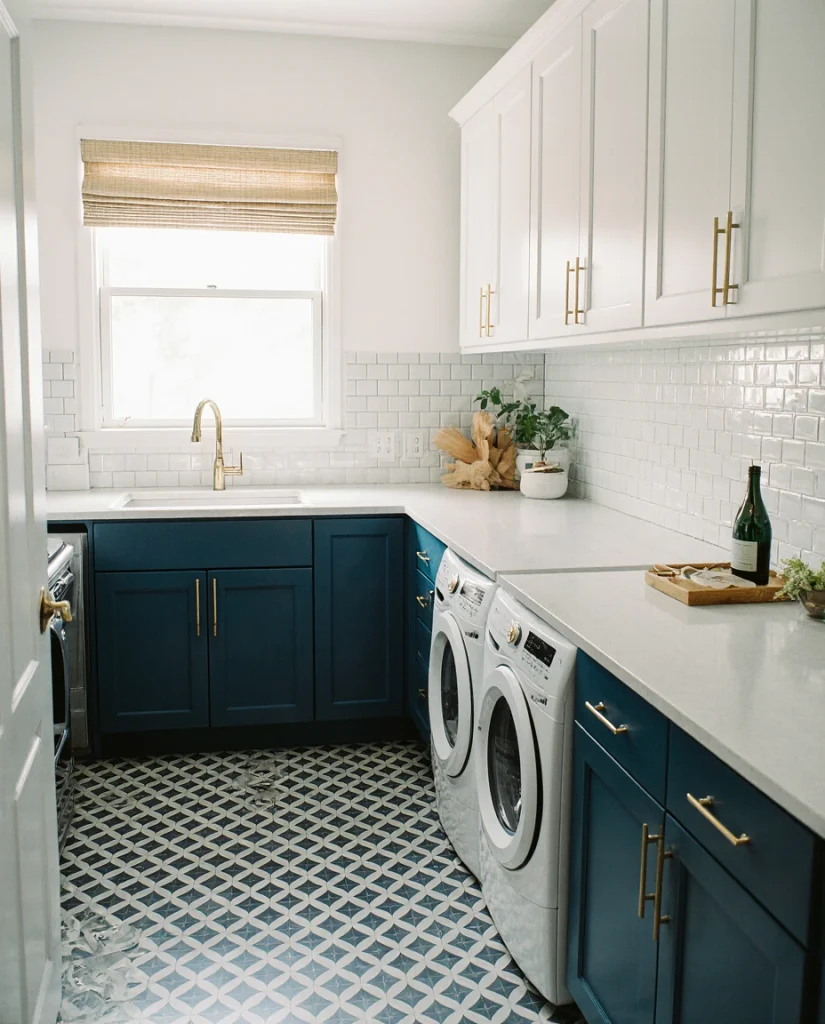
A colorful laundry room rejects the all-white standard in favor of cabinets in unexpected hues—deep teal, sunny yellow, or dusty pink—that inject joy into a task-oriented space. The bold cabinetry pairs with neutral countertops and simple white machines, allowing the color to be the star without overwhelming the senses. Patterned floor tiles in complementary tones tie everything together. 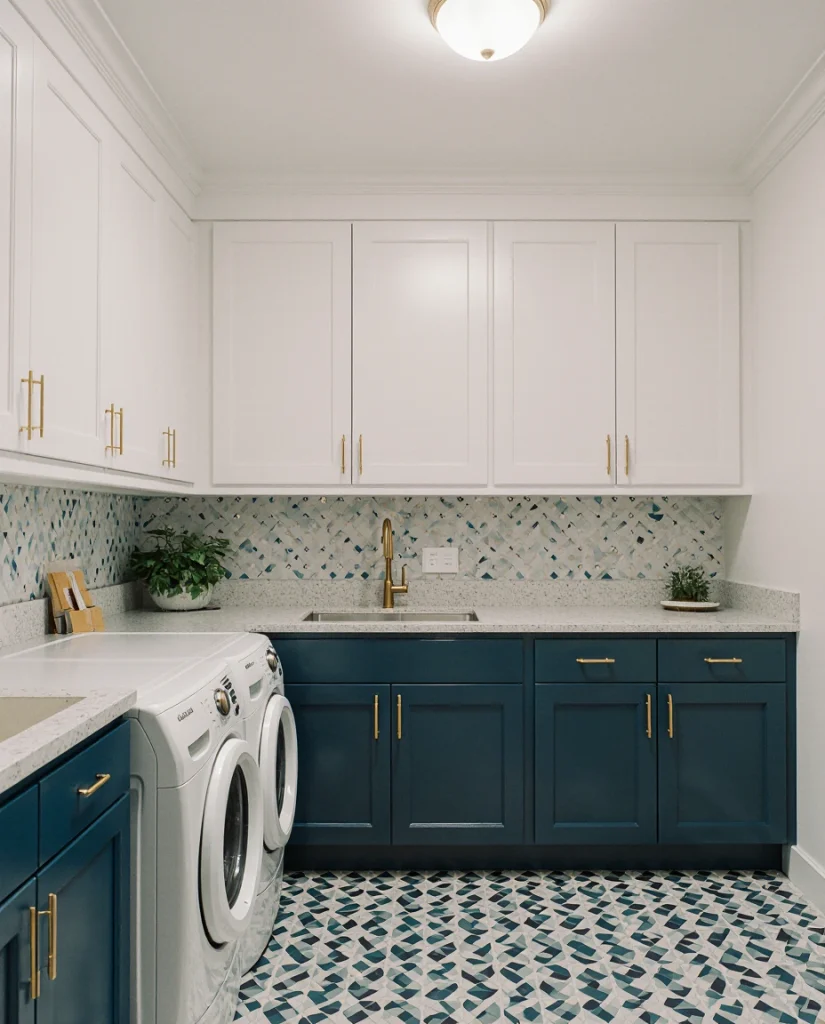
Color psychology research suggests that vibrant hues in frequently used spaces can actually improve mood and productivity, which explains why some homeowners report feeling less resistant to tackling laundry piles after painting their cabinets a happy color. The trend aligns with the broader move away from safe, neutral, everything design toward spaces that reflect individual personality, even in rooms that guests might never see.
16. Garage Conversion for Growing Families
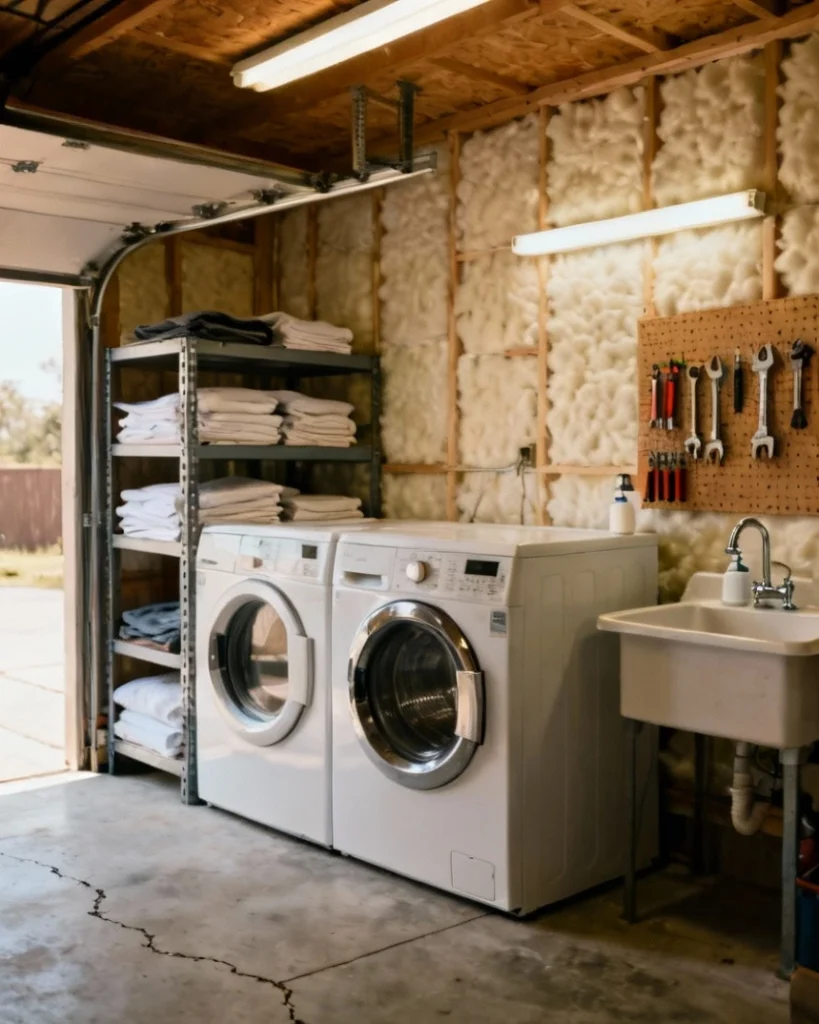
Claiming a corner of the garage for laundry makes sense when indoor square footage is tight and you need space for large-capacity machines that handle family-sized loads. Concrete floors handle spills without damage, while industrial shelving from a hardware store provides budget-friendly storage for bulk supplies. Insulating the exterior wall and adding a small space heater makes the space comfortable year-round in most climates.
Homeowners in Arizona and Southern California particularly favor garage laundry setups because the climate doesn’t require the heavy insulation and climate control needed in harsher regions. The main consideration is plumbing—running water lines and drainage to a garage typically costs $800-1,500 depending on distance from existing pipes, but for families doing eight-plus loads weekly, having commercial-sized machines can justify the upfront investment.
17. Fun and Whimsical Design for Daily Smiles
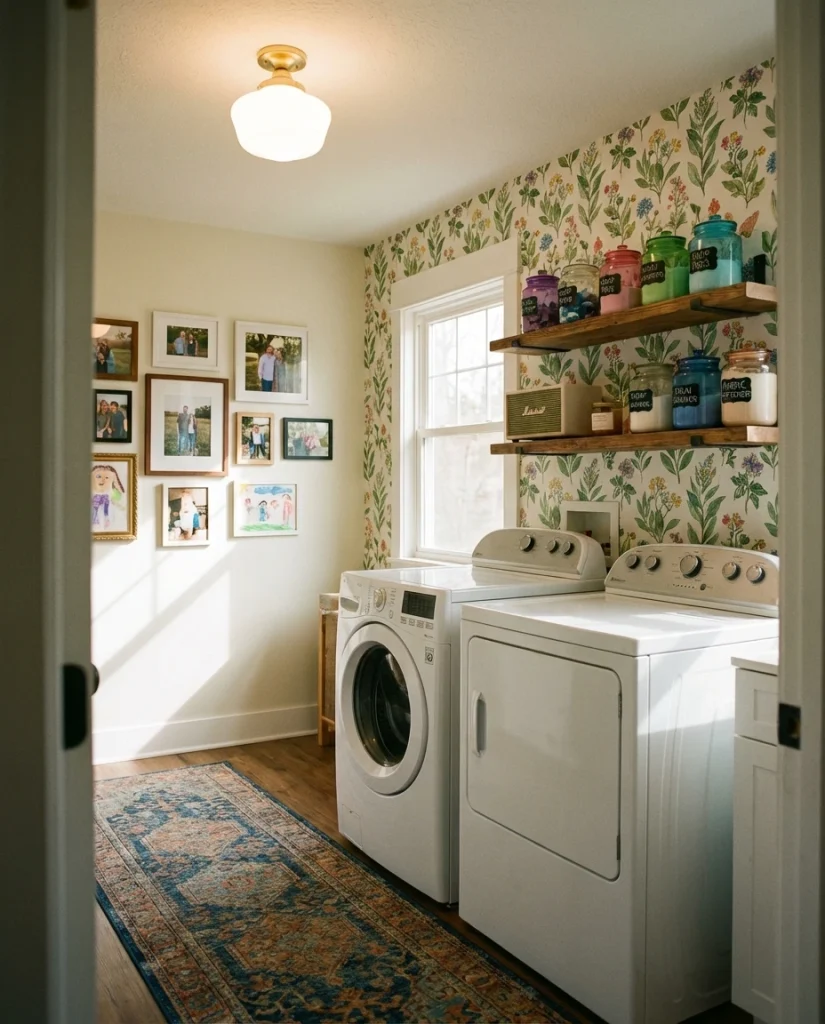
A laundry room designed to be fun does not take its work seriously. It can have working space with floating shelves purposefully styled to be colorful and quirky and with cheerful wallpaper. A small podcast-sized speaker can optimize the time spent folding laundry. The design acknowledges that circumventing a workspace is counterproductive, especially to an area that contains playful and cheerful elements. If time has to be spent there, it’s more productive for concentrating on less tedious work or more creatively focused work. 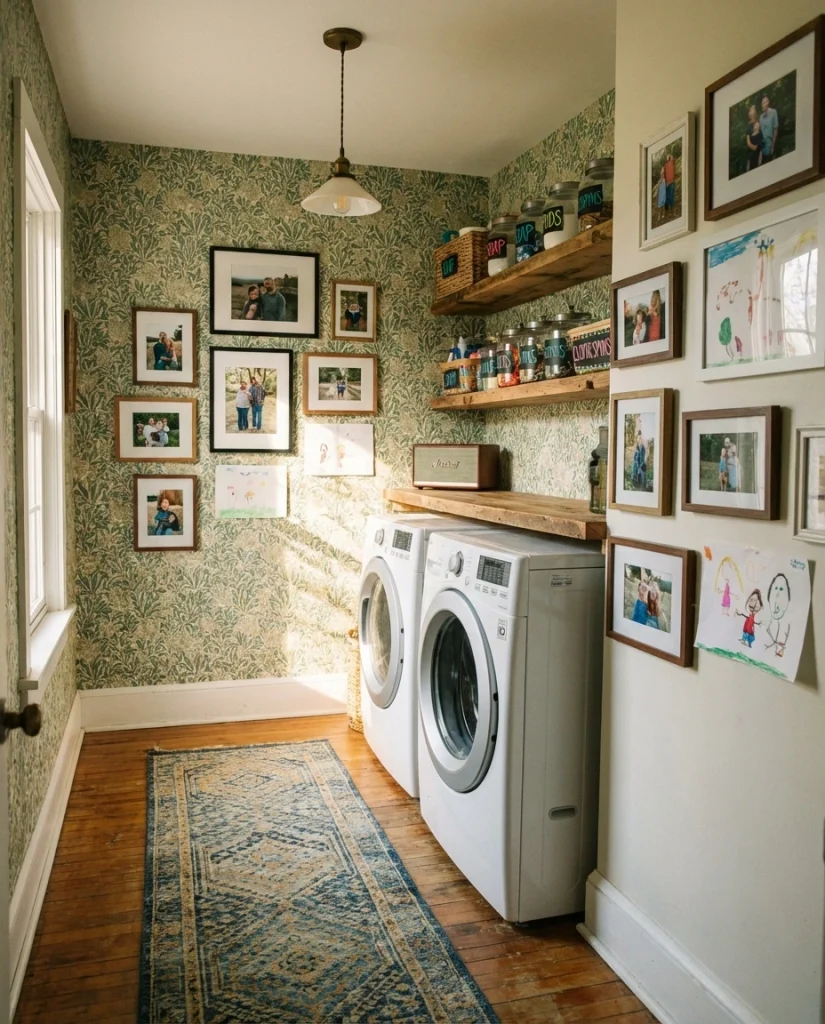
An Austin homeowner mentioned that adding wallpaper to her previously bland laundry room cost about $150 and took a single afternoon but completely changed how she felt about entering the space. She chose a pattern with lemons and found herself actually looking forward to laundry day as a moment to enjoy her cheerful walls, which sounds small but represents a meaningful shift in how we think about designing utilitarian spaces.
18. Toca Boca-Inspired for Young Families
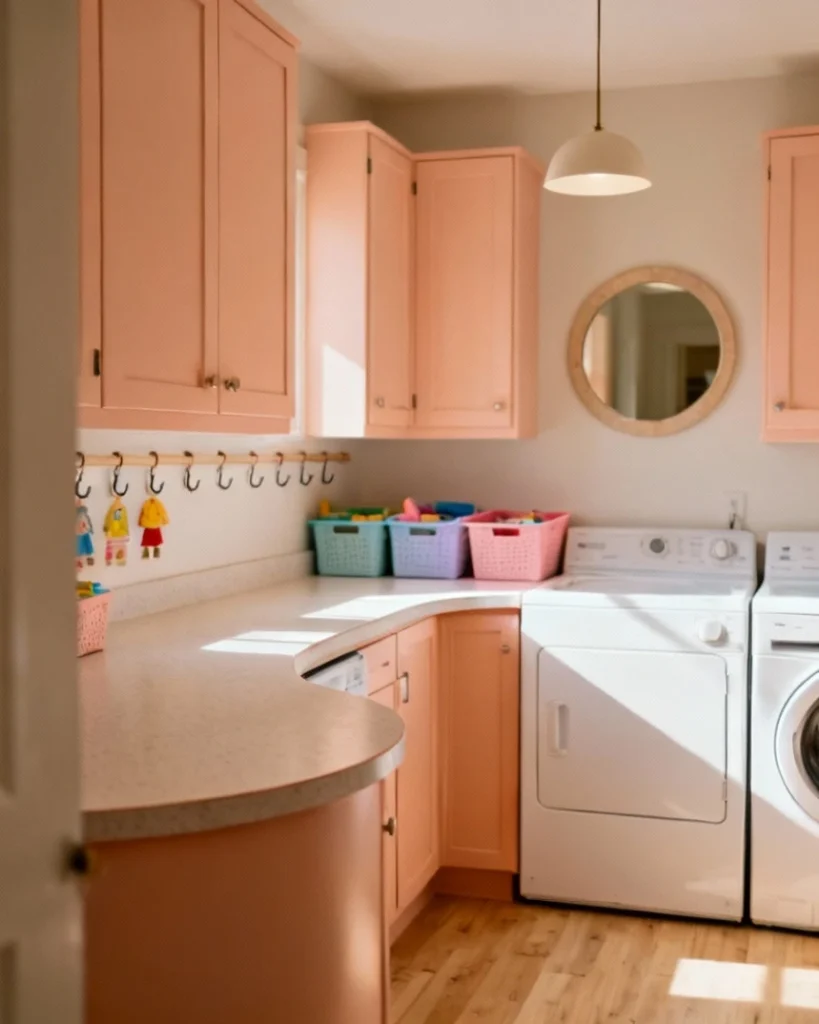
The gentle, rounded aesthetic of Toca Boca games translates beautifully into real laundry rooms designed for families with young children. Soft curved edges on countertops prevent bumps and bruises, while lower hooks and bins allow kids to participate in sorting and folding. Pastel colors and simple patterns create a calming environment that feels safe and welcoming for little helpers learning household responsibilities. 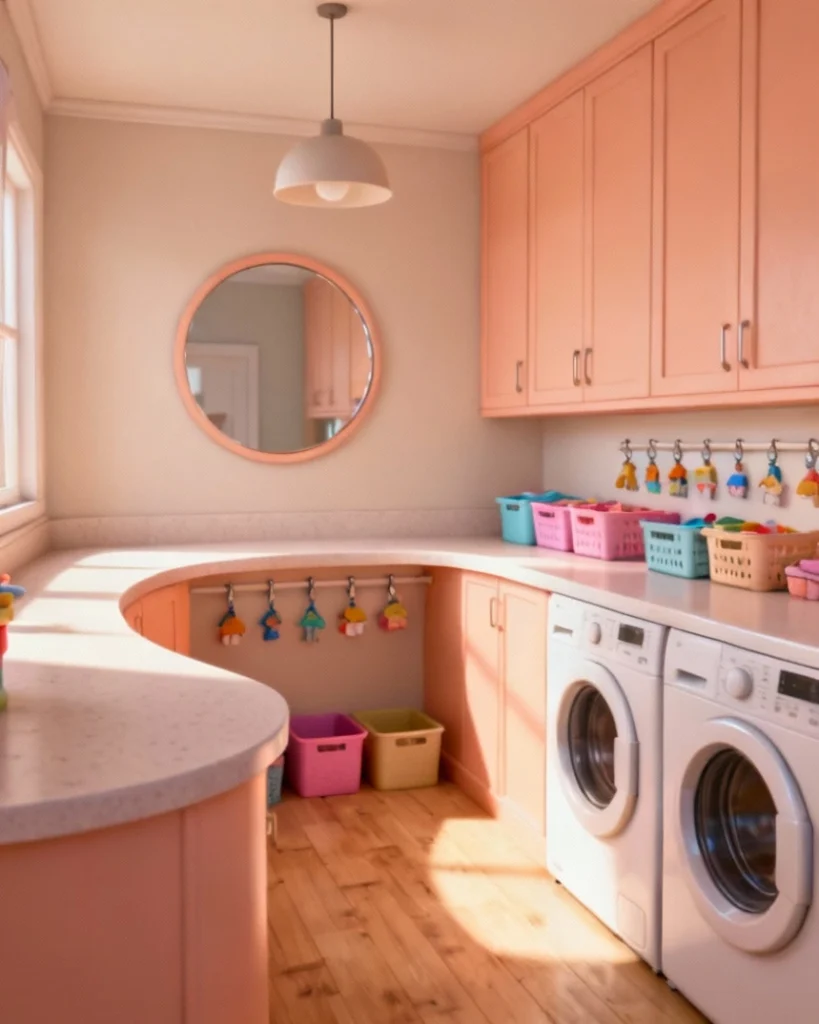
Child development experts increasingly recognize the value of involving children in household tasks from an early age, and a laundry room designed with kid-friendly features makes that participation possible. Lower hooks installed at 36 inches instead of the standard 60 inches allow even preschoolers to hang their own items, building independence and fine motor skills while taking small tasks off parents’ endless to-do lists.
19. Front Loader Efficiency with Pedestal Drawers
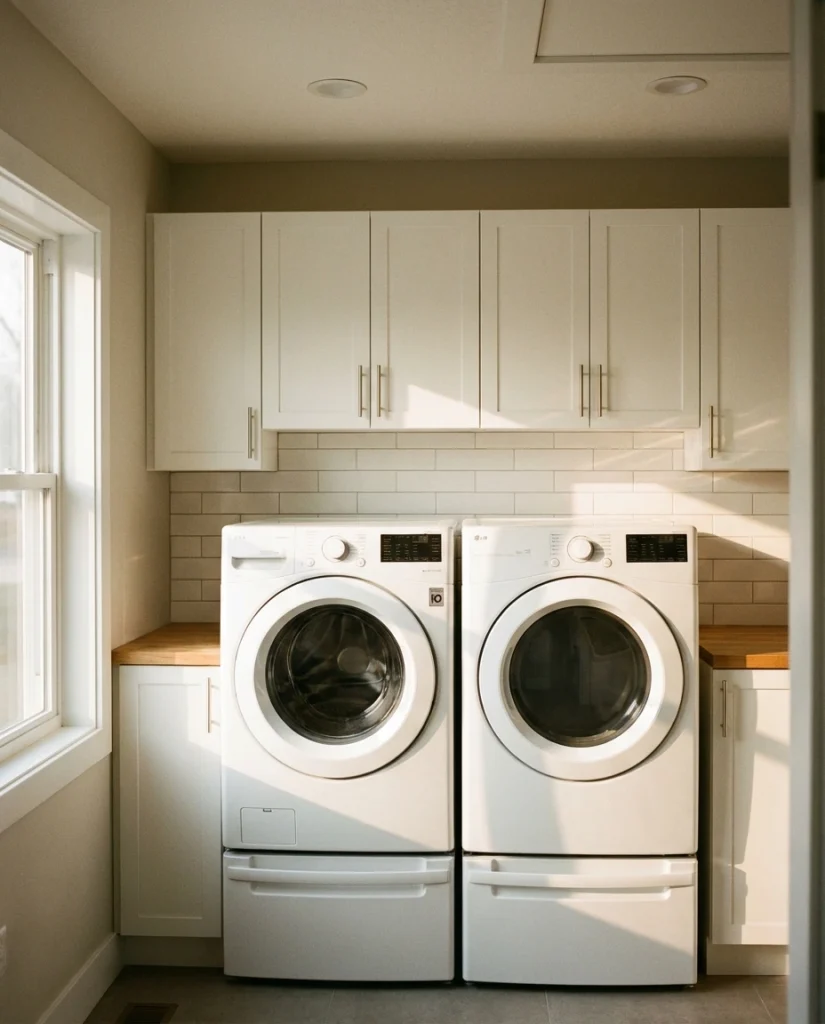
Modern front loader machines sit lower than traditional models, which can be tough on backs during loading and unloading—the solution lies in pedestal drawers that elevate the units to a more ergonomic height while adding storage below. These drawers hold everything from seasonal bedding to rarely used cleaning supplies, maximizing function without requiring additional floor space. The streamlined look keeps everything proportional and professional. 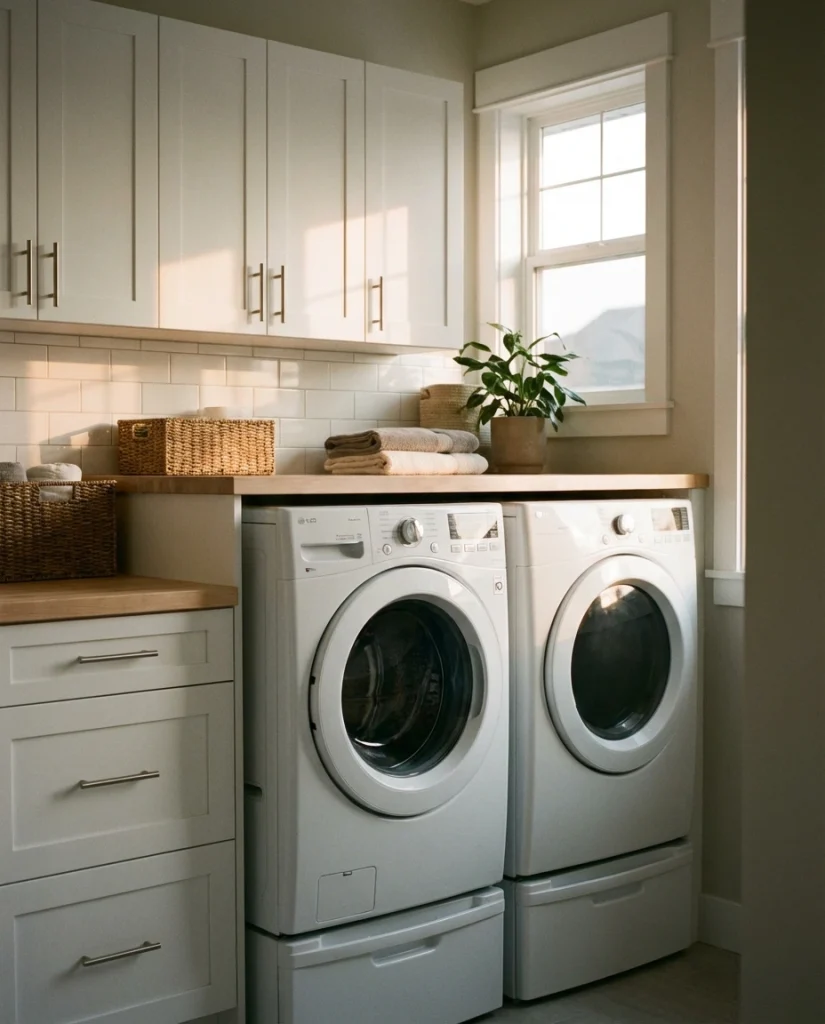
These pedestals typically cost $200-300 per unit when purchased from appliance manufacturers, though handy homeowners have built DIY versions for $100-150 in materials using plywood and drawer slides from home improvement stores. The height gain of 12-15 inches makes a noticeable difference for anyone over 5’6″, reducing the need to bend deeply into the drum and potentially preventing the chronic back strain that comes with years of laundry duty.
20. Stackable Machines with Surrounding Built-Ins
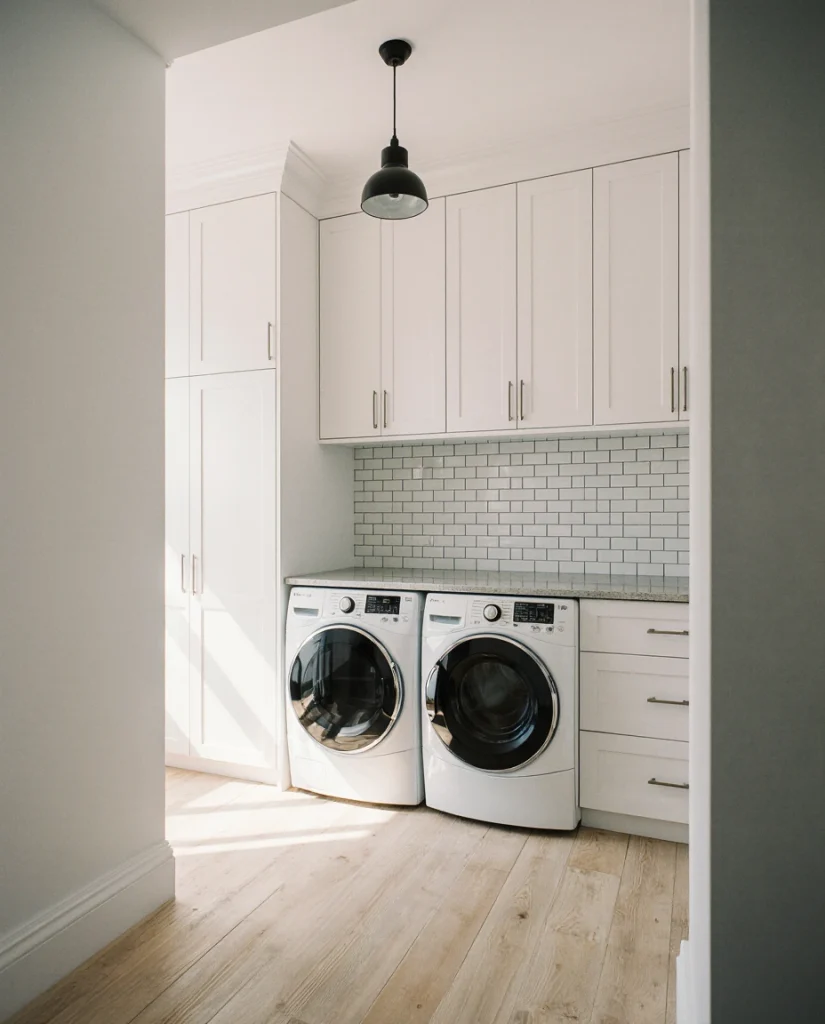
Rather than letting stackable machines stand alone awkwardly, building a full surround with cabinets and counters integrates them into the room’s architecture. Upper cabinets positioned on either side of the stacked unit create symmetry, while a countertop across the adjacent wall provides landing space for baskets and folding. The built-in approach makes even builder-grade appliances look custom and intentional.
The cabinetry investment for this type of built-in design runs $1,500-3,500 depending on whether you choose stock, semi-custom, or fully custom cabinets, but the transformation in both aesthetics and functionality is substantial. You’re essentially creating a laundry room that looks designed by a professional rather than assembled from whatever machines fit in the space, which matters both for daily enjoyment and eventual home resale value.
21. Top Loader Layout with Accessible Design

A top loader layout designed for accessibility considers users of varying heights and abilities, with machines positioned to allow wheelchair approach from multiple angles and controls located within easy reach. Pull-out counters at varied heights accommodate different tasks, while storage keeps frequently used items in the “universal reach range” of 15-48 inches from the floor. Lever-style faucets and D-shaped cabinet pulls require minimal hand strength.
Universal design principles benefit everyone, not just those with mobility challenges—anyone recovering from surgery, aging in place, or simply carrying a heavy laundry basket appreciates features like extra floor clearance and easy-to-operate hardware. The Americans with Disabilities Act provides guidelines for accessible design, though residential spaces aren’t required to comply; still, building in these features from the start costs little extra and dramatically expands who can use the space comfortably.
22. Multi-Zone Organization for Complex Households
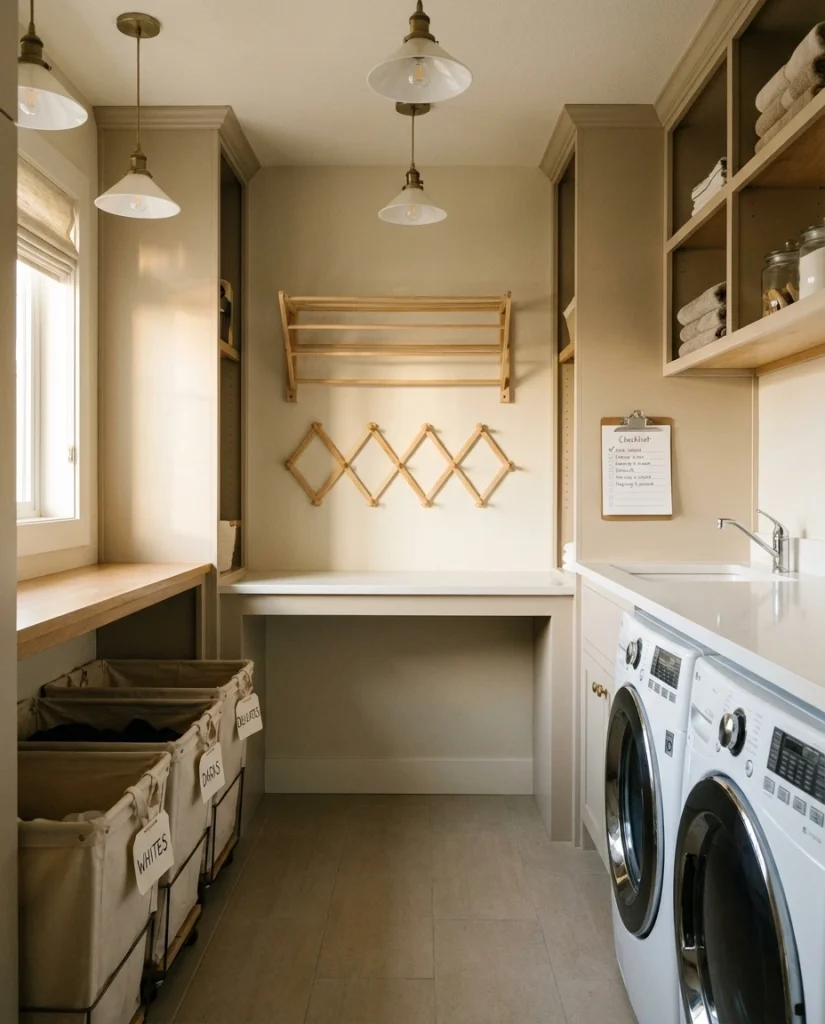
Complex households juggling work clothes, athletic gear, delicates, and kids’ items need dedicated zones within the laundry room—one area for sorting and pre-treating, another for air-drying, and a third for folding and distributing clean items. Individual baskets labeled by family member or item type prevent the single-pile chaos that leads to lost socks and mixed-up ownership. A small label maker becomes the unsung hero of household harmony.
Professional organizers report that the single most effective change in busy laundry rooms is implementing a sorting system before clothes ever reach the machines—when family members sort their own items into designated bins, it eliminates the bottleneck of one person doing all the decision-making about water temperature, cycle type, and detergent choice. The system requires initial training and consistency, but clients universally report that it cuts laundry time by 30-40% within the first month.
Conclusion
These twenty-two laundry room ideas prove that thoughtful design can transform even the most utilitarian space into something that works beautifully for your specific needs and aesthetic preferences. Whether you’re dealing with a tiny closet or a sprawling luxury setup, the key is making deliberate choices about layout, storage, and finishes that serve how you actually live. Which of these approaches resonates with your home? Share your favorite idea or your own laundry room solution in the comments below—we’d love to hear what’s working in your space.