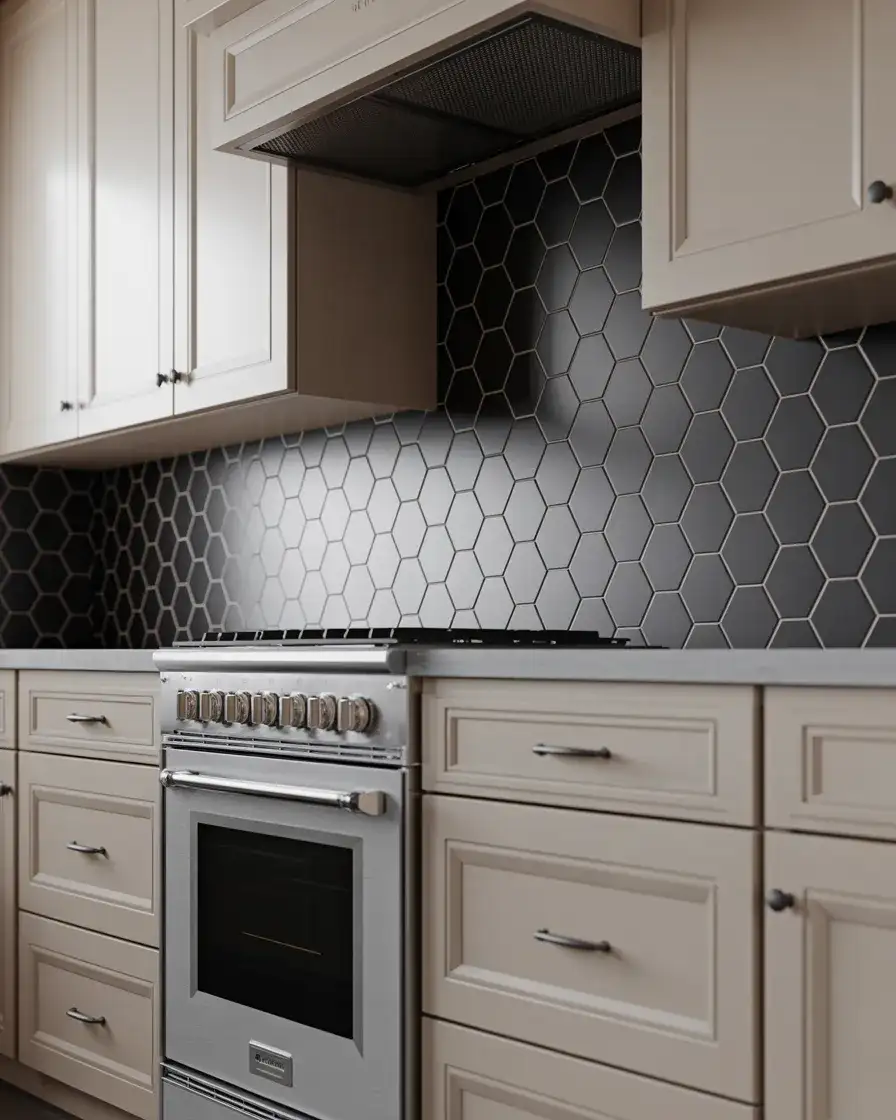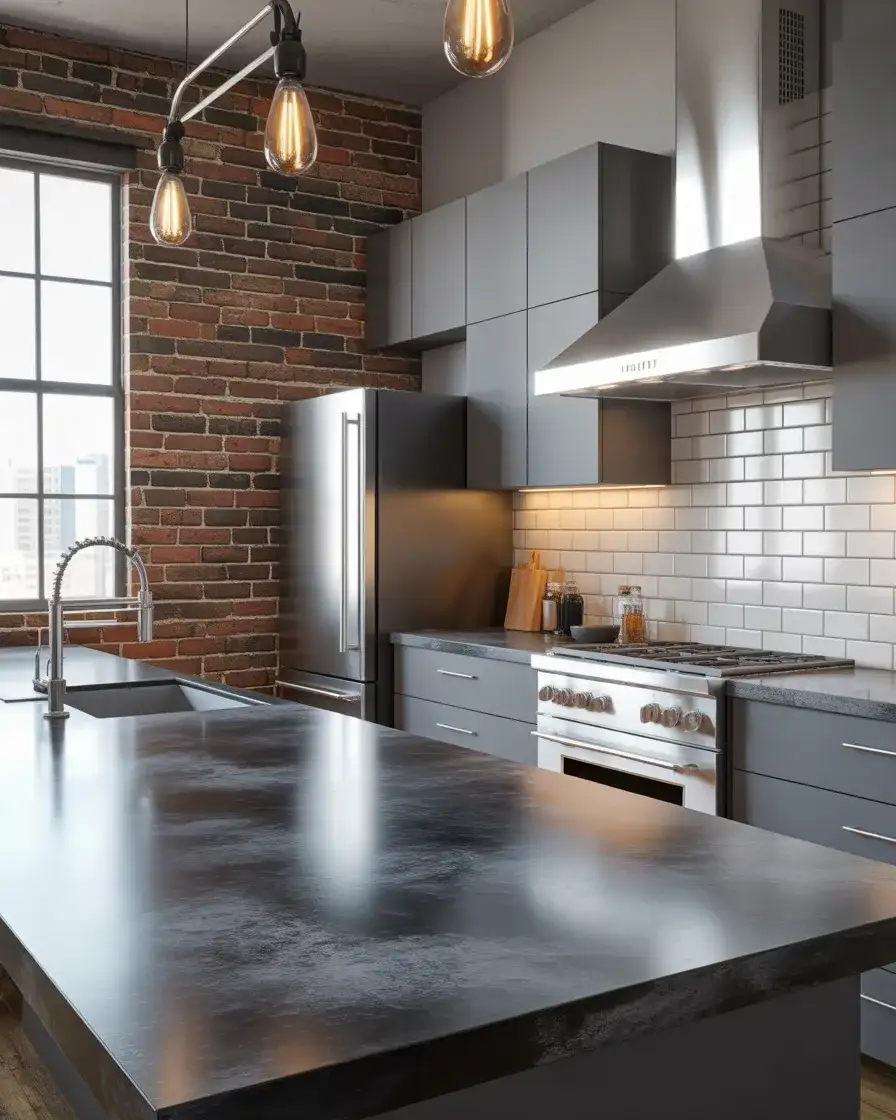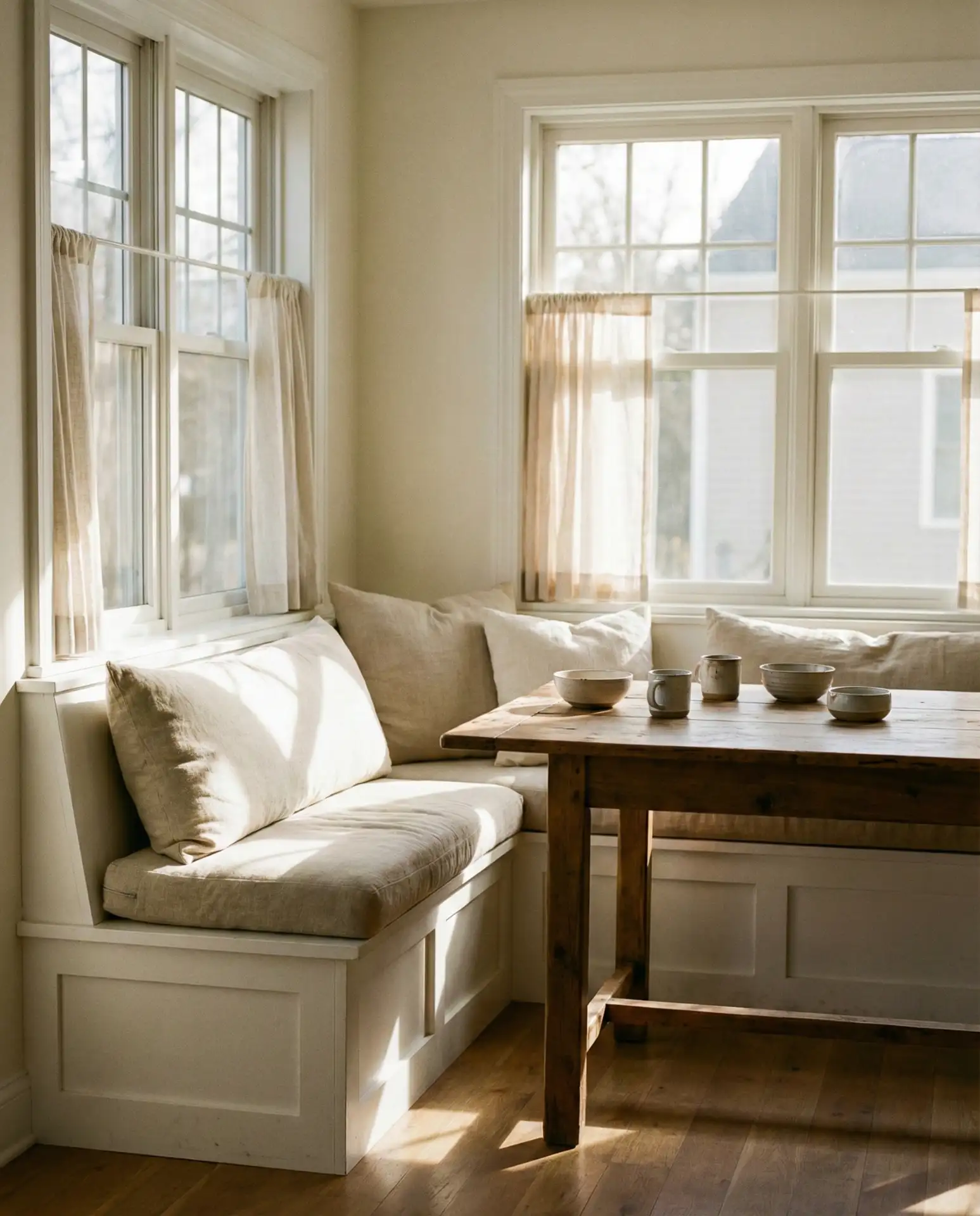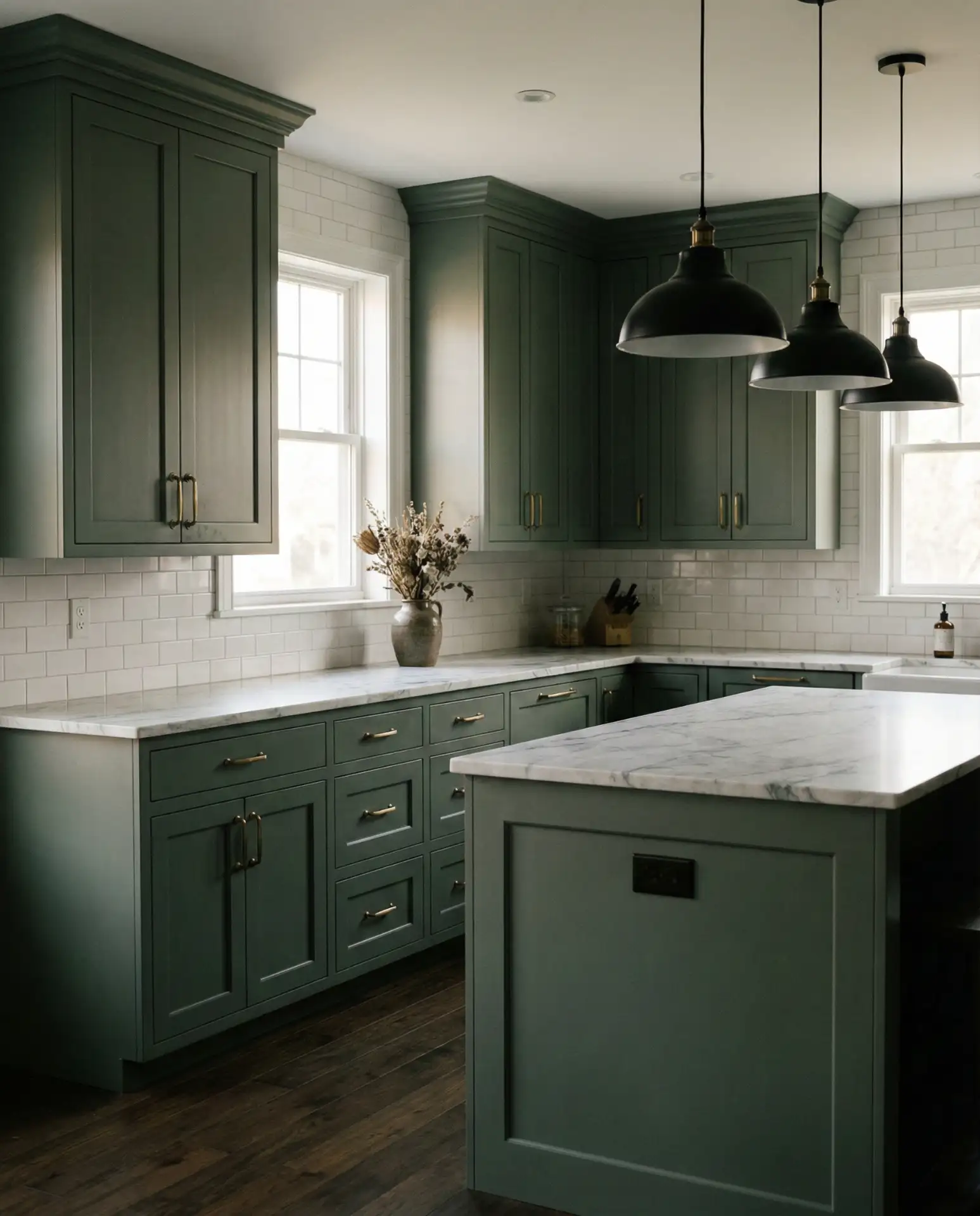
As we move through 2026, the kitchen has solidified its role as the heart of the American home—a place where function meets beauty and where personal style takes center stage. Pinterest users searching for kitchen inspiration this year are drawn to a blend of timeless elegance and fresh, innovative design that feels both aspirational and attainable. Whether you’re planning a full remodel or simply refreshing your space with new color ideas, the trends shaping kitchens in 2026 reflect a desire for warmth, individuality, and smart use of every square inch. In this article, we’ll explore inspiring kitchen interior ideas that capture the spirit of modern American living, from bold color combinations to clever layouts that maximize small spaces. Get ready to discover designs that balance luxury with livability and aesthetics with everyday practicality.
1. Shaped Islands That Define Modern Workflow
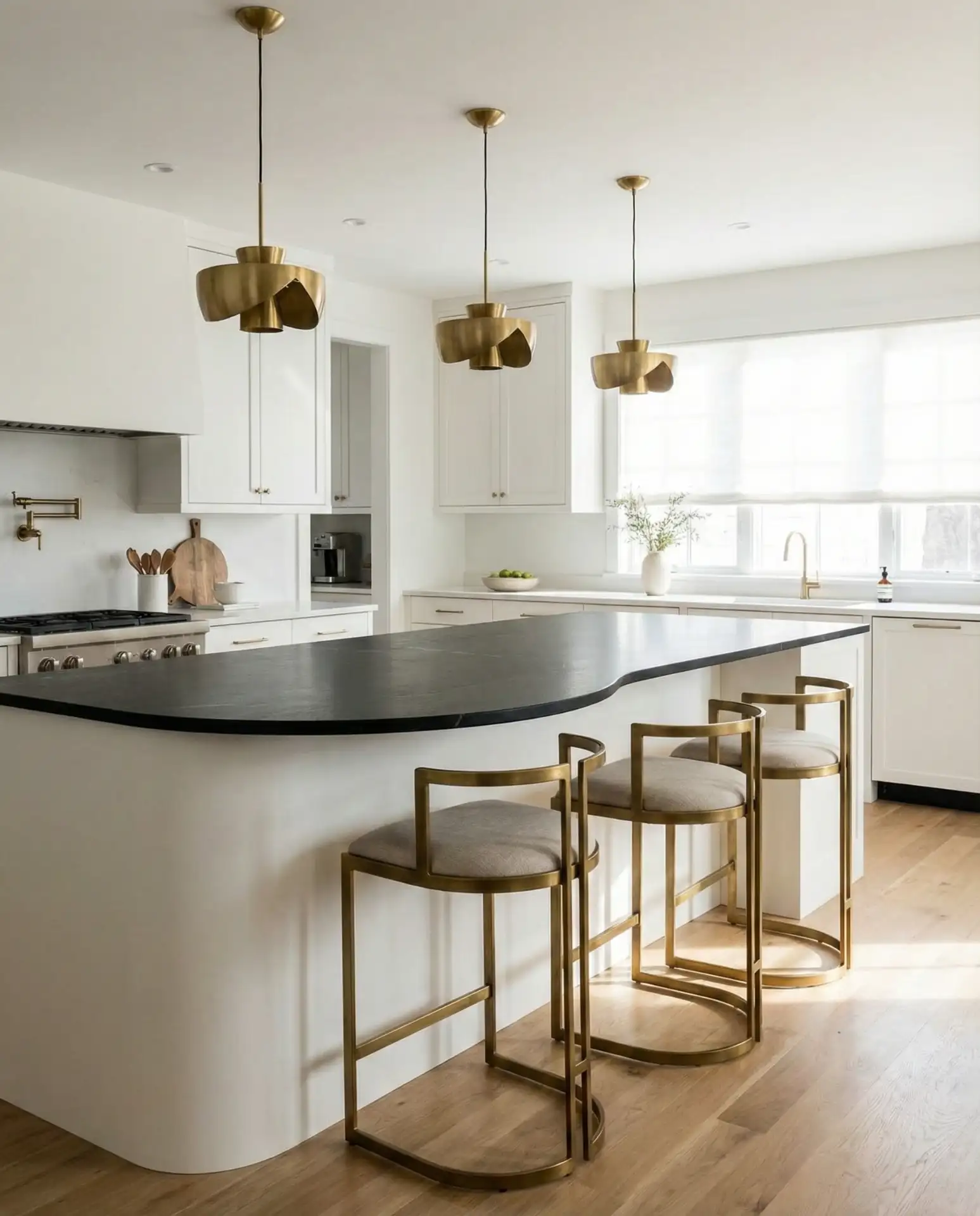
The shaped kitchen island has become a centerpiece in 2026 design, moving beyond simple rectangles to embrace L-shapes, curves, and asymmetrical forms that respond to how families actually move and cook. These modern luxury island designs create natural zones for prep, dining, and conversation, making the kitchen feel less like a workspace and more like a gathering spot. Homeowners are choosing islands with waterfall edges, mixed materials, and built-in seating that follows the island’s contour, adding both visual interest and functional seating.
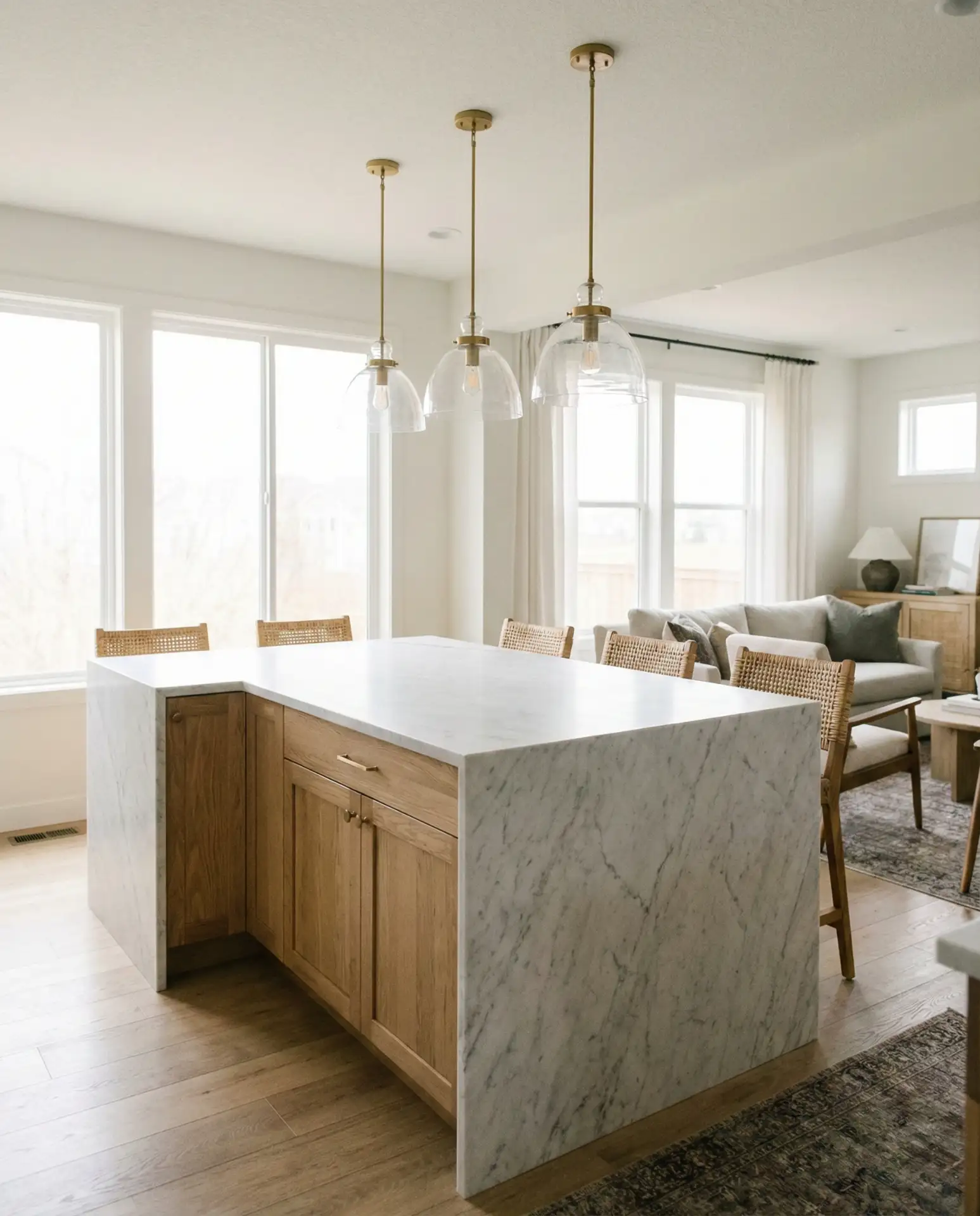
This approach works best in open-plan homes where the kitchen flows into living areas, allowing the island to serve as a visual anchor without blocking sightlines. Designers often pair shaped islands with minimalist cabinetry and statement lighting to keep the focus on the island’s unique form. Budget-conscious homeowners can achieve this look by retrofitting existing islands with custom panels or choosing quartz countertops that mimic high-end stone at a fraction of the cost, making luxury design accessible without the luxury price tag.
2. Modular Systems for Ultimate Flexibility
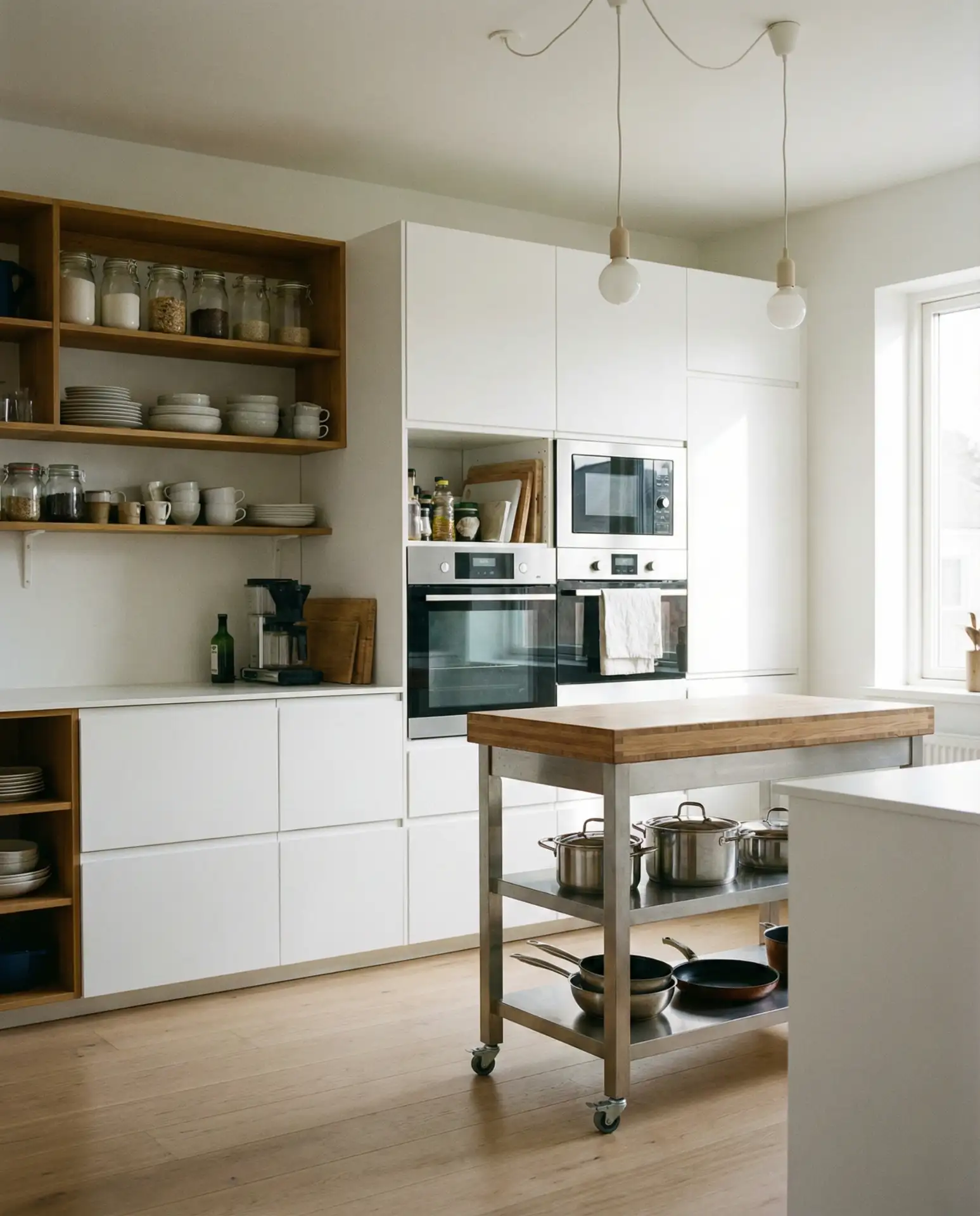
Modular kitchens have taken American design by storm in 2026, offering homeowners the ability to customize and reconfigure their space as needs change. These systems feature interchangeable cabinet units, adjustable shelving, and movable islands that adapt to everything from weeknight dinners to holiday entertaining. The Indian modular influence has been particularly strong, introducing compact, efficient layouts and clever storage solutions that maximize every inch. This flexibility appeals to renters and homeowners alike, since components can be taken apart and reassembled in a new home.
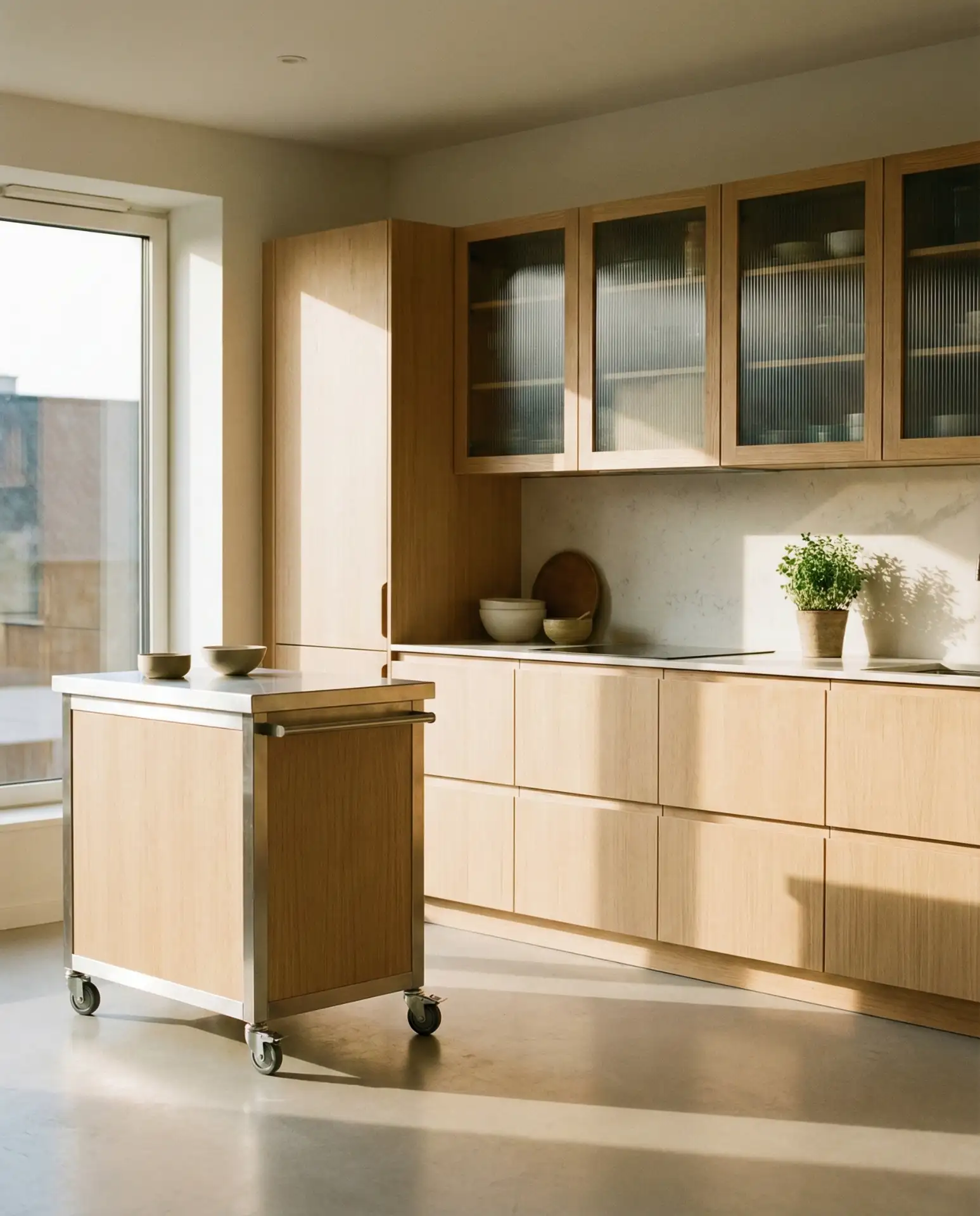
Where modular systems truly shine is in urban apartments and starter homes where square footage is limited but aspirations are high. Young professionals and growing families appreciate the ability to add or remove elements as their cooking habits evolve—perhaps starting with basic cabinets and later adding a wine rack module or coffee station. One homeowner in Austin shared that her modular setup allowed her to reconfigure her entire kitchen layout over a single weekend when she transitioned to working from home, proving that adaptability is the ultimate luxury in modern living.
3. Indian Design Principles Meet American Kitchens
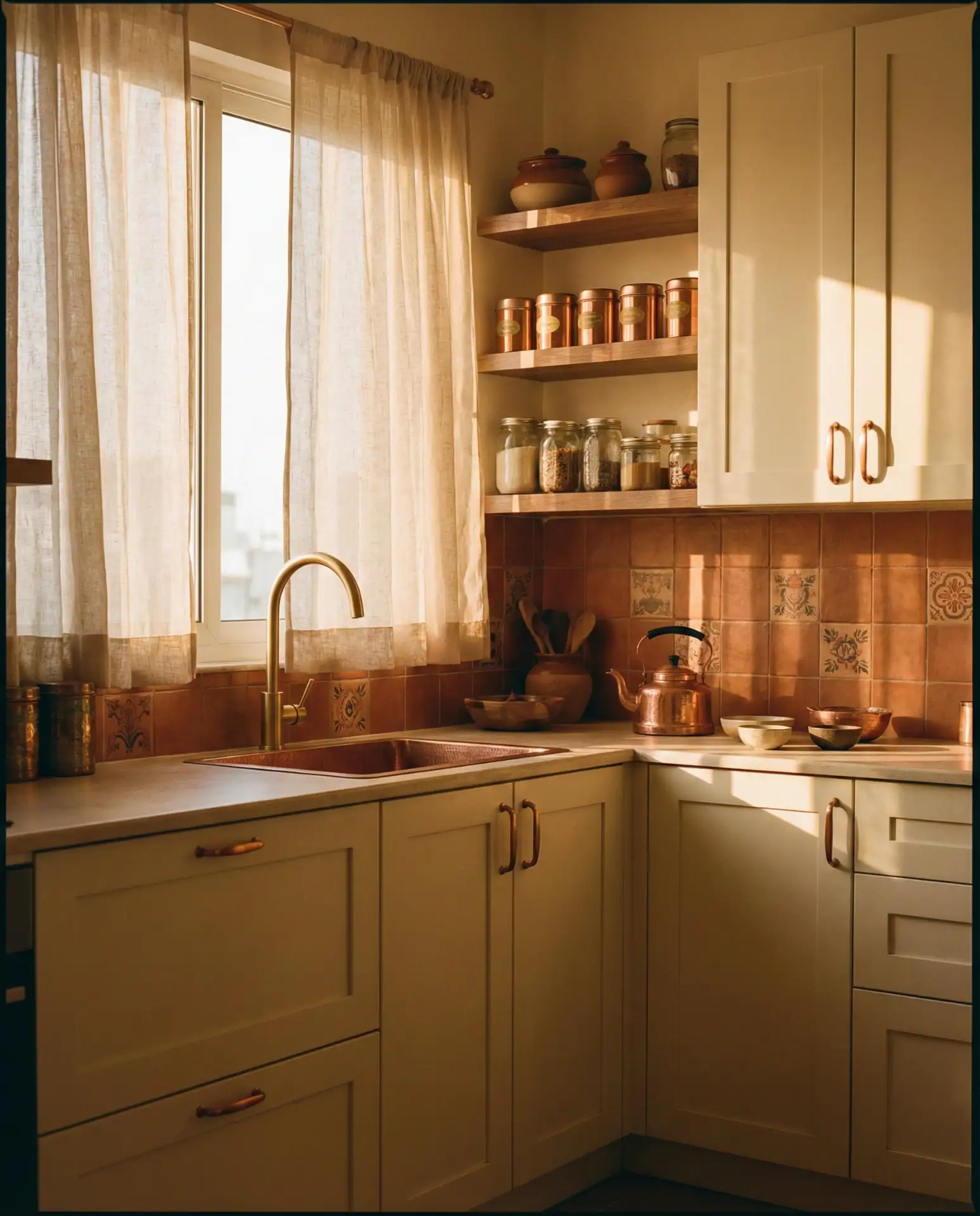
The rise of Indian kitchen design in American homes reflects a growing appreciation for thoughtful space planning and cultural fusion. These kitchens emphasize efficient workflow, abundant storage, and designated zones for different cooking methods—a practical approach that resonates with home cooks who prepare diverse cuisines. Simple Indian aesthetics favor clean lines, handleless cabinets, and a neutral palette accented with warm metallics or vibrant tiles, creating spaces that feel both calm and energizing.
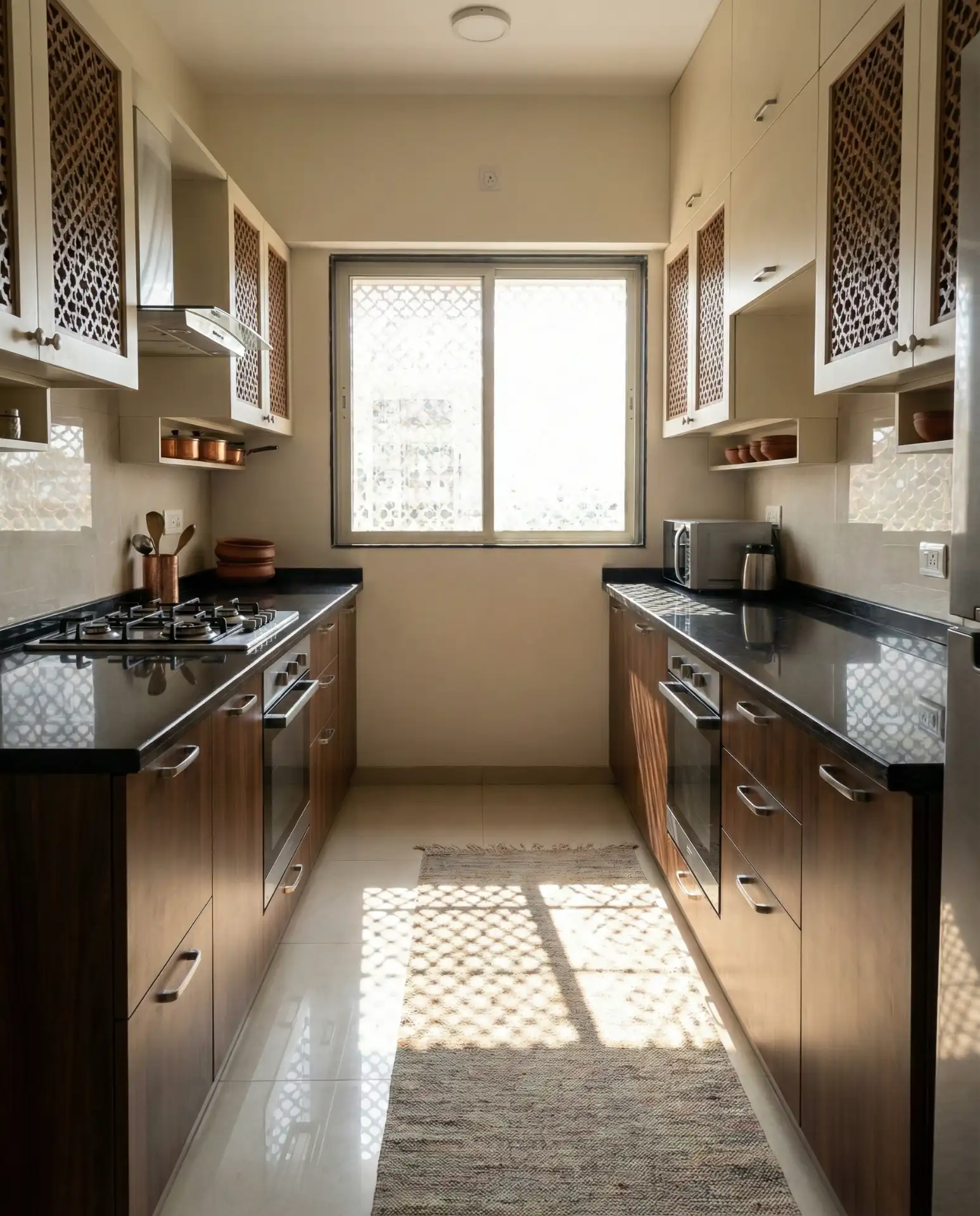
A common mistake American homeowners make when incorporating Indian design elements is treating them as purely decorative rather than functional. True Indian kitchen planning considers the specific needs of spice storage, ventilation for high-heat cooking, and separate prep areas for different ingredients—principles that enhance any kitchen regardless of culinary tradition. Smart designers adapt these concepts by installing deeper drawers for large cookware, adding extra ventilation near the range, and creating dedicated pantry zones that keep frequently used ingredients within arm’s reach.
4. Colour Combination Strategies That Transform Spaces
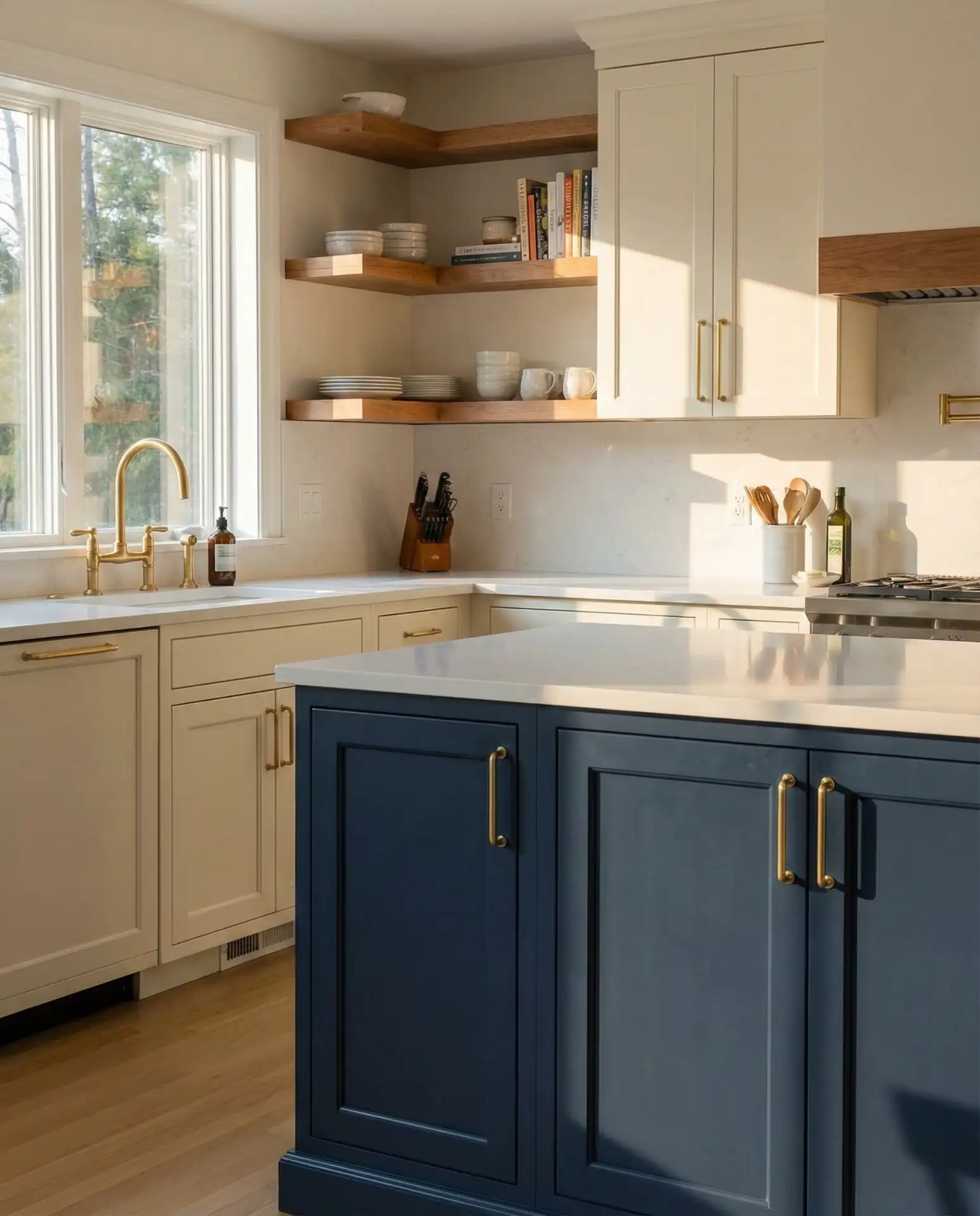
Mastering color combination techniques has become essential for creating kitchens that feel both current and timeless in 2026. Designers are pairing unexpected hues—think sage green with warm terracotta, or navy with brass and cream—to add depth without overwhelming the senses. The key is balancing bold choices with neutral anchors, using color ideas that reflect natural light patterns throughout the day. White remains a favorite base, but it’s now paired with richer accent tones that prevent the sterile feeling of all-white kitchens from the past decade.
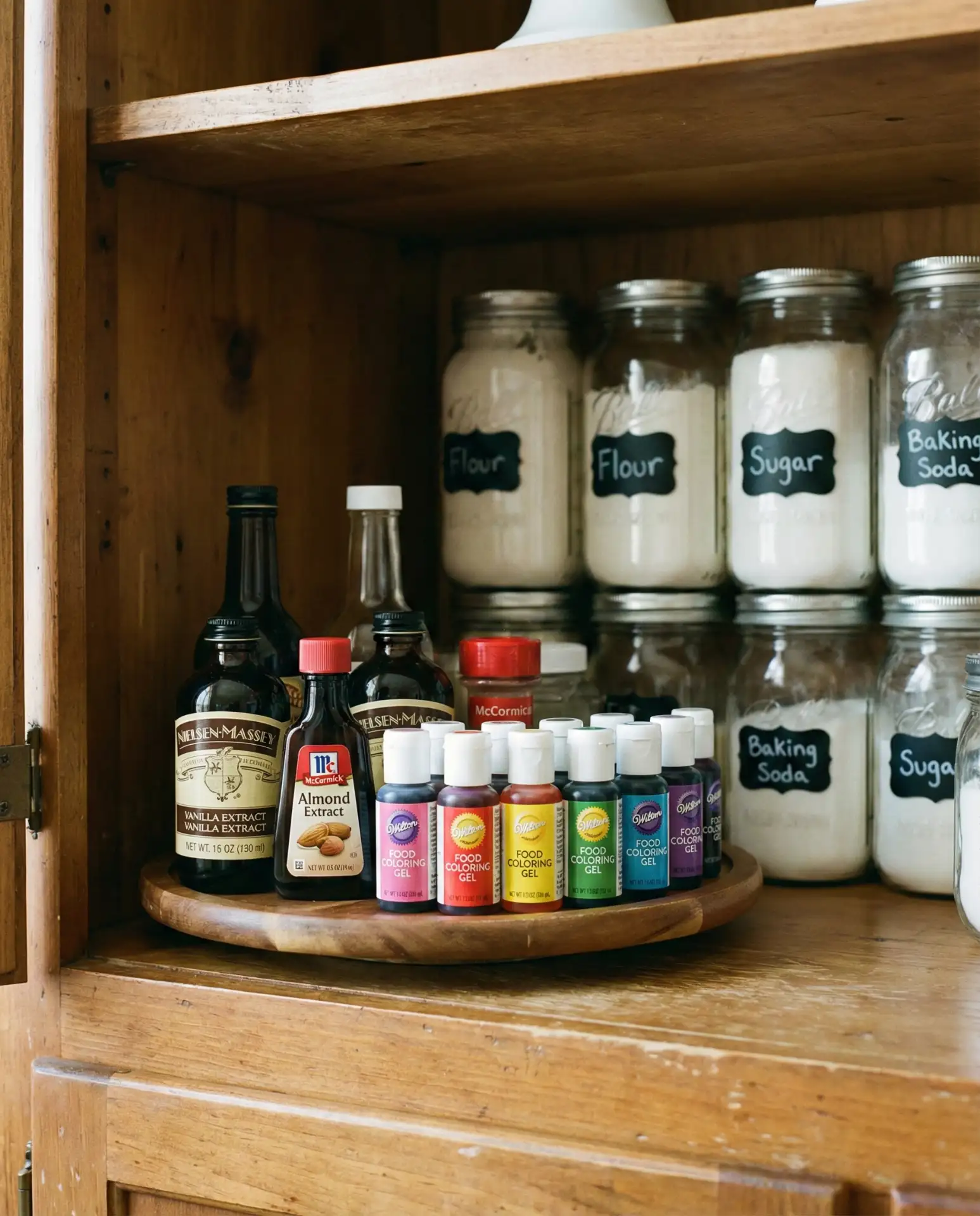
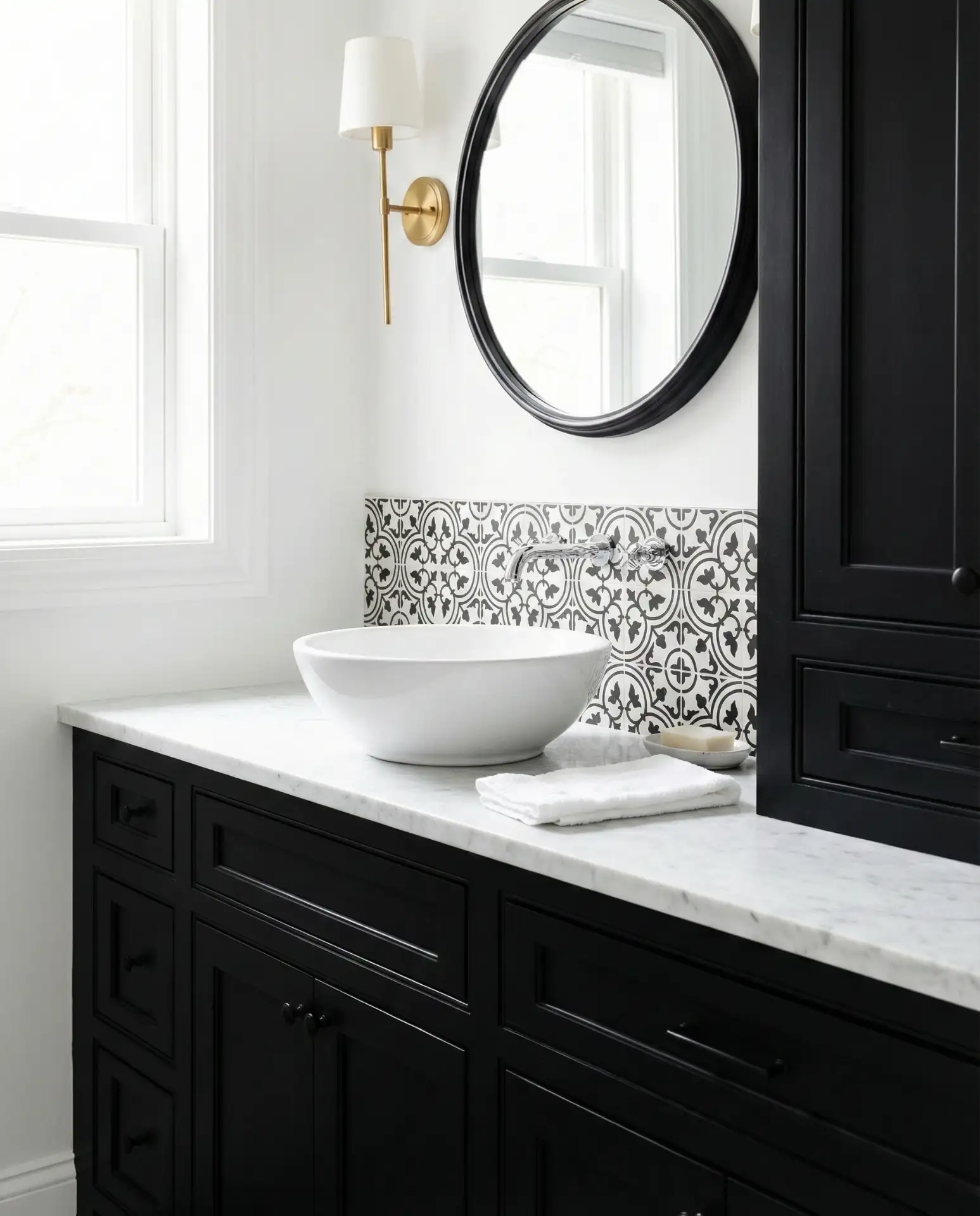
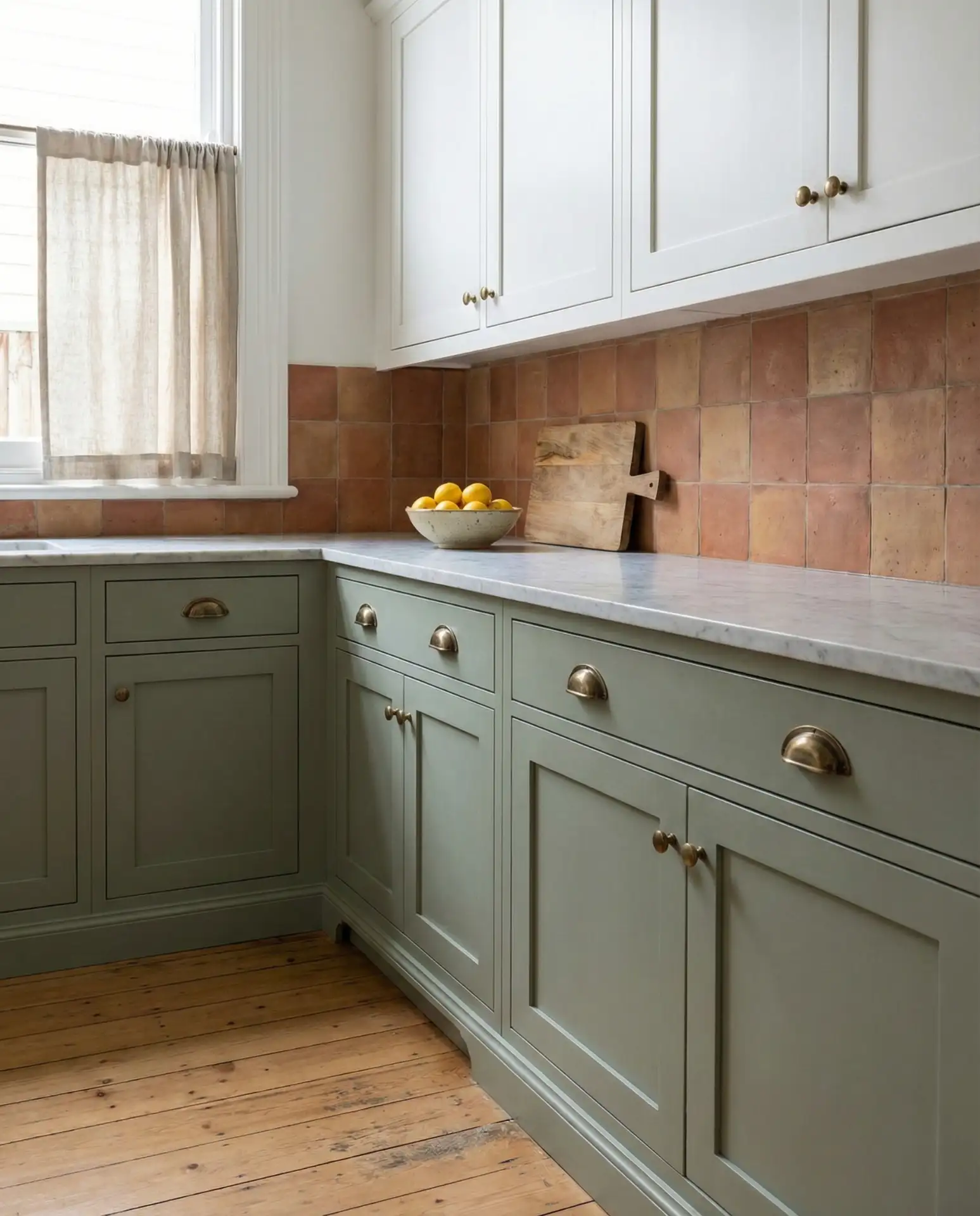
Regional context matters significantly when selecting color palettes. Coastal homes in California and Florida gravitate toward blues and sandy neutrals that echo the ocean, while Mountain West kitchens often feature warmer earth tones that complement natural wood and stone. Southern kitchens embrace richer, more saturated colors like deep greens and brick reds that feel grounded and hospitable. Understanding your home’s architectural style and surrounding landscape helps ensure your color choices feel intentional rather than trendy, creating a kitchen that ages gracefully alongside your life.
5. Design Modern Luxury Kitchen Without the Mansion Price Tag
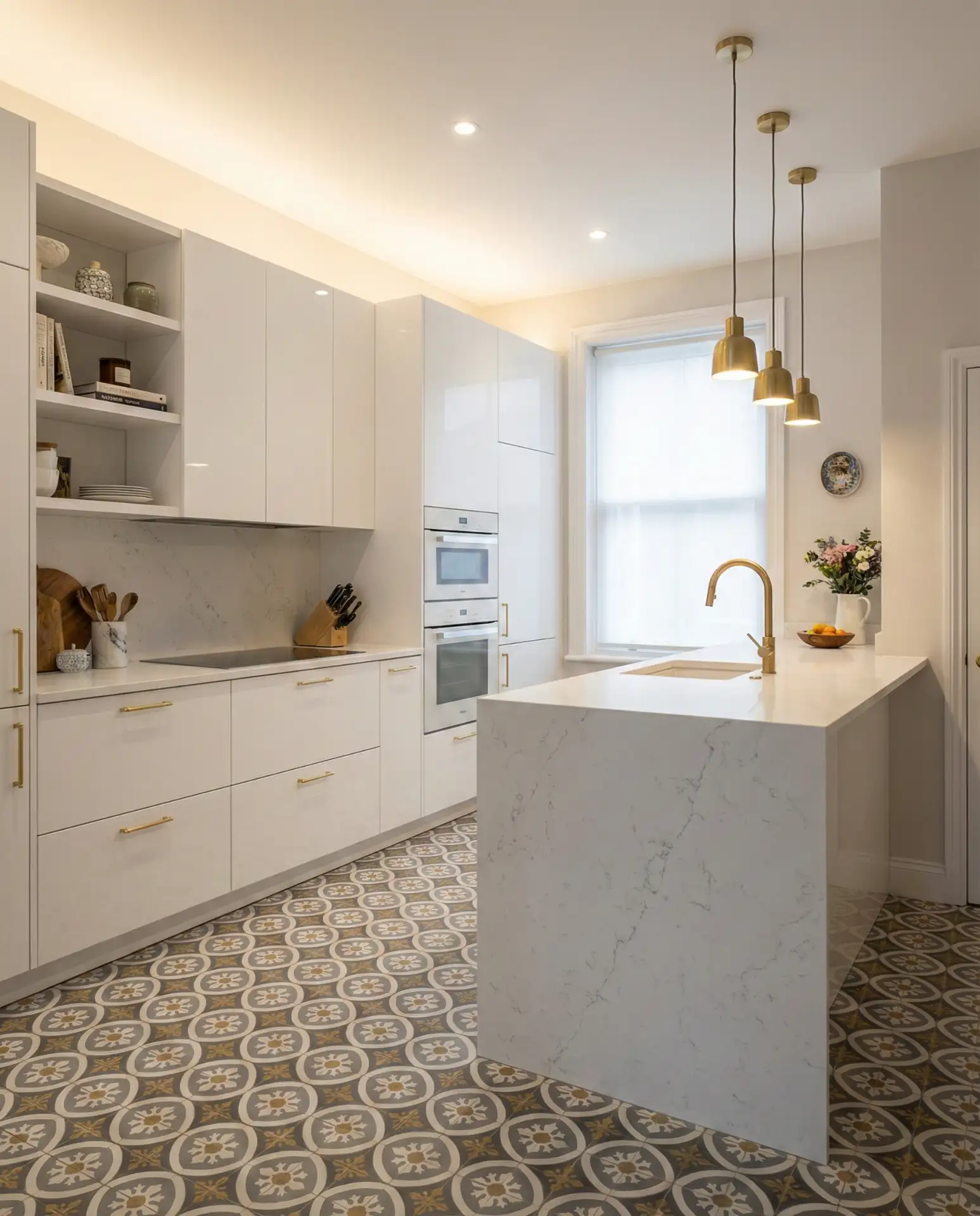
Achieving a modern luxury kitchen design aesthetic no longer requires an unlimited budget or vast square footage. The secret lies in strategic splurges paired with savvy saves—investing in a stunning range hood or statement lighting while choosing budget-friendly quartz over marble, or opting for high-quality laminate cabinets with custom hardware. Designing modern luxury small-space kitchens proves that luxury is about thoughtful details and quality finishes rather than sheer size, with homeowners focusing on elements that deliver maximum visual impact.
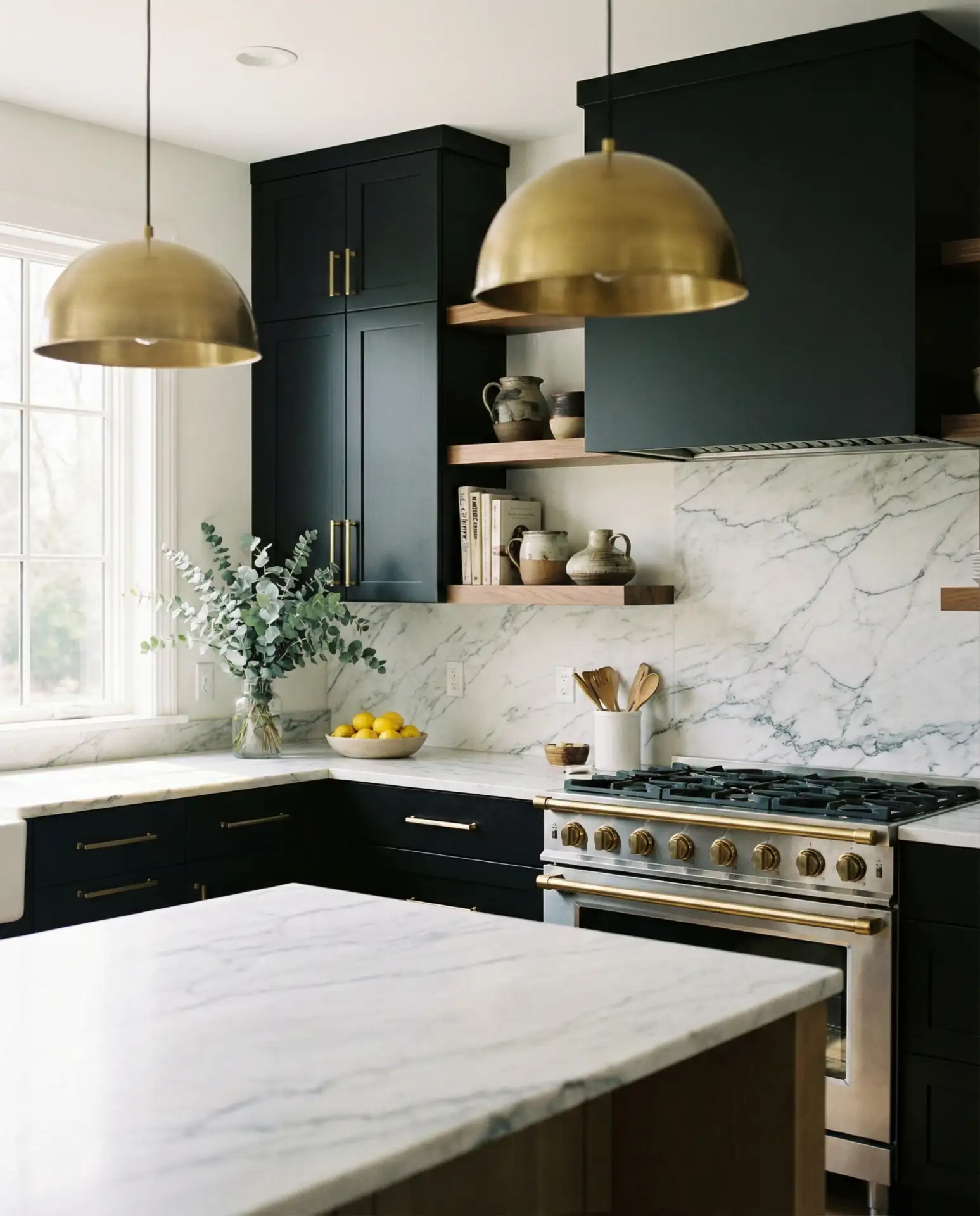
Expert designers recommend allocating your budget according to the 40-30-30 rule for kitchen renovations: 40% on cabinetry and hardware, 30% on countertops and backsplash, and 30% on appliances and fixtures. This approach ensures a balanced investment across all visible elements while leaving room for unexpected expenses. One Chicago designer notes that clients who follow this guideline end up with kitchens that photograph beautifully and function flawlessly, regardless of whether they spent $15,000 or $50,000 on the project.
6. Blue Tones Bringing Calm to Culinary Spaces

Blue has emerged as a dominant kitchen color in 2026, offering a refreshing alternative to neutral palettes while maintaining broad appeal. From powder blue to deep navy, these hues create a sense of serenity and sophistication that homeowners crave after years of all-white interiors. Grey undertones in blue cabinetry prevent the color from feeling too coastal or juvenile, instead lending an urban, gallery-like quality that works equally well in contemporary condos and traditional colonials.
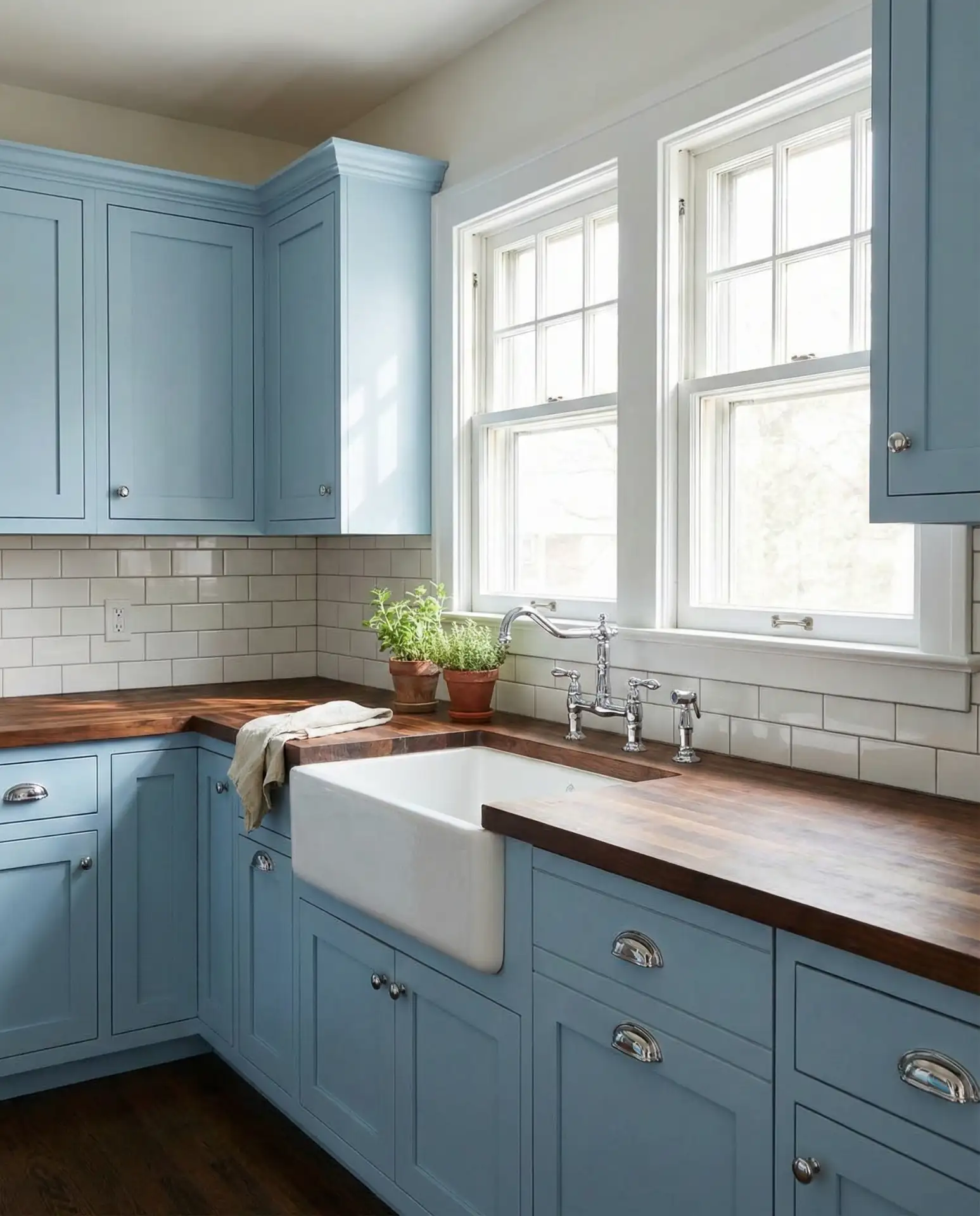
Real homeowner behavior reveals that blue kitchens tend to stay cleaner-looking than stark white ones, as they don’t show every fingerprint or splash mark with the same unforgiving clarity. Families with young children particularly appreciate this practical benefit alongside the aesthetic appeal. Additionally, blue’s versatility means it pairs beautifully with nearly any accent color—warm woods, metallics, whites, and even unexpected pops of coral or yellow—giving homeowners flexibility to evolve their decor over time without repainting cabinets.
7. Simple Indian Layouts Maximizing Every Corner
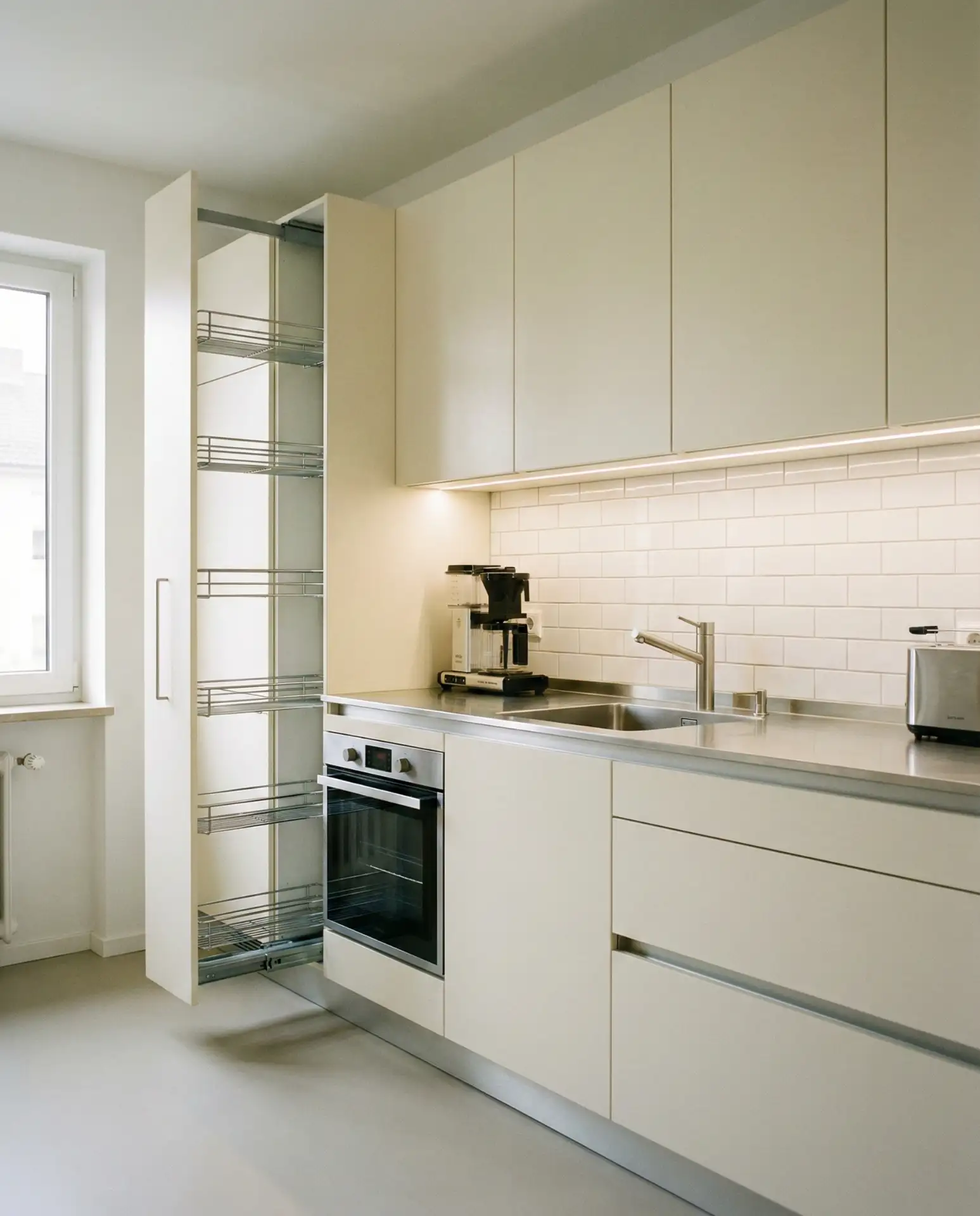
The simple Indian kitchen layout philosophy centers on eliminating wasted space and creating intuitive workflow patterns. These designs typically feature straight-line or L-shaped configurations that keep the cook’s triangle compact and efficient, with everything needed within a few steps. Modern small Indian kitchen designs demonstrate how vertical storage, pull-out organizers, and corner solutions can transform tight spaces into highly functional cooking environments. American homeowners are borrowing these principles to make their own compact kitchens work harder.
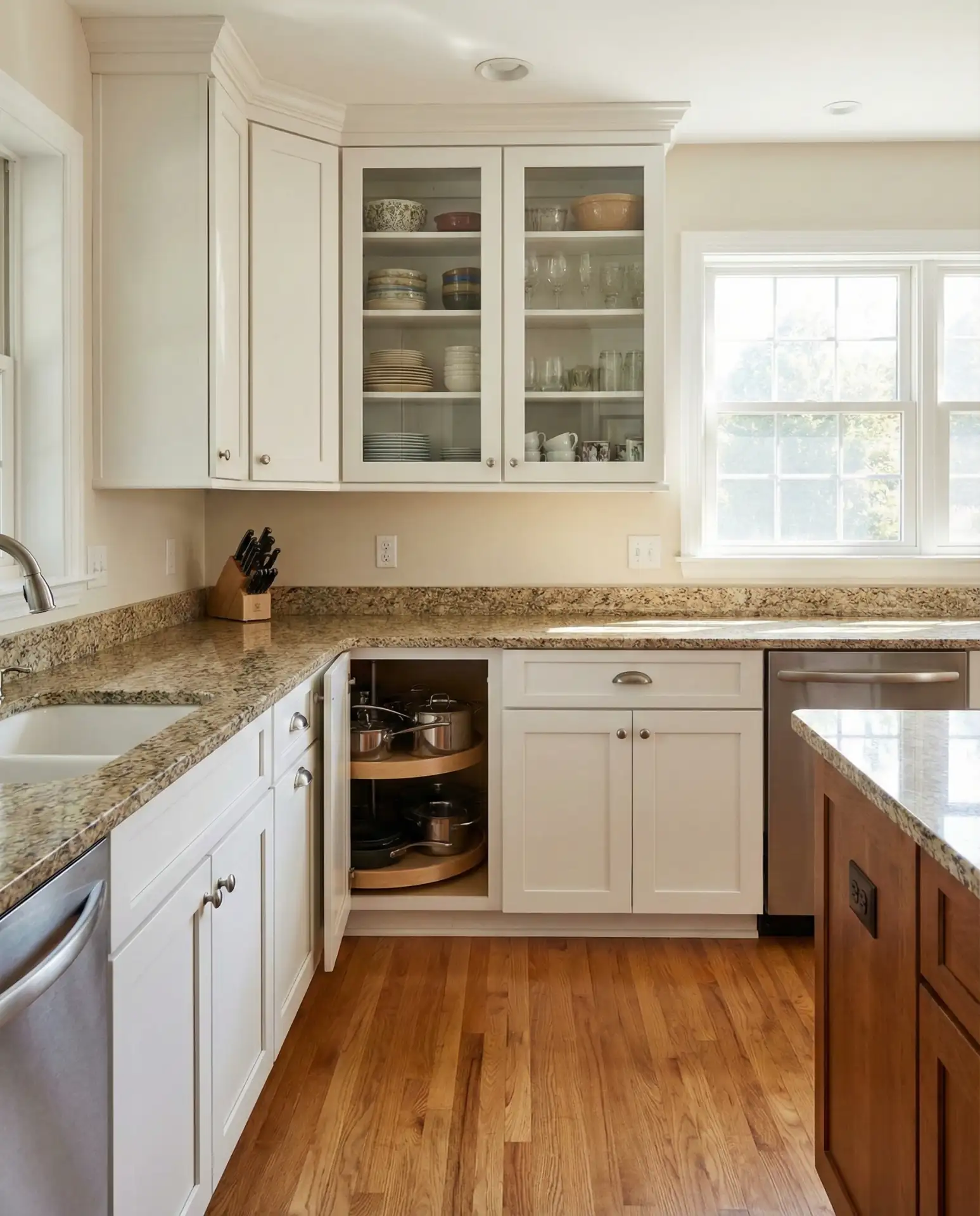
Where simple Indian layouts work best is in urban apartments, galley kitchens, and homes where the kitchen occupies a smaller footprint but still needs to accommodate serious cooking. The emphasis on closed storage keeps counters clear and maintains visual calm, while strategic use of open shelving for daily-use items ensures convenience isn’t sacrificed. Unlike sprawling American kitchens with extensive counter space, these efficient designs force better organization habits and prove that you don’t need a massive kitchen to cook ambitious meals—just a well-planned one.
8. Parallel Kitchen Configurations for Narrow Spaces
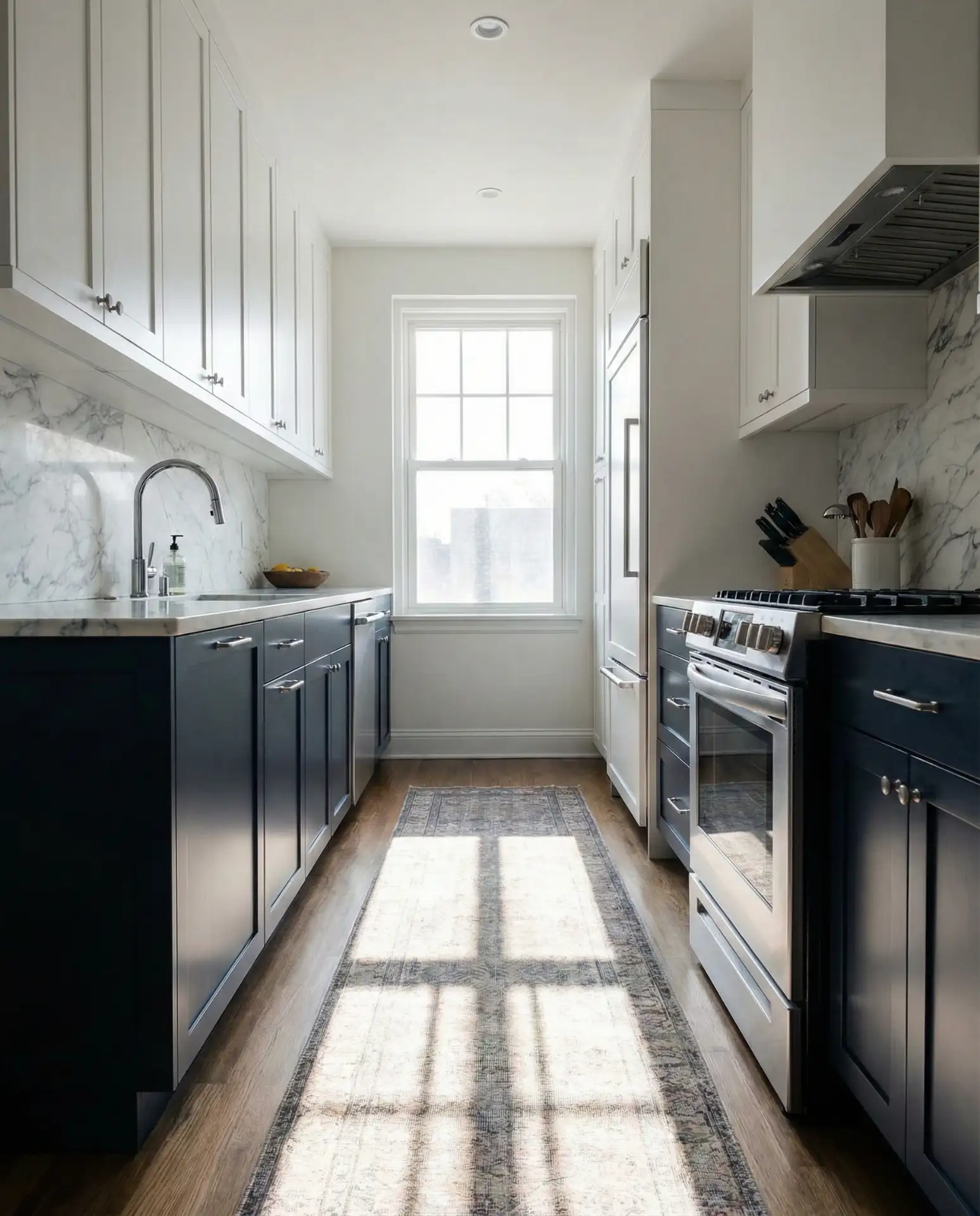
The parallel kitchen layout—featuring two opposing runs of cabinets with a corridor between—has gained popularity in 2026 as homeowners discover its efficiency in narrow or galley-style spaces. This configuration creates dual work zones, allowing two cooks to work simultaneously without constantly crossing paths, making it ideal for couples or families who share cooking duties. Small-space kitchens benefit enormously from this setup, as it maximizes cabinet and counter space along both walls while maintaining a clear pathway through the room.
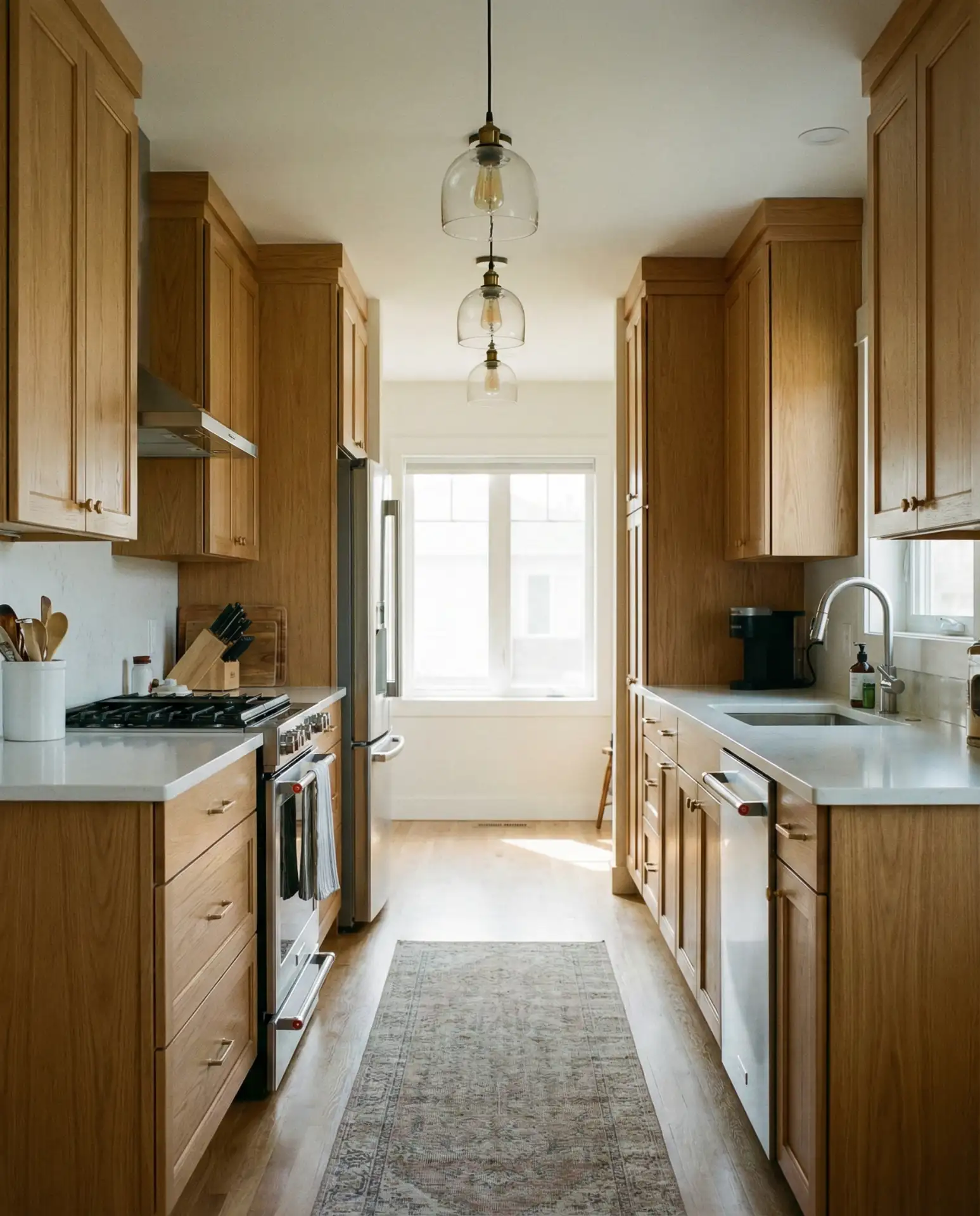
A practical insight for parallel kitchens: maintain at least 42 inches between opposing cabinet runs to allow comfortable movement and the ability to open cabinet doors or appliances without blocking the walkway. Designers recommend placing the range on one side and the sink on the other to create a natural work triangle, with the refrigerator anchoring one end of the galley. This arrangement mimics professional kitchen efficiency and works particularly well in brownstones, row houses, and apartment renovations where expanding the kitchen’s footprint isn’t an option.
9. Black Granite Top Counters Making Bold Statements
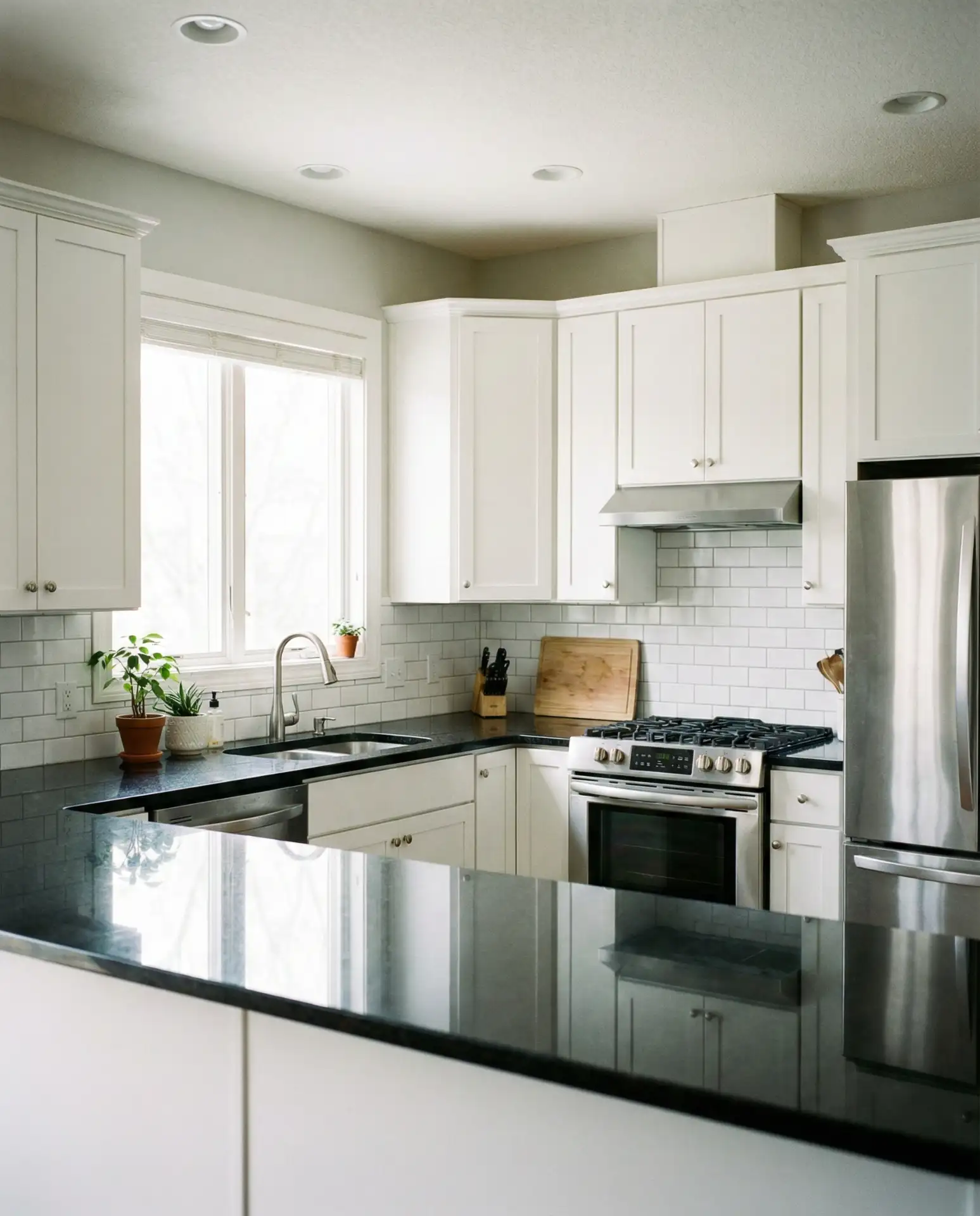
The black granite top has made a powerful comeback in 2026, offering dramatic contrast and unexpected elegance when paired with lighter cabinetry. Modern homeowners appreciate granite’s durability and heat resistance, while the deep black tones add gravitas and sophistication that quartz sometimes lacks. When combined with white or grey cabinets, black granite creates a high-contrast look that photographs beautifully and maintains visual interest even in minimalist kitchens.

Common mistakes include choosing polished black granite for every surface, which can make a kitchen feel heavy and closed-in. Instead, use black granite strategically—perhaps on the island while keeping perimeter counters lighter, or vice versa. Also avoid pairing black granite with dark cabinets unless you have exceptional natural light and adequate artificial lighting to prevent the space from feeling cave-like. The most successful applications balance the dramatic darkness of black granite with plenty of white, light wood, or soft grey tones to maintain brightness and openness.
10. Design Decor Elements That Personalize Your Kitchen
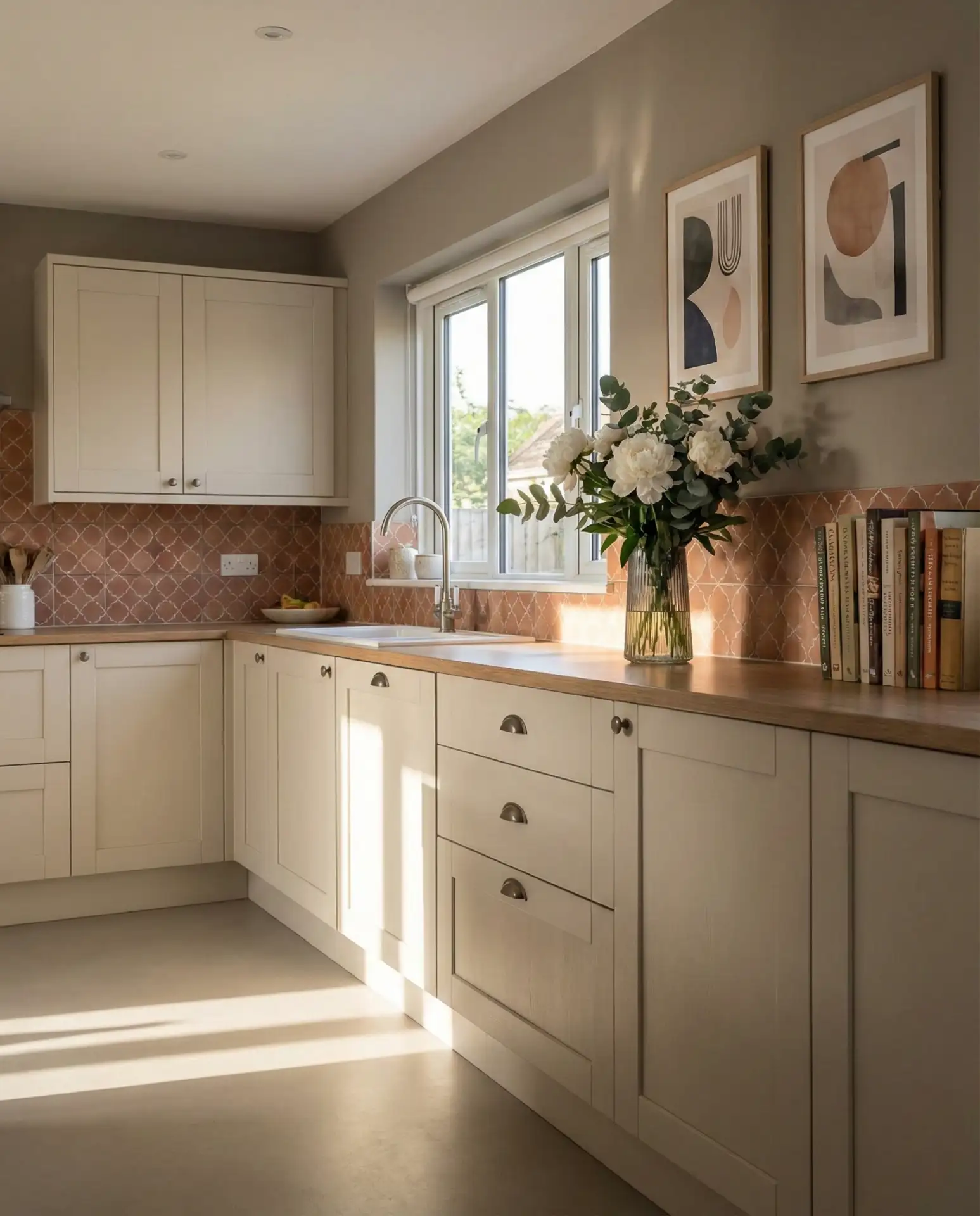
Design decor in 2026 kitchens goes beyond purely functional choices to include meaningful objects that reflect the homeowner’s personality and story. This might mean displaying a collection of vintage ceramics on open shelving, hanging family heirloom cookware, or incorporating handmade tiles from a memorable trip. The aesthetic shift recognizes that kitchens should feel lived-in and loved, not styled for a magazine shoot that never shows signs of actual cooking and life.
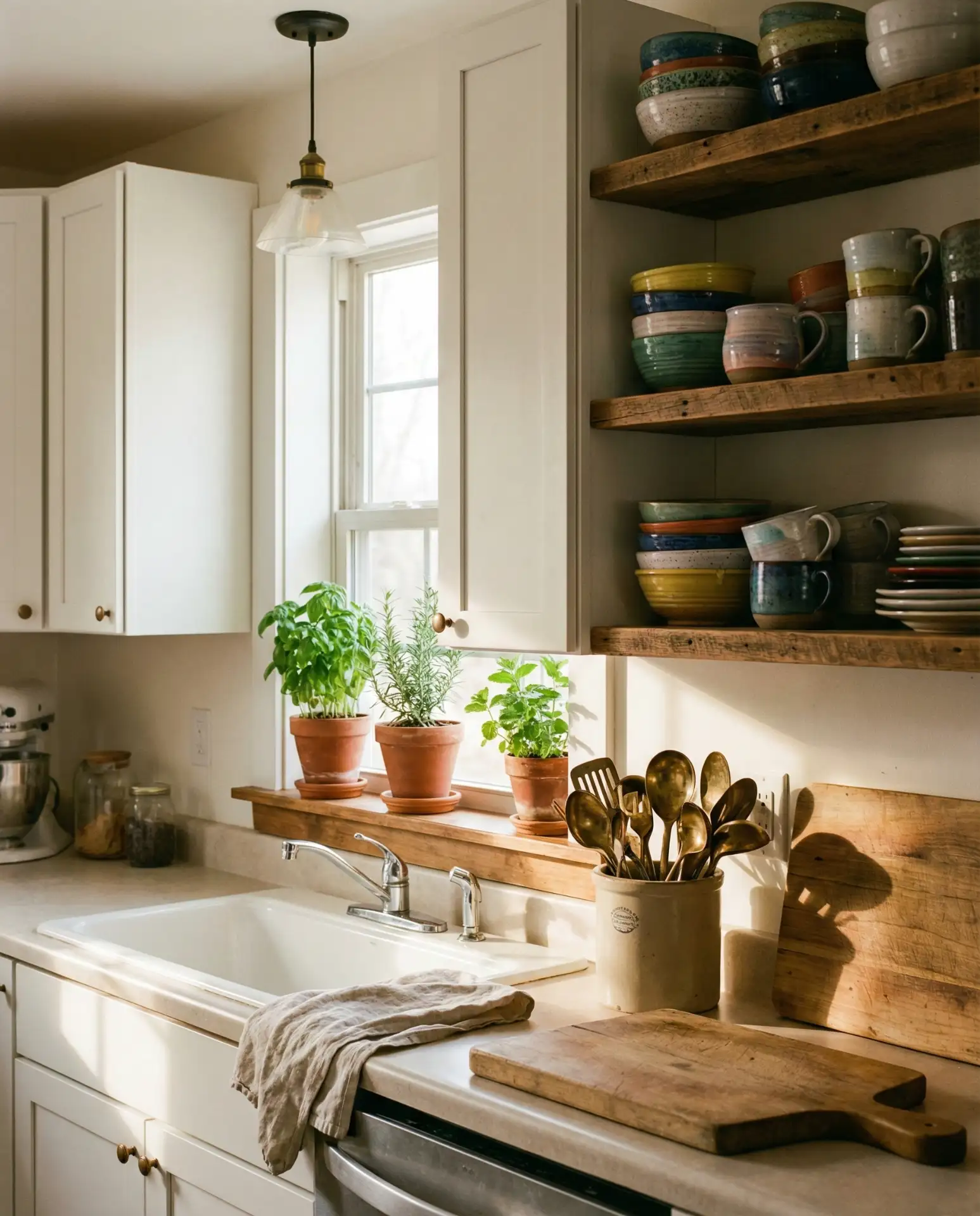
In the Pacific Northwest, homeowners tend to bring nature indoors with abundant plants and natural textures, while Southwestern kitchens might feature colorful textiles and handcrafted pottery. New England kitchens often showcase antique finds and maritime-themed accents that nod to coastal heritage. These regional expressions of design decor create authenticity that can’t be replicated by following generic Pinterest boards—they emerge from understanding your own context, preferences, and the stories you want your kitchen to tell about who you are and how you live.
11. Window Placement Transforming Kitchen Lighting
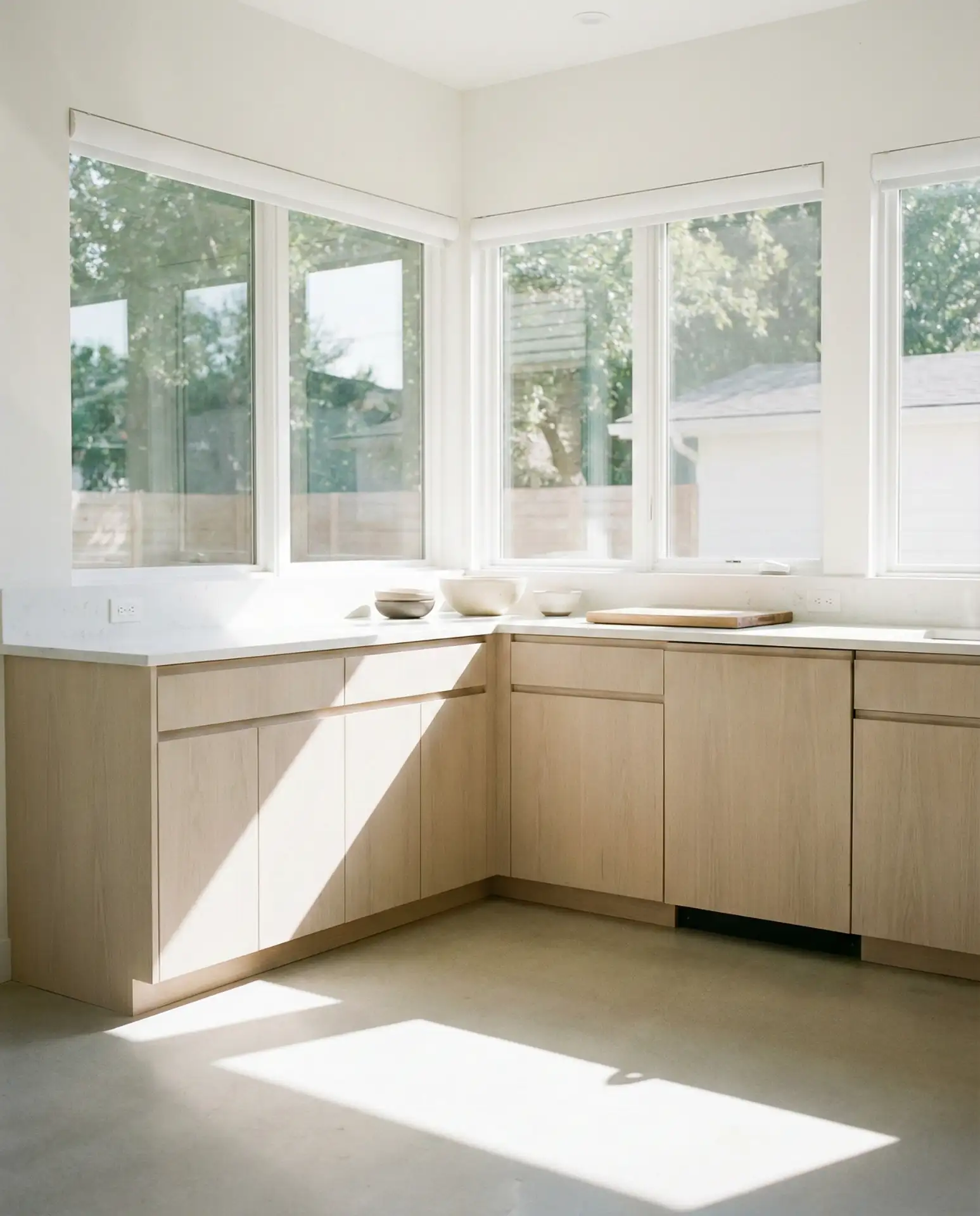
Strategic window placement has become a priority in kitchen design, with homeowners recognizing that natural light affects everything from mood to how colors appear throughout the day. Large windows positioned behind the sink offer pleasant views during cleanup, while corner windows flood the space with light from multiple angles. Modern luxury kitchen designs often feature floor-to-ceiling windows or glass doors that blur the boundary between indoor and outdoor spaces, creating an expansive feeling even in modestly sized homes.
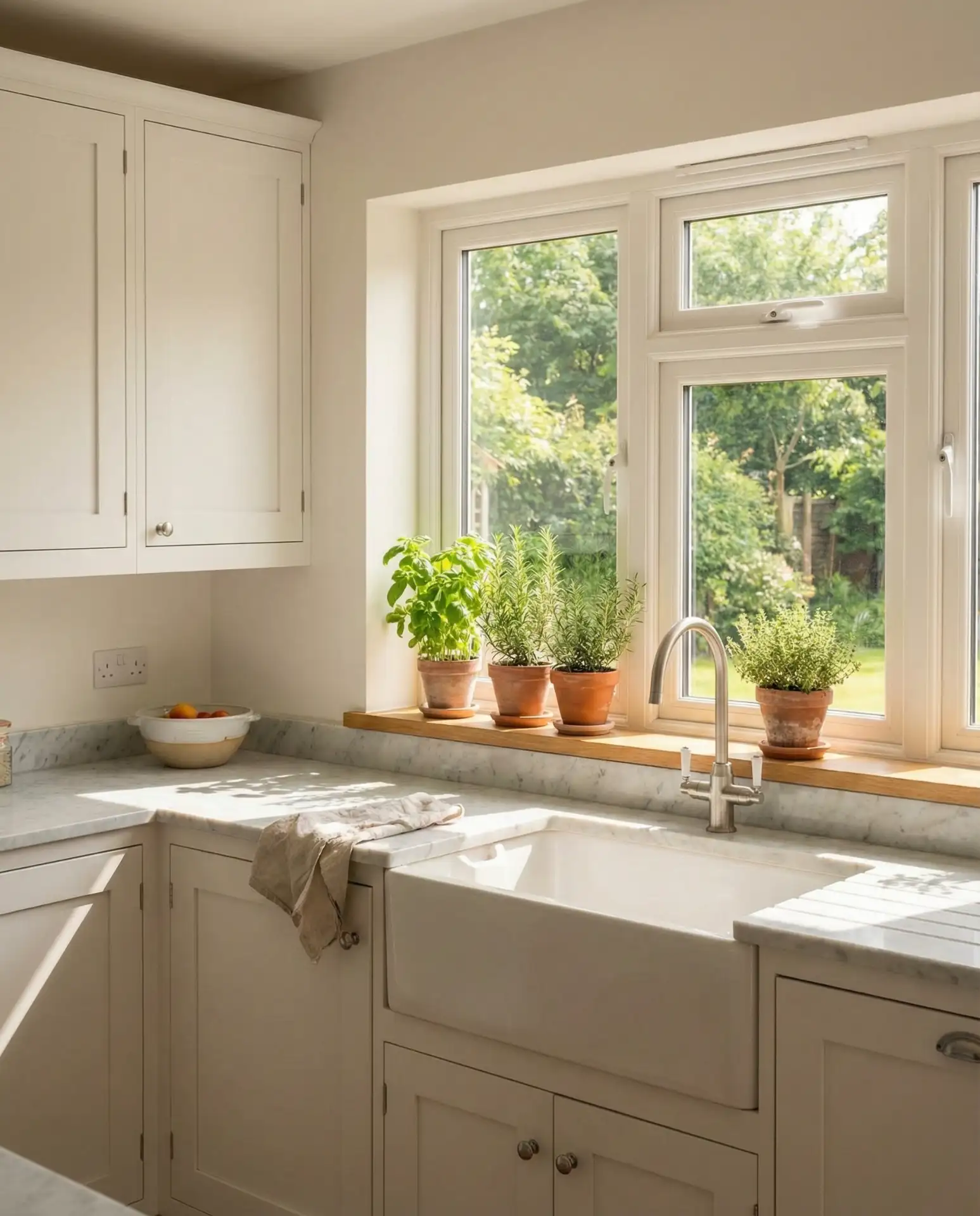
A homeowner in Portland shared that adding a single skylight above her previously dim kitchen completely transformed the space, eliminating the need for overhead lighting until evening and making her small kitchen feel twice as large. This kind of transformative impact explains why window upgrades—whether enlarging existing windows, adding new ones, or incorporating skylights—consistently rank among the highest-value kitchen improvements. The investment pays dividends not just in resale value but in daily quality of life, turning routine kitchen tasks into more pleasant experiences bathed in natural light.
12. Green Kitchens Connecting to Nature
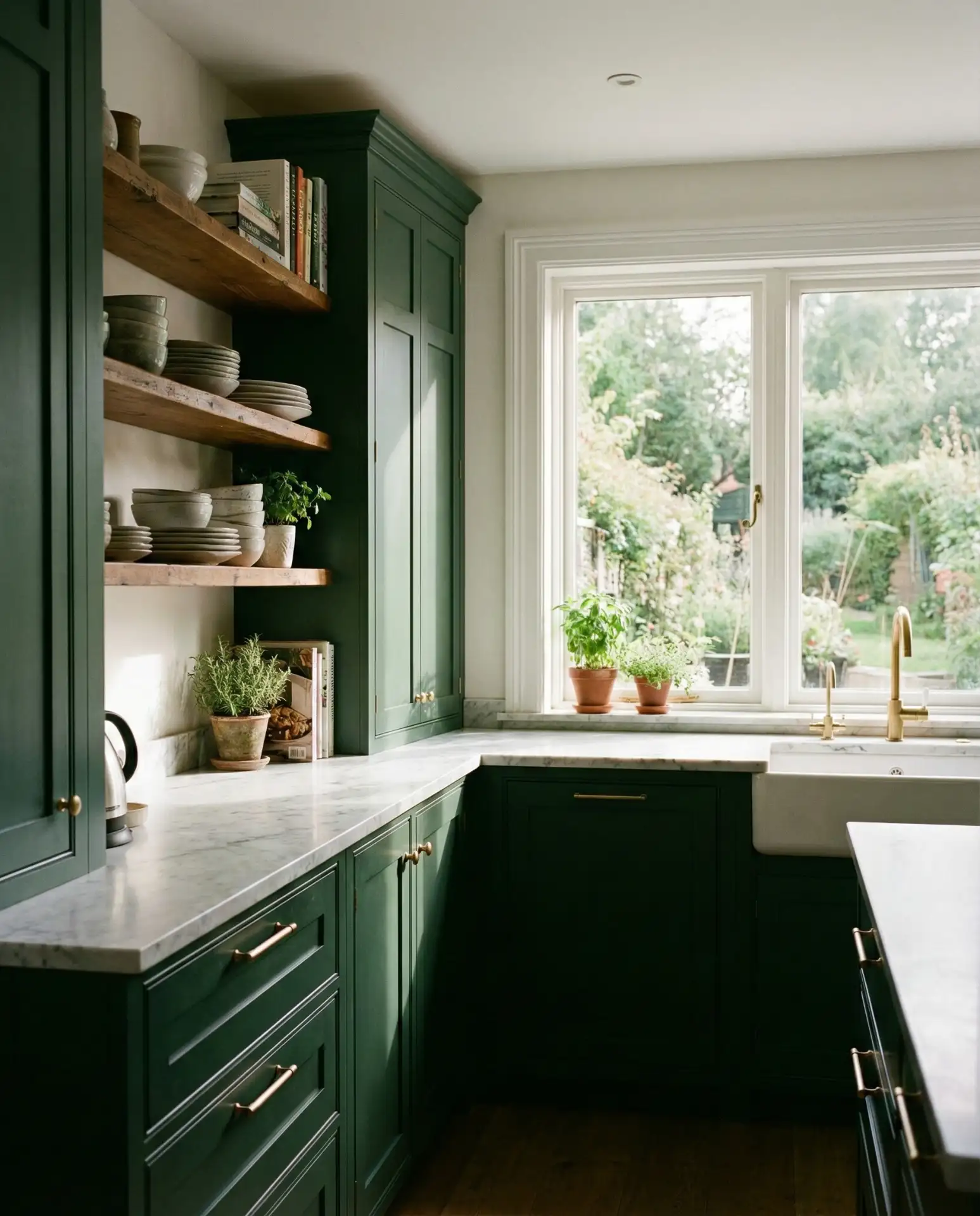
Green has evolved from an accent color to a primary cabinet choice in 2026, with shades ranging from soft sage to deep forest creating kitchens that feel both calming and invigorating. This color naturally complements wooden elements and brass hardware, creating organic, earthy palettes that appeal to environmentally conscious homeowners. Color combination strategies often pair green with warm whites, natural stone, and terracotta to complete the connection to nature.
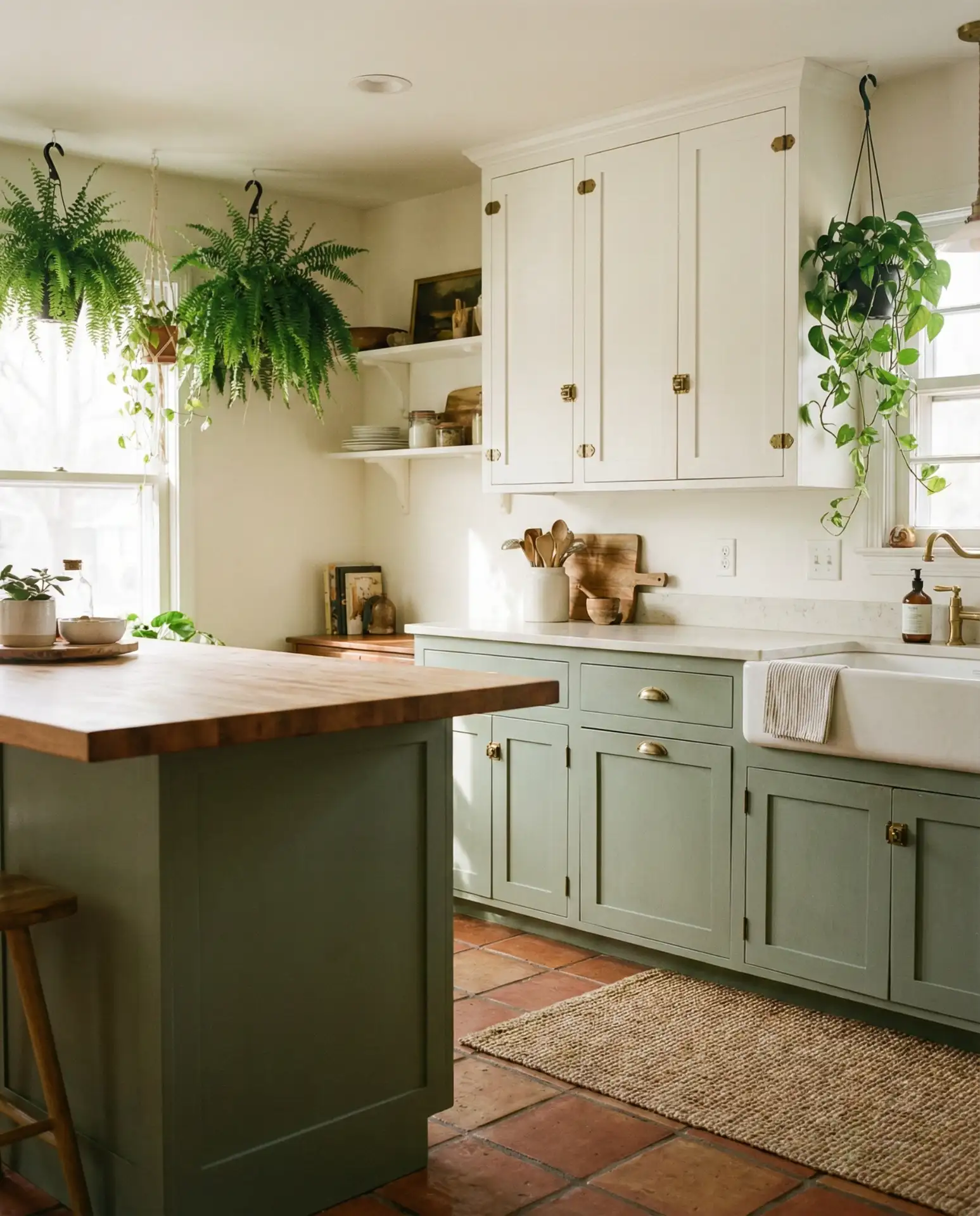
Where green kitchens work best is in homes with good natural light and views of gardens or landscapes, as the color creates a visual bridge between interior and exterior spaces. They’re particularly popular in suburban areas with mature trees and in homes where homeowners prioritize sustainability and biophilic design principles. Green also has the advantage of being less trendy than some bold colors while still offering personality—it’s been used in kitchens for centuries in various forms, suggesting it has staying power that won’t feel dated in five years.
13. Wooden Warmth in Contemporary Kitchens
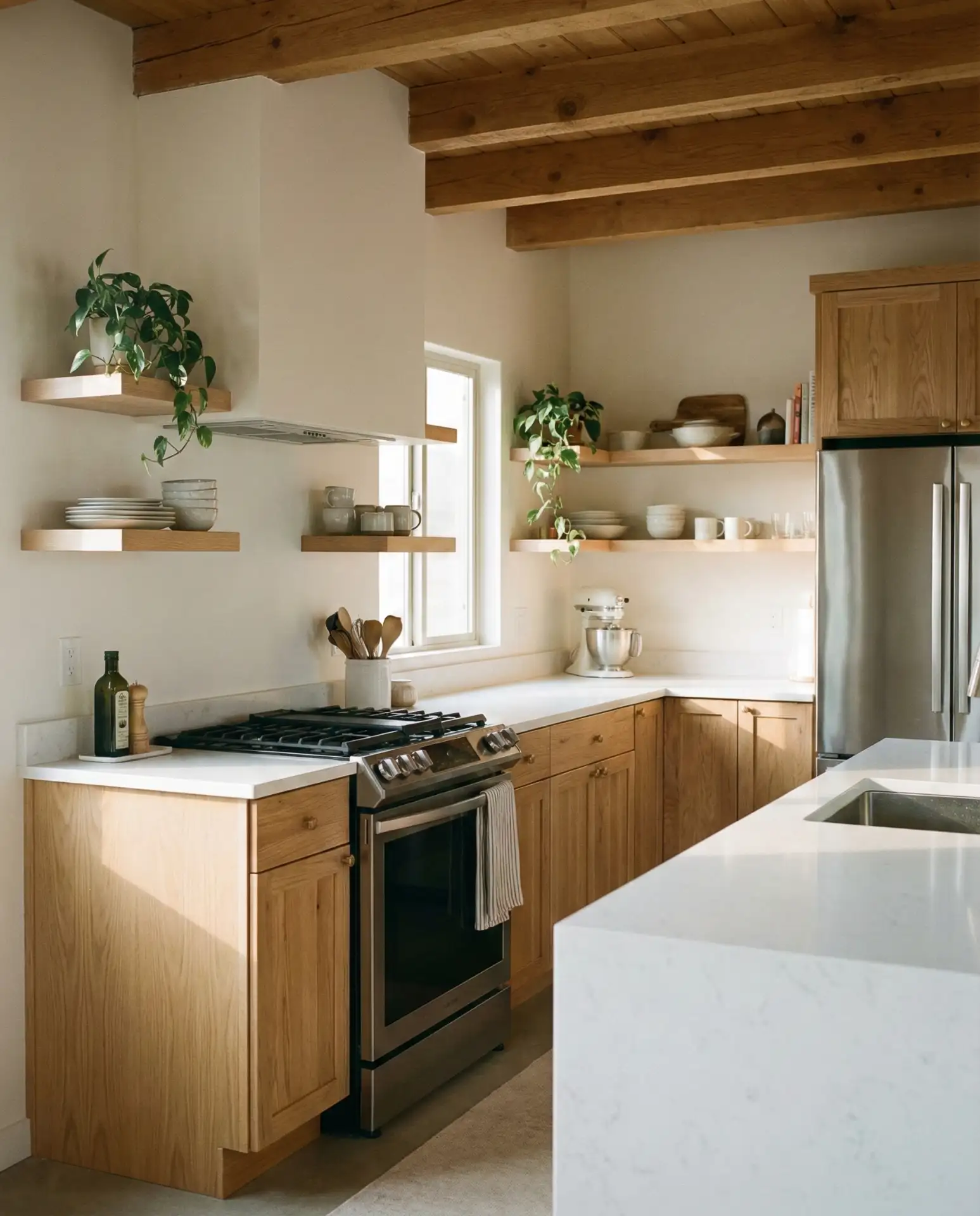
Wooden elements have become essential in preventing modern kitchens from feeling cold or sterile, with designers incorporating everything from full wood cabinets to floating shelves, cutting boards, and bar stools. The grain and texture of natural wood introduce organic imperfection that balances sleek surfaces like quartz and stainless steel. Design modern luxury small-space kitchens particularly benefit from wood’s ability to add warmth without visual weight, making compact areas feel cozy rather than cramped.
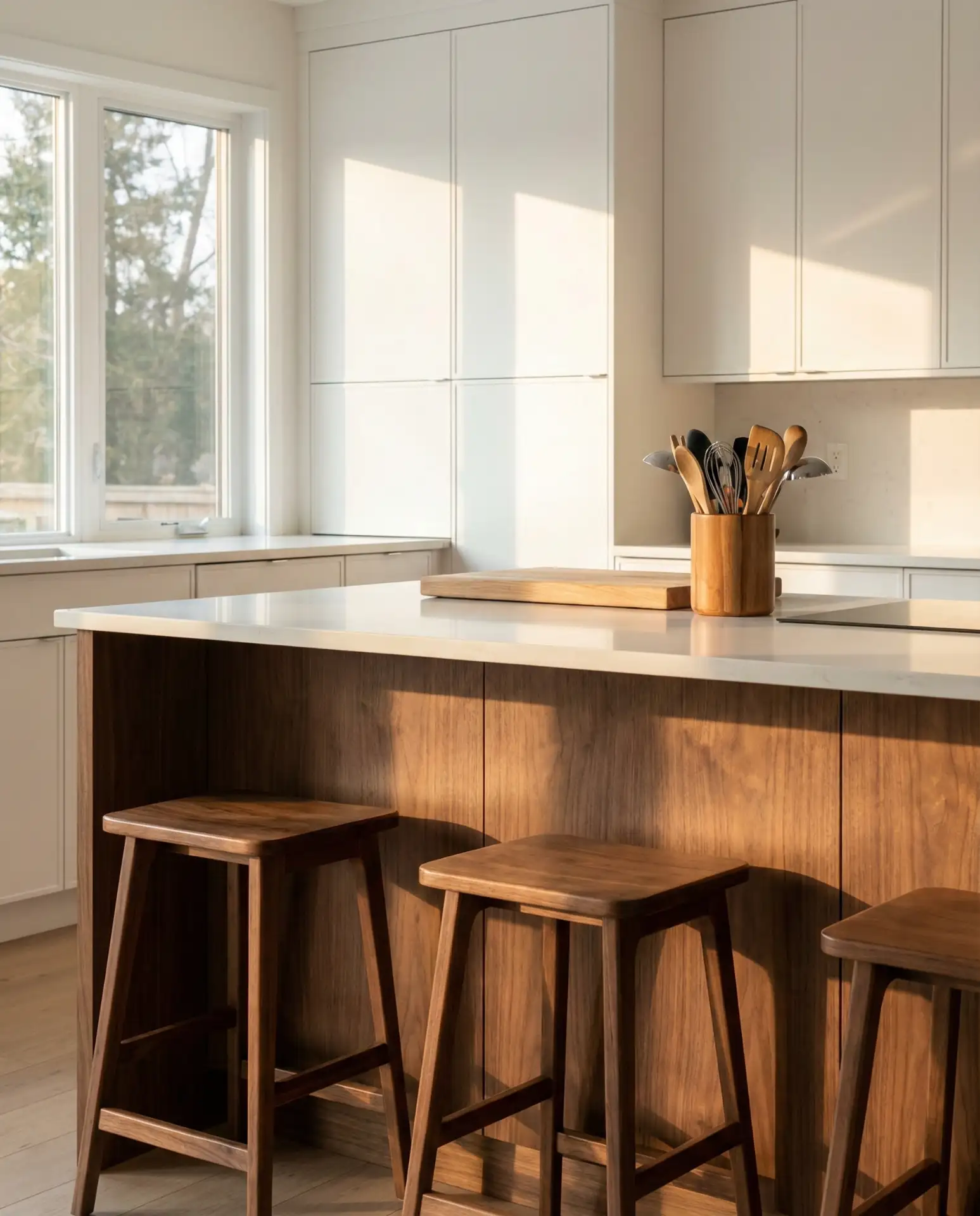
Expert designers recommend mixing wood tones rather than trying to match everything perfectly—a white oak floor can pair beautifully with walnut shelving and cherry bar stools, as long as the undertones (warm vs. cool) are generally compatible. This approach creates more visual interest and feels collected over time rather than purchased all at once. The key is ensuring that at least one wood tone appears in multiple places throughout the kitchen to create intentional repetition, preventing the mix from looking random or chaotic.
14. Grey Sophistication in Transitional Design
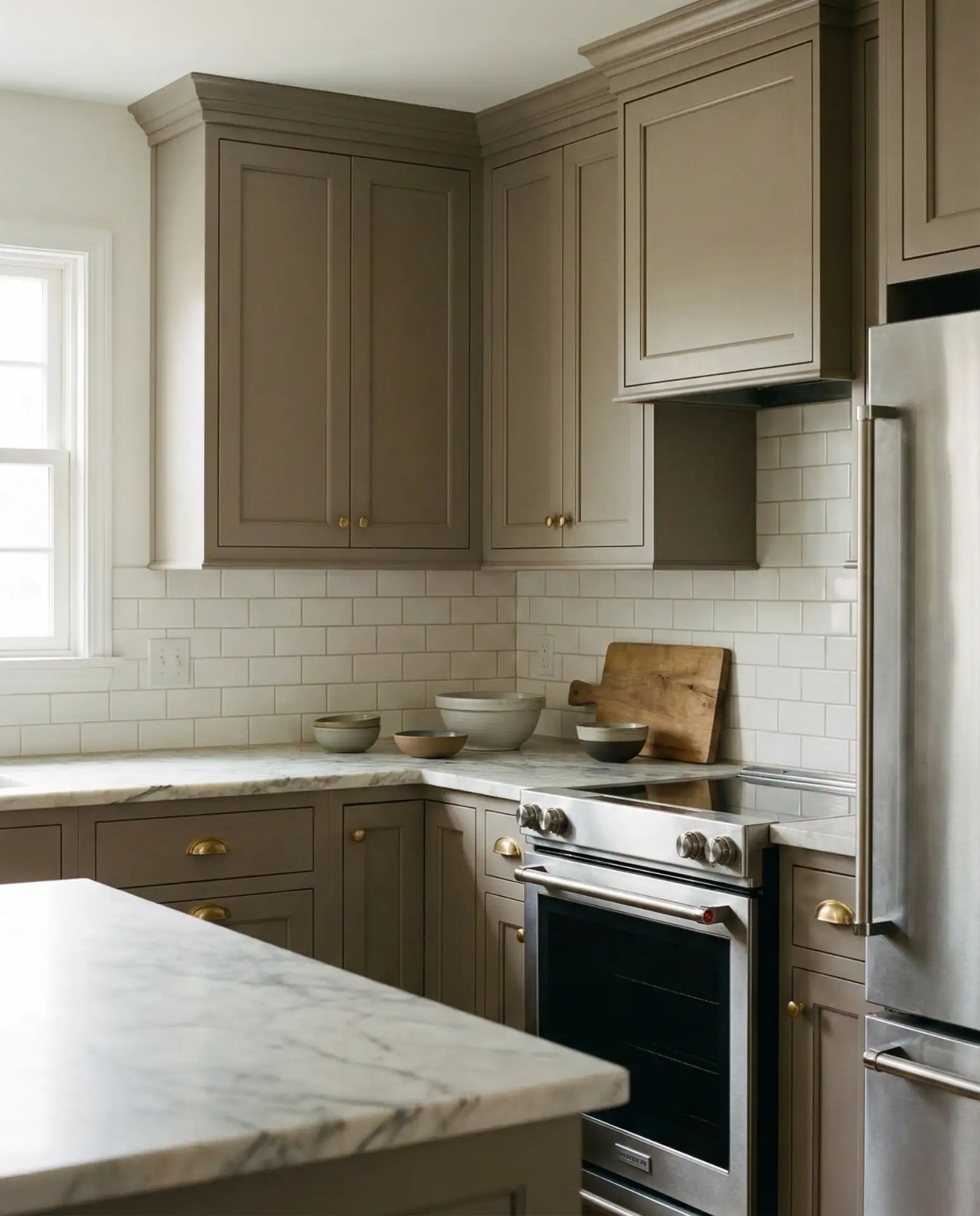
Grey continues to dominate kitchen design in 2026, but it has evolved beyond the cool, blue-toned greys of the past decade toward warmer, greige tones that feel more inviting. This neutral works beautifully as a base for color combination experiments, pairing equally well with warm brass, cool chrome, natural wood, or pops of color. Black granite top counters find a perfect partner in medium grey cabinets, creating sophisticated contrast without the stark drama of black and white.
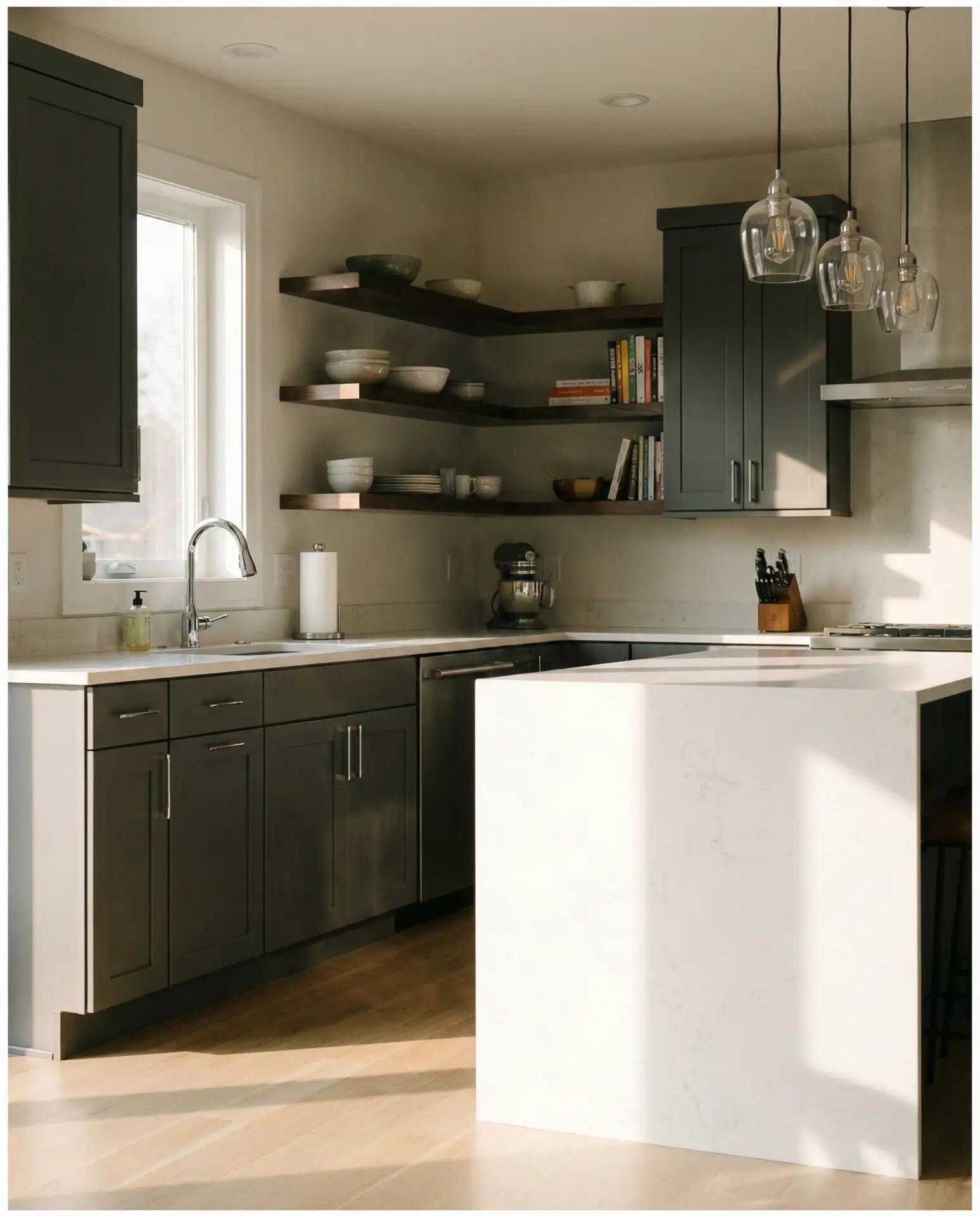
Budget considerations make grey an attractive choice, as it’s widely available across all price points and pairs with virtually any appliance finish. Homeowners can start with affordable grey cabinets and upgrade other elements over time without the color looking dated or limiting future choices. Additionally, grey’s neutrality means that changing accent colors through accessories, rugs, or window treatments creates an entirely different look without repainting or replacing major elements—practical flexibility that appeals to people who like to refresh their decor regularly without major renovation.
15. Minecraft-Inspired Geometric Playfulness
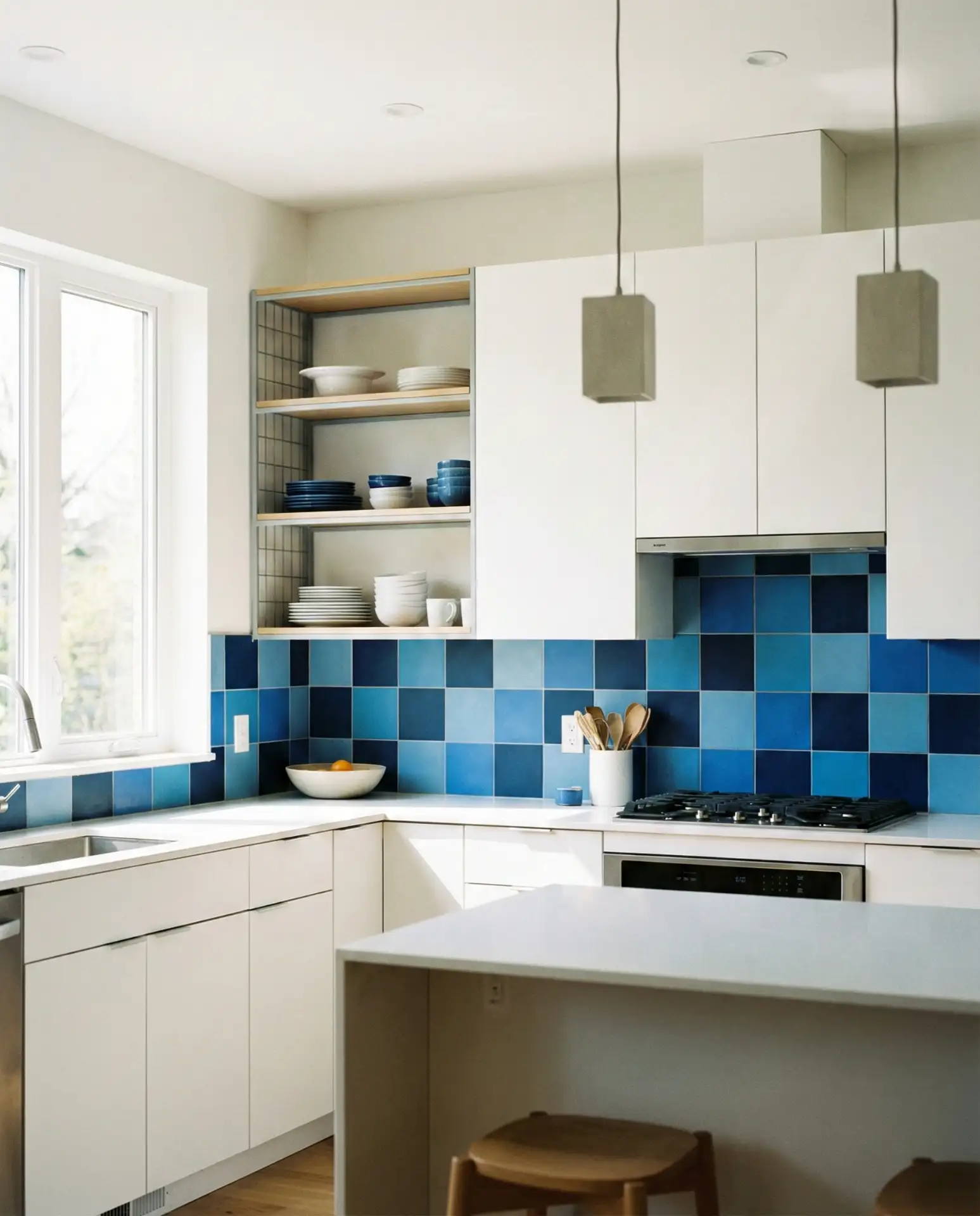
The Minecraft aesthetic has unexpectedly influenced kitchen design, particularly in homes with young families, introducing blocky, geometric tile patterns and pixelated mosaic backsplashes that add playful energy. This trend embraces clean lines, bold color blocking, and grid-based layouts that feel modern yet approachable. Design decor elements might include square-grid open shelving, checkerboard floor patterns, or geometric cabinet hardware that nods to digital-age design without being overtly themed.
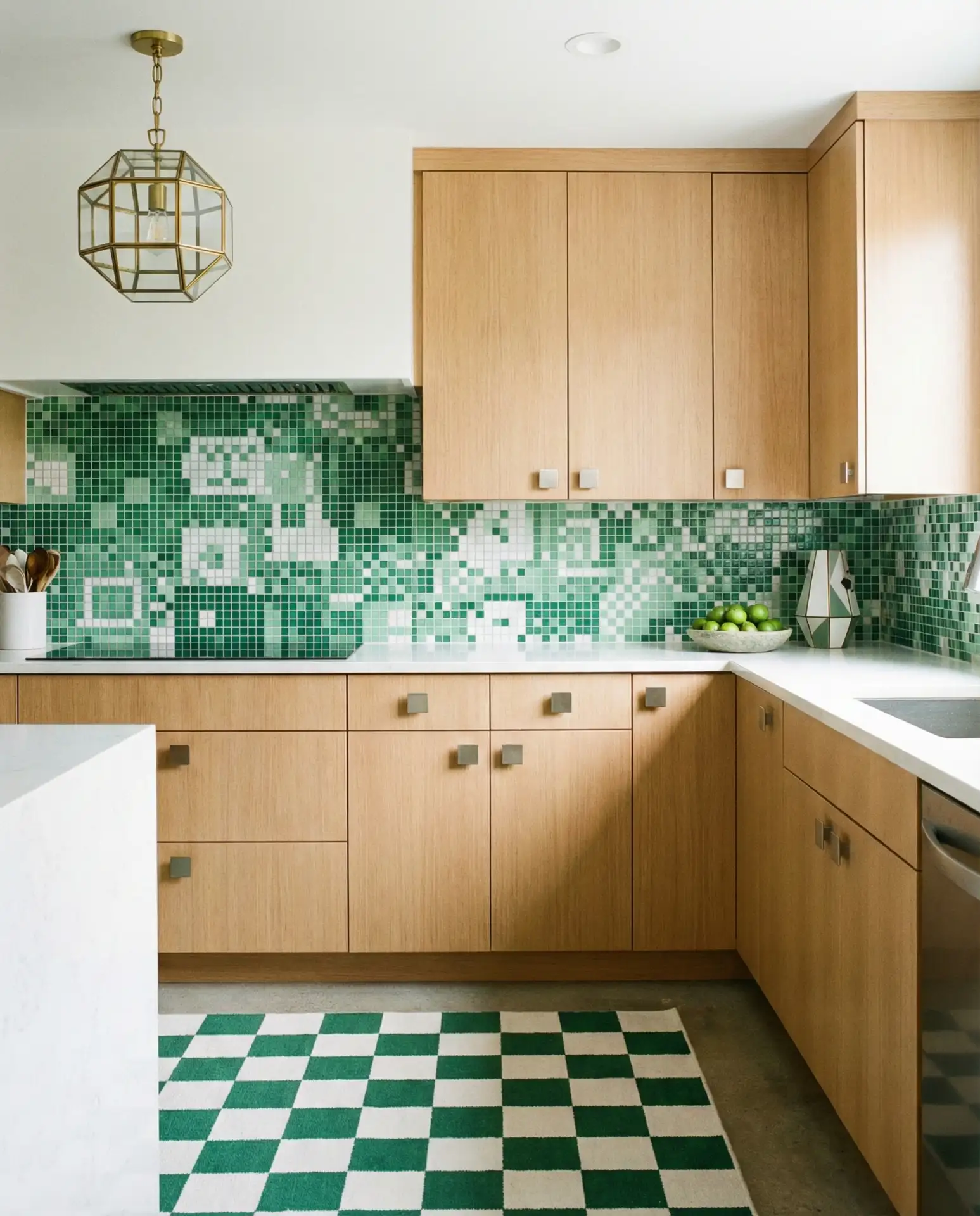
What makes this approach work for adults as well as kids is the underlying emphasis on geometry and pattern rather than literal gaming references. A Seattle family incorporated a pixelated tile backsplash in varying shades of blue that their children loved for its Minecraft connection while parents appreciated it as a sophisticated geometric design. This kind of intergenerational appeal makes these kitchens particularly successful in family homes where design needs to satisfy multiple perspectives and age groups while maintaining long-term relevance.
16. Aesthetic Minimalism with Maximum Impact

The aesthetic minimalism movement in 2026 kitchens emphasizes curated simplicity, where every visible element serves both form and function. This approach favors handleless cabinets, integrated appliances, and concealed storage that maintains clean surfaces and uninterrupted sight lines. White or grey monochromatic schemes dominate, occasionally punctuated by a single statement element like a dramatic range hood or sculptural lighting fixture.
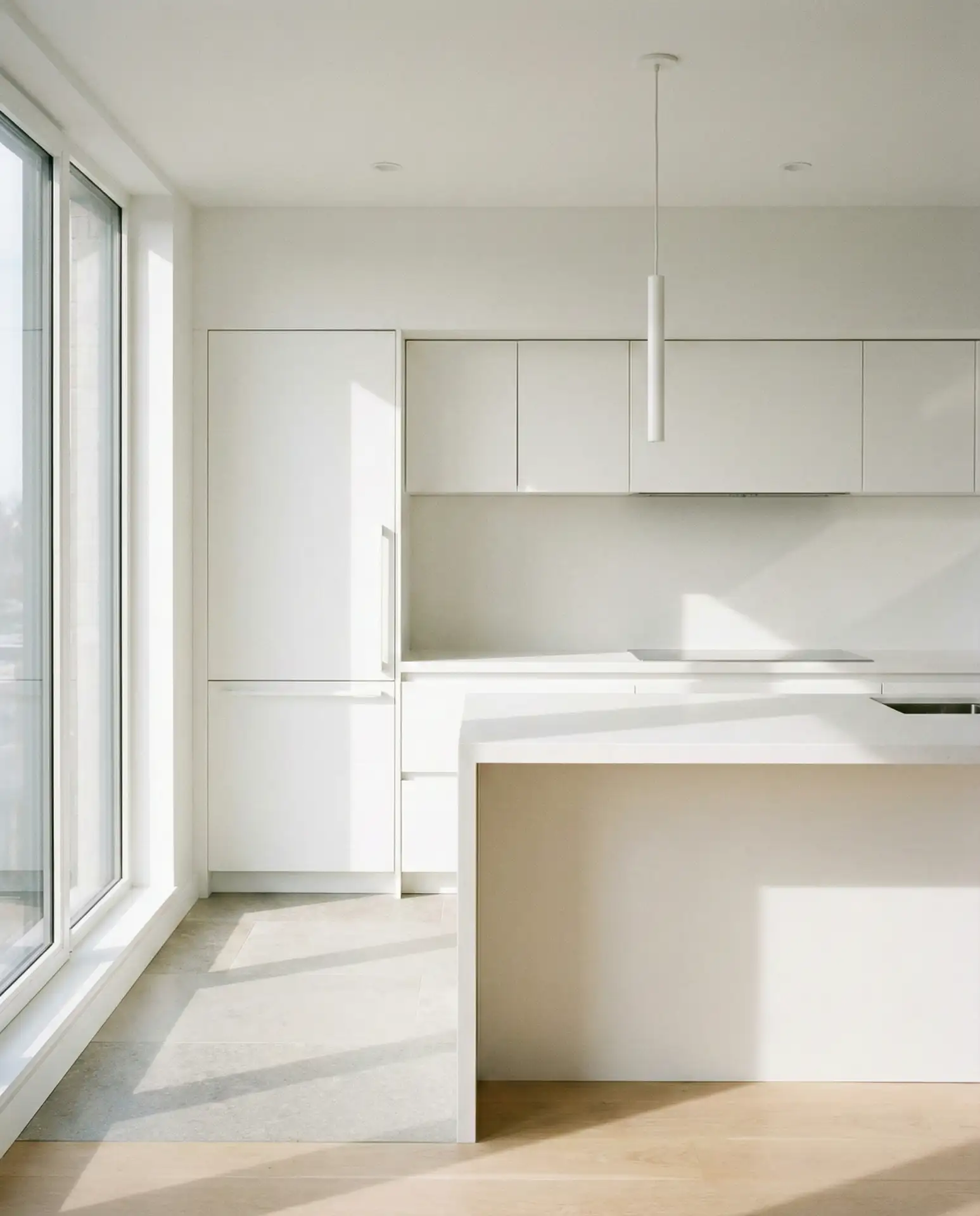
Real homeowner behavior reveals that maintaining true minimalism requires significant discipline and storage elsewhere in the home—a challenge for families with extensive cooking equipment or multiple household members. The most successful minimalist kitchens belong to either serious cooks who use their tools daily (and thus can justify having only essential items) or to people who primarily use their kitchen for light cooking and entertaining. For everyone else, a “warm minimalism” that allows for some visible personality and practical accessibility tends to be more sustainable long-term.
17. Black Cabinetry Making Bold Mature Statements
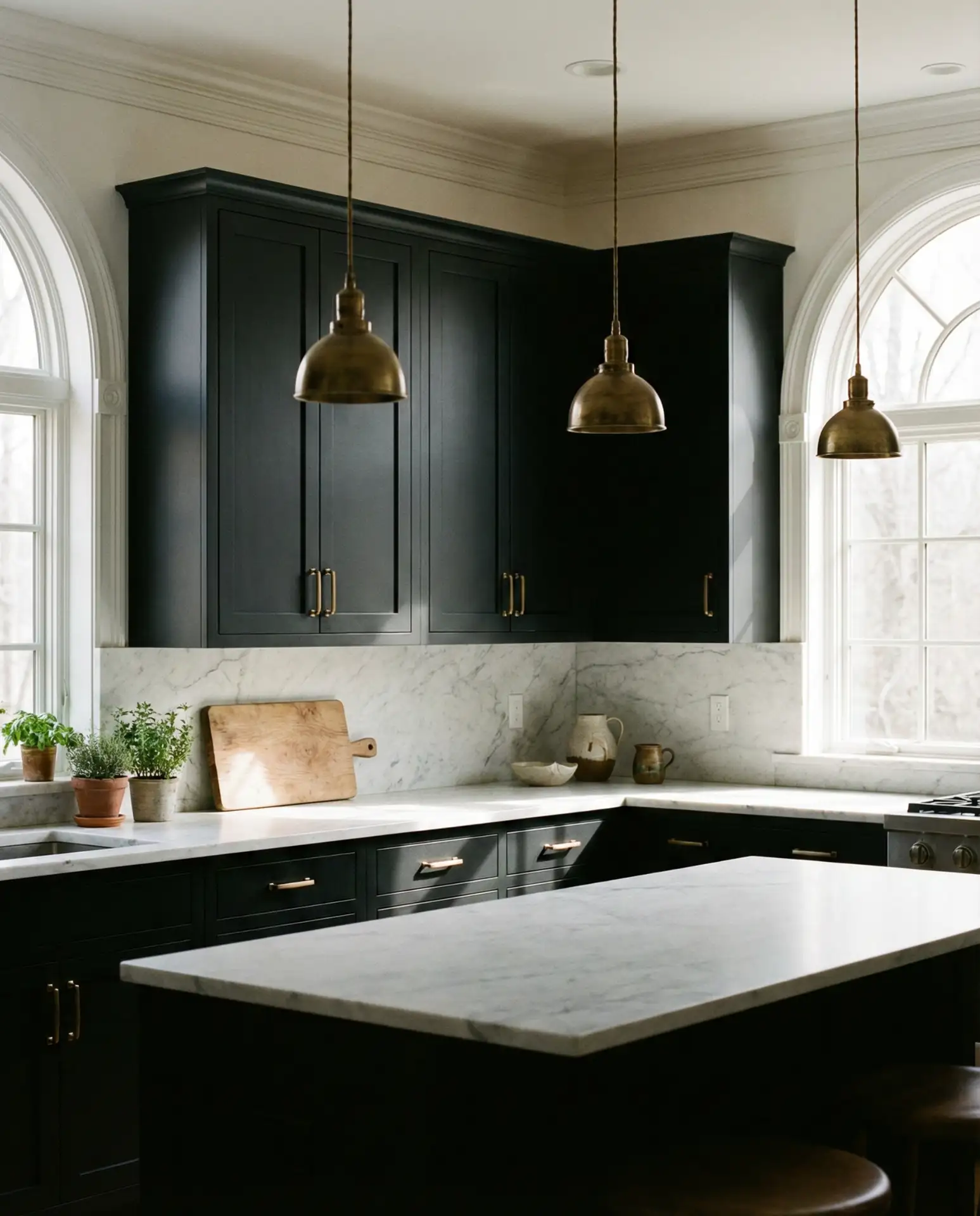
Black cabinets have moved from edgy to sophisticated in 2026, offering dramatic elegance when balanced with lighter counters and adequate lighting. This bold choice works particularly well in modern luxury kitchen designs where the dark cabinetry serves as a gallery-like backdrop for statement lighting, colorful accessories, or vibrant artwork. The key to success lies in preventing the space from feeling cave-like through generous natural light, reflective surfaces, and strategic use of lighter tones.
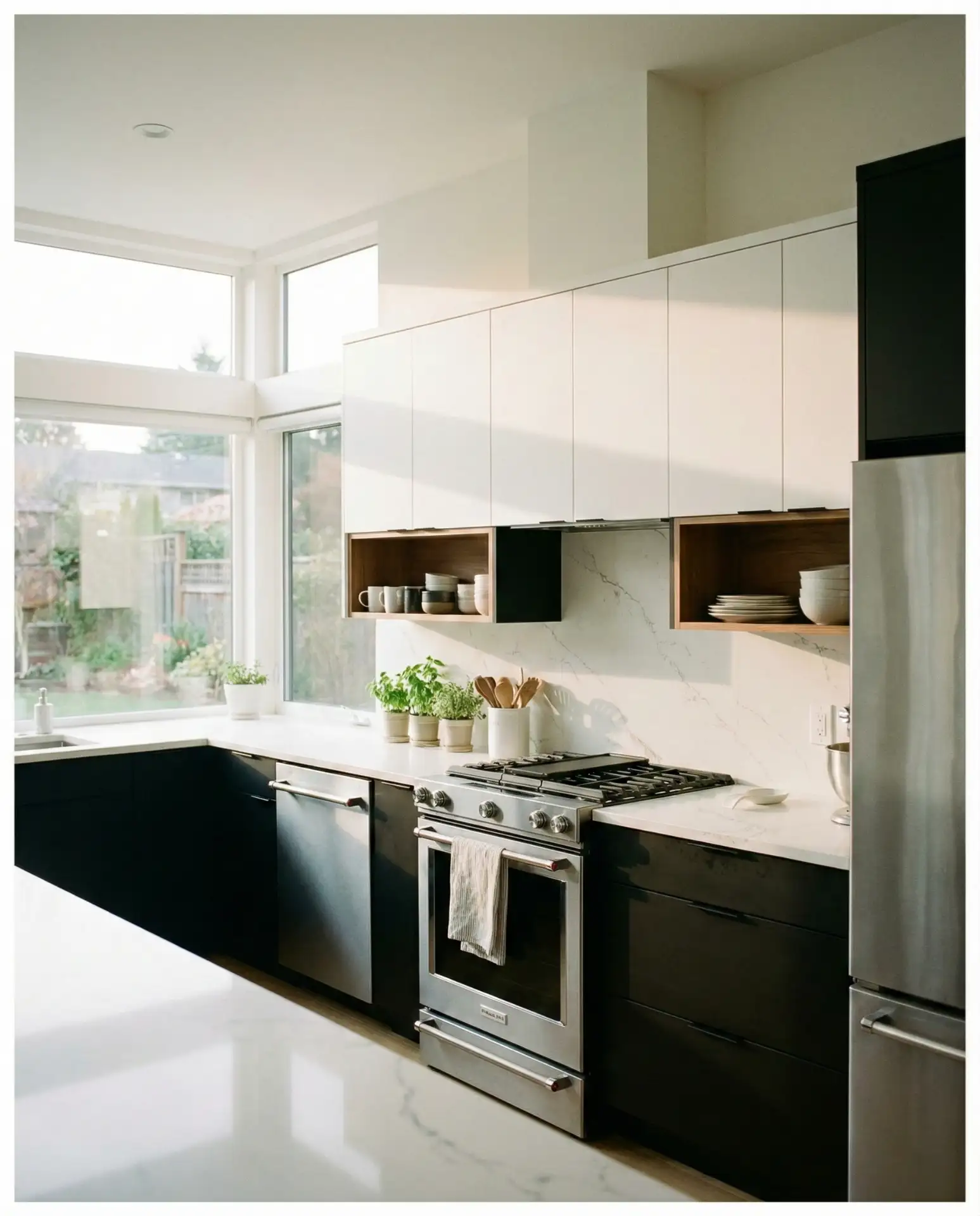
Common mistakes with black cabinets include insufficient lighting—both natural and artificial—and pairing them with dark countertops, which creates an oppressive feeling. Instead, designers recommend white, cream, or light grey counters to provide necessary contrast and installing ample task lighting under cabinets and inside glass-front units. Black cabinets also show dust and fingerprints more readily than lighter colors, so homeowners should consider matte or textured finishes rather than high-gloss ones and be prepared for slightly more frequent cleaning to maintain the dramatic, polished look.
18. Color Ideas Reflecting Personal Style
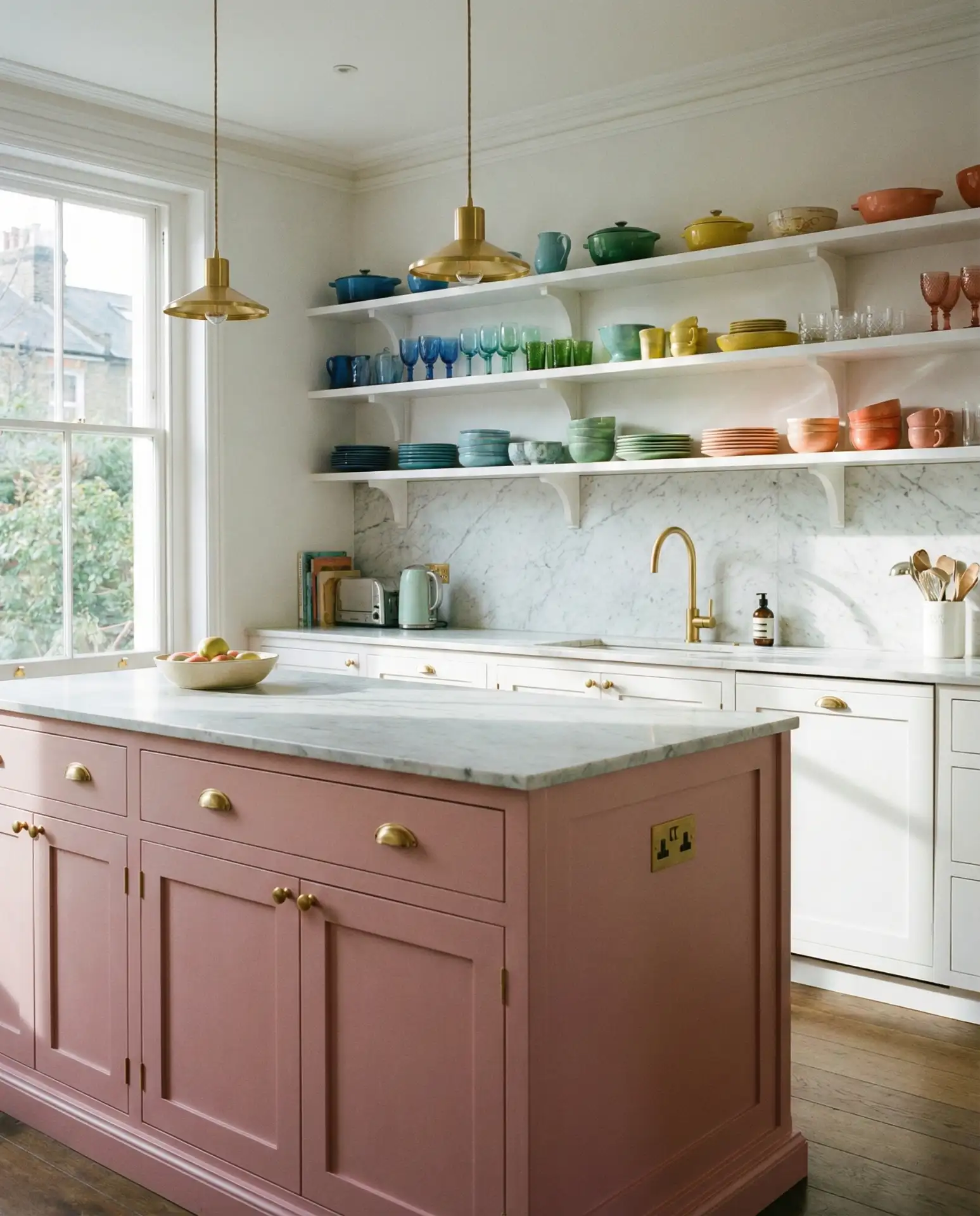
Exploring color ideas beyond safe neutrals has become a hallmark of confident kitchen design in 2026, with homeowners embracing everything from terracotta to peacock blue. The color combination approach matters more than the specific hue—successful colorful kitchens typically feature one dominant color supported by neutrals and one or two accent tones. Green, blue, and warm earth tones lead the palette, but designers are also seeing interest in unexpected choices like dusty pink or burnt orange for those seeking truly personalized spaces.
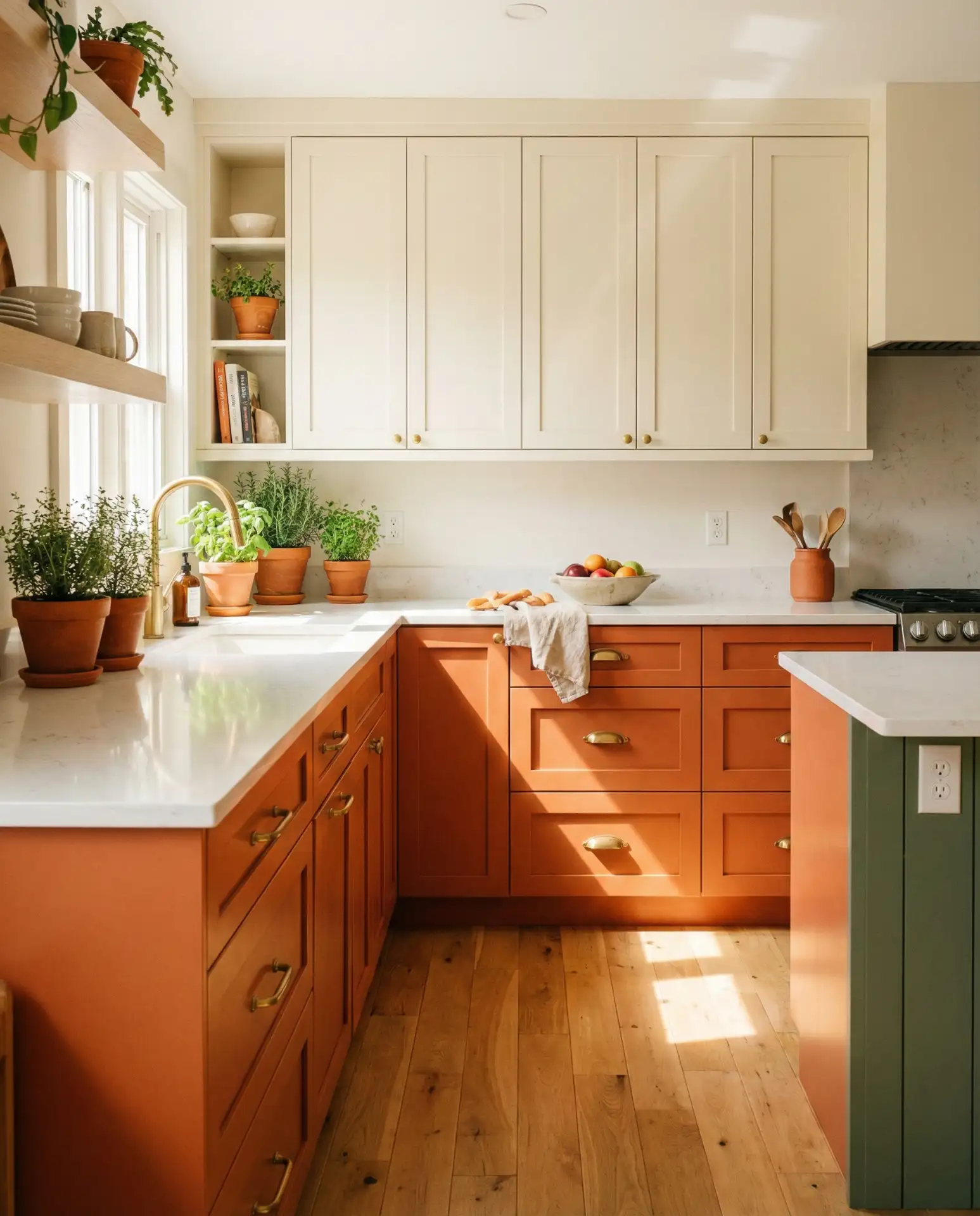
Where bold color ideas work best is in homes where the owners are committed to their aesthetic vision and less concerned with universal resale appeal. Young professionals in urban markets often embrace these adventurous choices, understanding that a distinctive kitchen can be a selling point to like-minded buyers. The practical consideration is that bolder colors typically work better on lowers or islands, where they can be changed more easily than on upper cabinets, and pairing them with timeless neutral elements ensures the overall design remains flexible as tastes evolve.
19. Indian Modular Efficiency Meets American Scale
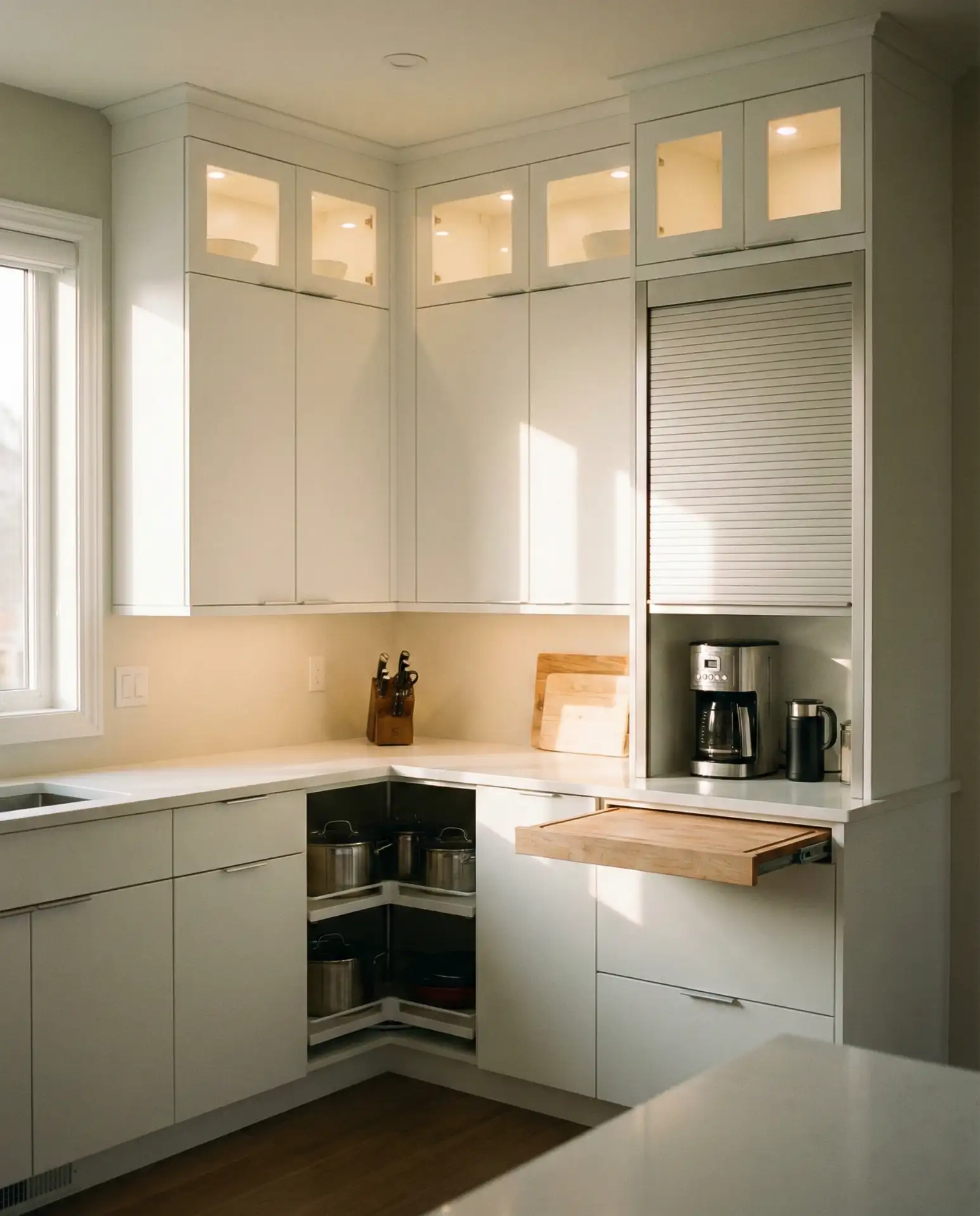
Indian modular kitchen systems have found enthusiastic adoption among American homeowners who appreciate the intelligent storage solutions and flexible configuration options. These systems excel at maximizing vertical space with tall pantry units, incorporating pull-out organizers for every category of kitchen tool, and creating designated zones that keep the cooking process streamlined. Modular components mean you can start with a basic layout and add specialized units—like a spice pull-out or appliance garage—as budget allows.
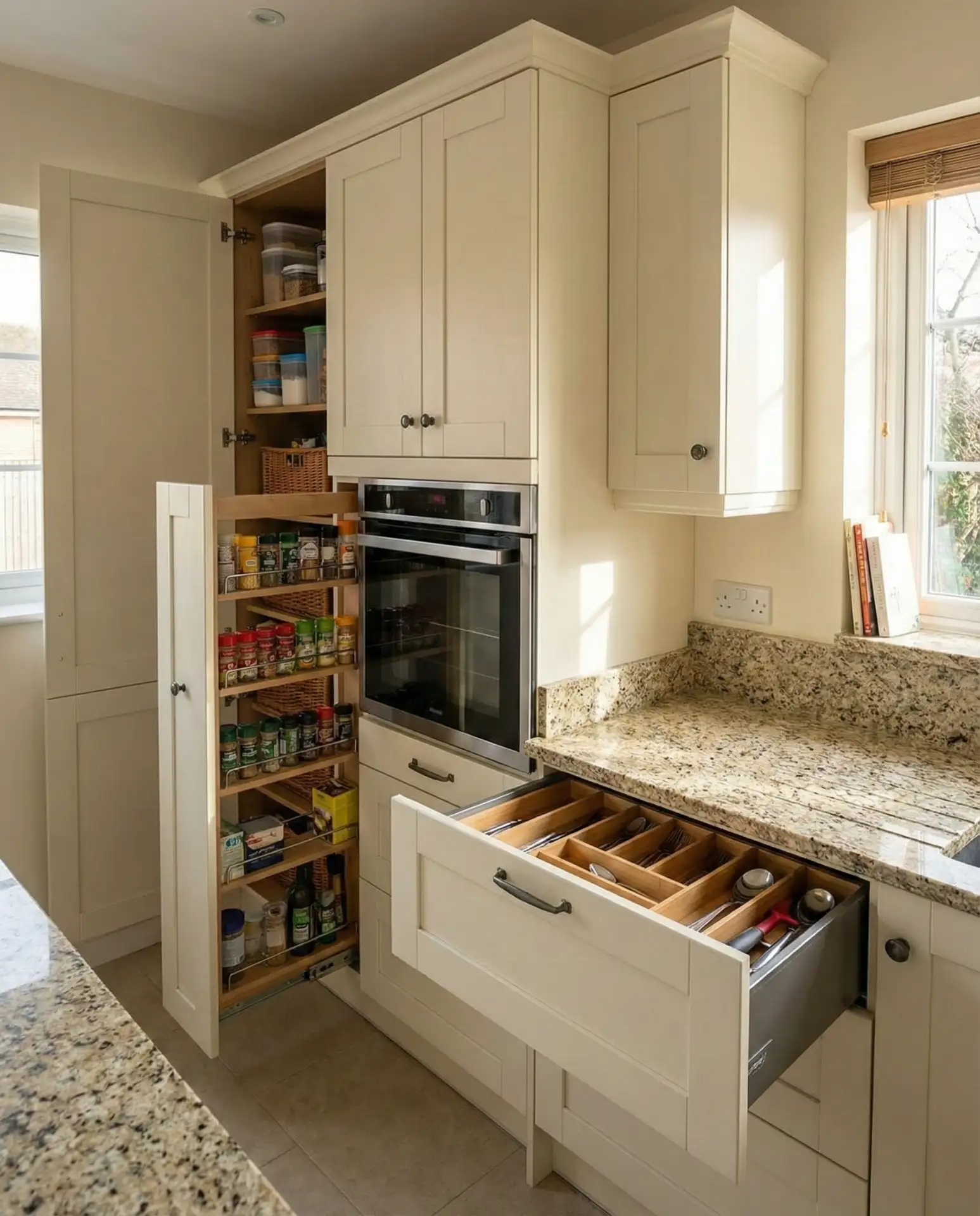
A practical insight for American kitchens is that Indian modular principles can be applied selectively rather than wholesale. You might adopt the tall pantry cabinet concept and multiple pull-out organizers while maintaining an open-plan American layout with an island and bar seating. This hybrid approach takes the best organizational ideas from Indian design—which evolved in response to genuine space constraints—and applies them to American kitchens, where the goal is less about saving space and more about intelligent use of the space you have.
20. Video Content Inspiring Kitchen Transformations
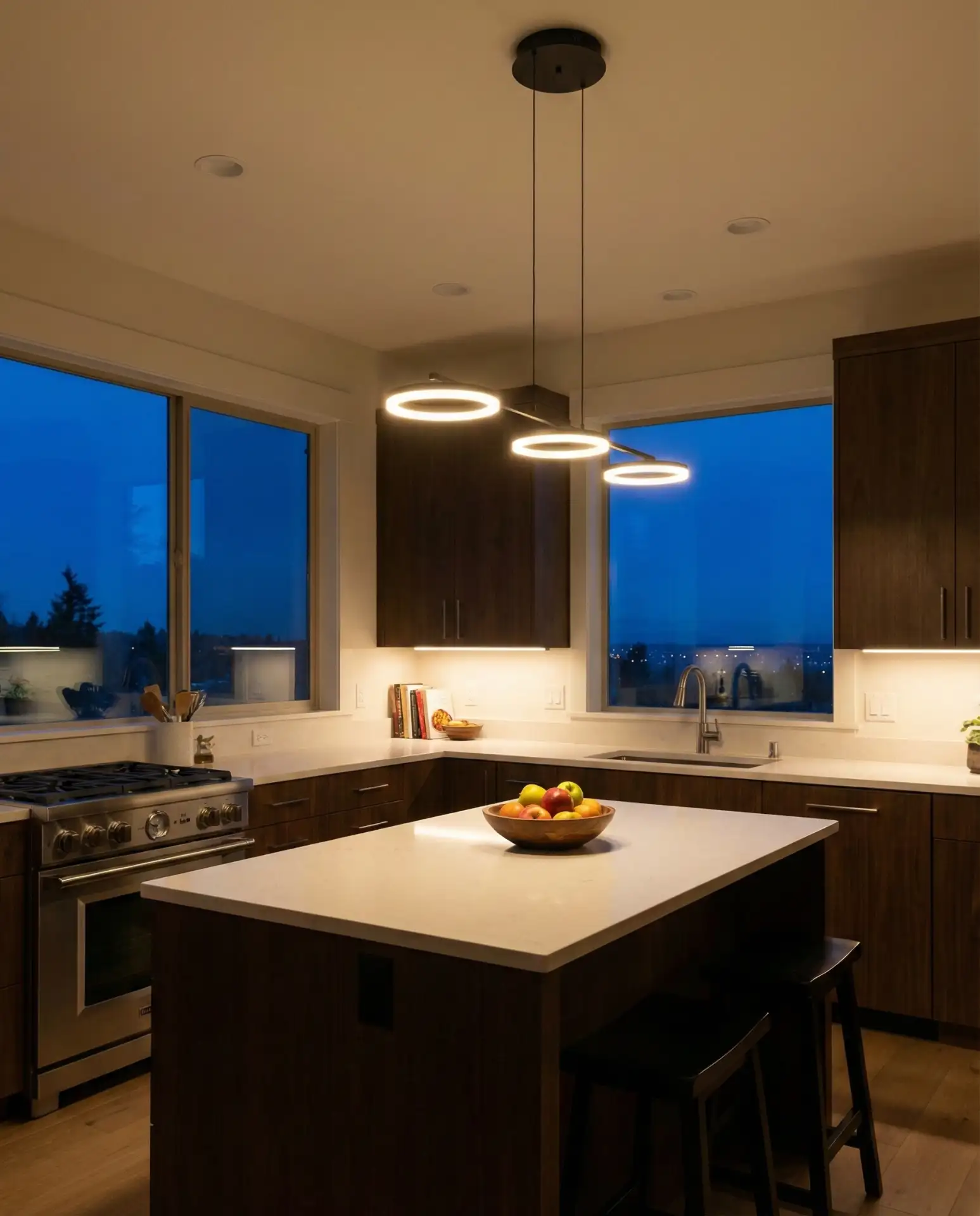
Video content has become the primary way Americans discover and plan kitchen renovations in 2026, with platforms like YouTube, Instagram Reels, and Pinterest video pins showing entire transformations in time-lapse or walking viewers through design decisions. This visual medium helps people understand spatial relationships, lighting changes throughout the day, and how different finishes actually look in real homes versus static photos. Homeowners increasingly create mood boards from video screenshots rather than traditional photos, capturing dynamic moments that reveal how a kitchen truly functions.
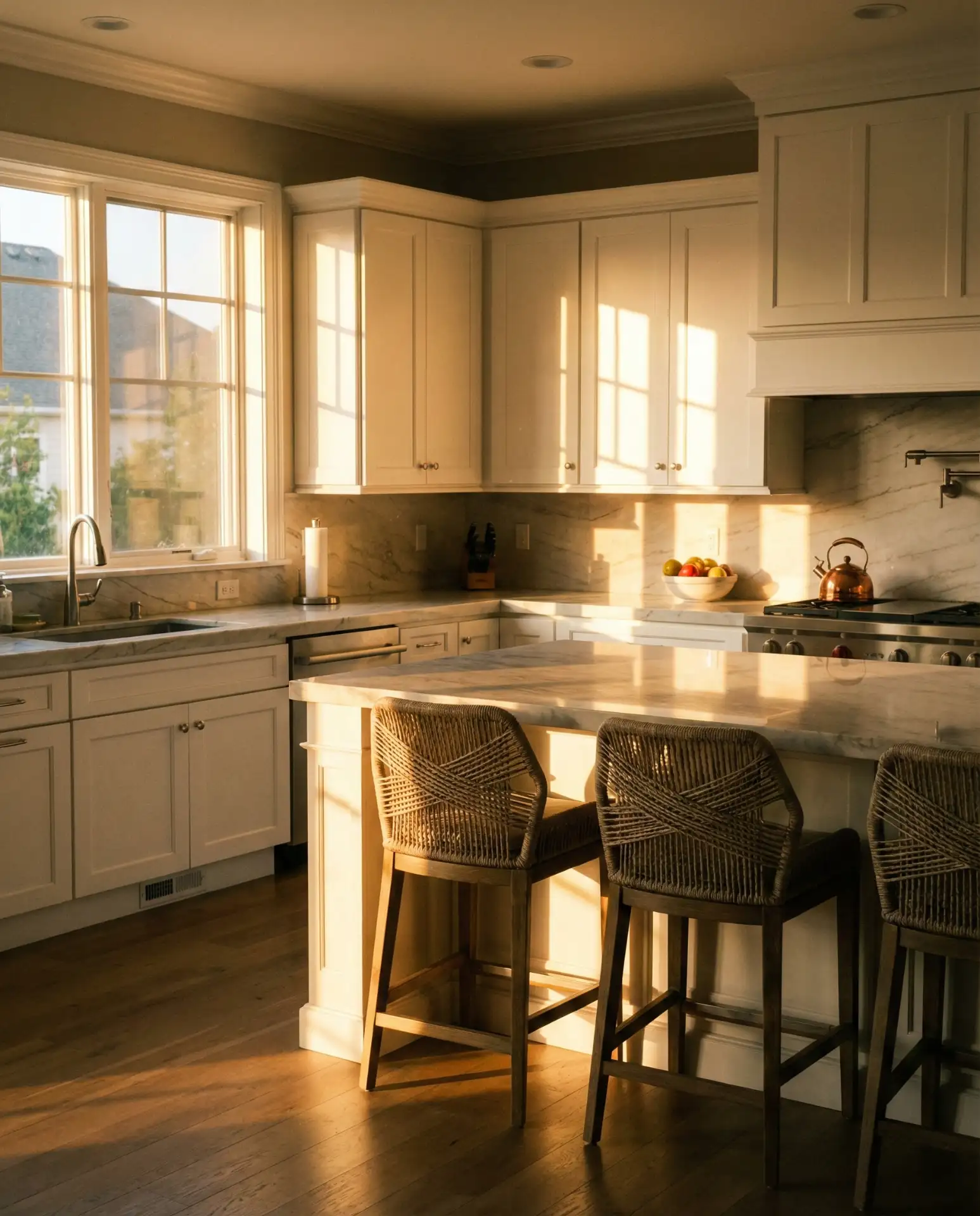
Expert designers now create video walkthroughs during consultations, showing clients how proposed designs would work in morning light versus evening, how cabinet doors open and close, and how traffic flows through the space during meal prep. This has dramatically reduced the disconnect between expectations and reality that often plagued kitchen renovations. One designer in Nashville reports that clients who watch video documentation of similar projects make faster decisions and express higher satisfaction because they can visualize the end result with much greater accuracy than blueprints and static renderings ever provided.
Conclusion
The kitchen trends shaping American homes in 2026 reflect a beautiful balance between personal expression and practical living, proving that the best designs emerge when we honor both aesthetics and everyday function. Whether you’re drawn to the efficiency of modular systems, the warmth of wooden accents, the drama of black cabinetry, or the serenity of blue and green palettes, the key is choosing elements that resonate with how you actually live. We’d love to hear which ideas inspire your own kitchen journey—share your thoughts, questions, or current kitchen dilemmas in the comments below, and let’s continue this conversation about creating spaces that truly feel like home.