Home offices have come a long way from the “spare bedroom with a folding table” era, and in 2026, they’re finally getting the design attention they deserve. Americans are spending more time working from home than ever before, and Pinterest searches for home office inspiration have exploded—people want spaces that are functional, beautiful, and genuinely reflective of their personal style. Whether you’re starting from scratch in a studio apartment or reclaiming a neglected corner of your house, the ideas ahead will help you build something you’re actually excited to sit down in every morning. From serene Japandi setups to bold executive suites, we’ve rounded up of the best home office design directions for 2026.
1. The Minimalist White Sanctuary
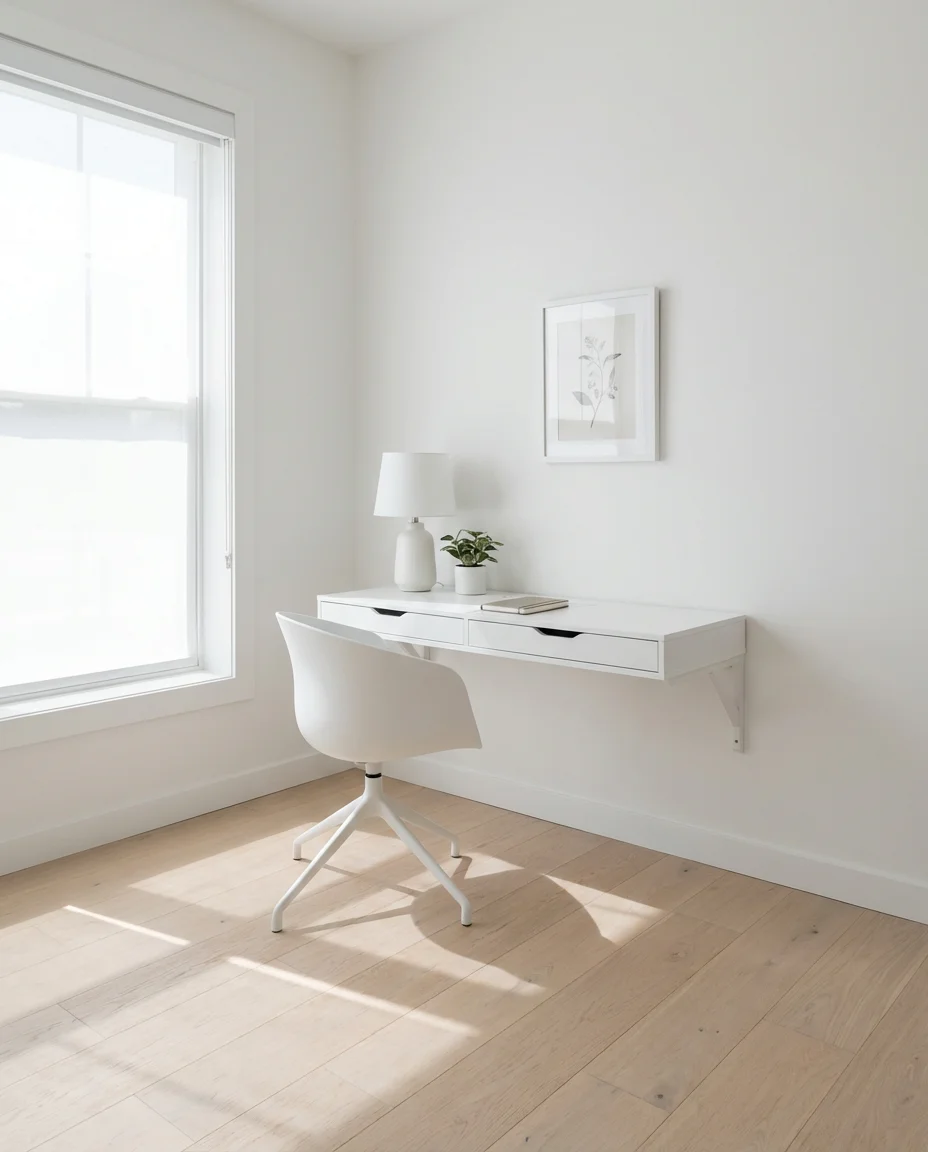
There’s something almost meditative about a truly minimalist home office—no clutter, no noise, just you and the work. This aesthetic leans hard into white walls, white desks, and a deliberate reduction of everything that doesn’t earn its place in the room. It’s a particularly strong choice for anyone who finds visual chaos genuinely distracting. Think a sleek adjustable desk in matte white, a single piece of wall art, and a low-profile chair in a tone-on-tone neutral. The result feels like breathing room; you can actually schedule your day inside.
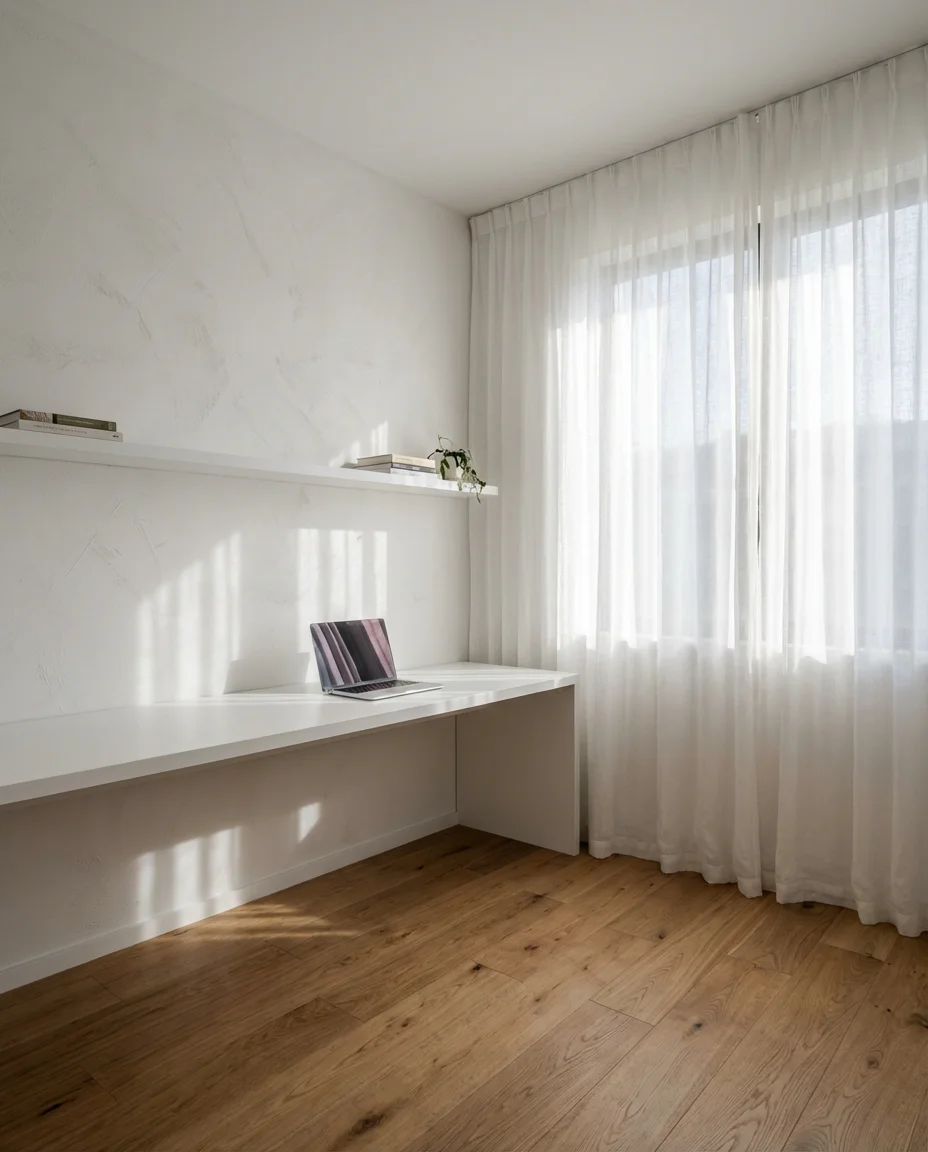
The smartest practical move in an all-white office is to build in hidden storage before you buy anything else. Open shelves look beautiful in photos but quickly become clutter magnets in real life. Opt for closed cabinets in the same white as the walls—they essentially disappear, keeping that clean, expansive feeling intact even as your actual workload grows. A few flat-front drawers under the desk handle the daily mess without sacrificing the look you worked hard to create.
2. Japandi Home Office Calm
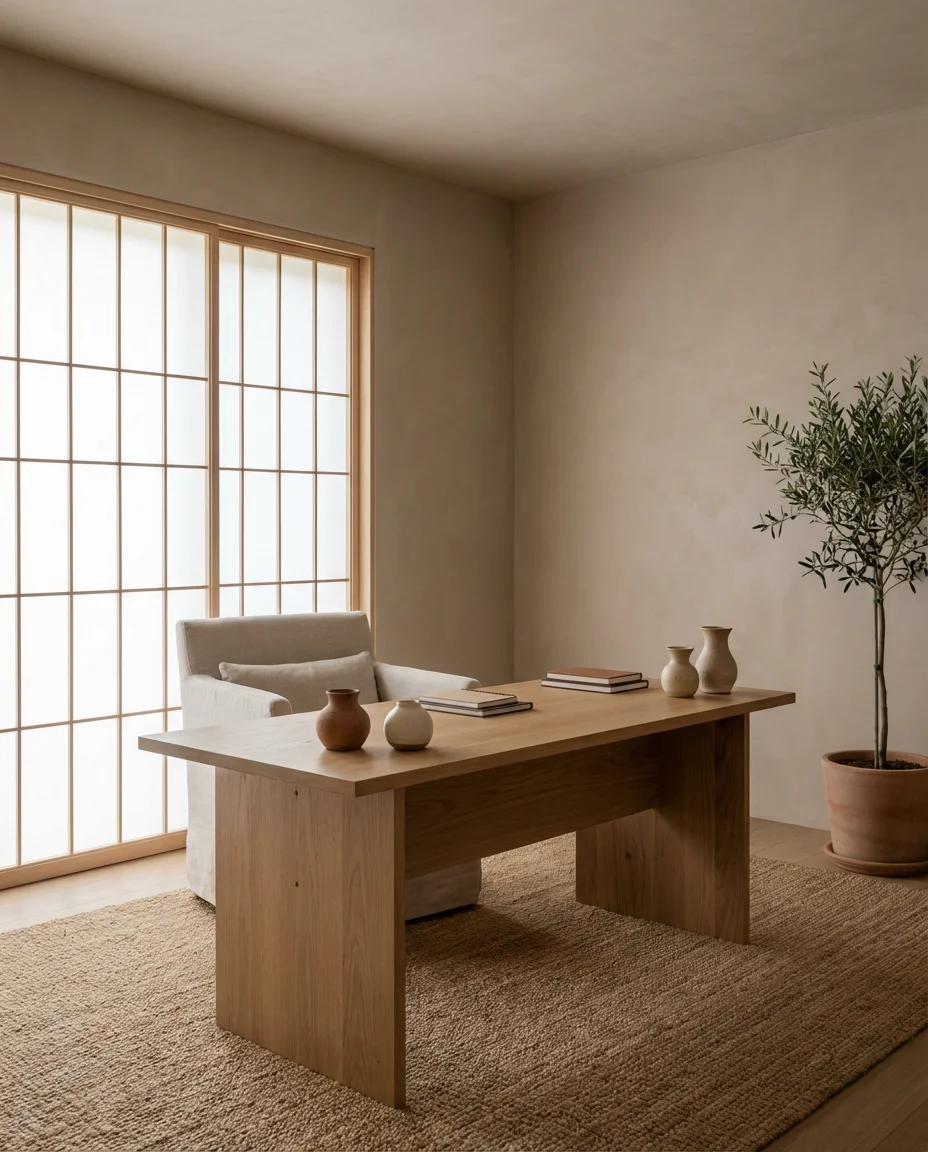
The Japandi movement—that effortless blend of Japanese wabi-sabi and Scandinavian hygge—has been gaining momentum for years, and in 2026 it’s landing firmly in the home office. The philosophy is simple: choose fewer things, but make every piece count. A low, natural-wood desk paired with a linen-cushioned chair, a single ceramic pen holder, and maybe a small potted moss arrangement is all you need. The palette stays in warm earth tones—sand, clay, and moss—and nothing shines unless it’s meant to. It’s cozy without being fussy and calm without feeling cold.
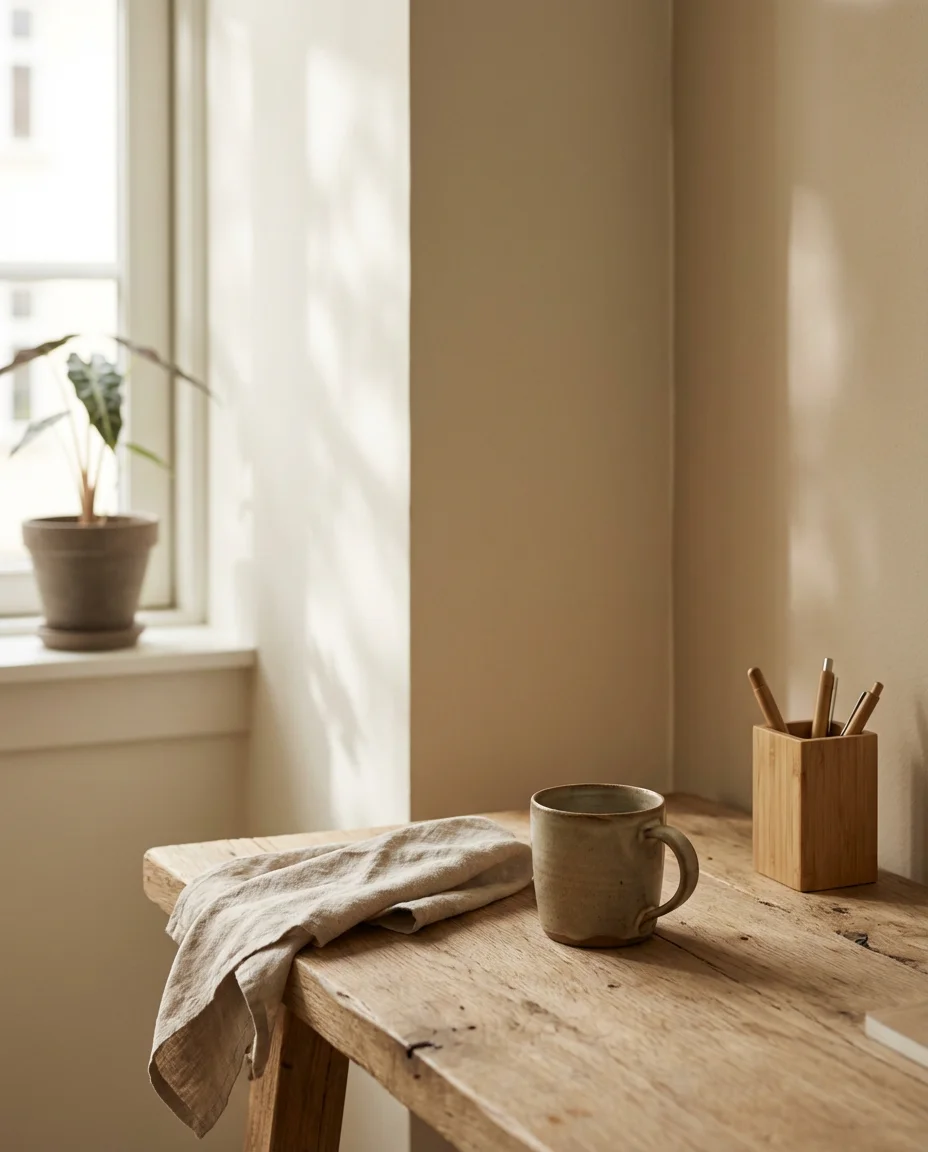
This aesthetic works best in rooms that already have some natural material—exposed wood floors, plaster walls, or even just a south-facing window. The light is doing half the work. Interior designers often note that Japandi spaces feel expensive precisely because restraint reads as intention. If you’re working with a tight budget, splurge on one quality natural-wood piece and let everything else be simple and honest—unfinished, unvarnished, real.
3. Modern Luxury Executive Setup
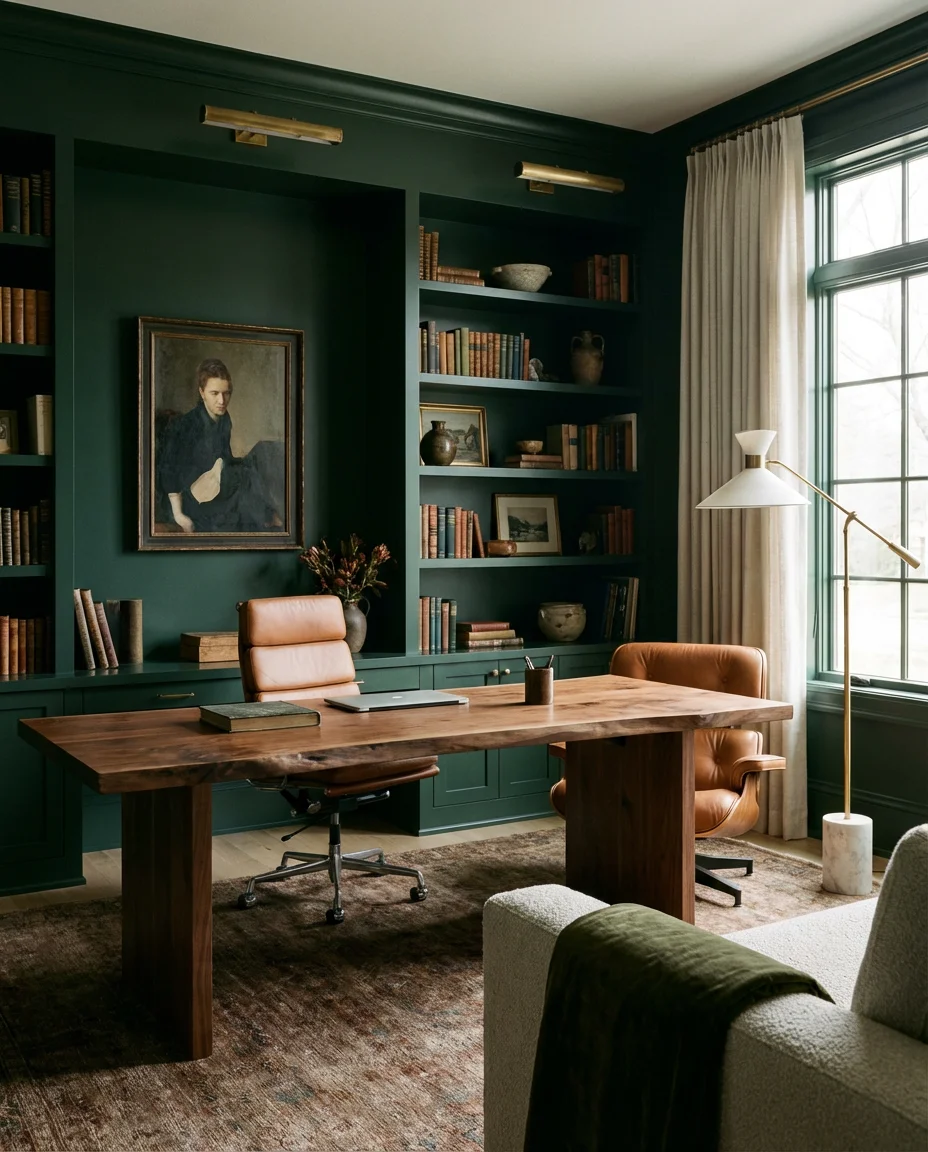
For the person who takes their work seriously and wants their office to reflect that, the modern luxury executive setup is having a major moment in 2026. This is the aesthetic of deep-toned walls—charcoal, navy, and forest green—paired with a substantial executive desk in walnut or marble-top, a top-tier leather chair, and statement lighting that would look at home in a boutique hotel. Built-in shelving stocked with curated books and objects completes the look. It reads as powerful, polished, and unmistakably grown-up.
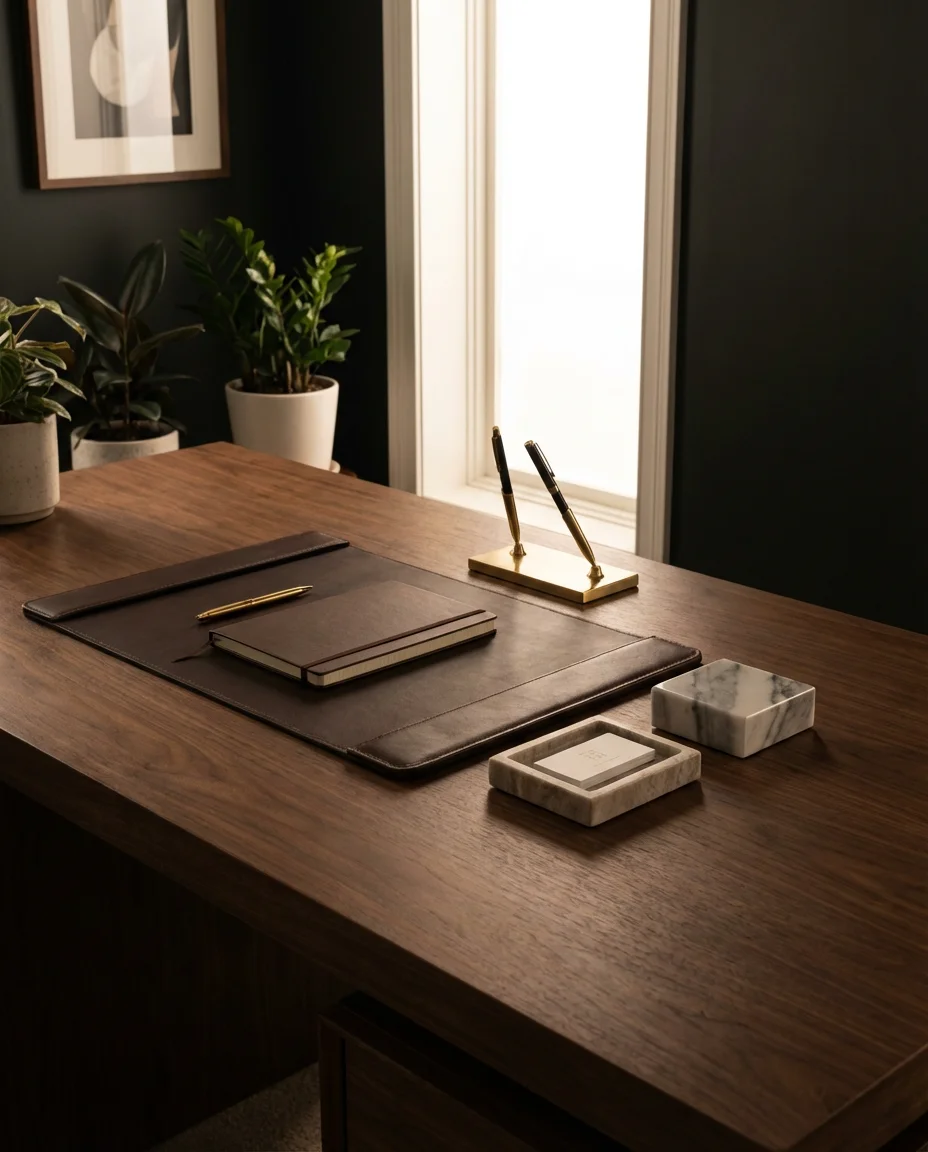
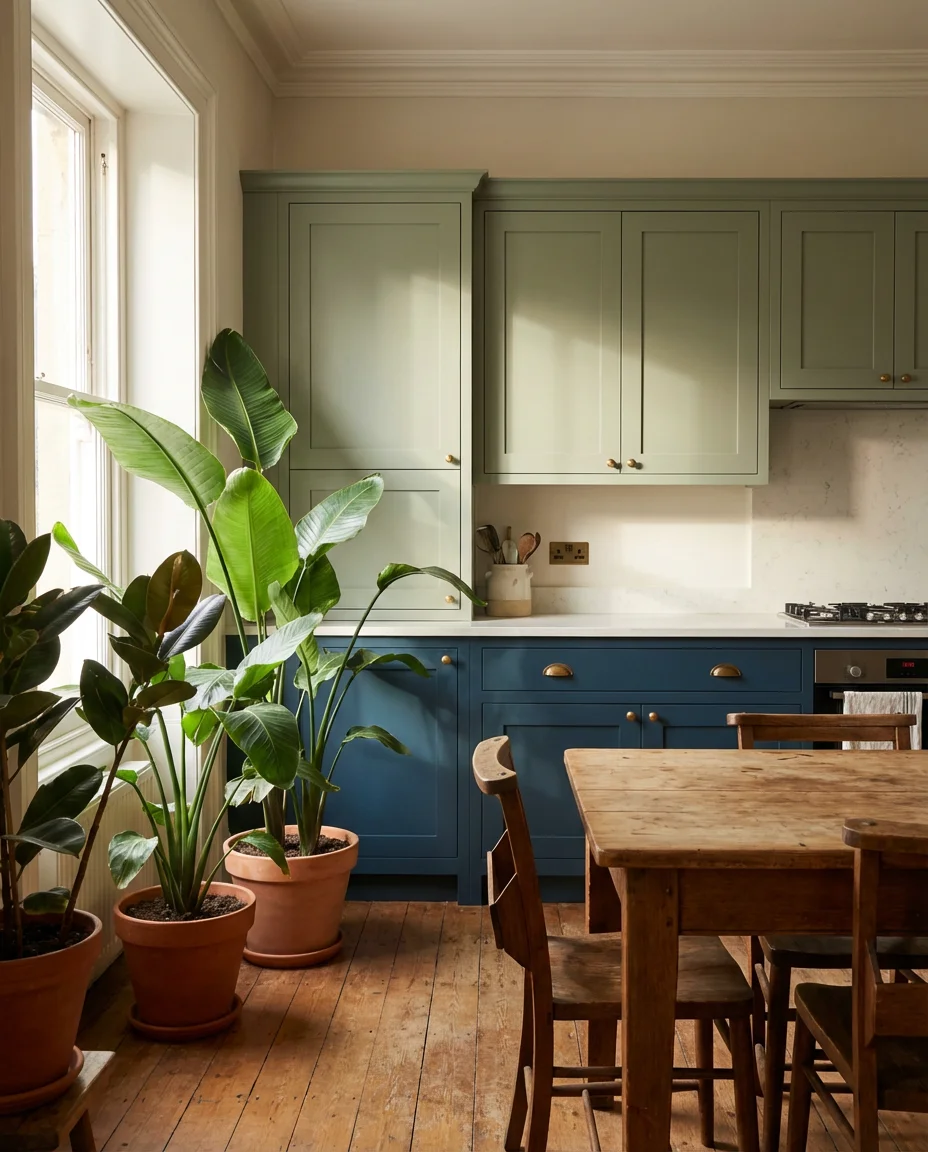
One thing real homeowners consistently get wrong here: over-accessorizing. The executive look depends on breathing room. A leather desk pad, one sculptural object, and a single well-chosen lamp—that’s actually enough. Every additional piece you add dilutes the authority of the ones already there. Think of it the way a stylist would dress a model: the outfit is stronger with fewer pieces, each one chosen deliberately.
4. Scandinavian Simplicity With Warmth
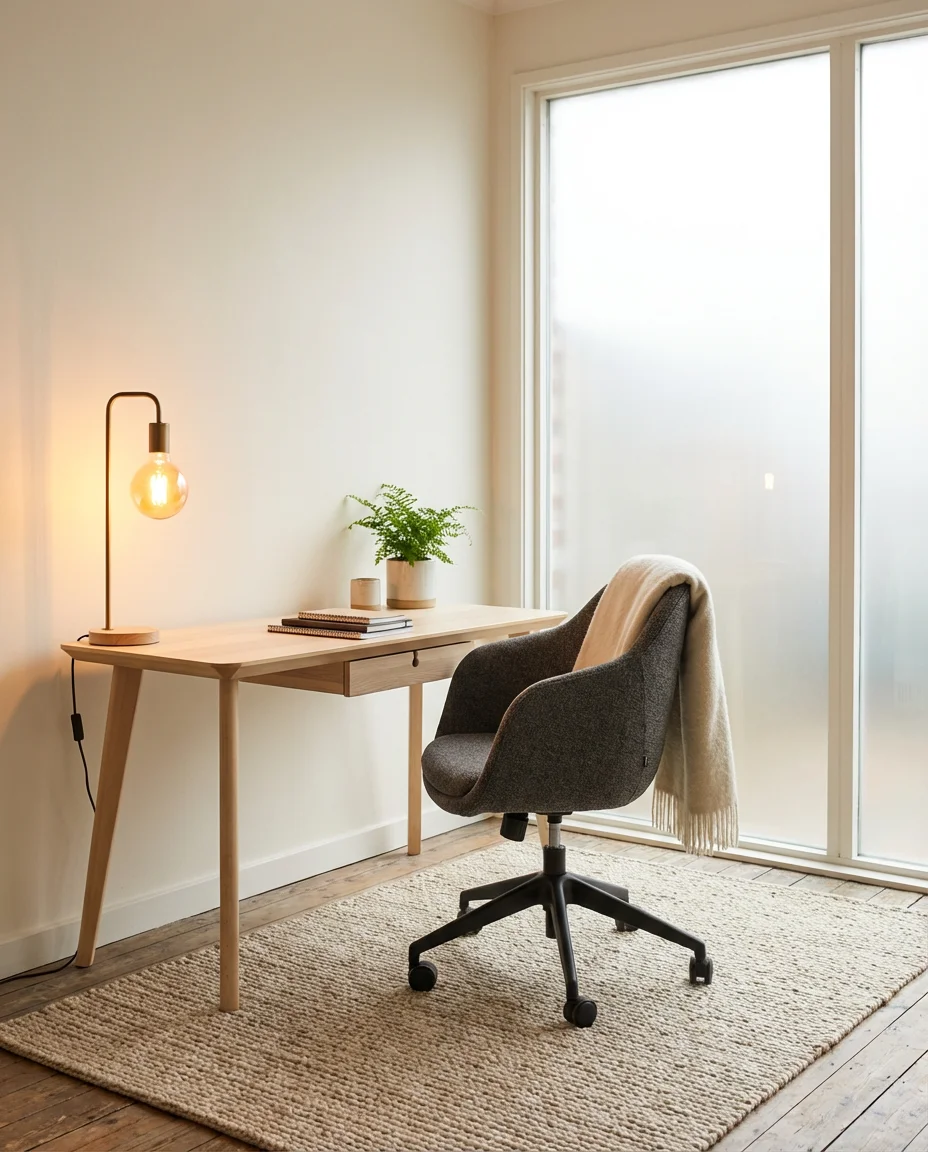
Pure Scandinavian design in a home office hits differently than it does in a living room—it has to work harder, balancing beauty with function across a full workday. The approach for 2026 leans into warmth over the cooler, starker Nordic looks of previous years. Birch or ash desks, textured wool throws draped over an ergonomic chair, a warm-toned Edison-style task lamp, and just enough greenery to soften the lines. The palette is oatmeal, soft white, and warm gray, with the occasional burnt orange or dusty sage as an accent. It’s simple but never boring.
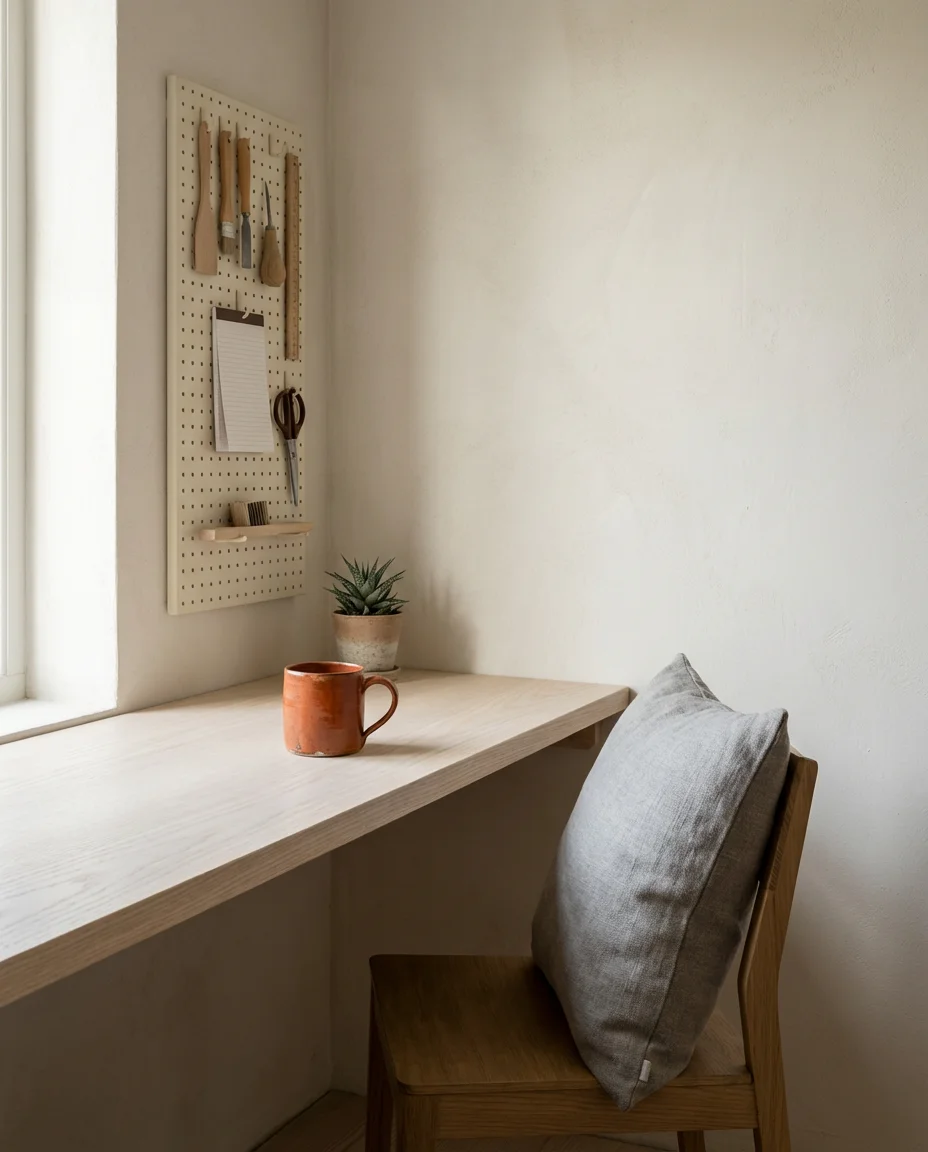
This is the layout that genuinely works best in a shared space—a bedroom corner, a living room alcove, or a wide hallway nook. The warm Scandinavian palette is forgiving enough to blend with most existing decor, and the furniture scale tends to run smaller and lighter than other styles. For Americans living in apartments in cities like Chicago, Seattle, or Minneapolis, this is often the most livable option that doesn’t require a dedicated room.
5. Industrial Loft Office Vibes
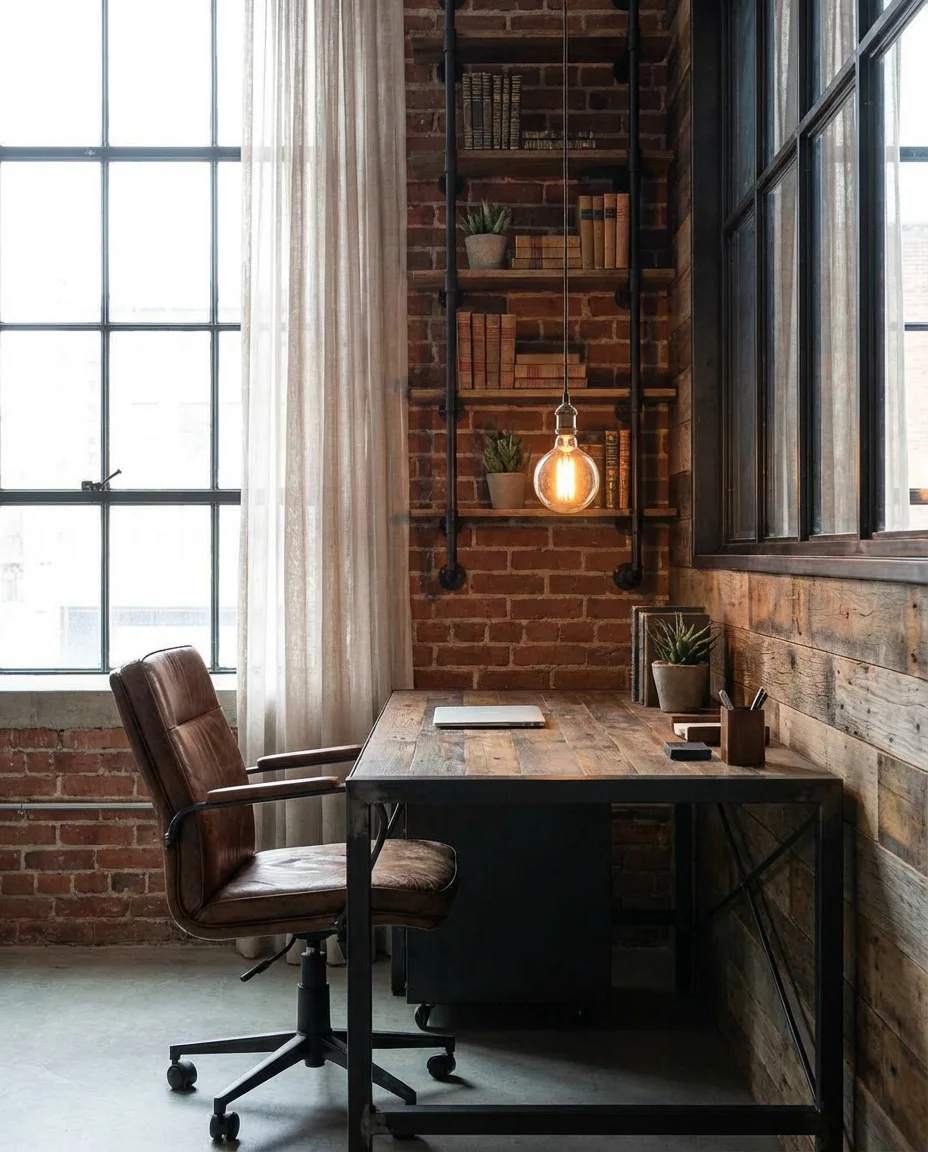
The industrial aesthetic has been a Pinterest staple for years, but in 2026 it’s getting a softer, more livable update. Instead of full cold-factory mode, think exposed brick with a warm Edison pendant, a steel-frame desk paired with a leather or suede chair, and open pipe shelving that actually looks intentional rather than unfinished. Raw concrete, aged metals, and reclaimed wood are the materials doing the heavy lifting here. It’s cool and a little edgy without sacrificing the comfort you need to actually spend eight hours inside it.
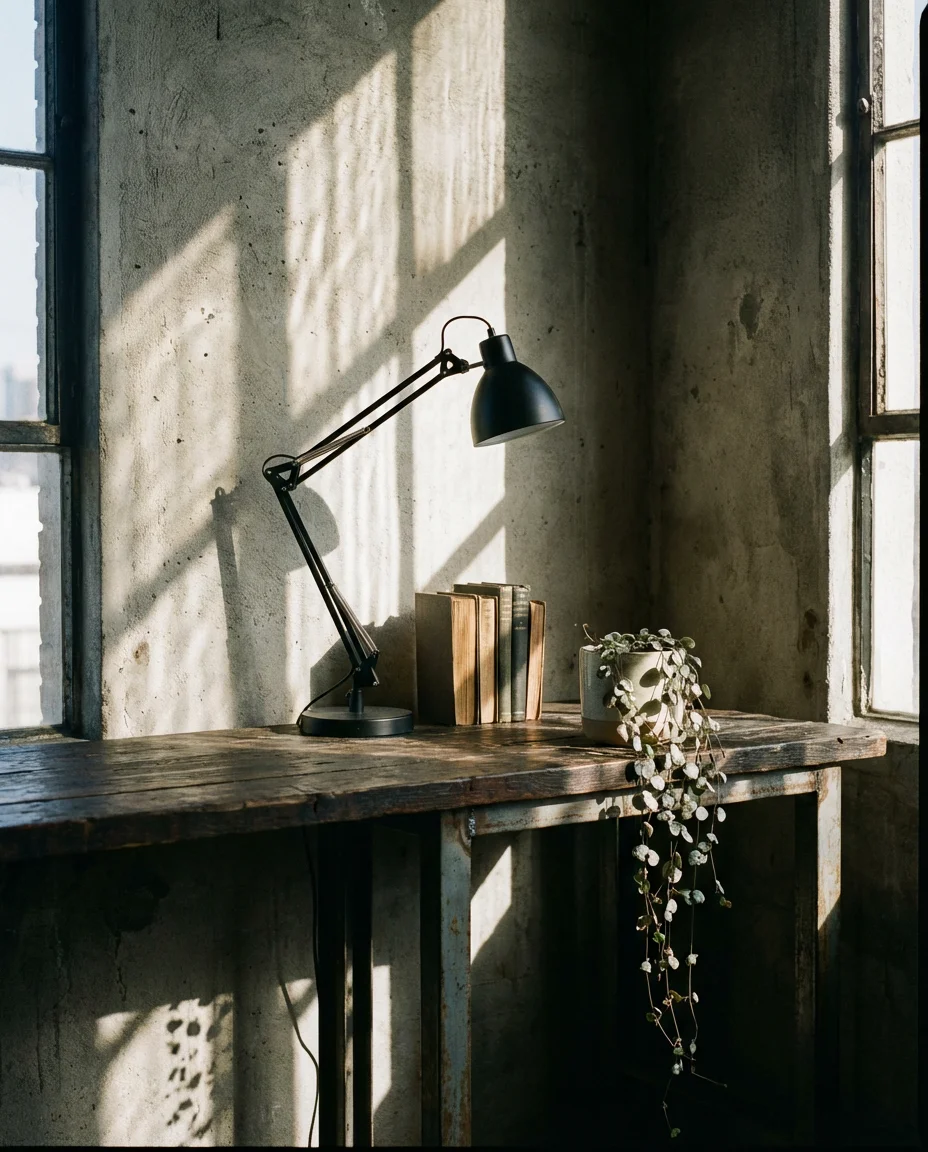
A designer who worked on several Brooklyn and Portland loft conversions once noted that the biggest mistake people make in industrial spaces is buying furniture that’s too new and polished. Shiny chrome and pristine wood surfaces fight against the raw backdrop instead of working with it. Lean into pieces with a little age on them—second-hand finds, scratch-and-dent deals, or furniture intentionally distressed—and the whole room snaps into focus.
6. Small Space Home Office Solutions
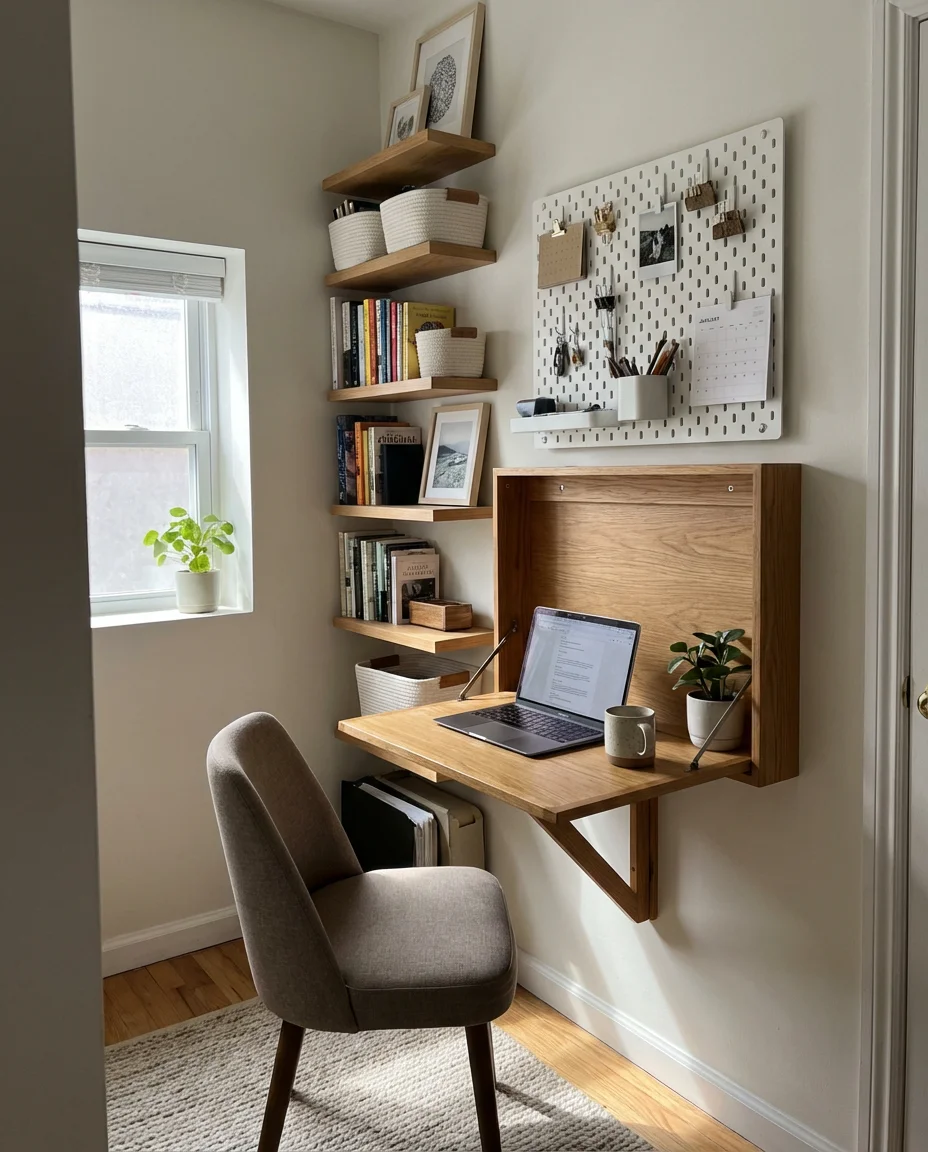
Working in a small space doesn’t mean giving up on a proper workspace—it just means being more strategic about every inch. The most successful small home offices in 2026 build up rather than out: wall-mounted desks that fold away, narrow floating shelves stacked vertically, and pegboards that consolidate supplies without occupying floor space. A minimal footprint paired with smart storage makes a 40-square-foot nook feel genuinely professional. Murphy-style desk systems have also gotten dramatically more attractive, with options in warm wood tones and clean metal that actually look good even when folded closed.
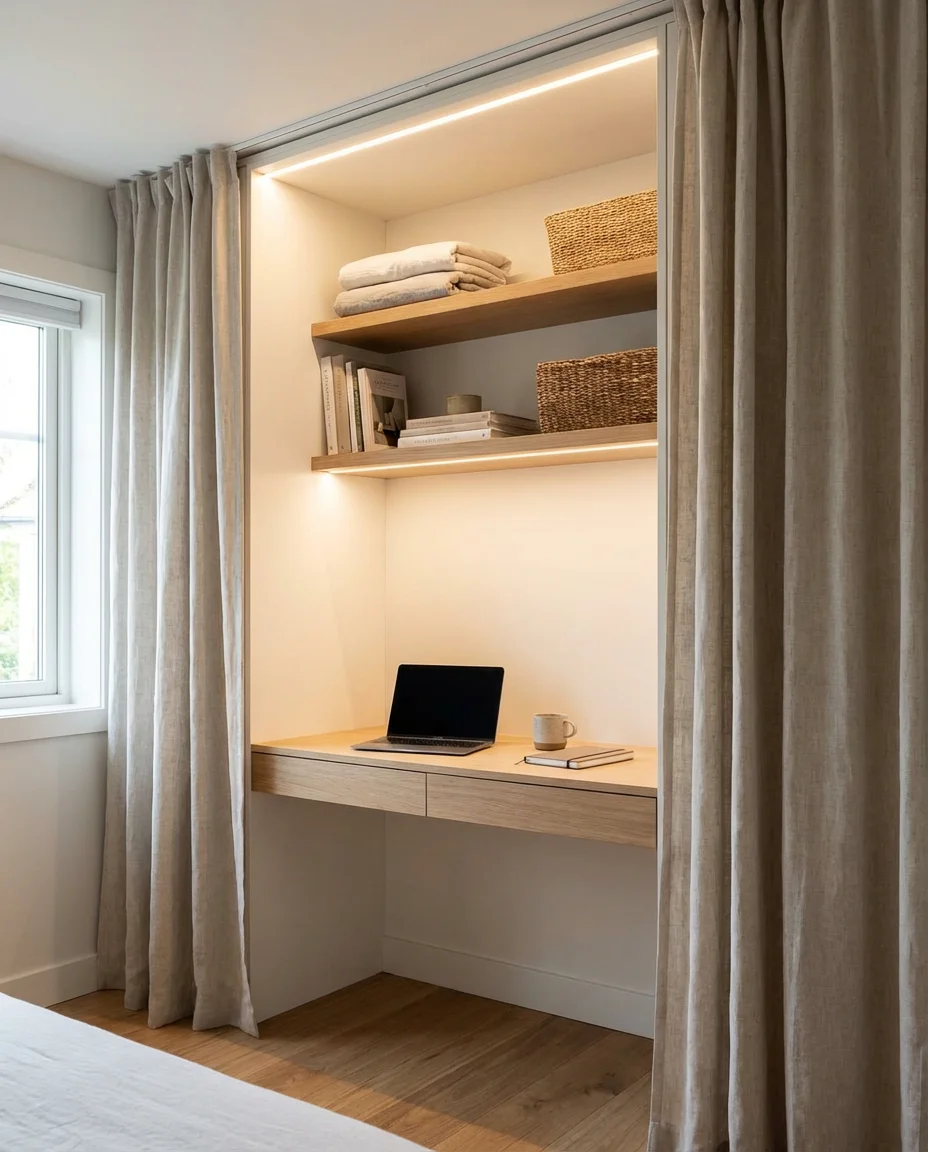
Budget-wise, small office setups can actually be among the most affordable to build well. A wall-mounted desk from IKEA or a similar retailer runs $100–$200, and a compact task chair can be had for under $150. The savings on furniture can be redirected toward one quality lighting piece—a well-designed lamp transforms a tight space more dramatically than almost anything else you can add at that scale.
7. Biophilic Green Office Design
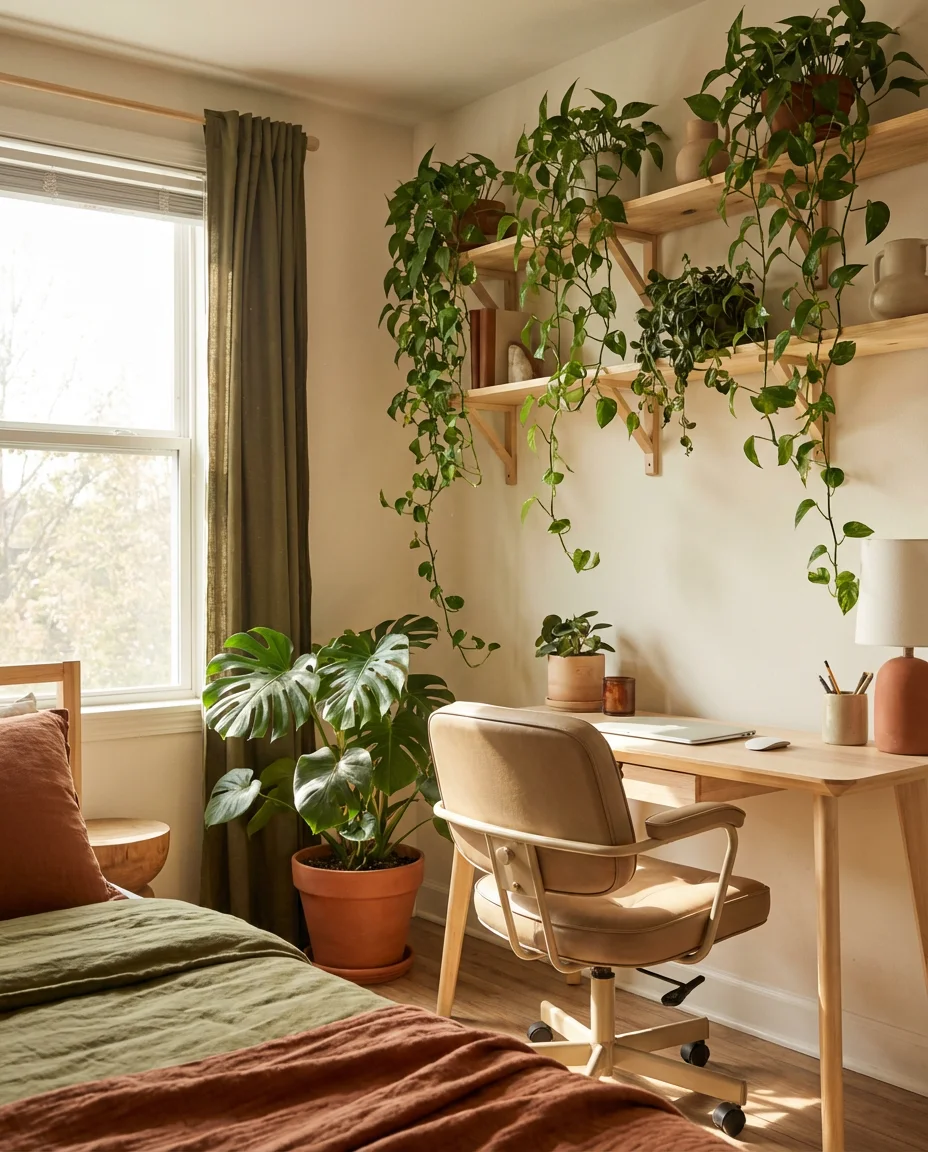
The research is clear at this point: plants in a workspace reduce stress, improve focus, and just make the room feel alive in a way that no decor object can replicate. The green office aesthetic in 2026 goes beyond a single succulent on the desk—it’s about creating a genuinely biophilic environment with trailing pothos from high shelves, a statement fiddle-leaf or monstera in the corner, and maybe a small living wall panel if your commitment level is high. The palette works naturally with earthy neutrals and natural wood, giving the whole space a breath-of-fresh-air quality. It’s inspiration literally growing on your walls.
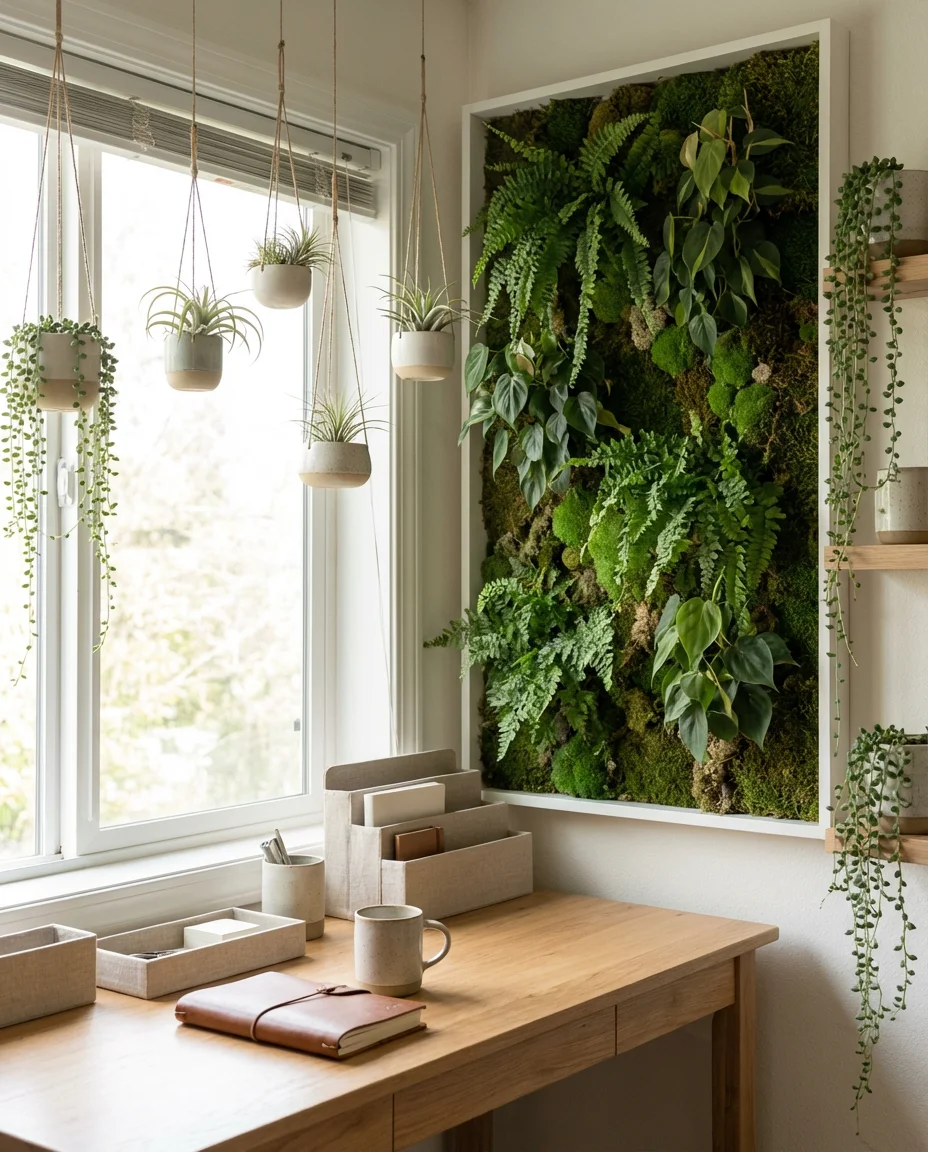
Where this works best is in rooms with good natural light—east- or south-facing windows are ideal for keeping your plant collection thriving without constant supplemental grow lights. If you’re in a north-facing space, stick to low-light champions like pothos, zz plants, and snake plants, which are almost impossible to kill and still deliver plenty of visual life. The mistake most people make is starting with too many plants at once before they know which ones actually survive in their specific light conditions.
8. Contemporary Dual Monitor Desk Setup
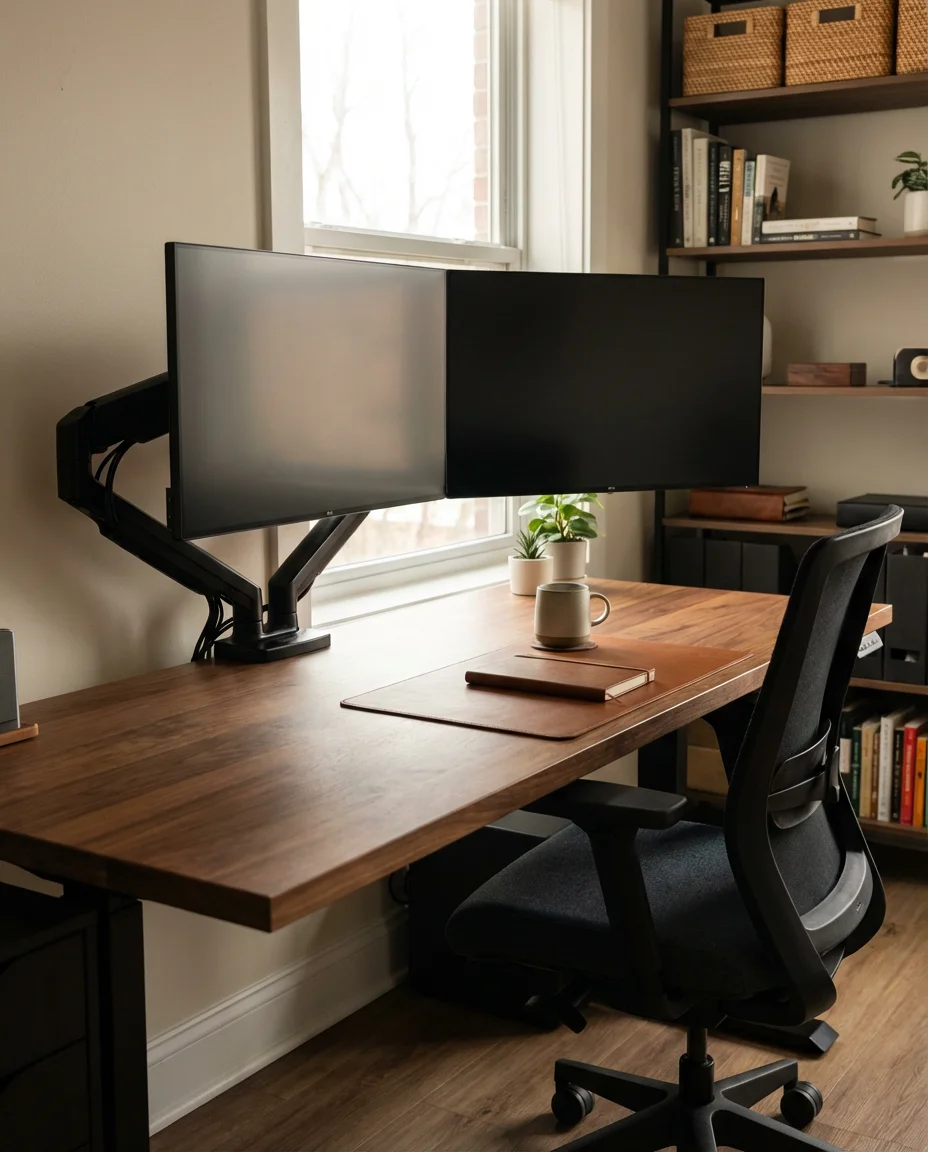
As remote work has normalized, the dual-monitor desk has gone from “tech bro essential” to mainstream home office fixture—and in 2026, the aesthetic around it has finally caught up. The contemporary dual-monitor setup layers clean cable management, matching monitor arms, and a wide desk in warm wood or matte black with the kind of intentional accessory curation you’d expect from a styled shoot. Monitor arms free up the entire desk surface, which immediately makes the space feel twice as generous. Modern cable trays, under-desk power strips, and wireless peripherals eliminate the rat’s nest that used to define any serious tech setup.
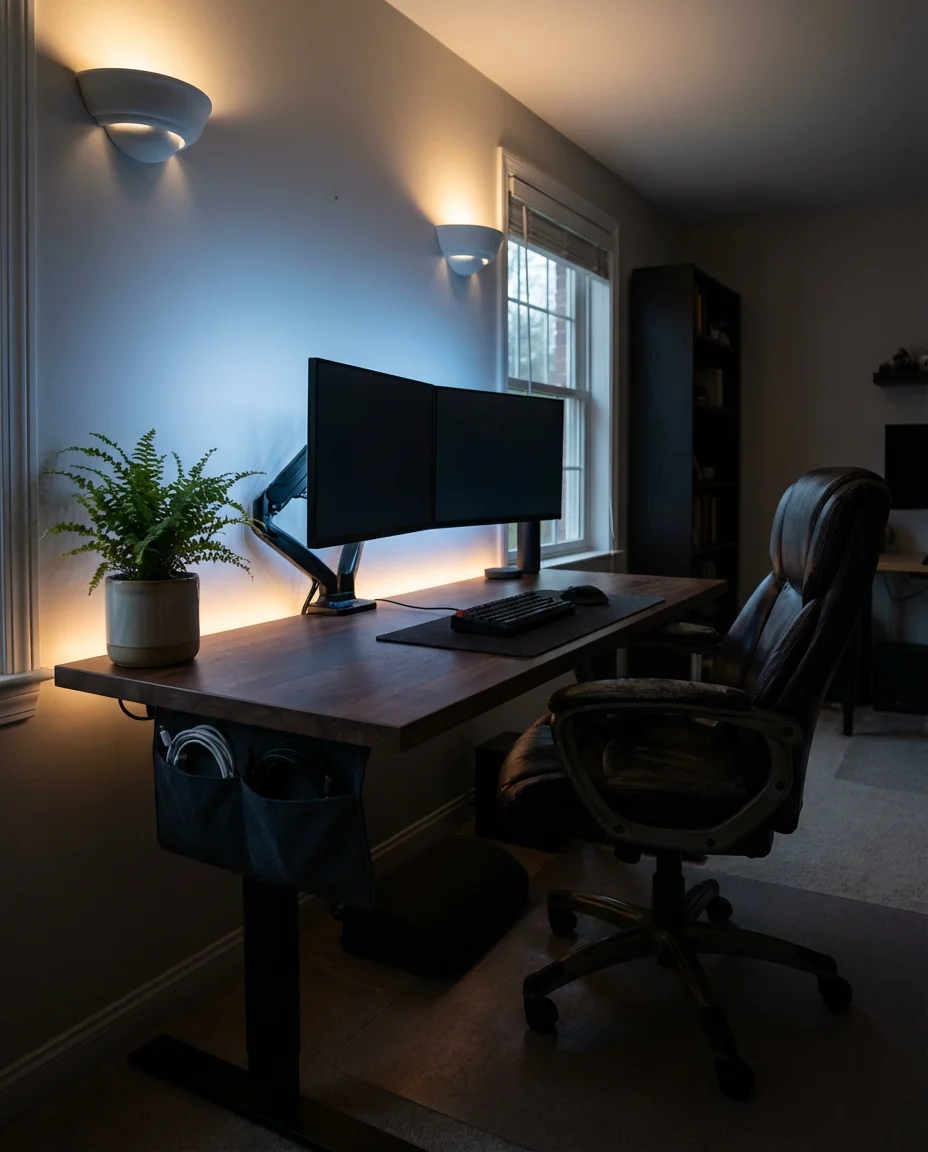
Sarah, a UX designer in Austin, told a home-office forum that switching to monitor arms was “the single best $80 I spent on my office.” She reclaimed nearly a third of her desk surface and found that removing the visual clutter of two heavy monitor bases genuinely changed how she felt walking into the room each morning. That’s the kind of real homeowner insight worth stealing—sometimes the upgrade that transforms a space isn’t the expensive one.
9. Standing Desk Wellness Station
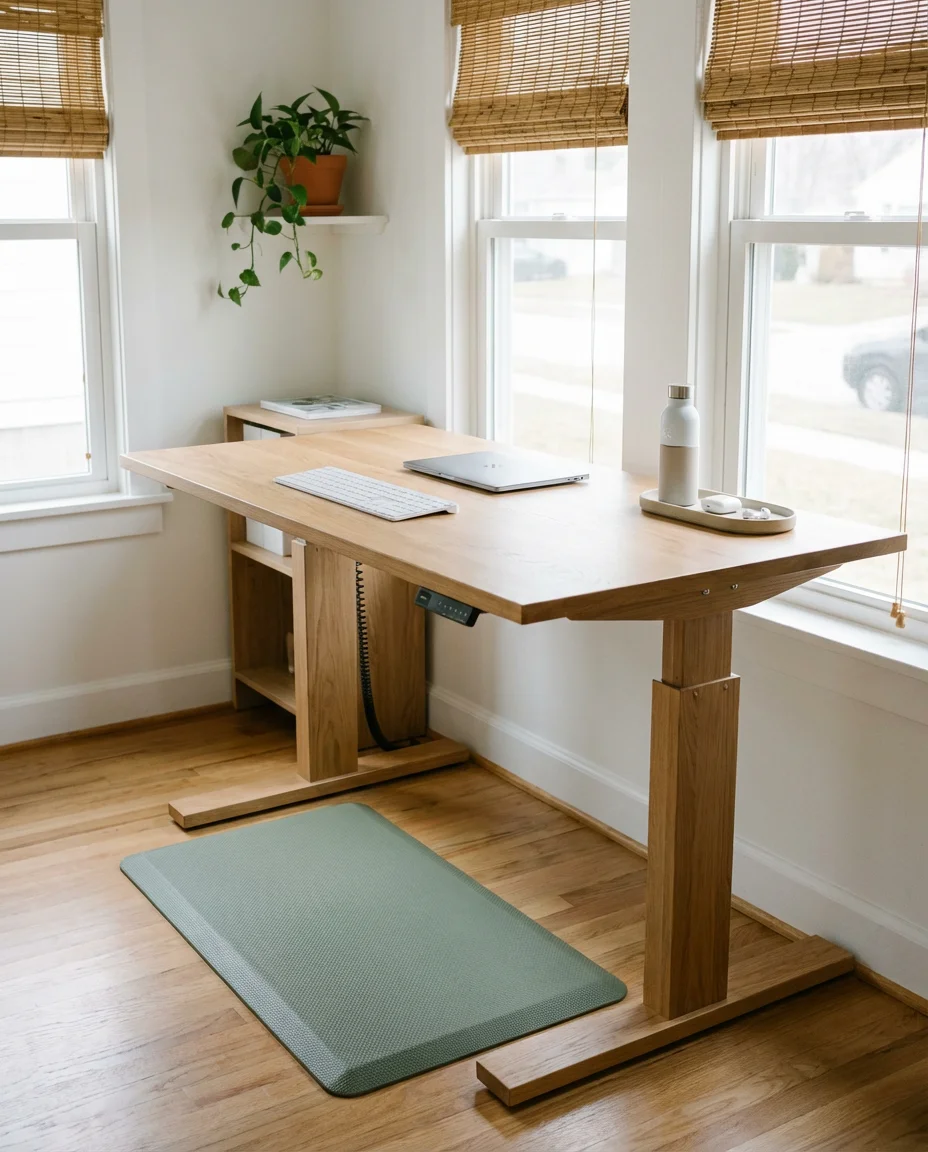
The standing desk has evolved from an ergonomic afterthought to a bona fide design statement in 2026. Electric height-adjustable frames now come in finishes that match high-end furniture—matte white, raw oak, and brushed steel among them—so the desk itself is no longer a visual liability. The wellness station concept takes it further: an anti-fatigue mat that coordinates with the room’s color palette, a balance board in natural wood, and a small tray station nearby with a water bottle, headphones, and a few energizing objects. The adjustable desk becomes the centerpiece of an intentional, health-forward workspace.
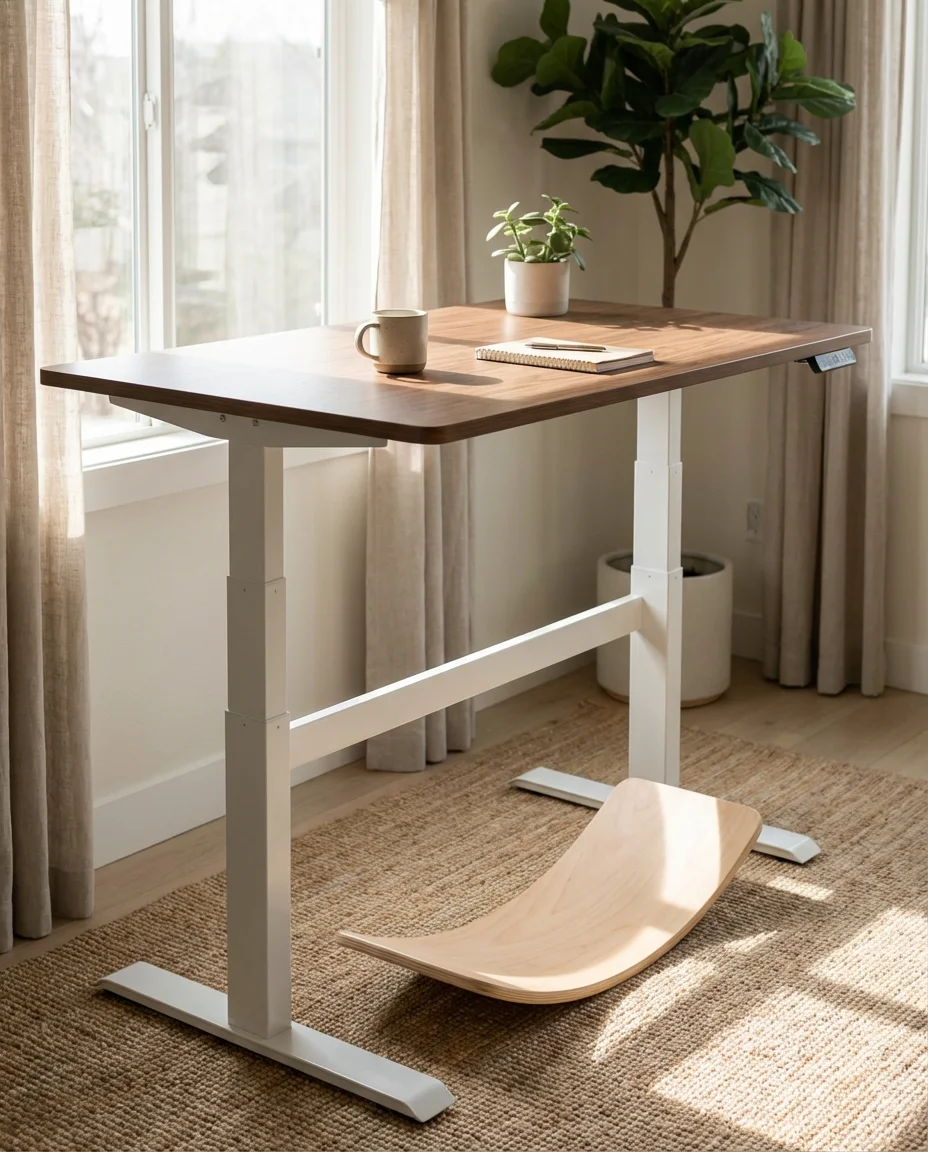
The most common mistake people make when buying a standing desk is choosing the cheapest frame, which wobbles noticeably when raised and eventually wobbles more. A desk you’re afraid to write on doesn’t get used at standing height, which defeats the purpose entirely. Set a budget of at least $400–$600 for a quality frame, and you’ll actually use the feature. The desktop itself can be DIY’d or sourced inexpensively—a butcher block from a home improvement store works beautifully and costs a fraction of manufacturer tops.
10. Cozy Reading-Meets-Work Nook
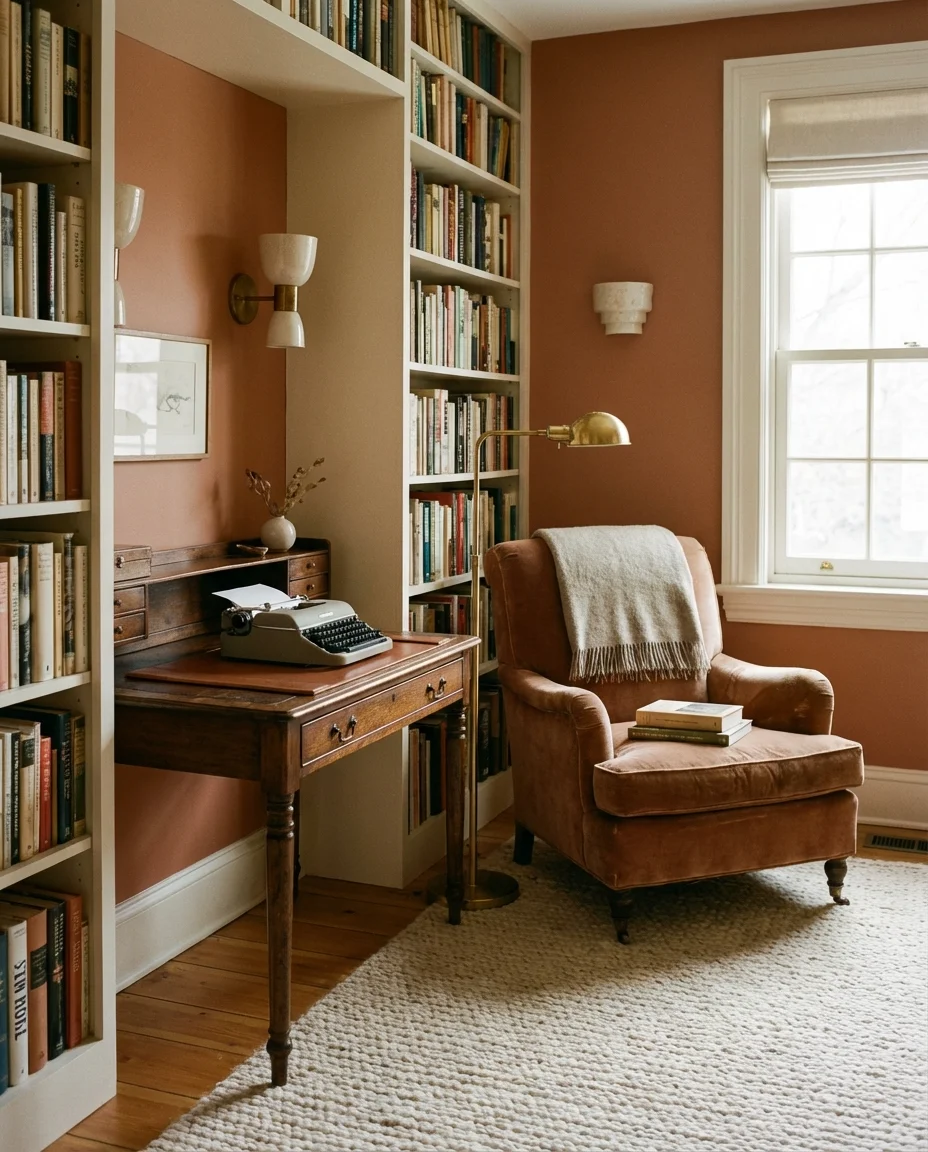
Not everyone wants their home office to feel exclusively like a place to grind—sometimes the most productive spaces are the ones that invite you to linger. The cozy reading-meets-work nook blends a writing desk or small work surface with a deeply comfortable reading chair, warm layered lighting, and bookshelves that wrap the space. The desk handles video calls and focused tasks; the chair handles everything else—brainstorming, emails, and light reading. This dual-purpose approach is especially popular with writers, editors, consultants, and anyone who does creative work that benefits from a change of posture and inspiration nearby.
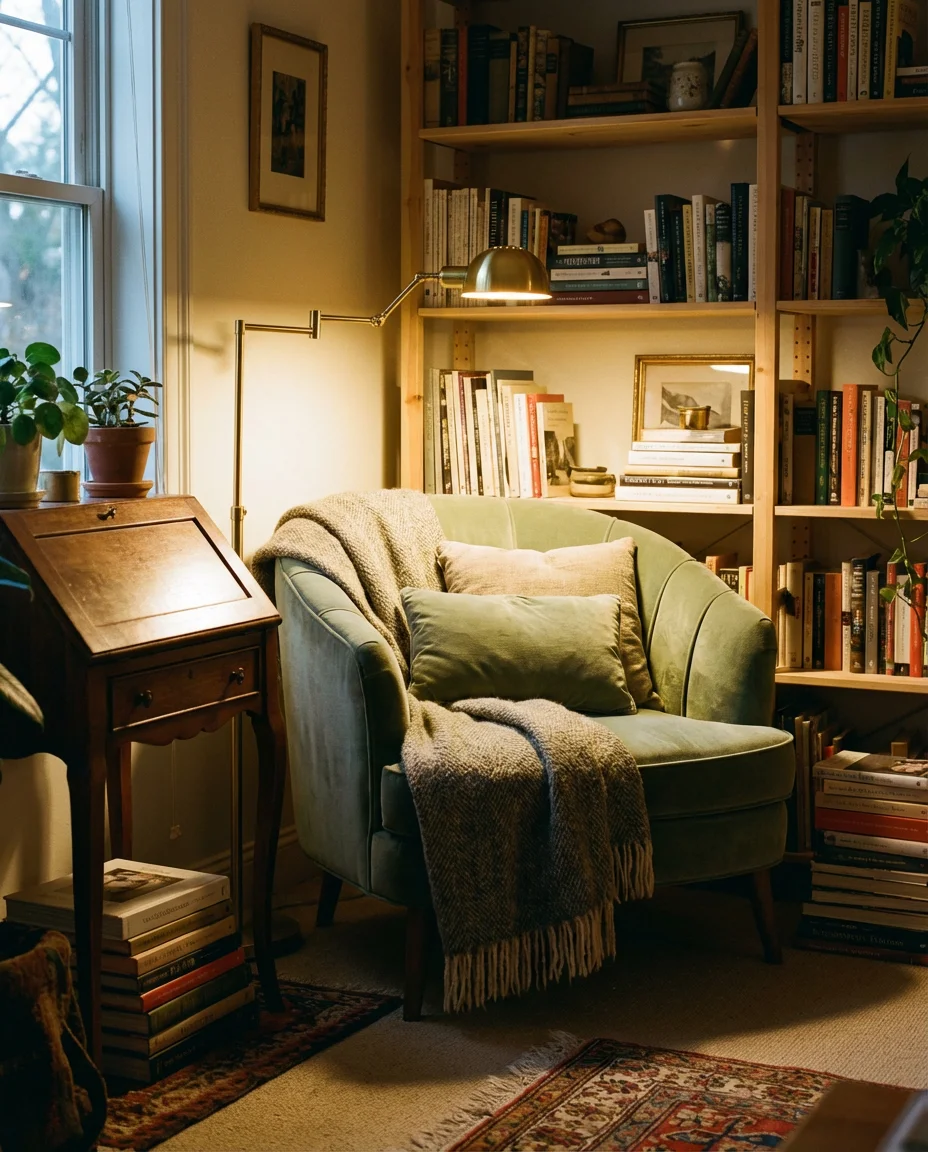
This setup resonates strongly with the way Americans actually work from home—not in focused eight-hour blocks but in bursts punctuated by coffee breaks, phone calls, and mental resets. Having a chair to retreat to a few feet from your desk without fully leaving the room keeps you anchored to the work mentally while giving your body the posture change it needs. Interior designers often recommend placing the chair near the window for natural reading light and the desk perpendicular to it for glare control.
11. Open Plan Office Corner Integration
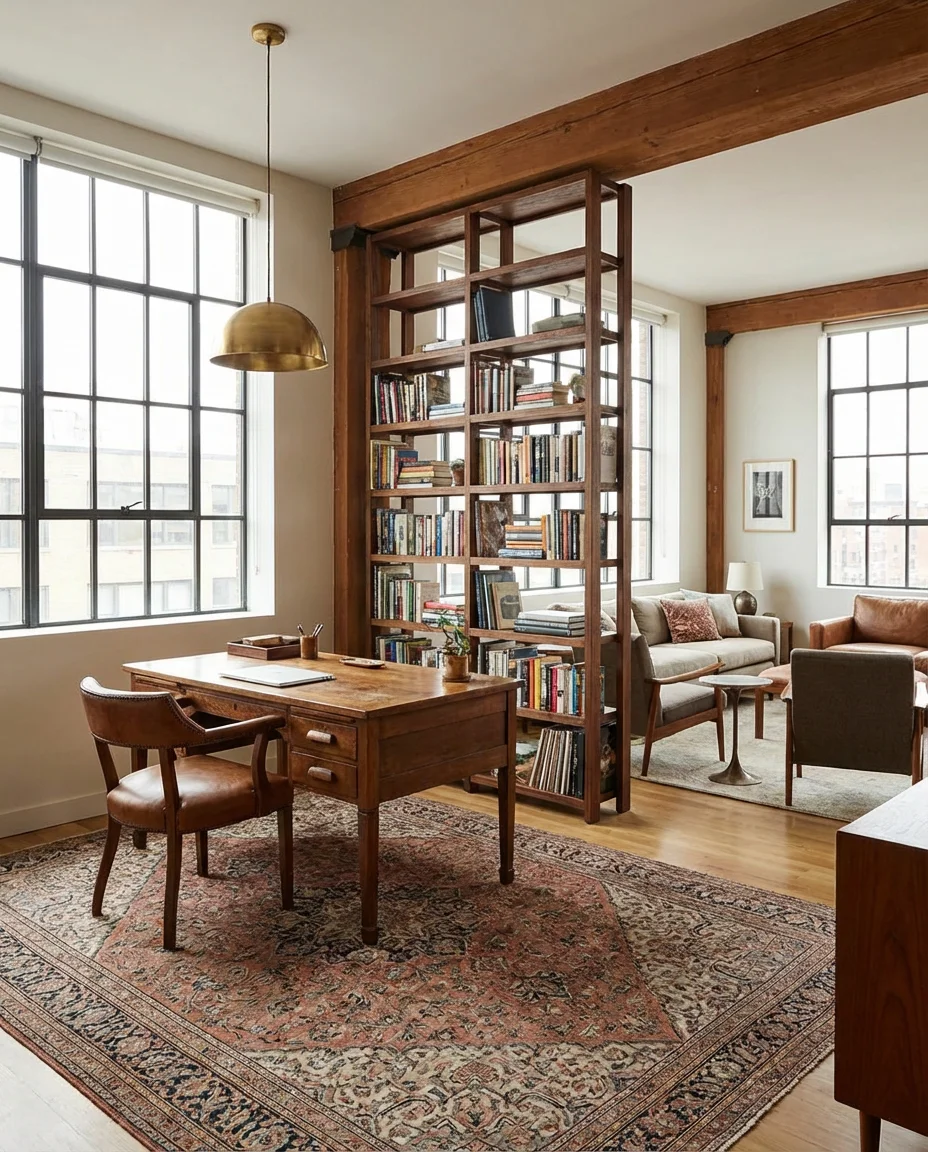
In open-plan homes and loft apartments, the challenge is carving out a professional workspace without walls to define it. The most successful approaches in 2026 use furniture and spatial cues to signal “this is where work happens” without physically separating the area. A large area rug grounds the desk zone, a tall bookshelf or open shelving unit creates a soft boundary, and a pendant light hung low over the desk creates a visual ceiling that the rest of the room doesn’t share. This open integration works especially well when the desk and surrounding decor coordinate intentionally with the living room adjacent to it.
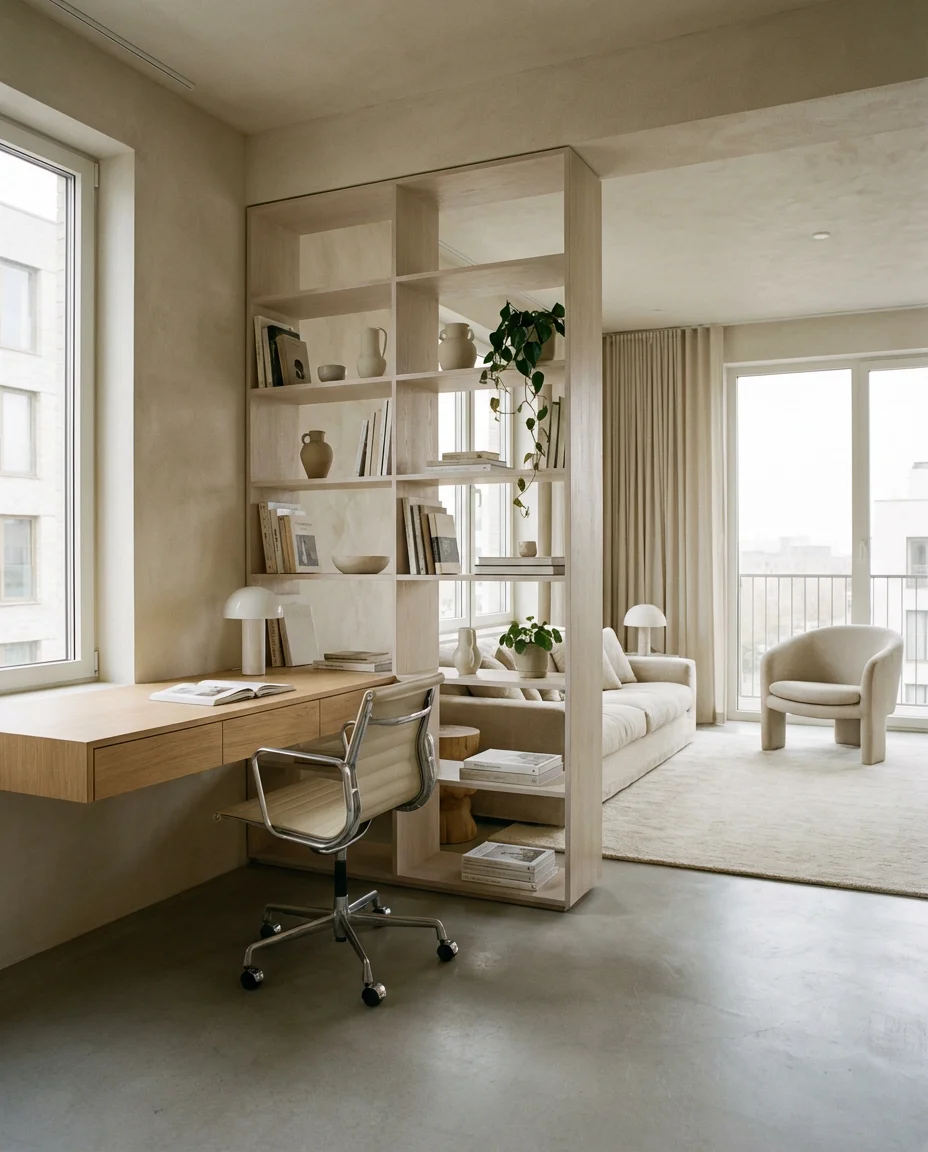
The key to making this work long-term is visual consistency—a desk that looks like it belongs to the same family as your sofa and coffee table makes the work zone feel intentional rather than improvised. Many homeowners make the mistake of buying office furniture in a completely different style from their home furnishings, which creates a jarring visual note every time you look across the room. Matching the wood tone alone makes a remarkable difference.
12. Classic Dark Wood Library Office
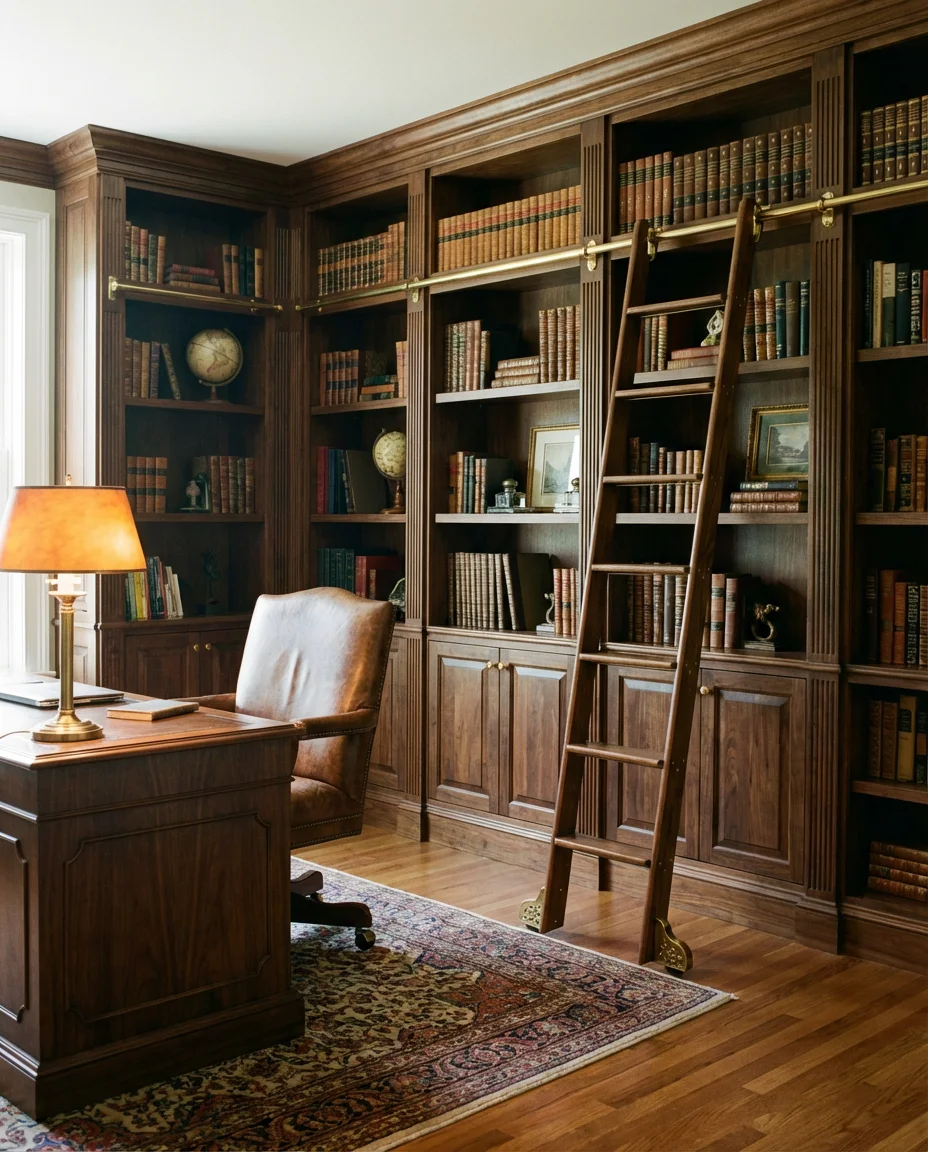
There’s a reason the classic wood-paneled library office has never fully gone out of style—it signals gravitas, permanence, and the kind of deep focus that happens in rooms that feel set apart from the rest of the house. In 2026, this look is getting a thoughtful refresh: dark walnut or mahogany millwork, built-in floor-to-ceiling shelves with a rolling library ladder, a substantial leather chair, and a brass or antique bronze desk lamp that casts warm pools of light across the workspace. It’s unapologetically luxurious and completely timeless—a room that will look just as right twenty years from now.
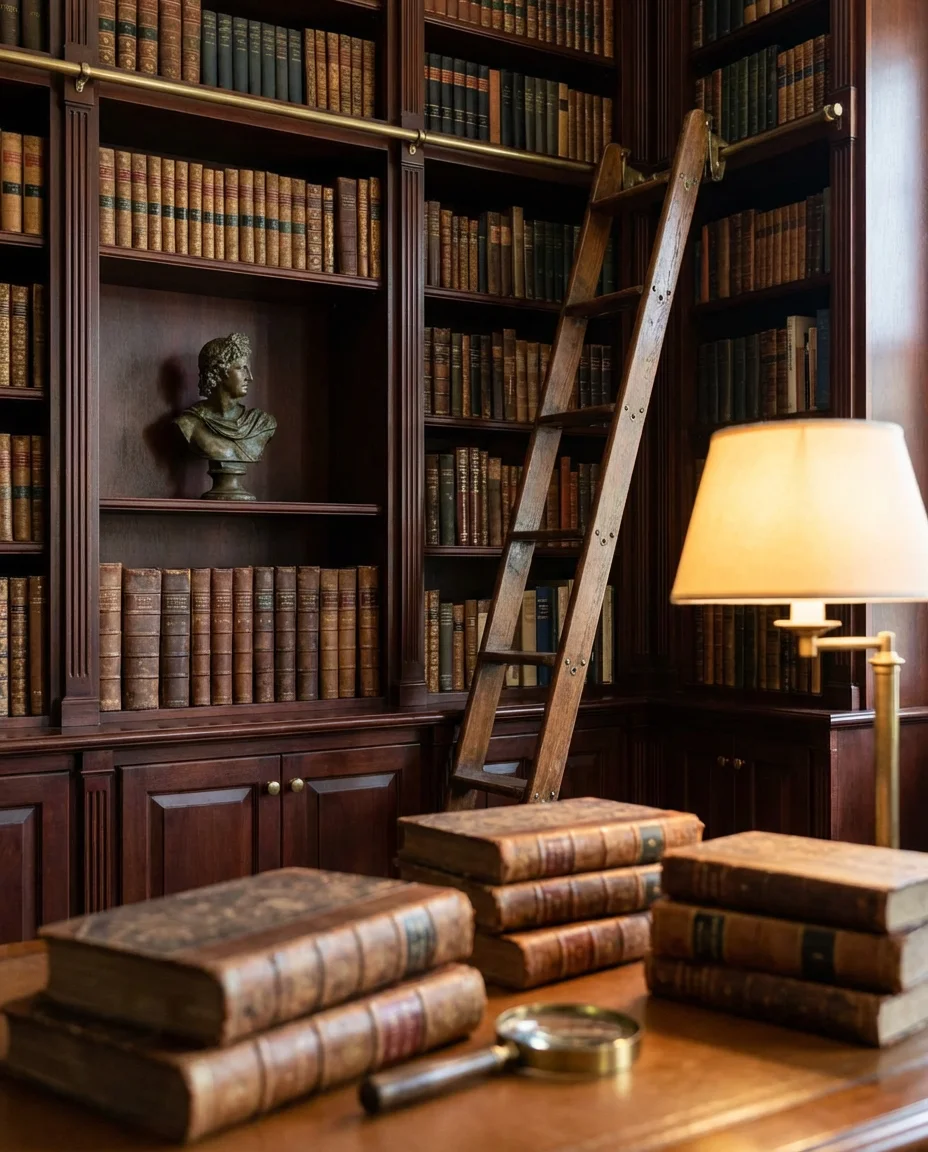
This aesthetic is particularly at home in older American houses—Colonials, Craftsmen, and Tudor revivals in the Northeast and Midwest that already have the architectural bones for dark wood and built-ins. If you’re starting from scratch, a quality custom millwork quote for built-in shelving typically runs $3,000–$8,000 depending on region and complexity—but it permanently increases home value and makes the room feel a world apart from anything flat-pack furniture could achieve.
13. Modern Minimalist Black and White Office
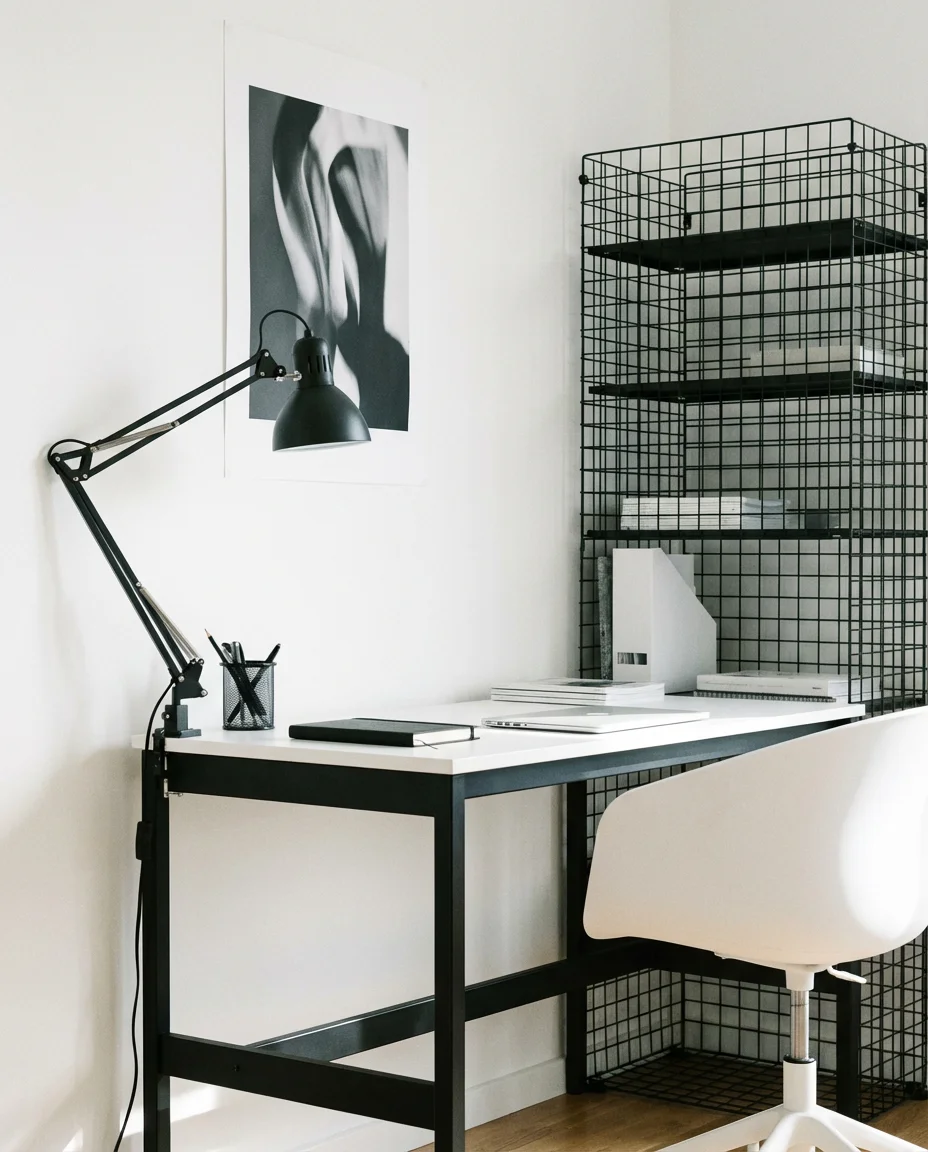
The modern minimalist black-and-white office is the graphic designer’s dream—high contrast, visually bold, and disciplined in a way that actually supports concentrated creative work. Matte black desk legs and shelving frames pop against bright white walls; the desk surface stays light to keep the room from feeling cave-like. Art is limited to one or two monochromatic prints that carry maximum impact precisely because nothing else competes for attention. A single black task lamp is both a functional accent and a sculptural element. This is interior design as editorial decision-making, where every choice is binary and intentional.
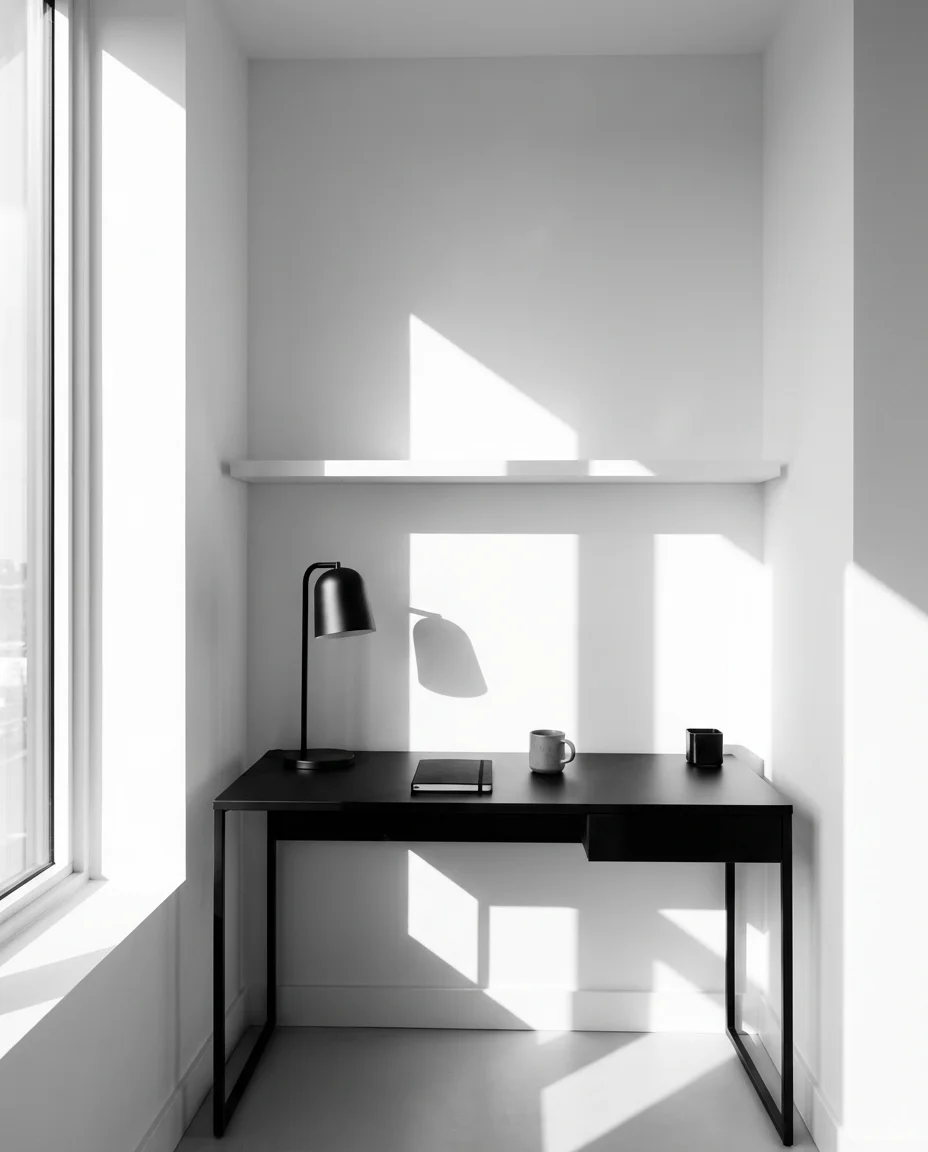
One expert insight worth internalizing here: matte finishes are essential to making this palette work. Glossy black reads as sterile and cheap; matte black reads as considered and architectural. The same is true of white—a flat or eggshell white wall feels intentional, while high-gloss white feels clinical. Get the finishes right, and the entire palette locks into something that feels genuinely designed rather than simply decorated.
14. Creative Studio Home Office
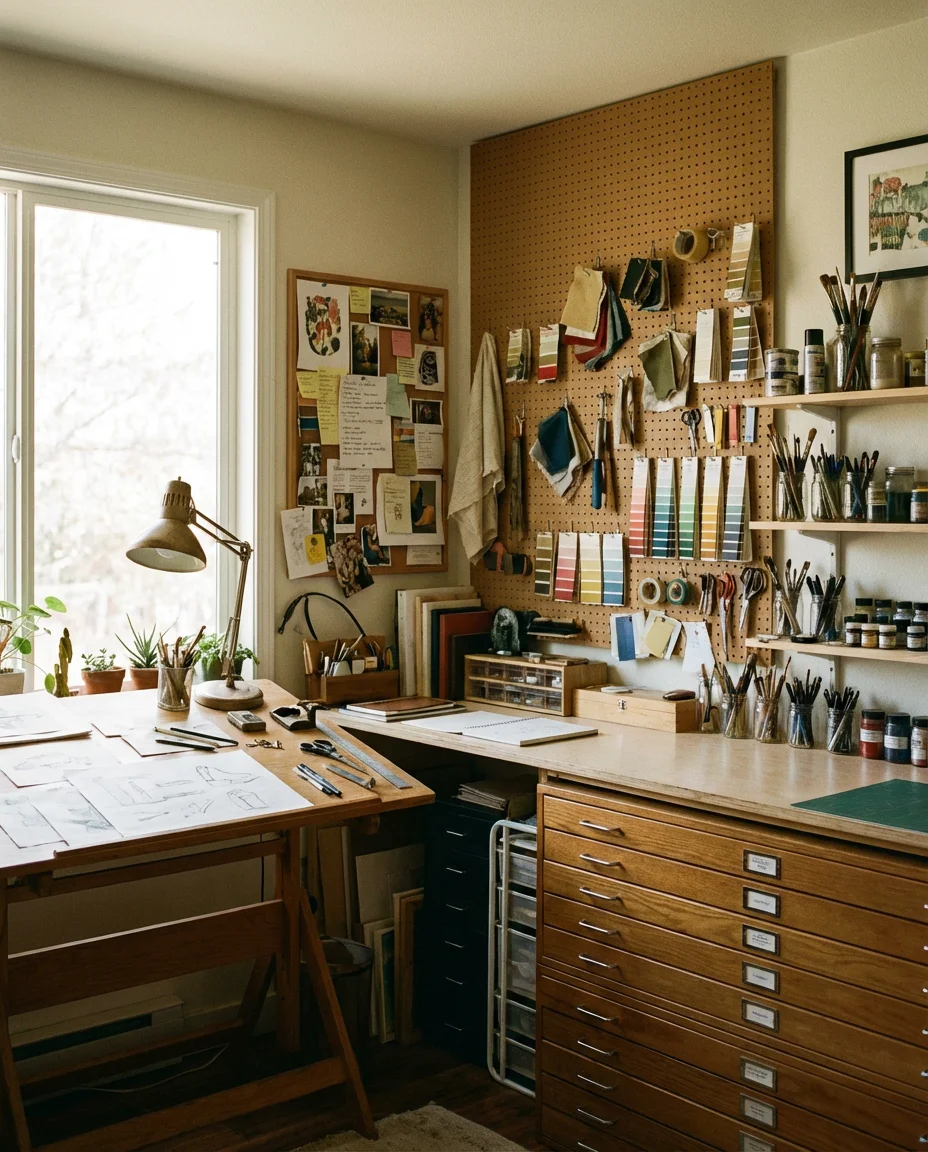
For artists, illustrators, photographers, and designers who work from home, the creative studio office is its own genre—and in 2026 it leans into organized chaos with a practiced eye. Pegboards hold tools in plain sight; wide flat-file drawers keep physical work organized; and a drafting table or large work surface provides the room to spread out that creative work genuinely requires. The walls double as inspiration boards with pinned references, color swatches, and work-in-progress pieces. It’s a professional creative environment that’s also unmistakably personal—a space that reflects the person working in it rather than a catalog page.
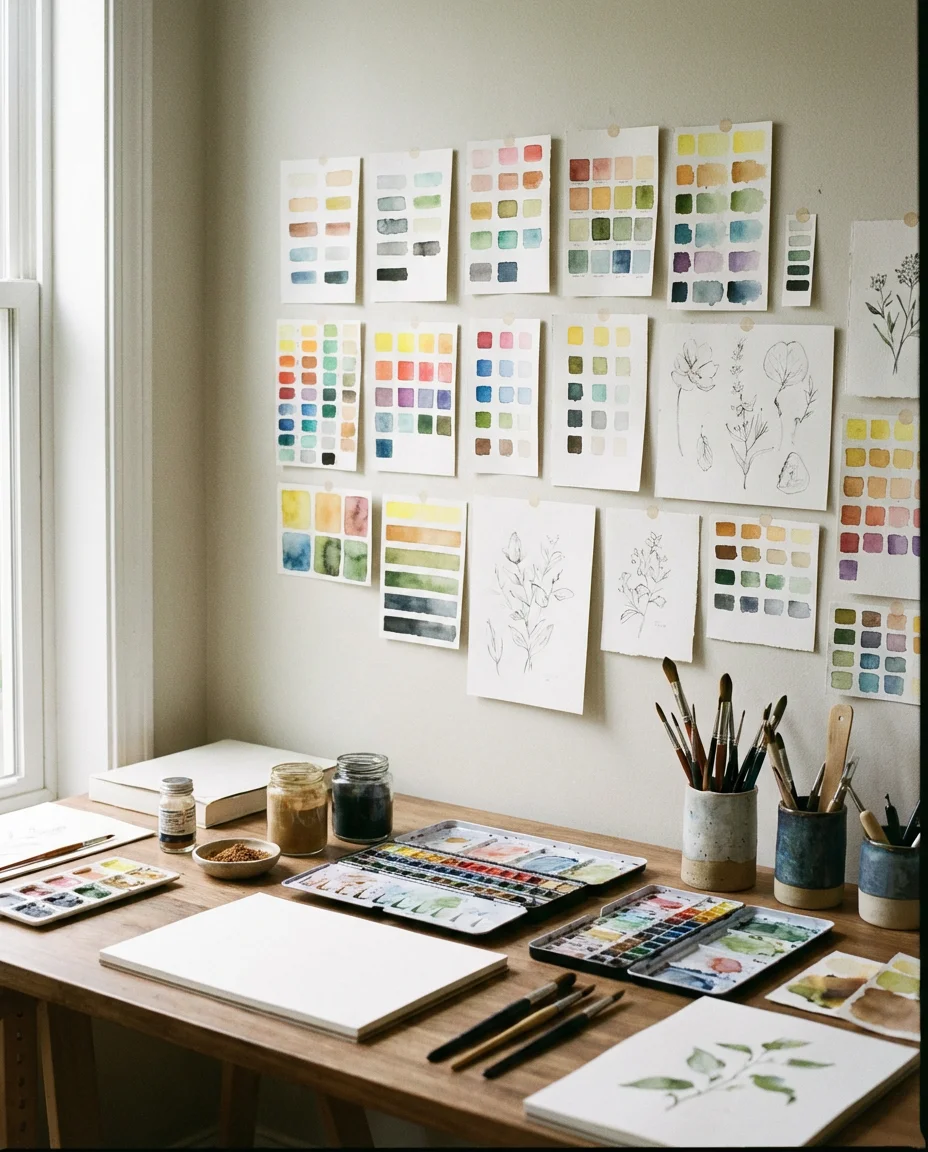
The micro-anecdote that captures this perfectly: an illustrator in Portland converted her spare bedroom into a full studio by covering three walls in large sheets of cork, floor to ceiling. The investment was under $200 in materials and a weekend of work—and the result was a functional inspiration and organization system that became the literal backdrop of her entire professional identity online. Sometimes the most impactful studio decisions are the most DIY ones.
15. Neutral Tonal Contemporary Home Office
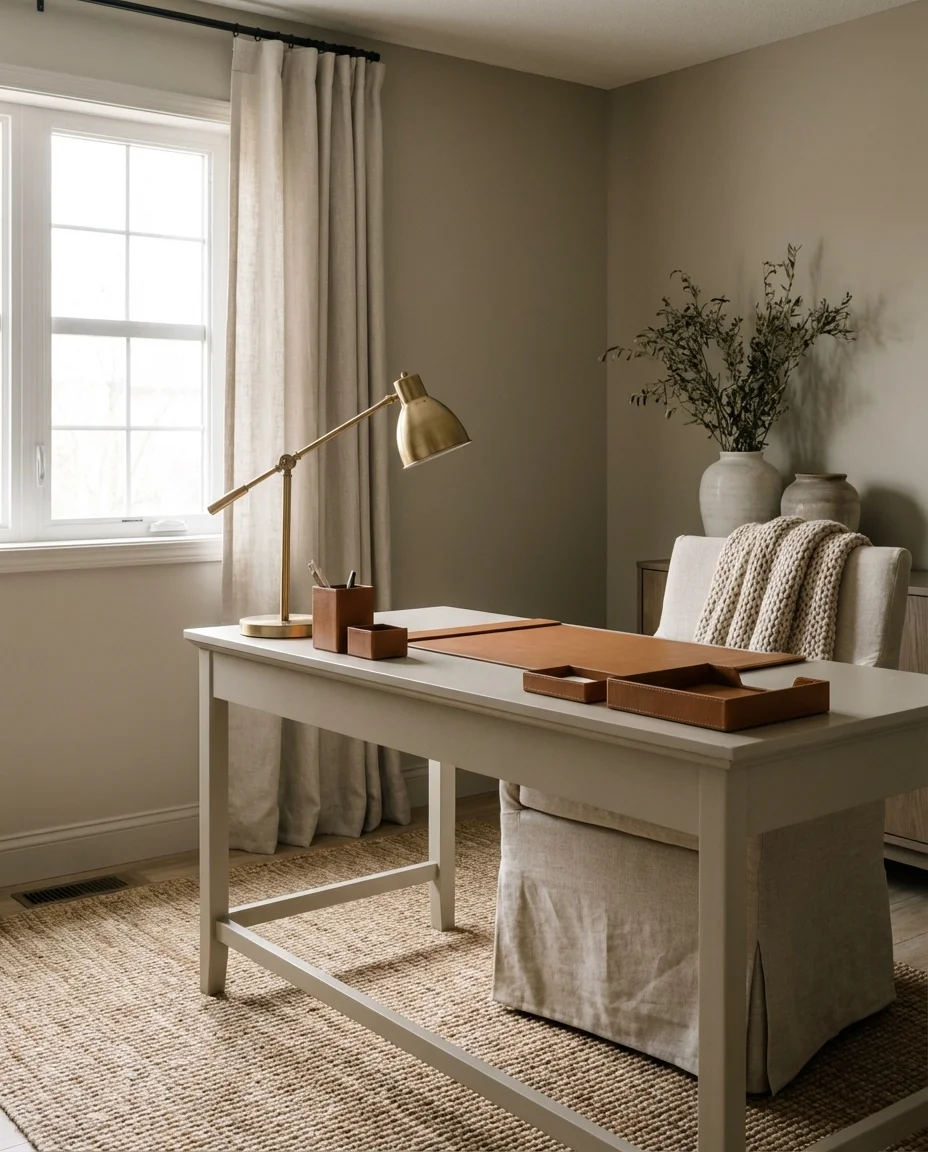
Tonal dressing—layering different values of the same color family—is one of the most refined directions in contemporary interior design, and it translates beautifully to home offices. The approach in 2026 typically plays in warm greiges, soft taupes, and dusty creams: a greige linen desk chair, a warm putty-colored desk, walls in a slightly deeper mushroom tone, and accessories in caramel leather or raw brass. The result is quietly sophisticated without being stark, and it photographs beautifully—which matters for anyone whose home office appears on video calls or social media. It’s modern in the most understated possible way.
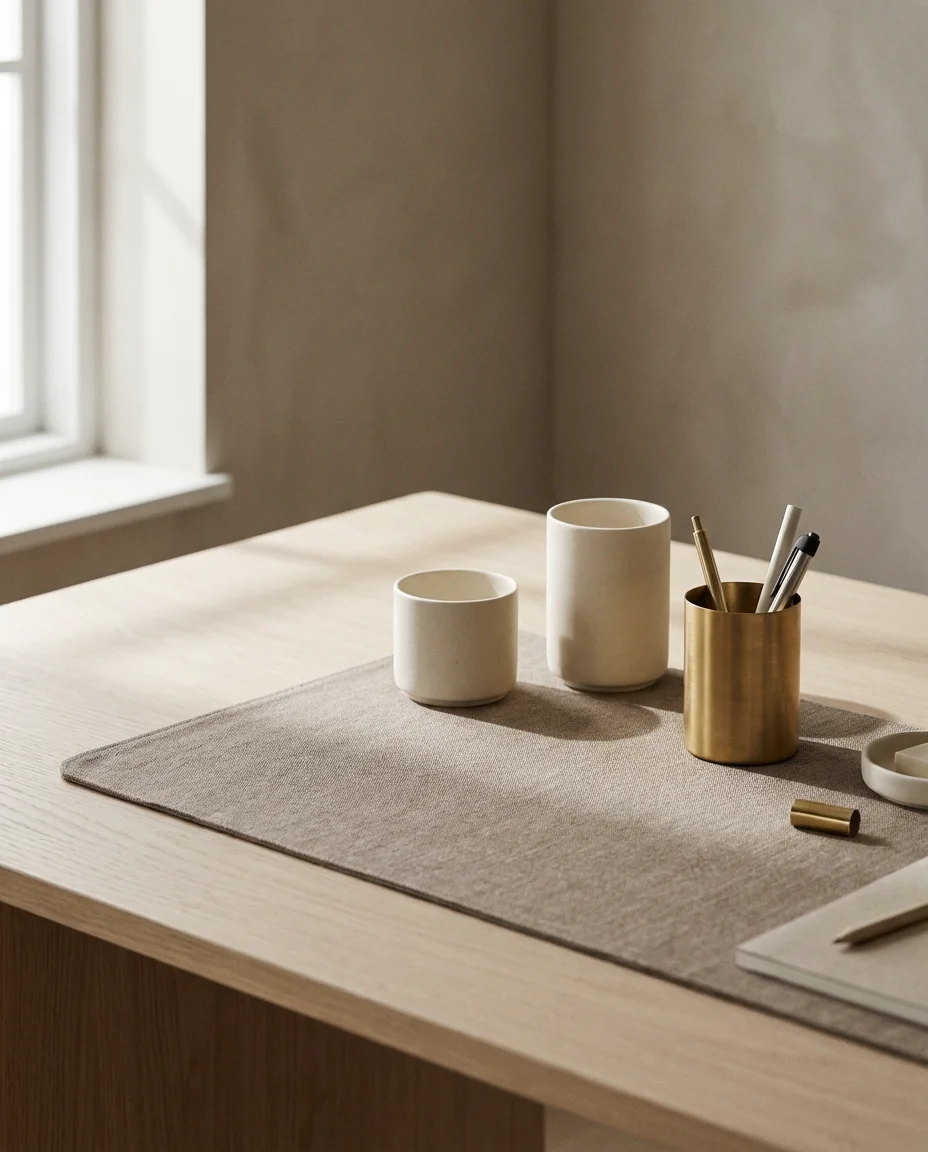
This palette is forgiving in ways that bolder approaches aren’t—if you bring in an element that’s slightly off, it tends to blend rather than clash. That makes it ideal for people who are building their home office incrementally, buying one piece at a time as budget allows. Start with the desk and chair in the same tonal family and build outward from there. The room will feel cohesive at every stage, not just when it’s finished.
16. Home Office With Accent Wall Drama
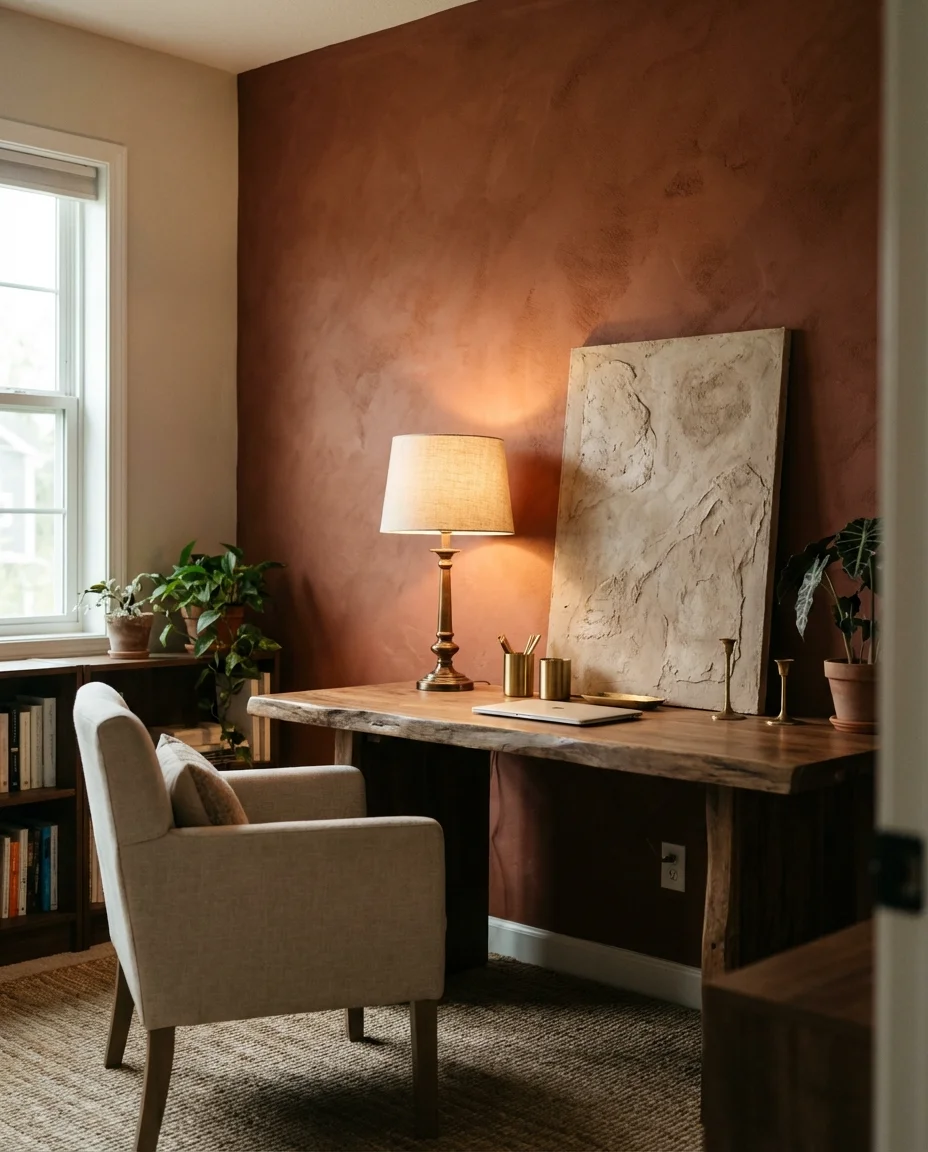
An accent wall behind the desk is one of the most impactful, cost-effective changes you can make to a home office—and in 2026 it’s being pushed further than the safe navy or sage green of recent years. Deep terracotta, moody plum, oxblood, and warm ochre are all trending as backdrop colors that create a compelling video call background and anchor the entire room around a single strong design decision. Modern luxury iterations use grasscloth, limewash plaster, or fluted wood panels instead of flat paint. The wall becomes scenography—the backdrop against which all your work happens and the first thing visitors or video call participants notice. It’s bold and highly effective.
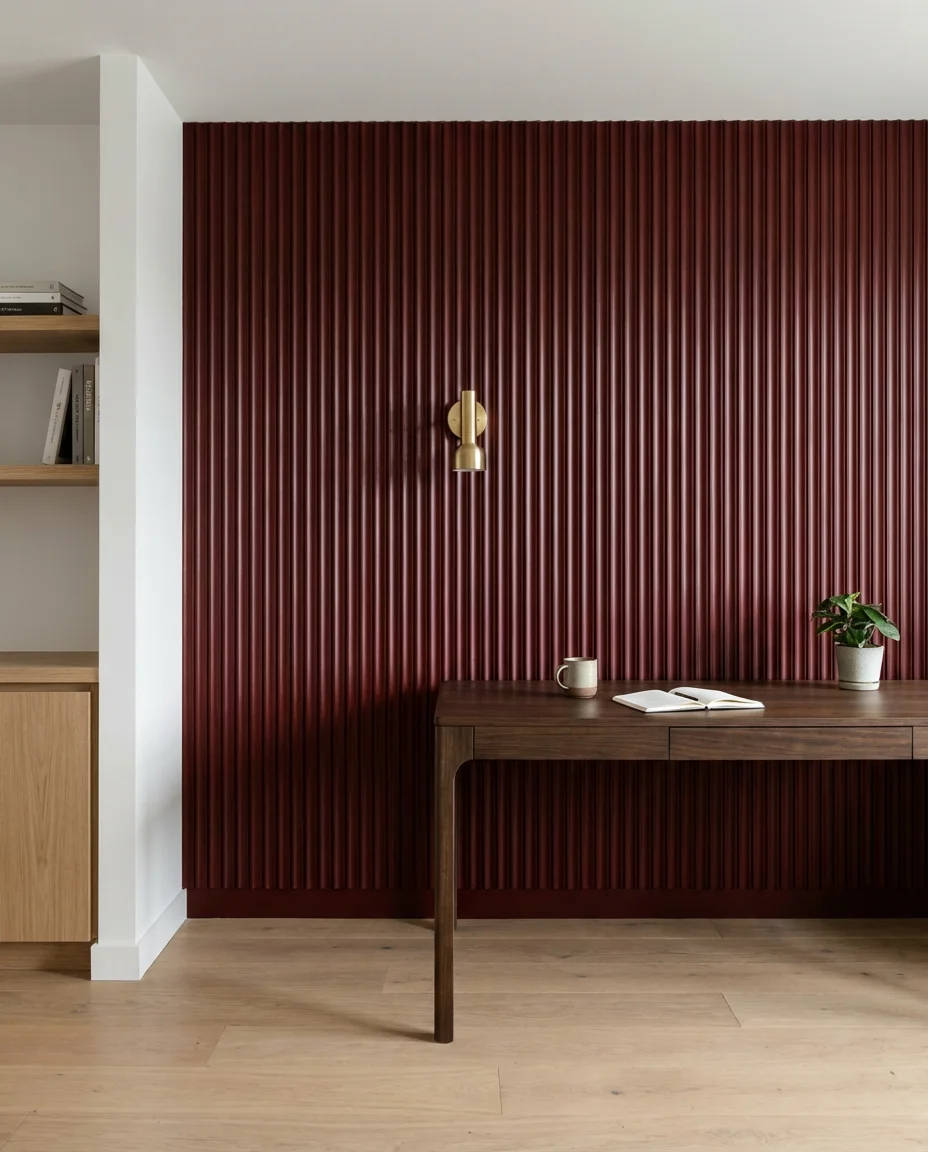
Limewash paint—the cloudy, textured finish that looks almost ancient—is having a massive moment for accent walls specifically because it adds depth without pattern, making it work across a wide range of furniture styles. Brands like Portola Paints and Roman Clay have popularized DIY-friendly versions that cost $80–$150 per gallon and can be applied without special skills. It’s the single-wall commitment that most dramatically changes how a room feels for the lowest possible investment relative to impact.
17. Ergonomic-Focused Practical Home Office
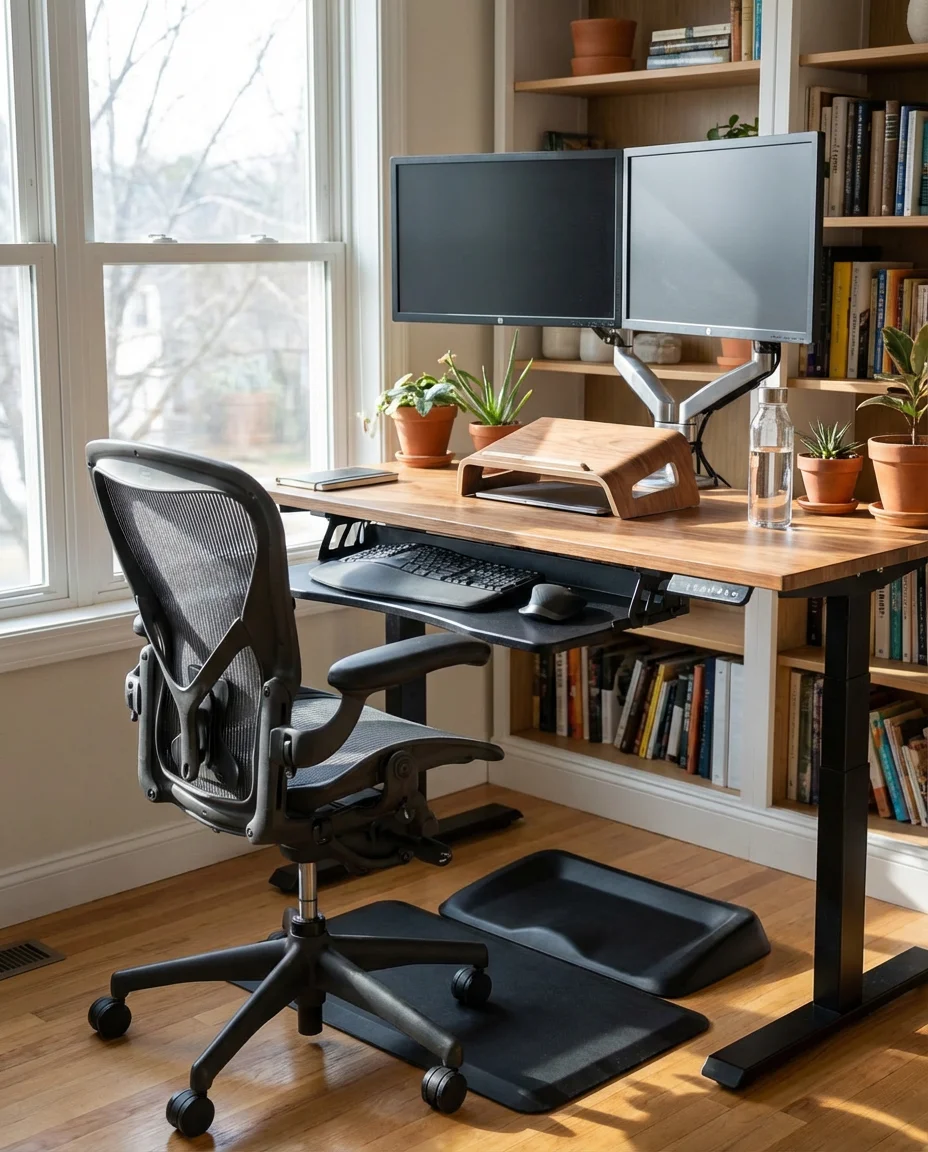
Sometimes the most honest home office is the one that prioritizes how your body feels at 4pm on a Thursday over how it looks in photos. The ergonomic-first approach in 2026 combines a properly adjusted standing desk or height-adjustable setup with a genuine ergonomic chair—Herman Miller, Steelcase, or their well-regarded alternatives—a monitor at exact eye level, and a keyboard tray that keeps your wrists neutral. None of this needs to be ugly; the best ergonomic chairs now come in upholstery options and colorways that are genuinely attractive. Professional and health-conscious aren’t mutually exclusive—they just require spending money on the right things first.
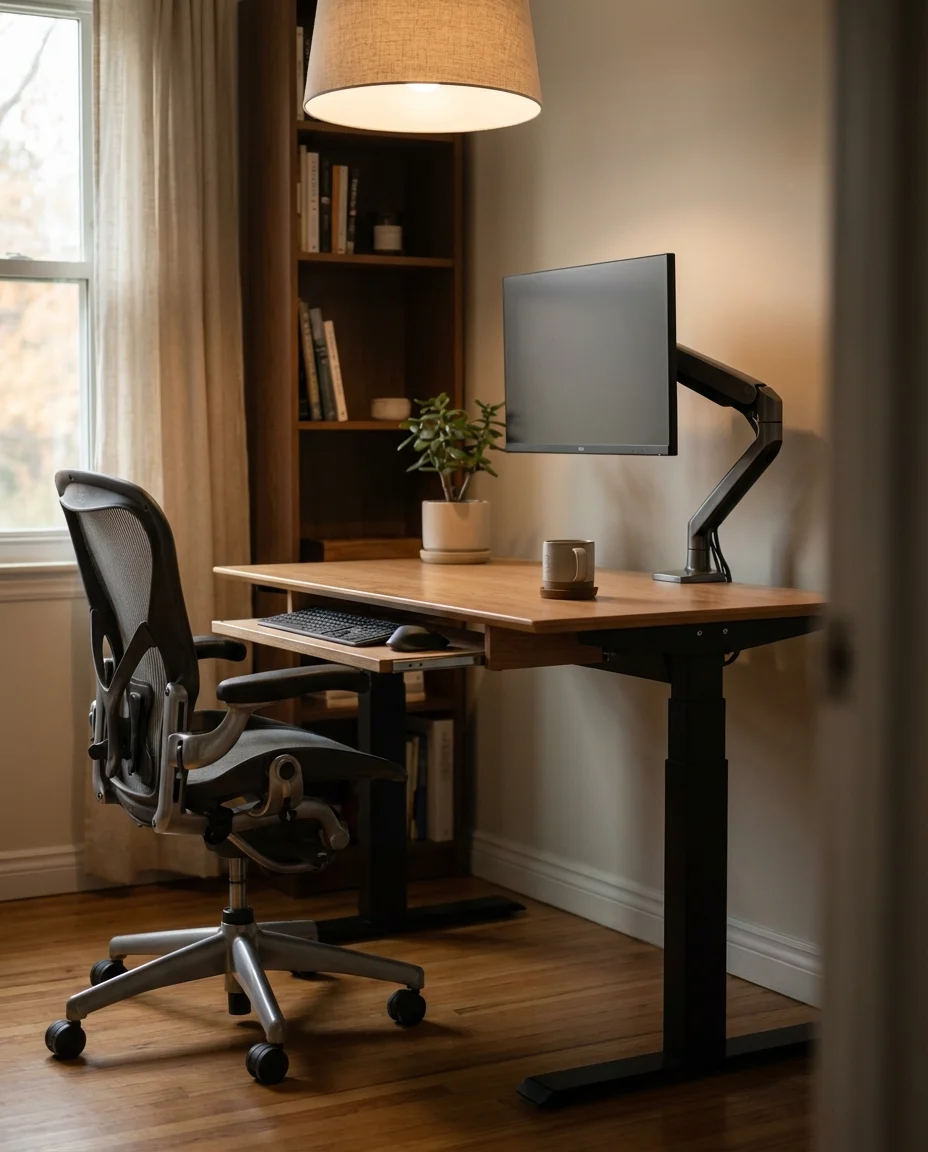
The American lifestyle context here is important: the average remote worker in the U.S. now logs over six hours of desk time daily. That’s enough time for a poor setup to cause real, cumulative physical damage. Back pain, wrist strain, and eye fatigue are the three most common complaints among home office workers, and all three are essentially preventable with correct ergonomic setup. Consider the chair and desk investment preventive healthcare as much as interior design.
18. Maximalist Colorful Eclectic Office
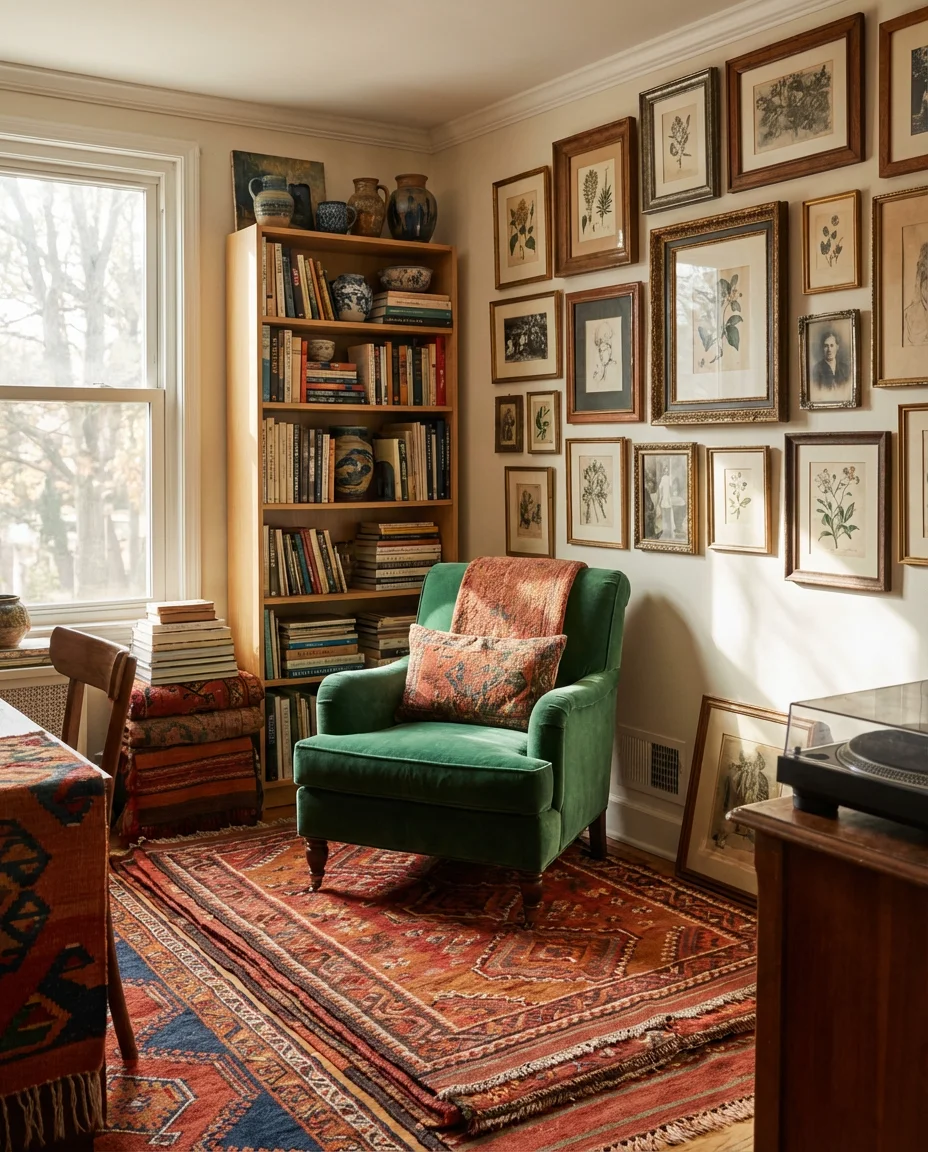
Not everyone finds calm in restraint—some people do their best work surrounded by color, texture, and the accumulated objects of a richly lived life. The maximalist eclectic office leans fully into that instinct. Gallery walls packed with prints in mismatched frames, a velvet chair in a saturated jewel tone, bookshelves layered with ceramics and travel souvenirs alongside the actual books, and rugs stacked or layered for extra warmth and pattern. It’s all of the inspiration at once, and when it’s executed with an underlying color logic—say, every piece pulling from a warm amber-to-rust range—it reads as cool and intentional rather than simply messy.
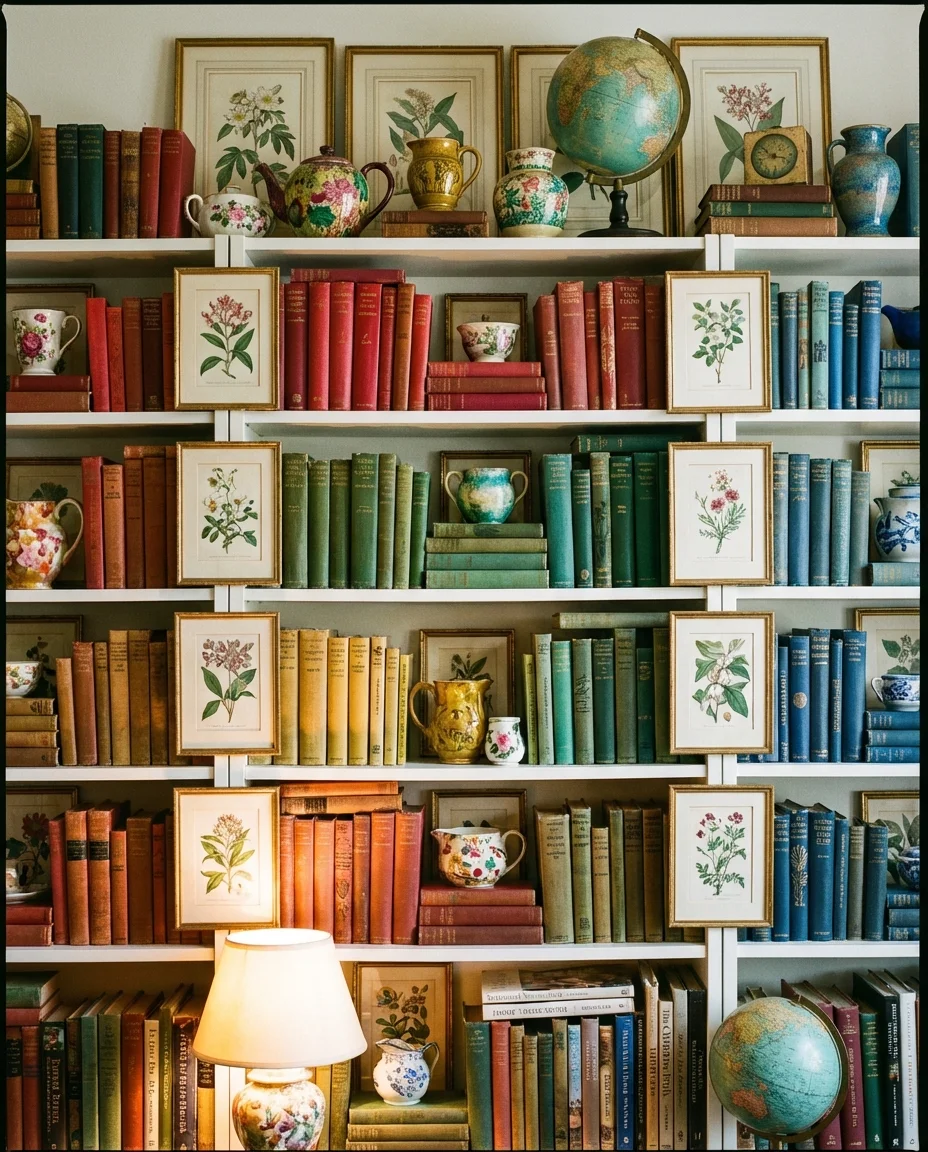
The practical insight that keeps maximalism from collapsing into chaos: every object needs to either earn its visual place or perform a function. Before adding something to the room, ask whether it would be missed if it were gone. If yes, it earns its place. If you’d barely notice, it’s filler. Maximalism done well is actually deeply curated—it just doesn’t look like it from the outside.
19. Dedicated Podcast and Content Creator Office
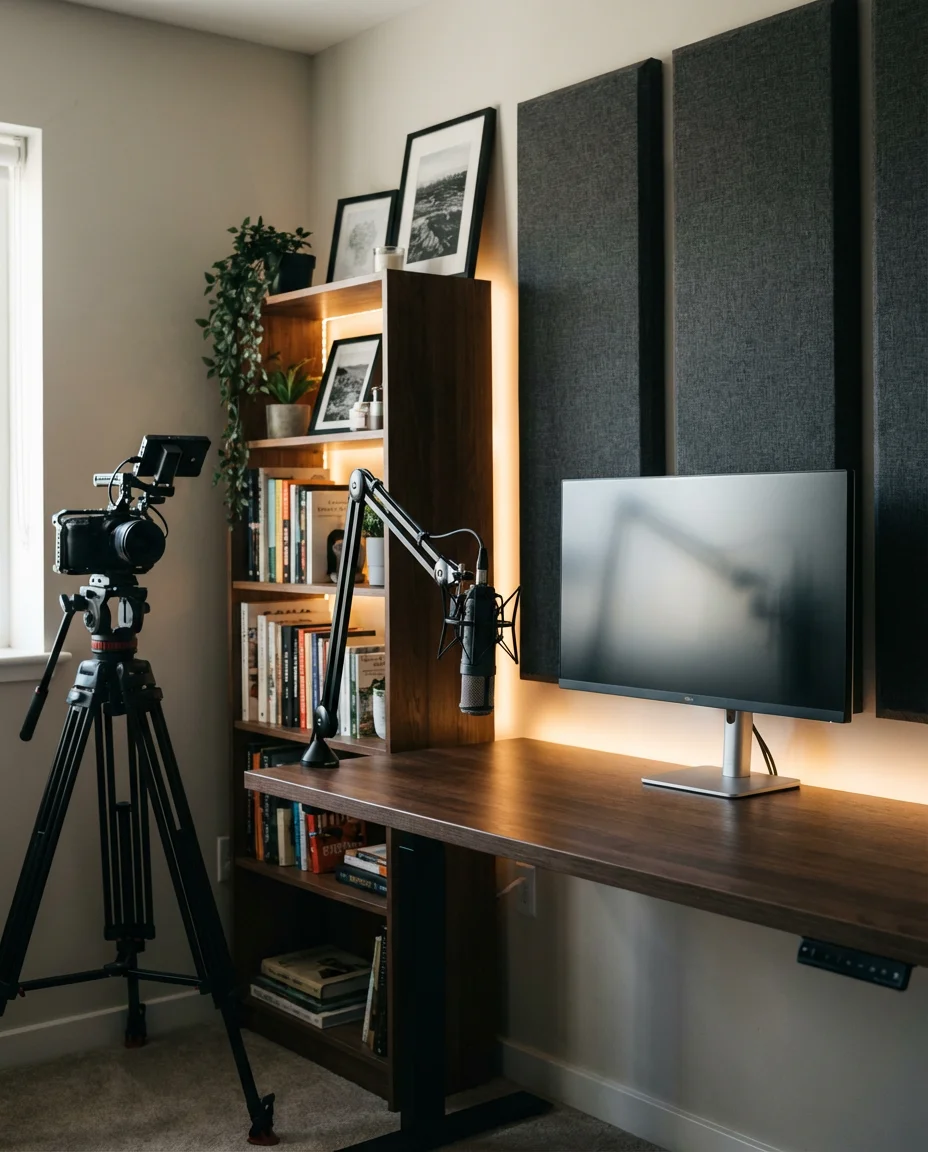
The rise of the creator economy has generated a genuinely new office typology: the content creation studio in a residential home. In 2026, these spaces balance acoustic treatment—foam panels or fabric-wrapped frames that absorb sound—with modern visual aesthetics designed for on-camera appeal. Thoughtful backlighting, a carefully curated shelf or backdrop wall, and proper microphone placement all become part of the interior design brief. The ideas generated in these spaces are immediately broadcast to audiences, which means the room itself is part of the brand. Every object in the frame is a creative decision.
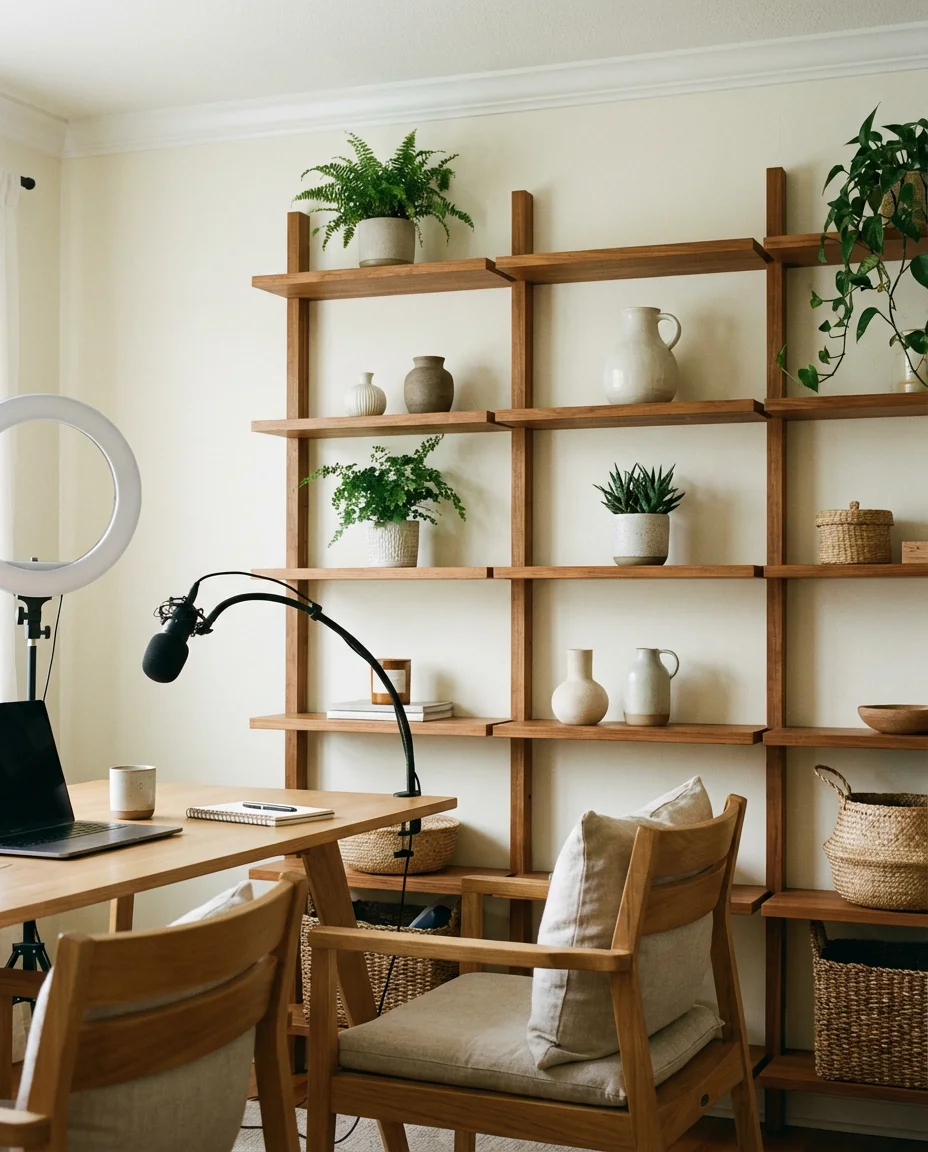
Fabric-wrapped acoustic panels that double as wall art are becoming a cottage industry of their own—companies now offer custom sizes and fabric options in virtually any color, making it possible to treat a recording space acoustically without it looking like a recording studio. At $50–$150 per panel, a set of four or six can make a meaningful acoustic difference while contributing positively to the room’s visual identity. It’s a case where technical necessity and design opportunity genuinely align.
20. Feminine Blush and Natural Office
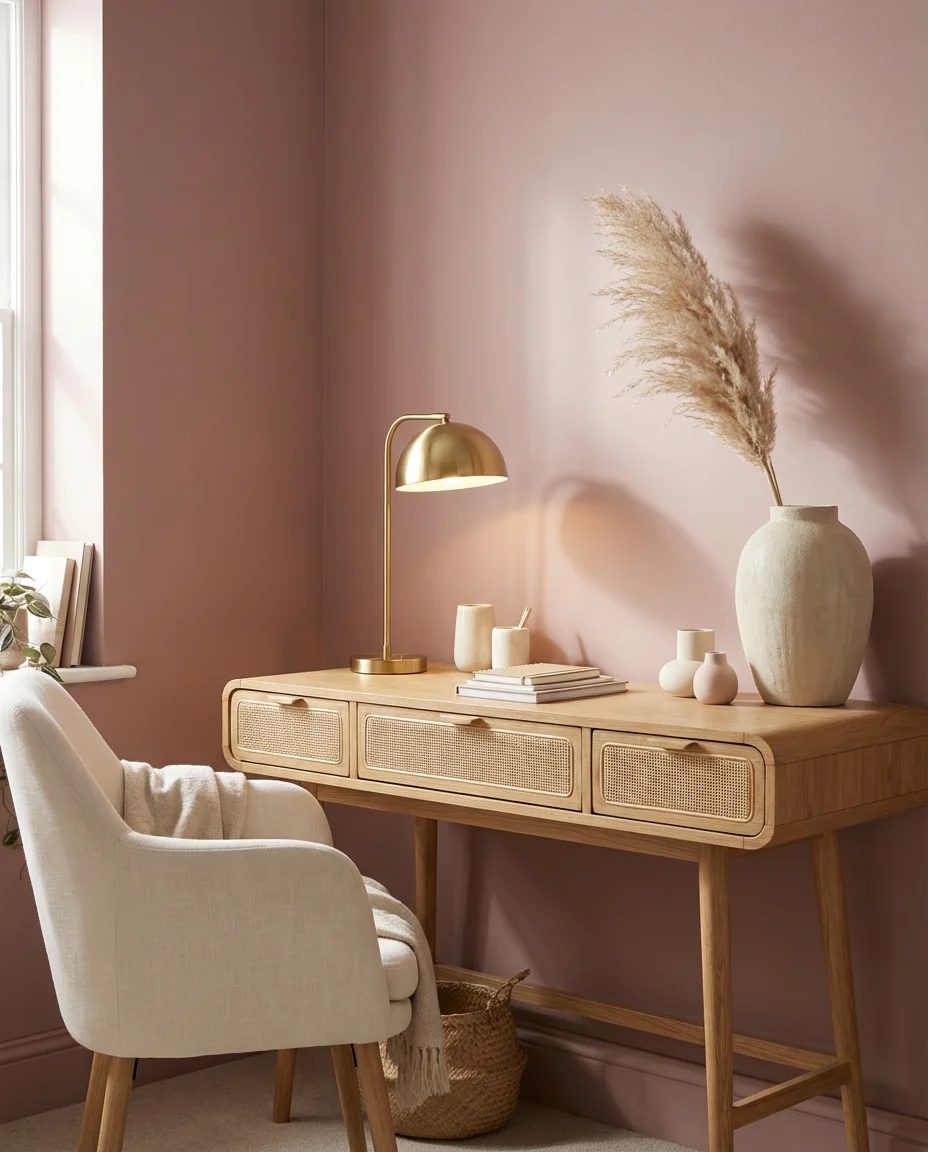
The blush-and-natural office has been quietly dominating Pinterest boards for years, and in 2026 it’s evolved from a millennial pink cliché into something genuinely sophisticated. The palette works in dusty rose, warm terracotta blush, and cream rather than saturated pink, paired with natural rattan, cane, and light oak furniture for organic warmth. A bouquet of dried pampas or white blooms in a ceramic vessel, a linen chair in ivory or rose, and a gold or warm brass task lamp complete the picture. It’s feminine in the most modern, unhesitant sense—elegant, warm, and quietly powerful.
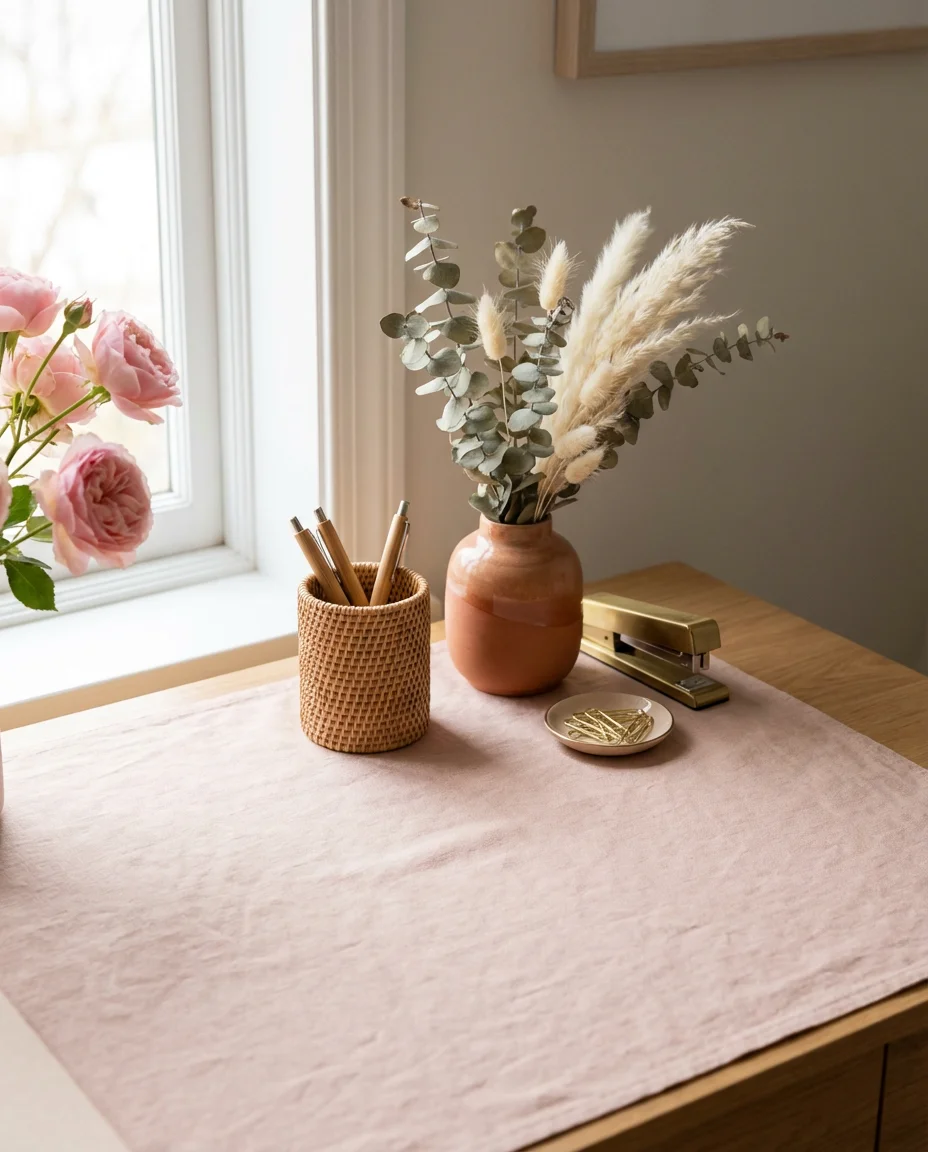
This aesthetic is frequently dismissed as “not serious”—and that’s worth pushing back on directly. A beautifully designed, feminine workspace is no less professional than a dark walnut executive suite. The research on workspace aesthetics consistently shows that environments people find personally meaningful and visually pleasing support higher focus and well-being. Design your office for the person you actually are, not the person you think a professional is supposed to look like.
21. Dark Moody Jewel-Tone Home Office
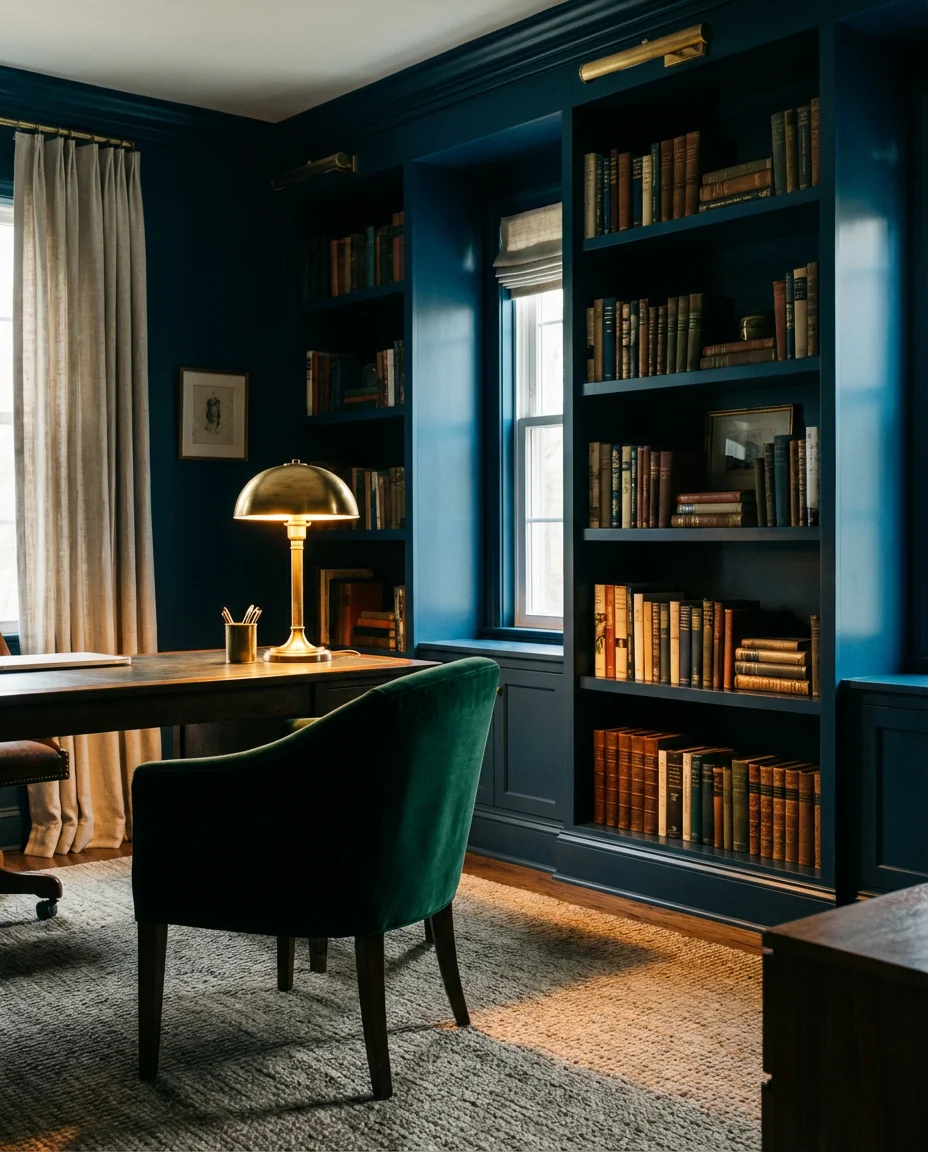
Dark, moody offices—walls in deep emerald, sapphire, or midnight plum, with layered warm lighting and luxurious textures—are among the most searched home office aesthetics on Pinterest heading into 2026. The luxury of a deeply colored room comes from the way it absorbs light and creates an interior world that feels genuinely removed from the outside. A velvet desk chair, brass fixtures, and shelves that disappear into the dark walls create depth that lighter rooms simply can’t achieve. This is the office for the person who does their best work when the space feels like an envelope—close, warm, and entirely their own.
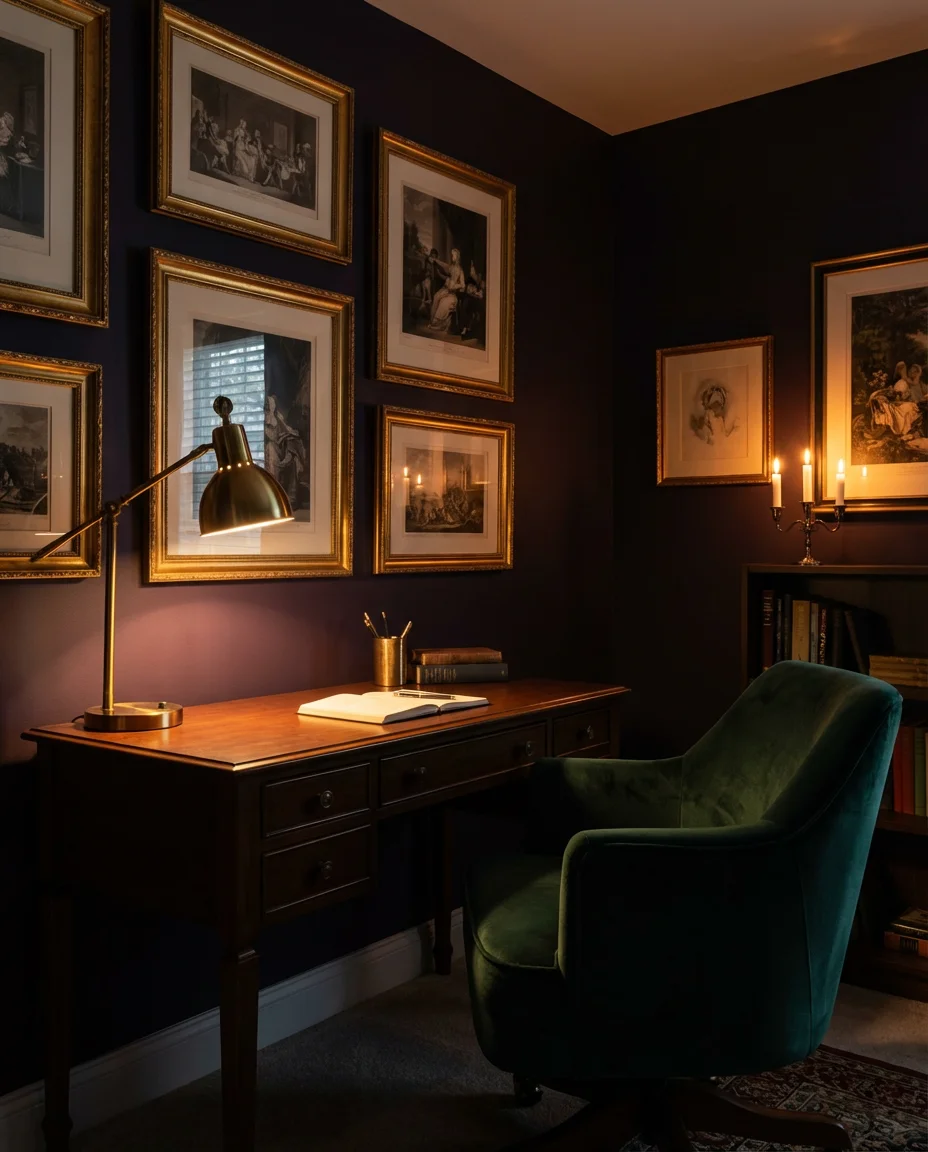
Where this works best: rooms with little natural light, which would fight against a bright palette anyway. North-facing rooms and interior rooms that designers sometimes treat as liabilities are actually perfect candidates for the dark, jewel-tone approach. Paint the walls, ceiling, and trim the same deep color to eliminate visual breaks and make the room feel like a jewel box. The effect is stunning and completely transformative with a single gallon of paint.
22. Multifunctional Guest Room and Home Office
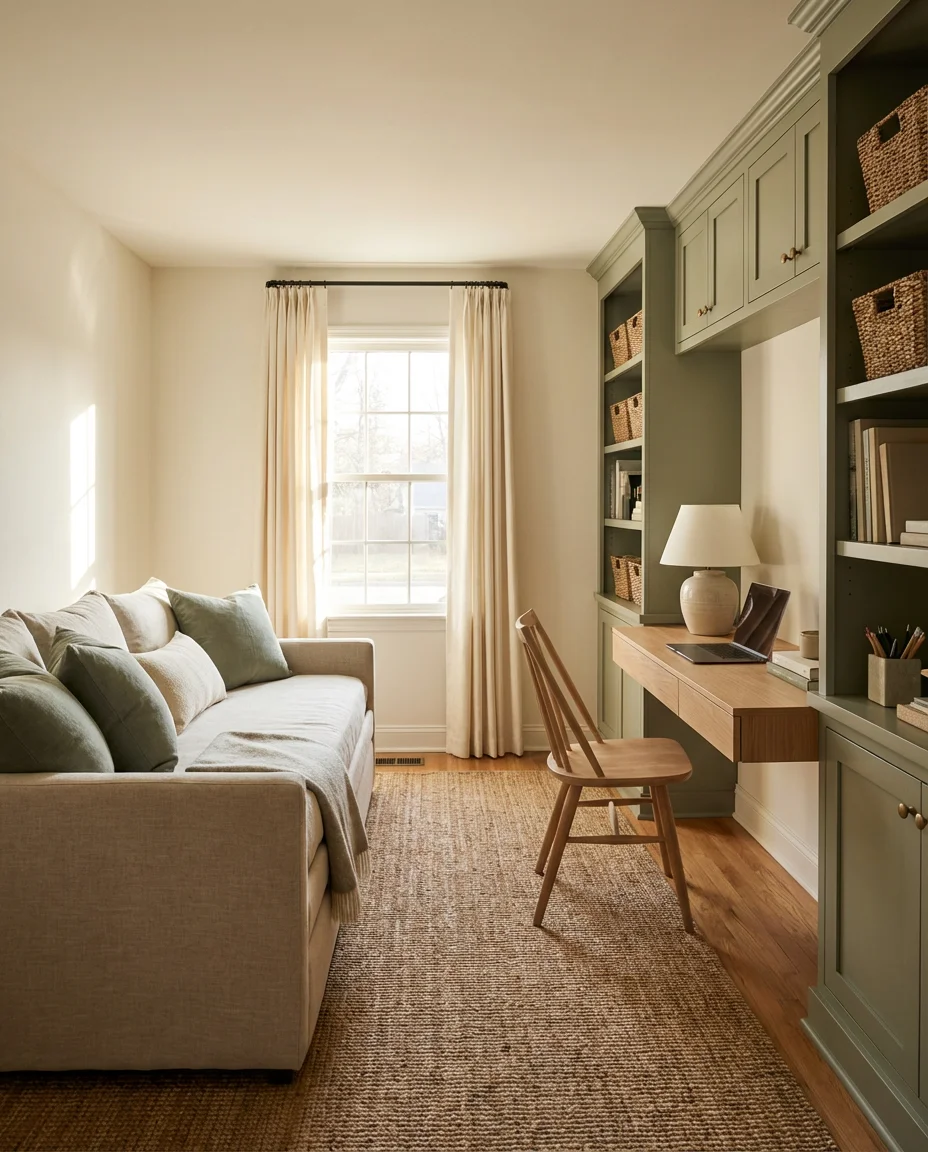
For most Americans, a dedicated home office is a luxury—the reality is a spare bedroom that needs to serve double duty for guests and daily work. The modern multifunctional approach in 2026 takes this constraint seriously and designs for both uses intentionally. A daybed or sleeper sofa with a desk positioned to face away from it creates clear spatial zoning; bedding and office supplies stored in the same built-in unit keep things tidy. The interior palette stays calm and transitional—soft blues, warm greiges, or sage greens that read equally well as a guest room or a workspace depending on which mode the room is in.
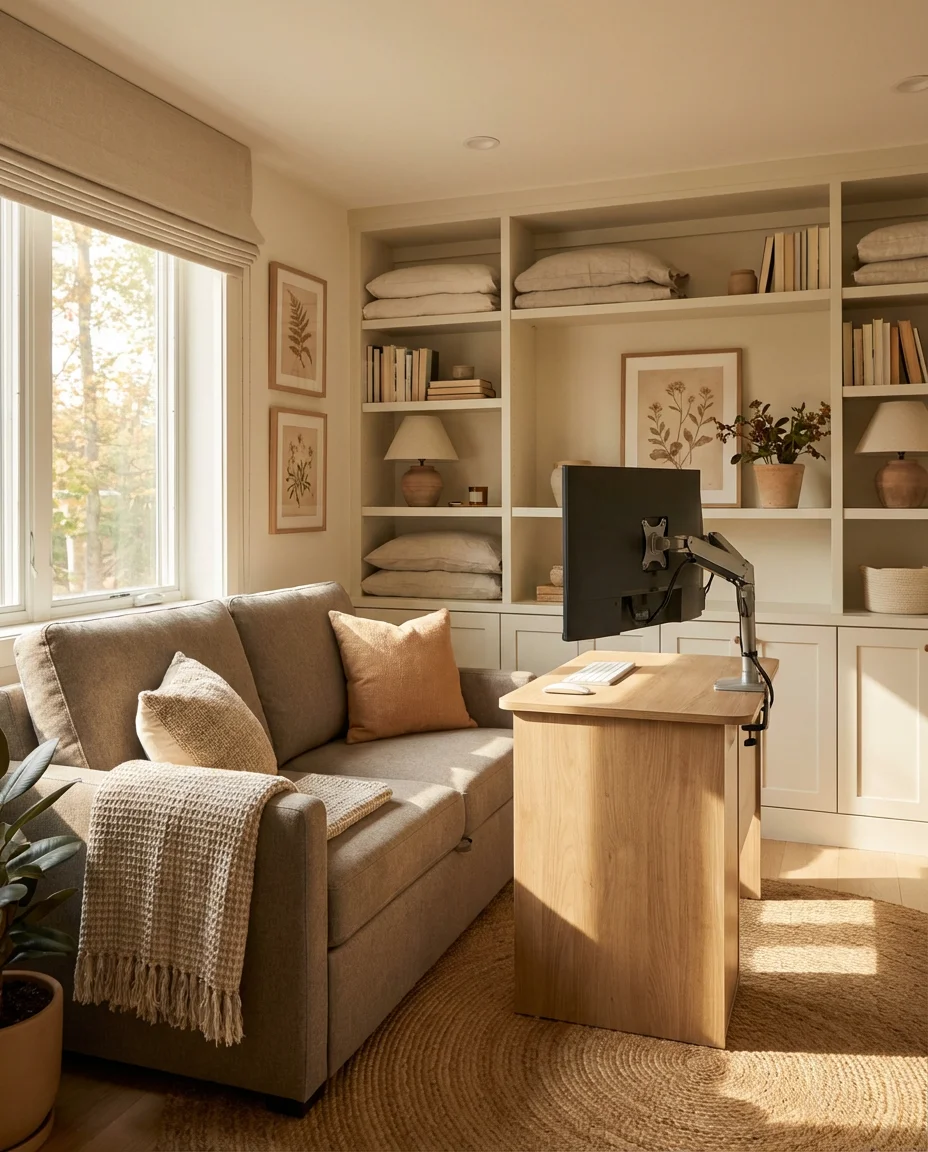
The common mistake in dual-purpose rooms is failing to commit to either use, leaving the space feeling like an afterthought for both. Instead, design fully for the primary use—which is almost always the office, since guests visit a few days a year at most—and solve for the secondary use through a piece of furniture that does its job invisibly when not in use. A high-quality sleeper sofa costs more than a cot, but it makes the room feel like a real room, not a compromise.
Conclusion
There’s no single right answer when it comes to designing a home office that truly works for you—and that’s exactly the point. Whether you’re drawn to the serene calm of a Japandi setup, the bold confidence of a jewel-tone executive suite, or the clever problem-solving of a tiny apartment nook, the best home office is simply the one you’re genuinely excited to spend time in. We’d love to hear what direction you’re taking your own space in 2026 — drop your plans, your questions, or your before-and-after stories in the comments below. Which of these ideas spoke to you most?