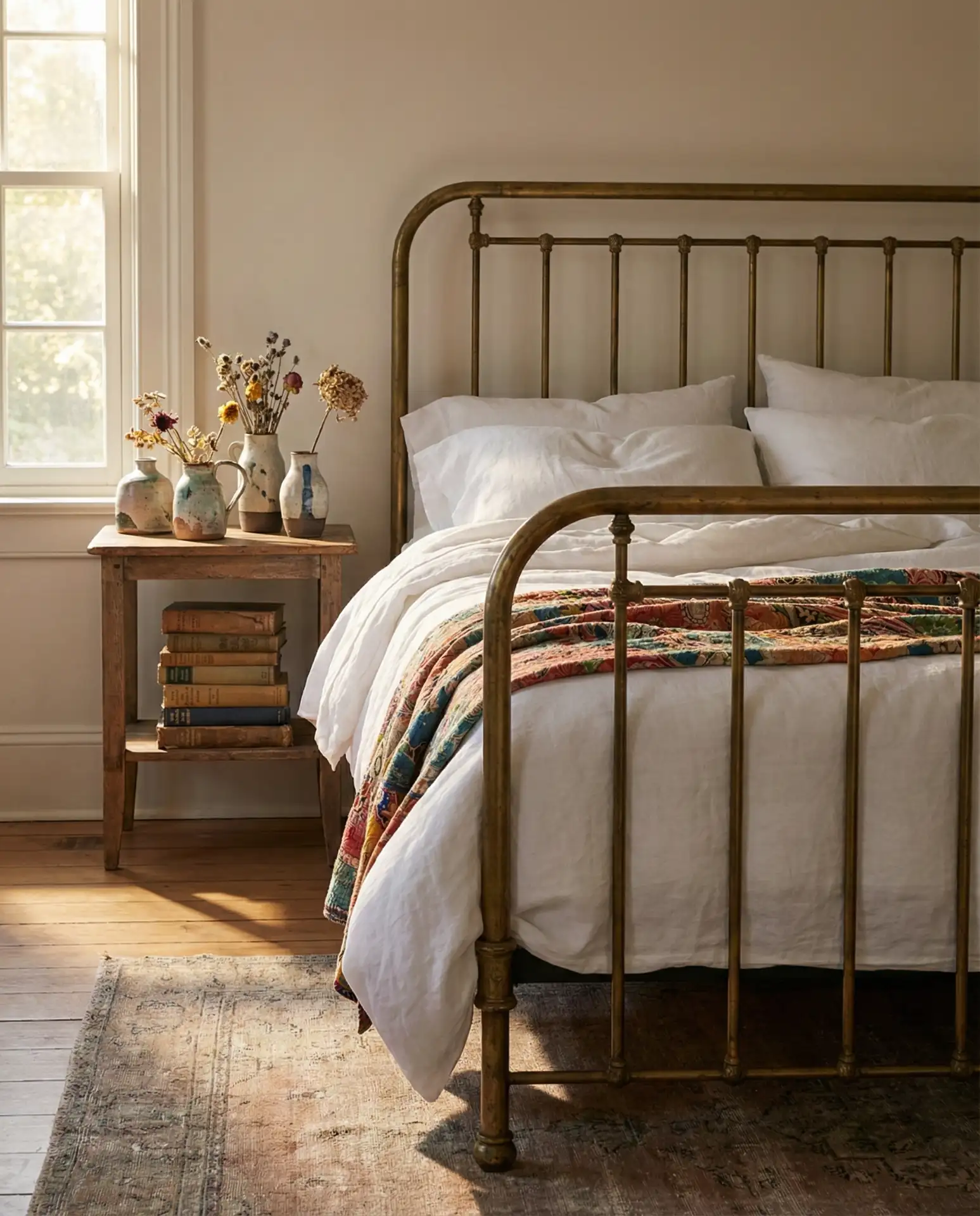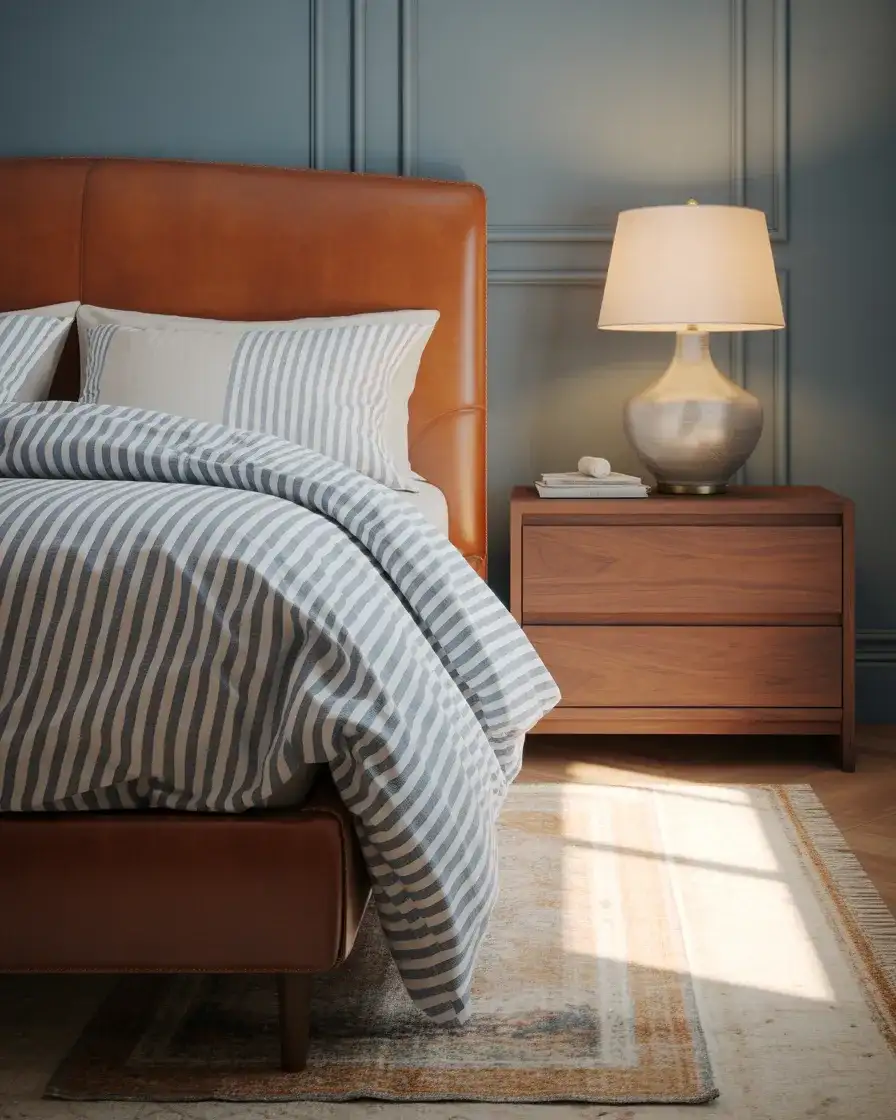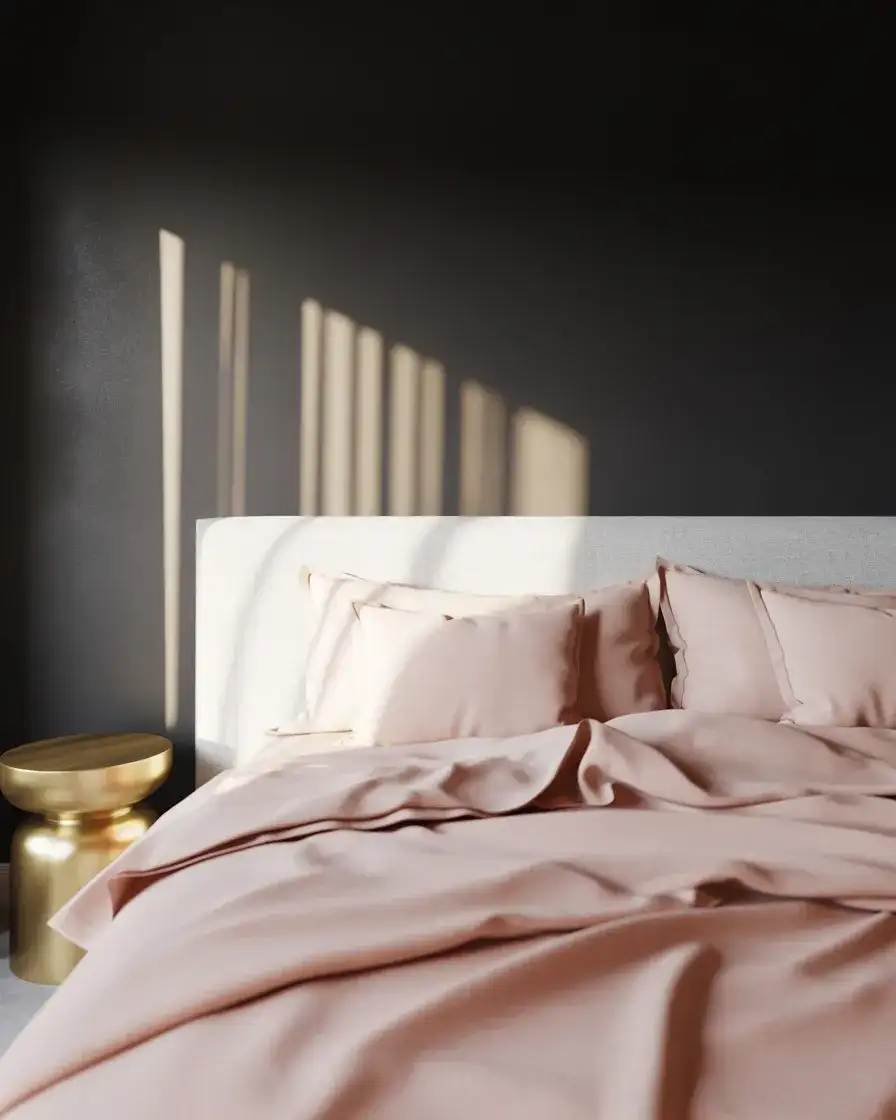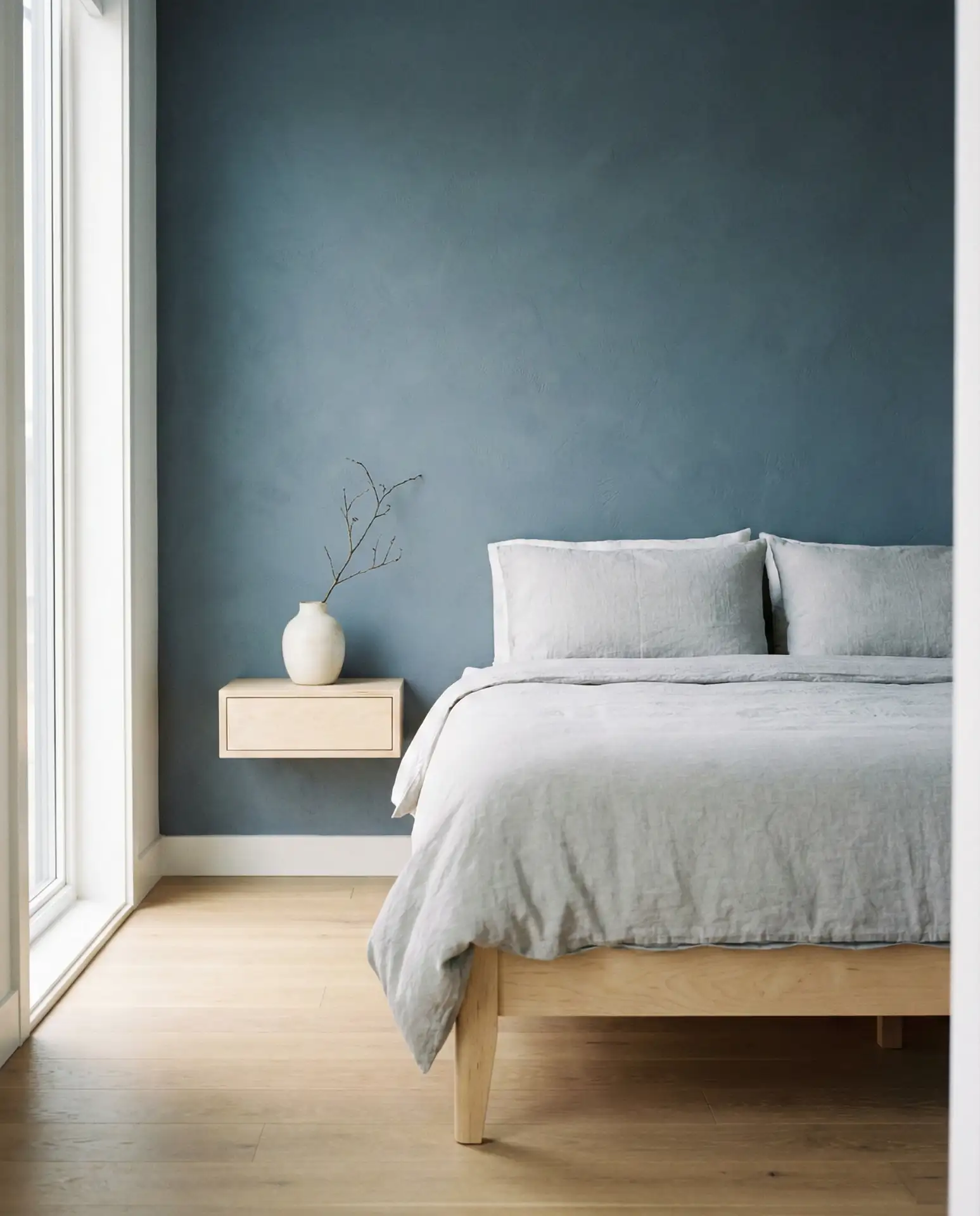
Attic bedrooms have become one of the most sought-after home transformations in 2026, especially among homeowners looking to maximize square footage without adding on. Whether you’re dealing with low ceiling challenges, dreaming of a cozy retreat under the eaves, or planning a stylish master suite with character, attic spaces offer incredible potential. Pinterest searches for attic bedroom inspiration have surged as Americans discover how these once-overlooked areas can become the most charming rooms in the house. From tiny nooks perfect for kids to expansive layouts with angled ceilings, the possibilities are as varied as the homes themselves. This guide walks you through beautifully curated ideas that blend function, style, and smart design—each one tailored to help you reimagine what’s possible above your main floors.
1. Cozy Cottage Attic Retreat
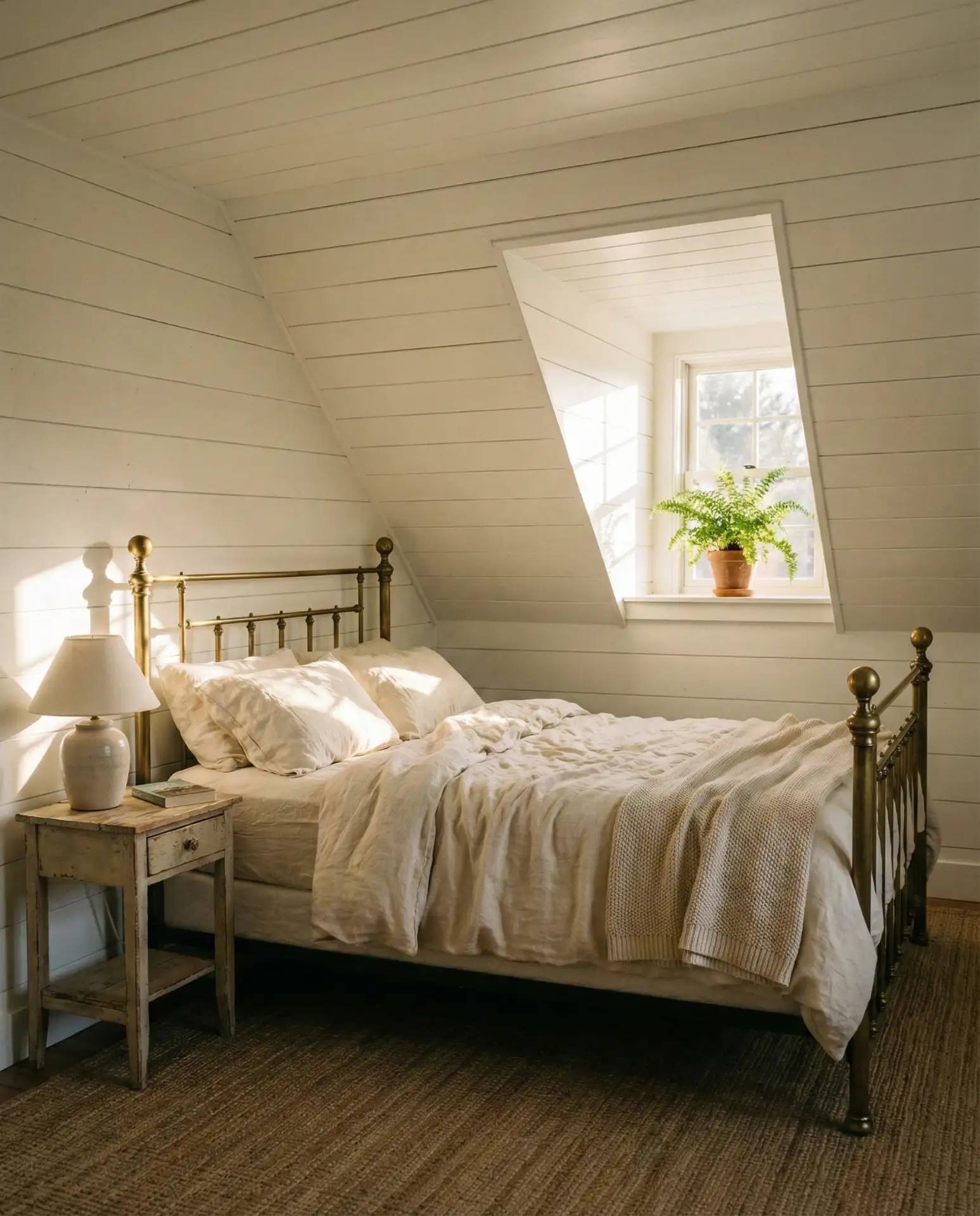
This cottage-style attic bedroom embraces warmth through soft linens, vintage wood furniture, and a palette of creams and muted greens. The cozy atmosphere comes from layered textures—think chunky knit throws, linen curtains, and a worn Persian rug. Exposed beams add architectural interest, while a small dormer window floods the space with natural light. It’s an ideal setup for anyone seeking that lived-in, welcoming vibe that makes you want to curl up with a book on a rainy afternoon.
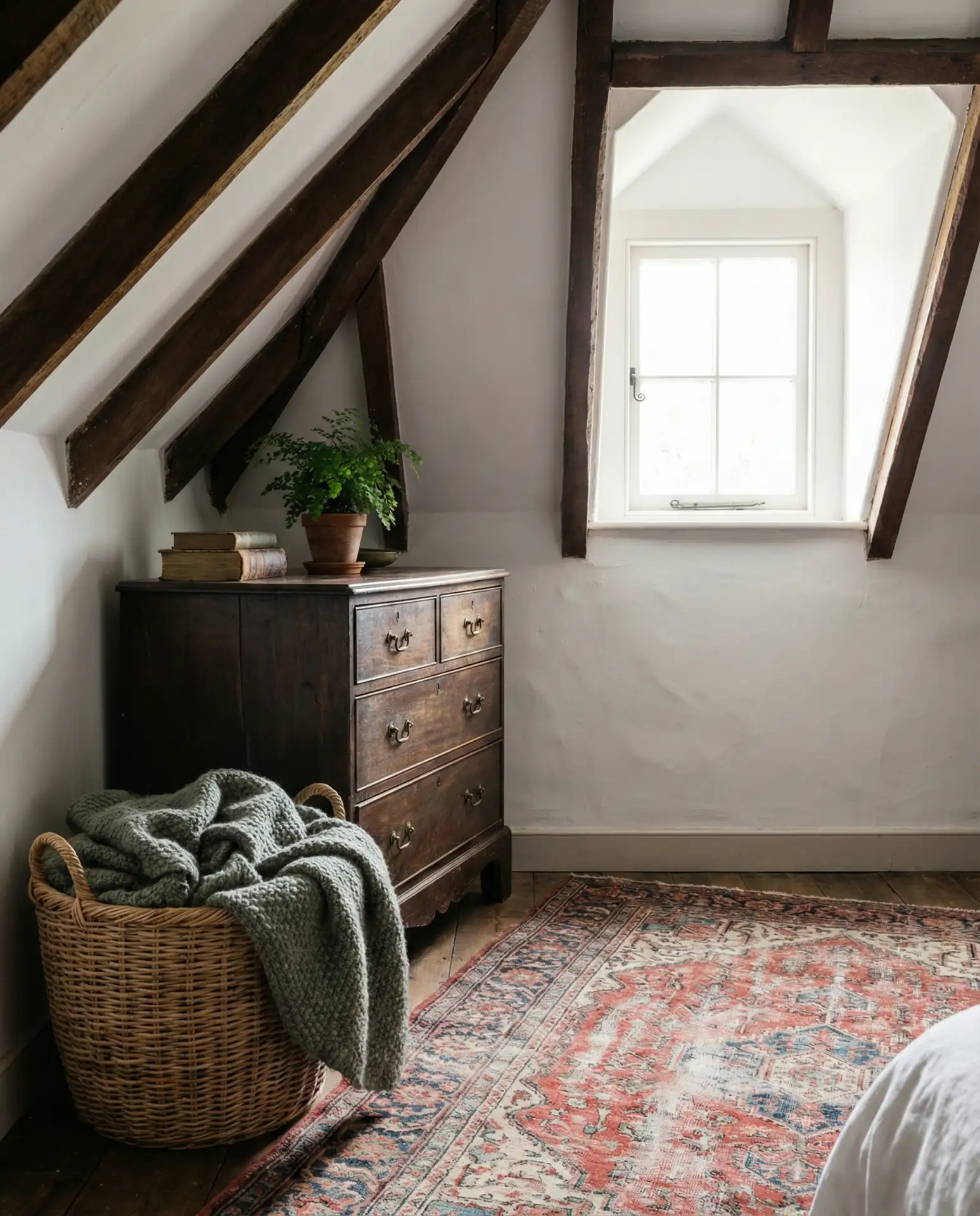
One common mistake here is over-decorating and cluttering the limited floor space. Instead, keep furniture minimal and low-profile to maintain the airy cottage feel. Use vertical storage like wall-mounted shelves to preserve walking space, and opt for a bed without a bulky footboard. This approach prevents the room from feeling cramped while keeping that charming, collected-over-time aesthetic intact.
2. Modern Minimalist Low Ceiling Haven
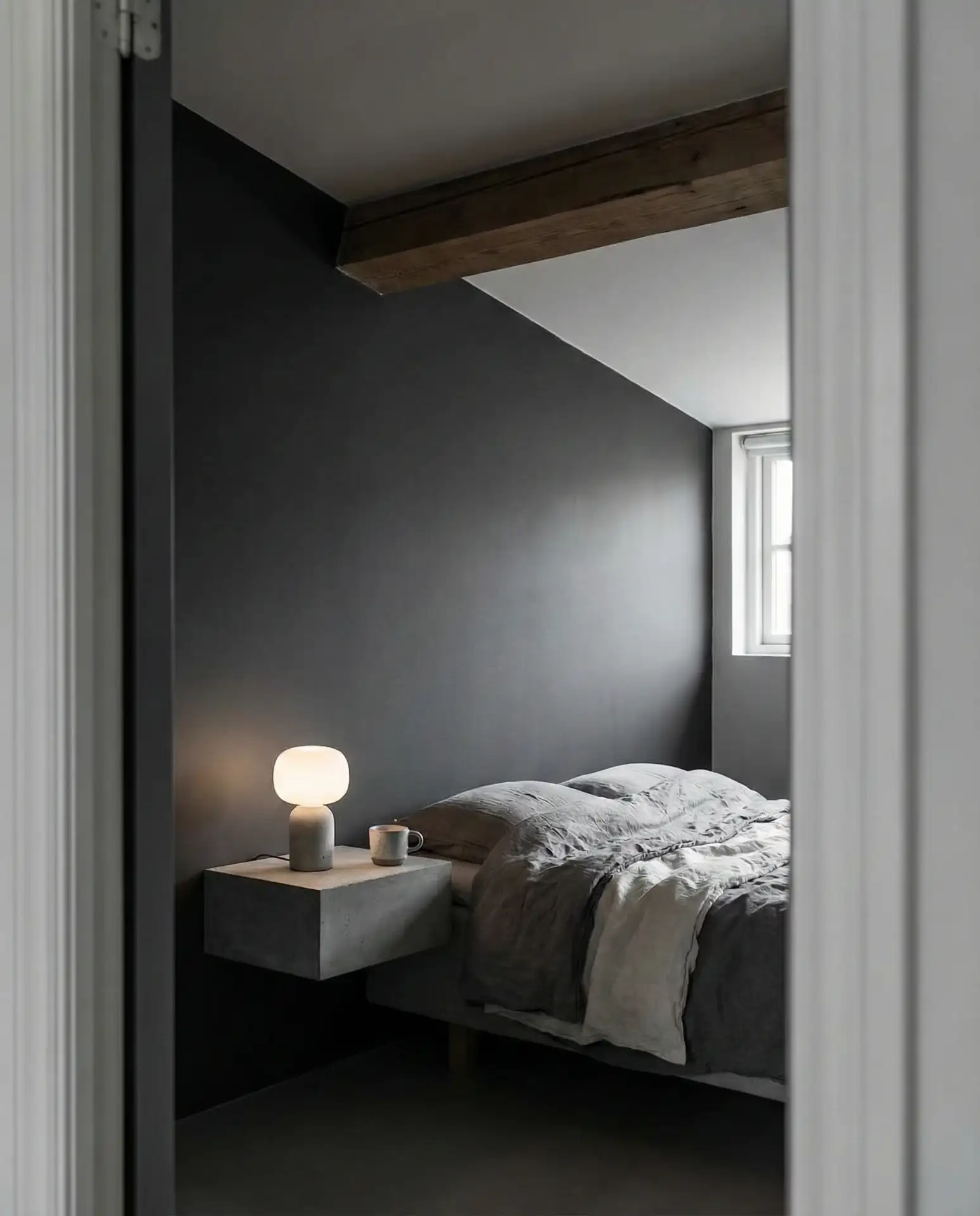
When dealing with a low-ceiling attic, a minimalist approach works wonders. This design uses a dark charcoal accent wall to create depth, paired with a low platform bed that keeps sightlines open. Simple pendant lights hang just above nightstands, and a single piece of modern art draws the eye horizontally rather than upward. The result is a sleek, calming space that doesn’t fight the architecture but works with it.
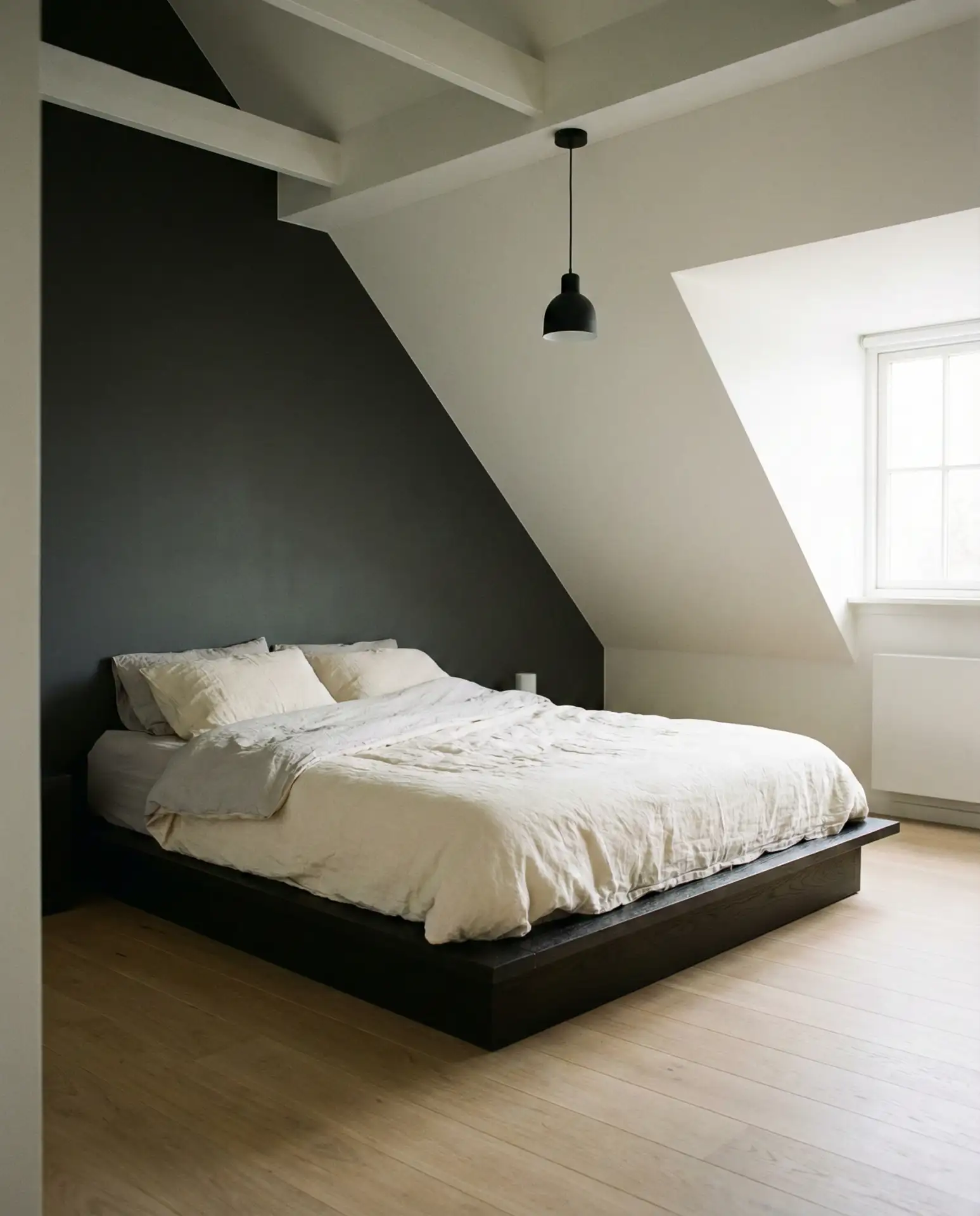
This setup works best in urban lofts and modern bungalows across cities like Portland and Austin, where homeowners value clean design and clever spatial solutions. The low-profile furniture keeps the ceiling height from feeling oppressive, and the dark wall actually makes the space feel more intimate rather than smaller—a counterintuitive trick that designers have leaned into heavily in 2026.
3. Angled Ceiling Scandinavian Simplicity
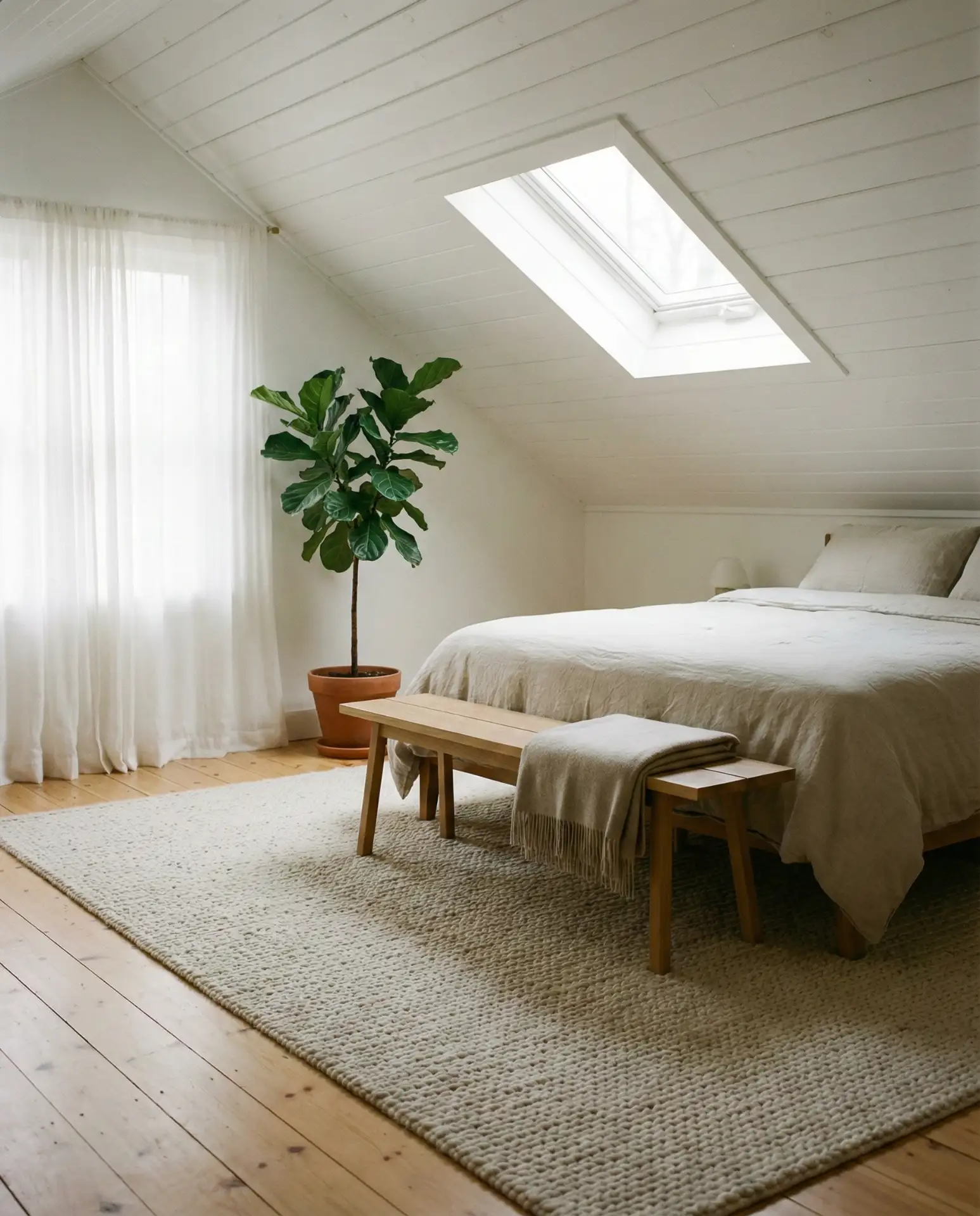
Scandinavian design thrives in attics with angled ceilings, where natural light and neutral tones create an airy feel. This bedroom features whitewashed wood paneling, a simple linen-upholstered bed, and a wool area rug in soft gray. The sloped ceiling is painted bright white to reflect light, and a skylight above the bed brings in plenty of natural brightness. Plants in ceramic pots add just enough life without cluttering the serene palette.
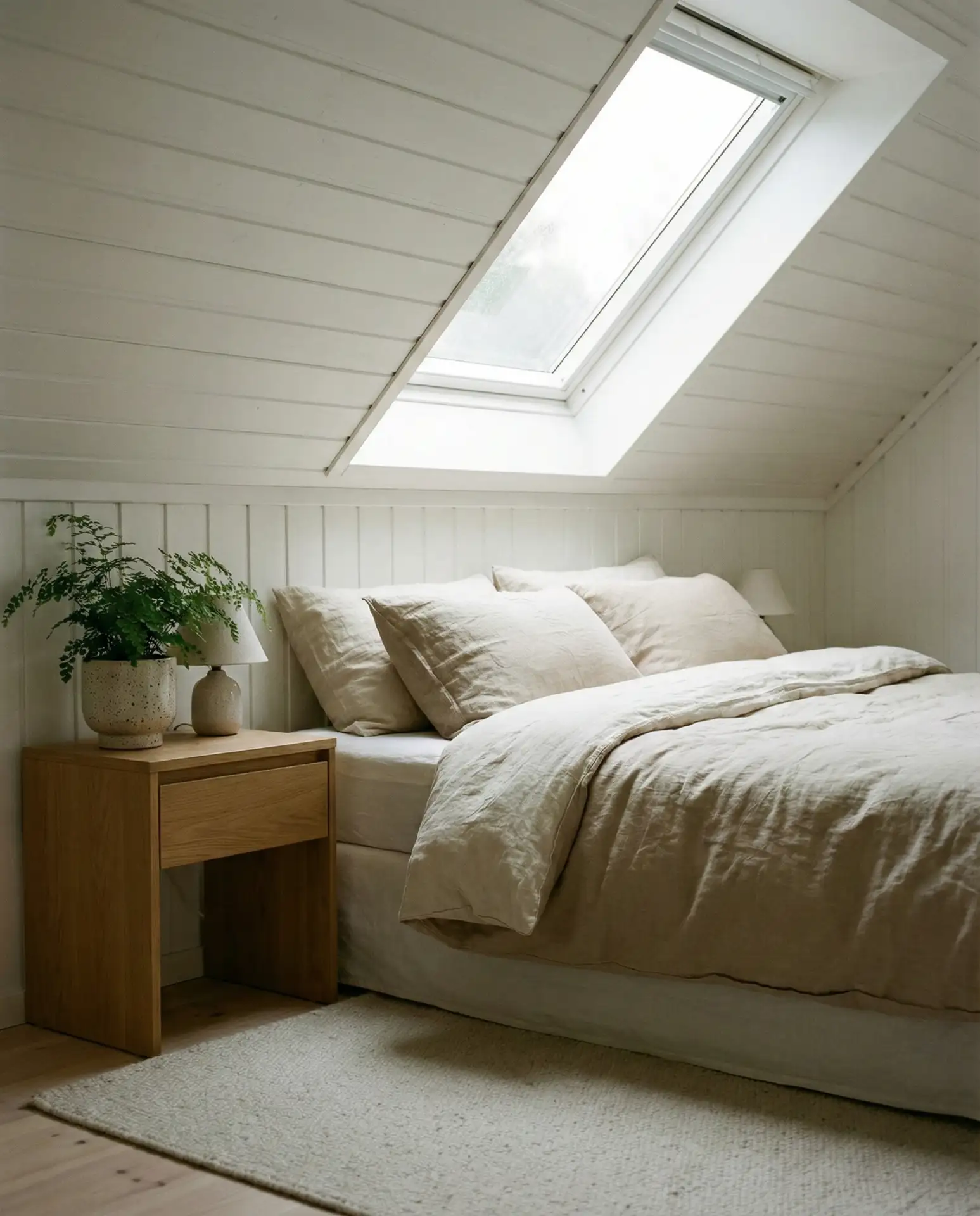
A neighbor in Brooklyn recently converted her attic using this exact palette, and she mentioned how the white walls made the 7-foot sloped section feel far more spacious than expected. The trick is resisting the urge to add bold color—neutrals let the architecture become the focal point.
4. Tiny Attic Nook for Kids
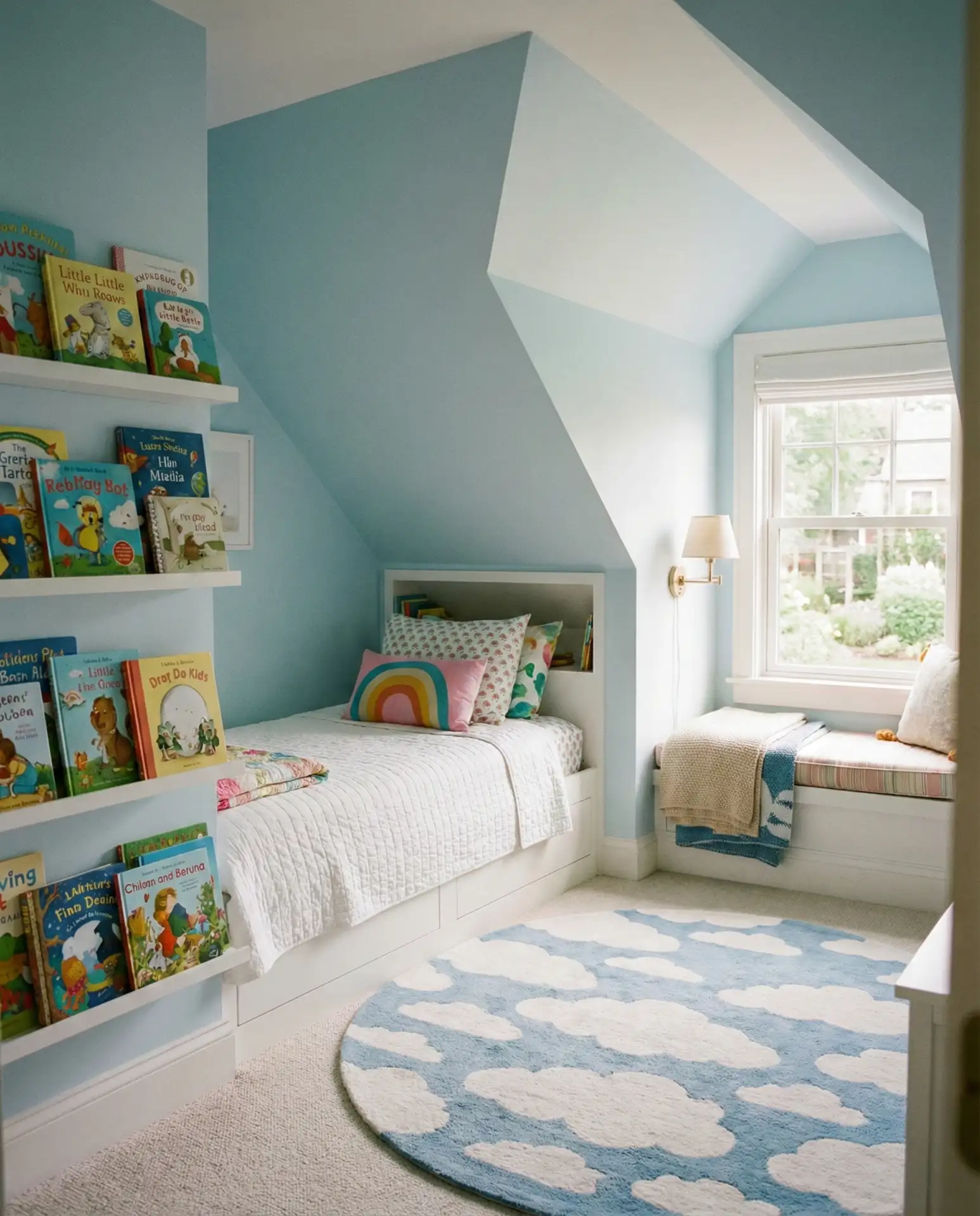
A tiny attic can become a magical hideaway for kids, especially when designed with playful yet practical elements. This setup includes a built-in twin bed tucked under the eaves, open shelving for books and toys, and a small desk area illuminated by a dormer window. Soft pastel walls and a cloud-patterned rug add whimsy without overwhelming the compact footprint. It’s a perfect solution for families looking to carve out dedicated space without a full bedroom addition.

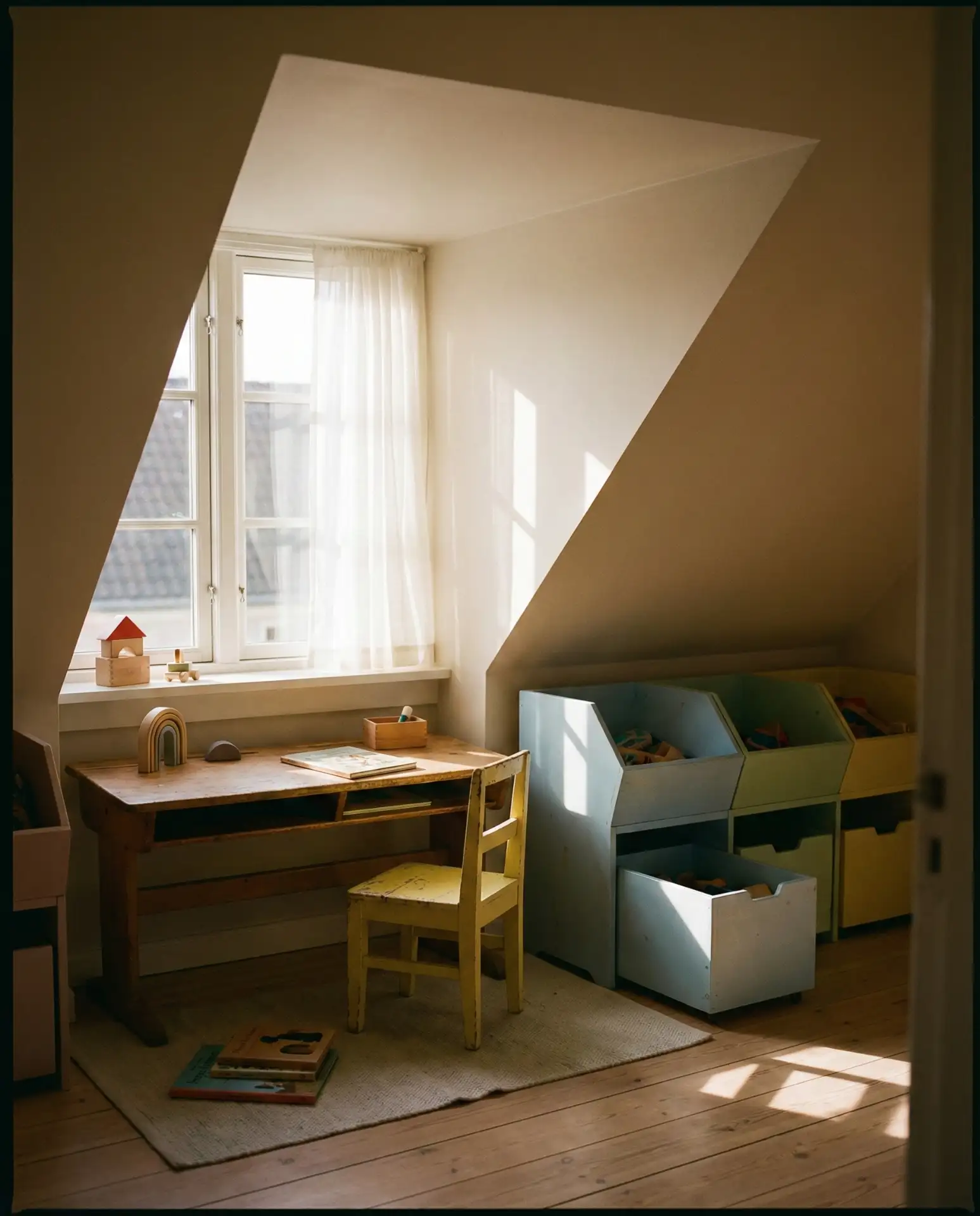
Most attic bedrooms for children are under 100 square feet, which means every inch counts. Built-ins are a worthwhile investment here—they typically cost between $800 and $2,000 depending on materials, but they maximize usable space and eliminate the need for bulky furniture that eats up floor area kids need for play.
5. Rustic Farmhouse Master Suite
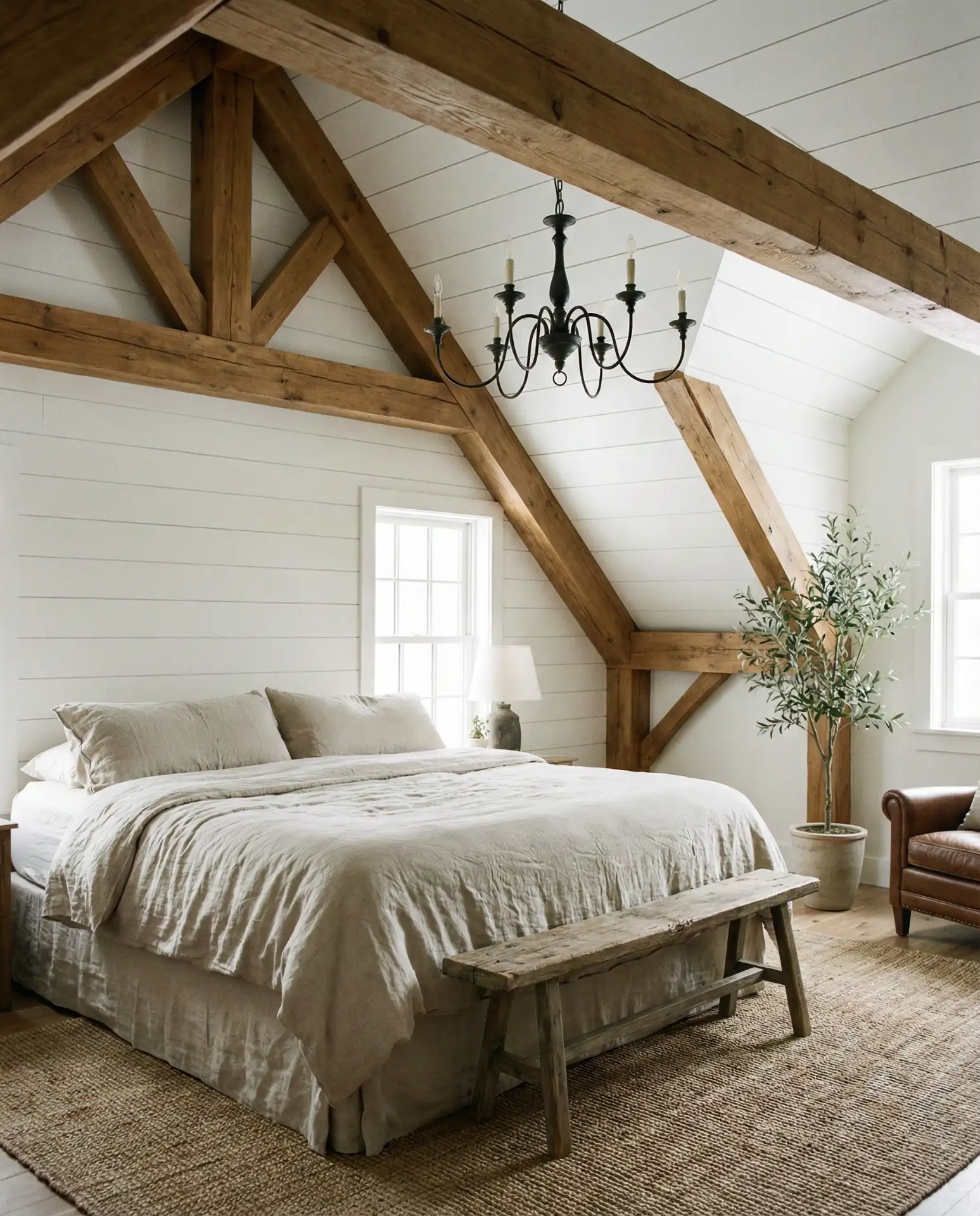
For a rustic master bedroom, this attic design leans into reclaimed wood beams, shiplap accent walls, and vintage metal light fixtures. A king-size bed with an upholstered headboard anchors the room, while a weathered wood bench at the foot adds both seating and storage. The color palette stays earthy—taupe, cream, and charcoal—with pops of greenery from potted plants. It’s the kind of space that feels both refined and deeply relaxing.
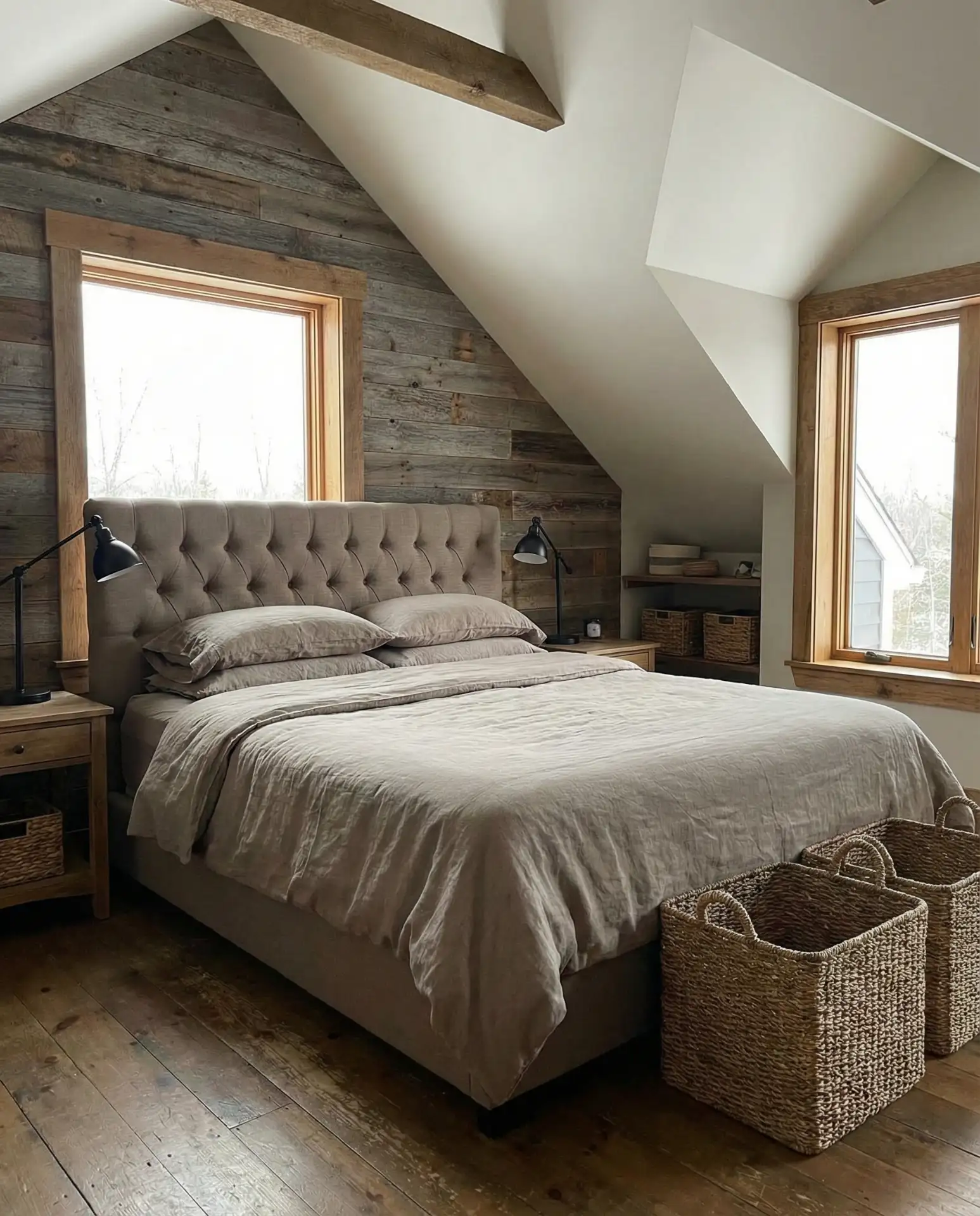
This style is especially popular in the Midwest and rural areas of the Northeast, where homeowners want to preserve the character of older homes while adding modern comfort. The key is balancing raw textures with soft textiles—too much wood can feel cold, but layering in plush rugs and quality bedding keeps it inviting.
6. Moody Dark-Walled Sanctuary
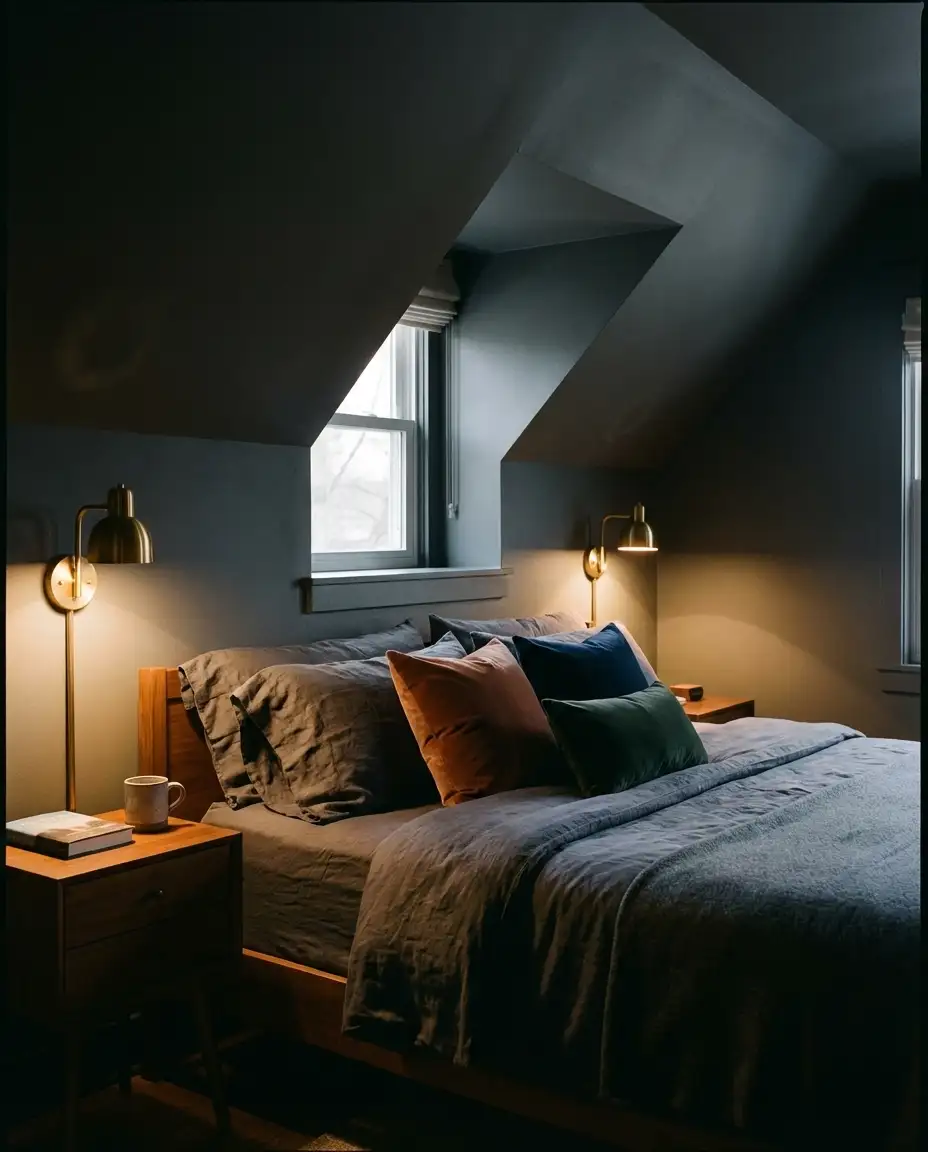
A moody, dark attic bedroom can feel surprisingly luxurious when done right. Deep charcoal or navy walls create a cocoon-like effect, enhanced by brass sconces, layered textiles, and dramatic artwork. The sloped ceilings are painted the same rich hue, which eliminates awkward transitions and makes the entire space feel cohesive. This approach works beautifully for adults seeking a retreat that feels totally different from the rest of the house.
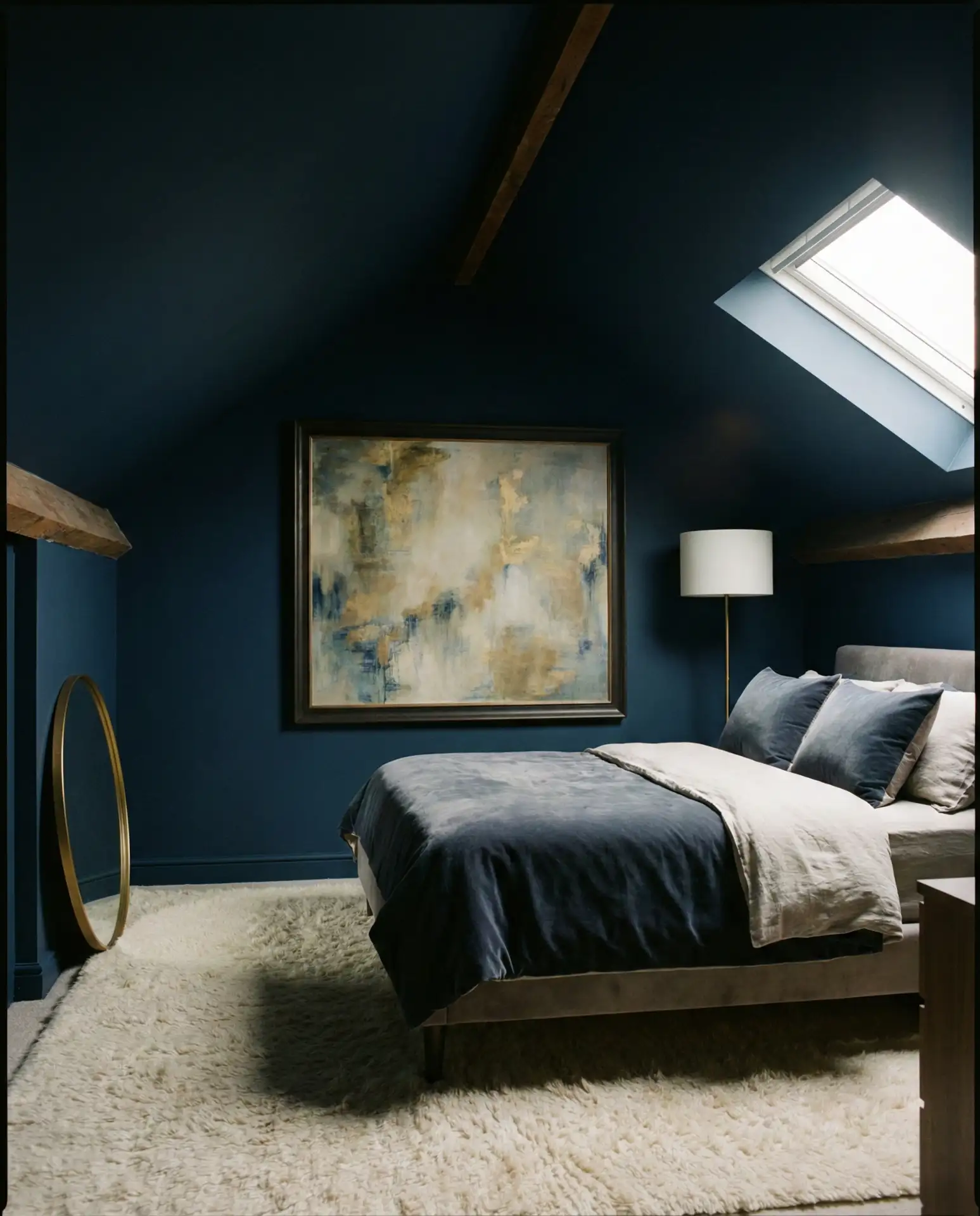
Real homeowners who’ve tried this palette report sleeping better in darker rooms—the lack of visual stimulation helps the brain wind down. It’s also a smart choice in attics with smaller windows, where trying to fight the low light with white walls can feel futile. Instead, lean into the coziness and let the room become a true escape.
7. Aesthetic Boho Teen Hideaway
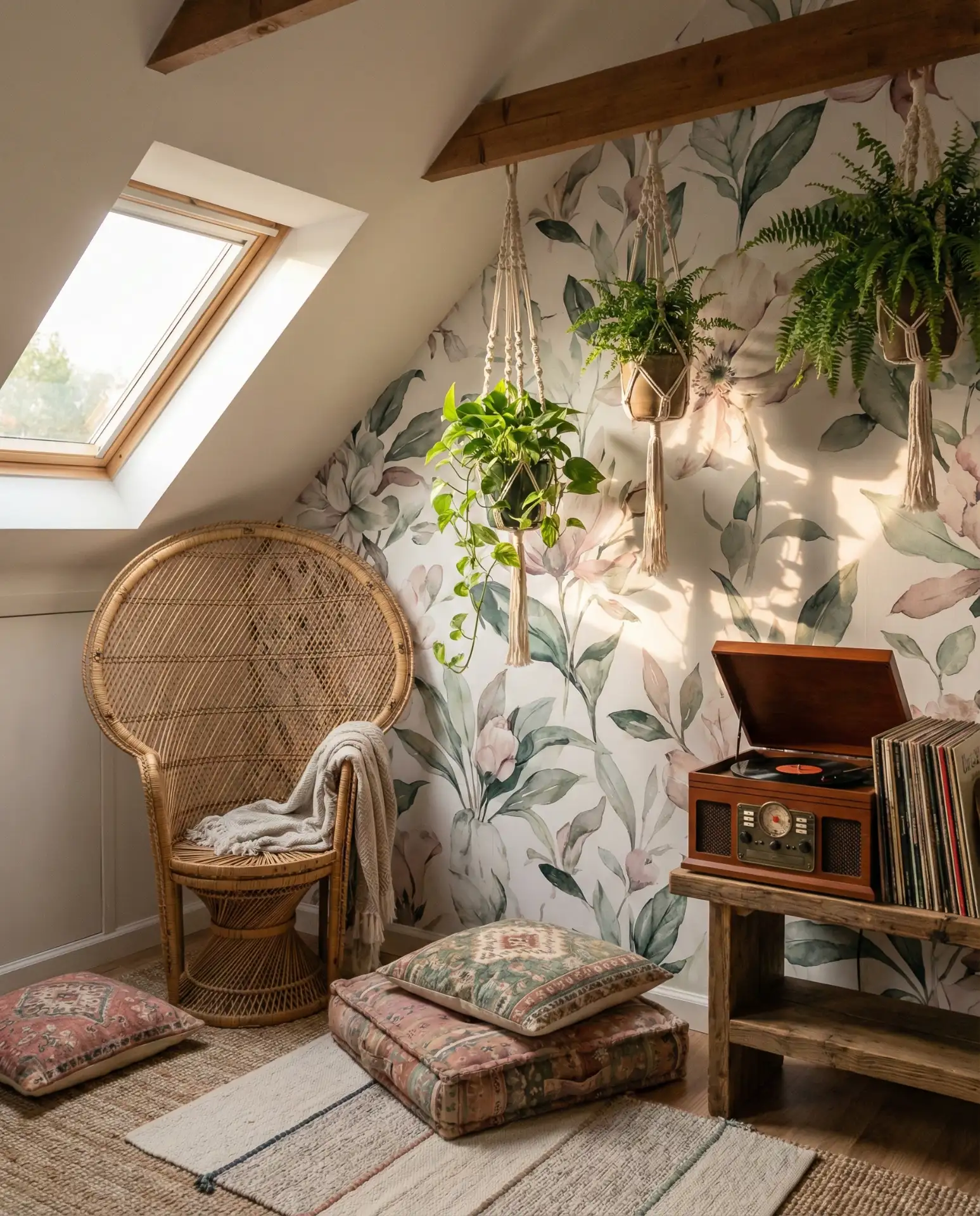
This aesthetic attic bedroom is perfect for teens who want a personalized sanctuary. Think macrame wall hangings, string lights draped along the ceiling, a low futon-style bed with colorful pillows, and open shelving for plants and vintage finds. The vibe is relaxed and creative, with peel-and-stick wallpaper on one wall adding a trendy touch without permanent commitment. It’s the kind of space that grows with a teen’s evolving style.
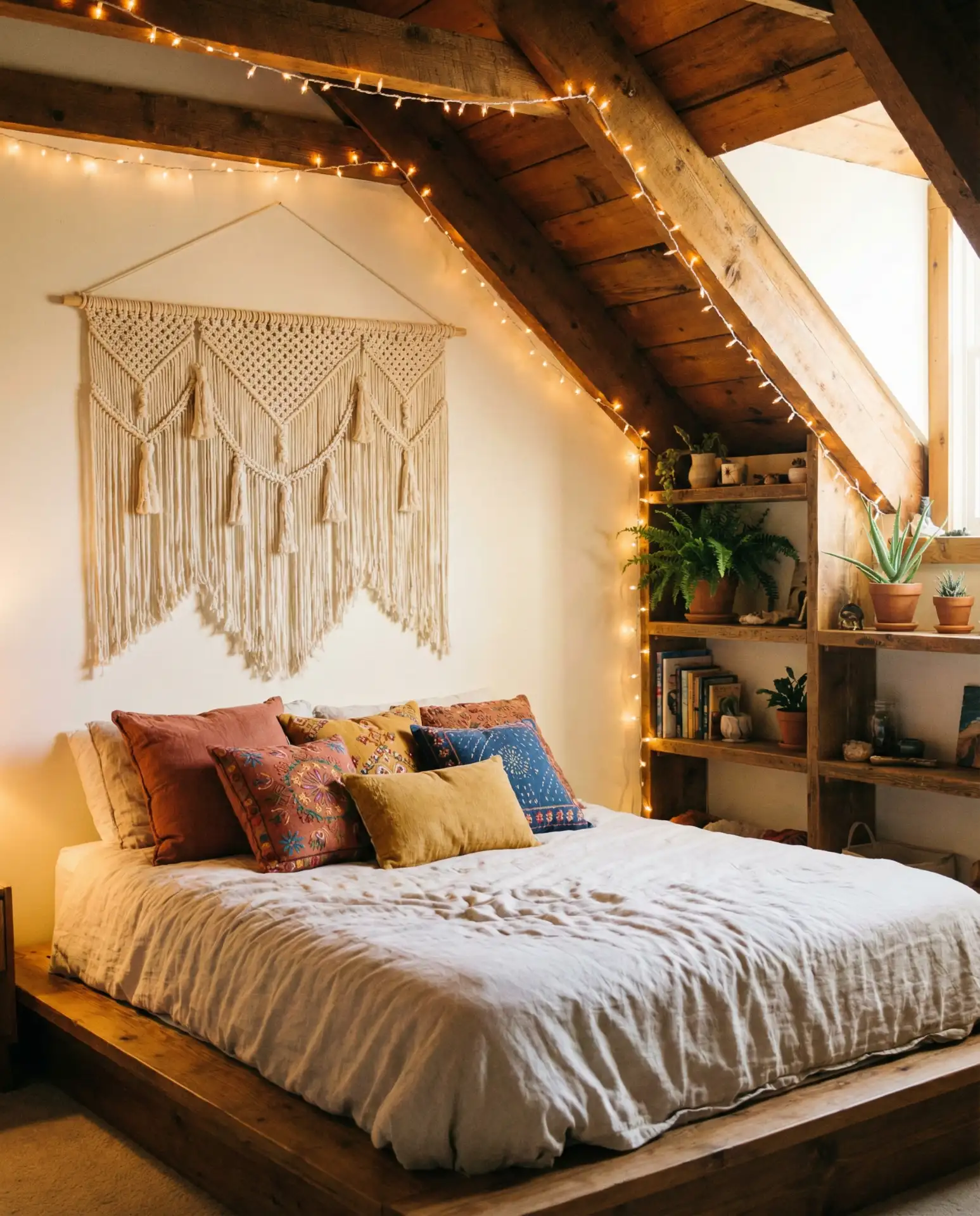
Many parents find that giving teens ownership of their attic space—letting them choose colors and decor within a budget—creates a sense of pride and responsibility. Peel-and-stick materials are ideal here since they’re renter-friendly and easy to swap out as tastes change, typically costing $30 to $80 per roll.
8. Finished Attic with Built-In Closets
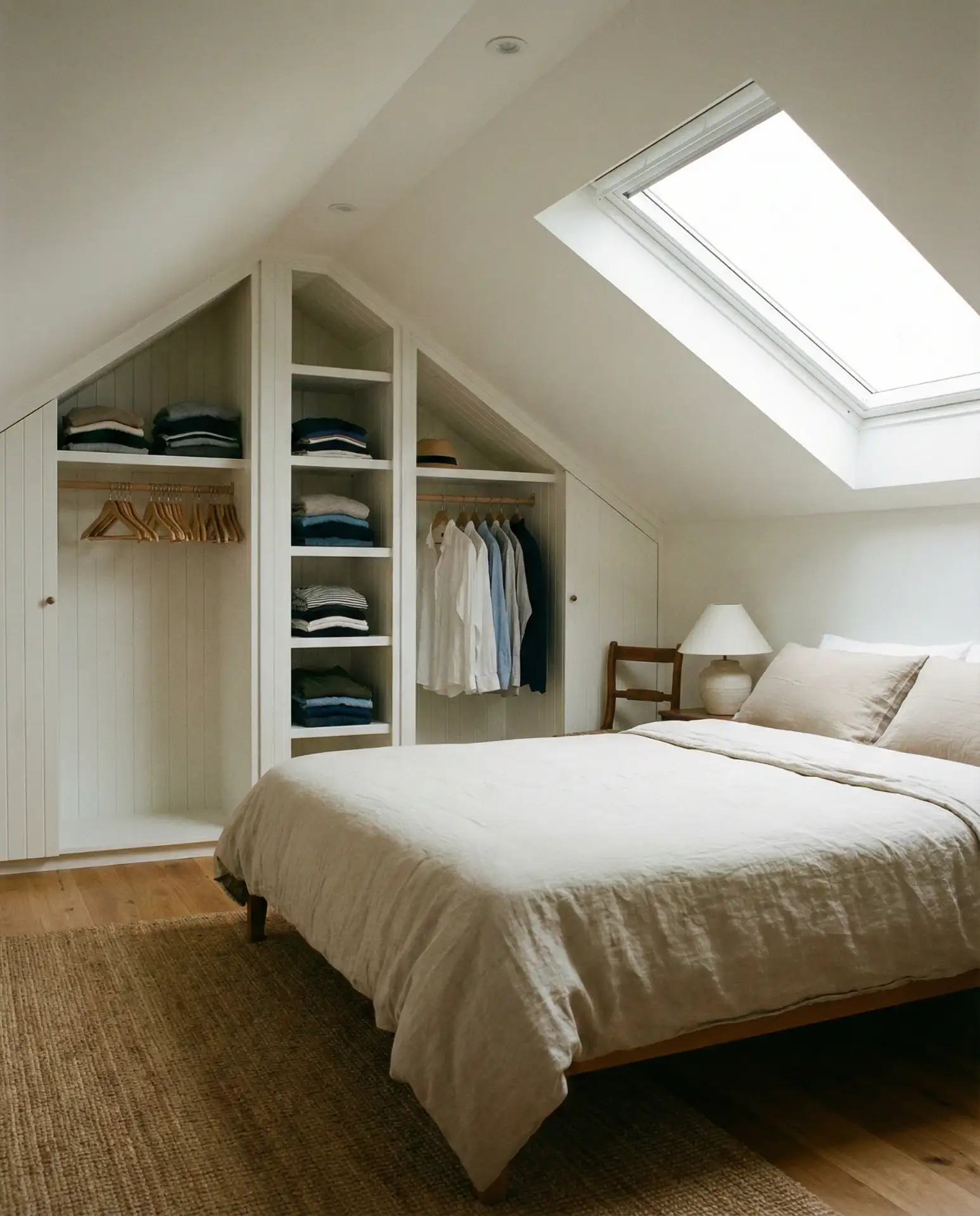
A fully finished attic bedroom benefits immensely from custom closets designed to fit the unique angles. This space features built-in wardrobes tucked under the eaves, with hanging rods, shelving, and drawers that make the most of otherwise wasted space. The rest of the room is kept simple—a neutral bed, a small reading chair, and minimal decor—allowing the smart storage to be the real hero of the layout.
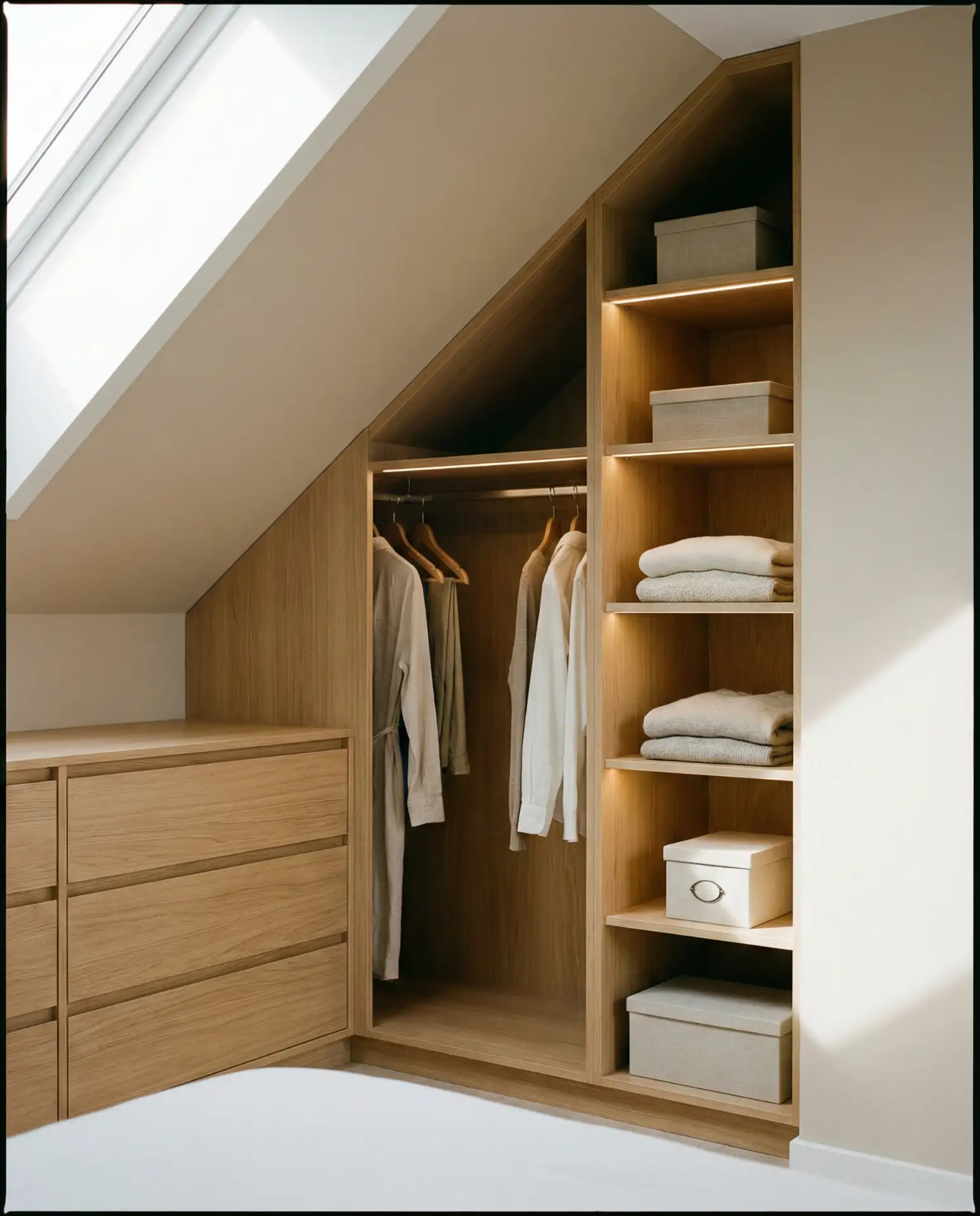
Custom closets in attic bedrooms typically range from $1,200 to $4,000 depending on complexity and materials. While it’s a significant upfront cost, the return in functionality is hard to beat—especially in homes where square footage is at a premium. Homeowners often say this is the upgrade that makes an attic bedroom feel like a real bedroom rather than just bonus space.
9. Green and Natural Retreat
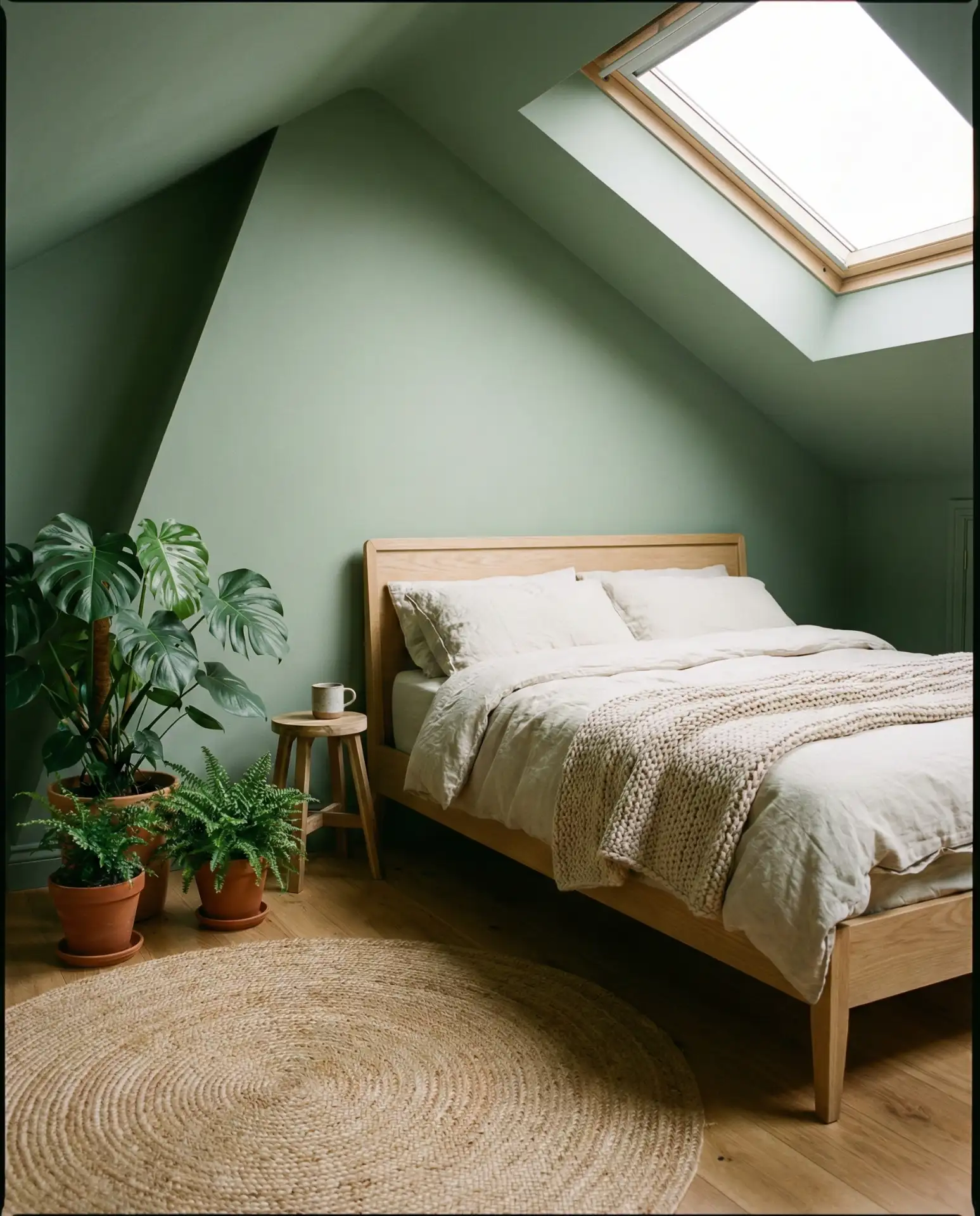
A green attic bedroom brings the outdoors in through sage-painted walls, potted plants on every surface, and natural fiber textiles. This design pairs soft green hues with oak furniture and crisp white linens, creating a spa-like atmosphere. A large window or skylight is essential here—it floods the space with light and highlights the lush greenery. It’s an ideal choice for anyone who finds calm in nature-inspired spaces.
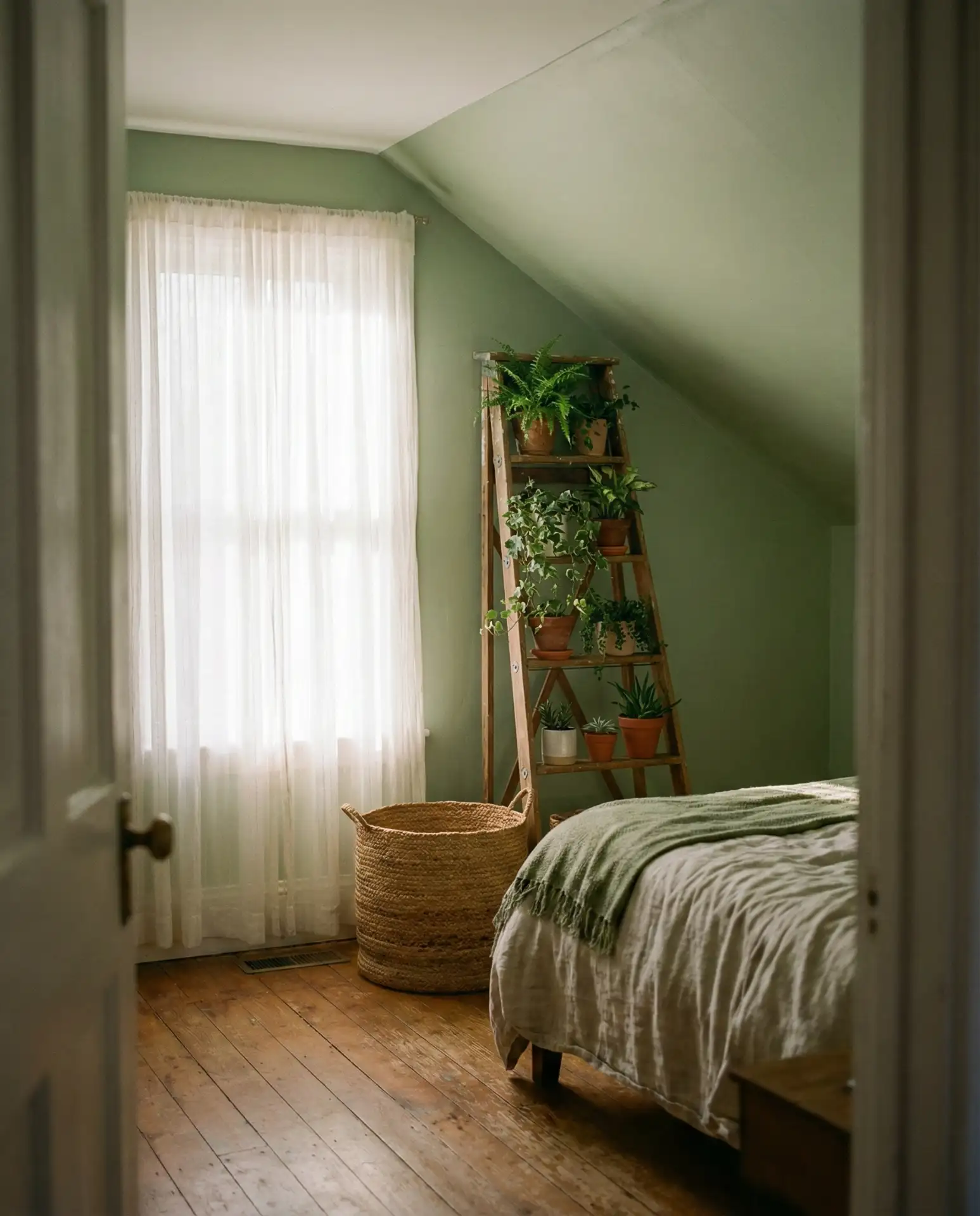
This works best in homes with southern or western exposure, where the greenery won’t strain in low light. In climates like the Pacific Northwest or New England, the green palette also echoes the surrounding landscape, making the room feel like a natural extension of the outdoors. Just be sure to choose low-maintenance plants if the attic gets hot in summer.
10. Large Attic Master with Sloped Ceiling Layout
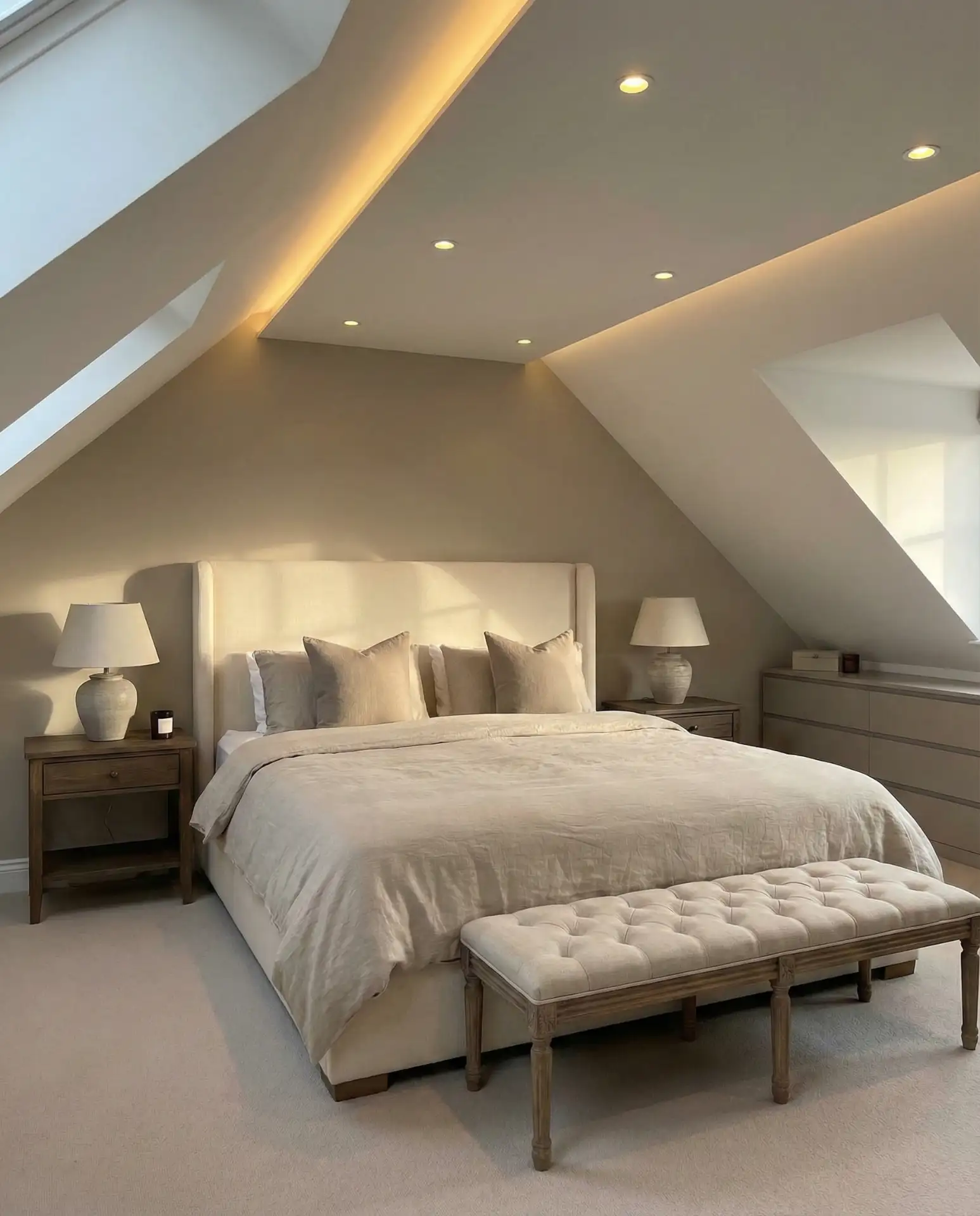
For a large attic, the layout becomes crucial. This master suite uses a central bed placement with symmetrical nightstands, leaving the lower ceiling areas along the walls for a reading nook, dresser, and seating area. The sloped ceiling is painted in a warm off-white, and recessed lighting follows the roofline to avoid any protruding fixtures. The result is a spacious, hotel-like bedroom that feels deliberate and luxurious.
Expert designers recommend centering the bed where the ceiling is highest and reserving the perimeter for lower-profile furniture. This prevents the room from feeling cramped and ensures you’re not hitting your head when getting out of bed—a surprisingly common oversight in DIY attic conversions.
11. Pink and Feminine Attic Bedroom
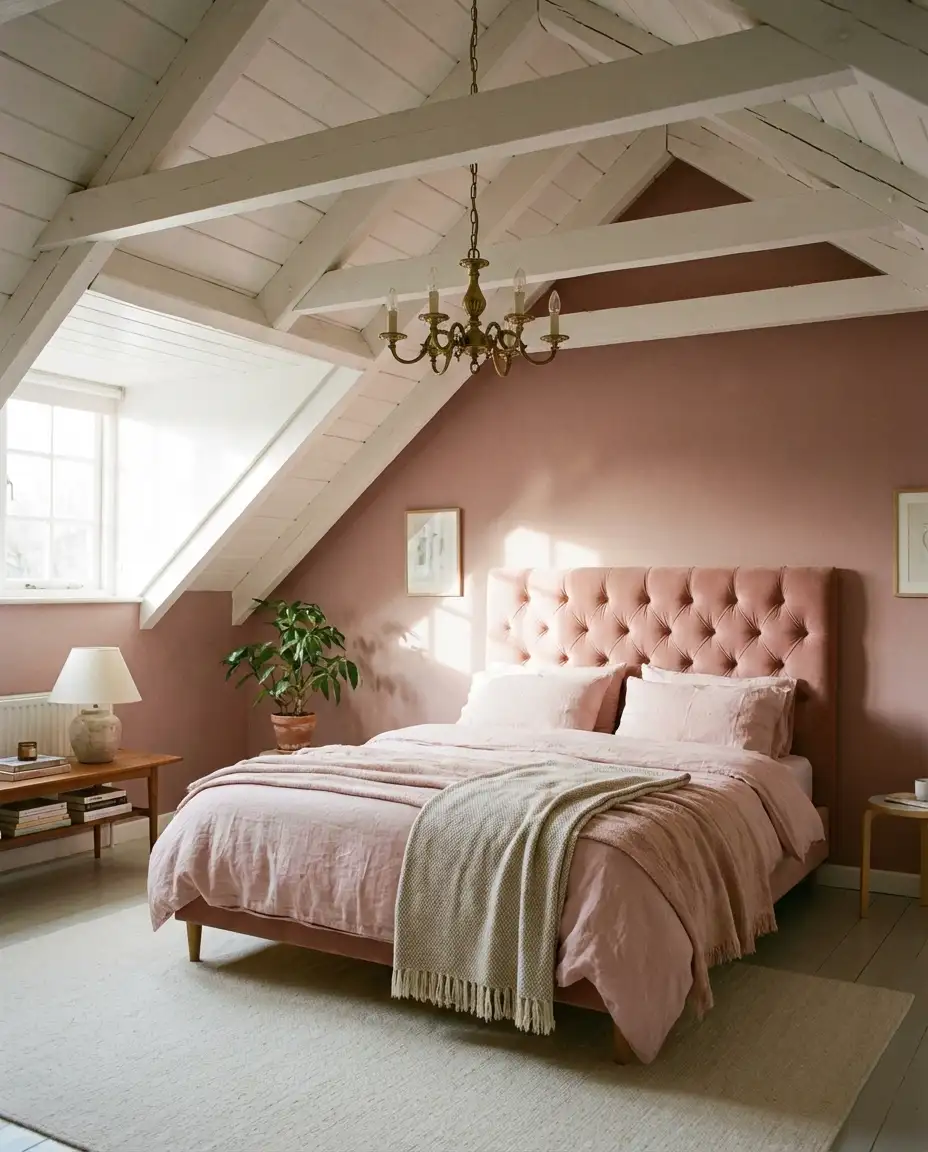
A pink attic bedroom doesn’t have to feel juvenile—when done in dusty rose or blush tones, it can be sophisticated and grown-up. This design features soft pink walls, brass accents, and luxe velvet textiles. A tufted headboard and matching bench create a sense of elegance, while white-painted beams and trim keep the look fresh. It’s perfect for anyone who wants a romantic, calming retreat.
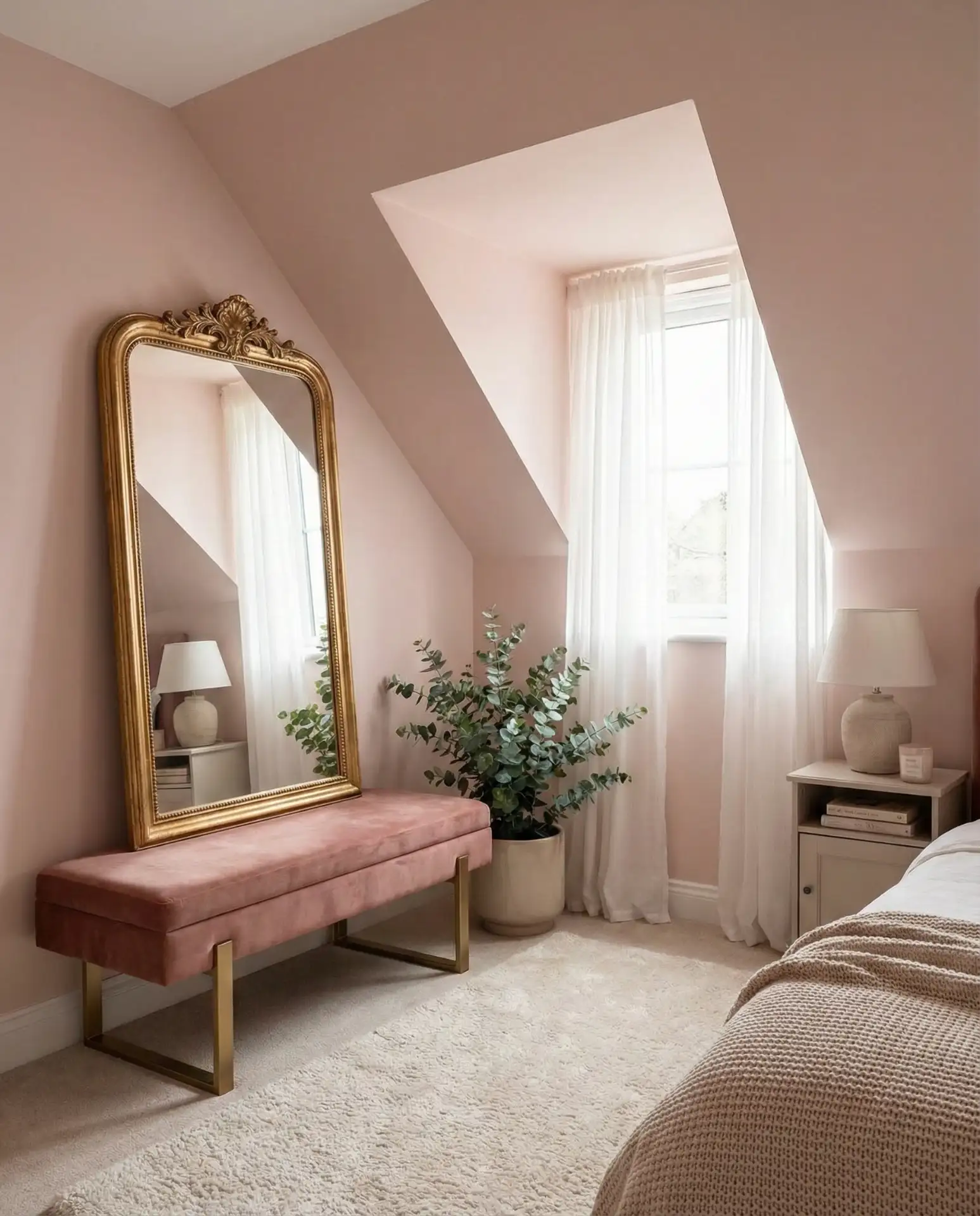
In Southern states like Georgia and North Carolina, this style has gained traction among homeowners updating historic homes. The trick is pairing pink with metallics and natural textures—skip the overly sweet accessories and instead lean into materials like linen, brass, and aged wood for balance.
12. Wallpaper Accent Attic Bedroom
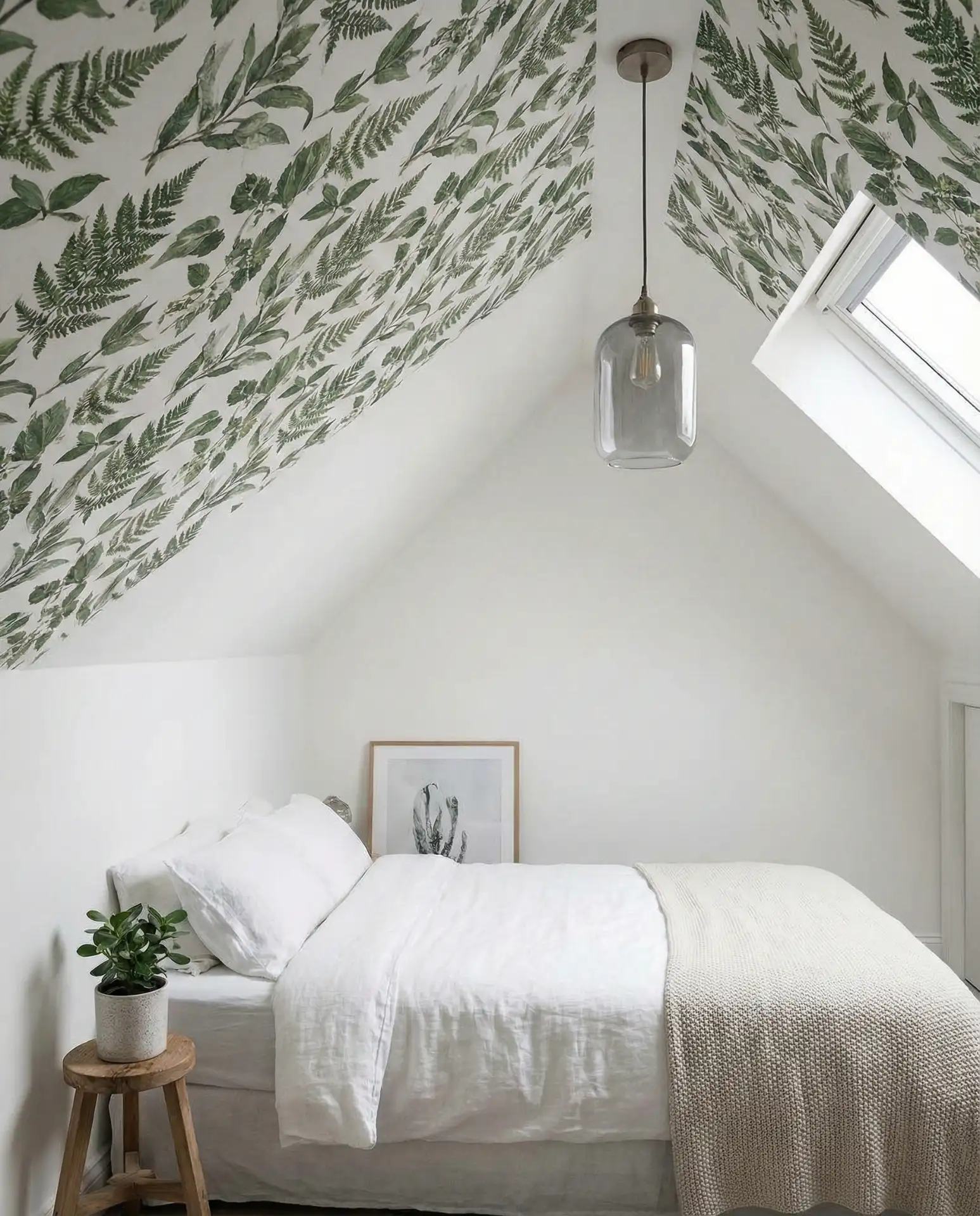
Using wallpaper on a single accent wall or sloped ceiling can transform an attic bedroom without overwhelming it. This design showcases a modern geometric pattern on the wall behind the bed, while the rest of the space stays neutral. The wallpaper draws the eye upward, making the ceiling feel higher and adding a layer of visual interest. It’s a smart move for those who want personality without committing to a paint color.
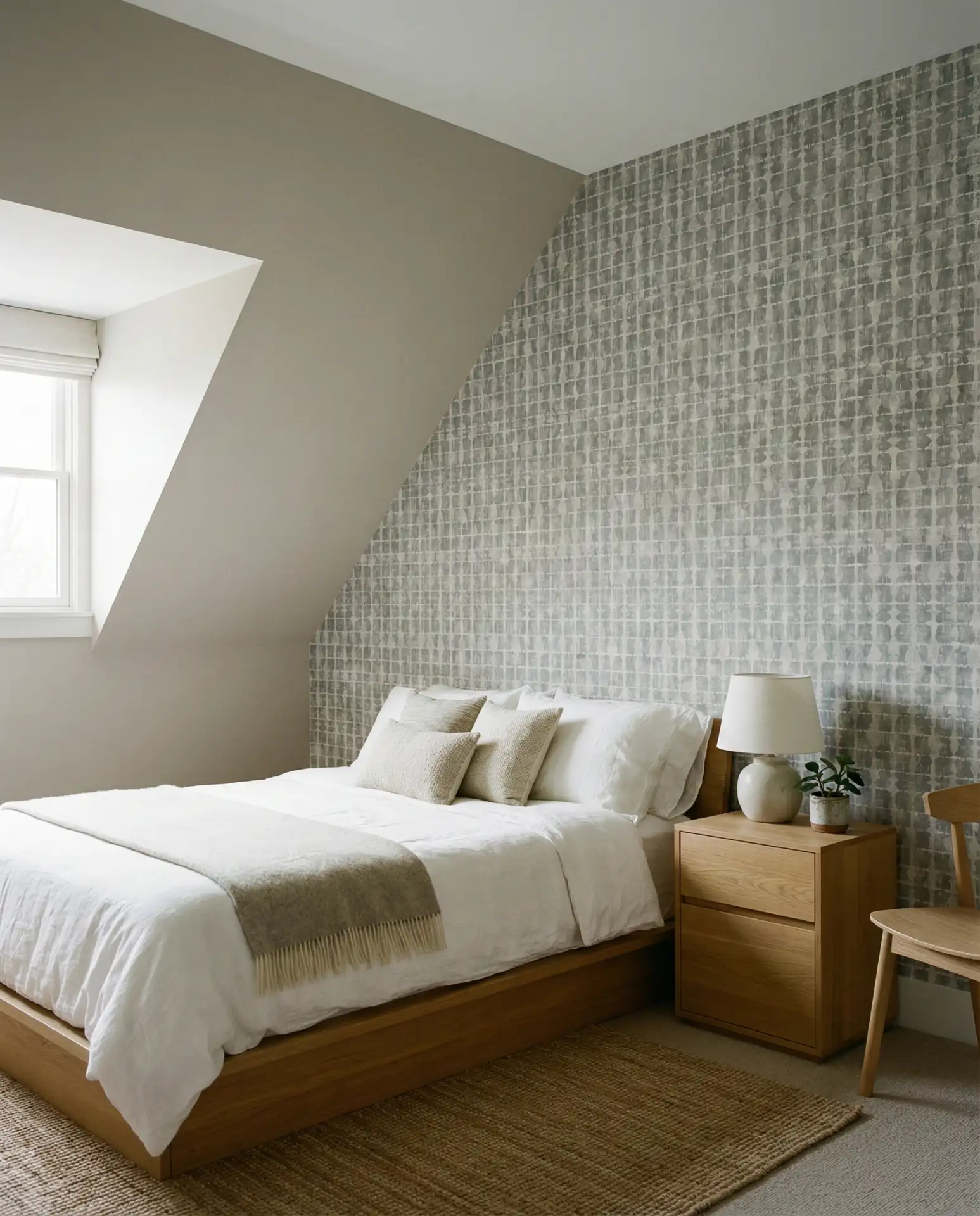
Wallpaper costs vary widely—removable options start around $40 per roll, while high-end designer prints can run $150 or more. For renters or those unsure about long-term commitment, peel-and-stick wallpaper is a practical choice. It installs easily and removes cleanly, making it ideal for experimenting with bold patterns in a small space.
13. Inspo-Driven Scandinavian White Attic
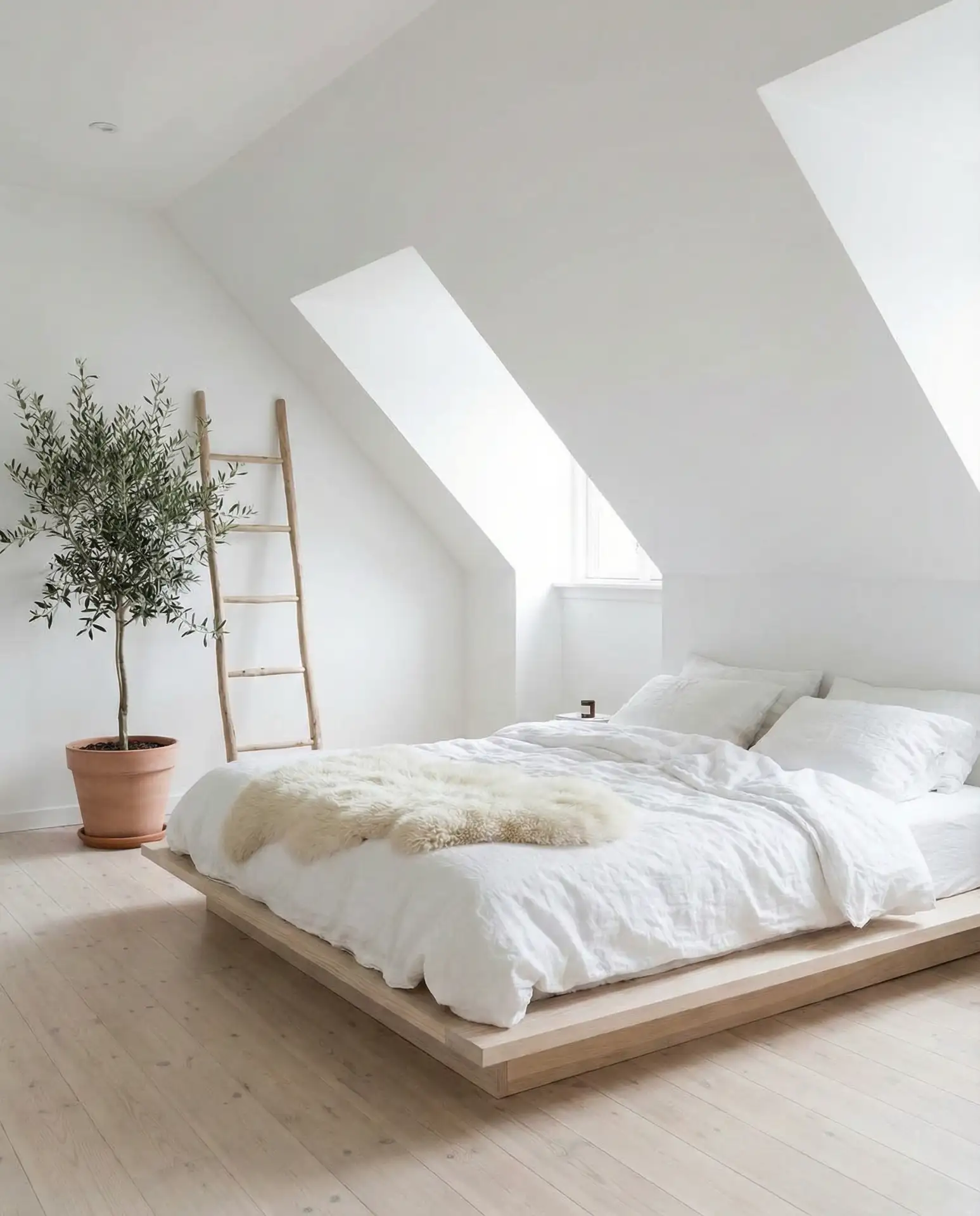
This Pinterest-worthy inspo bedroom is all about Scandinavian simplicity: all-white walls and ceiling, light wood floors, and minimal furniture. The bed is a simple platform style with white linens, and a single sheepskin throw adds texture. A small ladder serves as a towel rack or blanket display, and a potted plant provides the only pop of color. It’s the kind of space that photographs beautifully and feels serene in person.
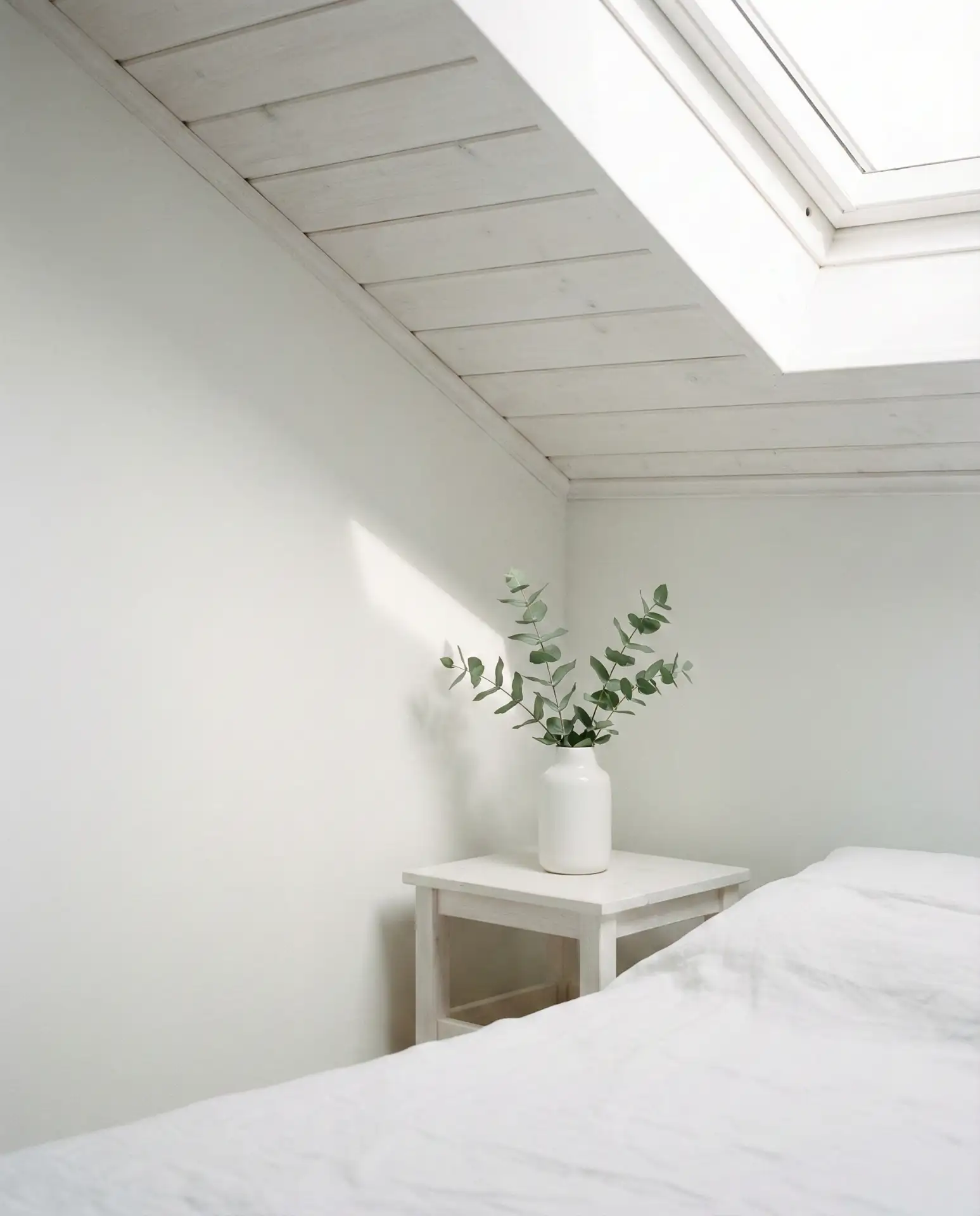
One homeowner in Minneapolis shared that painting everything white in her north-facing attic made it feel twice as bright. The key is layering different whites—warm ivory on walls, crisp white on trim—to avoid the sterile look. This approach also makes the space feel larger, which is critical in attics where floor area is already limited.
14. Industrial Loft-Style Attic Bedroom
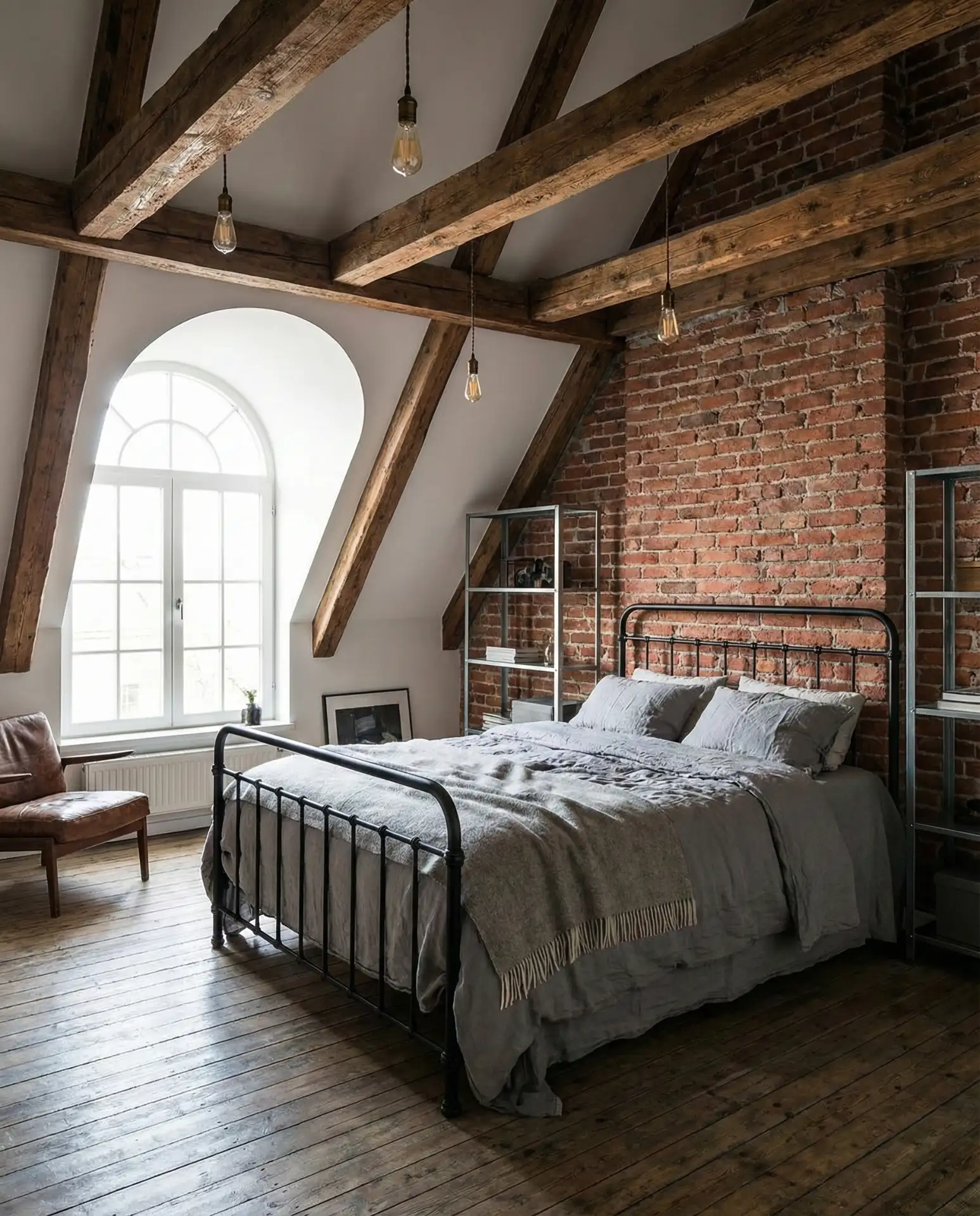
An industrial-inspired attic bedroom combines raw materials like exposed brick, metal bed frames, and Edison bulb lighting. This design’s angled ceiling setup leaves ceiling beams visible and pairs them with concrete-look accent walls and vintage leather furniture. The color palette is intentionally muted—grays, blacks, and warm browns—creating a masculine, urban vibe. It’s a great fit for older homes with character or converted warehouse spaces.
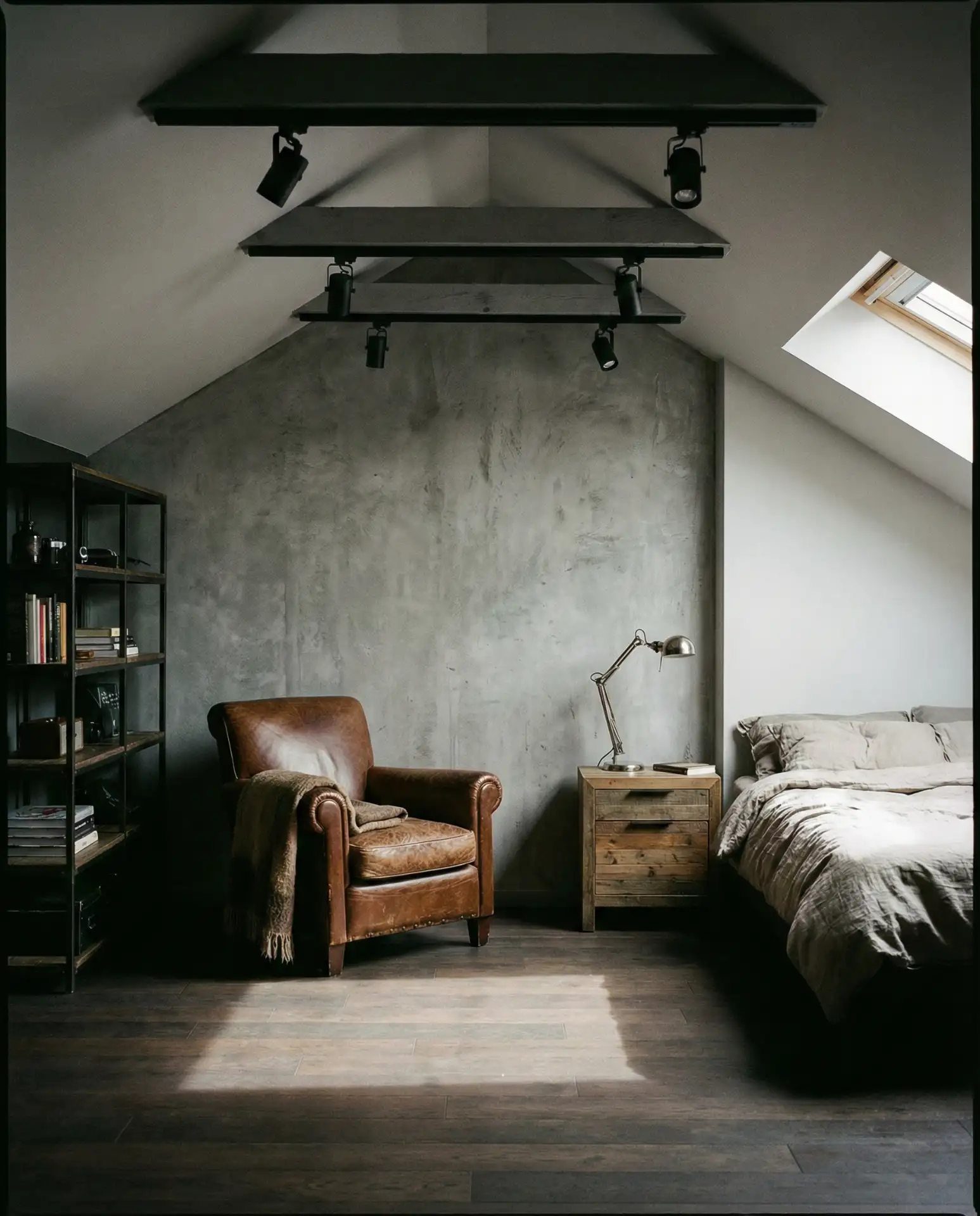
This style is particularly popular in cities like Chicago, Detroit, and Philadelphia, where industrial architecture is part of the local character. Avoid the mistake of going too cold—balance metal and concrete with soft textiles and warm lighting to keep the space inviting rather than stark.
15. Coastal Blue and White Attic
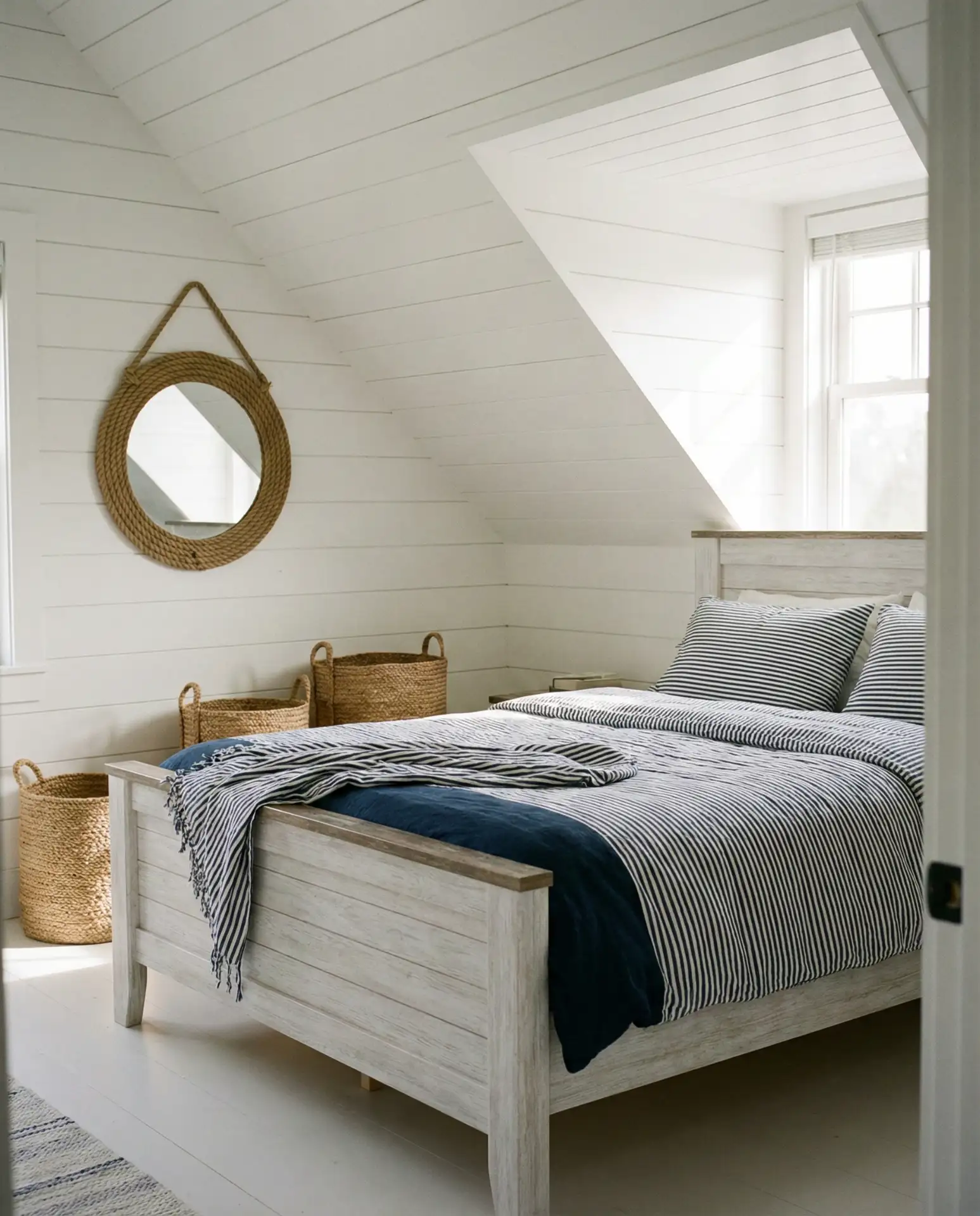
A coastal-inspired attic bedroom uses shades of blue, white shiplap walls, and nautical accents to evoke a breezy seaside feel. This design features a whitewashed wood bed, navy and white striped bedding, and woven baskets for storage. A rope-framed mirror and driftwood decor complete the look. It’s an aesthetic choice that feels vacation-ready year-round, especially appealing in coastal regions or for anyone who dreams of beach living.
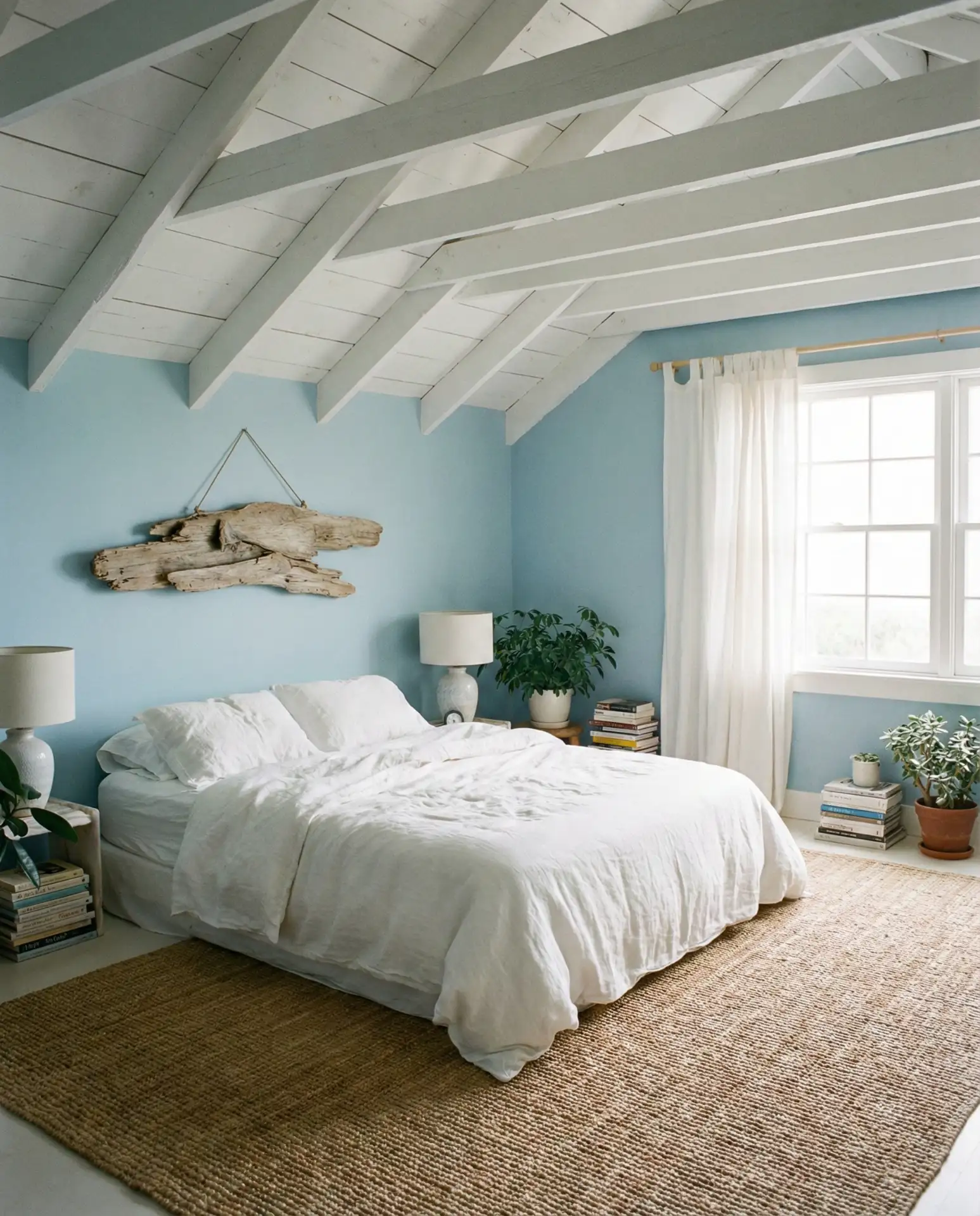
Coastal style works best in homes near water, obviously, but it’s also a favorite in hot climates like Florida and Southern California, where light, airy spaces help manage heat. The blue and white palette is forgiving and timeless, making it easy to update with new accessories as trends shift.
16. Attic Bedroom with Skylight Focus
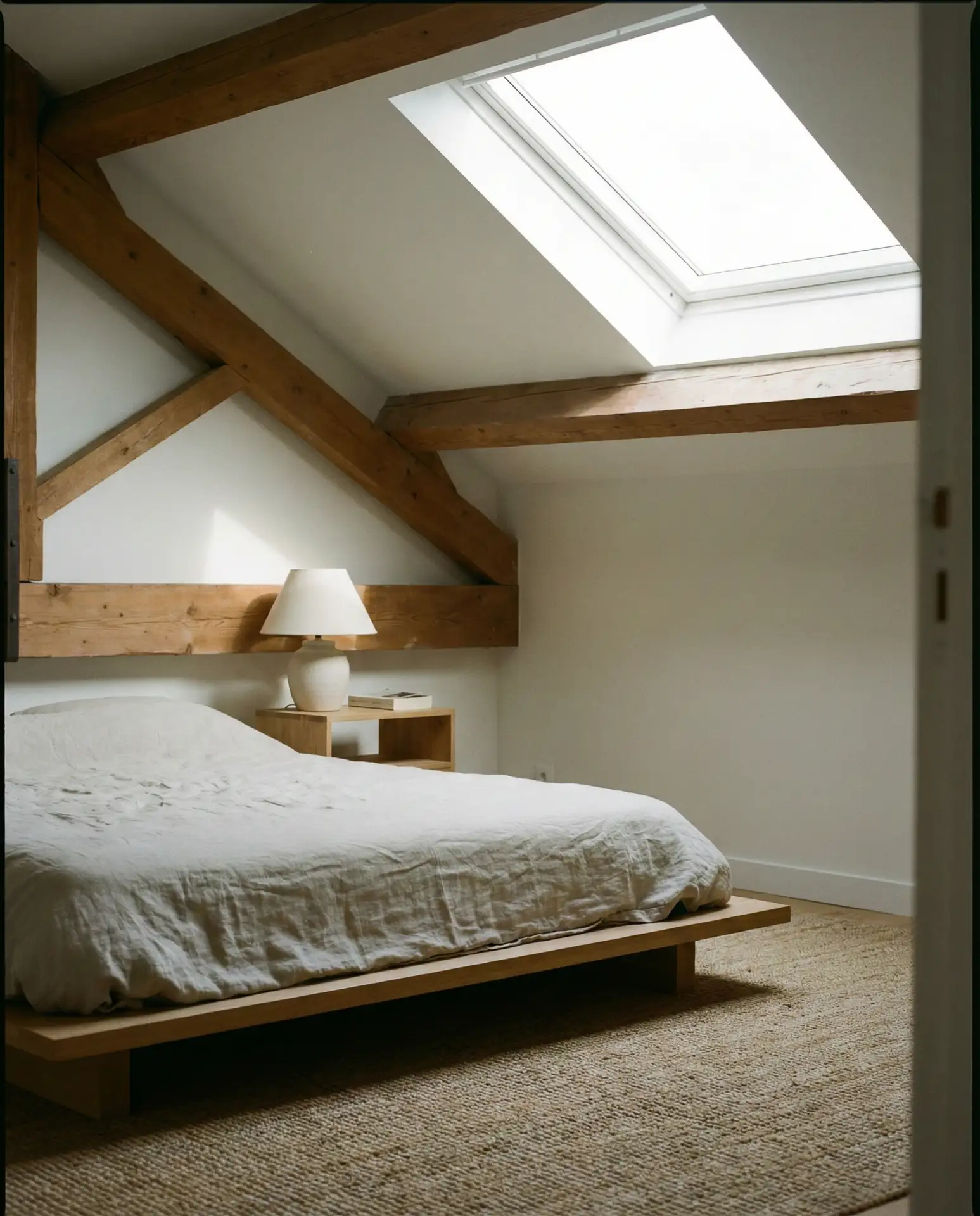
Skylights are game-changers in attic bedrooms, and this design builds the entire layout around that feature. The bed is positioned directly beneath a large skylight, allowing natural light to flood the space and offering a view of the stars at night. Sheer blinds provide privacy and light control. The rest of the room is kept minimal—white walls, simple furniture, and soft textiles—so the skylight remains the star of the show.
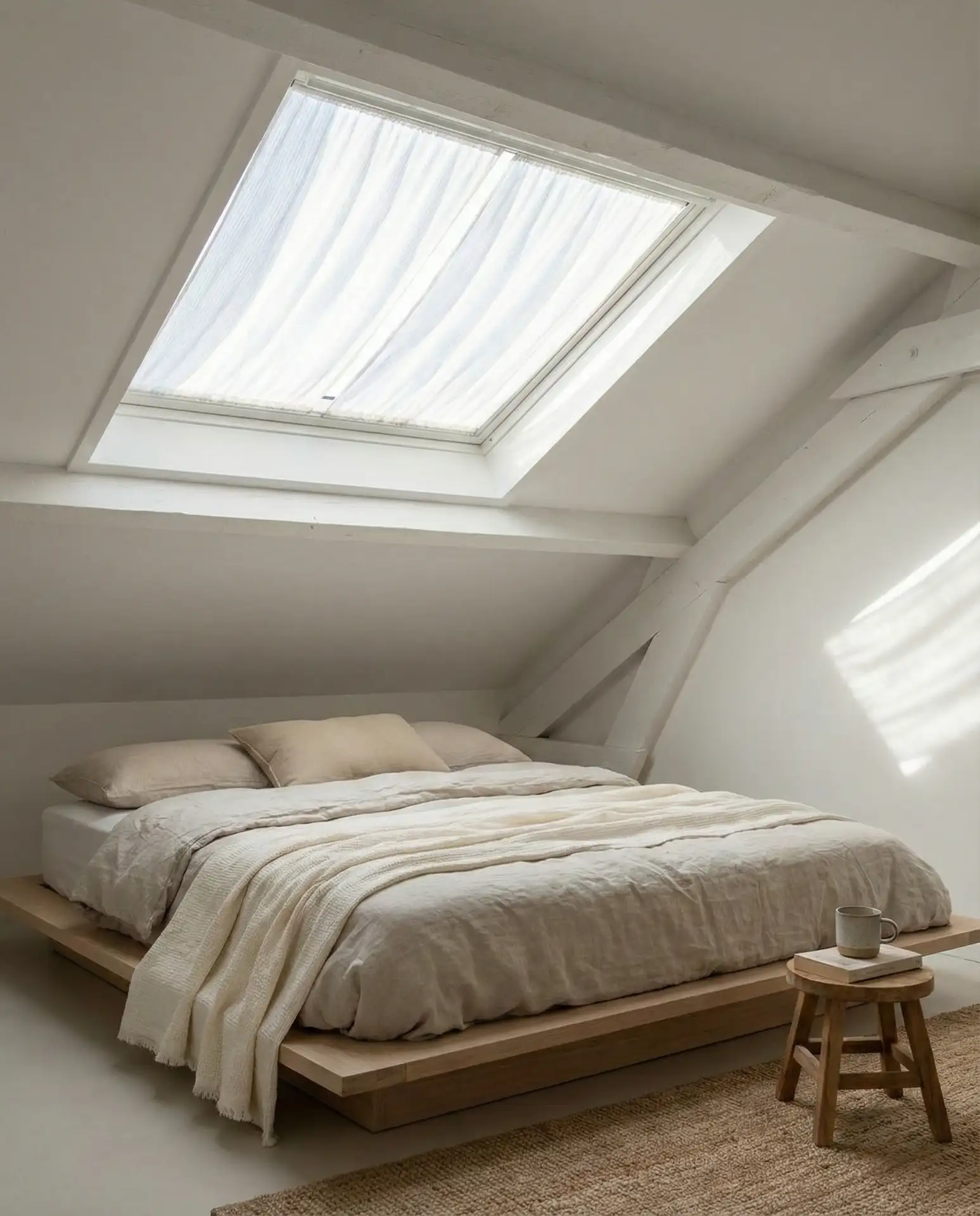
Installing a skylight typically costs $1,500 to $3,500, but the improvement in natural light and ventilation is often worth it. Many homeowners report that adding a skylight made their attic bedroom feel like a completely different space—less cave-like and far more livable. It’s especially valuable in attics with limited wall windows.
17. Attic Reading Nook Bedroom
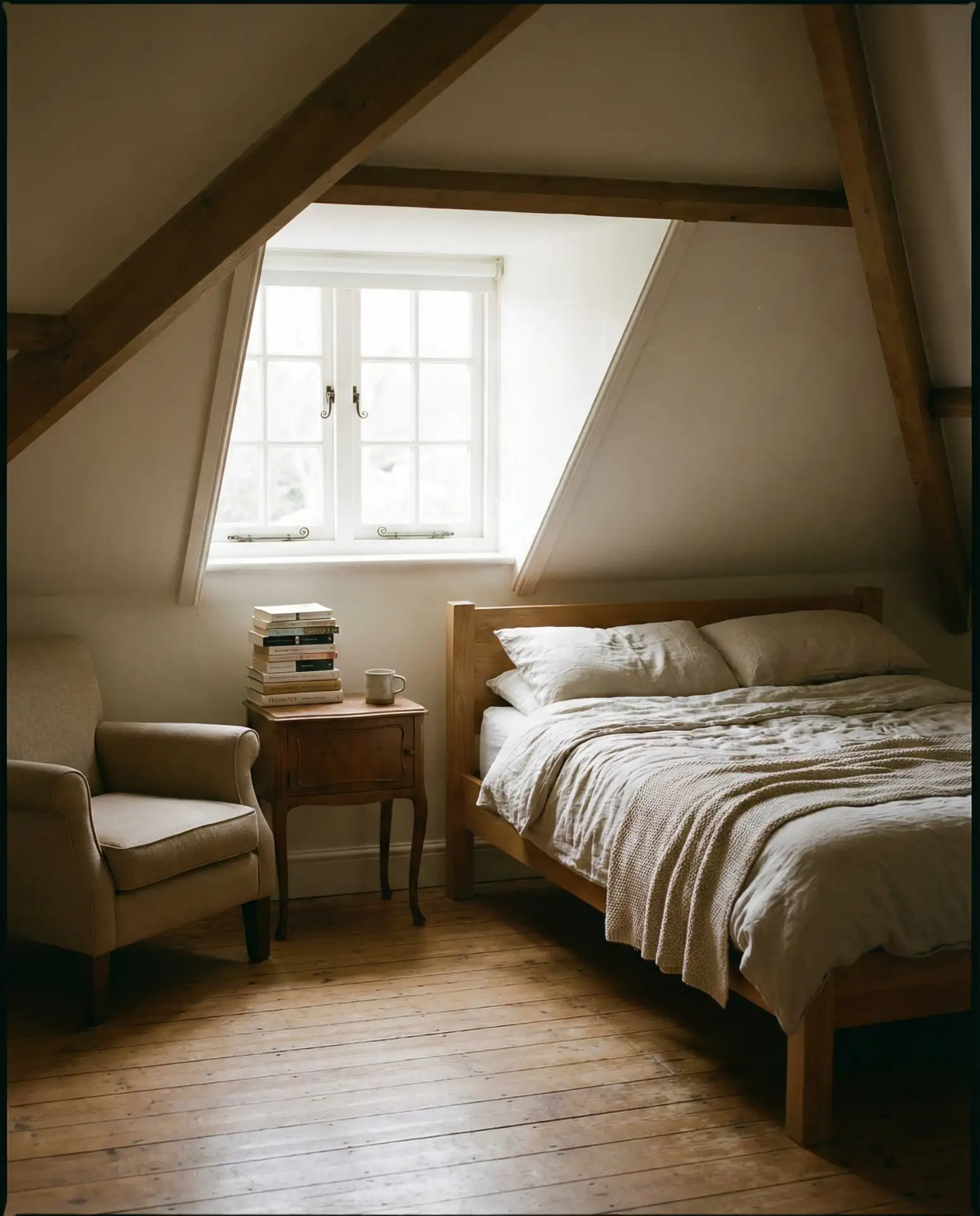
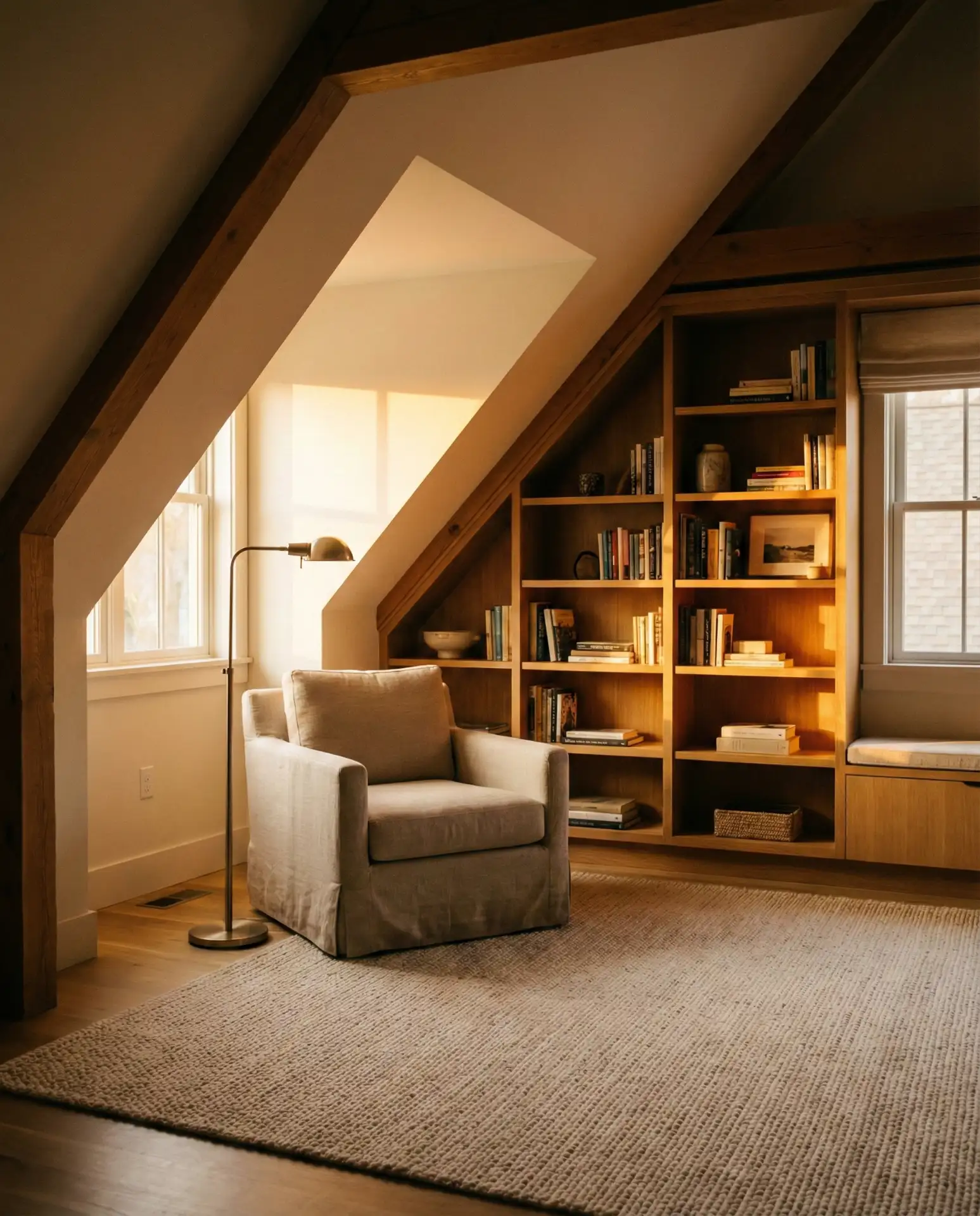
This attic bedroom incorporates a dedicated reading nook tucked into a dormer or under the eaves. A built-in bench with cushions and pillows creates a perfect spot for curling up with a book, and floating shelves above hold a small library. The main sleeping area is simple and uncluttered, allowing the reading nook to be the room’s focal point. It’s an ideal setup for book lovers who want a quiet retreat.
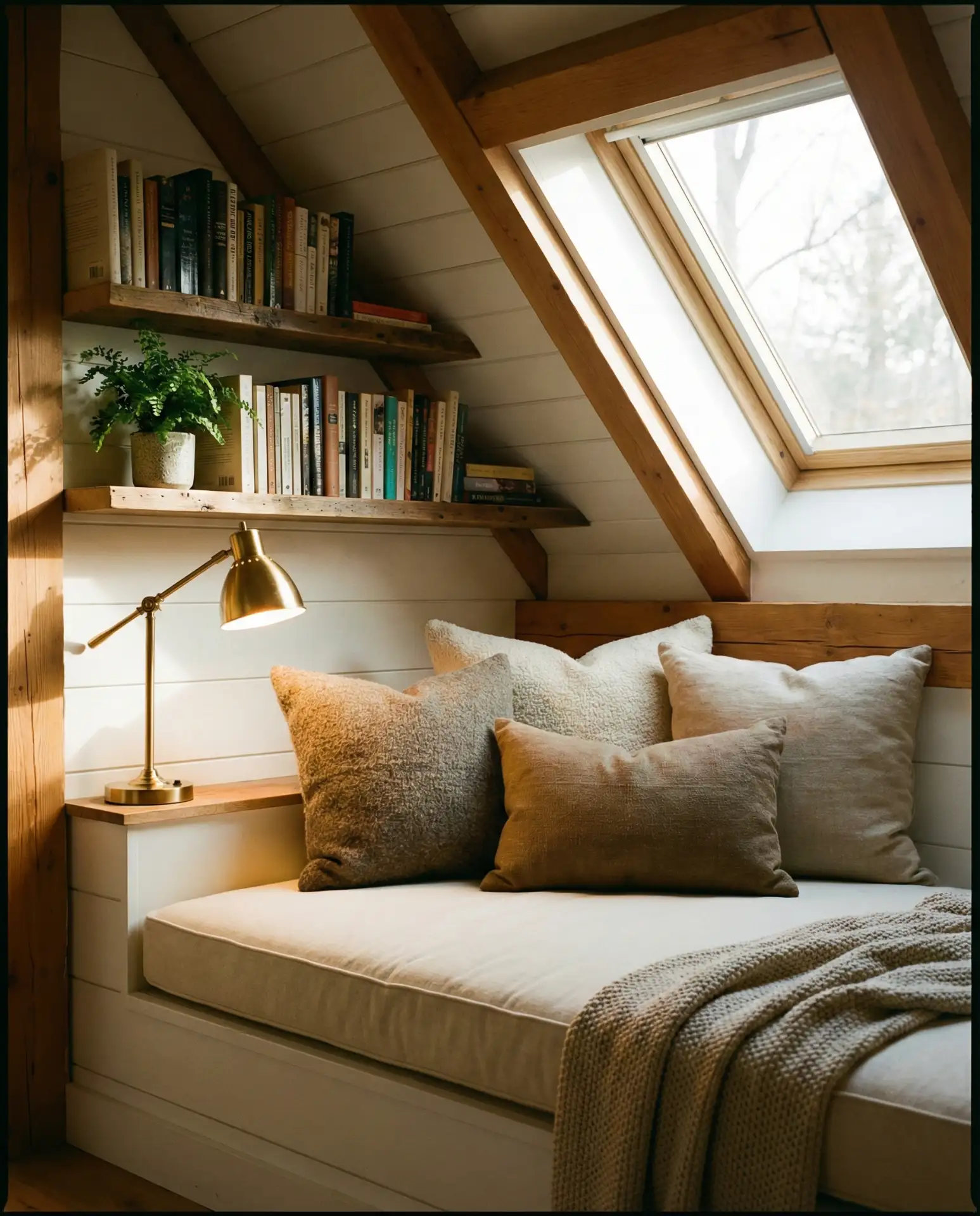
Many attic conversions waste the low-ceiling areas along the walls, but building in a reading nook makes brilliant use of that space. It adds function without requiring much square footage and creates a sense of intentionality that elevates the whole room.
18. Eclectic Vintage Attic Bedroom
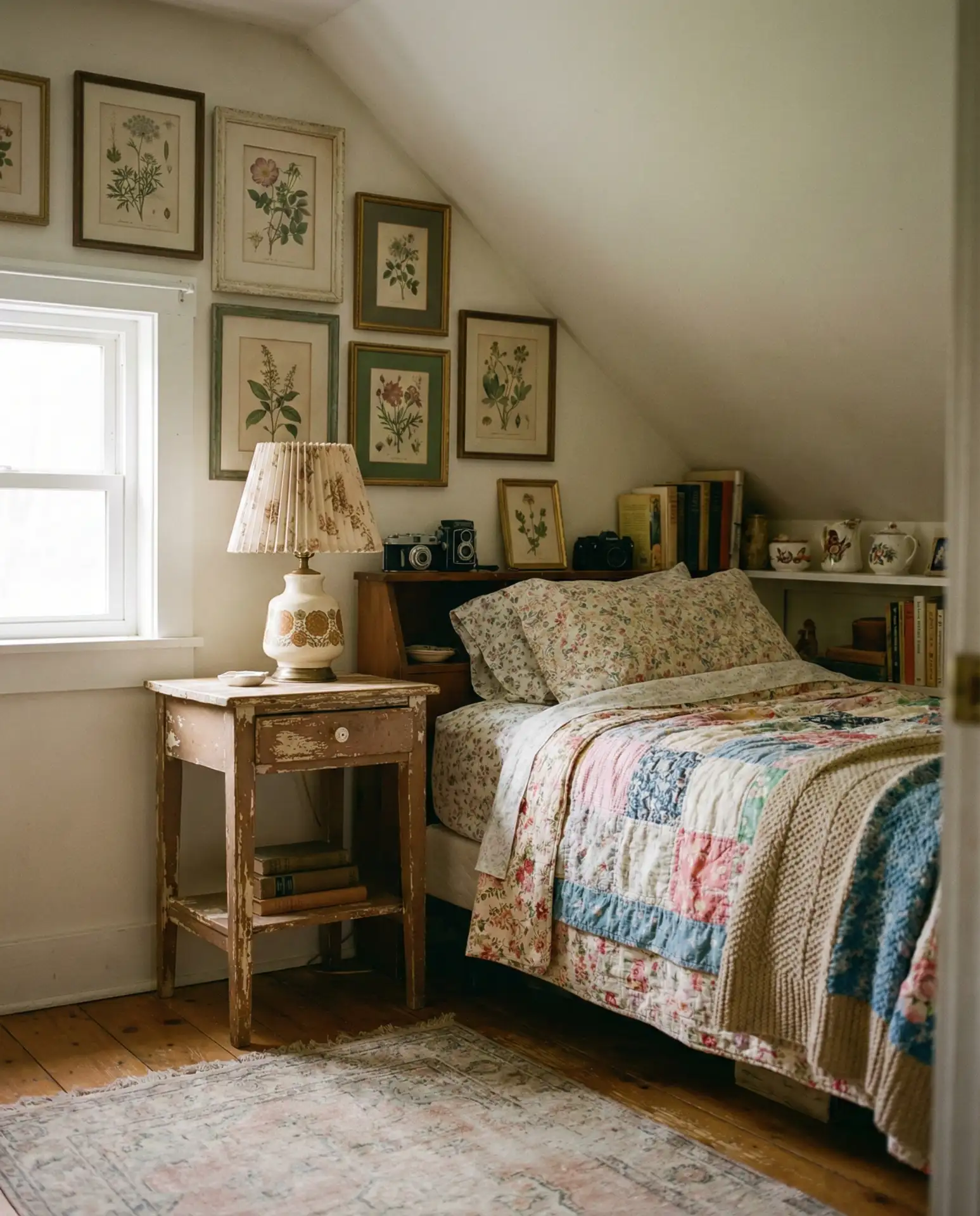
An eclectic vintage attic bedroom mixes furniture from different eras—a mid-century dresser, a Victorian-style bed frame, and modern lighting all coexist harmoniously. The key is a cohesive color palette, like muted jewel tones or earthy neutrals, that ties the mismatched pieces together. Vintage rugs, antique mirrors, and thrifted decor add personality without feeling cluttered. It’s perfect for those who love collecting unique finds and want a space that tells a story.
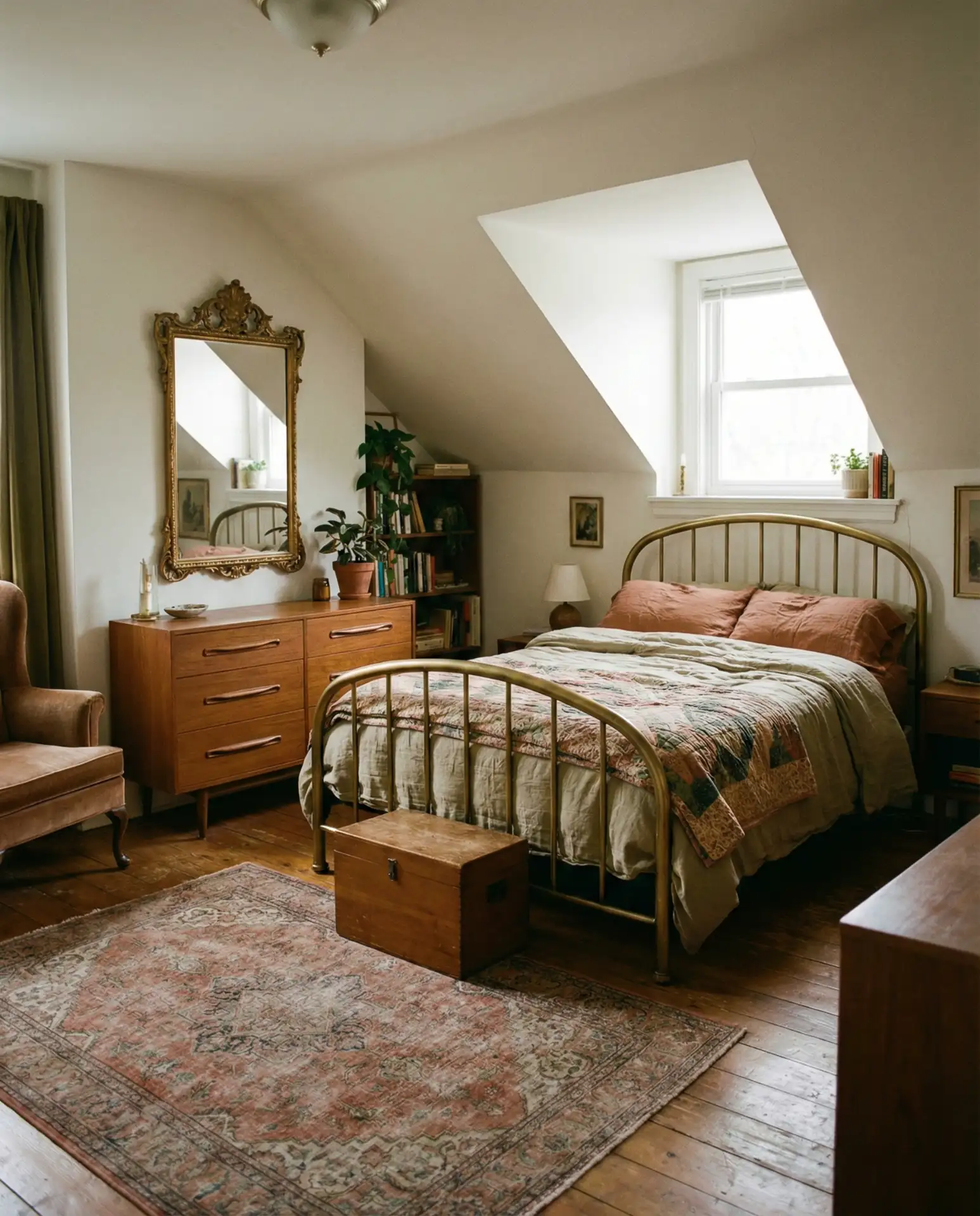
Thrifting and vintage shopping have become increasingly popular budget-friendly strategies in 2026. Homeowners report spending 30-50% less furnishing a room with secondhand pieces compared to buying everything new, and the result often has far more character. The challenge is editing—knowing when to stop adding so the space doesn’t tip into chaos.
19. Japanese-Inspired Minimalist Attic
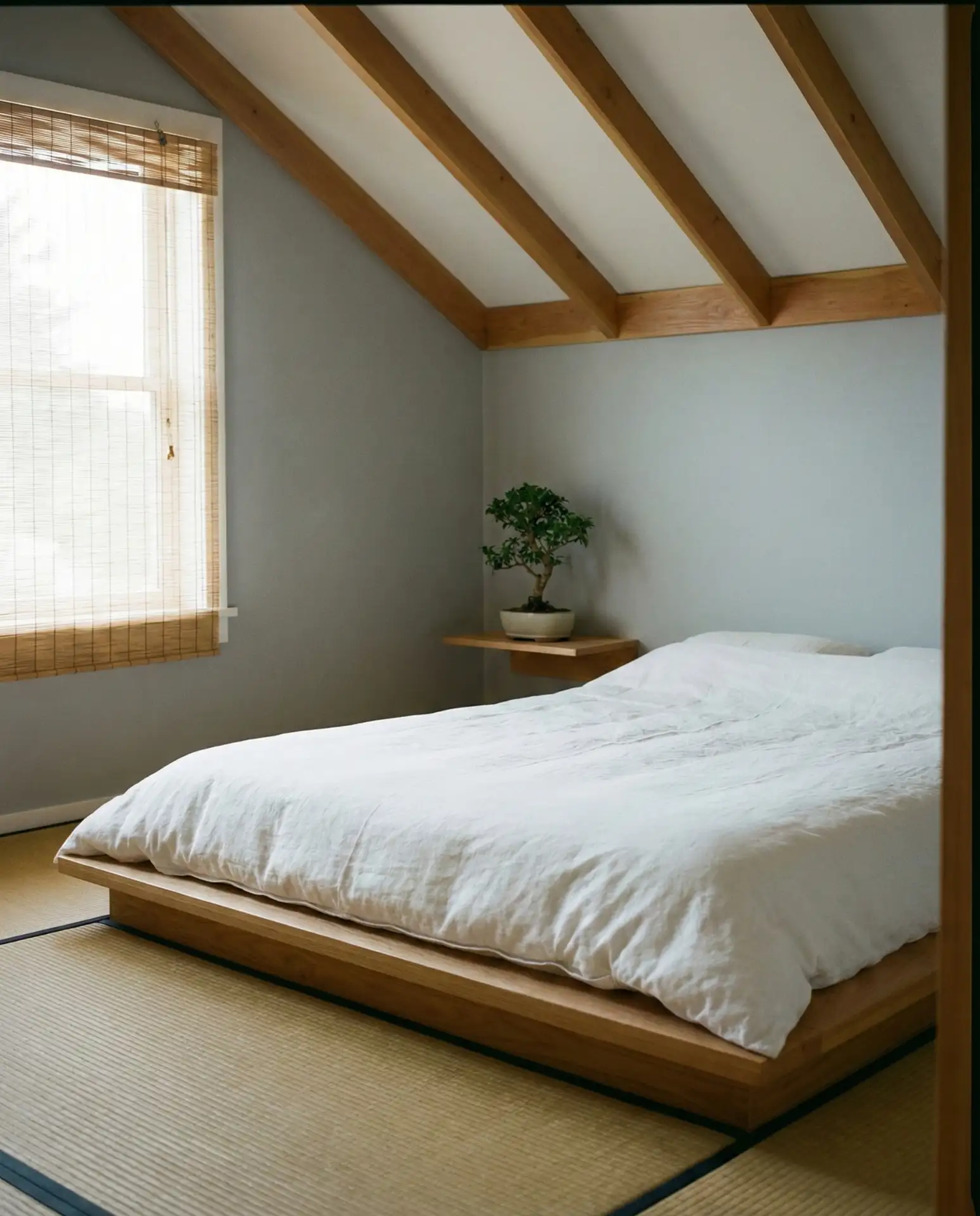
A Japanese-inspired attic bedroom emphasizes clean lines, natural materials, and a neutral palette. This design features a low platform bed, bamboo blinds, and a small bonsai or orchid on a simple wooden shelf. The sloped ceiling is painted in a soft gray, and tatami-style mats or a jute rug cover the floor. The entire space feels meditative and uncluttered, perfect for those seeking calm and simplicity.
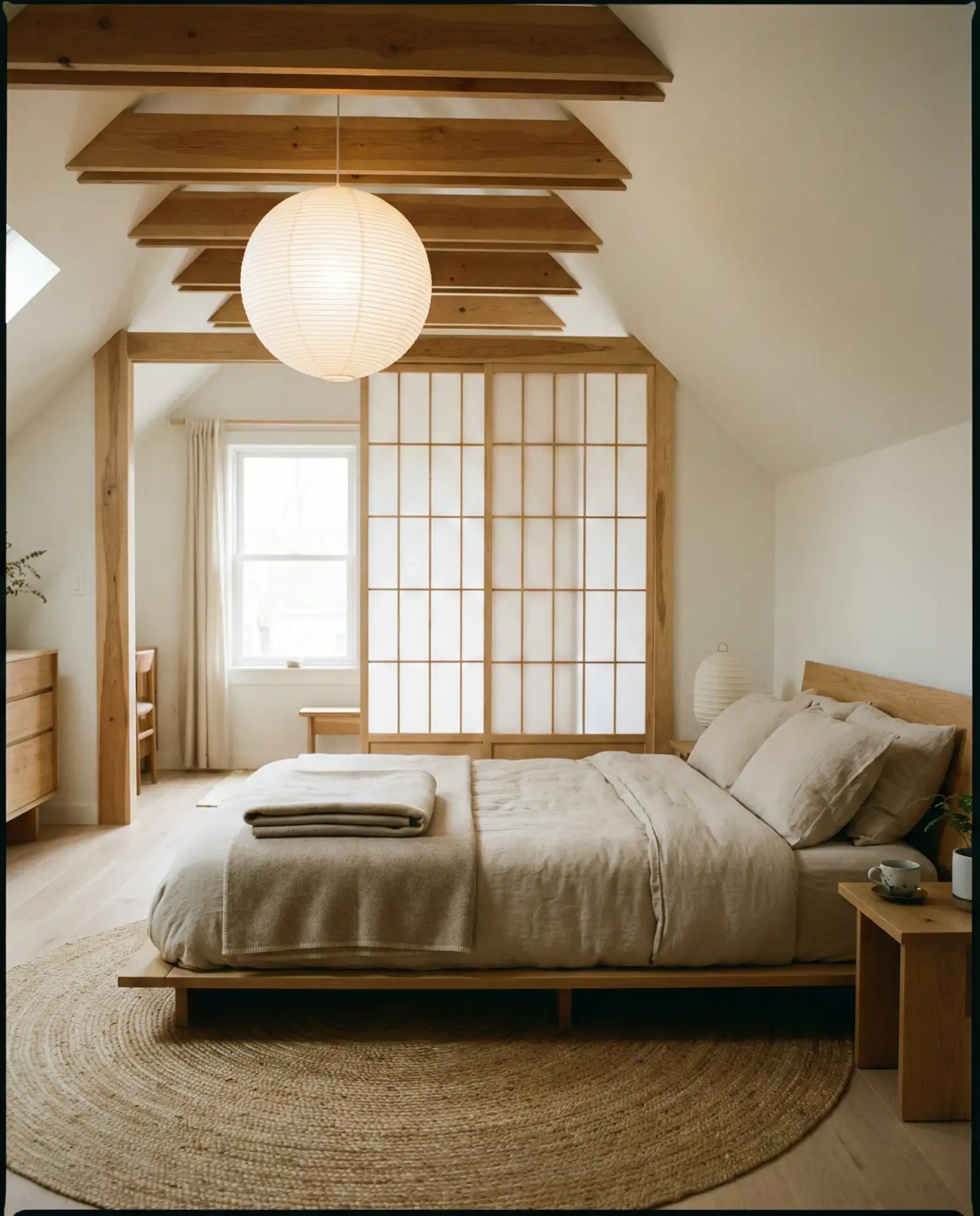
This style works particularly well in smaller attic spaces where clutter would be overwhelming. The low furniture keeps sightlines open, and the focus on natural materials creates warmth without visual noise. It’s also a practical choice for those who find traditional Western bedrooms too busy or stimulating.
20. Bold Accent Wall Attic Bedroom
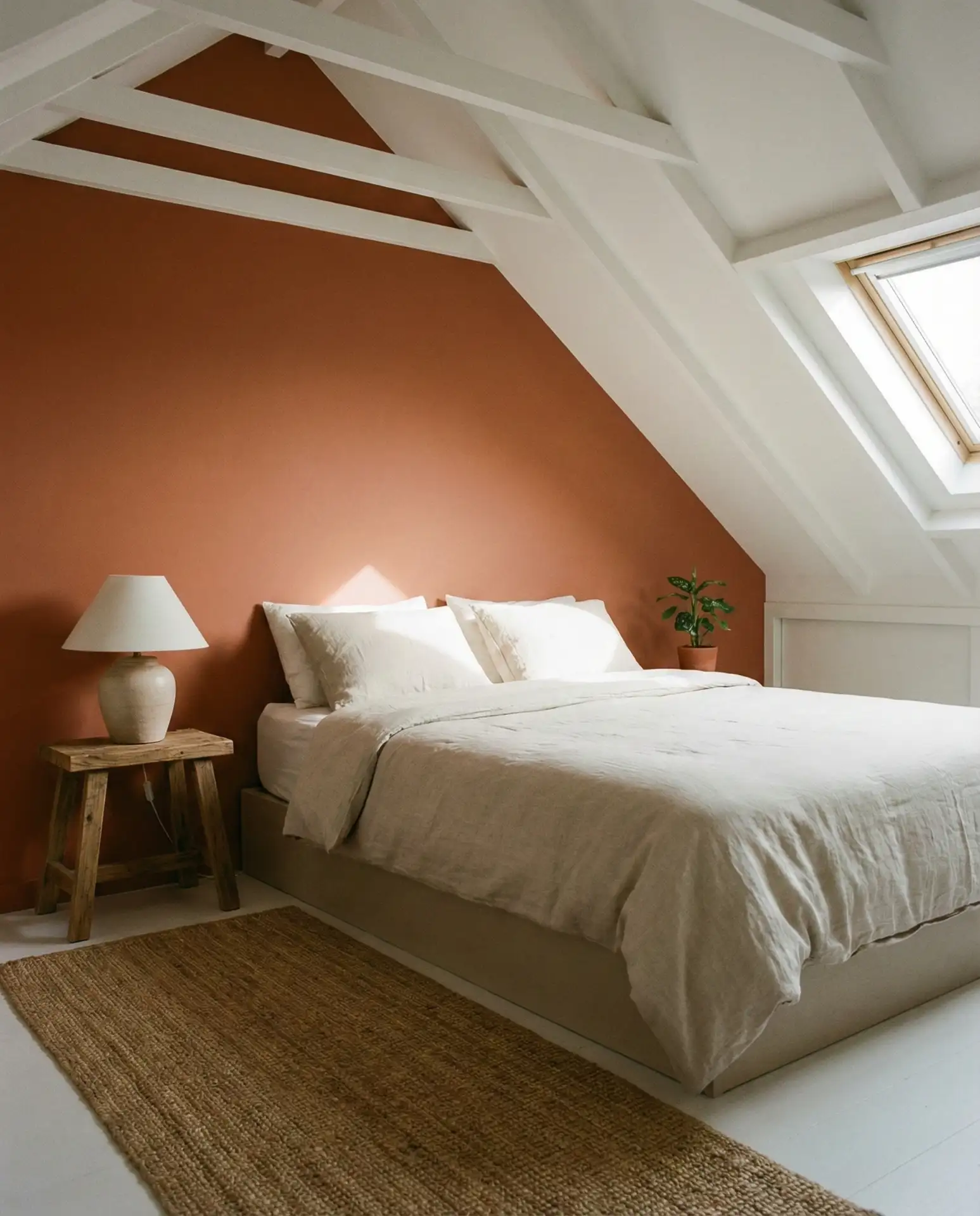
Painting one wall in a bold color—deep emerald, terracotta, or charcoal—can give an attic bedroom instant impact. This design features a rich green accent wall behind the bed, while the remaining walls and ceiling stay white. Simple white bedding and natural wood furniture let the color take center stage. It’s a budget-friendly way to add drama and personality without committing to a full room makeover.
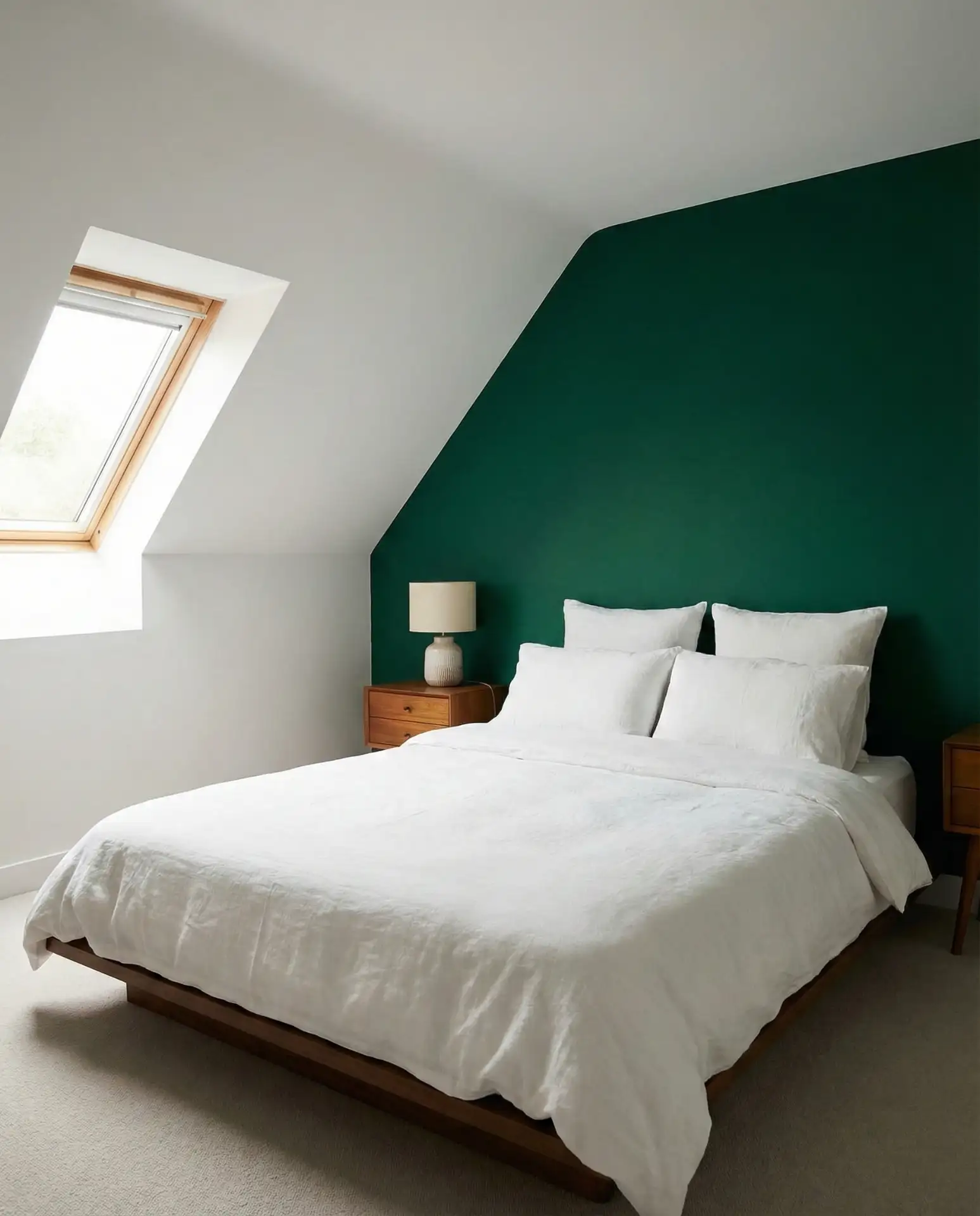
Practical insight: if you’re nervous about bold color, start with the wall opposite your bed—that way it’s the first thing you see when you enter, but it won’t dominate your view while you’re lying down. This small psychological shift makes the color feel less overwhelming while still delivering visual impact.
21. Multi-Functional Attic Bedroom Office
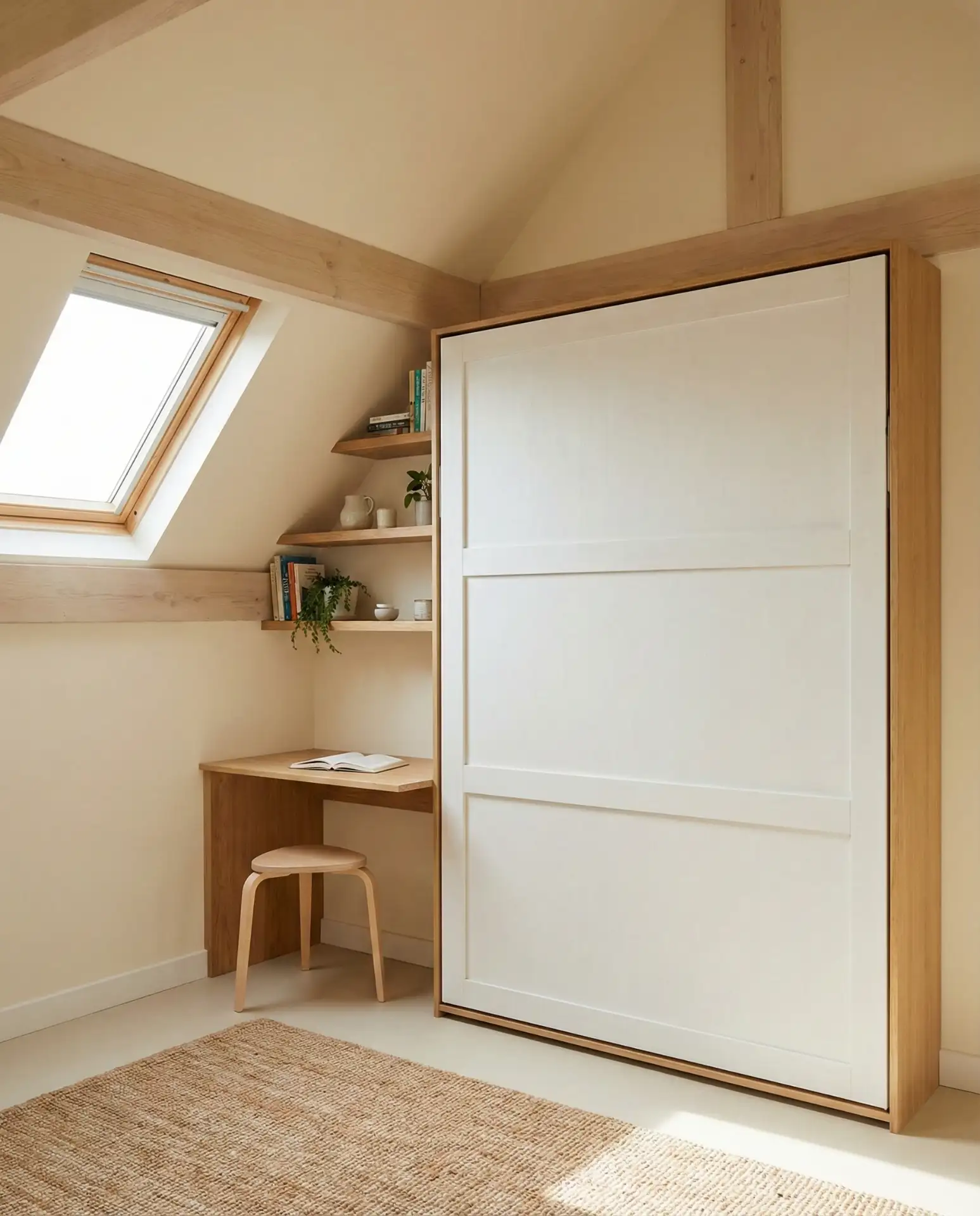
Many homeowners use attic bedrooms as dual-purpose spaces—combining a guest room with a home office. This layout features a Murphy bed or daybed that doubles as seating, paired with a compact desk under a dormer window. Floating shelves provide storage for both office supplies and guest essentials. The design keeps the room flexible and avoids the wasted space that comes with a traditional guest room that’s rarely used.
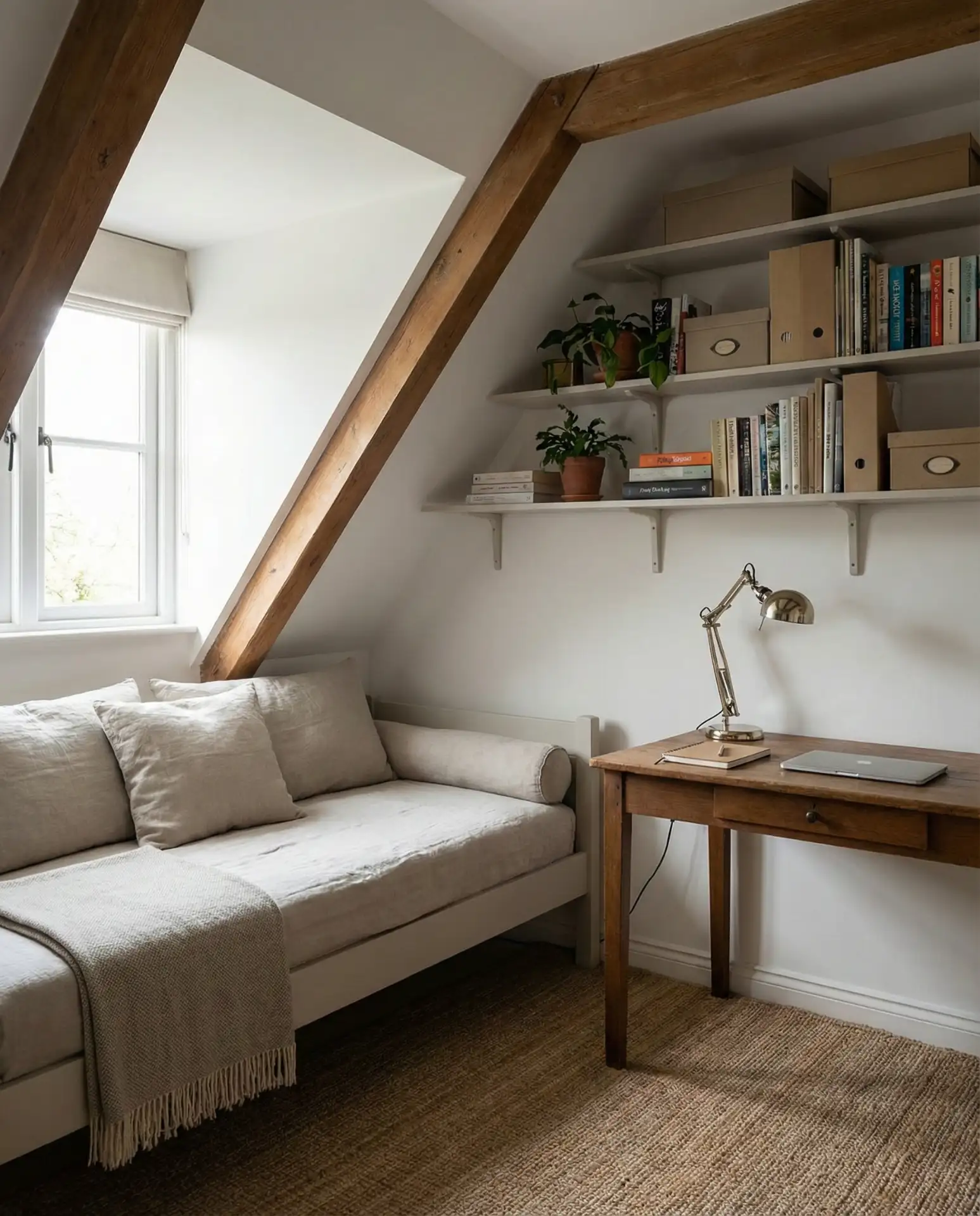
With remote work still prevalent in 2026, these multi-use attic spaces have become increasingly common, especially in suburban and rural areas where families have more flexibility to reimagine their homes. The key is furniture that converts or folds away—invest in quality pieces that can handle frequent use.
22. Attic Bedroom with Exposed Brick Feature Wall
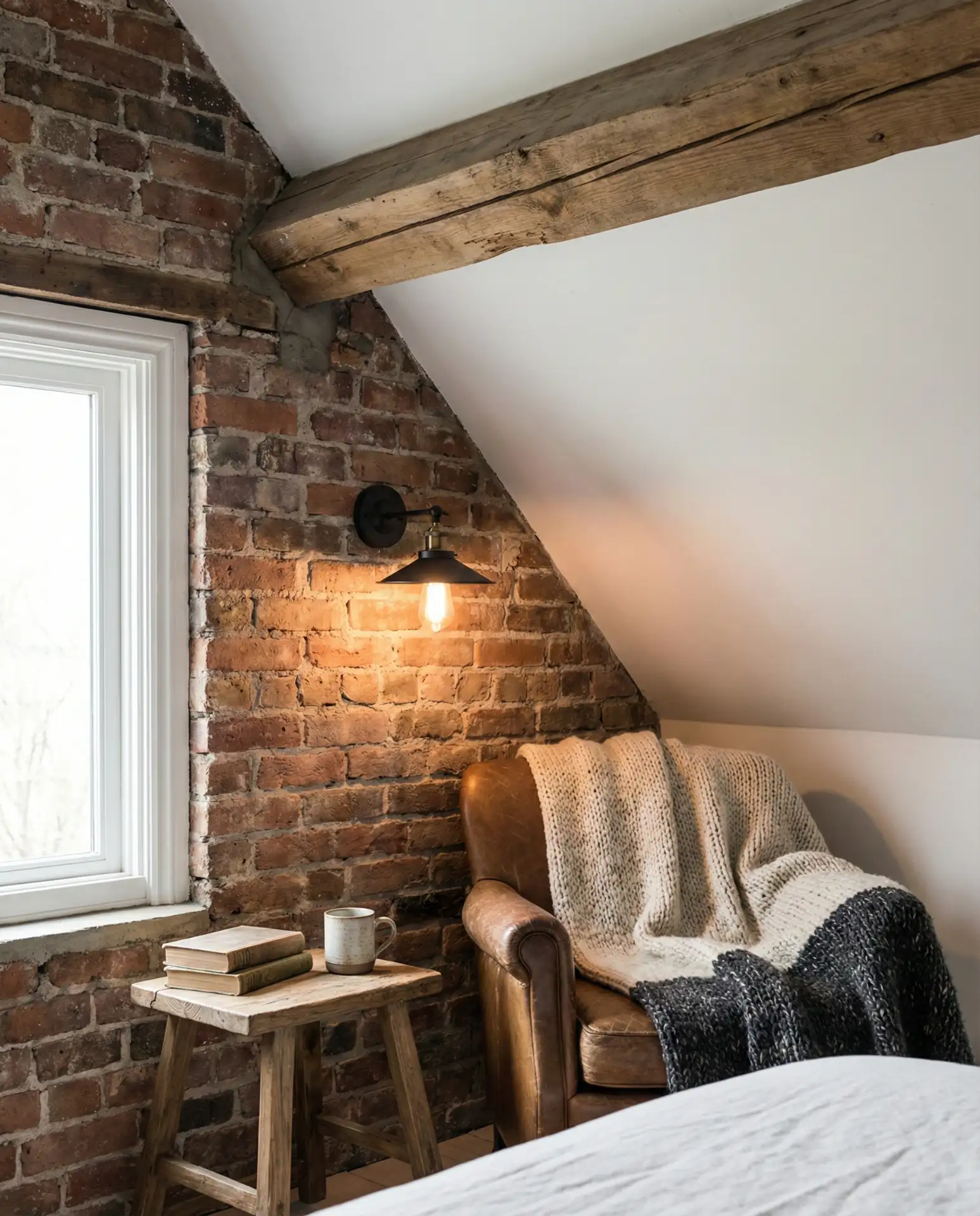
If your attic has exposed brick, highlight it rather than covering it up. This bedroom showcases a raw brick accent wall paired with soft white walls and cozy textiles. The contrast between the rough brick and smooth linens creates visual interest, and vintage-style Edison bulbs add warmth. It’s a look that works beautifully in older homes and adds instant character without any additional work—just leave the brick as-is and build the rest of the room around it.
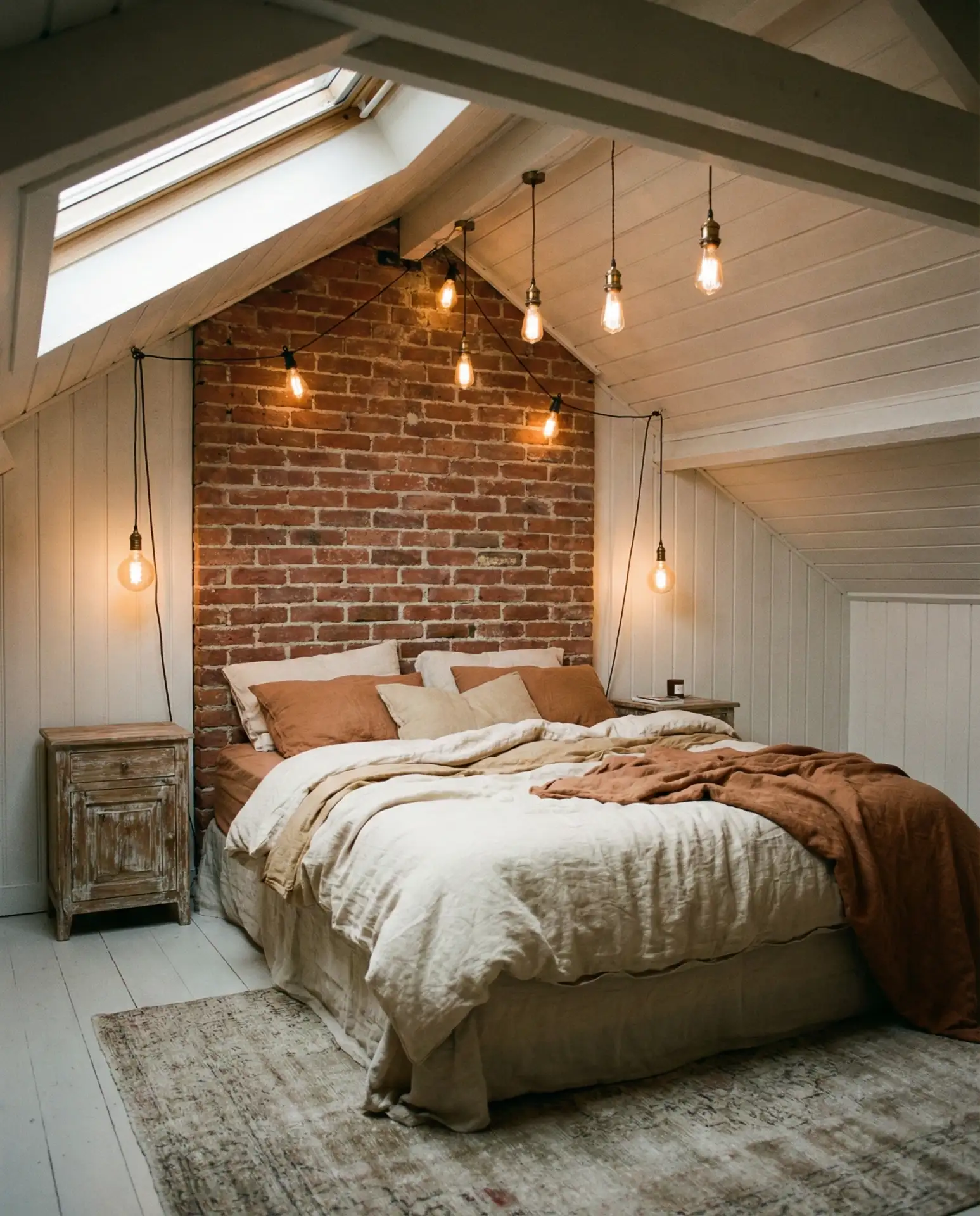
Exposed brick is especially common in row houses and older homes in cities like Boston, Baltimore, and Brooklyn. One homeowner noted that sealing the brick with a clear matte sealer prevented dust while preserving the texture—a small step that makes the feature far more livable without sacrificing the aesthetic.
Conclusion
Attic bedrooms offer some of the most exciting design opportunities in a home, whether you’re working with a cozy nook or a spacious master suite. From creative closets and clever layouts to bold wallpaper and calming green palettes, there’s a solution for every style and challenge. We’d love to hear what you’re planning—drop a comment below with your favorite idea from this list or share a photo of your own attic transformation. Let’s keep the inspiration flowing.