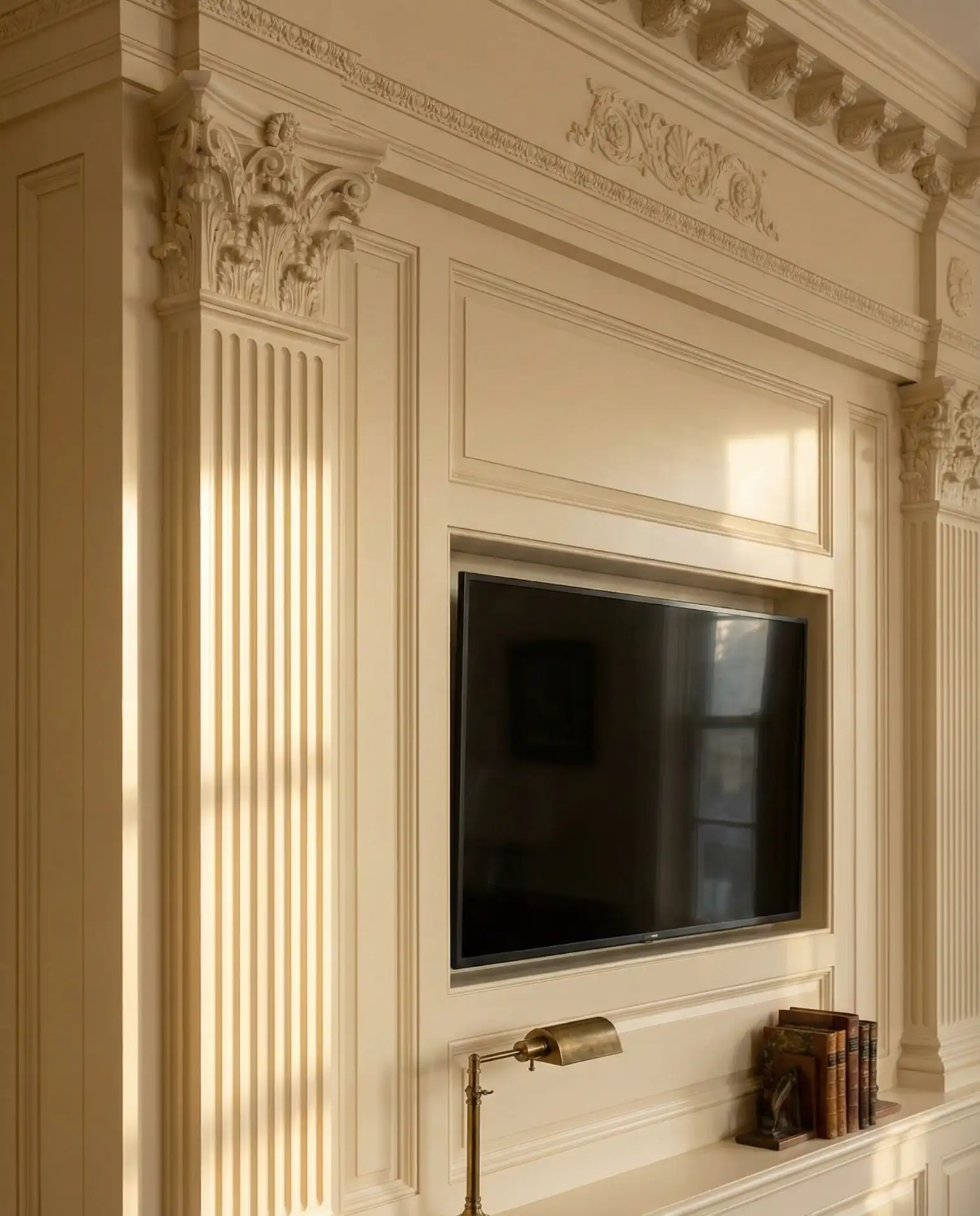
If your Pinterest board has been filling up with living room saves lately, you’re not alone. The way Americans are rethinking their main gathering spaces in 2026 is genuinely exciting—it’s less about following trends and more about designing rooms that actually feel like you. From moody, paint-drenched walls to breezy coastal setups and cozy Japandi corners, there’s a version of the contemporary living room for every lifestyle and budget. In this article, we’re walking through of the most inspiring directions the contemporary living room is heading this year, so you can steal ideas, mix styles, and build a space that feels both current and completely personal.
1. Classic Neutral Foundation with Warm Layers
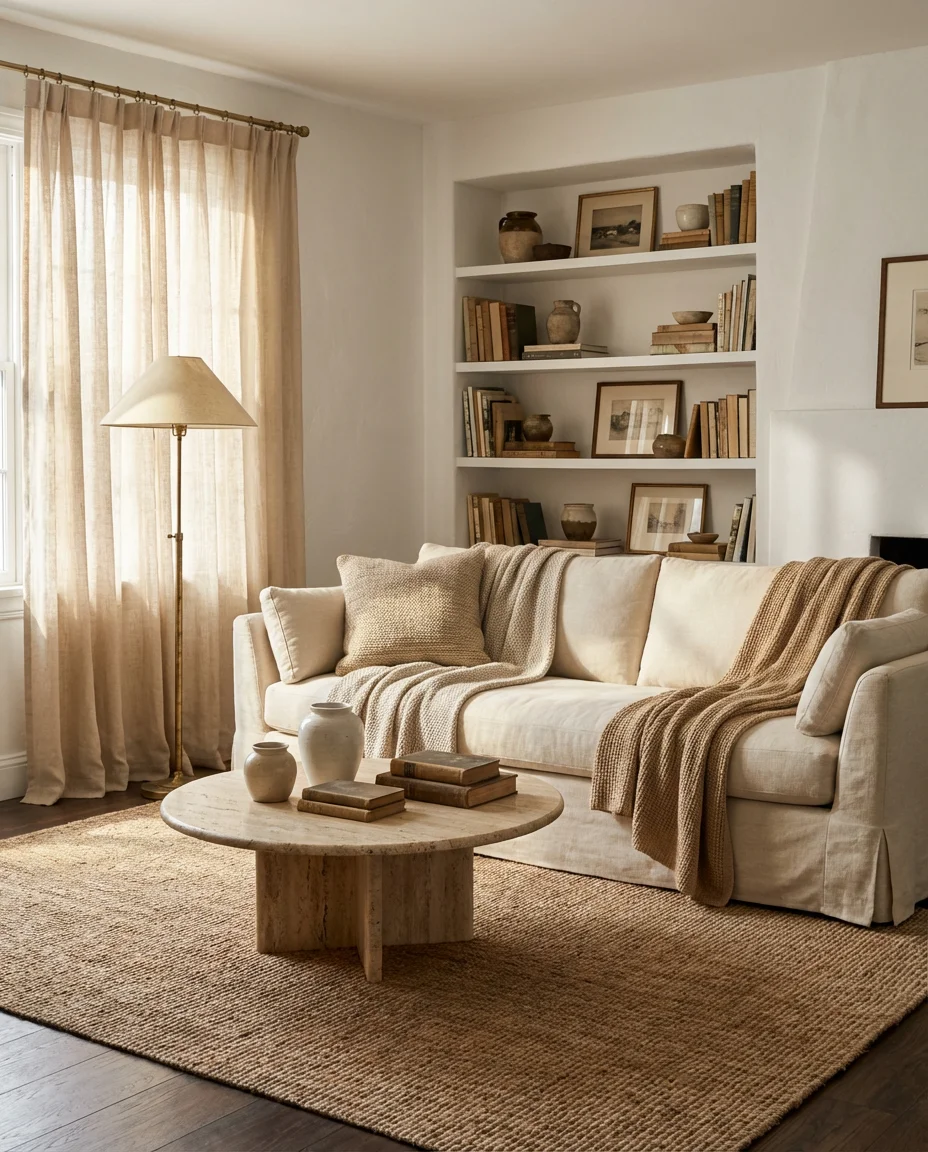
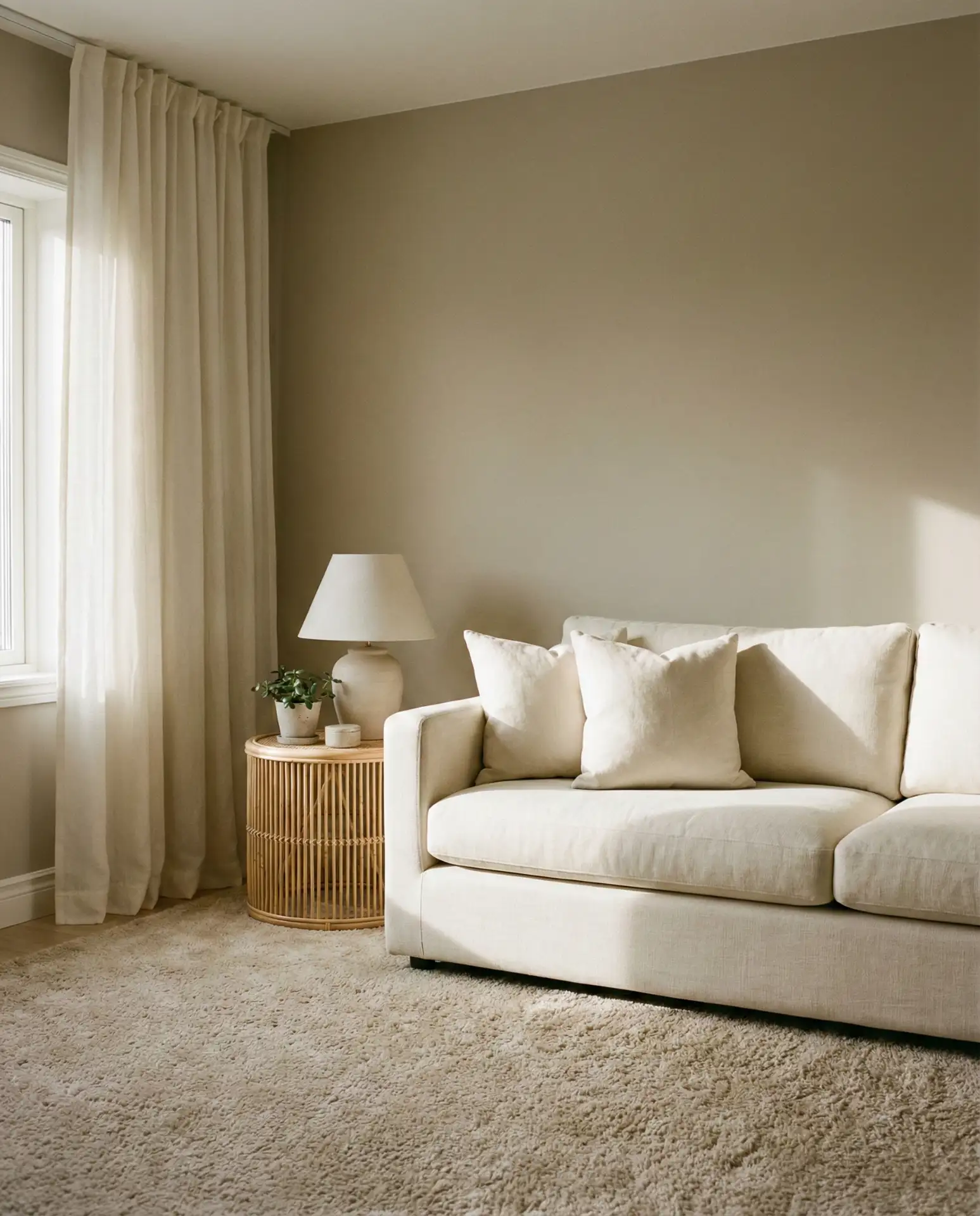
There’s a reason the classic neutral living room never really goes out of style—it’s the ultimate blank canvas that somehow always manages to feel collected and intentional. In 2026, this look leans into creamy off-whites, warm taupes, and linen textures layered with caramel leather, aged brass, and handwoven throws. The neutral palette does the quiet work of making a space feel larger, calmer, and more cohesive, while the layering is what gives it soul. Think of a slouchy sofa in oat bouclé, a jute rug underfoot, and a stack of art books on a travertine coffee table.
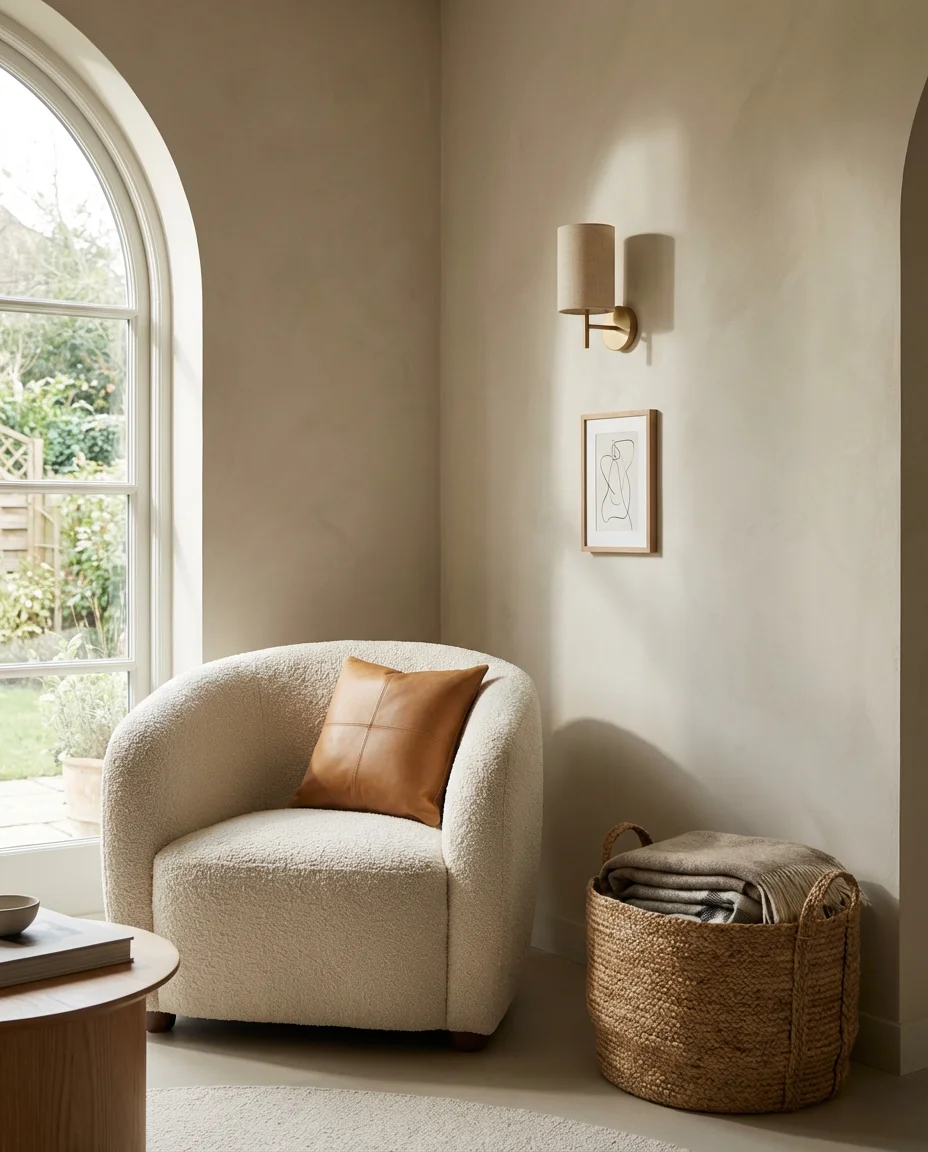
This look works particularly well in older American homes—think Craftsmen in the Pacific Northwest or brownstones on the East Coast—where the architecture already has warmth built in. The biggest mistake people make with neutral rooms is going too cool or too flat. Mixing warm whites with natural wood tones and tactile fabrics is what keeps the space from reading sterile. If you’re starting fresh, a creamy Benjamin Moore White Dove on the walls paired with a warm-toned wood floor is a nearly foolproof foundation.
2. Moody Dark Living Room with Dramatic Impact
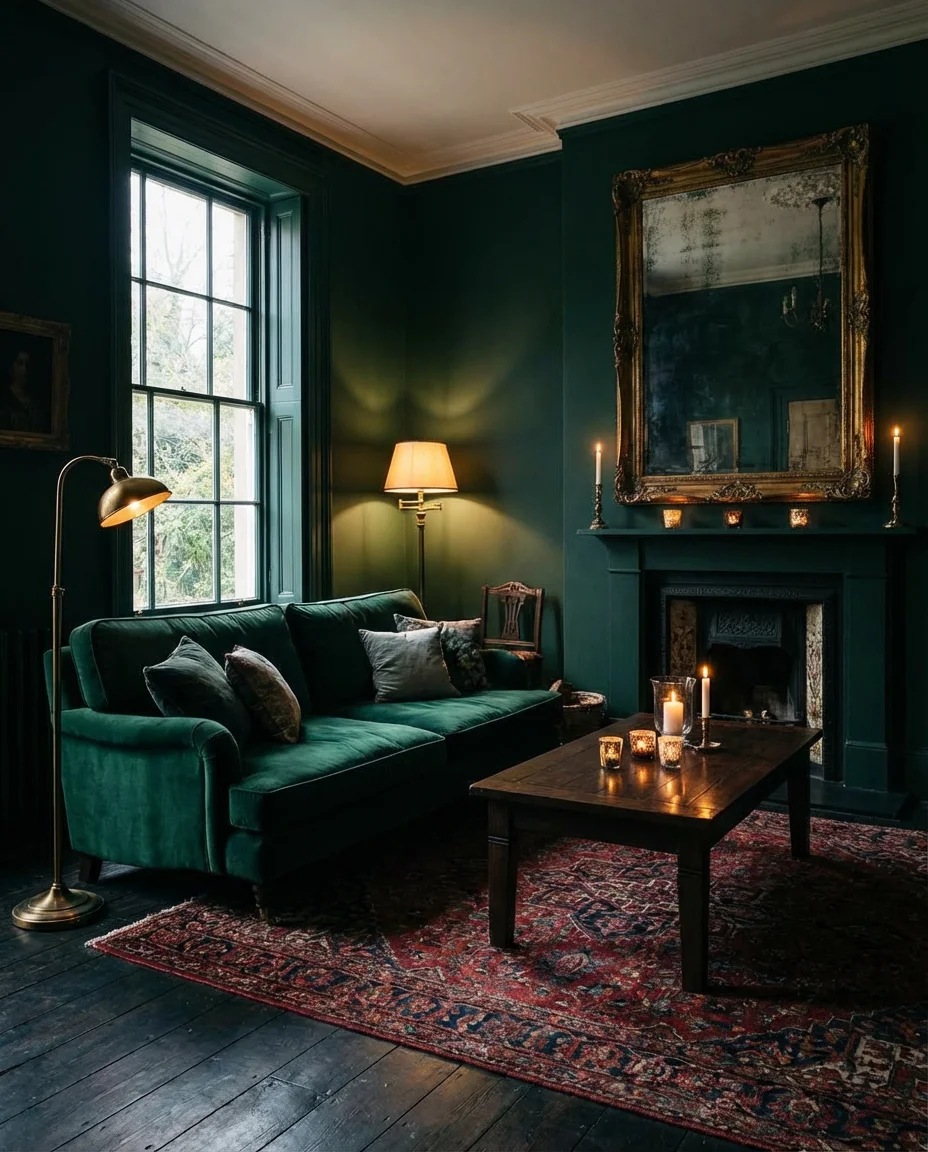
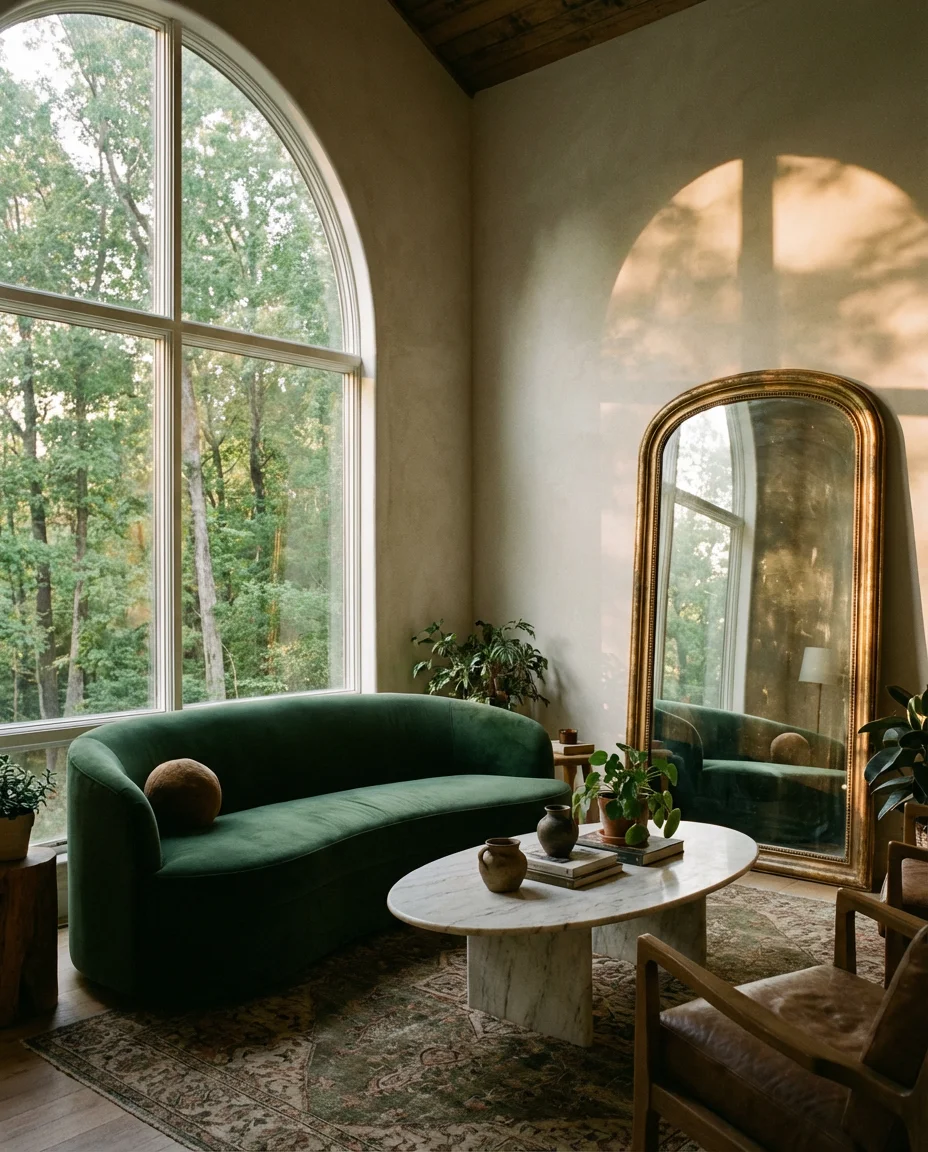
The dark, moody living room might be the most searched aesthetic of 2026, and once you see it done well, it’s not hard to understand why. Deep forest greens, inky navy, and rich charcoal walls paired with low, warm lighting create a kind of enveloping intimacy that feels impossible to achieve in a bright white room. This isn’t about making a space feel smaller—it’s about making it feel intentional, cinematic, and deeply personal. Velvet sofas in jewel tones, antiqued mirrors, and brass or bronze hardware all amplify the effect beautifully.
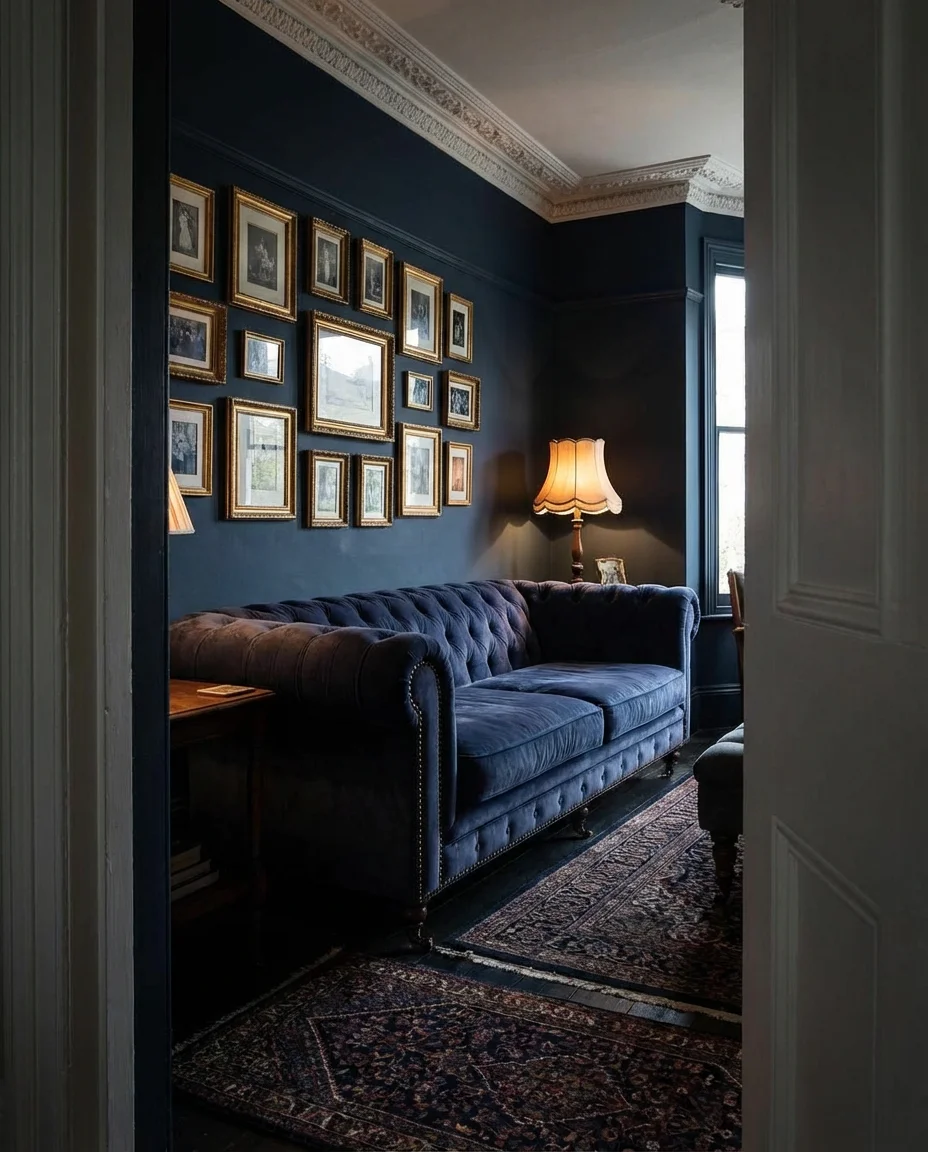
One designer whose clients keep requesting this look put it simply: “People are craving rooms that feel like a destination, not just a passthrough.” The dark living room is best suited to homes with high ceilings and ample square footage, but it can absolutely work in a smaller space if you commit fully—half-measures in a moody room tend to backfire. Keep your lighting layered (ambient, task, and accent), and don’t be afraid to paint the ceiling the same shade as the walls for a truly immersive feel.
3. Modern Minimalist Living Room with Sculptural Furniture
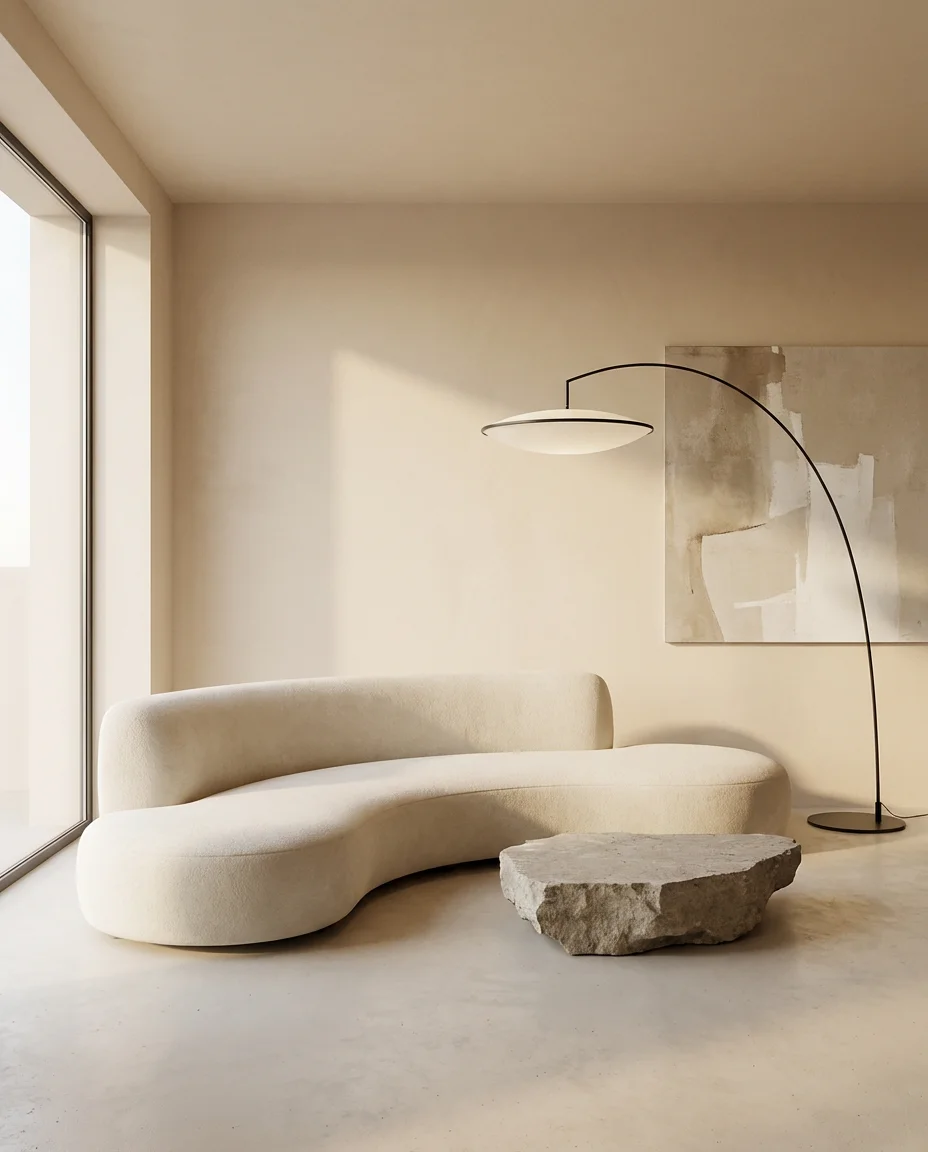
The modern minimalist living room in 2026 isn’t the cold, sterile aesthetic it once was. Today’s version is warmer, more considered, and much more livable—it’s about choosing fewer things but choosing them exceptionally well. Minimal doesn’t mean boring; it means every single object earns its place. Think a curved plaster sofa, a single sculptural floor lamp, a raw-edge stone coffee table, and absolutely nothing on the walls that doesn’t serve a visual purpose. The color palette stays tight: bone, warm white, pale sand, and one grounding accent in clay or terracotta.
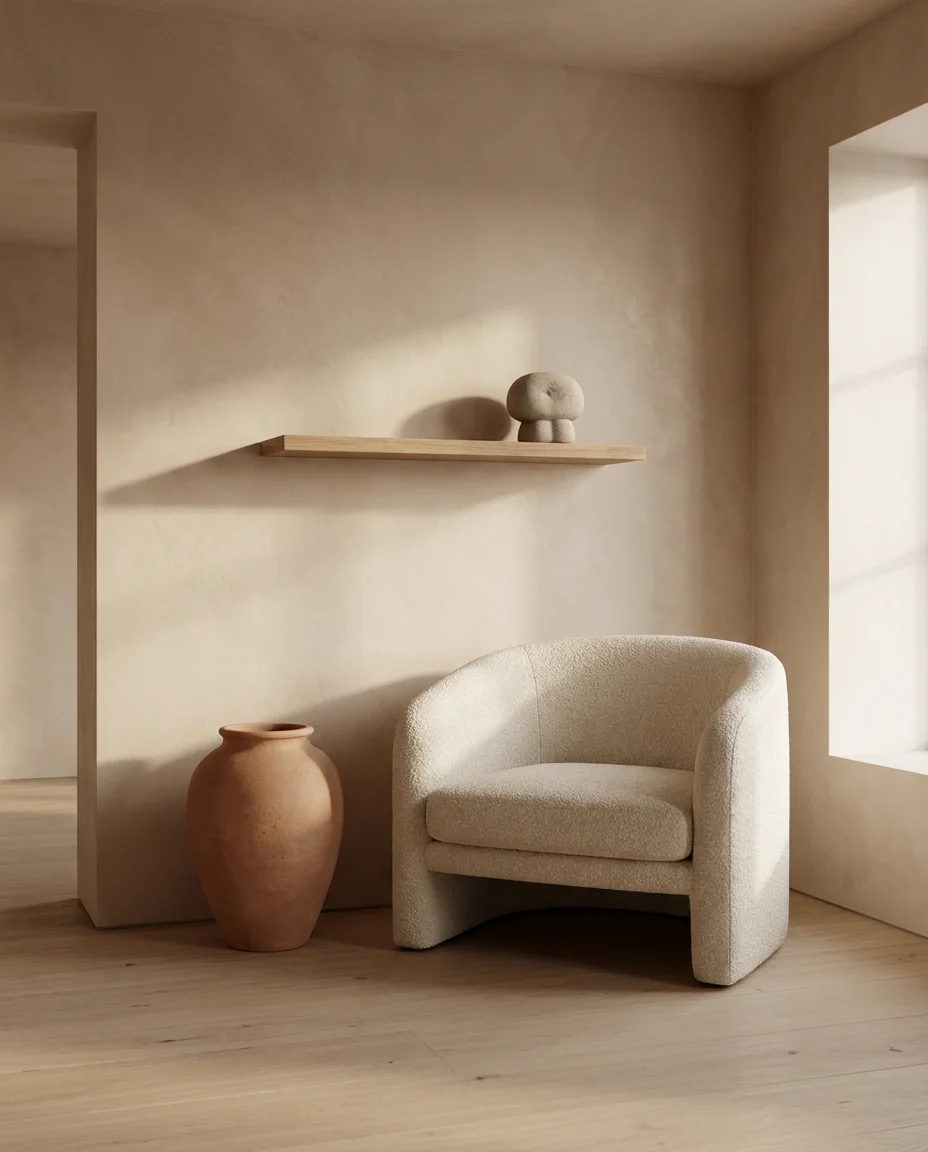
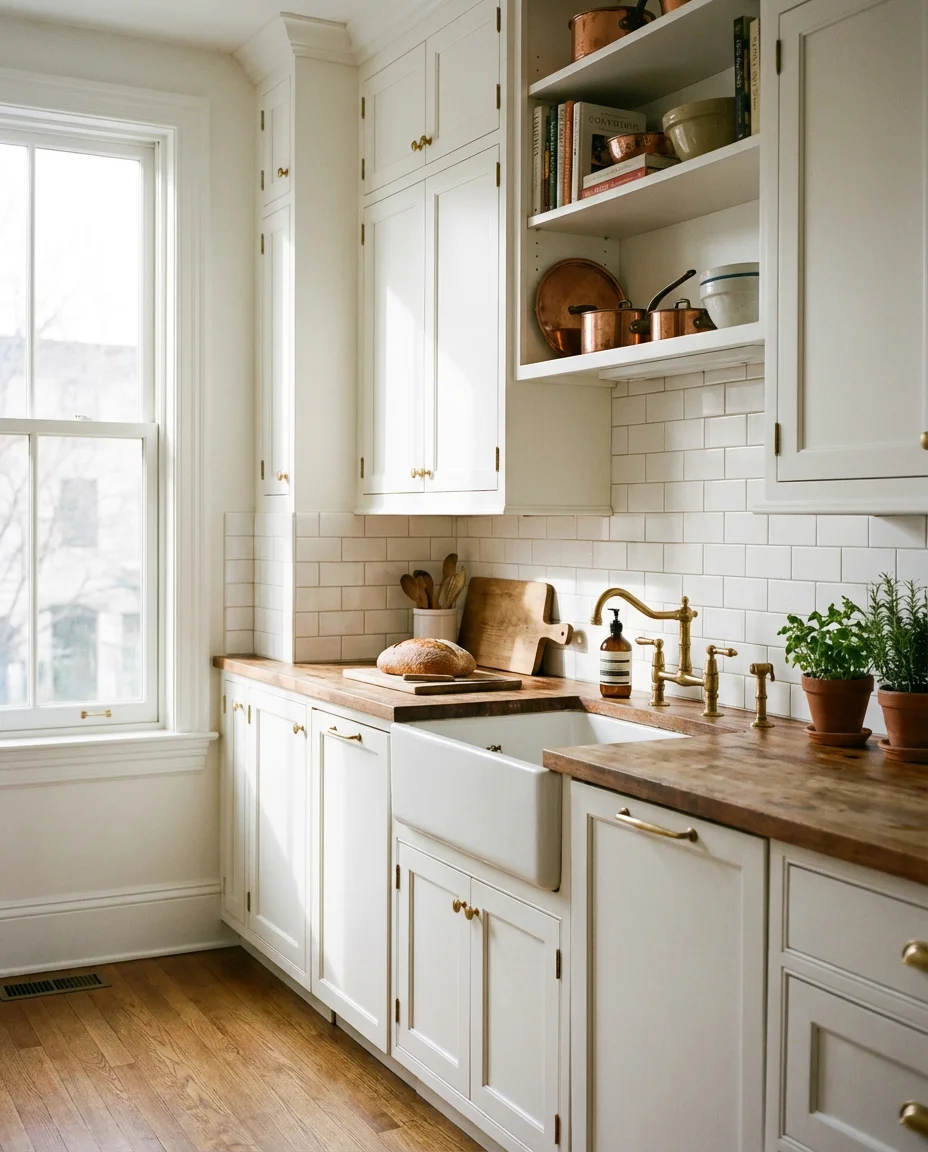
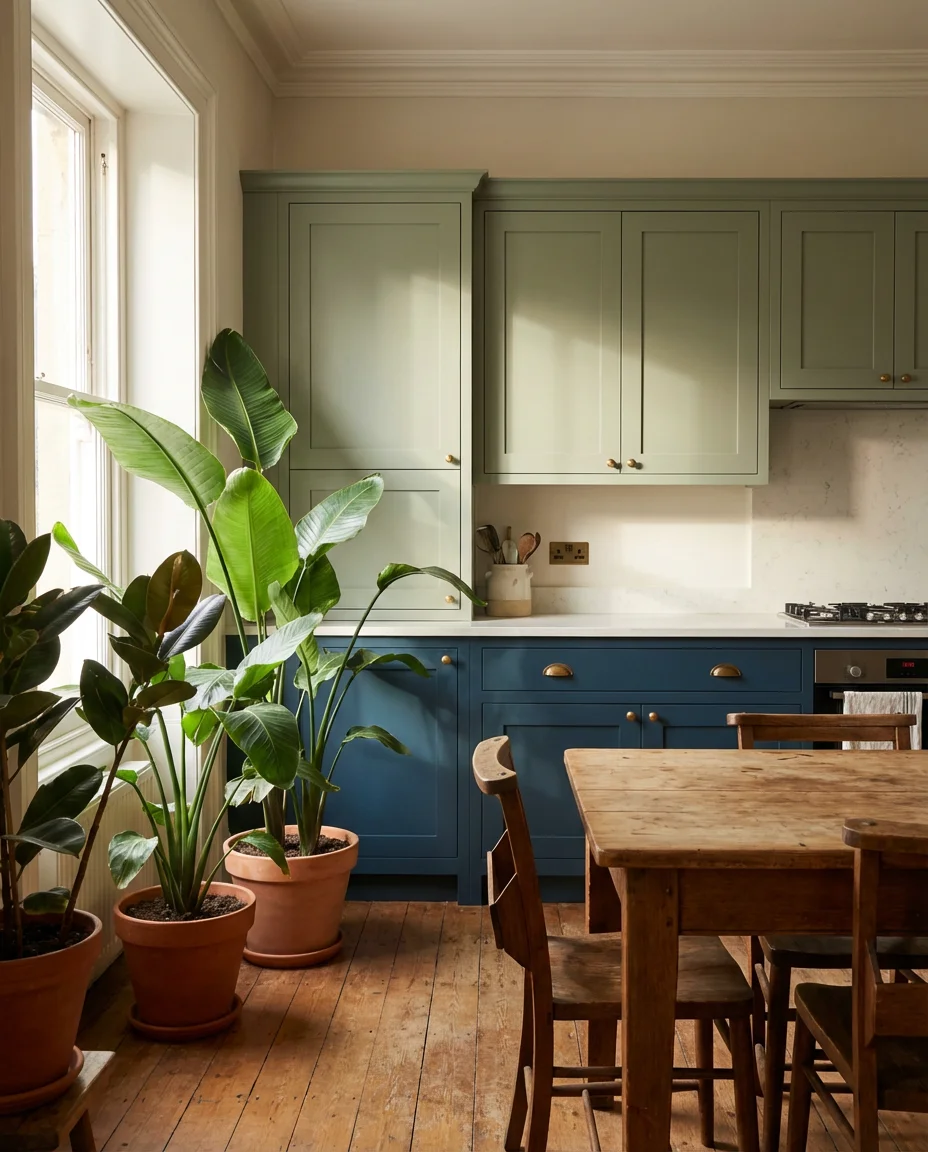
Where this look tends to go wrong is in the execution of “empty.” Truly great minimalist rooms aren’t empty—they’re edited. A homeowner in Austin shared that after three attempts at getting the look right, the turning point was removing half of what remained and upgrading one piece to something genuinely sculptural. The investment in one standout sofa or a hand-thrown ceramic table lamp is what separates intentional minimalism from a room that just looks unfinished.
4. Cozy Rustic Living Room with Natural Textures
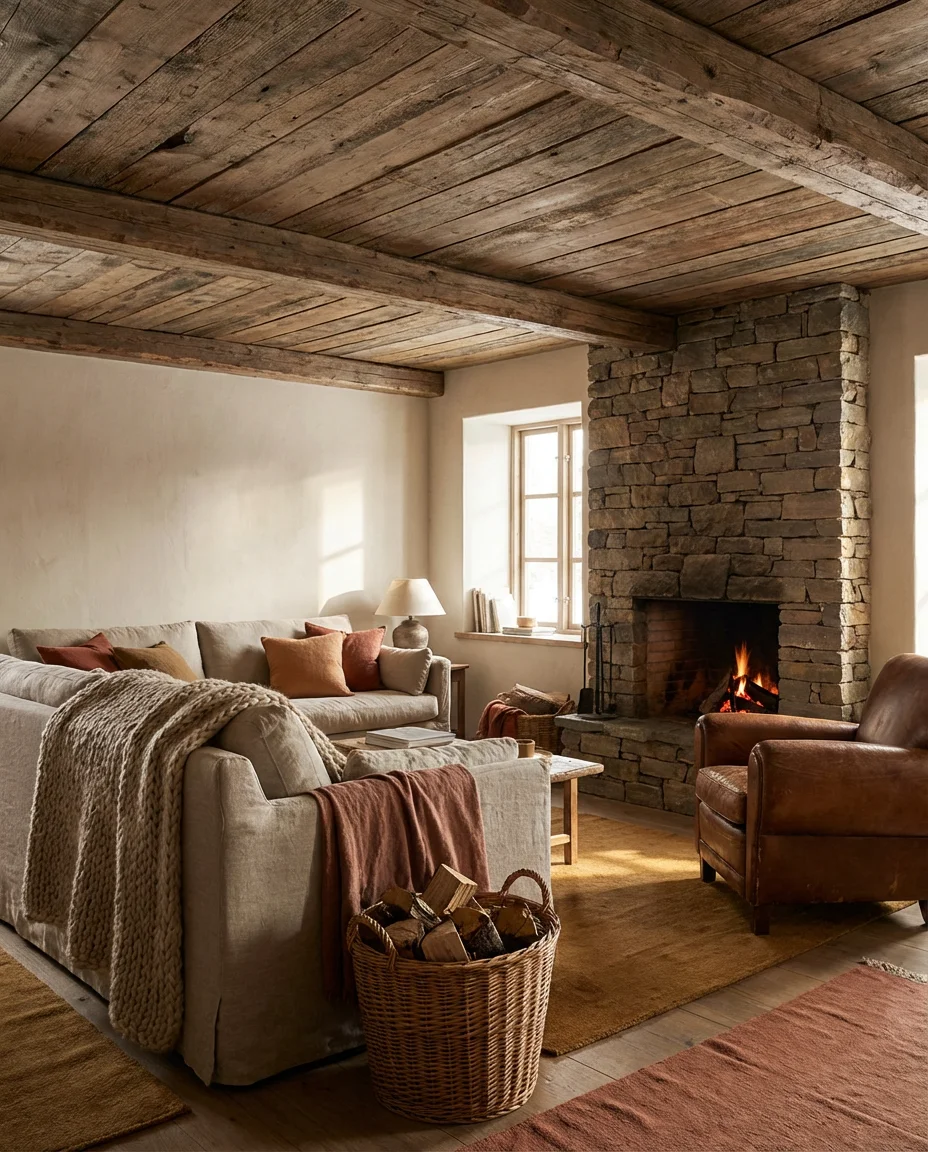
There’s something deeply appealing about a cozy, rustic living room that feels like it’s been slowly assembled over years—each piece telling a small story. In 2026, the rustic look has been refined into something much more intentional than shiplap-and-barn-door farmhouse. It’s about genuine natural materials: reclaimed wood beams, stone fireplace surrounds, hand-thrown pottery, and chunky knit throws in earthy ochres and rusts. The furniture tends toward overstuffed and upholstered in worn linen or aged leather, the kind of seating you genuinely sink into on a Sunday afternoon.
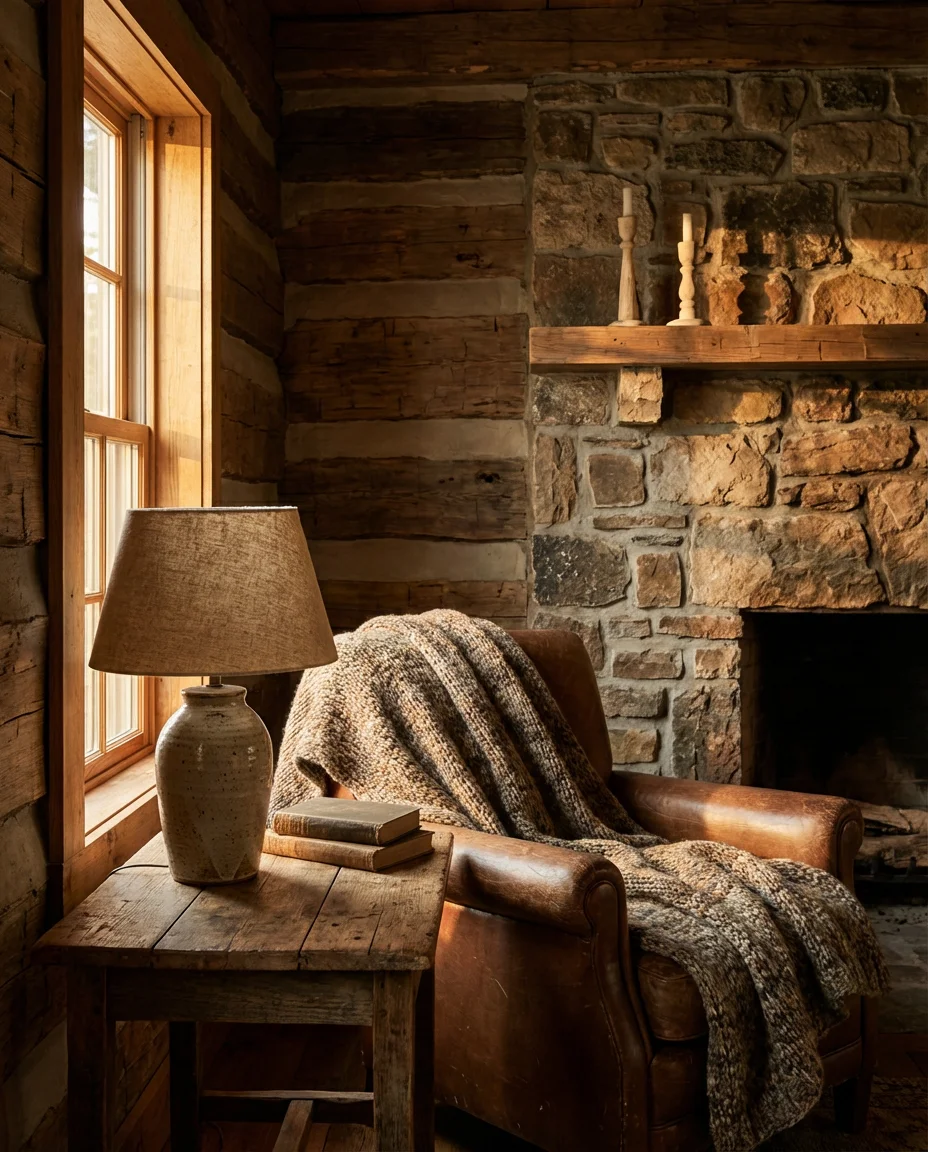
This style thrives in mountain homes across Colorado and Vermont, but it translates beautifully to suburban and even urban spaces when you scale it right. The key is resisting the urge to over-theme it—one or two structural rustic elements (a reclaimed wood mantle, a stone accent wall) are far more effective than a room full of barnwood. Keep the soft furnishings in natural fibers and stick to a palette pulled from the landscape outside your window, and the look will feel authentic rather than costume-y.
5. French-Inspired Living Room with Antique Accents
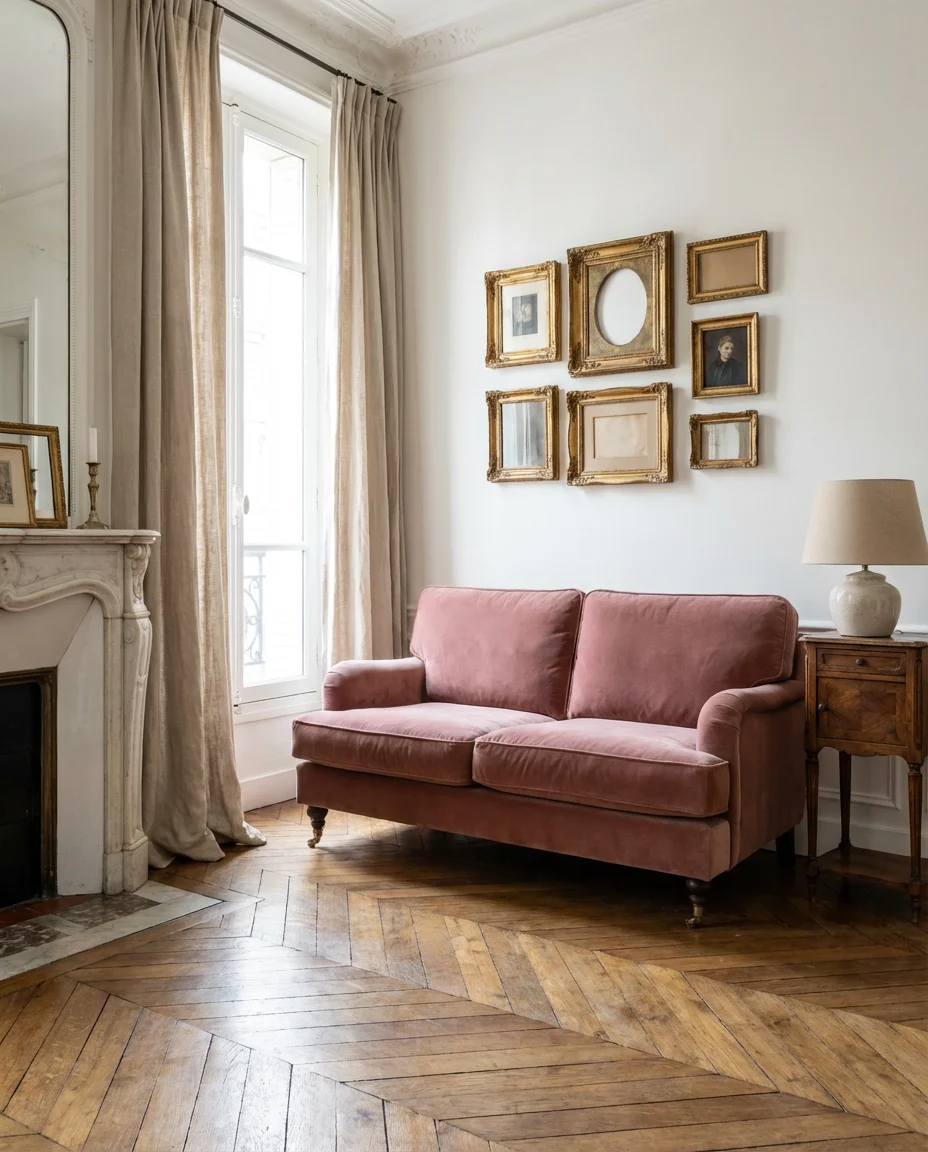
The French-inspired living room has been having a genuine moment on Pinterest, and the 2026 interpretation is looser and more accessible than the formal Parisian salons of the past. Think faded velvet sofas in dusty rose or sage, parquet floors, gilded frames in mismatched sizes, and the kind of beautiful imperfection that comes from mixing antiques with newer pieces. The elegant French aesthetic is all about the feeling of layered history—a room that looks like it wasn’t decorated all at once but rather curated over a lifetime of thoughtful collecting.
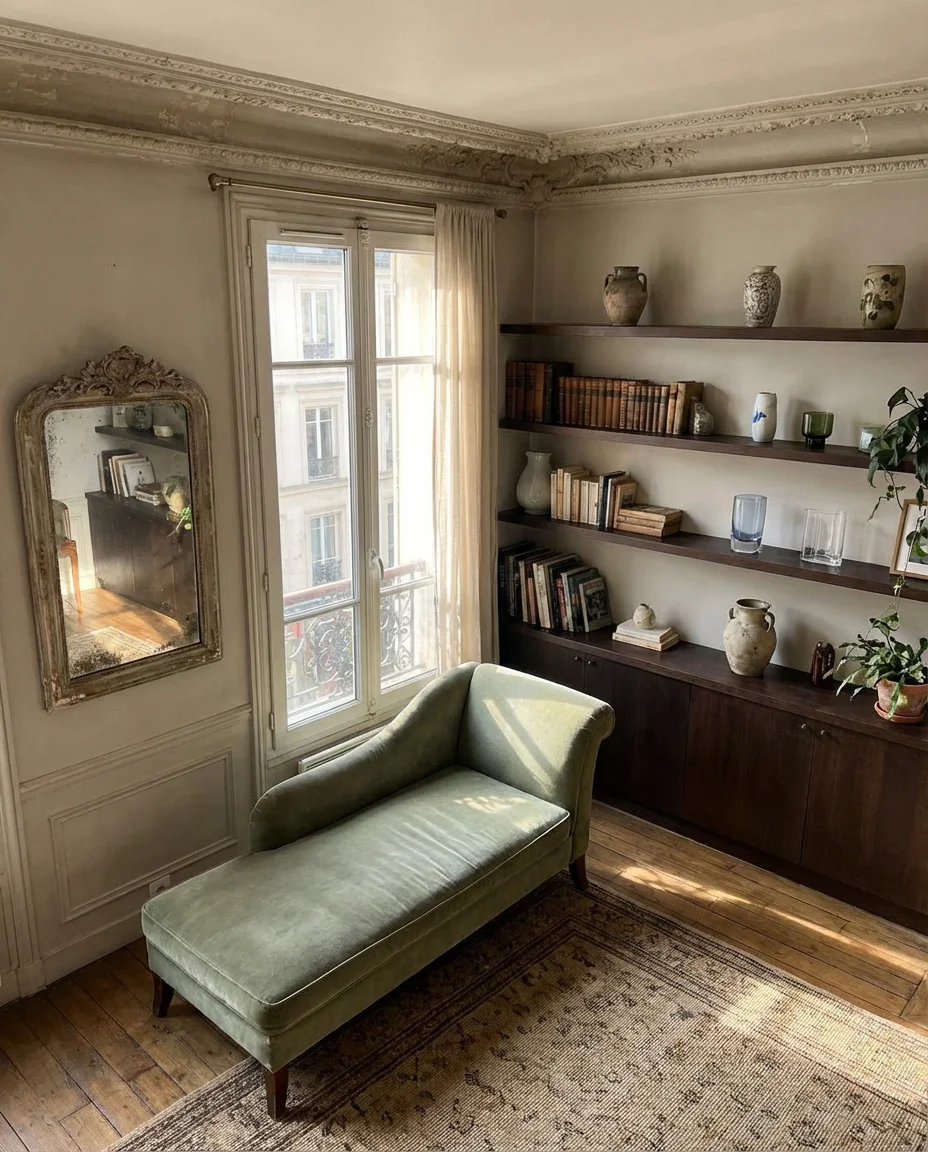
You don’t need a Haussmann apartment to pull this off. Some of the most convincing French-inspired living rooms in the U.S. are in regular suburban homes where the key investment was one great antique—a marble-topped side table from an estate sale or an ornate mirror from a local auction house. The rest can be sourced affordably from places like Chairish or even Facebook Marketplace. The imperfection is a feature, not a bug: chipped gilding and slightly faded upholstery are exactly what give this look its irreplaceable character.
6. Coastal Living Room with Breezy Natural Light
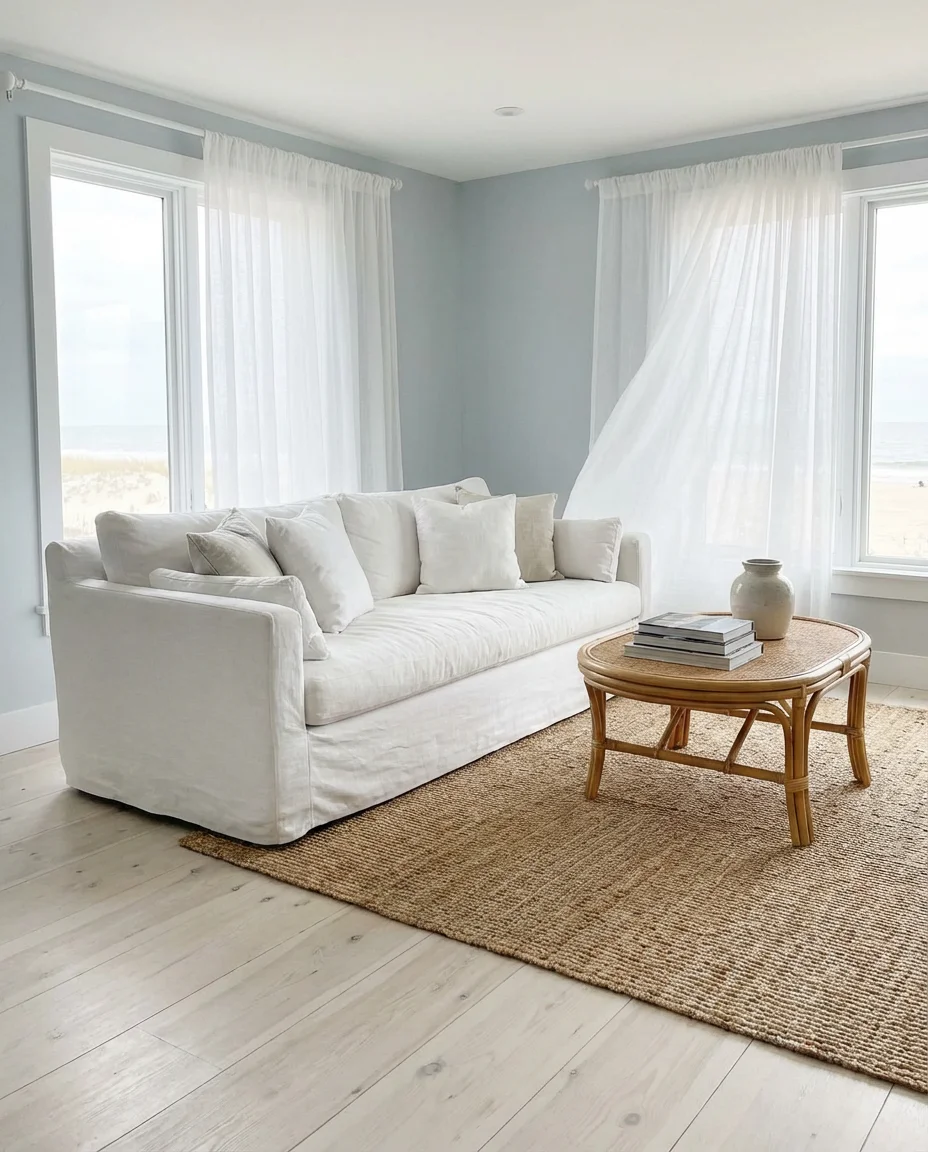
The coastal living room has moved well past the seashell-and-driftwood clichés of years past. In 2026, it’s about capturing the actual feeling of being near water—the airiness, the light-washed palette, and the sense of indoor-outdoor flow. Whitewashed oak floors, linen slipcover sofas in bleached white or pale blue, rattan furniture, and walls the color of sea glass or fog are the building blocks. Soft textures in natural fibers—cotton, seagrass, and linen—do the tactile work, while oversized windows and sheer curtains keep the light constant and dreamy.
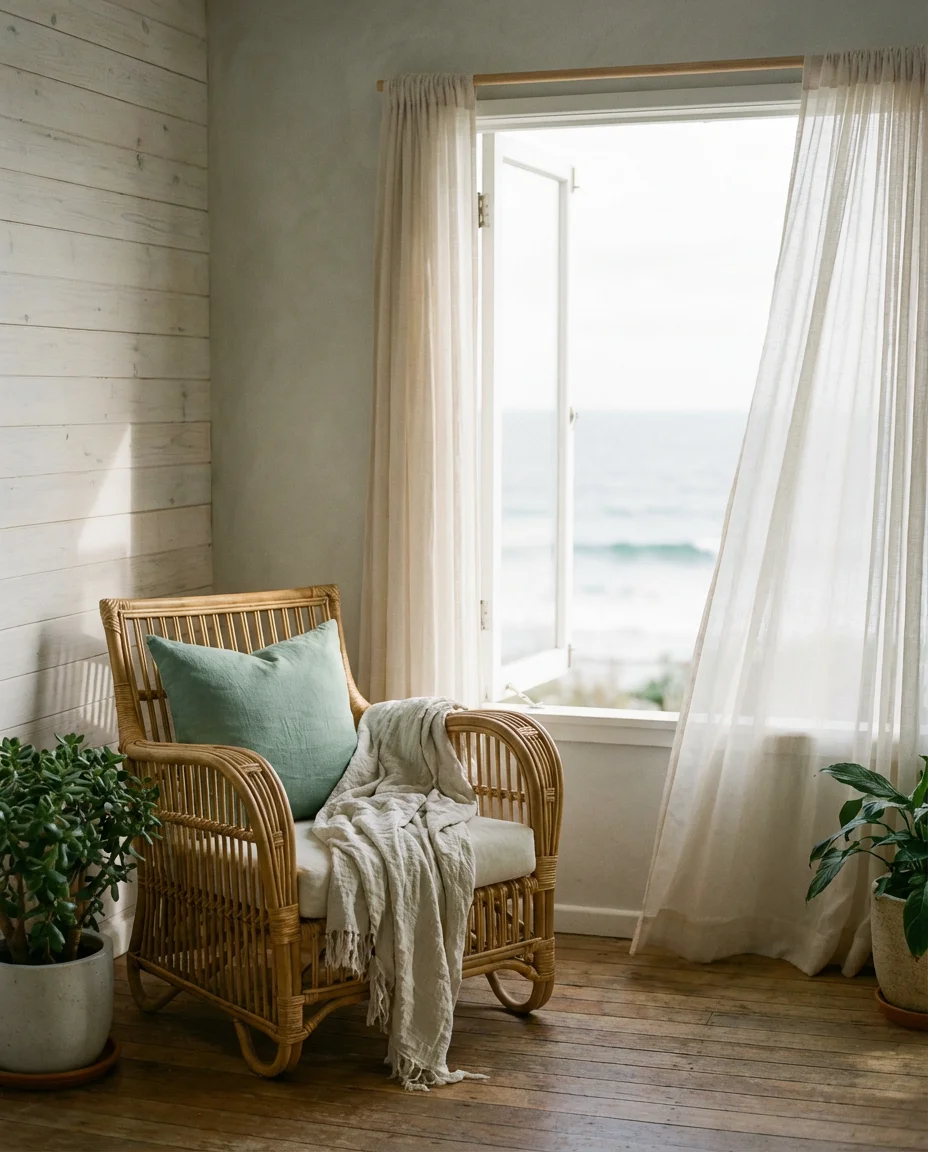
This aesthetic works beautifully beyond beach towns—it’s become hugely popular in landlocked cities like Denver and Nashville, where homeowners use it to create a sense of escape within their everyday space. Where it works best is in rooms with at least two windows and decent ceiling height. If your room lacks natural light, lean into warm whites and reflective surfaces like mirrors and glossy ceramic lamps to amplify whatever light you do have. Keep window treatments sheer and simple—heavy drapes are the enemy of this look.
7. Japandi Living Room Blending East and West
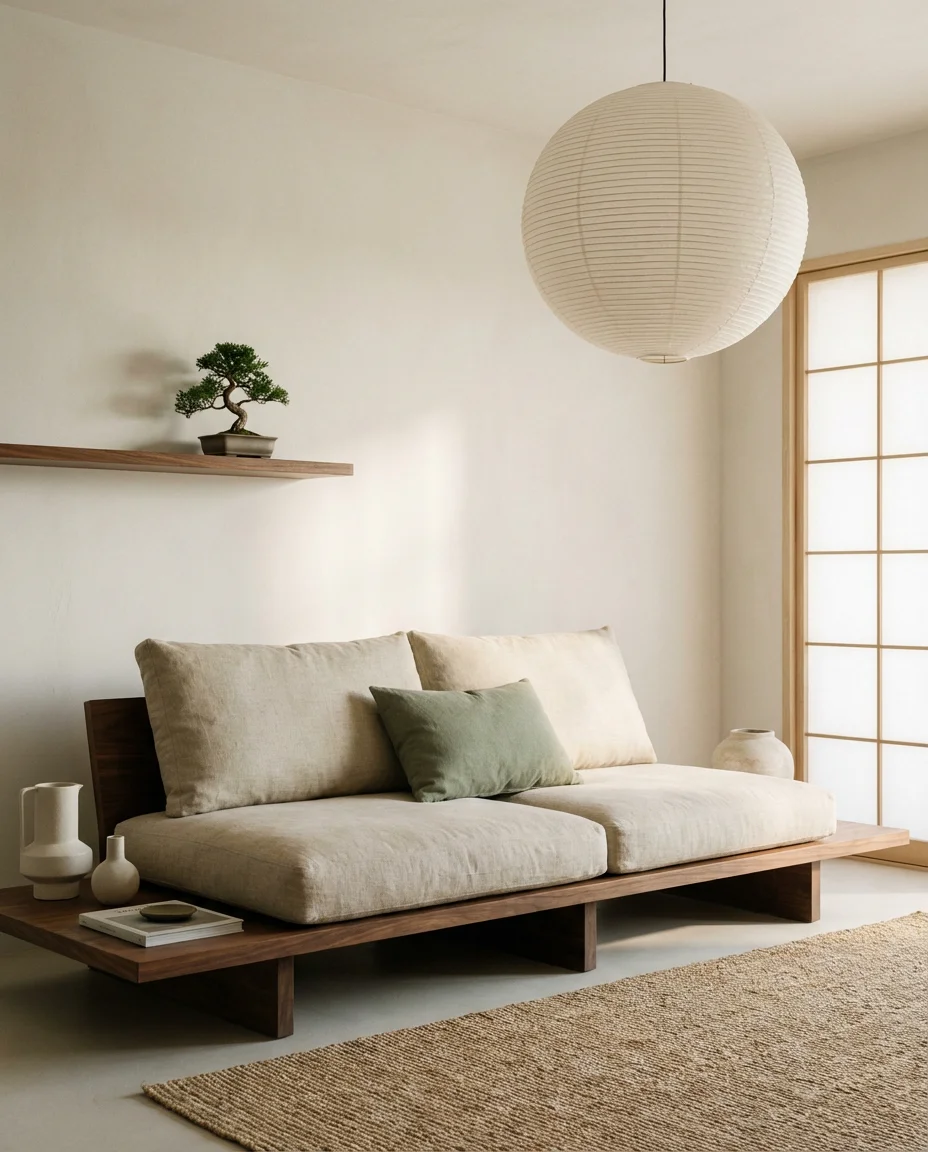
The Japandi aesthetic—a hybrid of Japanese minimalism and Scandinavian warmth—has become one of the most searched living room styles of the decade, and in 2026 it continues to evolve into something even more nuanced. The core philosophy is finding beauty in simplicity and craftsmanship: low-profile furniture with clean lines, raw wood in warm ash or walnut, a muted palette of warm whites, sage greens, and charcoal, and an intentional absence of clutter. Every object in a Japandi room is chosen for both function and quiet beauty, which is genuinely a different and more considered way of shopping for your home.
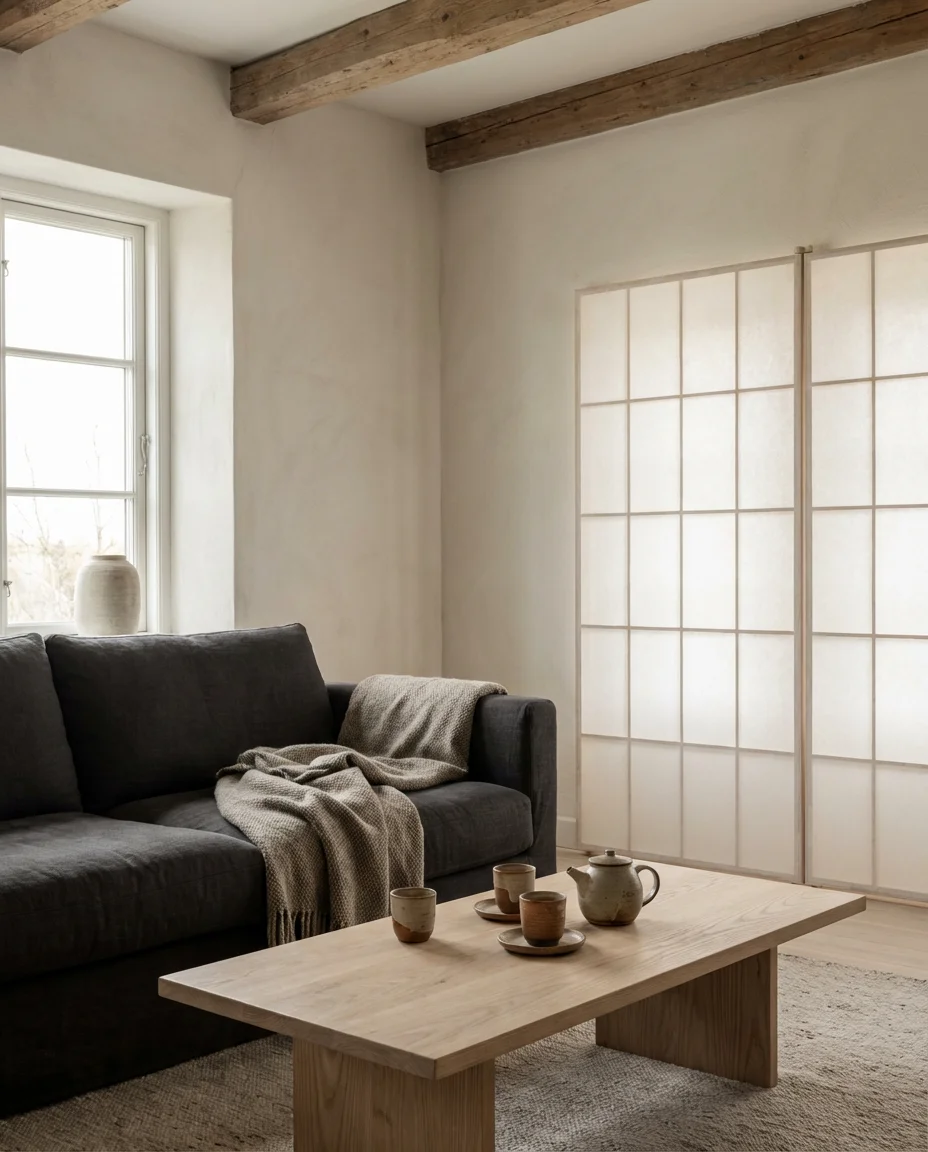
One common mistake people make when attempting Japandi is thinking it just means “neutral and low.” What actually makes it work is the quality of the craftsmanship and the restraint in curation. A single handmade ceramic vase on an otherwise empty shelf creates more visual impact than a shelf crammed with objects. If you’re working with a tight budget, prioritize the sofa and the main rug—these two pieces define the look more than anything else—and keep the rest extremely simple.
8. Luxury Living Room with High-End Finishes
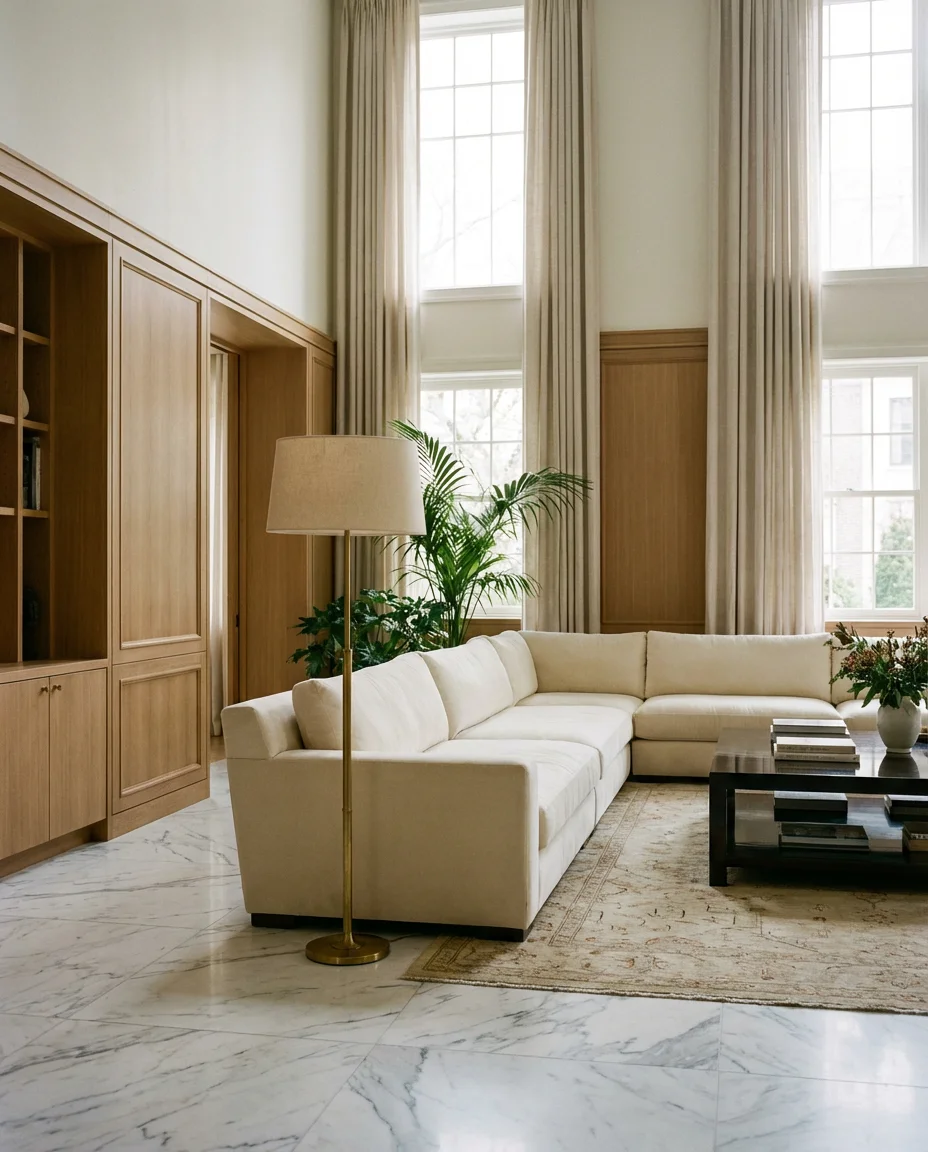
A luxury living room in 2026 isn’t defined by price tags alone—it’s defined by a level of finish, material quality, and spatial generosity that signals real intention. We’re talking marble floors with brass inlays, custom millwork, hand-knotted silk rugs, and upholstered walls in performance velvet or woven grasscloth. The furniture scale is generous, and the silhouettes are clean—long, low sectionals, statement armchairs, and coffee tables in book-matched marble or lacquered wood. Elegant interior design at this level is as much about proportion and restraint as it is about materials.
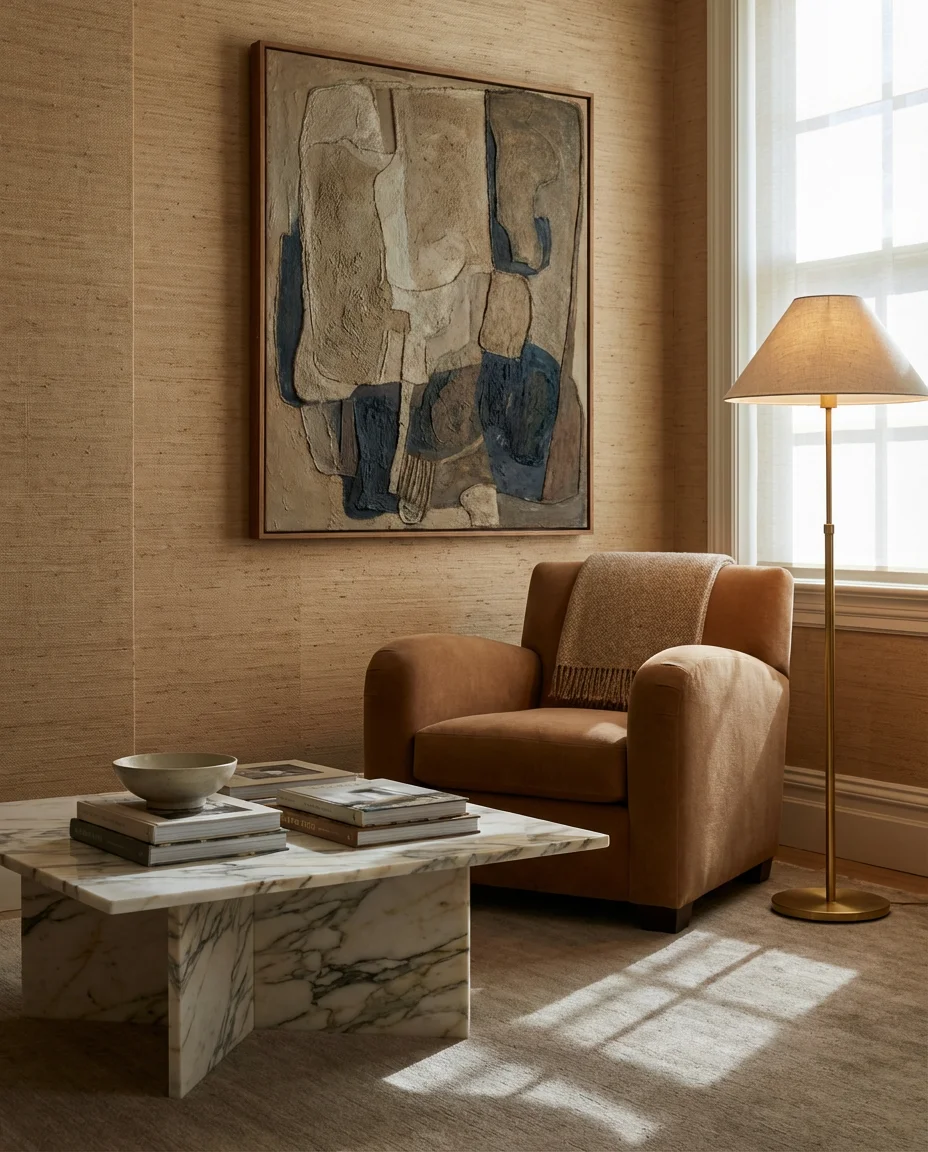
A designer specializing in high-end residential projects in Manhattan and Miami noted that the real luxury clients are asking for today isn’t ostentation—it’s quietude. “The wealthiest rooms I work on now are the calmest ones,” she said. That means fewer pieces chosen with extreme care, a tight and sophisticated color palette, and materials sourced for longevity. For those working with more modest budgets, even one or two genuinely high-quality anchor pieces—a real marble side table, a custom-sized rug—can elevate an otherwise accessible room into something that reads as genuinely refined.
9. Mid-Century Modern Living Room Reimagined
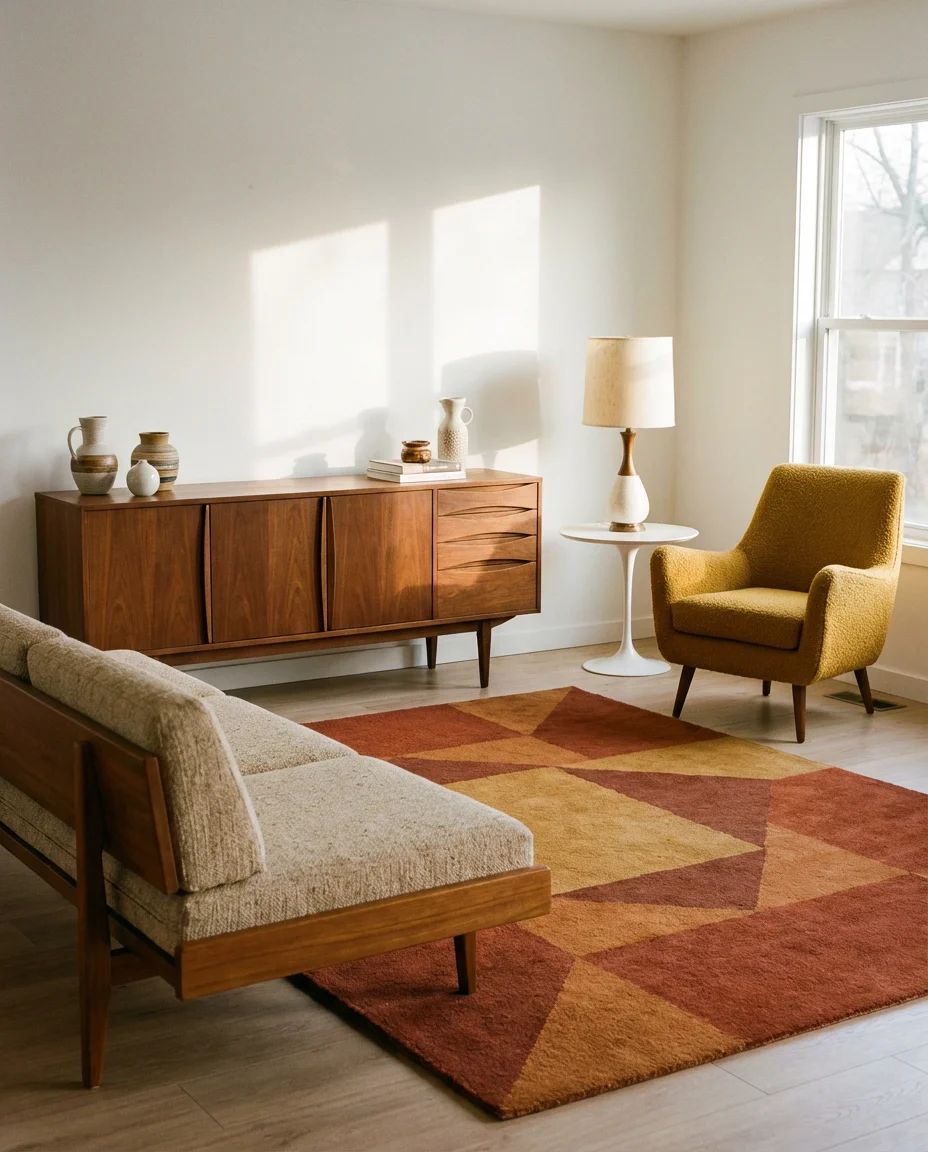
The mid-century modern living room is one of those styles that refuses to go away—and honestly, why would it? The proportions are perfect, the lines are timeless, and the combination of warm wood tones with bold graphic shapes and pops of saturated color is endlessly satisfying. In 2026, the updated version mixes iconic silhouettes (think Eames-adjacent loungers, tulip tables, and walnut credenzas) with more contemporary textiles—chunky boucle, hand-blocked prints, and unexpected color choices like terracotta, mustard, and rust playing off warm walnut.
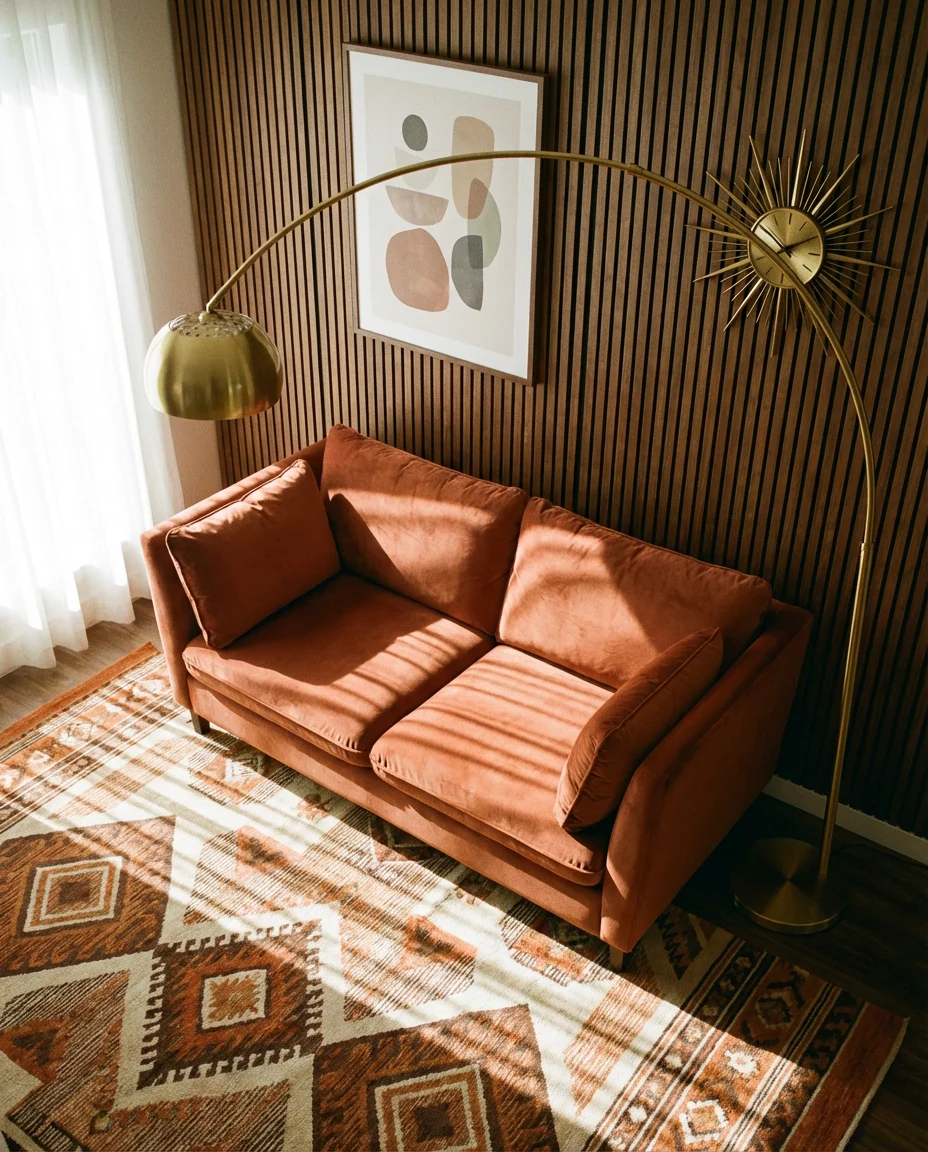
This look is incredibly popular in ranch-style homes across California, Texas, and the Midwest, where the low-slung architecture was literally designed for this furniture era. The most common mistake is going too “set-dressed”—buying a complete matching suite from a big-box retailer that ends up looking like a showroom floor rather than a home. The sweet spot is mixing one or two genuine vintage finds from local antique markets with newer pieces that share the same graphic sensibility and warm wood tones.
10. Colorful Living Room with Bold Personality
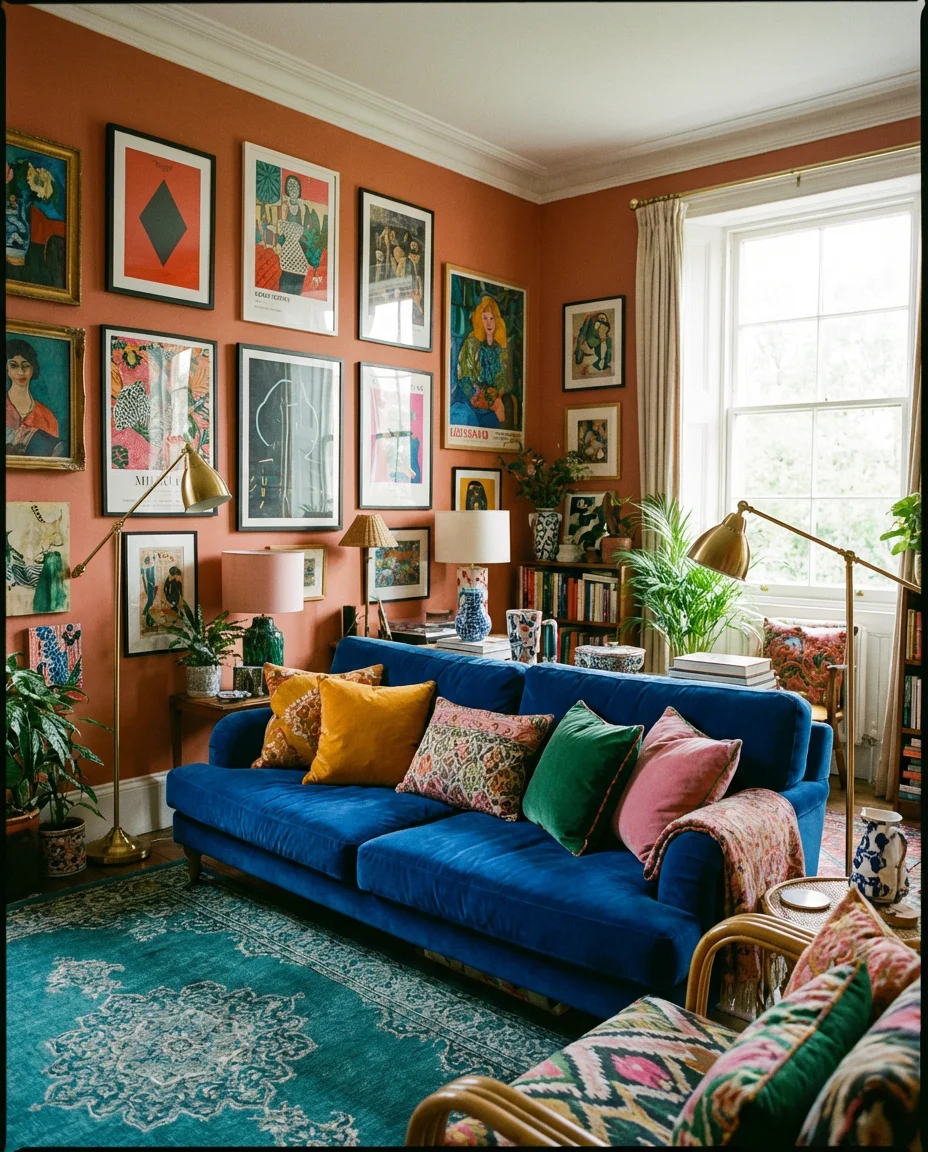
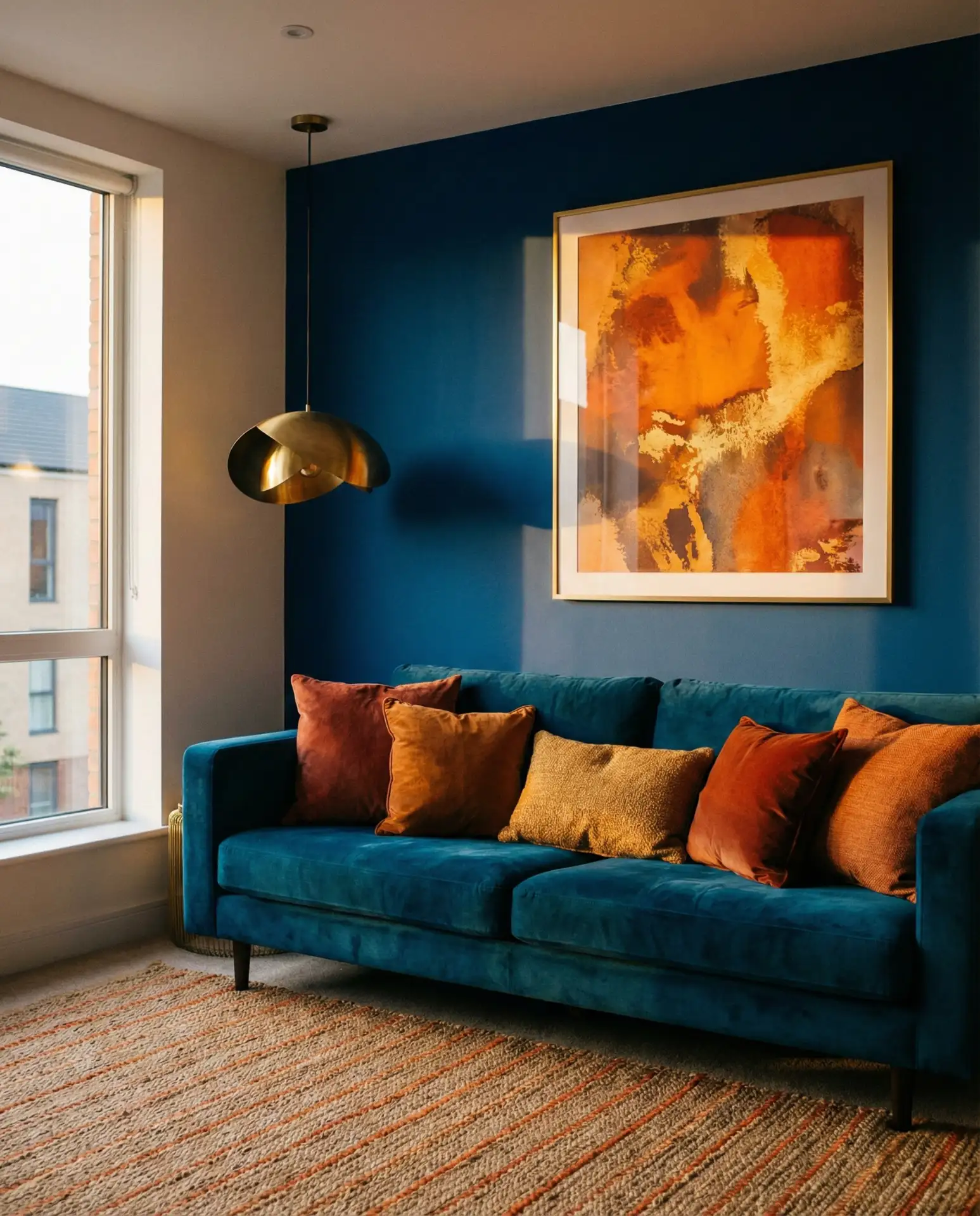
Not every living room needs to be a study in restraint—sometimes the most inspired spaces are the ones that commit fully to colorful, joyful, maximalist expression. In 2026, color confidence is at an all-time high: we’re seeing living rooms in unexpected combinations like cobalt and chartreuse, terracotta and teal, or blush and bordeaux that somehow work because the proportions are thoughtful. The design ideas driving this trend are less about “accent wall” thinking and more about building a full chromatic world—colored sofas, patterned rugs, mix-and-match pillows, and art that adds rather than competes.
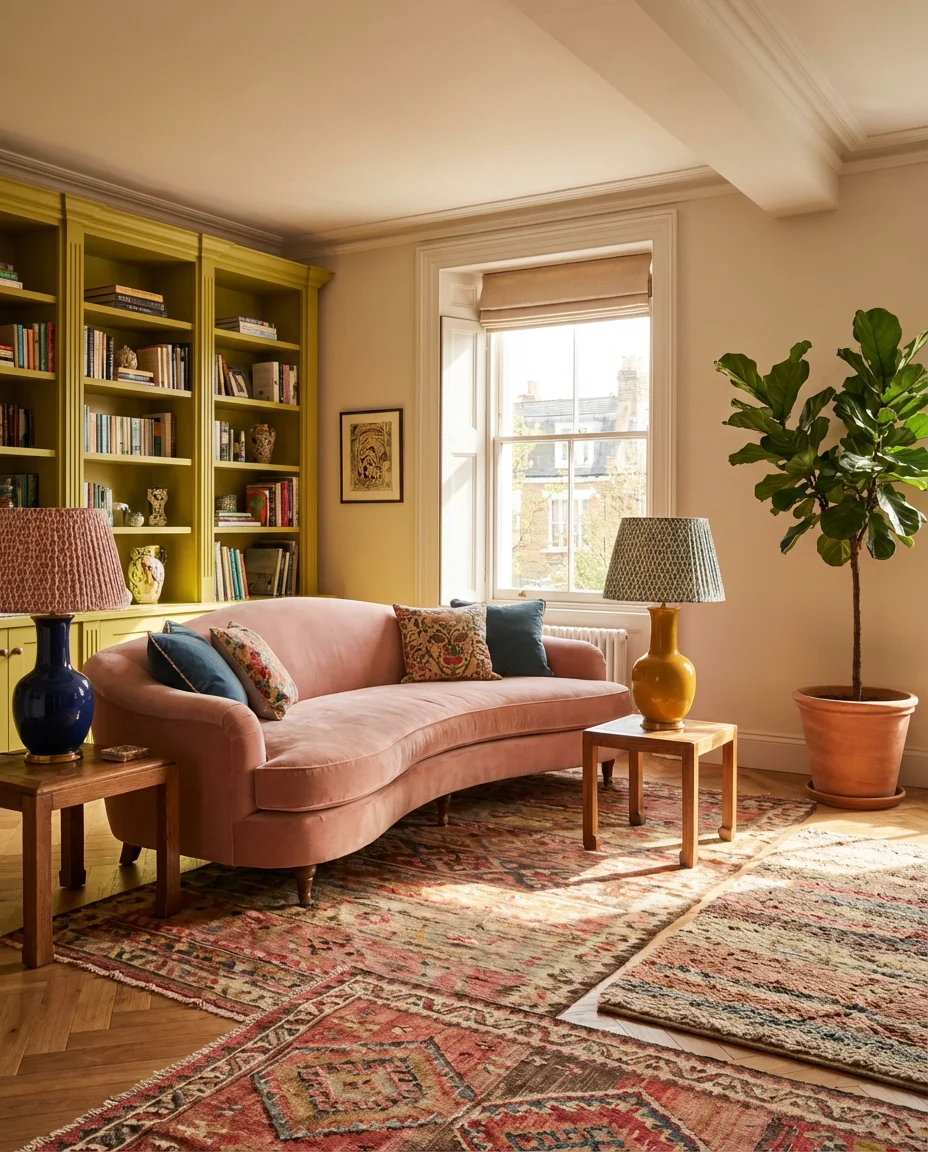
A real homeowner in New Orleans documented her transformation of a completely beige living room into a vibrant cobalt-and-terracotta space on her blog, and the post went massively viral—largely because she’d been afraid to do it for years and the final result looked effortlessly confident. Her takeaway was simple: the fear of committing to color is always worse than the color itself. Start with the rug if you’re nervous—a bold, patterned rug lets you pull all your other colors from it, which takes the guesswork out of the rest of the room.
11. Traditional Living Room with Timeless Appeal
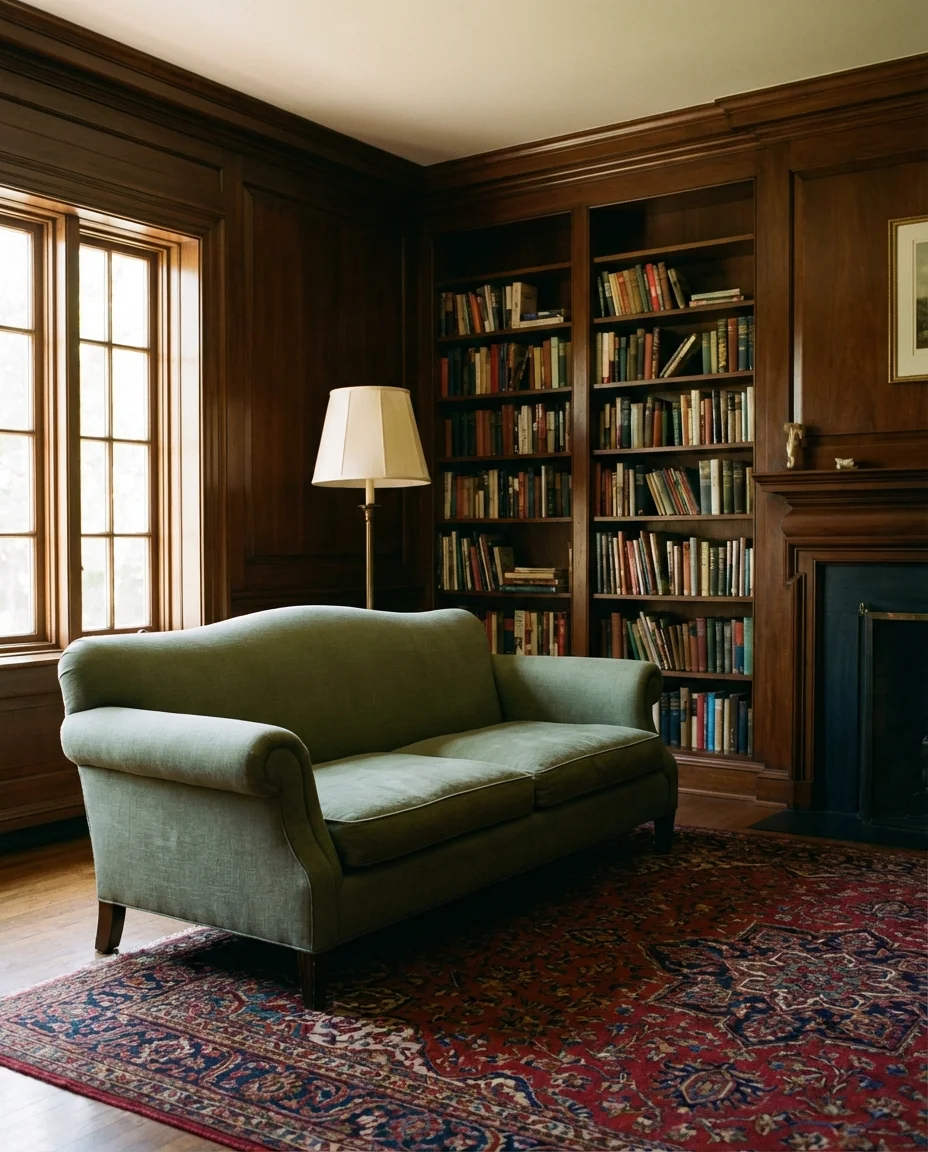
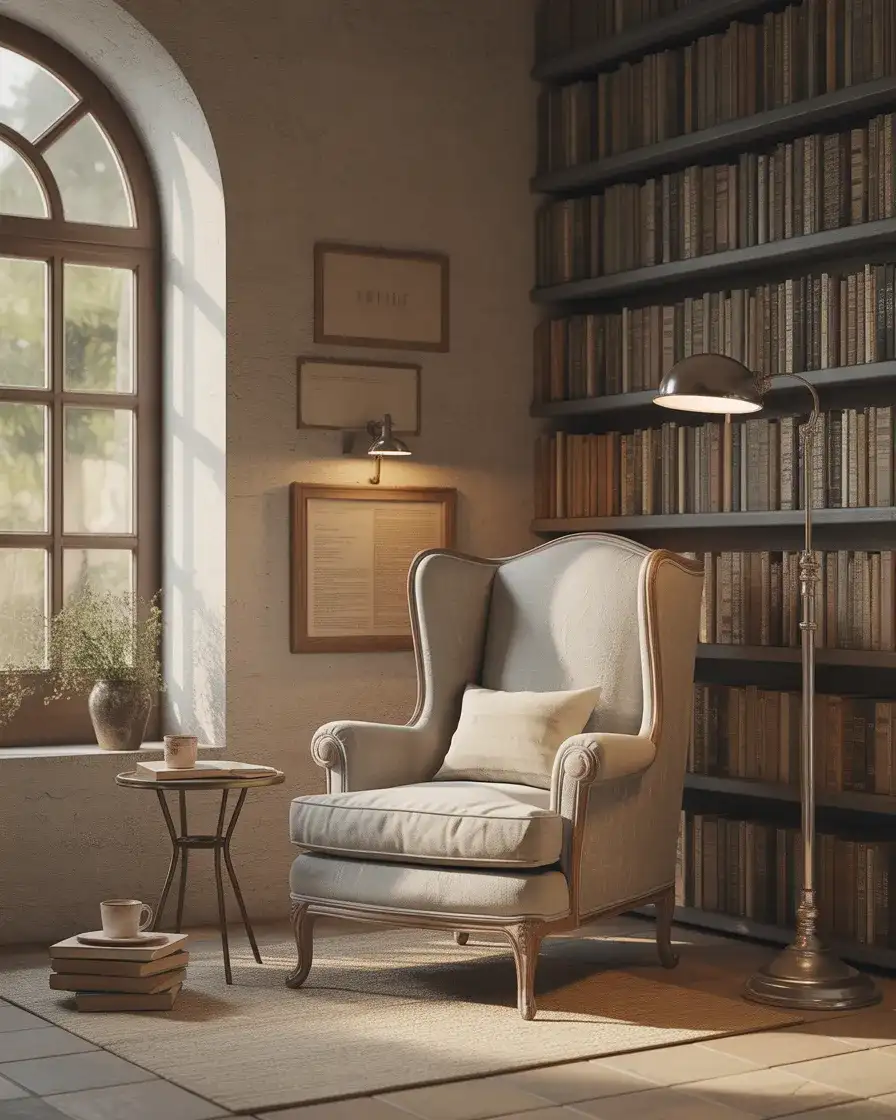
The traditional living room is having a genuine revival in 2026, and it’s not the stuffy, grandmother’s-parlor version most people imagine. The new traditional is grounded in quality craftsmanship, rich upholstery, and time-tested proportions—think rolled-arm sofas in performance linen, Persian or Turkish rugs in deep jewel tones, crown molding, built-in bookcases, and proper lamps with fabric shades. The inspiration comes from classic American and English interiors, updated with fresher color choices and a slightly more relaxed approach to formality. It’s aspirational without being unapproachable.
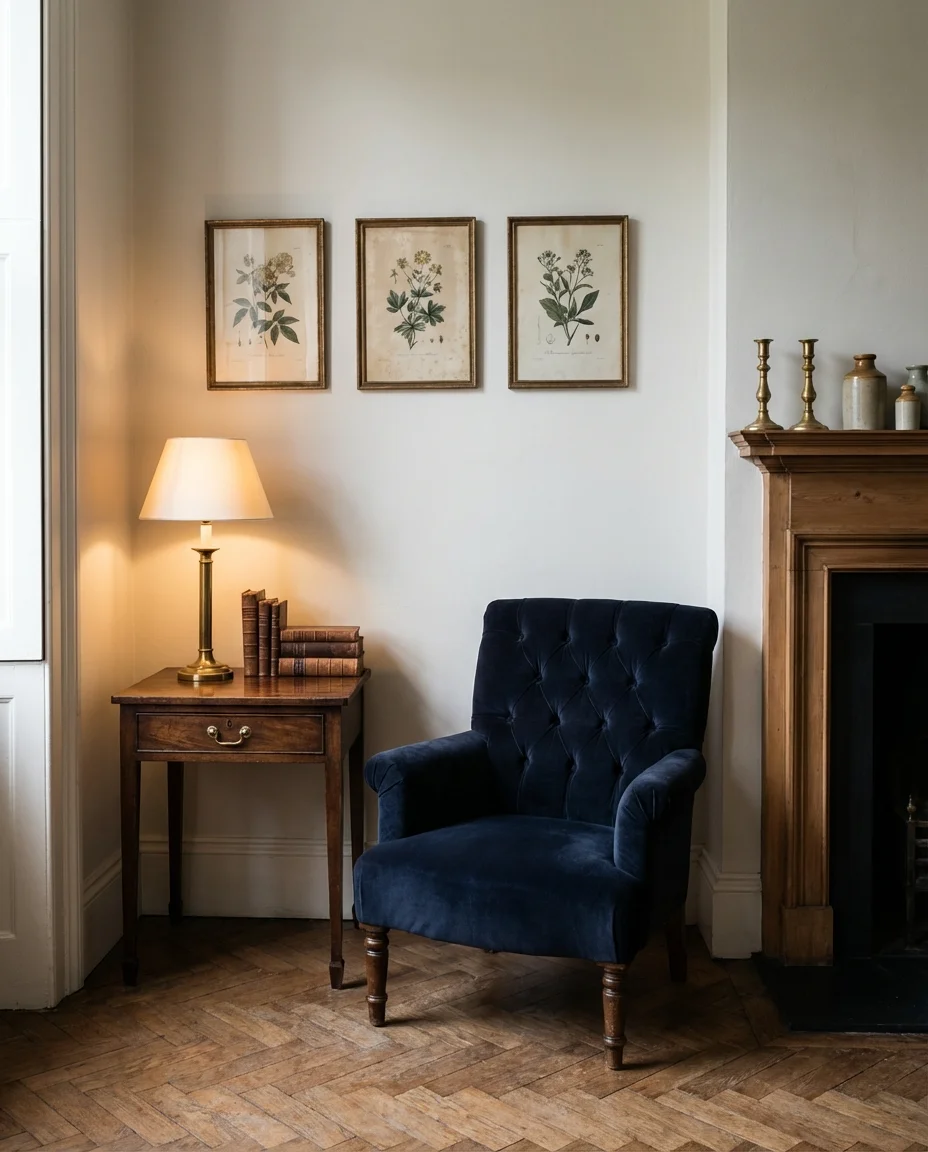
This style works in virtually any region of the U.S., but it has a particularly devoted following in the South and the Northeast, where older homes with original architectural details practically demand it. The best traditional rooms are never frozen in time—they feel lived-in and evolved. Mixing a few genuinely antique pieces with newer upholstery in contemporary fabrics and adding a modern art piece or two keeps the look from tipping into period recreation and makes it feel like a real home rather than a museum.
12. Apartment Living Room Maximizing Small Space
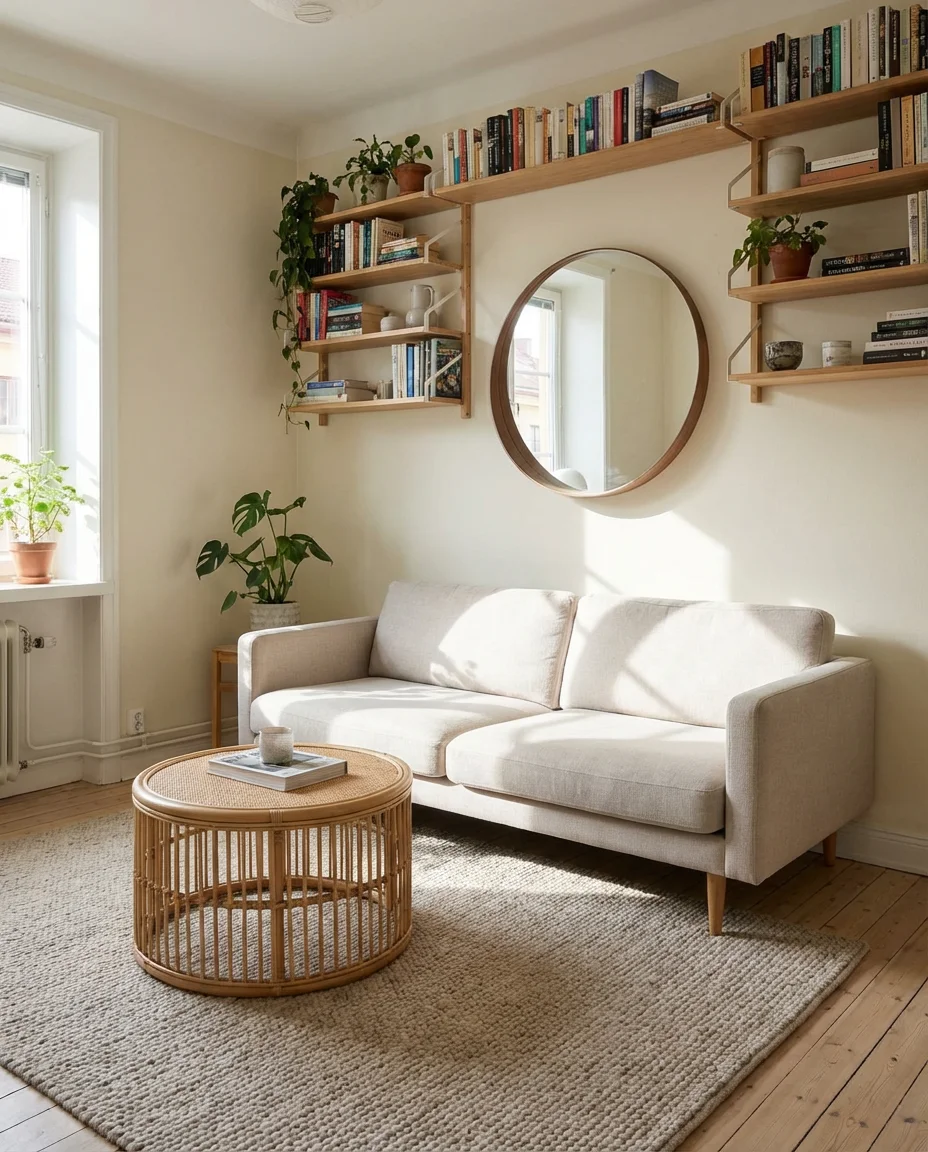
The apartment living room is one of the most challenging design briefs in existence—you’re often working with under 200 square feet, awkward layouts, and the aesthetic constraints of a rental. But the best small living rooms in 2026 are genuinely inspiring, because the limitations force creativity. Multifunctional furniture, thoughtful vertical storage, and a tight, intentional color palette are the backbone. A two-seat sofa with clean legs (so the floor reads continuously underneath), a floating shelf system, and a round coffee table that allows easy movement can completely transform a cramped space into something that feels edited rather than cramped.
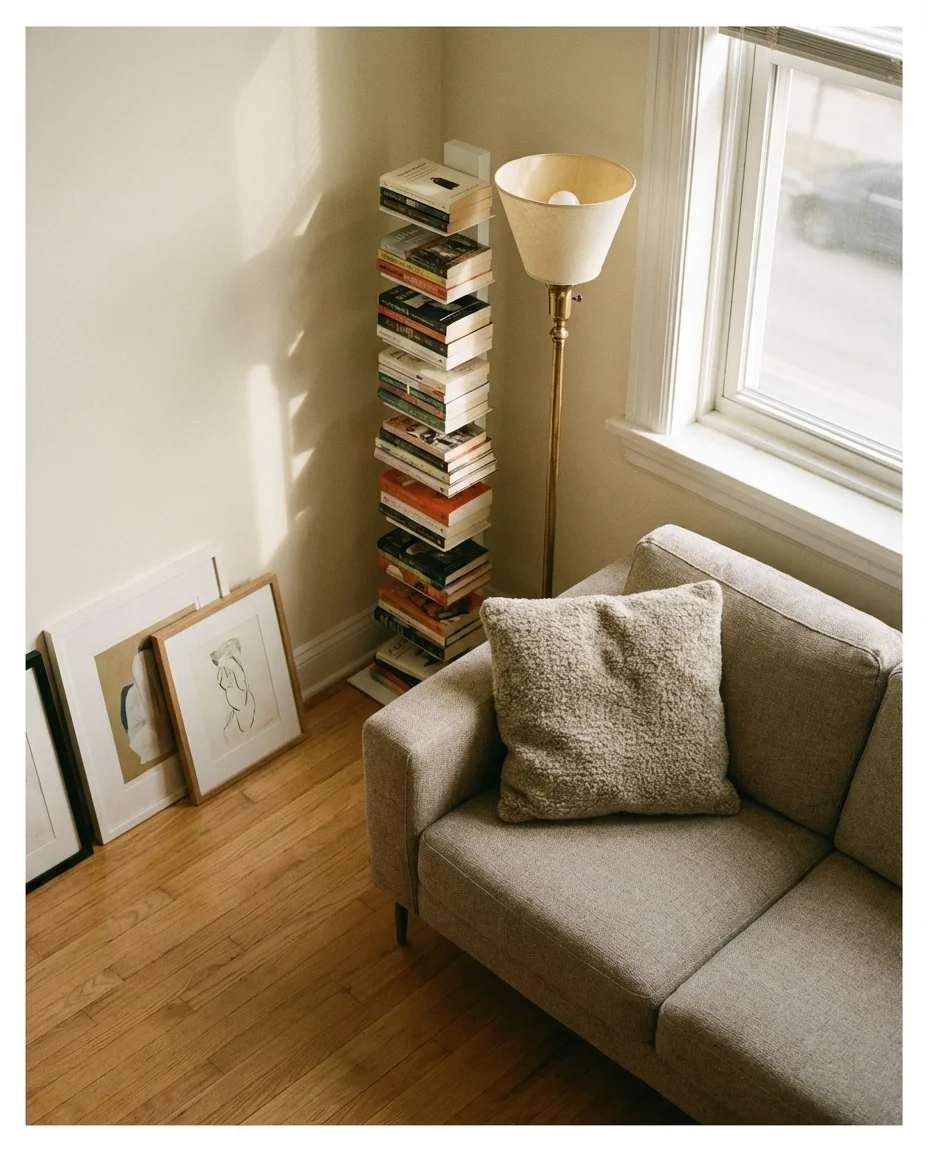
Mirrors are the single most underutilized tool in small apartment living rooms. A large mirror—ideally leaning against a wall rather than hung, for a more casual contemporary look—can visually double the depth of a room and amplify light significantly. On a tight budget, this is often the highest-impact single purchase you can make. Avoid rugs that are too small (they make the room feel disconnected and smaller), and choose a rug large enough that at least the front legs of all your furniture sit on it.
13. White Living Room That Feels Warm, Not Cold
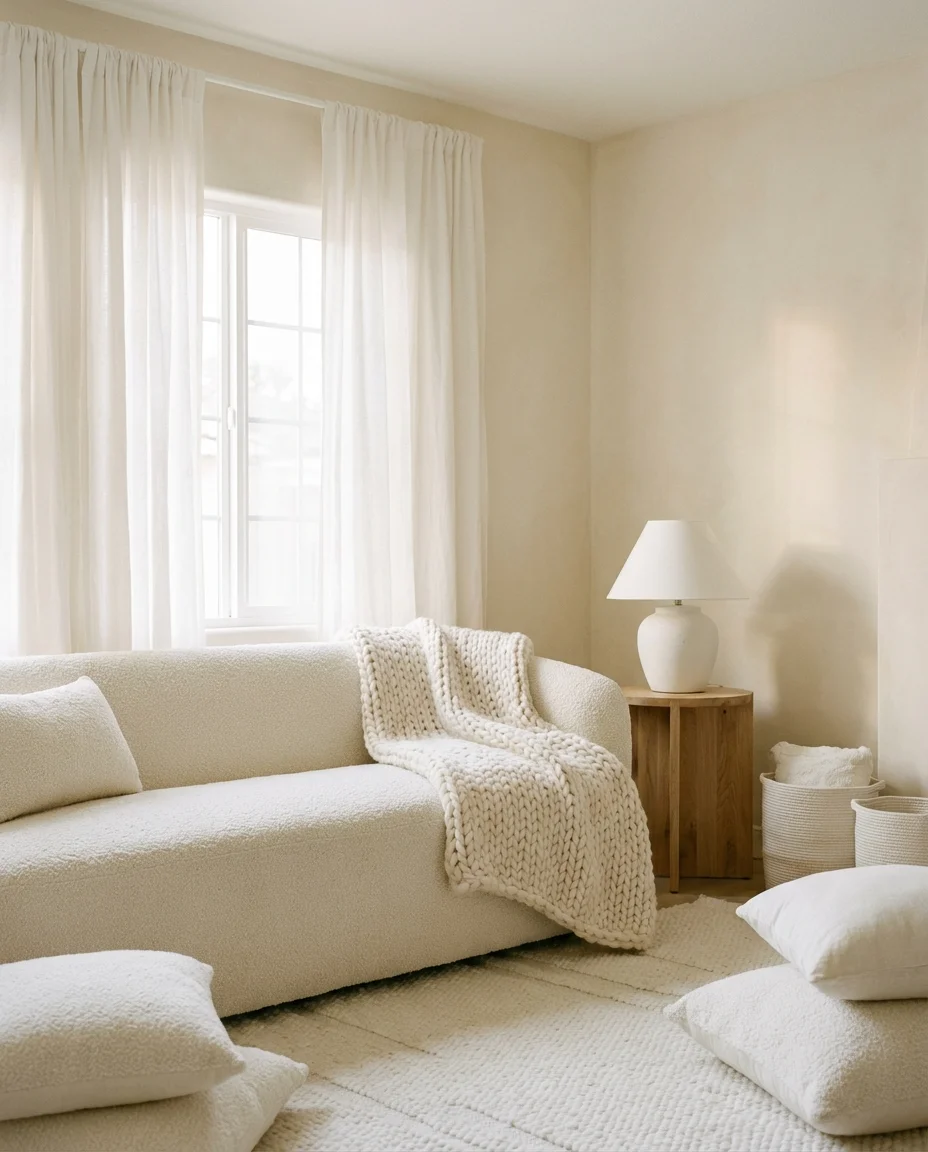
The all-white living room sounds simple but is notoriously hard to get right. Too many cool whites in a space can make it feel clinical and uninviting—but nail the right shades and the layering of textures, and a white living room becomes the most serene and enduringly beautiful space in the house. The key in 2026 is choosing whites with warmth in their undertones (creamy, ivory, or parchment) and building texture through fabrics: chunky linen, waffle cotton, knobby bouclé, and smooth plaster all read differently even in the same color family, which keeps the space visually interesting without introducing color.
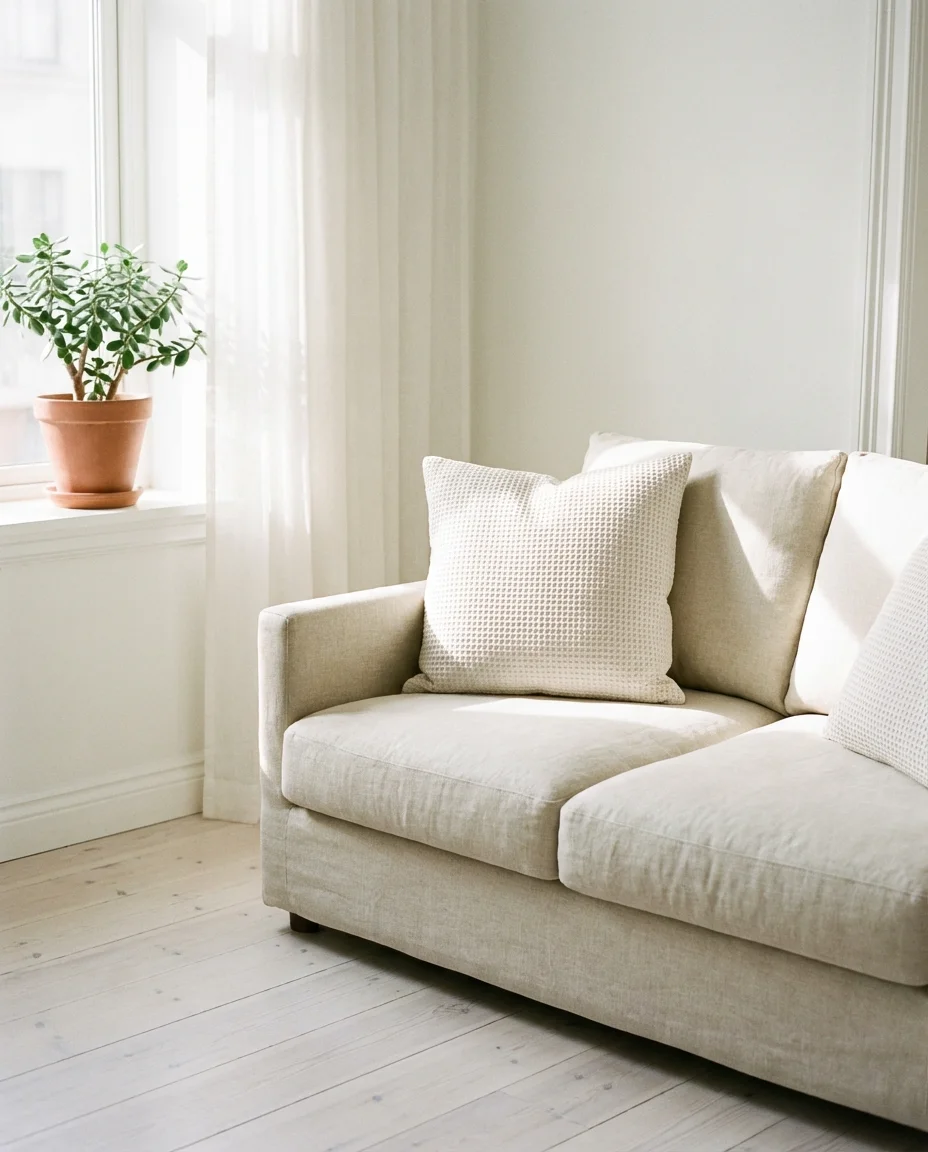
The biggest mistake in a white room is buying all the furniture at once from the same manufacturer. Even if everything is technically “white,” slight tonal variations between pieces will read as mistakes rather than intentional warmth. Instead, source pieces from different places and lean into the variation—a slightly creamier sofa next to a brighter white painted wall creates depth. Add one warm-toned natural element (a wood tray, a woven basket, or a single terracotta pot) to break the monotony and signal that the whiteness is a choice, not a default.
14. Indian-Inspired Living Room with Rich Textiles
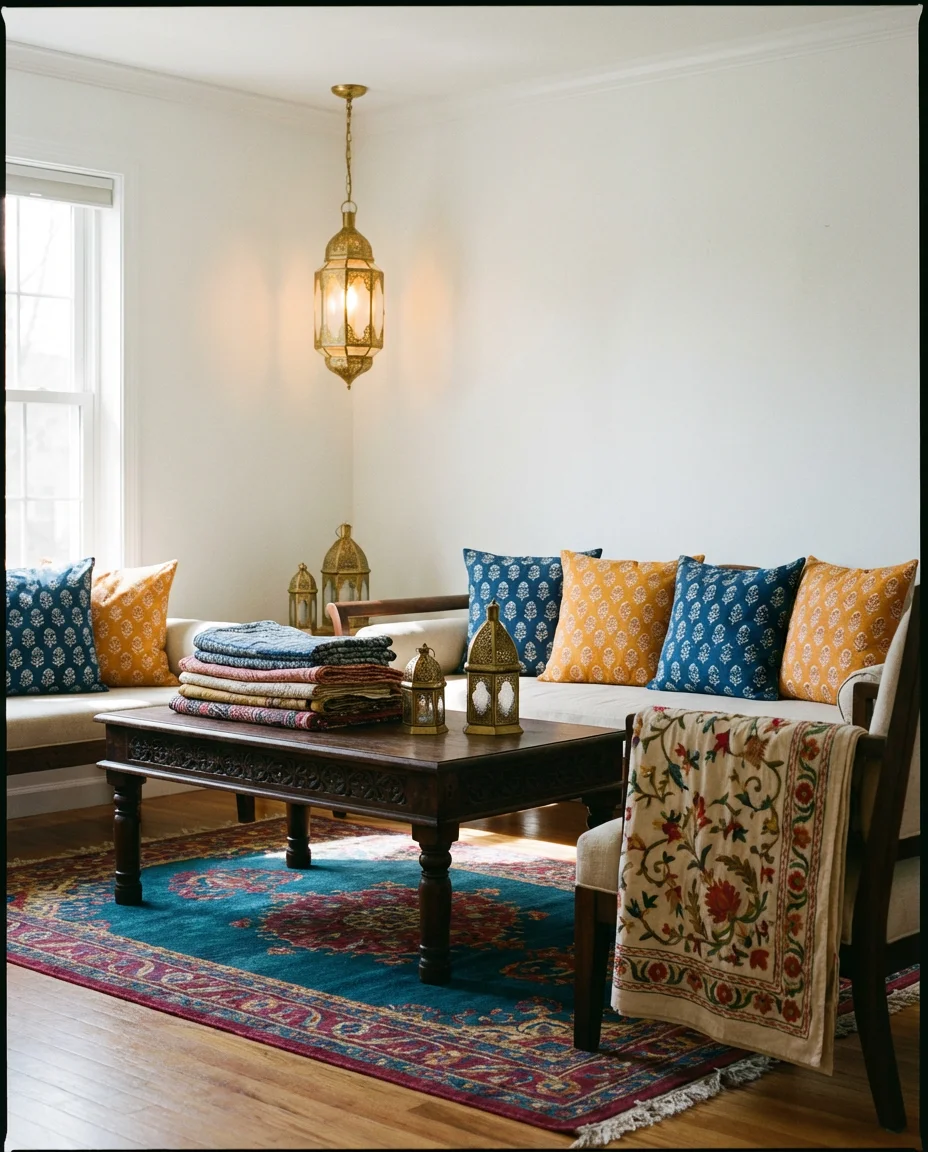
The Indian-inspired living room is increasingly showing up on American Pinterest boards, and the appeal is obvious: the combination of jewel-toned textiles, intricate block prints, carved wood furniture, and layers of pattern creates a richness that’s deeply sensory and unlike anything a purely Western design vocabulary can produce. In 2026, the look is being interpreted in a grounded, non-appropriative way—using genuine artisan-made textiles imported directly from Indian makers, pairing them with neutral walls and simple modern furniture so the textiles become the clear star of the space.
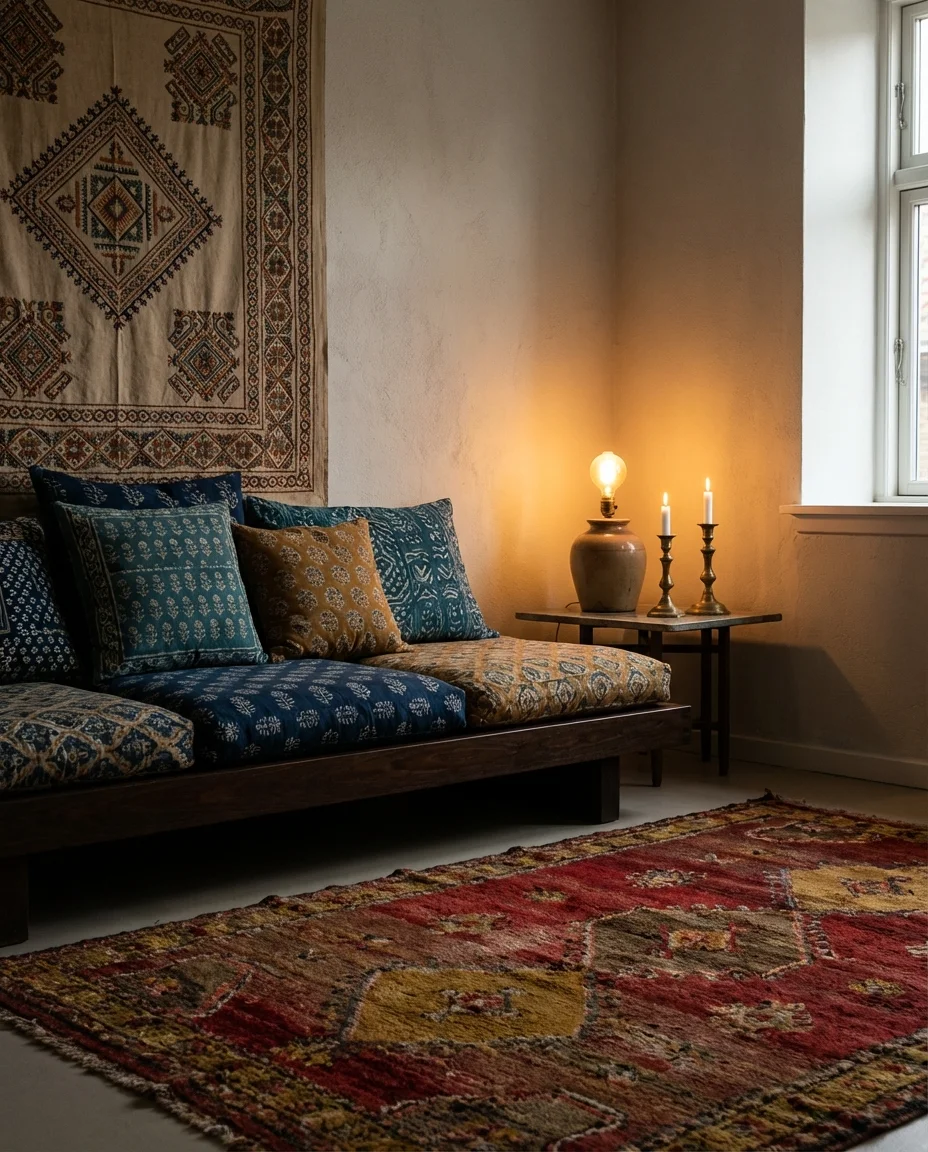
What makes this look work in contemporary American homes is confident mixing—using the textiles boldly but keeping the rest of the room simple enough that the patterns don’t compete with each other. A plain plaster or white drywall backdrop lets a heavily embroidered cushion or a complex dhurrie rug breathe. Sourcing matters enormously here: brands like Good Earth, Fab India, and several Etsy sellers working directly with artisans produce pieces that are both beautiful and ethically made, which matters to the consumers driving this trend.
15. Mood Board Layering for a Curated Look
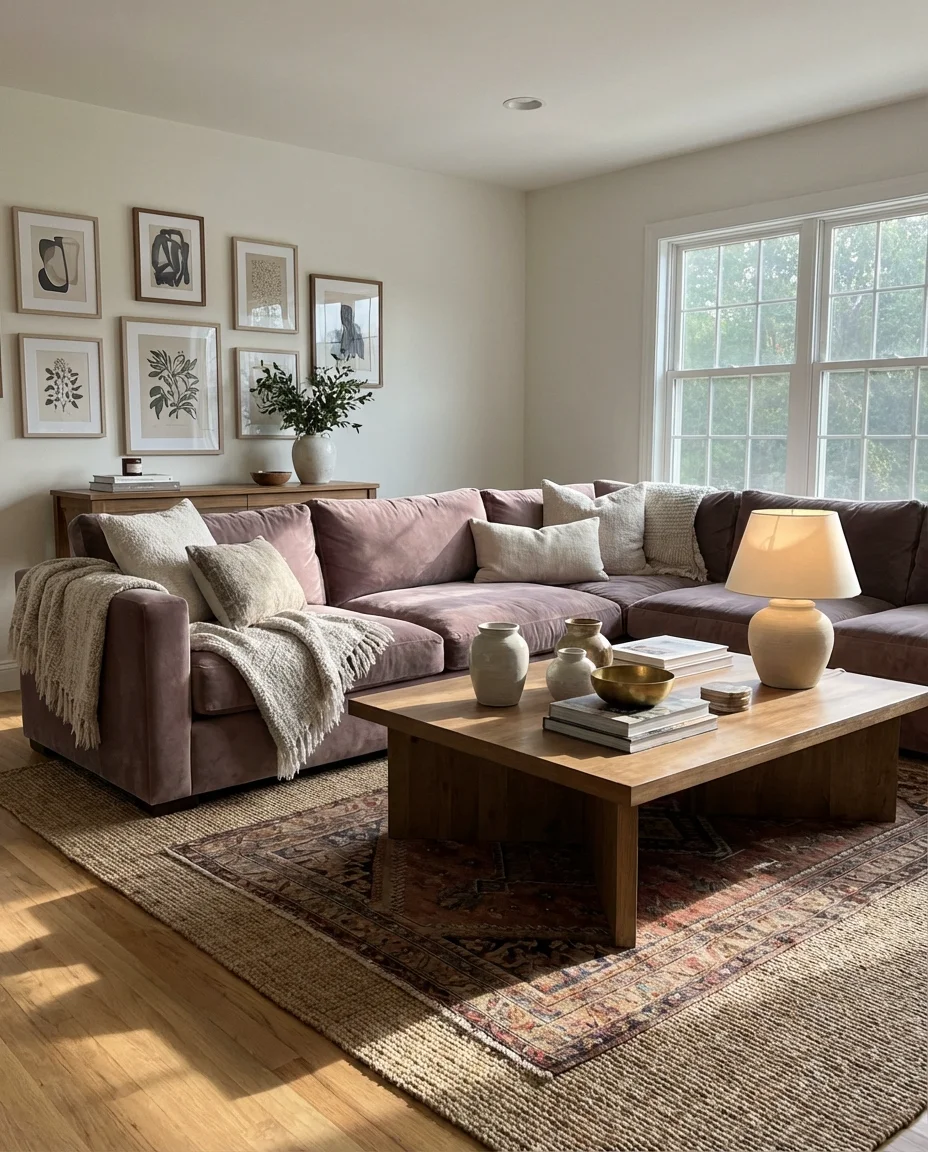
One of the most underrated design skills for creating a contemporary living room is learning to read a mood board—and more importantly, to create one before buying a single piece of furniture. In 2026, the process has become genuinely accessible through tools and platforms that let you pull images, textures, paint chips, and furniture references into a cohesive visual story before committing any money. The interior design professionals who do this for a living have known forever that the mood board catches problems early: the sofa that clashes with the rug, the paint color that reads completely differently at scale, and the lamp that shrinks a room rather than anchoring it.
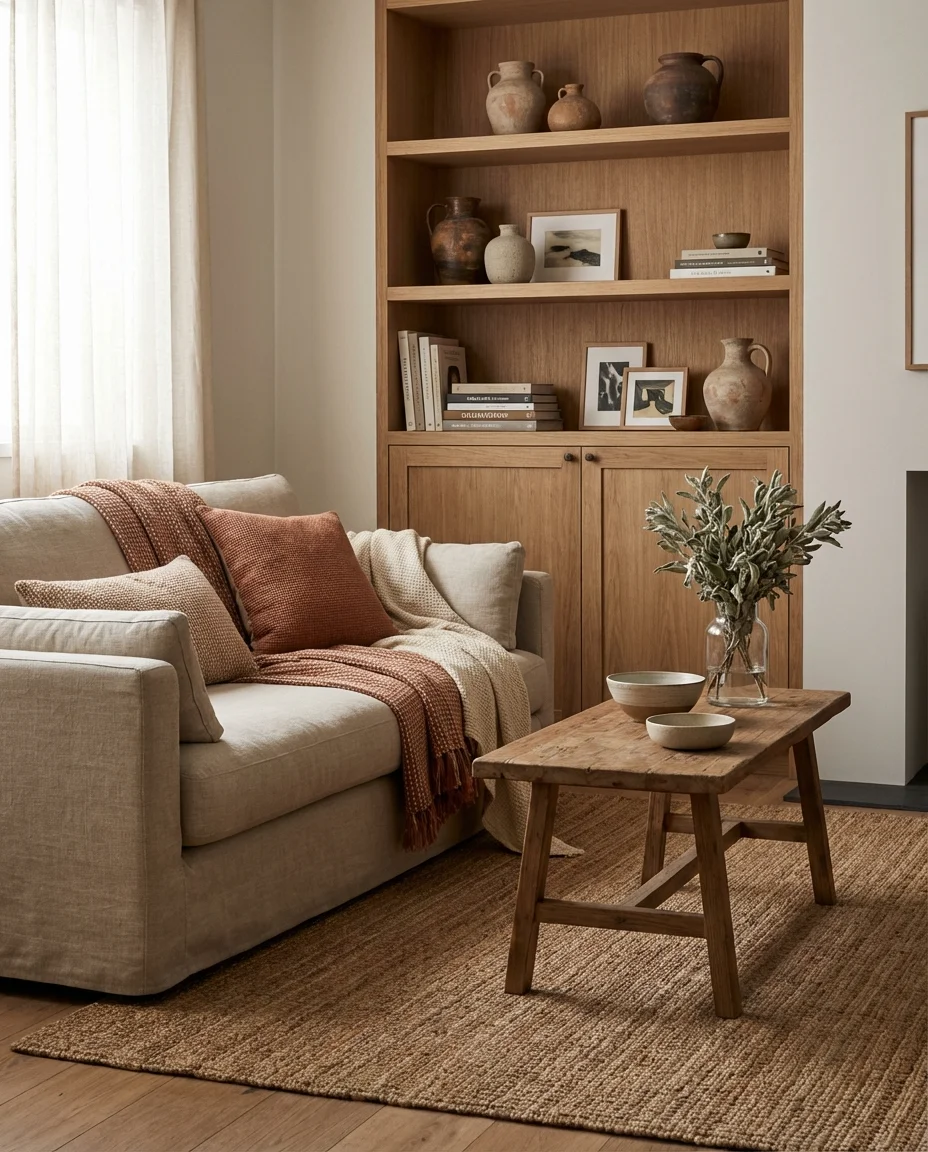
Real homeowners who’ve started using mood boards before decorating consistently report spending less money and ending up with rooms they love more. The process forces you to articulate what you actually want before impulse purchases and sale items start to make decisions for you. A simple digital board (even just a saved collection on Pinterest) where every single element has to earn its place before you buy it is one of the most practical design tools available to anyone, at any budget level. The key discipline is don’t shop until the board feels completely right.
16. Soft Feminine Living Room in Blush and Cream
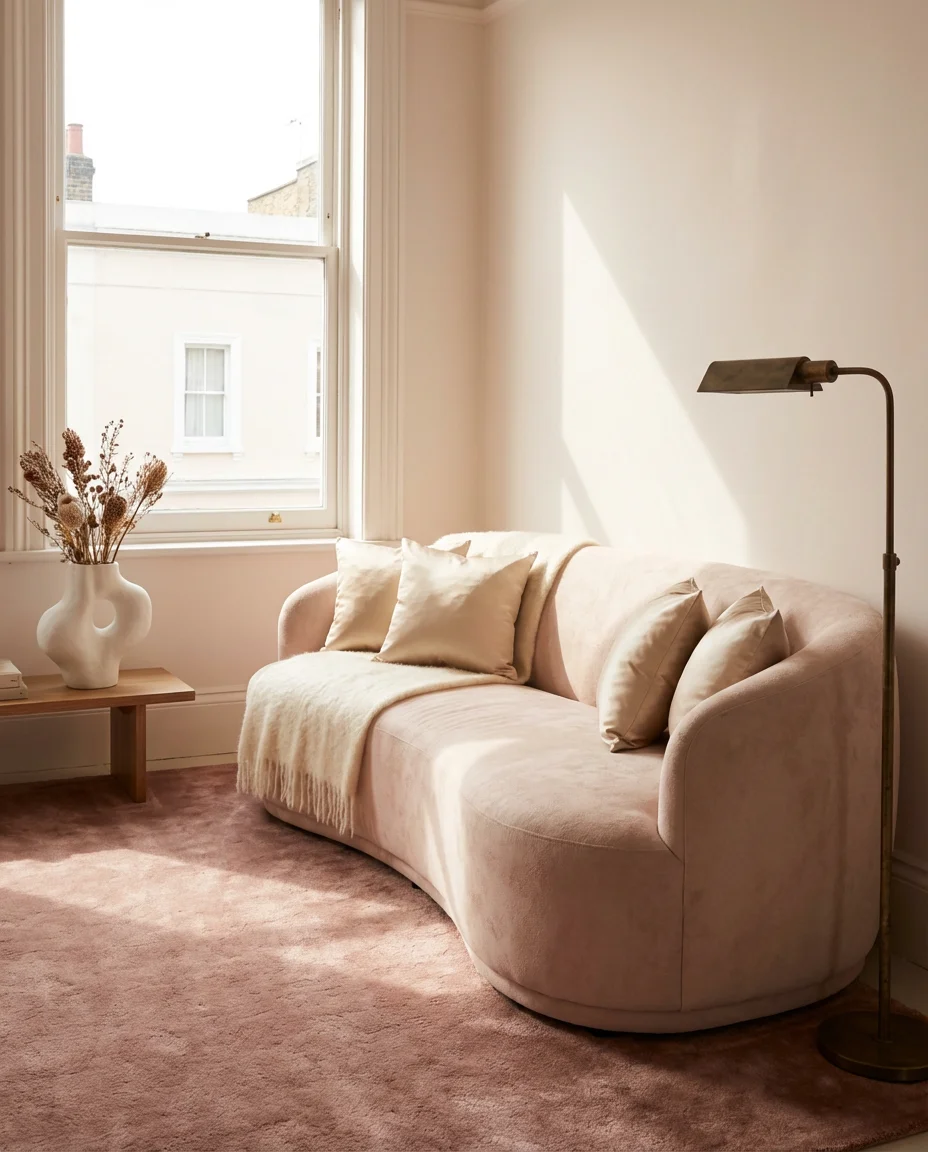
The soft, feminine living room is one of the most-saved aesthetics on Pinterest right now, and it’s considerably more sophisticated than the millennial pink interiors of a few years ago. In 2026, this look centers on a palette of blush, champagne, warm ivory, and dusty rose, built from materials that are luxuriously tactile: mohair throws, silk velvet cushions, curved furniture in plaster-finish paint, and sculptural ceramics in pale clay or matte white. The effect is dreamy without being saccharine—particularly when grounded by one or two deeper tones, like a dusty mauve rug or an aged bronze lamp.
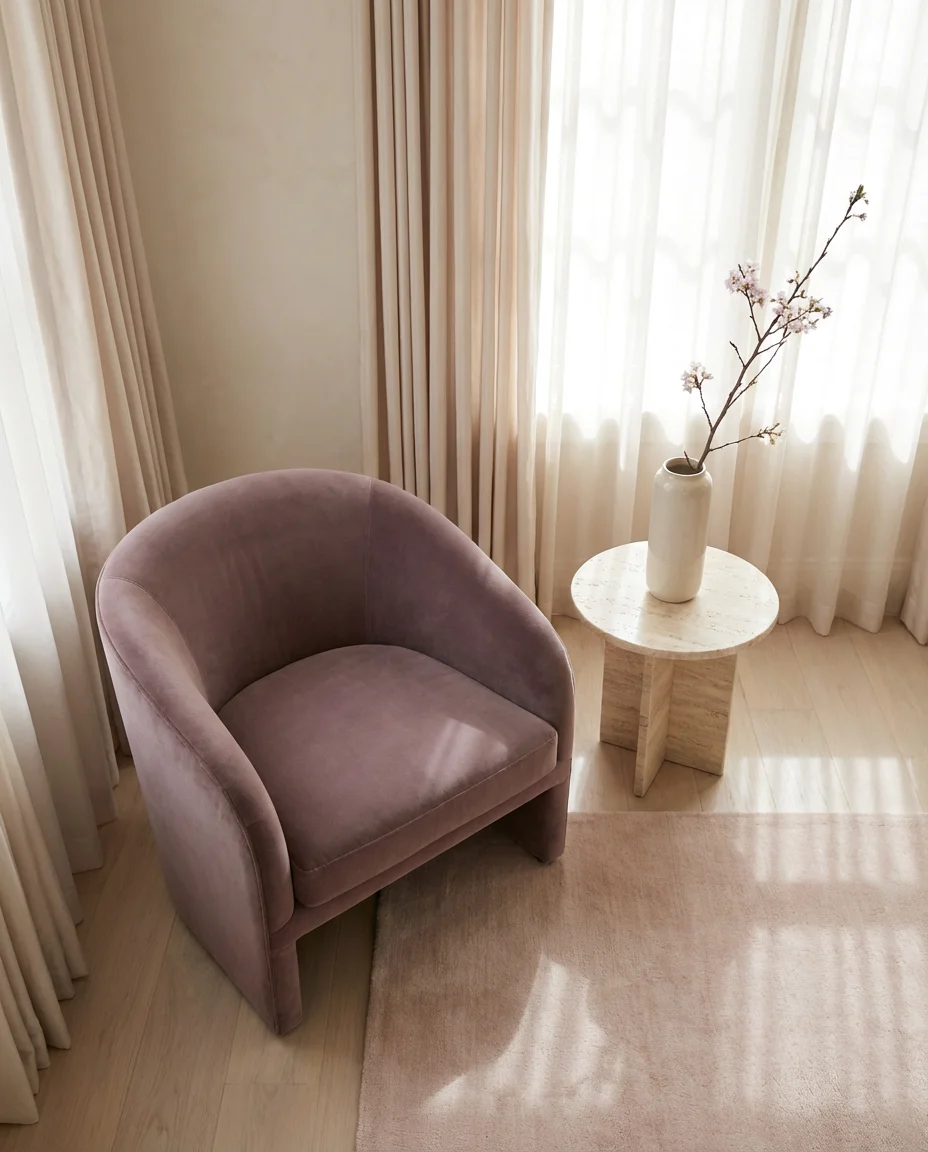
This style is particularly well-suited to bedrooms-converted-into-sitting-rooms in master suites, home offices with a living area, or dedicated “she sheds” and studio spaces. But it works just as well as a main living room when paired with the right architectural backdrop—high ceilings and large windows are ideal. The investment sweet spot is the sofa: a curved, pastel-colored sofa in quality velvet or bouclé is the anchor that makes everything else fall into place, and it’s worth allocating most of your budget here.
17. TV Unit Ideas for a Functional and Beautiful Wall
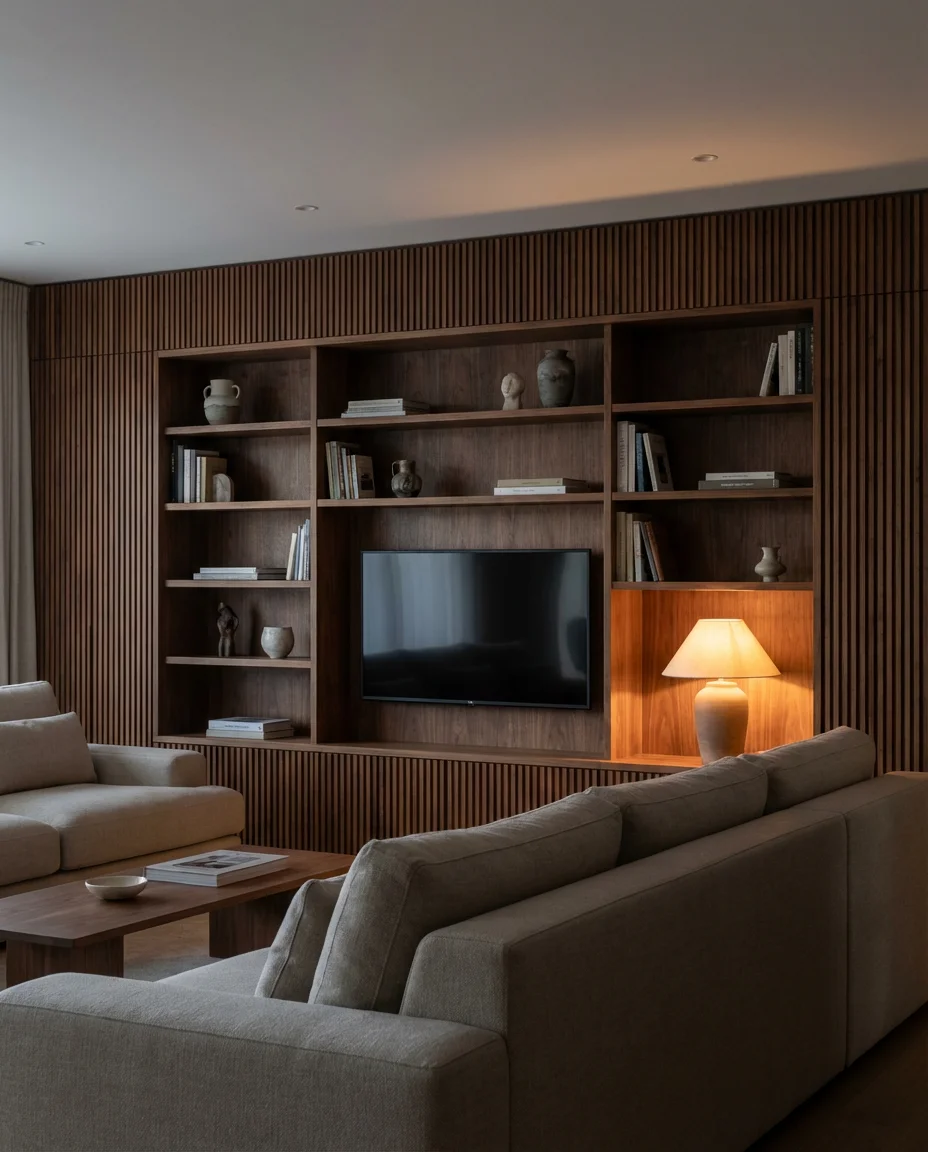
The TV unit wall is one of the most frustrating design challenges in the contemporary living room—the screen itself is rarely beautiful, and working around it while still making the wall look intentional requires some real creative thinking. In 2026, the most successful approaches treat the TV wall as a full architectural composition: built-in millwork with integrated storage and display shelving, limewash plaster backdrops, fluted wood panels, or floating wall systems that make the TV feel like part of a larger, considered composition rather than a box stuck on a bare wall.
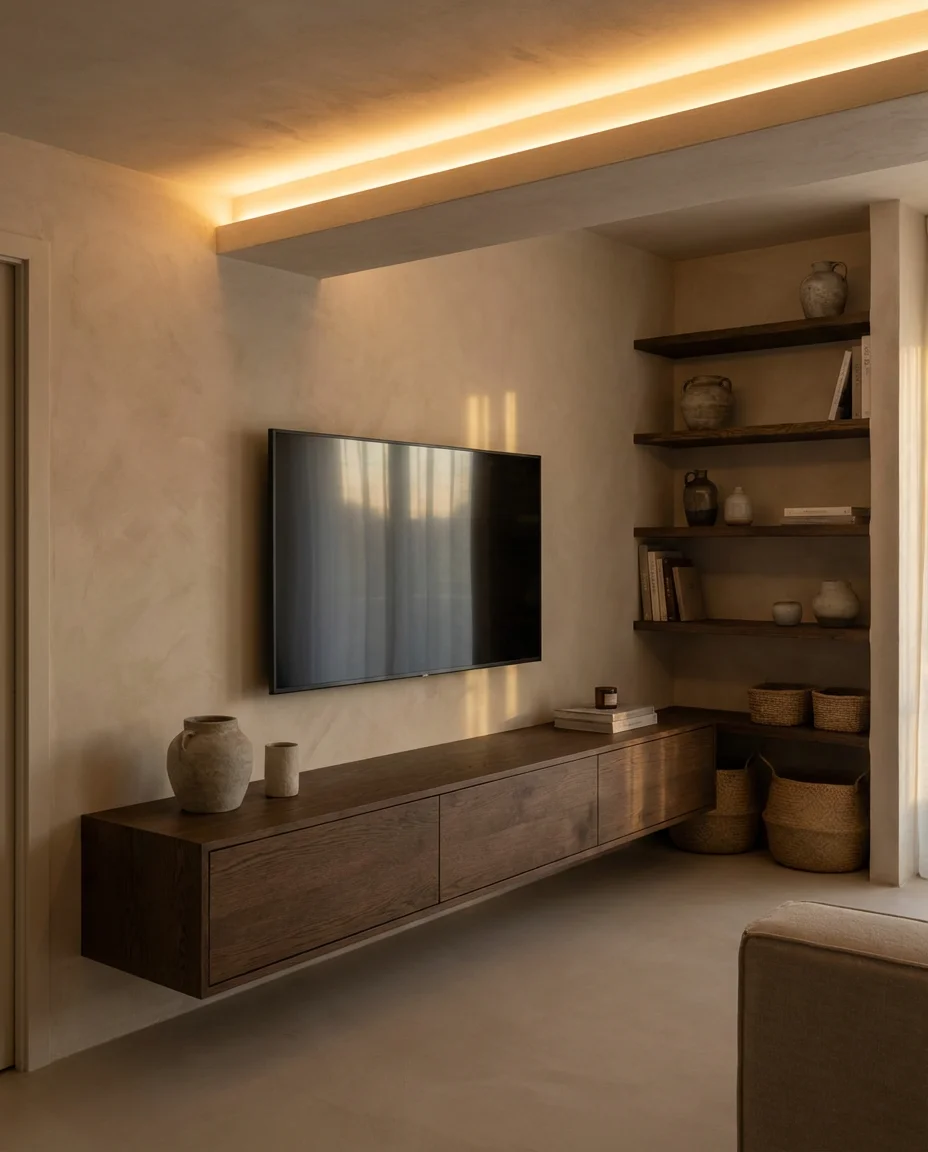
The biggest mistake homeowners make with TV walls is treating the screen as an afterthought in a room they’ve otherwise decorated carefully. Cords are the enemy—wireless cable management systems and in-wall conduits are worth every penny. If built-ins aren’t in your budget, a well-styled floating media unit paired with a single large-scale art piece hung to one side (rather than directly above or below the TV) creates a much more intentional composition than leaving the wall bare around the screen.
18. Elegant Living Room with Architectural Details
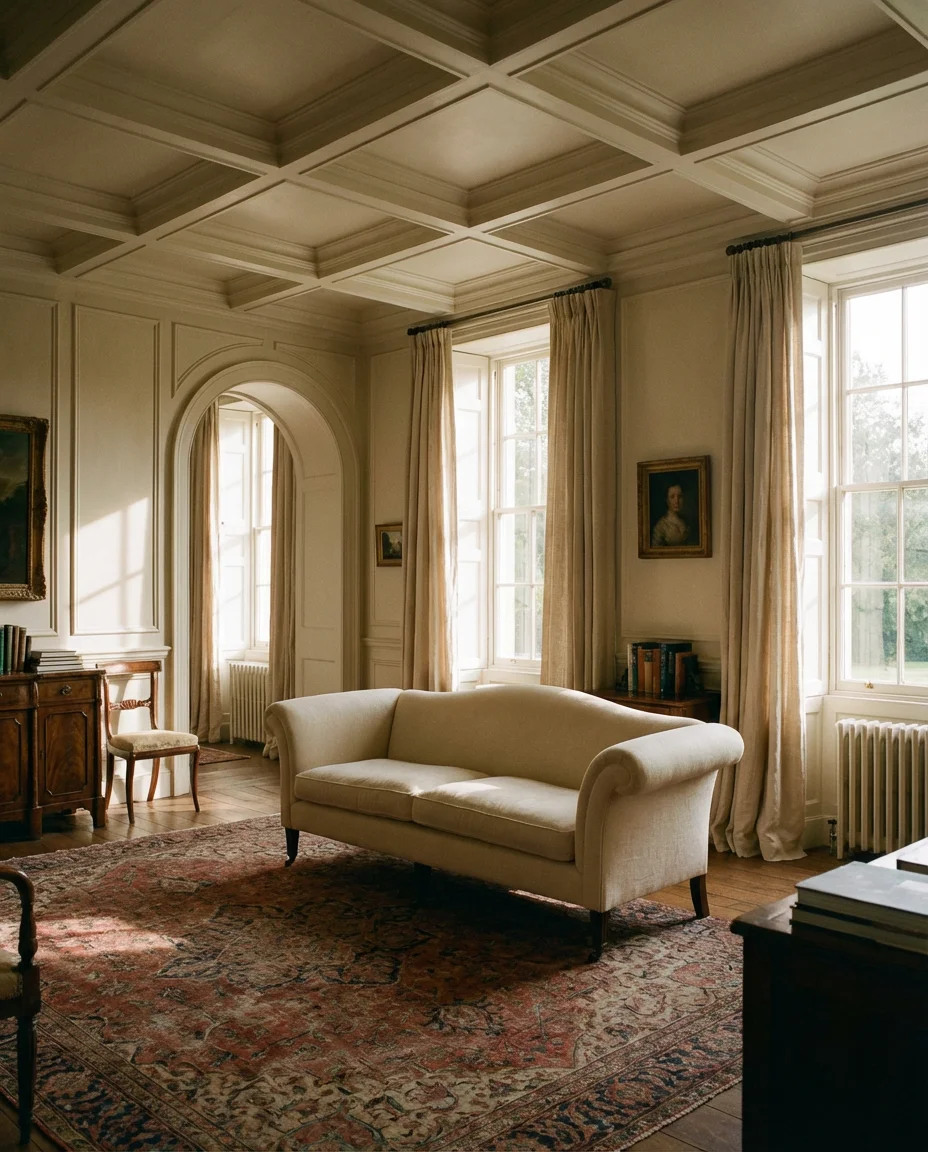
True elegant living rooms in 2026 are defined as much by what’s built into the architecture as by what’s placed in them. Coffered ceilings, arched doorways, wainscoting, deep window reveals, and plaster moldings are the bones that allow a room to achieve a level of sophistication that furniture alone simply cannot deliver. The design ideas centered on architectural elegance always photograph beautifully—and more importantly, they look better in person than in photographs, which is increasingly the benchmark sophisticated homeowners are using. When the architecture is doing heavy lifting, the furniture choices can actually become simpler and still read as refined.
For older American homes in the South, Northeast, or Midwest, these architectural features are often already present—and uncovering or restoring them is one of the highest-ROI renovation projects you can undertake. Stripping painted-over moldings, replacing hollow-core doors with solid wood, or adding wainscoting to a plain room are all relatively accessible projects. In newer construction, adding even one architectural element—an arched pass-through between rooms or a coffered detail in a flat ceiling—can transform the entire character of a living space.
19. Inspiration-Driven Living Room Using Art as Anchor
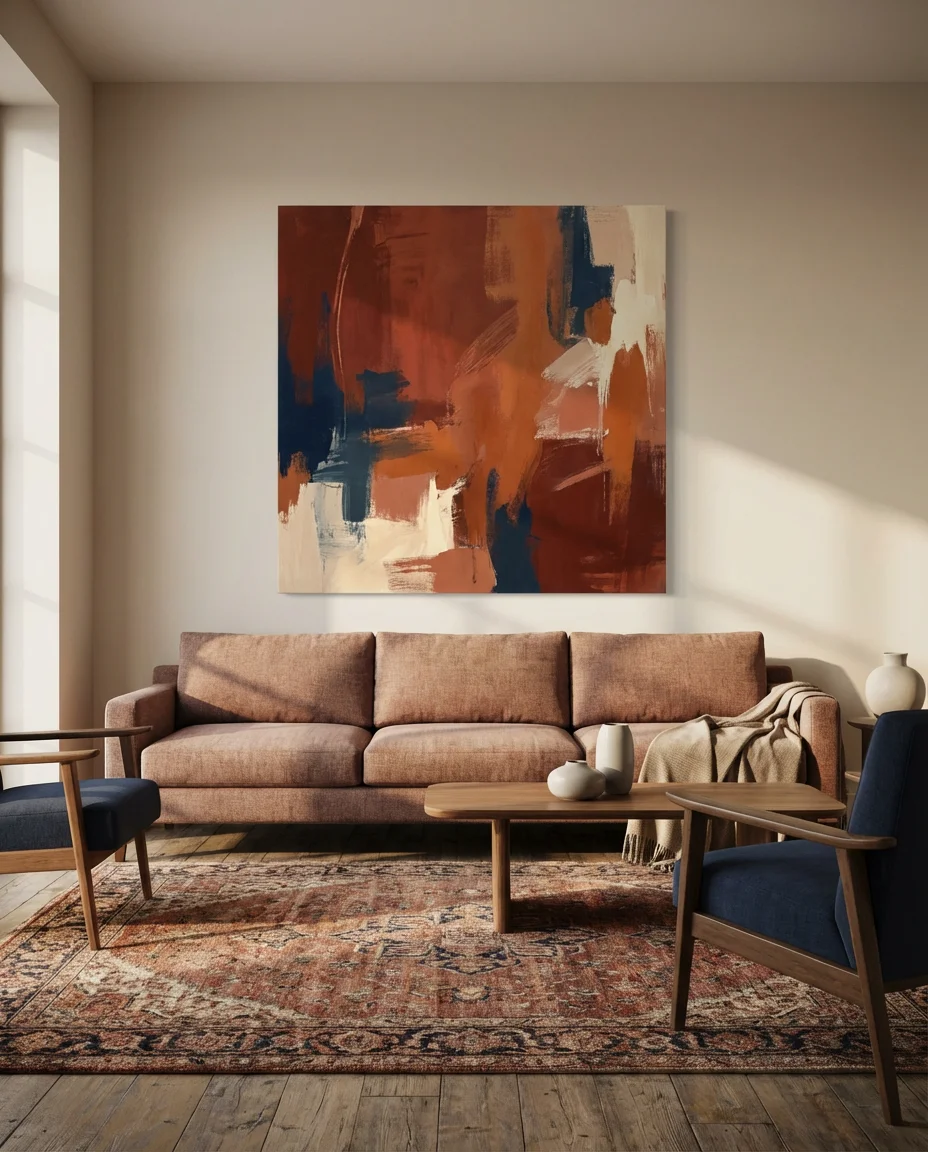
One of the most creatively satisfying approaches to designing a contemporary living room is letting a single piece of art—or a collection of art—drive every other decision. The inspiration might be a large-scale abstract painting in terracotta, rust, and deep navy that determines your sofa color, your rug pattern, and your accent choices. Or it might be a collection of smaller works in related frames that establishes a mood board for the entire space. This art-first approach tends to produce rooms with genuine character, because the anchor piece is usually something the homeowner loves deeply rather than something chosen to match a sofa.
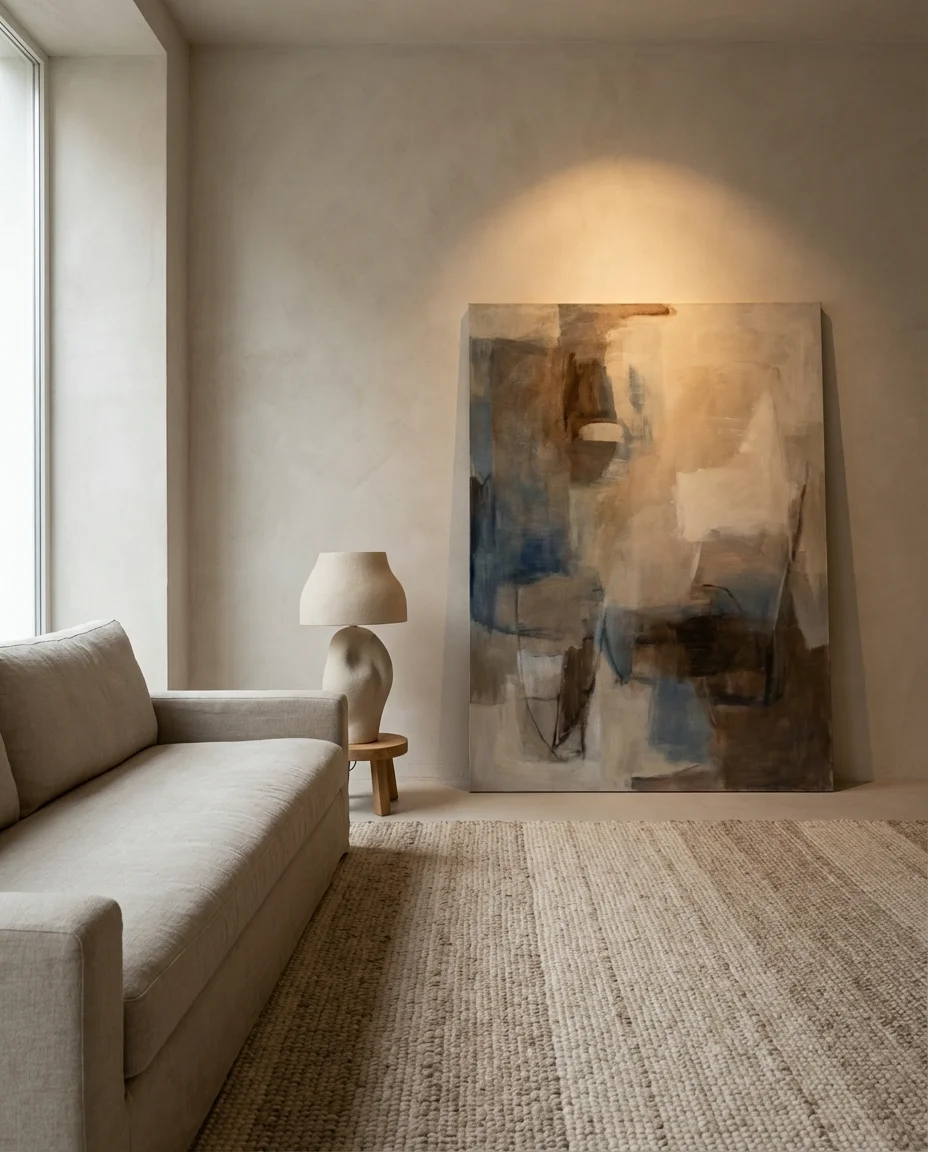
The practical challenge with this approach is finding the art first. Most people decorate the room and then try to find art that fits—but that typically produces generic, safe choices. Instead, try visiting local galleries, art fairs, or platforms like Saatchi Art before you’ve bought a single piece of furniture. When you find something that genuinely moves you, build the room outward from it. You’ll end up with a space that has a narrative and emotional resonance that rooms designed around furniture catalogs simply never achieve.
20. Interior Design Ideas for Open-Plan Living Rooms
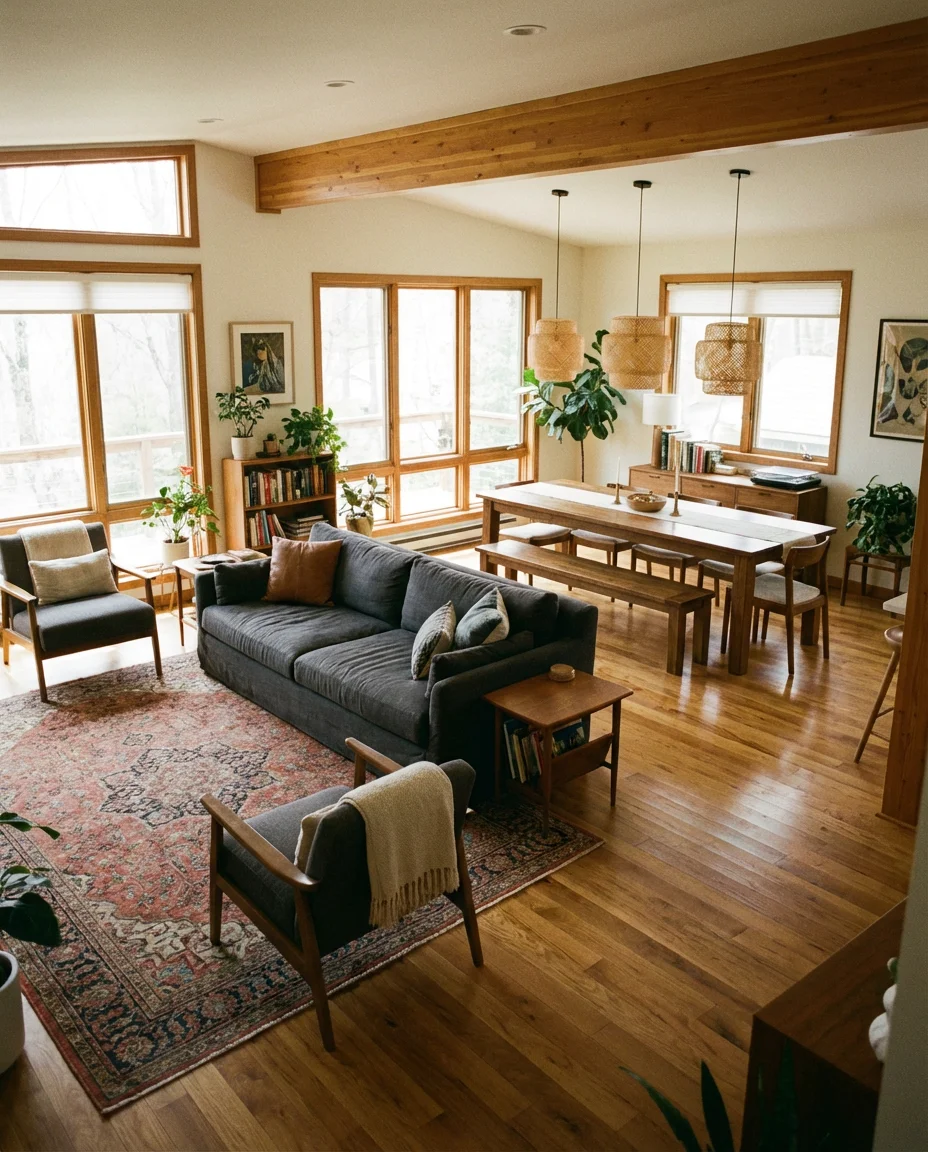
Open-plan living rooms present a unique set of interior design challenges that the best design ideas of 2026 are addressing with increasing confidence. The biggest issue is almost always zone definition—without walls, the living area can bleed into the kitchen or dining zone in a way that makes the whole space feel undefined and visually restless. The solution is a combination of tools: area rugs to anchor each zone, consistent but differentiated lighting (pendants over dining, floor lamps in living), and a sofa strategically positioned with its back to the kitchen to create an implied boundary without blocking light or sightlines.
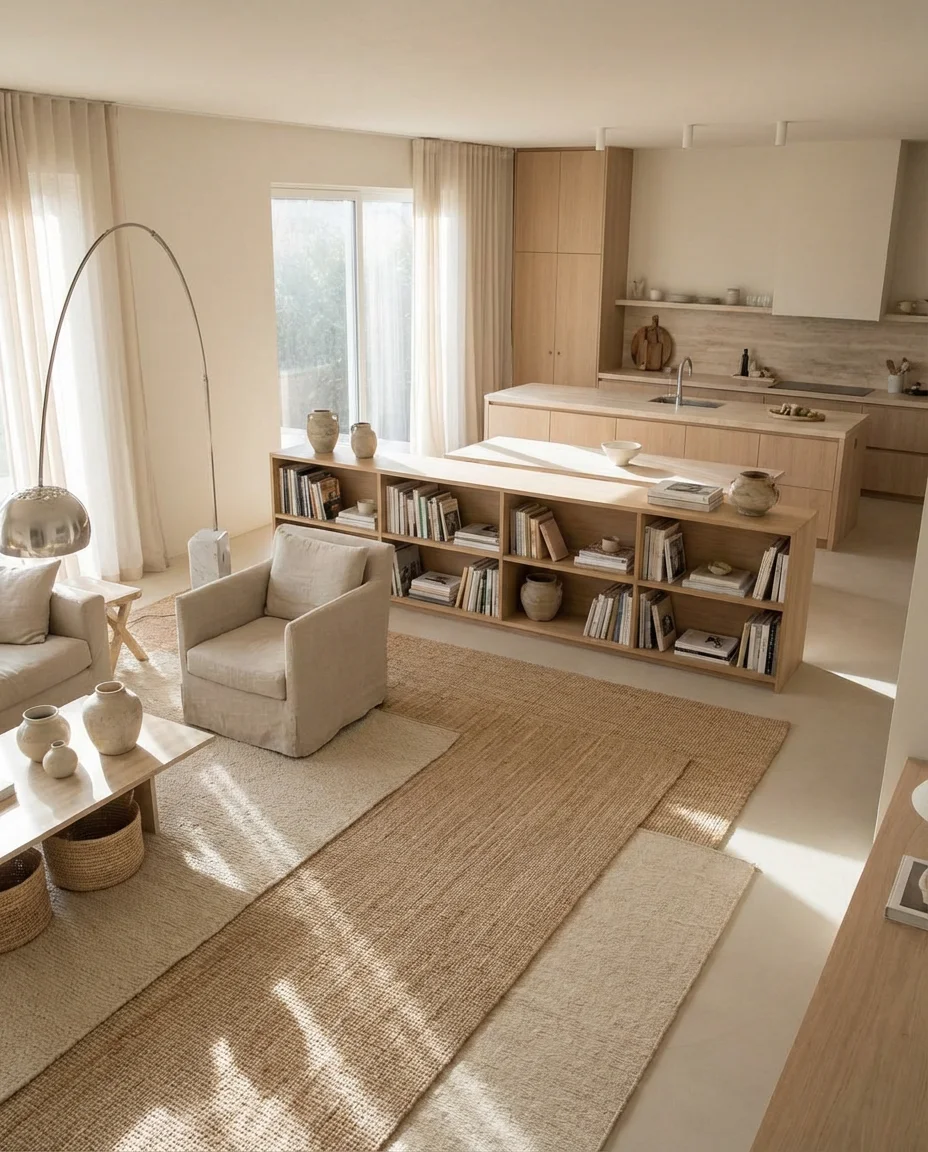
A low bookshelf or a console table placed behind the sofa is one of the cleverest zone-defining tools in open-plan spaces—it creates a visual boundary without blocking light, and it adds a surface for lamps and styling that makes the living area feel complete on all sides. This works best when the shelving or console shares a material language with the rest of the room, so it reads as intentional furniture rather than a room divider repurposed from a different space in the house.
21. Dark Cozy Walls with Warm Candlelit Atmosphere
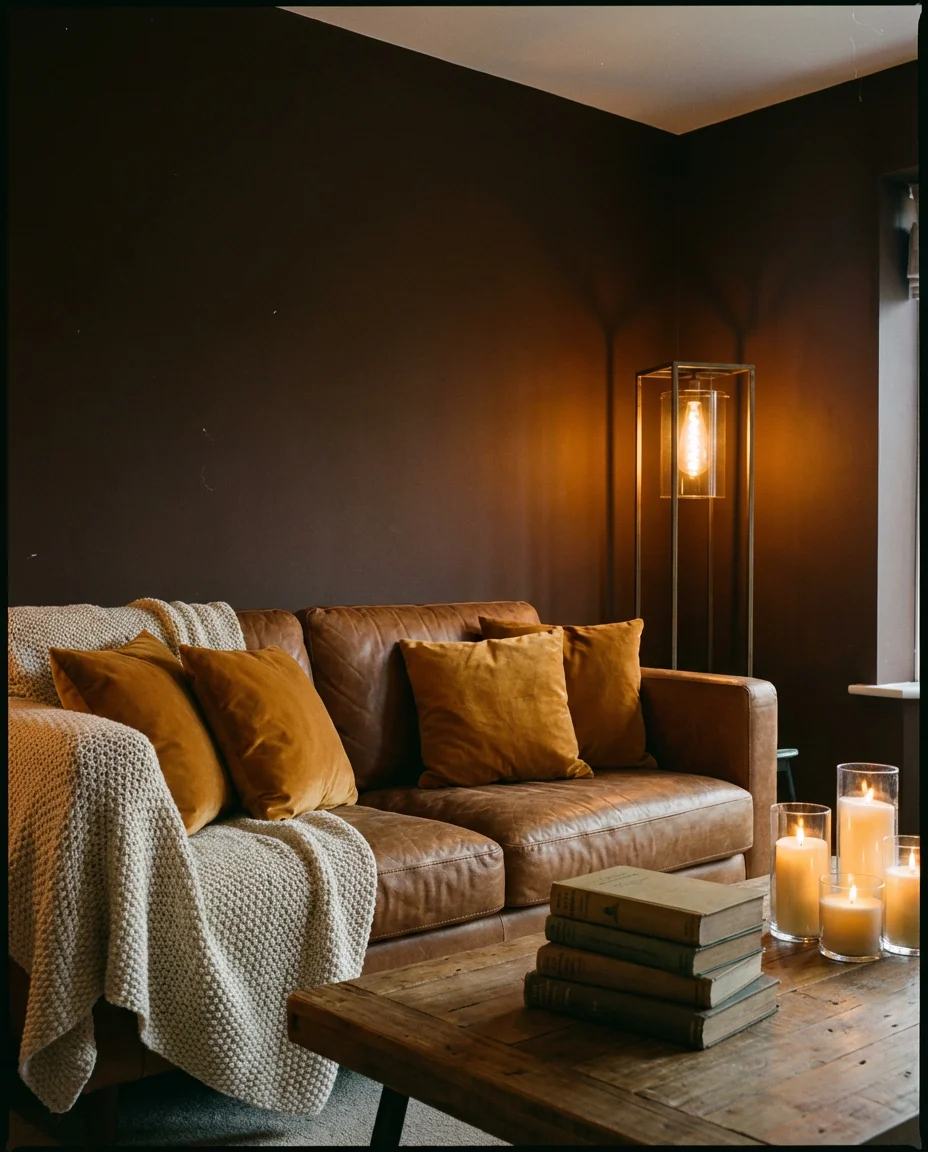
The combination of dark, paint-drenched walls with cozy, layered soft furnishings and warm, low-level candlelit light is one of the most evocative living room atmospheres possible—and in 2026, American homeowners are increasingly brave enough to commit to it. Think deep chocolate brown, forest green, or inky plum walls paired with a sofa in caramel leather or amber velvet, chunky knit blankets, stacks of books, and an abundance of candles and warm-glow Edison bulbs. This is a room built for long evenings, slow mornings, and the kind of atmospheric comfort that makes you genuinely reluctant to leave the house.
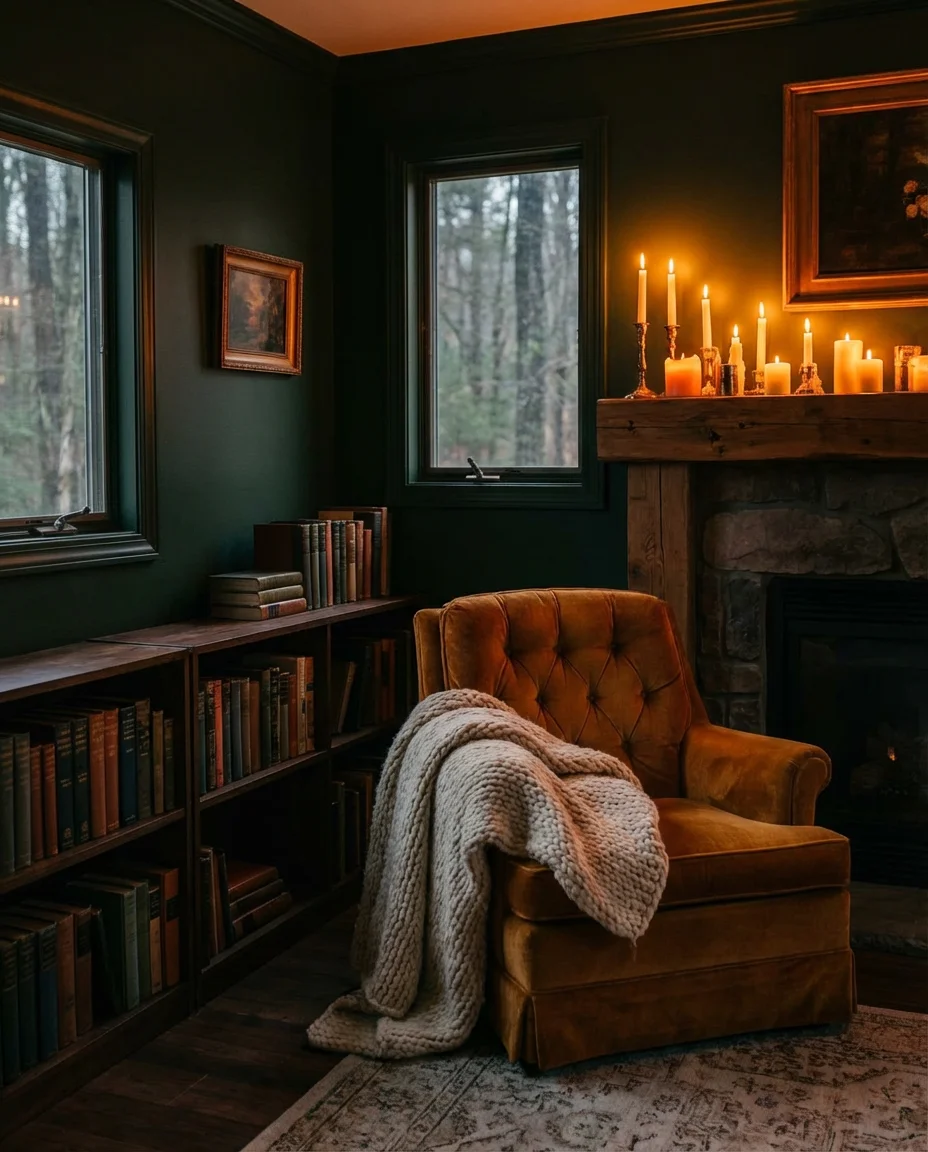
The fear most people have about dark walls is that they’ll make a room feel smaller and more oppressive. In practice, when done correctly—with warm rather than cool dark tones, and with the lighting layered thoughtfully—the opposite is true. The room feels boundless because the walls recede into shadow. The key is never relying on overhead lighting; table lamps, floor lamps, candles, and firelight are what make a dark room feel romantic rather than gloomy. Budget-wise, a single can of deep, rich paint is one of the most transformative and least expensive changes you can make to a living room.
22. Classic Fireplace Living Room as a Year-Round Focal Point
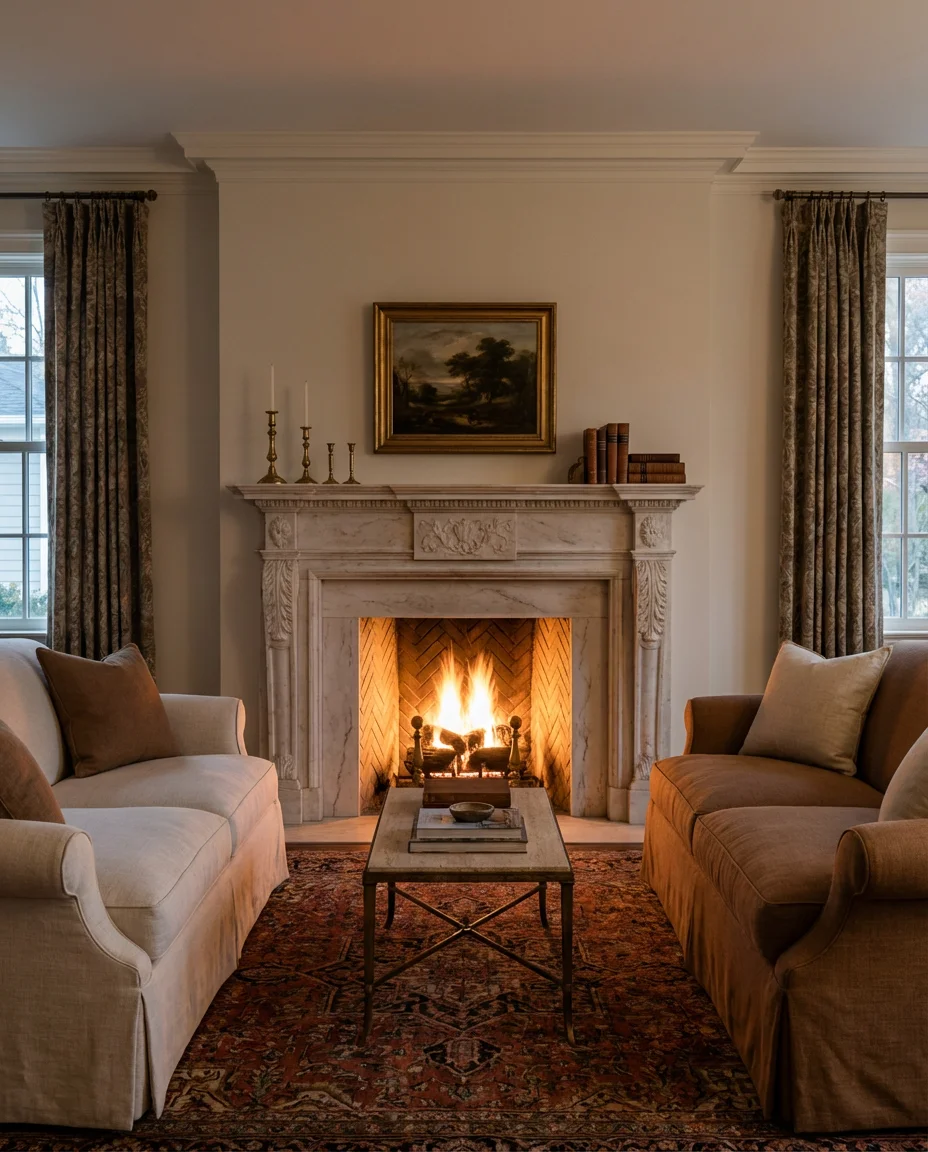
The fireplace has been the classic organizing focal point of living rooms for centuries, and in 2026 it remains one of the most desired features in any American home—not just for warmth, but as a design anchor around which everything else in the room naturally organizes itself. Whether you have an original masonry fireplace or a more contemporary concrete or plaster surround, the mantle and hearth are a styling opportunity that pays dividends year-round. In warmer months, a well-styled cold fireplace filled with pillar candles, sculptural branches, or stacked logs can be as visually compelling as a lit one.
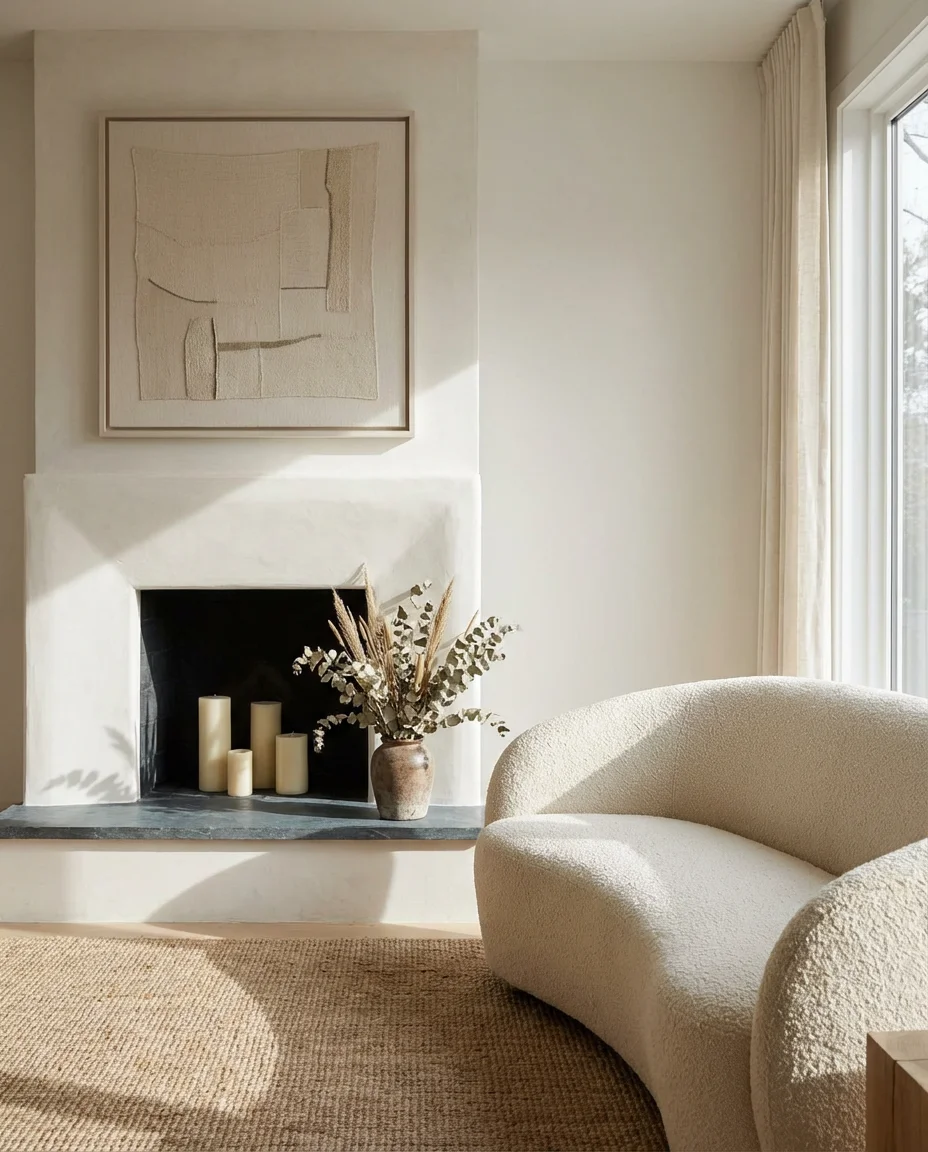
In regions like New England, the upper Midwest, and the Mountain West, a working fireplace is genuinely functional for several months of the year. But even in Southern states like Georgia and Texas, where a fire is a rarity, homes with fireplaces consistently command a premium in real estate—the purely psychological comfort of having one is apparently universal. If you’re renovating, updating a dated brick fireplace with a plaster or limewash treatment is a relatively low-cost project that can completely transform a room’s aesthetic from rustic-traditional to contemporary.
23. Minimal Living Room with One Statement Piece
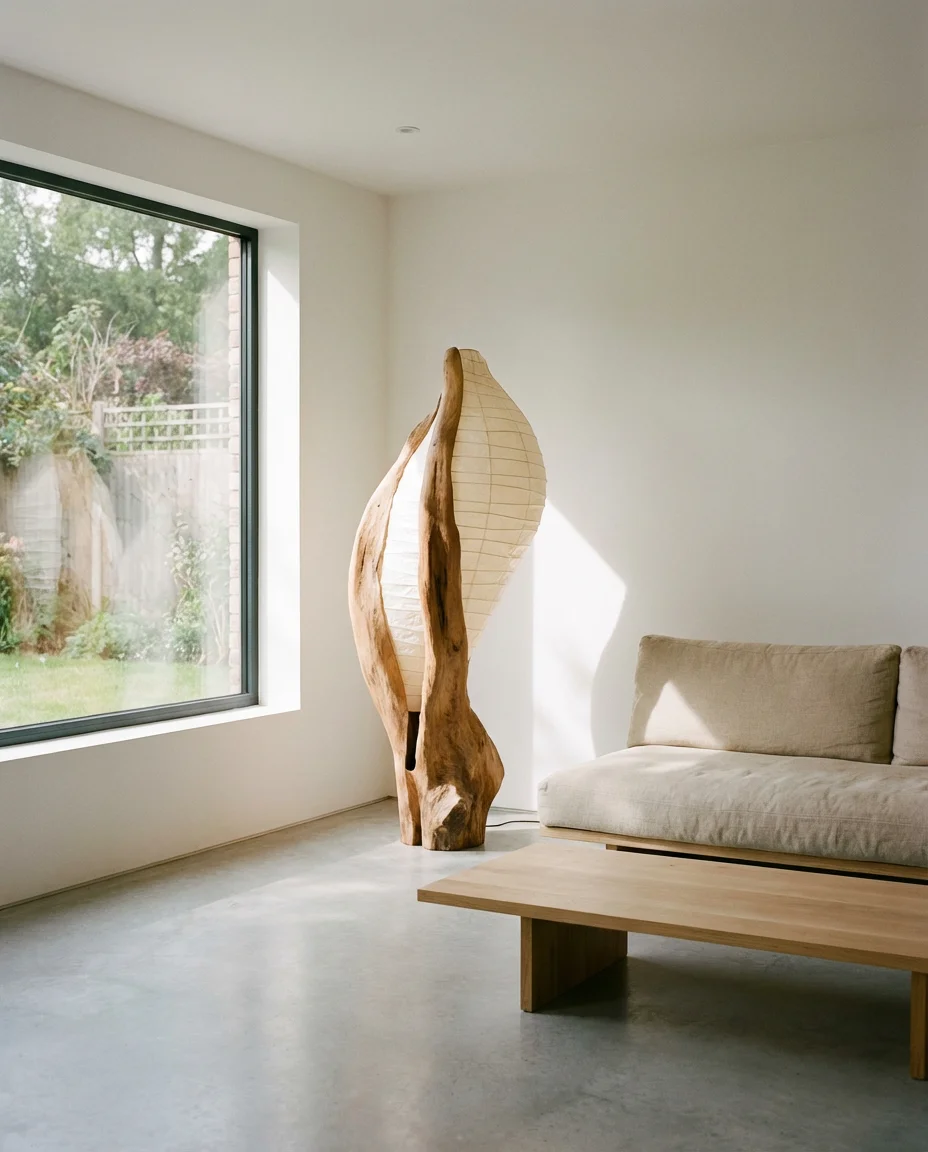
The truly minimal living room is one of the hardest looks to achieve well, because it requires absolute discipline—and the courage to invest meaningfully in one or two pieces rather than filling a room with affordable alternatives. In 2026, the most compelling minimal rooms are built around a single statement piece: an enormous sectional in a color that commands attention, a sculptural light fixture that becomes the room’s visual center, or an oversized abstract painting that anchors an otherwise bare wall. Everything else in the room exists to support that one focal object, which means the editing process is as creative as the selection process.
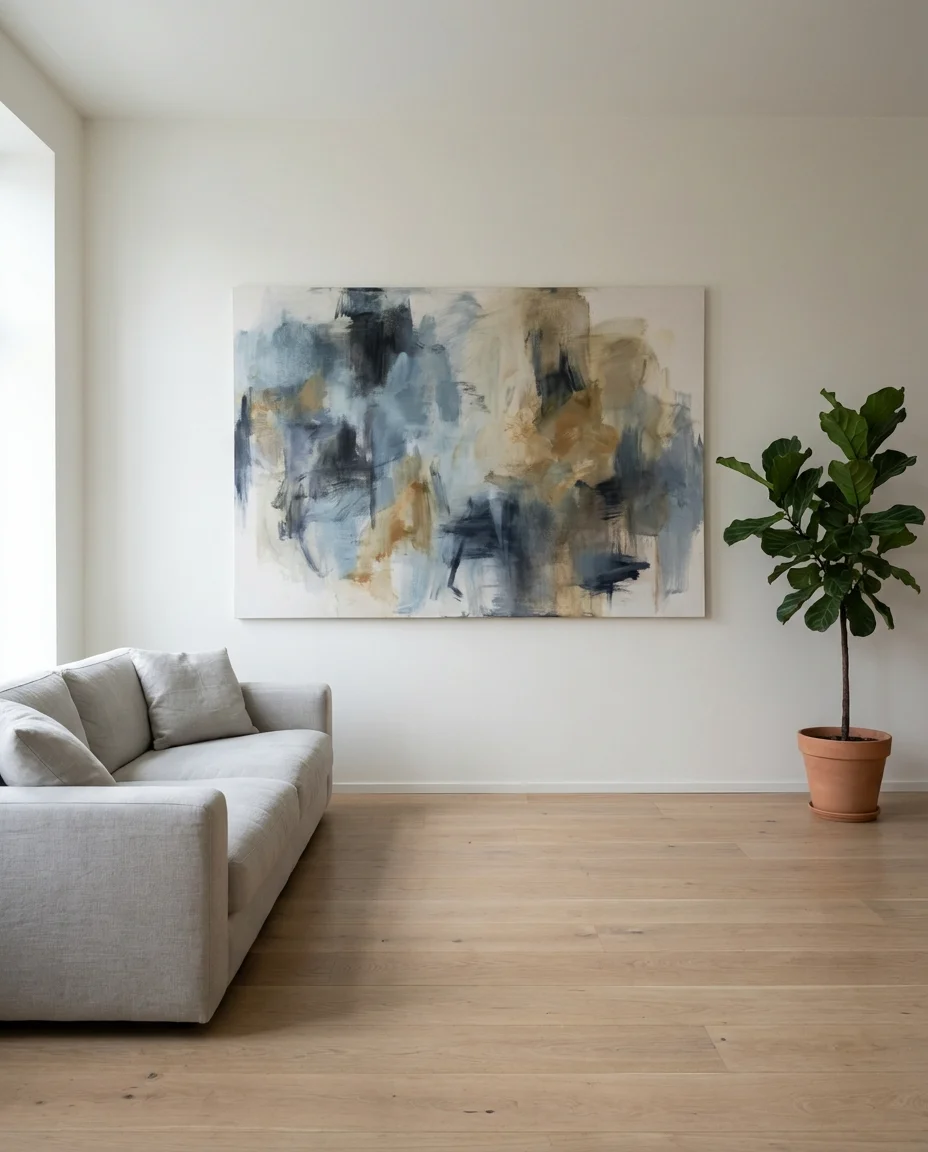
Where this look works best is in new construction homes with clean architecture—high ceilings, large windows, and no ornamental molding to compete with. But it can also be incredibly effective as a deliberate counterpoint in an older home with strong character. The single most important thing to understand about minimal rooms is that they require more maintenance—a pile of mail on a linen sofa, a stray charging cable, a half-empty water glass—these things are invisible in a maximalist room and glaring in a minimal one. It’s a lifestyle choice as much as an aesthetic one.
24. Contemporary Living Room Design Ideas for 2026 — The Edit
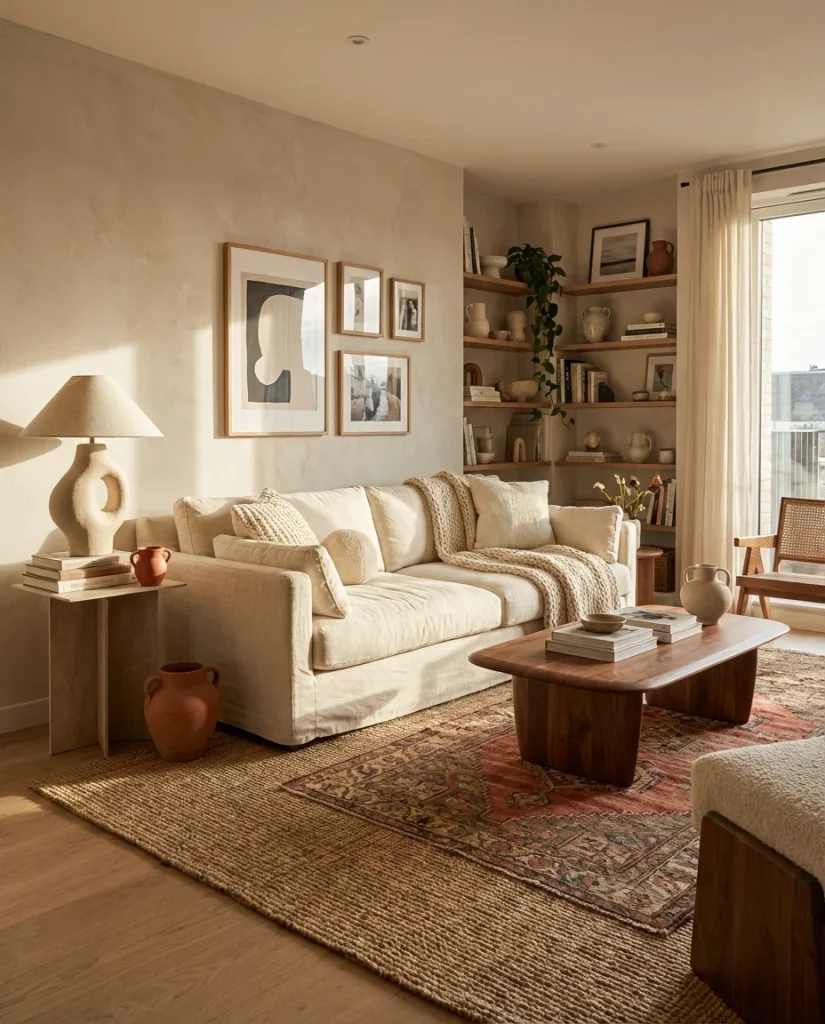
If there’s one overarching theme connecting all the best contemporary living rooms of 2026, it’s intentionality. Whether you’re drawn to the dramatic richness of a moody, jewel-toned space or the serene emptiness of a Japandi-influenced minimal room, the spaces that feel most current—and most genuinely beautiful—are the ones where every single choice has been made on purpose. The interior design conversation has collectively shifted away from following trends toward building rooms that reflect actual personalities, actual lifestyles, and actual ways of living. That shift is what makes this such an exciting moment in home design.
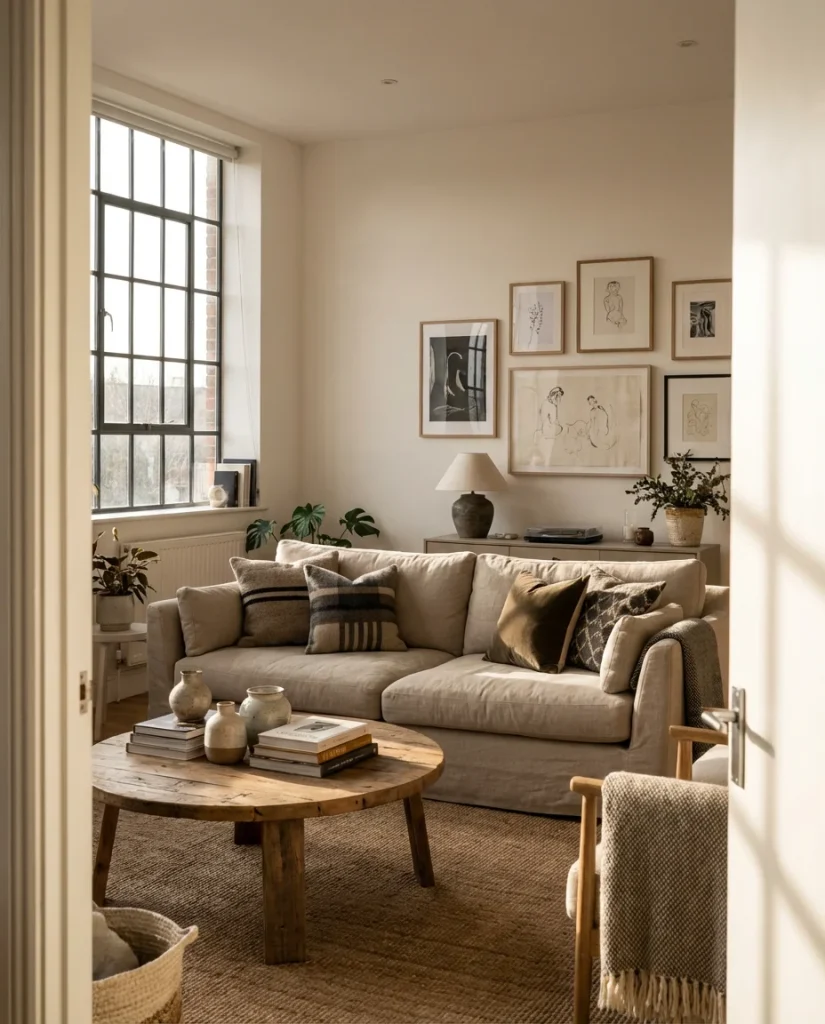
The most powerful thing you can take from all 24 of these ideas is permission—permission to combine aesthetics that aren’t “supposed” to go together, to invest unevenly in the pieces that matter most to you, and to change your mind as your taste evolves. A living room is never finished; the best ones are always slowly becoming. What they all share is a quality of presence—a sense that someone who actually lives there made it exactly this way, on purpose, and loves it. That’s the goal in 2026, and it always will be.
Conclusion
Which of these living room directions speaks most to you? Are you leaning into moody dark walls this year, or has the Japandi-minimal look been calling your name for months? Drop your thoughts, questions, and even photos of your own spaces in the comments—we read every single one, and there’s nothing we love more than seeing how you make these ideas your own.