As we step into 2026, the way we organize our desks has become less about rigid systems and more about creating spaces that feel personal, productive, and visually inspiring. Americans are turning to Pinterest in droves—searching for desk setups that balance function with beauty, whether they’re designing a home office corner, a student study zone, or a creative workspace. The rise of hybrid work, side hustles, and multi-use rooms means our desks now need to do more than ever, and the solutions people are seeking reflect a desire for calm, creativity, and control in everyday life. In this article, you’ll discover thoughtful desk organization ideas that blend practicality with aesthetic appeal, helping you design a workspace that works as hard as you do.
1. Layered Desktop Organizers for Visual Balance
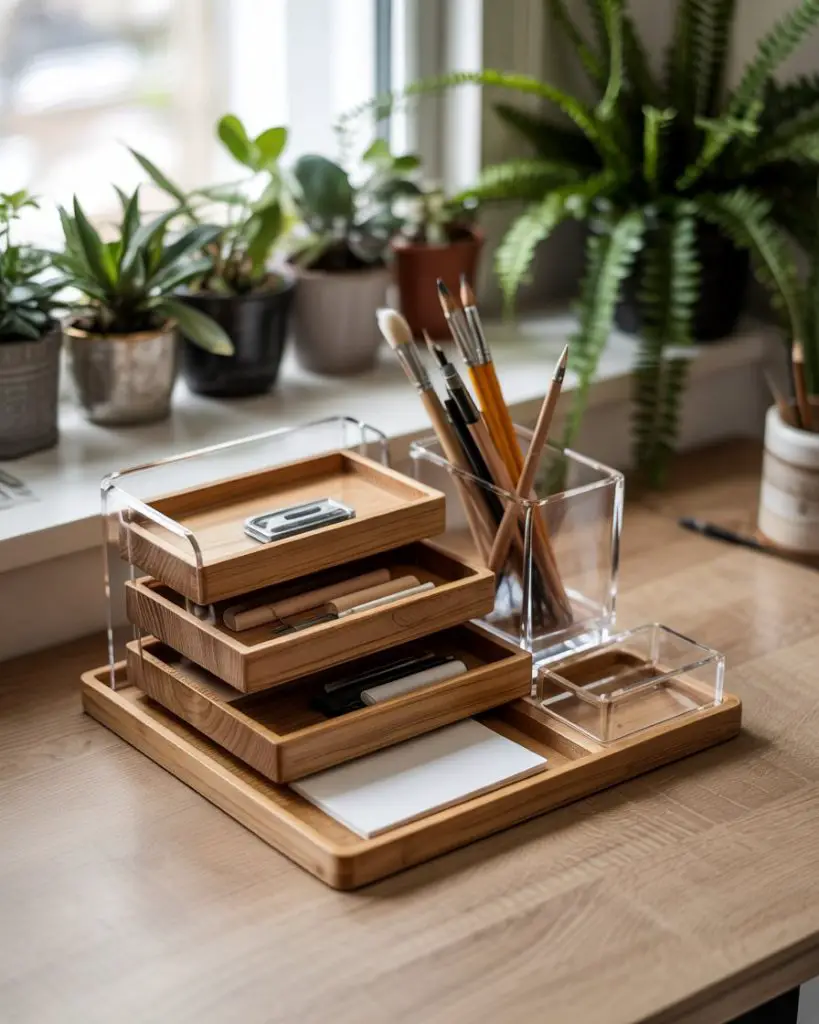
Creating a chic and functional workspace starts with understanding vertical real estate. Layered desk organization means stacking trays, using risers, and positioning containers at different heights to keep essentials visible without crowding your surface. This approach works particularly well in home offices where you need quick access to paper, pens, and tech accessories. The key is mixing materials—acrylic, wood, metal—so the setup feels curated rather than chaotic.
This style has become especially popular among remote workers who want their desks to feel intentional, not improvised. It’s a subtle shift from the all-white minimalism of past years toward warmth and texture. You’re not just storing things—you’re creating a miniature landscape that feels good to look at. One common mistake is overloading each layer; stick to one or two items per level, and leave breathing room between objects.
2. Pegboard Walls for Creative Flexibility
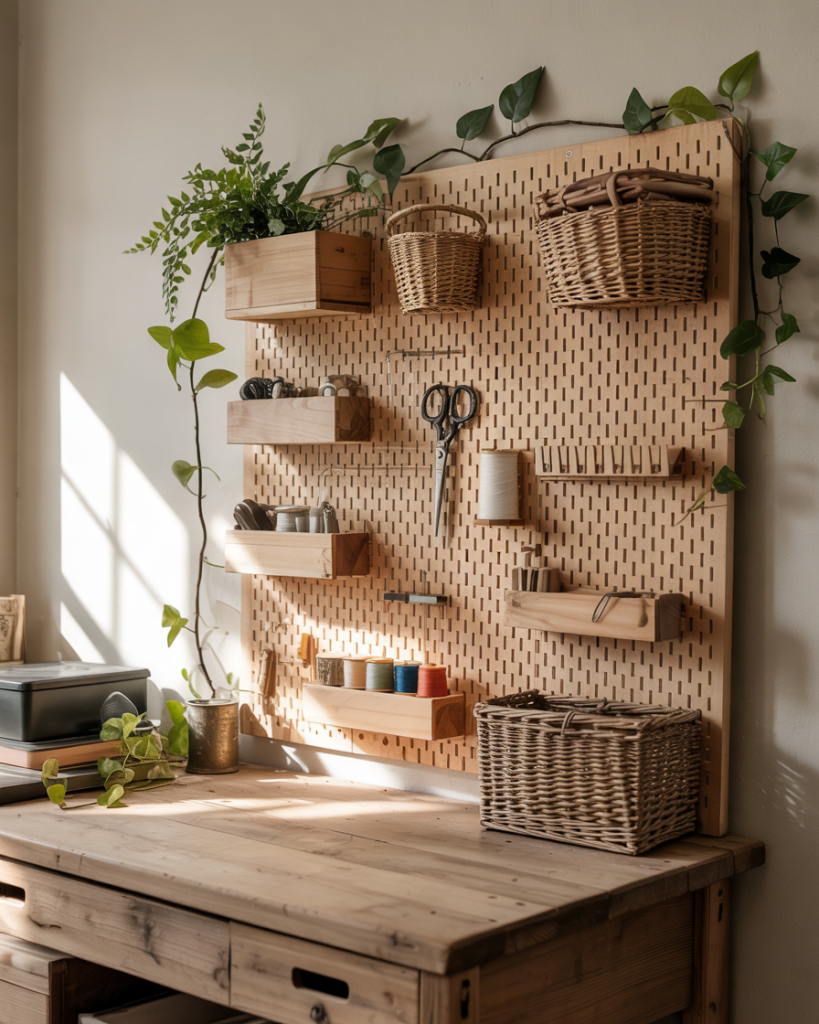
Pegboards have moved far beyond garage storage and into creative spaces where adaptability matters most. Designers and crafters love pegboards because they let you rearrange tools, supplies, and inspiration on a whim. Mounting one above your desk transforms dead wall space into a dynamic organizer that grows with your projects. Paint it a soft sage or terracotta to make it feel less industrial, more intentional.
Where it works best: Studios, craft rooms, and home offices where supplies change frequently. The beauty of a pegboard is that it never becomes obsolete—you simply move the pegs. Americans working in small apartments appreciate how pegboards free up drawer space while keeping everything in sight. Just avoid the temptation to fill every hole; negative space is part of what makes the system breathable and visually appealing.
3. Rolling Carts for Multi-Use Spaces
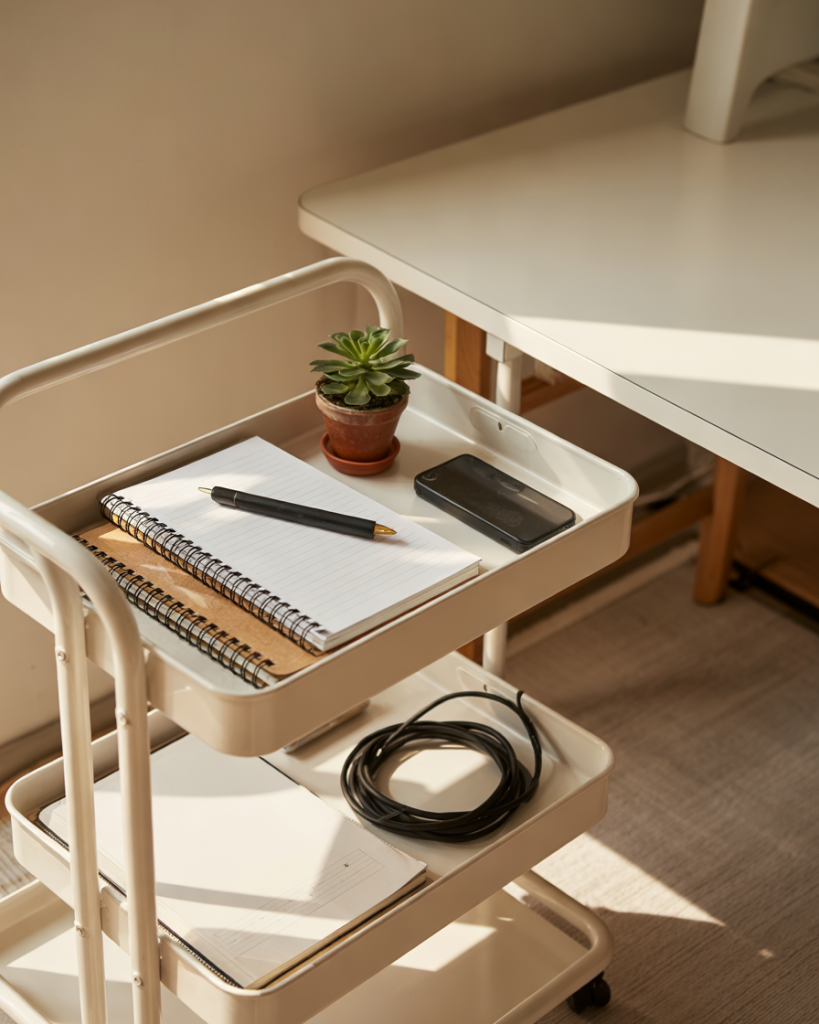
A student living in a dorm or someone working in a shared space knows the value of mobility. Rolling carts—often sourced from Ikea—turn any desk into a flexible workstation. You can roll supplies out when you need them and tuck them away when the space needs to serve another purpose. Look for carts with multiple tiers and consider dedicating each level to a different category: tech, paper, or personal items.
Rolling carts have become a staple in American dorm rooms and small apartments because they solve the “where does this go?” problem without requiring permanent furniture. They’re also surprisingly affordable, with many options under $50. One practical insight: choose a cart with locking wheels if you’re on carpet or uneven flooring, so it stays put when you’re reaching for something on the top shelf.
4. Clear Acrylic Trays for Makeup and Nail Supplies

If your desk doubles as a beauty station, clear acrylic organizers are non-negotiable. Makeup artists and nail tech professionals rely on these trays because they keep products visible and contained. The transparency prevents the “out of sight, out of mind” problem, and stackable designs let you maximize vertical space. Choose divided trays for brushes, palettes, and polish bottles so nothing rolls or tips over.
Budget angle: You don’t need to invest in high-end organizers. Many Americans have found that repurposing clear storage from discount retailers works just as well as designer versions. The key is uniformity—mixing too many styles can make even expensive organizers look cluttered. Keep lids off whenever possible; constant opening and closing adds friction to your routine, and beauty products are meant to be seen and reached easily.
5. Magnetic Boards for Paper-Free Reminders
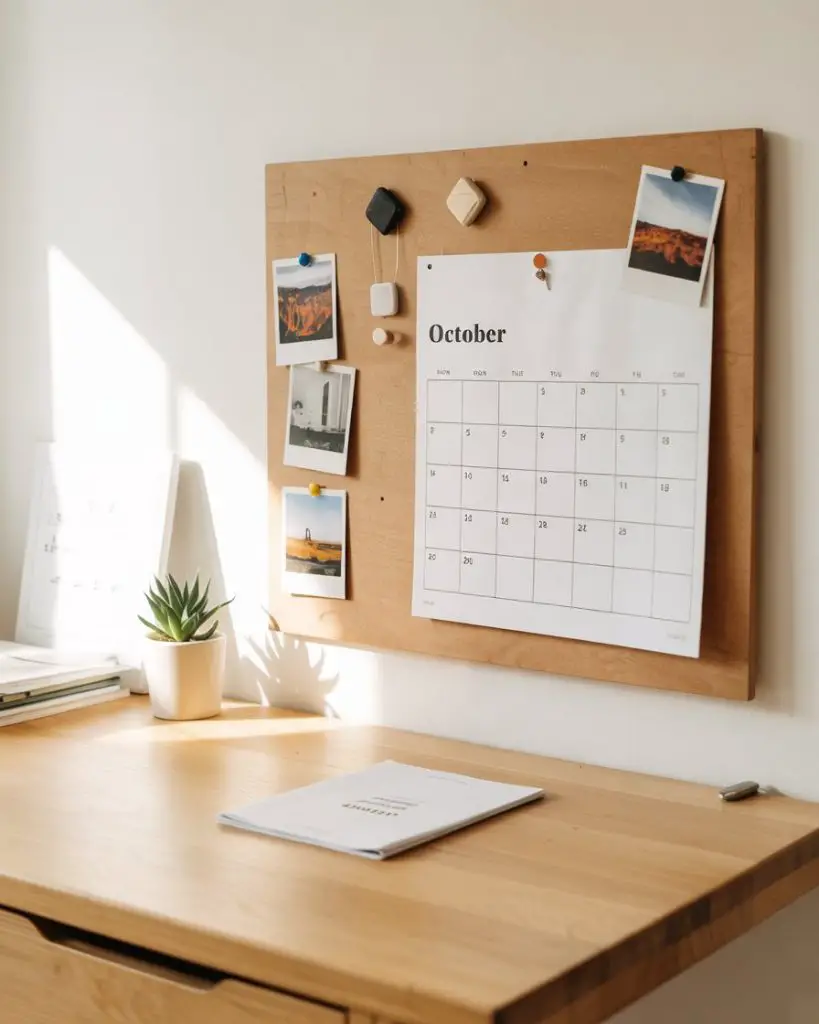
In classroom and teacher desk setups, magnetic boards offer a sleek alternative to corkboards and sticky notes. They hold calendars, photos, and reminders without the visual noise of pushpins or tape residue. Mount one within arm’s reach of your desk, and use small magnets to arrange items in a grid or collage. The result feels more intentional than a bulletin board and easier to update on the fly.
Teachers, especially those working in shared or temporary spaces, appreciate how magnetic boards keep papers organized without creating permanent wall damage. One common mistake is overloading the board with too many items—this defeats the purpose of visual clarity. Stick to what you actually reference daily, and rotate items as priorities shift. The board should feel like a living, breathing tool, not a static collage.
6. Drawer Dividers for Hidden Order
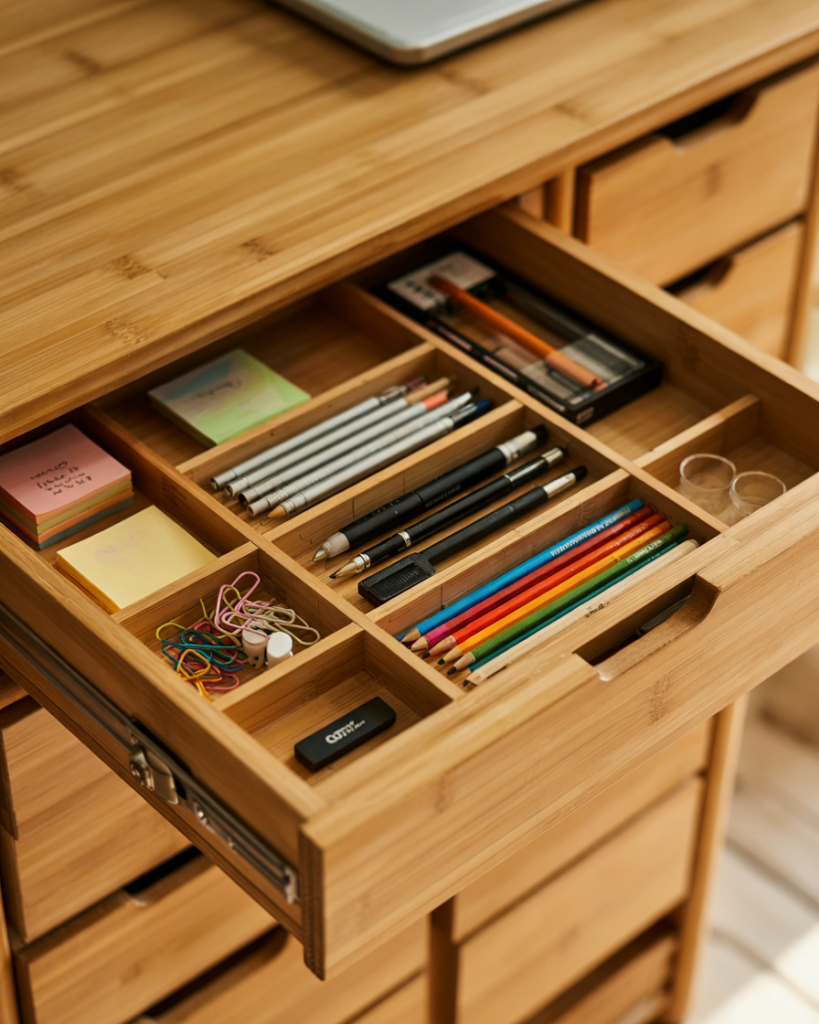
Even the most aesthetic desktop setup loses its charm if drawers are chaotic. Adjustable dividers transform messy desk drawers into organized compartments where every pen, clip, and cable has a home. This is especially valuable in cubicle environments where desk surfaces are limited and storage needs to be efficient. Choose bamboo or fabric-lined dividers for a softer, more refined look than plastic.
Real homeowner behavior: Most people underestimate how much drawer chaos affects their mental state. Opening a drawer and seeing order—even if no one else sees it—creates a sense of control that ripples into the rest of your workday. Dividers also prevent the “junk drawer” phenomenon where small items migrate and disappear. Take 10 minutes to categorize what’s actually in your drawers before buying dividers; you may realize you’re storing things you never use.
7. Wall-Mounted Shelves Above the Desk
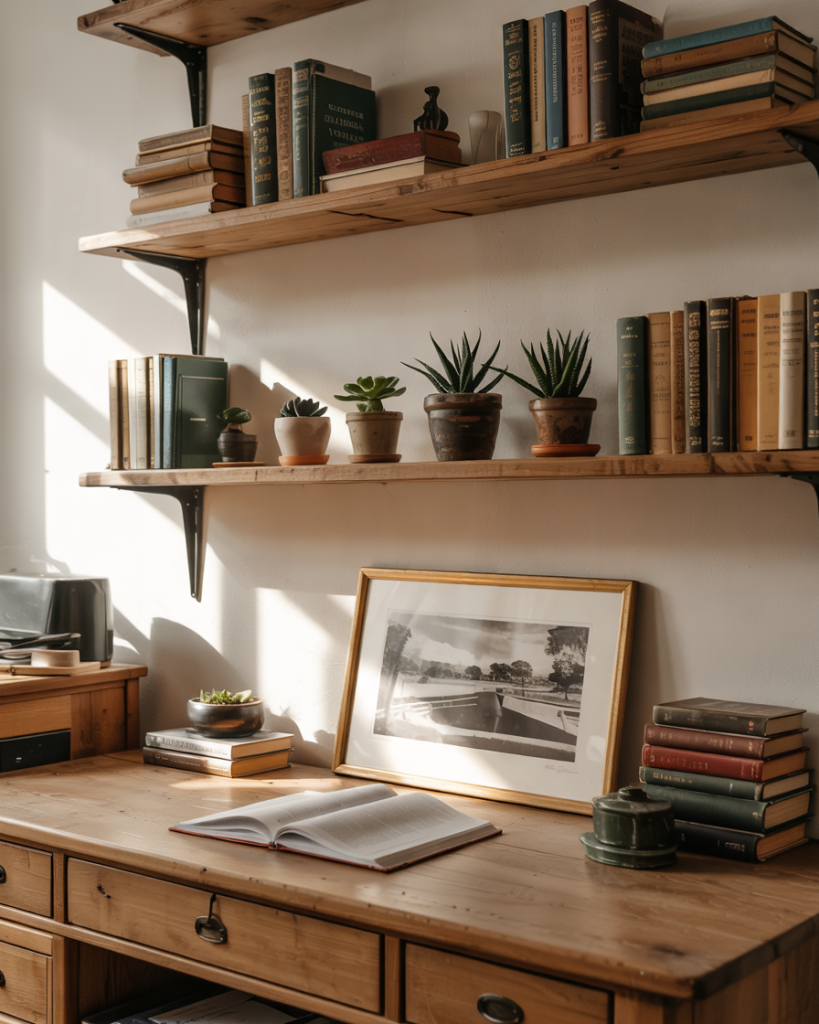
When floor space is tight in a dorm or hostel, vertical storage becomes essential. Wall-mounted shelves above the desk keep books, plants, and decor within reach without crowding your work surface. Ikea floating shelves remain a favorite for their affordability and clean lines, but thicker wood shelves add warmth and character. Install them at varying heights to create visual interest and accommodate different-sized objects.
Where it works best: Small bedrooms, studio apartments, and any space where the desk needs to serve multiple functions. Americans living in urban areas increasingly rely on vertical storage to maximize square footage. One expert-style tip: leave the bottom shelf empty or lightly styled; overloading the shelf closest to your head can feel oppressive. The top shelves are where you store things you access less frequently.

8. Cable Management Sleeves for Clean Lines
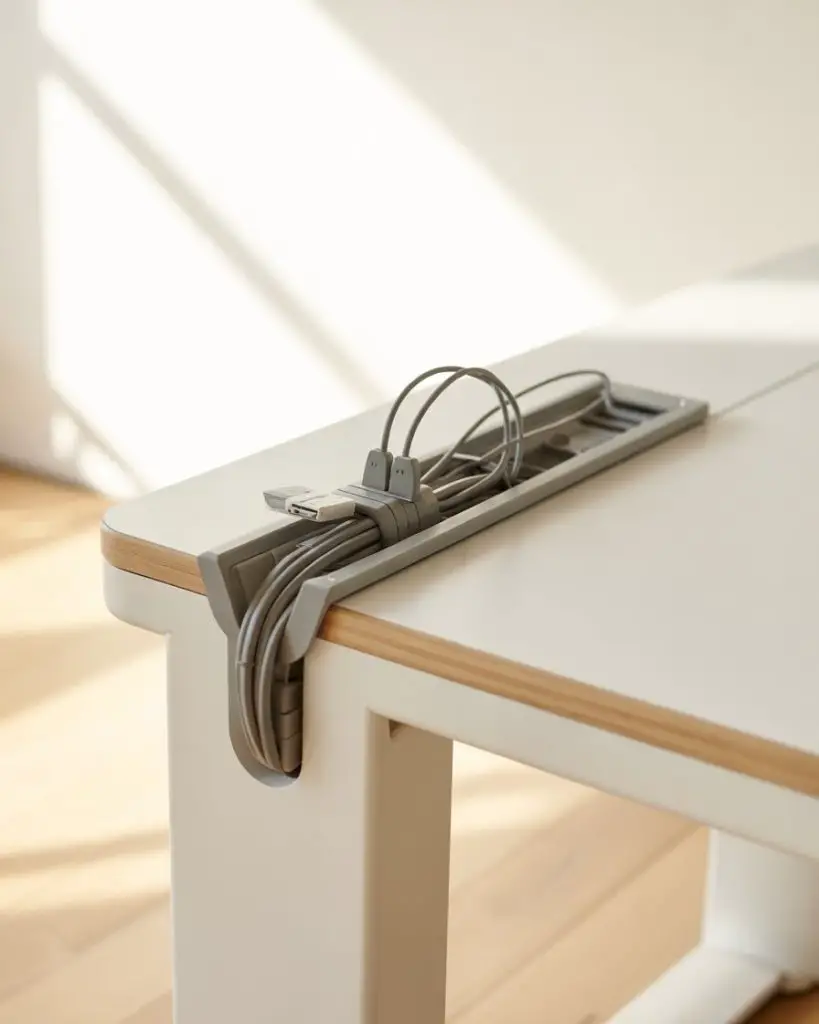
Nothing ruins a carefully styled computer desk faster than a tangle of cables. Cable management sleeves—zippered fabric tubes that bundle cords together—are the unsung heroes of home offices. They’re especially useful for standing desks where cables need to move with the desk height. Choose neutral colors that blend with your wall or desk leg, and route everything through a single sleeve for maximum visual impact.
A micro anecdote: A designer I spoke with said her productivity improved after organizing her cables, simply because she no longer felt distracted by visual clutter. It’s a small change with an outsized psychological effect. Common mistakes include buying sleeves that are too narrow—always go one size up—and not leaving extra length for future devices. Cable management is tedious upfront but saves frustration every single day after.
9. Stacked Letter Trays for Paper Flow

In work environments where paper still circulates—law offices, medical clinics, school admin desks—stacked letter trays keep documents moving through a system. Label each tray (inbox, outbox, to-file) and stick to the system rigorously. Metal or mesh trays feel more professional than plastic, and a vertical stack uses far less desk space than spreading papers horizontally.
This system thrives on habit. If you let papers pile up outside the trays, the whole structure collapses. Americans working in hybrid roles—partly remote, partly in-office—often struggle with paper because it doesn’t follow them home. The solution is ruthless editing: scan what you can, shred what’s outdated, and only keep physical copies of what truly requires a signature or stamp. The trays are only as good as the discipline behind them.
10. Minimalist Desk Mats for Defined Zones

A chic leather or cork desk mat does more than protect your surface—it creates a psychological boundary that says “this is where work happens.” Desk mats are especially popular in home offices where the line between personal and professional space blurs. Choose a size that fits your keyboard and mouse with a few inches of extra room, and pick a color that complements your decor without competing for attention.
Practical insight: Desk mats are one of those purchases that feel unnecessary until you have one, then you can’t imagine working without it. They reduce desk clutter by giving objects a designated “landing zone,” and they make cleaning easier—just wipe the mat instead of scrubbing the desk. In American households with pets or kids, a desk mat also protects against accidental scratches and spills, adding a layer of durability to everyday use.
11. Hanging File Boxes for Archive Storage
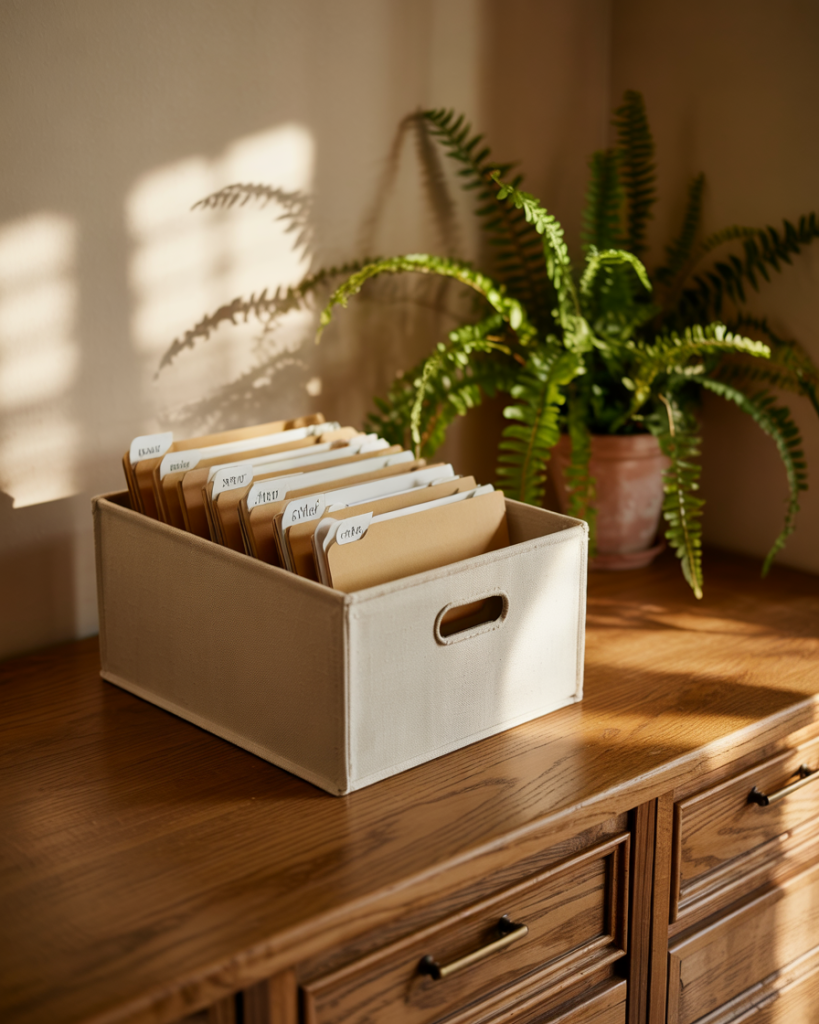
When drawers are full and filing cabinets aren’t an option, hanging file boxes bridge the gap. These portable units sit on or under your desk and hold letter-sized folders upright, making it easy to flip through old receipts, contracts, or school assignments. Look for fabric or metal versions that match your desk aesthetic—plastic tends to look temporary and cheap.
Where it works best: Small home offices, student apartments, and shared family workspaces where filing needs to be portable. Americans working from home often deal with a mix of personal and professional paperwork, and a single filing box keeps both categories separate and accessible. One mistake to avoid: overstuffing the box. If folders are jammed together, you’ll skip filing altogether. Keep it to 70% capacity, and purge annually.
12. Color-Coded Storage for Quick Identification
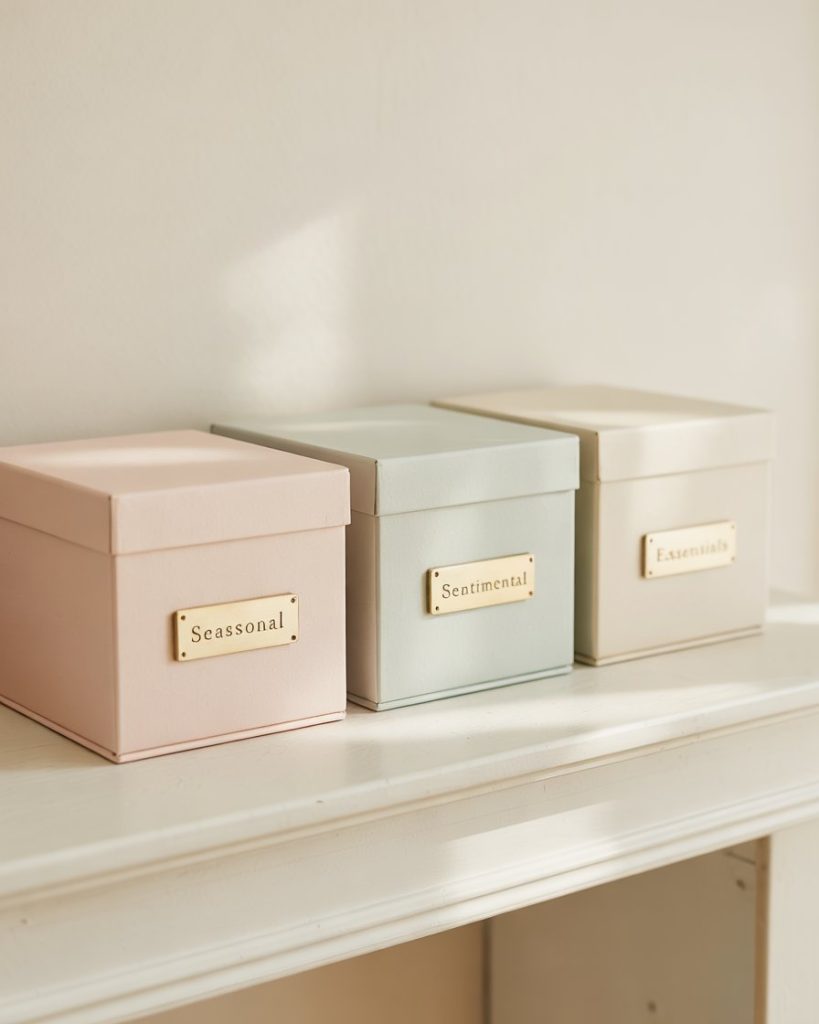
Color-coding isn’t just for kindergarten—it’s a legitimate strategy for creative professionals and crafters who juggle multiple projects. Assign each project or category a color (blue bins for client work, pink for personal, green for art supplies), and suddenly retrieval becomes visual and intuitive. This works especially well in aesthetic setups where the color palette doubles as decor.
Expert-style commentary: Color-coding reduces decision fatigue. Instead of reading labels or opening drawers, your brain learns to associate colors with categories, speeding up your workflow. It’s a subtle cognitive shortcut that pays dividends over time. Just be consistent—if blue means “client work” this week, it has to mean that next month too. The system only works if it’s reliable.
13. Monitor Stands with Built-In Storage
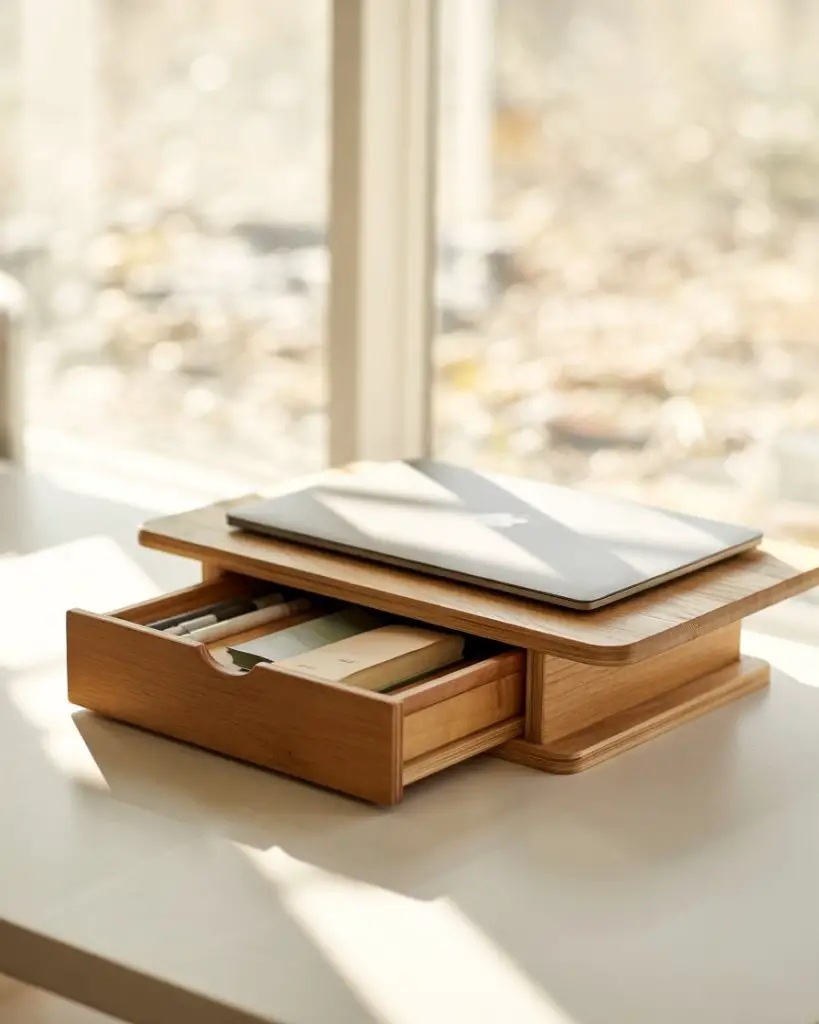
Elevating your computer monitor to eye level isn’t just ergonomic—it frees up prime desk real estate. Monitor stands with built-in storage compartments let you stash notebooks, chargers, or makeup palettes underneath. This dual-purpose furniture is a favorite in cubicle and dorm setups where every inch counts. Choose wood or bamboo for warmth, or sleek metal for a modern edge.
American lifestyle angle: With more people working from home long-term, ergonomics have shifted from “nice to have” to essential. A monitor stand corrects posture and reduces neck strain, but the added storage is what makes it indispensable. One practical tip: measure your monitor base before buying a stand—some are too narrow for larger displays, and you’ll end up with wasted space underneath.
14. Woven Baskets for Textural Warmth
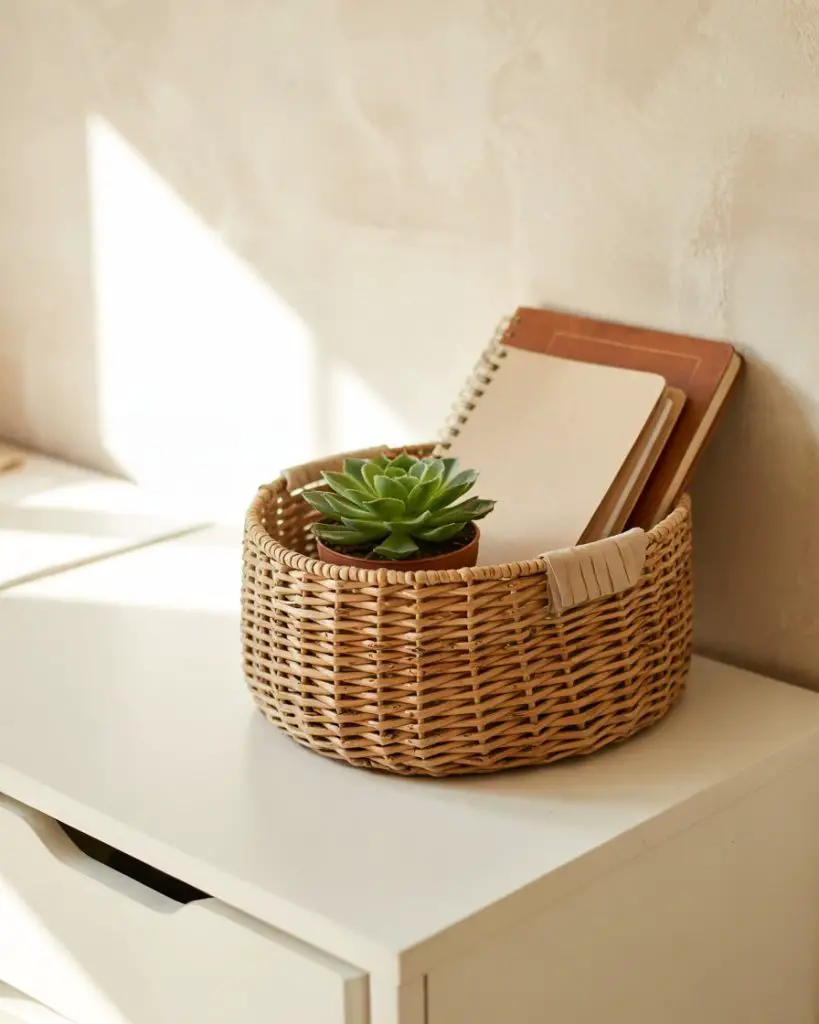
Hard surfaces dominate most desks—wood, metal, glass—so introducing woven baskets adds tactile variety. Use them to corral loose items like charging cables, notebooks, or nail polish bottles. Baskets work beautifully in preppy or aesthetic spaces where the goal is cozy rather than clinical. Natural materials like seagrass or jute feel grounded and unpretentious, a welcome contrast to the slickness of tech gear.
Real homeowner behavior: People tend to underestimate how much texture affects a room’s feel. A desk with only hard, reflective surfaces can feel sterile, even if it’s objectively beautiful. Adding a woven basket or two softens the space and makes it feel lived-in. Just avoid the trap of using baskets as catch-alls—they should contain specific categories, not become decorative junk drawers.
15. Compact Desk Caddies for Essentials

A rotating or stationary desk caddy keeps daily essentials—pens, scissors, sticky notes—within arm’s reach without scattering across your surface. These work particularly well for teacher desks and classroom setups where students may borrow supplies frequently. Look for caddies with enough compartments to separate categories but not so many that they feel fussy or overcomplicated.
Budget angle: Desk caddies are one of the most affordable organization tools, often found at Dollar Tree or discount home stores for under $10. The key is choosing one that’s proportional to your desk—an oversized caddy on a small surface looks clumsy. Americans working in shared or temporary spaces (think co-working or hostel lounges) love portable caddies because they can carry their tools from station to station without repacking every time.
16. Adjustable Drawer Organizers for Growing Needs
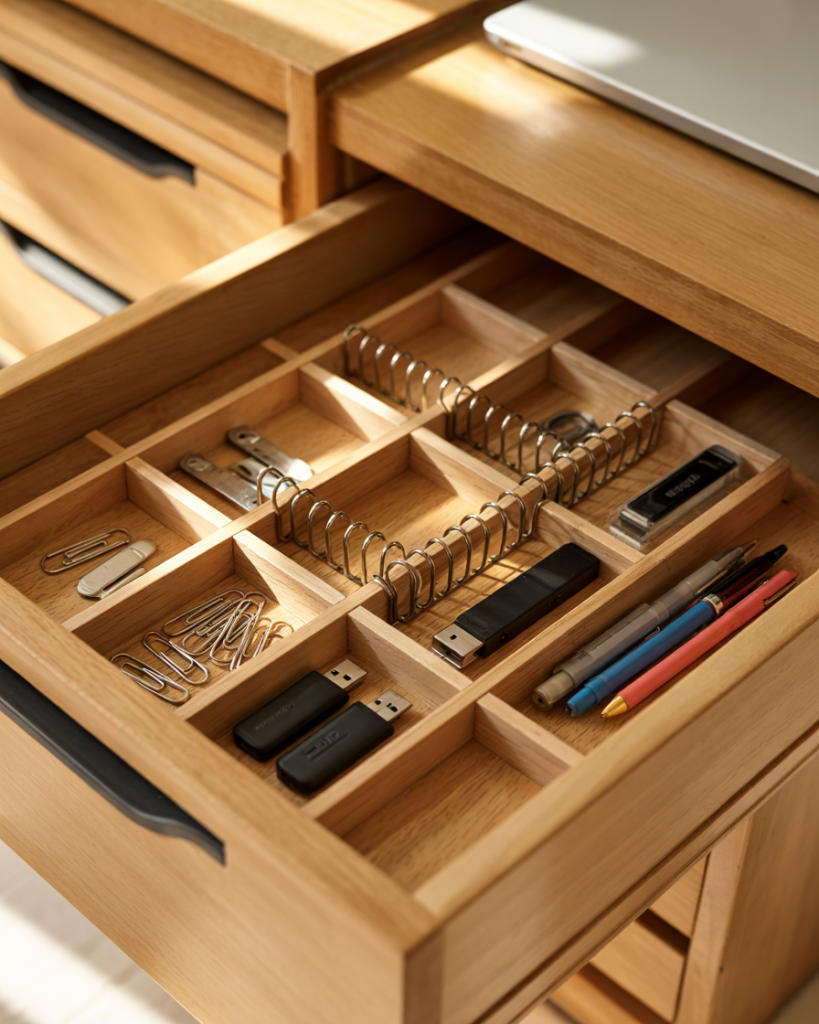
Fixed-size drawer inserts lock you into a rigid system, but adjustable organizers grow with your needs. Spring-loaded dividers let you customize compartment sizes on the fly, perfect for desks that serve multiple functions—work, art, and personal admin. These are especially useful in drawers where contents change seasonally or as projects evolve.
Where it works best: Home offices and creative workspaces where tools and supplies shift frequently. The flexibility prevents the common problem of outgrowing your organization system within months. One expert tip: start with fewer divisions than you think you need. It’s easier to add a divider later than to remove one and deal with awkward gaps. Let your actual usage patterns inform the setup, not your aspirations.
17. Modular Desktop Systems for Custom Layouts
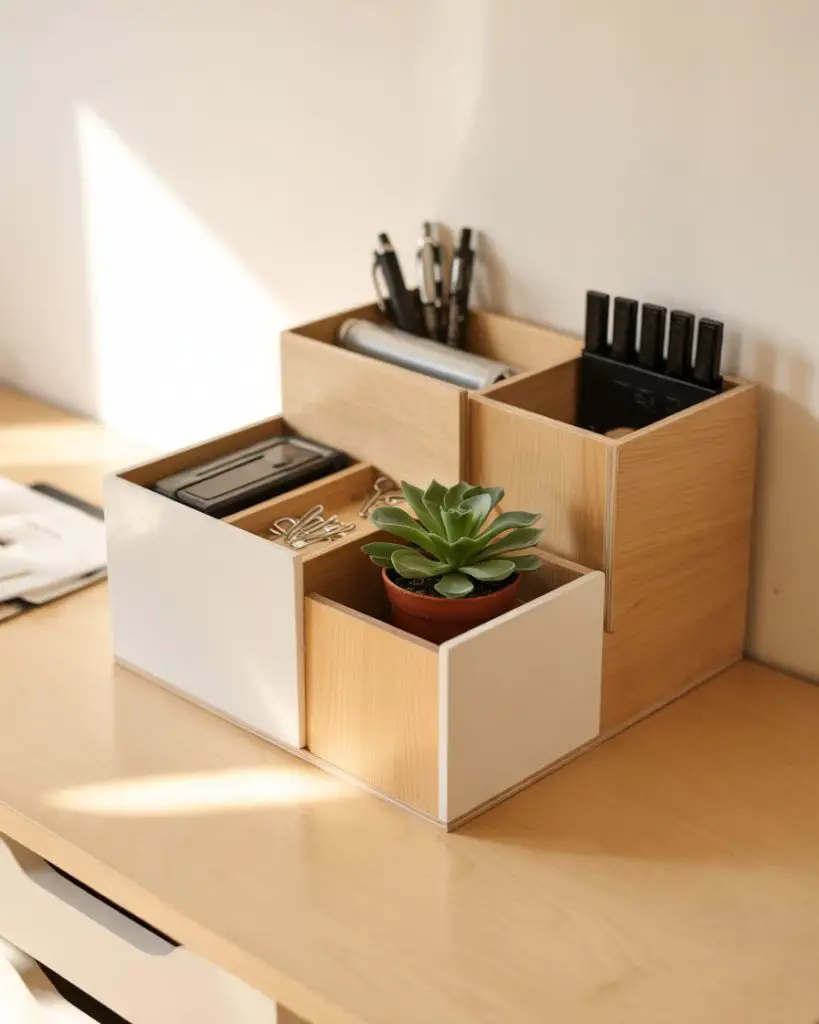
Modular systems—think interlocking trays, stackable bins, and magnetic components—let you design a desk layout that’s uniquely yours. This approach appeals to aesthetic lovers and crafters who want their organization to look intentional, not off-the-shelf. Start with a base set and add modules as needs arise, building a system that evolves rather than one that becomes obsolete.
Micro anecdote: A graphic designer told me she swaps out modules every few months depending on whether she’s in a drawing phase or a digital phase. The flexibility keeps her desk from feeling stale, and the act of rearranging feels like a mini reset. Common mistakes include buying too many modules at once—start small, live with it, then expand. Otherwise, you’ll end up with pieces that don’t fit your actual workflow.
18. Under-Desk Storage for Hidden Supplies
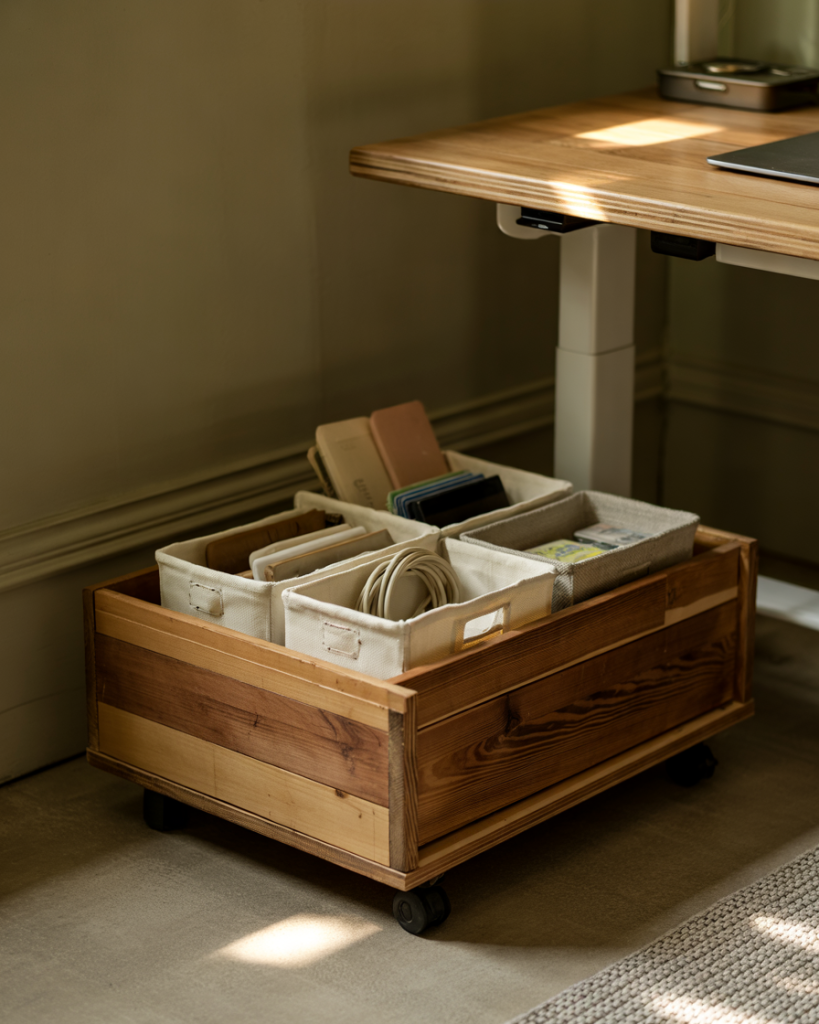
The space beneath your desk is prime real estate for items you need frequently but don’t want visible—printer paper, extra nail supplies, or backup tech cables. Under-desk drawers or bins on wheels keep these items accessible without cluttering your line of sight. This is especially valuable in standing desk setups where traditional drawers aren’t built into the frame.
Practical insight: Under-desk storage keeps your workspace looking clean in video calls while still keeping necessities close. Americans working in open-plan or shared spaces appreciate how this strategy maintains a professional appearance without sacrificing function. Just make sure whatever you store underneath is lightweight and easy to roll out—bending down and wrestling with a heavy bin defeats the purpose.
19. Shaped Storage for Personality
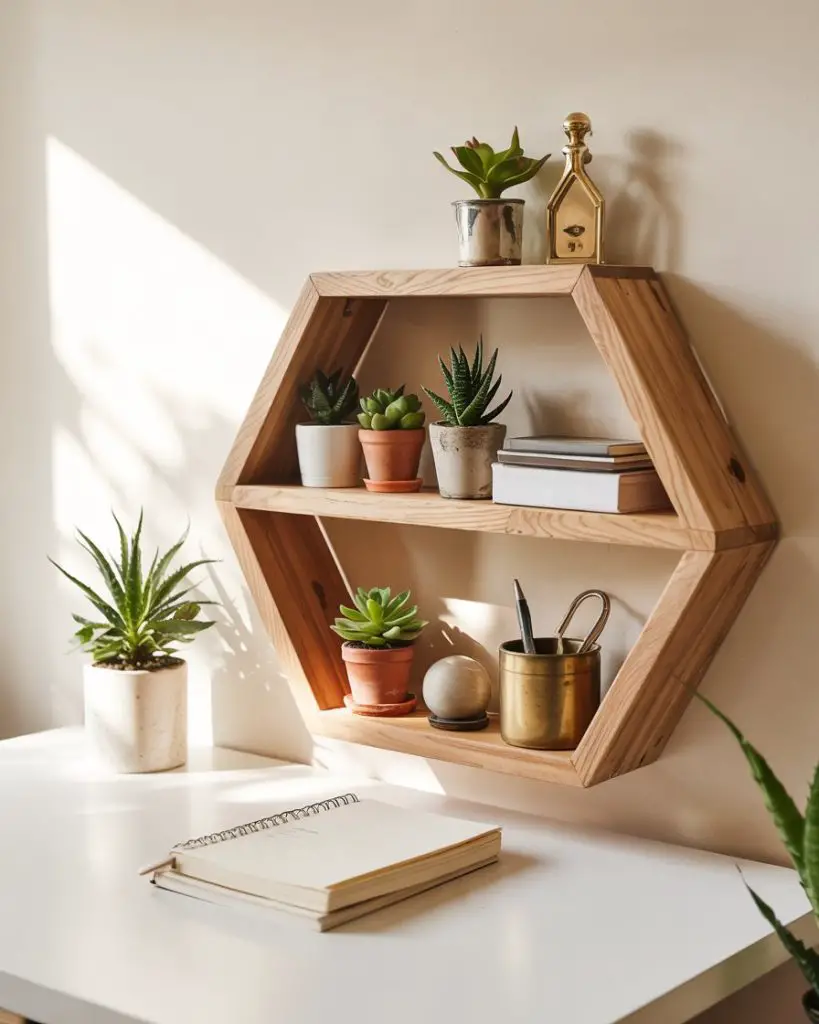
Who says desk organizers have to be rectangular? Shaped storage—hexagonal shelves, circular pen cups, arched magazine holders—adds personality to otherwise utilitarian tools. This trend has exploded on Pinterest among users looking to make their dorm or home offices feel less generic. Choose shapes that echo other design elements in the room for a cohesive look.
Real homeowner behavior: Shaped storage is an easy way to signal “I care about my space” without a full redesign. It’s especially popular among younger Americans who rent and can’t make permanent changes but still want their desk to feel curated. One mistake is mixing too many competing shapes—stick to one or two statement pieces and keep the rest simple, or the desk will feel visually chaotic.
20. Tiered Desk Trays for Layered Filing

Tiered trays elevate the traditional inbox concept, creating distinct zones for work stages—to-do, in-progress, done. This visual workflow system works beautifully in school settings and home offices where paper still plays a role. Choose trays with enough separation between tiers so you can easily slide documents in and out without disturbing the stack above.
Common mistakes and how to avoid them: The biggest error is treating all three tiers as equal storage. The top tray should hold only active, urgent items—think of it as your “today” zone. The middle is for things you’ll tackle this week, and the bottom is for reference materials or completed work waiting to be filed. If all three trays fill up equally, the system loses its power. Weekly reviews keep the flow moving.
21. Desktop Drawer Units for Maximum Capacity
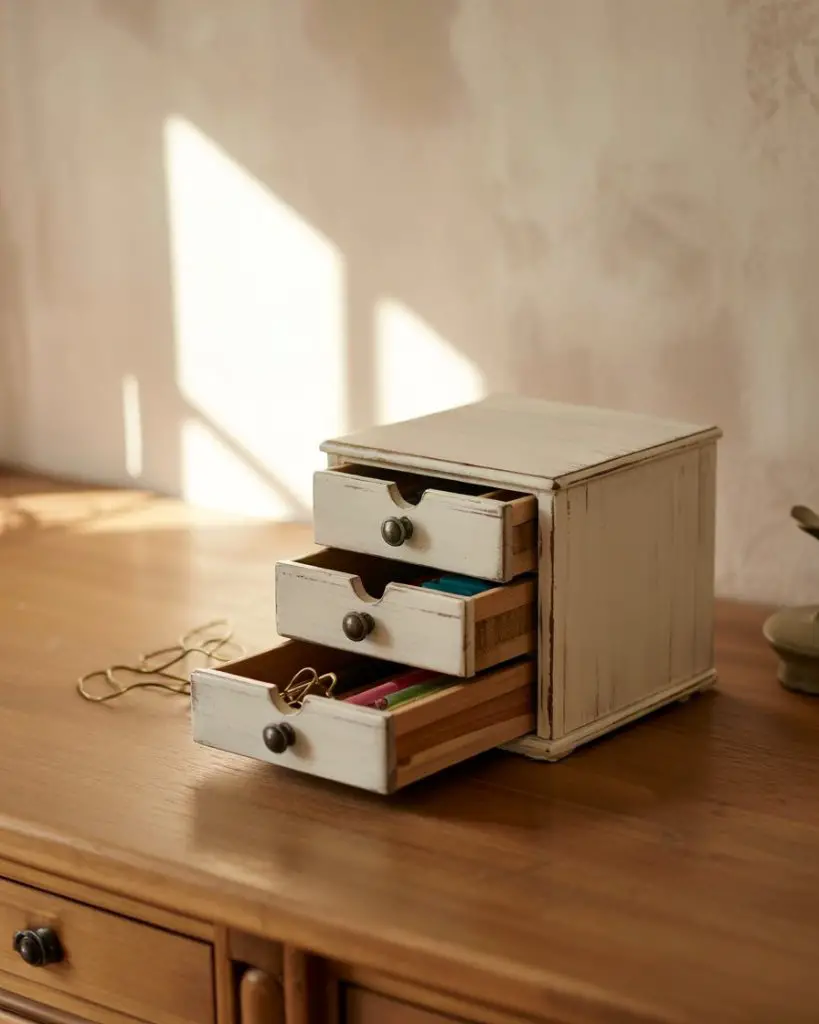
When built-in desk drawers aren’t enough, freestanding desktop drawer units step in. These mini filing cabinets sit on your desk surface and offer multiple shallow drawers for art supplies, aesthetic makeup, or computer accessories. They’re especially useful for people working in spaces with minimal built-in storage, like hostels or temporary rentals.
American lifestyle angle: Mobility is a growing priority, especially among younger workers who move frequently. Desktop drawer units are lightweight and portable, making them ideal for people who don’t want to invest in heavy furniture. Budget-conscious shoppers often find these at Ikea or Dollar Tree, and the price point makes it easy to buy multiples for different zones—one for beauty, one for tech, one for stationery.
22. Label Makers for Lasting Systems
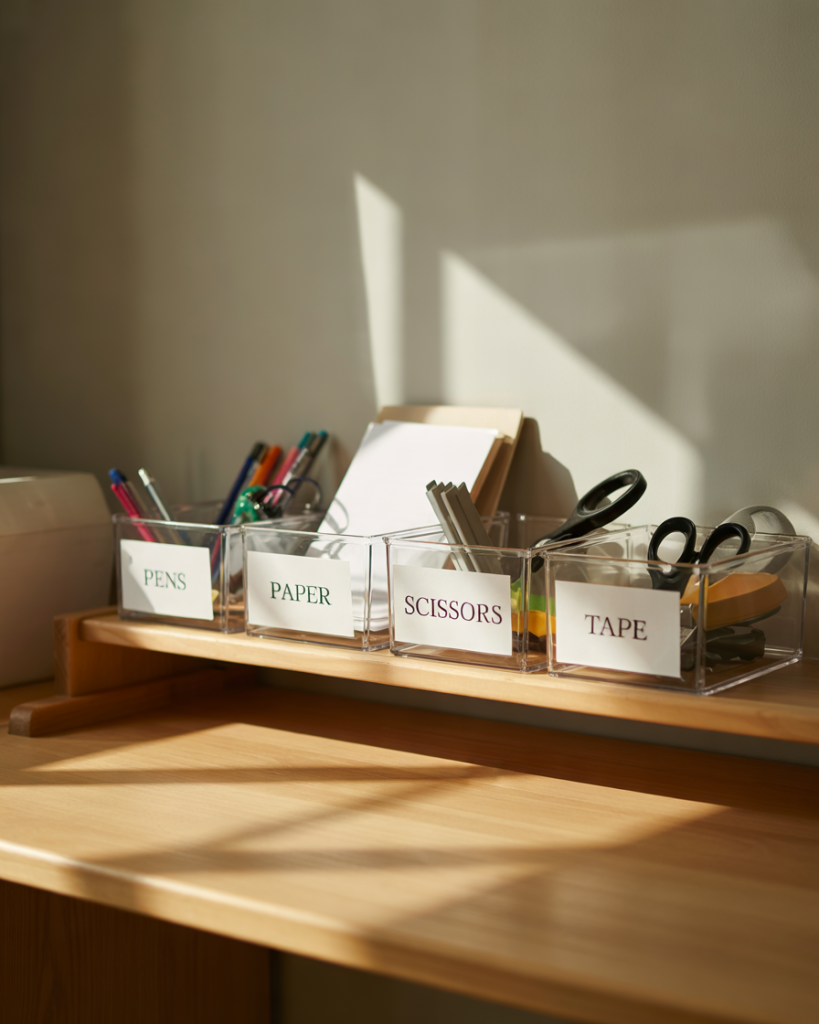
A label maker might seem overly earnest, but it’s the difference between a system you’ll maintain and one that collapses in a month. Labels work across every desk type—preppy student setups, nail tech stations, teacher desks, and home offices. They hold you accountable to your own categories and make it easy for others (roommates, family, coworkers) to put things back where they belong.
Expert-style commentary: Labels remove ambiguity. Without them, “miscellaneous” becomes a black hole. With them, you’re forced to define what belongs where, and that act of definition is half the battle. Choose a label maker with easy-to-read fonts and durable tape—flimsy labels peel and curl, which defeats the purpose. Americans who’ve gone through multiple organization attempts often cite labeling as the turning point that made their systems stick.
Conclusion
These desk organization ideas prove that a well-organized workspace isn’t about perfection—it’s about creating systems that fit your life, your work, and your aesthetic preferences. Whether you’re drawn to the clean lines of acrylic organizers or the warmth of woven baskets, the best setup is one you’ll actually maintain. We’d love to hear which ideas resonated with you most, or if you’ve discovered clever desk solutions of your own. Share your thoughts in the comments below and let’s keep the conversation going.