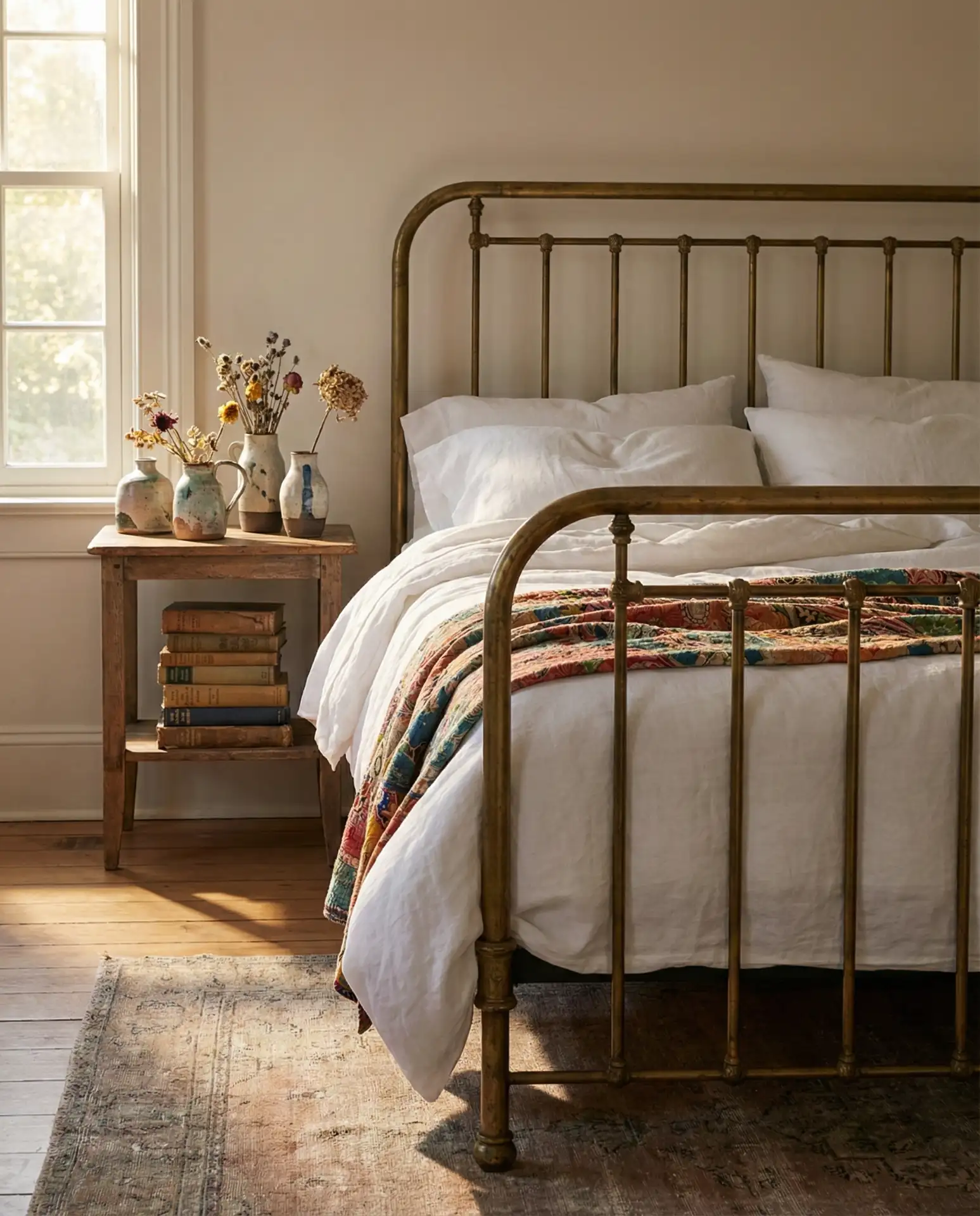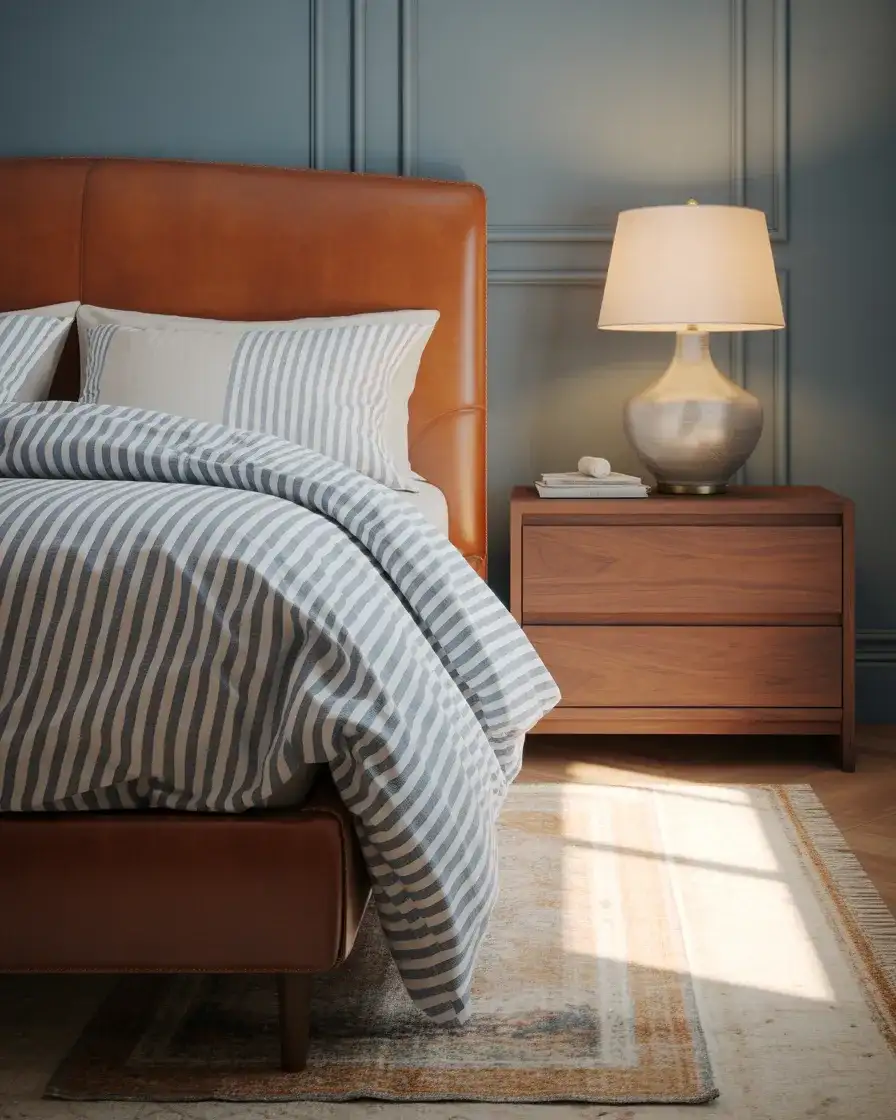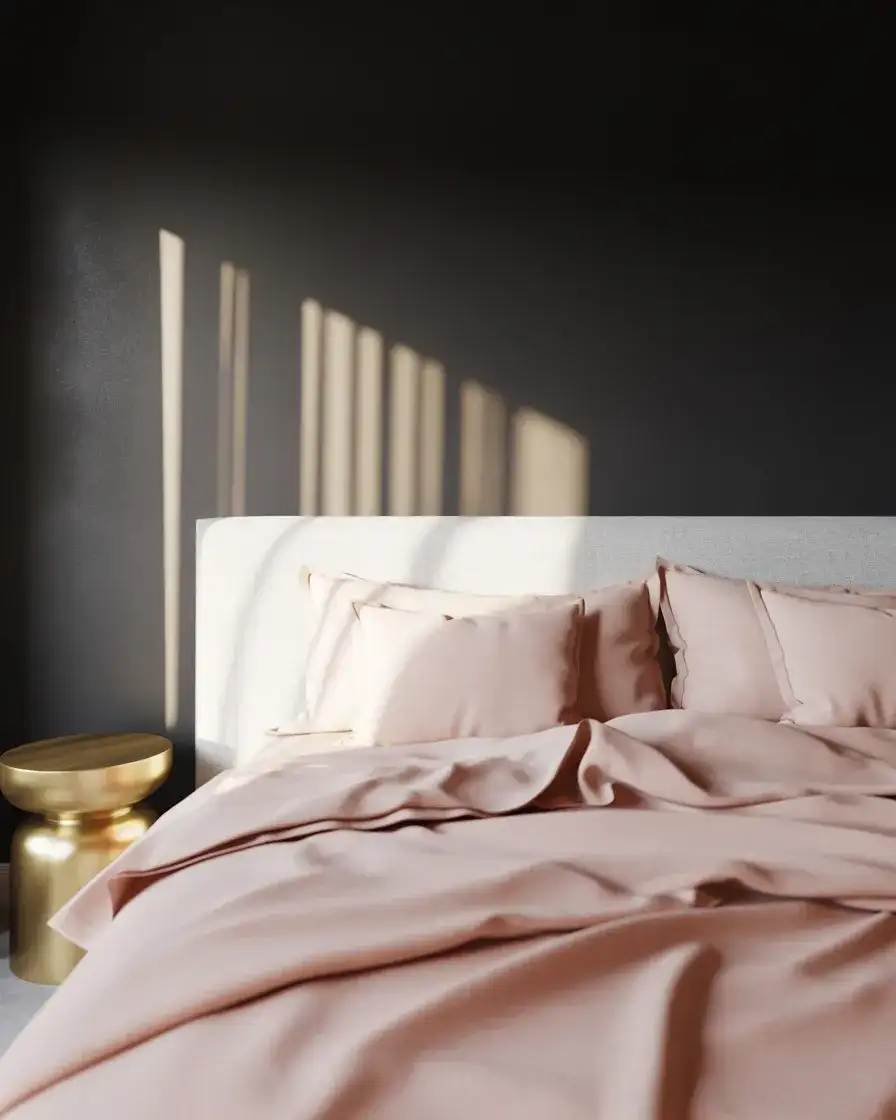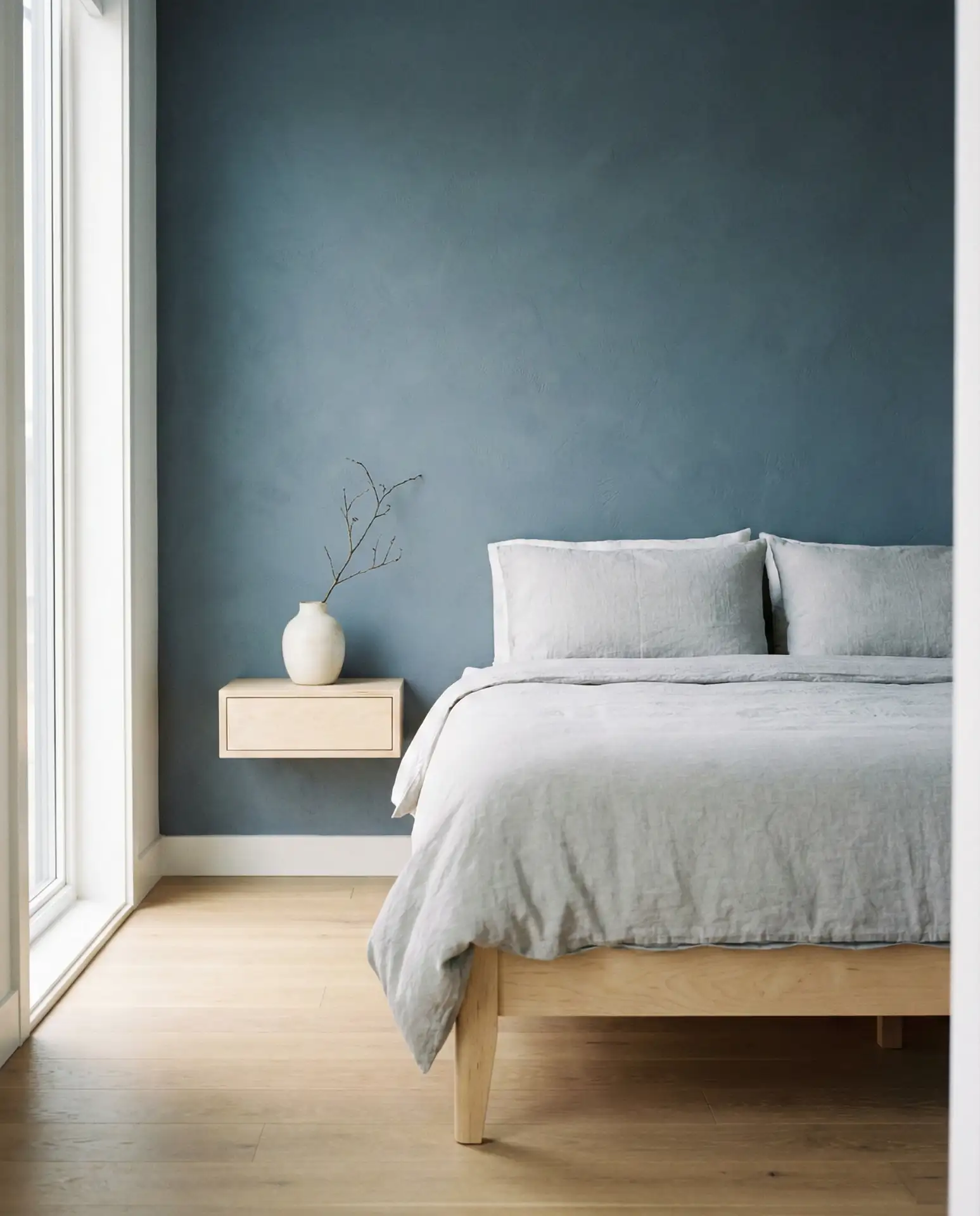
As we head into 2026, dorm room design is evolving beyond simple functionality into a true reflection of personal style and comfort. College students across America are turning to Pinterest for fresh inspiration that balances aesthetic appeal with the practical realities of shared, compact living spaces. Whether you’re moving into your first residence hall or refreshing your upperclassman suite, the right design choices can transform a standard dorm into a space that feels like home. From lofted bed setups that maximize floor space to coastal-inspired palettes that bring calm to study sessions, 2026’s top trends embrace individuality while respecting the unique challenges of campus life. Here are creative dorm room ideas that will help you make the most of every square foot.
1. Elevated Loft with Study Nook Underneath
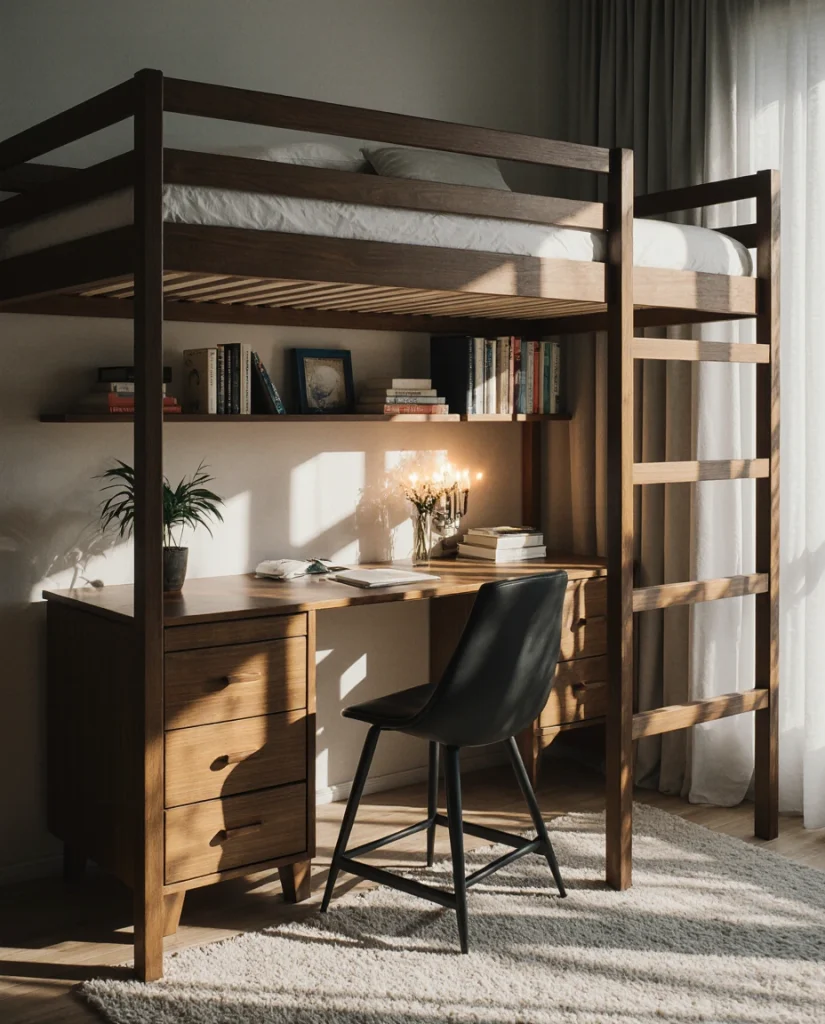
The lofted bed remains one of the smartest solutions for small dorm spaces, especially when paired with a dedicated study area below. This setup instantly doubles your usable floor space, creating distinct zones for sleeping and working without requiring any additional square footage. Many college students find that elevating the bed creates a psychological separation between rest and productivity, which can be crucial during finals week. The vertical arrangement also opens up opportunities for organization through under-bed storage bins, floating shelves, and pegboard systems that keep essentials within arm’s reach. 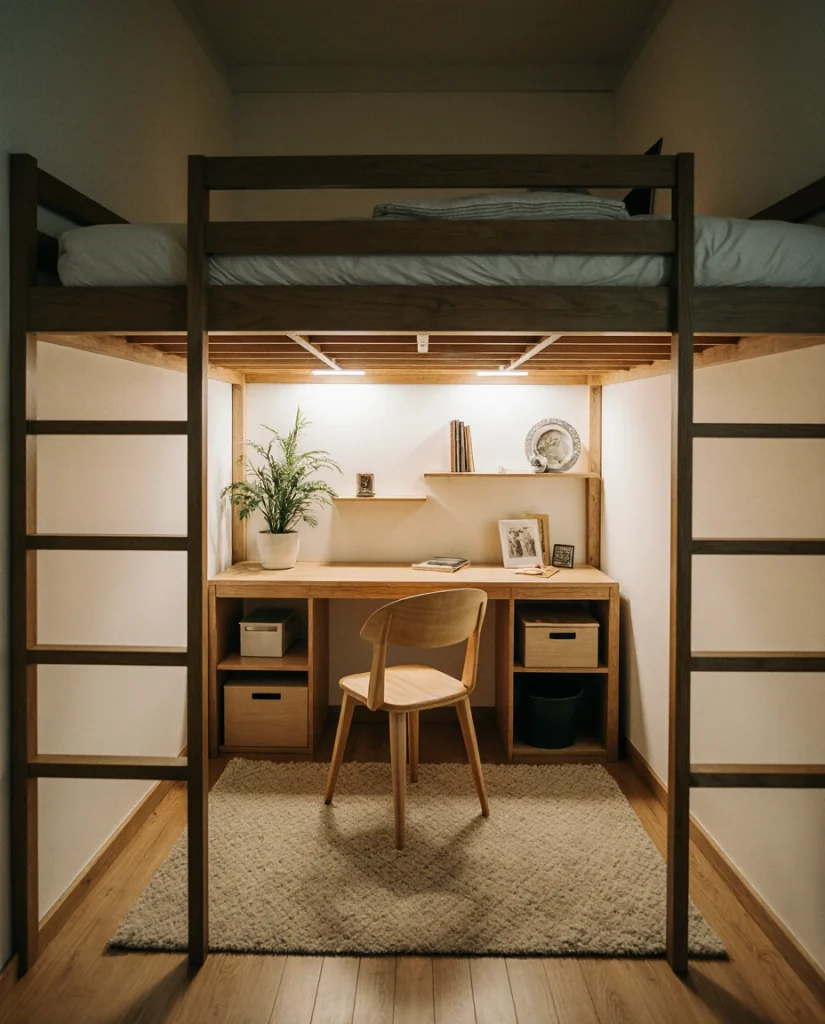
When planning your lofted setup, consider the ceiling height in your specific dorm building—most residence halls require at least seven feet of clearance, but double-check your housing guidelines before purchasing risers or frames. Position your desk to take advantage of natural window light during daytime study sessions, and invest in a quality desk lamp with adjustable brightness for evening work. The area beneath your loft becomes exponentially more functional when you add a small area rug to define the workspace and a comfortable desk chair that supports long study sessions without taking up excessive room.
2. Pink Feminine Haven with Soft Textures
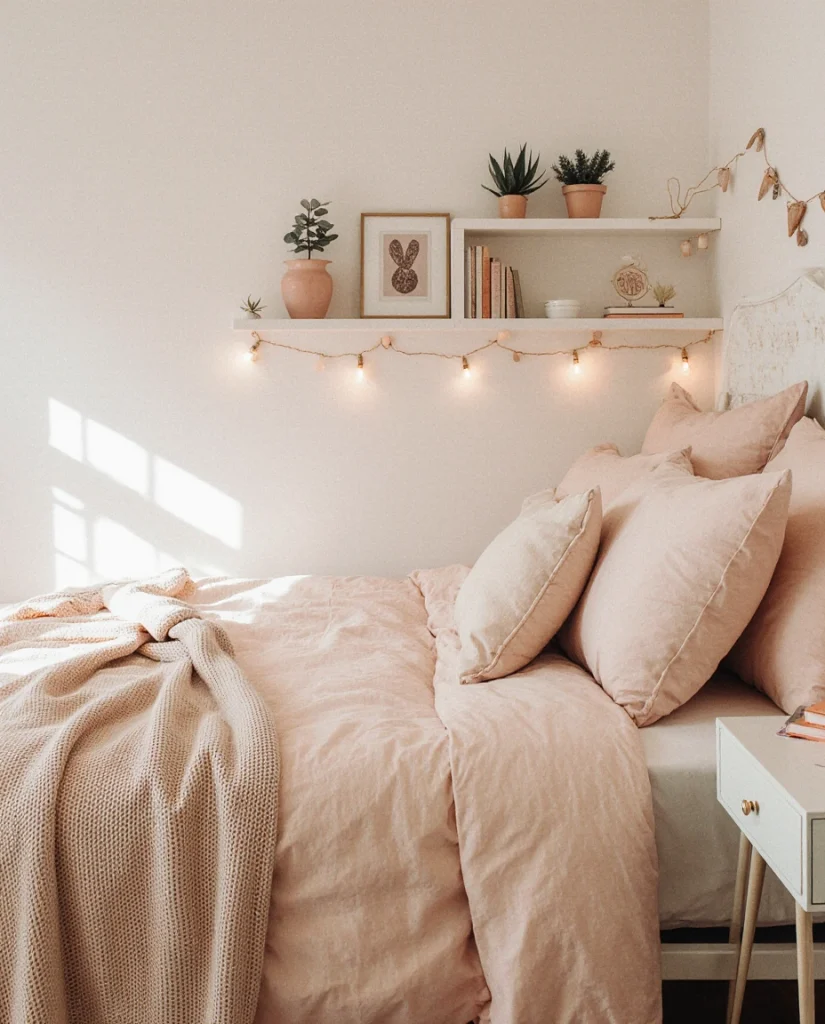
A pink and cute aesthetic continues to dominate dorm design, but 2026’s approach leans toward sophisticated blush tones rather than bright bubblegum shades. This palette works beautifully with layered textiles like faux fur throws, quilted bedspreads, and velvet accent pillows that add warmth and personality to standard-issue furniture. The key is balancing feminine touches with practical elements—think pink storage cubes that hide clutter while maintaining your desired aesthetic. Many students discover that softer pink tones actually promote better sleep and create a calming environment during stressful academic periods. 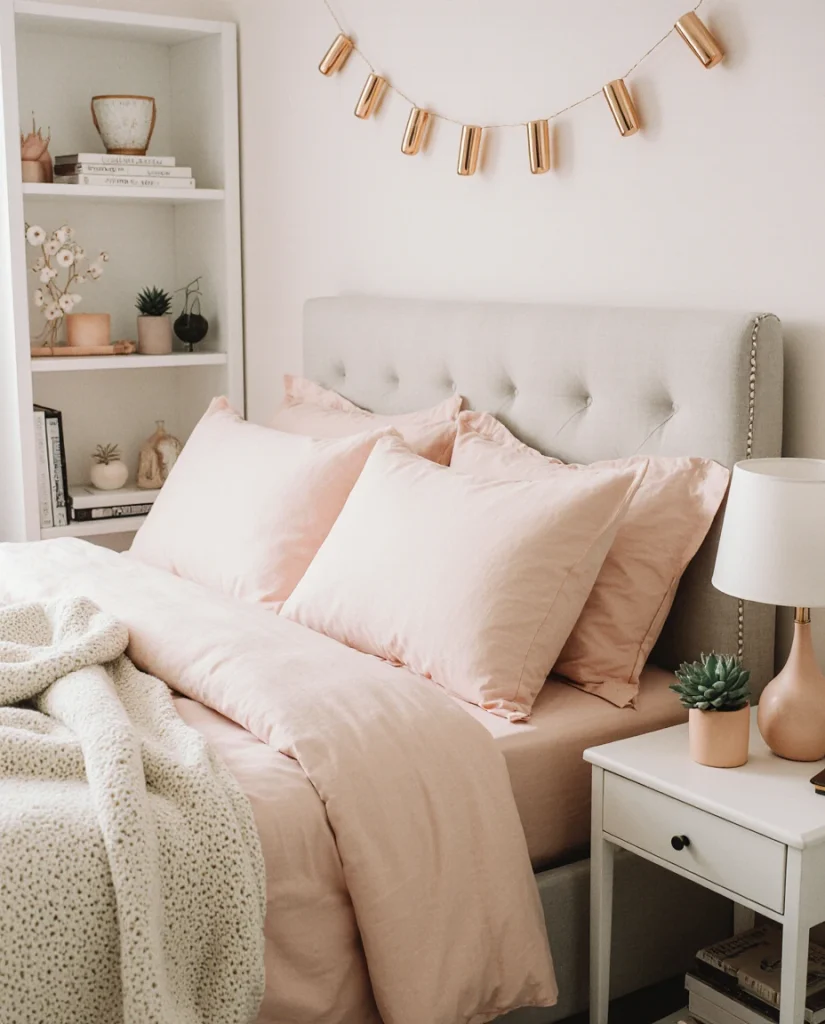
Budget-conscious students can achieve this look without overspending by focusing on affordable textiles and removable adhesive wallpaper in complementary patterns. Target and Amazon offer extensive collections of coordinating pink dorm essentials, with complete bedding sets typically ranging from $40 to $80. Add personality through thrifted picture frames painted in matching tones, or create a gallery wall using washi tape instead of damaging walls with nails. The pink theme also photographs exceptionally well for social media, which matters to many college students documenting their campus experience.
3. Earthy Bohemian Retreat
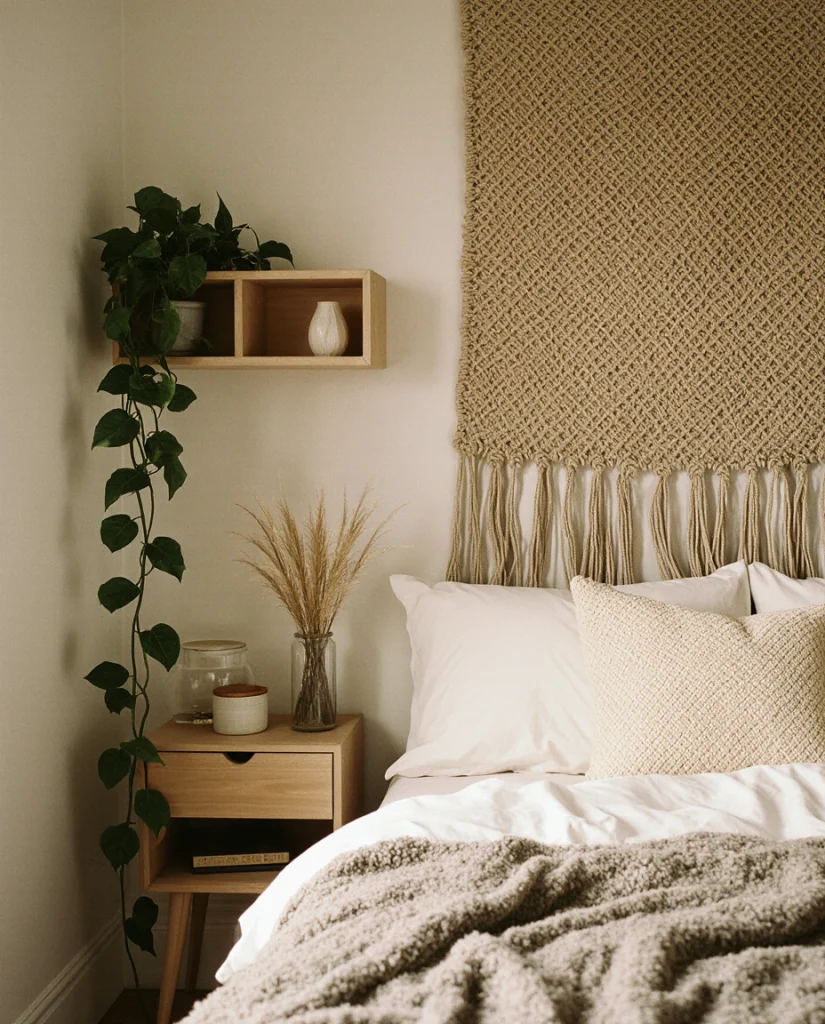
The earthy boho trend brings natural elements and green tones into dorm spaces, creating an environment that feels grounded and connected to nature despite being in a residence hall. This style typically incorporates woven baskets, macramé wall hangings, and plenty of low-maintenance plants like pothos or snake plants that thrive under fluorescent lighting. The neutral base palette of tans, creams, and warm browns serves as a perfect backdrop for pops of terracotta, sage, and forest green that add visual interest without overwhelming the small space. 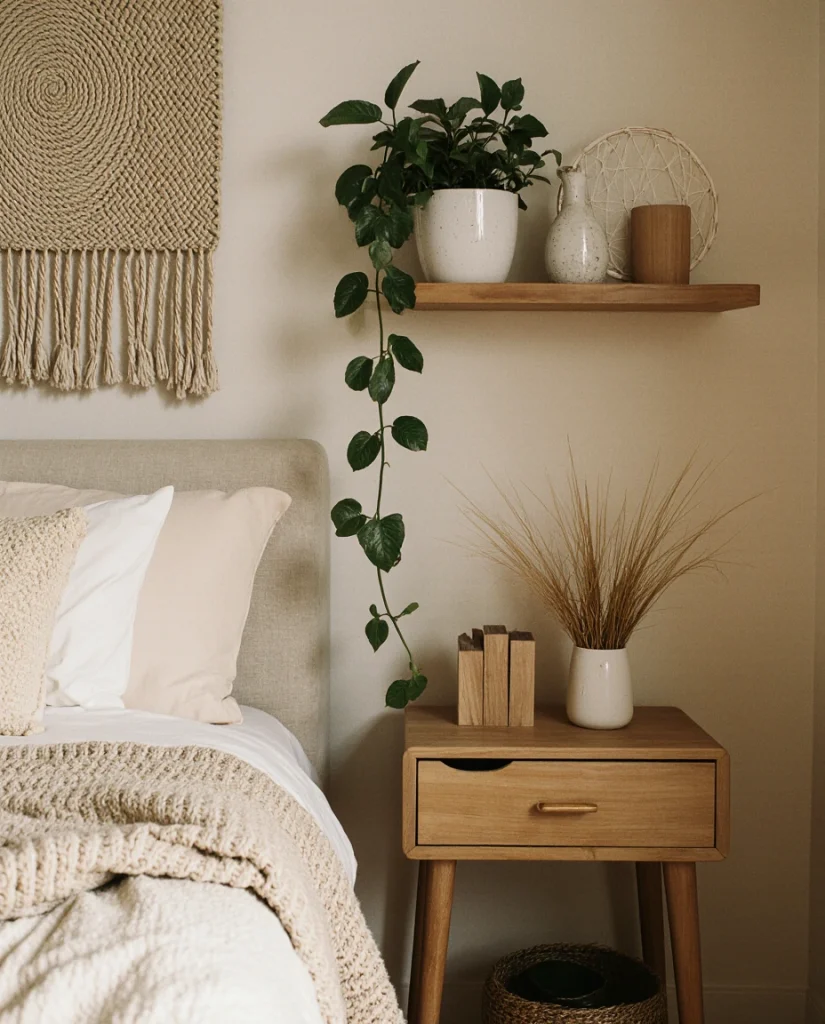
This design philosophy works particularly well in older dorm buildings where the architecture already features warm wood tones or exposed brick—elements that enhance rather than fight against the earthy aesthetic. Real students report that surrounding themselves with natural materials and living plants significantly improves their mental well-being during long semesters away from home. Start with one or two hardy plants and gradually expand your collection as you learn what thrives in your specific room conditions. Window placement makes a huge difference, so observe your natural light patterns before investing in more delicate varieties.
4. Purple Jewel Tone Sophistication
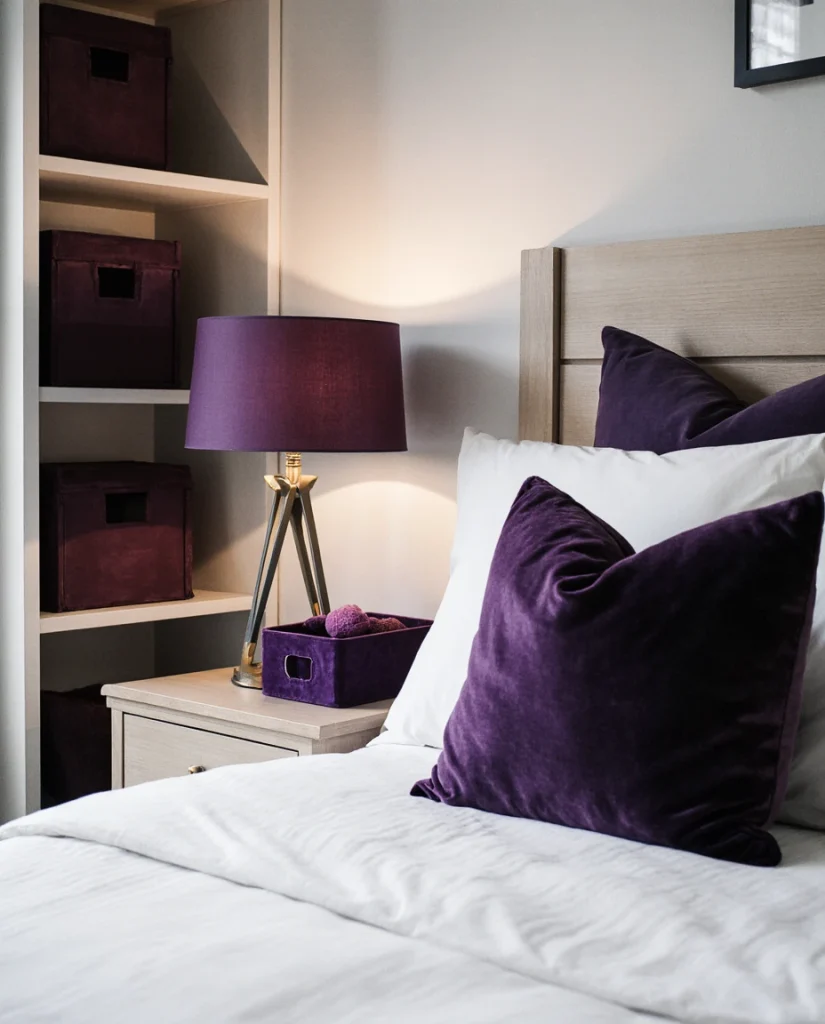
Deep purple and plum accents are emerging as a sophisticated alternative to more common dorm color schemes, offering richness and depth that elevates standard residence hall rooms. This colorful approach works best when balanced with neutral foundations like white bedding or natural wood furniture, allowing the purple elements to serve as intentional statement pieces rather than overwhelming the space. Consider incorporating purple through strategic choices like an accent throw blanket, desk accessories, or a statement area rug that anchors your entire room design. 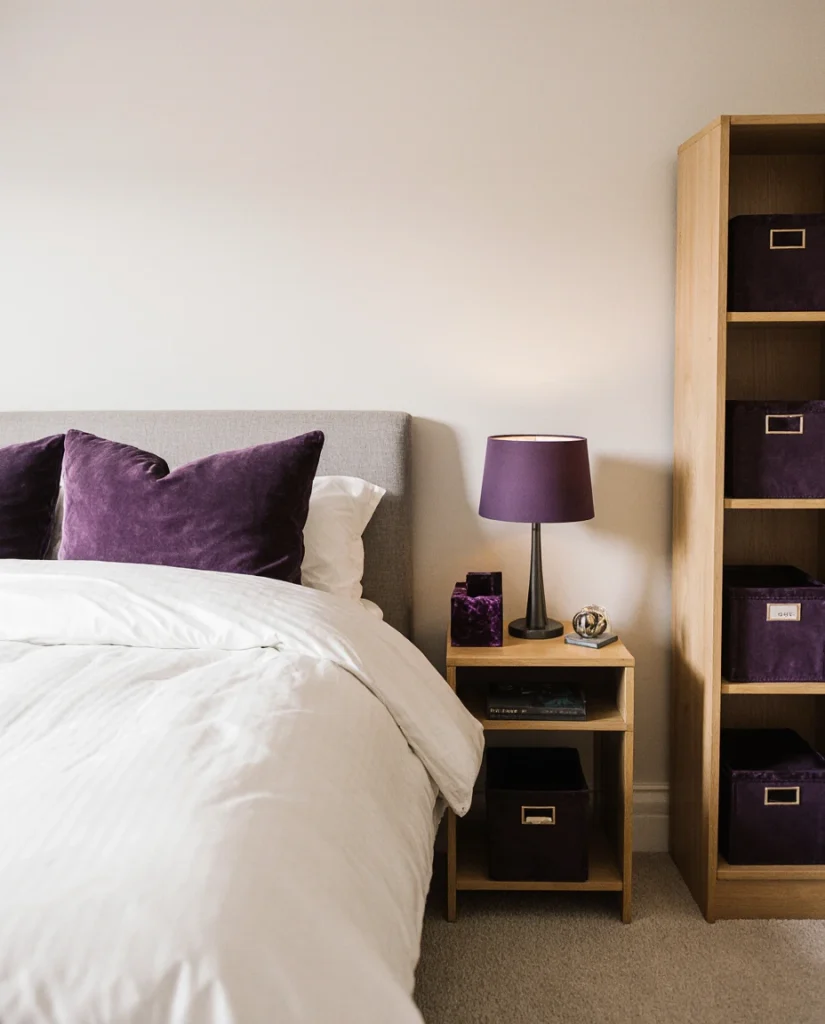
Where this works best: Rooms with ample natural light, as deeper jewel tones can make windowless or dimly lit spaces feel smaller and more enclosed. If your dorm faces north or has limited windows, use purple as an accent (perhaps 20-30% of your color story) rather than the dominant hue. Many students pair purple with gold or brass metallic accents for an unexpectedly elevated look that feels more apartment than dorm. The color psychology of purple also promotes creativity and calm—both valuable qualities during intensive study periods and creative projects throughout the academic year.
5. Light Blue Coastal Calm
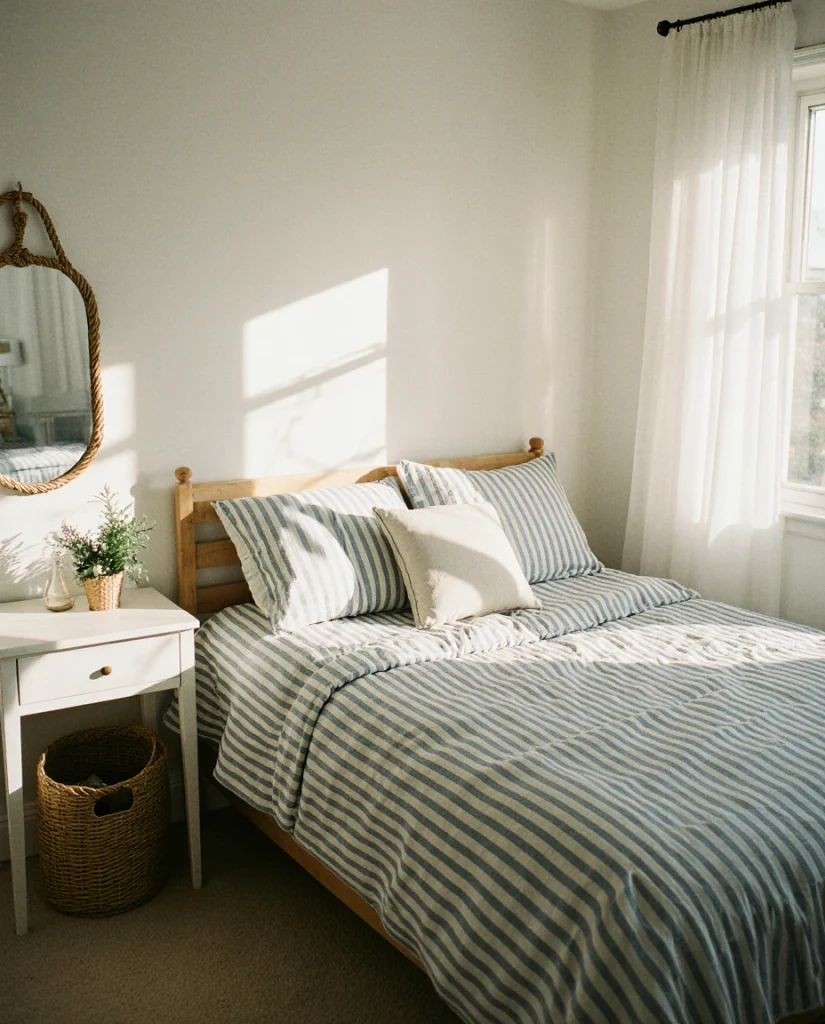
A light blue and coastal theme brings the serenity of beach life into your dorm, creating a perpetually peaceful atmosphere that many students find conducive to both relaxation and focus. This palette works particularly well in warmer climates or for students from coastal regions who want to maintain a connection to home. Pair sky blue textiles with white or cream accents, natural fiber baskets, and subtle nautical touches like rope-wrapped storage or driftwood-inspired décor that references beach environments without veering into literal theme territory.
Common mistake: overdoing the nautical theme with anchors, ships, and obvious beach memorabilia that can make the space feel juvenile rather than sophisticated. Instead, focus on the color palette and natural textures that evoke coastal living through suggestion rather than literal representation. A student at UC San Diego mentioned that her light blue room helped her maintain emotional balance during particularly stressful quarters, as the calming tones provided a mental reset every time she returned from classes. This psychological benefit makes coastal palettes especially valuable in high-pressure academic environments.
6. Western-Inspired Rustic Corner
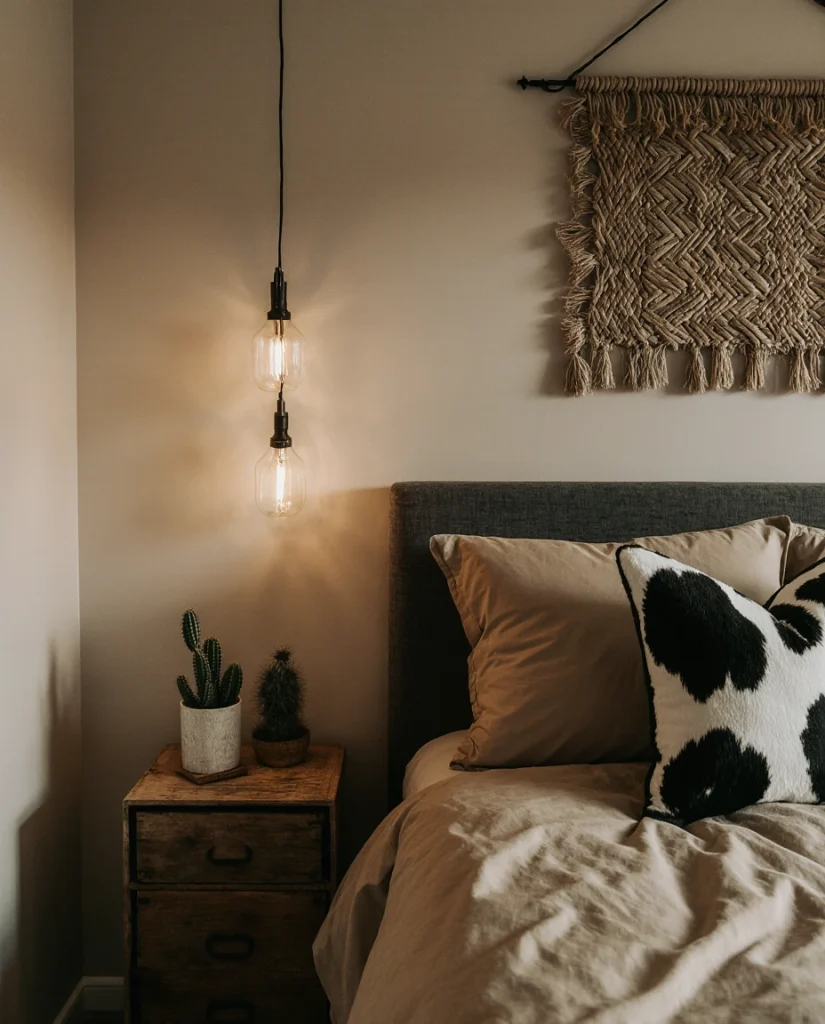
The Western aesthetic is gaining unexpected traction in college dorm design, particularly among students in Texas, Arizona, and other southwestern states. This style embraces natural leather accents, woven textiles with geometric patterns, and warm terracotta tones that create a cozy, lived-in feeling even in brand-new residence halls. Think cowhide-print throw pillows (faux, of course), decorative bandanas used as wall art, and wooden crates repurposed as bedside storage that channels ranch house charm in a compact footprint. 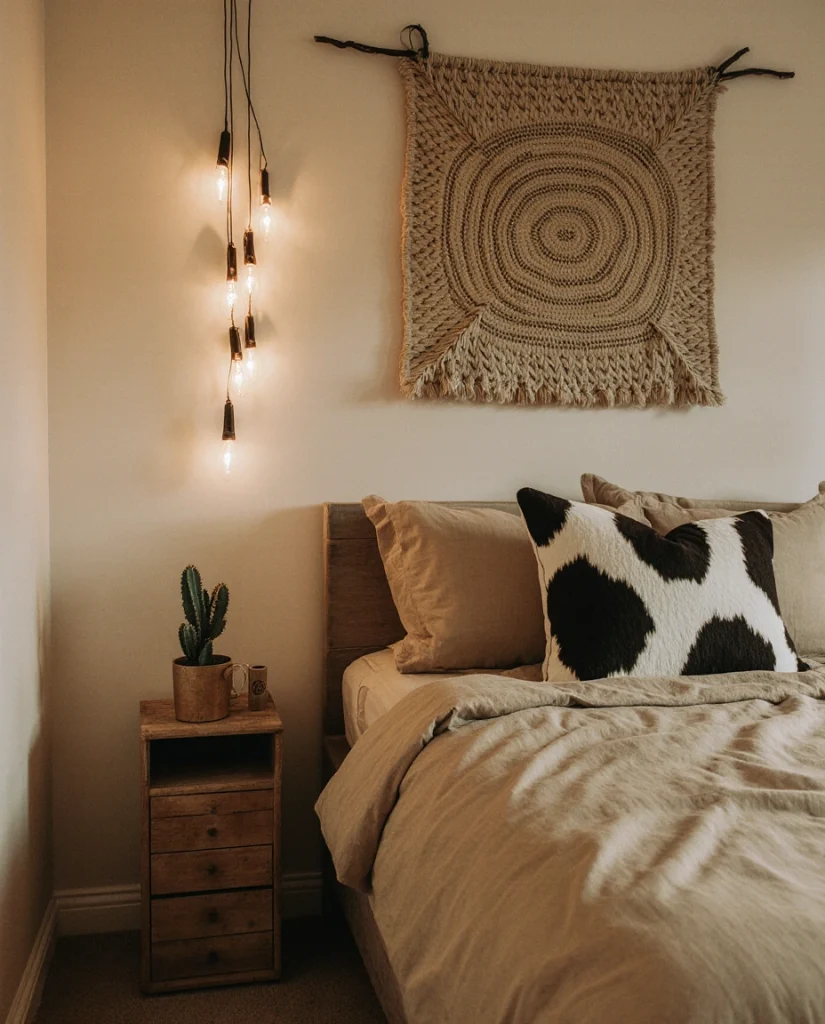
Budget considerations: Western-inspired décor can actually be quite affordable when you shop secondhand stores and ranch supply shops rather than trendy home décor retailers. Genuine leather items may stretch your budget, but high-quality faux leather alternatives now offer similar aesthetics at a fraction of the cost—typically $15-30 for accent pieces versus $60-100 for genuine materials. This style also tends to hide wear and tear better than pristine white or pastel designs, making it practical for the inevitable chaos of college life. The earthy, grounded feeling resonates with students seeking a more mature, distinctive alternative to typical dorm aesthetics.
7. Shared Room Harmony with Divided Zones
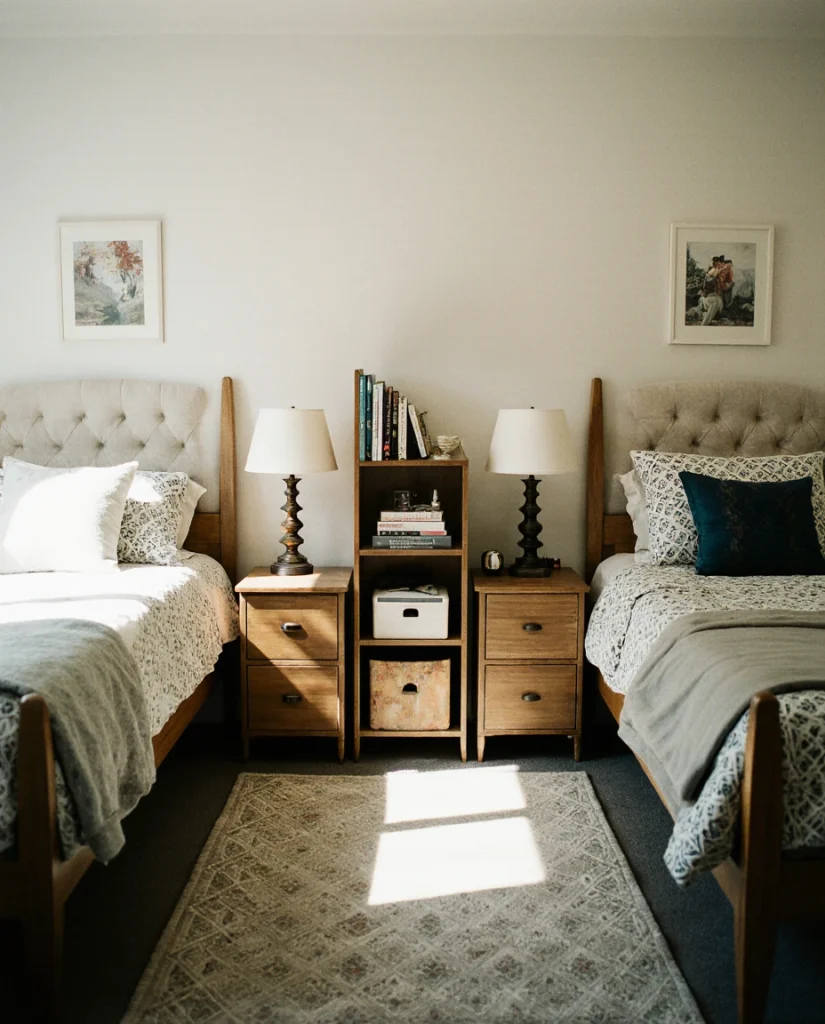
Navigating a shared dorm space requires thoughtful planning to ensure both roommates feel comfortable and respected. The most successful double room setups use visual dividers—curtain rods with fabric panels, tall bookcases, or even large plants—to create psychological separation without requiring permanent modifications. Establishing clear zones helps each person maintain their own aesthetic while contributing to an overall cohesive environment. Communication about shared items, cleaning schedules, and overnight guests becomes much easier when the physical space already reflects mutual consideration and boundaries. 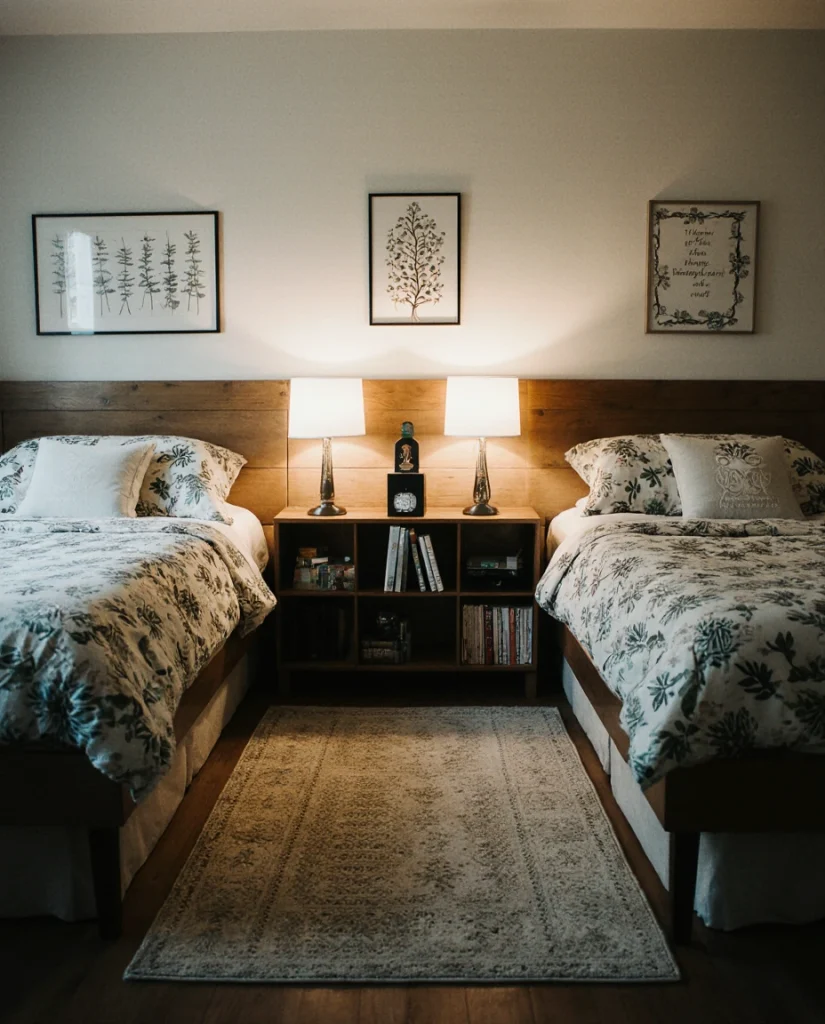
Expert designers recommend that roommates agree on a shared color palette or theme—even if they execute it differently on their respective sides—to prevent the space from feeling chaotic or visually fragmented. A simple solution is selecting a neutral base (white, beige, or gray) that both roommates incorporate, then allowing each person complete freedom with accent colors and personal decorative choices. Real homeowner behavior in this context: successful roommate pairs often shop together for shared items like area rugs or curtains, ensuring equal investment and mutual satisfaction with these foundation pieces that impact the entire room.
8. Beach House Triple Room Configuration
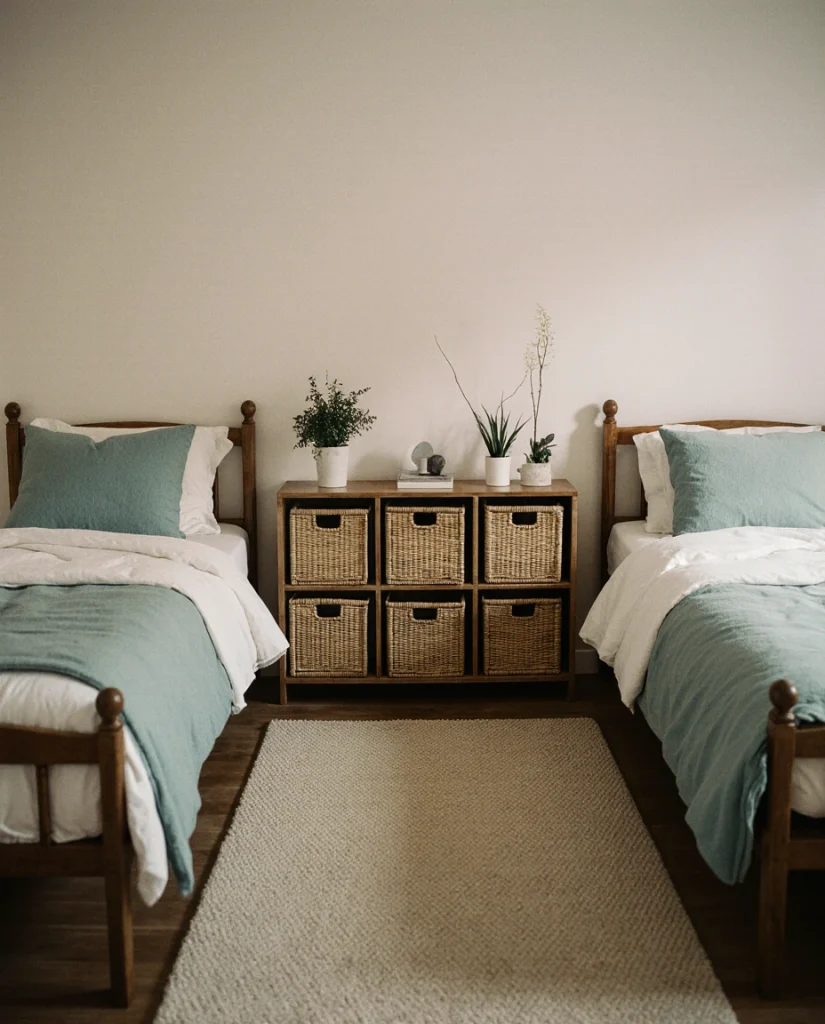
A triple dorm room presents unique layout challenges, but a beach-inspired color scheme can unify the space while still allowing individual expression. Coordinate with your roommates on a shared palette of aqua, sand, and white that provides visual cohesion, then differentiate individual spaces through varied textures and patterns within that color family. The coastal theme’s inherent brightness helps prevent the room from feeling cramped despite housing three people and their belongings. Consider how traffic flow will work with three beds, desks, and dressers—often an L-shaped or linear arrangement along walls maximizes open floor space in the center. 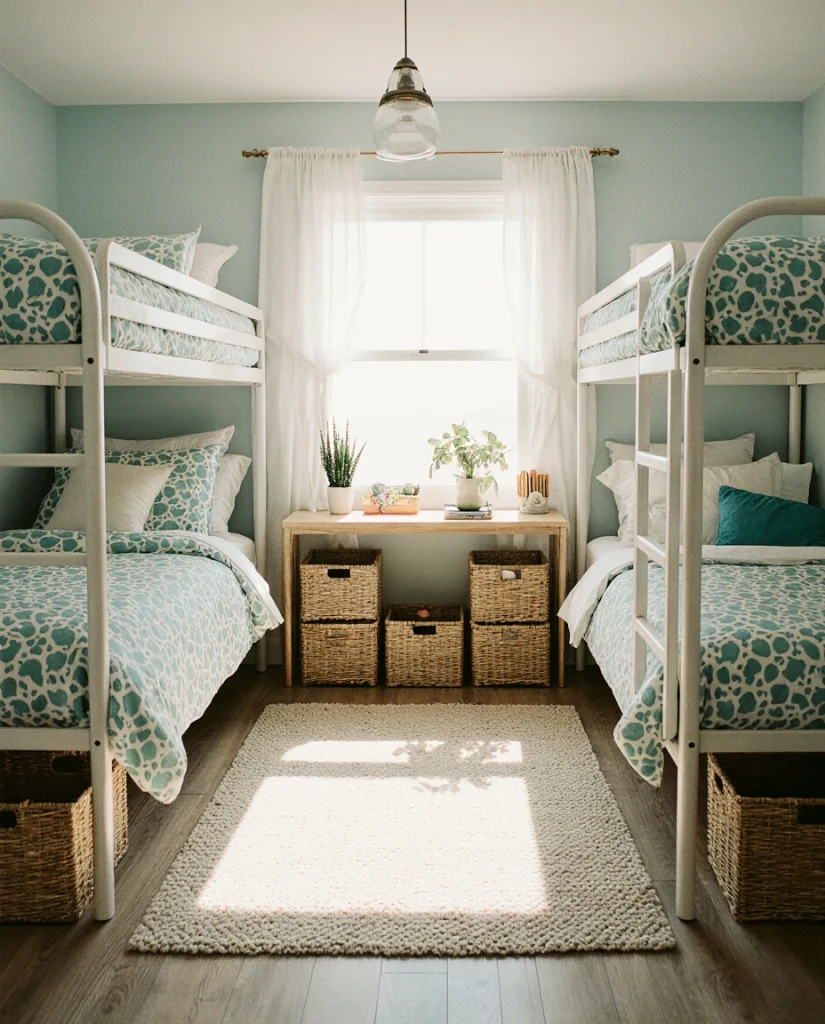
Practical insight: Triple rooms often feel most functional when the three residents establish “quiet hours” agreements and shared storage systems from day one, preventing conflict as the semester progresses. Vertical storage becomes absolutely crucial in triples—invest in over-door organizers, wall-mounted shelves, and bed risers that create under-bed storage for out-of-season clothing. Many universities offer slightly larger rooms for triple occupancy, but the square footage increase rarely feels proportional to the additional person, so efficient organization separates comfortable triples from chaotic ones. The beach theme psychologically expands the space through its association with open horizons and airy environments.
9. Bold Red Accent Statement
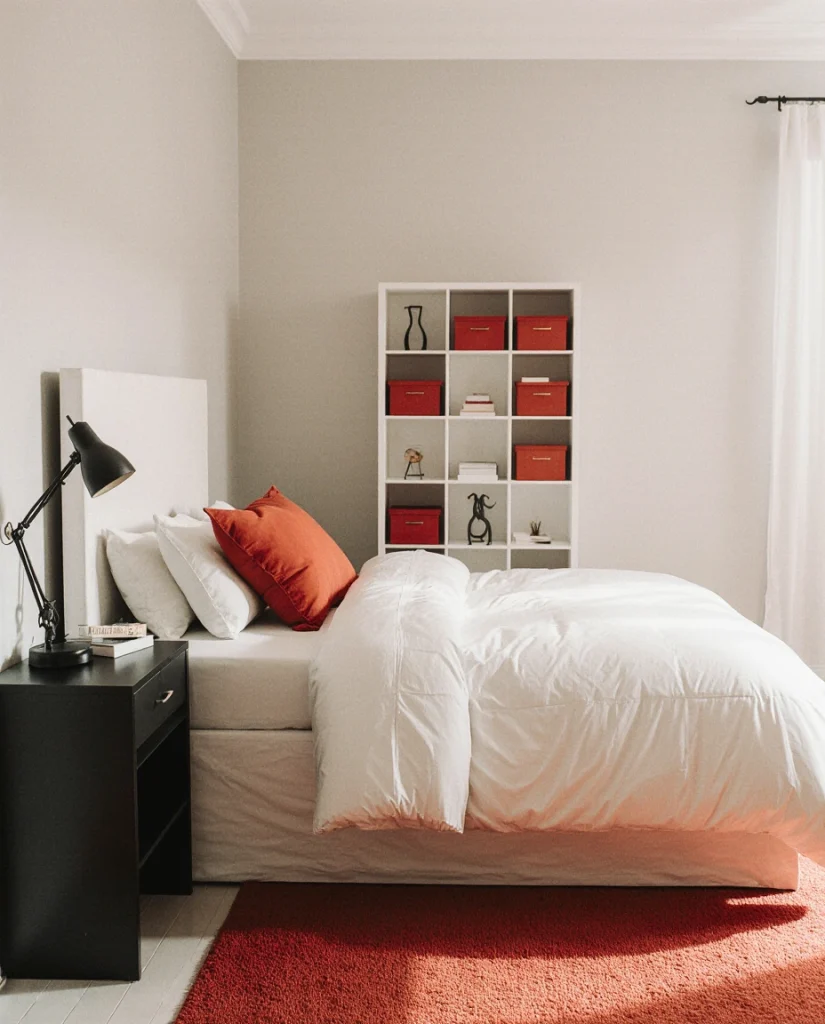
A red accent wall or colorful red statement piece injects energy and personality into otherwise neutral dorm spaces. Since most residence halls prohibit painting, achieve this look through removable wallpaper, large tapestries, or a dramatic red area rug that anchors your entire design scheme. Red works particularly well for students who thrive in stimulating environments, as the color psychologically boosts energy and motivation—valuable qualities during early morning classes and late-night study sessions. Balance the intensity with plenty of white or neutral elements to prevent the space from feeling overwhelming or visually chaotic. 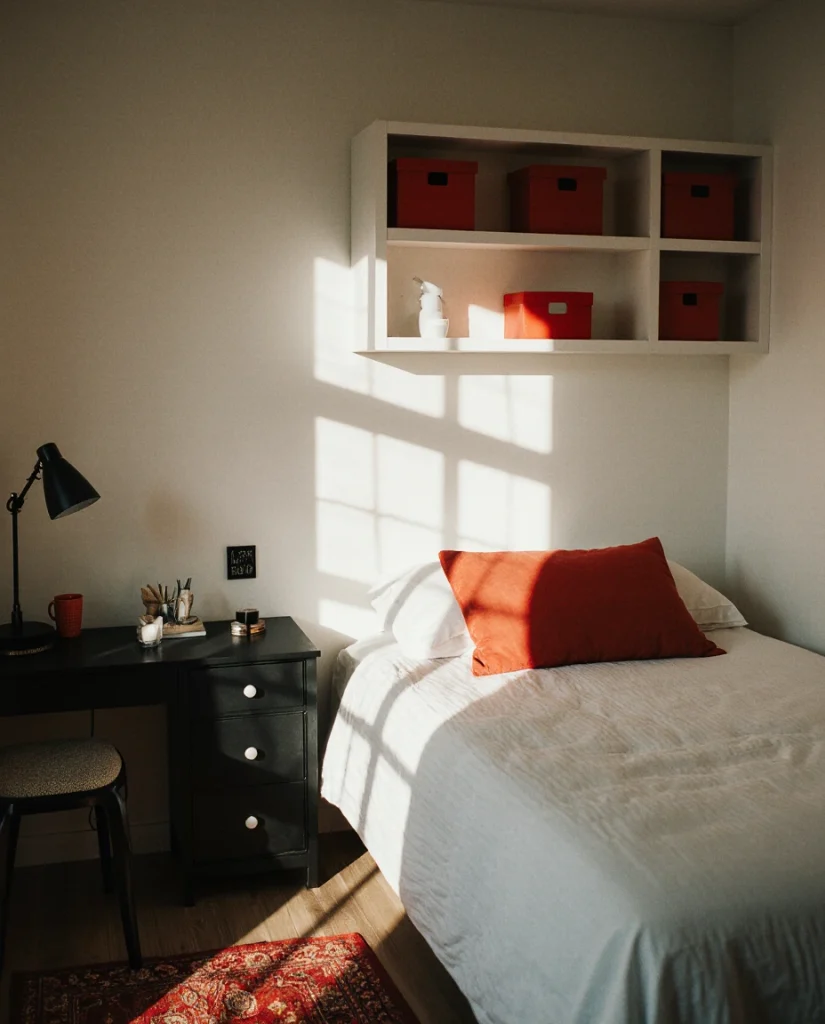
Where this works best: this works best in rooms with lots of natural light that can diffuse red’s intensity, and for students that genuinely respond positively to bold color as opposed to just using it because of trending. In darker dorms or for those who like a more subdued environment, red can be used as a micro-accent—perhaps just in desk accessories or a single piece of artwork—rather than a bold design choice. The combo of red with black and white can be visually stunning, creating a sophisticated look that’s popular with students who like to document their space on Instagram or TikTok throughout the academic year.
10. Monochrome Black and White Contrast
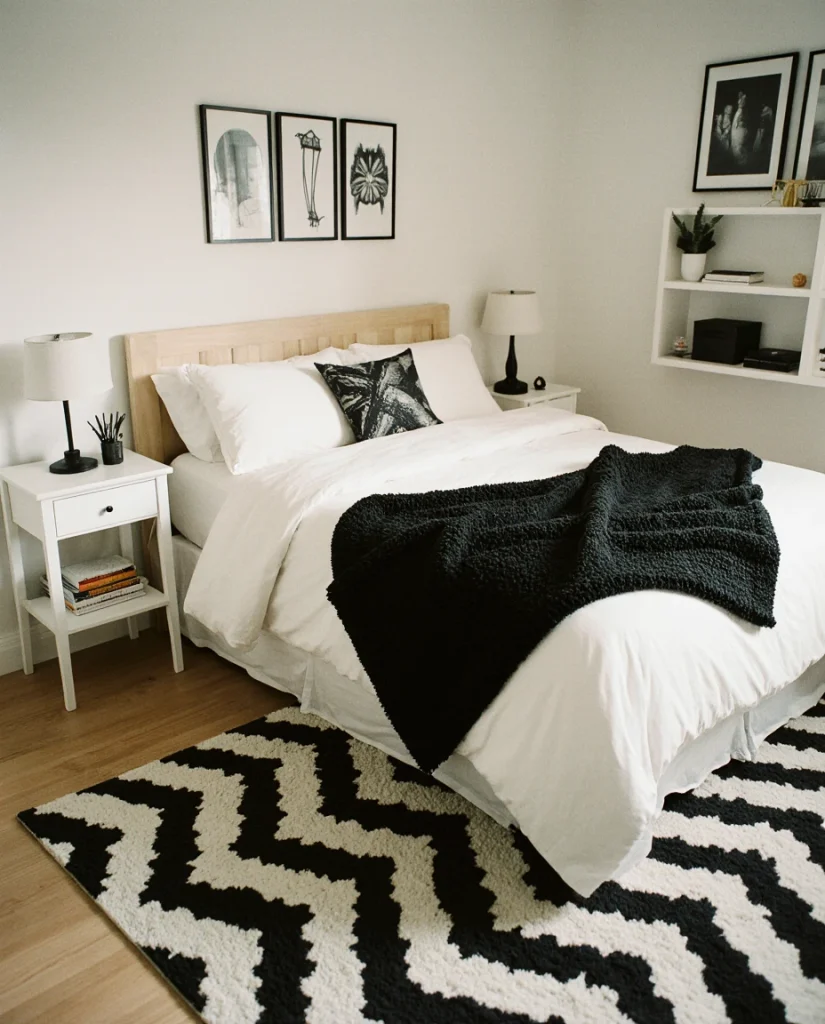
Black and white dorm rooms offer timeless sophistication that never falls out of style, plus the palette makes it incredibly easy to find matching accessories and textiles throughout your college years. This high-contrast approach works in dorms of any size, as the dramatic interplay between dark and light creates architectural interest even in the most basic rectangle rooms. The aesthetic also provides flexibility—you can easily swap in seasonal or trendy accent colors (metallics, pastels, or jewel tones) without disrupting the foundational design. Many students appreciate how the monochrome palette makes the room feel more “adult” compared to typical bright, busy college décor. 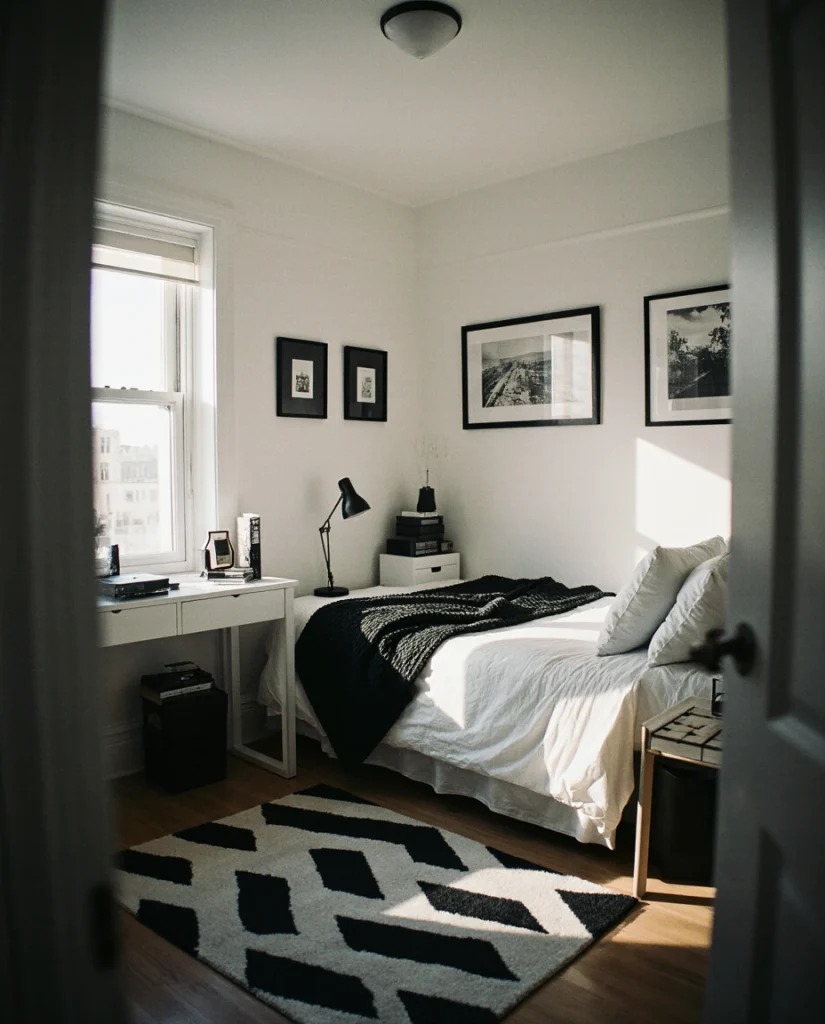
A student at NYU’s Weinstein Hall discovered that her black and white room became the preferred gathering spot for her floor because the sophisticated aesthetic made everyone feel more comfortable and “grown up” compared to other dorm rooms decorated with posters and string lights alone. The key to preventing this palette from feeling stark or cold is incorporating varied textures—think cable knit throws, faux fur pillows, and woven baskets that add depth and warmth. Price point advantage: Black and white items rarely go on clearance since they’re perpetually in demand, but they also remain usable year after year without looking dated, making them a smart long-term investment for students.
11. Wild Cheetah Print Personality
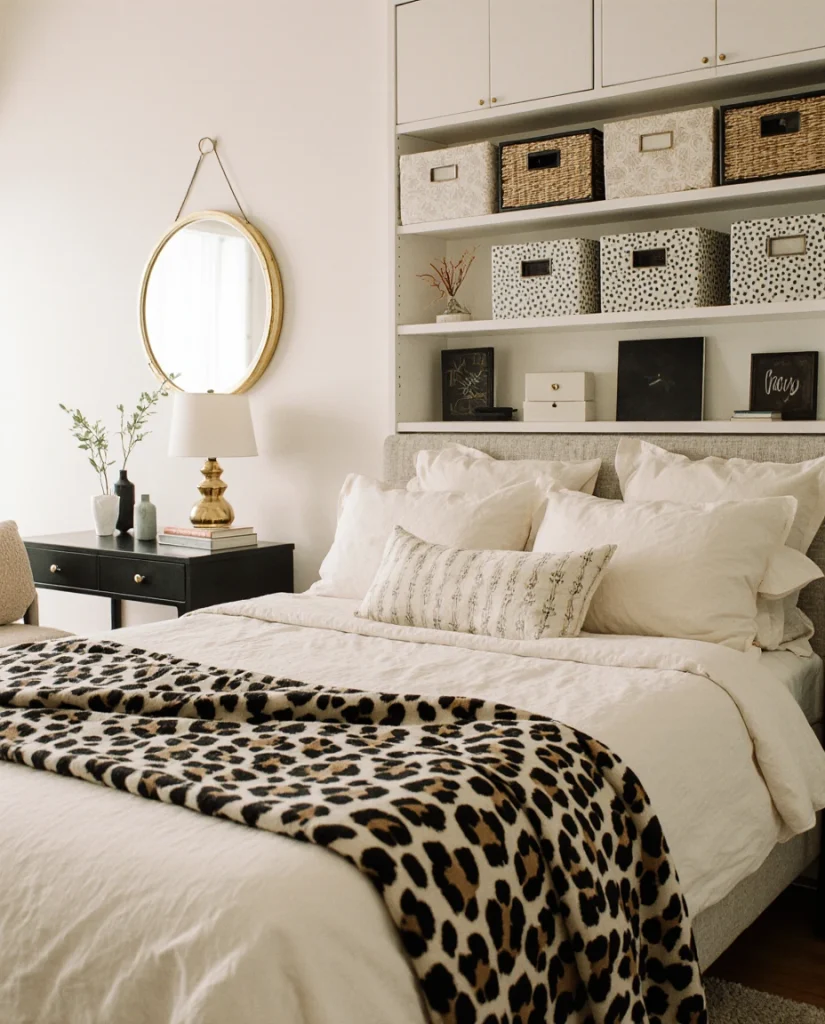
Animal prints, particularly cheetah patterns, are experiencing a major resurgence in dorm design as students seek distinctive alternatives to standard florals and geometrics. This bold choice works best as an accent rather than overwhelming the entire space—think a cheetah-print throw blanket, a single accent pillow, or a small area rug that injects personality without dominating. Pair the pattern with solid neutral tones like tan, cream, or black to keep the look sophisticated rather than costume-like. The key is confidence; cheetah print commands attention, so it suits students who want their aesthetic to reflect their outgoing, fearless personality. 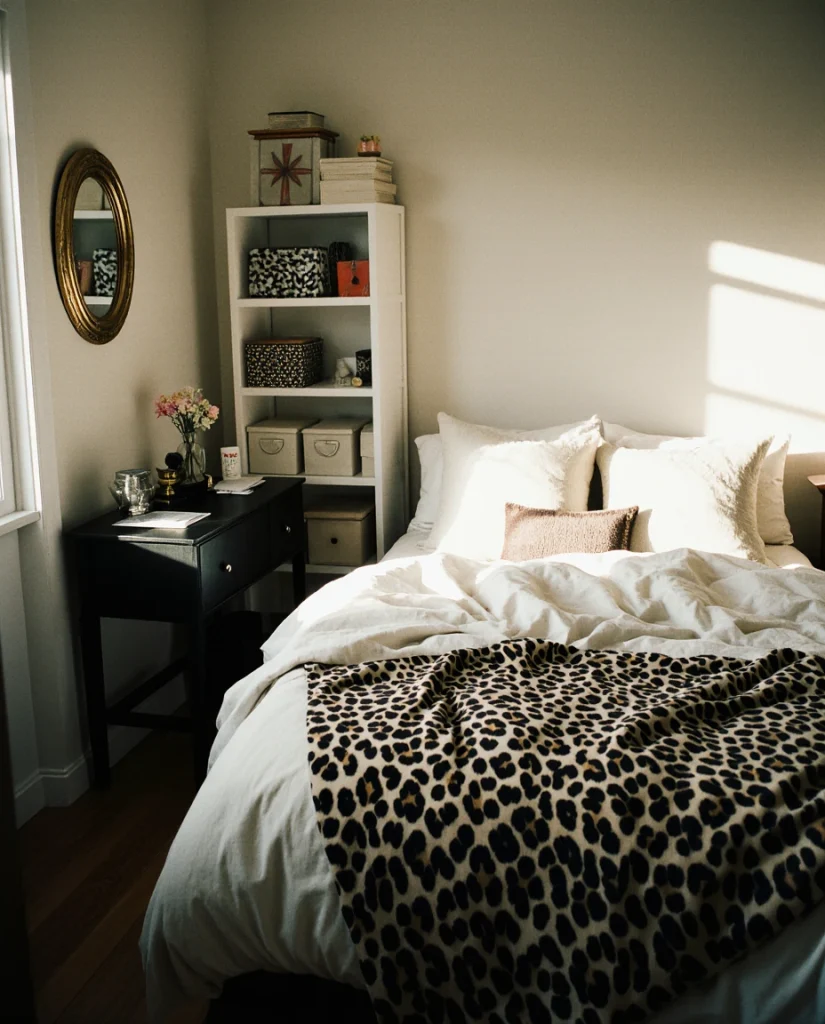
Common mistake: mixing cheetah with other busy patterns or multiple animal prints, which creates visual chaos in an already small space. Instead, let the cheetah print be your singular statement pattern and keep everything else in solid coordinating colors. Real homeowner behavior: students who choose bold patterns like cheetah typically switch them out after a year or two, so consider purchasing these items from affordable retailers rather than investing in expensive designer versions. The pattern trends particularly strong in southern universities and fashion-forward schools where personal style expression ranks high among student priorities. When styled thoughtfully, cheetah print reads as fashion-forward rather than dated or kitschy.
12. Serene Sage Green Sanctuary
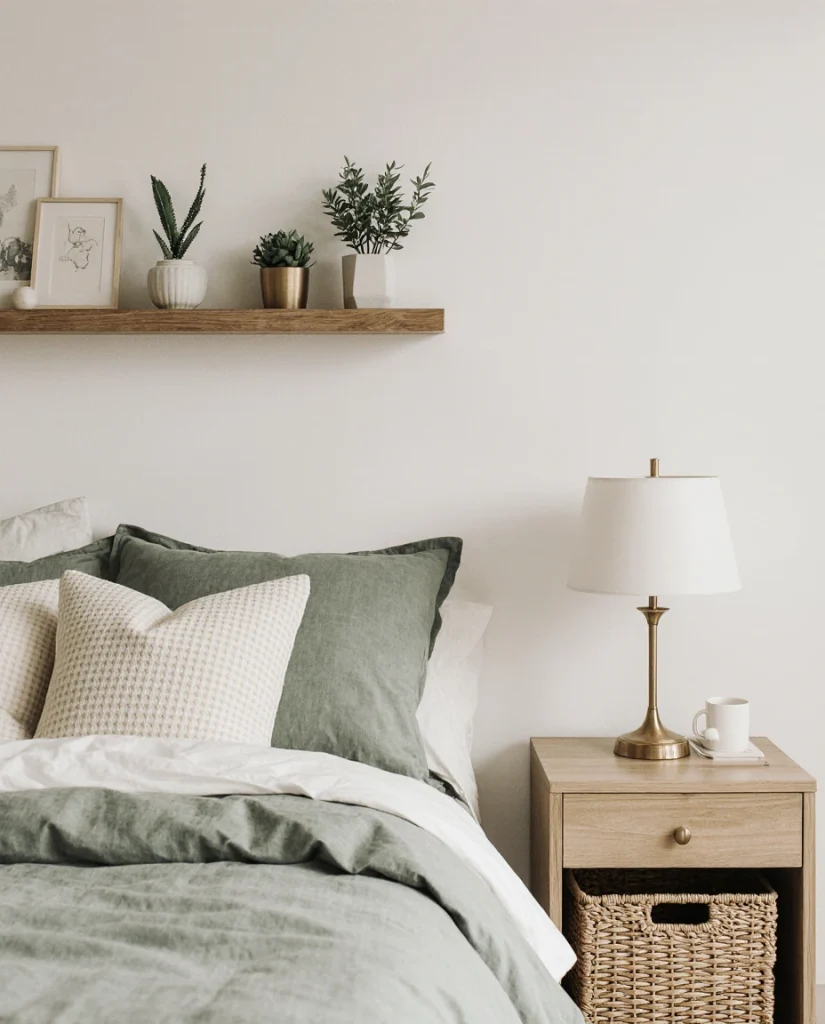
Sage green has emerged as one of 2026’s most sought-after dorm colors, offering a sophisticated earthy alternative to both bold jewel tones and standard neutrals. This muted, grayish-green creates an instantly calming environment that research suggests can reduce stress and improve focus—both critical for academic success. The color pairs beautifully with natural wood tones, cream textiles, and brass or gold metallic accents that add warmth without competing for attention. Many students gravitate toward sage because it photographs exceptionally well in natural light, making their space Instagram-worthy while still feeling genuinely livable rather than staged. 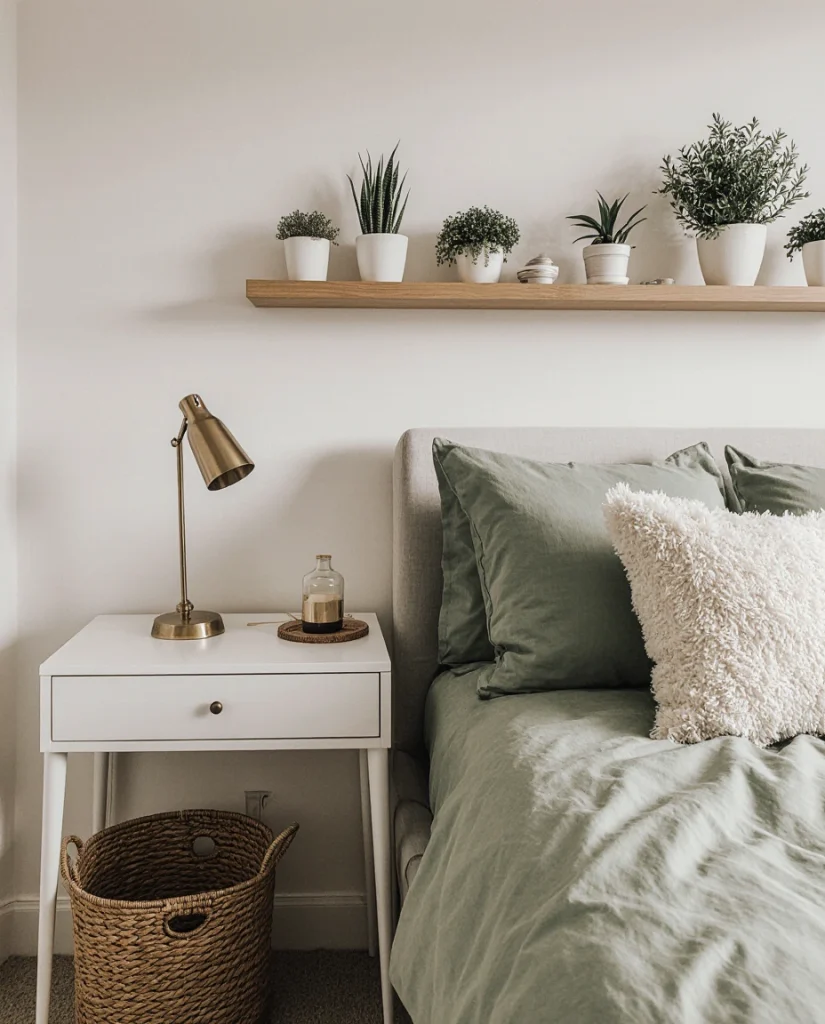
This color trend particularly resonates with students interested in sustainability and natural living, as sage green psychologically connects to outdoor environments and eco-conscious values. Budget approach: IKEA’s recent collections feature extensive sage green options at student-friendly prices, with duvet covers typically around $25-40 and coordinating accessories under $15. The shade also has remarkable longevity compared to trendier colors—sage green has remained consistently popular for nearly three years, suggesting it’s transitioning from trend to classic. Mix in plenty of texture through linen, cotton, and woven materials to prevent the monochromatic green palette from feeling flat or one-dimensional in your dorm space.
13. Sunny Yellow Optimism
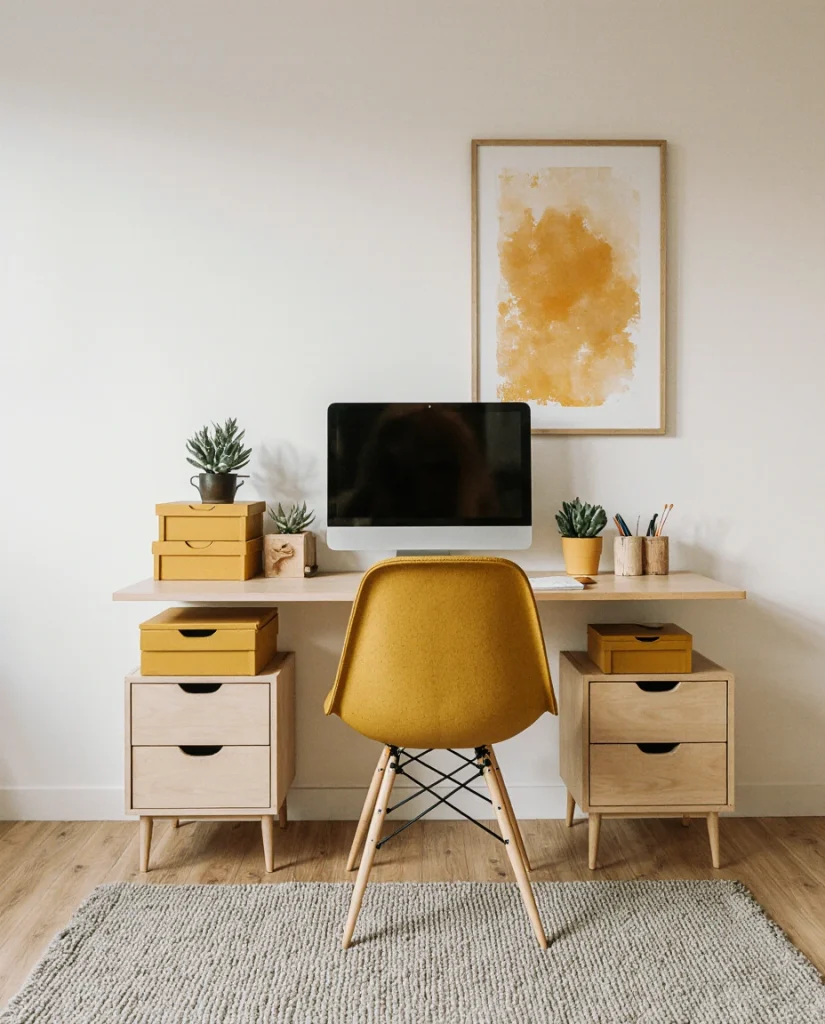
Cheerful yellow accents bring instant brightness to dorm rooms, particularly those facing north or lacking significant natural light. Rather than painting walls (usually prohibited), incorporate yellow through easily changeable elements like throw pillows, desk accessories, or a statement rug that anchors the space. This colorful choice pairs beautifully with white, gray, or natural wood tones that prevent the yellow from feeling overwhelming. The color psychology behind yellow promotes optimism, creativity, and mental clarity—all valuable qualities for students navigating challenging coursework and new social dynamics throughout the academic year. 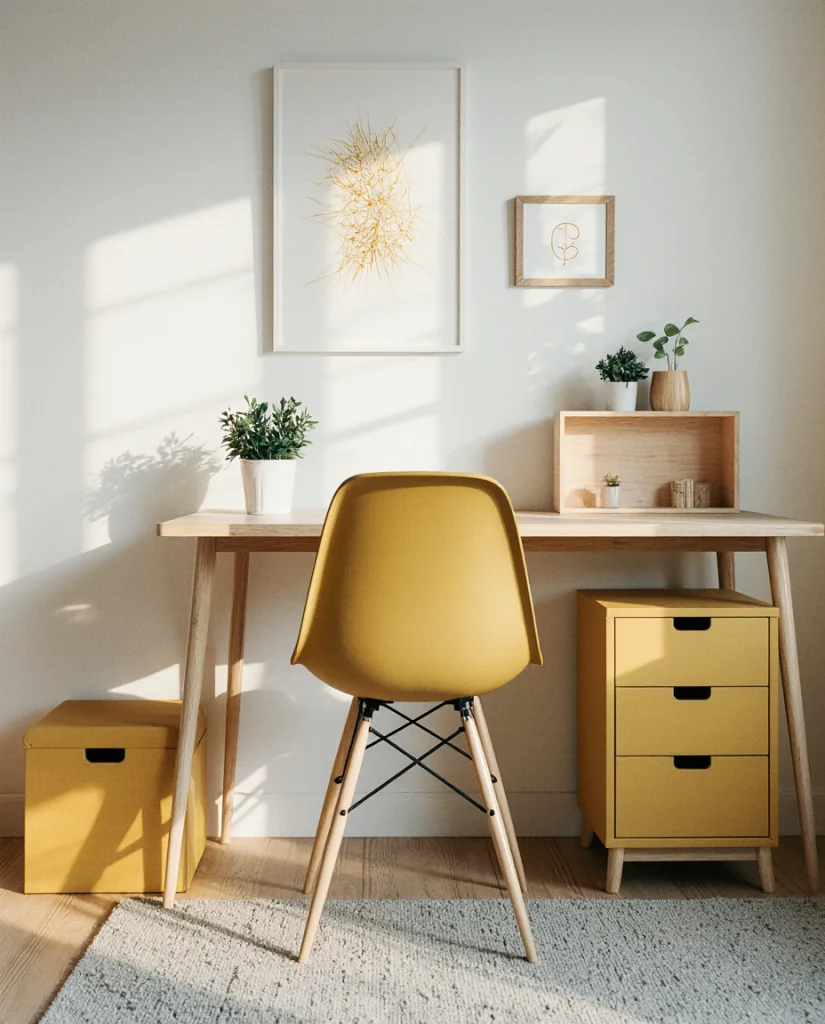
Expert-style commentary: Interior designers recommend using yellow in spaces where you want to boost energy and motivation, making it particularly effective in study areas rather than sleep zones. If your dorm layout allows, concentrate yellow accents near your desk while keeping your bed area in cooler, calmer tones to support better sleep hygiene. The shade matters significantly—buttery or mustard yellows feel more sophisticated and easier to coordinate than bright lemon shades, which can overwhelm small spaces. Students report that yellow décor genuinely improves their mood during gray winter months, making it especially valuable for colleges in northern climates with limited daylight during the winter semester.

14. Organized Minimalist System
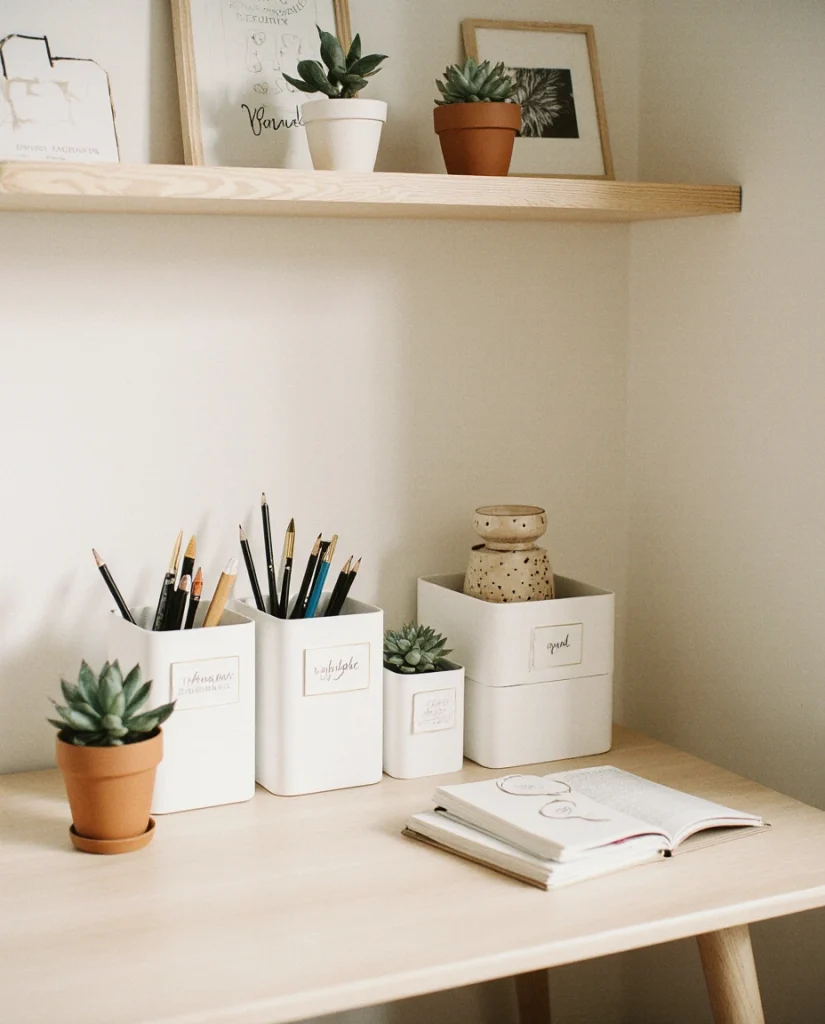
Effective organization transforms cramped dorm rooms into functional, stress-free environments where you can actually find what you need. The minimalist approach prioritizes quality over quantity, encouraging students to bring only essentials and establish designated homes for every item. Invest in matching storage containers, drawer dividers, and vertical organizers that maximize every inch of available space while creating visual calm through uniformity. A well-organized college room typically features under-bed storage for out-of-season items, over-door organizers for shoes and accessories, and desktop systems that keep school supplies accessible but contained. 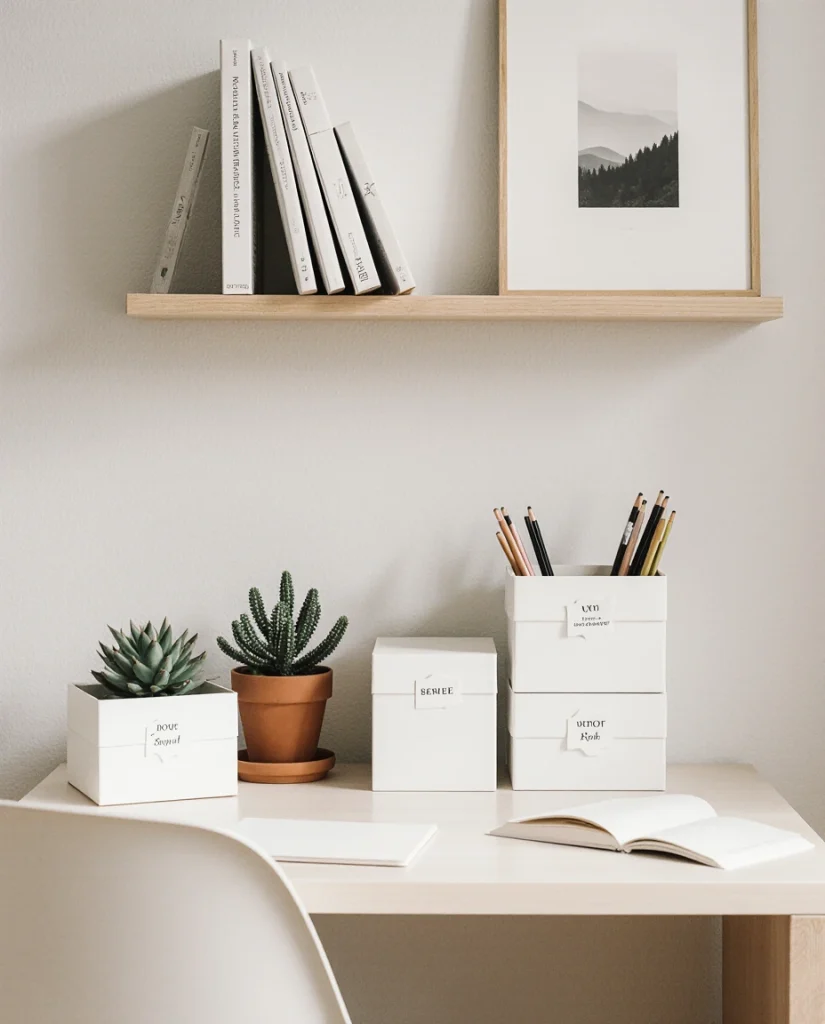
Practical insight: The most successfully organized students complete a full closet and drawer edit at the start of each semester, removing items they haven’t used and donating or storing them off-campus. This periodic reset prevents the gradual accumulation that makes dorm rooms feel suffocating by mid-semester. Container Store’s elfa system and similar modular storage solutions offer dormitory-specific configurations, though Amazon Basics provides comparable functionality at roughly 60% lower cost. The psychological benefit of organization extends beyond aesthetics—students with organized rooms report lower stress levels, better sleep quality, and improved academic performance compared to those living in cluttered environments.
15. Natural Light Blue Haven
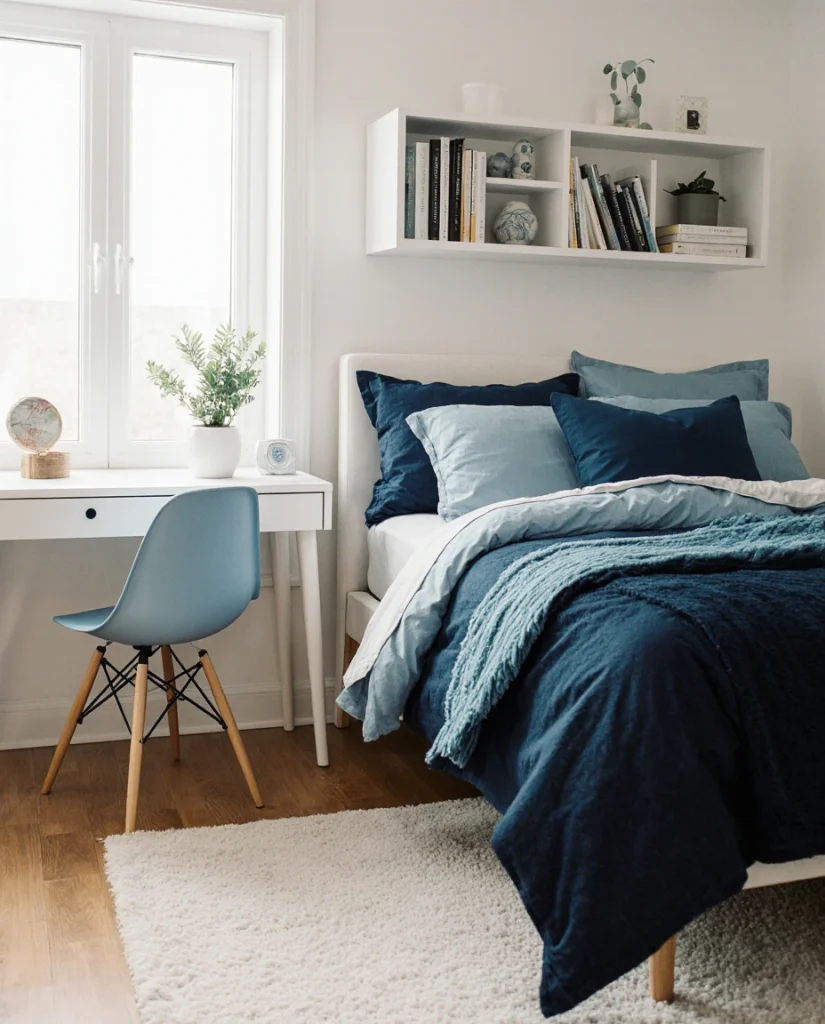
A soft blue palette creates peaceful dorm environments that support both productivity and relaxation, making it especially valuable for students balancing demanding academic schedules. Unlike bolder navy or royal blues, these lighter shades keep rooms feeling spacious and airy despite limited square footage. Layer different tones—from powder blue to dusty denim—to create depth and visual interest within the colorful yet cohesive scheme. Many students appreciate how blue promotes calm focus during study sessions while still photographing as distinctly stylish rather than bland or generic. 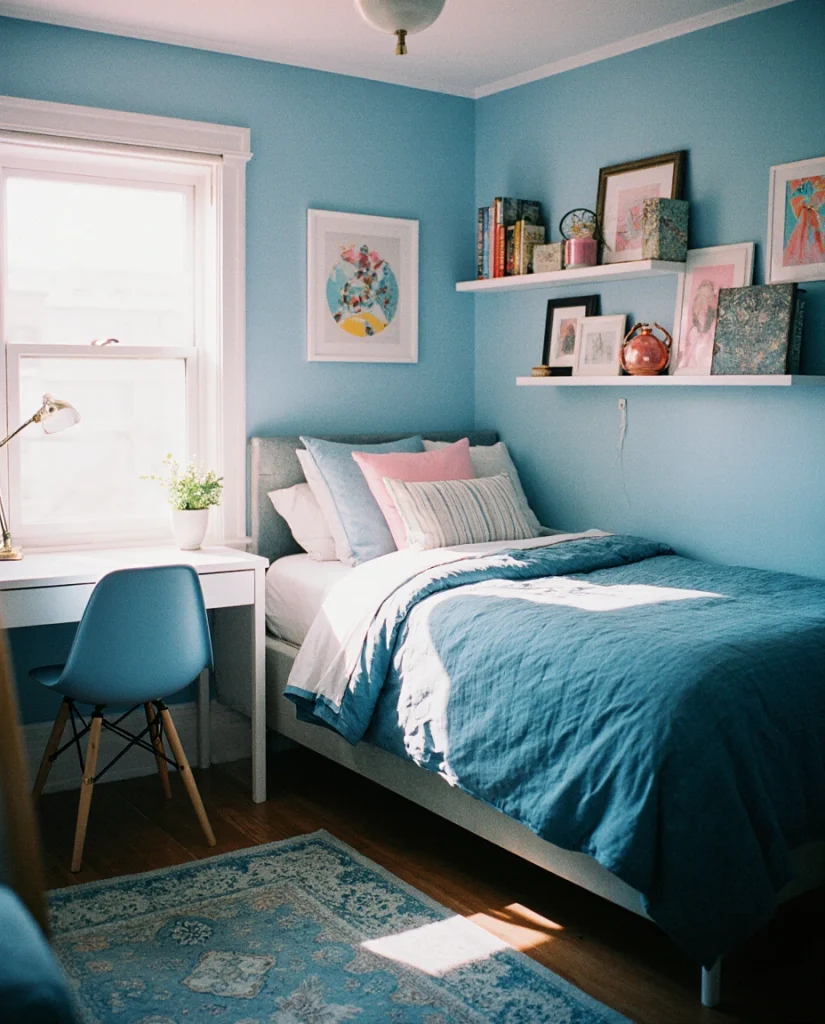
Where this works best: Dorms with western or northern exposures where the natural cool light complements blue tones throughout the day, and for students who tend toward anxiety or stress, as blue’s calming properties are well-documented in color psychology research. A freshman at the University of Michigan shared that her blue room became her mental health sanctuary during a particularly challenging first semester, providing sensory calm that helped her decompress after overwhelming days. The shade you select matters—stay away from colors that read as baby blue if you want a more mature aesthetic, instead choosing dusty or grayish-blue tones that feel sophisticated and intentional rather than juvenile.
16. Sophisticated Black Accent Scheme
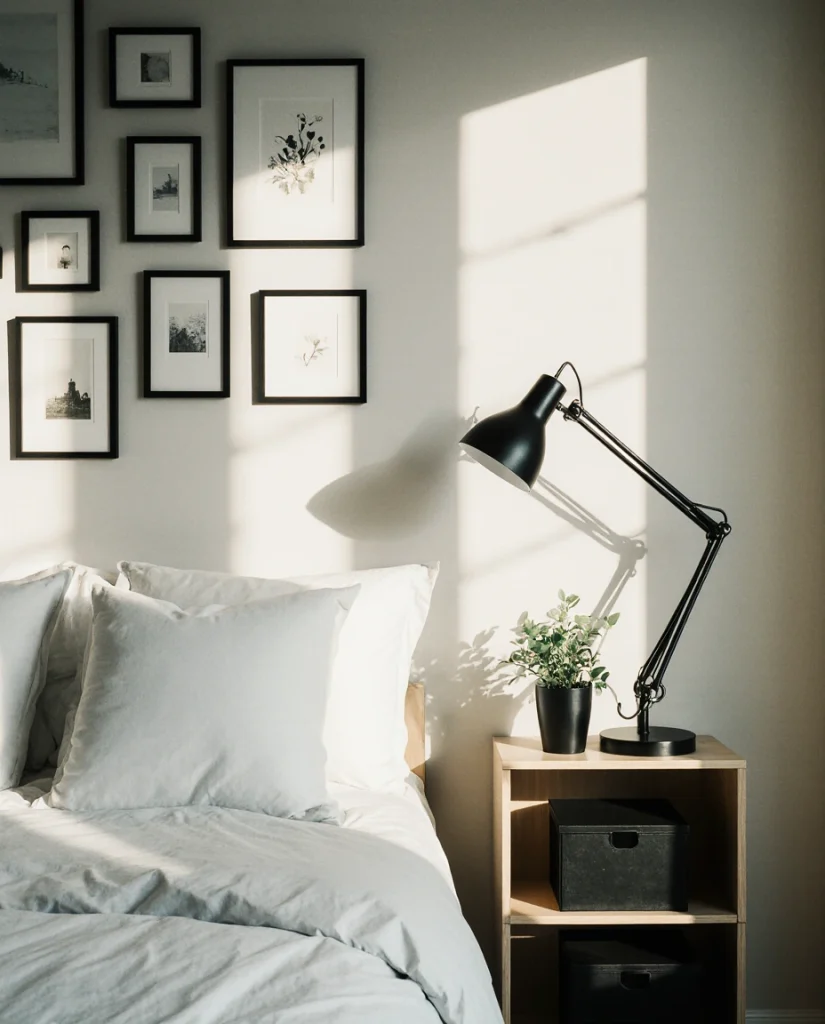
Strategic black accents add unexpected sophistication to standard dorm rooms, grounding lighter color schemes and creating definition in otherwise plain spaces. Rather than making rooms feel dark or small, black actually provides visual anchors that help other colors pop while creating a pulled-together, intentional aesthetic. Consider black picture frames, desk accessories, a statement lamp, or even bed risers that add both style and function. This approach works particularly well when combined with white or neutral bases, creating the popular high-contrast look that feels modern and polished rather than standard college housing. 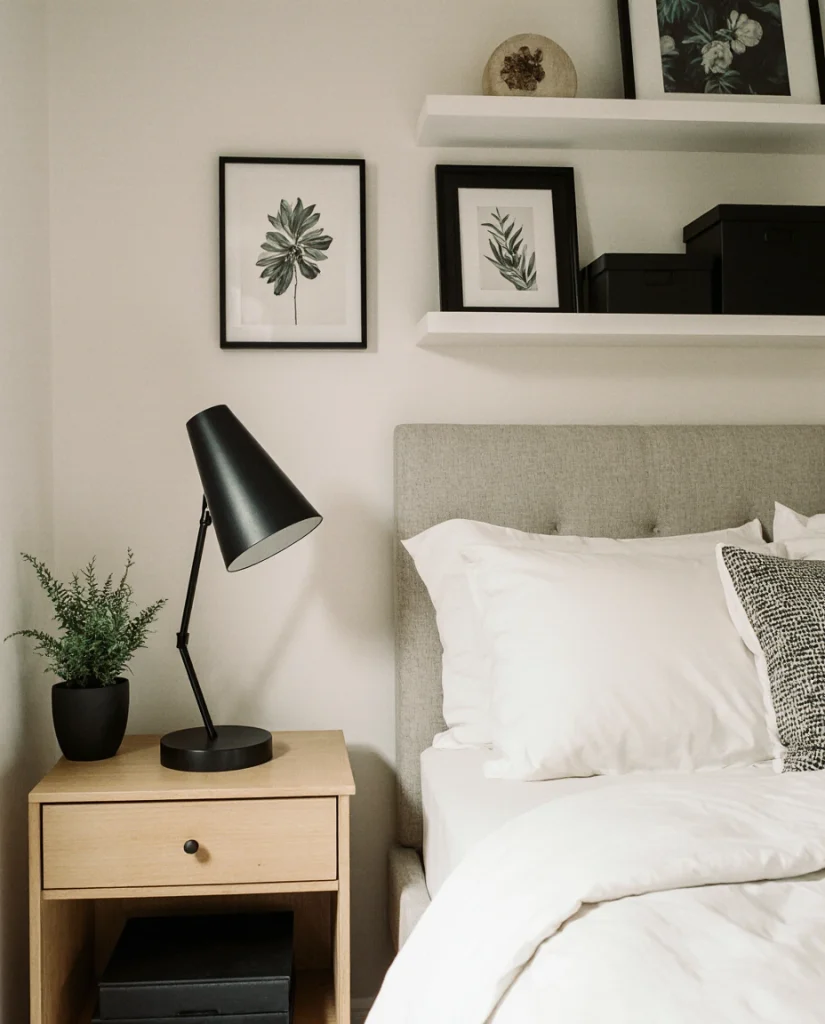
Real homeowner behavior shows that students who incorporate black accents tend to keep their rooms cleaner and more organized, possibly because the sophisticated aesthetic motivates them to maintain higher standards. The investment in quality black pieces also tends to outlast college—items like picture frames, desk accessories, and storage boxes transition seamlessly to post-graduation apartments, making them smarter purchases than trendy pieces that feel dated within a semester. Target’s Threshold line and West Elm’s dorm collection both offer matte black accessories at various price points, from $8 organizers to $40 task lamps. The key is ensuring your black pieces have interesting textures or shapes rather than appearing flat and one-dimensional.
17. Neutral Foundation Strategy
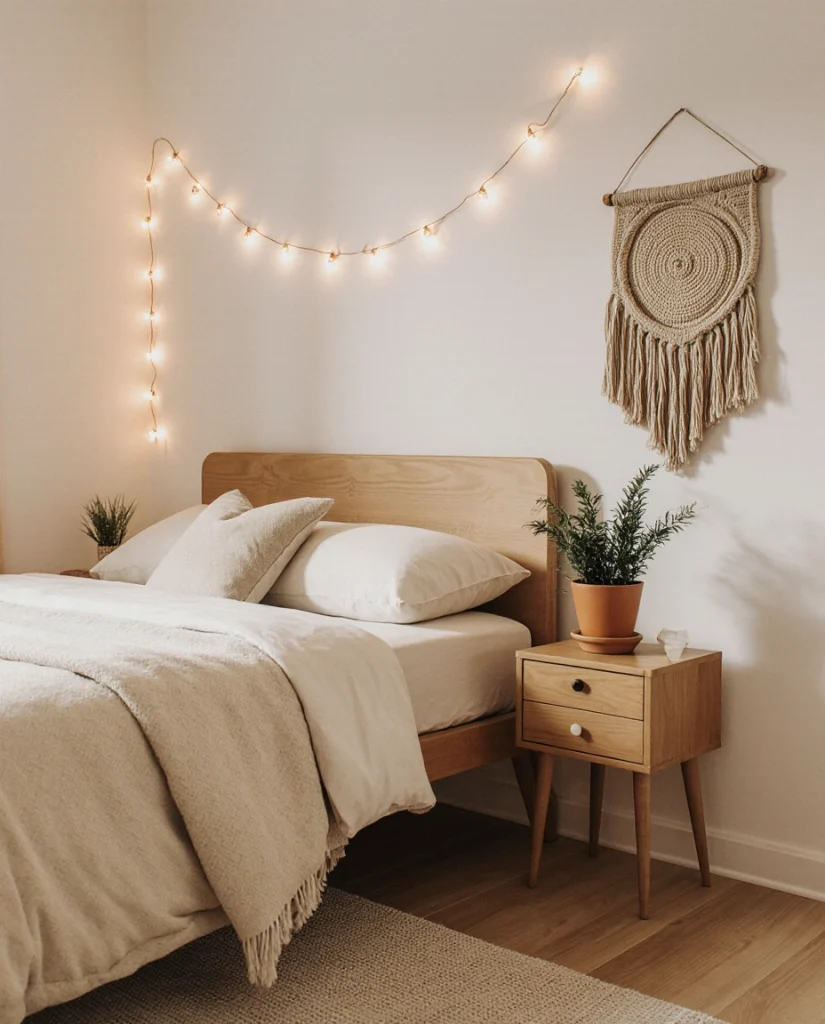
Building your dorm design around a neutral base palette offers unmatched flexibility and longevity, allowing you to easily switch accent colors between semesters without replacing major pieces. Think warm tans, soft grays, and creamy whites as your foundation, then layer in seasonal or trendy pops of color through easily changeable items like throw pillows, wall art, or desk accessories. This aesthetic approach also photographs beautifully, creating that coveted “Pinterest-worthy” look that many students seek. The earthy quality of neutrals brings inherent warmth that prevents rooms from feeling cold or institutional despite standardized furniture.
Budget angle: Neutral pieces rarely go on clearance sales, but their longevity makes them more cost-effective over your four-year college career than repeatedly replacing trendy colored items. A $60 neutral duvet serves you throughout college and beyond, while that $40 trendy coral duvet may feel dated by sophomore year. Retailers like H&M Home and Zara Home offer surprisingly affordable neutral textiles—typically 20-30% less than dedicated dorm retailers—with quality comparable to mid-range brands. The neutral strategy also simplifies roommate coordination, as nearly any personal accent colors work harmoniously within a neutral framework, reducing potential design conflicts in shared spaces.
18. Bohemian Green Plant Oasis
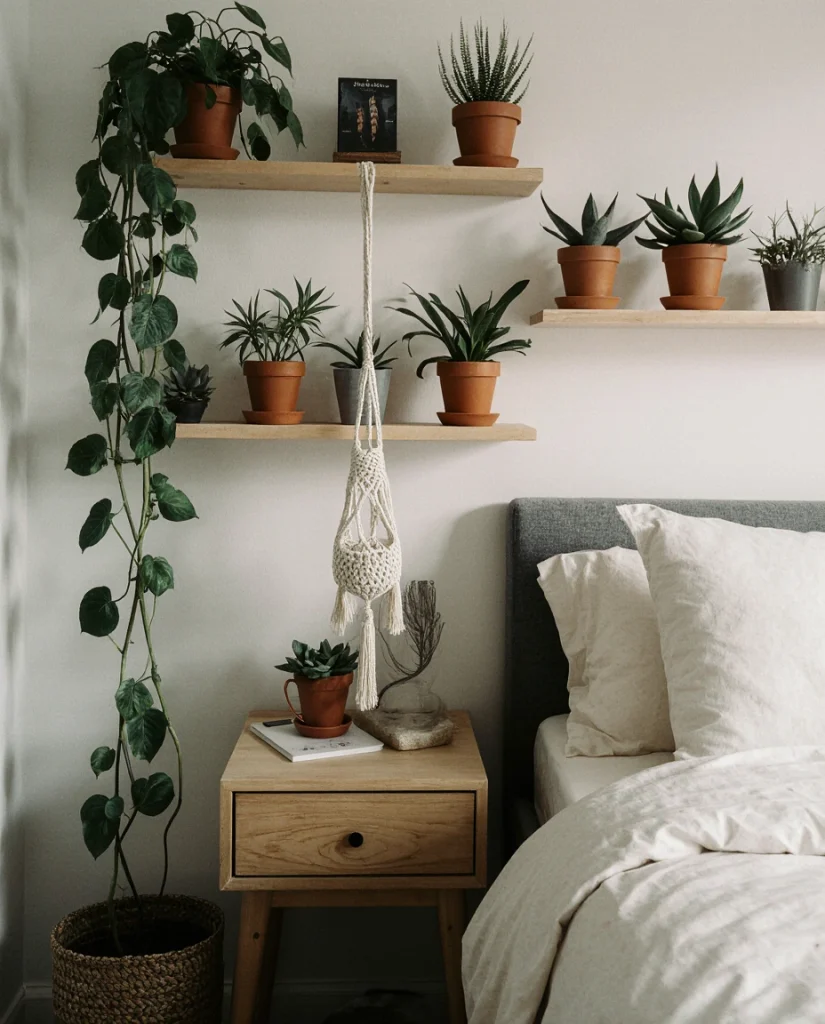
Creating a green plant-filled oasis transforms sterile dorm rooms into living, breathing spaces that improve air quality and mental well-being. Start with bulletproof varieties like pothos, snake plants, or ZZ plants that tolerate irregular watering and less-than-ideal light conditions—crucial for busy students who may forget weekend waterings during exam weeks. The earthy presence of living plants contributes to the increasingly popular biophilic design trend that recognizes humans’ innate need for nature connection. Arrange plants at varying heights using floating shelves, hanging macramé planters, and desk-level pots to create visual interest and maximize your green impact without consuming precious floor space.
Common mistake: bringing high-maintenance plants that require specific humidity levels or consistent watering schedules that don’t align with college life’s unpredictability. Students often return from holiday breaks or weekend trips home to discover their finicky ferns have died, creating unnecessary stress and expense. Instead, select forgiving plants and establish a simple care routine—perhaps watering every Sunday evening while doing weekly room tidying. Many college bookstores now sell starter plant kits designed specifically for dorm conditions, typically $15-25, which include care instructions tailored to student schedules. The investment pays dividends through improved mood, better air quality, and the satisfaction of keeping something alive during your hectic academic journey.
19. Practical Double Room Setup
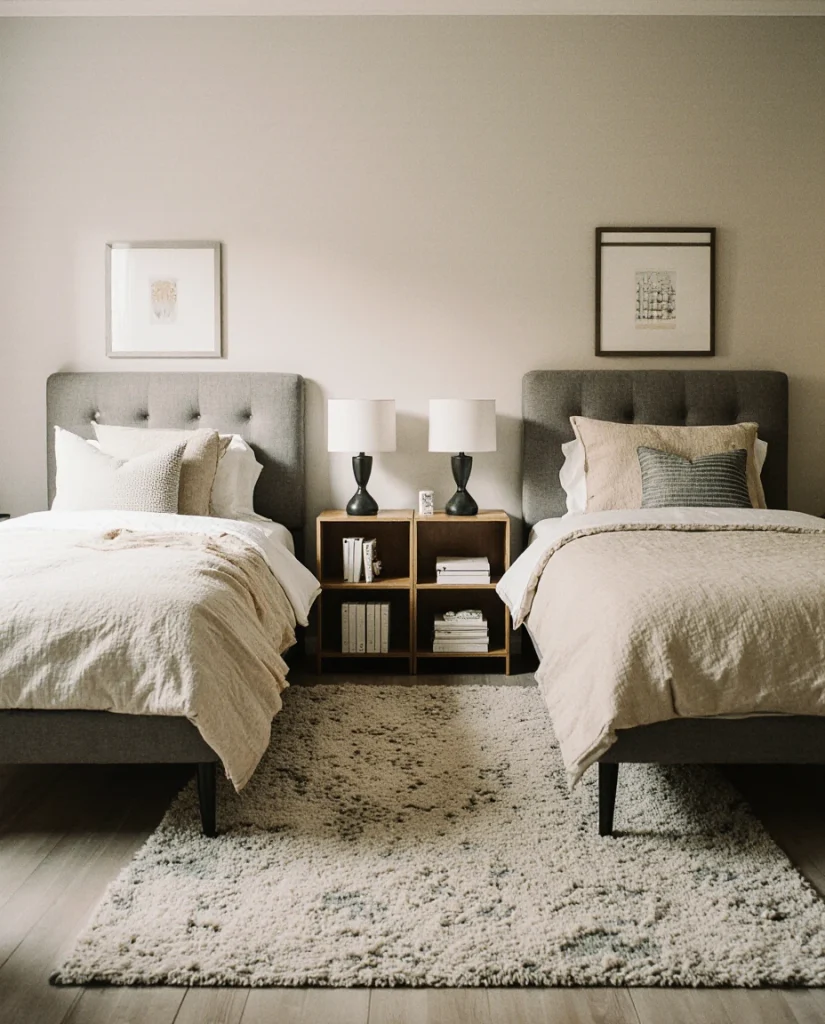
Successful double room arrangements require intentional planning to ensure both residents have equal space and privacy within the shared environment. The most functional layouts position beds on opposite walls with desks near windows to maximize natural light for studying. Establish a shared organization system for common items—cleaning supplies, extra hangers, shared electronics—while maintaining clear boundaries about personal belongings. Many roommate pairs discover that coordinating a basic color scheme creates visual harmony without requiring identical tastes, perhaps agreeing on a neutral foundation while each person adds their own accent colors and personal touches. 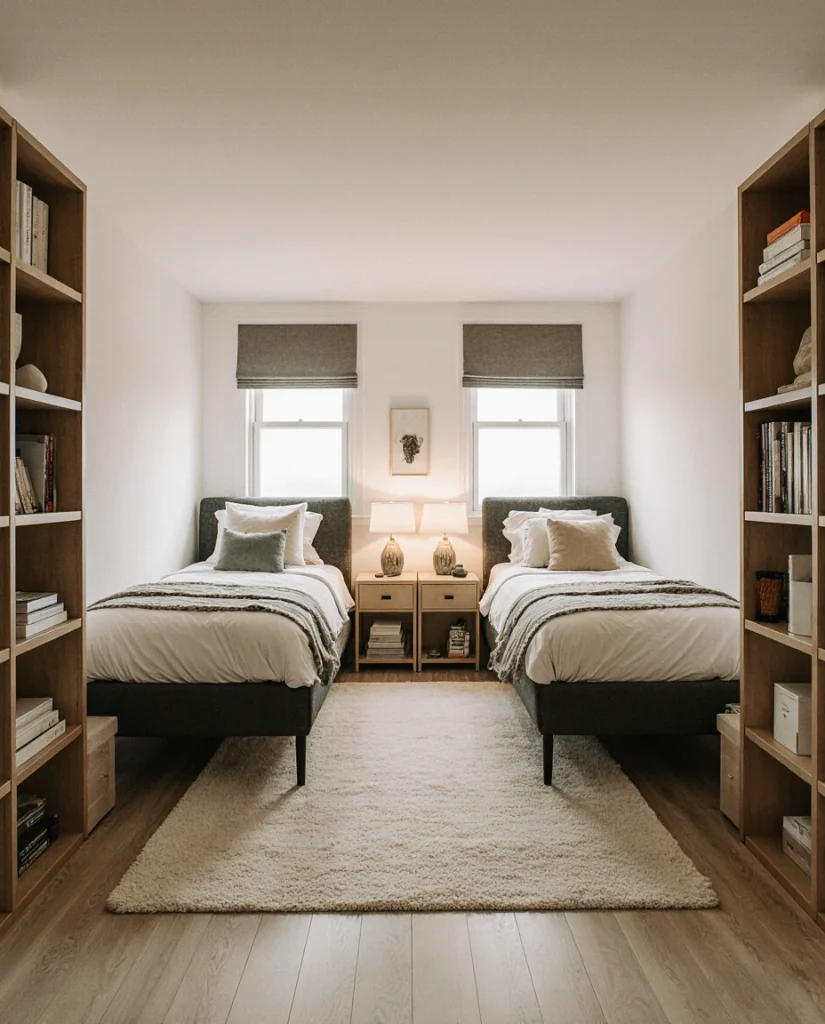
A sophomore at the University of Wisconsin noted that she and her roommate scheduled a “room reset” every Sunday where they tidied together, preventing resentment about cleaning responsibilities and keeping their shared space consistently pleasant. This proactive approach prevents the common scenario where one neat roommate grows frustrated with their messier counterpart. Invest in quality room dividers if you have different sleep schedules—blackout curtains on ceiling tracks cost around $40-60 but prove invaluable when one person has 8am classes while the other stays up late. The key to harmonious double rooms isn’t identical schedules or personalities; it’s clear communication and mutual respect reflected in how you organize and maintain your shared space.
20. Textured Neutral Warmth
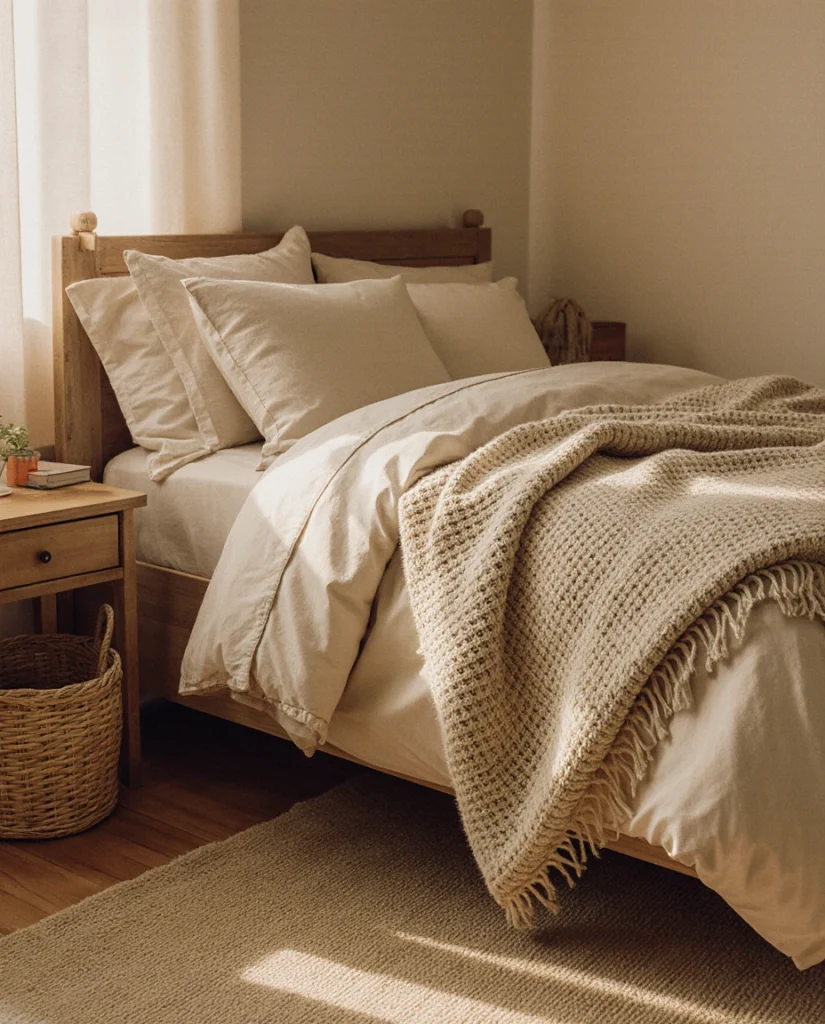
Layering varied textures within a neutral palette prevents beige and cream rooms from feeling boring or flat, creating sophisticated depth that rivals more colorful schemes. Combine smooth cotton sheets with a chunky cable knit throw, pair a sleek desk with a woven storage basket, and contrast your metal lamp with a soft faux fur pillow. This textural approach adds visual interest without requiring bold colors, making it perfect for students who prefer calm, understated aesthetics but still want their space to feel intentional and designed. The earthy quality of natural materials—wood, cotton, jute, and linen—brings inherent warmth that makes dorm rooms feel less institutional and more like actual homes. 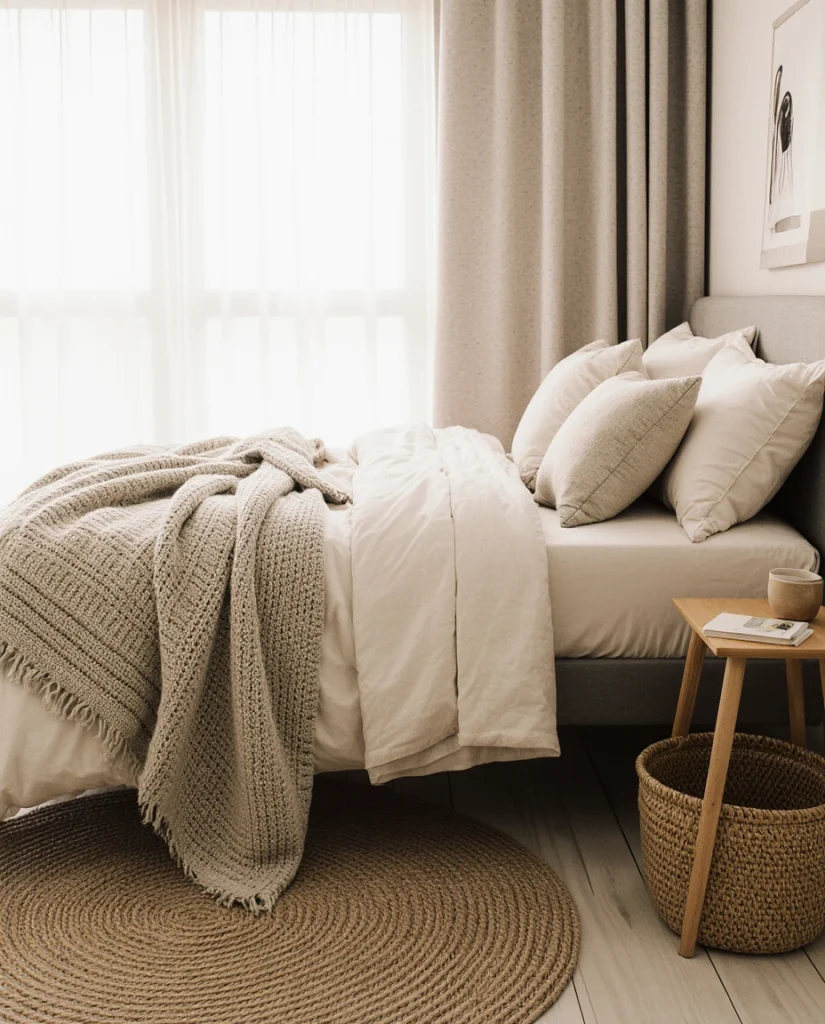
Expert commentary: Textile mixing works best when you vary not just textures but also pattern scales—pair large cable knits with subtle linen weaves and smooth cotton rather than combining multiple chunky textures that compete for attention. The neutral palette allows these textural variations to become the focal point rather than getting lost among competing colors. Students often discover that rooms designed with textural variety feel more expensive and intentional than they actually are, since texture creates visual complexity that reads as sophisticated even when items are from budget retailers. This approach also photographs exceptionally well, as varied textures create depth and dimension in flat images posted to social media.
21. Cheerful Colorful Energy
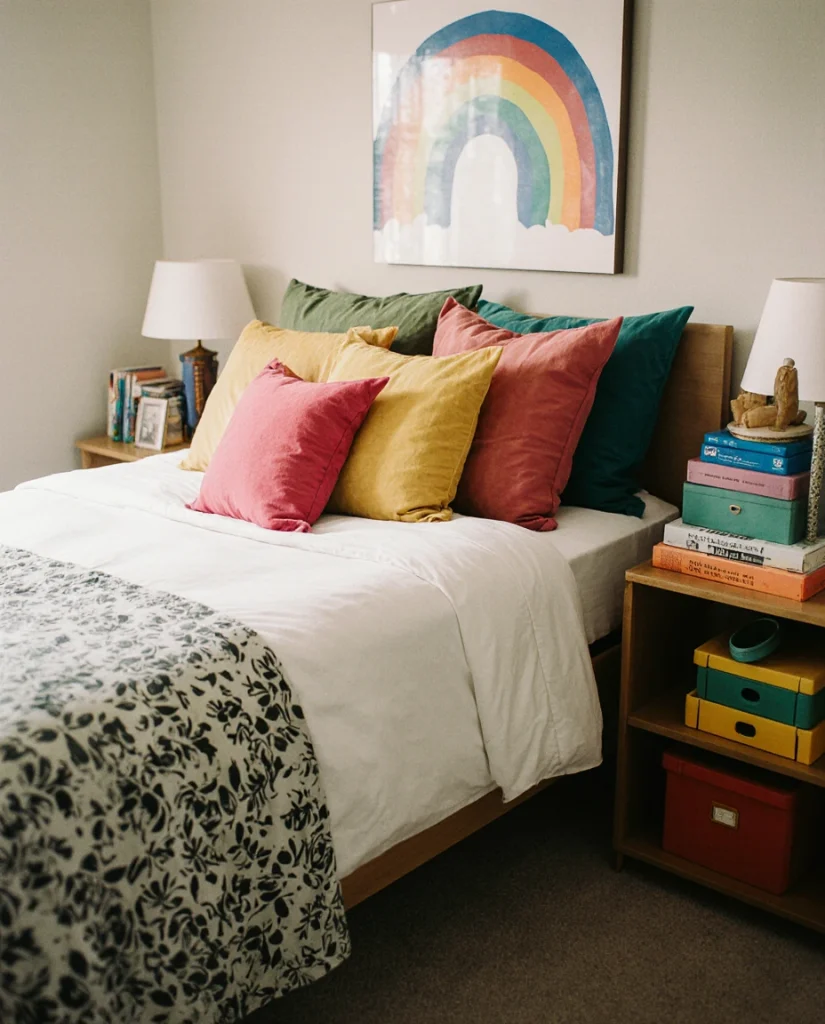
Being a cheerful and colorful dorm aesthetic not only brings joy but highlights your character in ways that neutral and monochromatic dorms simply cannot accomplish. If you want to achieve and pull off a colorful dorm aesthetic with ease, maintaining some consistency by choosing a repeated accent color, aligning metallic finishes, or even a unified style to mesh together the various colors. This is perfect and matches the vibe of student with out bursting personalities, who enjoy the colors and uniqueness, and enjoy going against the norms. Every now and then you can change the accent colors of the season to keep the energy in the space, for example pink and yellow in the spring semester, red and orange in the fall and colorful the dorm by changing accents and peri pot colors. 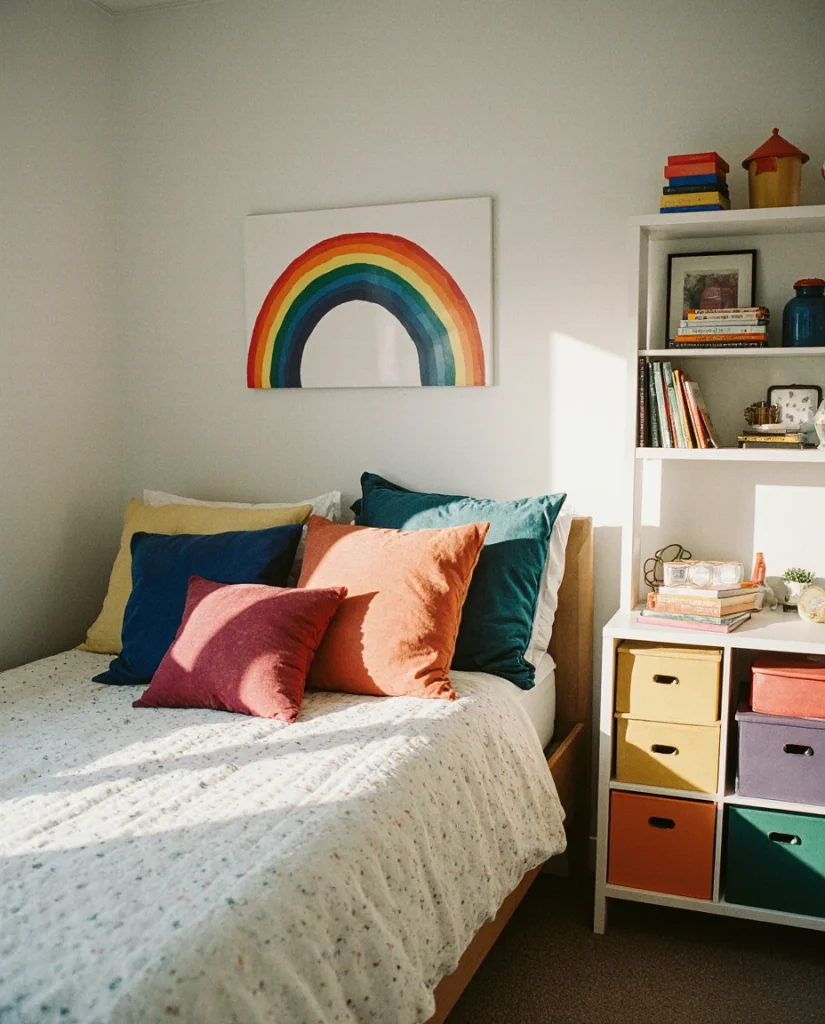
Where this works best: students with naturally vibrant, enthusiastic personalities who genuinely respond positively to color stimulation, and in dorms with good natural light that prevents multiple colors from feeling chaotic or overwhelming. The colorful approach requires more courage than neutral designs, but students who commit to it typically report that their rooms become social hubs where friends love to gather, as the welcoming atmosphere feels more personal and less generic than many dorm spaces. Budget consideration: building a colorful room thoughtfully over time rather than all at once allows you to find coordinating pieces on sale and prevents overspending on items that may not work together once you see them in person.
Conclusion
Your dorm room deserves to be more than just functional—it should reflect who you are and support both your academic goals and personal well-being throughout the year. Whether you’re drawn to calming coastal palettes, bold colorful statements, or sophisticated neutral foundations, the key is creating a space that genuinely feels like home. We’d love to hear which ideas resonate with you most or see how you’ve personalized your own college space. Share your thoughts, questions, or favorite dorm design tips in the comments below!