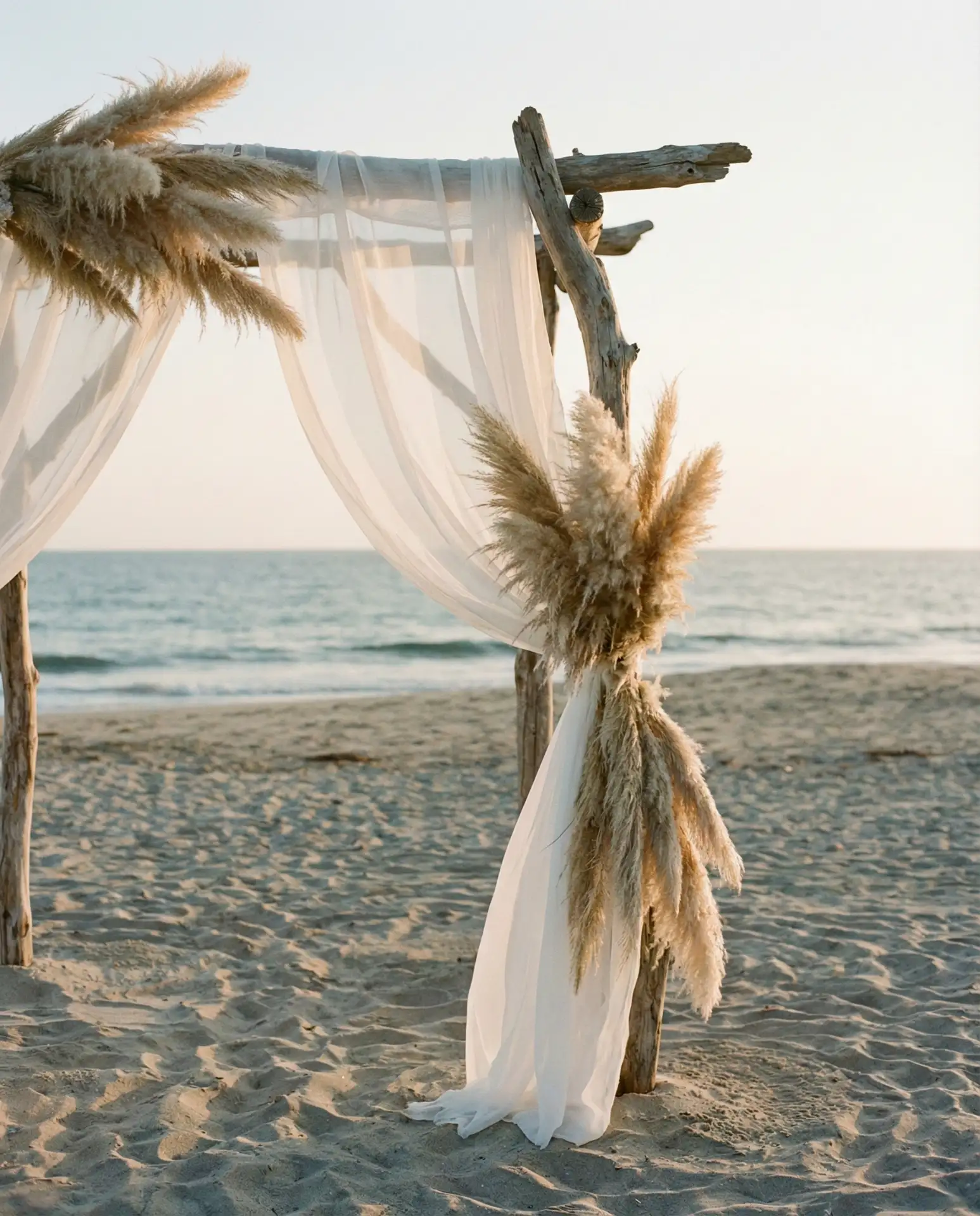
Farmhouse decor continues to evolve, and 2026 brings a fresh wave of creativity that blends timeless charm with contemporary sensibilities. Americans are turning to Pinterest in droves, searching for ways to infuse their homes with warmth, authenticity, and that signature lived-in feel that defines the farmhouse aesthetic. This year’s trends celebrate everything from moody color palettes to coastal influences, proving that farmhouse style is more versatile than ever. Whether you’re drawn to minimal Scandinavian-inspired spaces or richly layered eclectic rooms, there’s a farmhouse approach that will resonate with your personal style. Get ready to explore twenty-two inspiring ideas that will transform your space into a welcoming sanctuary that feels both current and enduring.
1. Coastal Farmhouse Living Room with Weathered Wood
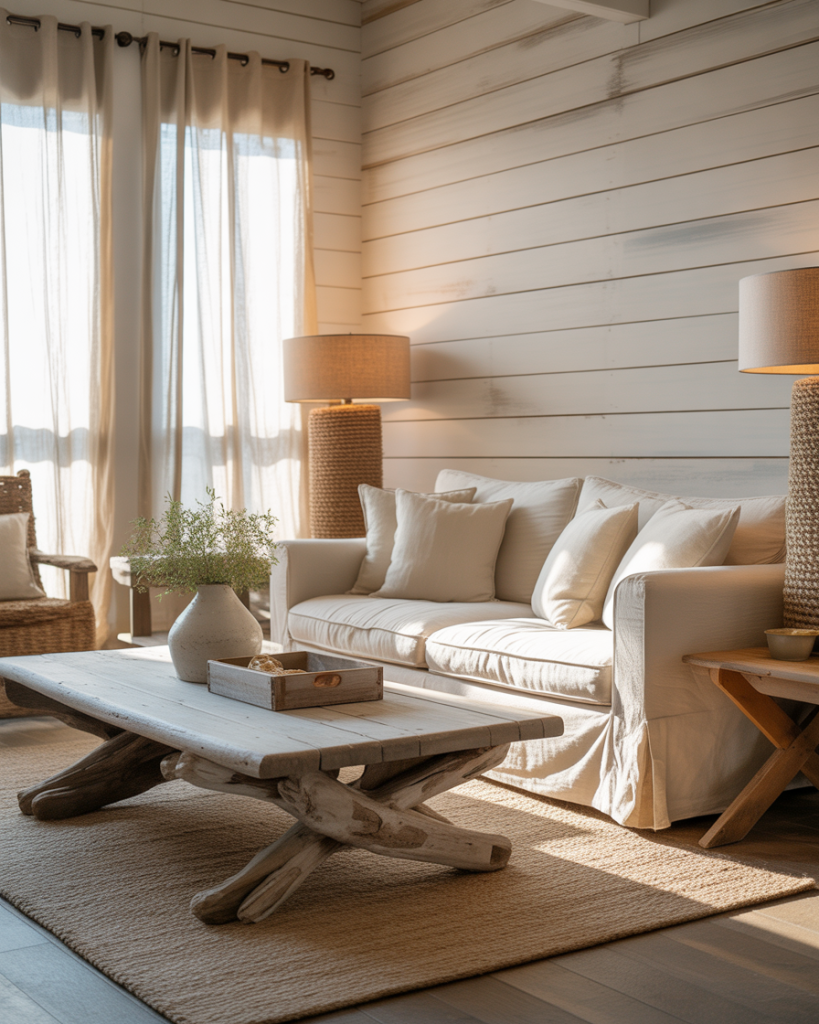
The marriage of coastal breezes and farmhouse warmth creates a living room that feels like a permanent vacation. Whitewashed shiplap walls meet driftwood coffee tables, while linen slipcovers in sandy neutrals invite you to sink in and stay awhile. Woven jute rugs anchor the space, and vintage nautical accents—think rope-wrapped hurricane lamps and sea-glass collections—add personality without overwhelming the serene palette that defines this traditional yet relaxed approach. 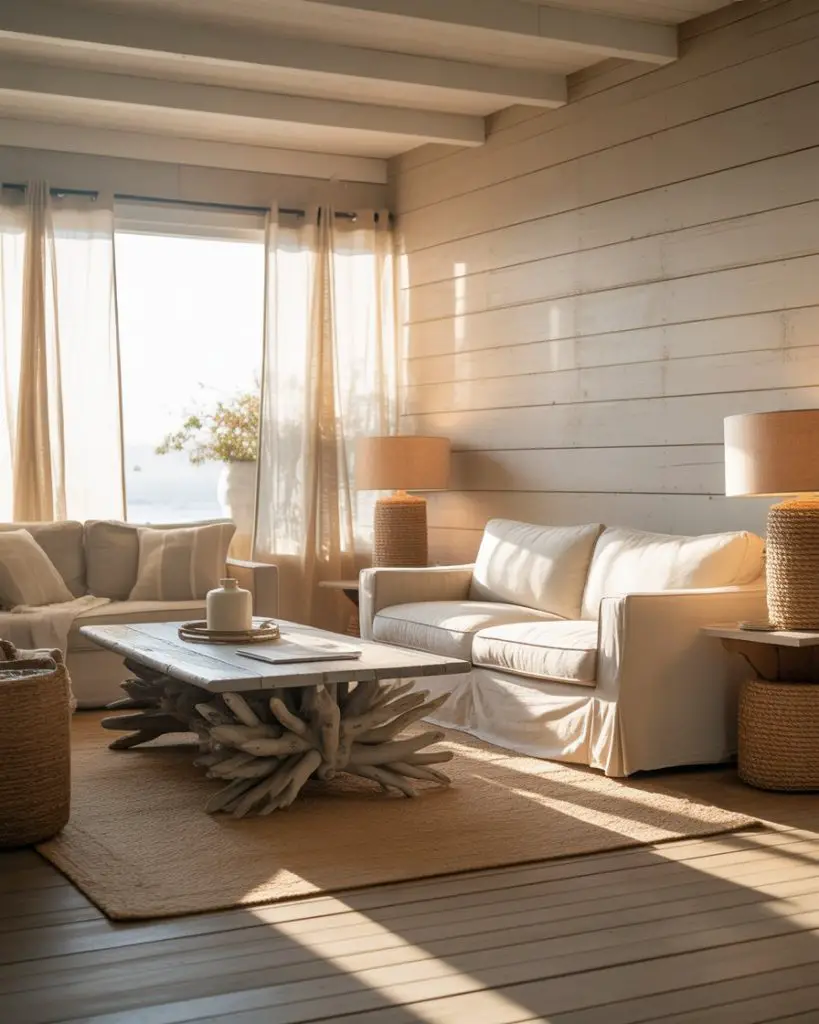
This style works particularly well in homes near the water or in suburban neighborhoods where homeowners crave that vacation-home feeling year-round. The key is balancing weathered textures with crisp whites—too much distressing can feel staged, while too little loses the beachy, lived-in character. Layer in plenty of natural fibers and keep the color story tightly edited to blues, whites, and sandy tans for a look that feels cohesive and calming.
2. Moody Farmhouse Kitchen with Dark Cabinetry
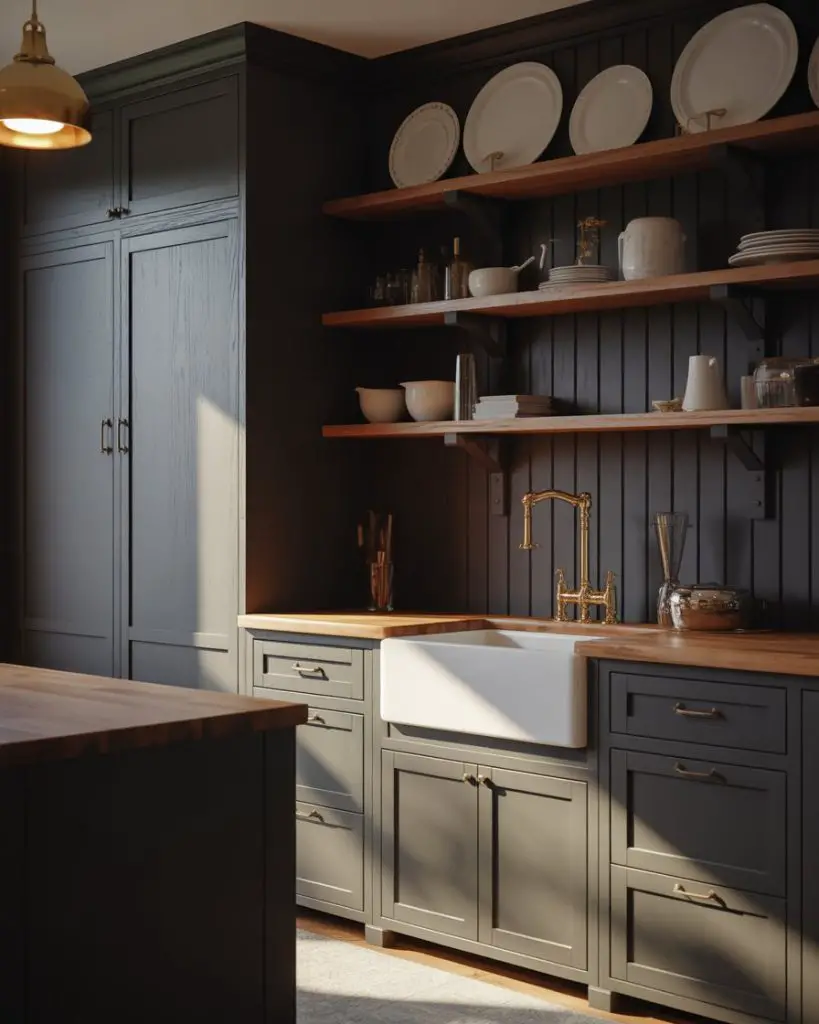
Gone are the days when farmhouse kitchens meant only white cabinets and bright spaces. The moody farmhouse kitchen embraces deep charcoal, forest green, or even black cabinetry paired with brass hardware and butcher-block countertops. Open shelving displays ironstone and vintage crockery, while a farmhouse sink and aged brass faucet maintain the rustic roots. This contemporary twist on tradition feels sophisticated and grounding, perfect for homeowners ready to move beyond the predictable all-white kitchen. 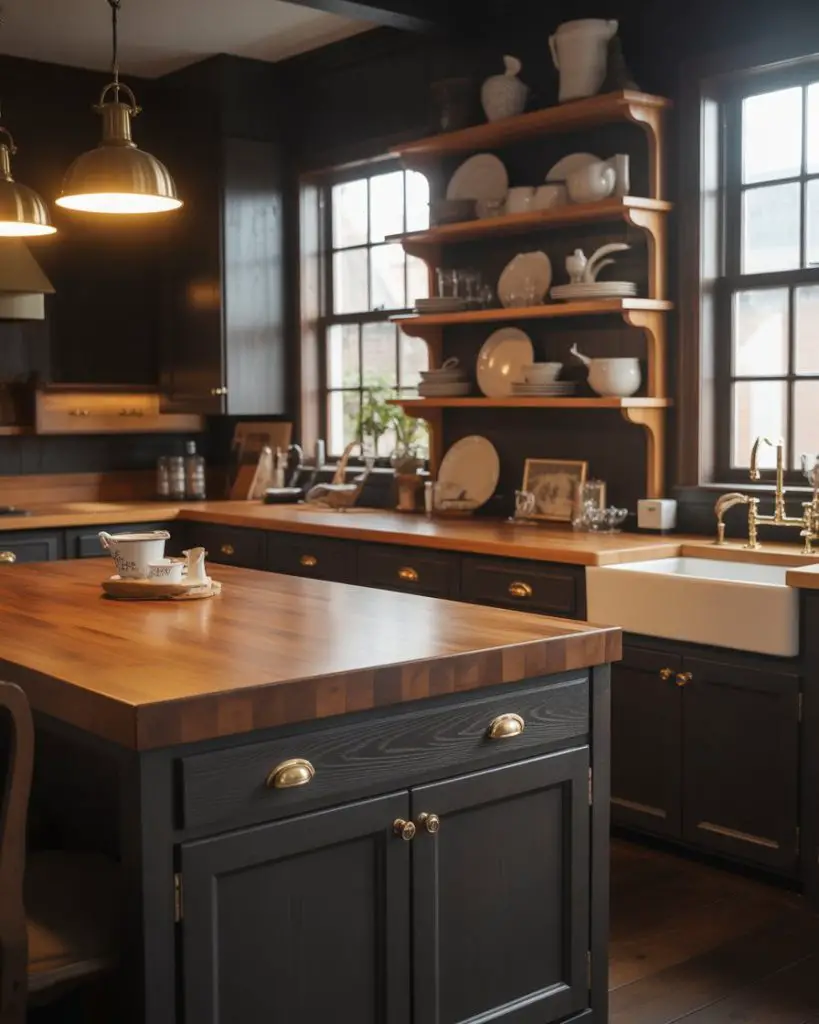
A common mistake is making a dark kitchen feel too heavy—combat this by incorporating plenty of task lighting, a large window, or glass-front cabinets that break up solid runs of cabinetry. Add warmth through wood tones and avoid going monochromatic with your metals; mixing aged brass with black iron creates visual interest and prevents the space from feeling too matchy.
3. Victorian Farmhouse Bedroom with Romantic Linens
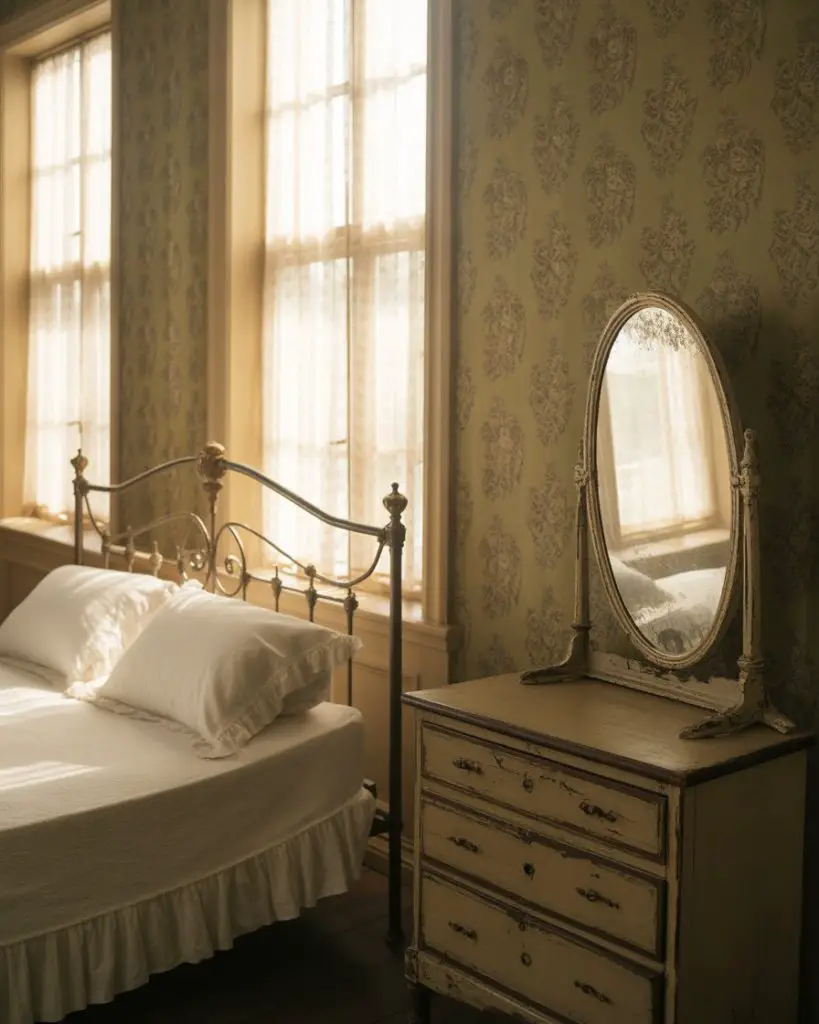
The Victorian farmhouse bedroom layers delicate femininity with rustic charm, featuring an iron bed frame, billowing white linens, and plenty of lace or crochet details. Floral wallpaper in muted tones climbs the walls, while a distressed dresser and vintage mirror add character. This traditional approach celebrates ornate details without feeling stuffy, creating a retreat that’s equal parts romantic and restful, ideal for farmhouse decor 2026 enthusiasts who love history and heirloom pieces. 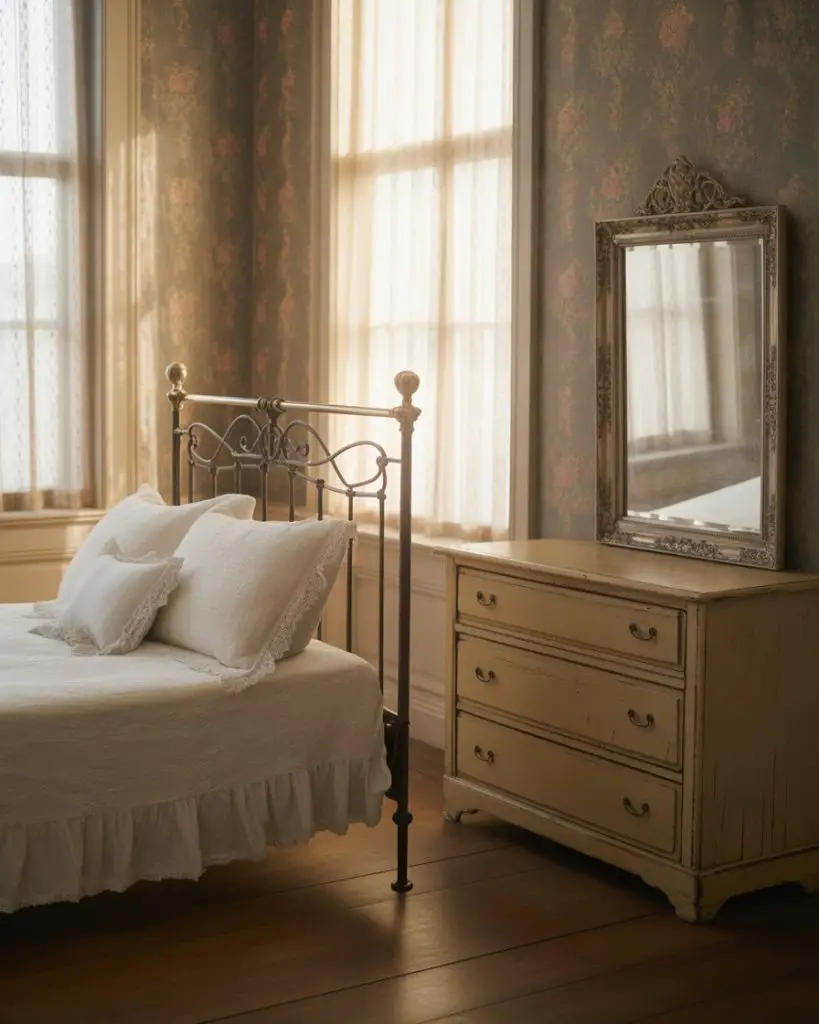
In regions like the South and New England, where historic homes are abundant, this style feels particularly authentic. Homeowners often scour estate sales and antique markets for genuine Victorian pieces, though quality reproductions work beautifully too. The trick is restraint—select a few statement pieces rather than crowding every surface, and balance ornate elements with plenty of white space and natural light to keep the room from feeling overly busy.
4. Industrial Farmhouse Dining Room with Metal Accents
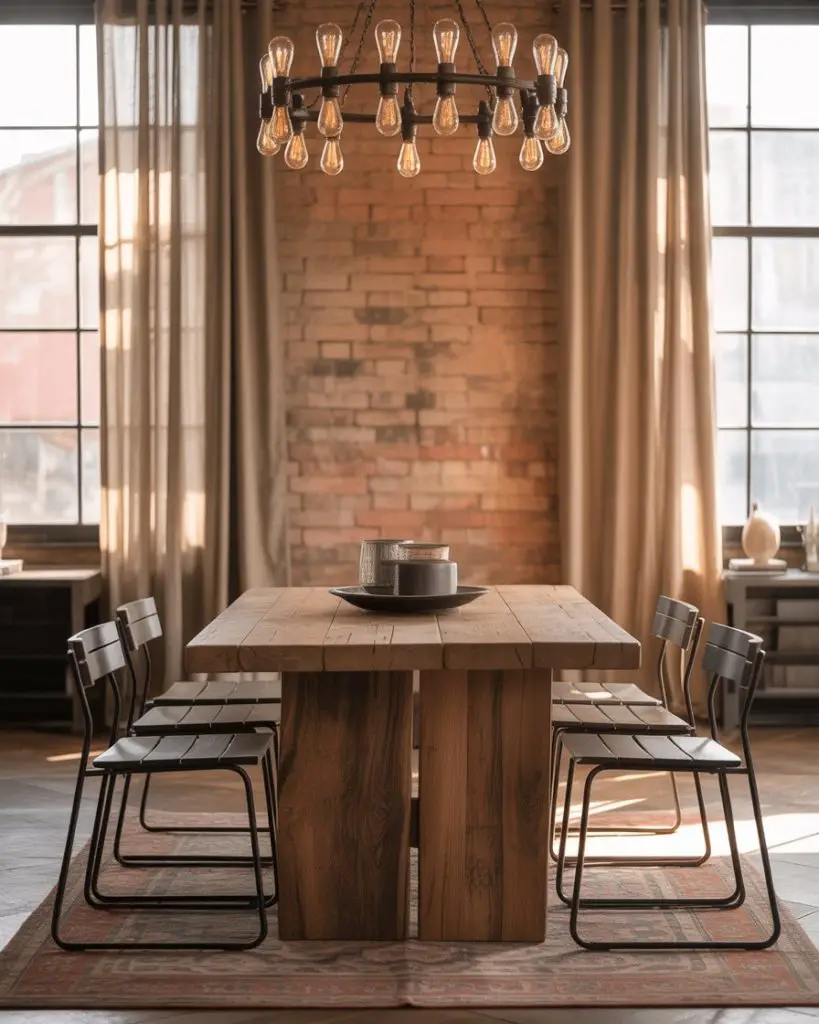
The industrial farmhouse dining room pairs reclaimed wood tables with metal chairs, exposed Edison bulbs, and factory-inspired lighting fixtures. Brick or concrete walls provide texture, softened by linen curtains and a vintage area rug. This urban take on farmhouse style works brilliantly in loft apartments or converted warehouses, where architectural bones already lean industrial. The combination feels intentional rather than contrived, celebrating both materials in a way that honors their origins. 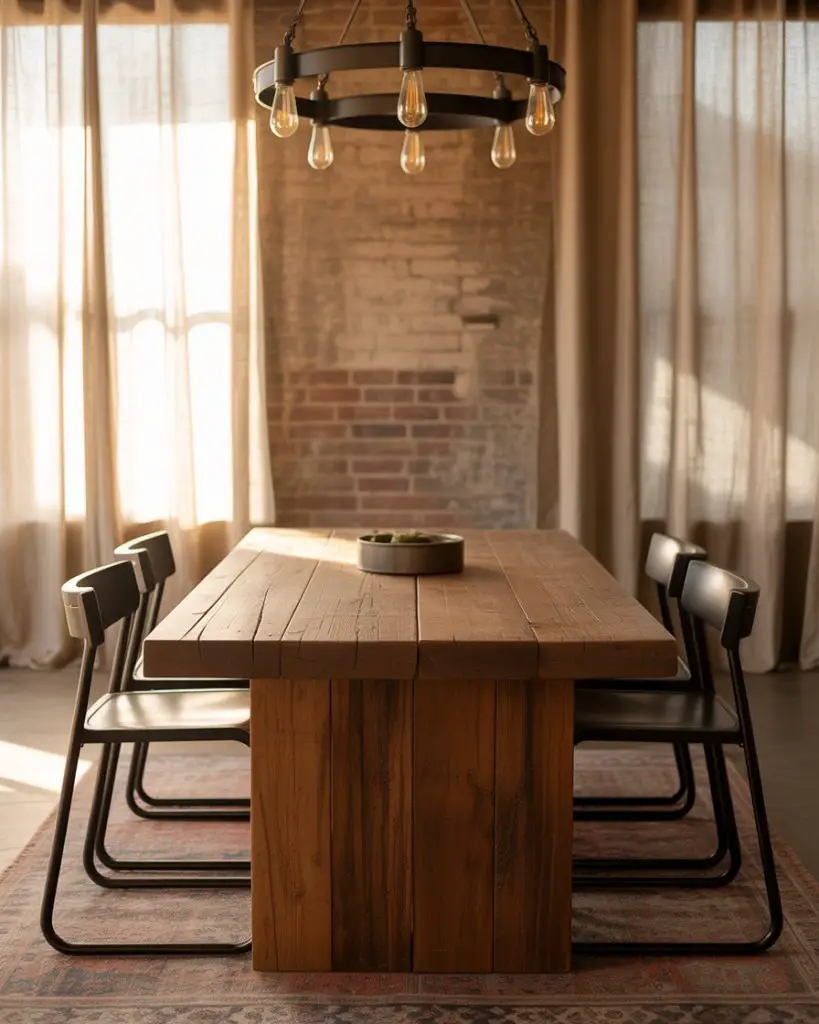
Budget-conscious homeowners love this approach because industrial pieces—metal stools, wire baskets, galvanized containers—are often affordable and widely available. The real investment lies in the dining table itself; a solid reclaimed wood piece anchors the room and will last for generations. Don’t shy away from mixing finishes—aged zinc, blackened steel, and raw iron all coexist beautifully in this aesthetic.
5. Colorful Farmhouse Mudroom with Vintage Lockers
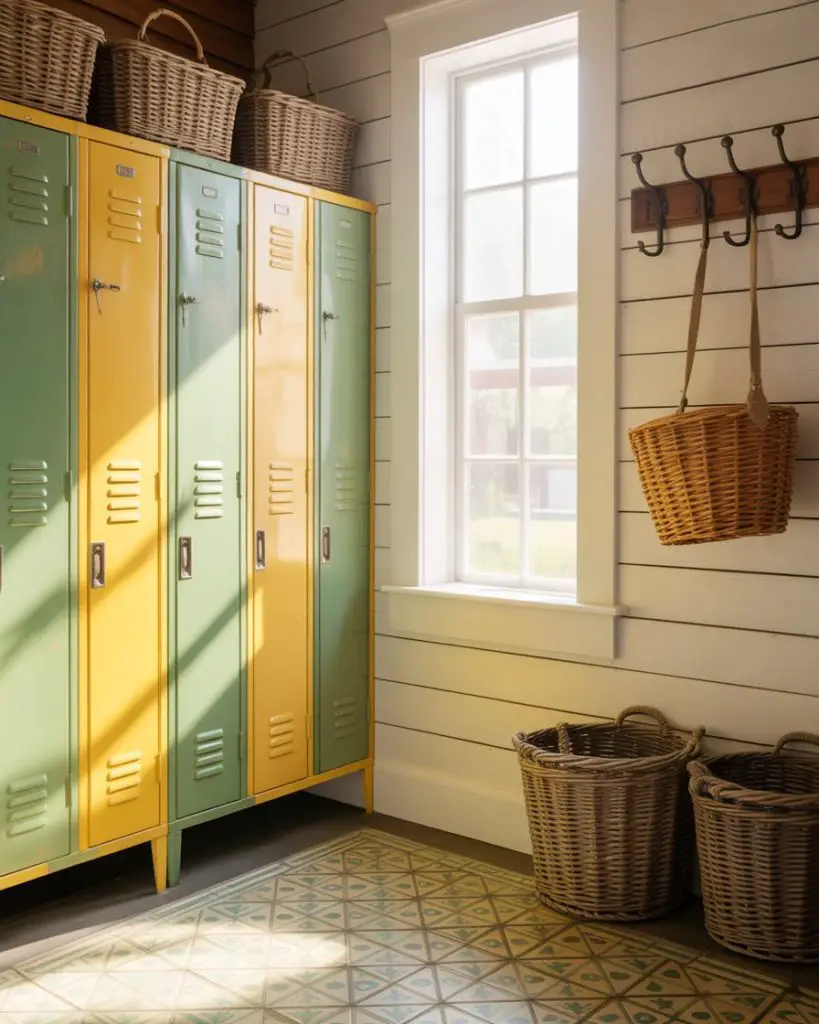
Who says farmhouse has to be neutral? A colorful farmhouse mudroom celebrates personality with vintage school lockers painted in cheerful hues—mint green, butter yellow, or robin’s egg blue. Patterned tile floors withstand muddy boots, while hooks fashioned from old tools add whimsy. This eclectic space proves that farmhouse decor can be playful and practical, welcoming families home with both function and charm that makes everyday comings and goings feel special. 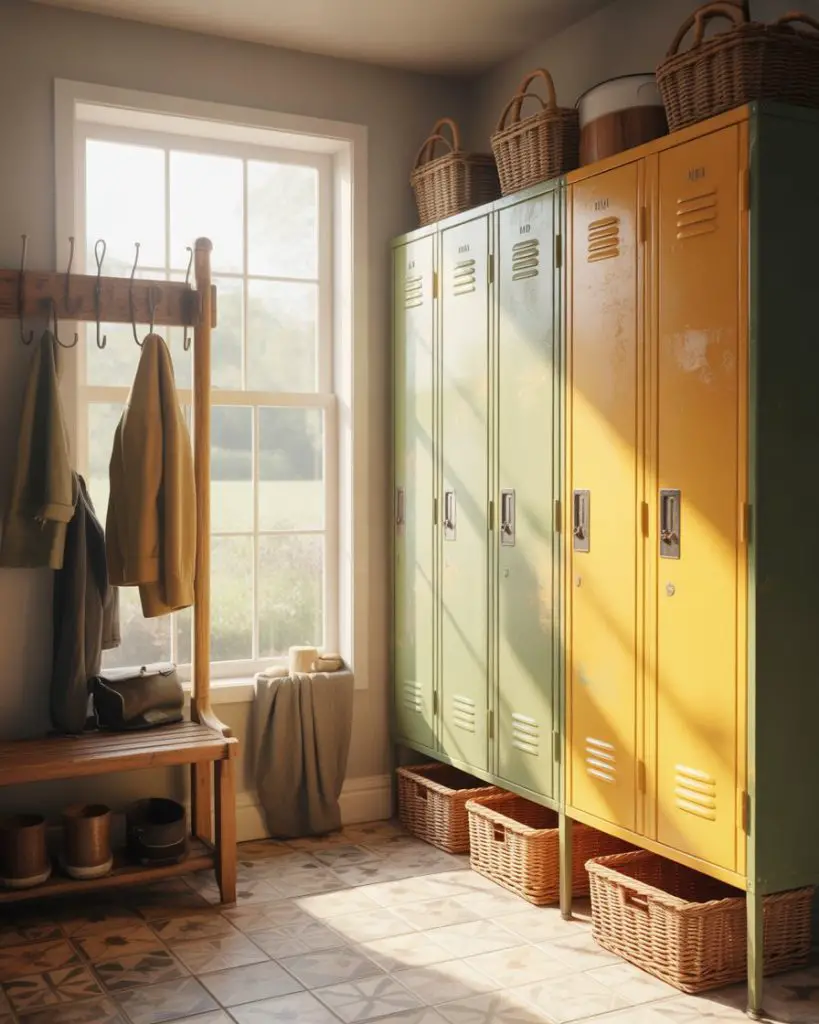
Where it works best is in family homes with active lifestyles—the mudroom becomes the hardest-working space in the house. Parents appreciate the designated storage, while kids respond to the cheerful colors. When selecting paint colors for lockers or built-ins, consider the overall palette of adjacent rooms to ensure the mudroom feels connected rather than jarring, but don’t be afraid to let this transitional space have its own distinct personality.
6. Bohemian Farmhouse Sunroom with Layered Textiles
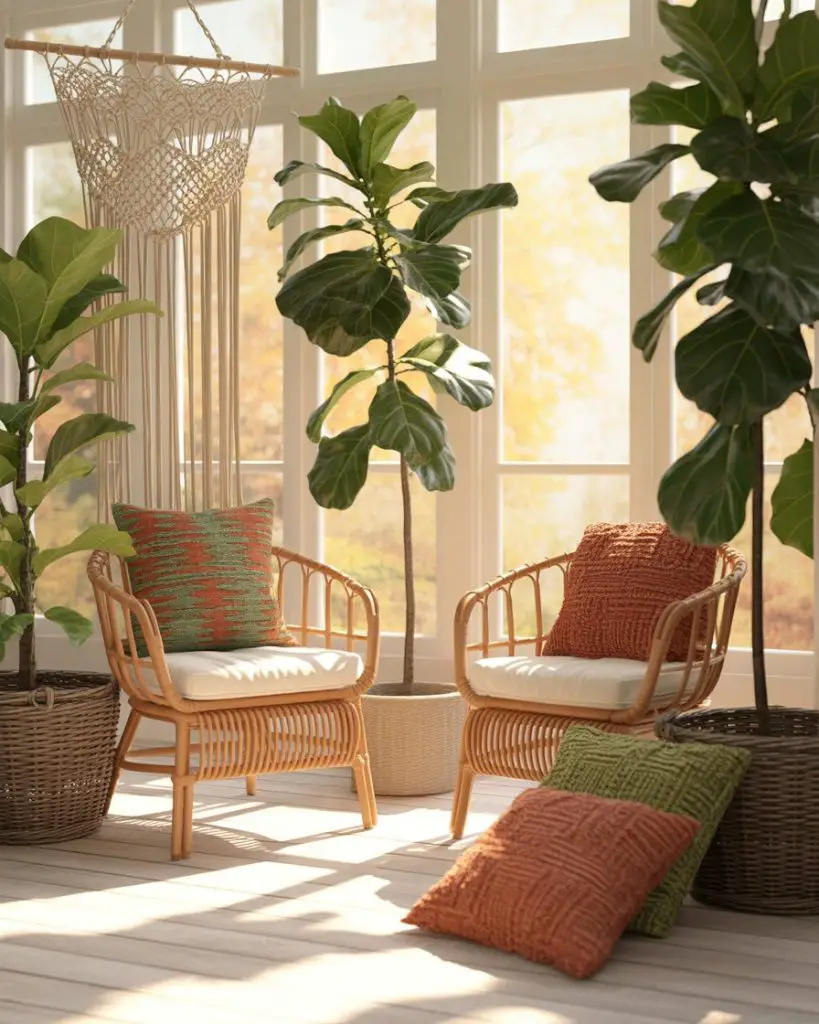
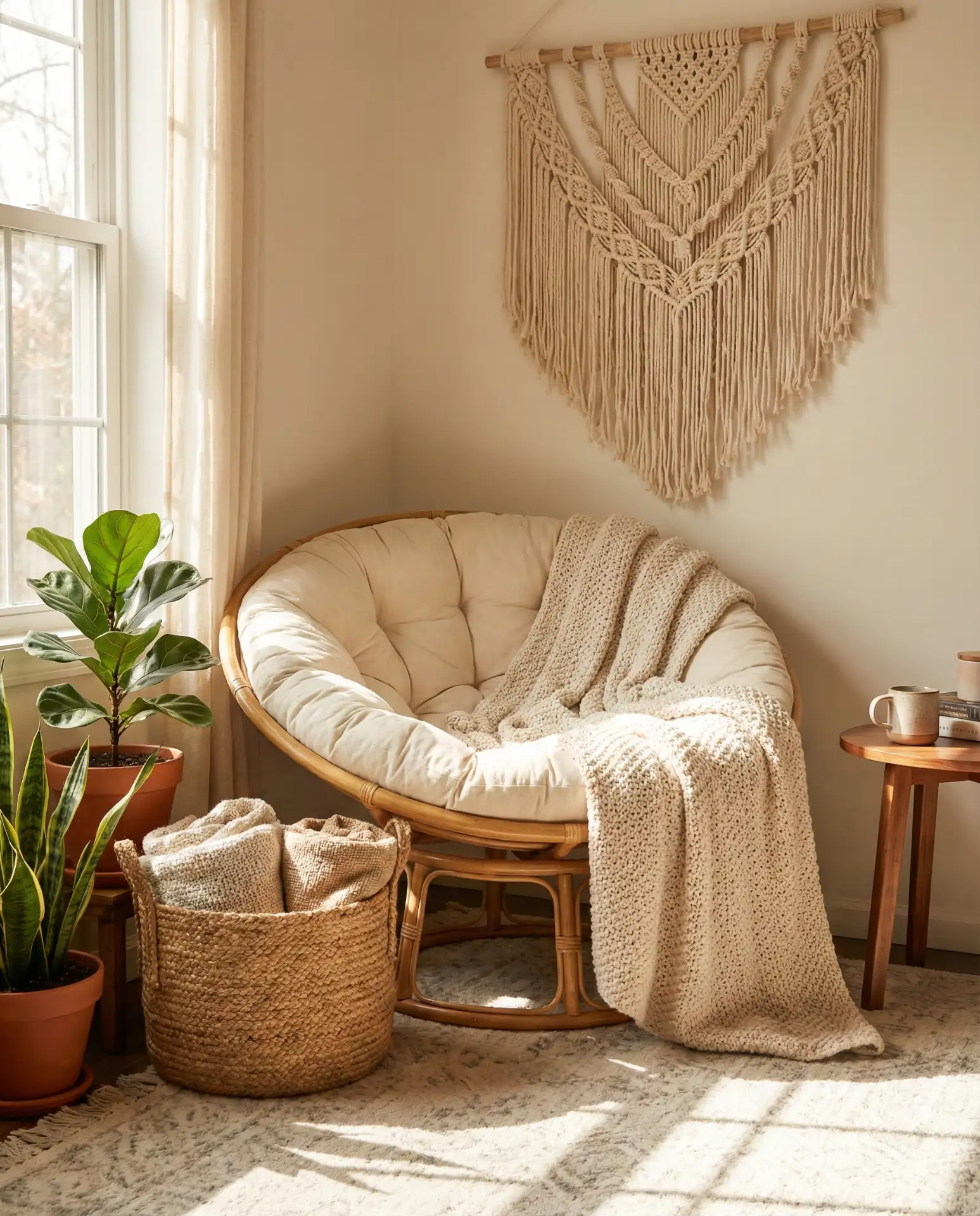
The bohemian farmhouse sunroom layers macramé wall hangings, vintage kilim pillows, and potted plants galore with whitewashed wood and rattan furniture. Natural light floods the space, highlighting the rich textures and global influences that define this eclectic style. It’s a retreat that feels collected over time, where every textile tells a story and the abundance of greenery brings life and movement. This approach resonates with homeowners who value handmade crafts and sustainable, minimal consumption patterns focused on quality over quantity. 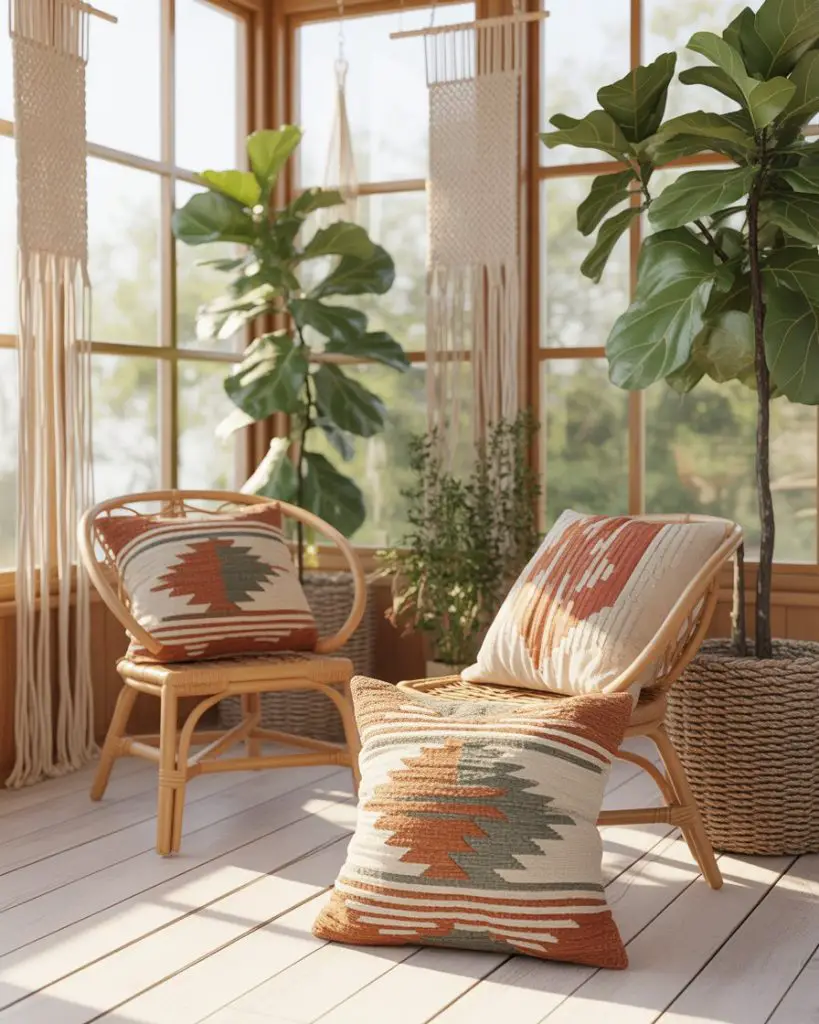
A friend once transformed her sunroom using mostly secondhand finds and thrifted textiles, spending under four hundred dollars total. She layered vintage Turkish rugs, hung plants in handwoven baskets, and sourced rattan chairs from a local estate sale. The result feels worldly and intentional, proof that this style doesn’t require a massive budget—just patience, a good eye, and willingness to mix patterns and textures with confidence.
7. Mexican Farmhouse Kitchen with Talavera Tile
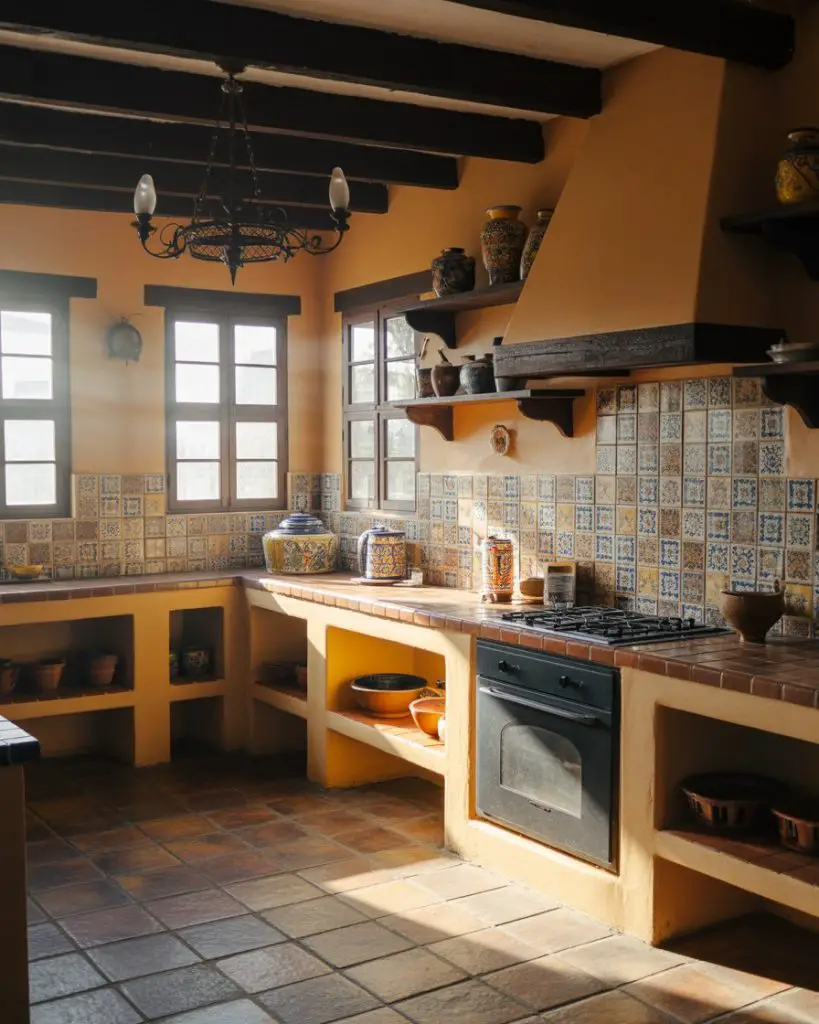
The Mexican farmhouse kitchen explodes with hand-painted Talavera tile, creating a backsplash that’s pure art. Terra-cotta floors, wrought-iron light fixtures, and rustic wooden beams overhead complete the look, while open shelving displays colorful ceramics and earthenware. This style celebrates craftsmanship and cultural heritage, bringing warmth and vibrancy that transforms cooking into a sensory experience. It’s particularly popular in the Southwest but translates beautifully anywhere homeowners crave colorful, soulful spaces. 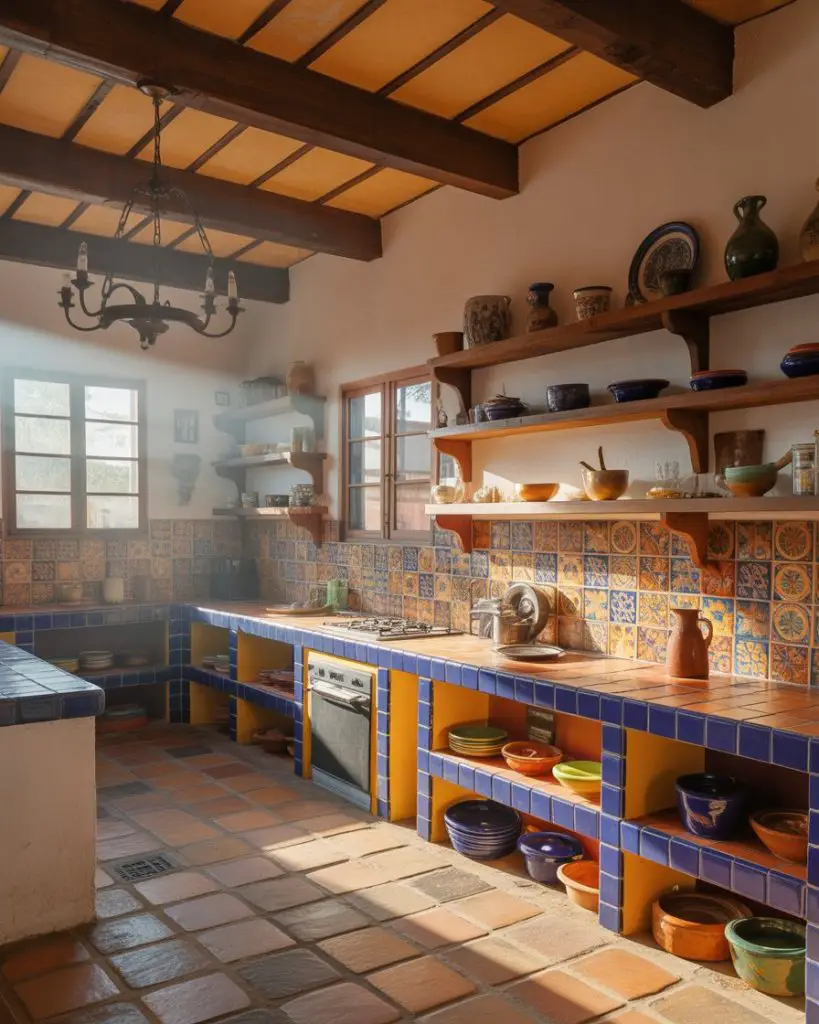
Practical insight: Talavera tiles are hand-painted, so expect variation between pieces—that’s part of their charm. When budgeting, remember that authentic Talavera is an investment; use it strategically as a backsplash or accent wall rather than covering every surface. Pair it with simple white walls and natural wood to let the tile be the star, and consider incorporating other handmade elements like hammered copper sinks or hand-carved cabinet pulls to reinforce the artisanal feel.
8. Gothic Farmhouse Entryway with Dramatic Lighting

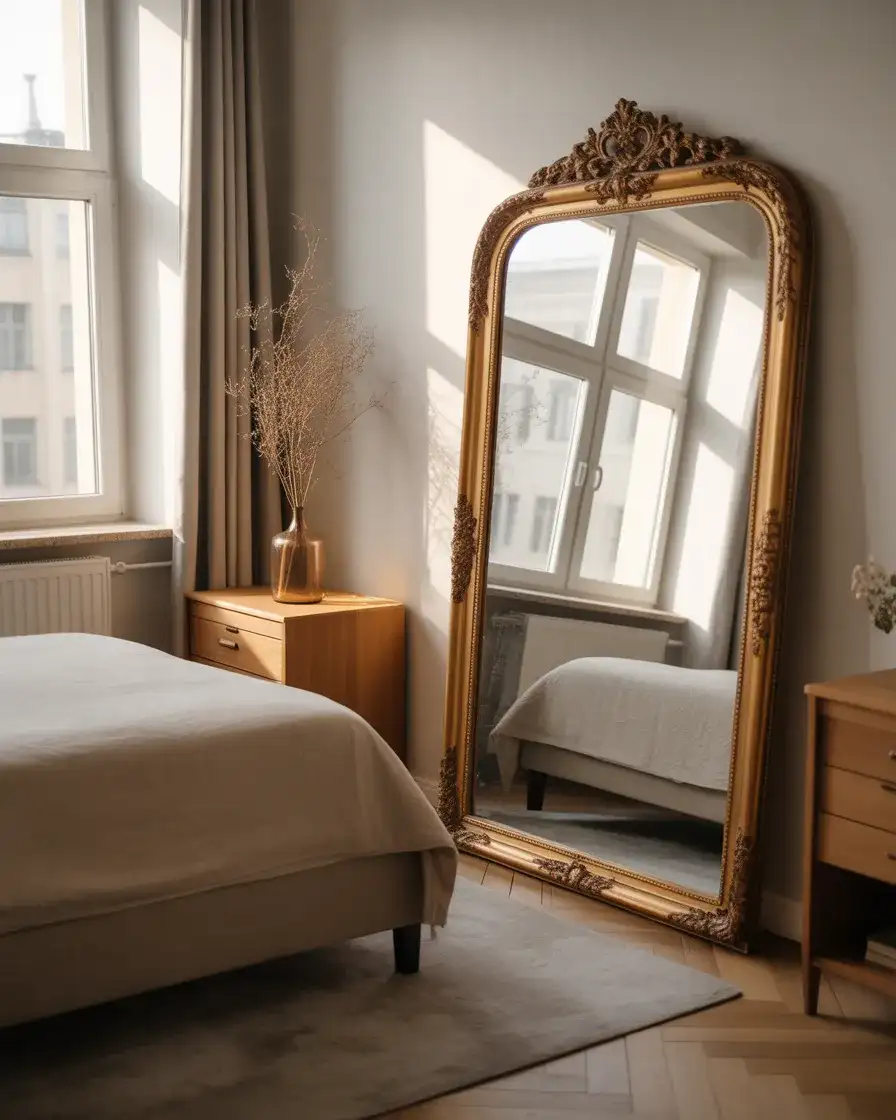
The gothic farmhouse entryway makes a statement with an oversized iron chandelier, dark wood console, and moody paint colors like charcoal or deep plum. Architectural salvage pieces—perhaps an antique mirror with an ornate frame or a church pew repurposed as seating—add drama and history. This moody interpretation of farmhouse style appeals to homeowners who want something unexpected, a space that feels both welcoming and slightly mysterious, challenging the notion that farmhouse must always mean light and airy neutrals. 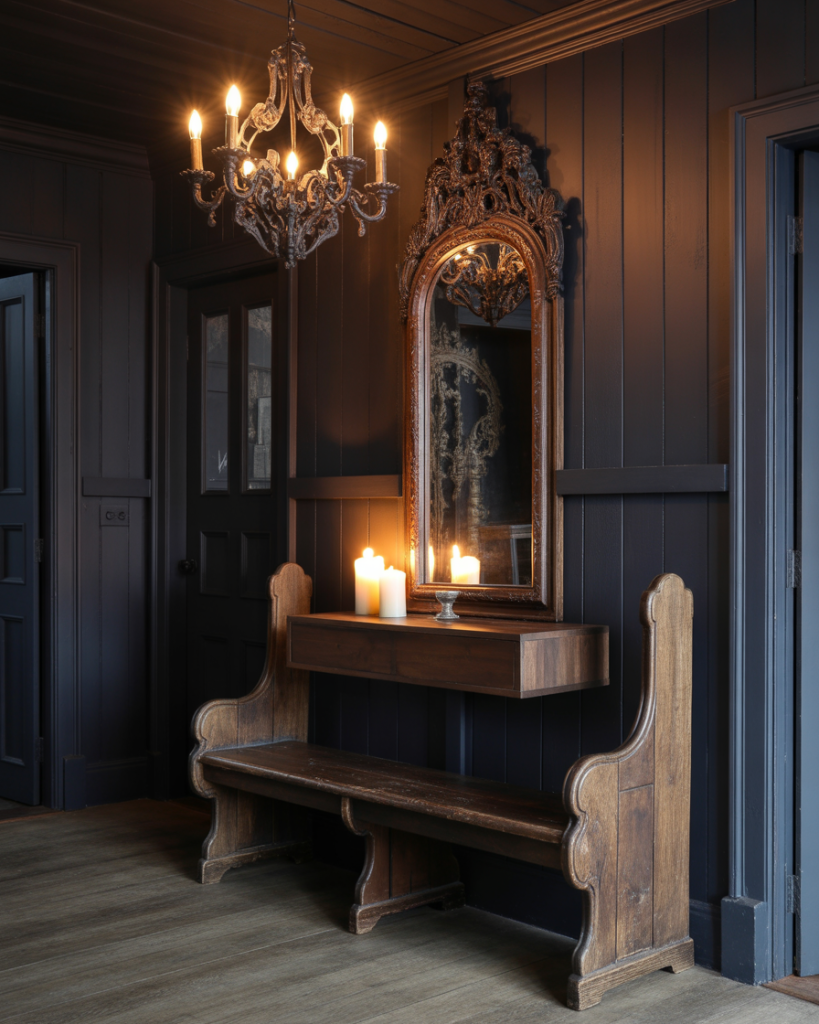
This approach works exceptionally well in older homes with architectural character—high ceilings, original millwork, and substantial doorways all enhance the gothic mood. The key is balancing darkness with light sources; layer in table lamps, sconces, and candles to create pools of warm illumination that prevent the space from feeling oppressive. Avoid the common mistake of going too theme-heavy; subtle gothic touches feel sophisticated, while overdoing the skulls and crosses veers into costume territory.
9. Primitive Farmhouse Keeping Room with Hearth
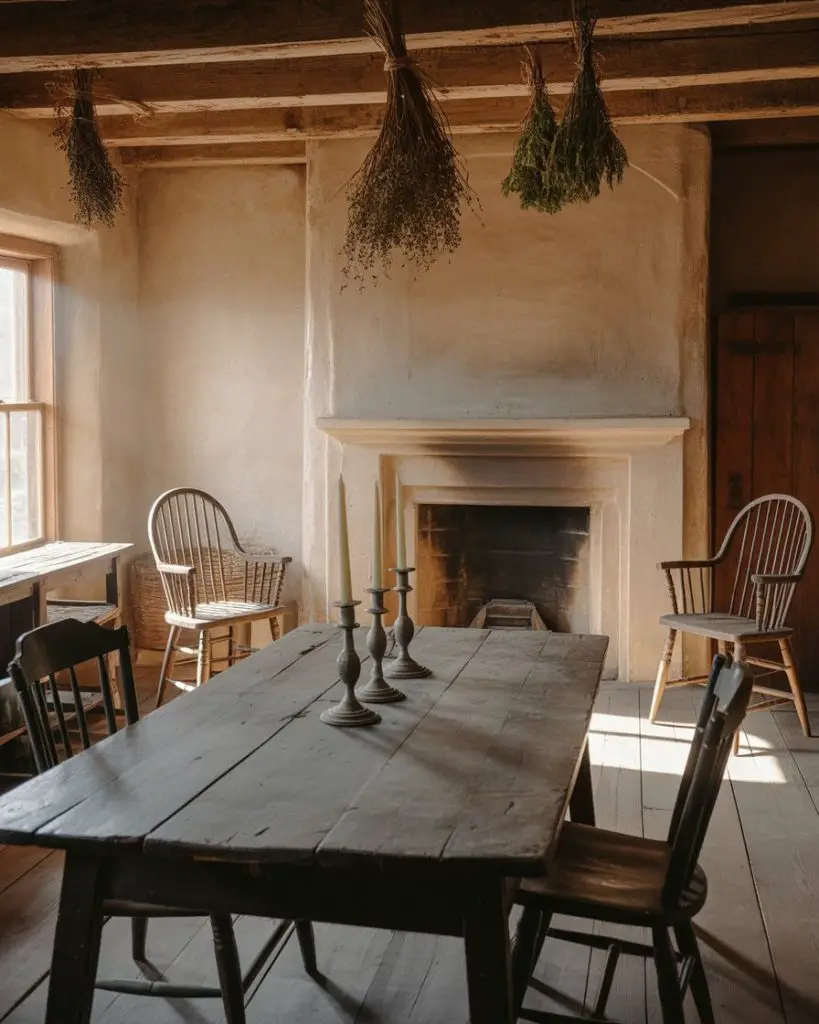
The primitive farmhouse keeping room centers around a working fireplace, with a simple wood mantel displaying pewter candlesticks and dried herbs. Windsor chairs surround a worn farm table, and the walls wear their original plaster with pride. This stripped-back, traditional style honors early American simplicity, celebrating utility and the honest beauty of aged materials. It’s farmhouse decor at its most authentic, appealing to purists who value historical accuracy and the quiet dignity of well-made, time-worn objects.
In the Northeast and Mid-Atlantic regions, where Colonial and early American homes still stand, this style feels particularly rooted in place. Homeowners often live with original architectural elements—wide-plank floors, exposed beams, shallow fireplaces—that demand a restrained decorating approach. The beauty lies in what you don’t add; resist the urge to fill every corner, and let the architecture and a few carefully chosen antiques tell the story.
10. Contemporary Farmhouse Bathroom with Clean Lines
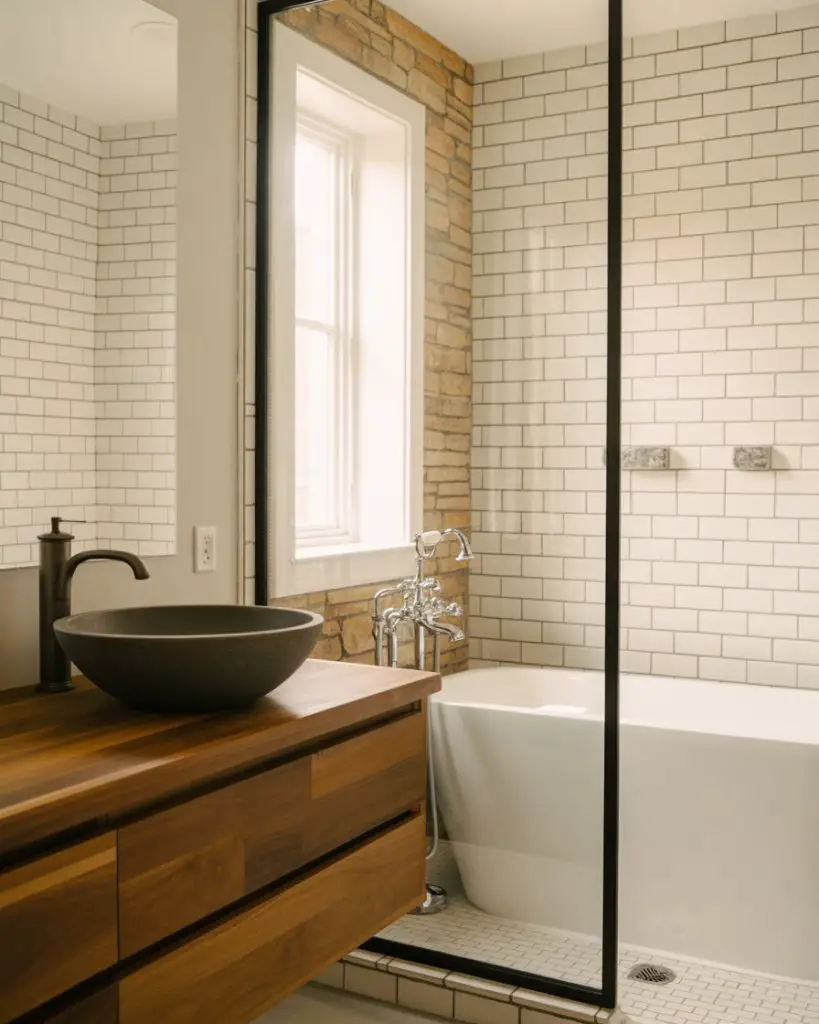
The contemporary farmhouse bathroom strips away the clutter, focusing on clean lines, matte black fixtures, and natural stone. A floating wood vanity brings warmth, while a freestanding soaking tub and frameless glass shower maintain the modern edge. Subway tile or large-format porcelain keeps surfaces simple, and the overall effect is spa-like serenity with just enough rustic warmth to feel inviting. This minimal approach suits homeowners who appreciate farmhouse principles but prefer edited, streamlined spaces over the more cluttered vintage look. 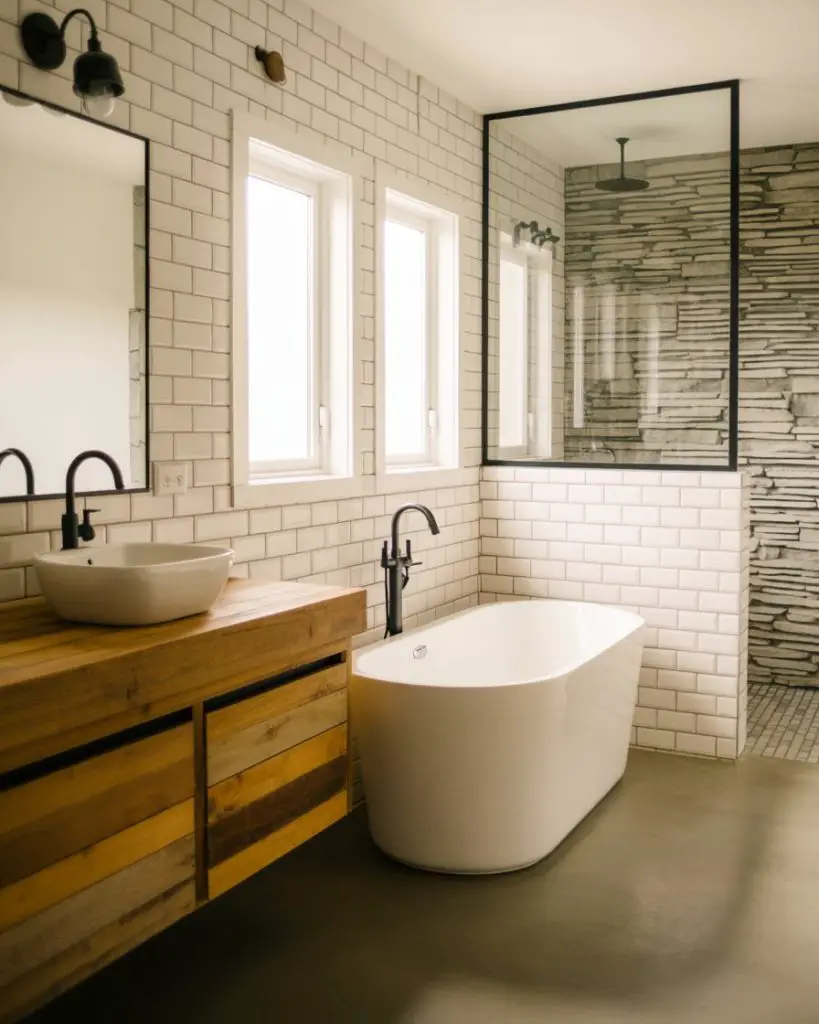
Real homeowner behavior shows that bathrooms are where people are willing to invest in quality materials—natural stone, solid wood vanities, and high-end fixtures hold up to moisture and daily use while maintaining their beauty. Skip the impulse to add too many farmhouse accessories; in a contemporary space, one or two meaningful touches—perhaps a vintage stool or a basket of rolled towels—provide warmth without compromising the clean aesthetic.
11. Western Farmhouse Living Room with Leather and Cowhide
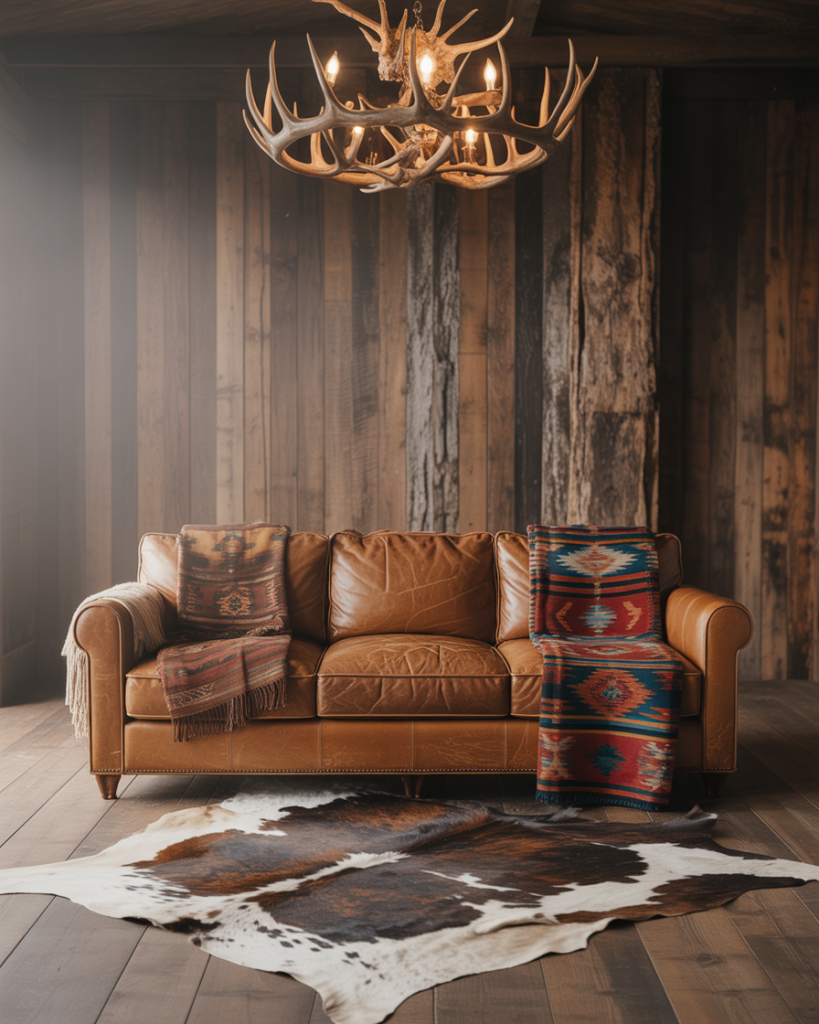
The western farmhouse living room embraces rugged masculinity with worn leather sofas, cowhide rugs, and antler chandeliers. Reclaimed barn wood creates an accent wall, while Pendleton blankets and Navajo-inspired pillows add color and pattern. This style celebrates the American frontier spirit, blending ranch heritage with farmhouse warmth. It’s particularly authentic in regions like Texas, Montana, and the Mountain West, where country lifestyle and ranching traditions remain part of everyday life and cultural identity. 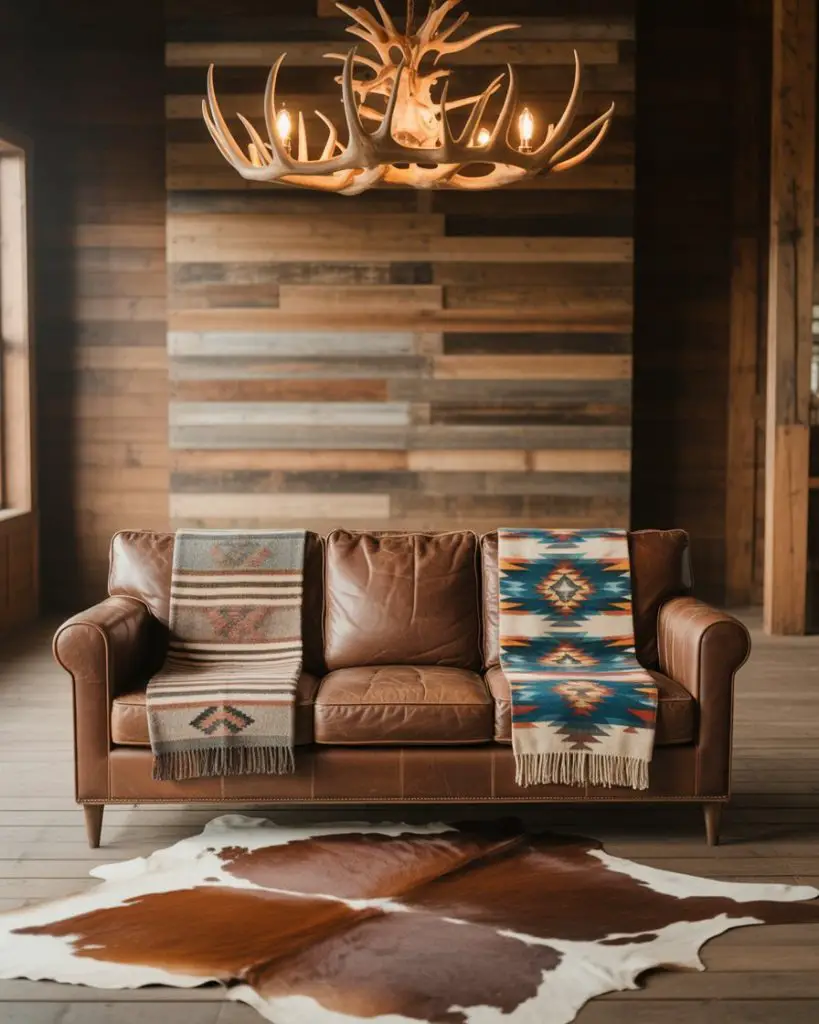
Budget angle: Authentic western pieces can be pricey, but savvy shoppers find deals at ranch estate sales, livestock auction houses, and online marketplaces where ranchers sell furnishings. A single investment piece—say, a quality leather sofa—anchors the room, while more affordable accents like wool blankets and vintage spurs create atmosphere. The worn patina on leather and wood only improves with time, making this a style that actually benefits from use and age.
12. European Farmhouse Dining Room with Linen and Aged Wood
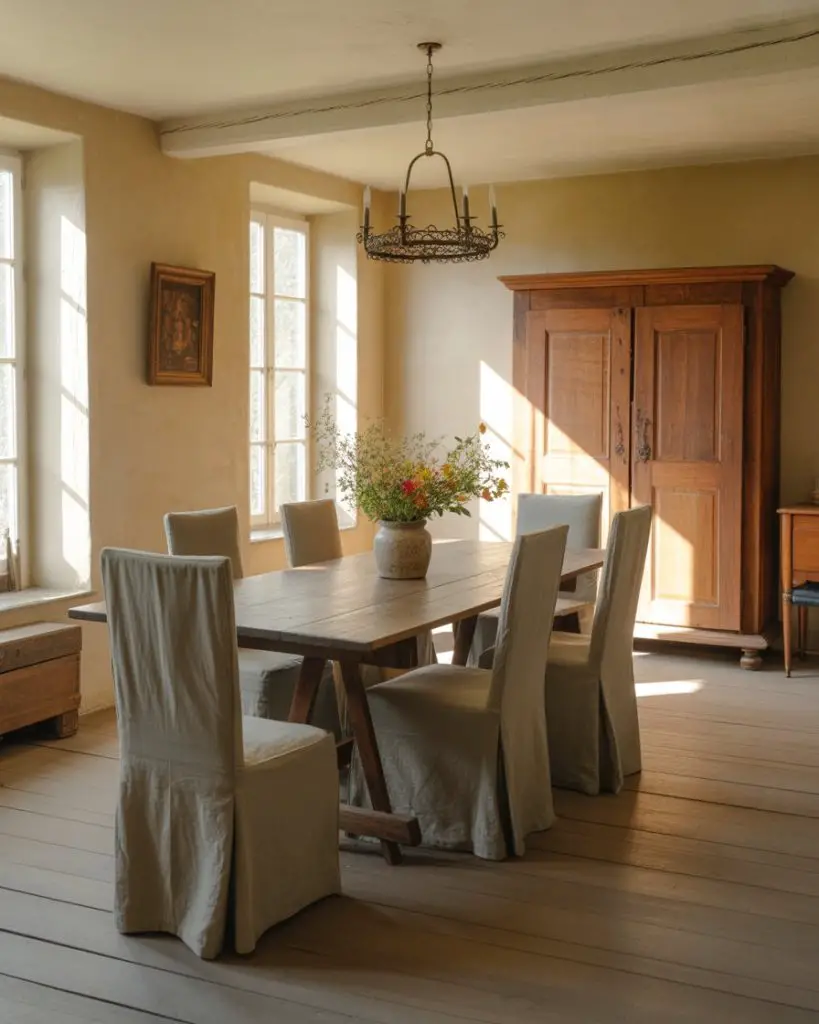
The European farmhouse dining room channels French and Belgian countryside elegance with a long trestle table, linen slipcover chairs, and an antique armoire for storing linens and dishes. Walls wear limewash paint in soft putty or greige, and a simple iron chandelier hangs overhead. Fresh flowers from the garden and vintage silver serving pieces elevate everyday meals. This traditional yet refined approach appeals to Francophiles and Anglophiles alike, bringing farmhouse decor 2026 sophistication that feels effortless and understated. 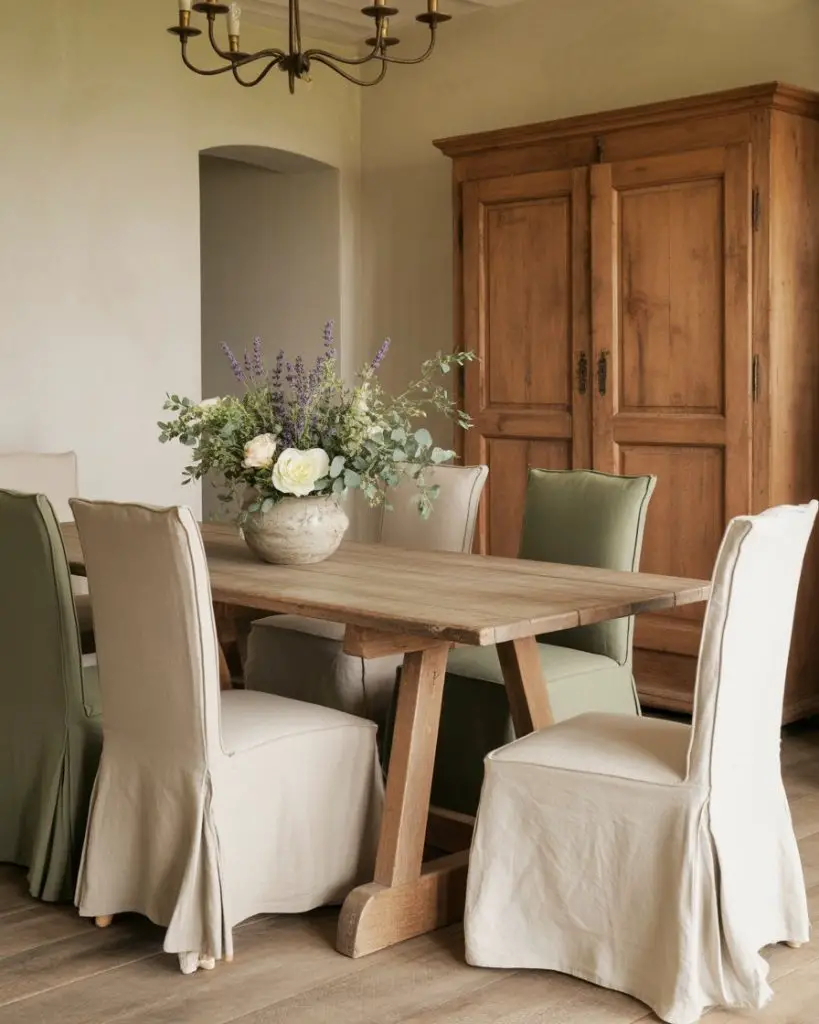
Expert commentary suggests that the European farmhouse aesthetic succeeds through restraint and quality over quantity. Rather than filling the room with decor, invest in fewer, better pieces—a solid antique table, well-made linen slipcovers, and heirloom silver. The French and Belgian approach values items that show use and age gracefully, so don’t worry about perfection. A worn table surface tells stories, and linens soften and improve with each washing.
13. Outdoor Farmhouse Porch with Vintage Rockers
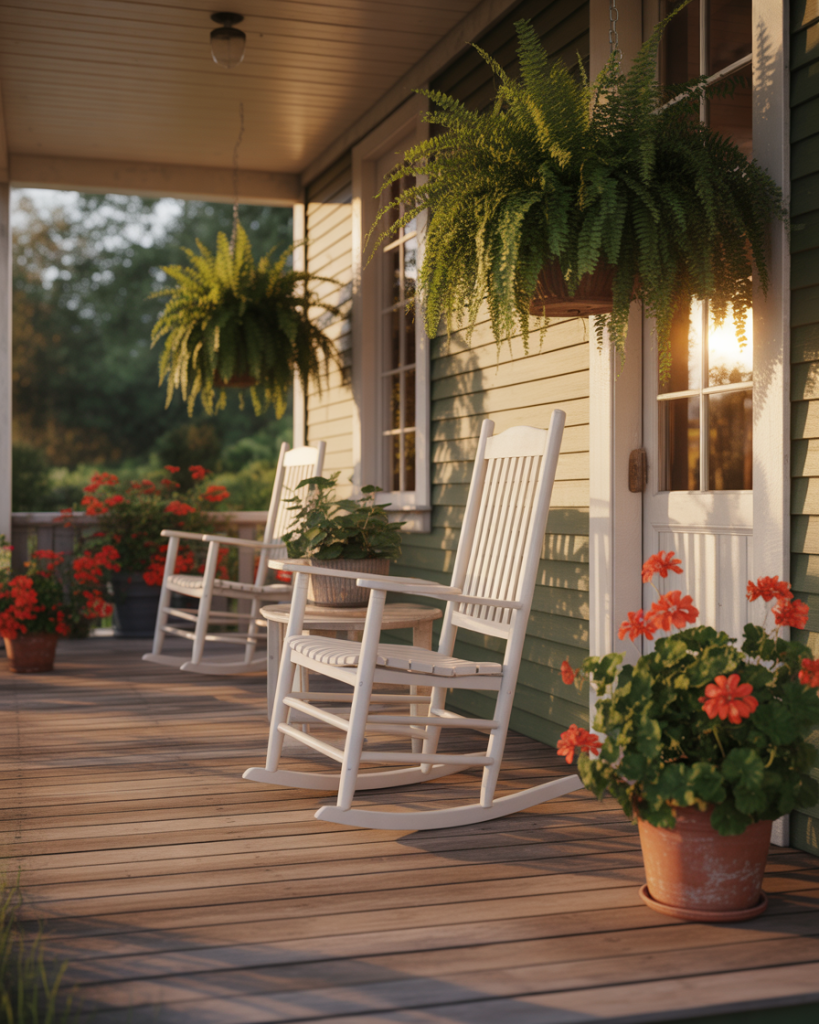
The outdoor farmhouse porch extends living space with vintage rocking chairs, hanging ferns, and a chippy painted porch swing. Weathered wood floors, beadboard ceilings, and plenty of potted geraniums create a scene straight from rural America. String lights or lanterns provide evening ambiance, while a vintage cooler stocked with lemonade invites lingering. This traditional gathering spot embodies farmhouse hospitality, offering neighbors and family a place to slow down, share stories, and enjoy the simple pleasure of country living at its finest. 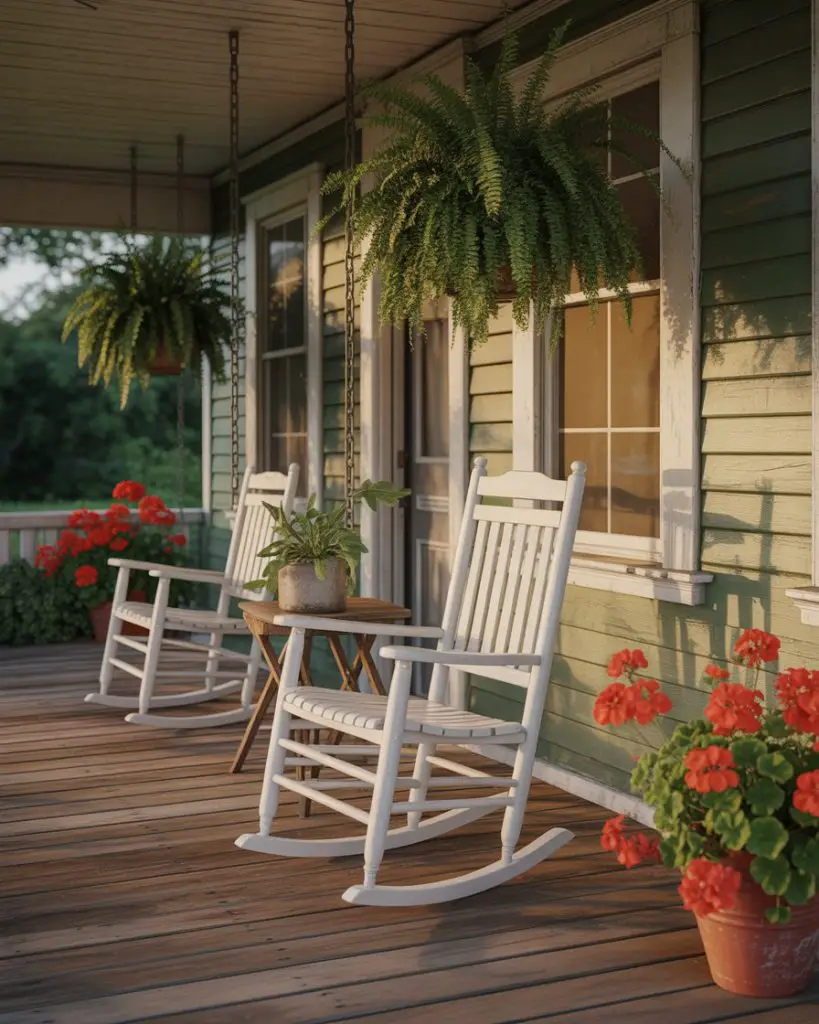
Where it works best is in rural and suburban settings where porches are deep enough for furniture and protected from harsh weather. Southern and Midwestern homes particularly embrace porch culture, where summer evenings are spent outside as a matter of tradition. Maintain the vintage vibe by hitting flea markets for old rockers and metal gliders—they’re built to last and develop a beautiful patina outdoors with minimal maintenance beyond an occasional fresh coat of paint.
14. Italian Farmhouse Kitchen with Rustic Plaster and Terracotta
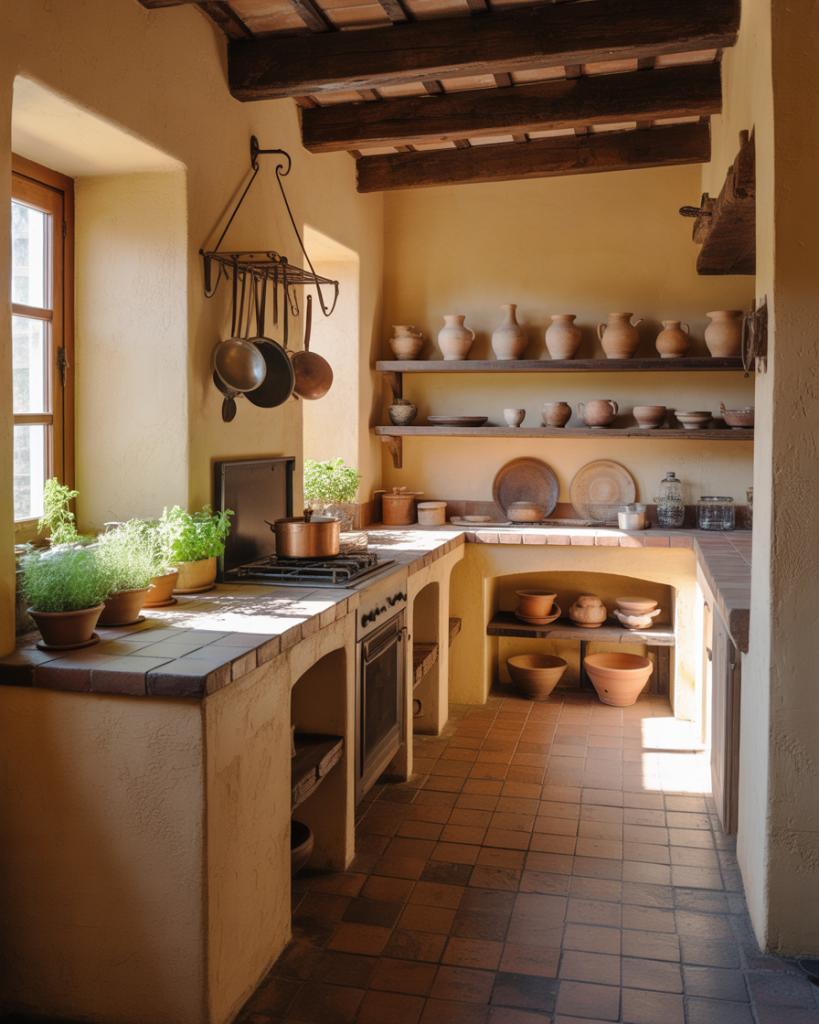
The Italian farmhouse kitchen transports you to Tuscany with rough-hewn plaster walls, terra-cotta tile floors, and open shelving displaying olive oil bottles and hand-thrown pottery. A farmhouse sink sits beneath a window overlooking herb gardens, while exposed wood beams and wrought-iron pot racks overhead complete the Mediterranean magic. This European variation on farmhouse style celebrates la dolce vita, where cooking and gathering are central to daily life, bringing warmth and old-world charm to American homes seeking colorful, texture-rich spaces. 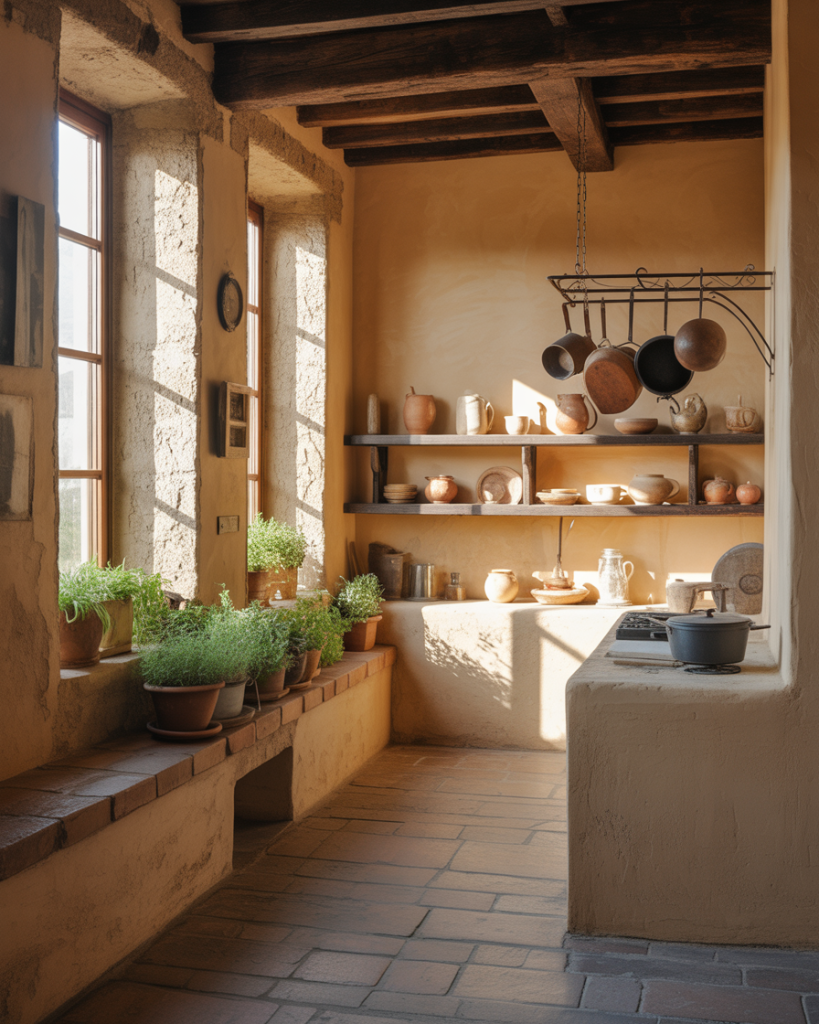
Homeowners often achieve this look through DIY techniques—Venetian plaster or limewash applied by hand creates the textured walls that define the aesthetic. Terra-cotta tiles are surprisingly affordable when purchased directly from importers, and the investment pays off in durability and timeless appeal. Don’t make the mistake of matching everything too perfectly; Italian farmhouses are collected over generations, so embrace mismatched pottery, varied wood tones, and the slightly imperfect surfaces that give this style its soul.
15. Halloween Farmhouse Mantel with Vintage Finds
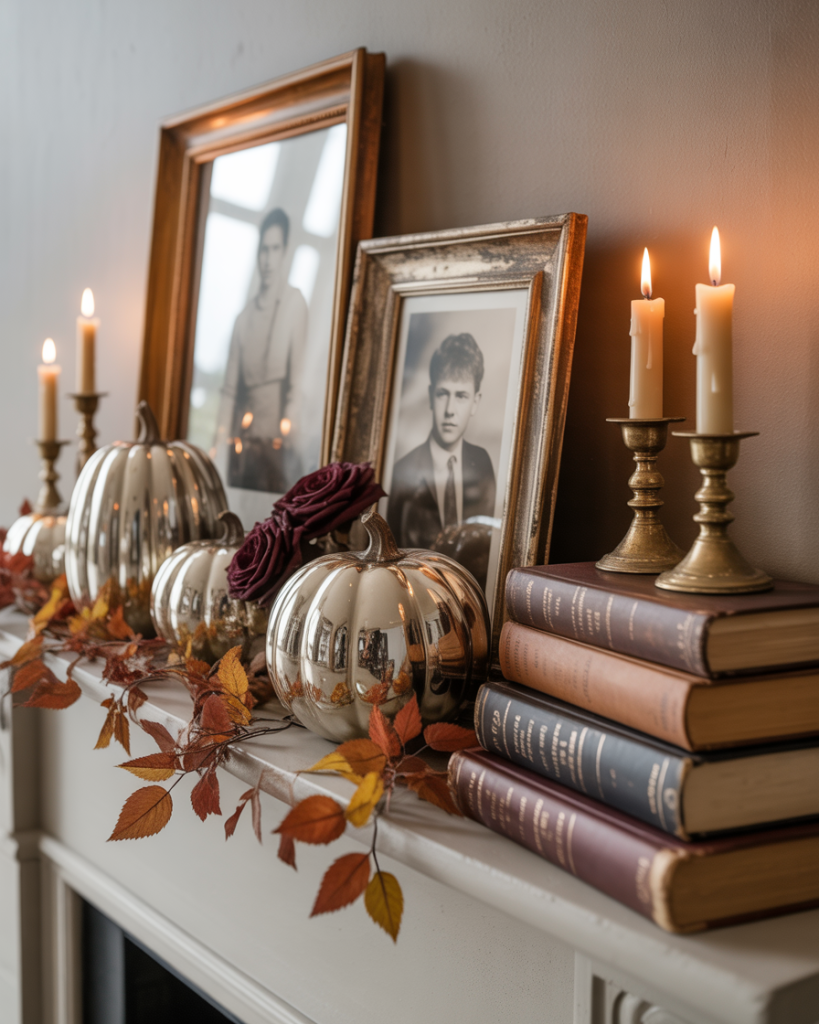
The Halloween farmhouse mantel decorates for the season with vintage elegance rather than plastic gimmicks. Antique portraits, mercury glass pumpkins, dried black roses, and tarnished silver candlesticks create an eerie yet sophisticated display. A garland of autumn leaves and miniature gourds anchors the arrangement, while old books stacked on either end add height and visual interest. This moody seasonal decor proves that farmhouse style adapts beautifully to holidays, maintaining its authentic vintage character while embracing the spirit of the celebration. 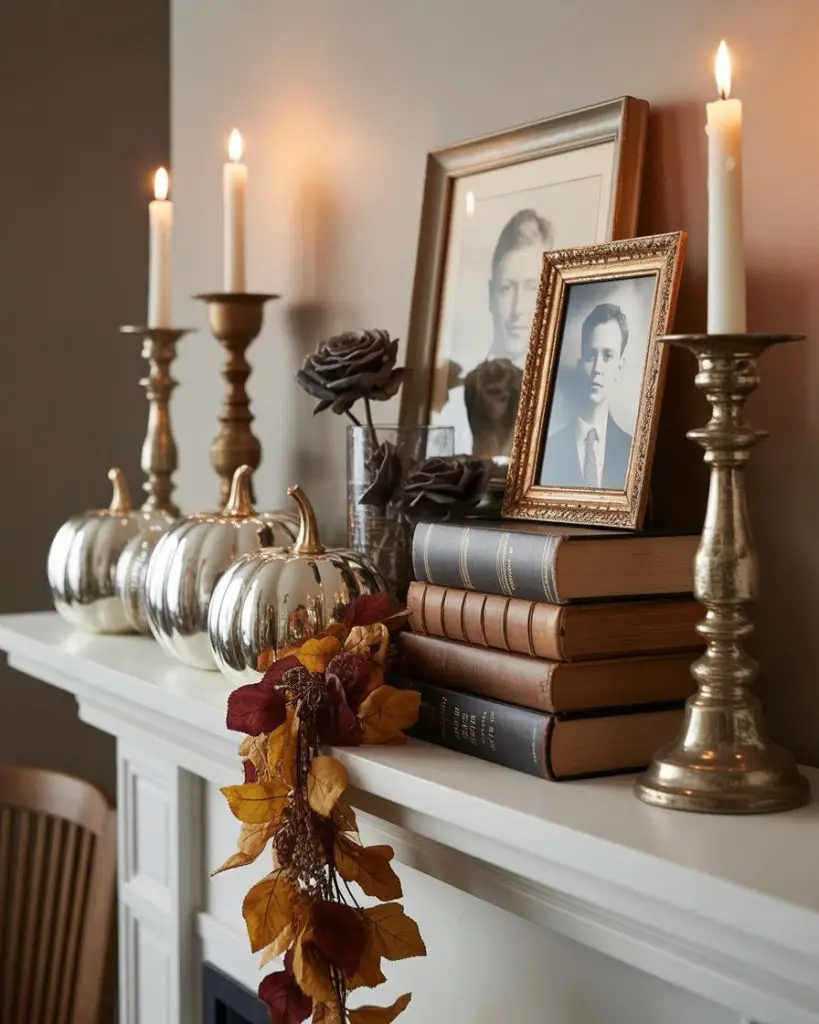
My neighbor creates the most stunning Halloween displays using only vintage and natural elements—nothing plastic or overtly spooky. She shops estate sales year-round for tarnished silver, old portraits, and unusual vessels to fill with seasonal elements. The result feels curated and timeless rather than trendy, and her mantel transitions beautifully from Halloween through Thanksgiving simply by swapping a few elements. The approach saves money long-term since quality vintage pieces work for multiple seasons and occasions.
16. Dollar Tree Farmhouse Vignettes with Thrifted Charm
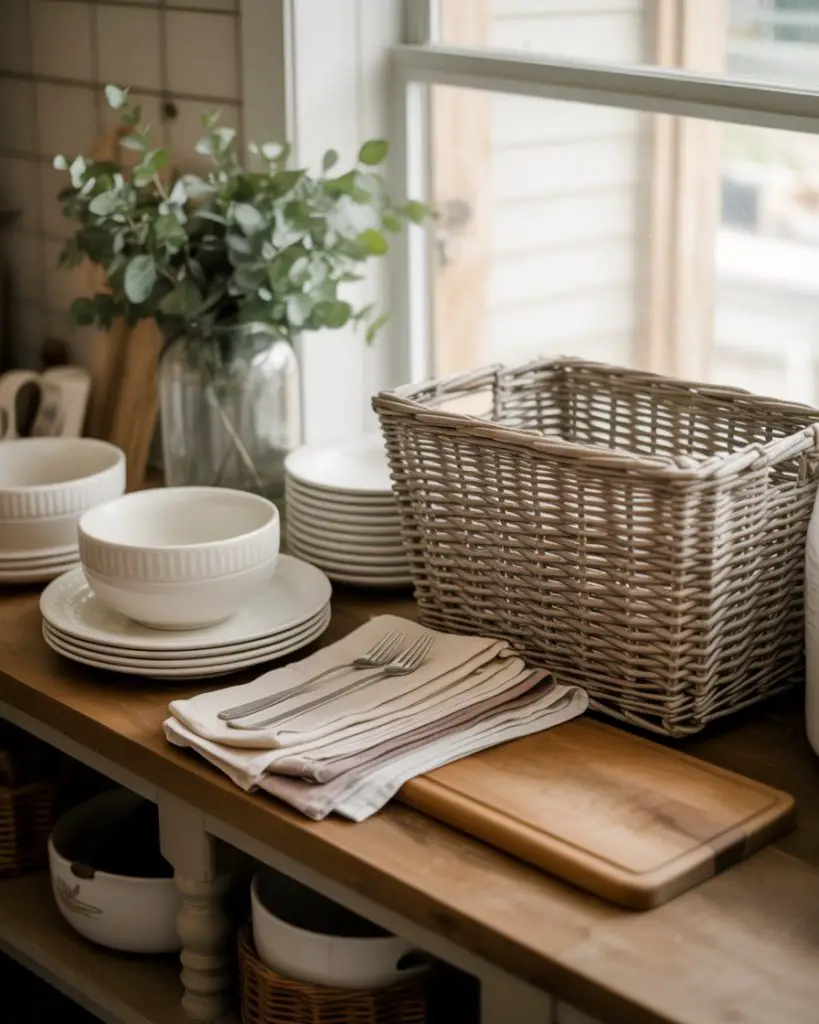
The Dollar Tree farmhouse vignette proves that budget doesn’t dictate style. Simple glass vases filled with grocery store eucalyptus, white ceramic dishes stacked on open shelving, and neutral cotton dishtowels create farmhouse moments throughout the home. Add a coat of chalk paint to Dollar Tree frames or baskets, and suddenly they look like vintage finds. This resourceful approach democratizes farmhouse decor, showing that the ideas matter more than the price tag and creativity can transform humble materials into charming displays. 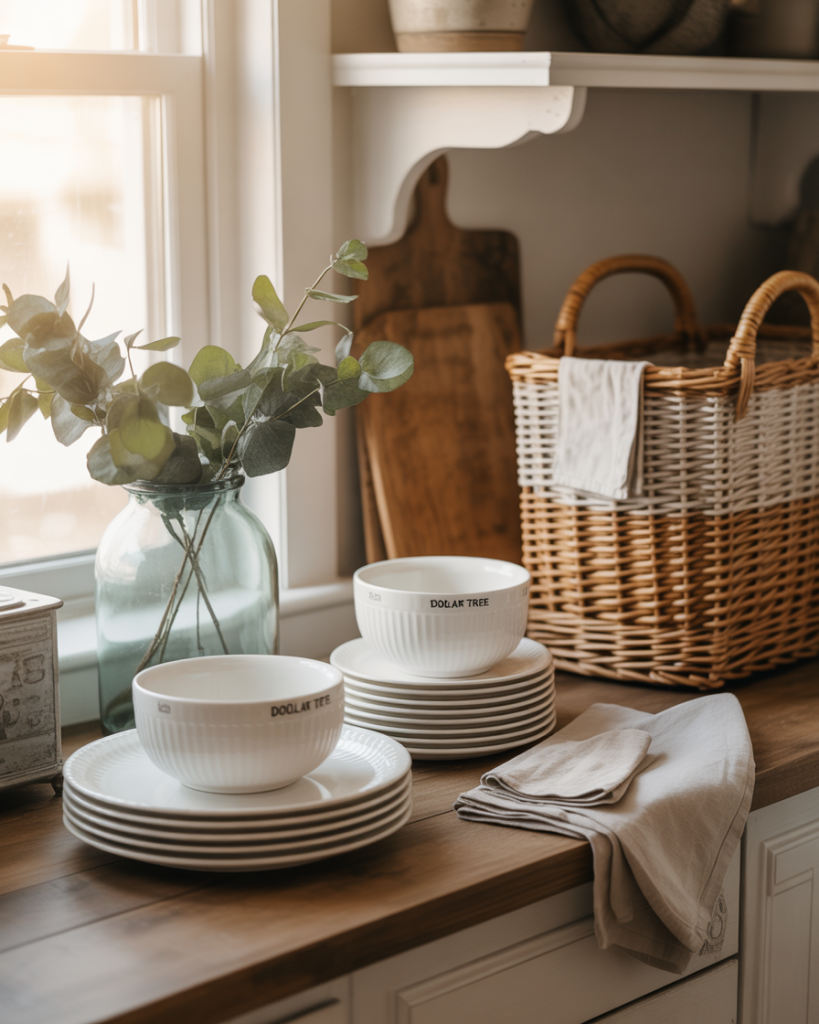
Real homeowner behavior shows that mixing high and low is the secret to making budget decor look expensive—that Dollar Tree vase looks right at home next to a vintage cutting board or quality linen towel. The trick is editing ruthlessly; too many cheap items together read as cluttered, but a few well-chosen pieces integrated into an overall cohesive design disappear into the aesthetic. Paint unifies mismatched items, and natural elements like greenery or fruit always elevate a vignette regardless of the container’s origin.
17. Blue Farmhouse Bedroom with Vintage Quilts
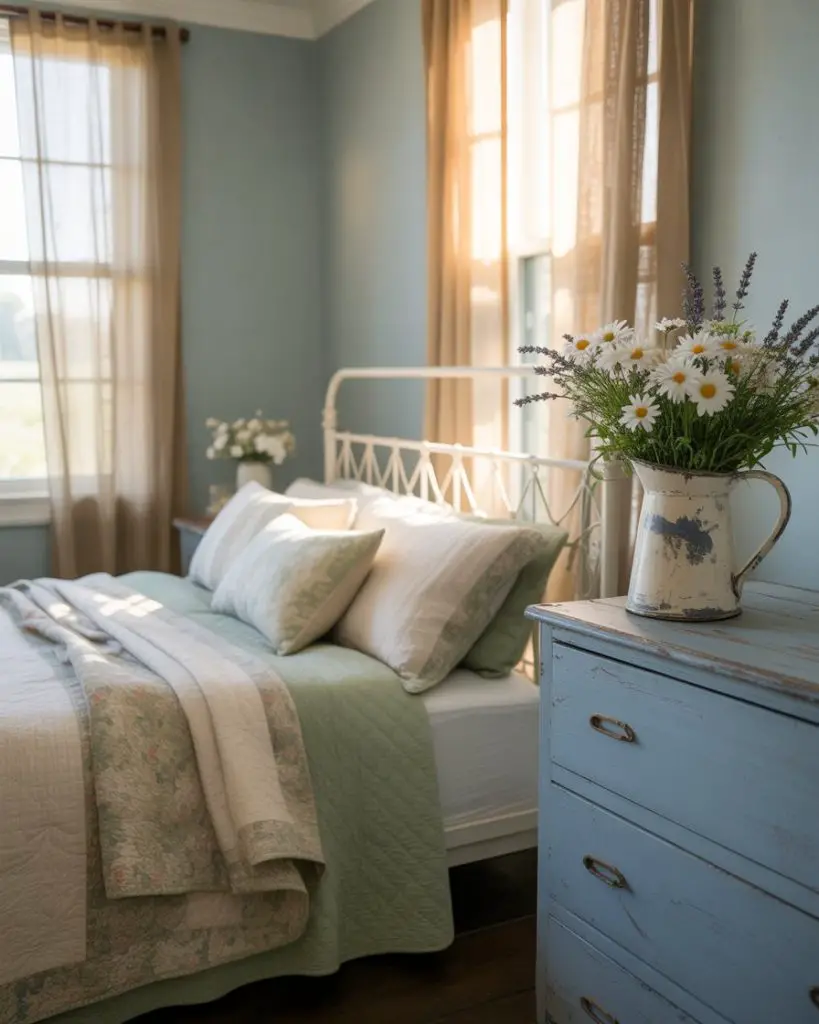
The blue farmhouse bedroom wraps you in tranquility with walls painted in soft powder blue or deeper slate, paired with crisp white bedding and layers of vintage quilts. A painted dresser, perhaps in a coordinating blue or creamy white, holds fresh flowers and stacks of well-loved books. Simple cotton curtains filter morning light, and the overall effect is restful and restorative. This traditional color choice has deep roots in American farmhouse history, where blue paint was believed to ward off insects and evil spirits, adding layers of meaning to its country charm. 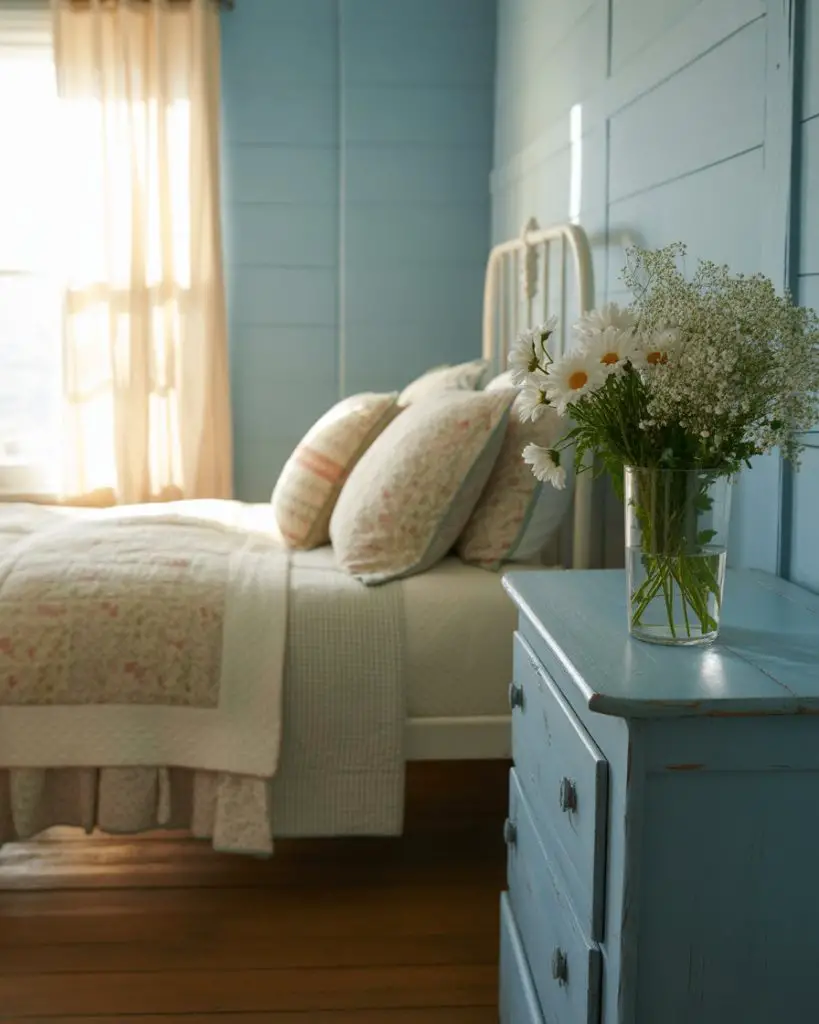
Where it works best is in bedrooms that lack architectural drama—blue walls create instant character and atmosphere in builder-grade spaces. Historically, milk paint in shades of blue was one of the most common Colonial and early American paint colors, making this choice historically accurate for period homes. When selecting quilts, look for genuine vintage pieces at estate sales; they’re often undervalued and bring instant authenticity, with each stitch and patch telling a story of American craft tradition.
18. Minimal Farmhouse Home Office with Function First

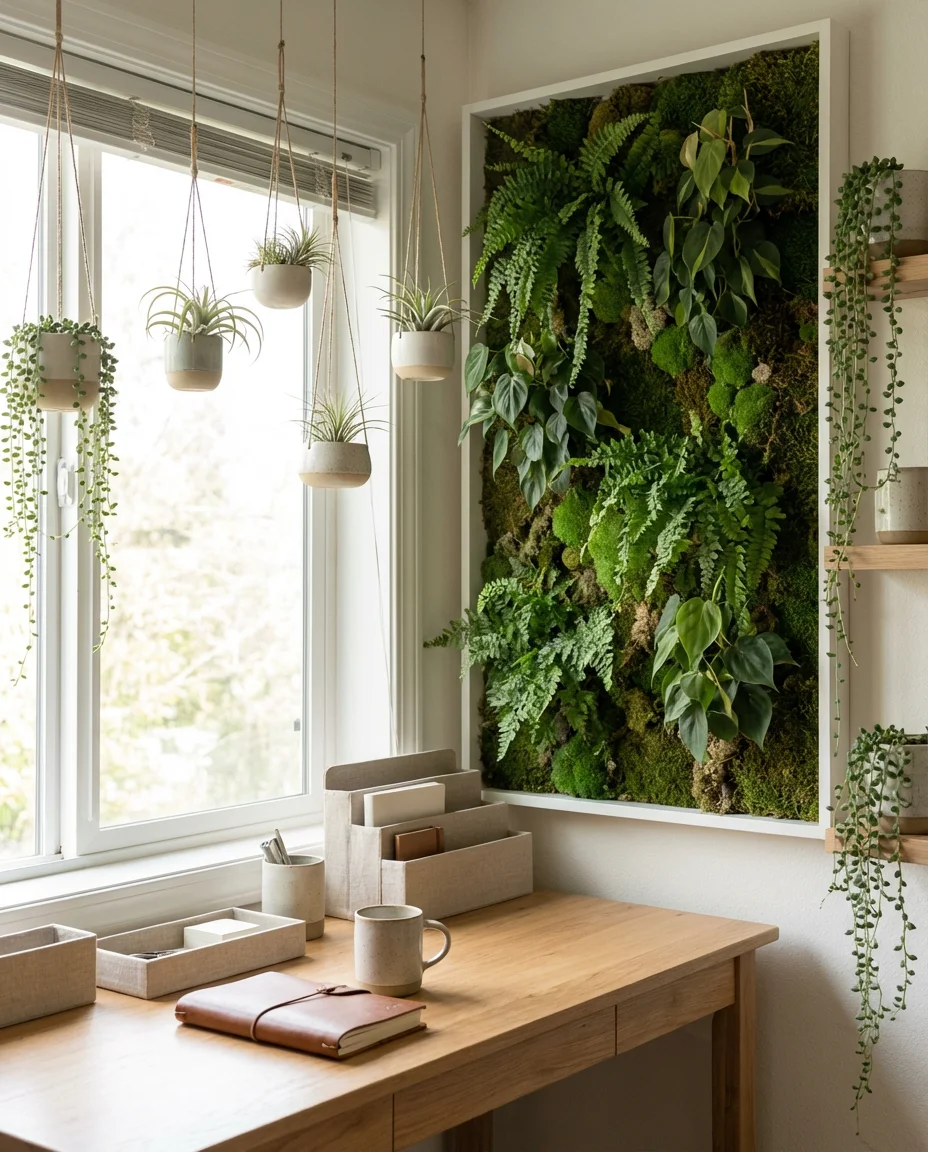
The minimal farmhouse home office strips away distraction, featuring a simple wood desk, a comfortable chair, and only essential items within reach. White walls and natural light create a calm backdrop, while a single shelf displays a few meaningful objects—perhaps a vintage clock, a potted plant, and one treasured photograph. This contemporary approach honors farmhouse principles of utility and honesty while rejecting clutter, creating a workspace that promotes focus and productivity. It proves that farmhouse doesn’t require abundant accessories when the foundation is strong and intentional. 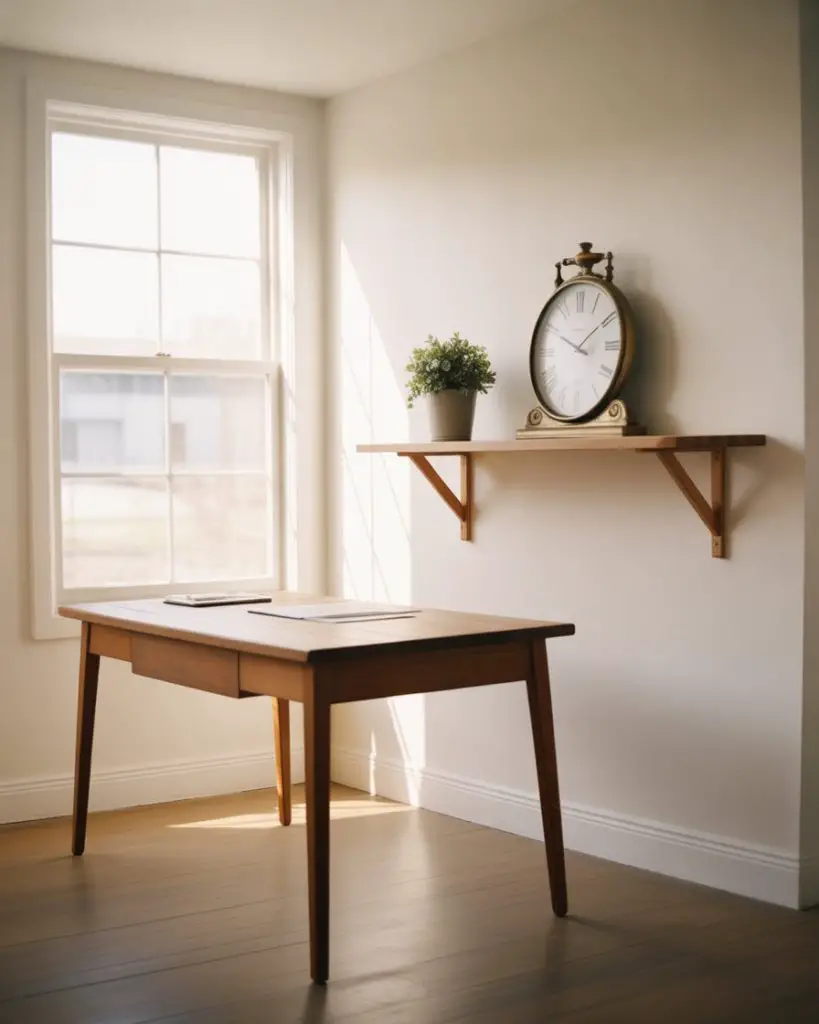
Practical insight for remote workers: A minimal office actually functions better than a cluttered one, reducing visual stress and making it easier to focus on tasks. Invest in quality where it matters—a solid wood desk and ergonomic chair—then keep surfaces clear. The farmhouse element comes through in material choice and honesty of design rather than decorative excess. A simple cup holding pens, a linen-covered bulletin board, and perhaps a vintage desk lamp provide all the character needed without compromising the room’s primary purpose.
19. Ideas for the Farmhouse Gallery Wall with Family Photos
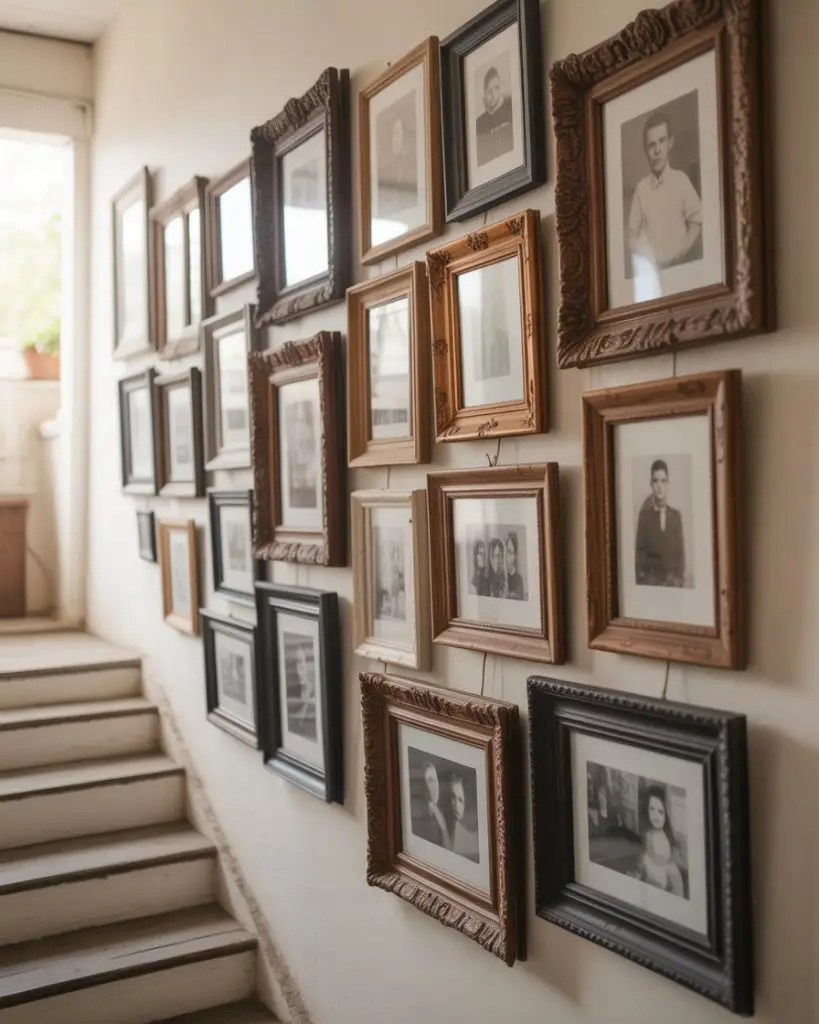
The farmhouse gallery wall celebrates ideas for the personal history with an arranged collection of family photographs in mismatched vintage frames. Black-and-white portraits of ancestors mix with color snapshots of recent gatherings, creating a timeline of love and connection. A few empty antique frames add sculptural interest, while the varied frame styles—carved wood, simple pine, tarnished gilt—create visual rhythm without matchy-matchy uniformity. This deeply personal approach to wall decor transforms a hallway or stairwell into a family archive that honors both traditional values and individual stories. 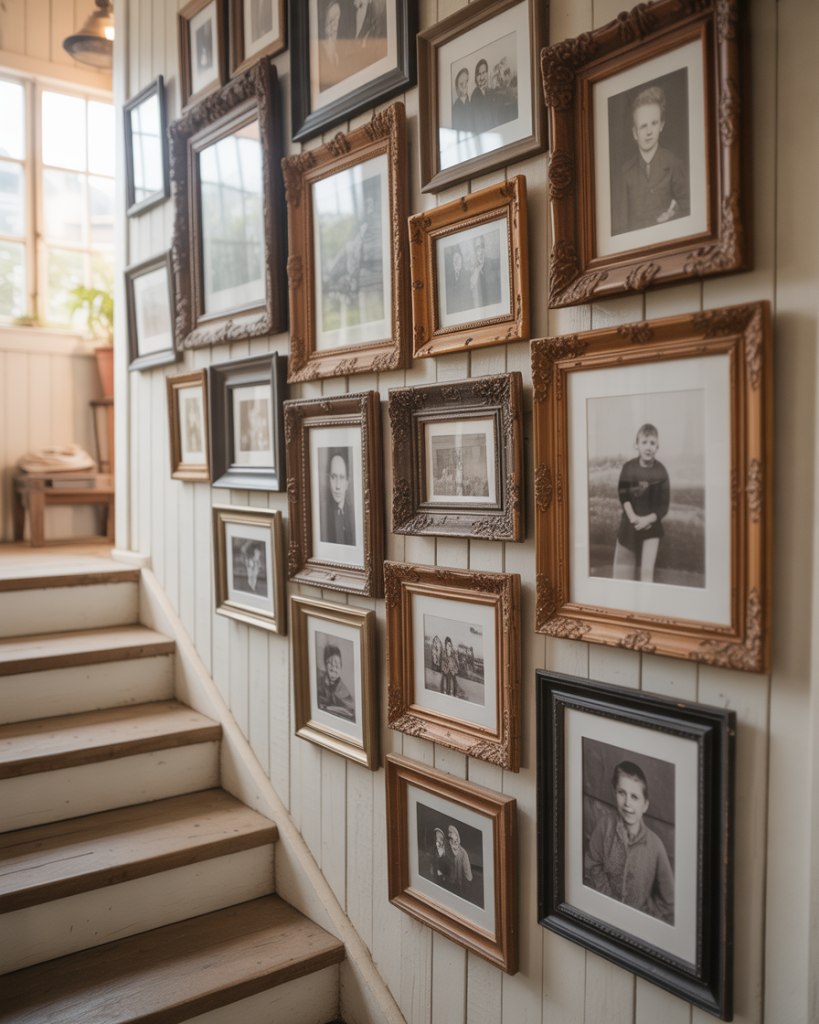
Common mistake: Hanging frames too far apart makes the gallery feel disconnected. Aim for two to three inches between frames, and use painter’s tape to map the arrangement on the wall before committing to nail holes. Don’t feel obligated to fill every frame immediately—empty frames add charm and leave room for future memories. The beauty of this approach is its evolution over time; as your family grows and changes, so does the wall, making it a living document rather than a static decoration.
20. Country Farmhouse Laundry Room with Vintage Charm
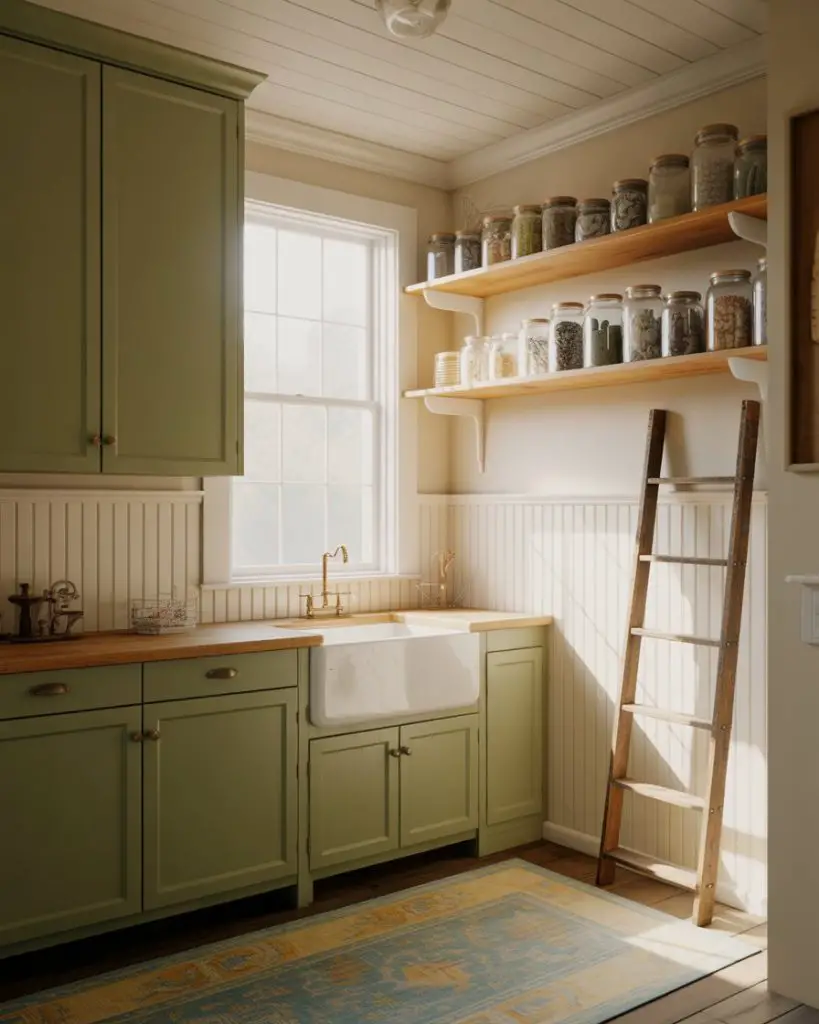
The country farmhouse laundry room transforms chores into pleasure with beadboard walls, a farmhouse sink for hand-washing delicates, and open shelving stocked with vintage jars of clothespins and detergent. A drying rack fashioned from an old ladder leans against the wall, while a cheerful rug underfoot makes standing more comfortable. Painted cabinets in soft sage or creamy white hide modern appliances, maintaining the room’s traditional character. This hardworking space proves that even utility areas deserve beauty and thoughtful design that makes daily tasks more enjoyable. 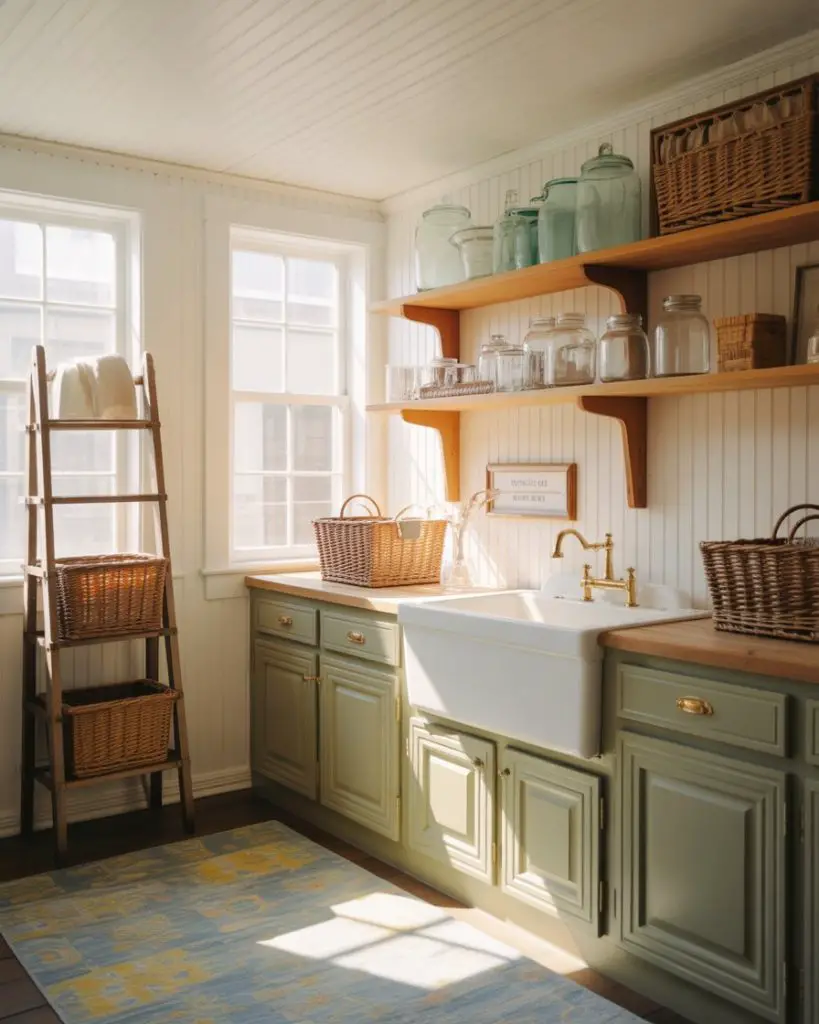
In homes across rural America, the laundry room often doubles as a mudroom or gardening station, making durability essential. Choose materials that can handle moisture and mess—tile or vinyl floors, water-resistant beadboard, and painted rather than stained wood. The farmhouse sink isn’t just decorative; it’s genuinely useful for soaking stained items, washing boots, or potting plants. Budget-conscious updates like painting existing cabinets and adding simple open shelves can completely transform the space without the expense of a full renovation.
21. Urban Farmhouse Loft with Exposed Brick
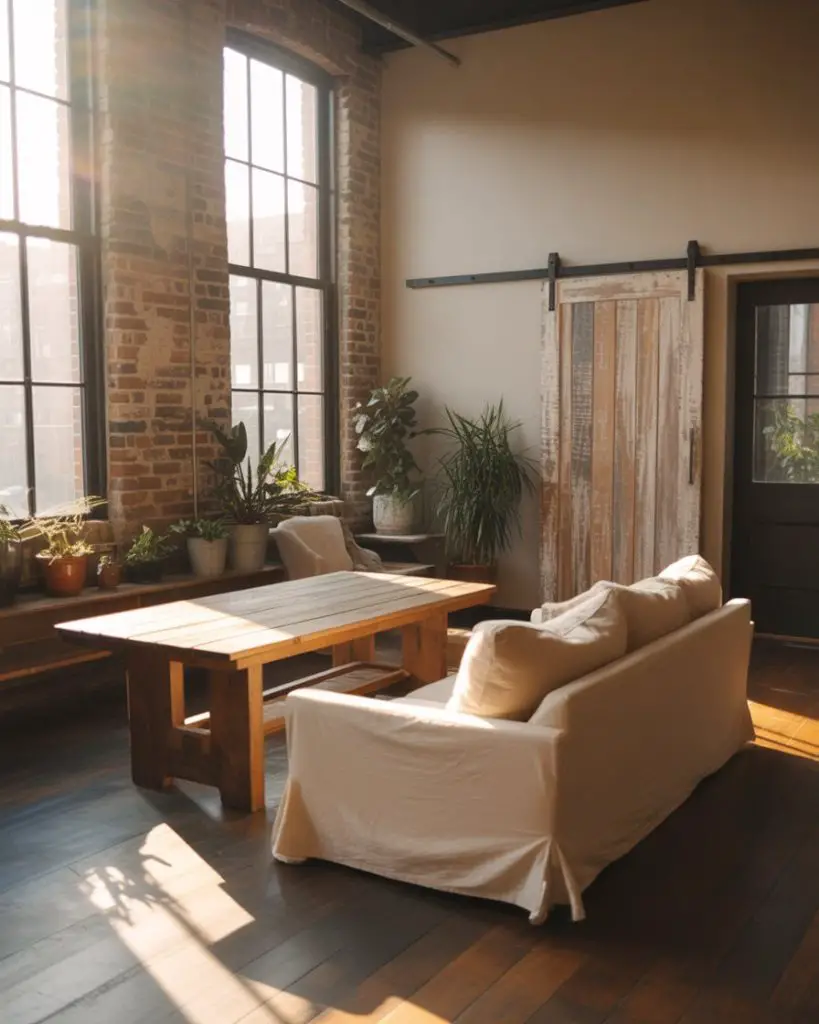
The urban farmhouse loft celebrates the unexpected marriage of city grit and rural warmth, pairing exposed brick walls and industrial windows with a salvaged barn door and vintage farmhouse furniture. A reclaimed wood dining table anchors the open living space, while white linen sofas and plenty of greenery soften the industrial edges. This eclectic blend works beautifully in converted warehouses and city apartments, proving that farmhouse style isn’t limited to actual farms. It’s about embracing honest materials, celebrating craftsmanship, and creating spaces that feel collected and personal rather than designed from a catalog. 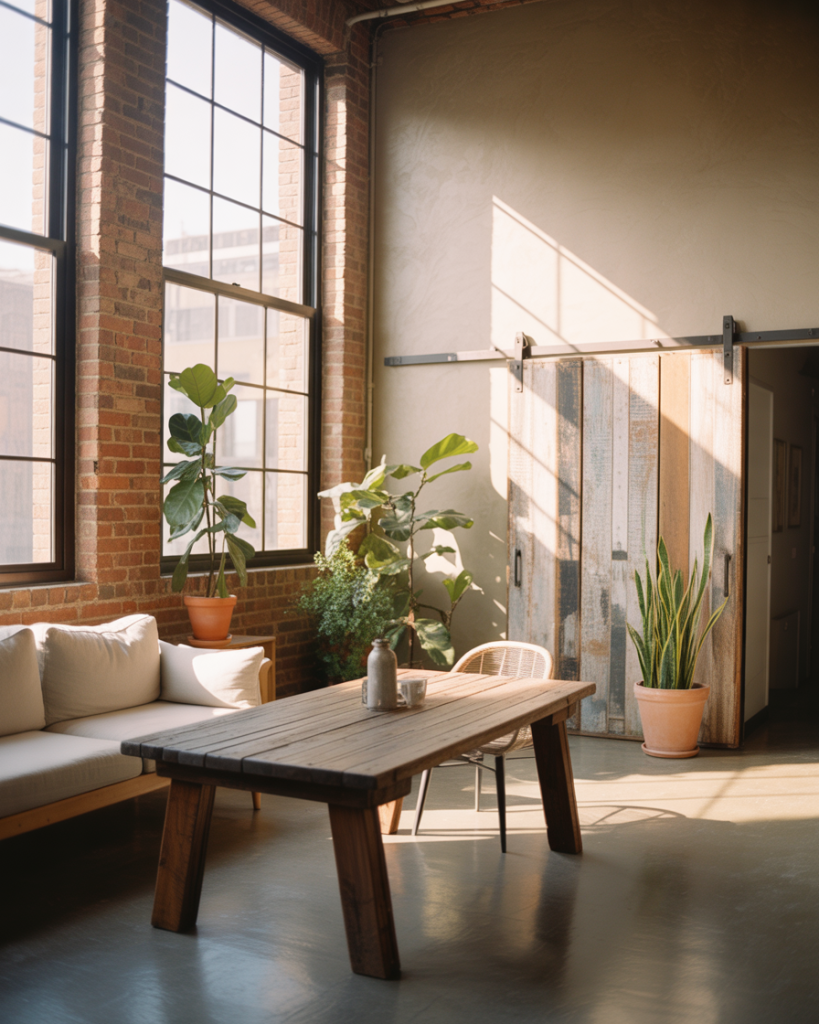
City dwellers are increasingly drawn to farmhouse elements as a counterbalance to urban density and modern sterility. The textures of weathered wood and worn brick provide tactile richness that feels grounding and authentic. Avoid overdoing the rustic elements in an industrial space—the architecture already provides plenty of character. Instead, use farmhouse furnishings and textiles to soften and warm the space, creating contrast that highlights both the urban bones and rural soul of the design.
22. Eclectic Farmhouse Reading Nook with Global Textiles
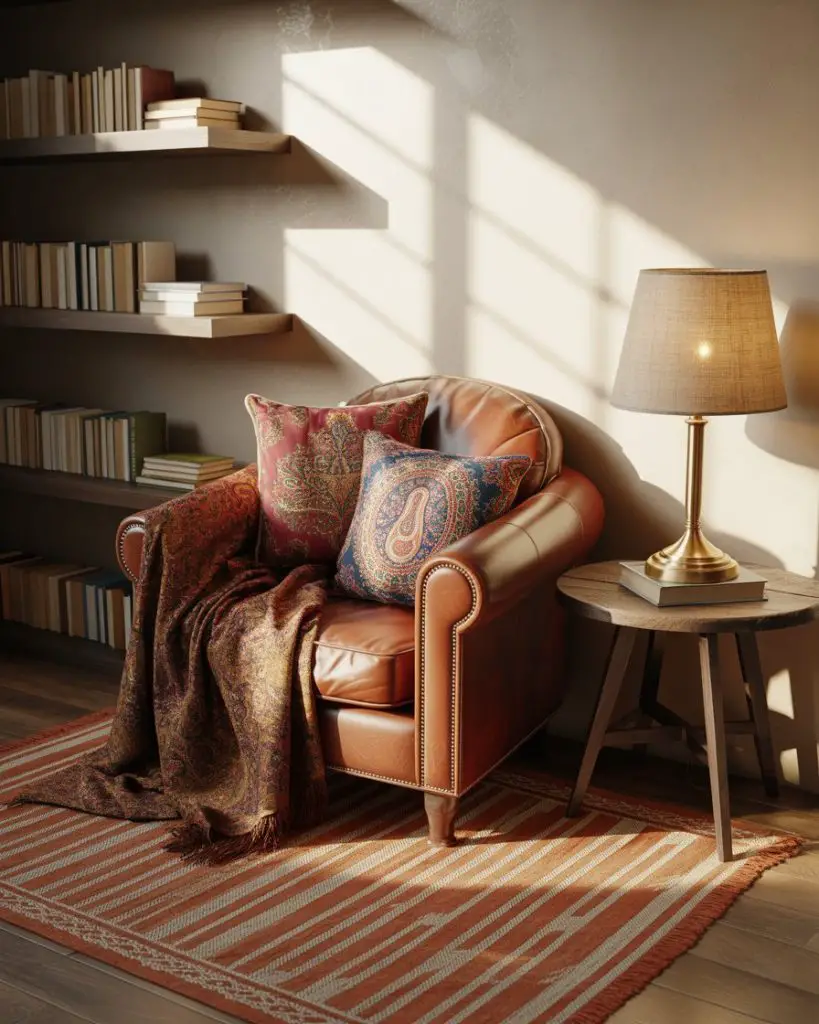
The eclectic farmhouse reading nook layers a vintage armchair with global textiles—a Moroccan throw, Indian block-print pillows, and a Turkish rug underfoot. A simple wooden side table holds a reading lamp and stack of books, while floating shelves display a curated collection of found objects and travel souvenirs. This personal sanctuary blends bohemian wanderlust with farmhouse simplicity, creating a corner that invites you to settle in with a novel and a cup of tea. It’s farmhouse decor 2026 at its most individual, rejecting rigid rules in favor of personal expression and comfort. 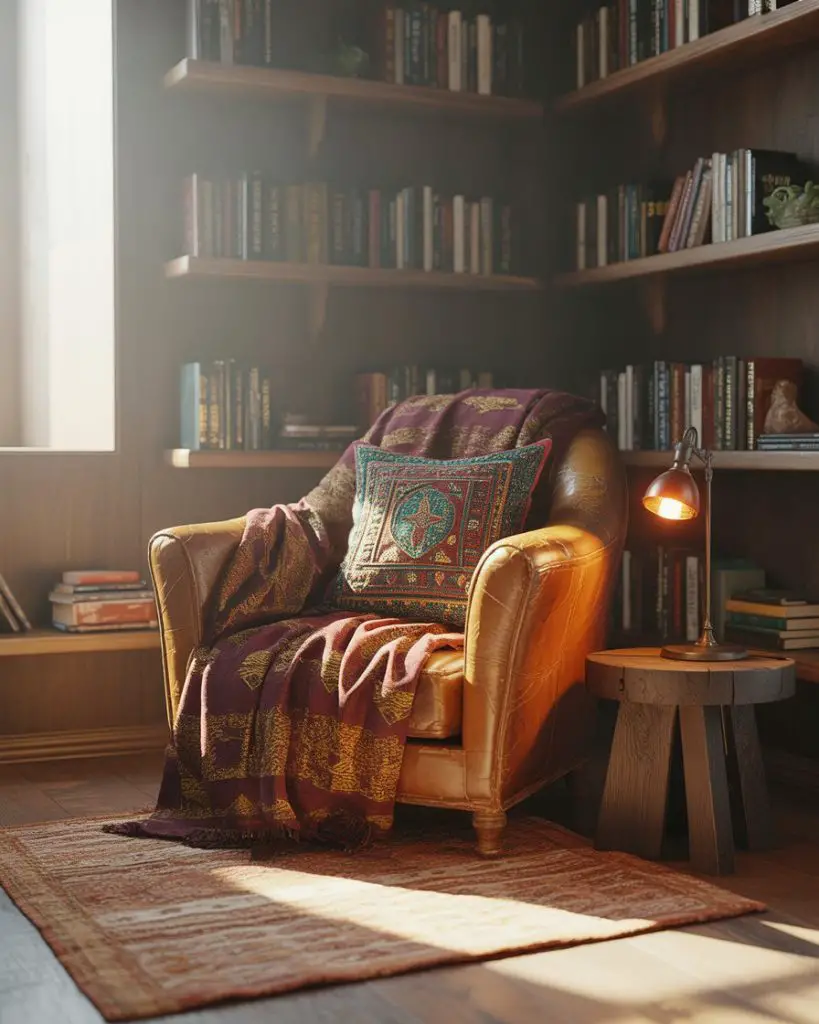
Expert perspective: The most successful interiors tell stories about the people who live in them, and this eclectic approach celebrates individual history and travels. Don’t worry about everything matching—the magic happens in the unexpected combinations. Pair a farmhouse foundation of simple furniture and white walls with collected treasures that mean something to you personally. The result feels infinitely more interesting than a room decorated entirely from one store’s collection, and it evolves naturally as your life and interests change over time.
Conclusion
These twenty-two ideas demonstrate that farmhouse decor in 2026 is more diverse and personal than ever before. Whether you’re drawn to the drama of gothic touches, the serenity of coastal influences, or the vibrant personality of colorful accents, there’s a farmhouse approach that will resonate with your lifestyle and aesthetic preferences. We’d love to hear which ideas inspire you most—drop a comment below sharing your favorite farmhouse style or telling us about your own decorating journey. Your insights and experiences help build our community of farmhouse enthusiasts who believe that home should always feel warm, welcoming, and authentically yours.