Farmhouse kitchens have long been the heart of American homes, and in 2026, they’re evolving in exciting new directions. Pinterest boards are overflowing with fresh interpretations that blend the warmth and character we love with updated palettes, unexpected materials, and livable layouts. Whether you’re drawn to clean white shiplap or moody, layered textures, there’s a farmhouse style that fits your life. This guide walks you through inspiring ideas that reflect where farmhouse design is headed this year—from tiny galley setups to sprawling European-inspired spaces—all grounded in real-world functionality and American sensibilities.
1. Modern Farmhouse Kitchen with Clean Lines
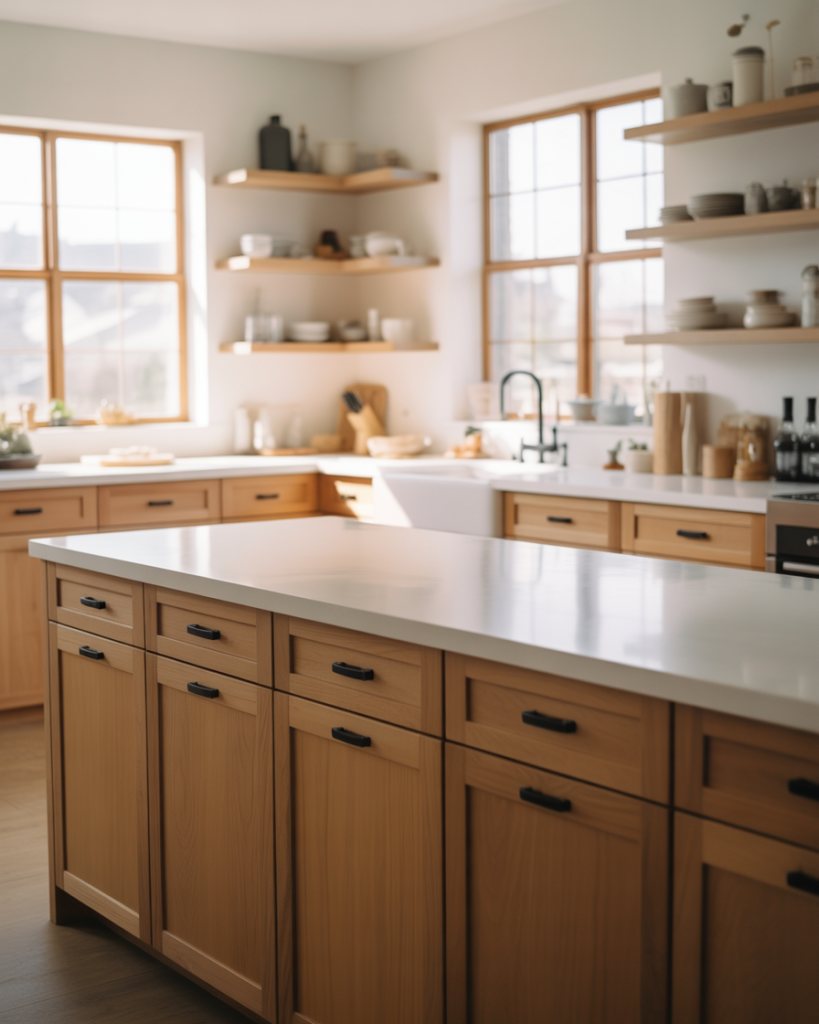
The modern farmhouse kitchen strips away the clutter while keeping the soul. Think flat-panel cabinetry in warm wood tones, matte black hardware, and open shelving that showcases everyday dishes instead of decorative fillers. This approach works beautifully in new builds and urban lofts where you want that farmhouse warmth without the heaviness of ornate details. Pair it with a waterfall-edge island and you’ve got a space that feels both grounded and current. 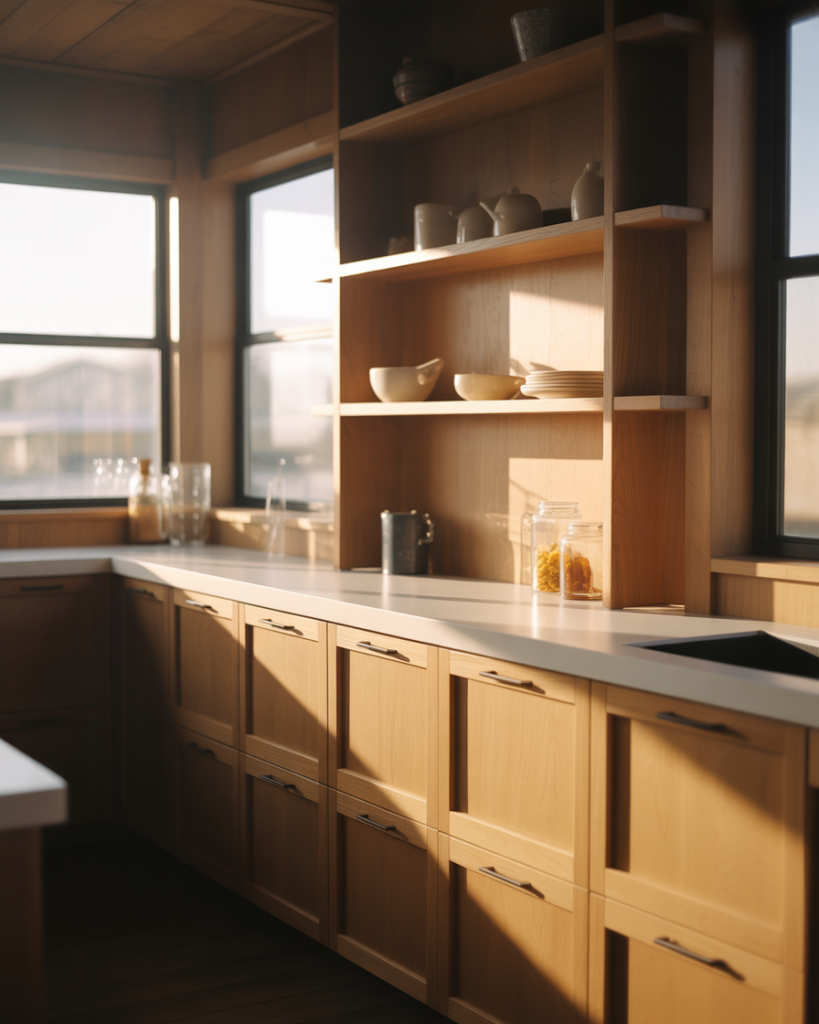
One common mistake is going too stark with the modern elements—you lose the farmhouse comfort entirely. Balance sleek surfaces with at least one warm, textured element like a reclaimed wood floating shelf or a jute runner. Homeowners who nail this look usually anchor the space with one standout vintage piece, like a refurbished farm table or antique pendant light, to keep things from feeling sterile.
2. Rustic Farmhouse Kitchen with Reclaimed Wood
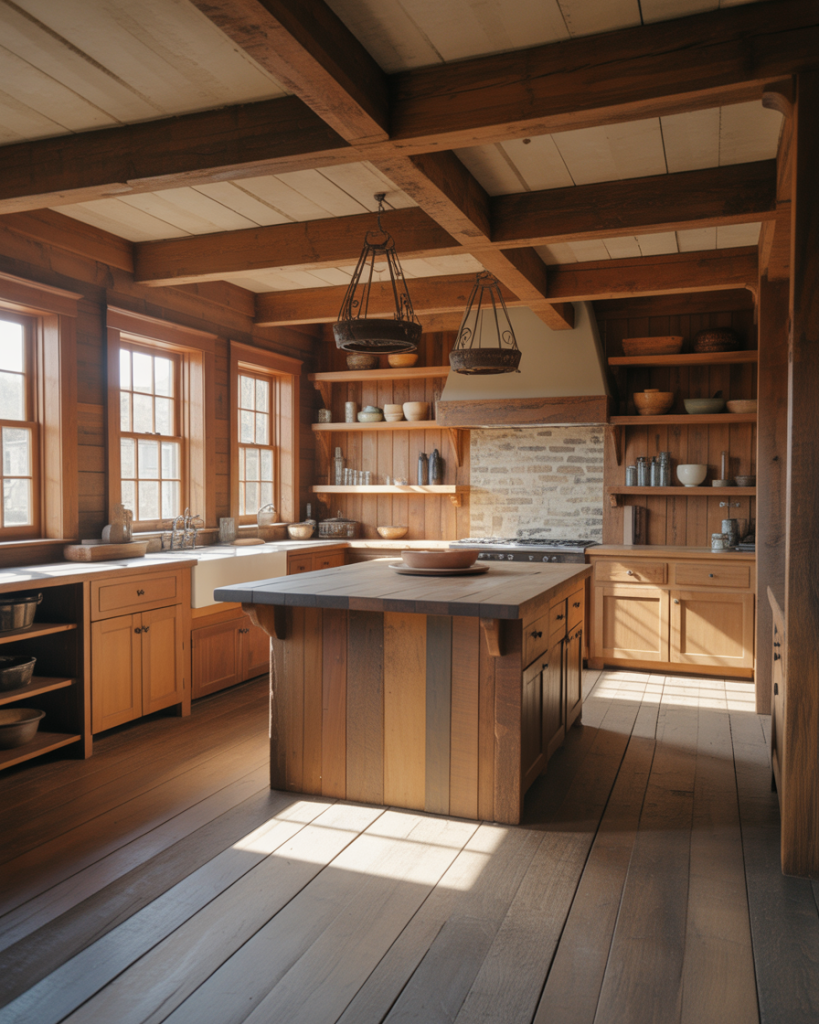
Nothing says rustic farmhouse quite like reclaimed wood beams overhead and a chunky butcher-block island at the center. This style celebrates imperfection—knots, nail holes, weathered grain—and brings an organic, lived-in quality that makes the kitchen feel like it’s been there for generations. It’s especially popular in rural communities across the Midwest and Pacific Northwest, where homeowners lean into natural materials that echo the surrounding landscape. 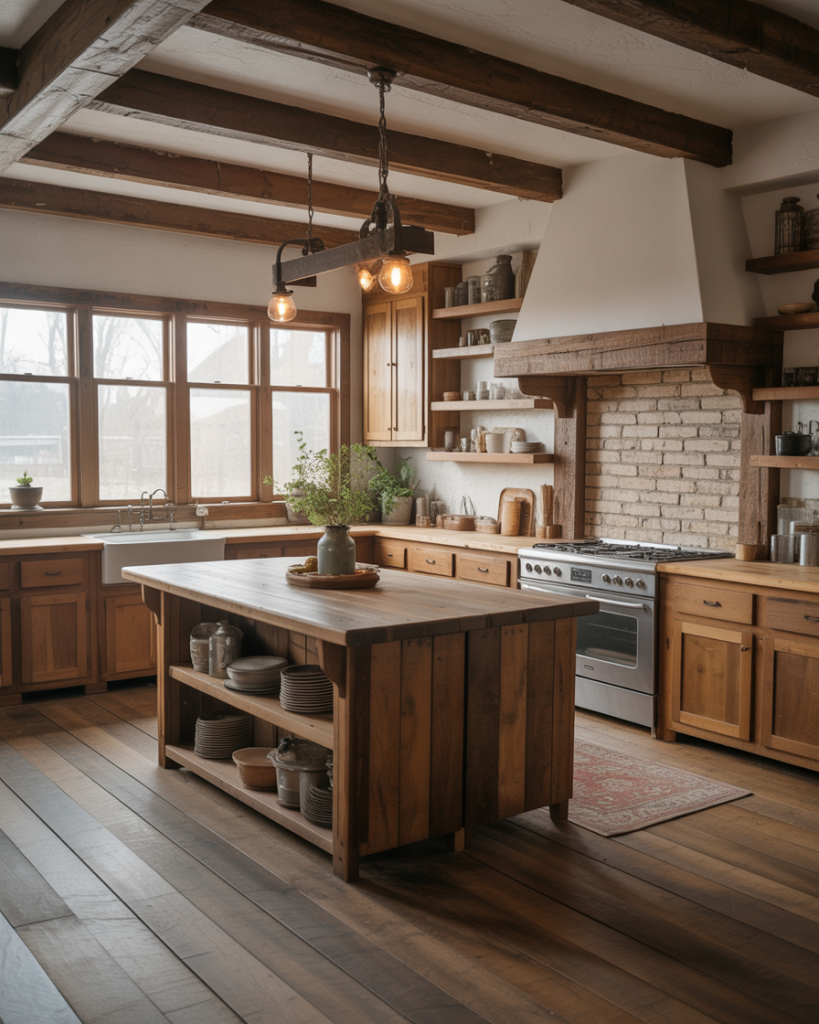
Expert designers often suggest keeping the color palette neutral when you’re working with heavily textured wood—it prevents the space from feeling too busy. A creamy white or soft gray on the walls lets the wood take center stage. Budget-conscious renovators can source reclaimed beams from salvage yards or barn demolitions, often at a fraction of the cost of new materials while adding genuine character.
3. Vintage Farmhouse Kitchen with Antique Touches
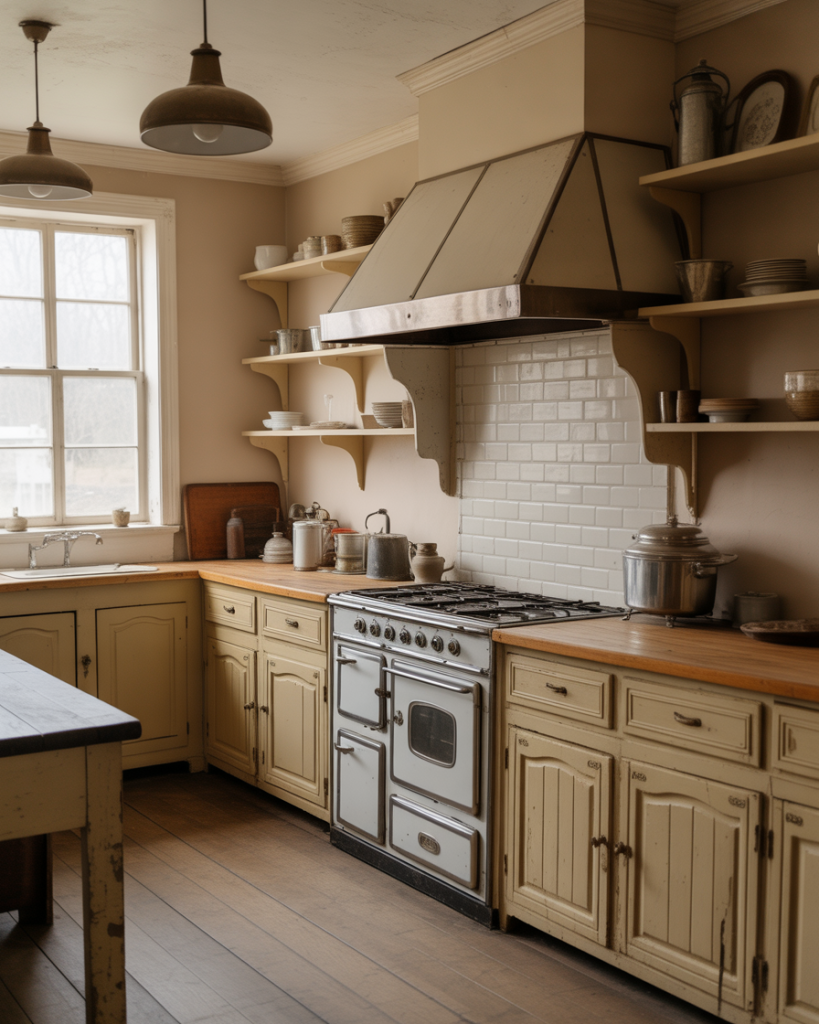
The vintage farmhouse kitchen is all about curation—mixing eras and pieces with intention. An old enamel stove refurbished to modern standards, mismatched cabinet pulls from flea markets, or a collection of ironstone pitchers on open shelves all contribute to that collected-over-time feeling. This isn’t a museum; it’s a working kitchen that tells a story. The key is editing: too many antiques can tip into cluttered territory. 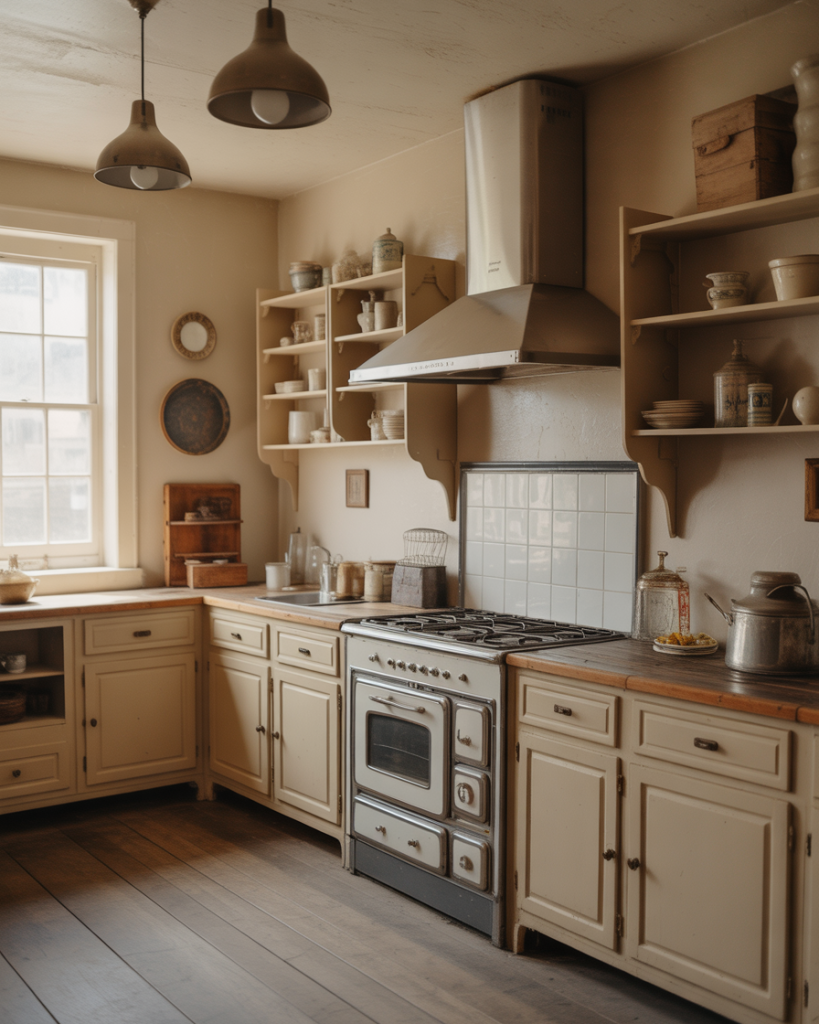
In New England and parts of the South, homeowners often inherit pieces from family estates, making this style deeply personal. The trick is balancing old and new: pair that vintage Hoosier cabinet with contemporary appliances hidden behind panel-ready doors. This approach works best in homes with good bones—original hardwood floors or plaster walls—that already have architectural character to build on.
4. Italian Farmhouse Kitchen with Warm Terracotta
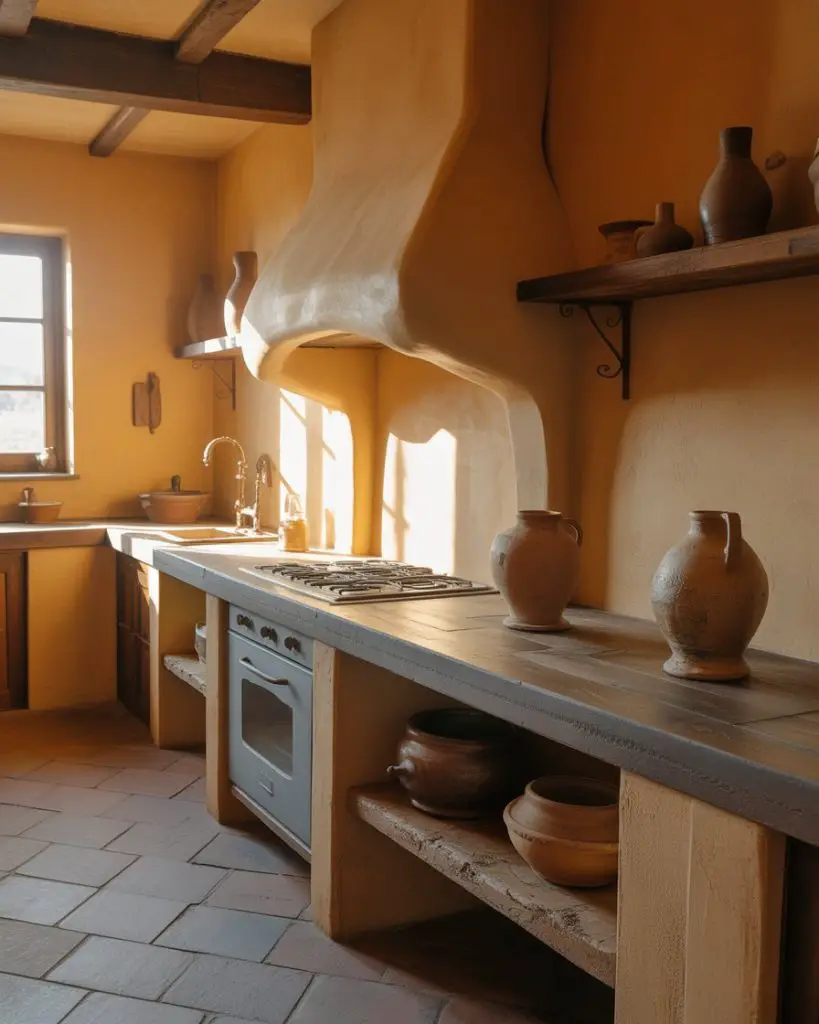
An Italian farmhouse kitchen brings the warmth of Tuscany into American homes through terracotta tiles, arched doorways, and a palette of ochre, sienna, and creamy whites. The materials feel sun-soaked and timeless: hand-plastered walls, thick wood countertops, and wrought-iron details that nod to Old World craftsmanship. It’s a style that invites long meals and easy conversation, centered around a generous table rather than a formal island. 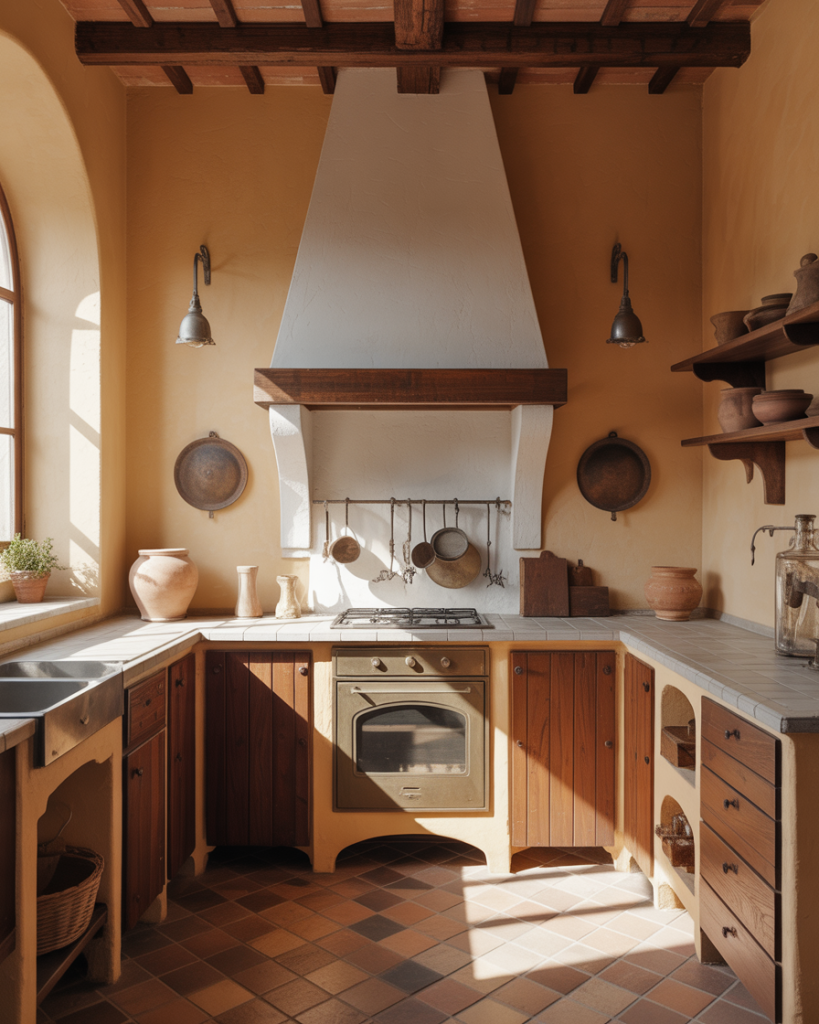
A couple in Northern California swapped out their standard subway tile for hand-painted Italian ceramics and immediately felt transported every time they cooked. This style works beautifully in homes with lots of natural light—think big windows or French doors opening to a garden. The textured plaster walls soften the acoustics and create that lived-in Mediterranean glow that’s hard to replicate with paint alone.
5. Country Farmhouse Kitchen with Shaker Cabinets
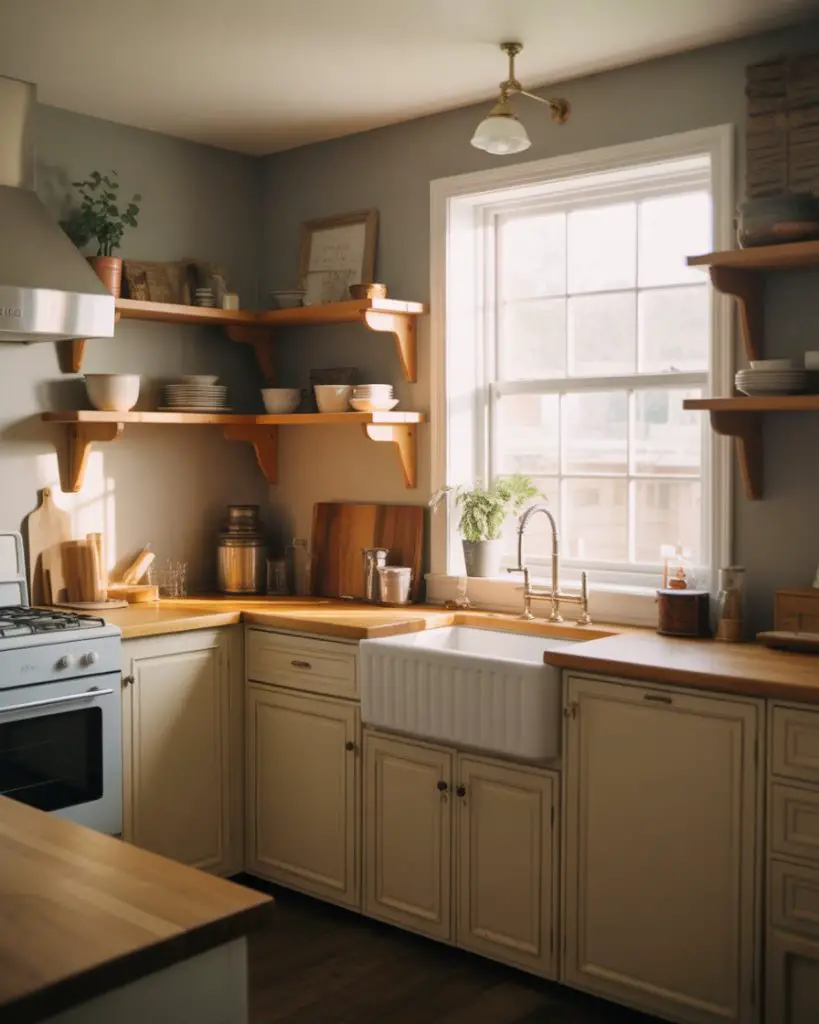
The country farmhouse kitchen is quintessentially American, rooted in simplicity and function. Shaker-style cabinets with recessed panels, a deep apron-front sink, and open shelving for everyday dishes define this look. It’s unpretentious and enduring, the kind of kitchen you find in farmhouses from Vermont to Texas. The palette stays soft—whites, creams, gentle grays—with pops of color coming from fresh flowers or seasonal produce displayed in wooden bowls. 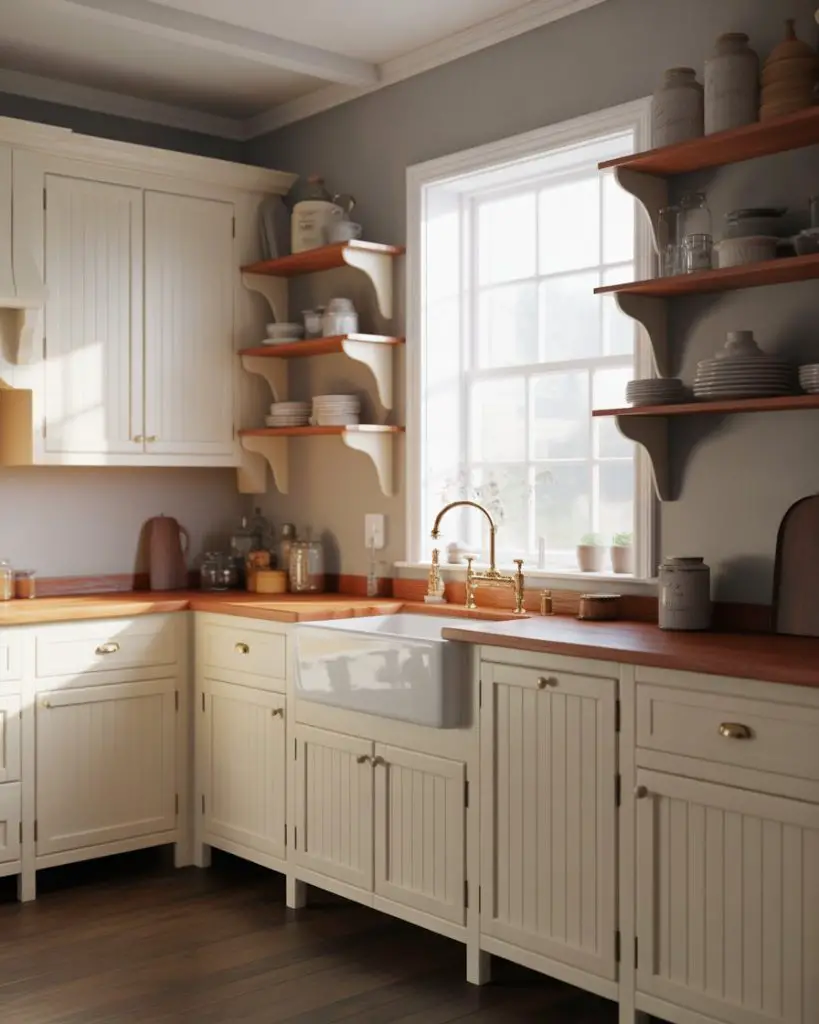
Practical insight: Shaker cabinets are incredibly forgiving when it comes to repairs and updates. Because the style is so timeless, you can swap hardware or repaint without the design feeling dated. Many homeowners appreciate that this look doesn’t require expensive custom work—stock cabinetry from big-box stores often comes in Shaker profiles, making it accessible for tighter budgets while still delivering that classic country charm.
6. White Farmhouse Kitchen with Subway Tile
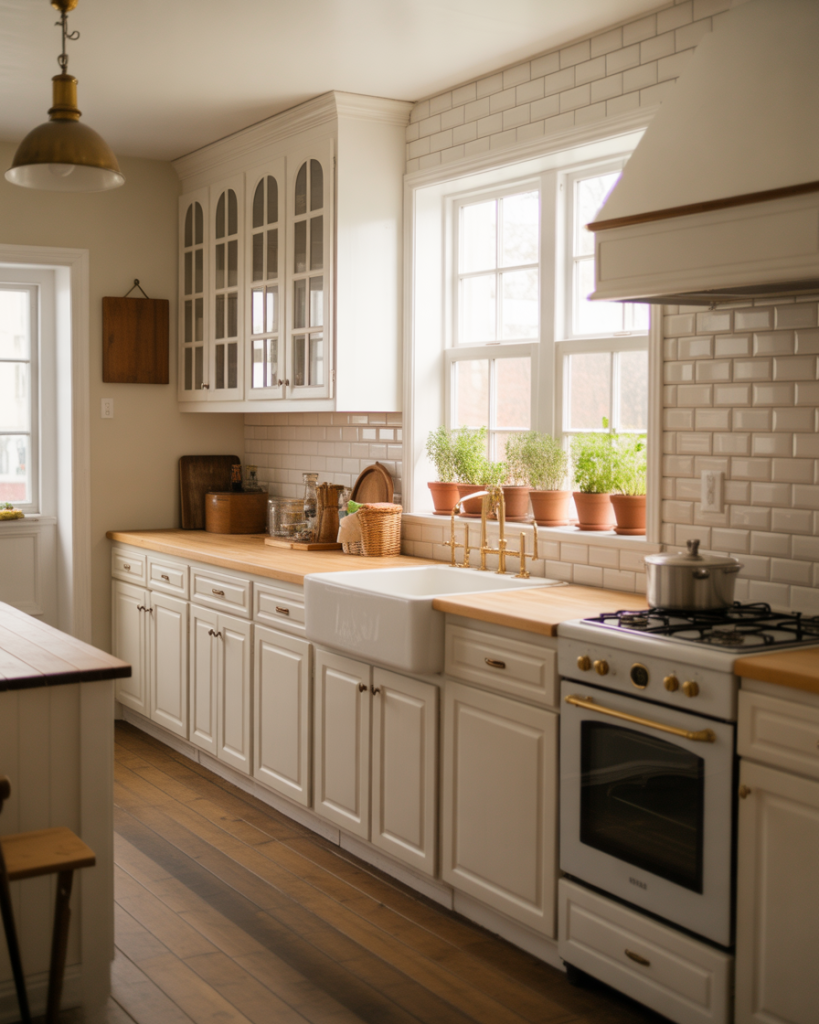
The all-white farmhouse kitchen remains a Pinterest favorite for good reason: it’s bright, clean, and endlessly adaptable. White cabinets, white subway tile backsplash, and white marble or quartz countertops create a serene backdrop that lets you change accents seasonally. This look works everywhere from coastal cottages to suburban ranch homes, and it photographs beautifully, which is why it dominates social media feeds and home tours. 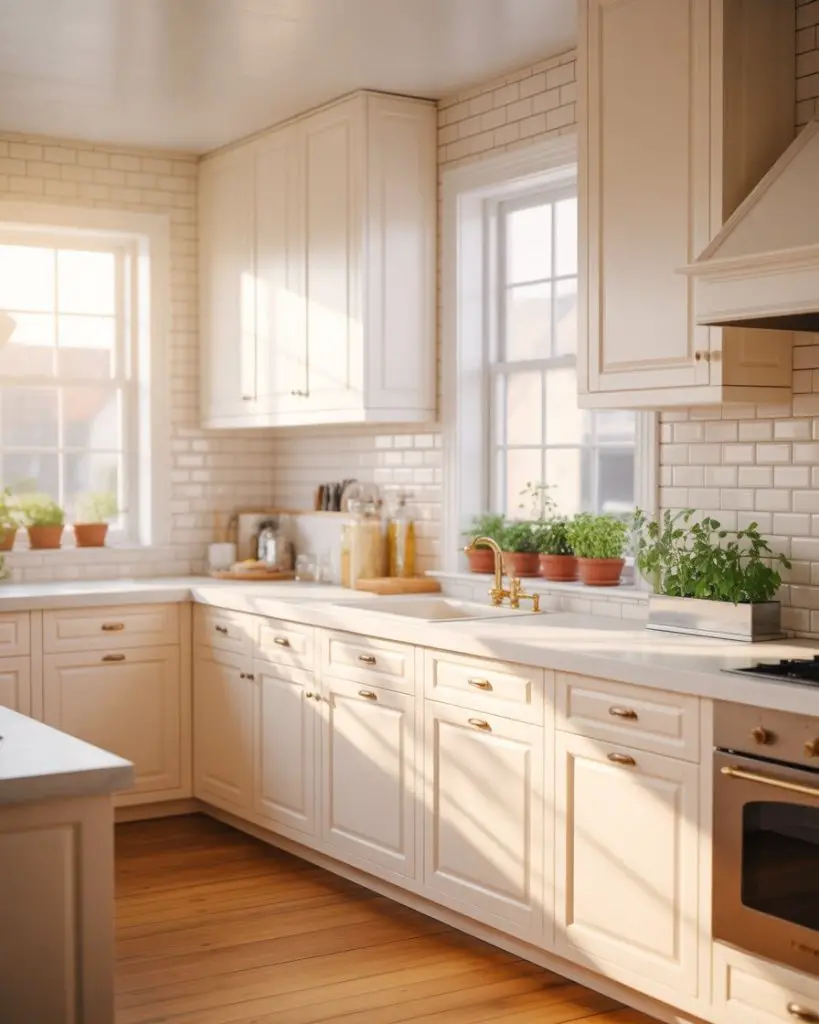
Where it works best: homes with limited natural light benefit enormously from an all-white palette, which bounces light around and makes small spaces feel larger. To keep the room from feeling cold or clinical, layer in warm wood tones through flooring, cutting boards, or bar stools. A jute rug or linen Roman shades adds just enough texture to make the space feel lived-in rather than showroom-perfect.
7. French Farmhouse Kitchen with Antique Blue
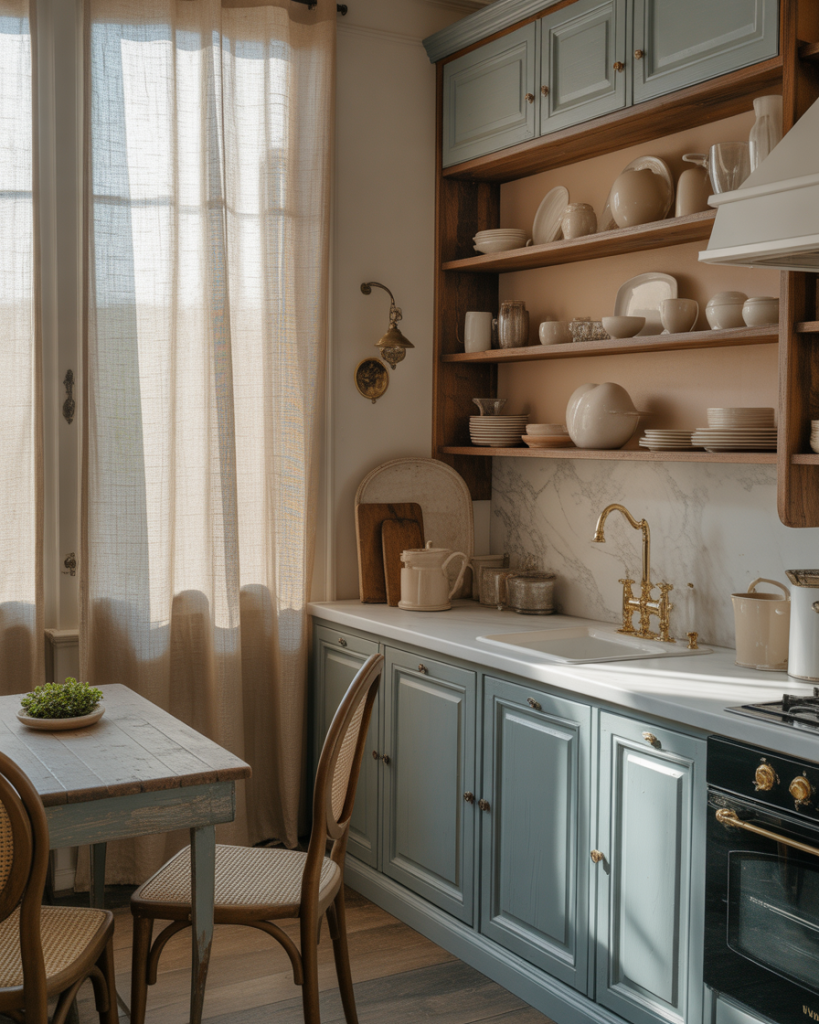
The French farmhouse kitchen, or “French country” aesthetic, softens the American version with vintage blues, aged brass, and delicate linen textiles. Cabinets might be painted in a muted powder blue or robin’s egg shade, paired with marble counters and a patina’d copper range hood. Open shelving displays ceramics and glassware, and there’s often a small bistro table tucked into a corner for morning coffee. It’s romantic without being fussy. 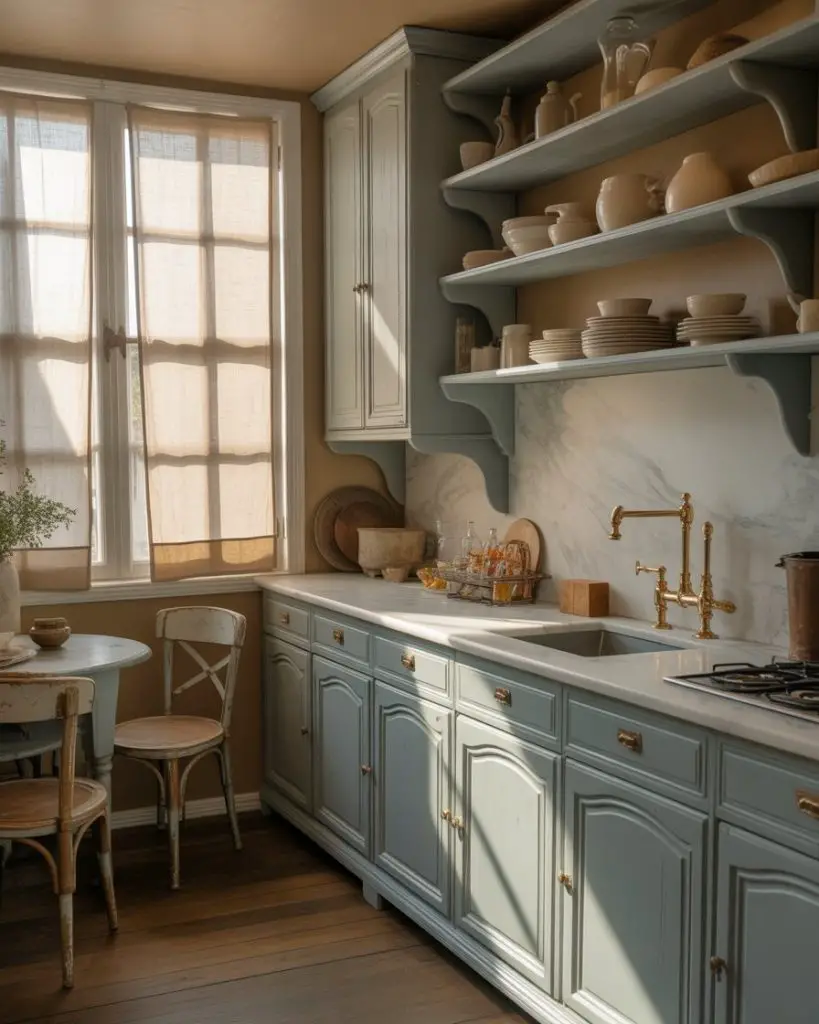
Expert-style commentary: French farmhouse design relies heavily on the art of “distressing”—intentionally aging new pieces to look like they’ve been around for decades. This can mean hand-painting cabinets in layers and then lightly sanding to reveal undertones, or choosing fixtures with an already-weathered finish. The effect is a kitchen that feels curated and thoughtful, not mass-produced, and it pairs beautifully with heirloom pieces passed down through families.
8. Coastal Farmhouse Kitchen with Light Wood
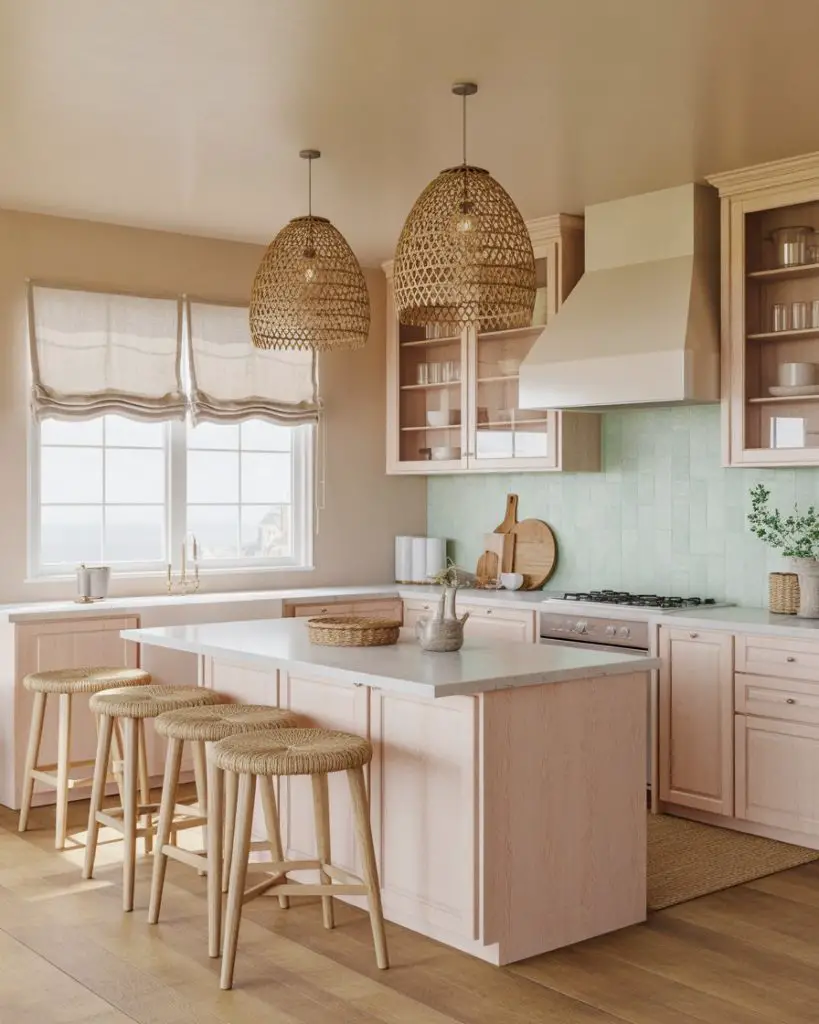
A coastal farmhouse kitchen marries beachy ease with farmhouse warmth. Think light, bleached wood tones, soft aqua or seafoam accents, and plenty of natural light streaming through sheer linen curtains. Rope details, woven baskets, and seagrass bar stools bring in that seaside texture without going full nautical. It’s a style that feels breezy and relaxed, perfect for homes near the ocean or anyone craving that vacation-at-home vibe. 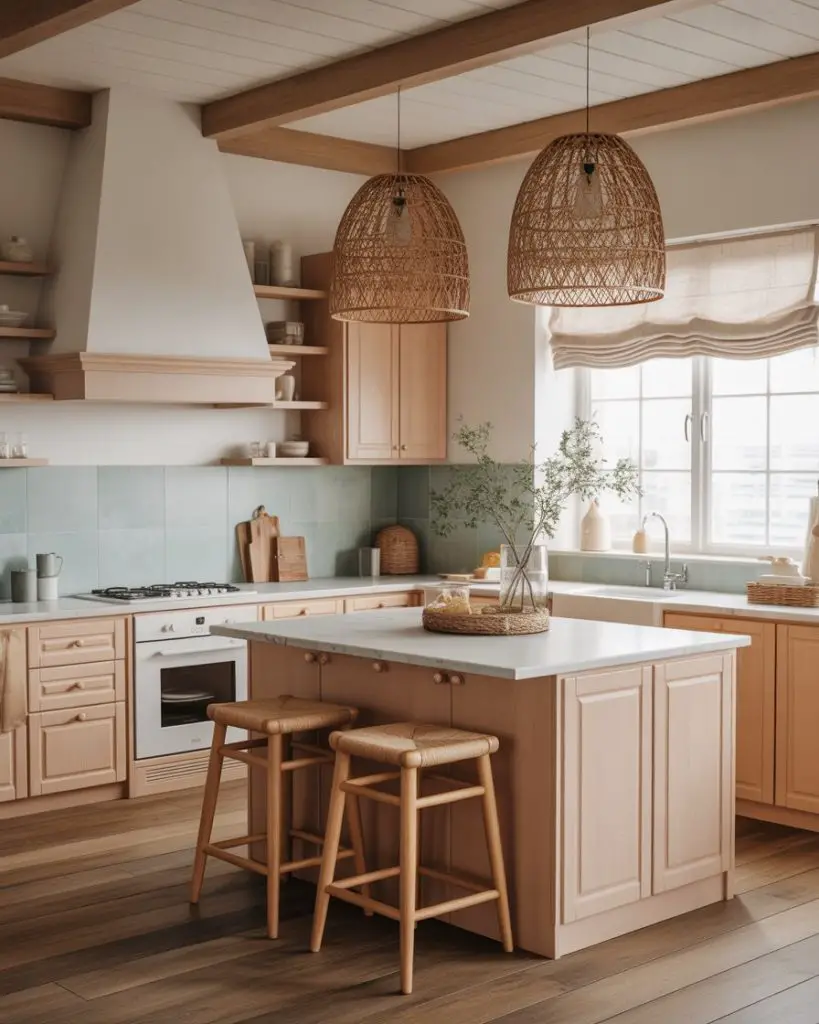
This look thrives in homes with good cross-ventilation and abundant natural light—think Cape Cod cottages or California beach bungalows. A common mistake is overdoing the blue; keep it to one or two accent areas like a backsplash or island base. Real homeowner behavior leans toward low-maintenance materials here: sealed wood that can handle humidity and countertops that resist water rings, since coastal kitchens often double as mudrooms for sandy feet and wet swimsuits.
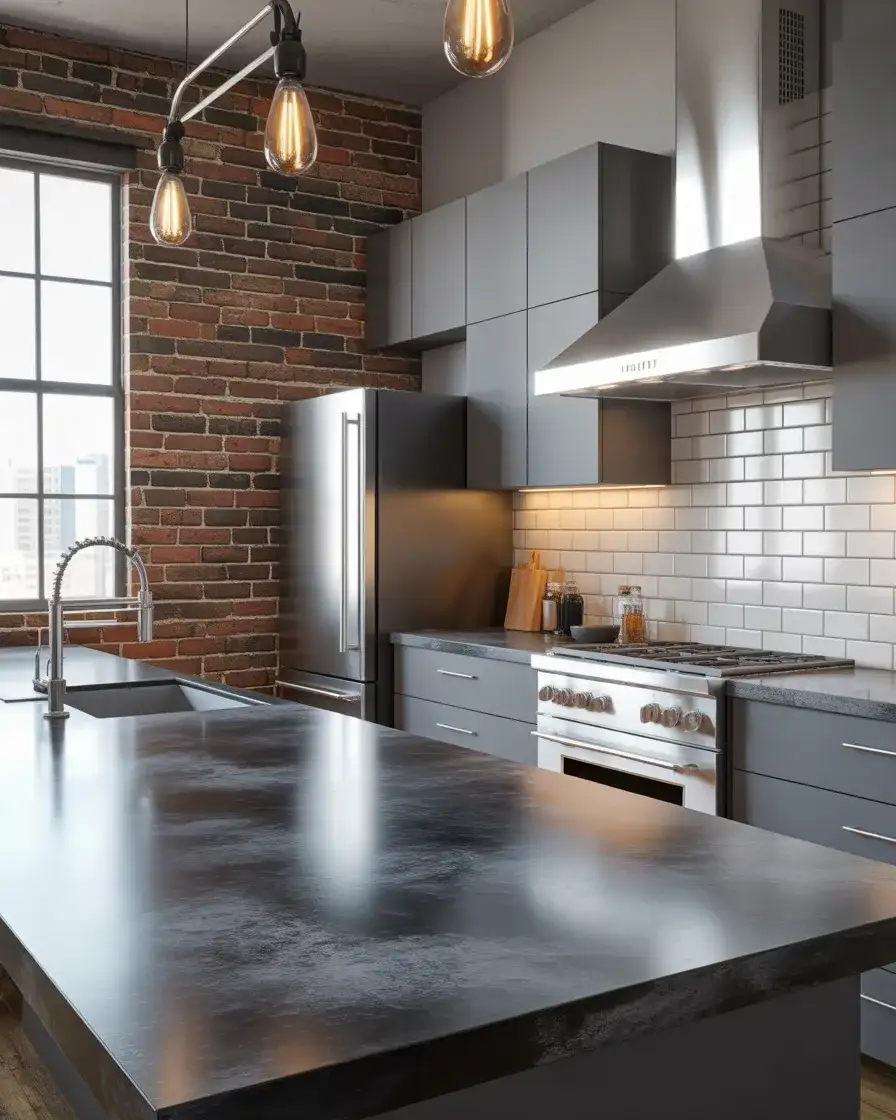
9. Brick Backsplash Farmhouse Kitchen
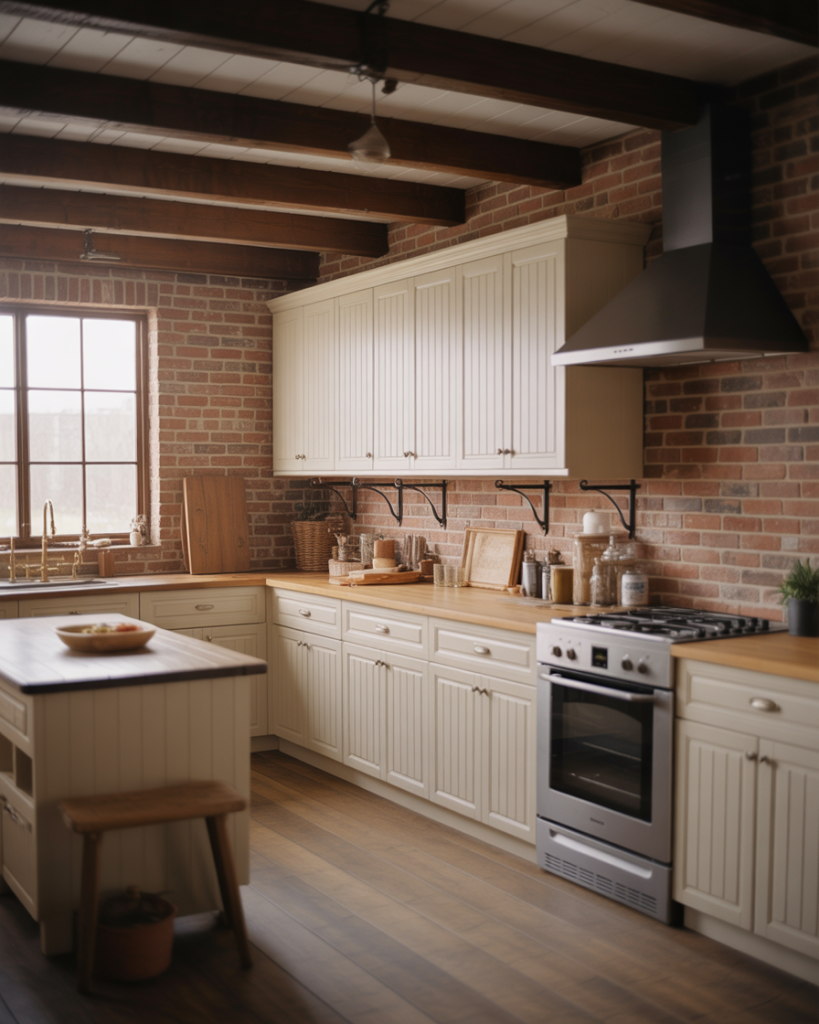
A brick backsplash adds instant character and a nod to industrial roots, especially when you’re working with an older home that might have original brick hiding under drywall. Exposed brick brings texture and warmth, and it pairs beautifully with both white cabinets and darker wood tones. The look is versatile—painted brick feels fresh and modern, while raw brick leans more rustic and authentic. Either way, it’s a focal point that requires minimal styling. 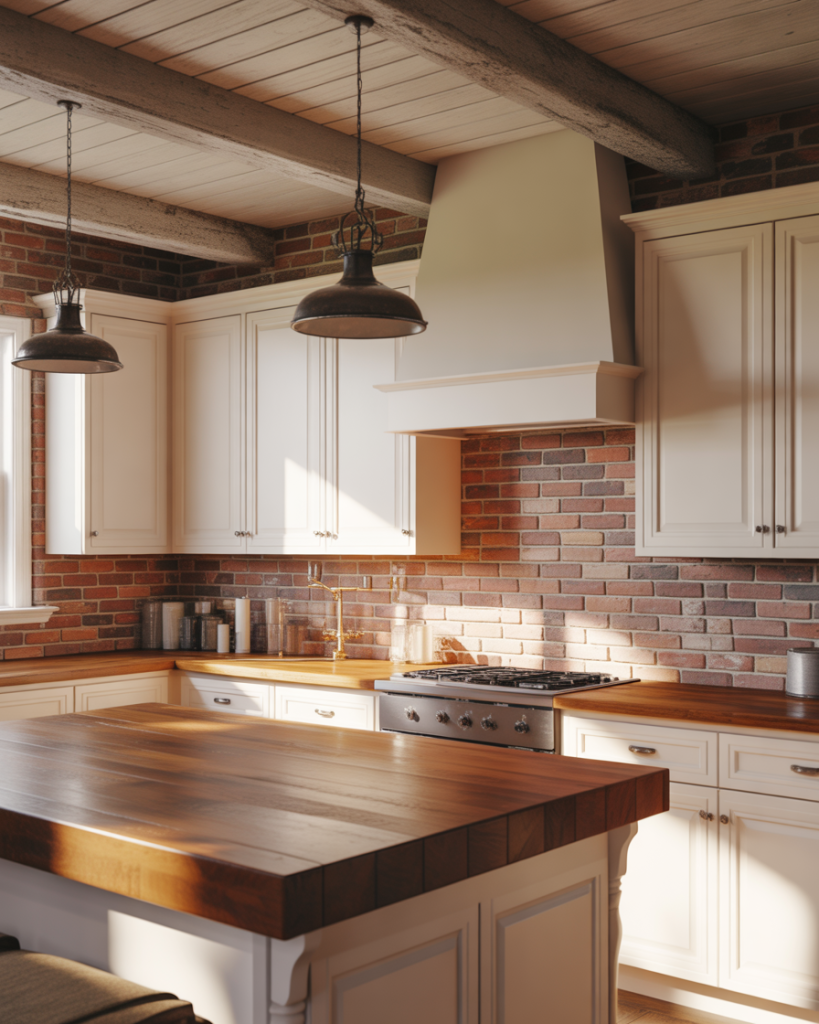
Budget angle: if your home doesn’t have original brick, brick veneer panels offer a convincing alternative at a fraction of the cost of laying real brick. They’re lighter, easier to install, and still deliver that textured, dimensional look. Many homeowners seal the brick with a matte finish to make cleaning easier—grease and splatters wipe away without soaking into the porous surface, keeping maintenance realistic for everyday cooking.
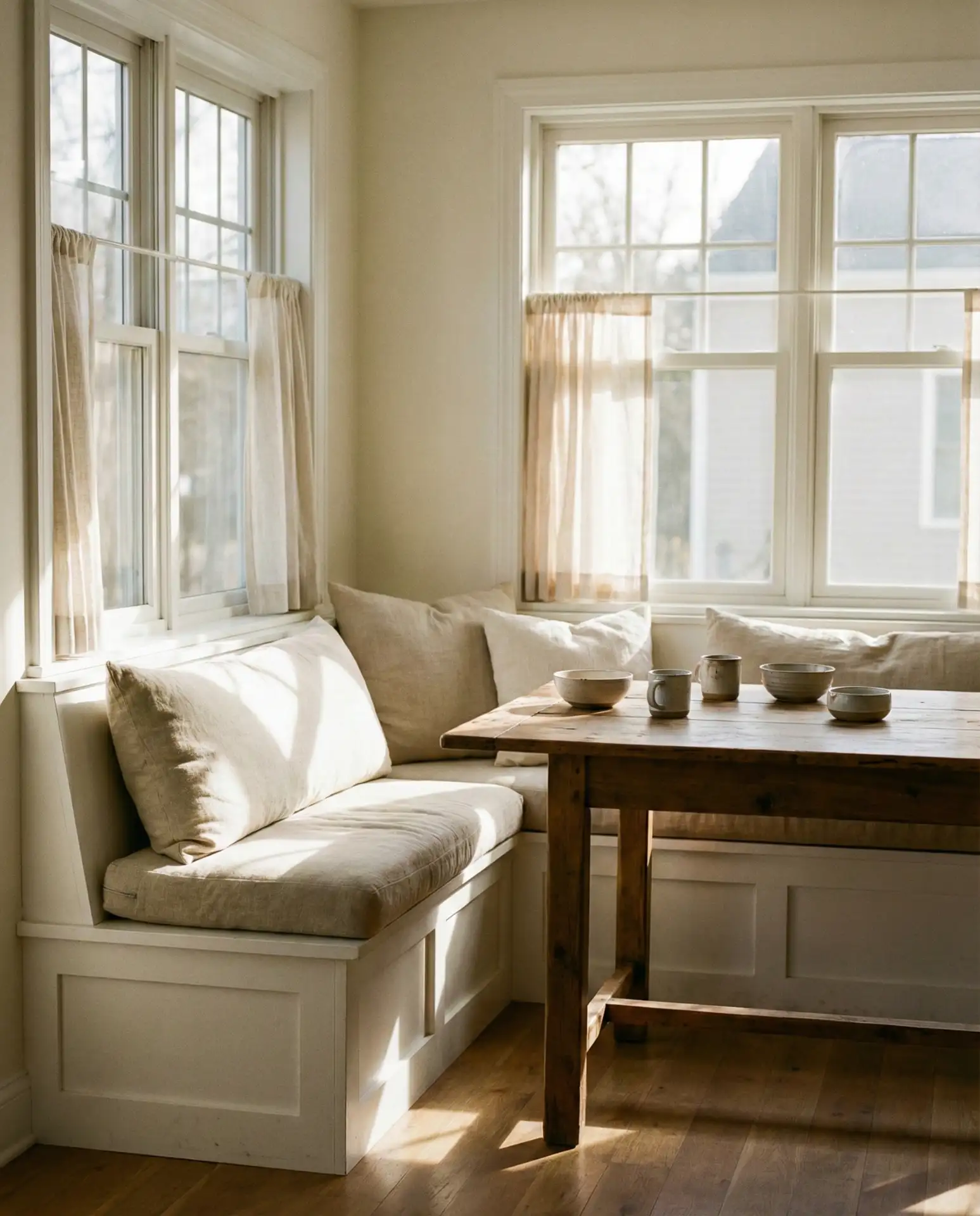
10. Cozy Farmhouse Kitchen with Breakfast Nook
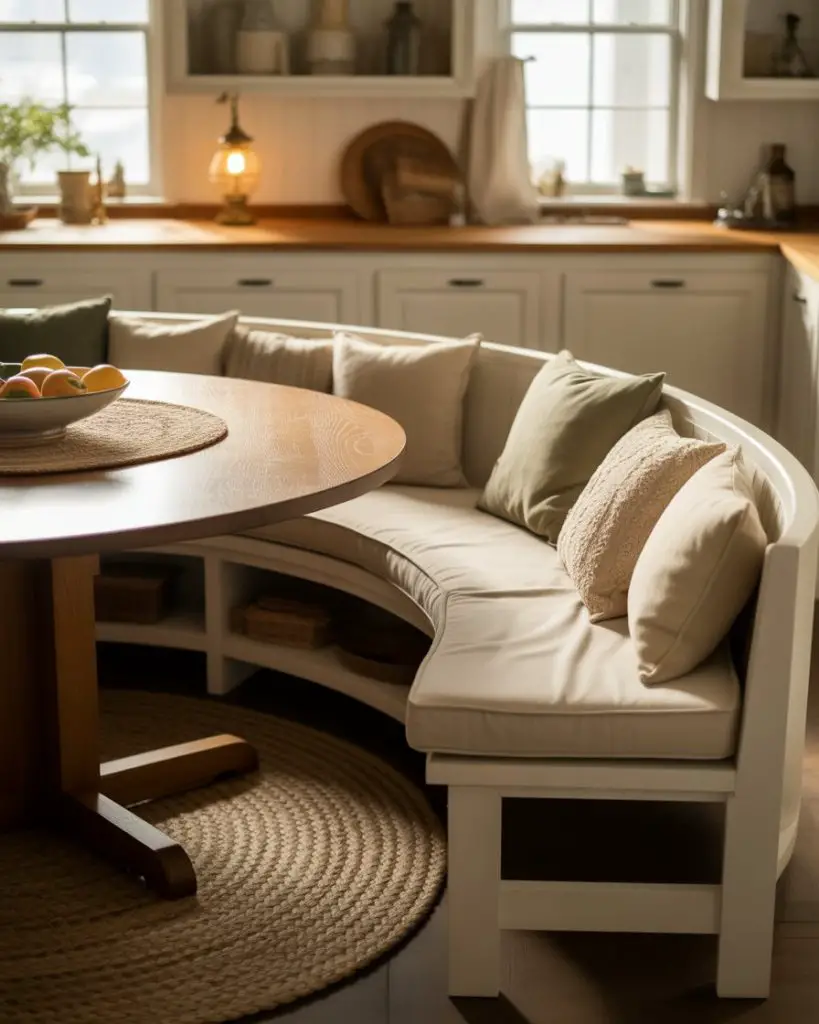
A cozy farmhouse kitchen prioritizes comfort and gathering spaces. Built-in breakfast nooks with cushioned benches, a round pedestal table, and soft lighting create an inviting corner where families actually want to linger. Layered textiles—think plaid throws, linen napkins, and a vintage rug underfoot—add warmth. This isn’t about showpiece design; it’s about creating a kitchen that feels like a hug, especially during long winter mornings or late-night conversations. 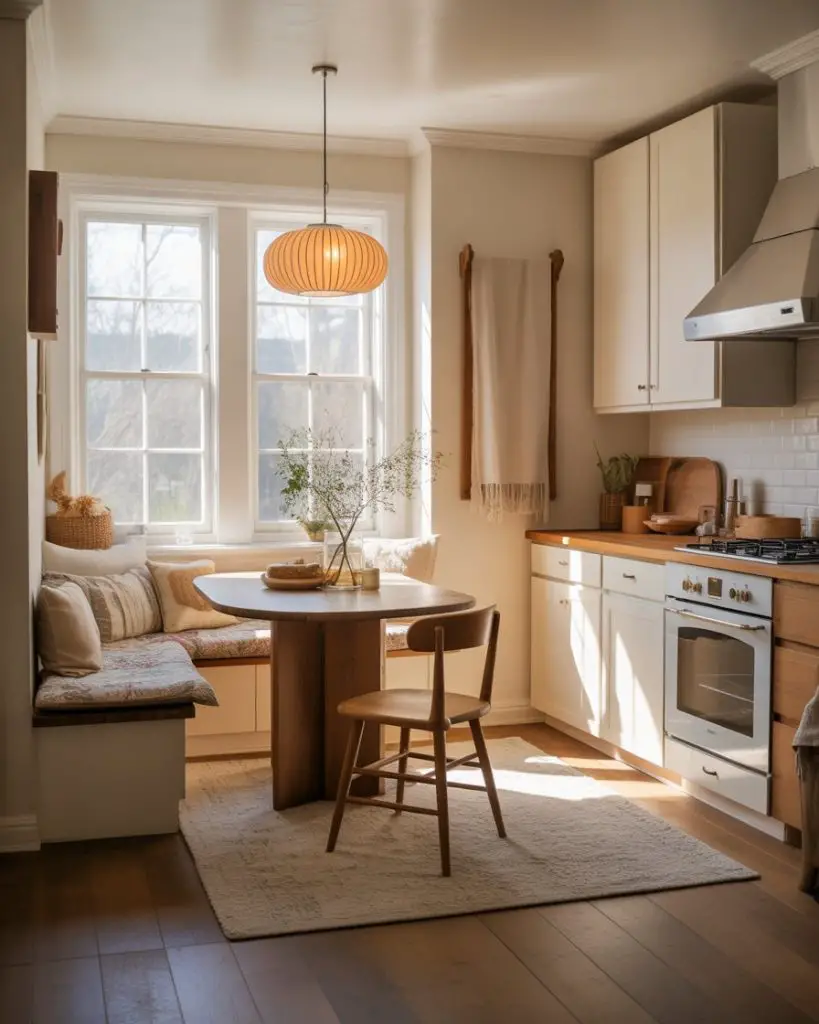
Homeowners in the Midwest and Northeast, where winters are long, tend to embrace this style—it’s practical and emotionally grounding. The breakfast nook becomes the most-used spot in the house, often more than the formal dining room. To maximize coziness without sacrificing function, choose washable slipcovers for bench cushions and durable, stain-resistant fabrics. Under-bench storage keeps the space from feeling cluttered while hiding away everything from board games to extra linens.
11. Red Farmhouse Kitchen with Bold Accents
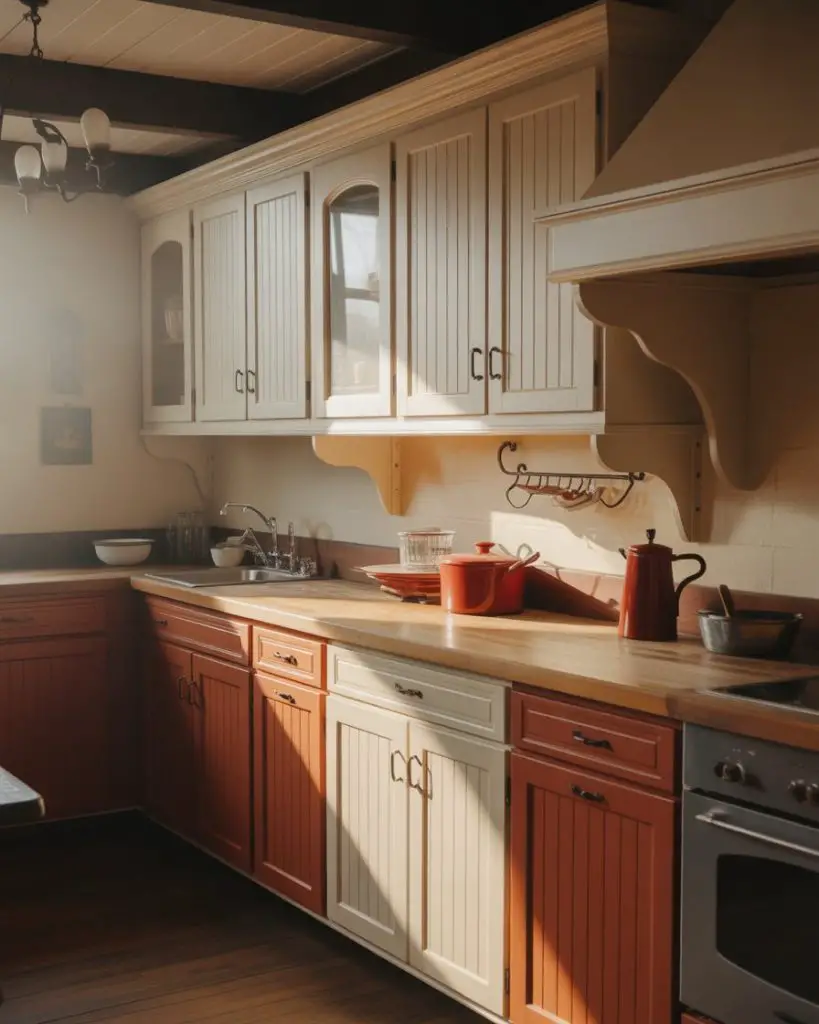
A red farmhouse kitchen makes a statement. Whether it’s barn-red cabinetry, a crimson vintage stove, or just bold red accents in textiles and dishware, this color brings energy and nostalgia. It harks back to classic American barns and farmsteads, grounding the space in tradition while feeling playful and unexpected. Pair red with creamy whites, natural wood, and black hardware to keep it from overwhelming the senses. 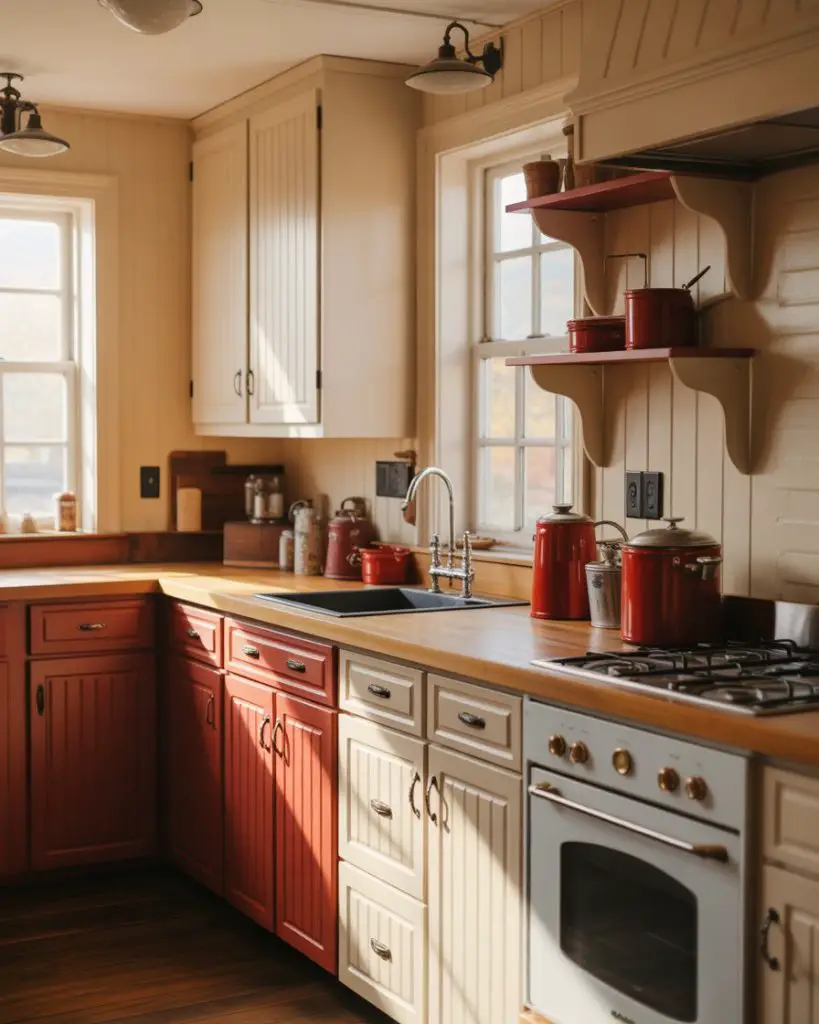
This palette works especially well in homes with lots of natural light, where the red reads as warm rather than dark. In smaller kitchens, consider using red as an accent—an island base, a single wall of cabinets, or open shelving backed with red beadboard. One homeowner in rural Pennsylvania painted just her lower cabinets red and left the uppers white, creating a grounded, two-tone look that felt both traditional and fresh without committing to red everywhere.
12. Yellow Farmhouse Kitchen with Cheerful Vibes
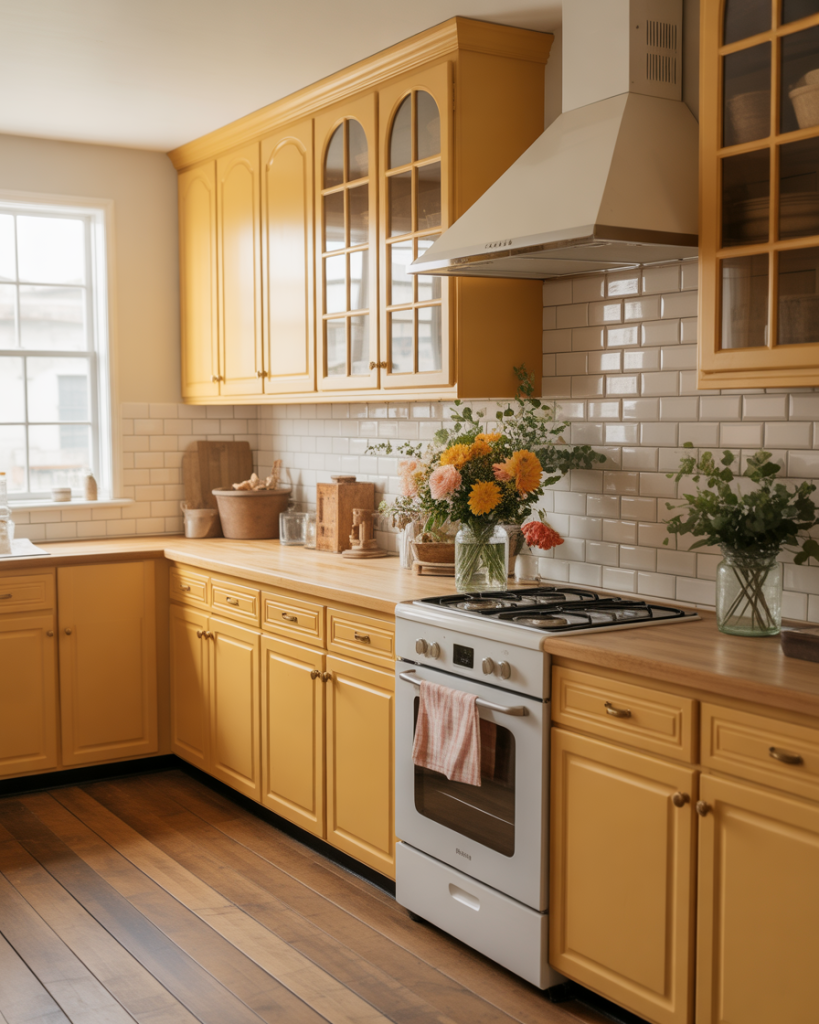
A yellow farmhouse kitchen radiates optimism. Soft buttery yellows or sunflower shades on the walls or cabinets instantly lift the mood, making even cloudy mornings feel brighter. This color pairs beautifully with white trim, natural wood, and vintage brass fixtures. It’s a color that feels inherently American and nostalgic, recalling 1950s diners and grandmother’s kitchens, but it works just as well in contemporary farmhouse settings when balanced with clean lines. 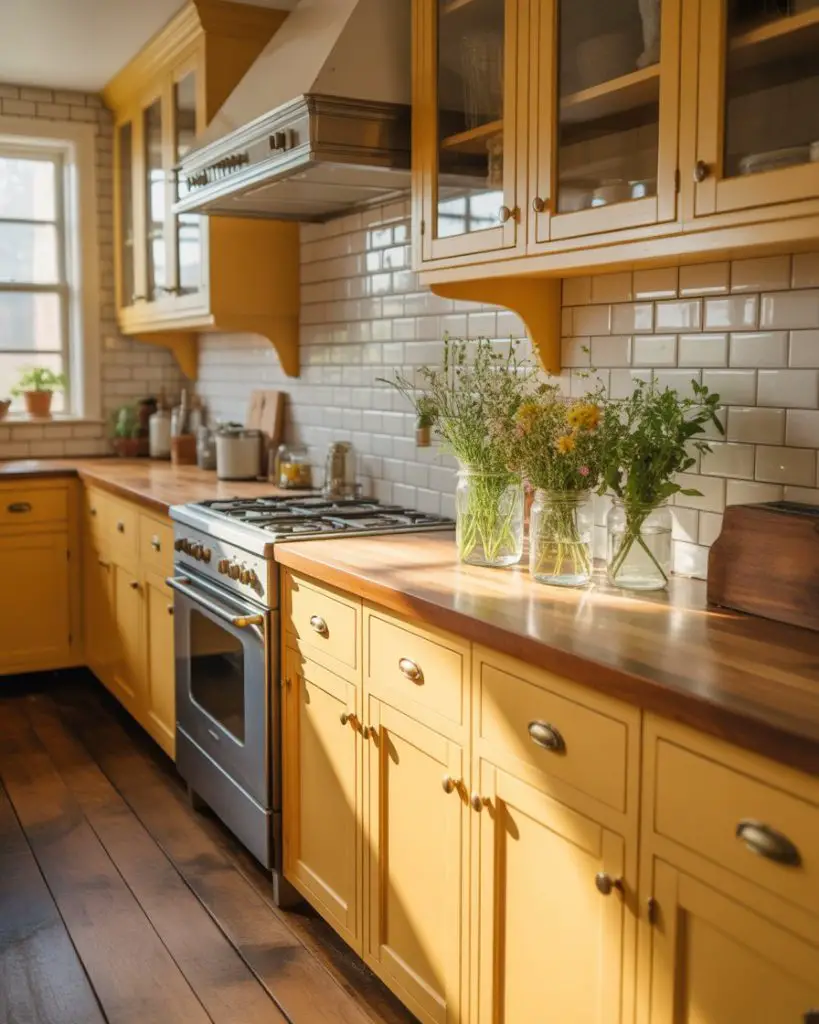
American lifestyle context: yellow kitchens are especially popular in the South and Southwest, where sunshine is abundant and the color feels like an extension of the landscape. To avoid the color feeling too sweet or dated, stick with muted, earthy yellows rather than bright primaries. Pair with plenty of white and natural materials to keep it grounded. A matte finish on the cabinets also helps the yellow feel sophisticated rather than glossy or toy-like.
13. Tiny Farmhouse Kitchen with Smart Storage
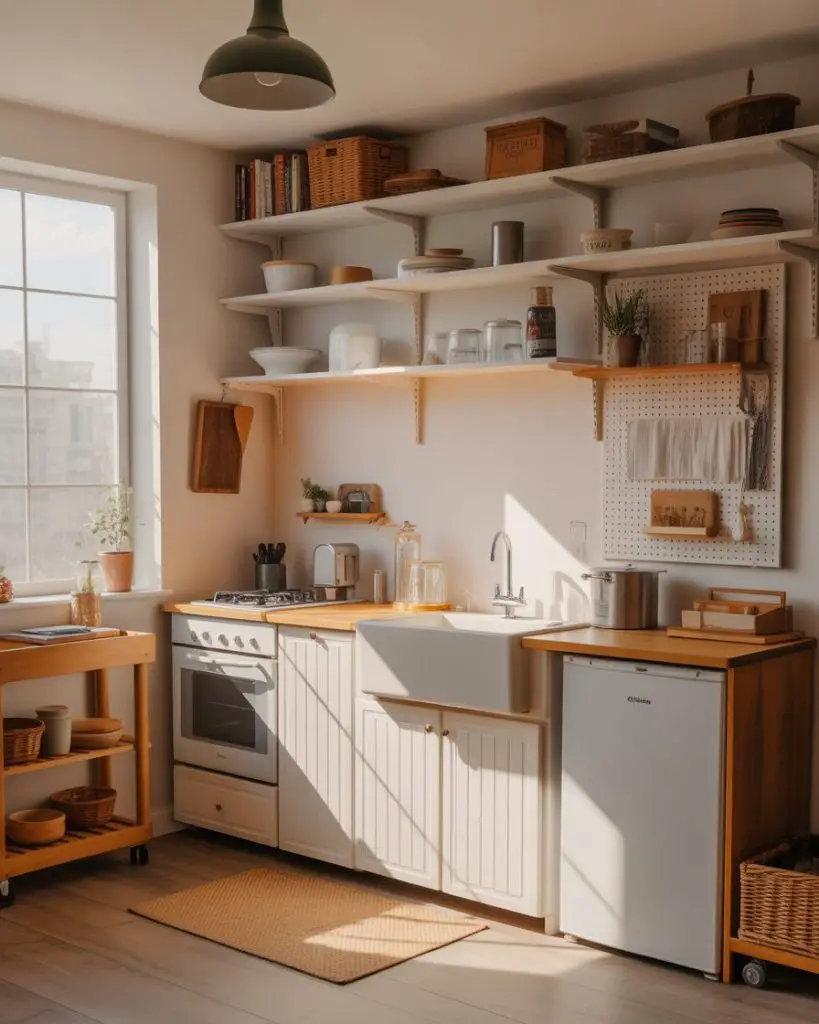
A tiny farmhouse kitchen proves that charm doesn’t require square footage. Open shelving, magnetic knife strips, and pegboards maximize vertical space while keeping essentials within reach. A compact farmhouse sink, slim appliances, and a rolling cart that doubles as an island make every inch count. The aesthetic stays light—white or pale wood cabinets, plenty of natural light—to keep the space from feeling cramped. Small doesn’t mean sacrificing style. 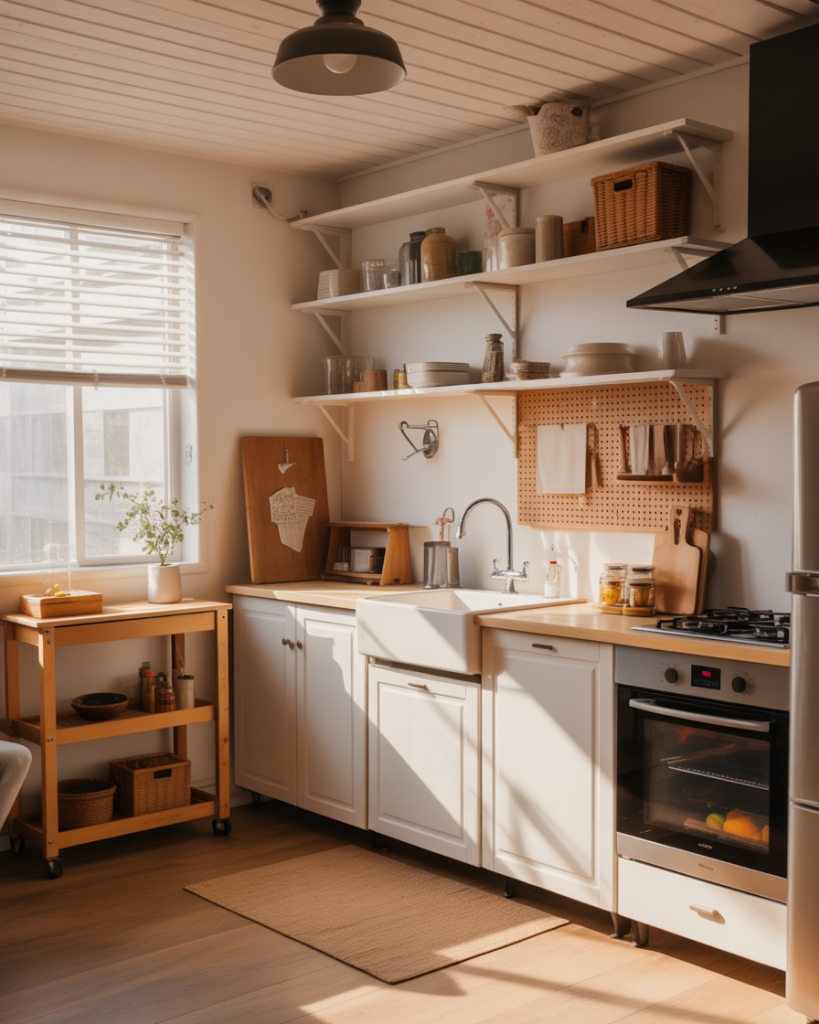
Real homeowner behavior: people in urban apartments and tiny homes often embrace farmhouse style precisely because it’s so adaptable. The key is ruthless editing—only keep what you use daily, and let the architecture do the talking. Floating shelves instead of upper cabinets create visual breathing room, and choosing one statement piece (like a vintage rug or an antique stool) gives personality without clutter. This approach is budget-friendly, too, since you’re buying less overall.
14. Green Farmhouse Kitchen with Earthy Tones
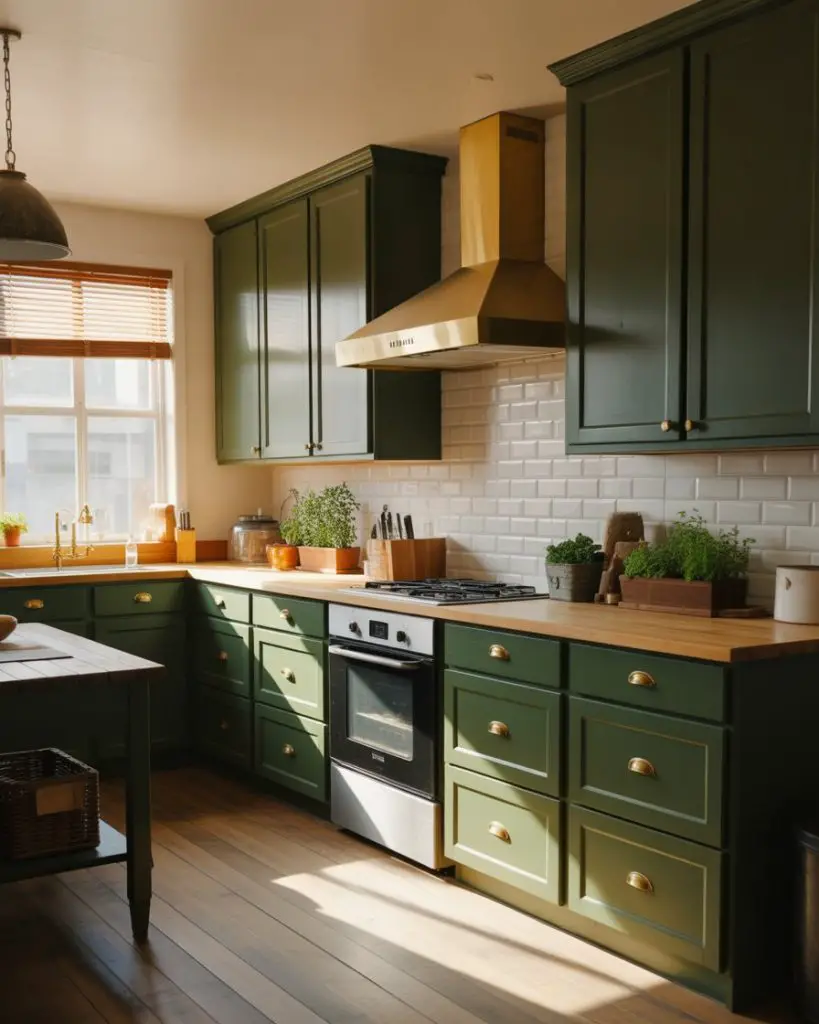
A green farmhouse kitchen taps into the growing desire for nature-inspired interiors. Deep forest greens, soft moss, or muted olive on cabinetry create a grounding, organic feel that pairs beautifully with natural wood and stone. This color choice feels fresh and unexpected while still honoring farmhouse tradition. It’s particularly striking when combined with brass or copper fixtures, which warm up the cooler green tones and add a bit of polish. 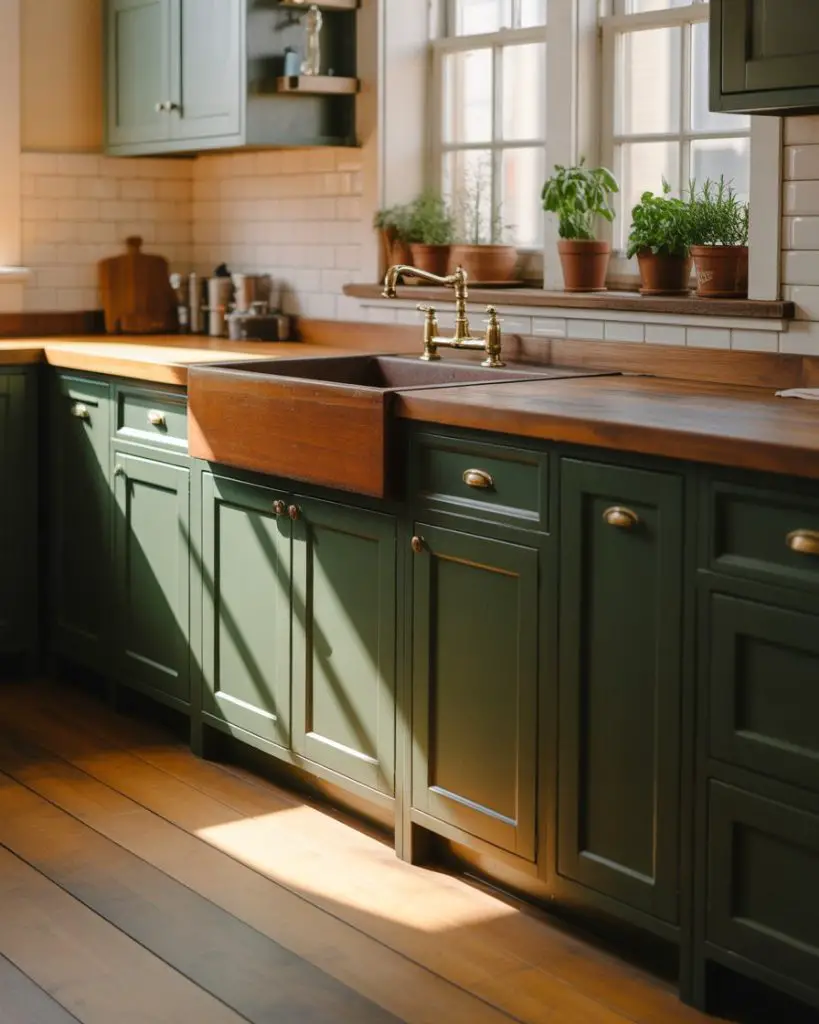
Practical insight: green kitchens photograph beautifully, which is why they’re trending hard on Pinterest right now. The color hides wear and fingerprints better than white, making it surprisingly practical for busy households. To keep the space from feeling too dark, balance green lower cabinets with white or light wood uppers, or use green as an accent on just the island. Pair with plenty of greenery—fresh herbs, potted plants—to reinforce the natural theme.
15. European Farmhouse Kitchen with Plaster Walls
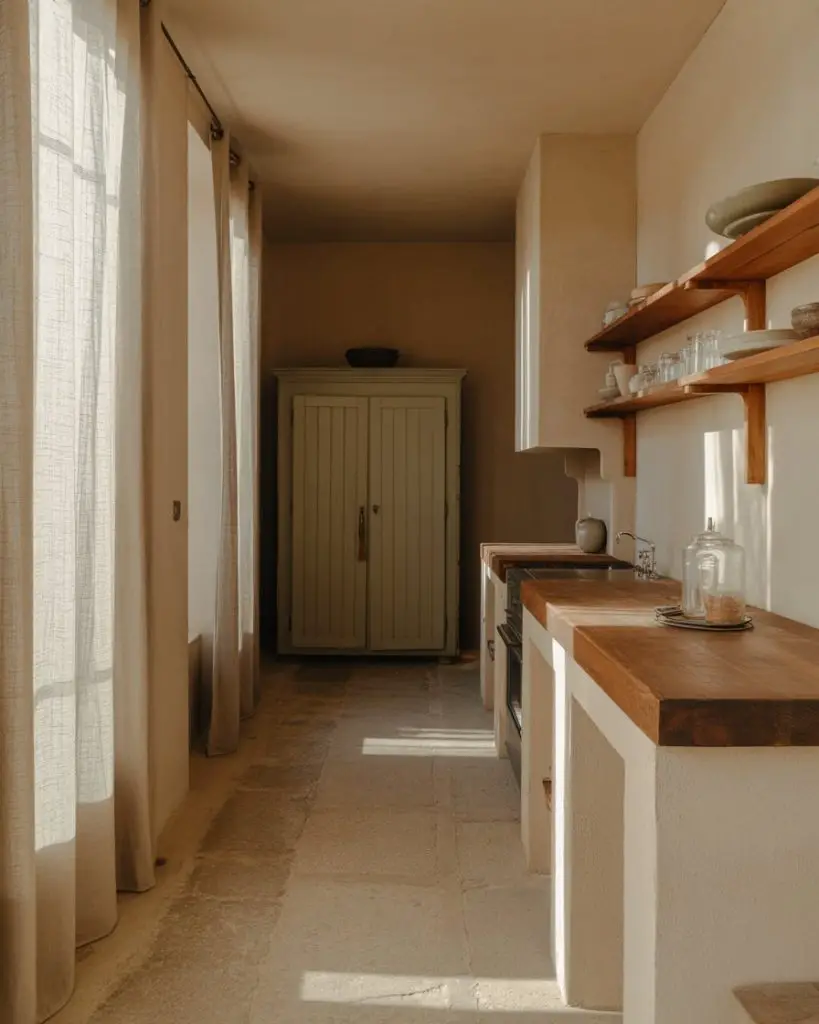
The European farmhouse kitchen channels the timeless appeal of French, Italian, and Scandinavian countryside homes. Hand-plastered walls with subtle texture, thick wood counters, and a restrained palette of whites, grays, and natural tones create a serene, sophisticated space. Cabinetry is often minimal or even absent—replaced by open shelving or freestanding cupboards. The look is understated and elegant, favoring quality materials over decorative excess. 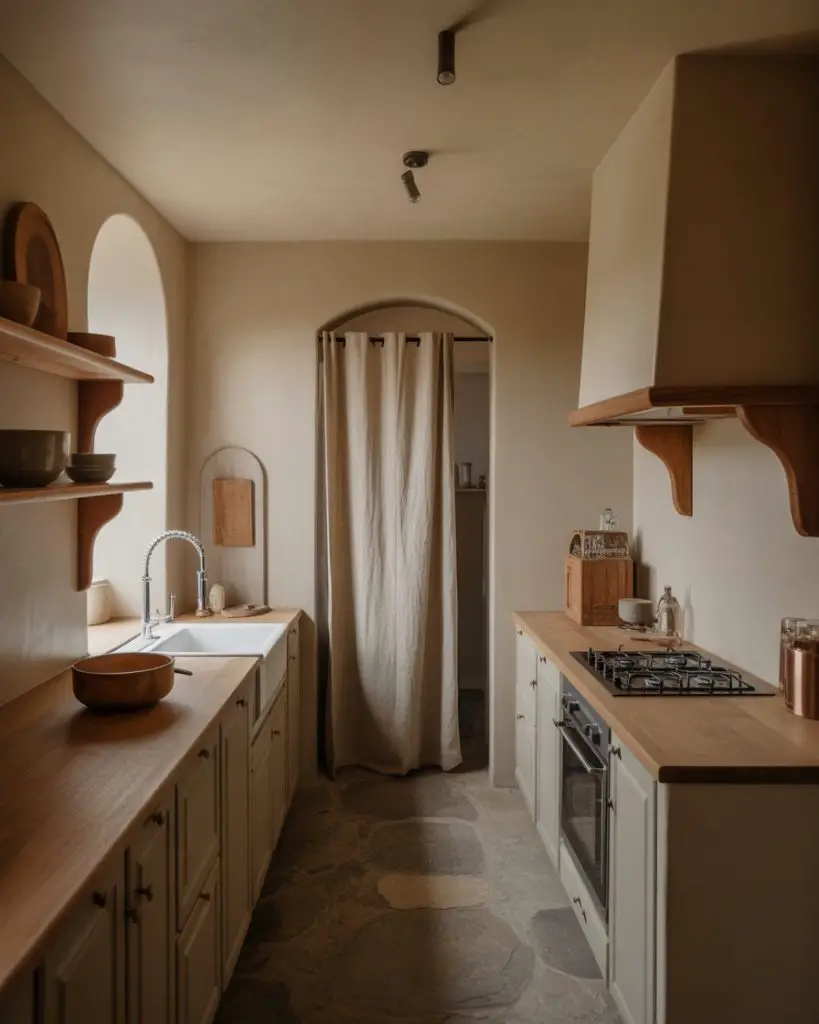
Expert-style commentary: European farmhouse design emphasizes craftsmanship and longevity. Instead of trendy finishes, think timeless materials that age gracefully—limestone floors, solid wood, hand-forged hardware. This approach requires a bigger upfront investment but pays off in durability and resale value. It’s a smart choice for homeowners who plan to stay put for decades and want a kitchen that won’t feel dated in five years.
16. Backsplash Ideas for Farmhouse Kitchens
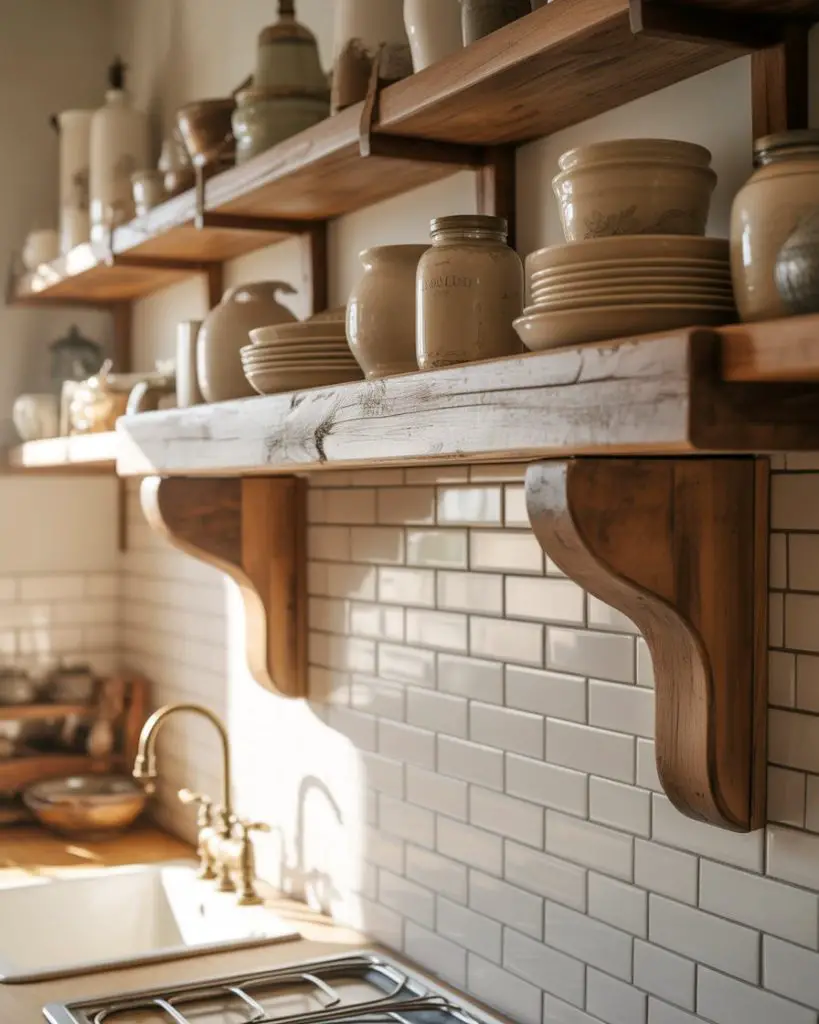
When it comes to backsplash ideas, farmhouse kitchens offer endless creative possibilities. Classic white subway tile remains popular, but handmade ceramic tiles, reclaimed wood planks, or even shiplap bring unique character. Brick backsplash adds industrial warmth, while painted beadboard offers a cottage-style charm. The key is choosing a material that complements your overall aesthetic—whether that’s sleek and modern or layered and rustic—and balances function with visual interest. 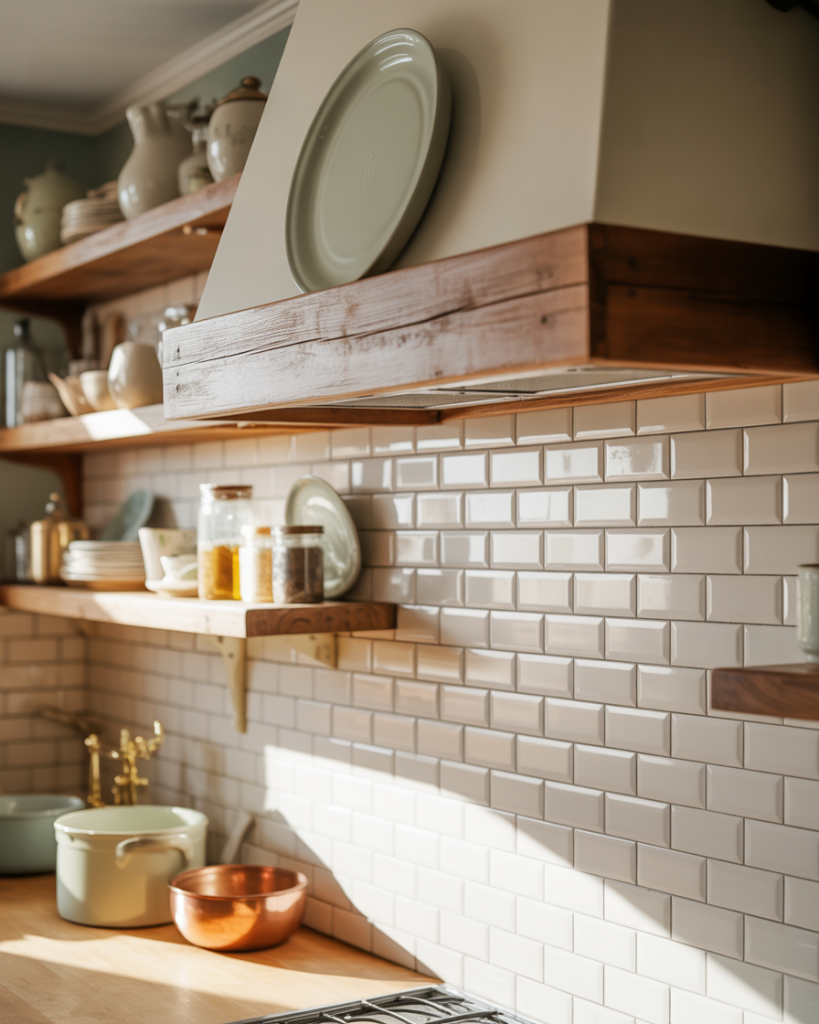
Common mistake: choosing a backsplash that competes with your countertops or cabinetry instead of complementing them. If you’ve got heavily veined marble or a bold cabinet color, keep the backsplash simple. Conversely, if your kitchen is mostly neutral, the backsplash is a great place to introduce pattern or texture. Budget-conscious renovators often tile just the area behind the stove in a special material—like handmade zellige or patterned cement tile—and use affordable subway tile everywhere else.
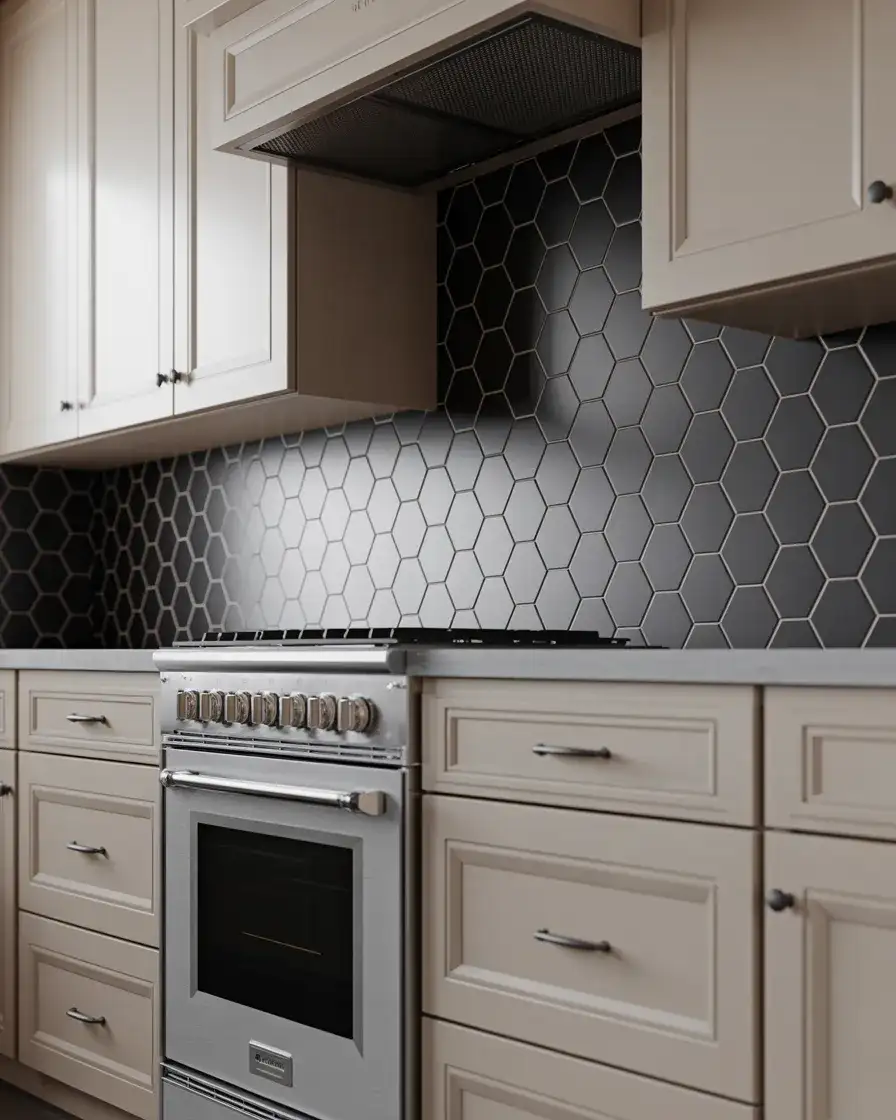
17. Black Farmhouse Kitchen with Dramatic Contrast
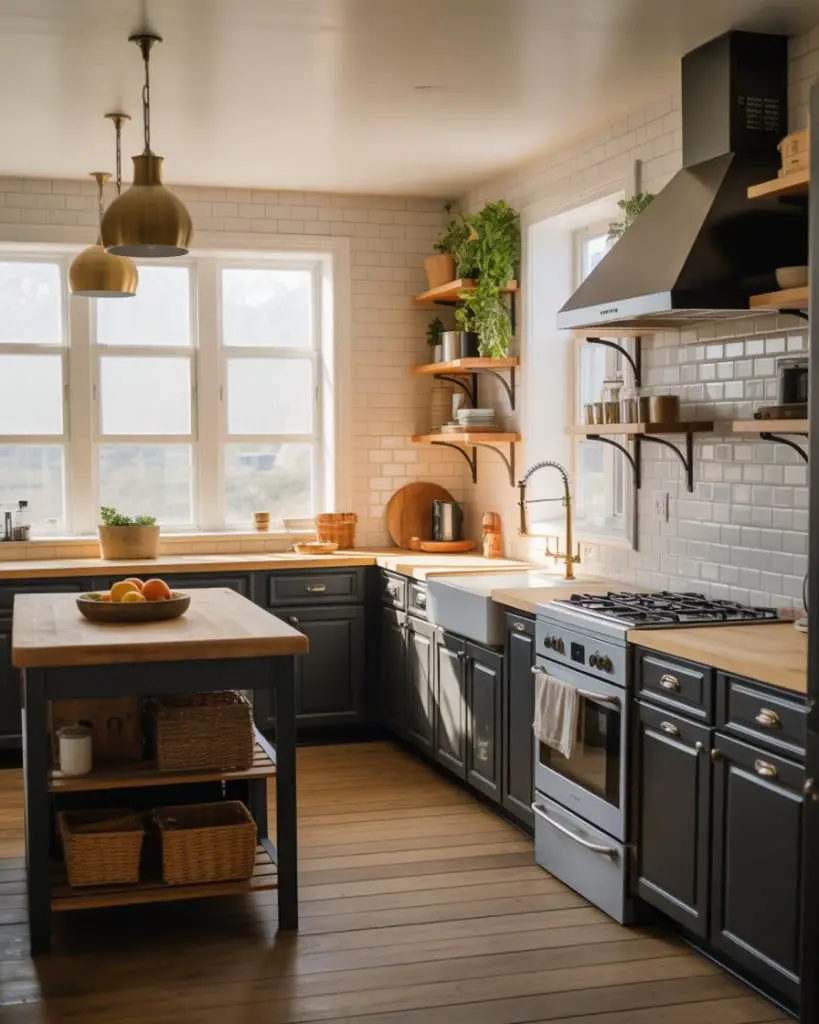
A black farmhouse kitchen flips the script on traditional light-and-bright aesthetics. Matte black cabinets, black hardware, and even black countertops create a moody, sophisticated space that still feels grounded in farmhouse warmth through natural wood accents, brass fixtures, and open shelving. This look works best in kitchens with abundant natural light or large windows that prevent the space from feeling cave-like. It’s bold, modern, and undeniably striking. 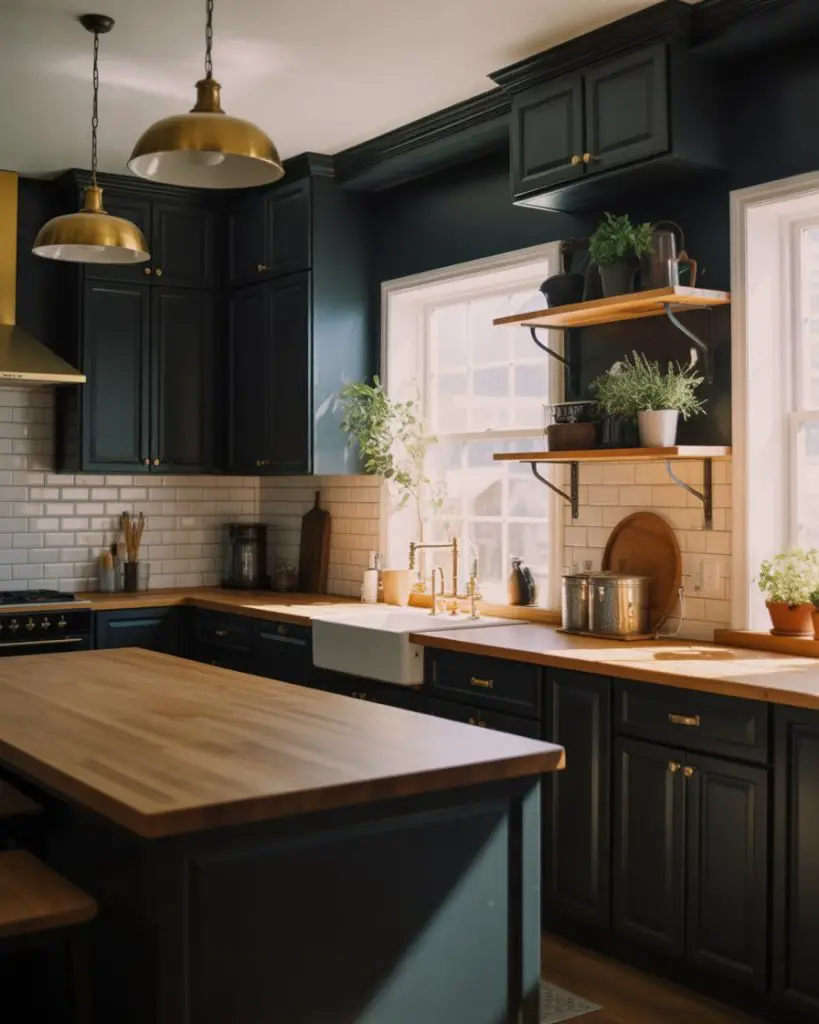
Where it works best: loft-style homes, converted barns, or modern new builds with high ceilings and oversized windows. The black grounds the space and creates dramatic contrast, especially when paired with white walls or light wood floors. To keep it from feeling too stark, layer in soft textiles—linen dish towels, a jute rug, cushioned bar stools. The black also hides wear beautifully; fingerprints and minor scuffs are far less visible than on white cabinetry.
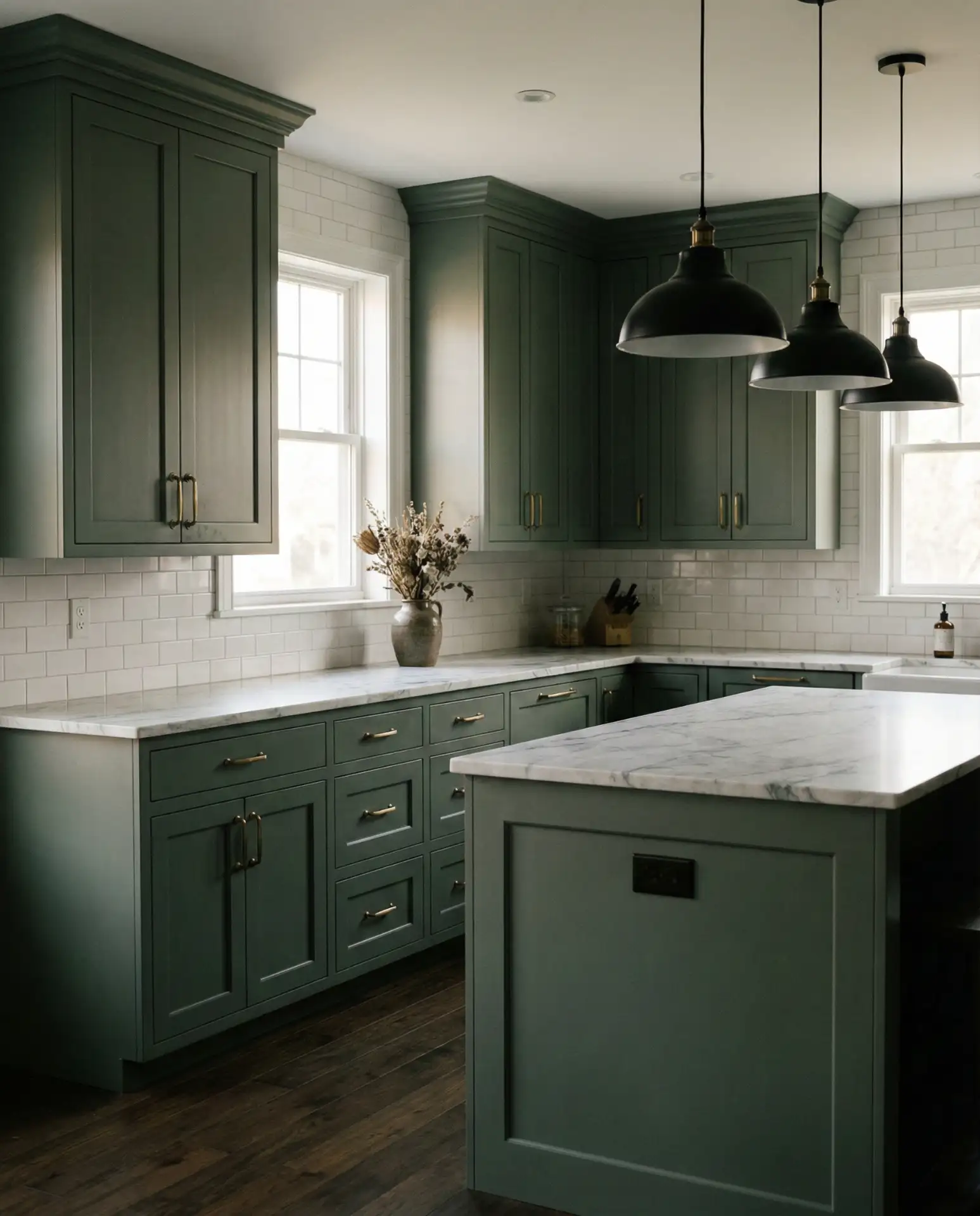
18. Sage Green Farmhouse Kitchen with Soft Palette
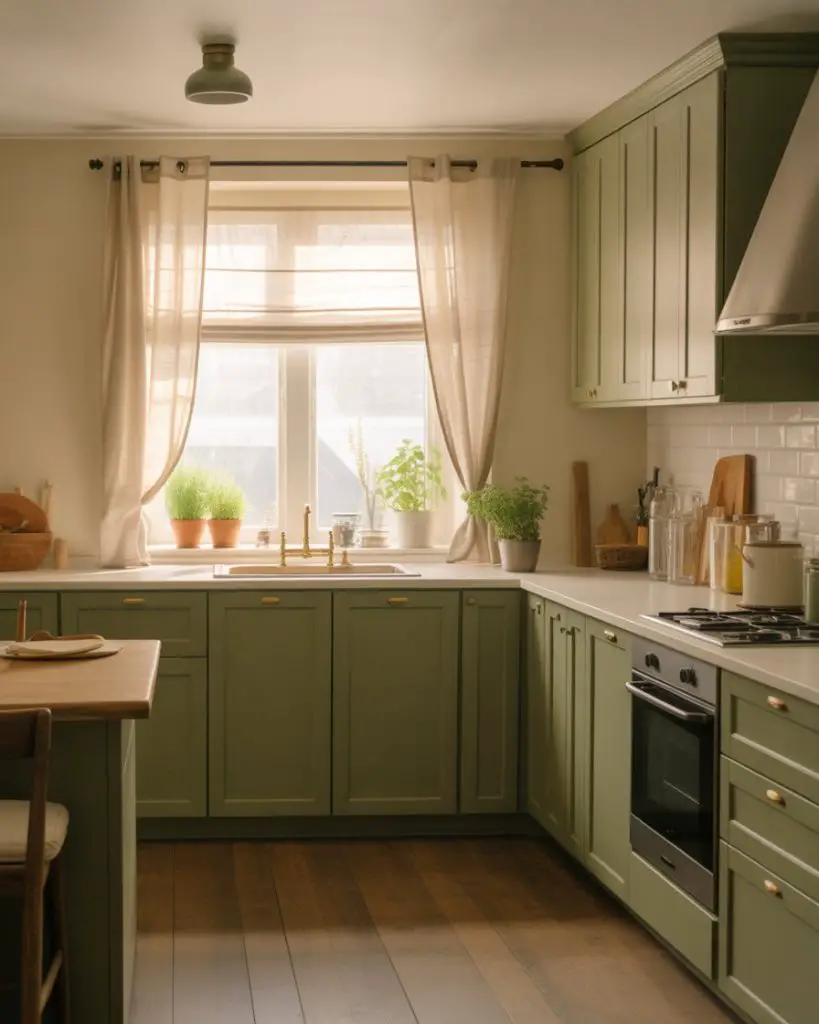
Sage green has become one of the most sought-after colors in farmhouse kitchens, offering a calming, nature-inspired alternative to stark whites or bold darks. This muted, grayish-green works beautifully on cabinetry, paired with warm wood tones, brass or gold hardware, and white or cream countertops. The color feels simultaneously vintage and current, nodding to historic paint palettes while fitting seamlessly into contemporary farmhouse spaces. It’s versatile enough to anchor a cozy cottage or a spacious open-plan kitchen. 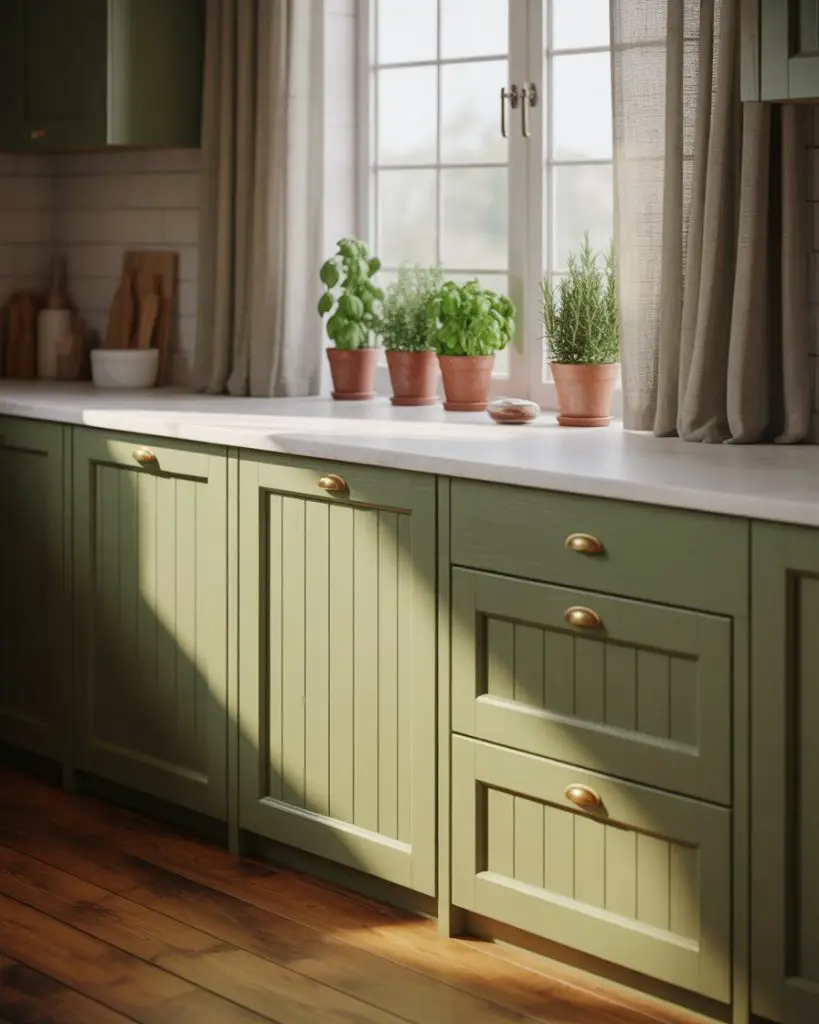
Regional context: sage green kitchens are especially popular in the Pacific Northwest and New England, where the color echoes the surrounding evergreen landscapes. To keep the palette from feeling flat, introduce texture through natural materials—a woven rug, rattan bar stools, or a wood cutting board displayed on the counter. The color pairs beautifully with both warm and cool metals, so you can mix brass drawer pulls with a stainless steel fridge without the room feeling disjointed.
19. Contemporary Farmhouse Kitchen with Sleek Details
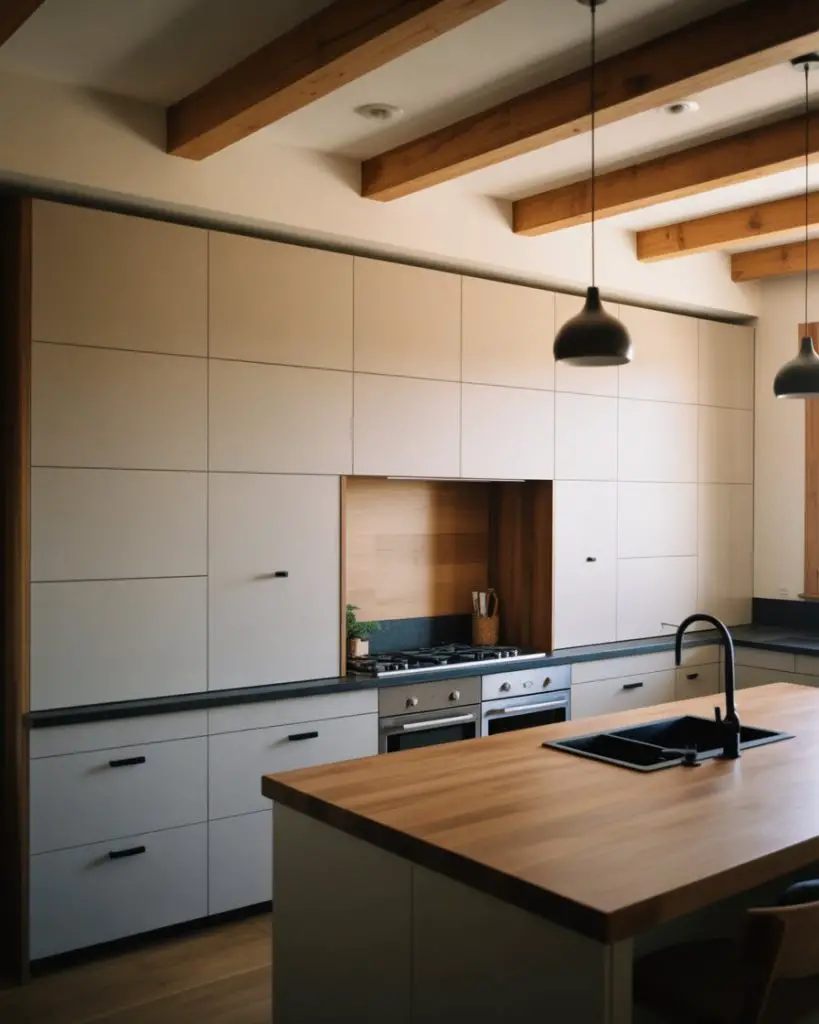
The contemporary farmhouse kitchen strips away the fussiness while retaining the warmth. Clean-lined cabinetry, integrated appliances, and a restrained color palette—often black, white, and natural wood—create a polished, sophisticated space. There’s still a nod to tradition through materials like wood beams or a farmhouse sink, but the overall effect is streamlined and uncluttered. This style appeals to homeowners who want the heart of farmhouse design without the visual weight of heavy ornamentation. 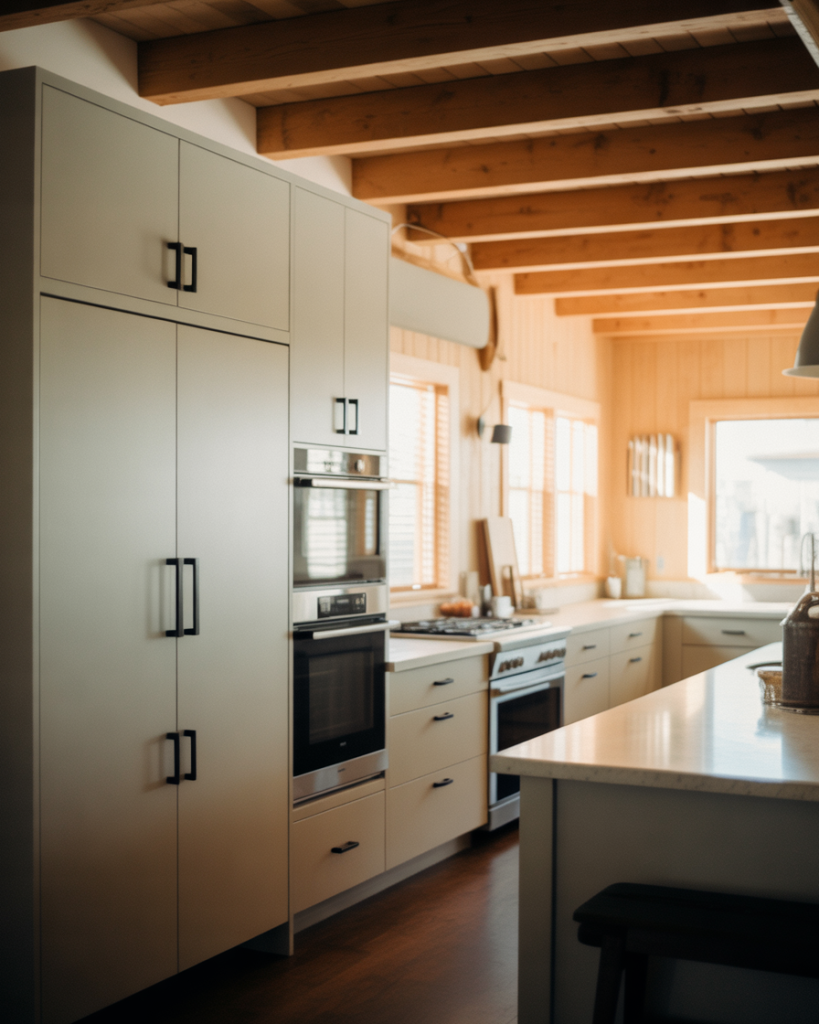
Practical insight: the contemporary farmhouse aesthetic is low-maintenance by design. Smooth cabinet fronts are easier to clean than recessed panels, and integrated appliances create a seamless look that doesn’t collect dust. Homeowners who choose this style often appreciate the flexibility—it’s easy to update with new hardware or a fresh coat of paint without overhauling the entire kitchen. The simplicity also means the space ages well and adapts to changing trends.
20. Cottage Farmhouse Kitchen with Charming Details
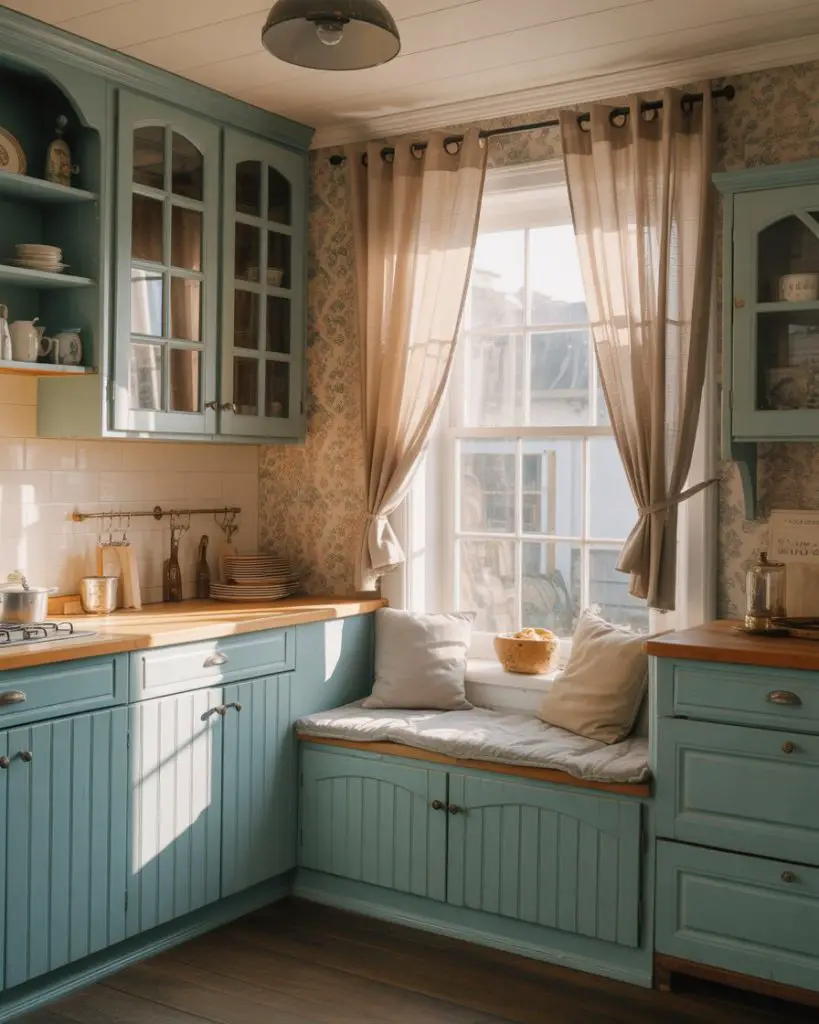
A cottage farmhouse kitchen leans into whimsy and charm. Pastel-painted cabinets, vintage floral wallpaper, glass-front upper cabinets displaying mismatched china, and a cozy window seat all contribute to the storybook appeal. This style works beautifully in smaller, older homes where the architecture already has character—curved doorways, low ceilings, original woodwork. It’s unabashedly romantic and personal, designed to feel collected and loved rather than decorator-perfect. 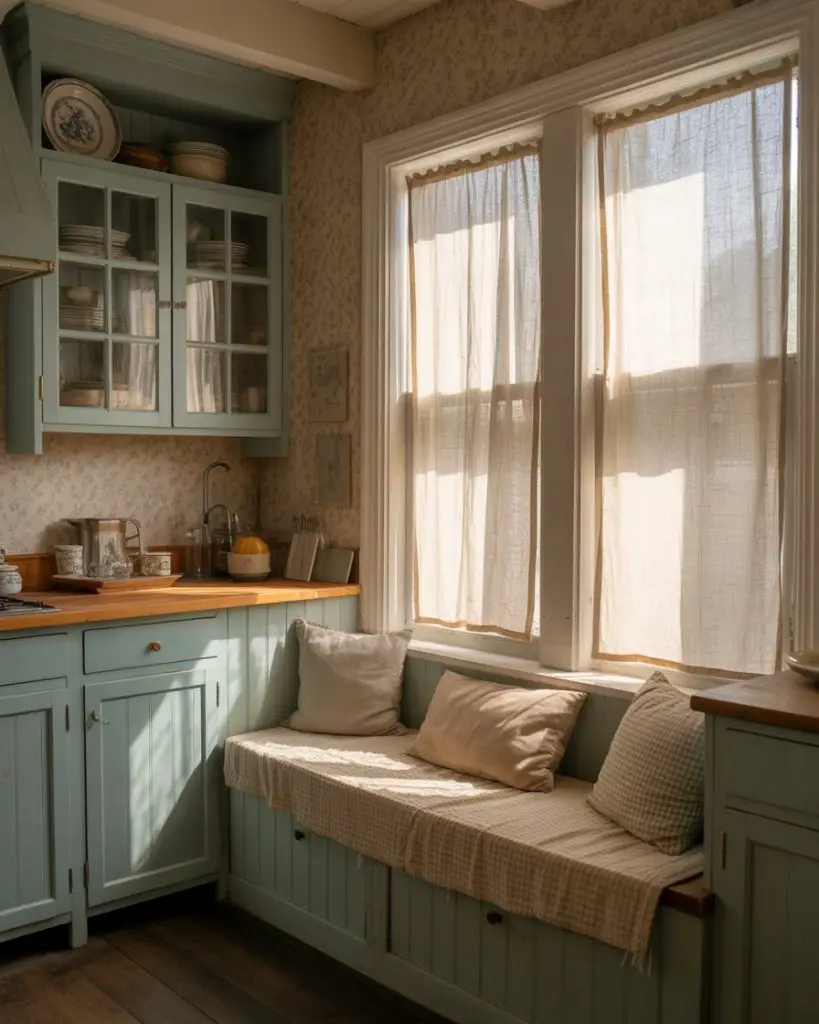
A designer in upstate New York transformed a cramped 1920s kitchen by embracing its smallness—she added a cushioned window seat under the only window, installed glass-front cabinets to keep things feeling open, and chose a soft mint paint that made the low ceiling feel less oppressive. The result was a kitchen that felt intentional and charming rather than cramped. This approach works best when you lean into the quirks of your space rather than fighting them.
21. Blue Farmhouse Kitchen with Coastal Influence
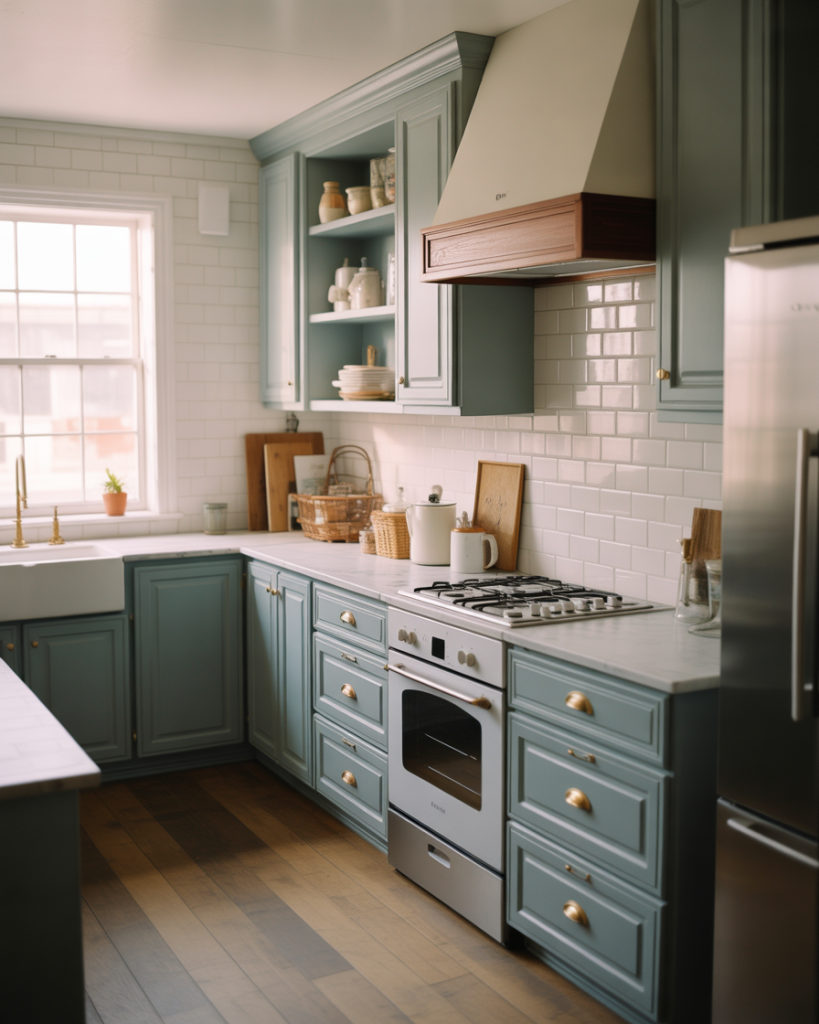
A blue farmhouse kitchen can range from deep navy to soft powder, each shade bringing its own character. Lighter blues evoke coastal breezes and beachy ease, while deeper hues create drama and sophistication. Blue pairs beautifully with white countertops, brass or nickel hardware, and natural wood accents. It’s a color that feels both timeless and current, appearing in historic homes and brand-new builds alike. The versatility makes it a safe yet striking choice. 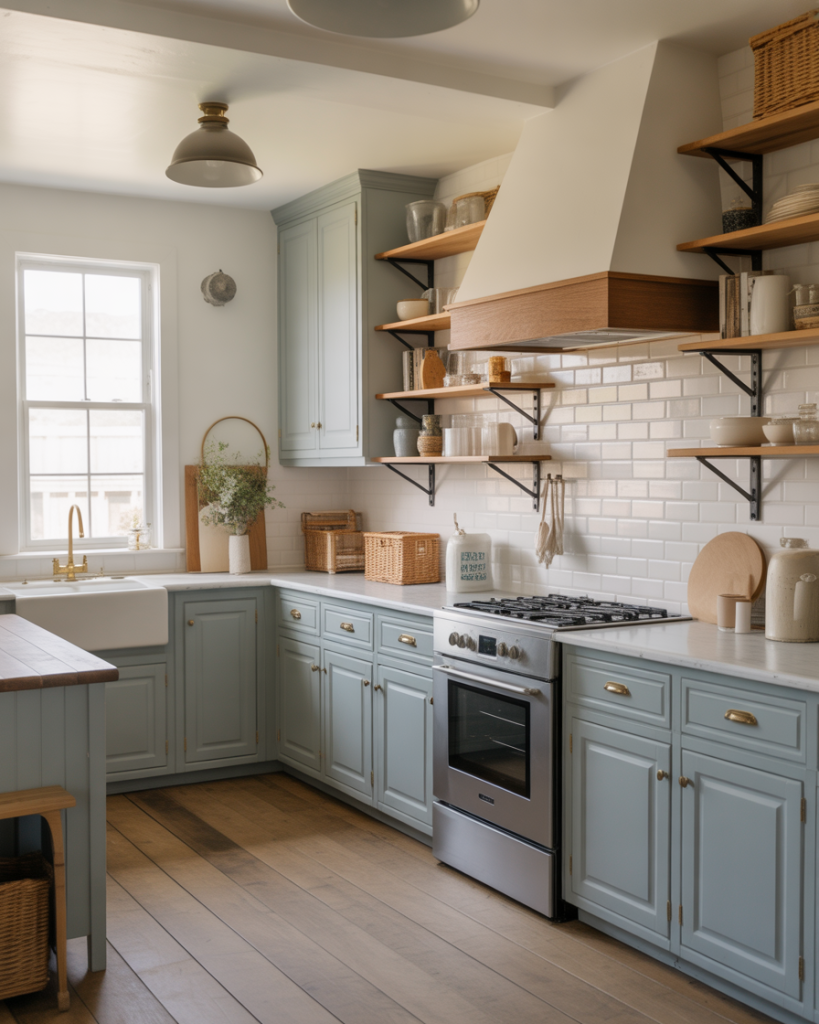
Real homeowner behavior: blue kitchens often start as an accent—one painted island, a single wall of cabinets—and evolve from there as homeowners gain confidence with the color. If you’re nervous about committing, start small and see how you feel living with it. Navy blue is surprisingly forgiving; it reads as a neutral and hides dirt and wear well. Lighter blues benefit from good natural light to keep them from looking washed out or gray.
22. Moody Farmhouse Kitchen with Rich Tones
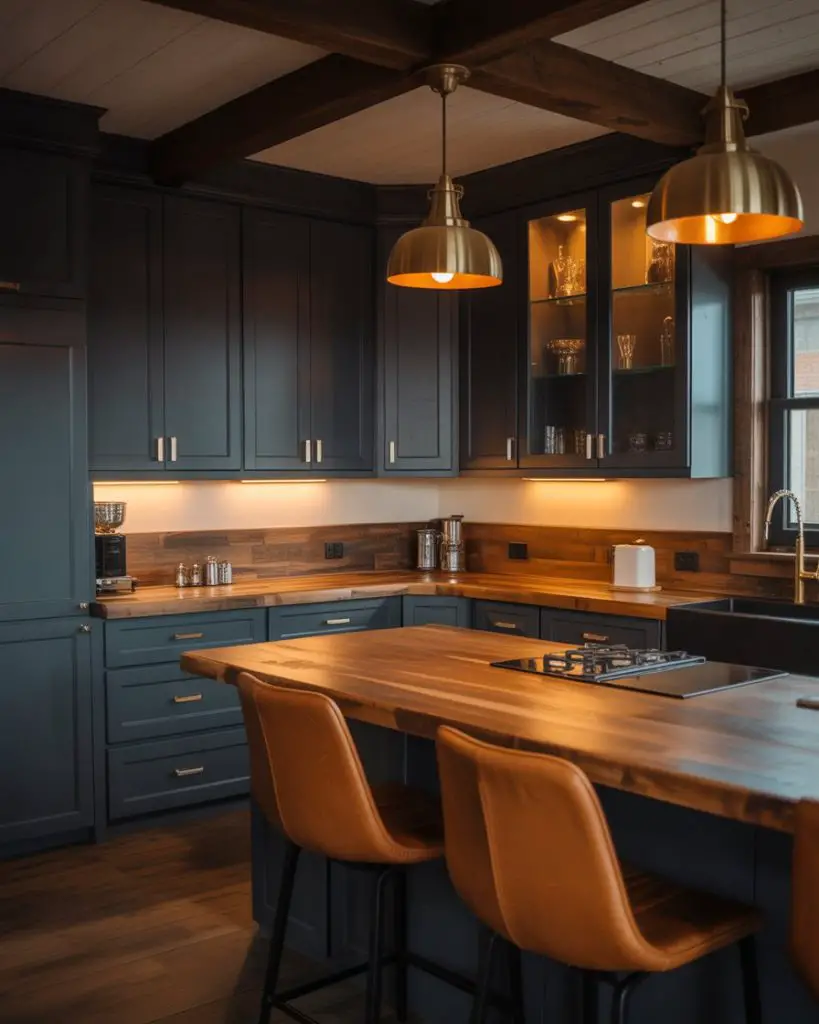
A moody farmhouse kitchen embraces darker, richer colors—charcoal grays, deep greens, or even chocolate browns—to create an intimate, enveloping space. This isn’t about stark drama; it’s about warmth and depth. Pair dark cabinetry with warm wood tones, layered lighting (under-cabinet, pendant, and natural), and textured materials like leather bar stools or a vintage wool rug. The result is a kitchen that feels like a cozy refuge, especially inviting during evening hours. 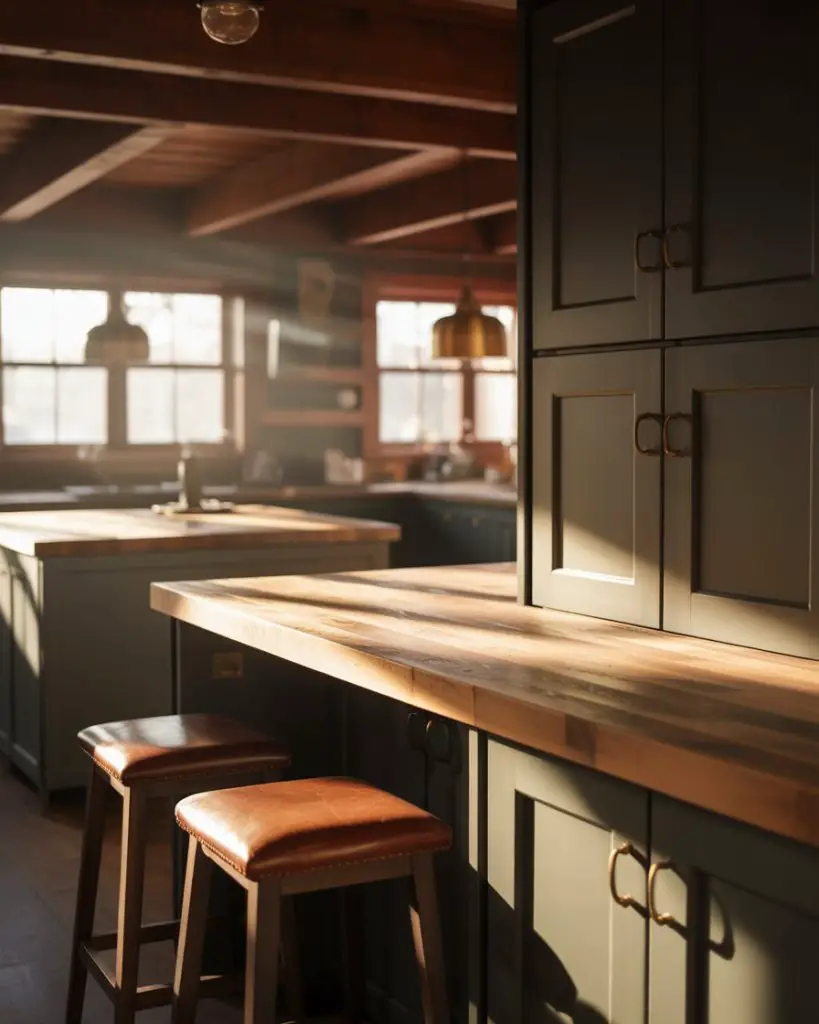
Common mistake: not planning for enough light sources. Dark kitchens need layered lighting to avoid feeling like a cave. Install under-cabinet LED strips, choose statement pendants over the island, and maximize natural light with unobstructed windows or even a skylight if possible. Reflective surfaces—polished countertops, glass-front cabinets, metallic hardware—help bounce light around. Done right, a moody kitchen feels luxurious and inviting, not oppressive.
23. Boho Farmhouse Kitchen with Eclectic Touches
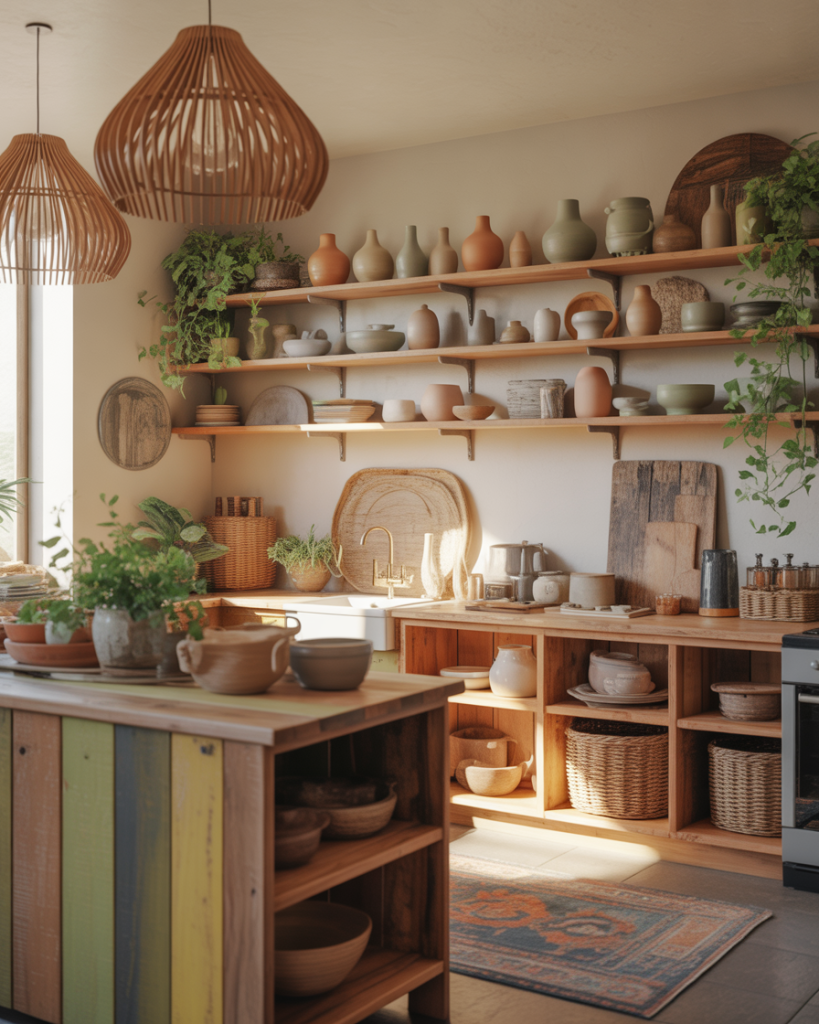
Boho farmhouse blends the structure of farmhouse design with the free-spirited, collected feel of bohemian style. Think open shelving displaying colorful ceramics, woven pendant lights, patterned rugs, and a mix of wood tones and textures. There’s an ease to this aesthetic—nothing matches too perfectly, and personal treasures from travels or flea markets take center stage. It’s warm, layered, and deeply individual, appealing to homeowners who want their kitchen to tell a story rather than follow a strict design rulebook. 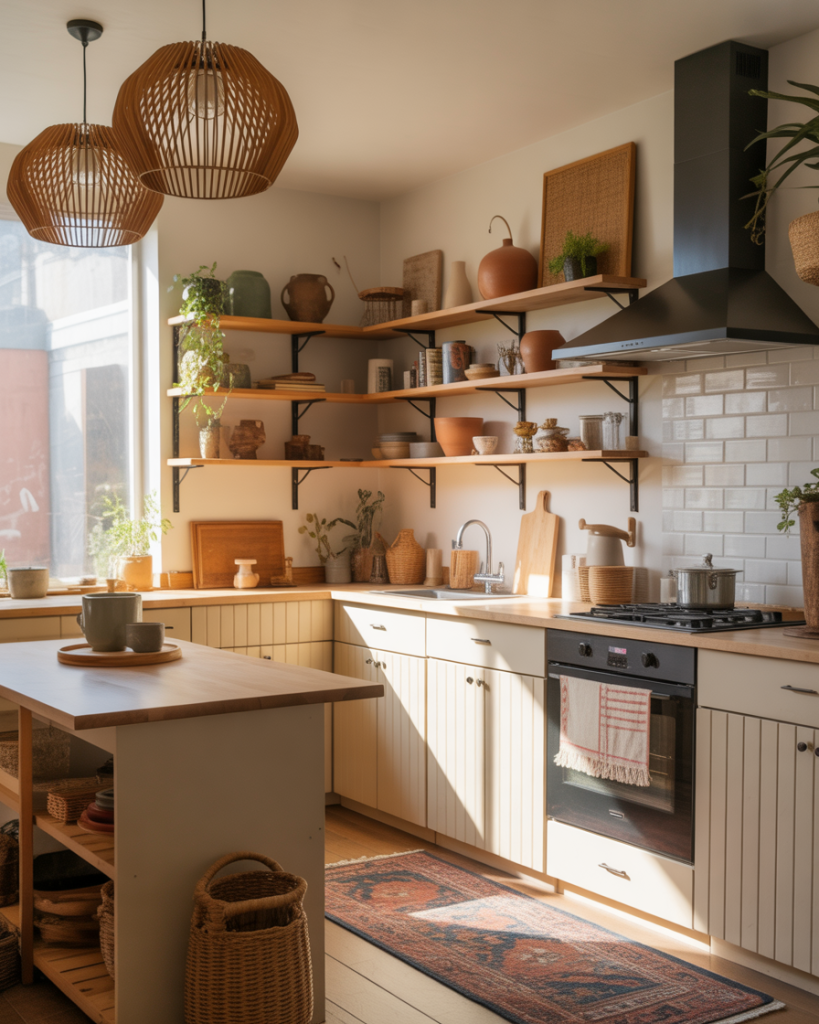
Budget angle: boho farmhouse is one of the most budget-friendly styles because it celebrates secondhand finds and DIY projects. Thrift stores, estate sales, and online marketplaces are treasure troves for unique pieces. The “collected over time” look means you don’t need to buy everything at once—in fact, it’s better if you don’t. Homeowners who nail this style usually have a good eye for color and pattern, mixing prints and textures confidently without the space feeling chaotic. The key is a unifying element, often a consistent wood tone or a repeated accent color.
Conclusion
Farmhouse kitchens in 2026 are more diverse and personal than ever, blending tradition with fresh ideas that reflect how we actually live and cook. Whether you’re drawn to the simplicity of all-white Shaker cabinets, the warmth of reclaimed wood, or the drama of a moody charcoal palette, there’s a farmhouse style that fits your home and your life. We’d love to hear which of these ideas resonates with you—drop a comment and let us know what you’re planning for your own kitchen transformation.