French country living rooms are having a full-blown moment in 2026, and if your Pinterest boards are any indication, you already know it. There’s something about that layered, lived-in warmth—the exposed beams, the worn leather, the wildflowers stuffed into a clay pot—that feels like the antidote to everything too polished and too perfect. Americans are gravitating toward this aesthetic in bigger numbers than ever, not just as a style trend but as a way of making their homes feel genuinely restorative. Whether you’re starting from scratch or just looking to bring more soul into a room you already love, this guide walks you through of the most beautiful and doable French country living room ideas for 2026 — from moody color palettes to cozy fireplace nooks and everything in between.
1. The Warm Honey Linen Sofa Moment
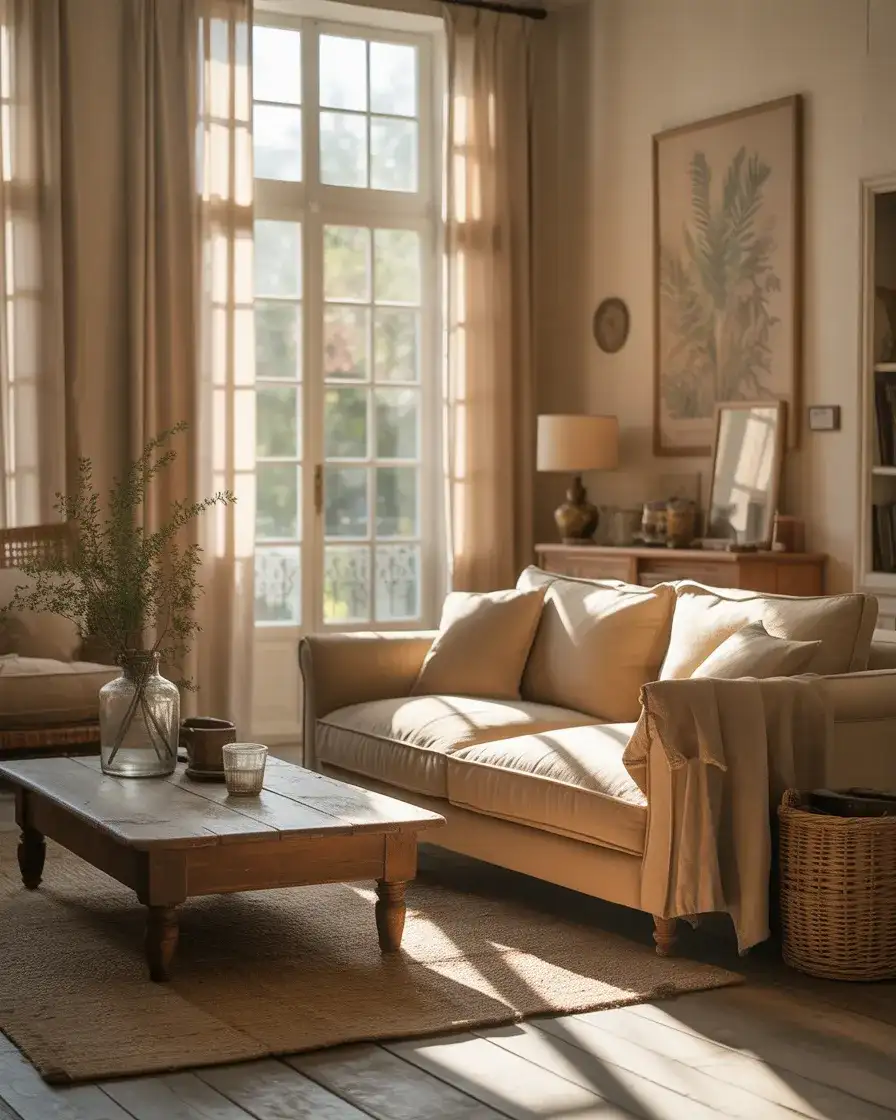
Nothing anchors a cozy French country living room quite like a generously cushioned linen sofa in a warm honey or oat tone. This is the kind of piece that invites you to sit, stay, and eventually forget what you were supposed to be doing. The fabric has a natural nubble that catches the afternoon light beautifully, and it softens over time in the most satisfying way. Pair it with a loose-weave throw and a stack of linen cushions in earthy neutrals for the full decor ideas effect—no styling degree required.
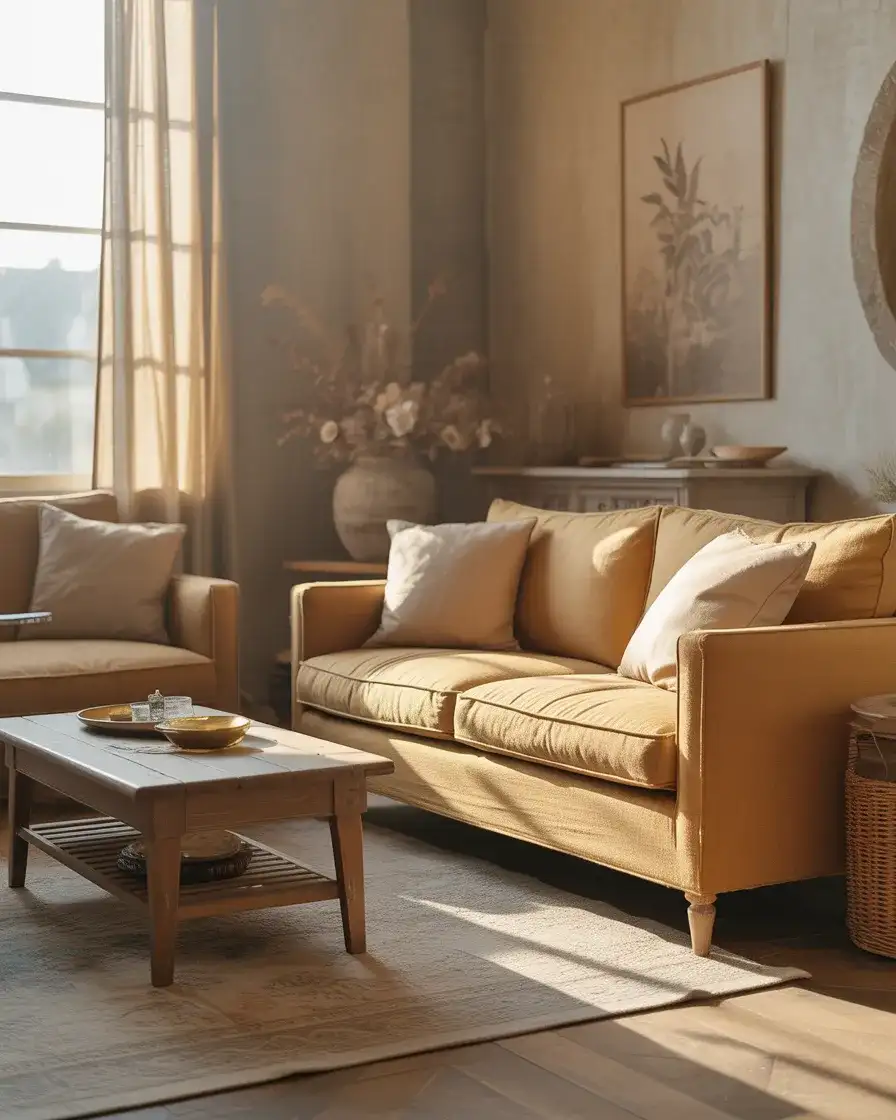
The linen sofa is one of the most practical investments you can make in this style. Unlike velvet or bouclé, linen is actually washable—most slipcover versions come apart completely for a machine wash cycle, which is a game-changer if you have kids, dogs, or a general appreciation for life happening in your living room. Look for options with removable covers in a pre-washed fabric so they arrive already broken in and beautiful, not stiff and department-store starchy.
2. Leather Couch with Patina and Purpose
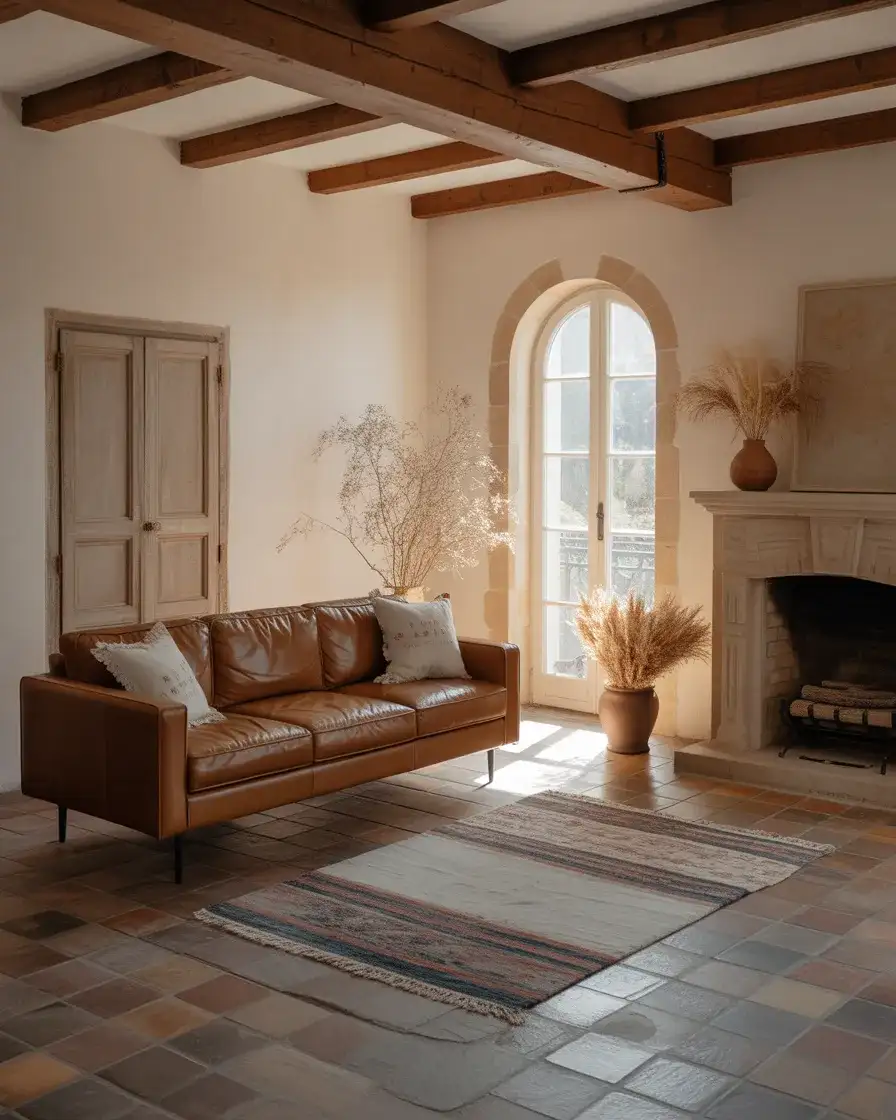
A leather couch in caramel, cognac, or a deep tobacco brown is one of the most timeless moves you can make in a French country space. The beauty of leather here isn’t its perfection—it’s its imperfection. Scuffs, creases, and slight fading are features, not flaws. This is a material that develops a gorgeous patina over years of actual use, telling the story of a home that’s genuinely lived in. In the context of French country rustic design, it reads as luxurious without being fussy.
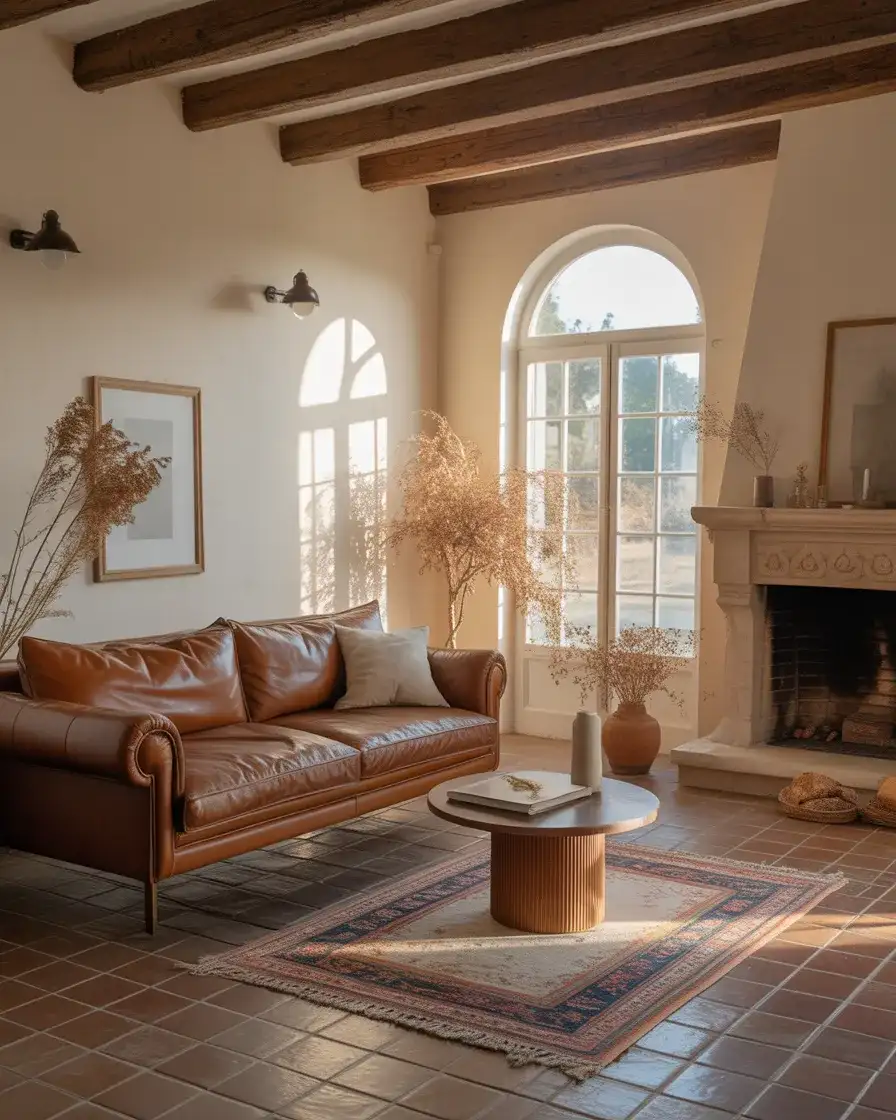
If you’re sourcing a leather sofa for this look, consider vintage or pre-owned over brand new. Platforms like Chairish and Facebook Marketplace regularly surface 1980s and 90s leather pieces in exactly the right silhouettes—rolled arms, low backs, lots of character—often at a fraction of what new costs. A genuine leather sofa purchased used for $400–$800 will far outperform a bonded-leather new piece at the same price. Sand any dry spots and condition it before bringing it home, and it’ll look like it belongs.
3. Moody Blue Walls That Actually Work
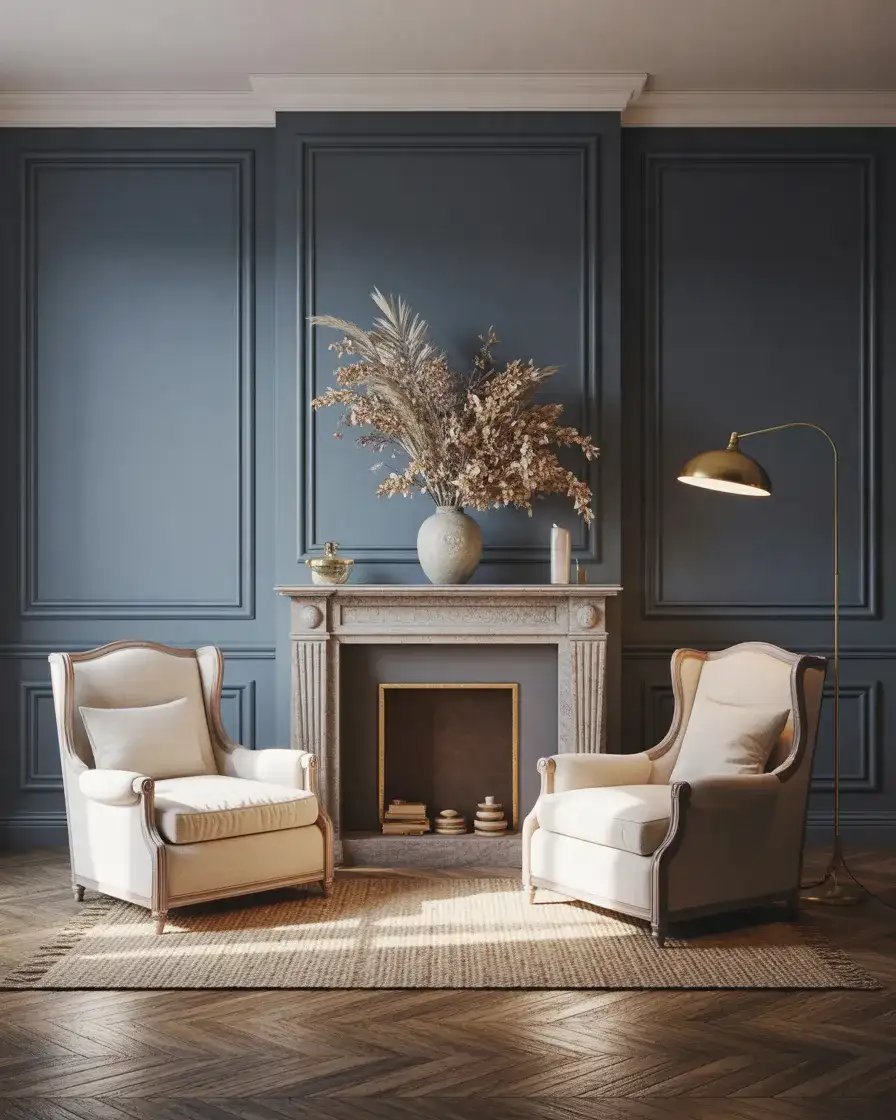
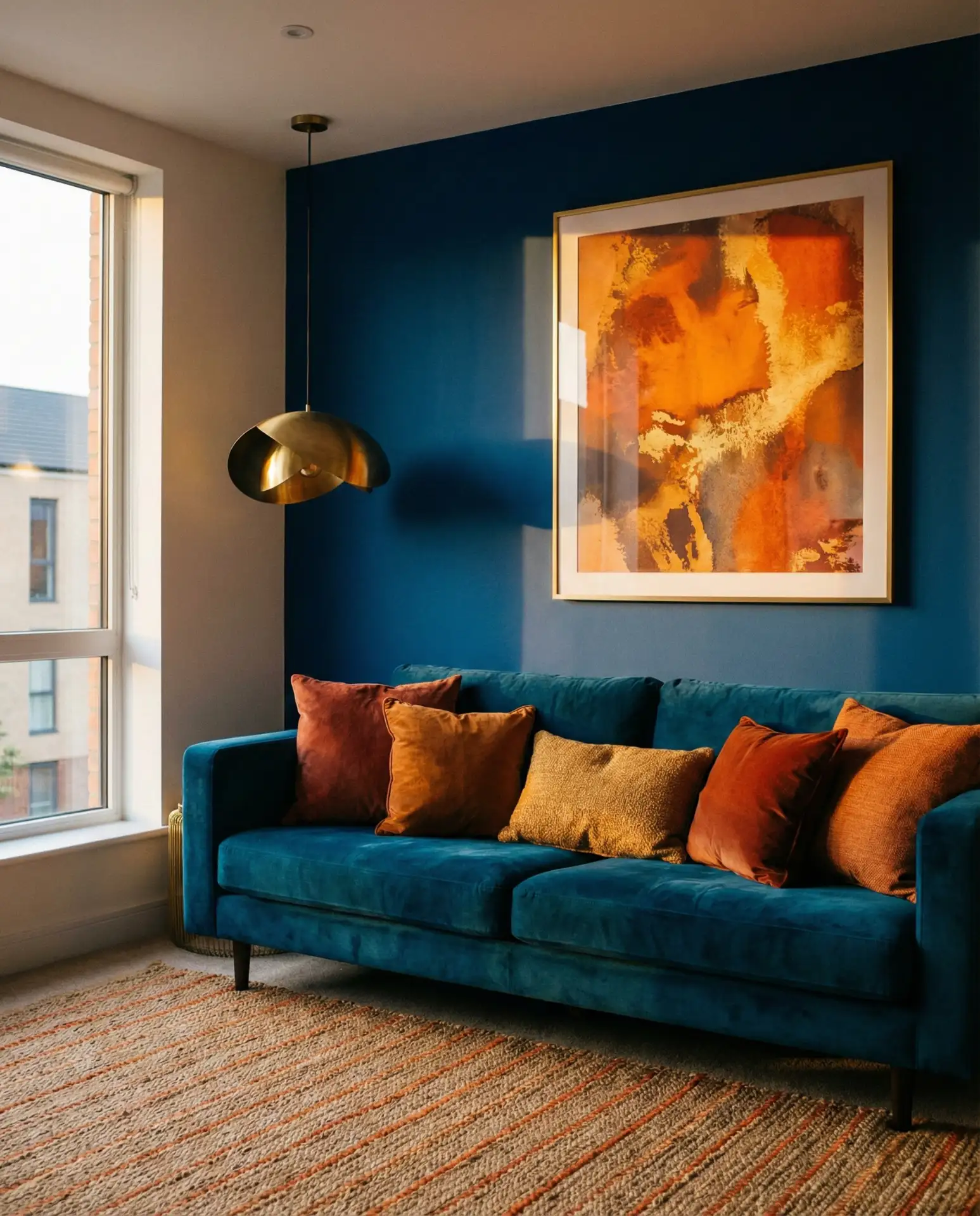
Deep, moody blue walls are having an undeniable moment in French country interiors this year, and it makes complete sense. Think of hues like Farrow & Ball’s Hague Blue or Benjamin Moore’s Van Deusen Blue—rich and atmospheric without being cold. In a French country room, this kind of wall color works because it’s immediately grounded by warm wood tones, aged brass hardware, and natural textiles. The result feels like stepping into a Provençal manor that just happens to be full of character.
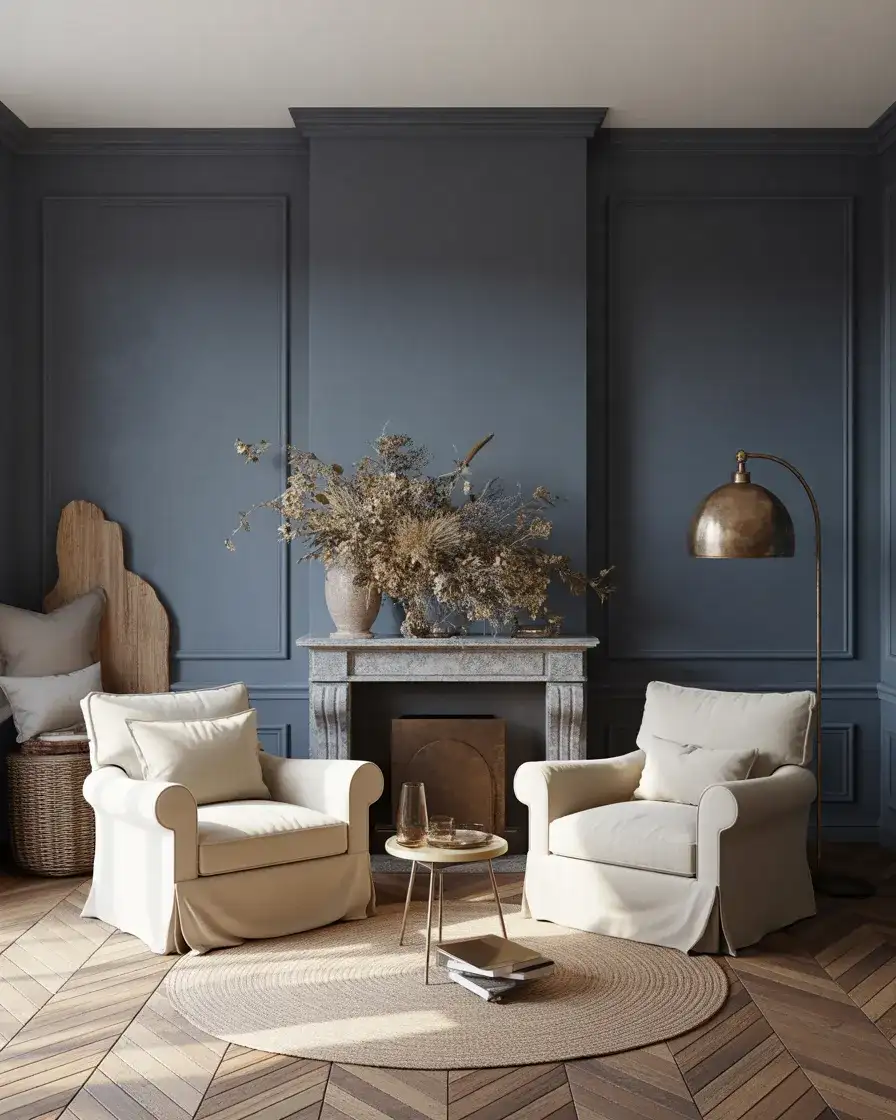
One common mistake with deep wall colors is going too dark in rooms with limited natural light. Before committing, test your chosen blue in large painted swatches—at least 12 by 12 inches—on multiple walls and observe them at different times of day. Rooms that face north in the northern hemisphere receive cooler, flatter light, which can make some blues look almost purple or gray by late afternoon. Rooms with southern exposure, on the other hand, handle saturated colors beautifully all day long and are your best bet for a truly dramatic result.
4. Built-In Bookshelves Flanking a Stone Fireplace
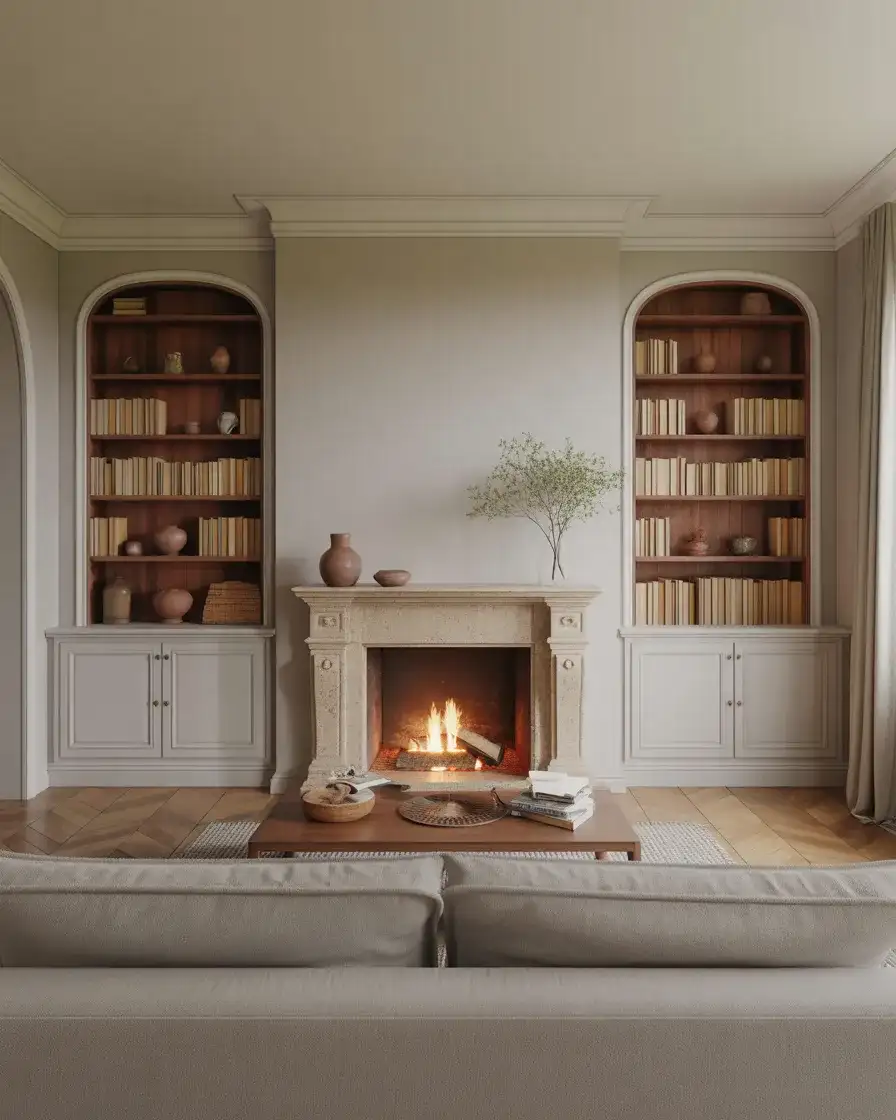
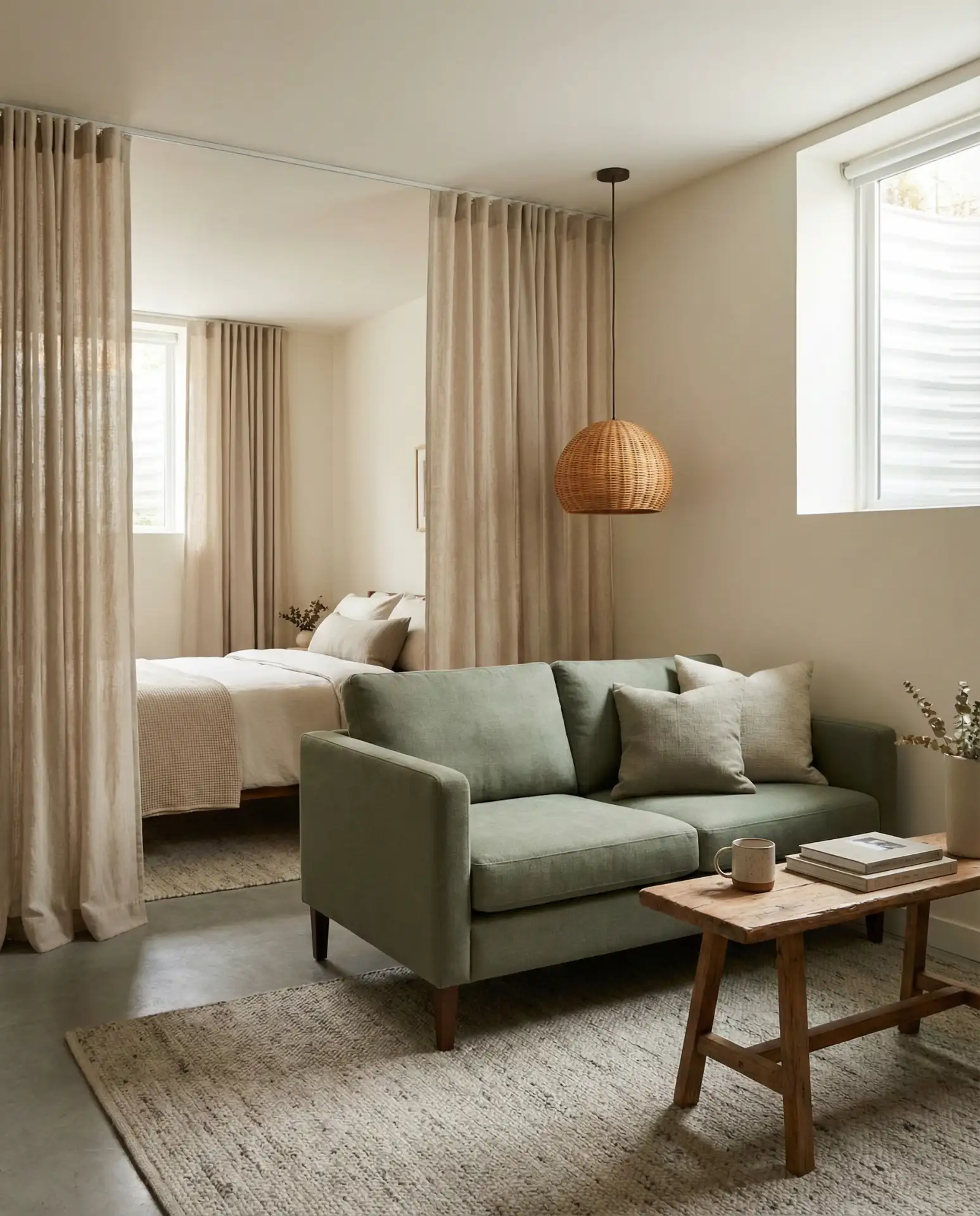
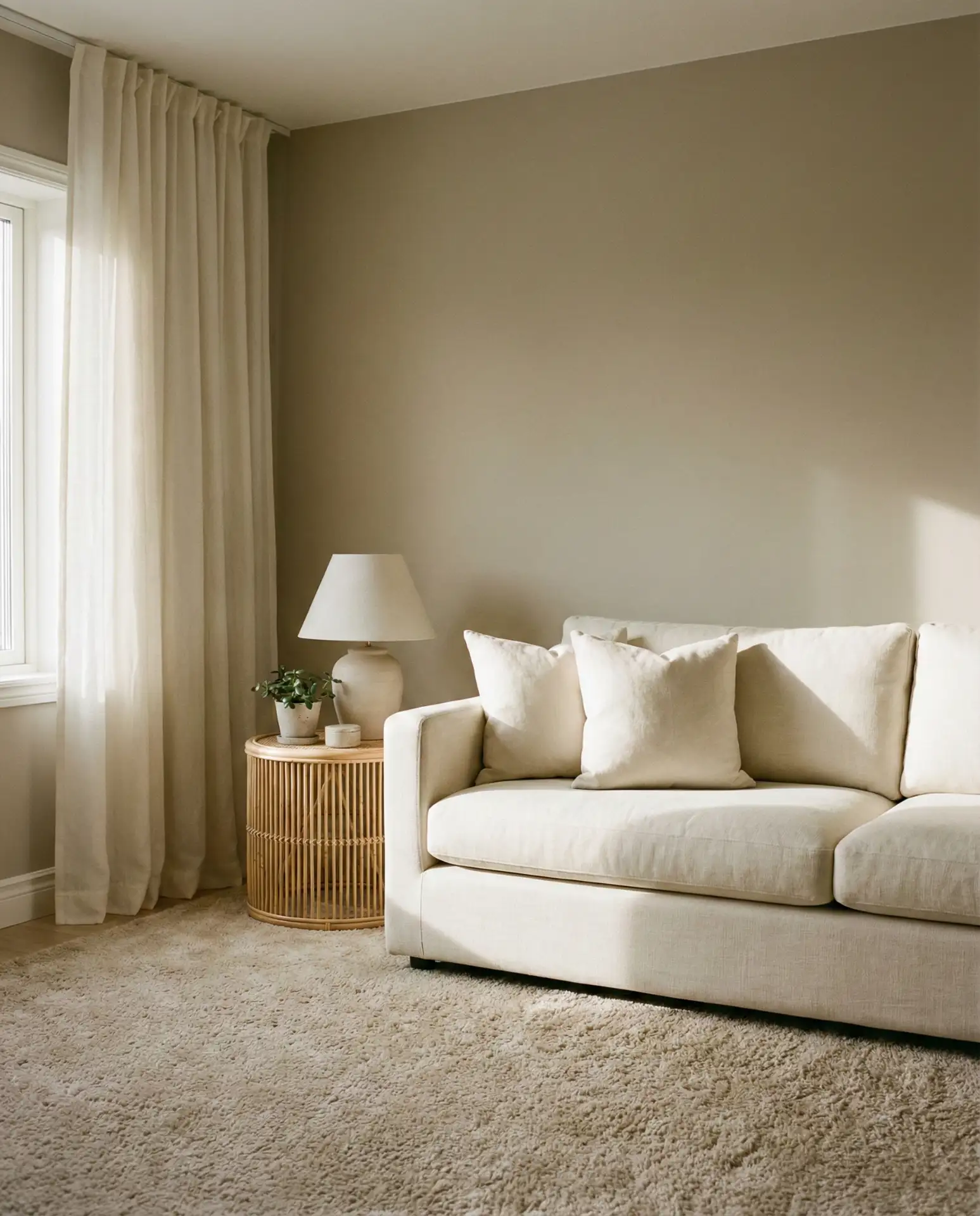
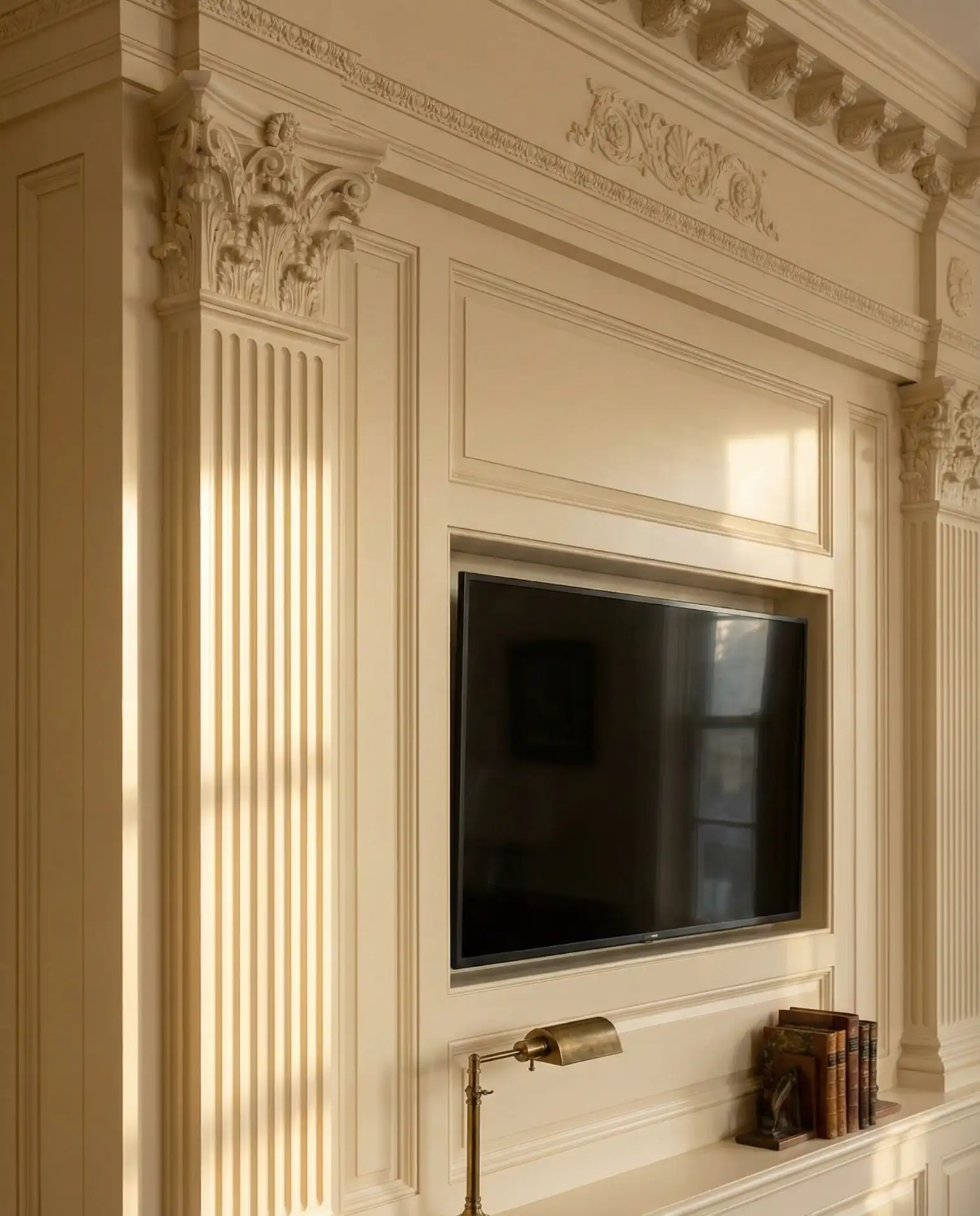
The classic French country living room has always centered on the hearth, and in 2026 the most admired version of that includes built-ins with tv fireplace configurations or, even better, floor-to-ceiling bookshelves flanking a raw stone surround. This arrangement does something no other furniture layout can—it makes the entire wall feel purposeful, architectural, and completely timeless. Filled with a mix of books, ceramic vessels, woven baskets, and a few trailing vines, these shelves become a room’s entire personality.
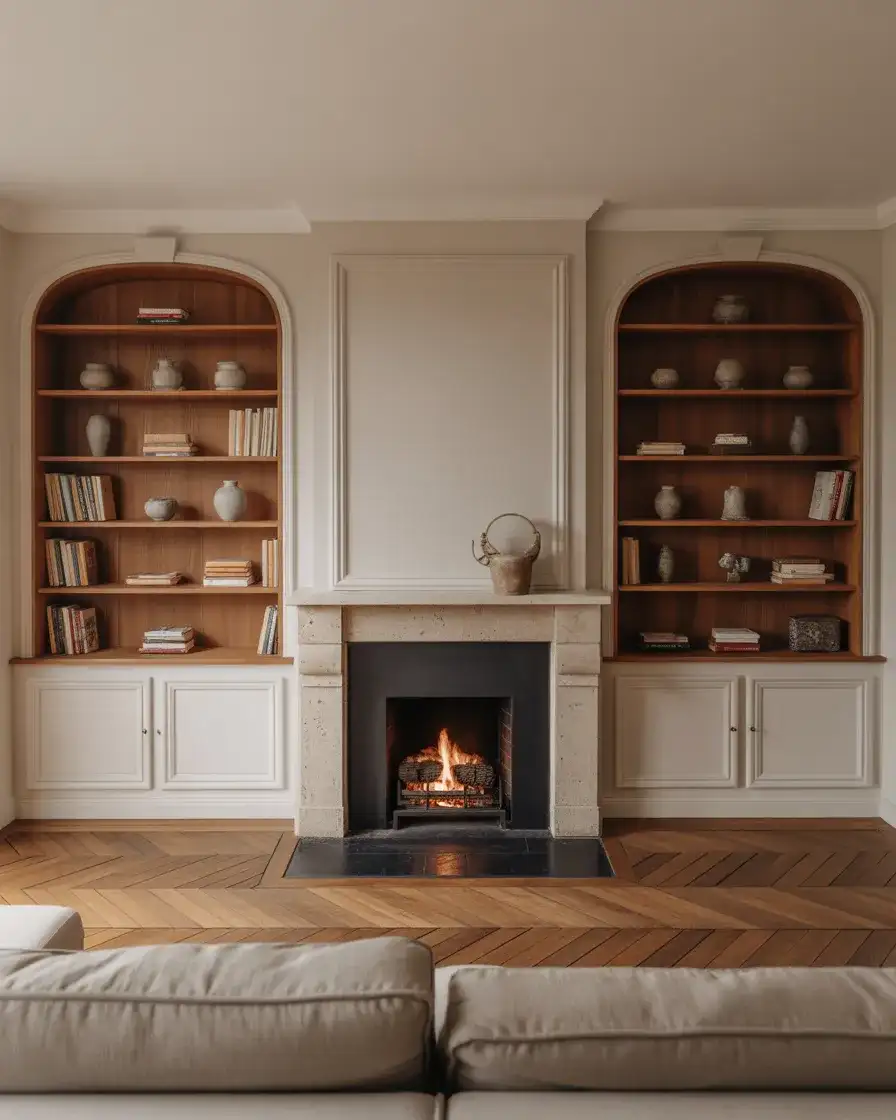
In the American context, this look translates beautifully to homes with existing brick fireplaces—a stone veneer overlay, available at most home improvement stores for $5–$15 per square foot, can completely transform a dated red brick surround into something that reads much more authentically French farmhouse. Add custom-built flanking shelves in a painted finish (Benjamin Moore’s White Dove is a perennial favorite here), and you have a focal wall that could anchor the room for decades.
5. Sage Green Walls with Cream Woodwork
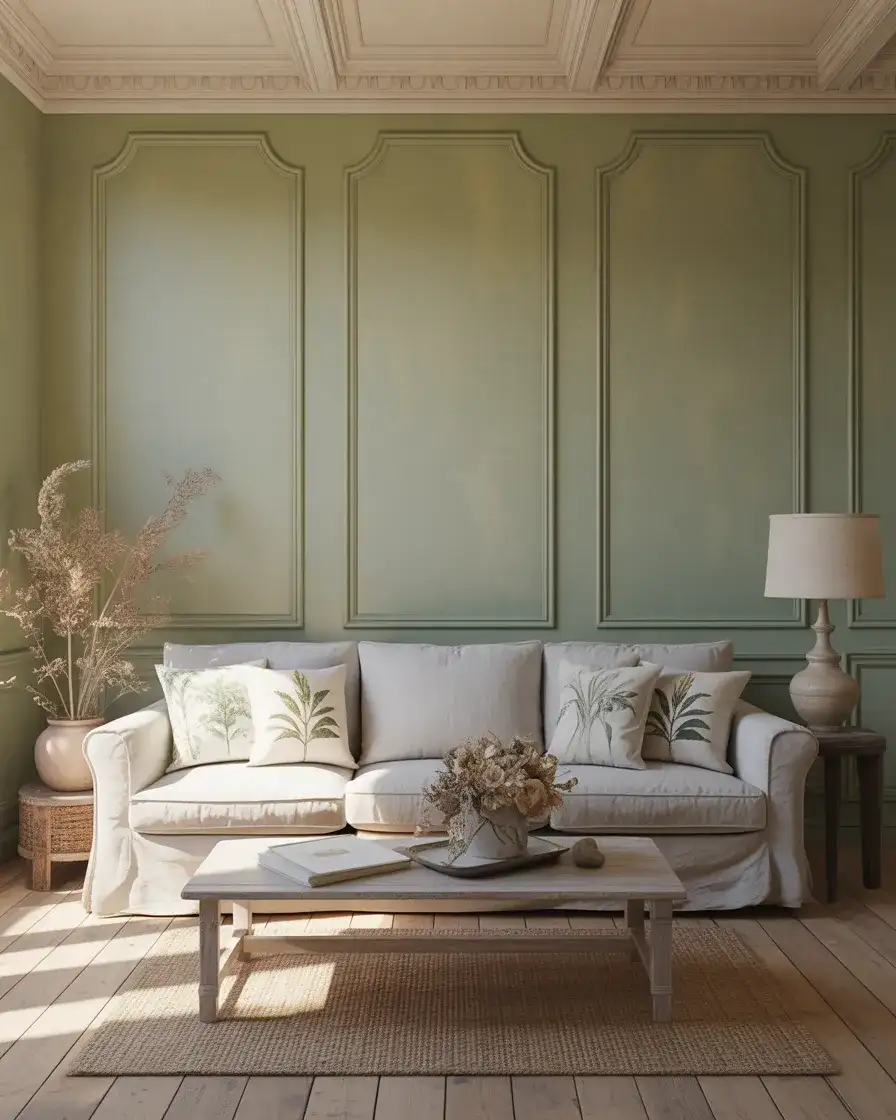
Sage green continues its reign in 2026, and nowhere does it look more at home than in a French country living room. This is a green that feels neither too modern nor too expected—it has the dusty, botanical quality of something faded by real sunlight over real time. Paired with bright cream woodwork on the window casings, crown molding, and built-ins, it creates a layered softness that reads as thoroughly European without requiring a single imported piece of furniture. The color schemes are effortlessly pulled together by natural wood and aged brass accents.
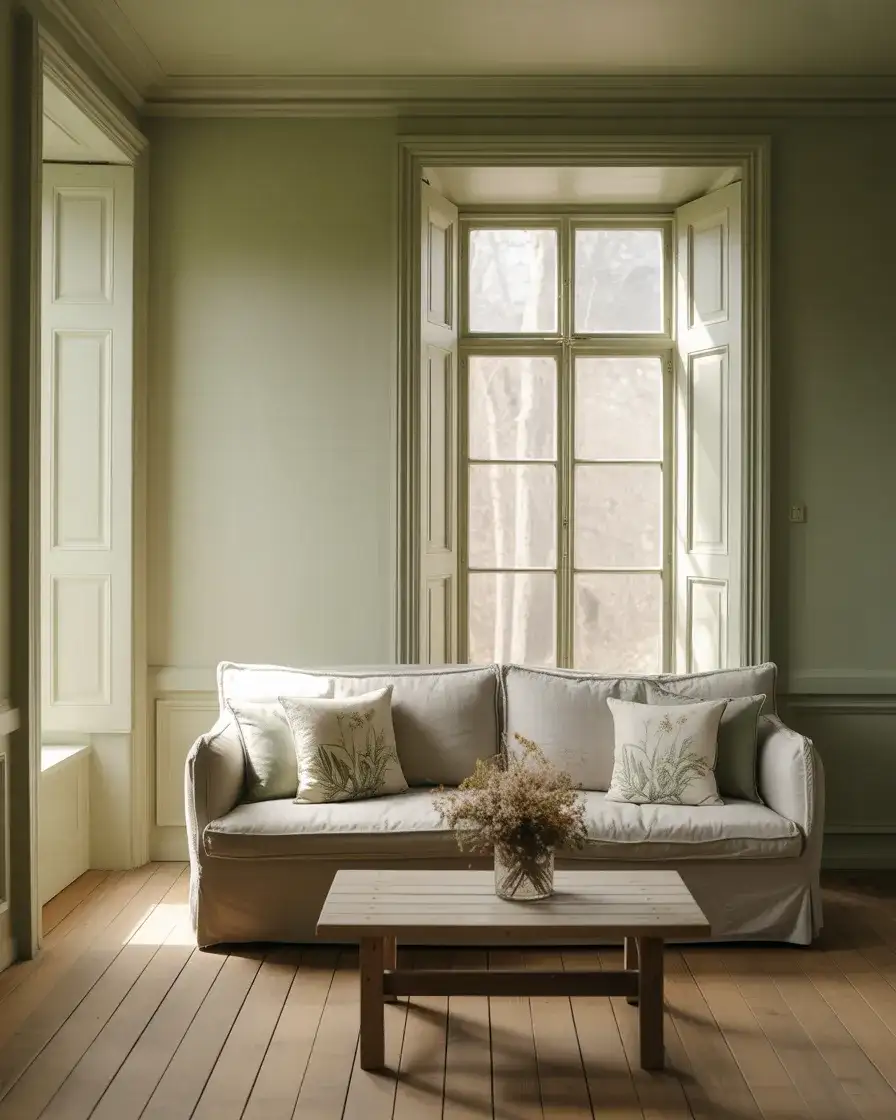
For those in the American South or Southwest, sage green is particularly successful because it echoes the landscape outside—that muted, silvery-green of dusty olive trees and drought-hardy herbs. It also does something particularly flattering in the golden light that fills rooms in southern states in late afternoon, shifting slightly warmer and more golden than it appears on a paint chip. Sherwin-Williams’ Clary Sage and Behr’s Eucalyptus are two widely available options in this family that translate well to large walls.
6. Curtains That Pool on the Floor
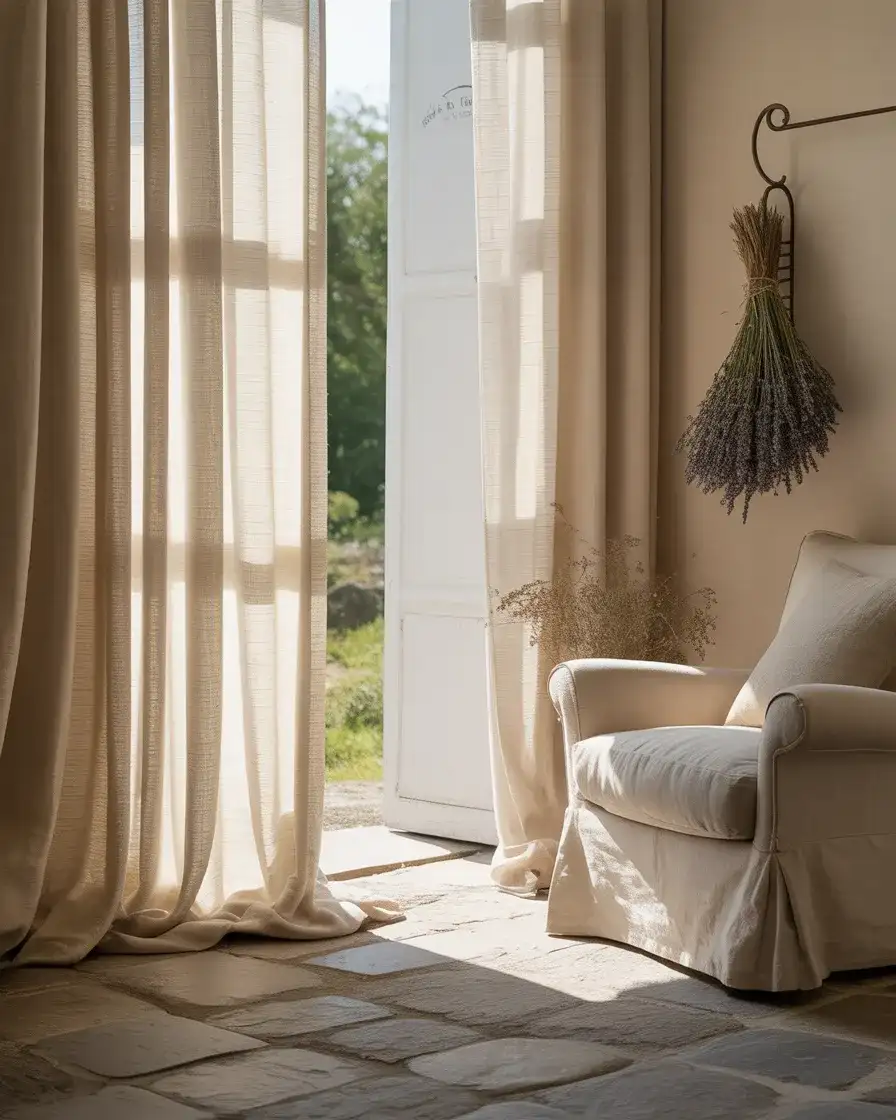
In French country design, curtains are never an afterthought—they’re a focal point. The 2026 interpretation leans into generously sized panels in linen, cotton gauze, or lightweight woven fabrics that hang from ceiling height and puddle slightly at the floor. This deliberate pooling adds a sense of theatrical softness that’s simultaneously casual and incredibly elegant. Choose natural, undyed tones—ecru, warm white, soft sand—to let the texture do the talking, and you’ll have a window treatment that looks like it cost three times what it did.
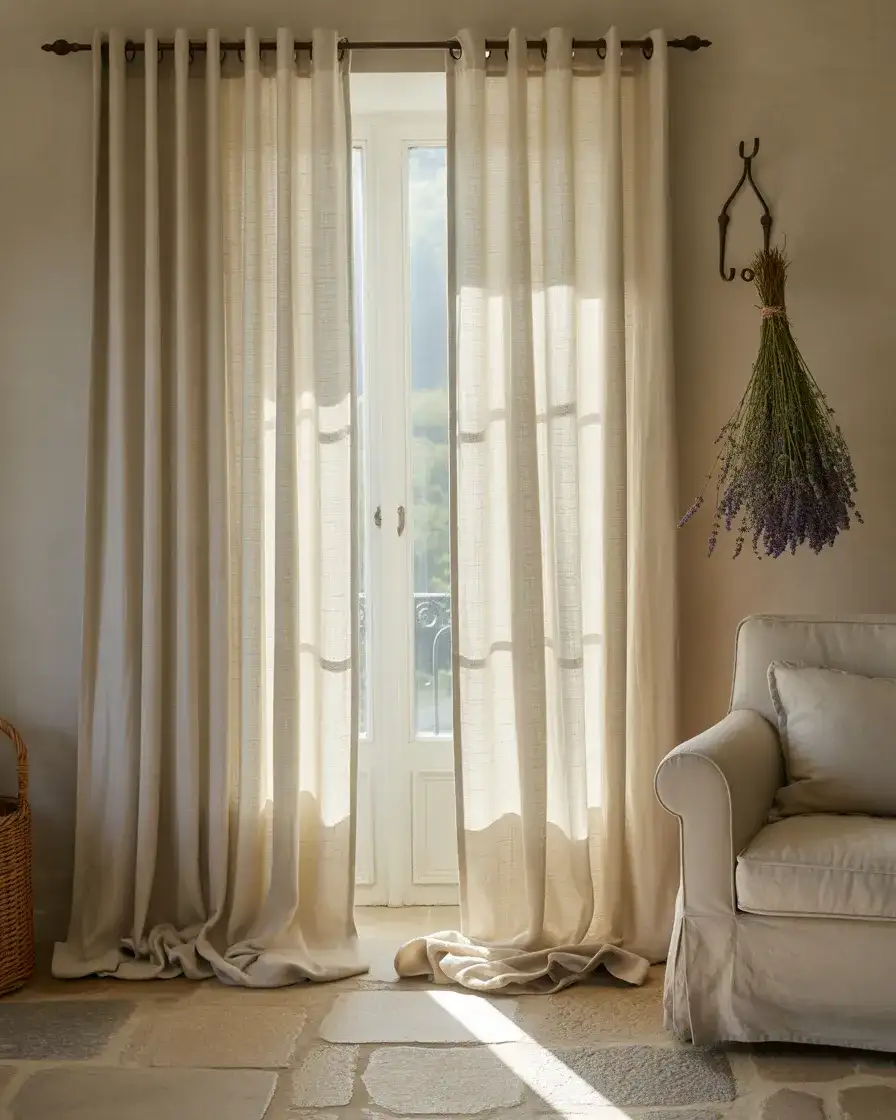
The trick to making inexpensive curtains look expensive is straightforward: hang them high and wide. Mount your rod four to six inches above the window frame—ideally as close to the ceiling as possible—and extend it at least eight inches beyond the frame on each side. This makes the window appear much larger than it is and gives the panels room to hang without bunching over the glass. IKEA’s AINA curtains and the linen panels from H&M Home are genuinely good options that hit this look without the custom price tag.
7. A Fireplace as the Room’s True Anchor
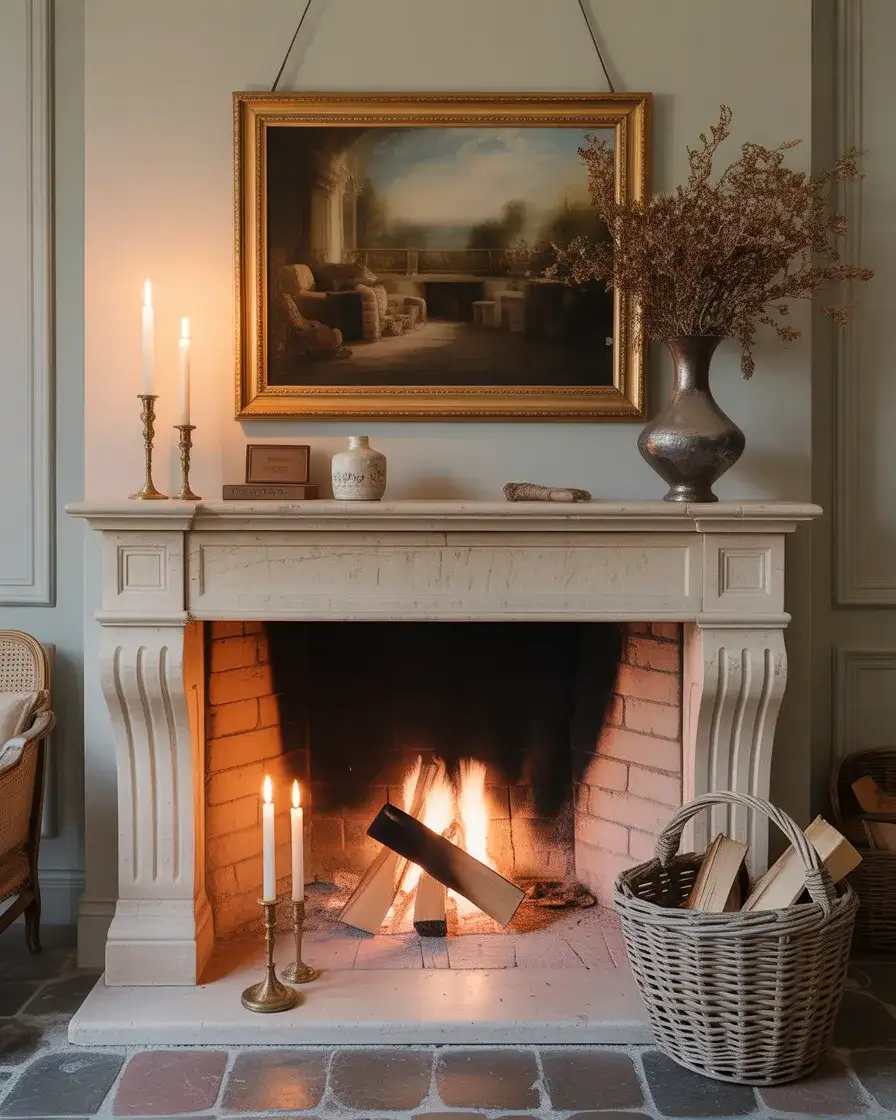
In the French country tradition, the fireplace isn’t just a heating element—it’s the emotional center of the room. Whether you’re working with a grand limestone mantel, a modest brick surround, or a converted gas insert, the approach in 2026 is to make it a complete vignette: an arrangement above the mantel, candles or tapers on the hearth, a worn iron grate, and perhaps a basket of split firewood to the side. The goal is warmth you can feel from across the room even when the fire isn’t lit.
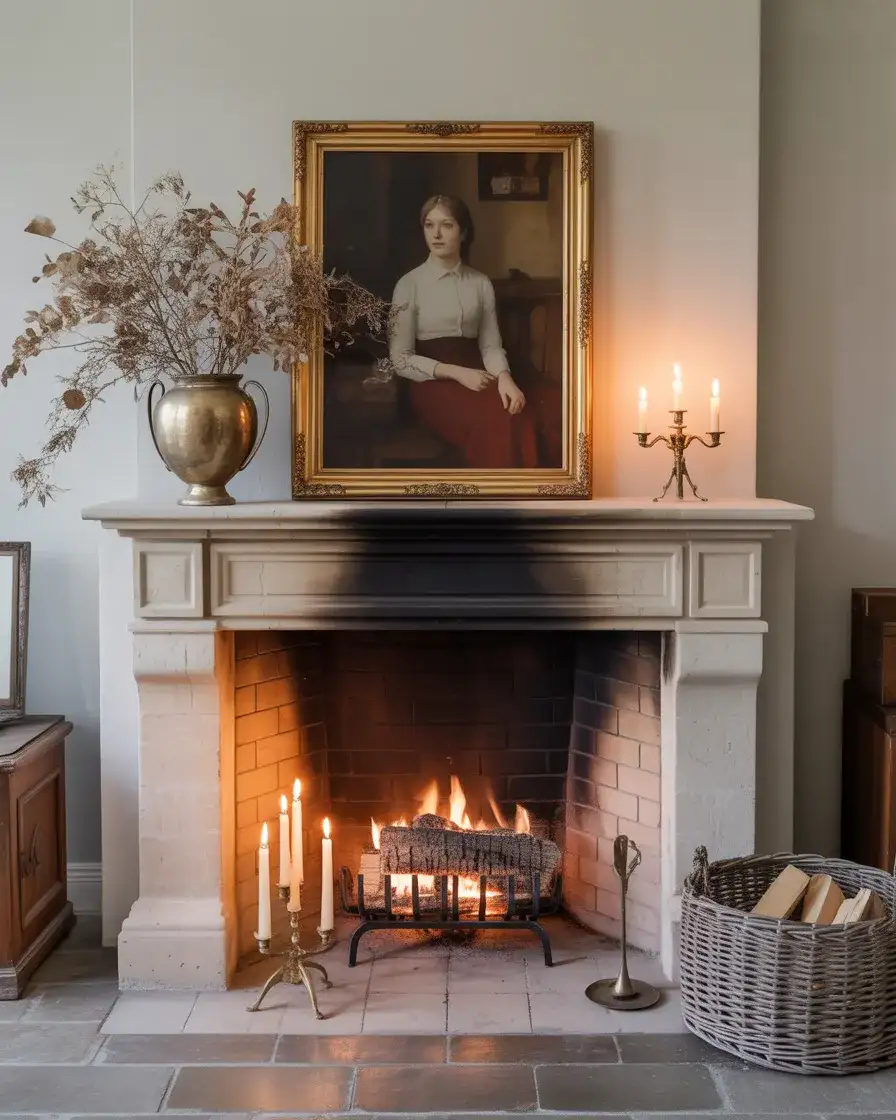
A designer whose work has circulated widely in French-influenced interiors once noted that the mantel display is where most people either make or break the look. Her advice: resist symmetry. The most believable French country mantels are asymmetrical—a tall candlestick on one side, a low cluster of ceramic vessels on the other, something leaning rather than hanging. When things look too arranged, the room loses that quality of organic accumulation over time that defines the style at its best.
8. Wall Decor Above the Couch: Mixing Old and New
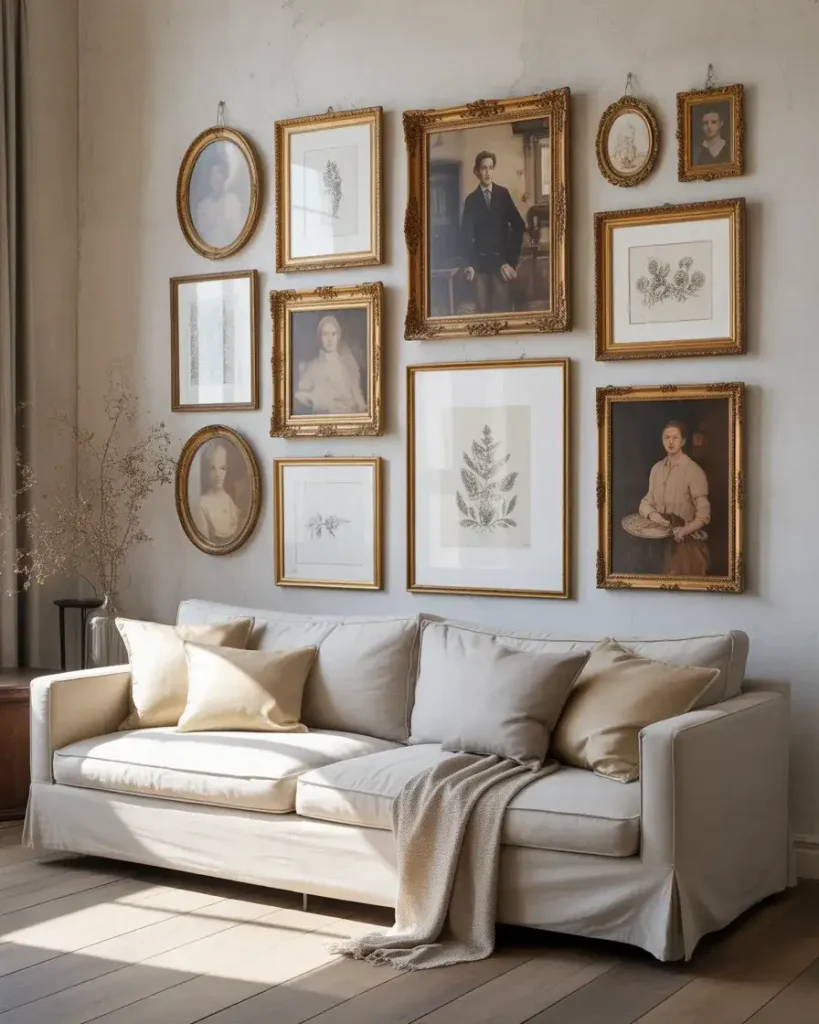
The wall above the sofa is the most-viewed real estate in a living room, and in a French country space, it deserves something layered and genuinely interesting. Wall decor ideas above the couch in this style range from collections of antique oil paintings in mismatched gilded frames to a single large botanical print, a woven wall textile, or even a tightly arranged gallery of botanical or equestrian plates. The key is mixing patina levels—something old next to something handmade next to something natural. That’s the combination that reads authentically French.
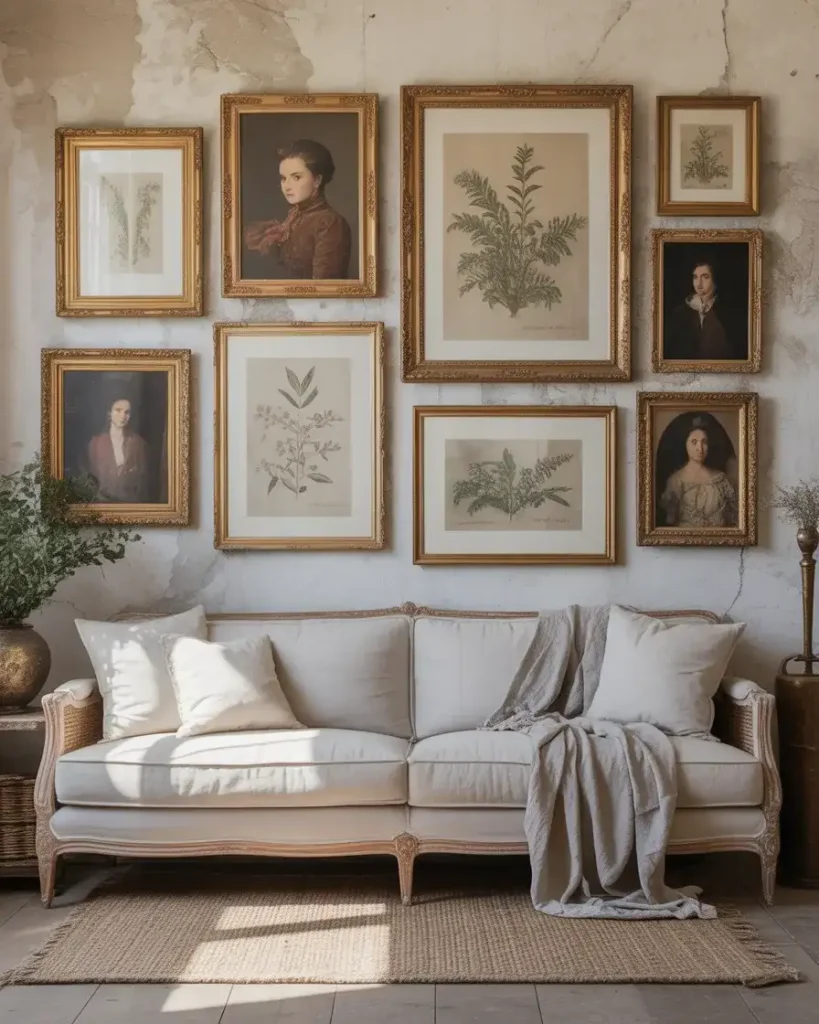
One approach that works exceptionally well in American homes is sourcing antique frames at estate sales and thrift stores, then fitting them with reproduction botanical or bird prints downloaded from public domain archives—the Biodiversity Heritage Library and the New York Public Library both offer high-resolution historical prints for free. Print at a local shop on matte archival paper, slip into the vintage frame, and you have something that looks like it was assembled over decades for about $20 per piece.
9. Coastal French Country in Soft Blues and Sand
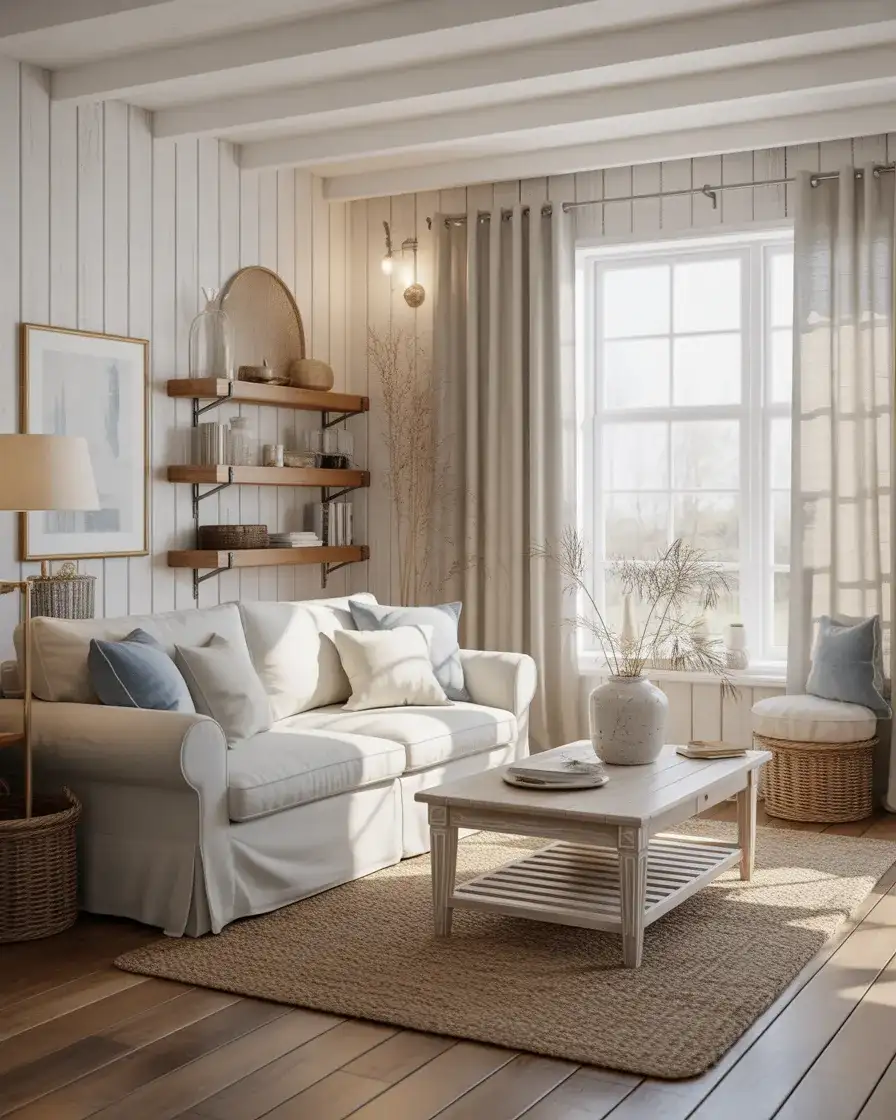
The mashup of coastal ease and French country soul produces one of the most appealing living room aesthetics in 2026 — especially for homes near water or in warmer climates. Picture whitewashed walls, worn wood planks underfoot, and a palette that pulls from the sea itself: chalky pale blue, faded sand, driftwood gray, and warm white. The furniture is slipcovered, the cushions are slightly faded, and there’s a basket of shells next to a stack of well-loved books on the coffee table. It’s Brittany by way of Cape Cod.
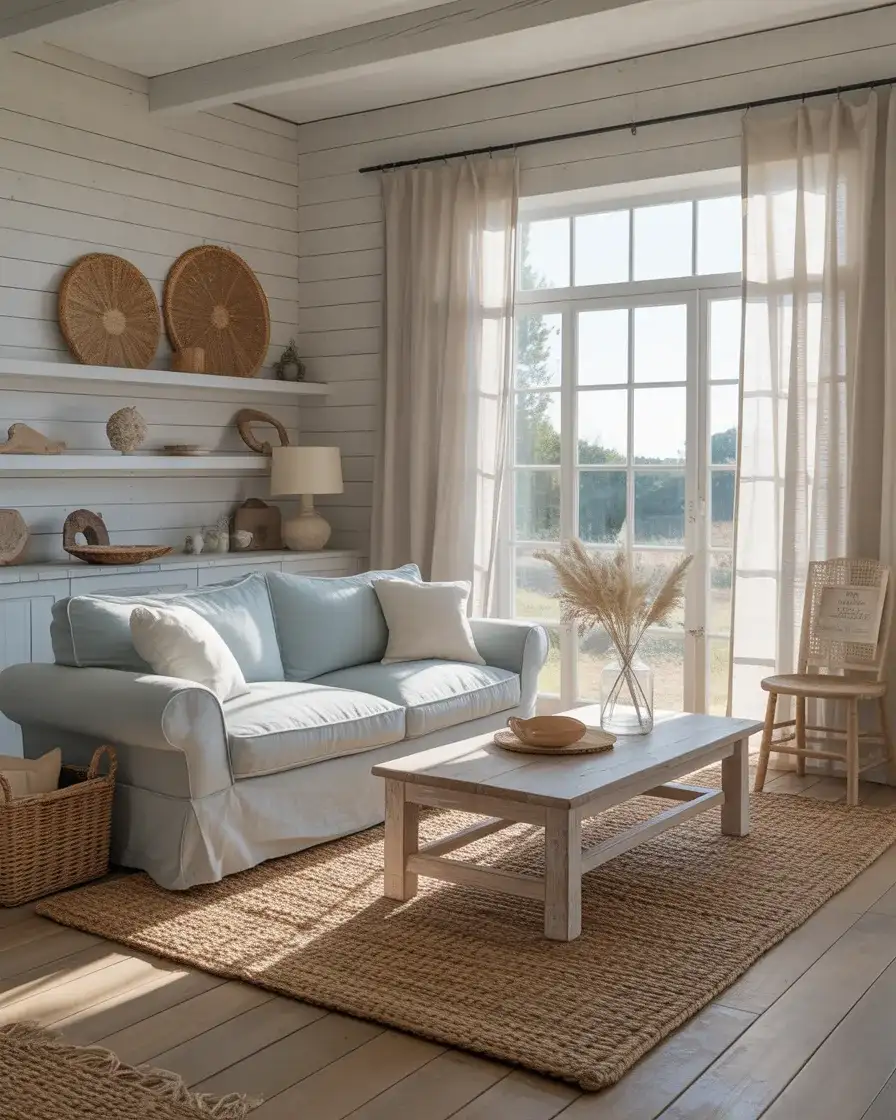
This look thrives in beach towns along the Atlantic seaboard and the Gulf Coast, where the architecture often has an existing French Creole or colonial influence that makes the style feel like a natural extension rather than an import. In New Orleans, Savannah, and Beaufort, South Carolina, in particular, you can find actual antique French and Creole furniture in local shops that carries the authenticity the style calls for—and at prices that often surprise people who’ve only shopped in larger coastal cities.
10. Dark and Dramatic: The Evening Room Approach
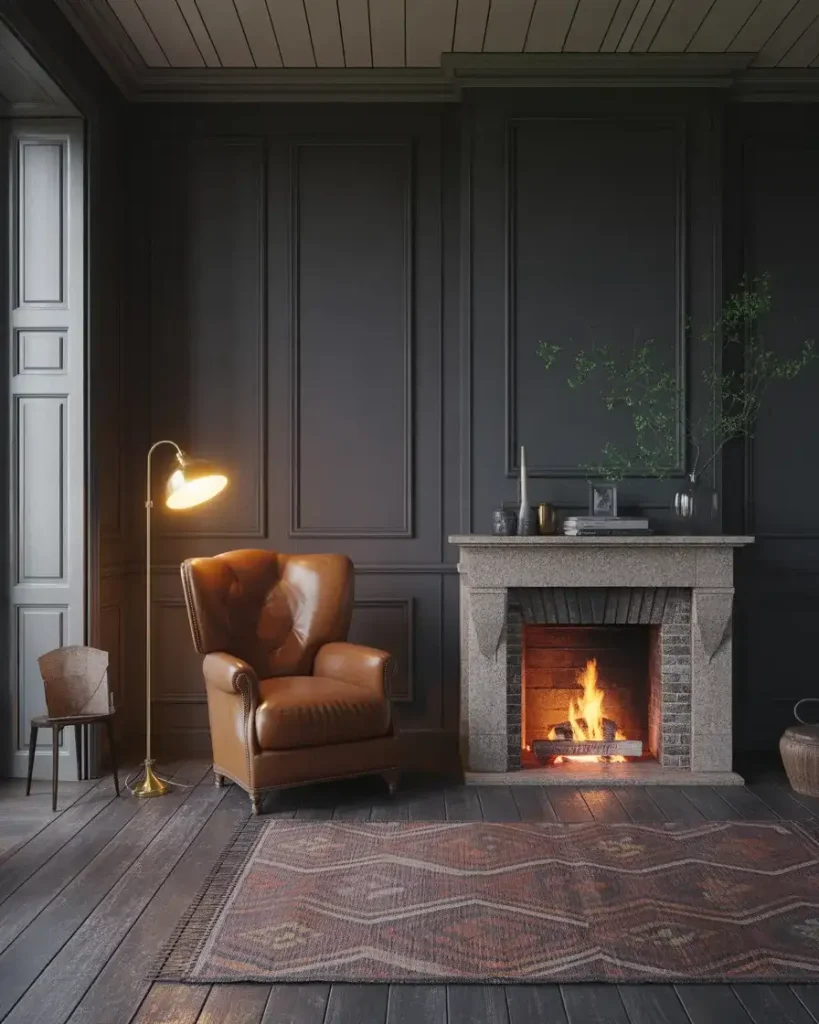
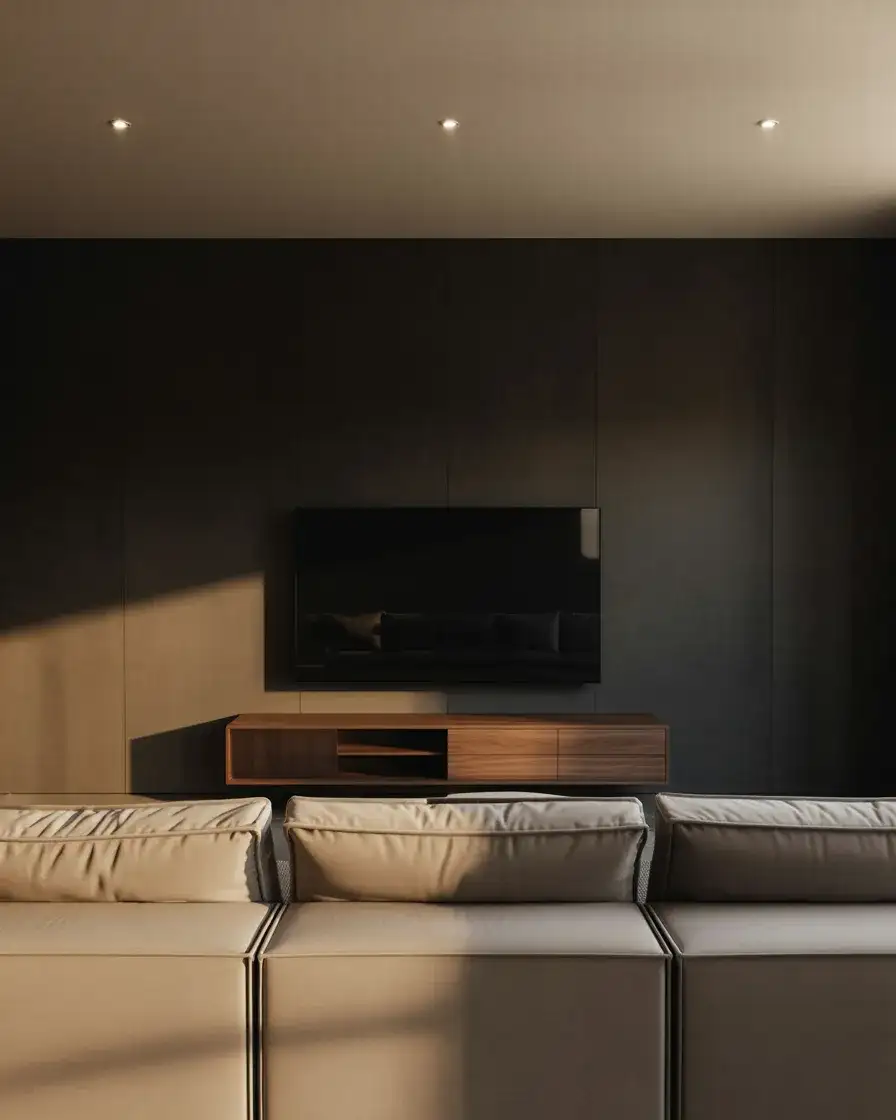
A dark French country living room feels like a contradiction until you see one done right—and then it feels inevitable. Deep charcoal walls, ebony-stained floors, and a ceiling painted the same dark color as the walls create a sense of full enclosure that’s genuinely cozy rather than oppressive. Layer in warm amber lamplight, aged leather, and heavy linen textiles, and the room begins to feel like the inside of a very beautiful cave. It’s intimate, moody, and completely at odds with the all-white spaces that dominated the previous decade’s decor.
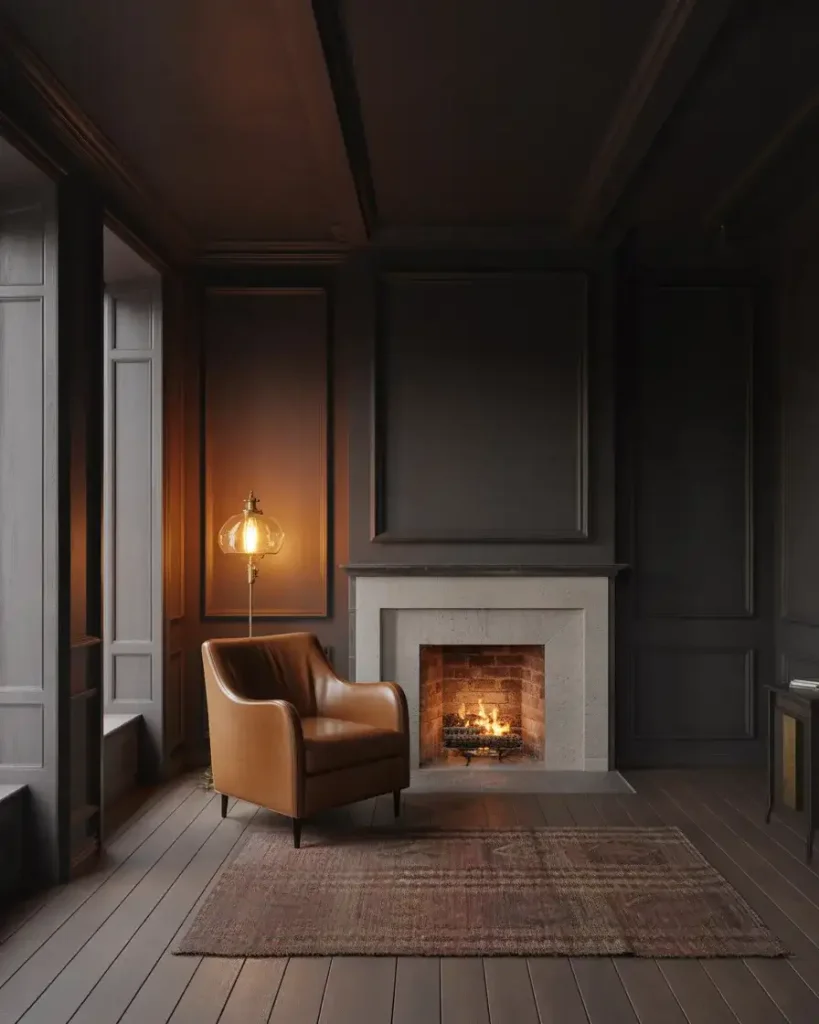
Most homeowners hesitate to go this dark because they’re afraid it will make the room feel smaller. In reality, dark rooms are often perceived as larger than they are because the walls effectively “disappear”—your eye doesn’t stop at the boundary of the room the way it does with a bright contrasting wall. The spatial illusion works best when you paint the ceiling the same color as the walls and use consistent, warm artificial lighting rather than relying on overhead fixtures alone.
11. Traditional French Country Furniture Arrangements
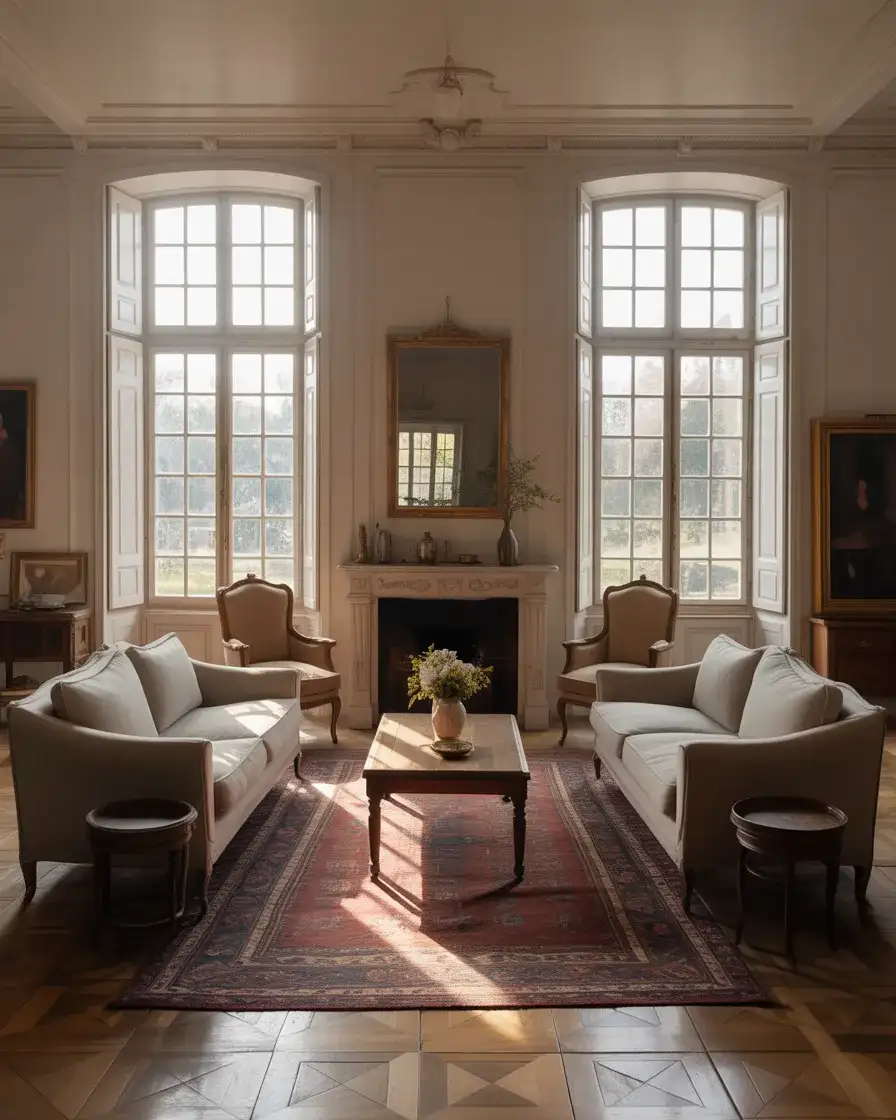
The furniture in a traditional French country living room is arranged for conversation, not for television viewing. Two sofas facing each other across a substantial coffee table, a pair of armchairs angled inward, and perhaps a small escritoire or writing table tucked into a corner—this is the configuration that’s defined French bourgeois interiors since the 18th century and still looks just as right today. The pieces themselves mix eras deliberately: a Louis XV bergère beside a 1950s linen slipper chair and a modern ceramic lamp on an antique guéridon table.
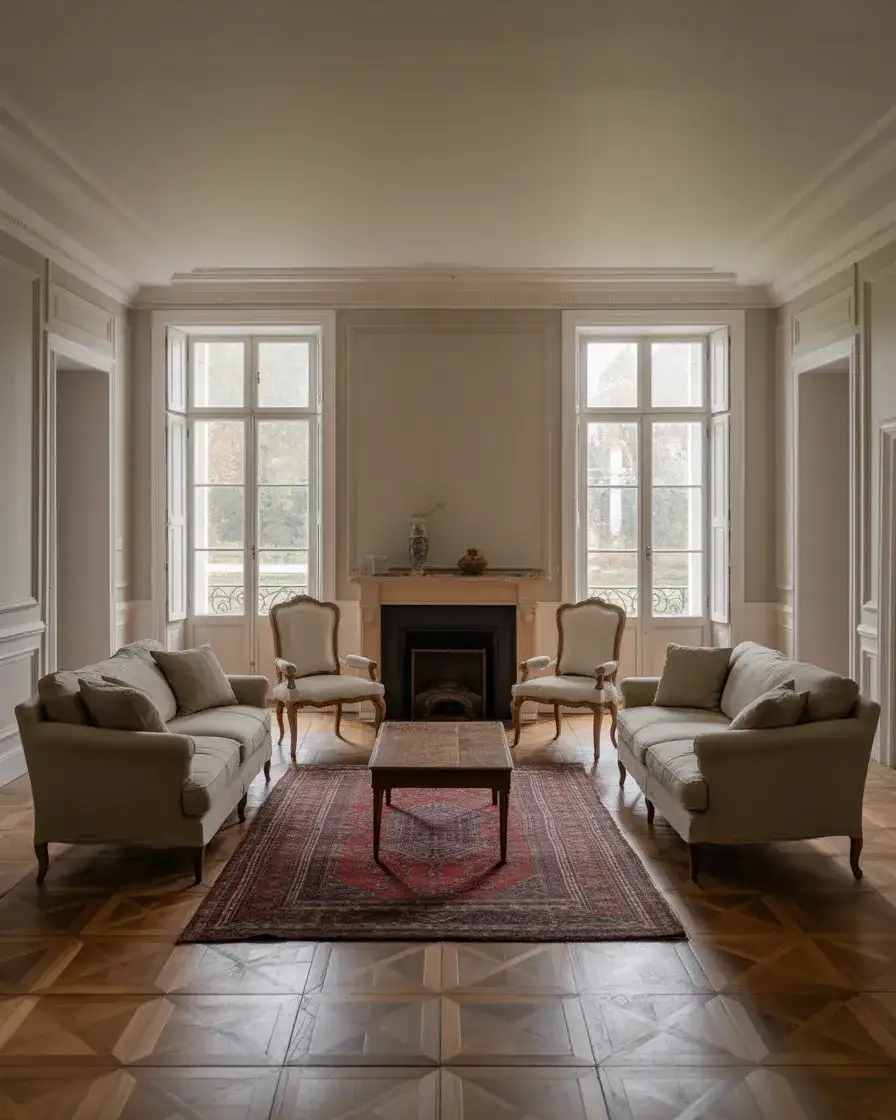
A real homeowner who renovated a 1920s Craftsman in Portland shared her approach to building this arrangement from nothing: she started with one piece she loved—an antique carved walnut settee found at an estate sale—and built every subsequent purchase around it, asking “does this feel like it could have always been in the same room as that settee?” Three years and a handful of thrift store finds later, her living room has been featured twice on local home tours, and she spent under $3,000 total on furniture.
12. Eclectic Layering with Pattern and Texture
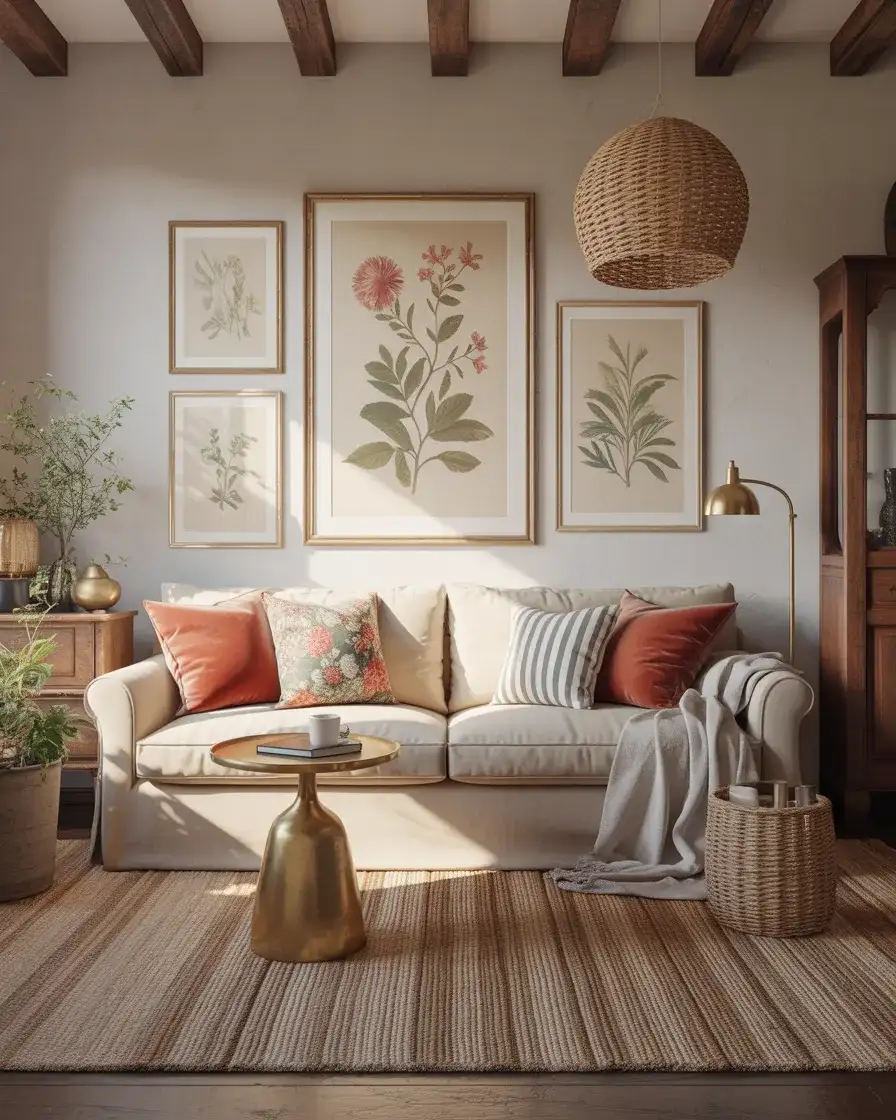
The French country aesthetic has always had a quietly eclectic streak—an ability to absorb influences from North Africa, the Levant, and the French colonies into an interior that still feels coherently itself. In 2026, this eclecticism is more celebrated than ever. Think of a kilim rug layered over a jute base, striped ticking cushions beside floral needlepoint pillows, and a Moroccan brass tray repurposed as a coffee table centerpiece. The decor idea of cottage-style sensibility gives you permission to mix freely as long as the palette stays harmonious.
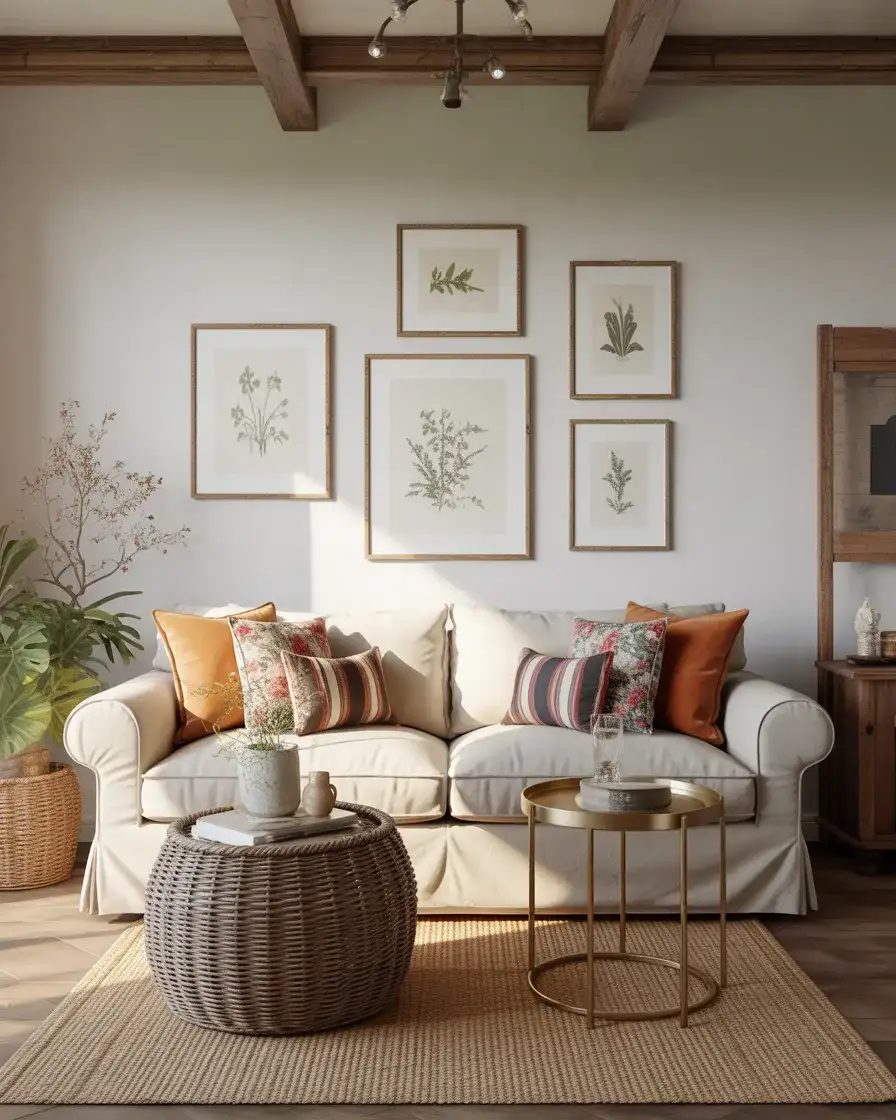
Pattern mixing is one of the places new decorators get most anxious, but there’s a reliable formula that works almost every time: choose one large-scale pattern, one medium-scale pattern, and one small-scale or texture-only element, and make sure all three share at least one color. A large floral, a medium stripe, and a solid woven texture in complementary earth tones will always look intentional. The French have been doing it this way for centuries, and the formula hasn’t stopped working.
13. Green Accents in a Neutral Room
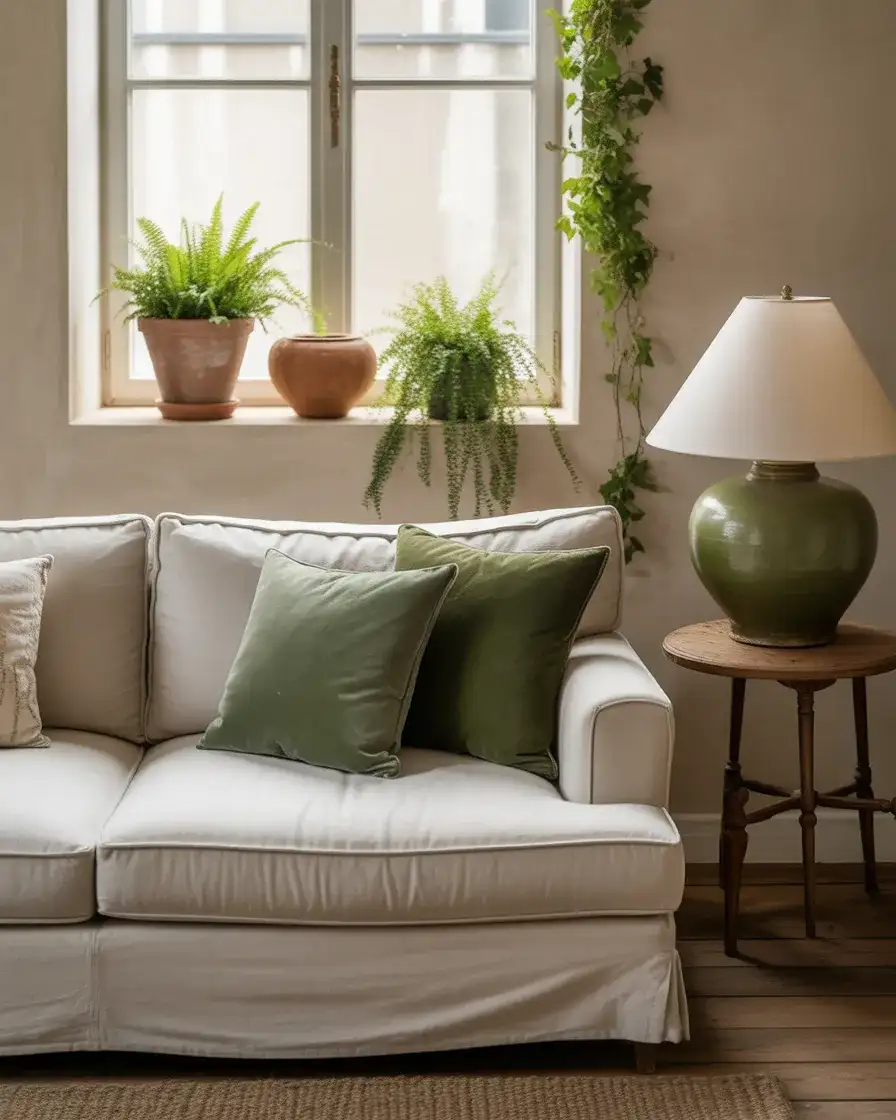
Not everyone is ready to commit to a green wall, but bringing the color in through accents is an equally beautiful—and more reversible—approach. In a primarily neutral French country living room, green shows up in the cushions, a velvet armchair, a ceramic lamp base, botanical prints, or a cluster of plants in aged terracotta pots. This is a particularly fresh approach for inspiration seekers who want the French country palette without a full renovation commitment. The botanical connection the color creates makes the room feel more alive and connected to the outdoors.
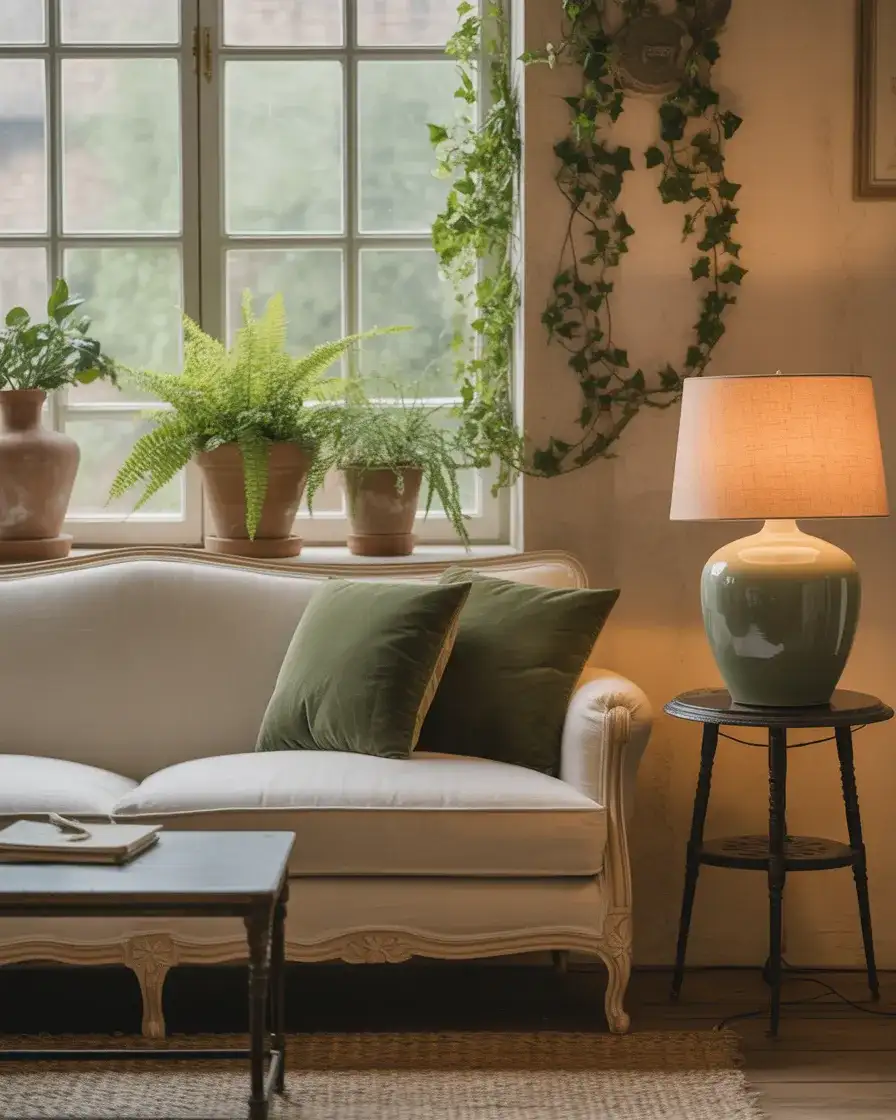
The richest green accent you can add to a French country room costs almost nothing: a living plant in a beautiful pot. Olive trees in large terracotta urns are the dream, but for more modest spaces, a rosemary topiary, a potted bay laurel, or even a simple fiddle-leaf fig in a worn clay pot reads as completely intentional in this aesthetic. The pot itself matters—avoid shiny glazed nursery containers and source aged terracotta, wicker-wrapped vessels, or simple ironstone crocks instead.
14. Pink as a Sophisticated Neutral
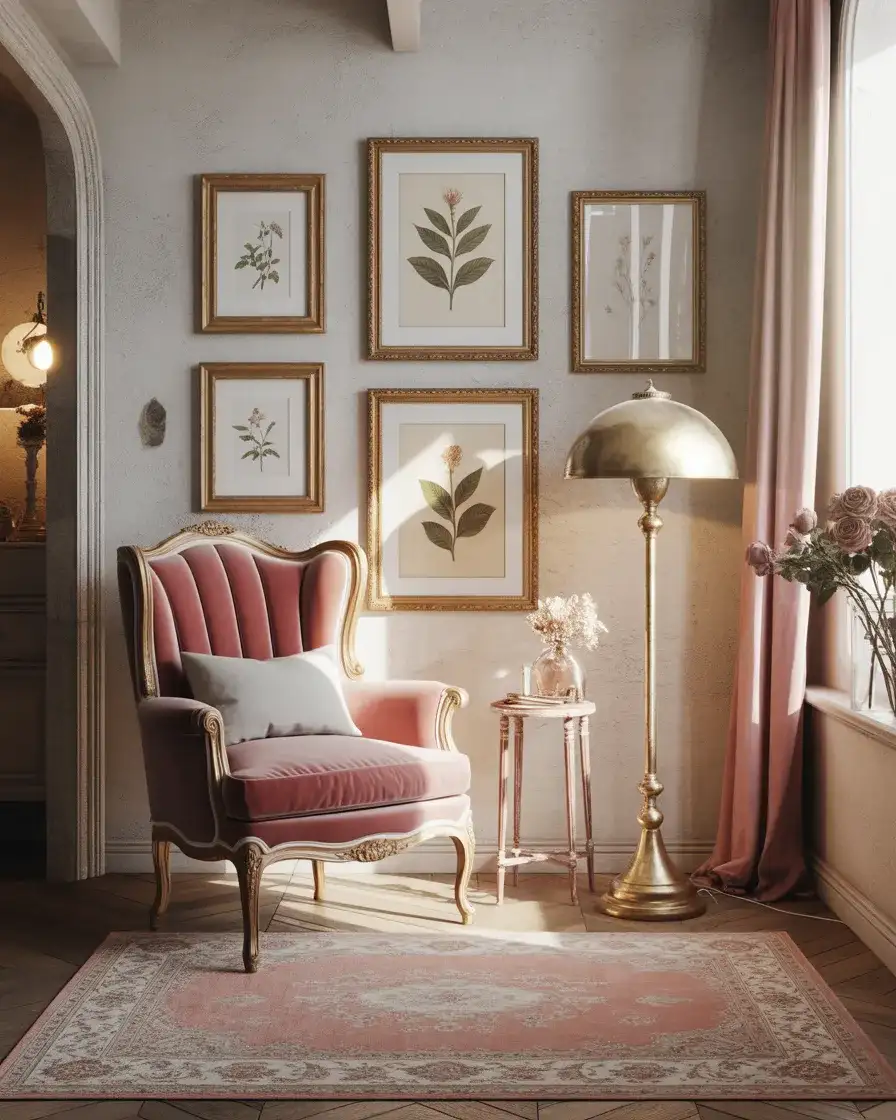
Dusty, muted, or antique pink is having a serious rehabilitation in 2026, and the French country context is exactly where it makes the most sense. This isn’t millennial pink or blush—it’s more like the pink of faded roses, worn velvet, or aged fresco paintings. A room with warm white walls can carry an antique rose armchair, a blush-toned Persian rug, and pink-veined marble accessories without ever feeling girlish or trend-chasing. Paired with aged brass, dark wood, and botanical green, it’s one of the most genuinely sophisticated color schemes available.
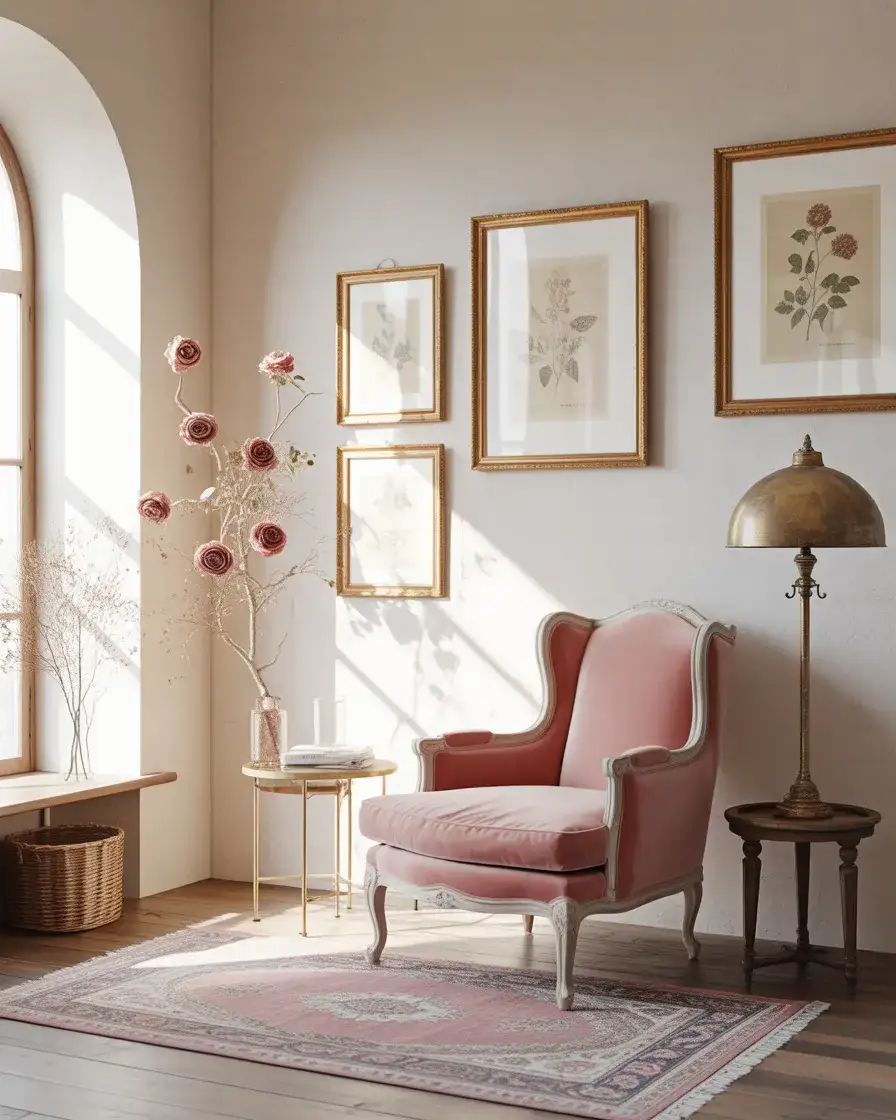
The most successful approach is to treat this pink the way you’d treat a warm beige—as a near-neutral that grounds rather than dominates. Try it first as an accent in one or two cushions or a single upholstered chair before committing to a larger surface. If it works in the room’s existing light (and it usually does, especially with warm-toned artificial lighting in the evening), you can build from there. Antique and vintage dealers are your best source for genuinely faded pink textiles that read as authentically aged rather than recently purchased.
15. Red and Rust Tones for a Provençal Feel
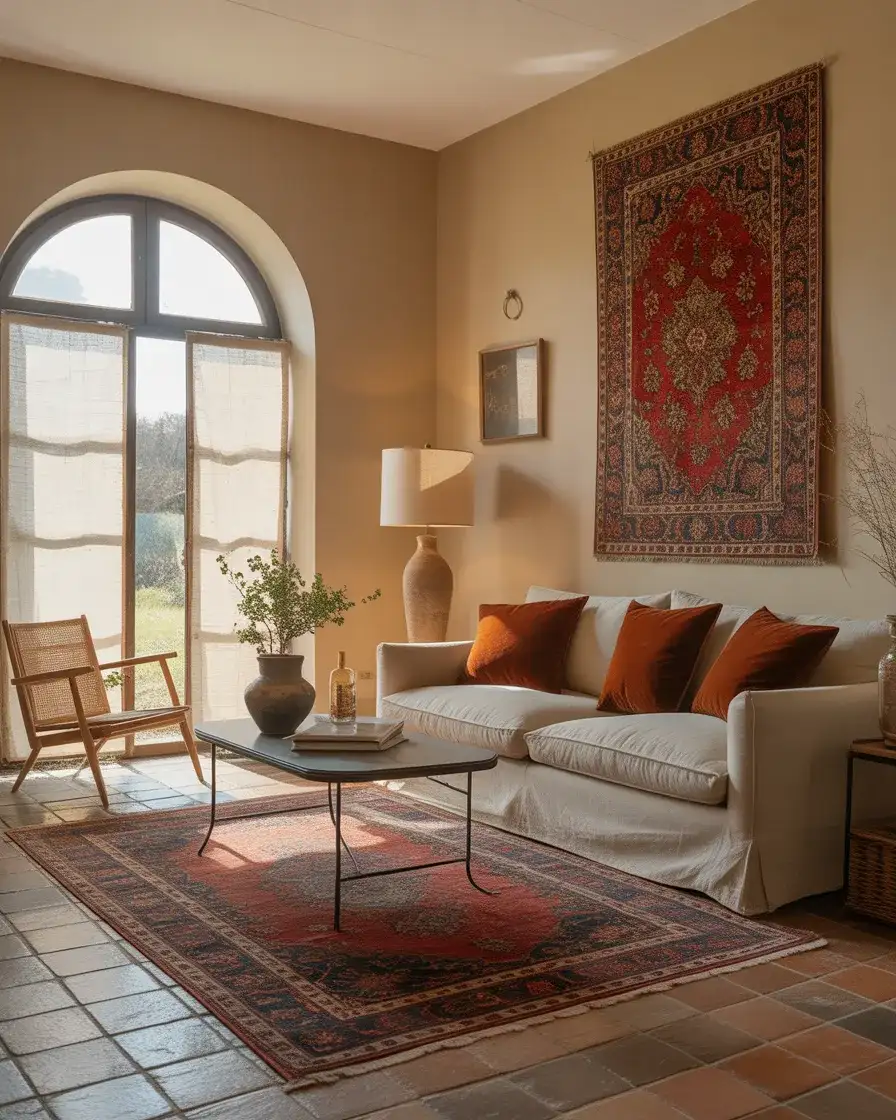
Deep red and burnt rust are among the most distinctly French country tones available—think of the sun-baked terracotta rooftops of Provence, the faded red of antique toile, or the warm burgundy of a glass of local wine. In a living room, these colors work best when handled as accents rather than dominant hues: a red Persian rug, a rust-toned velvet sofa, and a collection of antique Quimper pottery with its characteristic red and mustard decoration. The earthy warmth of these tones makes neutral walls positively glow with reflected color in the afternoon light.
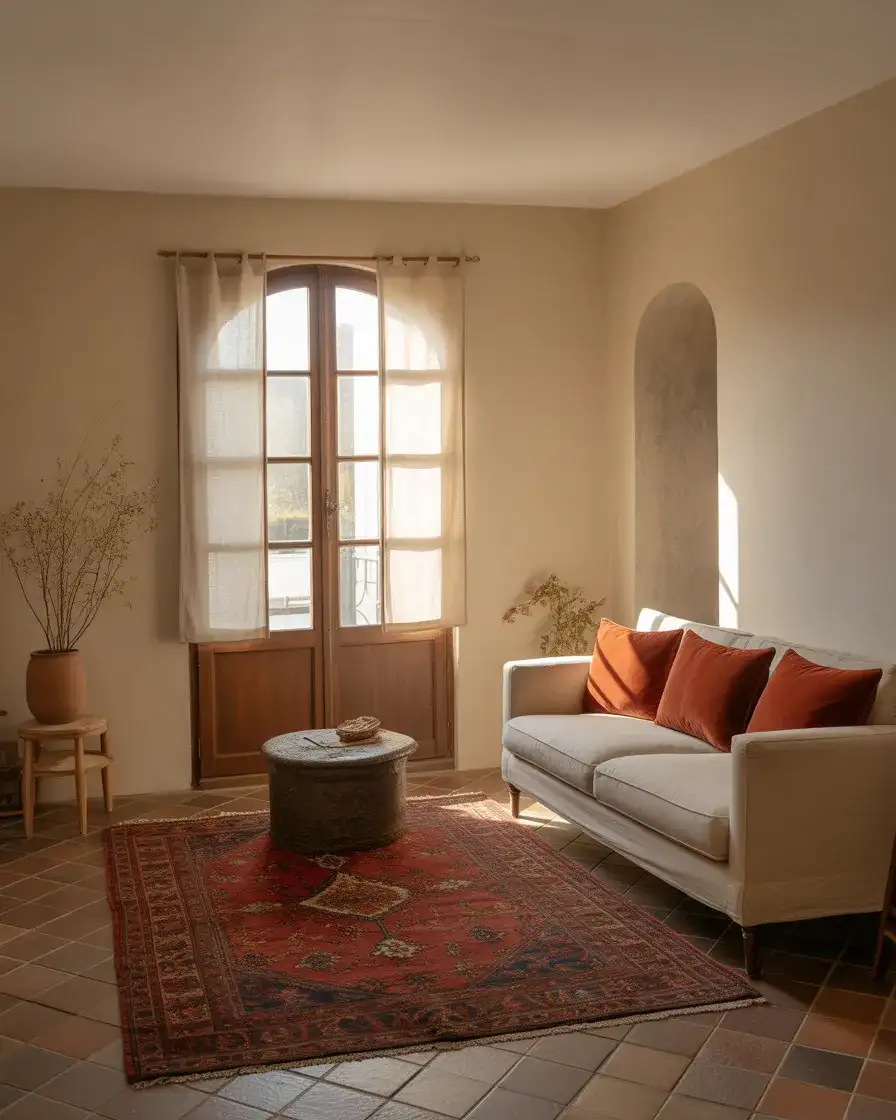
This palette works particularly well in homes across the American Southwest, where the existing landscape—red rock, terracotta earth, dusty sage—already speaks the same chromatic language. In states like New Mexico, Arizona, and Southern California, bringing Provençal red tones indoors feels less like a stylistic choice and more like a natural response to the environment outside. The two traditions share a deep connection to sun-warmed Mediterranean earth that transcends geography and makes the combination feel immediately right.
16. White French Country: The Understated Approach
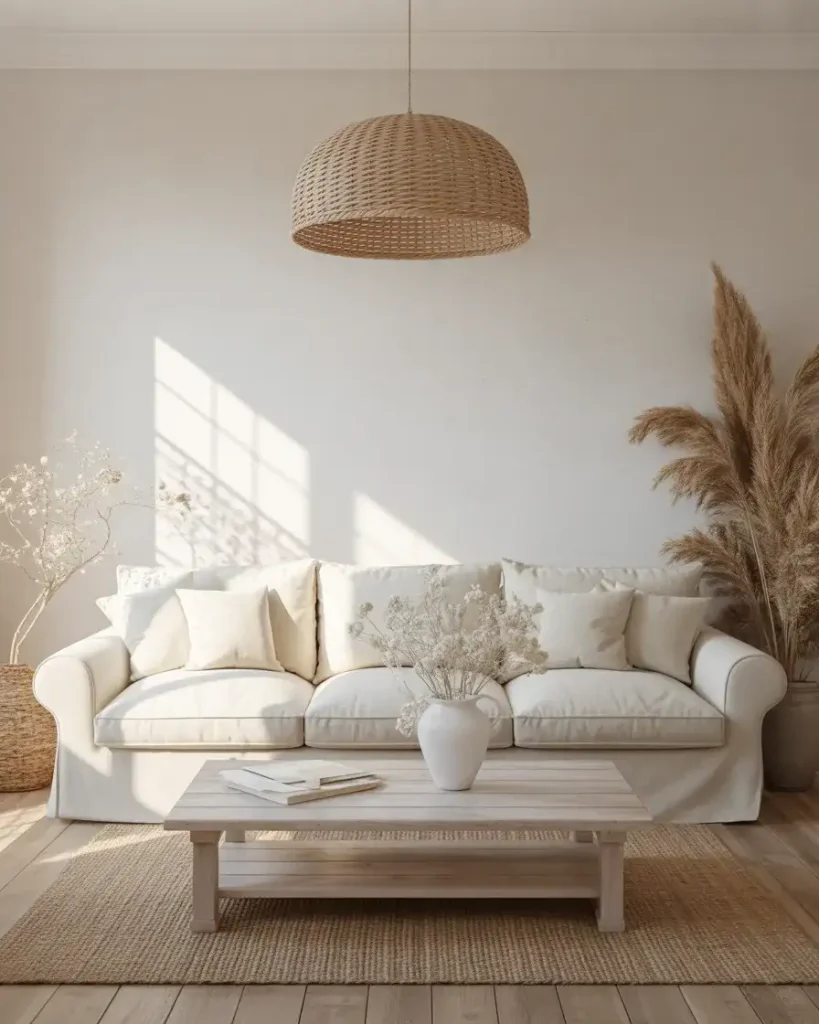
An all-white French country living room isn’t about minimalism—it’s about showcasing texture above everything else. In a room where every surface is some variation of white or cream, the eye immediately gravitates toward the grain of the wood, the nubble of the linen, the roughness of the plaster, and the gloss of a ceramic glaze. This is a deeply considered cozy approach that rewards patience with a space that feels simultaneously serene and full. It’s also one of the most Pinterest-loved aesthetics in this category, perpetually repinned for its calm, gallery-like quality.
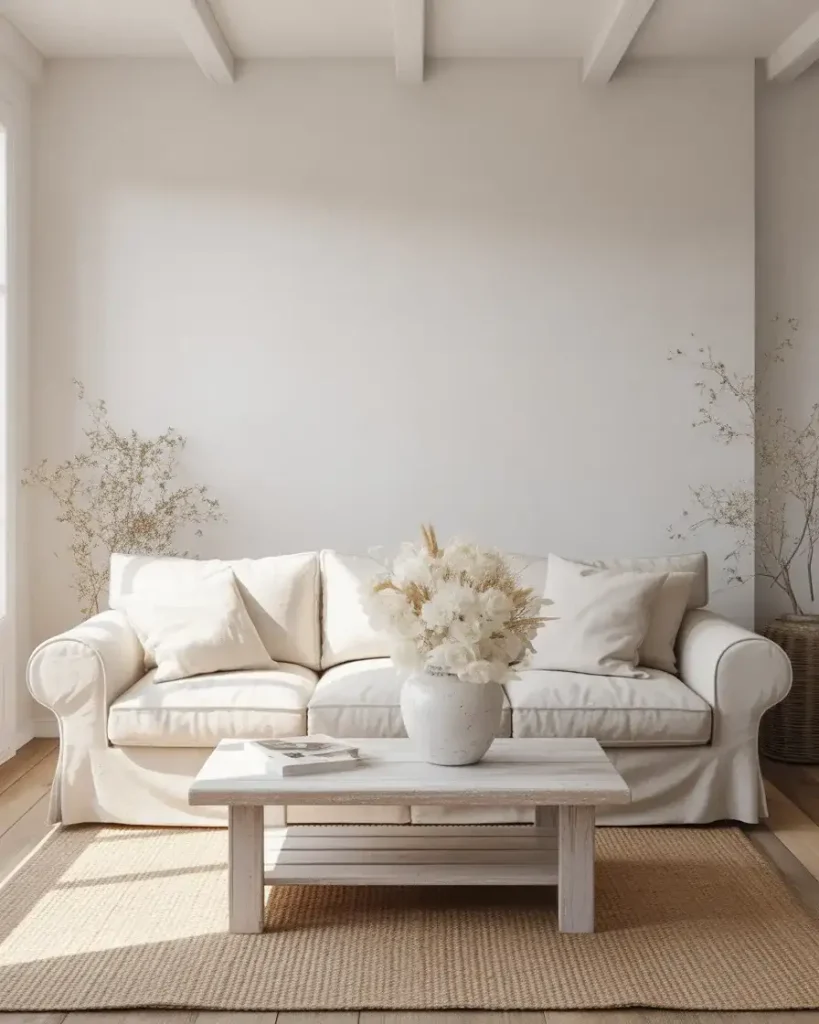
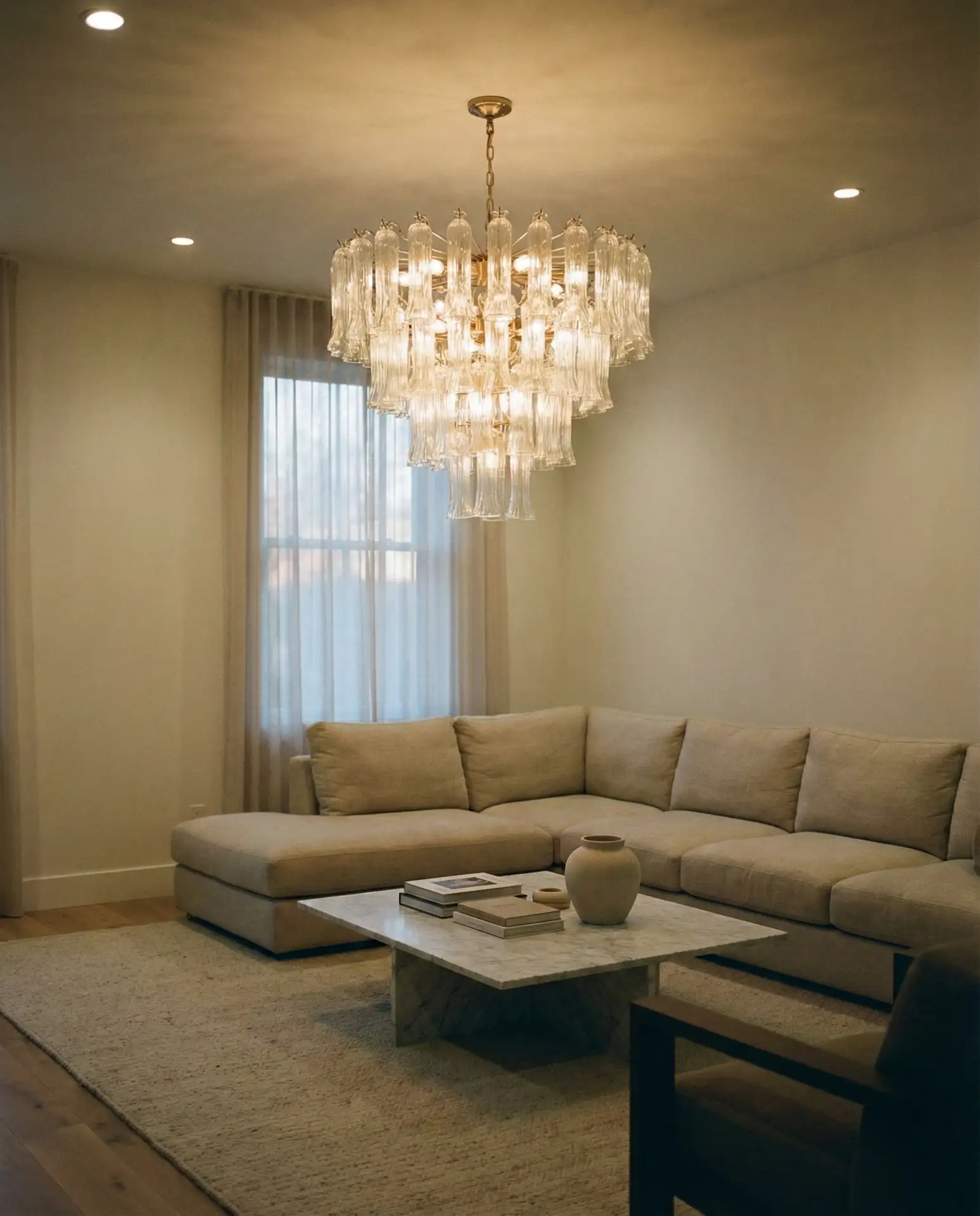
Where most all-white rooms fail is in the treatment of artificial lighting. White rooms need warm-toned bulbs—2700K maximum, ideally 2400K—to avoid appearing stark and clinical after dark. With the right bulb temperature, a white French country room in the evening can actually feel warmer and more enveloping than a room with saturated color, because every surface is bouncing warm amber light back into the space. Use dimmers throughout and layer multiple light sources at varying heights for the best possible result.
17. Rustic Beams and Organic Ceiling Texture
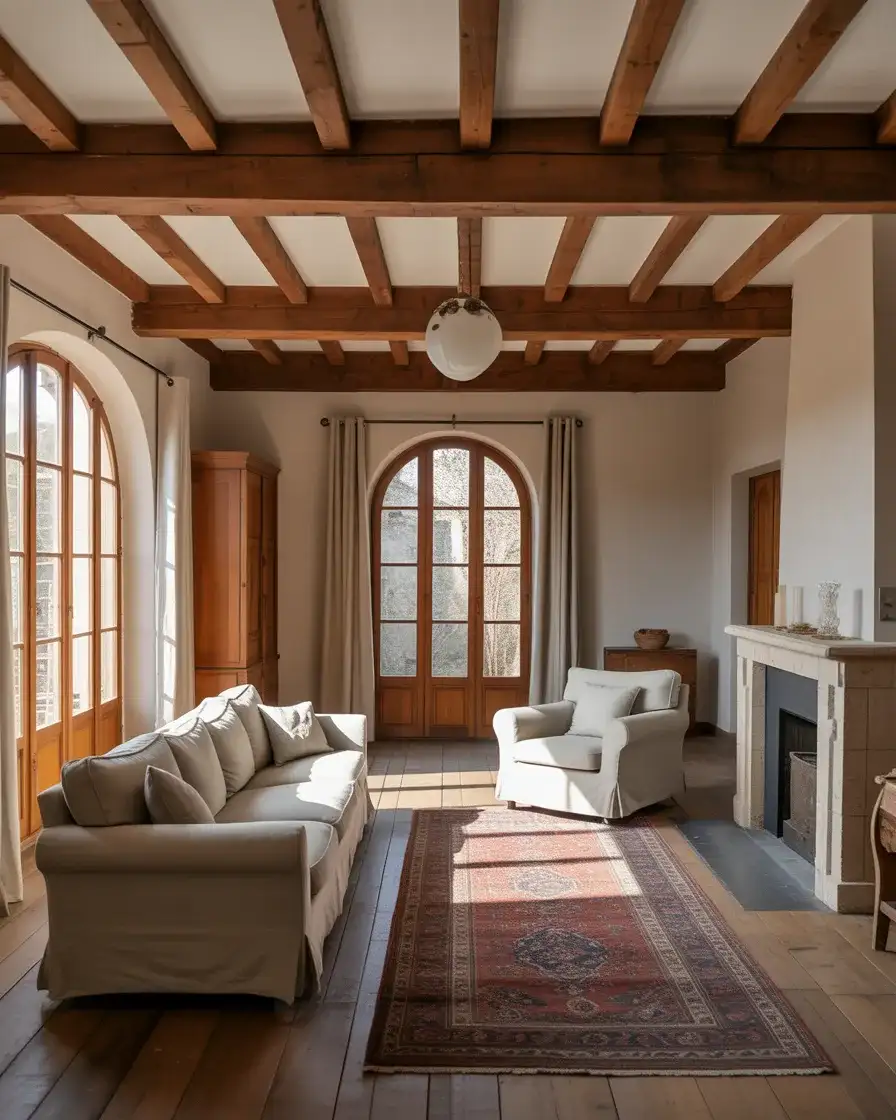
Nothing communicates rustic French country authenticity quite as immediately as a ceiling crossed with aged wood beams. Whether structural or decorative, exposed beams add an architectural weight to a room that expensive furniture can’t replicate—they create height, visual interest, and a sense of historical rootedness that’s immediately compelling. The 2026 approach avoids the knotty-pine-cabin look entirely, favoring beams that are rough-hewn, slightly darkened with age, and left to contrast with whitewashed plaster or lime-washed shiplap on the ceiling between them.
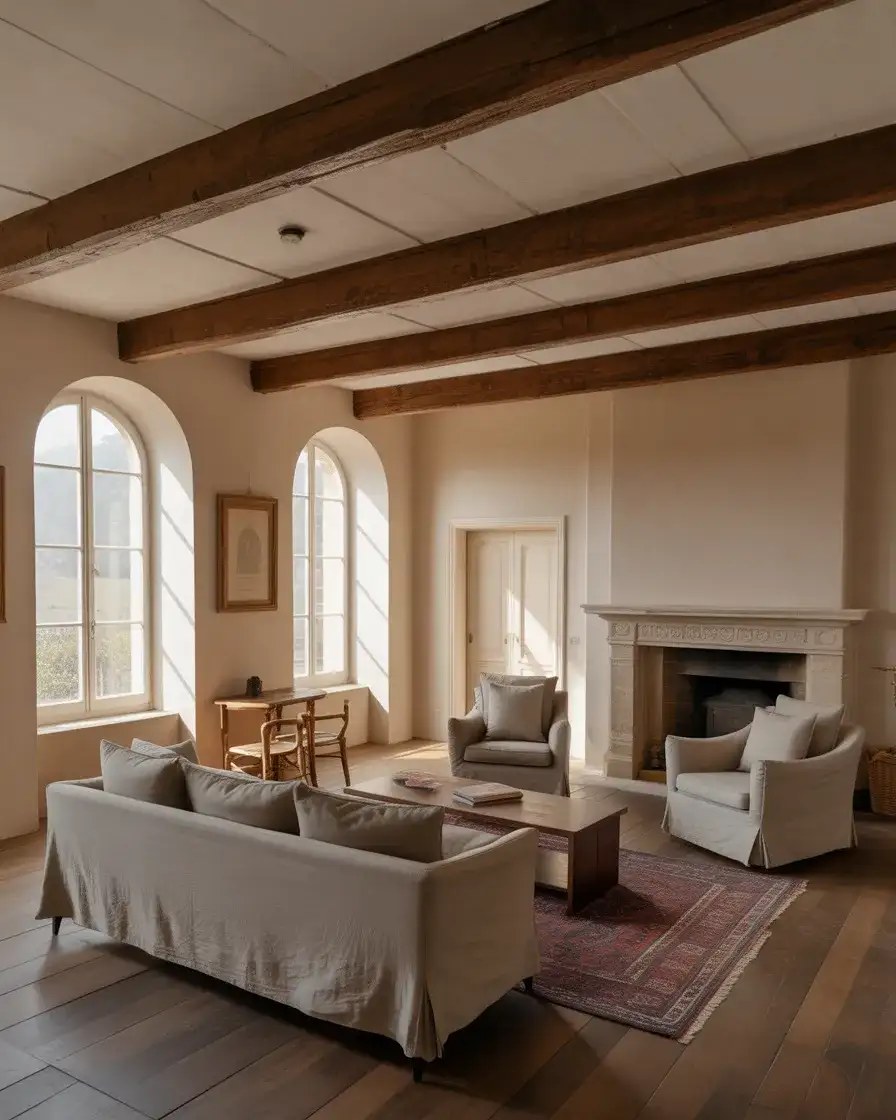
Faux beam installation is significantly more accessible than most homeowners realize—hollow box beams made from lightweight polyurethane or real wood boards can be purchased online and installed by a reasonably handy DIYer in a weekend. The key is in the finishing: sand the edges irregularly, apply a wood stain in a warm walnut or dark oak tone, then dry-brush a thin layer of white or gray paint over the high points and let it dry. The result, at 10–15 feet of height, is effectively indistinguishable from the real thing.
18. The Layered Rug Situation
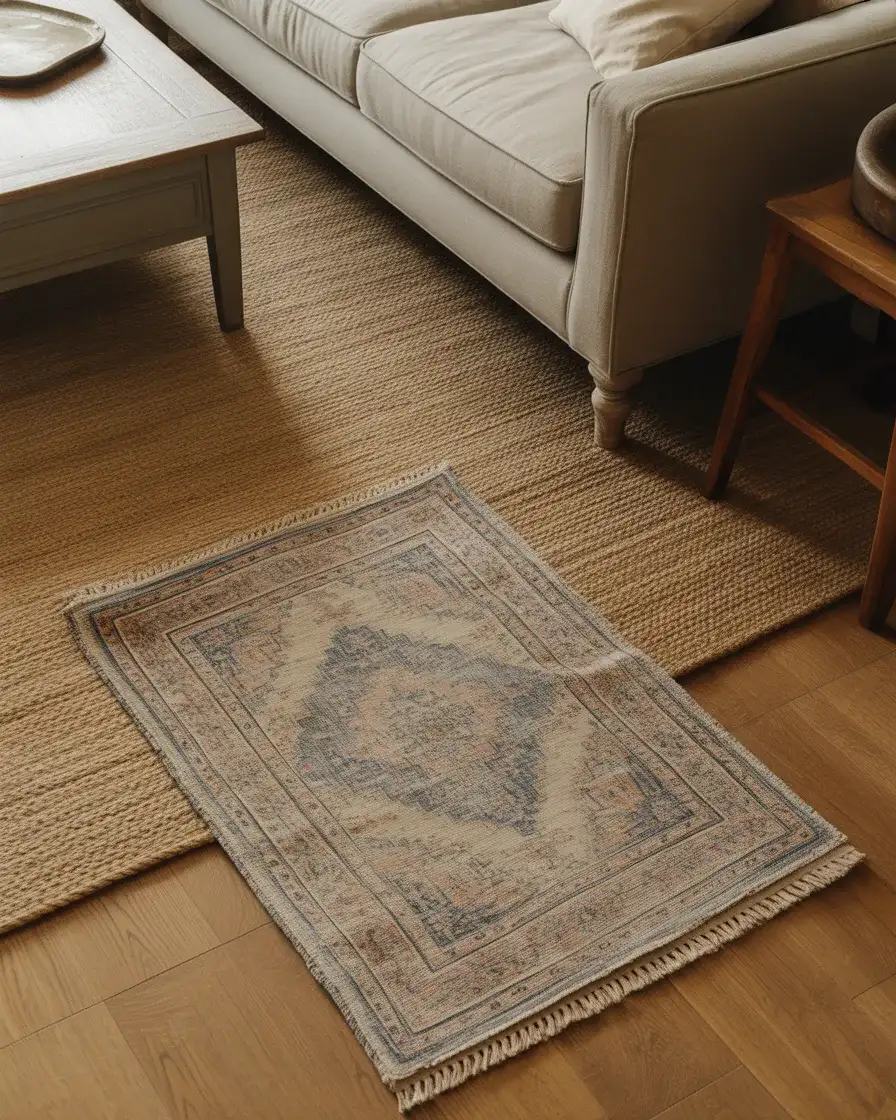
Layering rugs is a cornerstone of French country floor styling and one of those decor ideas that photographs beautifully but also functions exceptionally well in real life. The formula is simple: start with a large, flat-weave jute or sisal base in a natural tone, then layer a smaller antique or vintage Persian, kilim, or Oushak over the top, slightly off-center. The combination adds warmth, visual complexity, and the kind of collected quality that takes a room from nice to genuinely interesting. It also softens hardwood or stone floors in a way that a single rug simply cannot.
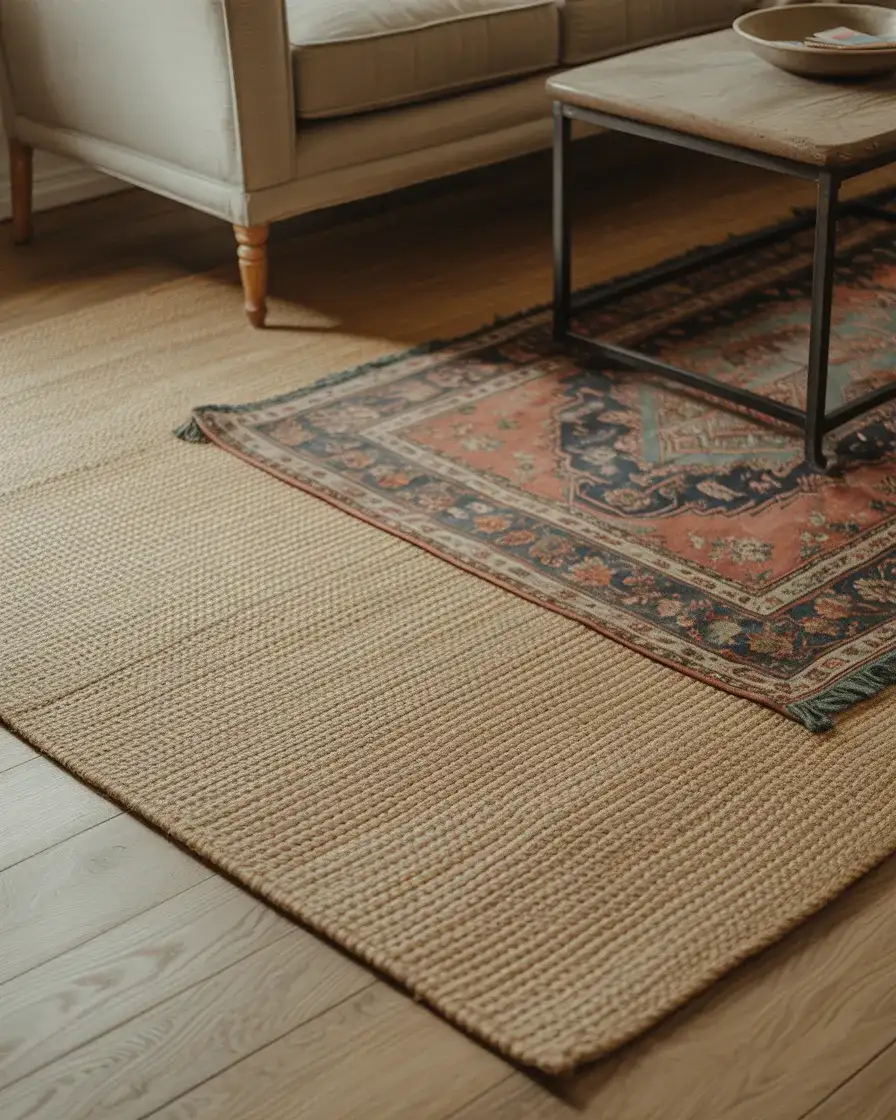
When sourcing antique rugs for this layering approach, eBay, Etsy, and local auction houses are far better bets than interior design retailers—you’ll pay a fraction of the price and get genuinely aged pieces with the faded, worn quality that makes the look work. Flatwear or thin spots in an antique rug are completely acceptable when it’s used as the accent layer; they add authenticity. Use a quality rug pad underneath both layers to keep everything in place and protect your floor underneath.
19. Plaster Walls and Limewash Finishes
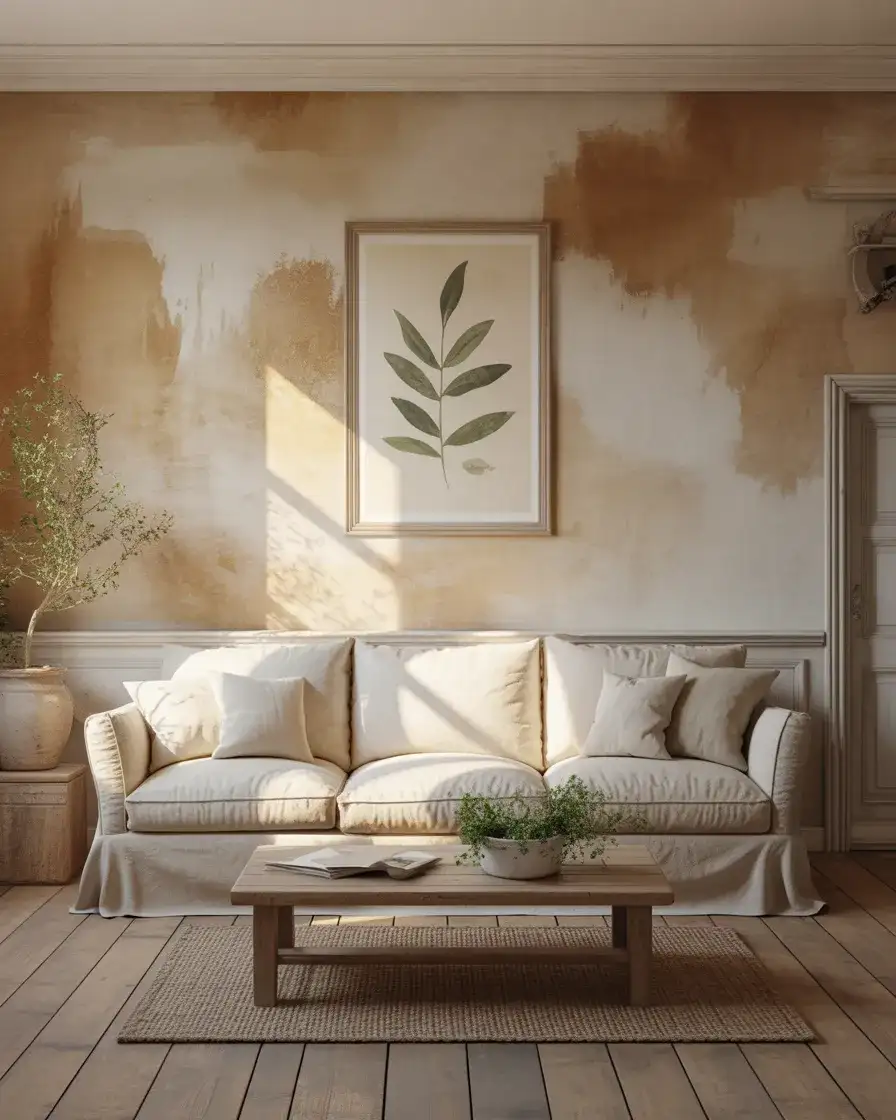
One of the most transformative things you can do to a French country living room is replace flat paint with a limewash or venetian plaster wall finish. These treatments create a natural depth and variation in the wall surface that flat paint simply cannot replicate—the color shifts subtly as the light changes throughout the day, giving the room a quality that feels genuinely old. It’s the single biggest inspiration shift many renovation accounts feature, because the before-and-after difference is so dramatic. The rustic imperfection it creates is precisely the point.
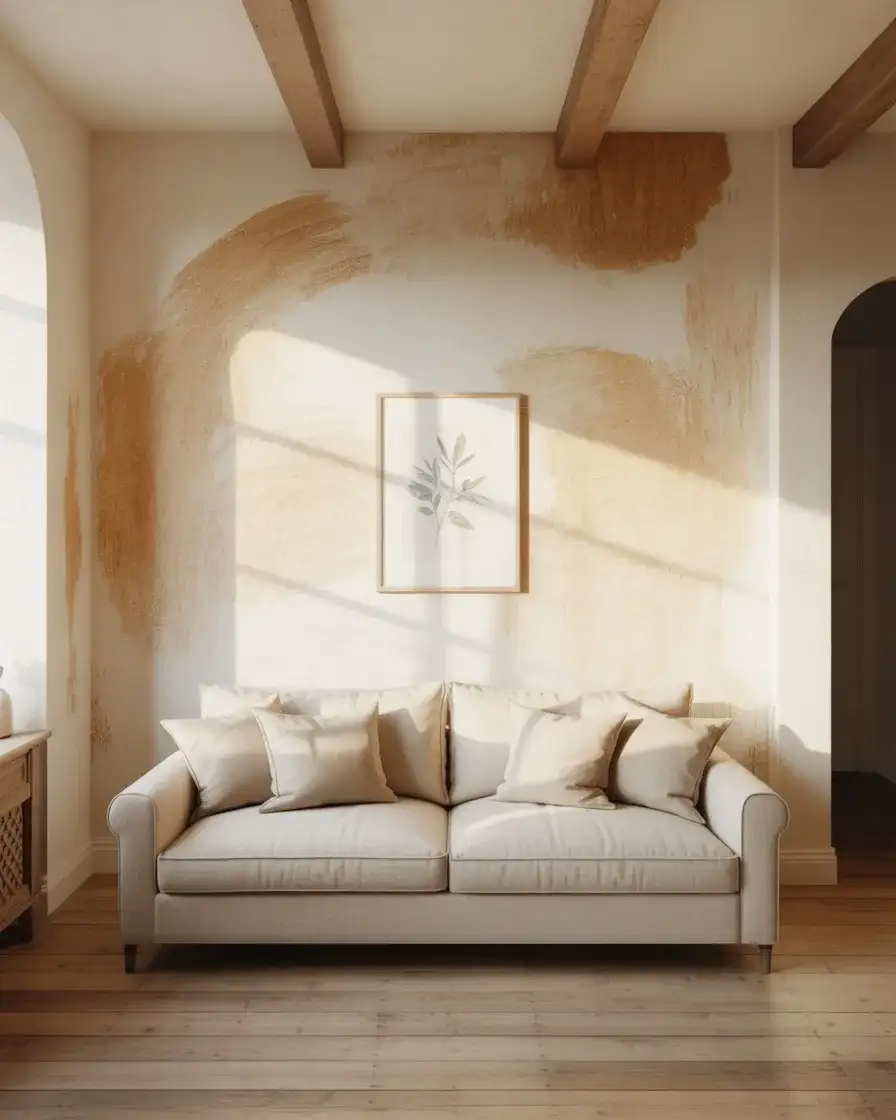
Limewash paint is more achievable as a DIY project than most people expect. Brands like Romabio, Portola Paints, and Vasari all offer premixed limewash paints that can be applied directly over existing painted drywall with a large natural-bristle brush using a cross-hatching technique. The whole process for one room typically takes a weekend and costs $200–$400 in materials—a fraction of what a professional venetian plaster application would cost. The result doesn’t require any special maintenance and actually gets more beautiful as it continues to cure and age.
20. A Reading Nook Carved from the Corners
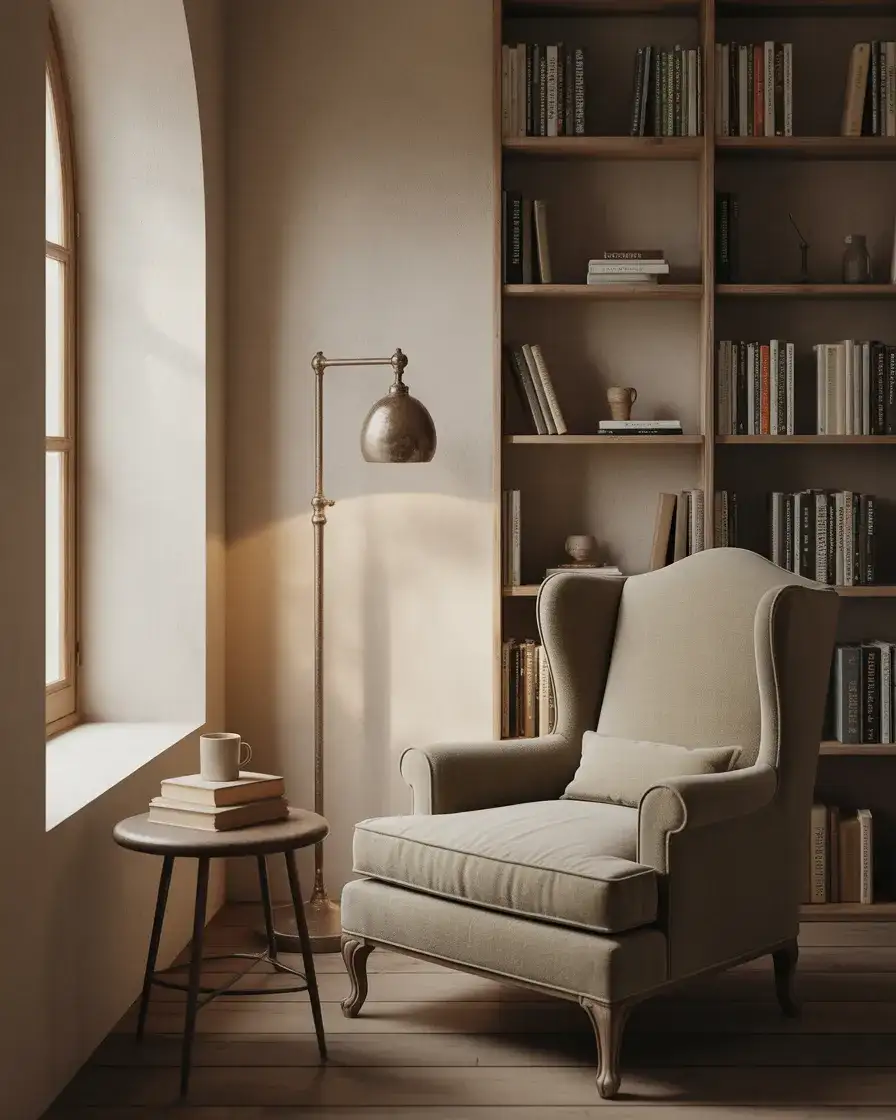
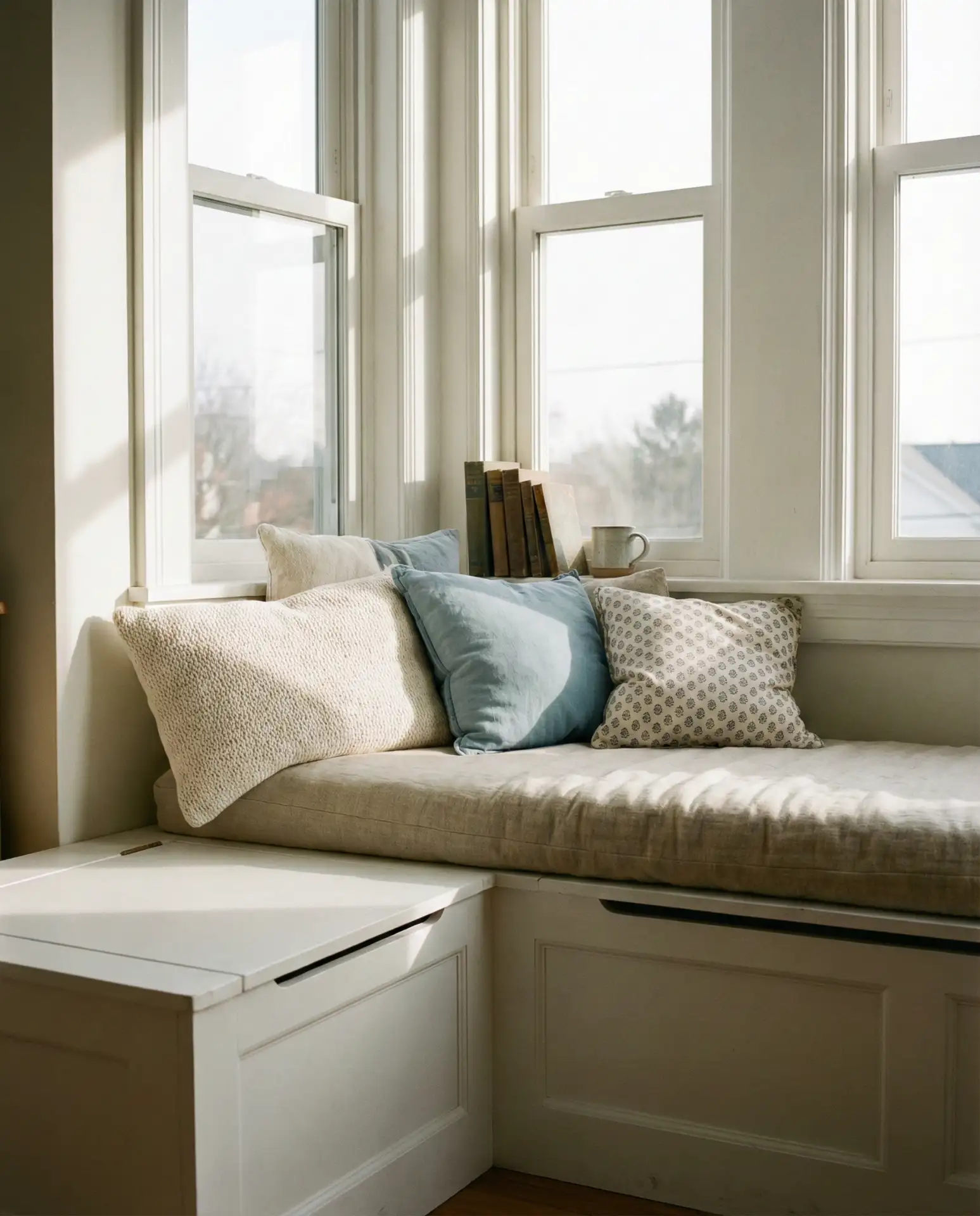
Every French country living room benefits from having at least one quiet corner given over entirely to reading and contemplation. This might be a window seat with cushions and a stack of books, a deep wingback chair positioned near the bookshelf with a floor lamp angled just right, or a small settee tucked under a sloped ceiling with a tray table and a candle. The reading nook is a cozy declaration of intent—it says this is a room for living in slowly, and it immediately makes the whole space feel more generous and thoughtfully designed. It’s one of the most-saved decor ideas on Pinterest for good reason.
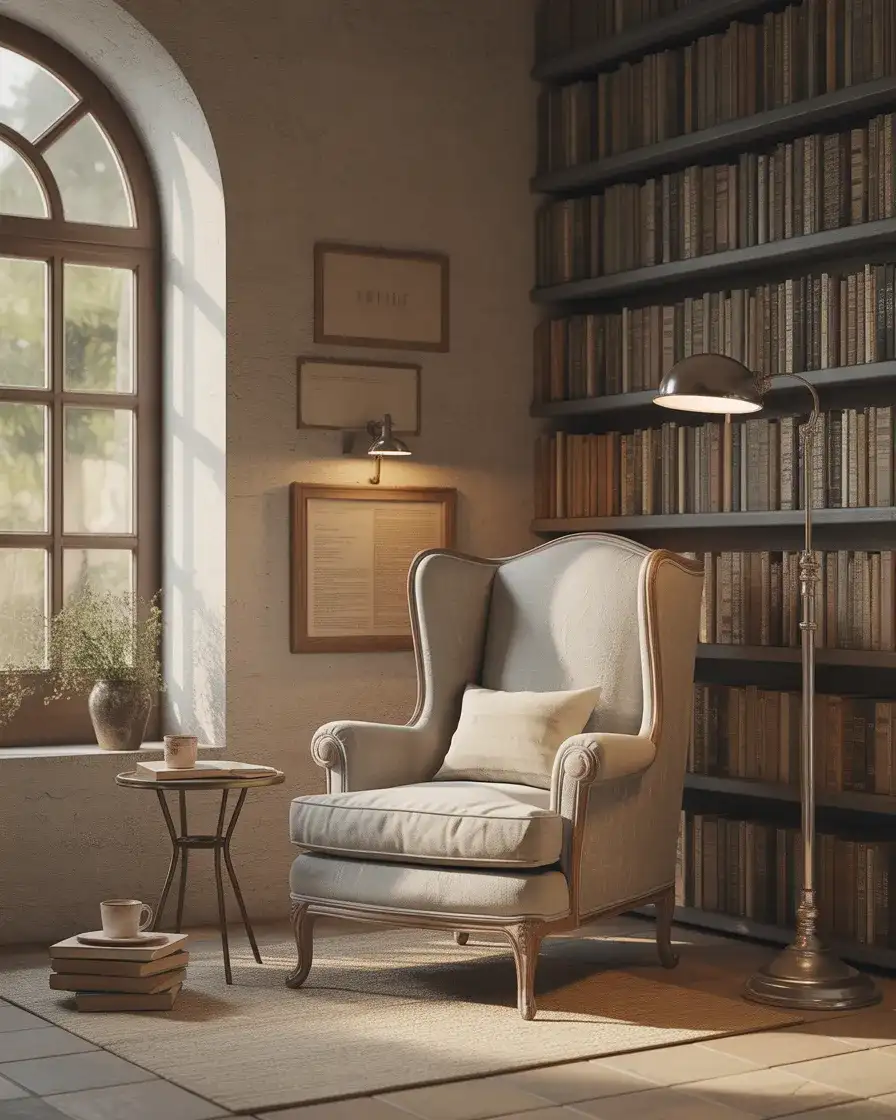
The window seat version of this nook is one of the most rewarding DIY projects in French country decorating. A simple box frame built from 2x4s and a sheet of plywood, fitted with a 4-inch foam cushion upholstered in ticking stripe or linen, and positioned under an existing window creates the impression of a built-in architectural feature. Add trim to match the existing moldings, paint it out in the same color as the walls, and most visitors will assume it was always there. Total material cost is typically under $300.
21. Collected Ceramics and Earthenware Displays
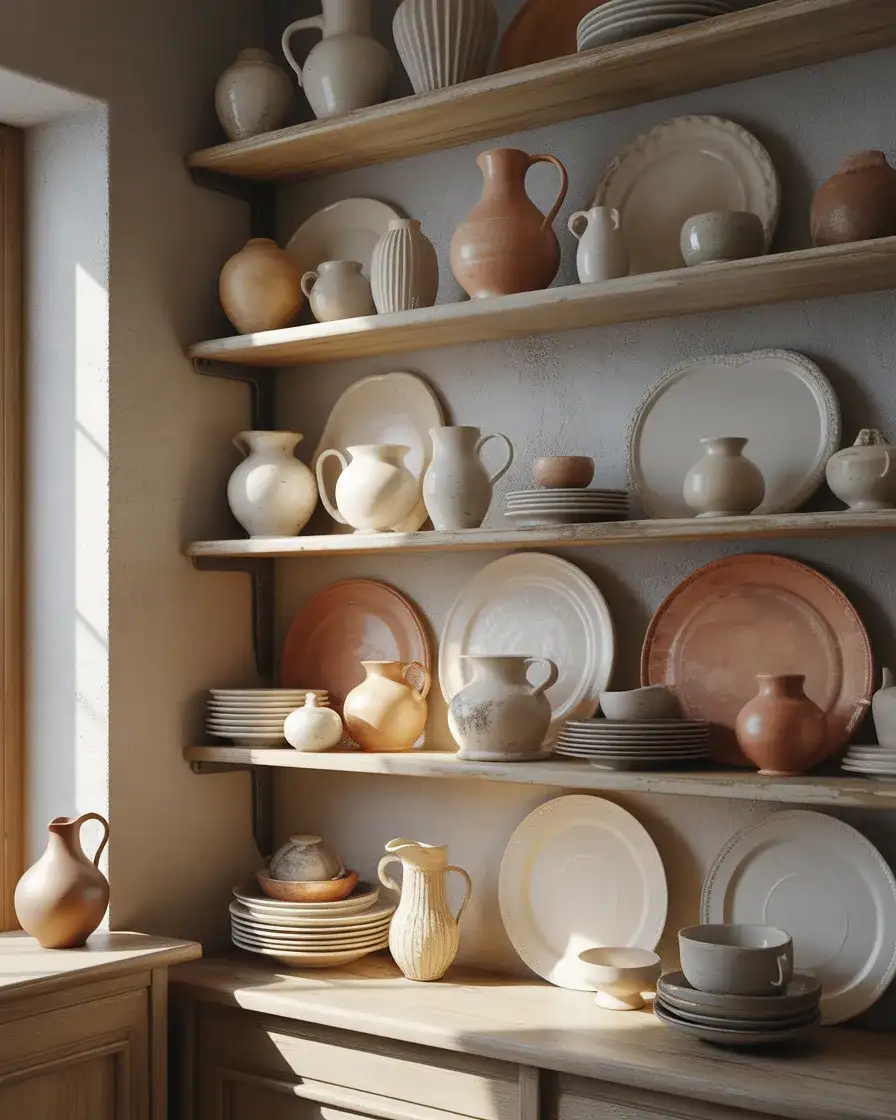
Nothing roots a French country living room in its aesthetic more convincingly than a well-assembled collection of ceramics, earthenware, and pottery. Think creamy white ironstone pitchers, aged terracotta vessels, faience plates with hand-painted florals, and simple studio pottery in earth tones displayed on open shelves, a mantelpiece, or a dedicated étagère. The collection doesn’t need to be expensive or curated all at once—the best collections grow over time, mixing thrift shop finds with market discoveries and the occasional thoughtful gift. The furniture and objects in a French country room tell stories, and ceramics are particularly eloquent narrators.
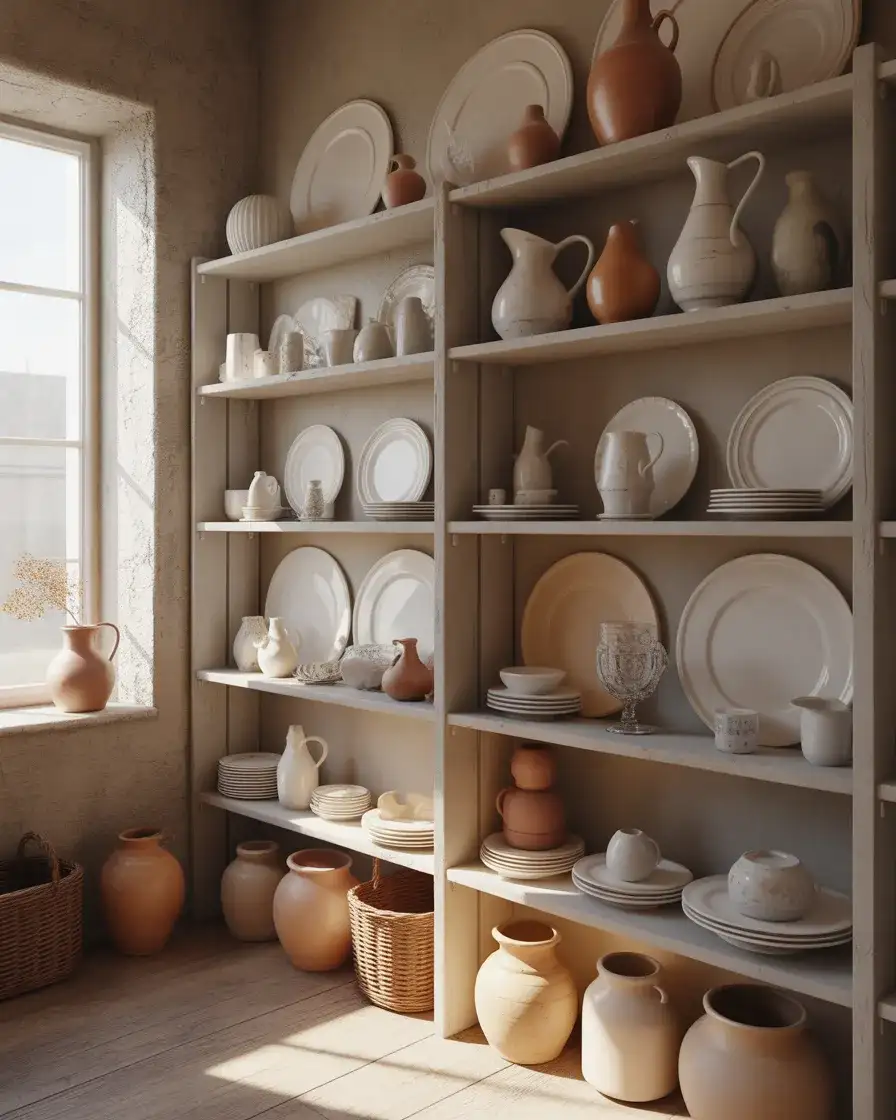
For American collectors building this kind of display on a budget, Goodwill and Salvation Army thrift stores in agricultural or suburban areas—particularly in the Midwest and South—often yield exactly the right pieces: heavy cream ironstone, thick earthenware crocks, and hand-decorated platters that were standard farmhouse kitchen items through the mid-20th century. These are frequently undervalued at thrift prices and respond beautifully to display in a French country context, where their utilitarian origins are part of their appeal.
22. The Art of the French Country Color Scheme
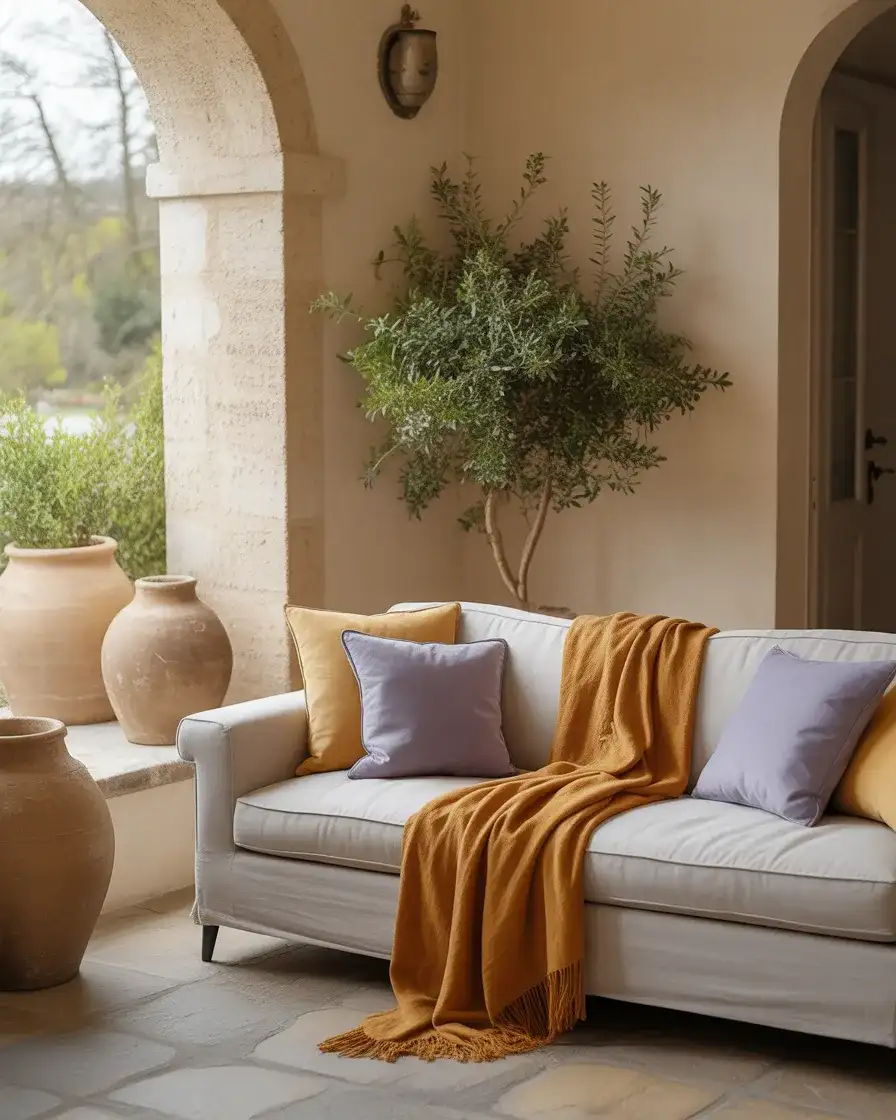
A colors conversation about French country design always comes back to the same core principles: warm rather than cool, faded rather than saturated, and complex rather than simple. The classic palette draws from the Provençal landscape—lavender blue, sunflower gold, dusty olive, warm stone, and faded terracotta—but the 2026 interpretation adds slightly more variety, allowing for richer moody tones alongside the traditional softness. The key color schemes that work best are built on a warm neutral base (creamy white, warm greige, or pale stone) with one or two accent tones that feel sun-bleached rather than freshly painted.
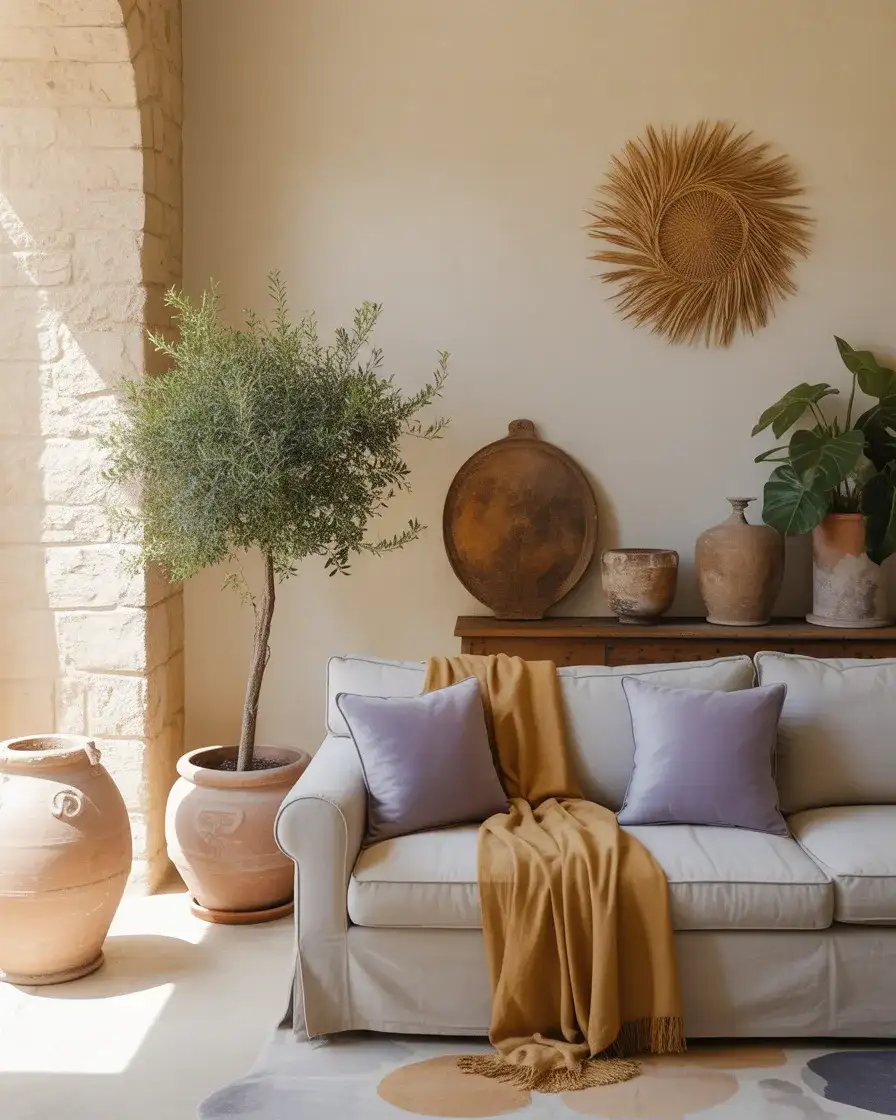
Interior designers who specialize in this aesthetic typically recommend building your color scheme starting with the rug rather than the walls. A vintage or antique rug—particularly an Oushak or French Savonnerie-style piece—already contains a perfectly balanced French country palette that took its maker years to develop. Pull three or four tones from the rug’s field and border, apply them to walls, upholstery, and accessories, and you’ll have a scheme that feels cohesive in a way that’s almost impossible to achieve by picking colors from paint chips in isolation.
23. Cottage-Style Elements in an Urban Context
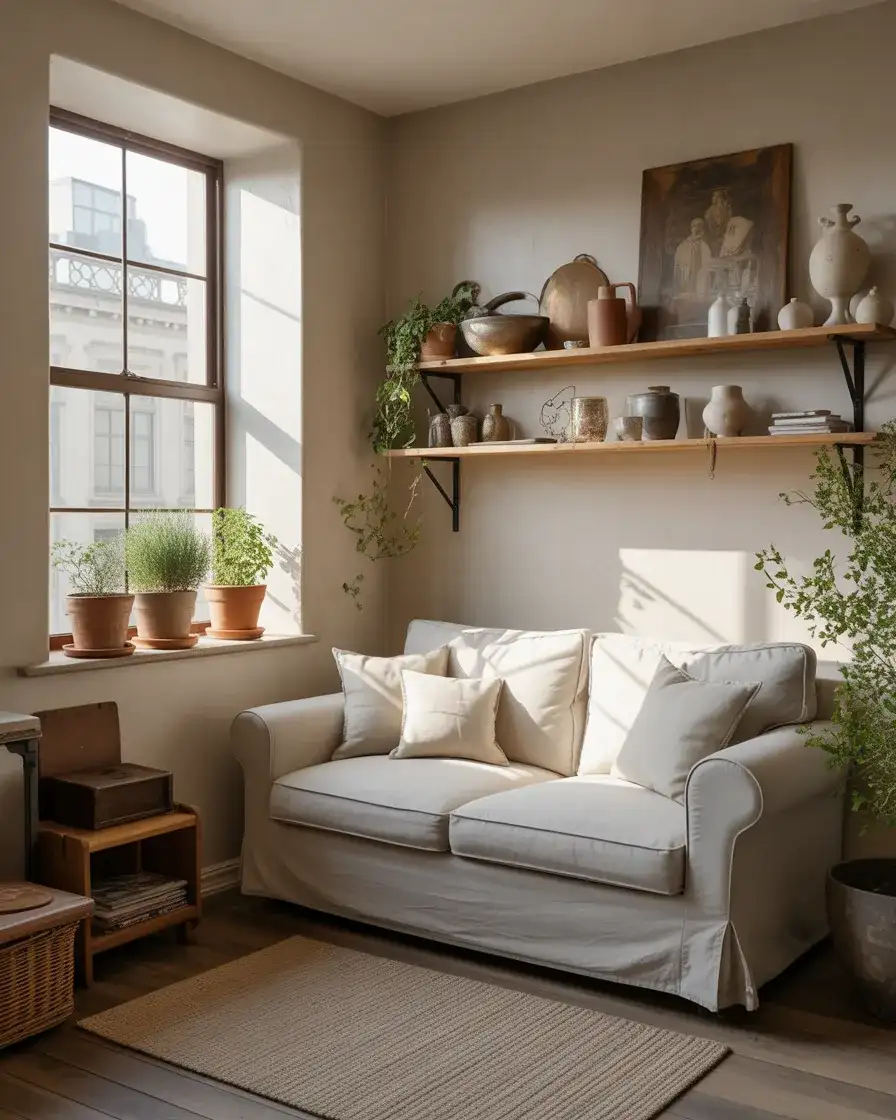
Decor ideas cottage style and French country decor ideas share enough DNA that urban apartment dwellers can borrow freely from both without the result looking confused. The trick is scale and restraint—a single genuine antique piece, one strong textural element like a stone-topped console or a set of café-style shutters, and a palette that nods to the French countryside without requiring actual countryside. Even in a city studio, a linen slipcovered sofa, a collection of ironstone on a floating shelf, and a window box of trailing herbs in terracotta pots create a convincing pocket of this world.
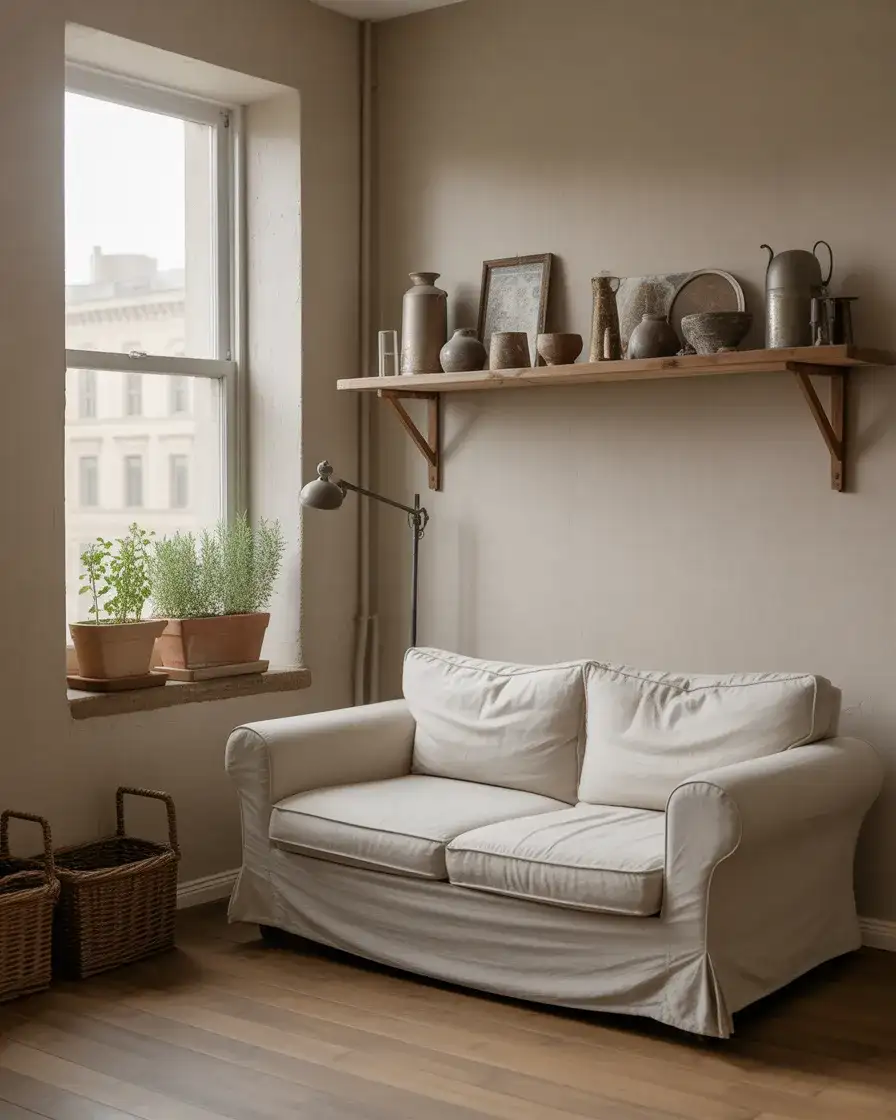
The most common mistake renters make when attempting this style is over-decorating to compensate for architectural neutrality. In an apartment with flat white walls, builder-grade floors, and standard fixtures, the instinct is to add everything at once. But French country is fundamentally about editing down to the most meaningful pieces. Choose one element to commit to fully—a beautiful sofa, a genuine antique mirror, or a set of properly styled shelves—and build slowly outward from that anchor rather than trying to establish the complete look all at once.
24. The Perfectly Imperfect Living Room: Putting It All Together
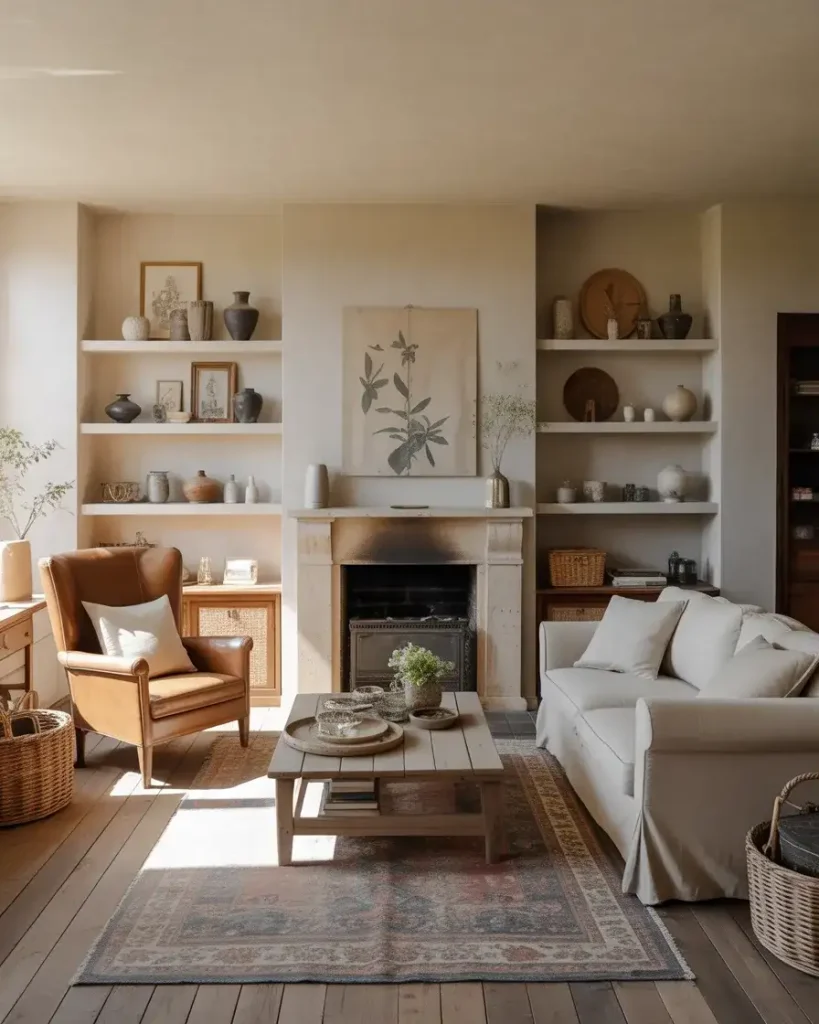
The most magnetic French country living rooms in 2026 are the ones that look like they weren’t trying—where the eclectic mix of furniture, the faded textiles, the collected objects, and the slightly irregular wall color add up to something that feels genuinely inhabited over time rather than assembled from a shopping cart. Getting there requires giving yourself permission to love imperfection: the chair with the worn arm, the rug with the thin patch, and the curtain that doesn’t hang perfectly level. These are not problems to fix. They are, in the truest French country tradition, the entire point.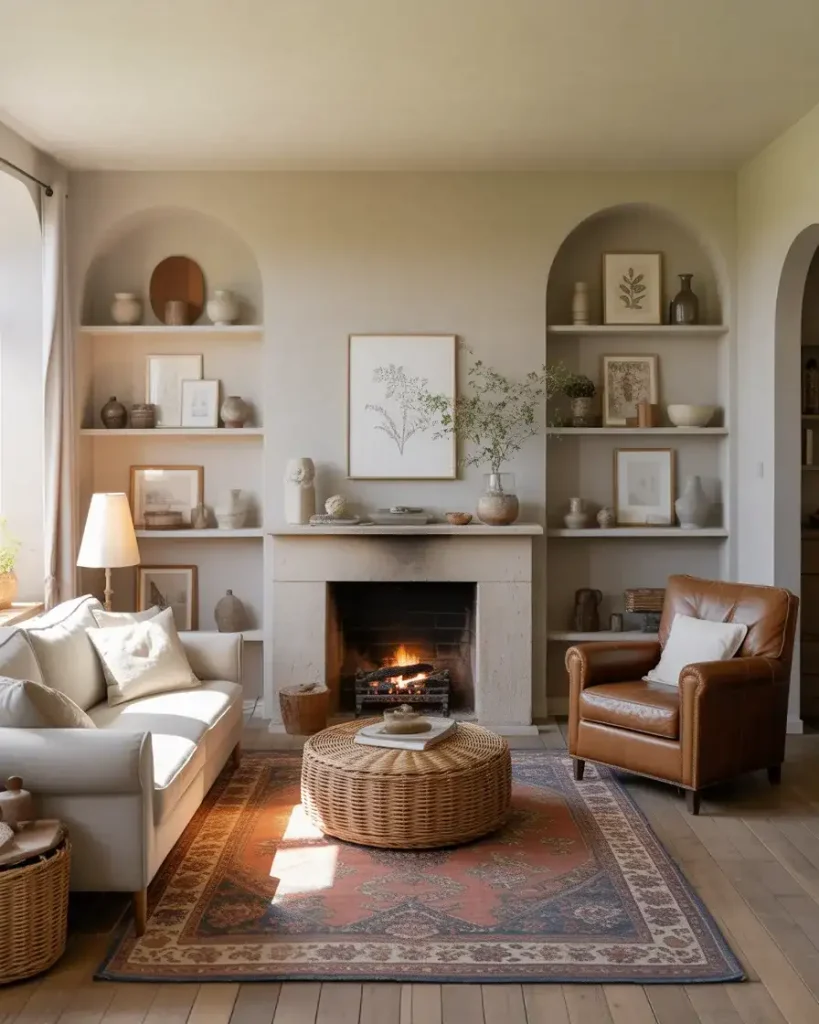
Think of building your French country living room the way a good cook thinks about building a recipe—with a reliable foundation, quality core ingredients, and a genuine willingness to taste as you go and adjust. The palette, the furniture bones, the textile layering, and the displayed objects should evolve organically over time, because that’s exactly how the most beautiful versions of this style have always been made: slowly, deliberately, and with real feeling for what makes a space worth living in.
Conclusion
These ideas are just the beginning—the French country living room is a style that rewards ongoing discovery, and there’s always a new find at an estate sale, a different arrangement to try, or an unexpected color combination waiting to make you fall in love with your space all over again. We’d love to know which of these ideas is calling to you most right now: drop your thoughts, questions, or photos of your own French country rooms in the comments below, and let’s talk about what’s inspiring you in 2026.