Gallery walls remain one of the most personal and transformative ways to fill empty vertical space, and in 2026, homeowners are leaning into bold, expressive arrangements that tell stories rather than just fill voids. Pinterest users are searching for fresh takes on this classic decor move—mixing frames, textures, and unexpected objects to create walls that feel curated, not catalog-ordered. Whether you’re working with a narrow hallway, a living room above the sofa, or that awkward stretch of wall near the stairs, there’s a gallery wall strategy that fits your style and space. This guide walks through inspiring ideas that blend creativity, function, and personality.
1. Eclectic Frame Mix with Vintage Finds

This approach celebrates mismatched frames in different finishes—brass, black, wood, and white—arranged around a central vintage-inspired piece like a botanical print or an old map. The eclectic energy comes from layering eras and styles without forcing symmetry. It works beautifully in living rooms or dining spaces where you want the wall to spark conversation and reveal your collecting habits over time. 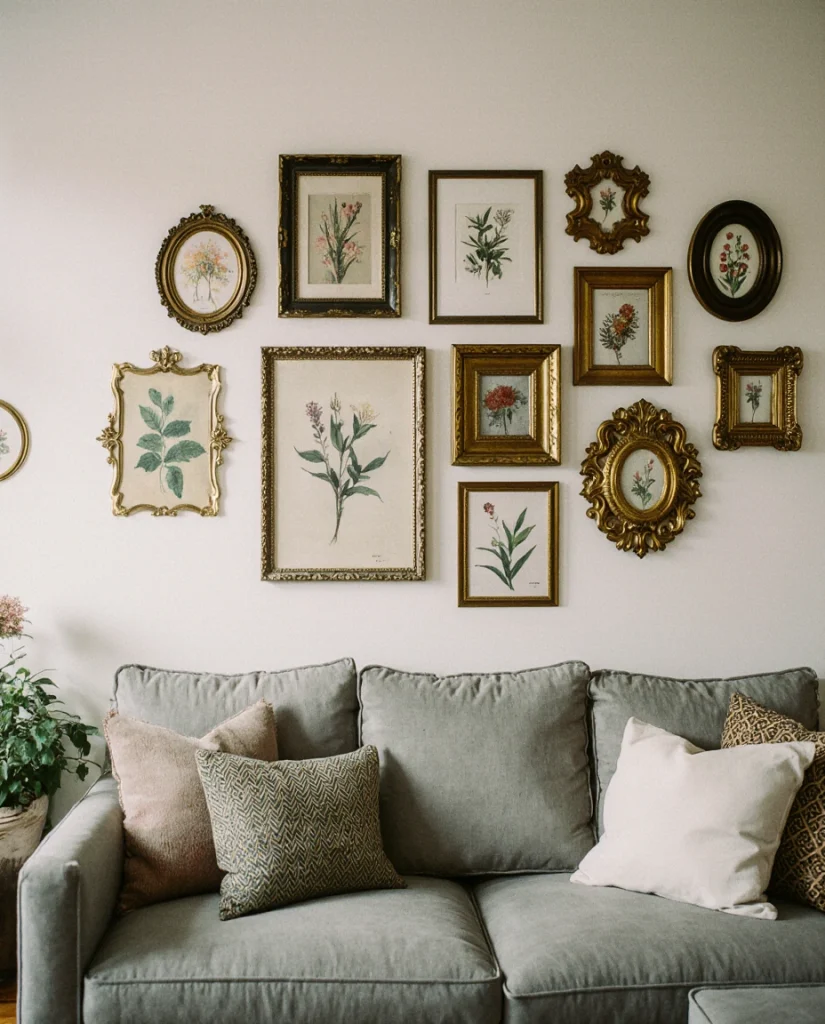
Start with your largest or most meaningful piece and build outward, leaving a few inches between frames for visual breathing room. In the Midwest and Northeast, homeowners often anchor these walls with inherited family pieces or flea market scores, giving the arrangement an heirloom quality that feels earned rather than staged. The key is to avoid over-planning—let the collection grow organically as you find new pieces that speak to you.
2. Monochrome Photo Wall in Black Frames
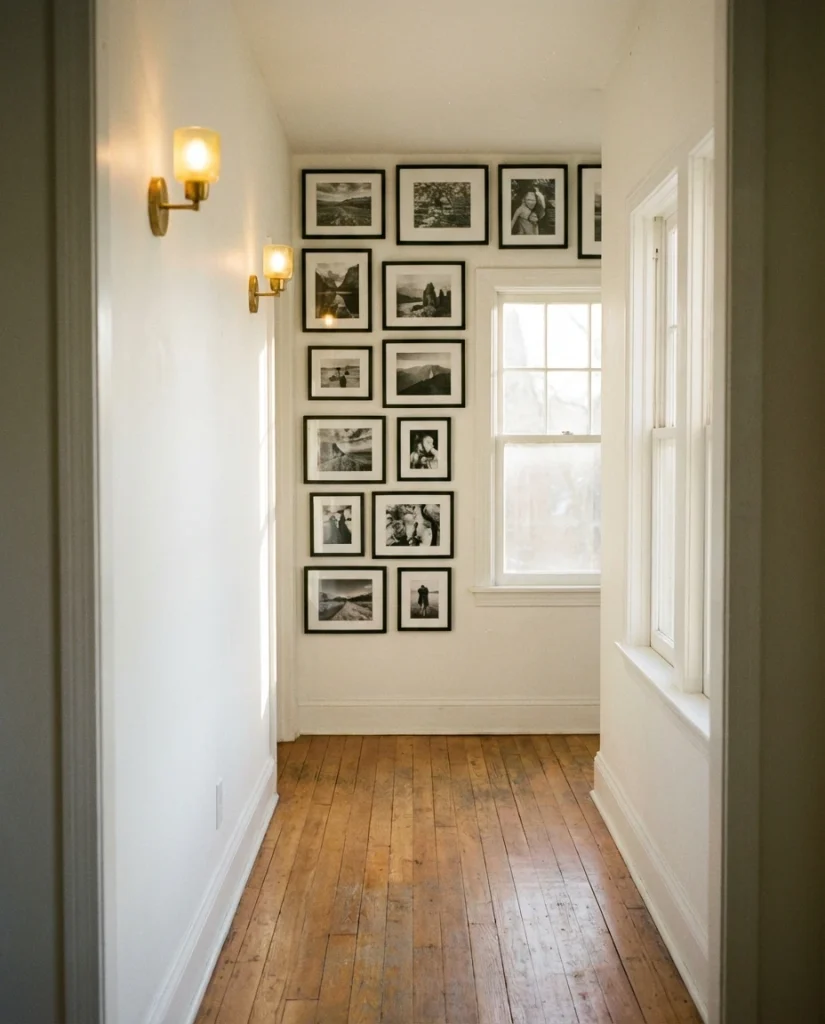
A grid of black-and-white personal photos in identical black frames delivers a clean, gallery-quality look that works in modern and traditional homes alike. This style is especially popular in hallways and staircases, where repetition creates rhythm and the uniform framing keeps the focus on the images themselves. It’s a refined way to showcase family photos without the visual clutter of mixed colors and sizes.
This setup thrives in high-traffic areas where people naturally pause—entryways, landing walls, and the corridor between bedrooms. A common mistake is hanging frames too far apart; aim for 2–3 inches of spacing to maintain cohesion. Many American families use this format for milestone photos, creating a visual timeline that grows as kids age or as the family expands.
3. Colorful Art Grid for Playful Spaces
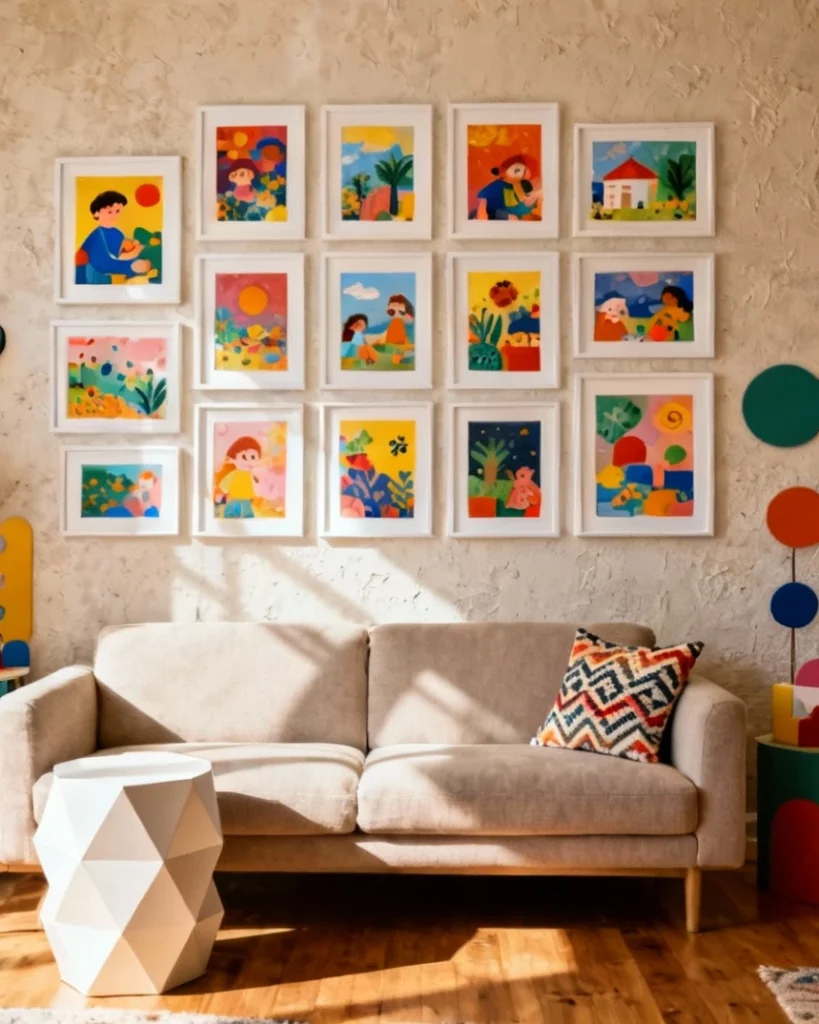
Inject energy into a family room or playroom with a tightly spaced grid of colorful prints—think abstract shapes, bold typography, or illustrated animals. The uniformity of the grid keeps the arrangement from feeling chaotic, while the varied hues add personality. This style is ideal for homes with young kids or anyone who wants a wall that feels optimistic and alive.
Budget-conscious decorators often print digital art from Etsy or independent artists and use affordable IKEA frames to keep costs under $200 for a full wall. The grid format is forgiving—you can start with four or six prints and expand over time. In open-plan homes, this becomes a cheerful focal point that balances neutral furniture and helps define the living zone.
4. Floating Shelves with Layered Frames

Instead of hammering dozens of nails, install two or three shelves and layer frames of different sizes, leaning them against the wall. This method is flexible—you can swap pieces seasonally or whenever inspiration strikes. Add small potted plants, candles, or thrifted objects between frames to build dimension and keep the display from feeling too precious. 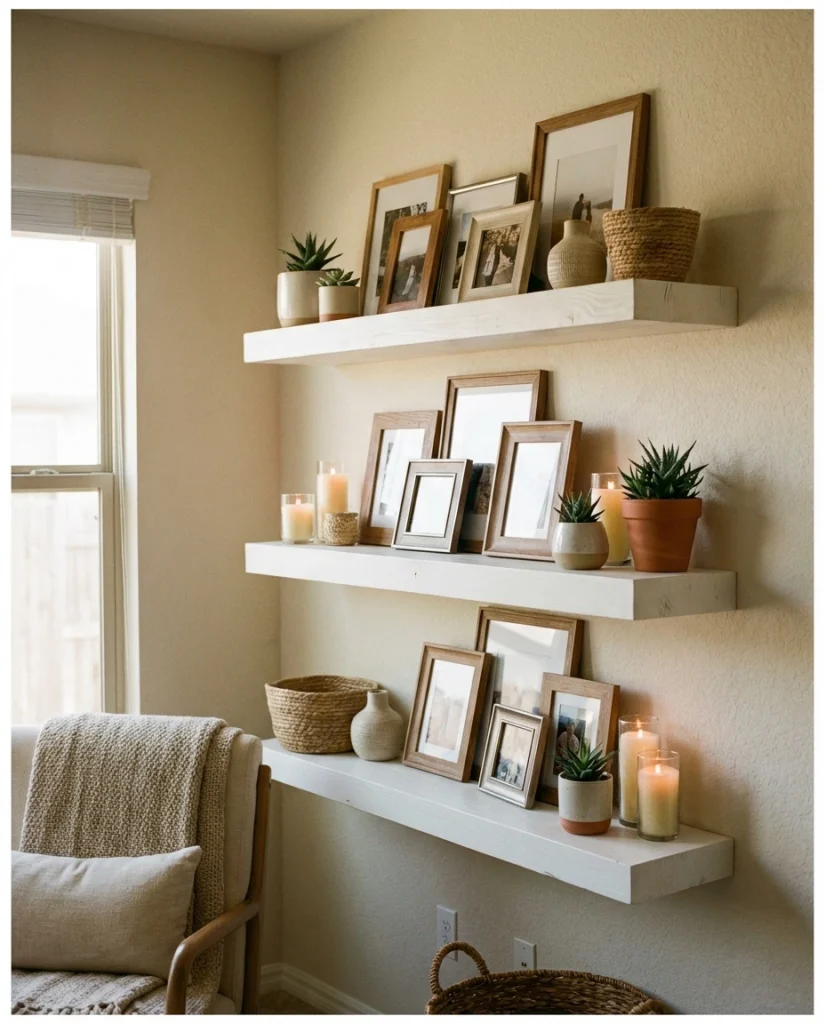
This approach works best in bedrooms, home offices, or above a console table in the entryway. It’s especially popular in rental-friendly decorating, since shelf installation requires fewer holes than a traditional gallery wall. A practical tip: use museum putty or small easel stands to keep frames from sliding, especially if you live in an area prone to minor earthquakes or have active pets.
5. Travel Photo Gallery Wall
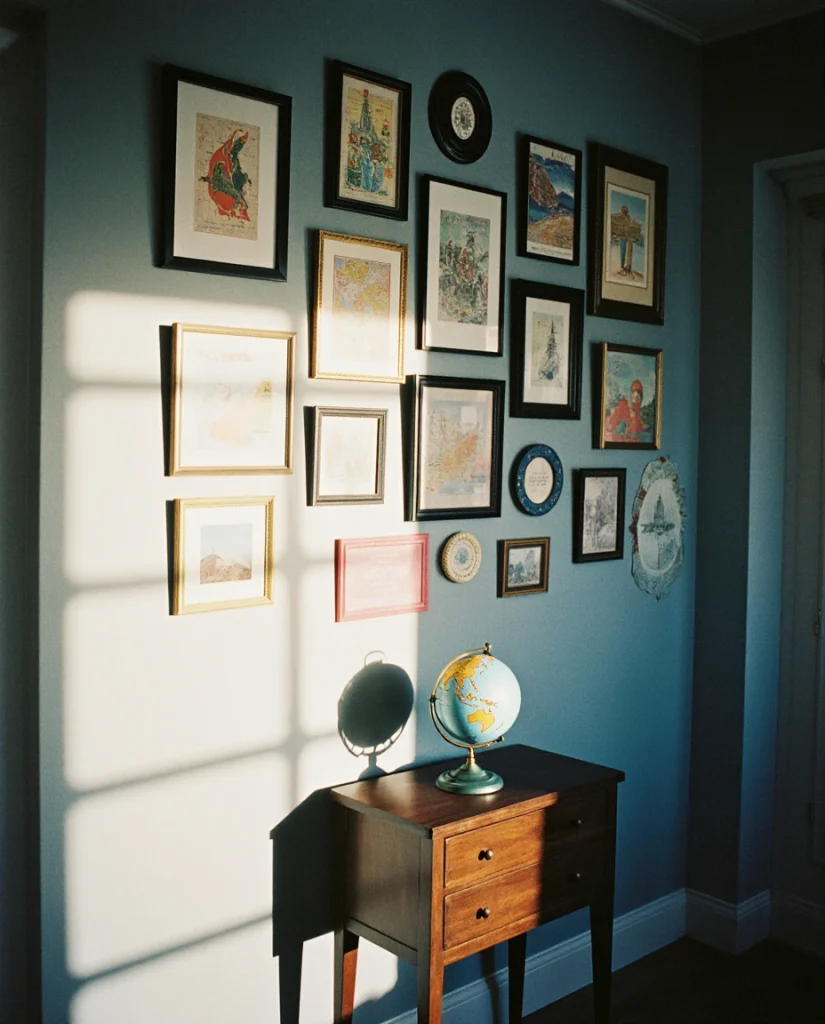
Dedicate a wall to your adventures by displaying travel photos in frames that reflect the destinations—whitewashed wood for coastal trips, dark metal for urban explorations. This works beautifully in entryways or hallways, offering guests a glimpse into your life while you navigate the space daily. The mix of landscapes, street scenes, and candid moments creates a layered narrative that evolves with every trip.
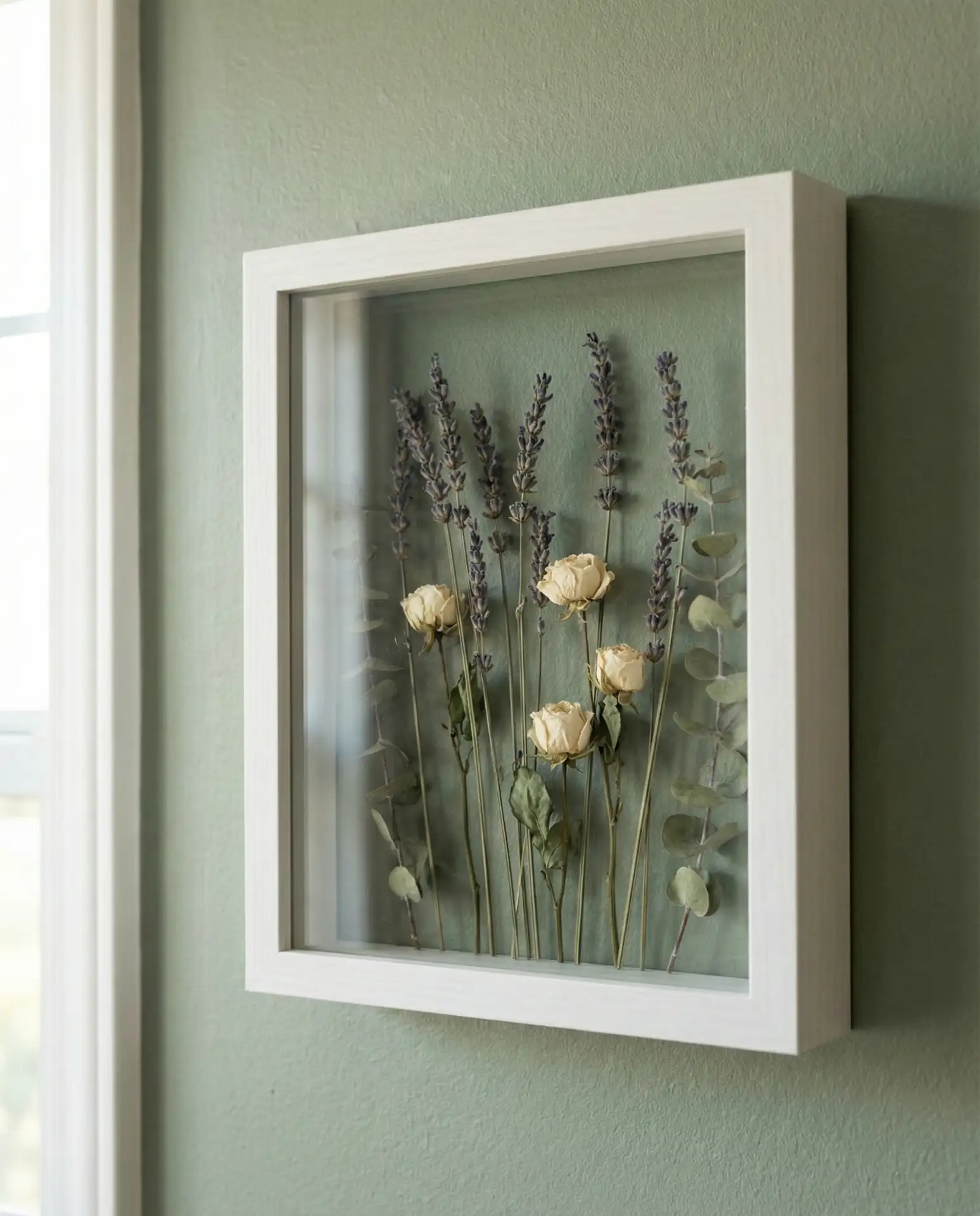
One designer shared that clients often regret printing too few photos—they recommend starting with at least a dozen images to create visual impact. In homes across the Sun Belt and Pacific Northwest, these walls often include small mementos like vintage postcards or pressed flowers from memorable hikes, turning the display into a three-dimensional scrapbook.
6. Staircase Ascent Gallery
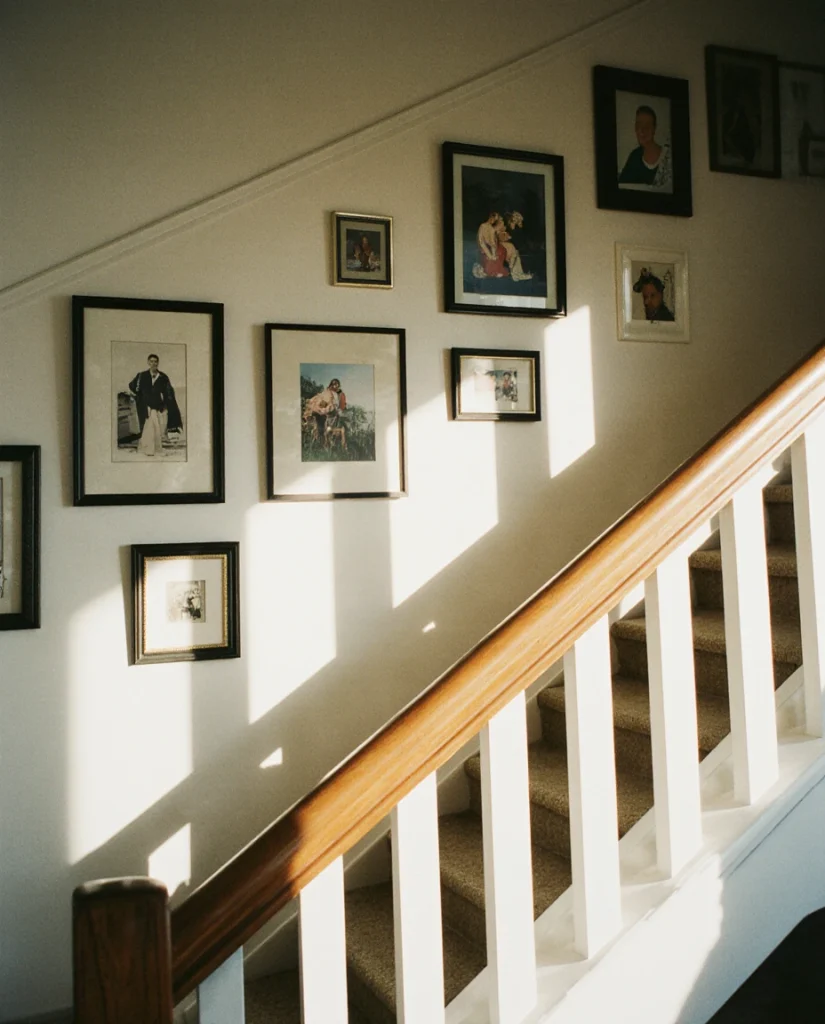
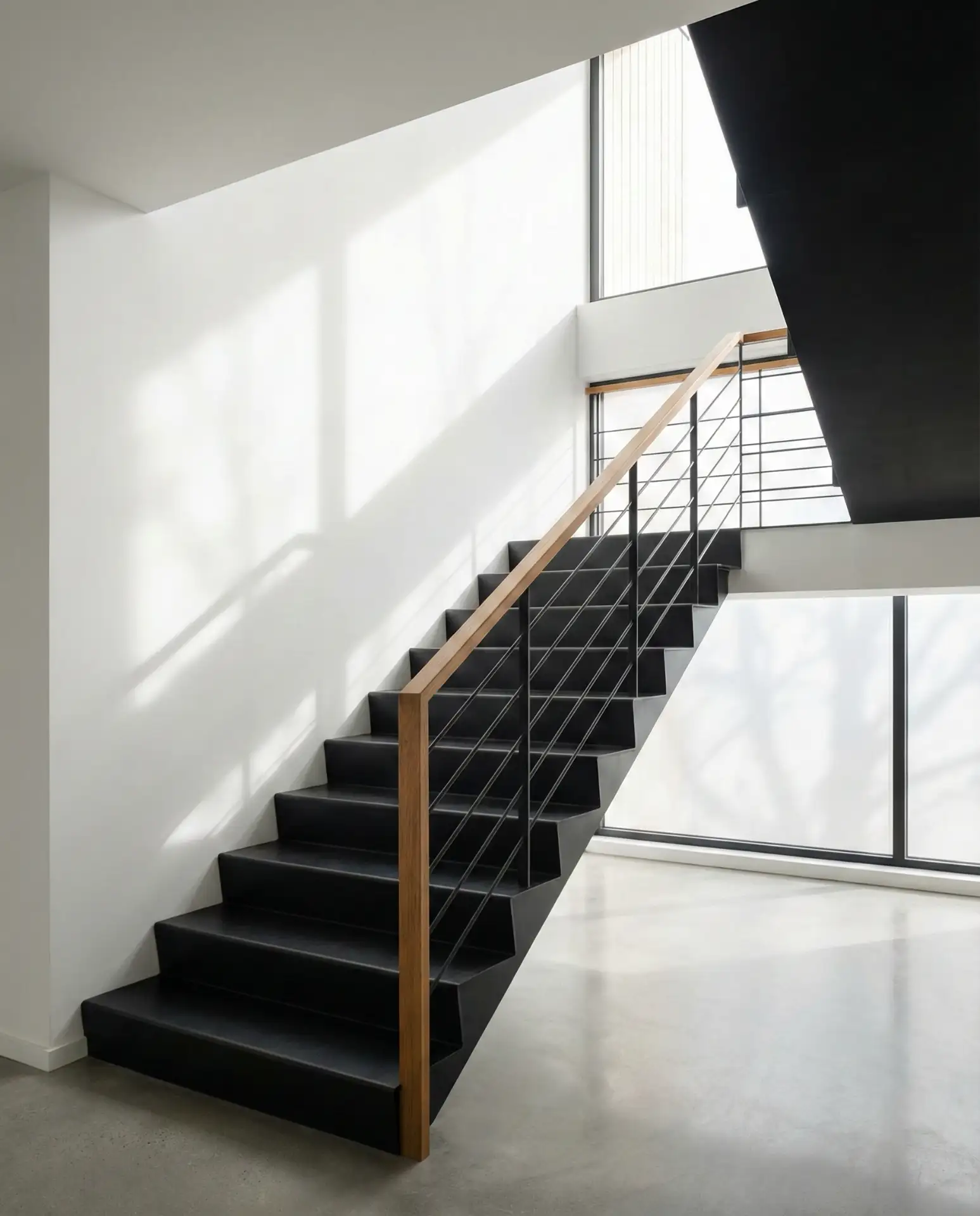
Following the angle of a staircase, arrange frames in a diagonal line that mirrors the slope of the steps. This classic technique draws the eye upward and transforms an often-overlooked transitional space into a curated moment. It’s especially effective in two-story homes, where the vertical real estate feels wasted without intentional design.
The biggest mistake here is inconsistent spacing—measure carefully so each frame sits at the same height relative to the step below it. Many homeowners use a paper template system, taping sheets to the wall to test placement before committing to nails. This method ensures the arrangement feels intentional rather than haphazard, and it’s a smart move in homes with textured or plaster walls where patching holes is tedious.
7. TV Gallery Wall Integration
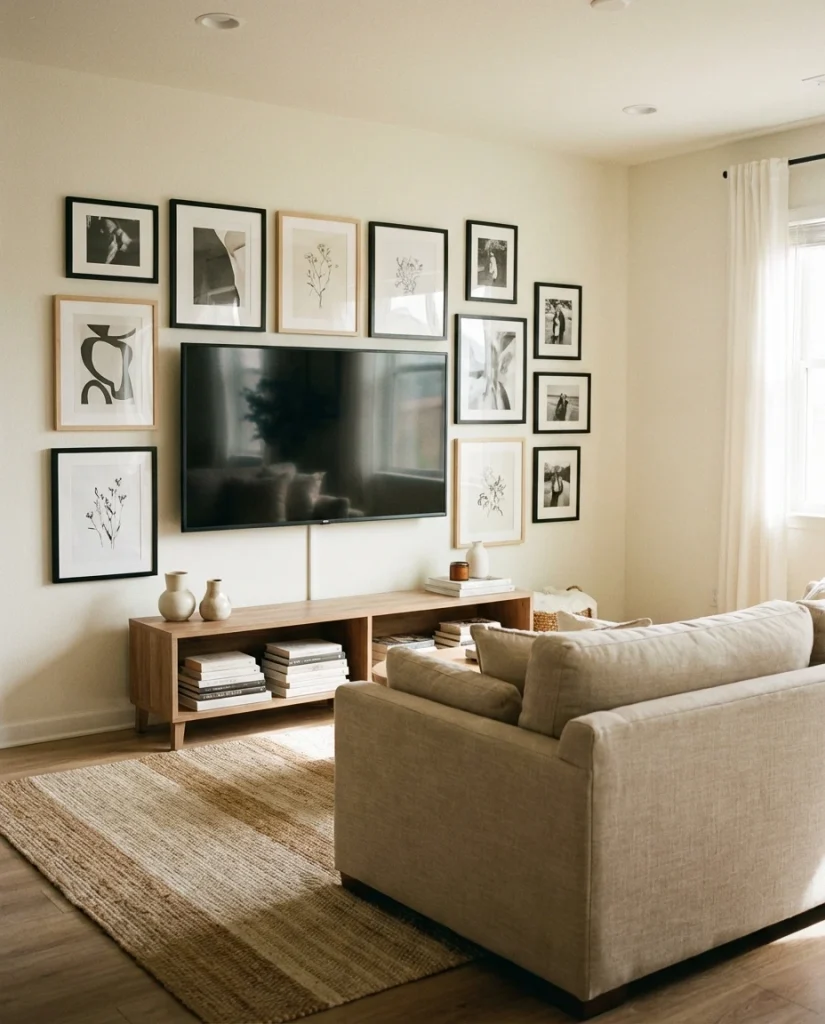
Instead of letting your flat screen dominate the room, surround it with a picture wall that treats the TV as just another black rectangle in the composition. This approach balances technology with personality, making the screen feel like part of the decor rather than an eyesore. Choose frames in neutral tones so the wall reads as cohesive whether the TV is on or off. 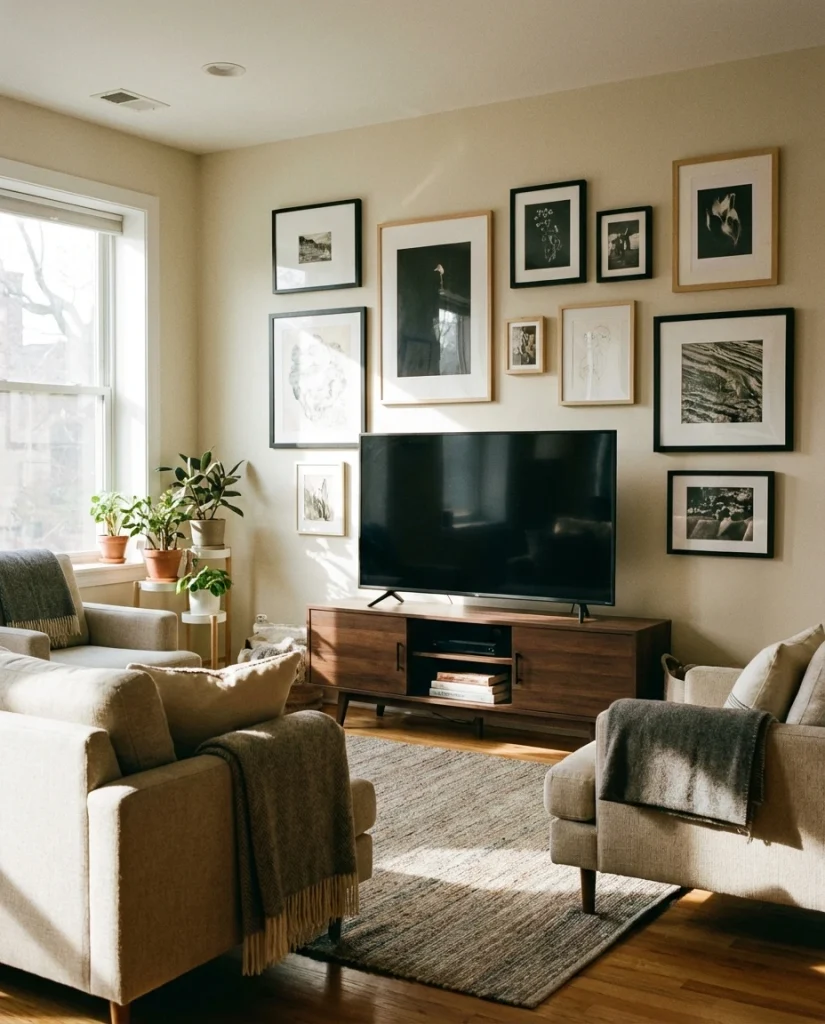
This setup works best in living rooms and dens where the TV is central to daily life but you still want the space to feel designed. In Southern California and Texas, where open-concept living is common, this trick helps anchor the media wall without making it feel like a showroom. Use wireless picture lights or sconces to illuminate the art and draw attention away from the screen when it’s off.
8. Bohemian Textile and Art Mix
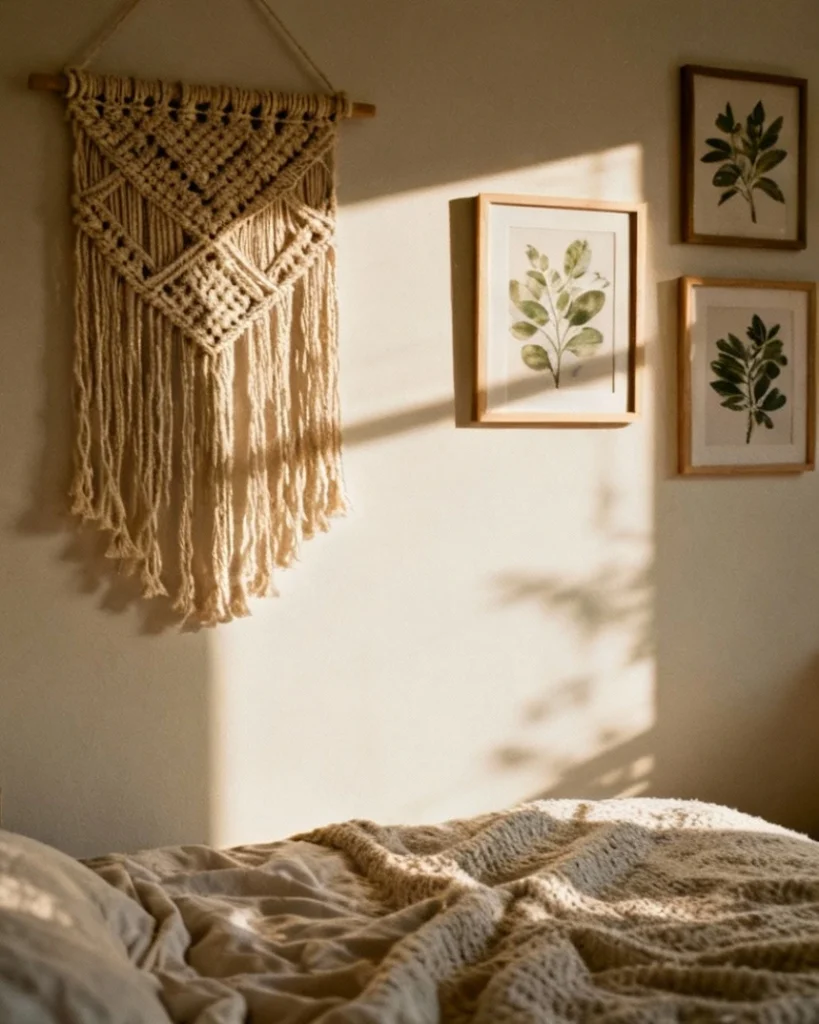
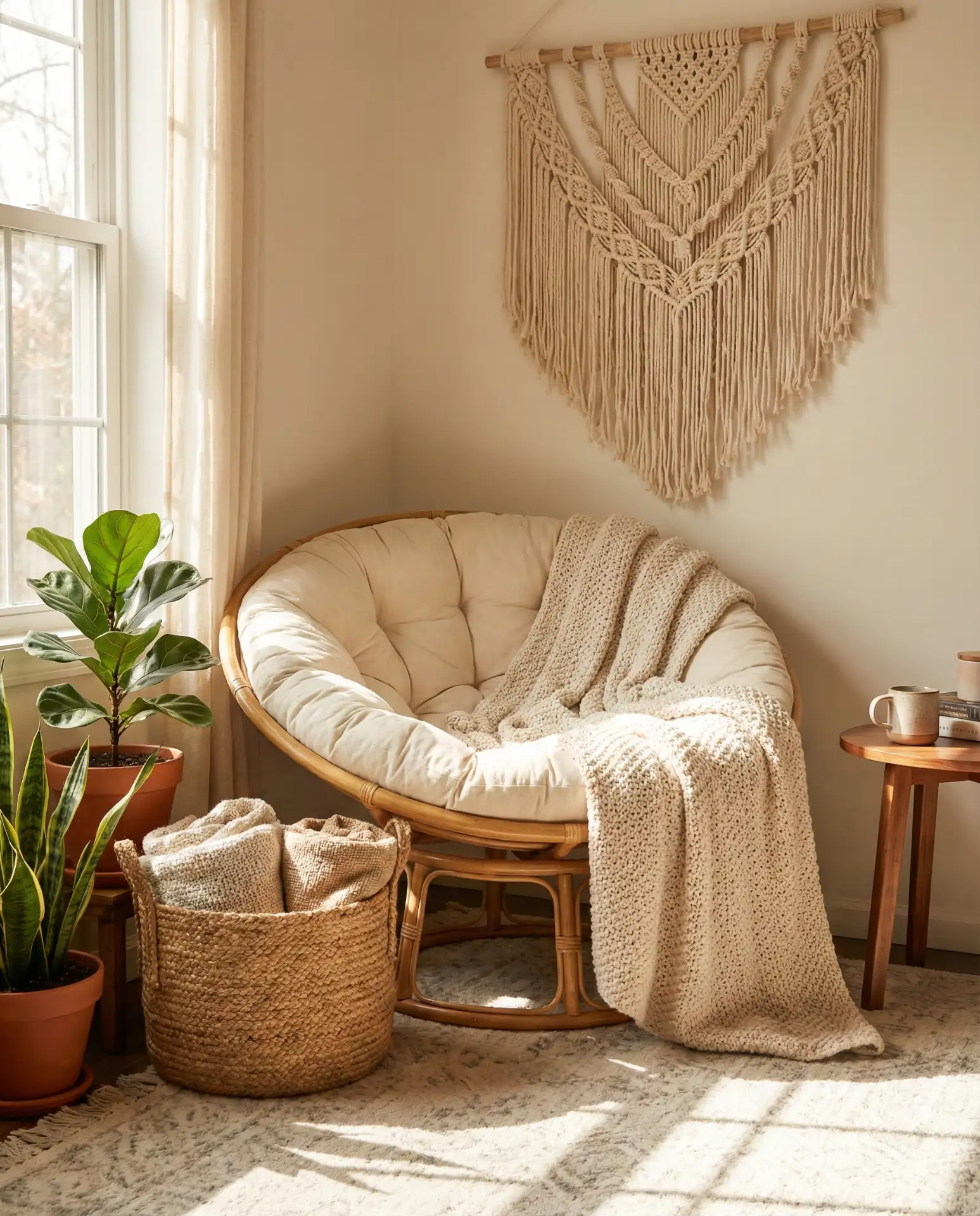
Combine framed prints with hanging textiles—macramé, woven wall hangings, or small rugs—to create a bohemian gallery wall with serious texture. This style thrives in bedrooms and reading nooks, where the layered, global aesthetic invites relaxation. The mix of two-dimensional art and three-dimensional fiber pieces adds depth that flat frames alone can’t achieve.
Where it works best: in homes with natural materials like wood floors, rattan furniture, and linen bedding—the textiles echo those textures and tie the room together. Avoid overcrowding; leave some wall space visible to let each piece breathe. This approach is popular in the Southwest and Pacific Northwest, where casual, layered interiors feel right at home.
9. Wedding Photo Gallery Wall
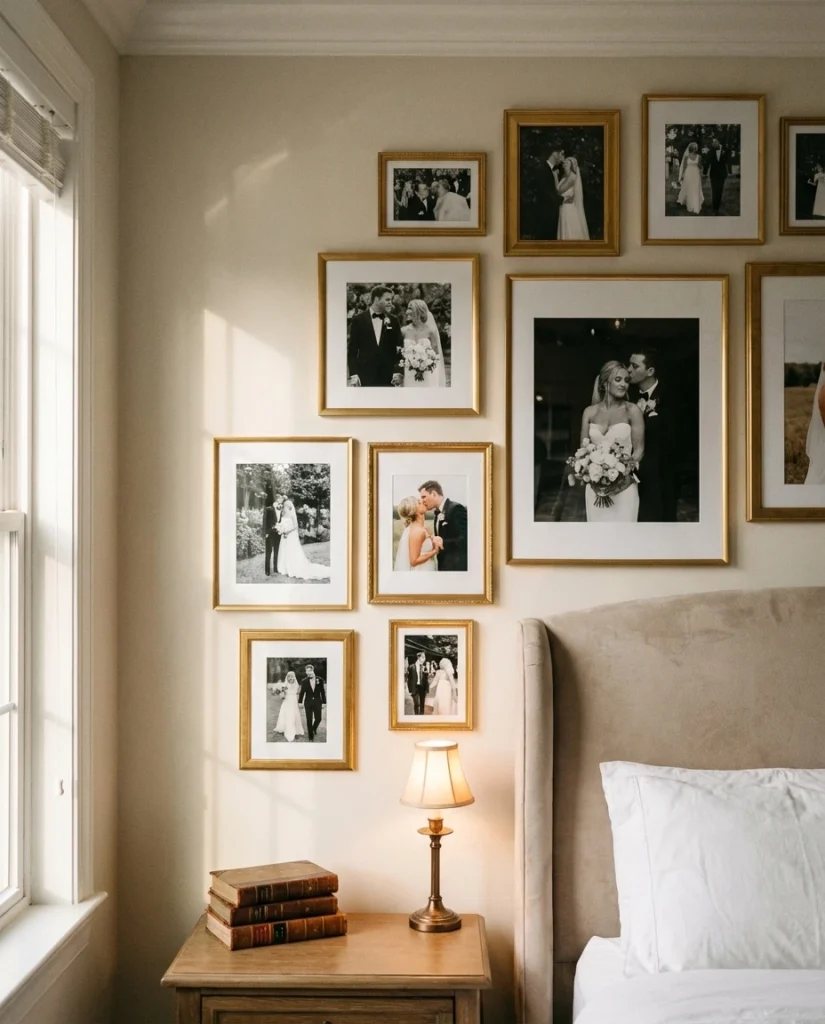
Transform your wedding photos into a permanent display by selecting a mix of candid moments, detail shots, and portraits. Use frames in your wedding color palette or stick to metallics like gold or silver to evoke the event’s formality. This works beautifully in primary bedrooms or dressing areas, where the memories feel intimate and personal rather than performative. 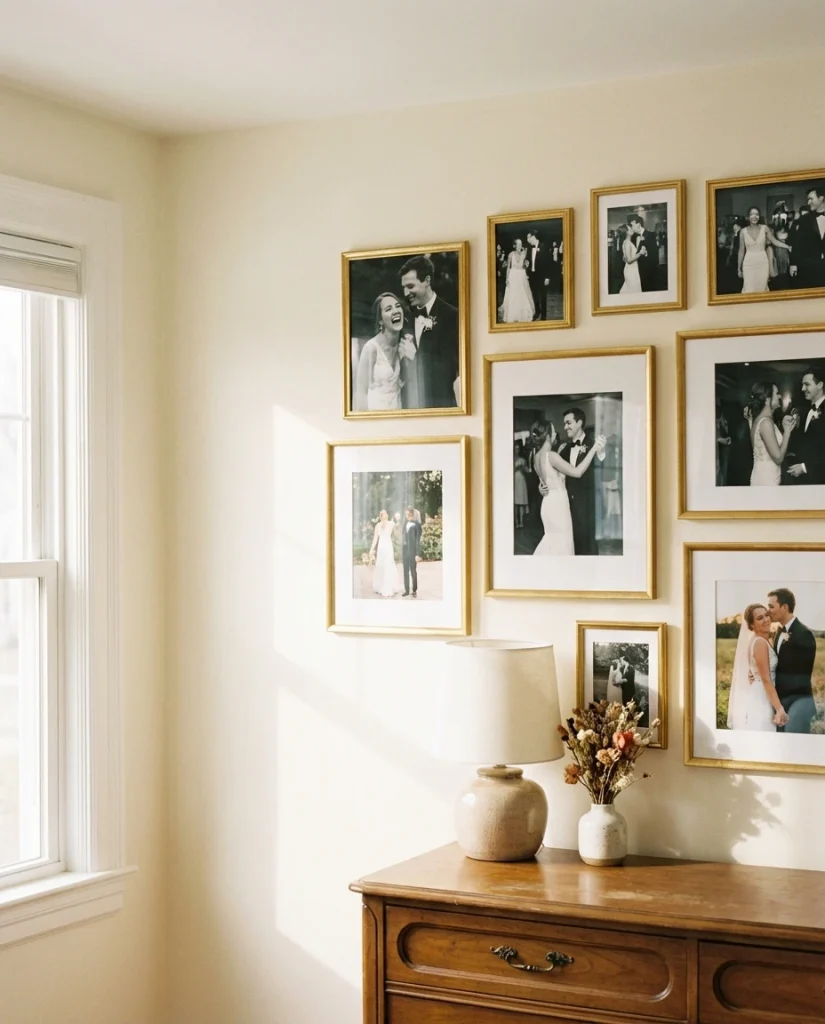
A common pitfall is choosing only posed portraits—mix in the cake cutting, the first dance, or a quiet moment with your partner to tell the full story. Many couples refresh this wall on anniversaries, swapping in new favorite images or adding photos from vow renewals. It’s a living archive that grows alongside your marriage.
10. DIY Painted Frame Collection

Buy inexpensive wood frames and paint them yourself in a coordinated palette—sage green, terracotta, and cream, for example. This DIY approach gives you total control over color and keeps costs low while creating a unique look you won’t find in a big-box store. Fill the frames with personal artwork, kids’ drawings, or printable art for a wall that feels handmade and intentional.
This method resonates with homeowners who want custom results on a tight budget—total investment is often under $100 if you’re patient with thrift store finds. In the Midwest, where DIY culture runs deep, these walls become weekend projects that involve the whole family. The handmade quality adds warmth that mass-produced gallery sets can’t replicate.
11. Gothic Moody Art Wall
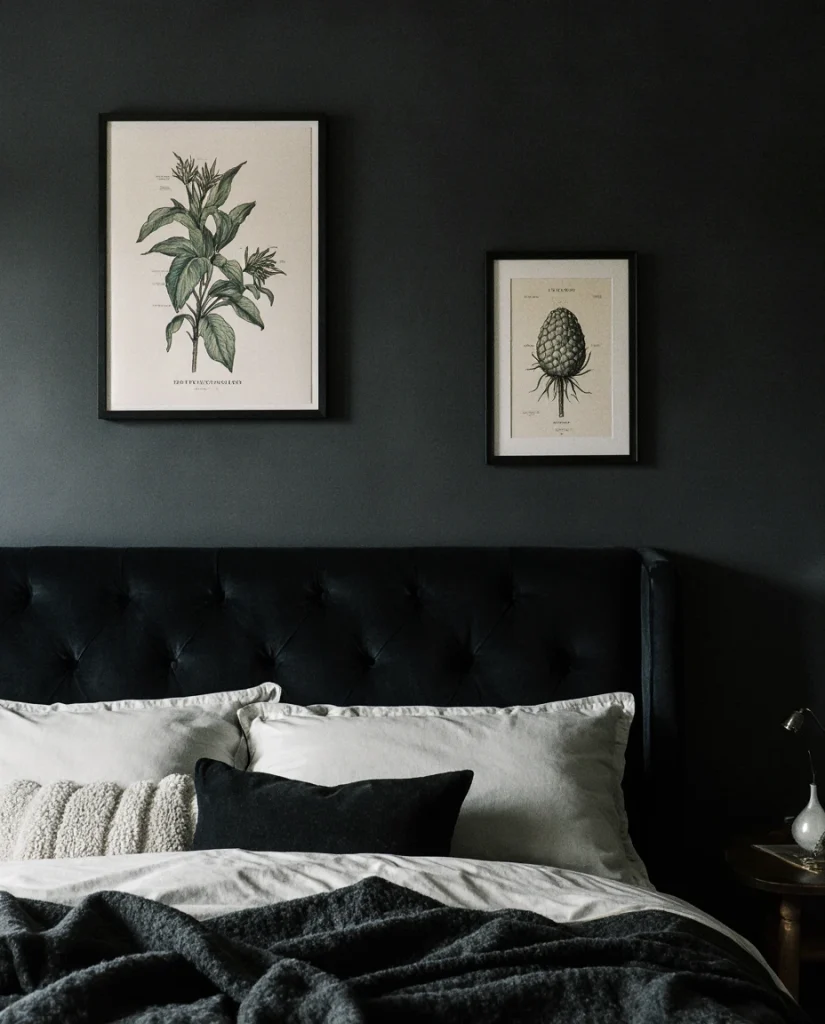
Embrace darker aesthetics with a gothic-inspired gallery featuring black frames, vintage anatomical prints, dark florals, or moody landscapes. This style suits bedrooms, libraries, or home bars—anywhere you want drama and atmosphere. The key is balancing darkness with intention: choose pieces that feel curated rather than accidentally spooky. 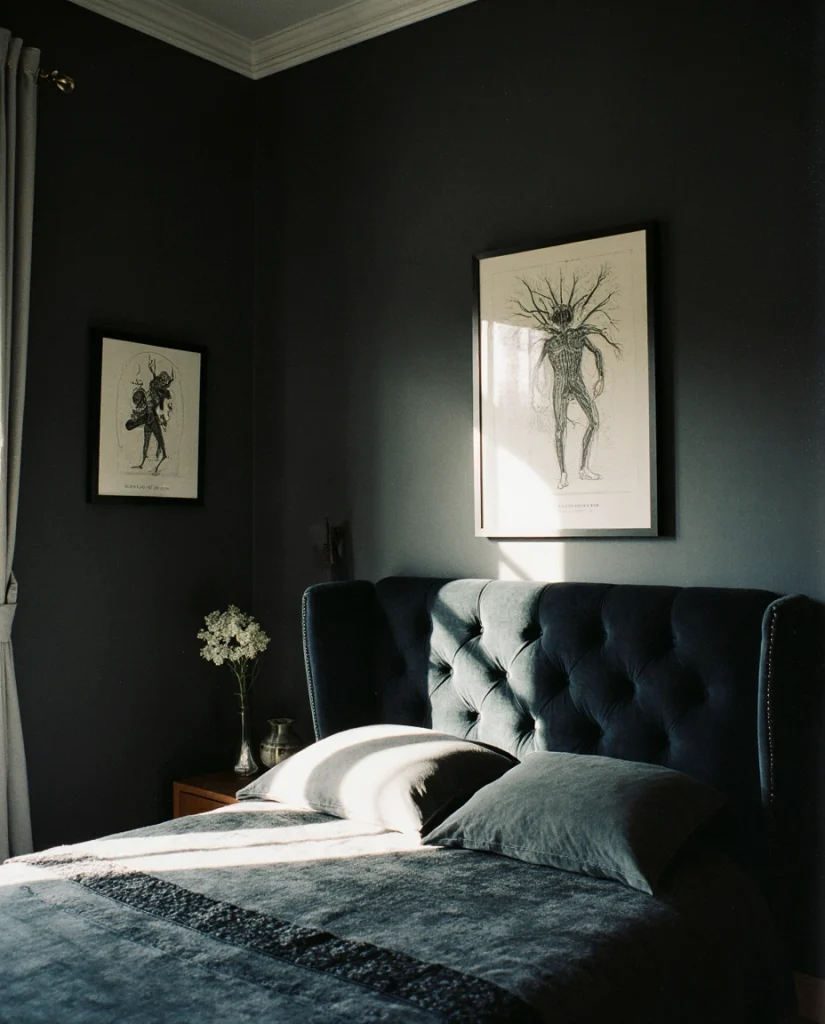
This look has gained traction among younger homeowners in urban areas who reject overly bright, “farmhouse chic” trends. A practical insight: use warm-toned bulbs in nearby lamps to soften the darkness and prevent the space from feeling cold. The gothic aesthetic works especially well in older homes with original millwork, where the history of the architecture complements the vintage imagery.
12. Coastal Blue and White Photo Display
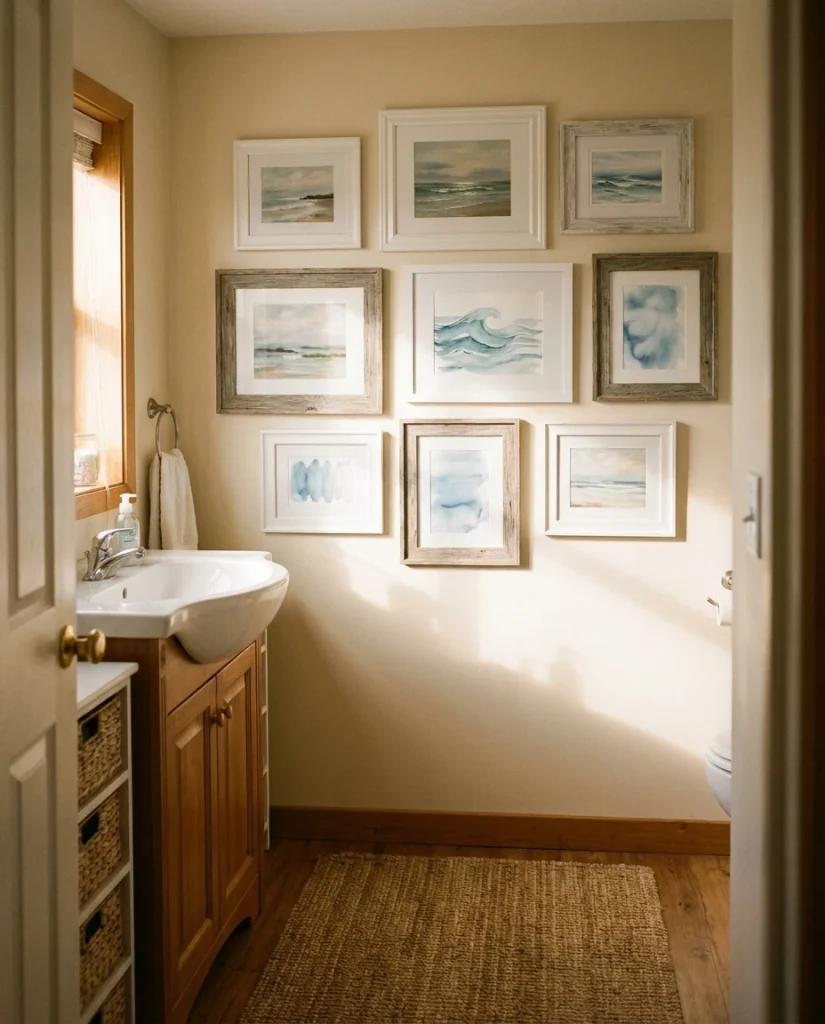
Get the feel of a beach house with a gallery in a coastal style. Whites, soft blues, and natural wooden tones will be major components of this look.
Seascapes, nautical prints, and family photographs from vacations to the beach can be used to fill empty picture frames. These colors give the room an airy and calm quality and can be used in bedrooms, bathrooms, and sunrooms to infuse the room with the tranquility of the beach. 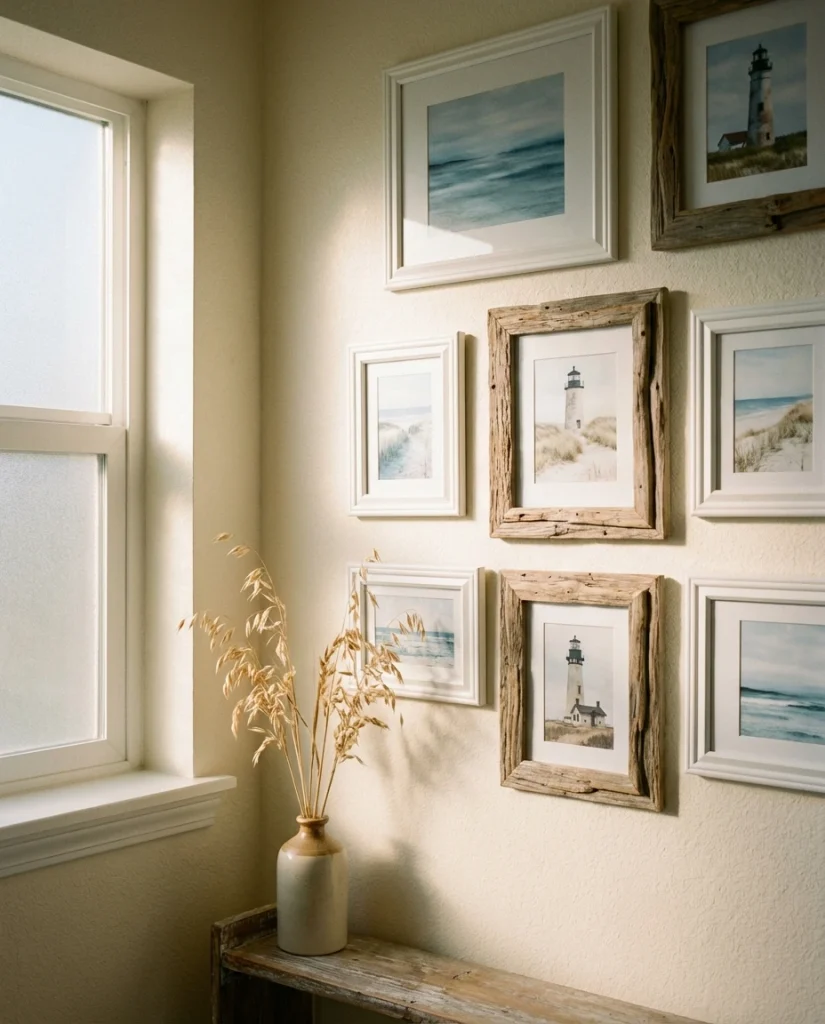
Who does it work best for? Everyone from New England to Southern California, even those without an ocean, i.e., landlocked states, to achieve that vacation feel any time of year. Don’t use overly simplified beach decor like anchors and “Beach” as the text of the decor. Let the colors and images do the telling of the story. This is what keeps it from looking like stuff from a theme park beach attraction.
13. Creative Mixed Media Wall
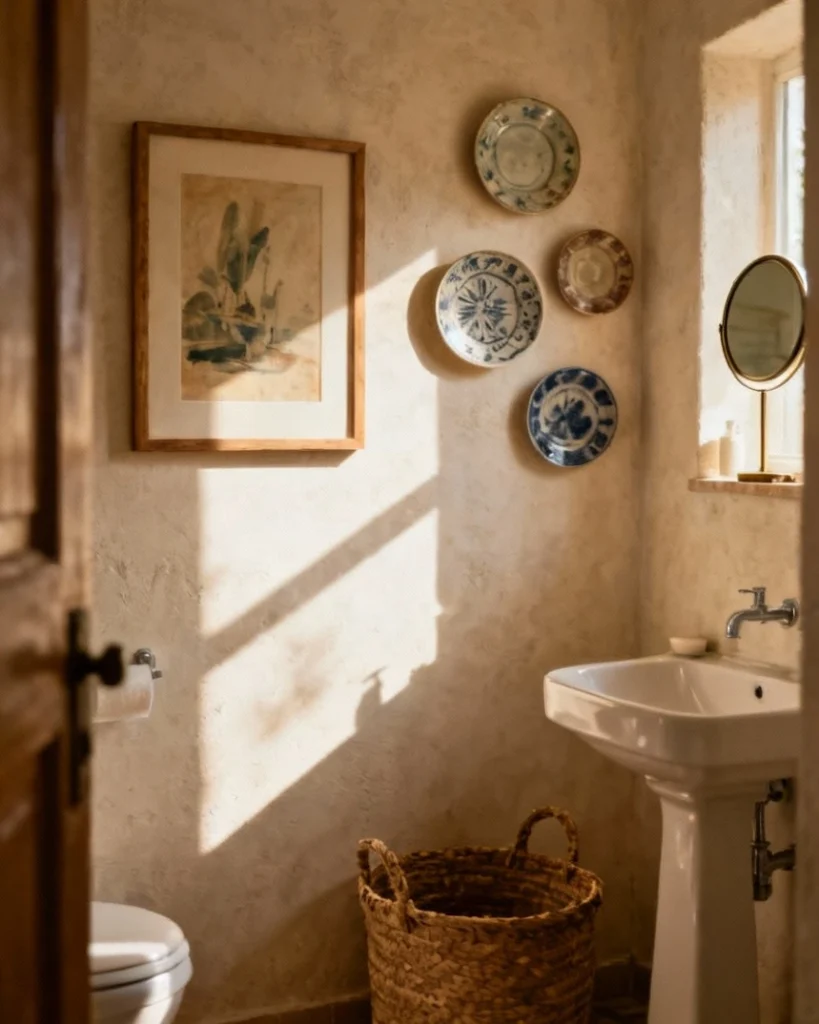
Take an art print and combine it with other art and decor like a plate, mirror, a basket, or shadow box. This helps make the wall into a canvas that can create depth in the wall. This approach is great in small bathrooms where small walls can use the help of this addition.
Expert-style commentary: Interior designers recommend keeping the color palette tight even when mixing mediums—this prevents the wall from reading as chaotic. In the South and Southwest, where eclectic, collected interiors are popular, these walls often feature pottery or textiles from local artisans, grounding the design in regional craft traditions.
14. Thrifted Frame Treasure Hunt
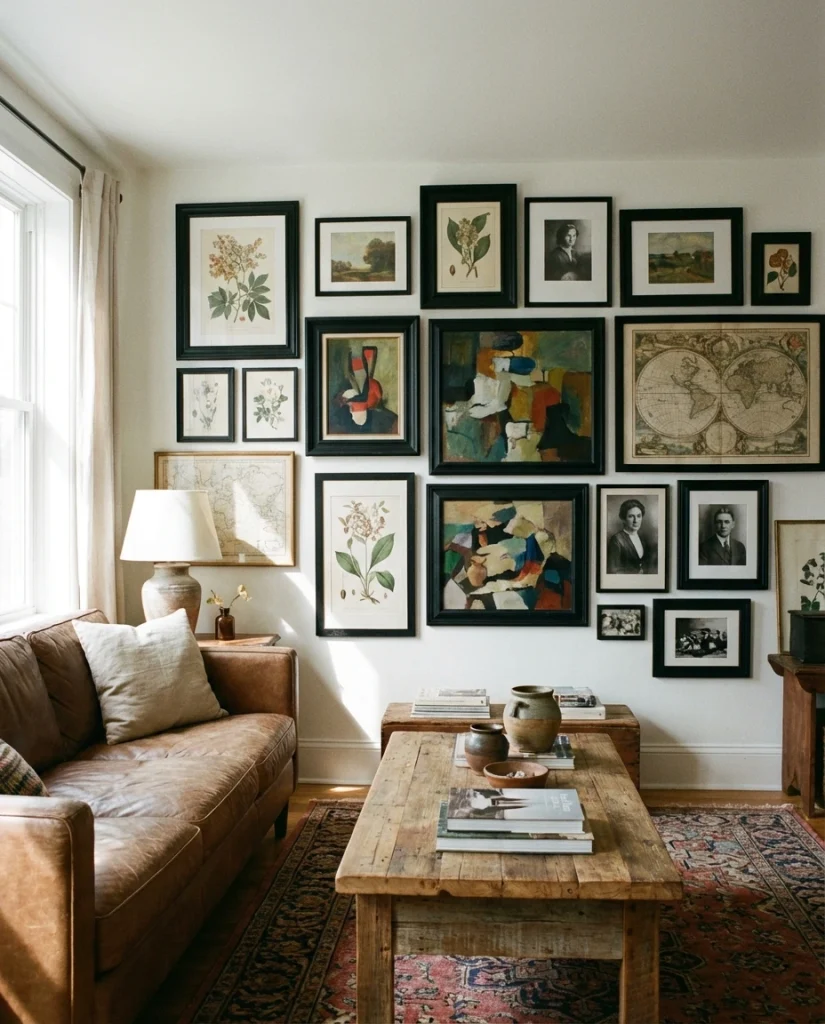
Build your gallery wall entirely from thrifted frames found at estate sales, Goodwill, or antique malls. Spray paint them a single color for cohesion, or embrace the mismatched finishes for maximum unique charm. This method is budget-friendly and sustainable, turning secondhand finds into a one-of-a-kind display that reflects your patience and eye for hidden gems.
Real homeowner behavior: Many people stockpile frames over months, waiting until they have enough to fill the wall before committing to a layout. This slow-build approach means the collection feels organic rather than rushed. In the Pacific Northwest and parts of New England, where thrift culture is strong, these walls become a point of pride—a visual testament to treasure hunting and resourcefulness.
15. Christmas Gallery Wall Swap
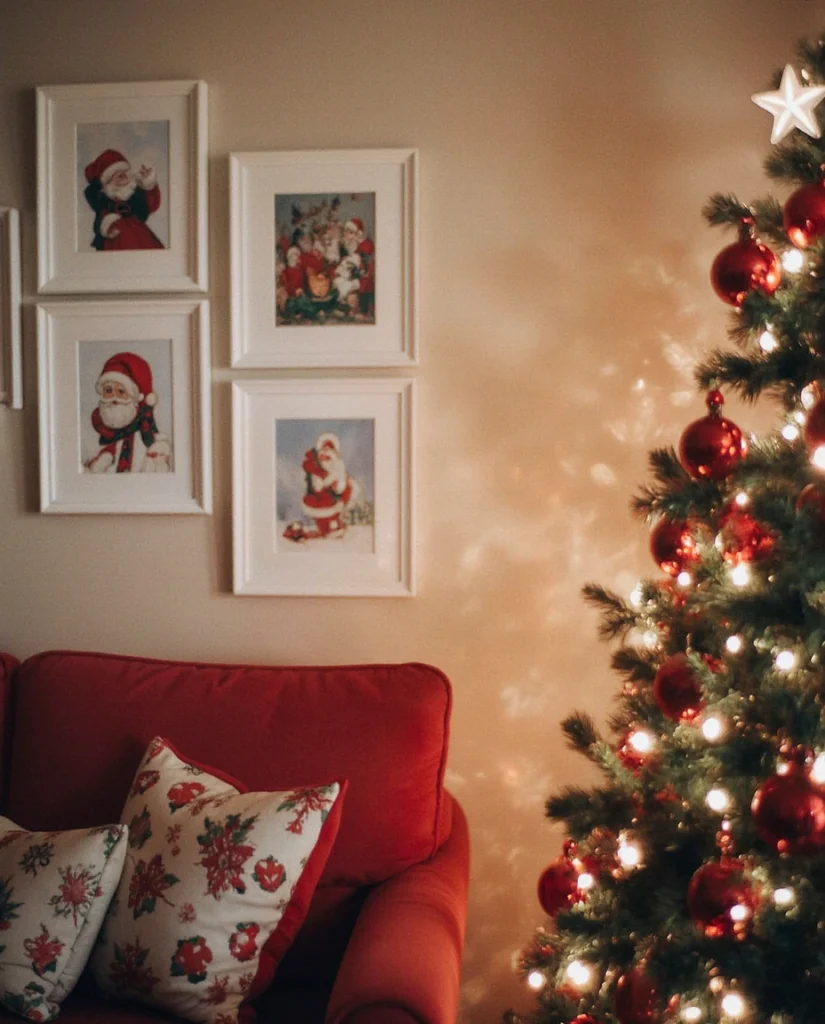
Use the same frames year-round but swap out the art seasonally, dedicating the wall to Christmas prints, family holiday cards, or festive illustrations in December. This keeps your decor fresh without requiring new frames or holes in the wall. It’s a smart move for renters or anyone who loves seasonal decorating but doesn’t want the storage burden of multiple complete gallery sets. 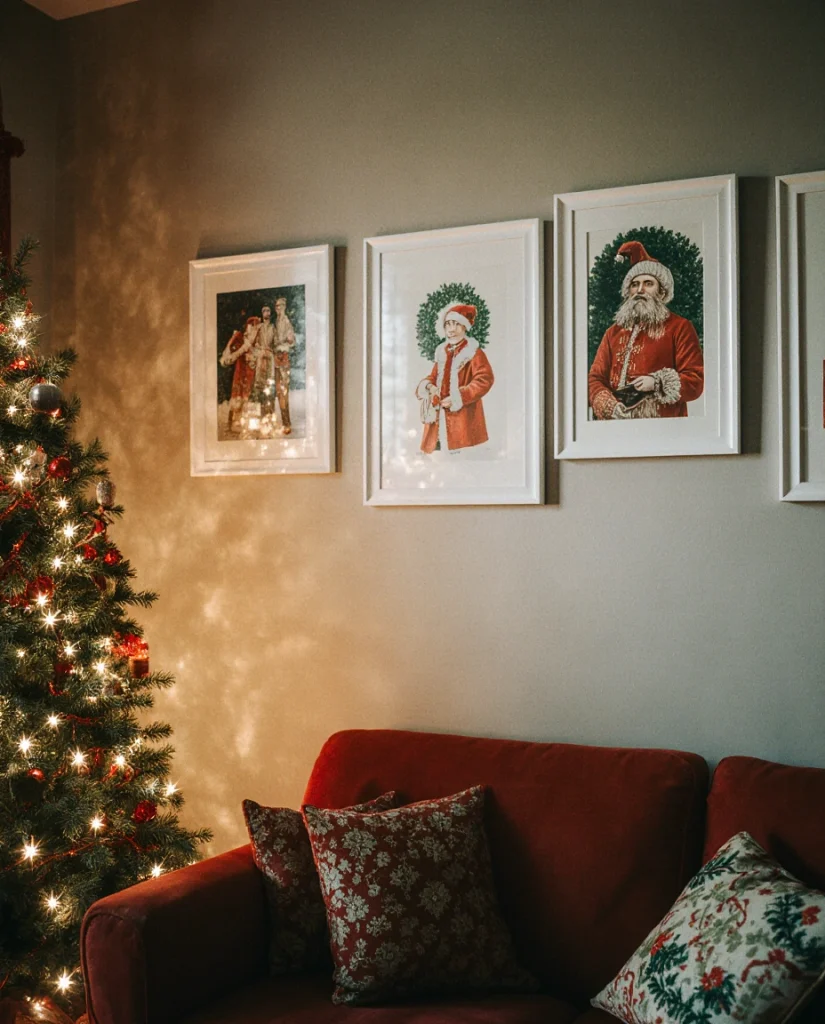
This strategy works best in living rooms and entryways where guests will see it. Many families print new holiday cards each year and rotate them into the display, creating a visual record of Christmases past. The key is choosing frames with easy-open backs so swapping art takes minutes, not hours. It’s especially popular in the Midwest and South, where holiday decorating is a cherished ritual.
16. Entryway First Impression Wall
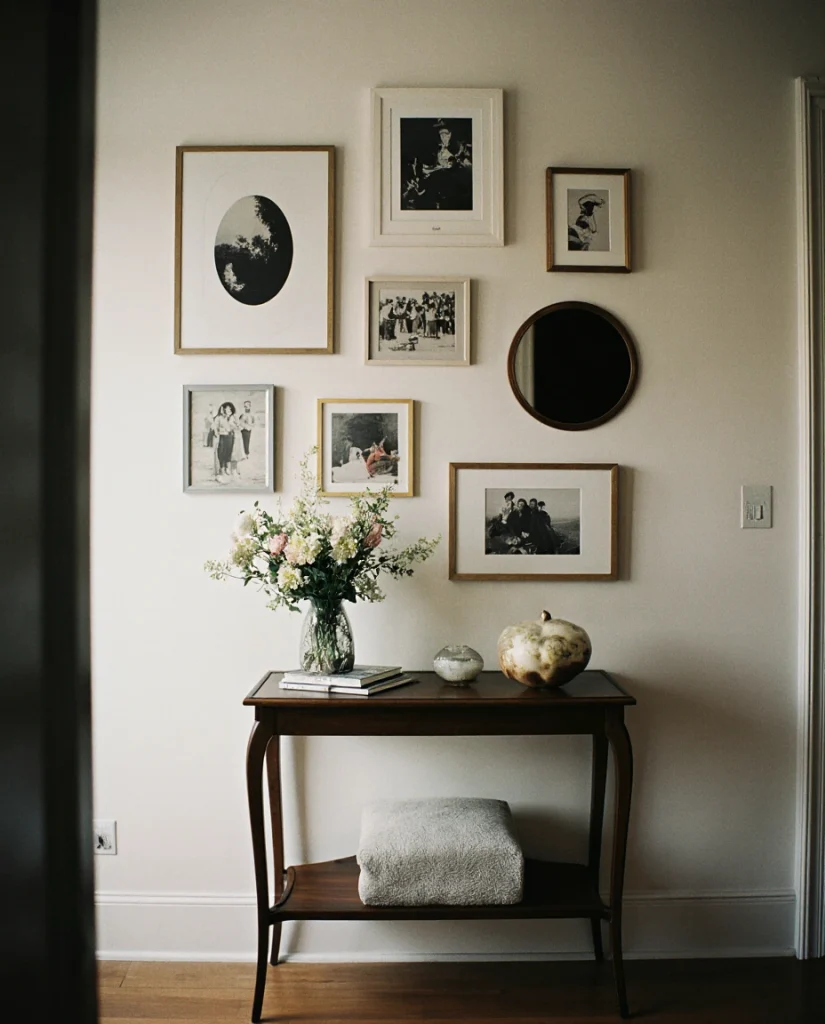
Your entryway sets the tone for the entire home, so make it count with a curated gallery wall that introduces your style immediately. Mix personal photos, meaningful quotes, and small mirrors to create a welcoming vignette. Keep the arrangement slightly asymmetrical to feel approachable rather than stiff—this is the first thing guests see, so it should feel inviting, not intimidating.
A common mistake is hanging frames too high—center the arrangement around eye level (roughly 57–60 inches to the center of the grouping) so it feels grounded. In urban apartments and suburban homes alike, the entryway gallery often includes a key hook or small shelf integrated into the display, blending function with form in a way that makes daily life smoother.
17. Vintage-Inspired Typography Wall
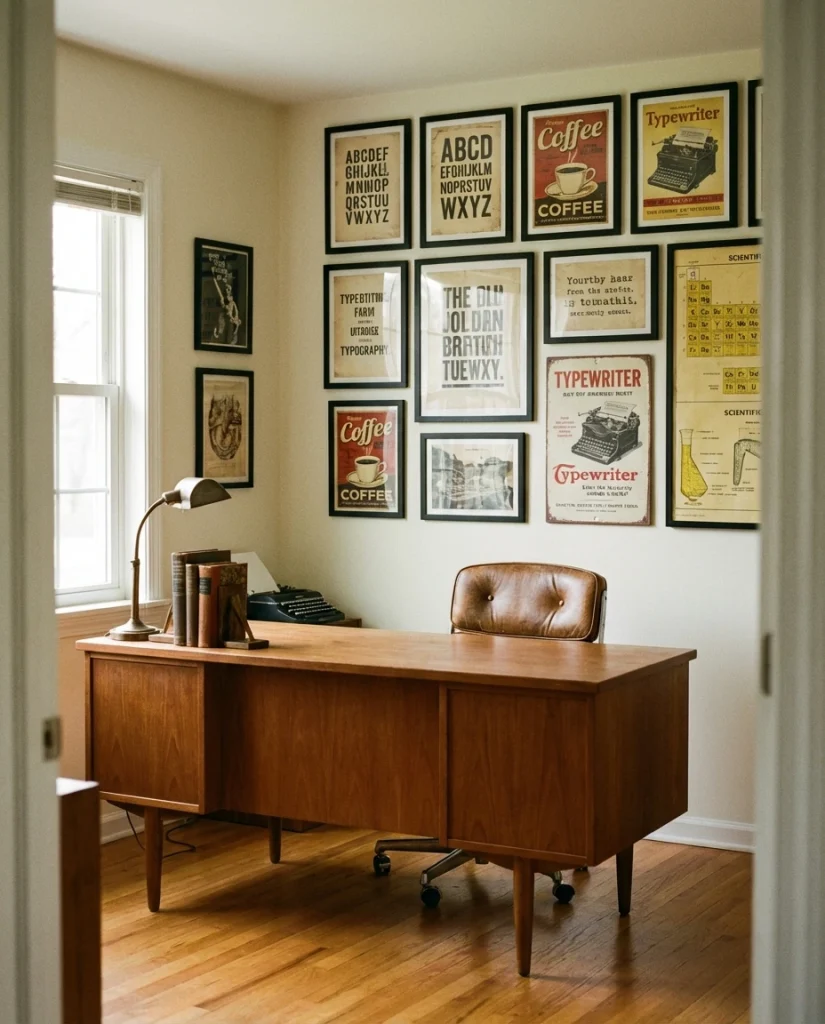
Collect vintage-inspired prints featuring old advertisements, letterpress posters, or retro typography for a gallery wall with serious nostalgic appeal. This style works in kitchens, home offices, or dens—anywhere you want a hit of mid-century charm without full-scale renovation. The graphic quality of the text-based art keeps the wall dynamic even when the color palette is restrained.
Budget angle: Many of these prints are available as affordable digital downloads, bringing costs down to the price of printing and framing—often under $150 for a full wall. In cities with strong design scenes like Portland, Austin, and Brooklyn, this aesthetic taps into a broader love of analog culture and craftsmanship, making it feel both personal and on-trend without chasing fleeting fads.
18. Photo Collage with Overlapping Frames
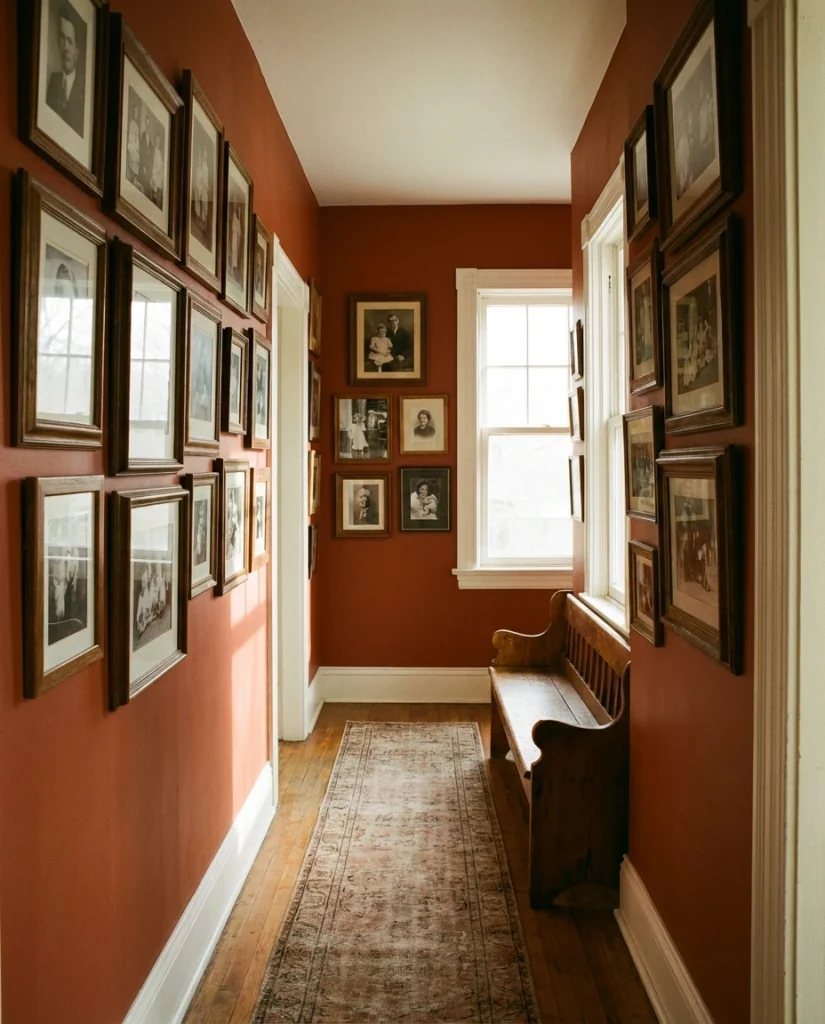
Layer frames so they overlap slightly, creating a dense, salon-style arrangement that maximizes visual impact in a small footprint. This technique is perfect for hallways or narrow walls where you want drama but don’t have endless square footage. Use a mix of photo sizes and orientations to keep the eye moving across the composition. 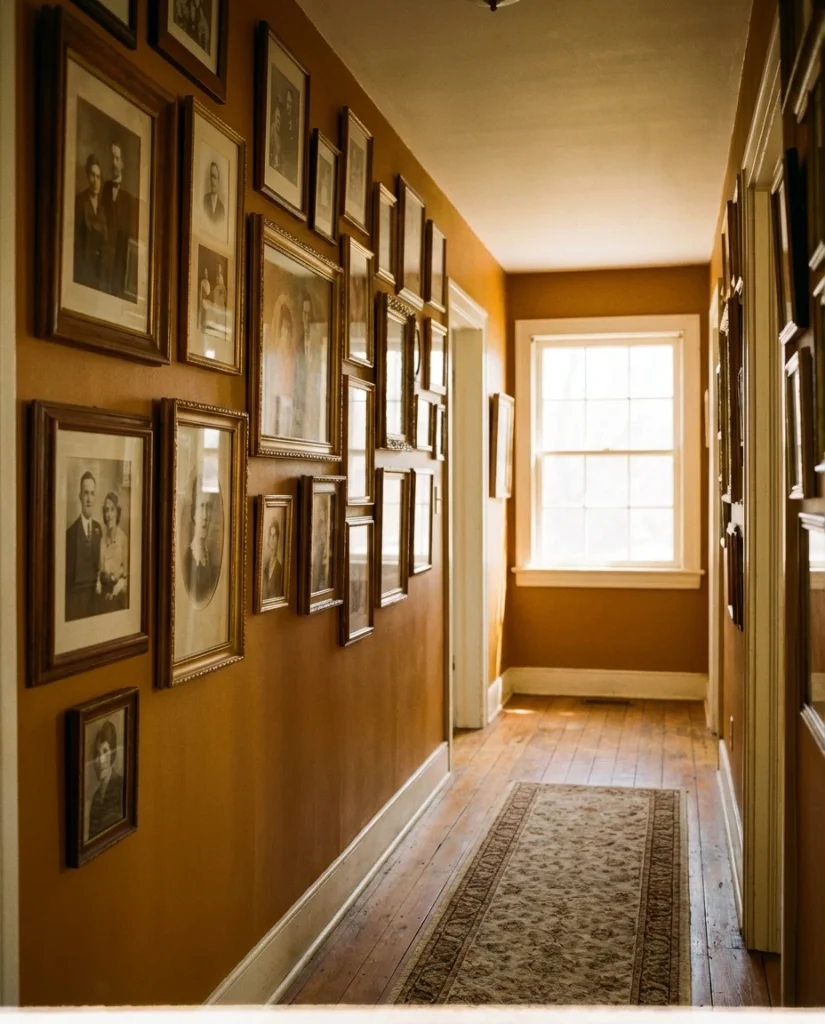
This look originated in European salons and has been adapted for American homes seeking that curated, museum-quality vibe. The overlapping frames create depth and movement, but the trick is balancing density with readability—you want intrigue, not clutter. It’s especially effective in homes with high ceilings, where a single row of frames would feel lost.
19. Minimalist Large-Scale Art Wall
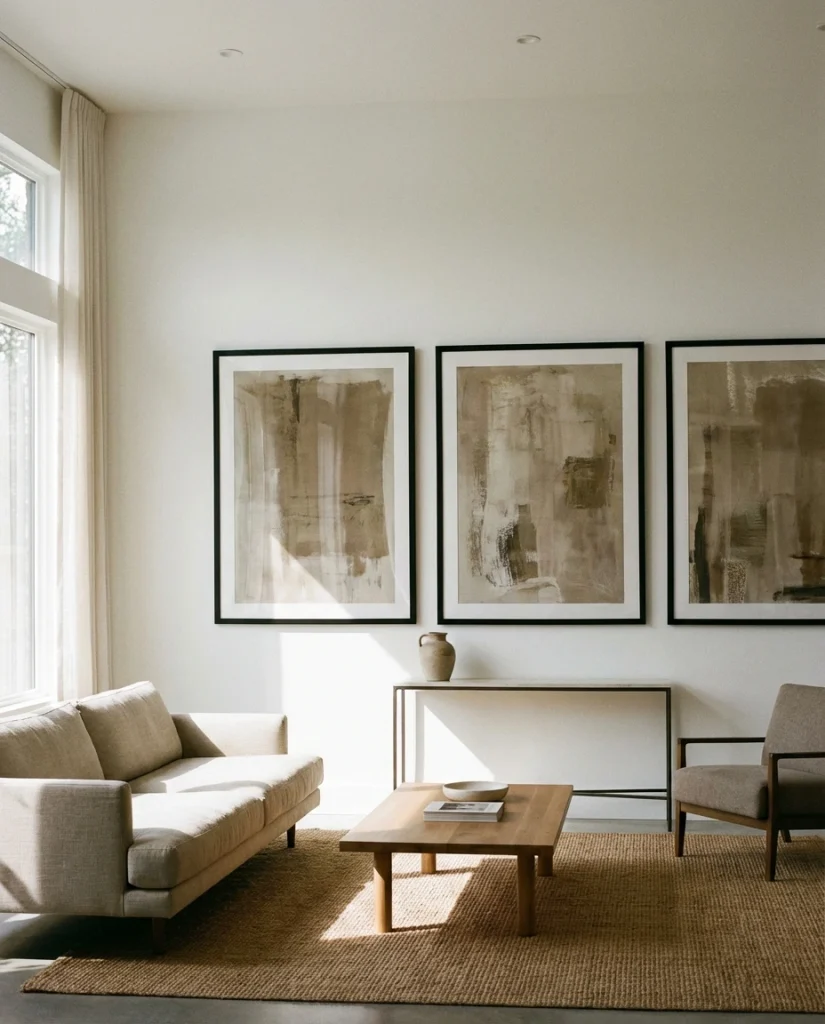
Flip the script on traditional gallery walls by hanging just three to five oversize pieces in a simple, symmetrical arrangement. This minimalist approach suits modern and Scandinavian interiors where restraint is the guiding principle. The large scale makes a statement without the fuss of coordinating dozens of smaller frames, and it’s easier to style and maintain over time.
Where it works best: in open-plan lofts, contemporary homes, or any space where you want art to anchor the room without competing with architectural features. A practical insight—large frames are an investment, but they eliminate the layout guesswork of multi-frame arrangements. Many West Coast homeowners favor this approach, pairing it with neutral palettes and natural materials for a serene, uncluttered aesthetic.
20. Kids’ Art Rotation Wall
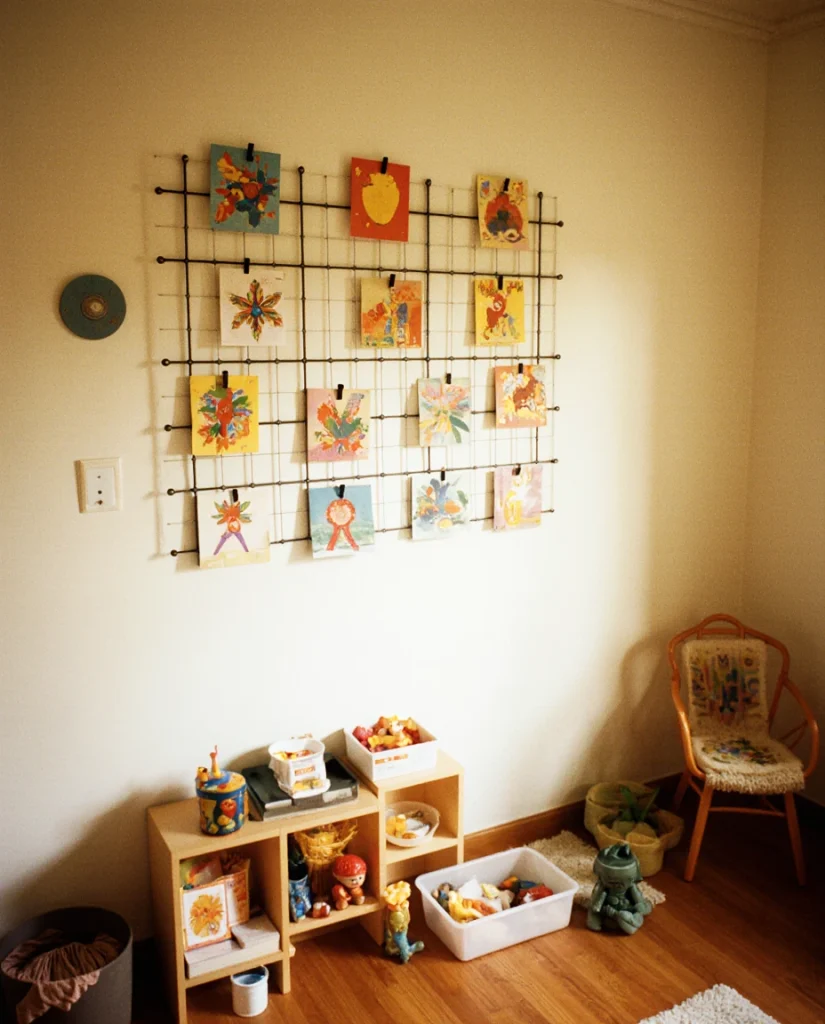
Dedicate a wall to rotating displays of your children’s artwork using clipboards, floating frames with easy-open backs, or a simple wire grid with clips. This honors creative output while keeping the display fresh and avoiding the guilt of tossing masterpieces. It’s a family-friendly solution that turns the hallway or playroom into a mini gallery where young artists feel celebrated.
Real homeowner behavior: Parents often photograph the art before rotating it out, building a digital archive while keeping the physical wall manageable. This system is wildly popular in family homes across the country, especially in areas with strong school art programs. It solves the problem of accumulating endless drawings while giving kids the thrill of seeing their work “exhibited.”
21. Colorful Maximalist Statement Wall

Go bold with a wall-to-wall arrangement of colorful frames, prints, and objects that fills every inch of vertical space. This maximalist approach is not for the faint of heart, but when done well, it becomes the defining feature of the room—a conversation starter and a reflection of fearless personal style. Lean into the chaos by mixing art styles, frame finishes, and unexpected unique elements like vintage mirrors or small sculptures.
This style thrives in dining rooms, creative studios, or anywhere you want the space to feel exuberant and alive. A common mistake is attempting this without a unifying thread—whether it’s a shared color palette, a consistent mat color, or a recurring theme, you need something to tie the madness together. In design-forward cities and among younger homeowners embracing dopamine decor, this approach signals confidence and a rejection of safe, neutral interiors.
Conclusion
Gallery walls in 2026 are less about following a formula and more about finding the arrangement that tells your story—whether that’s a grid of travel photos, a salon-style mix of thrifted frames, or a minimalist trio of oversize prints. The beauty of this decor move is its flexibility: you can start small, build over time, and swap pieces as your life evolves. Drop a comment below and share which idea you’re trying first, or tell us about the gallery wall that’s already bringing character to your home.