Hallways are having a major design moment in 2026, and Pinterest is proof. What was once treated as a forgotten pass-through is now being reimagined as a statement-making space—layered with color, texture, and intention. American homeowners are searching for ways to make these narrow stretches feel purposeful, welcoming, and full of personality. Whether you’re styling a long narrow corridor or dressing up a compact entryway, this year’s trends blend function with flair. Below, you’ll find inspiring ideas that turn hallways into something worth slowing down for.
1. Gingerbread House-Inspired Trim and Molding
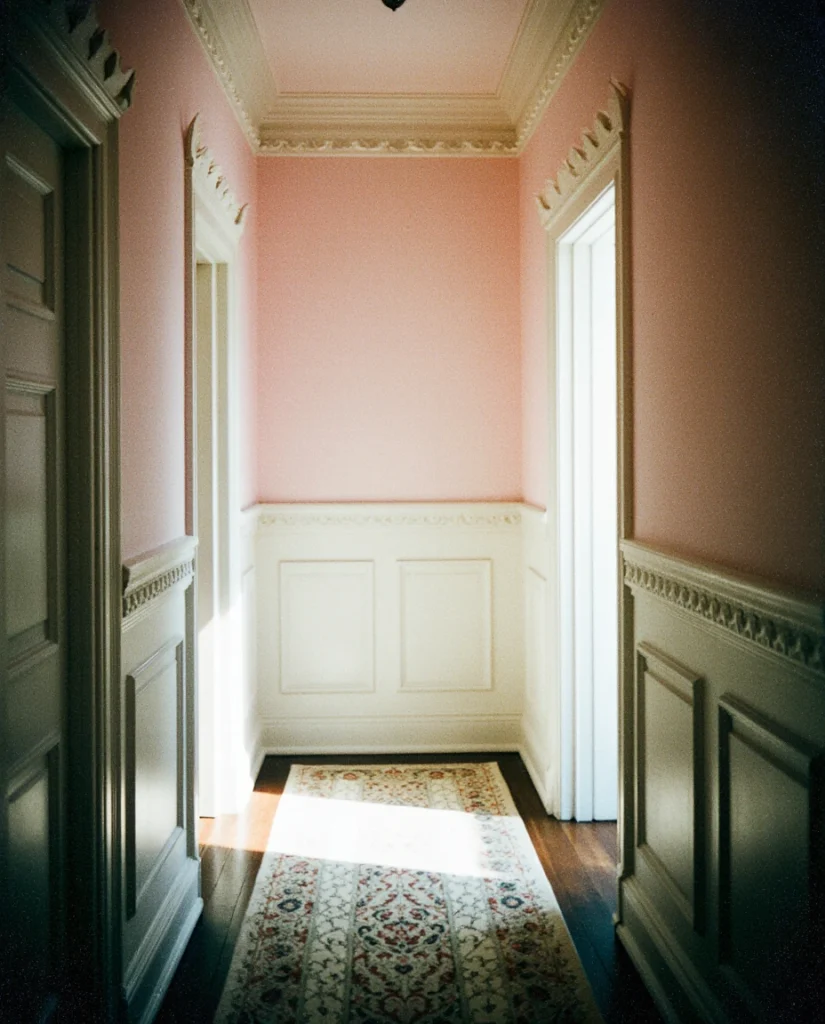
This playful nod to gingerbread house aesthetics brings scalloped trim, decorative millwork, and candy-colored accents into hallway design. Think soft pinks, mint greens, and creamy whites paired with curved molding that mimics icing details. It’s whimsical without being childish—a charming way to add character to a short hallway or transitional space between rooms.
This works especially well in vintage homes or renovated Craftsman-style houses where architectural detail is already appreciated. The key is restraint—choose one or two whimsical elements rather than overwhelming the space. Pair the trim with simple decor and let the molding do the talking. It’s a surprisingly versatile look that appeals to both maximalists and those who prefer a softer, storybook aesthetic.
2. Whoville-Bright Color Blocking
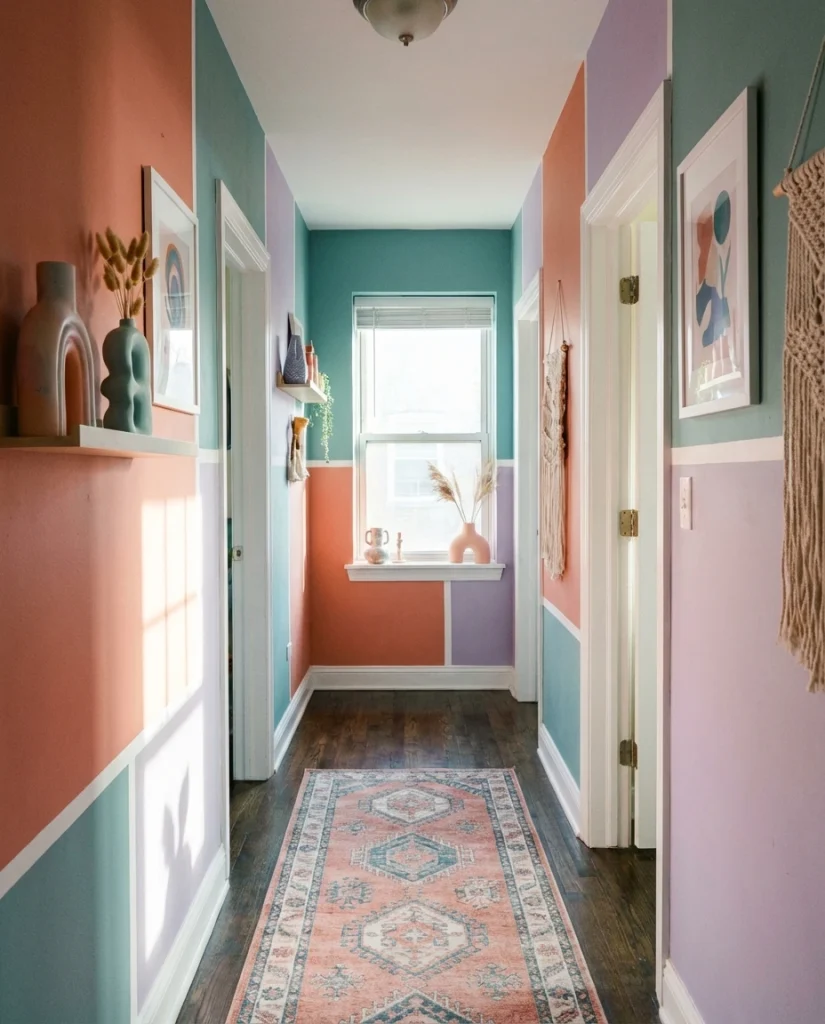
Inspired by the fantastical world of Whoville, this trend uses bold, unexpected colors in geometric blocks along hallway walls. Imagine a vivid orange ceiling paired with coral and teal wainscoting, or a lavender upper wall meeting a burnt sienna base. It’s joyful, energetic, and perfect for homes that lean into maximalist or eclectic design. 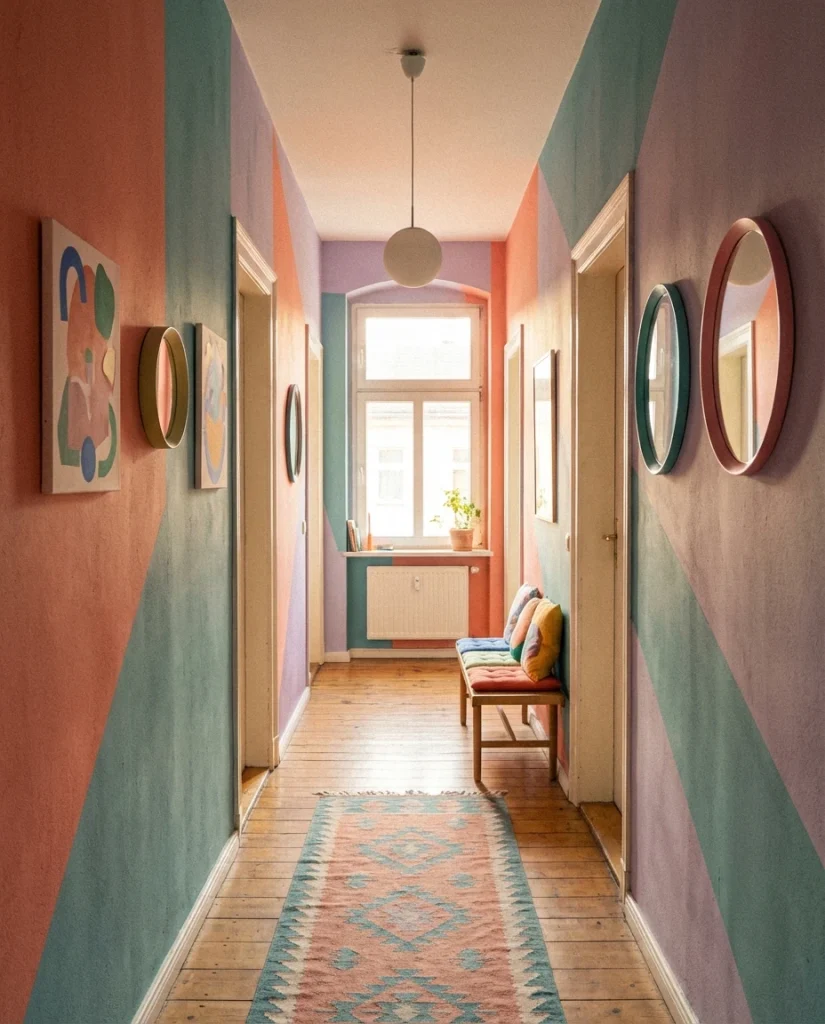
A designer friend once painted her hallway in three contrasting shades and said it completely changed how her family moved through the house—suddenly, it felt intentional. The trick is to use a unifying neutral on trim or flooring to anchor the palette. This approach works beautifully in open-plan homes where the hallway acts as a visual bridge between rooms.
3. Long Narrow Gallery Wall with Oversized Frames
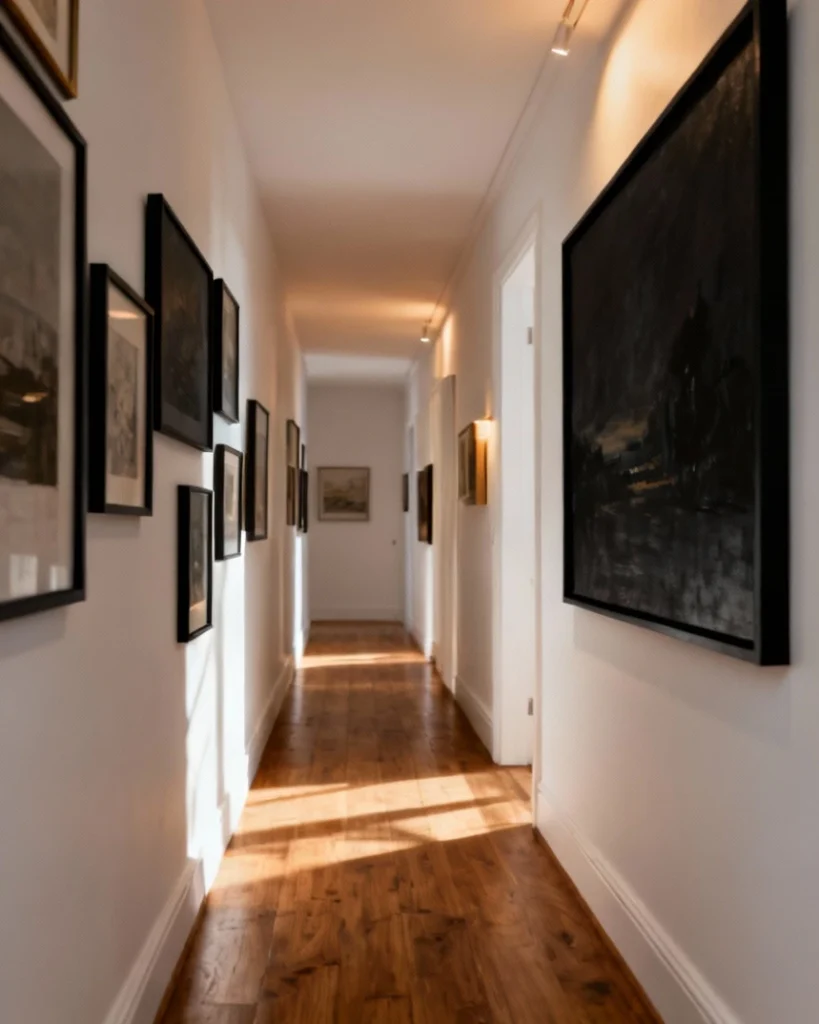
For a long, narrow hallway, oversized frames create rhythm and draw the eye forward without cluttering the space. Choose black or natural wood frames in varying sizes, but keep them large—nothing smaller than 16×20. Mix family photos, abstract art, and vintage prints for a curated, collected-over-time feel that’s quintessentially American.
Where it works best: ranch homes, colonial-style houses, and any space where the hallway connects multiple bedrooms or living areas. The vertical and horizontal mix keeps the eye moving, and the scale prevents the corridor from feeling cramped. Avoid tiny frames or busy matting—simplicity is what makes this look so effortless.
4. Minecraft-Inspired Modular Storage Cubes
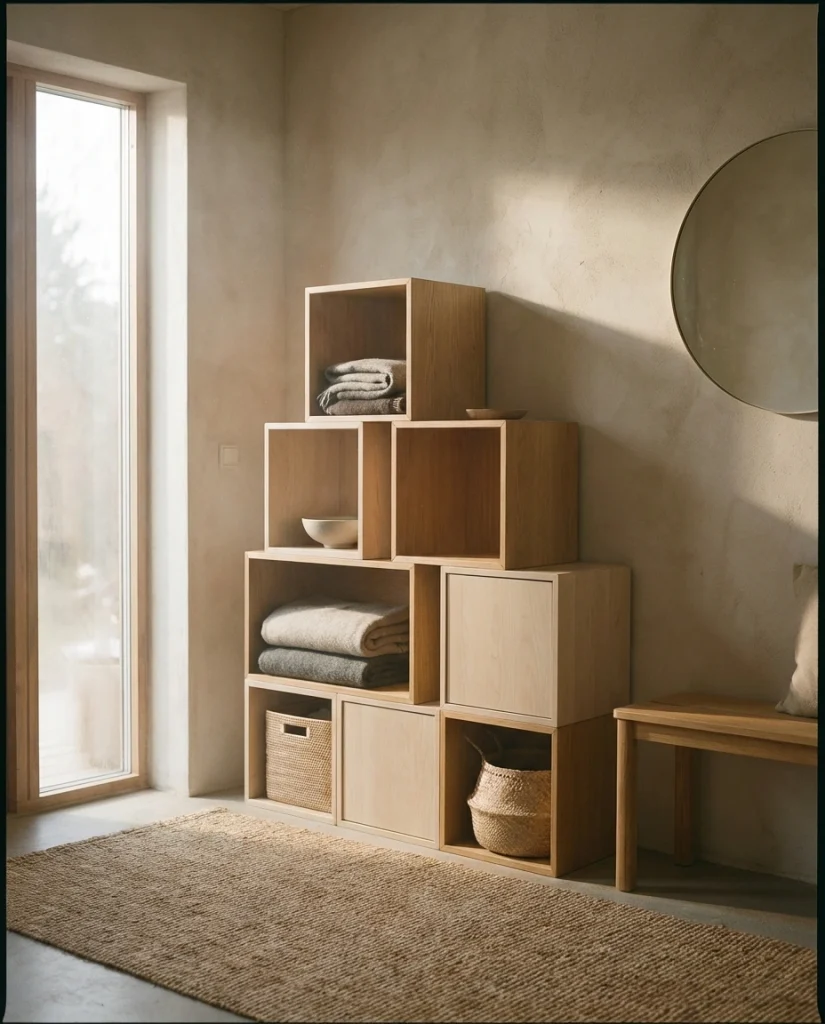
Taking cues from the blocky, pixelated world of Minecraft, modular cube storage is showing up in hallways as a playful, functional solution. These stackable wooden or laminate cubes can hold shoes, bags, keys, and outdoor gear—especially useful in a home entrance where clutter tends to pile up. Paint them in neutral tones or bold primaries depending on your vibe. 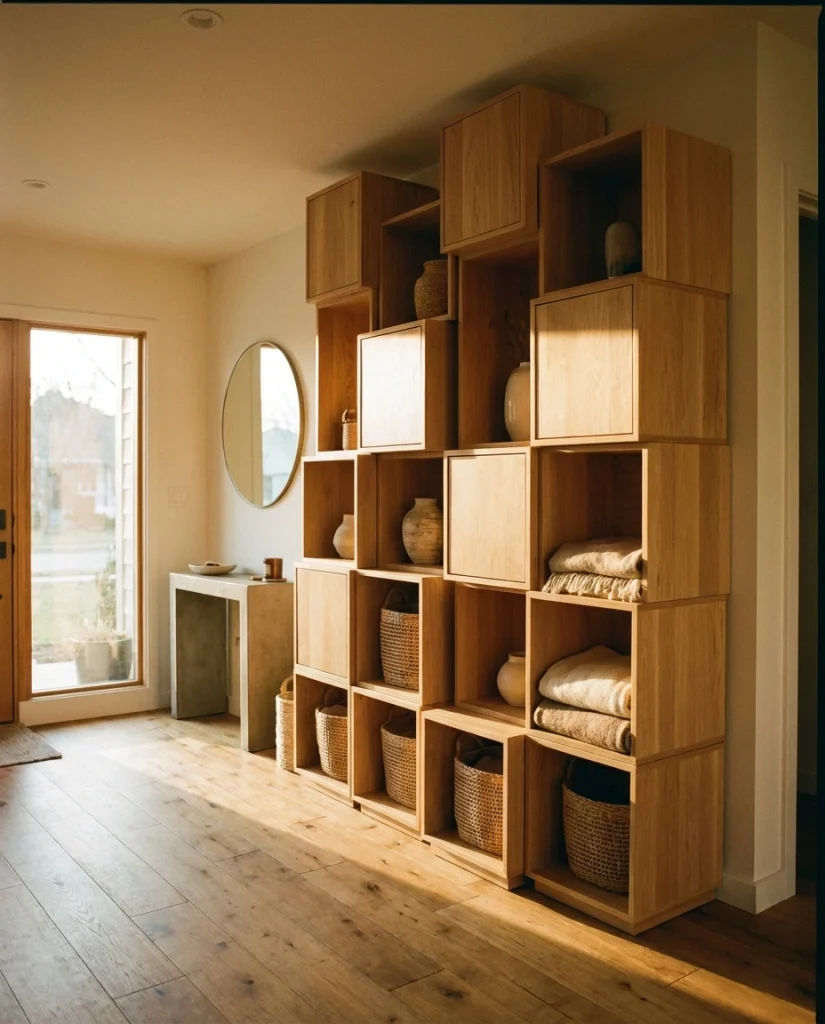
Real homeowner behavior: families with kids love this setup because each cube can be assigned to a different person, cutting down on morning chaos. It’s also budget-friendly—many versions are under $150 total. Just make sure the cubes are anchored if you’re stacking them more than two high, especially in homes with pets or young children.
5. The Sea-Inspired Coastal Blues and Driftwood Accents
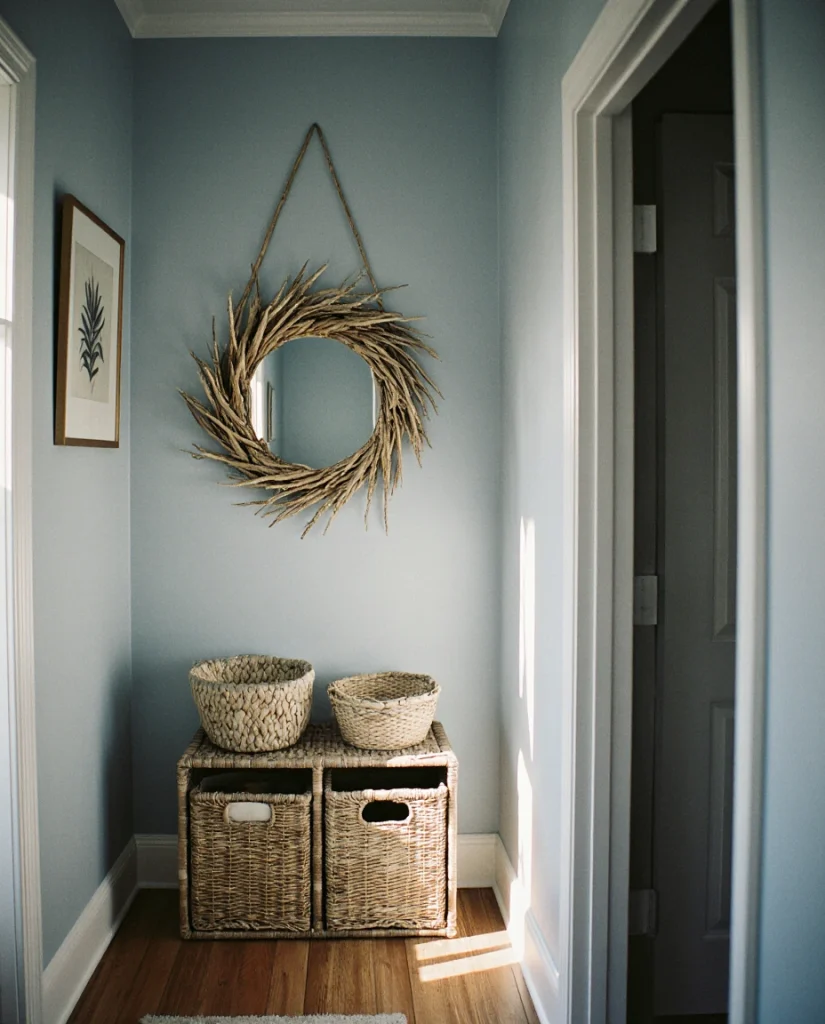
Bring the calm of the sea indoors with soft coastal blues, sandy beiges, and driftwood-style decor. This palette works beautifully in a hallway that leads to a sunroom or back deck, especially in coastal states like California, Florida, or the Carolinas. Layer in woven baskets, rope mirrors, and linen textures for an organic, breathable feel.
Expert-style commentary: Coastal design in 2026 is less about literal anchors and more about evoking mood through texture and tone. Skip the shell collections and focus on natural materials that feel grounded. This style also photographs beautifully, which is why it’s so popular on Pinterest among home sellers and design enthusiasts alike.
6. Christmas School Hallway Nostalgia Display
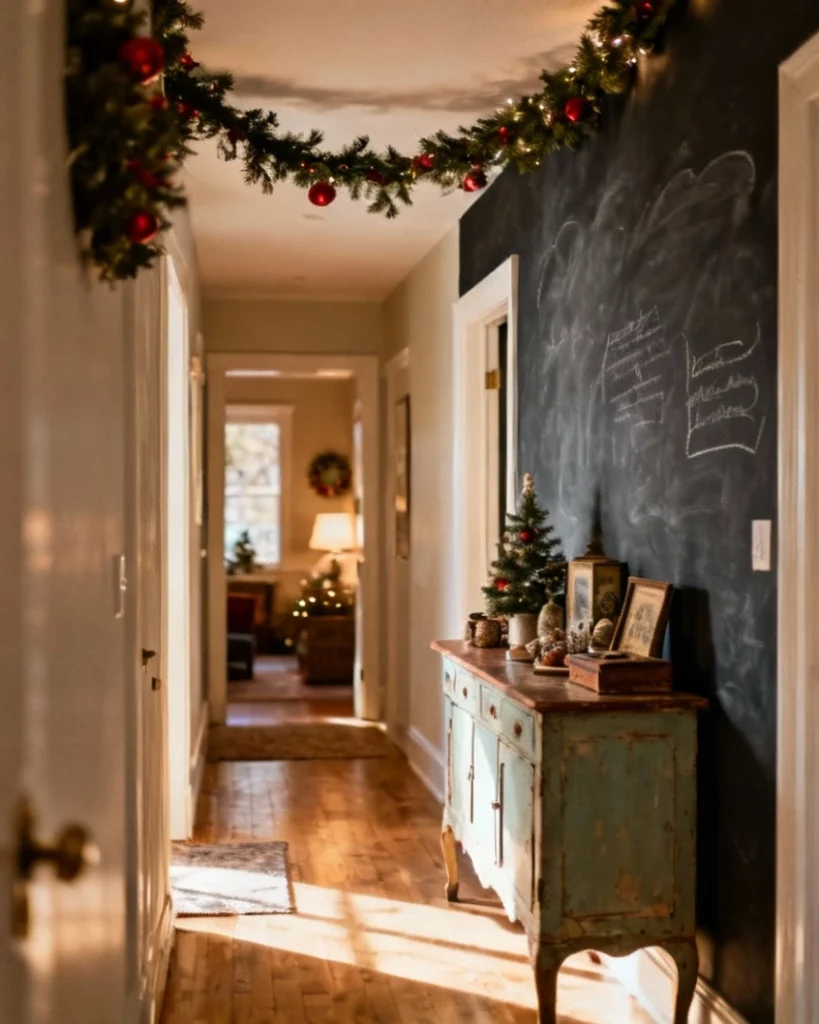
Channel the charm of a Christmas school hallway with vintage-inspired bulletin boards, chalkboard paint, and seasonal garland. This idea is especially popular in homes with young families or in neighborhoods where holiday decorating is a beloved tradition. Use a narrow console to display rotating decor—ornaments in winter, dried flowers in spring.
This setup taps into American nostalgia—think elementary school hallways decked out for the holidays. It’s a low-commitment way to bring seasonal cheer without a full home overhaul. One common mistake: overdoing the theme. Keep it subtle with just one or two nods to the season, and swap them out as the year progresses.
7. Upstairs Landing Styled as a Mini Library
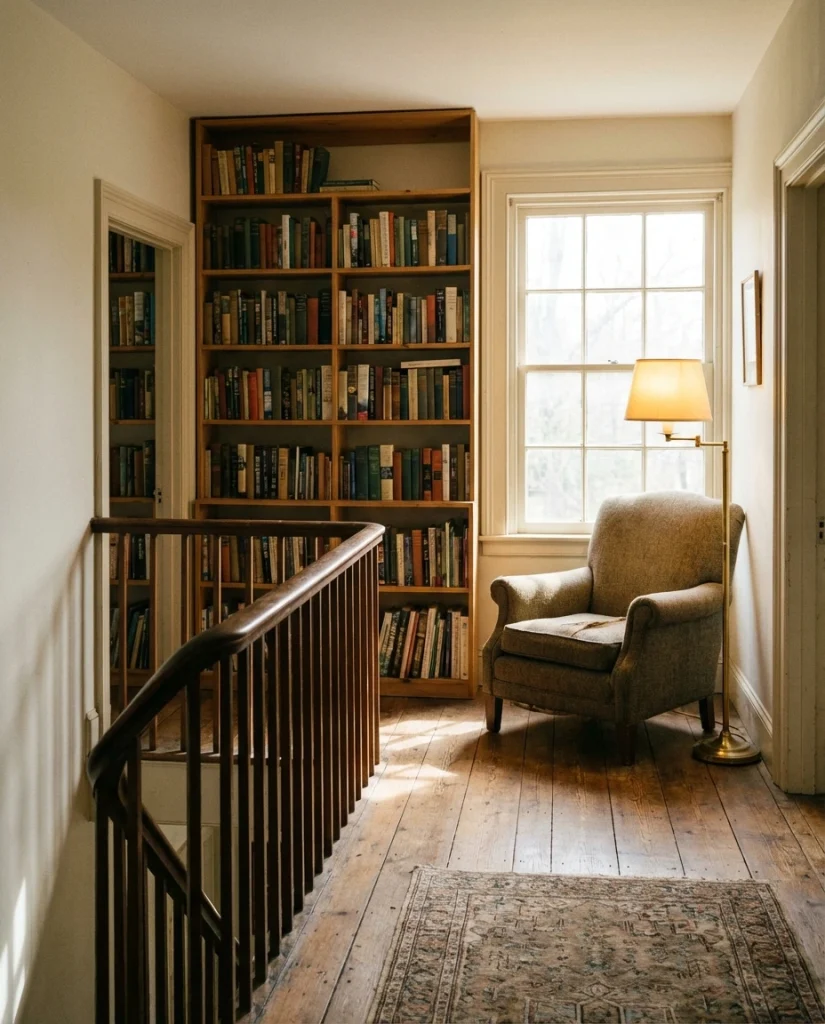
Turn your upstairs hallway or landing into a cozy reading nook with built-in or freestanding bookshelves, a small armchair, and soft lighting. This trend is especially strong in two-story homes where the landing offers just enough space to pause. It’s a clever use of square footage that would otherwise go unused. 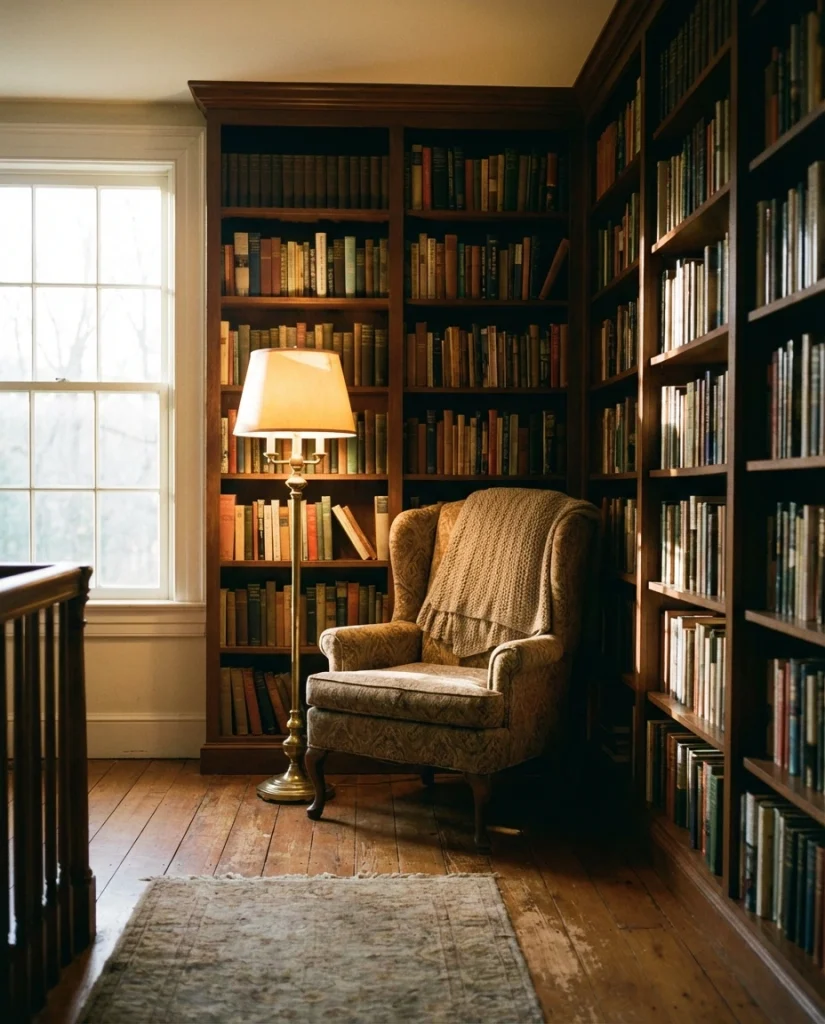
Practical insight: this works best in homes with good natural light or where you can add a wall sconce or pendant. Choose a chair that’s comfortable but compact—nothing overstuffed. And don’t forget a small side table for coffee or a stack of current reads. It’s a simple addition that makes a home feel more thoughtfully designed.
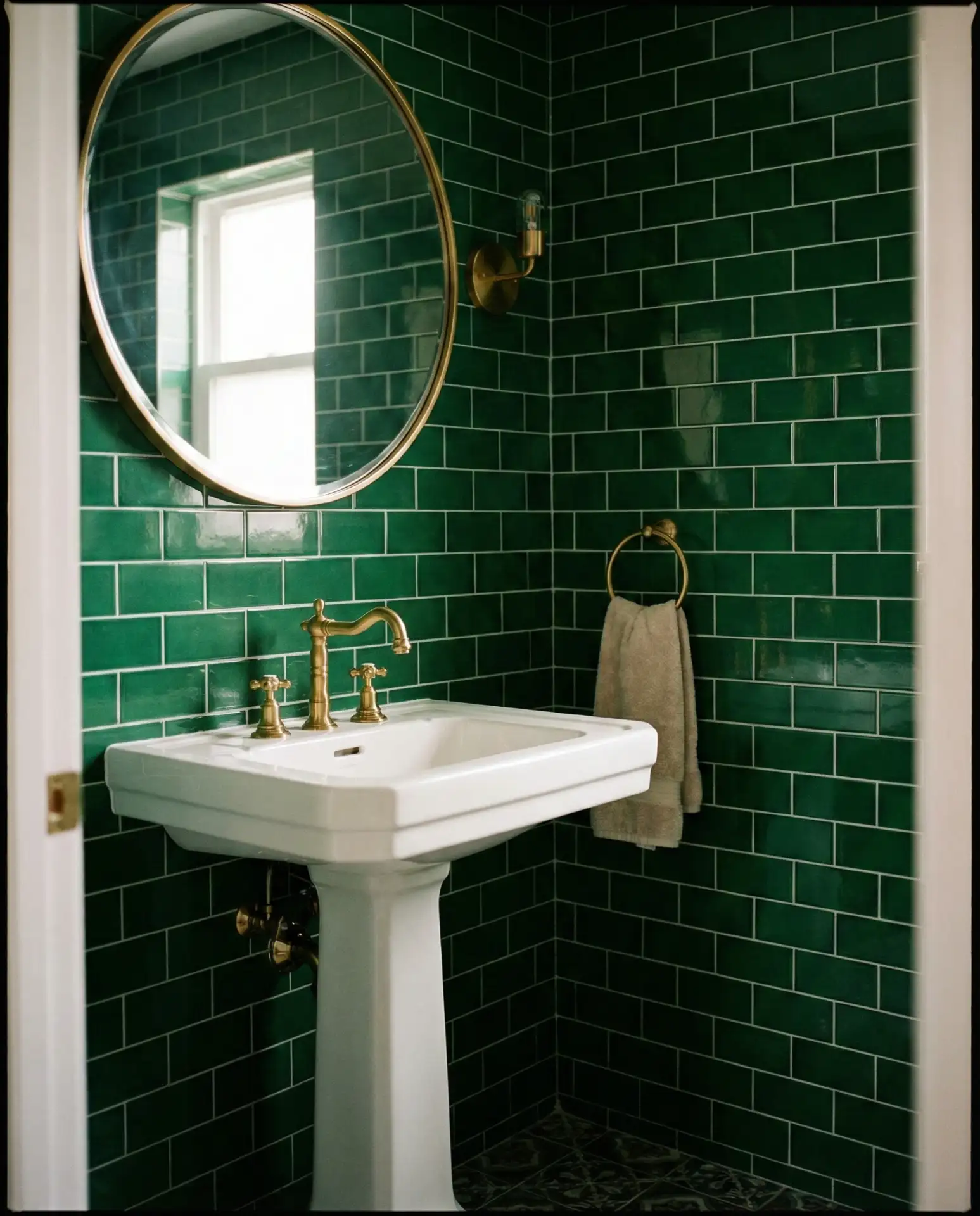
8. Grinch Green Accent Wall with Gold Hardware
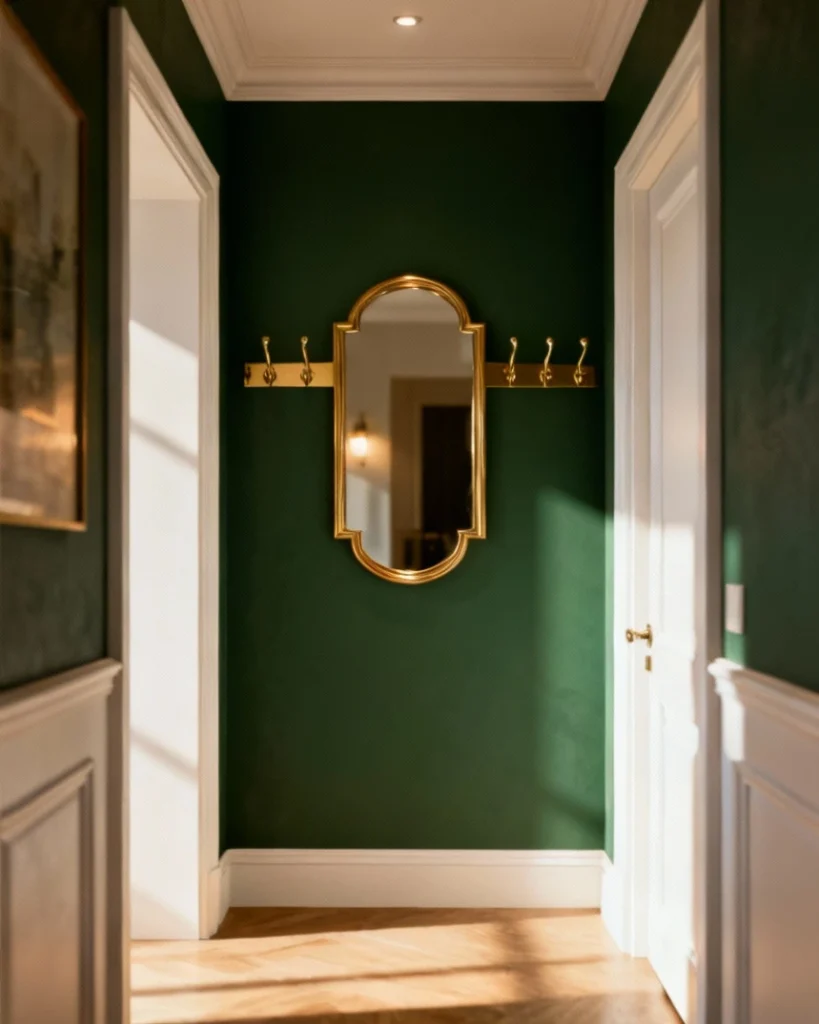
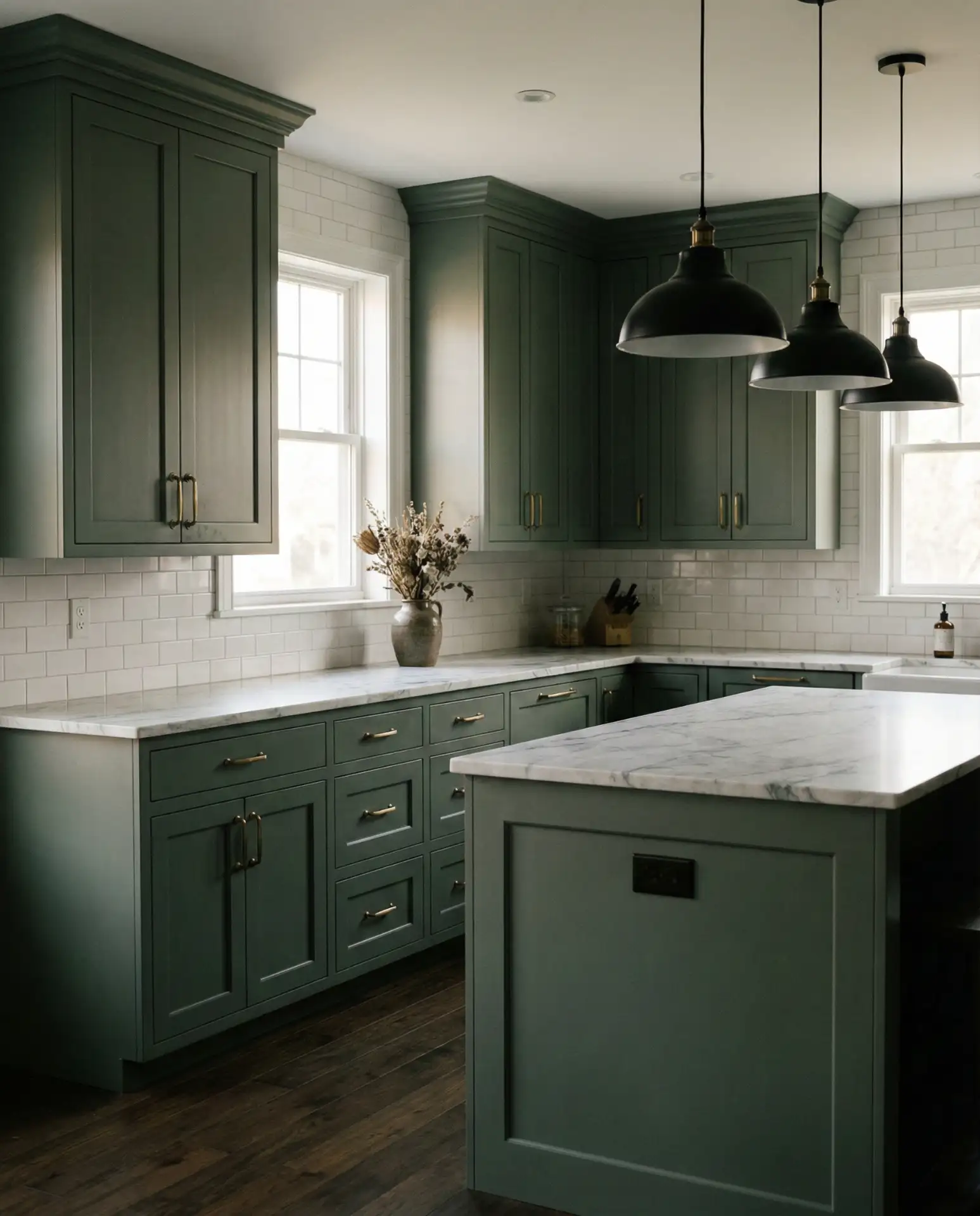
Yes, Grinch green is having a moment—and it’s not just for the holidays. This deep, moody green pairs beautifully with brass or gold hardware, vintage mirrors, and warm wood tones. It’s dramatic without being dark, especially when used in a well-lit entrance or hallway with white trim and natural light. 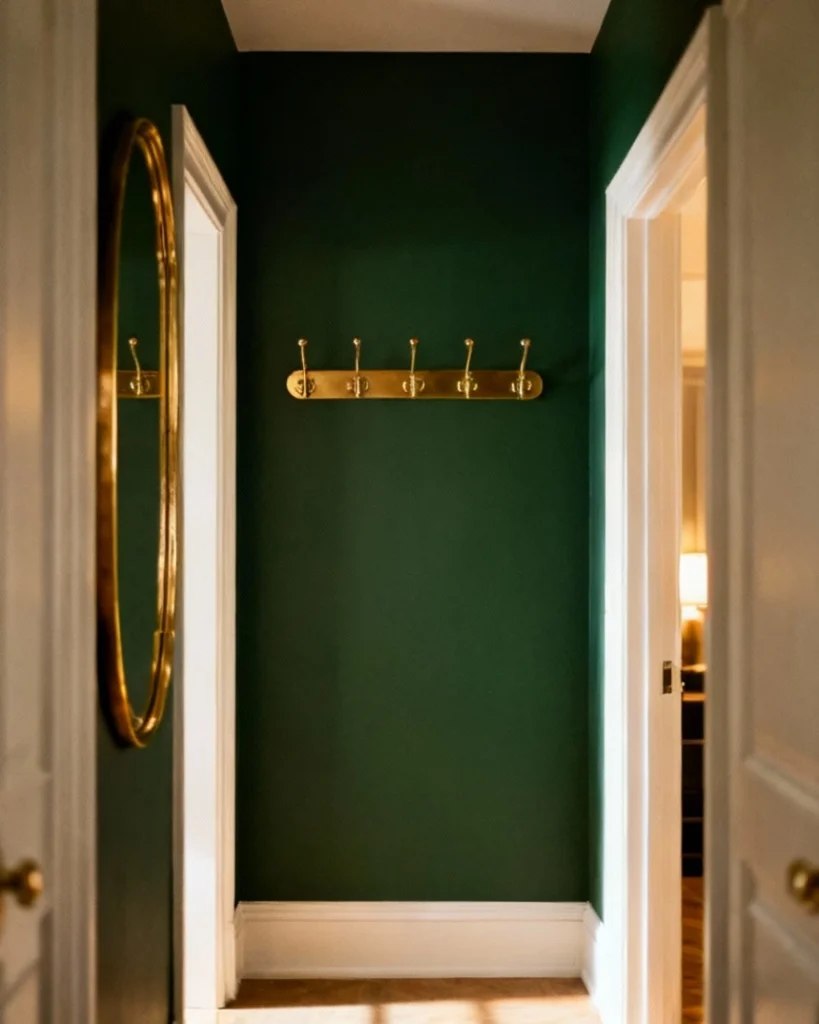
American lifestyle context: green has become the go-to alternative to navy in transitional and modern farmhouse homes. It feels fresh and grounded and pairs well with both contemporary and vintage furniture. Just be sure to balance it with lighter elements—too much saturation in a narrow space can feel heavy.
9. Winter Wonderland White and Silver Palette
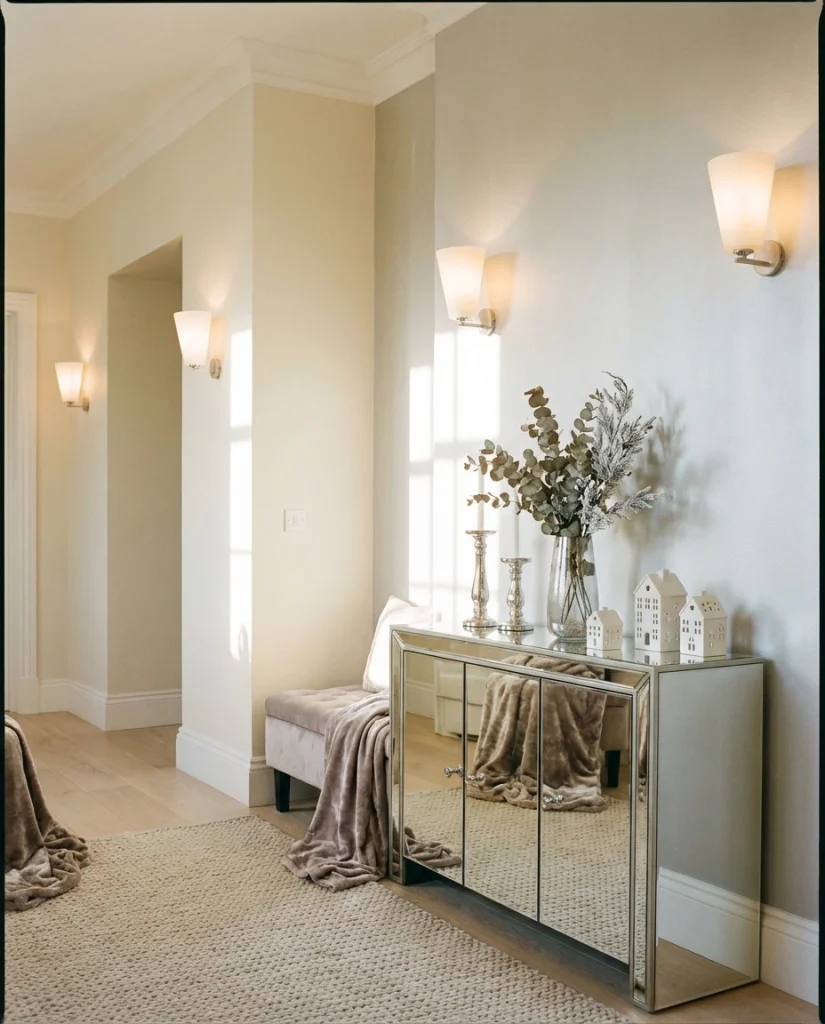
For a serene, ethereal vibe, lean into a winter wonderland palette of whites, silvers, and soft grays. This look is ideal for hallways with limited natural light, as the reflective tones help bounce light around. Add frosted glass sconces, a mirrored console, and faux fur or velvet textiles for warmth. 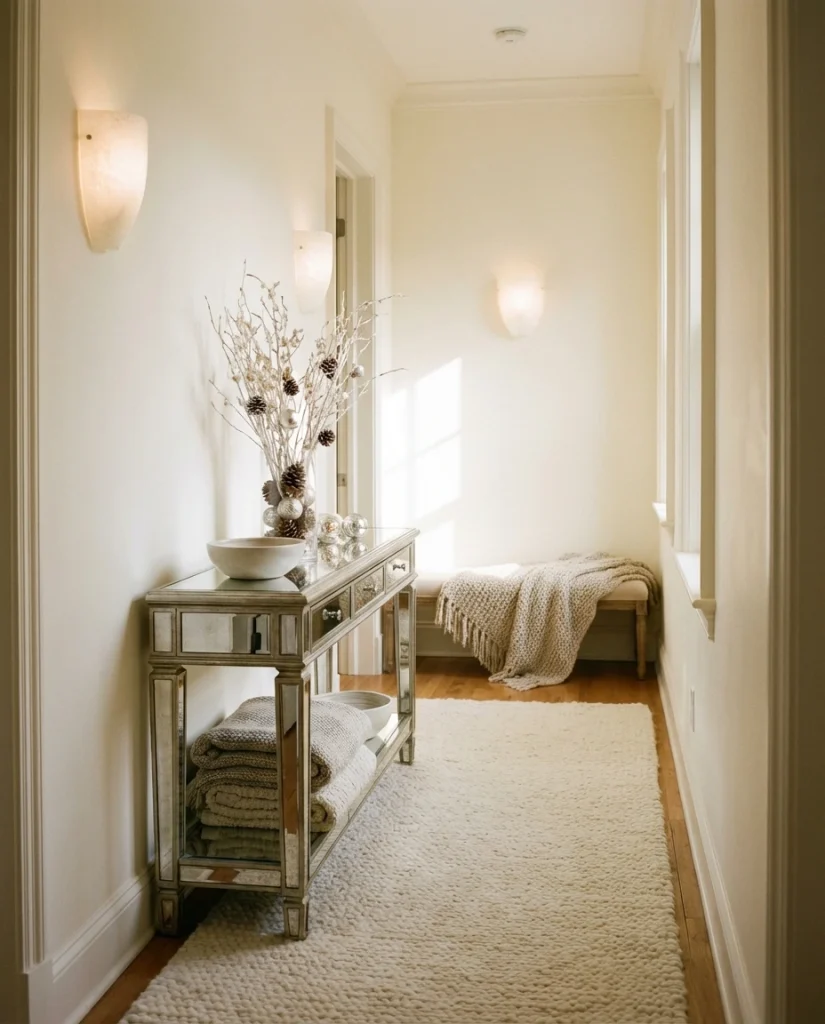
Budget angle: this palette can be achieved affordably with white paint (often under $40/gallon), thrifted mirrors, and a few metallic accessories. The key is layering textures—smooth, matte, glossy—to keep the space from feeling flat. It’s also a forgiving palette for renters, as it’s easy to paint back to neutral when you move.
10. Stair Runner in Bold Geometric Patterns
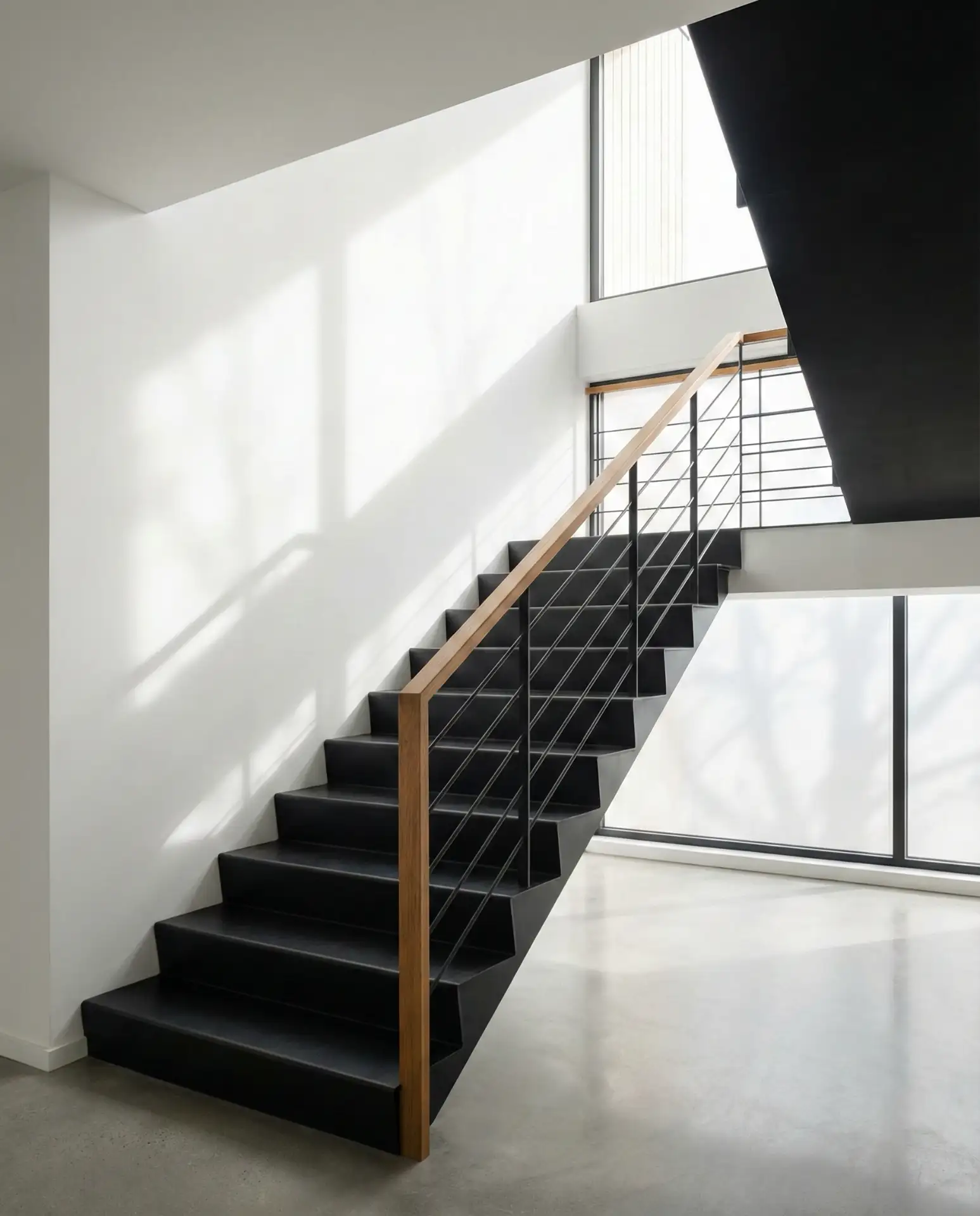
A stair runner is one of the most impactful updates you can make to a hallway that includes stairs. In 2026, bold geometric patterns—chevrons, hexagons, and modern stripes—are replacing traditional florals. Choose high-traffic-friendly materials like wool blends or indoor/outdoor fibers, especially if you have kids or pets.
Real homeowner behavior: many people choose patterned runners specifically because they hide wear and stains better than solid colors. Installation can run $300–$800 depending on length and complexity, but it’s one of those upgrades that immediately elevates the look of your home—and it’s highly searchable on Pinterest for good reason.
11. Dorm-Style Pegboard Wall for Rotating Decor
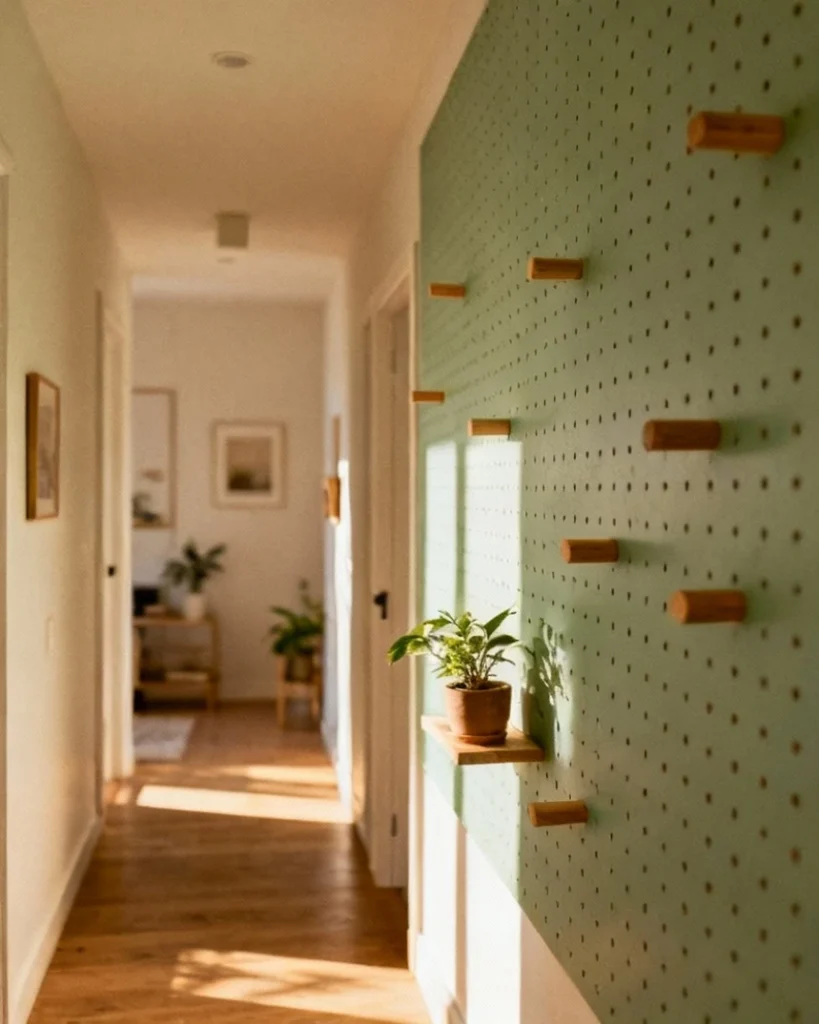
Inspired by dorm life and maker spaces, pegboard walls are making their way into grown-up hallways as a flexible, functional design element. Paint the pegboard in a bold color, then use wooden pegs and small shelves to display plants, hats, keys, and seasonal decor. It’s especially useful in a narrow space where floor storage isn’t an option.
Common mistake: using pegboard without a plan. It can quickly look cluttered if you’re not intentional. Stick to a color palette for what you display, and rotate items seasonally to keep it feeling fresh. This setup works beautifully for renters, too—just mount with minimal hardware or lean a large board against the wall.
12. Entry Console Styled Like a Hotel Lobby
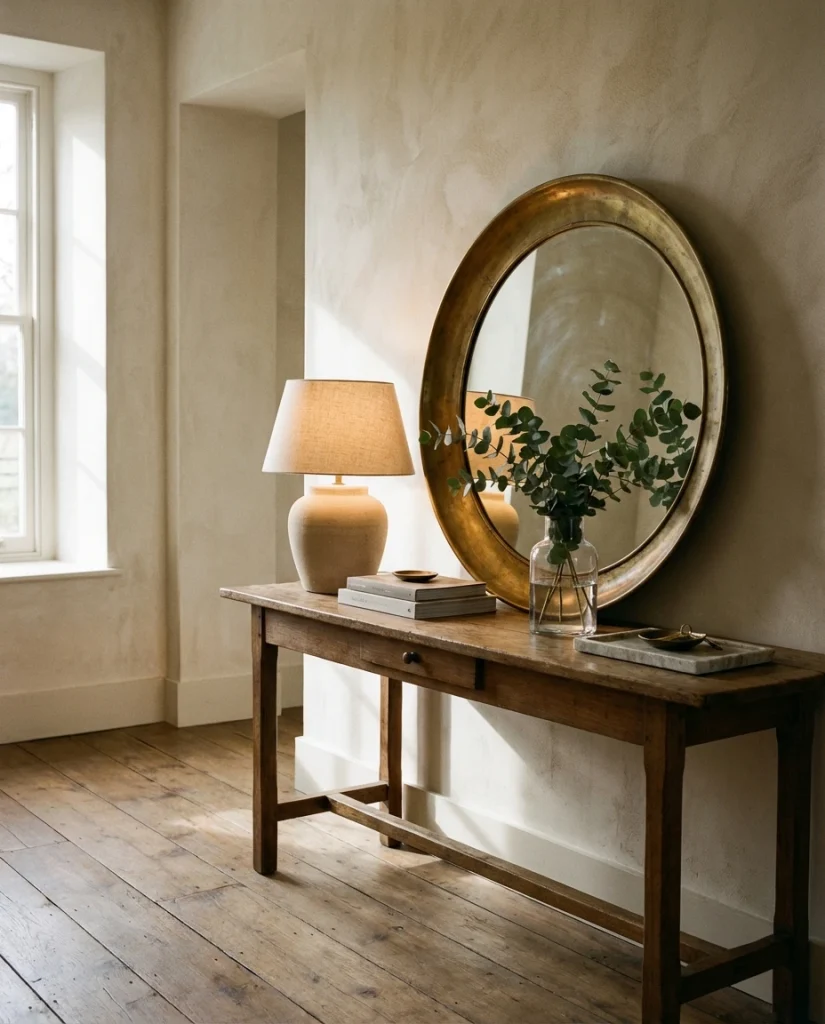
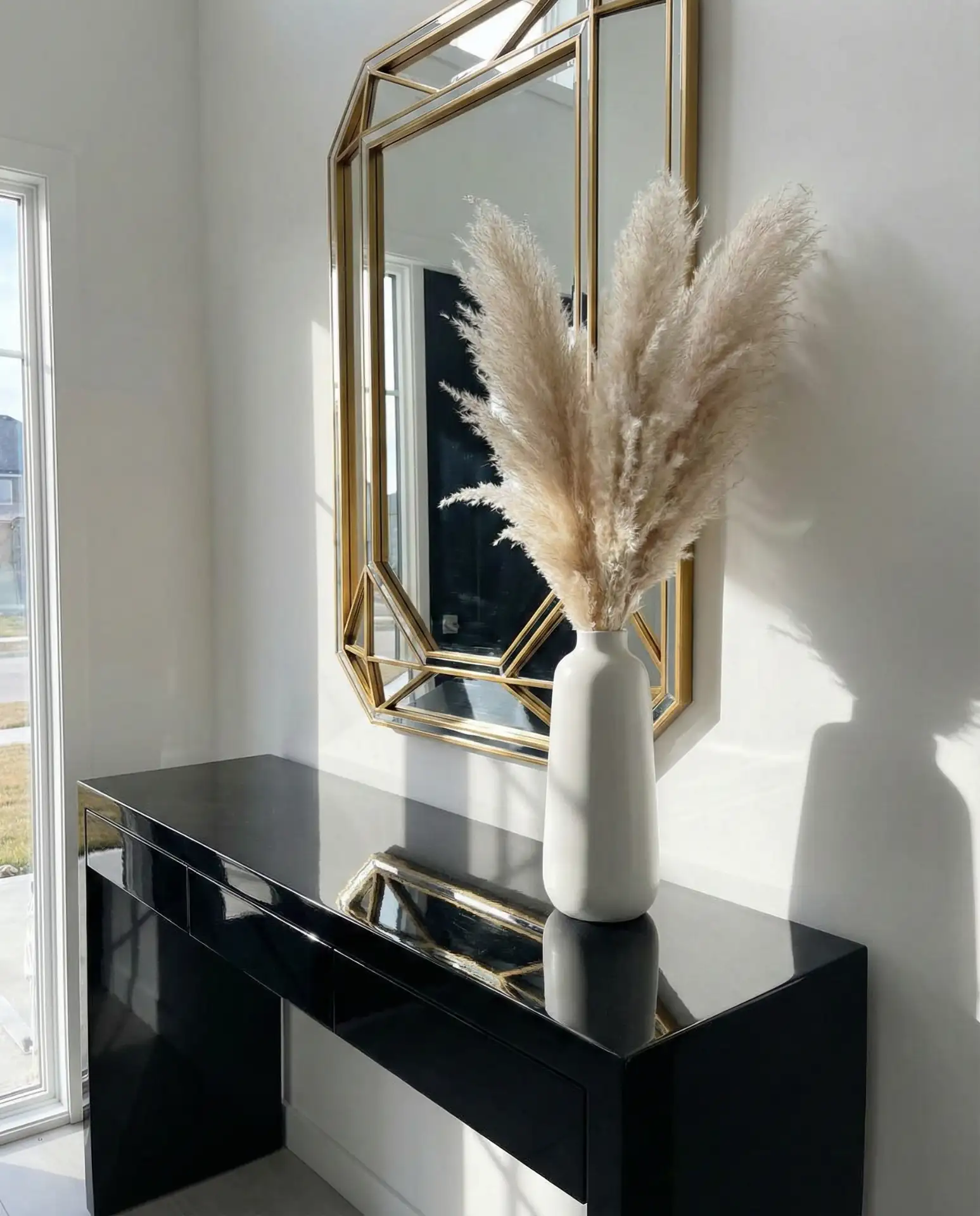
Bring the polished elegance of a boutique hotel into your entry hallway with a sleek console table, a statement mirror, and a small tray for keys and mail. Add a table lamp with a linen shade and a single-stem vase with fresh greenery. The goal is curated simplicity—nothing overcrowded, everything intentional. 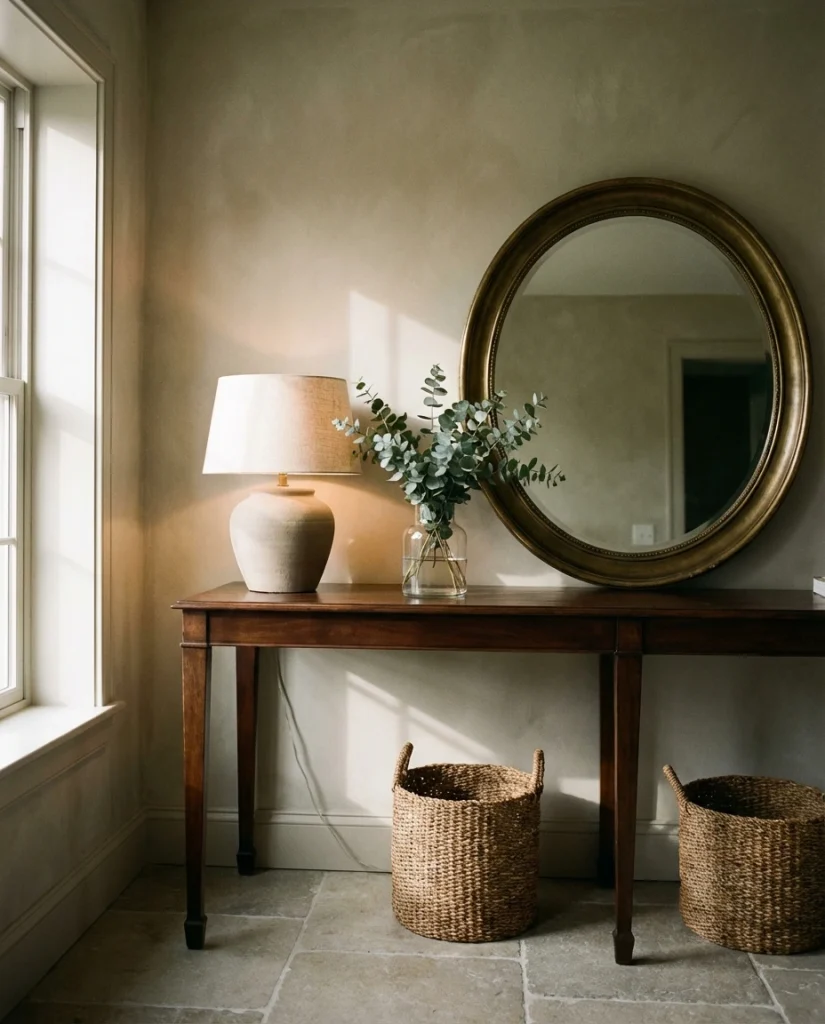
Where it works best: this look shines in condos, townhomes, and smaller entryways where you want maximum impact with minimal square footage. It’s also a great way to set the tone for the rest of your home. Keep surfaces mostly clear—just a few high-quality pieces make a stronger statement than a crowded tabletop.
13. Wallpaper Feature Wall with Vintage Florals
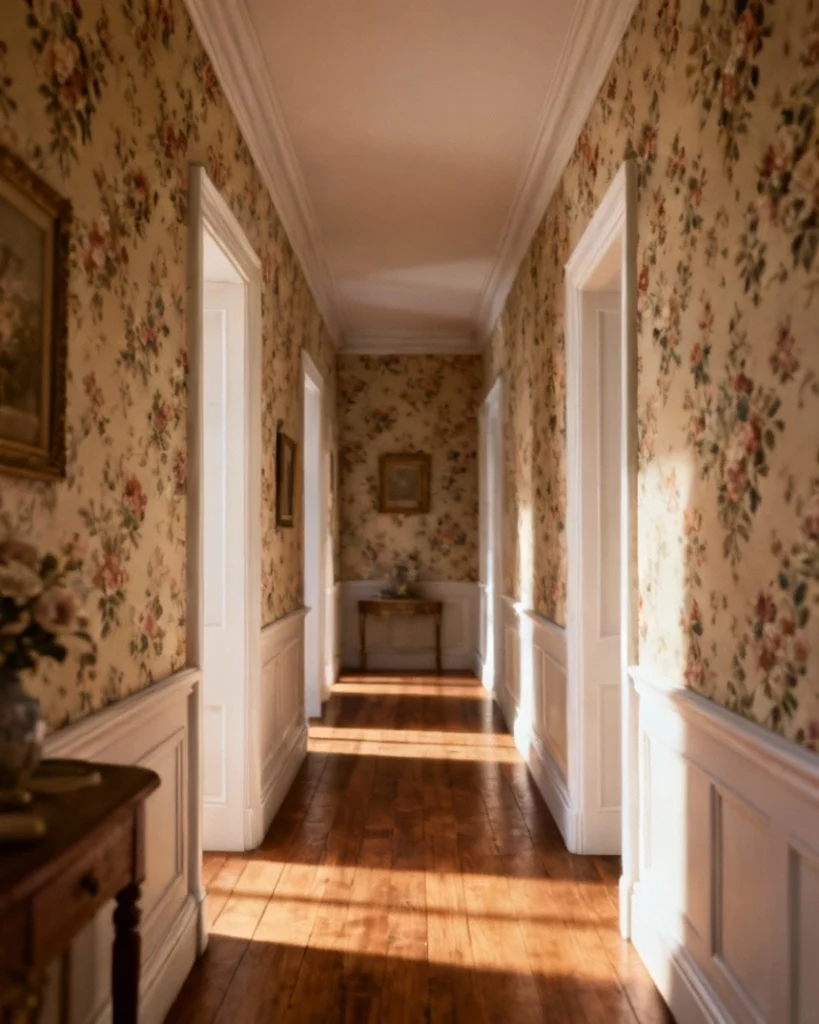
A single wallpaper feature wall can completely transform a hallway, especially when you choose a pattern with depth and detail. Vintage-inspired florals in muted tones—dusty rose, sage, and charcoal—are trending in 2026. Pair with simple white trim and minimal decor to let the wallpaper be the star.
Practical insight: peel-and-stick wallpaper has come a long way and is now a viable option even for long-term installations. It’s also renter-friendly and easier to DIY than traditional paste-on wallpaper. Just make sure your walls are smooth and clean before applying—any texture will show through.
14. Large Vintage Mirror as a Light Amplifier
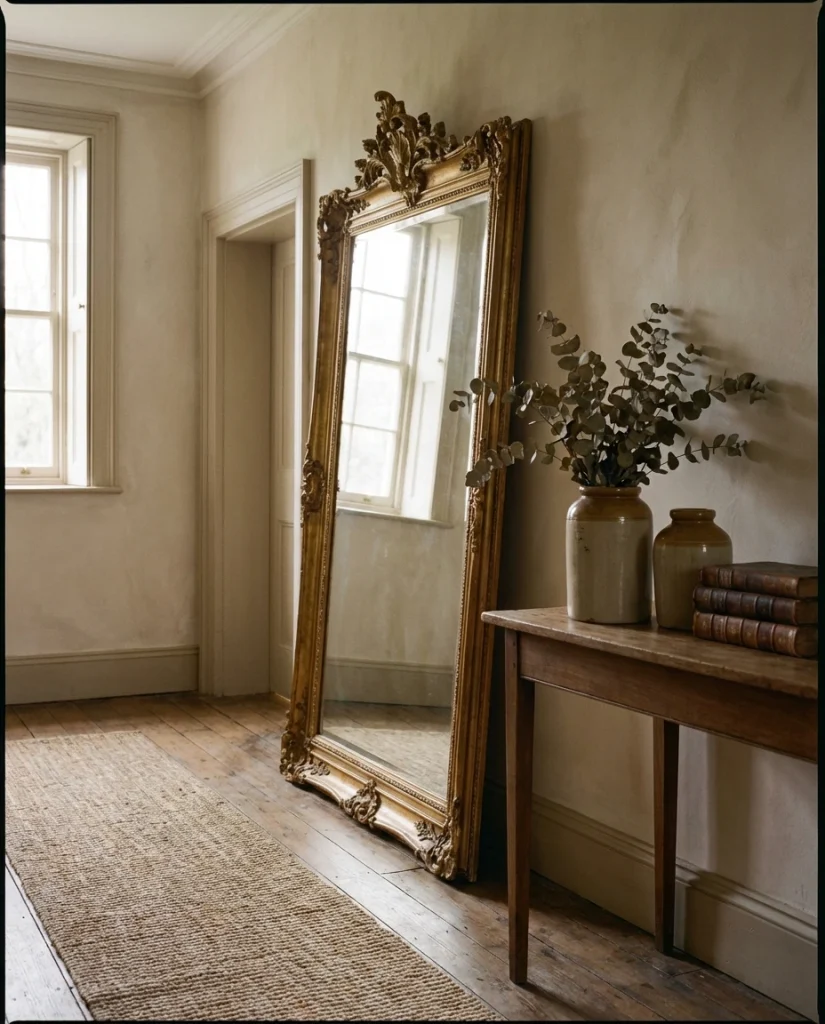
A large vintage mirror—think ornate gold, oversized wood frame, or arched design—can open up even the darkest hallway by reflecting light from nearby windows or fixtures. Lean it against the wall for a casual, collected look, or mount it securely for a more polished feel. Either way, it’s a high-impact, low-effort addition.
Expert-style commentary: mirrors are one of the most effective tools in small-space design, and they’re especially useful in hallways where natural light is limited. Look for mirrors at estate sales, antique shops, or online marketplaces—you’ll often find unique pieces for under $100 that add instant character.
15. Classroom-Style Hooks and Cubbies for Family Organization
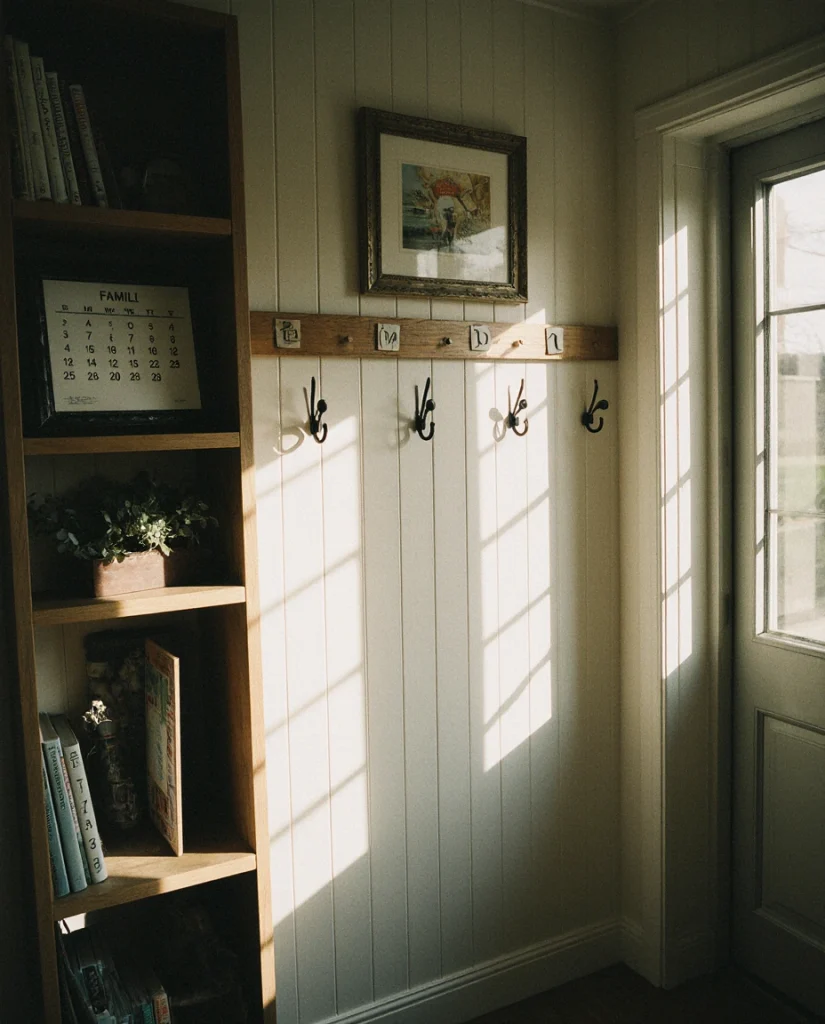
Borrow from classroom design with labeled hooks, individual cubbies, and a shared family calendar. This setup is ideal for busy households where everyone needs a designated spot for backpacks, coats, and shoes. It’s practical, scalable, and can be customized to fit any hallway width.
Real homeowner behavior: many families use this system to reduce morning stress—everyone knows where their stuff is, and nothing gets lost in the shuffle. You can DIY this with basic lumber and hooks from a hardware store for under $200, or buy a pre-made unit. Either way, it’s a game-changer for homes with kids.
16. Halloween-Inspired Moody Black and Orange Accents
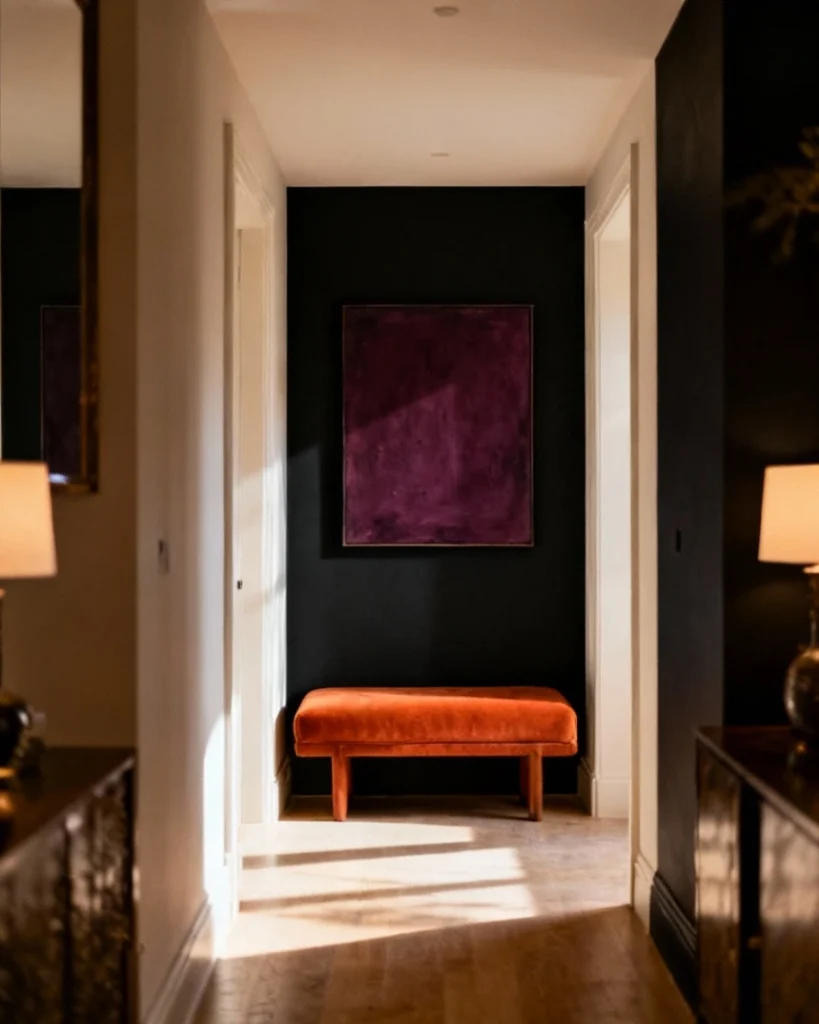
Even outside of October, Halloween-inspired palettes of black, burnt orange, and deep plum are showing up in hallway design. Use these tones in artwork, throw pillows on a bench, or a painted accent wall. The look is moody and sophisticated, especially when paired with vintage brass or matte black hardware.
American regional context: this palette resonates especially in the Northeast and Midwest, where autumn is a beloved season and homes often reflect that aesthetic year-round. It’s a bold choice, but one that feels grounded and intentional rather than seasonal or kitschy. Balance the dark tones with plenty of light sources to avoid a cave-like feel.
17. Long Narrow Hallway with Symmetrical Sconces
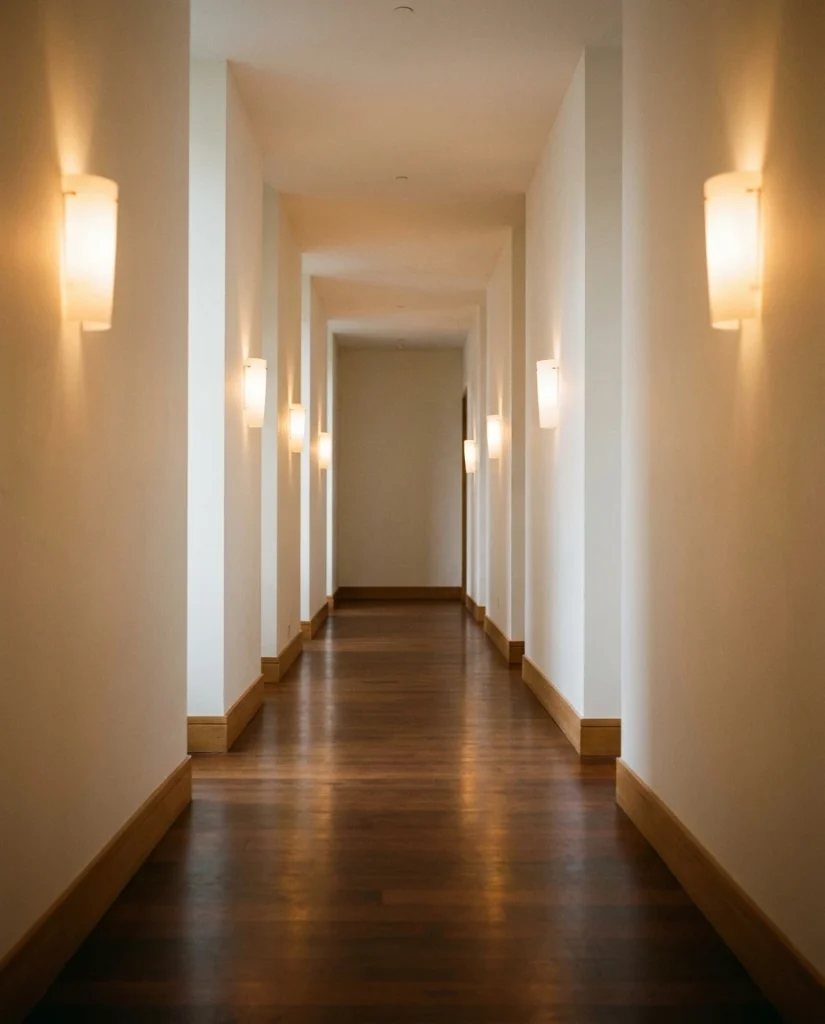
In a long narrow corridor, symmetry is your friend. Install matching sconces every six to eight feet along both walls to create rhythm and even lighting. Choose designs with fabric shades or frosted glass to diffuse light gently, avoiding harsh shadows. This approach works in both modern and traditional homes.
Common mistake: installing sconces too high or too low. Aim for about 60–66 inches from the floor to the center of the fixture. This height works for most ceiling heights and creates a balanced look. Hardwired sconces offer the cleanest look, but plug-in versions are a solid option for renters or quick updates.
18. Short Hallway with Bold Patterned Floor Tile
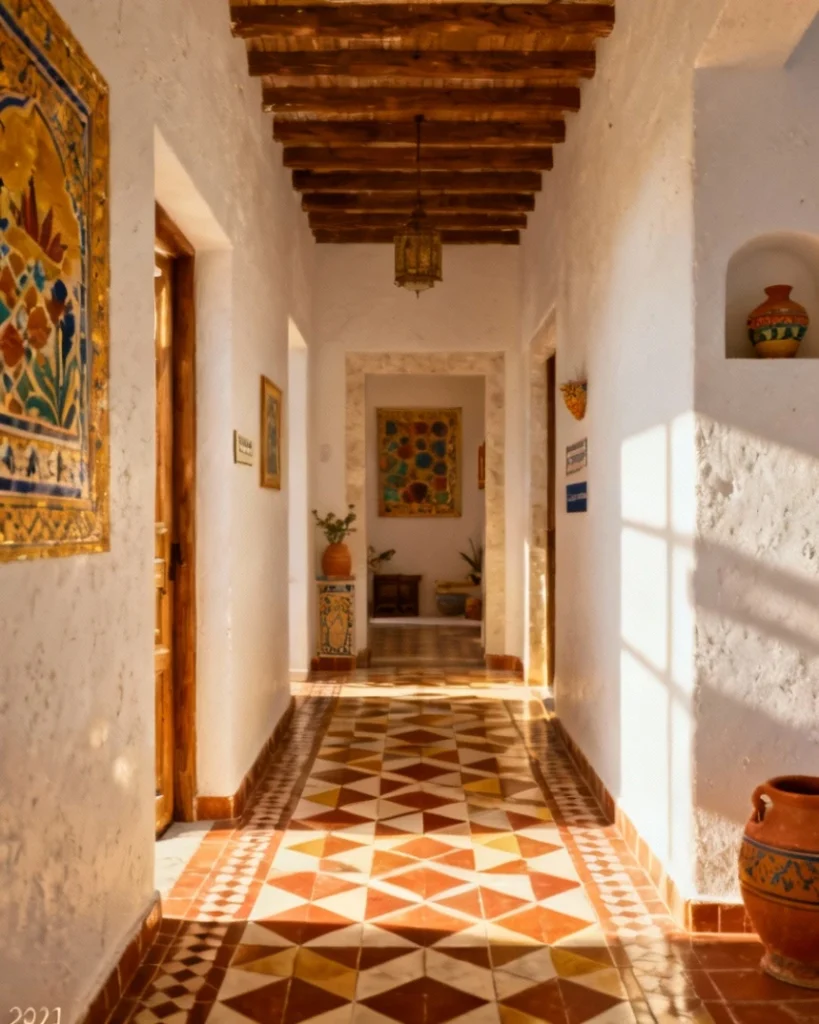
A short hallway is the perfect place to experiment with bold floor tile—think encaustic patterns, geometric designs, or colorful terrazzo. Because the space is small, the investment is lower, but the visual impact is huge. It’s a trend that’s particularly popular in homes with Spanish, Mediterranean, or eclectic design styles.
Budget angle: patterned tile can range from $5 to $20 per square foot depending on material and design. For a small hallway (say, 30 square feet), you’re looking at $150–$600 in materials alone. DIY installation can save hundreds, but professional work ensures clean grout lines and a polished finish. Either way, it’s a statement worth making.
19. Colours Layered Through Textiles and Soft Goods
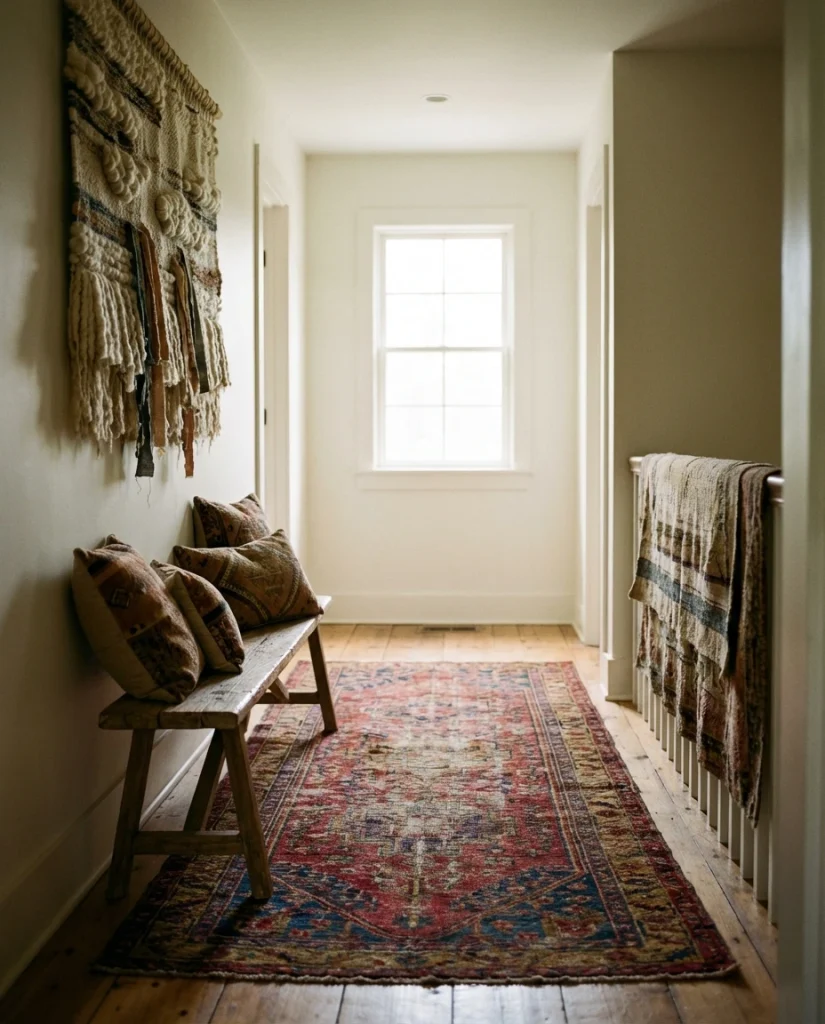
Rather than painting, layering your hallway’s decor with colors through textiles adds a temporary and flexible design. Consider runners, wall tapestries, bench seat cushions, and curtains. It allows for the colors to be swapped seasonally, as well as when interior design trends change. It’s also a low-stake way to try out bold colors like terracotta, ochre, and teal. 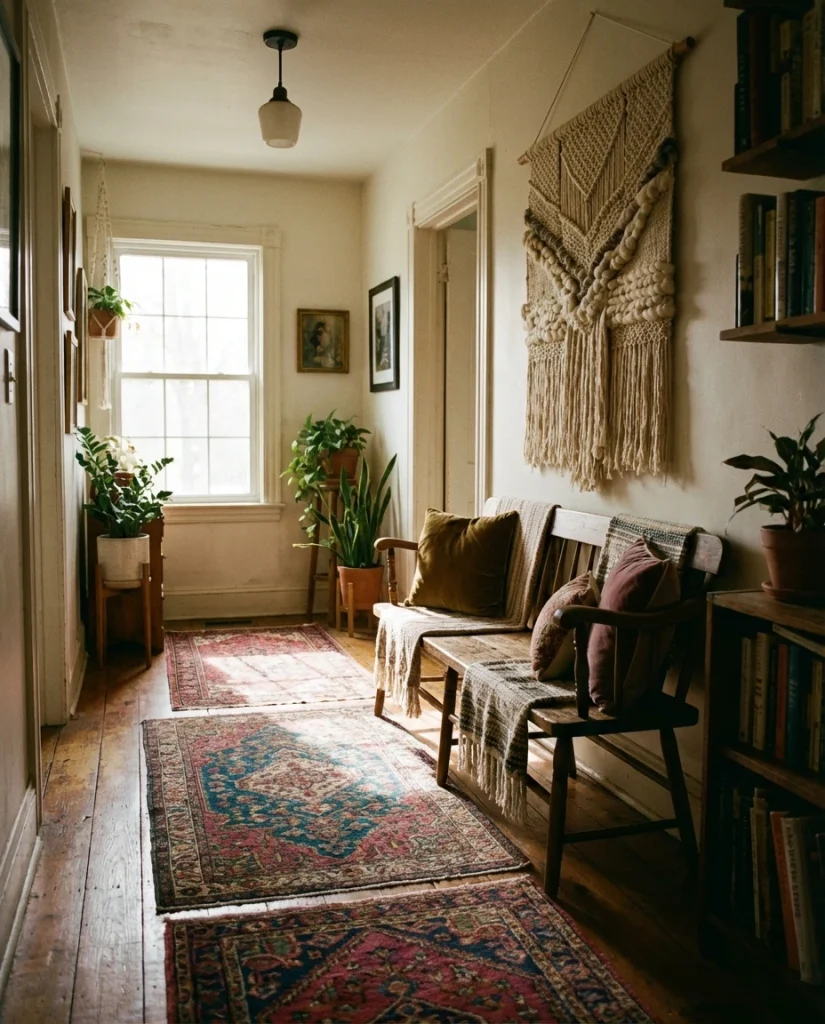
Practical insight: If the hallway contains hard surfaces that are susceptible to echo, textiles will absorb the sound, which is a helpful bonus. If you have pets or a lot of foot traffic, look for textiles that are machine washable. This is one of the easiest updates to make on a weekend, and it can completely shift the mood of the space without any construction.
20. Christmas-Themed Garland and Lighting Year-Round
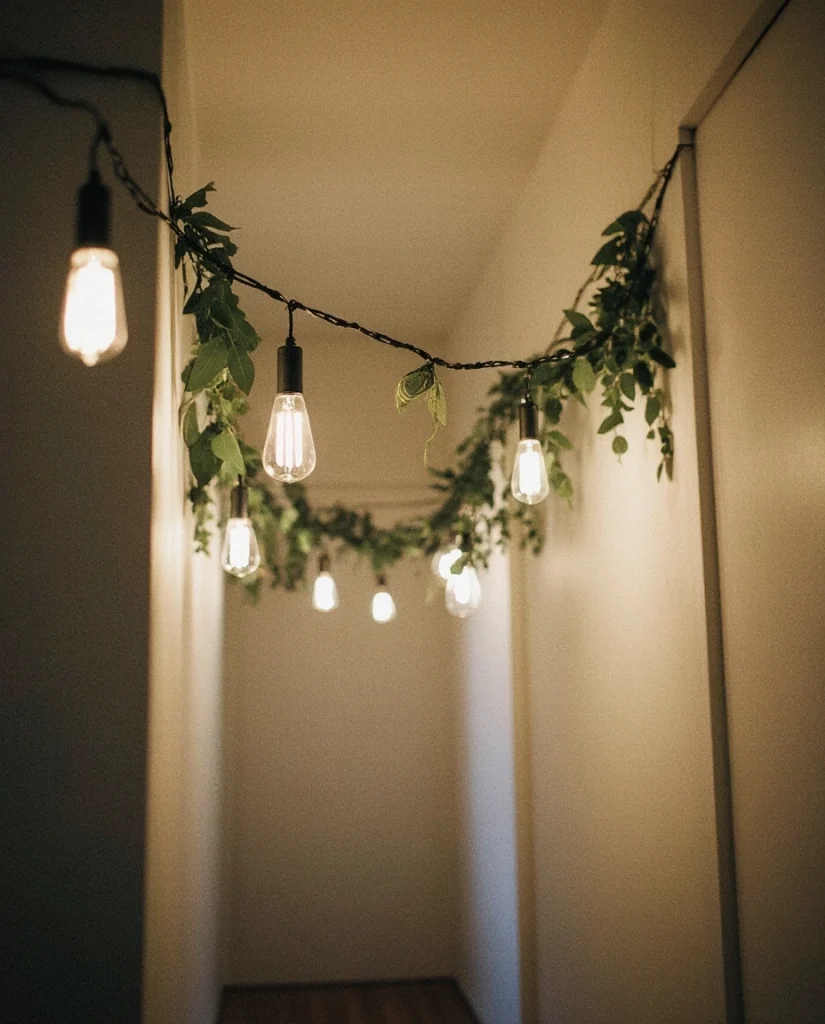
While Christmas decor is traditionally seasonal, string lights and greenery garland are being embraced as year-round elements in hallways. Swap traditional evergreen for eucalyptus or faux ivy, and use warm-toned Edison bulb lights for a cozy, lived-in glow. It’s festive without being holiday-specific.
Where it works best: this look is ideal for homes with a boho, farmhouse, or cottage aesthetic. It’s also popular in vacation rentals and Airbnbs, where creating a welcoming, homey vibe is key. Just avoid anything too literally holiday-themed—stick to natural materials and neutral tones to keep it versatile.
21. Home Entrance with Arched Doorway and Statement Lighting
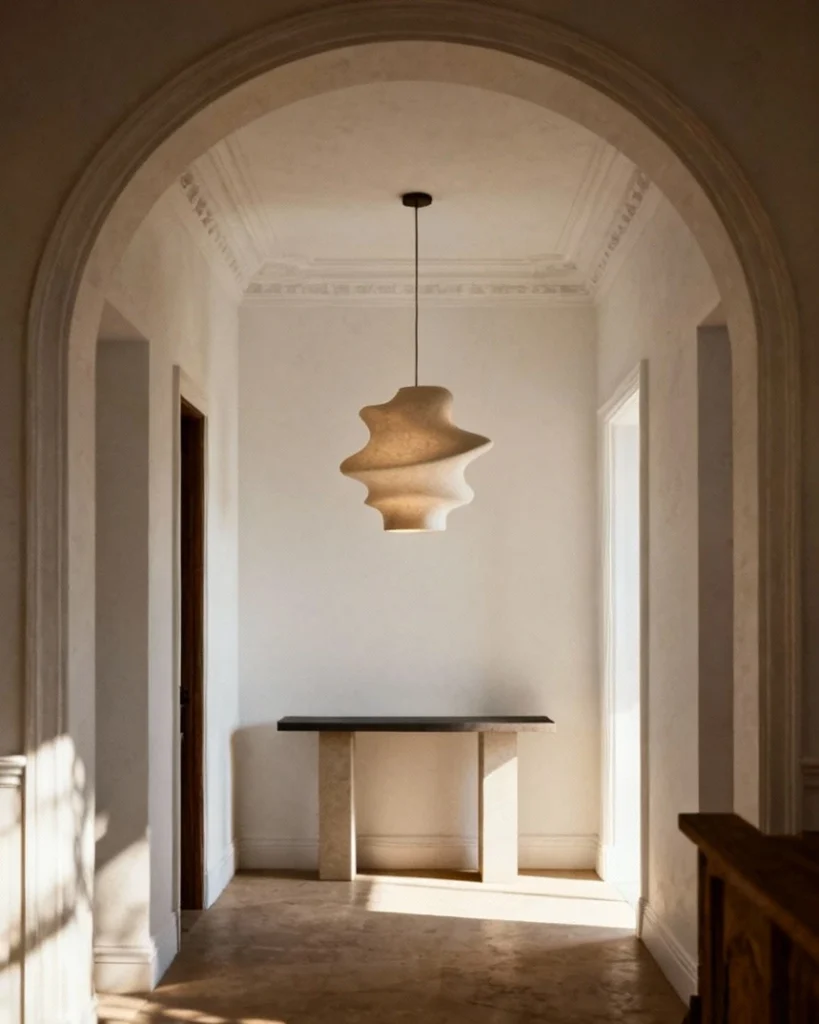
If your home entrance includes an arched doorway, play it up with statement lighting—a sculptural pendant, a vintage lantern, or a modern chandelier. The arch itself becomes a frame, drawing the eye inward and making even a modest hallway feel grand. Pair with a simple console and minimal decor for maximum impact.
Expert-style commentary: arches are making a major comeback in residential design, and highlighting them with the right lighting can completely transform a space. Look for fixtures with visual interest—brass, ceramic, or woven materials—that complement the architecture without competing with it. This is one of those details that elevates a home from nice to noteworthy.
Conclusion
Hallways might be transitional by nature, but in 2026, they’re anything but overlooked. From bold color and playful patterns to thoughtful lighting and clever storage, these 21 ideas prove that every inch of your home deserves intention. Try one, mix a few, or let them spark your own creative direction—and don’t forget to share your favorite hallway transformations in the comments below.