If there’s one room Americans have become obsessed with transforming since the pandemic, it’s the kitchen—and more specifically, what lives inside those cabinets. Search volumes for kitchen organization on Pinterest have skyrocketed year after year, and 2026 is shaping up to be the biggest year yet. Whether you’re dealing with a cramped galley kitchen in a Brooklyn apartment or a wide-open farmhouse layout in the Midwest, the desire for a space that actually functions beautifully is universal. In this guide, you’ll find 23 fresh ideas—from smart storage drawers to open shelving moments—that will help you rethink every inch of your kitchen.
1. Drawer Dividers That Actually Make Sense
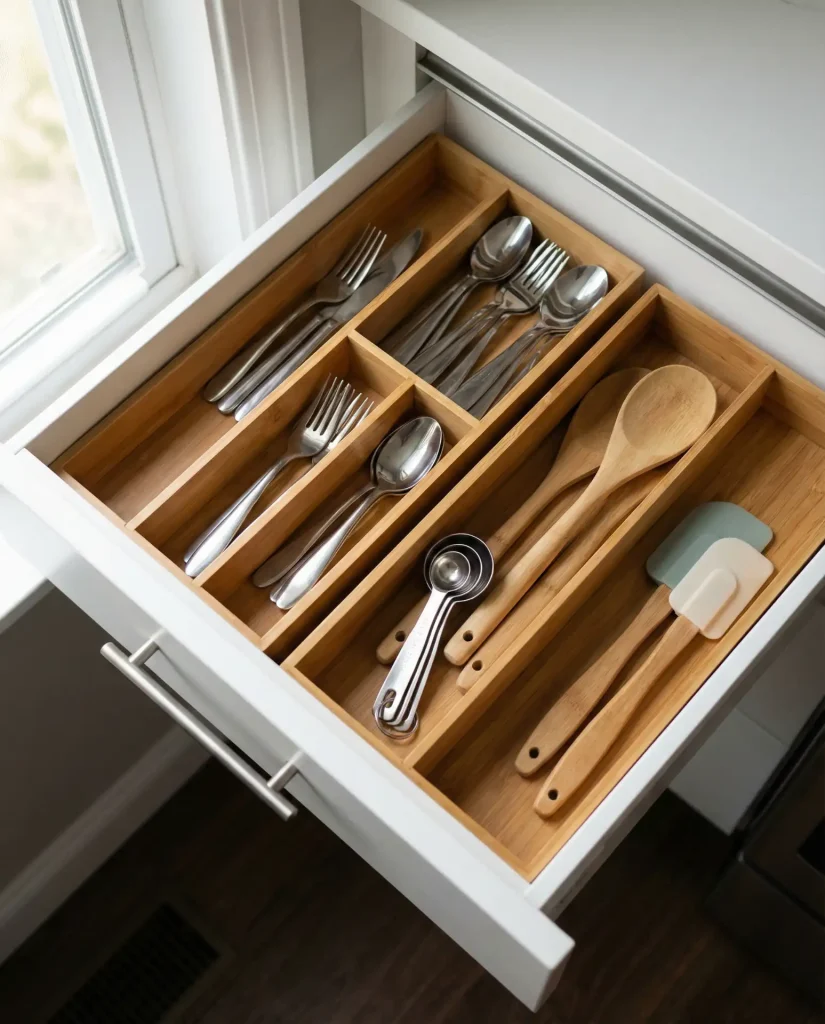
When it comes to storage drawers in the kitchen, the real game-changer isn’t the drawer itself—it’s what you put inside it. Bamboo or acrylic dividers let you create custom compartments for utensils, measuring spoons, and small gadgets that otherwise end up in a jumbled mess. The key is sizing your dividers to your actual drawer depth, not just buying a generic set that leaves dead space at the back. If you’ve been wrestling with your layout, starting with the drawers closest to your prep zone is always the smartest first move.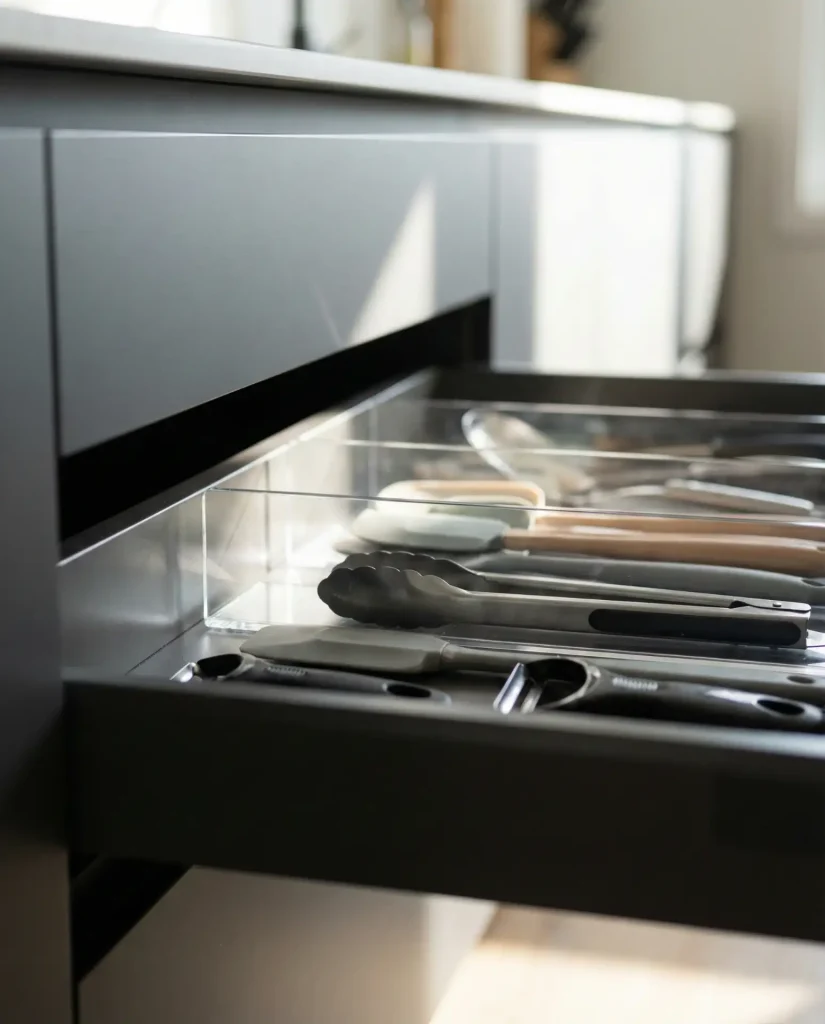
The common mistake most homeowners make is buying one-size-fits-all organizers from a big-box store without measuring first. A drawer that’s 21 inches deep needs a different solution than one that’s 15. Take five minutes to measure all your drawers before you order anything—that single step will save you from the frustrating cycle of returns that plagues so many first-time organizers.
2. Open Shelving for Everyday Dishes
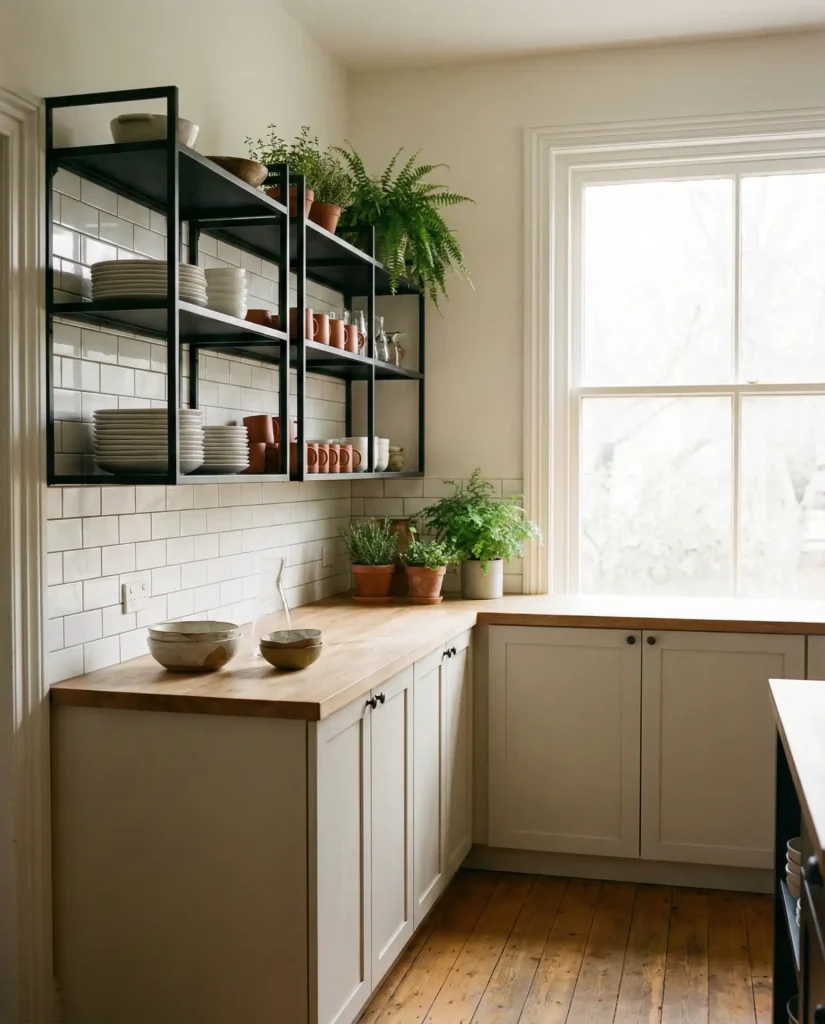
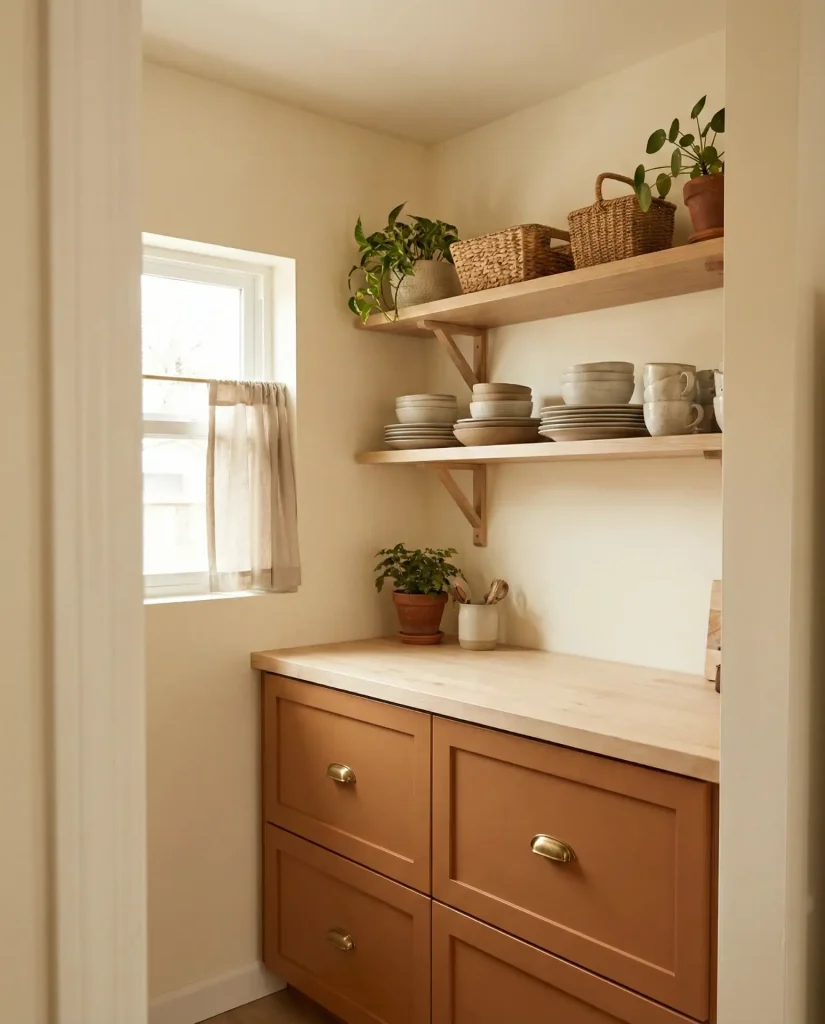
There’s a reason why layout cupboards and open shelving have become some of the most pinned kitchen ideas of the decade. Floating shelves in place of upper cabinets create a sense of airiness that closed doors simply can’t replicate—especially in smaller kitchens where the walls can feel like they’re closing in. The trick is limiting open shelving to items you use daily, like cups and plates, so the display always looks intentional rather than cluttered. A cohesive color palette in your dishware goes a very long way here.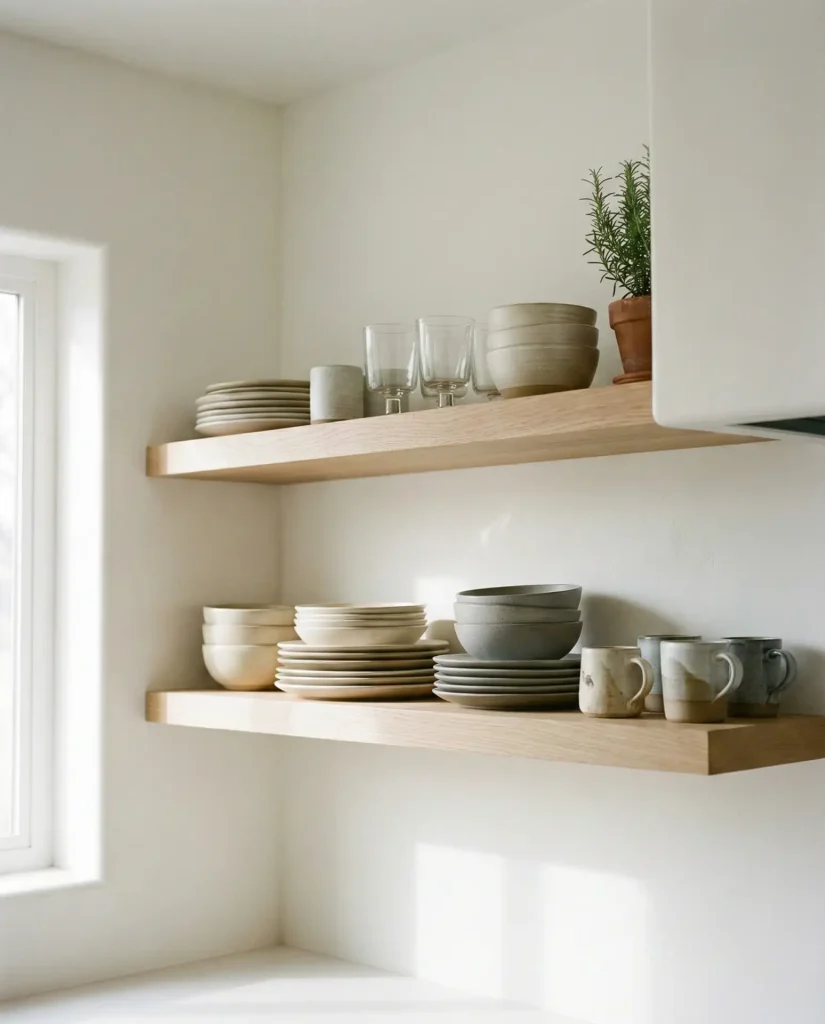
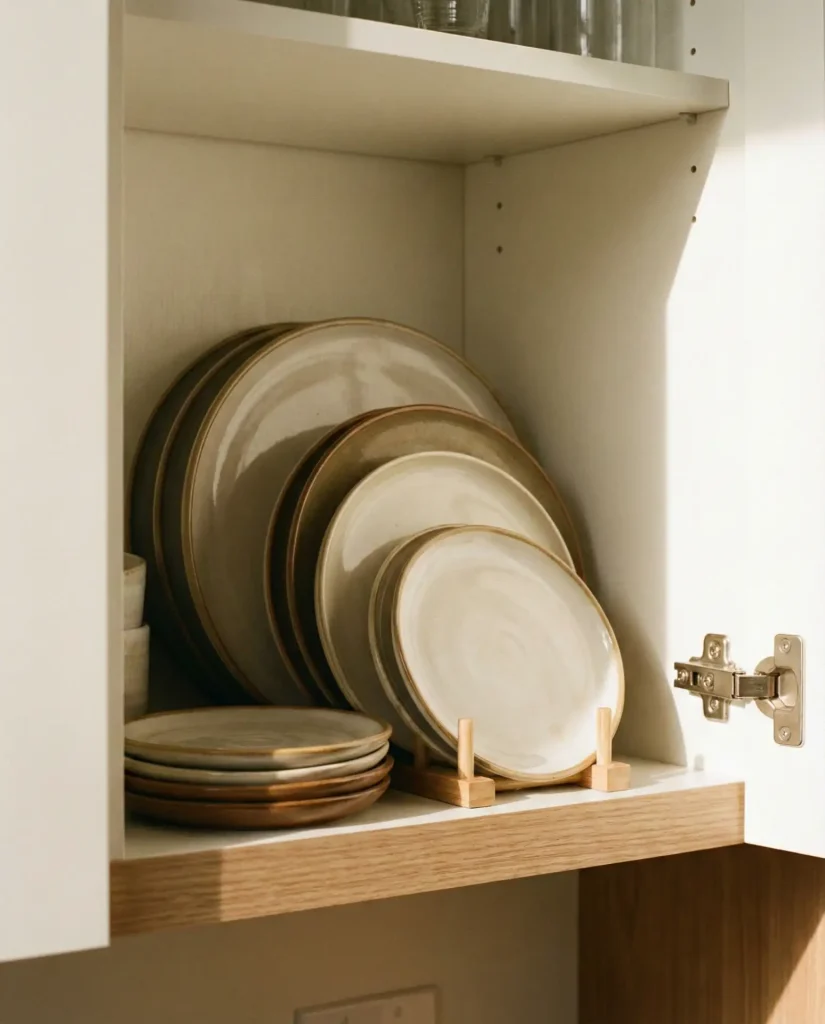
One designer trick worth stealing: stack your largest plates flat on the bottom shelf, then angle two or three plates upright against the wall behind them using a small plate stand. It gives the display dimension and makes the whole wall look like something out of a design magazine. It’s one of those micro-details that transforms “organized” into genuinely beautiful.
3. A Smarter Spice Storage System
Ask any home cook, and they’ll tell you the same thing: spices are the wild west of the kitchen. They multiply faster than you expect, they hide behind each other in the back of cabinets, and half the time you end up buying a second jar of cumin because you couldn’t find the first one. Dedicating a specific drawer or tiered shelf insert exclusively to spices—pulled out so all labels face up—is one of the highest-return organization moves you can make. It works beautifully in both upper and lower cabinet configurations.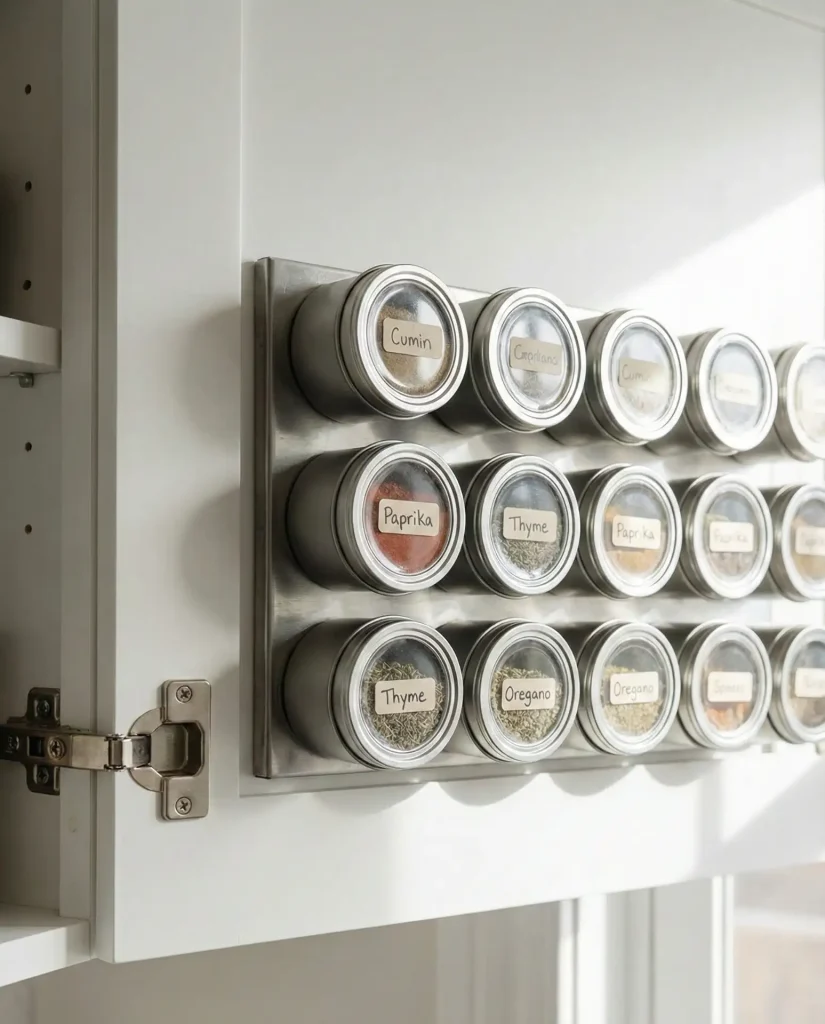
A Chicago home cook once confessed she spent nearly $200 replacing “lost” spices over two years before investing $30 in a drawer spice organizer. After reorganizing, she realized she had four jars of paprika. The lesson? You don’t need more spices—you need to be able to see what you already have. Visibility is everything in a functional kitchen.
4. The Pot and Pan Drawer Upgrade
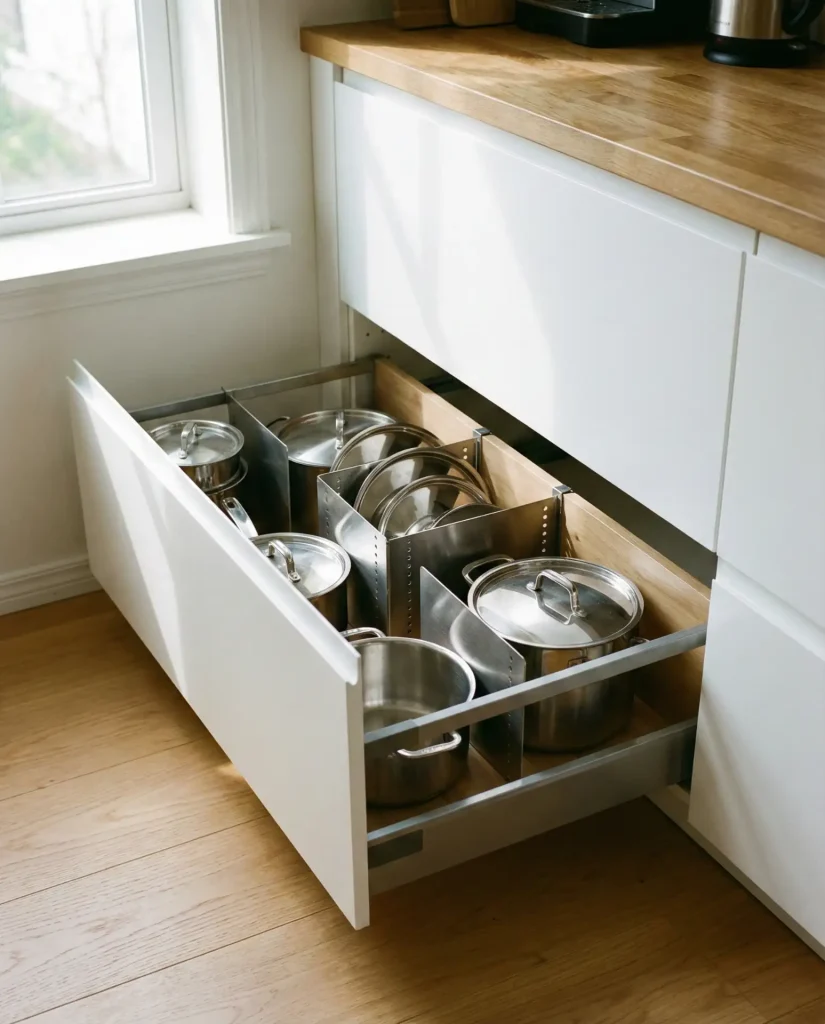
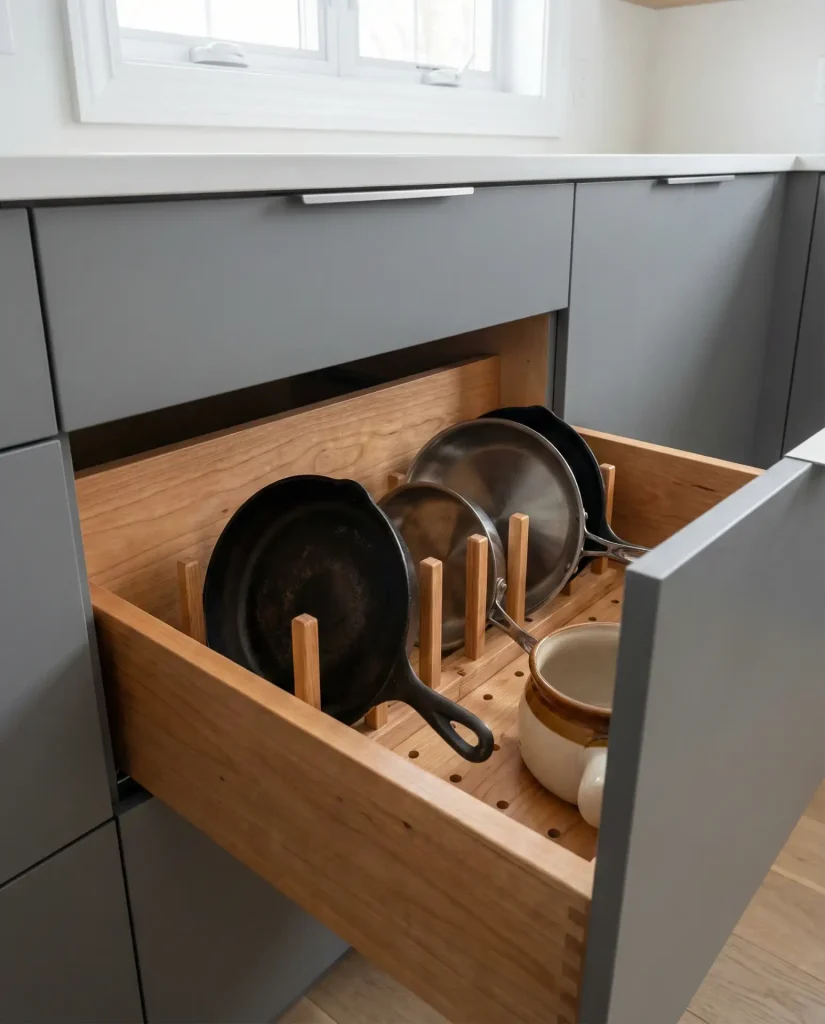
Nothing tests a person’s patience quite like a cabinet stuffed with pots and pans tumbling out every time you open the door. The 2026 solution most designers are excited about is deep pull-out drawers with peg systems—adjustable wooden or metal pegs that hold each pot or pan upright in its own slot. This approach works especially well for lower cabinet runs, where deep drawers make much more ergonomic sense than standard shelves you have to crouch down to reach into.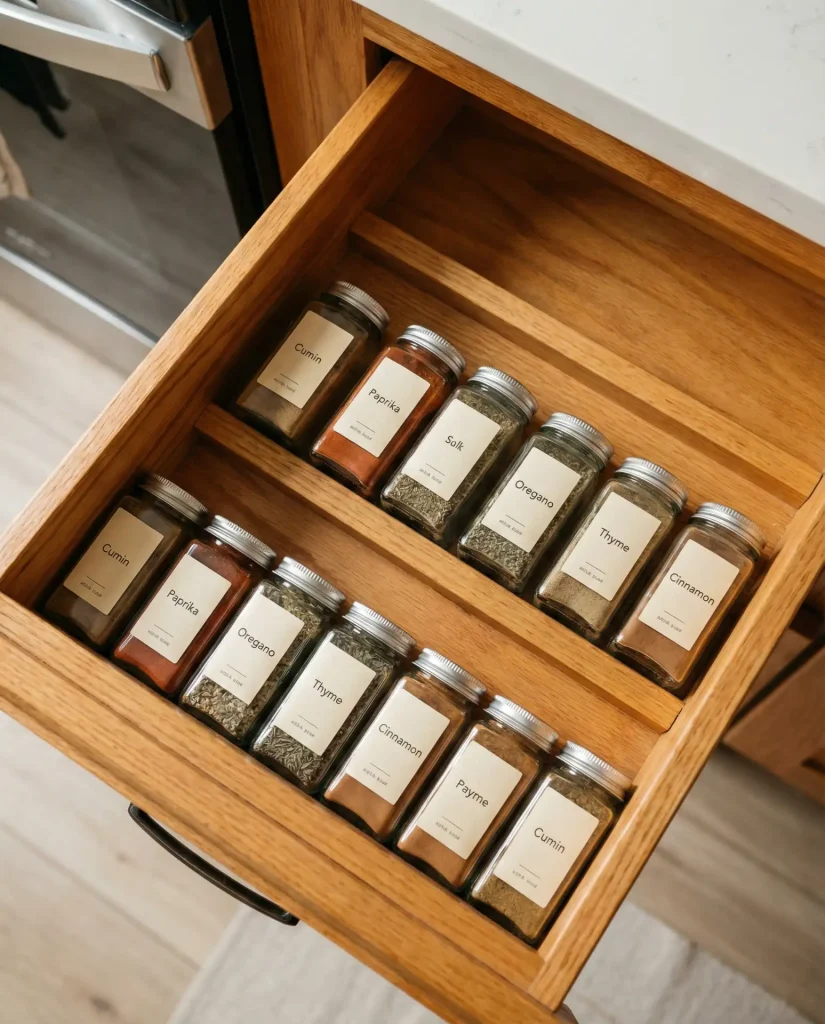
If a full drawer renovation isn’t in the budget right now, a more affordable workaround is a vertical lid organizer mounted inside an existing cabinet door. It costs under $20, keeps lids from sliding around, and instantly makes the pot situation feel much more manageable. Sometimes the best organization fix is also the simplest one.
5. Inside Cabinet Door Organization
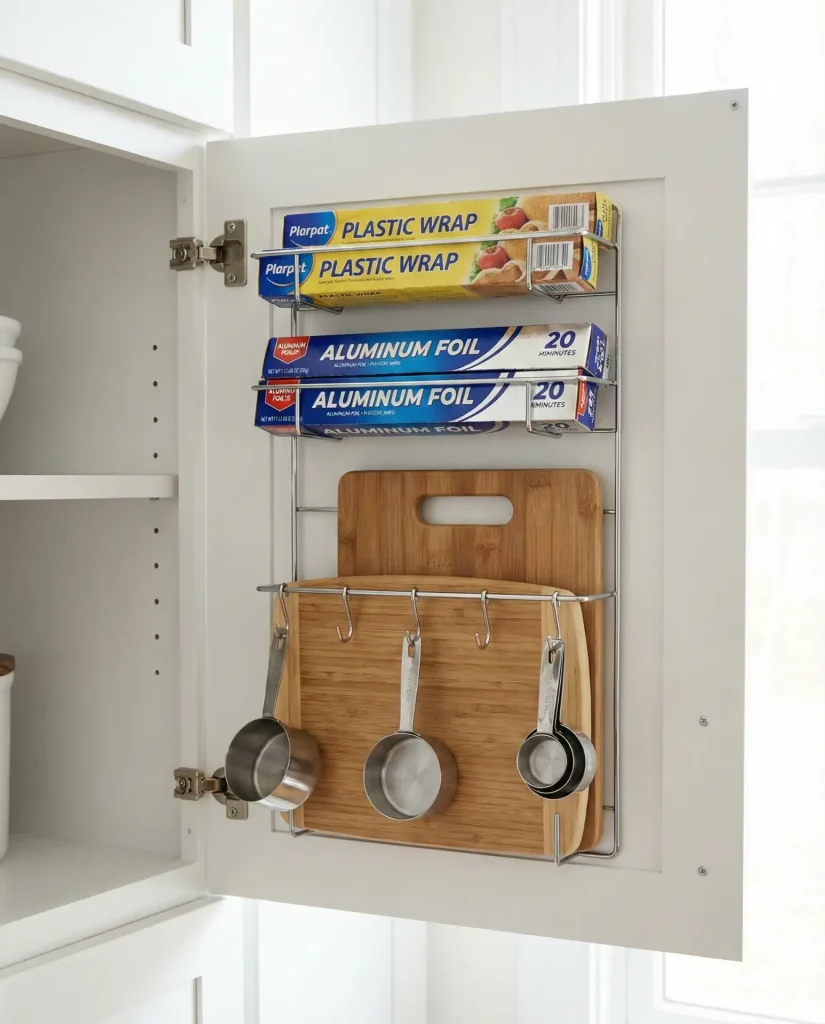
The inside of your cabinet doors is some of the most underutilized real estate in the entire kitchen. Over-the-door organizers, mounted hooks, and slim pocket racks can turn that blank surface into a surprisingly useful storage zone—perfect for cutting boards, aluminum foil rolls, plastic wrap, and measuring cups. When thinking about cupboards in a whole-kitchen context, the door surface is the bonus square footage most people forget to plan for until they’re already out of space.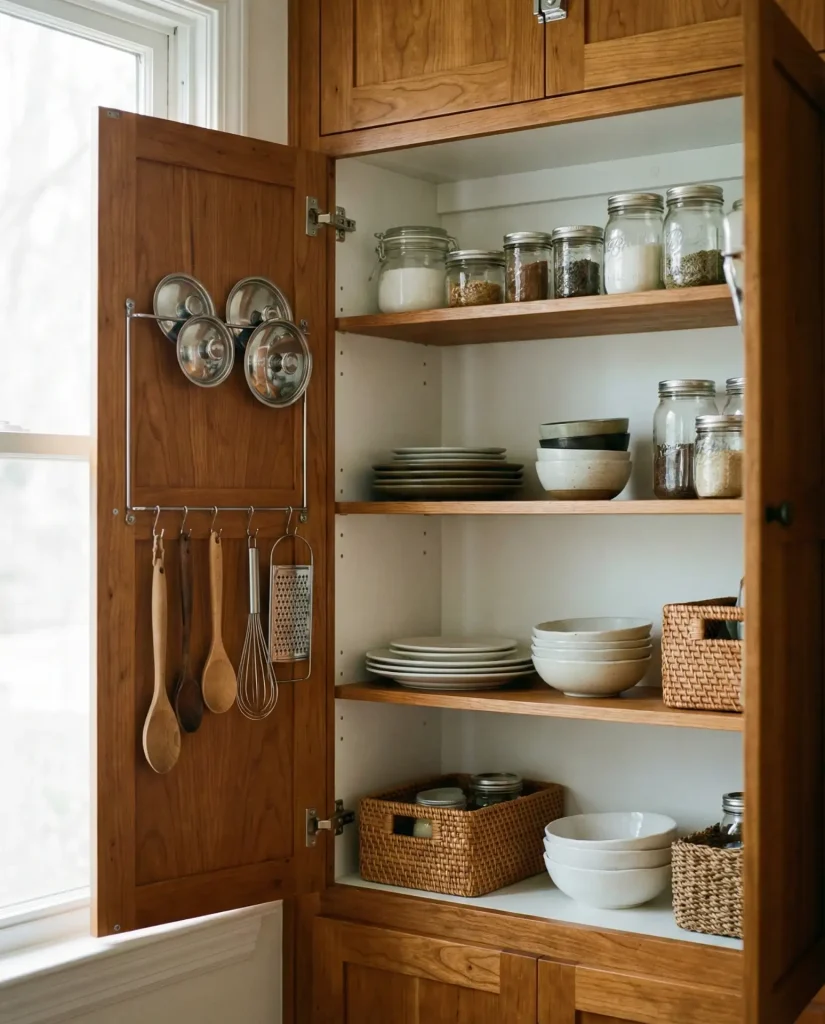
This approach works best in kitchens where every inch counts—think apartments under 800 square feet or older homes with fewer cabinets than a modern family actually needs. It’s also a renter-friendly move when using adhesive-backed door organizers that leave no marks. For families who cook daily, the time saved not hunting for the right pan lid is genuinely meaningful.
6. Pantry Organization with Clear Bins
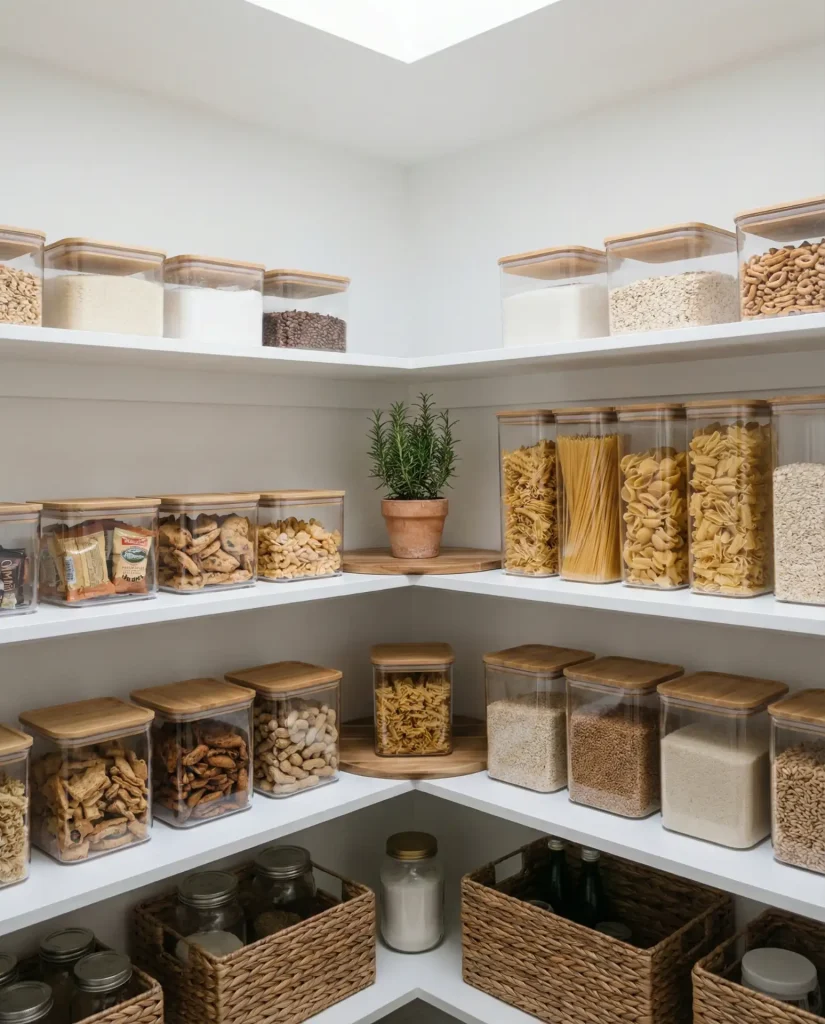
The pantry is the heart of kitchen storage—and when it’s chaotic, it bleeds chaos into every meal you try to prepare. Clear rectangular bins with labels are the gold standard for pantry organization in 2026, grouping like items together (baking supplies, canned goods, snacks) so nothing ever goes missing again. If you’re thinking about food and how to organize it in a pantry context, the answer almost always comes down to zones: assign a zone to every food category and stick to it religiously. 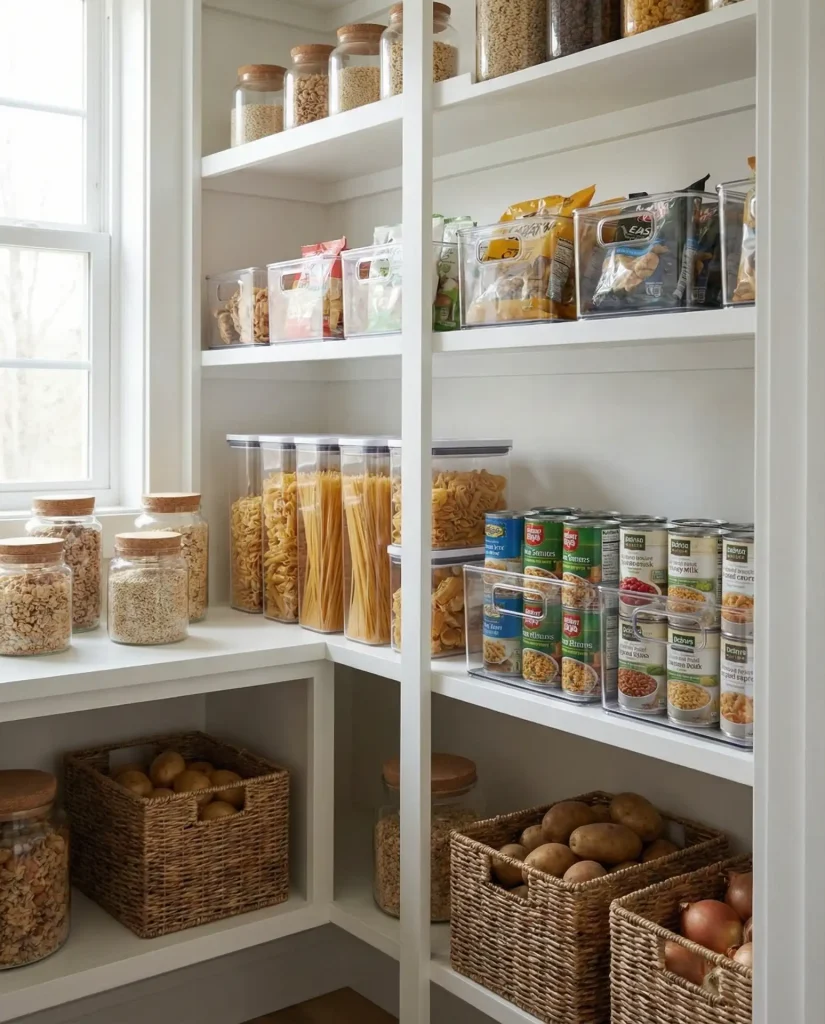
Experts in professional kitchen organization note that the biggest pantry mistake isn’t disorganization—it’s overbuying. When your storage is chaotic, you lose track of what you have and buy duplicates. Once people install a clear-bin pantry system, their grocery bills often drop noticeably because they can actually see their inventory before they shop. Organization, in this case, pays for itself.
7. IKEA Cabinet Hacks Worth Knowing
IKEA remains the undisputed champion of affordable kitchen organization solutions, and in 2026 their SEKTION cabinet system continues to be one of the most customizable options on the market. The hack most people don’t know about: mixing IKEA cabinet carcasses with aftermarket fronts from companies like Semihandmade or Reform—giving you the structural affordability of IKEA with a custom, high-end look. For storage functionality, their internal drawer inserts and pull-out shelves are genuinely excellent and far cheaper than comparable custom options.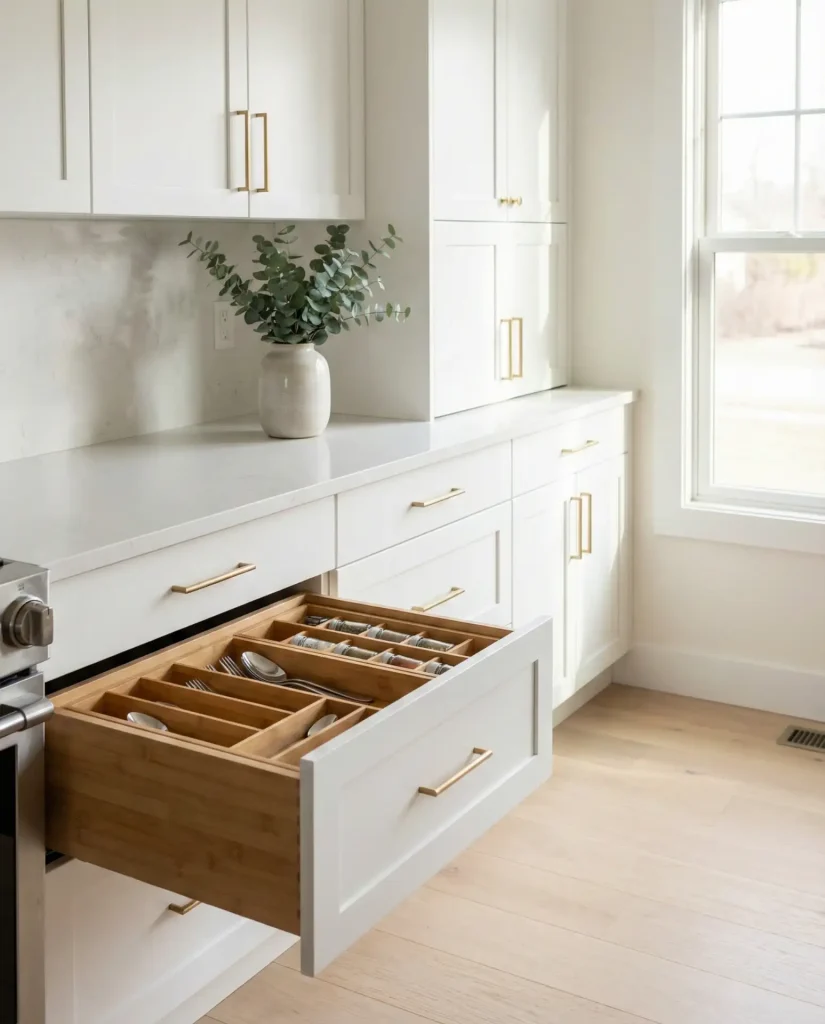
A full IKEA kitchen—cabinets, handles, and interior organizers—can come in at roughly $3,000–$8,000 for an average kitchen, compared to $20,000–$50,000 for fully custom cabinetry. For the budget-conscious homeowner who still wants a kitchen that looks polished and intentional, the IKEA-plus-custom-fronts route is one of the smartest investments available right now.
8. Aesthetic Storage for Cups and Mugs
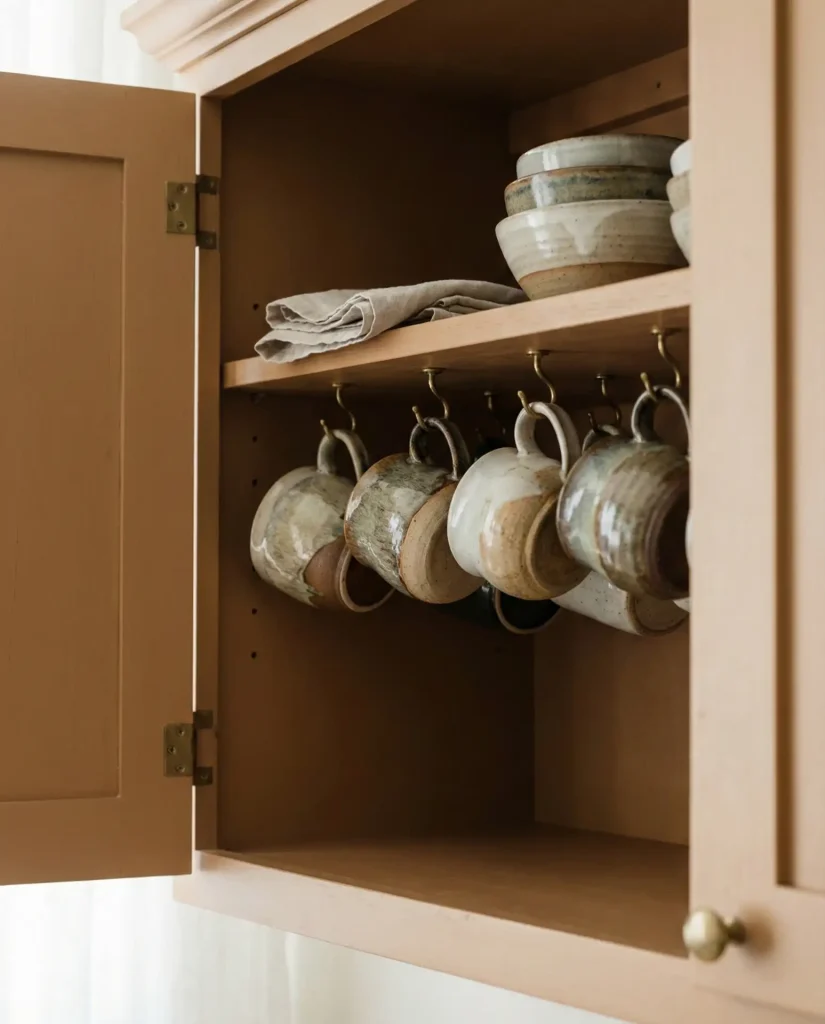
Your morning ritual deserves a beautiful backdrop, and mug storage is one of the easiest places to inject real personality into a kitchen. Hanging mugs from hooks under open shelves or inside upper cabinets frees up shelf space while turning your cup collection into a display. In 2026, the most aesthetic approach pairs matte ceramic mugs in earthy tones—sage, terracotta, cream—with raw wood or black iron hooks that feel considered rather than an afterthought.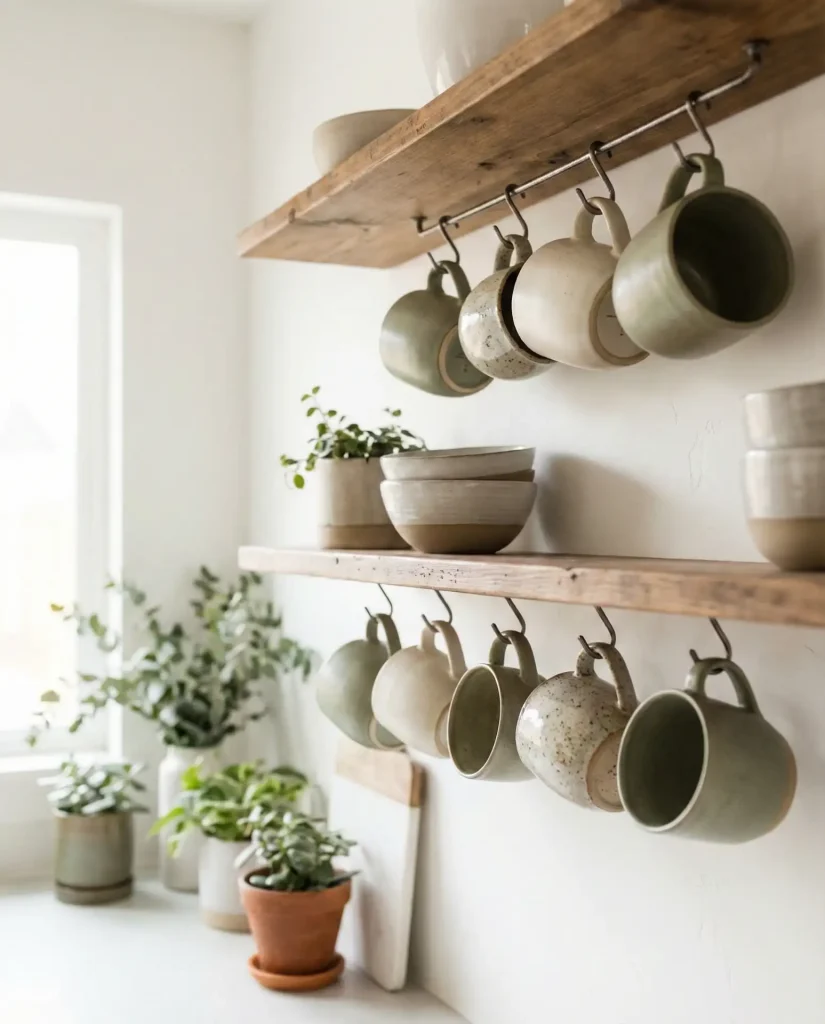
Real homeowners who’ve made the switch from cabinet-stacked mugs to hook displays almost universally report the same thing: they actually use more of their mugs. When cups are visible and accessible, you rotate through the whole collection instead of grabbing the same two from the front of a stack every day. It’s a small behavioral shift that brings a quiet, daily dose of joy.
9. Narrow Cabinet Solutions for Small Spaces
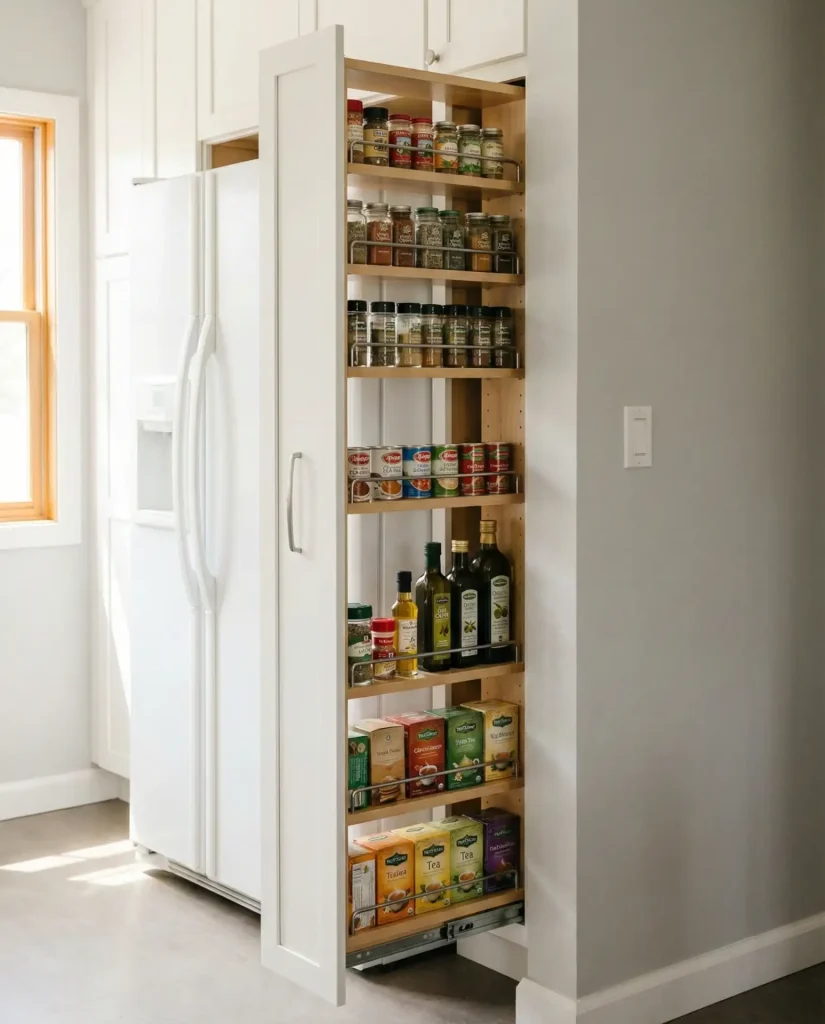
If your kitchen includes a narrow cabinet—that 9- or 12-inch sliver between the fridge and the wall—don’t write it off as useless. With the right pull-out insert, that slim column becomes one of the hardest-working storage spots in your entire kitchen. Sliding spice racks, vertical tray organizers for baking sheets, or even a pull-out pantry tower can be fitted into spaces as slim as 6 inches. For anyone dealing with a small space, this kind of lateral thinking about existing architecture is a revelation.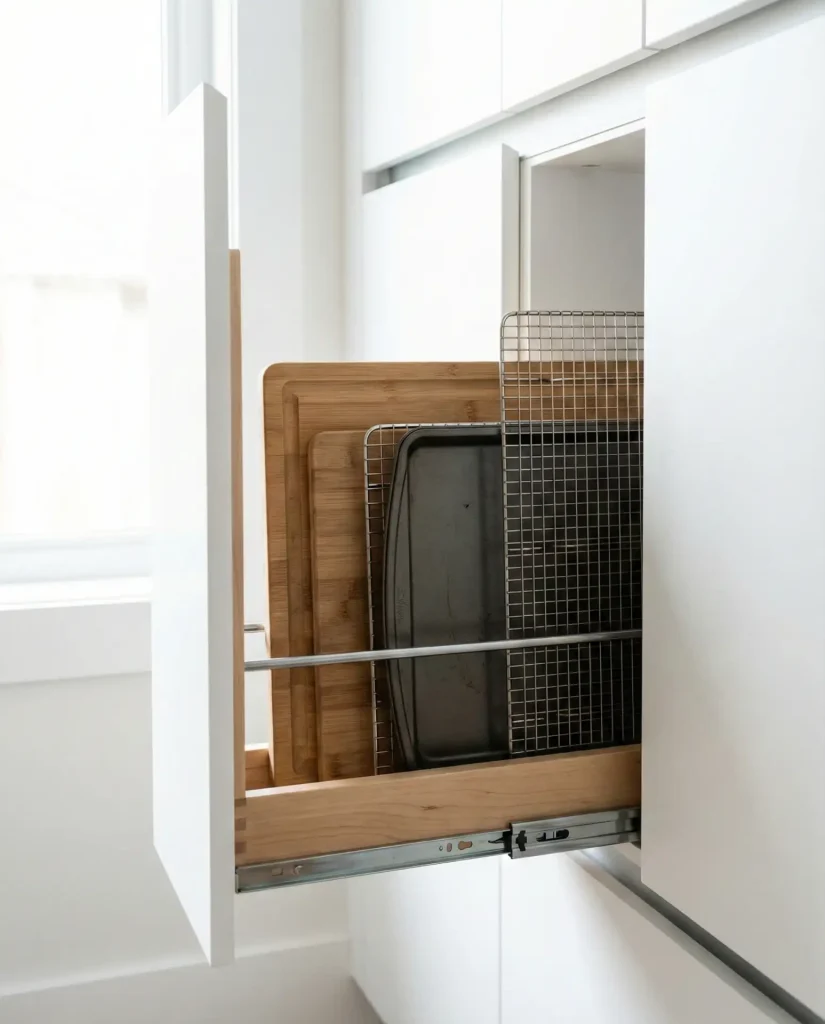
This works especially well in urban apartments and older pre-war homes, where kitchen layouts were designed for a different era of cooking and the cabinet runs are often asymmetric or unconventional. In New York, where square footage is precious, professional organizers often cite the narrow pull-out as one of the most transformative additions to a small kitchen—delivering storage impact far beyond its physical footprint.
10. Organizing Dishes by Type and Frequency
There’s a simple principle that professional kitchen organizers swear by: store things where you use them, and store them in the order you use them. Your dishes should live closest to the dishwasher for easy unloading, and your everyday plates should always be at the front of the stack, with holiday or occasional dishes tucked behind. This seems obvious until you realize how many people do the opposite—keeping everyday items in inconvenient spots out of habit or because that’s just where things ended up.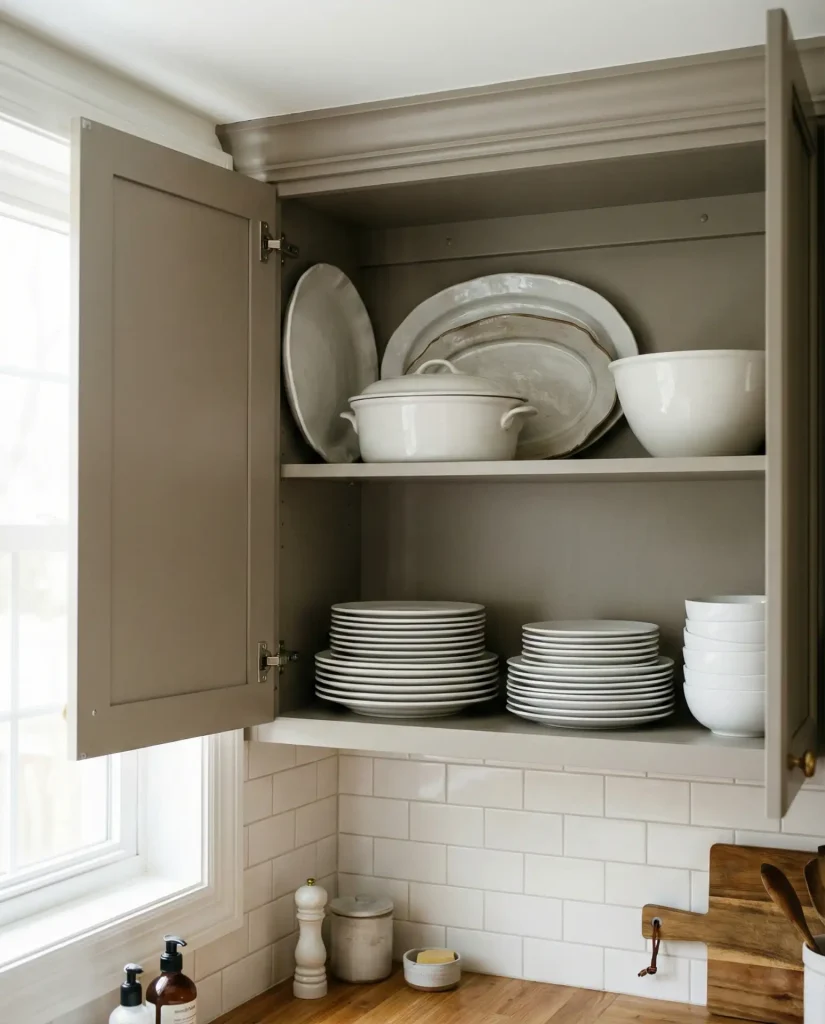
Where it works best: this frequency-based approach is most impactful in households with children, where ease of access determines whether kids can actually help set the table. When plates and bowls are at a reachable height and stored in a logical order, you redistribute the load of daily table-setting across more household members—which, in busy American family life, is no small thing.
11. The Best Upper Cabinet Organization System
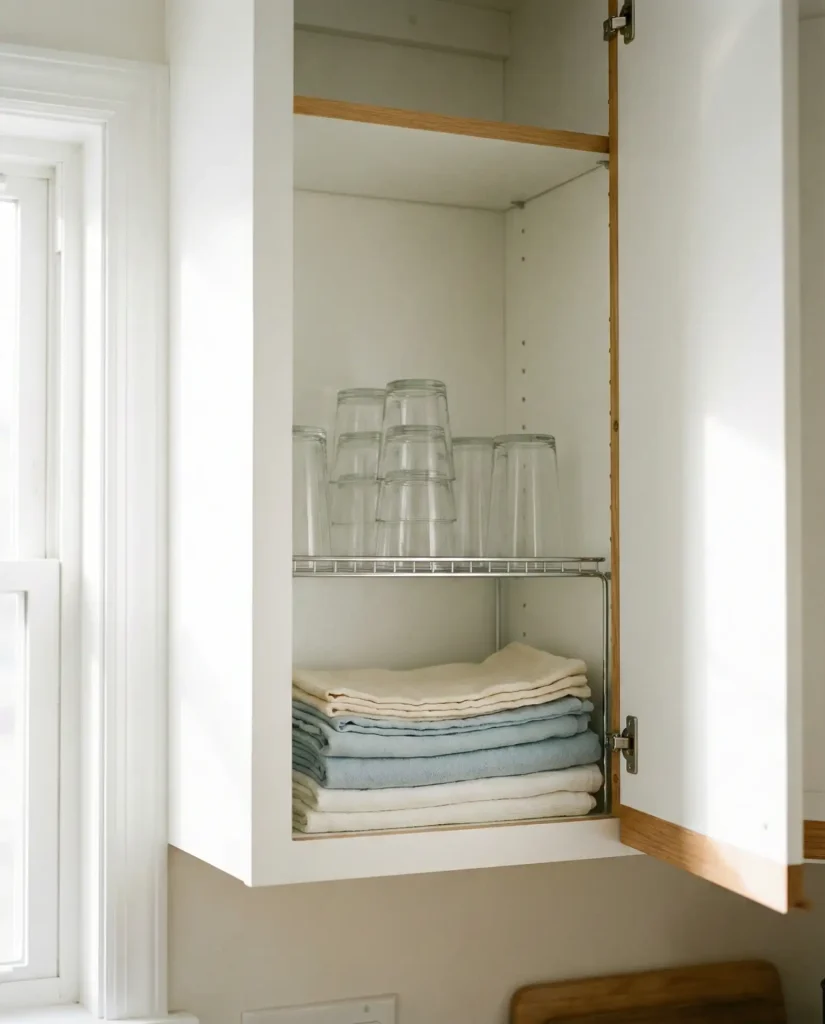
The best upper cabinet organization isn’t about buying the most products—it’s about using vertical space intelligently. Most upper cabinets have fixed shelves positioned for average-height users, which means there’s almost always dead space above shorter items. Shelf risers—those simple stepped platforms—instantly double your usable surface by stacking cups, mugs, or small bowls on two levels instead of one. For anyone who’s ever peered into the murky depths of a top cabinet shelf, this is a practical revelation.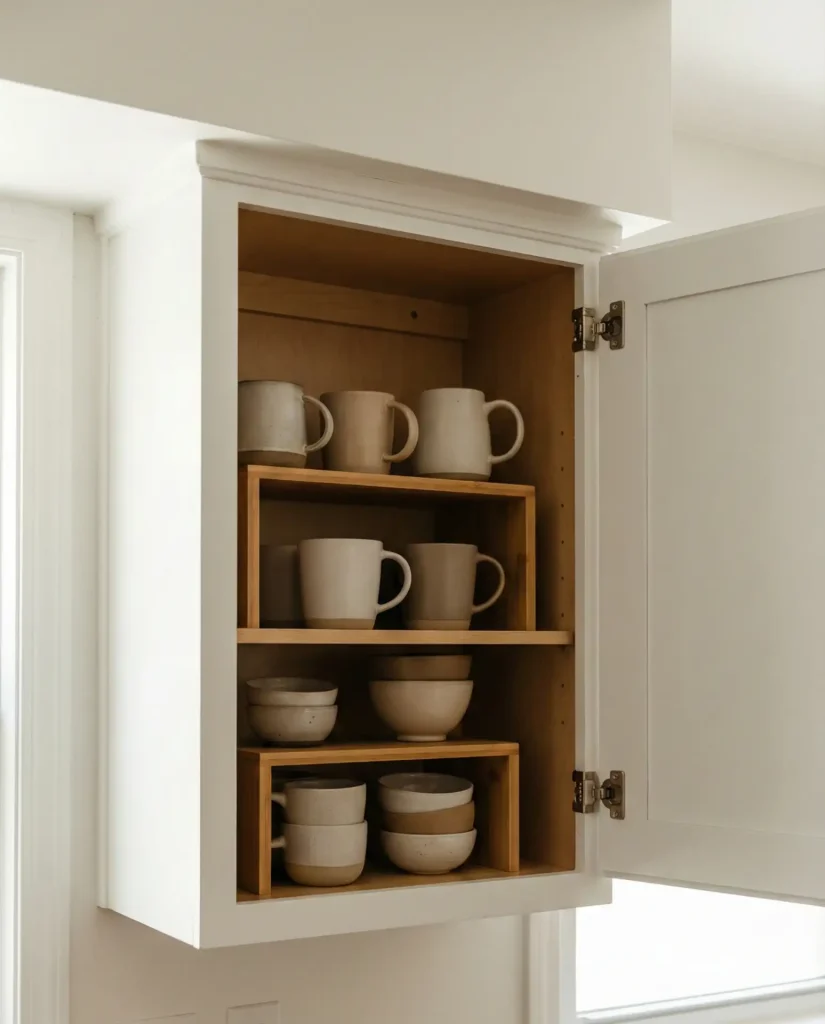
An interior design consultant once noted that upper cabinet organization is the single most neglected area in American kitchens because it’s “out of sight, out of mind.” Once you pull everything out and install shelf risers, most people discover they had far more usable space than they thought—sometimes enough to clear an entire additional cabinet’s worth of clutter from their countertops.
12. Food Storage Containers, Finally Tamed
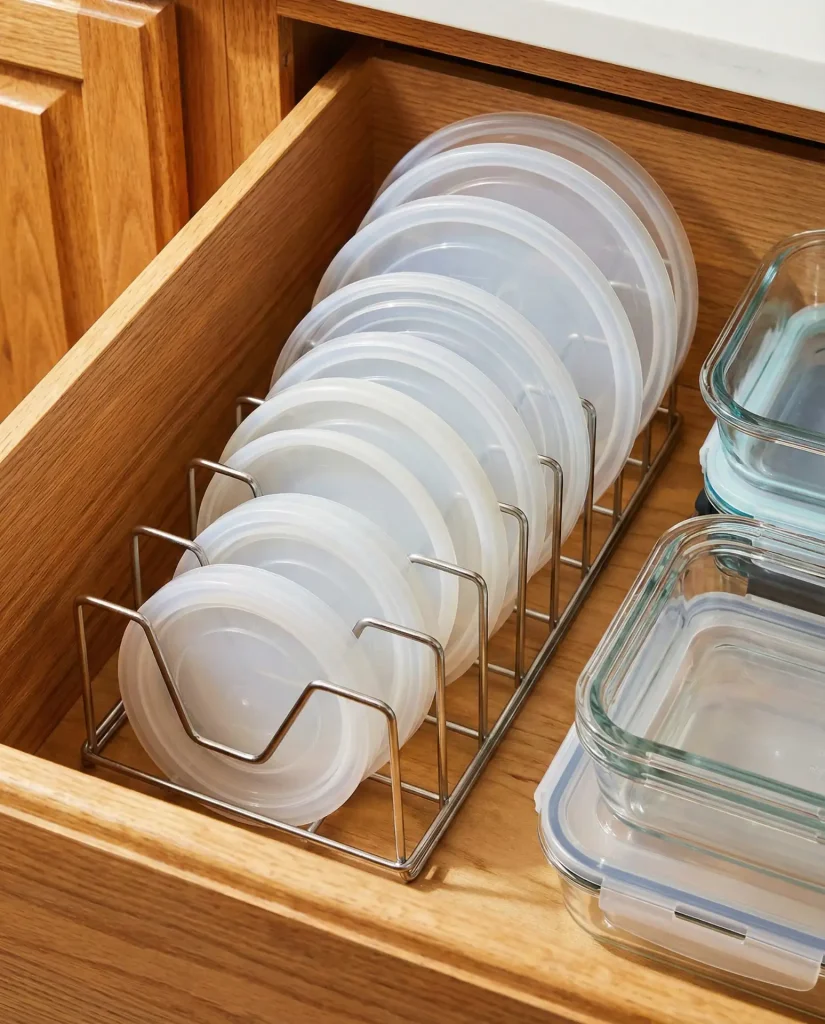
Every kitchen has its plastic container graveyard—that one cabinet where lids and bases from five different brands live in total anarchy. Fixing this is one of the most satisfying tips any professional organizer will share: switch to one single container brand with interchangeable lids, then store all lids vertically in a file organizer beside the stacked bases. For food storage that actually stays organized, this single-brand approach is a life-changing move. It also means you stop buying new containers every few months to replace orphaned pieces.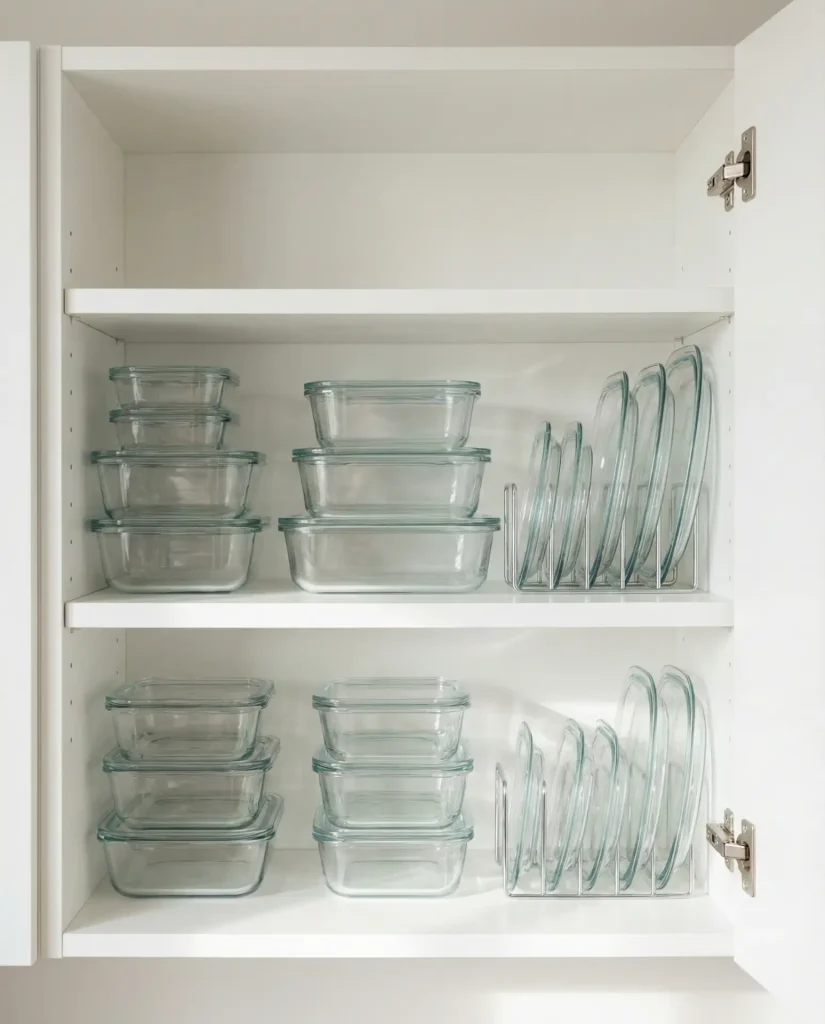
Glass containers over plastic is a 2026 trend worth embracing for practical, not just aesthetic reasons. Glass is easier to keep clean, doesn’t absorb smells, and you can actually see what’s inside without opening the lid. Most mid-range glass container sets cost $30–$60 and last years longer than their plastic counterparts—making the upfront investment easy to justify over time.
13. Layout Strategies for the Most-Used Cupboards
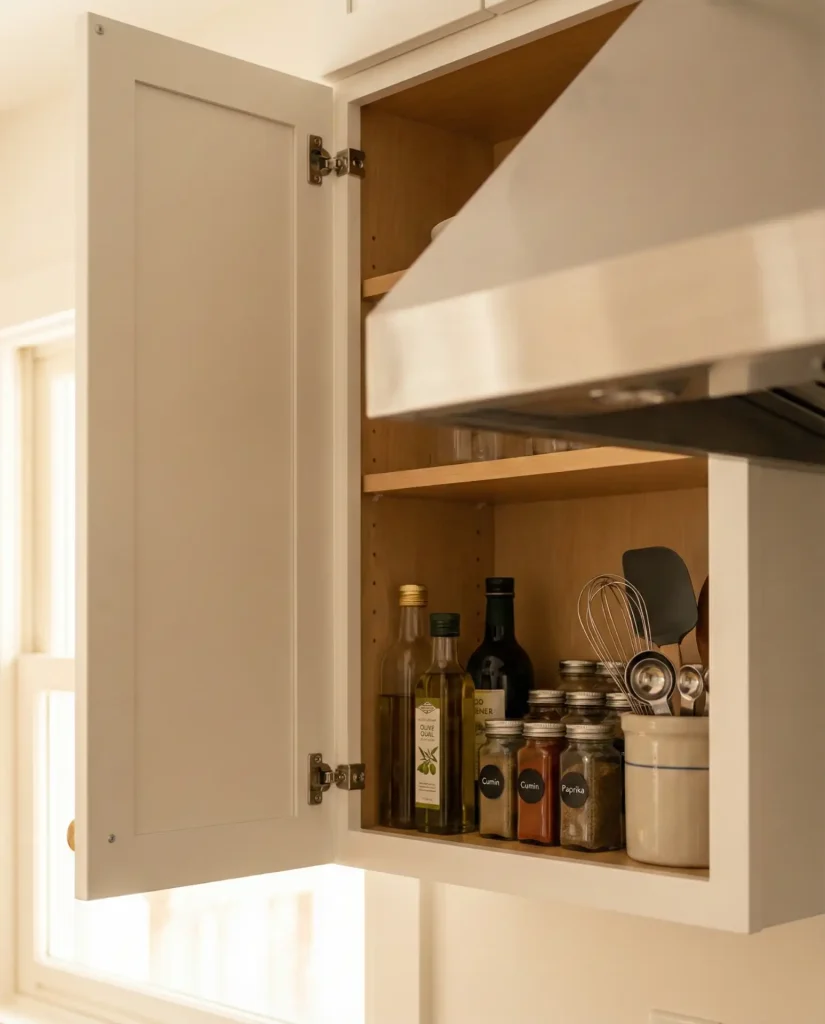
The layout cupboard storage ideas that get shared most on Pinterest usually have one thing in common: they treat the kitchen’s work triangle as the organizing anchor. Your most-reached-for items—cooking oils, go-to spices, everyday dishes—should live within that triangle of stove, sink, and refrigerator. Cupboards outside the triangle are ideal for less-frequent items like specialty bakeware, seasonal serving pieces, or backup pantry stock. Most home cooks have this exactly backwards, which is why their kitchens feel harder to use than they should.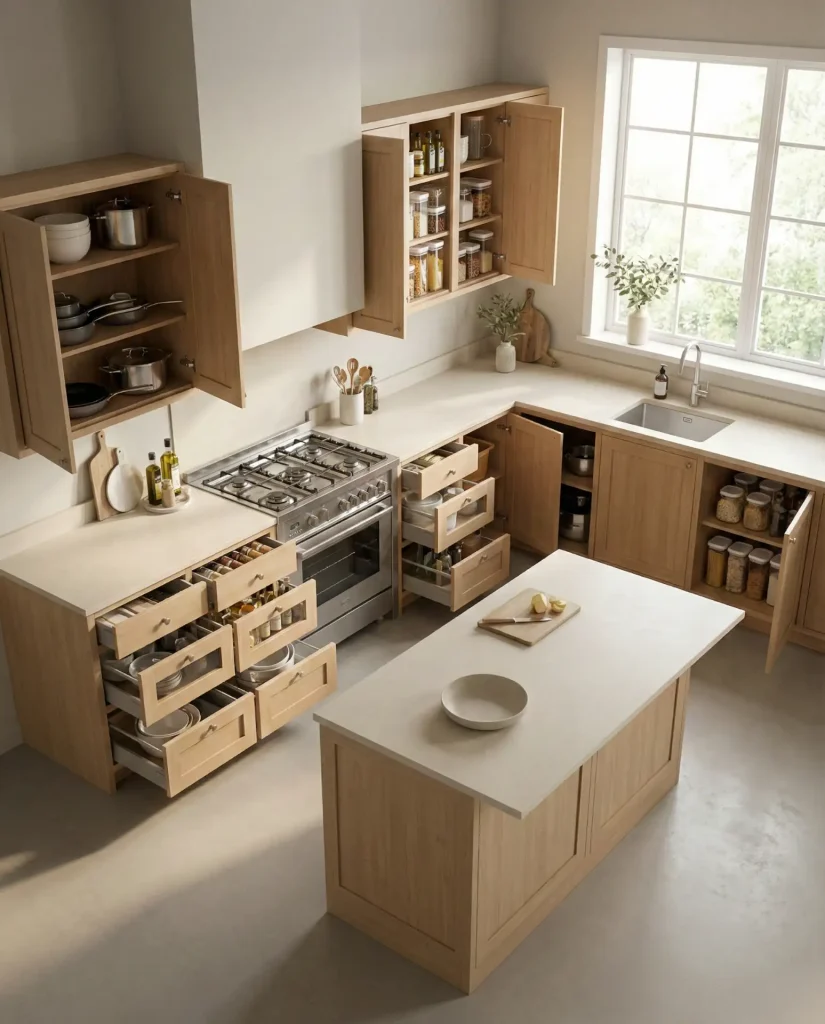
This works best in galley kitchens where layout efficiency is non-negotiable—there simply isn’t room for inefficiency. In that context, placing a heavy stockpot in a cabinet two steps from the stove isn’t charming rustic chaos—it’s a daily annoyance that adds up over years of cooking. The triangle-first layout philosophy fixes this with zero renovation required.
14. A Dedicated Baking Station Inside the Cabinet
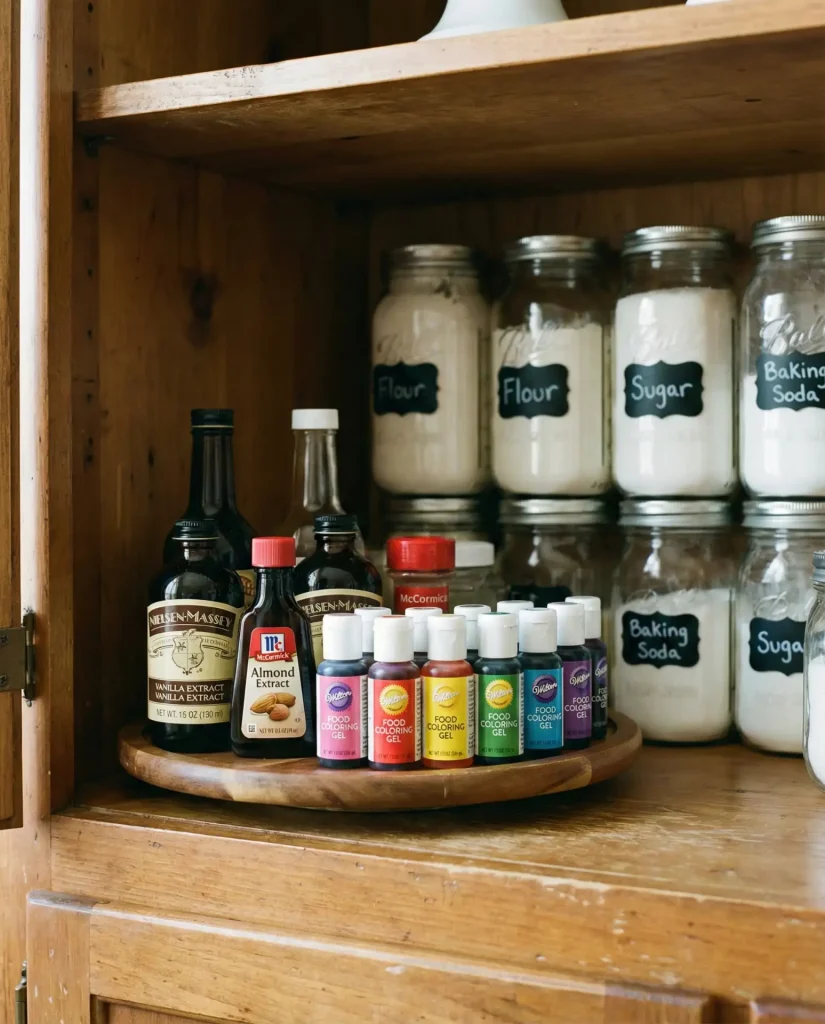
For home bakers, one of the most transformative moves you can make is designating a single storage cabinet exclusively for baking supplies—flour, sugar, baking powder, vanilla, chocolate chips, parchment paper, and your most-used tools all in one place. When everything you need for a Saturday morning bake is in one cabinet, the activation energy to actually bake drops dramatically. The inside of that cabinet can be further optimized with turntables for extracts and small bottles and a pull-down shelf for heavy mixers if the budget allows.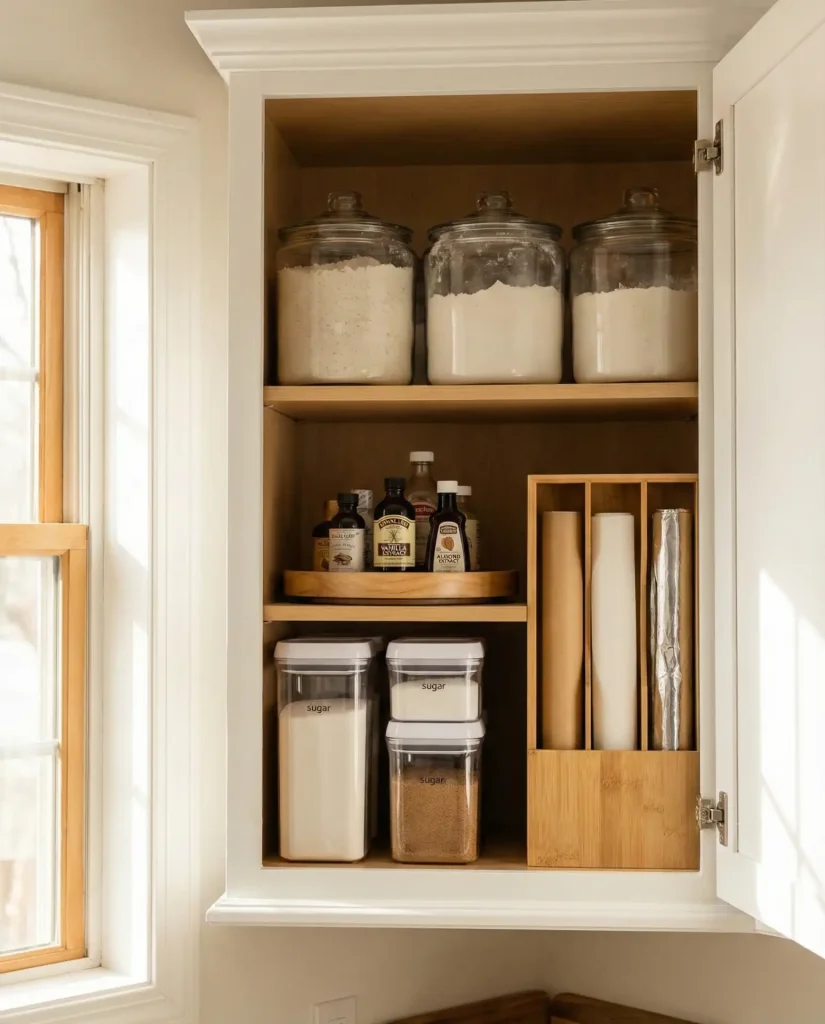
Families with kids who love to bake together especially benefit from this setup. When children can independently identify and retrieve exactly what they need, baking becomes something they can participate in from start to finish rather than requiring constant adult direction. That shift—from “supervised helper” to “capable baker”—happens faster than most parents expect once the space itself makes sense.
15. Pot Rack Alternatives for Tight Kitchens
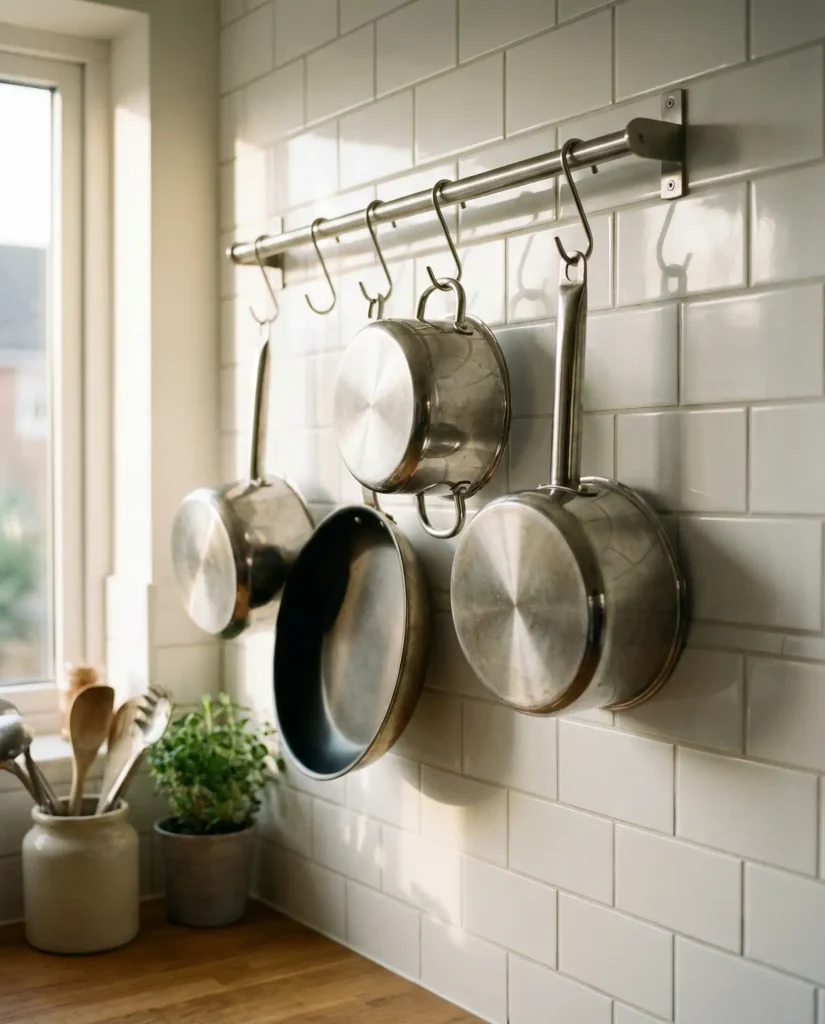
Traditional ceiling-mounted pot racks are beautiful in theory and a logistical nightmare for low-ceilinged apartments or rental kitchens where drilling isn’t allowed. But the need for accessible pots and pans storage doesn’t go away just because the ceiling is off-limits. Wall-mounted rails with S-hooks, inside-cabinet vertical dividers, and over-the-door pegboard panels are all excellent workarounds. For renters in particular, the pegboard approach—mounted with adhesive strips—is completely removable and surprisingly sturdy when installed correctly.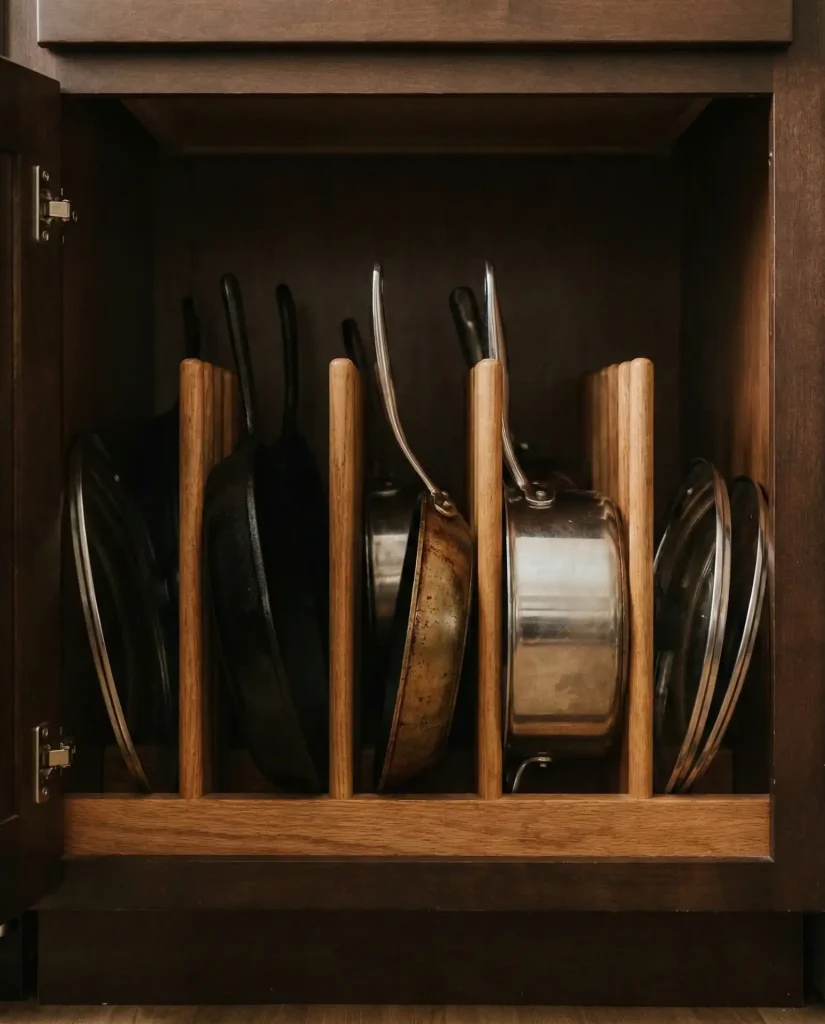
American renters—who make up roughly a third of the country’s households—often feel locked out of the “beautiful kitchen” conversation because they can’t make permanent changes. But the most inspiring kitchen organization accounts on Pinterest are increasingly renter-focused, proving that damage-free solutions can look just as polished as anything installed by a contractor.
16. Lower Cabinet Pull-Out Solutions
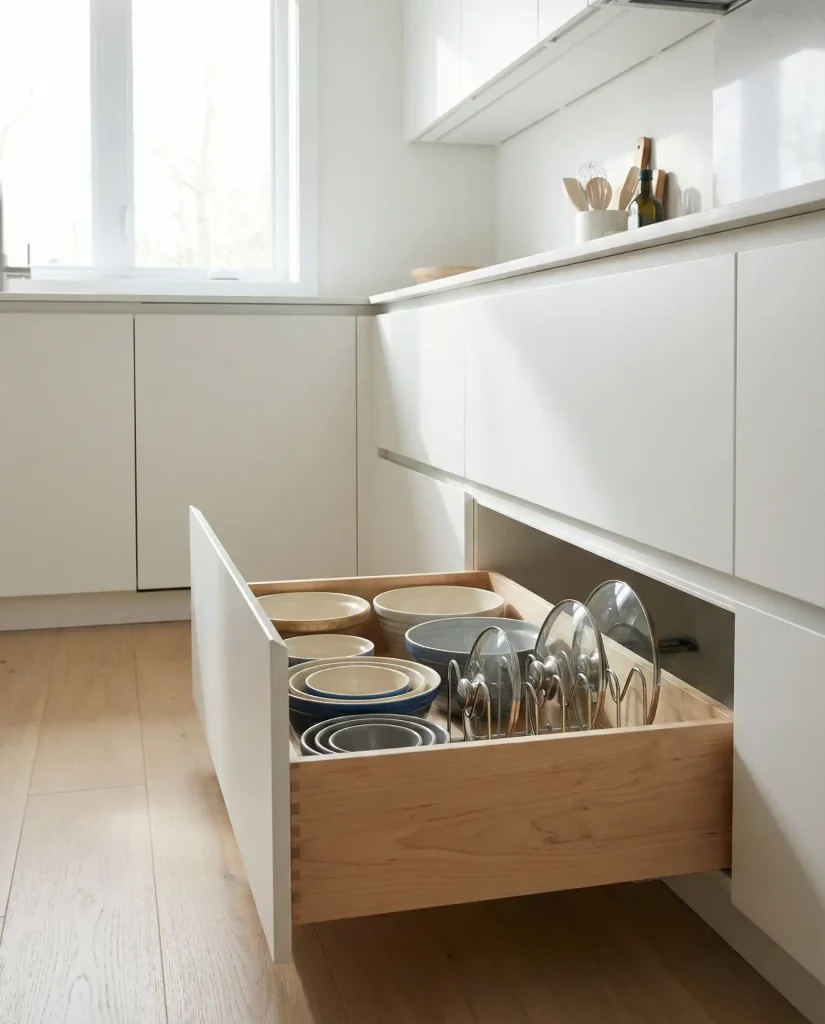
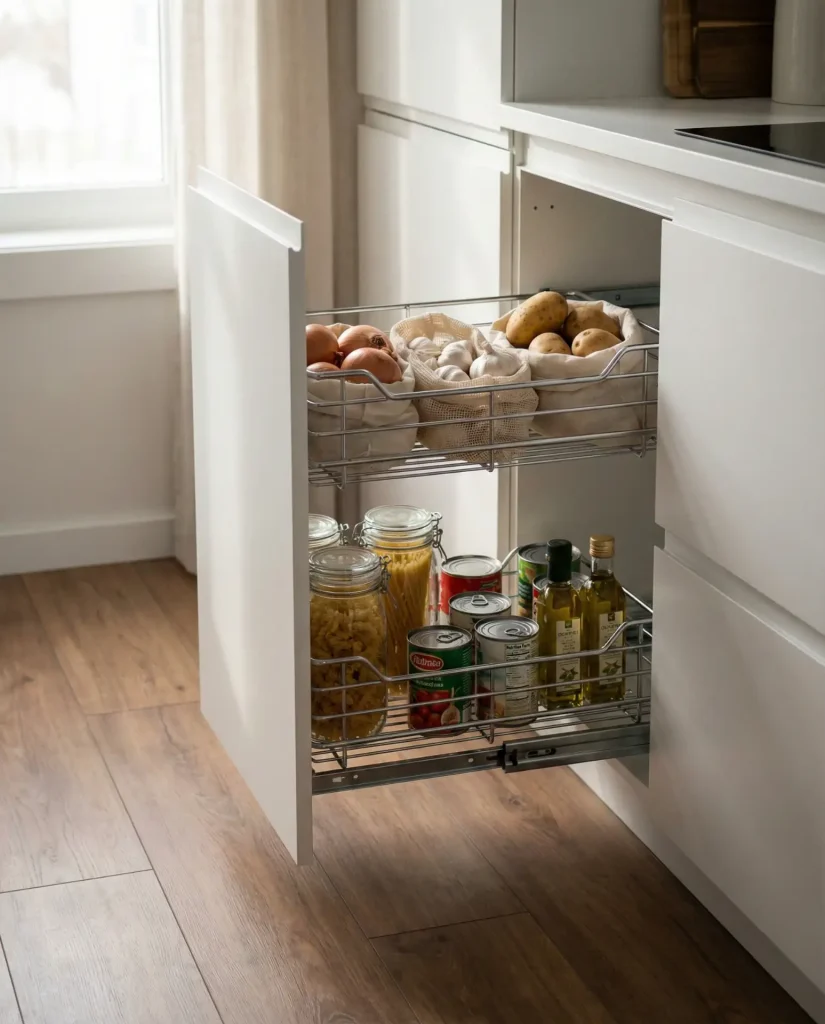
The lower cabinet is where ergonomics matter most—and where most standard kitchen designs fail homeowners by requiring them to practically crawl to see what’s in the back. Pull-out shelves and full-extension drawer inserts are the upgrade that transforms those dark, hard-to-reach depths into genuinely usable space. The layout principle here is simple: everything you store in a lower cabinet should be retrievable without bending awkwardly or removing five things to get to the one you actually need.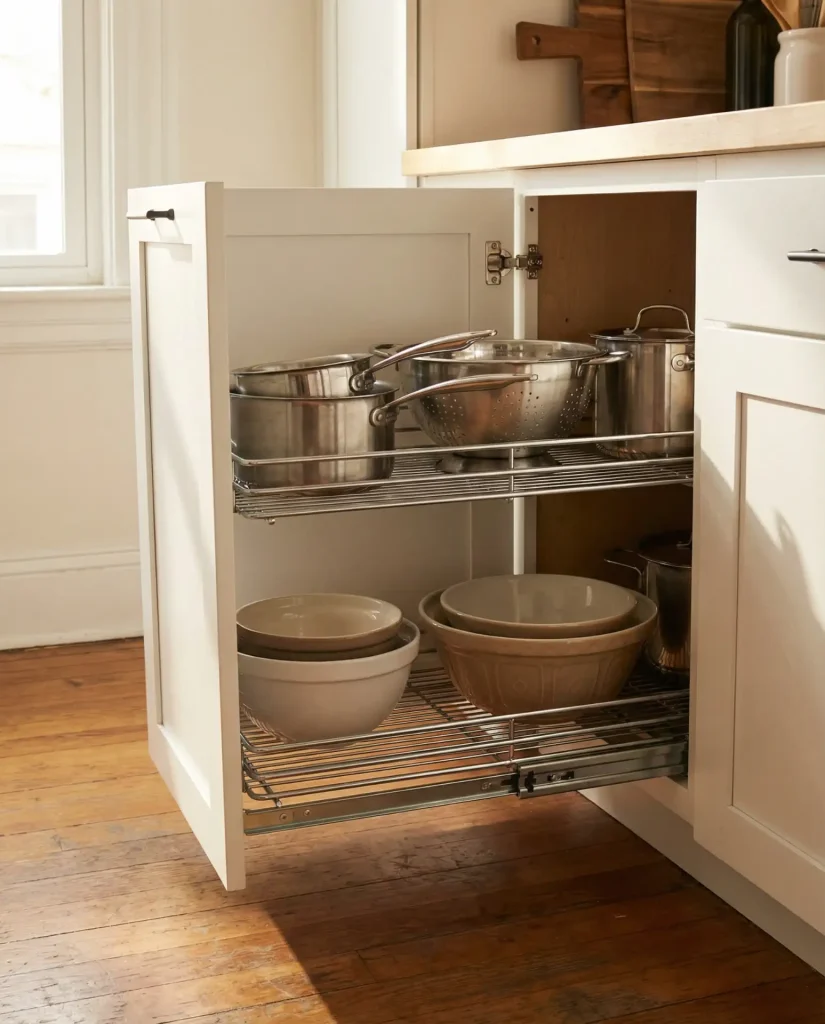
Retrofitting pull-out shelves into existing lower cabinets typically costs $100–$300 per cabinet when done professionally, or $30–$80 in hardware if you’re confident doing a DIY install. For the frequency of use those lower cabinets get in an active kitchen, it’s one of the highest-value investments available short of a full renovation—and it doesn’t require permits, contractors, or weeks of disruption.
17. Organizing Baking Sheets and Cutting Boards
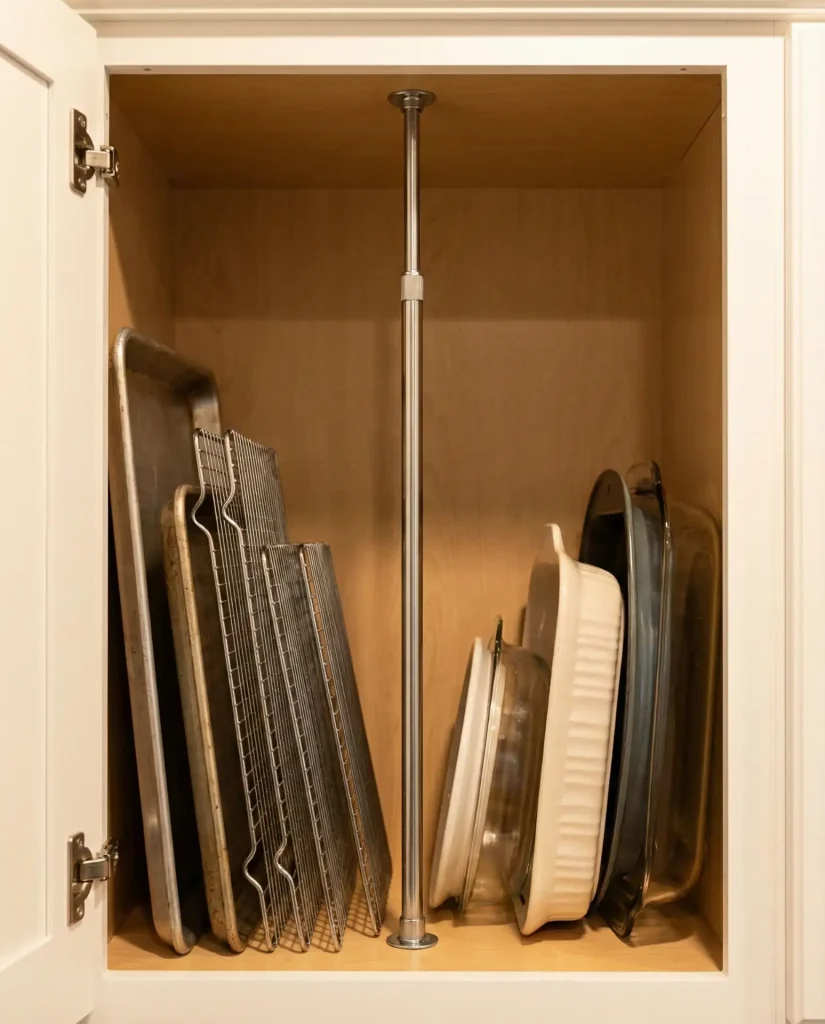
Flat items like baking sheets, cutting boards, and cooling racks are among the most awkward things to store in any kitchen. Stacking them horizontally means wrestling them out of the pile every time; standing them vertically in a dedicated file-style organizer means you can grab exactly what you need in seconds. This is one of those tips that sounds almost too simple, but the difference in daily kitchen experience is dramatic. Layout cupboards that have a tall, narrow slot or a dedicated vertical organizer to make this storage category effortless.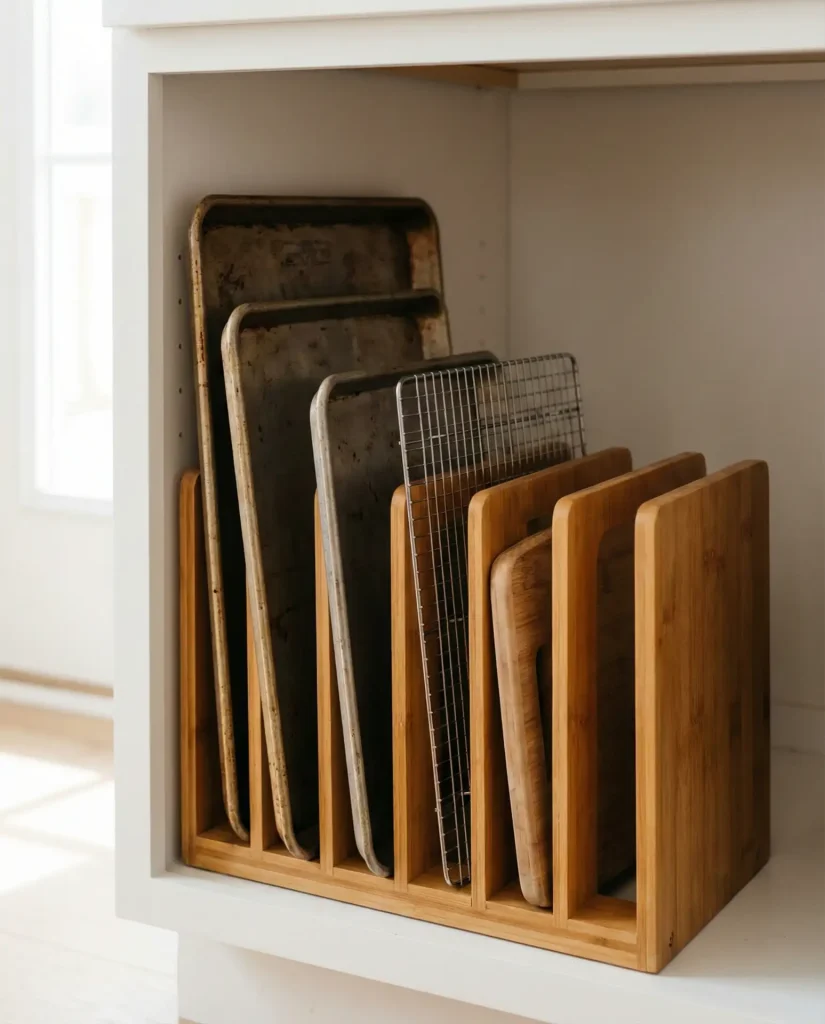
A surprisingly effective low-cost hack: use tension rods inside a lower cabinet to create vertical dividers for baking sheets and cutting boards at almost zero cost. A single tension rod costs about $5 and can be repositioned as your storage needs change. It’s exactly the kind of clever, unglamorous solution that actually earns its spot in the most-saved Pinterest posts year after year.
18. Pantry Door Organizers That Work Hard
A pantry door is a vertical surface that most people walk past every day without ever making it work for them. Over-the-door organizers with adjustable tiers can hold everything from canned goods to snack bags to small condiment bottles—essentially giving you an extra pantry shelf without taking up any floor or interior shelf space. For families managing a lot of food inventory, organizing the pantry door by meal prep category (breakfast items, lunch supplies, snack zone) creates a system that everyone in the household can actually maintain.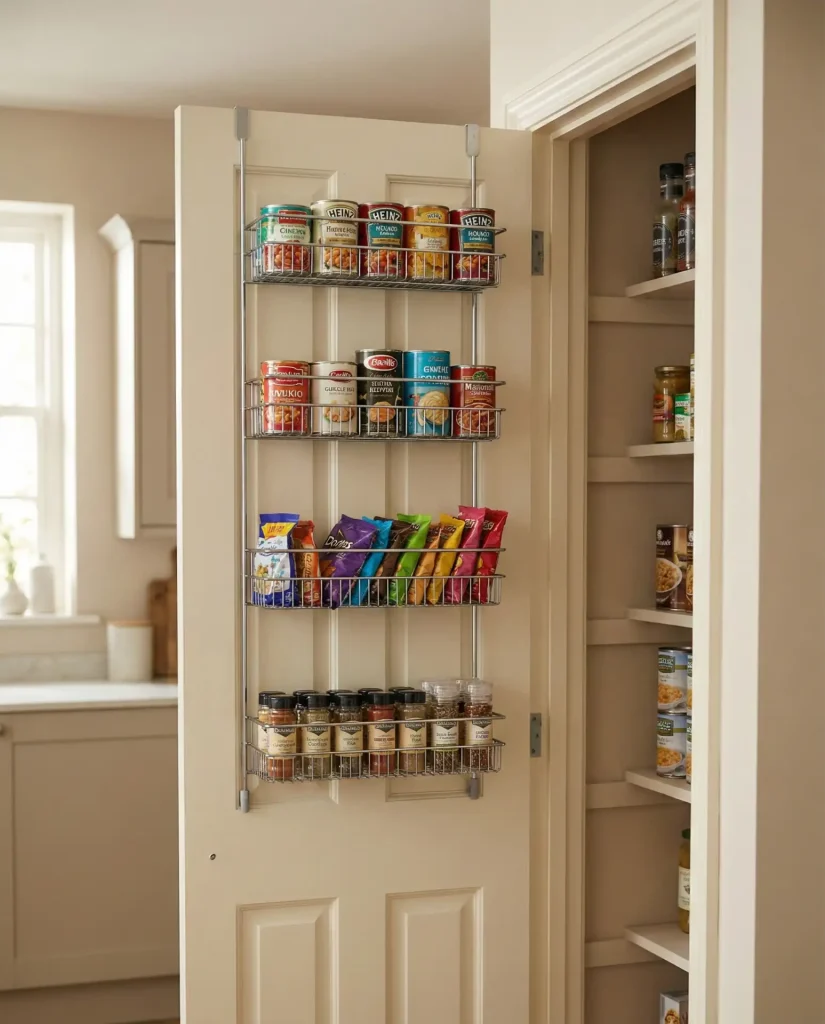
The most common mistake with pantry door organizers is overloading them with heavy items that pull the door out of alignment over time. Stick to lightweight pantry staples—seasoning packets, snack bars, small jars—and reserve the heavier canned goods for interior shelves. A well-balanced pantry door organizer can last years without warping the door hardware when used thoughtfully.
19. Aesthetic Kitchen Storage That Earns Its Place
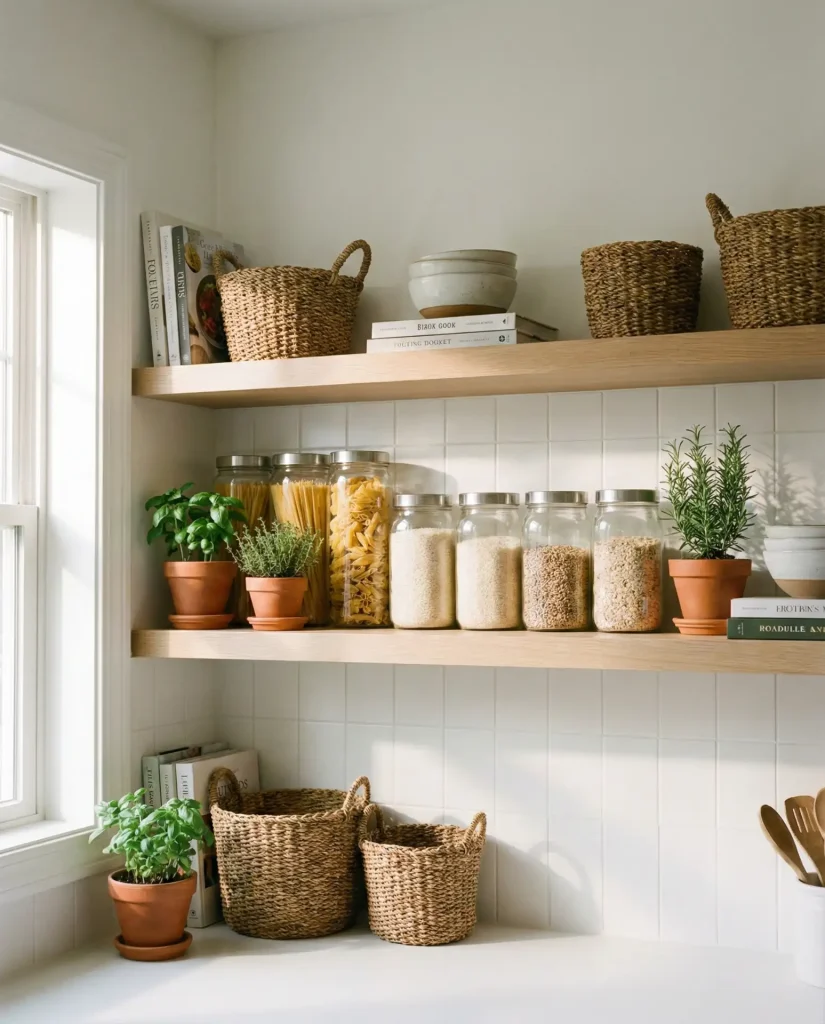
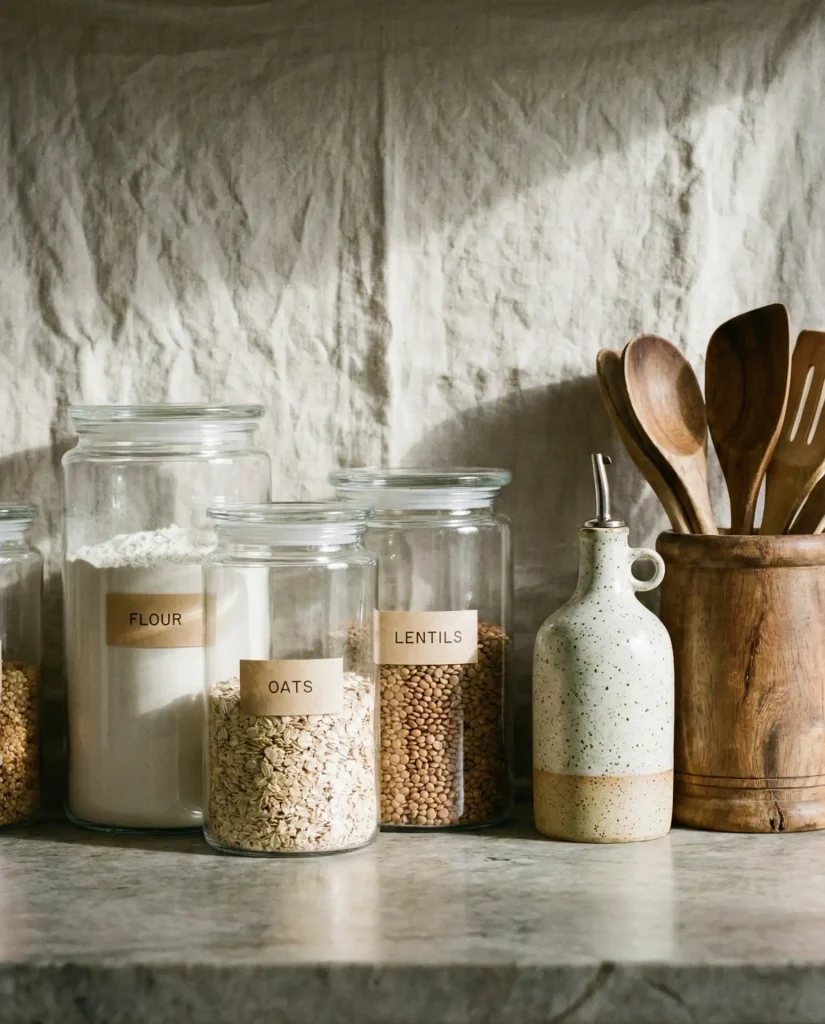
The best aesthetic kitchen storage in 2026 doesn’t ask you to choose between beauty and function—it delivers both simultaneously. Think decanted dry goods in uniform glass jars on open shelves, matching baskets on top of tall cabinets for rarely used items, and a consistent hardware finish that ties the whole room together. The best version of this approach takes inspiration from professional kitchen design principles: every item has a home, every container earns its visibility, and nothing is out on the counter that doesn’t need to be there.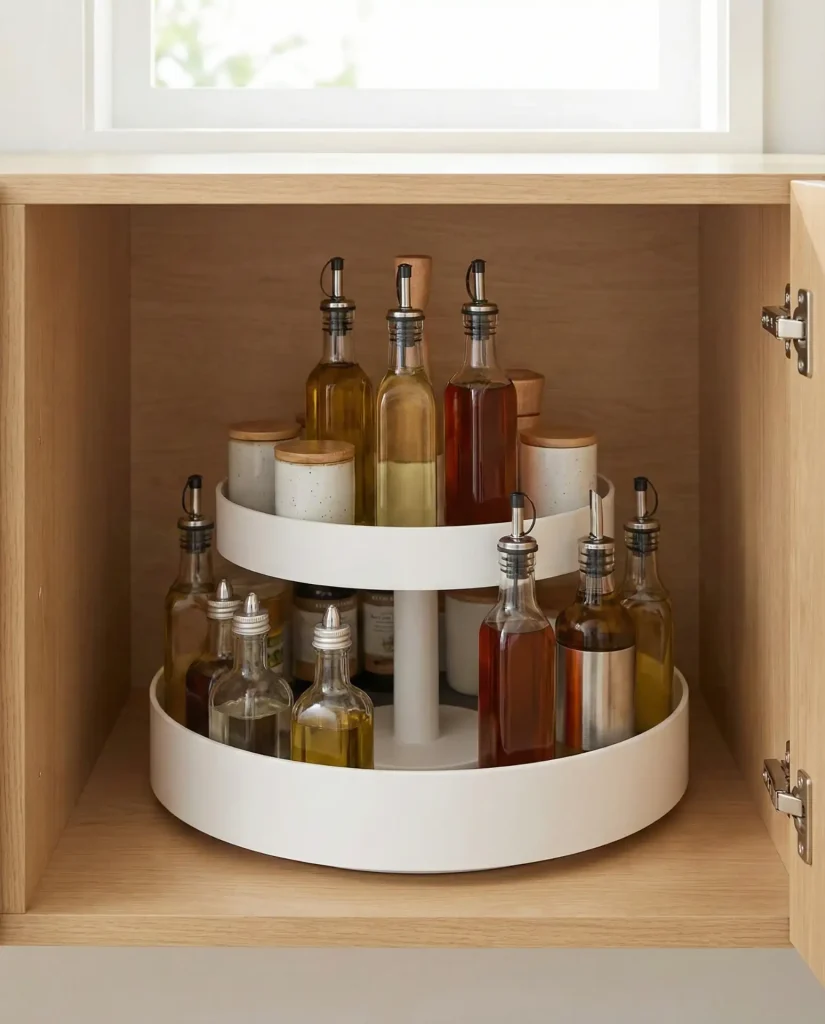
The decanted pantry look—uniform jars with matching labels—tends to polarize people: you either love it or find it unnecessarily fussy. But there’s real practical value beyond the aesthetics: when pasta or rice is in a clear jar, you know at a glance how much you have left. The discipline of decanting forces you to take stock of your pantry regularly, which cuts down on both food waste and unnecessary grocery purchases.
20. Corner Cabinet Lazy Susan Revival
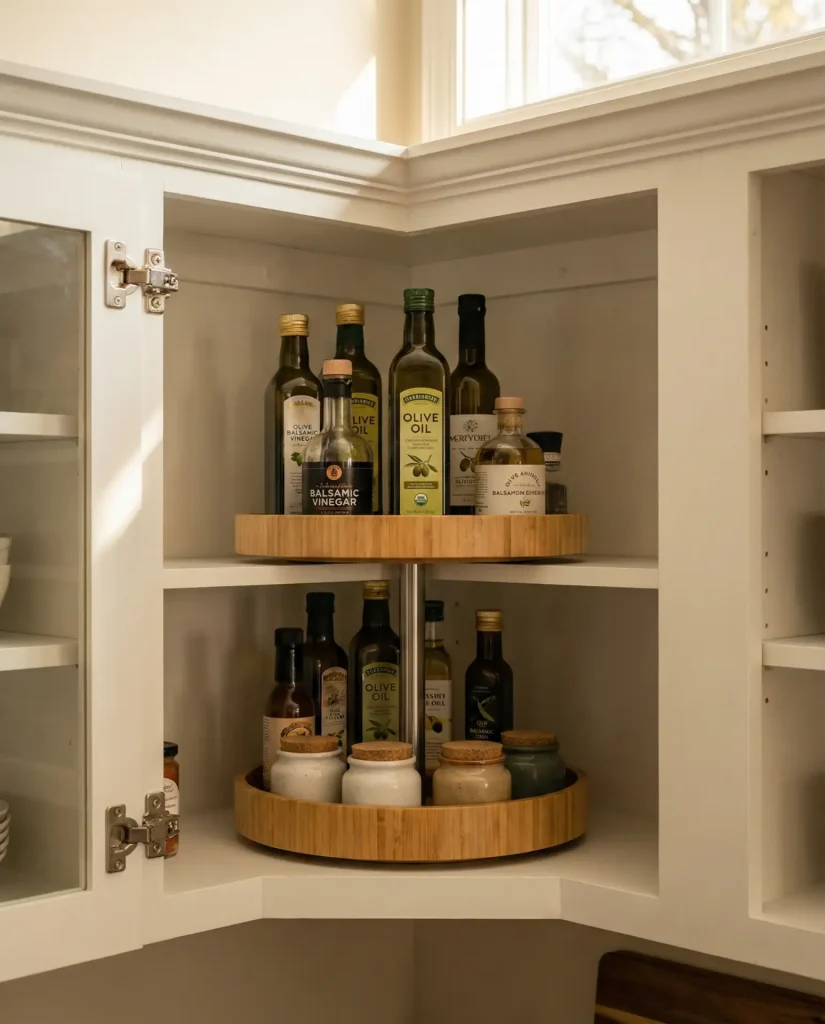
The corner cabinet is every kitchen’s storage blind spot, and a well-chosen lazy Susan turns that awkward dead zone into one of the most accessible spots in the whole kitchen. Modern turntables have moved far beyond the rickety plastic versions of past decades—today’s options come in bamboo, acrylic, and matte powder-coated metal, and they fit neatly inside both standard cupboards and deeper corner units. For organizing spices or small condiment bottles, a two-tier lazy Susan is particularly brilliant because you can see everything at a glance simply by spinning it.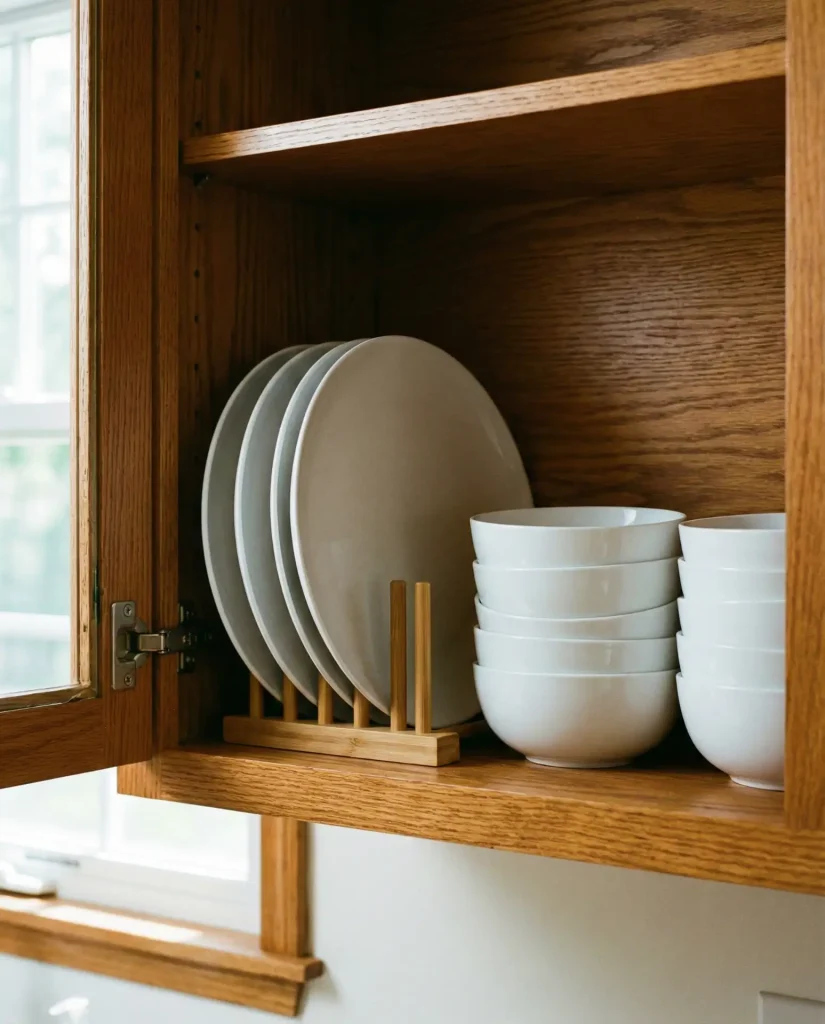
If you’ve ever bought a corner cabinet lazy Susan and abandoned it a few months later, the likely culprit was overloading it with heavy or irregularly shaped items that toppled on every spin. The sweet spot is lightweight, similarly sized items—spice jars, small condiment bottles, tiny oil tins—that rotate smoothly and stay put. Loaded correctly, a lazy Susan can make your corner cabinet the most pleasant cabinet in the kitchen to open.
21. Plate and Bowl Organizers Inside Cabinets
Stacking plates and bowls in tall, precarious towers is one of those kitchen habits that nobody loves but everyone defaults to. Plate organizers—those simple wire or coated metal stands that hold plates upright like files in a drawer—are one of the most genuinely underrated storage upgrades you can make for dishes. They protect your plates from chipping, make it easy to pull one without disturbing the stack, and free up vertical cabinet height for a second shelf’s worth of bowls or mugs above.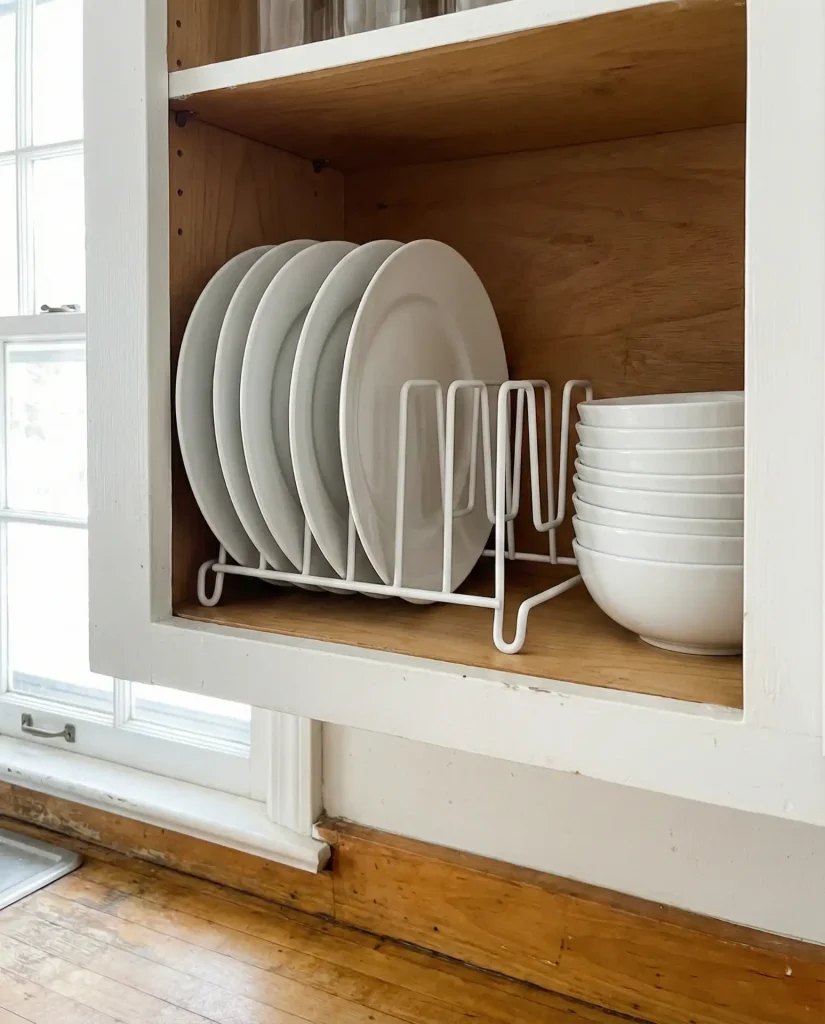
Plate organizers are particularly useful for households that entertain regularly and keep a second set of “nice” dishes alongside their everyday set. By storing both sets in the same cabinet with clear vertical organization, you avoid the dreaded pre-dinner-party search through the wrong stack. It’s a small investment—most plate racks run $12–$25 — with a disproportionate impact on daily kitchen life.
22. The Small Space Kitchen Maximizer Setup
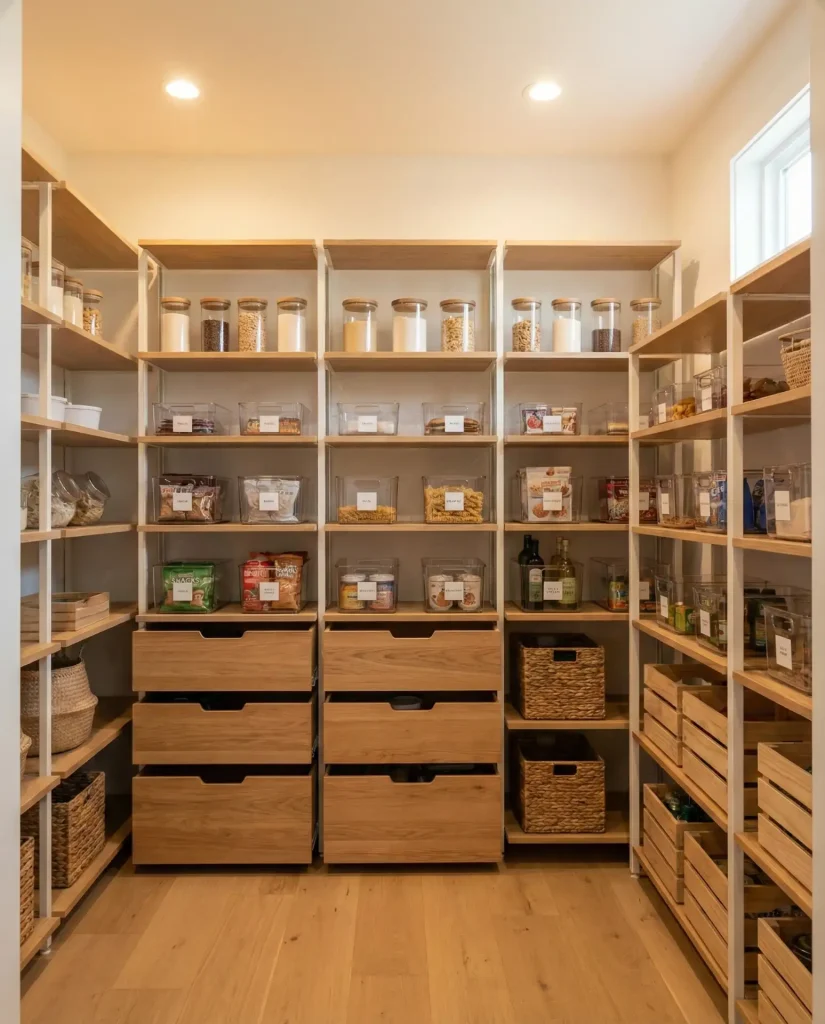
Designing a fully functional kitchen in a small space is less about compromising and more about being ruthlessly intentional. Every storage decision needs to earn its place—there’s no room for redundancy or “maybe someday I’ll use this” appliances. The most successful small-space kitchen setups in 2026 combine vertical storage (tall pantry towers, stacked shelving), hidden storage (toe-kick drawers under base cabinets), and modular furniture (butcher block carts with storage underneath) to create kitchens that feel complete despite their footprint.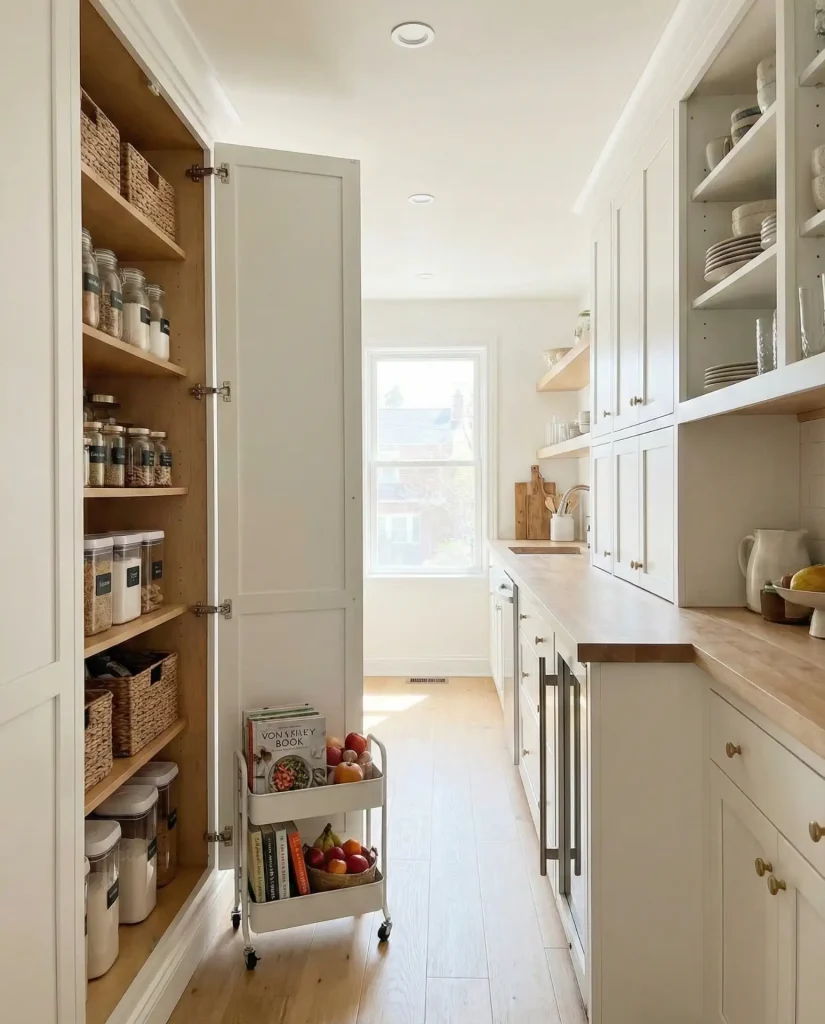
One of the most overlooked spaces in small kitchens is the toe kick—that recessed area at the base of your cabinets, typically about 4 inches tall and the full cabinet width. Custom toe-kick drawers (or aftermarket inserts available for some cabinet brands) turn this otherwise dead space into storage for flat items like pizza pans, placemats, or serving trays. In a small kitchen, discovering this hidden real estate can feel like finding a secret room.
Conclusion
Whether you tackle one of these ideas this weekend or slowly work through the list over the next few months, the goal is the same: a kitchen that feels like it’s working with you rather than against you. We’d love to hear which ideas resonated most—are you a drawer-divider devotee, a lazy Susan convert, or finally ready to tackle that narrow cabinet sliver? Drop your thoughts in the comments, and let’s swap ideas.