Small laundry rooms are one of the most common design challenges in American homes, especially in apartments, condos, and older houses where every square foot counts. As we move through 2026, homeowners are increasingly turning to Pinterest for creative solutions that blend function with style—transforming cramped corners into efficient, beautiful spaces. Whether you’re dealing with a closet-sized nook or a shared utility area, the right design moves can make all the difference. This guide offers twenty-two fresh ideas that prove small laundry spaces can be just as inspiring as they are practical.
1. Stackable Washer-Dryer with Floating Shelves
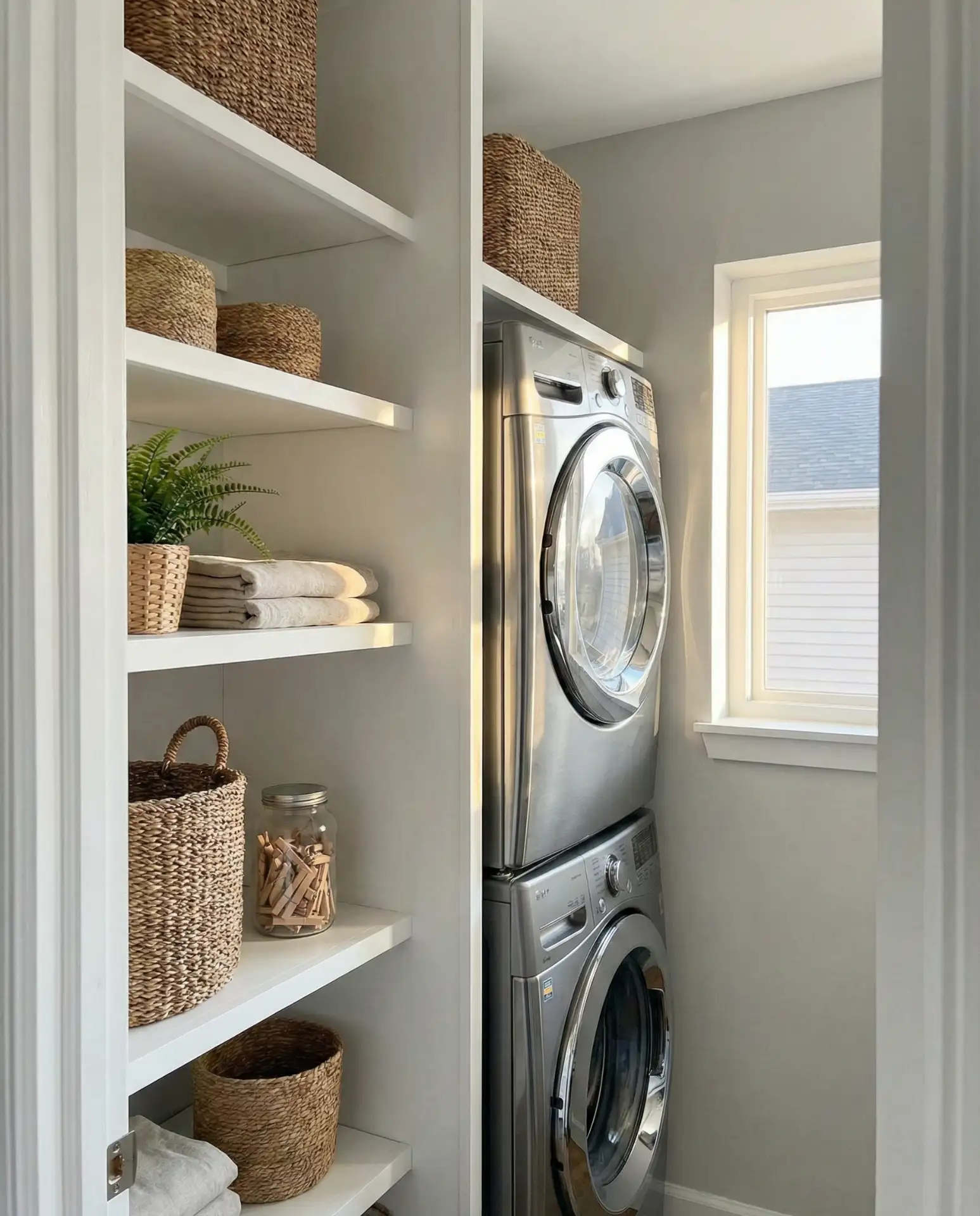
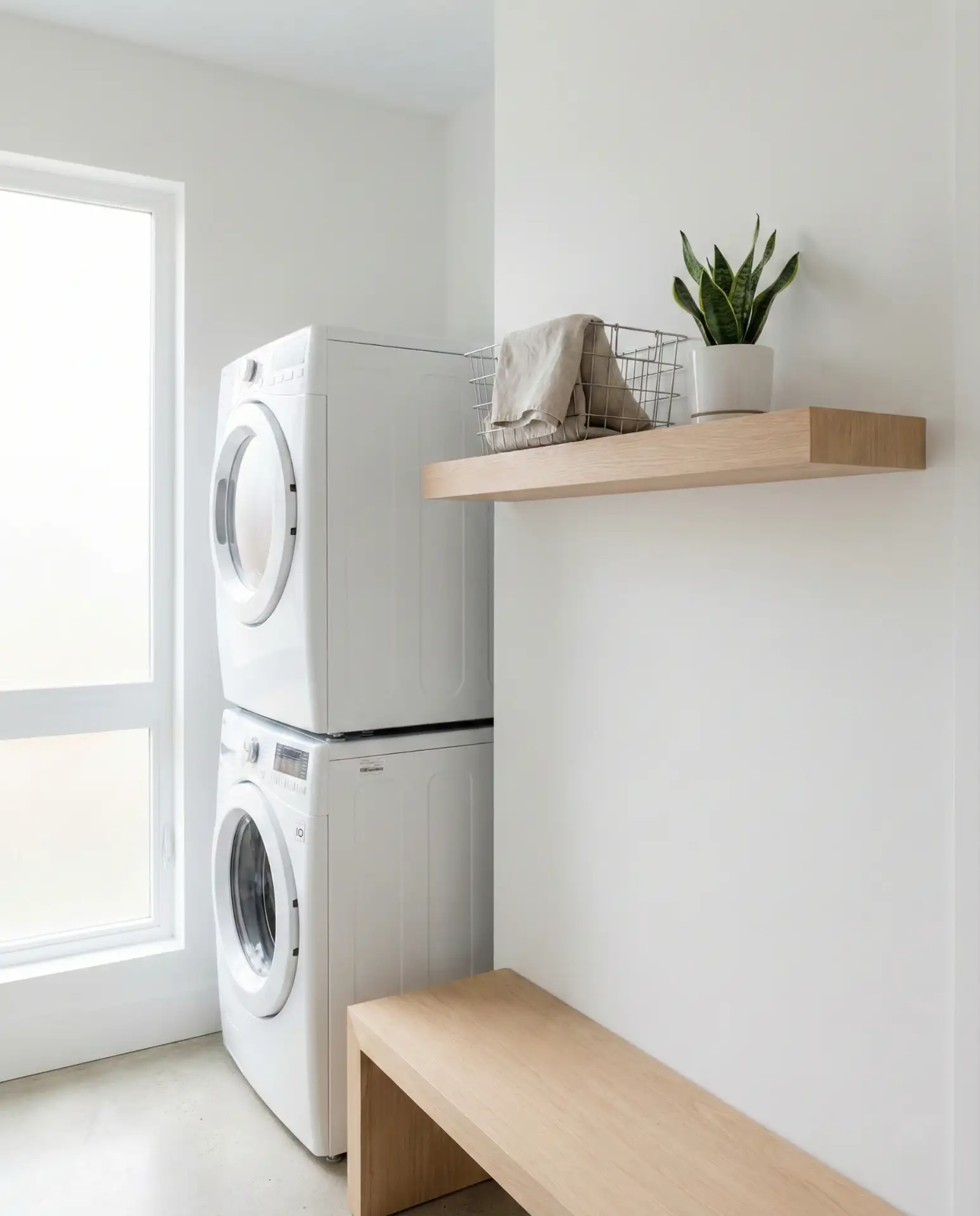
Vertical storage is the backbone of any small-space laundry plan, and stacking your washer and dryer frees up precious floor area for other essentials. Install white floating shelves above the units to hold detergent, fabric softener, and neatly folded towels. This setup works especially well in narrow closets or hallways where a side-by-side arrangement would overwhelm the room. The clean, modern aesthetic keeps everything visible and within reach without adding visual clutter.
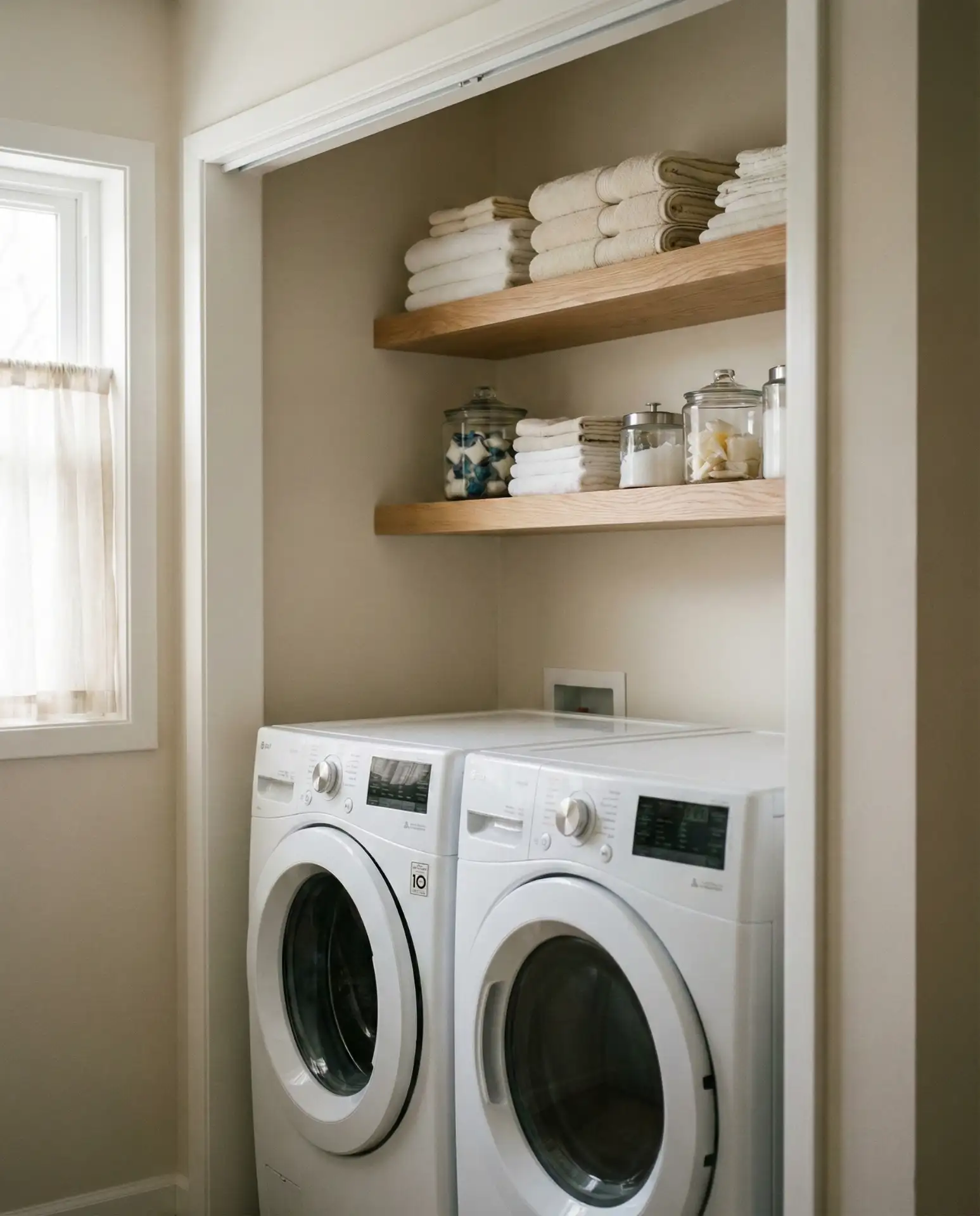
This layout is particularly popular in coastal cities like San Diego and Seattle, where condo living is the norm and laundry closets are often tucked into hallways or kitchens. By keeping shelves open rather than enclosed, you maintain an airy feel that prevents the space from closing in on you. It’s also easier to grab what you need mid-cycle, which matters more than you’d think on busy weekday mornings when every second counts.
2. Under-Counter Washer in a Kitchen Nook
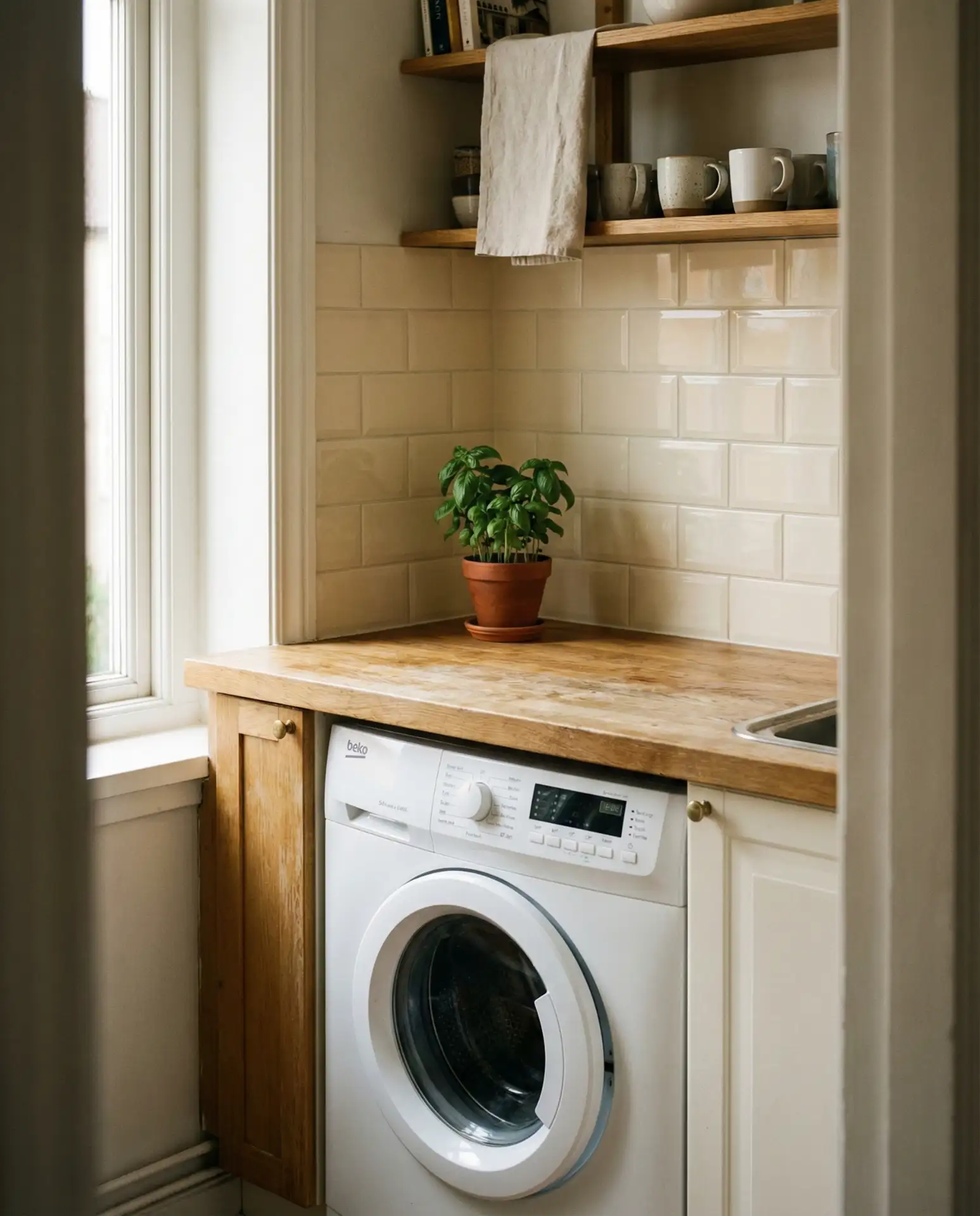
Integrating laundry into your kitchen is a smart move when you don’t have a dedicated utility room. A compact, front-loading washer slides neatly under a granite or butcher-block counter, blending seamlessly with your cabinetry. Pair it with a matching cabinet-front dryer or a ventless combo unit to keep the look cohesive and simple. This approach is common in European-style apartments but has gained serious traction in American urban markets where square footage is at a premium.
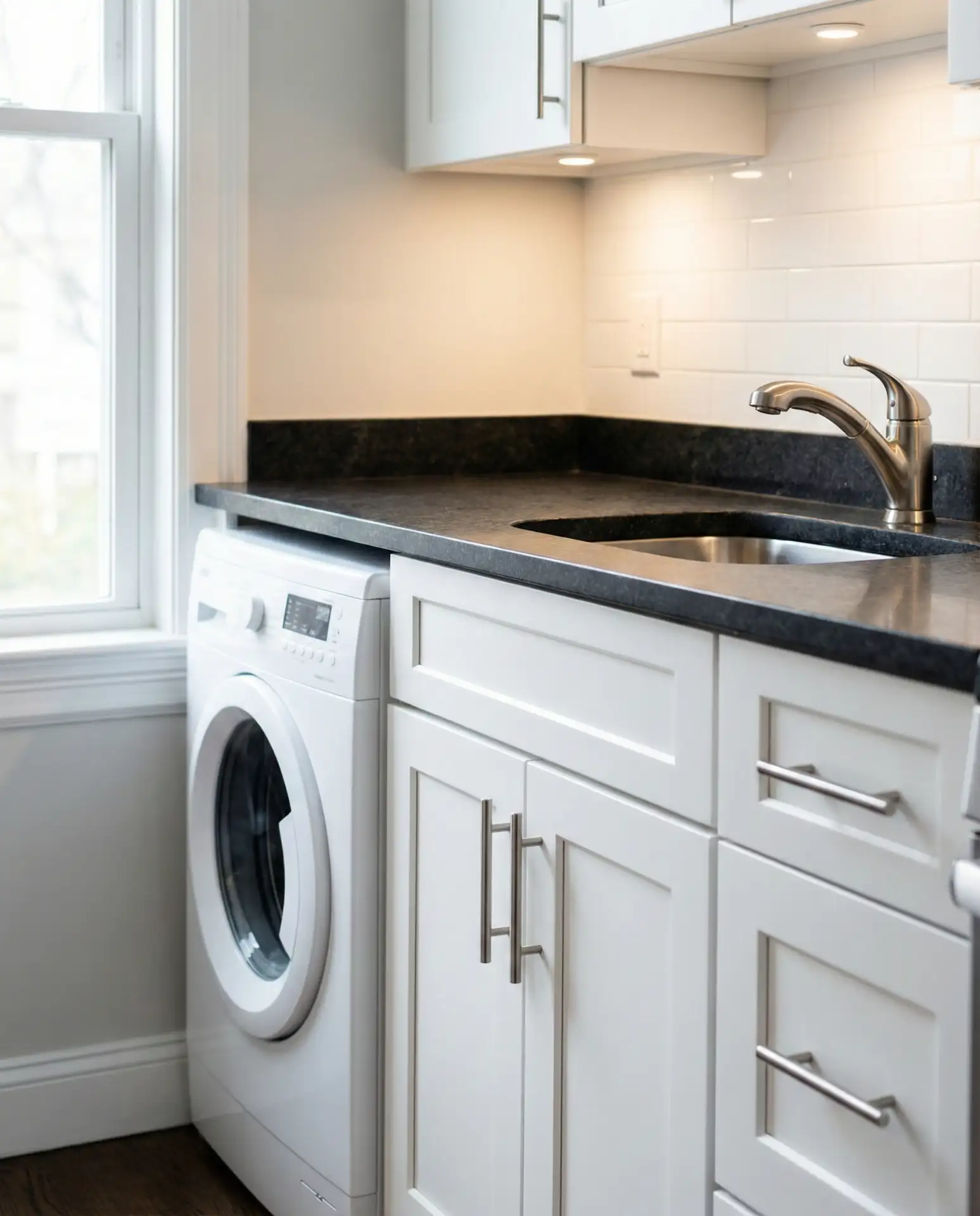
One common mistake is choosing a washer that’s too deep, which forces you to sacrifice counter space or blocks cabinet doors. Measure carefully and opt for a model designed for tight installations—many European brands offer slimmer profiles specifically for this purpose. Also, ensure proper ventilation if you’re using a vented dryer, as kitchens aren’t always designed with laundry exhaust in mind.
3. Rolling Cart for Detergent and Supplies
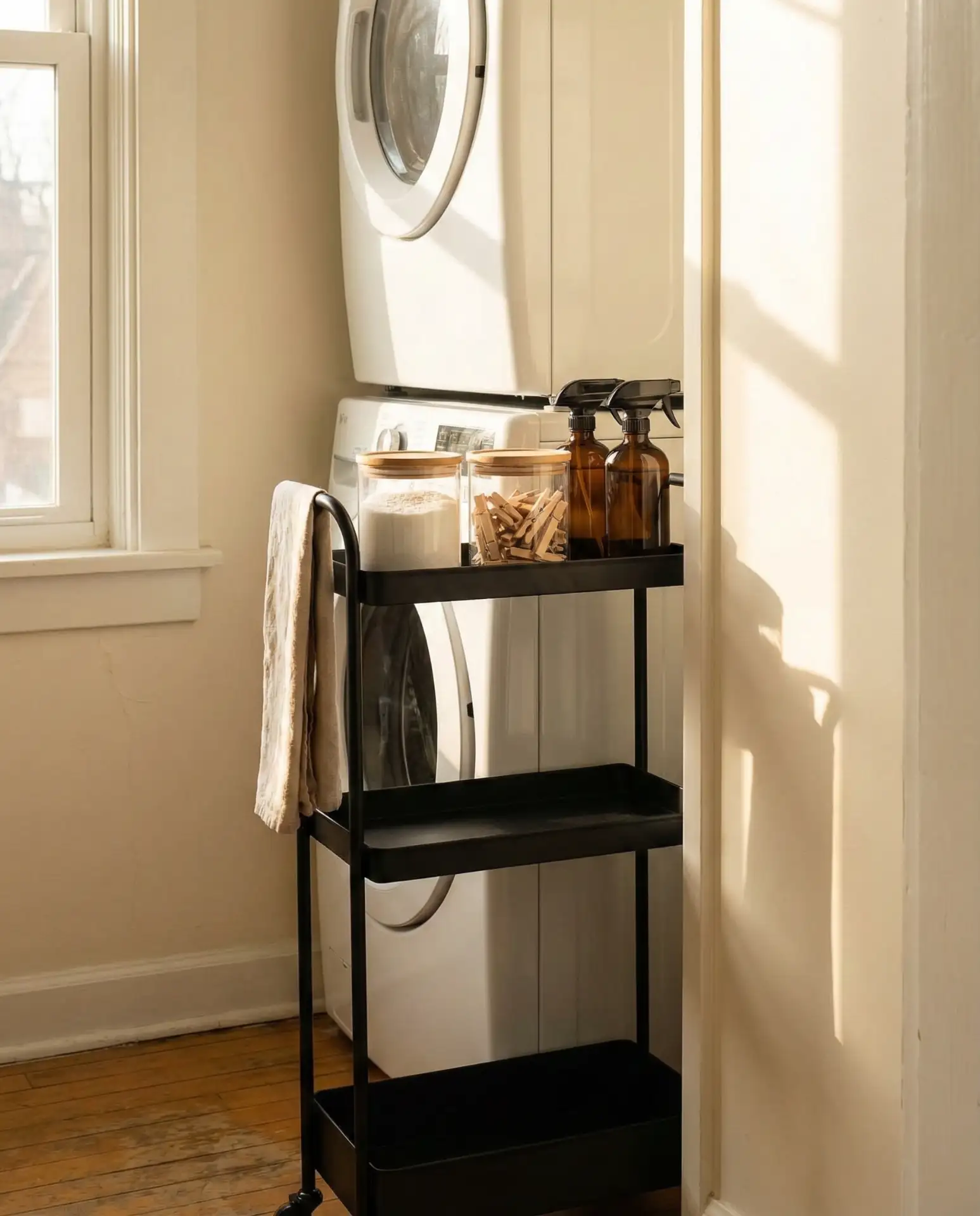
A slim rolling cart is one of the most underrated space-saving tools for small spaces, especially in laundry areas where storage is scarce. These carts slip into narrow gaps between appliances or alongside walls, offering multiple tiers for detergent, stain removers, dryer sheets, and cleaning cloths. Look for a white or metal finish to keep the look fresh and modern, and choose wheels that lock so the cart stays put when you’re reaching for supplies mid-wash.
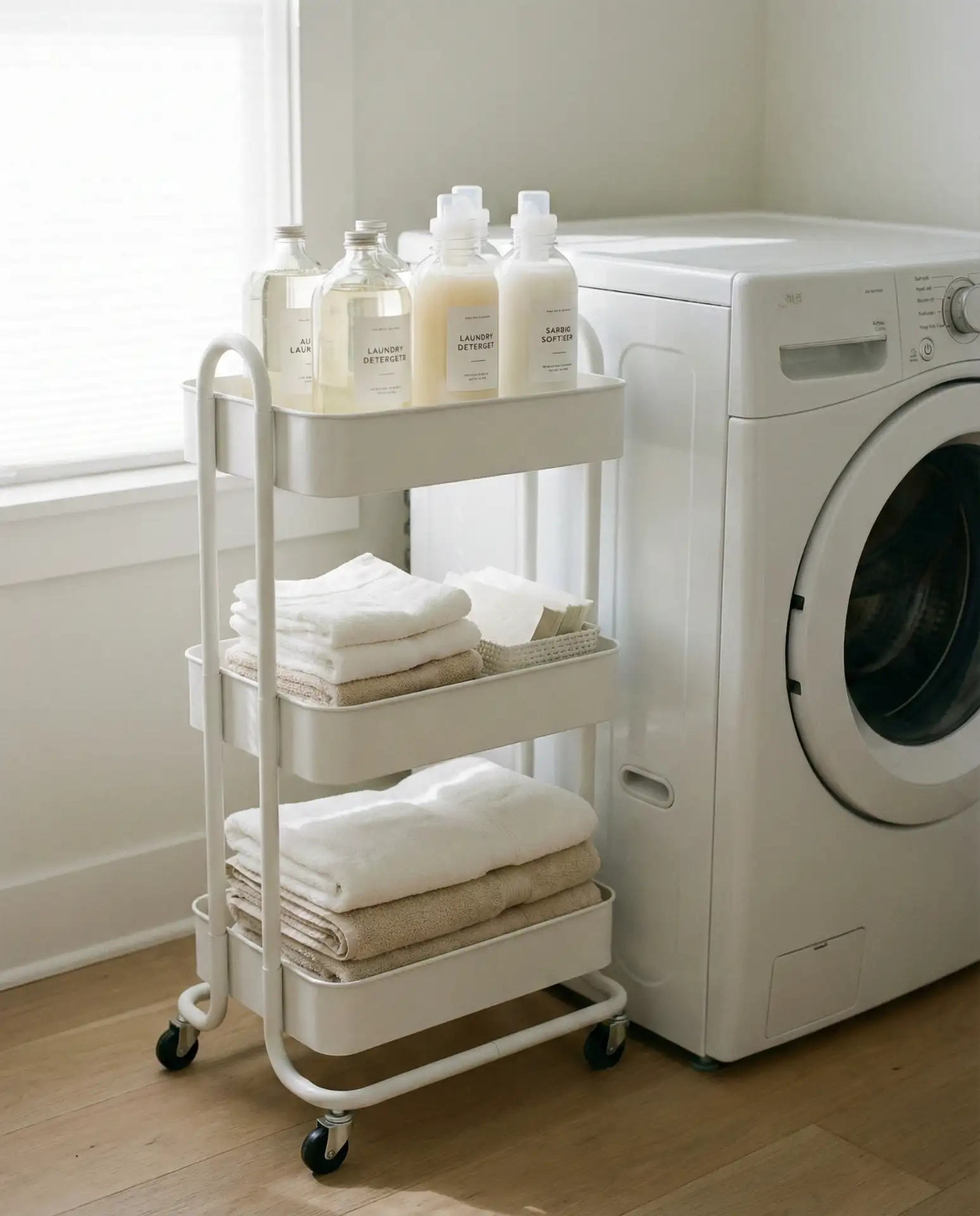
This works best in rental apartments or homes where built-in storage isn’t an option. A friend in Brooklyn uses hers to hold not just laundry supplies but also a small folding board on the top tier, turning it into a mobile station she can roll wherever she needs it. It’s proof that flexibility can be just as valuable as square footage when you’re working with less.
4. Fold-Down Ironing Board Built into the Wall
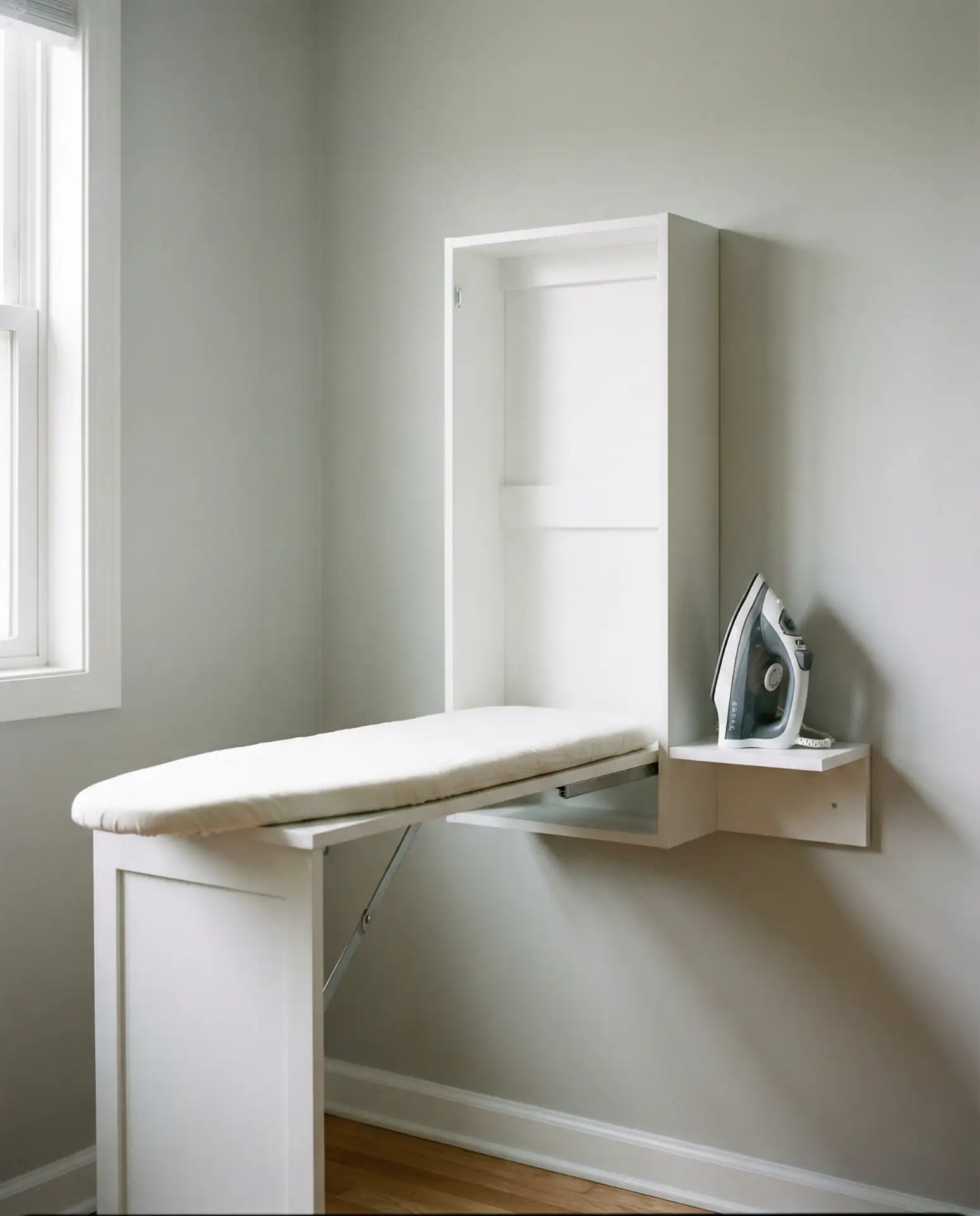
Wall-mounted folding ironing boards are a game-changer for tiny laundry rooms where floor space is non-negotiable. These boards tuck into a shallow cabinet or recessed niche and fold down when needed, then disappear completely when not in use. Pair the unit with a built-in iron holder, and you’ve eliminated two bulky items from your closet or shelf. It’s a space-saving solution that feels surprisingly luxurious once you experience the convenience.

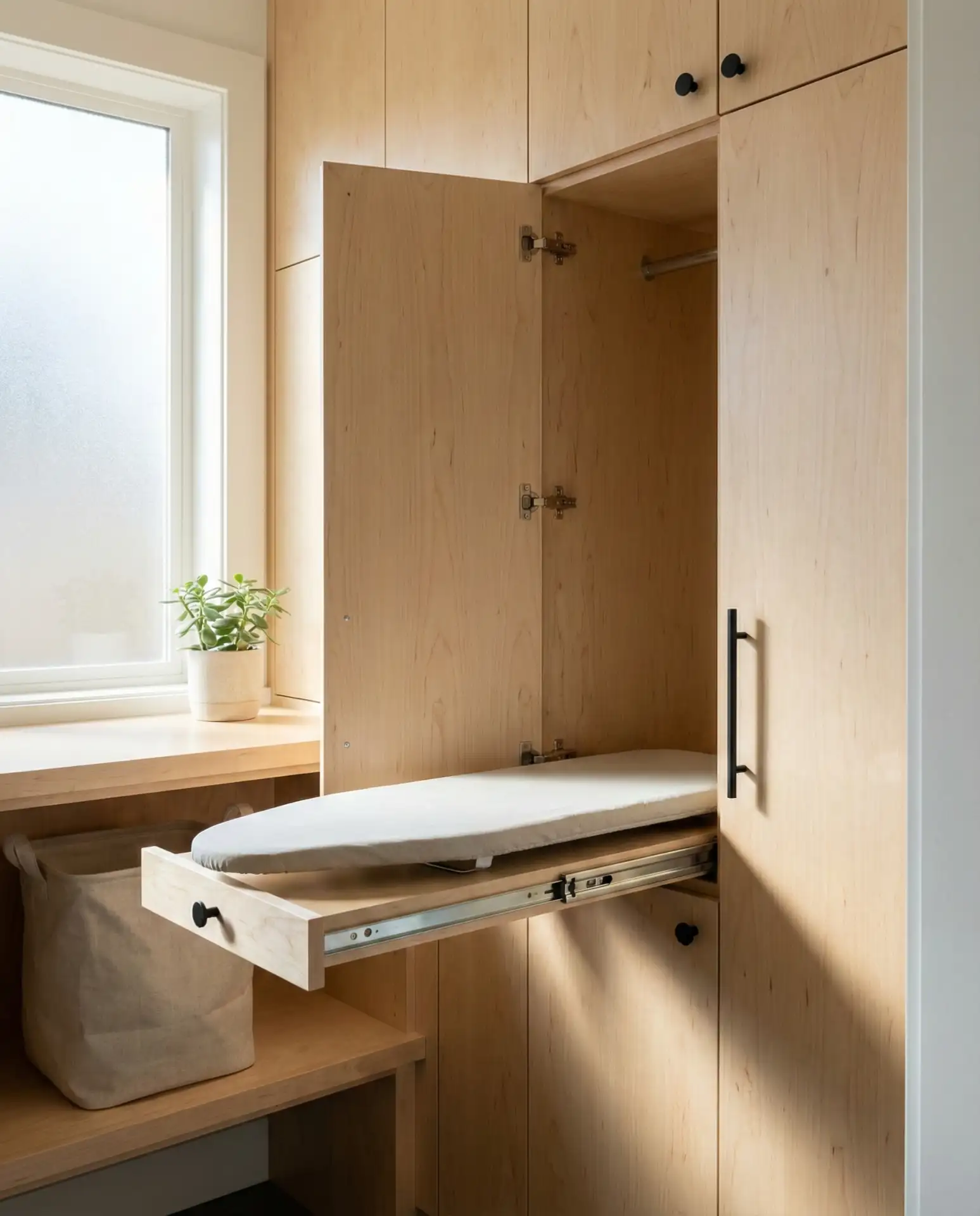
Entry-level models start around sixty dollars and can be installed in an afternoon, making this one of the most budget-friendly upgrades you can make to a small laundry room. If you’re renting, look for adhesive-mounted versions or slim freestanding units that don’t require drilling into walls. Either way, you’ll reclaim valuable floor space and streamline your ironing routine in one move.
5. Pegboard Wall for Hanging Tools and Baskets
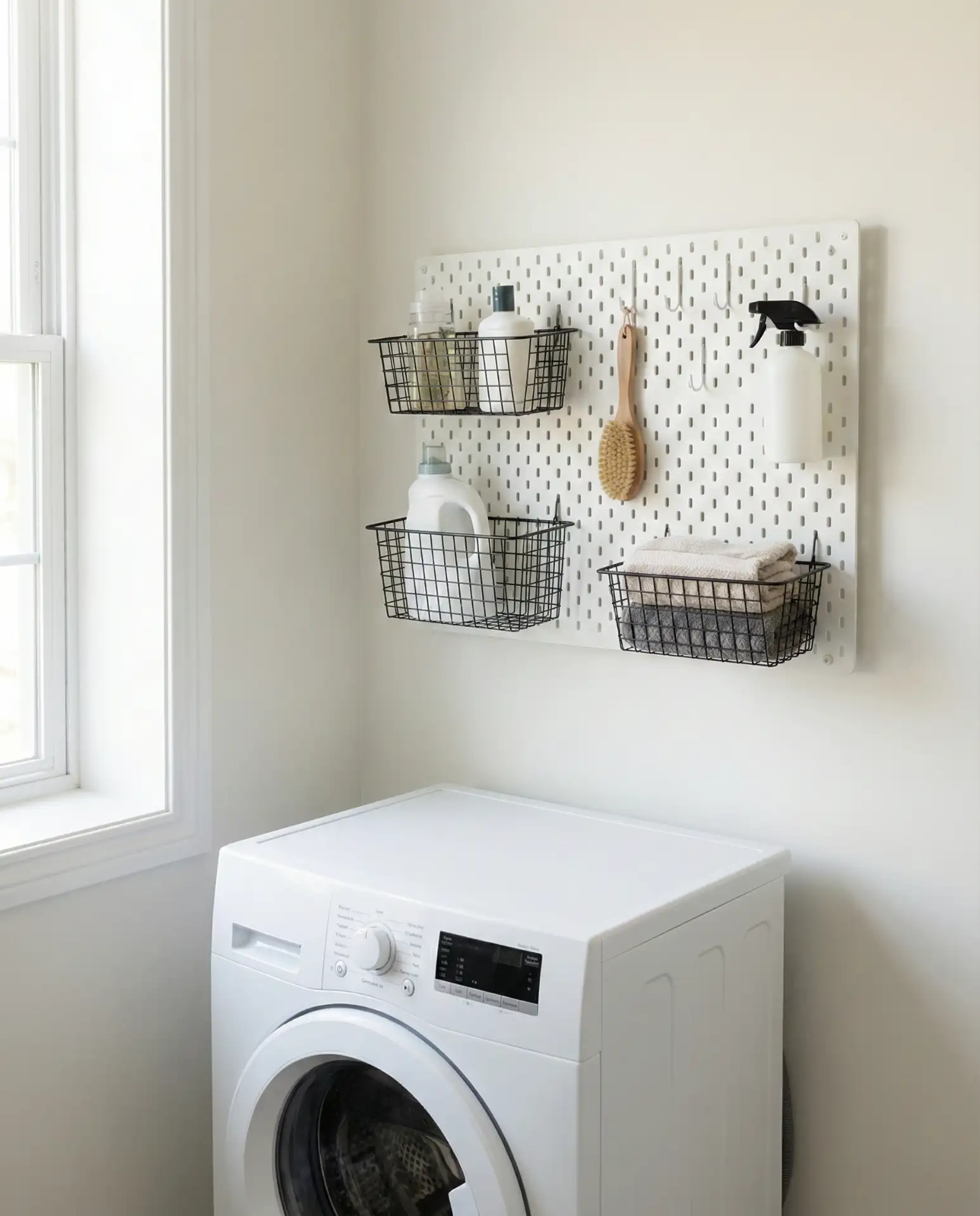
Pegboard transforms vertical wall space into flexible, customizable storage that adapts as your needs change. Install a white or wooden pegboard above your washer or along an empty wall, then hang baskets, hooks, and small shelves to hold everything from lint rollers to sorting bags. The beauty of this system is that you can rearrange pegs and accessories anytime, making it ideal for small spaces where your storage priorities shift seasonally or as your household grows.
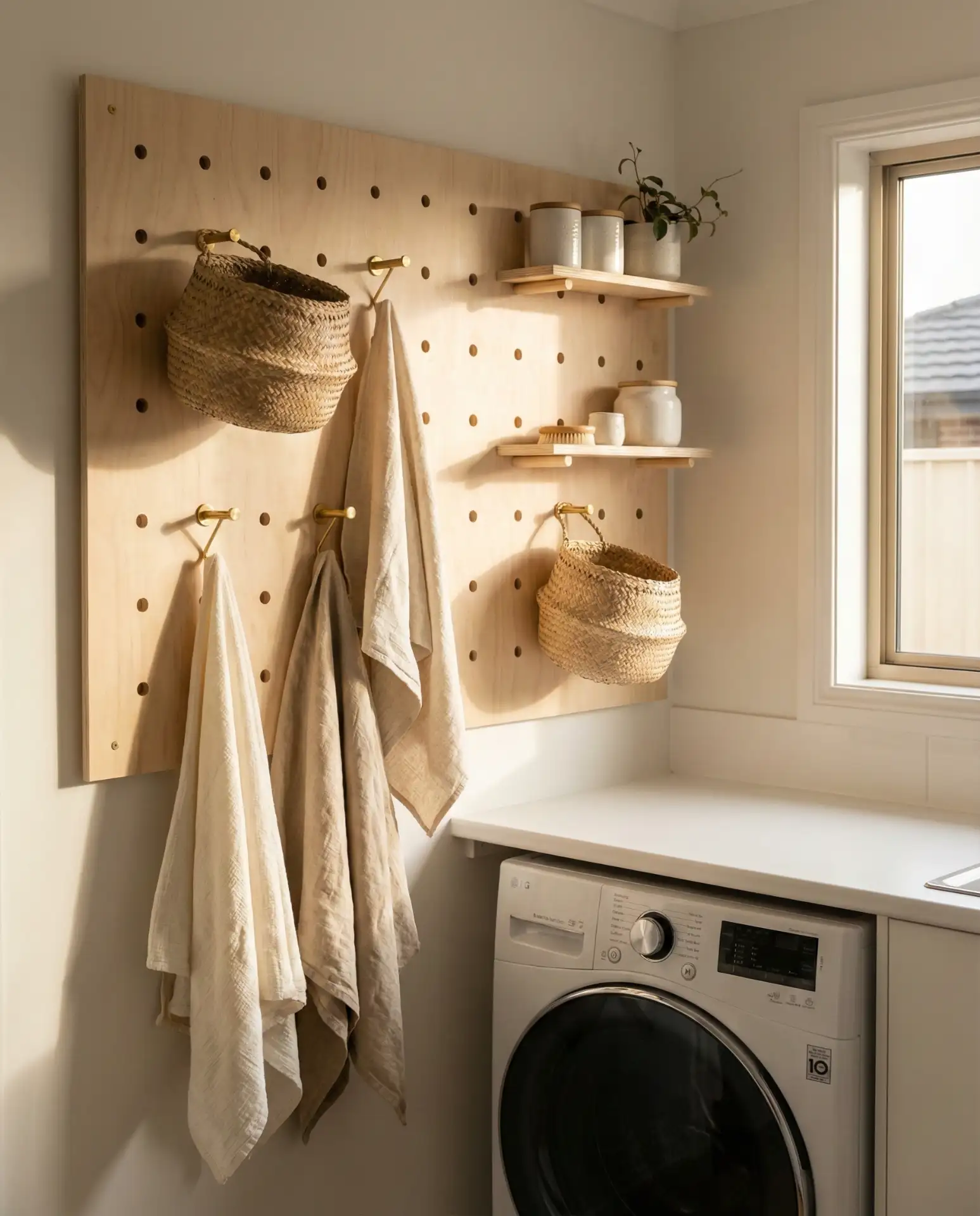
This setup is especially popular in the Pacific Northwest, where DIY culture and Scandinavian-inspired design converge. Homeowners appreciate the ability to see everything at a glance, which cuts down on time spent hunting for misplaced items. Plus, pegboard is forgiving—if you change your mind about placement, you simply move the pegs rather than dealing with patched drywall.
6. Sliding Barn Door to Conceal Laundry Alcove
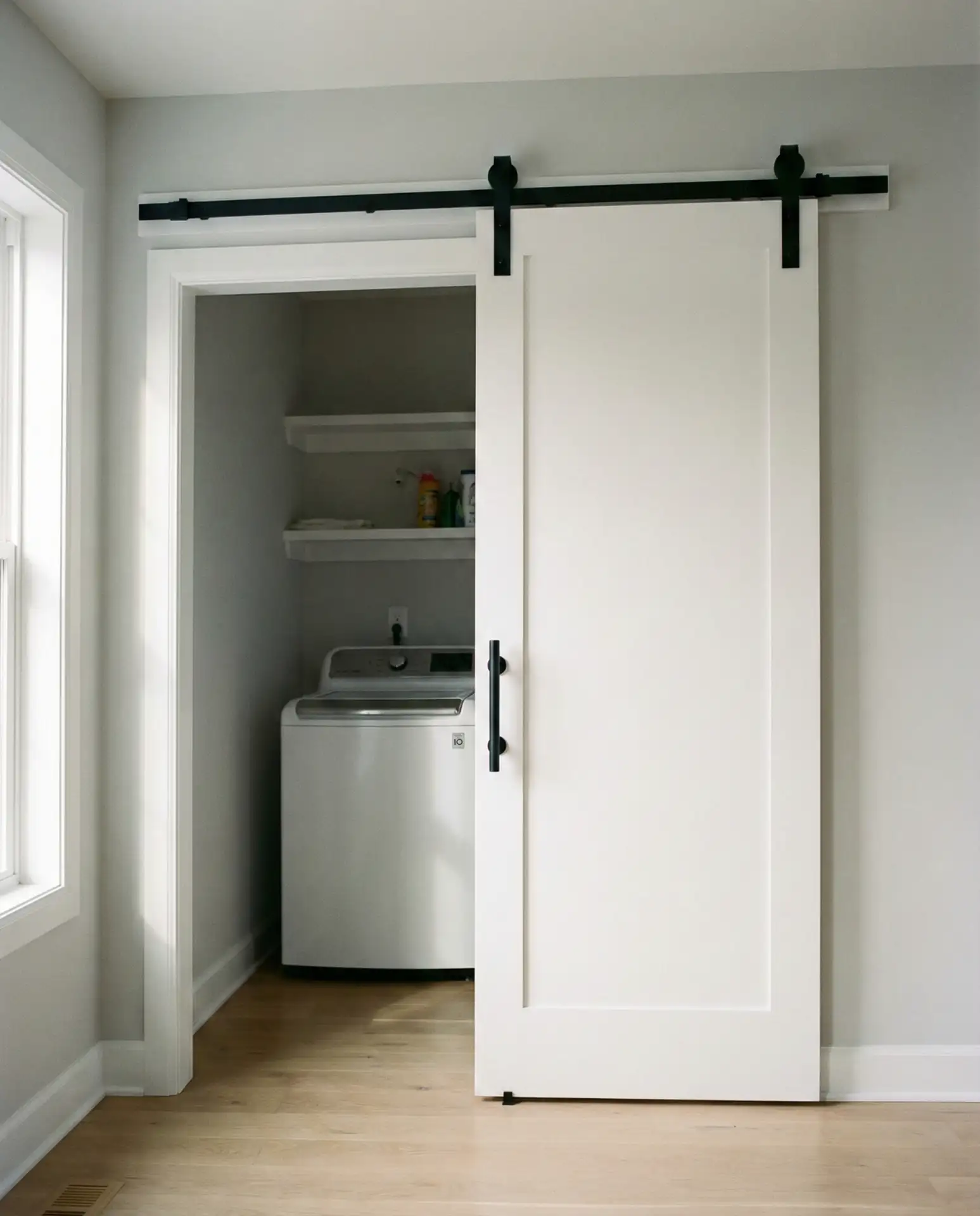
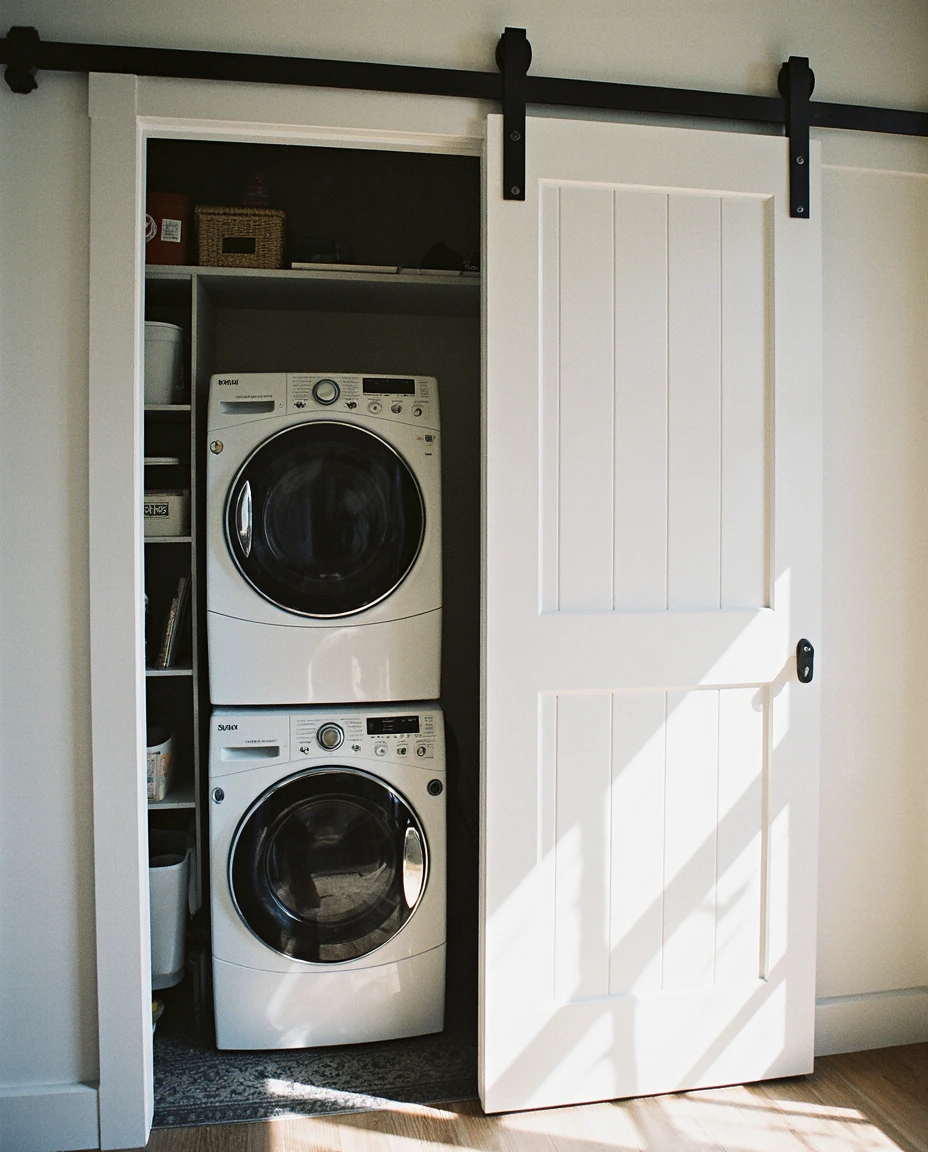
A sliding barn door is a stylish way to hide a laundry nook without sacrificing the square footage that a traditional swinging door demands. Choose a wooden or white panel that complements your home’s aesthetic, and mount it on a sleek track that runs along the wall. This is particularly effective in open-concept spaces or hallways where you want laundry access without constant visual clutter. The modern farmhouse vibe has made barn doors a Pinterest favorite, and they work beautifully in both rural and urban settings.
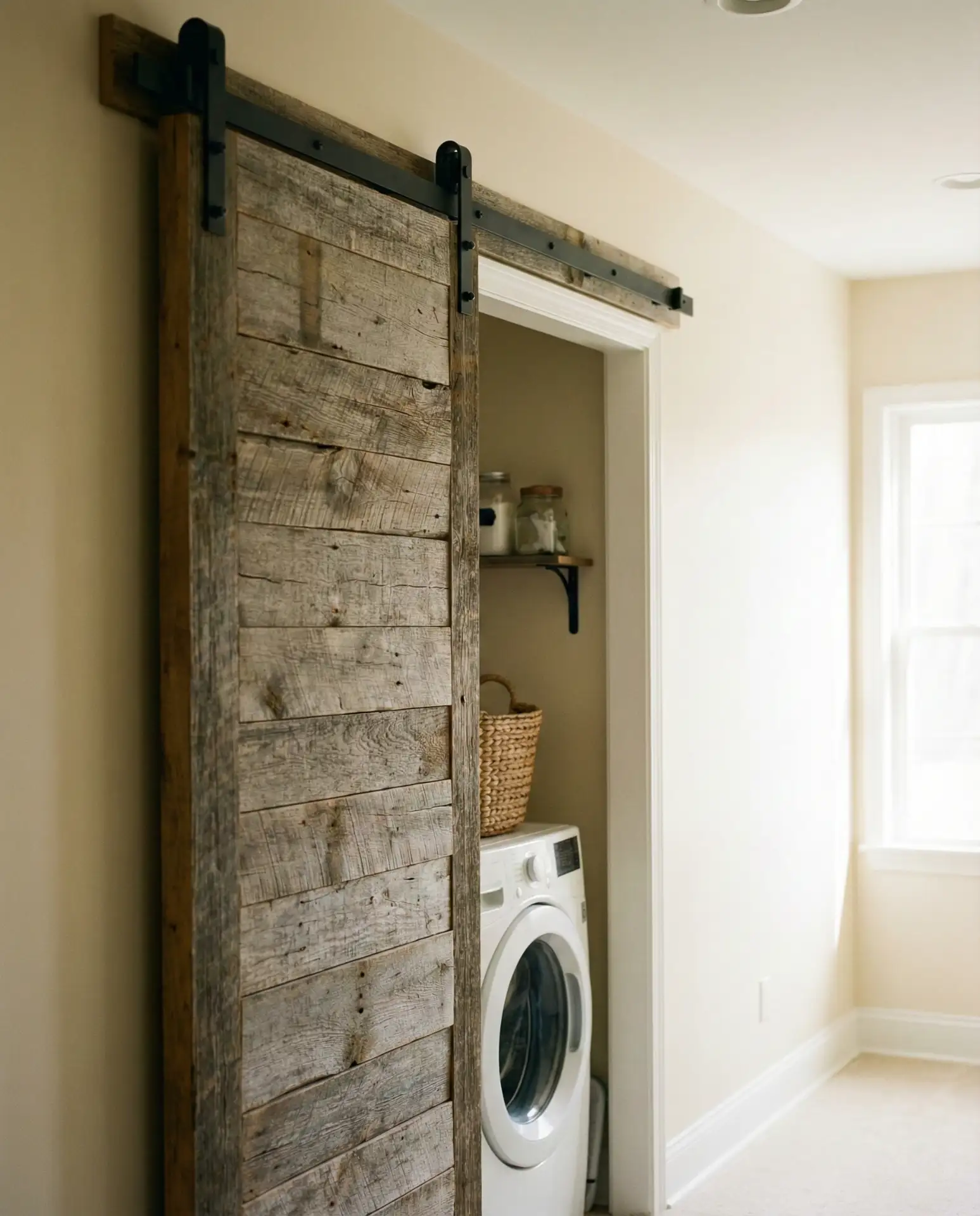
One practical insight: make sure the door can slide far enough to fully clear the alcove opening when you’re loading or unloading machines. A common mistake is installing hardware that doesn’t allow full access, which defeats the purpose of a barn door’s convenience. Measure twice, and account for the door’s thickness when planning your track length.
7. Over-the-Door Organizer for Cleaning Supplies
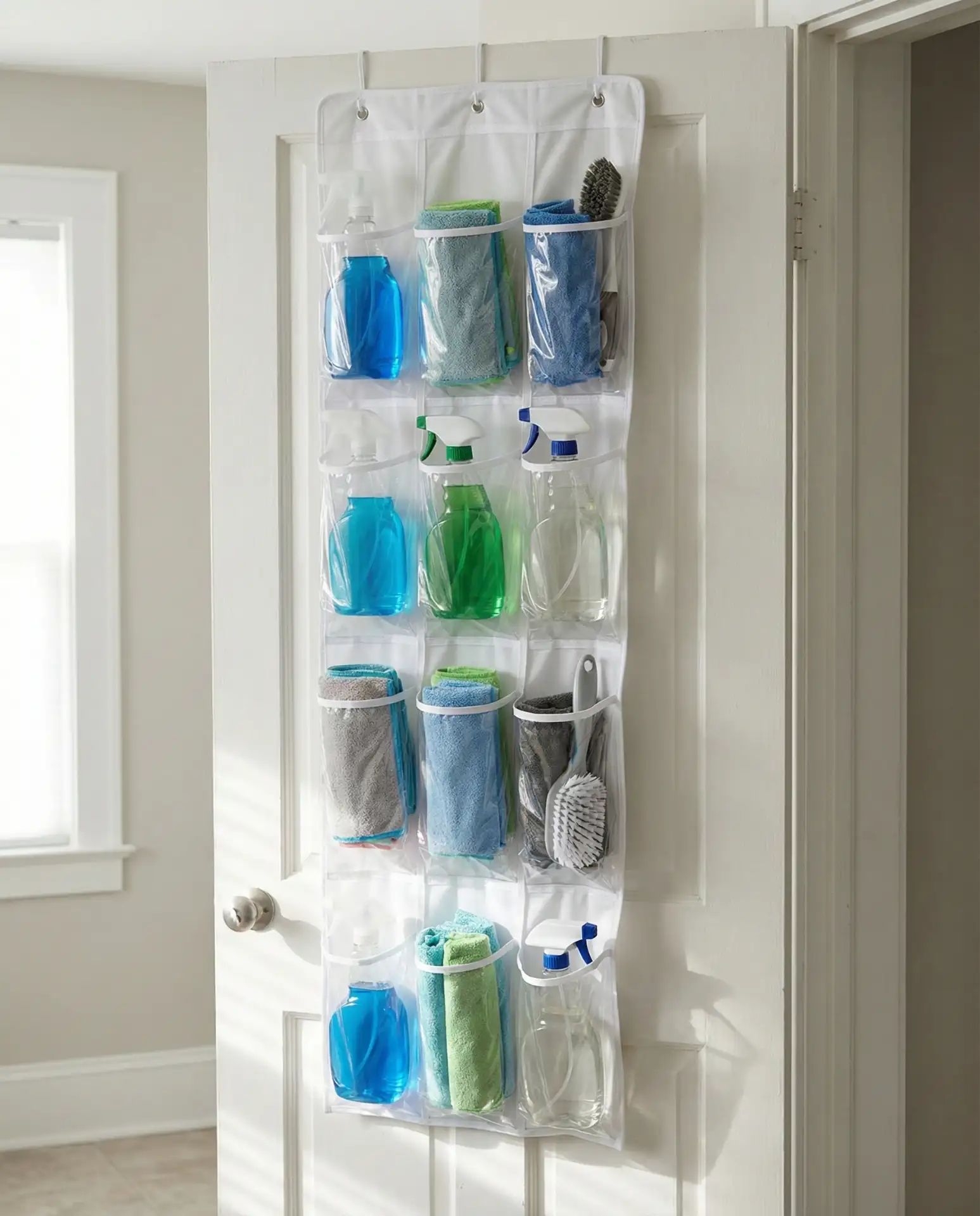
An over-the-door organizer is one of the easiest wins for small-space laundry storage, requiring zero installation and offering instant access to frequently used items. Hang it on the back of your laundry room door or closet door, and fill the pockets with spray bottles, sponges, dryer sheets, and stain sticks. Look for white or clear vinyl models that blend seamlessly with your décor and won’t add visual weight to the room. This is a go-to solution for renters who can’t drill into walls but still need functional storage.
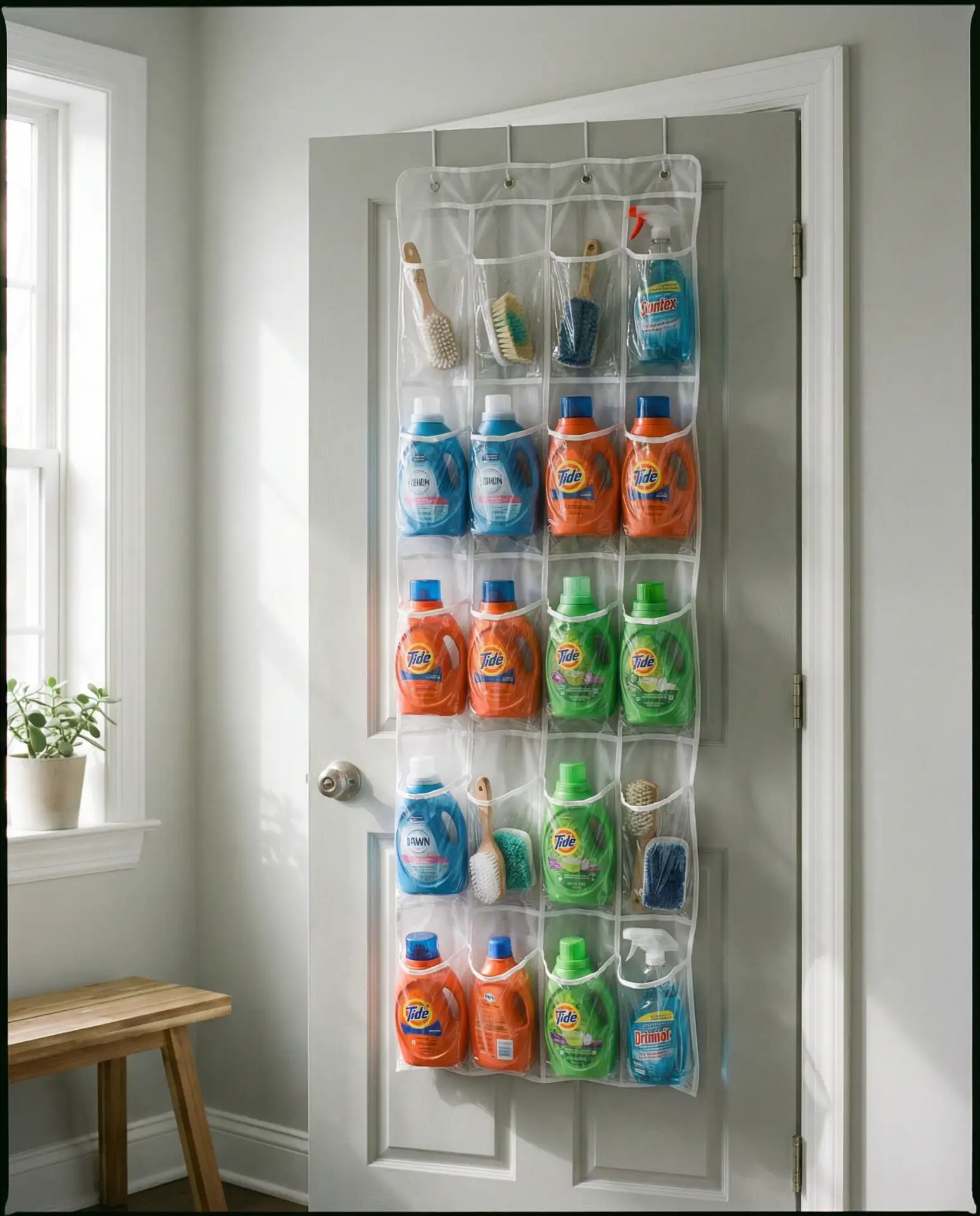
This works best in closet-style laundry setups where the door is already part of the room’s footprint. My neighbor in Austin uses one to corral not just laundry supplies but also her kids’ sports gear cleaning kits, proving that flexibility is key when you’re tight on space. Just make sure the door can still close fully with the organizer in place—some thicker models can interfere with the latch.
8. Countertop Above Front-Load Washer and Dryer
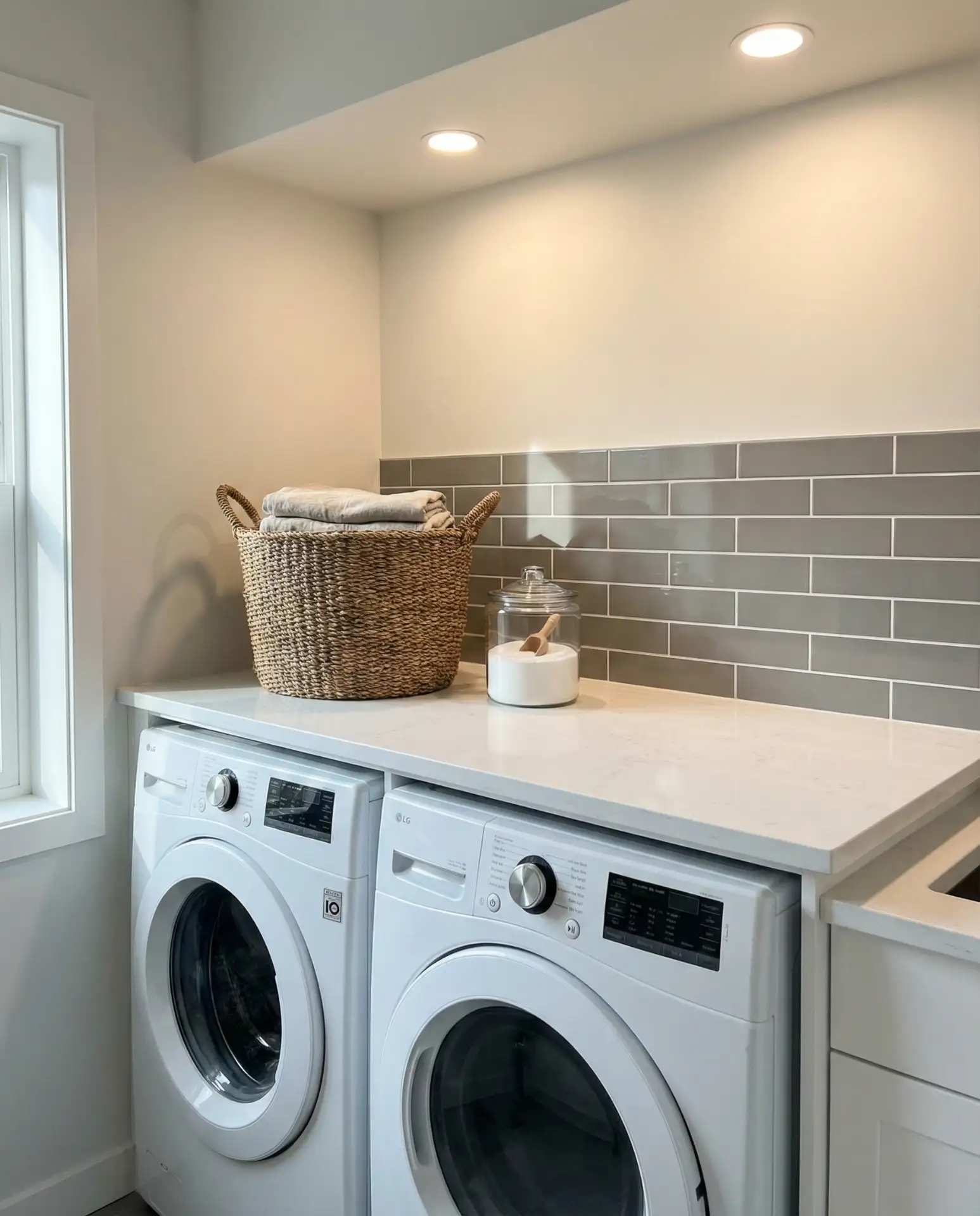
Adding a wooden or laminate countertop above side-by-side front-loaders instantly creates a folding station and eliminates the awkward gap where socks and dryer sheets tend to disappear. This surface also serves as a staging area for sorting clothes or setting down detergent bottles, making the workflow smoother and more efficient. Choose a durable, moisture-resistant material—butcher block is popular for its warmth, while white quartz offers a modern, easy-to-clean finish.
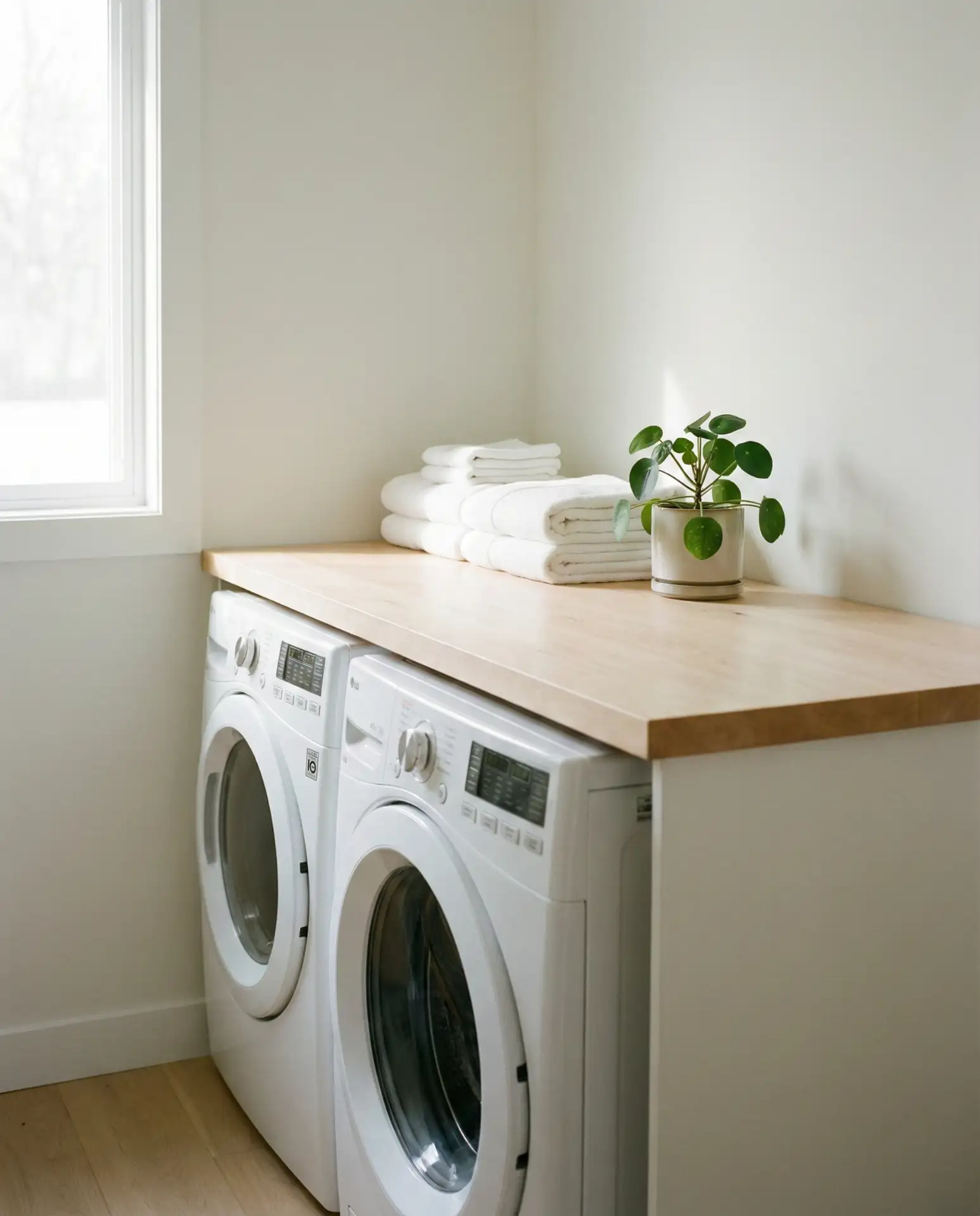
This setup is a staple in new construction townhomes and condos across the country, from Nashville to Denver. It’s also surprisingly affordable—many homeowners DIY the install with a pre-cut countertop from a hardware store and a few brackets. The key is ensuring the counter is deep enough to overhang the machines slightly, giving you comfortable access to the controls and door handles.
9. Narrow Pull-Out Hamper Between Appliances
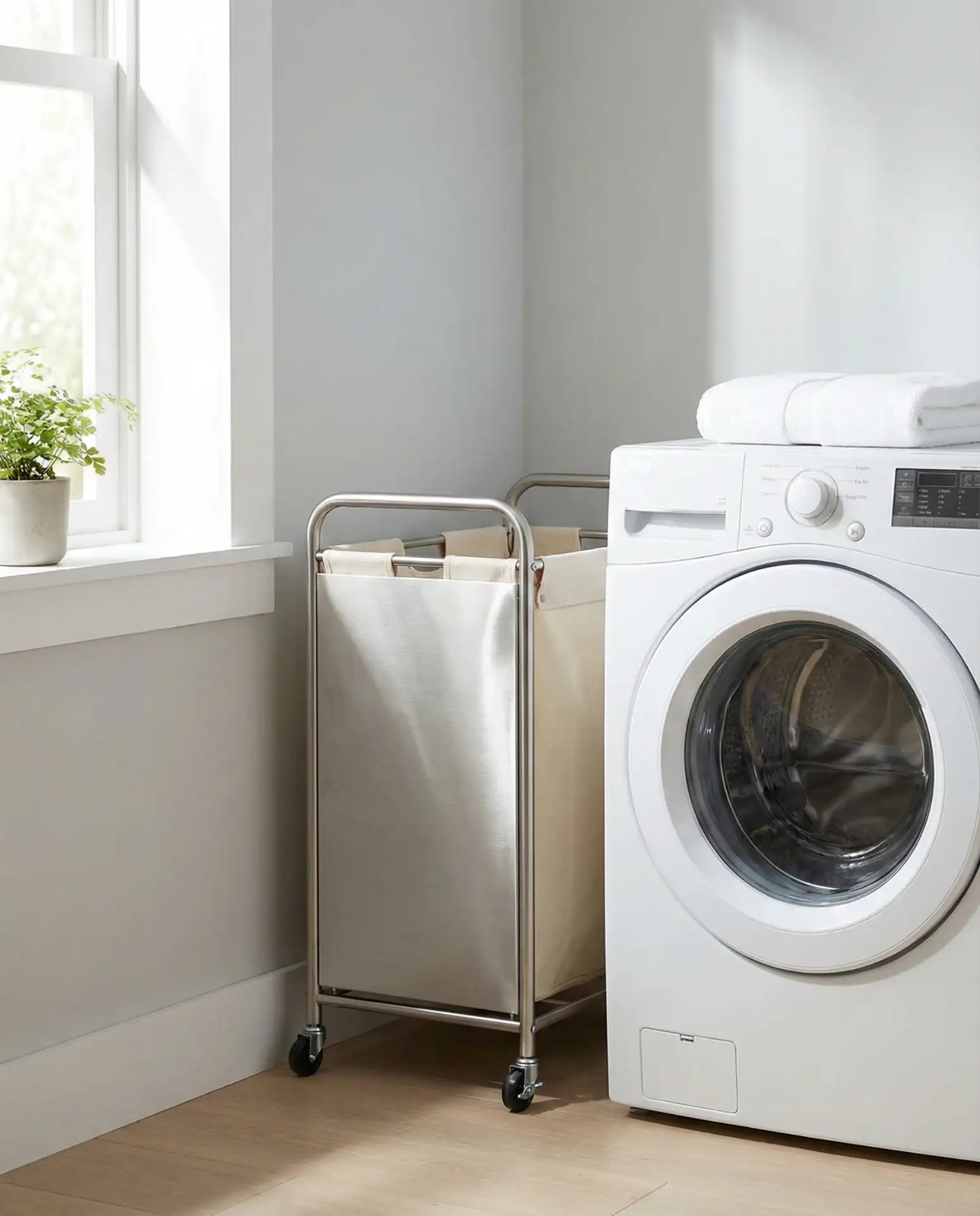
If you have a sliver of unused space between your washer and dryer or alongside a wall, a narrow pull-out hamper is a brilliant space-saving hack. These units slide into gaps as slim as six inches and hold a surprising amount of laundry without taking up any functional floor space. Opt for a white or metal frame to keep the look cohesive, and choose a model with wheels or glides for smooth operation. It’s one of those details that feels custom and high-end but costs less than a hundred dollars.
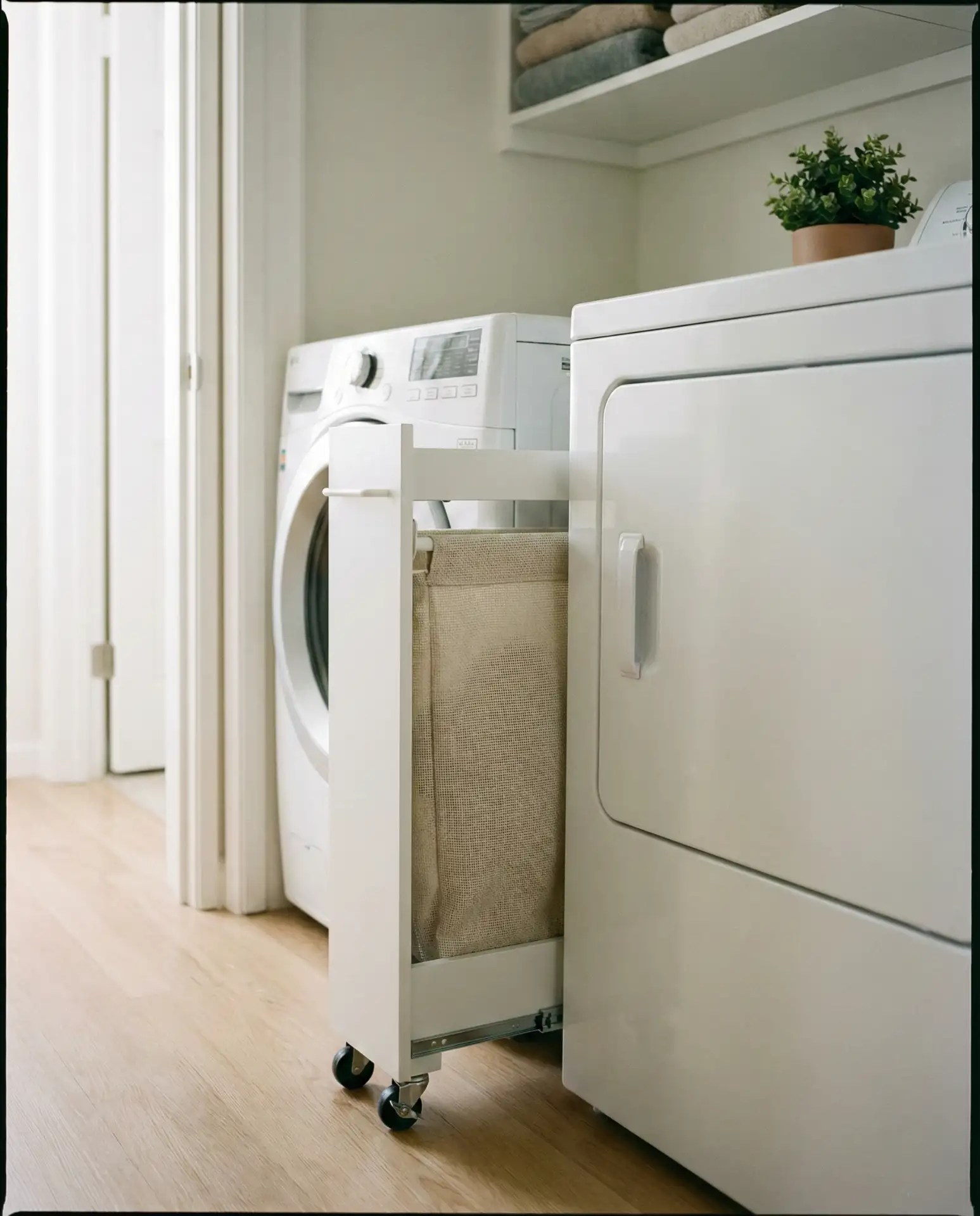
Expert tip: measure your gap carefully before buying, as even a quarter-inch can make the difference between a perfect fit and a frustrating return. Also, consider the height—taller hampers hold more but can be harder to maneuver if your ceiling is low or if you have overhead cabinets. This is a favorite among tiny-home dwellers and RV renovators who need every inch to count.
10. Open Shelving with Woven Baskets for Sorting
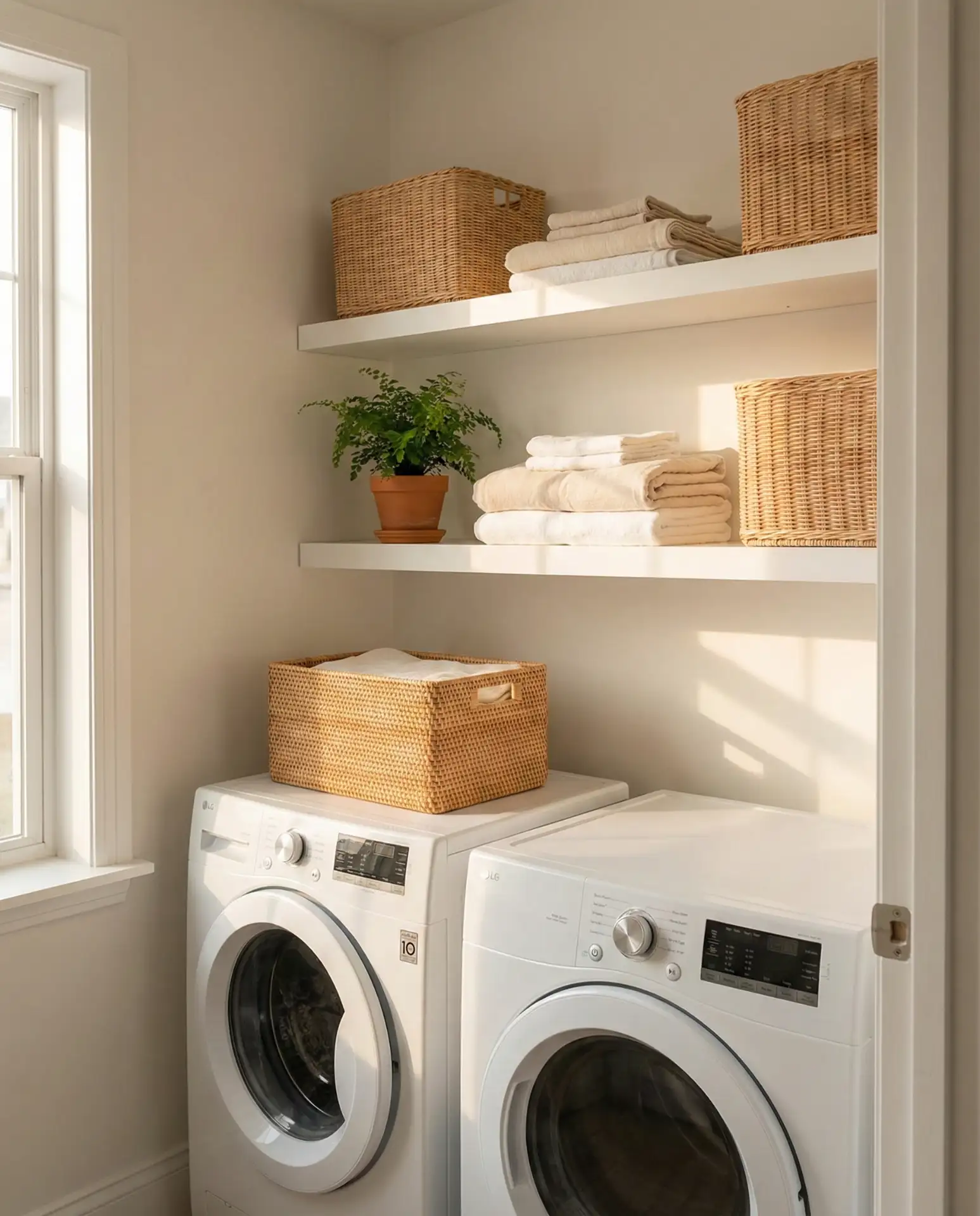
Open shelving keeps small spaces feeling airy while providing ample storage for sorting and organizing laundry by color or fabric type. Install wooden or metal brackets to support shelves, then add woven baskets labeled for whites, darks, delicates, and towels. This system encourages everyone in the household to pre-sort their clothes, saving you time on laundry day. The simple, natural look of woven baskets also adds warmth and texture, making the room feel less utilitarian and more like part of your home’s overall design.
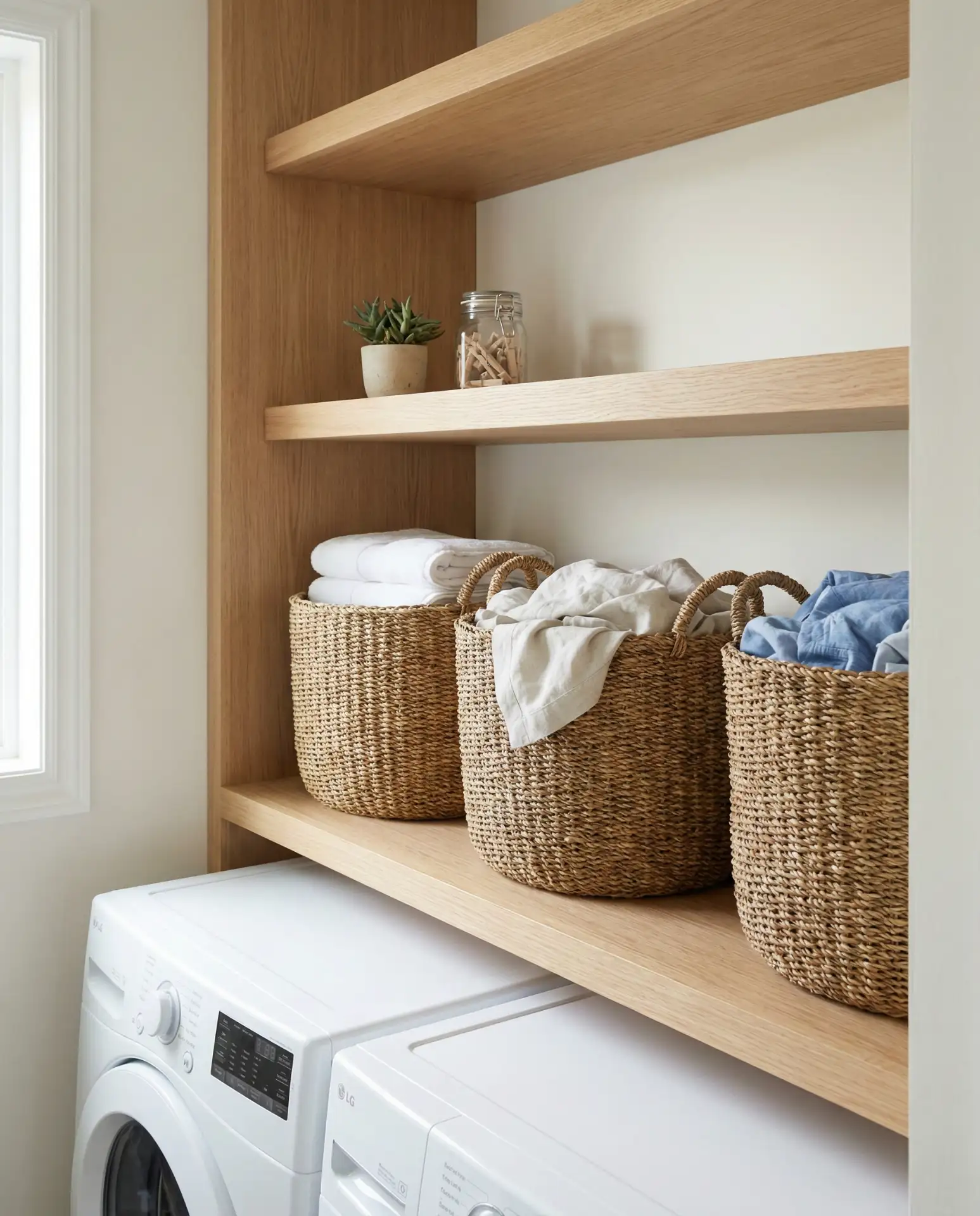
This approach works best in homes where the laundry area is visible from living spaces, such as in open-plan lofts or apartments where the machines sit in a hallway or kitchen corner. The baskets keep clutter contained while still looking intentional and stylish. Just be mindful of dust—open shelves require a quick wipe-down every few weeks to stay fresh.
11. Tension Rod for Hanging Clothes to Dry
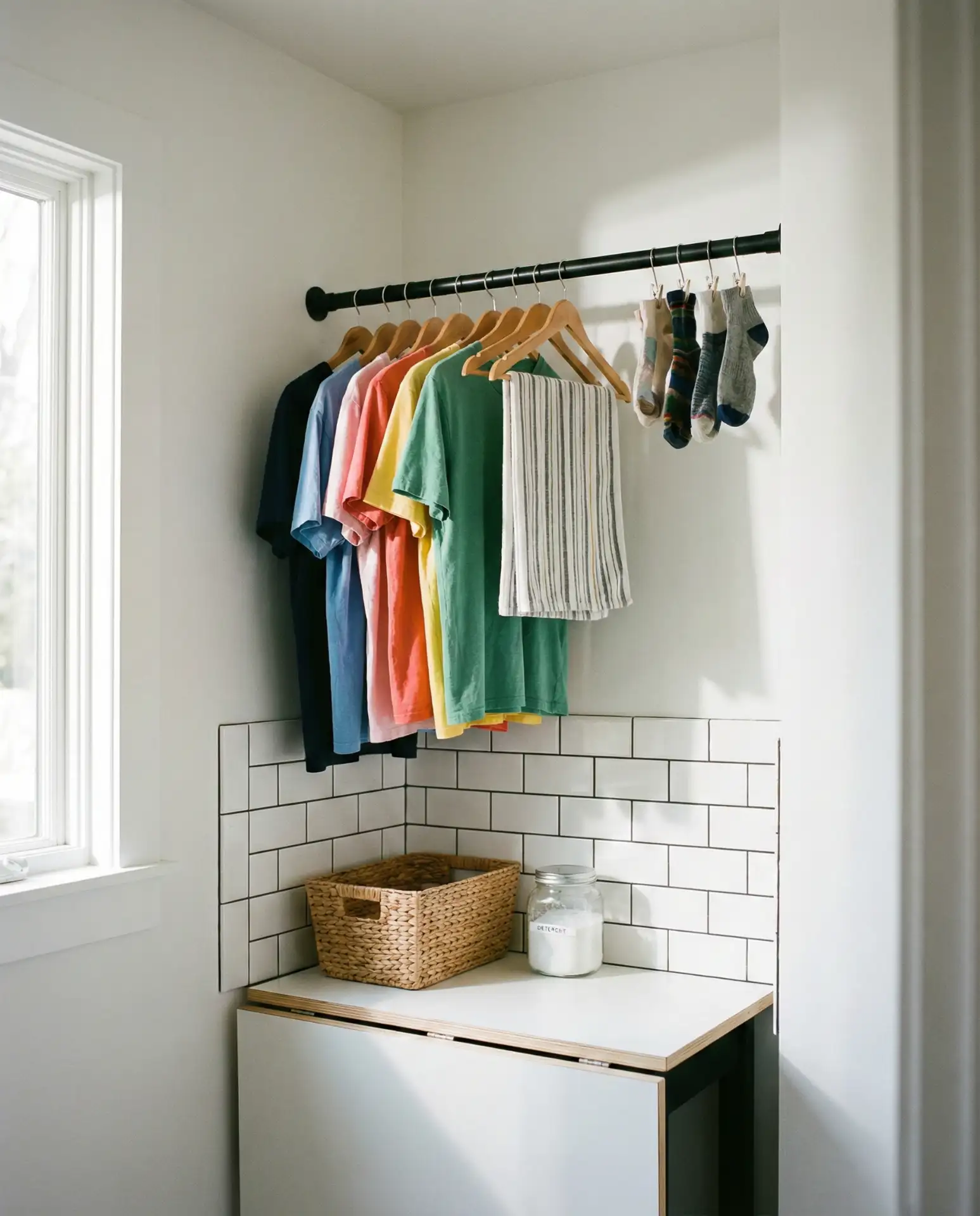
A tension rod installed above your washer or across a corner provides instant hanging space for air-drying delicates without requiring permanent hardware. Choose a sturdy rod that can support the weight of wet clothes, and position it high enough that it doesn’t interfere with machine access. This is especially useful in small spaces where a traditional drying rack would block walkways or take up floor area you can’t spare. It’s a low-cost, high-impact solution that works in rentals and owned homes alike.
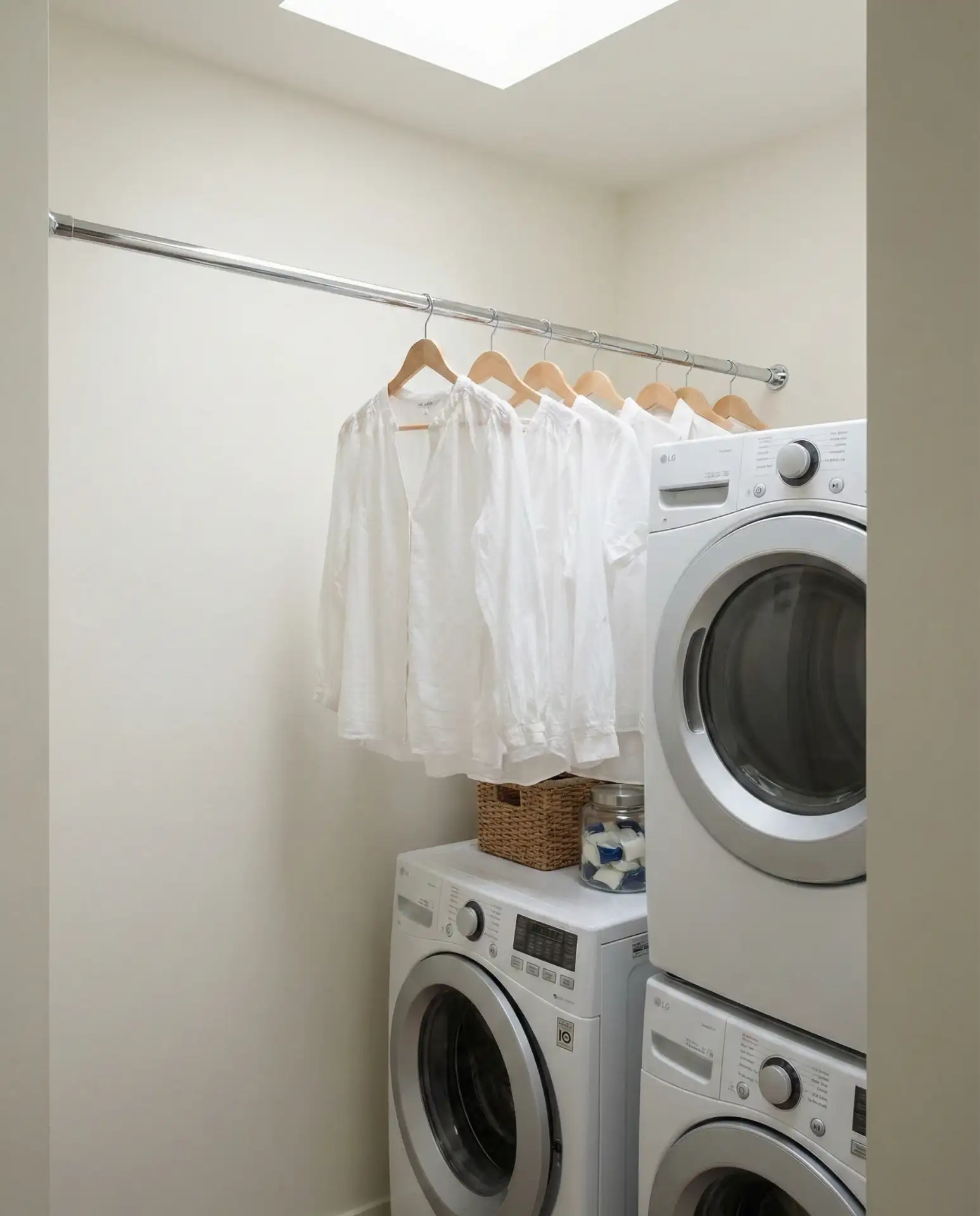
Real homeowner behavior: many people use the rod seasonally, setting it up in winter when outdoor drying isn’t an option, then removing it in warmer months to free up vertical space. It’s also a lifesaver for apartment dwellers in humid climates like Miami or Houston, where tumble-drying delicate fabrics can cause shrinkage or damage.
12. Compact Washer-Dryer Combo Unit
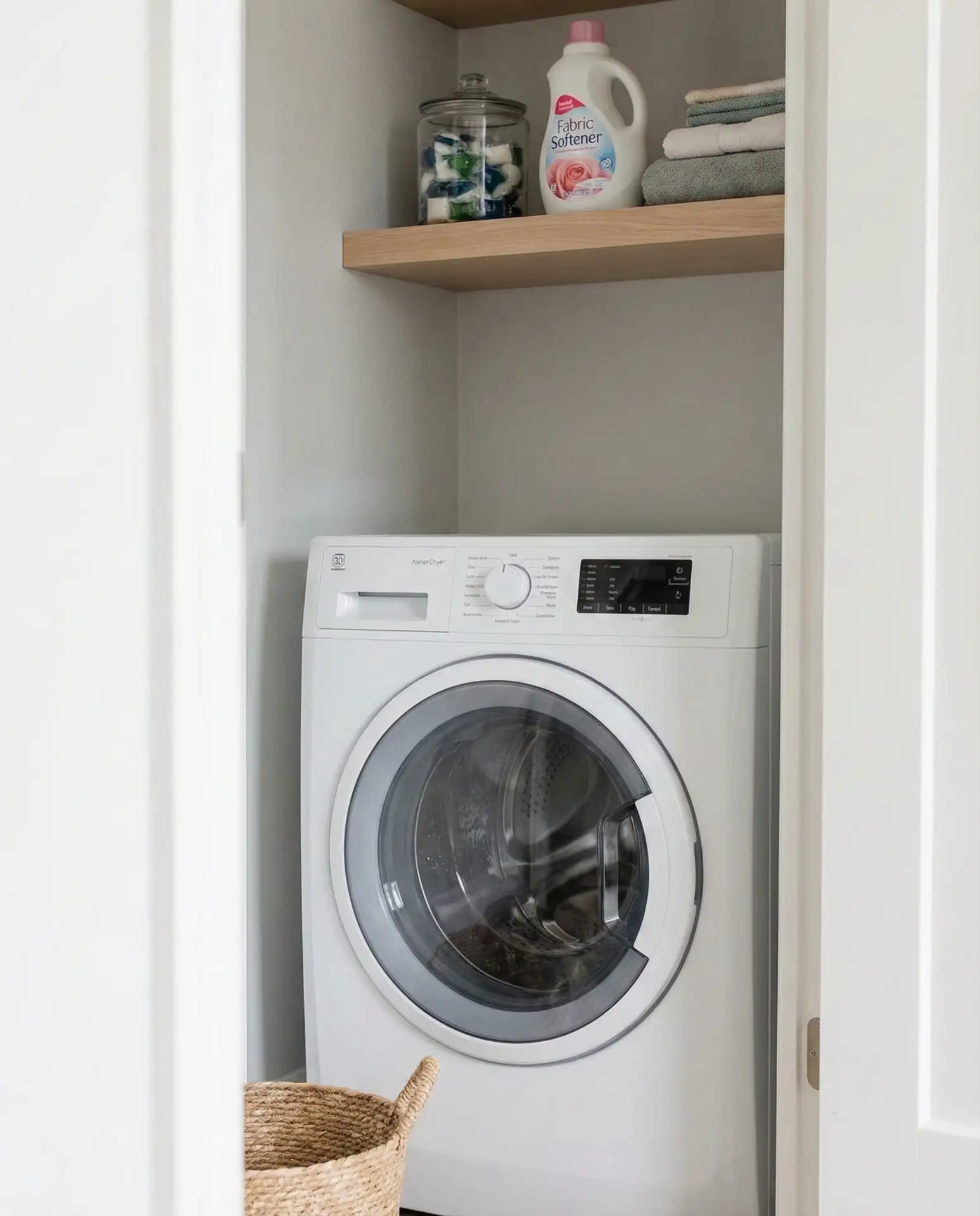
All-in-one washer-dryer combos are the ultimate space-saving solution when you’re working with extremely tight quarters. These ventless units wash and dry in a single drum, eliminating the need for two separate machines and the space between them. They’re ideal for studio apartments, RV living, or closets that can’t accommodate a traditional setup. While cycle times can be longer than conventional machines, the convenience and footprint savings make them a popular choice for urban dwellers and minimalists.
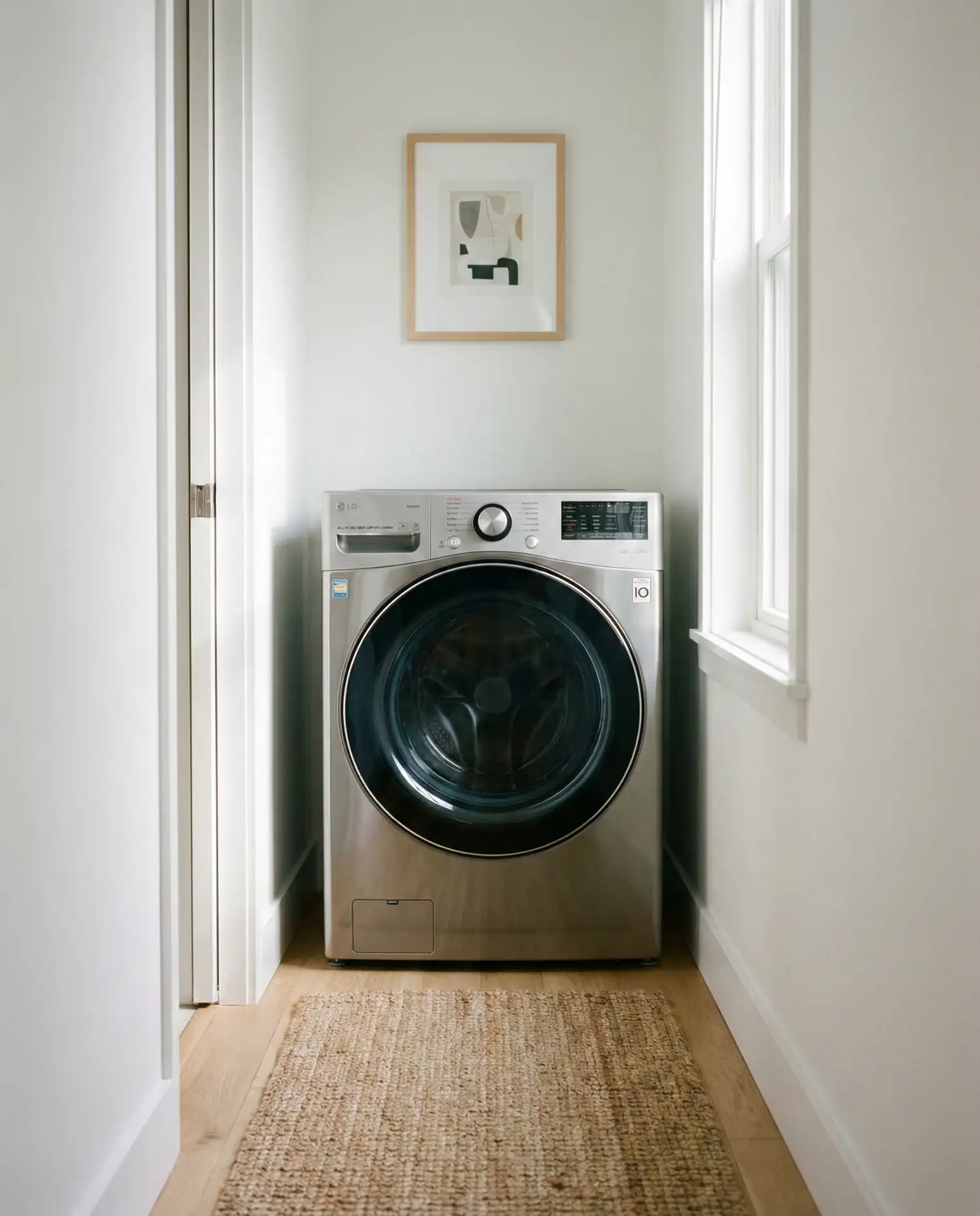
These units work best for singles or couples who do laundry frequently in smaller loads. They’re less practical for families with heavy laundry demands, as the drying capacity is often lower than the wash capacity. Prices range from around seven hundred to two thousand dollars, depending on features and brand, making them a mid-range investment that pays off in saved space and simplified routines.
13. Mirrored Cabinet Door to Reflect Light
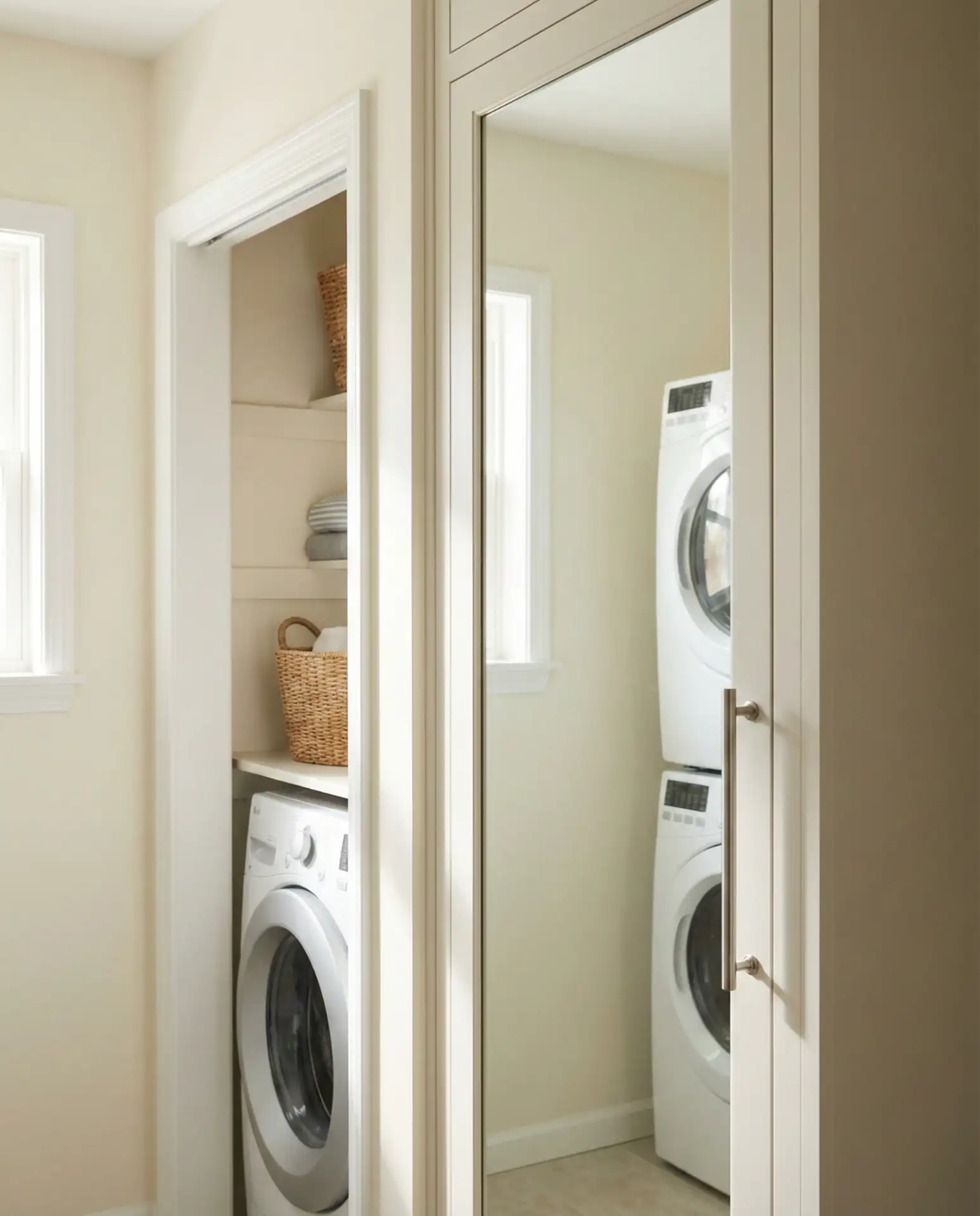
Installing a mirrored cabinet door or panel in a small-space laundry room amplifies natural light and makes the area feel significantly larger. This works especially well in interior closets or windowless nooks where every bit of brightness counts. Choose a glass mirror with a simple frame or go frameless for a modern look, and mount it on the inside of a closet door or as a medicine-cabinet-style storage unit. The dual function of storage and visual expansion makes this a smart design move
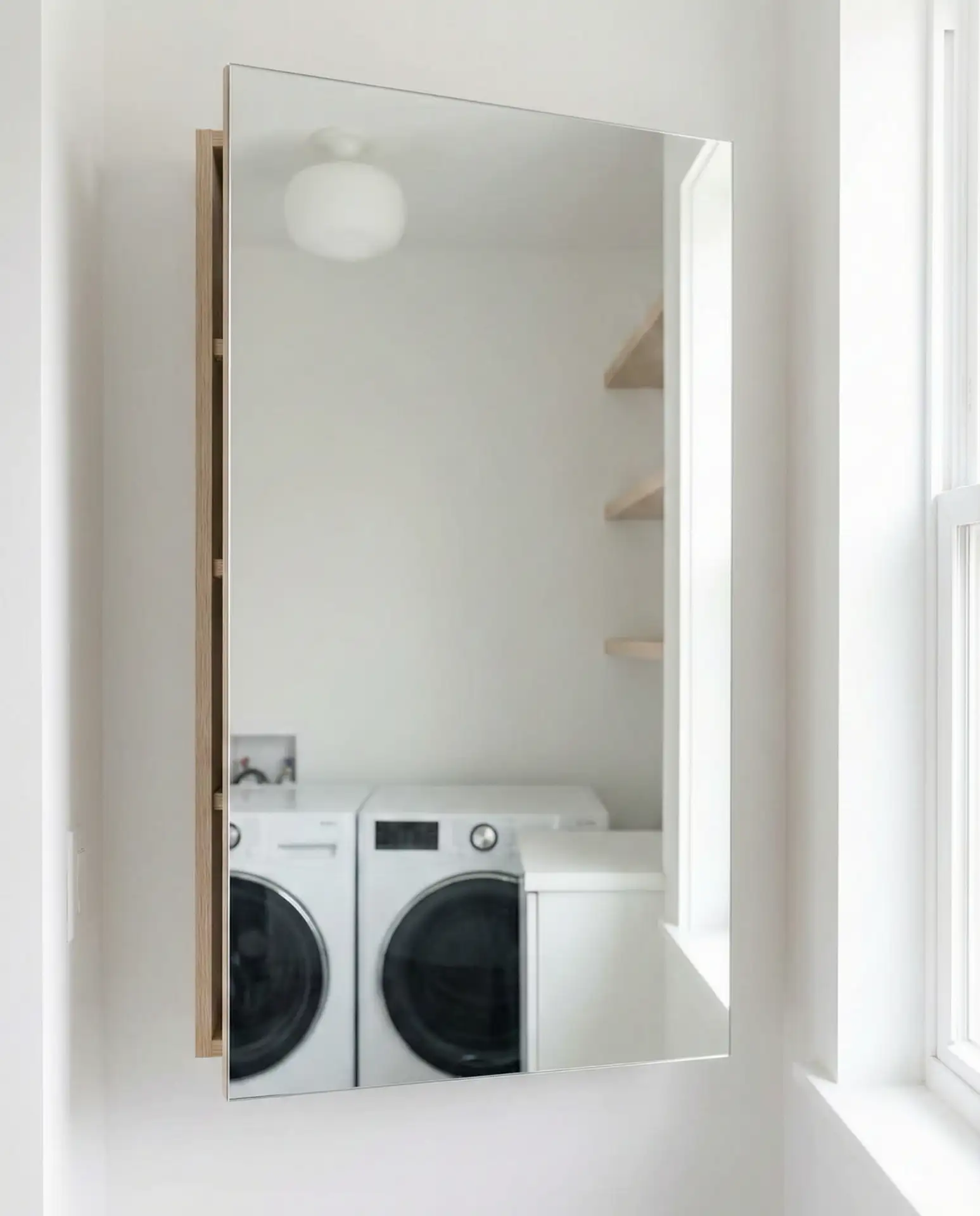
This trick is especially effective in basement laundry rooms or those tucked under stairs, where natural light is scarce and the space can feel cramped. The mirror doesn’t just brighten the room—it also creates a subtle optical illusion that makes the walls seem farther apart, giving you psychological breathing room even when the physical footprint stays the same.
14. Wall-Mounted Drying Rack That Folds Flat
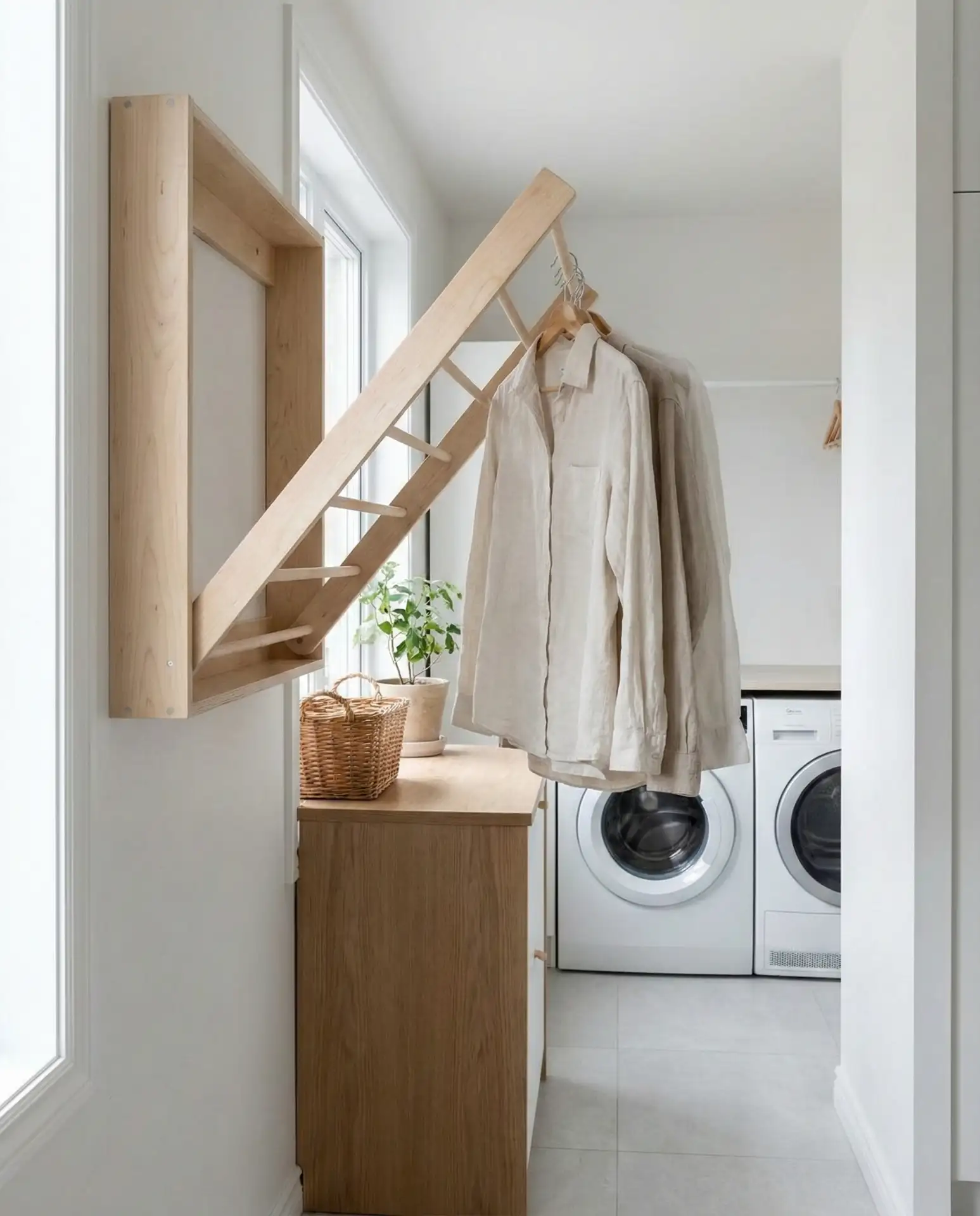
A wall-mounted accordion-style drying rack is a lifesaver in small spaces where floor-standing racks are impractical. These racks extend when needed and fold completely flat against the wall when not in use, freeing up every inch of floor space for movement and other tasks. Look for white or wooden models with sturdy dowels that can handle wet towels and jeans. This is a particularly smart addition for households that line-dry most of their clothes or live in climates where outdoor drying isn’t always feasible.
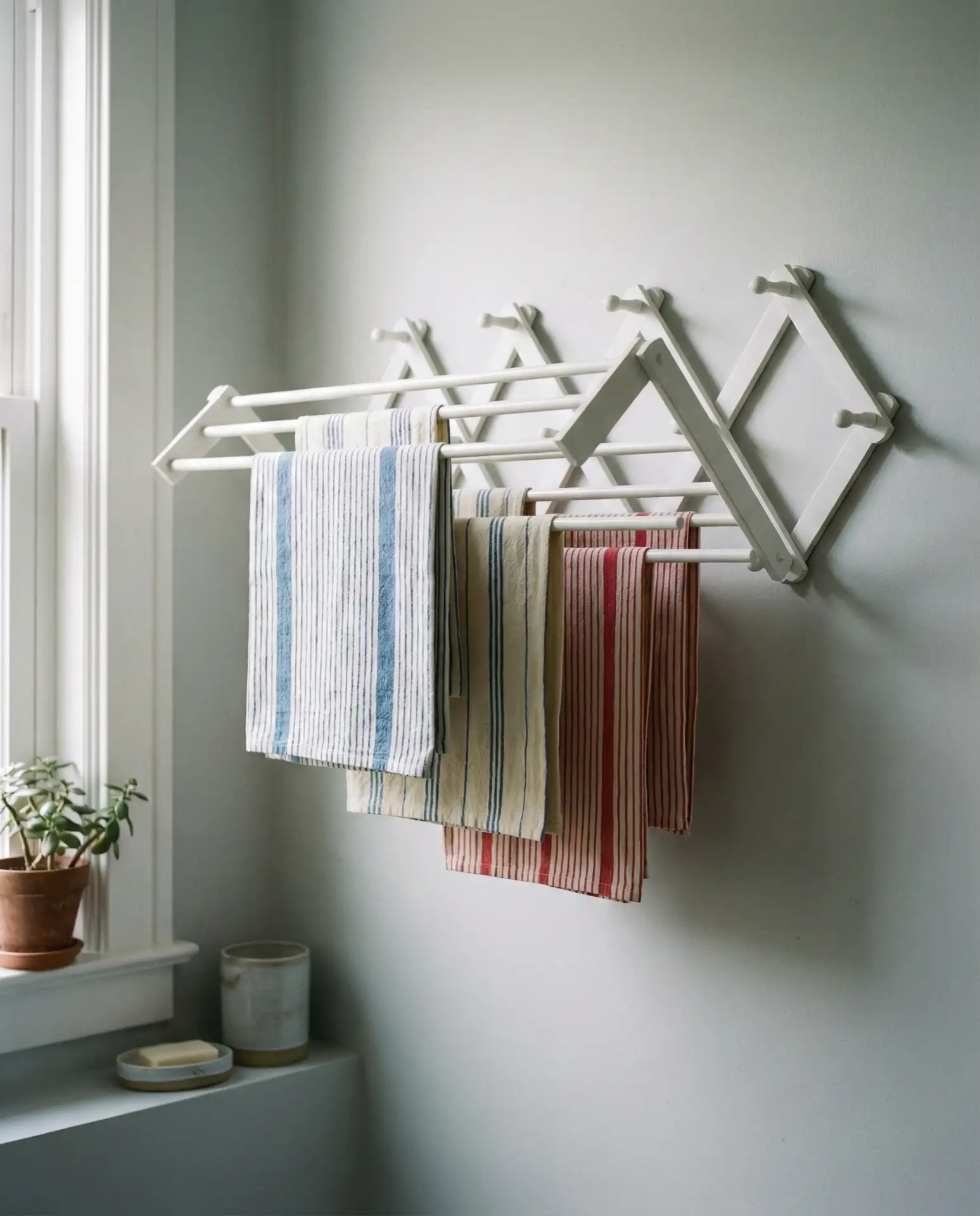
These racks are a common sight in European apartments but are gaining traction in the U.S., especially in cities with high energy costs where air-drying is both eco-friendly and economical. Install the rack at a height that’s comfortable to reach but won’t interfere with your ability to access machines or shelves. A common mistake is mounting it too high, which makes loading and unloading awkward.
15. Recessed Shelving in Between Wall Studs
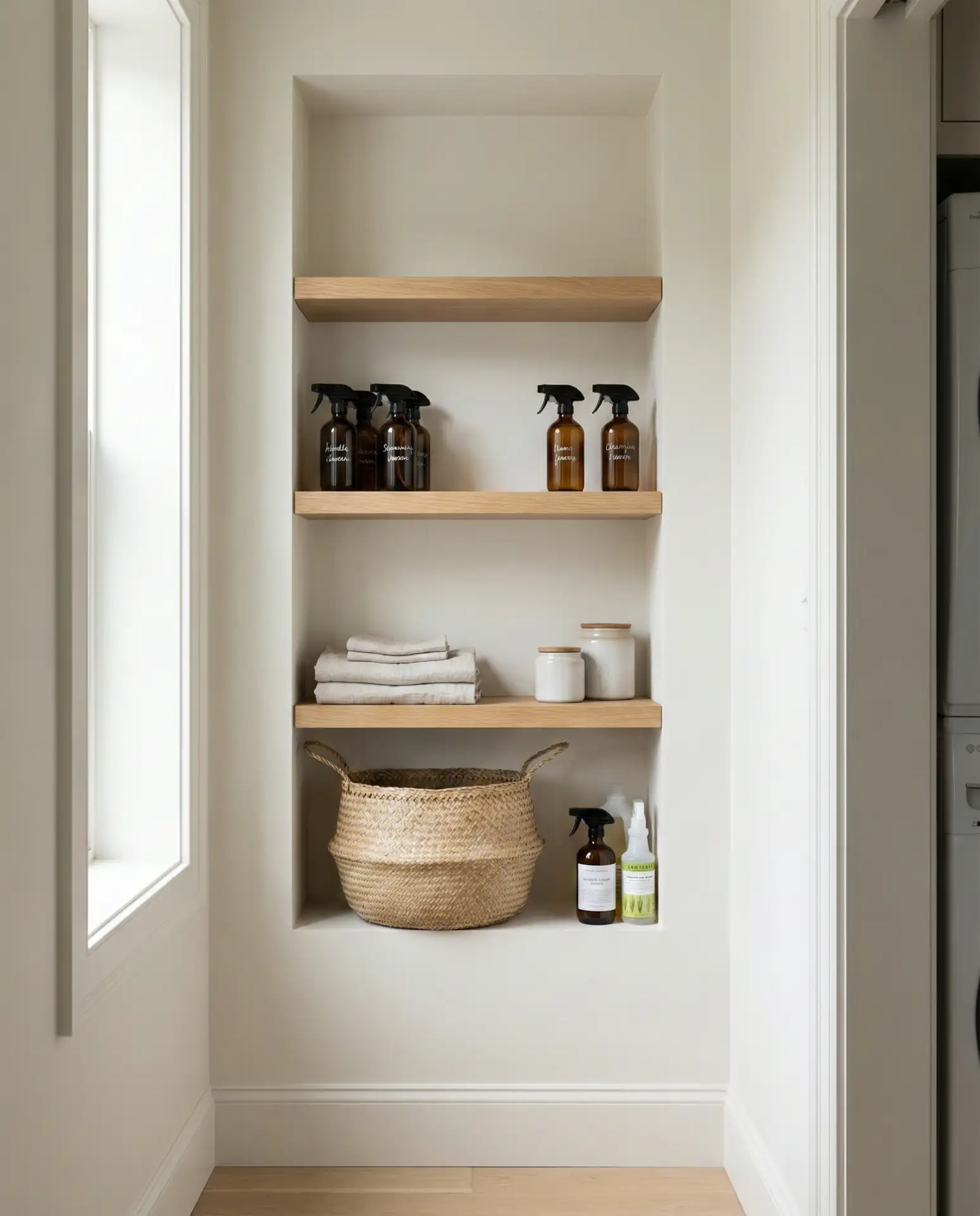
If you’re willing to take on a small construction project, recessed shelving built into the wall cavity between studs offers storage that doesn’t intrude into the room at all. This is perfect for narrow laundry closets where every inch of depth matters. Frame out the opening, add shelves, and finish with white or wooden trim for a polished look. Use these niches to store detergent, fabric softener, or folded hand towels—items you need within reach but that don’t require deep shelving.
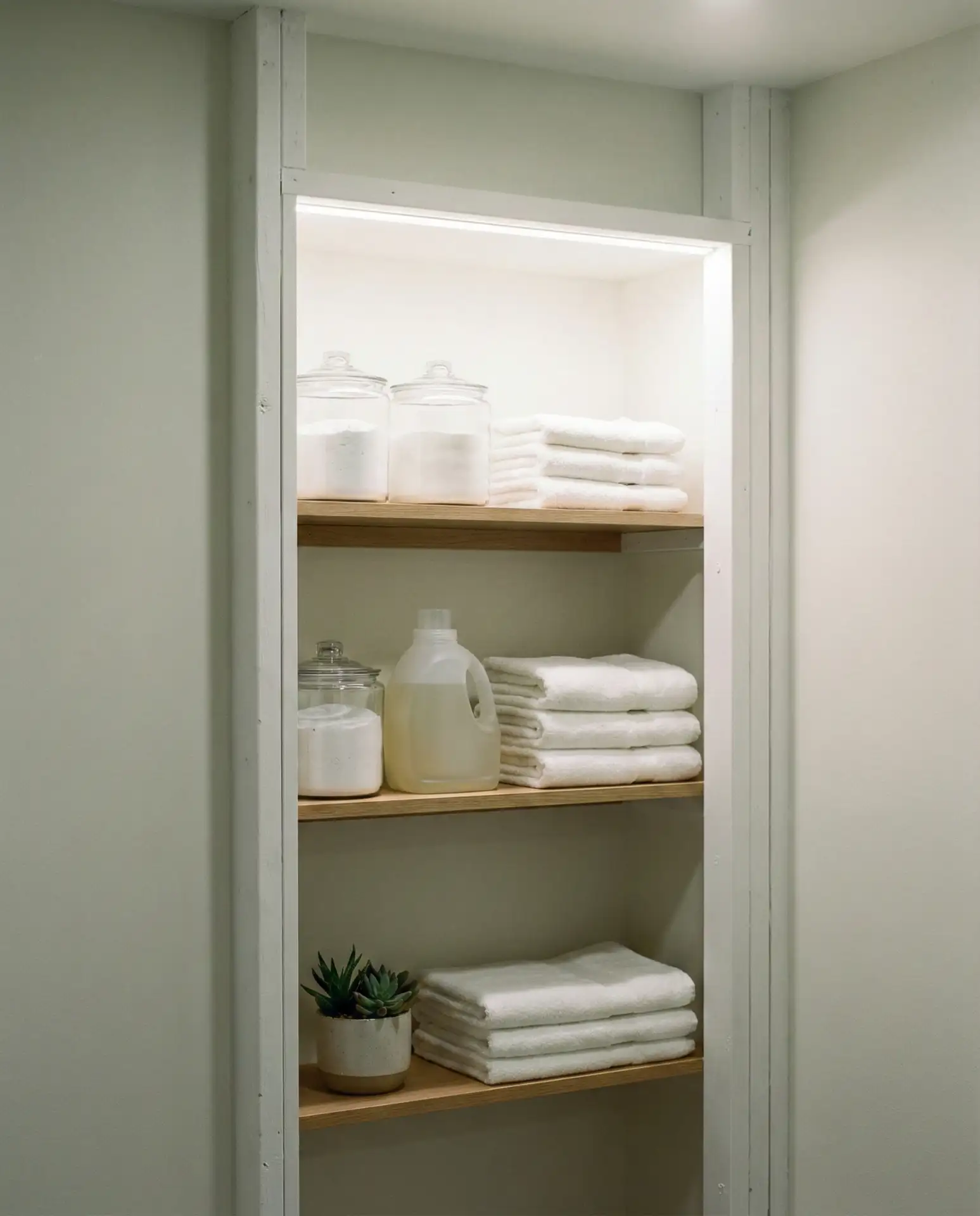
This approach works best in homes where you’re already doing renovations, as it requires opening up the drywall. It’s less practical in rentals or if you’re not comfortable with DIY carpentry. However, the payoff is significant—recessed shelves add storage without sacrificing a single inch of usable floor or wall space, making them ideal for truly tiny laundry areas.
16. Bright White Paint to Maximize Light
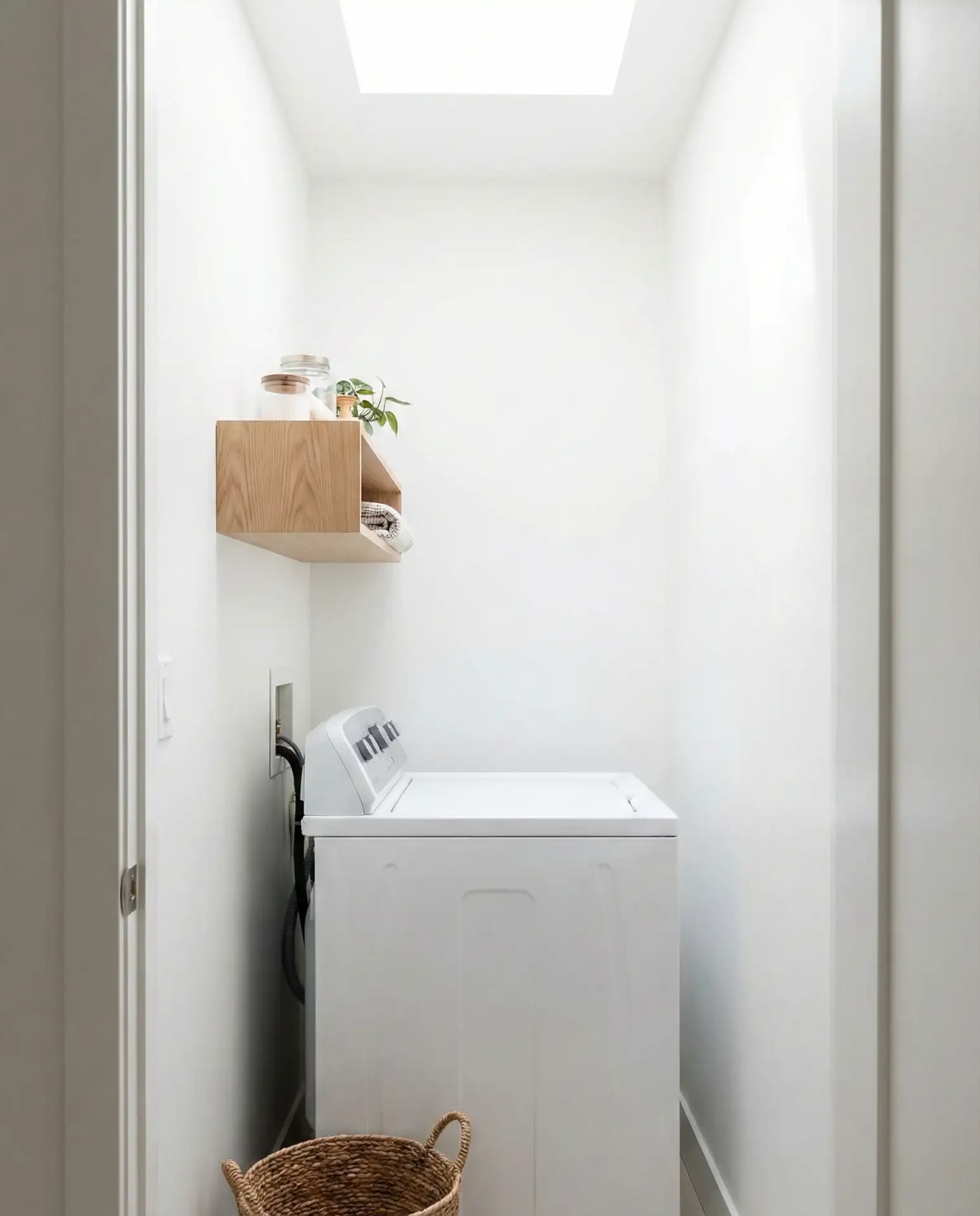
Paint color has a huge impact on how spacious a small space feels, and bright white walls are the easiest way to maximize light and openness. Choose a semi-gloss or satin finish that reflects light without showing every smudge or water spot. This is especially important in laundry rooms that lack windows or have limited overhead lighting. Pair white walls with simple, modern fixtures, and you’ll create a room that feels clean, fresh, and larger than its actual dimensions.
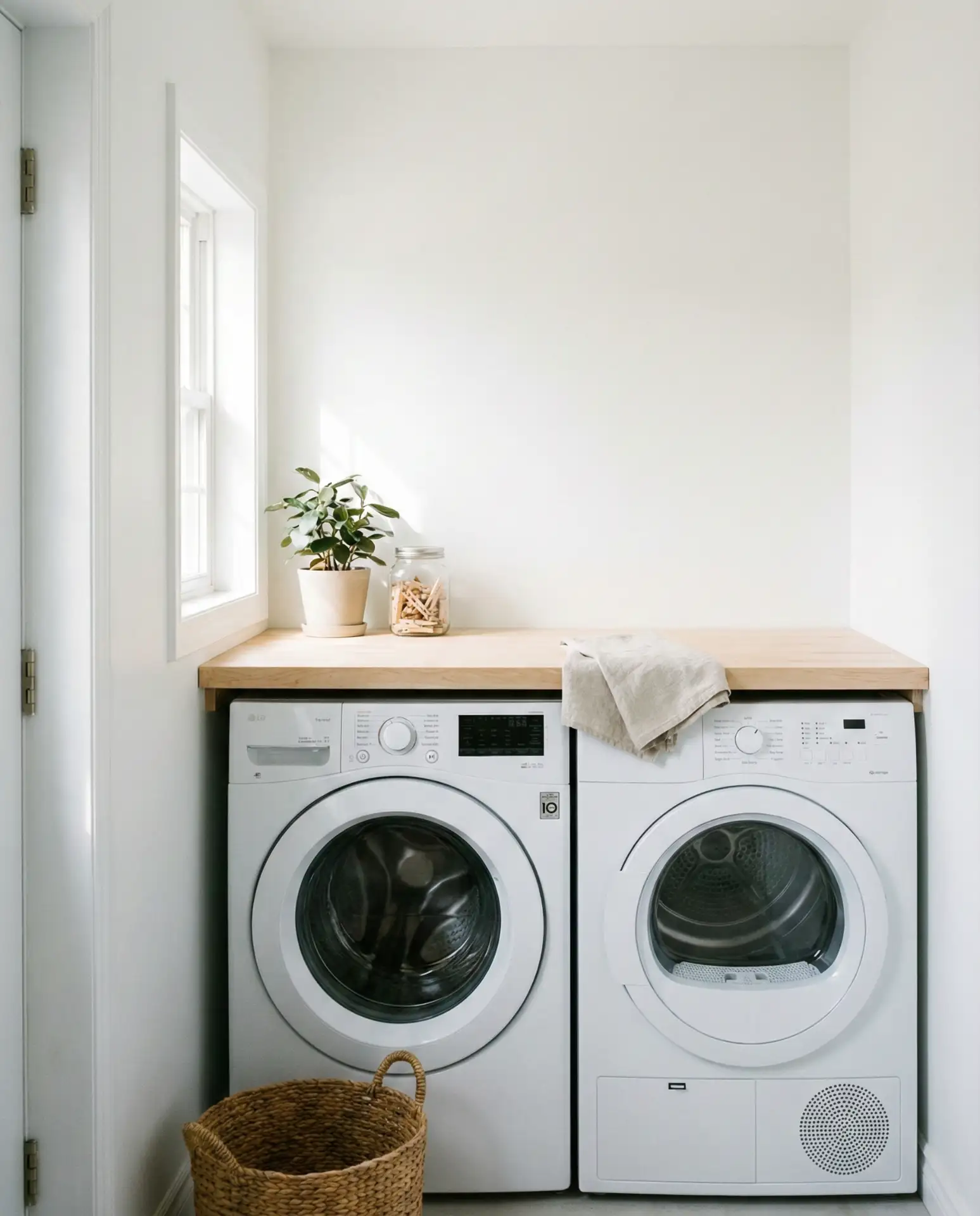
A friend in Portland painted her basement laundry room white after years of living with dingy beige walls, and she says it transformed the space overnight. The room felt cleaner, brighter, and less like a chore to spend time in. It’s one of the most affordable updates you can make, often costing less than fifty dollars in paint and supplies, yet delivering a dramatic visual impact.
17. Vertical Ladder Shelf for Supplies and Décor
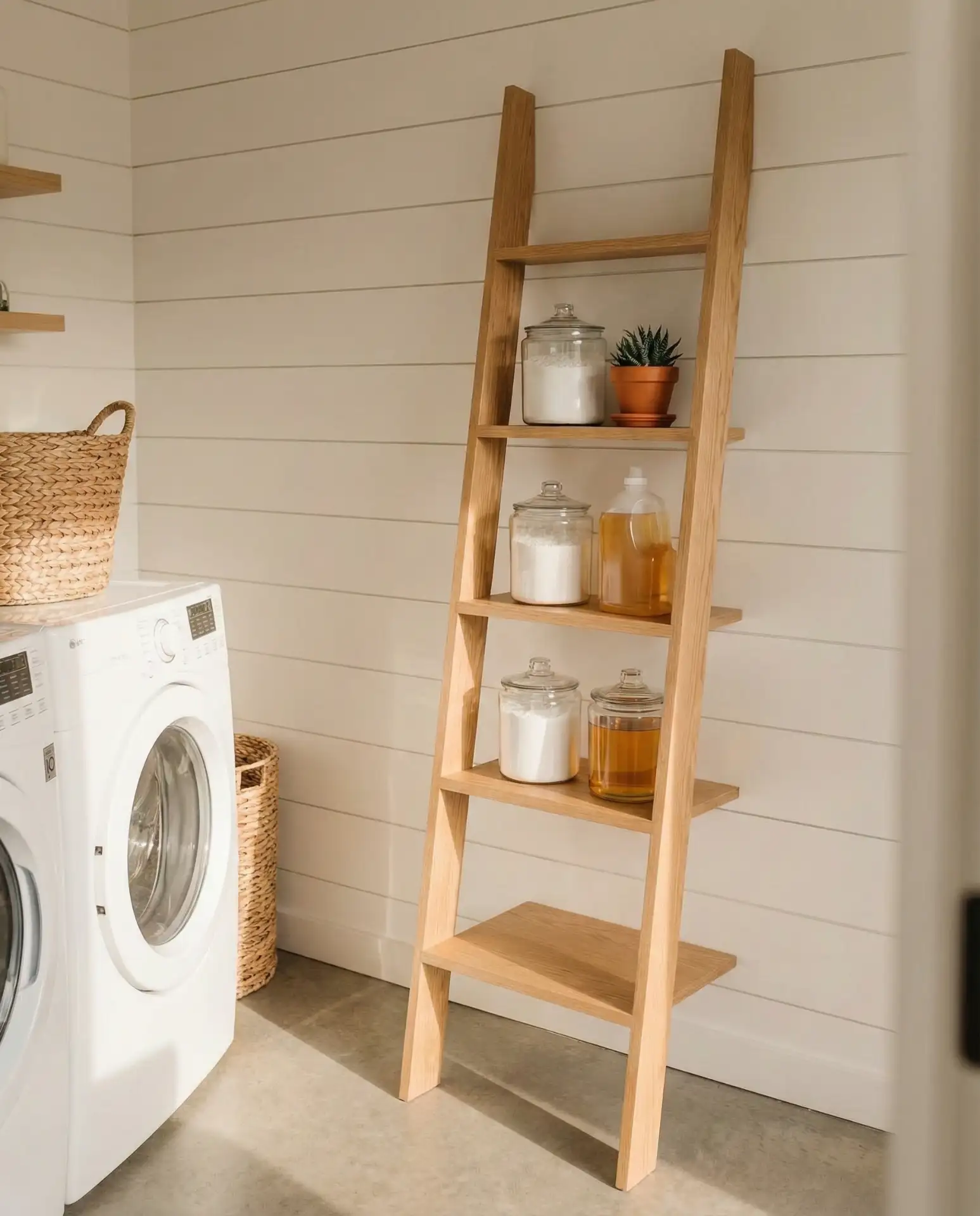
A leaning ladder shelf leans against the wall at an angle, offering multiple tiers of storage without the need for mounting hardware. This is ideal for renters or anyone who wants a space-saving, no-commitment solution that can move from room to room as needs change. Use the shelves to hold detergent, folded towels, decorative baskets, and even a small plant to soften the utilitarian vibe. Choose a white or wooden finish that matches your home’s style and keeps the look cohesive.
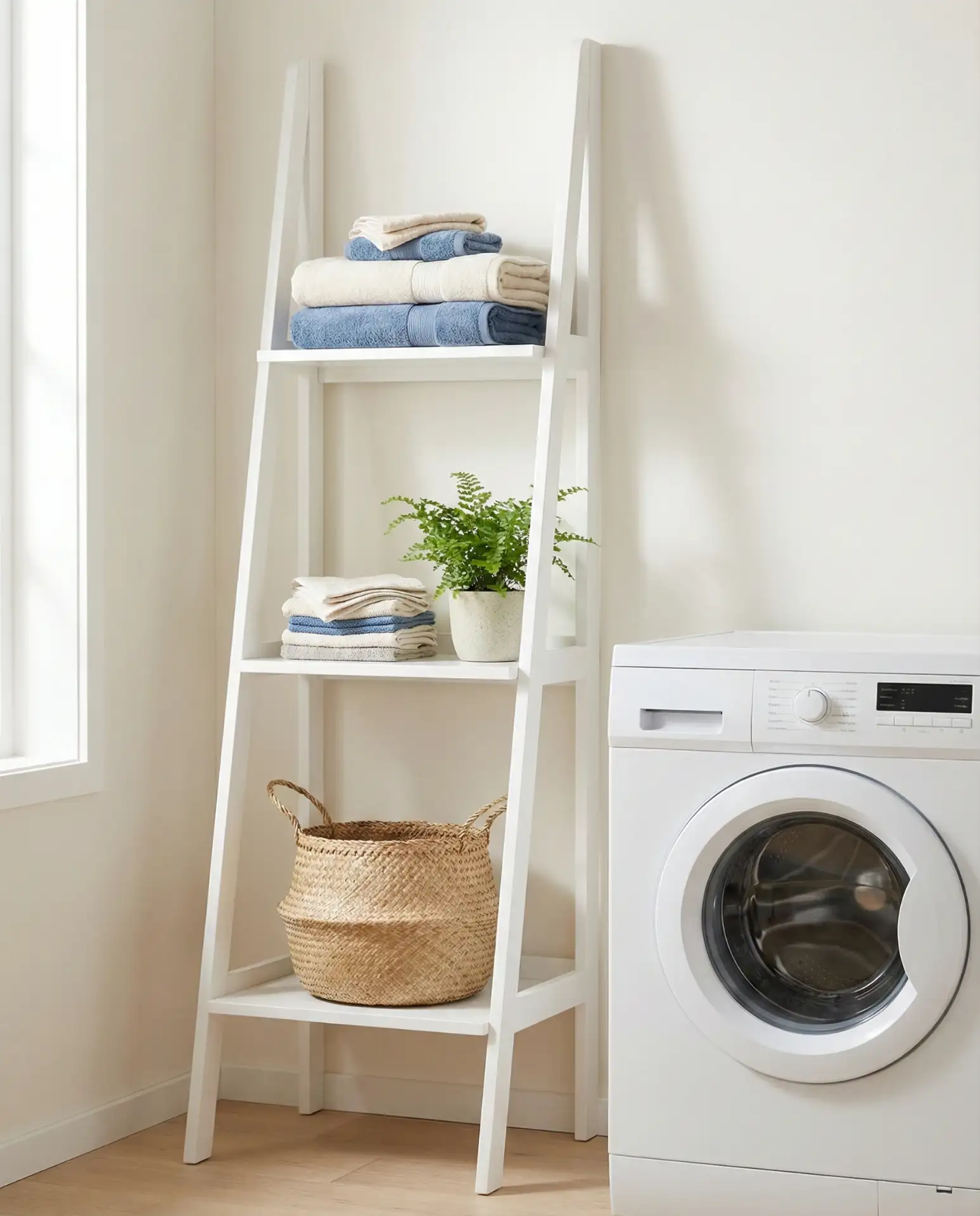
This works best in rooms where floor space isn’t completely at a premium—you’ll need at least a foot or so of clearance for the shelf’s footprint. The advantage is that ladder shelves are lightweight, portable, and easy to find at any home goods store. They’re also visually lighter than bulky cabinets, which helps maintain an open, uncluttered feel even in tight quarters.
18. Pocket Door to Save Swing Space
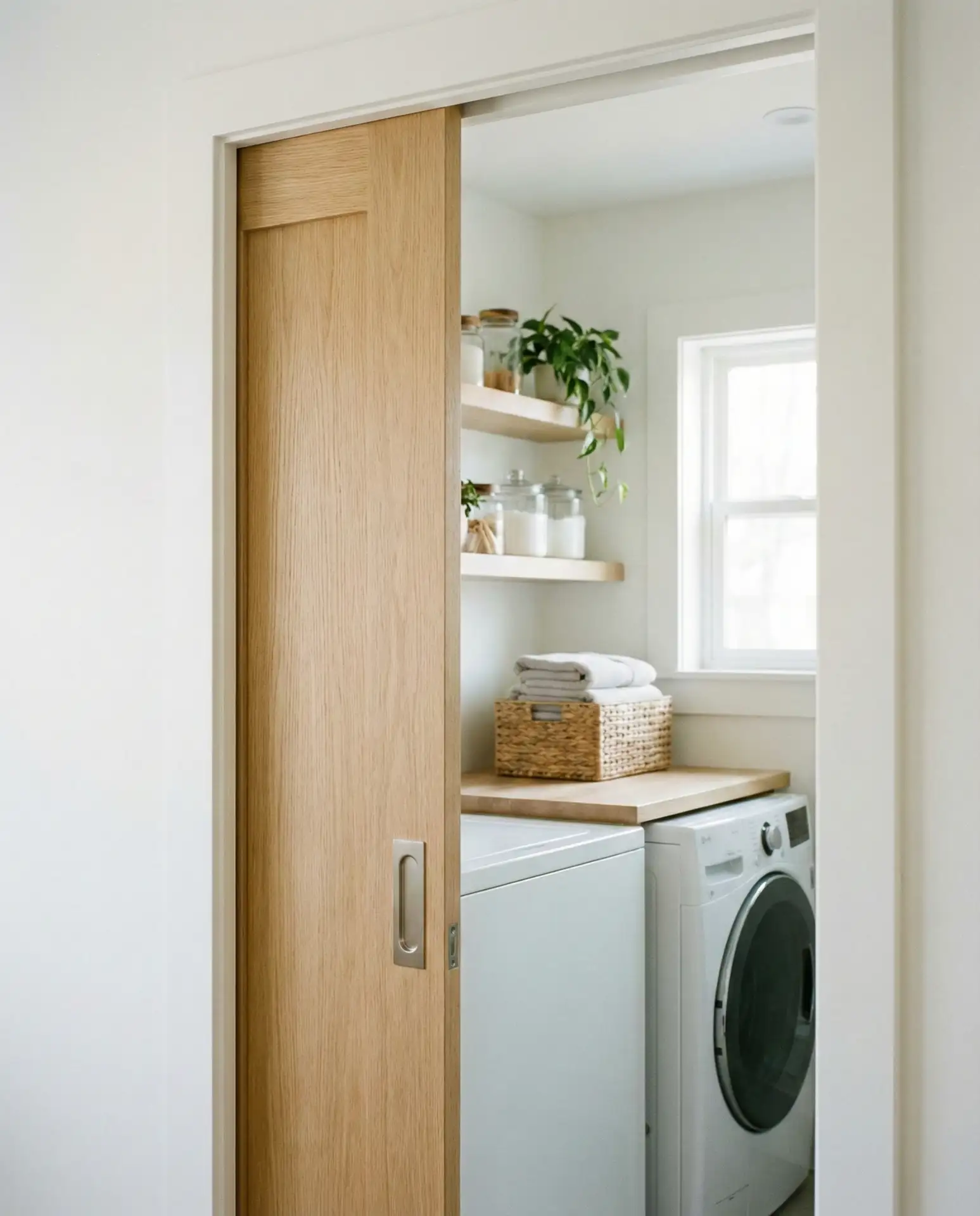
A pocket door slides directly into the wall cavity, eliminating the swing radius required by a traditional hinged door. This is a game-changer in small spaces where every square foot counts, allowing you to place storage or appliances closer to the doorway without worrying about clearance. Pocket doors are common in modern renovations and new builds, and while installation can be more involved than a standard door, the payoff in usable space is substantial.
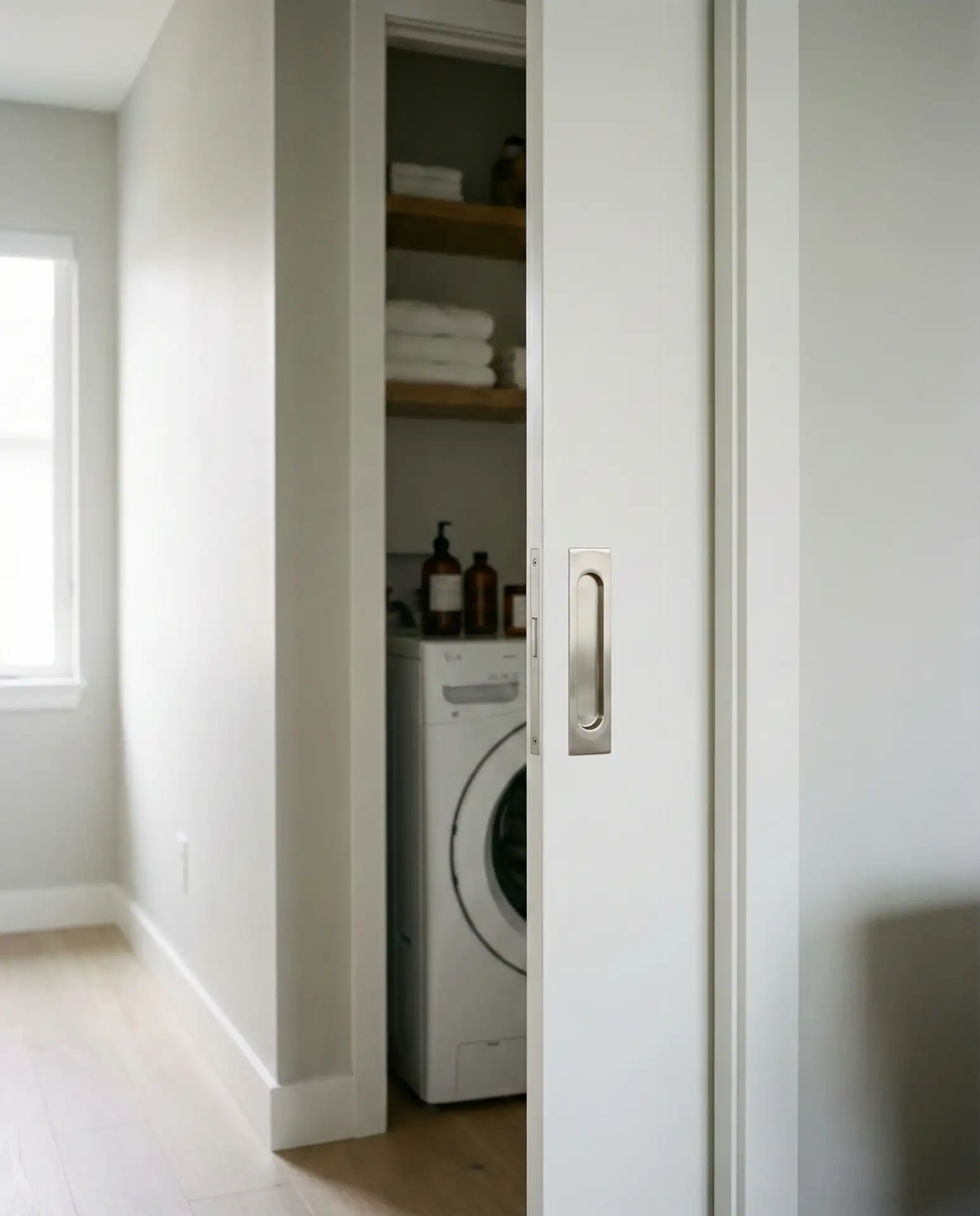
Pocket doors are particularly popular in California and other markets where homes are being retrofitted to maximize square footage. The main consideration is wall structure—you’ll need a clear cavity for the door to slide into, which can be tricky in older homes with plumbing or electrical runs. If the wall is clear, though, it’s one of the smartest moves you can make for a small laundry room.
19. Retractable Clothesline for Indoor Drying
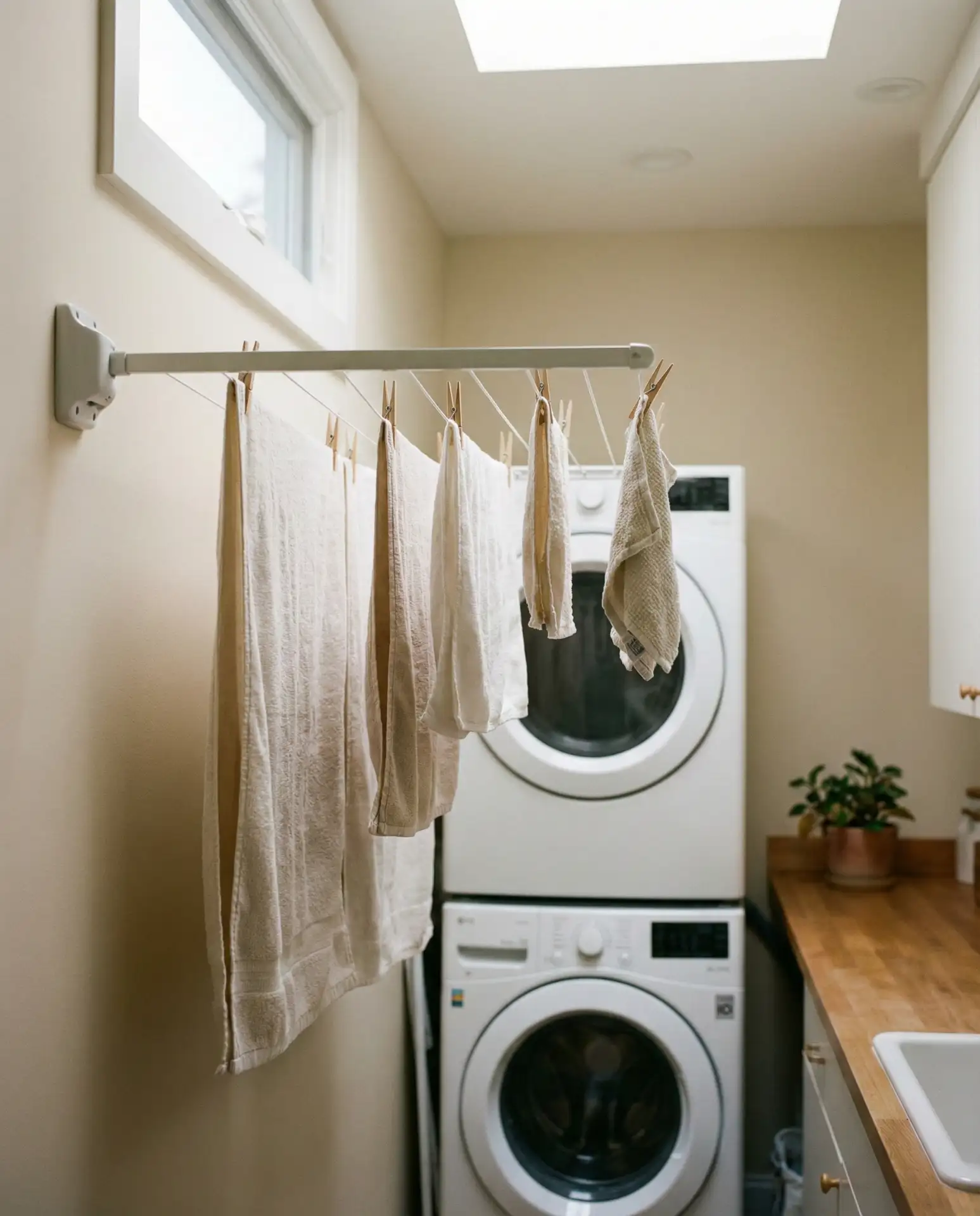
A retractable clothesline mounts on one wall and extends across the room when needed, then retracts into a compact housing when not in use. This is perfect for small spaces where a permanent line would be in the way, and it’s especially useful for air-drying delicates or quick-drying small items like socks and undergarments. Install it above your washer or in a corner where it won’t interfere with traffic flow. Look for a stainless steel or white housing to keep the look clean and modern.
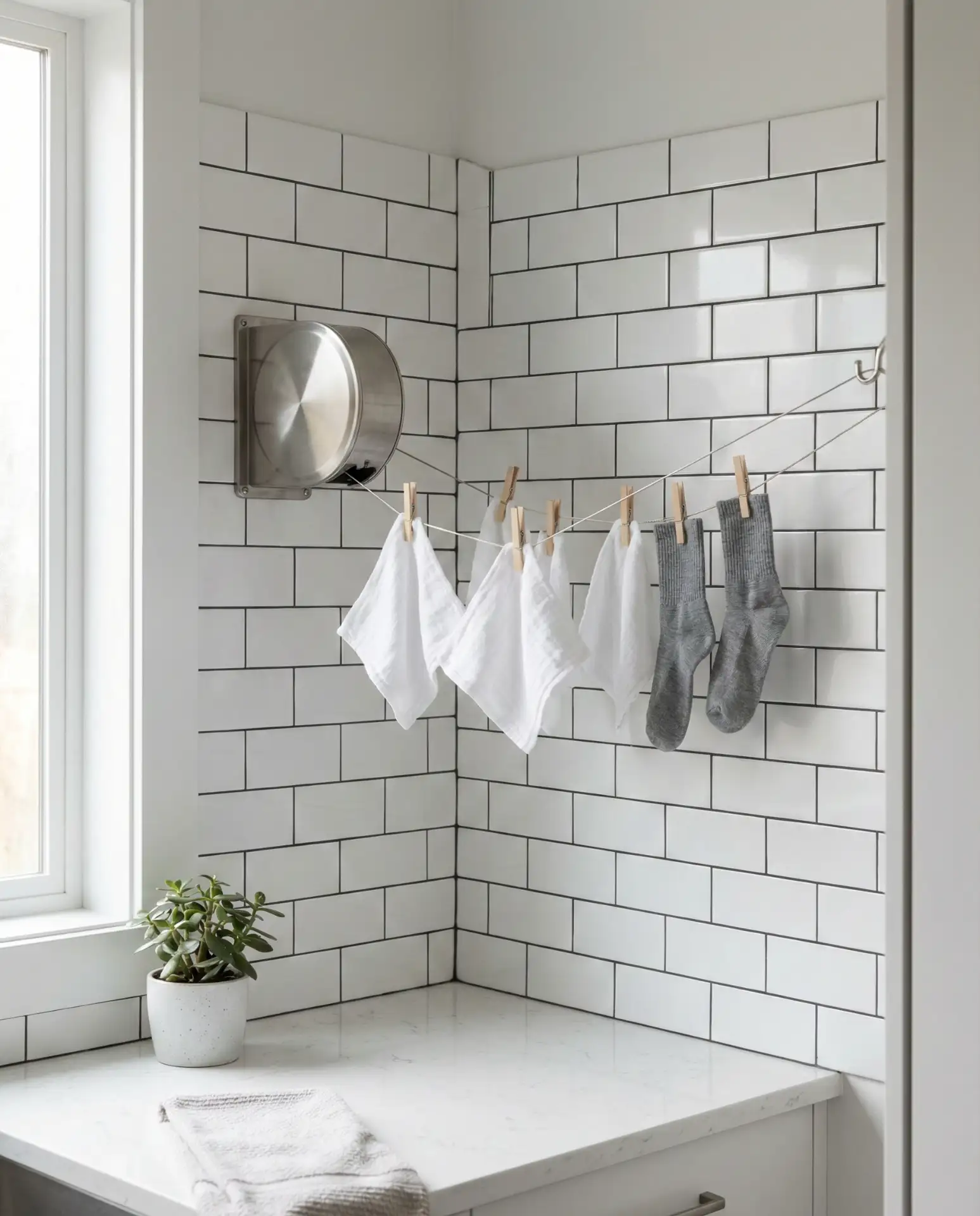
Where it works best: humid climates where tumble-drying can take longer and energy costs are high, such as the Southeast or Pacific Northwest. It’s also a favorite in eco-conscious households that prioritize air-drying to extend garment life and reduce energy consumption. Installation takes about fifteen minutes and requires just a few screws, making it an easy weekend upgrade.
20. Under-Shelf Baskets for Extra Storage
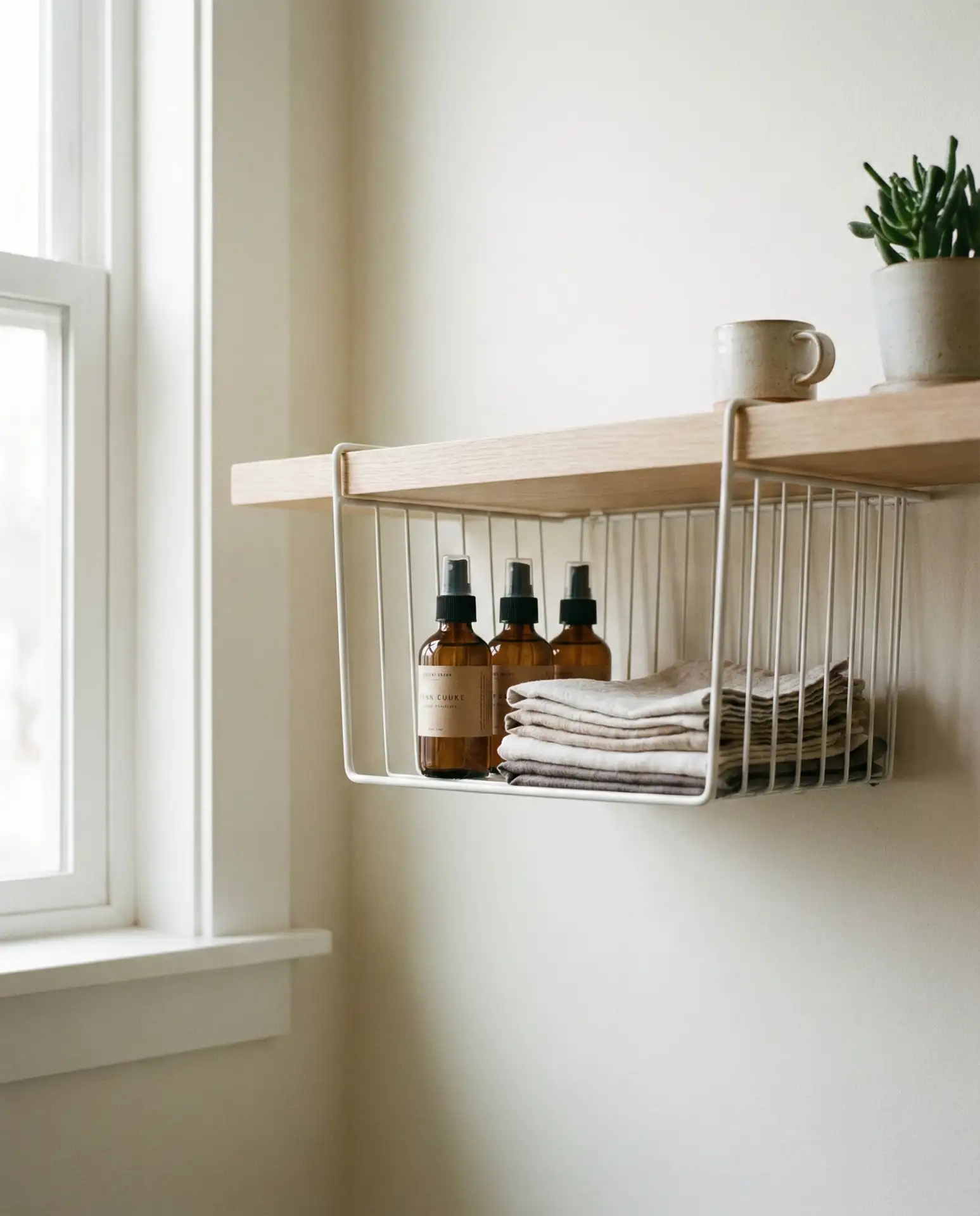
Under-shelf baskets clip or slide onto existing shelves, creating a second tier of storage without requiring any additional wall or floor space. These are fantastic for small spaces where shelves are already installed but you need just a bit more capacity. Use them to hold dryer sheets, stain removers, lint rollers, or small cleaning cloths. Choose wire baskets in white or chrome for a simple, modern look that blends with most décor styles.
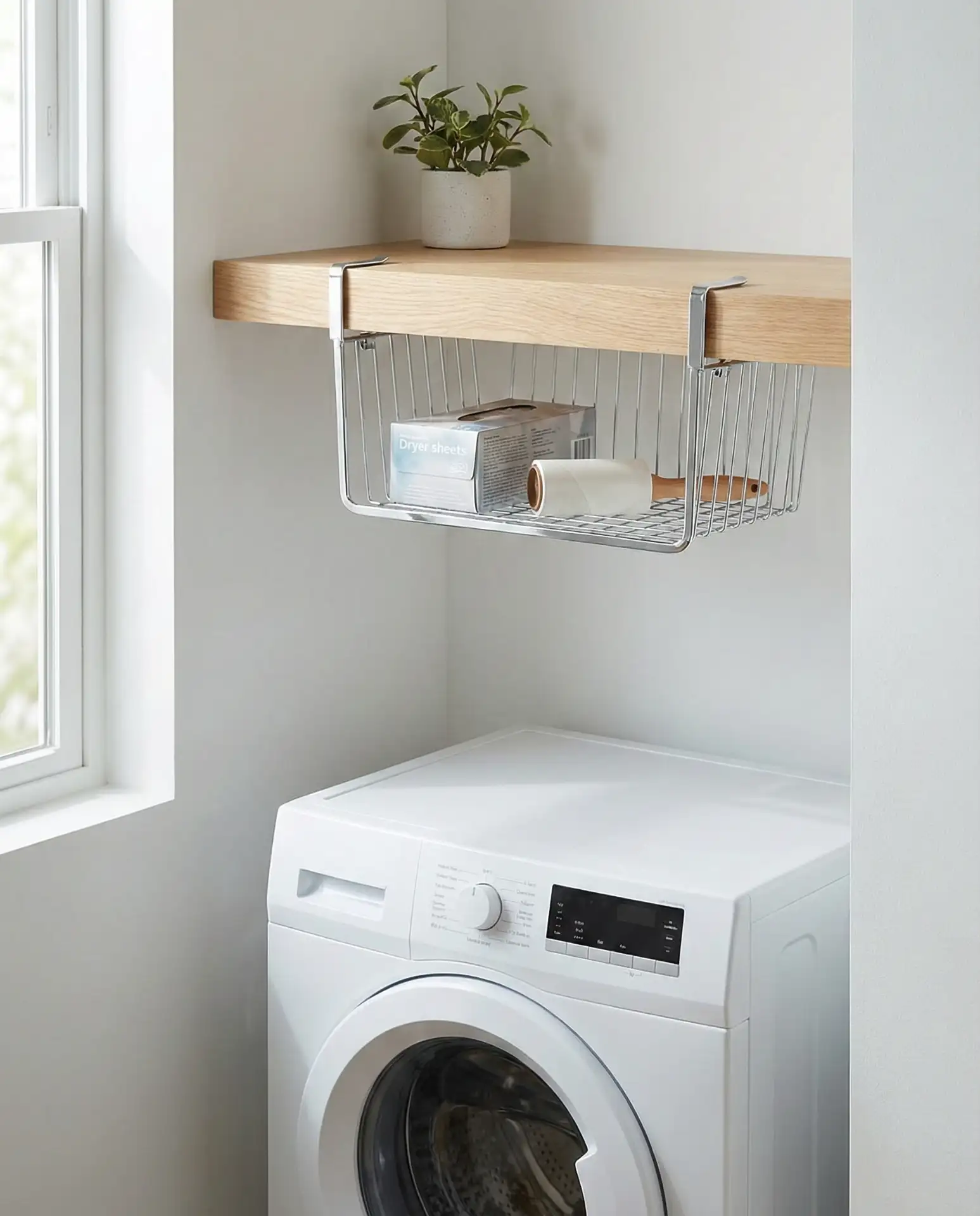
This is one of those details that seems minor but makes a noticeable difference in day-to-day function. A colleague in Chicago uses under-shelf baskets in her tiny laundry closet to keep frequently used items within arm’s reach, which has cut down on the time she spends hunting for supplies. They’re also inexpensive—usually under twenty dollars per basket—making them an easy add-on to any laundry room refresh.
21. Compact Folding Table That Mounts to Wall
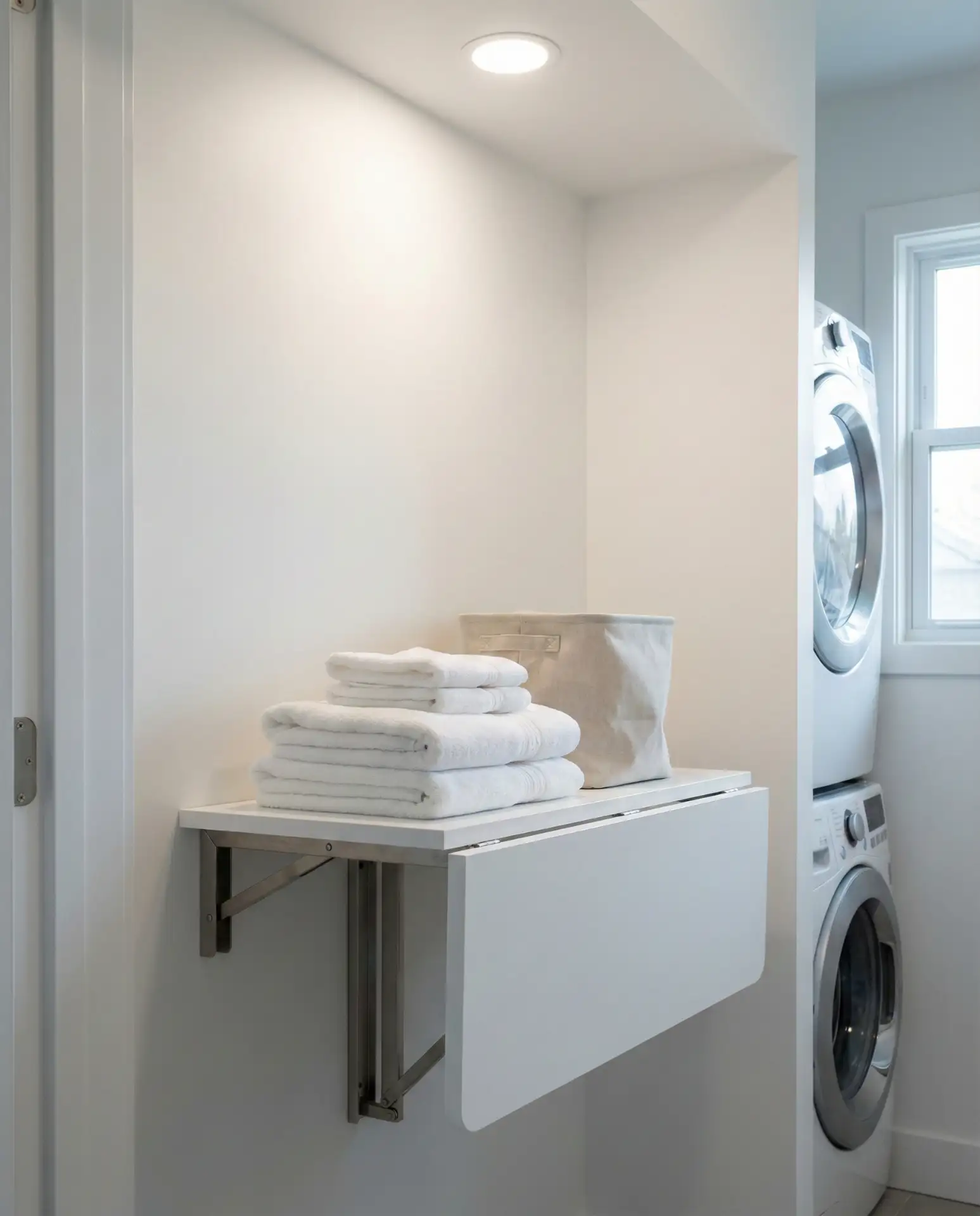
A wall-mounted folding table provides a dedicated surface for sorting, folding, or treating stains, then folds flat against the wall when not in use. This is especially valuable in small spaces where a permanent table would block access or make the room feel cramped. Look for a white or wooden surface with sturdy hinges and wall-mounted brackets that can support the weight of wet laundry or a full basket. This setup is popular in European laundry rooms and is gaining traction in urban U.S. markets.
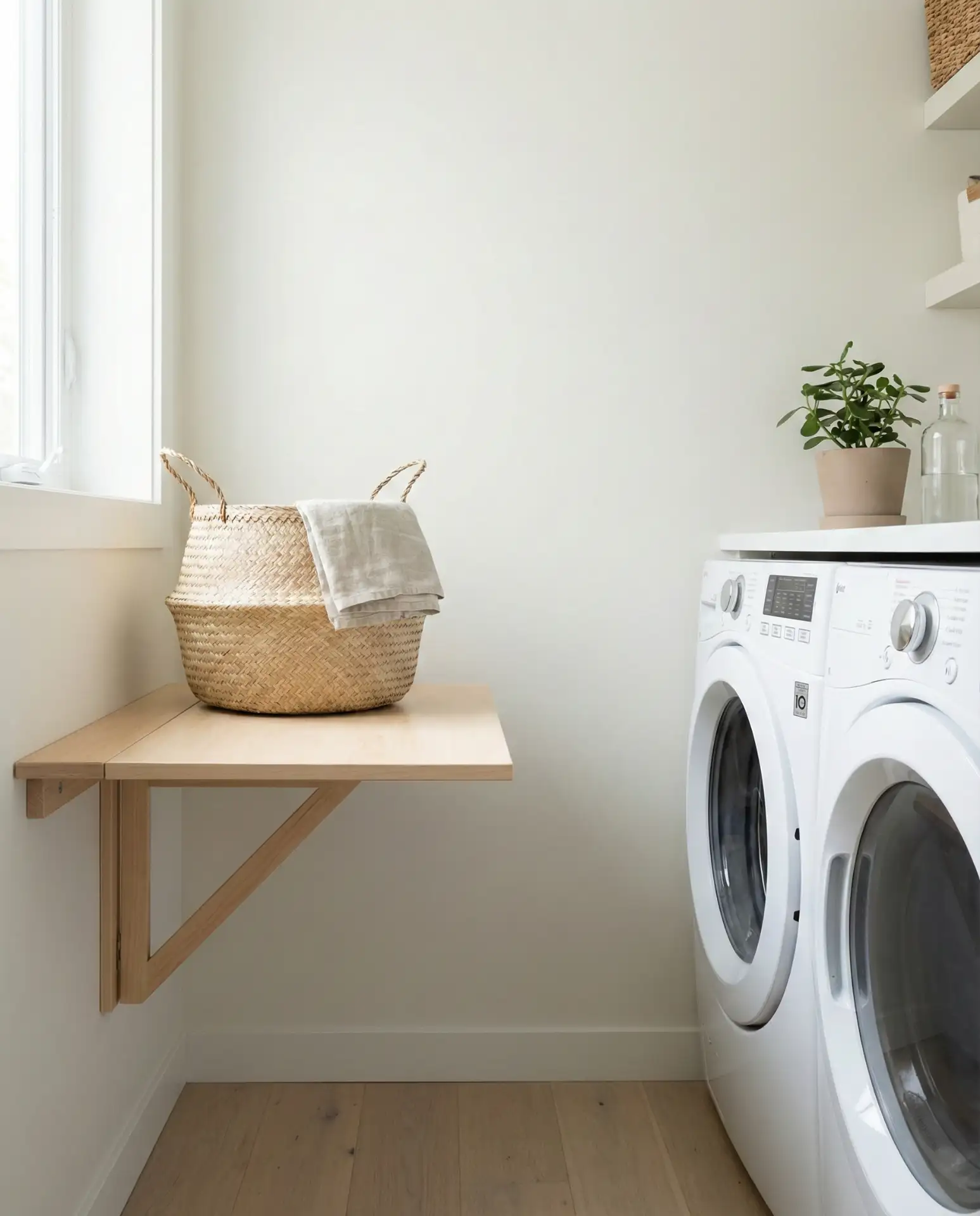
One common mistake is choosing a table that’s too deep when folded, which can still intrude into the space even when not in use. Measure the folded depth and ensure it won’t block doors, drawers, or machine access. Also, make sure the wall can support the weight—use anchors rated for the expected load, and consider attaching the brackets to wall studs for maximum stability.
22. Smart Lighting to Brighten Dark Corners
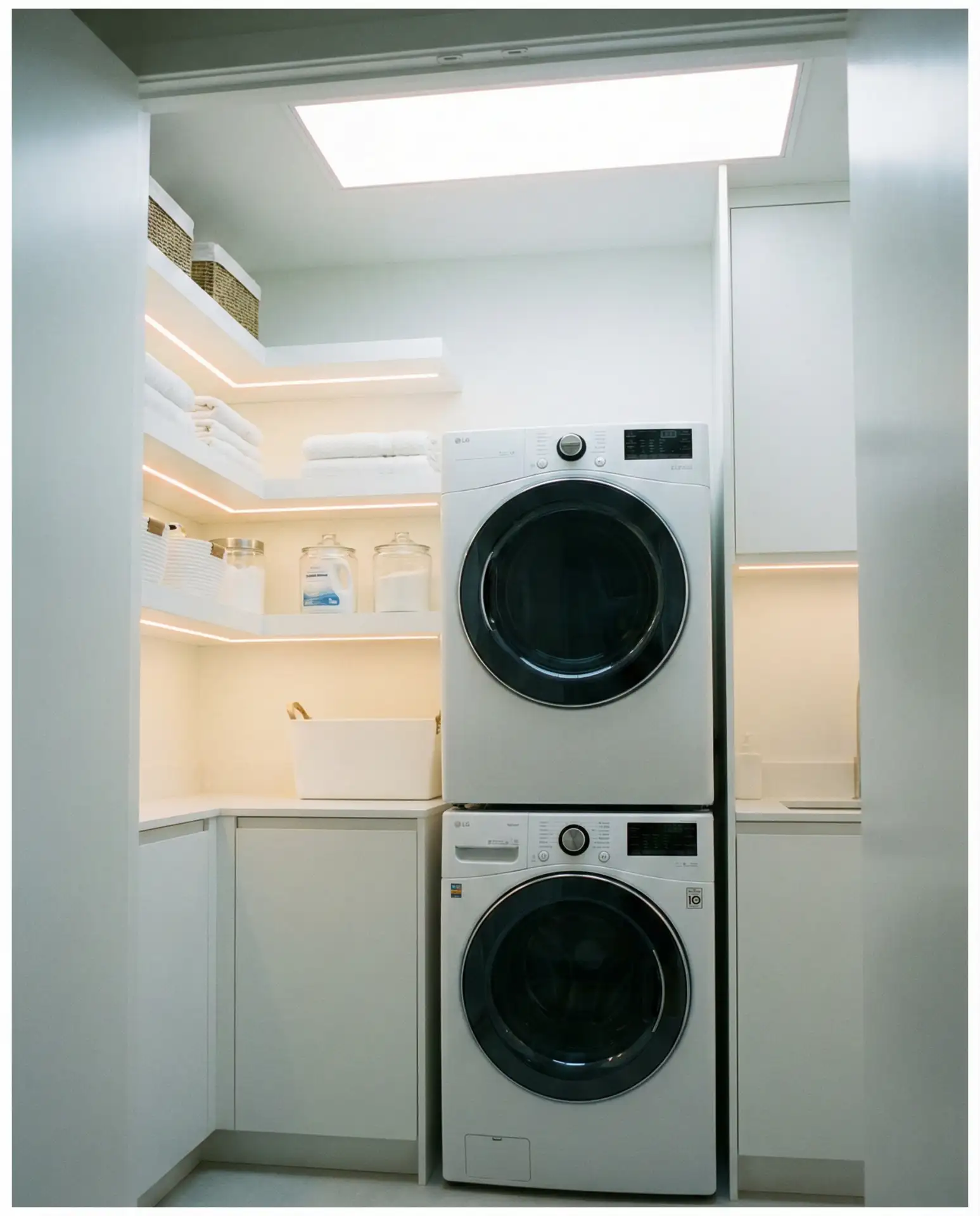
Upgrading to bright LED bulbs or adding under-cabinet lighting can transform a dim, dreary laundry room into a space that feels clean and inviting. Install motion-activated lights in closets or battery-powered LED strips under shelves to eliminate shadows and make it easier to see what you’re doing. This is especially important in small spaces without windows, where good lighting makes the room feel larger and more pleasant to work in. Choose bulbs with a daylight or cool white temperature to mimic natural light.
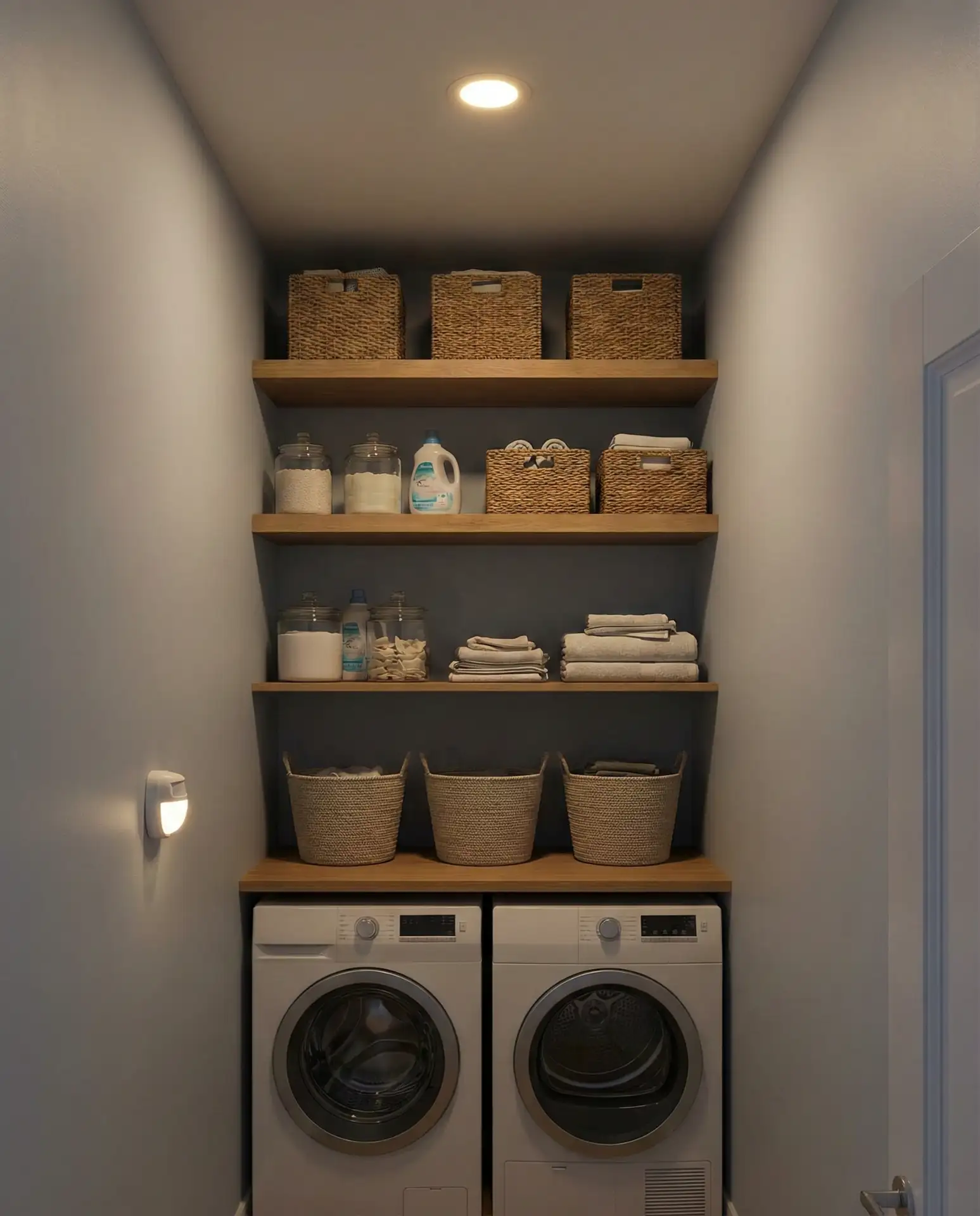
Good lighting is one of those upgrades that has an outsized impact relative to its cost. A neighbor in Phoenix installed motion-sensor lights in her garage laundry area and says it’s made the space dramatically more functional, especially when she’s carrying full baskets and can’t easily reach a light switch. Most LED strips are peel-and-stick, requiring no wiring or professional installation, making this an easy DIY project for a weekend afternoon.
Conclusion
Small laundry rooms don’t have to feel like an afterthought or a design compromise. With the right combination of smart storage, thoughtful layout, and a few well-chosen upgrades, you can create a space that’s both efficient and genuinely enjoyable to use. Whether you’re stacking machines, hiding everything behind a sliding door, or adding a splash of personality with woven baskets and fresh paint, these ideas prove that even the tightest spaces can work beautifully. What’s your favorite tip, or do you have a small-space laundry hack that’s transformed your routine? Share your thoughts in the comments below.