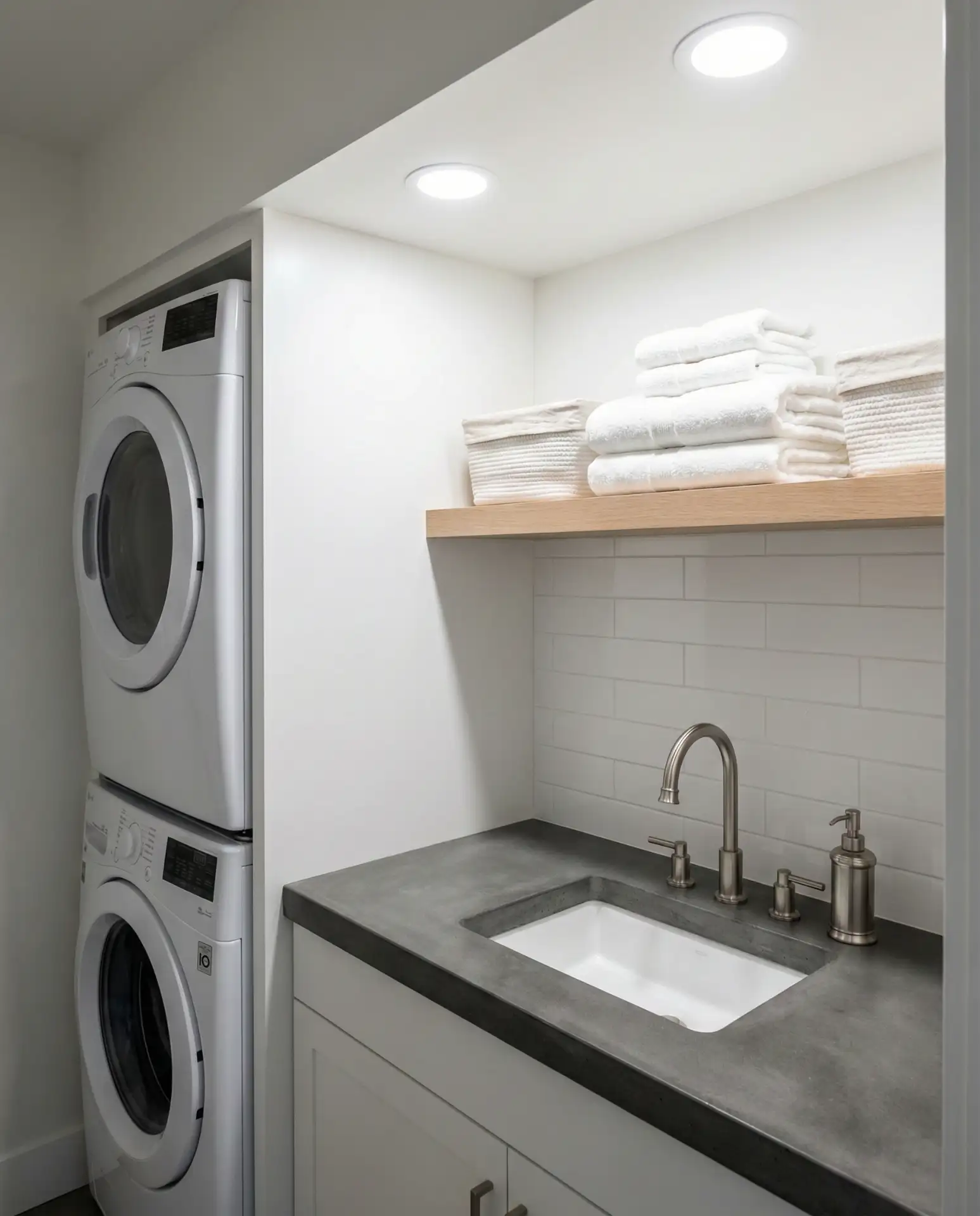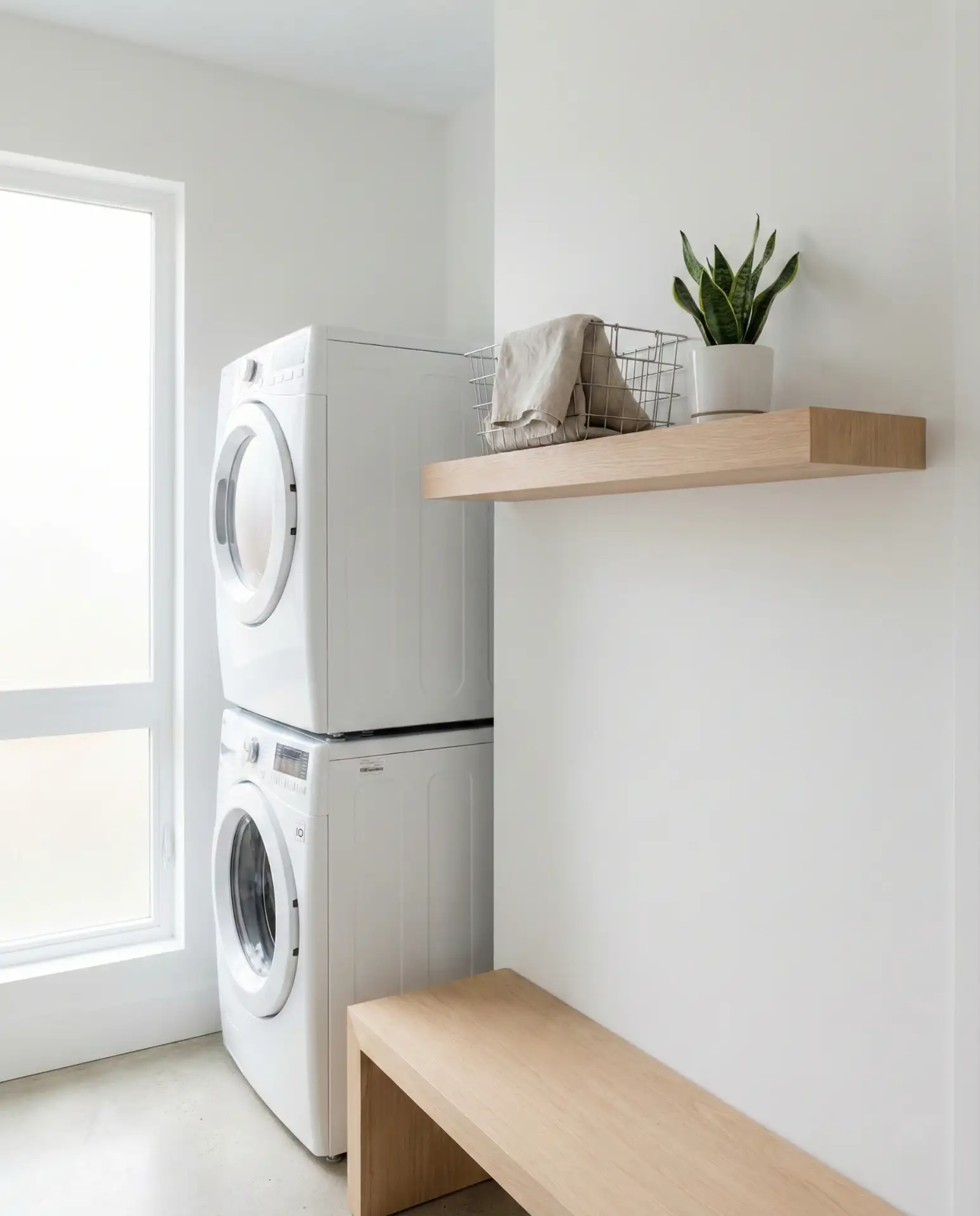
Laundry rooms have quietly become one of the most searched home improvement topics on Pinterest in 2025, with American homeowners craving smarter, more beautiful ways to organize these hardworking spaces. Whether you’re dealing with a cramped closet setup, a finished basement laundry zone, or a tight spot with a stacked washer dryer, the right organization can transform chaos into calm. From dollar store finds to sleek Ikea solutions, the ideas ahead blend function with style—proving that even the smallest laundry nook deserves thoughtful design. You’ll discover practical storage hacks, aesthetic upgrades, and space-saving tricks that work for real homes and real budgets.
1. Pull-Out Shelves for Top Loader Access
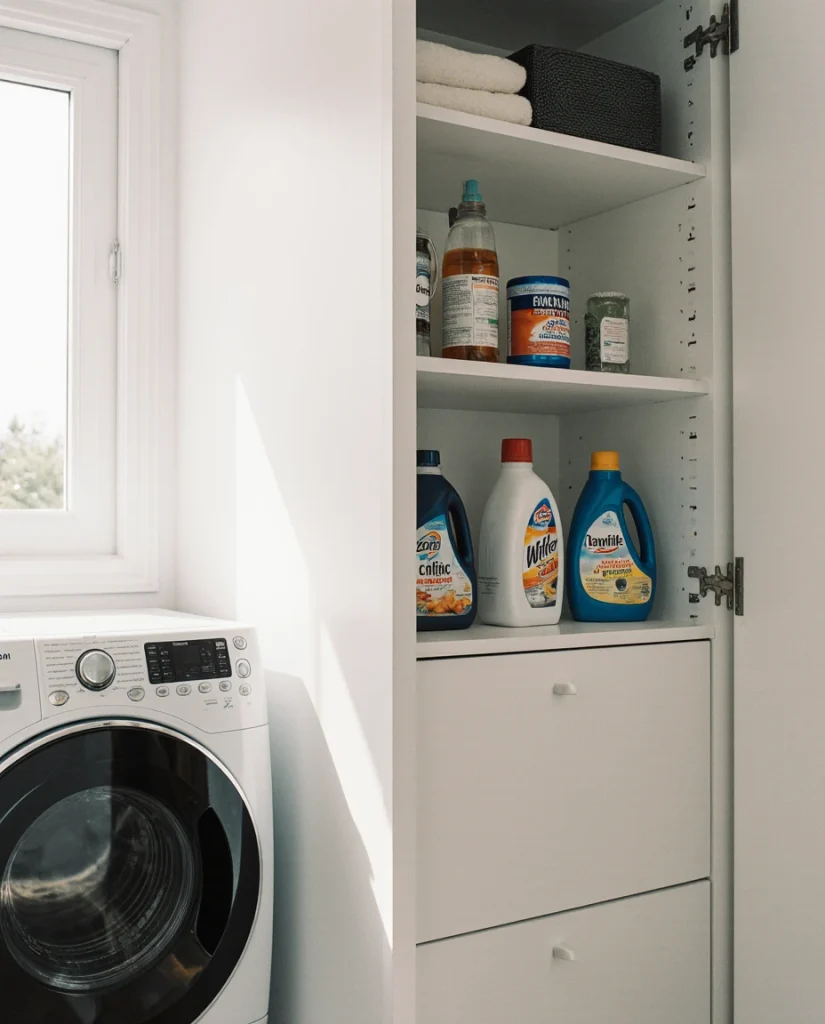
When you’re working with a top loader washer, reaching detergent bottles at the back of a deep shelf feels like an archaeological dig. A cabinet with pull-out shelves solves this by bringing everything forward with one smooth motion, making it easy to grab what you need without stretching or knocking things over. This setup works especially well in narrow laundry room layouts where every inch counts, and it keeps detergent, fabric softener, and stain sticks neatly lined up and visible.
In homes across the Midwest and South, where top loaders remain the machine of choice, homeowners report that pull-out shelves eliminate the frustration of digging behind half-empty bottles. The glide hardware is affordable—under forty dollars at most home improvement stores—and the installation takes about an hour. It’s a small change that makes laundry day feel less like a chore and more like a system that actually works with you.
2. Dollar Tree Bins for Small Space Sorting
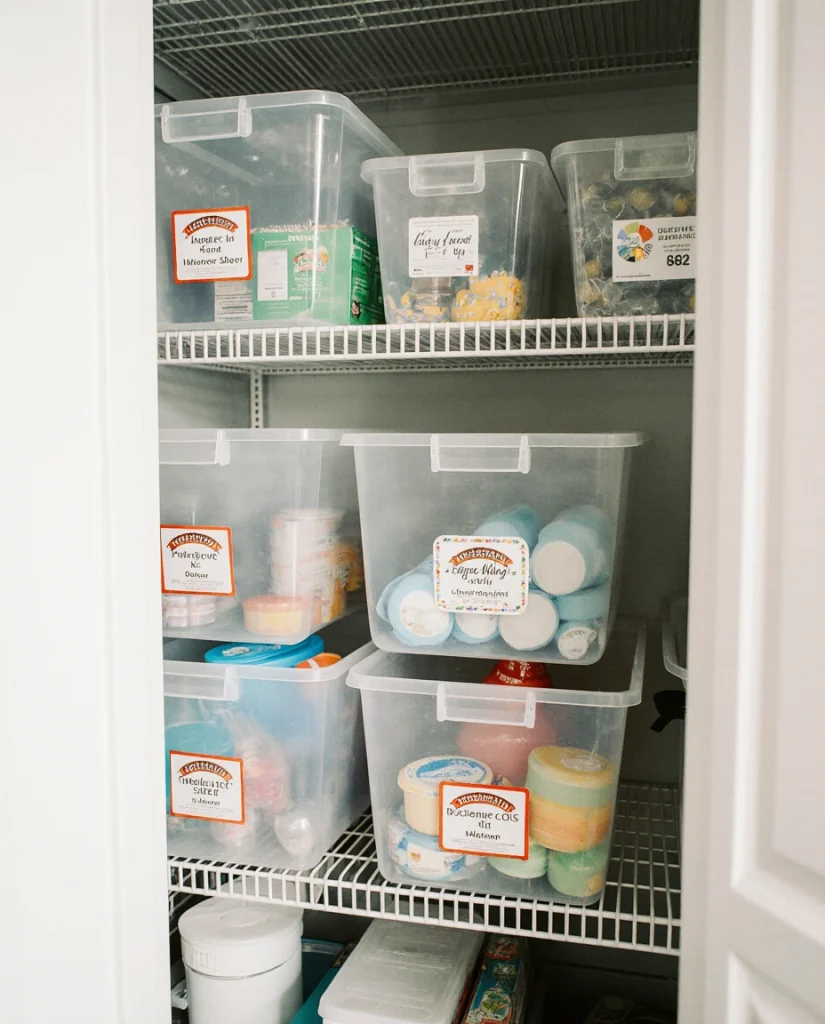
You don’t need a luxury budget to achieve laundry room organization that actually functions. Dollar Tree plastic bins, wire baskets, and hanging organizers have become Pinterest favorites because they deliver real results for just a few dollars per piece. Use them to divide detergent pods, dryer sheets, and cleaning rags in small space setups where drawer dividers would eat up precious room. Stack them on shelves or tuck them into closet corners—they’re lightweight, easy to label, and surprisingly durable.
The biggest mistake people make with dollar store bins is buying too many without measuring first. Take the dimensions of your shelf or cabinet before you shop, and stick to a uniform size or color family so the finished look feels intentional rather than chaotic. In California apartment laundries and East Coast row house setups, these bins have become the backbone of organization systems that cost less than twenty dollars total.
3. Ikea Algot System for Adjustable Storage
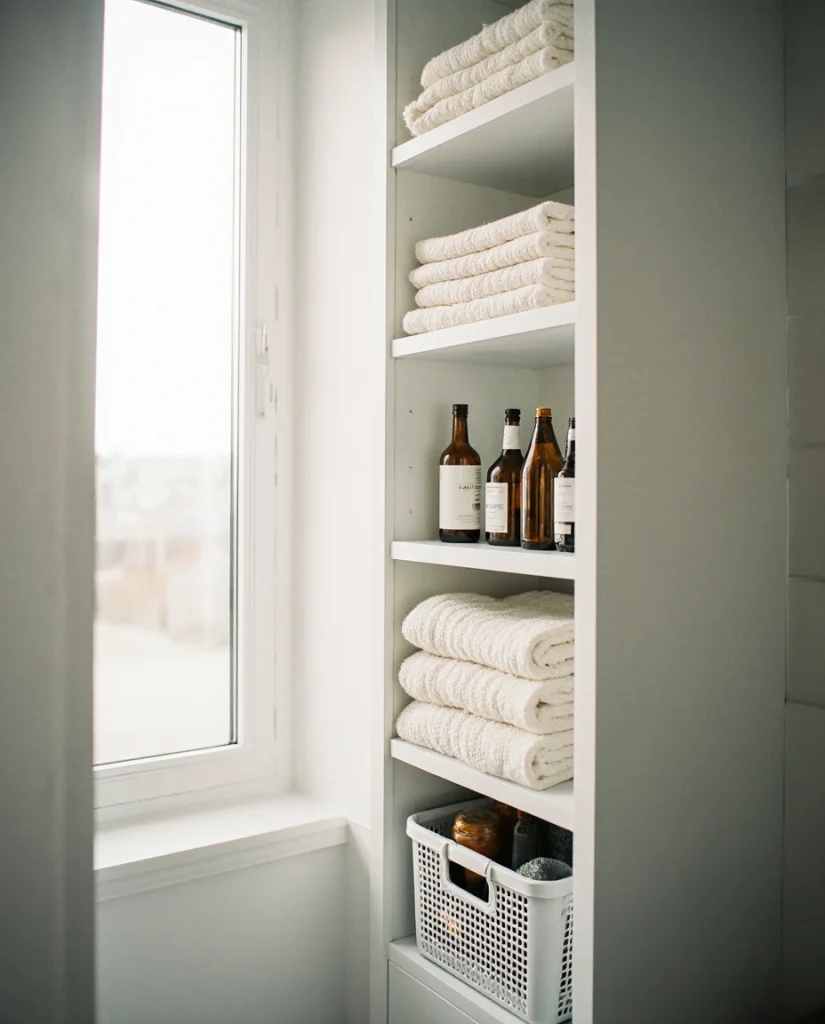
The Ikea Algot wall-mounted system brings flexibility to laundry room organization in a way that fixed shelves simply can’t match. You can adjust the height of each shelf or basket as your needs change, swap out components without tools, and create custom layouts for small-space laundries where standard furniture doesn’t fit. The mesh baskets let you see what’s inside at a glance, and the powder-coated steel holds up well in humid environments. It’s practical and surprisingly aesthetic when styled with matching containers. 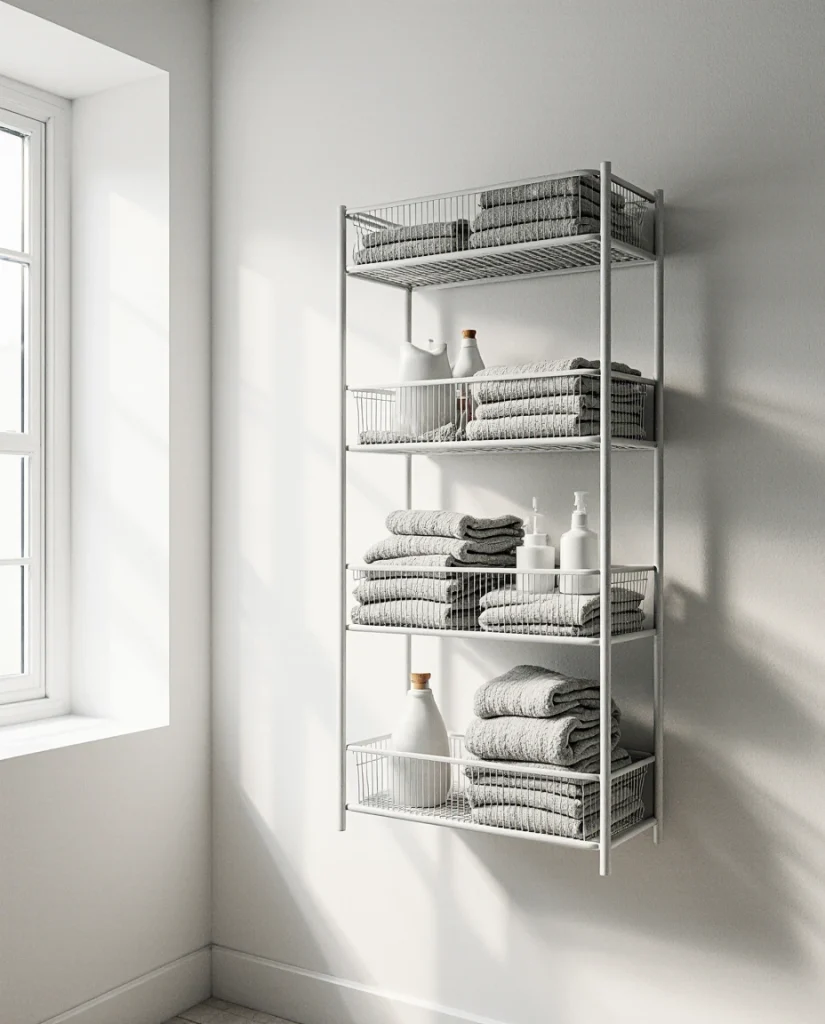
Algot works best in rooms where you can anchor directly into studs—drywall alone won’t support the weight once you load the shelves. Homeowners in Pacific Northwest condos and urban Boston apartments appreciate how the open design keeps the space from feeling cramped, and the modular approach means you can start small and add on as your budget allows. Expect to spend around one hundred fifty to two hundred dollars for a basic starter setup.
4. Stackable Hampers for Family Sorting
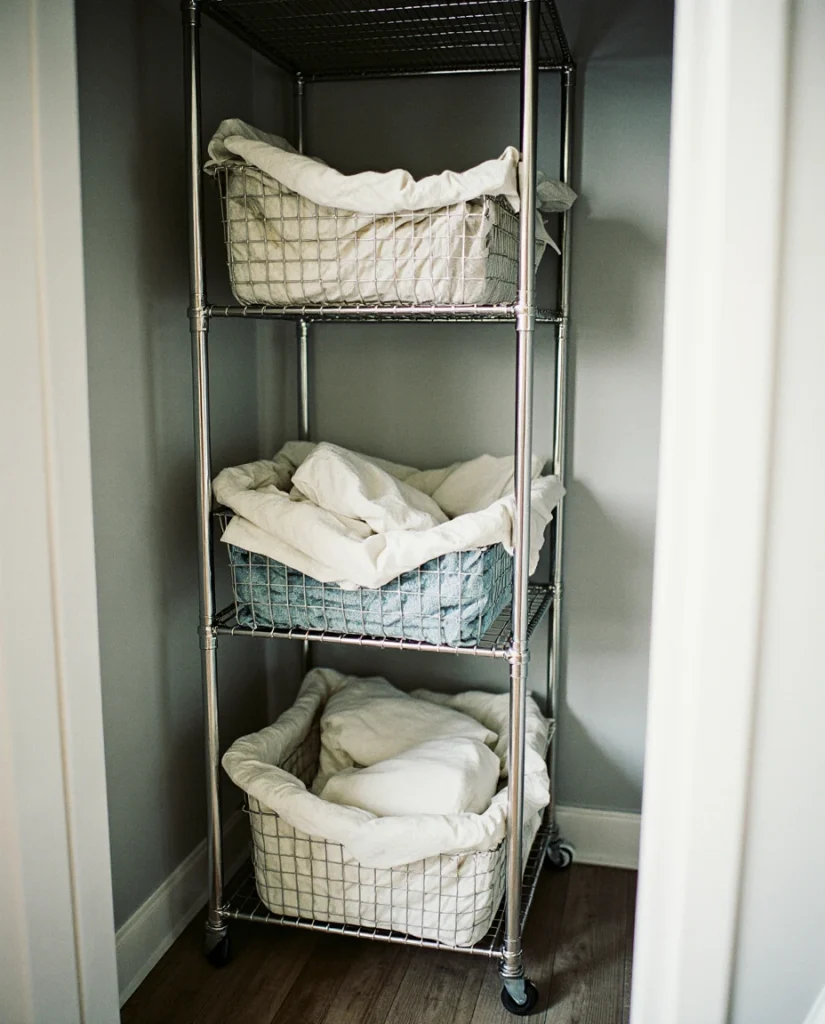
Managing laundry for a household means dealing with lights, darks, delicates, and the occasional red sock disaster. Stackable hampers give each category its own home without taking up the floor space of four separate baskets. Look for versions with removable bags or mesh sides so you can pull out one level, carry it straight to the washer, and keep the system moving. This approach is especially helpful in tiny laundry closet setups or finished basement zones where horizontal space is limited but vertical space is available. 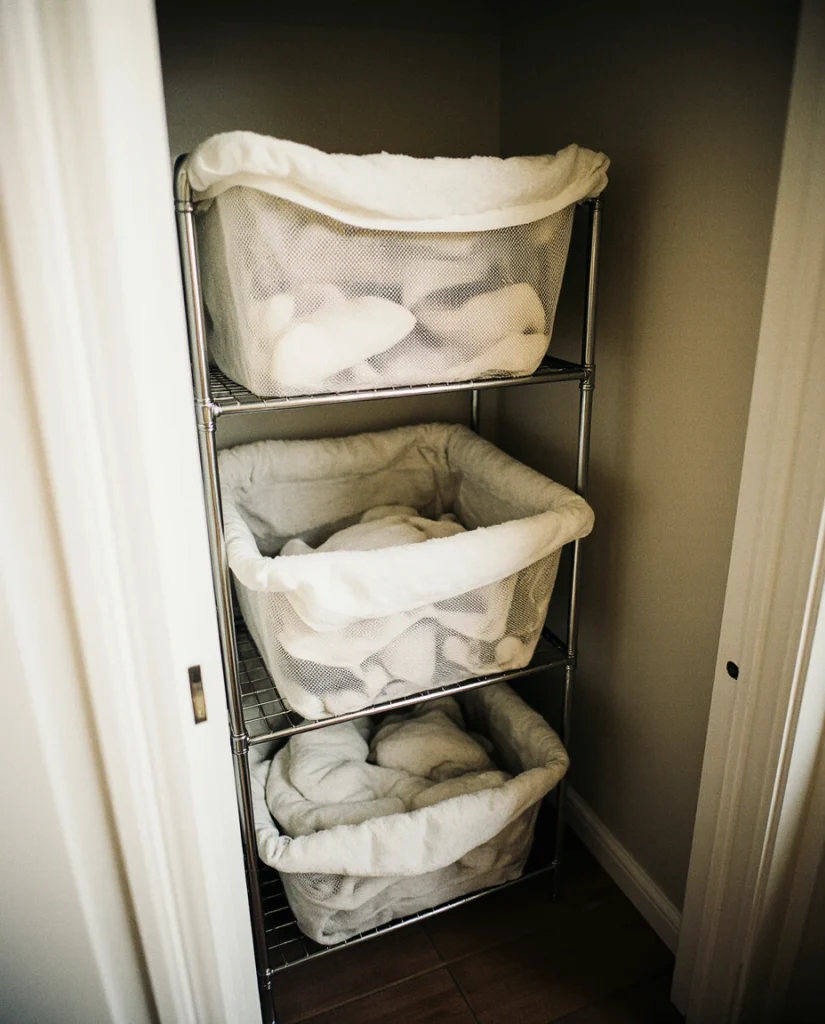
In Texas and Florida homes where families tend to run larger, stackable sorters have become a practical necessity rather than a luxury. The key is choosing a model with sturdy frames—cheaper versions tend to tip when only one basket is full. A solid setup costs between forty and eighty dollars and can last for years, making it one of those investments that pays off every single week.
5. Over-the-Door Mop and Broom Storage
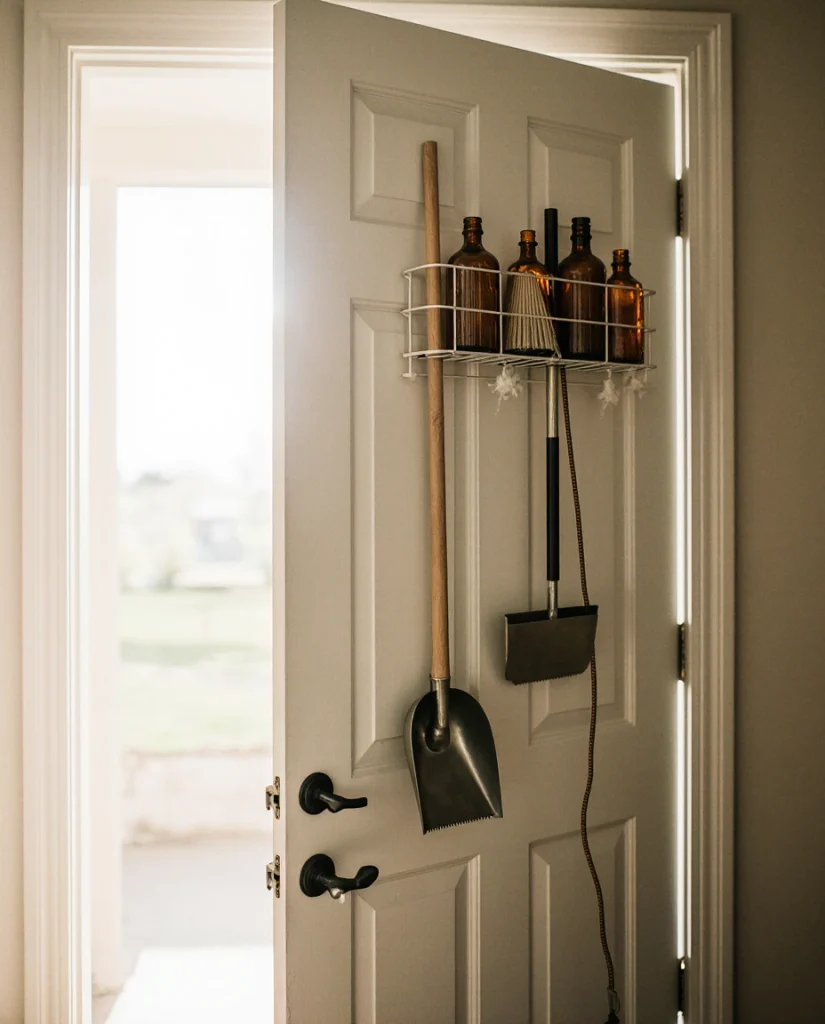
Leaning mops and brooms against the wall in your laundry room is a recipe for avalanche moments every time you reach for something. A wall-mounted broom and mop holder or over-the-door rack keeps these awkward tools vertical, secure, and out of the way. Most designs use spring-loaded clips that grip handles automatically, so you can hang and grab with one hand. This is one of those mop and broom storage ideas that solves an everyday annoyance without requiring any advanced DIY skills—just mount, clip, and you’re done.
Where it works best is on the back of a laundry room or closet door where the door opens inward, keeping the tools hidden but instantly accessible. Homeowners in the Pacific Northwest, where mudrooms and laundry spaces often overlap, find this setup essential for keeping wet floors managed during rainy months. The typical cost is under twenty dollars, and installation takes about five minutes with no tools required for most over-the-door models.
6. Cabinet Storage for Stacked Washer Dryer Units
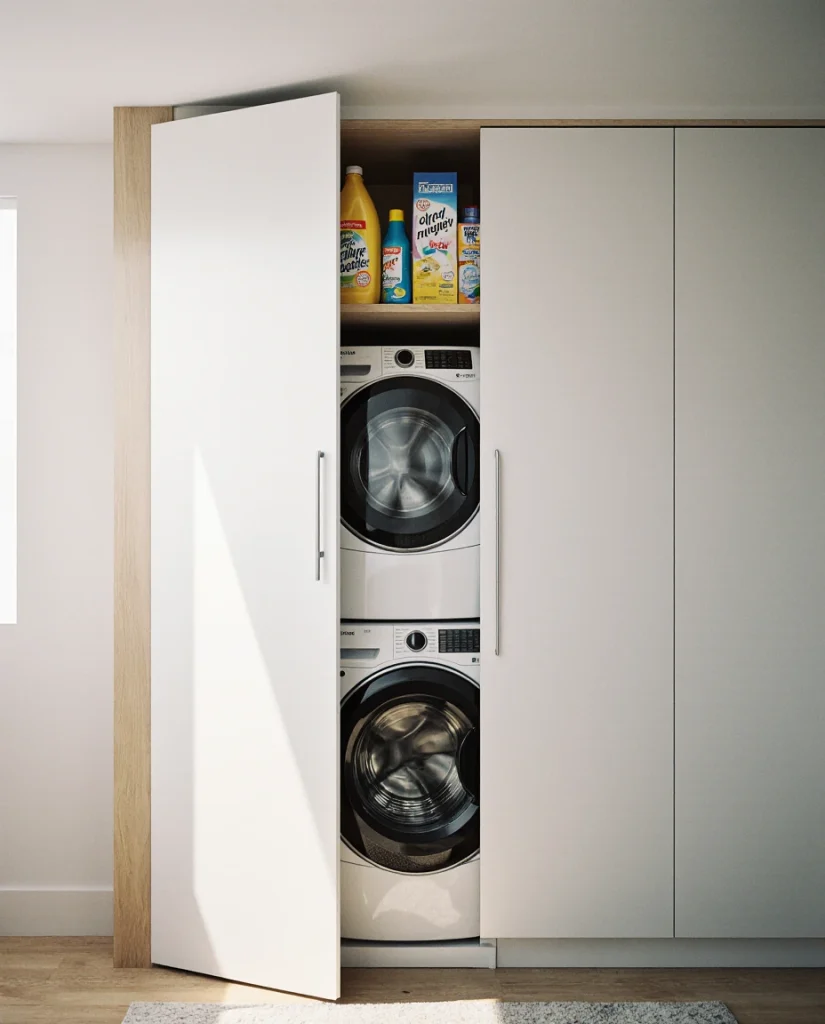
A stacked washer and dryer frees up floor space, but it also leaves you with an awkward vertical gap that’s easy to waste. Building or installing a narrow cabinet next to the unit gives you storage for detergent, dryer sheets, and cleaning supplies without encroaching on your already tight footprint. Look for slim pullout cabinets that are only six to eight inches wide—they slide out to reveal multiple shelves and tuck back flush when not in use. This is one of the smartest storage ideas for vertical laundry setups in apartments and condos.
A neighbor in Brooklyn installed a custom pullout cabinet in her galley laundry and says it transformed the way she interacts with the space—no more balancing bottles on top of the dryer or losing lids behind the machines. If you’re handy, you can build one with basic lumber and drawer slides for under sixty dollars. Pre-made versions from container stores run closer to one hundred fifty, but they come with smooth glides and a finished look that’s worth the investment if carpentry isn’t your thing.
7. Open Shelving for Aesthetic Display
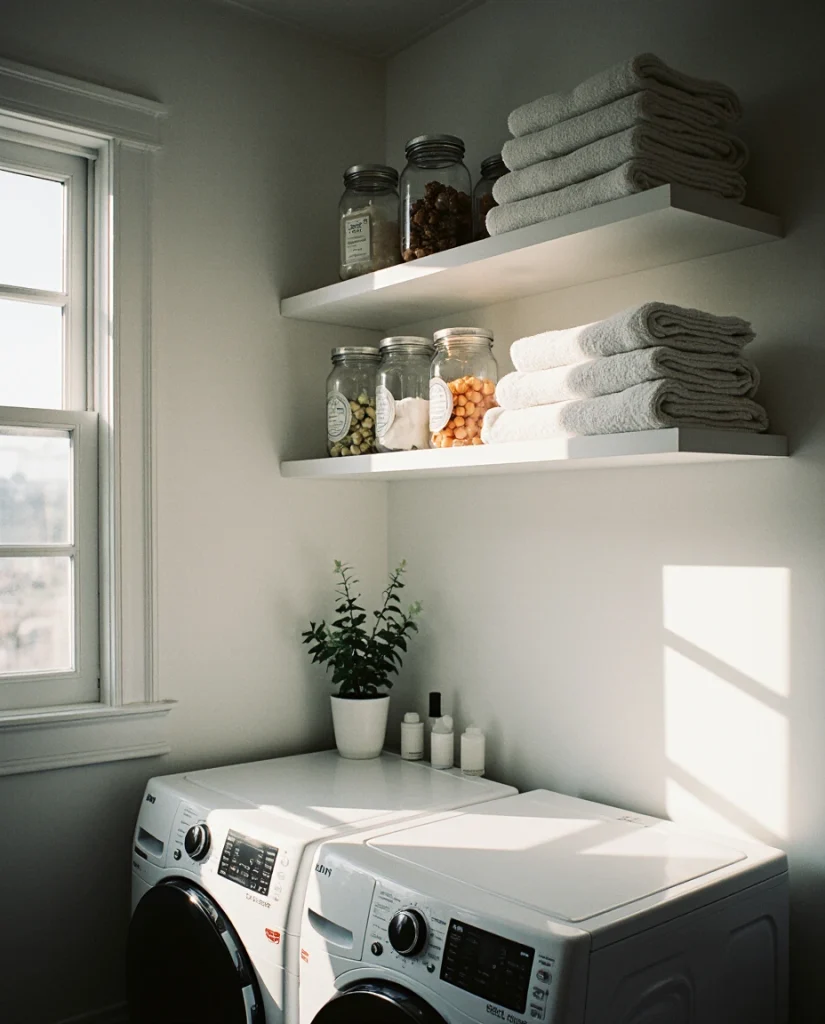
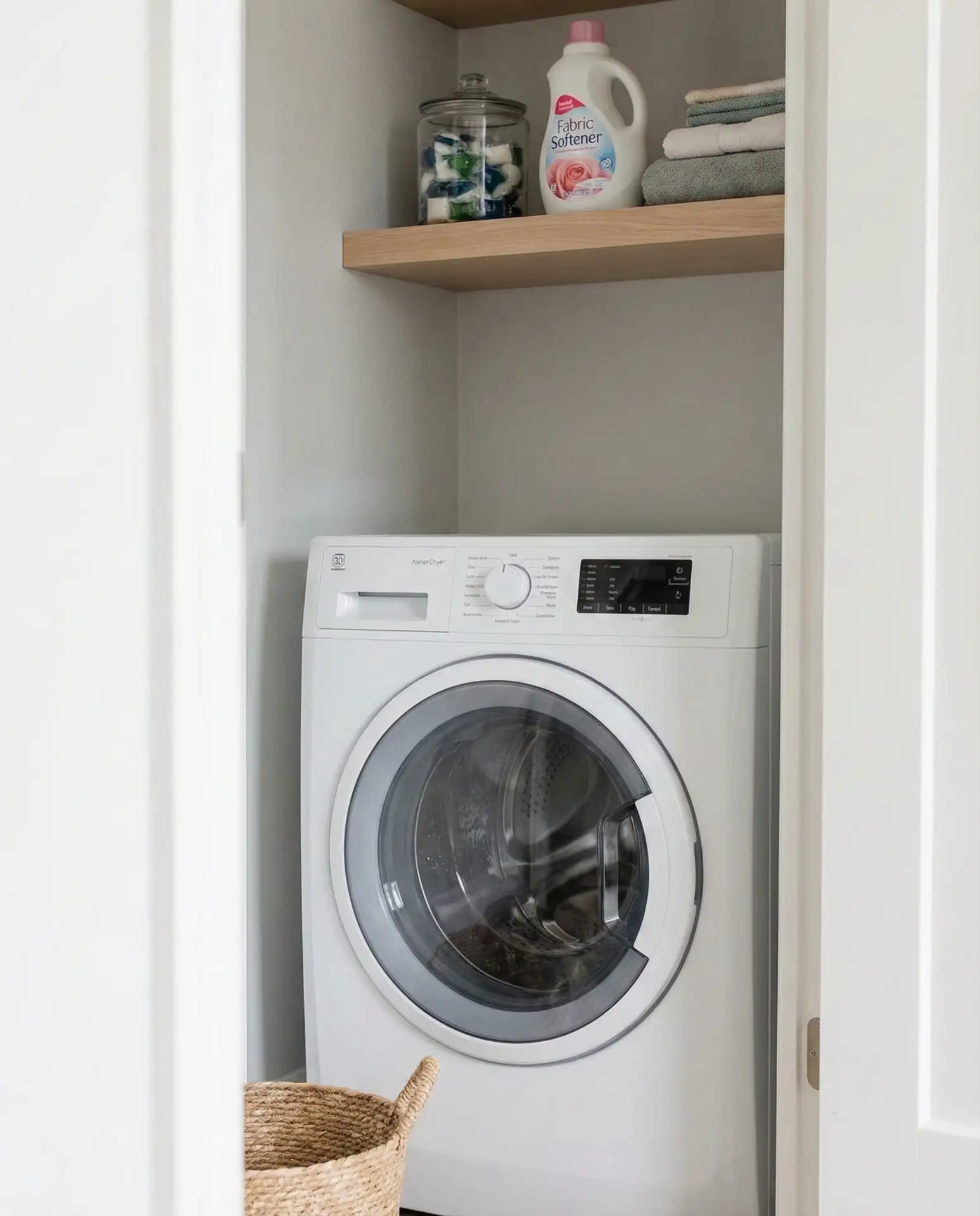
Open shelves bring a sense of airiness to small-space laundries and give you a chance to show off aesthetic containers, neatly folded linens, and vintage glass jars filled with laundry pods. Instead of hiding everything behind cabinet doors, this approach turns everyday products into decor by choosing matching containers and color-coordinated labels. It’s a design move borrowed from Scandinavian homes, where even functional spaces deserve a considered, beautiful look. Just make sure to keep only what you use regularly on display—clutter defeats the purpose. 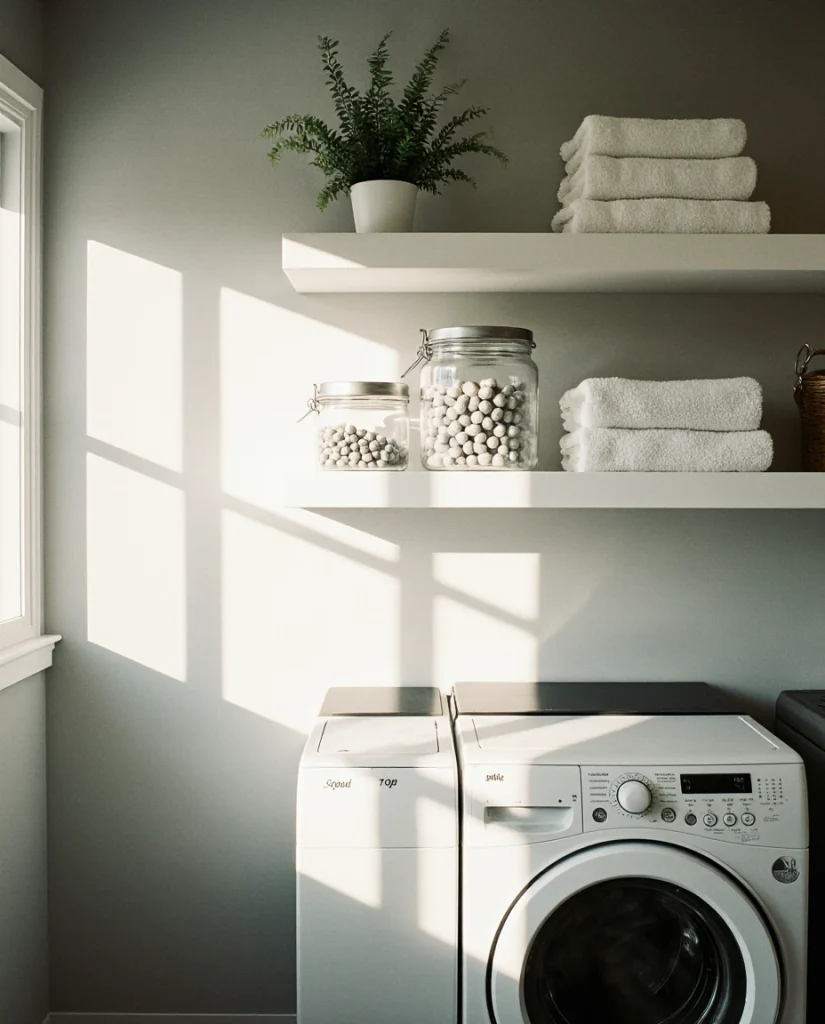
This works particularly well in newer homes with dedicated laundry rooms that have enough wall space to create a composed vignette. Homeowners in Southern California and Arizona often lean into this style because the dry climate means less worry about dust settling on open shelves. The common mistake is overloading the shelves—stick to three to five well-chosen items per shelf to maintain the clean, intentional look that makes open shelving work.
8. Under-Shelf Baskets for Hidden Storage
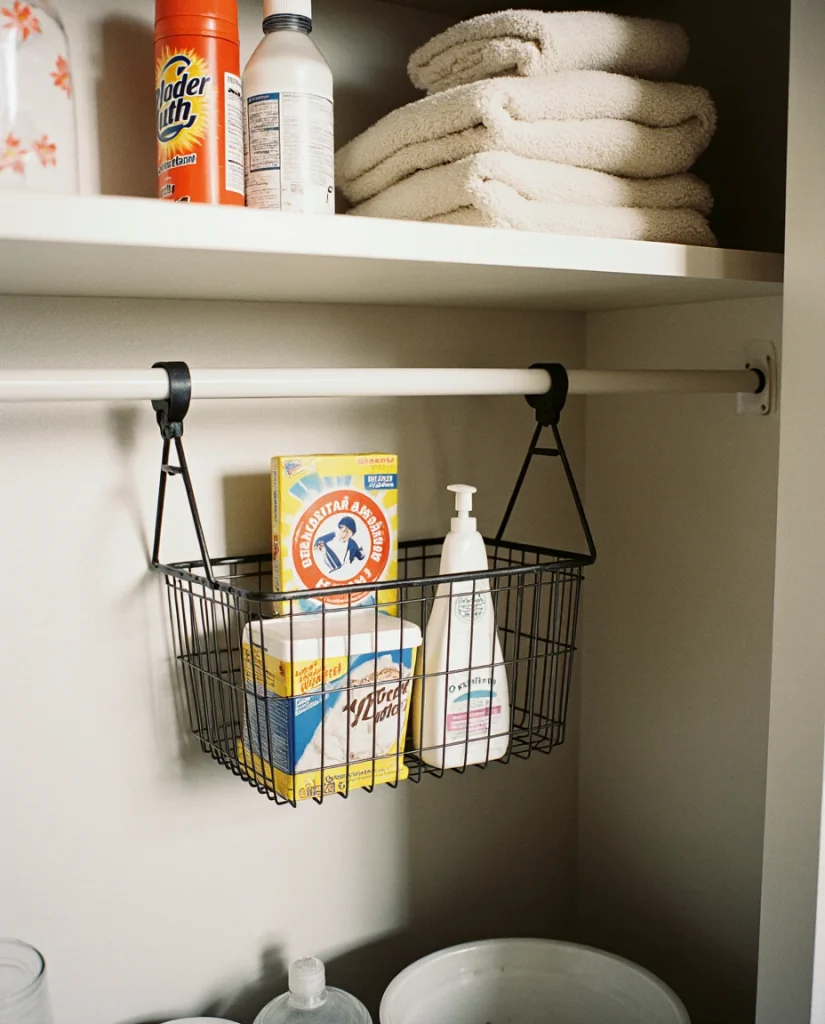
Under-shelf baskets are one of those genius storage ideas that use space you didn’t realize you had. They clip or slide onto the underside of existing shelves and create a new layer of storage for smaller items like dryer sheets, stain sticks, or sewing kits. This trick is especially useful in laundry room closet setups where adding another fixed shelf would block access to items below. The baskets come in wire or mesh styles that let you see what’s inside, and they cost about ten to fifteen dollars each—a small space miracle for under twenty bucks total.
In real homeowner behavior, these baskets tend to become catch-alls if you’re not careful—toss in a few too many random items, and they morph into junk drawers you can’t easily sort through. Set a rule for what goes in each basket (for example, one for stain treatment, one for delicate accessories) and stick to it. Midwest apartment dwellers and East Coast row house owners swear by this method for squeezing extra function out of builder-grade wire shelving.
9. DIY Pegboard for Flexible Tool Hanging
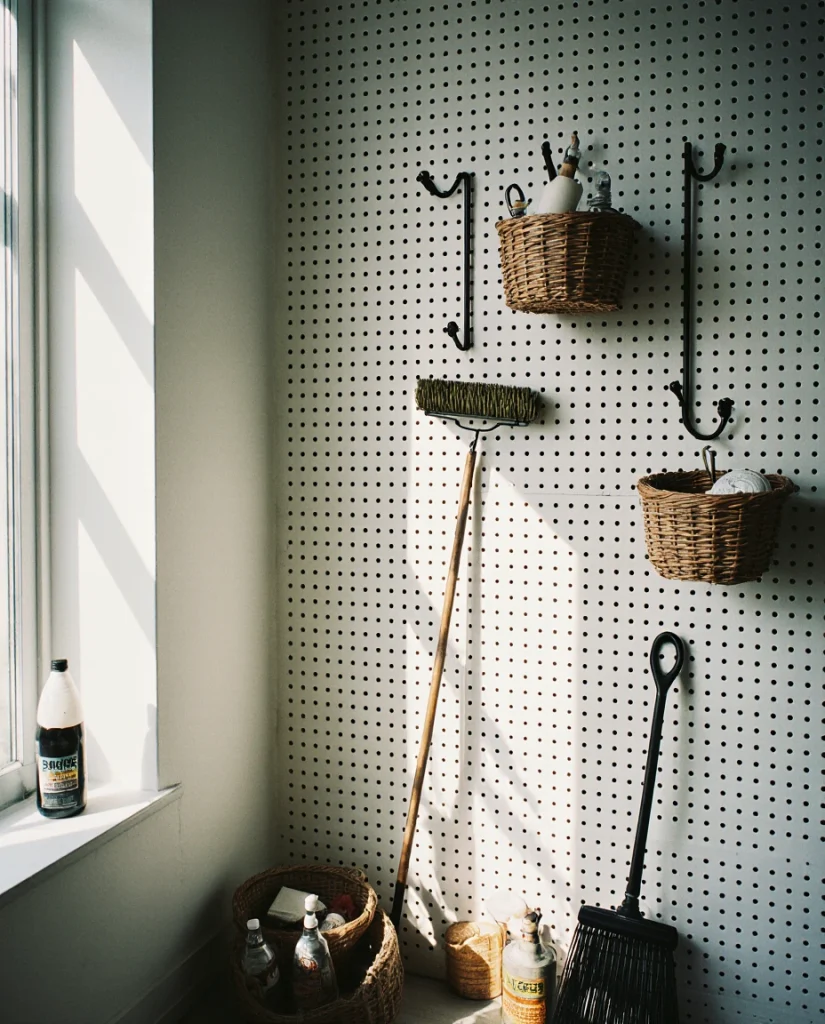
DIY pegboard walls bring total flexibility to laundry room organization because you can move hooks, baskets, and shelves around as your needs change. Paint the pegboard to match your walls, add brass or matte black hooks, and suddenly you have a customizable system that holds everything from spray bottles to lint rollers to small hand brooms. This is one of those idea storage solutions that looks professional but costs under thirty dollars in materials if you’re willing to do the install yourself. It’s also a favorite on Pinterest for its visual appeal and adaptability.


Expert-style commentary from professional organizers suggests spacing hooks about four inches apart to give each item enough breathing room without wasting pegboard real estate. The system works beautifully in garages converted to laundry zones or finished basement laundries where wall space is abundant. Homeowners report that once the pegboard is up, they find themselves constantly tweaking the layout—it becomes a fun, functional canvas rather than a static shelf.
10. Rolling Cart for Supplies on Demand
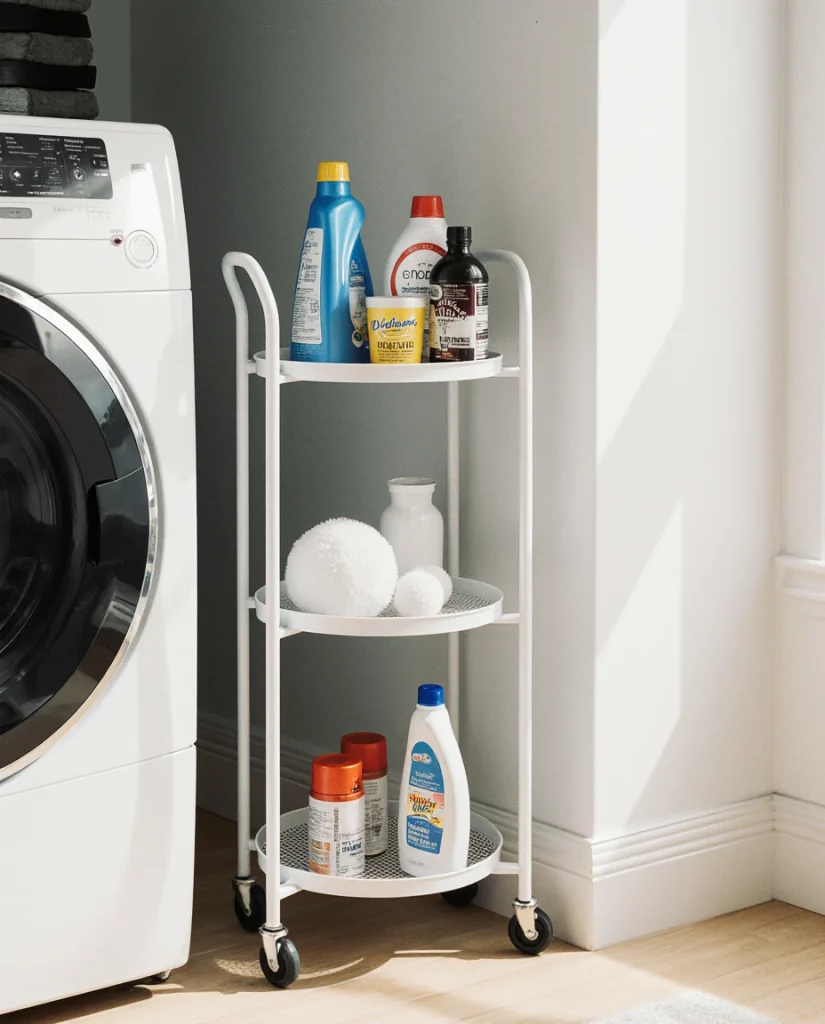
A slim rolling cart tucked beside your washer or in a nearby closet puts all your laundry room essentials on wheels, so you can pull it out when you need it and slide it back when you’re done. Load the top tier with detergent and fabric softener, the middle with stain removers and dryer balls, and the bottom with extra rags or a small trash bin. This is one of those practical storage ideas that works in tiny spaces where permanent shelves would block walkways. Look for carts with locking wheels if your floor has any slope—runaway carts are more common than you’d think. 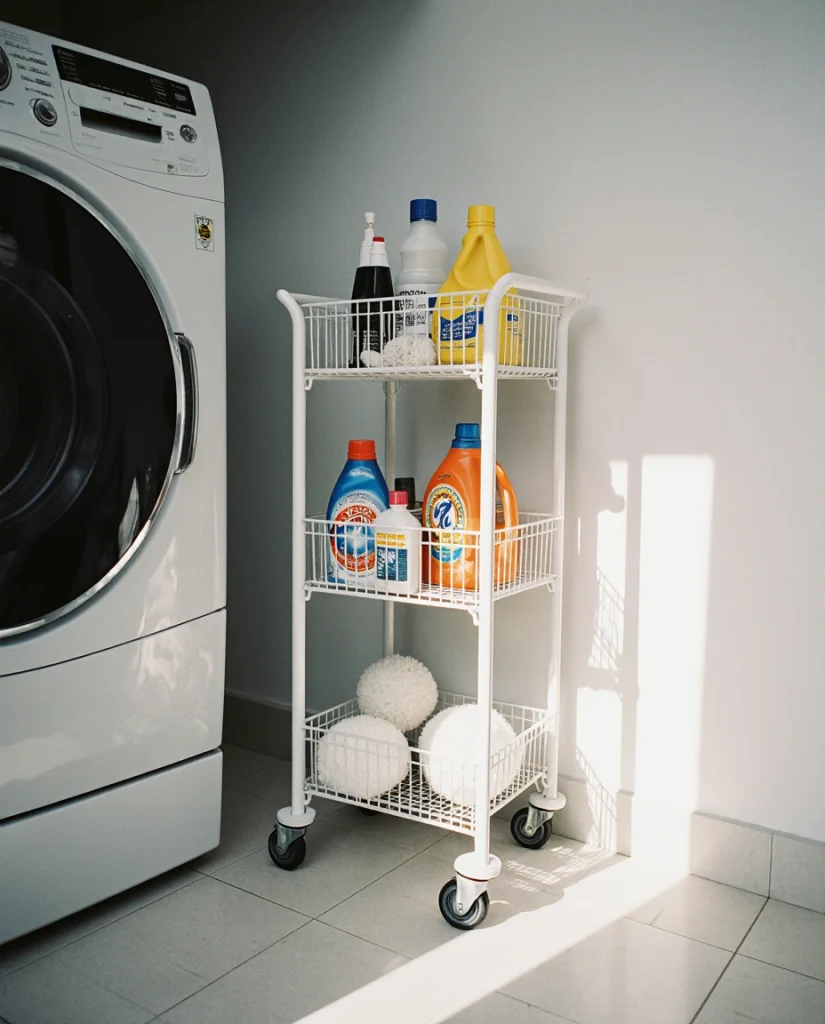
In terms of budget, there are good quality rolling carts available at Ikea, Target, or even Dollar Tree priced between fifteen to fifty dollars, depending on size and finish. They are especially preferred among studio apartments along the West Coast and in Southern galley laundries where every inch of floor space is crucial. A Portland homeowner mentioned having one as a mobile folding station. She wheels it to the dryer, fills it, and then pushes it to the couch where she sorts the laundry while watching a show.
11.Tension Rod for Hanging Damp Items
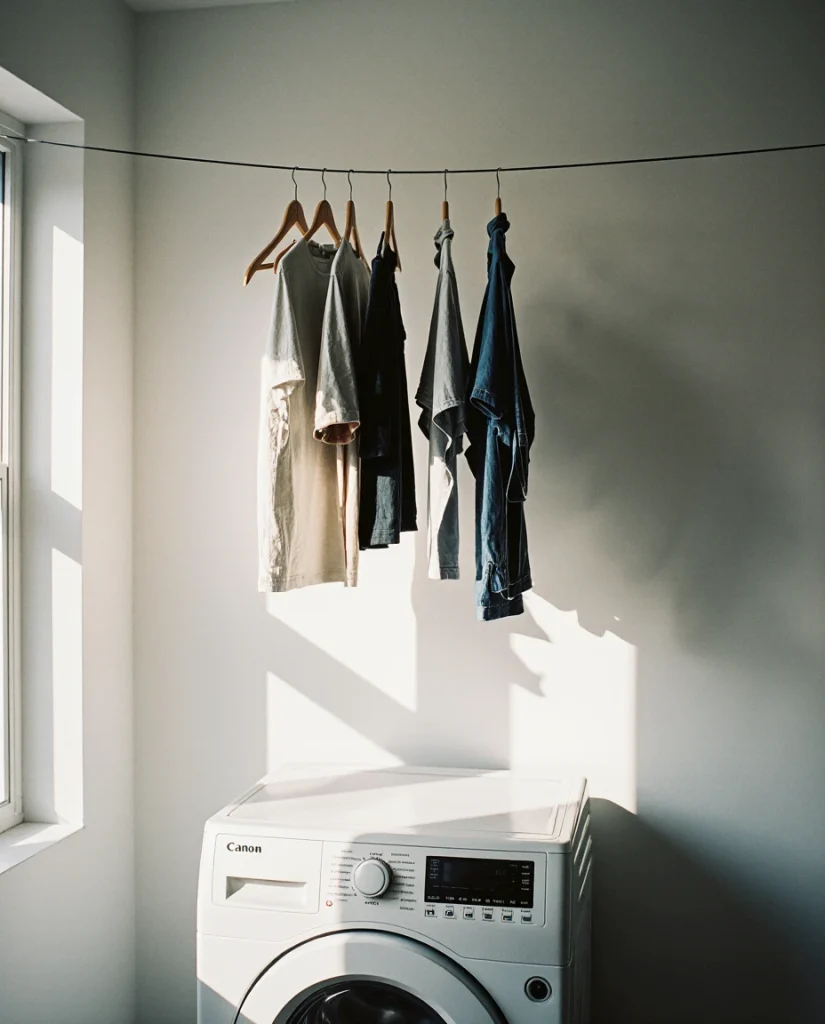
A tension rod installed above your washer or across a closet opening gives you instant hang-dry space without drilling holes or installing permanent hardware. Hang delicates, gym clothes, or anything that needs air circulation on hangers, then remove the rod when it’s not in use if you need the space back. This is one of the simplest idea storage tricks for laundry room setups where you don’t have room for a full drying rack. Tension rods cost five to fifteen dollars and take about thirty seconds to install—just twist and wedge into place.
This approach works best in rooms with adequate ventilation—Southern homes with ceiling fans or Southwestern spaces with good airflow see the fastest drying times. The only real drawback is that tension rods have weight limits, usually around twenty pounds, so don’t overload them with soaking-wet jeans or heavy towels. Stick to lighter garments, and you’ll get years of use out of a single rod.
12. Labeled Jars for Detergent and Pods

Transferring detergent pods and powders into clear glass or plastic jars instantly elevates the aesthetic of your laundry room while keeping everything airtight and fresh. Add simple labels with a label maker or hand-lettered tags, and line them up on open shelves for a look that feels curated rather than chaotic. This is one of those storage ideas that Pinterest loves because it’s photogenic and functional—you can see at a glance when you’re running low. Use jars with wide mouths so you can easily scoop or grab what you need.
A micro anecdote: a friend in Nashville switched to jars after repeatedly knocking over half-open detergent boxes, and she says the cleanup time alone made the swap worth it. Jars also prevent the cardboard-dust situation that happens with powder detergents stored in original packaging. You can find suitable jars at Ikea, Target, or even thrift stores for just a few dollars each, making this one of the most affordable aesthetic upgrades you can make.
13. Fold-Down Drying Rack for Finished Basements
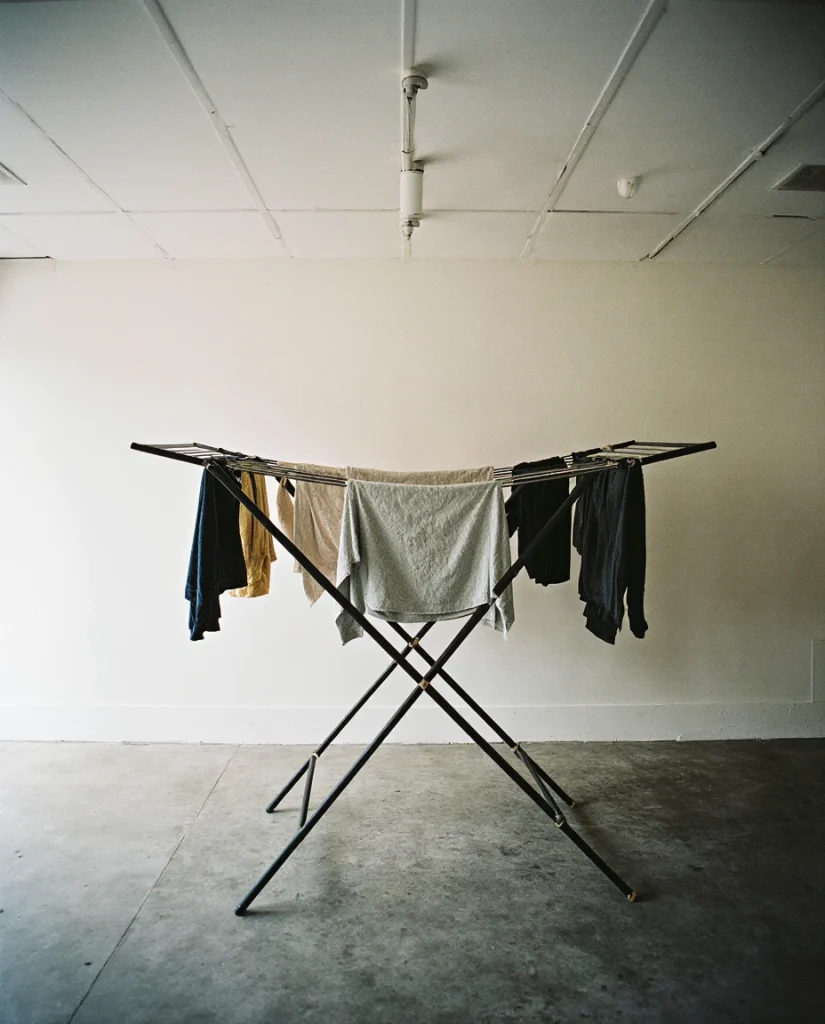
In a finished basement laundry zone, a wall-mounted fold-down drying rack gives you serious hang-dry capacity when you need it and disappears flat against the wall when you don’t. These racks typically extend out about two feet and can hold multiple garments on parallel rods, making them ideal for households that air-dry delicates, workout gear, or cloth diapers. Installation requires a few screws into studs, but the payoff is a practical drying solution that doesn’t eat up floor space or clutter the room when not in use.
This setup works especially well in Midwestern basements where humidity control is good and in Pacific Northwest homes where year-round damp weather makes indoor drying essential. Expect to spend thirty to seventy dollars for a quality rack that will hold up to regular use. One common mistake is mounting the rack too high—install it at a height where you can comfortably reach the top rod without a step stool, usually around five to six feet off the floor.
14. Drawer Dividers for Small Items
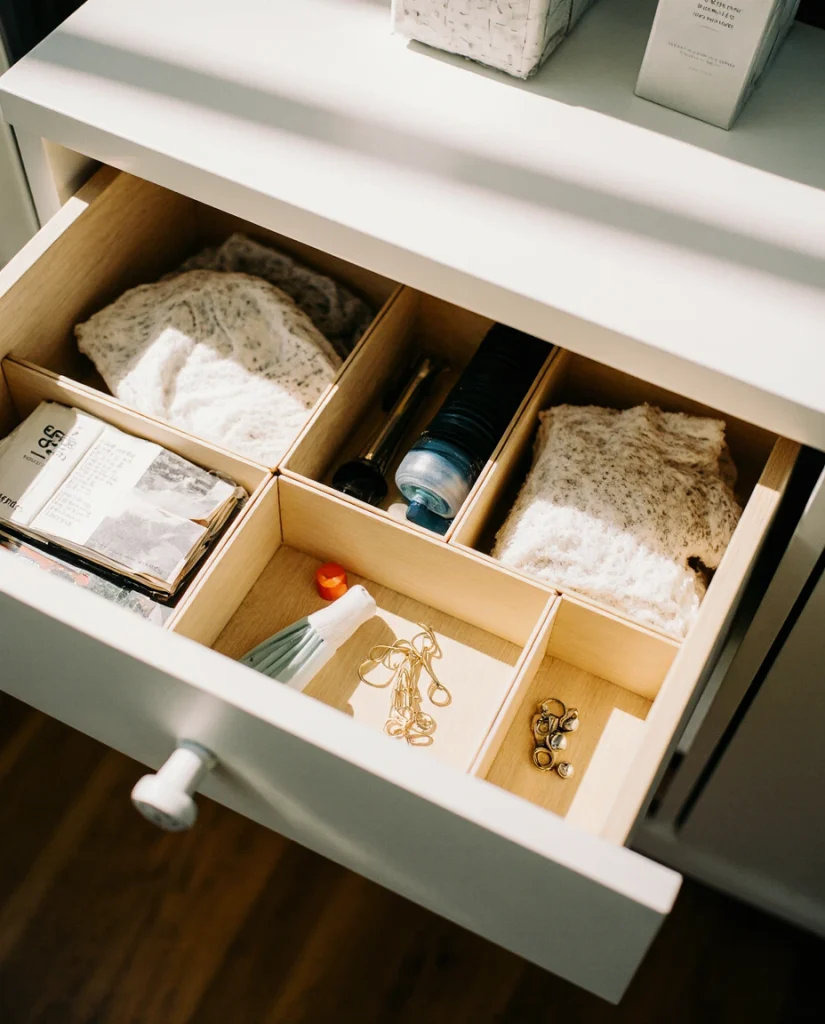
If your laundry room includes any built-in drawers or if you’ve added a small dresser for storage, drawer dividers keep small products like dryer sheets, stain pens, lint rollers, and sewing kits from turning into a tangled mess. You can use adjustable bamboo dividers, acrylic organizers, or even repurposed cutlery trays—whatever keeps categories separate and easy to grab. This is one of those quiet storage ideas that doesn’t look dramatic but makes daily tasks noticeably smoother. It’s especially helpful in small space setups where you can’t afford to waste time digging around.
In coastal California homes and urban East Coast apartments, homeowners report that dividers make it possible to store a surprising amount in a single shallow drawer without things shifting around. Measure your drawer interior before buying dividers—adjustable versions offer more flexibility if your drawer dimensions are unusual. A full set of dividers typically costs twenty to forty dollars and will last indefinitely, making it one of the better long-term investments in laundry organization.
15. Magnetic Strips for Small Metal Tools

A magnetic knife strip mounted on the wall or inside a cabinet door gives you instant storage for scissors, tweezers, safety pins, and other small metal tools that tend to get lost in drawers. This is a clever DIY hack borrowed from workshop organization that translates perfectly to laundry room setups. The tools hang in plain sight, easy to grab with one hand, and the strip takes up zero counter or shelf space. It’s one of those tiny changes that feels almost too simple but ends up saving you from the endless “where did I put the scissors” hunt.
Real homeowner behavior shows that once people install a magnetic strip, they start finding more and more metal items to stick on it—from bobby pins to small wrenches. The strips cost about eight to fifteen dollars at home stores and require just two screws to mount. This trick works especially well in closet laundries where every vertical surface matters, and it’s a favorite among renters because it leaves only two tiny holes when you move out.
16. Lazy Susan for Detergent and Supplies
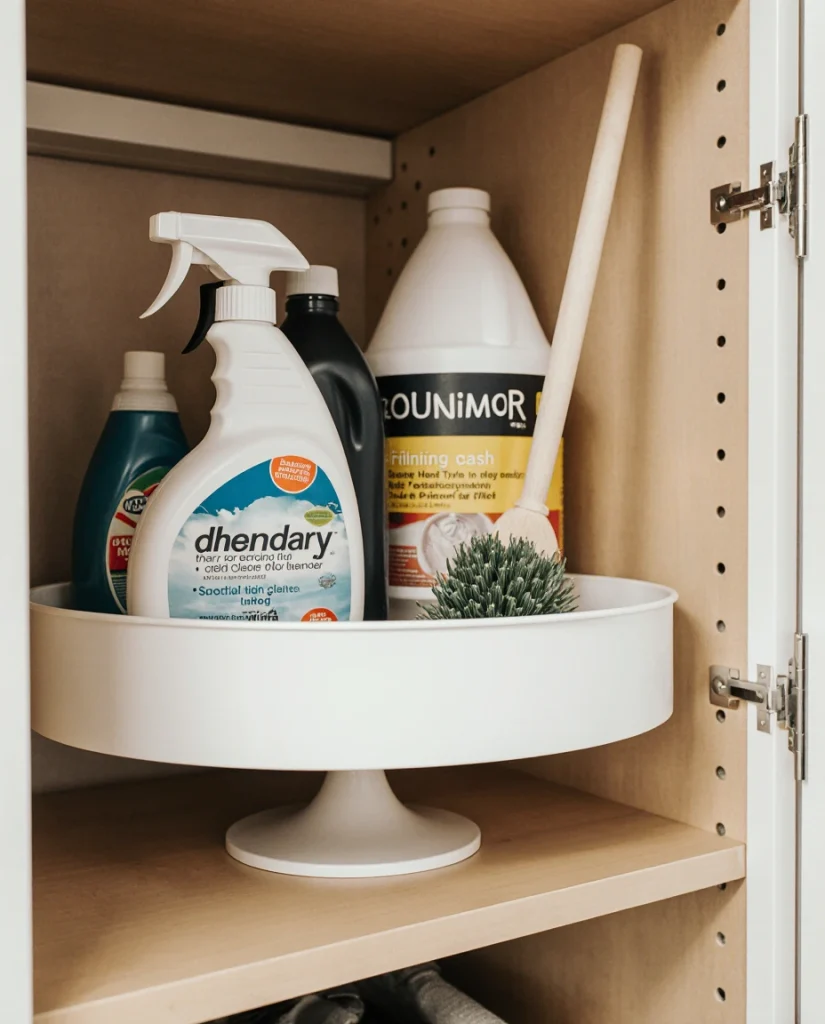
A lazy Susan turntable on a shelf or inside a cabinet transforms a deep, hard-to-reach space into a spin-and-grab system. Load it with detergent bottles, spray cleaners, and fabric softener, then rotate it to bring what you need to the front without removing everything in the way. This is one of those practical storage ideas that works especially well in laundry room setups with top loader machines where shelf space is above the washer and awkward to access. You can find lazy Susans in plastic, bamboo, or acrylic for ten to twenty-five dollars, depending on size and finish.
Where it works best is in corner cabinets or deep shelves where reaching the back row normally requires a full arm extension and some creative contortion. Homeowners in suburban Midwest homes with galley-style laundries find that a single lazy Susan in the right spot eliminates the need for multiple smaller organizers. The main thing to watch is weight distribution—load heavier bottles opposite each other so the turntable spins smoothly instead of tipping.
17. Wall Hooks for Reusable Bags and Aprons

A row of sturdy wall hooks near your washer gives you a place to hang reusable shopping bags, cleaning aprons, or delicates bags so they’re always within reach. This is one of those storage ideas that costs almost nothing but adds real convenience—no more hunting for the mesh bag when you need to wash bras or searching for your cleaning apron before tackling a stain. Choose hooks with a bit of personality, like matte black or brushed brass, to add a small aesthetic detail to your laundry room. Install them at shoulder height for easy on-and-off access.
This approach is particularly popular in Pacific Northwest homes, where reusable bags are a daily essential, and in urban East Coast apartments, where space is tight but wall area is available. Hooks cost just a few dollars each at hardware stores, and installation is a ten-minute job with a drill or even just adhesive strips if you’re in a rental. The common mistake is placing hooks too close together—leave at least six inches between them so bags don’t overlap and tangle.
18. Sliding Barn Door for Closet Access
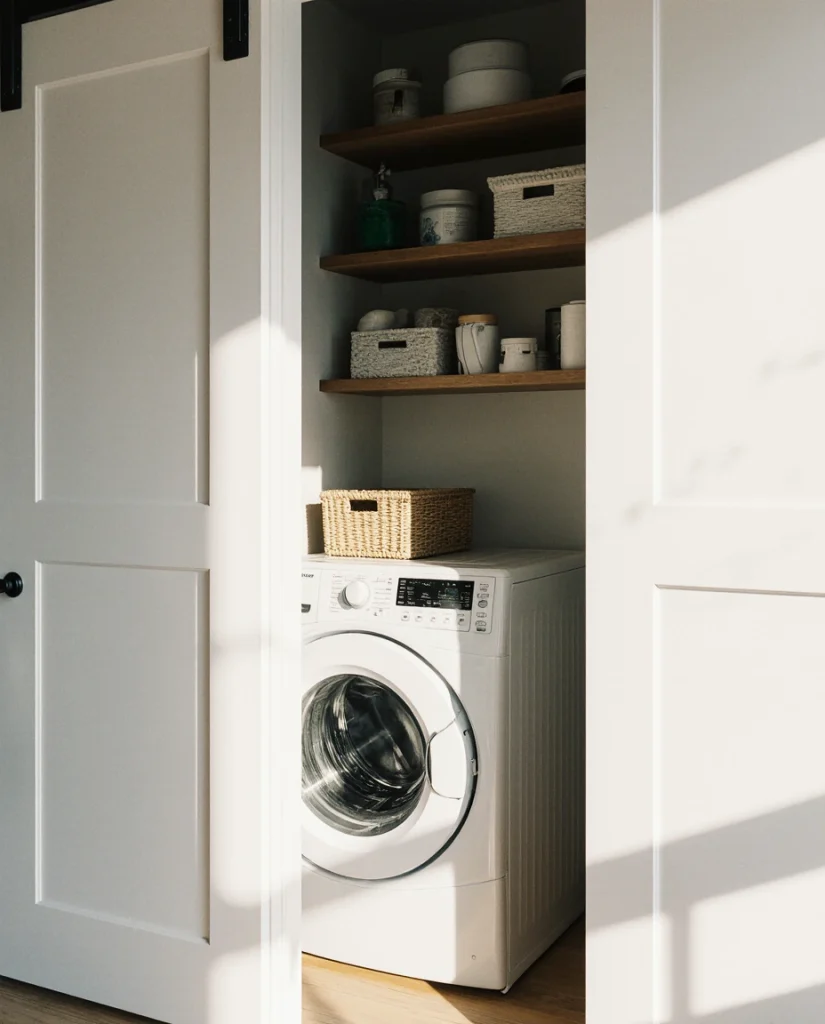
If your laundry room is actually a converted closet, swapping a traditional hinged door for a sliding barn door can free up floor space and add a modern, aesthetic touch. The sliding mechanism means you don’t need clearance for a door swing, which matters in tiny hallways or tight corners. You can find barn door kits with all the hardware included for one hundred fifty to three hundred dollars, and installation is a weekend project if you’re moderately handy. Choose a door finish that complements your home’s existing trim for a cohesive look.
In older homes with narrow hallways—common in Northeastern cities and Midwestern bungalows—the barn door solution can make the difference between awkward navigation and smooth flow. One homeowner in Philadelphia mentioned that the sliding door also reduced noise bleed from the washer, an unexpected bonus. The only caveat is that you need a clear wall space beside the doorway for the door to slide along, so measure carefully before committing to the hardware.
19. Countertop Folding Station Above Front Loaders
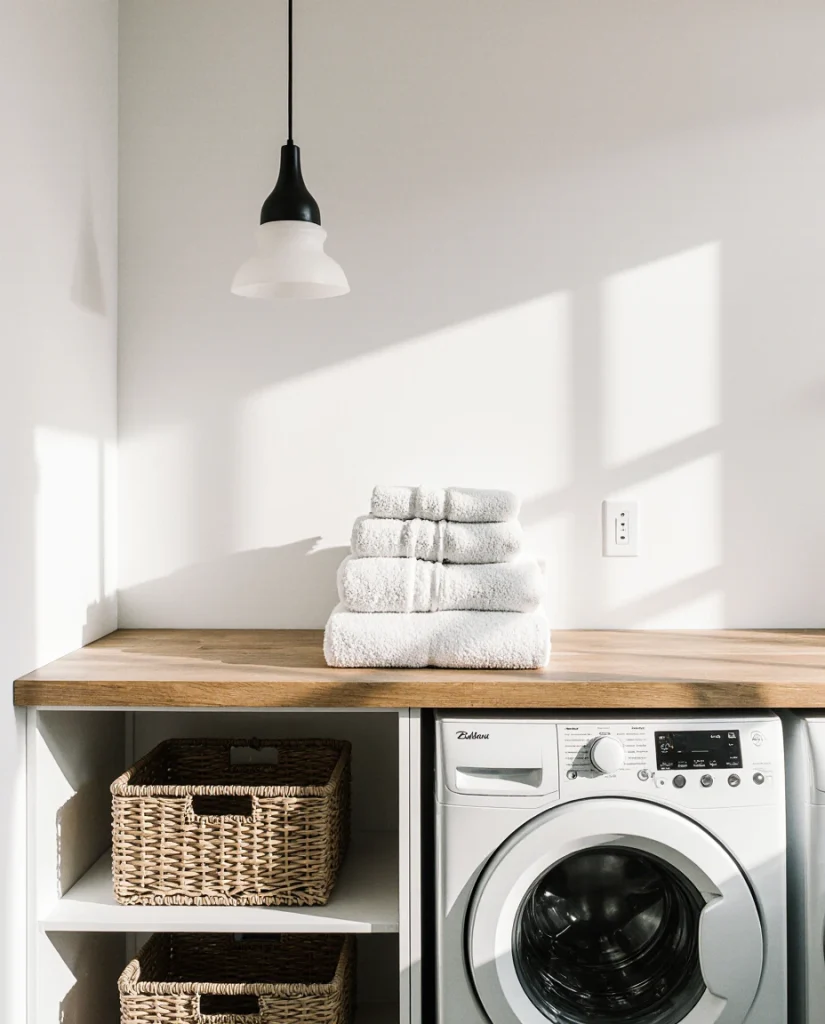
If you have front-loading machines, the space above them is prime real estate for a practical countertop where you can fold clothes straight out of the dryer. This turns your laundry room into a mini assembly line—wash, dry, fold, and stack—without ever leaving the room. You can build a simple butcher block counter yourself for under one hundred dollars, or invest in a custom laminate top if you want a seamless, built-in look. Add storage underneath in the form of pull-out baskets or shelves, and you’ve created a true laundry hub. 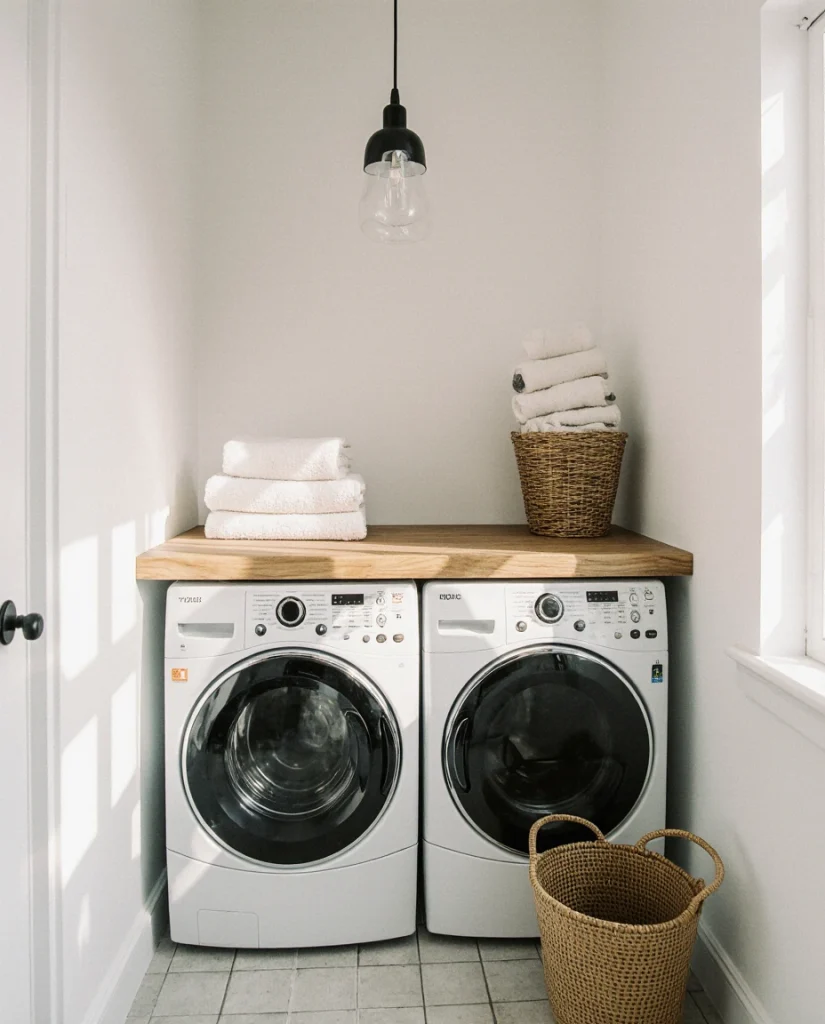
This setup is especially common in newer suburban homes in Texas, Arizona, and the Carolinas, where laundry rooms are generously sized and folding in place saves trips to the bedroom. The key is making sure the counter is deep enough—at least twenty-four inches—so you have room to spread out a shirt or towel without knocking things off the back edge. Homeowners who skip this step often end up with a counter that’s more decorative than functional.
20. Clear Acrylic Organizers for Visibility
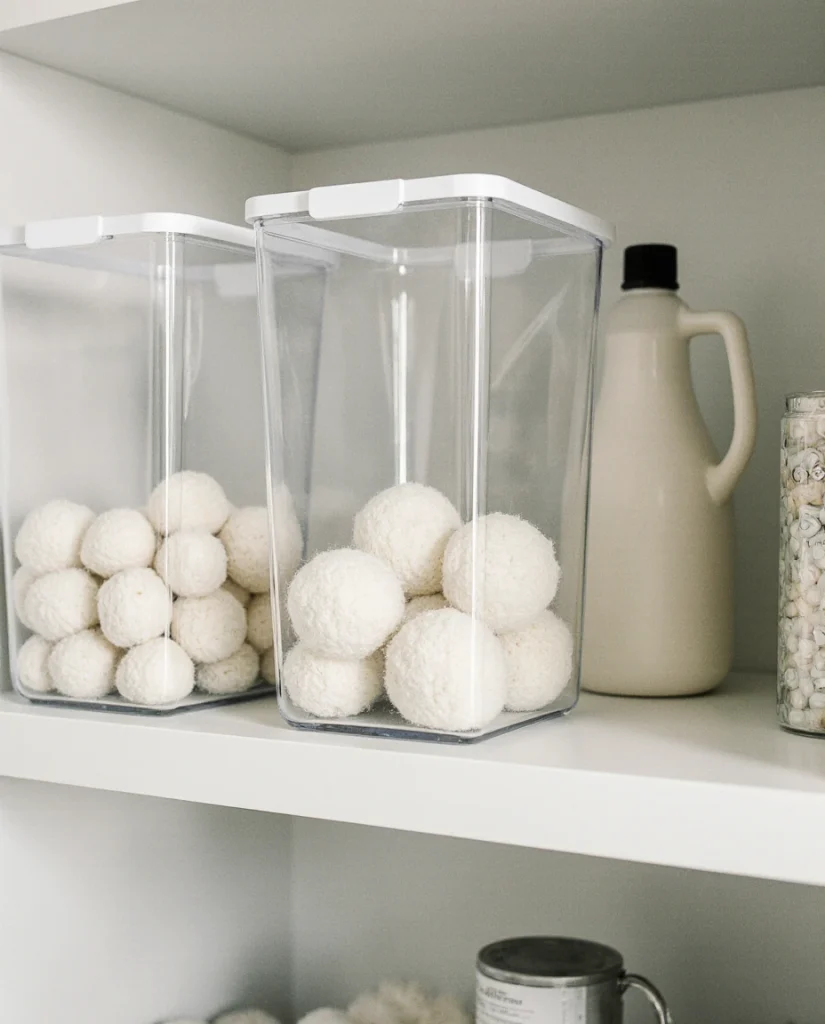
Clear acrylic organizers on shelves or in cabinets let you see exactly what’s inside without pulling everything out, which is a game-changer for small-space laundry room setups where you need to make quick decisions. Use them to corral detergent pods, dryer balls, stain removers, and sewing supplies—each category in its own container. The transparent design keeps the look light and clean, which is especially helpful in tiny or closet laundries where visual clutter can make the space feel even smaller. This is one of those aesthetic and practical combos that actually delivers on both fronts.
Real homeowner behavior reveals that people are far more likely to put things back where they belong when they can see the designated spot at a glance. Acrylic organizers range from five to thirty dollars depending on size, and they’re available at Ikea, the Container Store, or Amazon. The only downside is that acrylic can scratch over time, so handle it gently and avoid abrasive cleaners—a soft cloth and mild soap will keep it crystal clear for years.
21. Vertical Wall-Mounted Ironing Board

A wall-mounted ironing board that folds up when not in use is a brilliant space-saver for laundry room setups where floor space is limited. These boards attach to the wall with a hinge system, swing down for use, and fold back up flat—taking up about four inches of wall depth when closed. It’s one of those storage ideas that feels almost luxurious because you never have to haul a clunky board out of a closet or trip over it in the hallway. Look for models with a built-in outlet or shelf for your iron to make the setup even more convenient. 
This solution works particularly well in urban apartments in cities like San Francisco, Boston, and Chicago, where laundry facilities are small and often located in repurposed closets or alcoves. Most installations take about an hour and are anchored into studs and finish off with a permanent fixture adding function and resale value. Costs are from $80-200, depending on features and finish, but refunds are overwhelmingly positive home users and they rate this as an effective laundry home solution.
Conclusion
These twenty-one ideas show that laundry room organization is not a costly value-adding exercise or a complete remodel, but rather insightfully incorporating vertical space, clever storage products, and a homemade system tailored to your home and habits. A laundry room does not need to be a place of frustration. With a thoughtful combination of shelves, baskets, cabinets, and DIY elements, an effective laundry solution can be created. What do you think is the best storage solution you’ve come up with, or what challenges do you face? Please let us know what you think in the comments below.