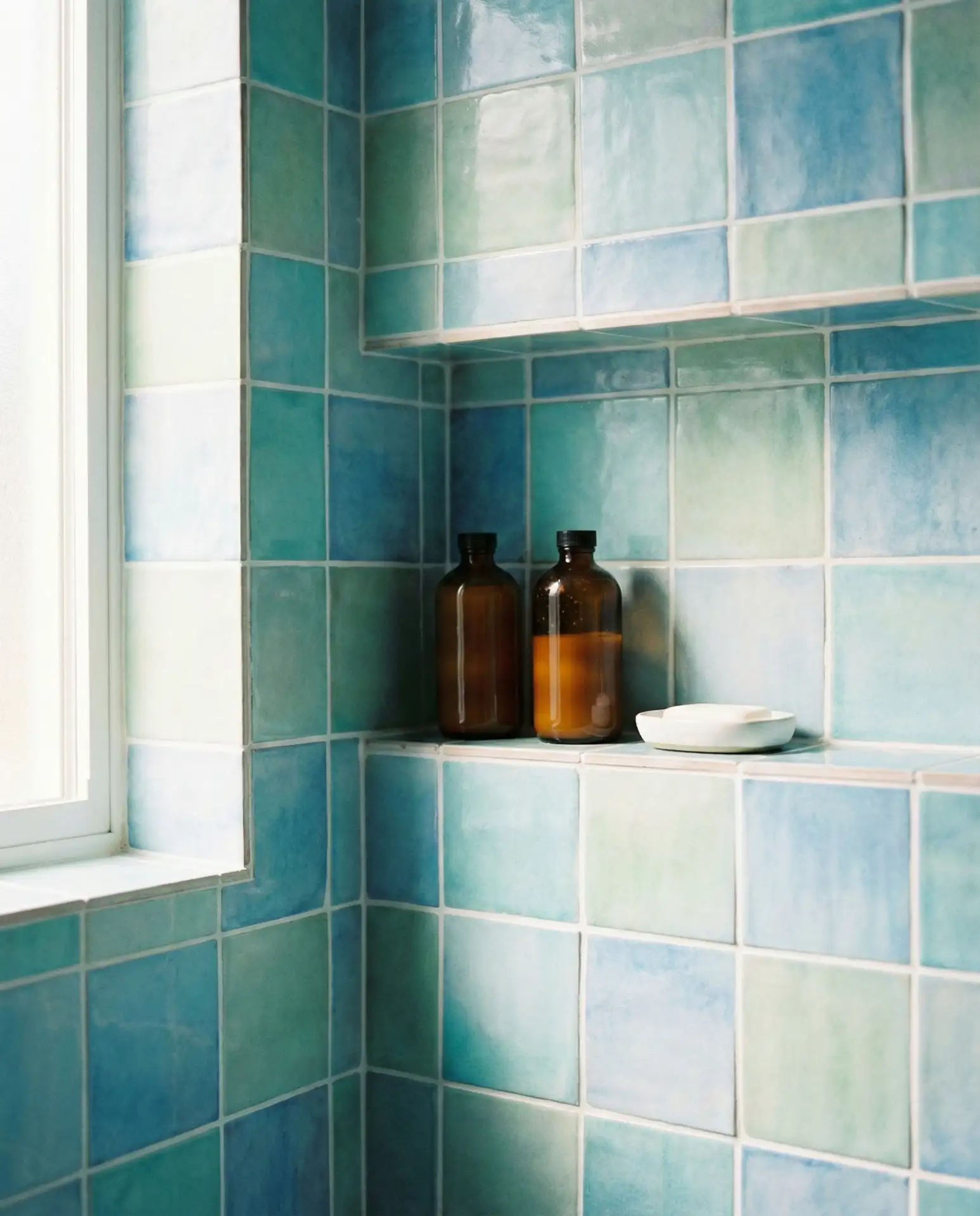
If there’s one room Americans keep coming back to on Pinterest, it’s the master bathroom. More than a place to get ready in the morning, the primary bath has quietly become one of the most personal spaces in the home—a place to exhale, reset, and surround yourself with design that actually feels like you. In 2026, the trends are bold, the palettes are intentional, and the layouts are smarter than ever. Whether you’re deep into a full renovation or just dreaming about what could be, this roundup covers fresh ideas worth pinning, saving, and stealing. From moody dark walls to breezy spa-like neutrals, there’s something here for every style, every budget, and every square foot.
1. Warm Neutral Walls That Actually Feel Cozy
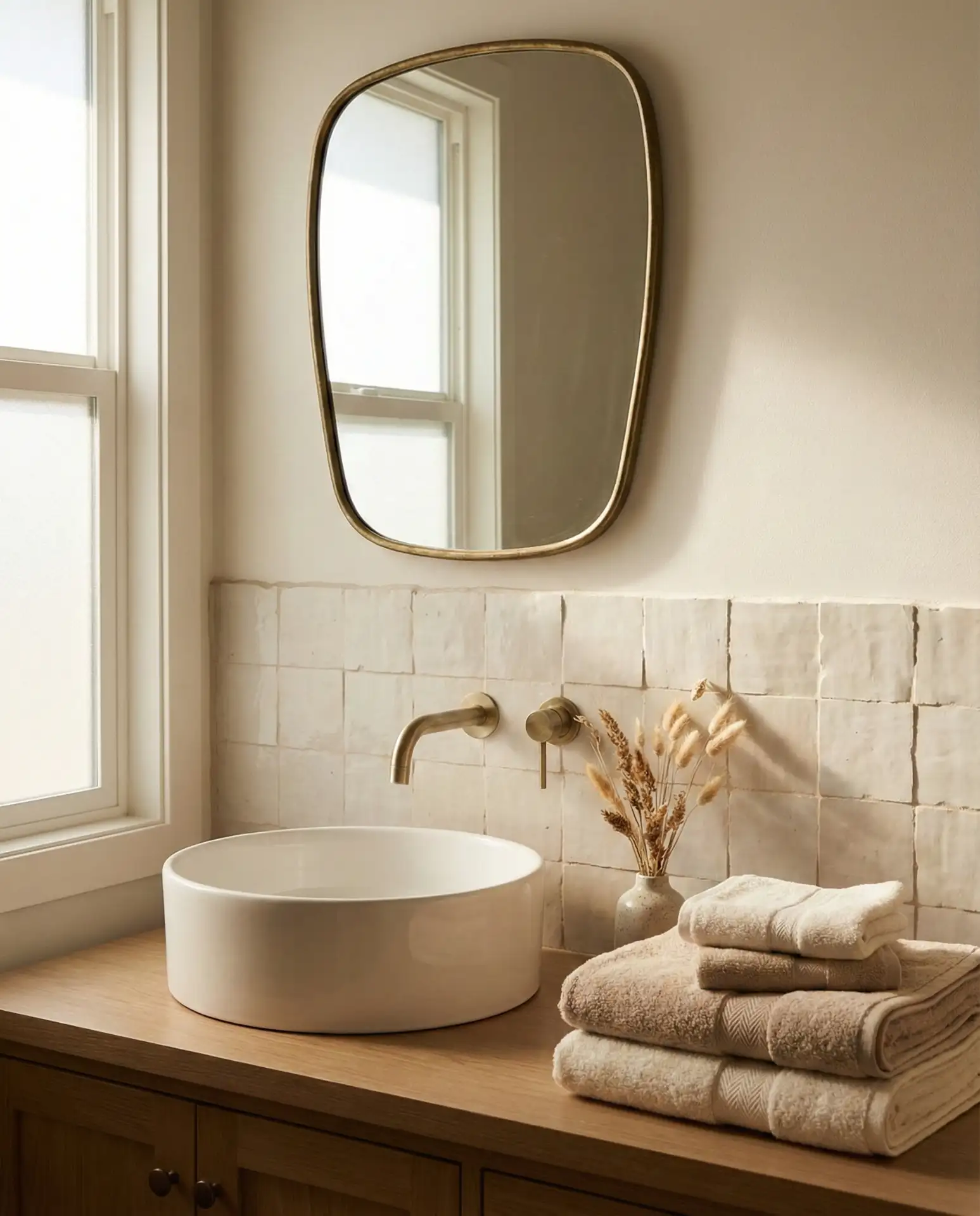
There’s something about a warm neutral palette in a primary bathroom that feels genuinely lived-in—not staged, not cold, but real. Think creamy limewash plaster, soft greige tiles, and brushed brass fixtures that pull the whole look together. This approach works especially well in medium-sized bathrooms where you want warmth without sacrificing light. The key is layering textures: a matte wall beside a glossy tile floor, a woven rug beside a chrome faucet. The contrast is subtle, but it’s what keeps the room from feeling flat.
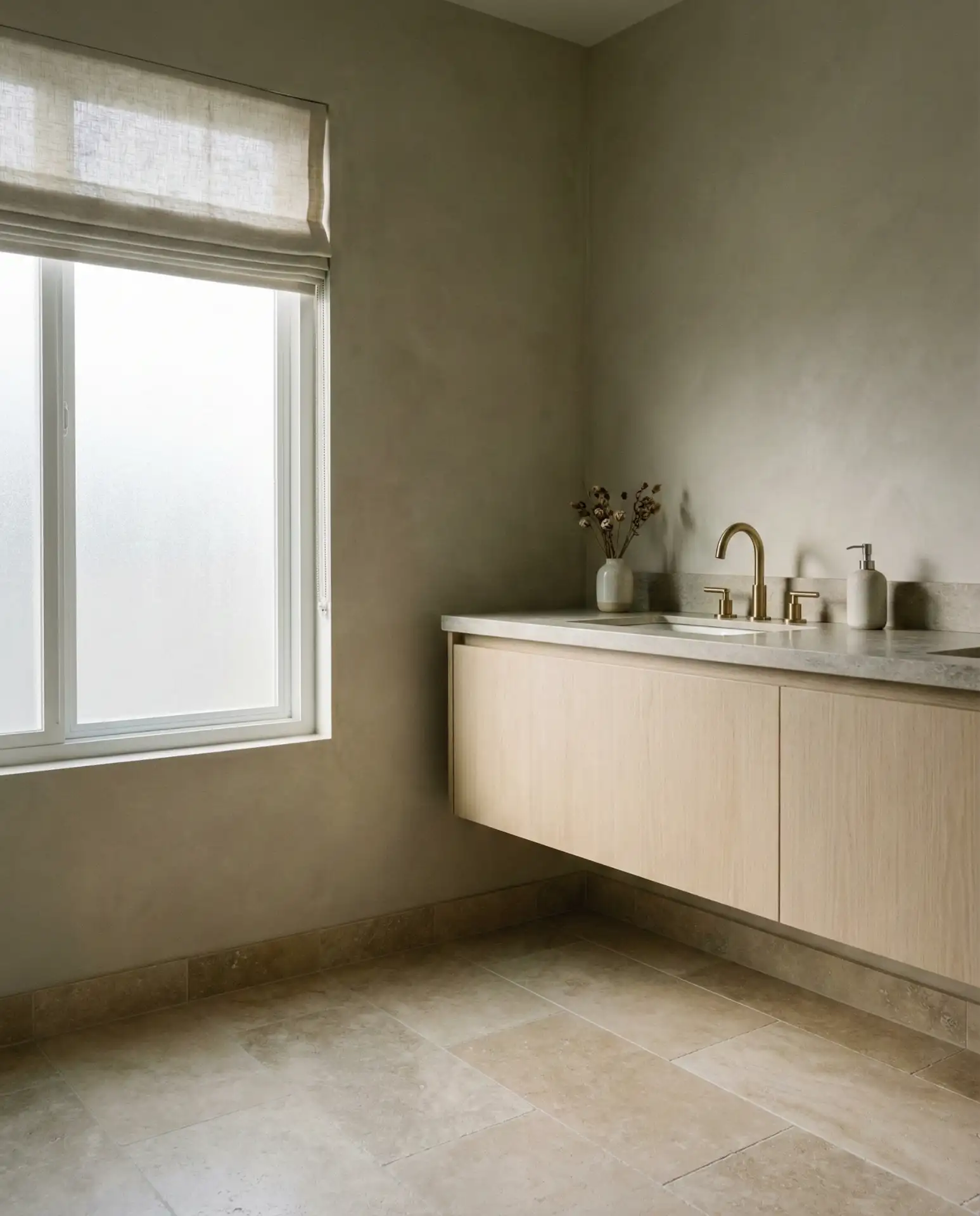
If you’ve been afraid that neutrals will look boring, this is the approach that changes minds. The trick designers swear by is keeping your grout a shade or two warmer than your tile—stark white grout on warm stone immediately cools everything off. A touch of terracotta in your towels or a wood-framed mirror also goes a long way. Where it works best: south-facing bathrooms that get plenty of natural light and can handle a deeper, earthier base tone without going dim.
2. Spa-Inspired Shower With Rain Head and Stone Bench
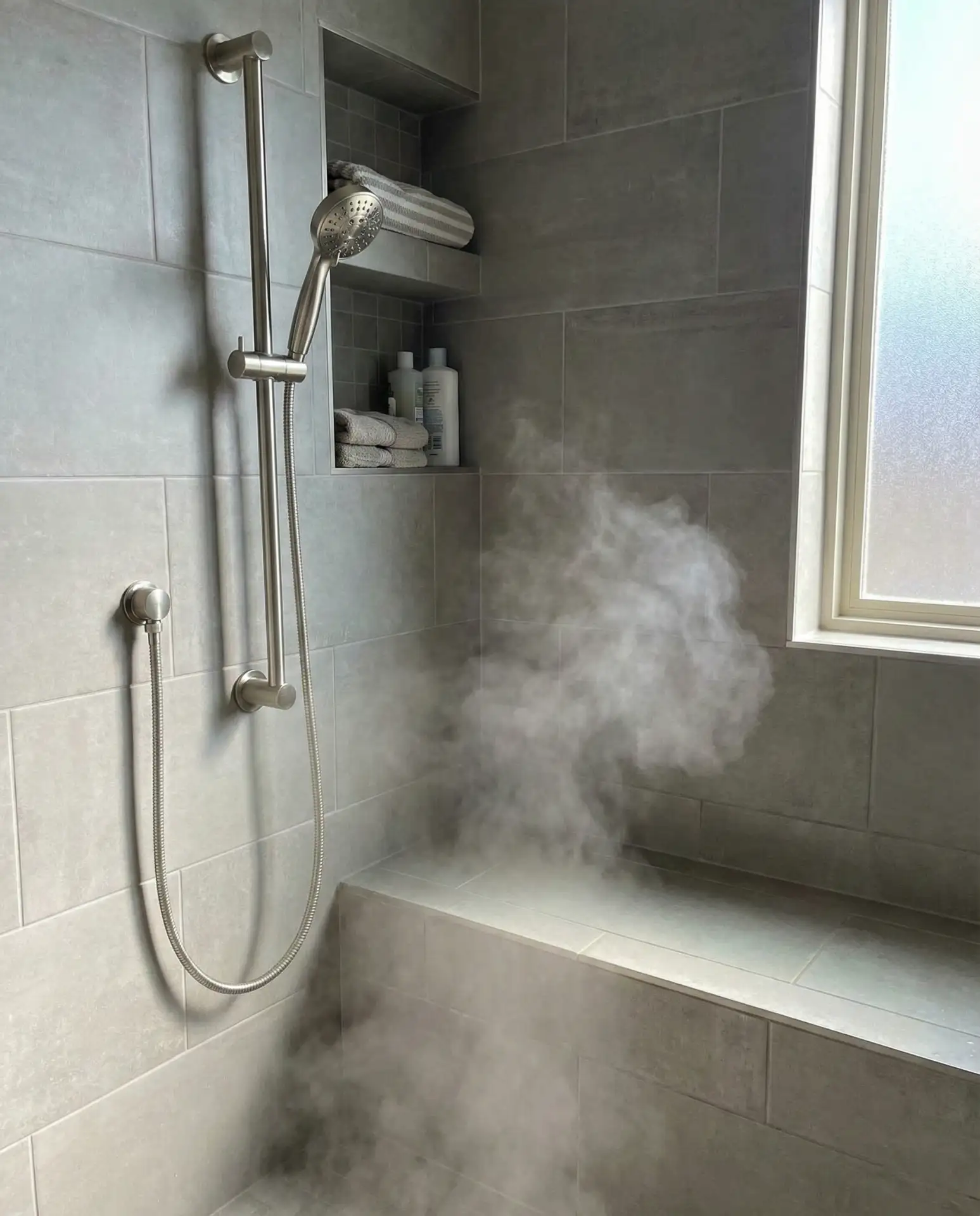
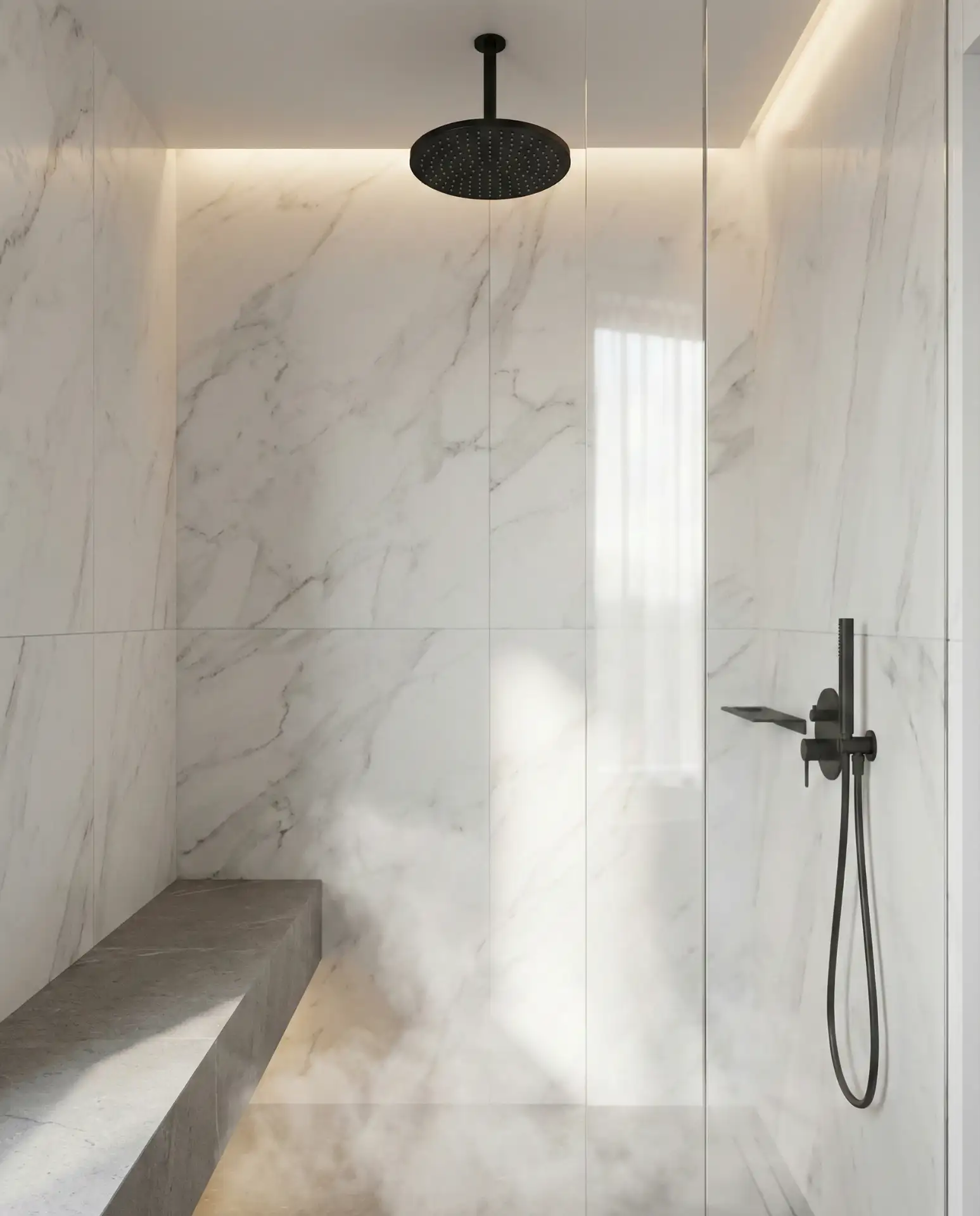
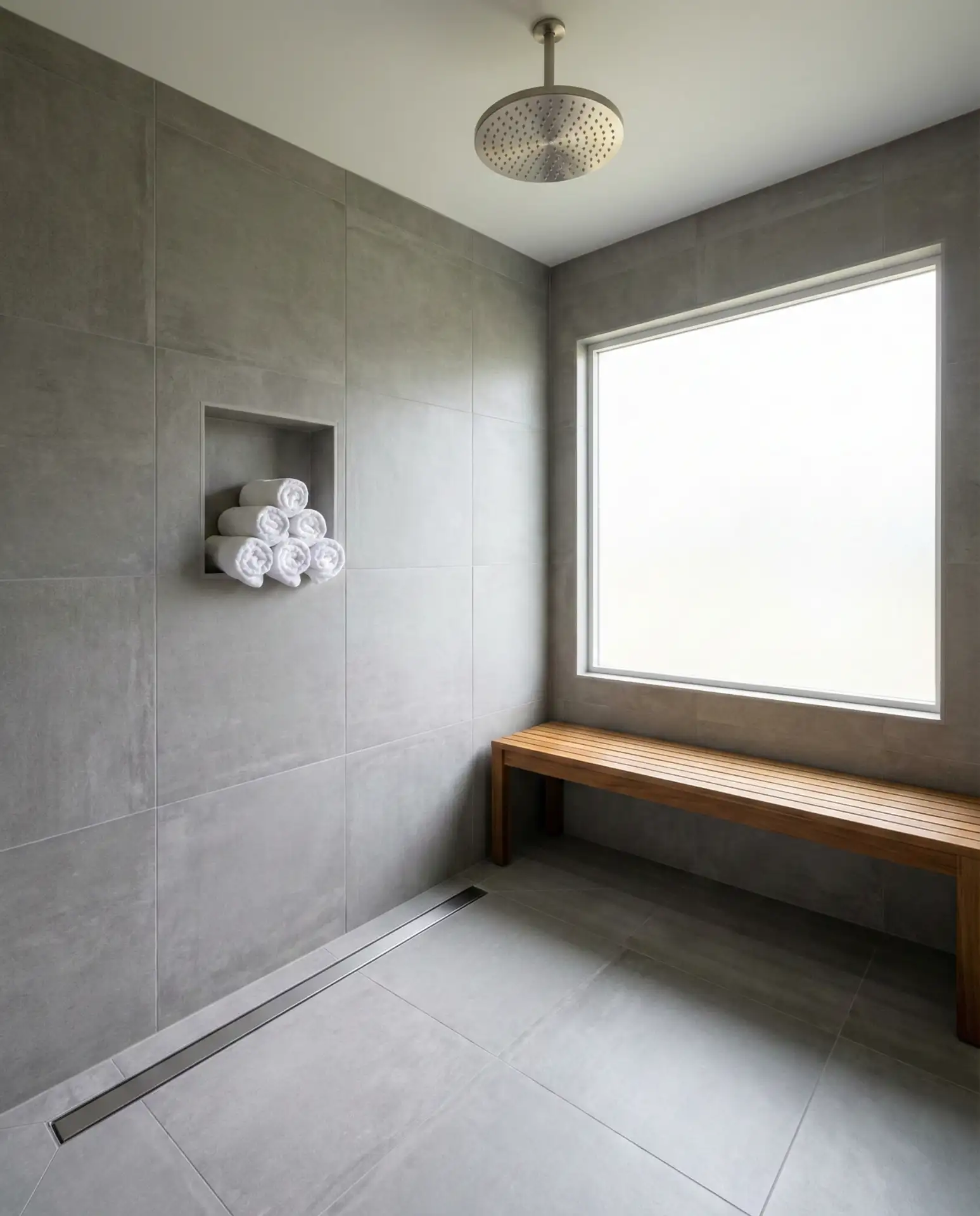
The spa bathroom trend isn’t going anywhere in 2026 — it’s just getting more refined. We’re talking large-format porcelain panels that mimic marble, an oversized rain shower head mounted in the ceiling, and a built-in stone bench that doubles as a shelf. These details take what feels like a luxury hotel experience and bring it home without requiring a full gut renovation. The walk-in design works beautifully in ensuite bathrooms attached to the primary bedroom, making the morning routine feel less like a task and more like a ritual.
 .
.
Budget-wise, you don’t have to splurge on real stone to get this look. Porcelain slabs that mimic calacatta marble run $4–$10 per square foot at most home improvement stores, and they’re far more forgiving on humidity than natural stone. The rain head itself is often the most impactful upgrade—even a mid-range ceiling-mount fixture from a brand like Kohler or Moen can transform the shower experience completely. Pro tip: go frameless on the glass enclosure even if it stretches the budget a bit; the open, airy feel is worth every penny.
3. Dark and Moody: Navy and Charcoal Done Right
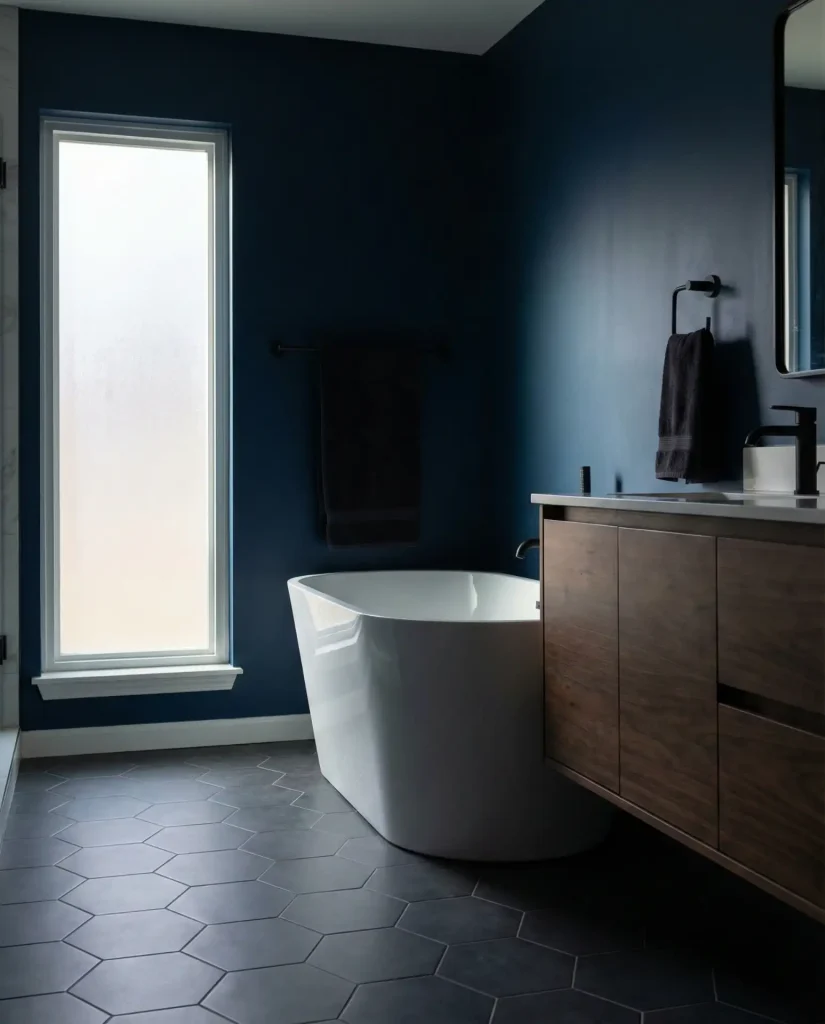
Going dark in a bathroom used to feel risky. Now it’s one of the most-pinned aesthetics of 2026. Deep navy walls paired with charcoal penny tile and matte black hardware create a space that feels both dramatic and intimate—the kind of room you want to linger in. This palette works especially well for modern primary bathrooms where the architecture has clean lines and minimal ornament. The contrast with white porcelain fixtures makes the dark walls pop without feeling oppressive, and the result is a room that photographs beautifully from every angle.
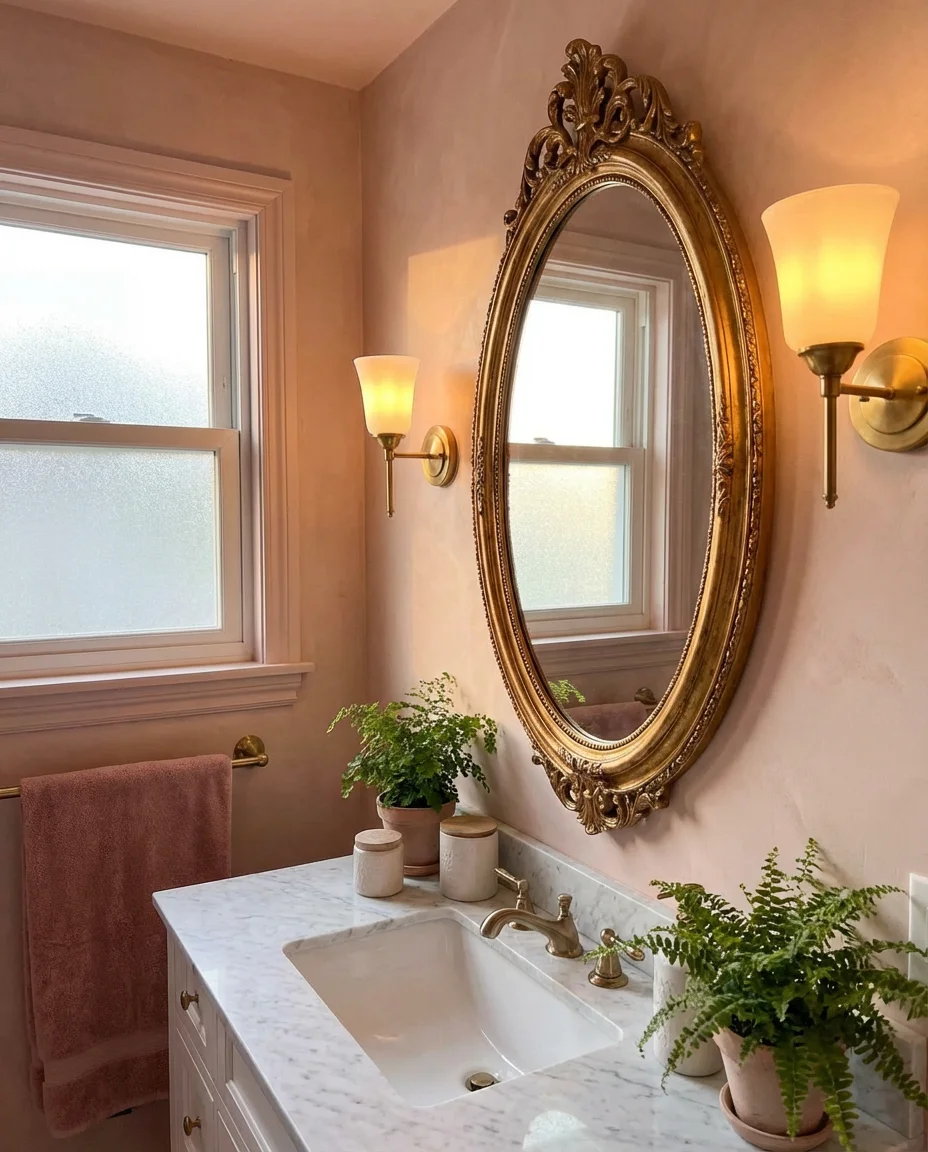
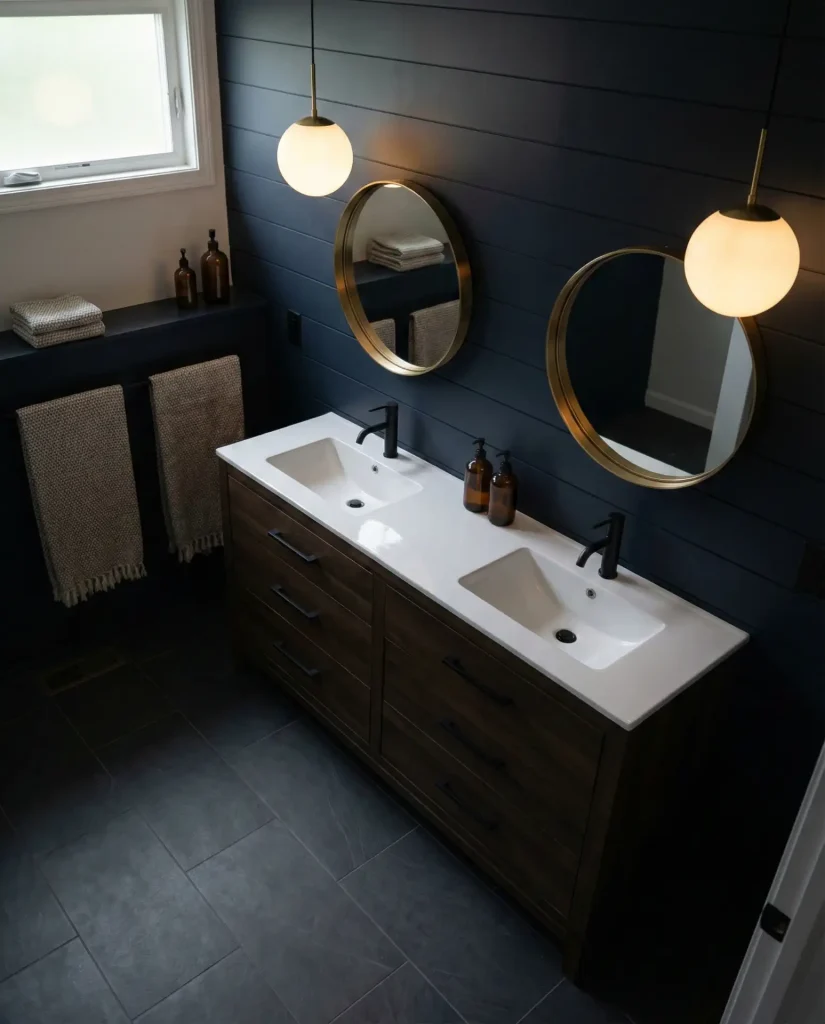
The biggest mistake homeowners make with dark bathrooms is not layering enough light. Recessed lighting alone won’t cut it—you need sconces at eye level flanking the mirror, and ideally some natural light from a window or skylight. A common oversight is choosing a dark grout to match the tile and then finding the whole floor reads as a muddy void. Instead, try a slightly lighter grout in slate or dove grey: it gives definition without fighting the drama. Real homeowners who’ve committed to this look consistently report one thing—they wish they’d done it sooner.
4. Black and White Classic With Modern Twist
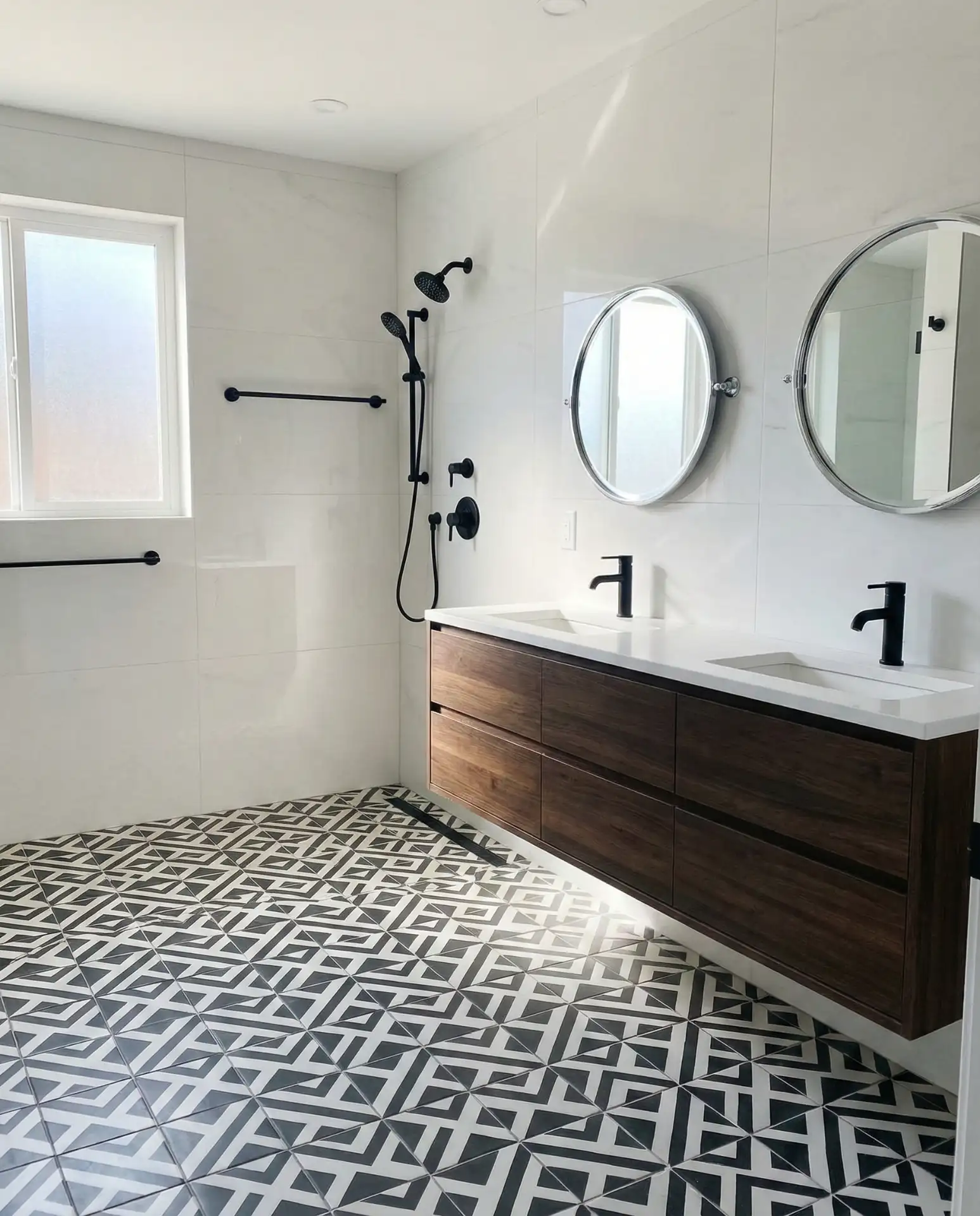
The black and white bathroom has been a design staple for decades, but the 2026 version gets a smarter update. Instead of checkerboard floors and subway tile walls, think graphic cement tile in a bold geometric pattern on the floor, sleek white slab walls, and matte black cabinet hardware with clean integrated pulls. The combination feels simultaneously retro and fresh—something that works just as well in a historic brownstone as it does in a new-build suburban home. It’s also one of the most neutral palettes you can choose, which means it pairs with any accent color you layer on top.
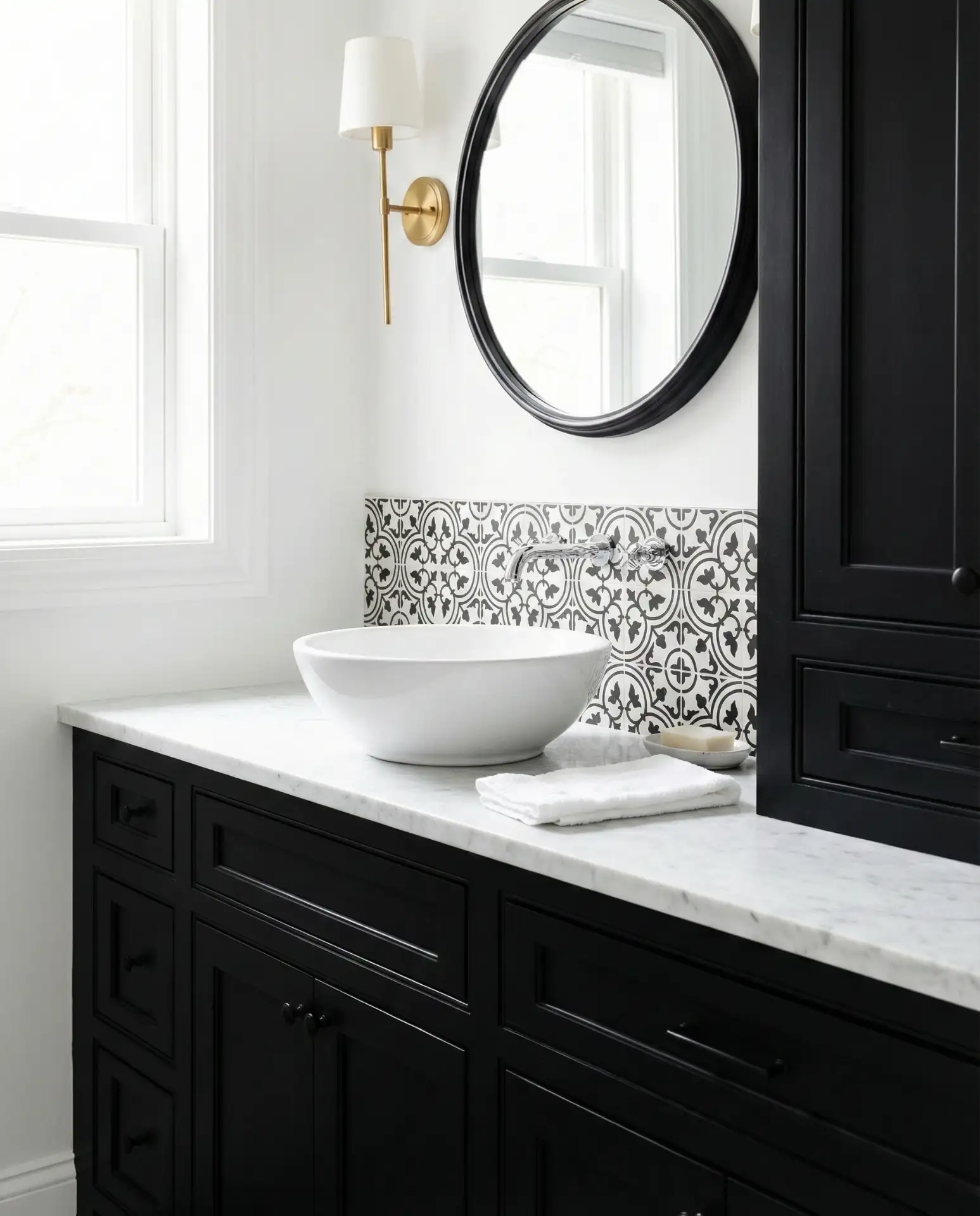
What makes this combination endure is its versatility—you can swing it warm by adding wood tones and brass or keep it stark and contemporary with chrome and concrete. Expert interior stylists often recommend treating the black elements as you would a neutral: use them liberally but purposefully, anchoring the room rather than spotlighting. One practical note: matte black faucets and hardware do show water spots more than brushed finishes, so they need a regular wipe-down to stay looking their best. Worth the upkeep? Most homeowners think so.
5. Tiny Bathroom, Big Impact: Compact Layouts That Feel Spacious
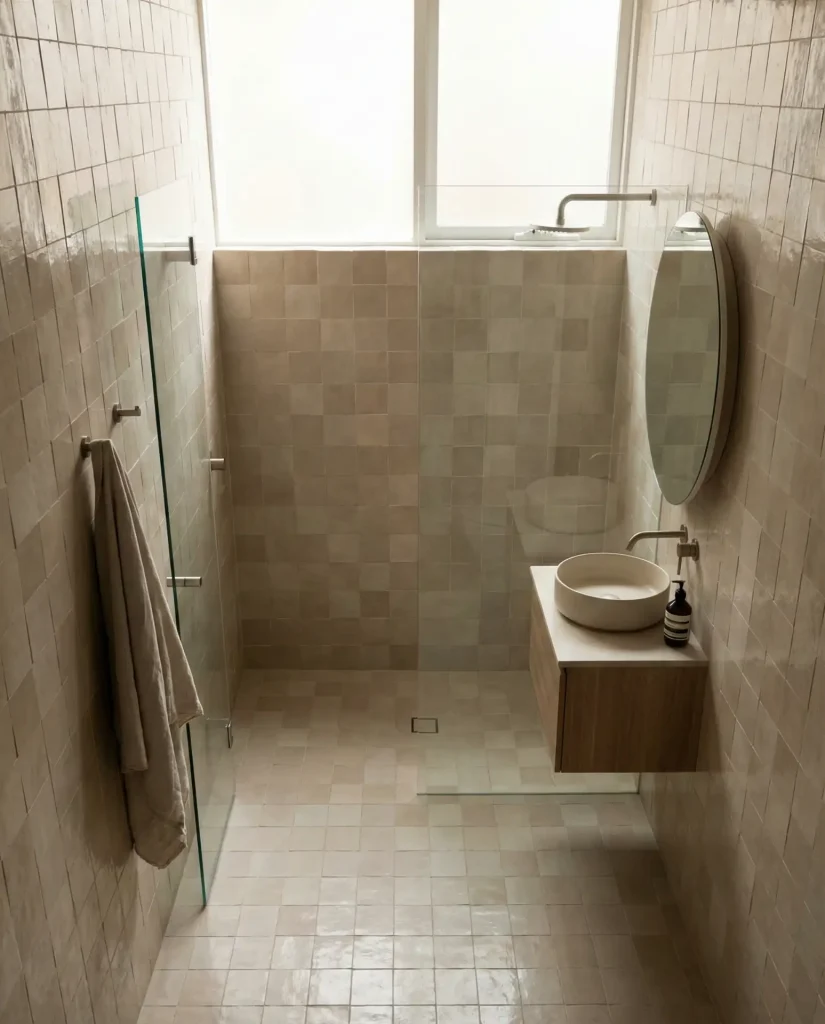
Working with a tiny footprint doesn’t mean sacrificing style—it means being smarter about it. In 2026, designers are leaning into small spaces as an opportunity rather than a limitation. The key moves include wall-mounted toilets to free up floor space, corner sinks that tuck neatly into unused areas, and large-format tiles that visually expand the room by reducing the number of grout lines the eye has to process. A consistent color palette from floor to ceiling also helps—when the walls and floor are in the same tonal family, the room reads as one continuous surface rather than a box.
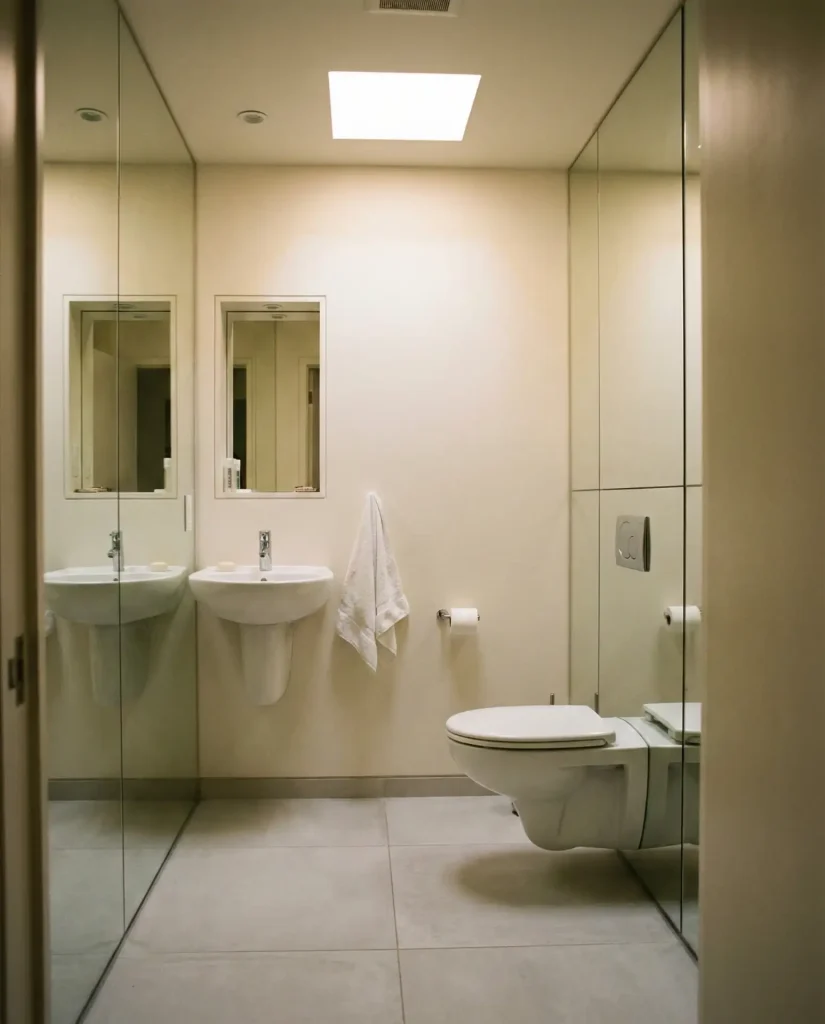
One underrated trick for small bathrooms is the pocket door. Swinging doors eat up a surprising amount of usable floor area—a pocket or barn-style door that slides along the wall reclaims that square footage instantly. For storage, go vertical: open shelves stacked to ceiling height draw the eye upward and make the ceiling feel taller. Where this layout works best is in older homes where bathrooms were built small as an afterthought—the constraints are real, but the design creativity they inspire is often more interesting than what you’d get with a sprawling footprint.
6. Green Botanical: Bringing the Outdoors In
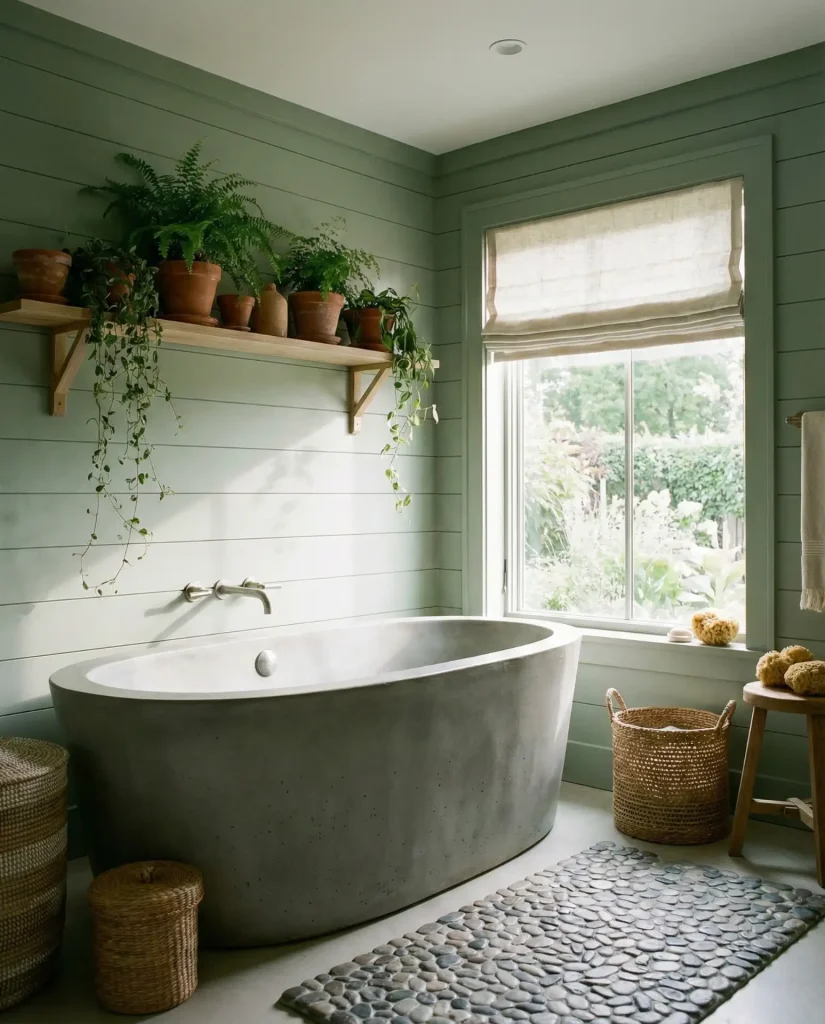
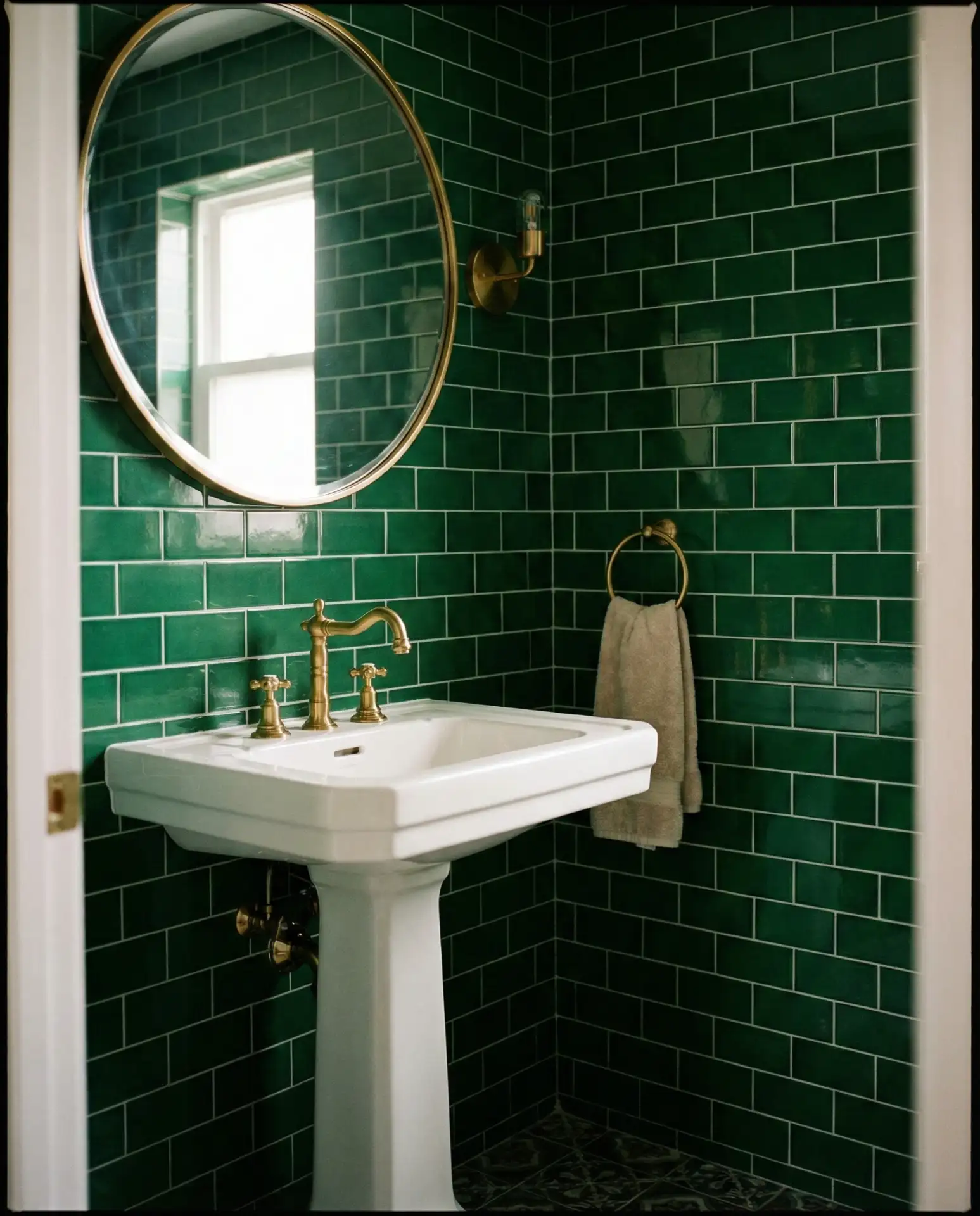
Sage, forest, olive, and hunter—green is having its biggest bathroom moment in years, and the 2026 version leans hard into the botanical. We’re talking deep green zellige tile behind the vanity, trailing pothos plants on floating shelves, terracotta pots beside the tub, and earthy linen towels in moss and fern tones. The overall feeling is less “green bathroom” and more “verdant escape.” This works particularly well in rustic settings—a farmhouse primary bath, a mountain cabin ensuite—where the connection to nature feels intentional rather than trendy.
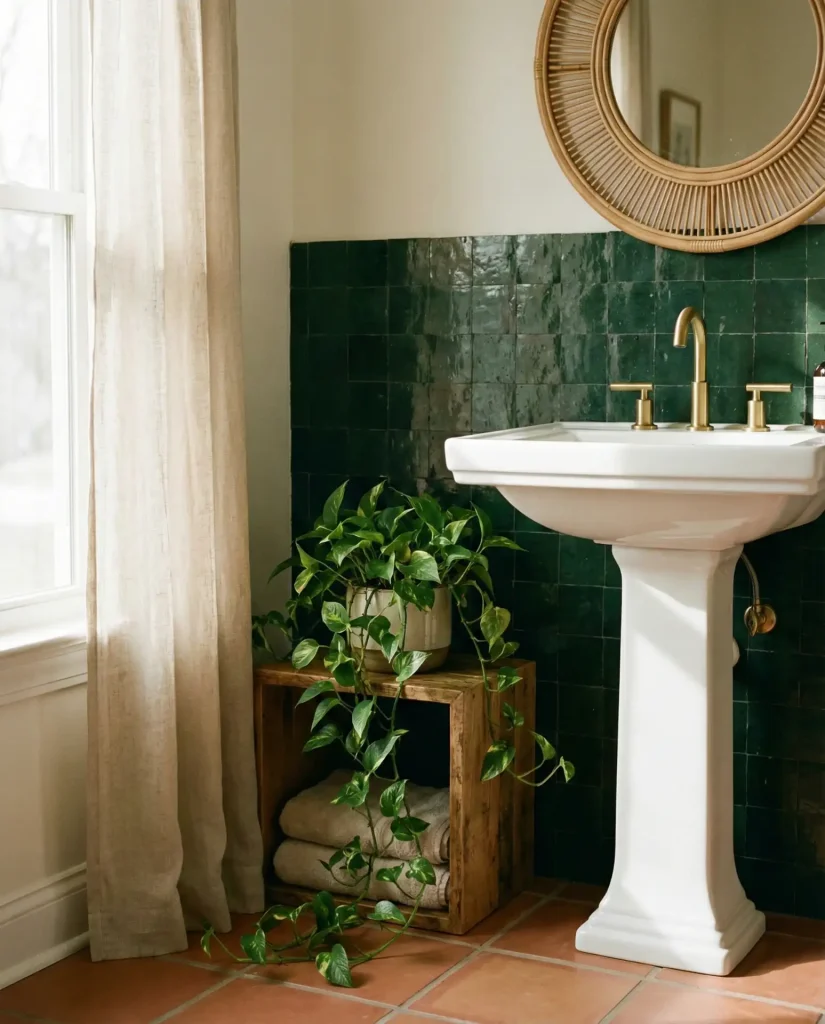
Practically speaking, the bathroom is actually one of the best rooms for houseplants. The humidity from daily showers is a gift to tropical varieties like ferns, snake plants, pothos, and bird of paradise. A bathroom plant collection doesn’t need to be elaborate to make an impact—even a single trailing philodendron on a floating shelf beside the mirror changes the whole energy of the room. One thing to plan for: if your green tile is very saturated, keep your fixtures and countertops lighter so the room doesn’t go too dark.
7. Grey Minimalist With Heated Floors and Floating Vanity
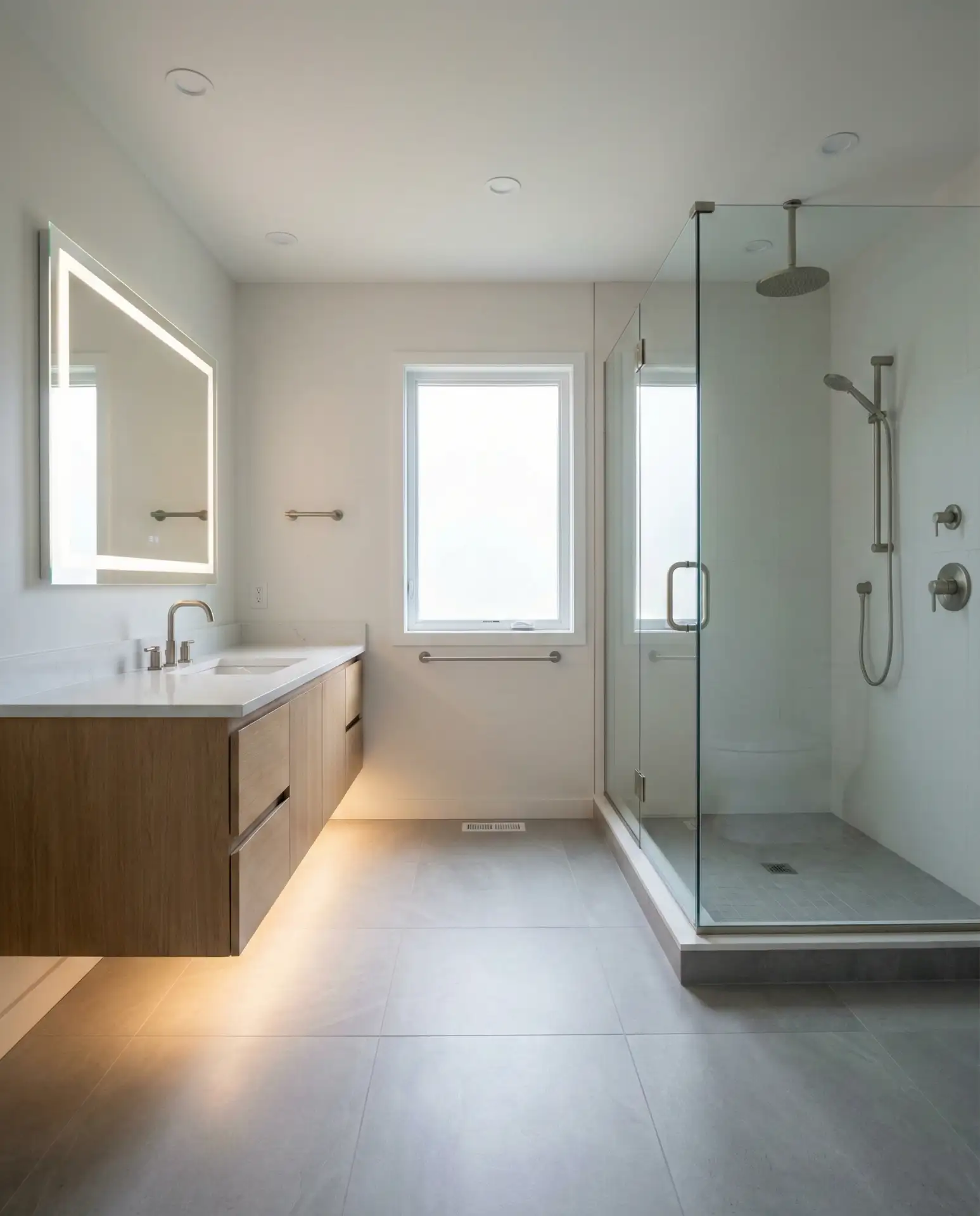
Cool grey done with restraint is quietly sophisticated—especially when it’s anchored by a floating vanity with integrated lighting underneath, heated radiant floors, and a seamless glass shower with no frame interrupting the sightlines. This is the aesthetic that Americans living in colder climates—the Midwest, the Northeast, and the Pacific Northwest—are increasingly drawn to on Pinterest. The appeal makes sense: on a January morning, stepping onto a warm floor in a beautifully minimal bathroom makes the whole day feel like it started on the right note. It’s functional luxury, which is the most durable kind.
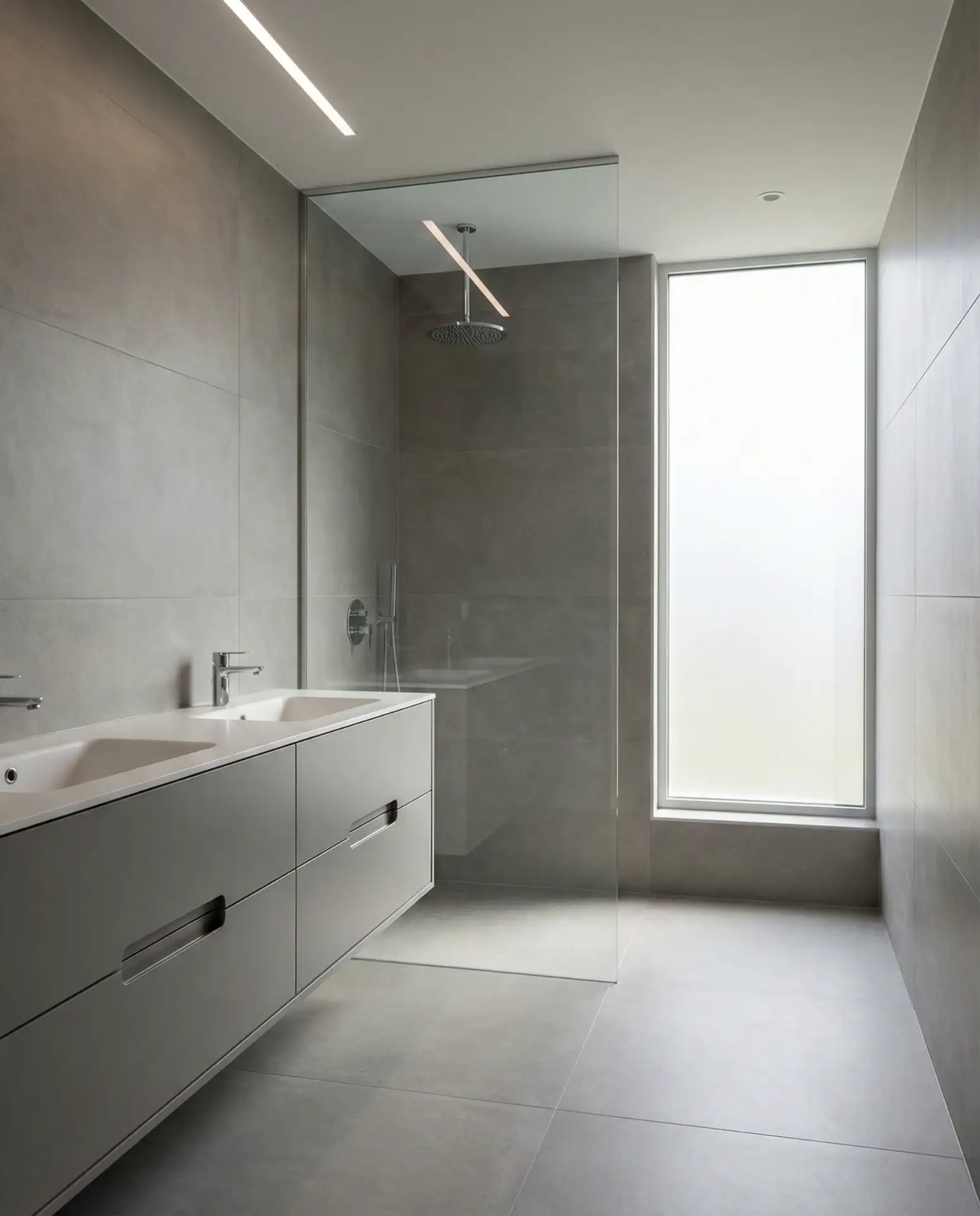
A design note worth sharing: in grey bathrooms, warm grey always wins over cool grey for livability. Cool grey with blue undertones can read clinical under artificial light—especially the warm color temperature of most bathroom fixtures. Warm grey with greige or taupe undertones stays softer and more inviting throughout the day. If you’re choosing tile samples, always hold them up under your bathroom’s actual lighting before committing. The showroom lighting at tile stores is rarely representative of real-world bathroom conditions, and it’s the most common source of buyer’s remorse.
8. Pink and Blush: Soft Femininity That Isn’t Precious
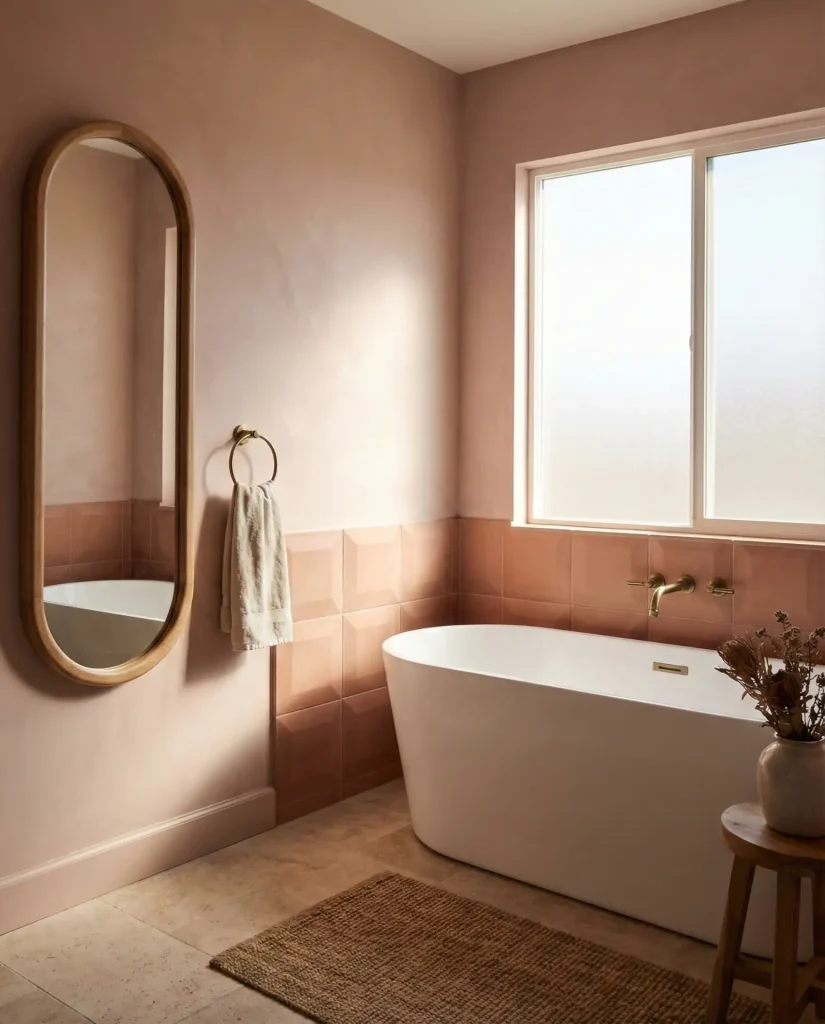
The pink bathroom is back, and it has grown up. The 2026 version isn’t the bubblegum pink of the 1950s or the millennial pink blush tile of a decade ago—it’s deeper, more complex. Think dusty rose plaster walls, terra-cotta blush tile in a wide beveled profile, and warm brass fixtures that deepen the whole composition. It’s a palette that reads as cute in smaller doses but genuinely sophisticated when you commit fully to it. The key is treating pink as a foundational neutral rather than an accent—ground it in stone and brass, and it loses its preciousness entirely.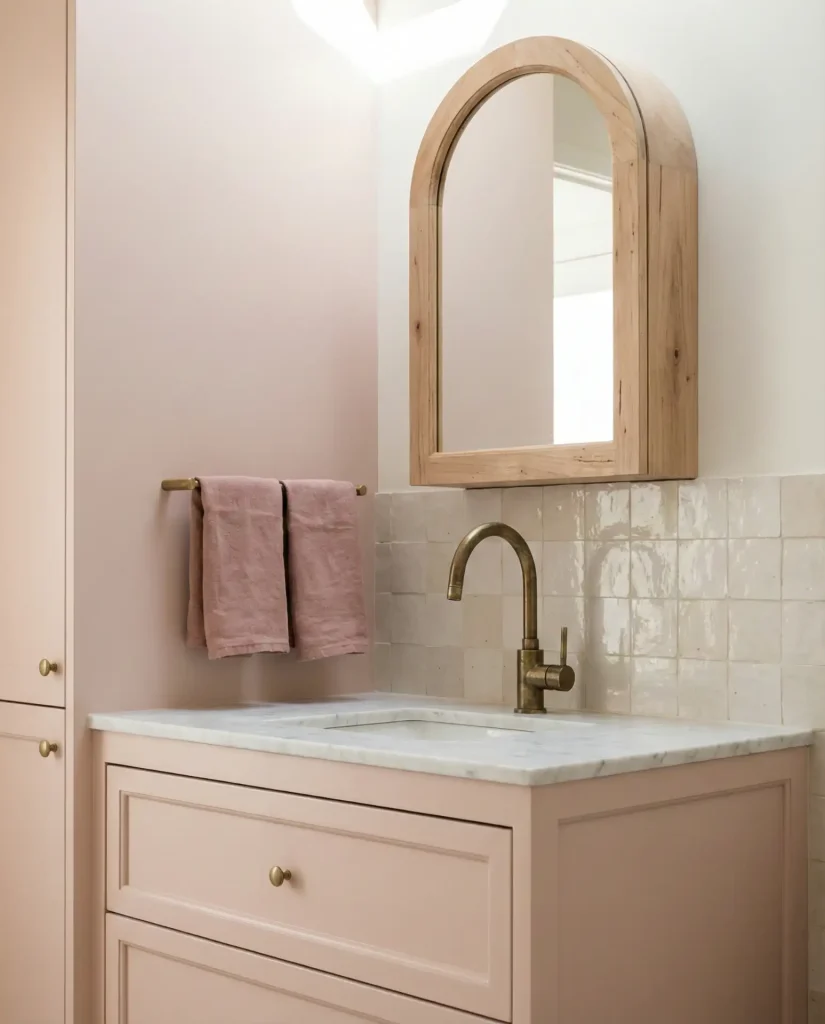
One micro-anecdote that captures this trend perfectly: a designer in Austin, Texas, shared online that after installing dusty rose limewash plaster in her primary bath, she had three neighbors ask who did it—they assumed it was a professional result, but the labor was something she handled herself over a weekend. Limewash paint is one of the most forgiving DIY projects precisely because the irregular, layered finish is supposed to look handmade. If you’ve been curious about pink but worried it will feel like a commitment you’ll regret, limewash is the lowest-risk way to test the waters.
9. White Bright With Marble and Brass: The Timeless Combo
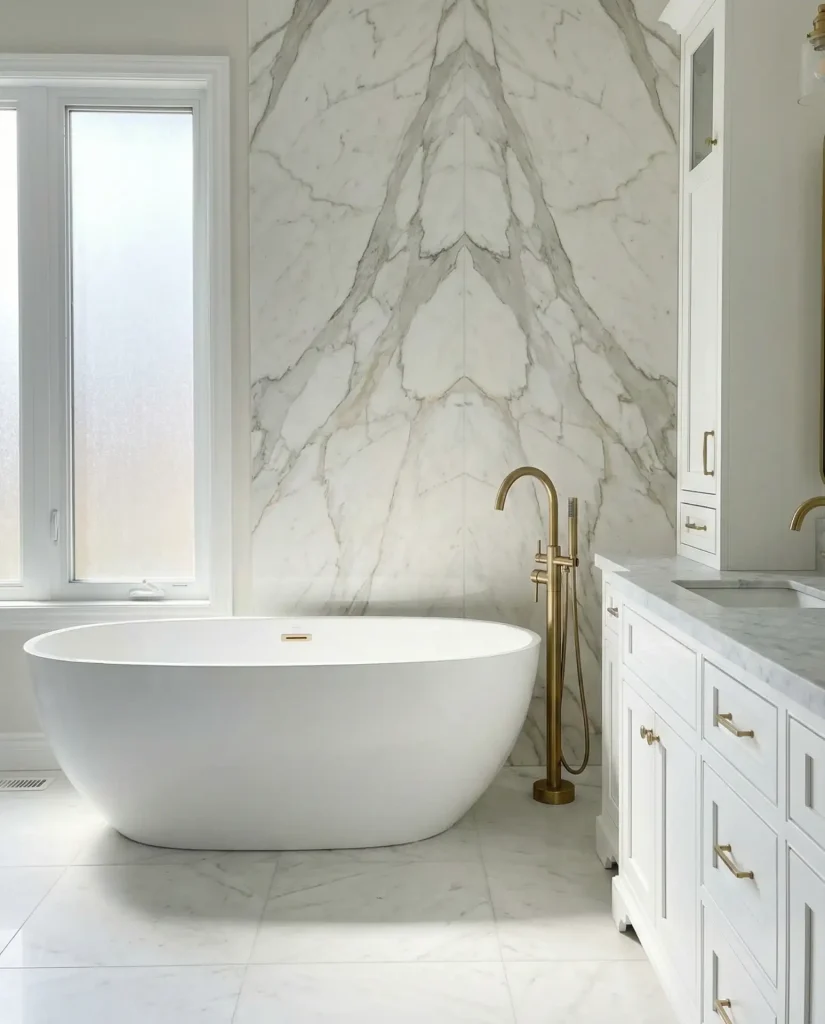
There’s a reason the white bathroom with marble and brass has never fully gone out of style—it’s essentially foolproof. White brightens, marble adds gravitas, and brass warms the whole palette without making it heavy. In 2026, this combination gets its smartest update yet: instead of full marble slabs everywhere, designers are using it strategically—a bookmatched marble panel behind the freestanding tub, marble-look tile on the shower floor, and honed (rather than polished) marble countertops that resist etching far better in daily use. The restraint makes it feel more considered than opulent.
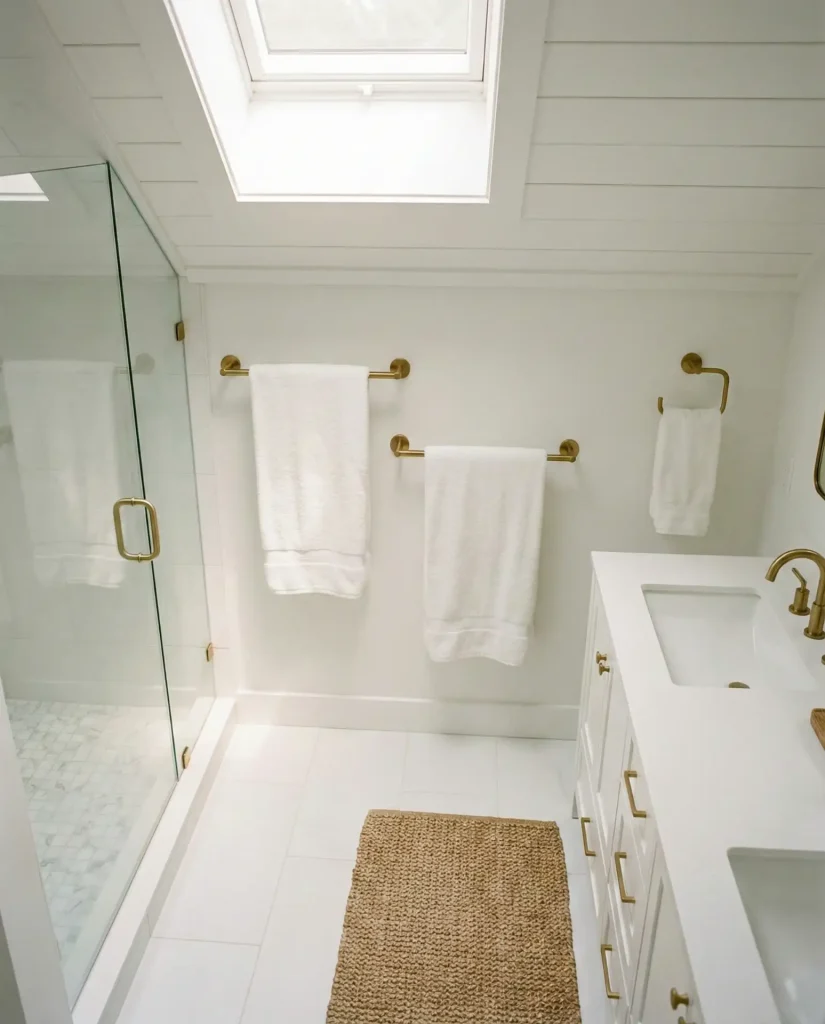
This is also one of the best palettes for resale value. Real estate agents in markets like Boston, Chicago, and Los Angeles consistently note that white bathrooms with stone and warm metal tones photograph best and generate the most positive buyer response during showings. It reads as clean, cared-for, and move-in ready—qualities that translate directly to offers. If you’re renovating with resale in mind, this is the combination to trust. It’s a space that photographs well for listings and lives well for the years before you’re ready to sell.
10. Rustic Wood and Stone: The Mountain Lodge Feel
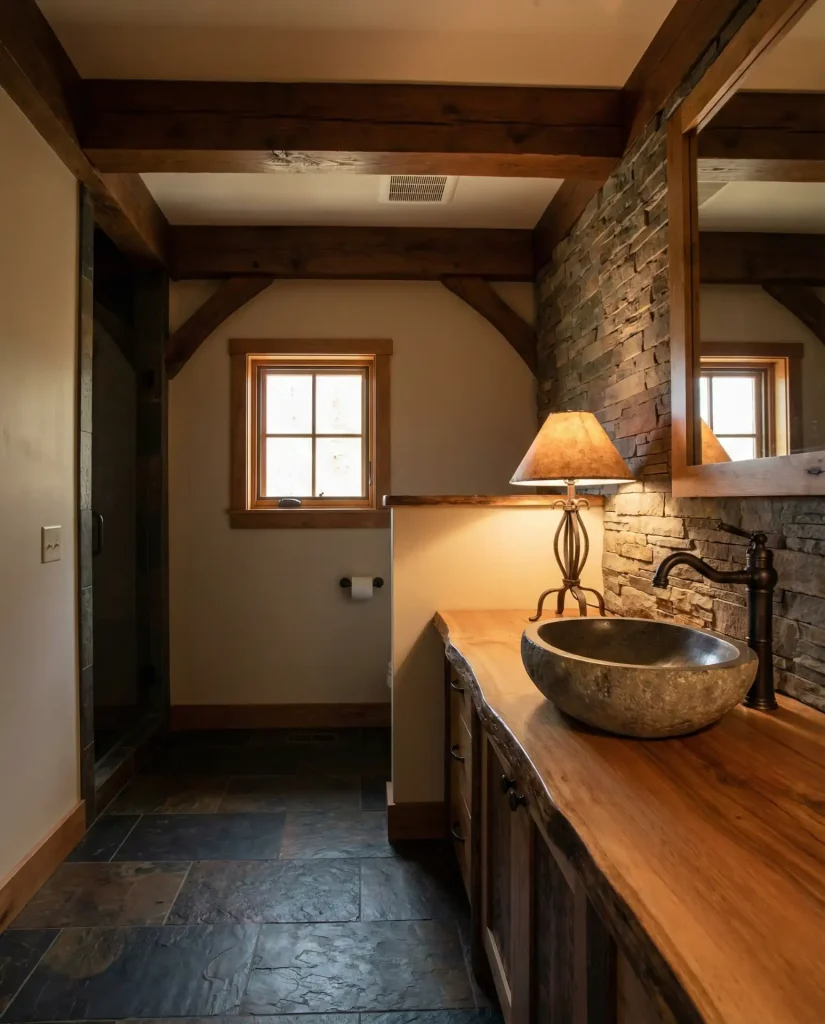
Raw wood beams, slate floor tile, a vessel sink carved from river stone—the rustic bathroom aesthetic in 2026 feels more organic and less manufactured than it did a few years ago. The trend has moved away from the kitschy cabin clichés (think rooster prints and faux antler towel hooks) toward something genuinely textural and warm. It’s the kind of bathroom you’d find in a well-designed Colorado mountain home or a converted Vermont barn—materials that feel extracted from the landscape rather than imported from a showroom. Dark wood tones and slate anchor the design without making it heavy.
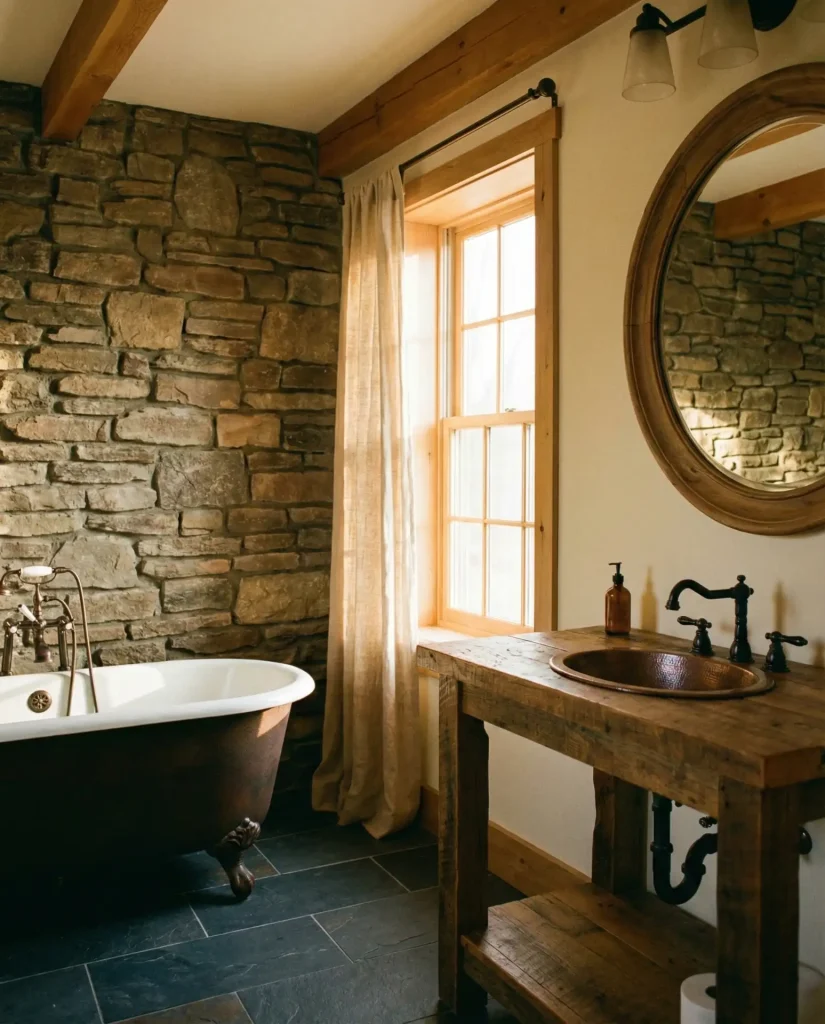
Where this look works best is in homes that already have natural material bones—exposed timber framing, stone foundations, or wood-paneled ceilings. Forcing a rustic palette onto a very modern, glass-and-steel home can feel incongruent. But if the architecture has even a hint of organic warmth, a rustic primary bath feels like the natural conclusion. The materials themselves are also more durable than they look—slate tile is dense and scratch-resistant, and properly sealed wood vanities hold up well in humid environments when they’re maintained annually.
11. Blue Serenity: From Powder to Midnight
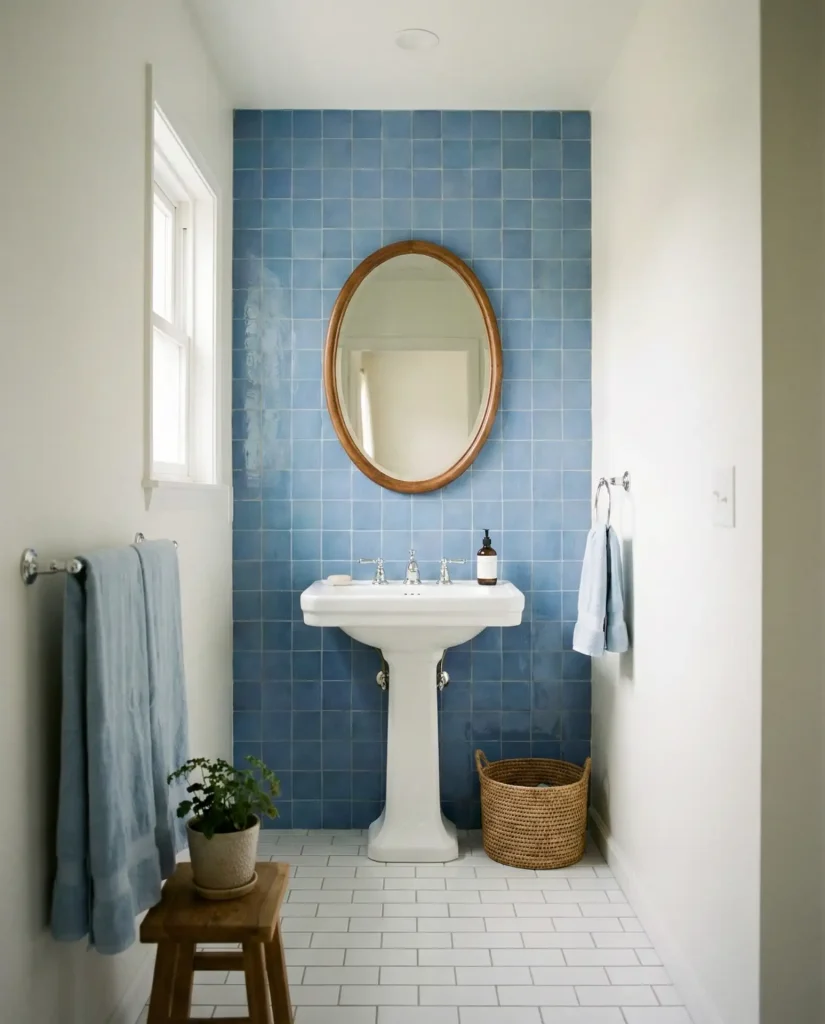
Few colors feel as naturally suited to the bathroom as blue—it reads as clean, calm, and watery without any effort. In 2026, the entire spectrum is in play: powder blue wainscoting in a guest bath, cornflower blue zellige tile in a small full bathroom, or midnight navy in a dramatic primary suite. The palette shifts depending on how much natural light the room gets and how bold you’re willing to go. For light-starved bathrooms, lighter blues with warm white trim read beautifully. For bathrooms with generous windows, deeper blues can absorb the light in a way that feels luxurious rather than heavy.
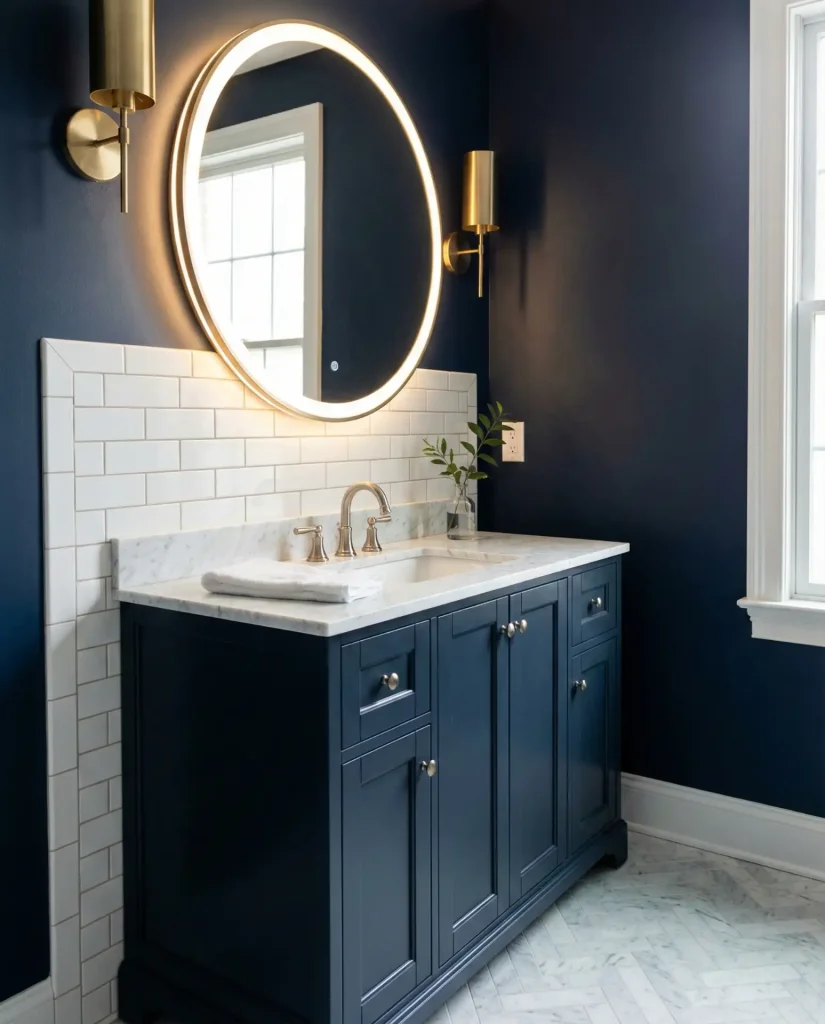
An expert styling note worth internalizing: if you’re going blue in a bathroom, grout color matters more than almost anything else. White grout with blue tile can make the space feel like a swimming pool—very literal and a bit cold. Try a soft grey or stone-colored grout instead; it lets the blue breathe and gives the tile more visual complexity. In terms of accessories, natural wood, rattan, and aged brass tones all complement blue beautifully and bring the palette off the walls and into the room in a way that feels layered and intentional.
12. Half Bathroom With Bold Wallpaper and a Statement Mirror
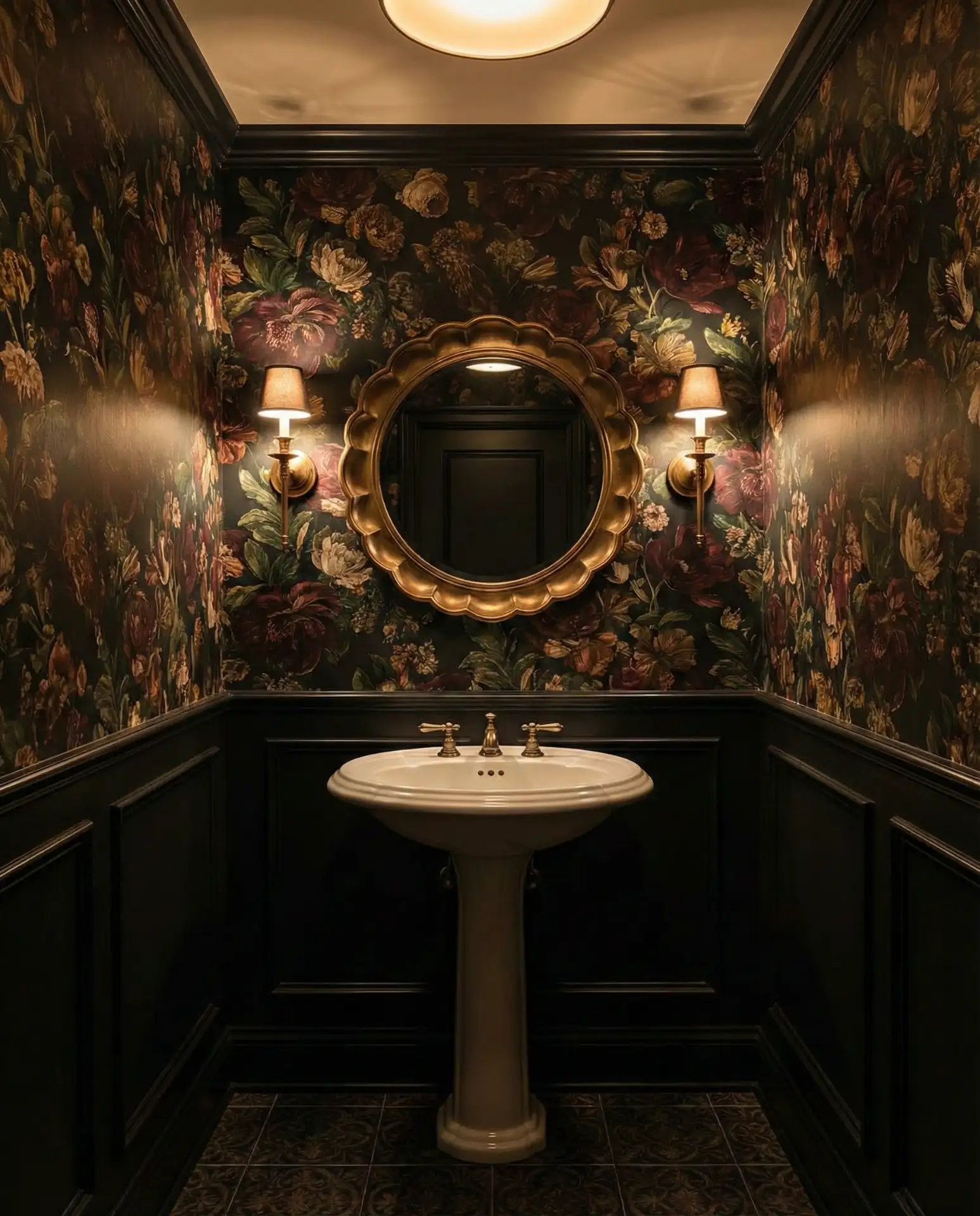
The half bathroom—powder room, guest bath, whatever you call it—is the one room in the house where maximalism is not only acceptable but encouraged. Because you’re not living in it daily, you can go as bold as you’ve ever wanted to: a vivid botanical wallpaper, an antique carved mirror, and a sculptural sink on a marble top, all in a space that might only be 30 square feet. It’s the perfect room to take a risk that you might be too hesitant to try in a larger space. In 2026, the standout trend for these rooms is the small half bath treated like an art installation.
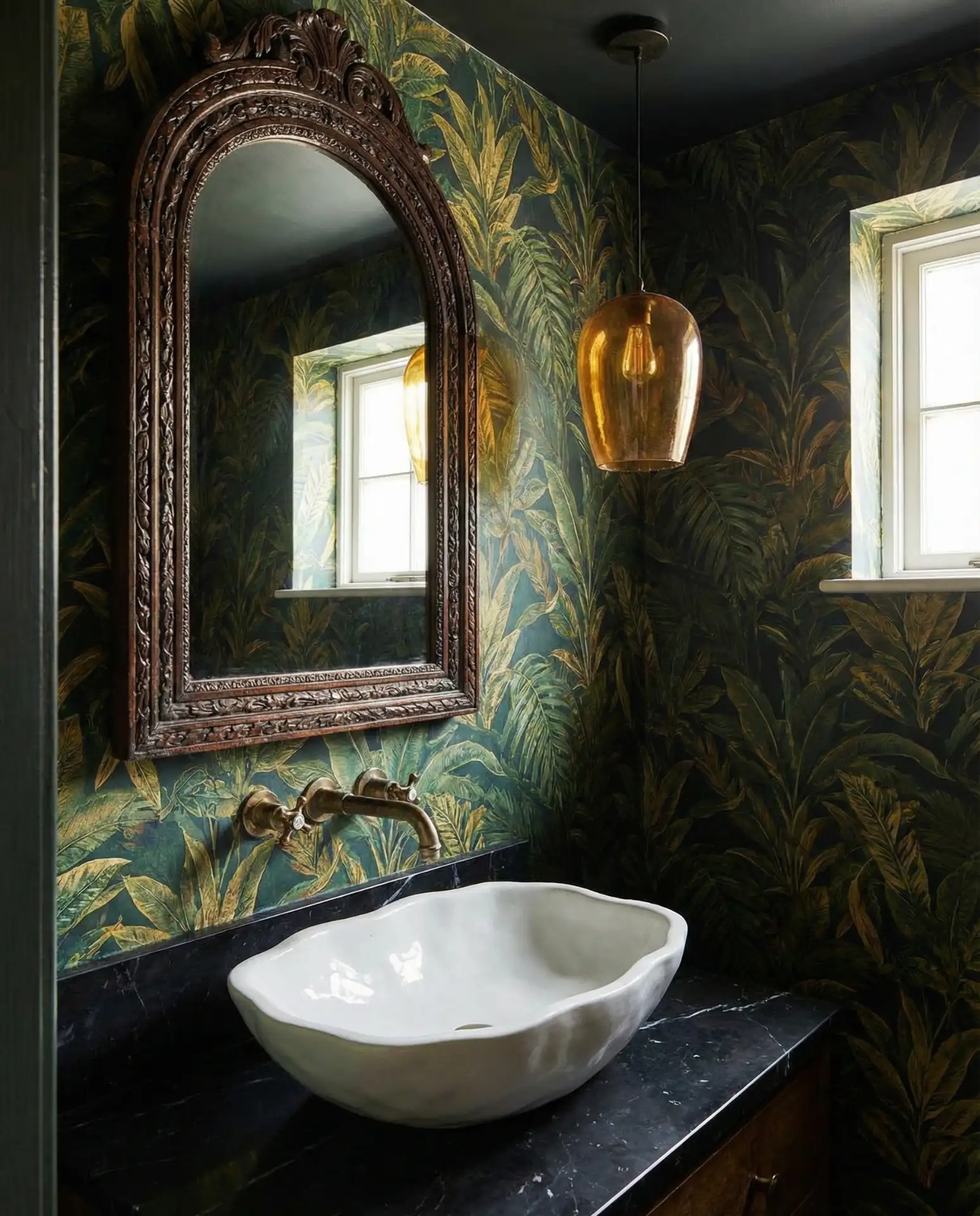
Real homeowner behavior in these spaces is telling: people who go bold in their powder room almost universally report that it becomes the most commented room in the house at gatherings. Guests notice it, remember it, and bring it up. It’s the design equivalent of a great coat—a small surface area with enormous expressive impact. The budget math also works out well: covering 30 square feet of wall with designer wallpaper costs a fraction of what it would in a living room, making it accessible for people who want to invest in quality without a full room-scale commitment.
13. Jack and Jill Layout: Stylish and Shared
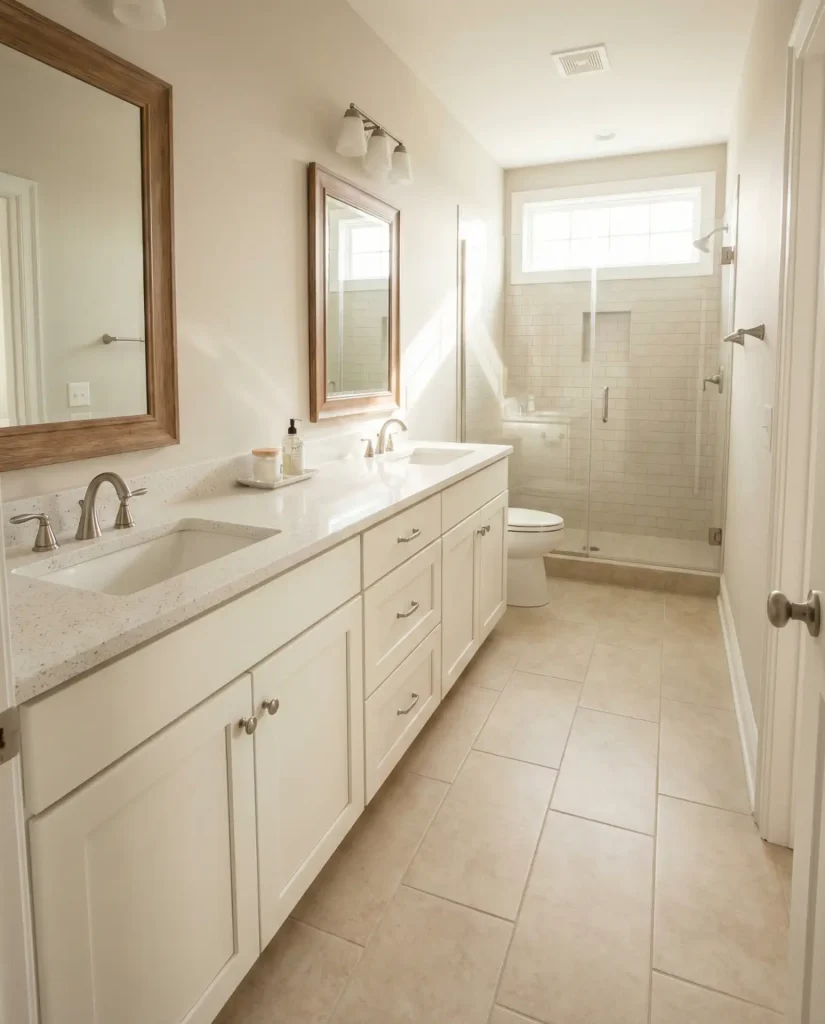
The jack-and-jill bathroom—shared between two bedrooms, accessible from both sides—has traditionally been a functional afterthought. In 2026, it’s getting the design respect it deserves. Families with multiple kids or guest configurations that require shared access are investing in double vanities with dedicated zones for each person, proper door privacy locks on both entry points, and clean, hardworking materials that stand up to heavy daily use. The most successful versions keep the palette neutral and modern—something that feels grown-up enough for adults but calm enough for kids transitioning into it.
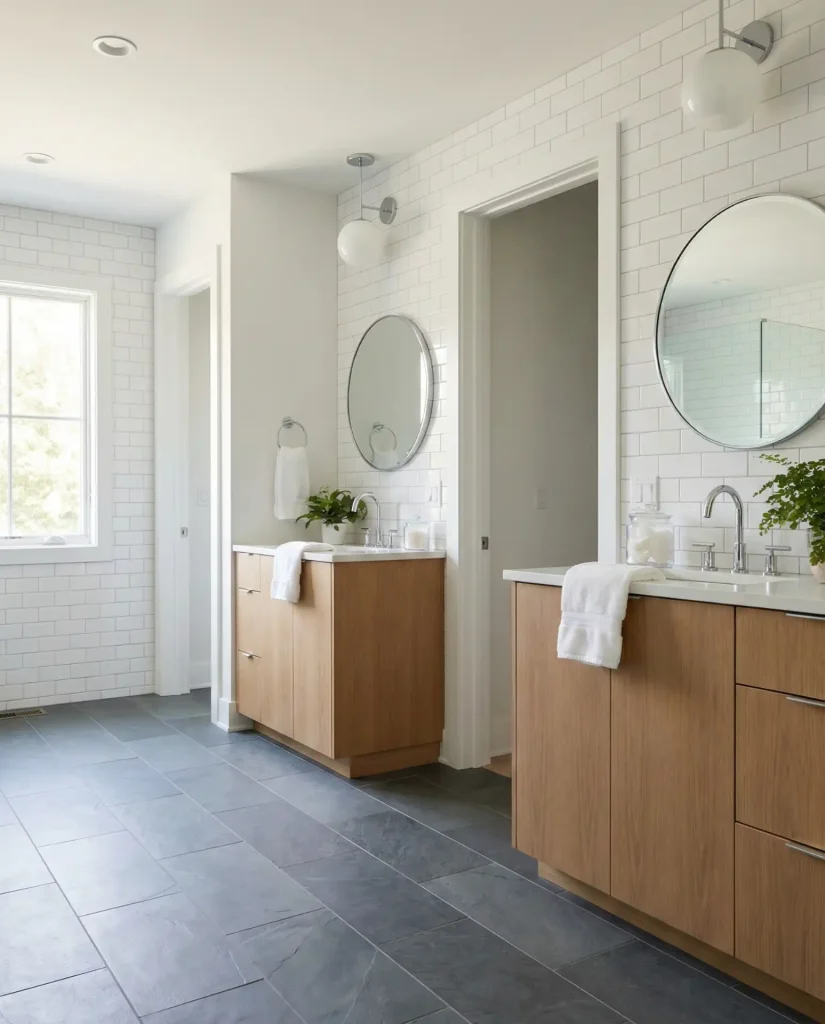
The most common mistake in jack and jill design is building a layout that doesn’t account for traffic flow when two people are using the space simultaneously. Design it so the toilet and shower are in a compartmentalized zone with a door, and the vanity area is accessible to both bedroom doors independently. This small planning detail—separating wet zones from the vanity—dramatically increases the functionality of the space. Architects who specialize in family homes often describe this compartmentalized layout as the single biggest quality-of-life upgrade a family can make in a shared bath.
14. Modern Organic With Curved Lines and Soft Shapes
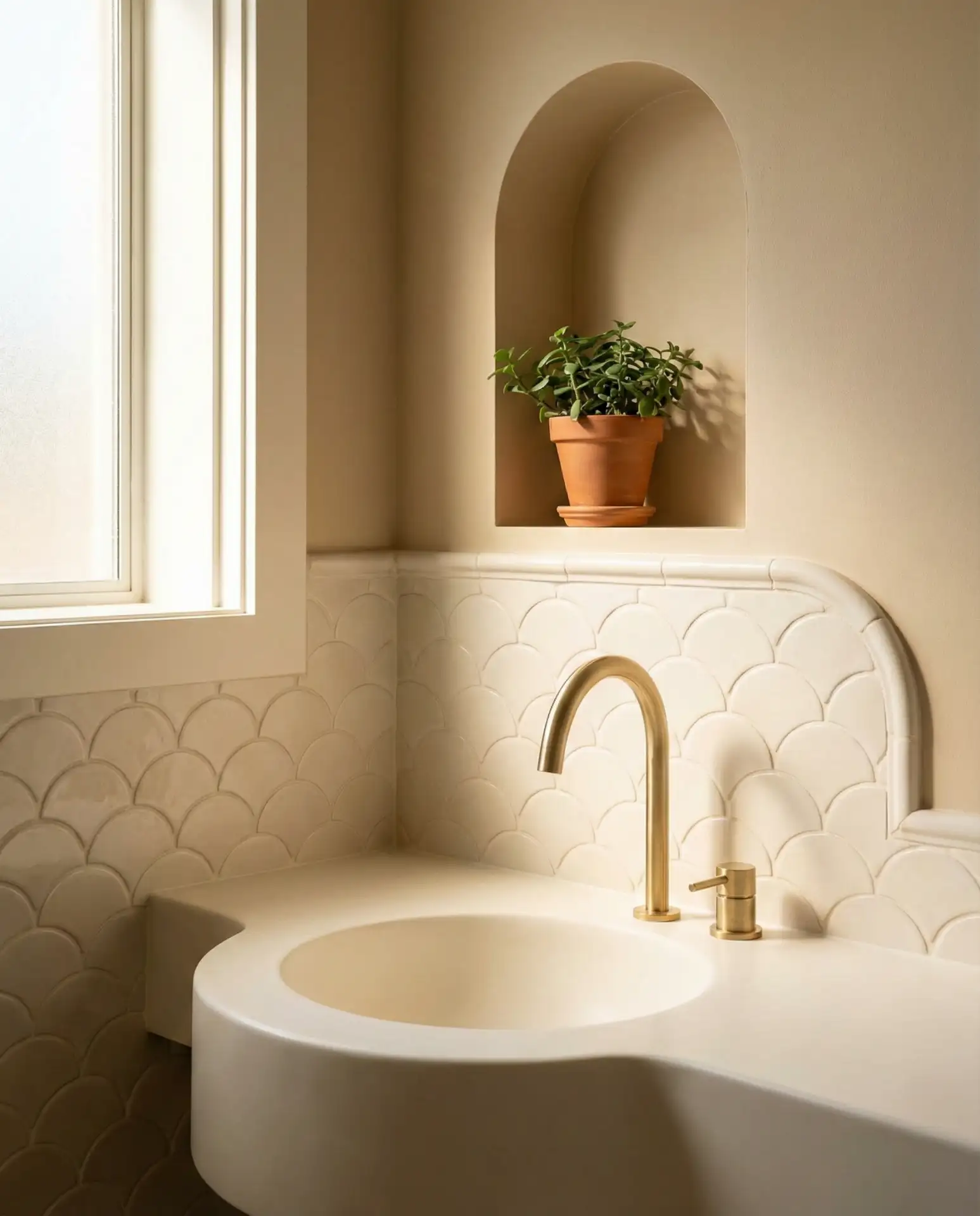
The sharp-cornered, boxy bathroom of the early 2020s has softened—literally. The modern bathroom in 2026 embraces curves at every scale: arched mirrors, oval soaking tubs, rounded vanity corners, scalloped tile edges, and pill-shaped niches. This organic softness brings a warmth that purely rectilinear design often lacks. It pairs especially well with limewash walls, textured plaster, and raw linen—materials that feel similarly imprecise and human. The result is something that feels warm and neutral in the best possible way: contemporary but not cold, curated but not sterile.
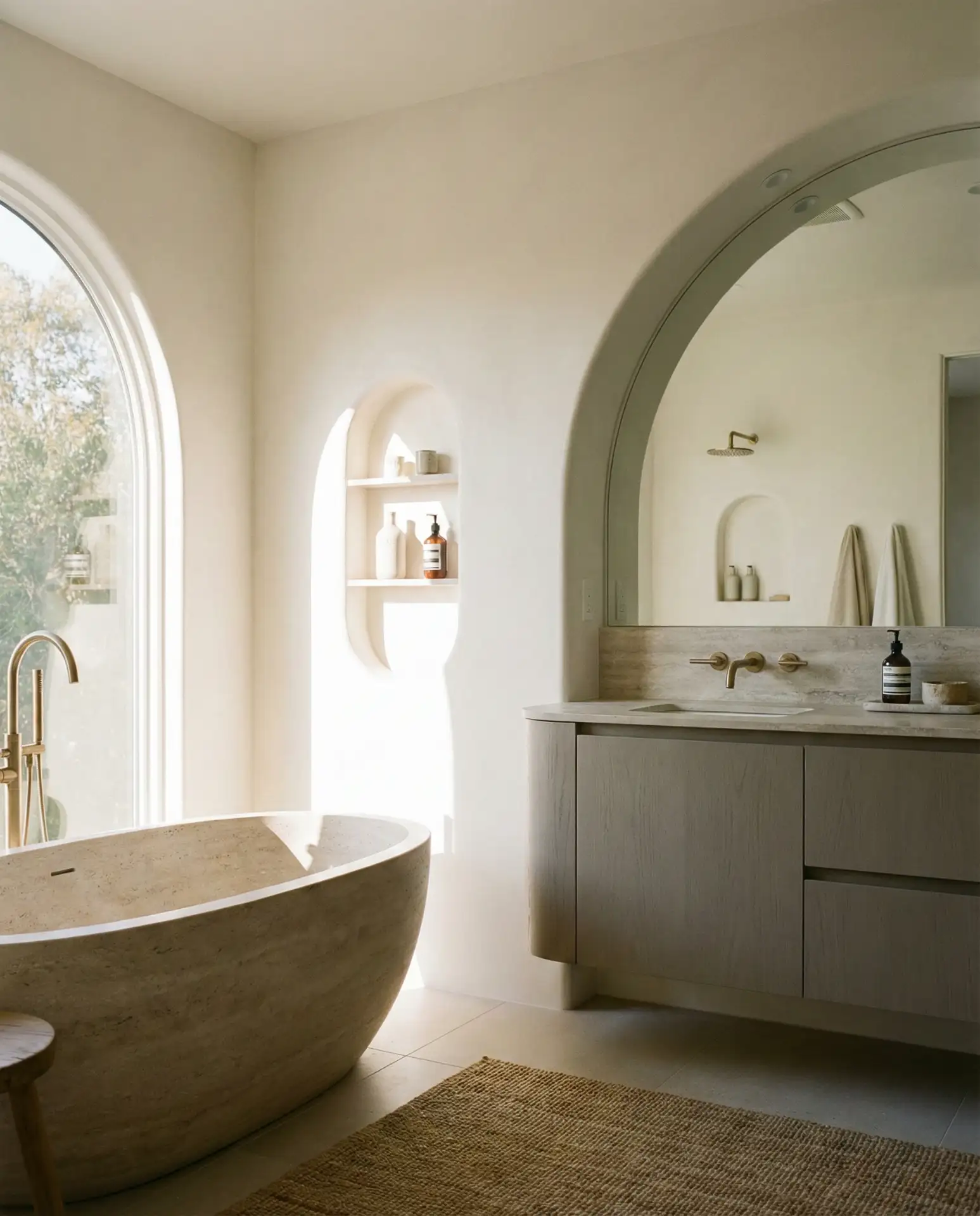
American lifestyle context matters here: curved bathroom design has found particular traction in the Southwest and California, where the influence of Mediterranean and Moroccan architecture already inclines homes toward rounded arches, plaster surfaces, and organic form. But the trend has gone genuinely national—Pinterest searches for “curved bathroom vanity” and “arched bathroom mirror” have climbed steadily across all U.S. regions. The good news is that rounded elements are available at every price point now, from big-box retailers to boutique tile studios, making the look accessible without a custom build.
15. Bloxburg-Inspired: Clean, Bright, and Aesthetic
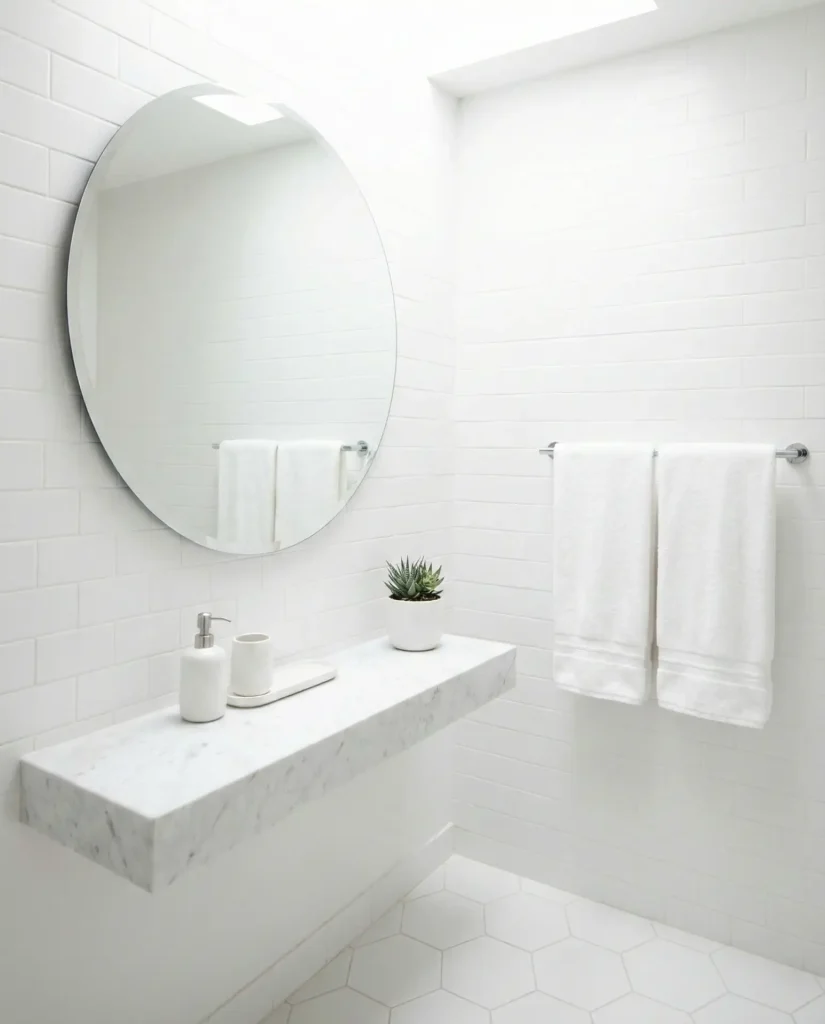
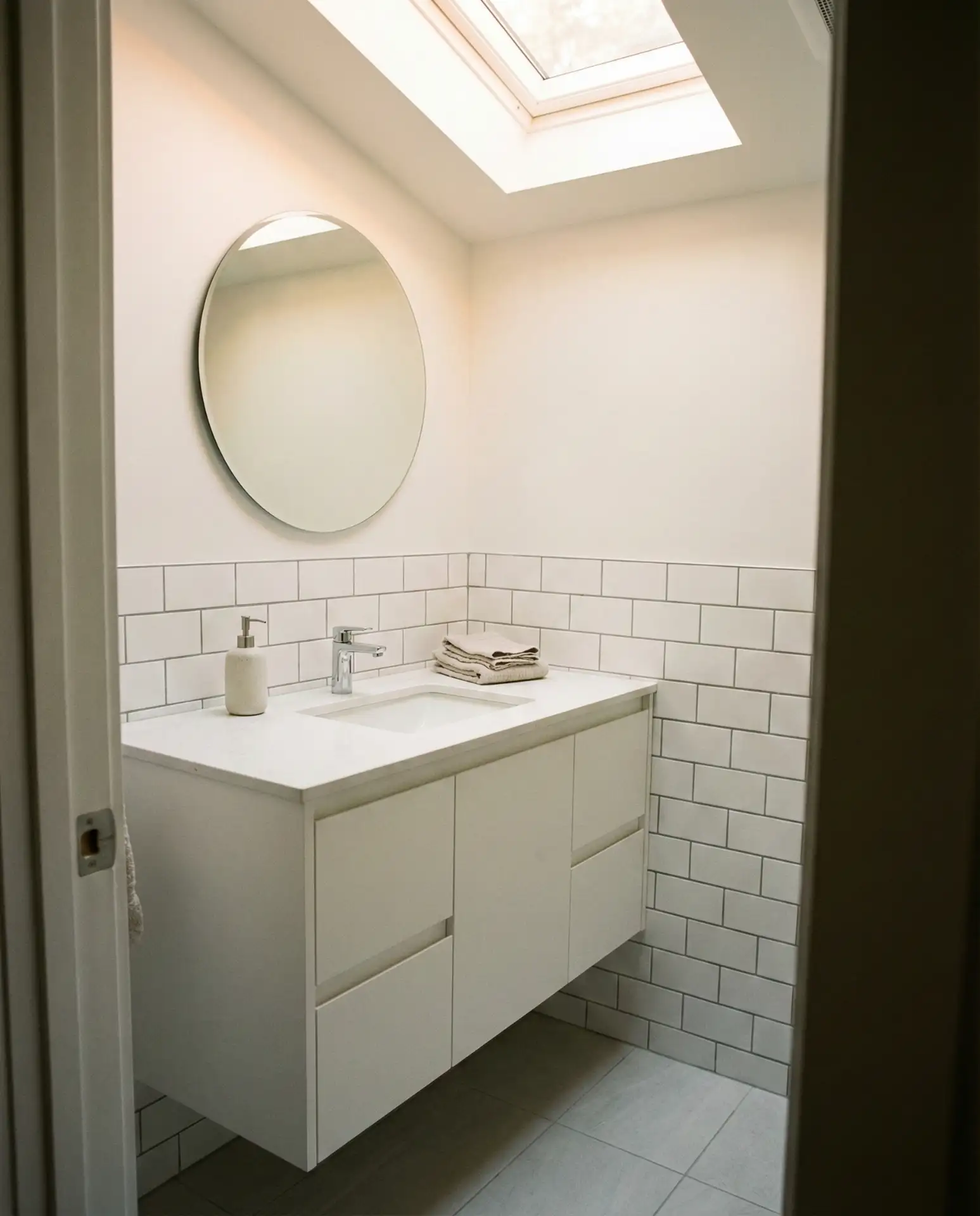
If you’ve spent any time on Roblox’s building platform Bloxburg, you know the aesthetic: impeccably clean rooms with all-white or soft white palettes, neat floating shelves, matching accessories, and a general sense of idealized tidiness that’s weirdly aspirational. In 2026, that cute and clean virtual design language has migrated into real-world bathroom inspo, especially among younger homeowners and first-time renters personalizing their spaces. The real-world translation involves white subway tile, chrome hardware, clear glass containers for toiletries, and symmetry—everything in its place, nothing extraneous.
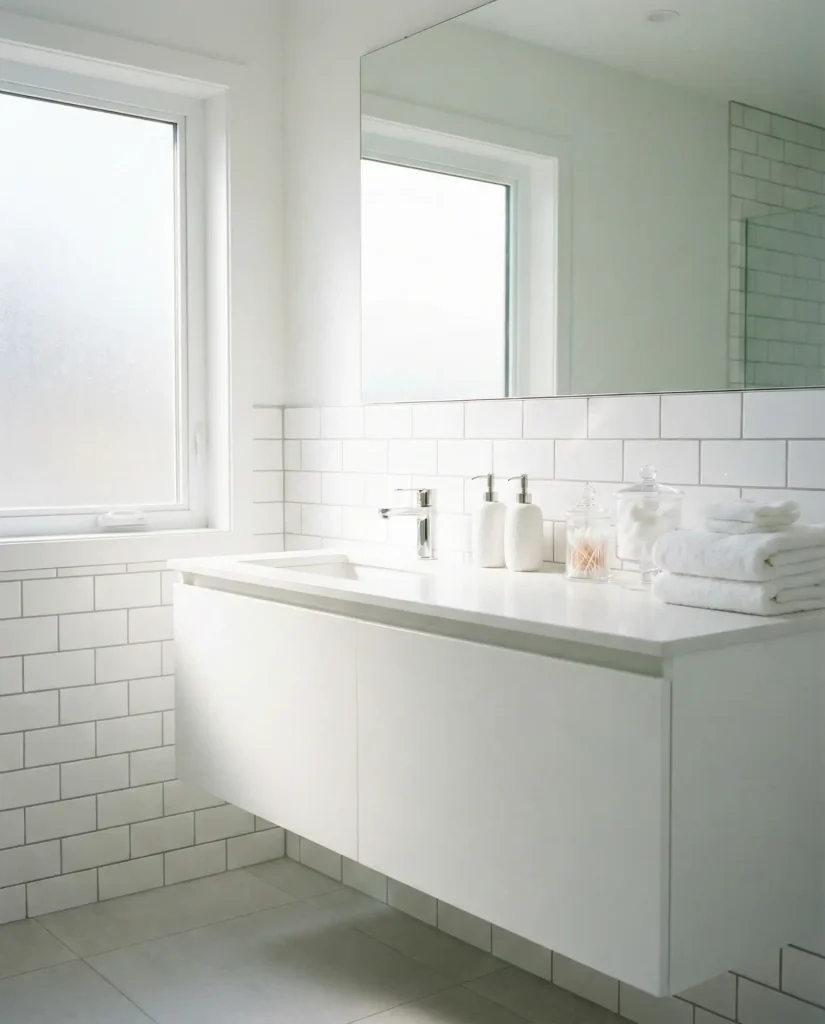
This is a particularly great aesthetic for renters who can’t make structural changes—the Bloxburg-inspired look is almost entirely achieved through accessories, organization, and styling rather than renovation. A matching soap dispenser, toothbrush holder, and cotton jar set in white or chrome does more for the room’s cohesion than a paint color change. Clear acrylic drawer organizers, a simple white tension shelf for the shower, and a white bath mat complete the look for well under a hundred dollars. It’s proof that design intention matters more than renovation budget.
16. Toca Boca Colorful: Bold, Playful, Maximalist
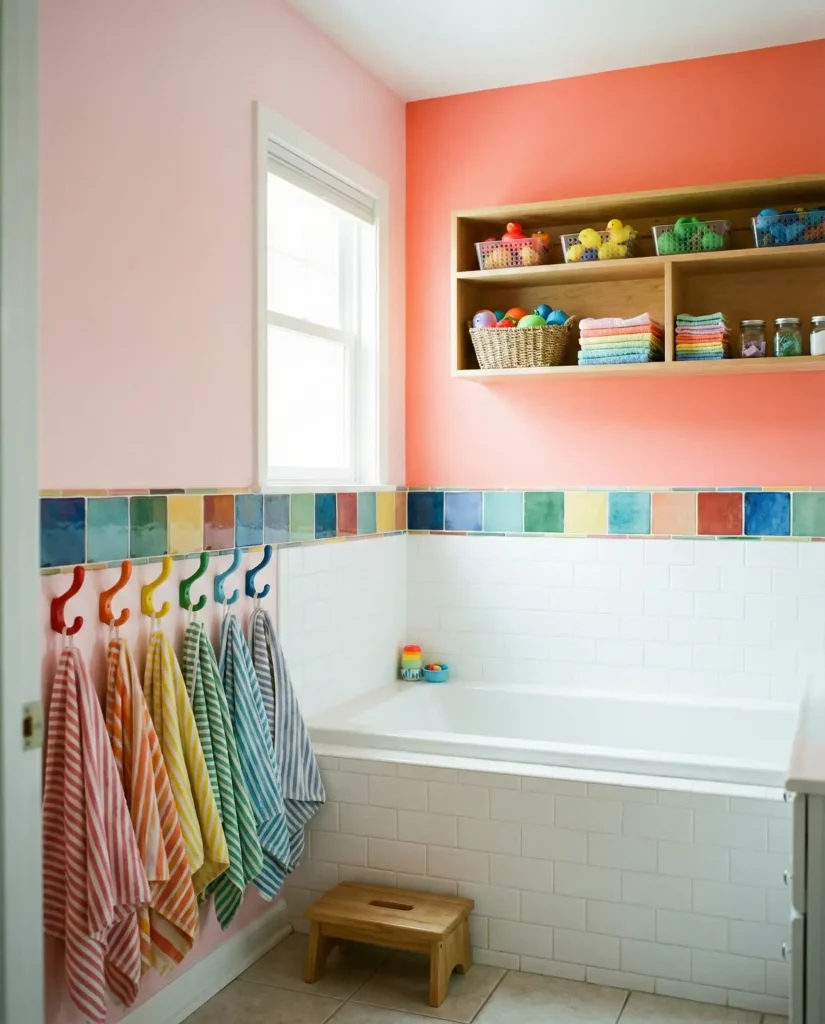
The Toca Boca digital universe—with its cheerful, saturated color palettes and deliberately joyful aesthetics—has genuinely influenced a strand of real-world interior design, particularly for families designing kid-friendly spaces. Pink and lemon yellow side by side, turquoise tile with red towel hooks, a rainbow of bath accessories on a bright white shelf—it’s maximalism without pretension. Think of it as the cute end of the bathroom spectrum: a space that makes kids (and honestly, a lot of adults) genuinely happy to be there. In a primary or family bathroom, this kind of color is surprisingly easy to dial back as tastes evolve.
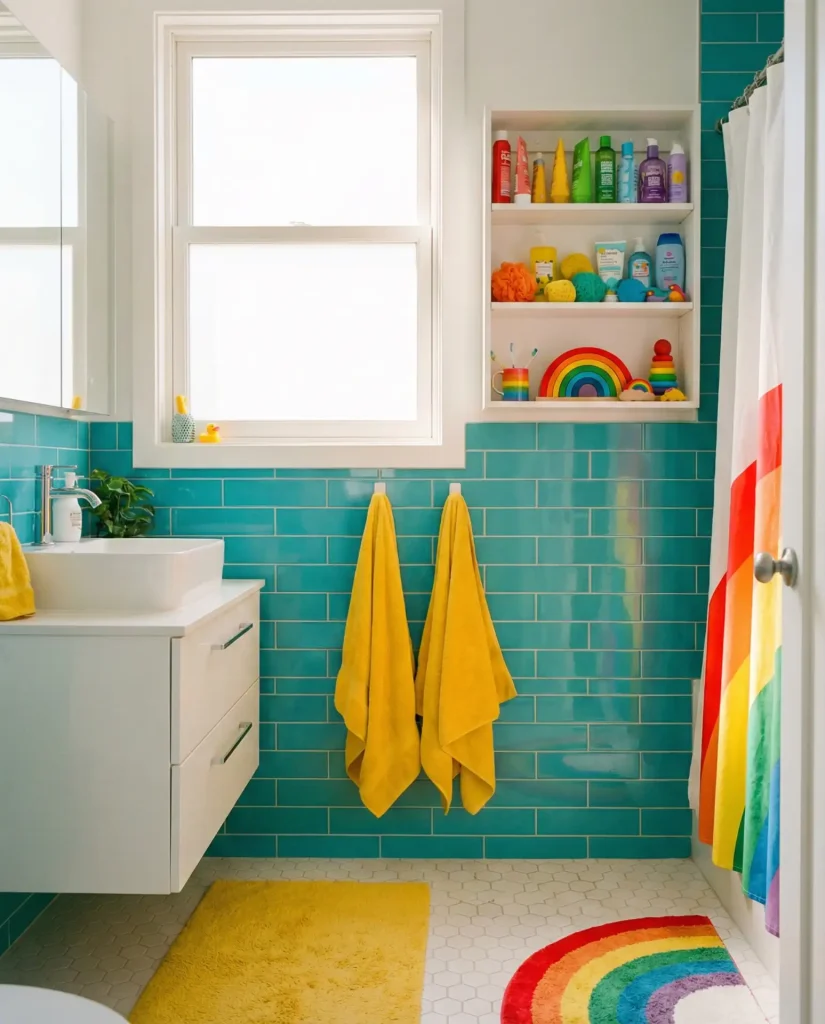
The practical insight here is about commitment levels. Full tile renovation in a bold palette is a long-term decision—paint, accessories, and textiles are not. If you want to test a vibrant, playful bathroom aesthetic, start with accessories and a single accent wall in a paint you love. Paint is removable; grout is not. For families with young kids, a semi-gloss or satin finish paint in the colorful hue cleans up far better than matte, which tends to absorb soap and water stains over time. Design for the age your kids are now, knowing you can repaint in five years if the vibe needs to shift.
17. Small Full Bathroom: Double-Duty Layout That Delivers
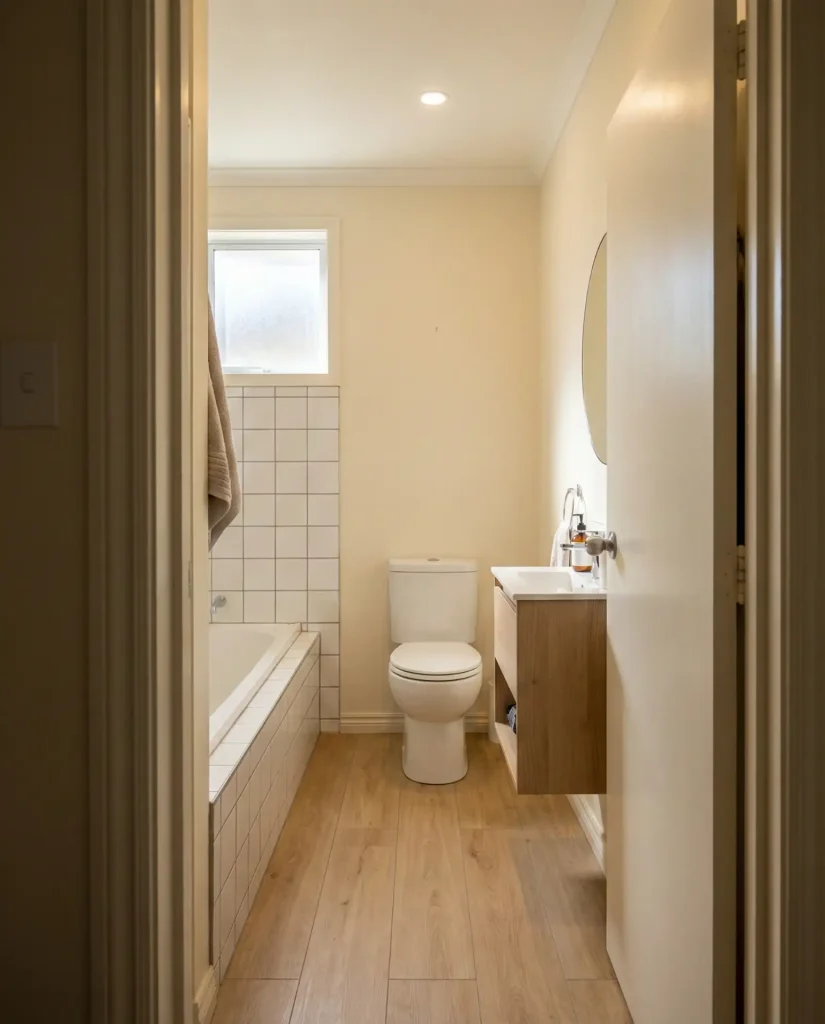
The small full bathroom—with a tub, toilet, and vanity crammed into under 50 square feet—is one of the most common design challenges in American homes. Older housing stock in cities like Chicago, Philadelphia, and Boston is full of them, and the new wave of townhomes and compact urban apartments hasn’t changed that equation much. In 2026, the best solutions are about smart visual compression: a tub/shower combo with a tiled surround that runs floor to ceiling, a mirrored medicine cabinet instead of a floating mirror, and a pedestal sink that keeps the footprint visible and the space from feeling cluttered. Keep it neutral and light.
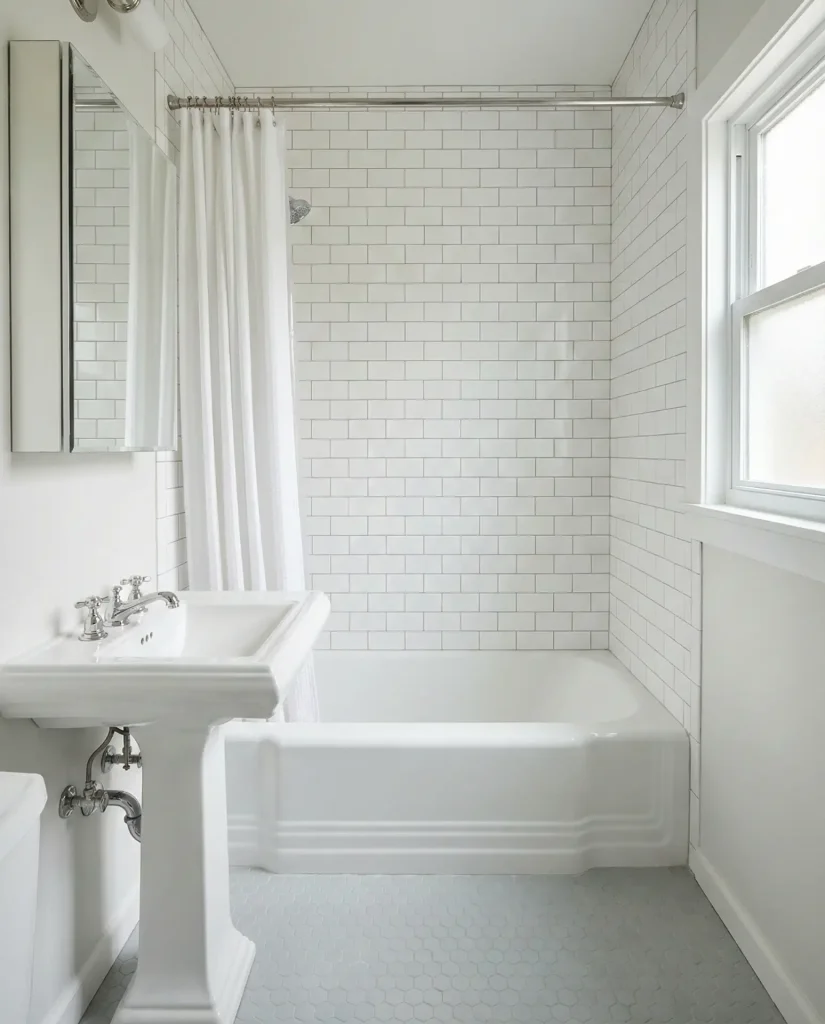
Where this layout works best is in pre-war and mid-century homes that were designed with one shared full bath serving the whole family—the dimensions are tight, but the bones are usually excellent. One often-overlooked upgrade for these spaces is replacing a standard showerhead with a ceiling-mounted or extended-arm model that directs water straight down rather than outward. It keeps the tile surround drier between cleanings, reduces mold risk, and makes a small tub/shower combo feel more deliberate and luxurious than the off-the-shelf configuration suggests.
18. Ensuite Master With His and Hers Vanities
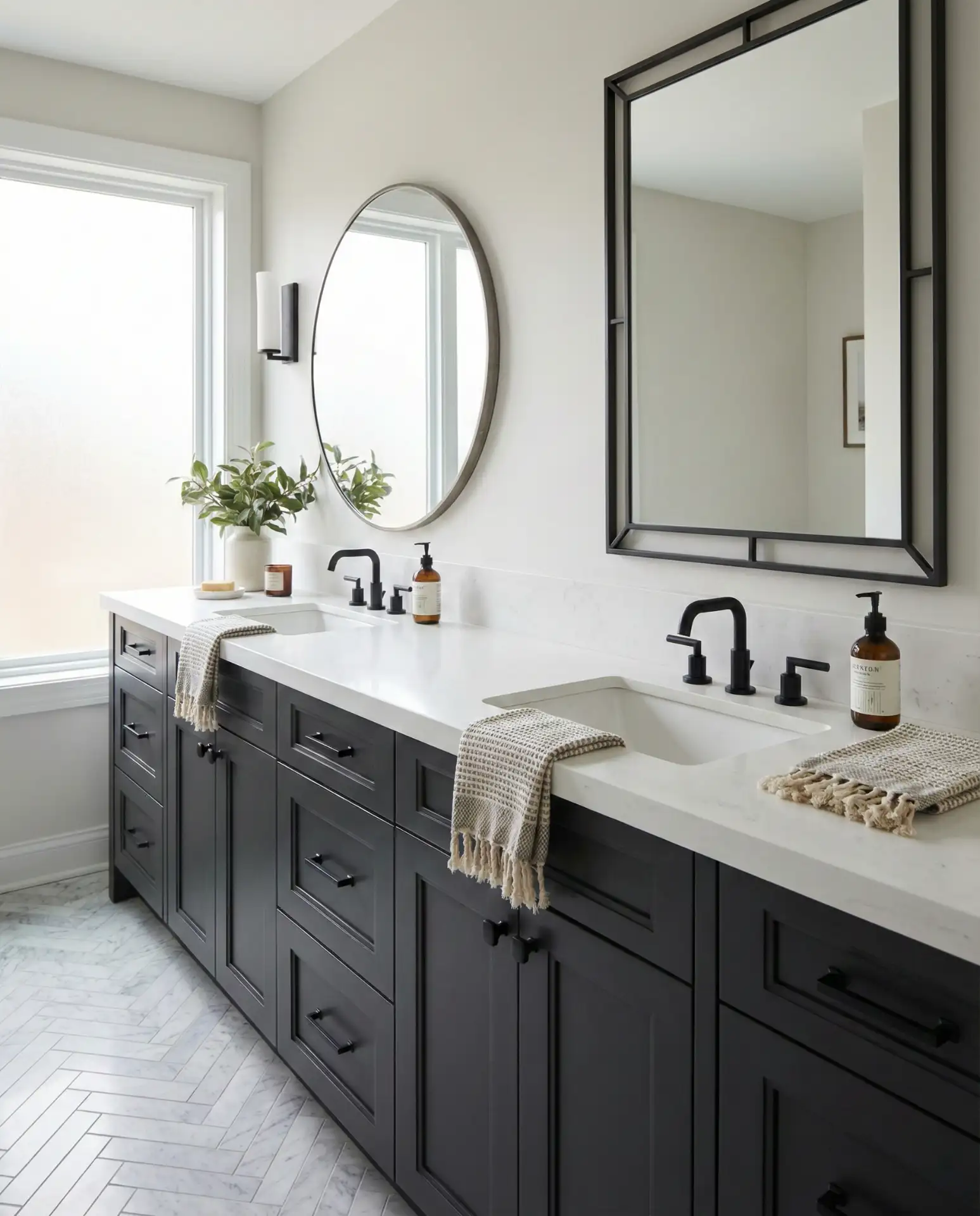
The ensuite bathroom attached directly to the primary bedroom is a dream for most American homeowners—and the version gaining the most traction in 2026 includes dedicated his and hers vanities, either side by side or on opposite walls. This isn’t a new concept, but the execution has matured: we’re past the matching-everything-identically phase and into a more nuanced approach where each vanity can have its own mirror shape, storage configuration, and personal touches while sharing a consistent overall palette. The primary bedroom and bath feel like a suite rather than separate rooms that happen to be adjacent.
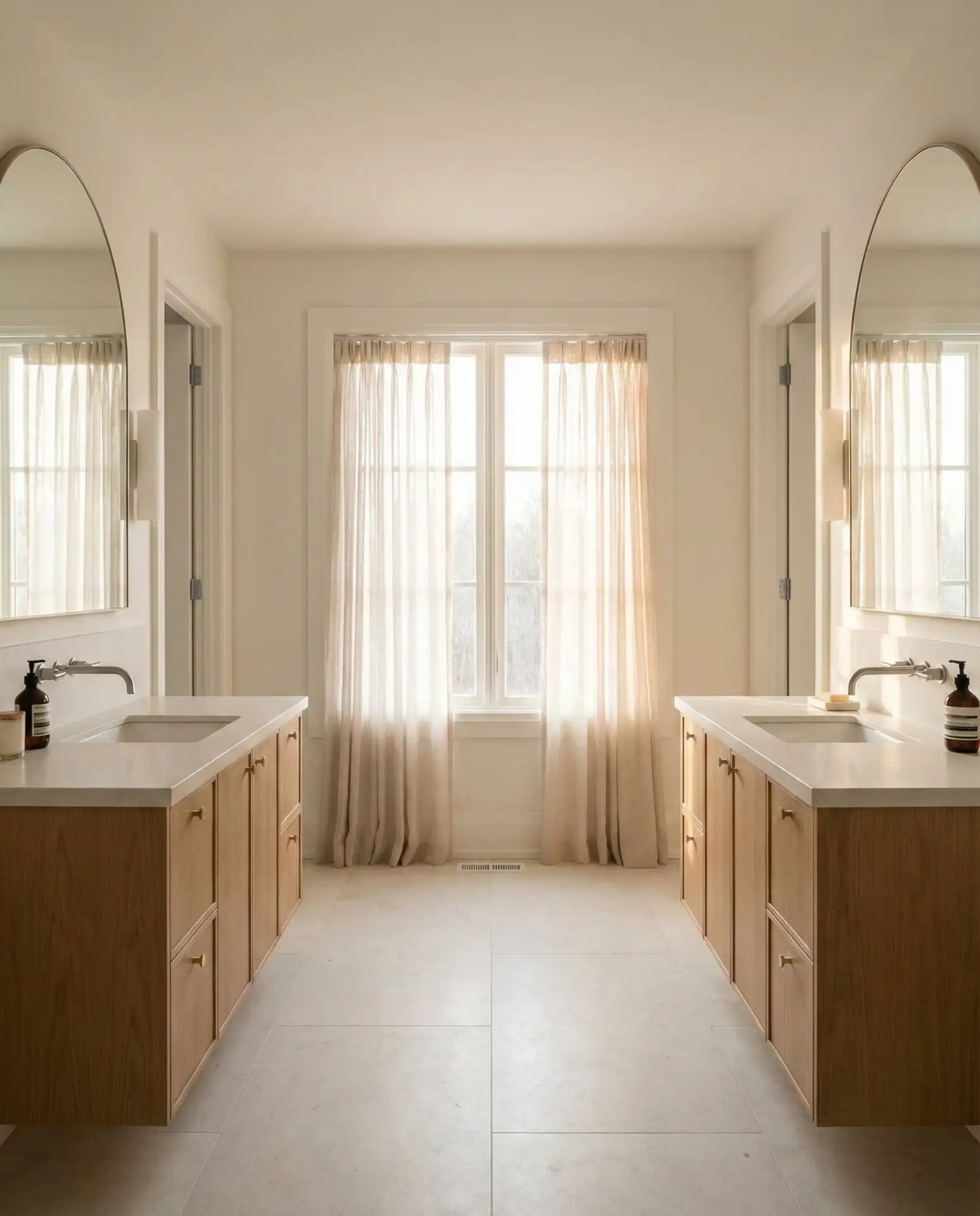
One practical truth about shared vanities in a couple’s primary bath: the layout matters more than the materials. The most beautifully tiled bathroom becomes a daily friction point if both people are reaching for the same drawer or competing for the same outlet. Design the storage so each person has clearly delineated zones—dedicated drawers, individual medicine cabinets, and separate outlet locations. It sounds utilitarian, but it’s the detail that couples who’ve done it right consistently cite as the most underrated upgrade in their entire renovation. Good relationships and good bathroom design share at least one trait: clarity about space.
19. Black Matte Fixtures: The Hardware That Changes Everything
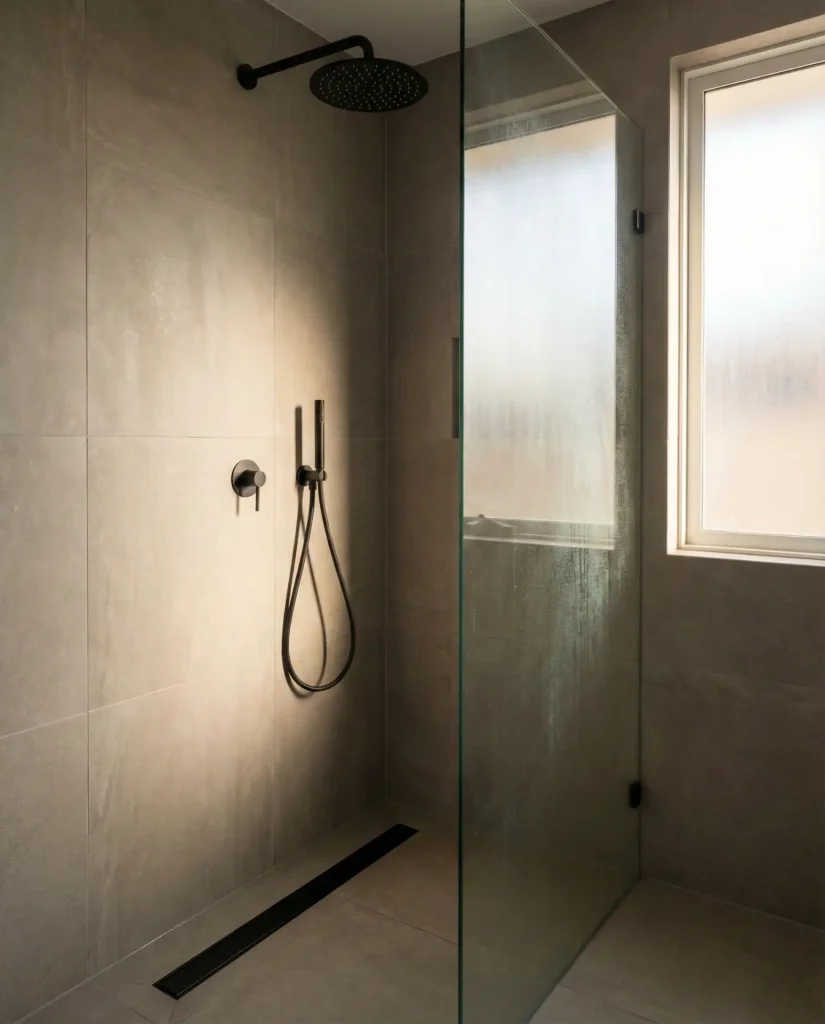
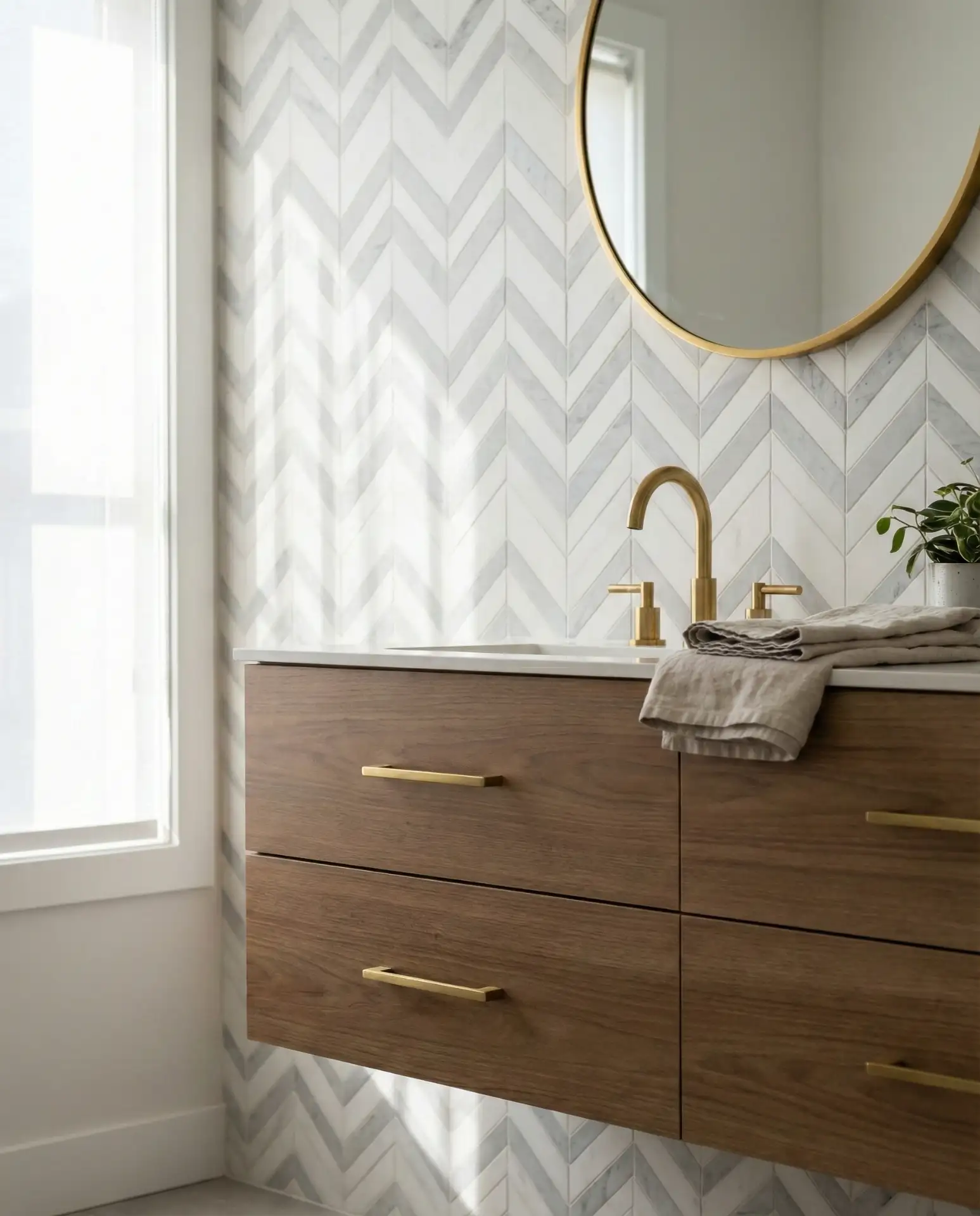
Matte black fixtures have moved firmly from trend to standard in American primary bathrooms, and in 2026 they’re being used with more sophistication than ever. Rather than applying them to every surface, designers are pairing matte black faucets and towel bars with warm materials—travertine tile, wood vanities, linen textiles—to prevent the look from going cold. The contrast is striking without being harsh. This works particularly well in neutral bathrooms where you want one strong grounding element that reads as intentional or in grey bathrooms where the black adds depth without increasing the coolness of the palette.
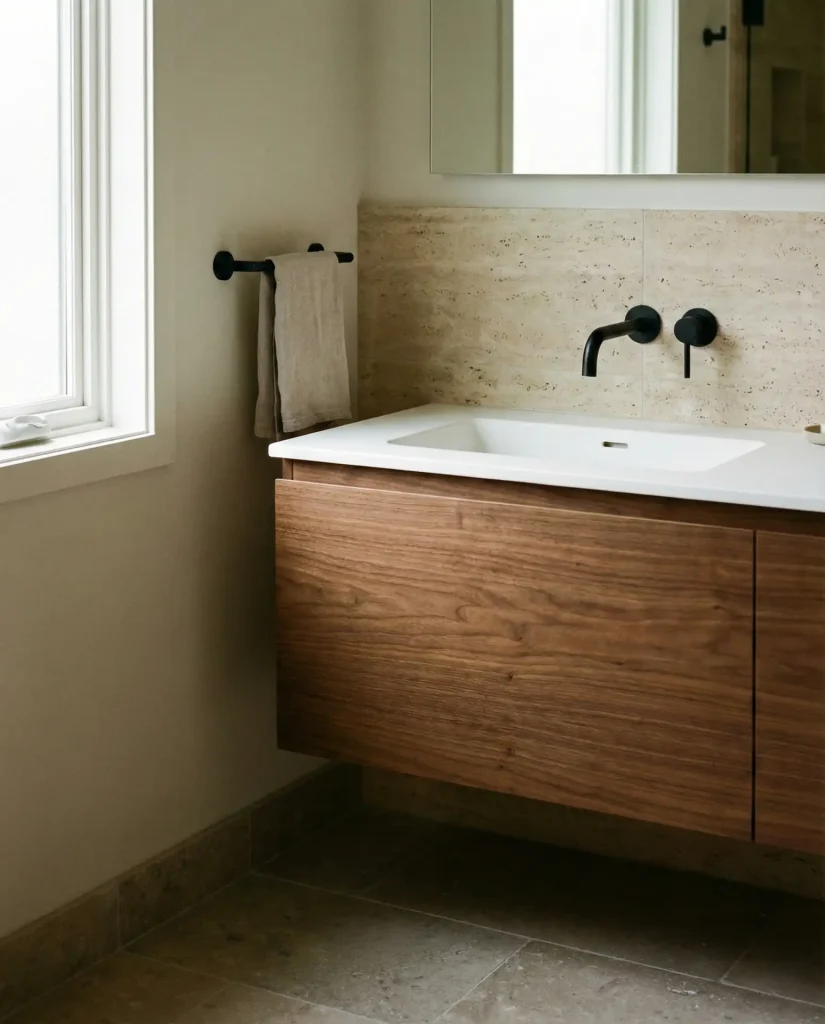
Hardware is actually the highest-impact, lowest-disruption upgrade available in a bathroom renovation or refresh. Swapping out chrome or brushed nickel fixtures for matte black equivalents—faucets, towel bars, toilet paper holders, cabinet pulls—can transform the entire personality of a room without touching a single tile. Expect to spend $50–$200 per fixture depending on brand, and plan for a full-day swap if you’re doing it yourself. The most common mistake: forgetting that toilet hardware (the handle, the hinges) also needs to match. It’s always the small inconsistencies that undermine the effect.
20. Guest Bathroom With Curated Hotel Luxury
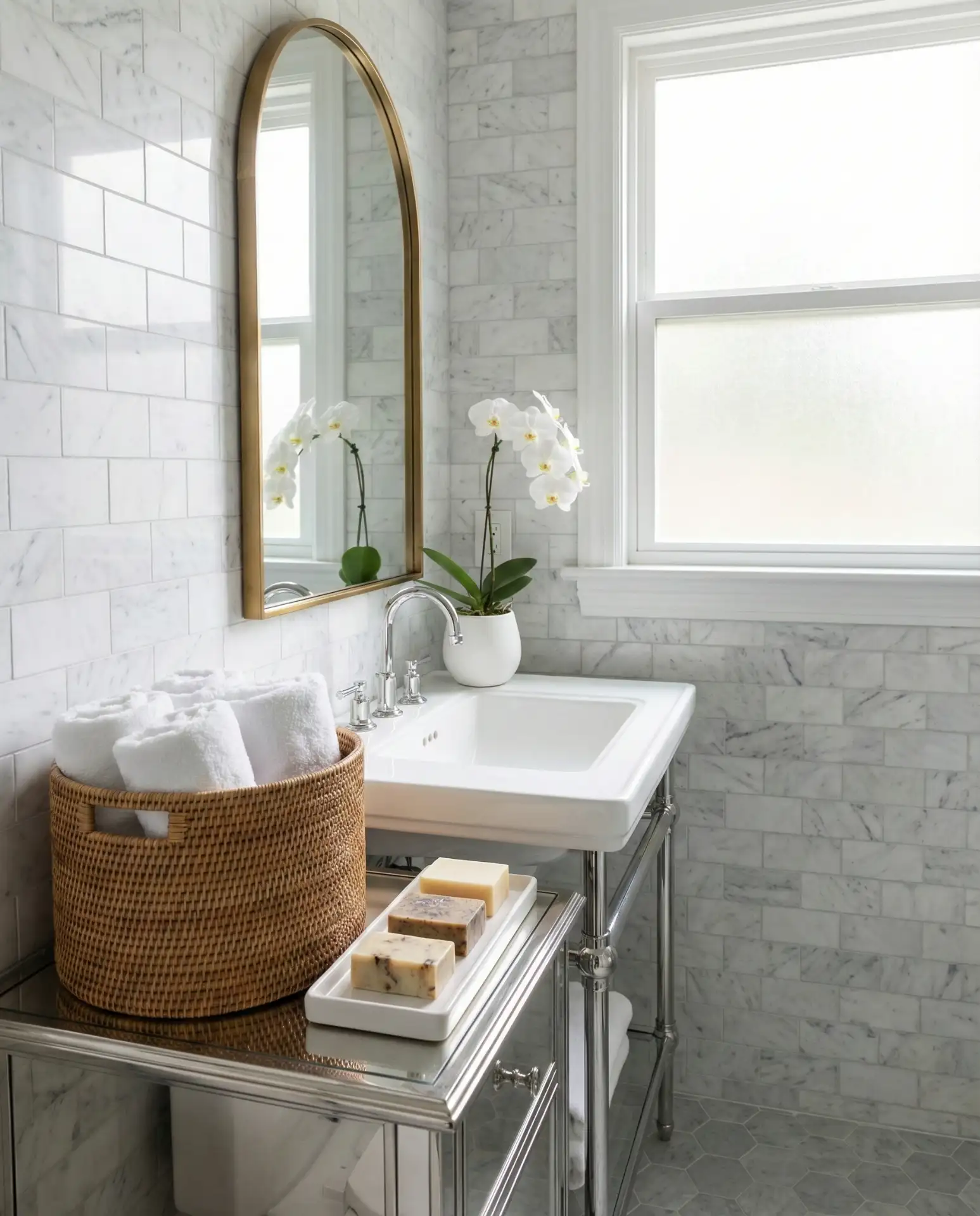
The guest bathroom is the room your visitors actually use, and in 2026 more Americans are investing in making it feel like a boutique hotel experience—intentionally curated, well-stocked, and thoughtfully designed. That might mean rolling towels in a basket, laying out individual soap bars, adding a small tray with amenities, or simply choosing a palette that photographs beautifully when a guest inevitably takes a photo. The design itself leans toward a clean, welcoming spa energy: white or very light walls, quality towels in soft neutral tones, and a single statement element like a dramatic mirror or textured tile wall.
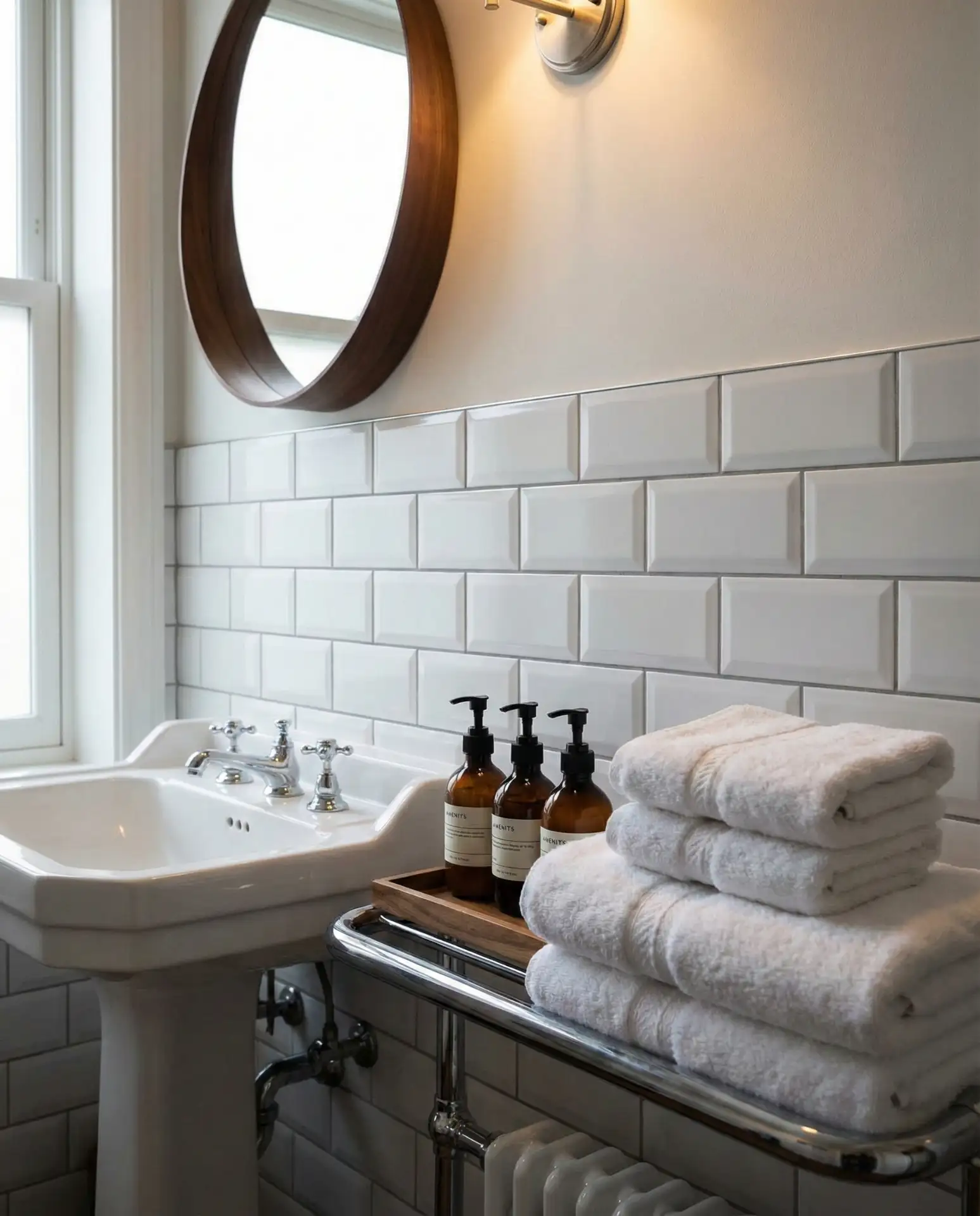
A micro-anecdote that captures the spirit of this perfectly: a homeowner in Nashville shared that after upgrading her guest bath with high-quality Turkish cotton towels, a diffuser, and a small succulent, her overnight guests started specifically complimenting the bathroom before the kitchen, the living room, or anything else in the house. It cost her under $150 in styling additions—no renovation required. The lesson is that hospitality-level presentation isn’t about architecture; it’s about the deliberate small decisions that make someone feel genuinely welcomed into your home.
21. Primary Bathroom With Freestanding Tub as Focal Point
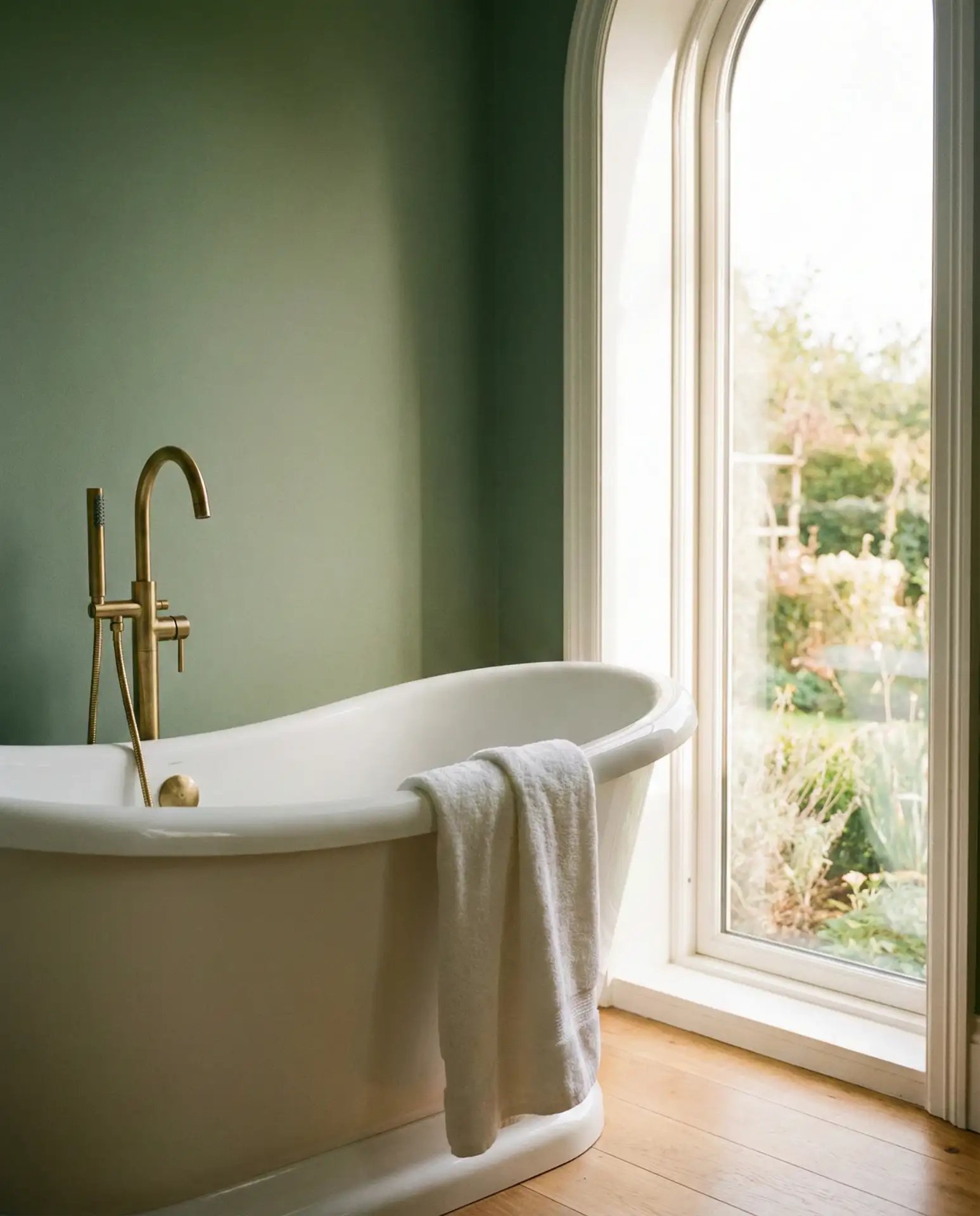
In the hierarchy of primary bathroom design, the freestanding tub sits at the top. It’s the piece that makes a room feel intentionally designed rather than just assembled. In 2026, the most coveted silhouettes are the slipper tub (with one raised end for reclining), the flat-bottom modern oval, and the sculptural stone resin varieties that look carved from a single piece of material. These work best against a simple backdrop—a window with a garden view, a tile wall in a single strong pattern, or a painted wall in a deep accent color. Let the tub be the art, and design everything else around it accordingly. Spa energy is the natural result.
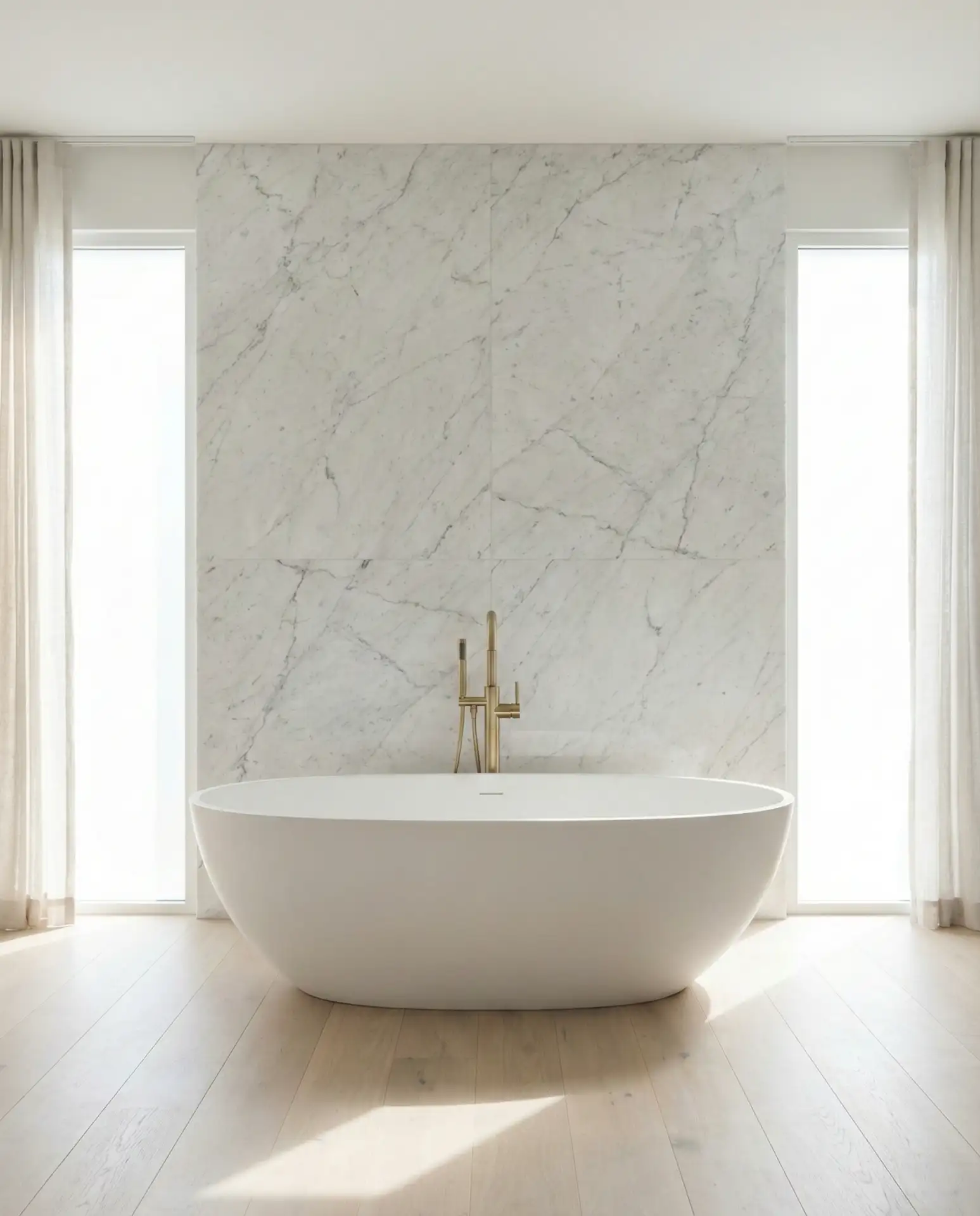
The most common mistake people make with freestanding tubs is not thinking about plumbing placement early enough. A floor-mount faucet requires a valve roughed in beneath the floor before the tile is laid—retrofitting one after the fact is expensive and disruptive. If you’re renovating and know you want a freestanding tub, make the plumbing decision at framing, not at finish. Also: stone resin and cast iron tubs are heavy—verify with a structural engineer that your floor can support the weight with water added, particularly in upper-floor bathrooms in older homes.
22. Dark and Dramatic With Matte Tile and Brass Accents
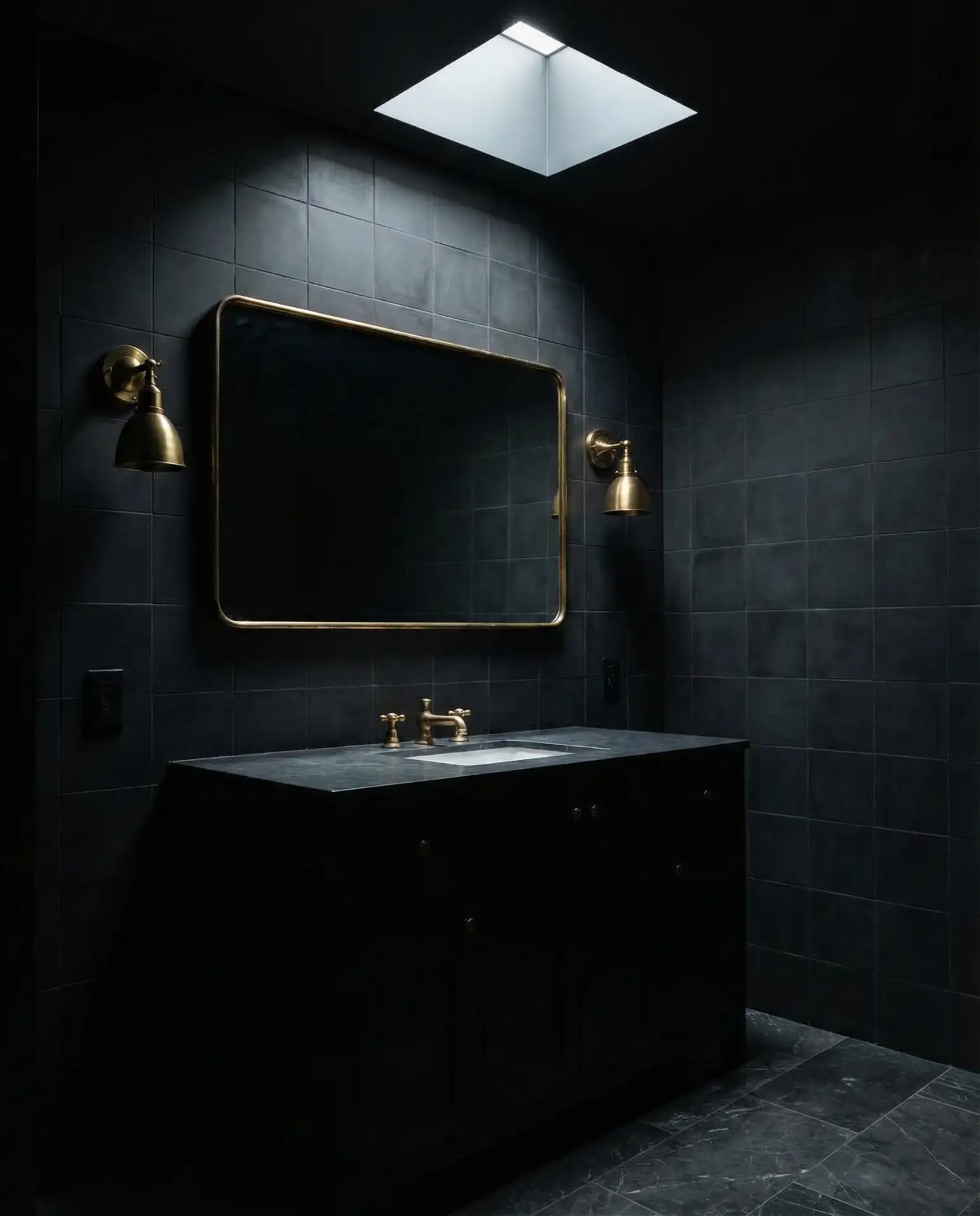
To end where the boldest design impulses live: the full commitment to a dark, dramatic master bathroom where every element—walls, floor, vanity, ceiling—is deep and moody, punctuated only by the warm gleam of unlacquered brass. Picture matte charcoal zellige tile running wall-to-ceiling, a black oak floating vanity with inset brass pulls, a round brass-framed mirror, and a single arched window that pours golden morning light across the whole composition. It’s the bathroom equivalent of a really great cocktail bar—black, intimate, and utterly intentional. Not for the timid, but absolutely for the decisive.
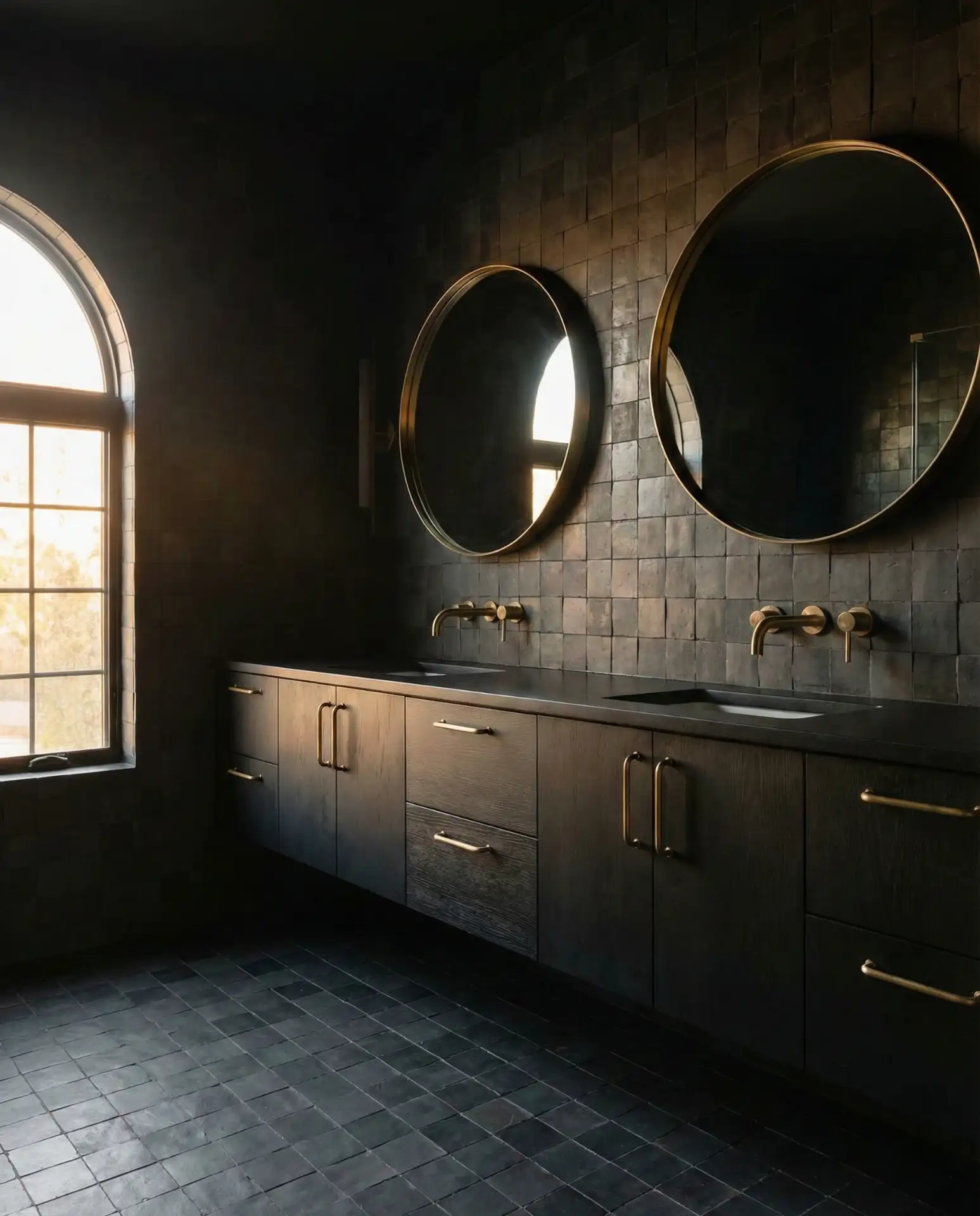
This is the look that rewards patience most. Dark bathrooms with quality brass fixtures and matte surfaces develop a patina and warmth over time that painted and chromed spaces never quite achieve. Unlacquered brass in particular will change as it ages, developing a lived-in warmth that looks better at five years than it did on installation day. For anyone who’s been on the fence about going fully dark: the photography doesn’t lie. These rooms consistently produce the most striking before-and-after transformations of any bathroom style—and the finished result tends to feel like the most personal, expressive room in the house.
Conclusion
Whether you’re planning a full renovation or just gathering ideas for when the moment is right, the best master bathroom is one that reflects who you actually are—not just what’s trending. These 22 ideas cover a huge range of styles, budgets, and footprints, and the right one for you is probably already the one you keep coming back to on the page. Tell us in the comments: which look resonated most? Are you team dark and dramatic or bright white and spa-calm? We’d love to hear what you’re working toward—and what’s stopping you from getting started.