Outdoor patios have become the heart of American homes—especially as more people shift toward remote work, weekend entertaining, and creating private retreats right at home. Whether you’re pinning ideas on Pinterest for a small apartment balcony or dreaming up a full backyard transformation, 2026 brings fresh inspiration that balances style, comfort, and practicality. From cozy fire pit corners to sleek modern kitchens, these ideas will help you turn any outdoor space into a place you actually want to spend time in.
1. Budget-Friendly Bistro Corner
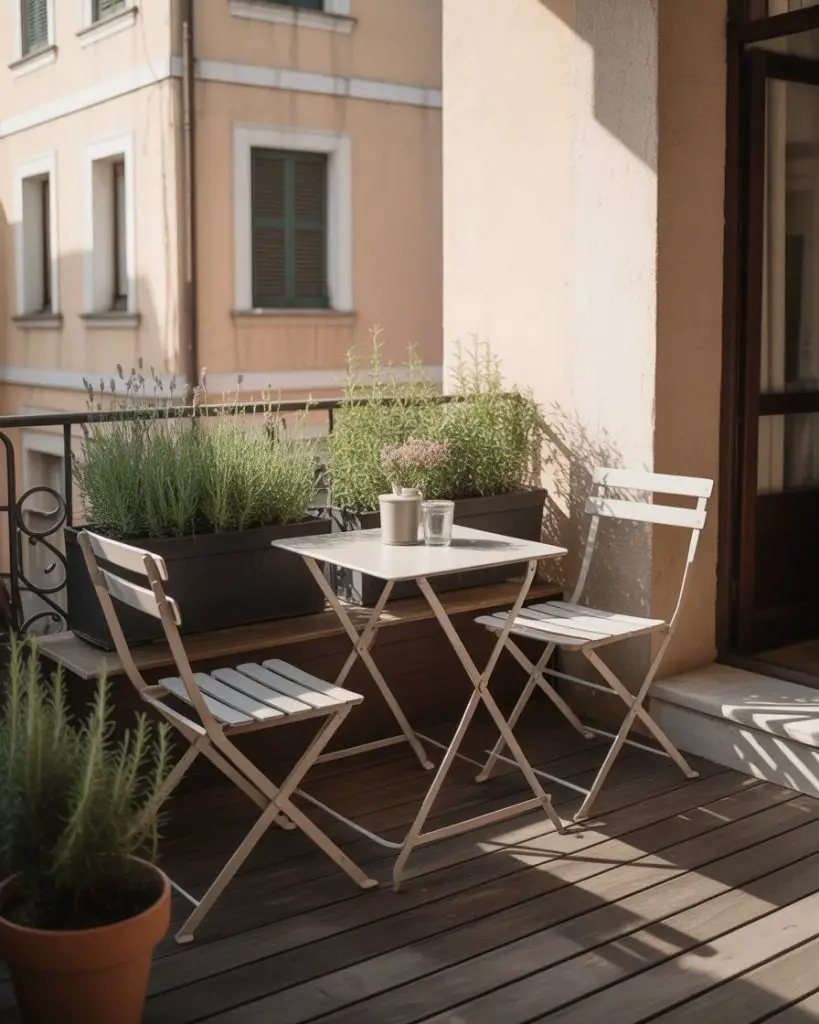
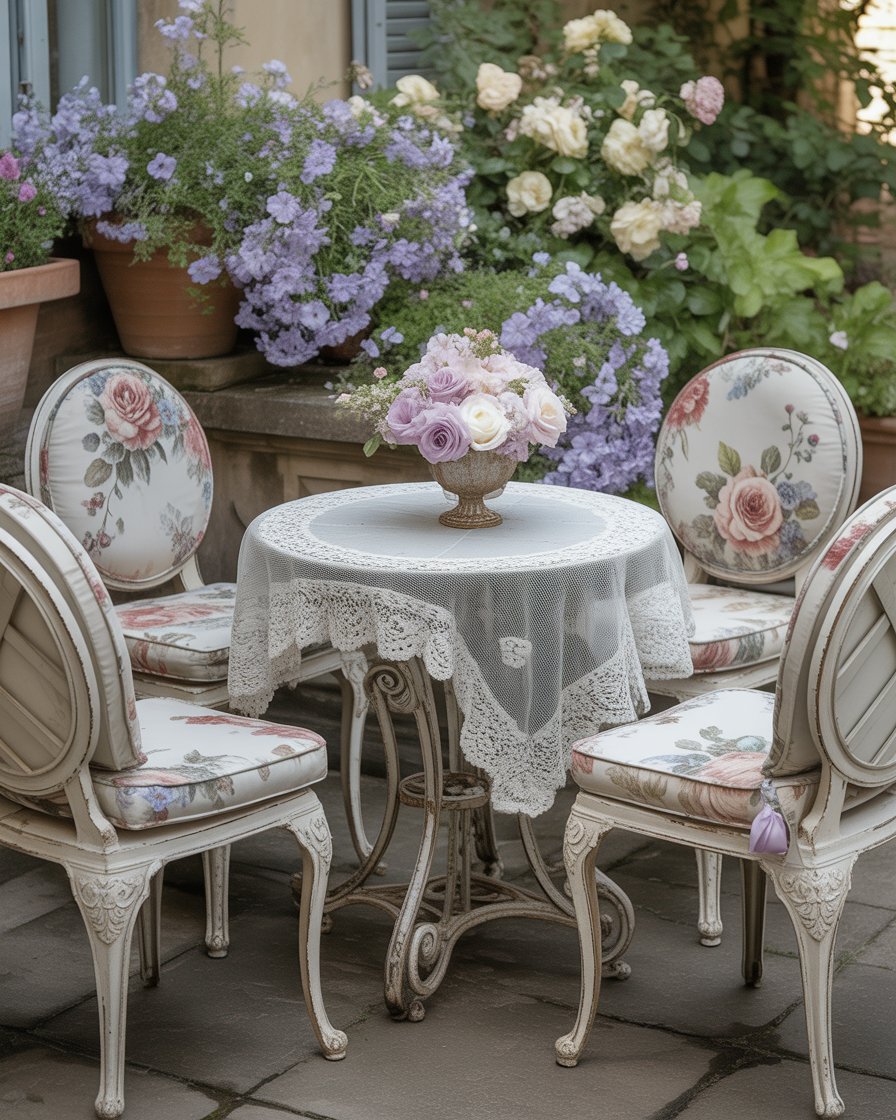
If you’re working with a budget but still want a stylish outdoor retreat, a compact bistro setup is your best friend. Think two folding chairs, a small round table, and a few potted herbs or flowers to soften the edges. This setup works beautifully in small spaces like apartment balconies or narrow side yards, and it doesn’t require any permanent changes—making it perfectly renter friendly. You can find affordable pieces at thrift stores or big-box retailers and still end up with something that feels personal and inviting. 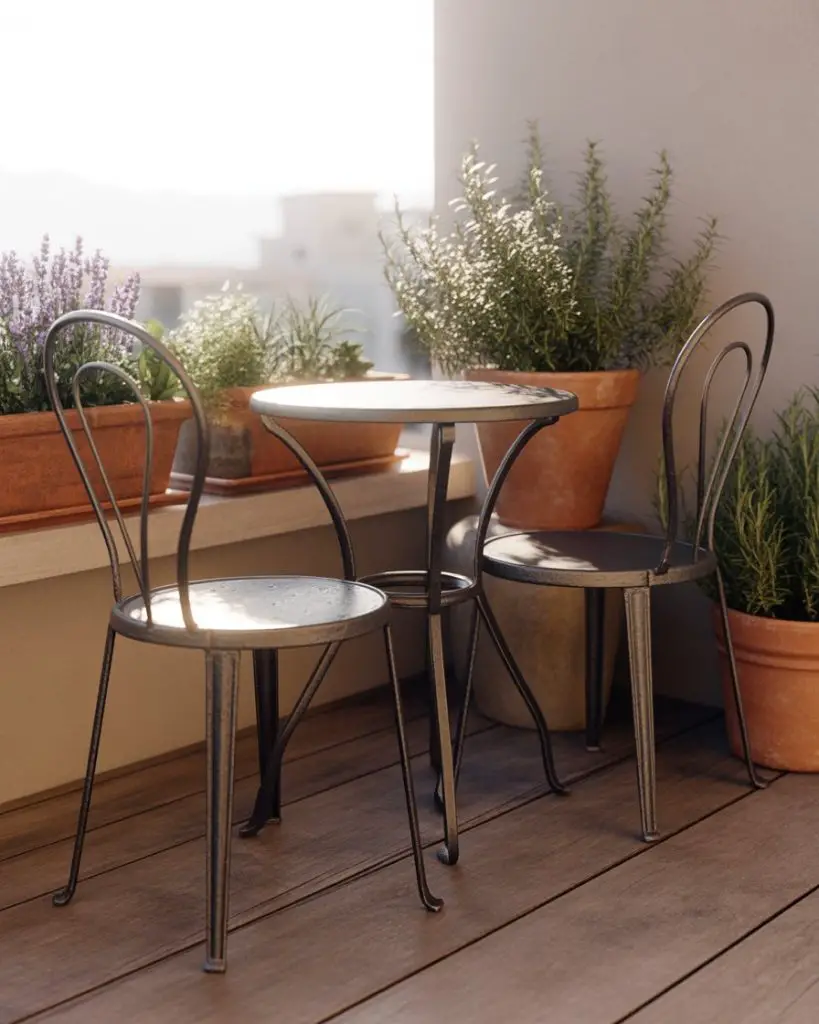
One common mistake is overcrowding a small bistro area with too many plants or accessories. Keep it simple—one or twoStatement plants, a single lantern, and maybe a small outdoor rug. The goal is to create a breathing space, not a cluttered one. If your balcony gets full sun, consider a small umbrella or a shade cloth to make the spot usable during peak hours. This setup is especially popular in cities like Portland and Austin, where renters want outdoor charm without landlord approval.
2. Modern Minimalist Lounge
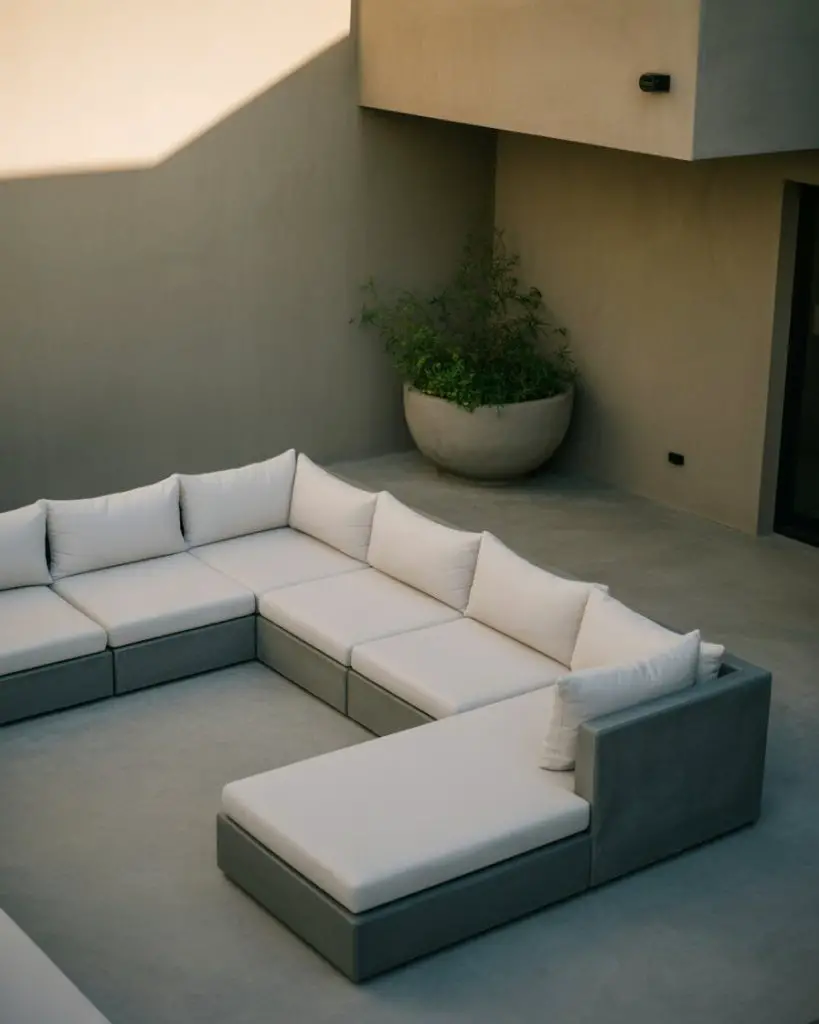
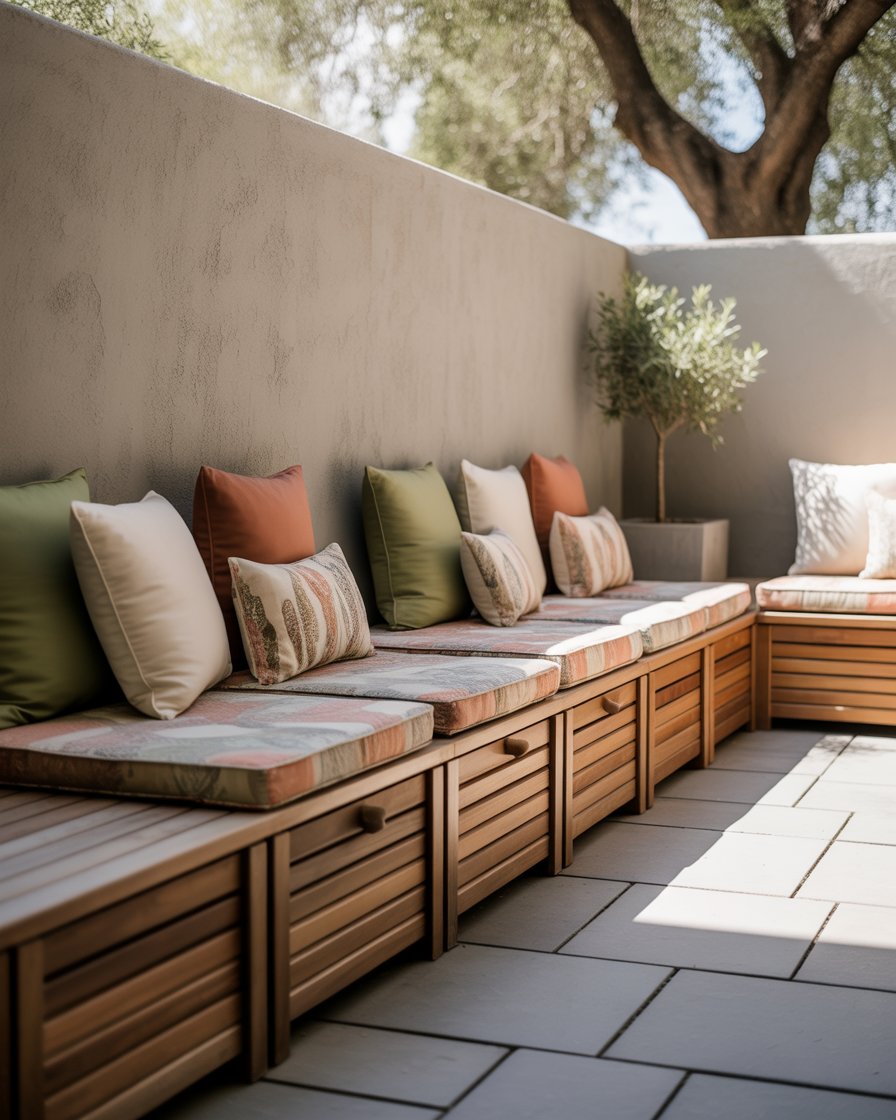
Clean lines, neutral tones, and purposeful furniture define this approach. A modern minimalist patio works best in small spaces modern settings where every piece counts. Choose low-profile seating in shades of gray, white, or tan, and add texture through outdoor pillows or a woven throw. Avoid busy patterns—stick to solids or subtle geometric prints. This style is all about calm, and it pairs beautifully with concrete planters and streamlined lighting. 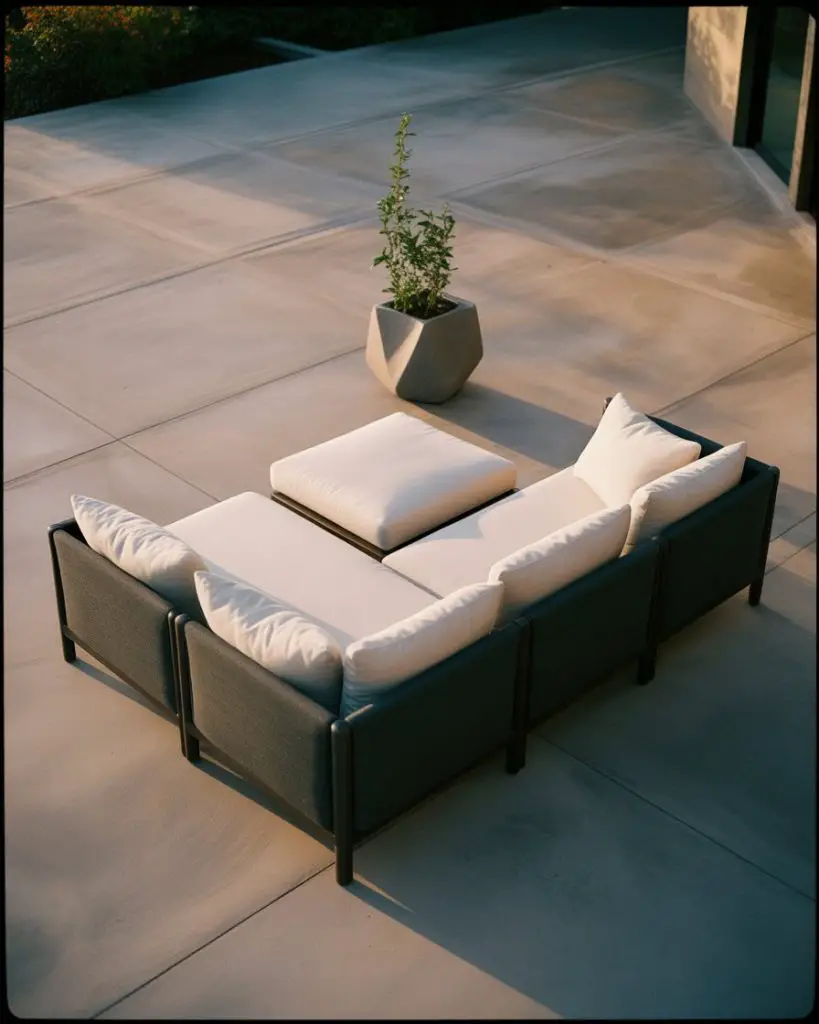
This setup is ideal for homeowners in newer developments or condos with sleek architecture. One neighbor I know in Denver installed a modular outdoor sofa that she can rearrange depending on whether she’s hosting or just reading solo. The flexibility matters—especially if your space serves double duty as a walkway or play area. Keep maintenance low by choosing weather-resistant fabrics and avoiding anything too precious. Modern doesn’t have to mean expensive; it just means intentional.
3. Covered Dining Pavilion
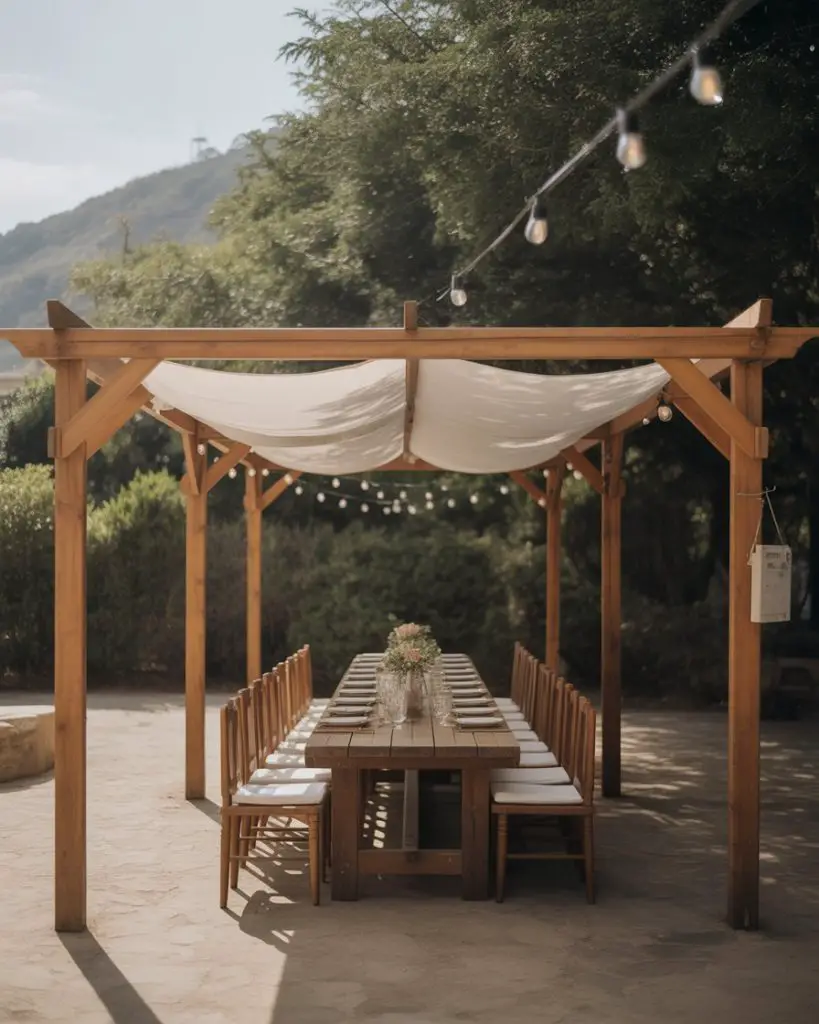
A covered patio extends your usable outdoor season and protects furniture from surprise rain. Whether you install a pergola with a retractable canopy or build a permanent roof structure, the key is creating a dedicated dining zone that feels like an outdoor room. Add string lights, a ceiling fan, and a long farmhouse table to make it the go-to spot for Sunday brunches and summer dinners. This idea works especially well in backyards with enough square footage to anchor a permanent structure. 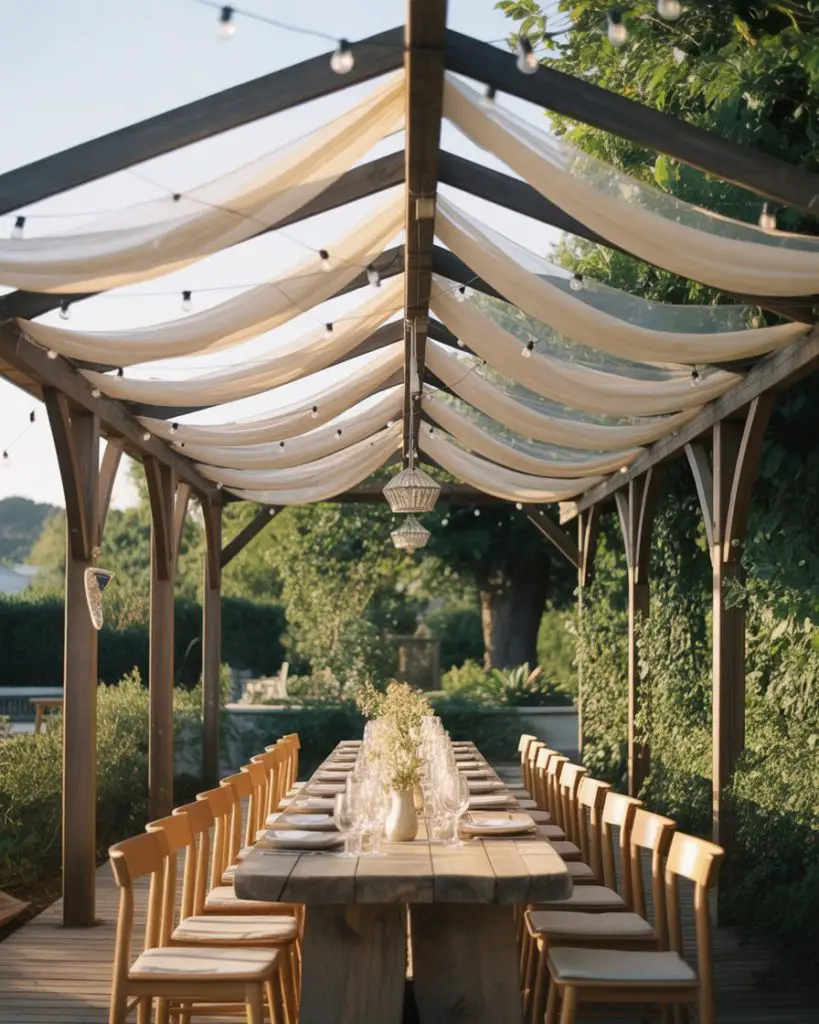
Where it works best: homes in the South and Southwest, where outdoor dining is a year-round possibility. A covered space also means you can leave cushions out without worrying about mildew, and you can add an outdoor rug without constant upkeep. If you’re in a rainier climate like Seattle, consider adding clear vinyl panels that roll down during storms but still let light through. It’s a small upgrade that makes a huge difference in how often you actually use the space.
4. Fire Pit Gathering Circle
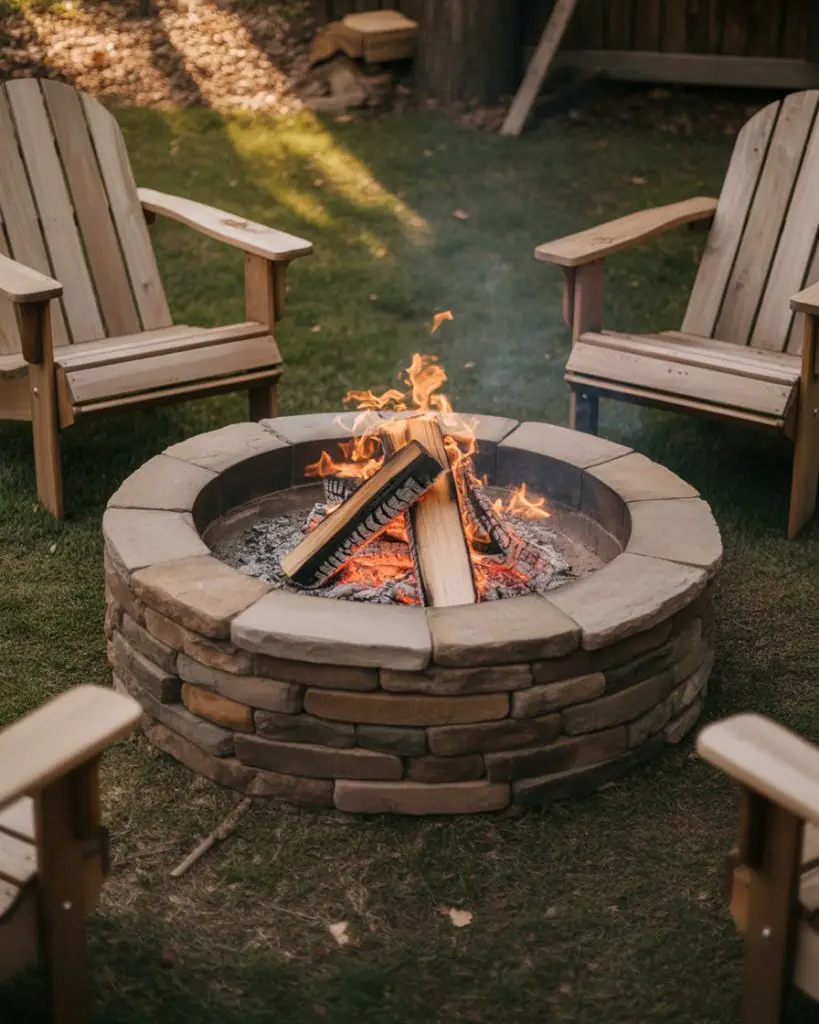
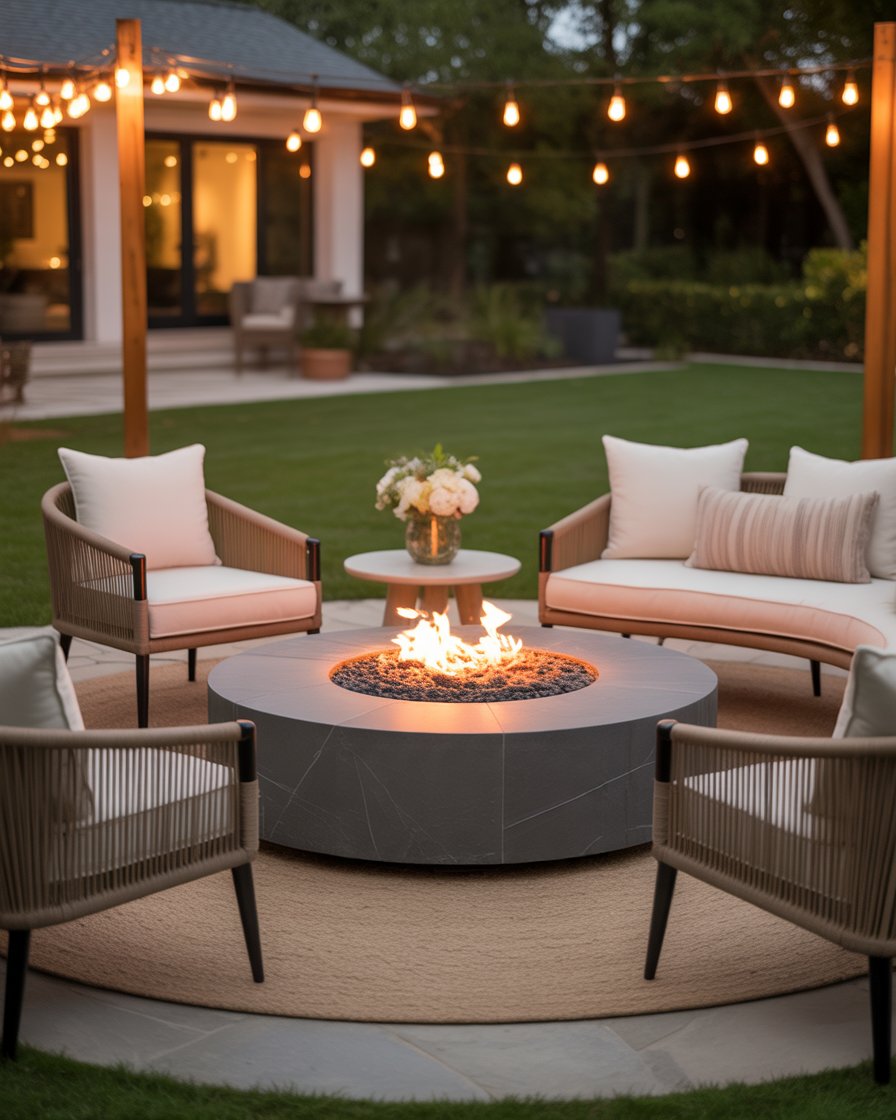
Nothing beats the draw of a fire pit on a cool evening. Arrange four to six Adirondack chairs or low lounge seats in a circle around a stone or metal fire bowl, and you’ve got an instant social hub. This setup is especially popular in small spaces with fire pit configurations, where the fire becomes the focal point and the seating stays simple. Add a small side table for drinks and a storage bin for firewood, and you’re set for spontaneous s’mores nights or quiet solo evenings under the stars. 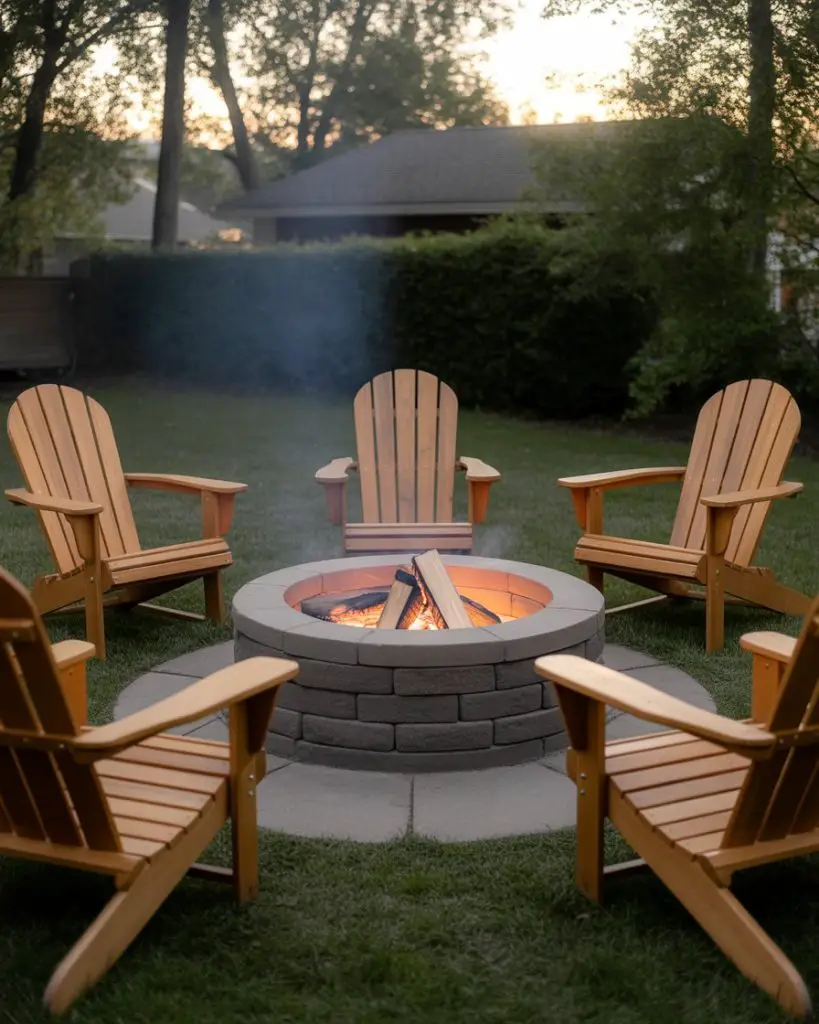
A practical insight: always check local fire regulations before installing a permanent pit. Some municipalities require a certain distance from structures or prohibit wood-burning fires altogether. Propane fire tables are a clean alternative and often easier to control. In neighborhoods like those outside Nashville or Raleigh, fire pits have become the new backyard essential—used nearly as often as grills. Just remember to keep a bucket of sand or a hose nearby, and never leave flames unattended.
5. Tiny Balcony Oasis
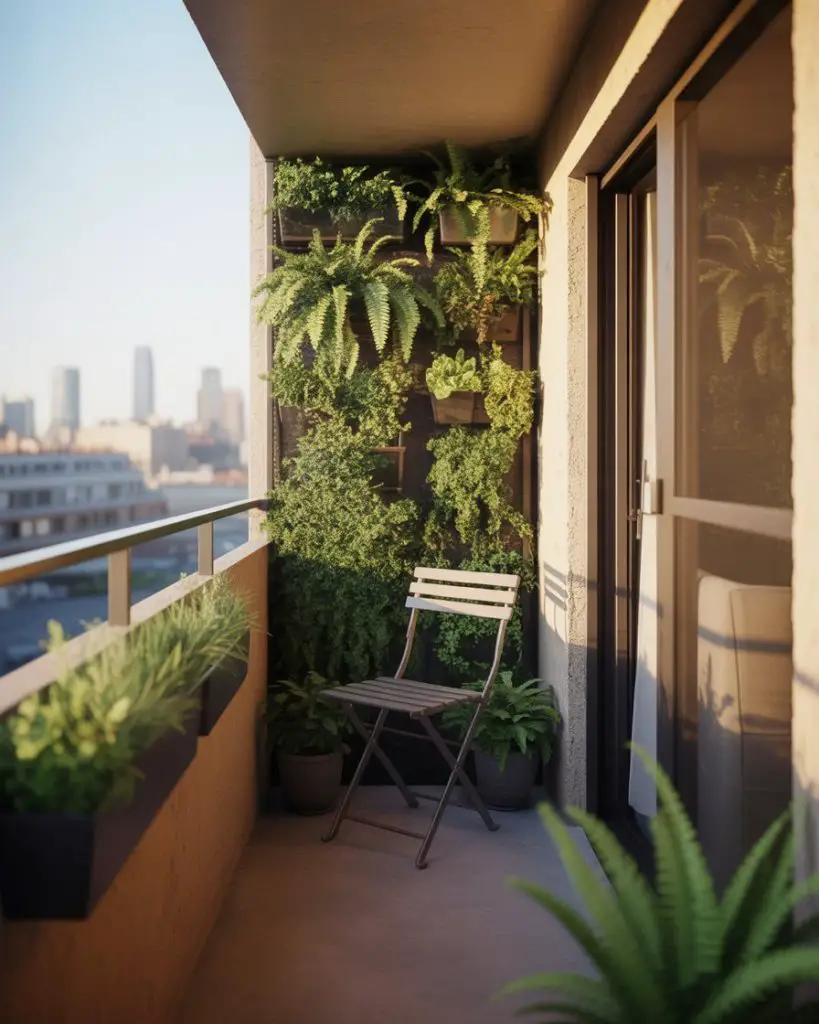
Even a tiny balcony can feel like a retreat with the right approach. Vertical gardens, hanging planters, and wall-mounted shelves maximize every inch without eating up floor space. Choose a single folding chair or a small bench, and layer in textiles—a outdoor mat, a couple of cushions, a lightweight throw. The goal is to make it feel like an extension of your living room, not an afterthought. This idea is perfect for apartment dwellers in cities like Chicago or San Francisco, where outdoor space is limited but highly valued. 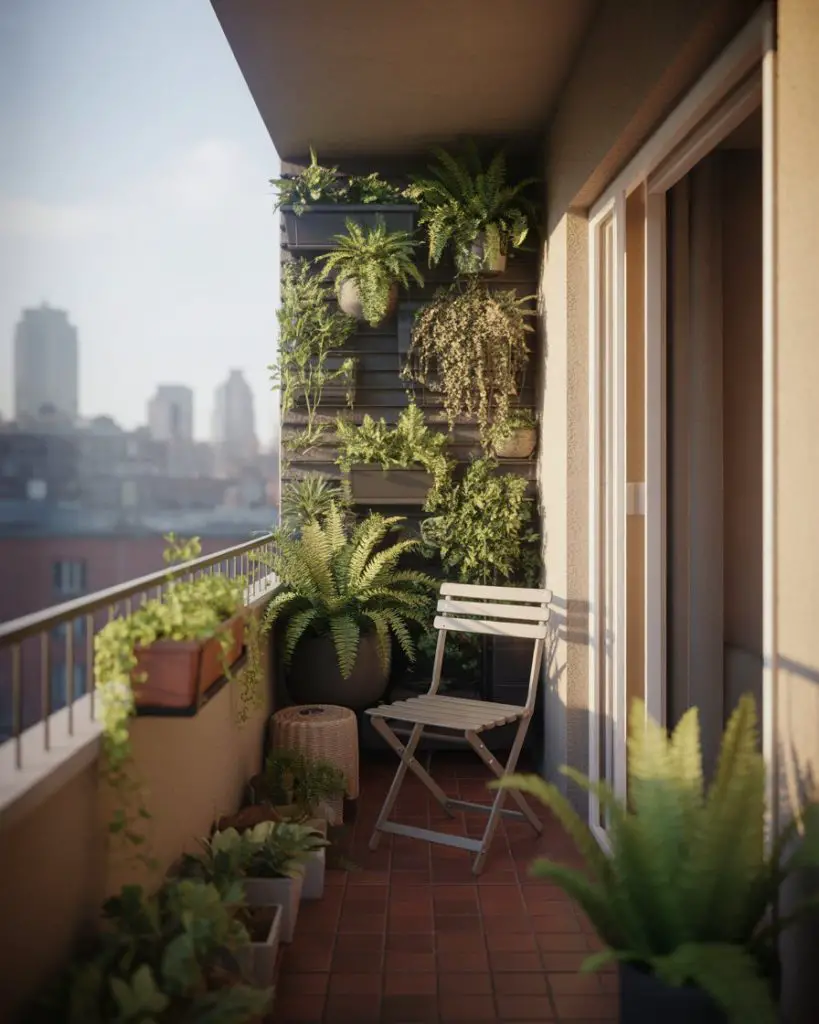
Real homeowner behavior: people with tiny balconies tend to rotate their setups seasonally. In spring, it’s all about flowers and bright cushions. By fall, they swap in mums and warmer tones. This keeps the space feeling fresh without requiring a full redesign. If your balcony faces a busy street, add a bamboo screen or outdoor curtain for privacy. It’s a small change that makes the space feel much more usable, especially if you’re trying to enjoy morning coffee without feeling on display.
6. Pool Deck Lounging Zone

If you have a pool, your patio should complement it—not compete with it. Keep poolside furniture low-maintenance: resin wicker, teak, or powder-coated aluminum all hold up well to chlorine and sun. Add a few chaise lounges, a side table for towels and sunscreen, and maybe a large umbrella for shade. The key is creating a space that feels resort-like but still functional for everyday use. This works beautifully in backyards across Florida, Arizona, and Southern California, where pools are central to outdoor living. 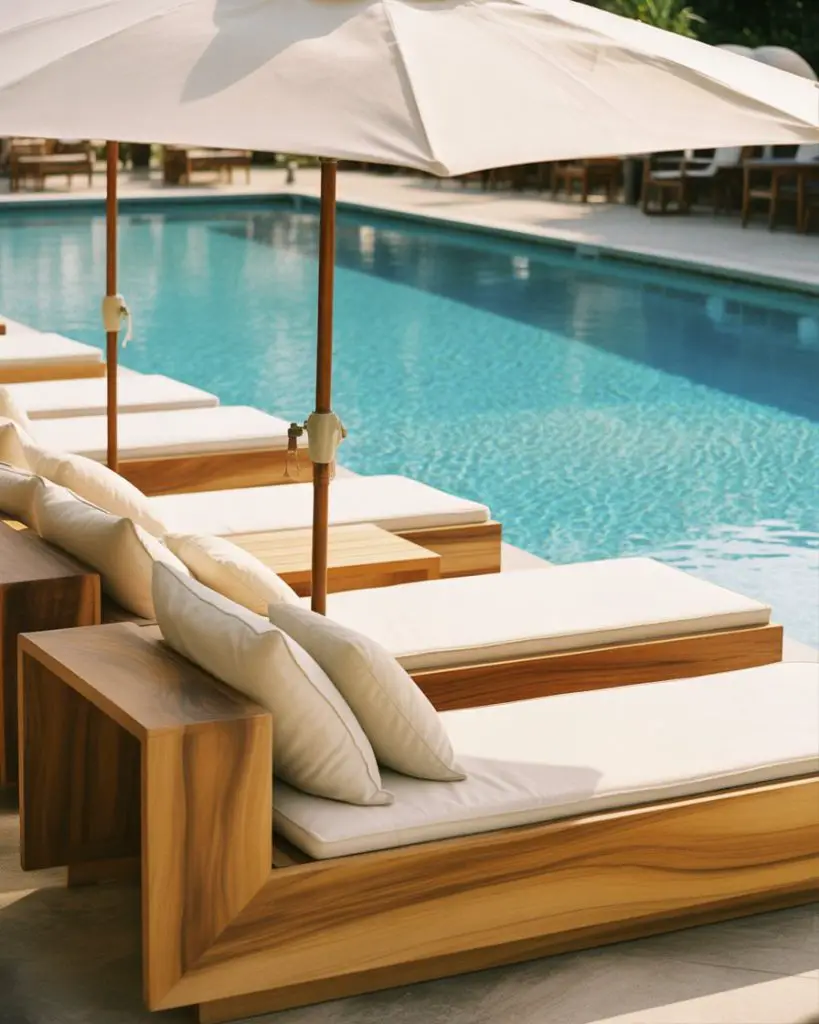
Expert-style commentary: avoid dark-colored cushions near pools—they fade fast and get too hot to sit on. Stick with whites, light grays, or soft blues. Also, consider adding a small outdoor shower or rinse station nearby. It’s a game-changer for families with kids and keeps your indoor floors much cleaner. If your pool deck is concrete, a few outdoor rugs can soften the space and reduce heat underfoot during peak summer months.
7. DIY Pallet Furniture Setup
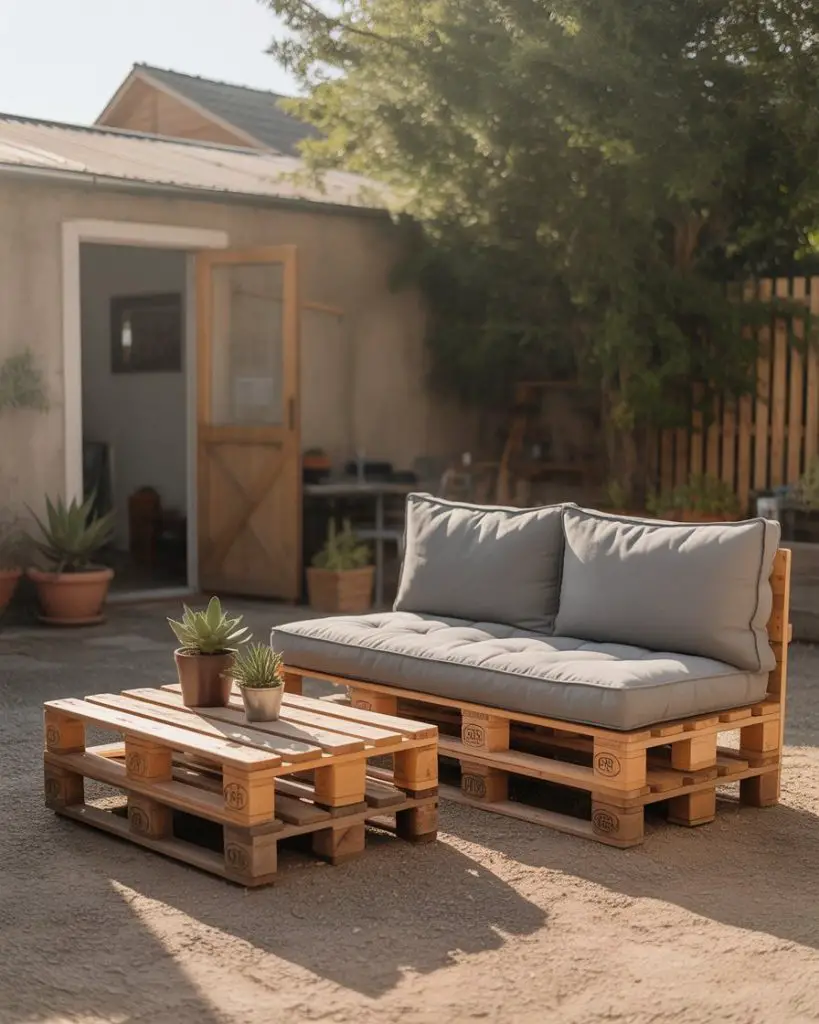
For the hands-on homeowner, DIY pallet furniture offers character and savings in one package. Sand down a few pallets, stain or paint them, and stack them to create benches, coffee tables, or even a daybed frame. Add thick cushions and you’ve got seating that feels custom but costs a fraction of store-bought options. This approach is especially popular in cheap patio makeovers, where creativity matters more than budget. It’s also a great weekend project that doesn’t require advanced carpentry skills. 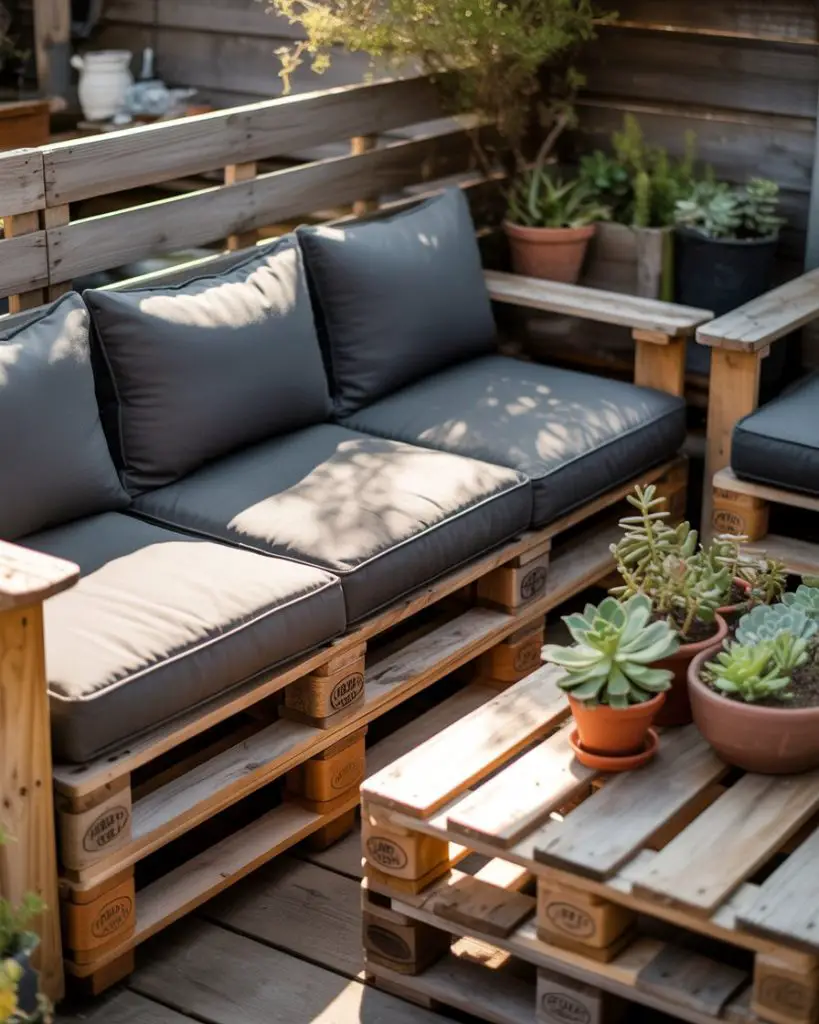
A common mistake is skipping the sanding step—rough wood can snag clothes and skin. Spend the extra hour smoothing everything down and sealing it with outdoor polyurethane. If you’re in a humid climate like Louisiana or coastal Georgia, the seal is even more important to prevent warping and mold. Pallet furniture works best in casual, laid-back settings—think bohemian or farmhouse styles. It’s not the right fit for ultra-modern spaces, but it shines in relaxed, eclectic patios.
8. Simple Herb Garden Patio
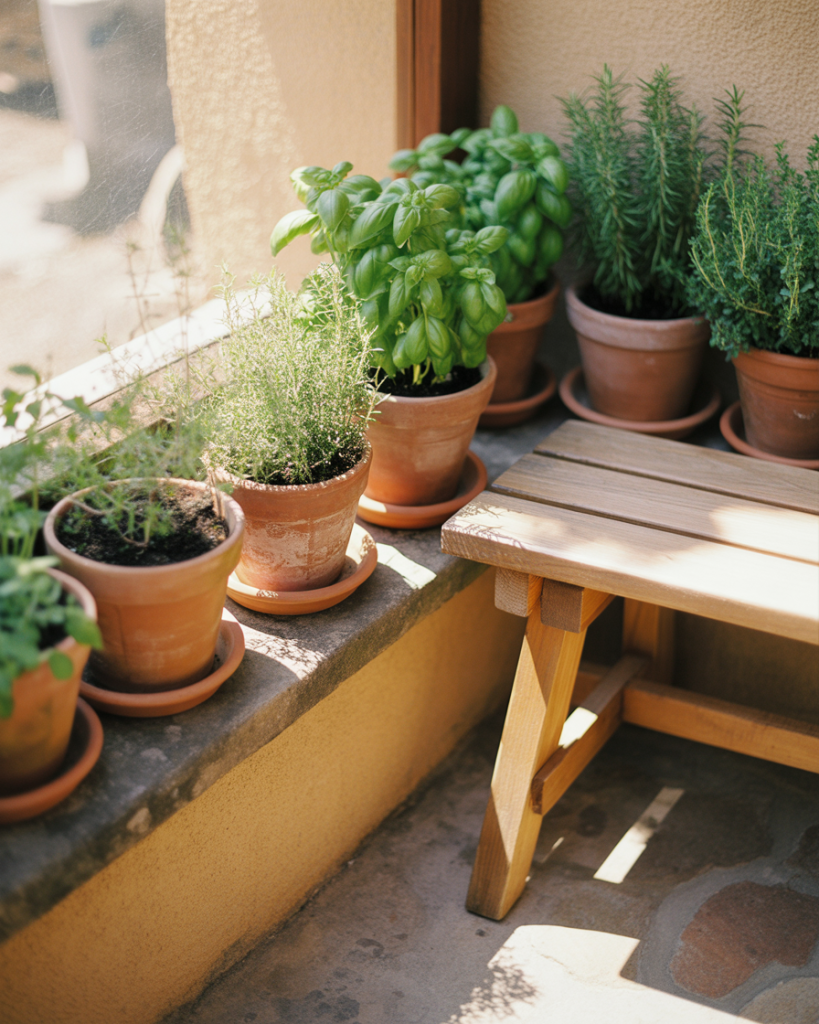
A simple patio doesn’t need elaborate furniture to feel complete. Sometimes the magic is in the greenery. Line the edges of your space with terra cotta pots filled with basil, rosemary, mint, and thyme. Add a small bistro set or even just a bench, and you’ve created a functional, fragrant retreat. This idea is perfect for small spaces where you want beauty and utility in one setup. It’s also ideal for renters who want to personalize their outdoor area without making permanent changes. 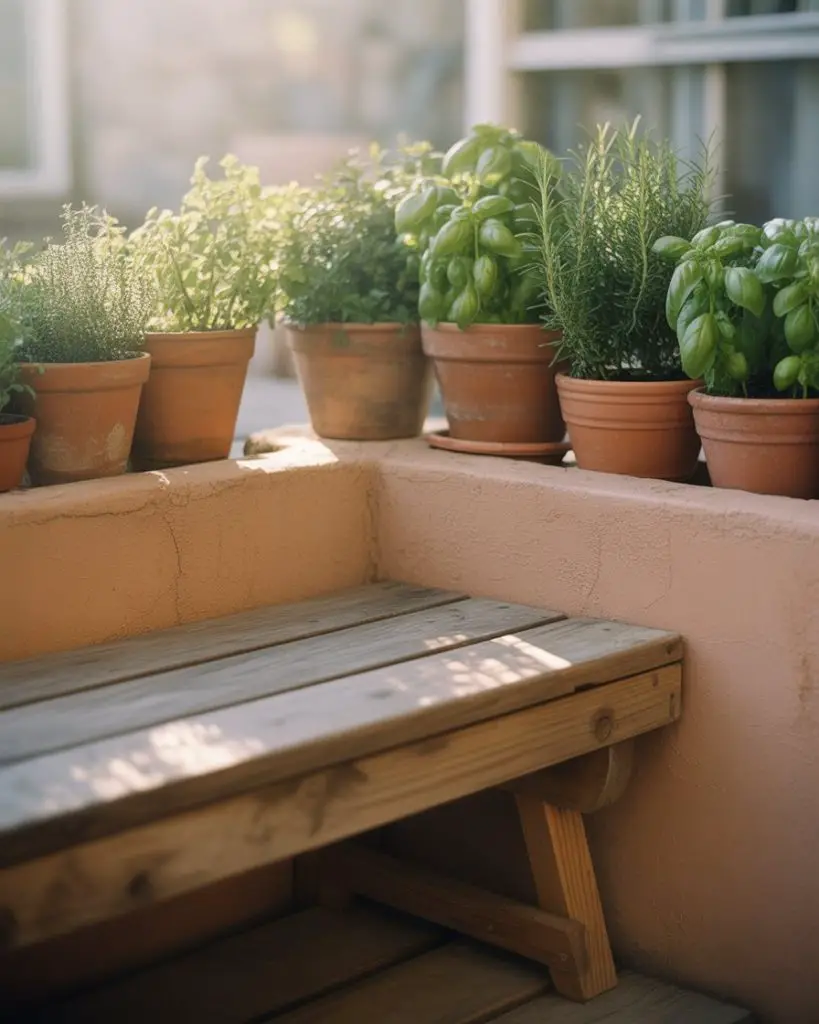
Budget angle: herbs are one of the cheapest ways to fill a space with life. A single basil plant costs a few dollars and provides fresh leaves all summer. If you cook often, the savings on store-bought herbs add up quickly. Plus, there’s something deeply satisfying about stepping outside to snip rosemary for dinner. In urban areas like Brooklyn or Portland, herb patios have become a micro-trend—part garden, part outdoor room, fully practical.
9. Rustic Farmhouse Retreat
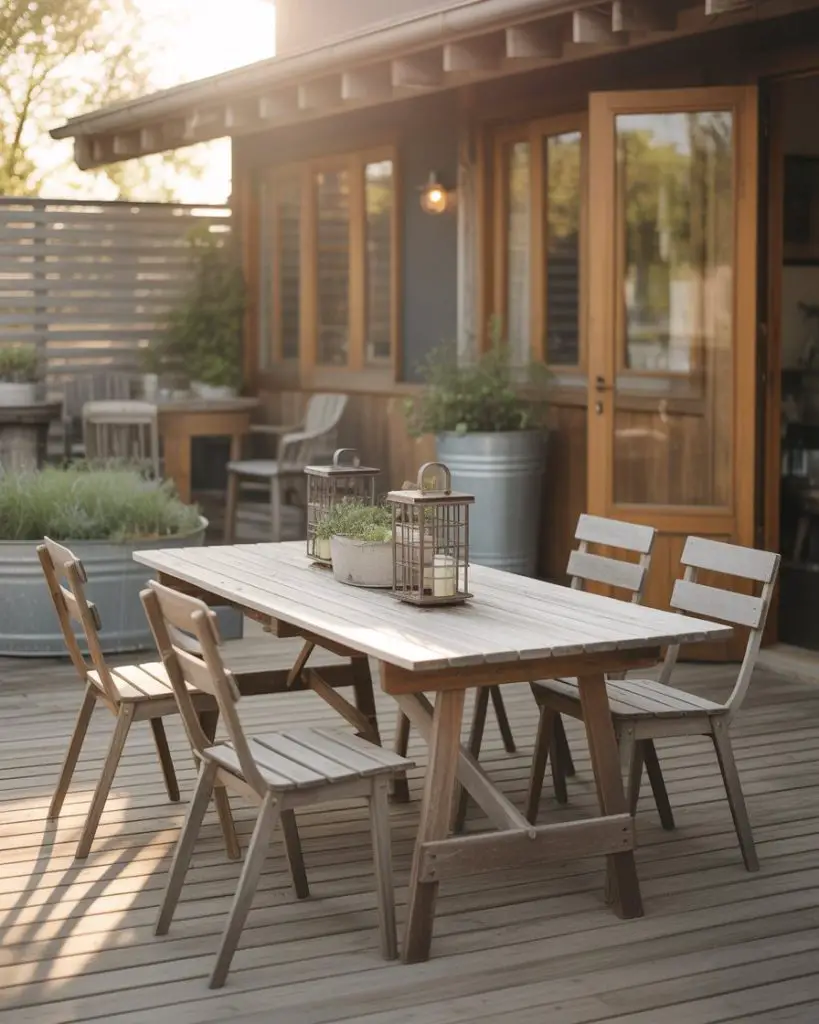
If you love weathered wood, vintage finds, and a lived-in feel, a rustic farmhouse patio might be your style. Think reclaimed barn wood tables, metal lanterns, and mismatched seating that looks collected over time. Layer in galvanized planters, a wooden ladder for hanging plants, and maybe an old watering can as décor. This aesthetic works beautifully in country settings or suburban homes with a bit of land, where the patio can spill out into the yard without defined borders. 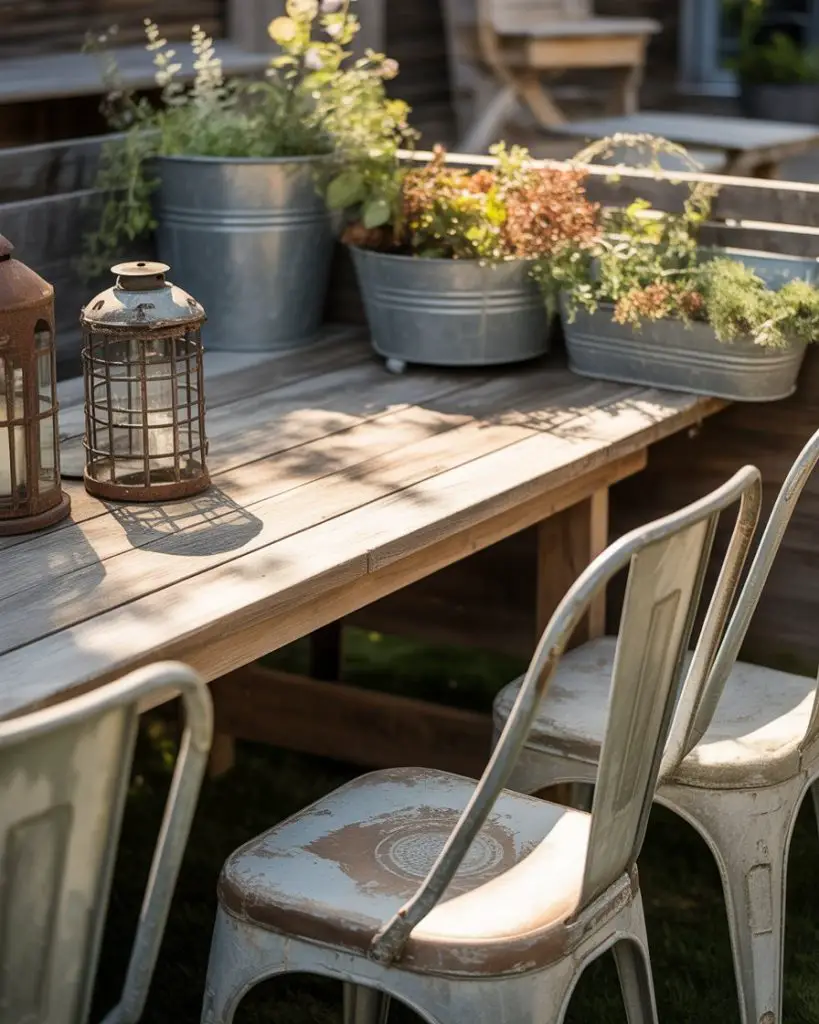
Where it works best: homes in the Midwest, the South, and rural areas where farmhouse style feels authentic rather than forced. One family in Tennessee turned their back patio into a farmhouse dining area using only secondhand pieces from estate sales. The total cost was under three hundred dollars, and it looks like it’s been there for decades. The key is embracing imperfection—scratches, patina, and mismatched pieces are part of the charm, not flaws to hide.
10. Spanish Style Courtyard
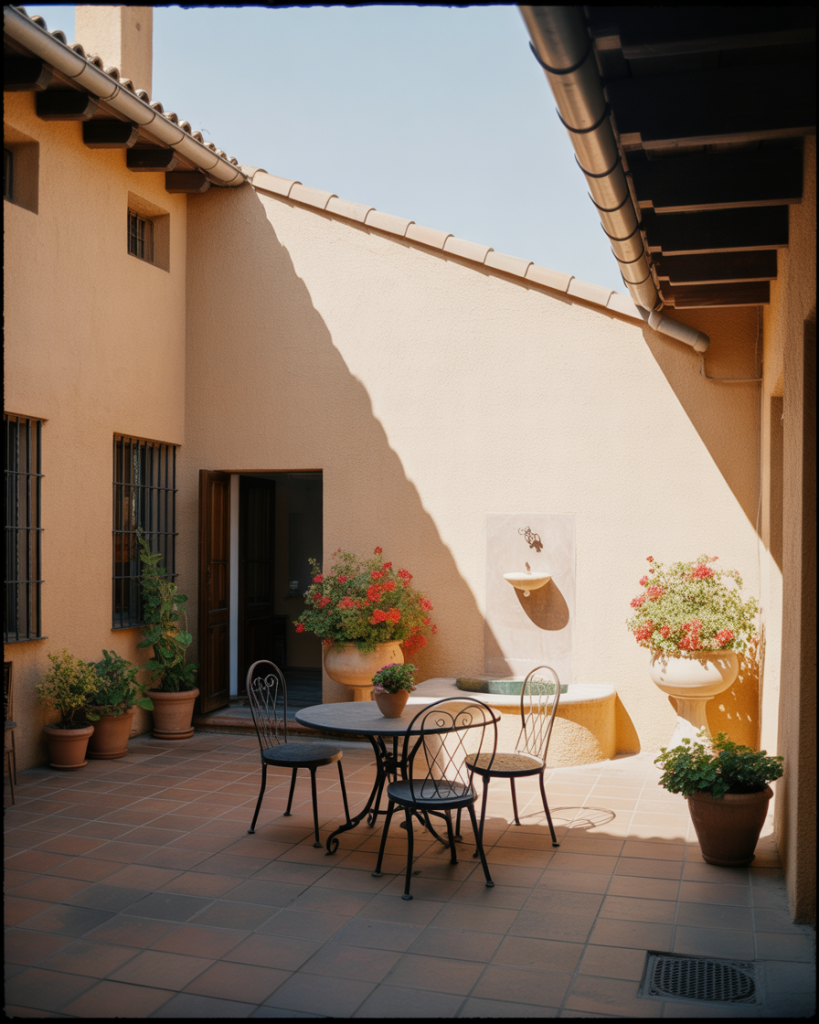
Inspired by old-world courtyards, a Spanish style patio features warm terracotta tiles, wrought iron accents, and lush potted plants. Add a small fountain or wall-mounted water feature for ambiance, and hang colorful ceramic tiles as art. This style works especially well in the Southwest and Southern California, where the climate supports year-round outdoor living. It’s also a great way to add privacy and intimacy to a small spaces setup, as the enclosed courtyard feel makes even a modest patio feel like a hidden retreat. 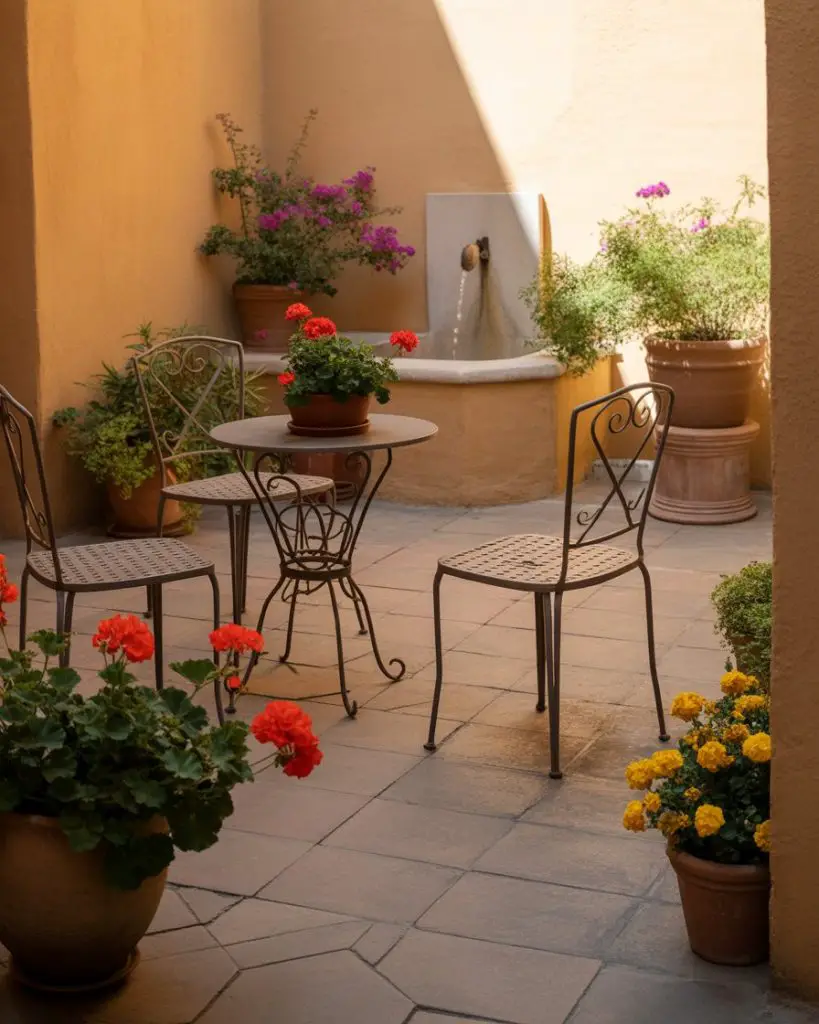
A micro anecdote: a friend in Tucson transformed her plain concrete slab into a Spanish-inspired courtyard over one summer. She added stucco planters, painted the walls a soft ochre, and installed a small fountain she found at a flea market. The sound of water completely changed the space—it went from harsh and hot to cool and inviting. If you’re in a dry climate, a water feature also helps with humidity and can make the area feel several degrees cooler.
11. Mediterranean Blue and White Haven
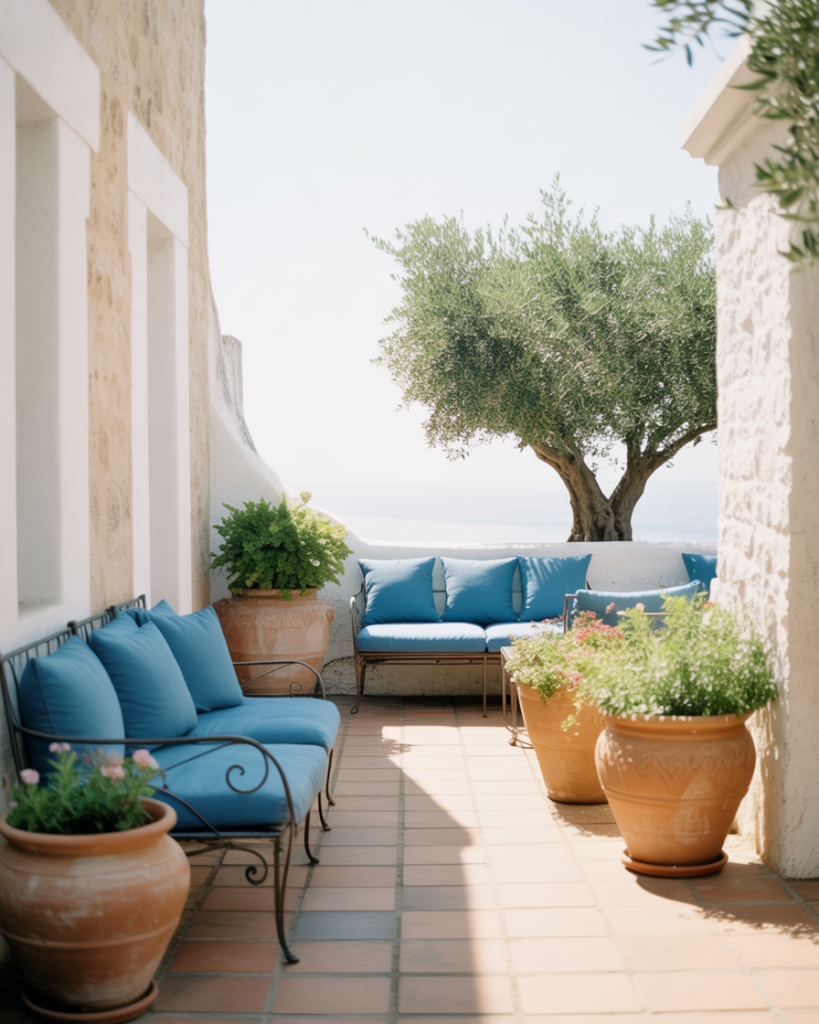
Crisp white walls, cobalt blue accents, and terracotta pots define the Mediterranean patio aesthetic. This style borrows from Greek islands and coastal Italy, emphasizing simplicity, natural materials, and a connection to the sea. Use white-painted furniture, blue cushions, and plenty of greenery—olive trees, lavender, and succulents all fit the look. It’s a refreshing choice for small spaces that need a calming, cohesive color palette, and it photographs beautifully for Pinterest-worthy inspiration. 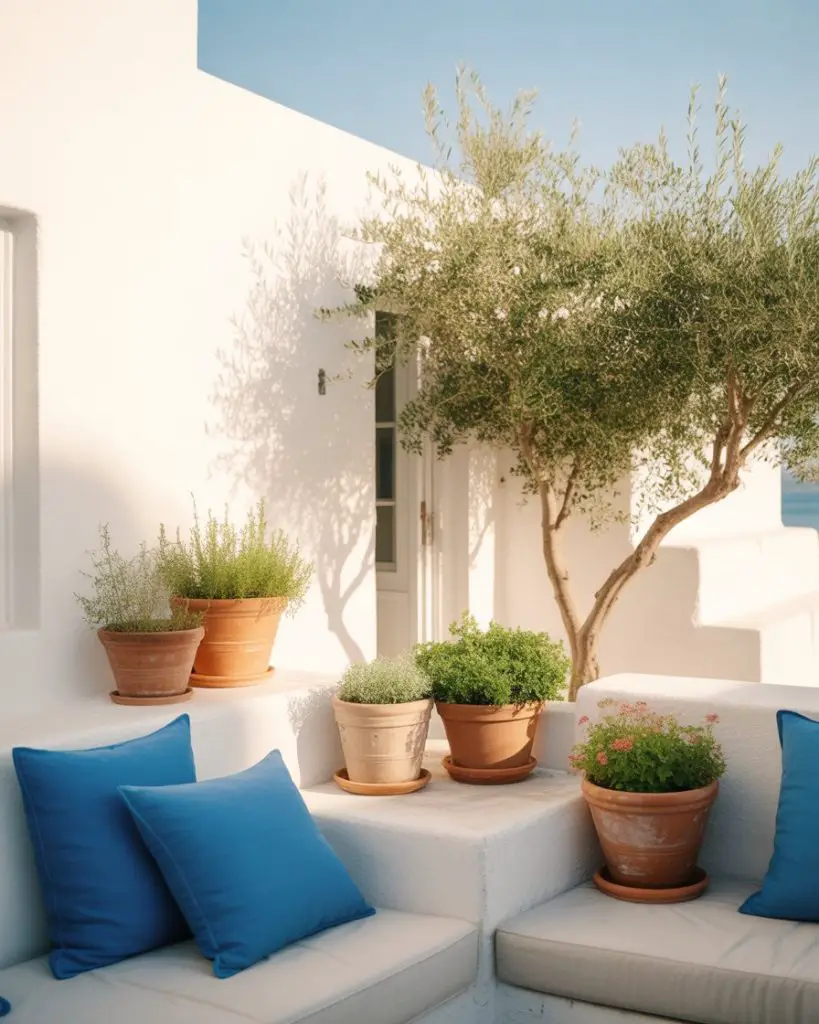
Real homeowner behavior: people who commit to this look often keep it year-round, swapping only small seasonal accents like throws or candles. The consistency is part of the appeal—it feels polished without being fussy. If you’re in a coastal area like San Diego or Miami, this style feels natural. Inland, it still works but may require more intentional watering to keep plants thriving. One tip: choose outdoor fabrics that resist fading, as white and blue both show wear quickly in strong sun.
12. Large Multi-Zone Patio
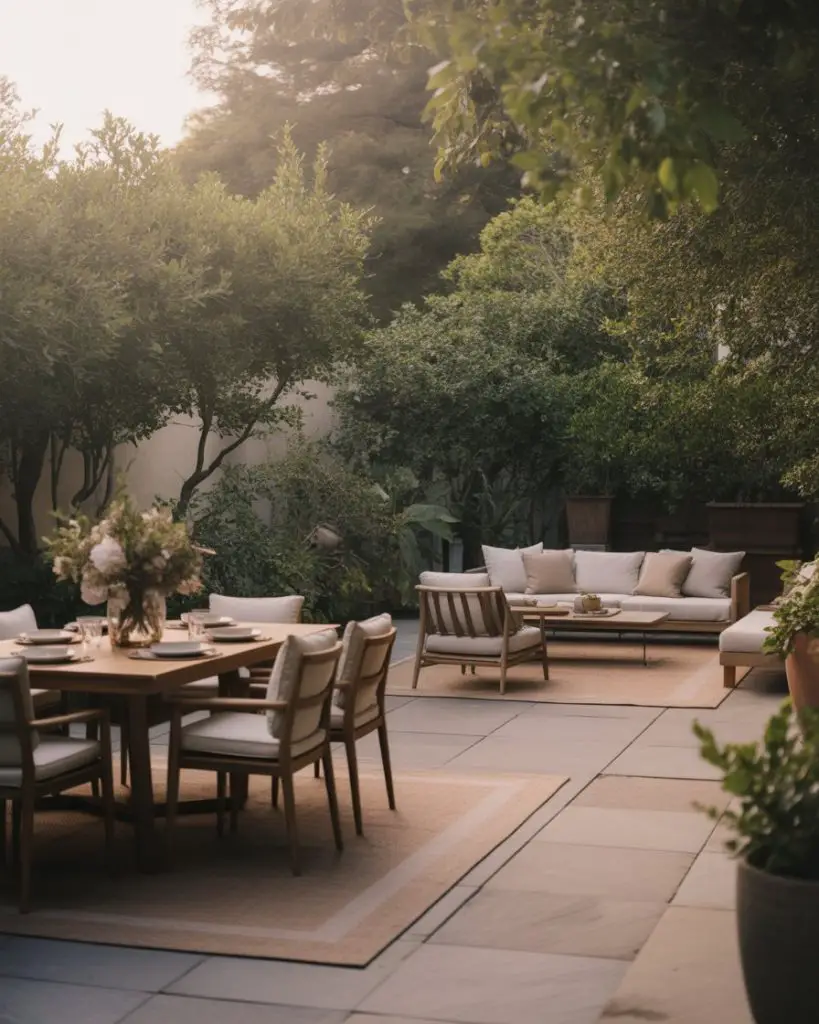
If you’re working with a large outdoor area, divide it into distinct zones: dining, lounging, and maybe a play area or bar cart station. Use outdoor rugs, planters, or even low hedges to define each section without building walls. This approach keeps the space from feeling empty or undefined, and it allows different activities to happen simultaneously. It’s ideal for families or frequent entertainers who need flexibility in how they use their backyards. 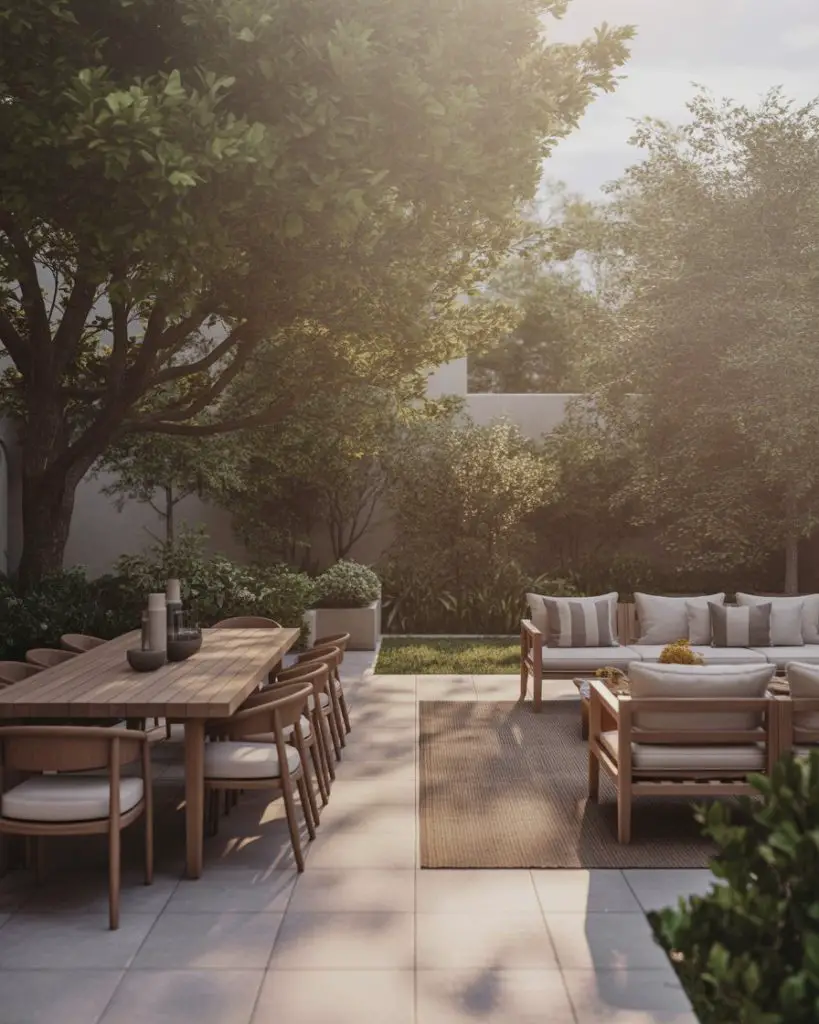
Practical insight: when designing multiple zones, think about traffic flow. You don’t want guests walking through the lounge area to get to the grill or dining table. Place high-traffic paths along the edges and anchor each zone with a focal point—a fire pit for lounging, a table for dining, a play structure for kids. In sprawling backyards common in Texas or the Carolinas, this zoning approach prevents the space from feeling like a vast, unused lawn with a few random chairs.
13. Outdoor Kitchen Central
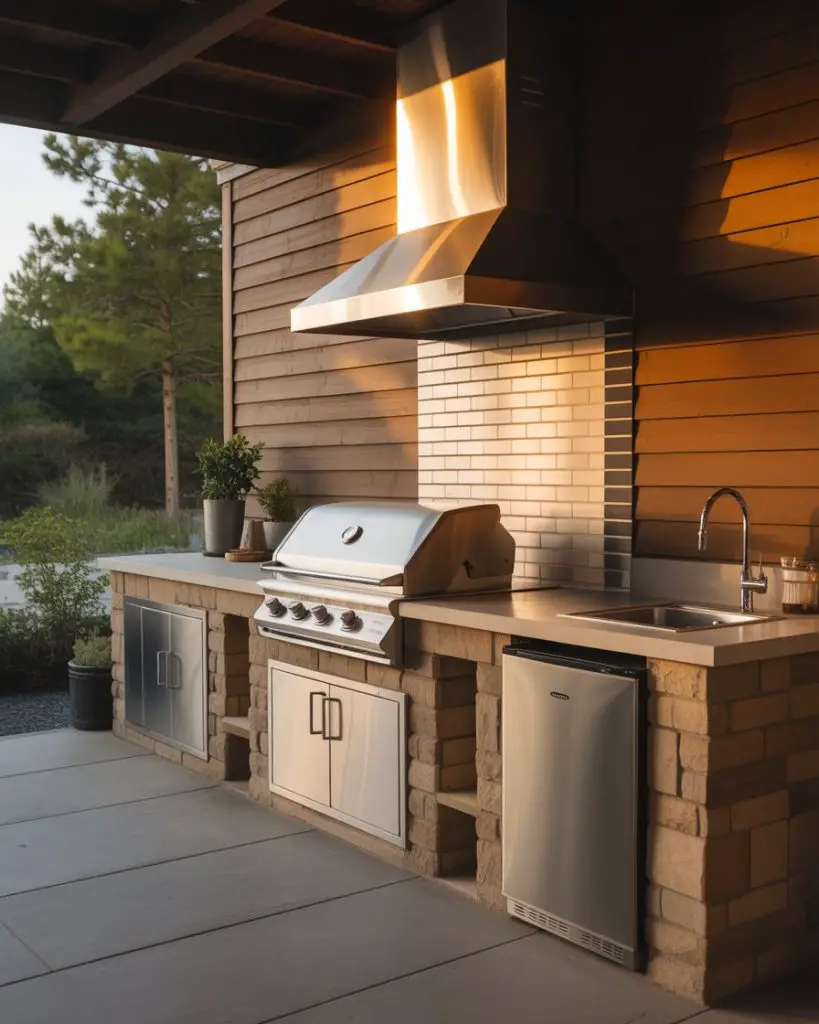
An outdoor kitchen is the ultimate upgrade for serious grillers and entertainers. Start with a built-in grill, then add a sink, mini fridge, and counter space for prep. If budget allows, include a pizza oven or smoker. This setup turns your patio into a full cooking zone, reducing trips back and forth to the indoor kitchen. It’s especially popular in warm climates where outdoor cooking happens year-round, and it works beautifully in large backyards with room to build. 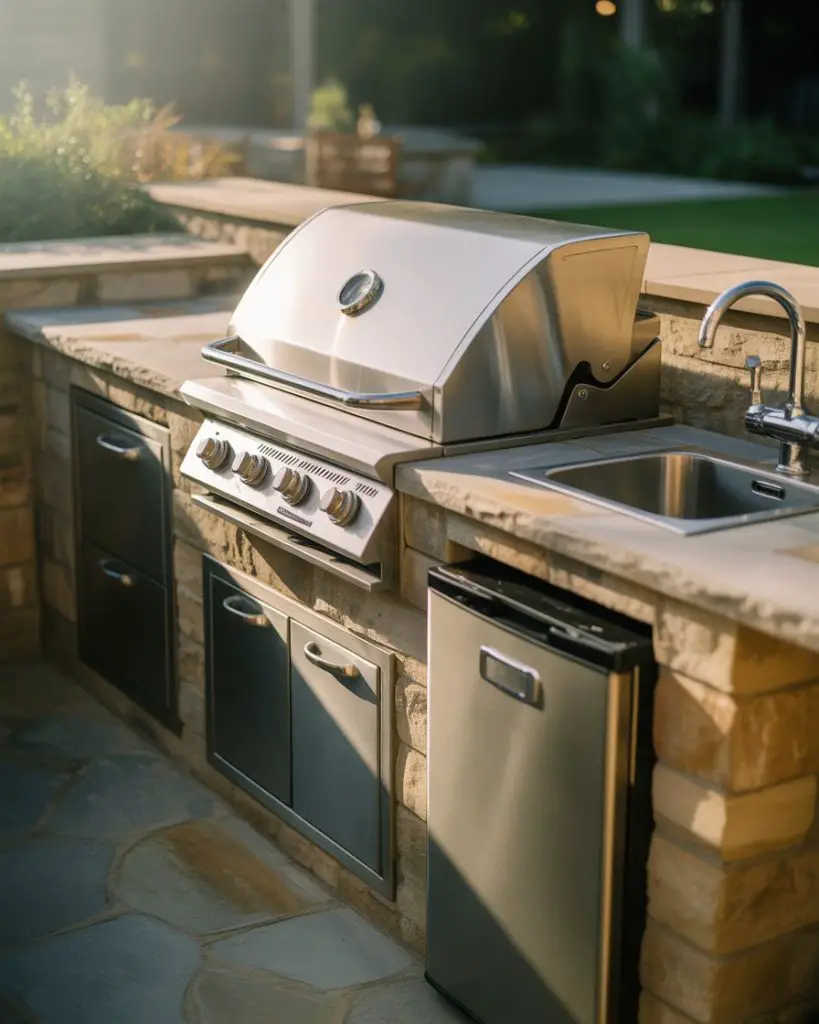
Budget angle: outdoor kitchens can range from a few thousand dollars for a basic setup to fifty thousand or more for high-end designs. If you’re working with a budget, start with a good grill and a simple counter. You can always add a sink or fridge later. Modular outdoor kitchen units are also a more affordable option than custom stonework. Homeowners in suburbs outside Atlanta and Phoenix are increasingly investing in these spaces, viewing them as both a lifestyle upgrade and a property value booster.
14. Privacy Panel Sanctuary
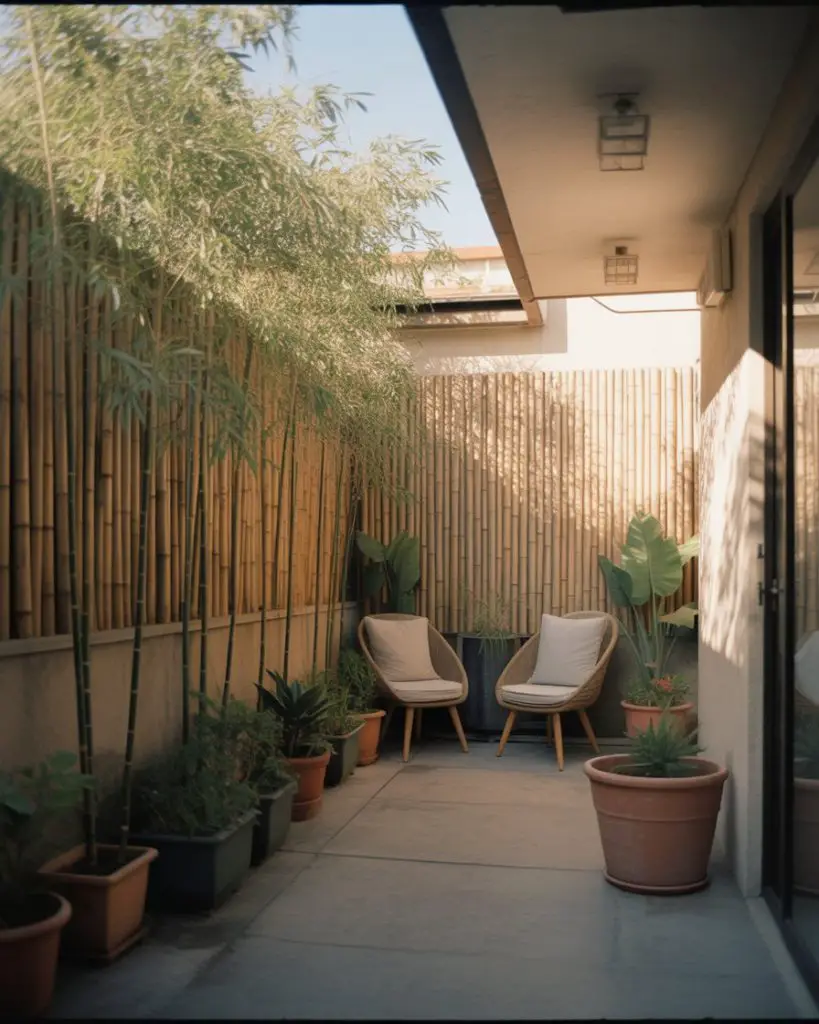
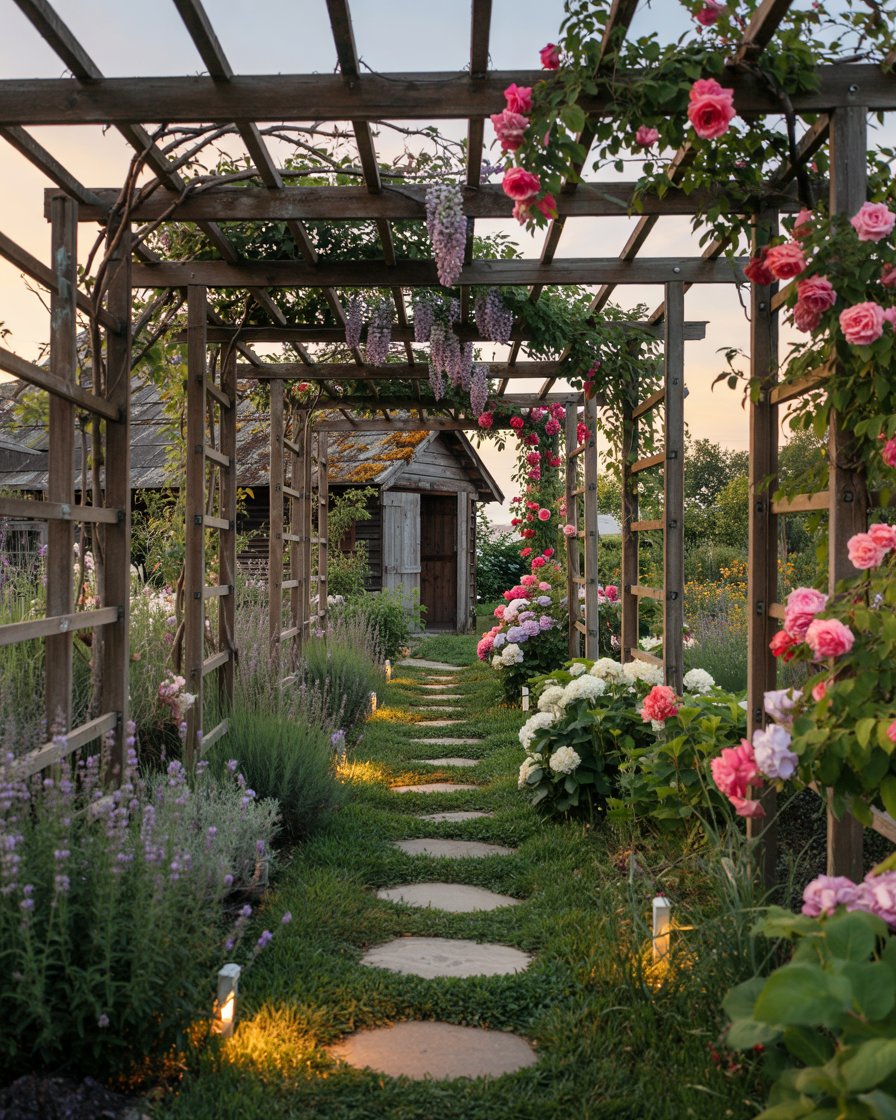
If your patio feels too exposed, privacy panels can transform it into a secluded retreat. Choose lattice screens, bamboo fencing, or even living walls with climbing vines. These barriers block sightlines from neighbors or the street without making the space feel closed off. They also provide wind protection and can support hanging planters or string lights. This idea is a lifesaver for apartment balconies and townhome patios where you’re close to other units. 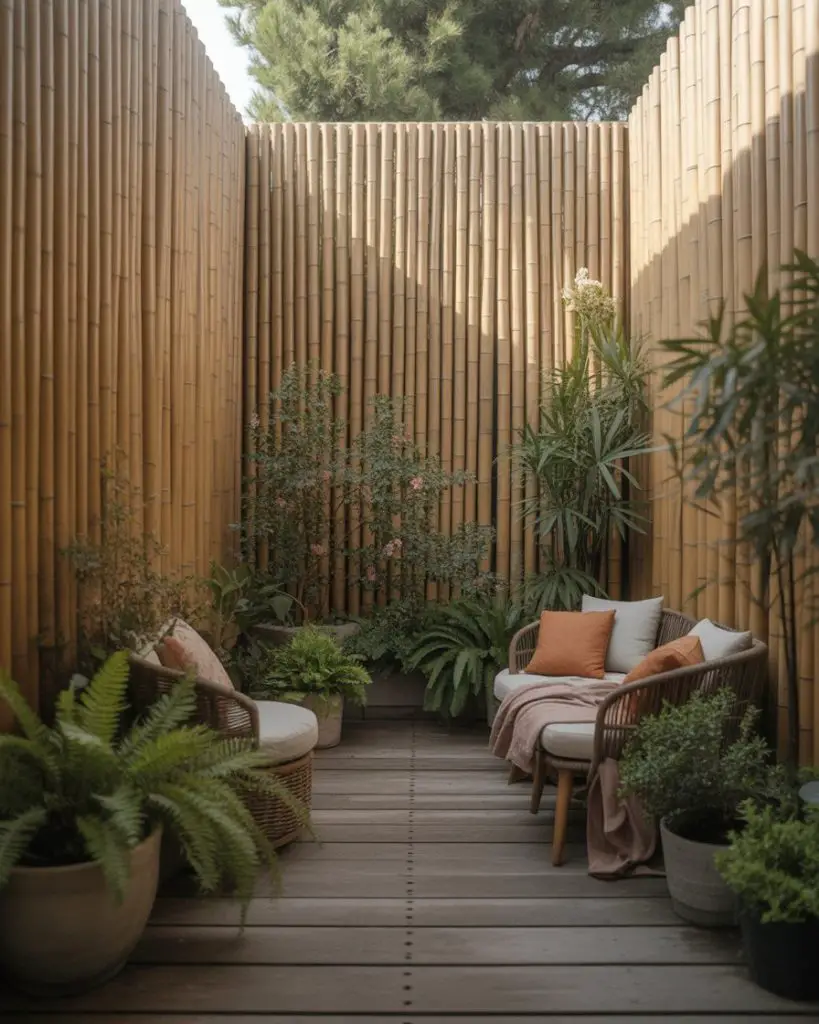
Common mistakes and how to avoid them: don’t install panels so high or dense that they block all airflow—you’ll end up with a stuffy, uncomfortable space. Aim for about six to seven feet tall, and consider slatted designs that let breezes through. In windy areas like coastal Oregon or the Plains states, anchor panels securely to prevent tipping. If you rent, freestanding privacy screens are a great alternative to permanent installations and can move with you when you leave.
15. Fireplace Focal Point
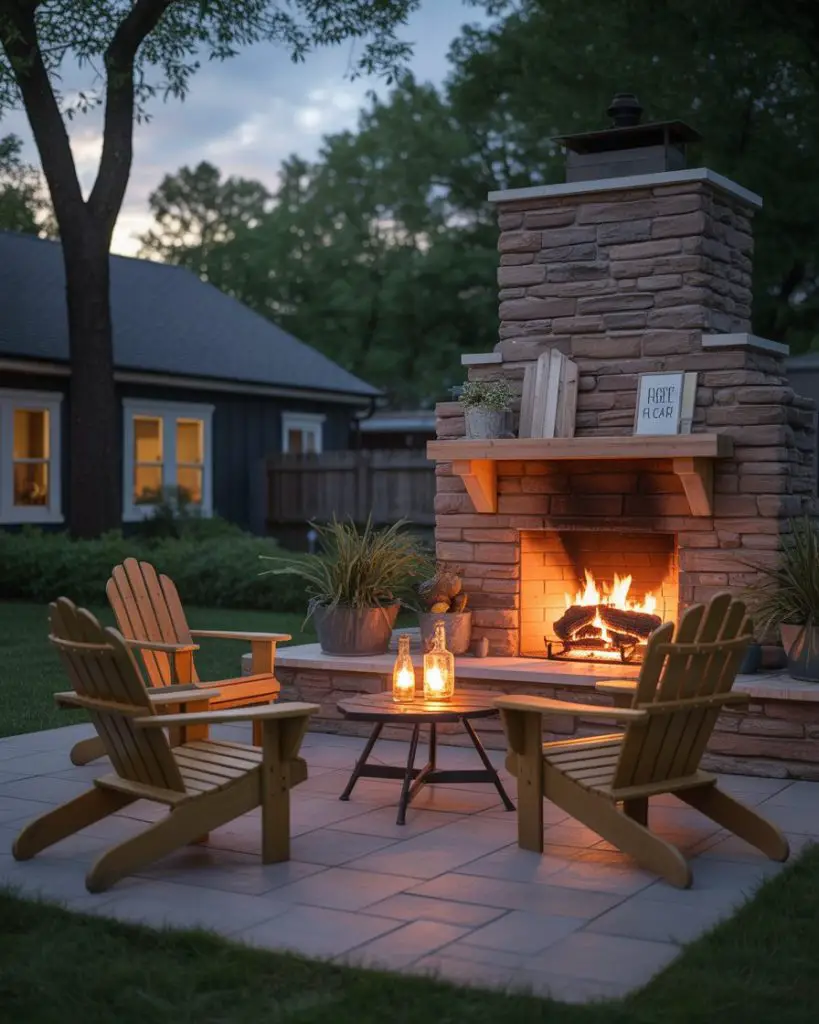
An outdoor fireplace creates instant drama and warmth. Whether you choose a stacked stone design, a modern steel unit, or a traditional brick hearth, the fireplace becomes the anchor of your patio. Arrange seating in a semi-circle facing the fire, add a mantel for candles or seasonal décor, and you’ve got a space that works from spring through fall. This idea is especially popular in cooler climates where outdoor season is shorter, and every bit of warmth extends usability. 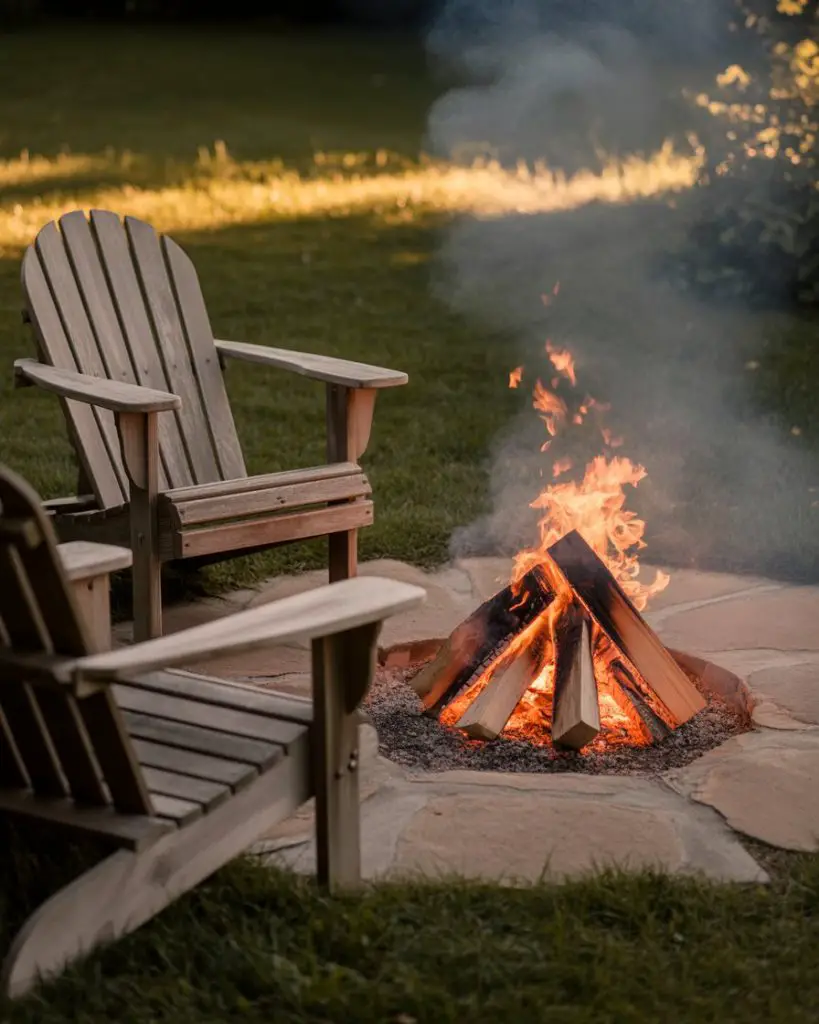
Where it works best: homes in the Midwest, Northeast, and mountain regions where evenings get chilly even in summer. An outdoor fireplace also adds resale value—buyers love the idea of extending outdoor season. One couple in Colorado built a simple stucco fireplace for around five thousand dollars, and it’s now the most-used part of their backyard. If a full fireplace isn’t in the budget, consider a chiminea or a tall outdoor heater as a scaled-down alternative.
16. Bloxburg-Inspired Gaming Aesthetic
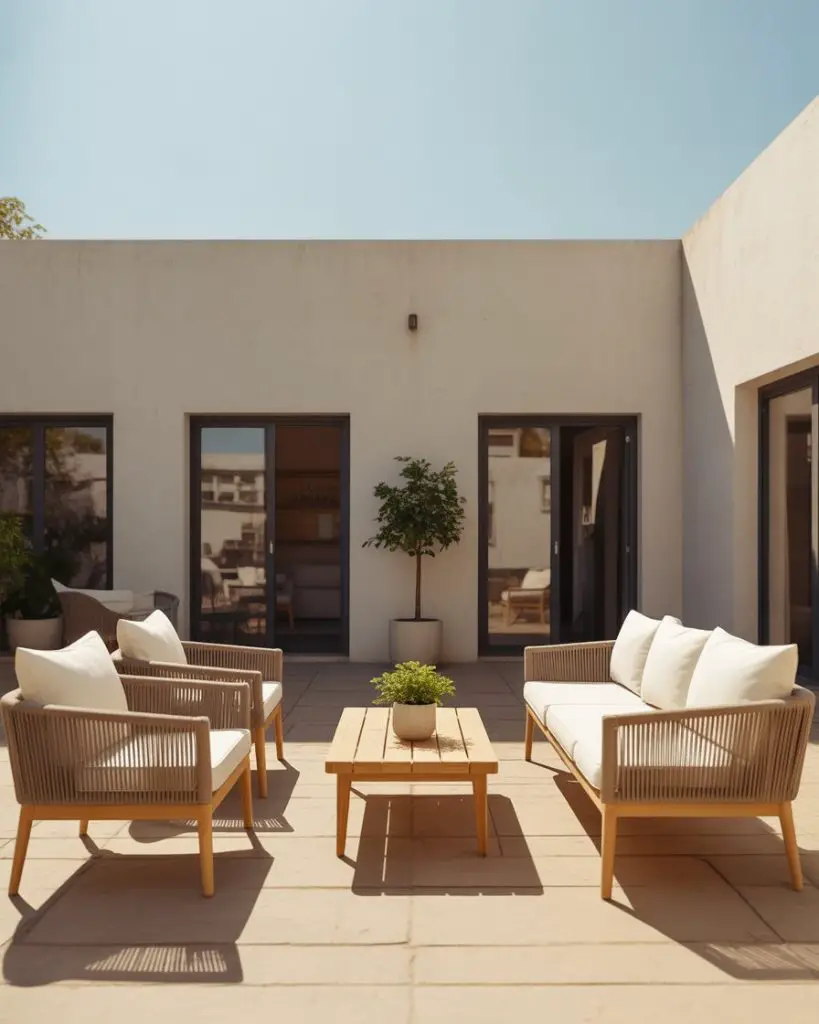
If you’re a fan of Bloxburg or other design games, you can bring that clean, modern aesthetic into real life. Think symmetrical layouts, matching furniture sets, and a curated color palette—usually white, gray, and one accent color. This style appeals to younger homeowners and renters who grew up designing virtual spaces and now want to recreate that polished look in their own apartment or starter home patio. It’s playful, Pinterest-ready, and surprisingly achievable on a budget. 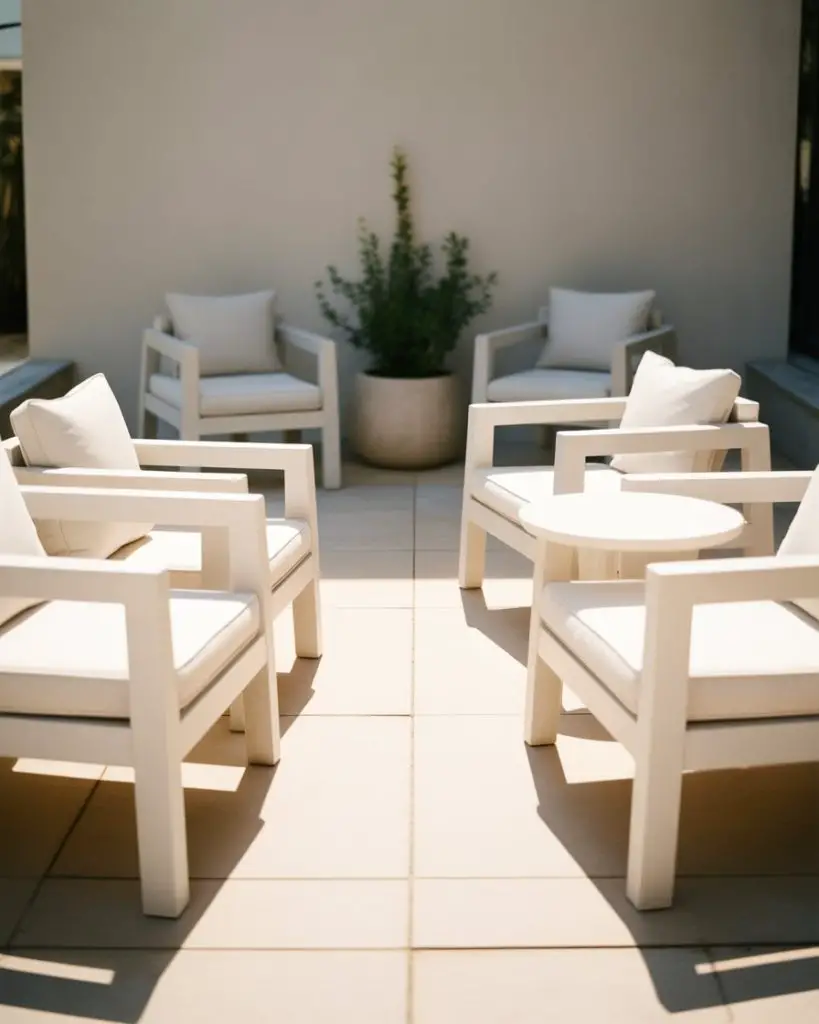
Real homeowner behavior: younger renters often use removable adhesive hooks, freestanding planters, and lightweight furniture so they can easily take everything with them when they move. This makes the Bloxburg aesthetic particularly renter friendly—it’s all about portable pieces and non-permanent changes. In cities like Austin and Nashville, this trend has taken off among twentysomethings furnishing their first outdoor spaces. The key is keeping it simple, repeating shapes, and sticking to a tight color story.
17. Cozy Reading Nook
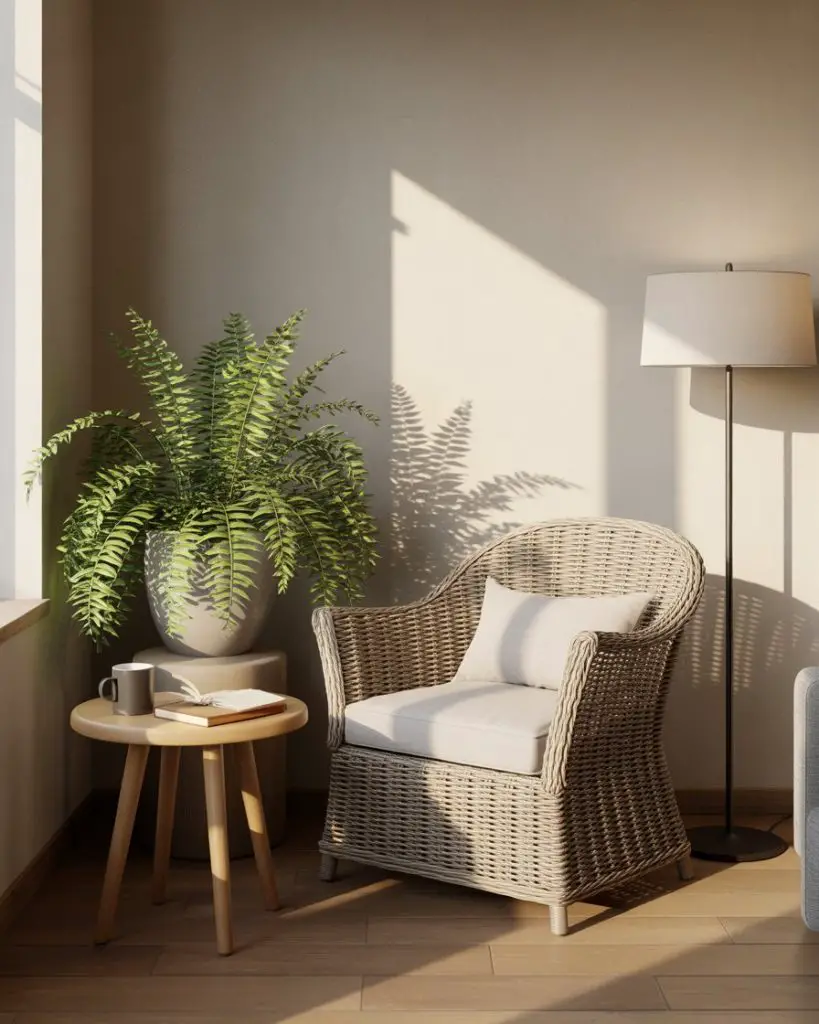
Sometimes the best patio is the one designed for solitude. A simple reading nook might include a single comfortable chair, a small side table for coffee and books, and a floor lamp or string of lights for evening reading. Add a throw blanket and a few pillows, and you’ve created a personal retreat. This setup works beautifully in small spaces where you don’t need a full seating group—just one perfect spot to escape for an hour. 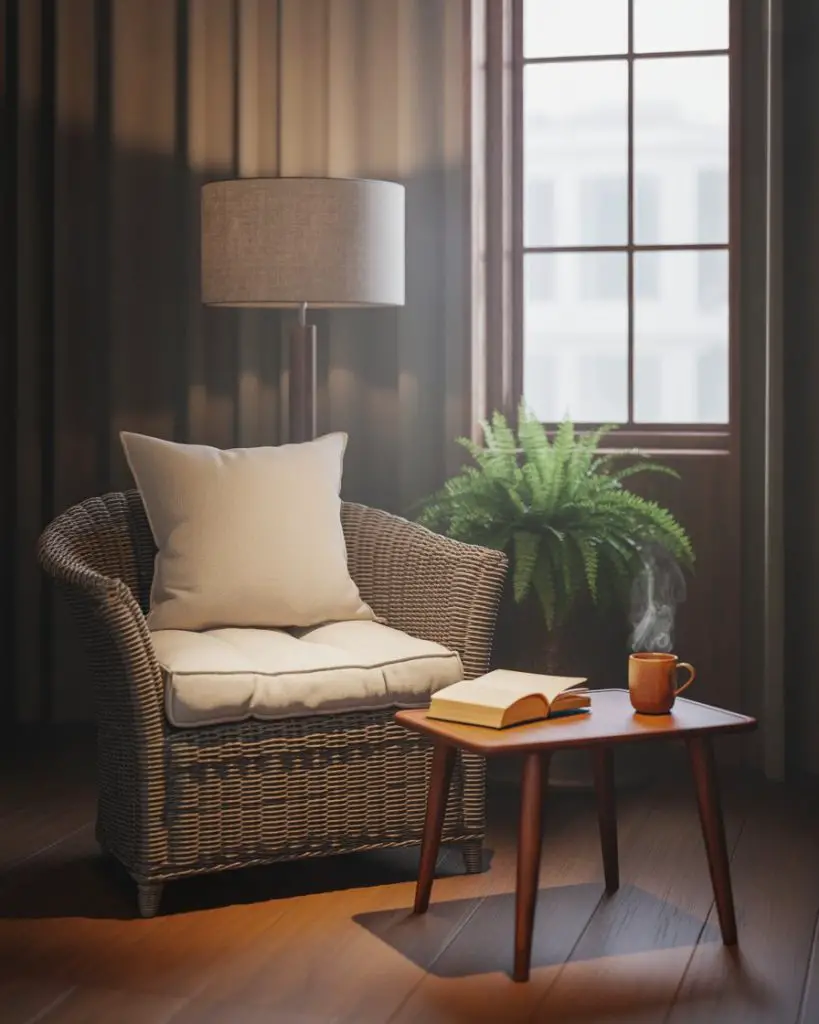
A micro anecdote: a reader in Seattle set up a covered reading nook on her apartment balcony and uses it nearly every morning, rain or shine. She added a small space heater for chilly days and keeps a basket of blankets nearby. It’s become her favorite spot in the entire apartment. If you’re short on space, this approach maximizes what you have without overcrowding. Just make sure the chair is truly comfortable—this isn’t the place to sacrifice quality for aesthetics.
18. Bohemian Textile Paradise
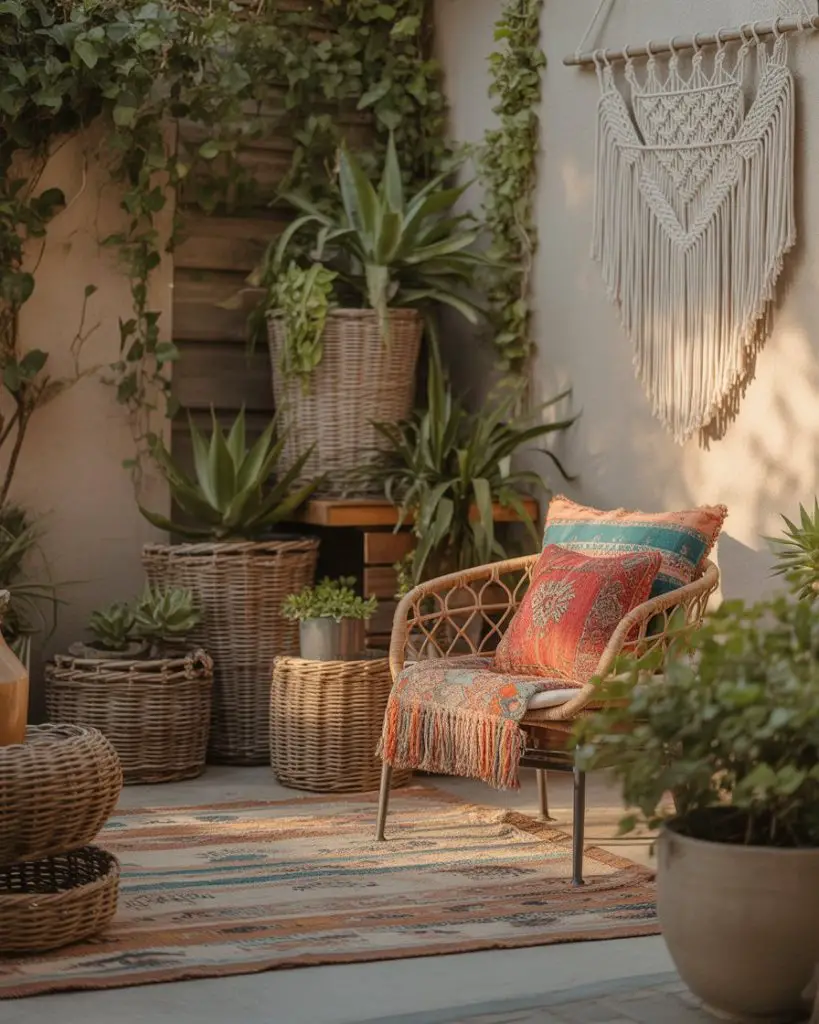
Layered rugs, macramé hangings, and piles of patterned pillows define the bohemian patio. This style embraces color, texture, and a collected-over-time vibe. Mix Moroccan poufs with rattan chairs, hang a tapestry as a backdrop, and add string lights or lanterns for ambiance. It’s perfect for decorating enthusiasts who love to switch things up seasonally and aren’t afraid of bold prints. This look also translates well to small spaces, where every surface becomes an opportunity for personal expression. 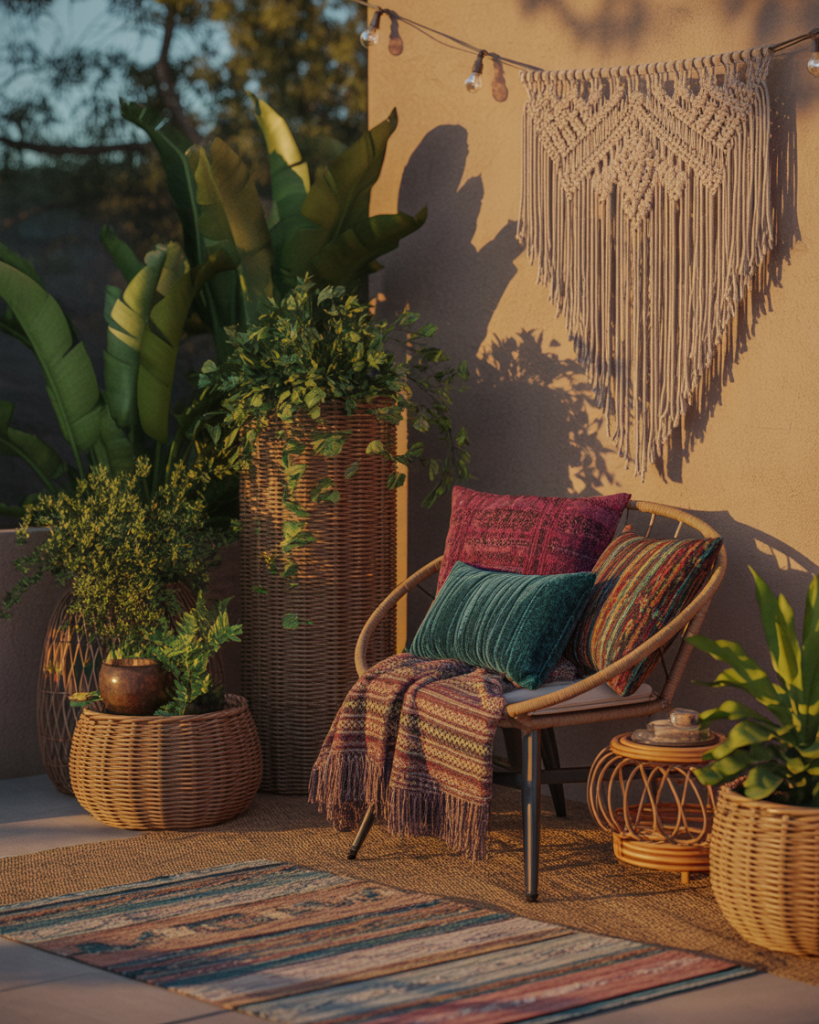
Expert-style commentary: the key to pulling off bohemian style outdoors is choosing weather-resistant versions of your favorite textiles. Look for outdoor rugs made from polypropylene, pillows with solution-dyed acrylic covers, and macramé made from synthetic cord. Natural fibers look great but mildew quickly in humidity or rain. In drier climates like Arizona or New Mexico, you have more flexibility, but anywhere with moisture requires synthetic upgrades to keep things looking fresh season after season.
19. String Light Canopy
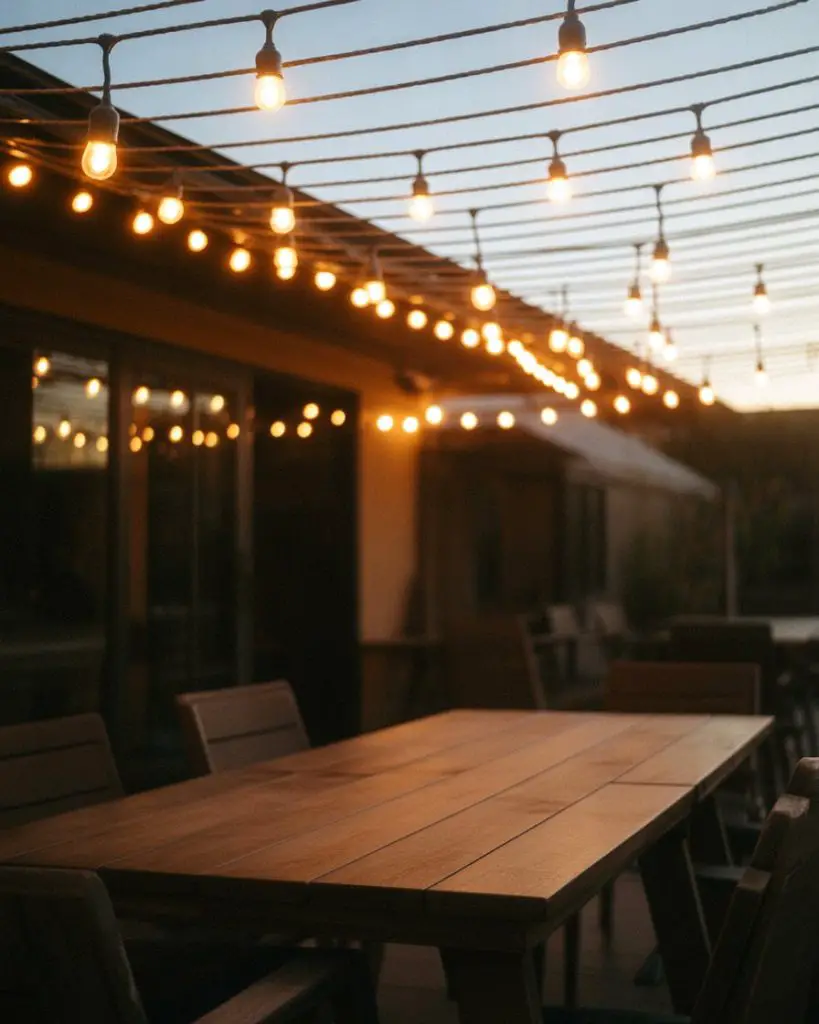
A ceiling of string lights turns any patio into an enchanted space. Drape café-style bulbs in a grid pattern overhead, or hang them in swooping lines from trees or posts. This works in backyards of all sizes and adds instant ambiance with minimal effort. It’s one of the easiest DIY upgrades you can make, and it’s endlessly popular on Pinterest for a reason—it photographs beautifully and genuinely improves the atmosphere. Plus, it extends the usability of your patio into the evening hours. 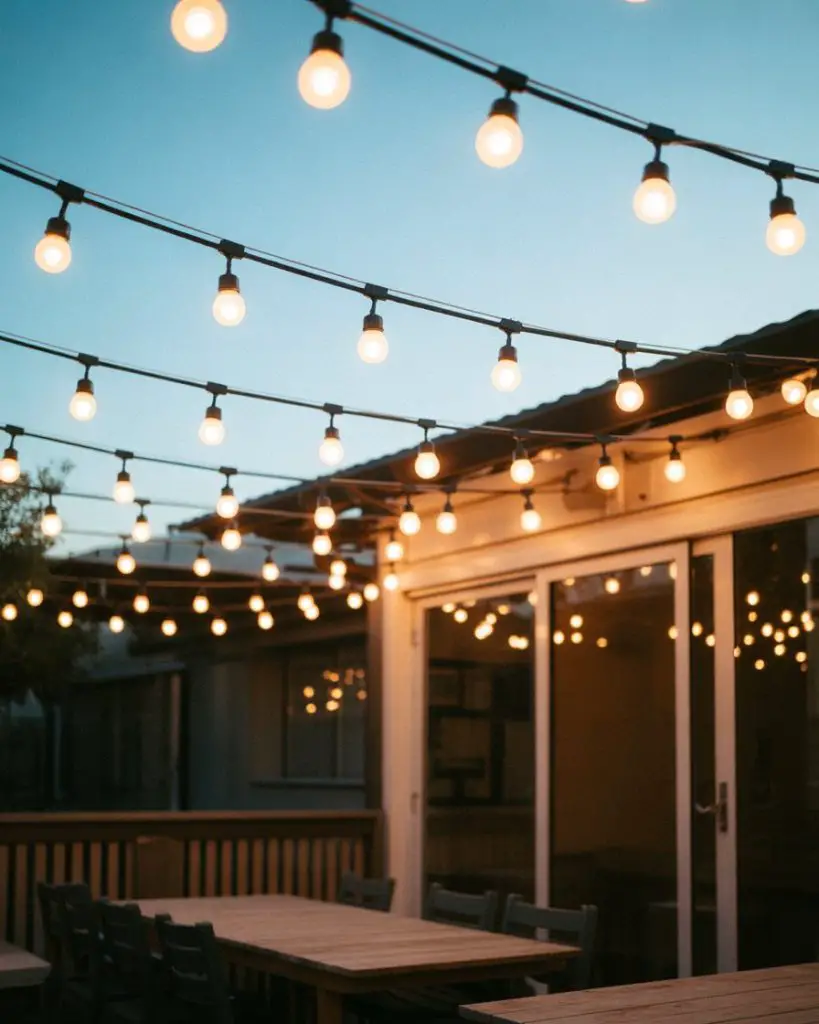
Practical insight: invest in commercial-grade string lights rather than the cheapest option. They last longer, resist weather better, and the bulbs are replaceable. Solar-powered versions exist but often don’t provide enough light—stick with plug-in options if you want true illumination. In neighborhoods across suburbs in Ohio, Virginia, and beyond, string light canopies have become the standard for backyard gatherings. They’re now as common as grills, and for good reason—they work.
20. Minimalist Zen Garden
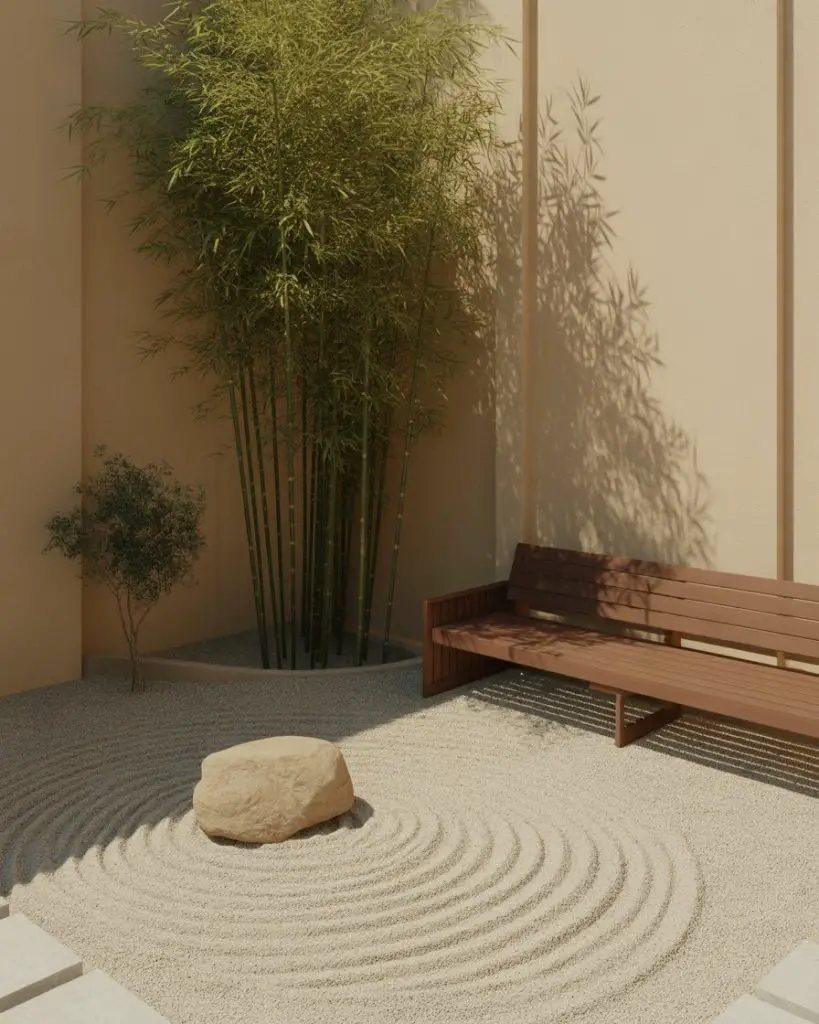
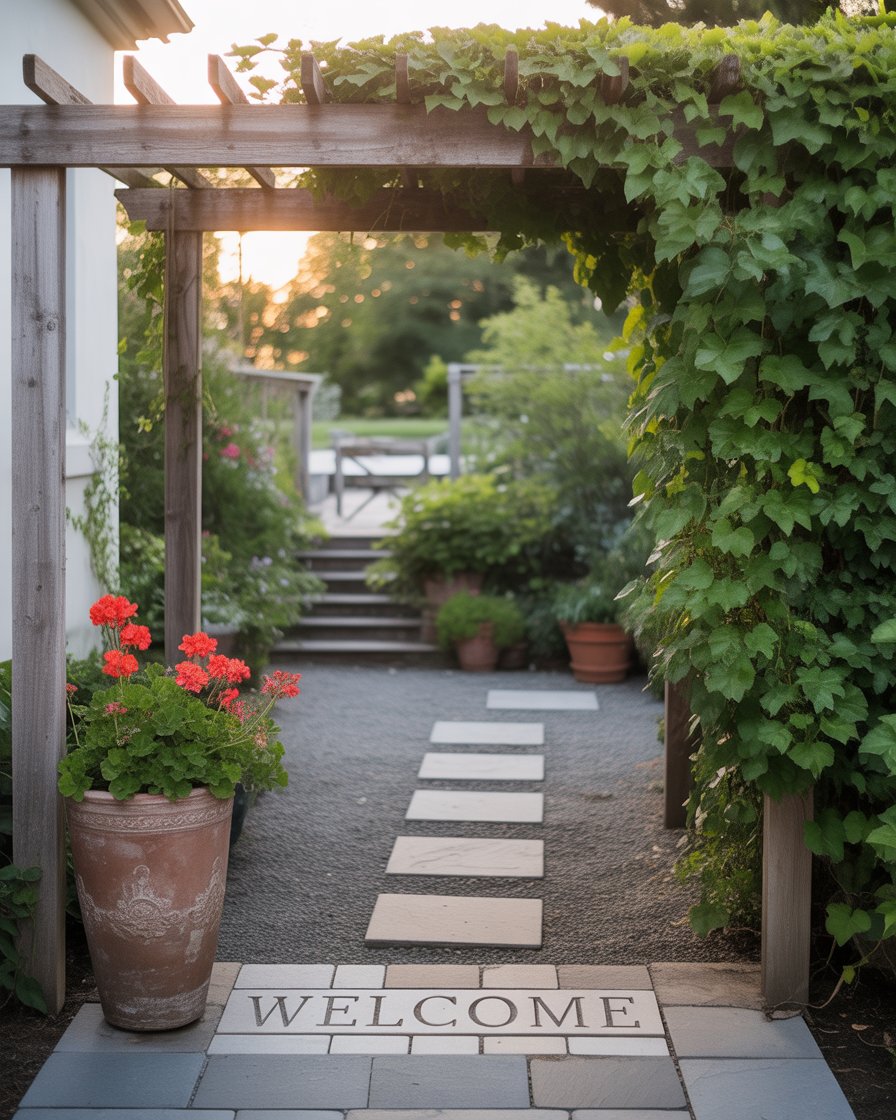
A Zen-inspired patio prioritizes simplicity, natural materials, and a sense of calm. Think gravel or pebble flooring, a single statement rock or sculpture, and minimal seating—maybe just a wooden bench or a pair of floor cushions. This style is ideal for small spaces where you want to create a meditative retreat rather than an entertaining zone. It’s also a great match for modern architecture, where the clean lines and restrained palette complement the home’s design. 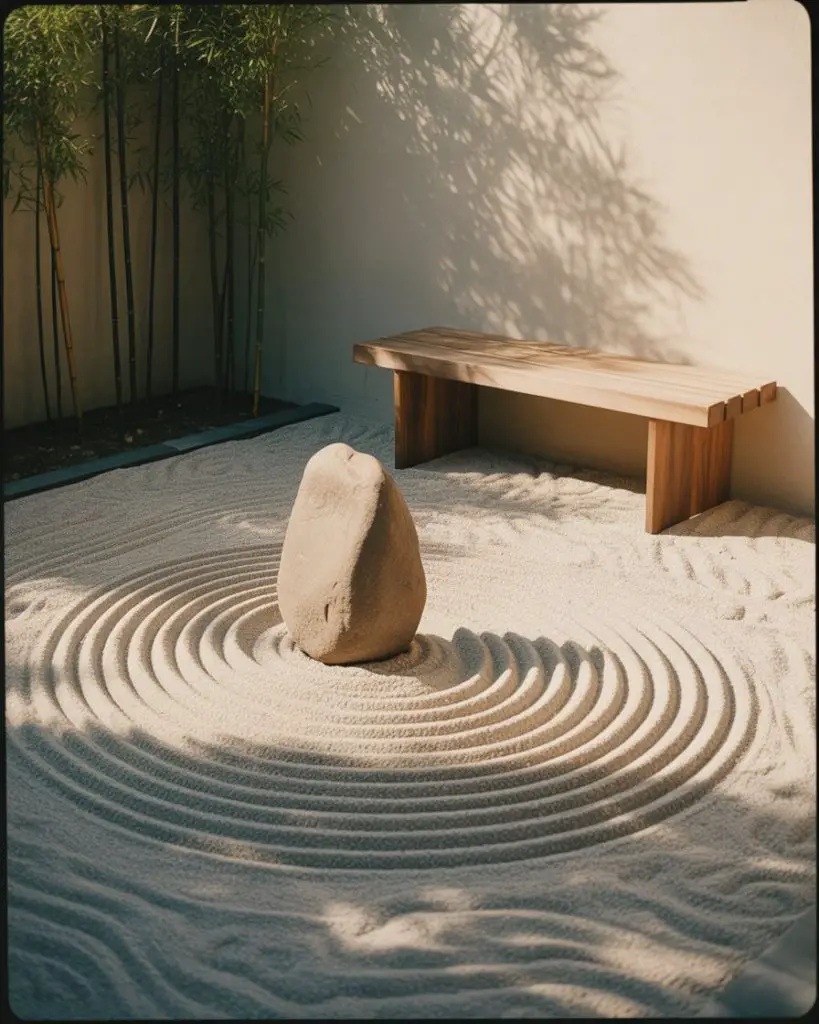
Common mistakes and how to avoid them: don’t confuse minimalist with empty. A Zen garden should feel intentional, not neglected. Choose each element carefully—a beautiful rock, a perfectly placed plant, a handmade ceramic pot. In cities like San Francisco and Seattle, where outdoor space is limited, Zen patios offer a calming counterpoint to urban noise. Maintenance is low, but it does require occasional raking and keeping gravel free of debris. The payoff is a space that feels like a daily reset button.
21. Tropical Resort Escape
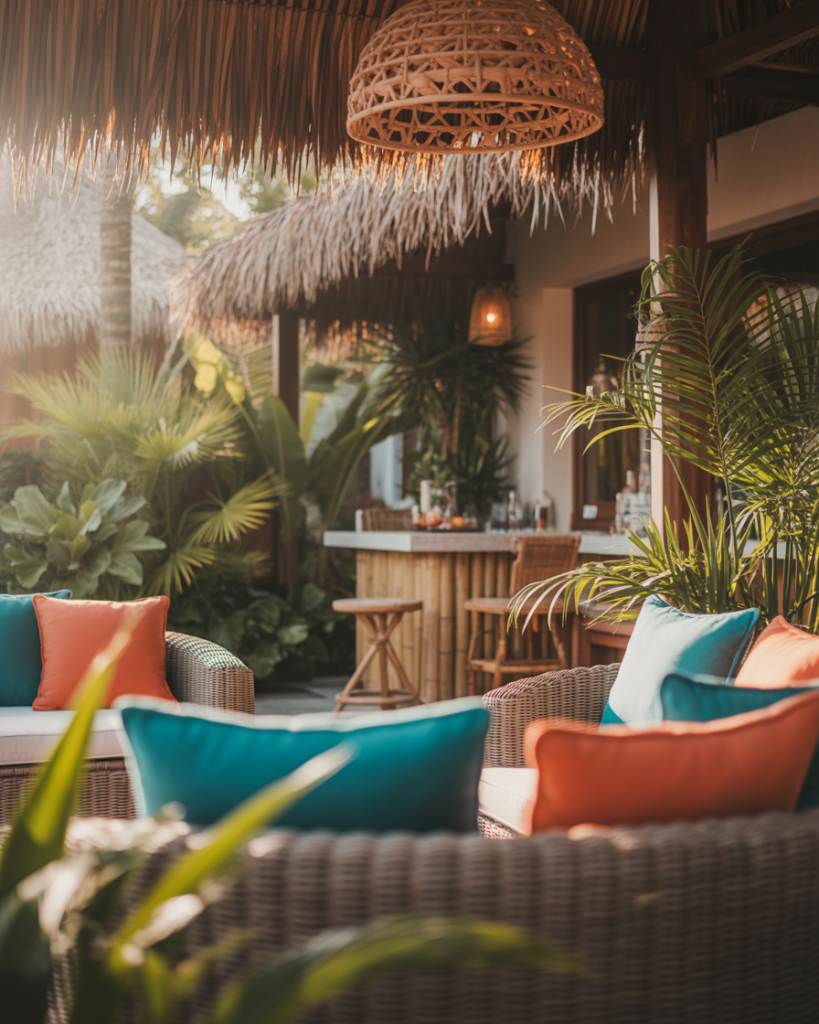
Palm leaves, bright colors, and comfortable lounging furniture turn a pool deck or backyard into a vacation-worthy retreat. Add a tiki bar, some woven pendant lights, and tropical plants like bird of paradise or hibiscus. This style works best in warm climates where the plants will thrive year-round, but even in cooler areas, you can fake it with hardy palms and container plants that move indoors in winter. It’s about creating an everyday escape—a place that feels like a resort without leaving home. 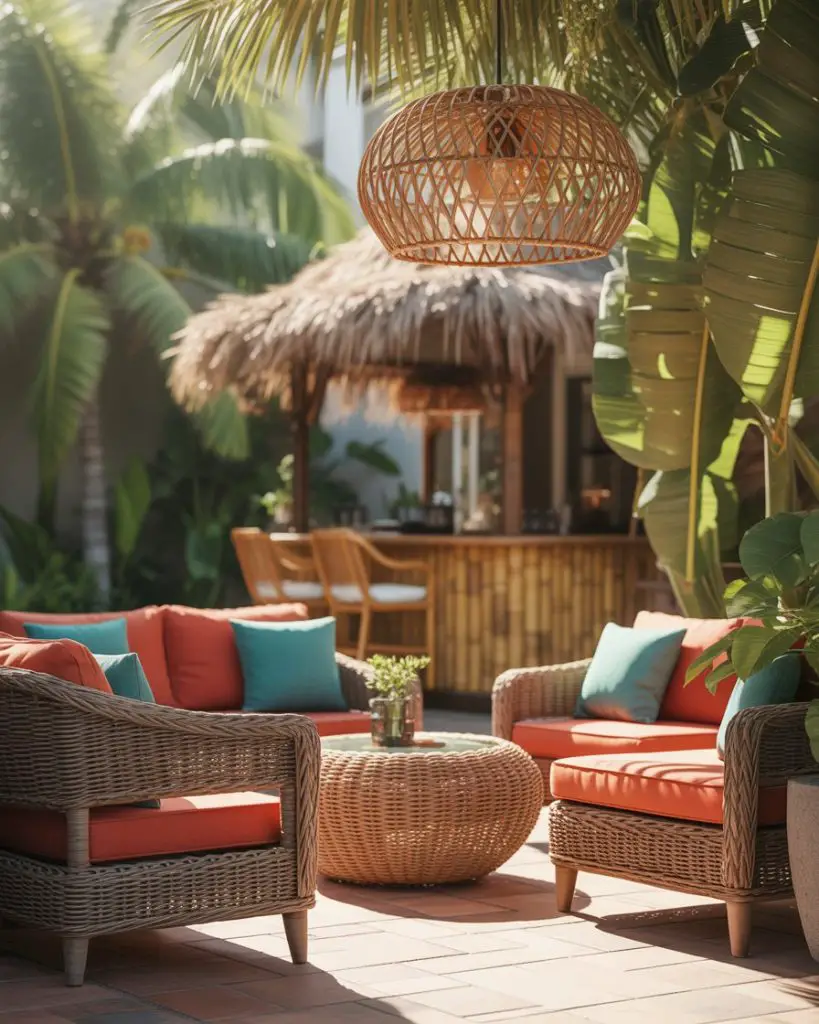
Budget angle: tropical style can be done affordably with smart plant choices and DIY tiki elements. A friend in Miami built a small tiki bar using reclaimed wood and a grass skirt from a party store—total cost under two hundred dollars. The real investment is in the plants, but even those can be budget-friendly if you buy small and let them grow. In states like Hawaii and southern Florida, this aesthetic feels natural. Elsewhere, it’s a fun way to bring vacation vibes home, even if only for the summer months.
22. Renter-Friendly Temporary Setup
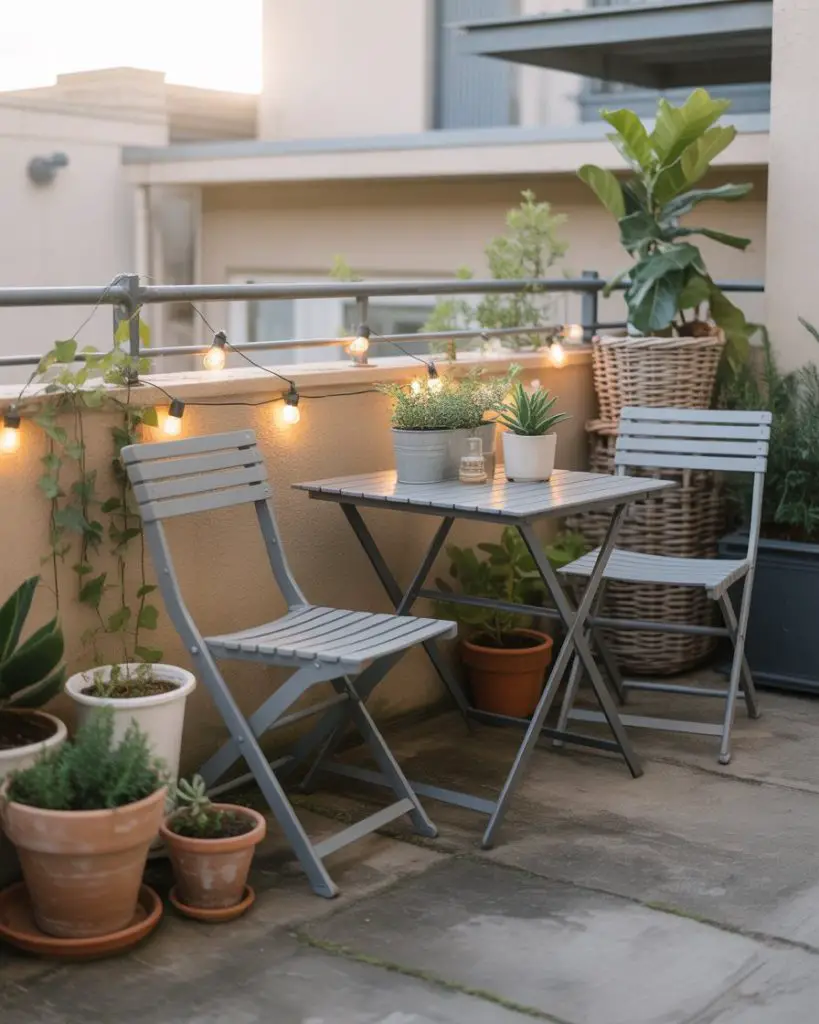
If you’re in an apartment or rental house, you can still create a beautiful patio without permanent changes. Choose freestanding furniture, removable adhesive hooks for lights or planters, and container gardens instead of in-ground beds. Everything should be portable, and nothing should require drilling or construction. This approach is all about maximizing impact while staying within lease rules. It’s perfect for renter friendly spaces where you want to enjoy your outdoor area without losing your security deposit. 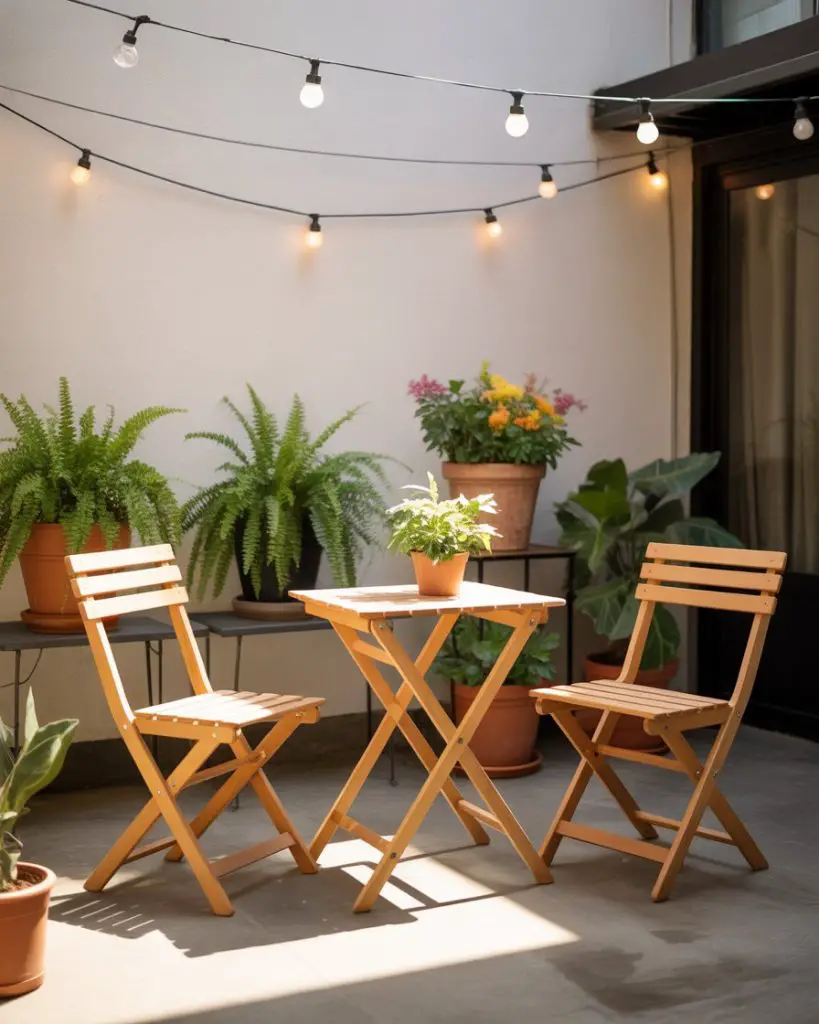
Real homeowner behavior: renters tend to rotate their outdoor setups more frequently than homeowners, treating the patio as an evolving project rather than a finished space. This keeps things fresh and allows for experimentation without major commitment. In cities like Chicago, Boston, and Philadelphia, where renting is common even among older adults, temporary patio setups have become an art form. The key is choosing quality pieces that can move with you—invest in good furniture and plants, skip anything that requires installation.
Conclusion
Whether you’re pinning ideas for a complete backyard overhaul or just looking to refresh a small balcony, these outdoor patio ideas offer something for every style, space, and budget. The best patio is the one you’ll actually use, so start with what excites you most and build from there. What’s your favorite look? Drop a comment and let us know which idea you’re planning to try first.