There’s something deeply satisfying about a pantry that actually works—and right now, Americans are searching for exactly that. Whether you’re pinning dreamy kitchen organization layouts at midnight or finally committing to that weekend renovation, pantry cabinets in 2026 have evolved into something truly worth obsessing over. From sleek built-ins to freestanding statement pieces, the options are smarter, more beautiful, and more personalized than ever before. In this guide, you’ll find fresh ideas to transform your kitchen storage from chaotic to completely intentional—no matter your space, style, or budget.
1. Floor-to-Ceiling Pantry With Open Shelving
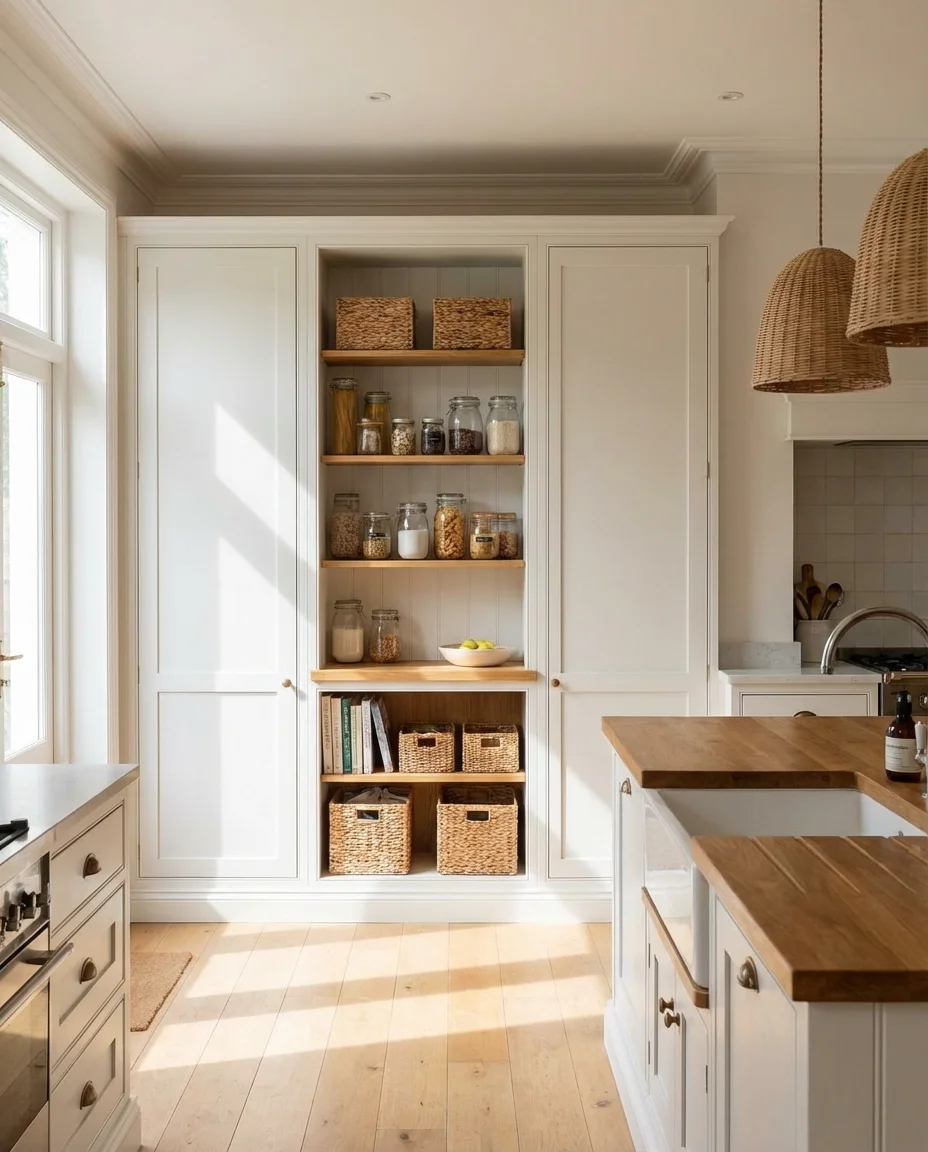
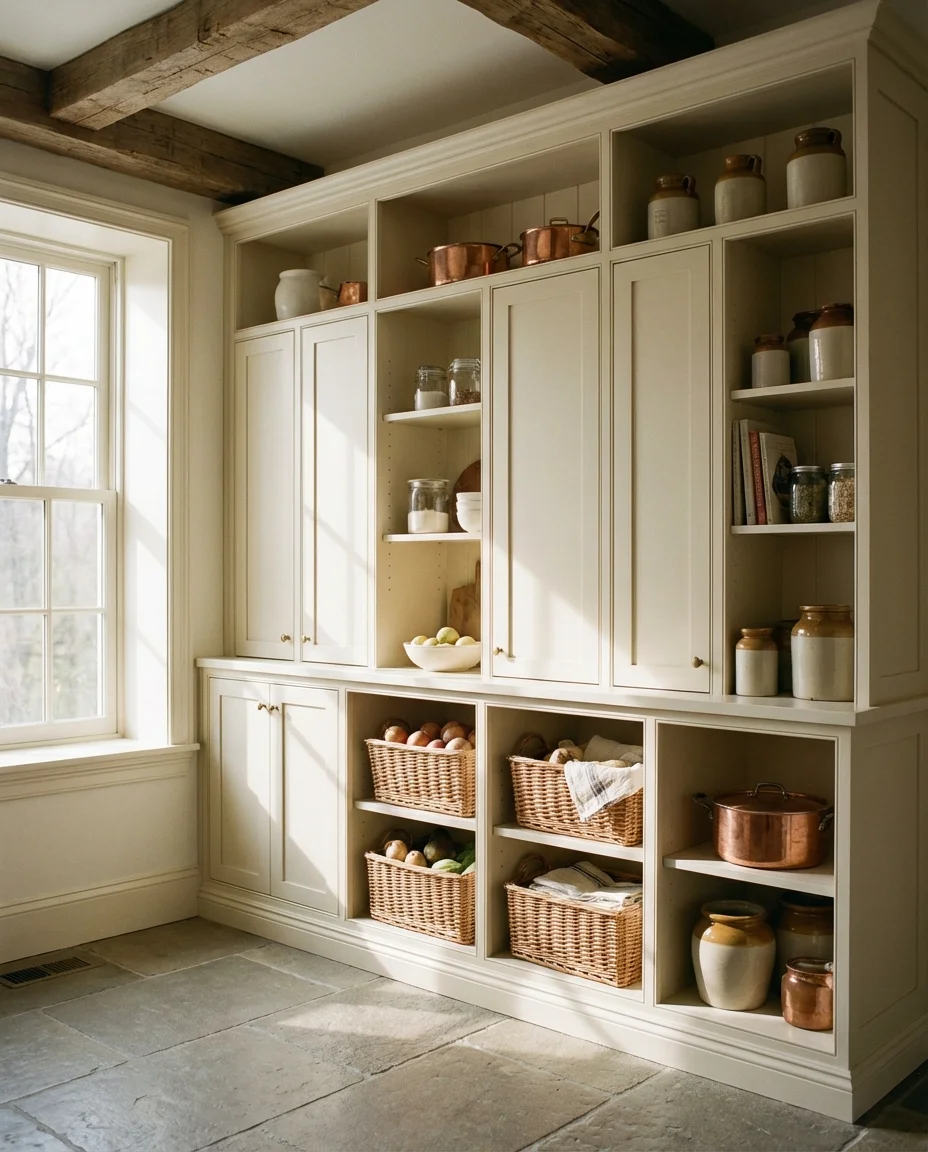
When you make the most of vertical space, magic happens. A floor-to-ceiling pantry cabinet creates an architectural moment in the kitchen that doubles—sometimes triples—your actual kitchen organization capacity. Think floor-level deep drawers for bulky appliances, mid-level open shelves for everyday pantry staples, and upper cabinets for seasonal items. This approach works beautifully in kitchens where counter space is limited but wall height is a hidden asset waiting to be used.
 .
.
Where it works best: homes with standard 9–10 foot ceilings and a dedicated kitchen wall that isn’t interrupted by windows or doorways. A floor-to-ceiling cabinet run creates a clean visual line that makes the whole kitchen feel more deliberate and high-end—even when the cabinets themselves are IKEA boxes with upgraded fronts. Don’t skip crown molding at the top; that single detail makes builder-grade cabinetry look completely custom.
2. Freestanding Pantry Cabinet for Renters
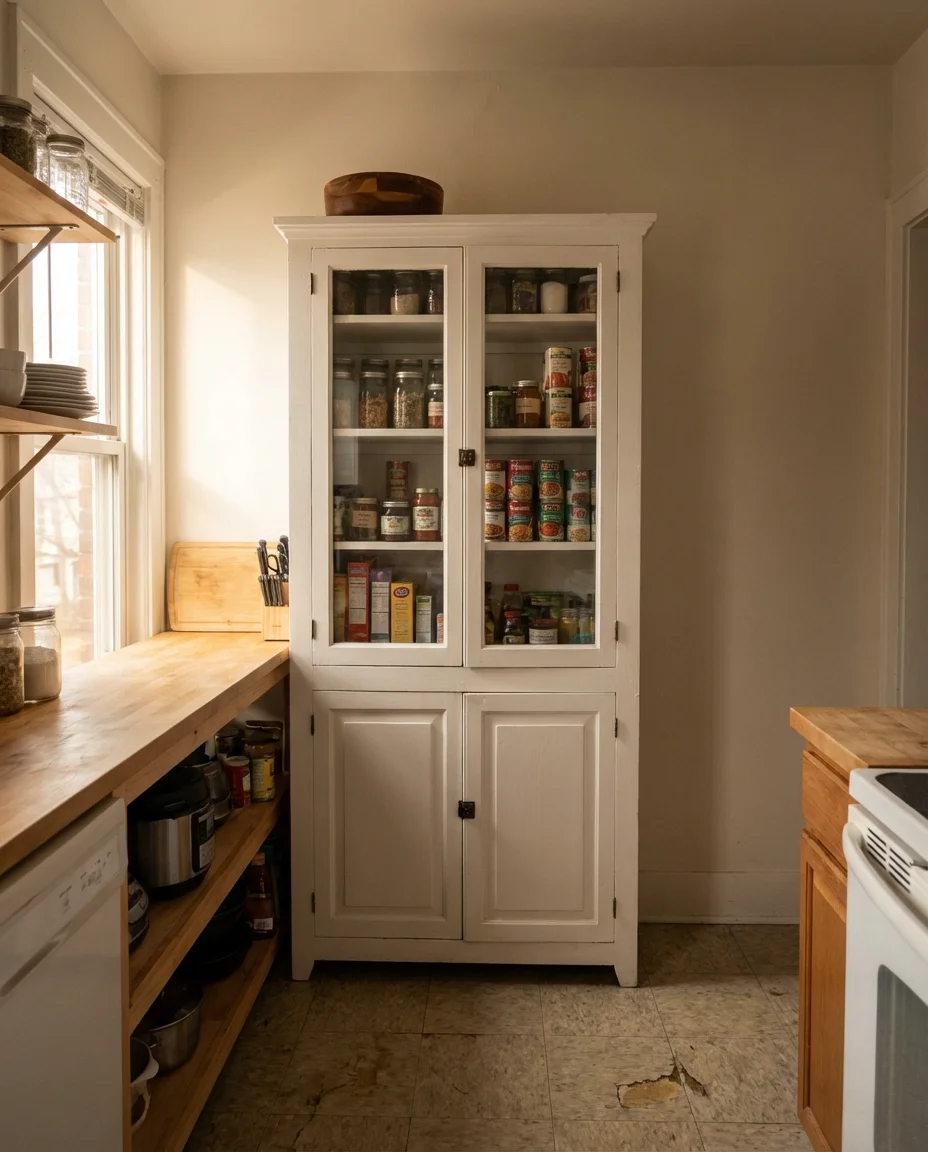
If you’re renting, remodeling isn’t an option—but that doesn’t mean you’re stuck with chaos. A freestanding pantry cabinet is one of the smartest investments a renter can make. These standalone units offer serious storage flexibility: move them from apartment to apartment, configure them to your current layout, and customize the interior without touching a single wall. The best ones look intentional, not like an afterthought, especially when you choose a finish that matches your existing cabinetry or leans into contrast as a design feature.
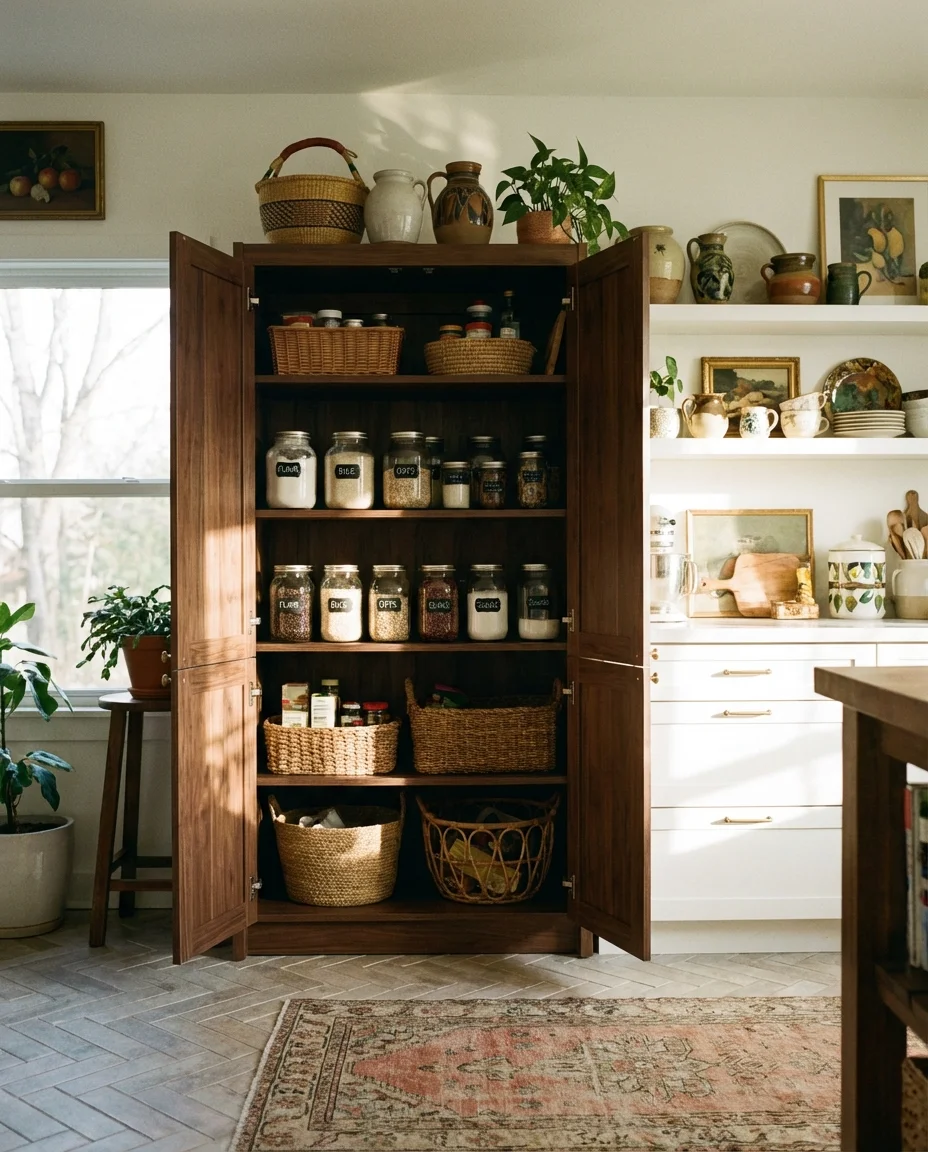
Real homeowners who’ve gone this route consistently say the same thing: they wished they’d bought a bigger one. Storage needs always expand to fill available space. Look for units that include adjustable shelves—fixed-shelf models seem fine until you need to store a stockpot or a cereal box that’s two inches too tall. Budget-wise, quality freestanding pantry cabinets start around $300 and climb to $1,200 for solid wood versions from furniture makers like Pottery Barn or Williams-Sonoma.
3. Black Pantry Cabinet With Matte Hardware
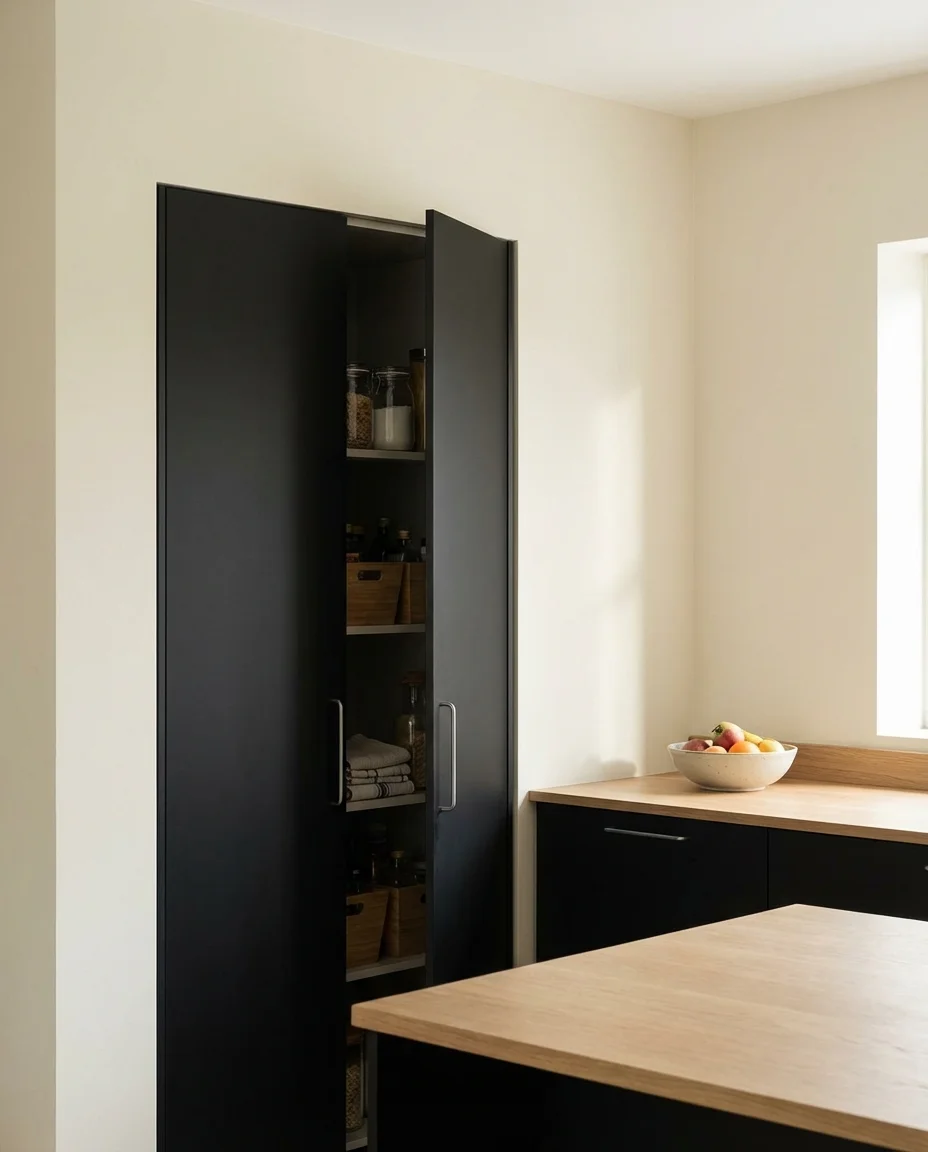
Bold, grounded, and undeniably modern—a black pantry cabinet is having a serious moment in 2026 kitchen design. Unlike all-white kitchens that show every smudge and feel clinical under the wrong light, a matte black pantry cabinet anchors the room with quiet confidence. Pair it with warm wood countertops or brass hardware, and the result is a kitchen that photographs beautifully and feels genuinely luxurious to cook in. This color choice reads especially sophisticated in tall kitchen configurations where the vertical mass makes a real architectural statement.
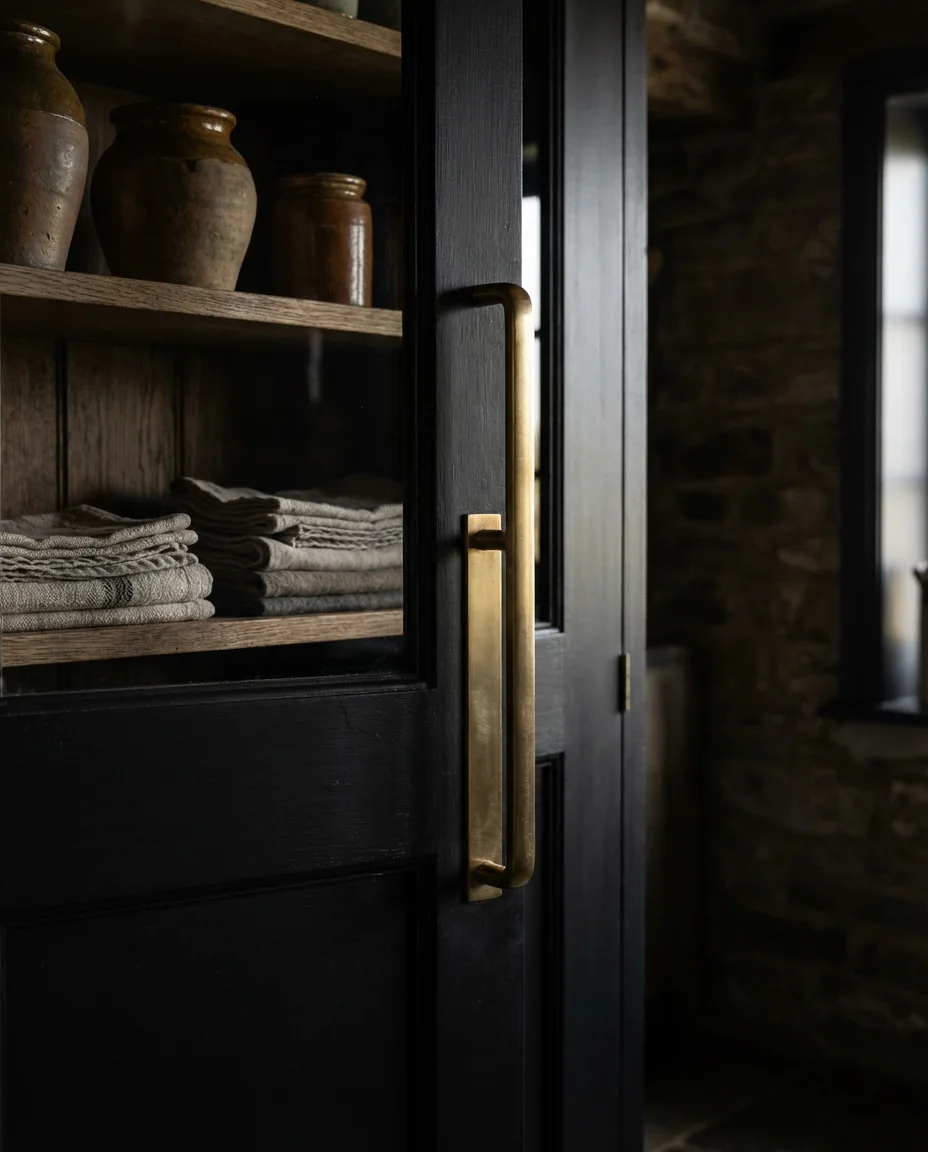
One thing to know before committing: matte black does show fingerprints and grease splatters, especially near the stovetop. A practical solution is to keep the black cabinet slightly away from cooking zones—use it more as a food storage and dry goods unit rather than a spice-and-oil hub. In kitchens where the black cabinet is paired with white walls and subway tile, the contrast creates a high-impact look that has serious staying power beyond any single design trend cycle.
4. Pullout Shelves Inside Deep Pantry Cabinets
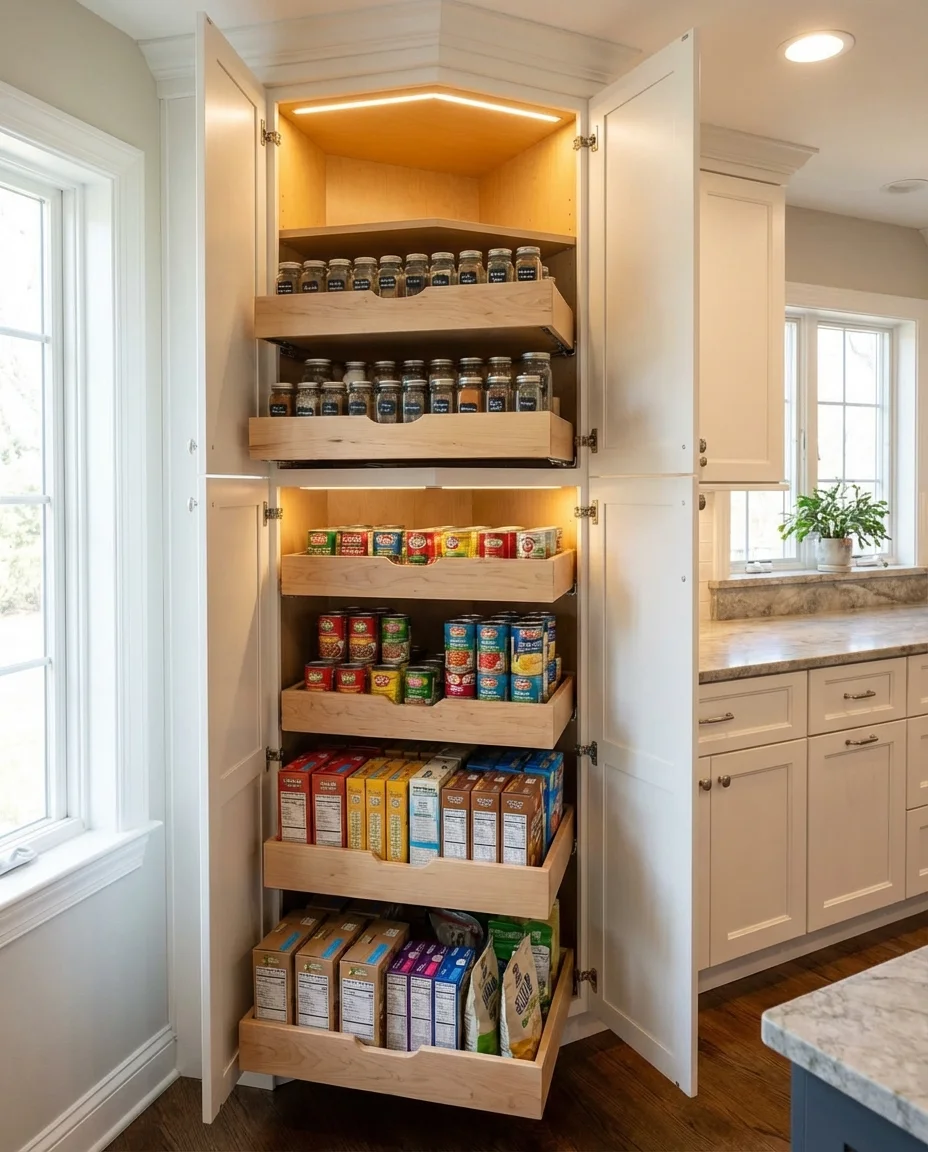
Deep pantry cabinets are incredibly common in American homes—and incredibly frustrating when everything you need is shoved behind everything you don’t. The fix is simple and game-changing: pullout shelves. These sliding inserts transform any deep cabinet into a fully accessible storage system where nothing gets lost in the back. Whether you’re installing them in a built-in pantry run or retrofitting a builder-grade cabinet, pullout shelves cost a fraction of a full renovation and deliver daily dividends in ease and visibility.

Common mistake: buying pullout shelves without measuring the interior cabinet depth and door clearance first. Many homeowners order beautiful hardware only to discover the drawer can’t fully extend because the cabinet door gets in the way. Before purchasing, measure from the back wall to the front interior edge, and check whether the door opens wide enough for the drawer to slide freely. Brands like Rev-A-Shelf and Hafele make excellent retrofit options that fit standard cabinet sizes without custom carpentry.
5. Green Pantry Cabinet in a Bright Kitchen
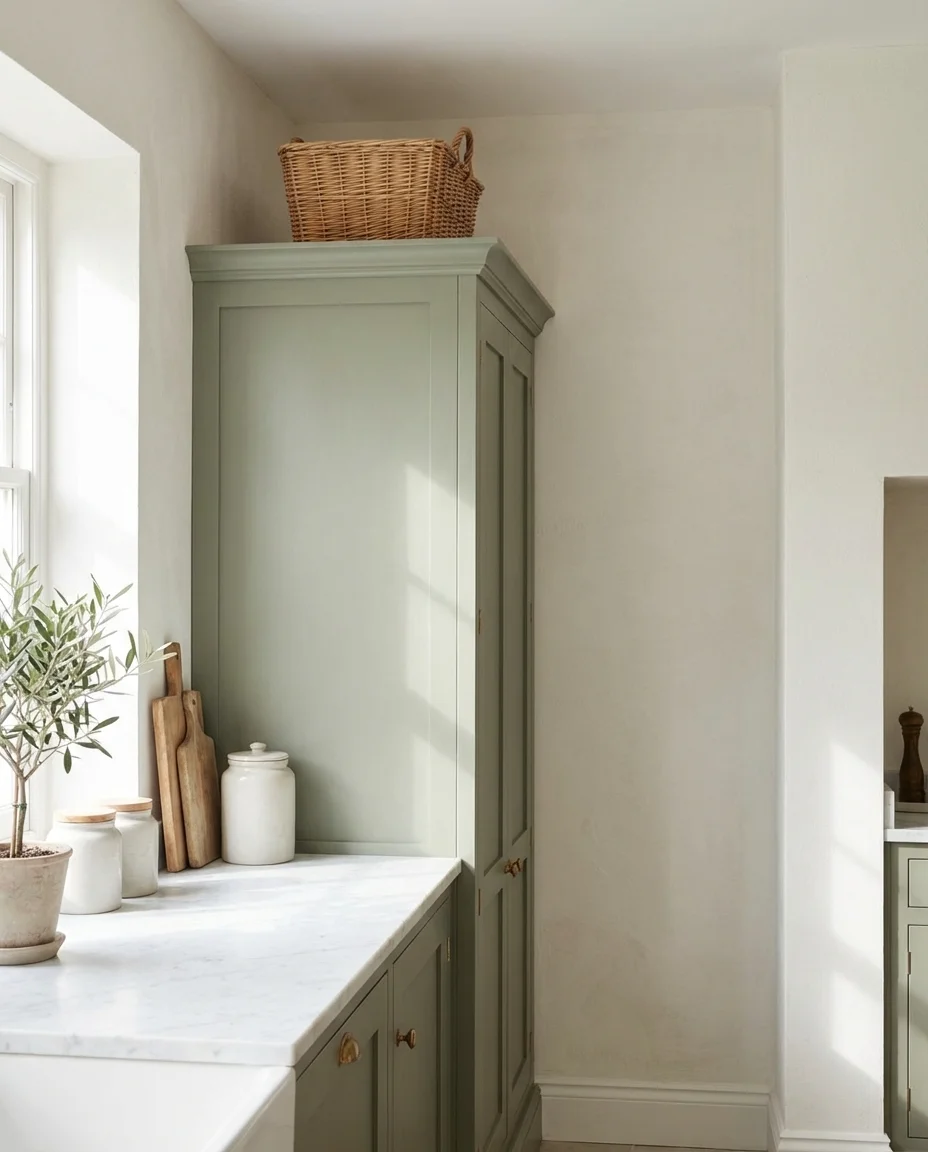
If there’s one color that’s defining kitchen design in 2026, it’s green—in every shade from sage and eucalyptus to deep forest and hunter. A green pantry cabinet brings botanical warmth into the kitchen without overwhelming the space, especially when the surrounding walls and countertops are kept neutral. It’s a particularly inspired choice for standalone units that need to feel like a piece of furniture rather than a utilitarian box. Green reads differently depending on the light—moody in north-facing kitchens, fresh and airy in rooms with generous south-facing windows.
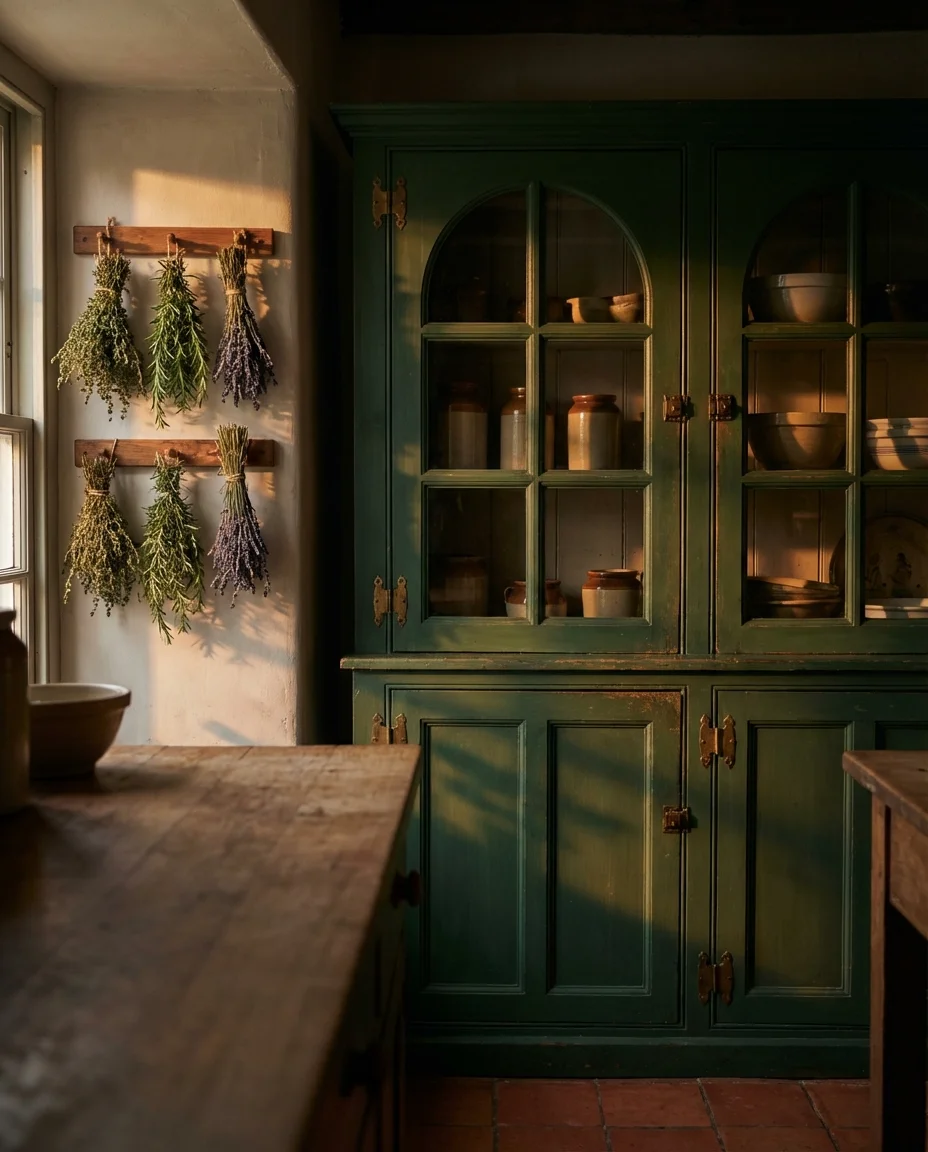
An interior designer once said that green is the color that makes people the hungriest—which makes a green pantry cabinet rather poetic. Beyond the aesthetic, green cabinets work especially well in kitchens that receive a lot of natural light; the color seems to breathe and shift throughout the day in a way that more static hues don’t. If full commitment feels daunting, start with a small freestanding pantry in a dusty sage: it’s a low-risk entry point that still delivers significant visual impact.
6. IKEA Pantry Hack With Custom Doors
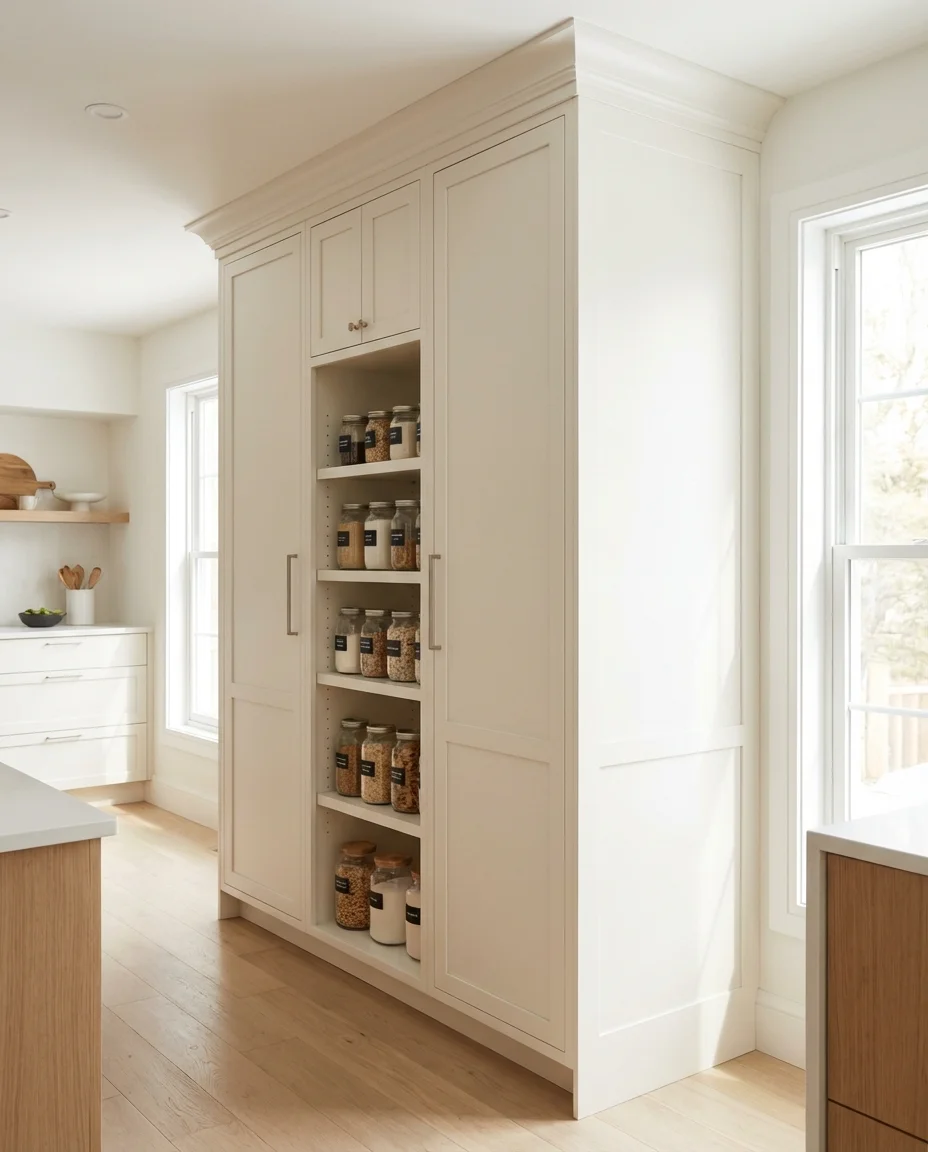
The beauty of an IKEA pantry hack is that it lets you get a fully custom-looking kitchen storage wall at a fraction of the price. The SEKTION and PAX systems are the most commonly used bases—they’re modular, well-built, and designed for exactly this kind of creative reinterpretation. Pair the carcasses with custom-order fronts from companies like Semihandmade, Reform, or Plykea, and the result genuinely rivals what a custom cabinetmaker would produce. This is how design-forward kitchen food storage ideas happen on a realistic American household budget.
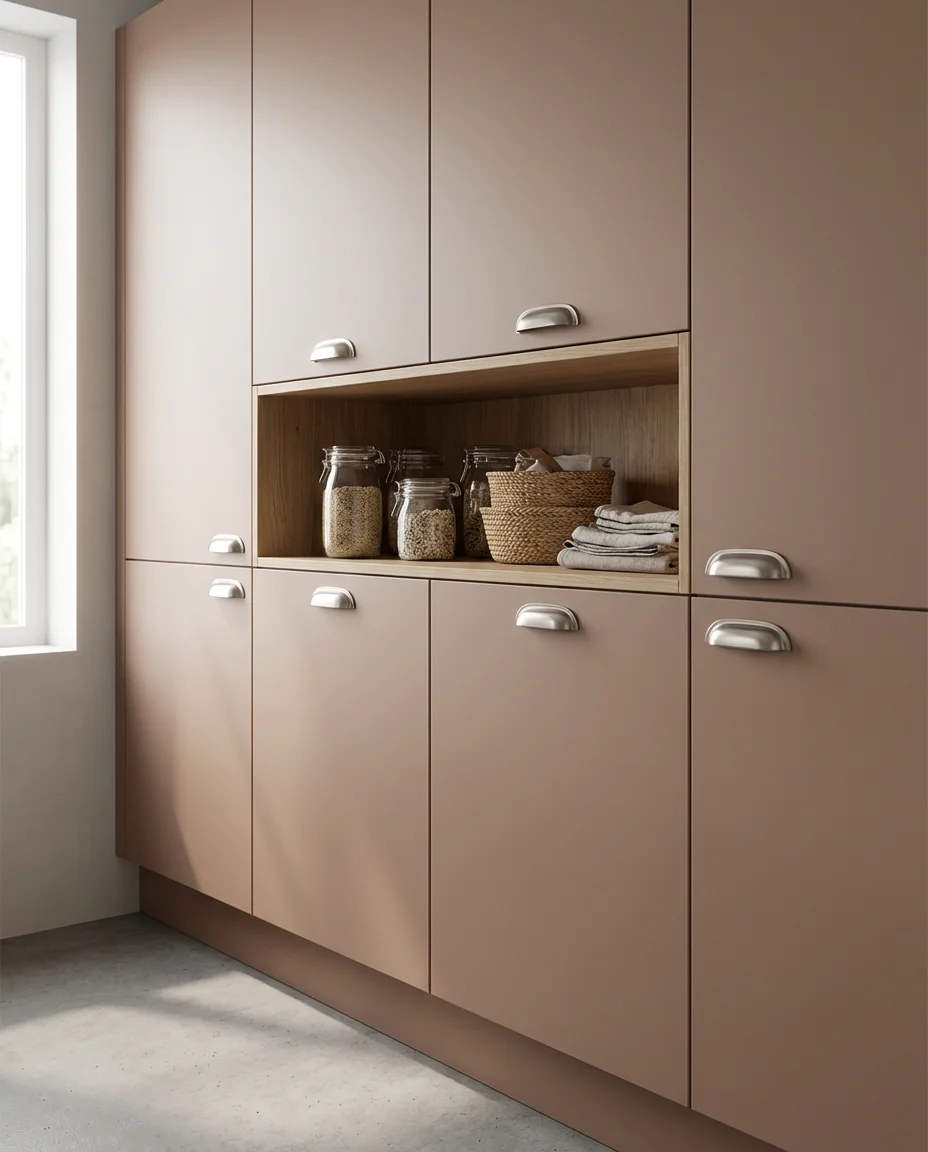
The average cost for a full IKEA PAX pantry wall with custom doors runs between $1,500 and $4,000 depending on size and door choice—compared to $8,000–$20,000 for true custom cabinetry. The key to making it look intentional is finishing work: scribing filler panels to the wall, adding crown molding at the top, and using furniture feet or a toe kick that matches the rest of the kitchen. Those finishing touches are what separate a “Pinterest-worthy IKEA hack” from something that obviously came from a flat pack.
7. Microwave-in Pantry Cabinet Design
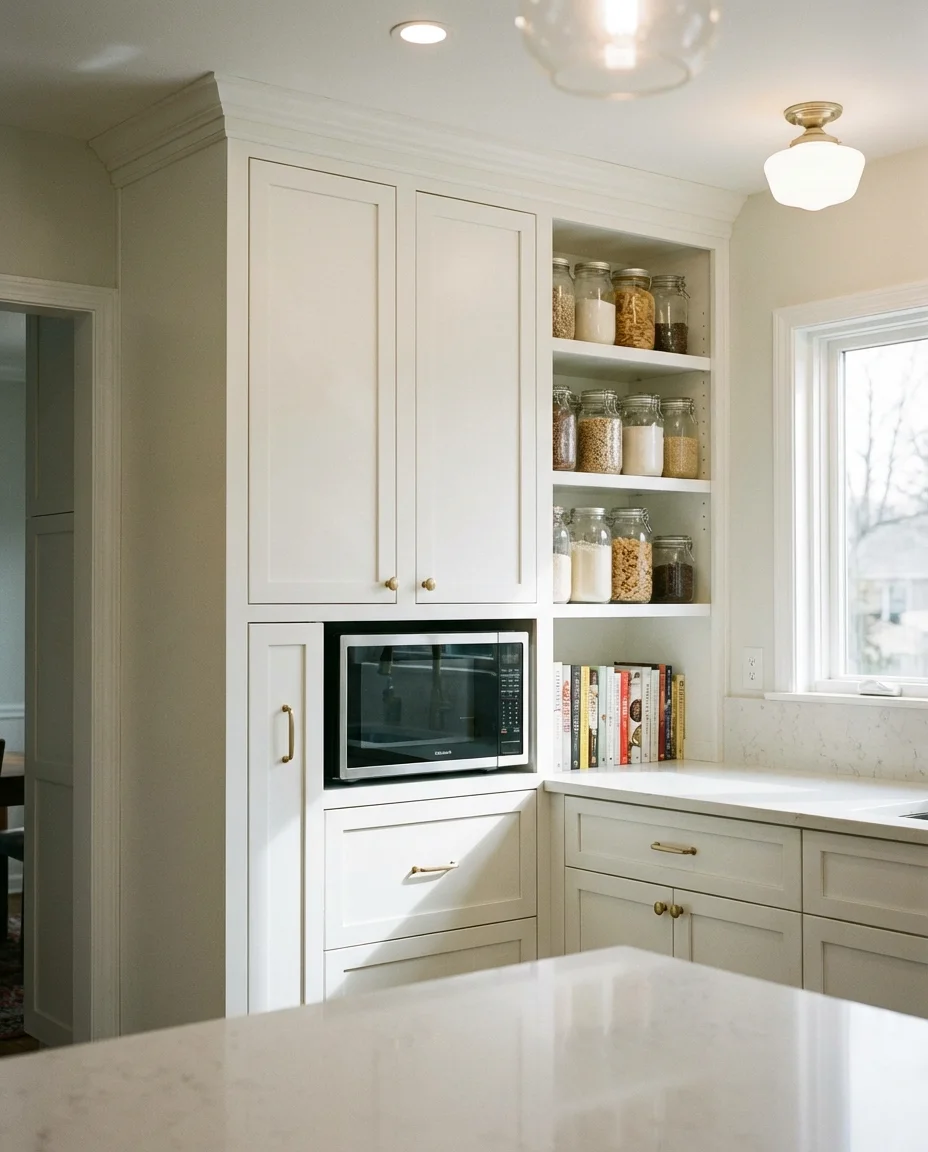
Nothing clutters a kitchen counter faster than a microwave sitting in the middle of it. Integrating the microwave into the pantry cabinet—a microwave in pantry design—reclaims counter space and gives the appliance a dedicated, purposeful home. The typical execution involves a mid-height shelf opening sized to the microwave’s dimensions, with the pantry storage continuing above and below. This keeps the appliance at a comfortable, ergonomic height while maintaining the clean visual line of a continuous cabinet run.
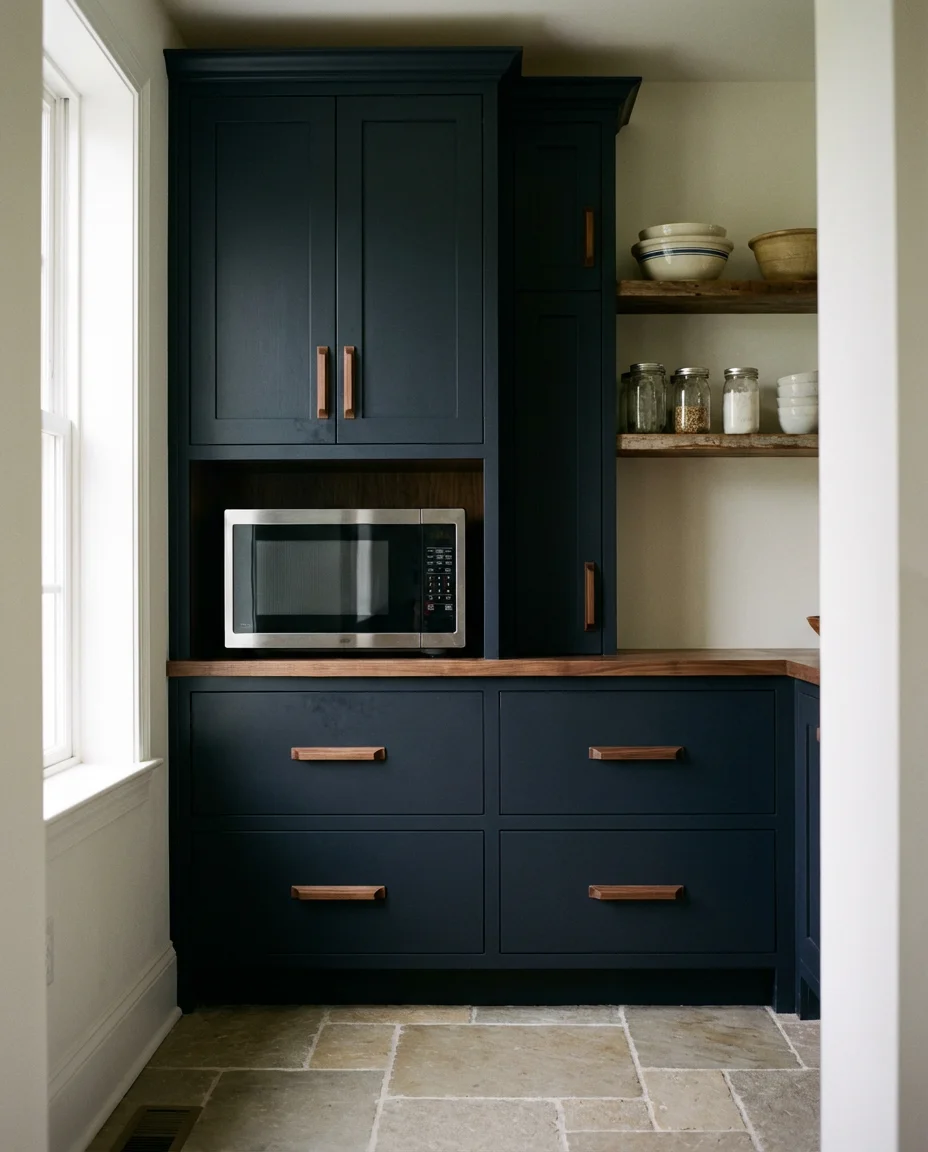
Families with young children or elderly members will appreciate how much this design improves daily kitchen function. Placing the microwave at counter height—rather than above the range where reaching overhead with hot food is genuinely hazardous—is one of the most practical improvements you can make. Electrician tip: have the outlet placed inside the dedicated microwave cavity rather than having a cord snaking out. It’s a small thing that makes the whole installation look completely seamless and professionally finished.
8. Corner Kitchen Pantry Cabinet Solutions
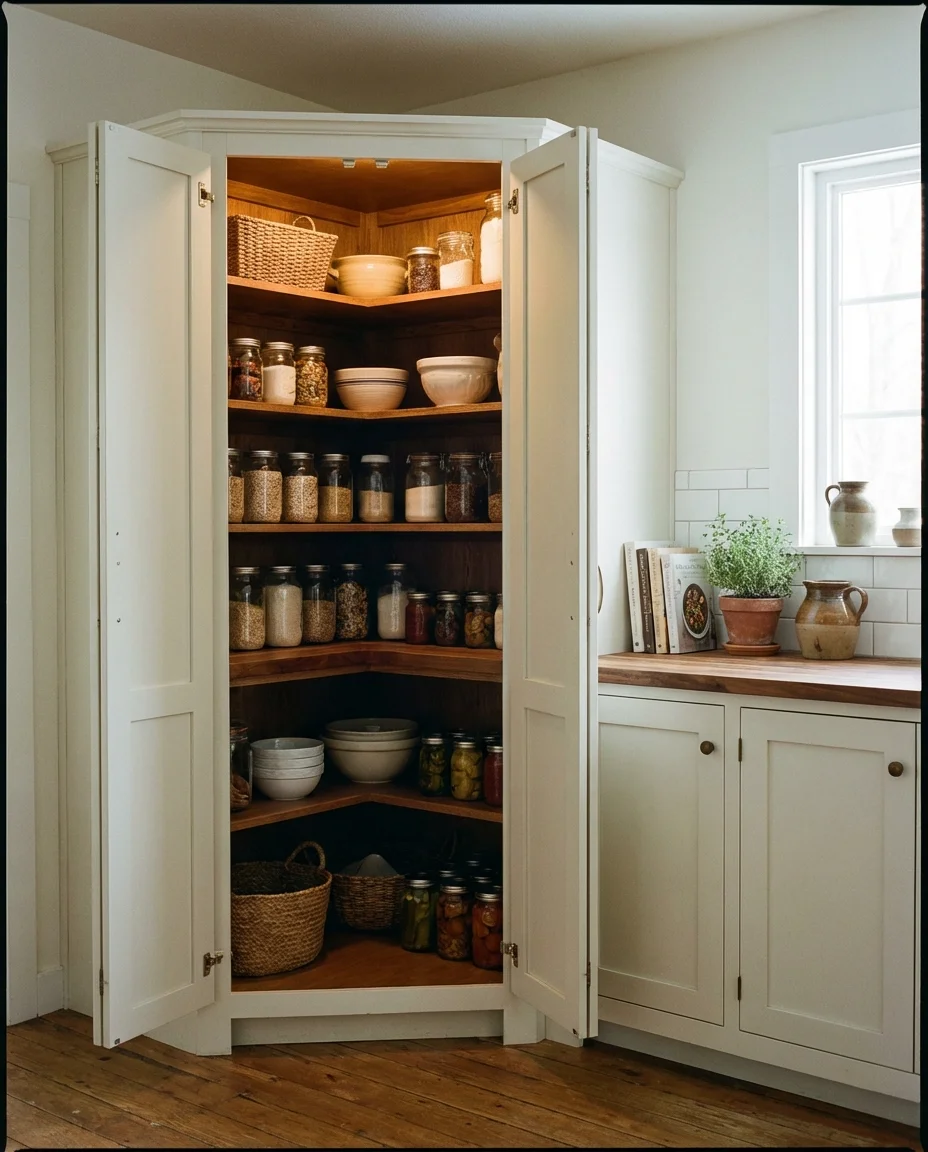
Corner spaces in kitchens are notoriously difficult to use well—and notoriously wasted. A corner kitchen pantry cabinet turns that awkward junction into one of the most functional zones in the room. Diagonal pantry cabinets, blind corner pullout systems, and tall corner towers are the three most common approaches. The corner tower is particularly impressive: it creates a full-height vertical pantry in a footprint that previously held a lazy Susan or a cabinet most people stopped opening years ago.
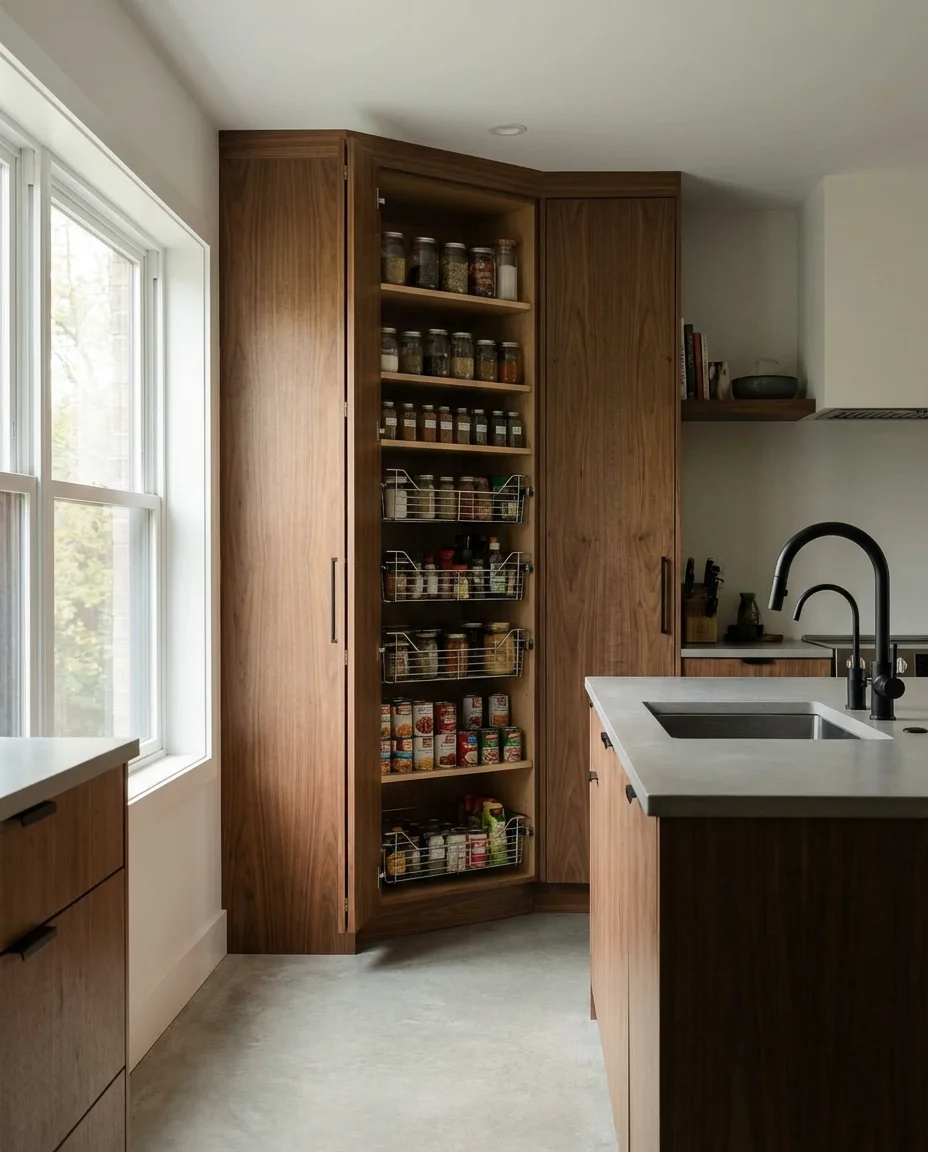
Where it works best: L-shaped and galley-adjacent kitchens where the corner interrupts a continuous run of cabinetry. A well-designed corner pantry can add 15–20 cubic feet of storage to a kitchen that previously felt maxed out. The magic-corner, or Le Mans, mechanism—where two linked shelves swing out simultaneously when the door opens—is worth the extra investment if budget allows. It completely eliminates the “dead zone” problem that makes blind corners feel like a storage black hole.
9. Narrow Pantry Cabinet for Tight Spaces
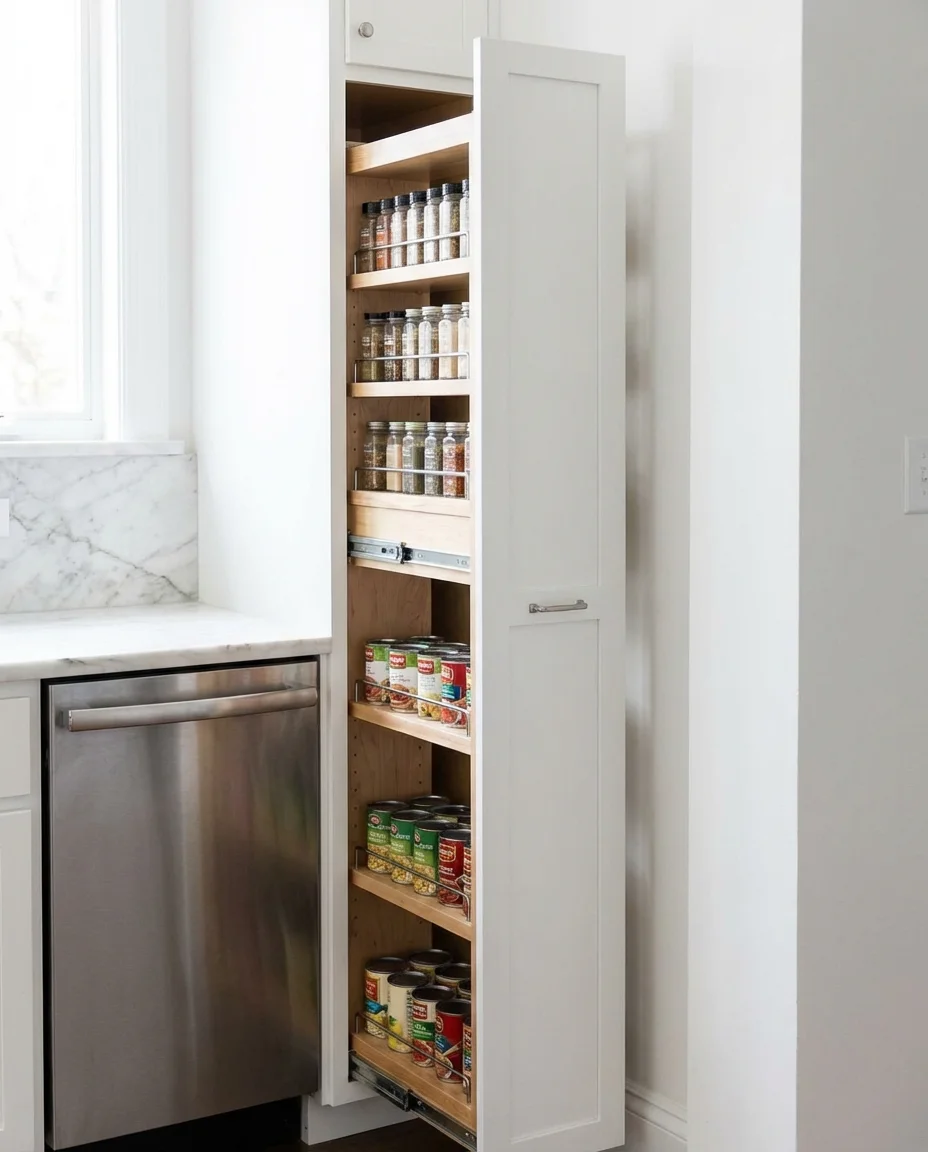
A narrow pantry cabinet—sometimes called a sliver cabinet or broom pantry—is the underrated MVP of small kitchen design. Units as slim as 9 or 12 inches wide can hold an astonishing amount when the interior is thoughtfully fitted with spice racks, door-mounted organizers, and full-height shelving. These slim cabinets tuck into gaps between the refrigerator and a wall, beside an oven, or at the end of a cabinet run—spots that would otherwise go completely unused. In urban American kitchens where every inch is precious, they’re genuinely transformative.
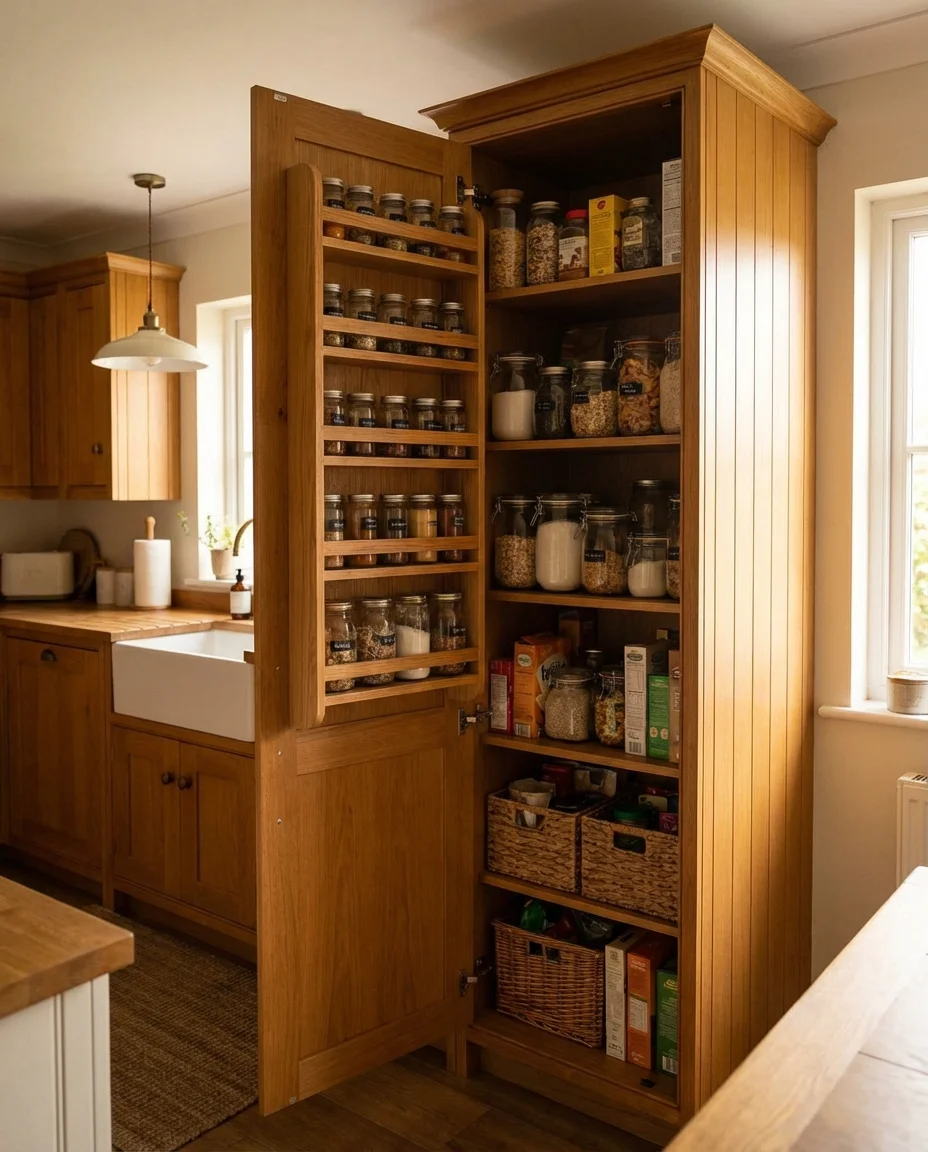
One woman retrofitting a 1940s Chicago bungalow installed a 9-inch pullout pantry in a gap she’d previously covered with the refrigerator. It now holds her entire spice collection, canned goods, and a row of olive oils—space she thought simply didn’t exist. That kind of discovery is what makes narrow cabinet solutions so deeply satisfying: they solve a problem that felt permanent. Look for full-extension slides rated for at least 75 pounds if you plan to store canned goods; standard slides will eventually sag or stick under that kind of sustained load.
10. Shallow Pantry Cabinet Along a Hallway Wall
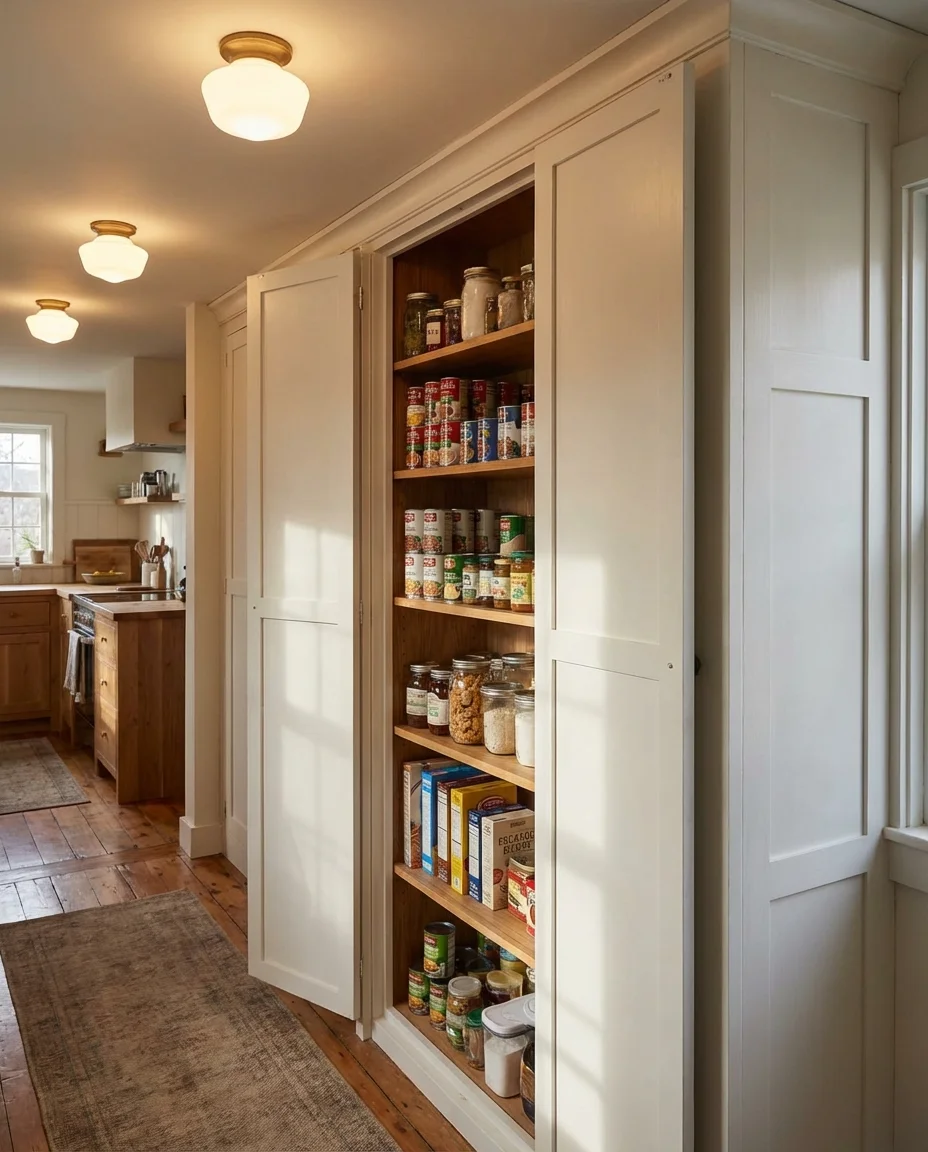
When a shallow pantry cabinet is built into a hallway wall adjacent to the kitchen, it creates a surprisingly large amount of storage without consuming any kitchen floor space at all. Depths of just 6–10 inches are enough for single-row storage of canned goods, packaged foods, and small appliances—and because shallow shelves force items to be stored in a single layer, nothing ever gets lost behind something else. This is one of the most underutilized organization ideas in American home design, and it’s particularly well-suited to ranch-style and mid-century modern homes.
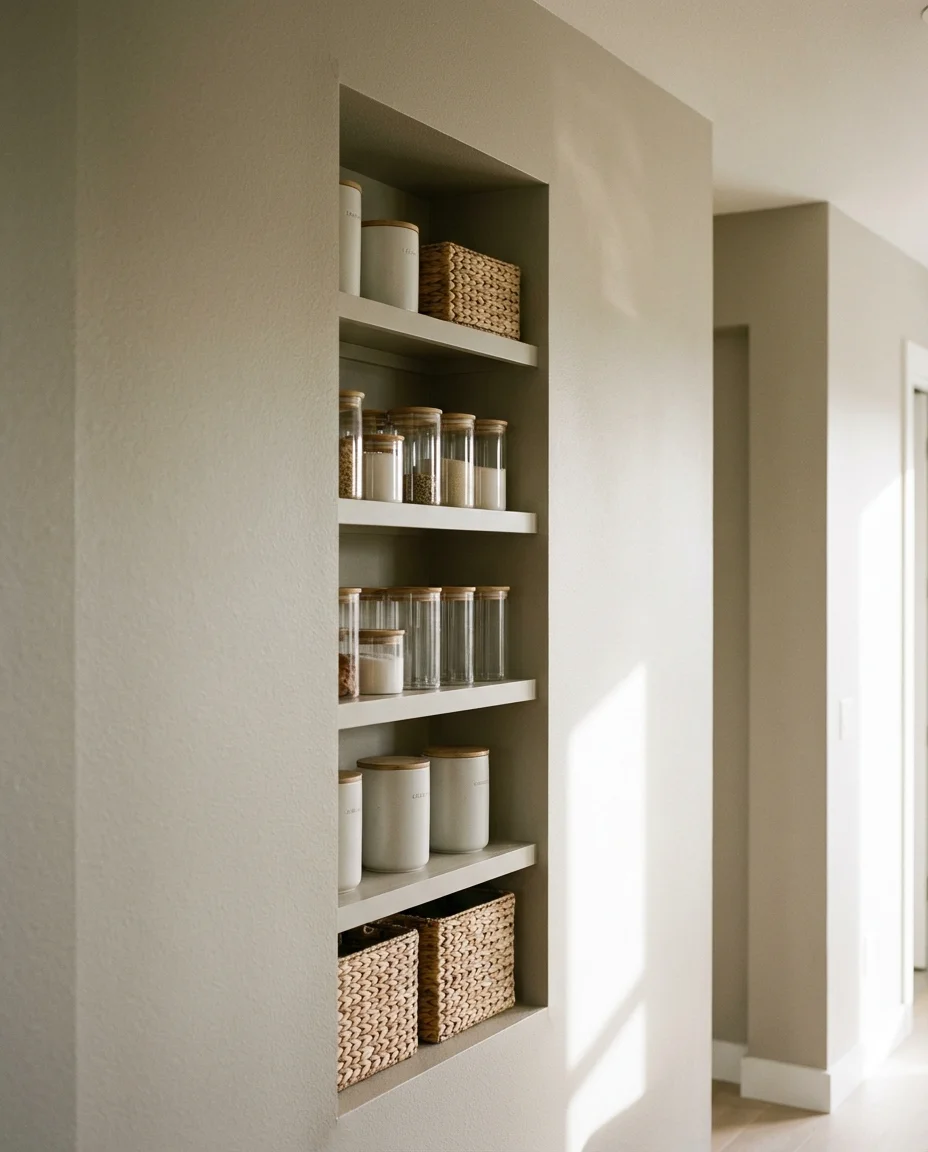
An expert-style commentary worth considering: the best shallow pantry cabinets are those built into a wall cavity between studs, which creates a genuinely recessed unit that protrudes only 2–4 inches into the hallway. This requires removing the drywall and working with the stud spacing, but the result is a pantry that feels completely architectural—not a box bolted to the wall. In existing homes, hiring a carpenter for this project typically runs $800–$2,500 depending on height and finish, which is remarkable value for what it delivers.
11. Coffee Bar Built Into the Pantry Cabinet
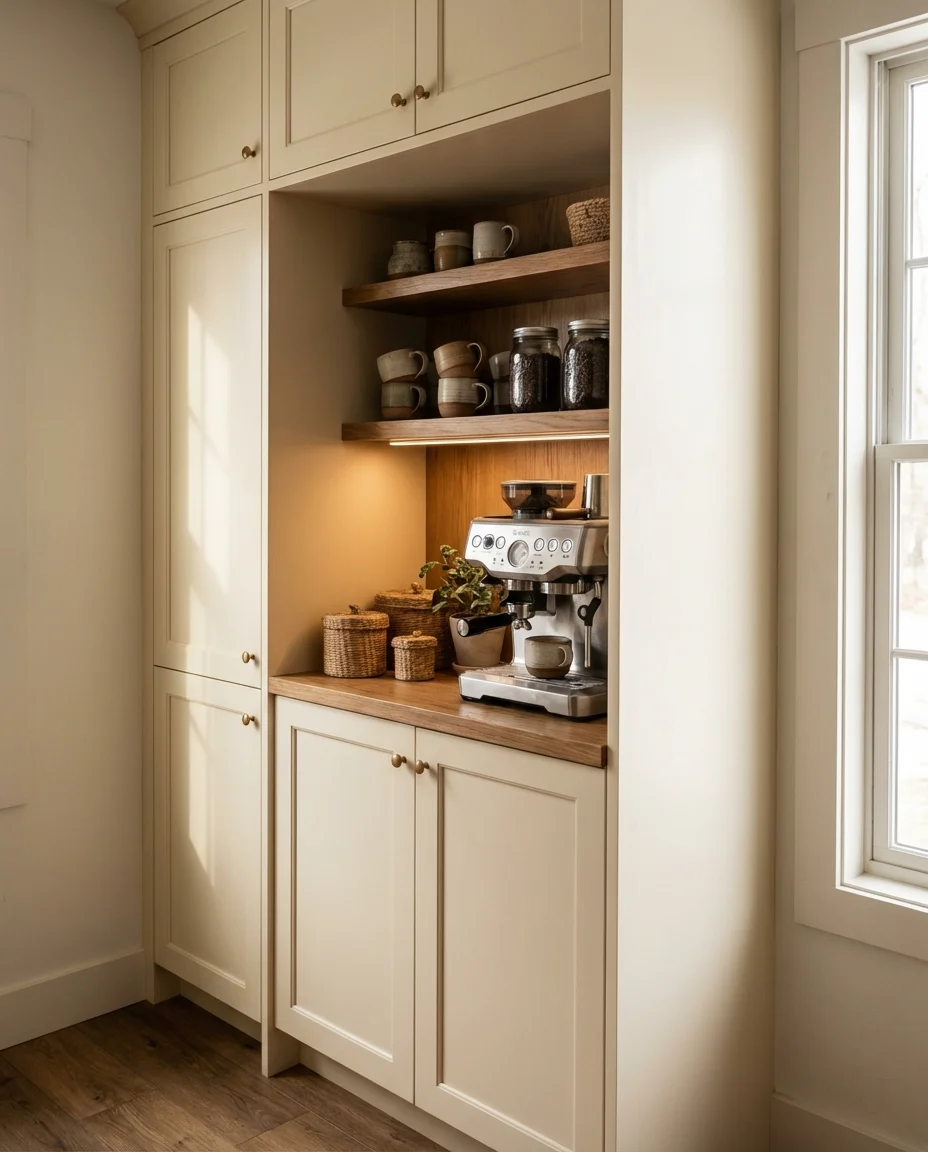
The coffee bar pantry cabinet is one of the most searched, most saved, and most replicated kitchen ideas on Pinterest—and for excellent reason. Dedicating a section of your pantry cabinet to the entire coffee ritual (machine, mugs, beans, filters, syrups) removes the early-morning chaos from the main kitchen counter and creates a genuinely delightful zone with its own personality. The best executions include an outlet inside the cabinet, a small counter or pull-out shelf for the machine, and open shelving above for mugs and glass storage jars.
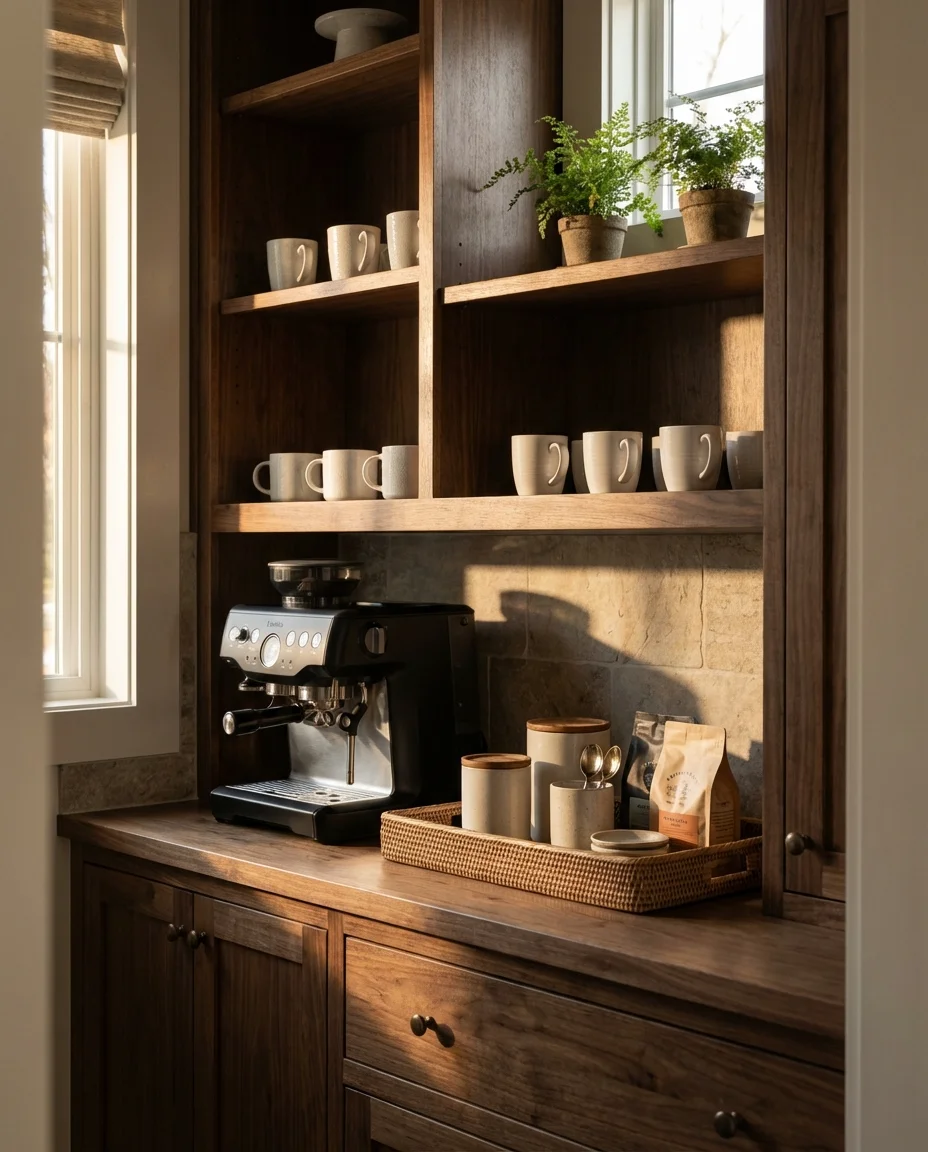
American households that have made this upgrade consistently describe it the same way: like having a tiny café built into their home. The ritual of making coffee becomes unhurried and pleasurable rather than frantic. Design tip: add a small strip of under-shelf lighting in the coffee bar section. It creates a warm glow that looks beautiful even when the main kitchen lights are off—and it makes the coffee station feel genuinely special rather than just another storage zone.
12. Tall Pantry Cabinet With Glass Doors
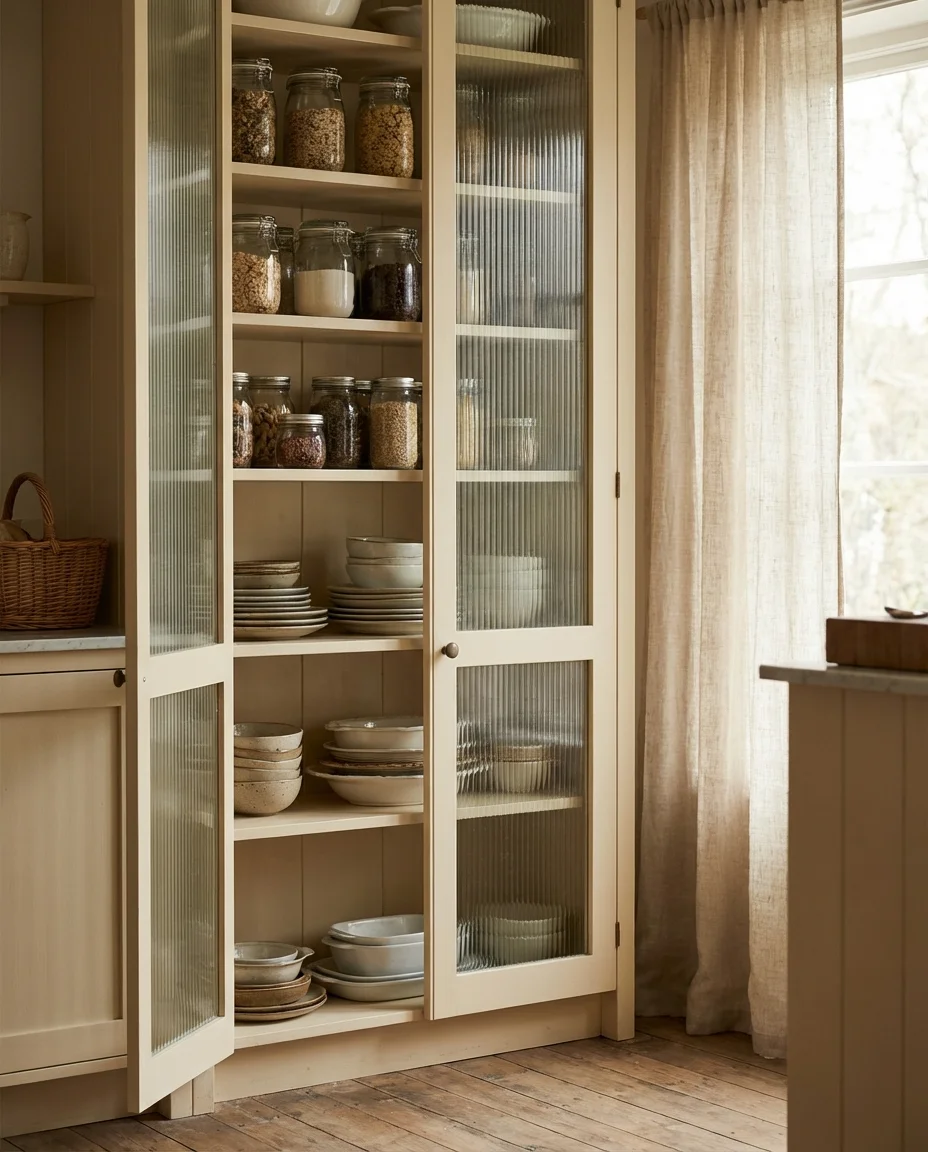
A tall pantry cabinet fitted with glass doors is one of those design details that reads far more expensive than it actually is. The glass creates visual breathing room, breaks up the solidity of a large cabinet mass, and invites you to keep the interior beautifully organized—because now everyone can see it. Reeded or fluted glass adds texture and softens the view, making the interior look curated rather than clinically exposed. For food storage that includes attractive packaging and glass jars, clear glass doors are a natural showcase opportunity.
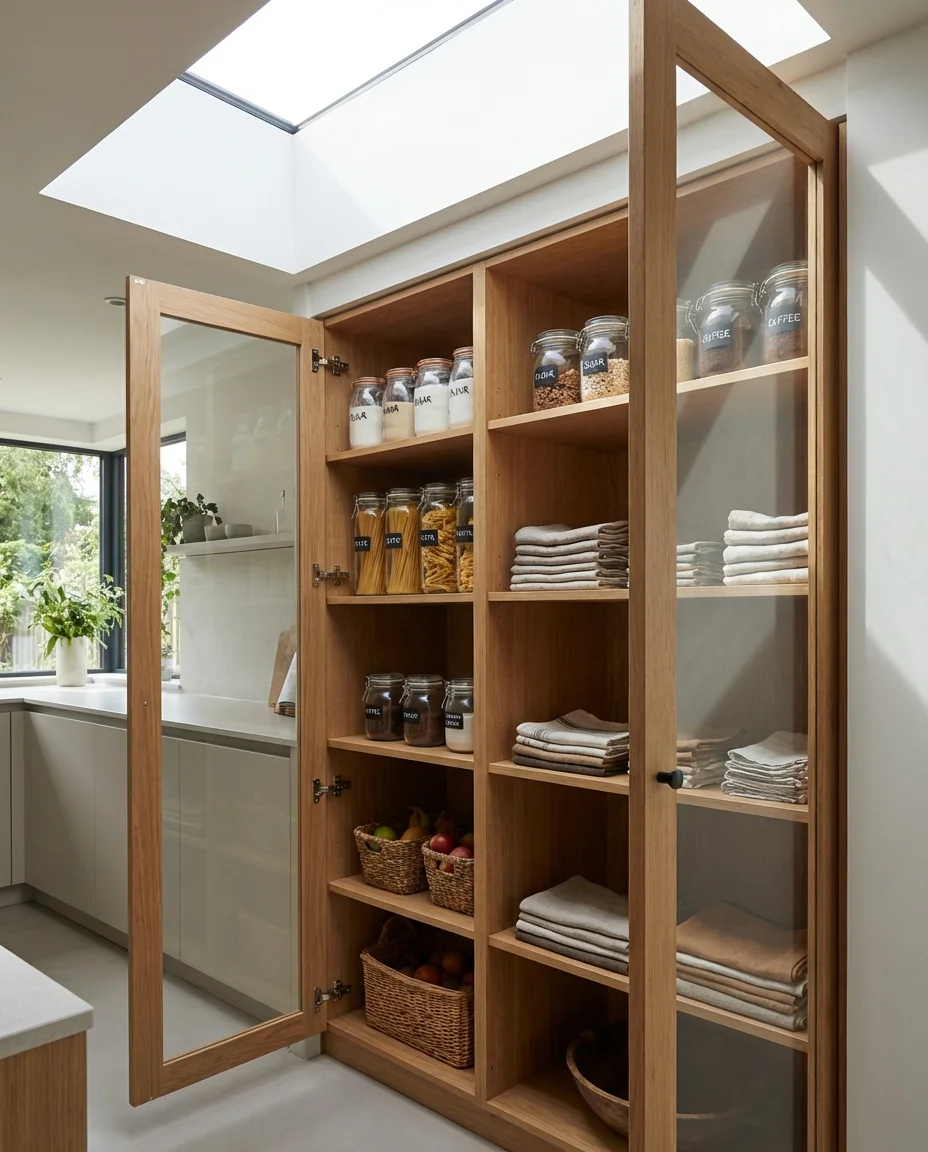
The visual accountability of glass-door pantry storage is both its appeal and its demand. You will keep it more organized because you have to. That said, many designers recommend mixing glass-door uppers with solid-door lowers—open the glass panels to the things you’re proud of, and hide the bottom chaos behind solid doors. Frosted or seeded glass is an excellent middle ground for those who love the aesthetic without the organizational pressure. It diffuses the view just enough to keep things visually calm while still adding lightness to the cabinet.
13. Blue Pantry Cabinet as a Kitchen Accent
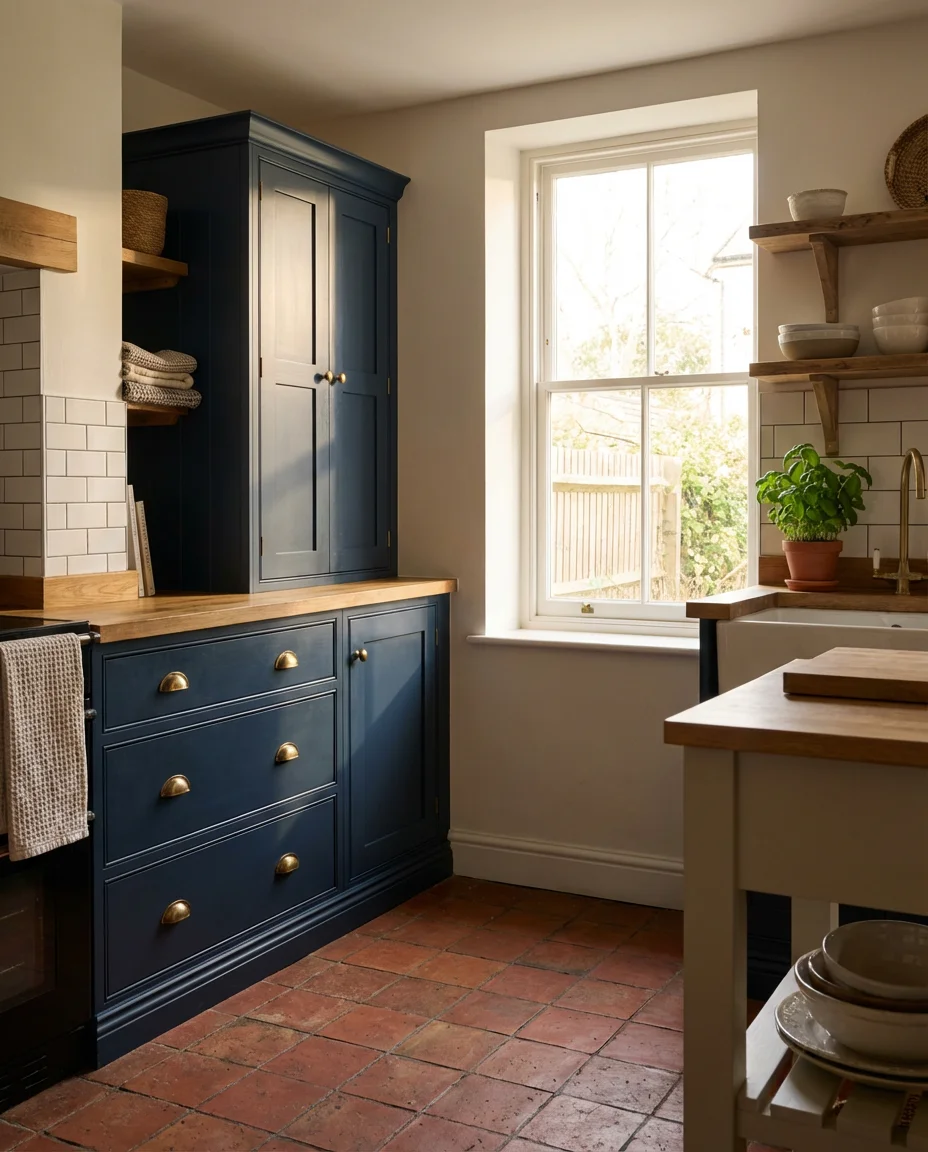
A blue pantry cabinet functions like a piece of furniture in the kitchen—grounding, beautiful, and full of character. Navy and slate blue read classic and timeless; powder blue and dusty periwinkle feel fresh and slightly unexpected. In an otherwise neutral kitchen, a single blue pantry cabinet acts as the room’s focal point without requiring a full kitchen renovation. This approach works equally well in traditional, transitional, and modern kitchens because blue has an extraordinary range—it’s simultaneously bold and calming, which very few colors manage.
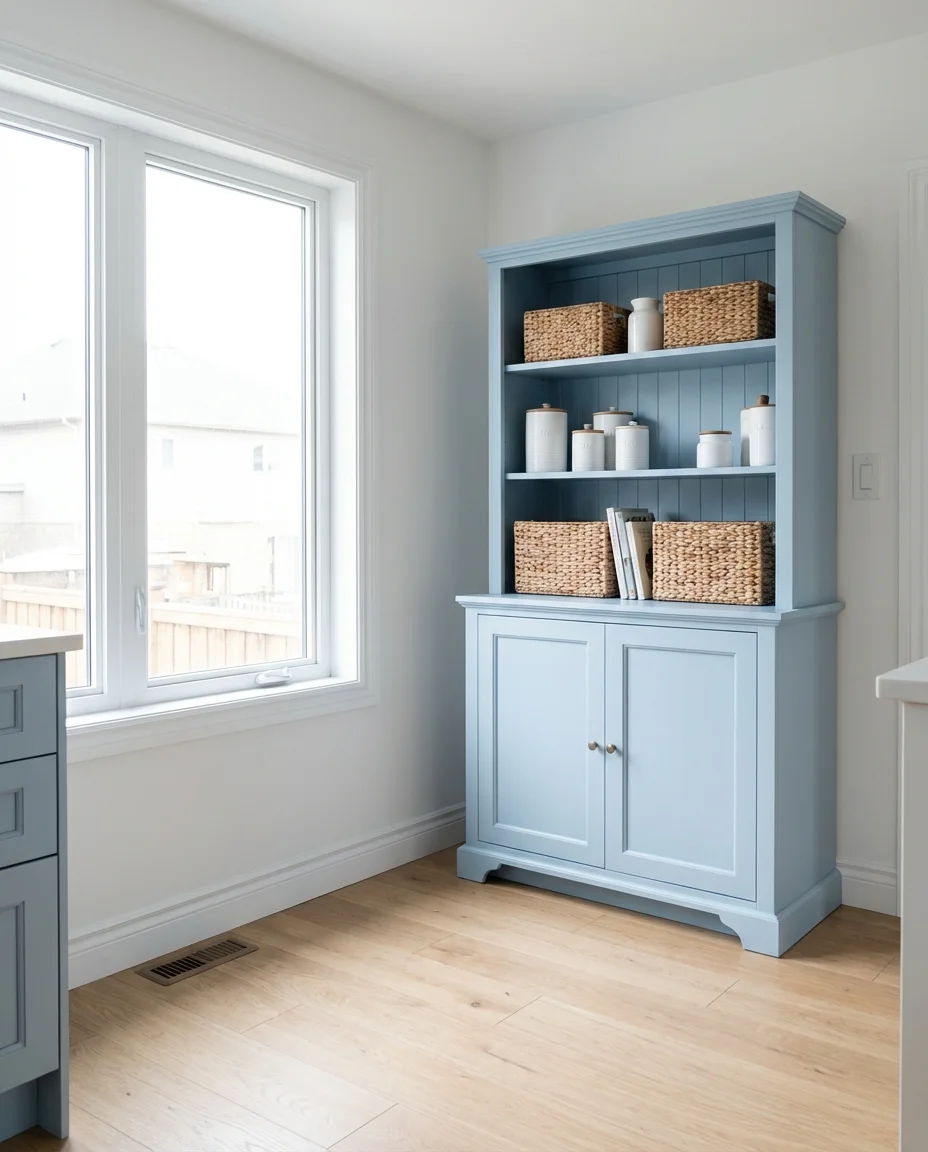
Blue and white is one of the most beloved kitchen color combinations in American design history—from colonial-era painted furniture to the enduring popularity of blue-and-white transferware. A blue pantry cabinet taps into that deeply familiar aesthetic while feeling completely current. If you’re buying a freestanding unit, consider painting an existing piece rather than buying new: chalk paint adheres beautifully to previously painted or laminate surfaces and opens up a color universe that off-the-shelf furniture can’t match.
14. Walk-In Pantry With Built-In Cabinet System
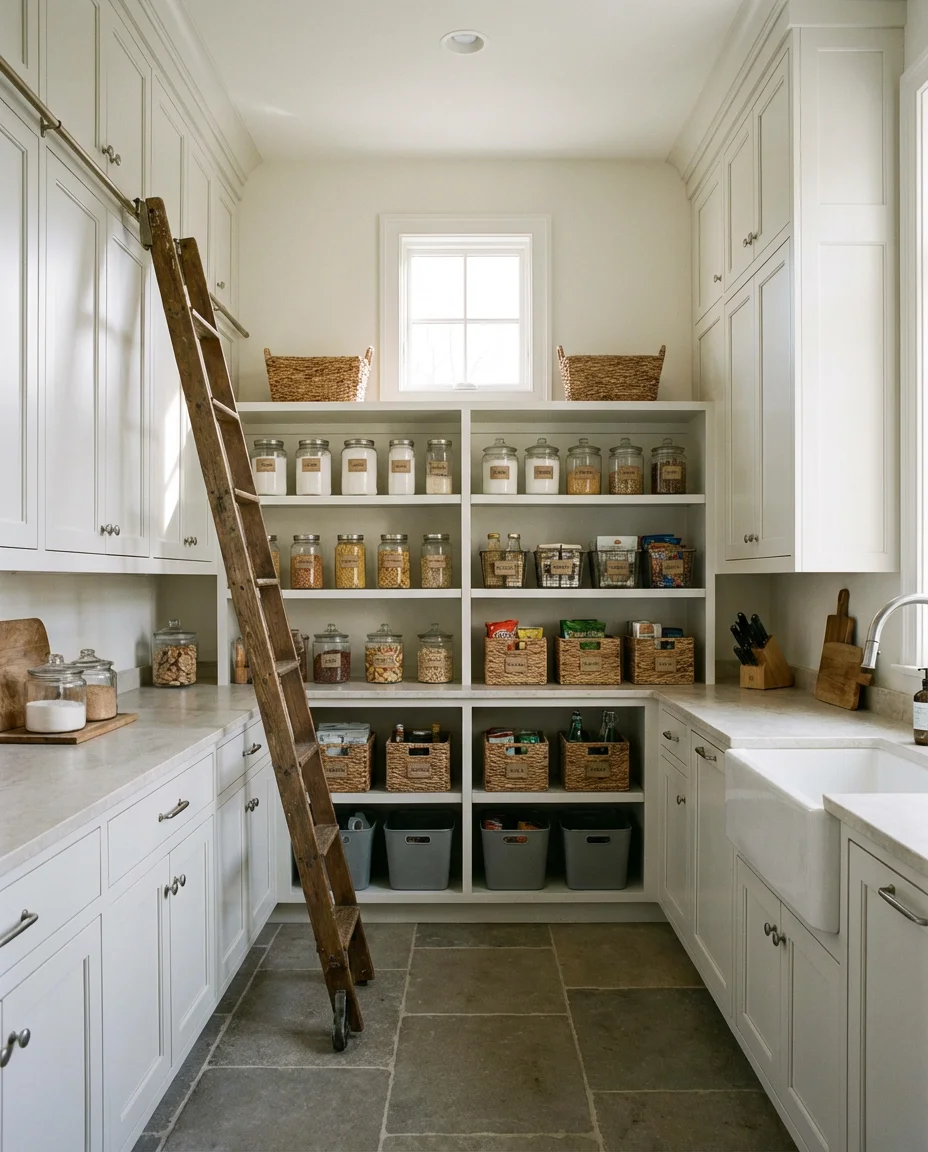
A walk-in pantry with a built-in cabinet system is the ultimate kitchen organization upgrade—the kind that makes real estate listings specifically mention it as a selling feature. Unlike open shelving pantries, a walk-in with full cabinetry gives you a mix of deep-storage lower cabinets, mid-height counter space for small appliances, and open or glass-front uppers for everyday reach-ins. The result is a room-within-a-room that functions almost like a second kitchen—and keeps the main kitchen entirely clear of clutter and appliance sprawl.
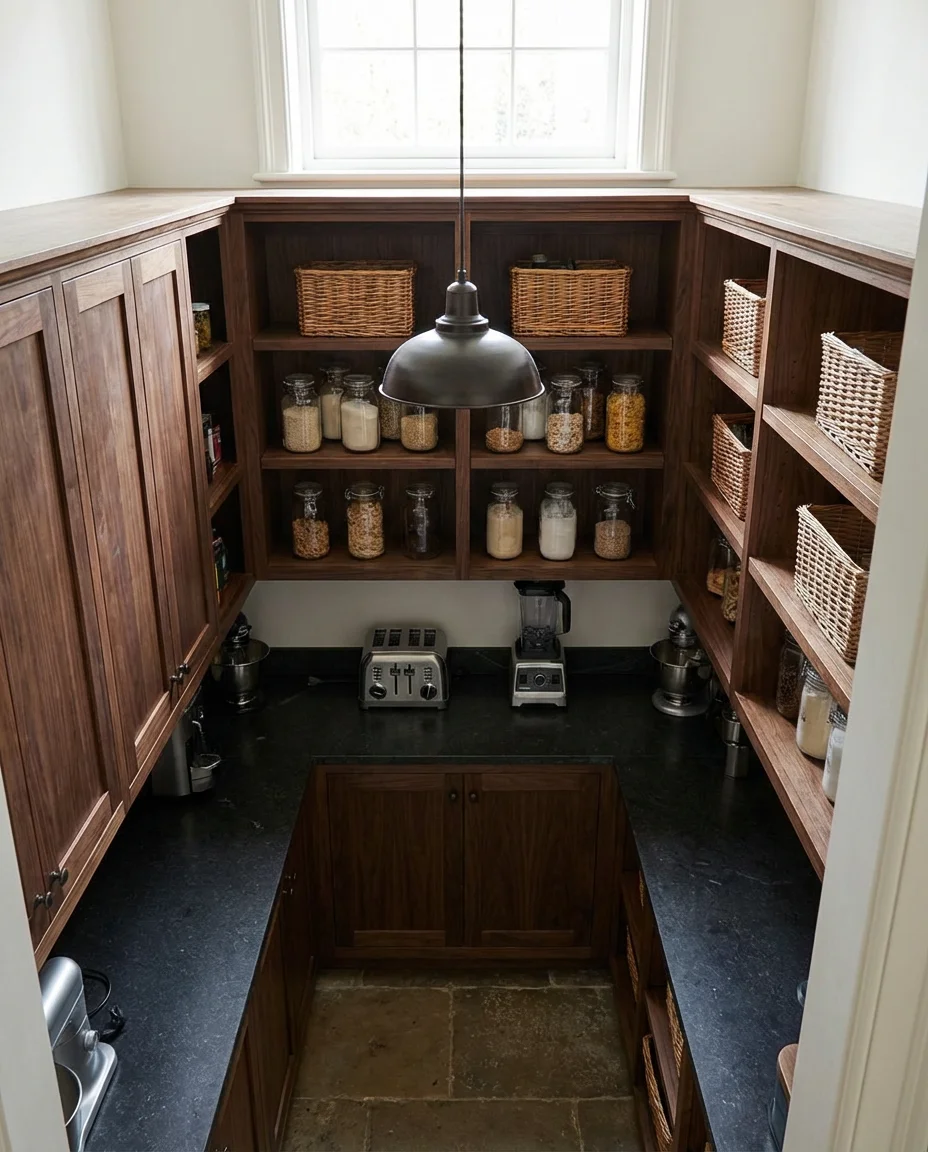
A walk-in pantry with built-in cabinets consistently tops surveys of the most desired home features among American buyers aged 30–50 — outranking even a kitchen island in some demographics. If you’re converting a closet or spare room into a pantry, prioritize the lighting first: a walk-in pantry without good lighting is just a dark room you don’t want to enter. LED strip lighting under each shelf, combined with a ceiling fixture, transforms the experience completely. Total build-out cost for a well-executed walk-in pantry runs $3,500–$12,000 depending on size and cabinet quality.
15. Organize Deep Pantry With Zones
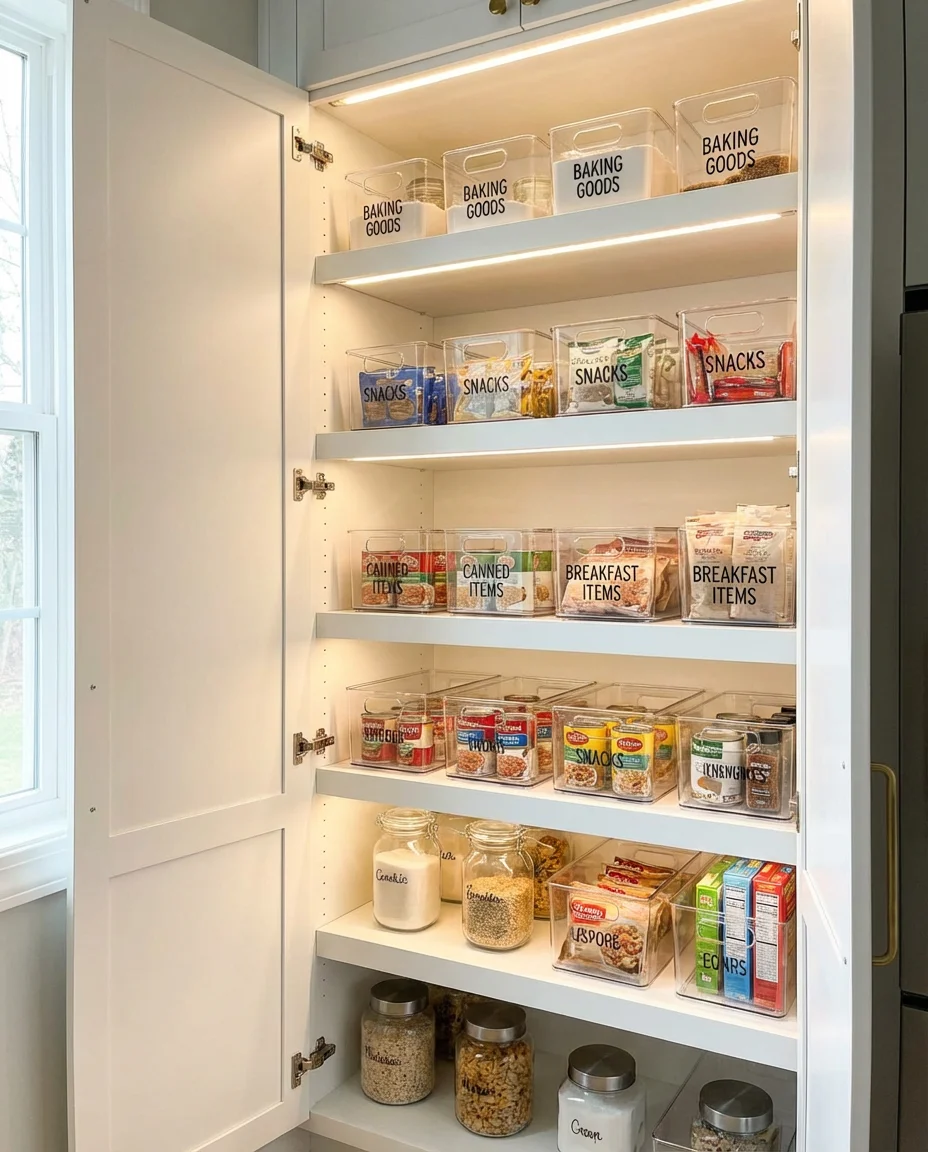
Learning to organize deep pantry cabinets with intentional zones is the system that separates functional kitchens from frustrating ones. The zone method assigns each section of the pantry a category—baking, breakfast, snacks, canned goods, beverages—and keeps items from different categories from migrating into each other’s territory. This sounds simple, but in practice it requires a thoughtful initial edit (getting rid of what you don’t use) followed by an honest assessment of which categories deserve the most accessible real estate in your specific household.
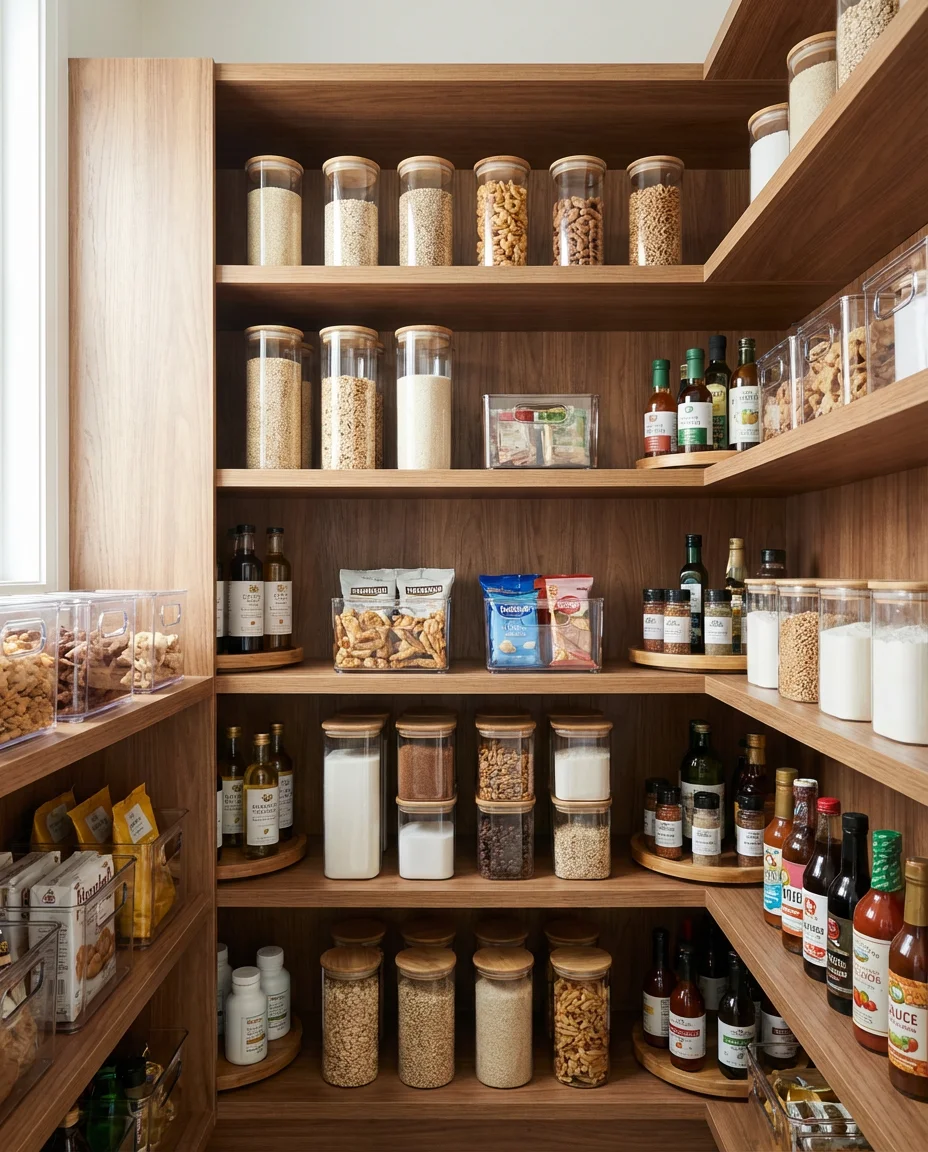
The most common mistake with deep pantry organization isn’t buying the wrong containers—it’s failing to put the most frequently used items at the front of the most accessible shelves. Eye-level shelf space is premium real estate; it should hold daily-use items, not holiday baking supplies or the backup bottle of soy sauce. Lazy susans (turntables) are particularly effective in deep shelves: they allow full circular access and prevent the “forgotten back row” problem that plagues deep cabinetry. A $15 turntable can transform a cabinet shelf that’s been annoying you for years.
16. Pantry Cabinet to Fridge Integration

One of the most cohesive and visually satisfying kitchen designs runs a pantry cabinet to the fridge in a continuous built-in installation—essentially wrapping the refrigerator in cabinetry on one or both sides so it disappears into the wall. Counter-depth refrigerators are particularly well-suited to this approach since their shallower profile aligns with standard cabinet depth. The pantry sections flanking the fridge create a seamless composition that eliminates the visual awkwardness of a refrigerator sticking out into the room and makes the whole kitchen feel architecturally resolved.
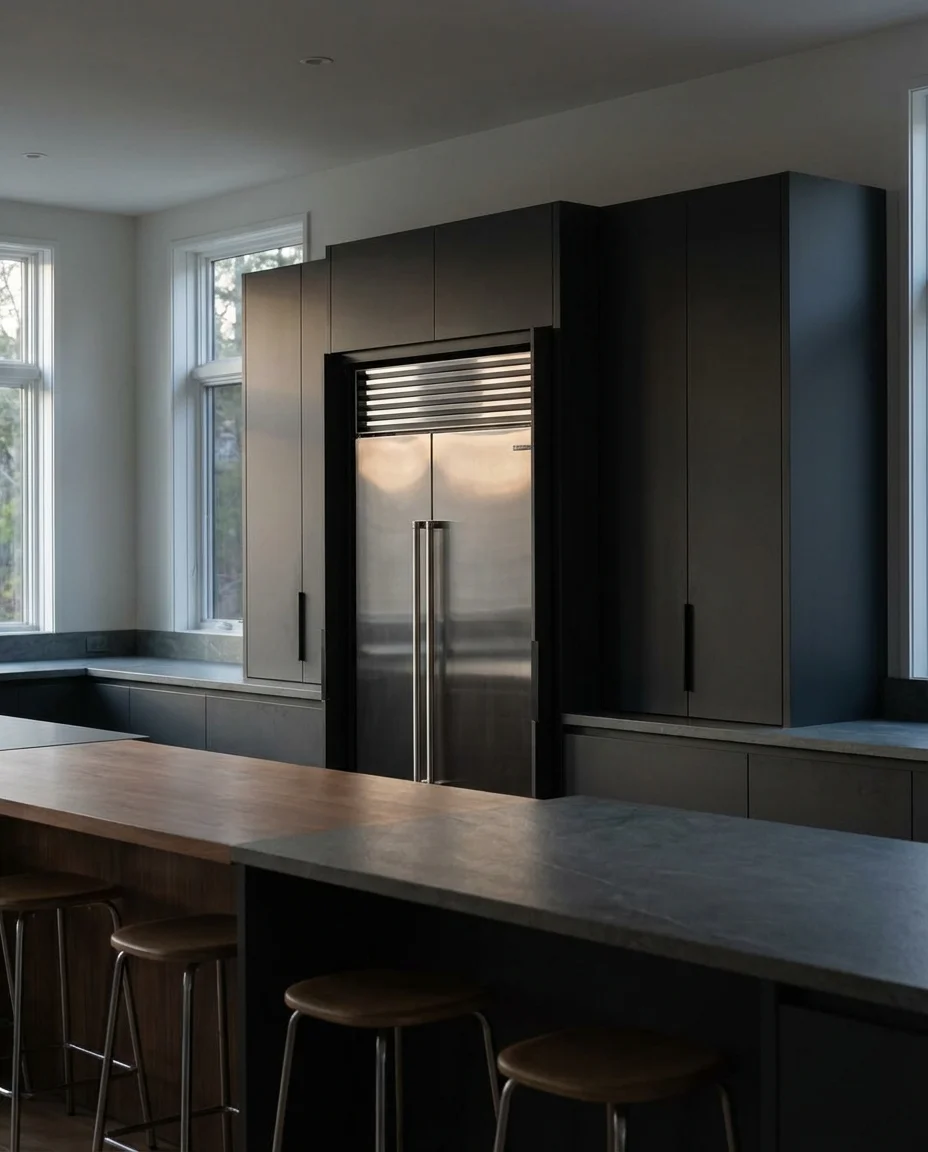
This design choice is especially popular in open-plan homes where the kitchen is visible from the living area. When the refrigerator is wrapped in cabinetry that matches the rest of the kitchen, the transition between the kitchen zone and the living zone becomes seamless rather than jarring. Budget reality check: this approach is significantly more achievable with counter-depth fridges (typically $1,800–$3,500) than with French door standard-depth models, which project 4–6 inches beyond standard cabinet depth and make the integration look less resolved.
17. Ideas for a Freestanding Pantry With Barn Doors
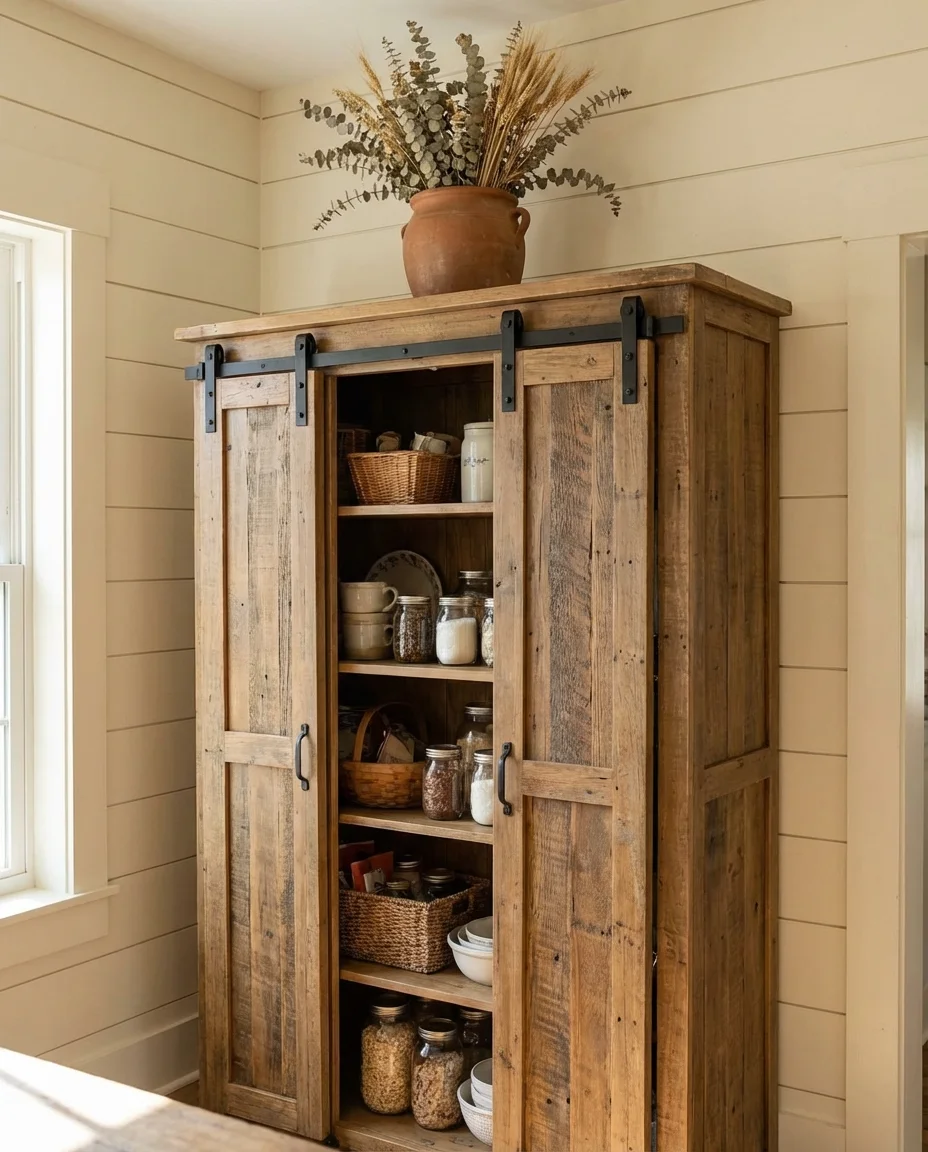
Sliding barn doors on a pantry cabinet are one of those ideas freestanding design enthusiasts keep revisiting because the combination genuinely works—functionally and aesthetically. Unlike hinged doors that require swing clearance, barn-style sliding doors glide parallel to the wall, making them ideal for tight kitchens where door clearance is a constant battle. As a statement piece, a tall freestanding pantry with barn doors in weathered wood, painted metal, or rattan panels commands immediate visual attention and establishes the entire kitchen’s character in a single design decision.
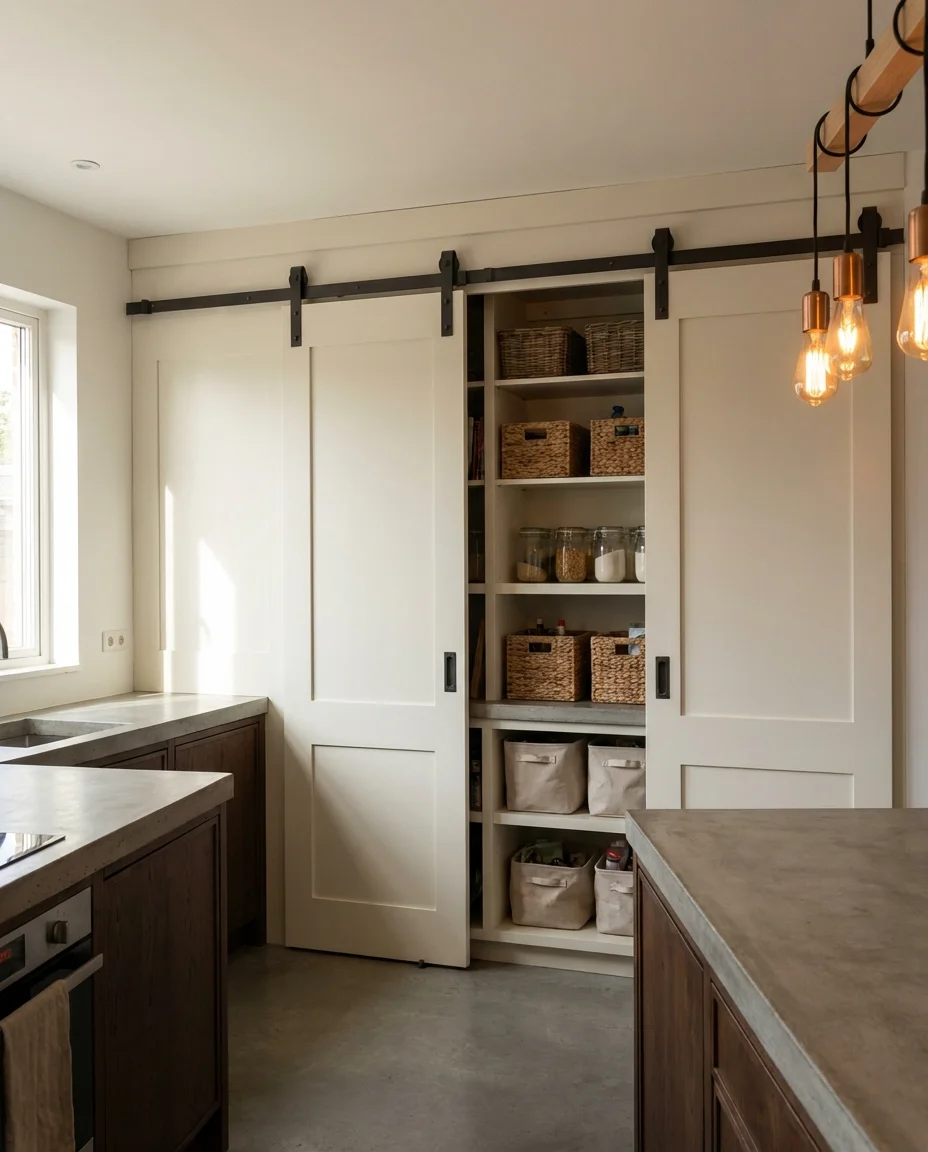
The barn door pantry is particularly well loved in American homes that blend farmhouse elements with contemporary finishes—the style that interior designers sometimes call “refined rustic.” The practical benefit extends beyond aesthetics: sliding doors age better than hinged doors in active family kitchens because there’s no hinge stress from daily opening and closing. The track hardware—whether black metal, antique brass, or brushed nickel—functions as a decorative detail in its own right, adding another layer of intentional design to a cabinet that earns its place in the room.
18. Tall Kitchen Pantry Cabinet With Drawer Bank
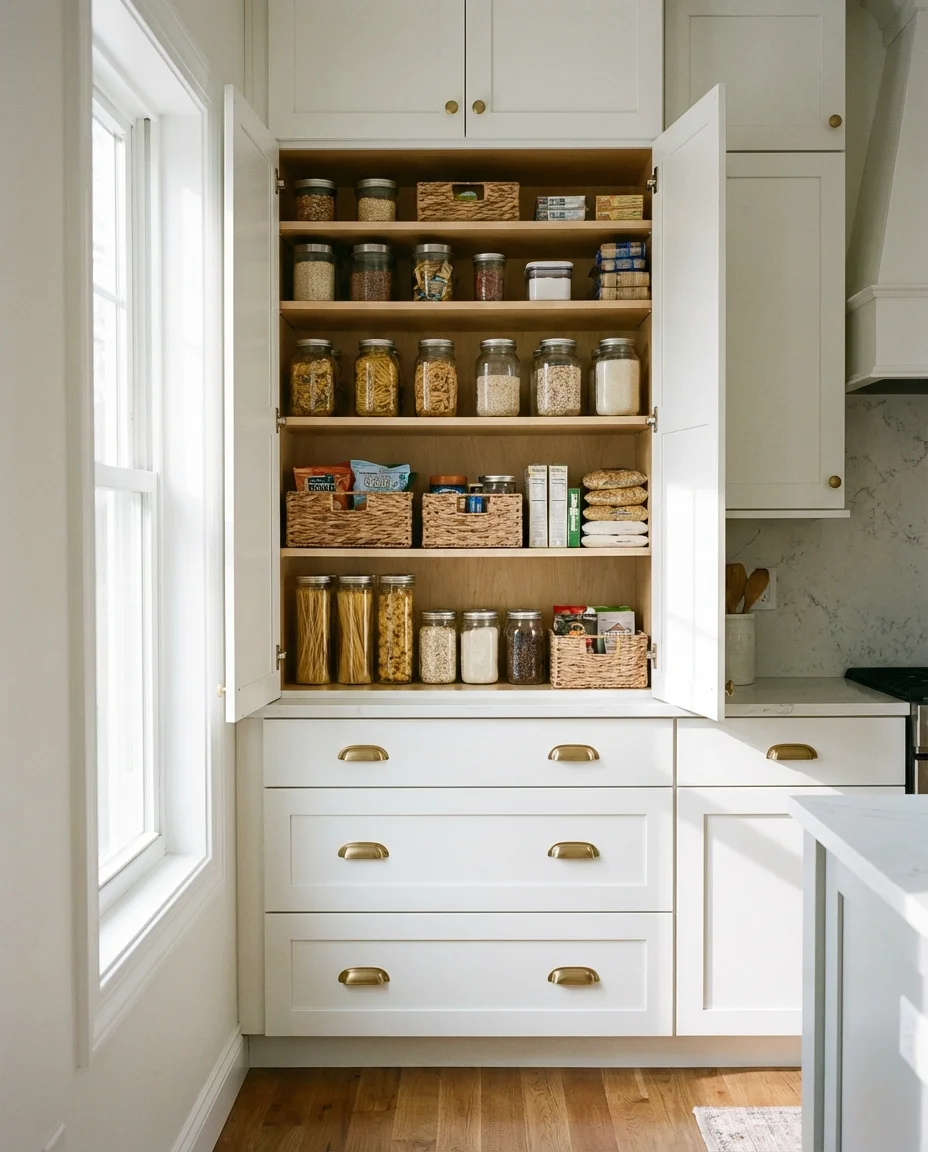
A tall kitchen pantry cabinet that includes a drawer bank at the base—typically 3 to 5 graduated drawers—represents one of the most functionally satisfying configurations in modern kitchen design. The upper portion handles bulky dry goods on shelves behind doors, while the drawer bank below takes care of everything that benefits from being laid flat and pulled toward you: linens, foil and wrap rolls, pot lids, and small kitchen gadgets. This hybrid approach dramatically reduces the hunting-and-digging that makes deep shelves so frustrating in conventional pantry designs.
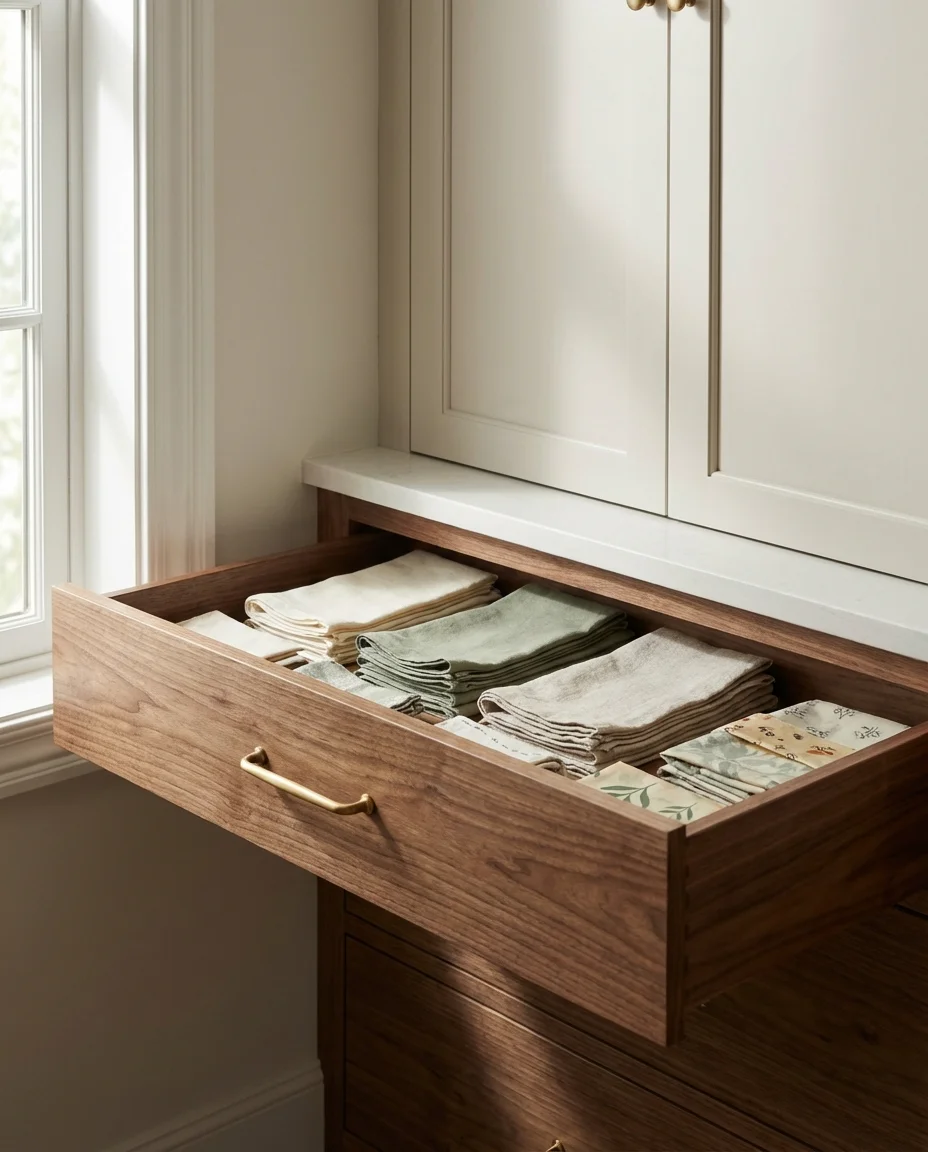
One longtime professional organizer who specializes in kitchen storage suggests always putting the deepest, most spacious drawer on the bottom of any drawer bank and graduating to shallower drawers as you move up. This seems counterintuitive—the tallest drawer is the hardest to reach—but deep base drawers accommodate the bulkiest items perfectly, while the mid-height shallower drawers catch the utensils and wraps you reach for every day. The top drawer, smallest and most accessible, becomes the cutlery or gadget drawer. It’s a system that works across kitchen types and sizes.
19. Small Freestanding Pantry for Apartment Kitchens
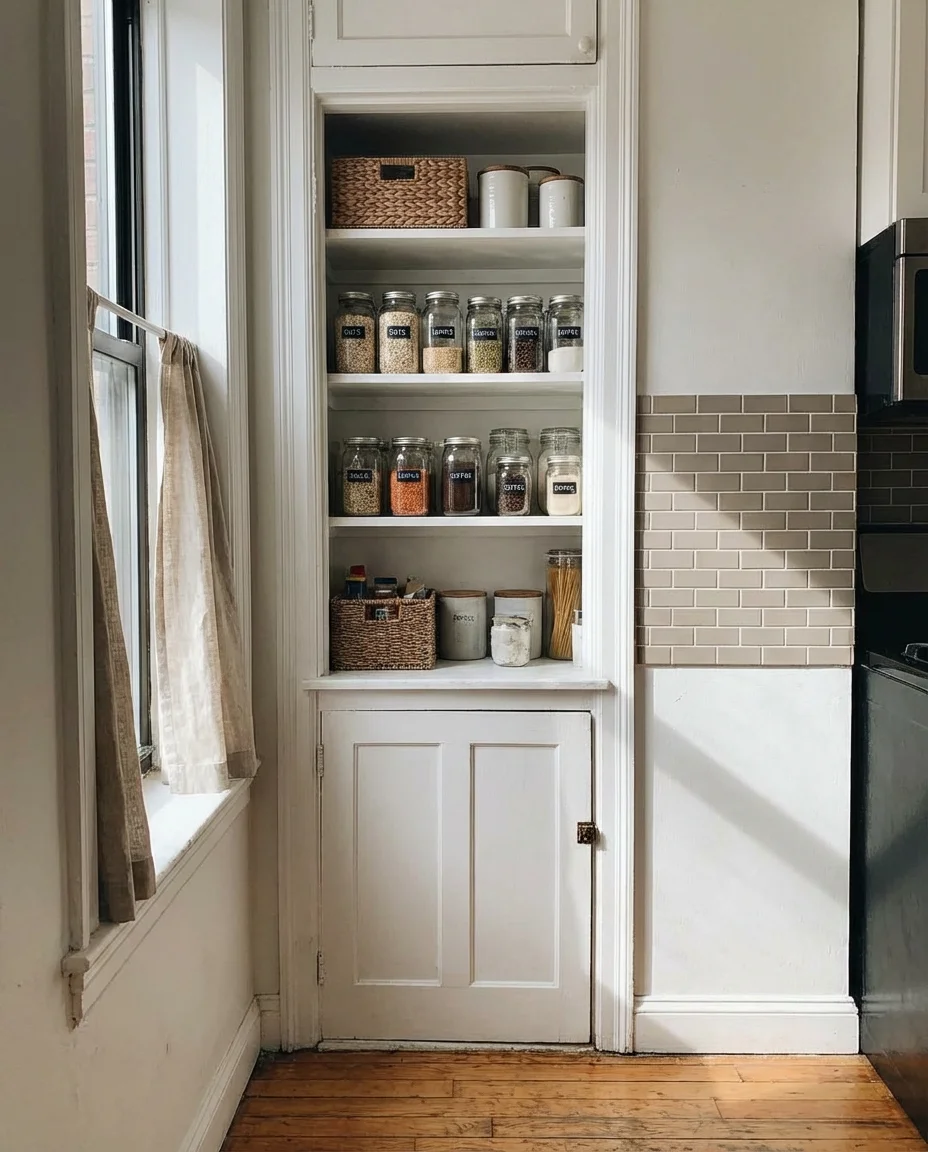
Urban apartment kitchens present a unique pantry challenge: the space is small, the walls often can’t be touched, and the landlord would prefer you didn’t install anything permanent. A small freestanding pantry unit—specifically designed for compact footprints—addresses all of this gracefully. Units in the 18–24 inch width range can nestle beside a refrigerator, fill an awkward alcove, or stand against an otherwise empty wall without making the kitchen feel more crowded. The key is choosing a unit whose height and finish feel purposeful rather than provisional.
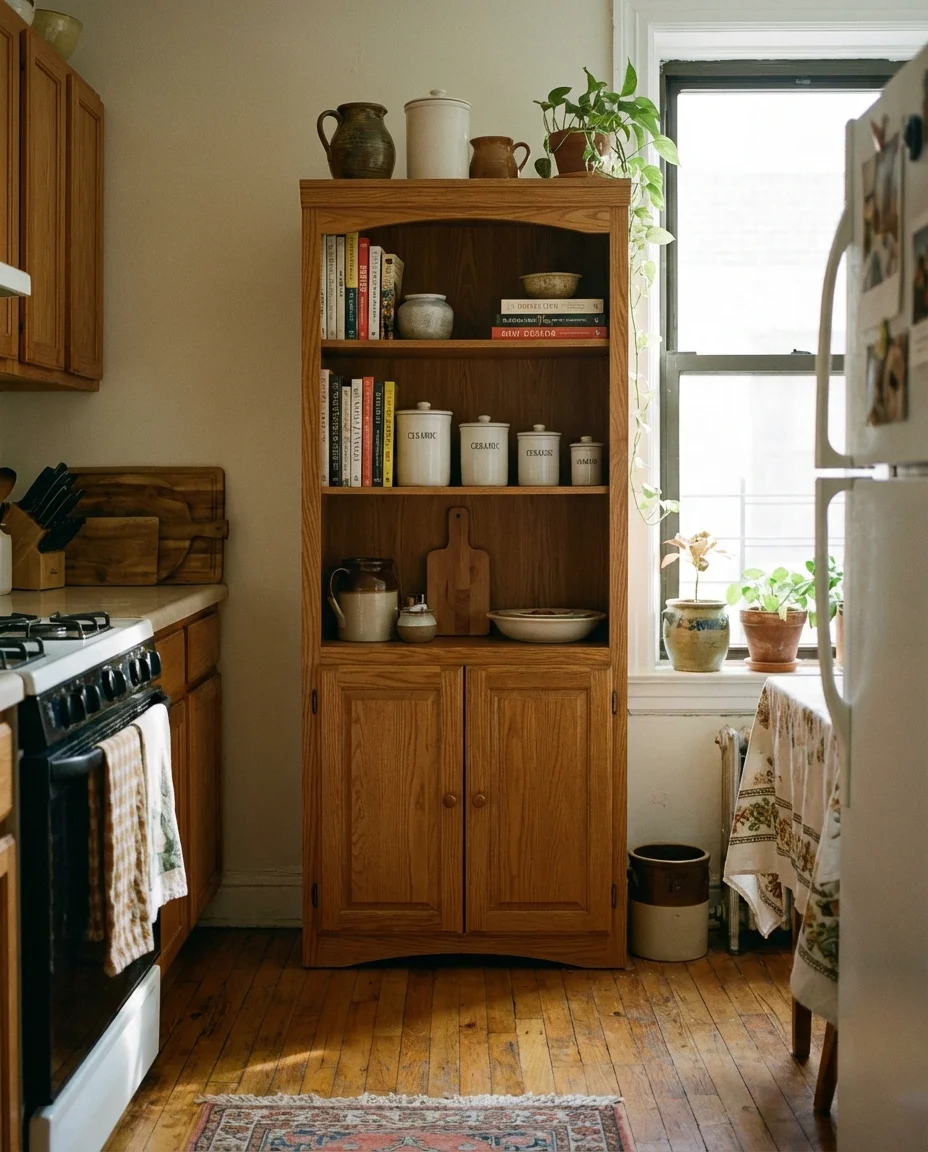
American renters in cities like New York, Chicago, San Francisco, and Boston have made small freestanding pantry cabinets an essential move-in purchase for exactly this reason. The American lifestyle of frequent relocation—particularly in the 20s and 30s—has created a large market for furniture-grade storage that feels like home design rather than dorm-room improvisation. Retailers like Article, West Elm, and CB2 now offer genuinely attractive compact pantry units that look like real furniture, not afterthoughts from a big-box storage aisle.
20. Built-In Pantry With Chalkboard Door Interior
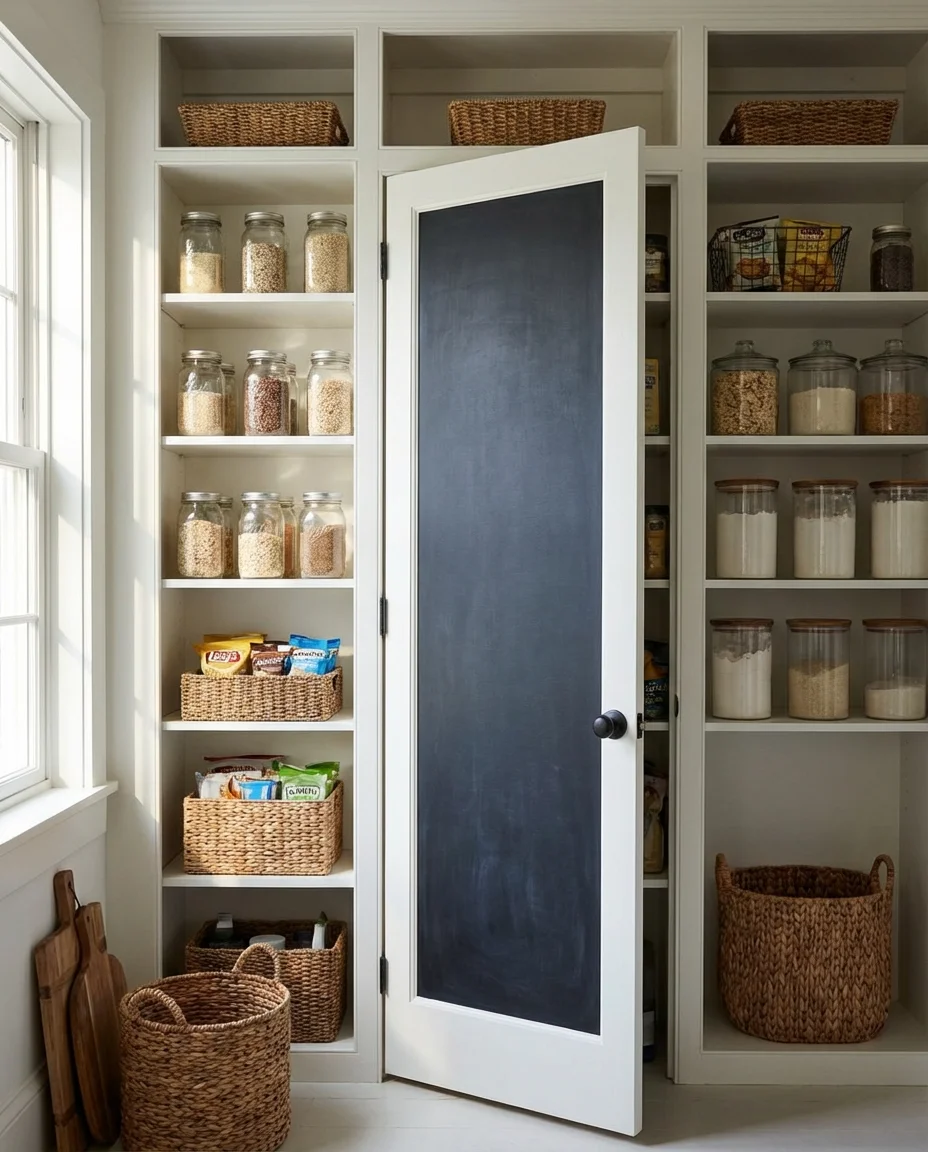
One of the most beloved functional-meets-decorative built-in pantry details is a chalkboard-painted interior door. The inside face of the pantry door becomes a running shopping list, meal plan, or family message board—visible only when the cabinet is open, which keeps the kitchen looking tidy from the outside. This detail costs almost nothing to add (a quart of chalkboard paint runs about $15) and delivers an outsized amount of daily utility. It’s a particularly practical and charming feature for families with school-age children who are learning to track what the household needs.
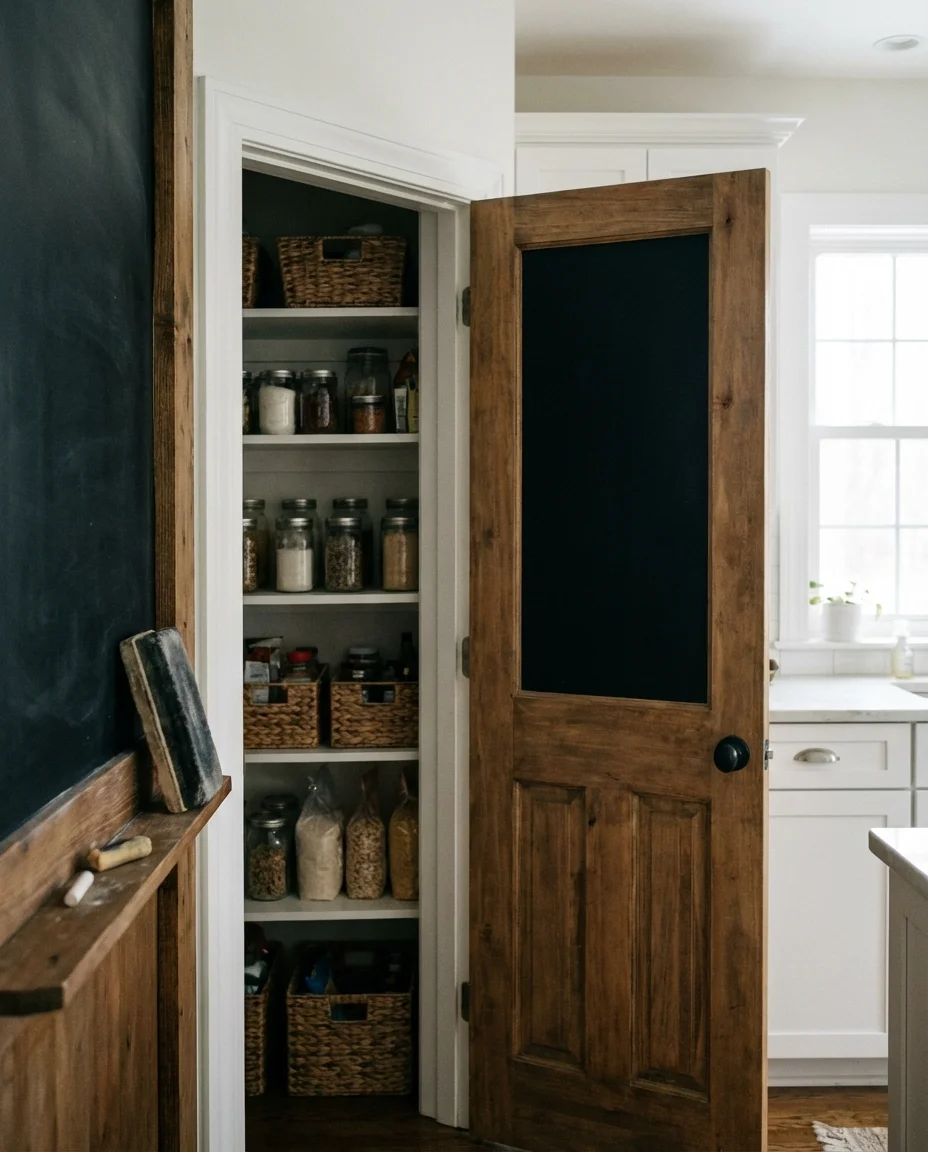
The chalkboard interior door is a perfect example of the kind of pantry detail that feels clever every single time you use it. It’s become a signature feature in farmhouse and cottage-style kitchens in particular, where handwritten lists and a slightly informal aesthetic are part of the whole design story. For homes with a more modern or minimalist kitchen, the same concept works beautifully with a whiteboard paint treatment—same functionality, cleaner visual language that aligns with a sleeker aesthetic without any chalk dust.
21. Organization Ideas for Deep Cabinet Shelves
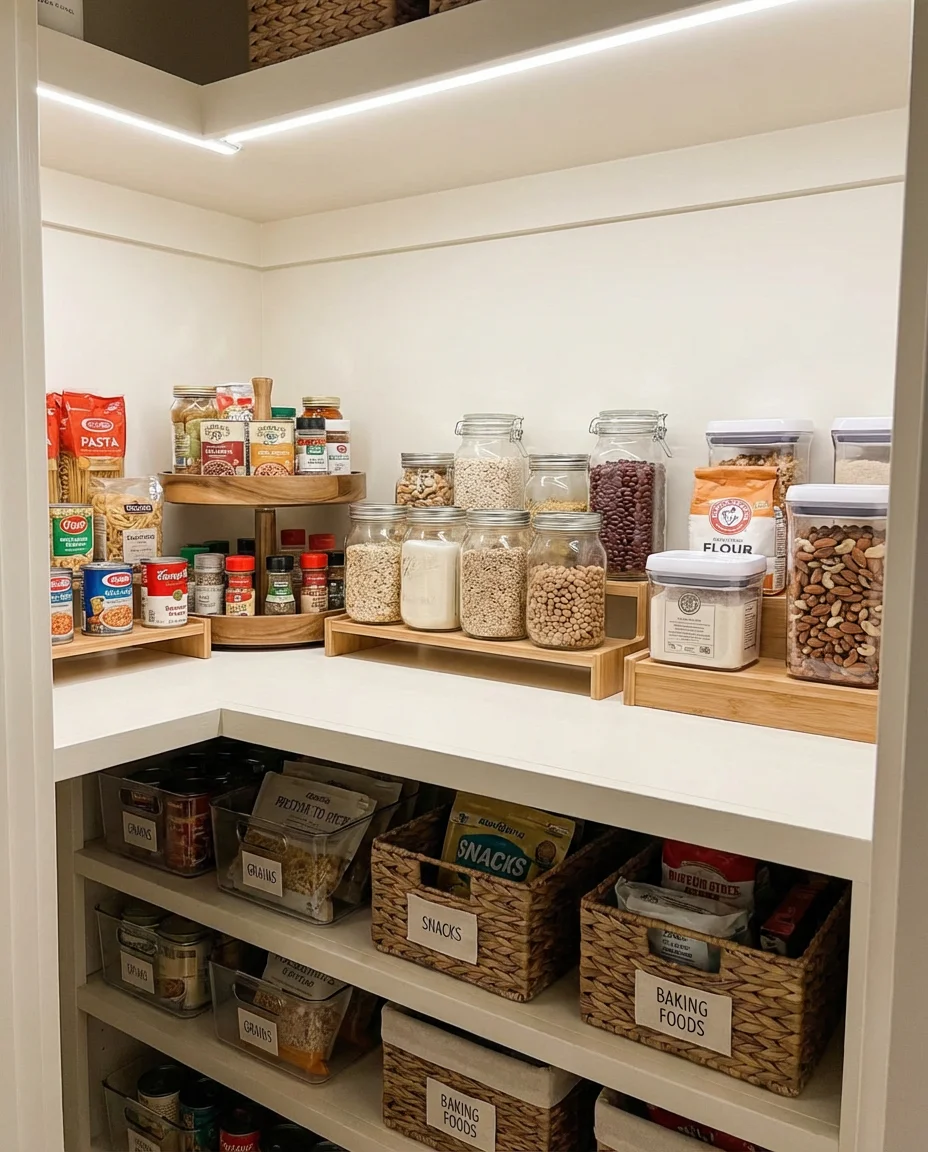
Deep cabinet shelves are the organizational challenge that never fully goes away—but with the right tools and organization ideas, they become one of the most efficient storage zones in the kitchen. The most effective approach layers products: a turntable at the back of the shelf for bottles and condiments, a step riser in the middle for canned goods visibility, and a shallow bin at the front for grab-and-go snacks. Matching clear containers with a consistent labeling system transforms a visually chaotic shelf into something that functions like a well-edited convenience store aisle.
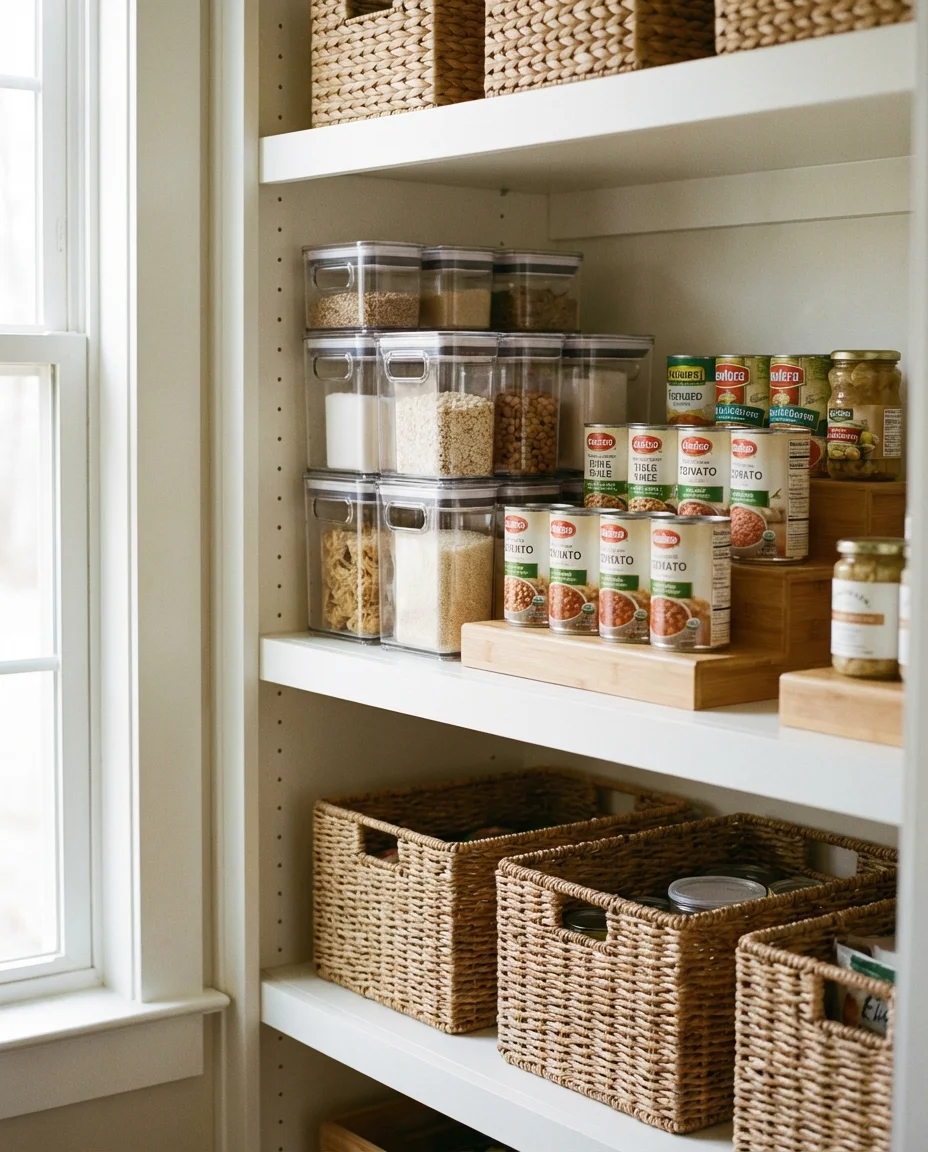
Real homeowners who have tackled deep shelf organization consistently report the same experience: the edit (throwing out expired goods and products they’ve never used) is the hardest and most important step, and it always reveals that the actual storage need is smaller than the cabinet space available. That realization is freeing. Buying the bins and baskets before the edit is the most common mistake—you end up with organizers that don’t fit what you actually own. Edit first, measure second, shop third. That sequence produces systems that last longer than two weeks.
22. Kitchen Food Storage Ideas With Matching Canisters
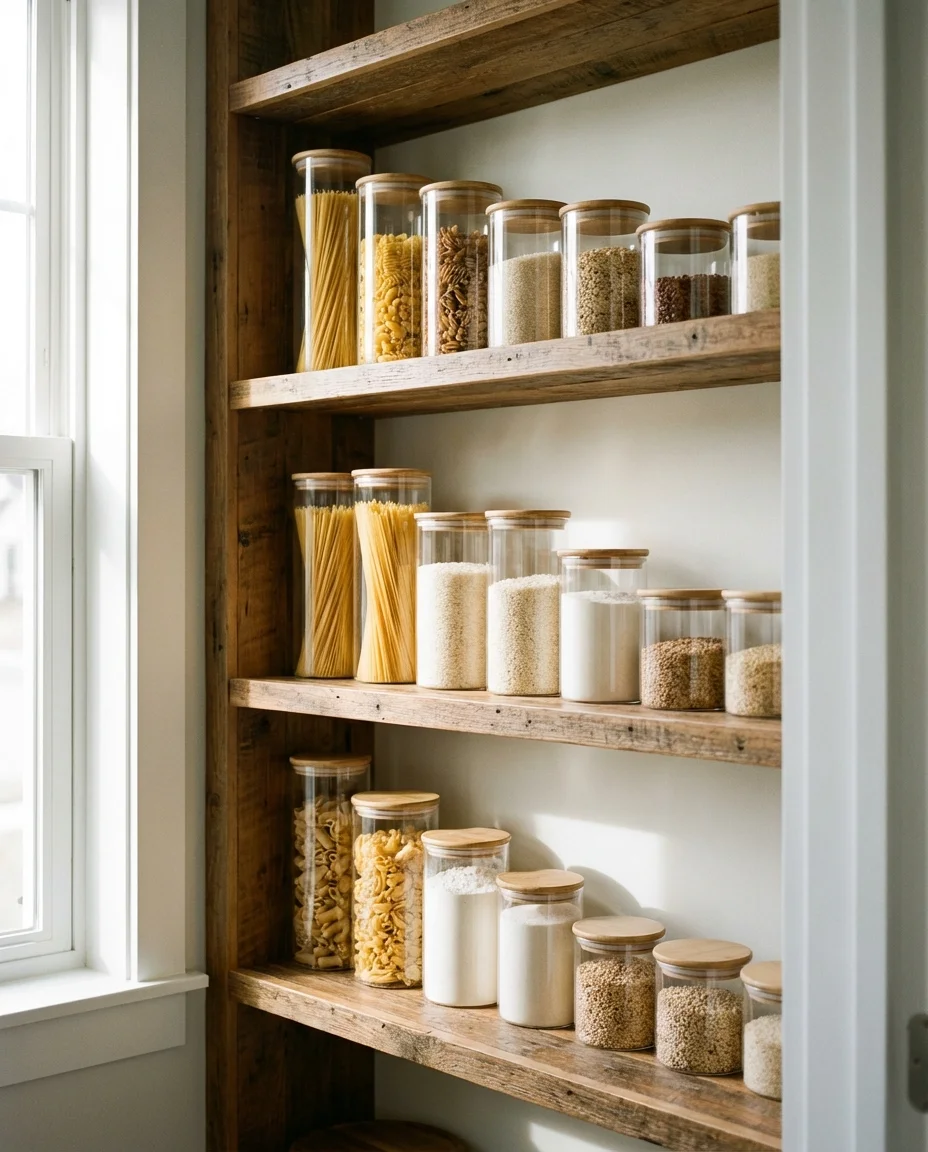
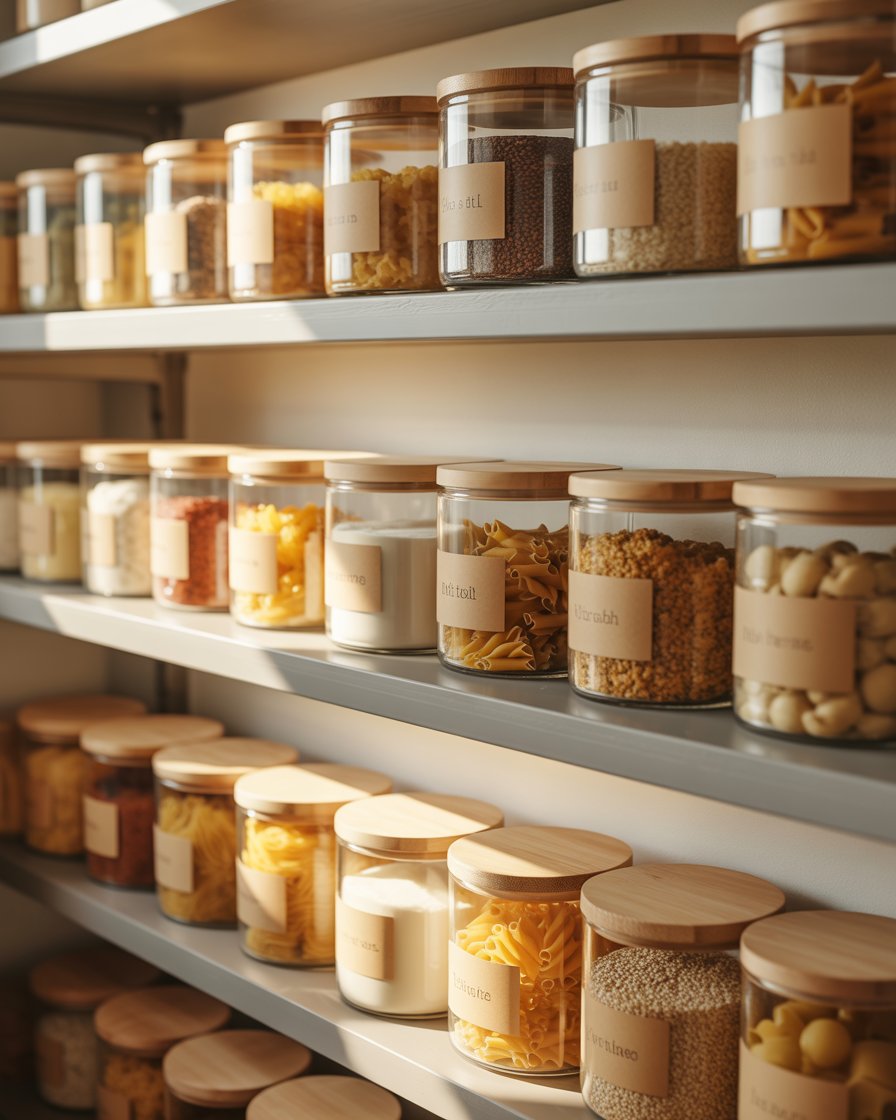
The transformation that a set of matching canisters brings to pantry aesthetics is completely disproportionate to the effort involved. A single afternoon of decanting pasta, rice, flour, sugar, and oats into a cohesive canister set turns a chaotic shelf into something that looks intentional, styled, and calm. These are some of the most effective kitchen food storage ideas precisely because they work on two levels simultaneously: they make the pantry look better, and they keep food fresher by providing airtight storage in containers sized for actual household quantities.
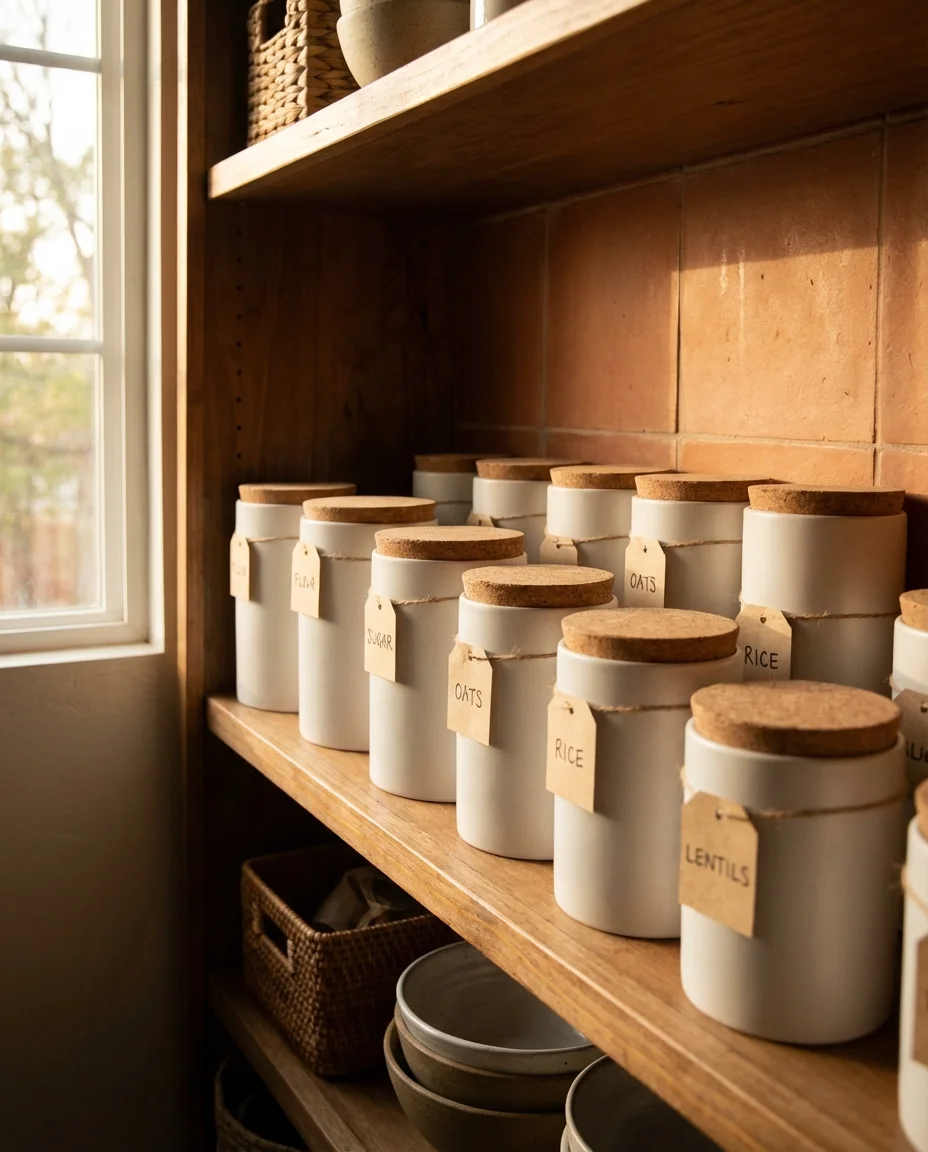
The canister trend has deep roots in American kitchen history—think of the iconic tin flour and sugar canisters of 1950s kitchens, which were as decorative as they were practical. Today’s version has been elevated by brands like Oui by Le Creuset, OXO, and Weck, who have turned food storage into genuine kitchen décor. Budget option: the Ikea 365+ series offers airtight glass containers with consistent sizing for a fraction of the cost of designer alternatives—an excellent starting point before committing to a more expensive matching set.
23. Pantry Cabinet Organization System With Labels
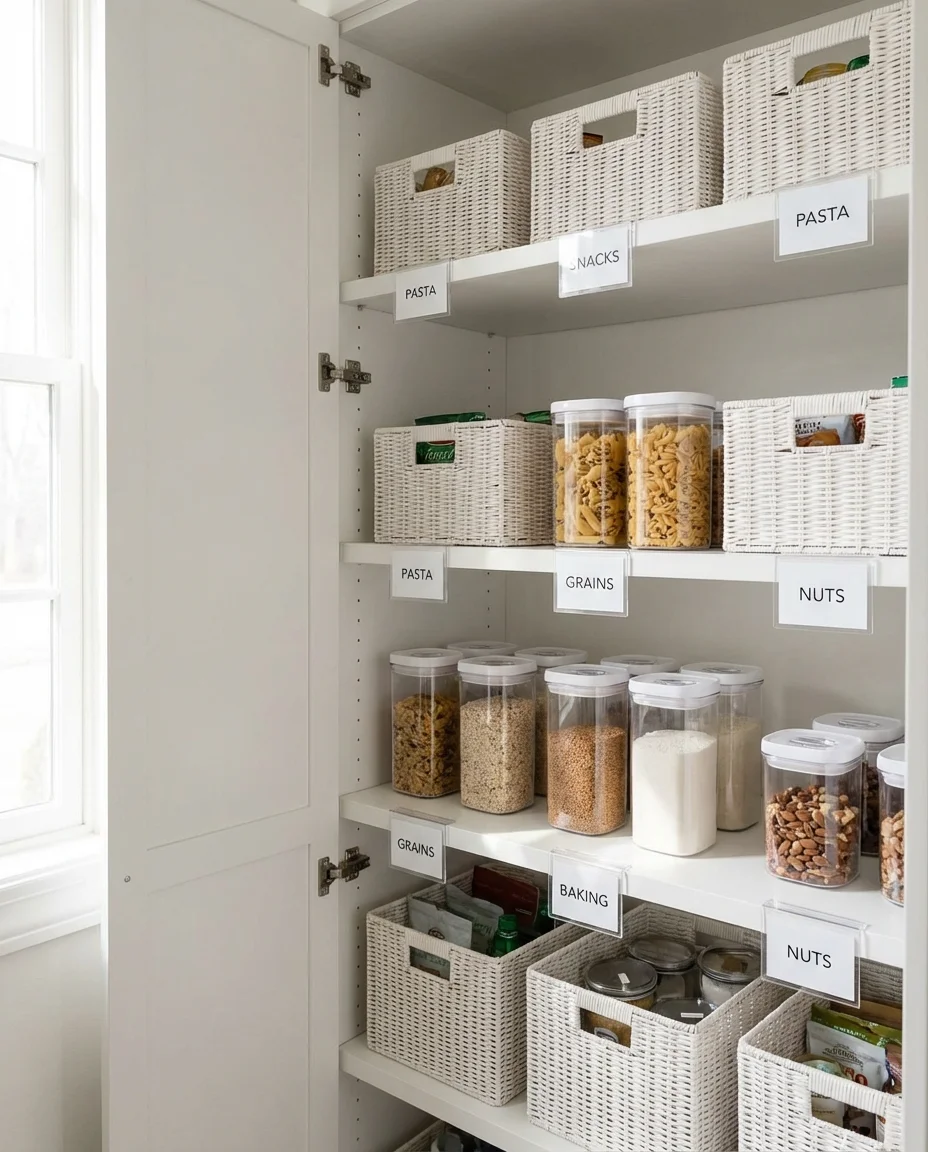
A complete pantry cabinet organization system anchored by consistent labeling is the final layer that makes everything else sustainable. Without labels, even the most beautifully organized pantry drifts back toward chaos within weeks—because other household members don’t know the system, and items get returned to the nearest available space rather than their designated home. Labels communicate the system to everyone in the household, which is especially powerful in families where multiple people shop, cook, and unload groceries. The kitchen organization level you actually maintain long-term is the one that everyone understands.
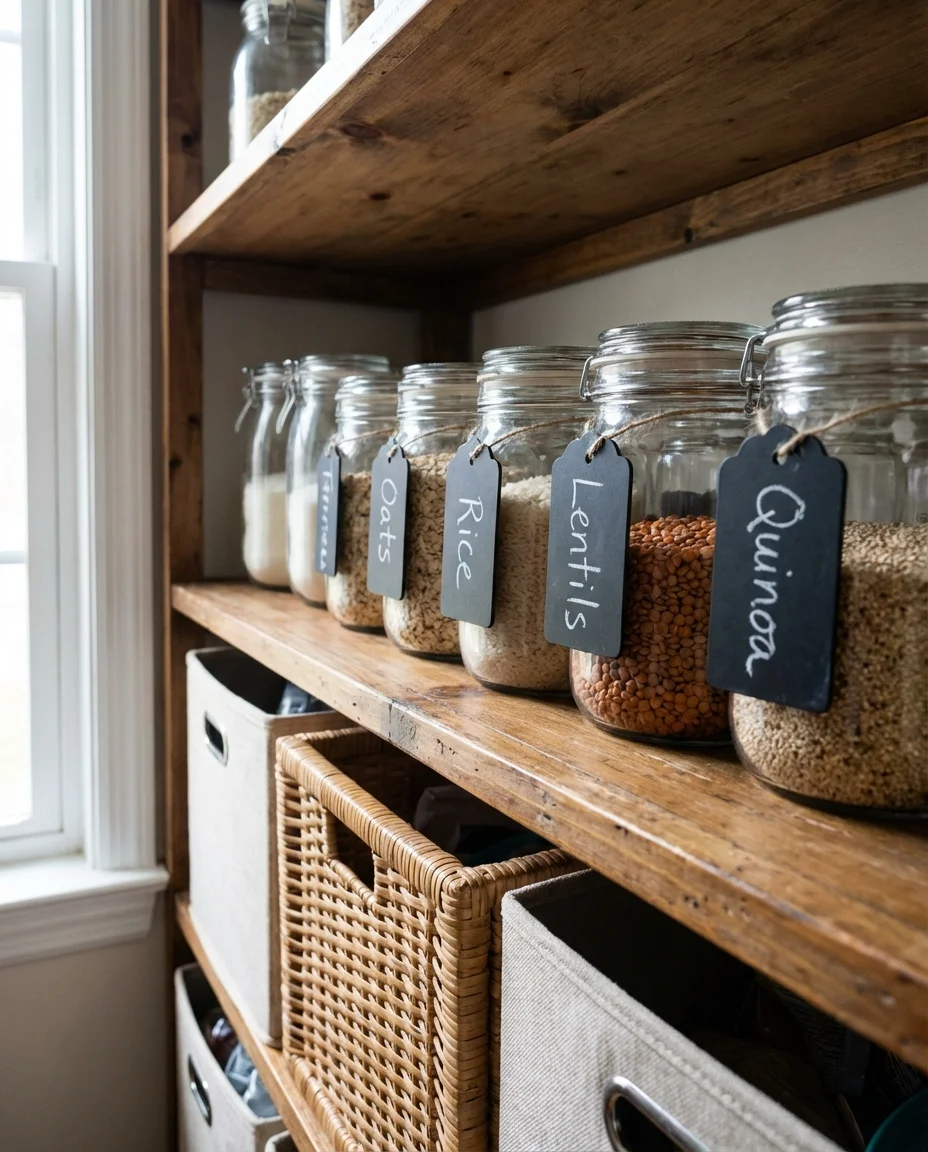
Label makers like the Brother P-Touch and DYMO LetraTag have developed cult followings among the organization-obsessed for excellent reason: laminated tape labels are waterproof, permanent, and create a clean, uniform look across every container in the pantry. For a warmer, more handcrafted aesthetic, waterslide decals or hand-lettered chalkboard tags add personality that a printed label can’t replicate. The real secret, though, is consistency: whatever label style you choose, applying it everywhere—not just the items you organized first—is what creates a pantry system that sustains itself and actually gets better with time rather than reverting to chaos.
Conclusion
Whether you’re dreaming of a full walk-in pantry system or finally tackling that one chaotic deep shelf that’s been bothering you for months, there’s an idea here that’s the right fit for your home, your budget, and your real life. We’d love to know which of these pantry cabinet ideas resonated most with you—drop your thoughts in the comments below and tell us what your biggest kitchen storage challenge is right now. You might just inspire someone else’s next renovation decision.