As we move into 2026, pantry design has evolved far beyond basic storage—it’s become a statement of personal style, function, and creativity. From sprawling walk-in spaces to compact coffee stations tucked under the stairs, Americans are transforming their pantries into rooms that reflect how they really live. Pinterest searches for pantry inspiration have surged as homeowners seek layouts that balance beauty with everyday practicality. Whether you’re working with a narrow hallway nook or dreaming of a butler’s pantry with double doors, this guide offers fresh ideas to help you reimagine one of the hardest-working spaces in your home.
1. Butler’s Pantry with Double Doors and Vintage Charm
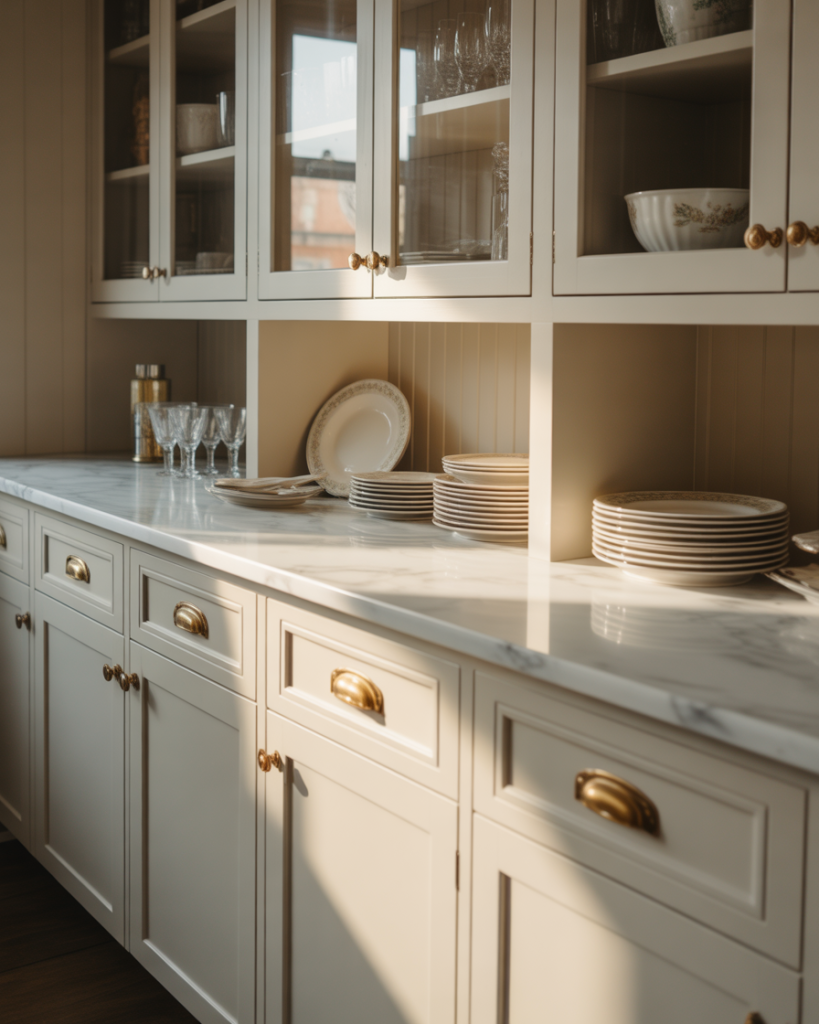
A butler’s pantry remains one of the most coveted features in American homes, especially when anchored by elegant double-door entry points that create a sense of arrival. This setup works beautifully in homes with formal dining rooms, offering a discreet prep zone where you can stage dishes, store serving pieces, and keep countertops clutter-free during gatherings. Adding vintage hardware, glass-front cabinetry, or even reclaimed wood shelving brings warmth and character that feels both timeless and collected over years.
Homeowners often underestimate how much a butler’s pantry can elevate entertaining—it’s not just about storage but about creating a backstage area that keeps your main kitchen camera-ready. If you’re renovating, consider pocket doors or frosted glass inserts to maintain elegance while hiding the inevitable prep chaos. Budget-conscious? You can achieve this look by retrofitting existing cabinetry with vintage-style pulls and adding a marble contact paper countertop for under $200.
2. Tiny Pantry Under the Stairs with Smart Shelving
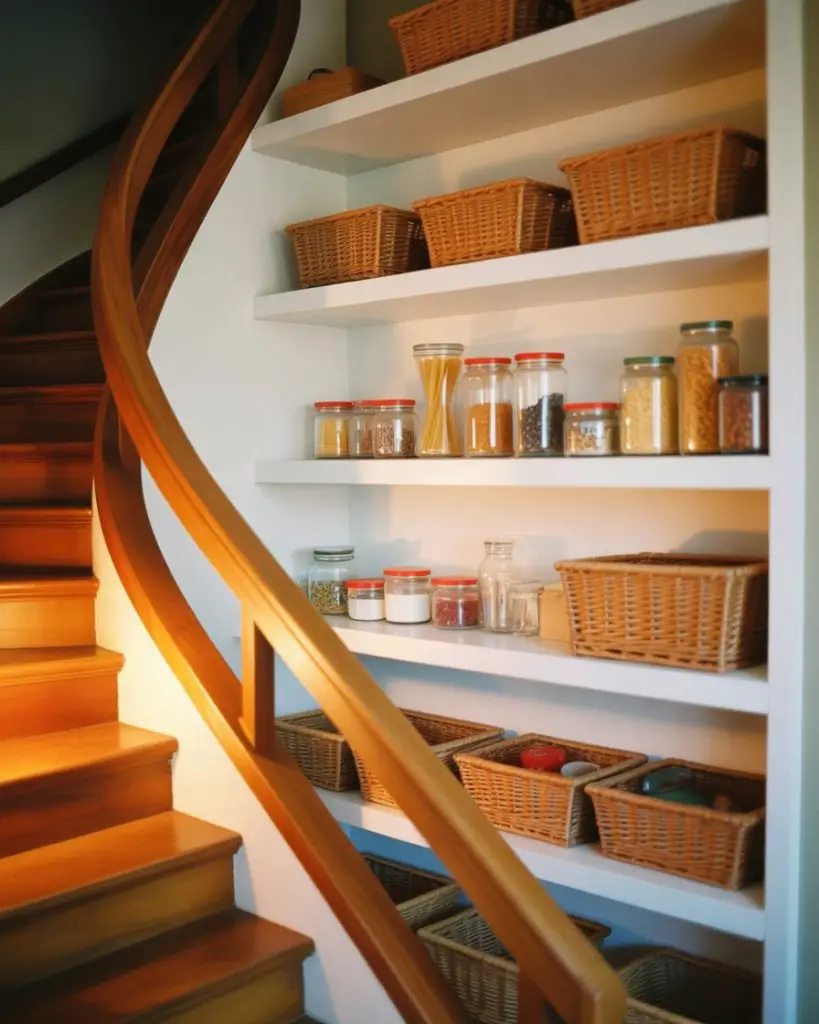
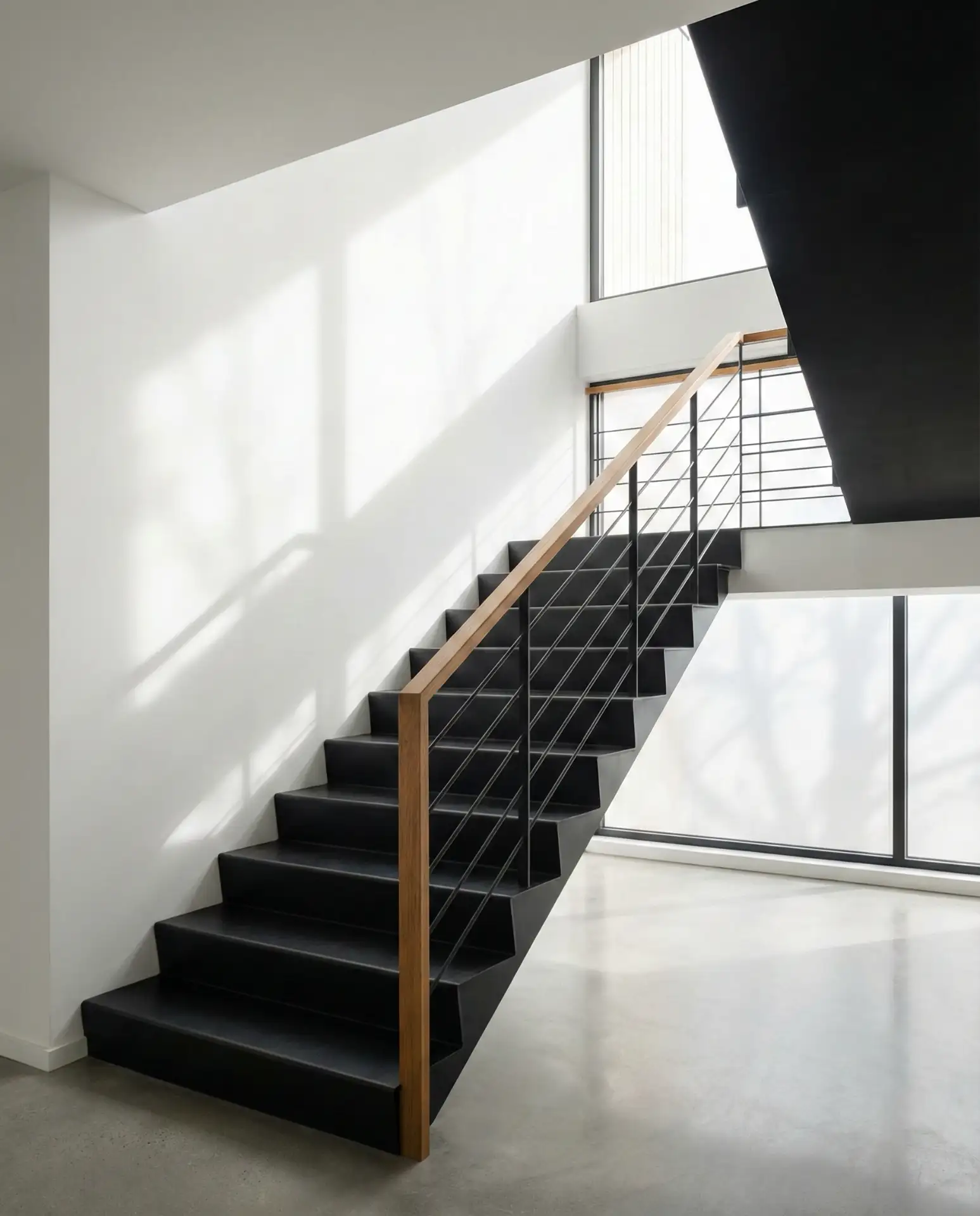
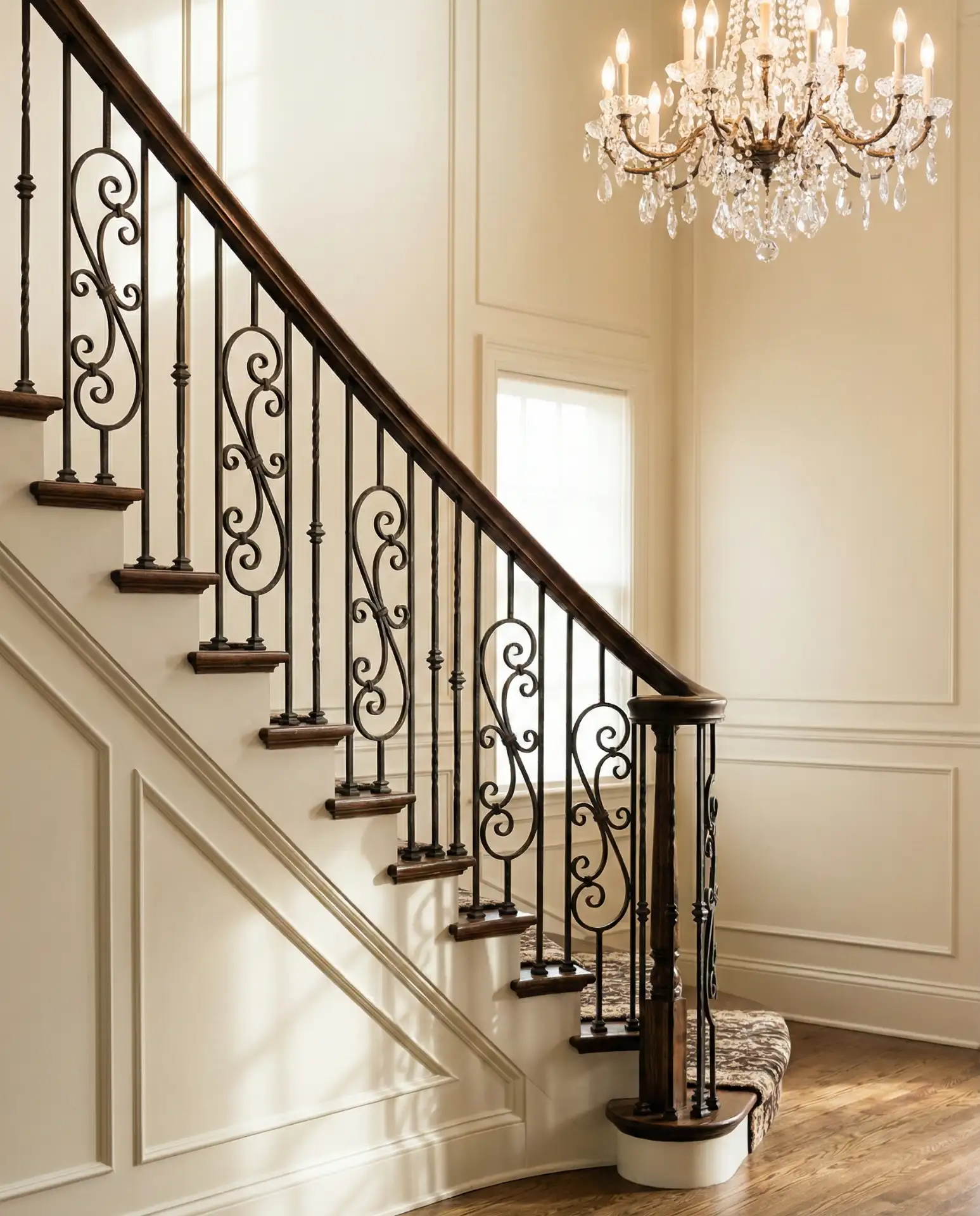
When square footage is limited, the space beneath your stairs offers surprising potential for a functional tiny pantry that doesn’t sacrifice style. This approach works especially well in townhomes, older bungalows, or compact city apartments where every inch counts. Installing custom pull-out shelves or tiered risers ensures you can access items at the back without crawling, while open shelving on the tallest section showcases pretty jars or colorful cookbooks that add personality.
Where it works best: Homes with enclosed staircases or those willing to add a simple door to conceal the pantry when not in use. A common mistake is installing fixed shelves at uniform heights—this wastes vertical space. Instead, vary shelf spacing to accommodate tall cereal boxes near the floor and shorter spice jars higher up. Many homeowners report that adding a small LED strip light transforms this from a dark cavern into a surprisingly functional storage spot.
3. IKEA Ivar Pantry System for Budget-Friendly Customization
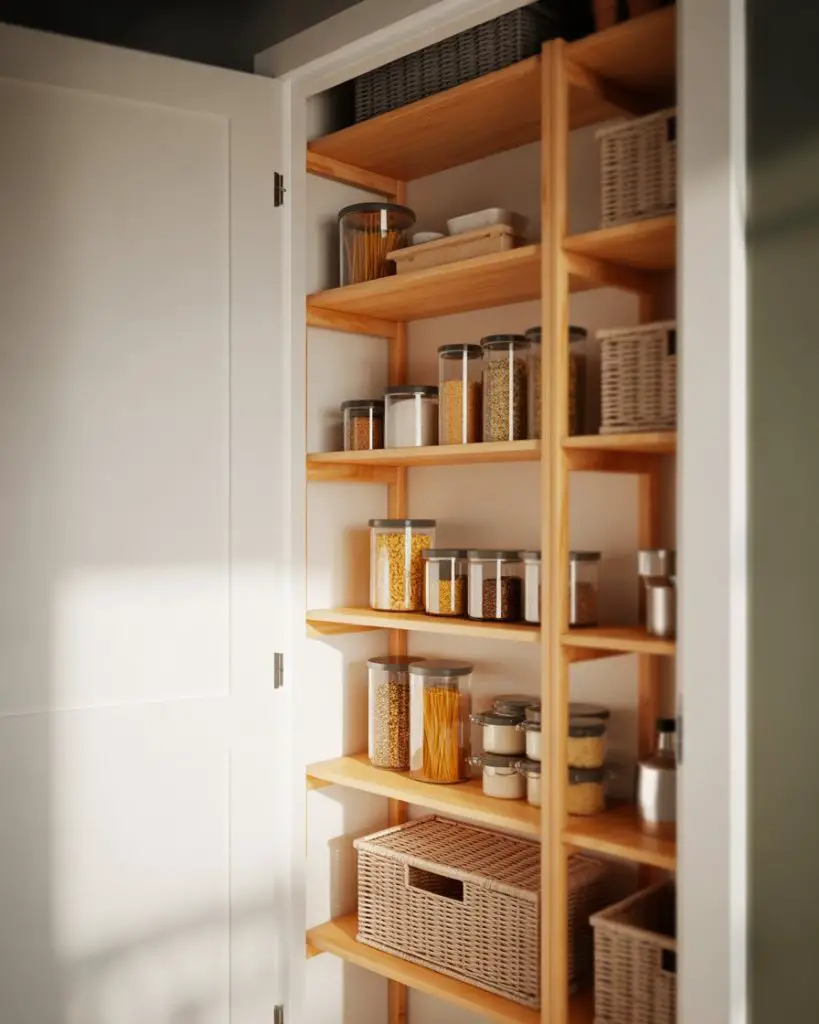
The IKEA Ivar shelving system has become a go-to solution for DIY-savvy Americans looking to build a custom pantry without the custom price tag. These unfinished pine shelves can be configured to fit narrow hallways, converted closets, or even office spaces repurposed as dry goods storage. The beauty lies in flexibility—you can paint them, stain them, or leave them raw for a Scandinavian minimalist vibe, and adjust shelf heights as your needs evolve.
Real homeowner behavior: Many people start with one Ivar section and add units over time as their collection of bulk foods or pantry staples grows. One practical insight—these shelves aren’t designed for super-heavy loads, so reinforce the back panel with additional screws if you’re storing large bags of flour or canned goods. At around $80 per section, it’s one of the most cost-effective ways to achieve a semi-custom pantry look.
4. Walk-In Pantry with Floor-to-Ceiling Storage
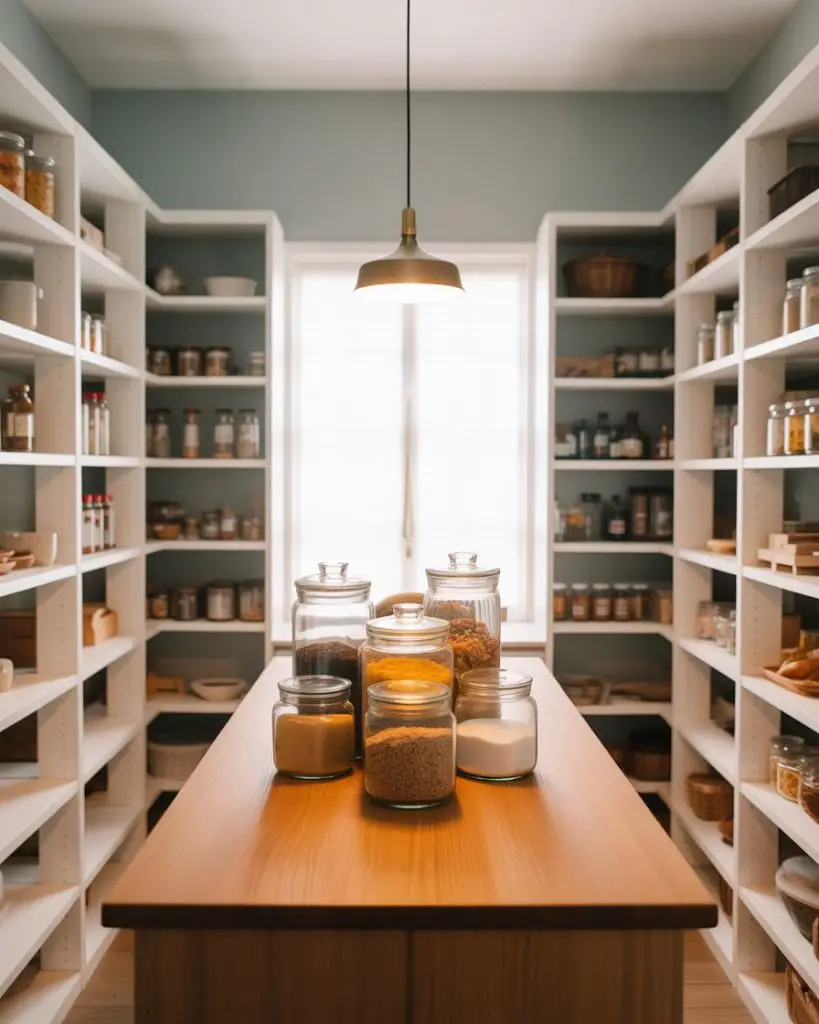
A true walk-in pantry remains the dream for serious home cooks and large families who need room to store everything from small appliances to seasonal entertaining gear. This layout thrives in homes with extra square footage—often converted from a spare bedroom, oversized closet, or bonus room adjacent to the kitchen. Floor-to-ceiling shelving maximizes vertical real estate, while a central island or countertop provides a surface for meal prep, folding reusable bags, or even setting up a small coffee station.
Expert-style commentary: Interior designers often recommend leaving at least 36 inches of clearance in the center aisle to allow two people to pass comfortably—crucial during holiday cooking marathons when multiple family members are grabbing ingredients. A common mistake is over-shelving the space and creating visual chaos; instead, incorporate a mix of closed cabinetry for less attractive items (cleaning supplies, pet food) and open shelving for your prettiest storage containers.
5. Rustic Cottage Pantry with Open Shelving and Natural Wood
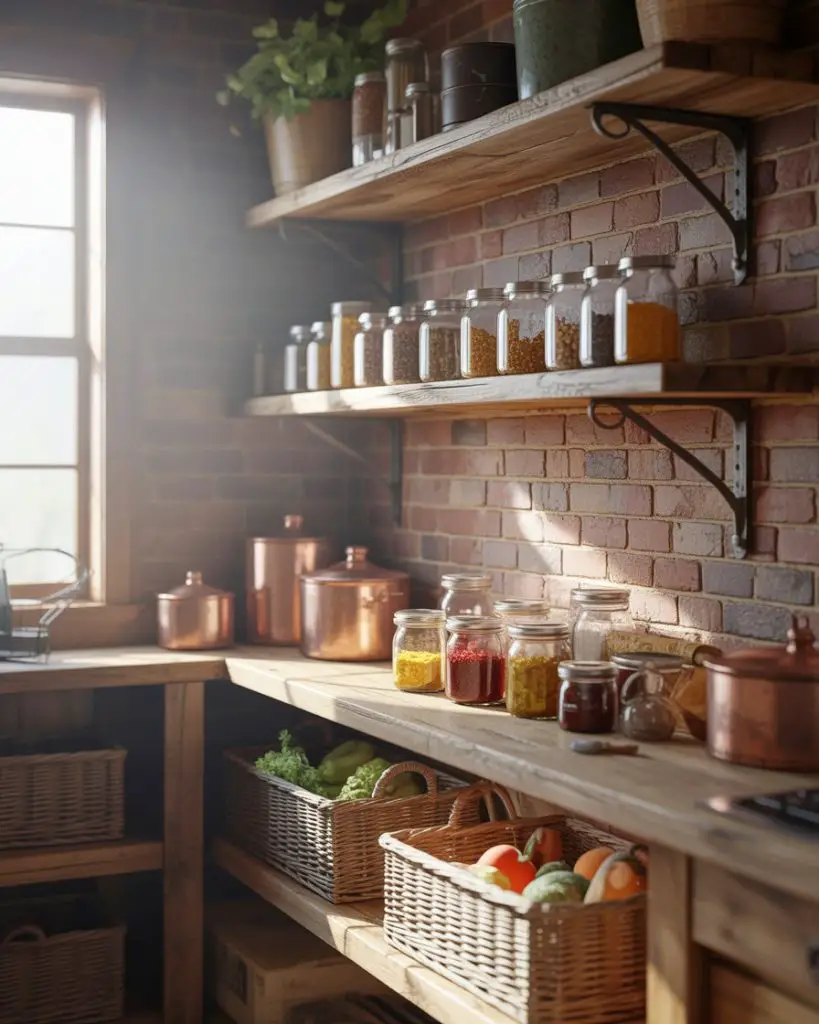
For those drawn to farmhouse aesthetics or weekend cabin vibes, a rustic cottage pantry brings warmth and authenticity to everyday routines. Reclaimed wood shelves, wrought iron brackets, and vintage glass jars create a curated, lived-in feel that’s especially popular in the Pacific Northwest and New England regions. This style embraces imperfection—uneven plank widths, visible knots, and weathered finishes all contribute to the charm.
Where this works best: Country homes, renovated barns, or any space where you want to lean into natural materials and handcrafted details. One micro anecdote—a homeowner in Vermont shared that she sourced her pantry shelves from an old barn dismantled on her property, giving each shelf a story. To avoid a cluttered look, limit your color palette to neutrals and earth tones, and use matching containers even if you’re going for a vintage aesthetic.
6. Long Narrow Hallway Pantry with Pull-Out Drawers
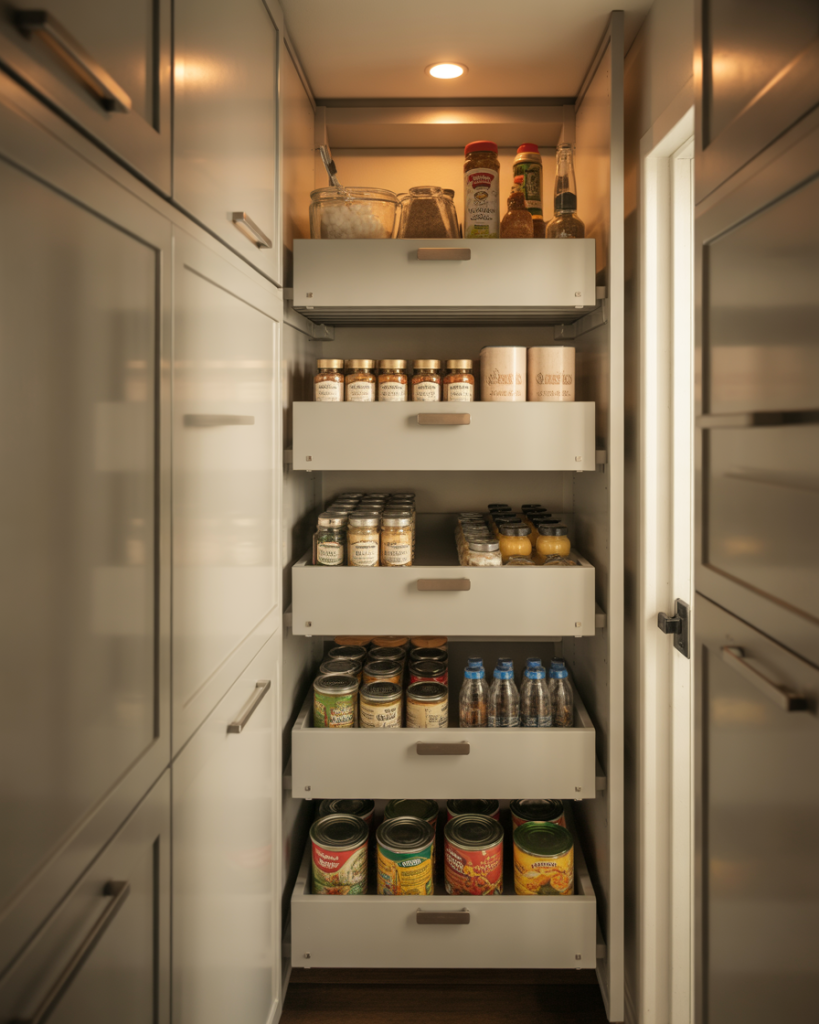
Transforming a long narrow hallway into a pantry might seem unconventional, but it’s an ingenious solution for homes with awkward floor plans or limited kitchen storage. The key is installing pull-out drawers or slide-out shelving units that bring items to you, eliminating the need to reach into dark corners. This setup works particularly well in galley-style homes, older Craftsman bungalows, or mid-century ranches where hallways connect living spaces.
Practical insight: Install drawers at varying depths—shallow ones (4-6 inches) for spices and baking supplies, deeper ones (12+ inches) for cereal boxes and pasta. A common mistake is making all drawers the same depth, which wastes space and limits functionality. Many homeowners add a narrow countertop at the end of the hallway to create a small beverage station or drop zone for grocery bags.
7. Dark and Moody Pantry with Charcoal Cabinetry
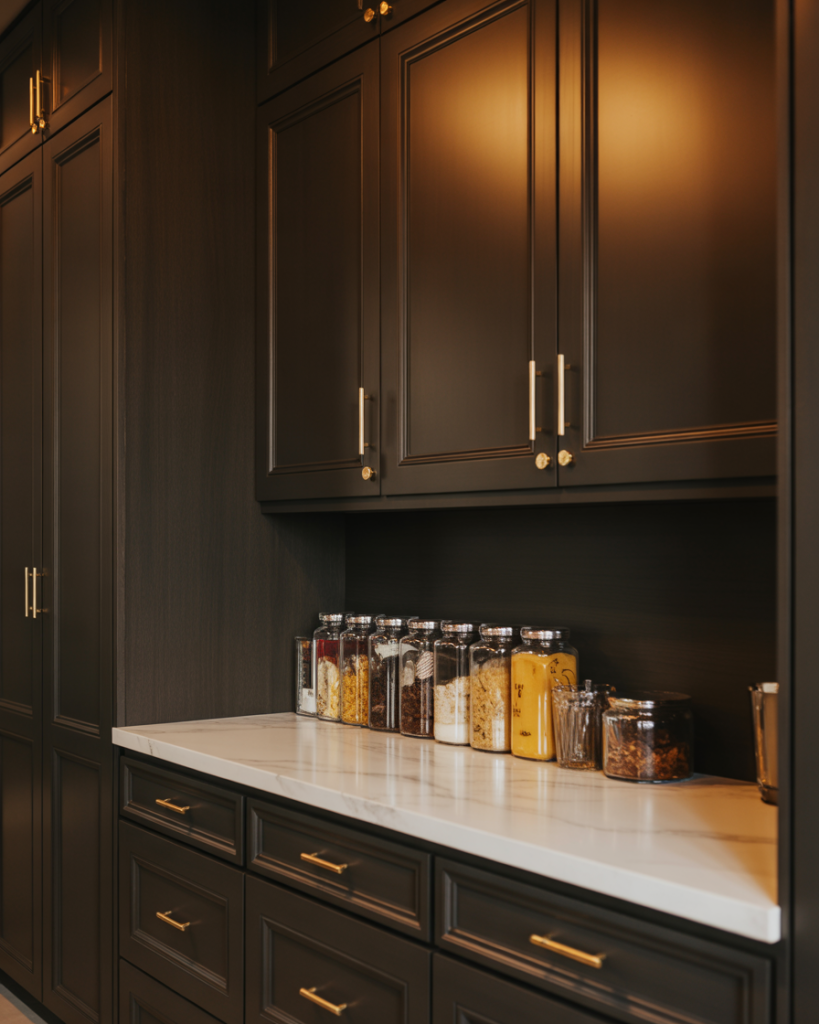
While white pantries dominate Pinterest, dark cabinetry in deep charcoal, navy, or even black creates a dramatic, sophisticated alternative that’s gaining traction among design-forward homeowners. This approach works especially well in large walk-in pantries with good natural or ambient lighting, where the richness of the color adds depth rather than making the space feel cramped. Pairing dark cabinets with brass or gold hardware and marble countertops elevates the entire aesthetic.
Budget angle: Dark paint is one of the most affordable ways to create a high-end look—a gallon of quality cabinet paint costs around $50 and can transform builder-grade pantry shelving into something that looks custom. One thing to watch: dark colors show dust and fingerprints more readily, so choose a satin or semi-gloss finish that wipes clean easily. This style particularly resonates in the South and Southwest, where homeowners embrace bold color in their interiors.

8. Coffee Bar Pantry Station for Morning Rituals
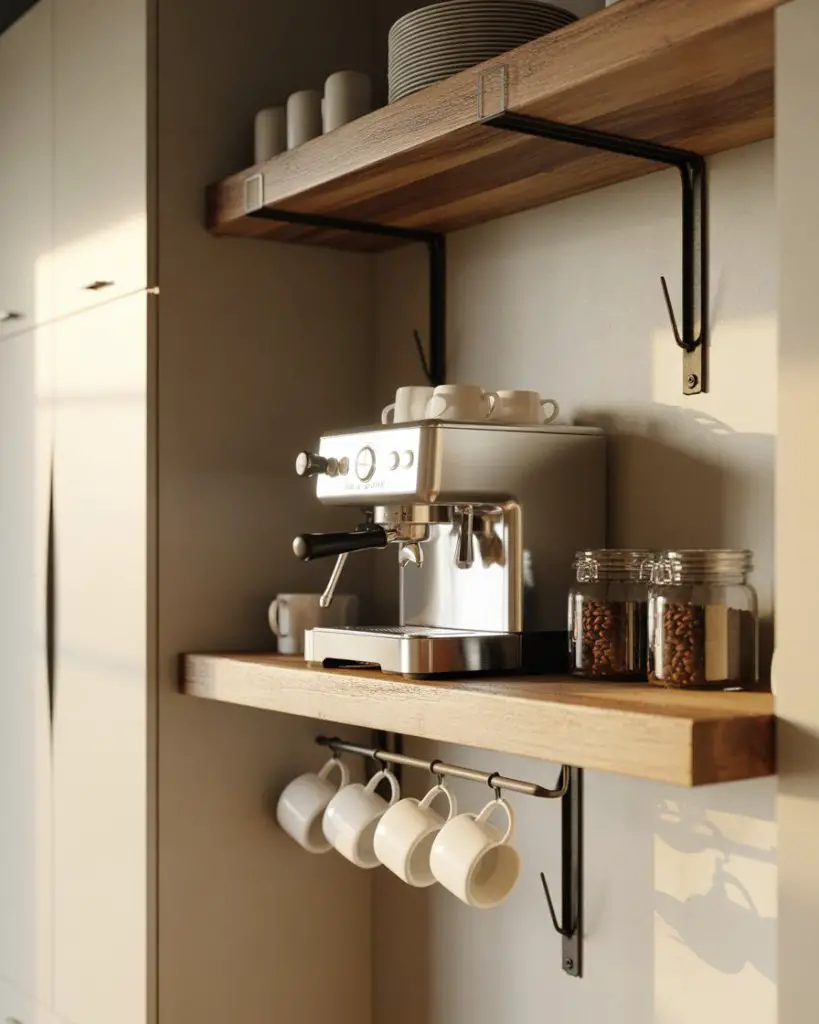
As coffee culture has embedded itself into American daily life, dedicating pantry real estate to a coffee station has become both practical and luxurious. This setup typically includes a small countertop or floating shelf strong enough to hold an espresso machine or pour-over setup, with storage above and below for mugs, beans, syrups, and filters. It’s particularly effective in homes where the main kitchen counters get crowded during busy mornings, offering a dedicated spot that keeps the ritual organized.
Real homeowner behavior: Many people start with just a coffee maker and gradually add a grinder, milk frother, and specialty storage for different bean varieties. A micro anecdote from a Seattle homeowner—she installed a small sink in her pantry coffee station, which eliminated the need to carry water pitchers back and forth and made cleanup effortless. If plumbing isn’t an option, consider a small water dispenser or electric kettle to streamline the process.
9. Dining Room Pantry Hybrid for Formal Entertaining
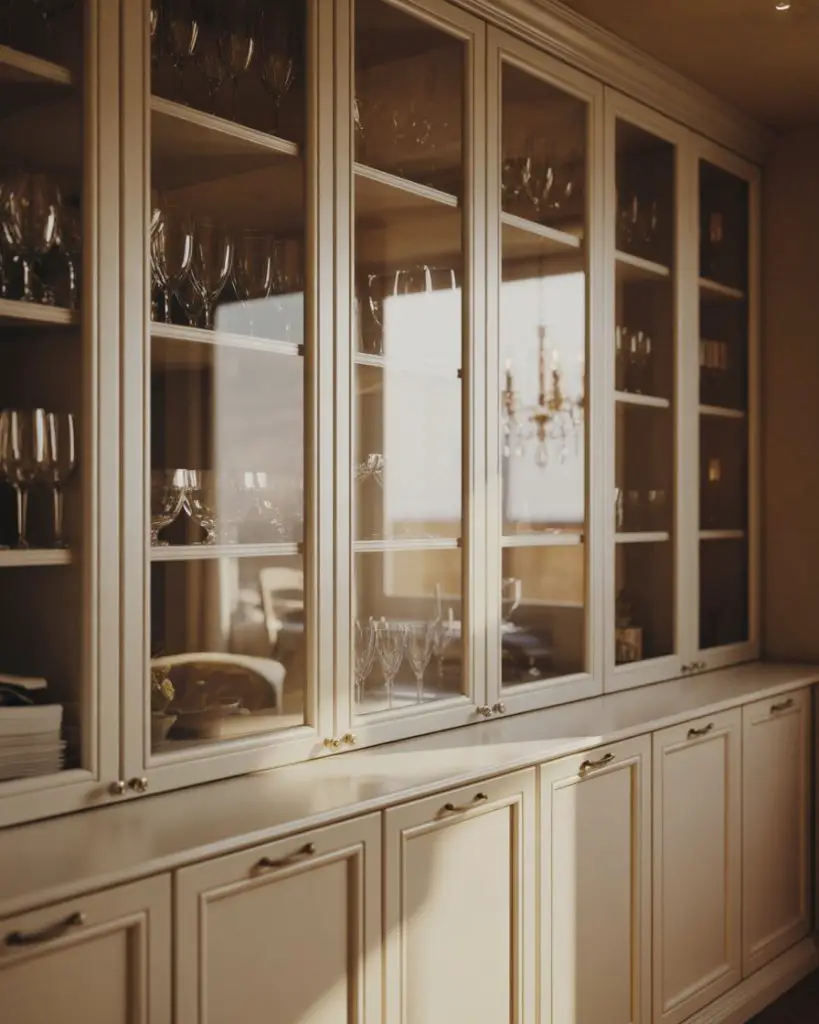
Blending a dining room with pantry storage creates a seamless entertaining experience, especially in homes where the dining area connects directly to the kitchen. Built-in cabinetry along one wall can house everything from table linens and serving platters to wine storage and glassware, eliminating trips to other parts of the house during dinner parties. This concept echoes the traditional butler’s pantry but is adapted for modern open-floor-plan living.
Where it works best: Homes with traditional layouts where the dining room feels underused except for holidays, or newer constructions where the dining area flows directly into an open kitchen. Expert-style commentary suggests keeping upper cabinets glass-fronted to display your nicest dishware, which adds visual interest and makes the space feel less utilitarian. Budget-conscious homeowners can retrofit IKEA base cabinets with custom doors and hardware to achieve a built-in look for a fraction of the cost.
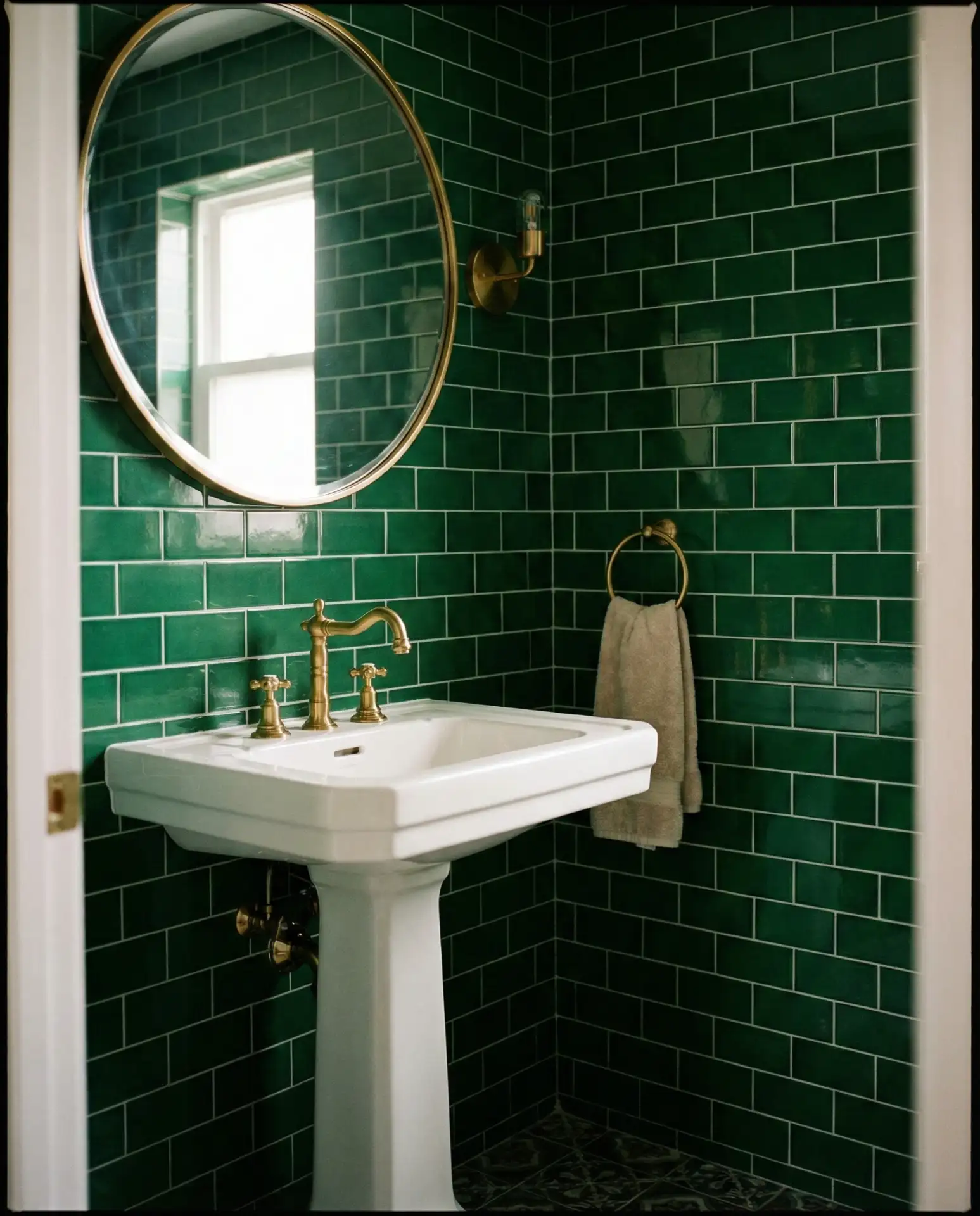
10. Green Pantry with Botanical Accent Walls
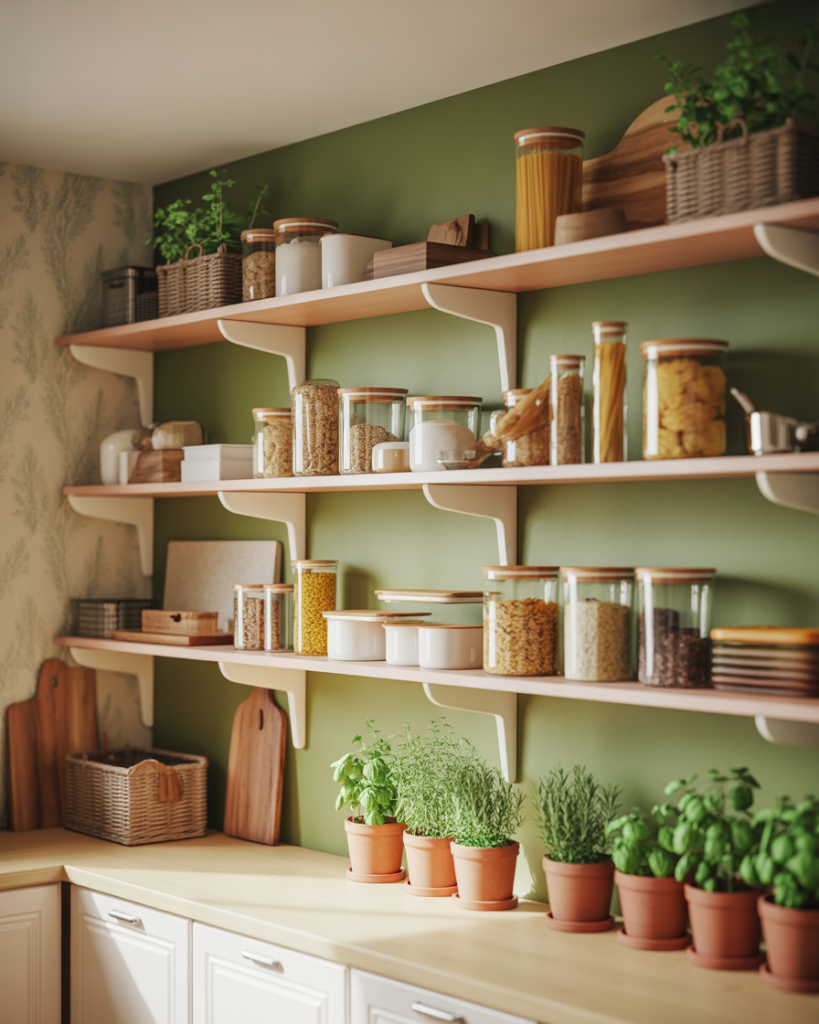
Bringing green into your pantry—whether through paint, wallpaper, or even live plants on open shelving—creates a fresh, organic atmosphere that’s surged in popularity on Pinterest. Sage, olive, and forest tones pair beautifully with natural wood shelving and brass accents, evoking a garden-to-table ethos that resonates with wellness-focused homeowners. This works particularly well in cottage-style homes or spaces where you want to inject personality into what’s often a purely functional room.
Practical insight: If you’re hesitant about committing to colored walls, start with a removable botanical wallpaper on one accent wall—it’s an easy way to test the look without permanent changes. A common mistake is overloading green pantries with too many plant varieties; stick to 2-3 hardy herbs like rosemary or basil that thrive in indirect light. This trend is especially strong in California and the Pacific Northwest, where indoor-outdoor living blurs boundaries.
11. Colorful Pantry with Rainbow Organization System
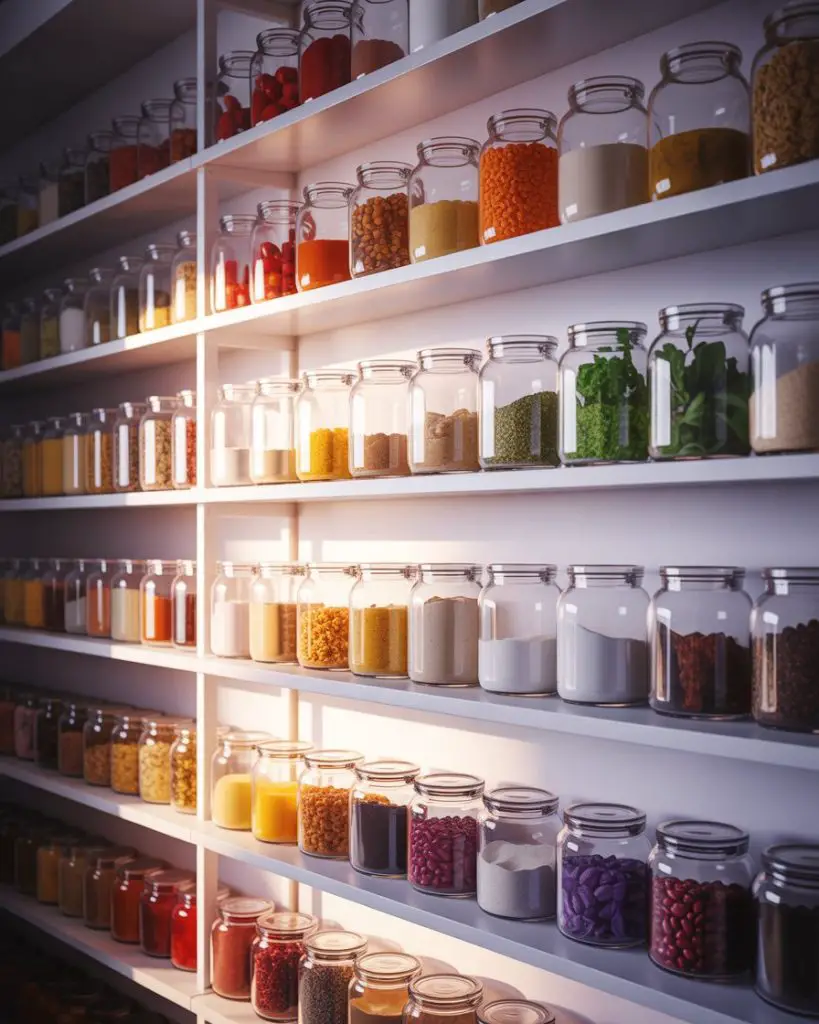
Organizing pantry items by color has become a Pinterest phenomenon, transforming everyday food storage into an Instagram-worthy display. This approach involves decanting dry goods into clear containers and arranging them in rainbow order—think red pasta sauce jars, orange lentils, yellow grains, green teas, and so on. While it requires initial effort, the visual payoff is substantial, and many families report that colorful organization makes meal planning easier because you can see everything at a glance.
Real homeowner behavior: Parents with young children find that color-coding makes it easier for kids to help put away groceries and locate snacks independently. One challenge—maintaining the system requires discipline about where new items go, which not all households can sustain long-term. Budget angle: You don’t need expensive container sets; dollar store jars and painter’s tape labels work just as well for around $30 total. This trend resonates particularly in family-friendly suburbs across the Midwest and South.
12. Unique Sliding Barn Door Pantry Entry
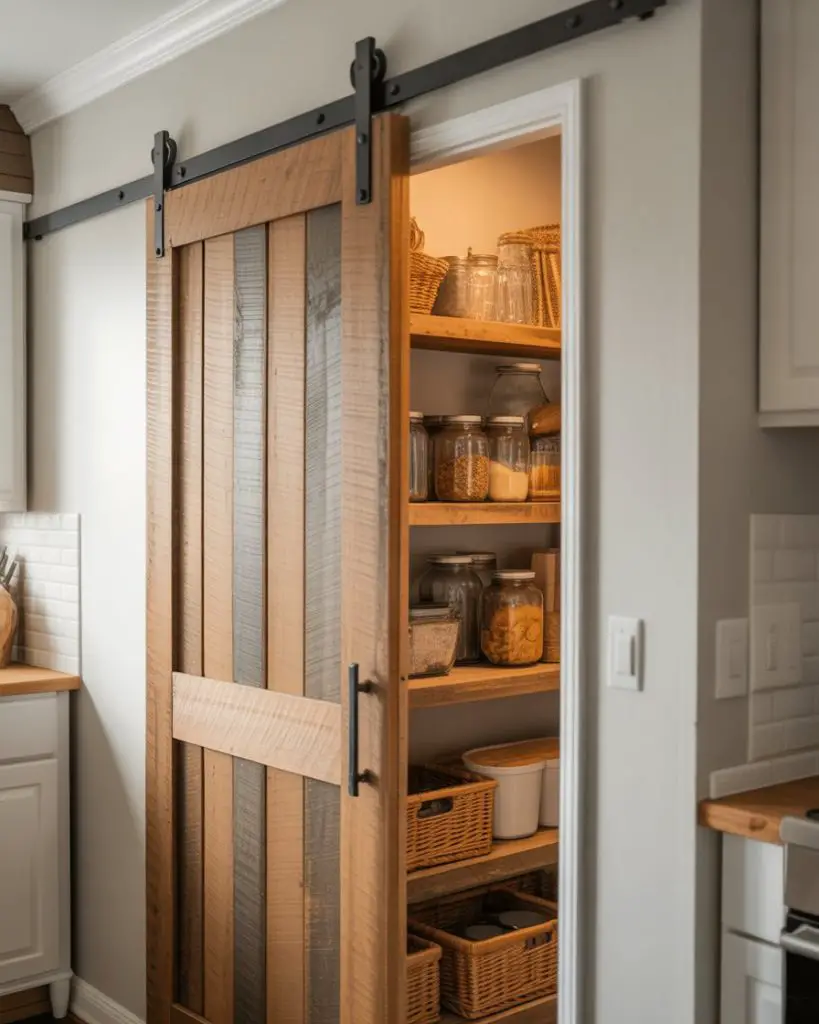
Replacing a traditional swing door with a sliding barn door adds instant architectural interest and solves spatial challenges in kitchens where a standard door would block traffic flow. This unique feature works especially well in homes with rustic or modern farmhouse aesthetics, though sleek metal hardware can adapt it to industrial or contemporary styles. The sliding mechanism also allows you to partially open the pantry while working in the kitchen, improving workflow during meal prep.
Common mistakes and how to avoid them: Many homeowners underestimate the wall space needed for a sliding door—you need a clear wall equal to the door width on one side. Also, cheaper hardware kits can be wobbly or loud; investing in quality tracks (around $150-200) ensures smooth, quiet operation for years. A micro anecdote—a homeowner in Texas mentioned that her barn door pantry became the most photographed feature in her home, proving that hardware choices can be as impactful as cabinetry.
13. Baker’s Pantry with Marble Countertop and Specialty Storage
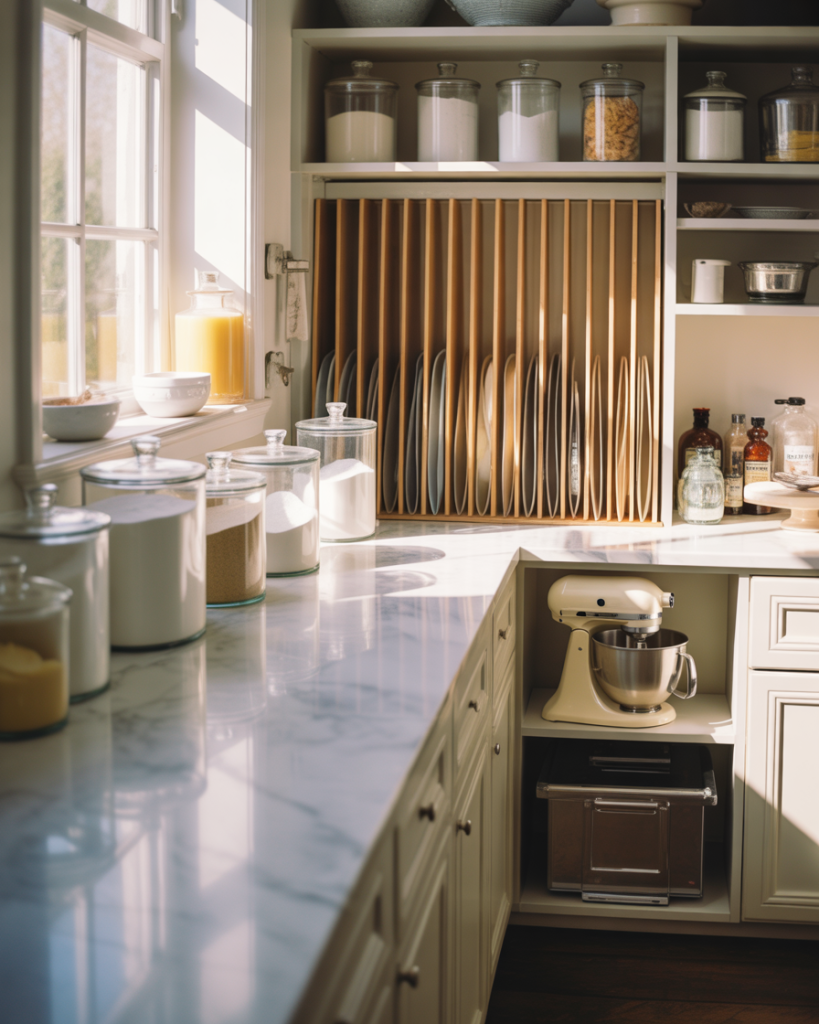
A dedicated baker’s pantry caters specifically to serious baking enthusiasts who need organized storage for flour, sugar, specialty ingredients, and equipment like stand mixers and baking sheets. The hallmark feature is a sturdy countertop—marble is ideal for rolling dough—along with pull-out shelves for heavy appliances and vertical dividers for sheet pans and cutting boards. This setup is increasingly popular in homes where baking is a regular hobby rather than an occasional activity.
Practical insight: Position the baking zone at a comfortable height for kneading—typically 2-3 inches lower than standard counter height (so around 33-34 inches). Where it works best: homes with avid bakers or those who host regular holiday cookie exchanges and need serious prep space. Many homeowners report that having a dedicated baking pantry reduces kitchen clutter significantly, as mixers and accessories stay out of sight until needed.
14. Office Pantry Conversion for Work-from-Home Snacking

As remote work has reshaped American homes, converting part of a home office into a mini pantry stocked with snacks, coffee, and beverages has become a practical trend. This might be as simple as a bookshelf repurposed for food storage or as elaborate as custom cabinetry with a mini-fridge and coffee maker. The goal is eliminating frequent kitchen trips during deep work sessions, creating a self-sufficient workspace that supports productivity.
Real homeowner behavior: People working from home often start with a drawer of snacks and gradually expand to a full wall system as they realize how much time it saves. A micro anecdote—a software engineer in Austin built out a 4-foot pantry section in her office and estimates it saves her 30+ minutes daily in kitchen trips. Budget angle: repurposing existing furniture (like a bookcase or credenza) costs nothing beyond containers and organization tools, typically under $50 total.
15. IKEA Butler’s Pantry Using Modular Sektion Cabinets
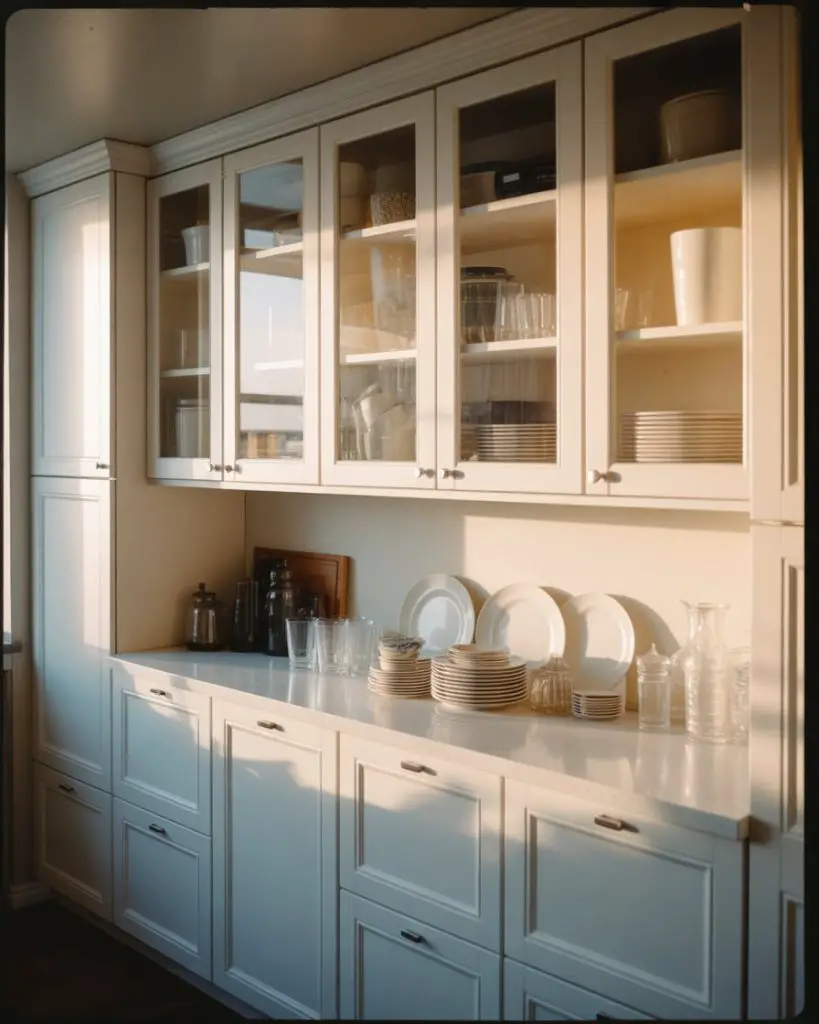
Combining IKEA affordability with butler’s pantry elegance is entirely achievable using their Sektion cabinet system, which can be customized with upgraded fronts, handles, and countertops. This approach appeals to homeowners who want the functionality of a butler’s pantry without the $15,000+ price tag of custom cabinetry. Mixing cabinet depths (12-inch uppers, 24-inch lowers) creates visual interest, while adding glass-front doors to a few uppers introduces the classic butler’s pantry display element.
Expert-style commentary: Interior designers often recommend upgrading IKEA cabinets with semi-custom door fronts from companies like Semihandmade or Reform, which instantly elevates the look while keeping costs around $200-300 per cabinet versus $500+ for full custom. A common mistake is skipping the toe-kick detail—adding a decorative base molding makes IKEA cabinets look significantly more built-in and professional. This strategy is particularly popular in starter homes and among budget-conscious millennials across urban areas.
16. Vintage Apothecary-Style Pantry with Labeled Jars

Drawing inspiration from old-fashioned general stores and apothecaries, a vintage-themed pantry features glass jars with handwritten labels, wood crates for produce, and antique scales or signage as decorative accents. This aesthetic pairs beautifully with rustic shelving and works especially well for homeowners who frequent antique markets or estate sales. The charm lies in the mix-and-match approach—no two containers need to match, creating an eclectic, collected-over-time feel.
Where this works best: Heritage homes, renovated farmhouses, or any space where you’re leaning into historical character rather than fighting it. A practical insight—vintage glass containers often have non-standard lids, so stock up on replacement gaskets if you plan to use them for actual storage rather than just display. Real homeowner behavior shows that many people start with modern containers and gradually swap in vintage finds as they discover them at flea markets.
17. Toca Boca-Inspired Kids’ Snack Pantry Zone
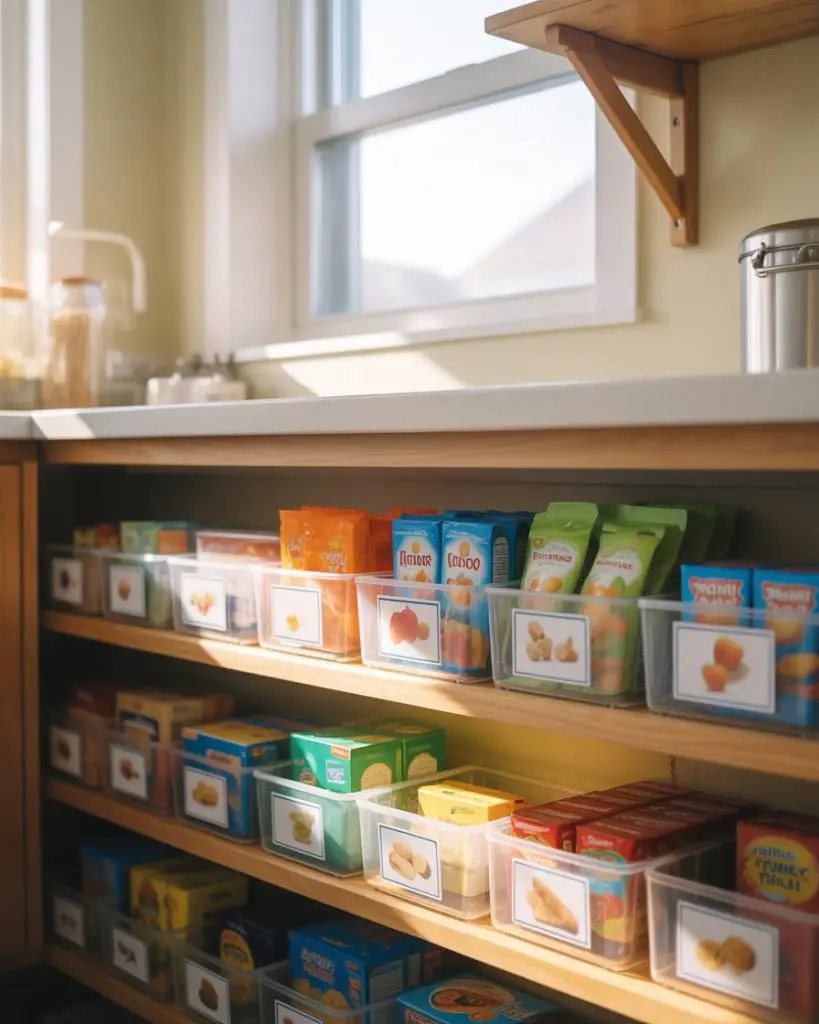
Taking cues from the popular Toca Boca digital games that children love, creating a dedicated kids’ snack zone within your pantry using bright colors, accessible lower shelves, and playful organization encourages independence and reduces constant snack requests. This approach typically involves clear bins at kid height (around 24-30 inches off the floor) labeled with pictures for pre-readers and organizing snacks into daily portions to teach healthy eating habits.
Practical insight: Use bins with handles so children can carry their selections to the table without spilling. A common mistake is overstocking the kid zone with too many choices, which leads to decision paralysis and food waste; instead, rotate 3-5 options weekly. American lifestyle context: This setup is especially popular among working parents who appreciate that children can self-serve breakfast or after-school snacks, reducing interruptions during conference calls or homework time.
18. Bloxburg-Inspired Minimalist White Pantry
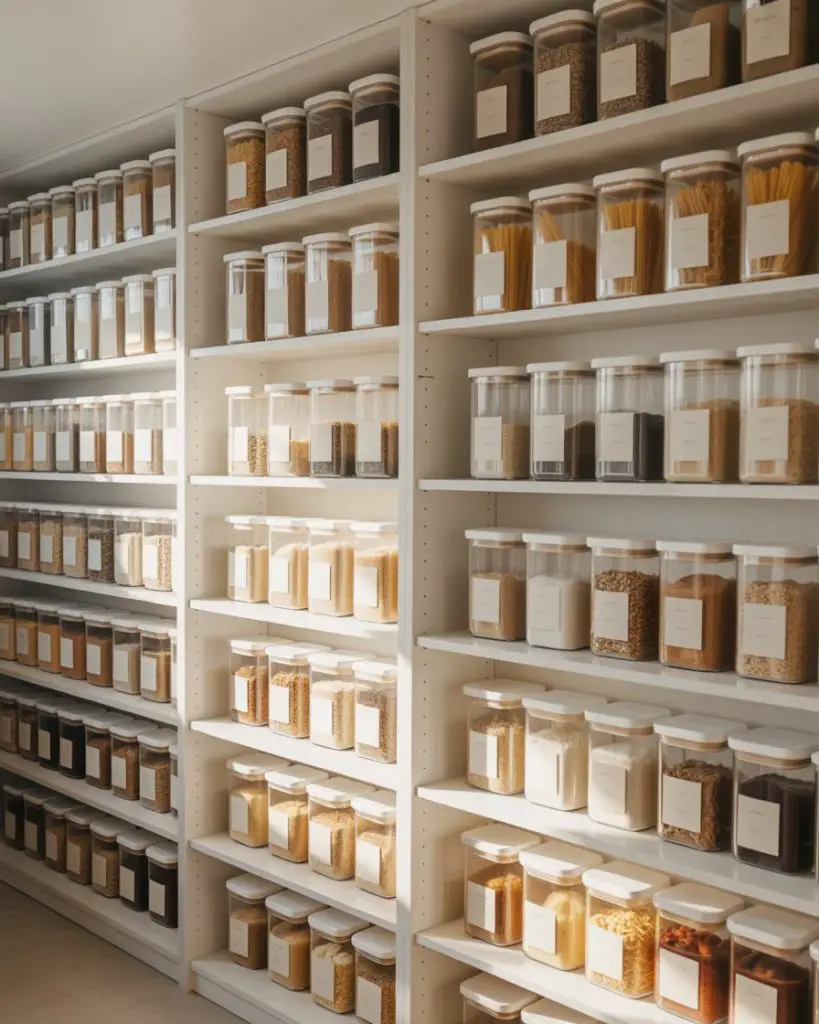
The clean, geometric aesthetics of Bloxburg (a popular Roblox building game) have influenced real-world pantry design, particularly among younger homeowners who gravitate toward minimalist white spaces with perfect symmetry and labeled containers. This style emphasizes uniformity—identical clear containers, alphabetically organized spices, and nothing on display that isn’t intentionally curated. It’s the Pinterest aesthetic at its most refined, requiring significant upfront organization but delivering maximum visual impact.
Common mistakes and how to avoid them: The biggest challenge is maintaining this level of organization long-term—it requires buying only products that fit your container system and decanting everything immediately. Budget angle: While the Container Store’s systems can cost $300+, you can achieve a similar look with dollar store acrylic bins and a label maker for around $60. This trend particularly resonates with Gen Z and millennial homeowners in tech hubs like Seattle and Austin who value clean, distraction-free spaces.
19. Tiny Spice Drawer System for Narrow Spaces

When you’re working with a genuinely tiny kitchen, dedicating a narrow drawer (even just 3-4 inches wide) to vertically stored spices can be transformative. Using tiered inserts or custom-cut foam allows you to see every label at a glance, eliminating the jumbled mess of traditional spice cabinets. This solution works particularly well in galley kitchens, studio apartments, or any narrow space where traditional pantry shelving isn’t feasible.
A micro anecdote from a New York City apartment dweller—she built a custom spice drawer using a bamboo utensil organizer turned sideways, holding 40+ spices in a 4-inch drawer that previously went unused. Practical insight: Decant spices into uniform bottles and label the tops (not sides) for easy scanning when the drawer is open. This system costs around $25-40 to implement and can be installed in under an hour, making it one of the highest-impact, lowest-effort pantry improvements.
20. Large Pantry Closet with Seasonal Storage Rotation

In homes blessed with a large pantry closet, implementing a seasonal rotation system keeps everyday items accessible while storing holiday baking supplies, entertaining platters, and seasonal ingredients on higher shelves. This might mean moving hot chocolate and baking supplies to eye level in winter while summer picnic gear moves to the back, or rotating canning supplies forward during harvest season. The practice mirrors the clothing concept of seasonal wardrobe rotation but applied to food and kitchen items.
Where it works best: Families who cook seasonally, serious entertainers with holiday-specific serving ware, or anyone who buys in bulk during harvest season for canning and preserving. Expert-style commentary: Use transparent bins for seasonal storage so you can identify contents without labeling every side, and photograph your bin contents with your phone—it’s easier than maintaining a detailed inventory list. A practical insight from a Minnesota homeowner: she color-codes her seasonal bins (red for Christmas, orange for fall), making rotation visual and nearly foolproof.
21. Hallway Linen Closet Converted to Dry Goods Pantry
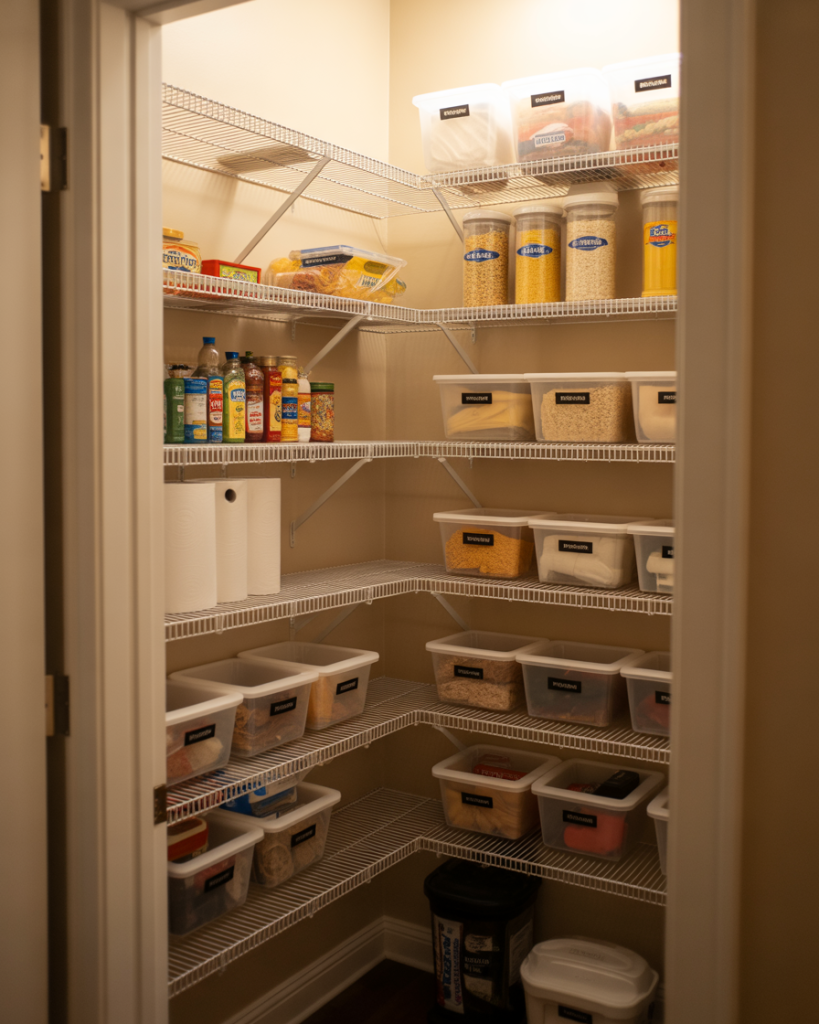
Repurposing an underutilized hallway linen closet into a dry goods pantry can add 15-20 cubic feet of storage, especially valuable in homes where the kitchen pantry is already maxed out. This works best for shelf-stable items that don’t require refrigeration—think bulk paper products, extra pasta and grains, or seasonal items like holiday baking supplies. Adding adjustable shelving and pull-out baskets transforms a basic closet into a functional extension of your kitchen.
Real homeowner behavior: Many families discover they’re storing linens they never use (guest towels, old sheet sets) and realize that space could better serve daily needs. A budget angle: closet conversion typically costs $100-200 for wire shelving systems and containers, far less than trying to expand kitchen cabinetry. Common mistake: not considering humidity—hallway closets near bathrooms may not be ideal for items like flour or sugar that can absorb moisture.
22. Unique Pegboard Pantry Wall for Flexible Storage
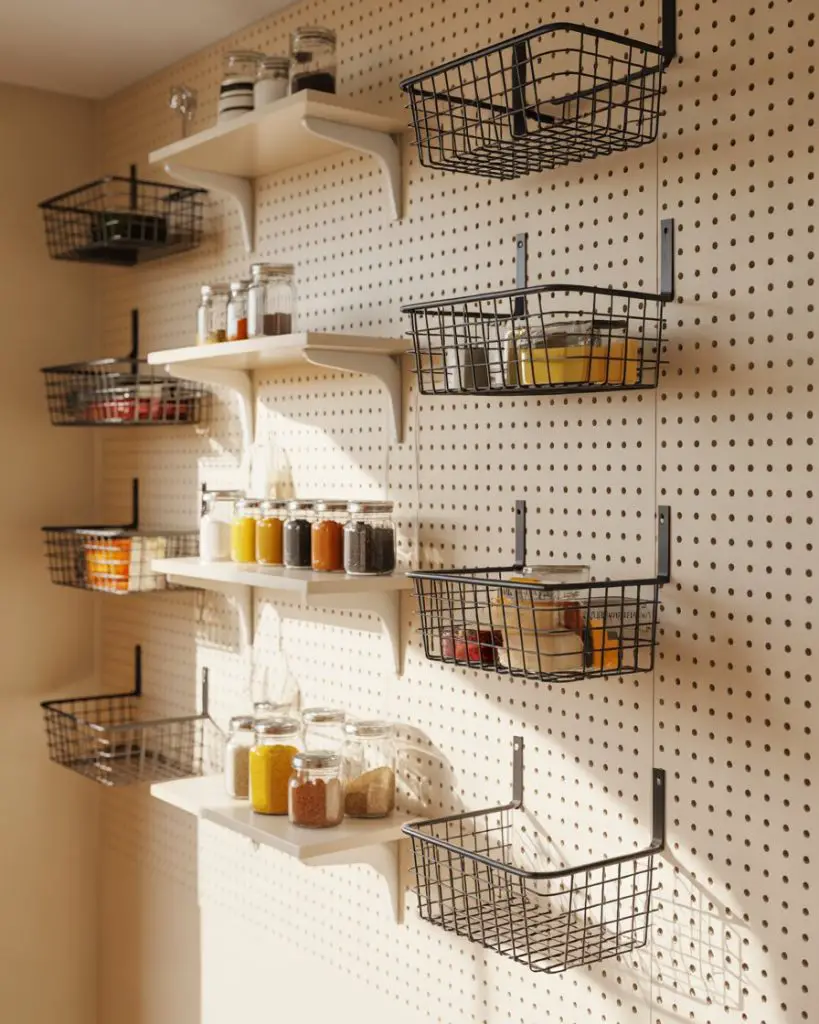
Installing a unique pegboard wall system in your pantry creates infinitely customizable storage that can evolve as your needs change—hooks for baskets, shelves for jars, and clips for bags of chips. This approach particularly appeals to renters or those who like to frequently reorganize, as pegboard doesn’t require drilling new holes when you want to adjust shelf heights. The industrial-meets-functional aesthetic works well in modern, office-inspired kitchens or spaces where you want visible, accessible storage.
Practical insight: Paint pegboard to match your walls for a seamless look, or embrace the utilitarian vibe with natural wood or metallic finishes. Where it works best: small pantries where every inch of wall space matters, or for households whose storage needs fluctuate (like those who meal prep in batches some weeks and eat out others). A micro anecdote—a homeowner in Portland installed pegboard in her pantry’s back-of-door space, adding an extra 4 square feet of storage for lightweight items like chip clips, measuring spoons, and shopping bags.
23. Double-Door Pantry with Symmetrical Design
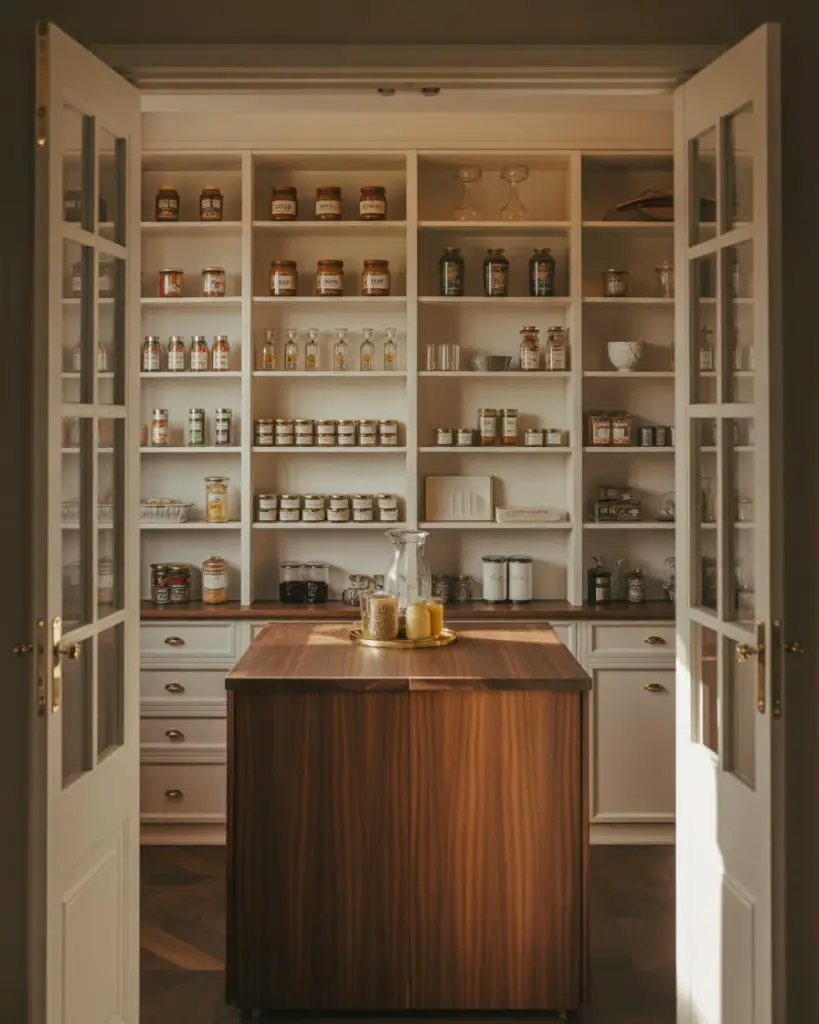
Installing double doors on a pantry creates a grand entrance that elevates what might otherwise be a utilitarian space, especially effective in homes with traditional or transitional architecture. This layout works best when the pantry is at least 6 feet wide, allowing both doors to open fully without blocking access to shelving. Symmetrical organization inside—matching shelves on both sides, a centered island or counter—amplifies the elegant effect and makes the space feel intentional rather than cobbled together.
Common mistakes and how to avoid them: Poorly planned door swings can block access or create traffic flow issues—ensure you have adequate clearance and consider pocket doors if space is tight. Budget-conscious option: refinish existing double doors with fresh paint and new hardware for around $150 rather than replacing them entirely. American lifestyle context: Double-door pantries particularly resonate in Southern and Midwestern homes where entertaining is central to family life, offering a dramatic reveal during parties when guests peek into your impressive organization system.
Conclusion
These pantry ideas offer something for every home, budget, and style—from maximizing awkward spaces to creating Instagram-worthy organization systems that actually function in daily life. Whether you’re drawn to the vintage charm of apothecary jars or the sleek efficiency of IKEA’s modular systems, the best pantry is one that reflects how you really cook, eat, and live. What pantry transformation are you most excited to try? Share your favorites or your own clever pantry solutions in the comments below.