Pantry organization is having a major moment in 2026, and it’s not hard to see why. American homeowners are craving systems that actually work for how they live—whether that’s a sprawling walk-in setup or a narrow closet tucked beside the fridge. Pinterest users are flooding the platform with searches for everything from aesthetic baskets to realistic DIY hacks that don’t require a complete renovation. This guide brings together fresh ideas that blend form and function, proving that a well-organized pantry can transform your kitchen into a space that feels calm, intentional, and genuinely helpful every single day.
1. Walk-In Pantry with Open Shelving and Wire Baskets
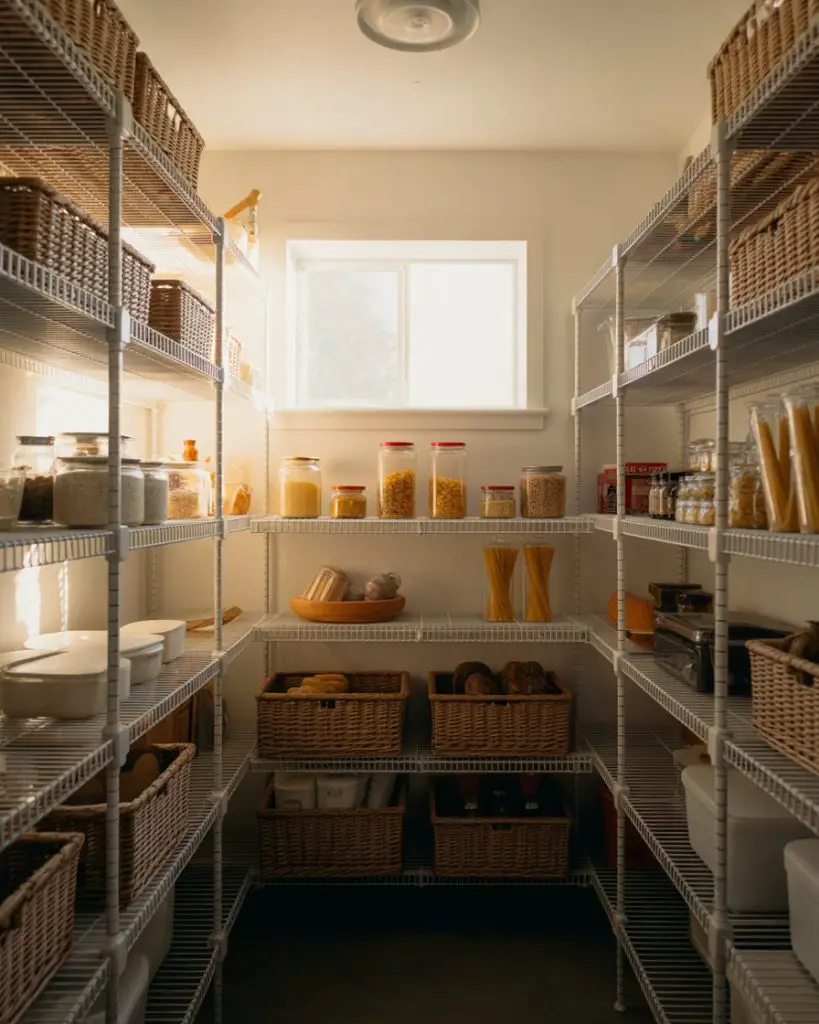
A walk-in pantry designed with open shelving creates a boutique-style experience where everything is visible at a glance. Use wire shelf units along the back wall and introduce baskets in varying sizes to corral snacks, baking supplies, and overflow items. The transparency of wire allows air to circulate around dry goods, and the open design prevents the “out of sight, out of mind” problem that plagues closed cabinets. This approach works especially well in homes where multiple family members need quick access without rummaging. 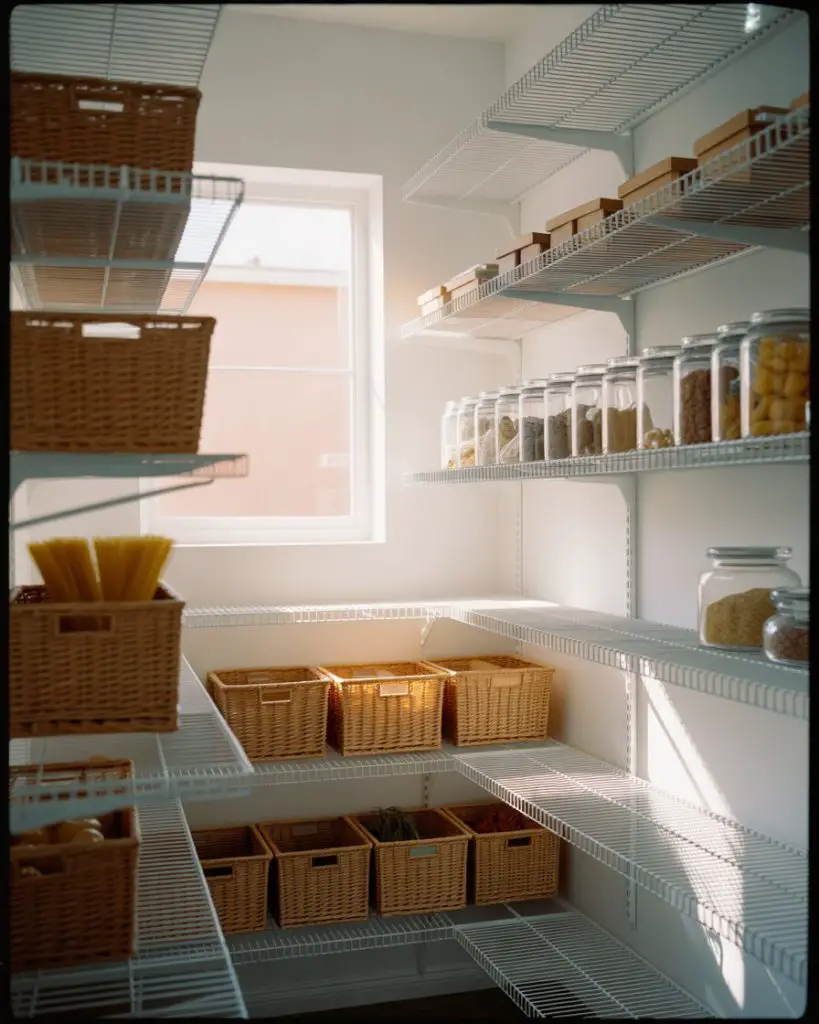
One common mistake is overloading wire shelves with mismatched containers, which creates visual chaos. Instead, commit to a single basket style—whether woven seagrass or metal mesh—and use uniform glass jars for staples like flour and sugar. This consistency instantly elevates the space and makes it easier to maintain. Label each basket with a simple tag so everyone in the household knows where things belong, turning organization into a shared responsibility rather than a solo chore.
2. Kmart-Inspired Budget Pantry with Clear Bins
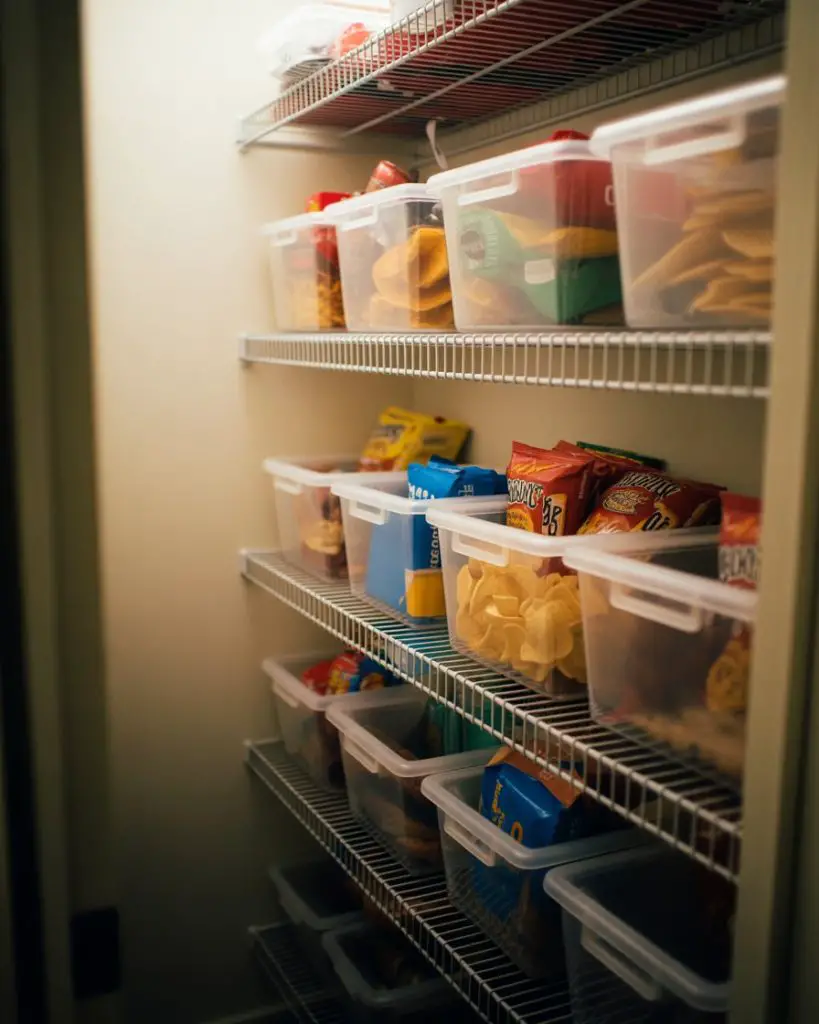
Drawing inspiration from Kmart organizing solutions, this idea centers on affordable clear bins that maximize visibility and function. The beauty of this system is its accessibility—most items can be found at big-box retailers, making it a realistic option for families working within tight budgets. Stack bins vertically to use every inch of shelf space, and designate each container for a specific category: breakfast items, snacks, baking essentials. The uniform shape creates a clean grid that’s both practical and visually satisfying. 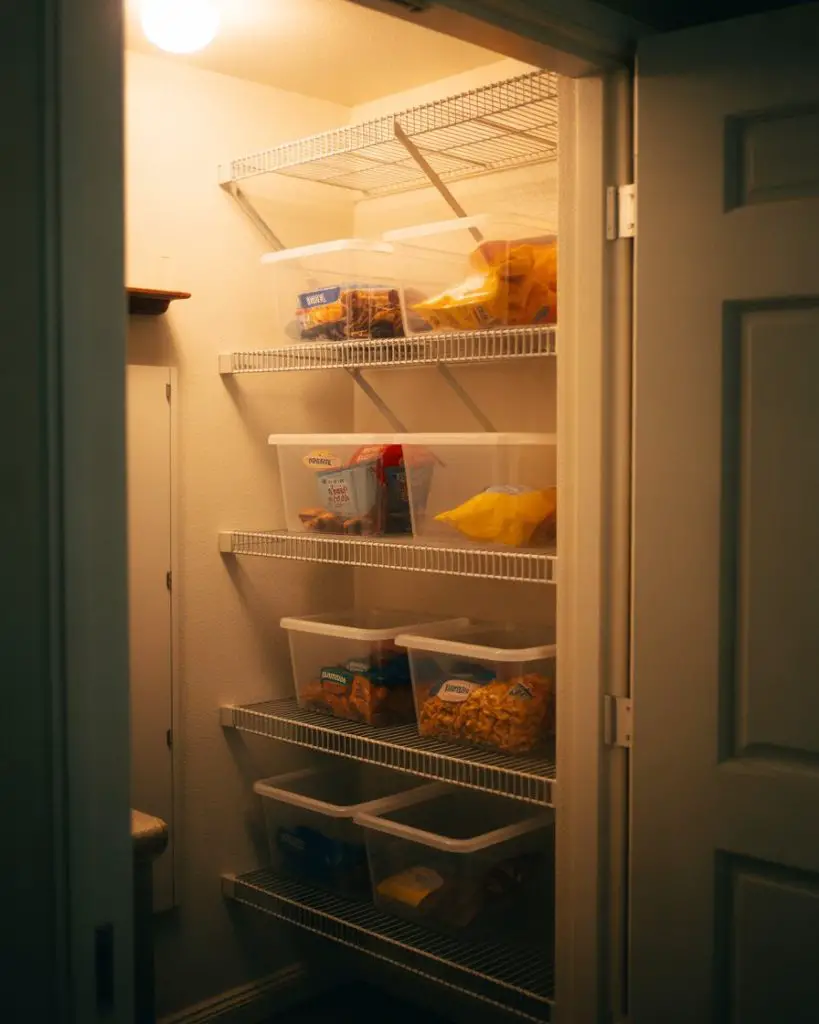
This system shines in small kitchens where every square foot counts. Homeowners in apartments or starter homes often find that clear bins prevent duplicate purchases because they can see exactly what’s running low. The initial investment is minimal—under fifty dollars for a full pantry setup—but the payoff in reduced food waste and stress is significant. It’s the kind of solution that proves smart organization doesn’t require a designer budget.
3. Aesthetic Pantry Closet with Woven Baskets and Labels
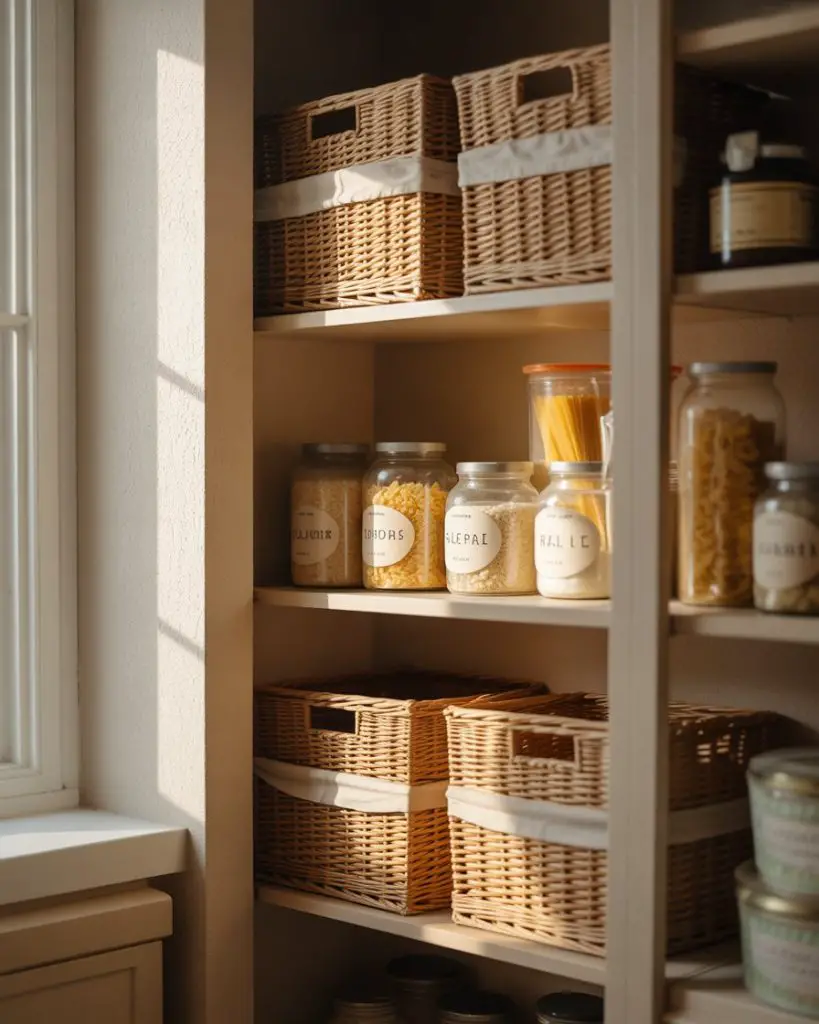
An aesthetic pantry doesn’t sacrifice function for beauty—it marries both through intentional choices. Line your closet shelves with woven baskets in natural tones like beige, cream, and soft gray, then add handwritten or printed labels in a consistent font. This creates a cohesive look that feels both curated and livable. Transfer dry goods into matching glass canisters and arrange them by height, placing taller items toward the back and shorter jars up front for easy access. 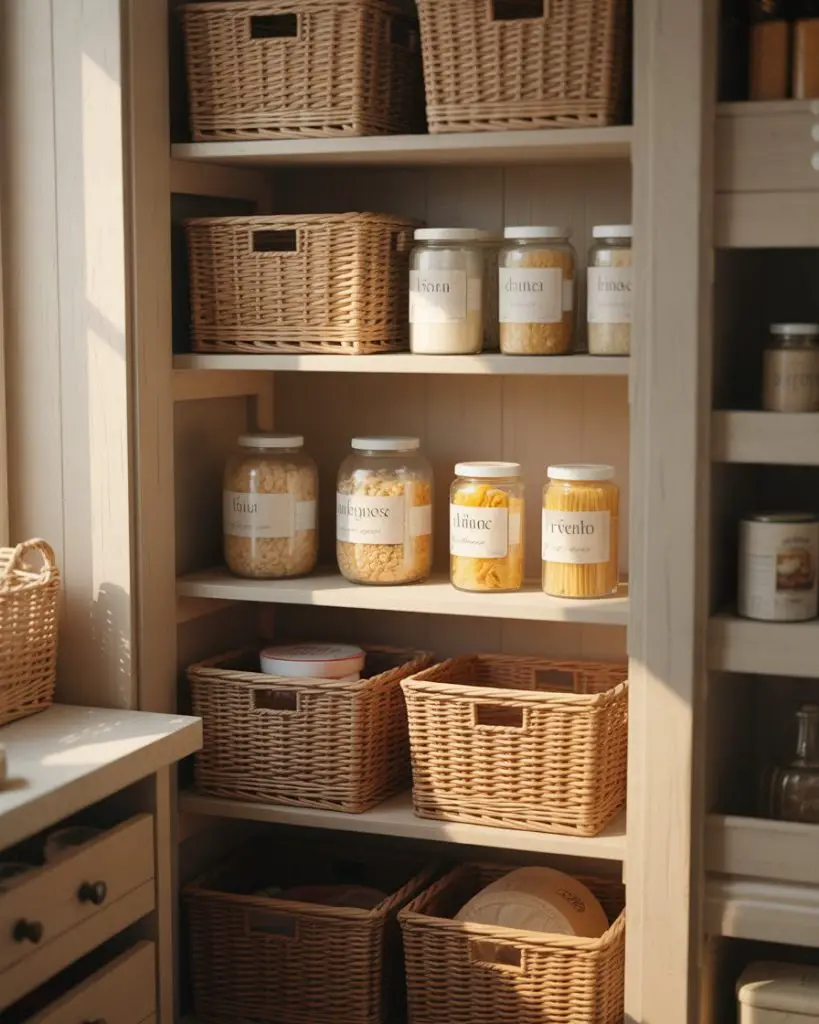
Interior designers often recommend this approach for clients who want their home to feel magazine-ready without constant upkeep. The key is choosing baskets with handles for easy removal—you’re more likely to pull them out, use what’s inside, and return them if the process feels effortless. This matters especially in busy households where organization systems need to survive real life, not just look good in a staged photo. A well-planned aesthetic pantry becomes a space you actually want to open.
4. Pull-Out Shelving System for Deep Cabinets
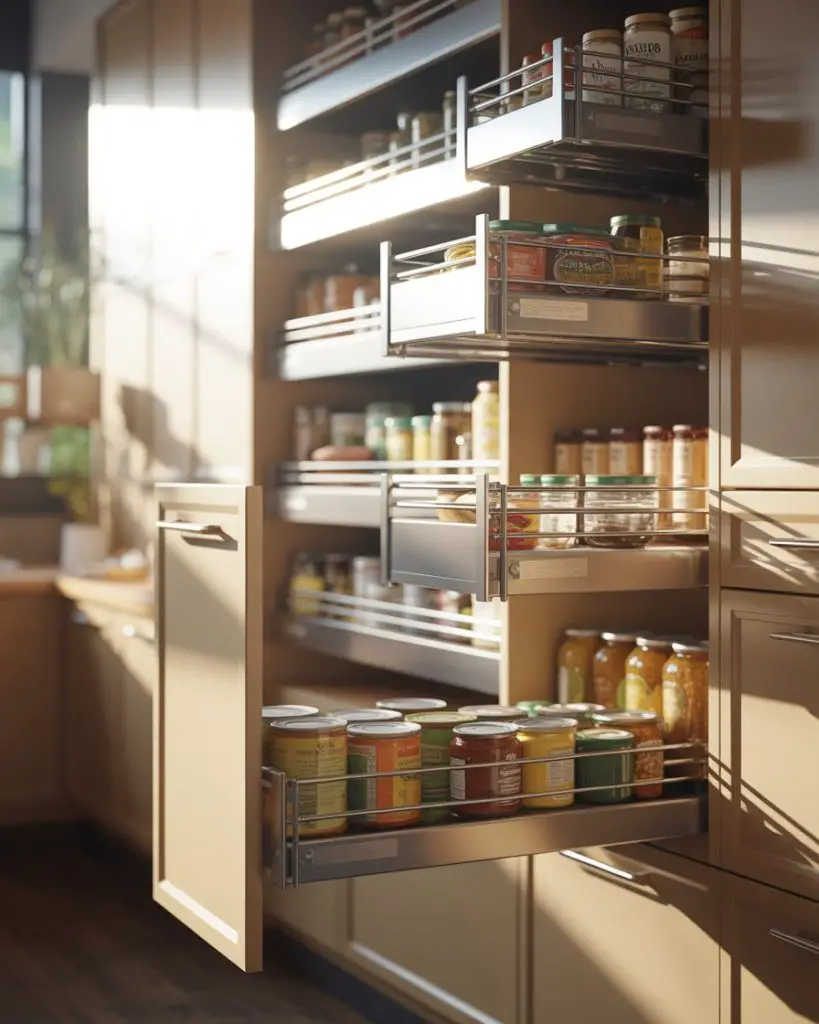
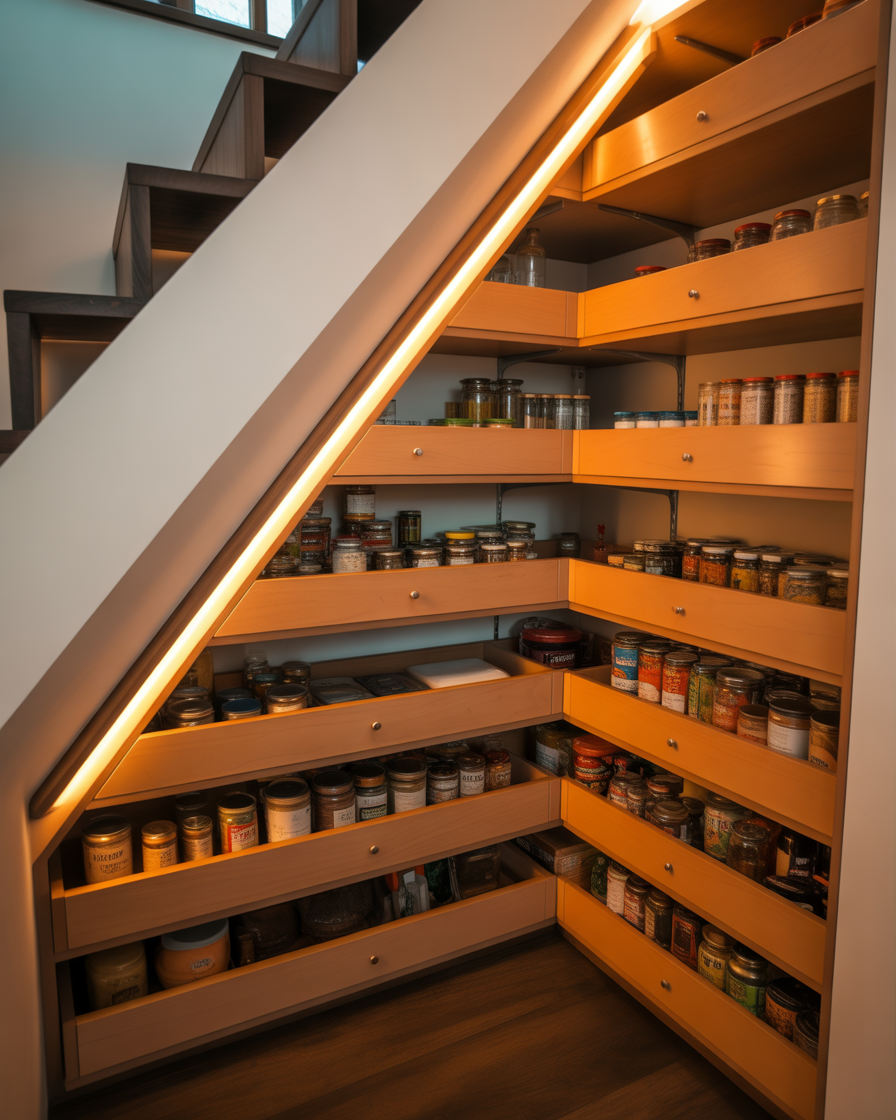
Deep cabinets can become black holes where food gets forgotten and expires, but pull out shelving solves this problem with engineering. Install gliding shelves that extend fully, bringing the back contents forward with a simple tug. This works particularly well for large pantries or butler’s pantries where depth exceeds arm’s reach. You’ll rediscover items you didn’t know you had and stop buying duplicates of spices or canned goods already buried in the back. 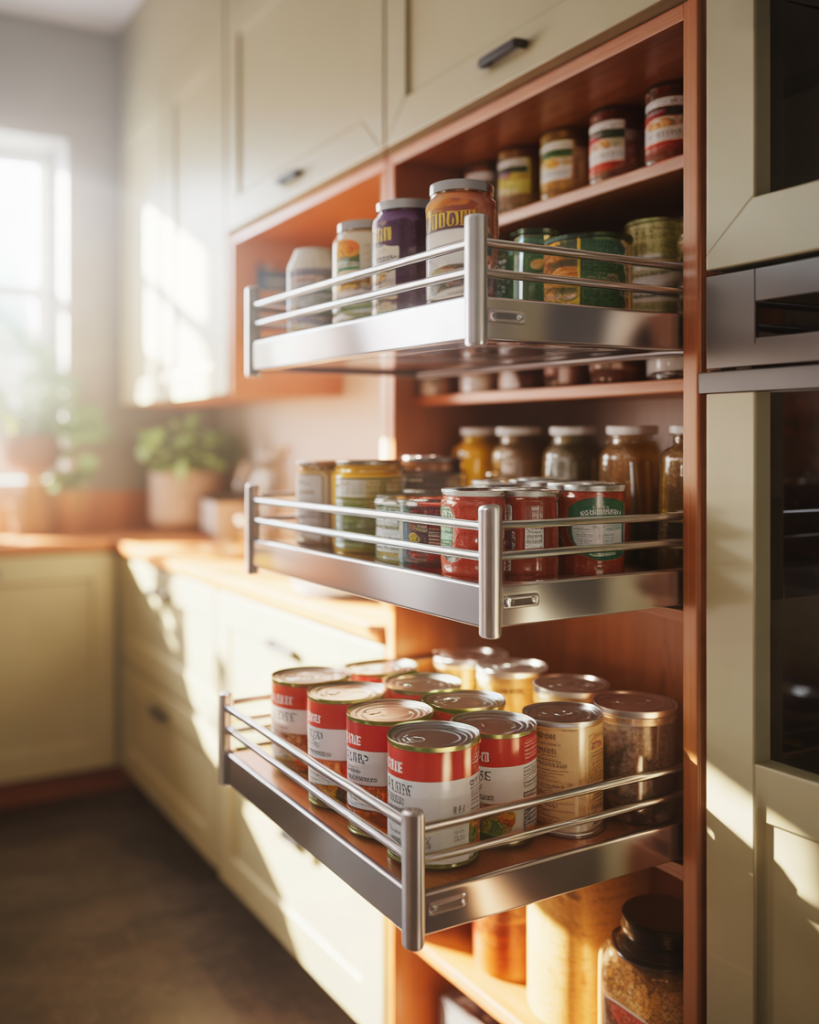
Many American homeowners in older houses deal with cabinets built before modern storage standards, making pull-out systems a practical retrofit. The installation takes an afternoon and basic tools, yet the daily convenience is transformative. One homeowner in a 1970s ranch reported finding three jars of capers she’d forgotten about—now everything is visible and nothing goes to waste. It’s the kind of upgrade that pays for itself in avoided grocery spending.
5. Dollar Tree Pantry Organization on a Shoestring Budget
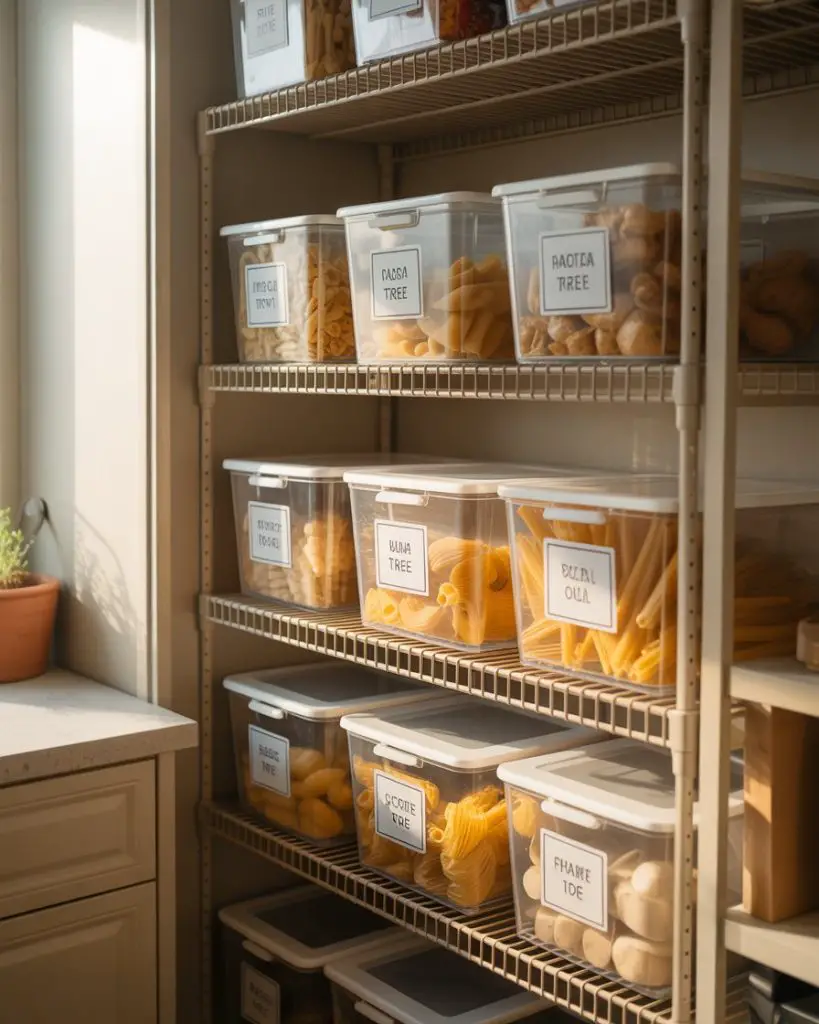
You don’t need expensive container stores when Dollar Tree offers surprising solutions for pantry chaos. Stock up on acrylic bins, plastic baskets, and even small rectangular containers perfect for corralling snack packs or sauce packets. The trick is buying multiples of the same item so your pantry looks intentional rather than cobbled together. Group similar sizes on each shelf—all small bins on one level, medium on another—to create visual rhythm despite the budget price point. 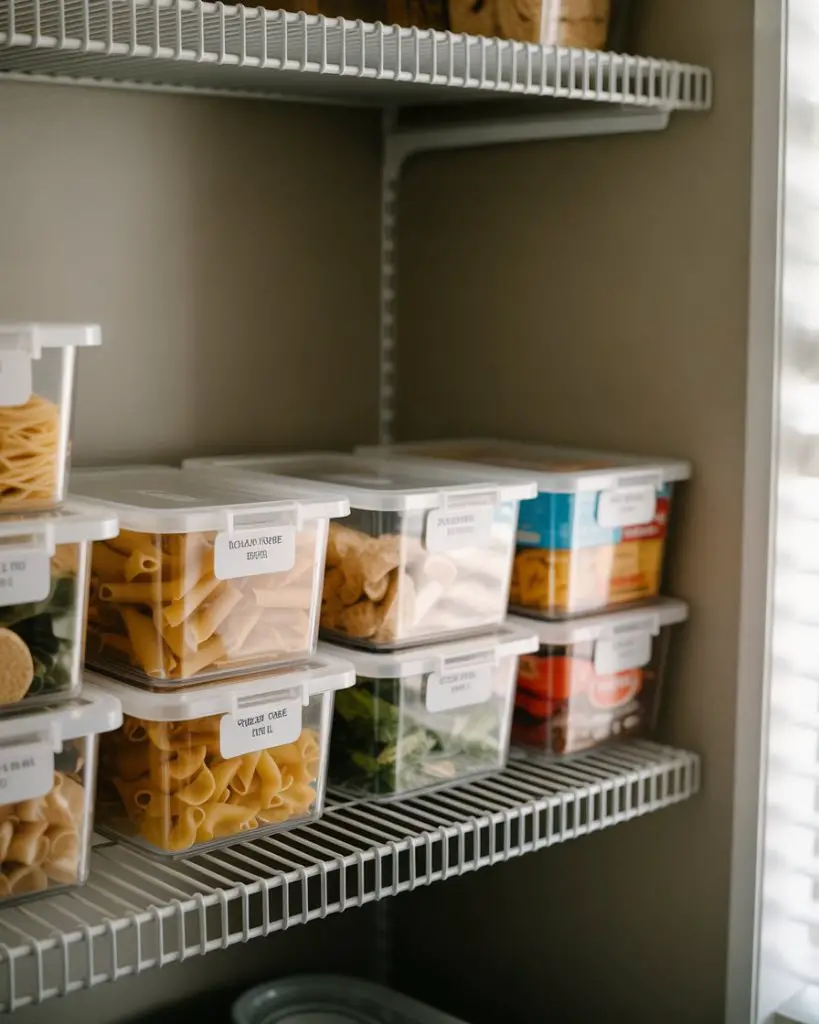
This approach works best in rental apartments or first homes where permanent built-ins aren’t an option. The containers are lightweight and stackable, making them easy to rearrange as your needs change. If you move, the whole system packs up without guilt about leaving expensive organizers behind. Some renters have organized entire pantries for under twenty dollars, proving that a tight budget doesn’t mean living with disorder—it just means shopping smarter and embracing simplicity.
6. Small Space Pantry with Tiered Risers
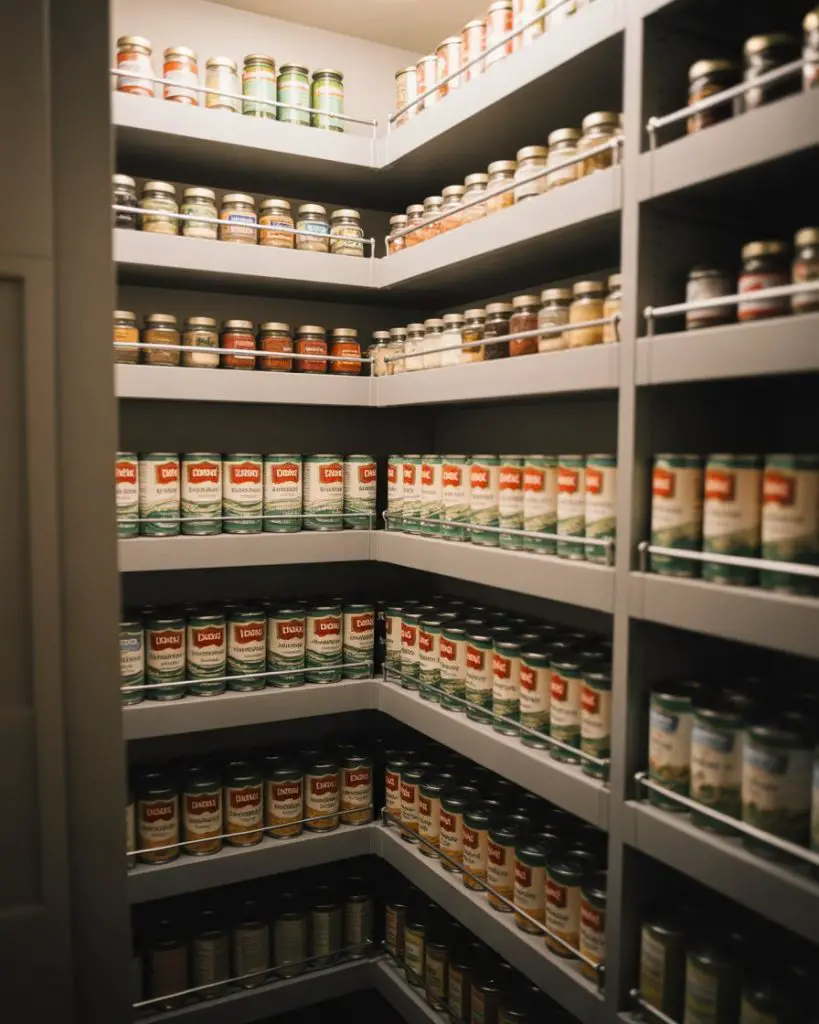
When your small space pantry barely fits a week’s groceries, tiered risers become essential real estate. These simple platforms create vertical levels within each shelf, allowing you to see every can, jar, and box without moving items around. Place risers toward the back and shorter items up front—suddenly, a cramped closet holds twice what it did before. This method is especially helpful in narrow pantries where side-to-side space is limited but vertical height goes unused. 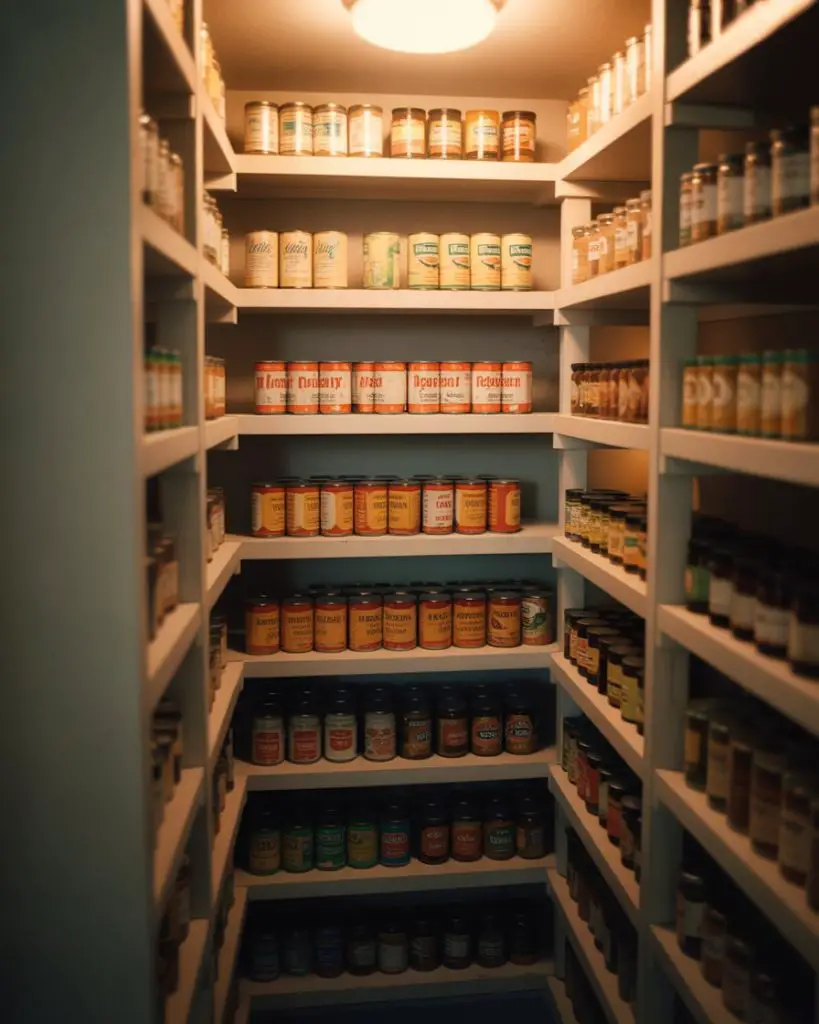
Expert organizers point out that most people only use the front third of their pantry shelves because they can’t see what’s behind. Risers eliminate that problem entirely—every item becomes visible and accessible, which means fewer forgotten ingredients and less food waste. It’s a tiny adjustment that yields daily rewards, turning a frustrating tight space into a surprisingly functional storage zone. The risers themselves cost under twenty dollars for a set, making this one of the highest-return organizing investments you can make.
7. Ikea Pantry System with Modular Shelving
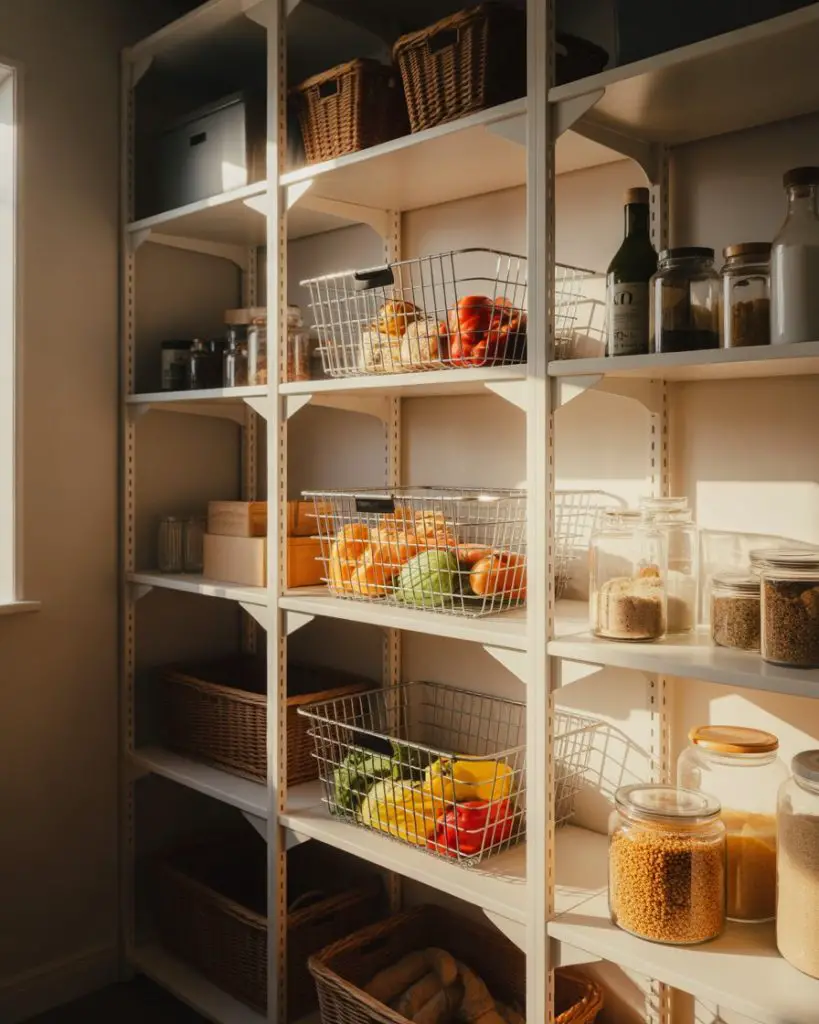
Ikea modular systems like ALGOT or BOAXEL allow you to build a custom pantry that adapts to your exact needs. Start with wall-mounted rails, then add shelves, bins, and hanging components in configurations that work for your specific groceries and cooking habits. The flexibility means you can adjust heights seasonally—raise shelves in summer for bulk beverage storage, lower them in fall for baking supplies. This adaptability is rare in pre-built furniture and invaluable in households where needs evolve. 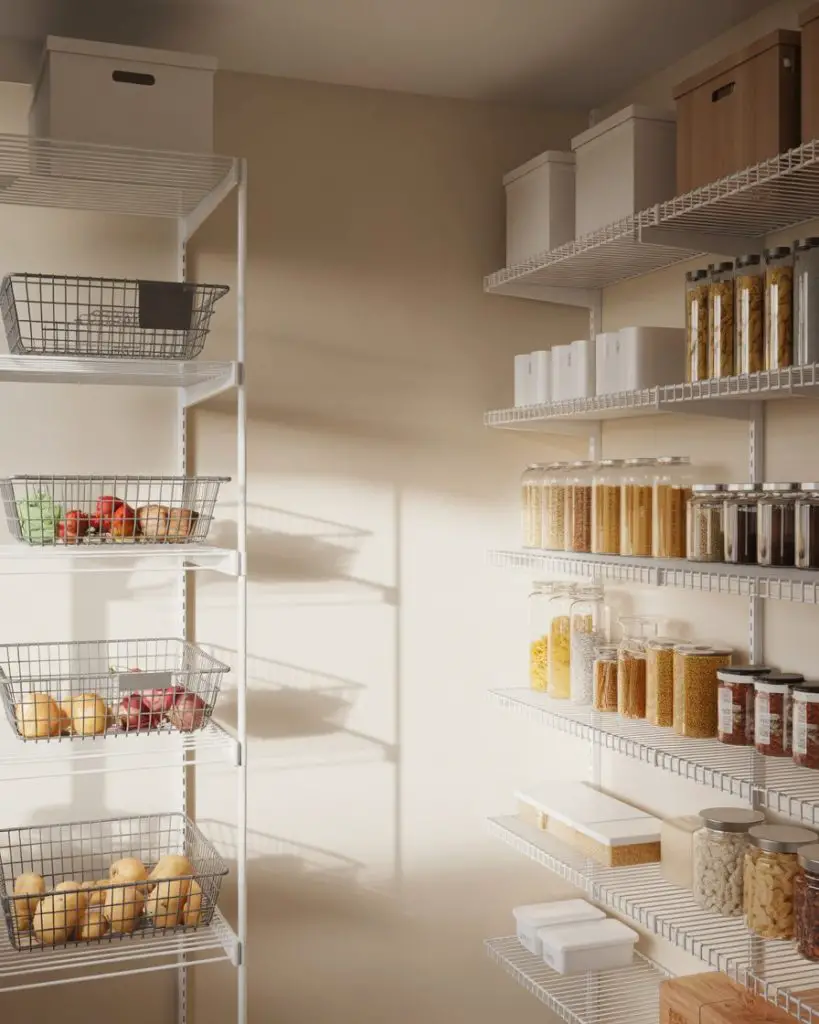
One practical insight: Ikea’s instructions assume you’re mounting to studs, but in older homes with unpredictable framing, you may need heavy-duty anchors rated for the weight you’ll store. The upfront planning matters—measure your tallest cereal boxes and widest containers before buying shelf depths. American homeowners in condos and townhomes especially appreciate how Ikea systems can squeeze into odd corners or awkward alcoves that standard cabinets can’t accommodate. The result is a pantry that feels built-in but costs a fraction of custom carpentry.
8. Butler’s Pantry with Glass-Front Storage
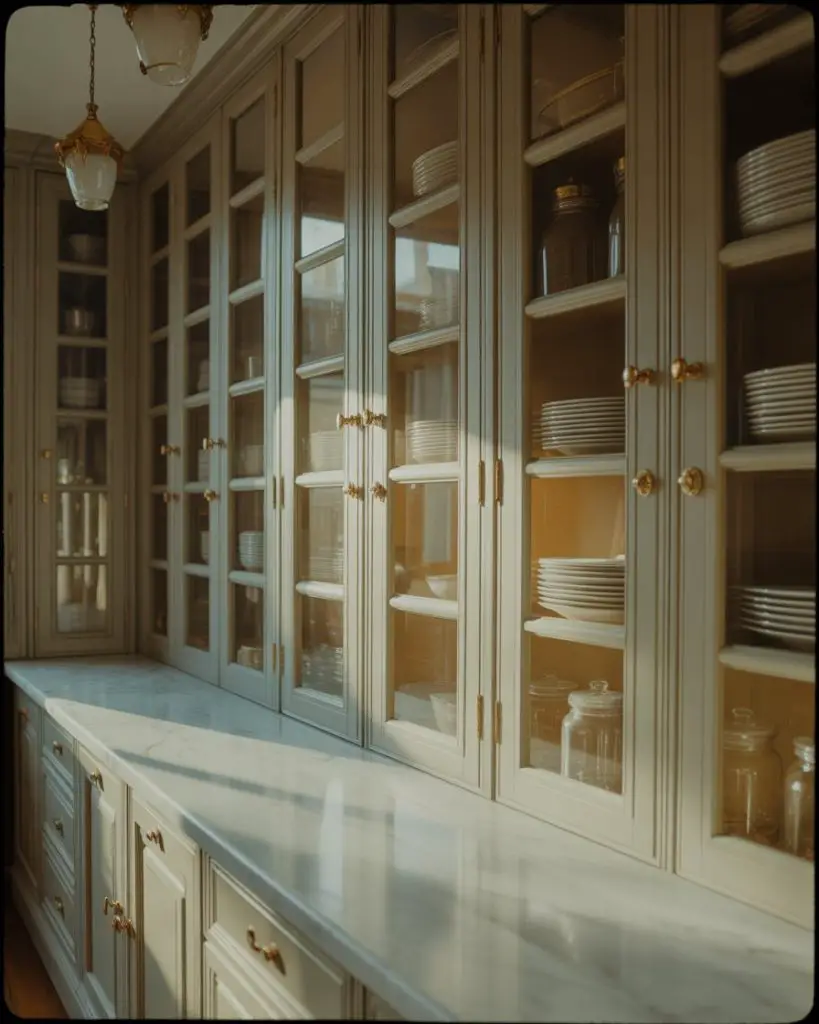
A butlers pantry bridges your kitchen and dining areas, making organization both functional and presentable. Install glass-front cabinets along one wall to display prettier items—matching canisters, vintage tins, specialty oils in attractive bottles. Behind closed doors on the opposite side, store everyday chaos: bulk snacks, mismatched Tupperware, backup paper goods. This dual approach keeps entertaining supplies accessible while hiding the visual clutter that accumulates in active households. 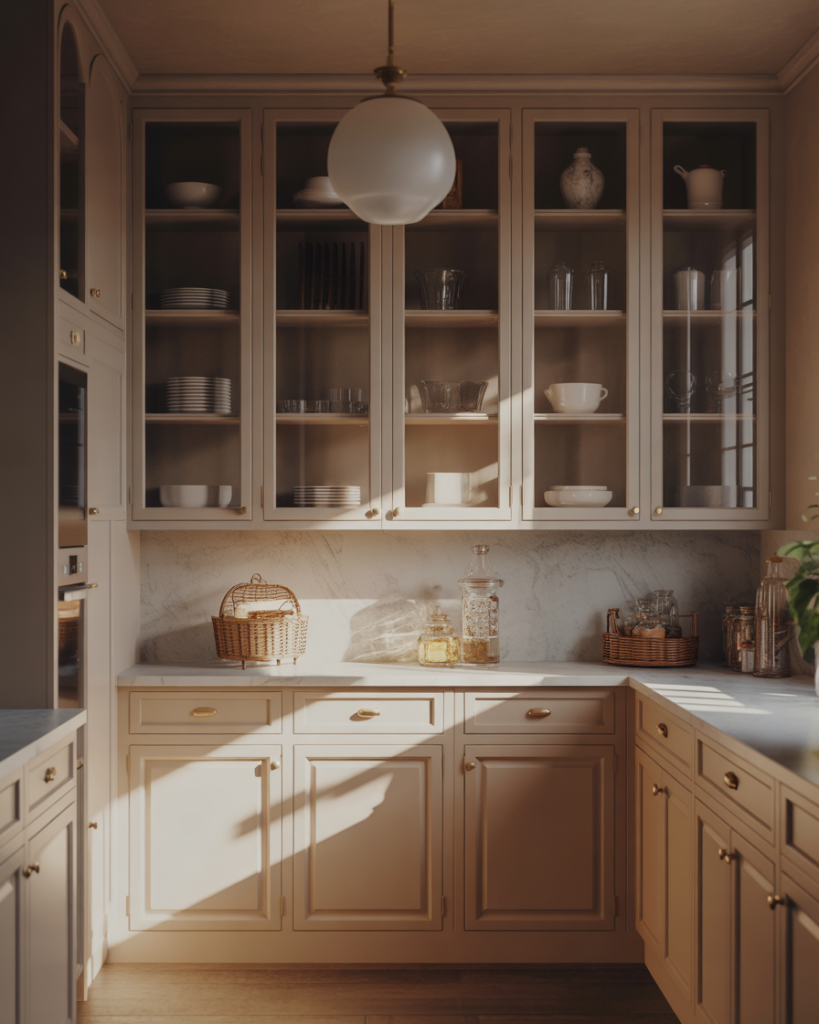
This setup works best in homes where the pantry doubles as a prep or serving station during gatherings. You can pull out serving dishes, fill them from bulk containers stored below, and carry everything to the dining room without crossing back through the main kitchen. One family in suburban Connecticut uses their butler’s pantry to stage coffee and breakfast items for weekend guests, keeping the main kitchen uncluttered while still offering generous hospitality. It’s a gracious solution that respects both function and aesthetics.
9. DIY Pantry Door Organization with Over-the-Door Racks
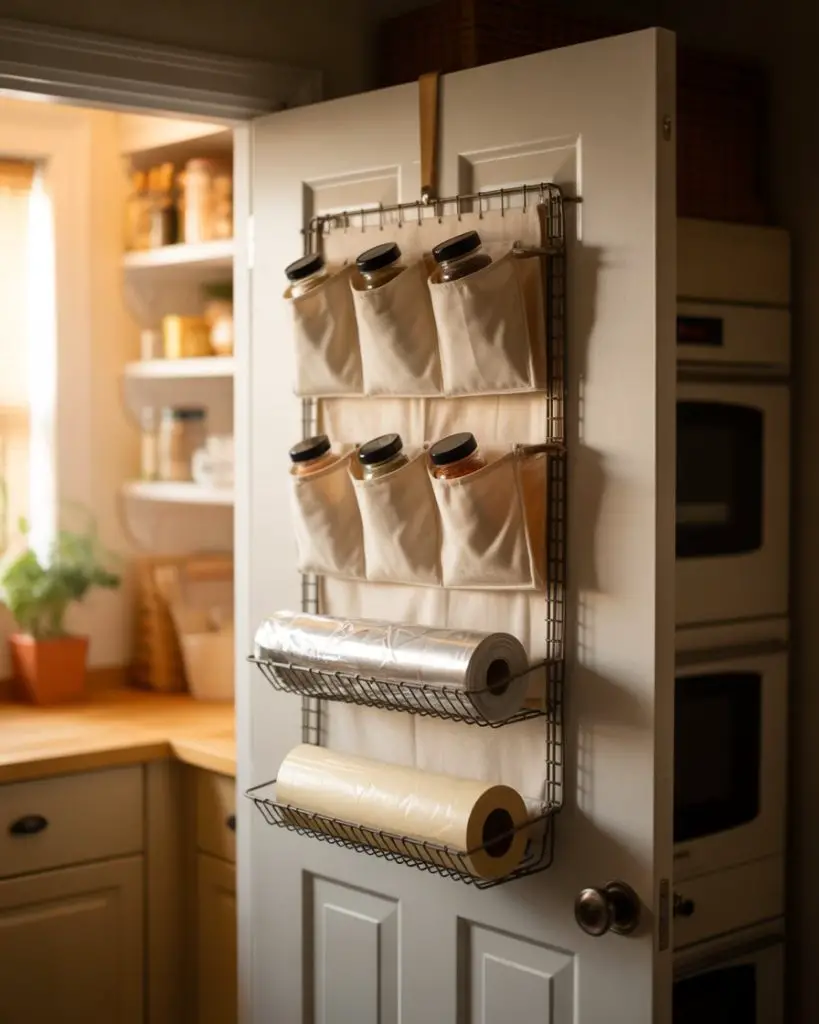
The back of your pantry door is prime real estate that often goes wasted, but simple DIY racks can transform it into valuable storage. Mount over-the-door organizers with pockets or shelves to hold spices, aluminum foil, plastic wrap, or snack pouches that would otherwise take up shelf space. This approach is especially brilliant in small kitchens where every inch counts and traditional shelving has already maxed out. The installation requires no tools—just hang and load. 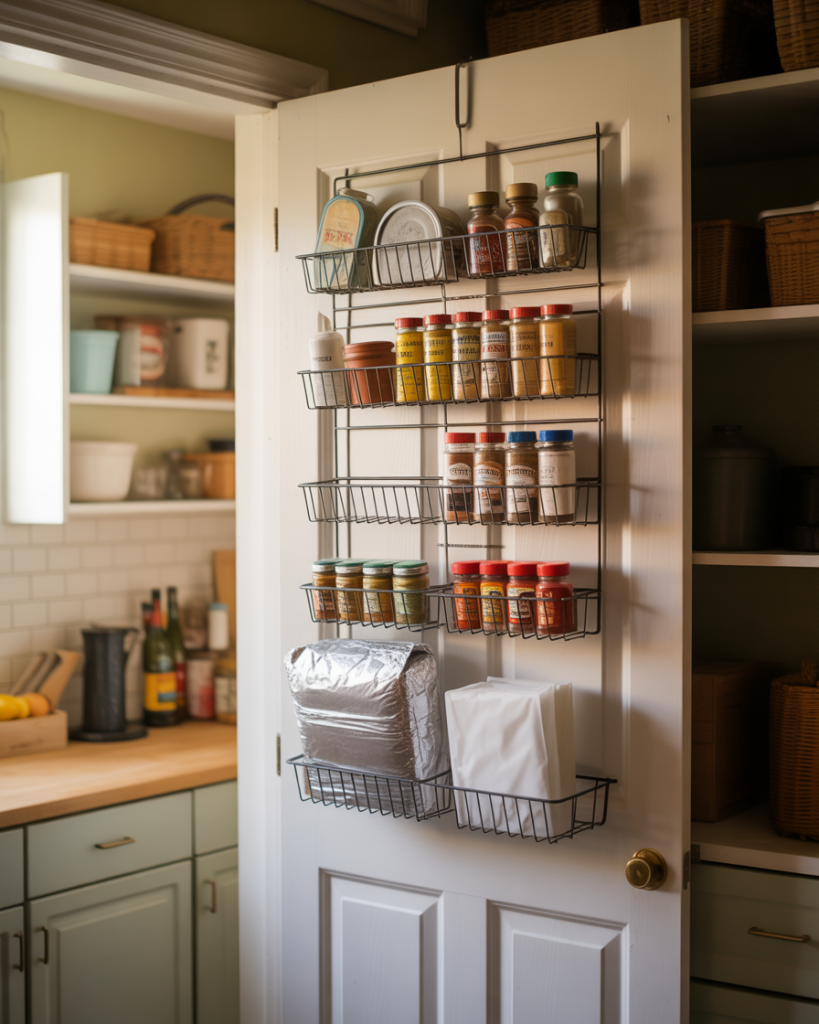
Where it works best: apartments and starter homes where permanent modifications aren’t allowed. Over-the-door racks leave no holes or marks when you move, making them ideal for renters. They’re also perfect for households with kids who need grab-and-go access to lunch-packing supplies or after-school snacks. The racks keep frequently used items at eye level and within easy reach, turning the pantry door from dead space into one of your hardest-working organizational zones.
10. Lazy Susan Turntables for Corner and Deep Shelves
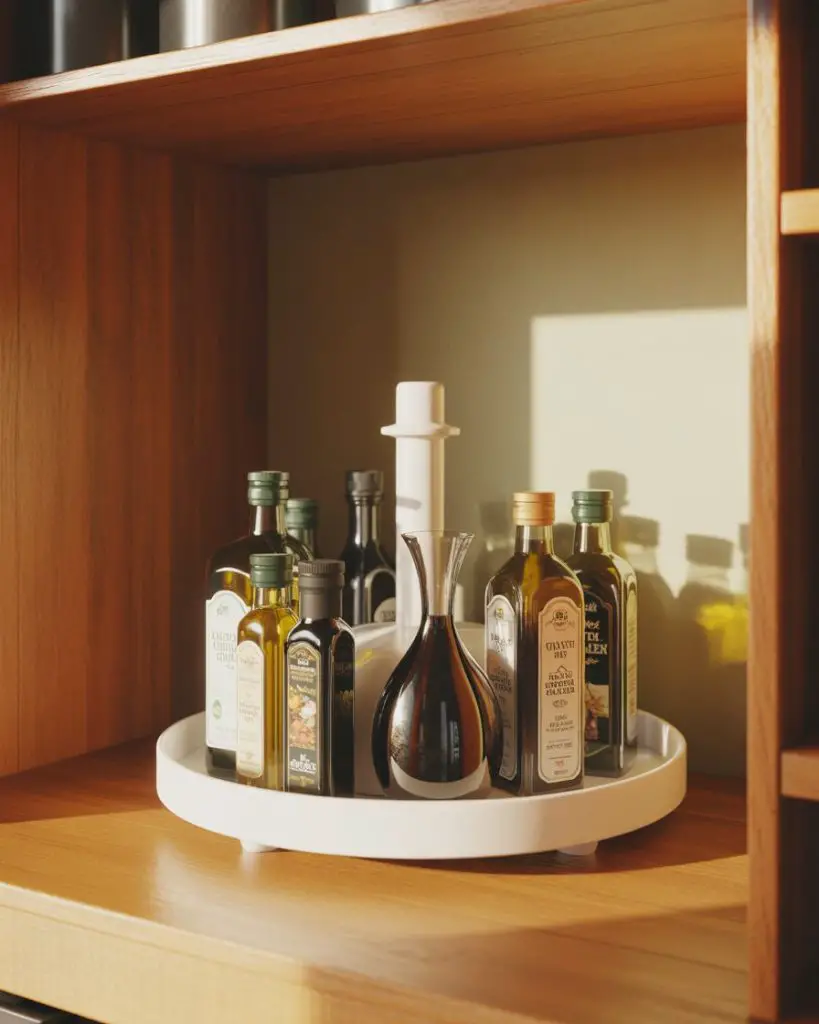
Corner spaces and deep shelves create dead zones where items disappear, but lazy Susan turntables bring everything within reach with a simple spin. Place them on upper shelves for oils, vinegars, and sauces, or on lower shelves for canned goods and condiments. The circular motion means you can access items at the back without unloading the entire shelf—a game-changer in large pantries where depth makes retrieval challenging. Choose turntables with raised edges to prevent bottles from sliding off during rotation. 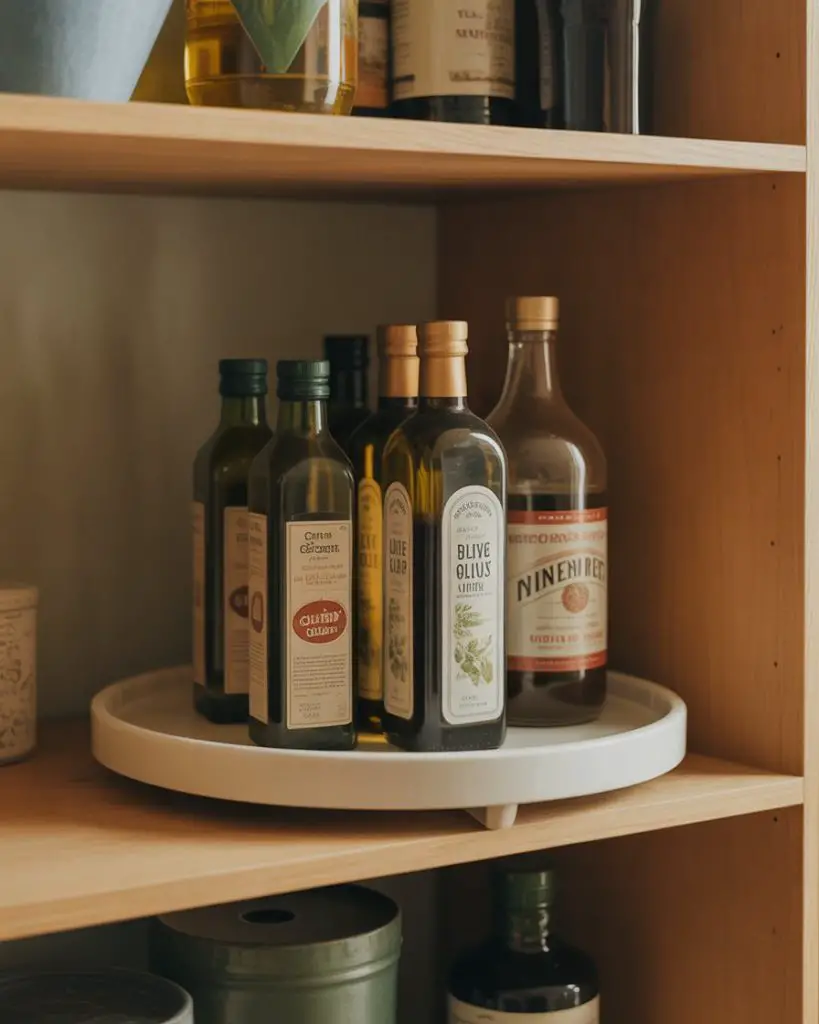
Budget-conscious shoppers can find basic turntables for under ten dollars at discount stores, while premium versions with non-slip surfaces and divided sections cost around thirty. The price difference matters less than choosing the right diameter for your shelf depth—too small and items fall off the edges, too large and the turntable won’t spin freely. Many American households use multiple turntables throughout the pantry, creating little carousels of frequently grabbed items that make daily cooking faster and more intuitive.
11. Snack Station with Labeled Bins for Kids
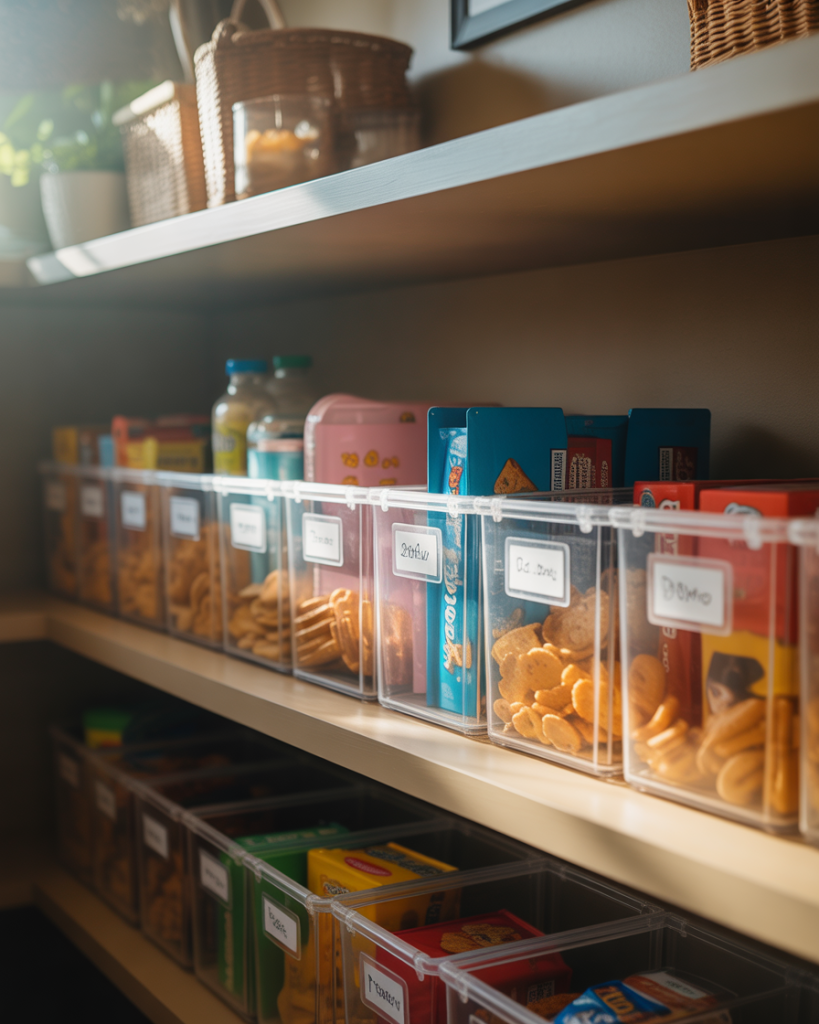
Creating a dedicated snack station with clearly labeled bins empowers kids to make their own choices while maintaining boundaries. Designate one lower shelf or a pull-out drawer as the snack zone, filling baskets with pre-portioned options—crackers, fruit pouches, granola bars. Label each container with words or pictures so even pre-readers can identify contents. This system reduces constant requests for help while teaching children to return items to their proper spots, building independence and organizational habits simultaneously. 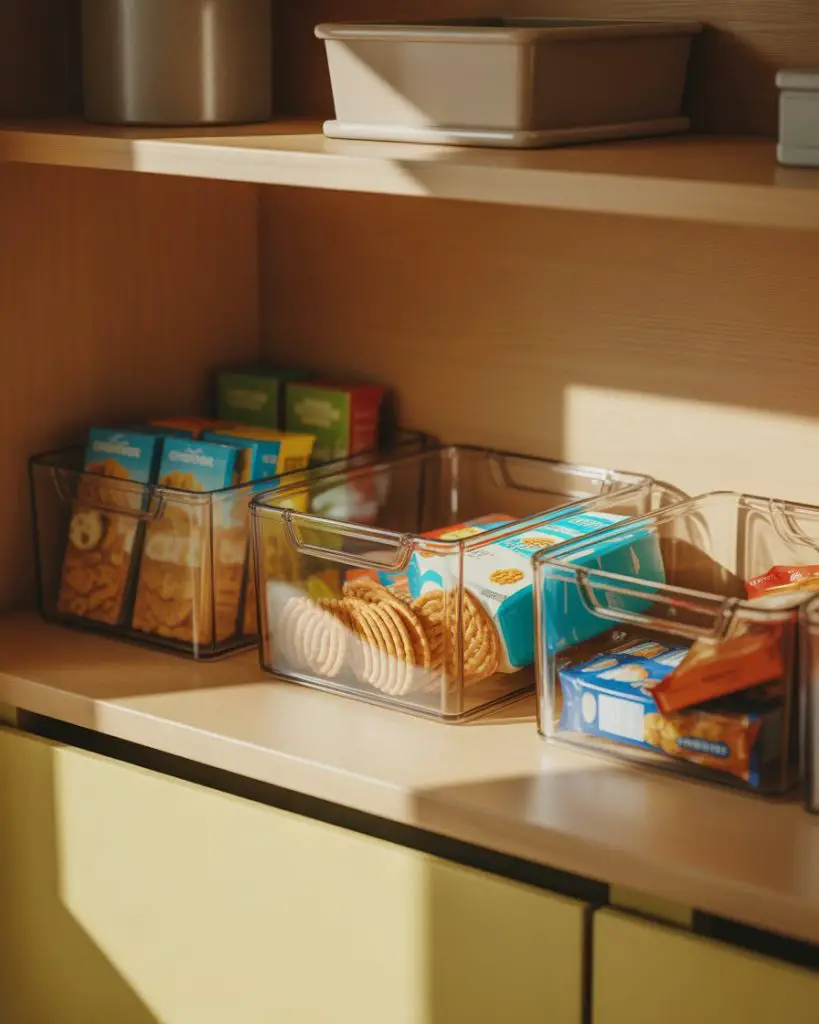
Real homeowner behavior shows that when kids have easy access to approved snacks, they’re far more likely to choose those options over begging for less healthy alternatives. The key is refreshing the bins weekly so choices don’t go stale—literally or figuratively. One mom in Arizona found that involving her kids in the weekly bin-filling ritual taught them about portion sizes and balanced choices better than any lecture could. The snack station becomes a teaching tool disguised as convenience.
12. Bathroom Pantry for Toiletries and Paper Goods
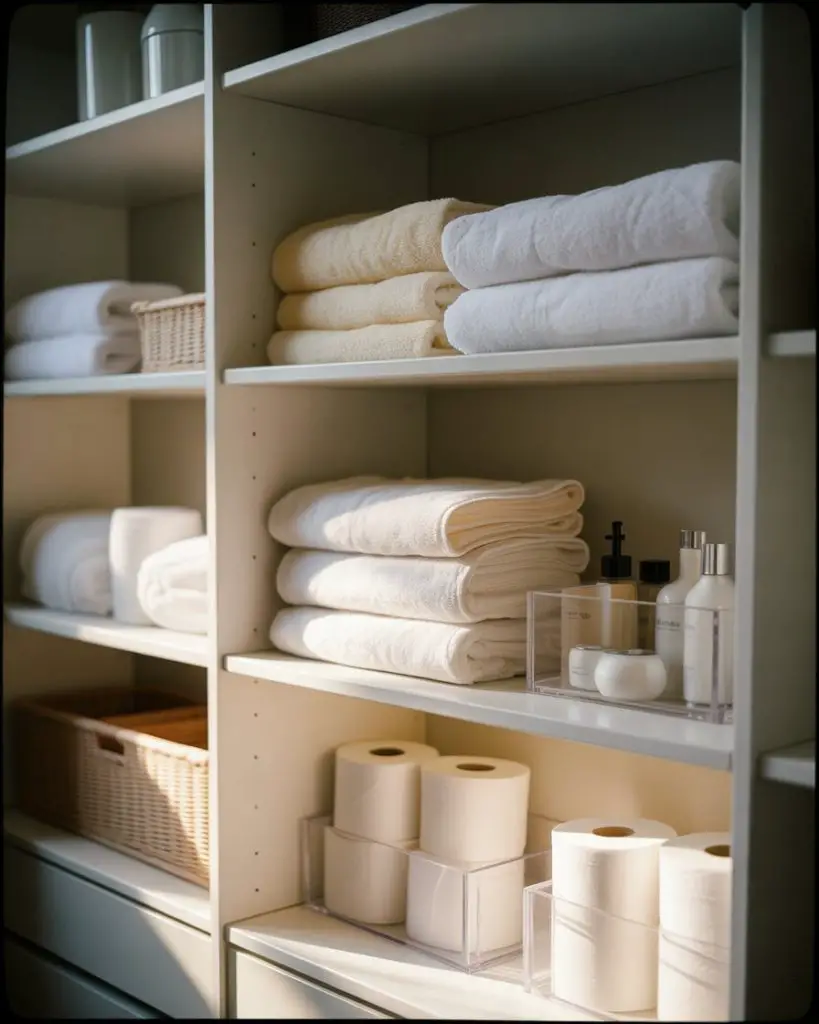
Not every pantry stores food—repurposing a bathroom linen closet or hallway nook into a toiletry pantry can revolutionize household management. Use open shelving or clear bins to organize bulk toilet paper, cleaning supplies, extra shampoo, and seasonal items like sunscreen or cold medicine. Group items by category: oral care on one shelf, hair products on another, first aid supplies in a labeled basket. This centralized approach prevents the cabinet-under-every-sink chaos that plagues most homes. 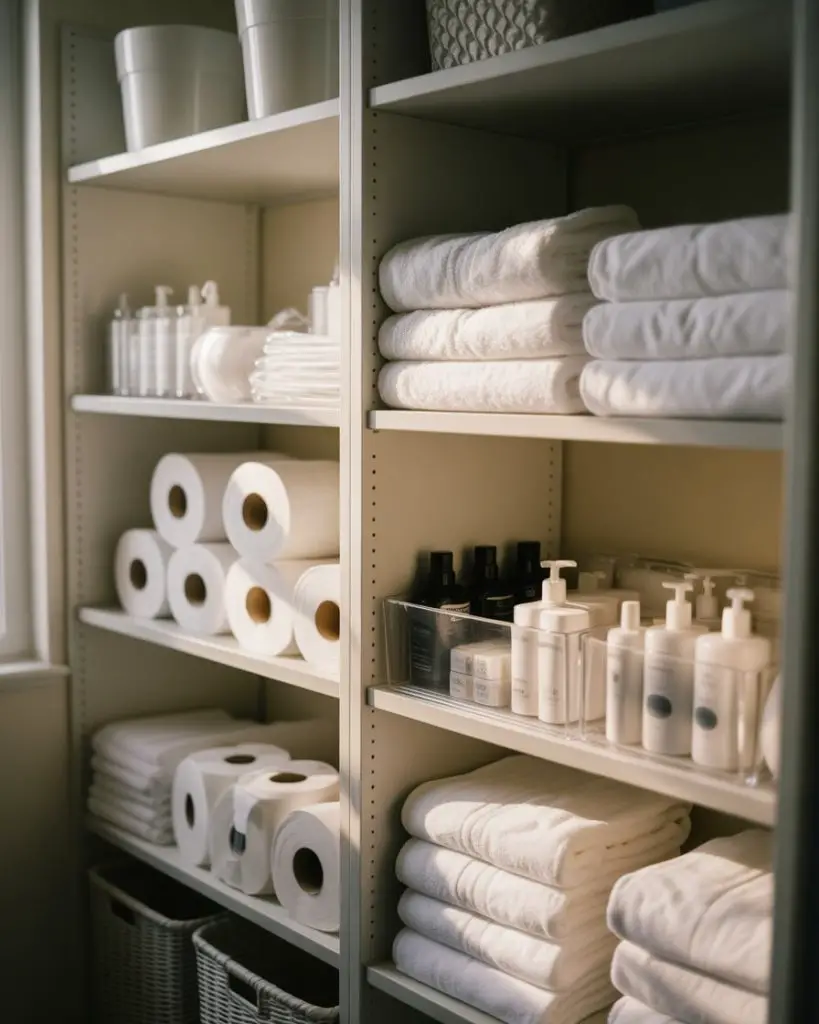
Expert organizers recommend this setup for families who buy in bulk at warehouse stores—the pantry becomes a home store where you “shop” as bathrooms run low on supplies. It eliminates last-minute drugstore runs and the frustration of discovering you’re out of something at the worst possible moment. The system works particularly well in multi-bathroom homes where restocking becomes a weekly chore rather than a daily scramble. It’s the unglamorous organizational move that quietly improves daily life.
13. Ideas for Small Closet Pantries with Adjustable Shelving
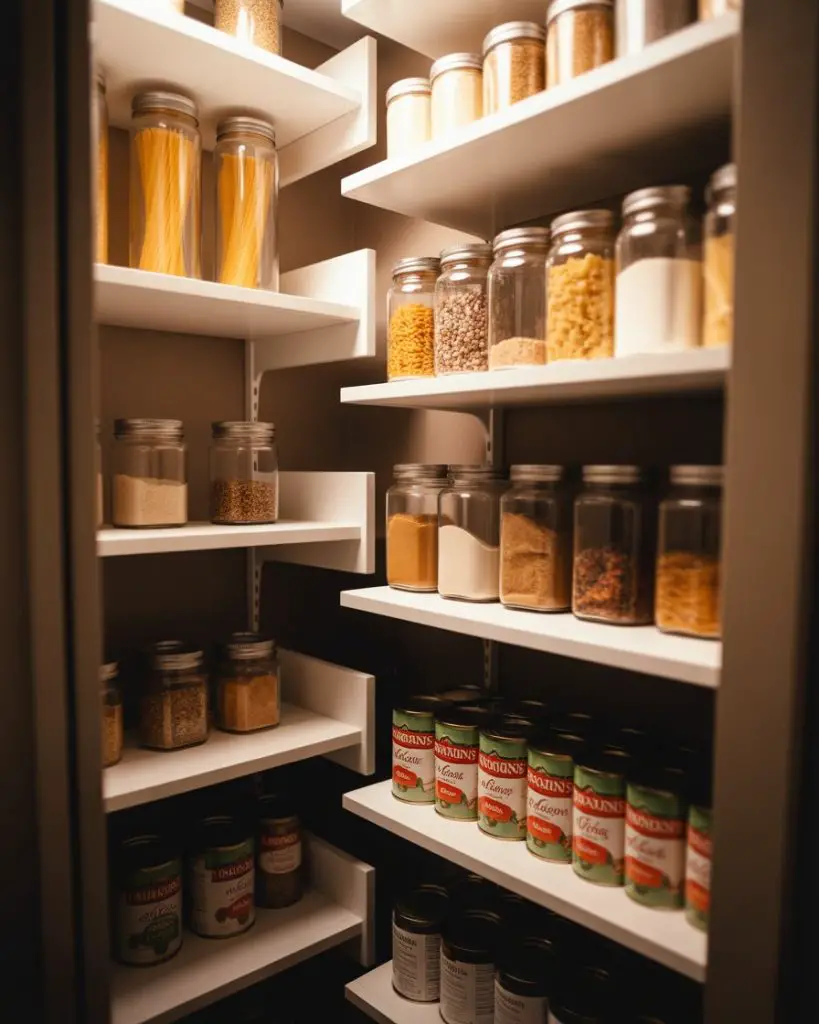
When working with ideas for small closet spaces, adjustable shelving becomes essential for maximizing every vertical inch. Install track-mounted shelves that can move up or down to accommodate everything from tall cereal boxes to short spice jars. This flexibility means your pantry can adapt as your shopping habits change—raise shelves to fit bulk pasta containers, lower them when you switch to smaller packages. The adjustability prevents wasted vertical space, which is the silent killer of small space efficiency. 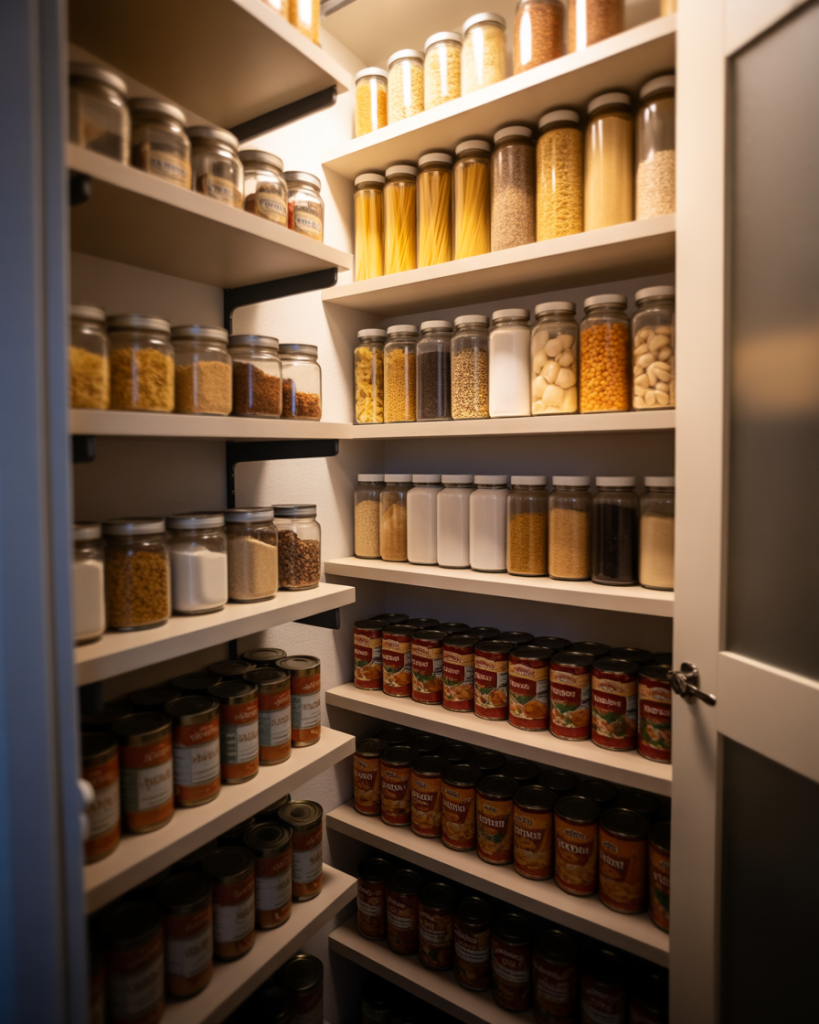
In the Midwest, where basements often house additional pantry storage, homeowners use adjustable systems to accommodate seasonal shifts—canning supplies in summer, baking ingredients in winter. The ability to reconfigure without tools means you can experiment until you find the perfect setup for your household’s specific needs. It’s a forgiving system that grows with you rather than locking you into one configuration that stops working six months down the road.
14. Open Pantry Shelving with Decorative Containers
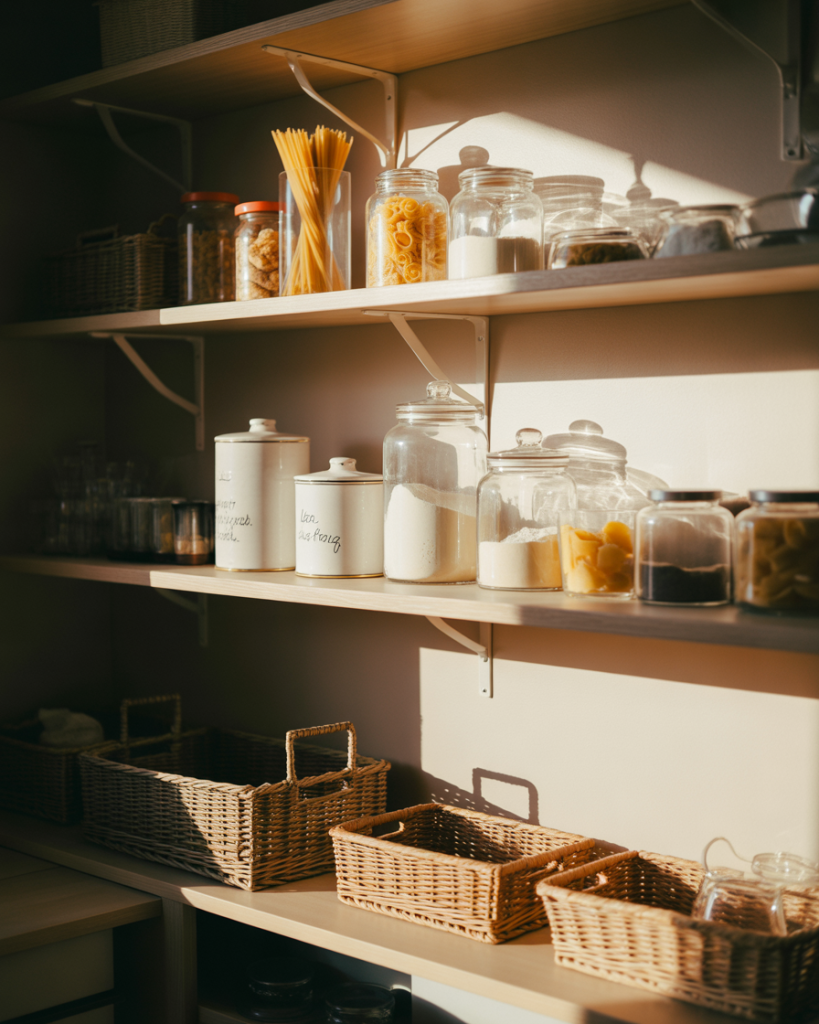
Open pantry shelving in or adjacent to the kitchen requires a commitment to visual consistency, but the payoff is a space that feels both functional and decorative. Choose a family of containers in coordinating materials—glass jars with wooden lids, white ceramic canisters, woven baskets in natural tones—and transfer staples into these vessels. Arrange them with intention, grouping by height and creating small vignettes that feel collected rather than chaotic. This approach works best when you’re willing to maintain the system and keep surfaces tidy. 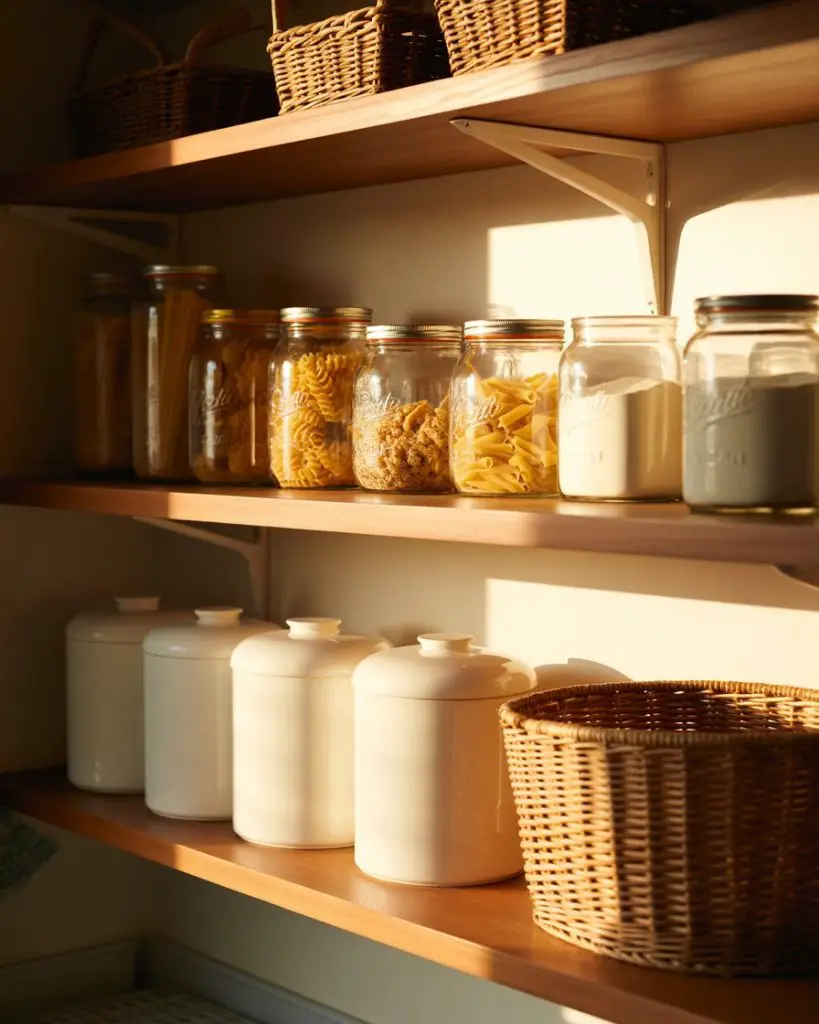
Common mistakes include mixing too many container styles or leaving items in original packaging, which creates visual noise. The solution is committing to a single aesthetic—whether that’s modern minimalist, farmhouse rustic, or industrial chic—and staying within that palette. When guests can see your pantry, it becomes part of your home’s overall design story. One couple in Portland found that their open shelving motivated them to keep supplies stocked and organized because it was always on display, turning potential pressure into positive accountability.

15. Large Pantry with Zone-Based Organization
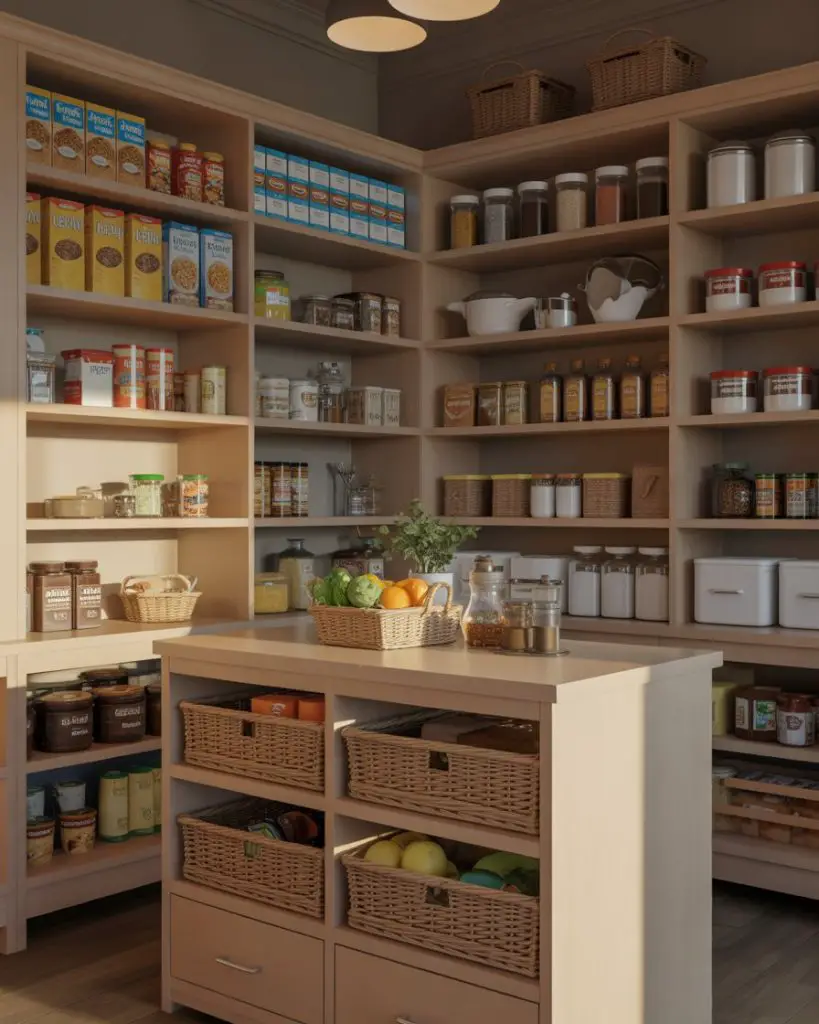
A large pantry offers space but requires intentional zones to prevent it from becoming a dumping ground. Divide the room into distinct areas: breakfast zone (cereals, oats, coffee), baking zone (flours, sugars, chocolate chips), dinner zone (pasta, rice, canned tomatoes), and snack zone. Use labels on shelves or tape on the floor to define boundaries, making it easy for everyone in the household to know where items belong. This geographical approach reduces search time and keeps inventory naturally organized by use case. 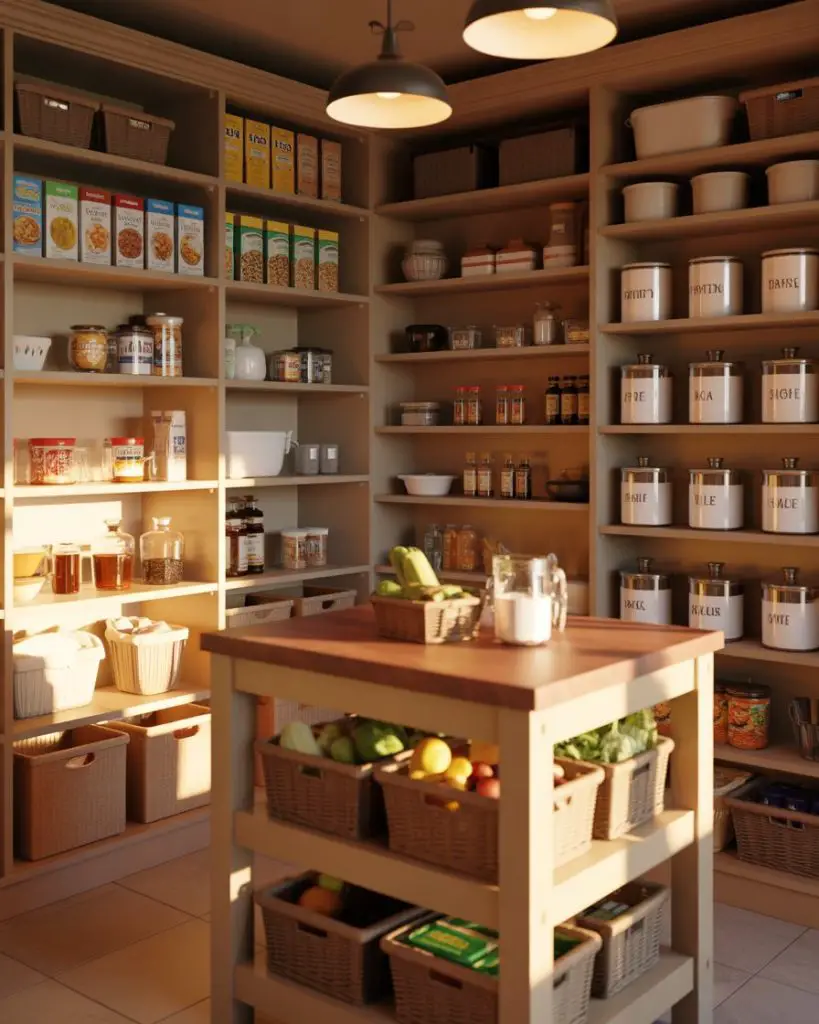
This system shines in households where multiple people cook or where meal prep happens in bulk. When everything has a designated zone, restocking groceries becomes a team activity rather than one person’s puzzle to solve. A family in Texas with five kids uses zone-based organization to assign each child a restocking responsibility—one handles breakfast, another snacks, another baking—teaching life skills while distributing the mental load. It’s the kind of system that makes a large pantry feel managed rather than overwhelming.
16. Narrow Pantry with Pull-Out Vertical Drawers
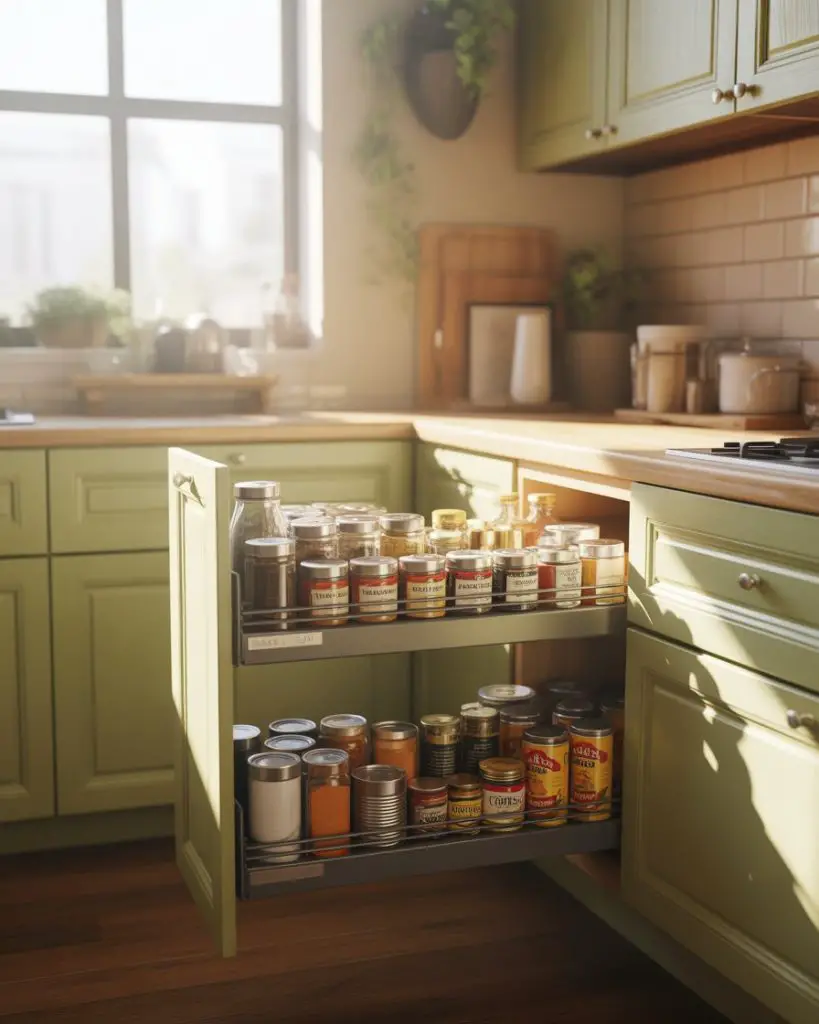
A narrow pantry—sometimes just twelve inches wide—can be surprisingly functional with the right hardware. Install tall pull-out vertical drawers that slide out completely, revealing both sides for storage. These slim units are perfect for spices, canned goods, or bottles that would get lost in deeper shelves. The vertical orientation uses height instead of depth, making every inch count in small kitchens where standard pantries don’t fit. This solution turns an awkward gap between appliances or cabinets into legitimate storage real estate. 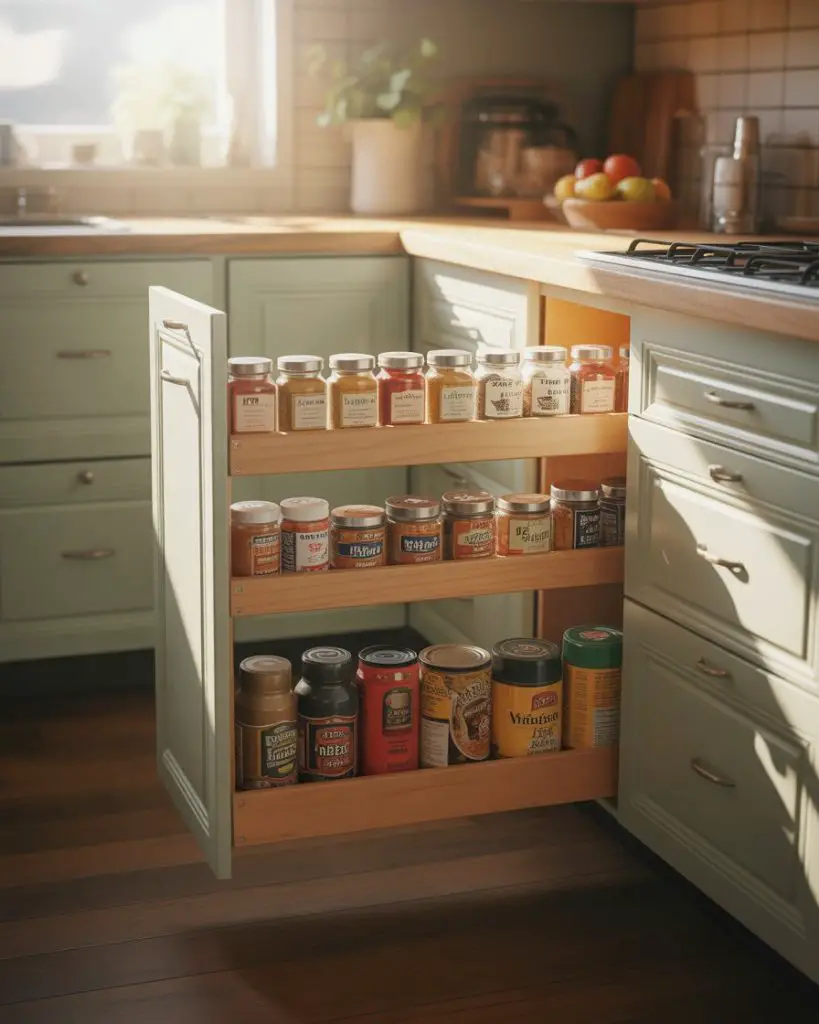
Where it works best: galley kitchens, apartments, and any space where traditional pantry depth would block pathways or overwhelm the room. The pull-out mechanism brings everything to you rather than forcing you to reach into dark corners. One homeowner in Brooklyn installed a narrow pull-out in the six-inch gap beside her refrigerator and now stores forty spice jars in a spot that was previously useless. It’s the ultimate example of working with what you have instead of wishing for more square footage.
17. Aesthetic Ideas with Matching Jars and Neutral Tones
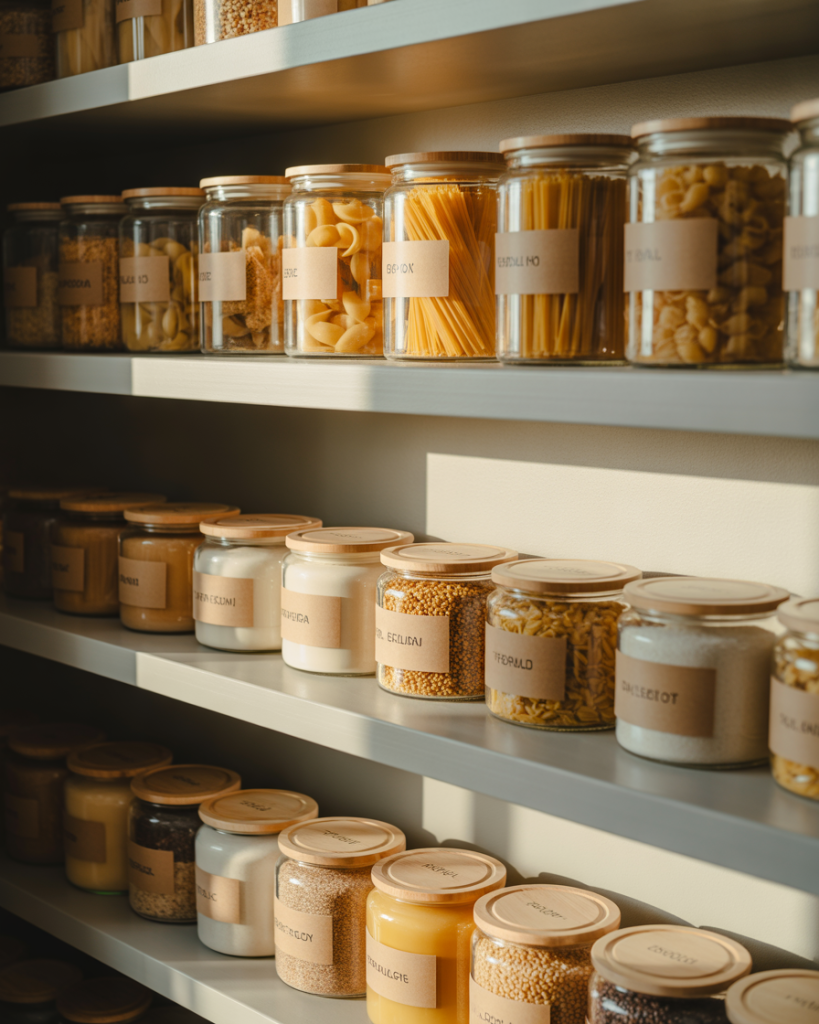
If you’re chasing aesthetic ideas that feel Pinterest-worthy but also functional, commit to matching glass jars and a neutral color palette throughout your pantry. Choose jars with consistent lids—all bamboo, all white metal, or all glass—and transfer dry goods like pasta, rice, flour, and sugar into these vessels. Arrange them by height with labels facing forward, creating a visual rhythm that’s calming and surprisingly practical. The uniformity eliminates decision fatigue when cooking and makes inventory assessment instant. 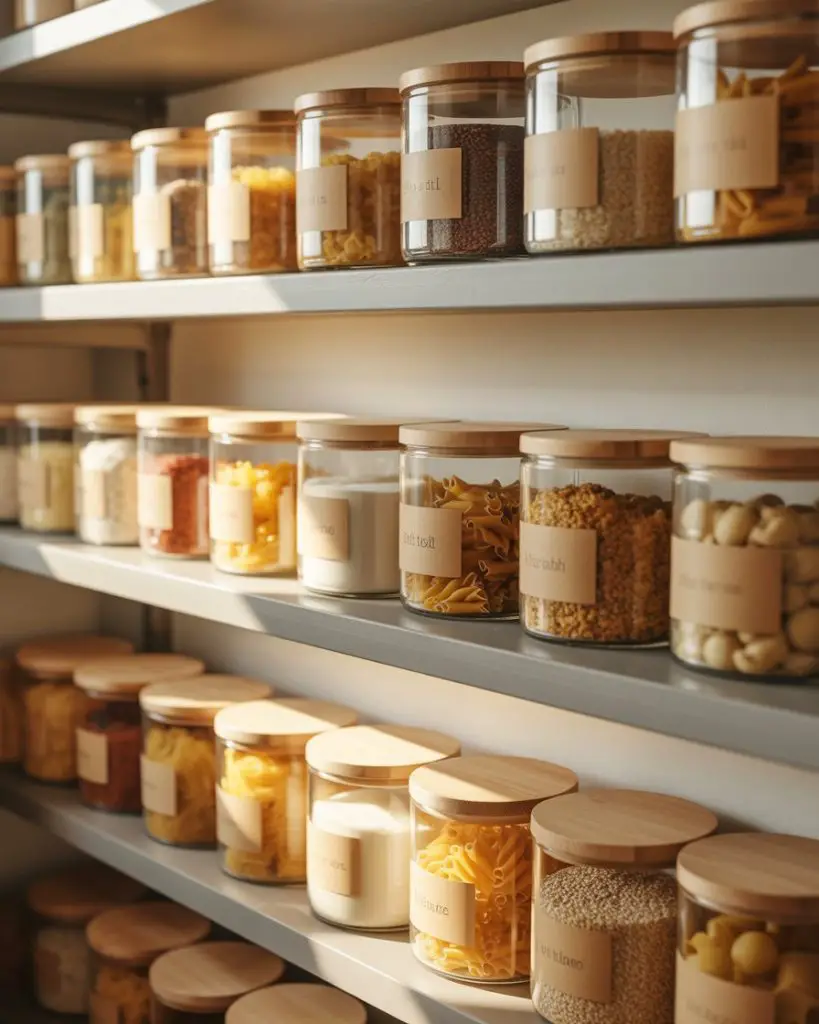
The initial investment—roughly one hundred to two hundred dollars for a full jar set—pays off in longevity and joy. Unlike plastic containers that stain and warp, quality glass jars last decades and can go from pantry to dishwasher without degrading. Many American homeowners report that once they commit to the aesthetic, they’re more motivated to maintain it. The system becomes self-reinforcing: you want to keep it beautiful, so you stay organized, which reinforces the habit. It’s organization through design psychology.
18. Ideas for Walk-In Pantries with Counter Space
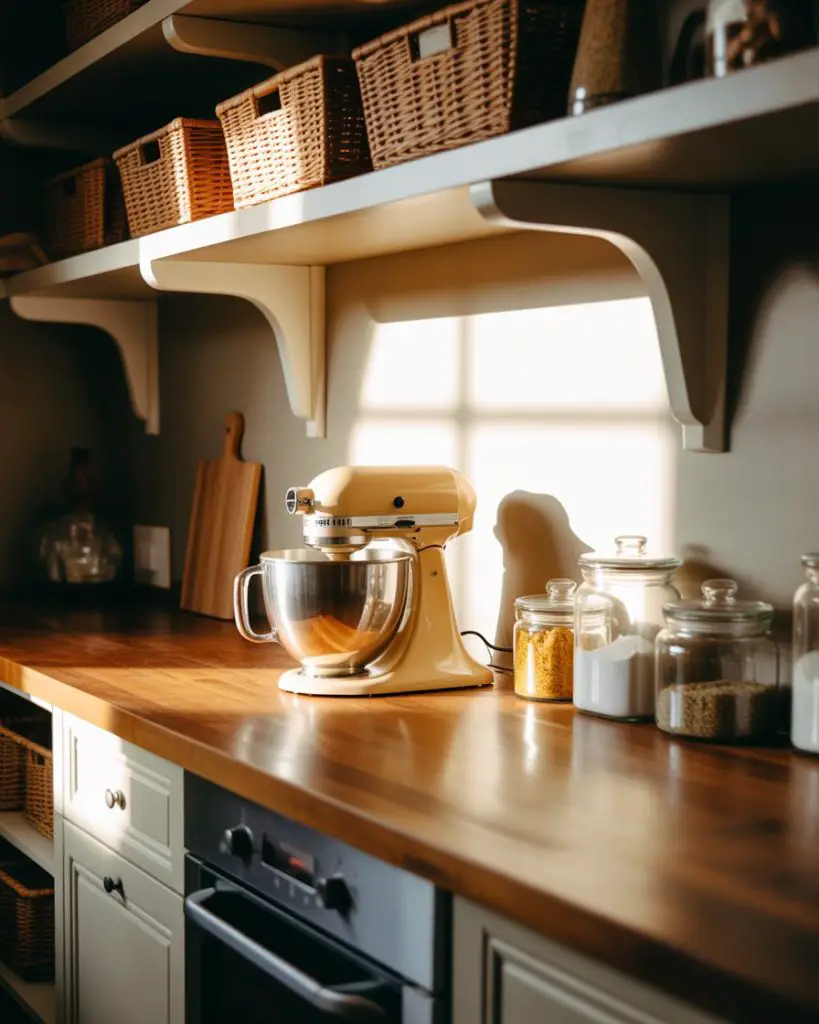
Ideas walk-in pantries with integrated counter space transform storage into a functional prep zone. Install a countertop along one wall—butcher block, quartz, or even a simple laminate—creating a surface for meal prep, appliance storage, or gift wrapping. Below the counter, add drawers or cabinets for less attractive items, while shelves above hold daily-use ingredients. This setup is especially valuable in households that entertain frequently or do extensive baking, offering a dedicated workspace separate from the main kitchen. 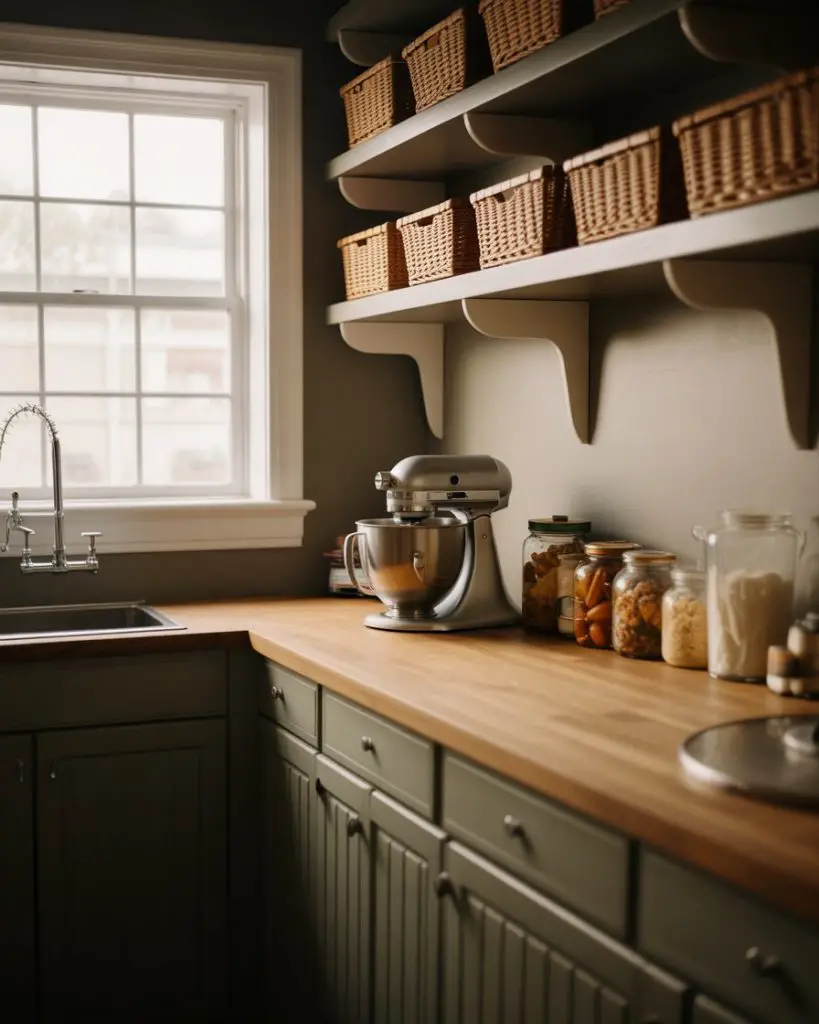
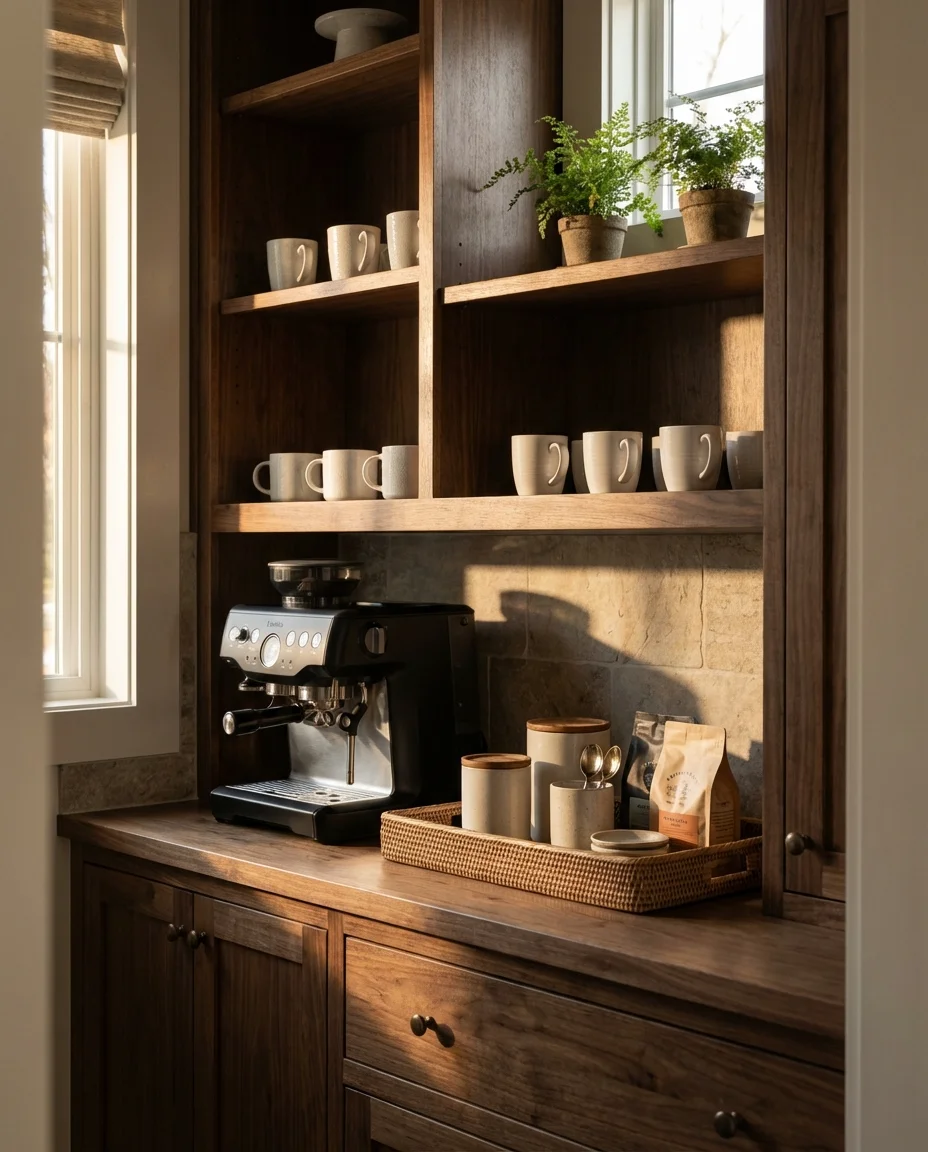
Regional context matters: in the South, where large houses often include walk-in pantries, the counter becomes a staging area for church potlucks and family gatherings. In the Northeast, it’s more commonly used for coffee stations that keep morning chaos out of the main kitchen. Either way, the counter adds utility that pure storage can’t match. One Virginia homeowner uses her pantry counter exclusively for bread-making, storing flour, yeast, and tools within arm’s reach—it’s her private baking studio disguised as a pantry.
19. Ideas Shelves with Adjustable Height for Growing Families
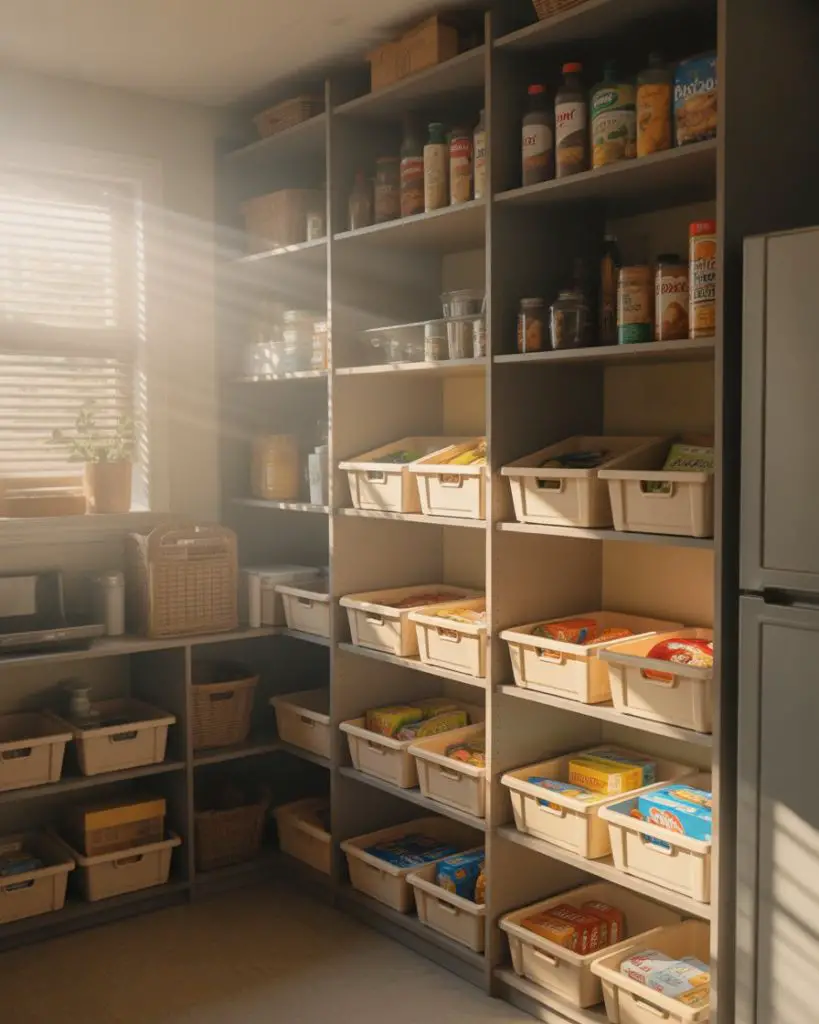
Families with young children need ideas shelves that evolve as kids grow and dietary needs change. Start with adjustable shelving systems where you can modify heights without reinstalling hardware—this allows you to create kid-accessible lower shelves for snacks and lunch supplies while keeping fragile or special ingredients higher up. As children age and gain responsibility, you can reconfigure the space to accommodate new patterns: sports nutrition, after-school meal prep, or their own cooking experiments. The flexibility prevents the pantry from becoming obsolete as life stages shift. 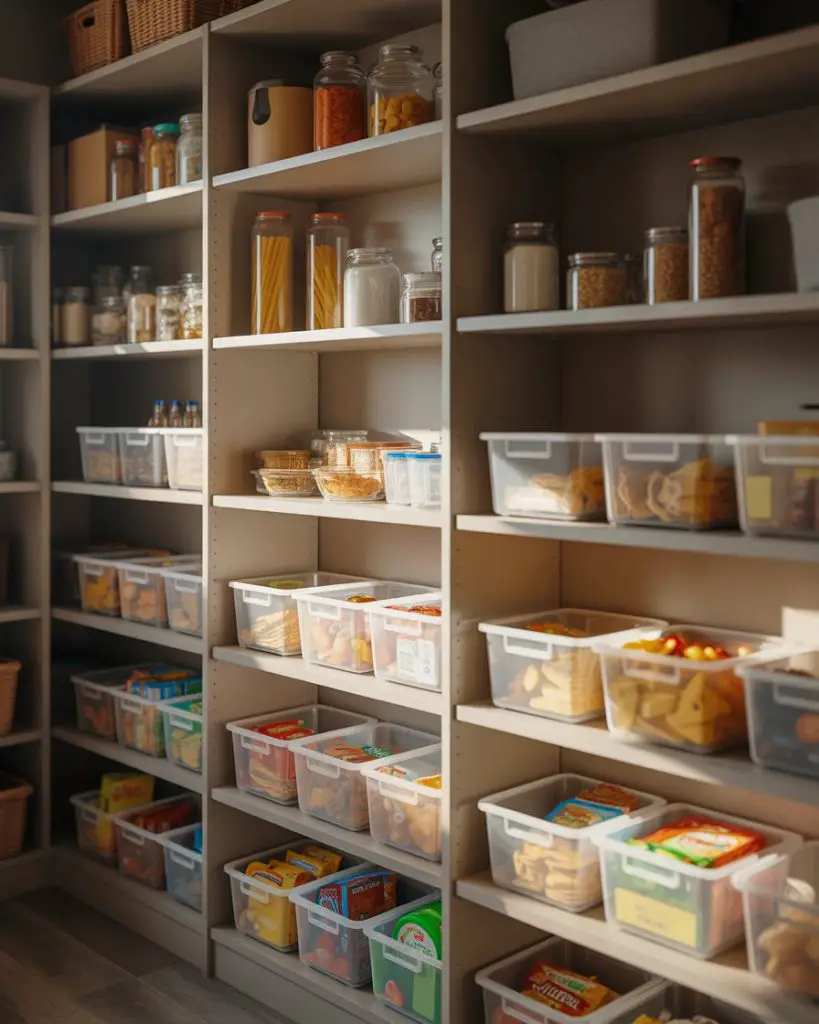
This approach reduces the need for complete pantry overhauls every few years, saving money and effort. Instead of fighting against your current shelving configuration, you simply adjust it to match new realities. A family in Colorado started with baby food storage at eye level and gradually shifted to teen sports drinks and protein bars as their kids joined athletics. The pantry grew with them rather than becoming a source of friction. It’s the kind of forward-thinking design that respects the fact that households aren’t static.
20. Small Kitchen Pantry with Magnetic Spice Racks
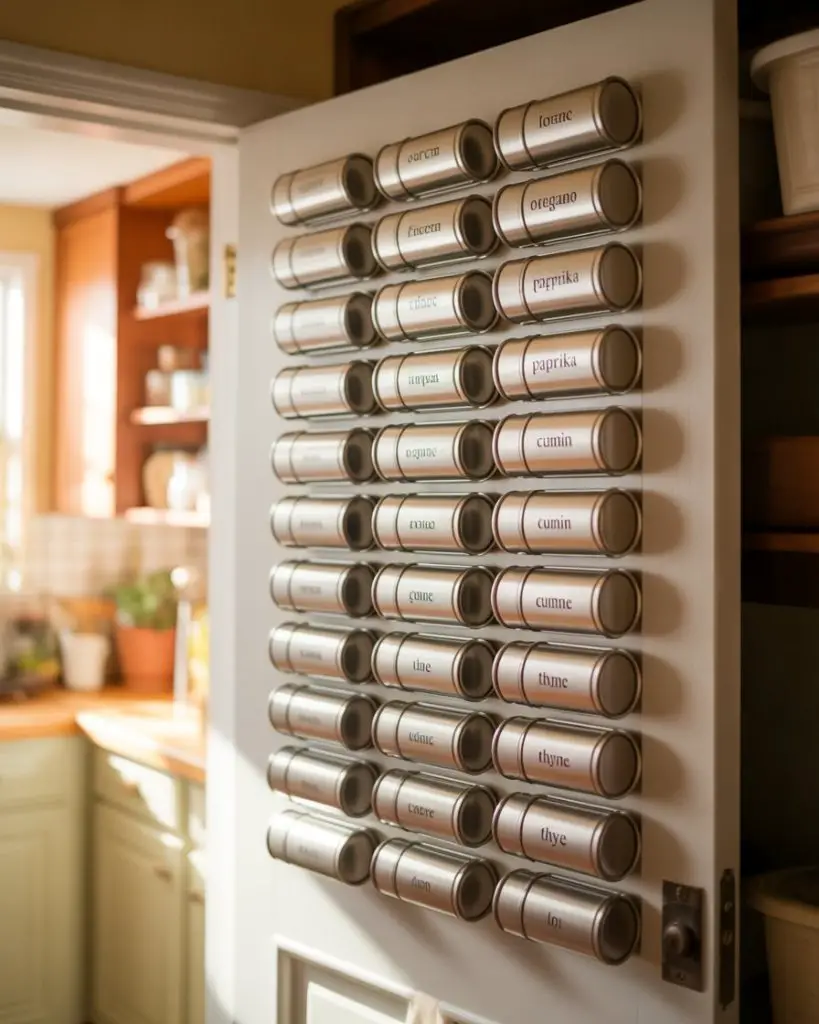
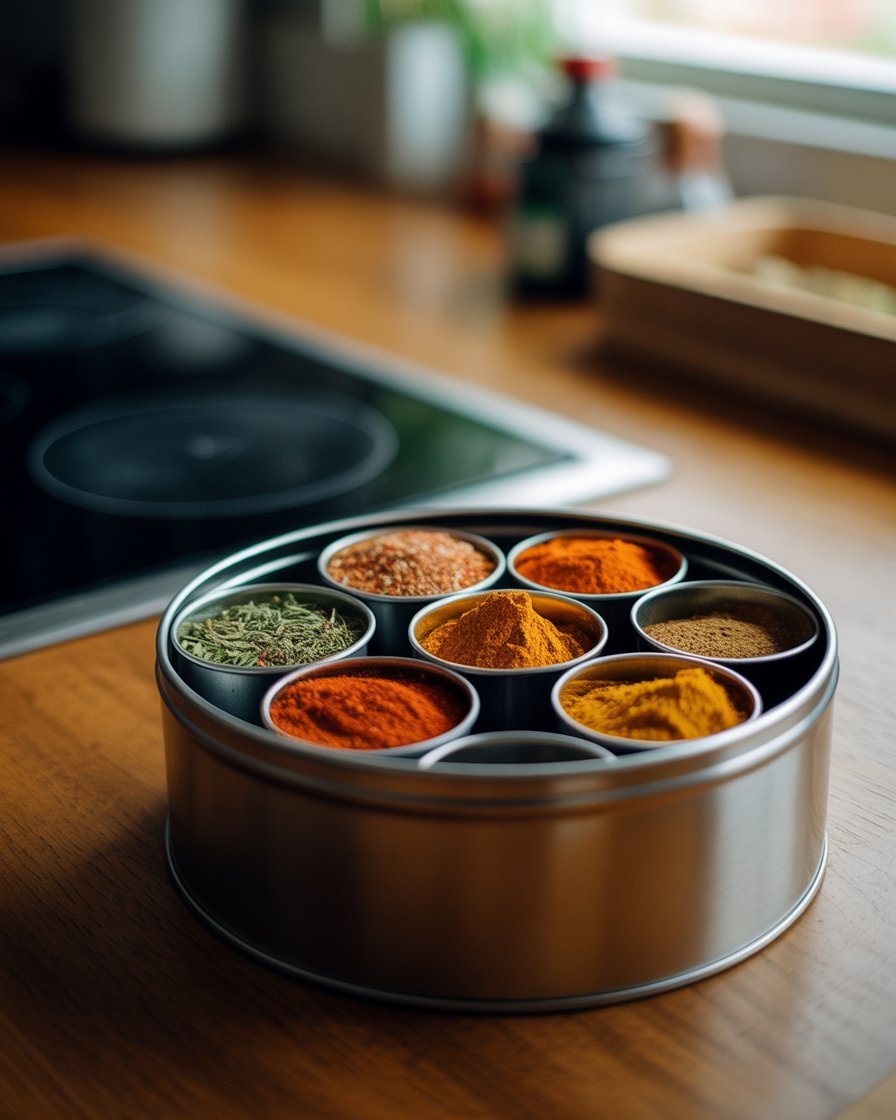
When floor and shelf space are limited in small kitchen setups, look upward and sideways for opportunities. Mount magnetic spice racks on the inside of pantry doors or on any metal surface, freeing up shelf real estate for bulkier items. The magnetic tins keep spices visible and accessible while adding virtually no footprint to your existing storage. This vertical thinking is crucial in small space environments where traditional solutions don’t fit. Paint or label the tin lids for easy identification from below. 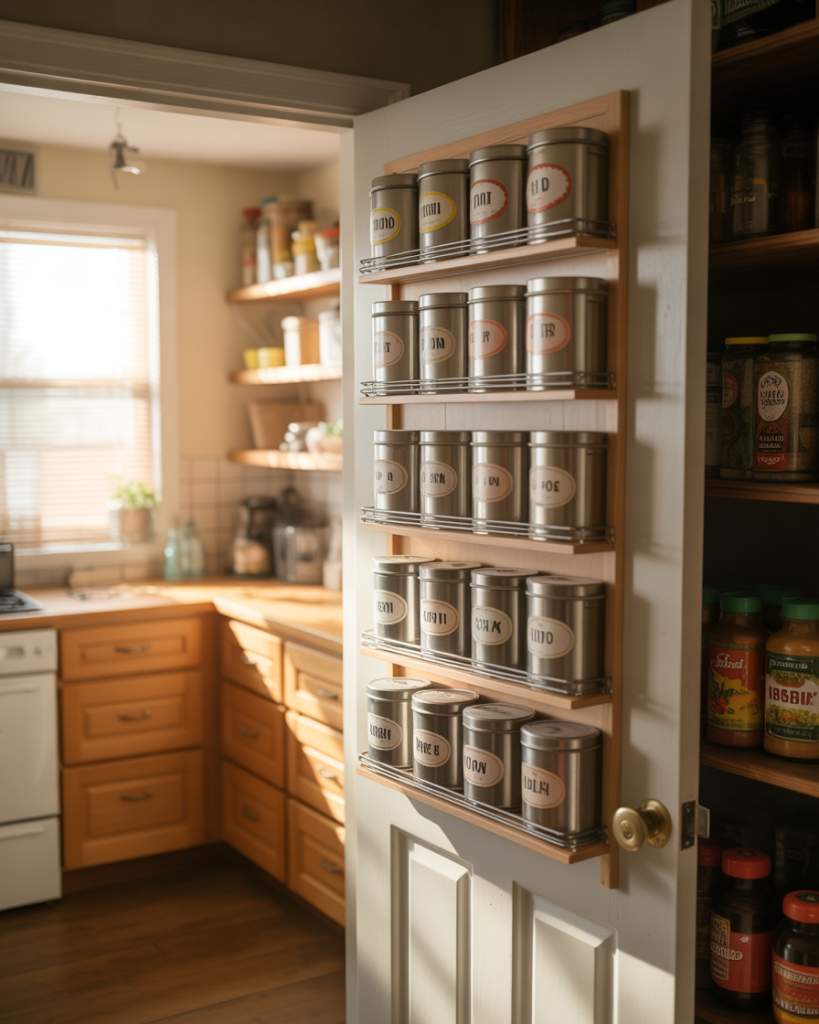
Practical insight: magnetic systems work best for spices you use daily because the tins are smaller than traditional jars and need more frequent refilling. Keep backup supplies in larger containers on a shelf, then refill the magnetic tins weekly or biweekly. This two-tier approach balances convenience with bulk buying economics. Urban apartment dwellers particularly appreciate this solution because it adds storage without requiring any permanent modifications to rental kitchens—the magnets simply stick and can be removed when you move.
21. Wire Shelf Optimization with Shelf Liners and Clips
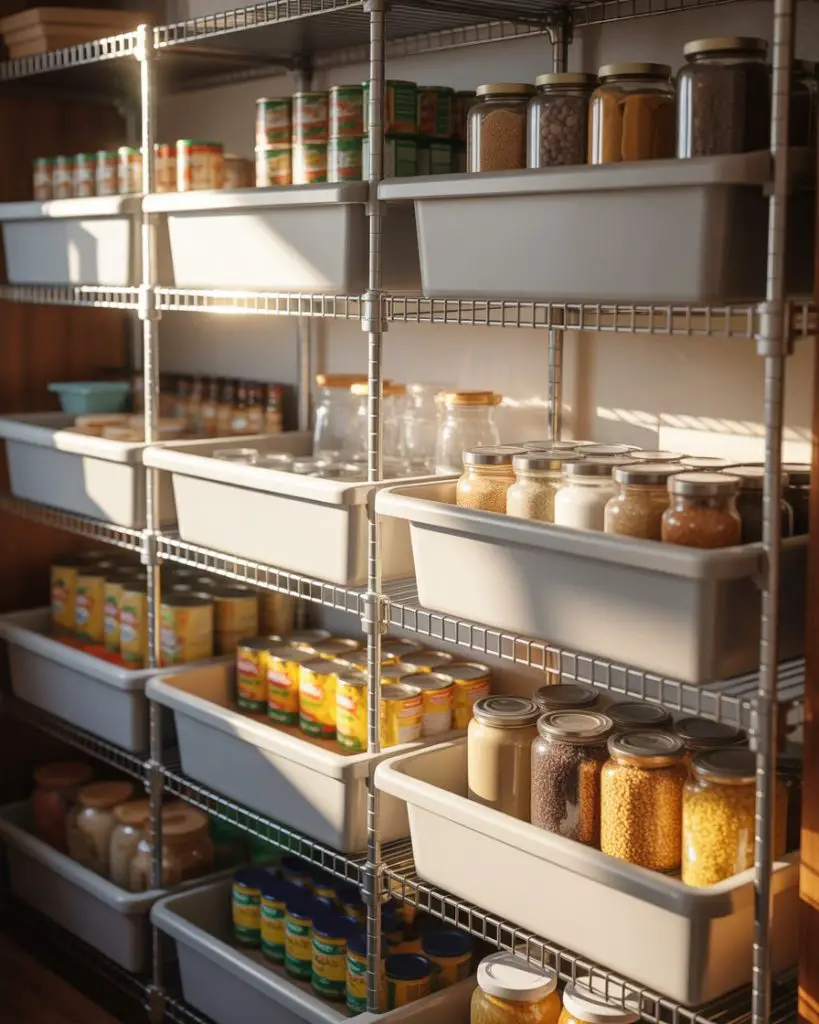
Standard wire shelf units can be frustrating when small items fall through gaps or containers wobble on the grid surface, but simple accessories fix both problems. Add wire shelf liners—thin plastic or bamboo mats cut to size—to create a stable flat surface that prevents tipping and makes cleaning easier. Use shelf clips or dividers to create zones within each shelf, stopping items from sliding sideways and mixing categories. These small additions cost under twenty dollars but dramatically improve the functionality of builder-grade pantry shelving. 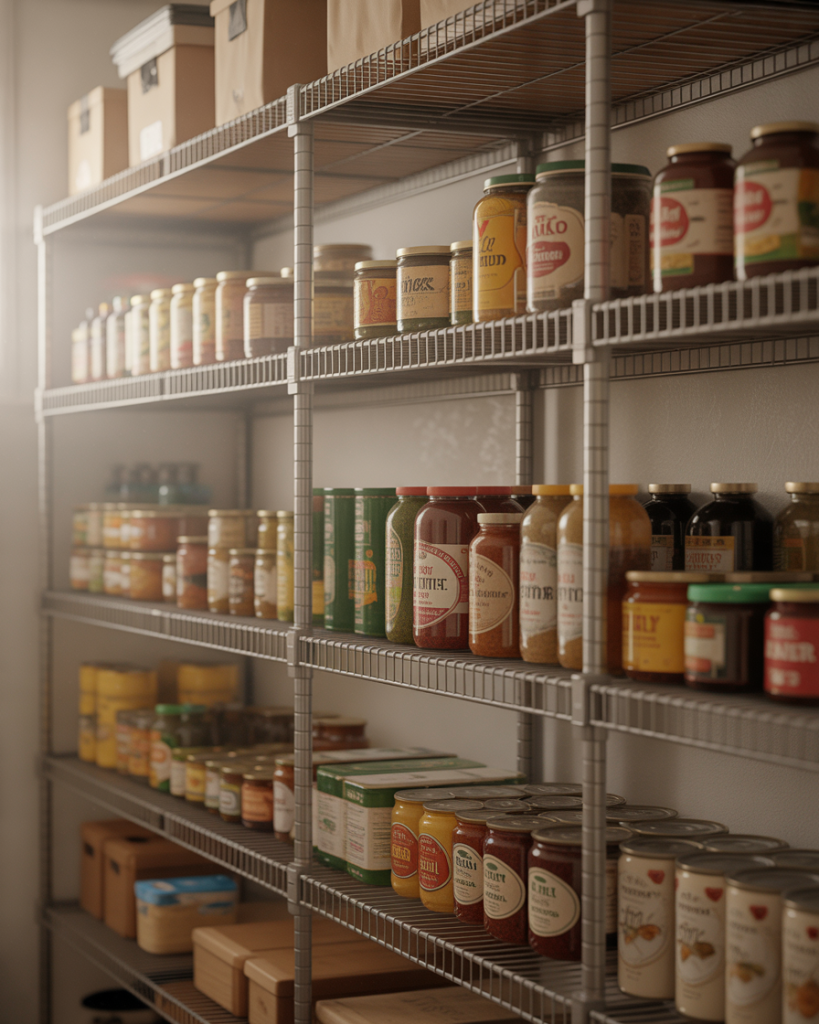
Common mistakes include skipping liners to save money, then spending far more time frustrated by unstable containers and items that fall through gaps. The liner investment is minimal but the daily annoyance it eliminates is significant. Many American homeowners inherit wire shelving in new construction or builder-grade homes and assume they’re stuck with subpar storage. These simple optimizations prove that even basic materials can function beautifully with the right accessories. It’s about working with what you have instead of waiting for perfect conditions.
Conclusion
The right pantry organization system grows with your household, adapts to your space, and makes daily routines smoother rather than creating new maintenance burdens. Whether you’re working with a sprawling walk-in or a narrow closet, these ideas offer starting points that you can customize to fit your specific needs, budget, and aesthetic preferences. Share your favorite organizing wins or challenges in the comments—we’d love to hear what’s working in your home and what you’re still figuring out.