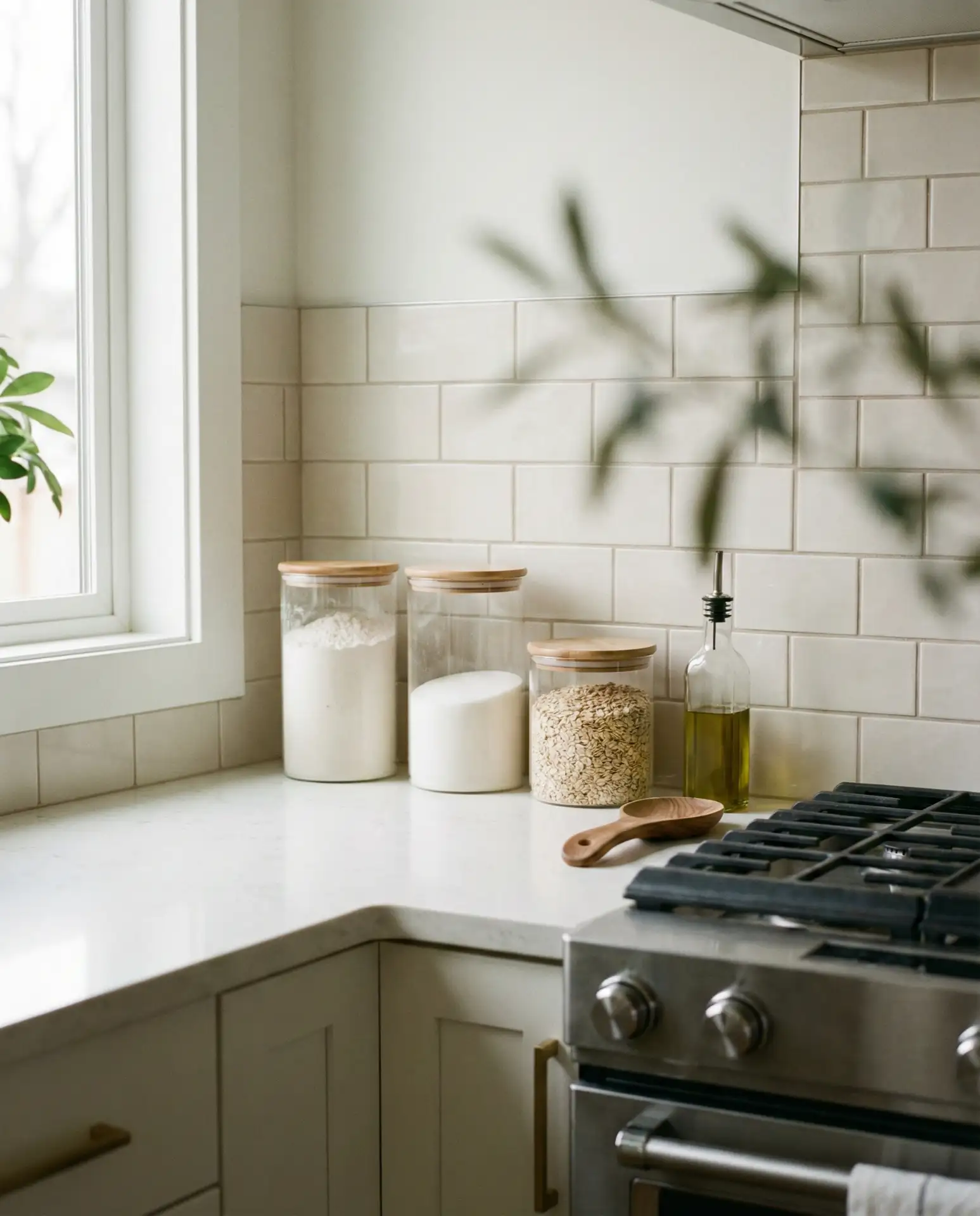
Sage green kitchens have become one of the most sought-after design trends heading into 2026, blending the calming essence of nature with the clean functionality that American homeowners crave. Whether you’re scrolling through Pinterest for a full remodel or just looking to refresh your space with new paint or accessories, sage green offers a versatile palette that works beautifully in farmhouse, modern, and traditional settings alike. This shade pairs effortlessly with natural wood, crisp white, dramatic black countertops, and even unexpected pops of pink. In this guide, you’ll discover inspiring sage green kitchen ideas that showcase how to bring this timeless color into your home with style, warmth, and practicality.
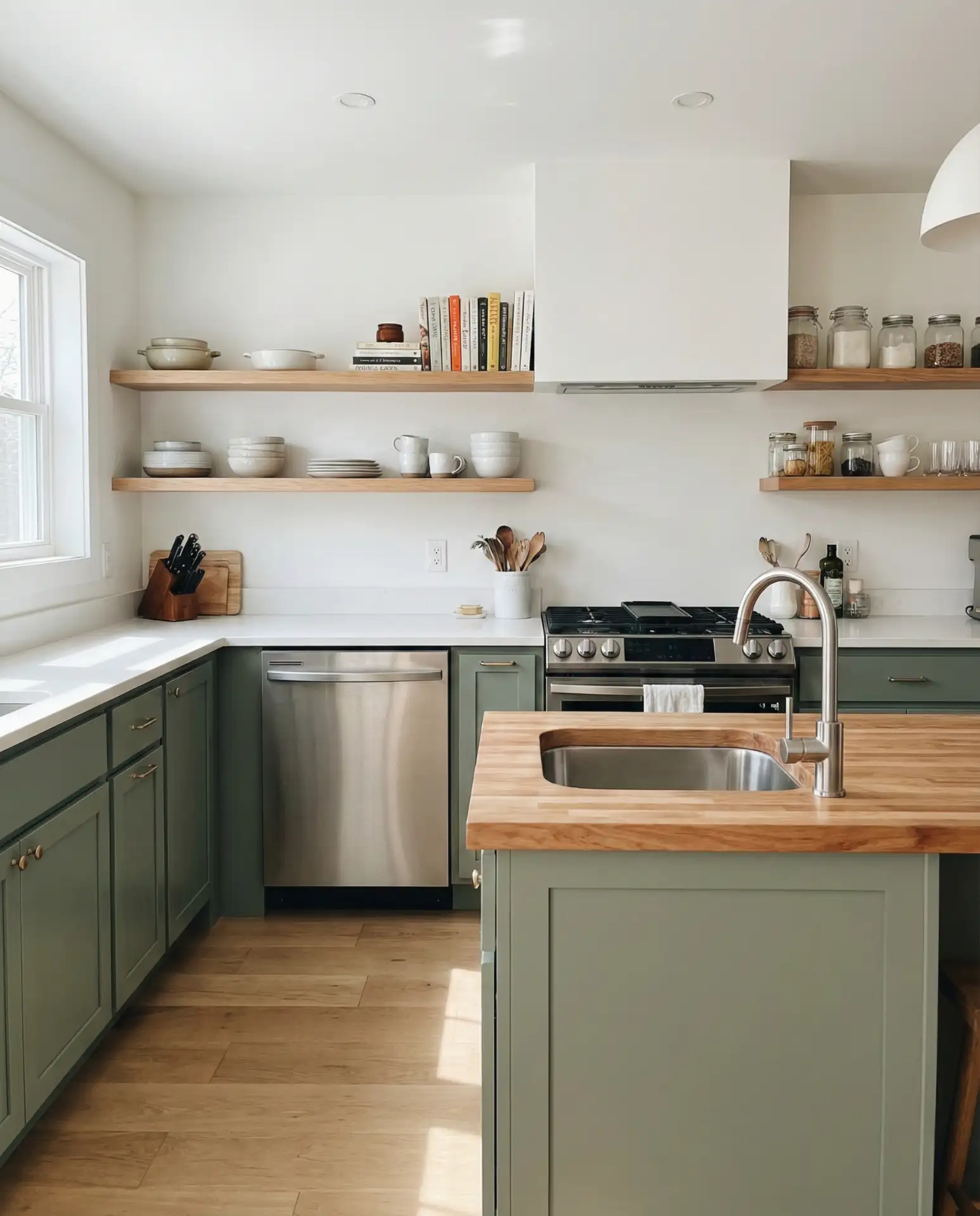
1. Sage Green Cabinets with Butcher Block Countertops
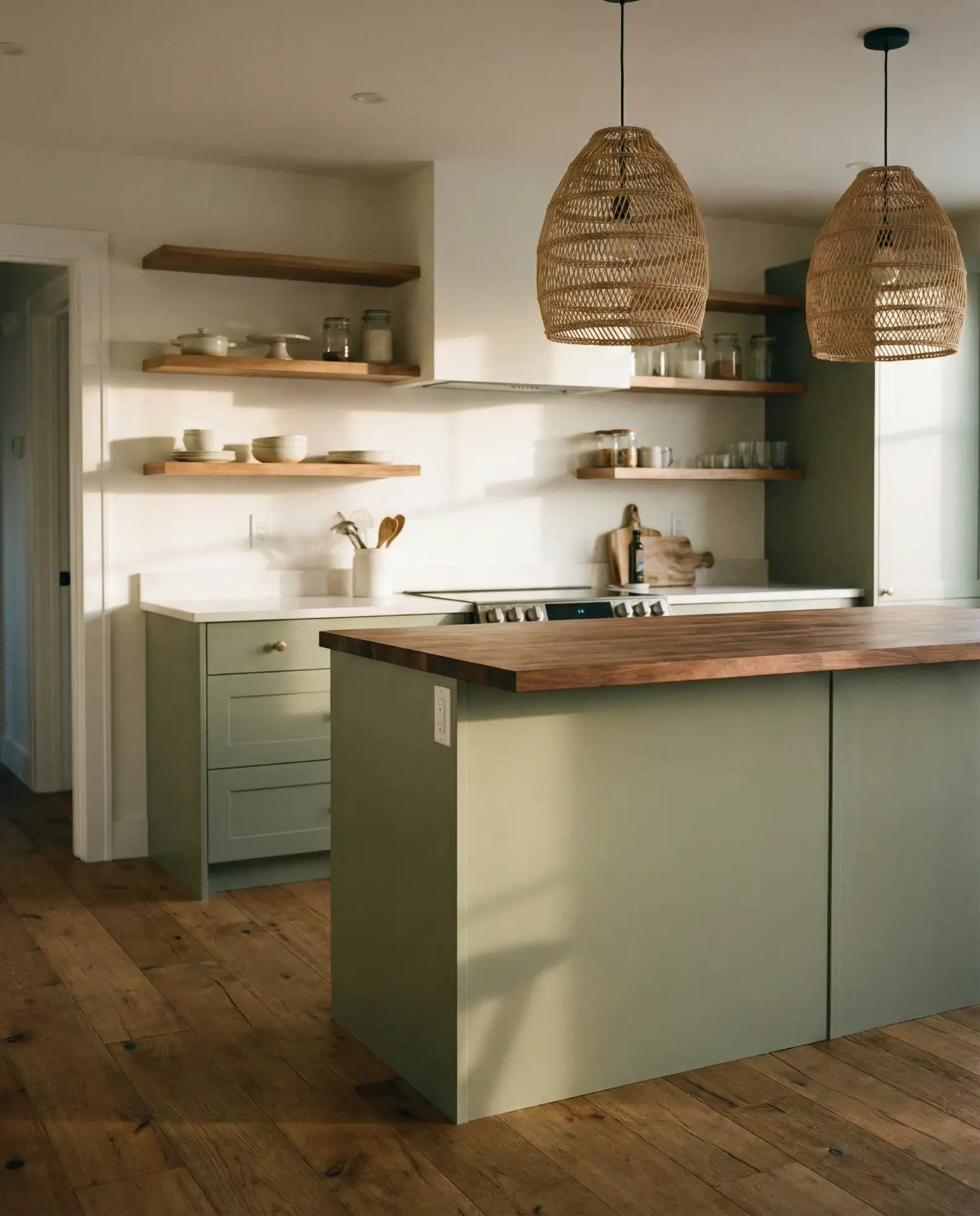
Pairing sage green cabinets with warm butcher block countertops creates an inviting, organic kitchen that feels both modern and farmhouse-inspired. The natural wood grain adds texture and warmth, while the muted green brings a fresh, calming vibe that works beautifully in open-concept homes. This combination is especially popular in suburban kitchens across the Midwest and Pacific Northwest, where homeowners value durability and timeless appeal.
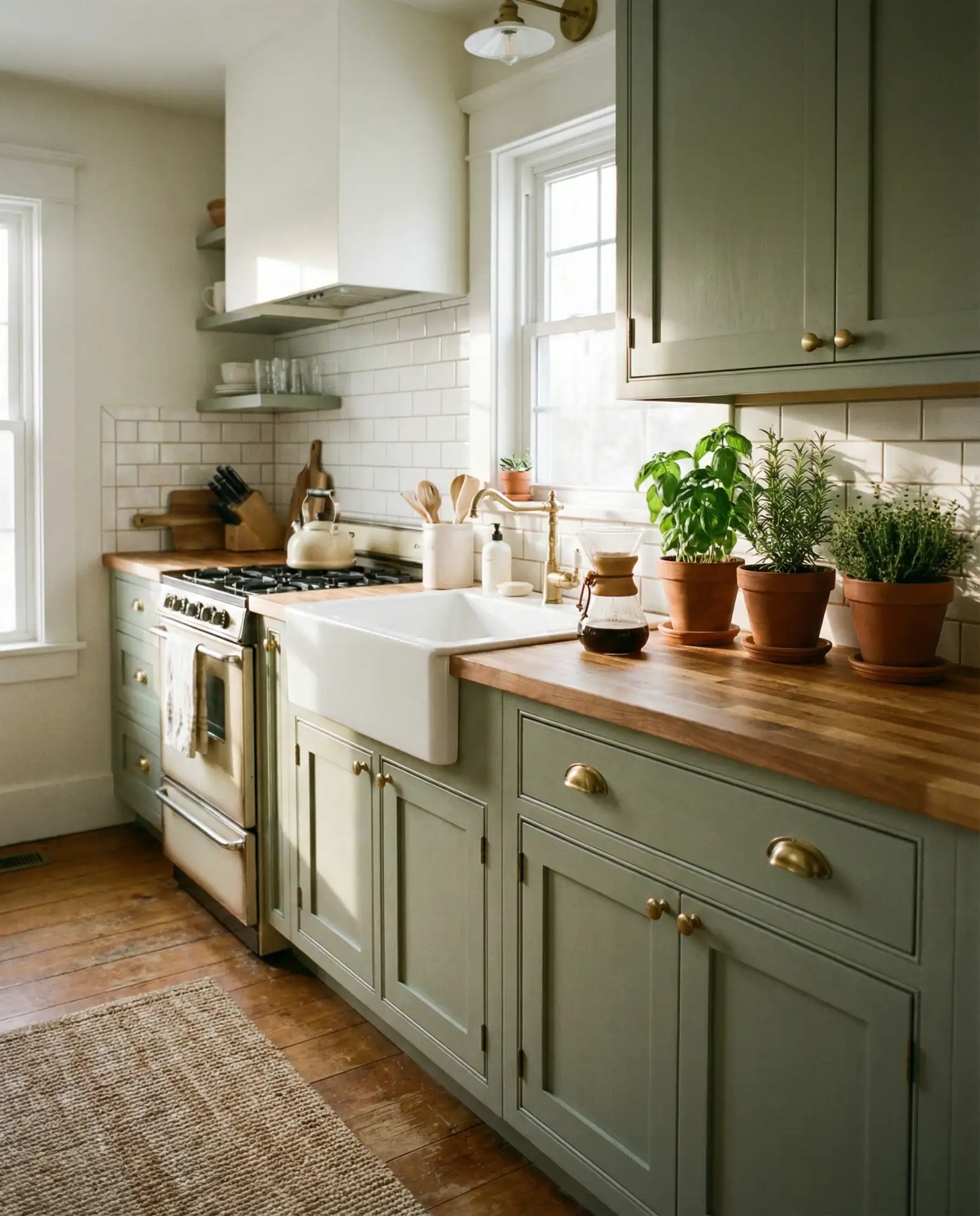
This pairing also ages gracefully. Butcher block develops a rich patina over time, making small scratches and wear part of its charm rather than a flaw. Many homeowners in Texas and California appreciate this low-maintenance elegance, especially in busy family kitchens where real life happens. Seal the wood properly, and it’ll handle daily meal prep with ease while keeping that warm, lived-in look intact.
2. Sage Green Farmhouse Kitchen with Open Shelving
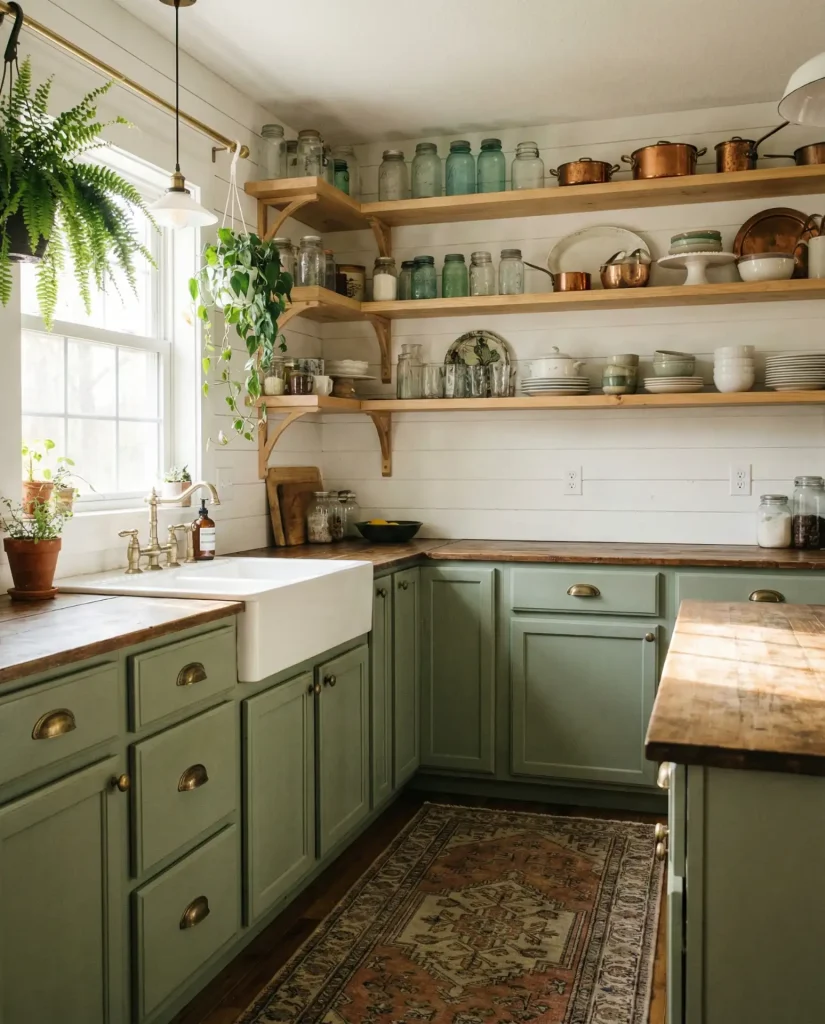
A sage green farmhouse kitchen with open shelving brings rustic charm into the modern era. Exposed wooden or metal shelves showcase your favorite dishes, glassware, and decor, creating a personalized display that feels curated rather than cluttered. The soft green hue balances the raw, utilitarian vibe of open storage, making the space feel intentional and warm rather than cold or industrial.
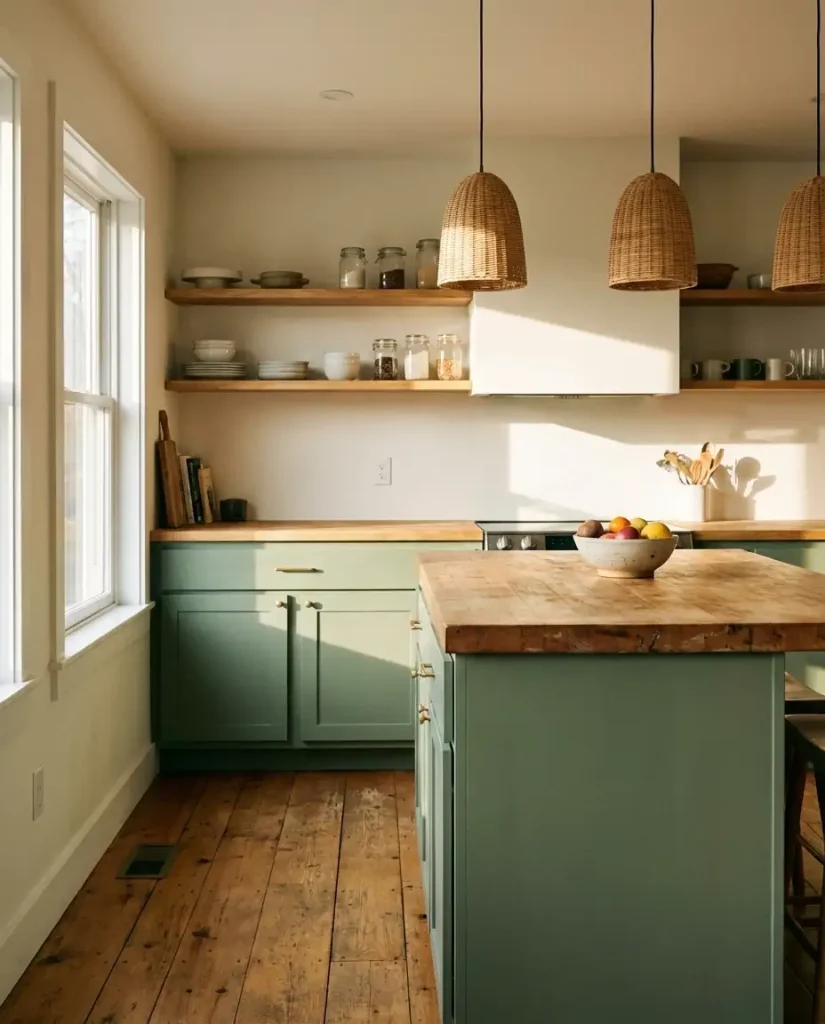
Where it works best: in homes with high ceilings or galley kitchens where upper cabinets can make the space feel cramped. Open shelving visually expands the room and encourages you to keep only what you actually use. Just be prepared to dust more often—exposed shelves collect grime faster than closed cabinets, especially near the stove.
3. Sage Green and White Colour Scheme
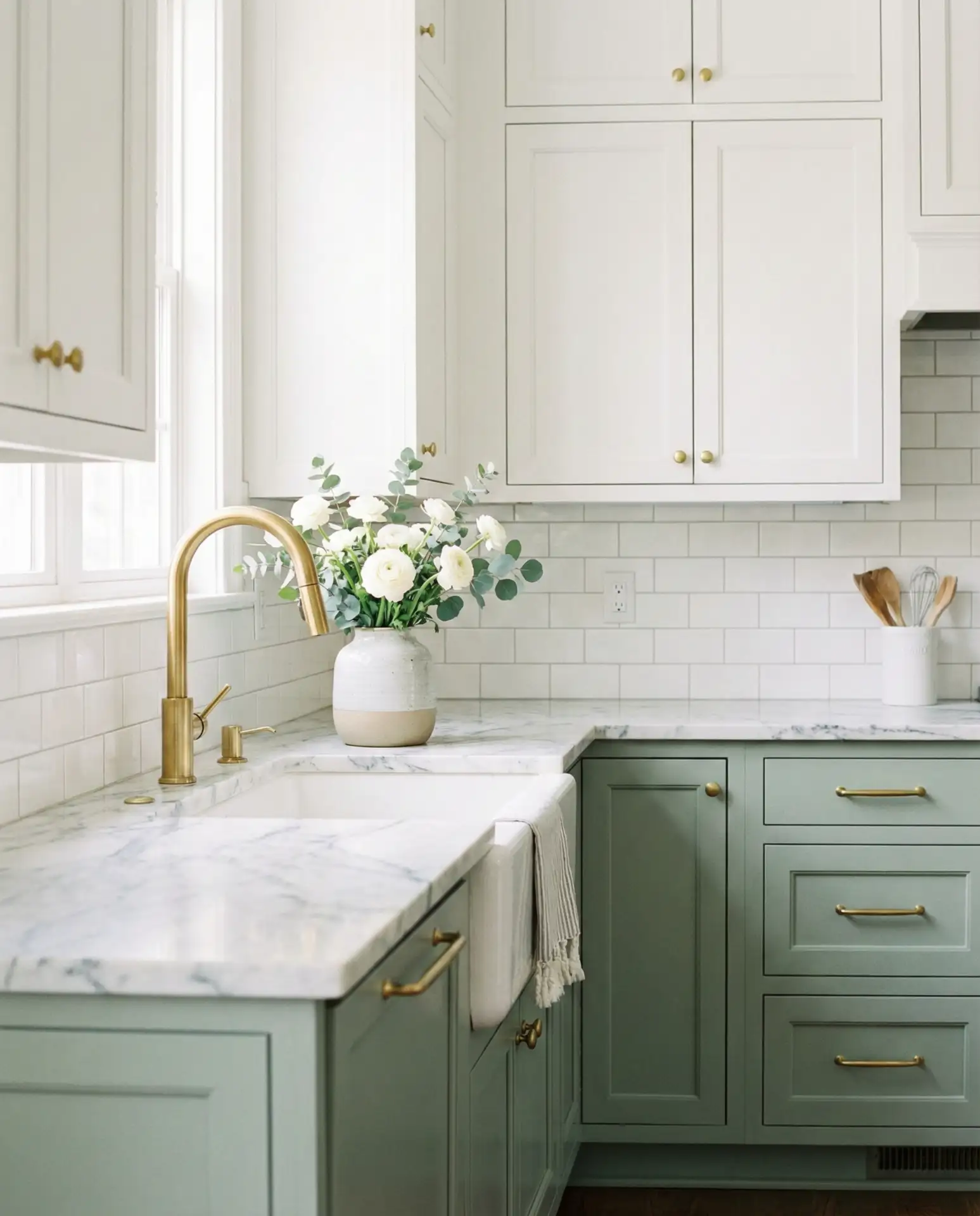
The classic sage green and white color scheme is clean, airy, and endlessly adaptable. White walls, countertops, or backsplash tiles brighten the space and let the green cabinetry take center stage without overwhelming the room. This combination works beautifully in smaller kitchens or homes with limited natural light, as the white reflects brightness while the sage adds just enough color to keep things interesting.
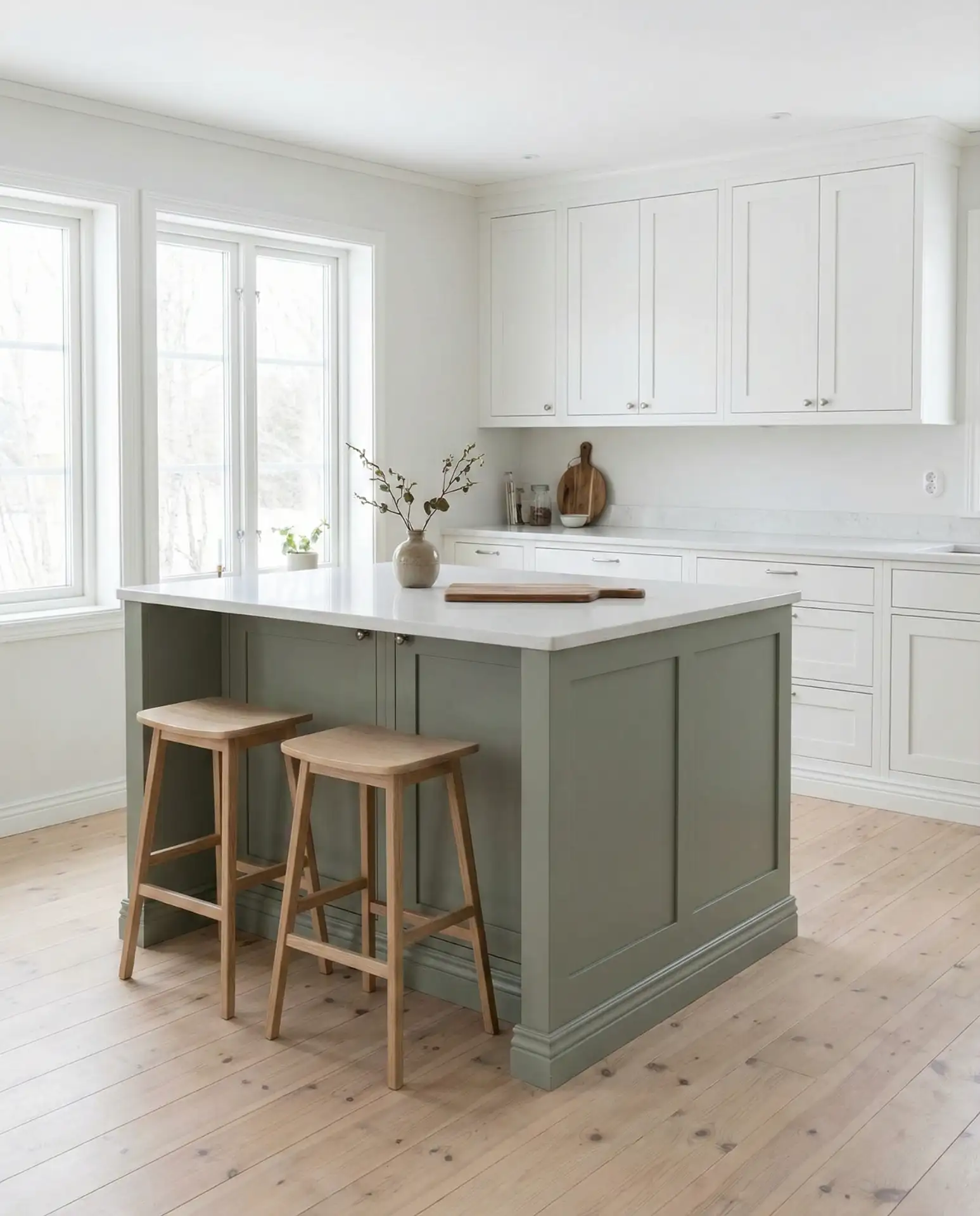
A friend of mine repainted her dated oak cabinets sage green and kept everything else white—counters, walls, even the ceiling. The transformation was instant and dramatic, and she spent under $500 on paint and supplies. It’s one of the most budget-friendly ways to modernize a kitchen without a full renovation, and it photographs beautifully for resale.
4. Sage Green Cabinets with Black Granite Countertops
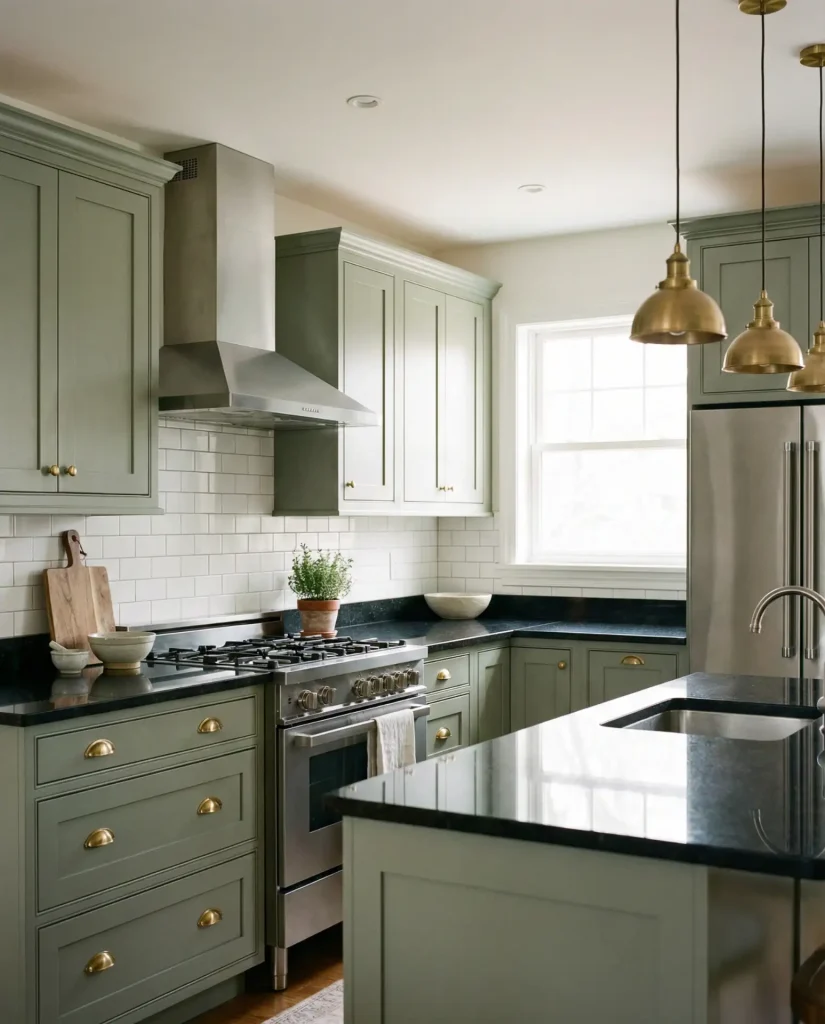
For a bolder, more dramatic look, pair sage green cabinets with black granite countertops. The deep, glossy surface of black granite contrasts beautifully with the soft, muted green, adding sophistication and a touch of luxury. This combination feels grounded and timeless, ideal for homeowners who want a kitchen that doesn’t follow fleeting trends but still feels fresh and contemporary.
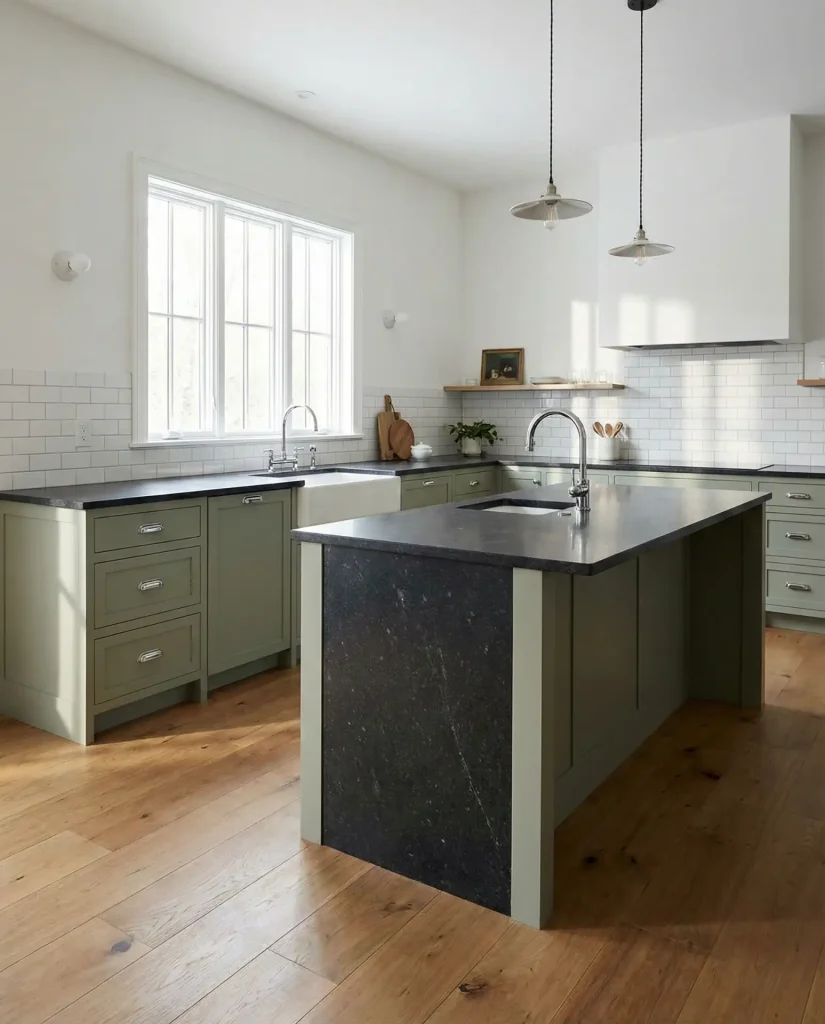
In Southern states like Georgia and North Carolina, black granite remains a top choice because it hides stains and scratches better than lighter stones—practical for families and serious home cooks. The green softens the intensity of the black, preventing the kitchen from feeling too heavy or dark. Add warm brass or copper hardware to tie the two colors together seamlessly.
5. Light Sage Green Walls with White Cabinets
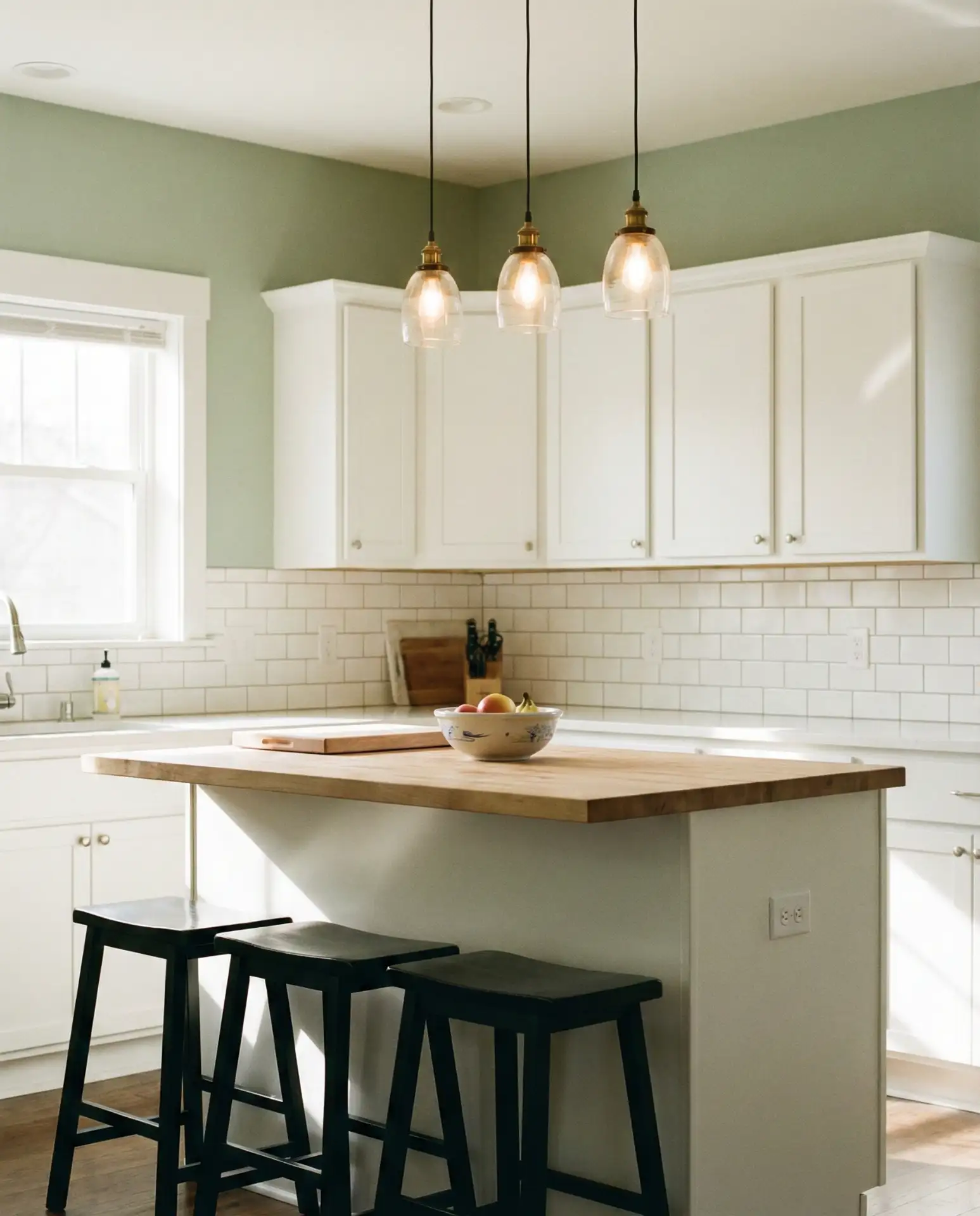
If you’re not ready to commit to sage green cabinets, try painting your walls a light sage shade and keeping your white cabinets intact. This approach adds color without the permanence or expense of cabinet painting, and it’s easy to change if your tastes shift. The pale green on the walls creates a serene backdrop that enhances natural wood tones, stainless steel appliances, and white cabinetry beautifully.
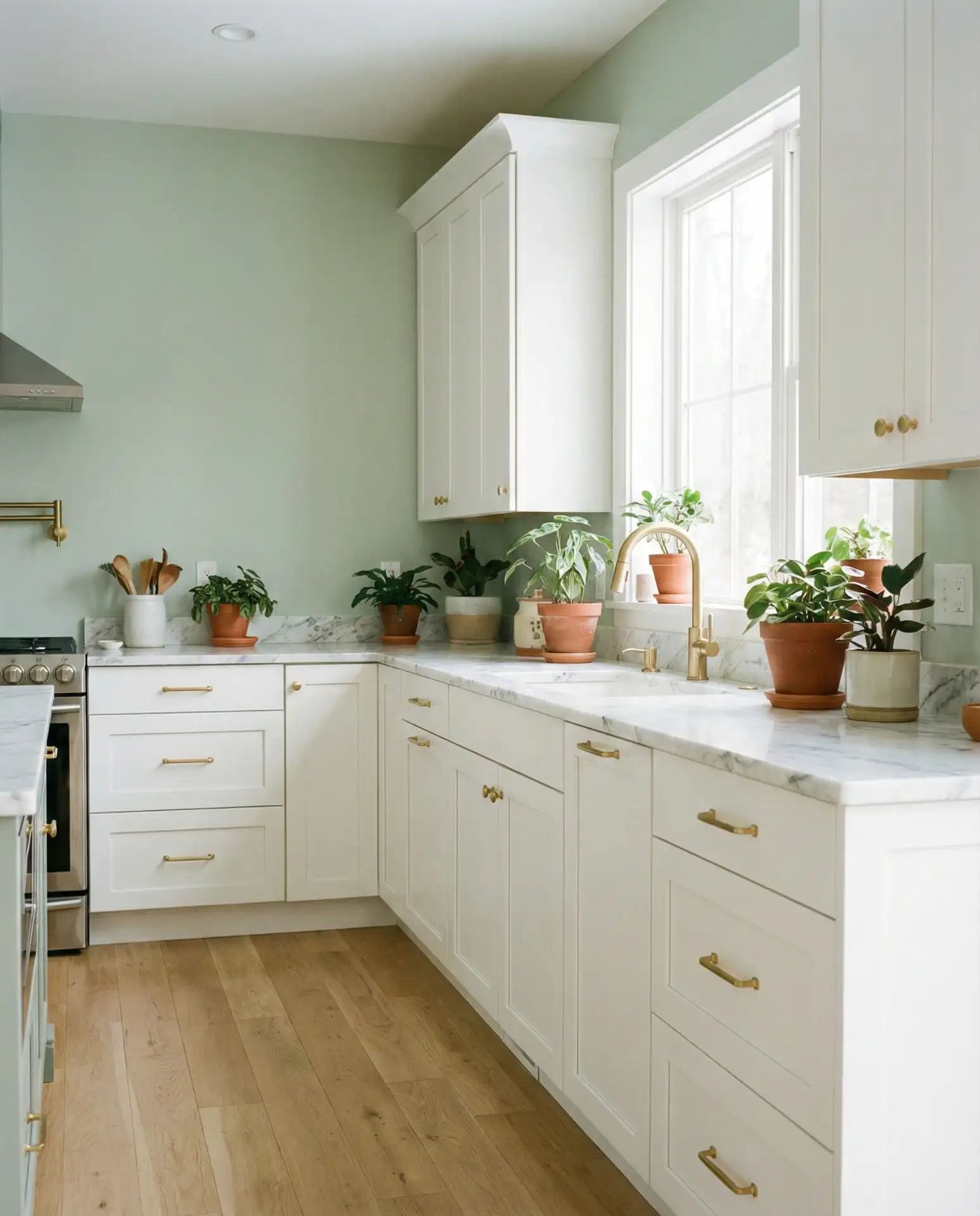
This works especially well in rental kitchens or homes where you’re testing out the color before diving into a full remodel. Paint is forgiving and inexpensive, so you can experiment with different shades of sage until you find the one that feels right. Many designers recommend sampling a few greens on poster boards and moving them around the kitchen at different times of day to see how the light affects the tone.
6. Modern Sage Green Kitchen with Sleek Hardware
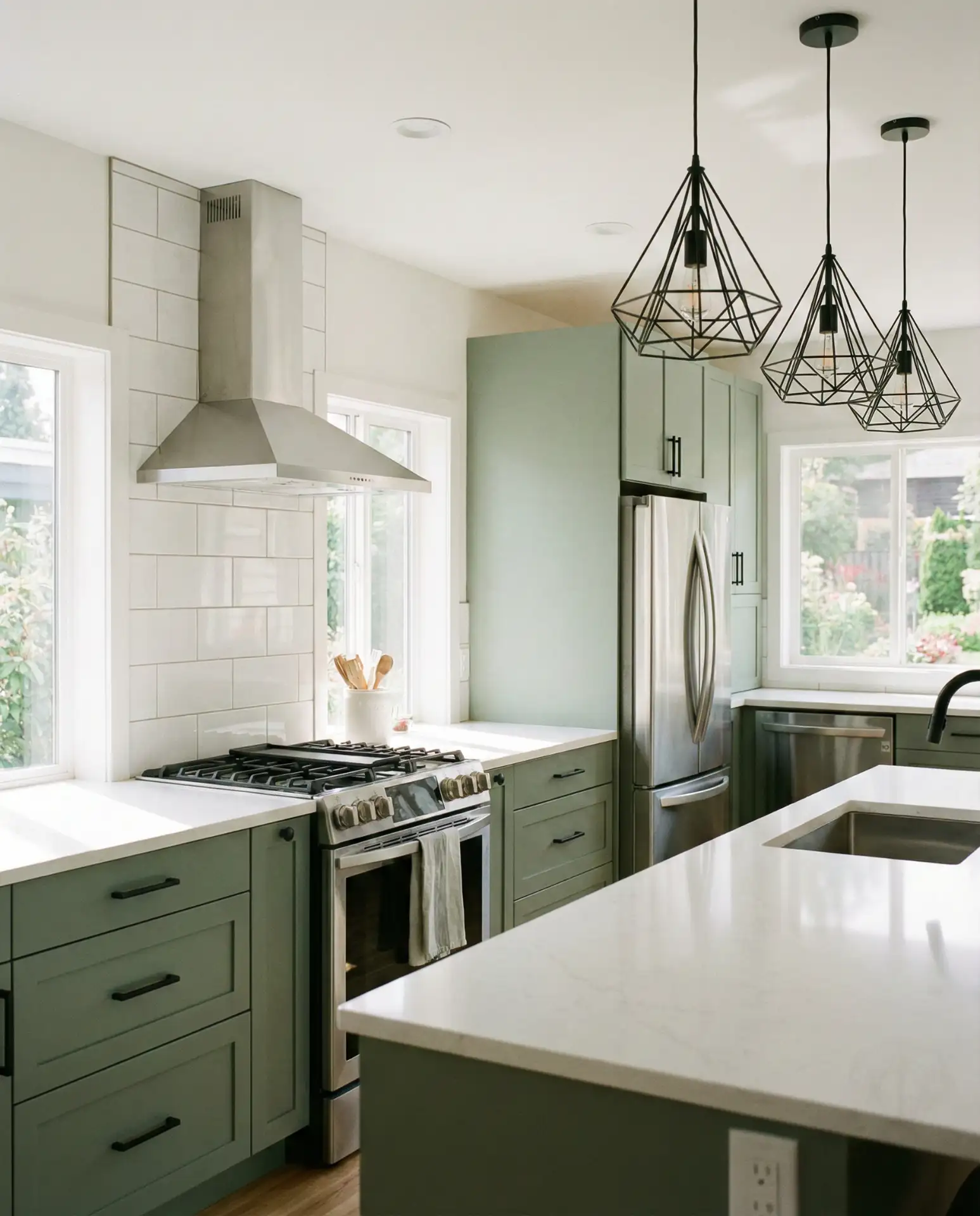
A modern sage green kitchen pairs flat-panel or handleless cabinets with minimalist hardware for a streamlined, contemporary look. The green feels fresh and unexpected in a modern context, breaking away from the typical all-white or all-gray kitchens that dominated the last decade. Chrome, matte black, or brushed nickel finishes on faucets and pulls keep the space feeling crisp and current.
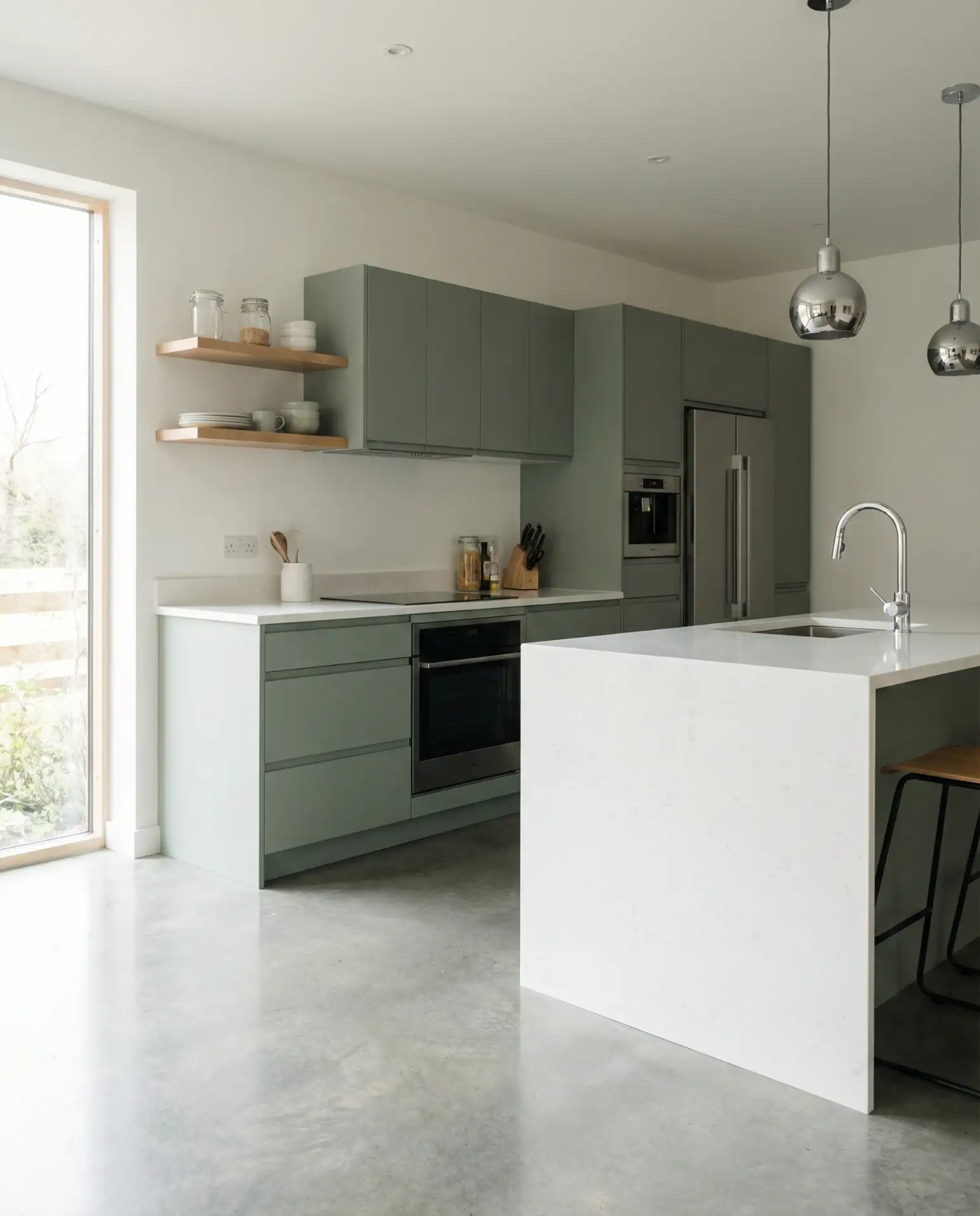
Common mistake: pairing sage green with overly ornate or traditional hardware. If you want a modern look, skip the antique brass knobs and opt for simple bar pulls or recessed handles. The goal is to let the color be the star without competing details. In cities like Seattle and Denver, this style resonates with younger homeowners who want personality without sacrificing clean lines.
7. Sage Green Kitchen with Pink Accents
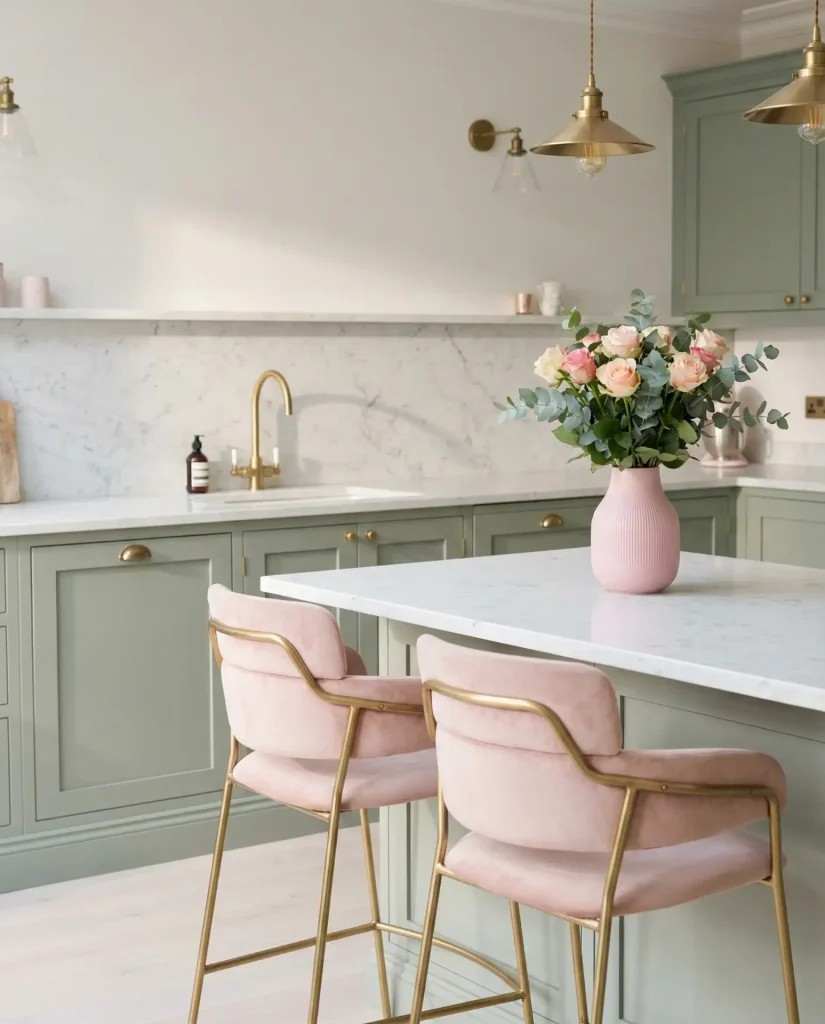
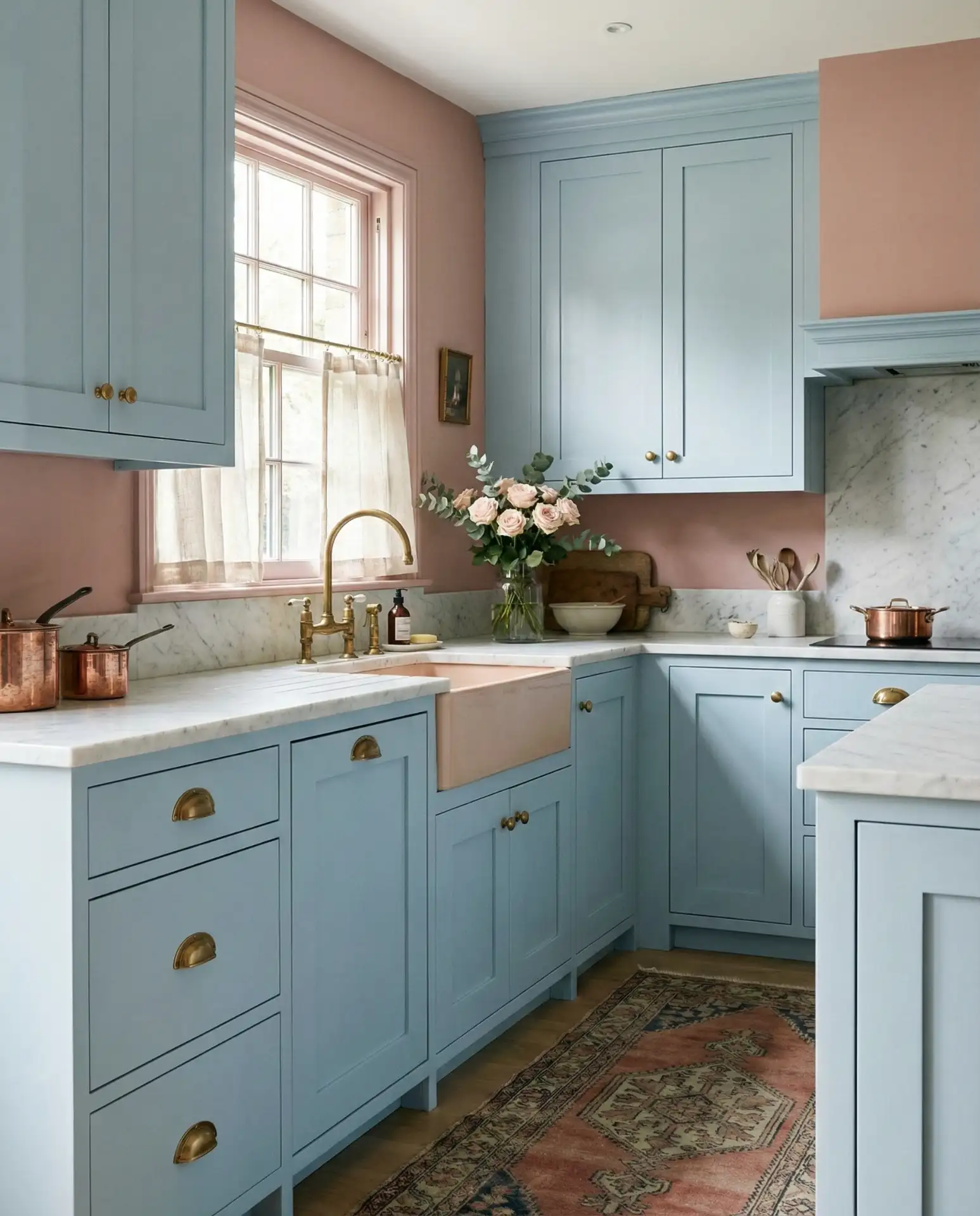
For a playful, romantic twist, introduce pink and sage green into your kitchen palette. This unexpected pairing feels fresh and feminine without being overly sweet, especially when you choose dusty rose or terracotta pink tones. The combination works beautifully in decor elements like bar stools, pendant lights, dishware, or even a pink kitchen island paired with sage green perimeter cabinets.
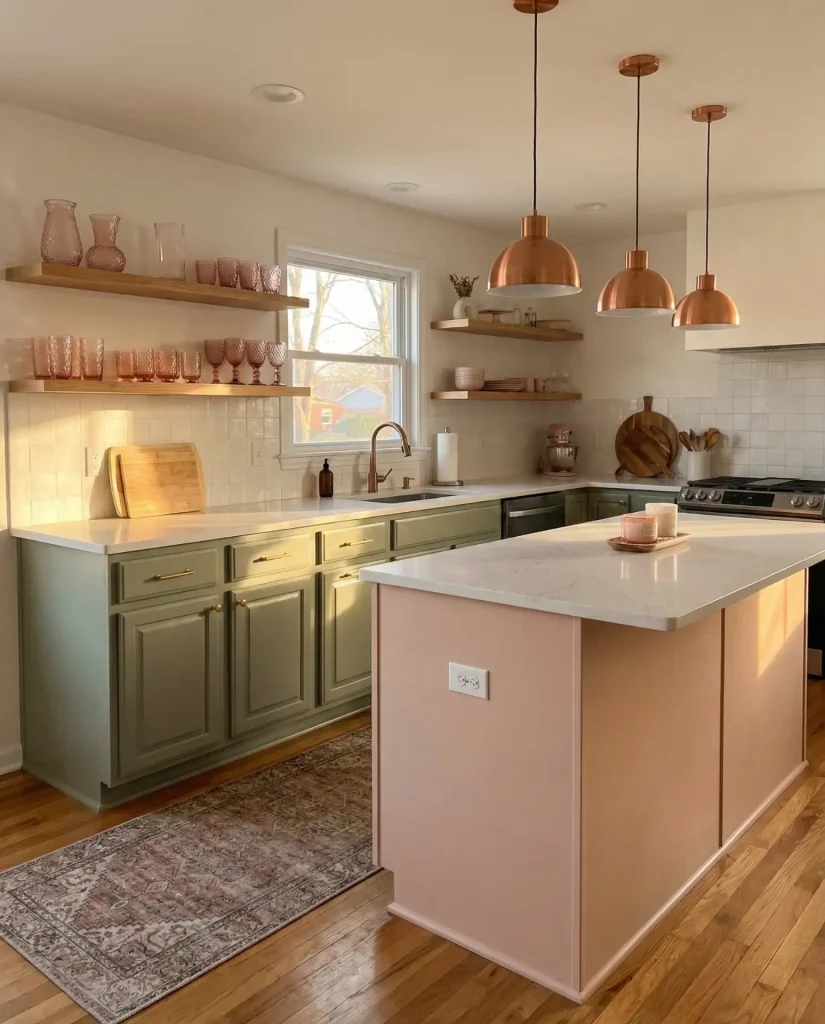
This color scheme has gained traction on Pinterest, especially among millennials renovating older homes in cities like Austin and Portland. The key is restraint—too much pink can tip the balance into nursery territory. Use it sparingly in textiles, small appliances, or wall art, and let the sage green anchor the space with its earthy calm.
8. Sage Green Cupboards with Open Storage Solutions
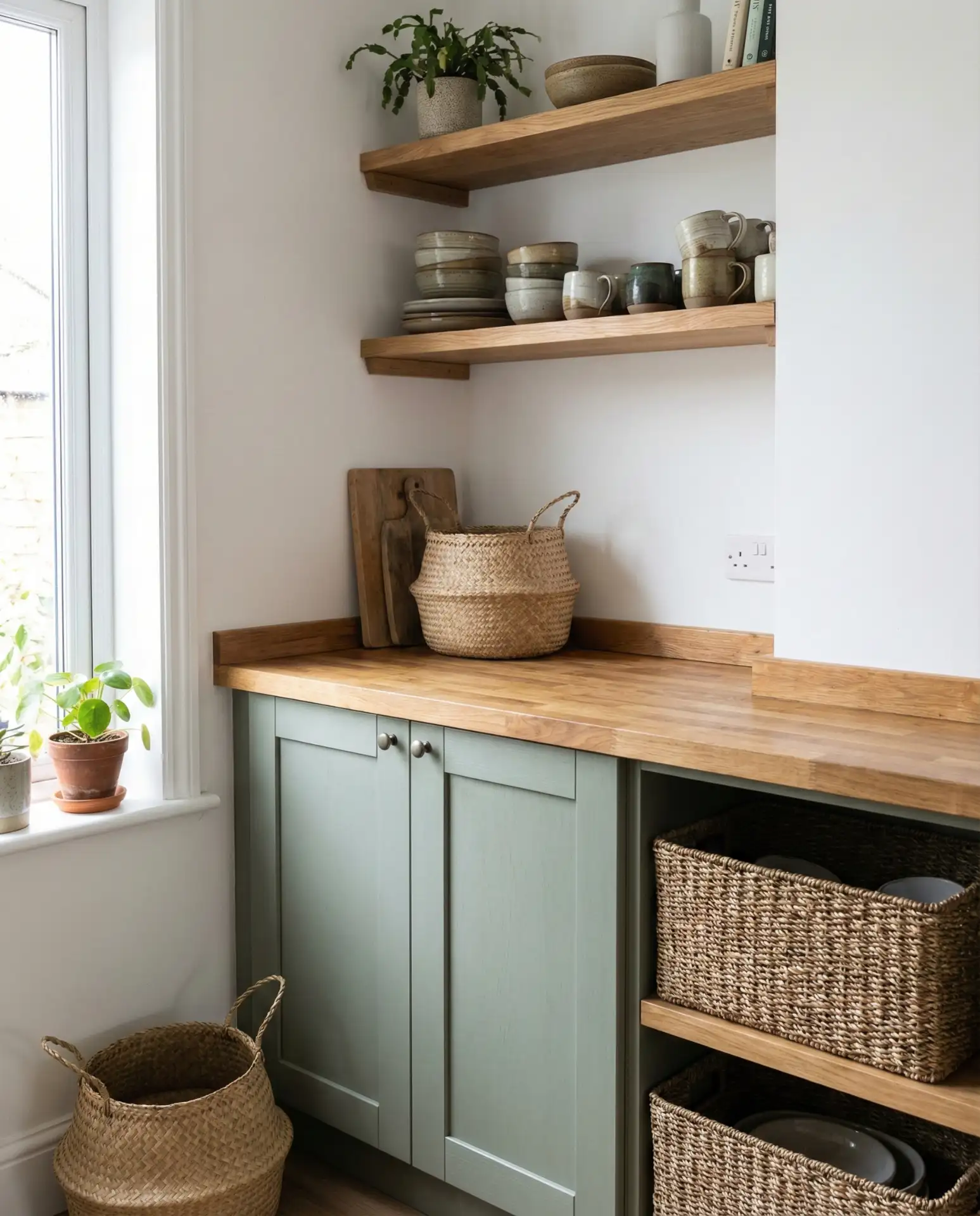
Replacing some upper cupboards with open shelving or glass-front cabinets creates visual interest and makes your kitchen feel less enclosed. Sage green lower cabinets paired with open upper storage bring balance and airiness, especially in narrow or galley-style kitchens where traditional upper cabinets can feel oppressive. This setup also encourages you to keep your dishware and glassware organized and attractive.
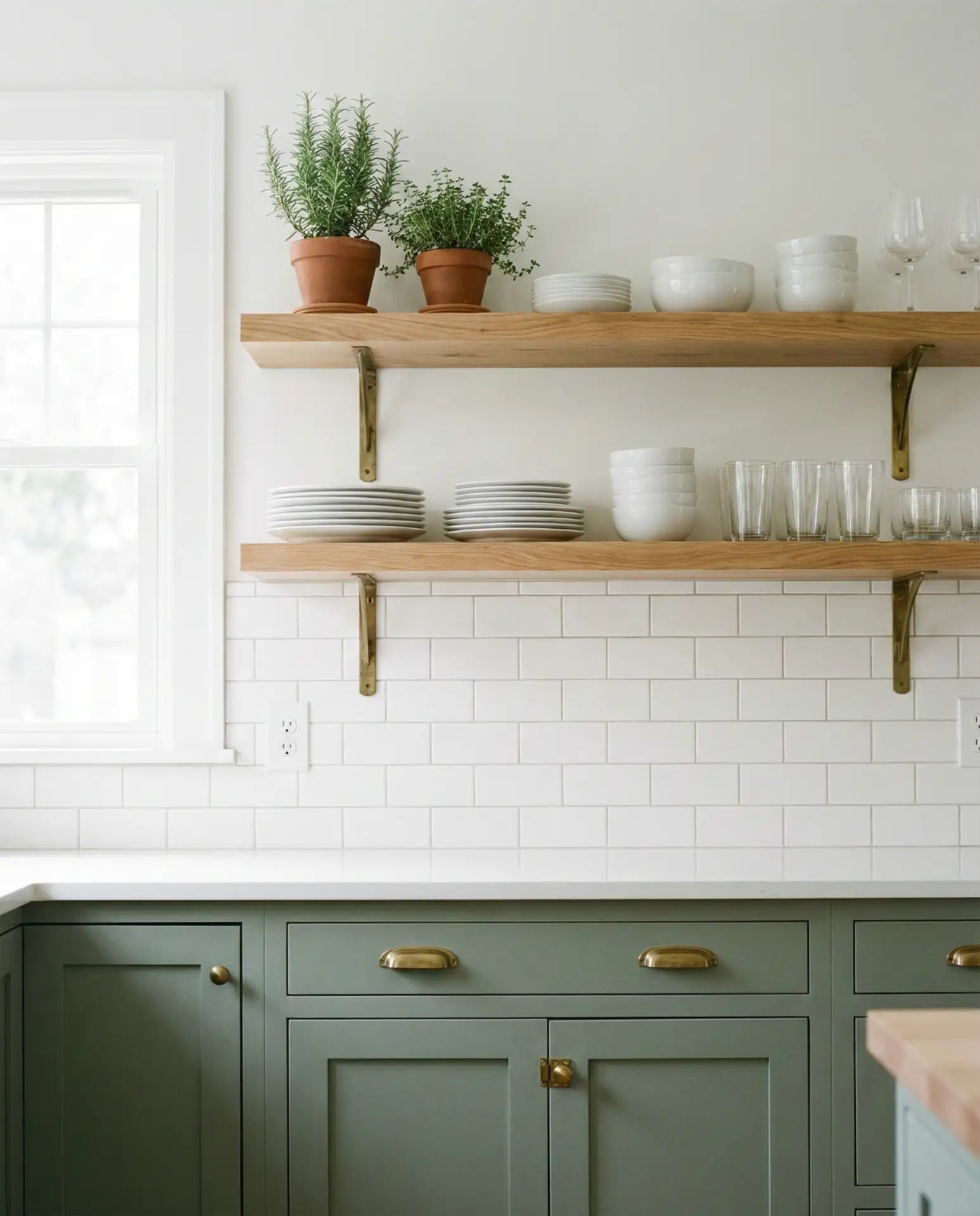
Budget angle: converting some cabinets to open shelves is a DIY-friendly project that costs almost nothing if you’re handy with a drill. Simply remove the cabinet doors, sand and paint the interior if needed, and style your shelves with items you already own. It’s a quick, affordable way to modernize your kitchen and make the most of your existing cabinetry.
9. Dark Sage Green Cabinets for Moody Elegance
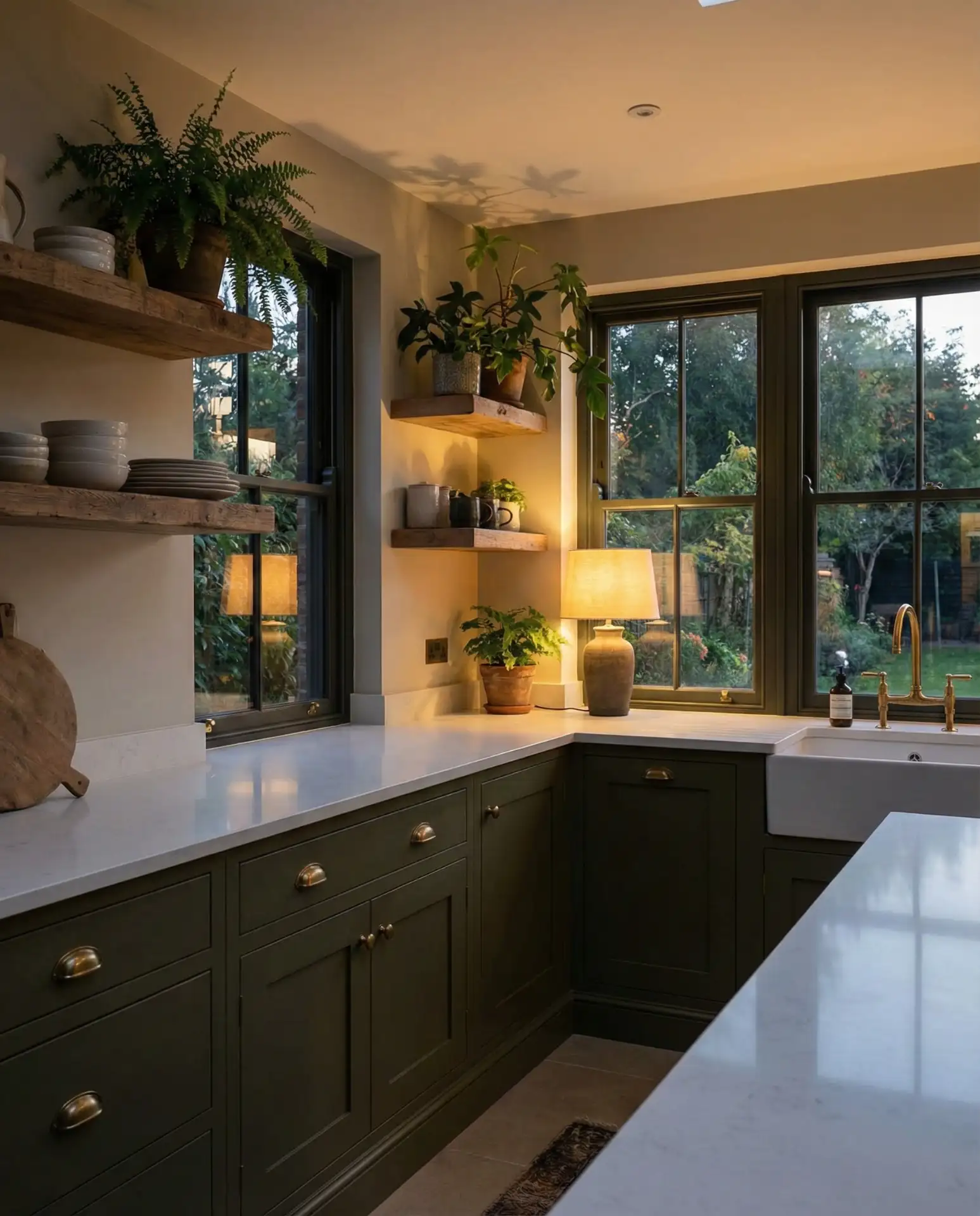
If you love drama, go for dark sage green cabinets that lean toward olive or forest tones. This deeper shade adds richness and sophistication, especially when paired with warm metallics like aged brass or brushed gold. The dark green creates a cocooning, intimate atmosphere that feels both luxurious and grounded, perfect for kitchens with plenty of natural light or statement lighting fixtures.
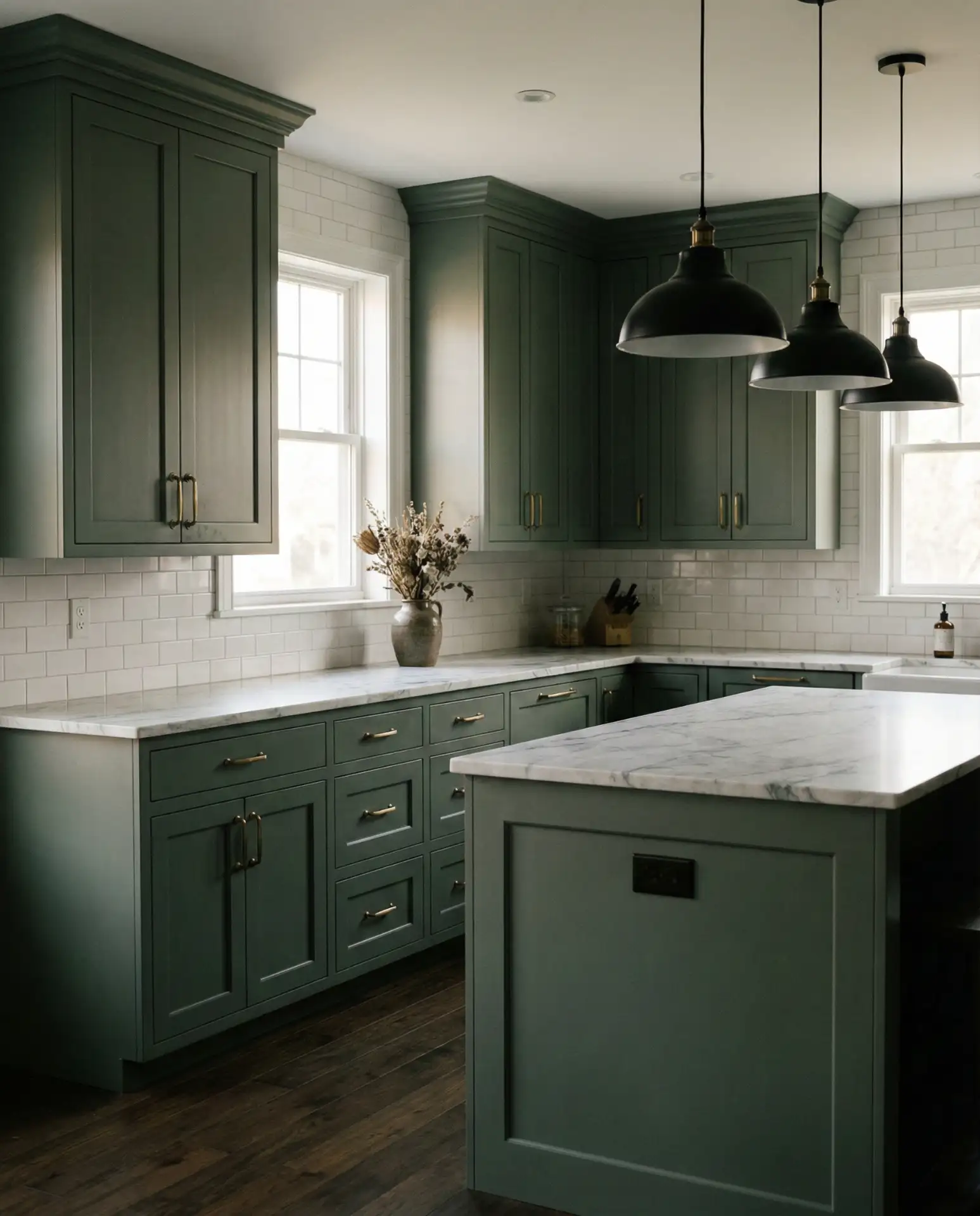
In historic homes across New England and the Mid-Atlantic, dark sage green feels period-appropriate without being overly traditional. It nods to colonial color palettes but feels fresh when styled with contemporary lighting and open layouts. The darker tone also hides fingerprints and smudges better than lighter colors, making it practical for high-traffic family kitchens.
10. Sage Green Kitchen with Natural Wood Elements
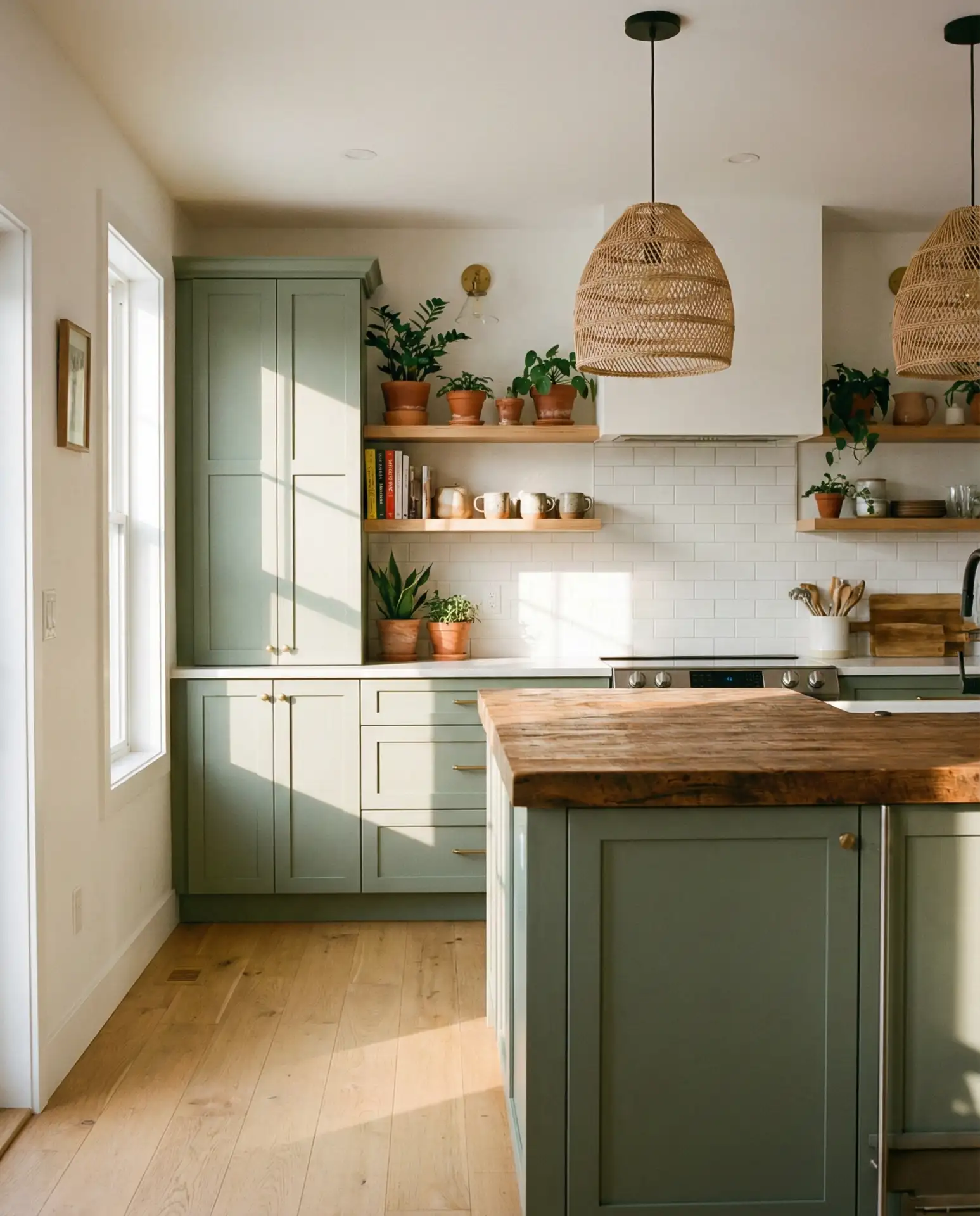
Combining sage green cabinetry with wood and natural materials creates a kitchen that feels organic, warm, and timeless. Think wooden worktop islands, reclaimed wood beams, oak floors, or walnut open shelving. The earthy tones of wood complement the green beautifully, grounding the space and adding layers of texture that make the kitchen feel lived-in and welcoming.
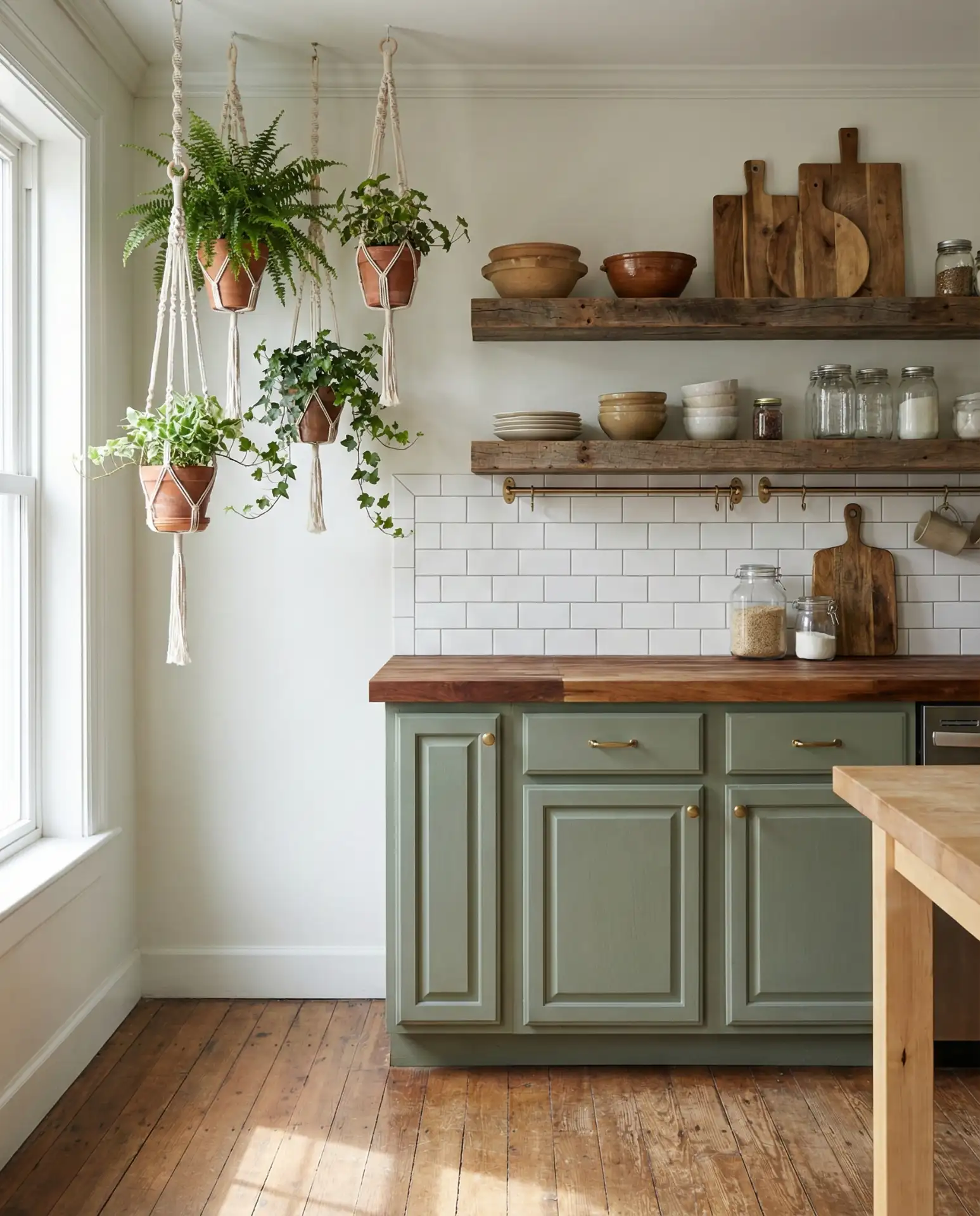
Expert-style commentary: Interior designers often recommend this combination for clients who want a kitchen that feels both current and enduring. The sage green keeps things fresh, while the wood ensures the space won’t feel dated in five years. It’s a smart investment for homeowners planning to stay in their homes long-term or looking to boost resale value.
11. Sage Green Kitchen with Aesthetic Minimalist Design
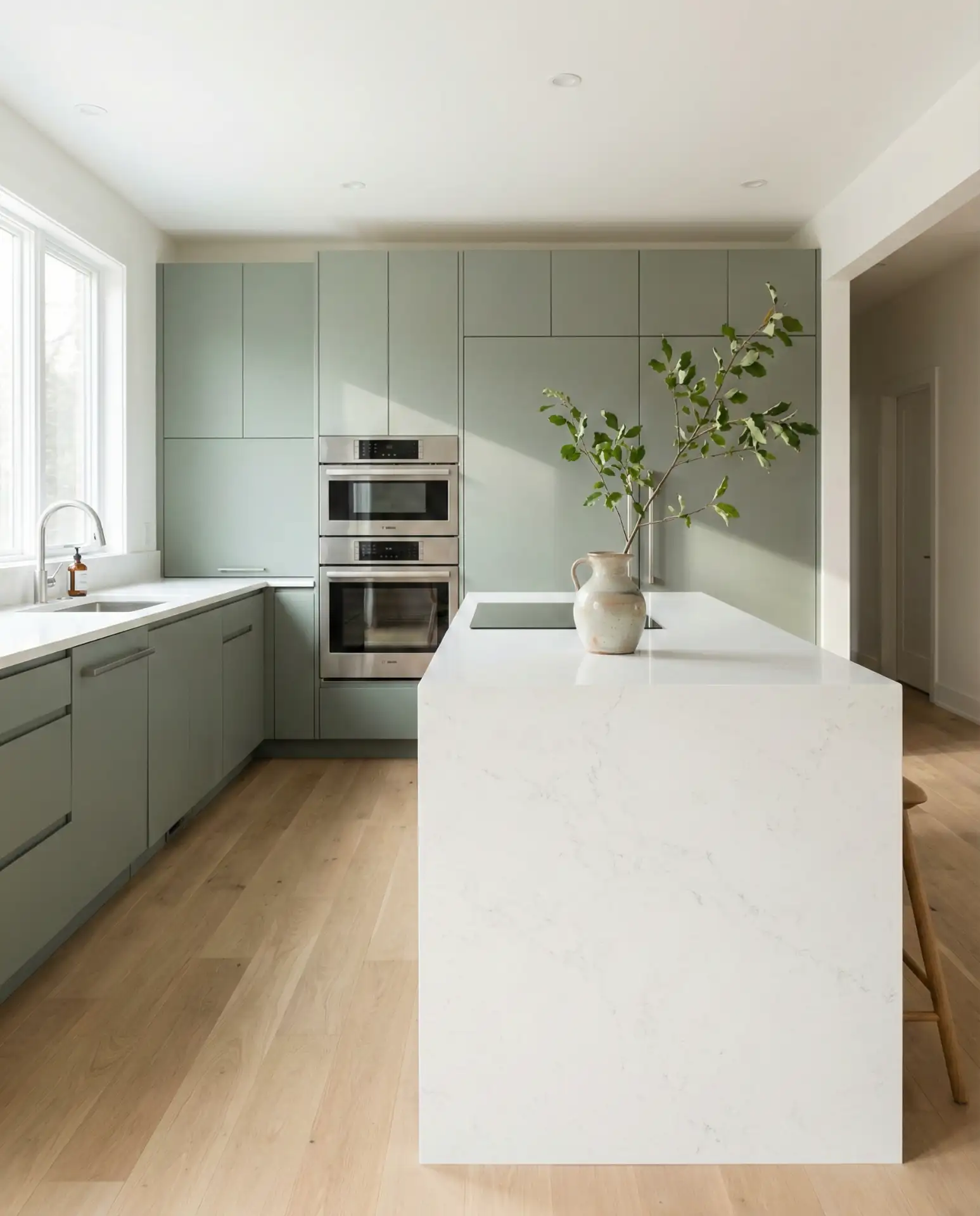
An aesthetic minimalist kitchen in sage green focuses on clean lines, limited clutter, and intentional design choices. Every element serves a purpose, from the handleless cabinets to the streamlined appliances. The sage green adds just enough warmth to keep the space from feeling cold or sterile, making minimalism feel approachable and livable rather than austere.
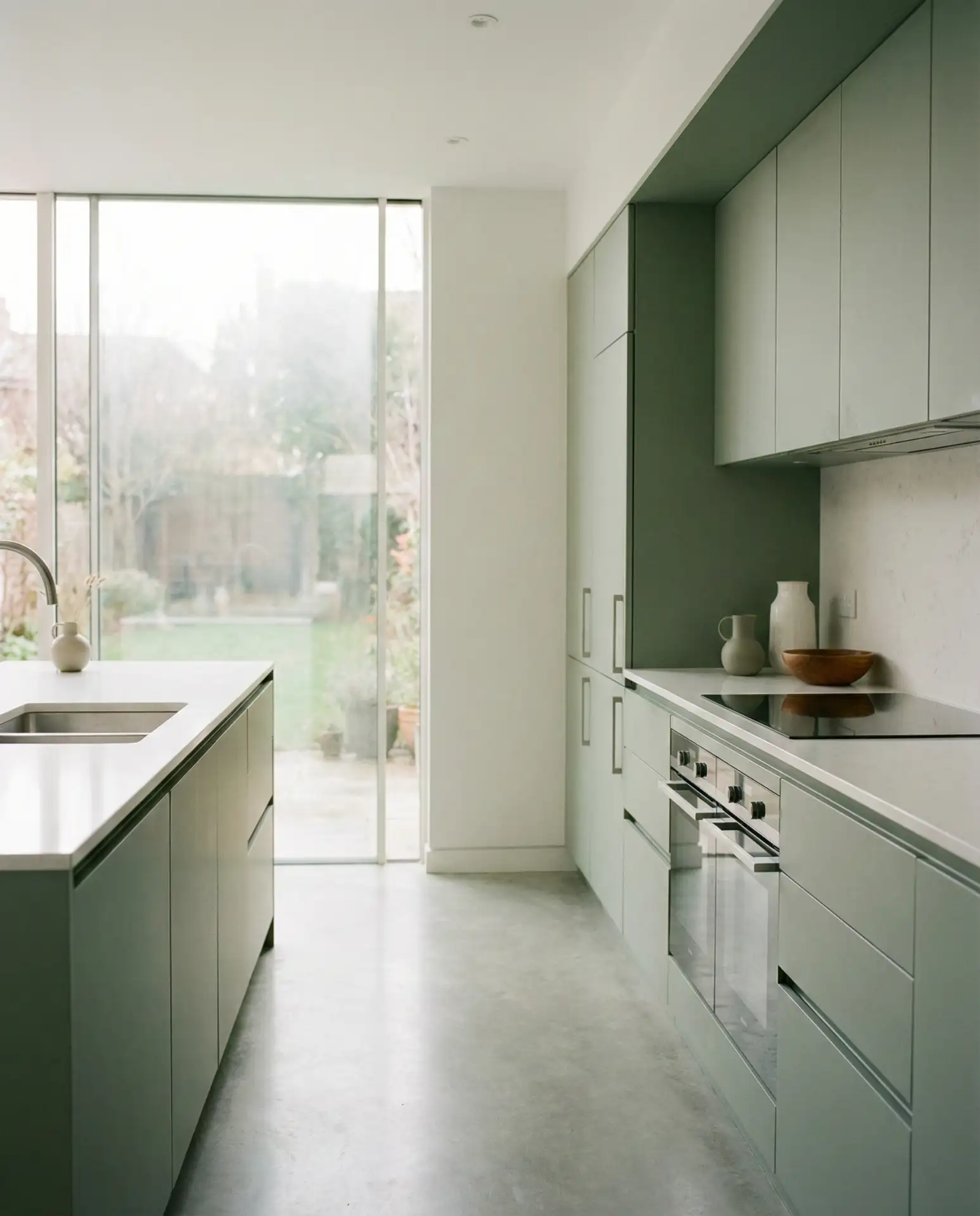
Real homeowner behavior: many people who adopt this style find that it naturally encourages them to keep countertops clear and avoid impulse kitchen gadget purchases. When your space is this visually calm, clutter becomes immediately obvious. It’s a psychological nudge toward a more intentional, less chaotic home—and it photographs beautifully for social media.
12. Sage Green Cabinets with Black Countertops and Gold Fixtures
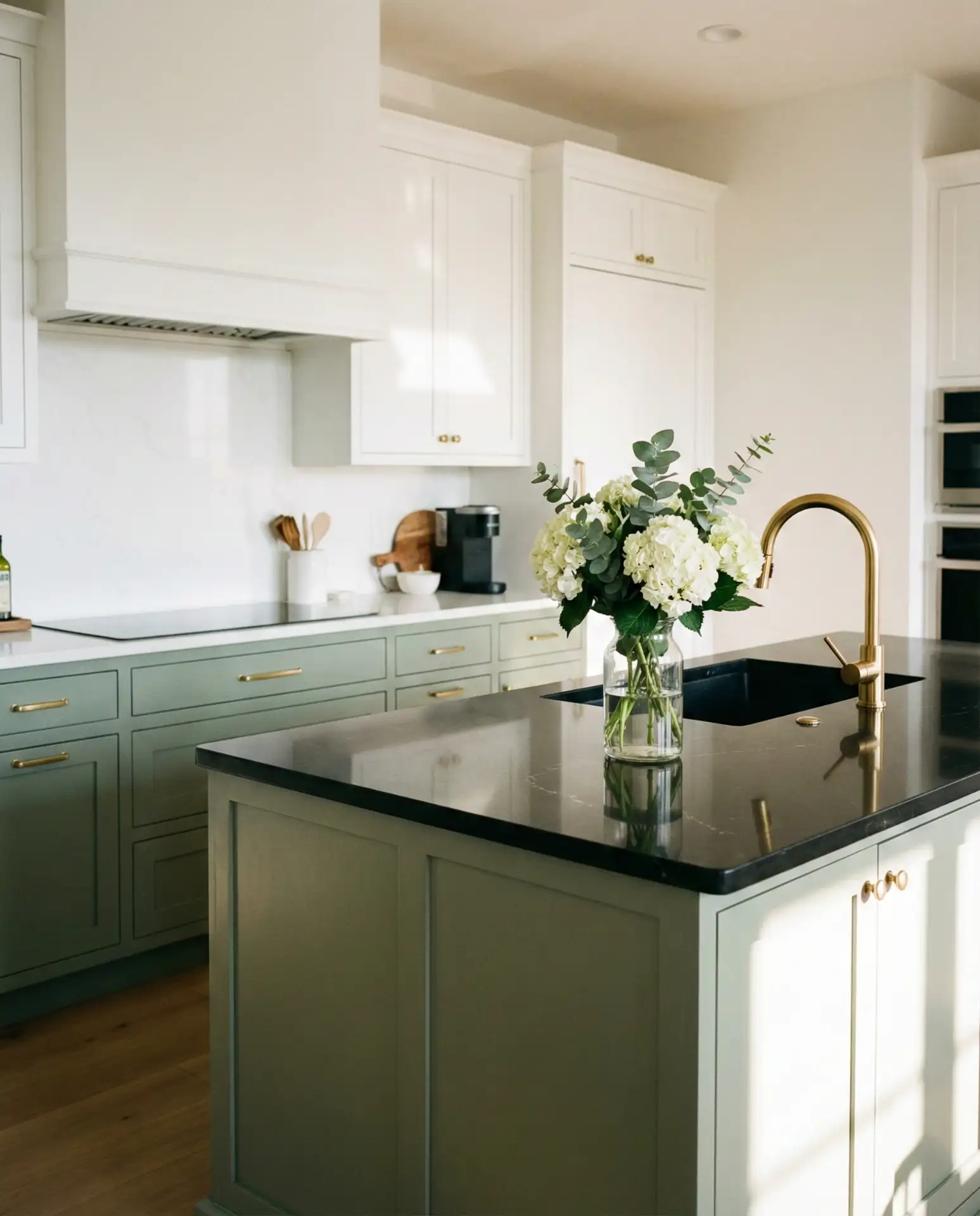
Pairing sage green cabinets with black countertops and warm gold or brass fixtures creates a luxurious, jewel-toned kitchen that feels both classic and contemporary. The black countertop—whether granite, soapstone, or quartz—provides contrast and depth, while the gold hardware and faucets add a touch of glamour. This combination works especially well in larger kitchens where the darker elements won’t overwhelm the space.
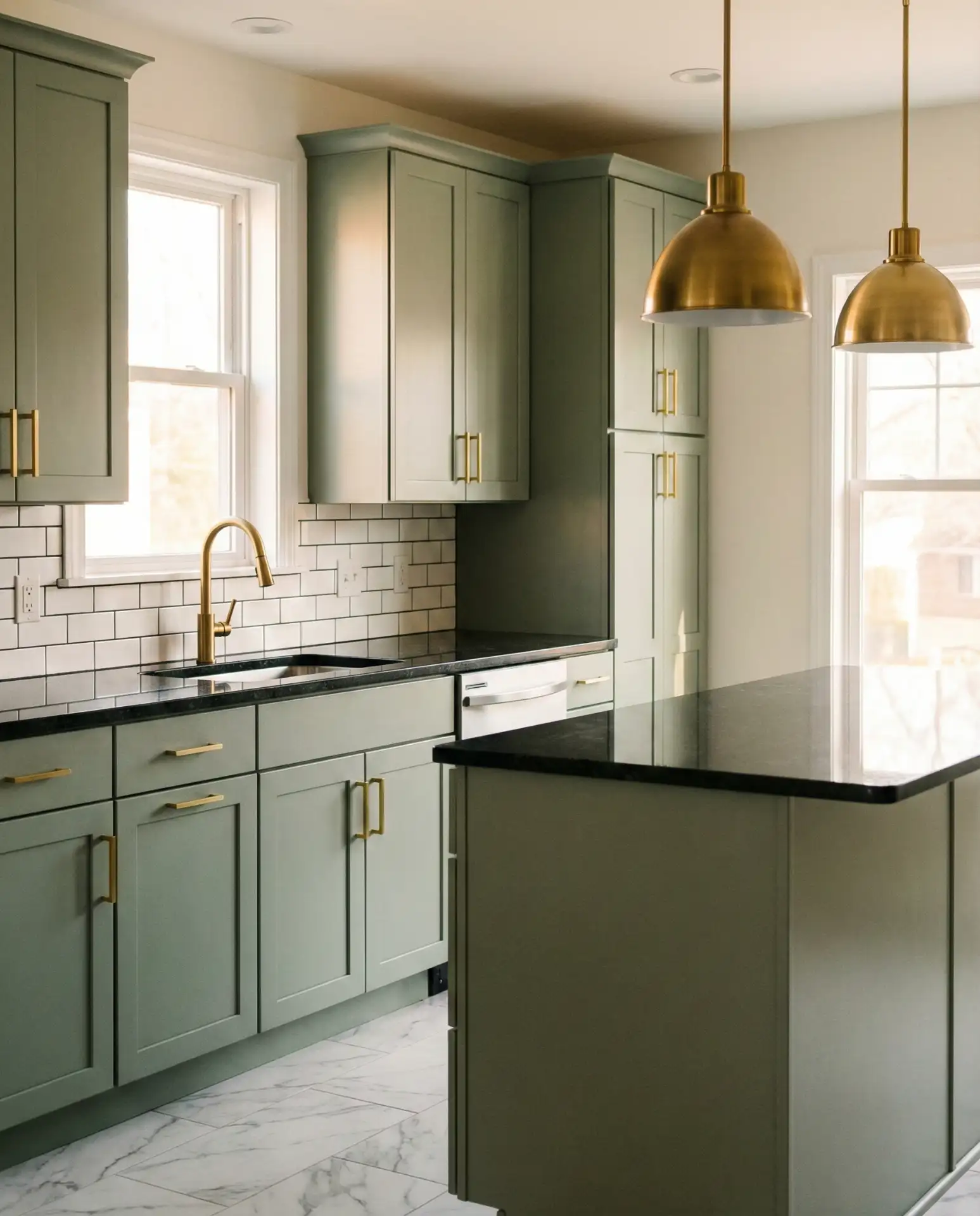
Across upscale neighborhoods in California and Florida, this color palette is increasingly popular in new construction and high-end remodels. The green feels organic and calming, the black grounds the space, and the gold adds just enough shine to feel special without being over-the-top. It’s a palette that photographs beautifully and holds up well over time.
13. Sage Green Kitchen with Tiles to Match
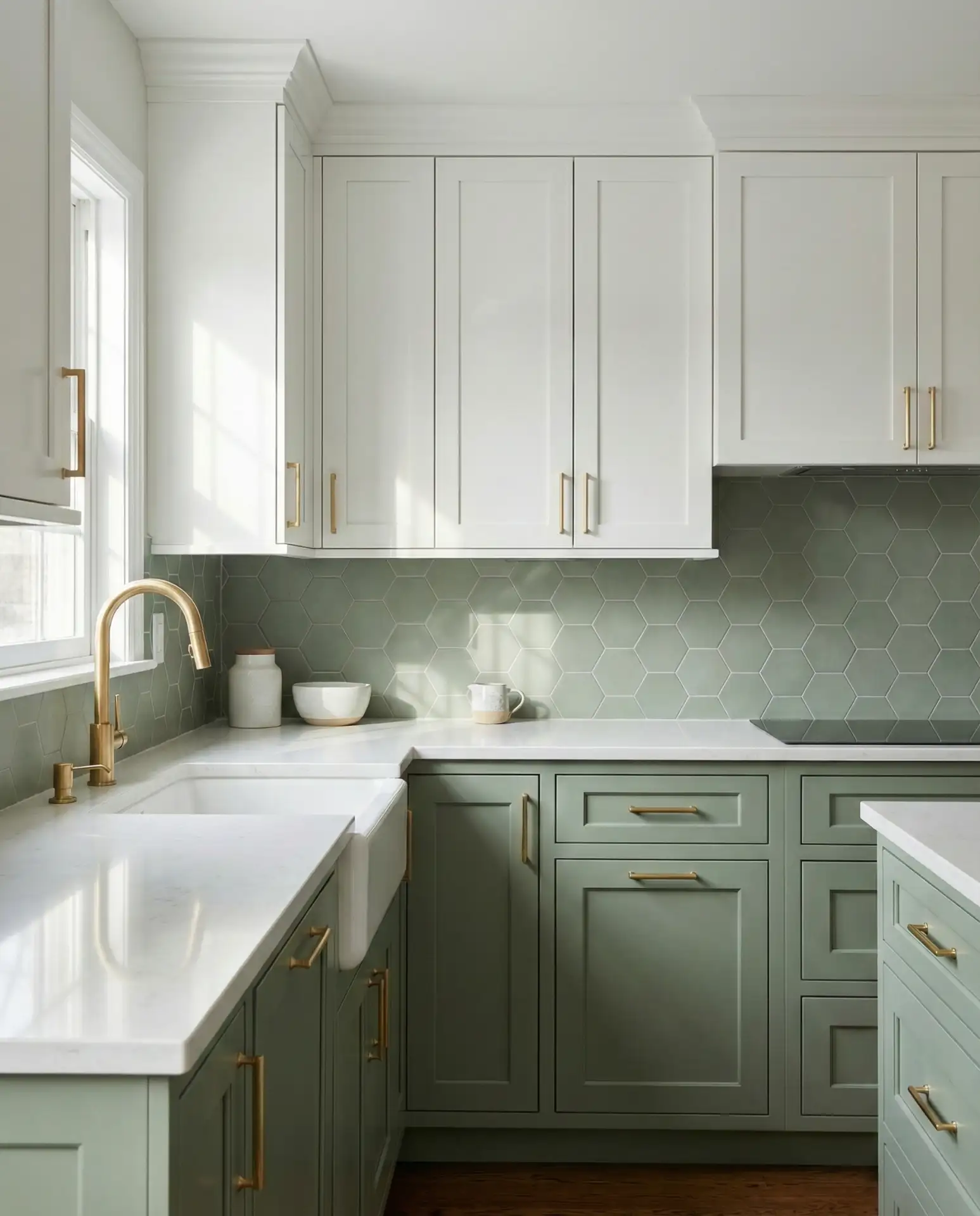
Choosing tiles to match your sage green cabinets—whether in the backsplash or flooring—creates a cohesive, immersive color experience. You might opt for sage green subway tiles, hexagon tiles, or even patterned ceramic tiles that incorporate shades of green along with white, cream, or gold. This approach feels bold and intentional, especially in smaller kitchens where a single unified color palette can make the space feel larger.
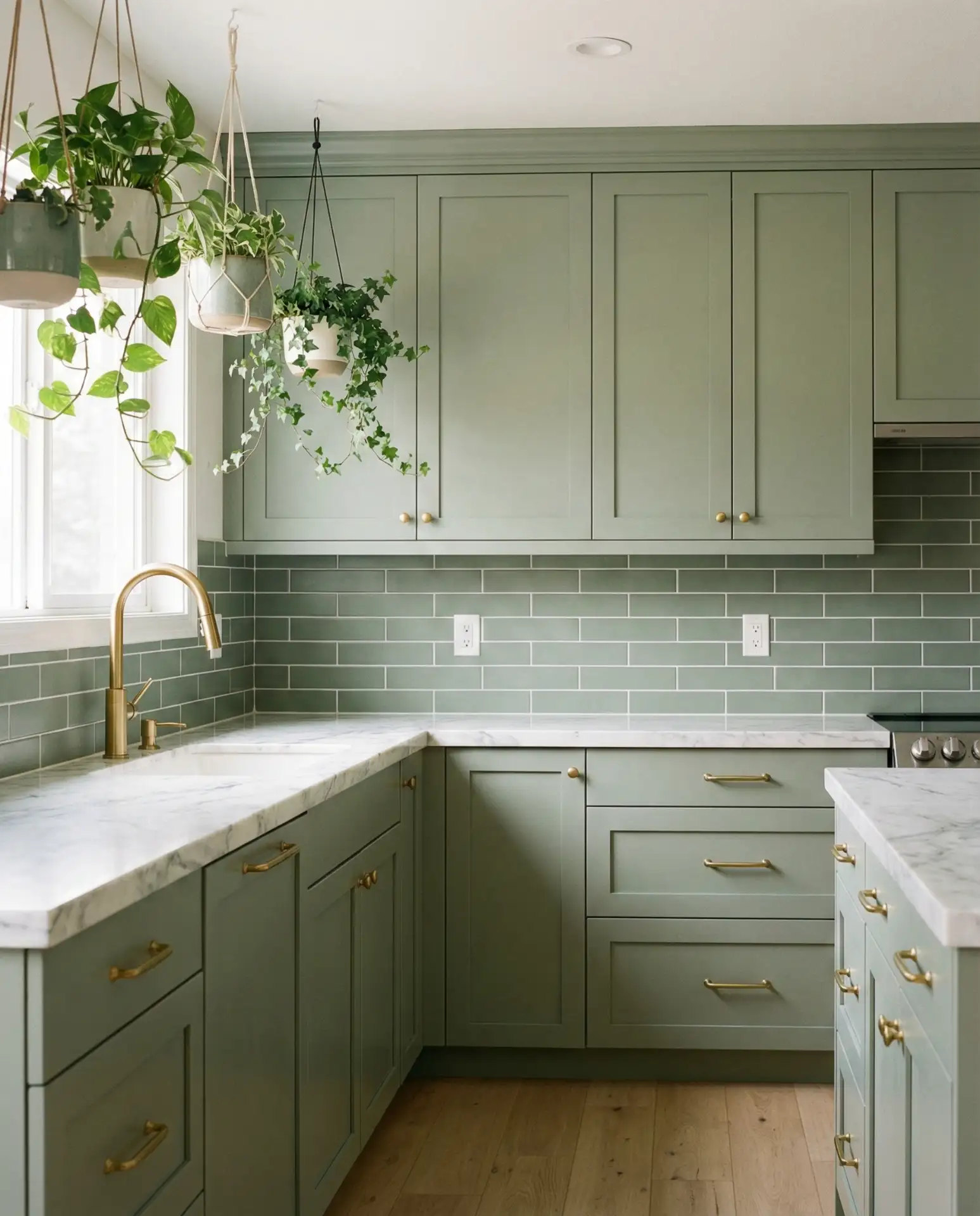
Where it works best: in kitchens with ample natural light, where the green-on-green won’t feel too dark or heavy. South-facing kitchens or those with large windows can pull off this look beautifully. If your kitchen is on the darker side, consider using the matching tiles as an accent rather than covering an entire wall or floor.
14. Sage Green Farmhouse Kitchen Decor Ideas
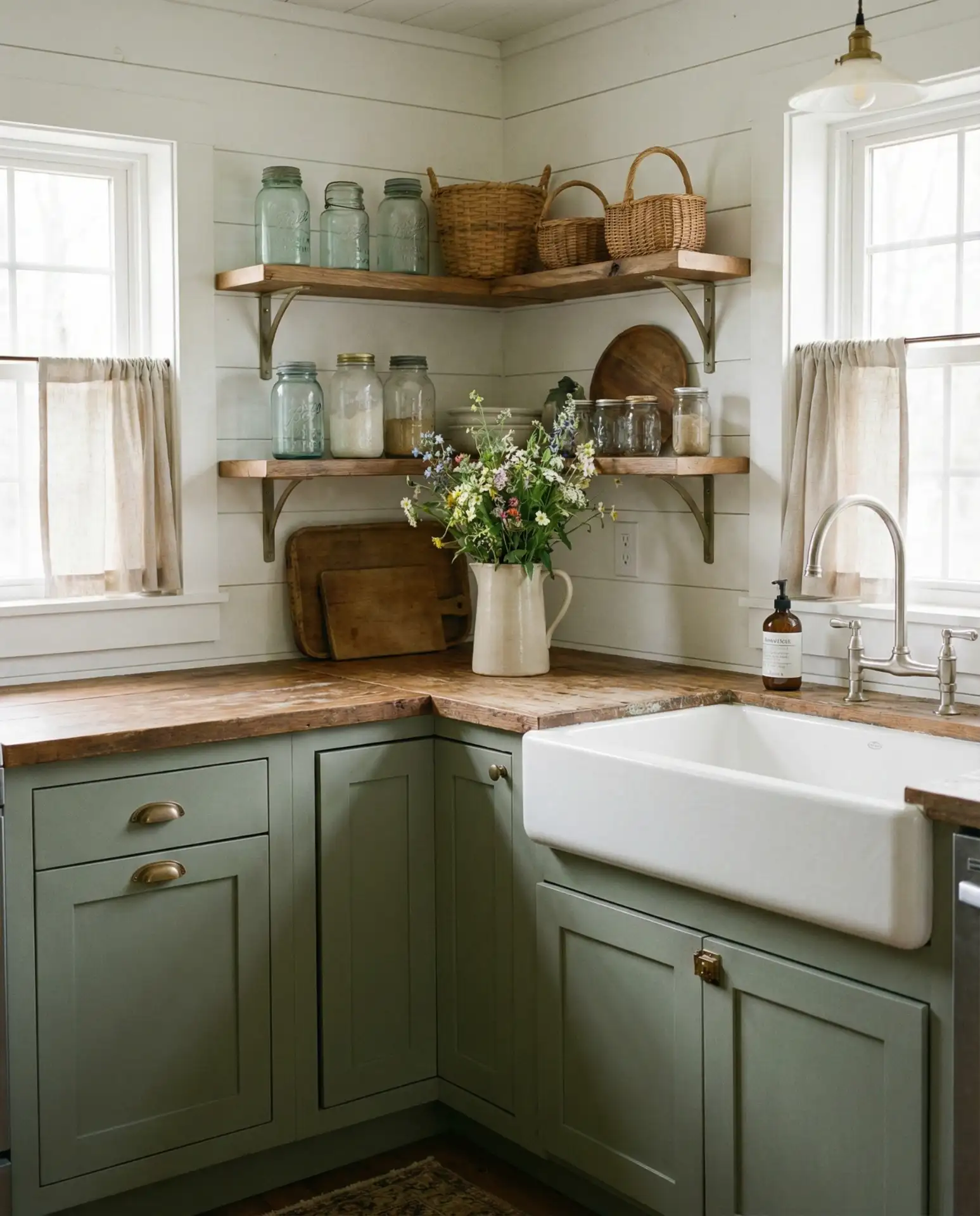
Bring farmhouse decor ideas into your sage green kitchen with vintage-inspired accessories like enamelware, glass canisters, woven baskets, and fresh flowers. A farmhouse sink, shiplap walls, and rustic wood accents complete the look. The sage green acts as a modern update to the traditional farmhouse palette, keeping the style from feeling too predictable or overly country.
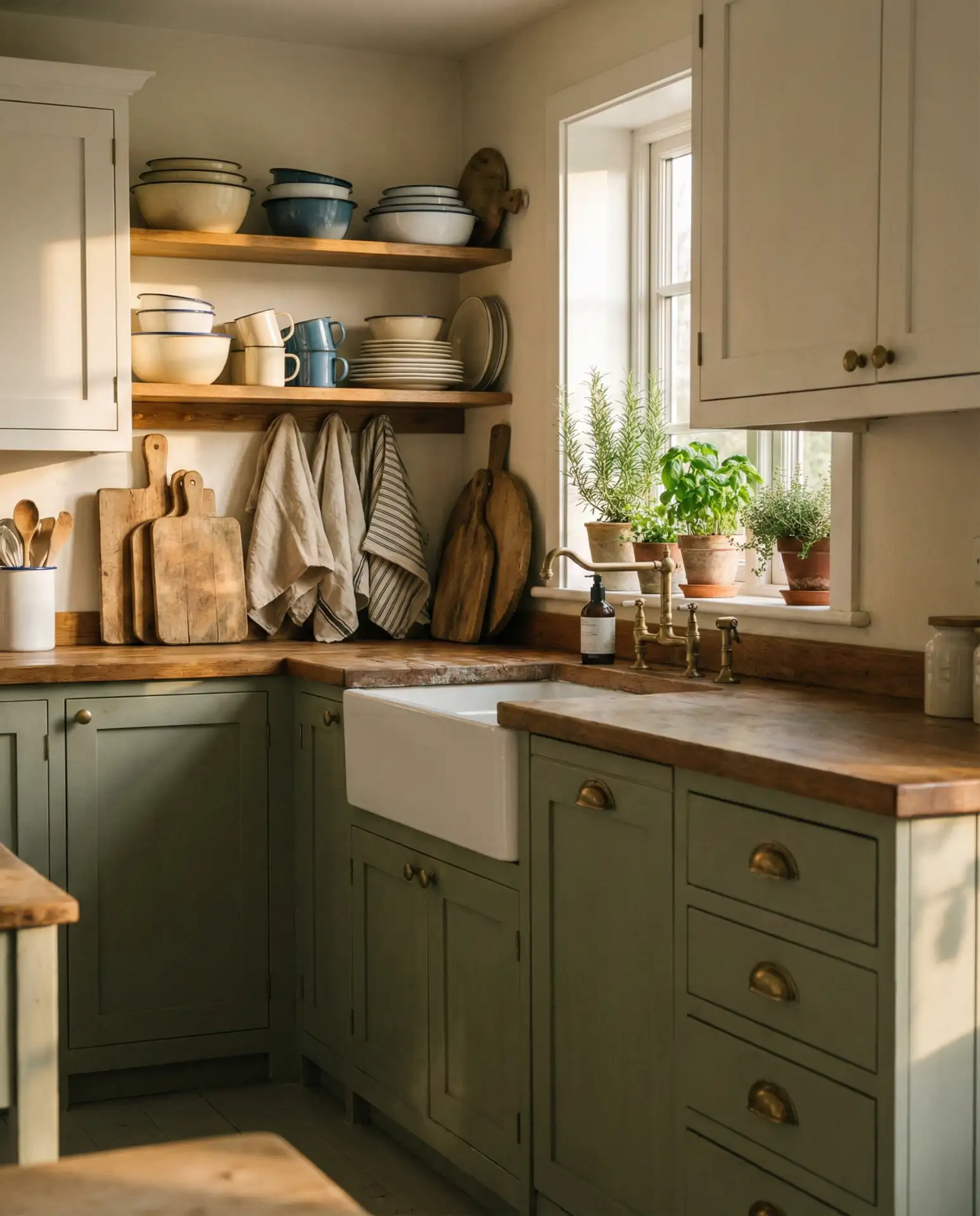
Practical insight: sourcing vintage decor from flea markets and antique shops adds character without breaking the bank. A friend found her entire collection of enamelware for under $100 at estate sales in rural Pennsylvania. These pieces are durable, functional, and add instant charm—and they’re often cheaper than buying new “farmhouse style” items from big-box retailers.
15. Sage Green Kitchen with Stainless Steel Appliances
Sage green cabinets pair surprisingly well with classic stainless steel appliances, creating a balanced look that’s neither too warm nor too cool. The silver tones of the appliances provide a neutral counterpoint to the green, keeping the kitchen grounded and functional. This combination is especially practical for homeowners who aren’t ready to commit to more colorful or vintage-style appliances.
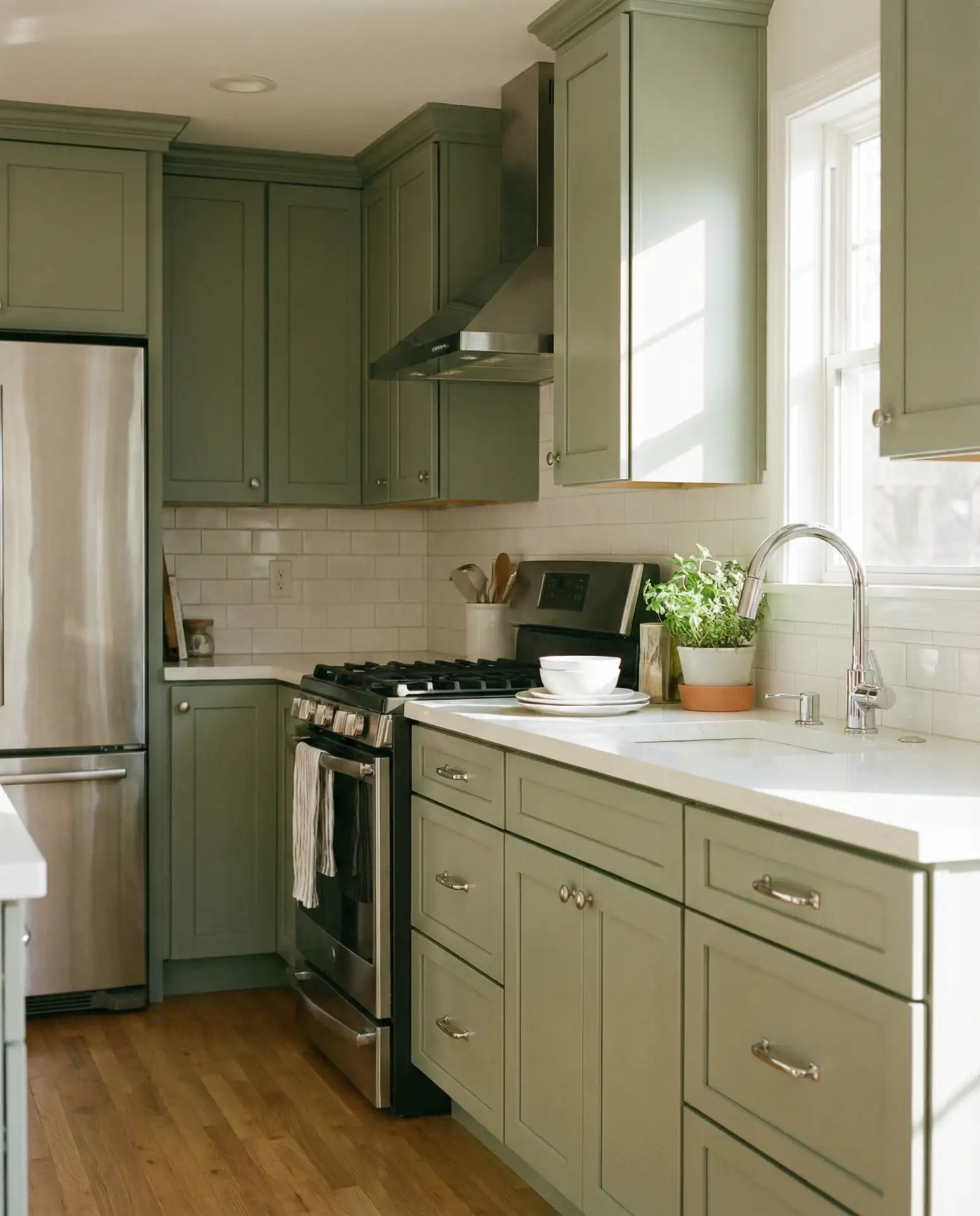
American lifestyle context: most American appliance brands still offer stainless steel as their default finish, and it’s often the most affordable option. If you’re working with existing appliances, you don’t need to replace them to make a sage green kitchen work—the stainless complements the green beautifully and adds a professional, commercial-kitchen vibe that many home cooks appreciate.
16. Sage Green Kitchen Designs with Mixed Metals
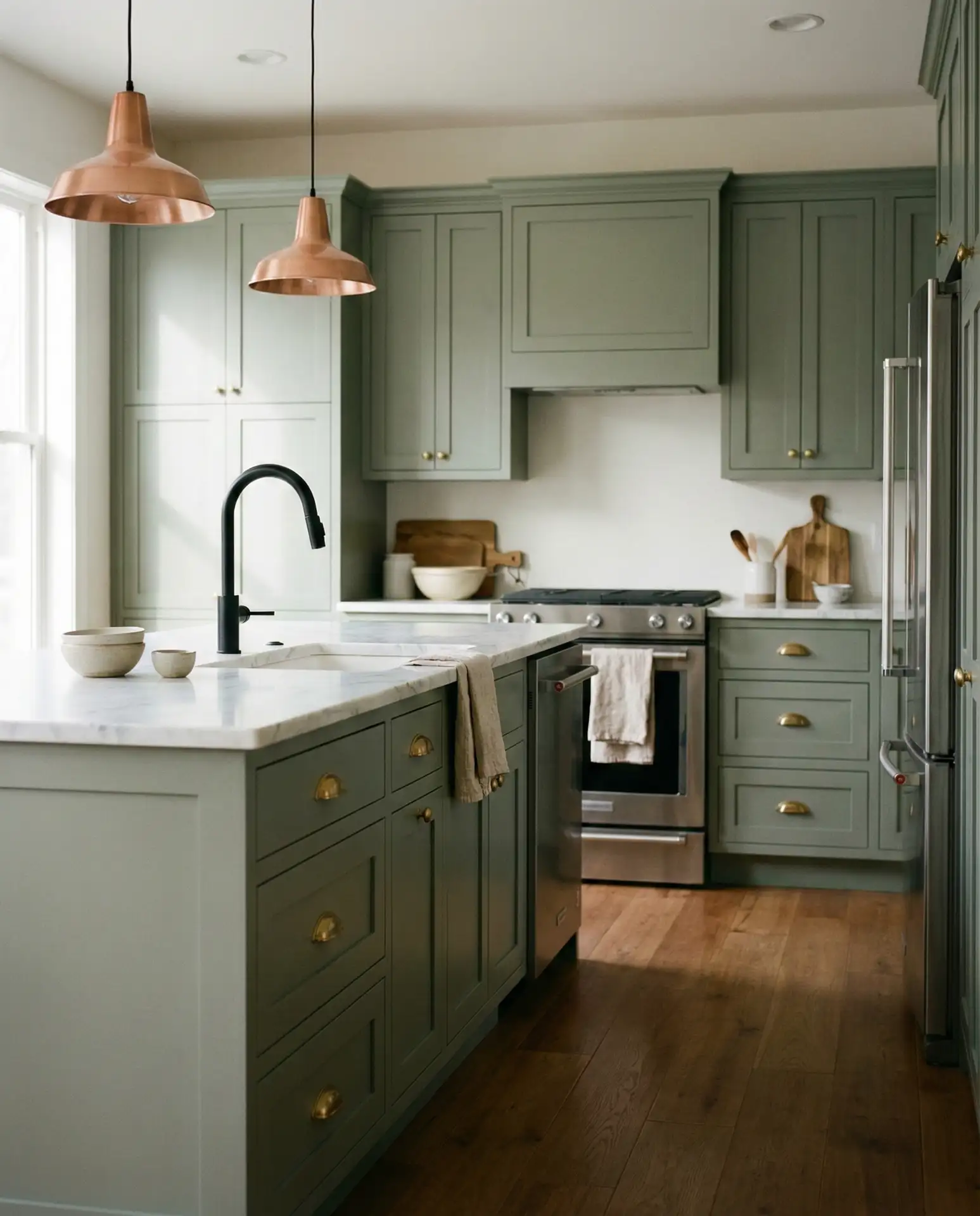
One of the most popular designs in modern kitchens is the use of mixed metals—combining brass, chrome, copper, and matte black finishes throughout the space. In a sage green kitchen, this approach adds depth and visual interest without overwhelming the color palette. You might have brass cabinet pulls, a matte black faucet, copper pendant lights, and stainless appliances all working together harmoniously.
Common mistake: trying to match every metal finish exactly. The beauty of mixed metals is in the intentional contrast, not uniformity. The key is to repeat each metal at least twice so the mix feels deliberate rather than accidental. For instance, if you choose brass cabinet pulls, add a brass light fixture or mirror frame elsewhere in the space to tie it together.
17. Sage Green Kitchen Color Scheme with Warm Neutrals
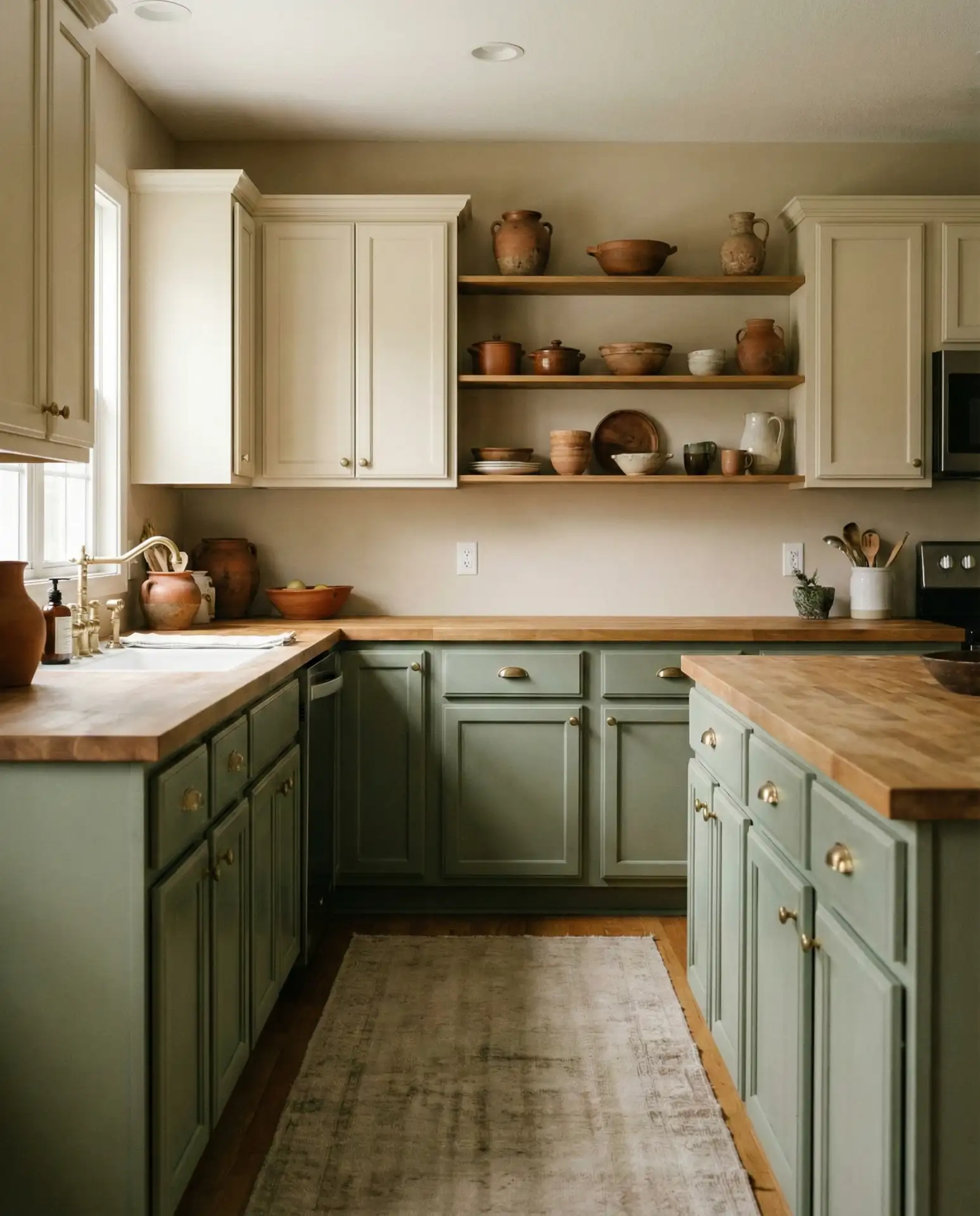
Building a color scheme around sage green and warm neutrals—think cream, beige, tan, and soft terracotta—creates a cozy, inviting kitchen that feels both timeless and on-trend. These earthy tones complement the green beautifully, adding warmth without competing for attention. This palette works particularly well in open-concept homes where the kitchen flows into living areas.
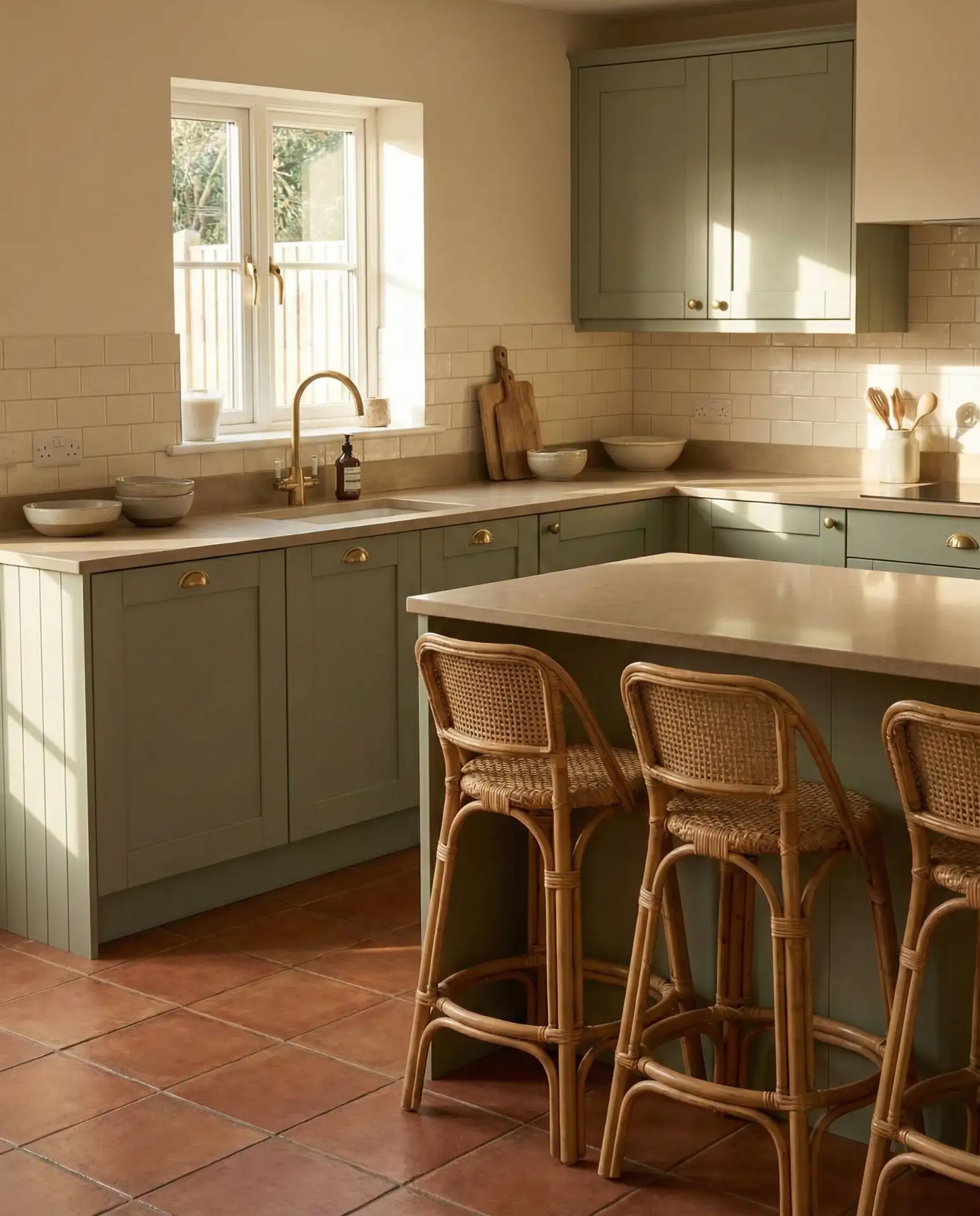
Budget angle: if you’re working with a tight budget, paint is your best friend. You can achieve this entire color scheme with cabinet paint, wall paint, and affordable accessories from HomeGoods or Target. Swap out hardware for brass or wood finishes, add some cream-colored dish towels and a few terracotta planters, and you’ve transformed your kitchen for a few hundred dollars.
18. Sage Green Kitchen with Light Natural Flooring
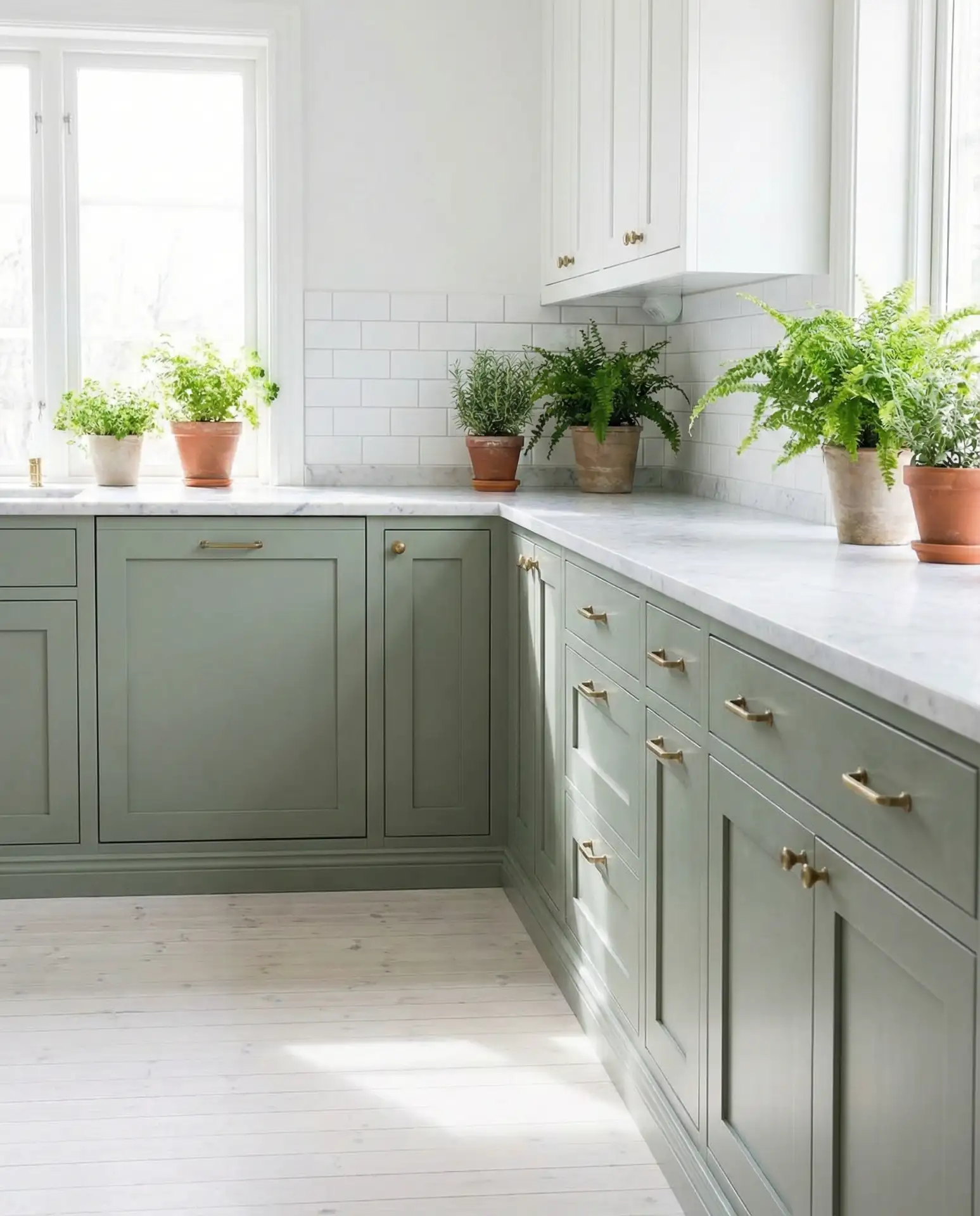
Pairing sage green cabinets with light natural flooring—such as pale oak, ash, or whitewashed wood—brightens the space and creates a Scandinavian-inspired aesthetic. The light floors reflect natural light and prevent the green from feeling too heavy or dark, especially in smaller kitchens. This combination is especially popular in apartments and condos where maximizing brightness is essential.
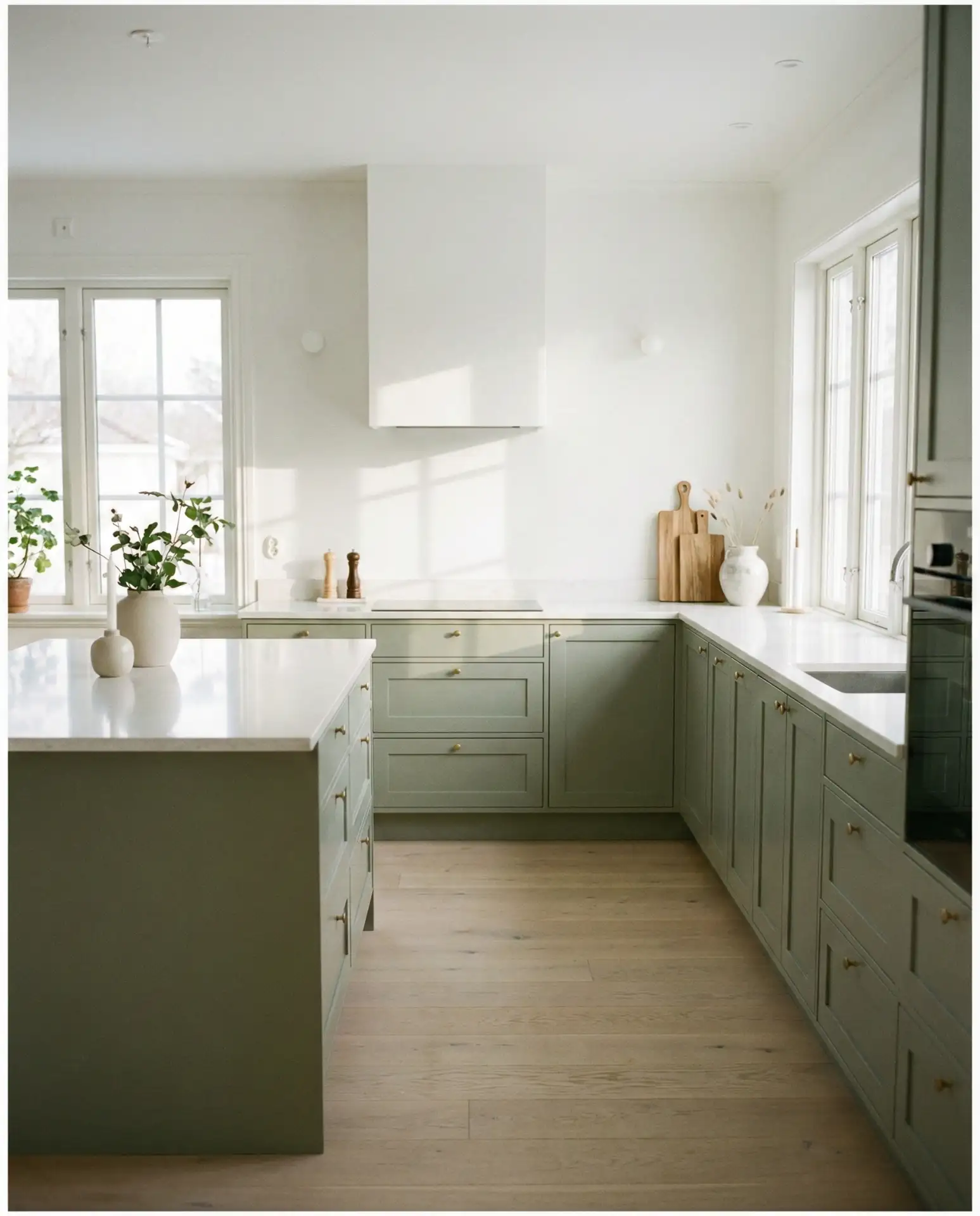
Where it works best: in coastal homes or spaces with lots of natural light. The pale floors and sage green together create a fresh, beachy vibe without feeling overly themed or kitschy. In colder climates, this combination can help a kitchen feel brighter and more cheerful during long winter months.
19. Sage Green Kitchen with Statement Lighting
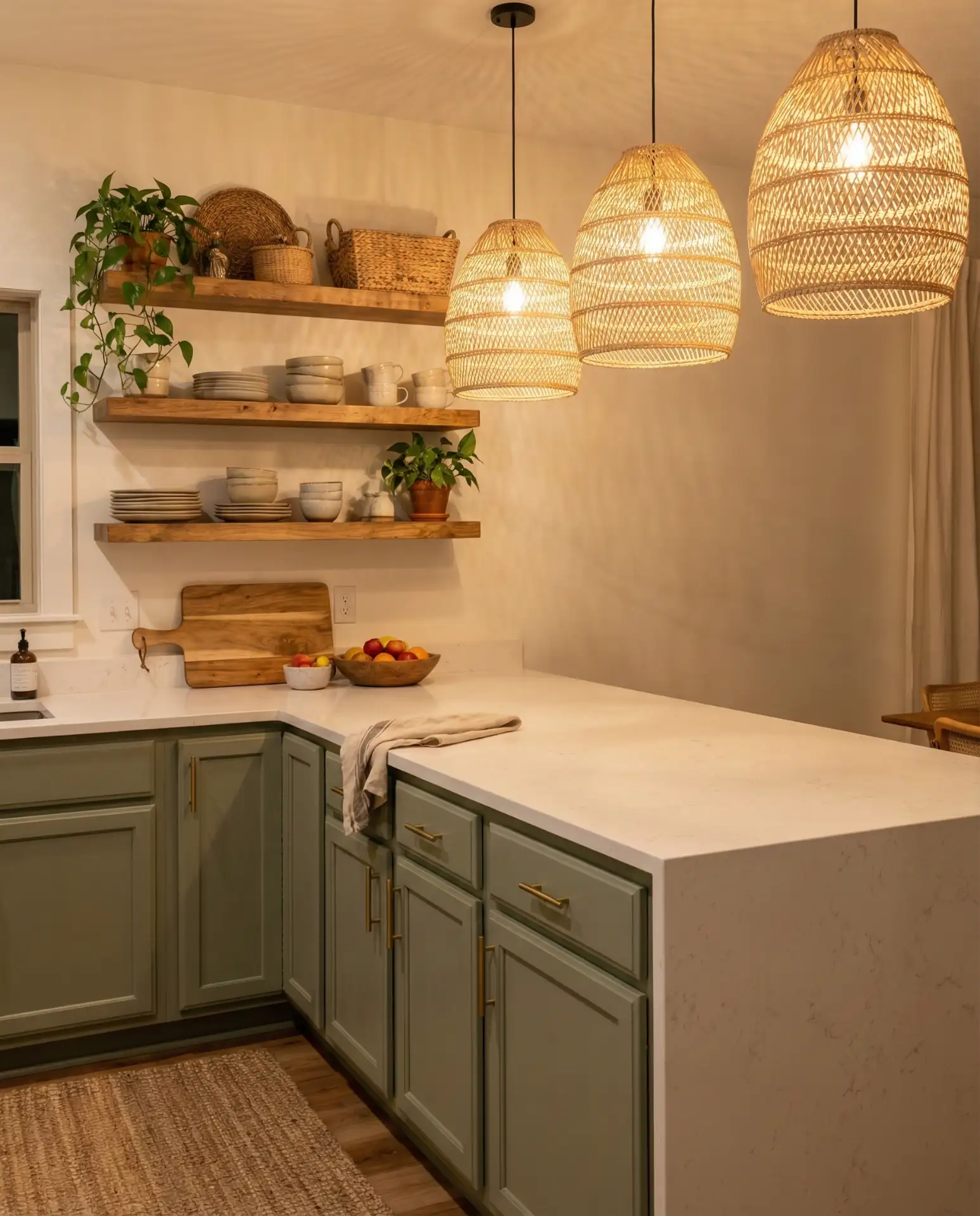
Elevate your sage green kitchen with bold, statement lighting fixtures—think oversized pendants, sculptural chandeliers, or industrial-style cage lights. The light fixtures become focal points that add personality and drama, especially over an island or dining area. The sage green provides a calm backdrop that lets the lighting shine without visual competition.
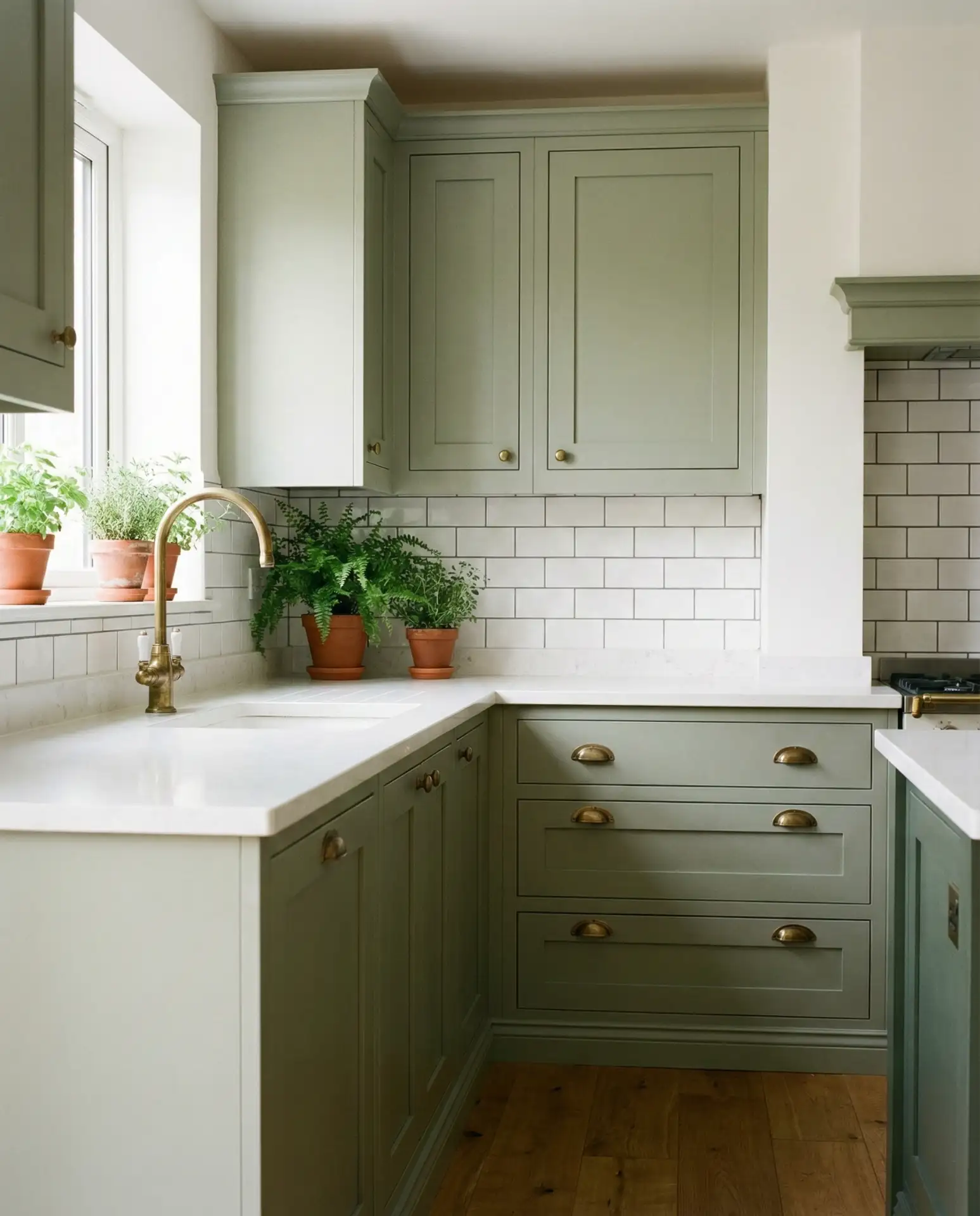
Real homeowner behavior: many people underestimate the impact of good lighting. Upgrading your fixtures is one of the fastest ways to make a kitchen feel more expensive and thoughtfully designed. Even if you’re not doing a full remodel, swapping out builder-grade lights for something more interesting can completely change the feel of the space.
20. Sage Green Kitchen with Classic Subway Tile Backsplash
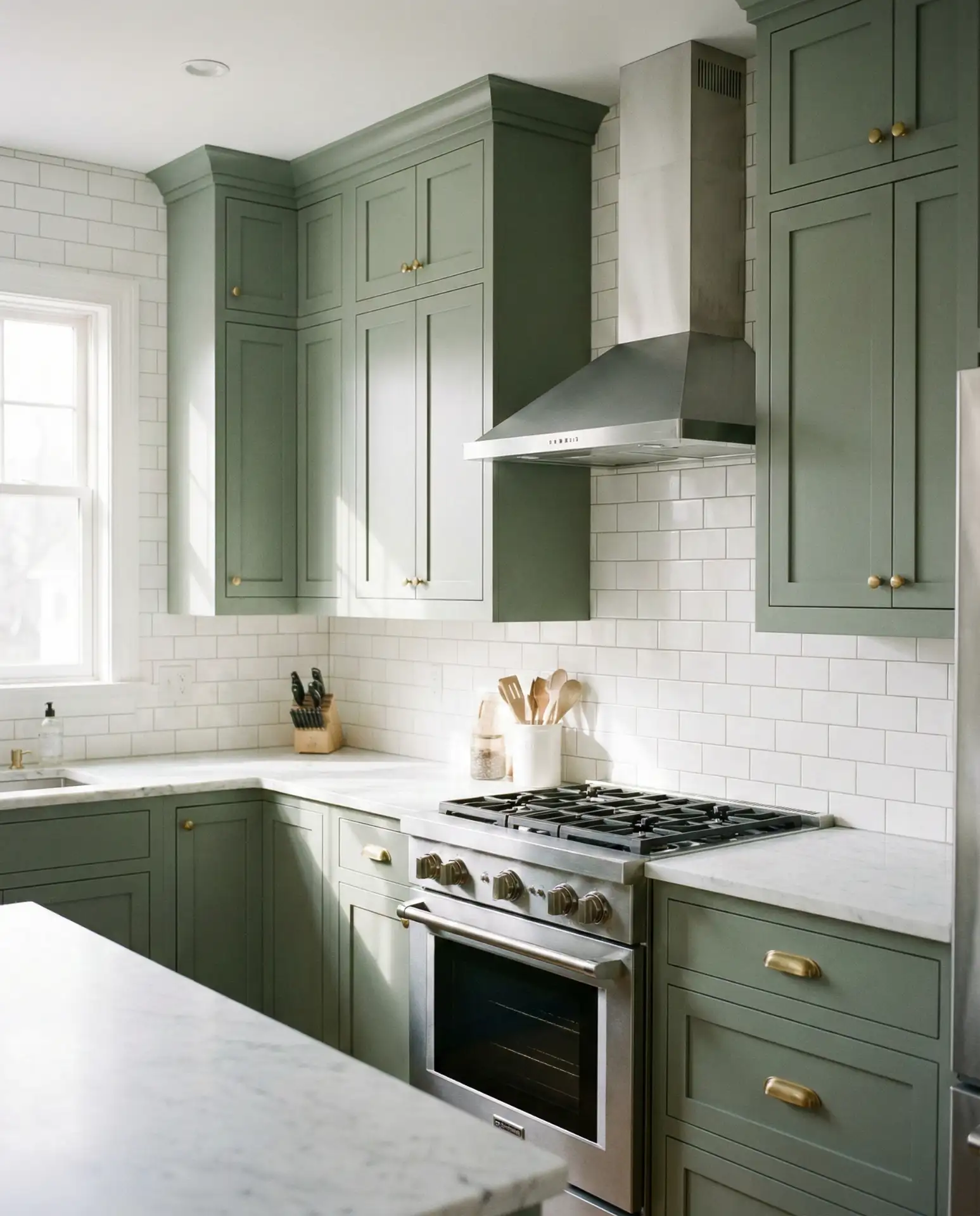
A white subway tile backsplash is a timeless pairing for sage green cabinets, offering a clean, classic look that never goes out of style. The simple rectangular tiles provide texture without distraction, and the white brightens the space while letting the green take center stage. This combination is incredibly versatile and works in everything from traditional farmhouses to sleek modern apartments.
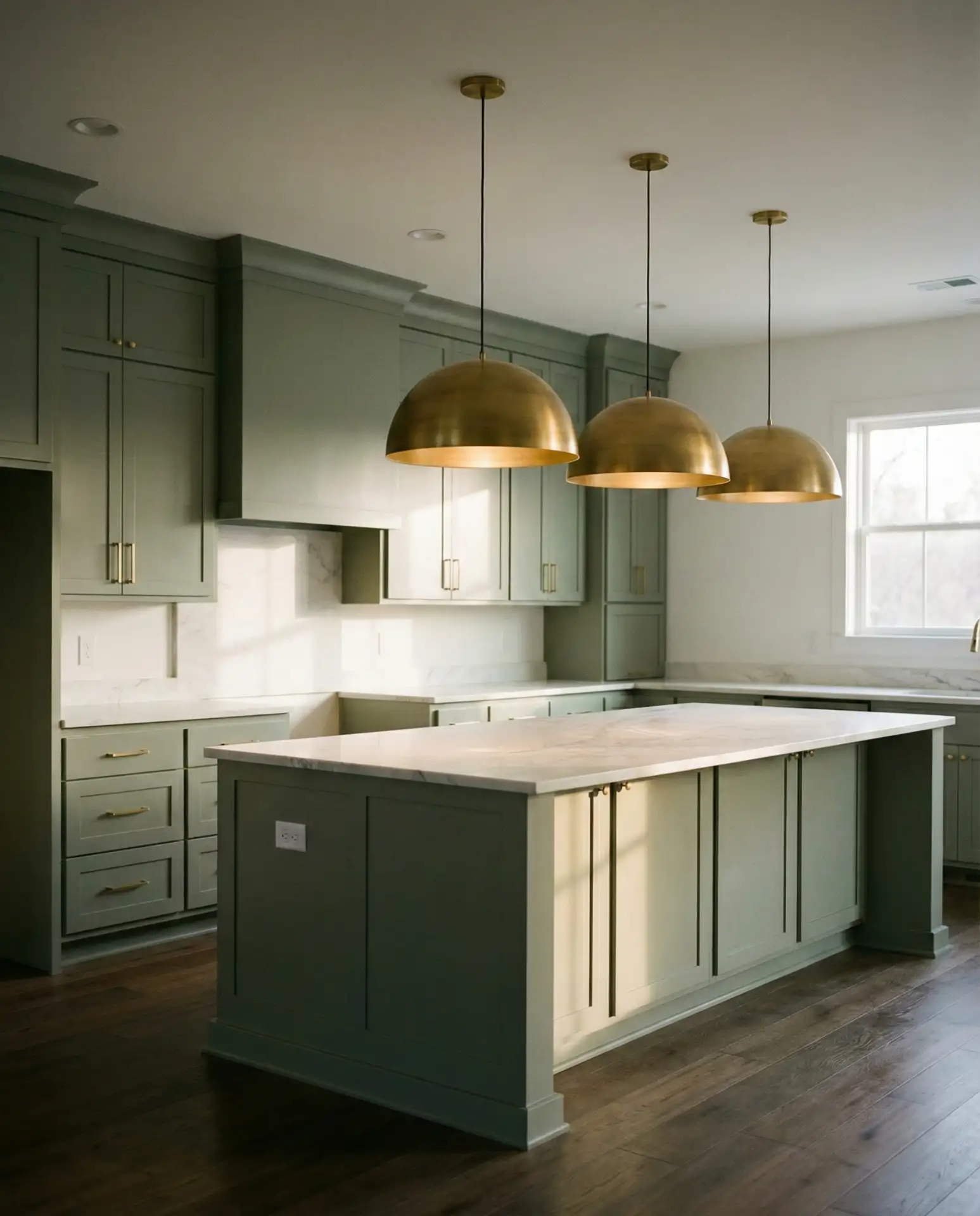
Micro anecdote: when my neighbor updated her kitchen, she was torn between trendy zellige tile and classic subway tile for her backsplash. She went with subway tile paired with sage green cabinets, and three years later, she’s still thrilled with the choice—it feels fresh but not dated, and if she ever tires of the green, the white tile will work with anything.
21. Sage Green Kitchen with Vintage Accessories
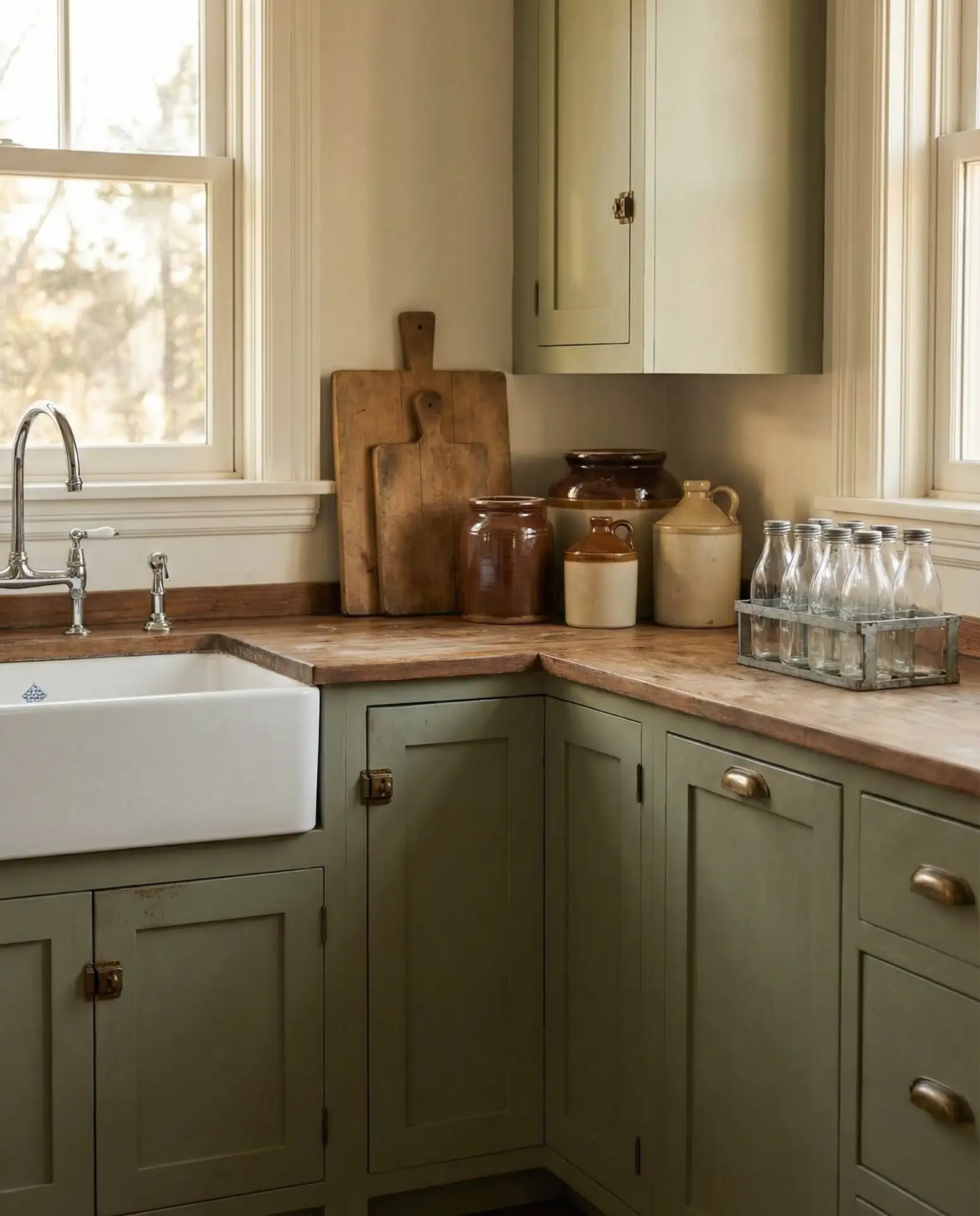
Style your sage green kitchen with curated vintage accessories—enamelware, glass milk bottles, antique scales, vintage tea towels, and ceramic crocks. These touches add character and storytelling to the space, making it feel collected over time rather than brand-new. The sage green provides a neutral backdrop that allows these vintage pieces to stand out without clashing.
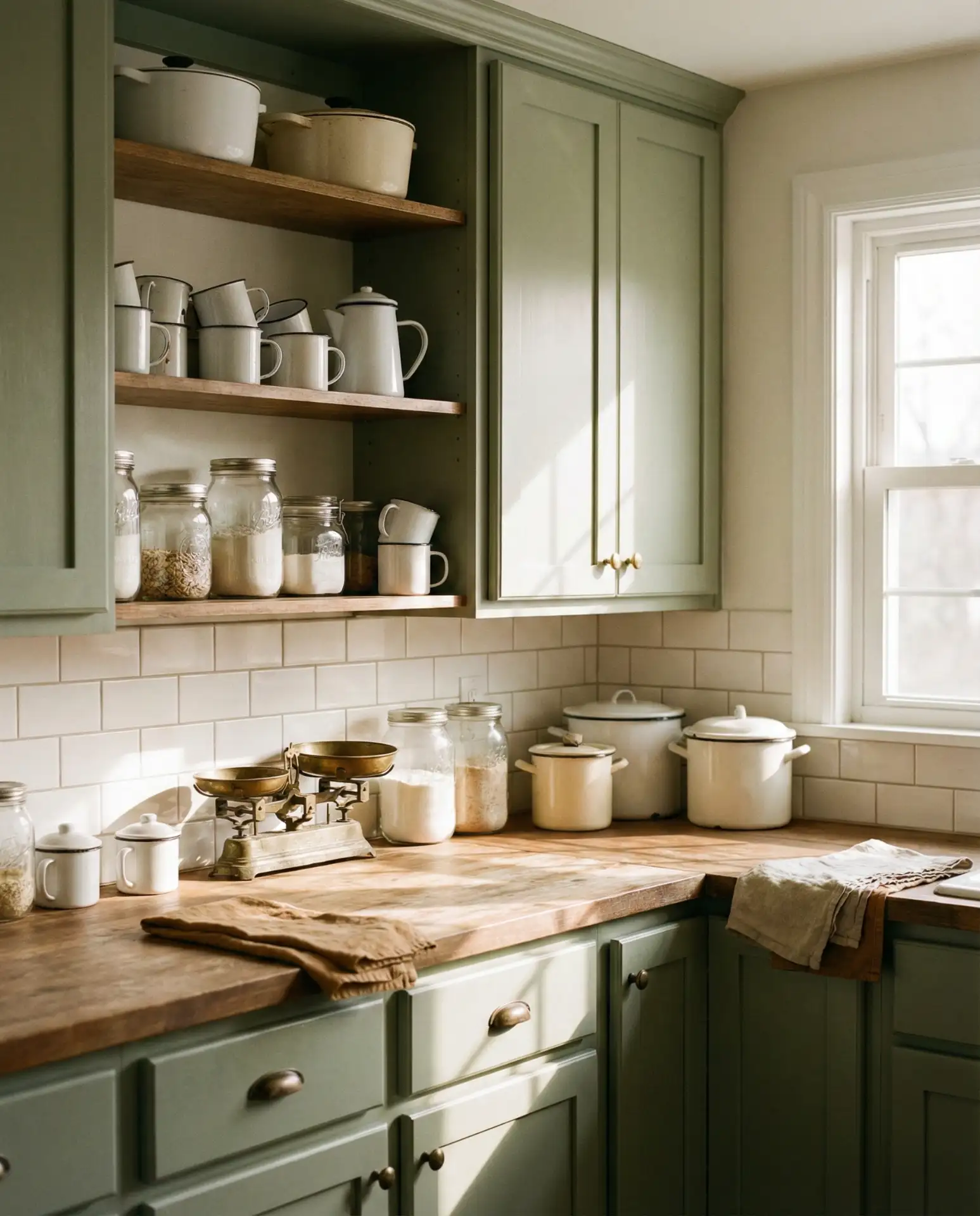
Expert-style commentary: Vintage accessories are having a major moment as people seek to add personality to their homes without spending a fortune. Unlike mass-produced decor, vintage pieces are unique and often better made than their modern counterparts. Plus, shopping secondhand is more sustainable—a value increasingly important to younger homeowners.
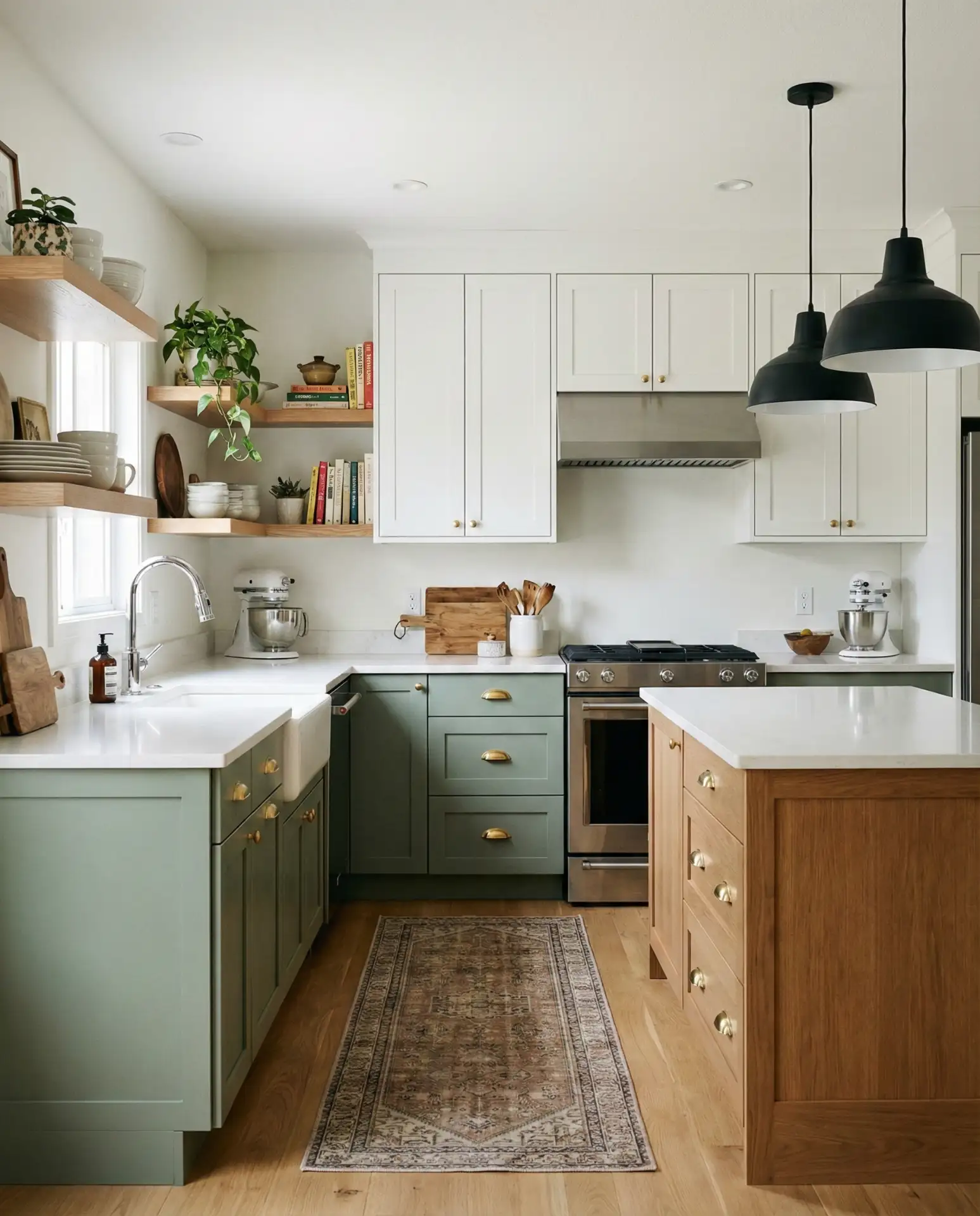
22. Sage Green Kitchen with Two-Tone Cabinet Design
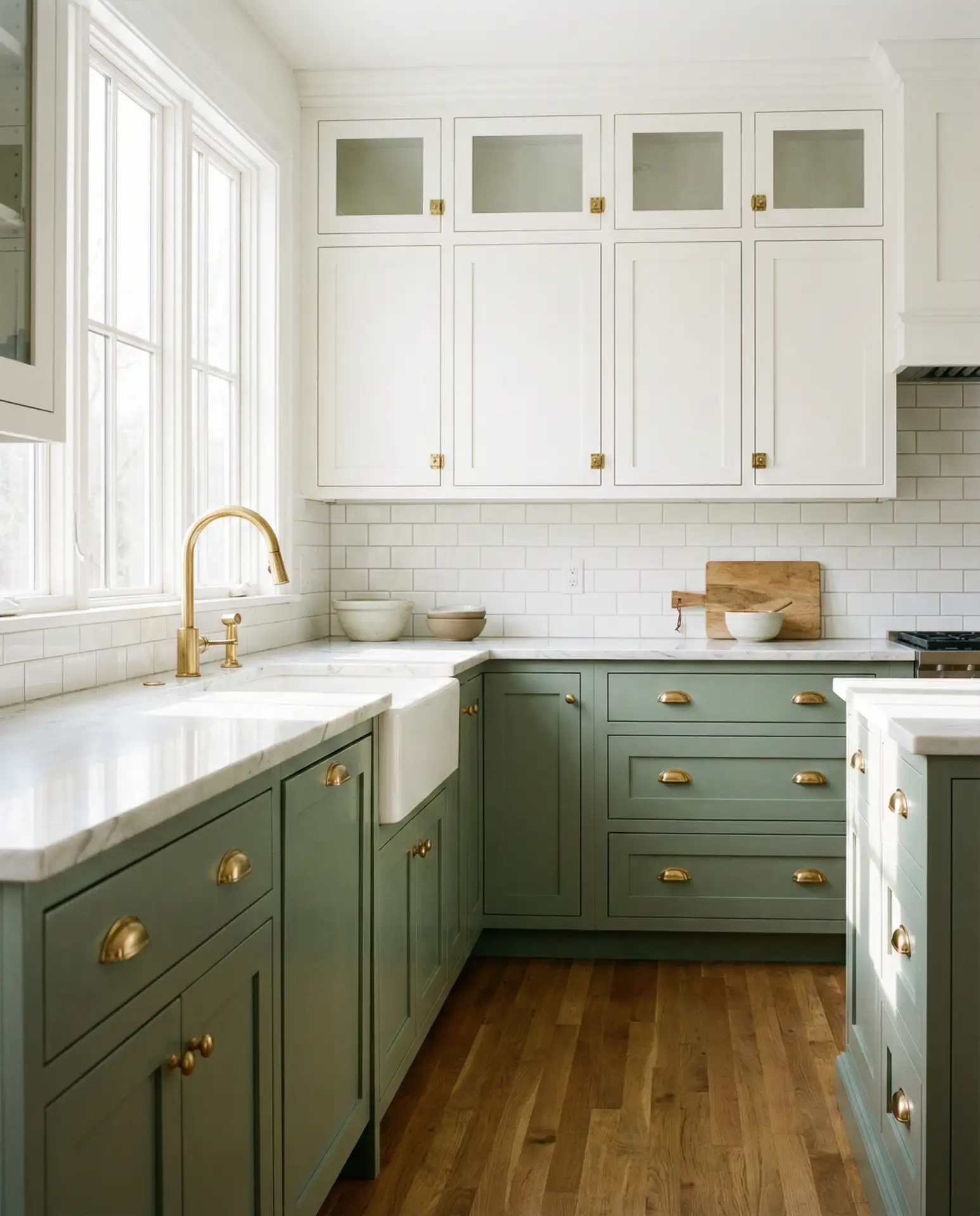
A two-tone cabinet design—sage green on the lower cabinets and white or cream on the upper cabinets—adds visual interest and prevents the space from feeling monotonous. This approach also makes the kitchen feel taller by drawing the eye upward with the lighter color. It’s a smart design choice for kitchens with lower ceilings or limited natural light.
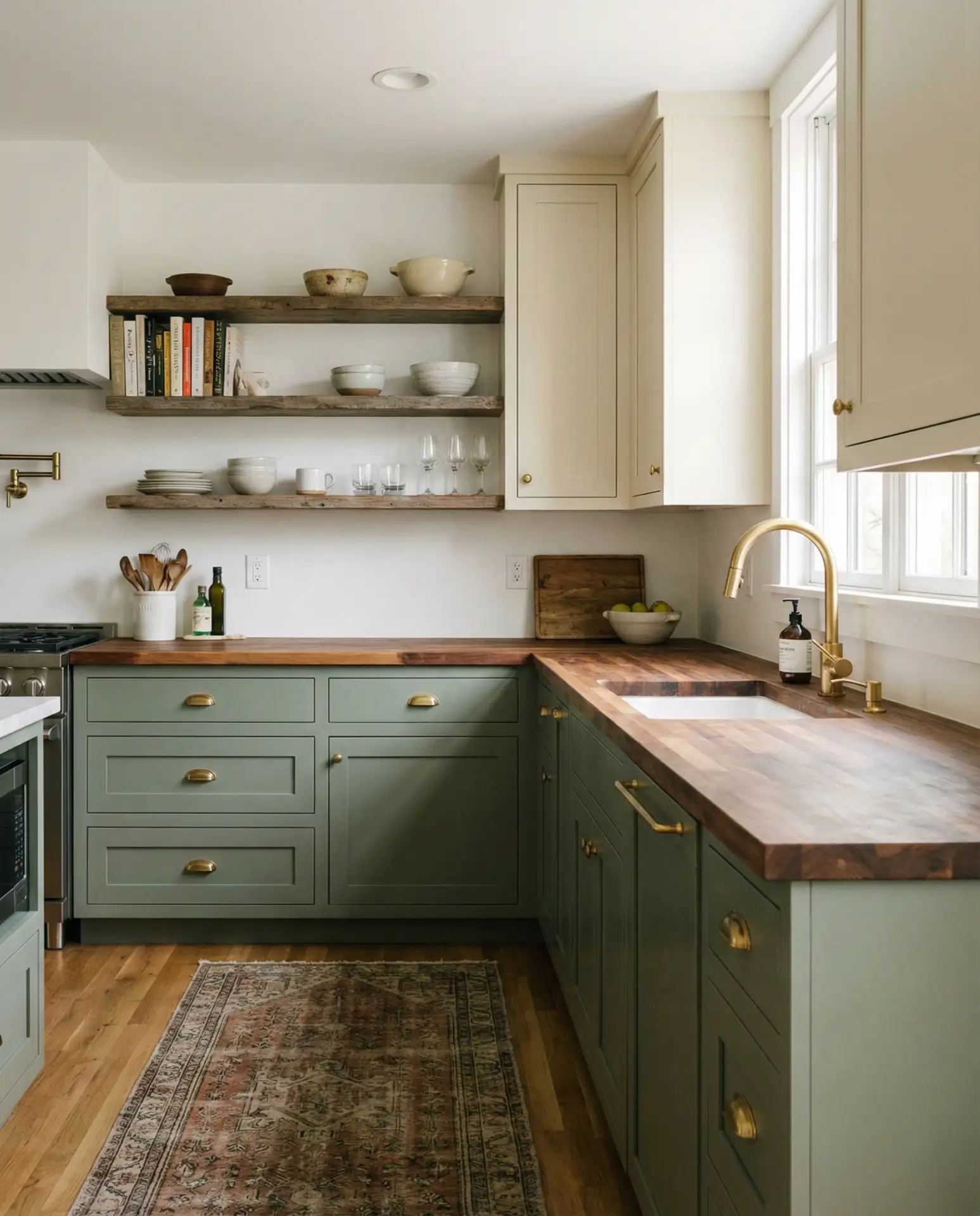
Practical insight: painting only the lower cabinets sage green is a less intimidating way to introduce color, especially if you’re nervous about committing to a full green kitchen. You can always paint the uppers later if you decide you want more green, or leave them as-is for a classic two-tone look that’s been popular for decades and shows no signs of going anywhere.
Conclusion
Sage green kitchens are more than just a passing trend—they represent a shift toward calming, nature-inspired spaces that feel both personal and polished. Whether you’re drawn to the farmhouse charm of butcher block and open shelving or the sleek sophistication of black countertops and modern hardware, sage green is a versatile foundation that adapts to your style. We’d love to hear which of these ideas resonated with you most—drop a comment below and share your favorite sage green kitchen inspiration or your own renovation plans!