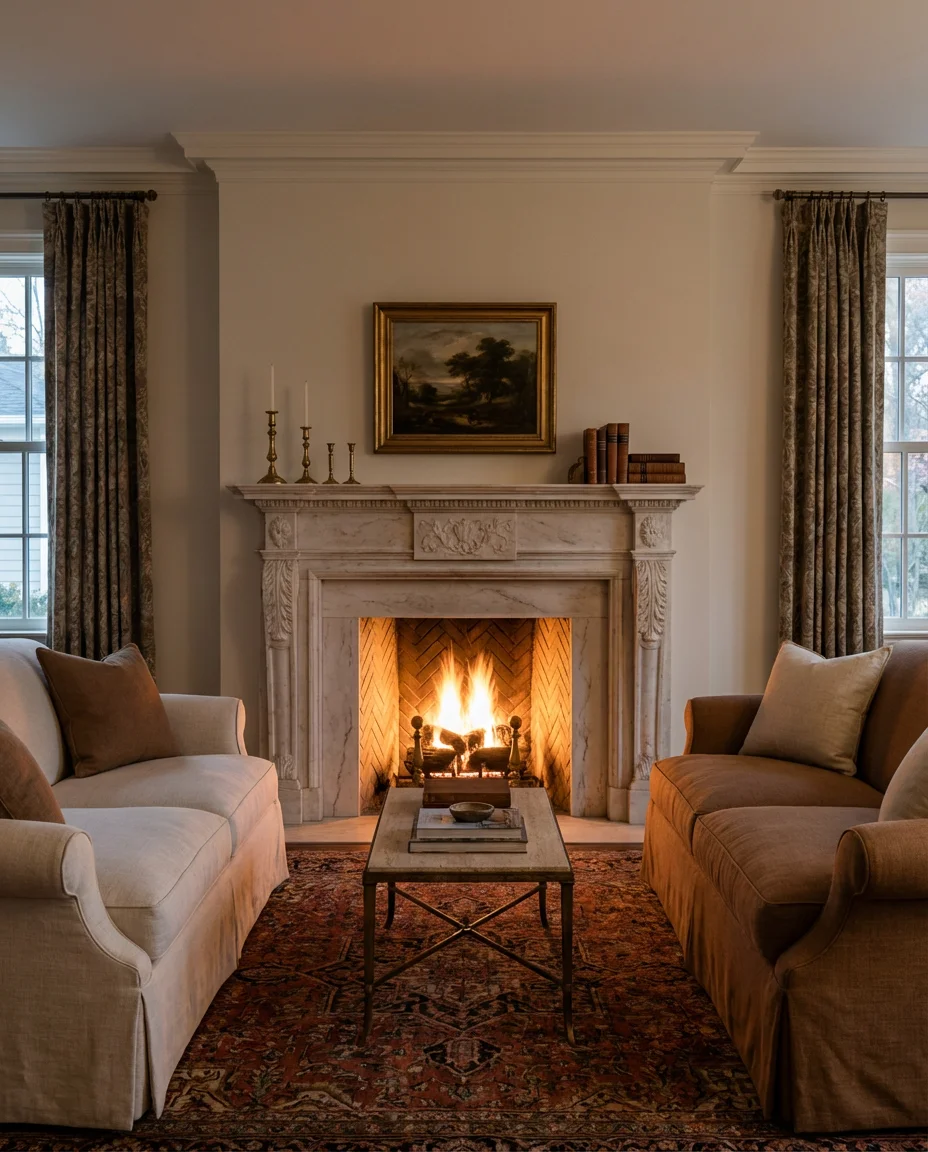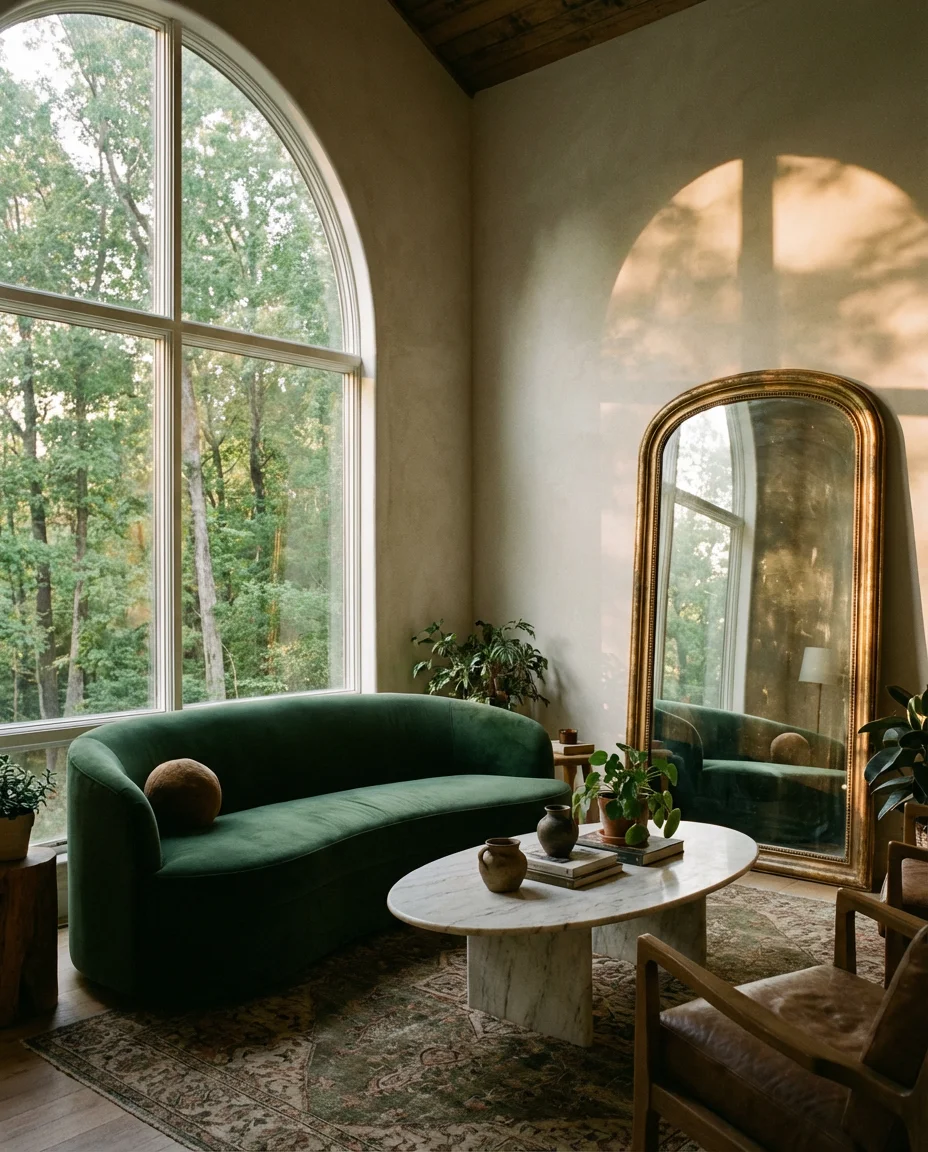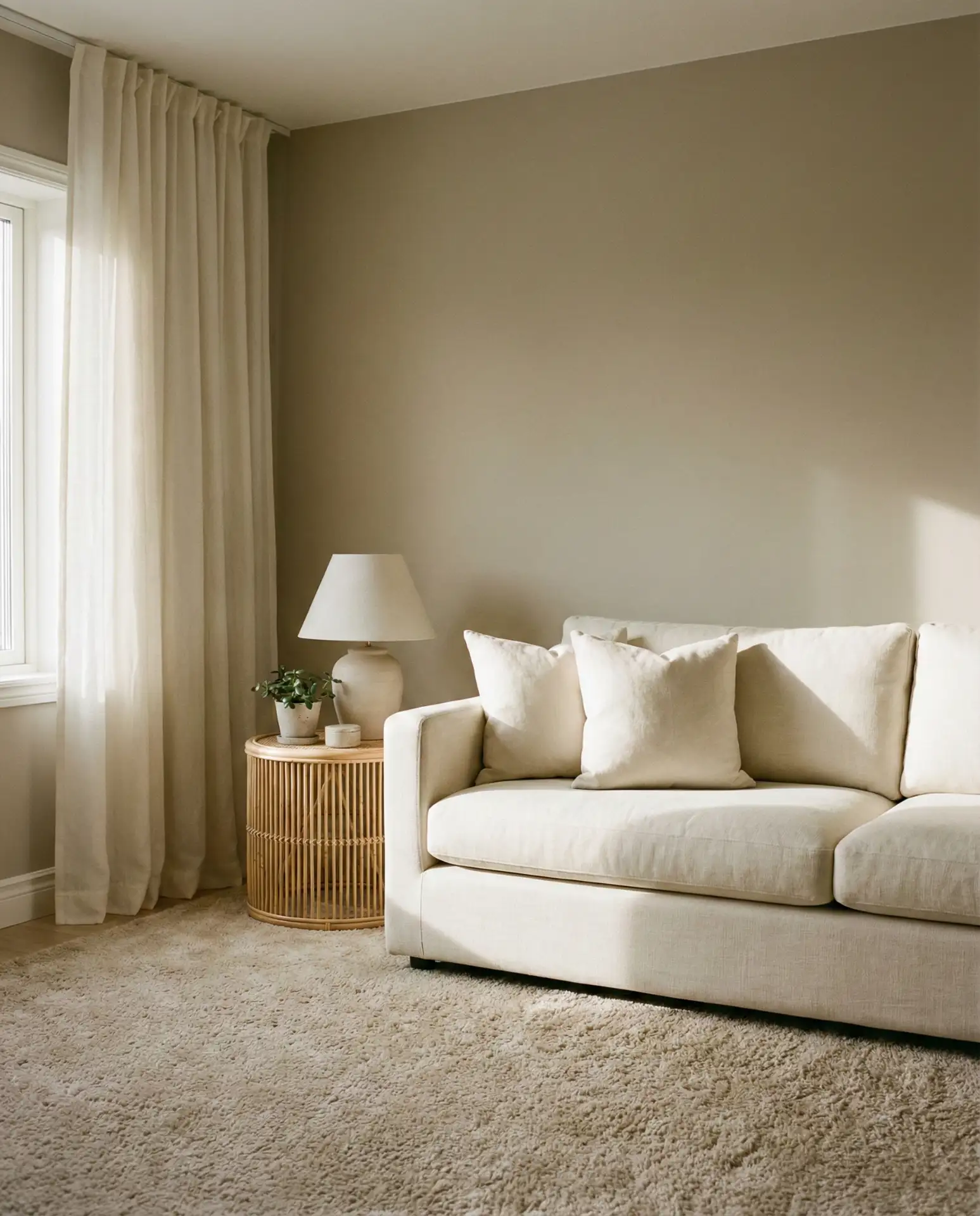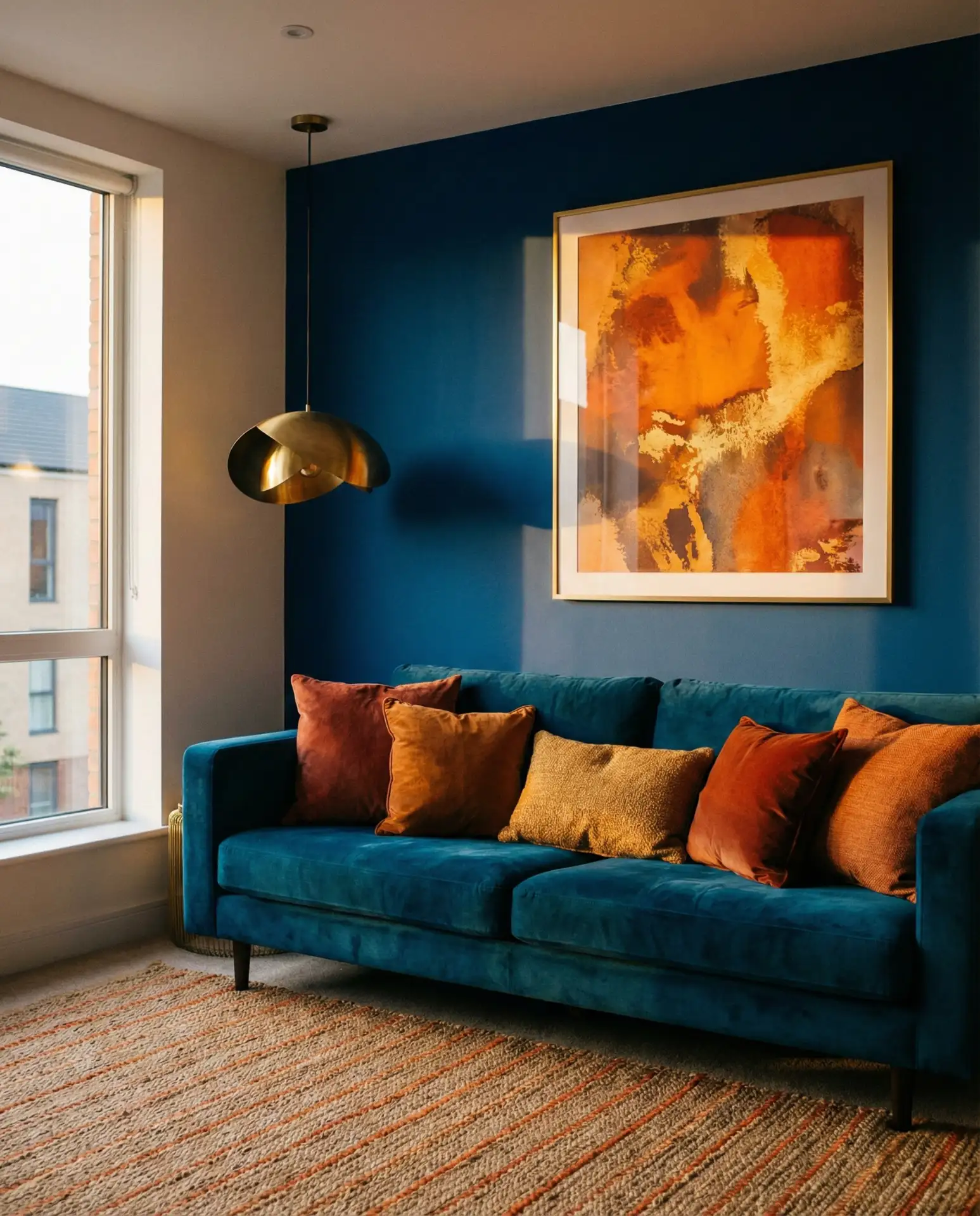
Sectional sofas have always been the anchor of American living rooms—but in 2026, they’re doing something more. They’re shaping the entire conversation around how we design, live, and gather at home. Pinterest searches for sectional living room ideas have surged as people crave spaces that are both beautiful and genuinely functional. Whether you’re starting from scratch or refreshing a tired room, this guide covers 23 of the most inspiring directions the sectional trend is taking this year—from moody leather configurations to breezy linen cloud sofas and everything in between. Read on to find the look that finally clicks for your space.
1. The Classic Grey L-Shape Layout
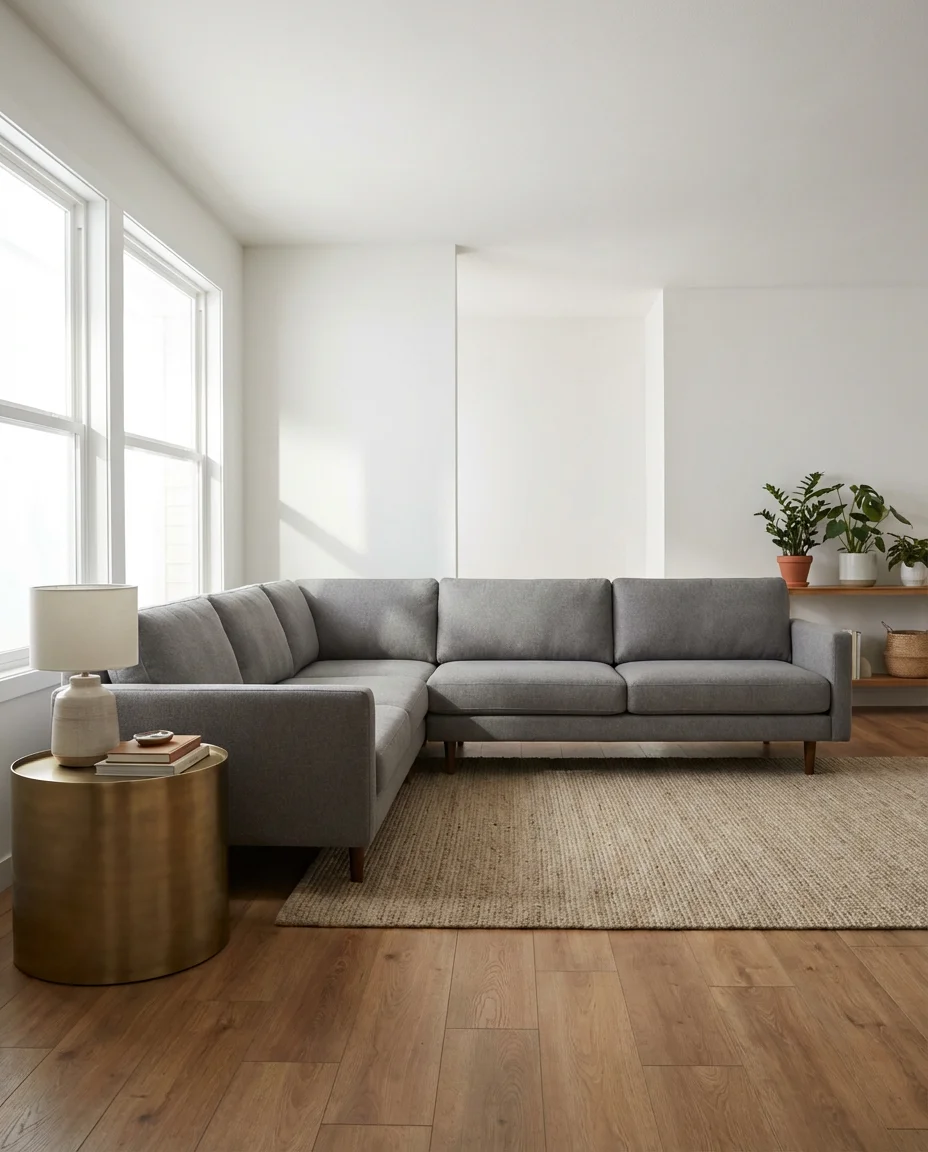
There’s a reason the grey L-shaped sectional never goes out of style. The layout creates a natural boundary in an open-plan space, defining the living area without needing walls. In 2026, designers are leaning into medium-toned grey upholstery with tight, clean lines—think performance fabric, low-profile arms, and legs that lift the piece just enough to keep things feeling airy. It pairs brilliantly with warm oak flooring and brushed brass accents, creating that sweet spot between modern and welcoming.
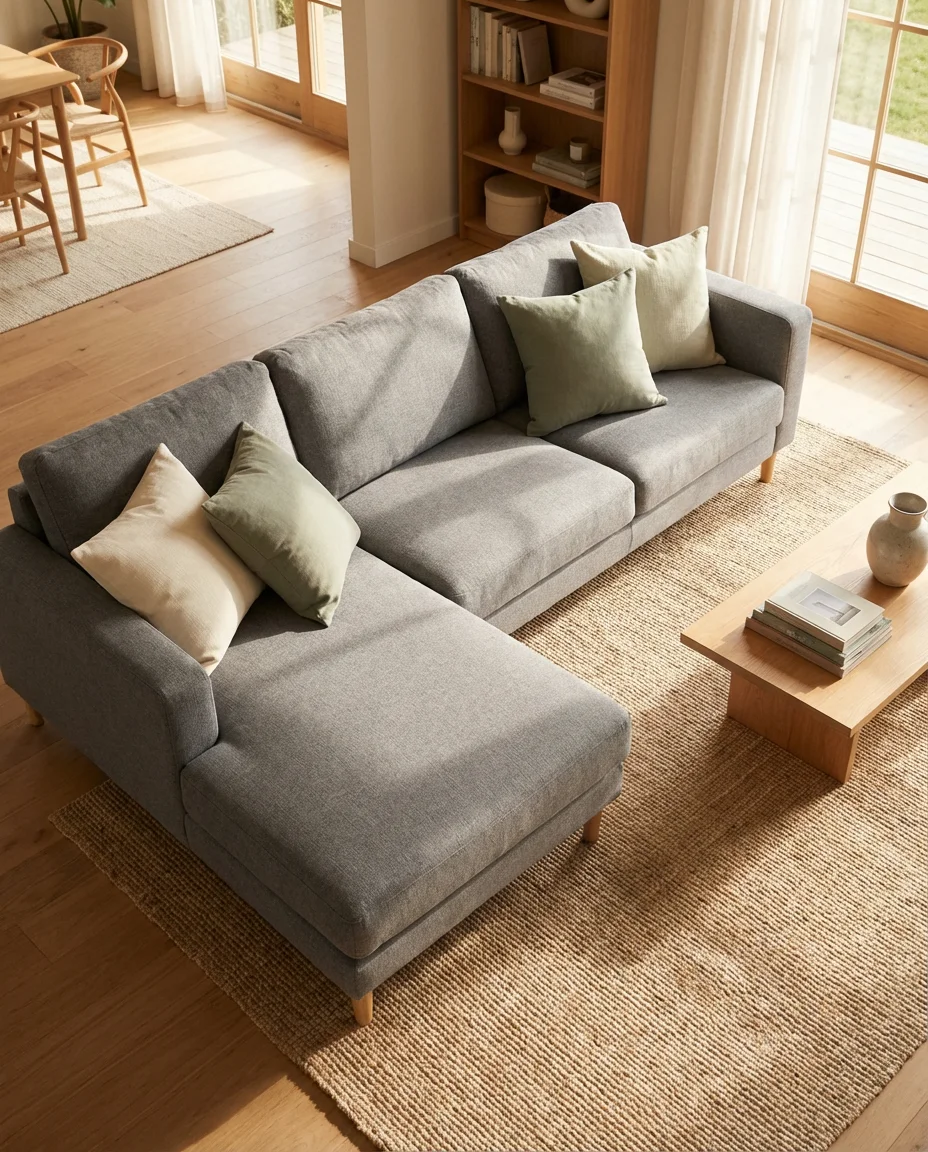
If you’re working with an open floor plan—especially common in newer American builds—this configuration is your most reliable starting point. The key mistake people make is sizing down too aggressively. A sectional that’s too small for the room looks like furniture that didn’t know where else to go. Measure generously, leave at least 18 inches between the sofa and your coffee table, and don’t be afraid of scale. A room-filling grey L-shape reads as intentional, not overwhelming.
2. Brown Leather Sectional with a Mid-Century Edge
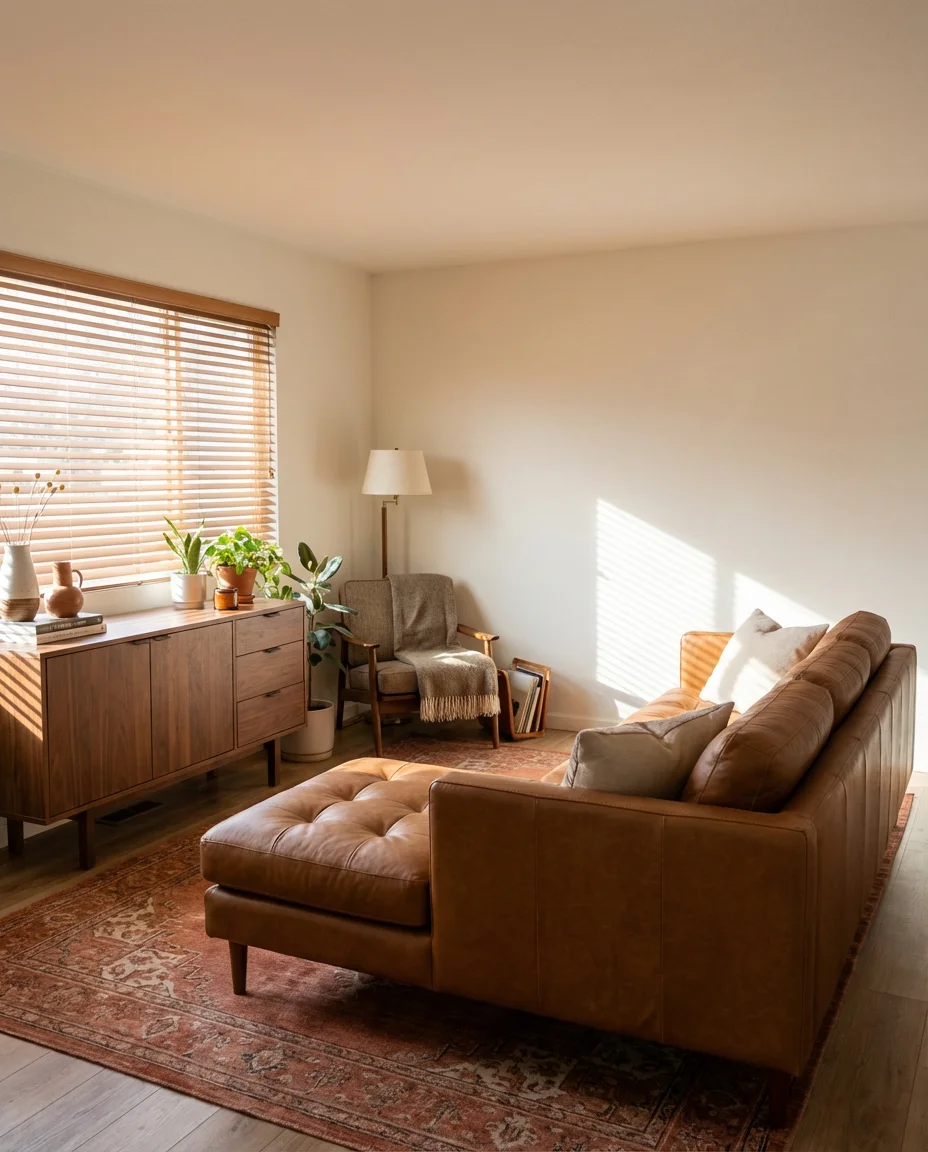
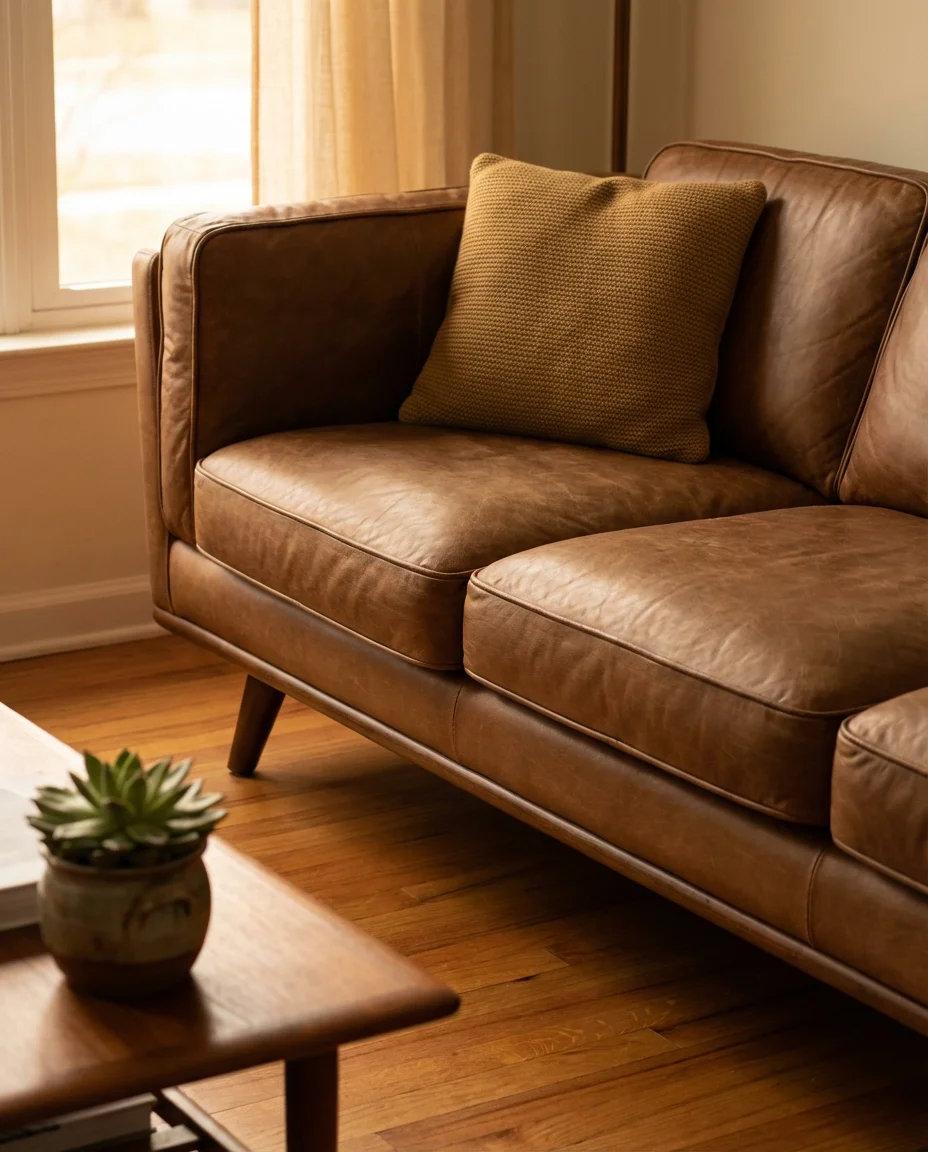
A brown leather sectional with angled legs and a tufted seat back doesn’t just sit in a room—it commands it. The cozy warmth of aged or cognac leather against a neutral backdrop creates the kind of lived-in richness that synthetic materials still haven’t managed to replicate. In 2026, the mid-century revival is leaning toward chunkier profiles with thicker cushions, making these pieces feel less like museum artifacts and more like something you’d actually want to collapse into after a long week.
 .
.
Brown leather sectionals tend to work especially well in homes with existing warm wood tones—think walnut bookshelves, pecan flooring, or even exposed ceiling beams. A Dallas design blogger once described her cognac leather sectional as “the one piece in my house that literally every guest compliments.” That rings true for many homeowners who discover that real leather, while an investment, develops character over time that makes the room feel more personal, not less.
3. Cream and Beige Sectional for a Soft, Airy Living Room
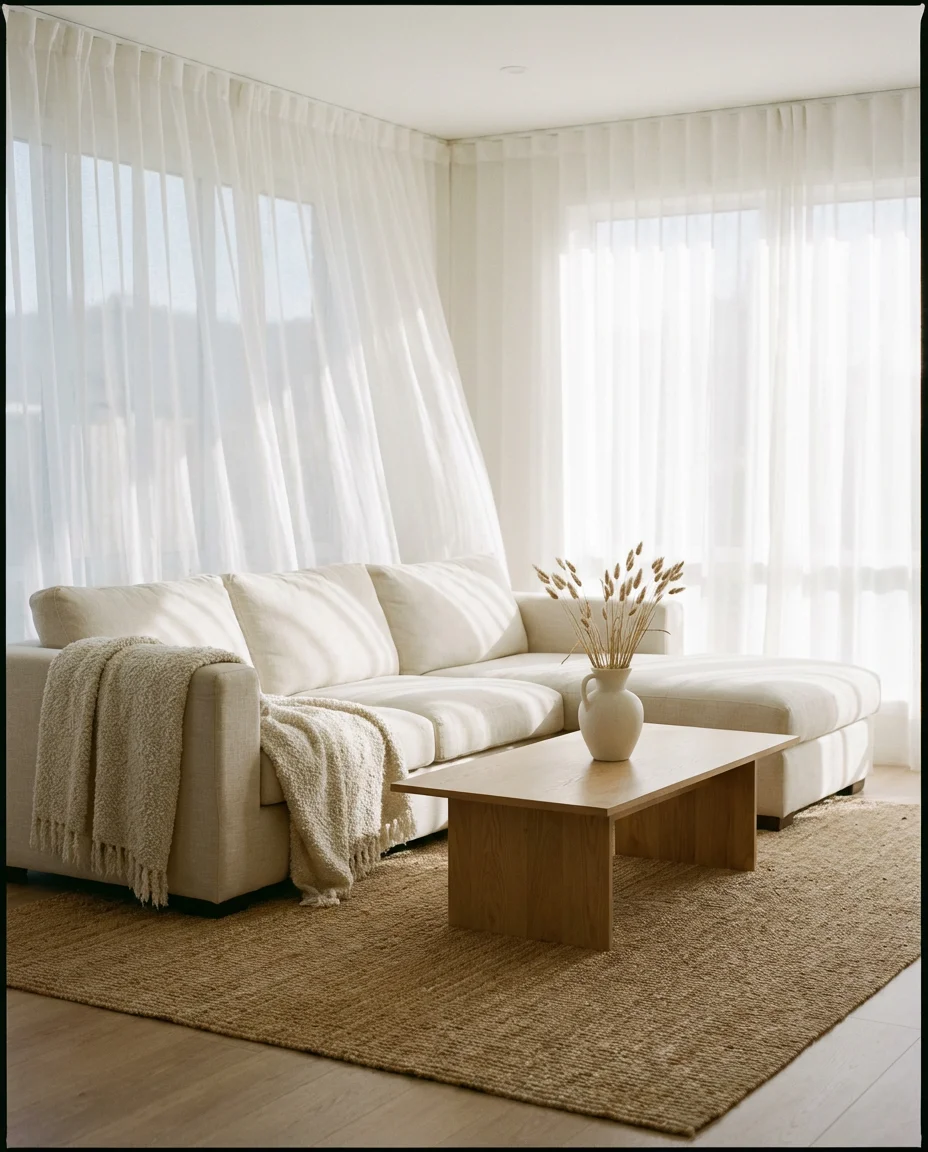
The cream and beige sectional palette is having a full-on moment in 2026 — and it shows no signs of slowing down. These tones create an effortlessly calm environment that photographs beautifully and feels genuinely restful in person. The trick is layering textures rather than relying on color contrast: think a linen sectional paired with a boucle throw, a jute rug, and ceramic accents in soft ivory. The result is a room that looks curated but feels relaxed enough to actually live in every day.
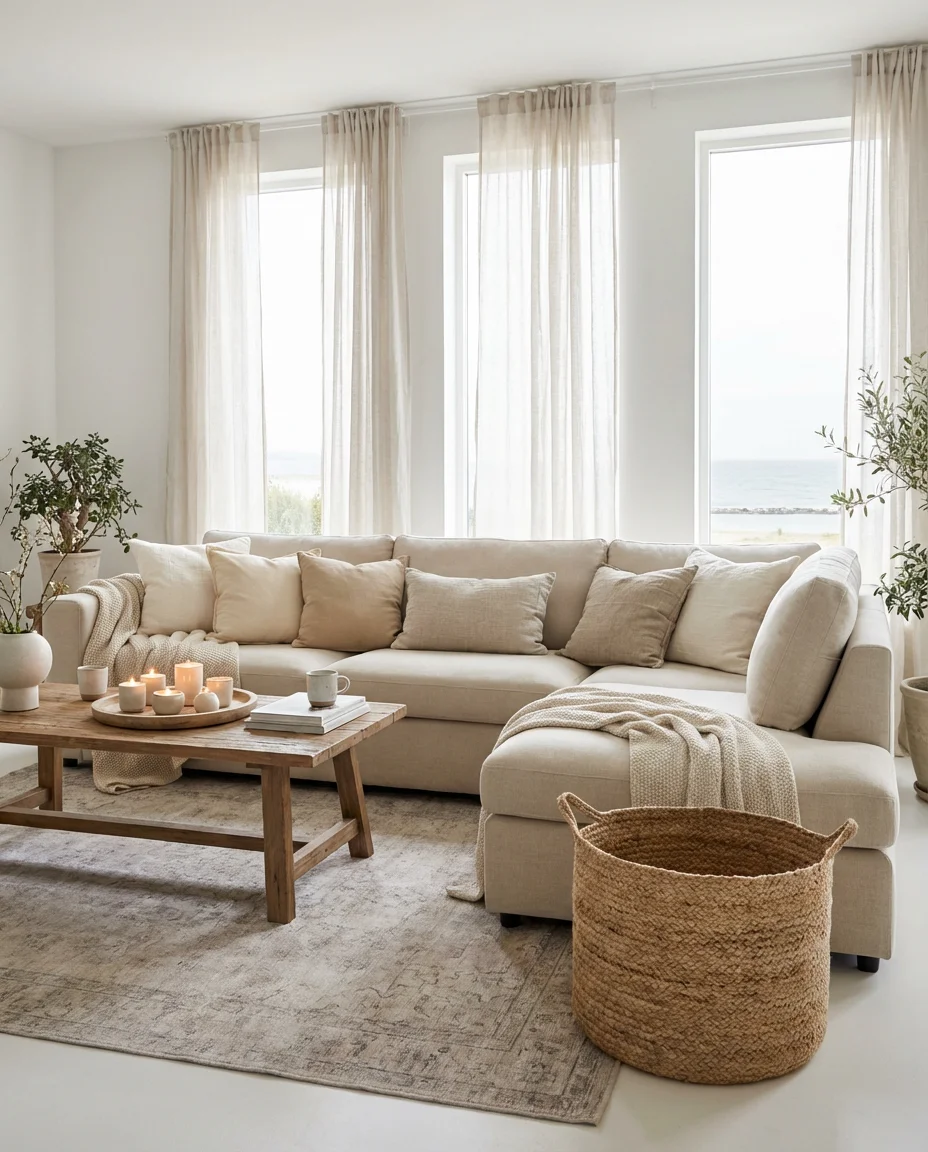
This palette tends to work best in rooms that get good natural light—south- or east-facing living rooms in particular will make a cream sectional glow in the mornings. If natural light is limited, warm LED lighting around 2700K can approximate that same softness. One practical note: today’s performance fabrics in cream and beige are far more stain-resistant than they look, which is why families with kids and pets are increasingly choosing these tones without hesitation.
4. Dark Charcoal Sectional with a Moody, Dramatic Feel
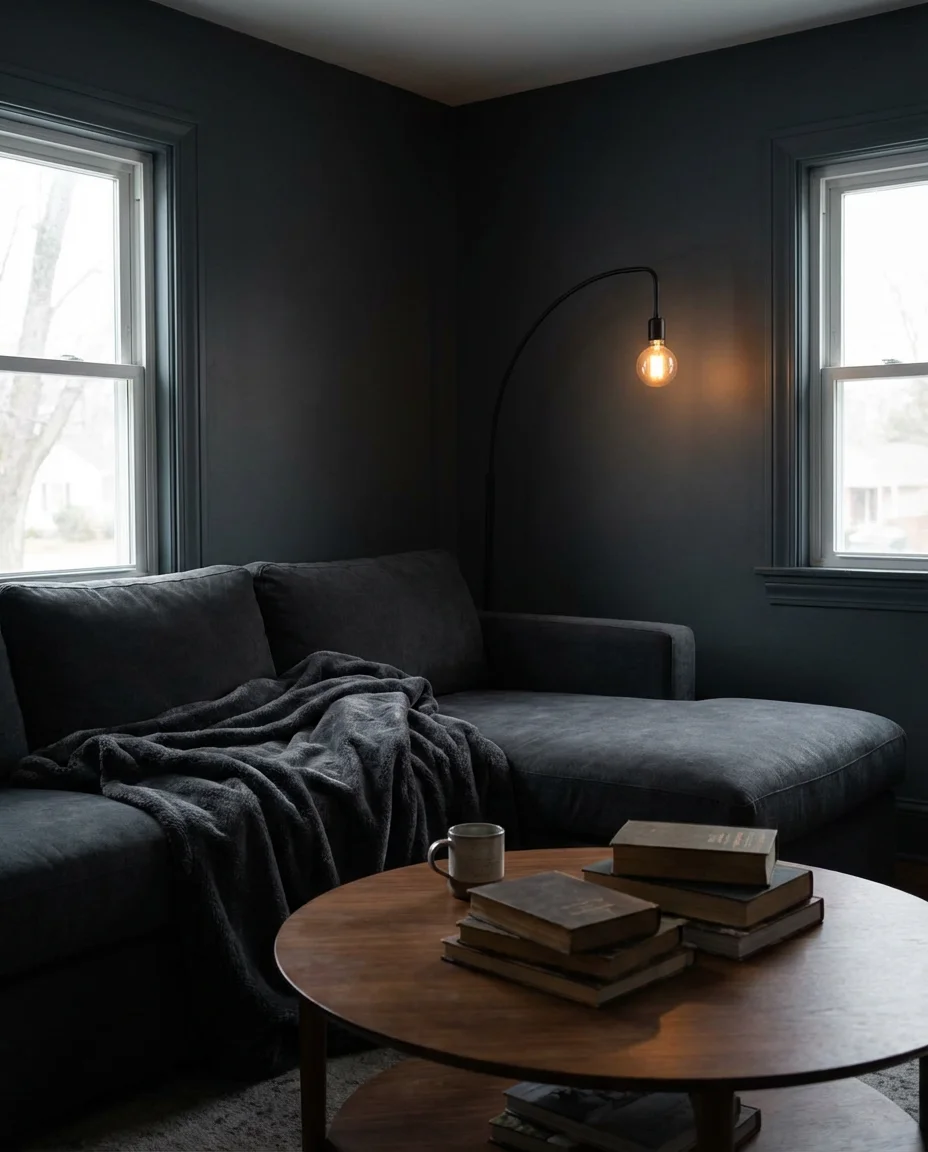
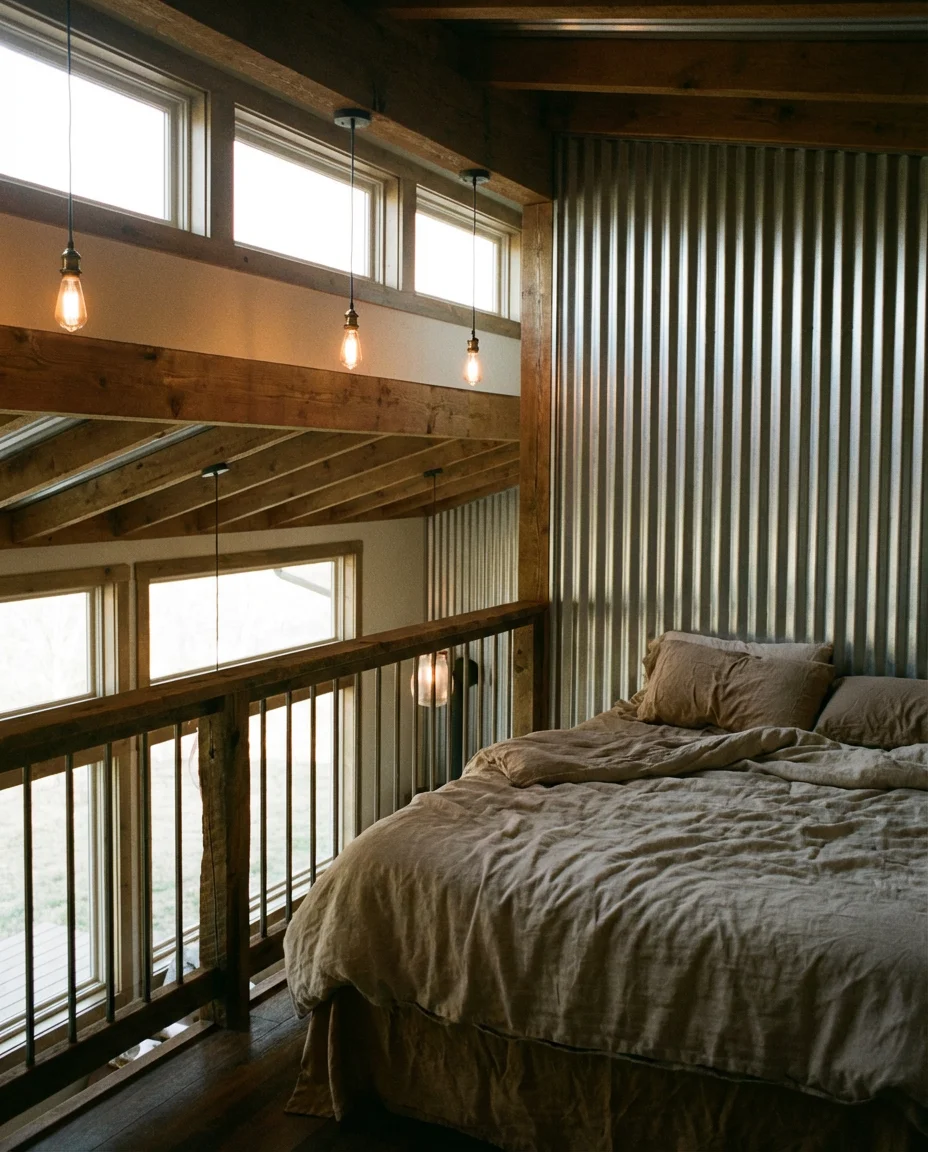
If you’ve ever walked into a room with a dark charcoal sectional and immediately wanted to stay, you know exactly what this look does. Deep, saturated upholstery creates a kind of visual gravity that makes a room feel intimate and considered. In 2026, this approach is being paired with matte black hardware, warm Edison-bulb lighting, and rich wood tones to push the drama without tipping into cold or clinical territory. The result feels like a boutique hotel suite crossed with a very cozy home library.
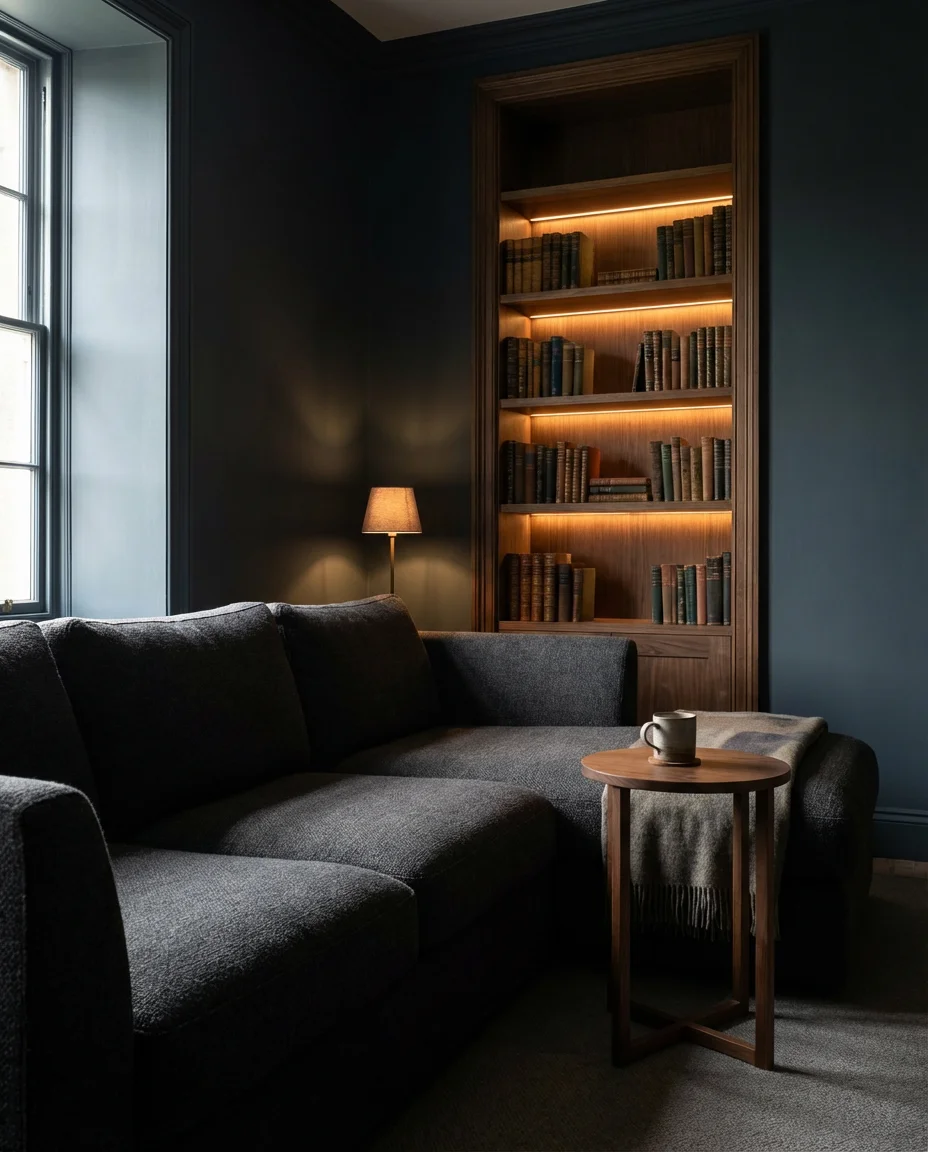
Where it works best: north-facing rooms or basement living spaces that already lean toward cooler, dimmer light. Rather than fighting that quality, a charcoal sectional leans into it beautifully. Interior designers often advise adding at least three light sources when using dark upholstery—an overhead fixture, a floor lamp, and table or shelf lighting—to prevent the room from feeling flat and to keep the space feeling alive even after sundown.
5. Navy Blue Sectional Against White Walls
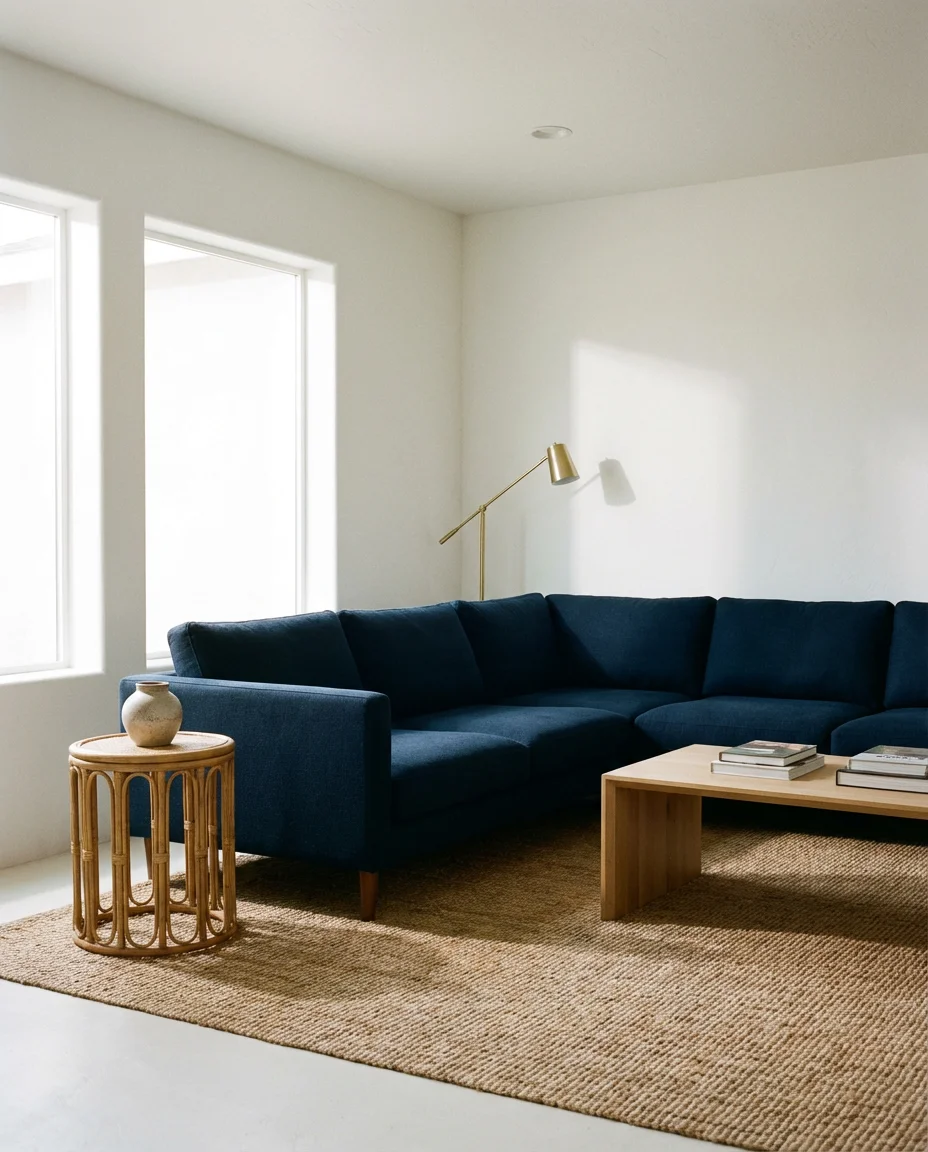
A navy blue sectional against crisp white walls might be the most satisfying color combination in living room design right now. The contrast is bold without being aggressive, and the deep richness of navy anchors a room that might otherwise feel too stark. In 2026, this pairing is getting a fresh update with natural fiber rugs, rattan accent pieces, and warm brass or antique gold hardware that softens the high contrast and adds an earthy, collected quality to the overall aesthetic.
Navy works across a surprising range of American homes—it feels appropriately coastal in a beach house, smartly classic in a traditional colonial, and quietly sophisticated in a modern condo. The key is keeping surrounding elements light and natural to prevent the room from visually compressing. If your room is smaller than 12 by 14 feet, opt for a lighter, slightly warmer navy rather than a pure deep ink tone, which can read very heavy in compact spaces.
6. The Cloud Sectional: Ultra-Comfort in Any Space
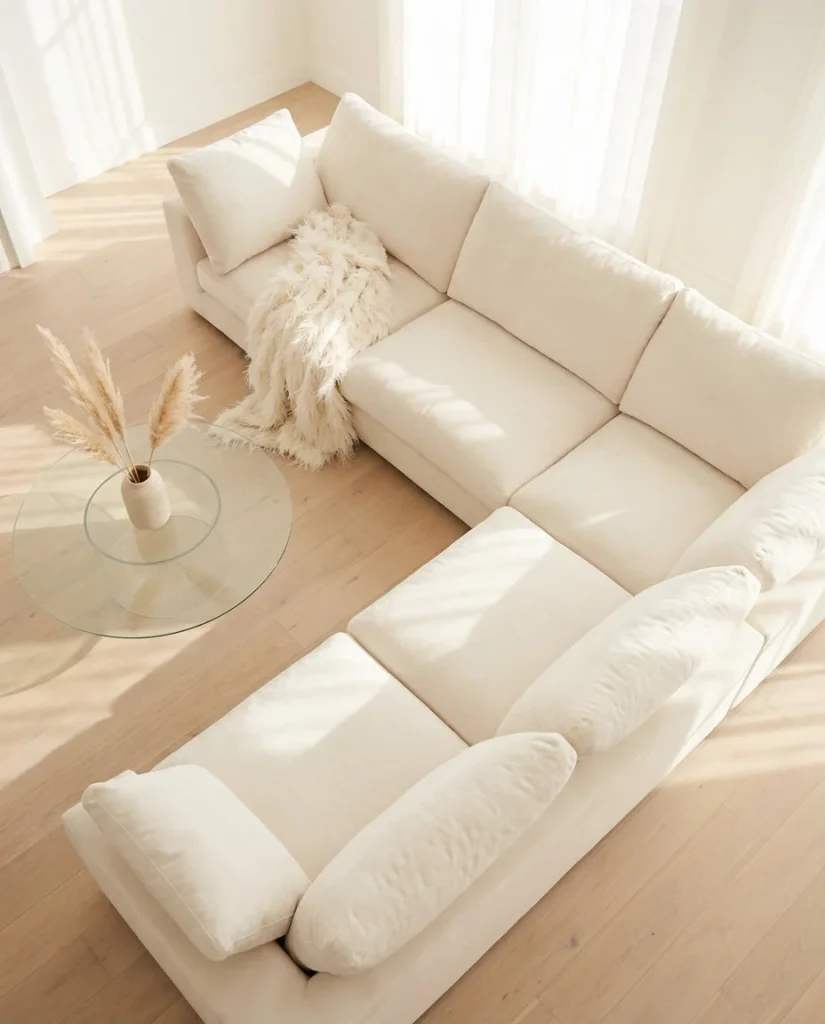
The cloud sectional—that pillowy, ultra-deep, sink-into-it style—isn’t just a trend anymore. It’s a movement. In 2026, the cloud aesthetic is expanding beyond white and ivory into light grey and even soft sage tones, with feather-blend cushions and extra-wide seats that feel like they were designed specifically for people who want to do absolutely nothing productive on a Sunday afternoon. The oversized scale of these pieces makes them a visual statement in their own right; no additional decoration is required.
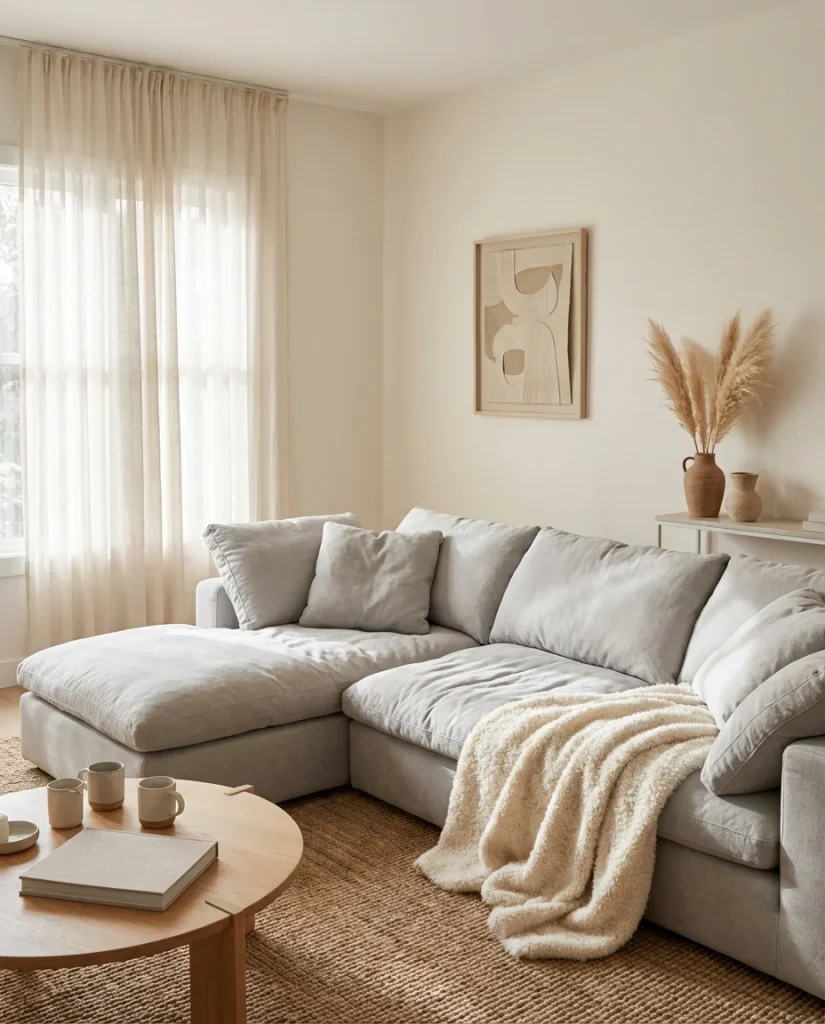
Budget note: cloud-style sectionals vary wildly in price—from around $1,500 for a decent entry-level option to $8,000 and up for Italian-imported versions with genuine goose down fill. The biggest thing to watch for at mid-range price points ($2,500–$4,000) is cushion density. Some manufacturers skimp on fill, resulting in a cloud sofa that deflates noticeably within six months of regular use. Always ask about the foam-to-down ratio before purchasing, and read reviews specifically from owners who’ve had the piece for at least a year.
7. Green Sectional as a Statement Piece
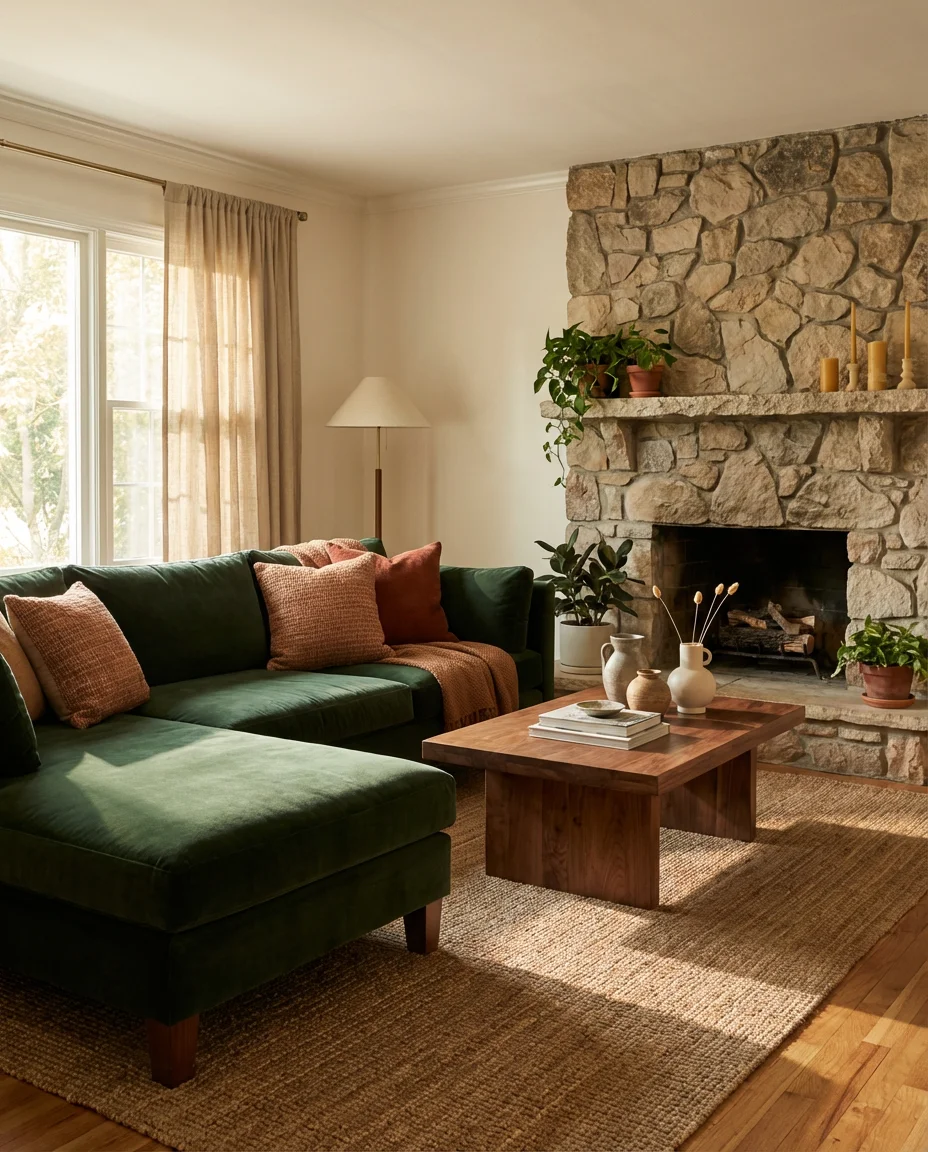
If there’s one color move that defined the living room conversation heading into 2026, it’s the green sectional. From deep forest tones to muted sage and earthy olive, green upholstery is landing in living rooms across the country and making people wonder why they ever settled for neutral. When done right—and it doesn’t take much—a green sectional grounds a room in a way that references nature without feeling literal or overdone. Pair it with warm wood, stone textures, and burnt sienna accents for a look that feels deeply current.
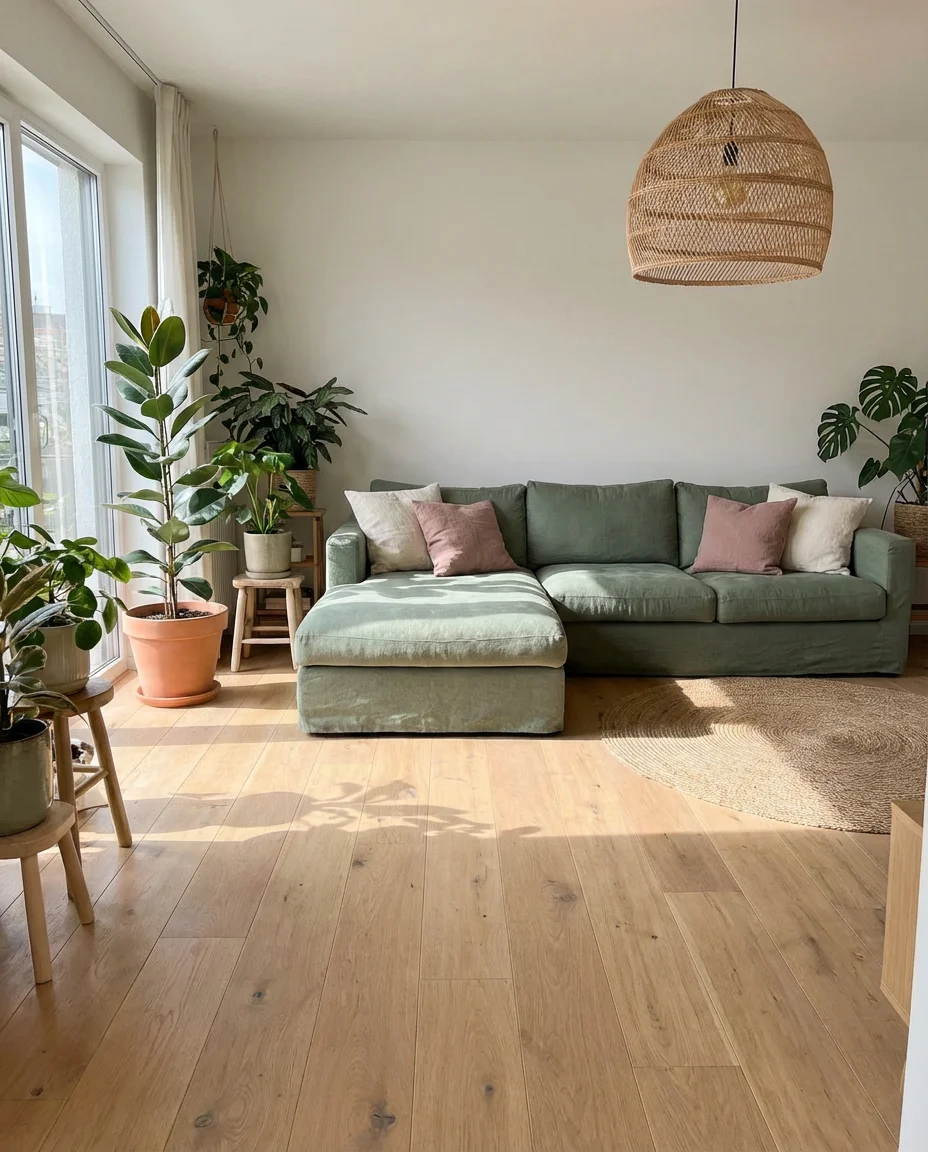
American homeowners who make the jump to green sectionals almost universally report that they’re more committed to the look than expected—in a good way. It tends to pull design decisions into sharper focus, making you think more carefully about what else belongs in the room. That creative constraint leads to more considered spaces overall. Sage green in particular is beloved by designers working with clients in the Pacific Northwest and mountain West, where the indoor-outdoor connection is especially prized.
8. Black Leather Sectional for a Bold Urban Look
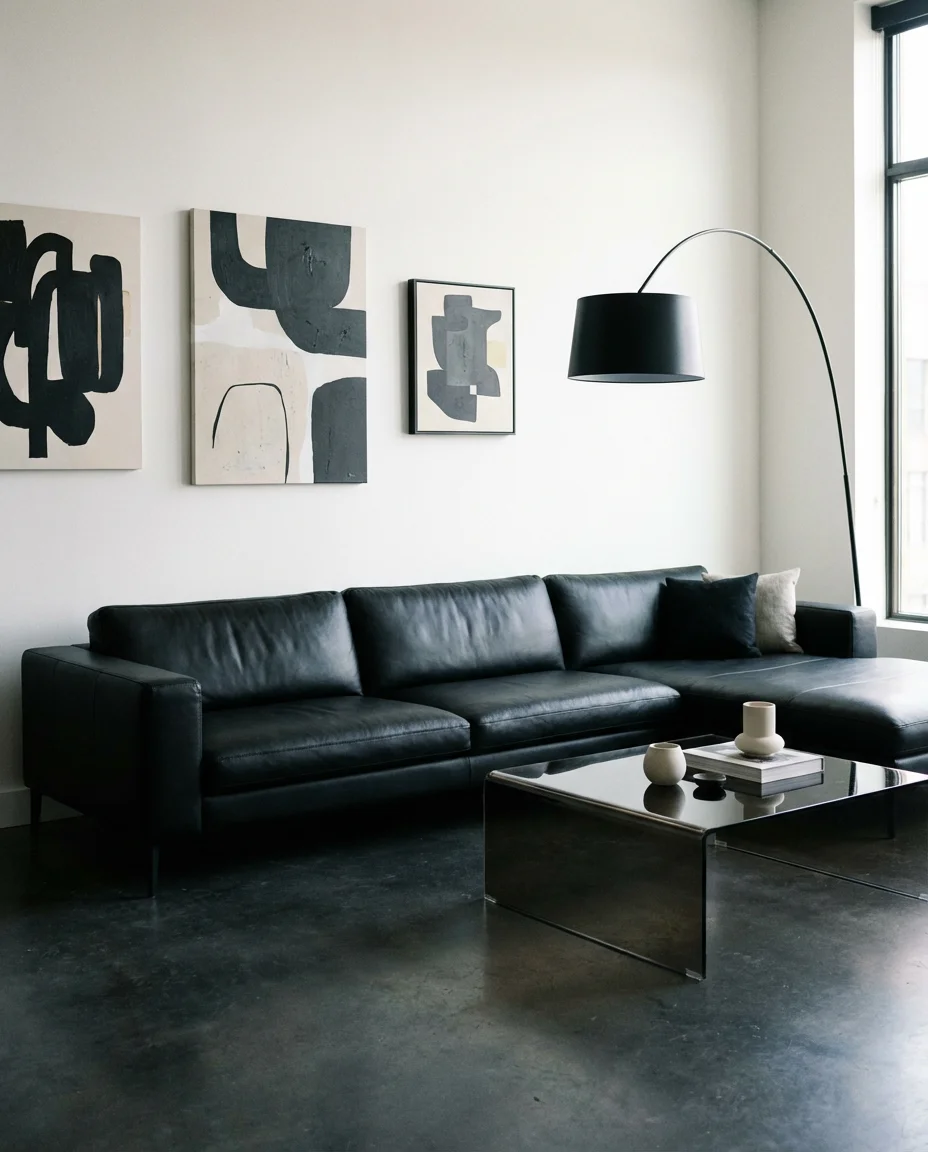
A black leather sectional in 2026 is not your parents’ living room furniture. The aesthetic has evolved from the boxy, shiny styles of the past into sleek, matte-finish pieces with refined tailoring, modular configurations, and a distinctly upscale edge. This is the choice for those who want their living space to feel like it belongs in a Manhattan loft or a renovated Chicago brownstone—unapologetically stylish, with nothing to apologize for. Matte black hardware, concrete or dark tile flooring, and abstract art complete the picture effortlessly.
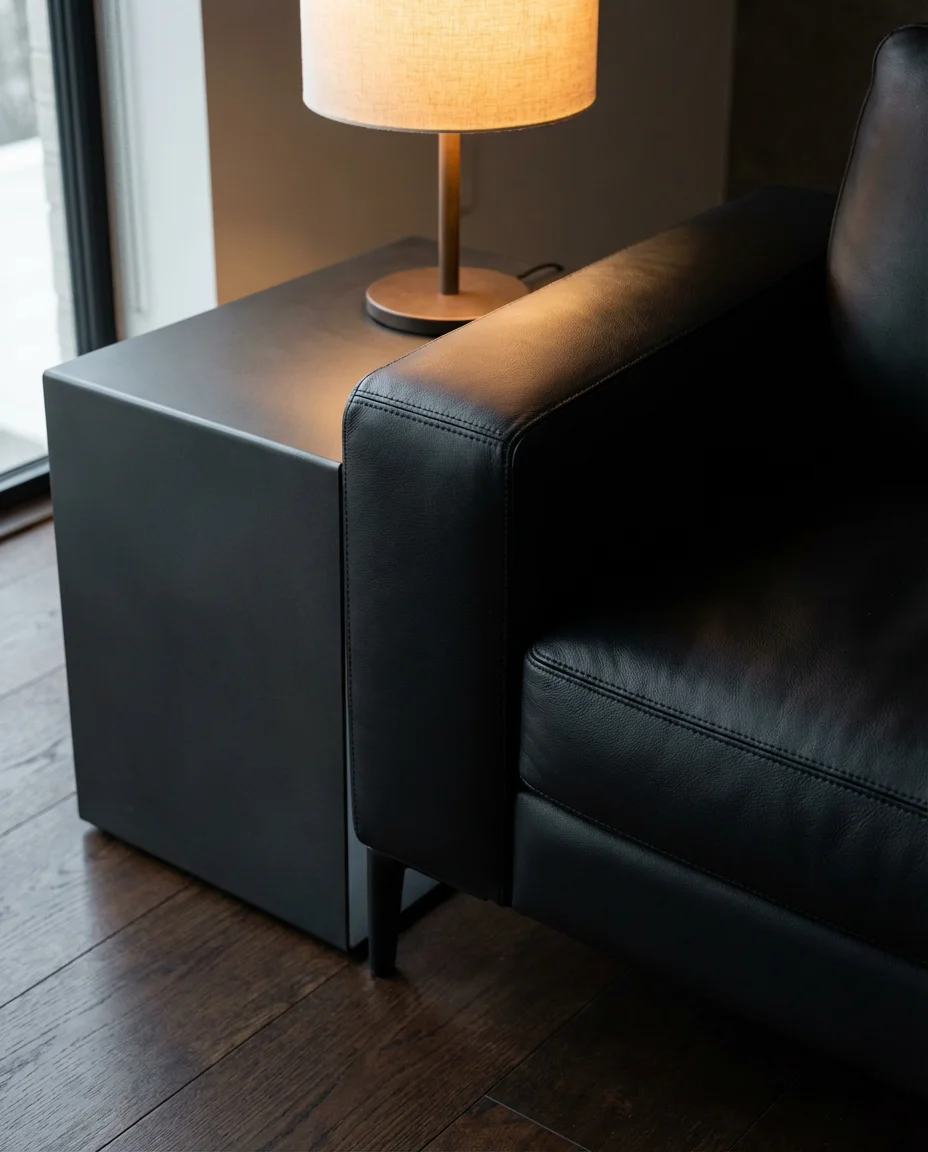
Real homeowner behavior with black leather sectionals tends to follow a predictable pattern: initial hesitation gives way to total conversion once the piece arrives. The biggest surprise for most buyers is how warm the room feels with the right lighting—contrary to expectations, a well-lit space with a black leather sectional can feel more intimate and inviting than one with a lighter sofa. The material also cleans up remarkably easily, which makes it quietly practical for households with kids or regular entertaining.
9. Light Gray Modular Sectional for Flexible Living
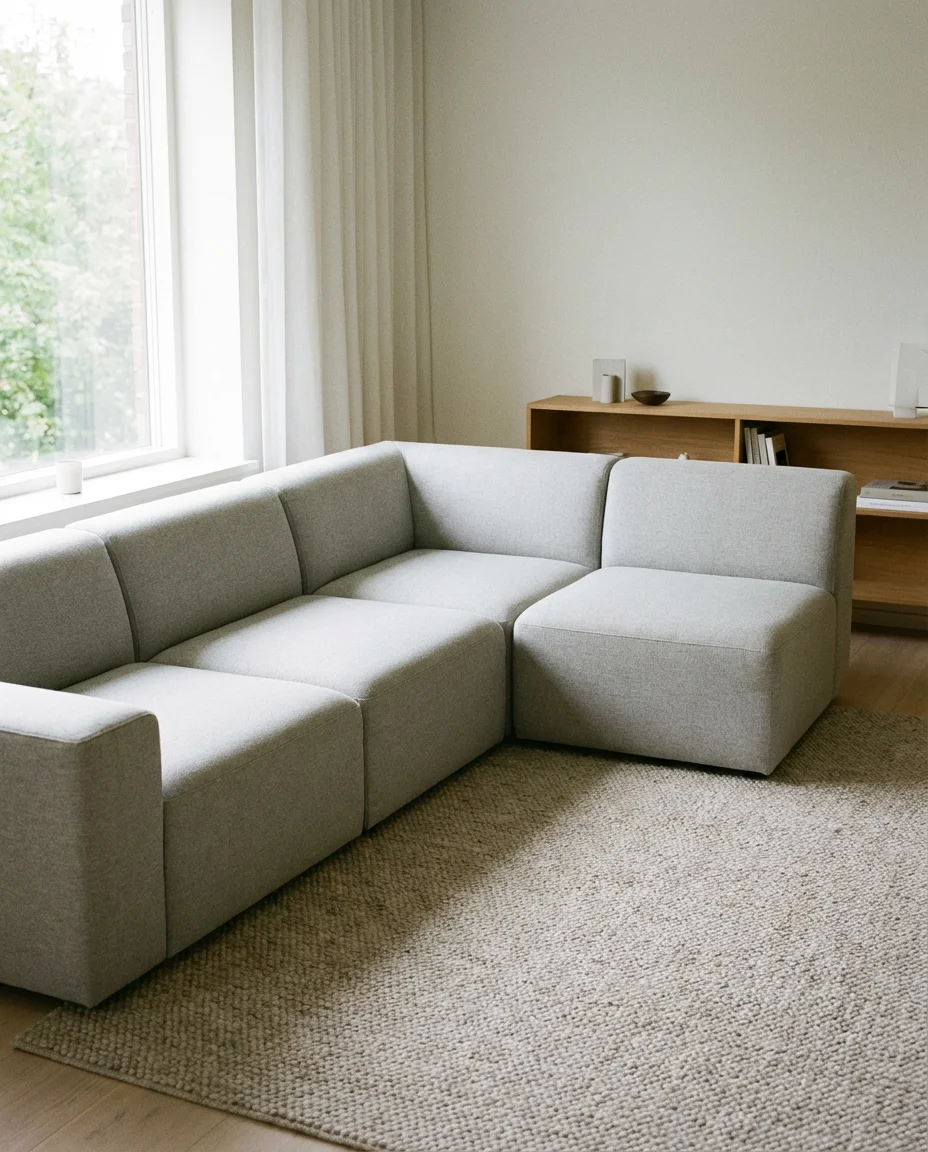
The appeal of a light gray modular sectional in 2026 comes down to one word: adaptability. These systems let you reconfigure your living room as your life changes—add a chaise when you want to lounge, remove a segment for a party, or restructure the whole thing when you move apartments. Light grey is the ideal neutral for this format because it transitions seamlessly between design styles, playing equally well with Scandinavian minimalism and warm California bohemian interiors. It’s the design equivalent of a well-cut blazer: it works with nearly everything.
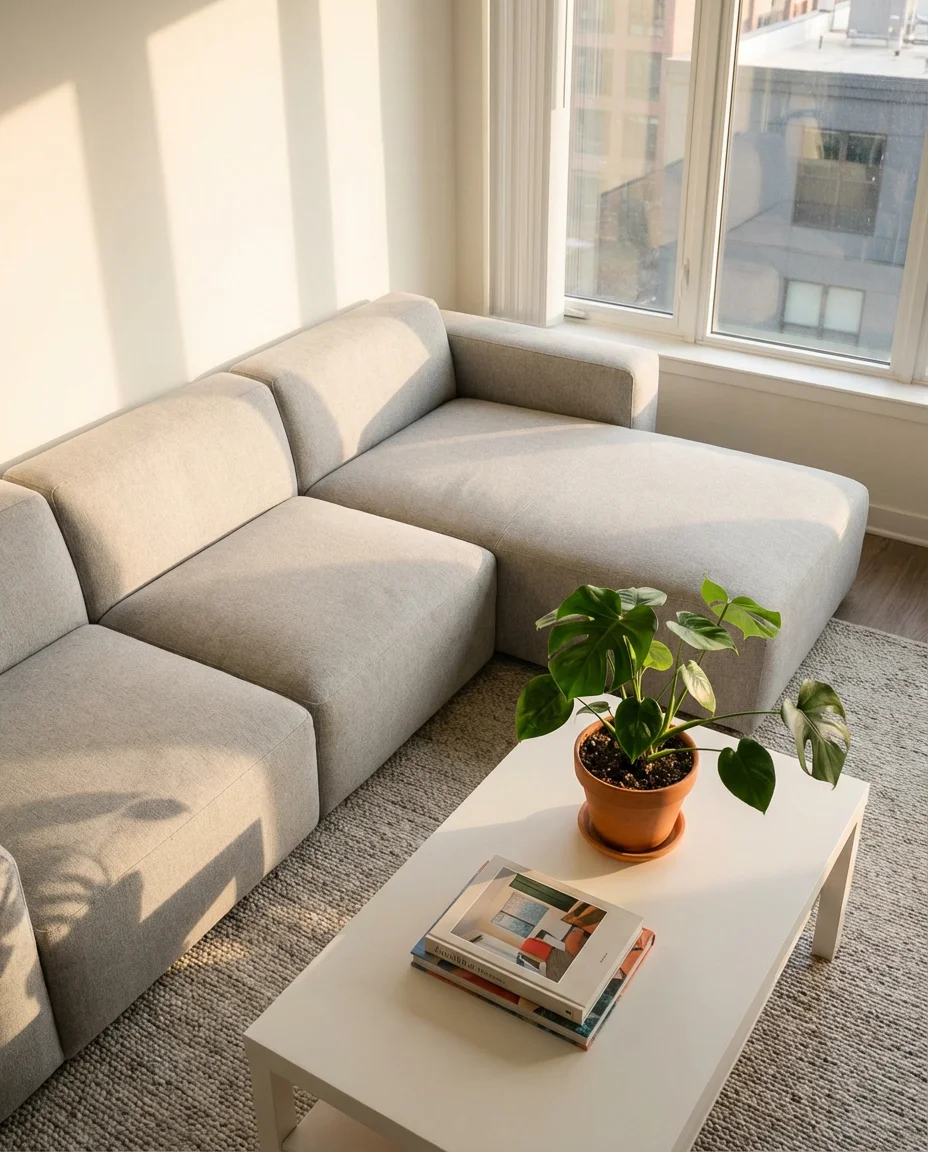
Modular sectionals are especially popular among renters in cities like Austin, Denver, and Seattle—people who move every few years and want furniture that adapts rather than becoming a liability. When shopping for a modular system, pay close attention to how the connectors work. The best systems use metal or reinforced clips that keep segments from slowly migrating apart during regular use—a frustrating issue with cheaper modular designs that can make a beautiful sofa feel sloppy after just a few months.
10. Tan Sectional with Warm Earthy Layers
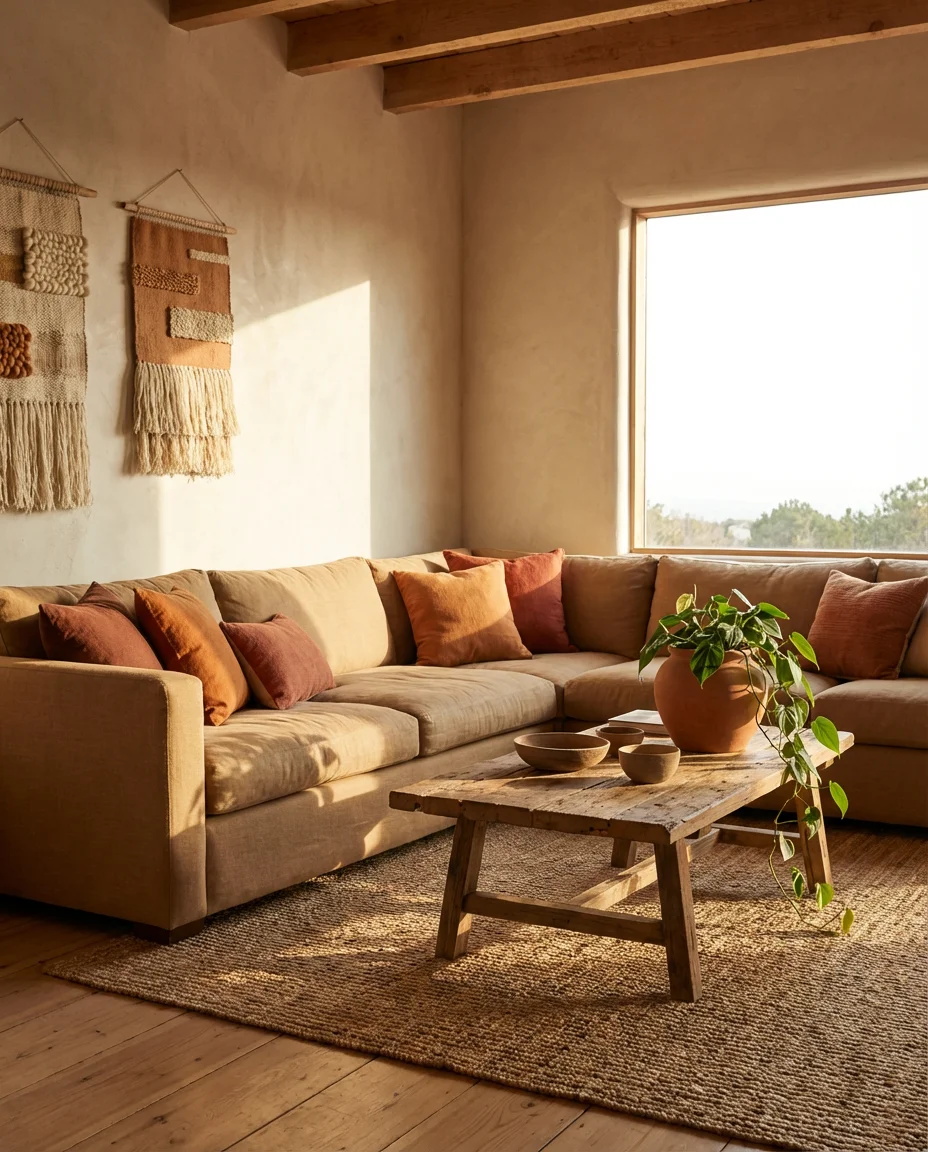
A tan sectional sits in a uniquely useful place on the color spectrum—warmer than grey, more versatile than brown, and more grounded than cream. In 2026, tan upholstery is being styled with terracotta pots, rust-orange throws, and raw linen pillows to create living rooms that feel connected to the earth in the most intentional way possible. The taupe edge of many tan fabrics adds a slight sophistication that prevents the look from reading as casual-only—it can dress up or down with ease depending on the surrounding elements.
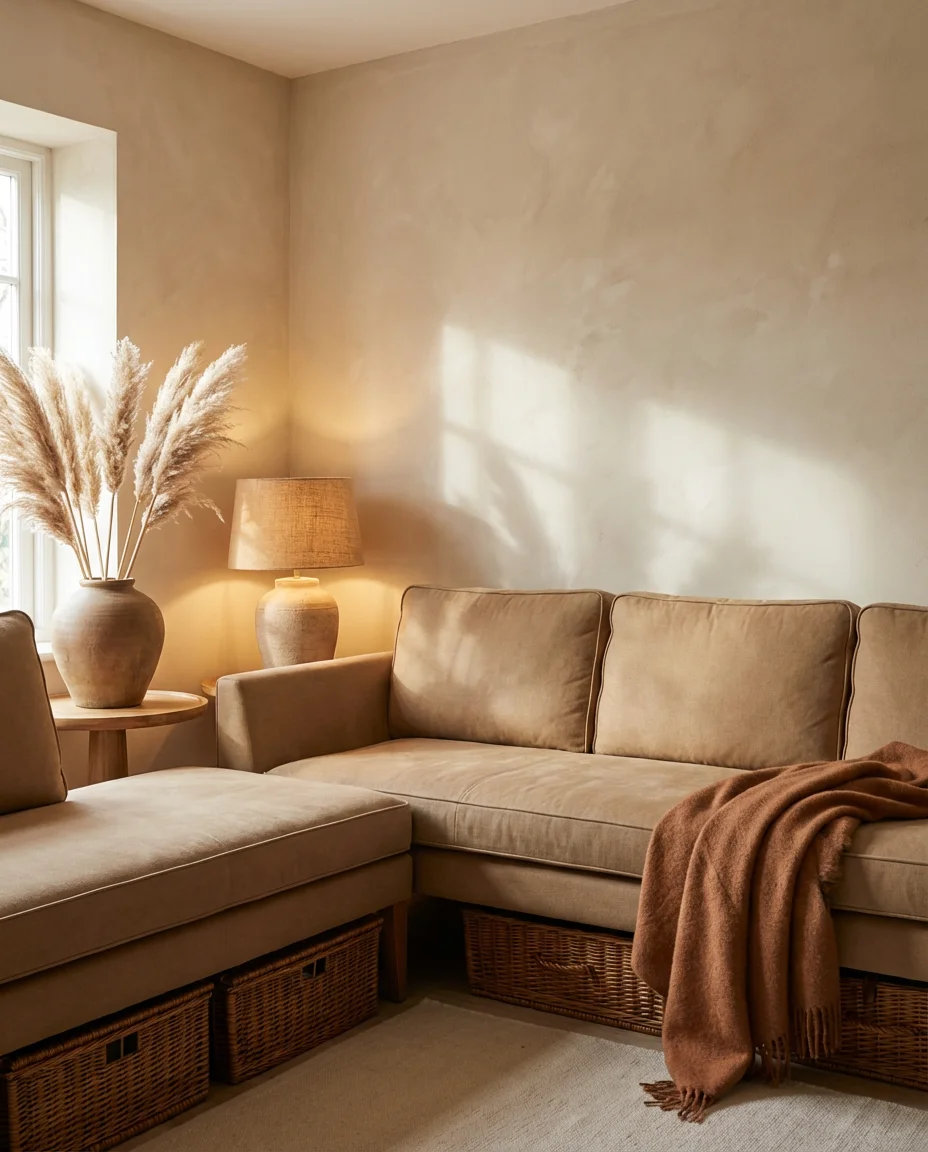
Expert-style insight: interior designers often describe tan as the most “connective” neutral—meaning it can bridge disparate elements in a room that might otherwise clash. Have a honey oak floor, a grey stone fireplace, and some vintage rattan side chairs that don’t quite go together? A tan sectional often acts as the visual glue that makes all those elements feel intentional rather than accidental. It’s a secret weapon that experienced designers rely on more than they let on publicly.
11. Dark Grey Sectional in a Cozy Family Room
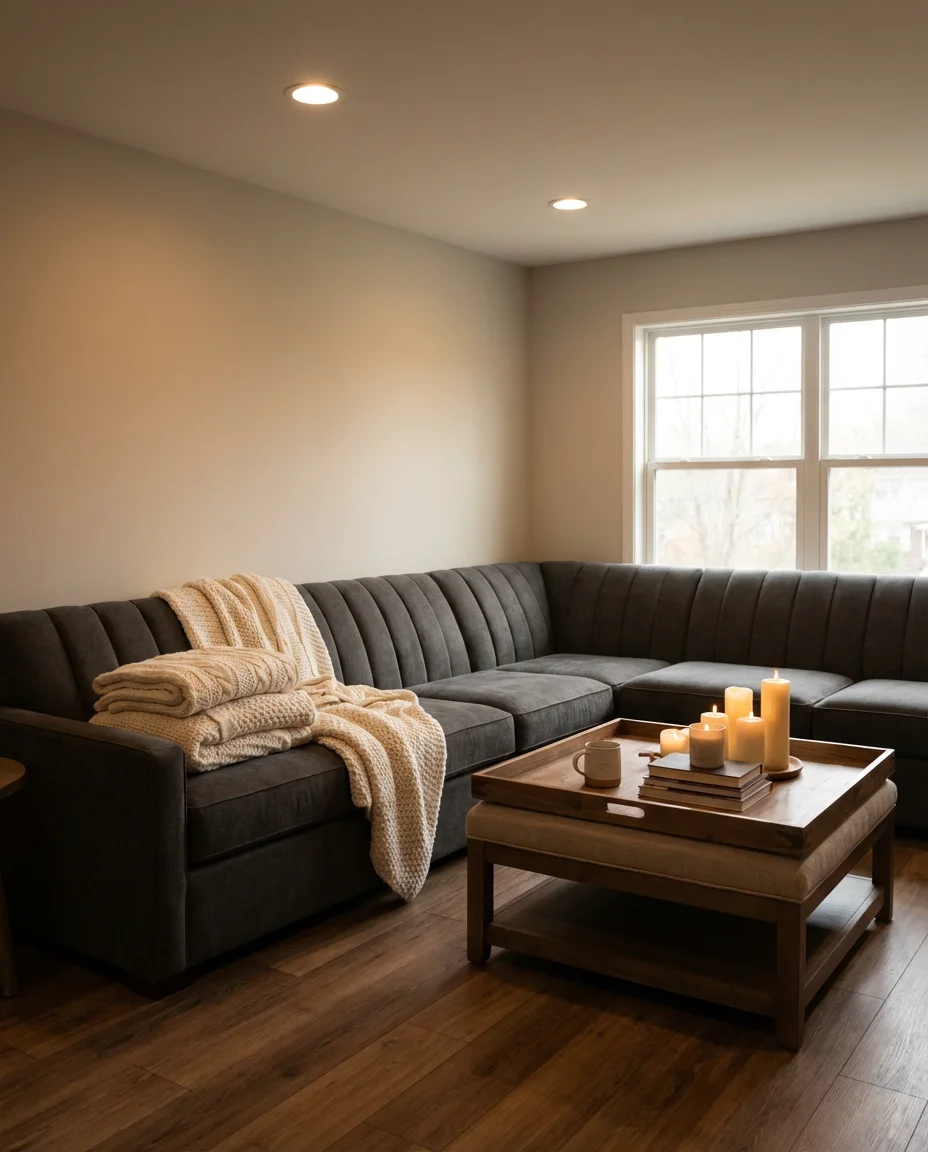
Few combinations feel as genuinely cozy and family-ready as a dark grey sectional in a warm, lived-in room. The deeper grey tone hides everyday wear remarkably well—popcorn crumbs, pet fur, and the general entropy of family life—while still looking polished when you actually tidy up. In 2026, this workhorse look is getting elevated with channel-tufting details, velvet performance fabric blends, and layered lighting that makes even a busy family room feel intentionally designed rather than just furnished.
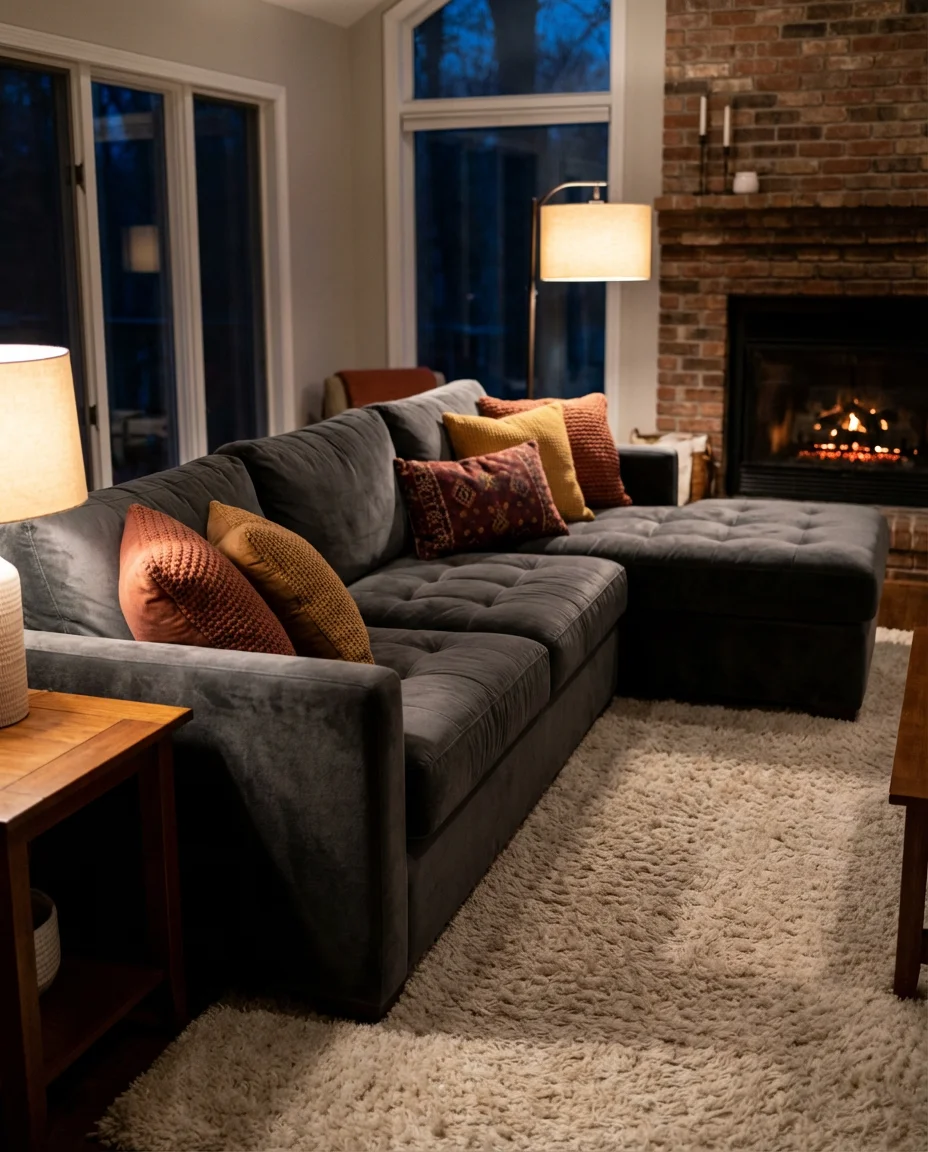
This configuration works best in dedicated family rooms or media spaces—rooms that have a clear purpose and see heavy daily use. Unlike formal living rooms, these spaces benefit from a sofa that can take a beating without looking like it did. Dark grey sectionals in performance fabrics have become a staple recommendation among designers who work with families in the suburbs of Chicago, Houston, and Atlanta, where open-plan homes demand furniture that’s both durable and design-forward.
12. White Sectional with Minimalist Elegance
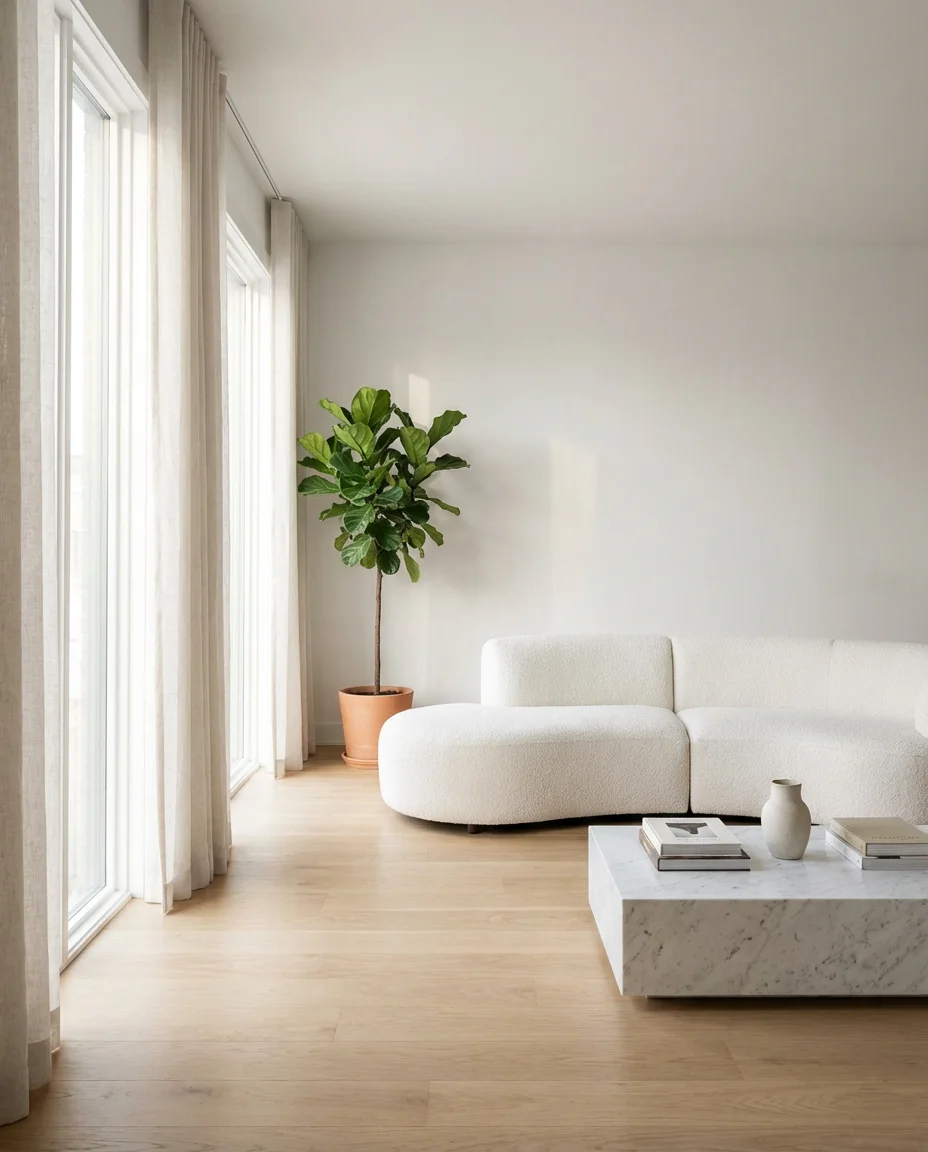
A crisp white sectional is one of those design choices that requires courage but rewards generously. In 2026, the minimalist white living room look is maturing—it’s less stark and cold than early iterations, incorporating warm textures and organic shapes that soften the overall effect without compromising the clean, edited aesthetic. Light gray undertones in some white fabrics help keep the sofa from reading as clinical, while textured boucle or waffle-weave upholstery adds visual depth that a flat, smooth fabric simply can’t provide.
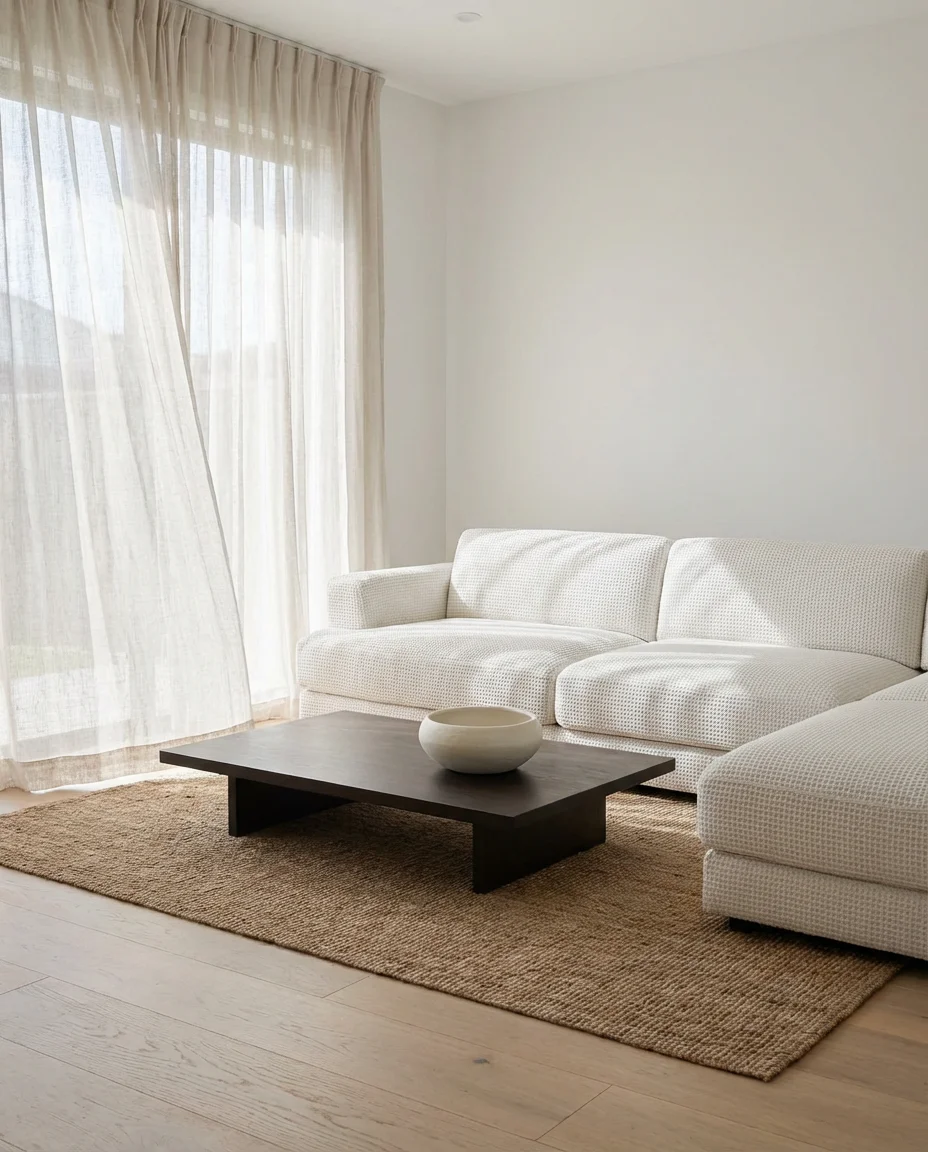
The common mistake with white sectionals isn’t buying them—it’s not protecting them properly after the fact. Most white performance fabrics today are genuinely resistant to staining if treated promptly, but owners who skip the protective spray application or ignore early staining often regret it. Many furniture retailers now offer professional fabric protection services at purchase; the $80–$150 upcharge is almost always worth it for light-colored upholstery, and it extends the life of the piece considerably.
13. Taupe Sectional with Layered Neutrals
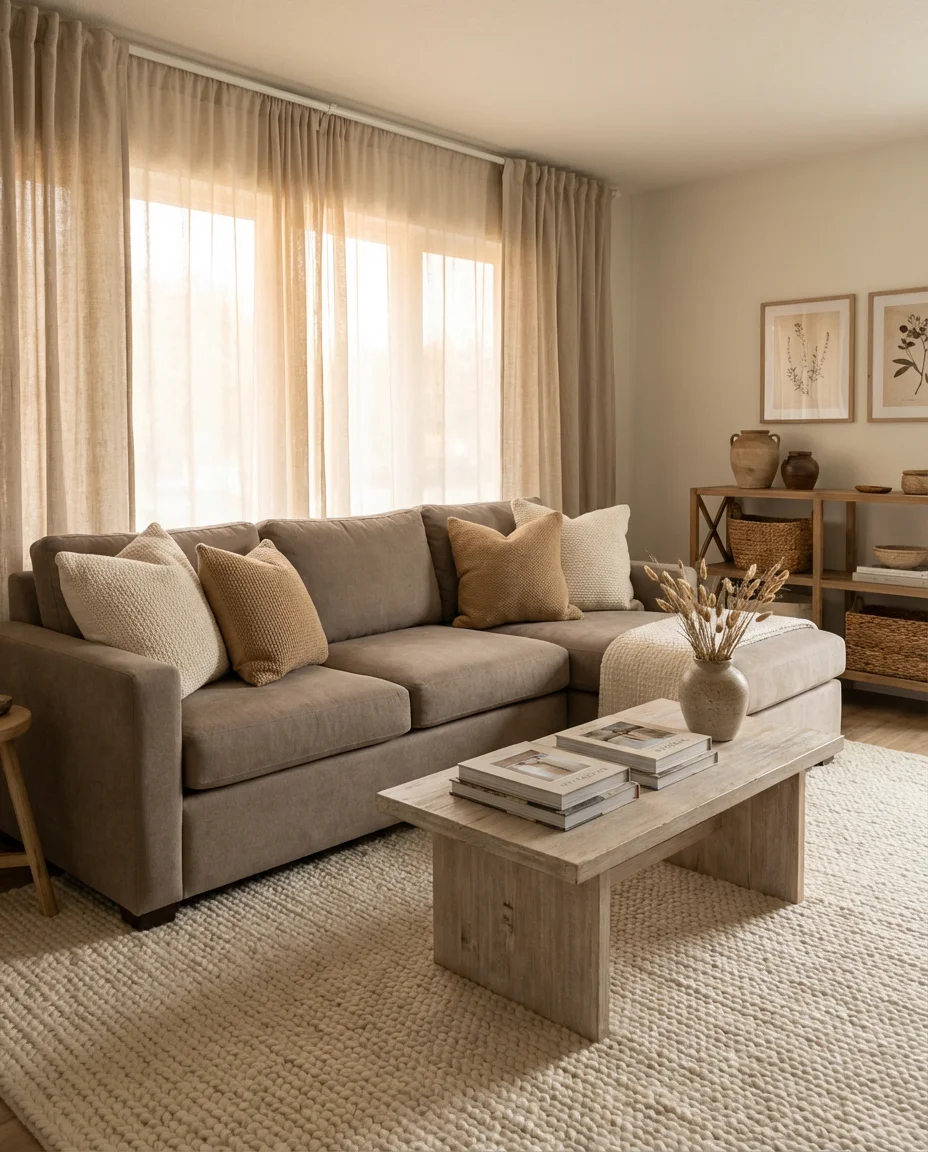
Taupe is the neutral that refuses to be boring. In 2026, a taupe sectional paired with a carefully layered neutral interior—think ivory, warm white, and a dash of brown or camel—creates a room that feels simultaneously sophisticated and approachable. The secret is in the variation: mix smooth fabric with textured accents, matte finishes with a single metallic element, and rough natural materials with something refined and polished. Beige and taupe together create a tonal richness that a single-neutral approach simply can’t achieve.
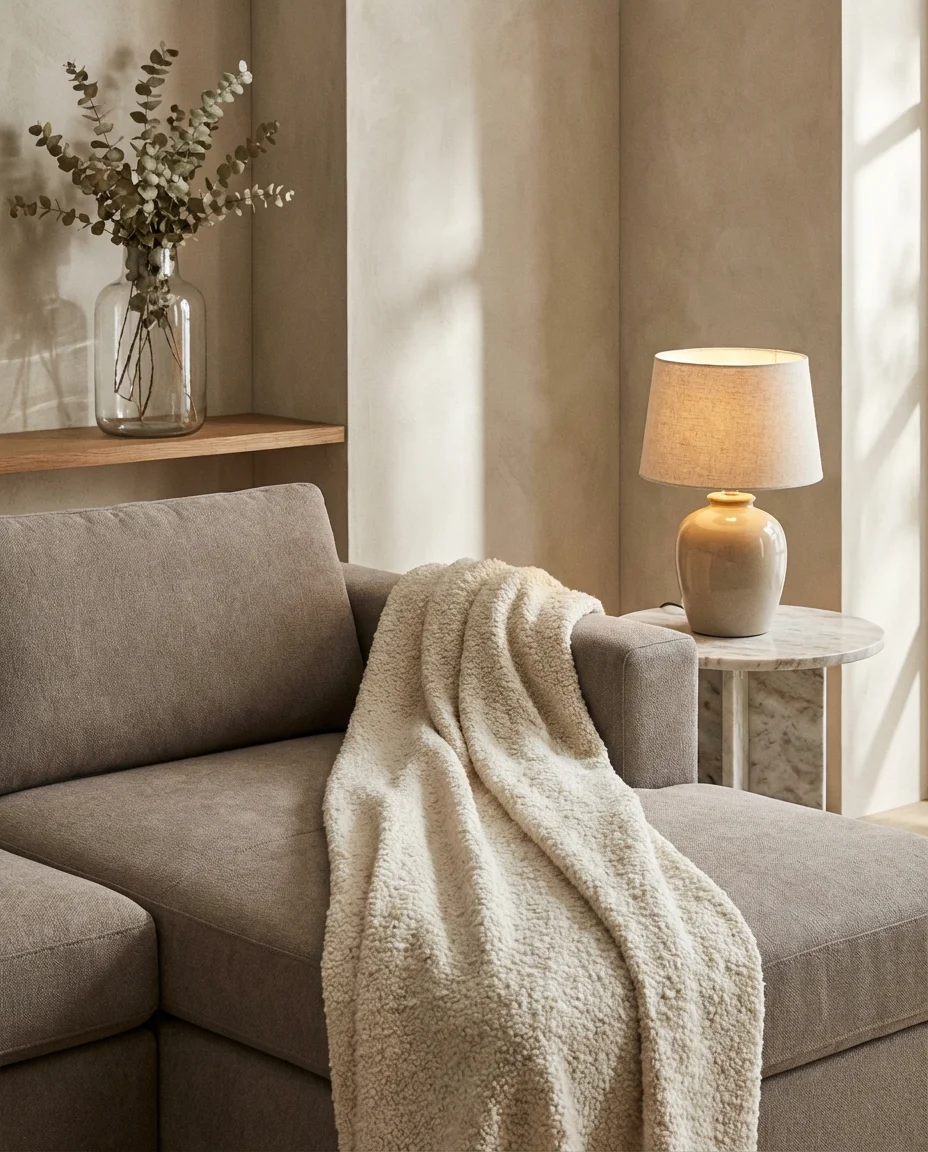
From a regional standpoint, taupe sectionals are especially popular in the American Southwest—in cities like Scottsdale, Santa Fe, and Albuquerque, where warm, earthy interiors are almost a cultural reflex. The natural adobe and stucco tones that surround people in these environments translate directly into their interior choices, and taupe sits perfectly within that palette. If you’re decorating in this part of the country, a taupe sectional paired with handwoven textiles and terracotta accents is practically a guaranteed success.
14. Brown Sectional with Rustic Warmth
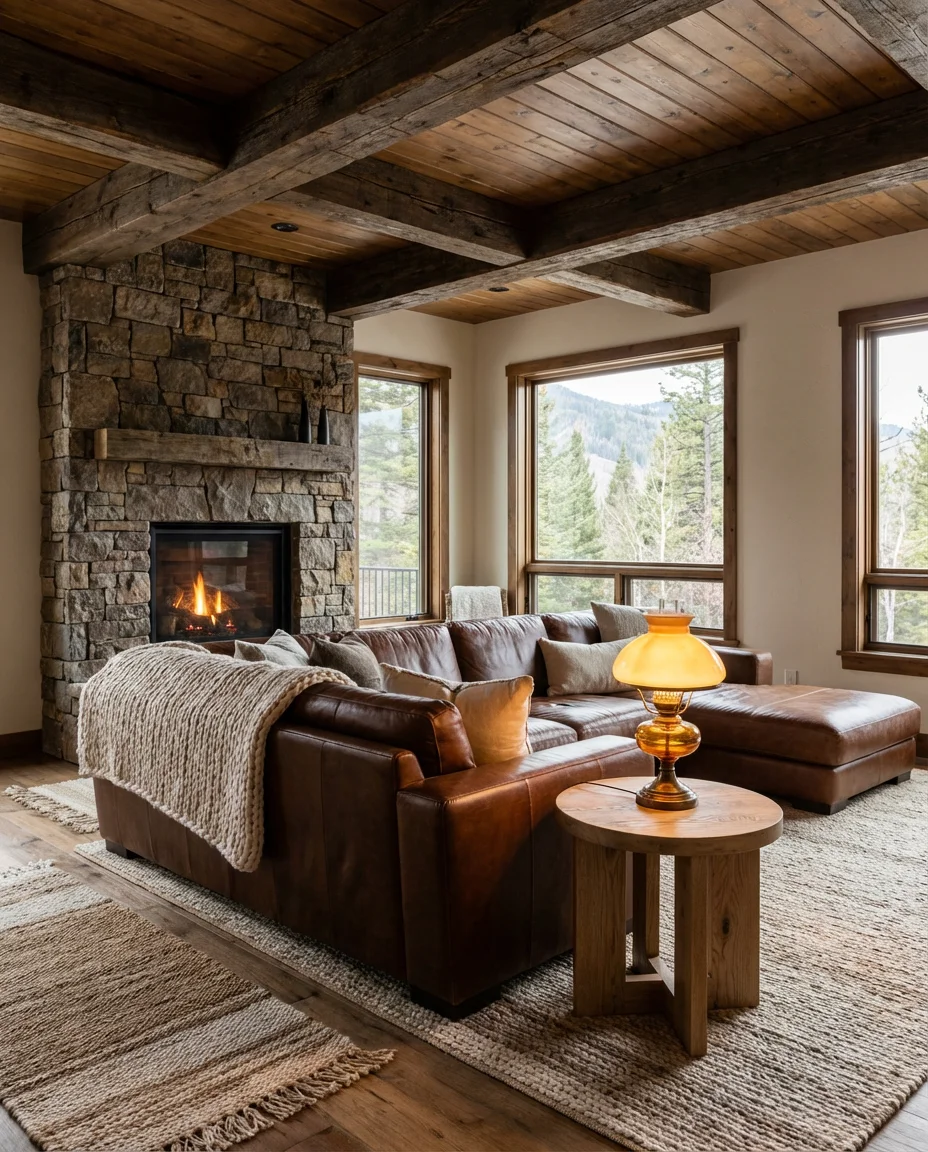
A deep, rich brown sectional in a room with rustic elements—reclaimed wood, stone, and woven textiles—hits a frequency that feels genuinely timeless. In 2026, the rustic aesthetic has shed its rough edges in favor of a cleaner, more considered approach that designers sometimes call “refined rusticity.” The dark gray tones of stone or concrete mixing with warm brown upholstery create a layered, grounded interior that manages to feel both historic and fresh. This is the living room that makes people stop scrolling on Pinterest.
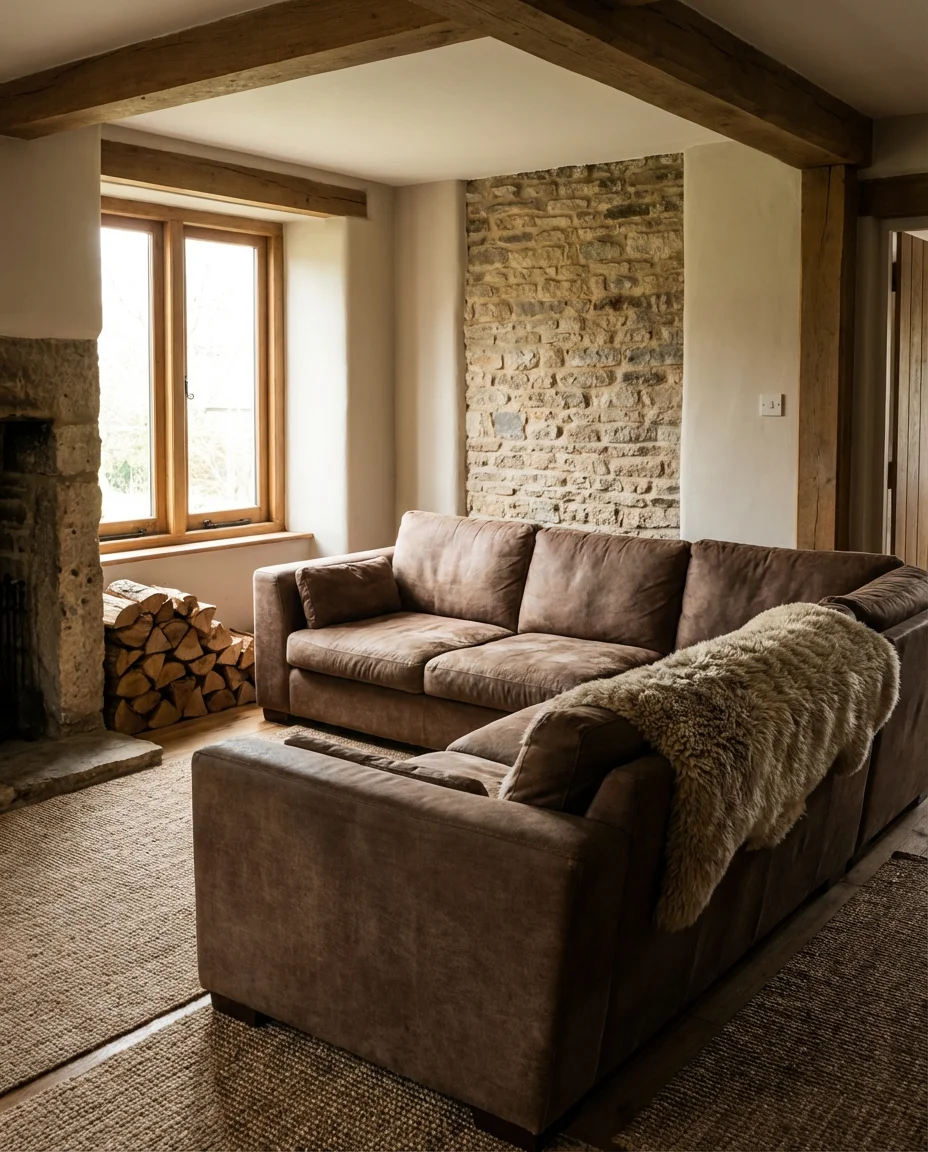
Practical insight: when pairing a brown sectional with rustic materials, the key is to balance rough and smooth surfaces in roughly equal proportion. Too many rough, unfinished elements, and the room starts to feel unintentionally unfinished. A good rule of thumb is one refined element for every raw one: a smooth leather sofa pillow next to a rough-woven throw, a polished stone bowl next to a raw wood tray. This push-pull between textures is what gives refined rustic rooms their signature, irresistible depth.
15. U-Shape Sectional Layout for Large Living Rooms
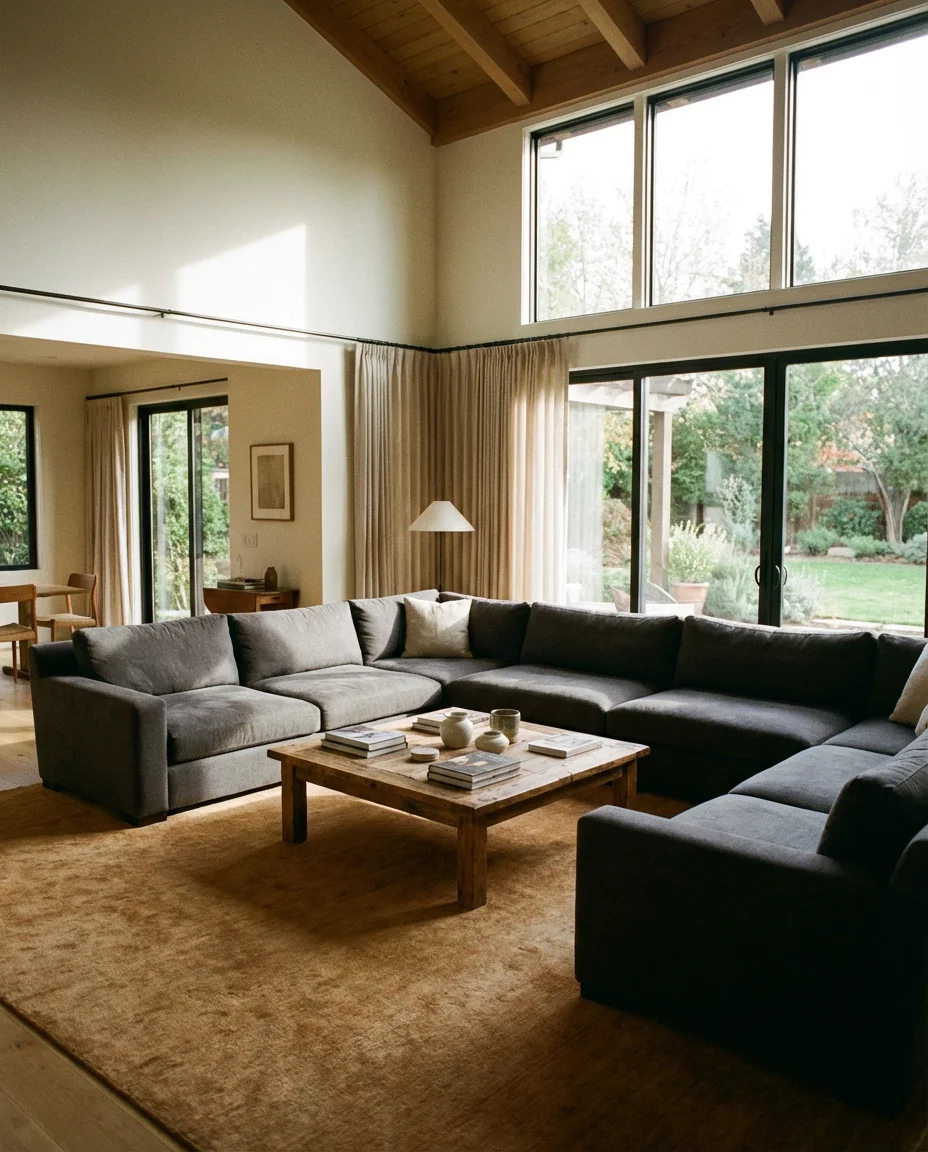
The U-shaped sectional layout is the ultimate expression of living room hospitality—a configuration that says, “everyone is welcome, and there’s room for all of you.” In 2026, this generous format is finding new relevance as Americans reclaim their homes as gathering spaces after years of scaled-back socializing. A large living room with a U-shaped sectional in grey or warm neutral fabric becomes an instant social nucleus—a place where conversations flow naturally, seating arrangements don’t require negotiation, and nobody ends up on the floor.
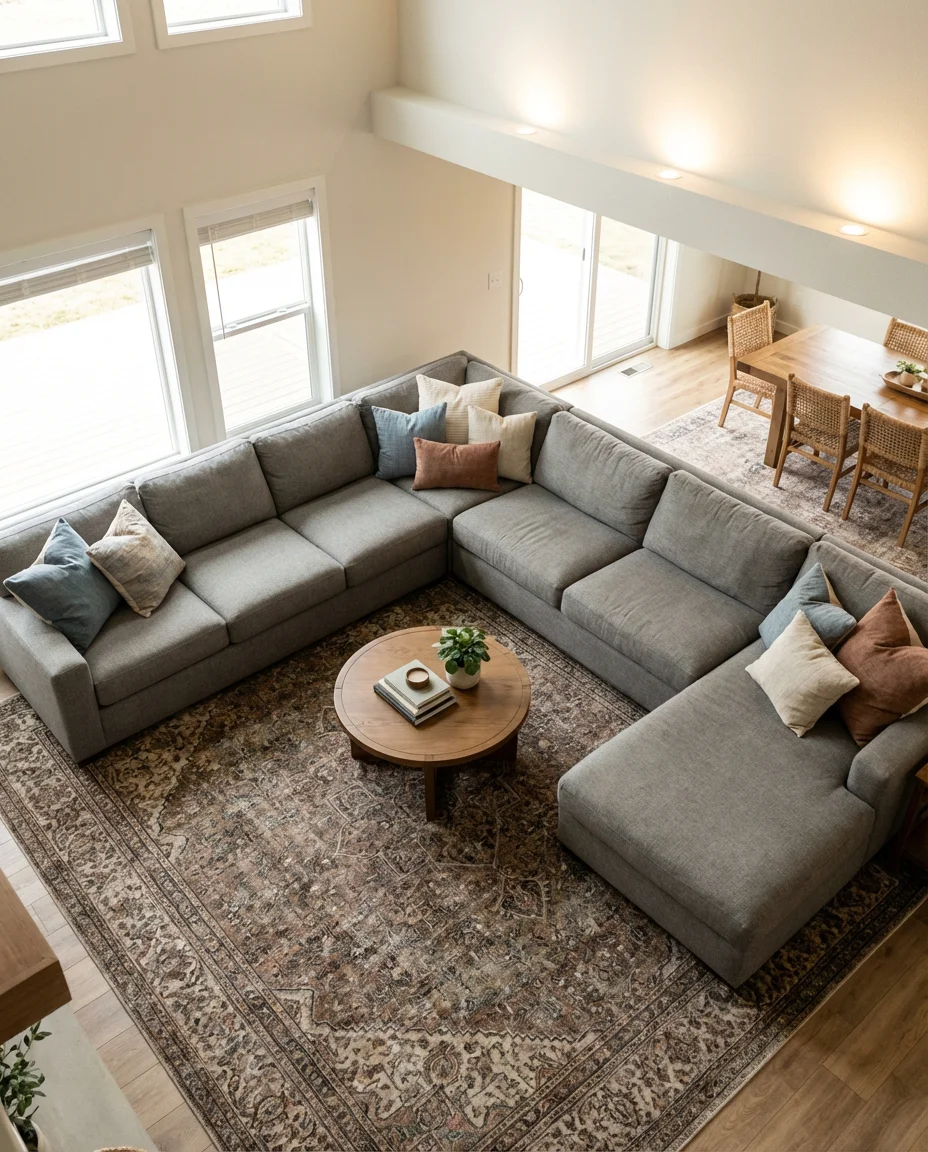
The U-shape layout requires at minimum a 14- by 16-foot room to work without feeling claustrophobic—ideally 16 by 20 feet or larger. In American homes with open-plan first floors (extremely common in builds from the 1990s onward), this is often achievable. The biggest mistake people make is placing the coffee table too close to the sofa’s inner edge. You need at least 16–18 inches of clearance to move comfortably and a 36-inch-diameter or larger coffee table to fill the visual center of the U appropriately.
16. Dark Sectional with Accent Lighting Drama
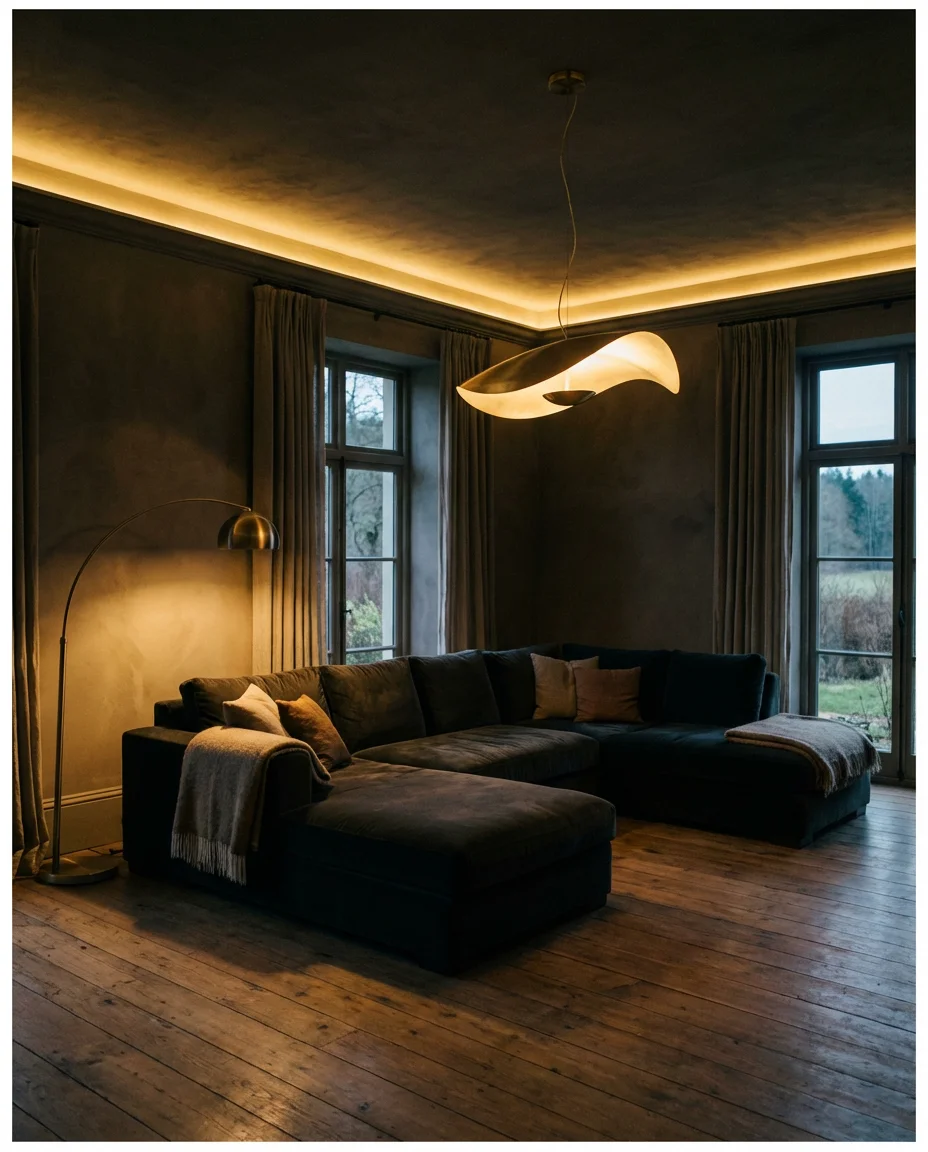
When you combine a dark sectional with thoughtfully placed accent lighting, you get something that’s more than just a furniture choice—it becomes an atmosphere. In 2026, the interplay between deep upholstery tones and warm, layered light sources is one of the most talked-about combinations in residential design. Dark gray or near-black sectionals positioned beneath a sculptural pendant light, flanked by tall floor lamps, create a visual scene that’s both dramatic and deeply livable. Its interior design is doing exactly what it should: crafting an experience.
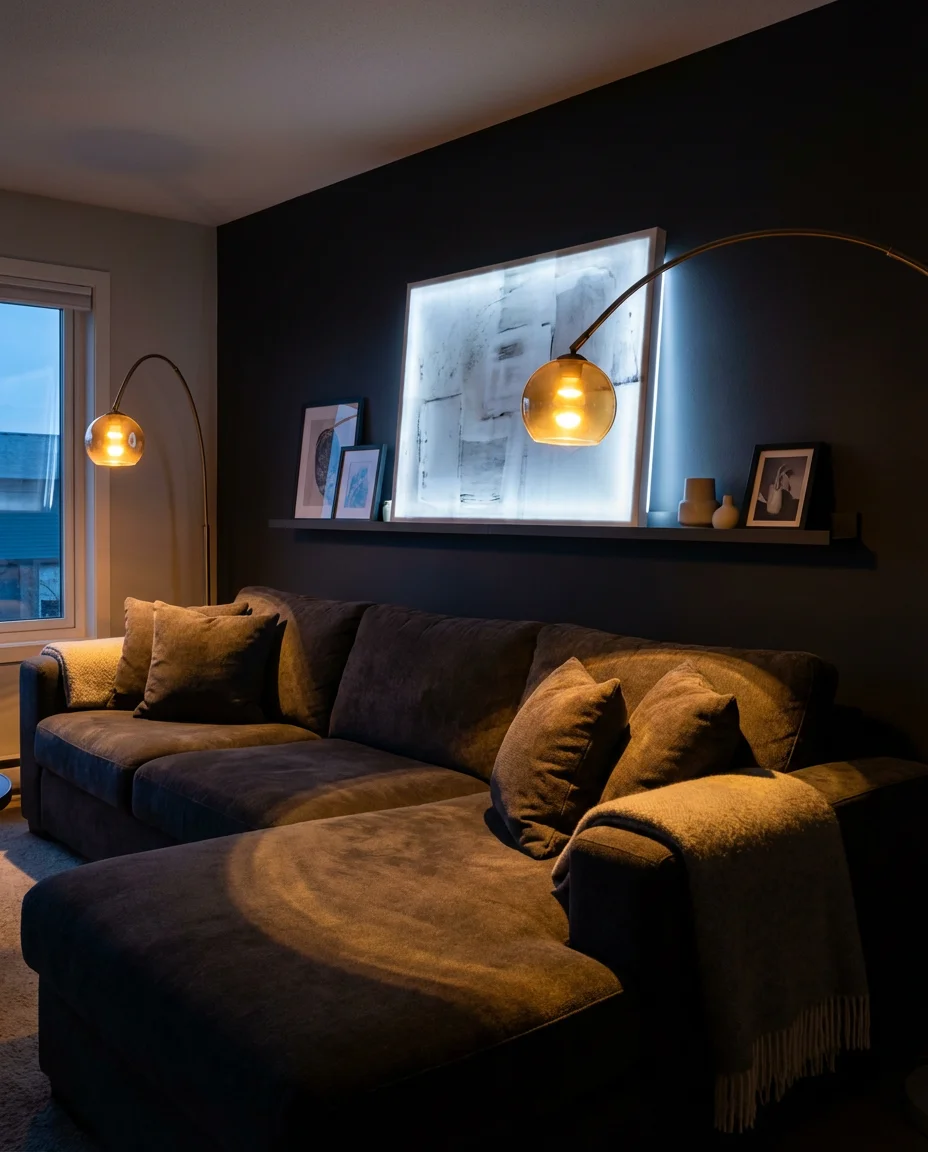
This look performs best in rooms where you have real control over the lighting environment—meaning, not a space dominated by one harsh overhead fixture that can’t be dimmed. The investment in a dimmer switch for overhead lights and the addition of two to three independent lamp sources transforms what a dark sectional can do visually. A designer who works with high-end clients in Los Angeles put it well: “Dark furniture in a poorly lit room looks gloomy. Dark furniture in a beautifully lit room looks like a five-star hotel.”
17. Grey and Blue Coastal Sectional Vibe
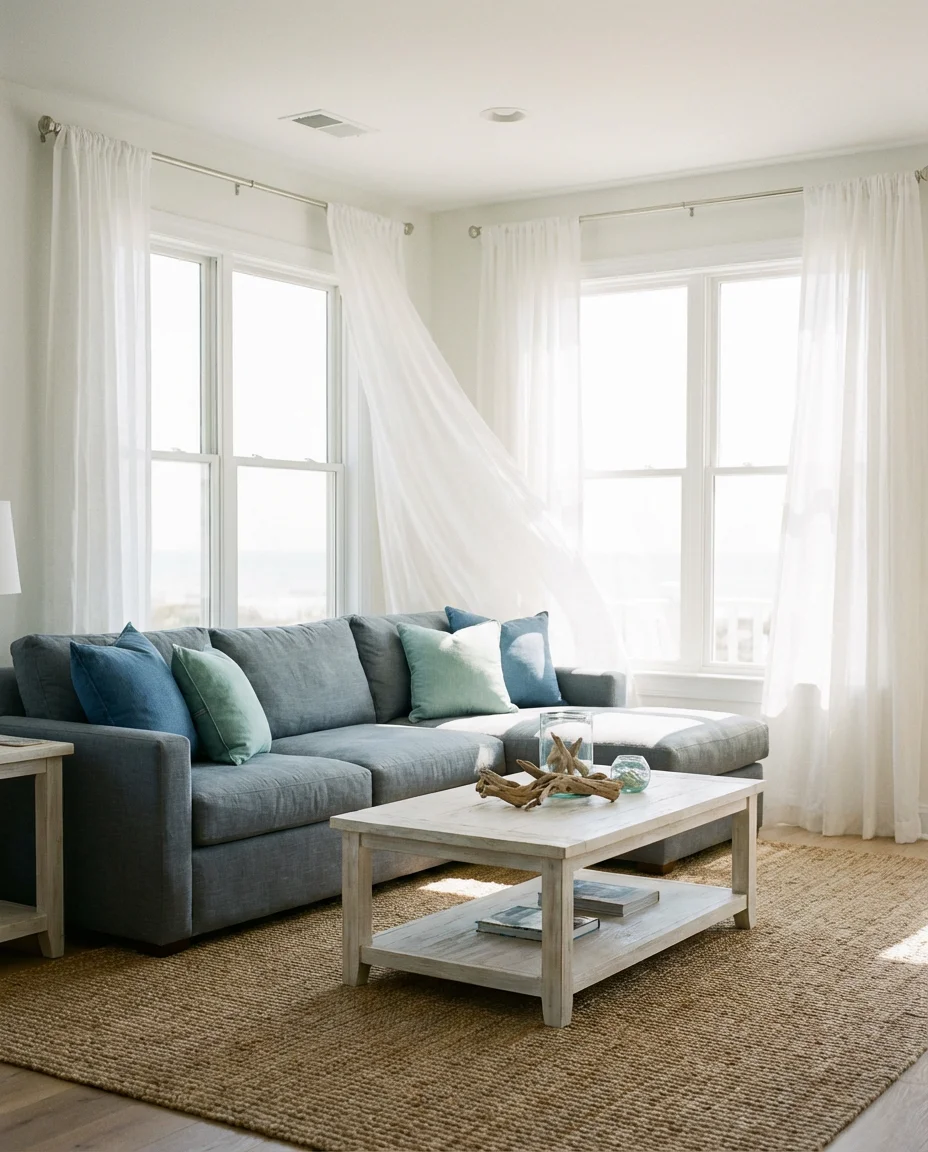
The coastal living room has evolved well beyond nautical clichés, and the grey and blue sectional look of 2026 reflects that evolution beautifully. We’re talking about washed linen fabrics in slate grey, with accessories in ocean blue and seafoam, grounded by whitewashed wood and natural sisal. There’s no anchor motif in sight—just a genuine sense of airiness, lightness, and connection to water and sky. This aesthetic works just as well in a landlocked Midwest living room as it does in a beachfront Florida condo, because the feeling it creates is universal.
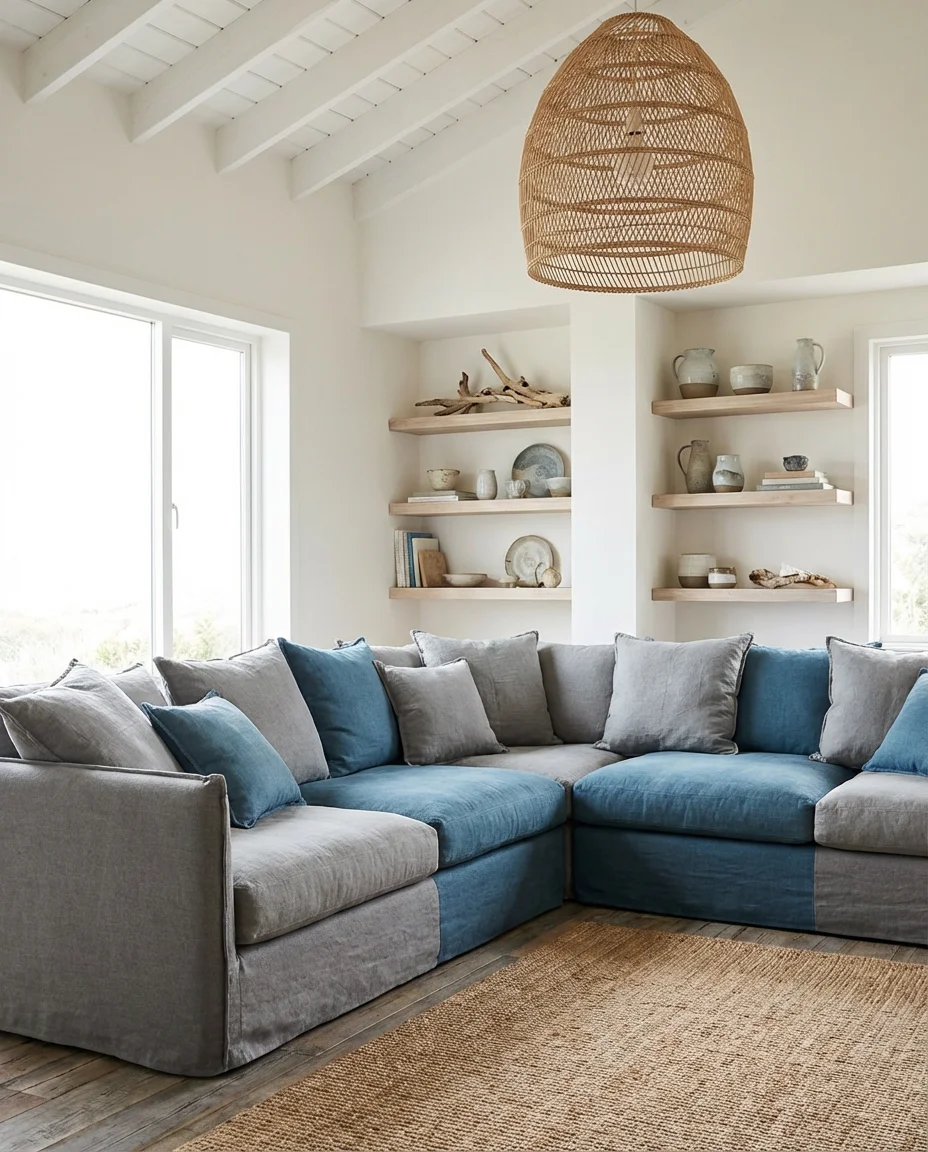
This palette thrives in rooms with good cross-ventilation or large windows, because the visual lightness of grey and blue relies on the sense of airflow and openness. If you’re working with a room that lacks natural light, balance the cool tones of this palette with warmer wood and brass accents—otherwise the room can edge into feeling chilly rather than breezy. Adding a few natural fiber elements like a chunky jute rug or woven rattan baskets will anchor the look without breaking the coastal spell.
18. The Curved Shape Sectional Making a Comeback
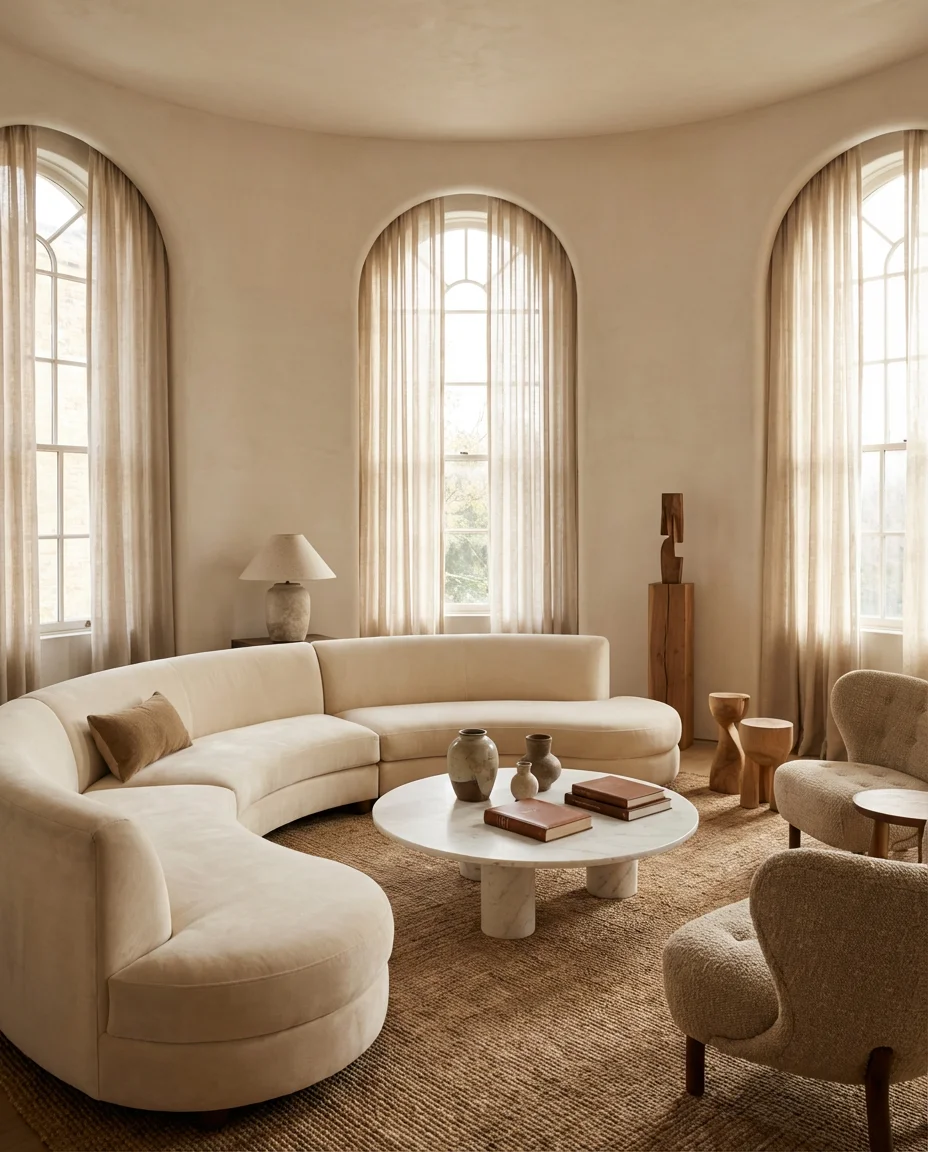
The curved sectional is unquestionably one of the most exciting shape stories in living room design right now. After years of right angles dominating the sofa market, the arc is back—and it’s better than ever. In 2026, curved sectionals appear in everything from velvety jewel tones to soft, understated cream and sand, with gentle C-shapes and semi-circular configurations that create a natural conversation pit without needing to sink the floor. These pieces bring an organic quality to a room that rectangular furniture simply cannot replicate.
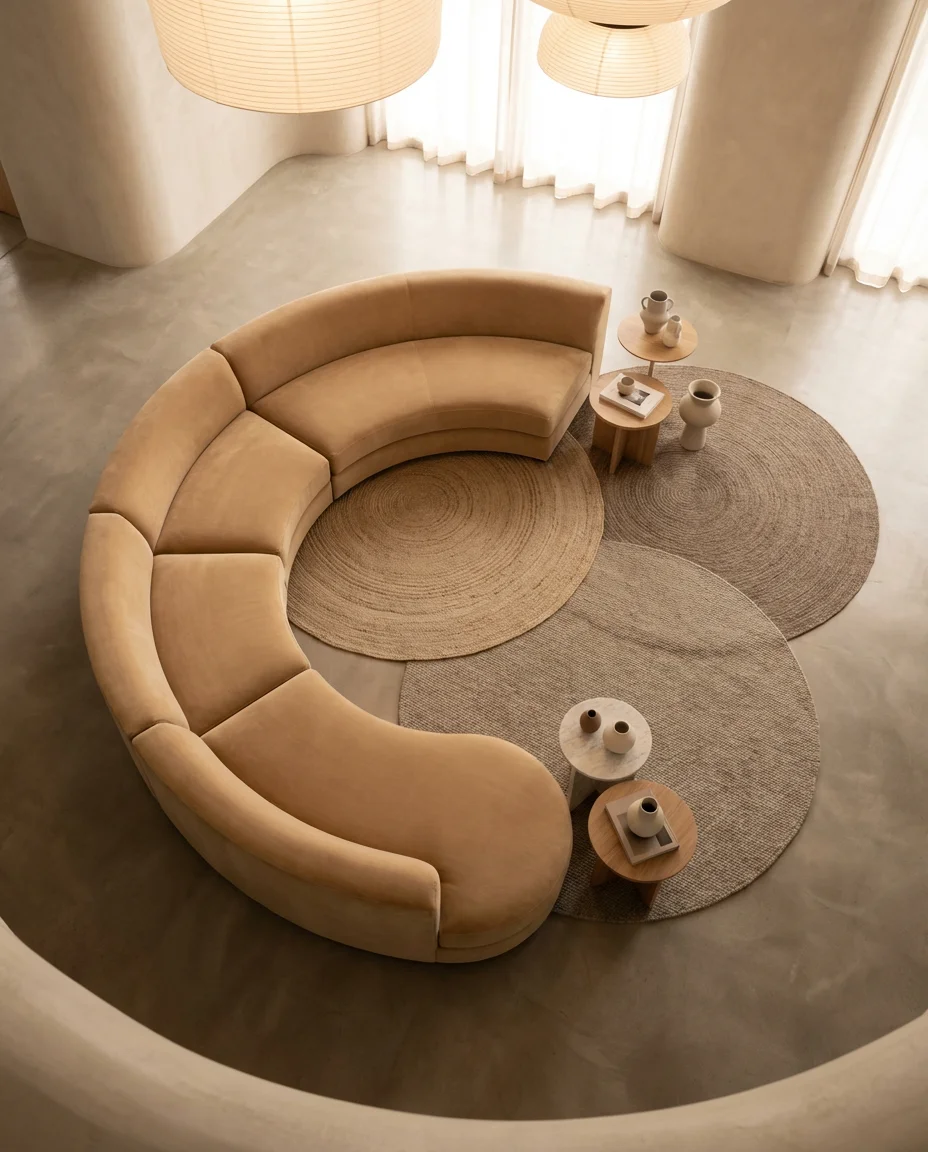
One thing that surprises people about curved sectionals is how well they work in smaller rooms. The curved profile removes corners from the furniture’s footprint, which actually opens up circulation paths in a way that a sharp-cornered L-shape doesn’t. In rooms under 200 square feet, a properly sized curved sofa can feel like a spatial miracle. Pair it with a round coffee table to reinforce the circular theme and create a satisfying, cohesive visual logic that makes the whole room feel designed rather than assembled.
19. Navy and Cream Two-Tone Sectional Styling
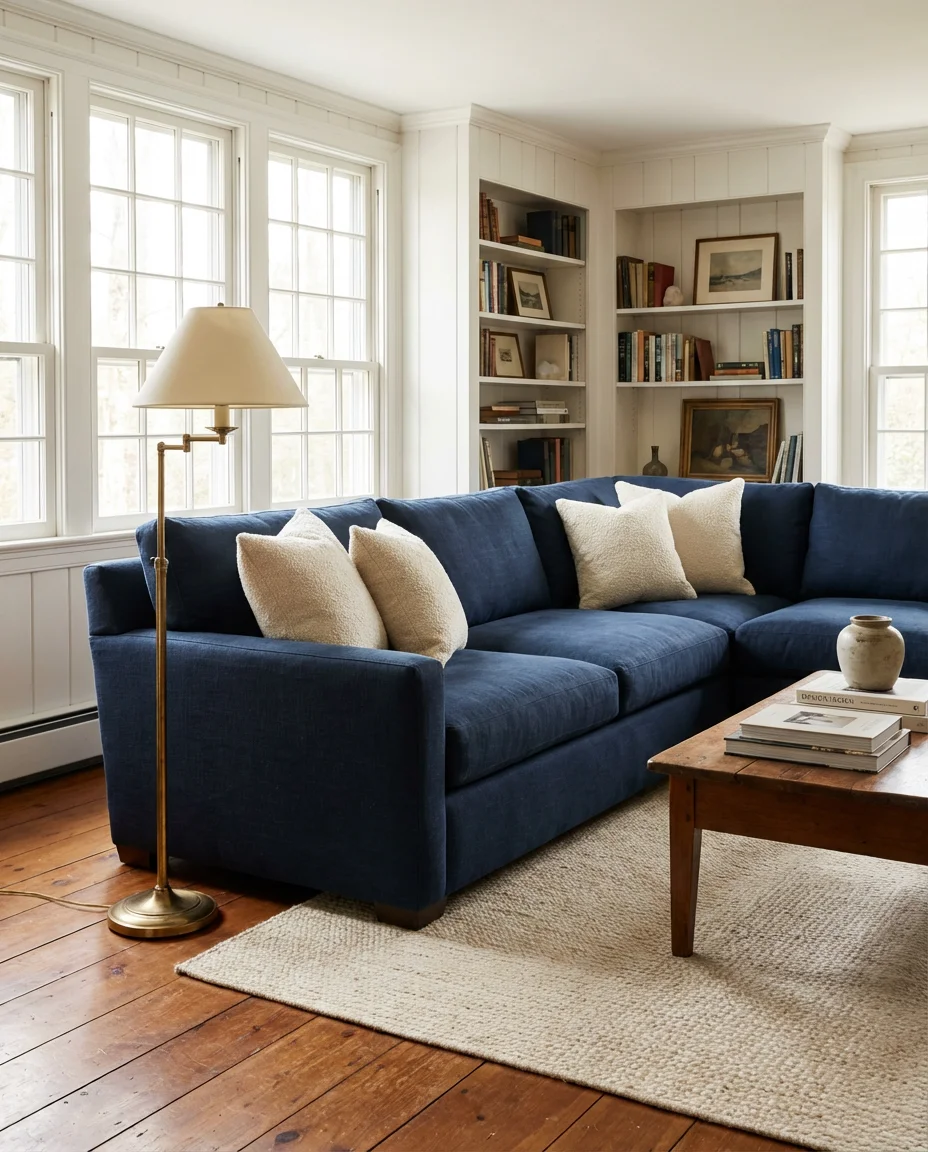
Mixing navy and cream in a single sectional setup—whether through mismatched throw pillows, a two-tone sectional itself, or a navy sofa against cream-painted walls—creates a combination that feels both preppy and timeless. In 2026, this classic pairing is getting a modern update with the addition of warm metallics and natural textures that prevent the look from feeling too buttoned-up. Think navy velvet cushion covers alongside chunky cream knit throws, or a navy sectional accented with cream boucle pillows on a warm amber hardwood floor.
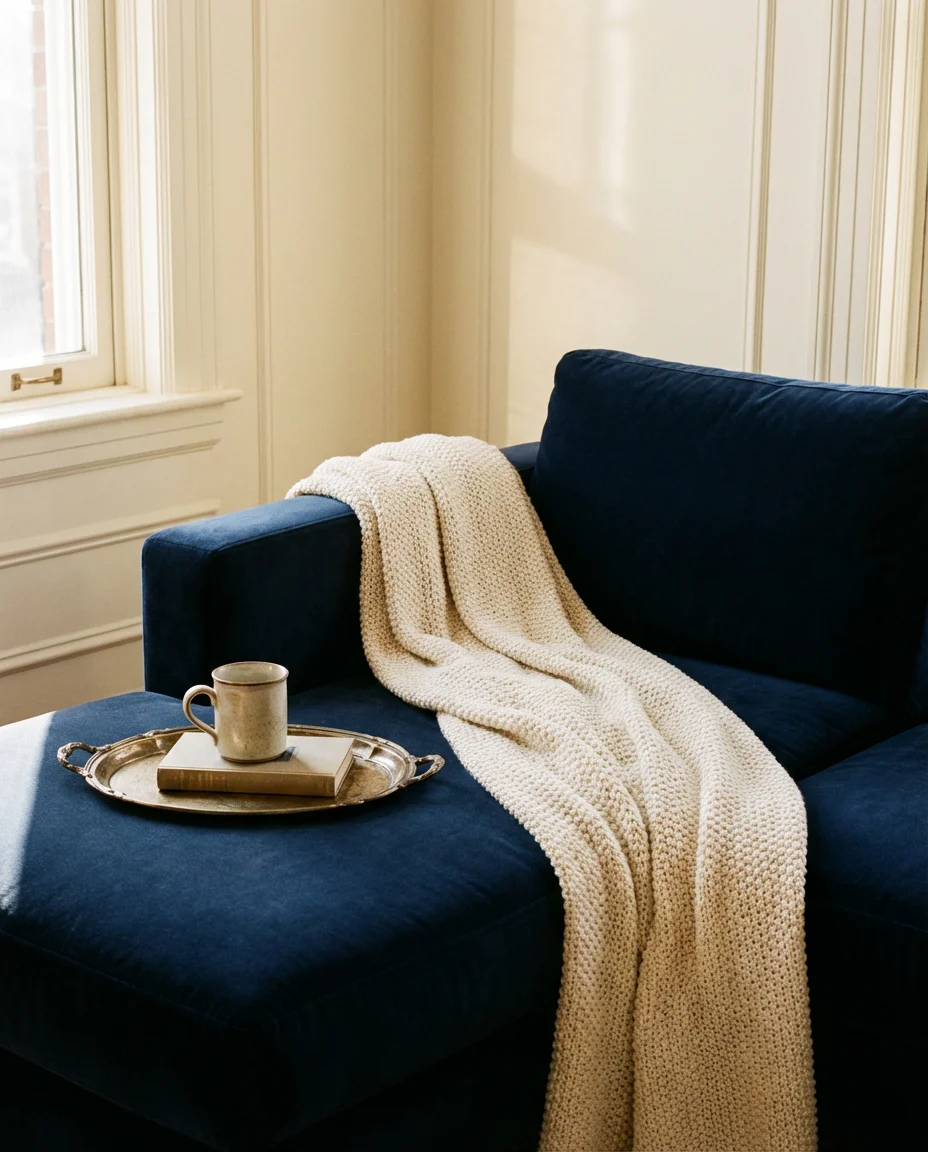
This combination has a particularly strong following among American homeowners in the Northeast—in cities like Boston, New Haven, and Philadelphia—where traditional architecture and a more formal design sensibility naturally complement the navy-and-cream palette. But it travels well beyond those ZIP codes. The key to making the combination feel fresh rather than stuffy in 2026 is keeping accessories minimal and letting the two primary tones do the work without layering on additional patterns or motifs that compete for attention.
20. Velvet Sectional in Deep Jewel Tones
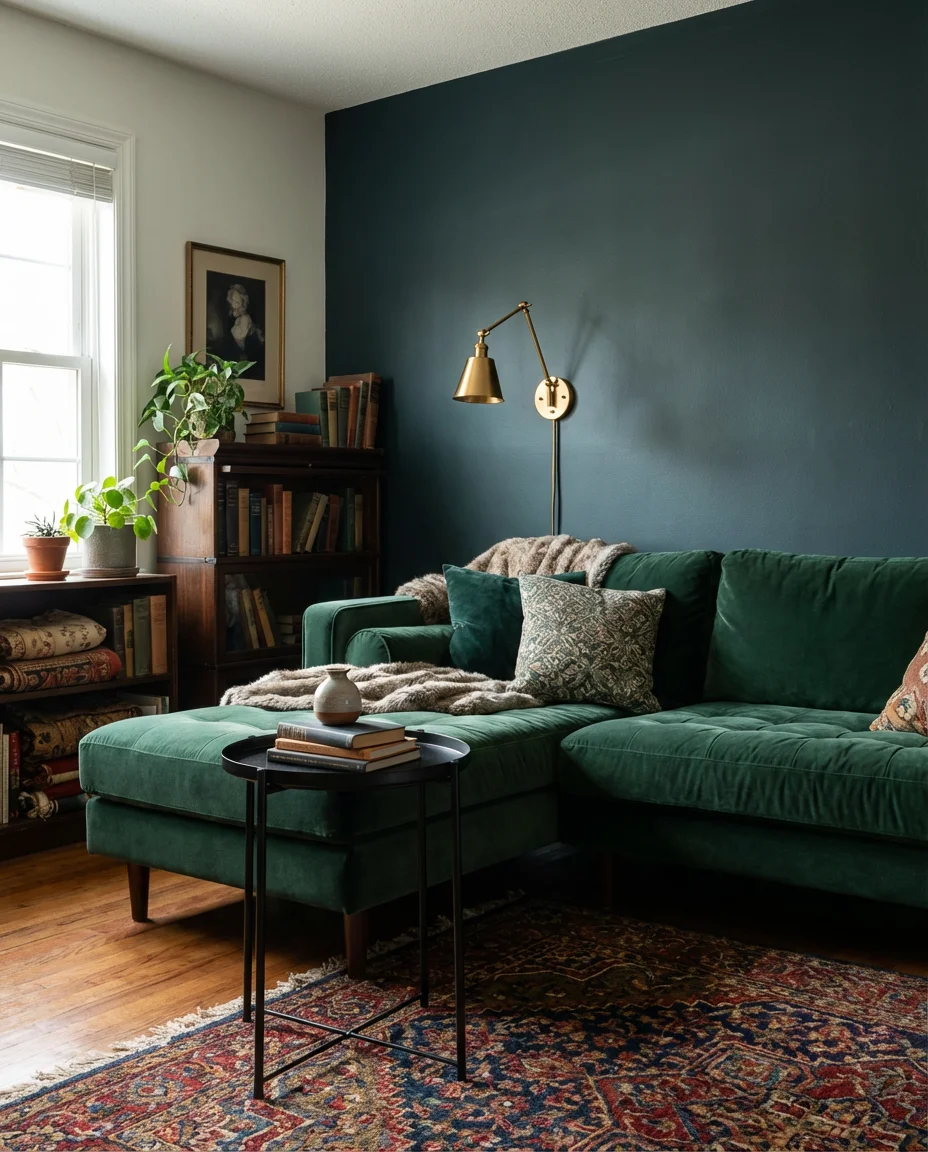
Velvet sectionals in rich jewel tones—emerald, sapphire, plum, and deep green—represent one of the more theatrical design moves available to the modern homeowner. And in 2026, more people than ever are willing to make it. The lushness of velvet upholstery catches light in a way that other fabrics simply don’t, giving the sectional an almost liquid quality that reads as genuinely luxurious regardless of the price point. Paired with matte finishes and raw natural elements, a jewel-tone velvet sectional can be the singular statement that makes a whole room sing.
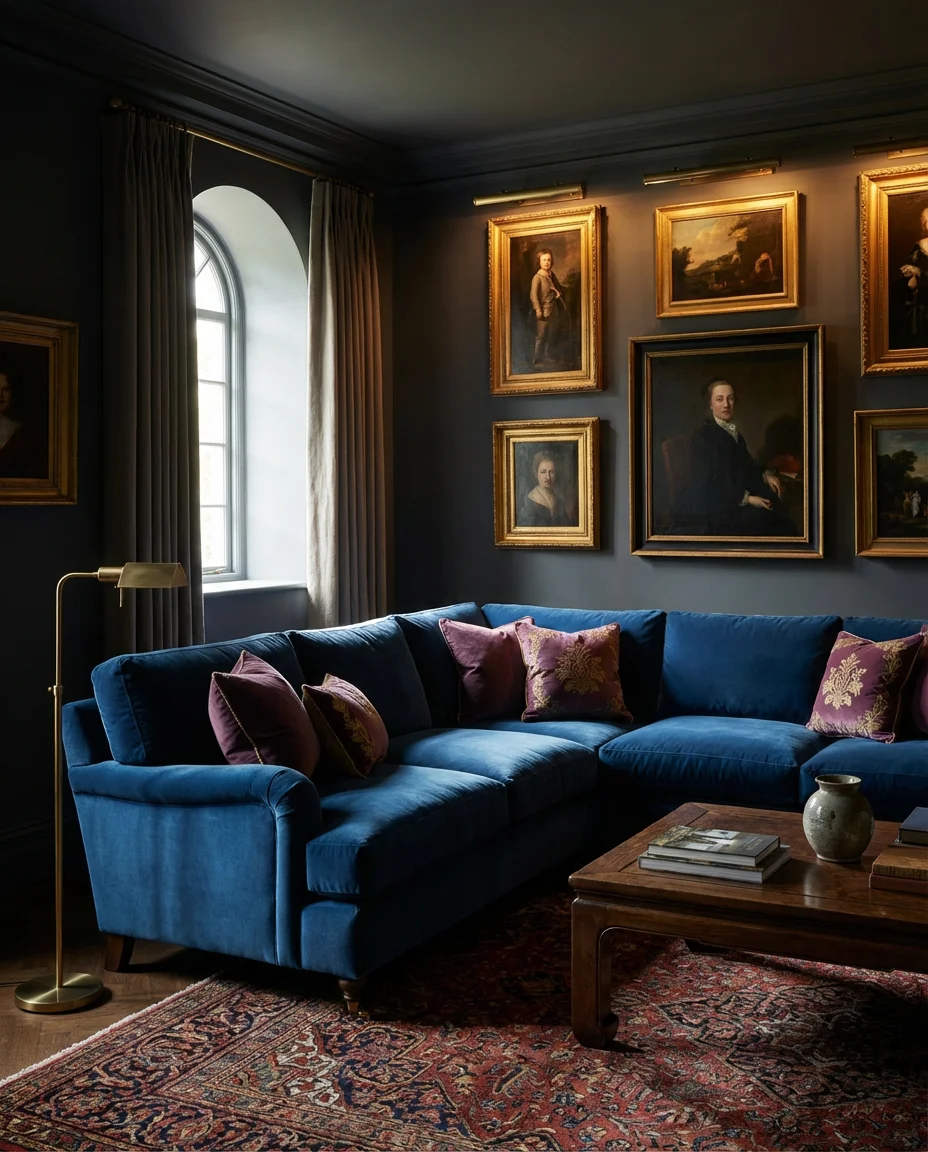
Velvet performance fabrics have come a long way—modern versions resist crushing, are easy to brush clean, and hold their sheen through years of use in ways that earlier velvets couldn’t promise. If velvet feels like too much of a commitment, consider using it on just the sectional while keeping surrounding textiles matte and textural. That contrast—a velvet sofa against linen curtains and a jute rug—is actually more interesting visually than an all-velvet room, which can start to feel overwrought.
21. Black and White Sectional for a Graphic Living Room
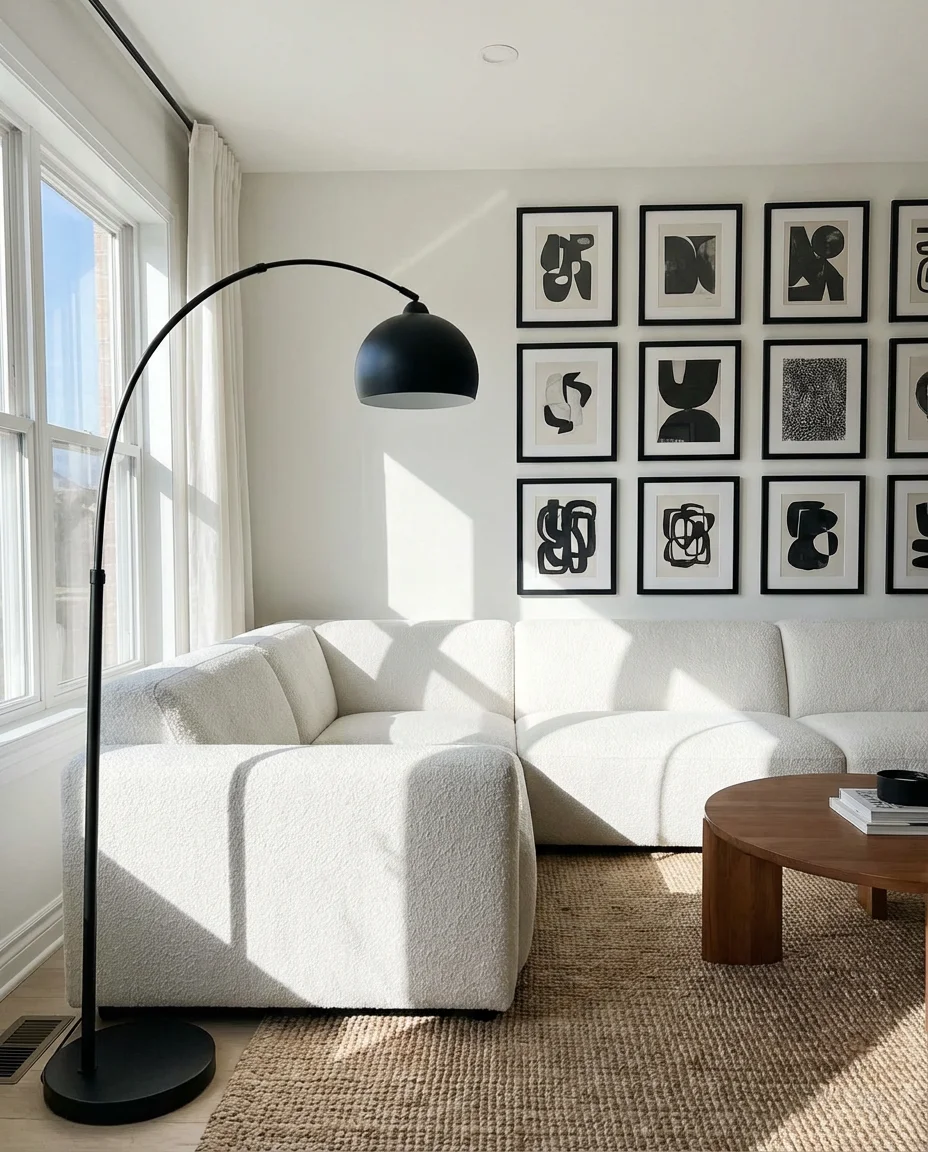
The black and white living room is one of those eternally modern concepts that never fully disappears—and in 2026, it’s enjoying a confident revival with a more tactile, less sterile execution. A white or near-white sectional in a room with black accents—matte black floor lamps, black-framed art, black hardware—creates a graphic tension that photographs beautifully and feels boldly resolved in person. The key update this year is adding one warm, organic element—a wood tone, a natural fiber rug, or a terracotta vessel—to prevent the look from feeling like a chessboard.
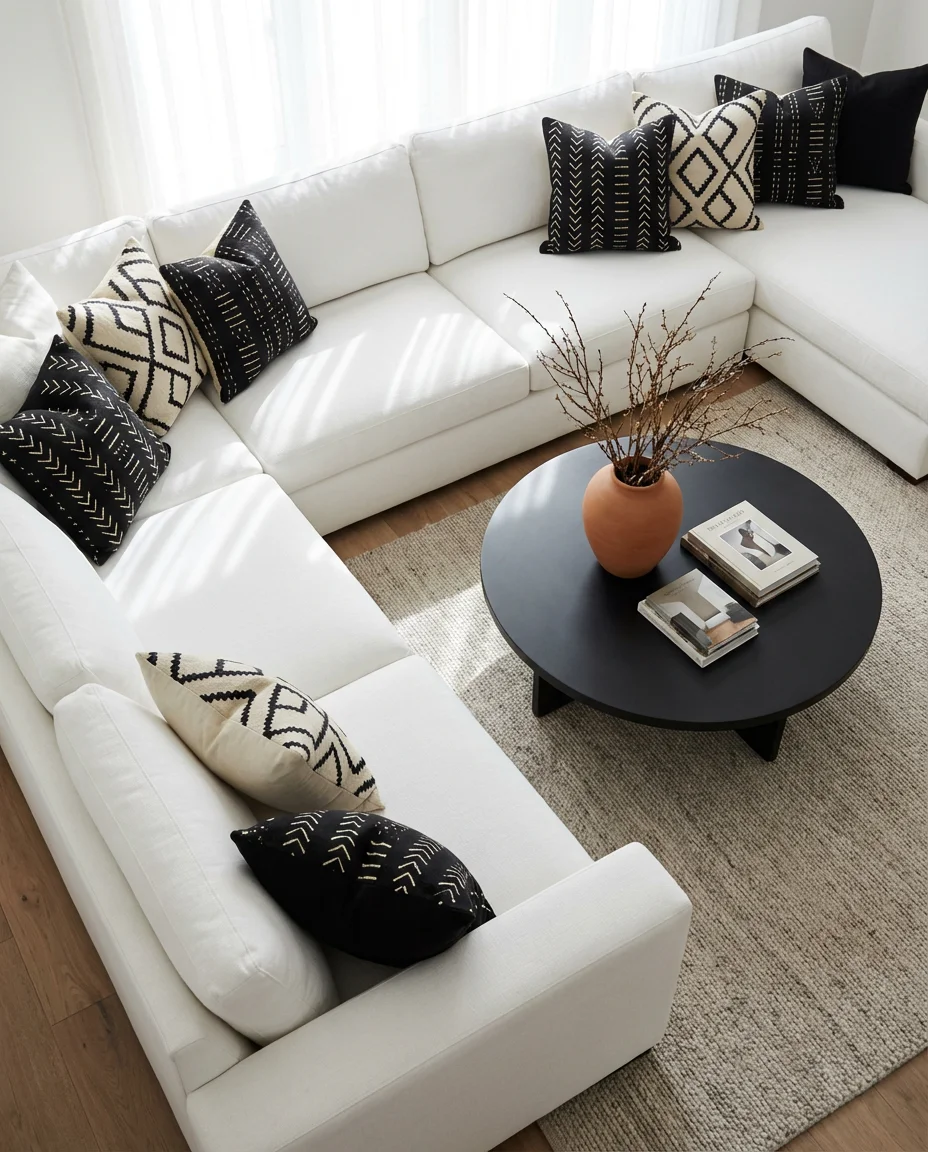
A micro-anecdote: a New York City homeowner who renovated a small Brooklyn apartment switched from a colorful sectional to a white-and-black scheme on a designer’s advice and described the result as “the first room in my life that felt like me.” The graphic clarity of the palette gave her busy mind a place to rest. High-contrast rooms seem to have that effect on people who prefer their aesthetics unambiguous and decisive—they read as confident in a way that more eclectic rooms sometimes don’t.
22. Convertible Sectional for Small Spaces
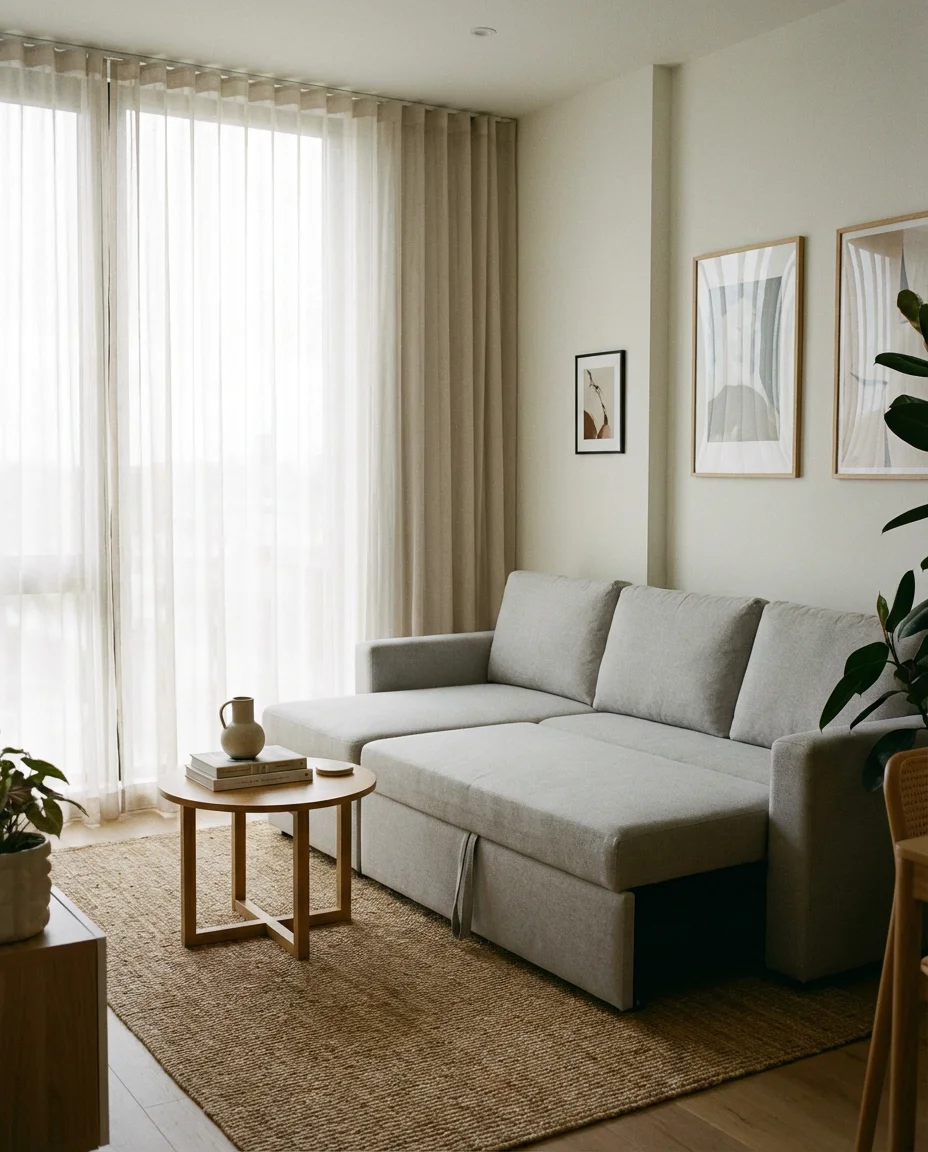
For apartments and smaller homes, the convertible sectional is the 2026 answer to a perennial design challenge: how do you get the seating capacity and visual impact of a sectional without overwhelming a compact living room? Modern convertible options in light grey or tan can transform from a standard sofa-plus-chaise into a full sleeper configuration, a chaise lounge, or an open L-shape depending on the occasion. The engineering behind these pieces has improved dramatically, and today’s convertibles are far from the clunky, mechanical-looking options of a decade ago.
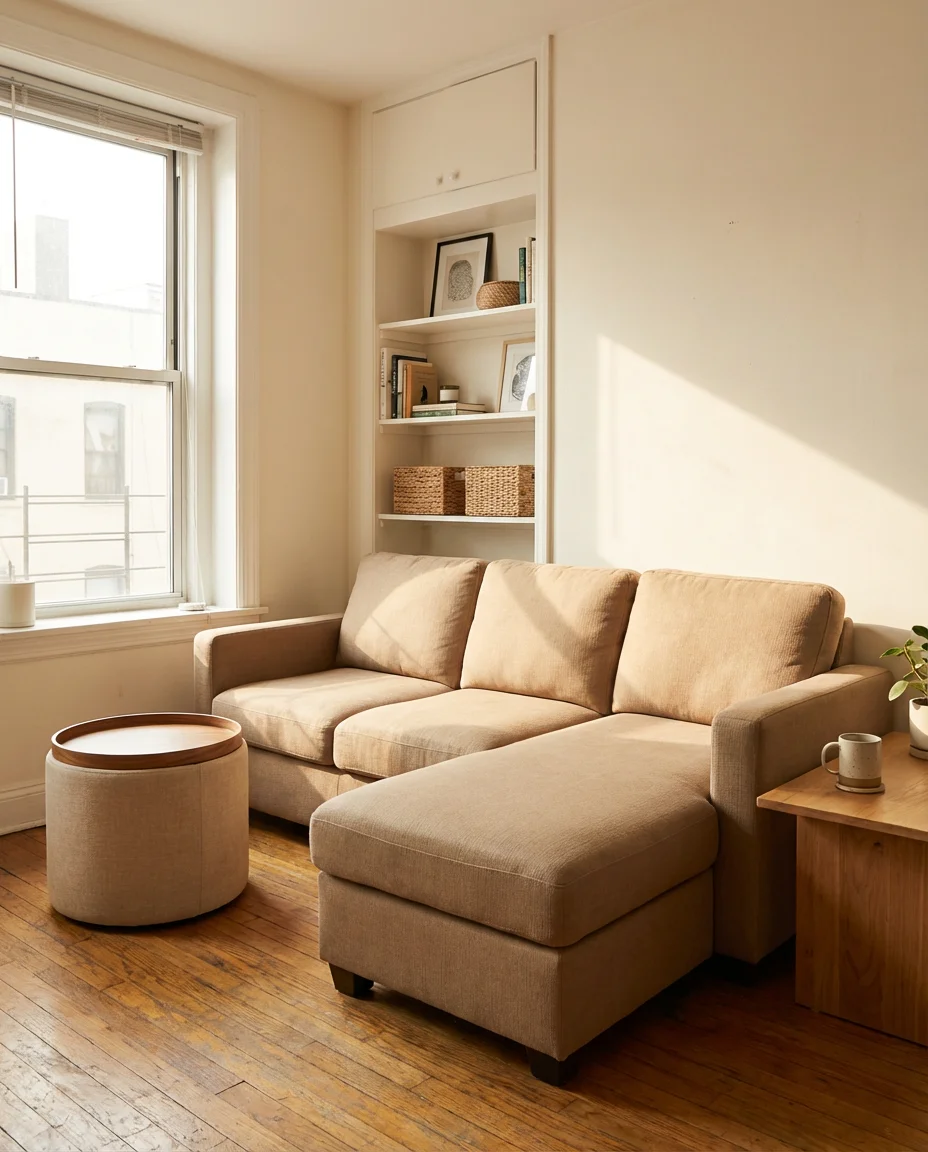
This format is particularly popular among young urban renters in cities like Seattle, Denver, Boston, and Washington, D.C., where apartments under 700 square feet are common and furniture has to earn its square footage twice over. When shopping for a convertible sectional, test the mechanism in-store if at all possible—some systems are silky smooth and require almost no effort, while others feel stiff and mechanical in ways that make you unlikely to use the convertible function at all, negating the entire point of the purchase.
23. Layered Throw and Pillow Styling on a Neutral Sectional
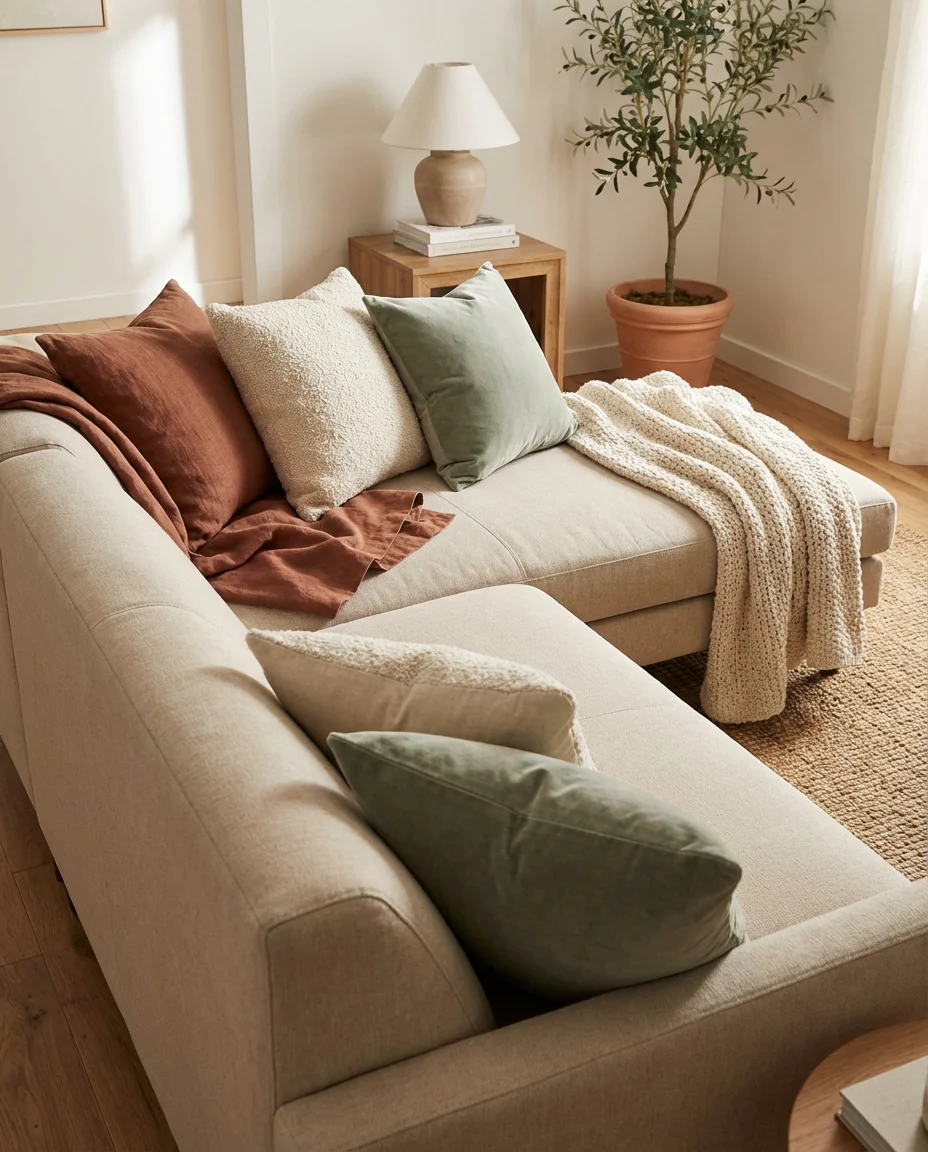
The final—and arguably most accessible—idea in this guide is about the power of styling. A beige or cream sectional styled with layers of throws and pillows in varying textures and complementary tones can transform what might otherwise be a forgettable furniture piece into the visual heart of a room. In 2026, the styling approach is moving away from perfectly matched sets toward an intentionally imperfect mix—different fabrics, slightly different scales, and a blend of patterns and solids that looks collected over time rather than purchased as a bundle on a single shopping trip.
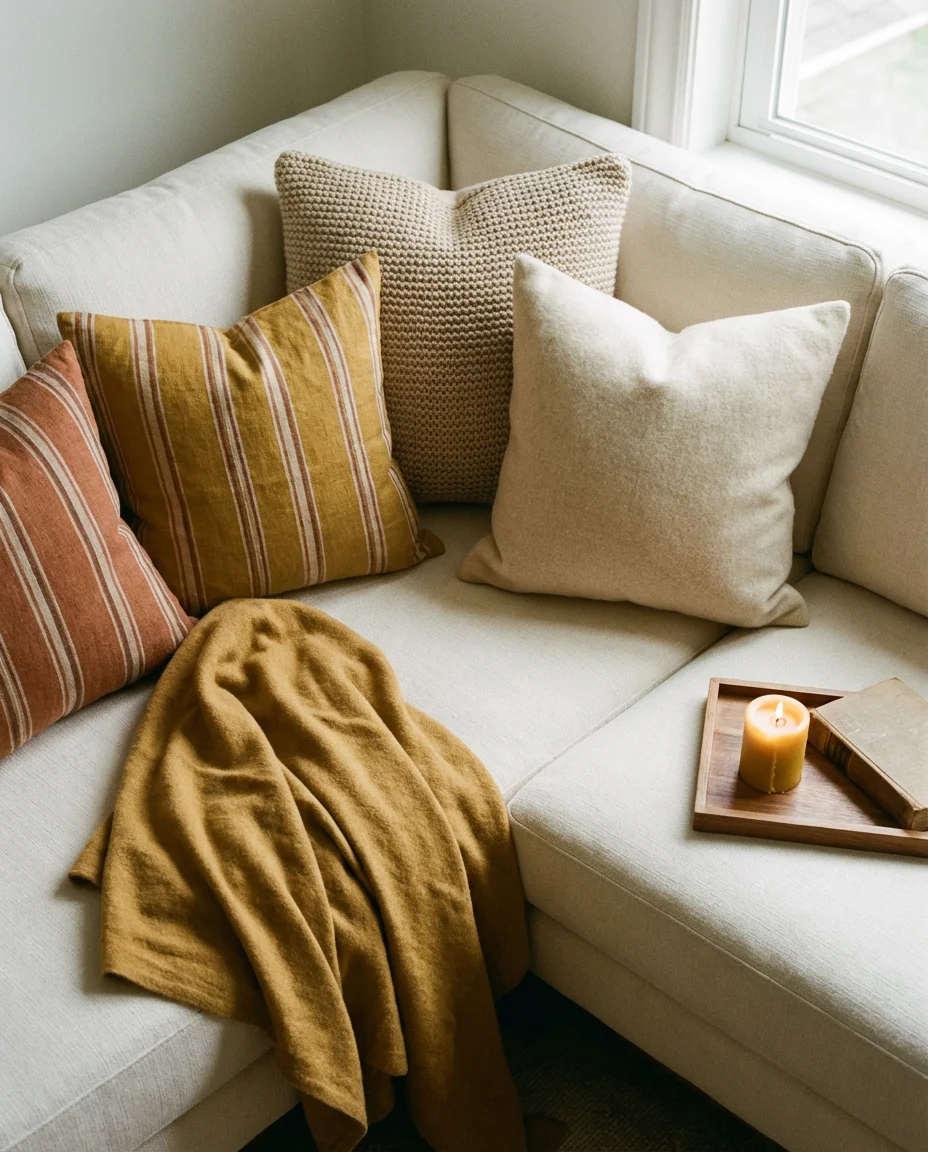
The golden rule for throw-and-pillow layering: always odd numbers, never matching sets. Start with your largest pillow (24 inches), layer down to a medium (20 inches), and finish with a smaller accent (16 inches or a lumbar). Mix at least two different fabric textures and keep your color palette within a three-tone range. A well-styled sectional in this mode looks like an editorial spread—and costs far less than a new sofa if you want to refresh a space you already love.
Conclusion
Whether you’re drawn to the cloud-soft luxury of a pillowy white sectional or the moody drama of a charcoal leather L-shape, there has never been a more exciting moment to rethink what your living room can be. These 23 ideas are a starting point, not a finish line—the best version of your space will always be the one that reflects how you actually live. Which of these looks resonated most with you? Drop a comment below and tell us which direction you’re taking your living room in 2026 — we genuinely love hearing how real people are putting these ideas into practice.