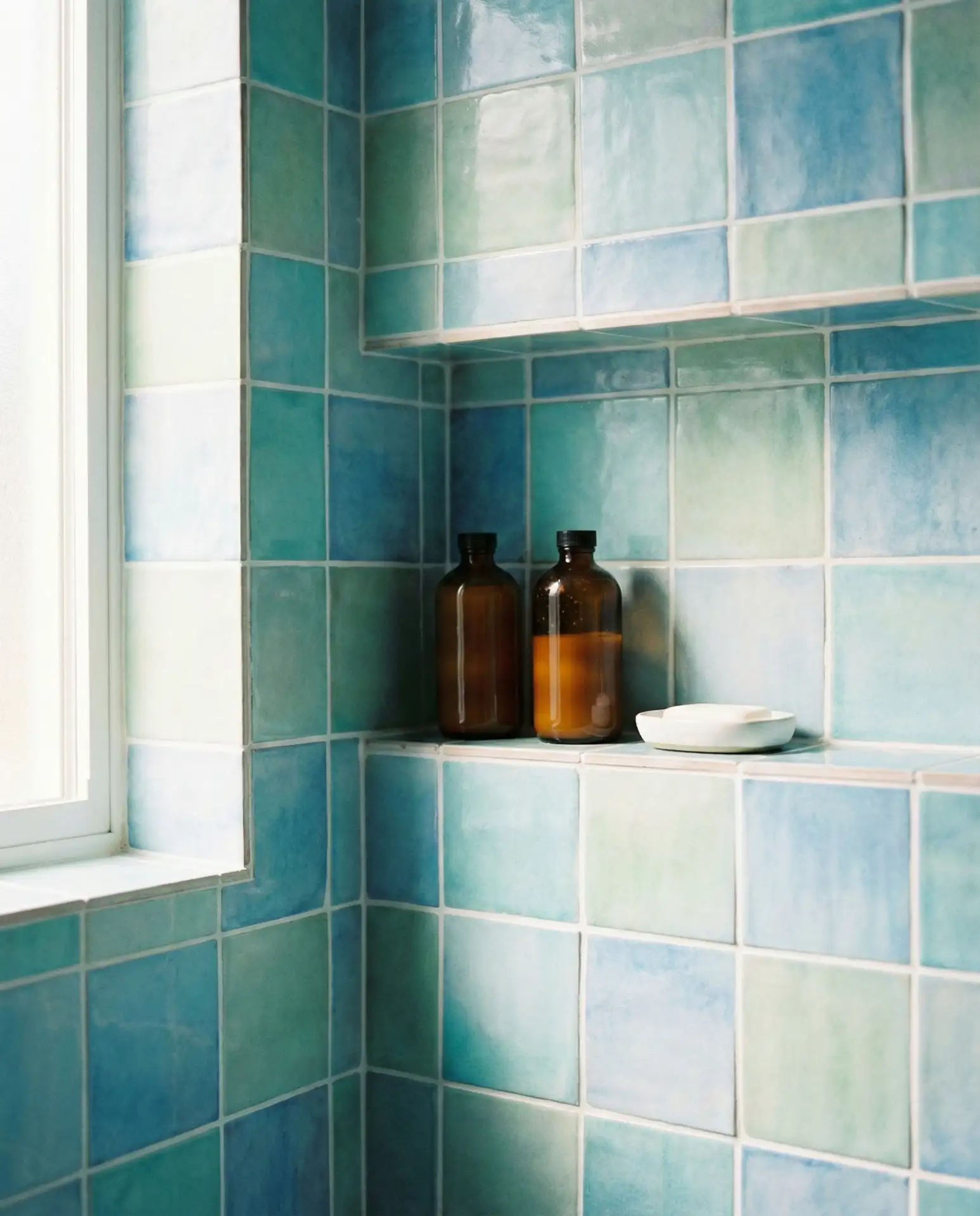
Small bathrooms are no longer design afterthoughts—they’re becoming some of the most thoughtfully curated spaces in American homes. As we move into 2026, homeowners are searching for ways to blend function with beauty, especially in compact spaces where every inch counts. Pinterest boards are overflowing with inspiration for tiny powder rooms, narrow ensuites, and apartment bathrooms that need to work harder without sacrificing style. Whether you’re working with a tight budget or dreaming of a luxury retreat, this year’s trends prove that small doesn’t mean compromise. Here are fresh ideas that show how smart design, emerging styles, and a bit of creativity can transform even the smallest bathroom into something truly special.
1. Japandi Serenity Meets Function
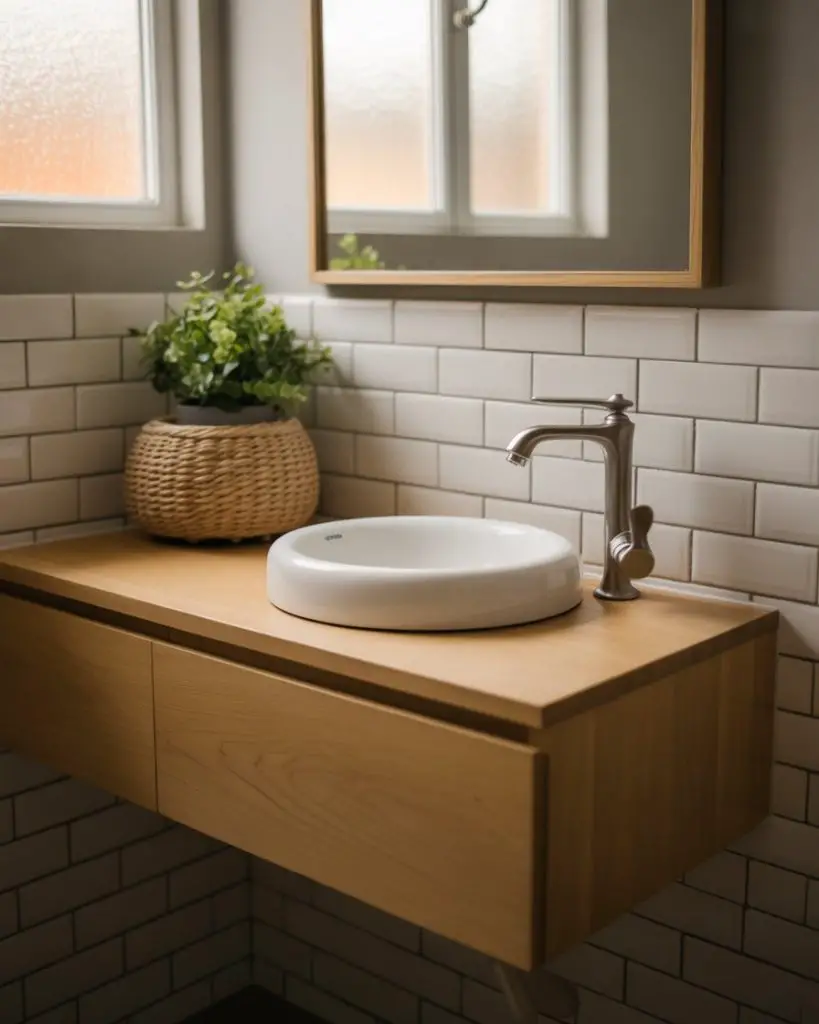
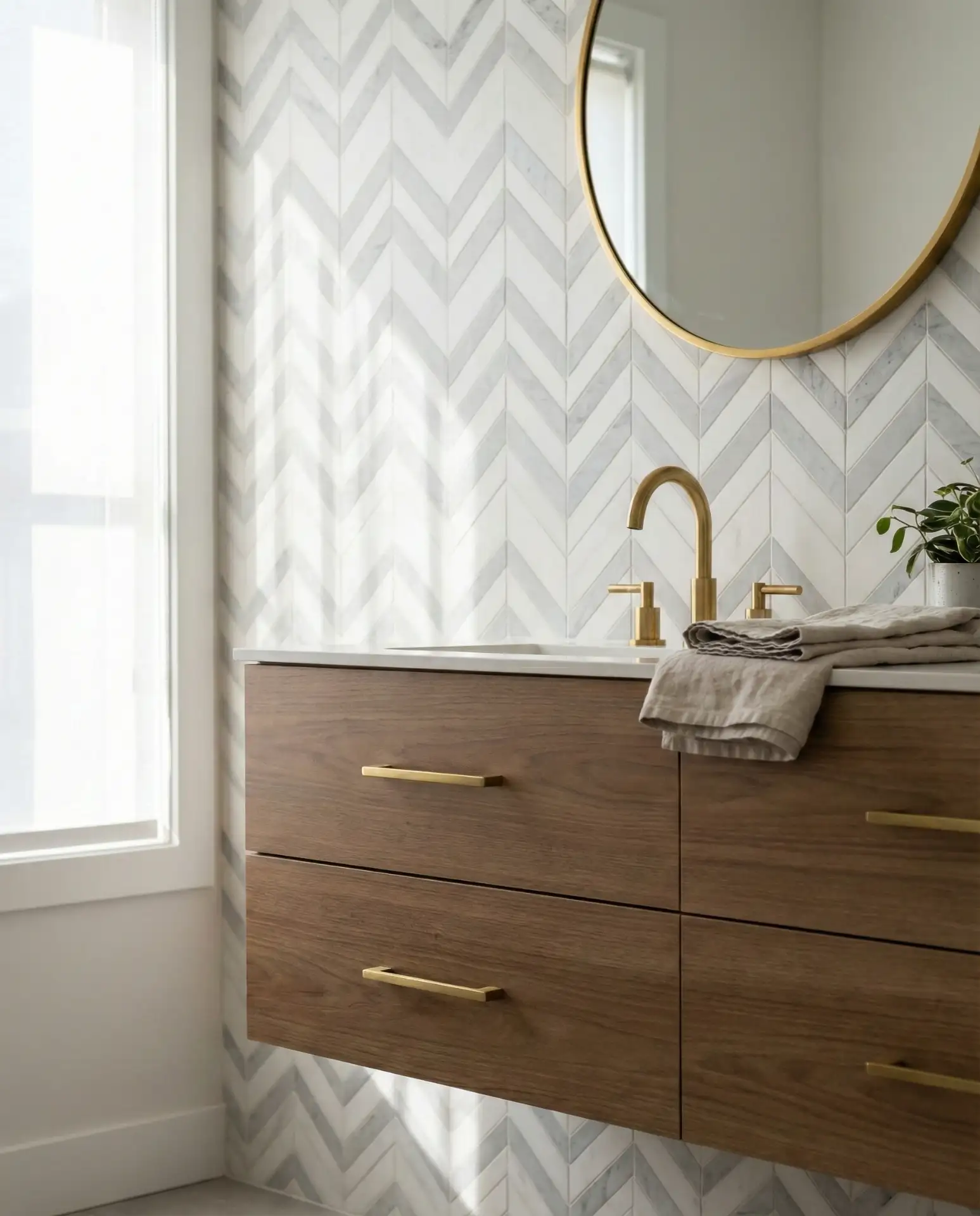
The Japandi aesthetic continues to dominate small bathroom design in 2026, blending Scandinavian minimalism with Japanese simplicity. This approach works beautifully in tight quarters because it emphasizes natural materials, neutral palettes, and uncluttered surfaces. Think warm oak floating vanities, matte black fixtures, and soft linen textures that create a calming atmosphere without overwhelming the space. The style feels both modern and timeless, making it ideal for homeowners who want a bathroom that won’t feel dated in five years. 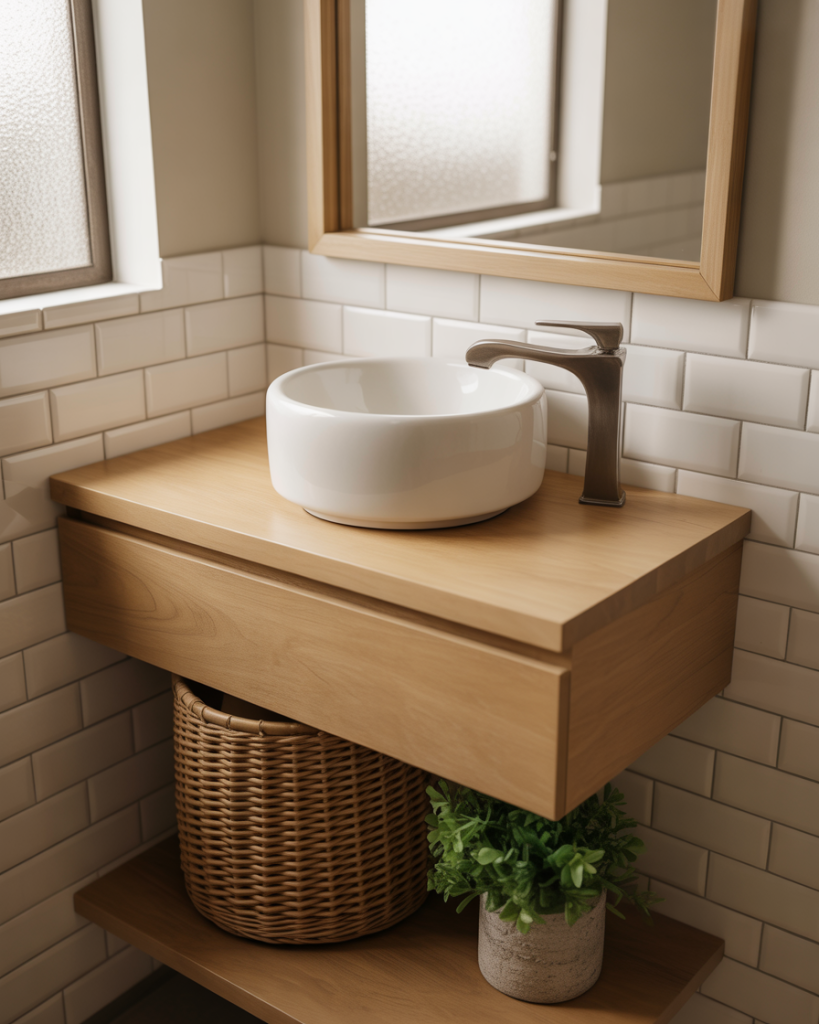
What makes Japandi particularly smart for small bathrooms is its built-in storage philosophy—everything has a place, nothing is excessive. Homeowners in urban apartments from Brooklyn to San Francisco are gravitating toward this style because it makes a 40-square-foot bathroom feel twice as large. The key is selecting pieces that serve multiple purposes: a mirror cabinet that hides toiletries, a stool that doubles as a towel holder, or a shower niche carved into existing wall space rather than protruding shelves.
2. Spa-Inspired Calm in Compact Quarters
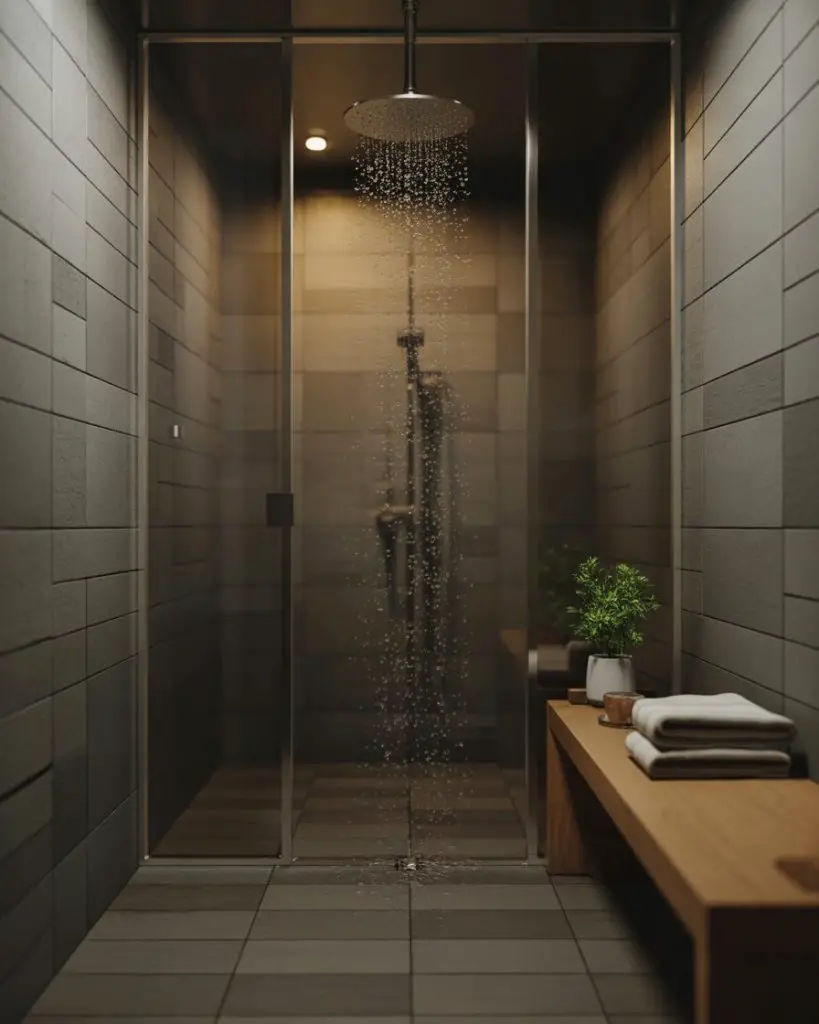
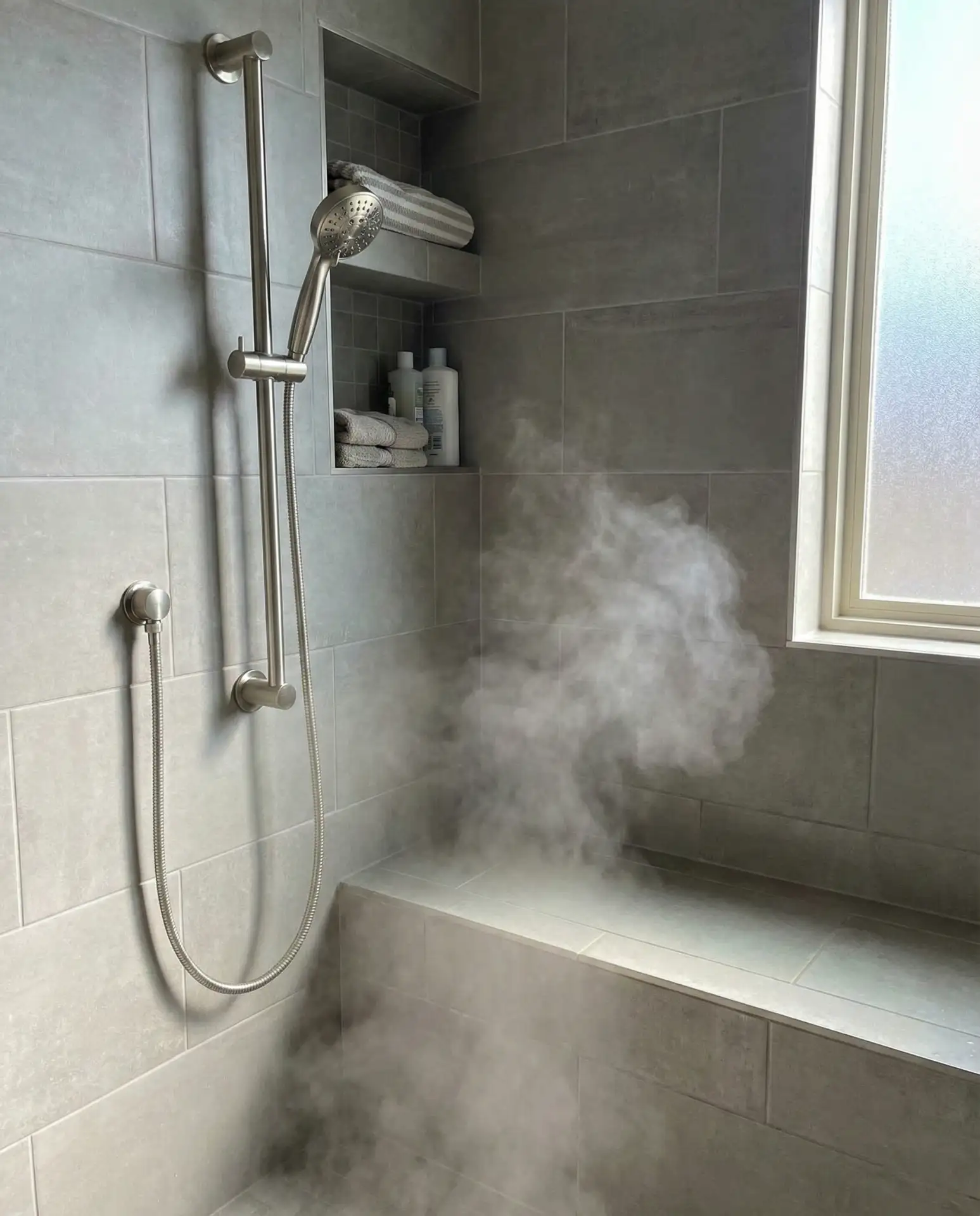
Creating a spa-inspired retreat doesn’t require square footage—it requires intention. This 2026 trend focuses on tactile experiences: heated floors, rainfall showerheads, and natural stone that feels luxurious underfoot. Even a 5×7 bathroom can evoke the feeling of a high-end wellness center when you prioritize sensory details over sheer size. Soft gray tiles, eucalyptus bundles, and dimmable lighting transform the daily routine into something restorative rather than rushed. 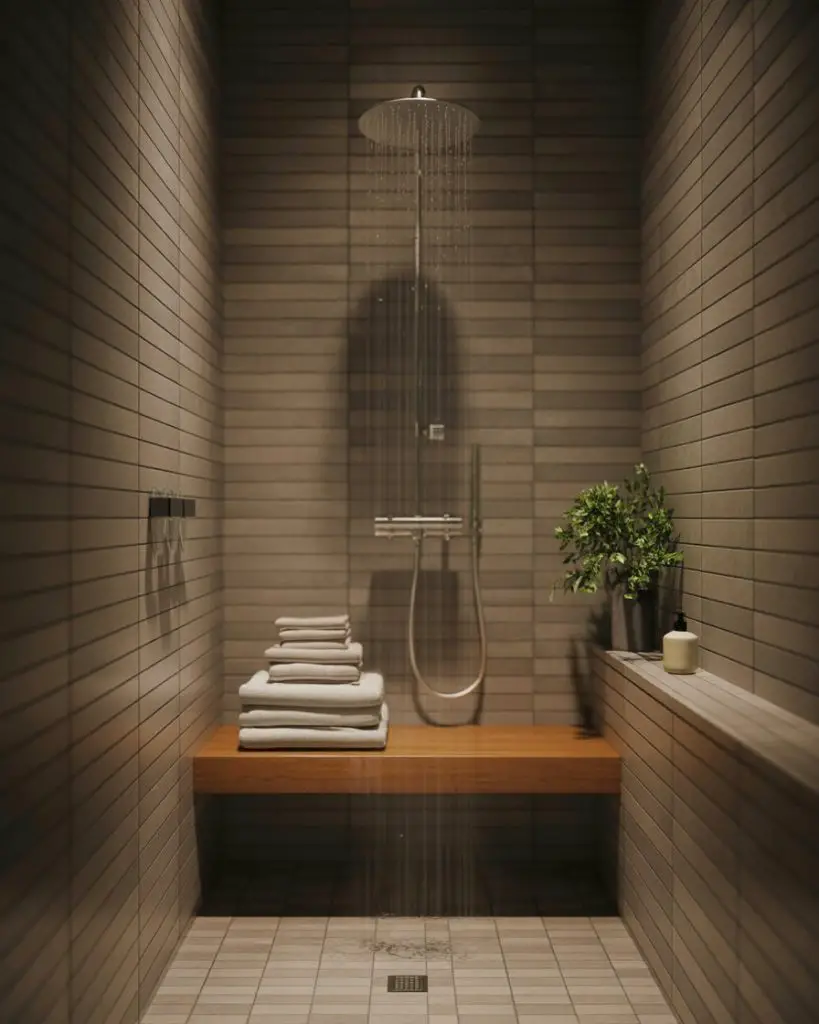
The biggest mistake homeowners make with spa-inspired designs is overdoing the “zen” aesthetic with too many decorative elements. A former interior designer from Portland shared that her clients often want every surface covered in river rocks and bamboo, which actually creates visual chaos. Instead, she recommends one or two statement features—maybe a teak shower mat and a stone soap dispenser—then keeping everything else clean and simple. The luxury comes from quality materials and thoughtful placement, not from cramming in every spa element you’ve ever seen.
3. Bold Blue Makes a Small Statement
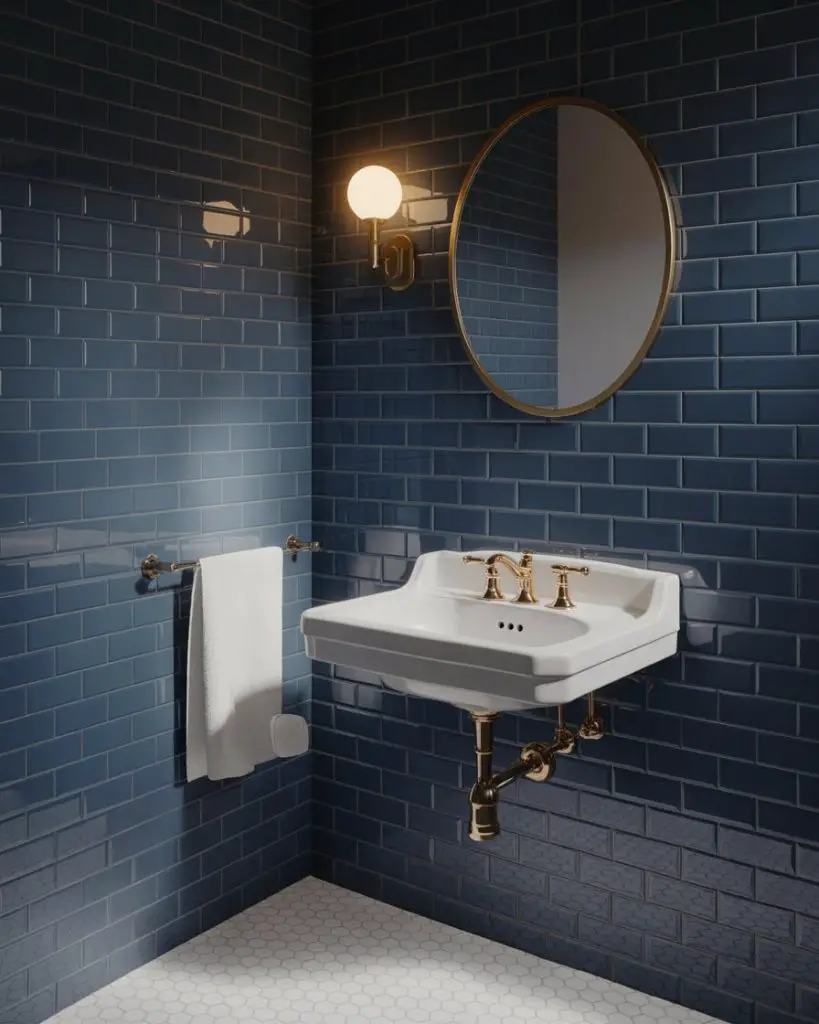
Don’t shy away from color just because your bathroom is small—blue tones are having a major moment in 2026, from powder blue subway tiles to deep navy accent walls. Designers are using color strategically to create depth and personality in compact spaces. A single wall painted in a rich cobalt can actually make a narrow bathroom feel more intentional and designed rather than accidentally small. Pair it with brass fixtures and white grout for a look that feels both current and classic. 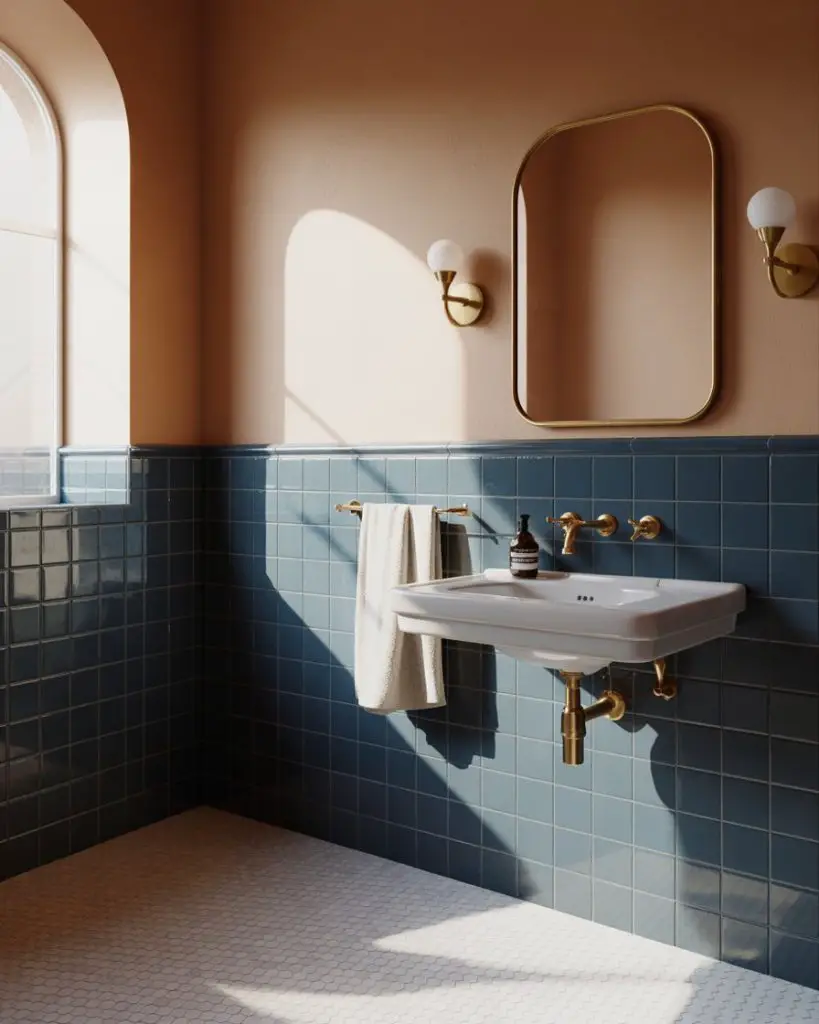
This works especially well in powder rooms and half-baths, where you’re not spending extended time but want maximum impact. The Pacific Northwest has seen a surge in moody blue bathrooms that complement the region’s natural color palette—think stormy coastal vibes brought indoors. If you’re worried about resale value, consider blue in removable elements like shower curtains, bath mats, or painted cabinets rather than permanent tile. That said, real estate agents in cities like Charleston and Savannah report that unique, well-executed color choices often become selling points rather than deterrents.
4. Green Biophilic Design
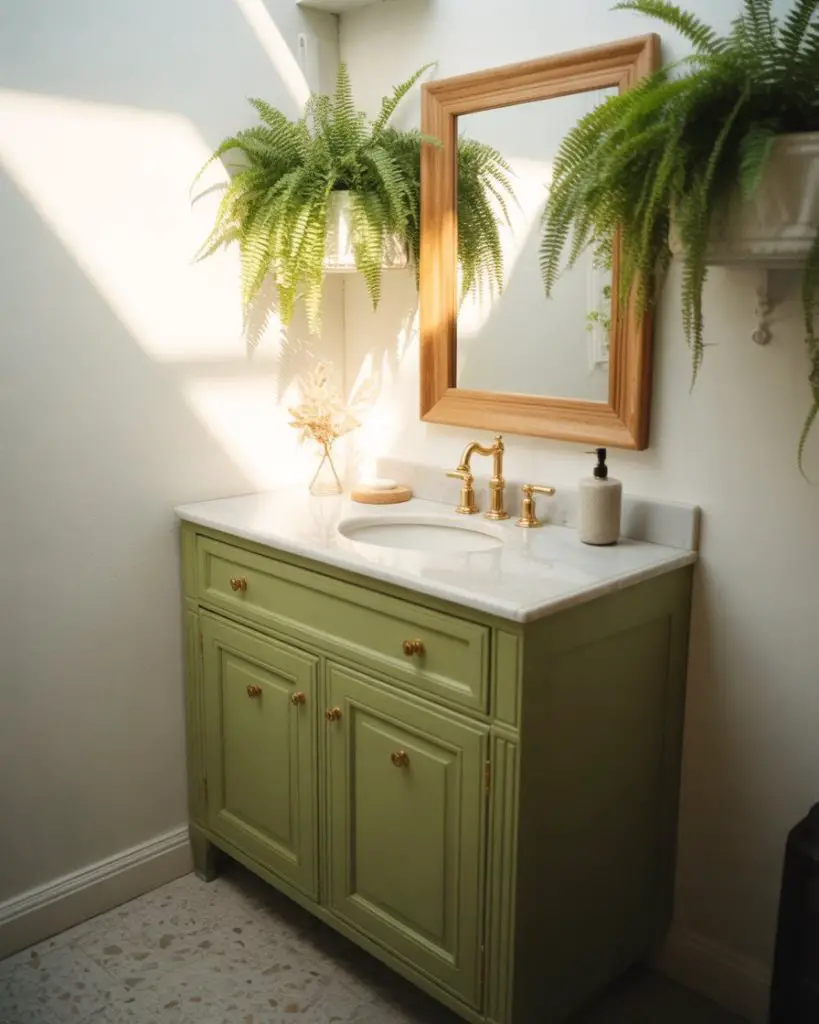
Bringing nature indoors through green elements has evolved beyond a simple potted plant—it’s now a core design principle for 2026. Biophilic bathrooms incorporate living walls, moss bath mats, sage-colored cabinetry, and even preserved greenery in acrylic frames. The psychology behind this trend is solid: studies show that natural elements reduce stress and improve mood, which is exactly what you want in a morning or evening routine. Even in a bathroom with no windows, strategic greenery and green tones can create an unexpectedly fresh atmosphere. 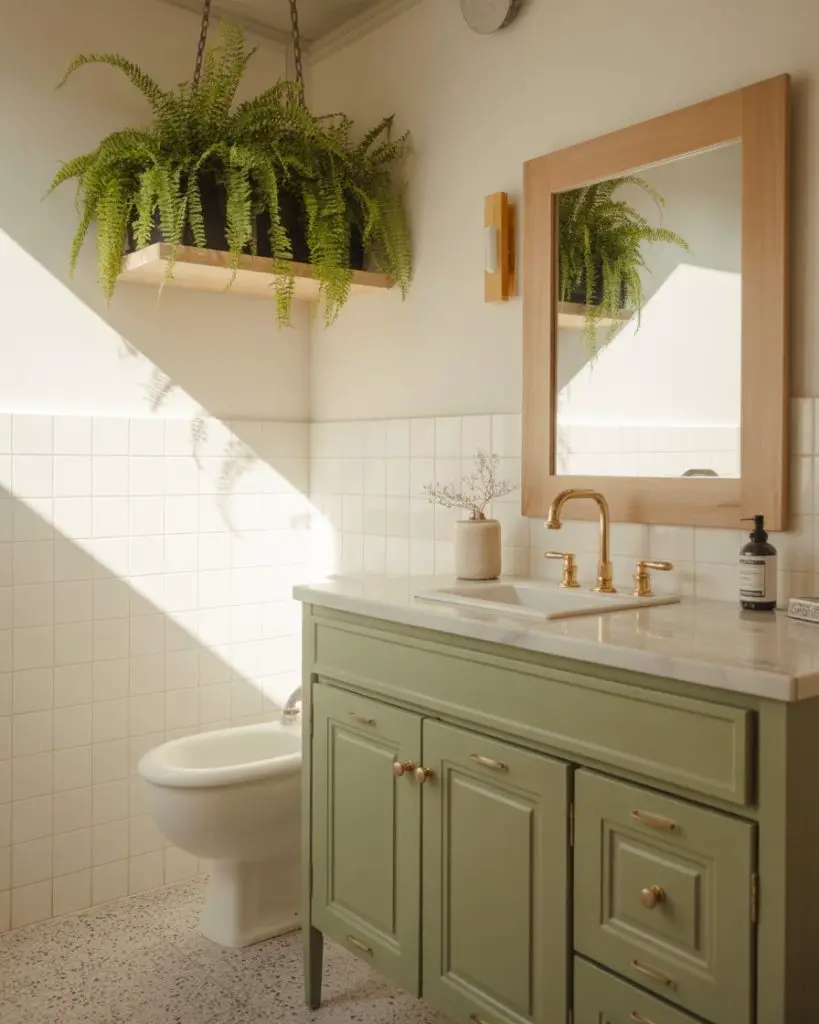
Where this works best is in urban apartments where access to outdoor space is limited—your bathroom becomes a daily dose of nature. A landscape architect in Denver noted that her own 50-square-foot bathroom features a vertical garden wall that requires minimal maintenance but delivers maximum visual impact. She waters it once a week and trims it monthly, spending less time than most people spend cleaning their shower. The key is choosing low-light tolerant plants like pothos, snake plants, or ferns, and ensuring adequate ventilation to prevent mold.
5. Space-Saving Vertical Storage
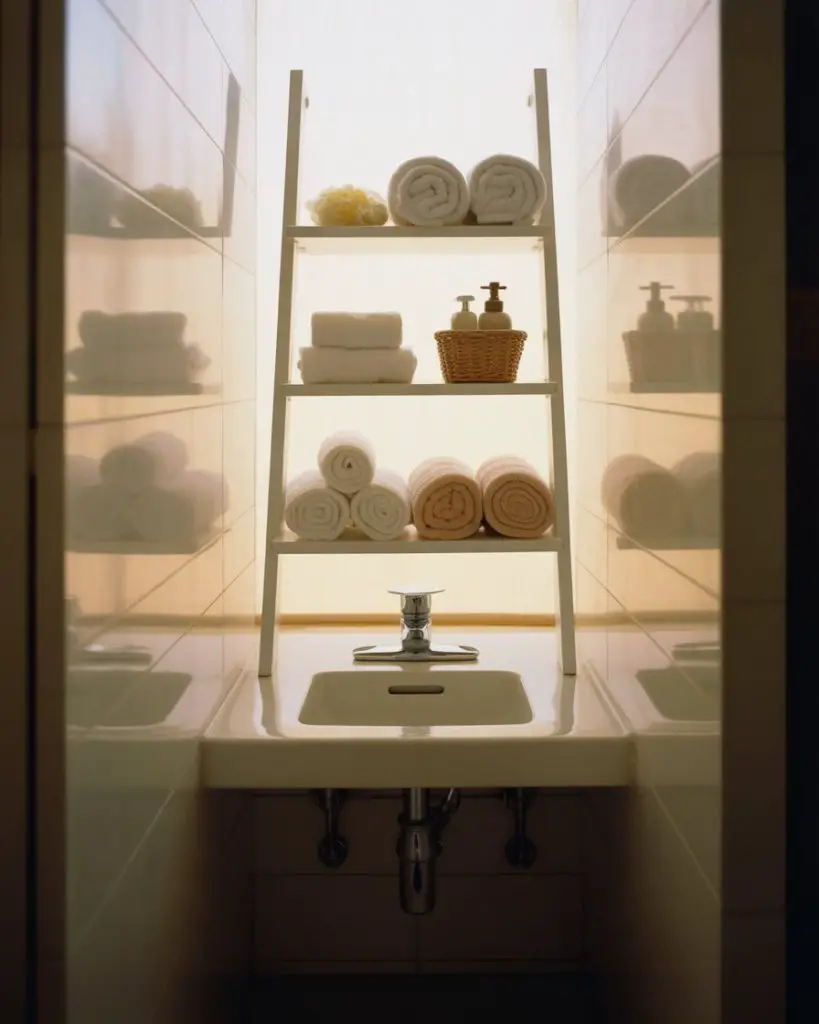
When floor space is limited, the only direction to go is up—space saving vertical solutions are essential for small bathroom design in 2026. Tall, narrow cabinets, ladder shelves, and wall-mounted organizers keep toiletries accessible without cluttering countertops. Designers are getting creative with the area above the toilet, which is often wasted space, by installing floating shelves or custom cabinetry that extends to the ceiling. This approach is particularly effective in narrow bathrooms where traditional vanities would overwhelm the room. 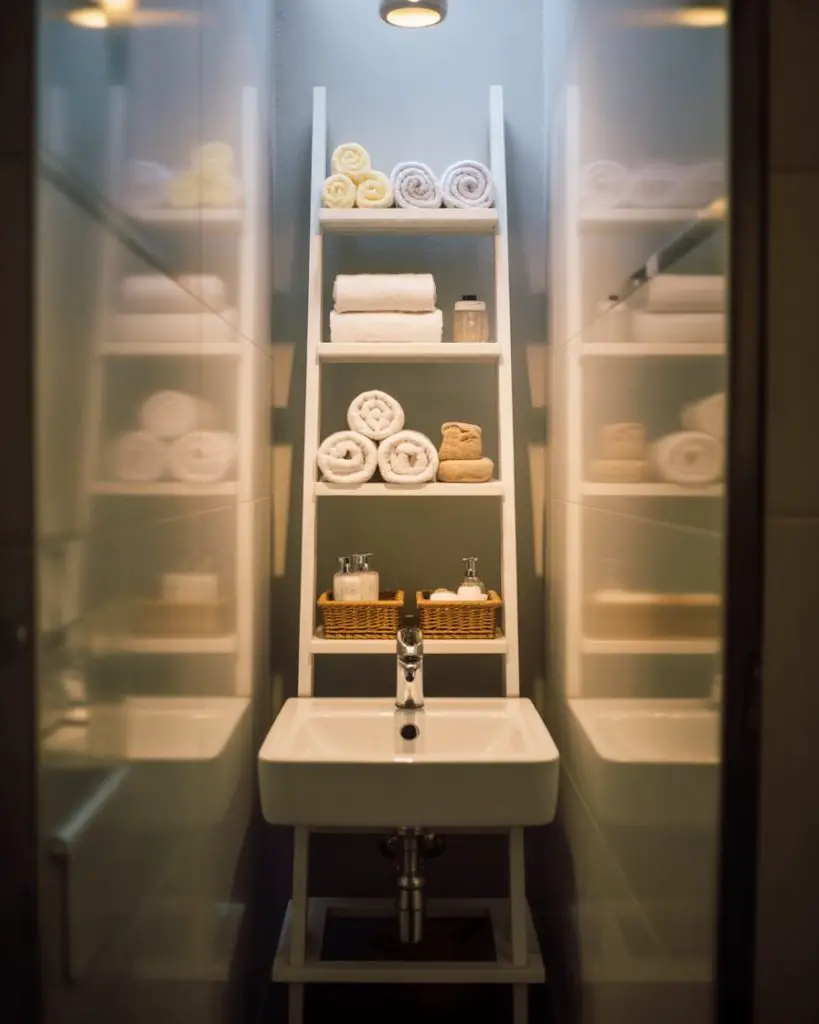
Budget-conscious homeowners should know that you don’t need custom cabinetry to achieve this look. Big-box retailers now offer affordable over-the-toilet storage units starting around $80, and vintage ladders from flea markets can be repurposed as towel holders for even less. A renovation in a Chicago greystone showed that installing three floating shelves with decorative baskets cost under $150 but added the storage equivalent of a full linen closet. The trick is keeping items visually cohesive—use matching containers and limit the color palette to two or three tones.
6. Minimal Modern Sophistication
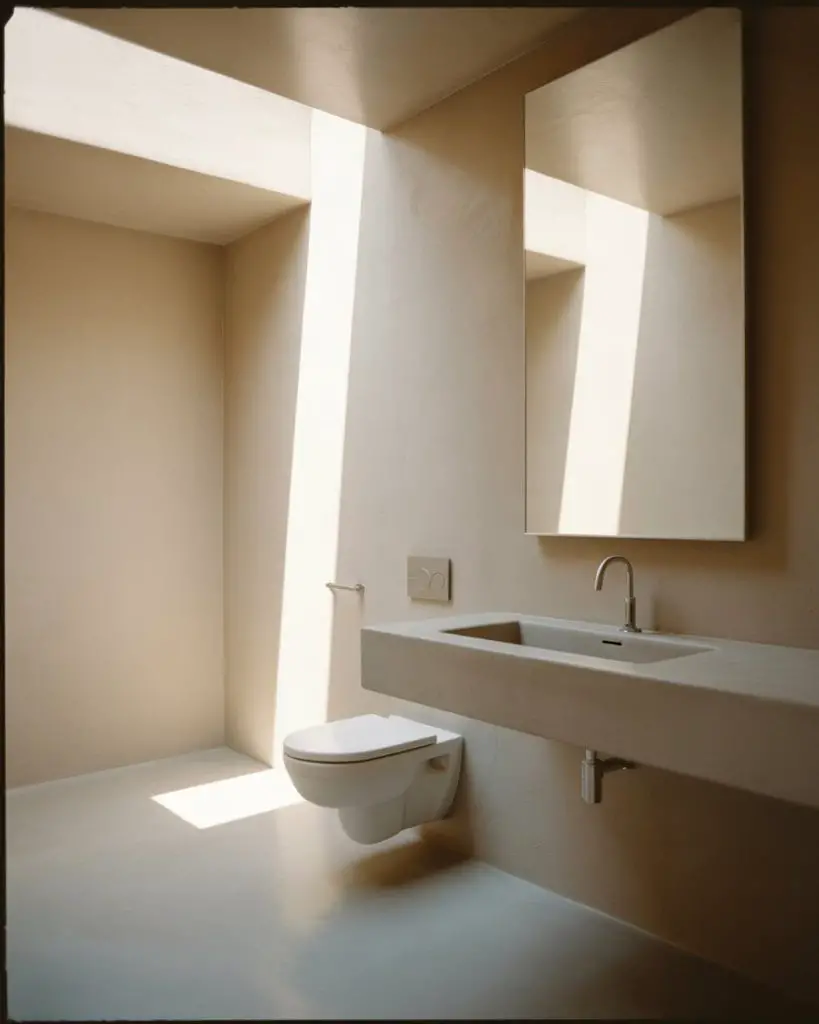
The modern small bathroom design minimal approach strips away everything non-essential, leaving only what truly serves a purpose. This isn’t cold or sterile—it’s about curating a space where clean lines, quality materials, and negative space create a sense of calm. Wall-mounted toilets, frameless glass showers, and concealed storage keep surfaces clear and sightlines uninterrupted. The result is a bathroom that feels larger than its actual dimensions because your eye isn’t constantly catching on visual clutter. 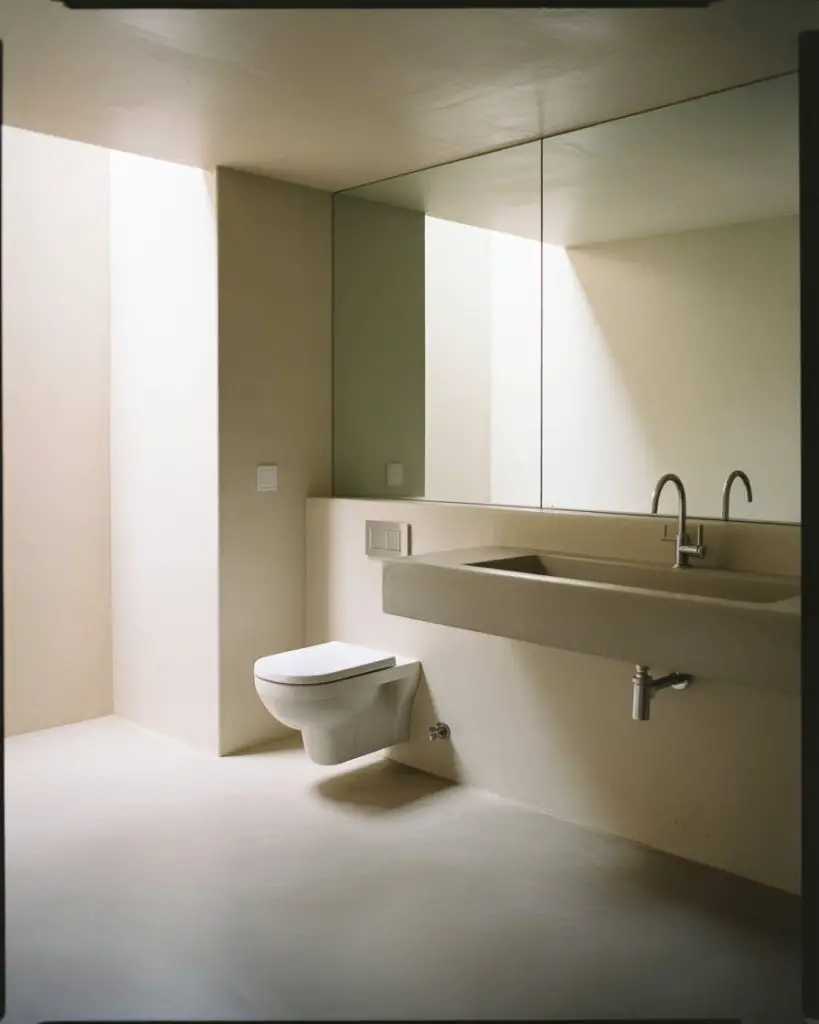
This aesthetic works particularly well in new construction and modern condos where architectural details are already streamlined. However, a common mistake is confusing “minimal” with “cheap”—the style actually requires investment in high-quality, well-designed pieces because there’s nowhere to hide flaws. That single faucet needs to be beautiful and functional. That floating vanity must be expertly installed. When done right, though, the payoff is a bathroom that feels like a boutique hotel rather than a cramped necessity.
7. Layout Tricks That Add Square Footage
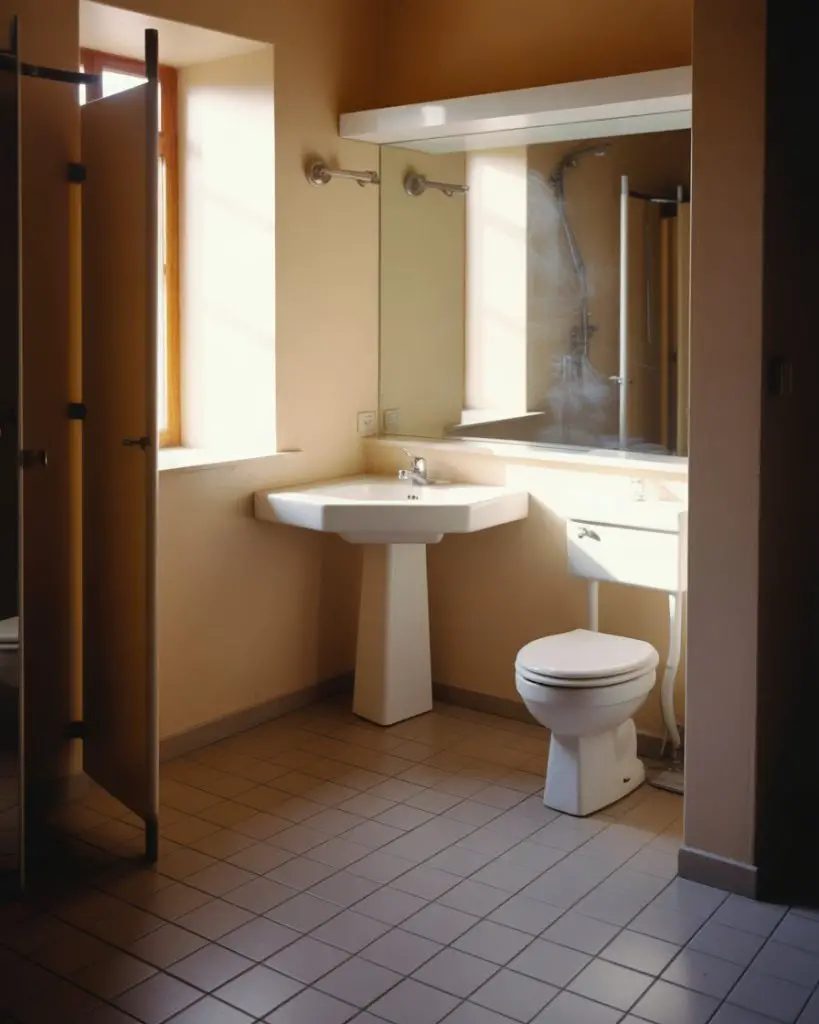
Smart layout planning can make a 40-square-foot bathroom function like a 60-square-foot one without moving a single wall. The key is rethinking fixture placement—swapping a traditional vanity for a corner sink, installing a pocket door instead of a swing door, or using a wall-hung toilet to free up floor space. Designers are also experimenting with diagonal tile patterns that visually expand the room and strategic mirror placement that bounces light into dark corners. These aren’t expensive renovations; they’re spatial problem-solving. 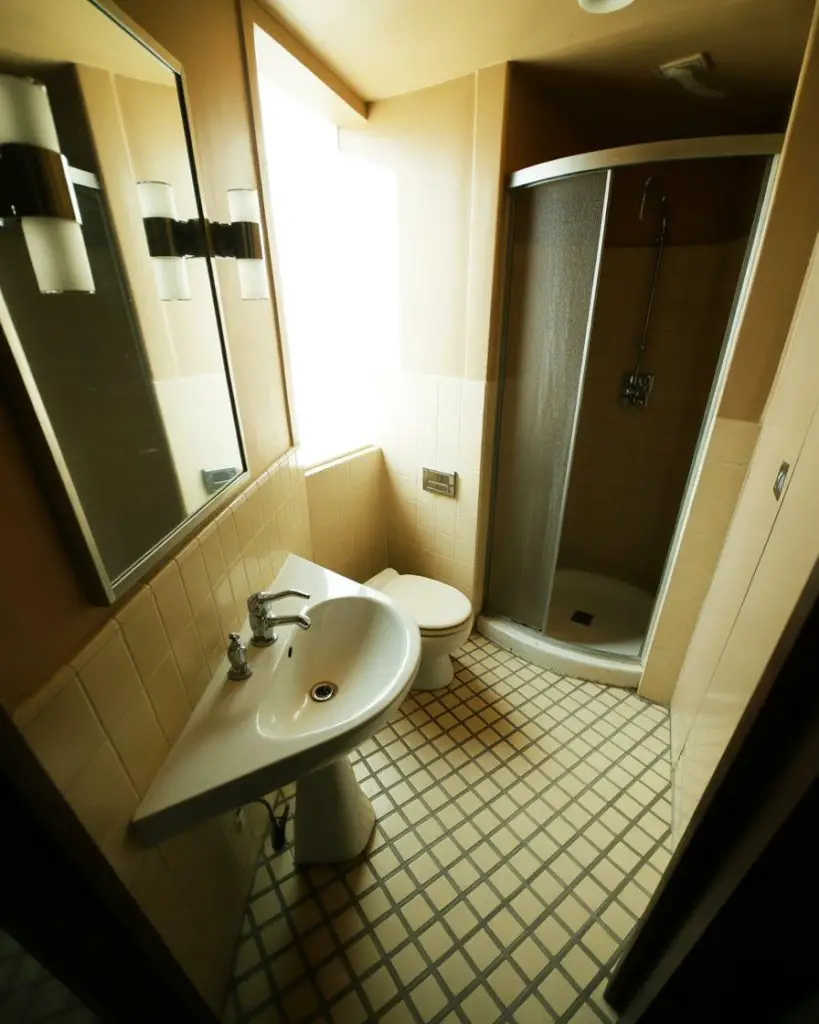
An architect in Austin shared that she once redesigned a 5×6 bathroom simply by rotating the toilet 90 degrees and replacing a 24-inch vanity with an 18-inch corner model, which opened up enough room for a parent and toddler to navigate simultaneously during morning routines. That’s real-world functionality that improves daily life. Before you start demo, spend time in your bathroom noticing where you bump into things, where you wish you had more room, and what you never actually use. Those observations are more valuable than any generic layout you’ll find online.
8. Freestanding Tub and Shower Combo
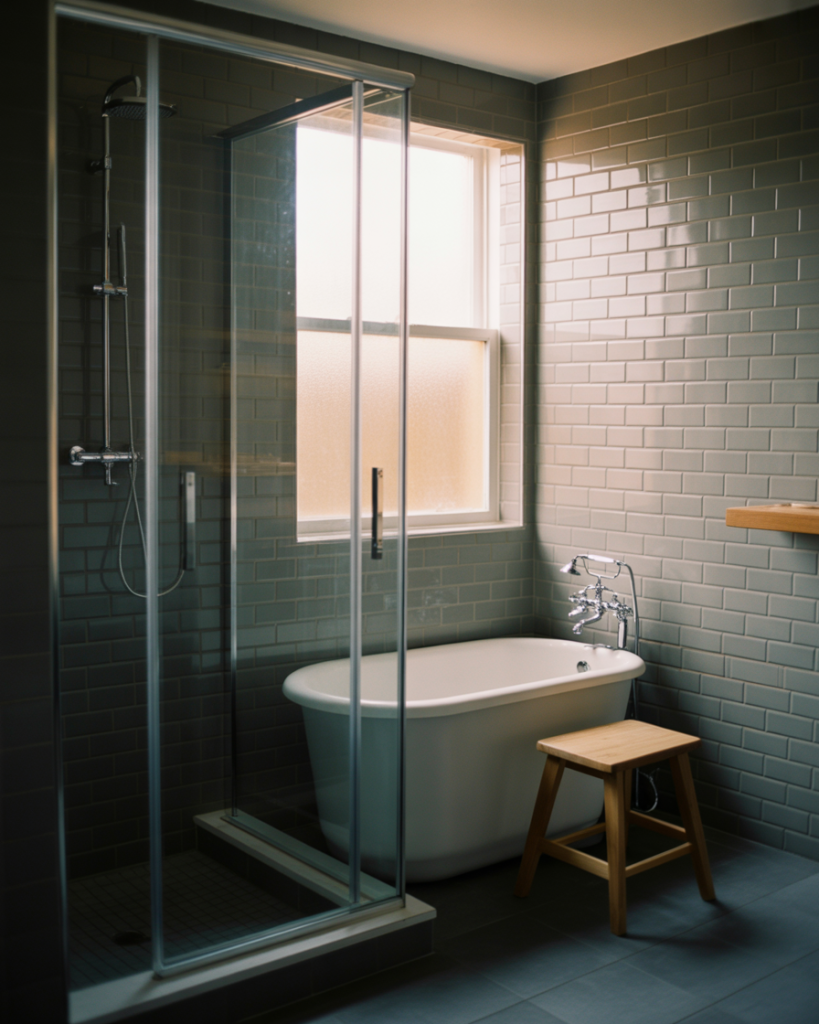
The dream of having both a freestanding bathtub and a separate shower in a small bathroom isn’t impossible—it just requires creative engineering. Enter the bathtub and shower combo that doesn’t look like a basic tub-shower situation. Modern iterations include sleek freestanding tubs positioned near glass-enclosed shower spaces, with shared plumbing walls and careful placement that maximizes every inch. This is a luxury choice that’s becoming more accessible as manufacturers design smaller-scale versions specifically for urban homes. 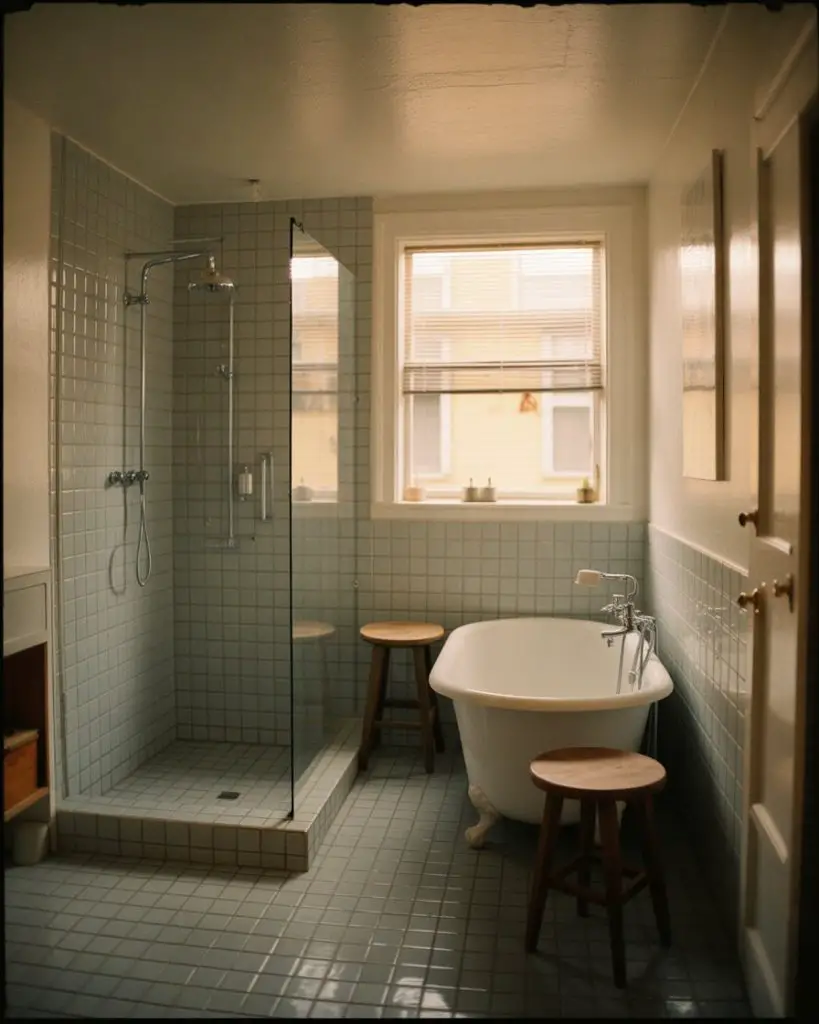
Real homeowner behavior shows that people who install these combos in small spaces tend to use the tub far more than they anticipated—it becomes a genuine wellness feature rather than just a space filler. However, this setup requires at least 60 square feet to work without feeling cramped, and proper ventilation is non-negotiable. In humid climates like Florida or Louisiana, you’ll want to invest in a quality exhaust fan with a timer to prevent moisture damage. The upfront cost is higher, but for households that genuinely want both bathing options, it eliminates the compromise.
9. Industrial Edge in Tight Spaces
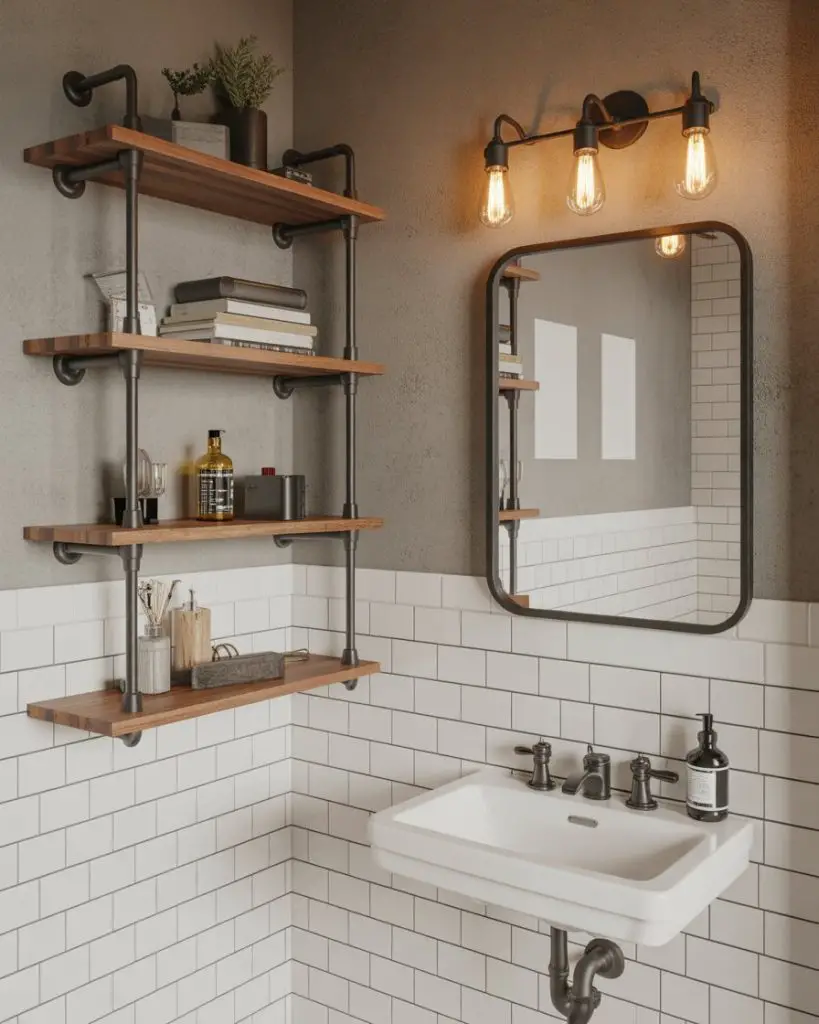
Exposed pipes, concrete finishes, and matte black metal aren’t just for loft apartments anymore—this industrial aesthetic translates surprisingly well to small bathroom spaces. The key is balancing raw materials with warmth: pair concrete tiles with a wooden vanity, or offset black steel framing with soft white subway tiles. This style works because it embraces honesty—there’s no pretending the room is larger than it is, and the utilitarian approach actually makes tight quarters feel intentional rather than apologetic. 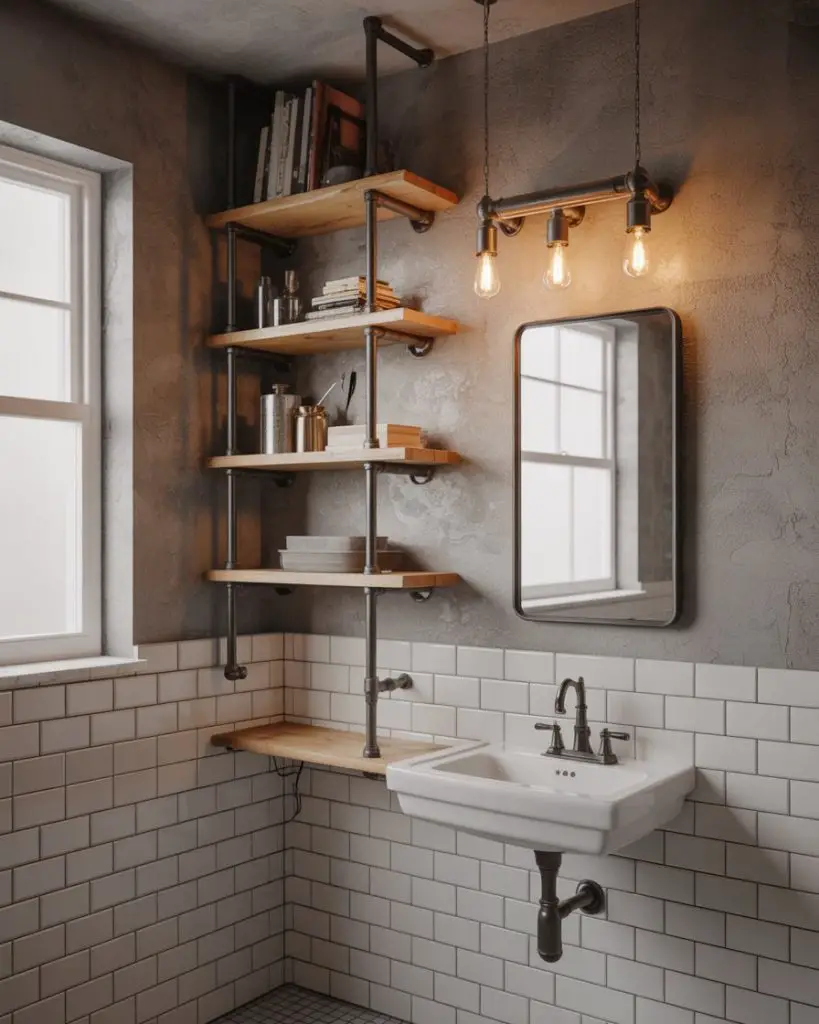
This approach typically costs less than traditional bathroom renovations because many “industrial” elements are actually budget-friendly—concrete-look porcelain tiles run $3-5 per square foot, and black pipe fittings from hardware stores can be assembled into custom shelving for under $100. A renovation in a Brooklyn walkup used this exact strategy, creating a bathroom that looks like it cost $15,000 but actually came in under $4,000. The homeowner did most of the work herself over three weekends, proving that industrial style isn’t just aesthetically accessible but financially achievable.
10. Scandinavian Warmth
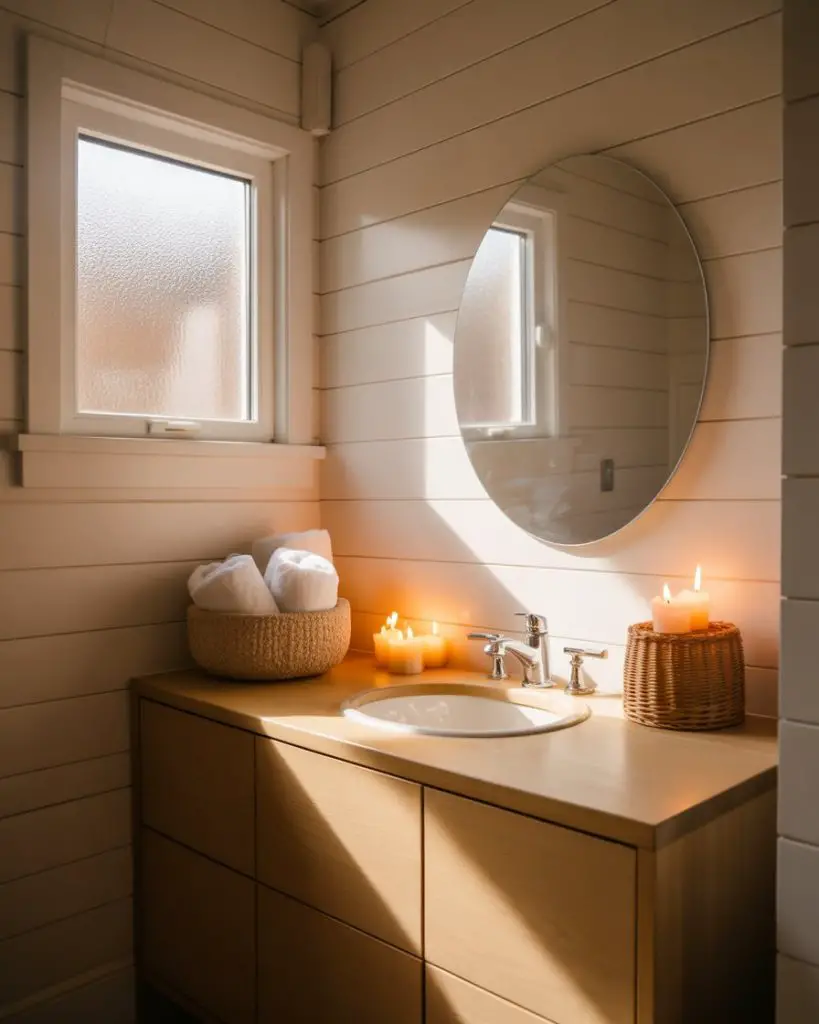
Nordic-inspired design brings a different energy than Japandi—it’s warmer, cozier, and more playful with texture. Think white walls paired with natural blonde wood, woven baskets, chunky knit bath mats, and candles clustered on floating shelves. This aesthetic feels particularly at home in colder climates where the bathroom becomes a refuge from harsh winters. The simple modern approach doesn’t sacrifice comfort for style; instead, it finds beauty in everyday functional objects arranged thoughtfully. 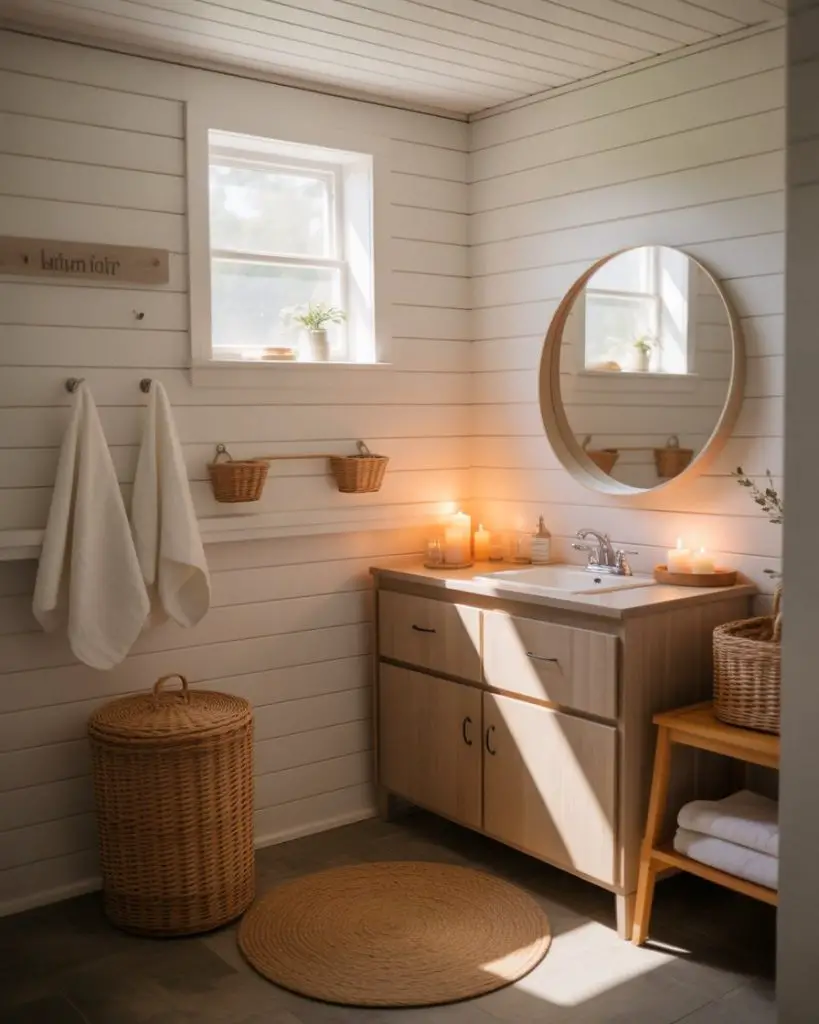
Where this works best is in older homes with original character—those quirky angles and sloped ceilings that might feel like design challenges actually add to the Scandinavian charm when you embrace them rather than fight them. A homeowner in Minnesota kept her 1920s bathroom’s original built-in nook and turned it into a display area for rolled towels and a small plant, working with the architecture rather than against it. The mistake to avoid here is over-accessorizing; Scandinavian design is edited and intentional, so resist the urge to fill every surface.
11. Monochrome Drama
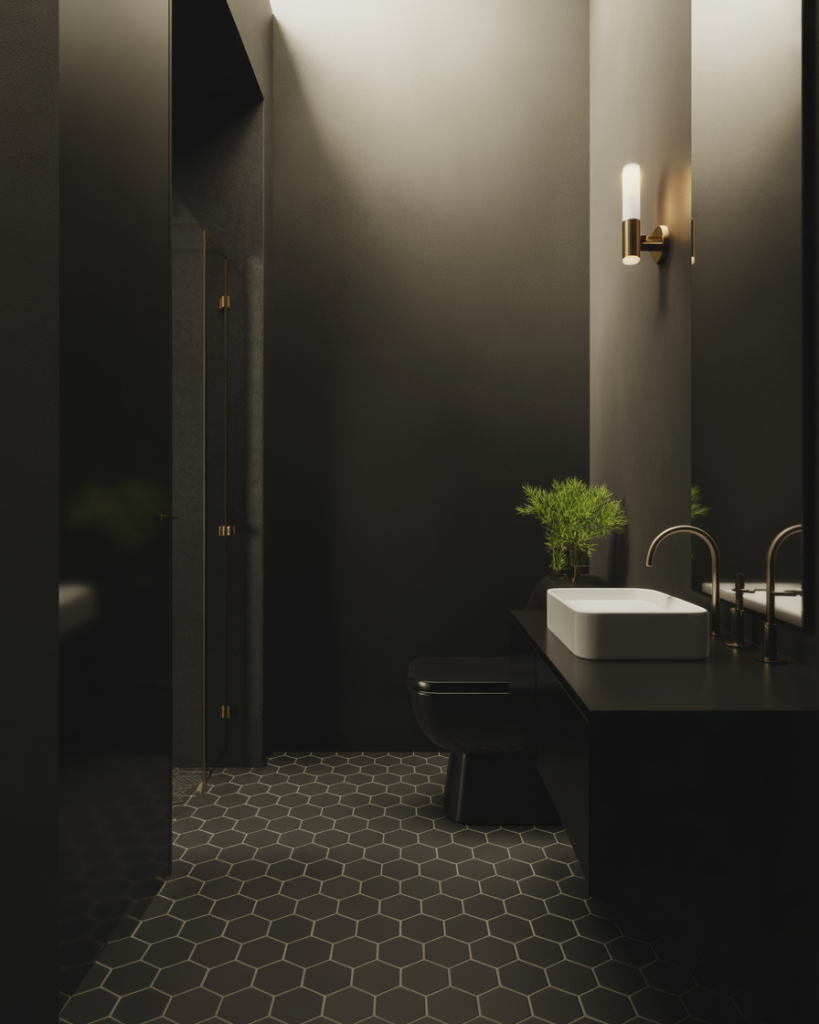
An all-black or all-white bathroom might sound risky in a small space, but monochrome schemes actually create visual cohesion that makes rooms feel more expansive. The trick is playing with texture and finish—matte black walls with glossy black fixtures, or white subway tiles with white marble countertops and white painted shiplap. This modern luxury approach feels editorial and bold, perfect for homeowners who want their small bathroom to make a statement rather than disappear into beige safety. 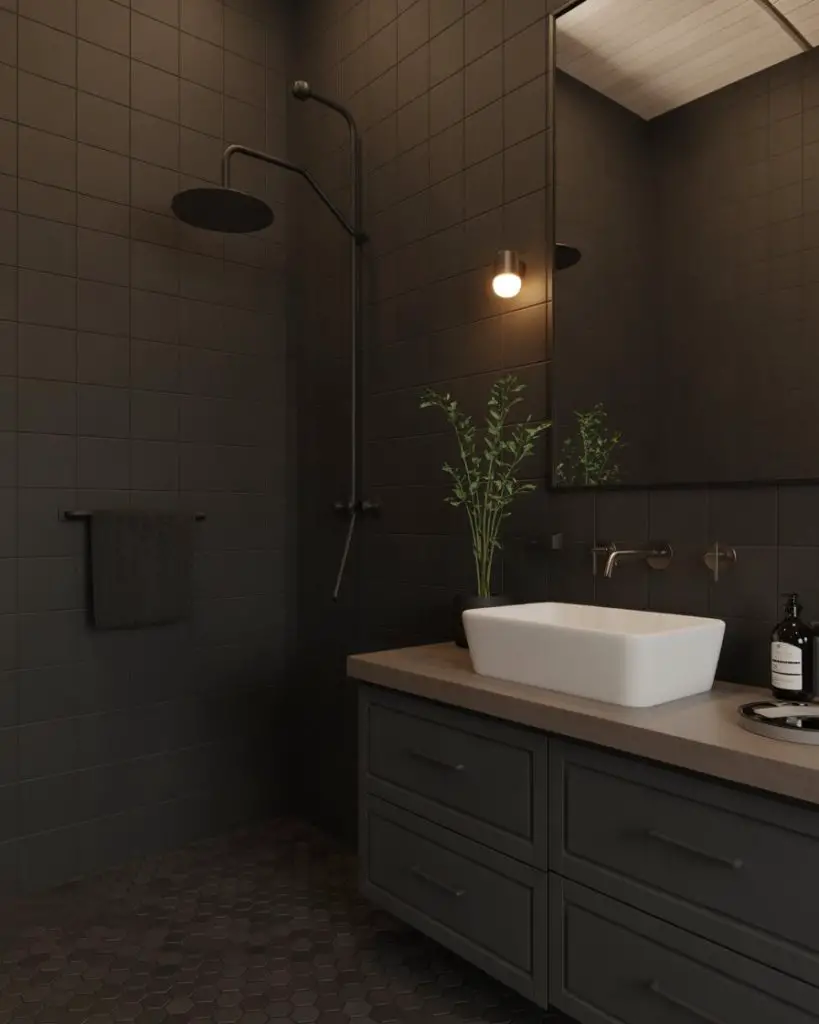
This is surprisingly budget-friendly if you’re starting from scratch—black paint is inexpensive, and white tiles are among the most affordable options available. A Boston condo owner transformed her dated almond-colored bathroom into a striking black-and-white space for under $2,000, doing the painting herself and splurging only on new fixtures. The all-black version does require excellent lighting, though. You’ll need both task lighting near the mirror and ambient lighting throughout to prevent the space from feeling cave-like. In rooms without windows, consider a bright white ceiling to reflect light downward.
12. Smart Technology Integration
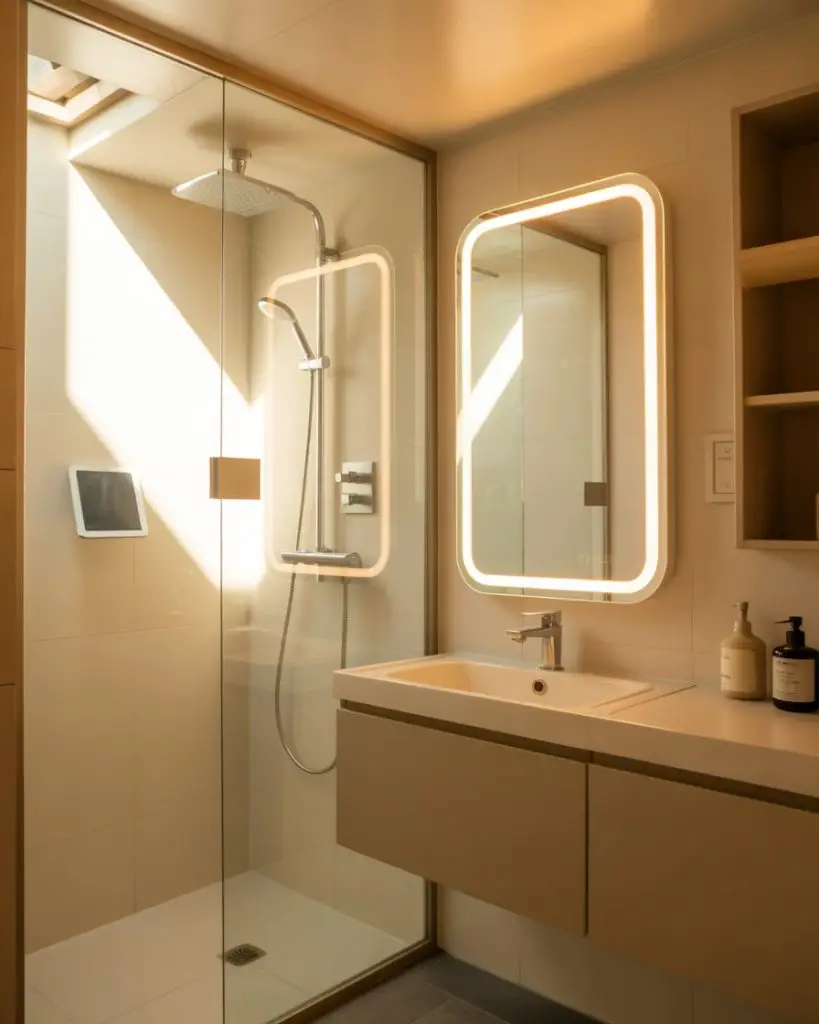
Technology is finding its way into even the tiniest bathrooms, from motion-sensor faucets that conserve water to heated toilet seats that add unexpected comfort. Smart mirrors with built-in lighting and defogging capabilities eliminate the need for separate vanity lights, and voice-activated shower systems let you start warming water before you even step inside. These aren’t frivolous gadgets—they’re practical upgrades that improve daily routines while often saving space by combining multiple functions into single fixtures. 
Expert commentary from a smart home installer in Seattle suggests starting with one or two key upgrades rather than trying to automate everything at once. She recommends a smart mirror as the best entry point because it replaces an existing necessity while adding functionality, whereas something like a smart toilet represents a significant investment for a feature you might not use daily. The other consideration is future-proofing—ensure any smart fixtures can receive software updates and aren’t tied to a proprietary system that might be discontinued. Basic versions of most smart bathroom tech now start around $200-300, making them accessible to mid-range renovations.
13. Pattern Play on Floors
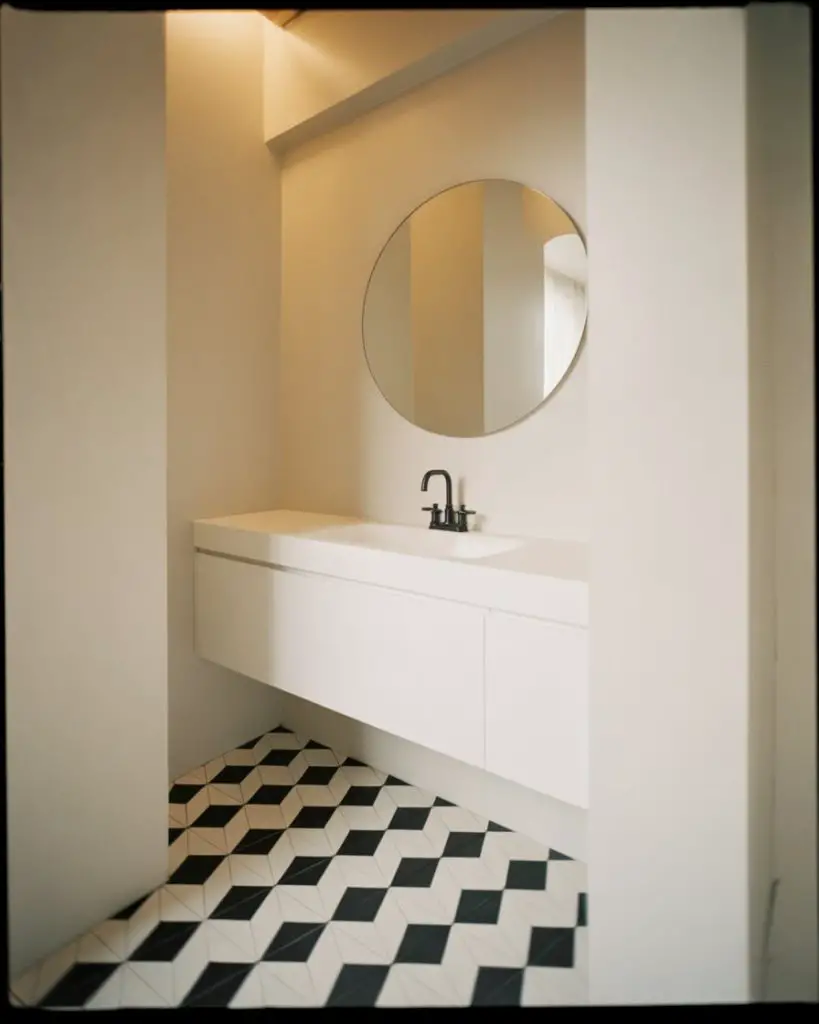
Bold floor tiles are having a resurgence in 2026, with geometric patterns, encaustic-look cement tiles, and colorful mosaics anchoring small bathroom designs. When walls are kept simple, a patterned floor becomes the room’s focal point without overwhelming the space. This approach works particularly well because the eye is drawn downward, which can actually make ceiling heights feel more dramatic. Designers are mixing traditional patterns with modern fixtures for a look that feels collected rather than cookie-cutter. 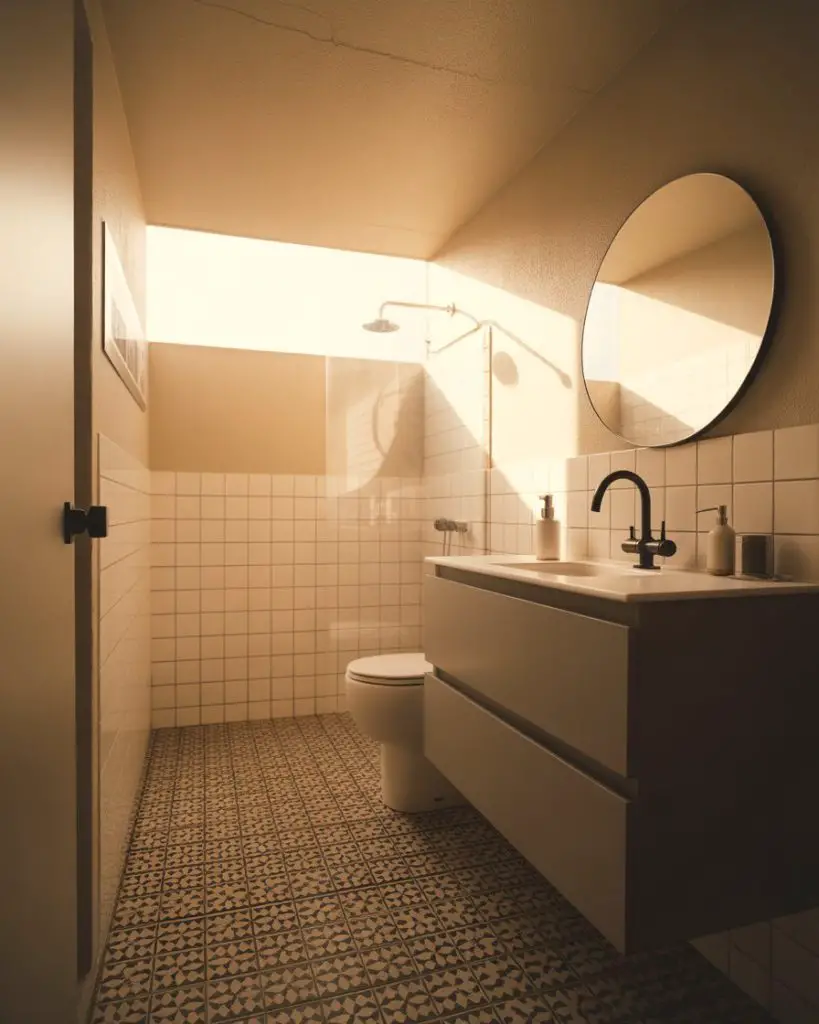
A common mistake is choosing patterns that are too busy or too large-scale for the space. A designer from New Orleans—a city known for its love of patterned tile—recommends viewing samples in your actual bathroom lighting before committing, as patterns that look sophisticated in a showroom can feel chaotic in a 6×8 space. She also suggests considering the grout color carefully; darker grout can make patterns pop, while matching grout creates a softer effect. Installation typically costs more than standard tile due to the pattern-matching required, so budget an extra 20-30% for labor.
14. Vintage Revival with Modern Function
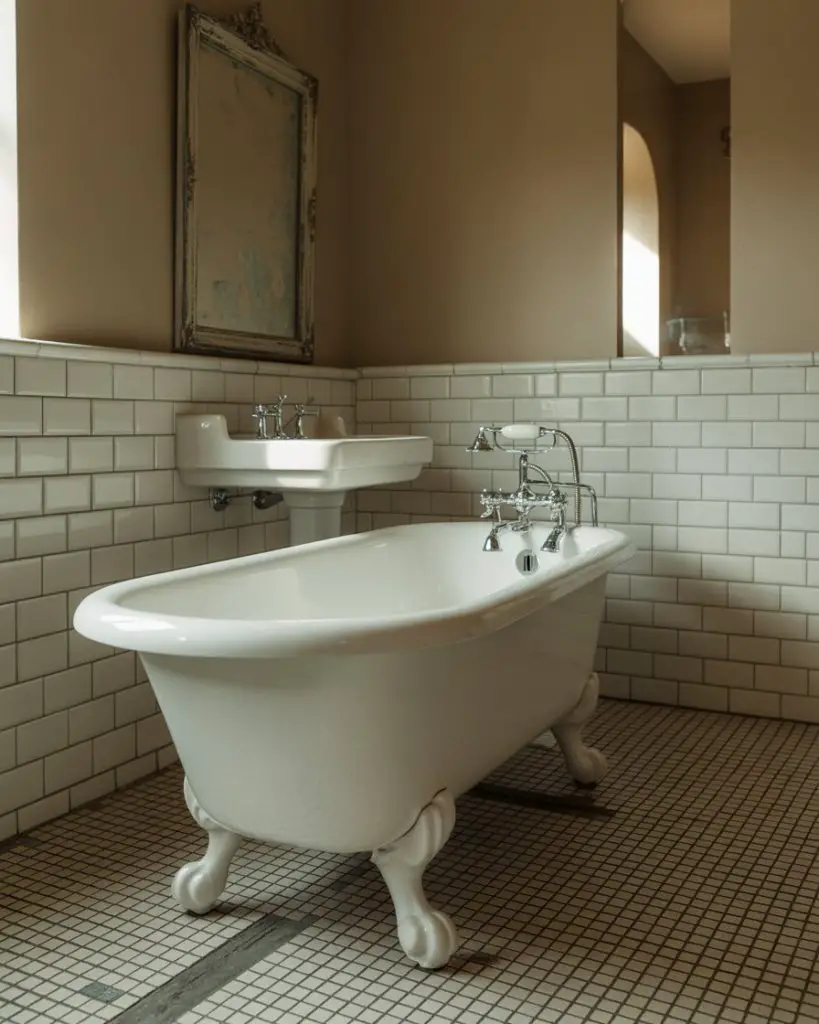
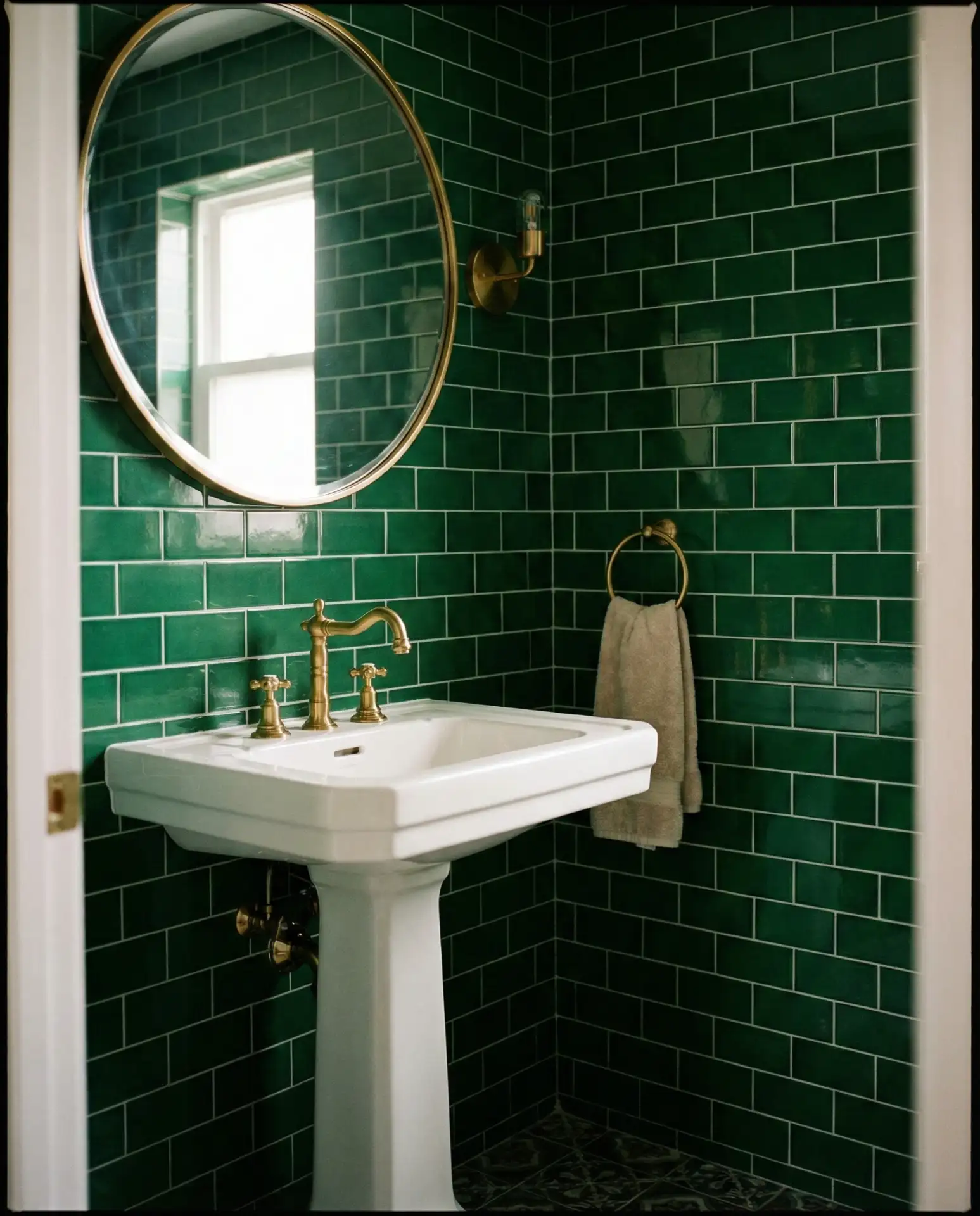
Blending vintage aesthetics with contemporary plumbing creates bathrooms that feel soulful and unique. Think clawfoot tubs retrofitted with modern rain showerheads, pedestal sinks with updated faucets, or vintage medicine cabinets refurbished with new mirrors and hardware. This beautiful approach appeals to homeowners in older properties who want to honor original architecture while enjoying current conveniences. The juxtaposition between old and new creates visual interest that makes small spaces feel curated rather than cramped. 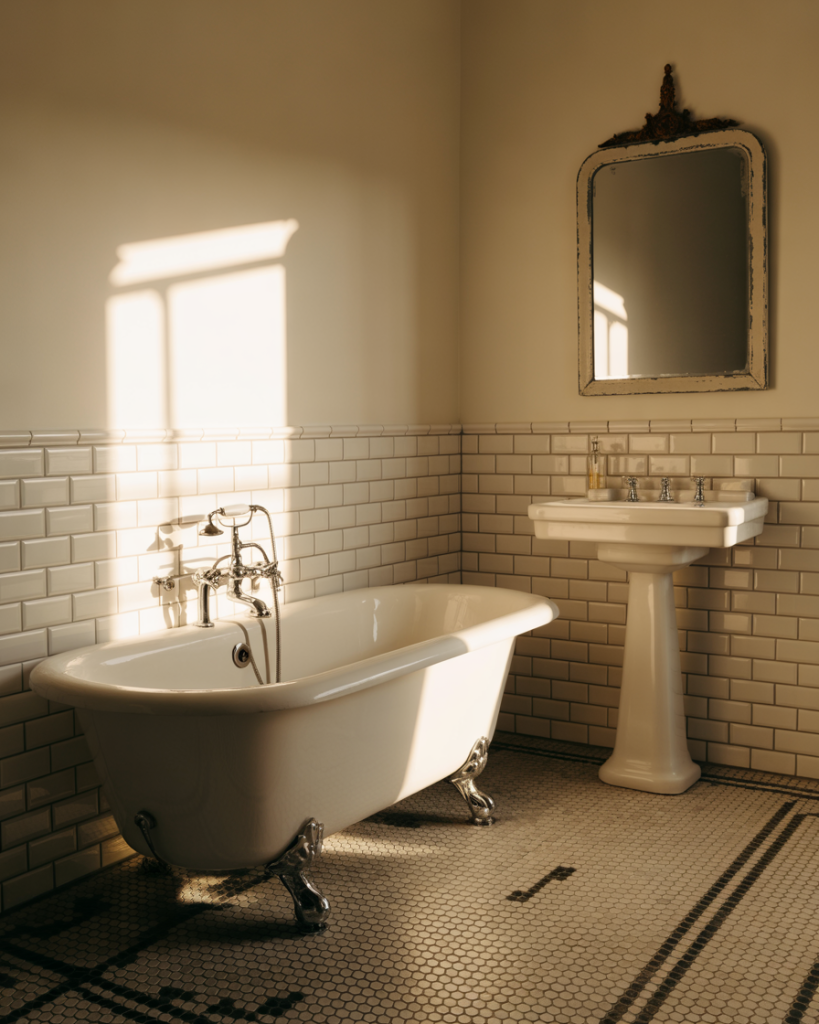
Real homeowner behavior shows that people who commit to vintage-modern blends tend to haunt salvage yards and estate sales, building their bathrooms piece by piece rather than buying everything new. A couple in Savannah spent eighteen months collecting vintage elements for their bathroom renovation, ultimately spending less than a standard renovation while creating something genuinely one-of-a-kind. The key is ensuring vintage pieces are structurally sound and can accommodate modern plumbing—that beautiful antique sink might need professional modification to fit contemporary faucets and drain assemblies.
15. Open Shelving Lightness
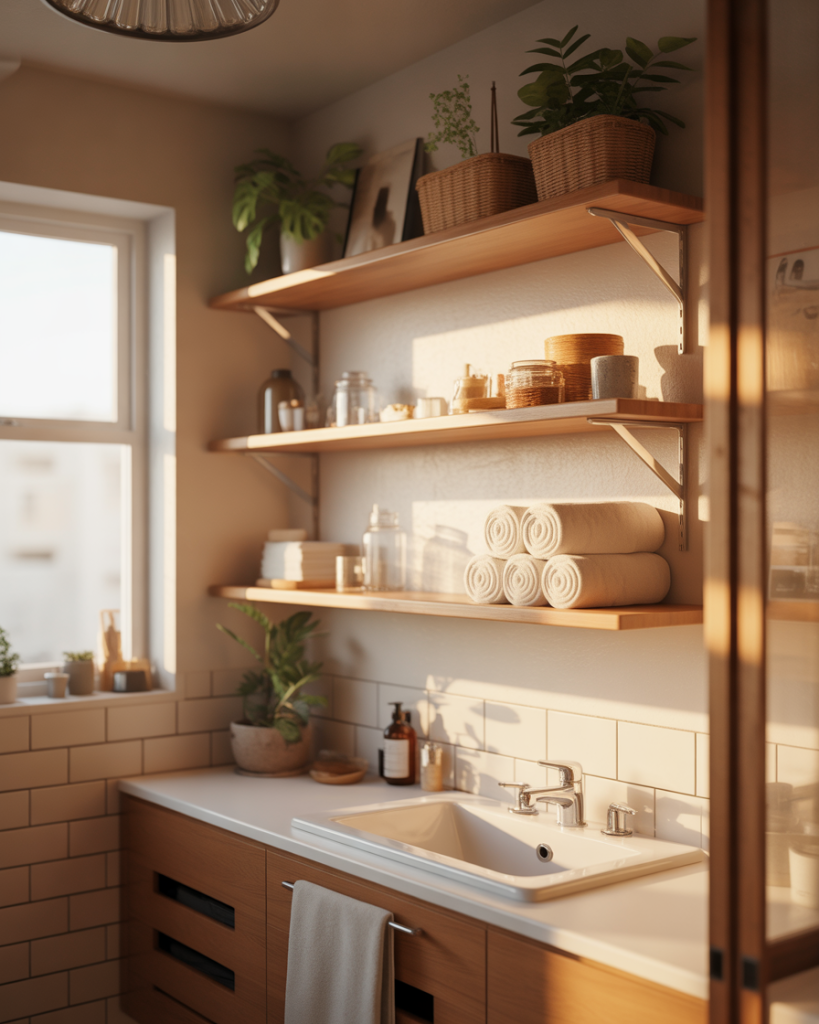
Replacing closed cabinets with open shelving creates an airy feeling that benefits small bathroom spaces. This 2026 trend requires a commitment to organization—everything on display must be intentional and attractive—but the payoff is a room that feels less boxy and more breathable. Floating wood shelves, glass ledges, or even repurposed vintage brackets holding reclaimed wood create storage that doubles as decor. The key is editing ruthlessly; if you wouldn’t want guests to see it, it doesn’t belong on open shelving. 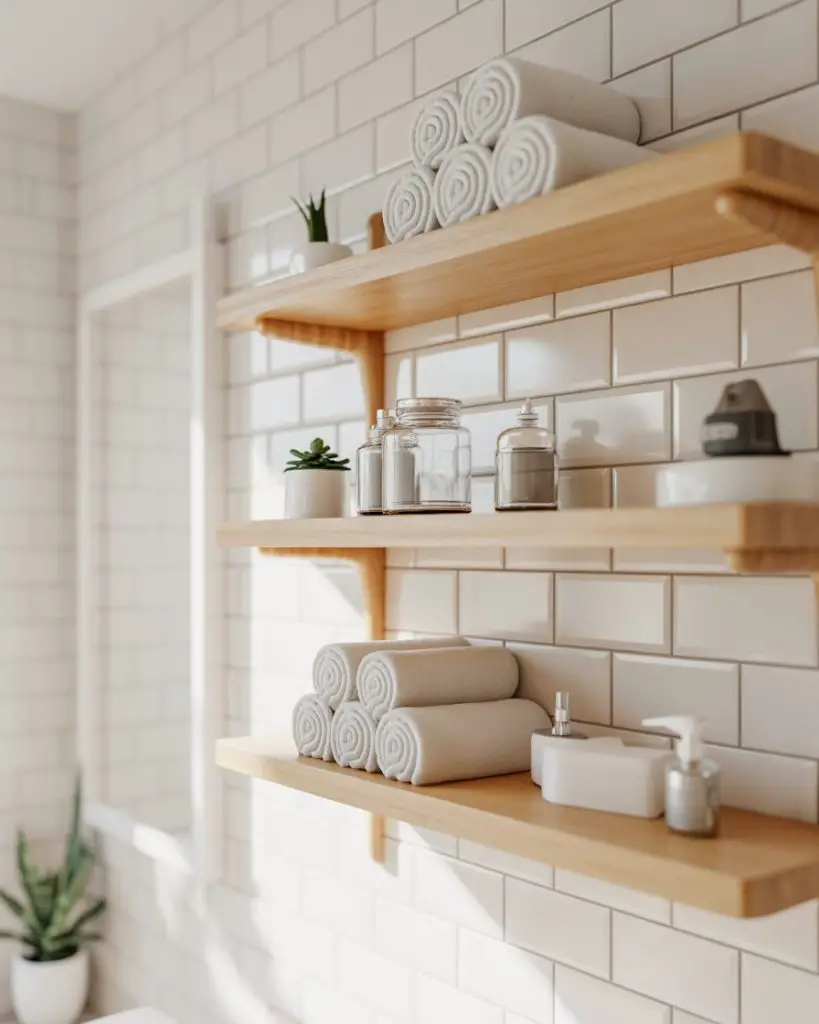
This works best in households where multiple people aren’t sharing the space, or where everyone commits to maintaining the aesthetic. A single professional living in a Seattle studio apartment uses open shelving successfully because she’s the only one accessing the space and enjoys the ritual of keeping things orderly. For families with kids, consider a hybrid approach—open shelving for pretty towels and plants, closed storage below the sink for everyday chaos. Budget-wise, this is one of the most affordable storage solutions: basic floating shelves cost $20-40 each, and you can DIY installation with basic tools and a level.
16. Textured Wall Treatments
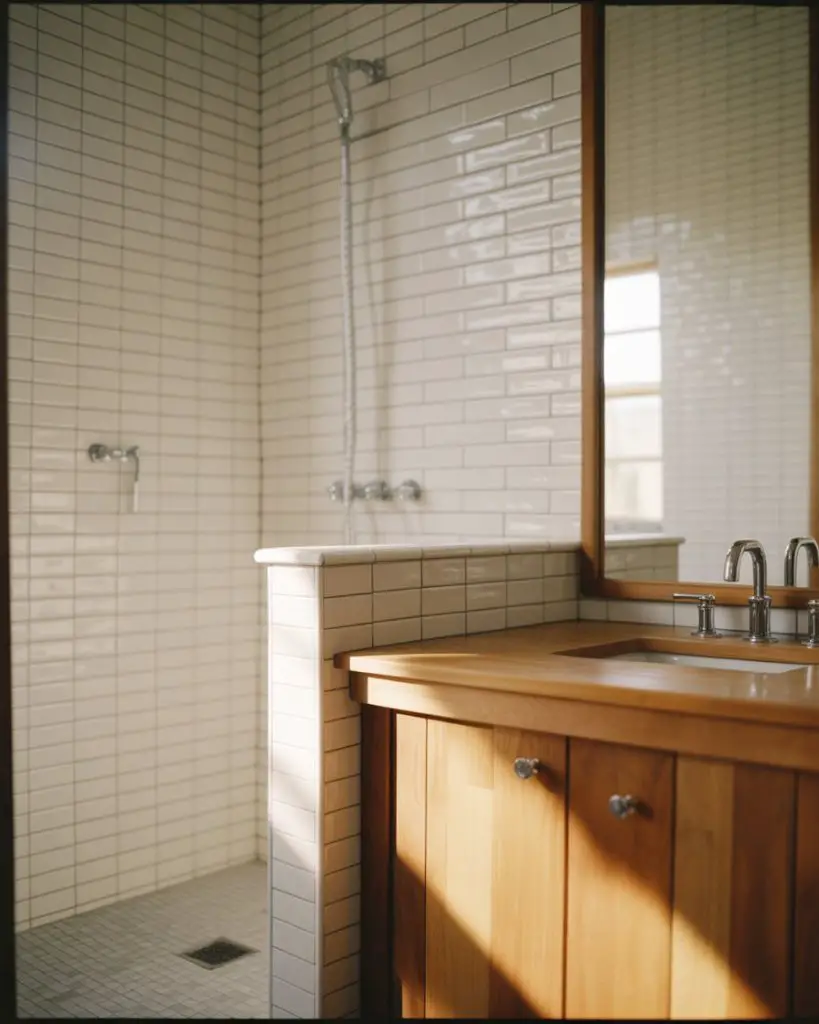
Moving beyond flat paint, 2026 is seeing more dimensional wall treatments in small bathrooms—shiplap, board-and-batten, textured plaster, or even three-dimensional tile. These surfaces catch light differently throughout the day, creating visual movement and depth. When painted in light colors, textured walls add character without making the space feel smaller. This is particularly effective in bathrooms with limited architectural detail, where flat drywall can feel builder-basic and uninspired. 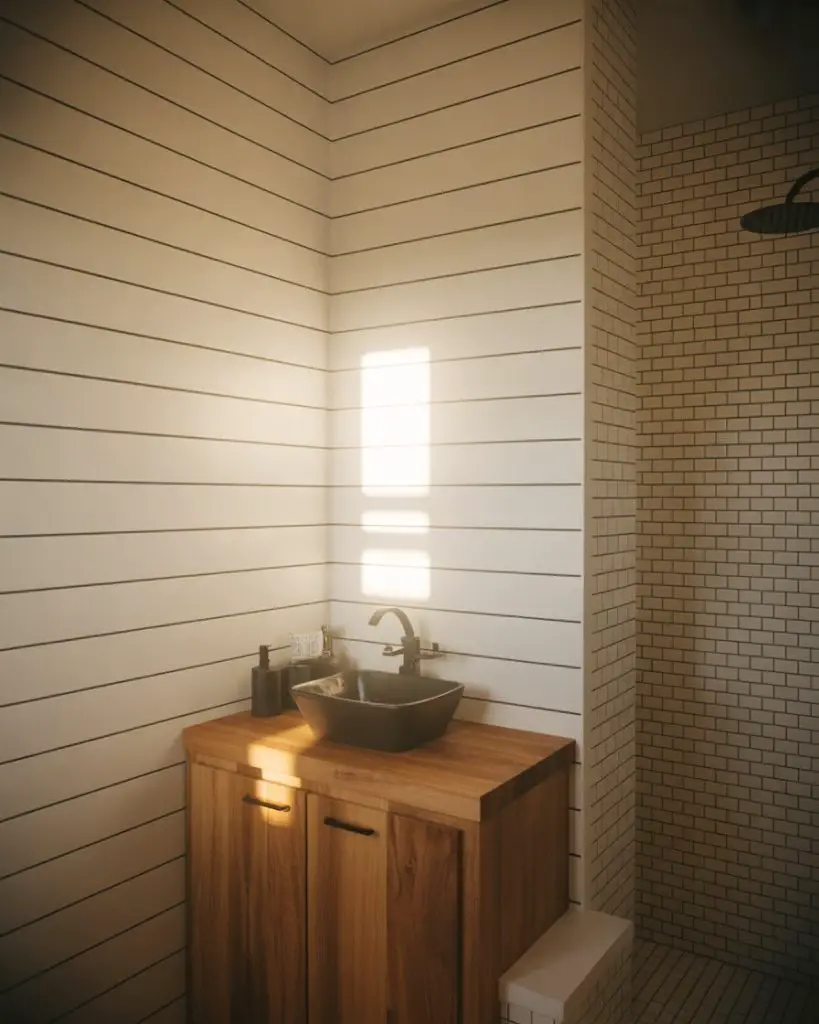
An interior designer in Nashville shared that textured walls are particularly popular in new construction, where homeowners want to add character to otherwise generic spaces. She typically recommends starting with one accent wall rather than treating the entire room, especially in very small bathrooms where too much texture can feel busy. Installation costs vary widely—DIY shiplap might cost $200 in materials for a small bathroom, while professional venetian plaster could run $1,500-2,000. The middle ground is textured tile, which offers durability and visual interest at moderate cost.
17. Corner Shower Efficiency
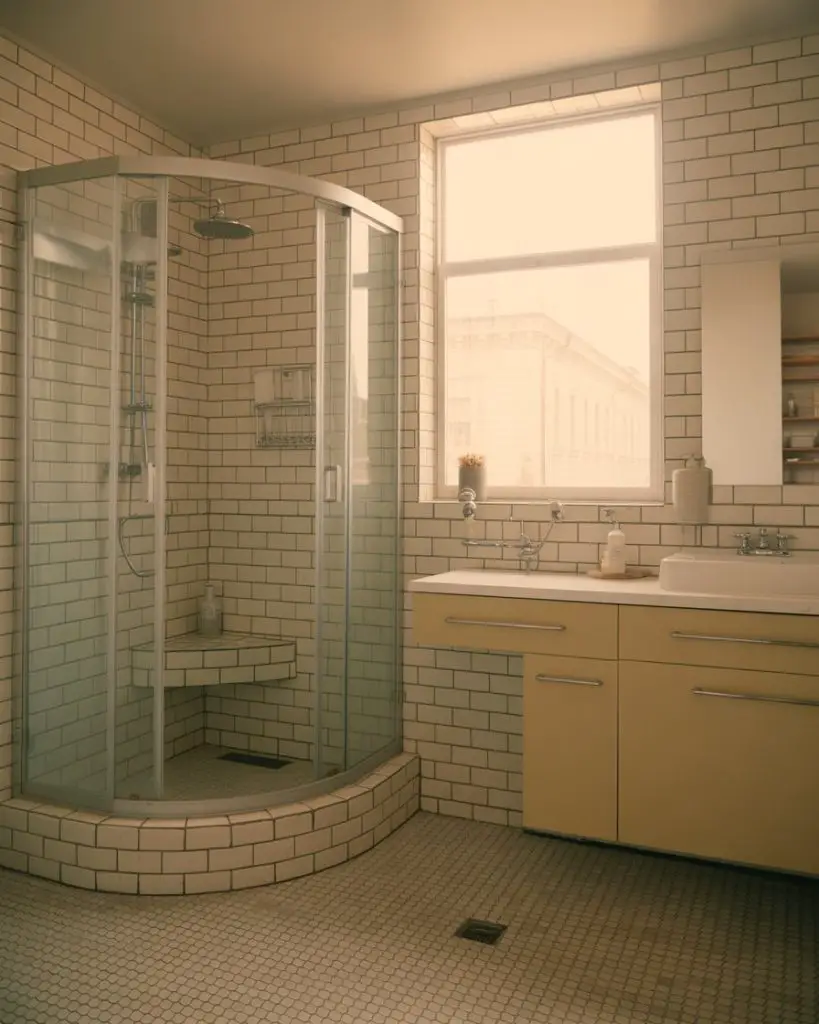
Corner showers maximize space saving potential by tucking into the most underutilized part of the room. Modern curved glass enclosures or neo-angle designs create functional shower spaces without the visual weight of traditional square enclosures. This layout frees up wall space for vanities or storage while maintaining comfortable shower dimensions. Paired with a corner bench and recessed shelving, these showers prove that small doesn’t mean compromising on comfort. 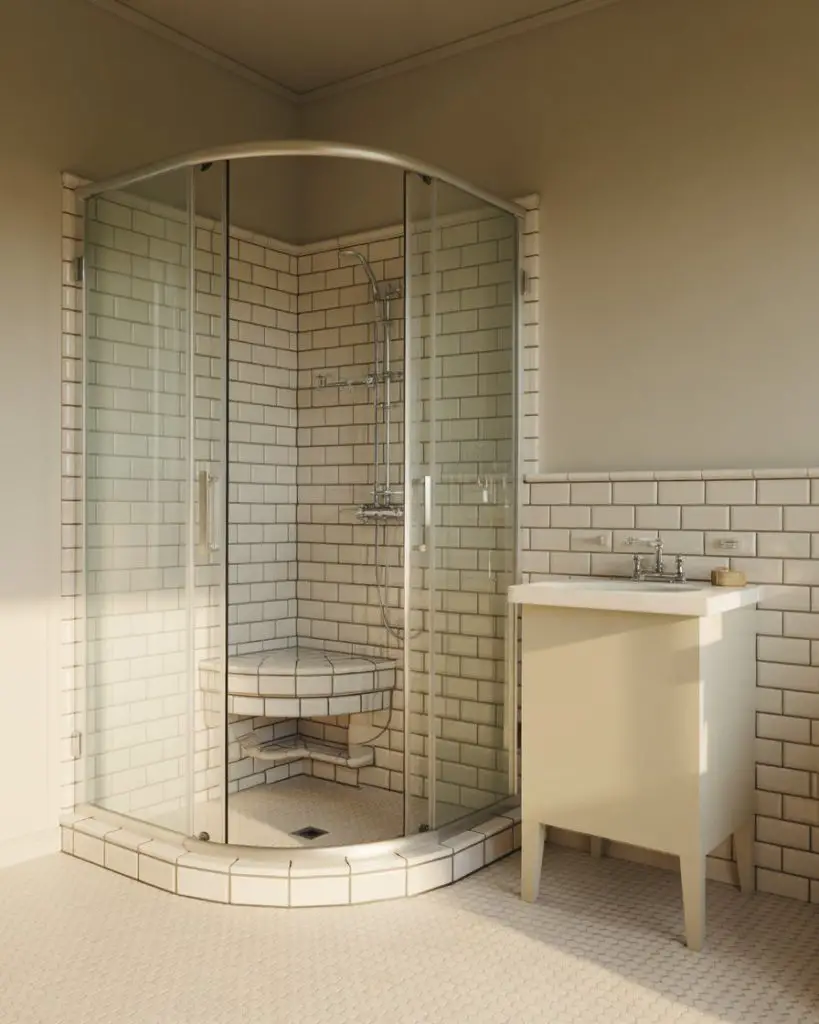
Where this works best is in square or almost-square bathrooms where traditional layouts would create awkward leftover spaces. A bathroom renovation in a 1950s ranch house in Phoenix showed that converting from a standard tub-shower to a corner shower unit opened up enough room to add a double vanity, completely changing the functionality for a couple getting ready simultaneously each morning. The challenge is finding quality corner shower kits—many big-box versions feel flimsy and cheap. Expect to spend $800-1,500 for a well-made unit with proper door mechanisms and tempered glass.
18. Floating Vanity Illusion
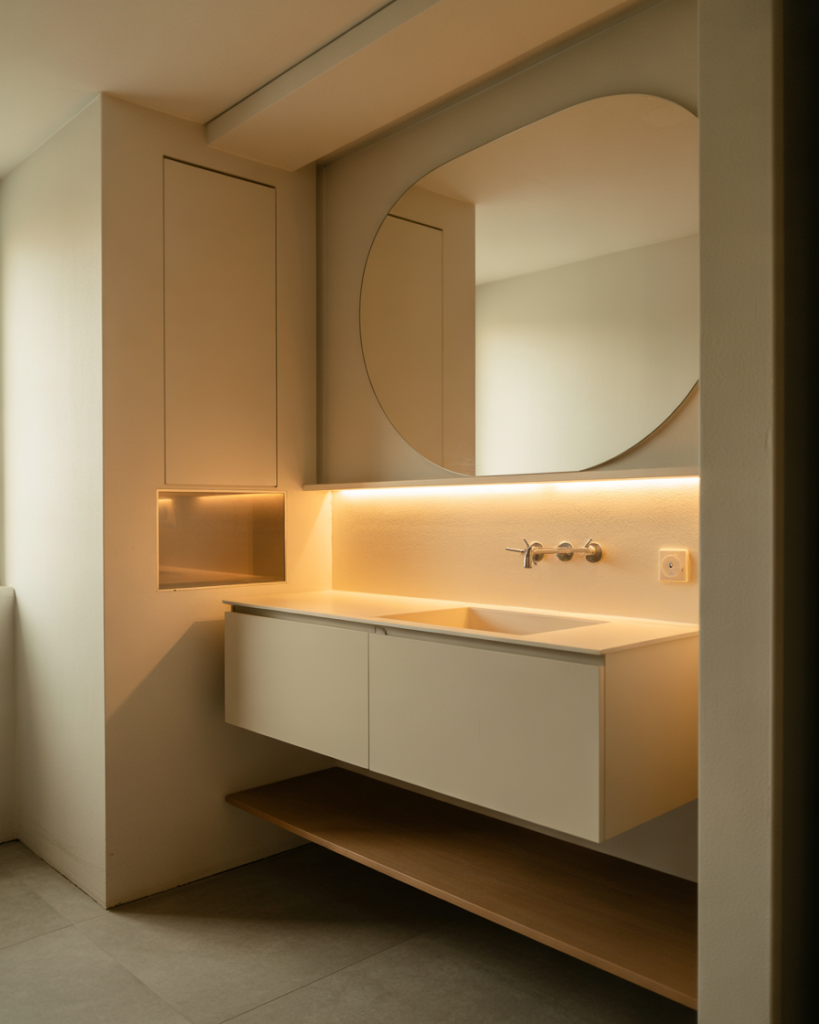
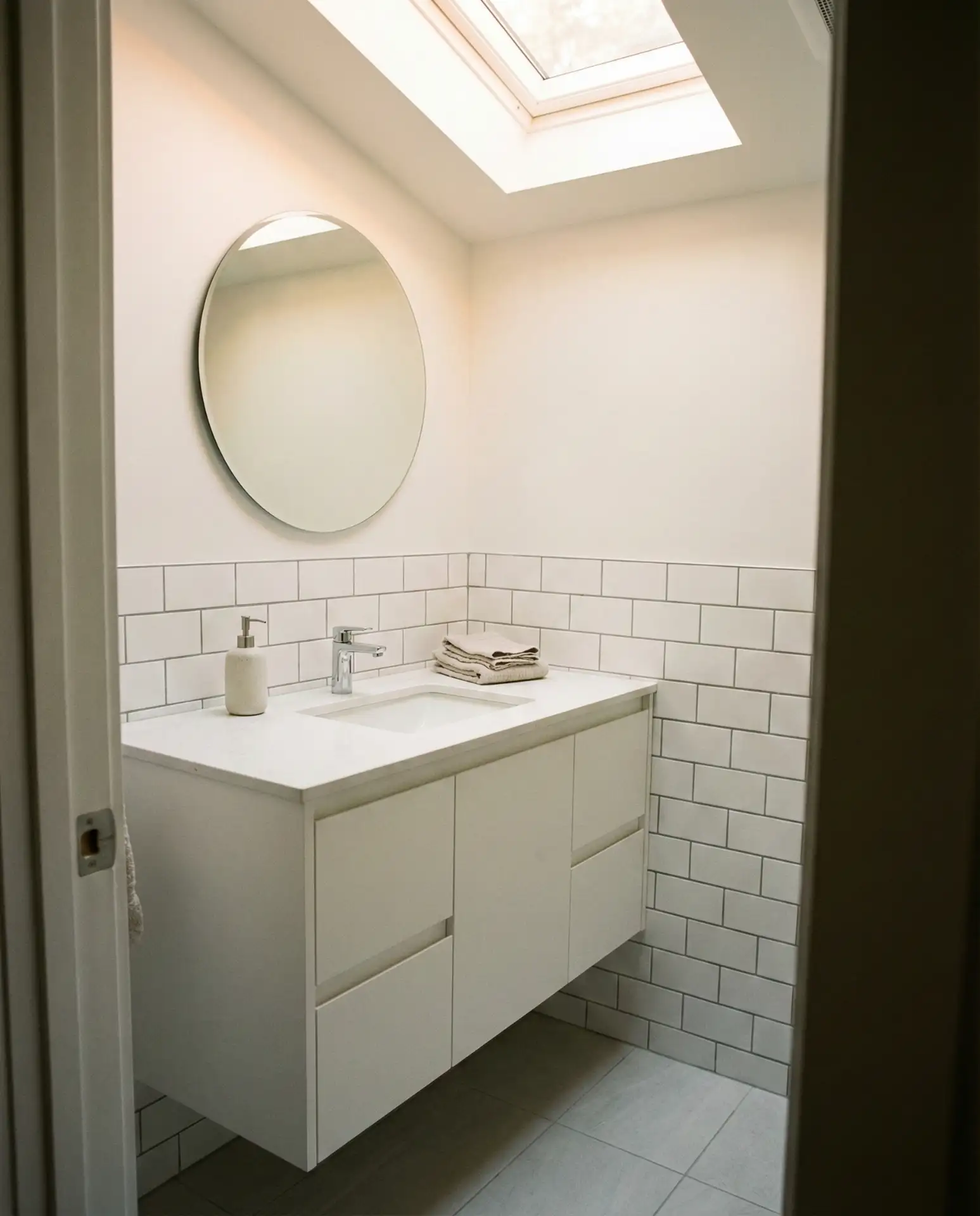
Wall-mounted vanities create the optical illusion of more floor space by revealing the full footprint of the room. This modern small bathroom design staple allows for easier cleaning underneath while making the room feel less furniture-heavy. The floating effect works especially well when paired with under-cabinet lighting, which creates a soft glow and emphasizes the hovering quality. Even in a 5-foot-wide bathroom, this single choice can make the space feel dramatically more open. 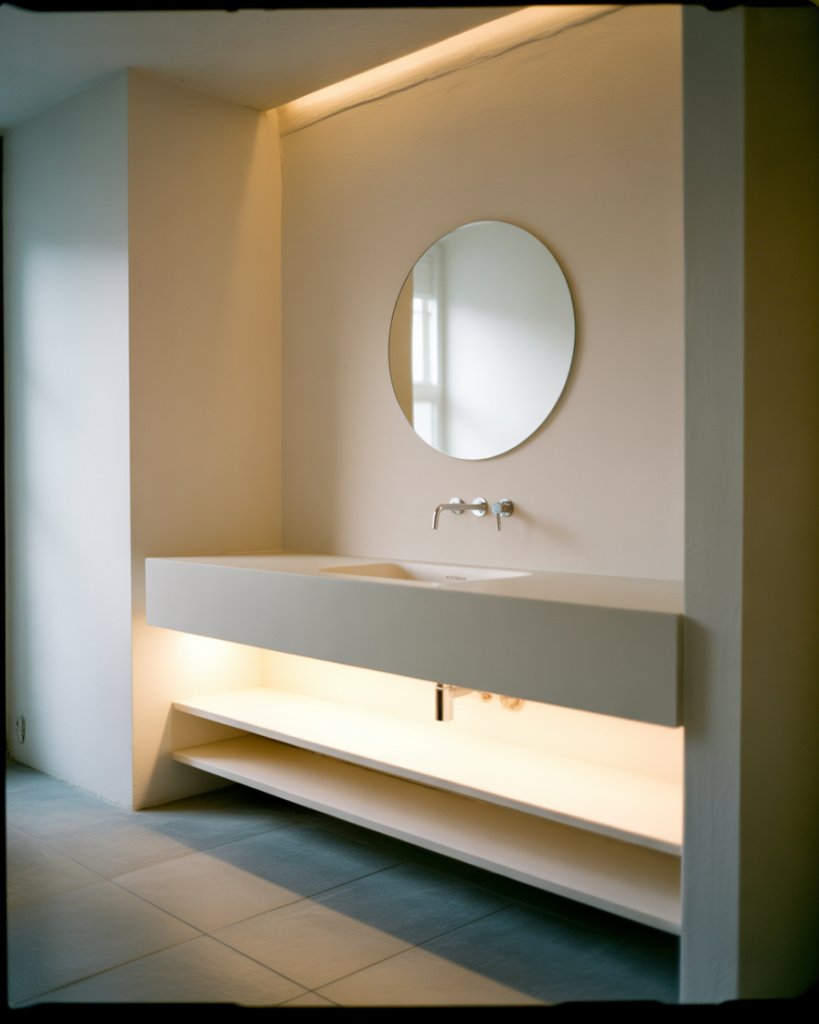
A practical insight from a contractor in Denver: floating vanities require solid wall anchoring, which means you can’t just attach them to drywall. Proper installation involves locating studs or installing blocking between studs, adding about $150-300 to professional installation costs. However, the investment pays off in both aesthetics and function. One homeowner reported that having visible floor space underneath makes small-bathroom cleaning routines significantly faster, and the under-lighting serves as a perfect nightlight for midnight bathroom visits without harsh overhead fixtures.
19. Two-Tone Color Blocking
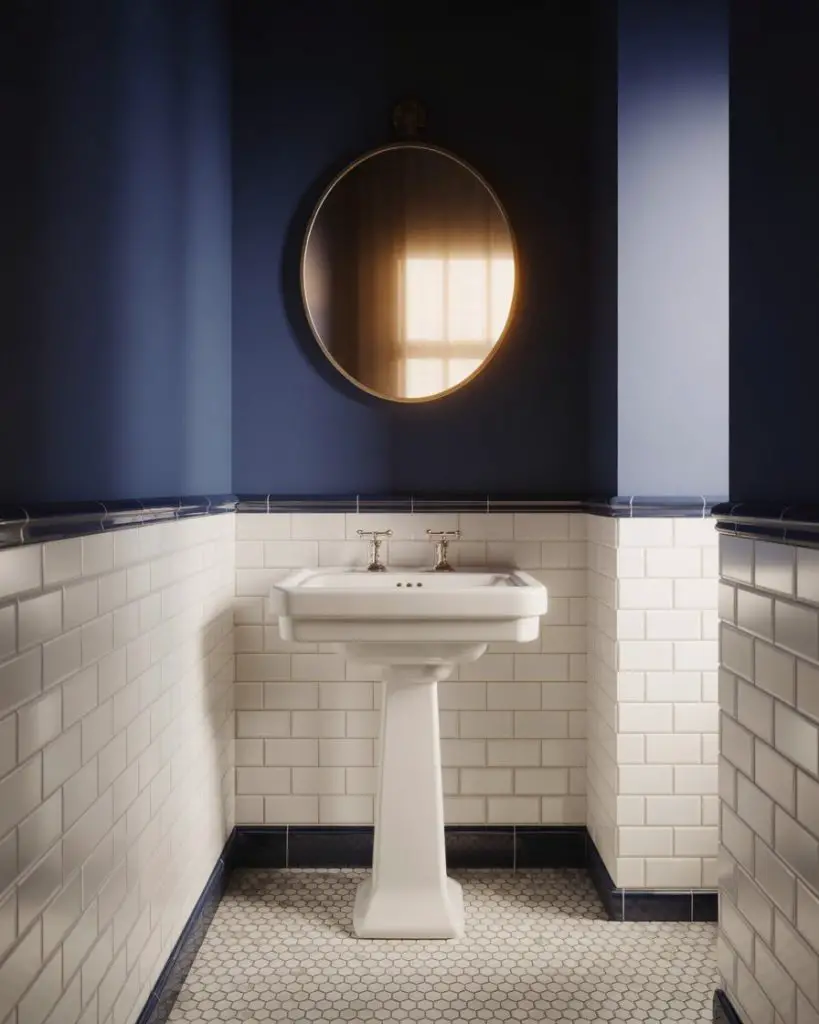
Dividing walls horizontally with two colors or materials creates visual interest and can actually manipulate perceived proportions. A darker lower half with lighter upper walls draws the eye upward, making ceilings feel higher. This technique works with paint, tile, or a combination—think white subway tile on the bottom half with soft gray paint above, separated by a thin trim piece. The modern take on this classic wainscoting approach feels fresh when executed with contemporary color palettes. 
American lifestyle context matters here—this look has been embraced particularly in coastal regions from Maine to California, where the nautical color combinations feel at home. In the Midwest and South, warmer two-tone combinations like sage green and cream are gaining traction. Budget-wise, paint is the most affordable way to achieve this look, but tile creates a more permanent and moisture-resistant solution in high-splash areas. A common mistake is placing the division line too high or too low; designers typically recommend 32-36 inches from the floor, roughly one-third of the wall height in standard-ceiling bathrooms.
20. Skylight Brightness
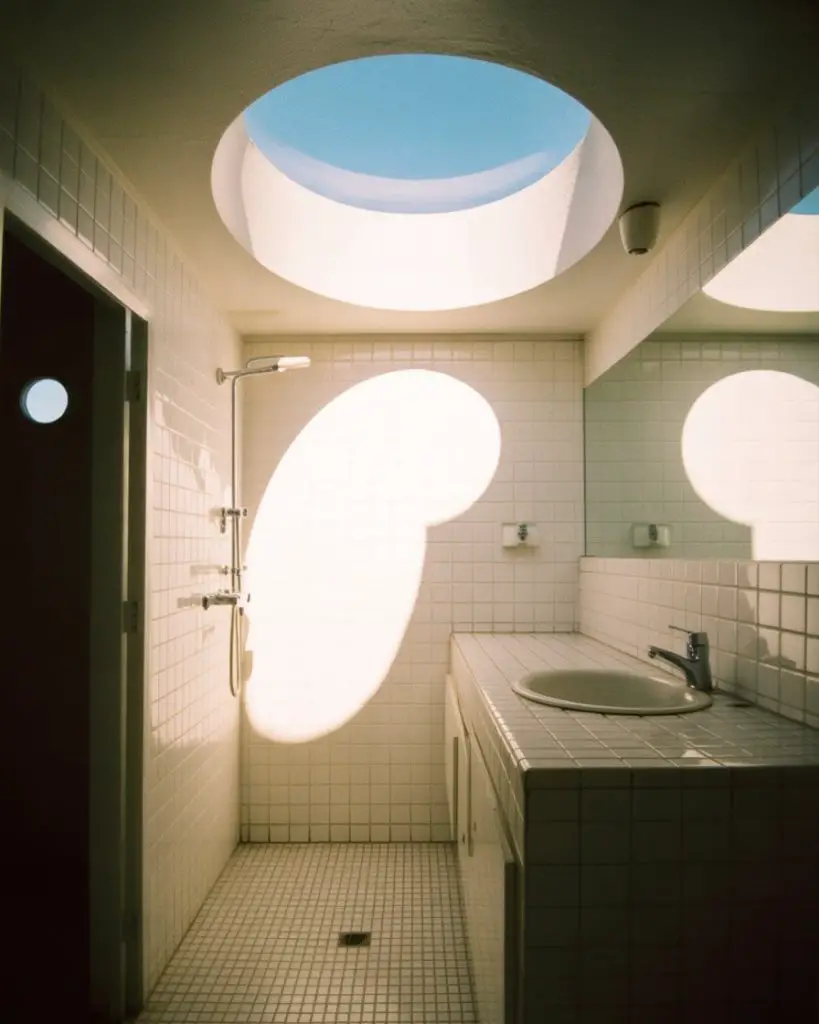
For bathrooms in the center of homes or those with limited wall space for windows, skylights provide natural light without sacrificing privacy. Modern tubular skylights can bring daylight into even small spaces, connecting the room to the outside world and reducing reliance on artificial lighting. This is particularly valuable in bath spaces where good lighting is essential for grooming tasks. The psychological benefit of natural light in a windowless bathroom can’t be overstated—it transforms the space from cave-like to connected.
Expert commentary from a residential builder in Colorado suggests that tubular skylights are one of the most cost-effective natural light solutions for small bathrooms, typically costing $500-1,000 installed versus $2,000-4,000 for traditional skylights. They’re particularly effective in single-story homes or top-floor bathrooms where roof access is straightforward. The main consideration is climate—in very hot regions, you’ll want models with built-in heat barriers to prevent the skylight from becoming a solar oven. In colder climates, ensure proper insulation around the installation to prevent heat loss and condensation.
21. Mixed Metal Moments
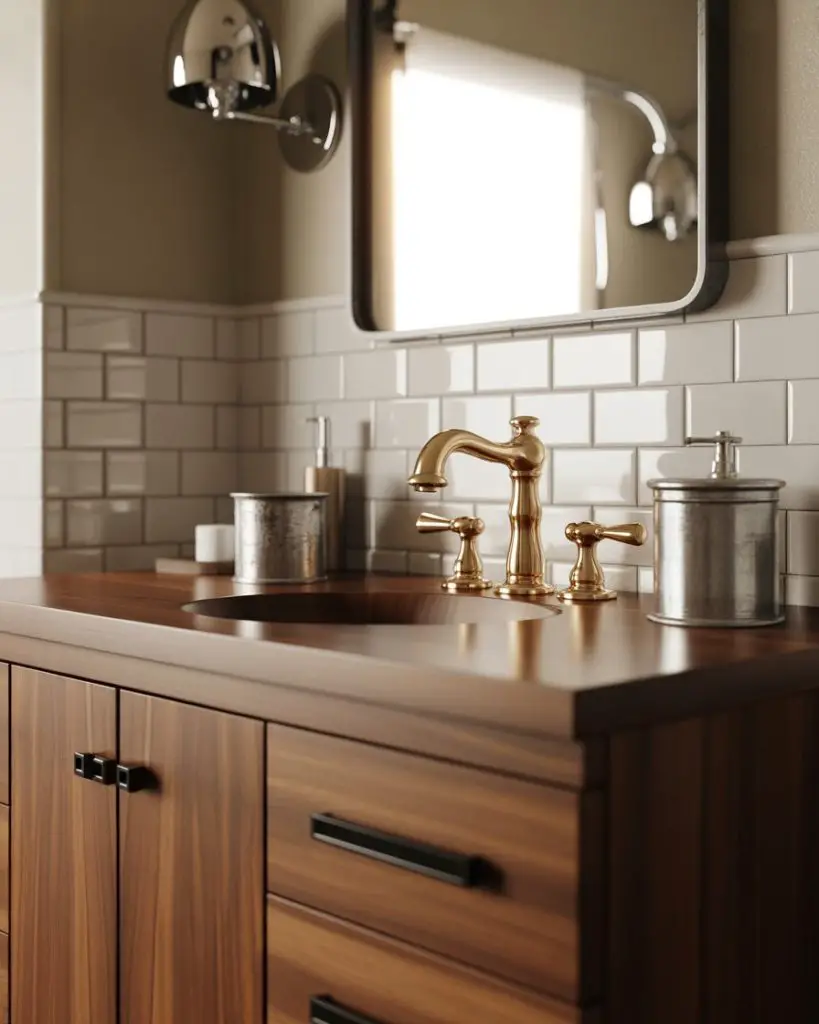
The old rule of matching all metals is dead—2026 embraces intentional mixing of finishes for a collected, layered look. Brushed brass faucets with matte black cabinet hardware, chrome shower fixtures with copper accent mirrors, or aged bronze towel bars with polished nickel lighting create depth and personality. This approach works particularly well in small spaces because it prevents the room from feeling too matchy-matchy or showroom-generic. The key is choosing metals that share similar undertones and distributing them evenly throughout the space. 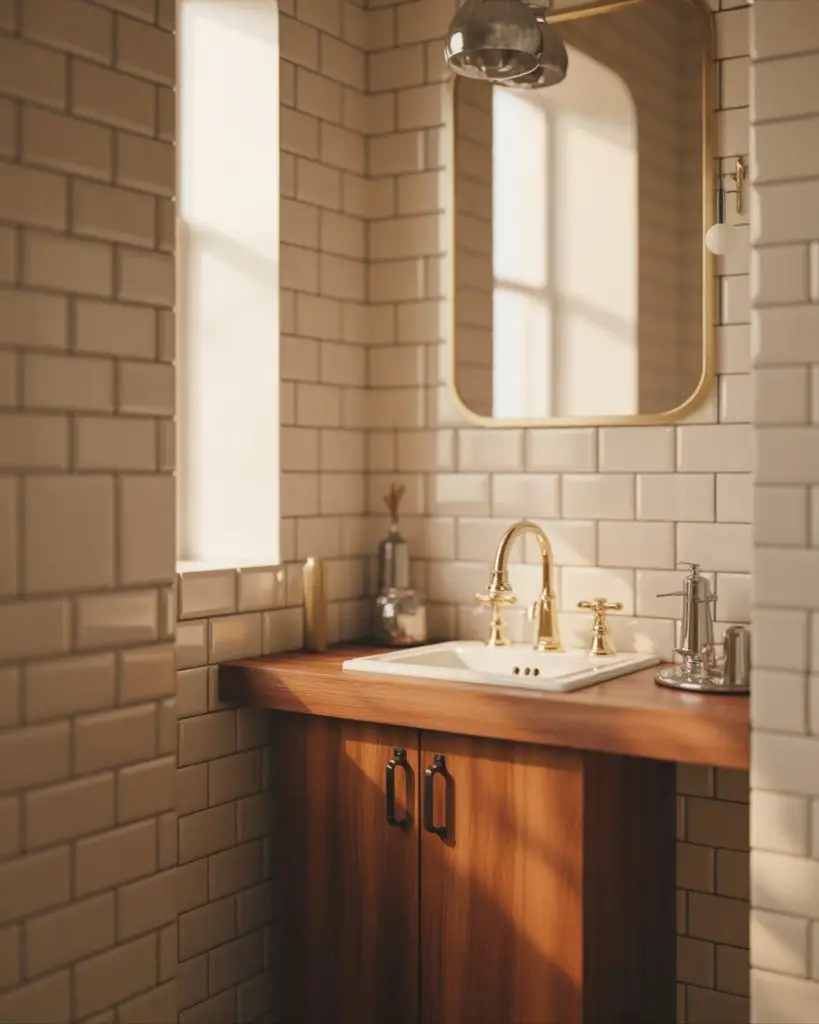
A budget angle to consider: mixing metals strategically allows you to splurge on one statement piece while using more affordable fixtures elsewhere. You might invest in a stunning brass faucet but use budget-friendly black knobs and chrome towel bars, creating a high-end look without the high-end price tag across every element. One homeowner in Philadelphia scored a vintage brass mirror at a flea market for $45 and built her entire bathroom’s metal palette around it, mixing in affordable new pieces that complemented the antique brass tone. The total hardware and fixture cost came in under $600 but looks like a designer’s carefully curated selection.
22. Wet Room Simplicity

Fully waterproofed wet rooms eliminate the need for shower enclosures entirely, creating seamless small bathroom spaces where water drains through a floor-level grate. This European inspiration has found footing in American design, particularly in urban lofts and modern homes. The barrier-free approach makes tiny bathrooms feel more expansive because there are no visual divisions—just one continuous waterproof surface from wall to wall. When executed well, wet rooms feel like a luxury spa experience despite their compact footprint. 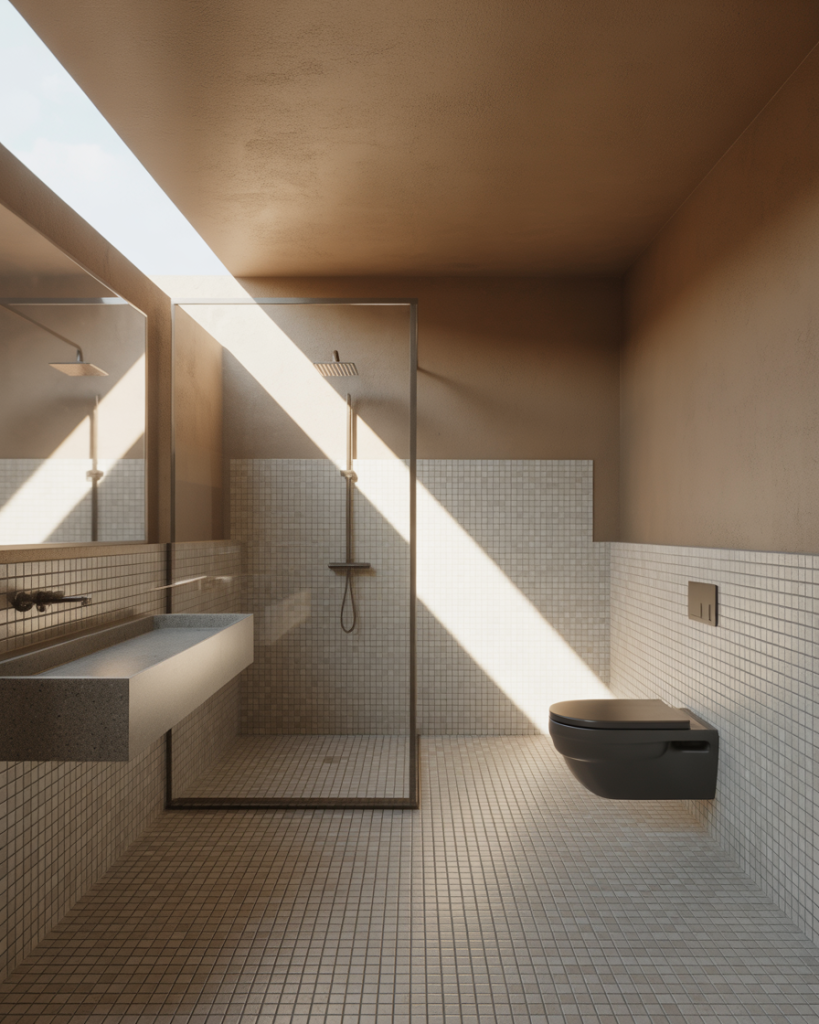
The biggest consideration with wet rooms is proper waterproofing and drainage—this isn’t a DIY project unless you have professional experience. A poorly installed wet room will leak into the spaces below and create thousands in damage. Professional wet room installation in a small bathroom typically runs $8,000-12,000, significantly more than a standard shower install, but the cost includes comprehensive waterproofing membranes, proper floor sloping, and quality drainage systems. In return, you get a bathroom that’s easier to clean, fully accessible, and visually stunning. This works best in homes where a minor water splash won’t damage adjacent spaces—think concrete or tile floors in the hallway rather than hardwood.
23. Personalized Gallery Wall
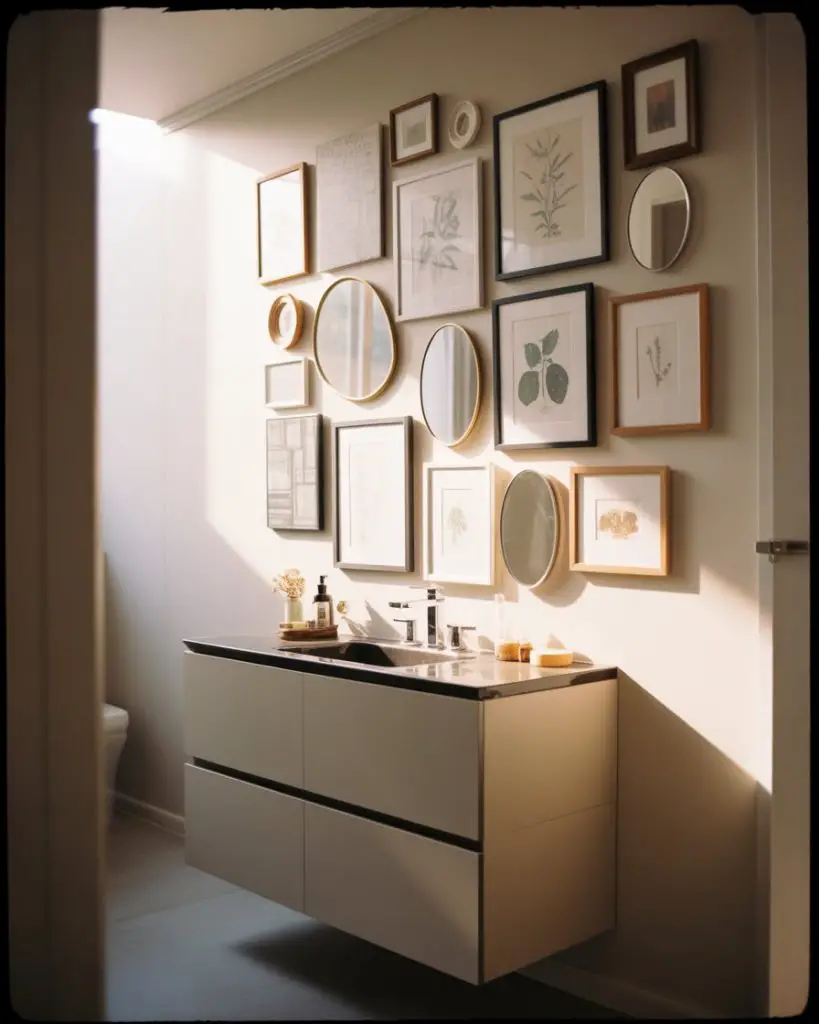
Don’t discount artwork in small bathrooms—a carefully curated gallery wall adds personality and visual height without taking up physical space. This ideas 2026 approach mixes framed prints, small mirrors, and even floating shelves with tiny objects into a cohesive display that reflects the homeowner’s style. The bathroom becomes more than a utilitarian space; it’s a room that tells a story. Choose moisture-resistant frames and artwork, and position the gallery on a wall away from direct shower spray. 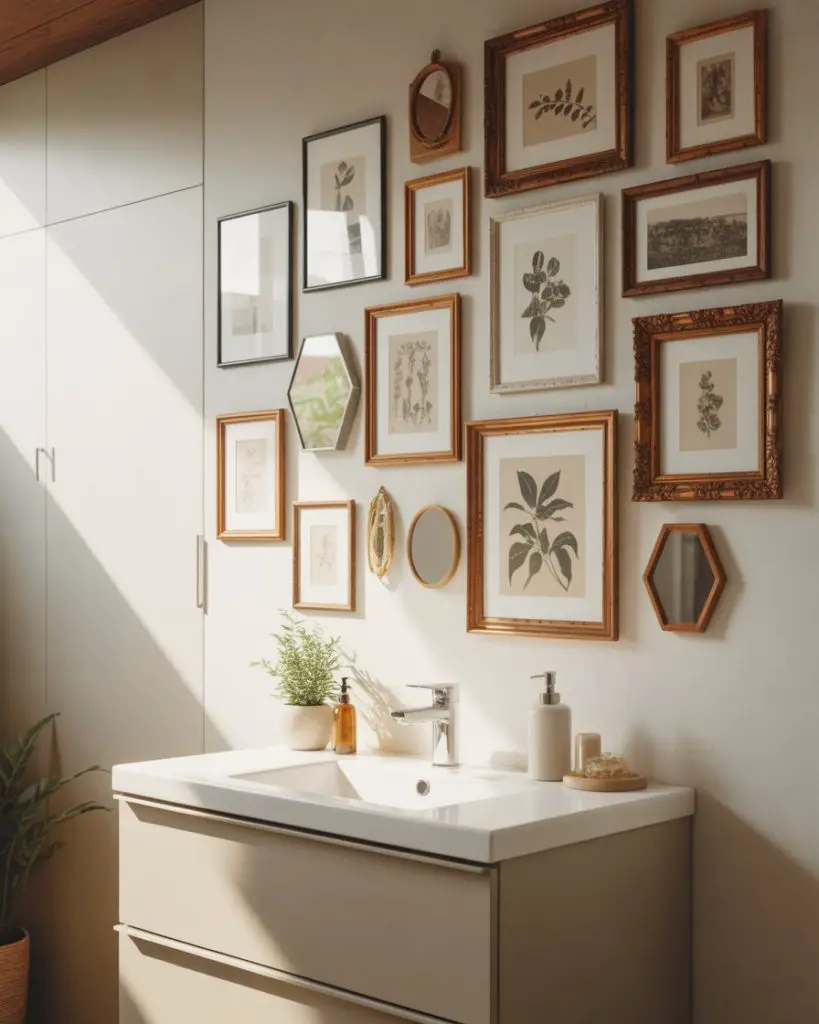
Real homeowner behavior shows that people who successfully implement gallery walls in bathrooms tend to change them seasonally, swapping out prints and rearranging elements to keep the space feeling fresh. A graphic designer in Portland treats her bathroom gallery like a rotating exhibition, featuring her own work alongside vintage botanical prints and photos from travels. She uses command strips rather than nails, making swaps easy and damage-free for her rental apartment. The entire collection cost less than $200 to assemble over two years, proving that personalization doesn’t require a big budget—just intention and patience to curate pieces that truly resonate.
Conclusion
Small bathrooms in 2026 are proving that limitations breed creativity. Whether you’re drawn to the calm of Japandi, the boldness of monochrome, or the warmth of vintage-modern blends, there’s a design approach that will make your compact bathroom work harder and look better. Drop a comment below and let us know which ideas you’re planning to try—or share your own small bathroom solutions that have made a difference in your home.