Small laundry rooms have become one of the most searched home design topics on Pinterest in 2026, especially among American homeowners looking to maximize every square inch of their homes. Whether you’re dealing with a narrow closet, a corner tucked under the stairs, or a tight utility space, the right design choices can transform even the smallest laundry area into a functional and beautiful part of your home. This guide brings together 23 fresh ideas that blend smart storage, stylish finishes, and practical layouts to help you create a laundry room that works as hard as you do. From stackable solutions to clever sink placements, these ideas are designed to inspire your next home project.
1. Stackable Washer and Dryer with Open Shelving
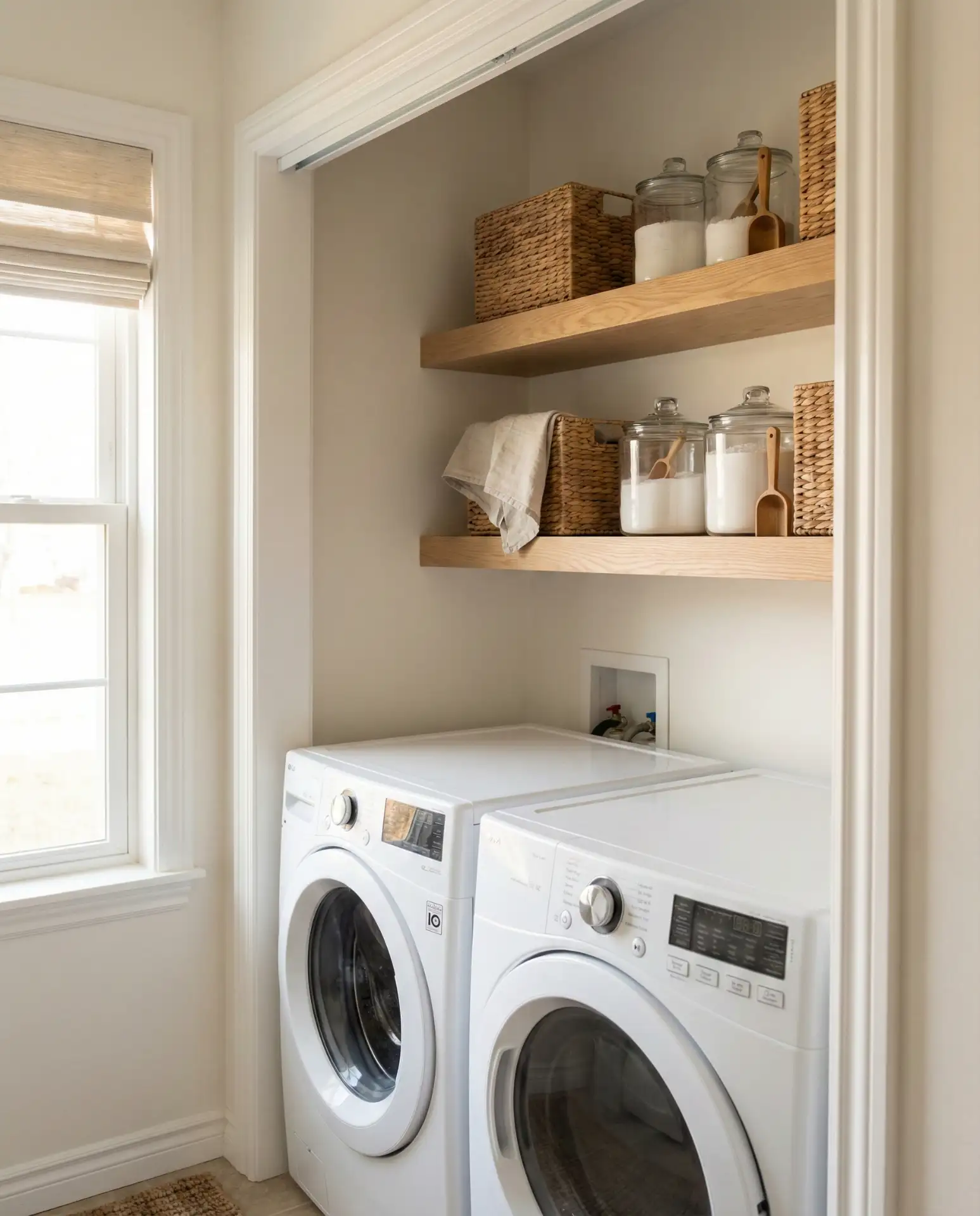
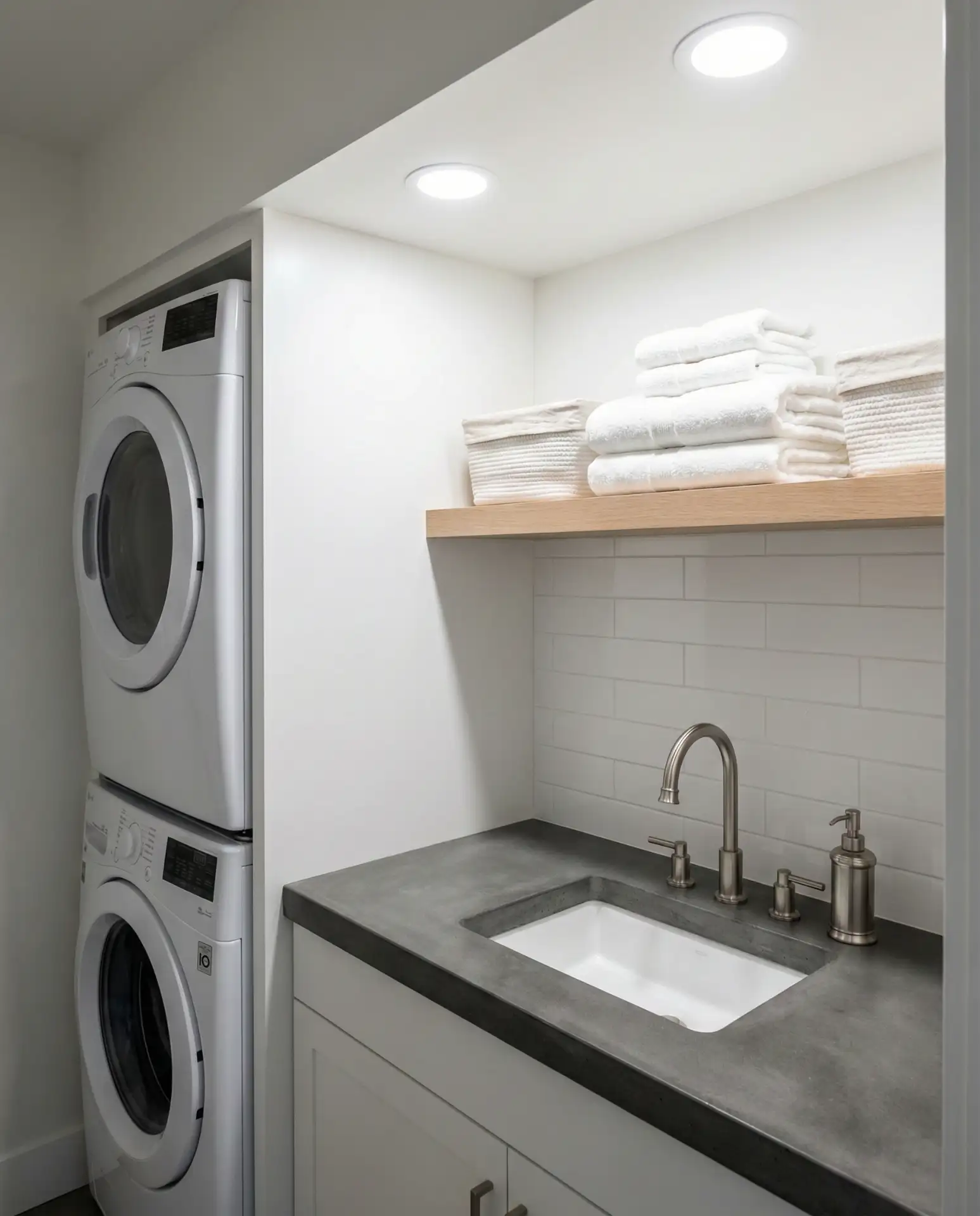
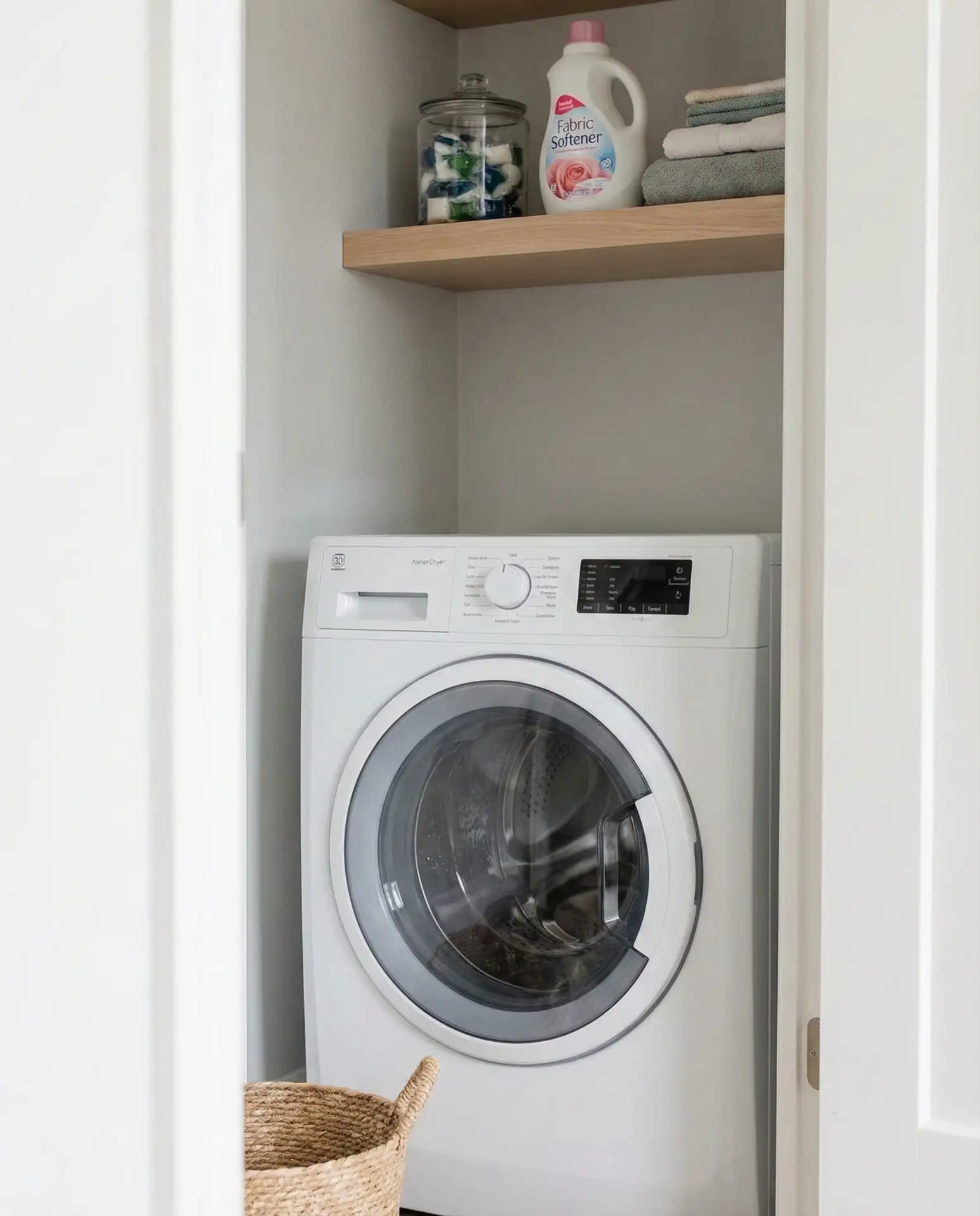
A stackable washer and dryer configuration is the gold standard for small laundry rooms, freeing up valuable floor space while keeping everything within reach. Pair this vertical setup with shelves mounted directly above or beside the units to store detergent, fabric softener, and cleaning supplies in clear bins or woven baskets. This approach works especially well in narrow closets or alcoves where width is limited but ceiling height allows for creativity. The key is keeping frequently used items at eye level and storing seasonal or bulk products higher up.
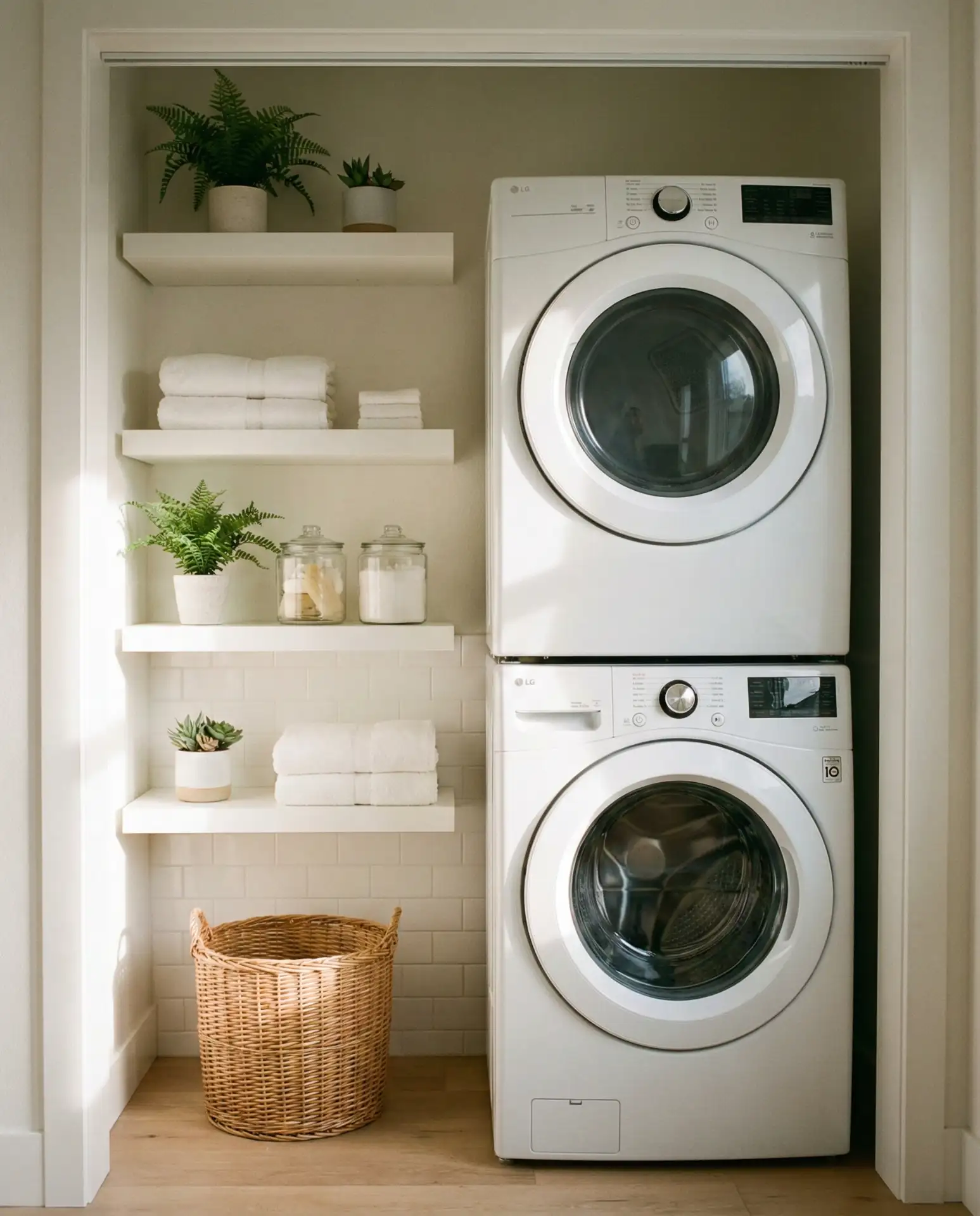
In older American homes, especially in the Northeast and Midwest, closet conversions are common because dedicated laundry rooms weren’t part of the original floor plan. This setup respects those constraints while adding modern functionality. Consider installing a pull-out step stool that tucks beside the dryer for easier access to top controls and high shelves. A small tension rod across the top shelf can serve as a makeshift drying rack for delicates.
2. Utility Sink Beside Stackable Units
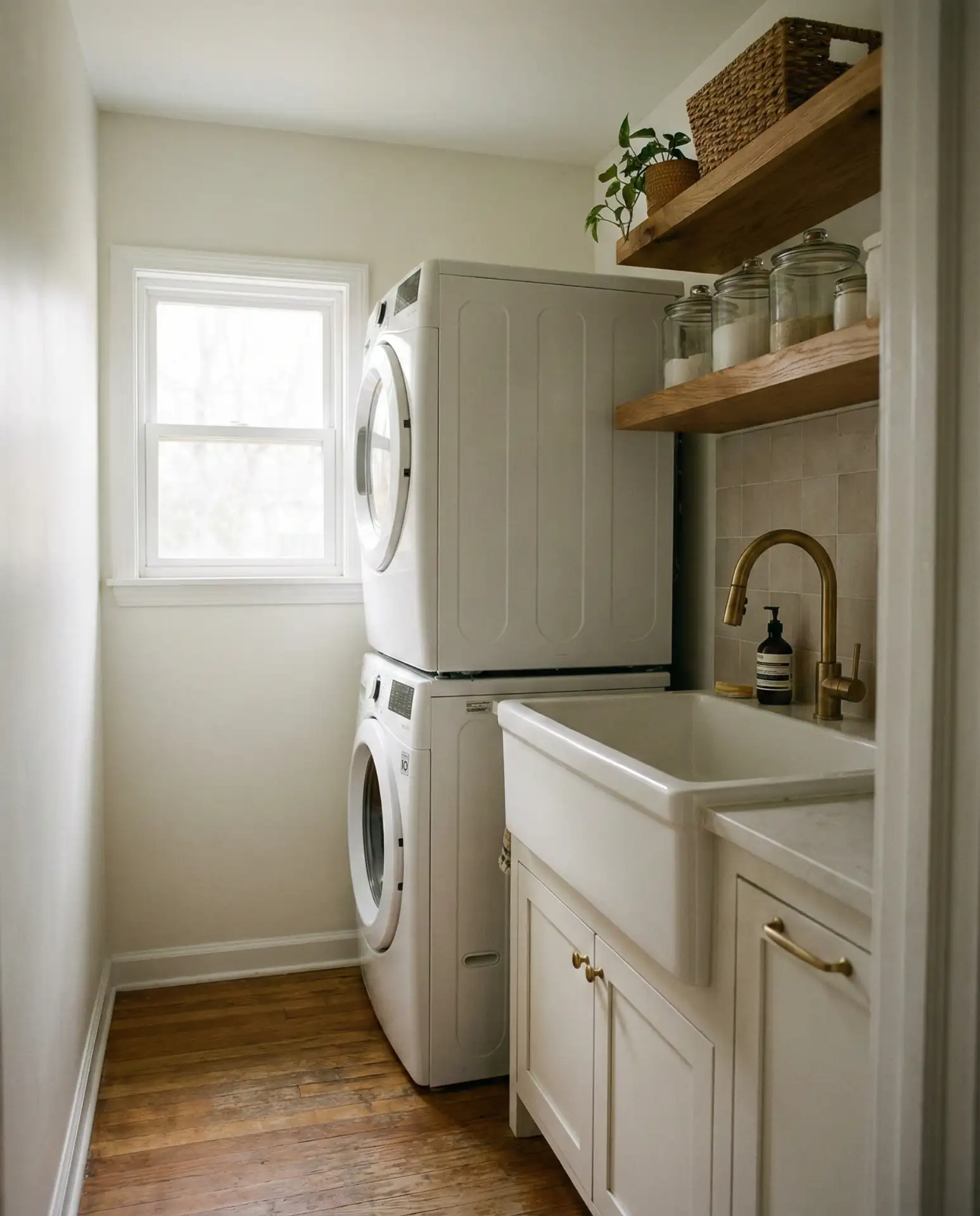
Adding a utility sink next to your stackable machines creates a dedicated spot for hand-washing, pre-treating stains, and rinsing muddy shoes. Even in tight spaces, a compact 18-inch sink can fit snugly beside a vertical washer-dryer stack, often with just enough room for a pull-out faucet. This layout is incredibly popular in homes with young children or outdoor-loving families who need a place to clean up before items go into the wash. Choose a deep basin to handle larger items like pet beds or gardening tools.
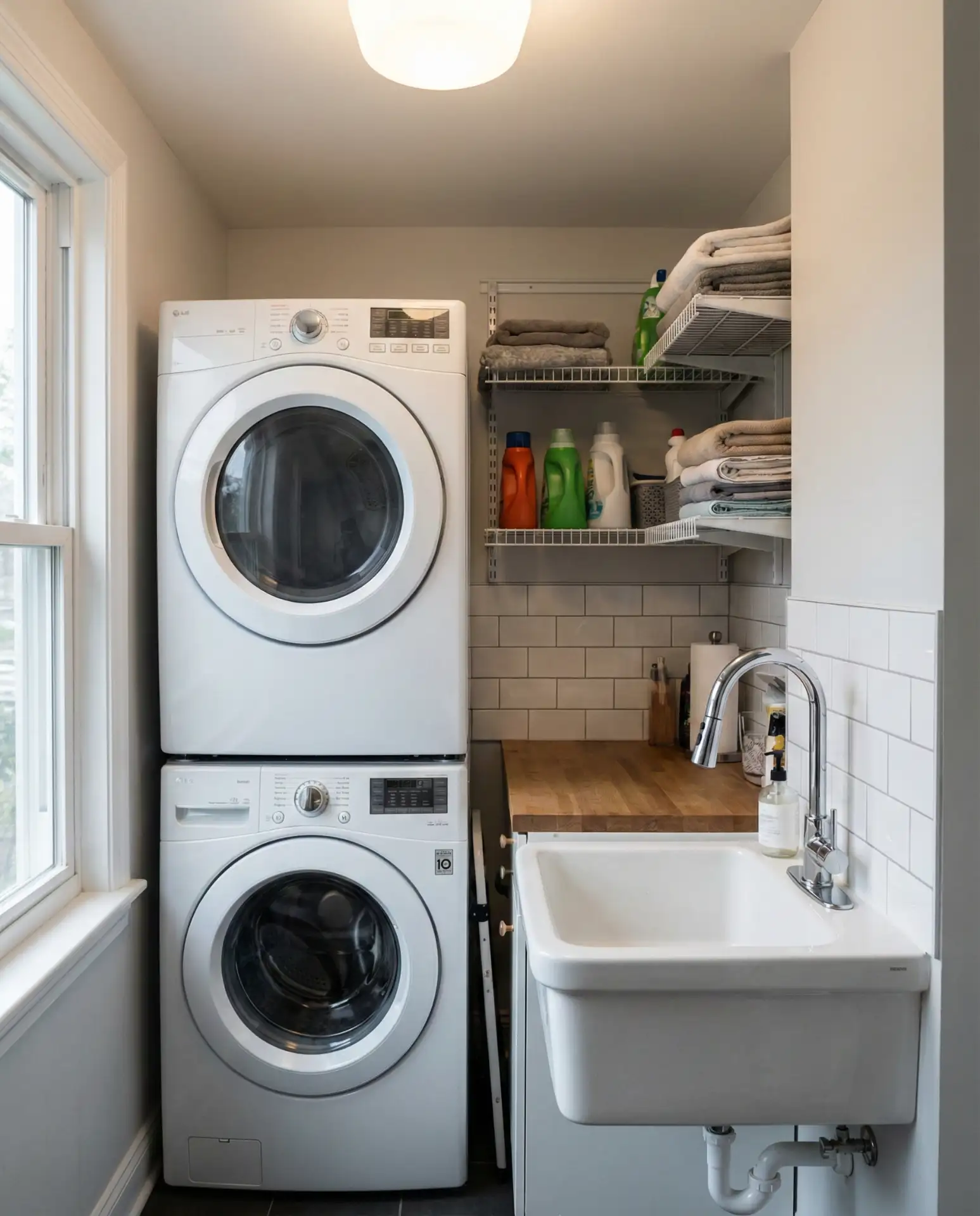
A common mistake is installing a sink that’s too shallow, which leads to splashing and doesn’t accommodate bulky items. Opt for a basin at least 10 inches deep. Budget-conscious homeowners can find quality stainless steel utility sinks starting around $80 at big-box stores, with installation materials adding another $50 to $100 if you’re handy with plumbing. The payoff in daily convenience far exceeds the modest investment.
3. Folding Table Over Top-Loading Washer
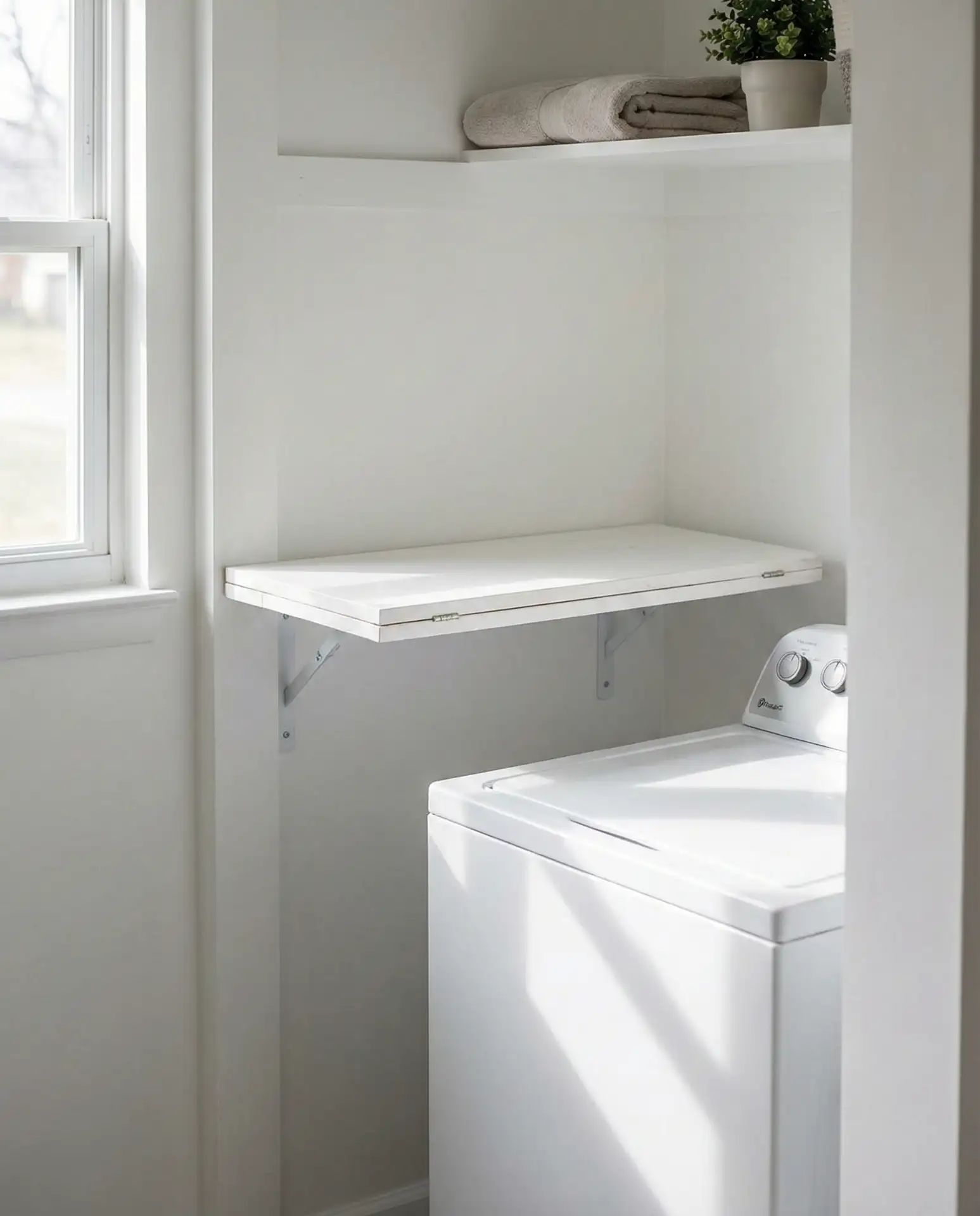
If you’re committed to a top-loading washer but need a folding table, consider a hinged countertop that flips up when you need to sort or fold laundry and drops down when you need to access the washer lid. This clever compromise is ideal for laundry closets or garage setups where permanent counters would block machine access. The table surface can be as simple as a piece of butcher block or laminate attached with heavy-duty piano hinges, creating a work surface that measures 24 to 30 inches deep when extended.
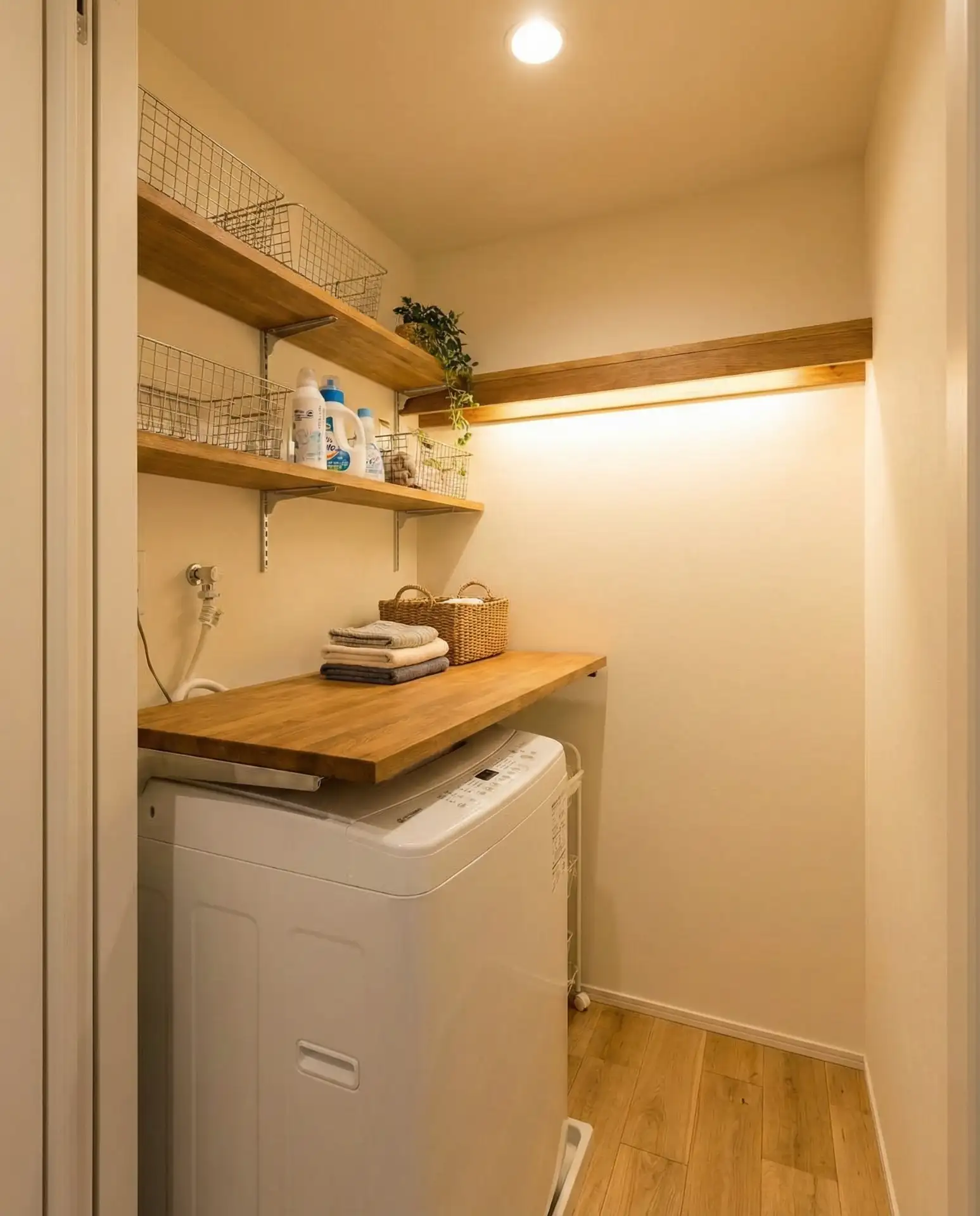
Where it works best is in homes where the laundry area doubles as a mudroom or entryway, giving you a surface for setting down groceries or packages when the washer isn’t in use. Reinforce the hinges with L-brackets underneath to ensure the table can support up to 50 pounds of folded clothes without sagging. A magnetic catch keeps it securely closed when not in use.
4. Raised Washer and Dryer with Storage Drawers
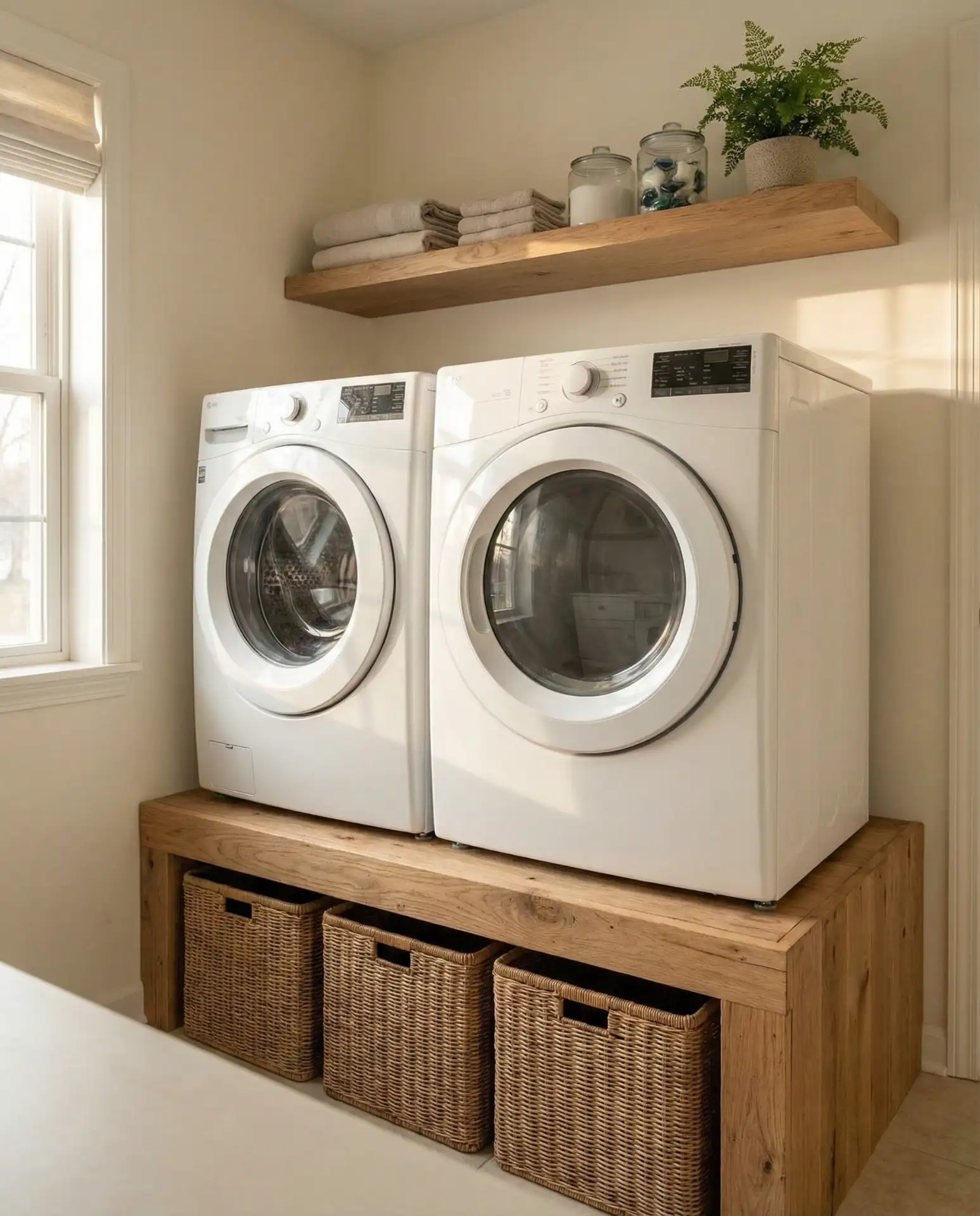
Installing your machines on a raised washer and dryer platform eliminates the need to bend over when loading and unloading, a feature that becomes increasingly valuable as you age or if you have back issues. The space beneath the platform can house pull-out drawers for organizational storage of cleaning supplies, laundry baskets, or even seasonal items like beach towels and winter blankets. Build the platform 12 to 15 inches high using a sturdy frame of 2x4s topped with plywood, ensuring it can support the combined weight of both appliances plus a full load of wet laundry.
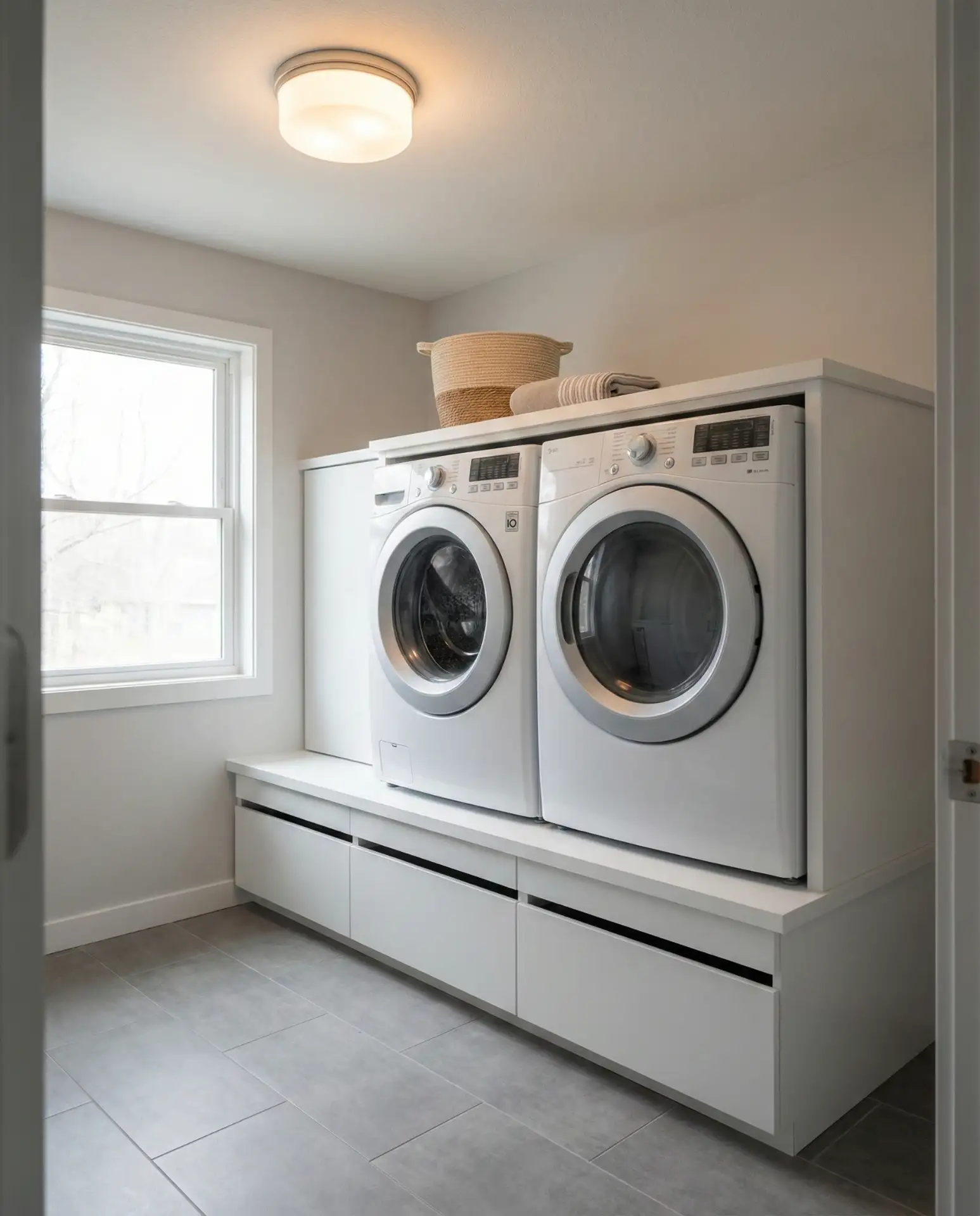
I’ve watched friends retrofit their laundry rooms with these platforms, and the difference in daily comfort is striking. One couple in their fifties told me it transformed laundry day from a chore they dreaded into something almost pleasant. The trick is making sure the platform is perfectly level and secured to wall studs to prevent any wobbling or shifting over time.
5. Blue Accent Wall with White Cabinetry
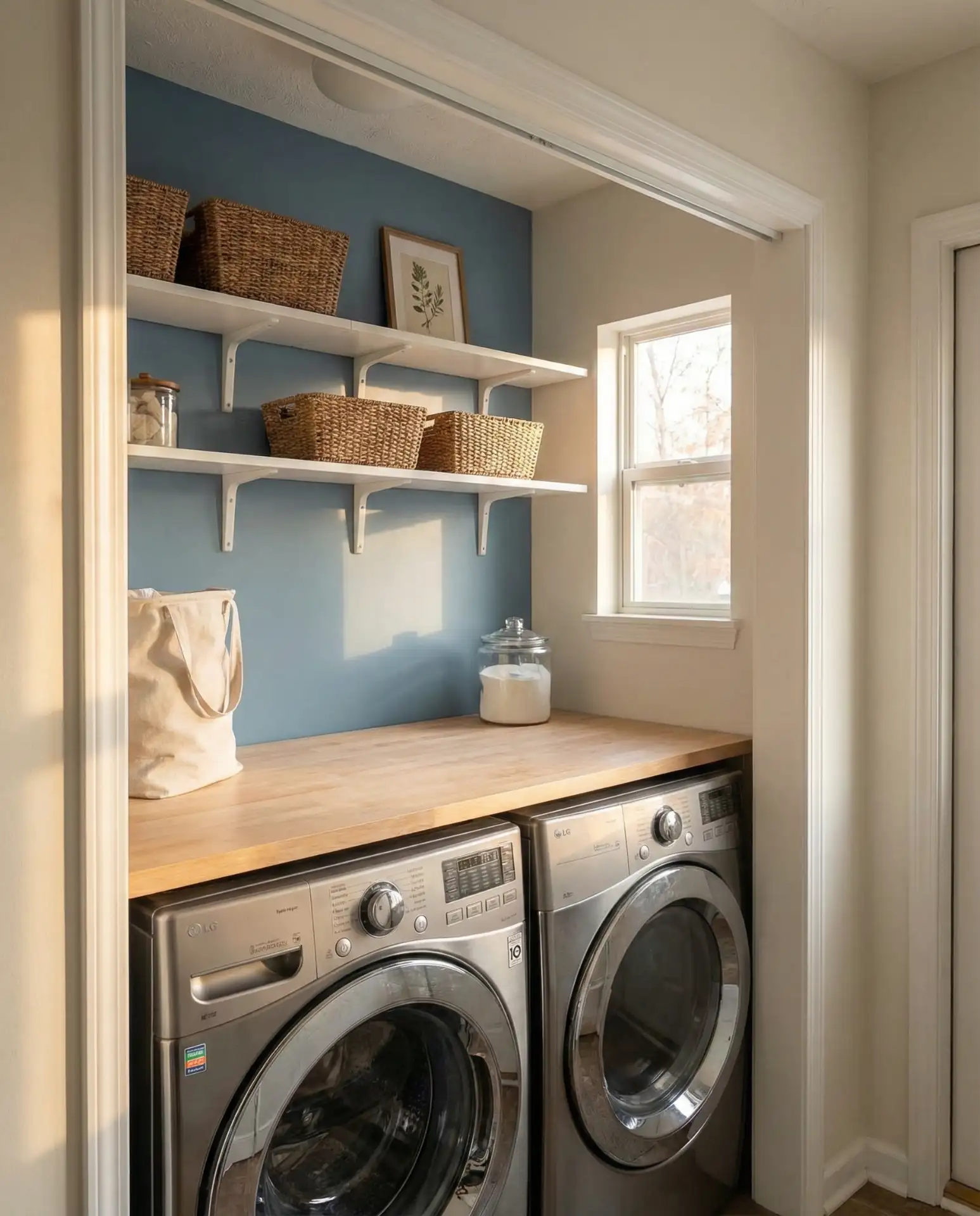
A soft blue accent wall brings unexpected charm to a small laundry room, especially when paired with crisp white upper and lower cabinets. This color combination feels fresh and coastal without being overly themed, making it work equally well in a Midwest ranch house or a Southern cottage. The blue can range from pale powder to deep navy depending on your natural light and personal style, but medium tones like slate or denim tend to photograph beautifully and hide minor scuffs or splashes.
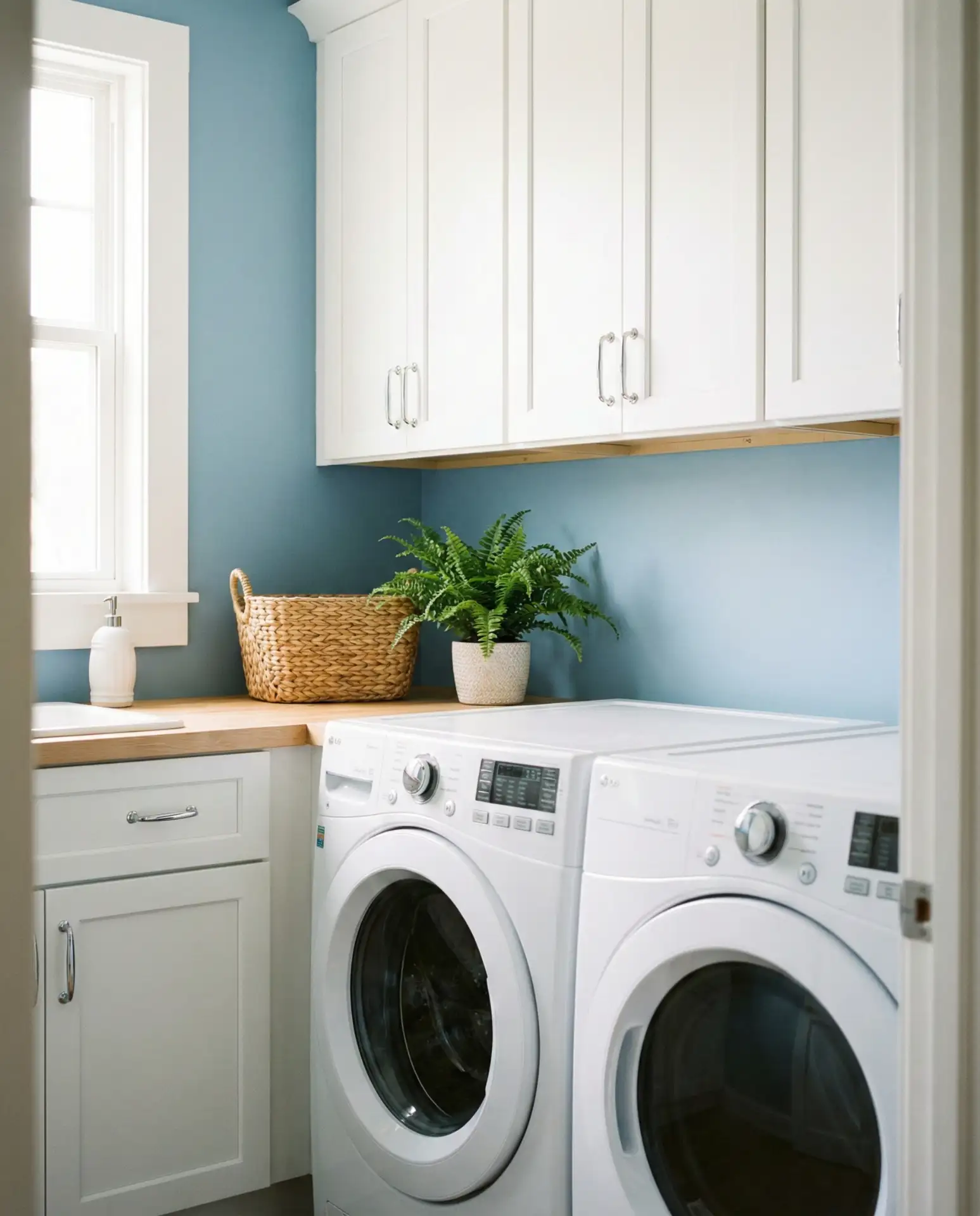
From a design perspective, adding color to a utility space signals that you value every room in your home, not just the public-facing areas. It’s a small psychological boost that makes mundane tasks feel more intentional. Consider extending the blue onto the ceiling if your room is very small—it creates a jewel-box effect that can actually make the space feel more intimate and considered rather than cramped.
6. Stackable Units with Built-In Dog Bath
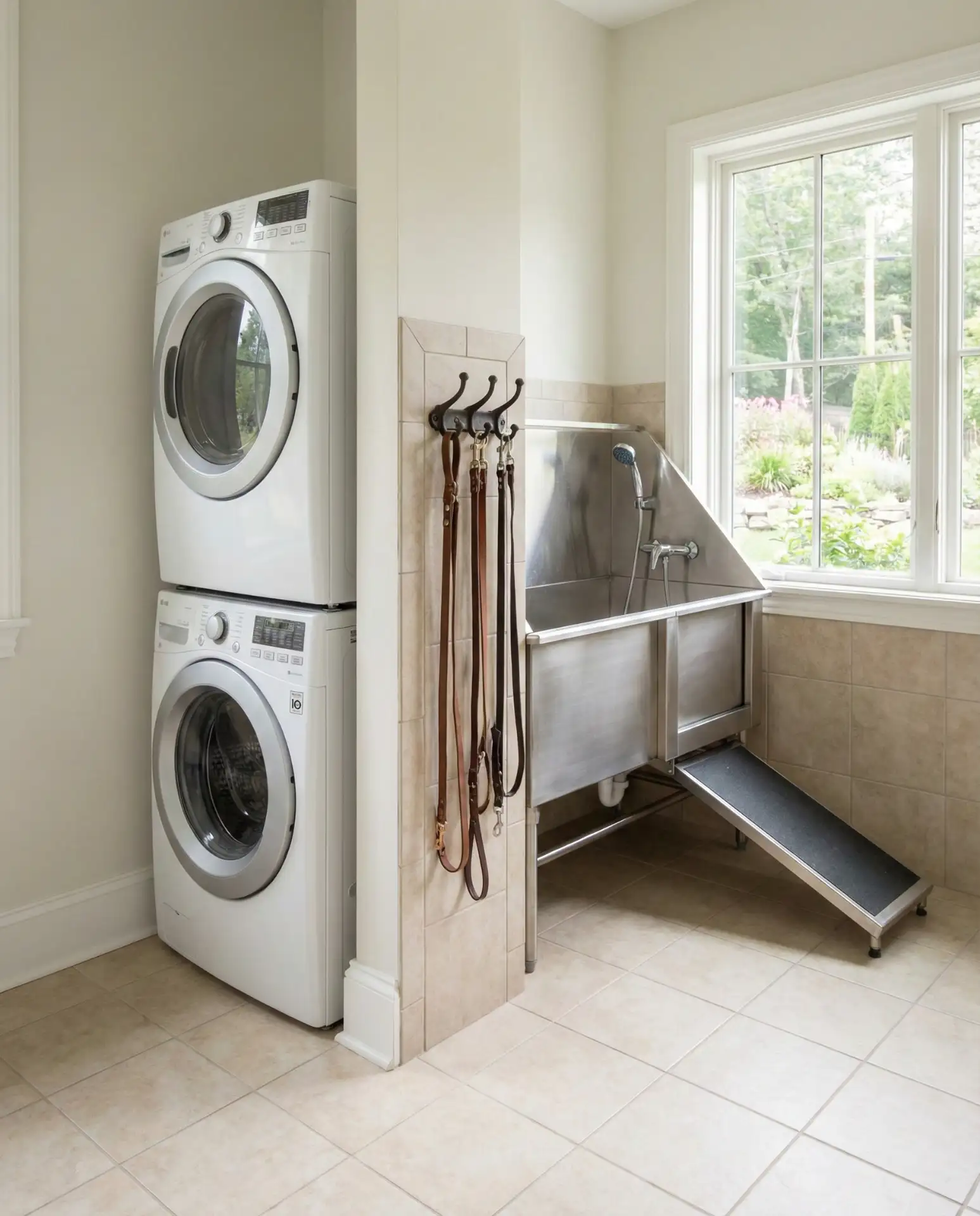
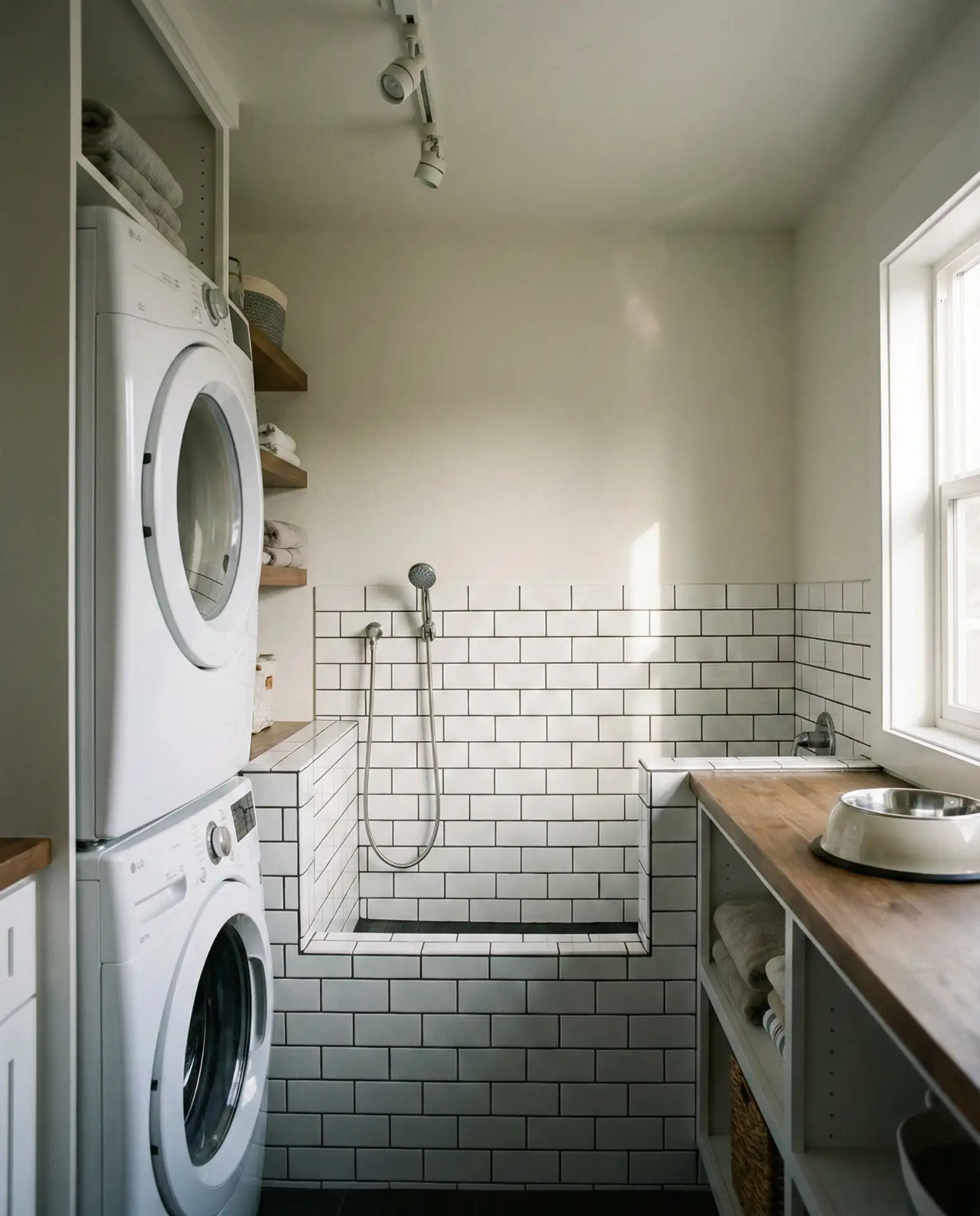
Pet owners are increasingly adding a dedicated dog bath station to their laundry rooms, often positioned beside stackable washer-dryer units to share plumbing lines and drainage. A raised dog washing tub sits at a comfortable height for bathing medium to large dogs without kneeling on the floor, and it doubles as a utility sink for messy household tasks. These tubs typically measure 36 to 48 inches wide and 20 inches deep, with a textured bottom to prevent slipping and a handheld spray nozzle for thorough rinsing.
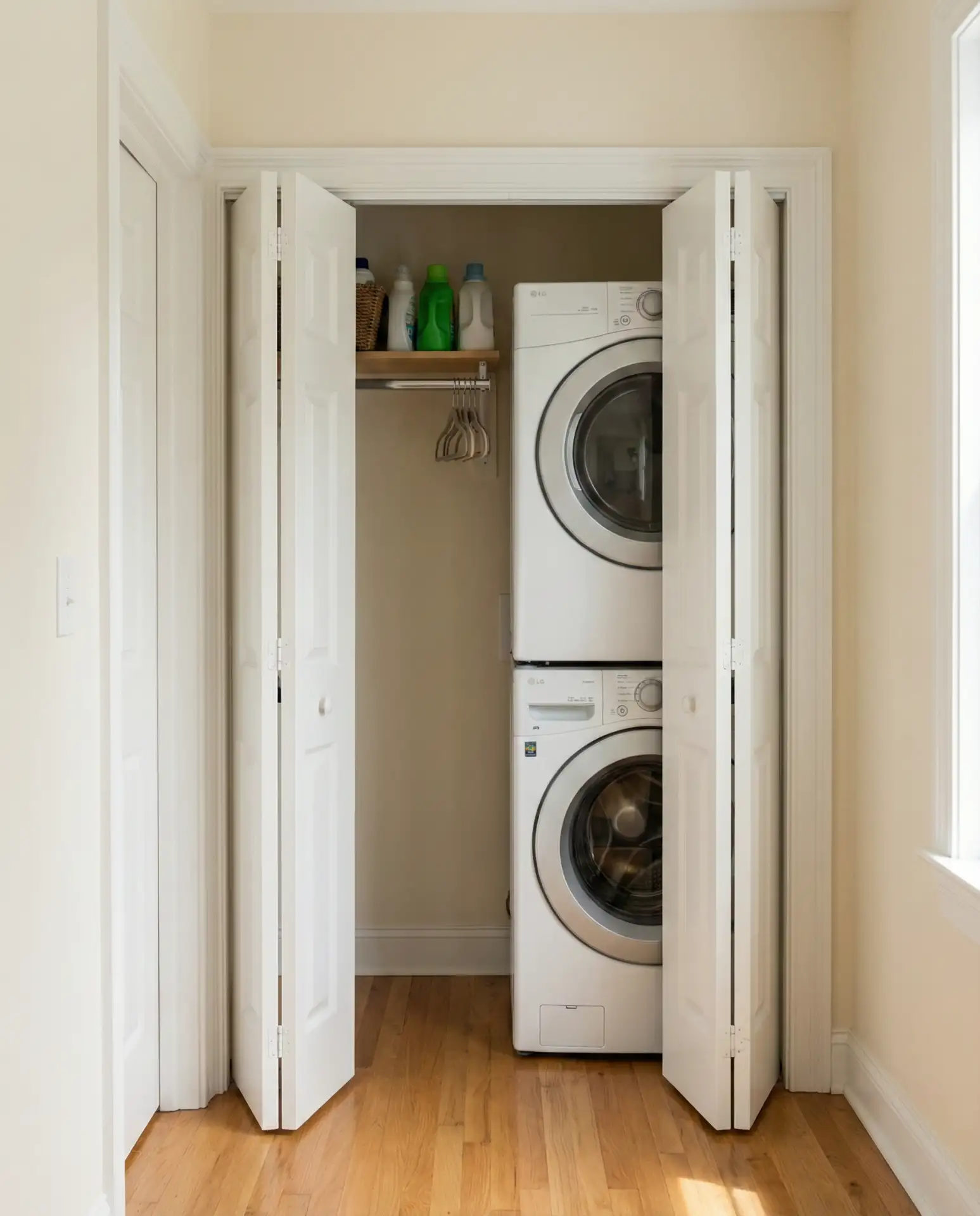
In suburban and rural American homes, particularly in the South and West, where outdoor activities with pets are part of daily life, this setup has become almost standard in new construction. The budget for this feature runs between $800 and $1,500, including the tub, fixtures, and professional installation. The convenience of washing muddy paws or giving baths without bending over a bathtub quickly justifies the cost for most pet families.
7. Closet Conversion with Bifold Doors
Transforming a hall closet into a laundry space is a popular solution in older homes, and bifold doors are ideal because they require less clearance than traditional swinging doors while still providing full access to the interior. A standard 60-inch-wide closet can comfortably fit a stackable washer-dryer combo with a few inches to spare on each side for ventilation. Replace the old closet rod with a tension rod higher up for hanging clothes straight from the dryer, and add a narrow shelf above for detergent and supplies.
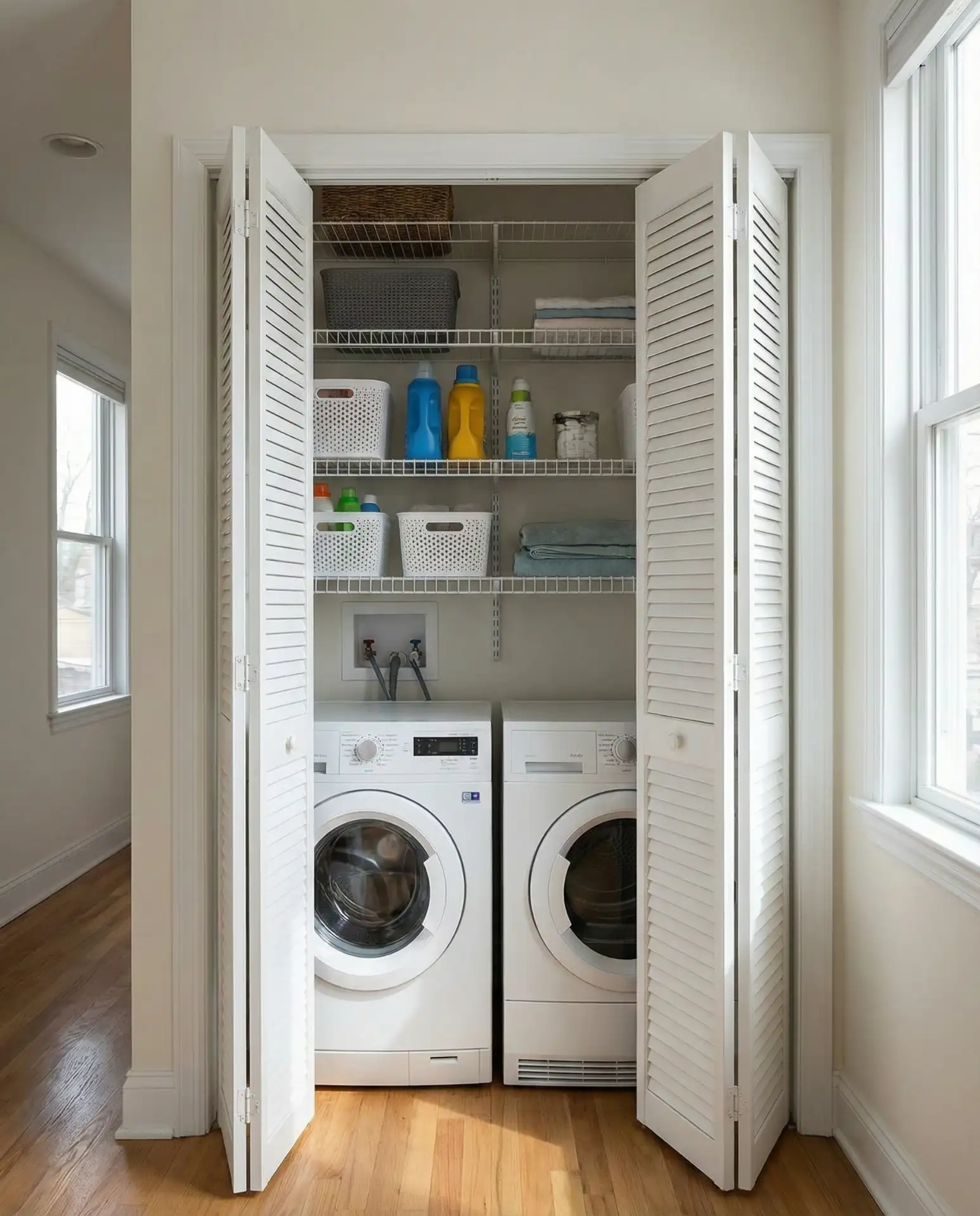
Real homeowner behavior shows that people often keep bifold doors open during the wash cycle to monitor progress and allow better air circulation, then close them when guests arrive. The doors act as both a practical barrier and a visual boundary that helps the laundry area disappear into the background of daily life. Upgrade to painted wood or frosted glass bifolds if you want something more substantial than basic hollow-core options.
8. Wallpaper Feature Wall Behind Machines
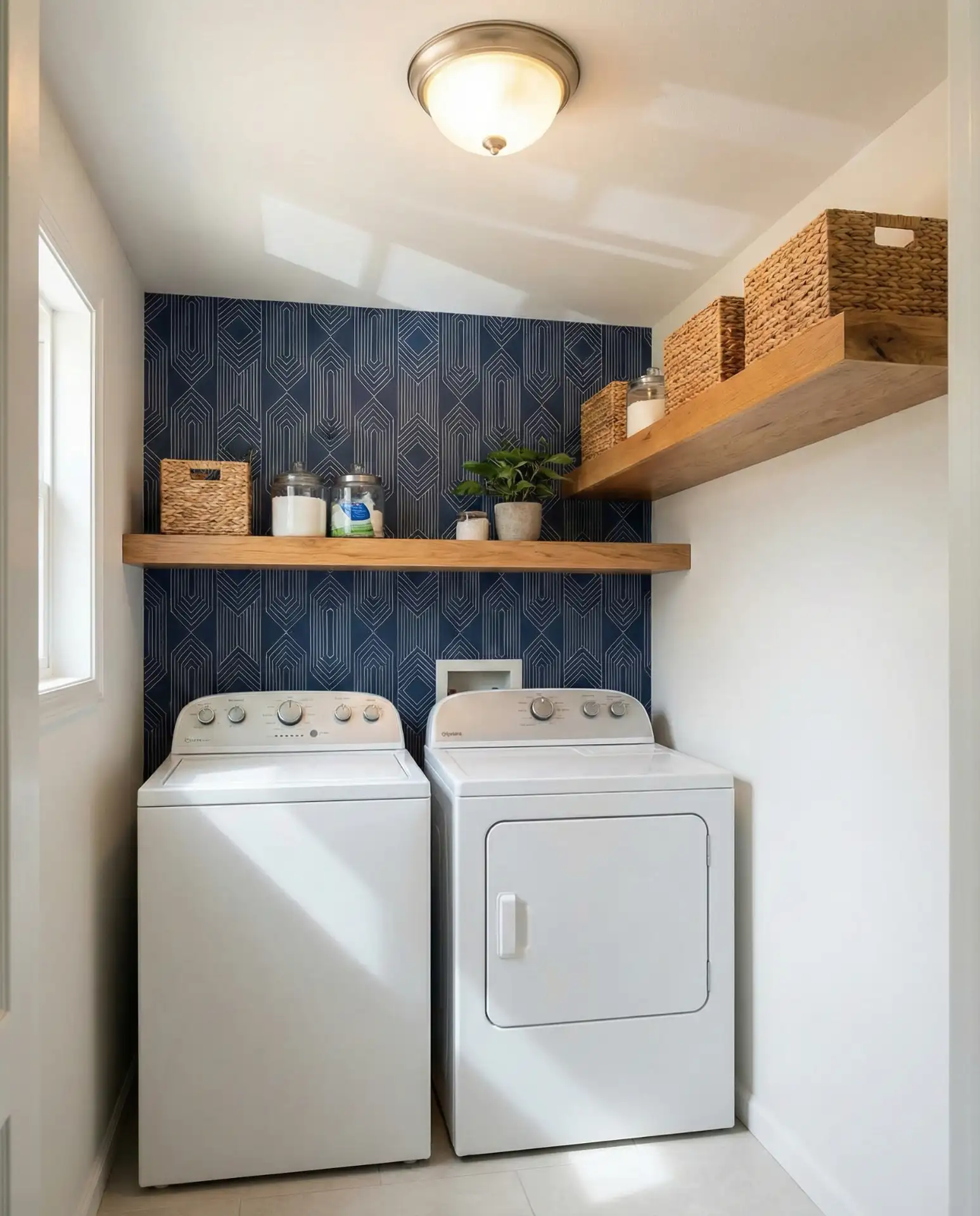
A bold wallpaper pattern on the wall behind your washer and dryer instantly elevates the space from purely functional to genuinely stylish. Geometric prints, botanical motifs, or even playful laundry-themed designs can work well, especially in small rooms where you see that back wall as soon as you enter. Choose a wipeable or vinyl-coated wallpaper that can handle the occasional splash from detergent bottles or damp clothes. The pattern draws the eye upward and makes the room feel intentionally decorated rather than like an afterthought.
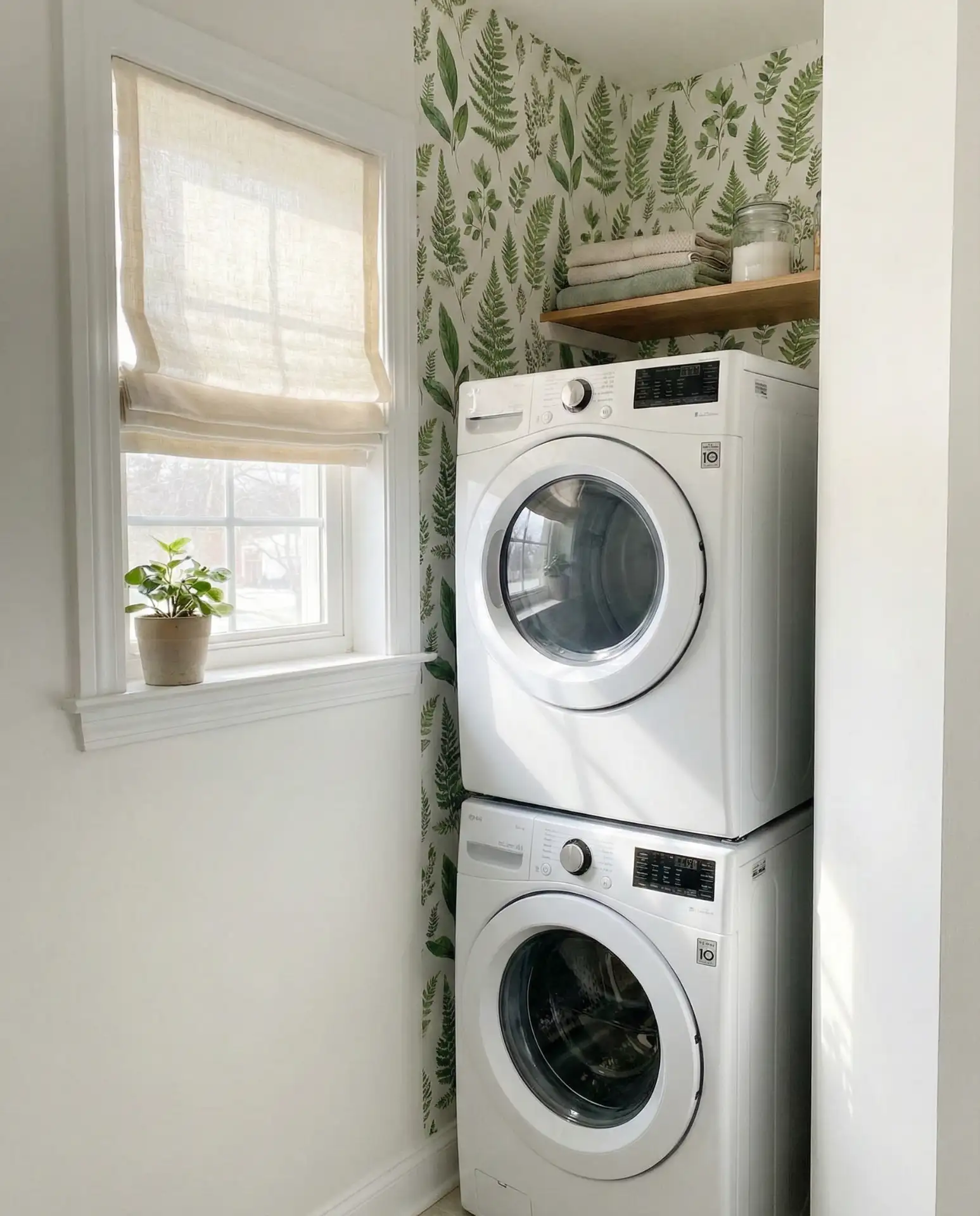
Where it works best is in laundry rooms that open directly off kitchens or living areas, where the design quality of every visible surface matters more. A single roll of wallpaper typically costs between $30 and $100 and covers about 56 square feet, which is more than enough for the back wall of most small laundry rooms. Application is straightforward for peel-and-stick varieties, making this a weekend DIY project with professional-looking results.
9. IKEA Algot System for Vertical Storage
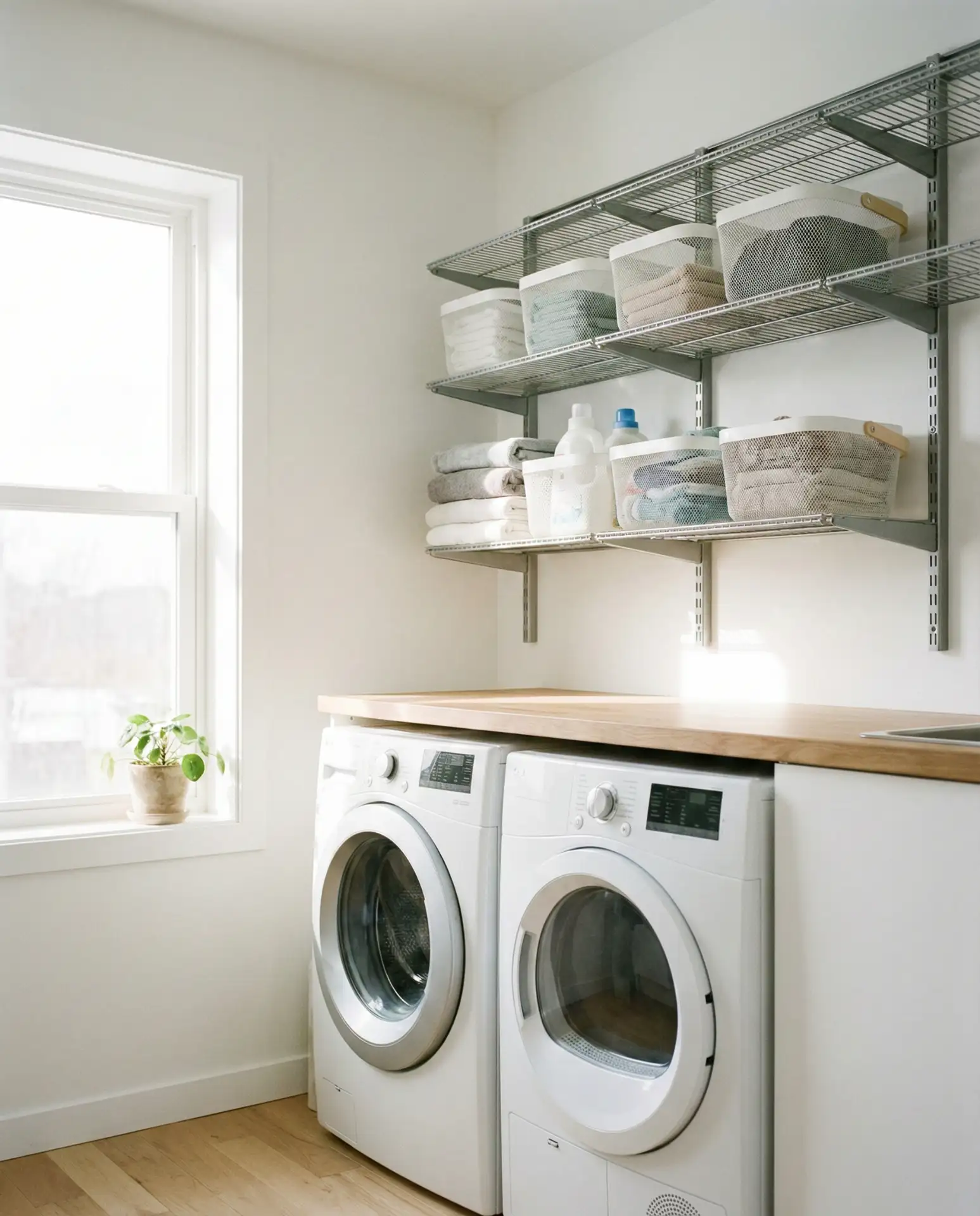
The IKEA Algot wall-mounted storage system brings customizable organization and space-saving storage solutions at an accessible price point, with rails, shelves, and baskets that you can configure to fit your exact needs. The system mounts to wall studs and can hold surprising weight, making it suitable for stacking towels, detergent bottles, cleaning supplies, and even small appliances like a handheld steamer. Because it’s modular, you can start with a basic setup and add components as your needs evolve, keeping the total investment under $200 for a complete small laundry room installation.
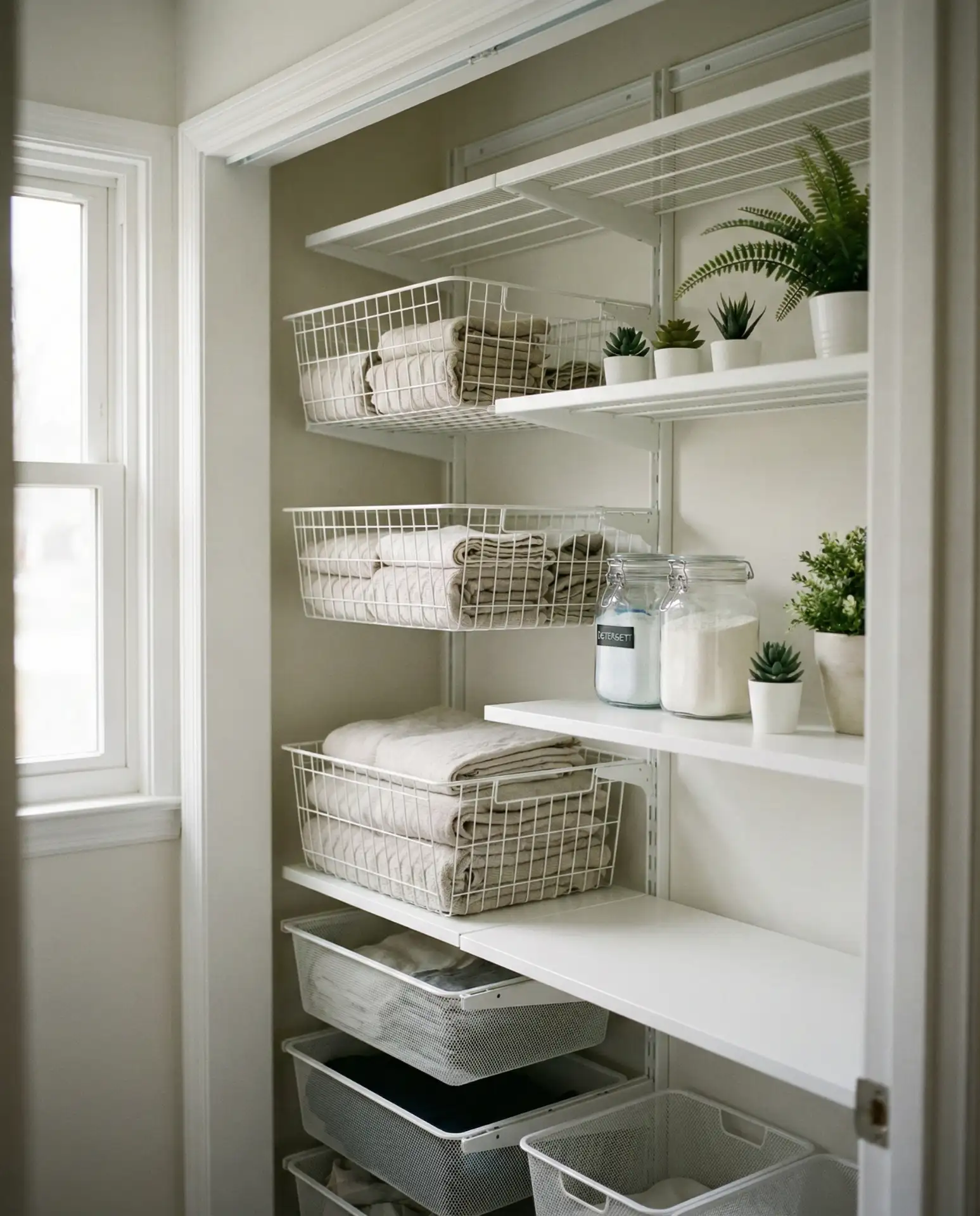
A practical insight here is that the mesh baskets allow you to see exactly what you have at a glance, which prevents the common problem of buying duplicate supplies because you forgot what was tucked away in a cabinet. The open design also promotes air circulation around damp items, helping prevent musty odors. Algot’s clean white finish blends into virtually any color scheme while maintaining a modern, uncluttered look.
10. Window Above Sink with Natural Light
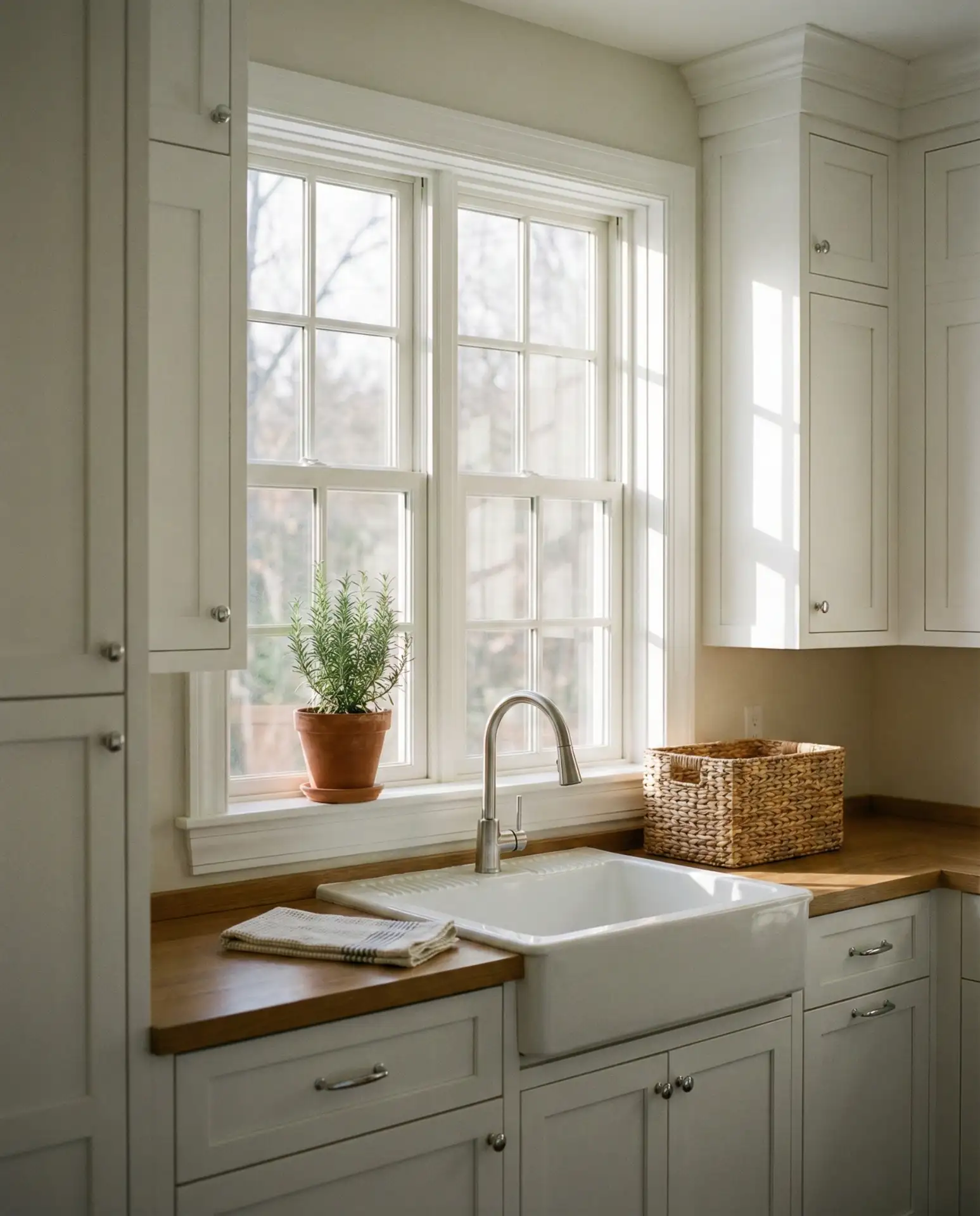
Positioning a sink directly beneath a window transforms laundry from a basement-level chore into something almost pleasant, with natural light streaming in while you pre-treat stains or hand-wash delicates. Even a small 24-inch window can make a dramatic difference in how the space feels, reducing the need for overhead lighting during daylight hours and providing ventilation to prevent humidity buildup. The view outside—whether it’s your backyard, a side garden, or even a glimpse of the neighbor’s trees—gives your eyes somewhere to rest during repetitive tasks.
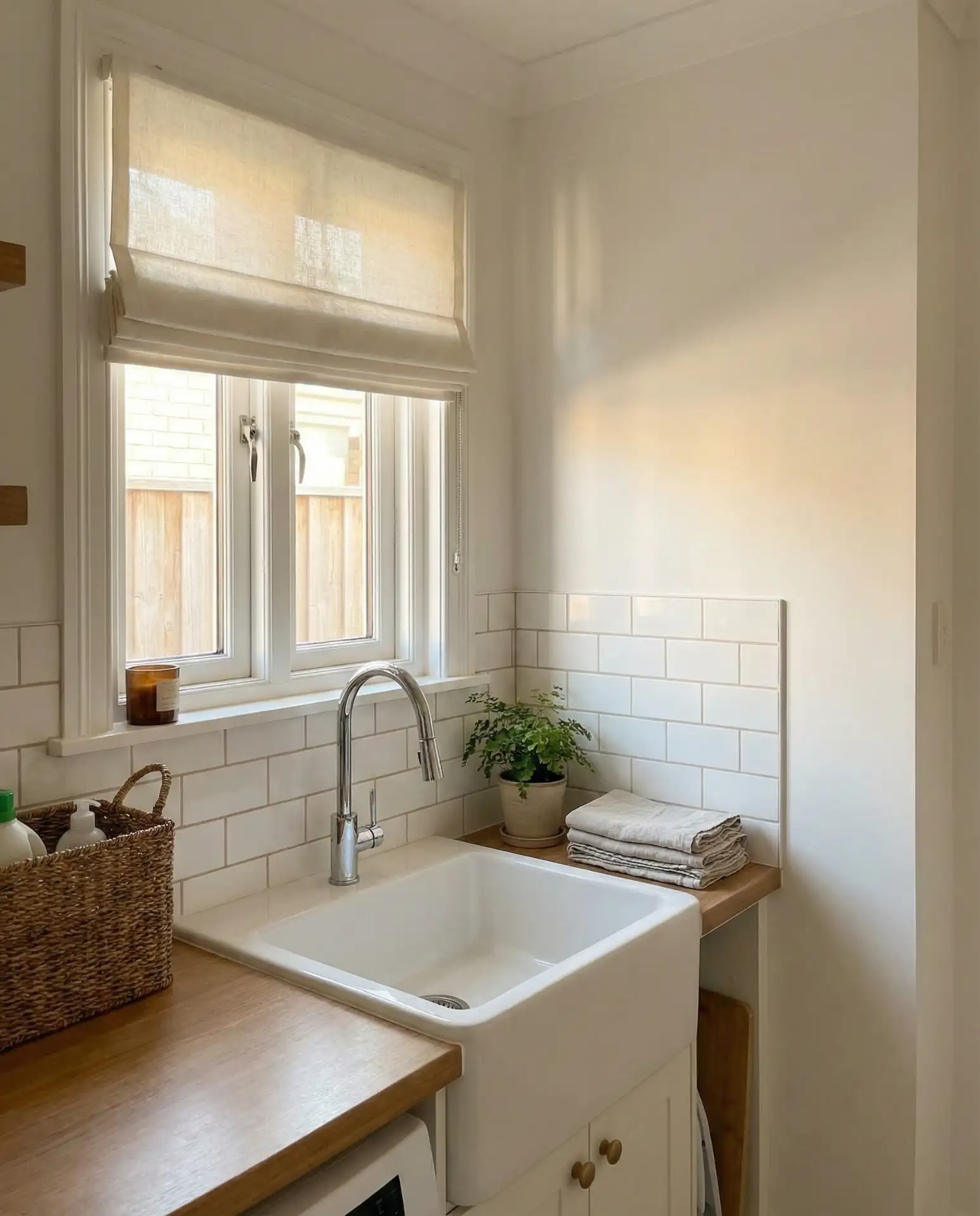
In the Pacific Northwest and other rainy regions, this setup is especially popular because the window provides both light and a connection to the outdoors even when it’s too wet to spend time outside. Install a simple café curtain or Roman shade for privacy without completely blocking the light. A small shelf or ledge can hold a plant or two, adding life to the space without taking up precious counter area.
11. Stackable Storage Shelves Above Machines
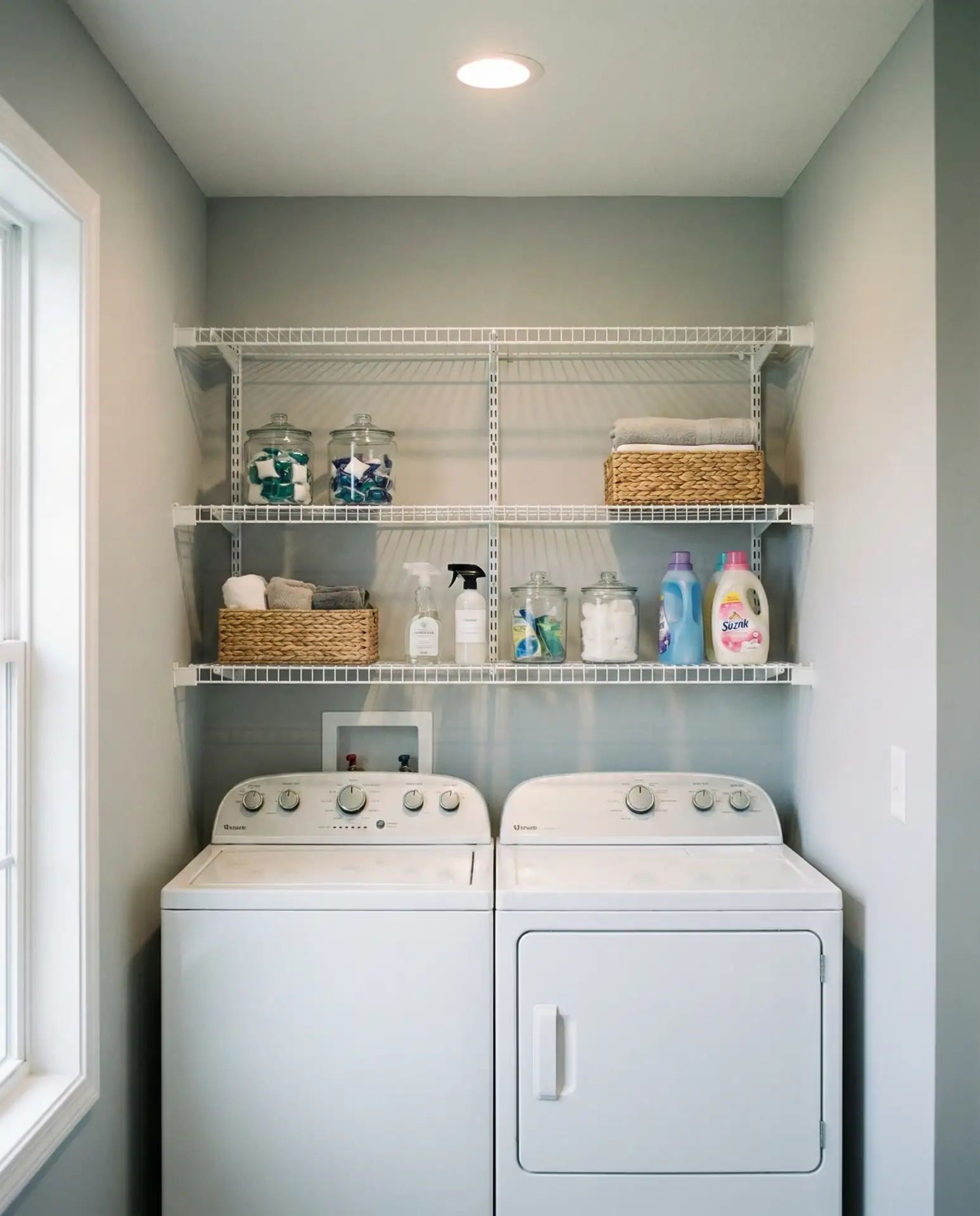
Lightweight stackable storage shelves made from wire, bamboo, or plastic can be arranged above your machines to create flexible storage that adapts as your needs change. Unlike permanent built-ins, these portable units can be rearranged, added to, or removed entirely if you decide to reconfigure the space. They’re particularly useful for renters who can’t modify the walls but still need vertical storage for organizing storage, cleaning supplies, and laundry essentials. Look for models with adjustable heights so you can accommodate tall detergent bottles on lower shelves and smaller items like stain removers on upper levels.
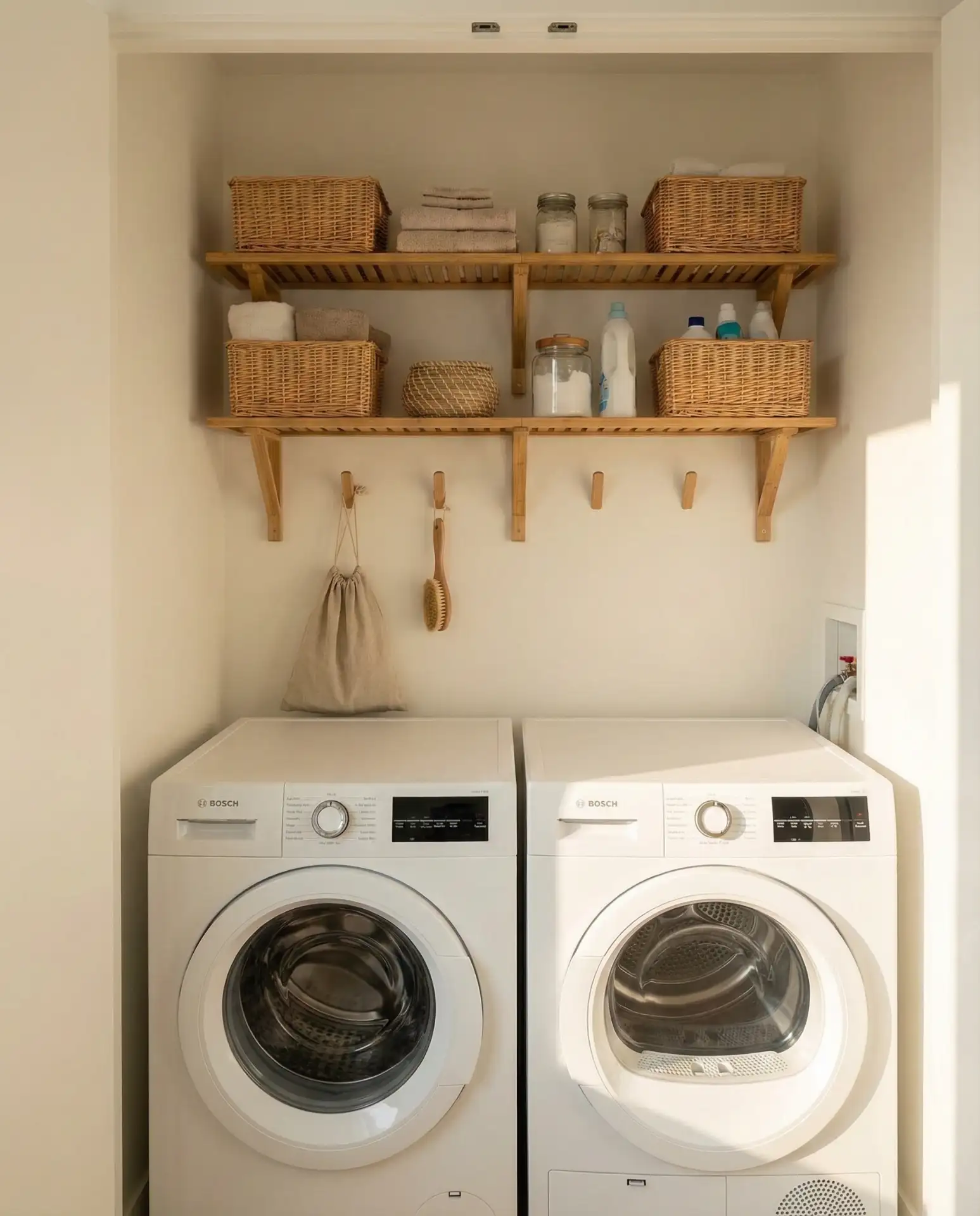
Common mistakes include overloading these shelves beyond their weight capacity, which can cause them to bow or collapse. Check the manufacturer’s specifications and stick to lighter items on upper shelves. Most quality stackable units can handle 15 to 25 pounds per shelf when properly anchored, which is sufficient for typical laundry supplies. Avoid storing anything wet or particularly heavy, like jugs of water or large containers of liquid detergent, on freestanding units.
12. All-In-One Washer Dryer Combo Unit
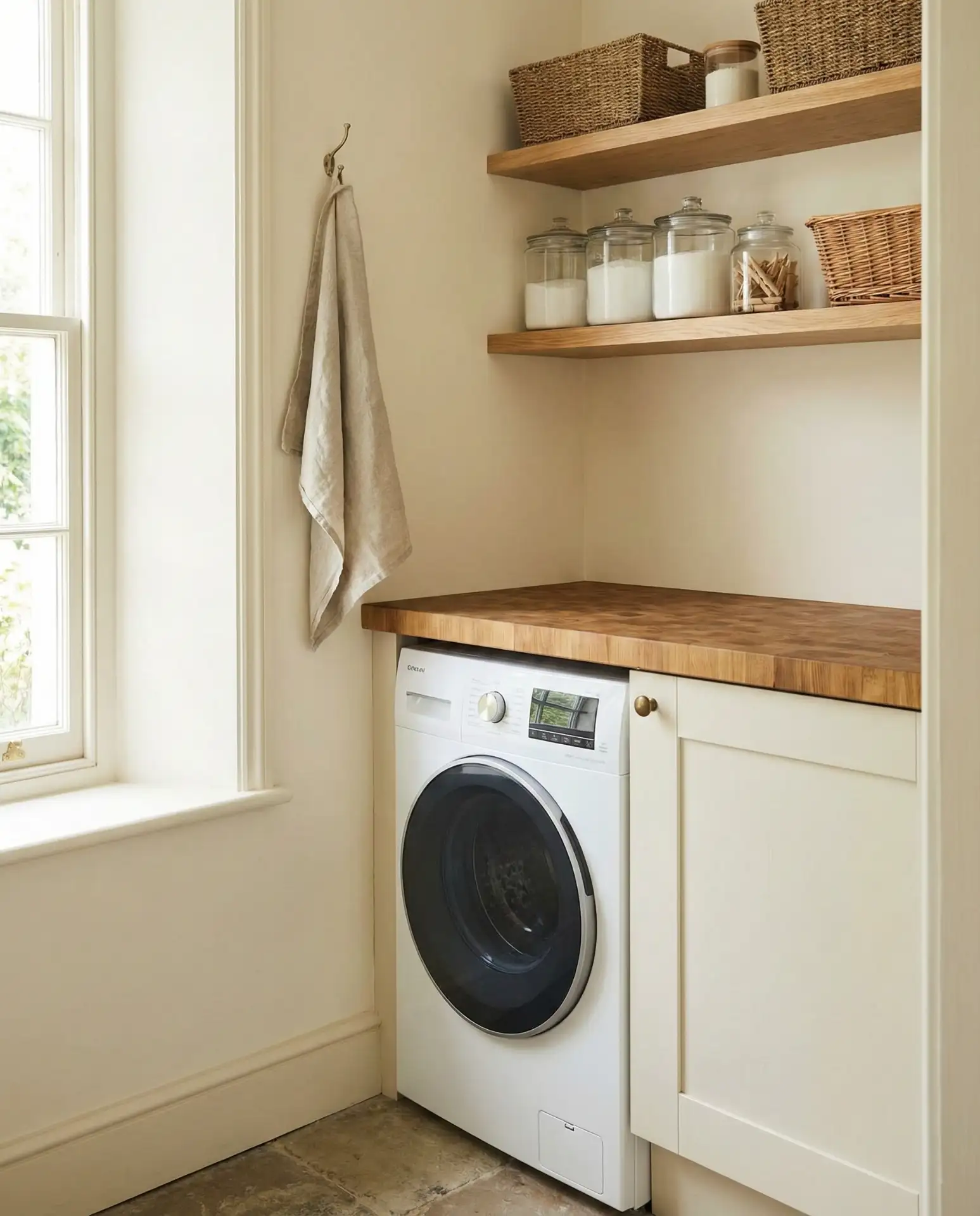
When space is at an absolute premium, an all-in-one washer-dryer combo unit eliminates the need for stacking or side-by-side placement by handling both washing and drying in a single machine. These ventless units are typically 24 inches wide—several inches narrower than standard American washers—and can fit in surprisingly tight spots, like under a counter or in a shallow closet. The trade-off is longer cycle times and smaller capacity, but for singles, couples, or small families, the convenience of not transferring loads between machines often outweighs these limitations.
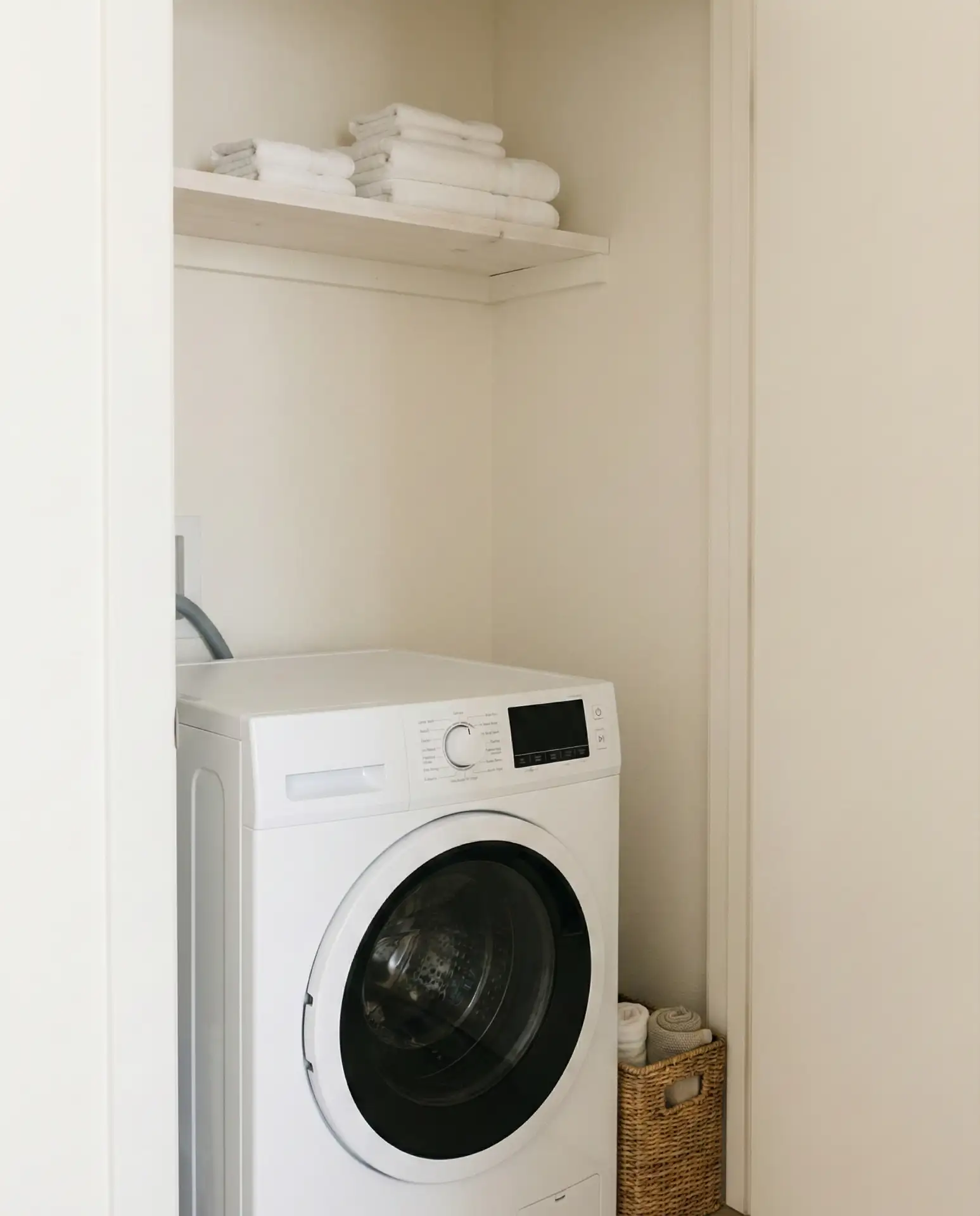
These units are standard in European apartments and are gaining traction in American condos and tiny homes. Prices range from $1,200 to $2,000 for well-reviewed models, which is comparable to buying a washer and dryer separately. The ventless design means you only need access to a drain and a standard 120V outlet, making installation much simpler than traditional setups that require dedicated dryer venting.
13. Hanging Rod for Air-Drying Delicates
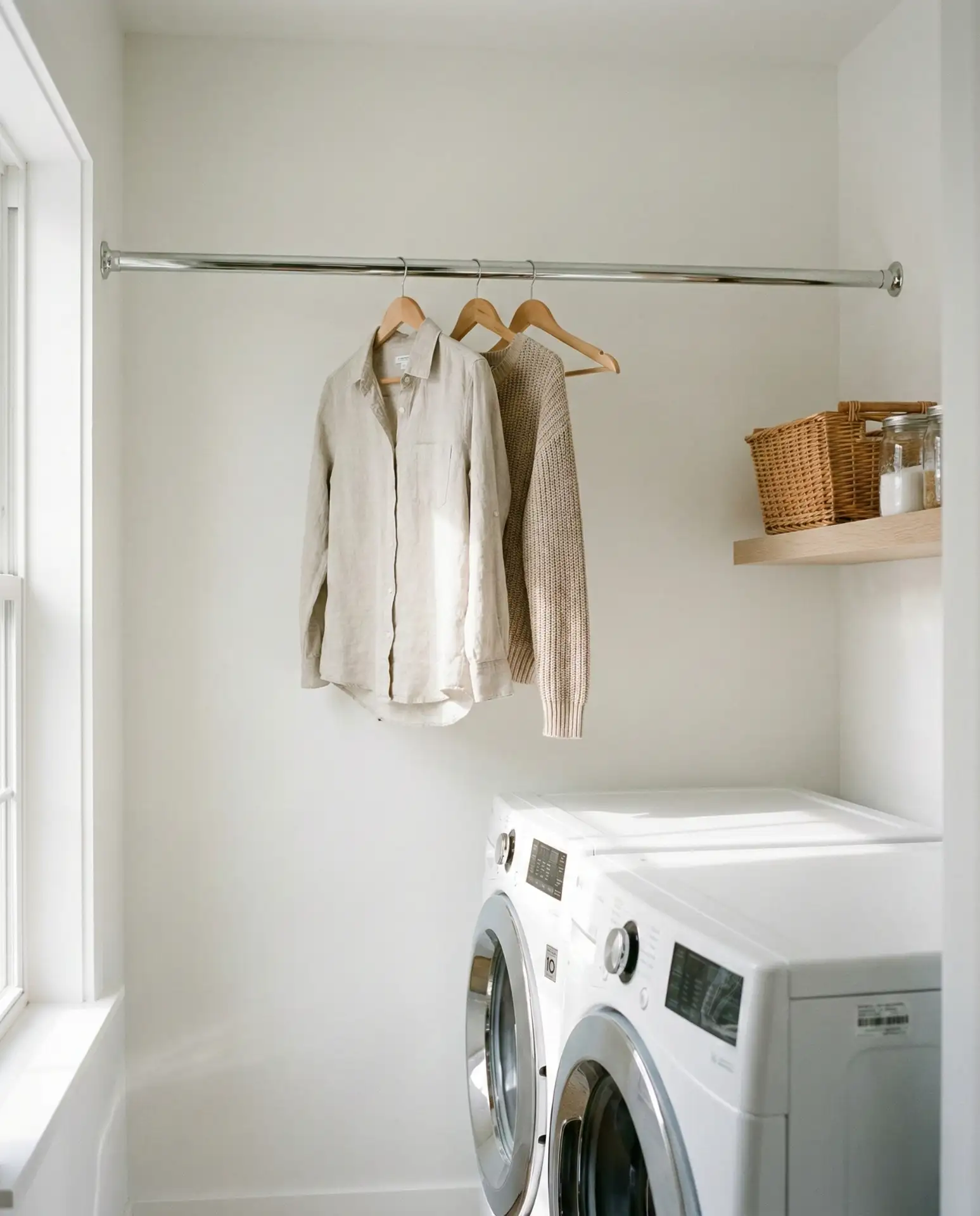
A sturdy hanging rod installed above your machines or along an empty wall provides essential space for air-drying sweaters, dress shirts, and other items that can’t go in the dryer. Position it 70 to 75 inches from the floor so clothes hang freely without touching the machines below, and use a rod rated for at least 20 pounds to handle wet garments. A wall-mounted rod with decorative brackets takes up no floor space and can double as a place to hang clothes straight from the dryer to minimize wrinkles before you have time to fold them.
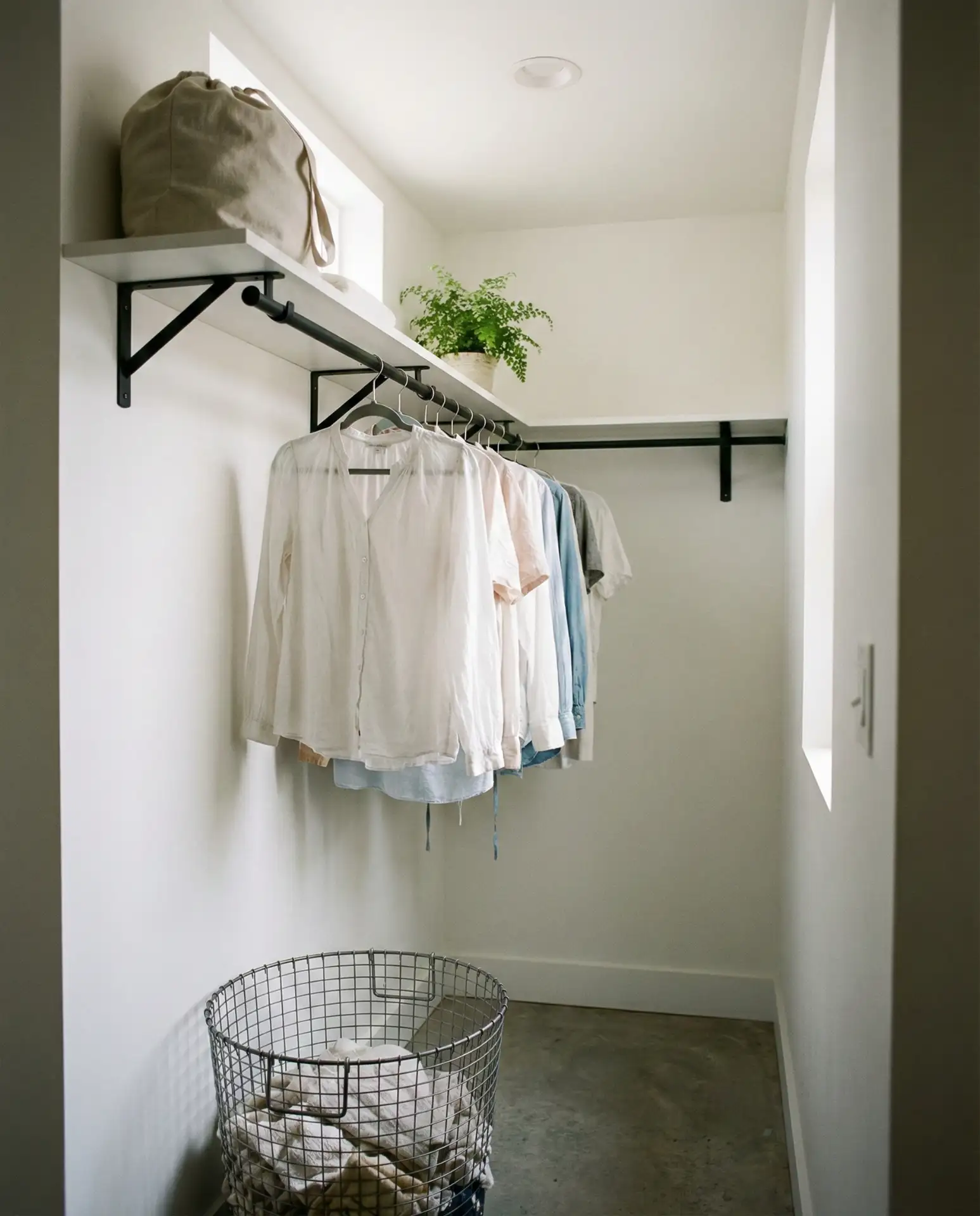
From an energy-saving standpoint, air-drying reduces wear on your clothes and cuts electricity usage, which matters in states with high utility costs like California, Hawaii, or the Northeast. A retractable clothesline is an alternative for extremely tight spaces—it pulls out when needed and retracts into a small wall-mounted unit when not in use. Both solutions cost under $30 and can be installed in less than an hour with basic tools.
14. Water Heater Concealed Behind Cabinet Doors
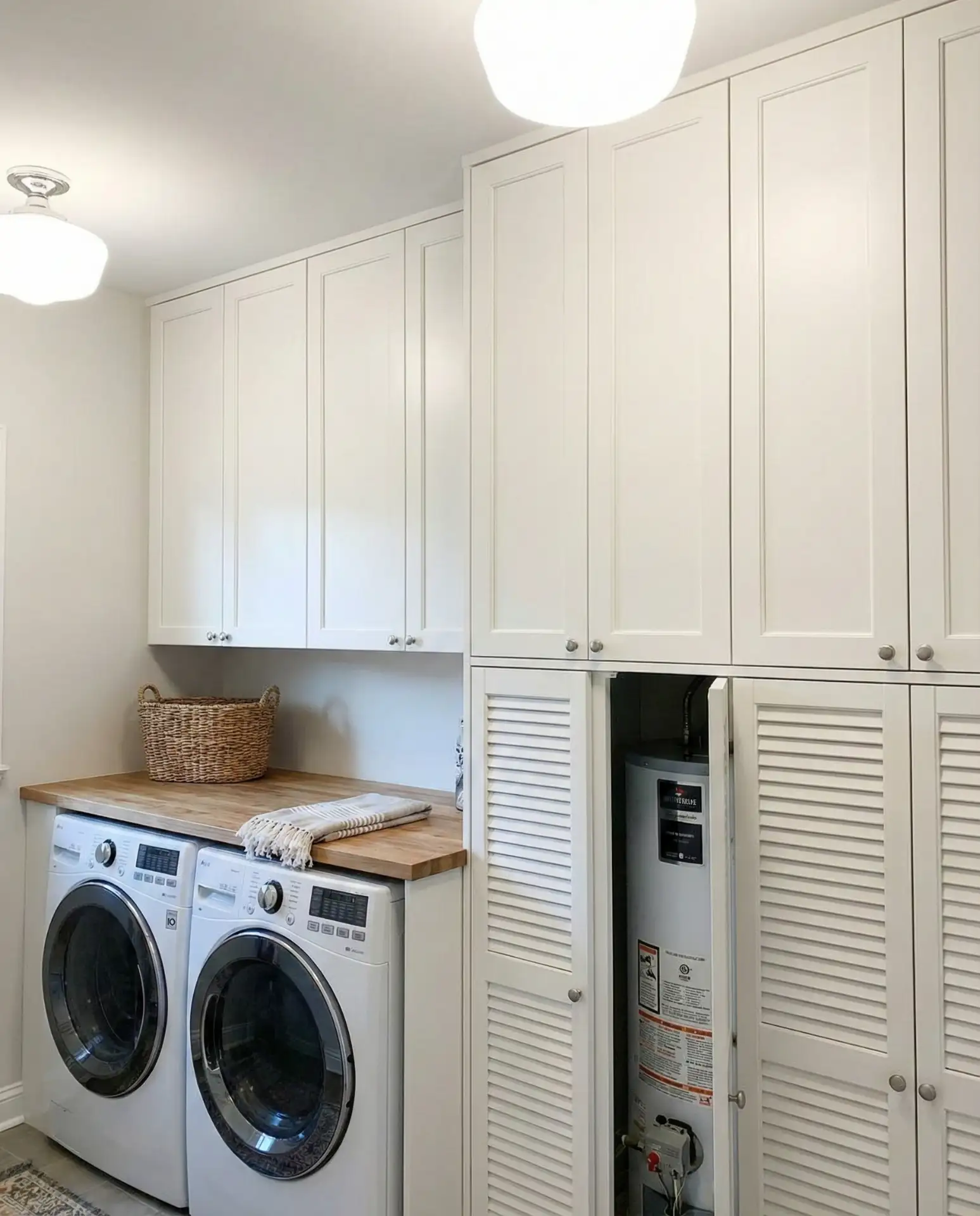
Many American homes have their water heater in or near the laundry room, and building a simple floor-to-ceiling cabinet around it maintains access for maintenance while improving the room’s appearance dramatically. Use louvered or ventilated doors to allow heat dissipation and follow local codes regarding clearances and combustion air. The cabinet can extend across the entire wall, with the water heater behind one set of doors and storage shelves or cleaning supply cabinets behind others, creating a unified built-in look without the custom price tag.
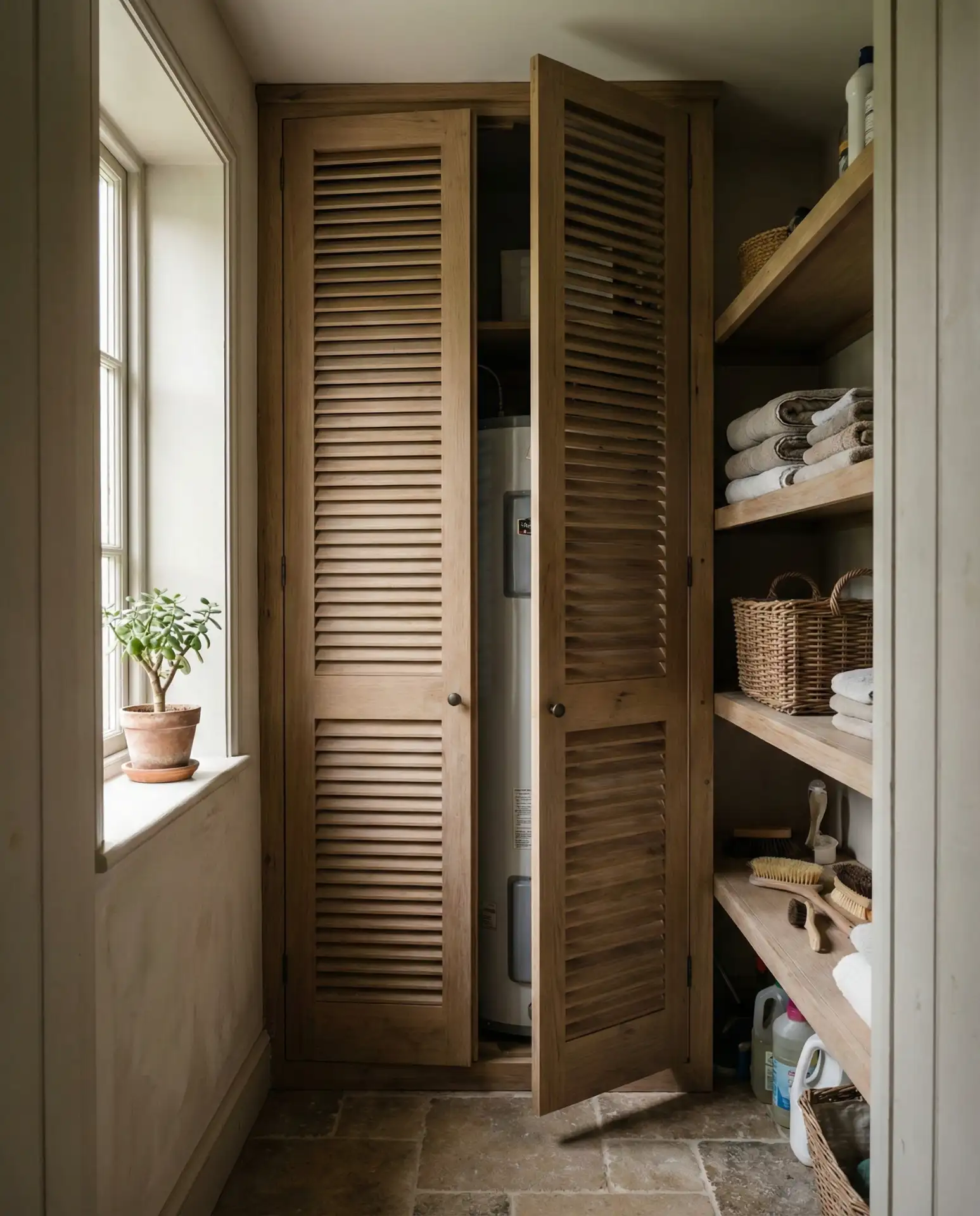
Real homeowner behavior shows that once the water heater is concealed, people are more willing to invest in the rest of the laundry room’s design because the space finally feels cohesive. This project typically costs $300 to $600 in materials if you’re building it yourself, or $800 to $1,500 with professional installation. The visual payoff far exceeds the investment, especially if you’re planning to sell your home—buyers appreciate finished, polished utility spaces.
15. Top Loaders with Pull-Out Hamper Baskets
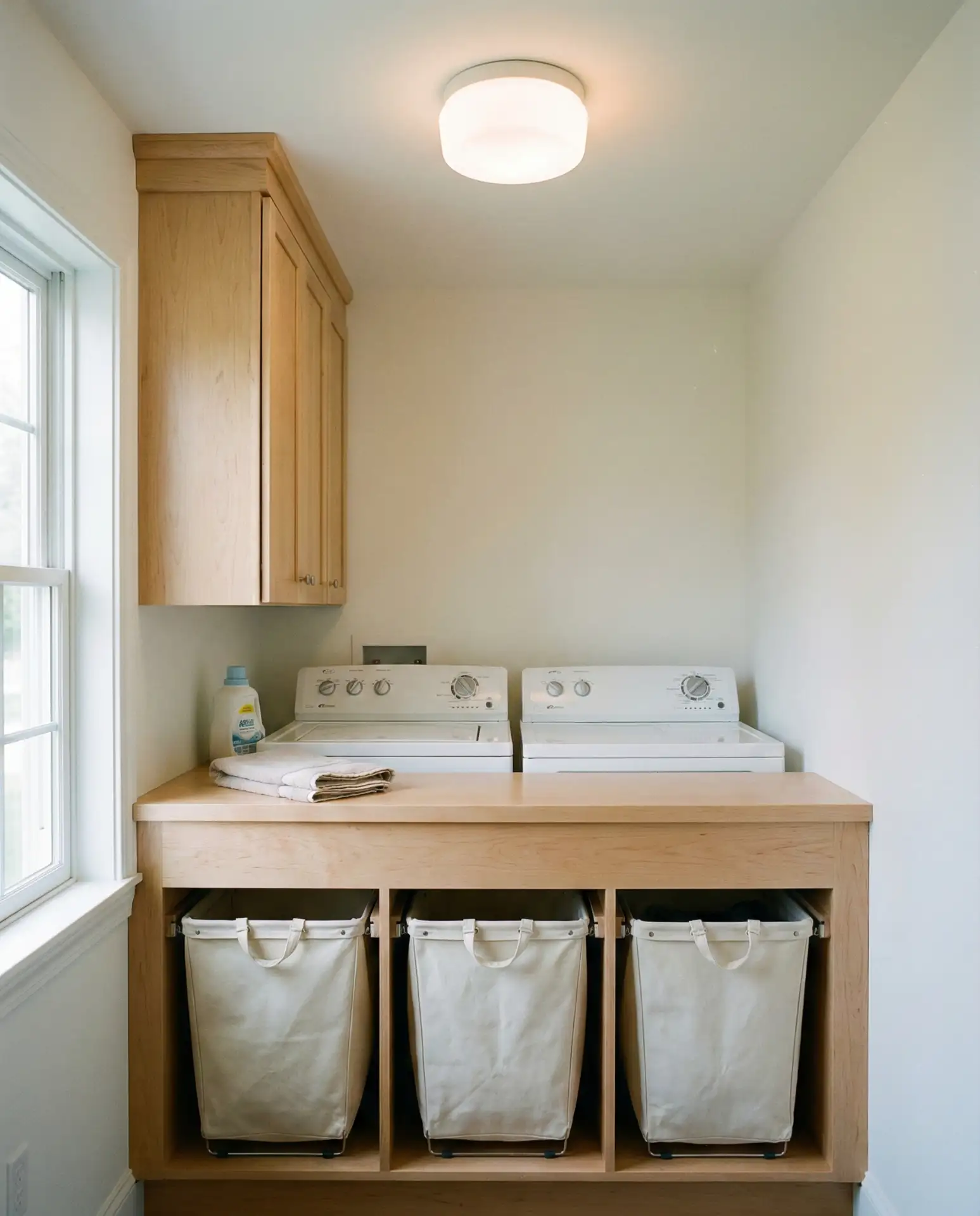
If you prefer top loaders for their capacity and shorter cycle times, integrate pull-out hamper baskets into the base of a custom platform or flanking cabinets to keep dirty clothes sorted and out of sight. These pull-out systems work like drawers, with wire or canvas bins mounted on full-extension slides that glide smoothly even when loaded with a week’s worth of laundry. Sort lights, darks, and delicates into separate bins to streamline wash day, and position them at a height that makes tossing in clothes effortless—typically 12 to 18 inches off the floor.
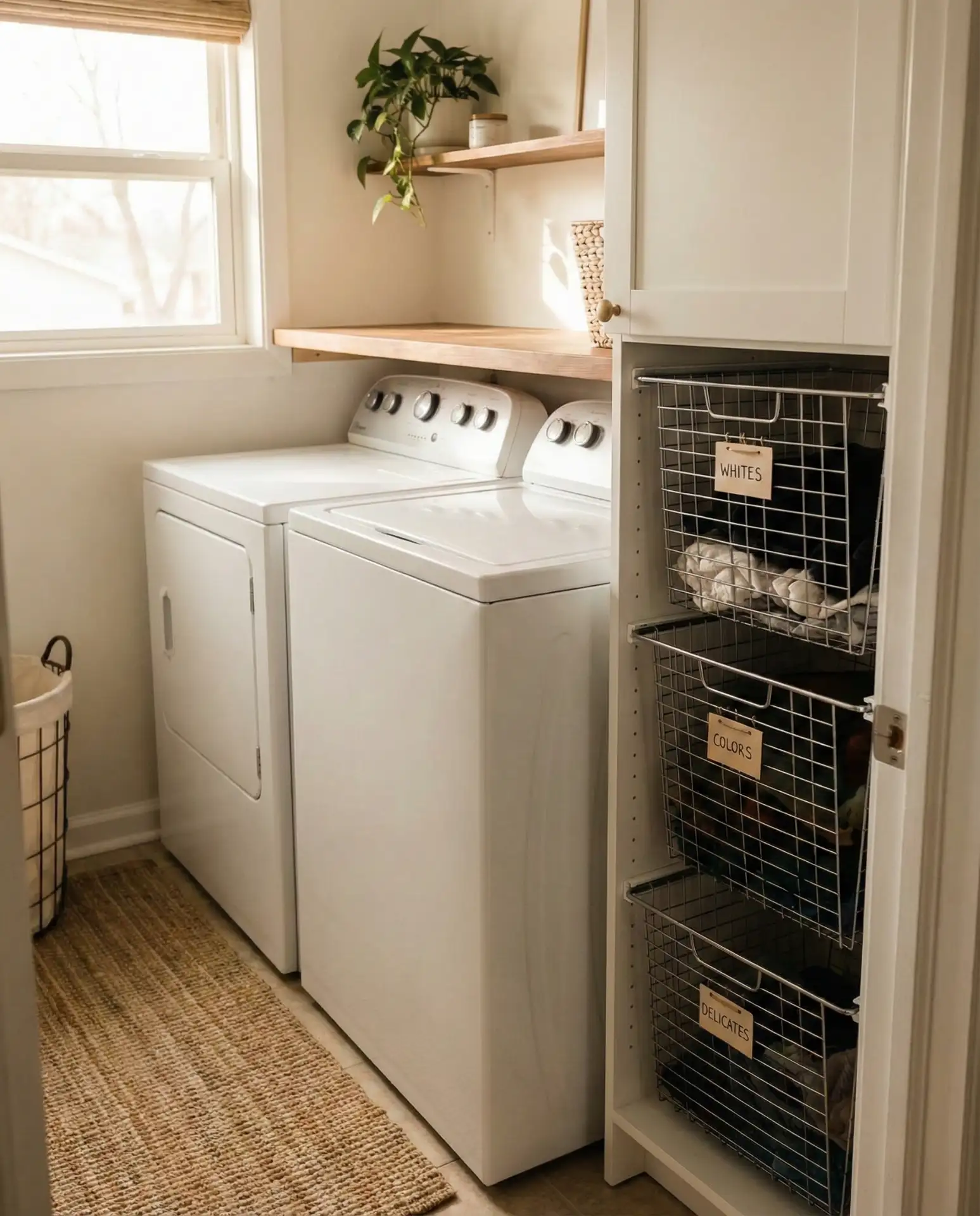
A common mistake is installing baskets that are too deep to pull out fully, which means clothes get stuck in the back and you have to wrestle with the drawer to retrieve them. Opt for slides rated for at least 75 pounds and ensure they extend completely so you can access every corner. The hardware costs around $40 per slide, with baskets adding another $20 to $50 each depending on materials and size.
16. Very Narrow Rolling Cart for Tight Spaces
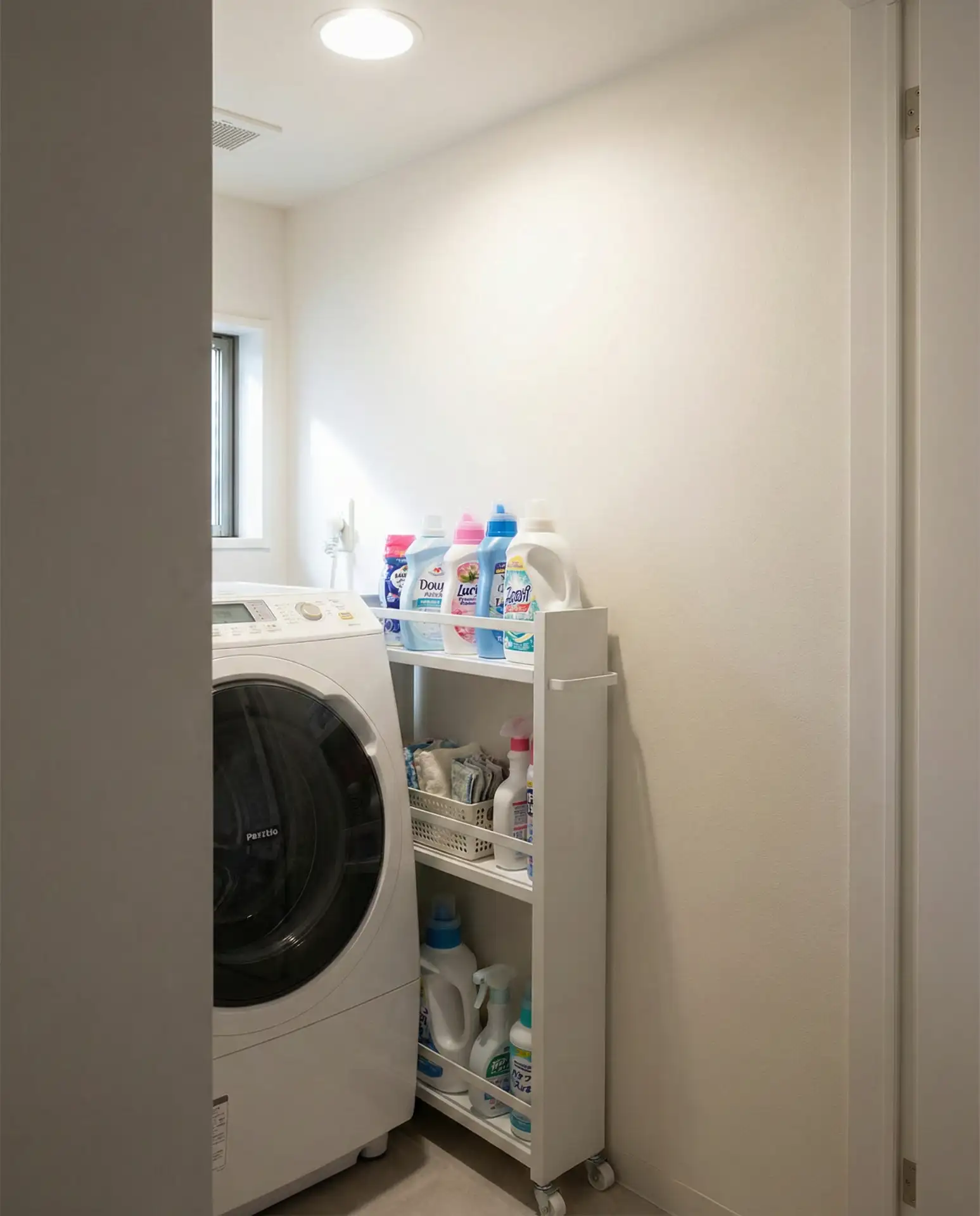
A very slim rolling cart that’s only 6 to 10 inches wide can slide into the gap between your washer and dryer or tuck beside a single machine, providing surprising storage capacity without permanent installation. These carts typically feature three or four tiers and roll out on casters when you need to grab detergent or dryer sheets, then slide back out of sight when not in use. They’re perfect for storing tall bottles, spray cleaners, or even small tools and lightbulbs that you want close at hand but don’t use every day.
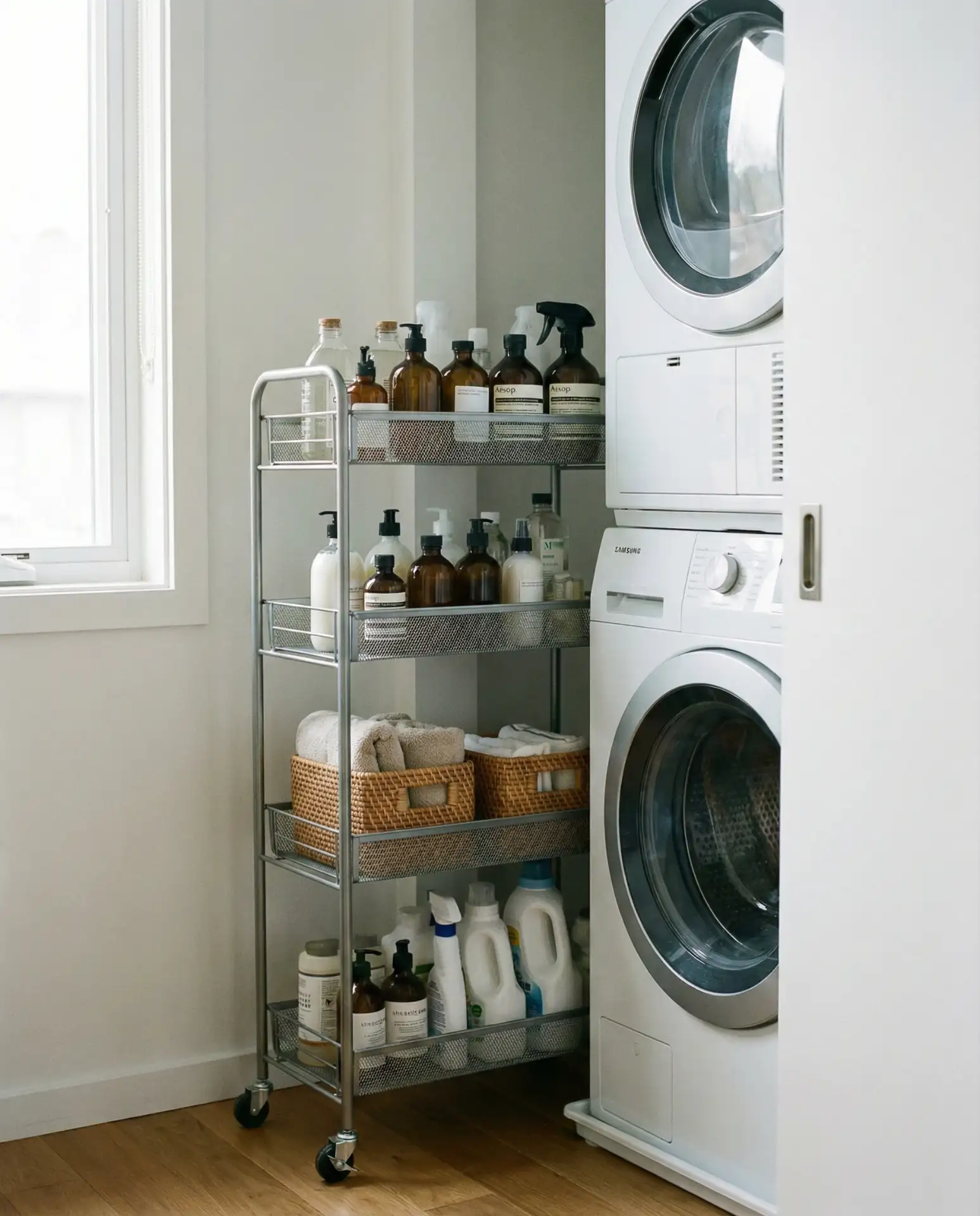
Where it works best is in apartments or condos where every fraction of an inch counts and permanent modifications aren’t allowed. These carts range from $25 to $60 at most home goods stores, making them one of the most affordable storage solutions available. The mobility means you can pull them out to clean behind the machines or reorganize your setup without any permanent commitment.
17. Stackable with Sink and Counter Surface
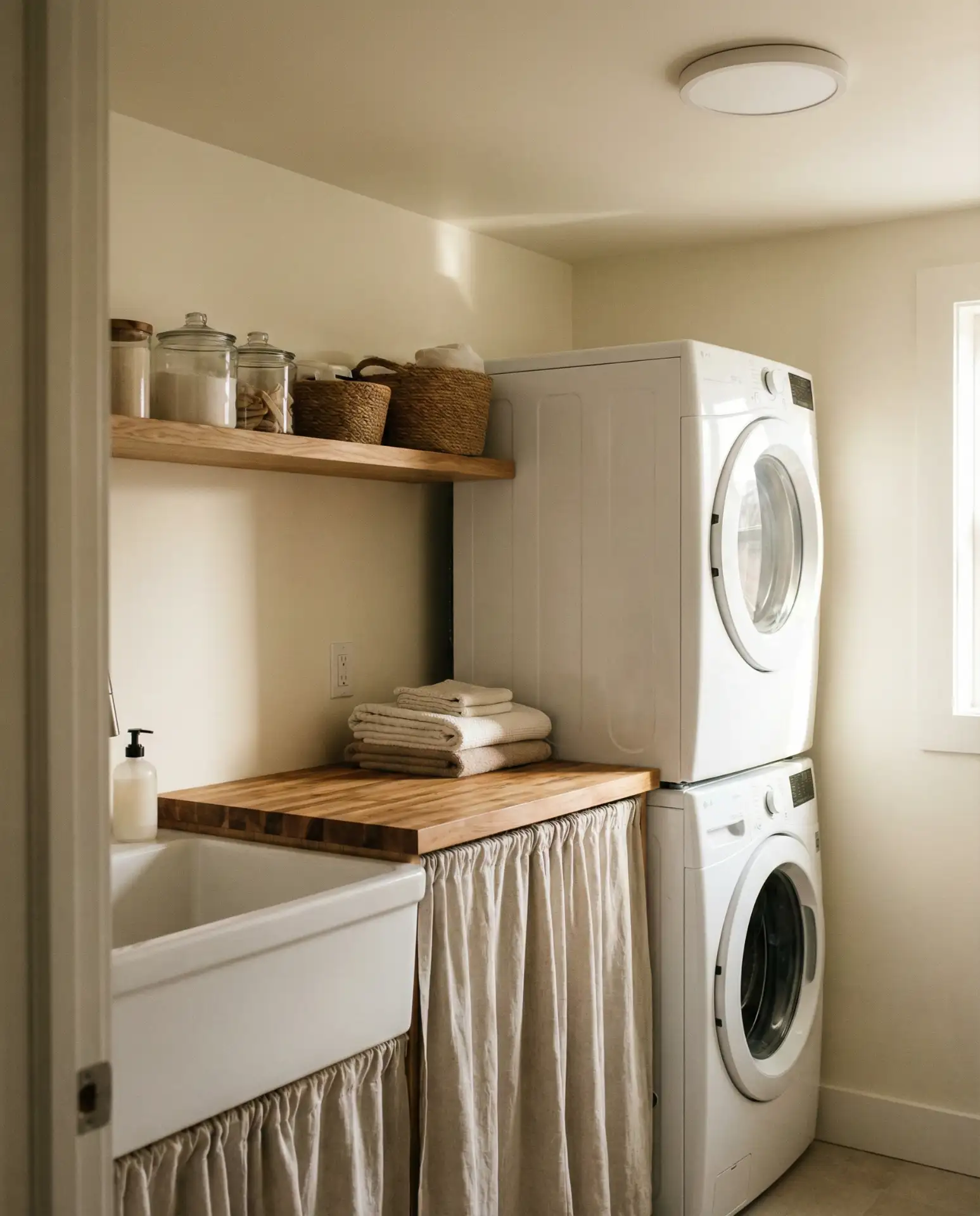
Combining a stackable washer and sink alongside a continuous counter surface creates a compact workstation that handles the full laundry workflow from pre-treatment to folding. The counter can be as short as 24 inches or extend the full length of the wall, with the sink integrated at one end and the stacked machines positioned at the other. This layout leaves you with a dedicated folding area in between, often with storage cabinets or drawers underneath. Choose a countertop material like laminate, butcher block, or quartz depending on your budget and style preferences.
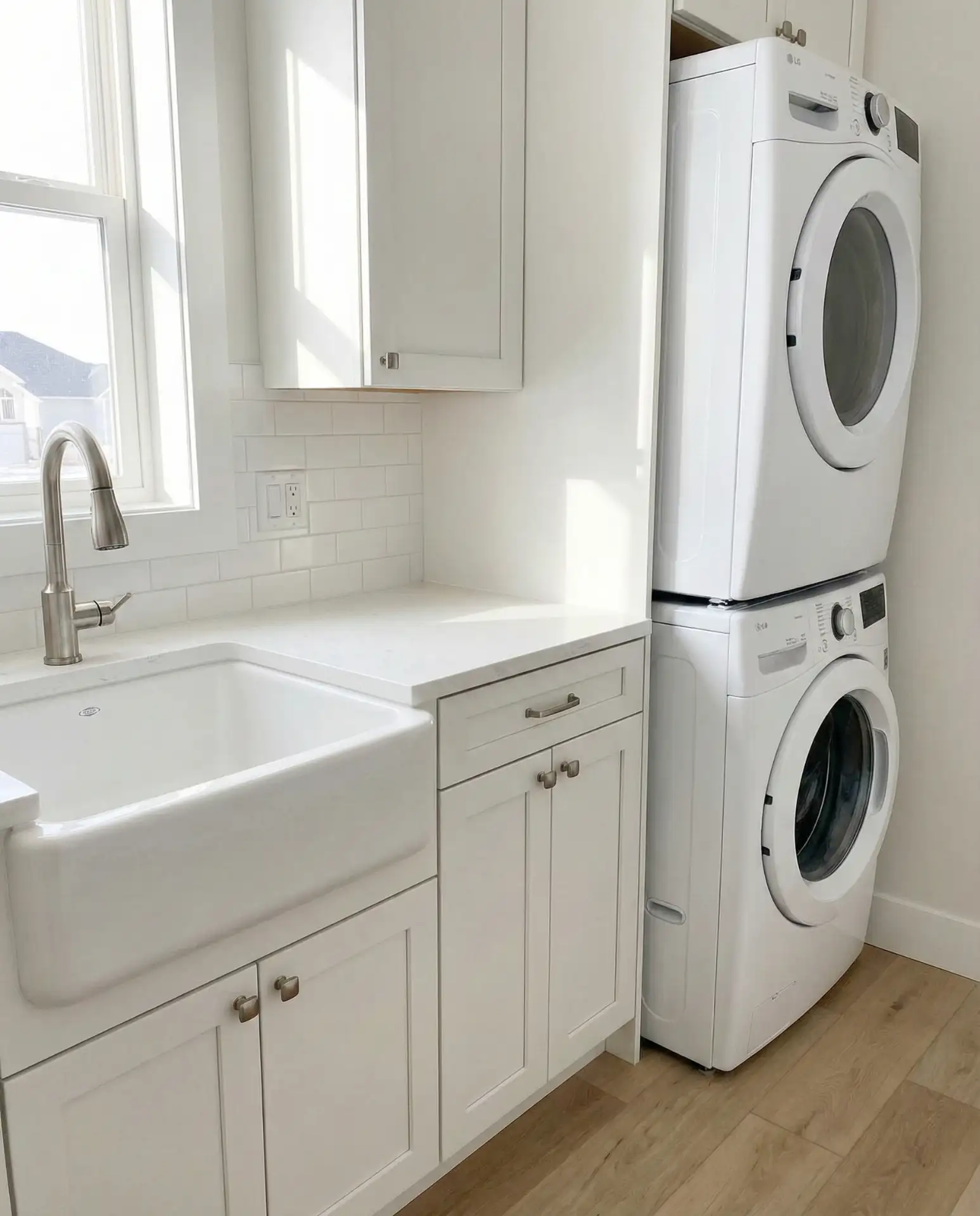
This setup is especially popular in the South and Southwest, where laundry rooms are often larger and can accommodate more built-in features without feeling cramped. A practical insight is that having the counter at standard kitchen height (36 inches) makes folding clothes far more comfortable than bending over a top-loading washer. Budget between $500 and $1,500 for materials depending on counter length and finish quality.
18. Bloxburg-Inspired Minimalist Aesthetic
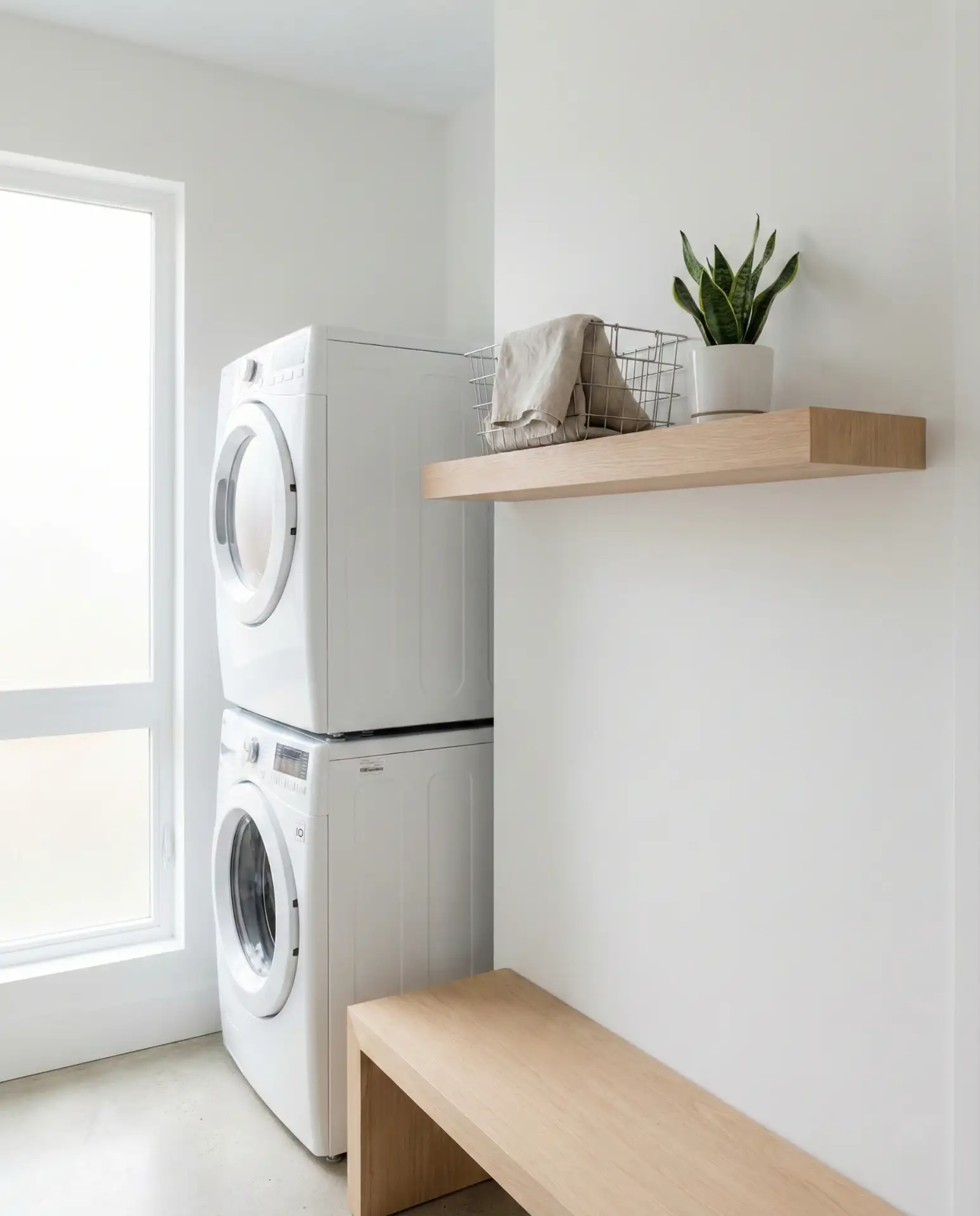
Taking cues from the clean, simplified design language of Bloxburg and similar design games, this approach emphasizes pure white surfaces, geometric shelving, and minimal decorative elements. Stick to a tight color palette—white, light gray, and perhaps one accent color like soft mint or blush pink—and keep surfaces as clear as possible. Floating shelves replace bulky cabinets, wire baskets corral supplies, and every item serves a function. The result feels modern, calm, and surprisingly spacious even in a room that measures just 6 by 8 feet.
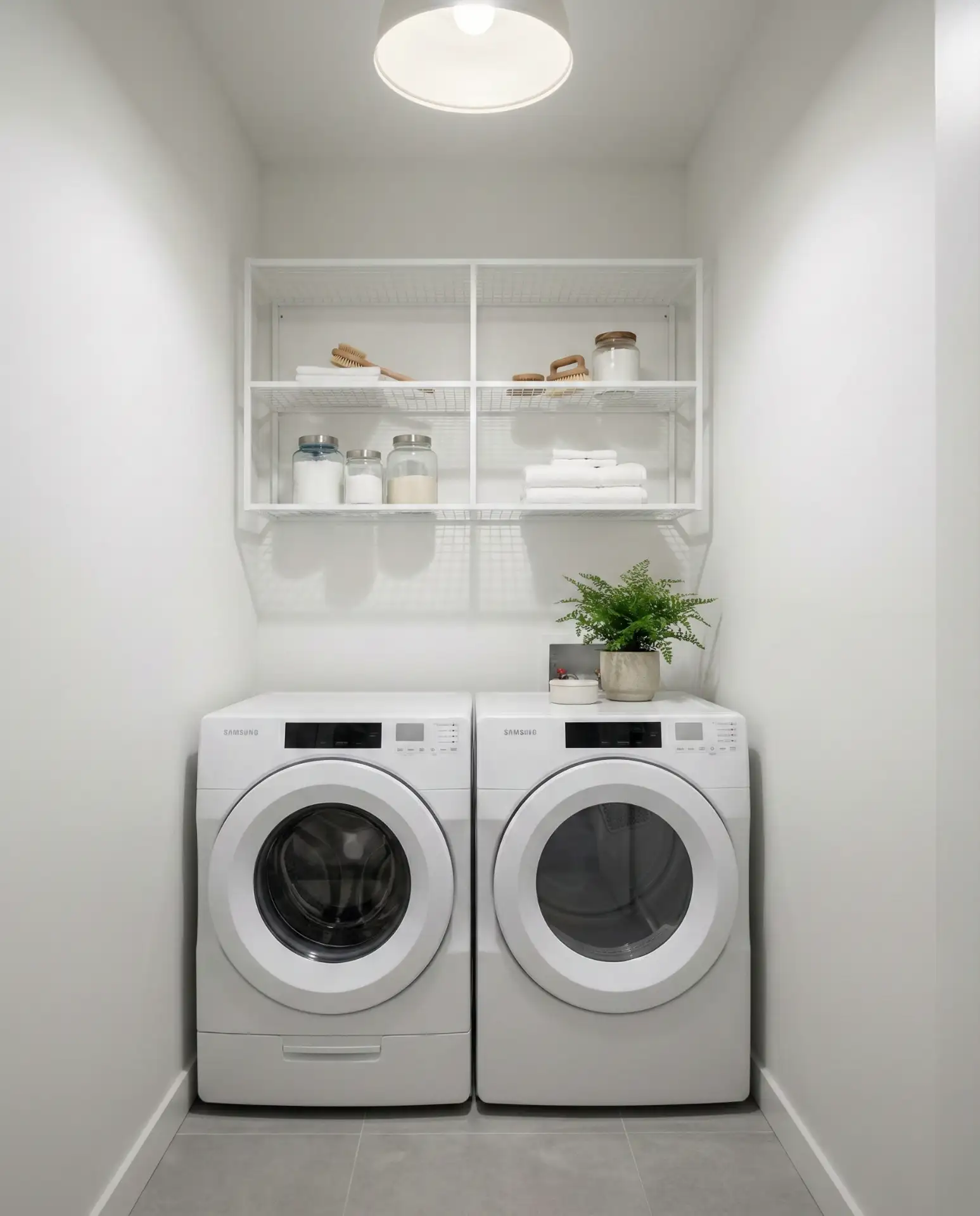
Younger homeowners, particularly millennials and Gen Z who grew up with design-focused games and apps, gravitate toward this stripped-down look because it photographs beautifully and feels calming in a space that’s typically associated with mundane chores. The key is ruthless editing—if you don’t use it weekly, it doesn’t belong on display. Store overflow supplies in a hall closet or basement and keep only the essentials in the laundry room itself.
19. Utility Sink with Commercial-Style Faucet
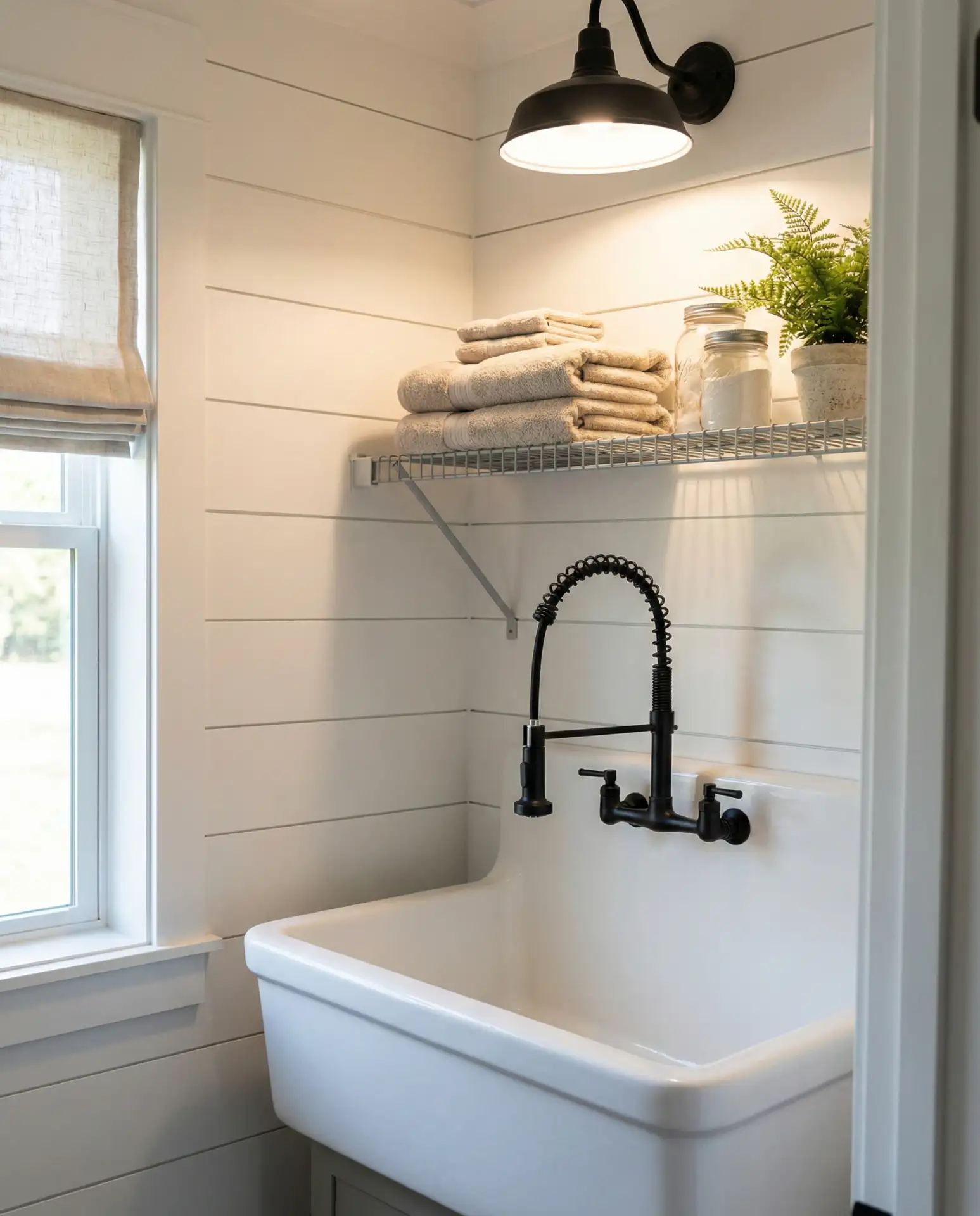
Upgrading your utility sink with a tall, commercial-style faucet that has a pull-down sprayer transforms it from basic to highly functional, making it easier to fill buckets, rinse large items, and handle everything from flower arranging to pet grooming. Look for faucets with at least 16 inches of height and a hose that extends 20 inches or more, which gives you the flexibility to direct water exactly where you need it. Finishes in chrome, brushed nickel, or matte black blend into any design scheme while adding a professional touch.
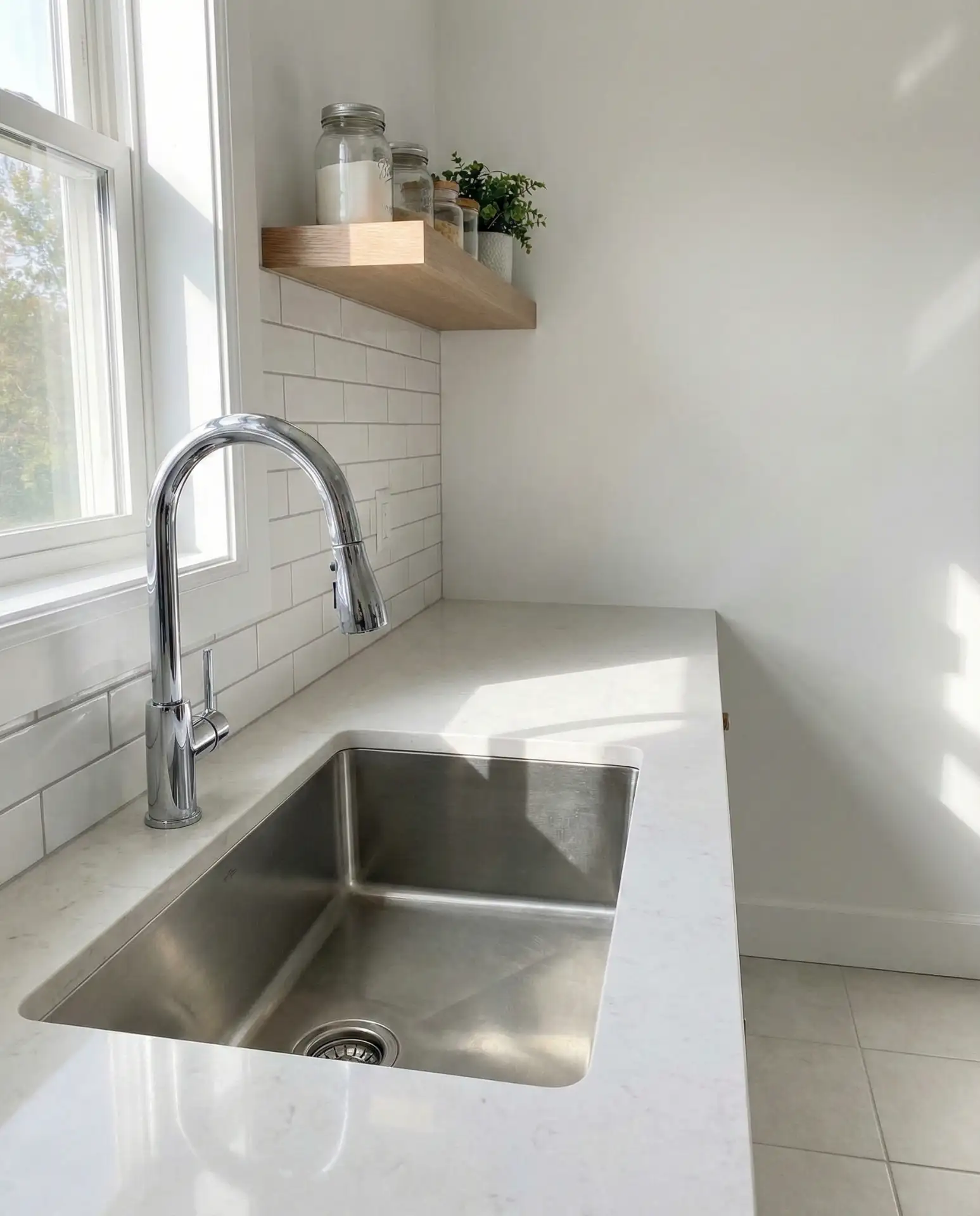
Expert-style commentary suggests that the extra $50 to $100 you spend on a quality faucet pays dividends in daily use, particularly for households that frequently wash pets, hand-rinse cloth diapers, or deal with gardening or craft projects. The improved functionality makes the sink a true workhorse rather than just a backup to your kitchen sink. Installation is straightforward if you have basic plumbing skills, though hiring a plumber for a couple of hours ensures leak-free connections.
20. Stackable with Utility Sink and Hanging Storage
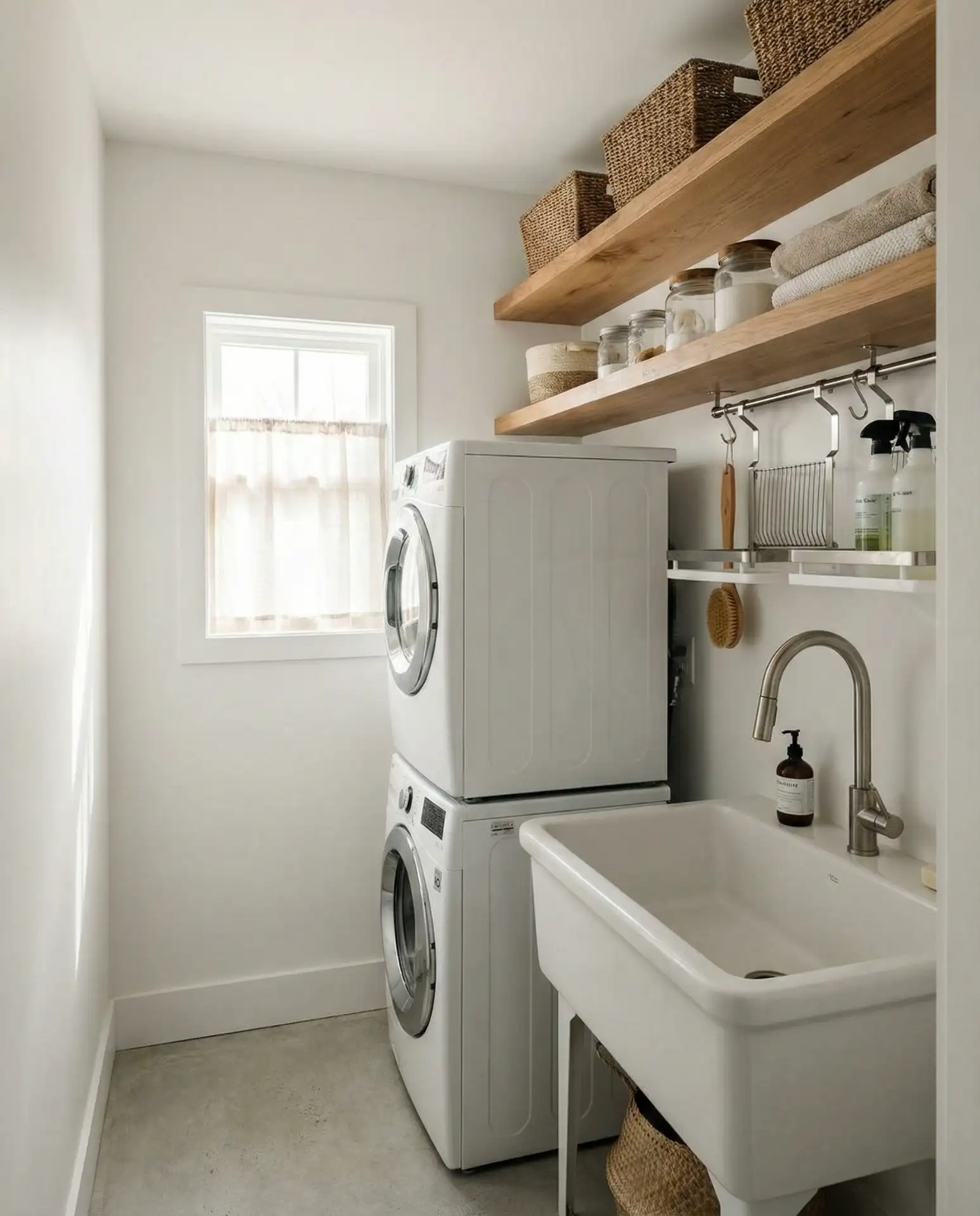
Maximizing vertical space with stackable utility sinks plus wall-mounted hanging storage creates a triple-threat setup that handles washing, rinsing, and organizing in the smallest possible footprint. Mount pegboards, S-hooks, or narrow cabinets on the wall above the sink to hold spray bottles, brushes, and other cleaning tools within easy reach. The stacked machines occupy one vertical column, the sink another, and the wall storage fills in the gaps without encroaching on precious floor space. This approach works particularly well in narrow galley-style laundry rooms or converted closets.
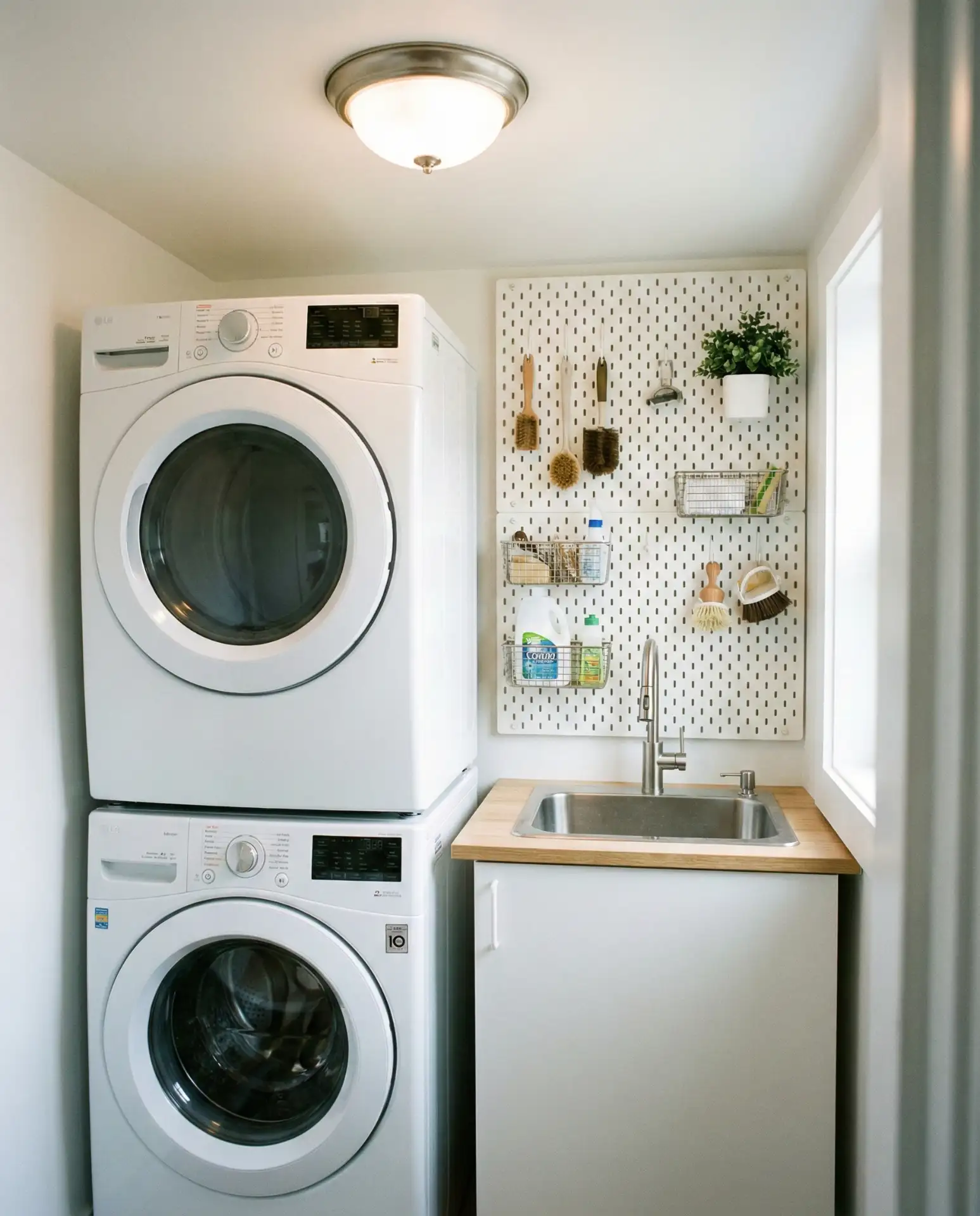
In coastal regions and humid climates like Florida and the Gulf Coast, the combination of good ventilation and accessible hanging storage helps prevent mildew on cleaning tools and wet items. Keep microfiber cloths, scrub brushes, and spray bottles clipped to hooks so they dry quickly between uses. The wall-mounted approach also makes it easy to wipe down surfaces since nothing sits directly on the counter or floor gathering dust and lint.
21. Folding Table That Flips Against the Wall
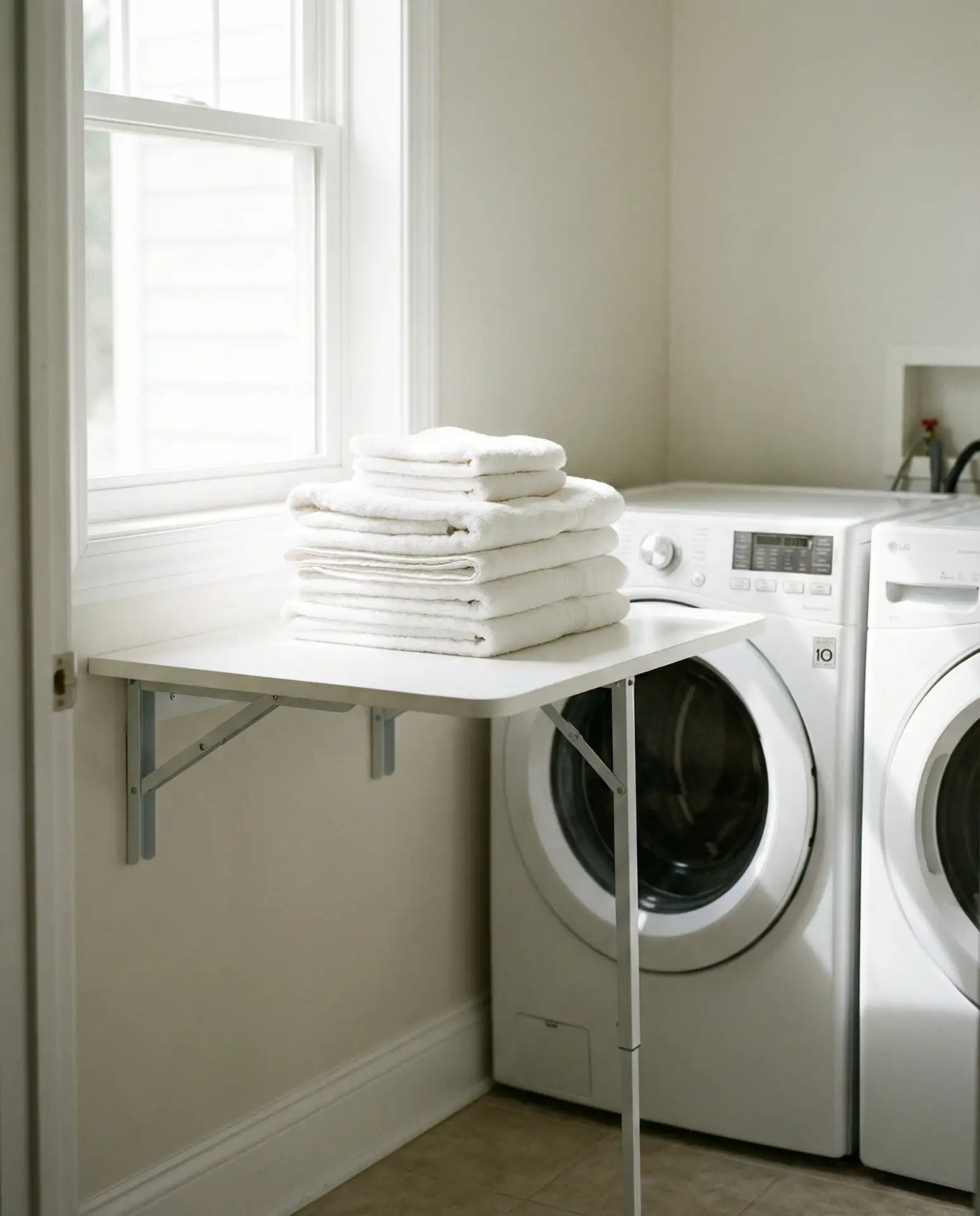
A wall-mounted folding table that drops down when you need it and folds up flush against the wall when you don’t is ideal for laundry rooms that also function as mudrooms or hallways. These tables typically measure 18 to 24 inches deep when extended and can span 36 to 48 inches wide, providing ample space for sorting and folding. Heavy-duty hinges and a supporting leg or chain keep the table stable under loads up to 75 pounds, while the folded position adds only 2 to 3 inches to the wall profile. Finish it to match your cabinetry or paint it a fun accent color.
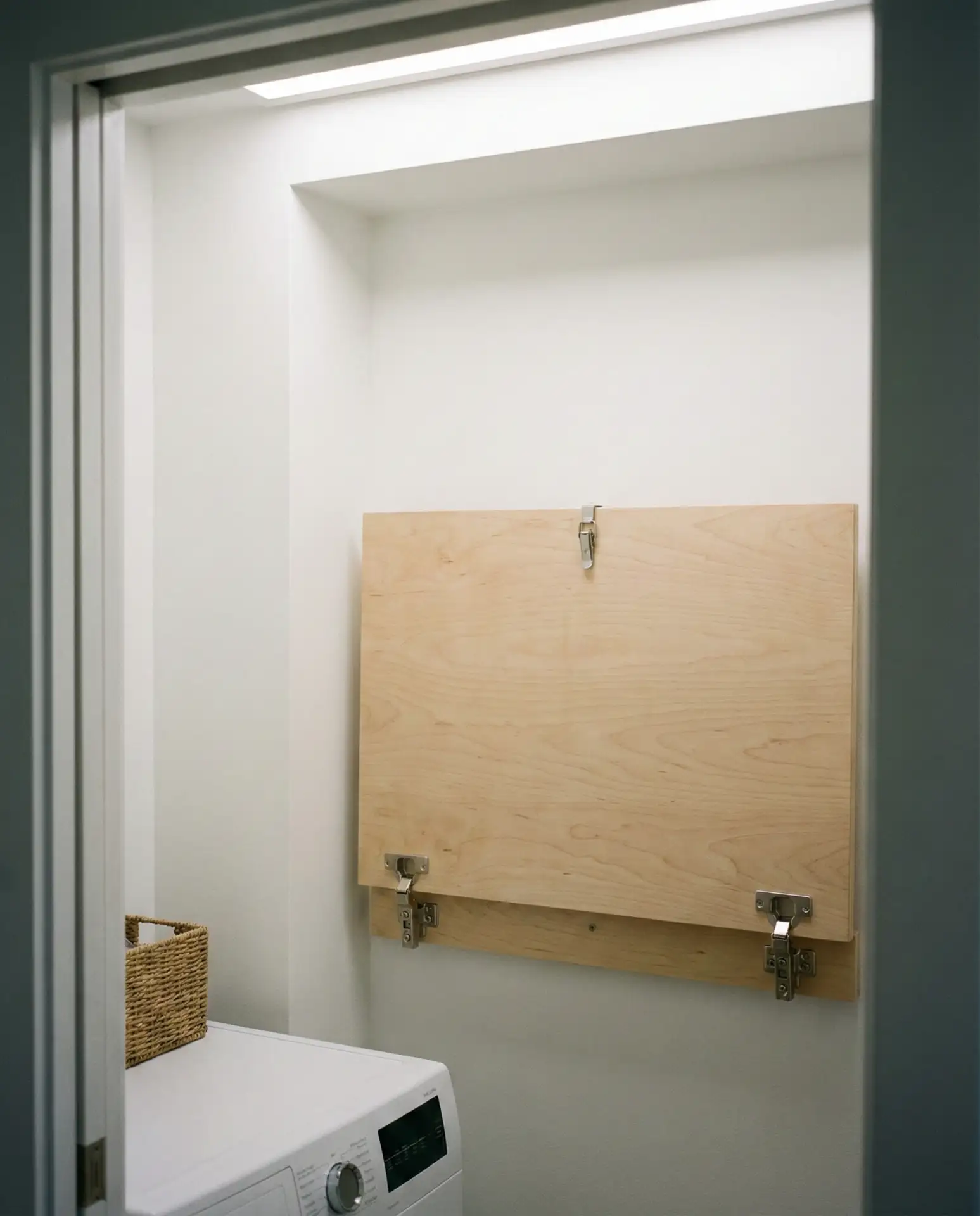
A neighbor of mine installed one of these in her laundry room that opens to the garage, and she uses it not just for laundry but as a temporary staging area for groceries, packages, and kids’ backpacks. The versatility justifies the $100 to $200 cost of materials and hardware. Make sure to mount it to wall studs using lag bolts, not just drywall anchors, to ensure it can handle daily use without pulling away from the wall.
22. Open Shelving with Organized Storage Baskets
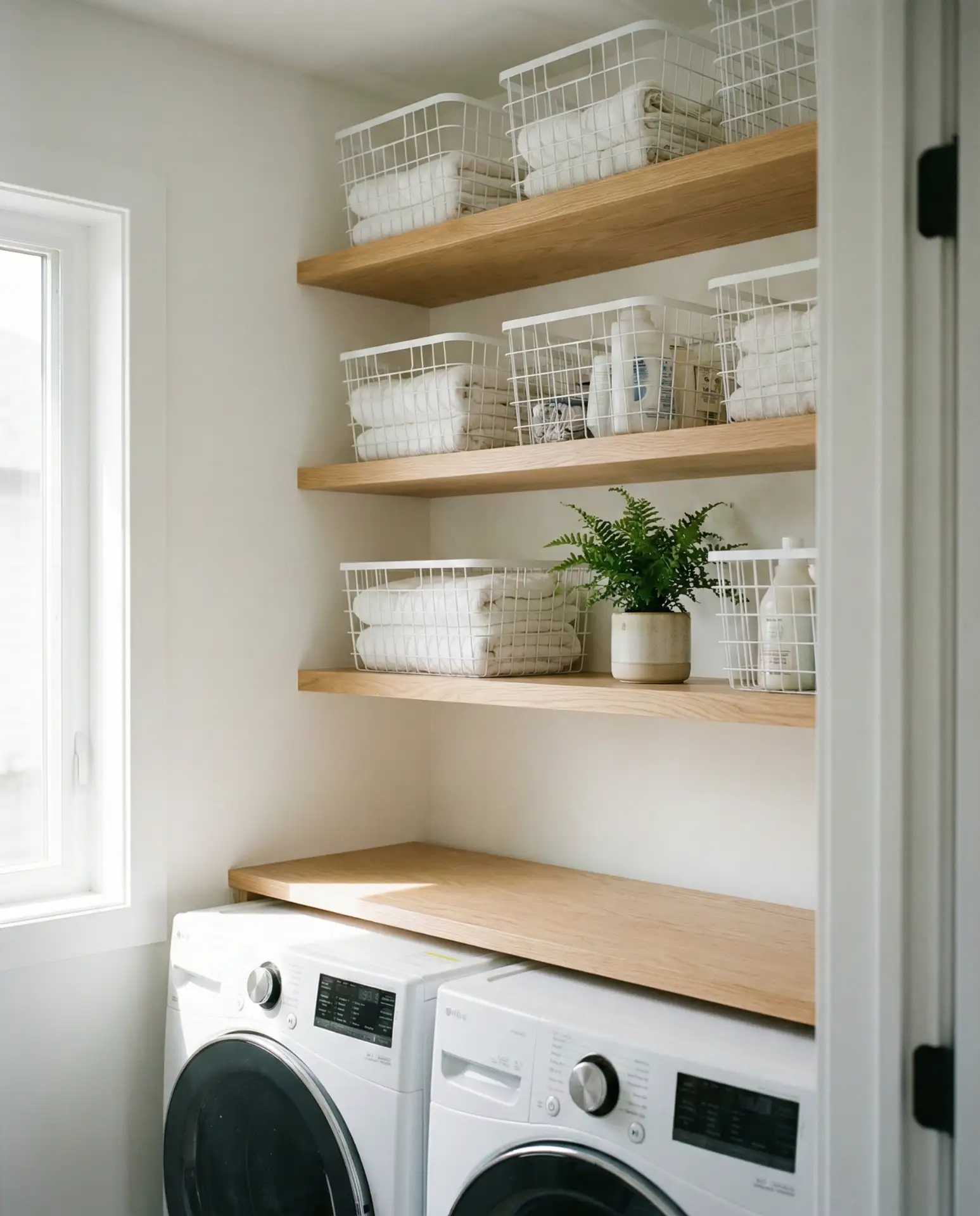
Open shelves lined with matching organization storage baskets create a clean, cohesive look while keeping supplies accessible and visible. Choose baskets in materials like seagrass, wire, or canvas that complement your room’s style, and label them for easy identification—think “Stain Removers,” “Dryer Sheets,” “Rags,” and “Spare Linens.” The open design prevents the stuffed, forgotten cabinet syndrome while still containing visual clutter. Position shelves 12 to 18 inches apart to accommodate various basket heights and leave enough space to comfortably pull them out when needed.
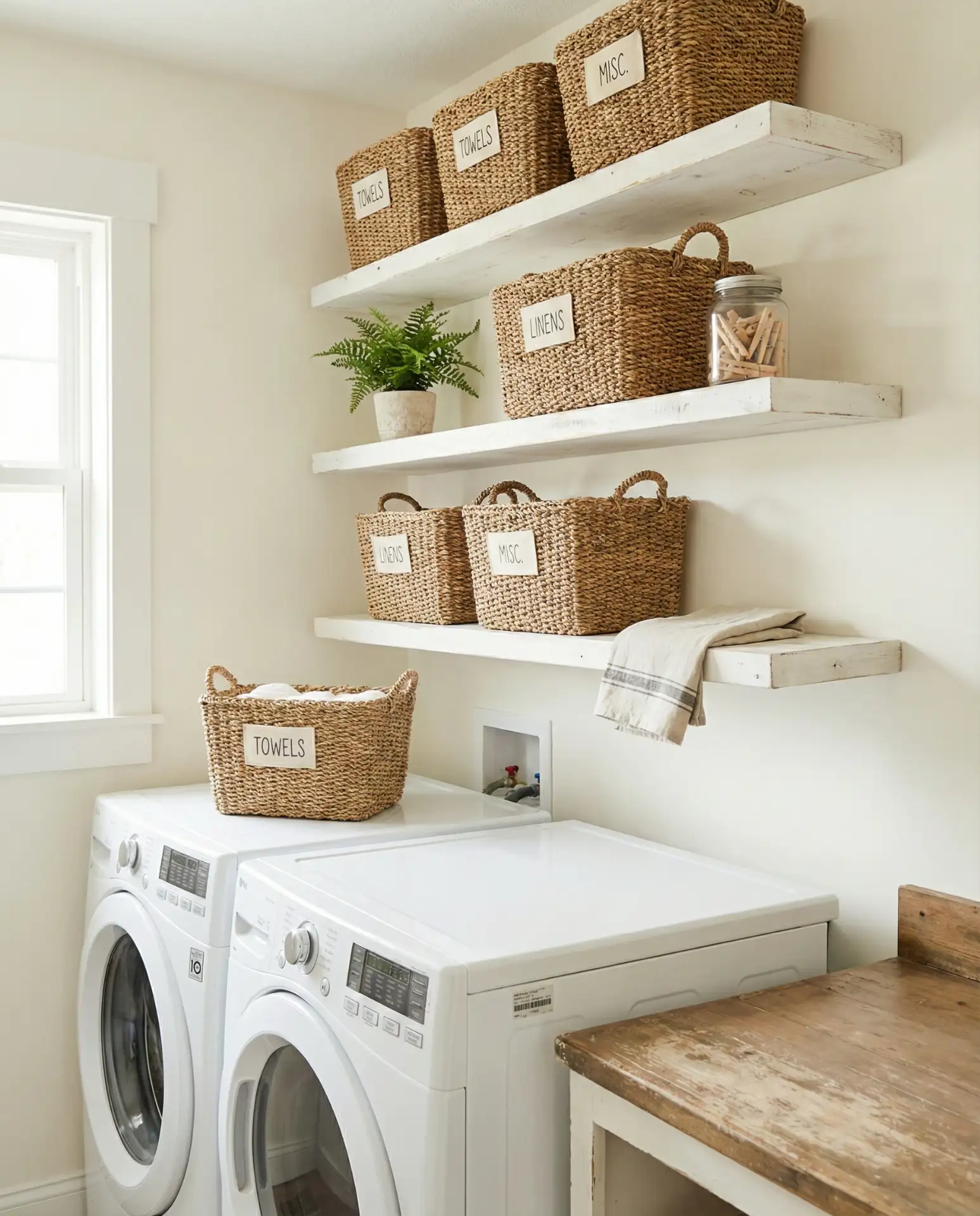
This setup is most successful when you commit to maintaining it—open shelves require more discipline than closed cabinets because everything is on display. That said, the visual accountability actually helps many people stay organized because clutter is immediately obvious. Budget around $80 to $150 for three to four shelves plus baskets, making this one of the more affordable ways to add substantial storage without major construction.
23. Closet Laundry with Pocket Doors
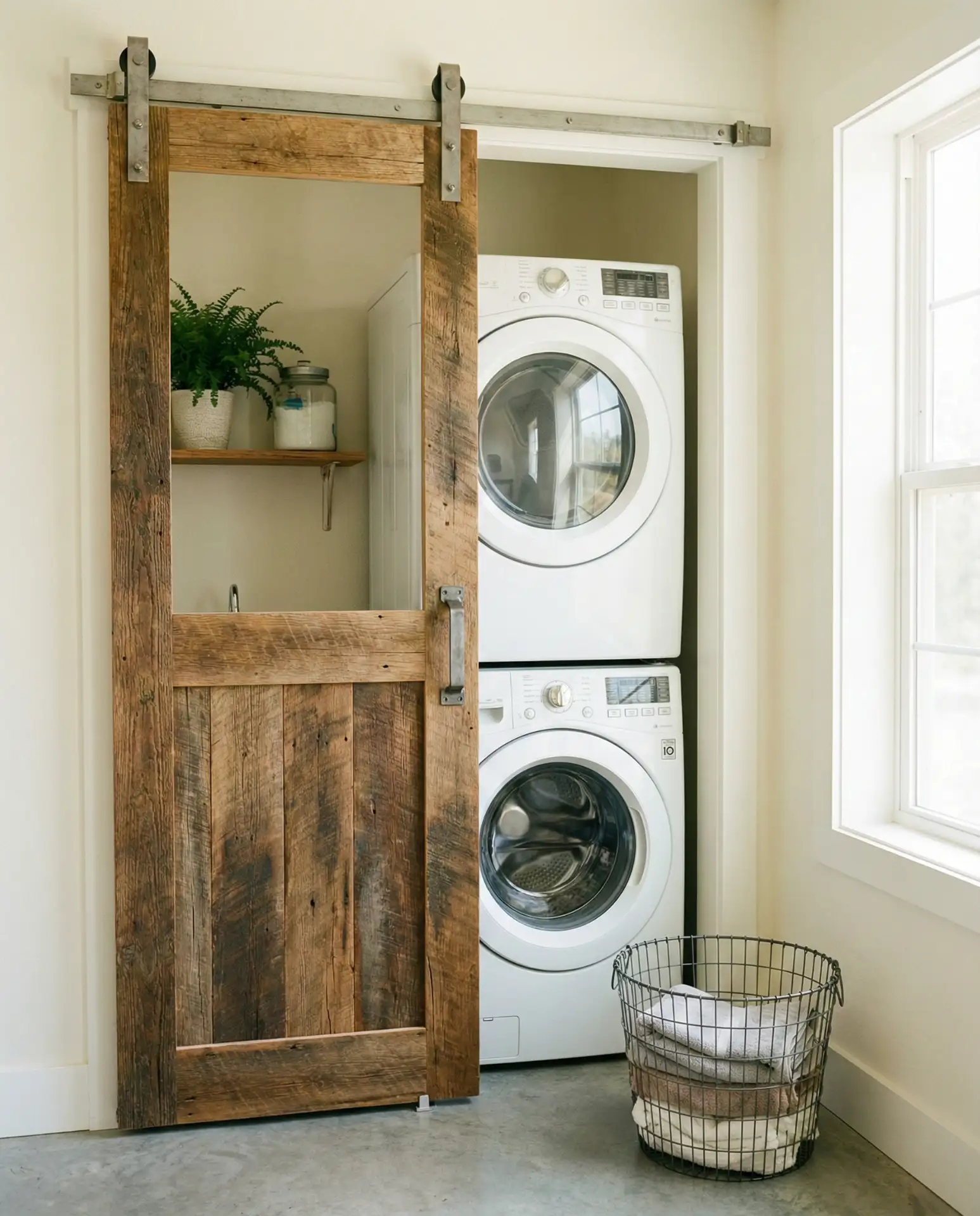
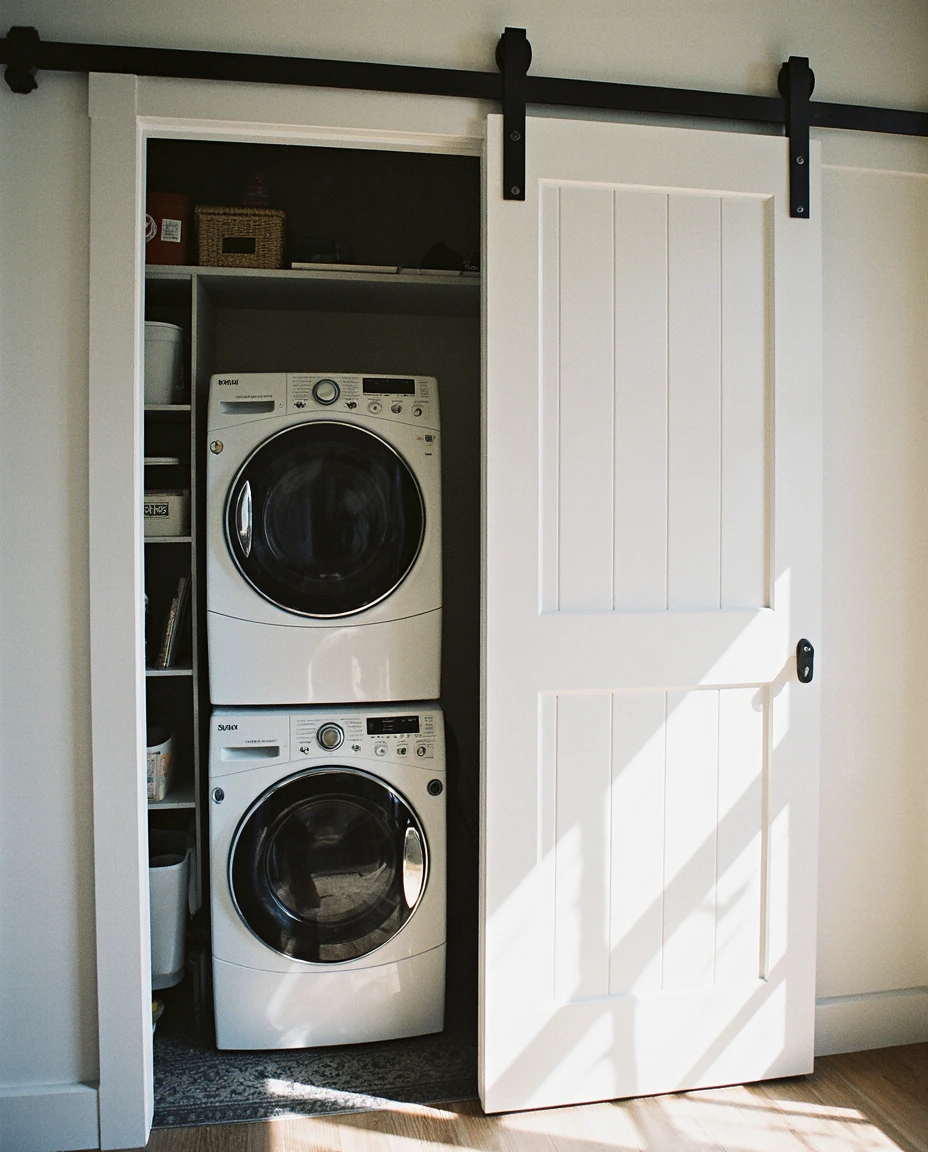
Converting a closet into a laundry area and installing pocket doors instead of traditional swing doors or bifolds maximizes the usable opening while maintaining a clean aesthetic when closed. Pocket doors slide into the wall cavity, completely disappearing and giving you full access to the interior without doors that protrude into the hallway. This is especially valuable in tight spaces where a swinging door would block traffic or reduce functionality. Modern barn-style hardware adds visual interest, or you can opt for concealed tracks for a seamless look.
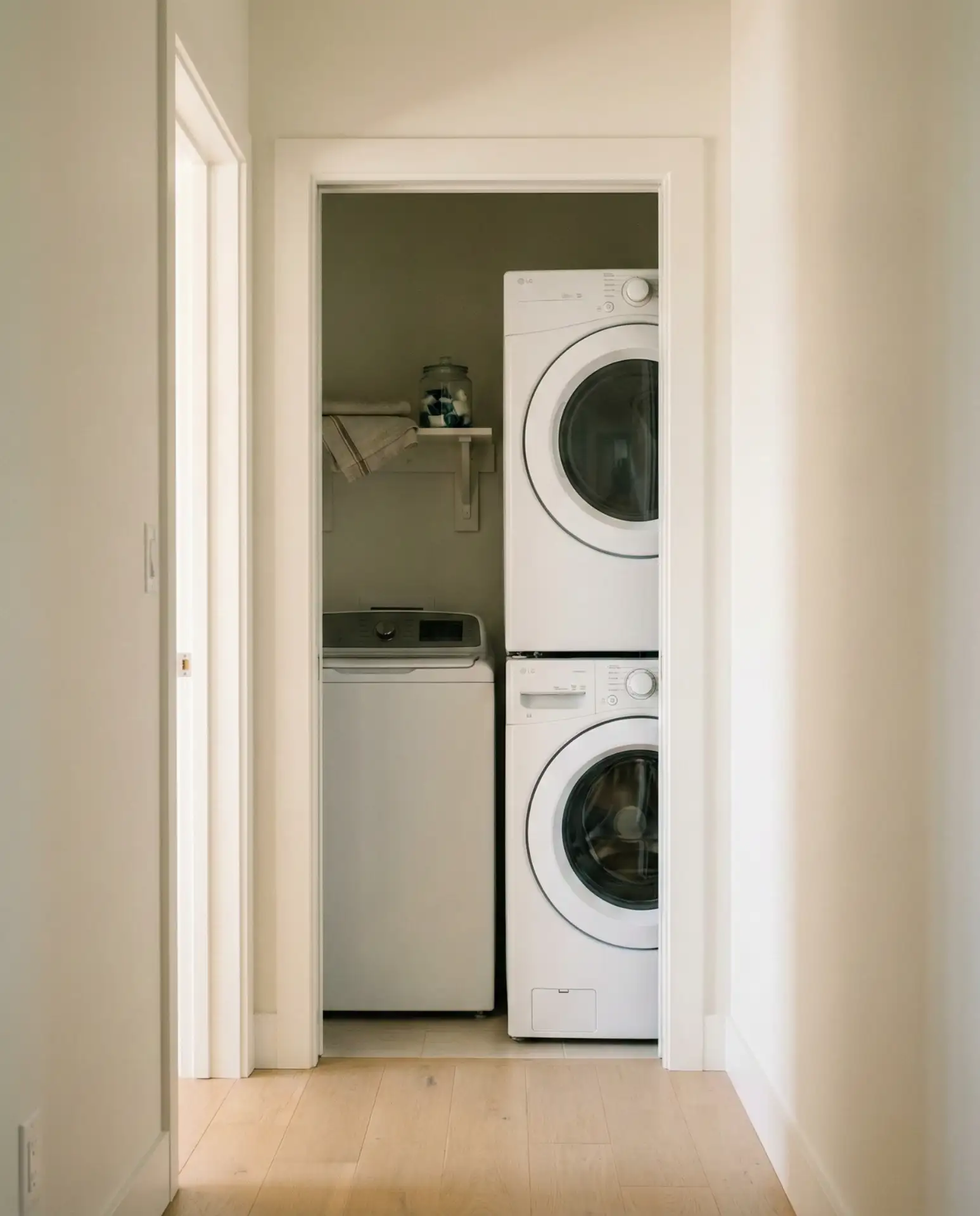
Common mistakes include trying to retrofit pocket doors into existing walls without verifying the wall cavity is clear of plumbing, electrical, or structural elements. Always consult a contractor or carefully inspect the wall before cutting. Installation costs run $300 to $800 depending on door style and whether you need to modify the wall framing. The investment is worthwhile in homes where every inch of hallway or living space counts, particularly in urban condos and townhomes.
Conclusion
These small laundry room ideas prove that limited square footage doesn’t mean limited possibilities. Whether you’re working with a closet conversion, a garage corner, or a dedicated utility space, the right combination of smart storage, thoughtful layout, and personal style can turn laundry from a dreaded chore into a manageable part of your routine. Take what works for your space, adapt it to your needs, and don’t be afraid to mix ideas to create something uniquely suited to your home. Share your favorite approach or your own creative solutions in the comments below—we’d love to hear what’s working in your laundry room.