Staircases are no longer just functional transitions between floors—they’ve become statement pieces that define a home’s character. In 2026, American homeowners are turning to Pinterest for fresh ways to reimagine these architectural features, whether updating a cramped entryway, opening up a dark corner, or adding personality to a builder-grade split-level. From dramatic floating treads to cozy carpeted runners, the staircase has emerged as one of the most exciting canvases for creativity. This guide walks you through inspiring ideas that blend style, practicality, and the kind of visual impact that makes you stop scrolling.
1. Under-Stair Storage Nook with Built-In Shelving
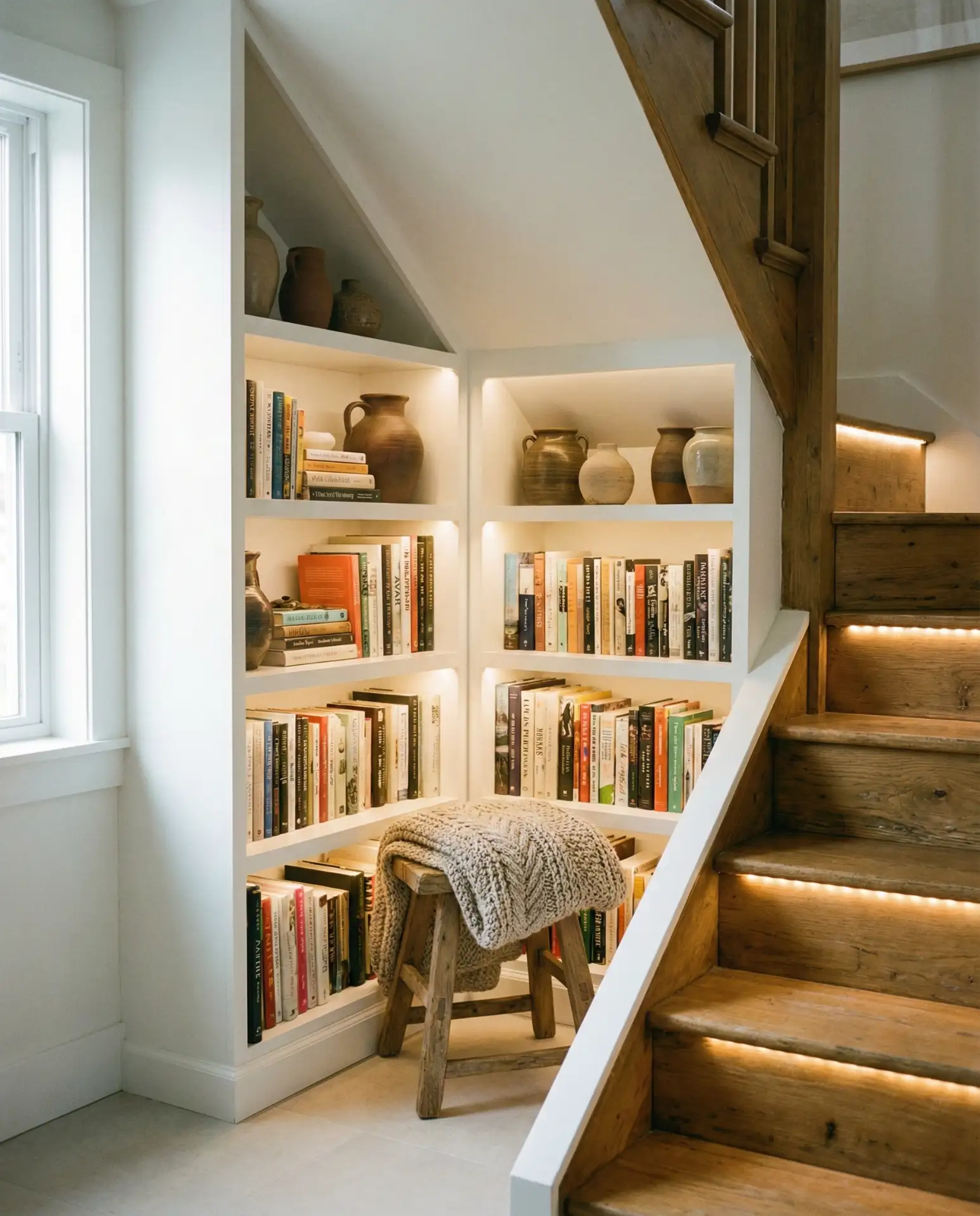
Transforming the under-stair void into a library wall or display nook is one of the smartest moves for homes with narrow footprints. Instead of leaving that triangular space dark and forgotten, install floor-to-ceiling shelves with integrated LED strips. Paint the interior a warm white or soft gray to contrast with wooden treads above, and suddenly you have both storage and a focal point that anchors your entry.
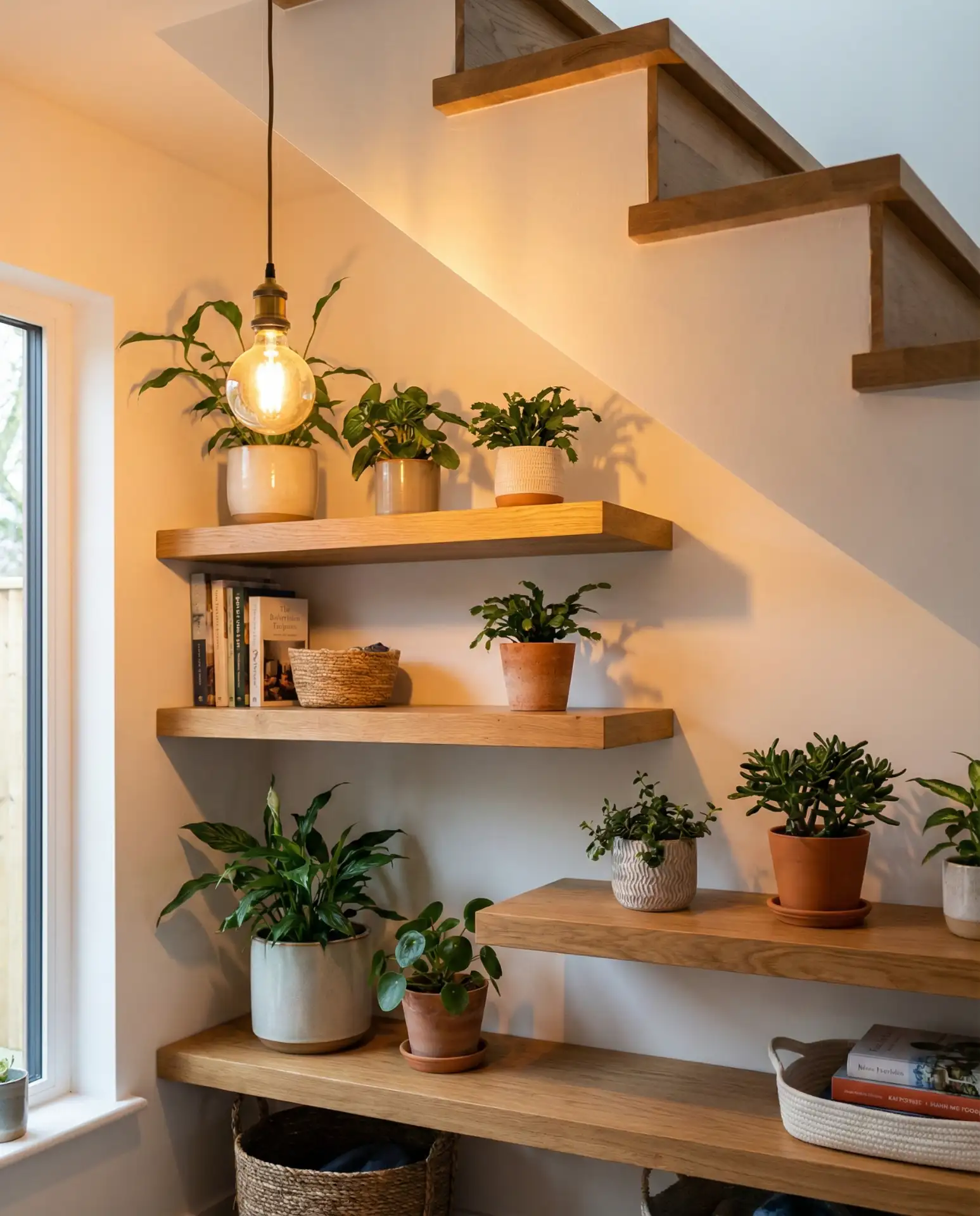
This setup works best in open-plan layouts where the staircase sits near the living room or kitchen. The biggest mistake homeowners make is overcrowding the shelves—keep it curated with books, a few decorative objects, and breathing room. Too much clutter defeats the purpose and makes the space feel chaotic rather than intentional.
2. Open Riser Staircase with Metal Stringers
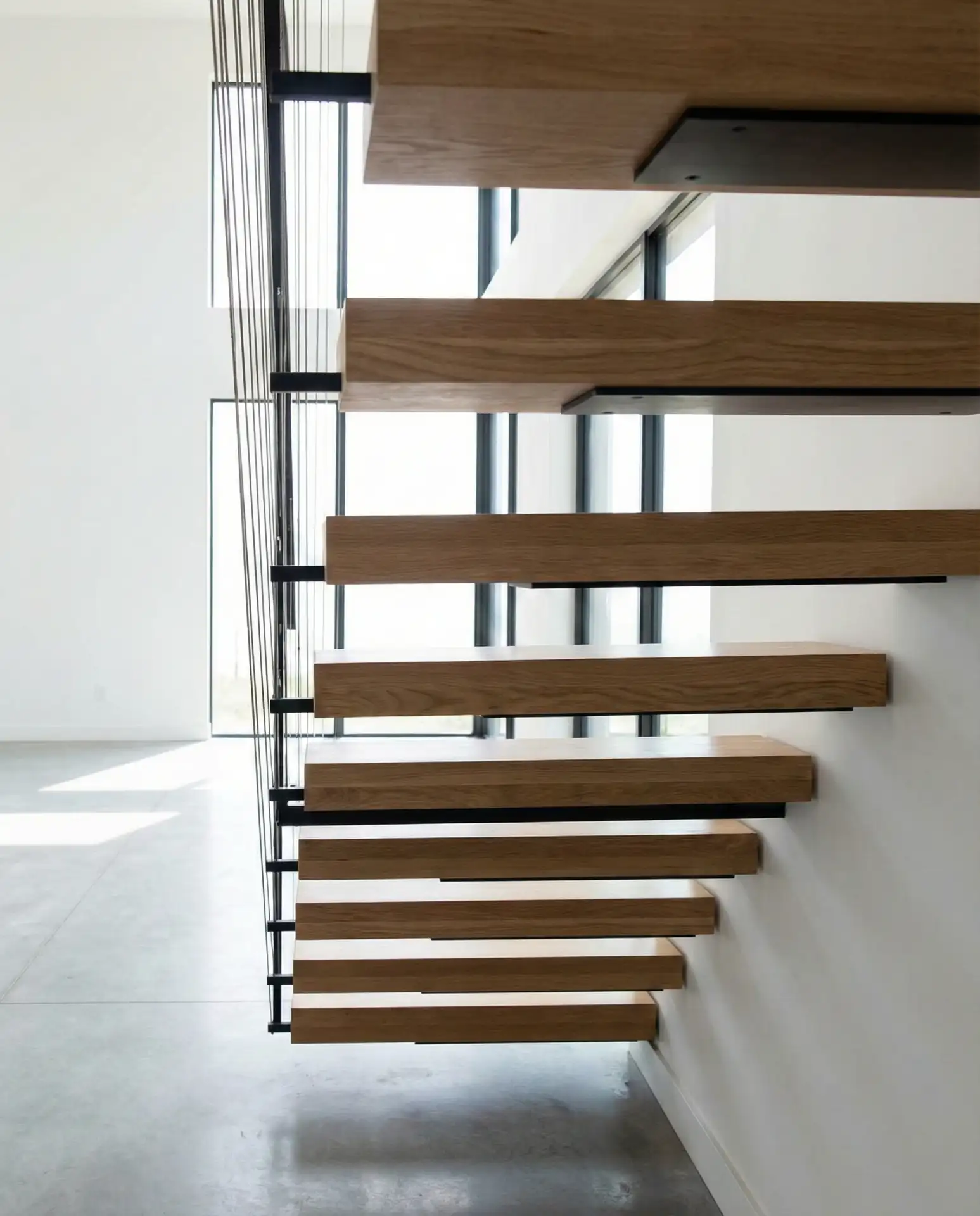
Open riser designs have dominated Pinterest boards for good reason: they let light flow through and make tight spaces feel twice as large. Pairing oak or walnut treads with blackened steel stringers creates an industrial-meets-organic look that suits lofts, modern farmhouses, and even renovated Victorian row homes. The key is balancing the raw metal with warm wood grain so the staircase doesn’t feel cold or overly minimal.
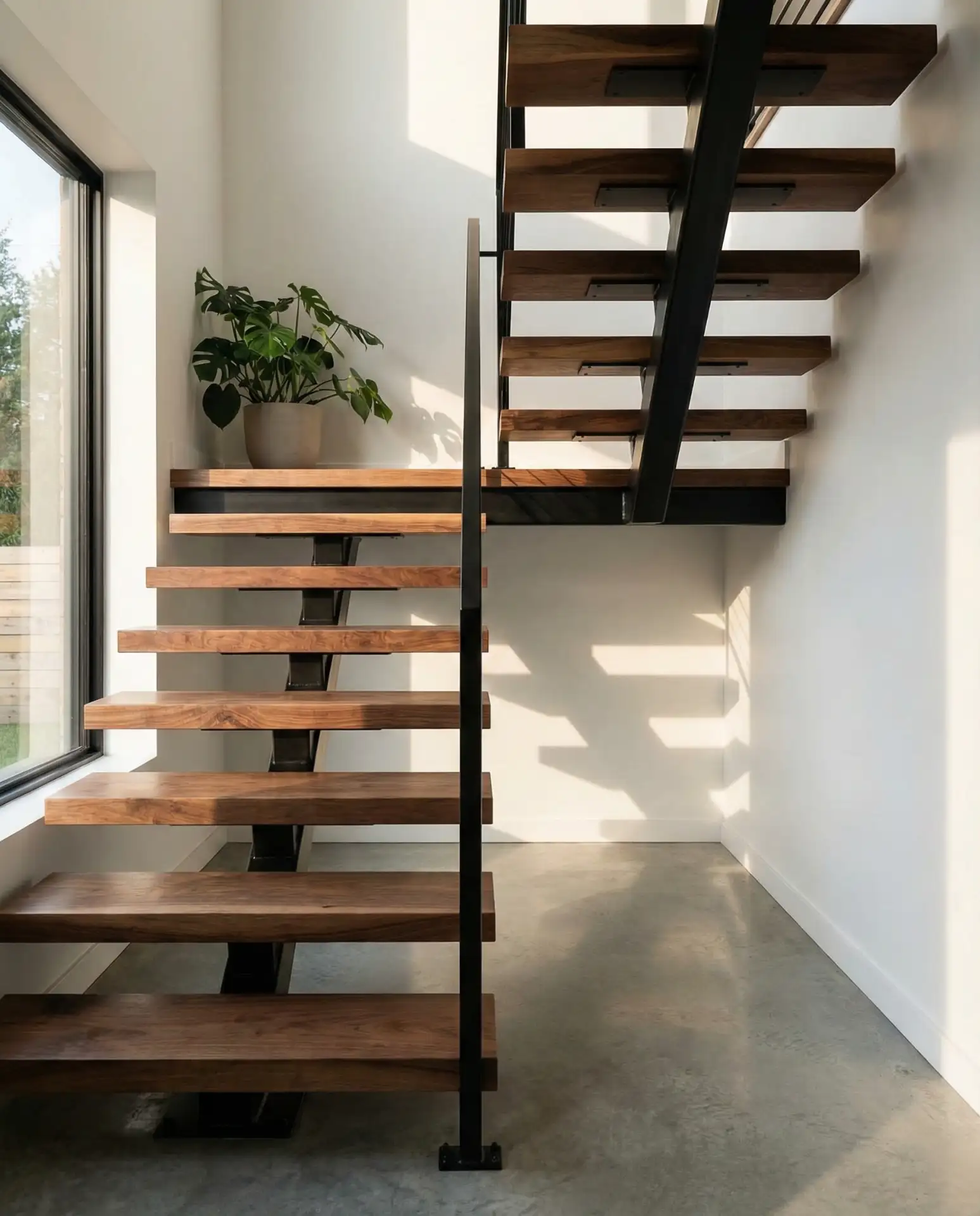
Open risers work beautifully in homes with high ceilings or where natural light is limited. One neighbor in Austin swapped her closed staircase for this style and immediately noticed how much brighter her hallway felt, even on cloudy days. Just be mindful if you have small children or pets—gaps between treads can be a safety concern until kids are older.
3. Enclosed Staircase with Paneled Wainscoting
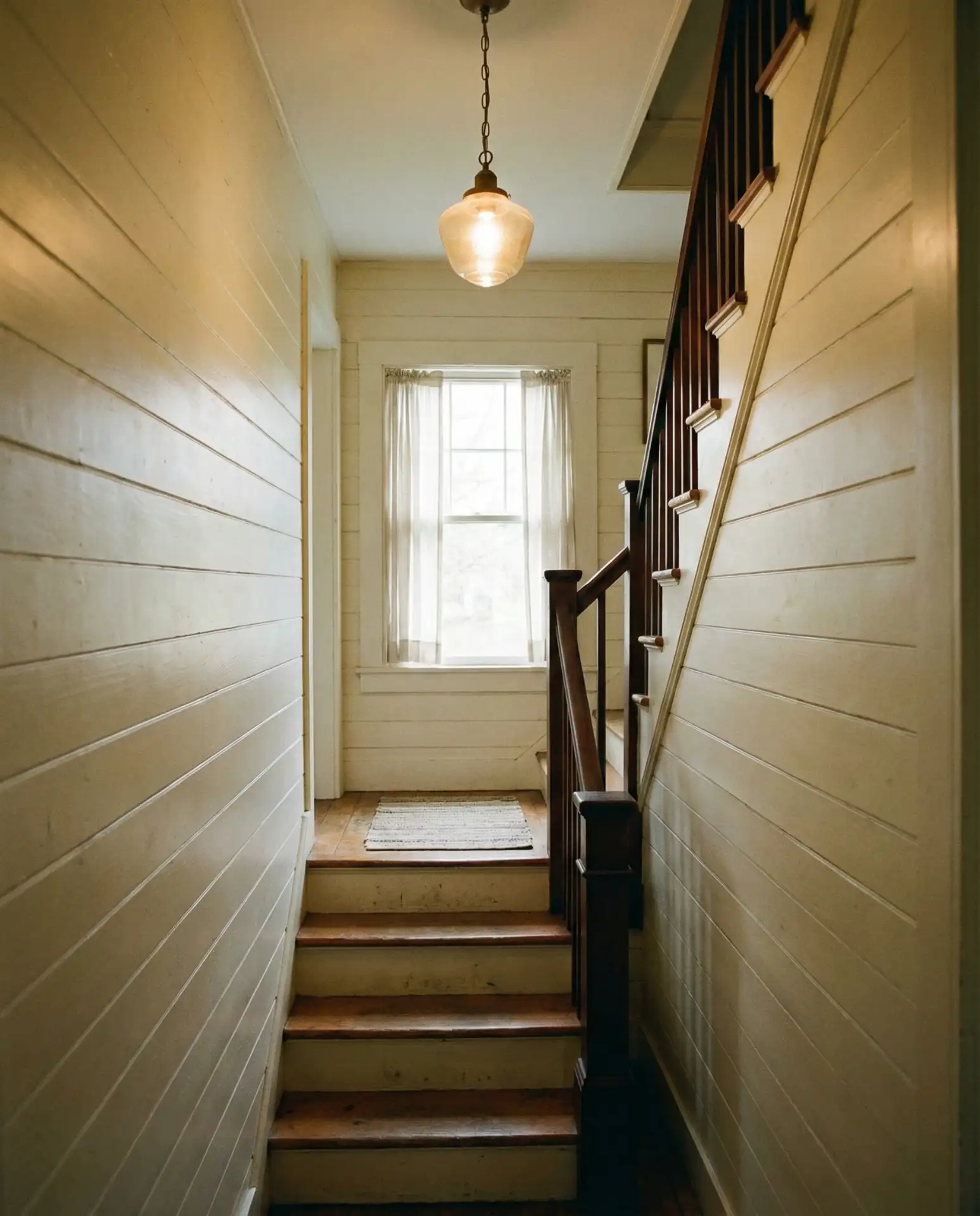
If privacy and sound control matter more than sightlines, an enclosed staircase brings timeless elegance. Adding board-and-batten or shiplap wainscoting along the walls transforms a plain corridor into something magazine-worthy. Choose a soft sage or navy for the panels and keep the trim crisp white. This approach feels especially at home in cottage or coastal interiors where texture and layering define the aesthetic.
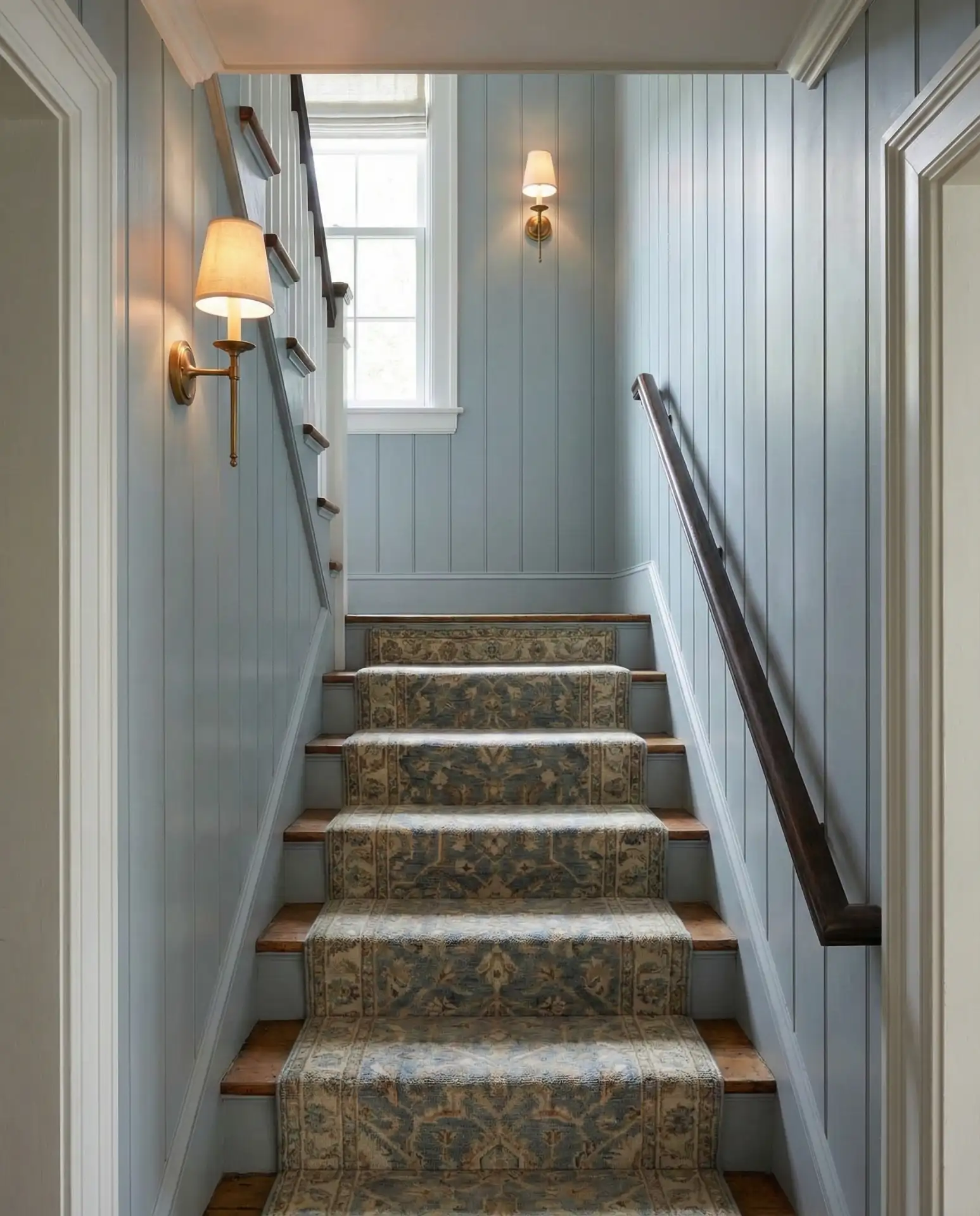
Expect to budget around $1,200–$2,500 for materials and labor if you’re hiring a carpenter, though handy DIYers can cut that cost significantly with pre-primed MDF panels. The payoff is a staircase that feels custom and considered, not like an afterthought.
4. Spiral Staircase with Powder-Coated Steel
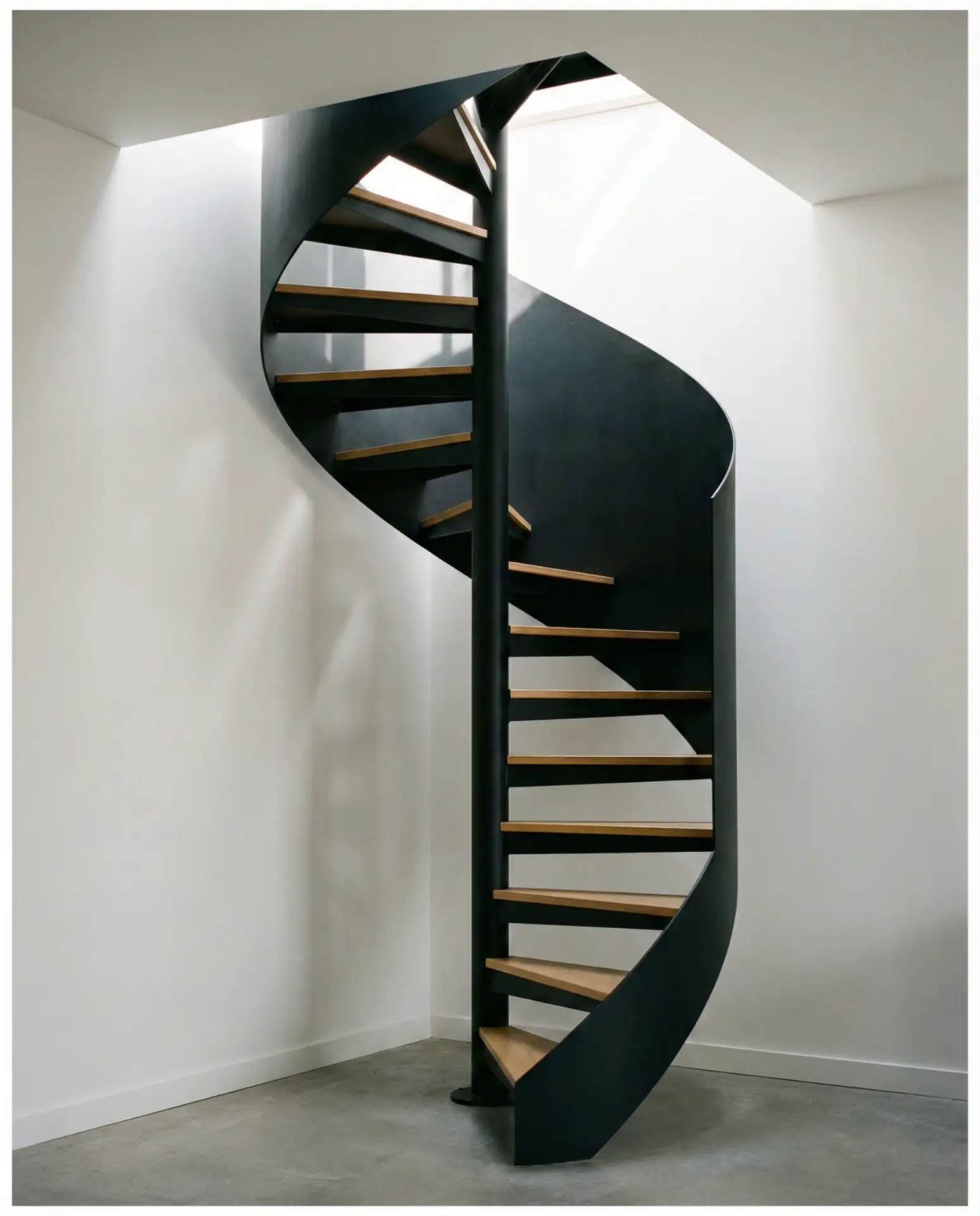
When square footage is precious, a spiral staircase offers a sculptural solution that takes up minimal floor space. Modern versions in matte black or charcoal gray powder coat feel sleek and architectural, especially when paired with wood treads or even perforated metal steps. They’re ideal for accessing lofts, attic conversions, or bonus rooms where a full straight run would eat into valuable living area.
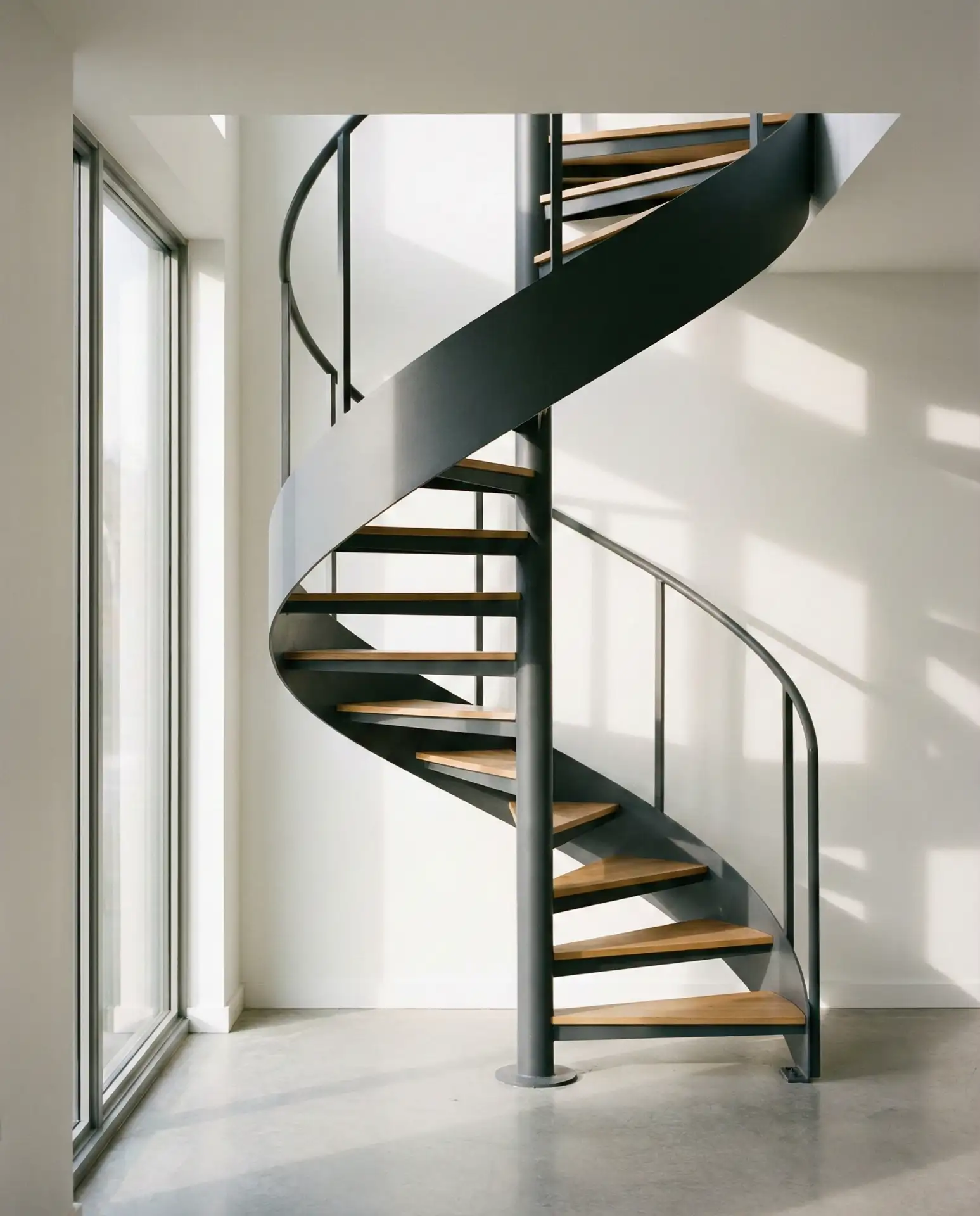
Spiral stairs shine in urban condos, tiny homes, and renovated industrial buildings. One common pitfall is choosing a diameter that’s too narrow—anything under 48 inches can feel cramped and difficult to navigate with furniture. Stick with a 60-inch diameter if your ceiling height and layout allow.
5. Floating Staircase with Tempered Glass Railing
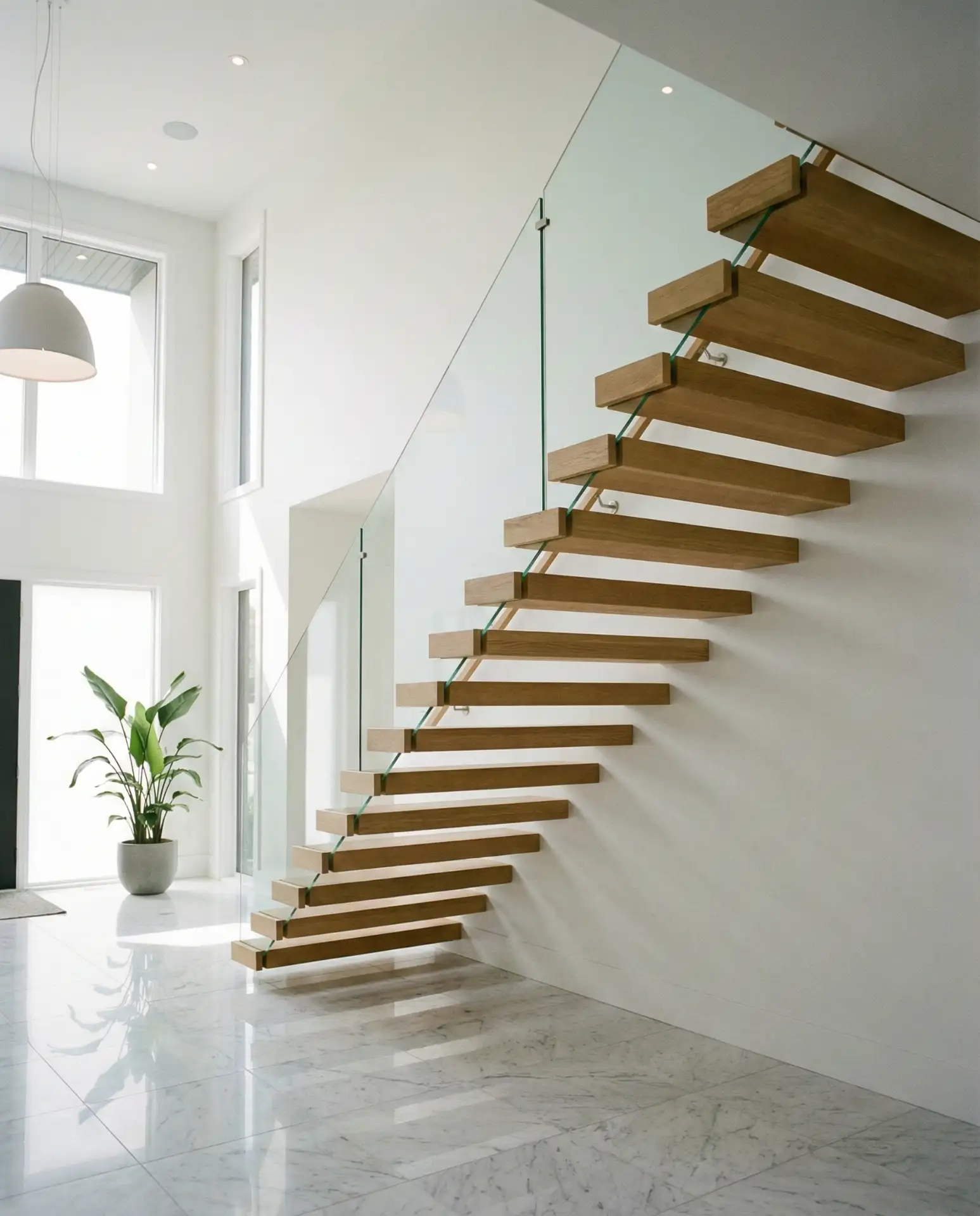
Nothing says modern luxury quite like a floating staircase with glass panels that vanish into the background. The treads appear to hover, anchored invisibly into the wall, while frameless glass guards the edge without blocking sightlines. This design floods adjacent rooms with light and creates a sense of openness that’s hard to achieve with traditional railings.
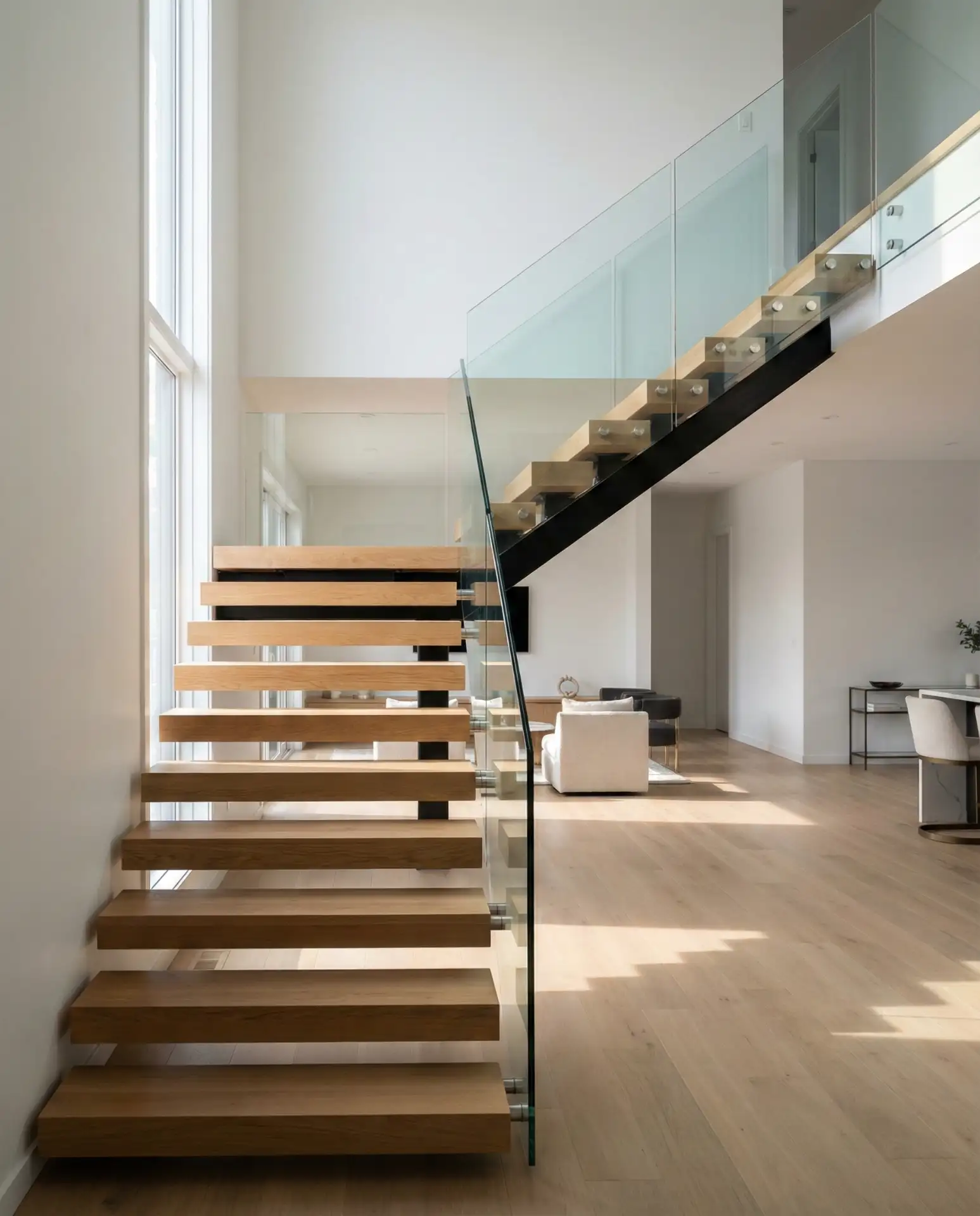
These installations are an investment—expect $15,000–$30,000 depending on materials and structural requirements. But in open-plan homes where the staircase is visible from the kitchen or living room, the visual impact and resale appeal often justify the cost.
6. Curved Staircase with Wrought Iron Balusters
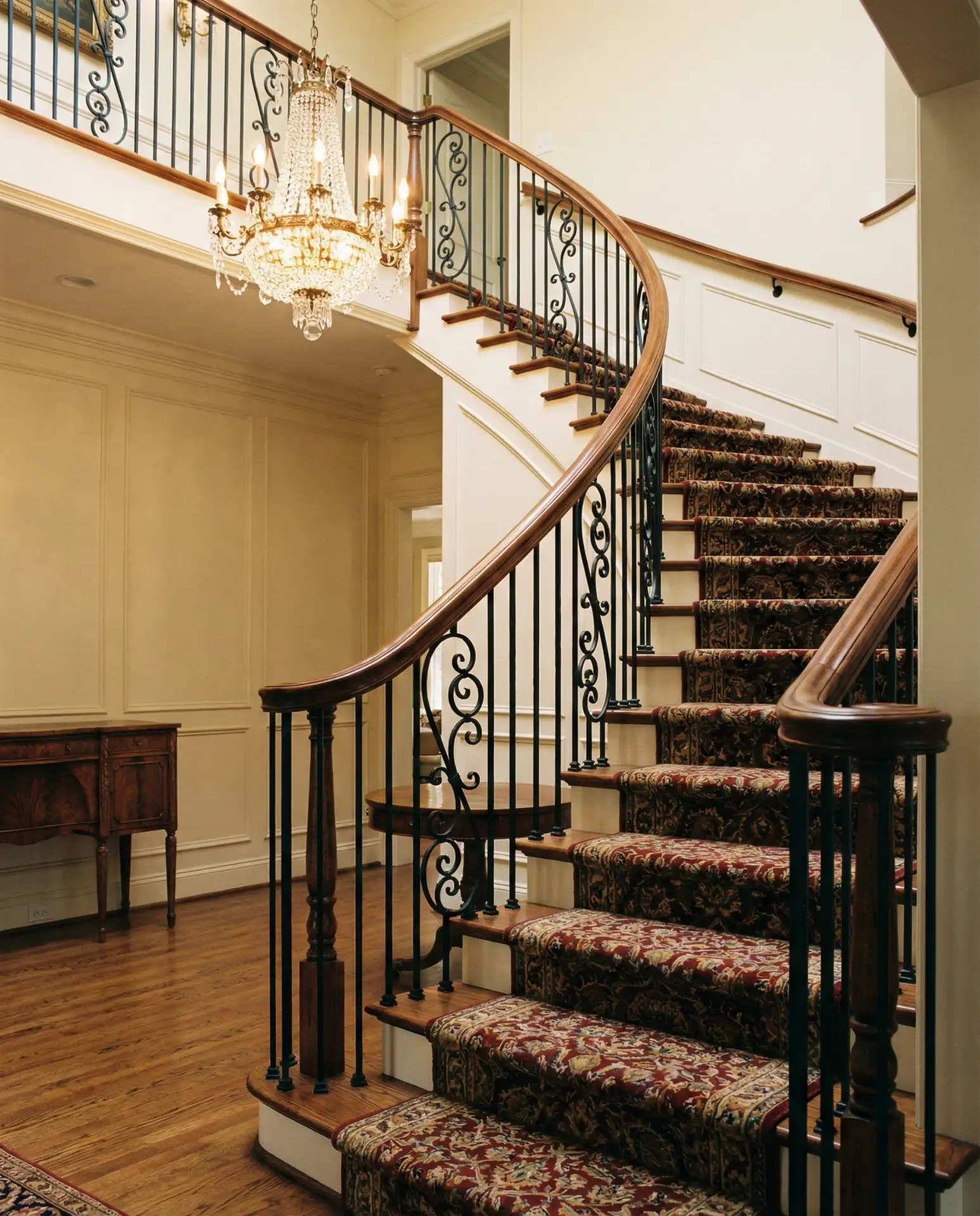
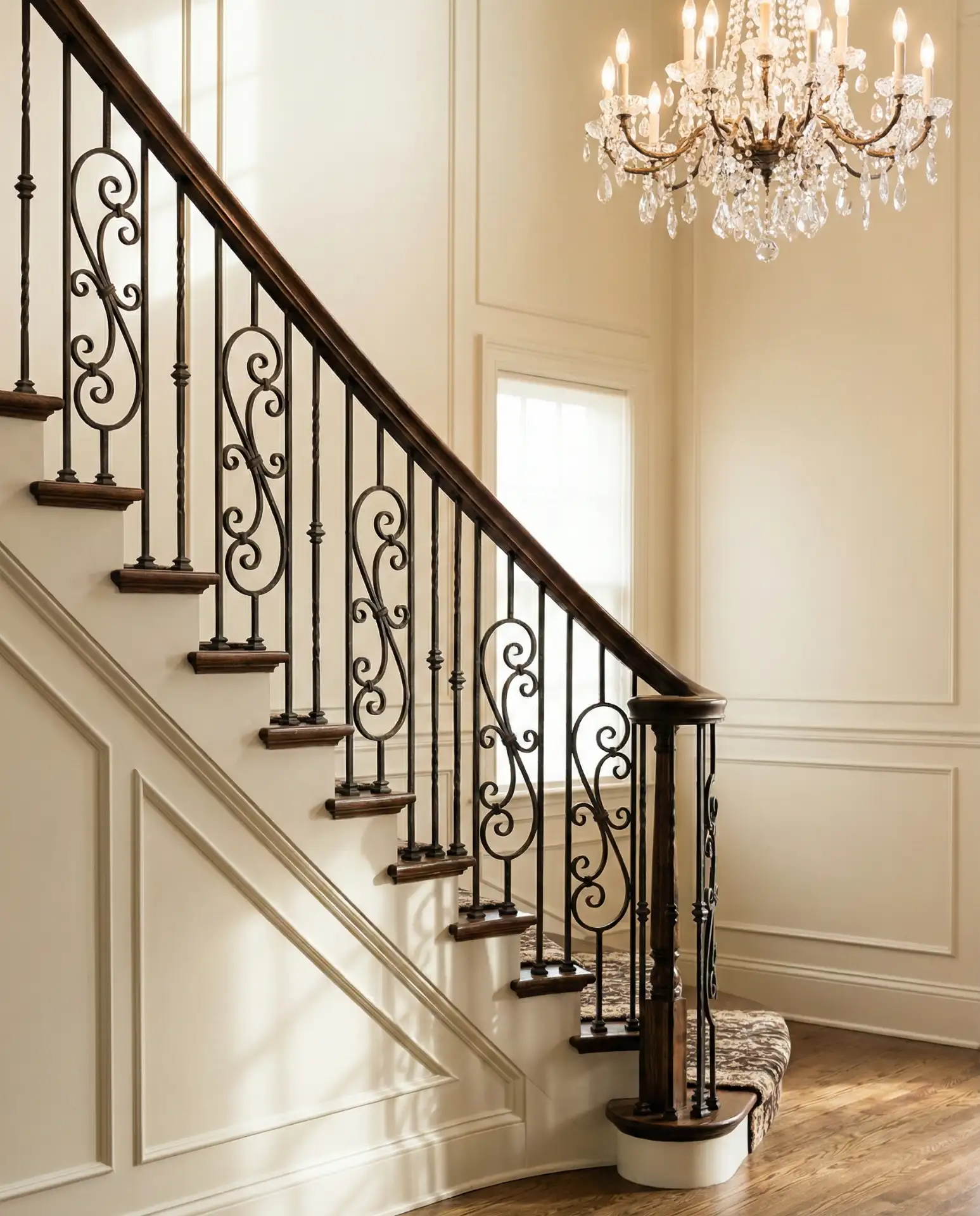
A gently curved staircase adds grace and flow to grand entryways, especially in Southern colonials or reimagined Victorian homes. When you swap builder-grade spindles for custom wrought iron balusters—think twisted or hammered finishes—the staircase becomes the centerpiece of the foyer. Pair it with a mahogany handrail and carpeted runner in a subtle pattern to soften acoustics and add warmth.
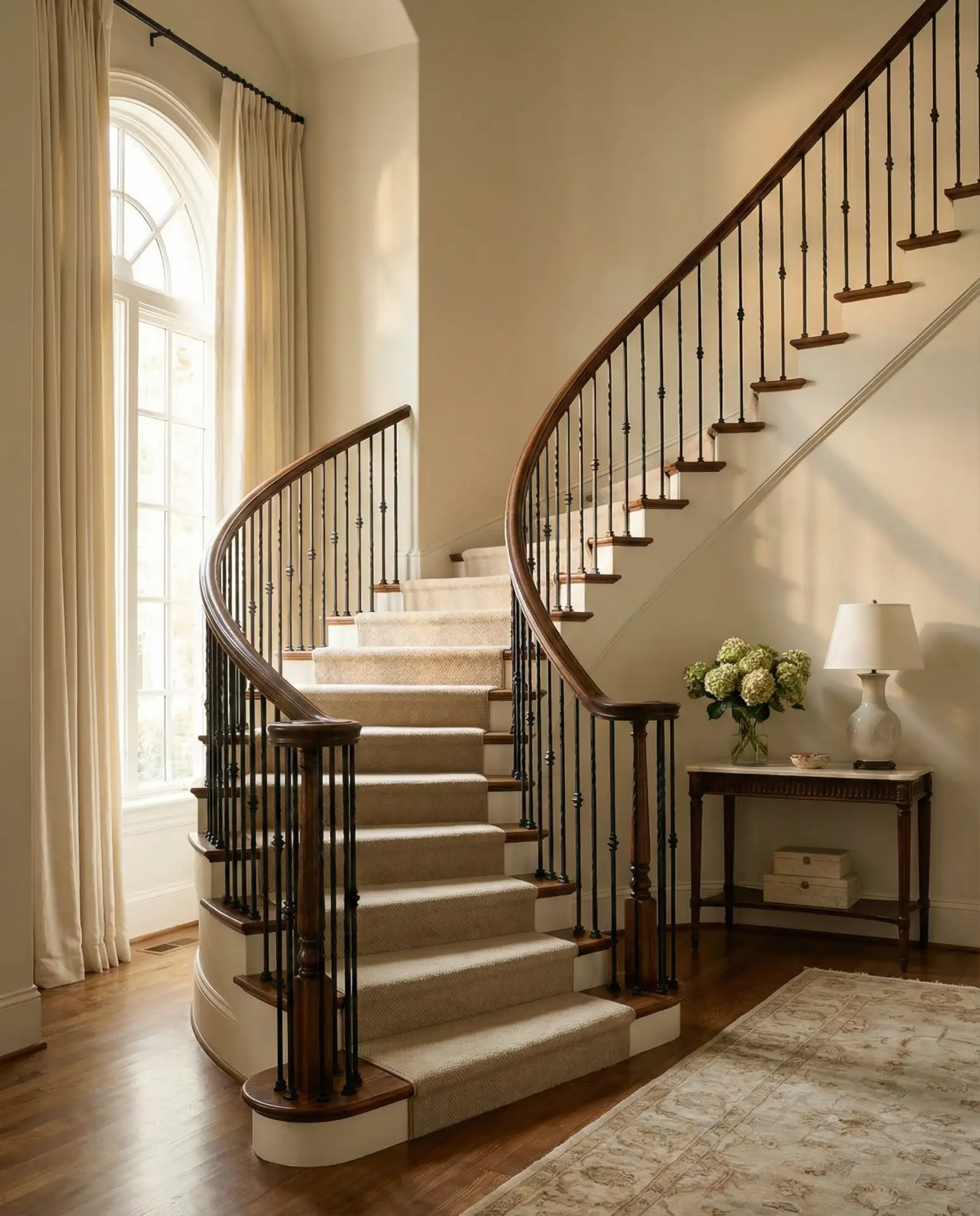
From an expert perspective, curved staircases require precise carpentry and often custom millwork, so they’re best suited to new builds or major renovations. If you’re working with an existing straight run, consult a structural engineer before attempting a curve—it’s not always feasible without significant framing changes.
7. Narrow Enclosed Staircase with Bold Wallpaper
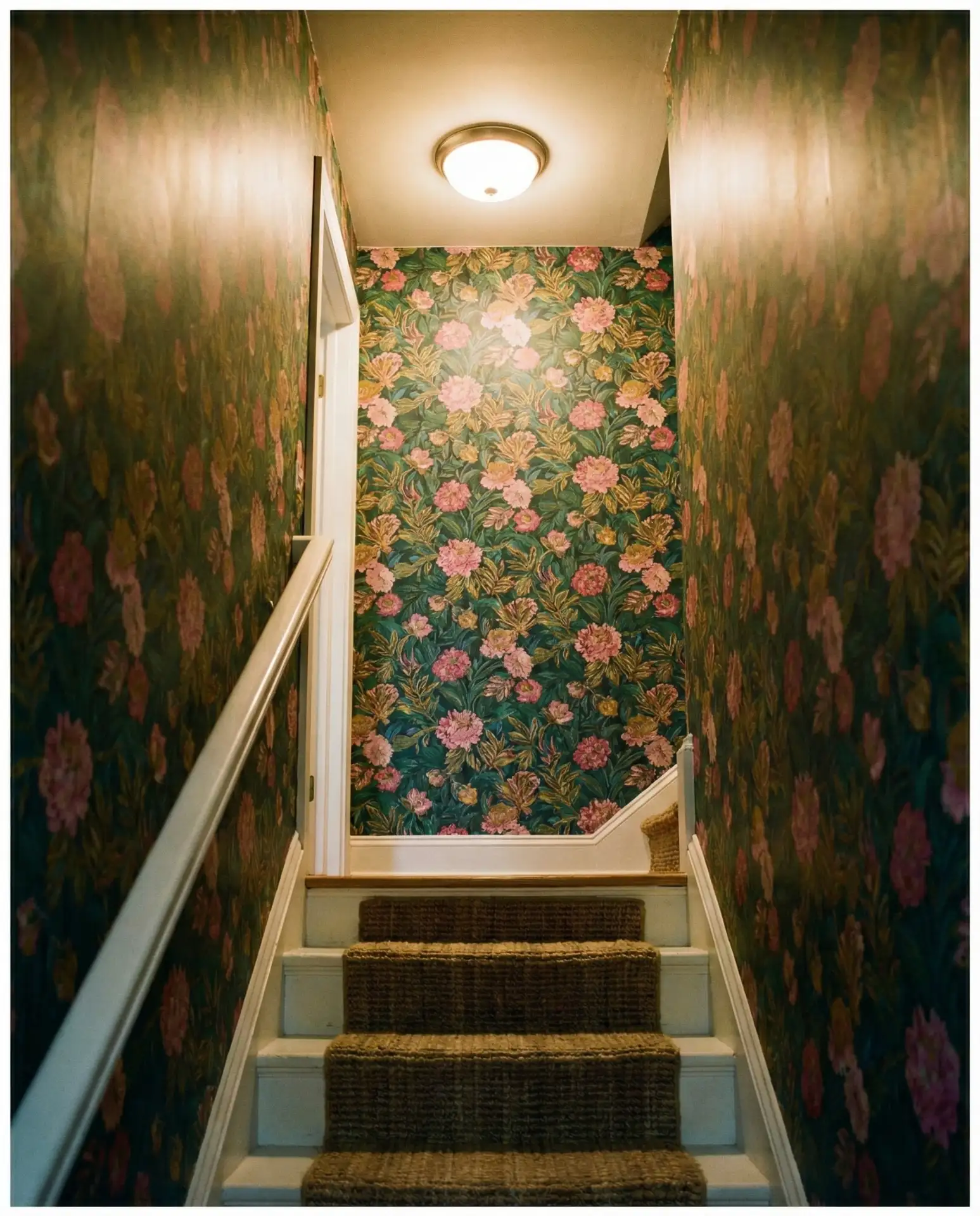
When you’re stuck with a narrow enclosed stairwell that feels like a tunnel, bold wallpaper can transform it into a design moment. Choose a large-scale botanical print, geometric pattern, or even a mural-style landscape. The key is committing fully—half measures read as cluttered. Keep the handrail and trim in a neutral tone so the pattern takes center stage without overwhelming the space.
A designer in Charleston once papered a client’s cramped stairwell in a deep navy palm print, and the homeowner said it felt like walking through a secret garden every time she went upstairs. The confined space actually amplified the drama instead of making it feel smaller.
8. Dark-Stained Staircase with Contrasting White Risers
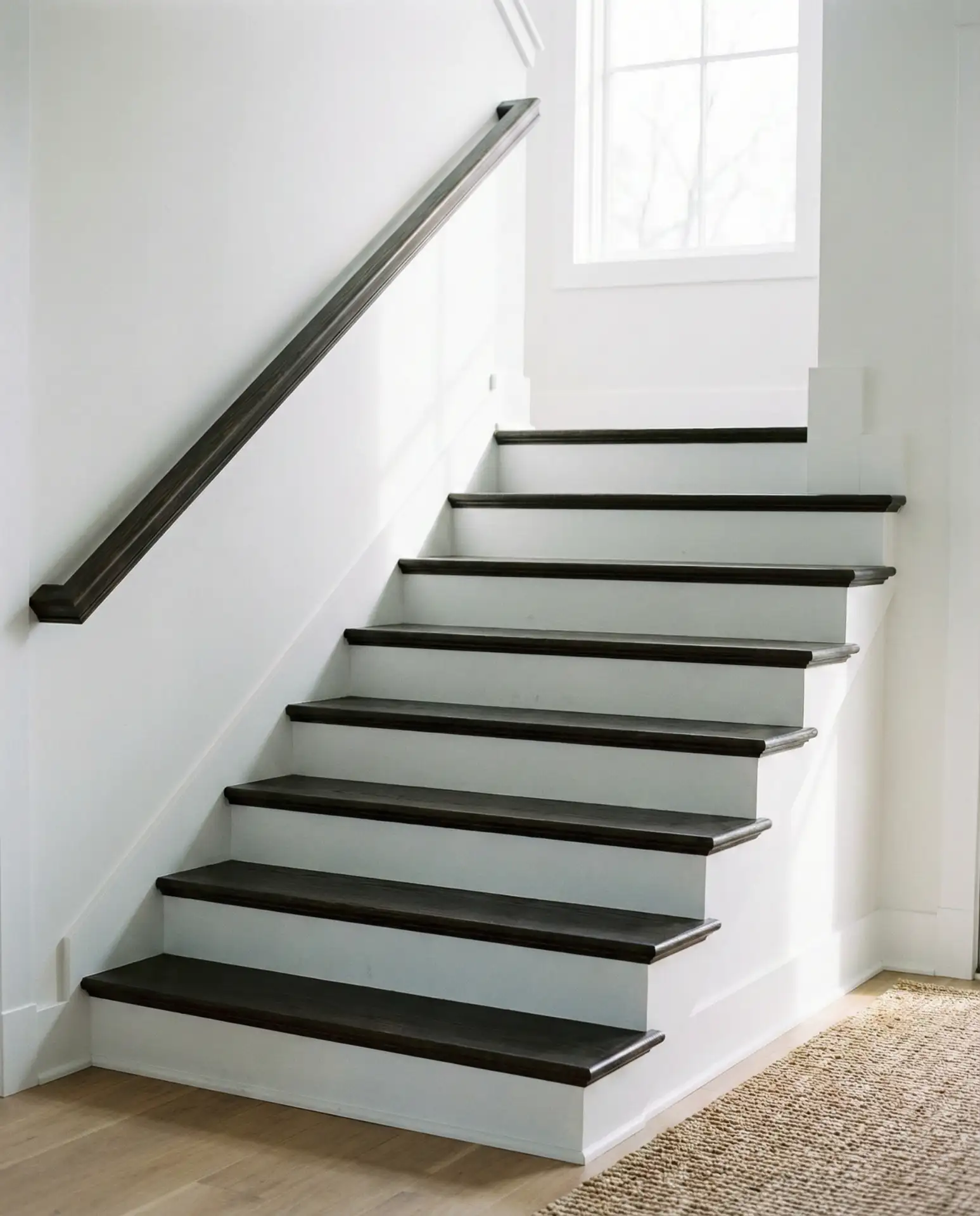
Staining treads in espresso or ebony while painting risers crisp white creates a high-contrast look that’s both classic and current. This two-tone approach works beautifully in homes with dark hardwood floors or where you want the staircase to anchor the space visually. It’s a relatively affordable update that delivers outsized impact, especially when paired with a wooden handrail in a matching stain.
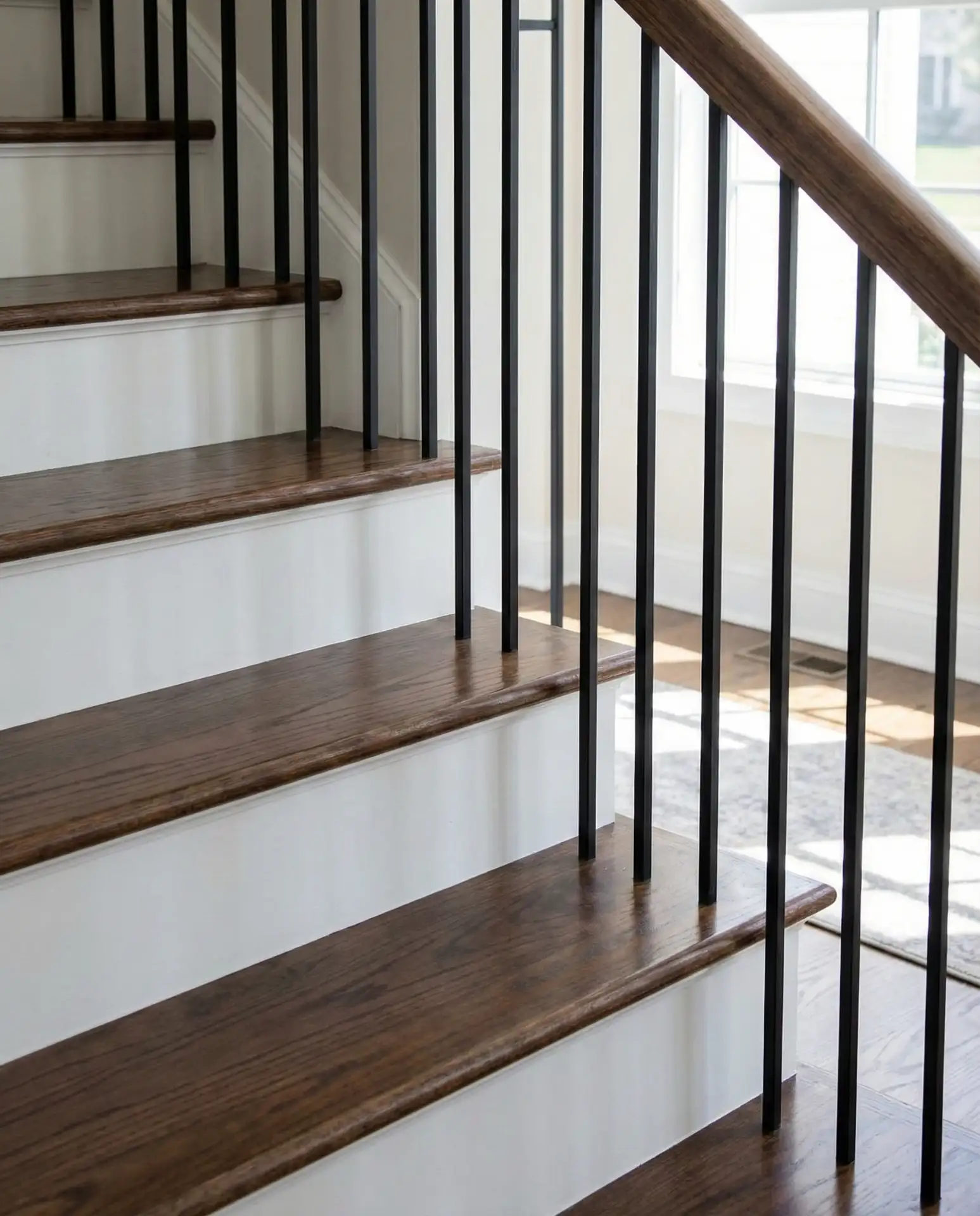
Expect to spend around $800–$1,500 if you hire a painter and refinisher, or about $300–$500 if you tackle it yourself over a long weekend. The hardest part is sanding the treads evenly, but the finished result looks custom and high-end.
9. Split-Level Entry Staircase with Built-In Bench
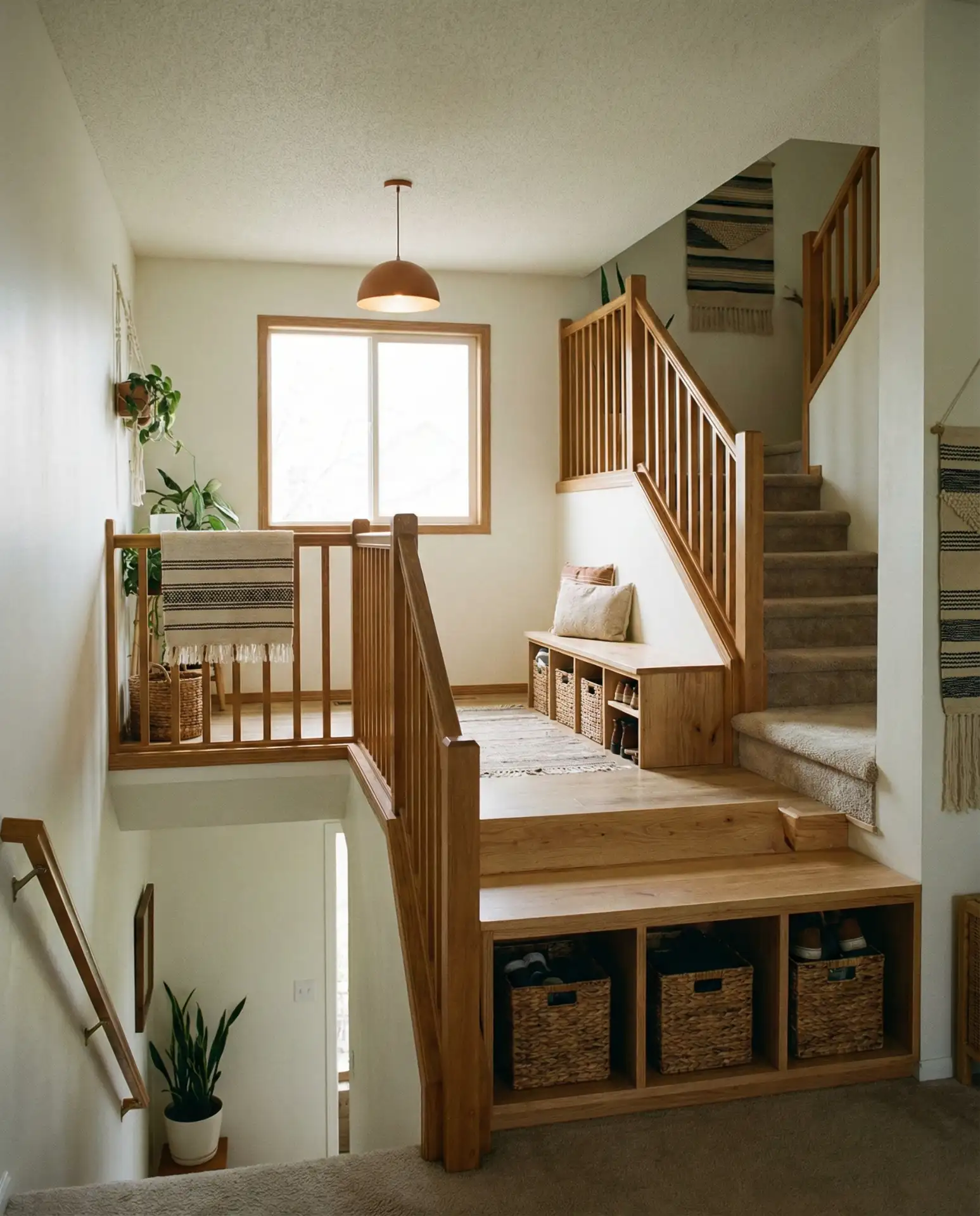
Split-level homes often struggle with awkward entryways, but adding a built-in bench at the landing turns that quirk into an asset. Use the same wood species as the treads for continuity, and tuck storage cubbies or baskets underneath for shoes and bags. This simple addition makes the entry more functional and welcoming, especially in regions where muddy boots and winter gear are daily realities.
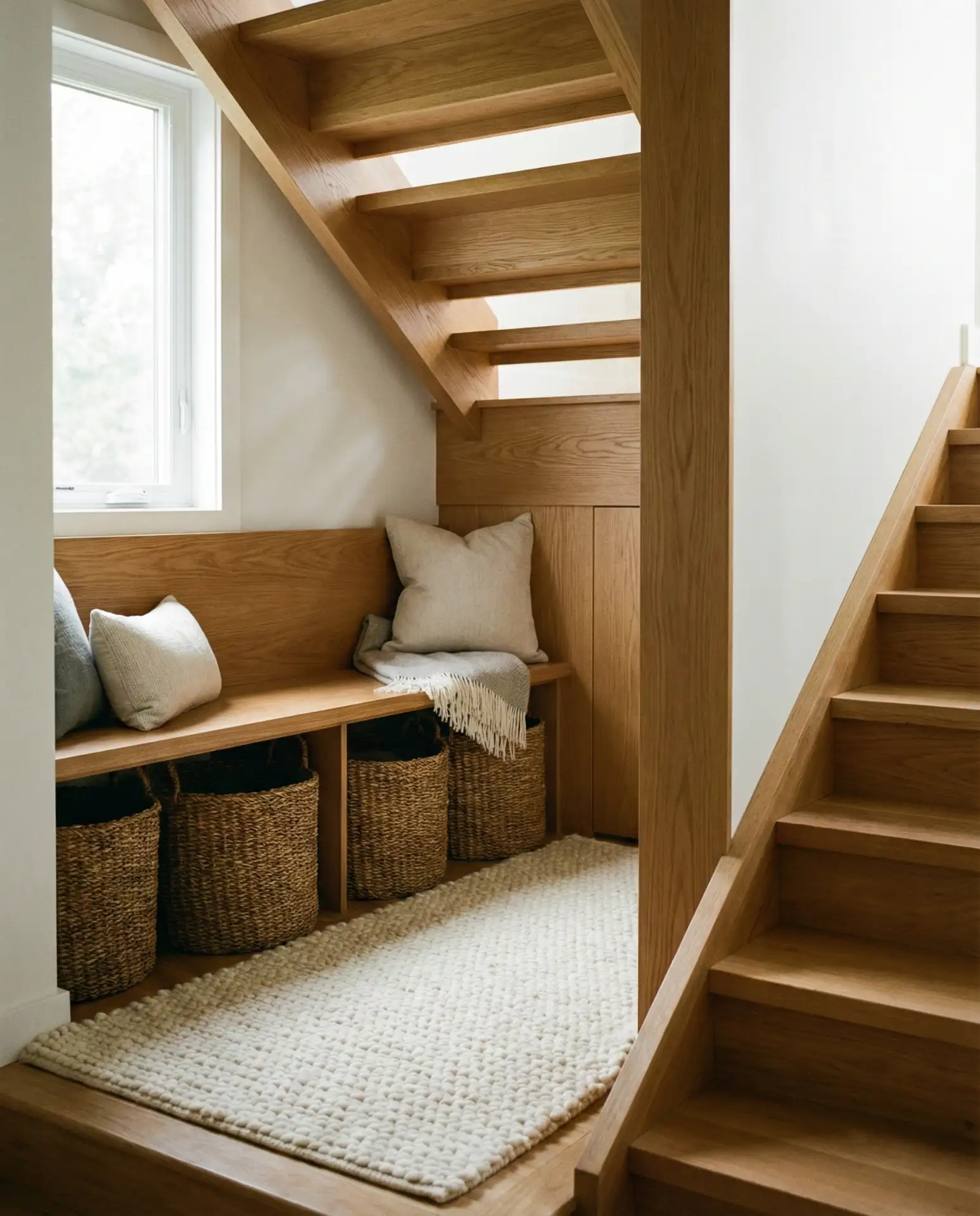
This works best in Midwest and Northeast homes where split-level floor plans are common. One homeowner in Michigan installed a bench at the half-landing and said it completely changed how her family used the space—suddenly it became a spot to sit and chat, not just a pass-through.
10. Carpeted Runner on Painted Stairs
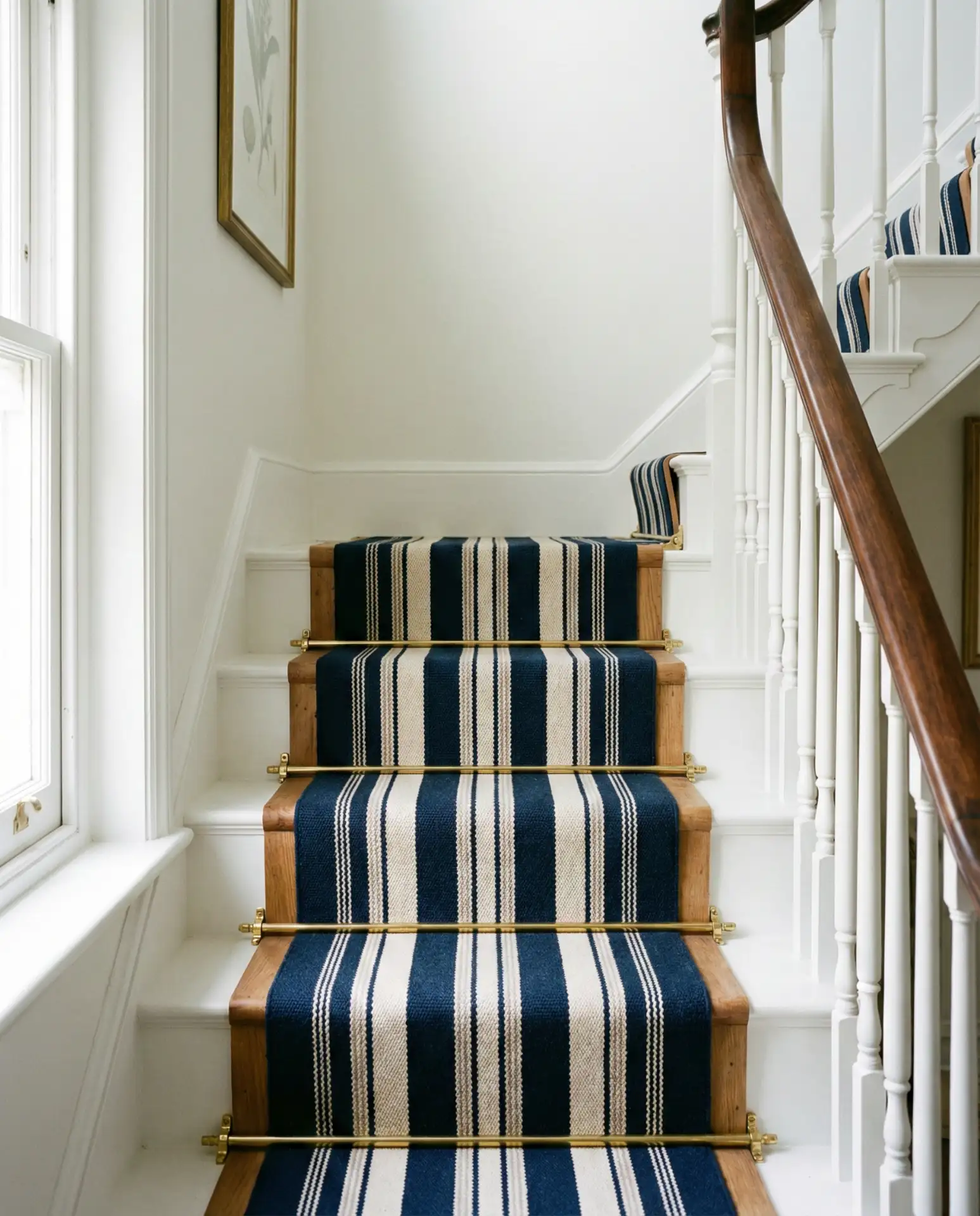
A carpeted runner down the center of painted stairs offers the best of both worlds: softness underfoot and the visual interest of exposed wood or painted edges. Choose a low-pile wool or sisal in a stripe or neutral solid, and secure it with brass or nickel stair rods for a tailored finish. This approach is gentler on knees, quieter than bare treads, and easier to replace than wall-to-wall carpeting.
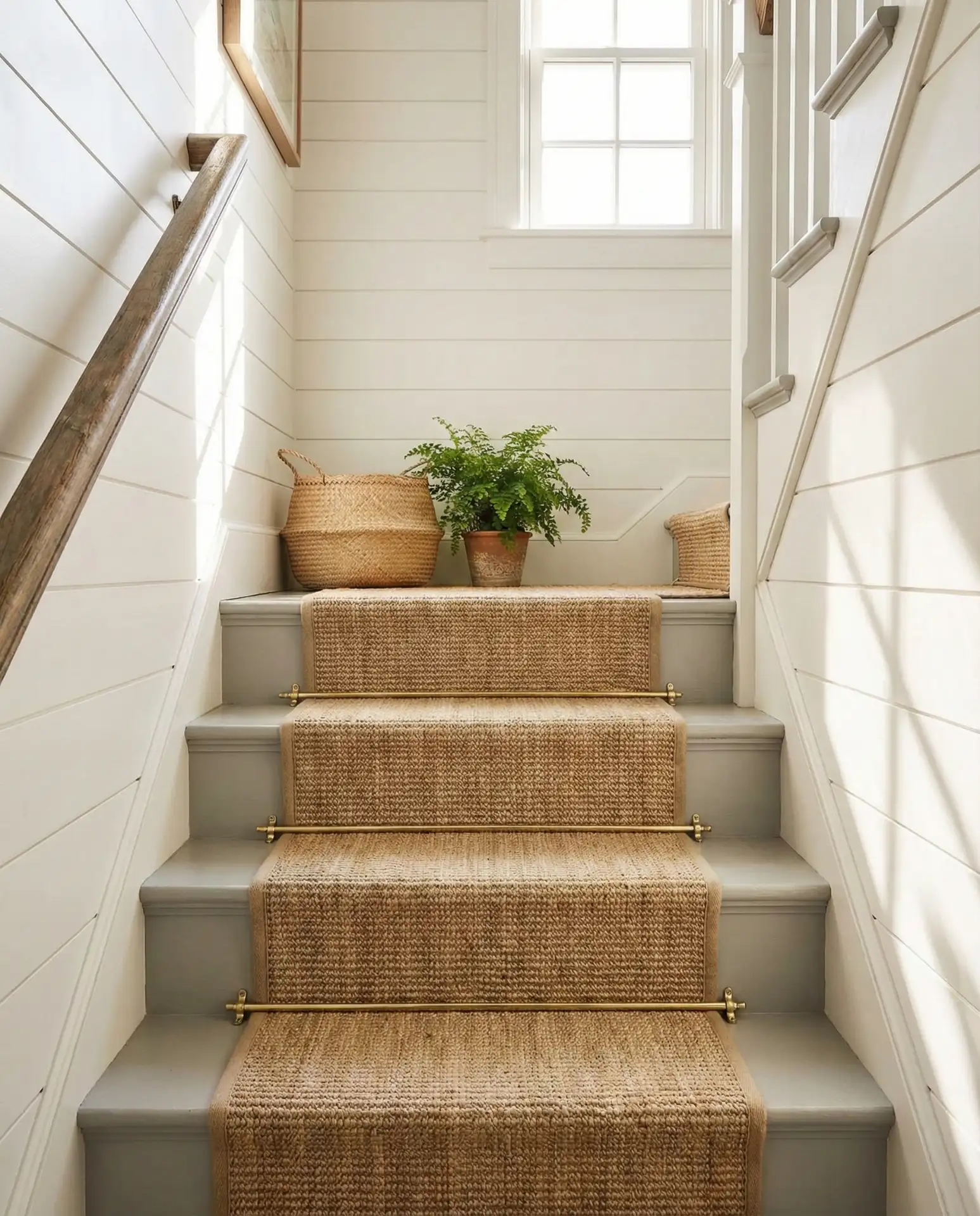
Real homeowner behavior reveals that families with kids or elderly relatives overwhelmingly prefer runners for safety and comfort. The mistake to avoid is choosing a runner that’s too narrow—aim for at least 27 inches wide so it covers the tread adequately and doesn’t look skimpy.
11. Unique Staircase with Mixed Materials
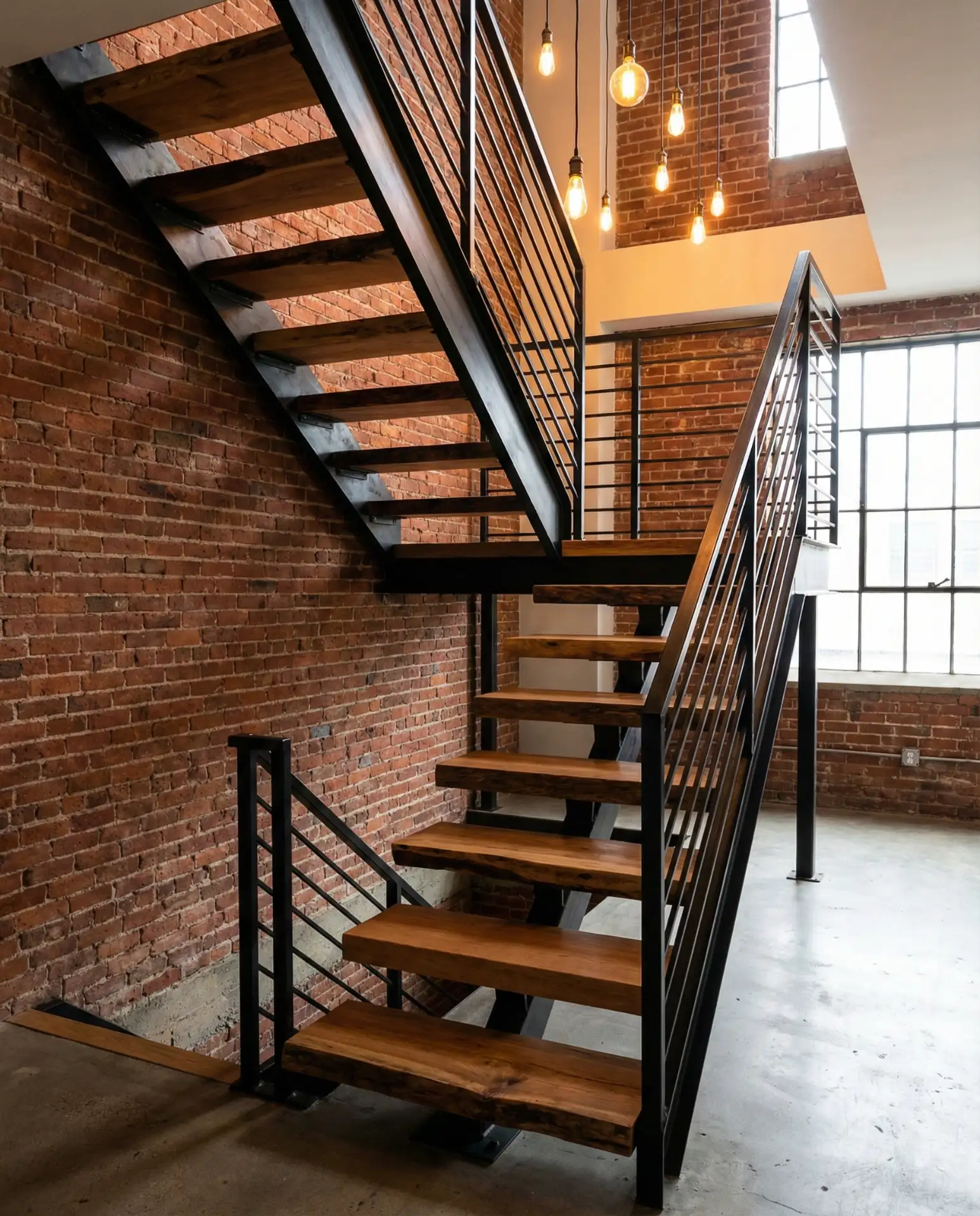
For those who want something truly unique, mixing materials—say, reclaimed barn wood treads with steel cable railings and a concrete wall finish—creates a staircase that feels curated and personal. The trick is choosing materials that share a tonal or textural thread so the mix feels intentional rather than chaotic. This approach shines in lofts, mountain homes, and contemporary builds where eclecticism is part of the charm.
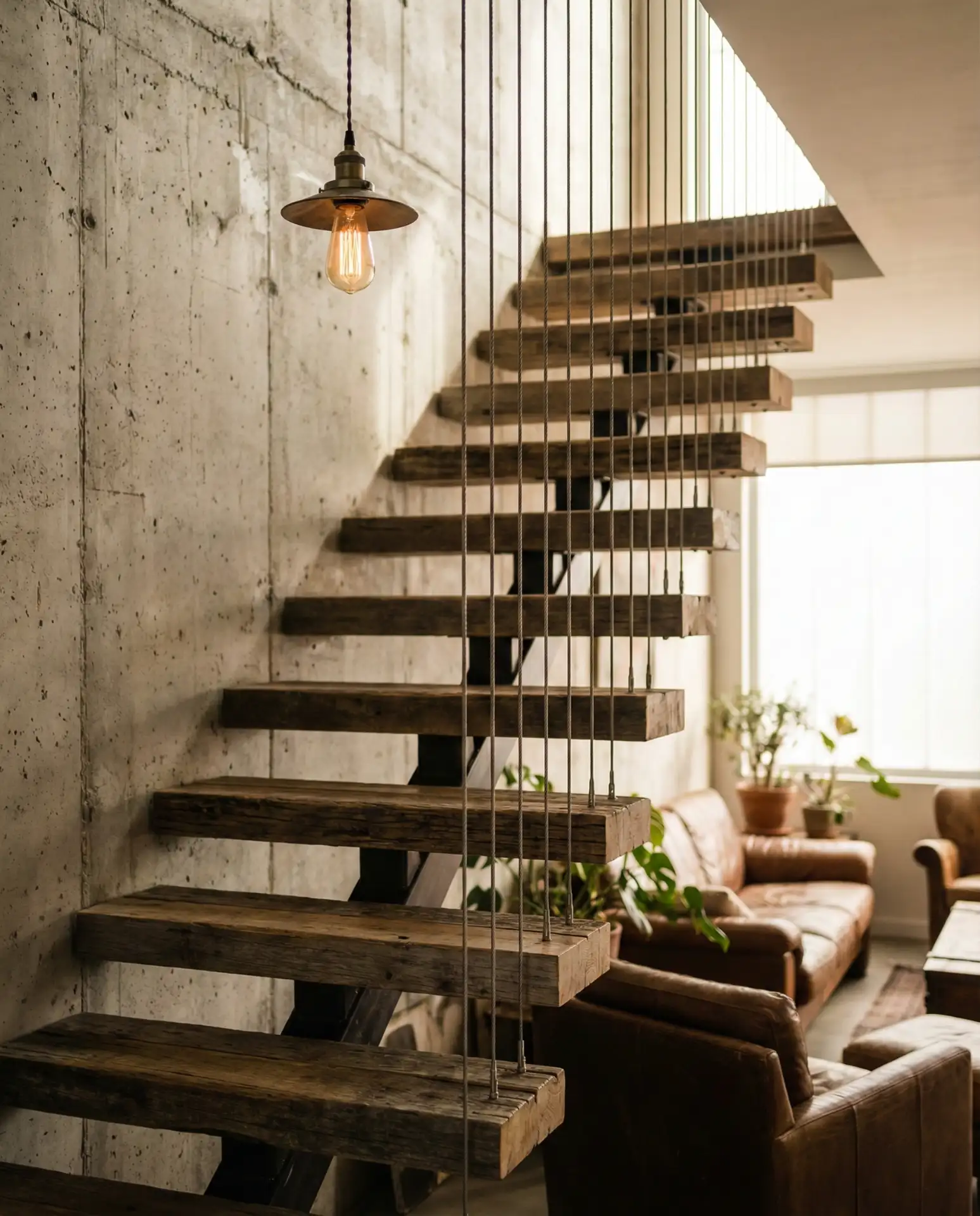
From a design standpoint, this is where you can really flex creative muscle. Just remember that complex material combinations often require specialized fabricators, which can push costs higher. Budget $10,000–$20,000 for a custom mixed-material staircase, depending on the scope.
12. Minecraft-Inspired Pixelated Staircase
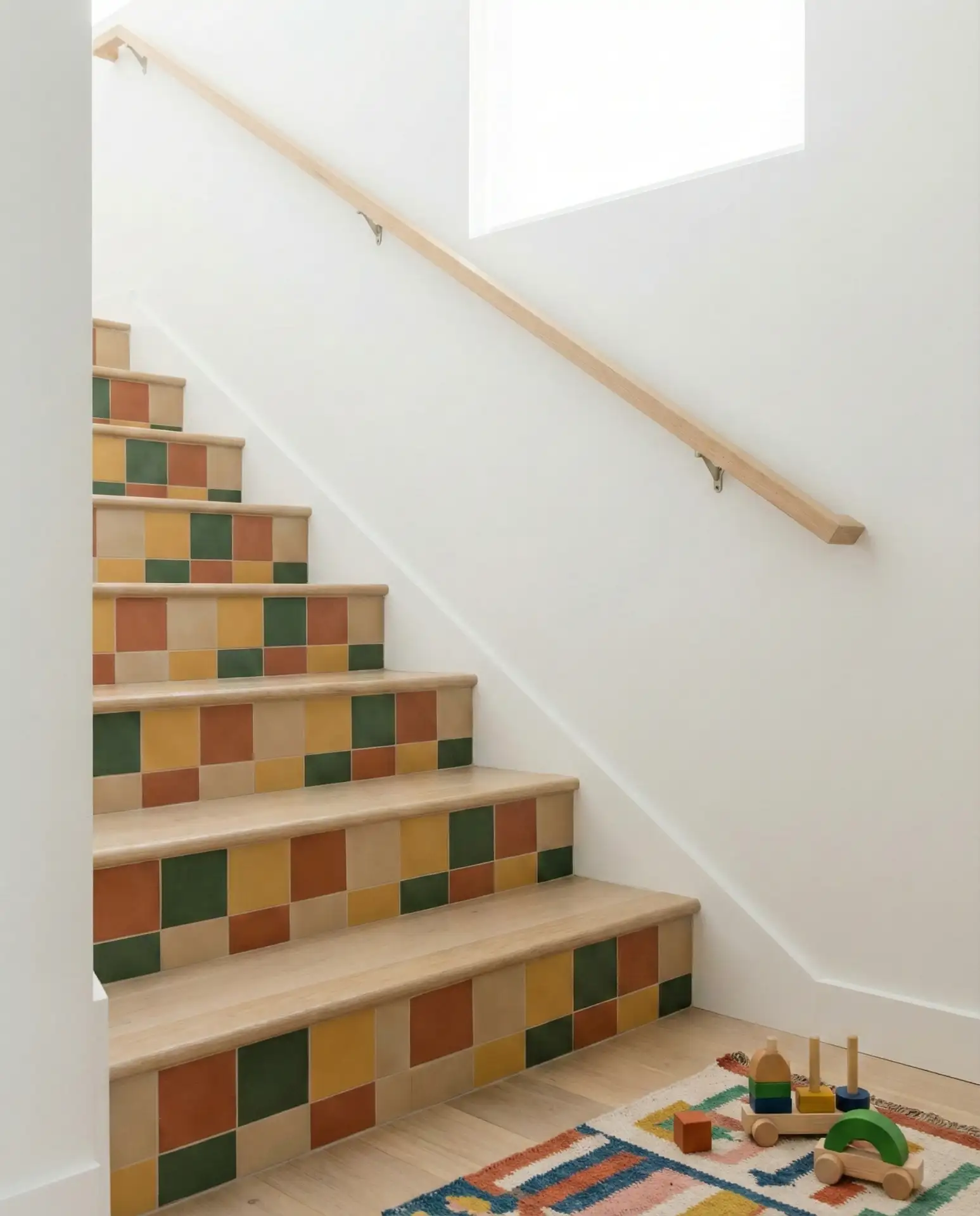
For families with young gamers, a Minecraft-inspired staircase brings playful geometry into the home. Paint risers in blocky gradients of green, brown, and gray, or apply pixelated vinyl decals that mimic the game’s iconic textures. It’s a conversation starter that kids absolutely love, and surprisingly, it can work in modern homes when the palette stays muted and the pixelation subtle.
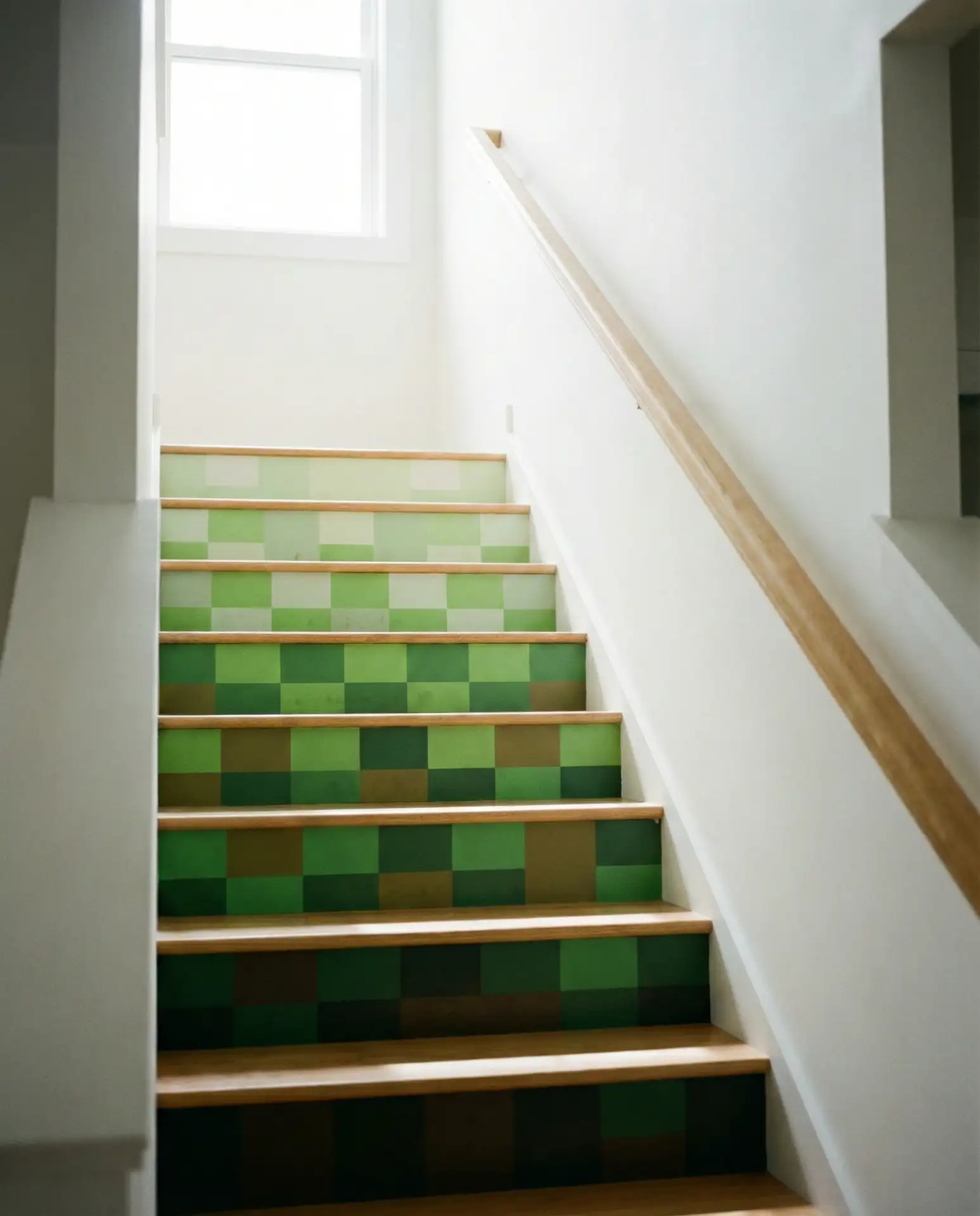
This works best in basements, playrooms, or homes where a sense of humor is part of the design ethos. One family in Portland did this as a DIY weekend project and said it cost under $200 in paint and materials—proof that creativity doesn’t always require a big budget.
13. Cottage Staircase with Beadboard Walls
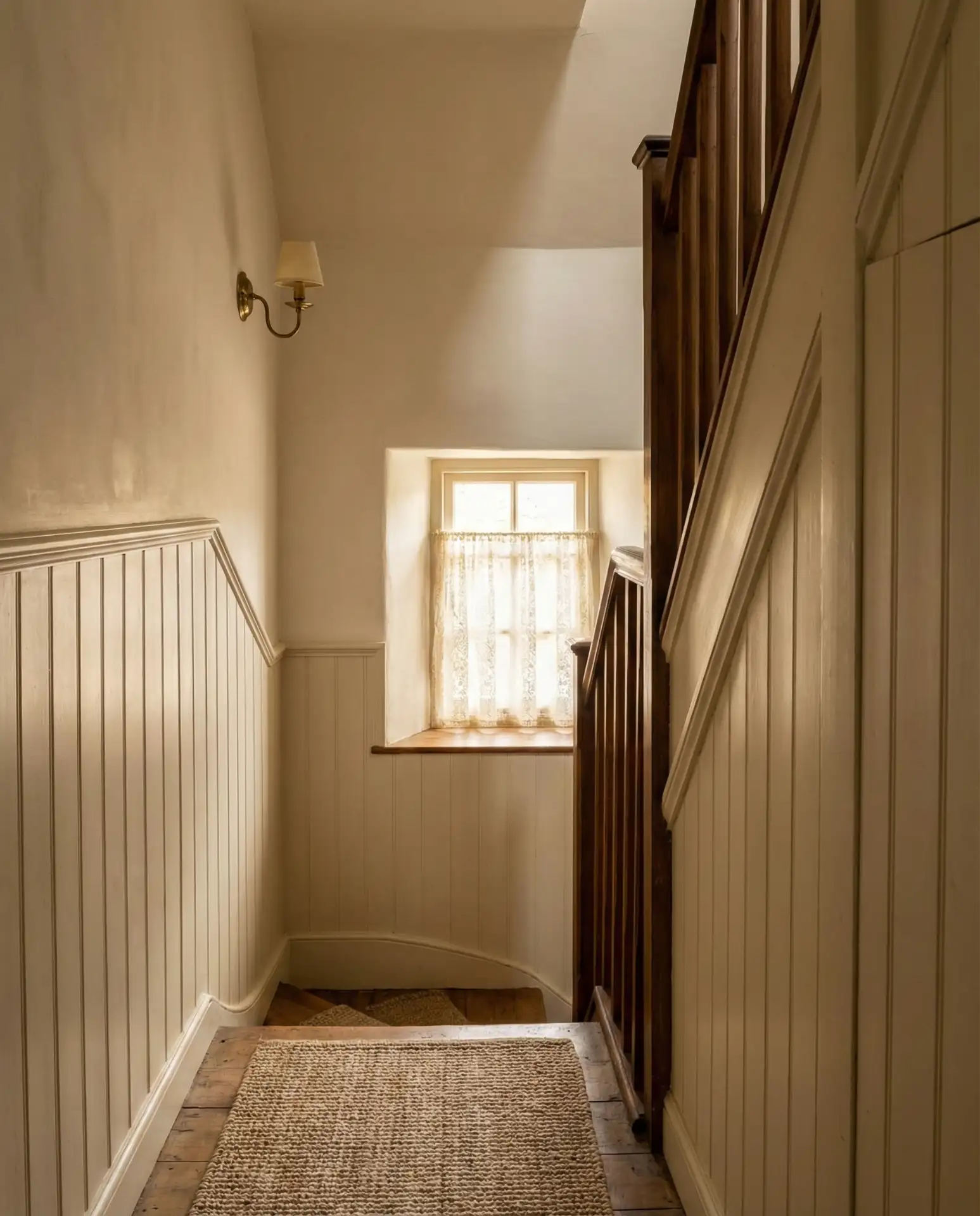
A cottage aesthetic thrives on texture, and beadboard paneling along stairwell walls delivers that in spades. Paint it a soft cream or butter yellow, add a chunky wooden handrail, and hang vintage-inspired sconces for a look that’s cozy without feeling overly precious. This treatment works especially well in coastal homes, bungalows, and renovated farmhouses where charm and comfort are priorities.
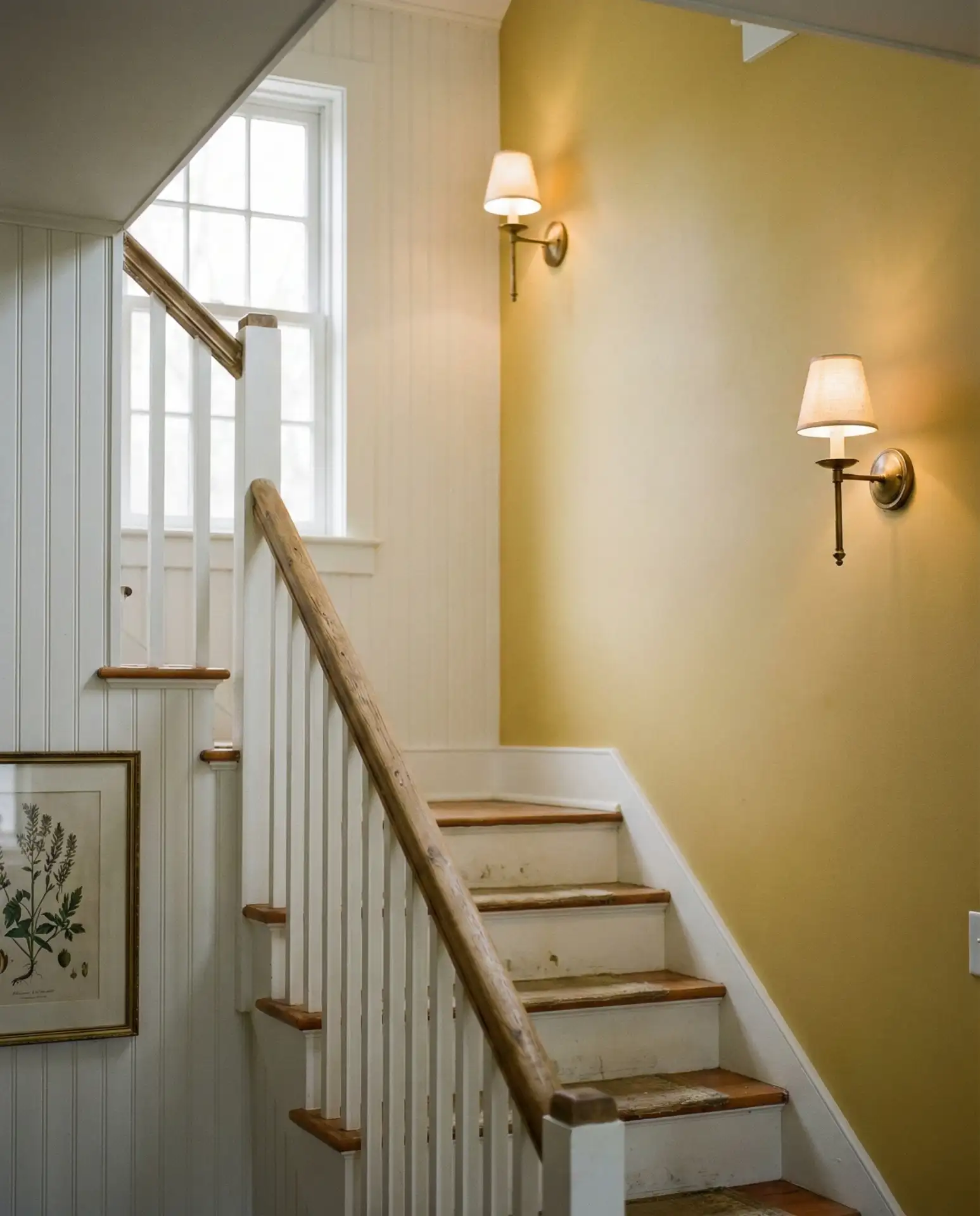
Beadboard is forgiving for DIYers and hides minor wall imperfections beautifully. Expect to spend around $600–$1,200 for materials and installation in a standard stairwell, making it one of the more affordable ways to add character.
14. Underneath Staircase Home Office Nook
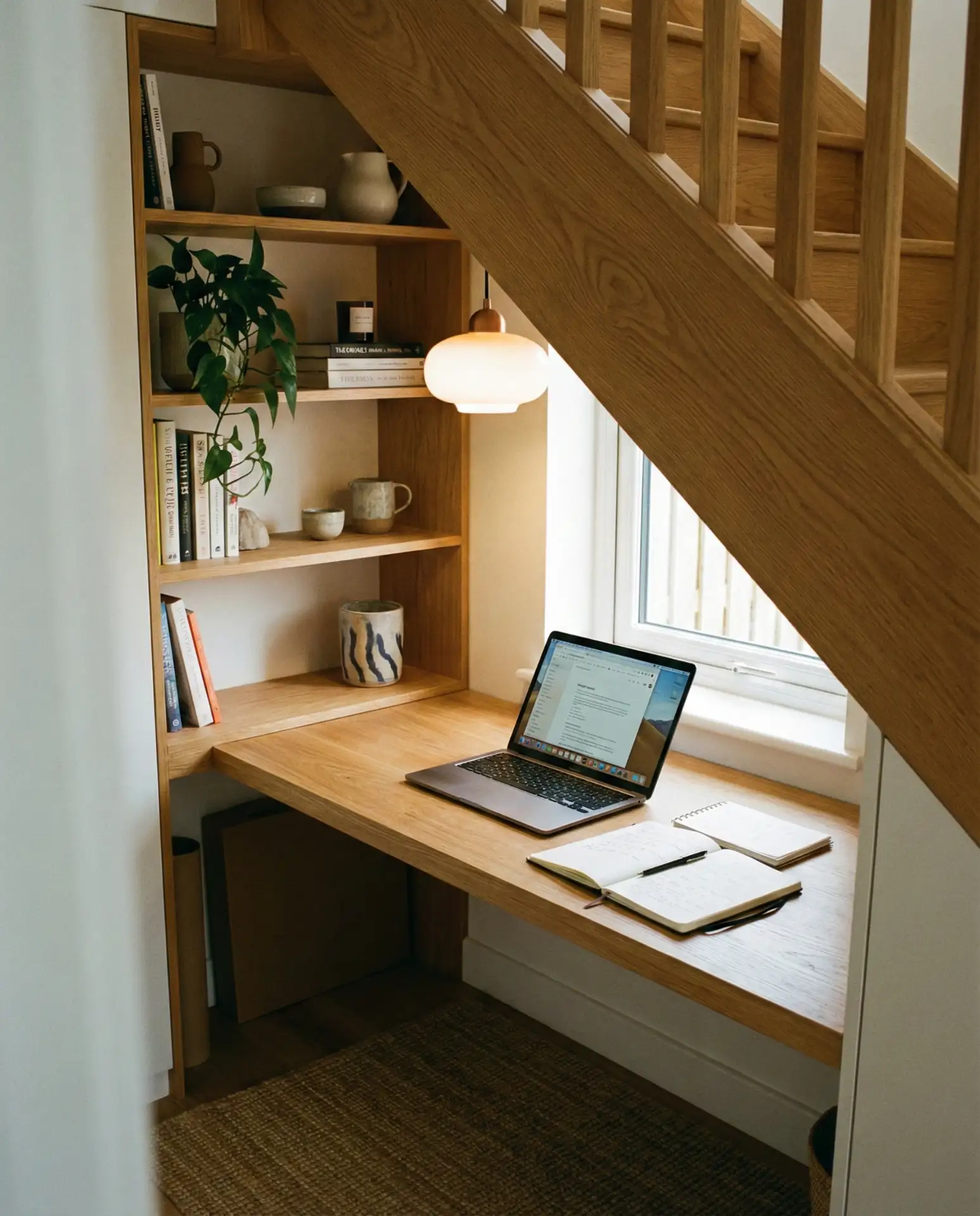
Carving out a compact workspace underneath the stairs is a brilliant move for remote workers in tight quarters. Install a floating desk, add a task lamp, and outfit the back wall with pegboard or corkboard for organization. Keep the color scheme light and the layout minimal so the nook feels purposeful rather than cramped. This is especially popular in urban row homes and condos where dedicated office space is a luxury.
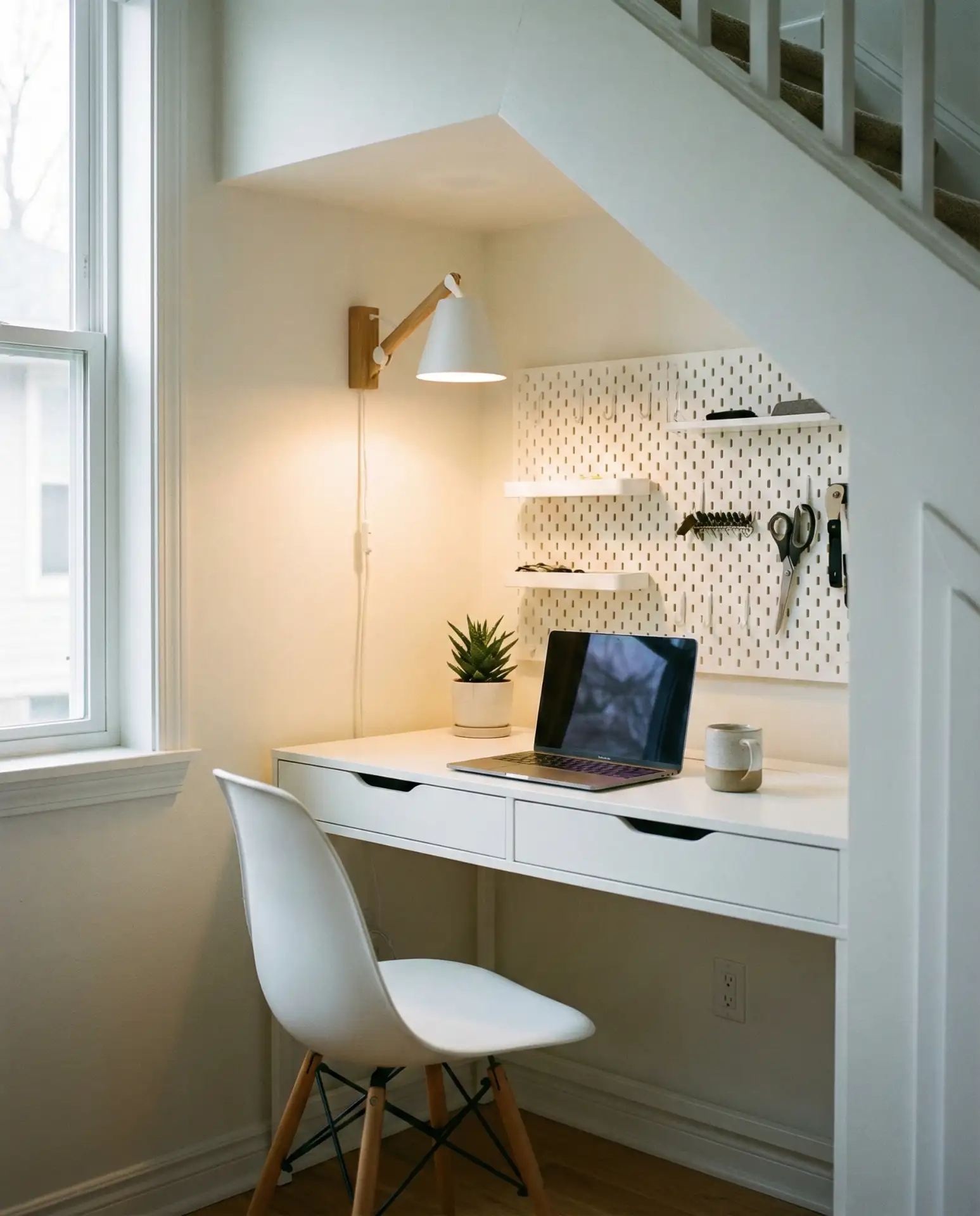
In practice, homeowners who try this often discover it’s quieter and more private than they expected, since the staircase acts as a buffer from the main living areas. Just make sure you have a nearby outlet and good ventilation—no one wants to work in a stuffy triangle.
15. Bloxburg-Style Modern Staircase with LED Strips
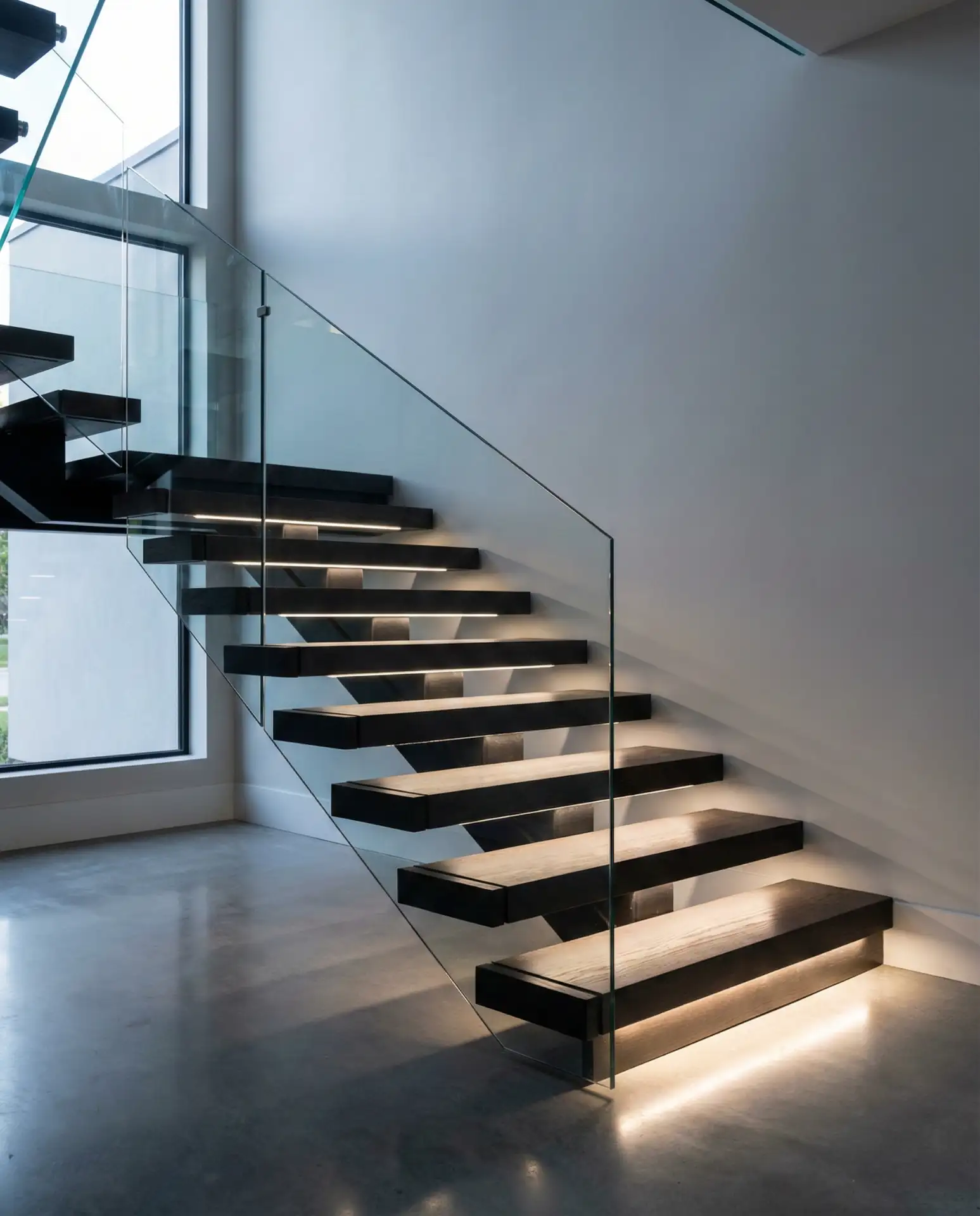
Taking cues from Bloxburg builds, a modern staircase with integrated LED strip lighting under each tread creates a futuristic glow that’s both functional and dramatic. Use warm white or color-changing LEDs depending on your mood, and pair the setup with sleek glass or cable railings. This look is a hit with younger homeowners who want their space to feel like a showroom.
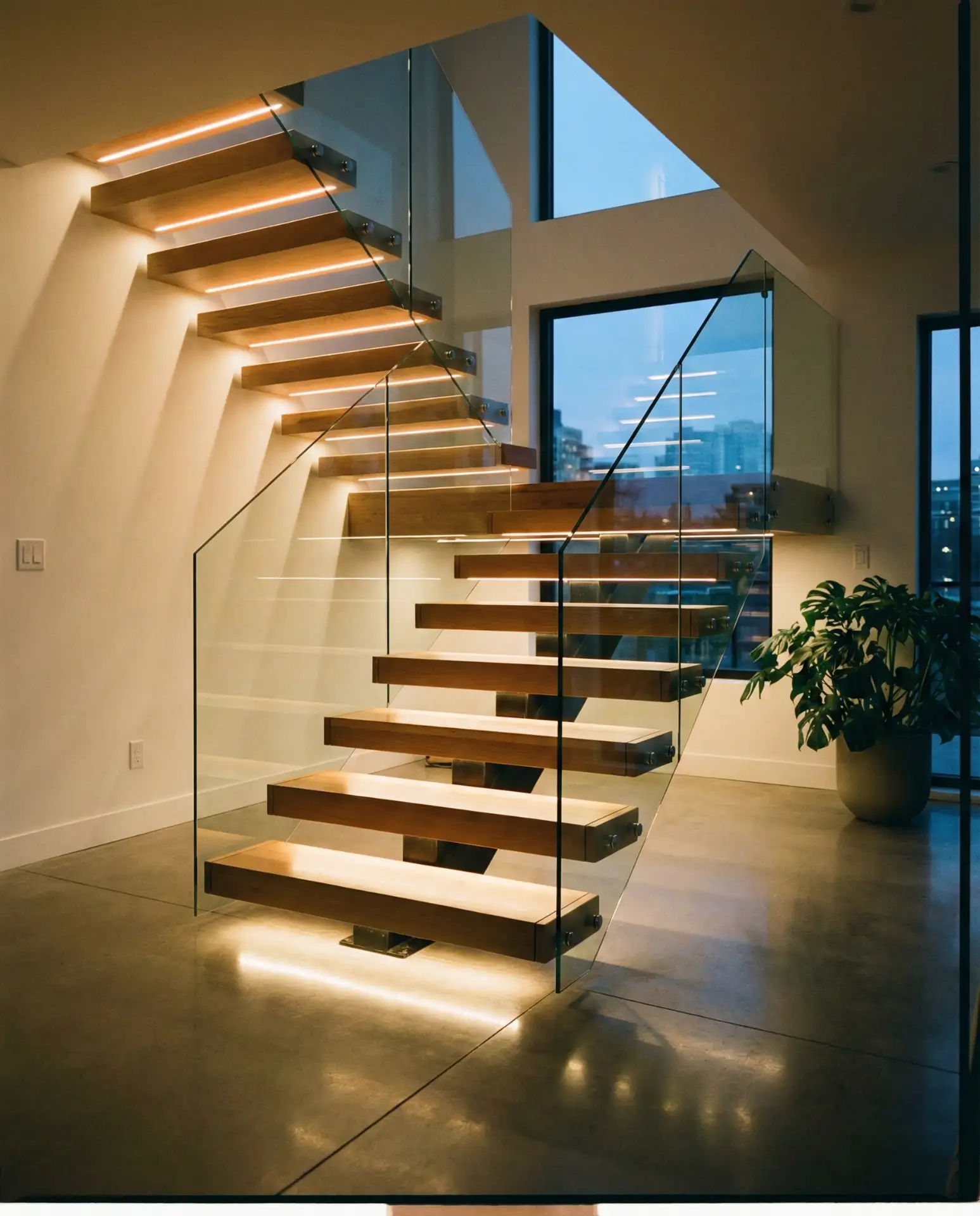
LED strips are surprisingly affordable—around $50–$150 for a full staircase—and installation is straightforward if you’re comfortable with basic wiring. The effect is high-impact, especially at night, and adds a layer of safety by illuminating edges.
16. Short Staircase with Bold Painted Steps
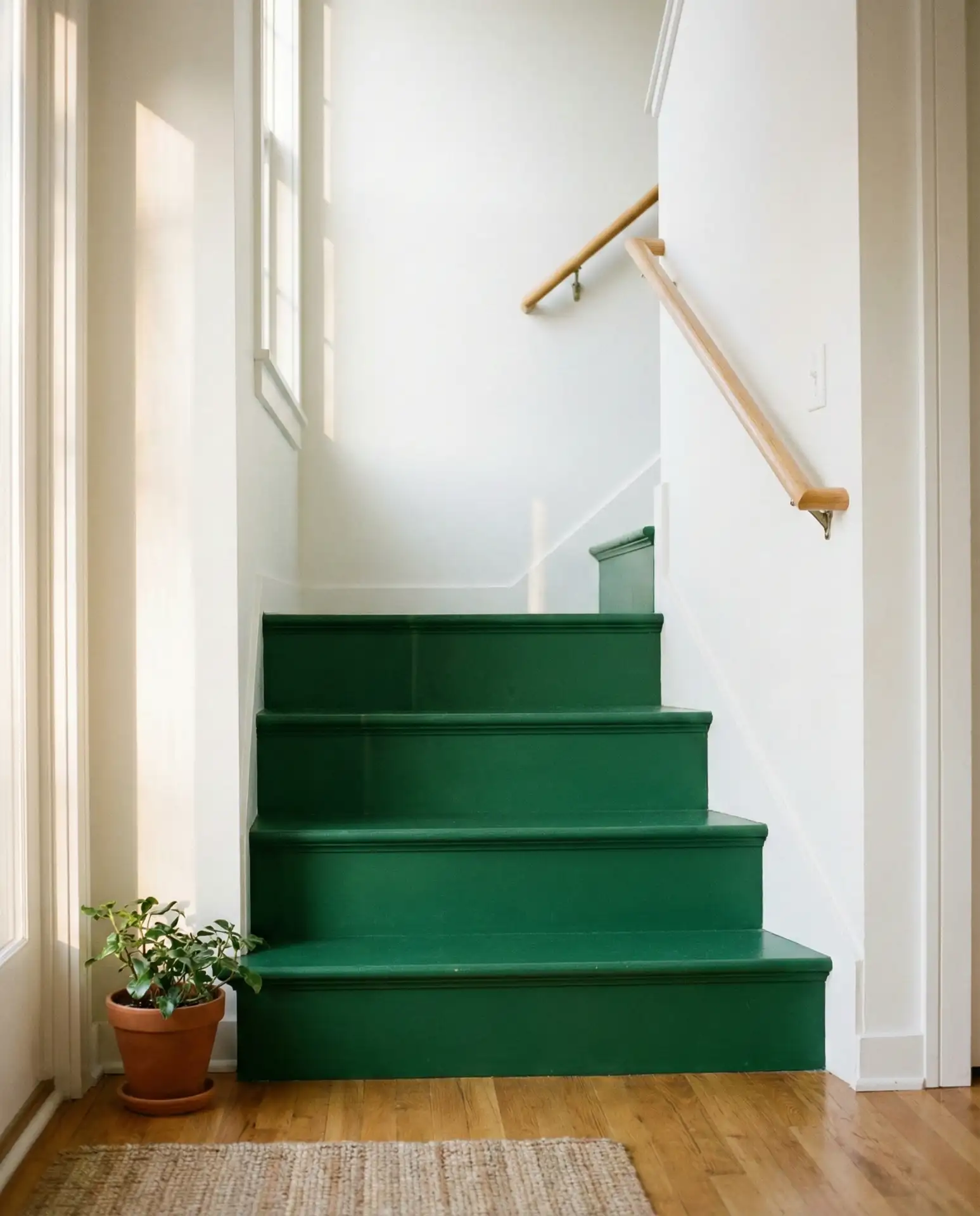
A short run of stairs—say, four to six steps—is the perfect canvas for bold color. Paint each tread a different shade in a gradient from deep navy to sky blue, or stick with a single saturated hue like emerald or terracotta. Because the staircase is small, the color won’t overwhelm the space, and it becomes a cheerful focal point that greets you every time you walk by.
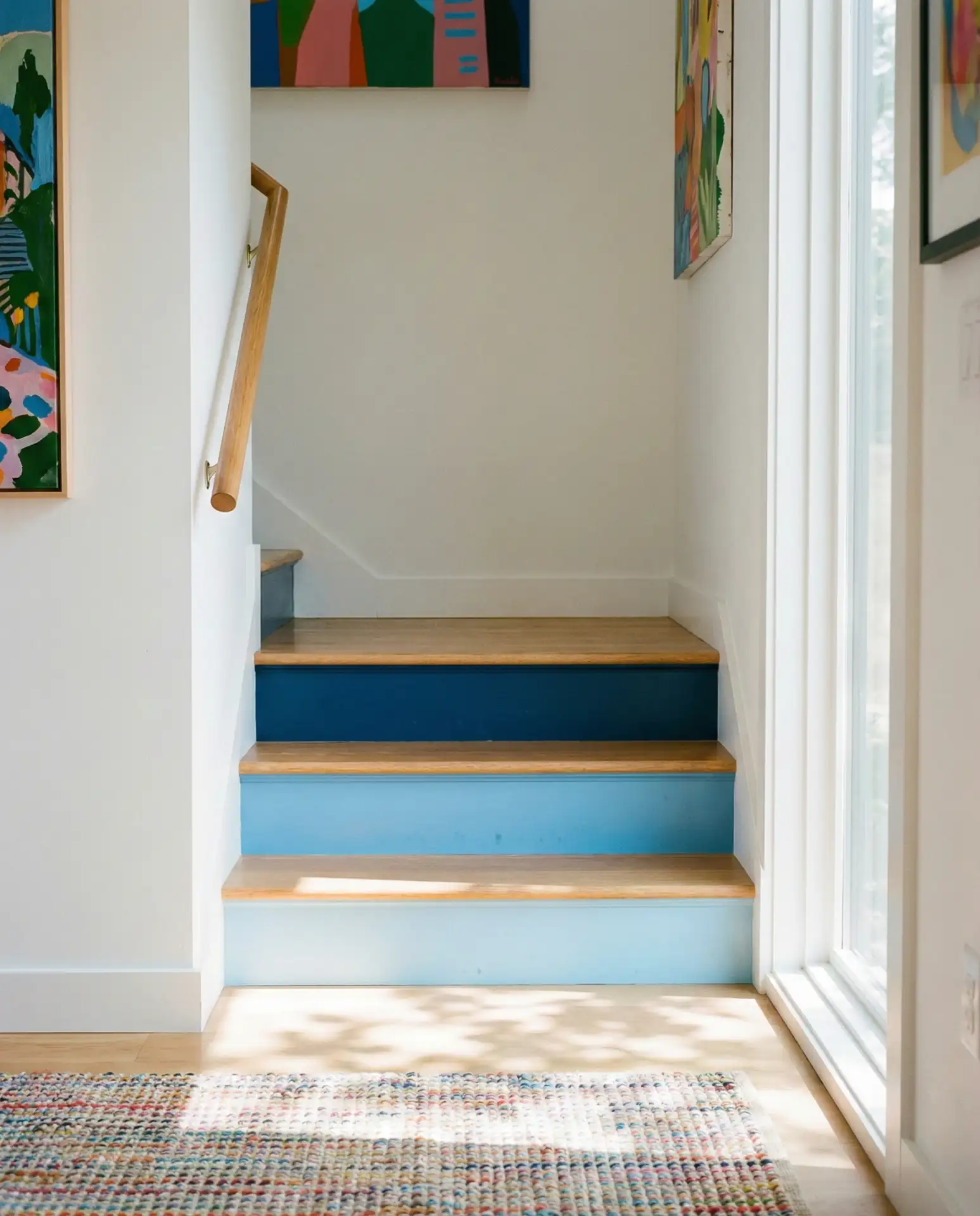
This approach thrives in homes with an eclectic or maximalist sensibility, or where you want to inject personality without committing to color on larger surfaces. A quick weekend project, it costs under $100 in paint and materials and delivers instant gratification.
17. Black Painted Staircase with Natural Wood Handrail
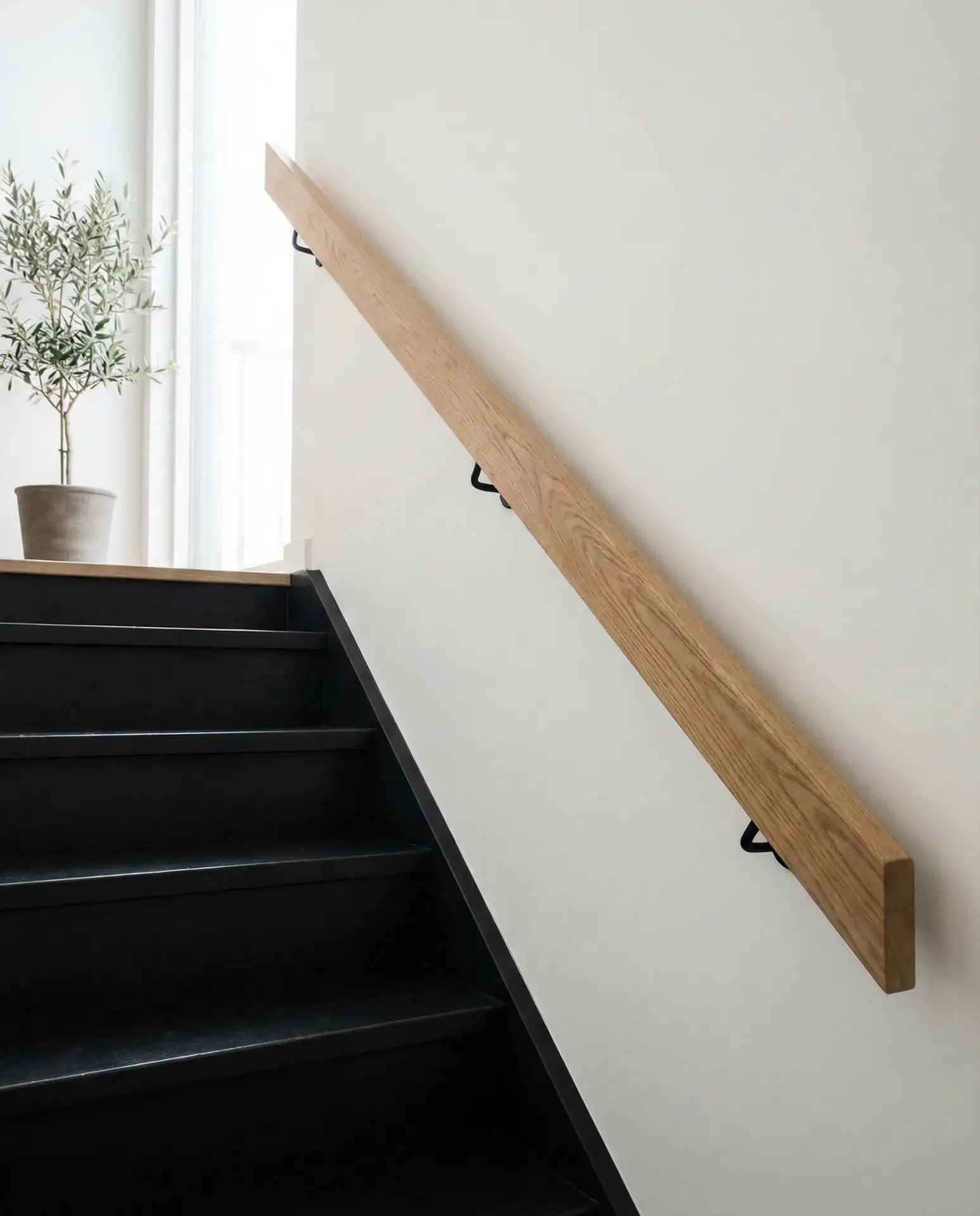
Painting an entire staircase—treads, risers, and stringers—in matte black creates a moody, sophisticated backdrop that anchors the space. Balance the drama with a warm oak or walnut handrail and keep the surrounding walls light. This combination feels modern yet grounded, and it’s especially striking in open-plan layouts where the staircase is visible from multiple angles.
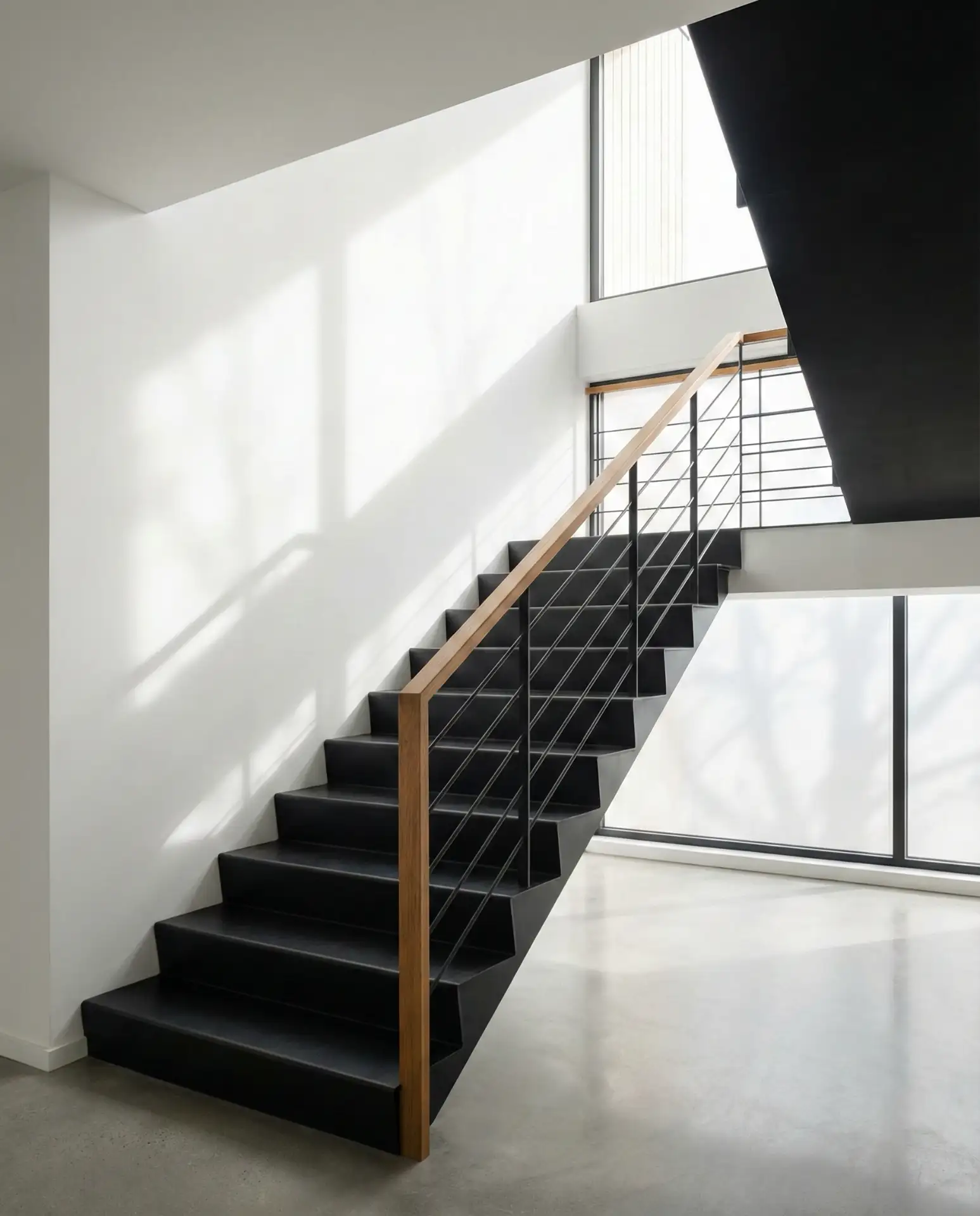
One thing to watch: black shows dust and scuffs more readily than lighter colors, so plan on more frequent touch-ups if you have high foot traffic. But the visual payoff—a sleek, gallery-like statement—is worth the extra maintenance for many homeowners.
18. Wooden Staircase with Live Edge Treads
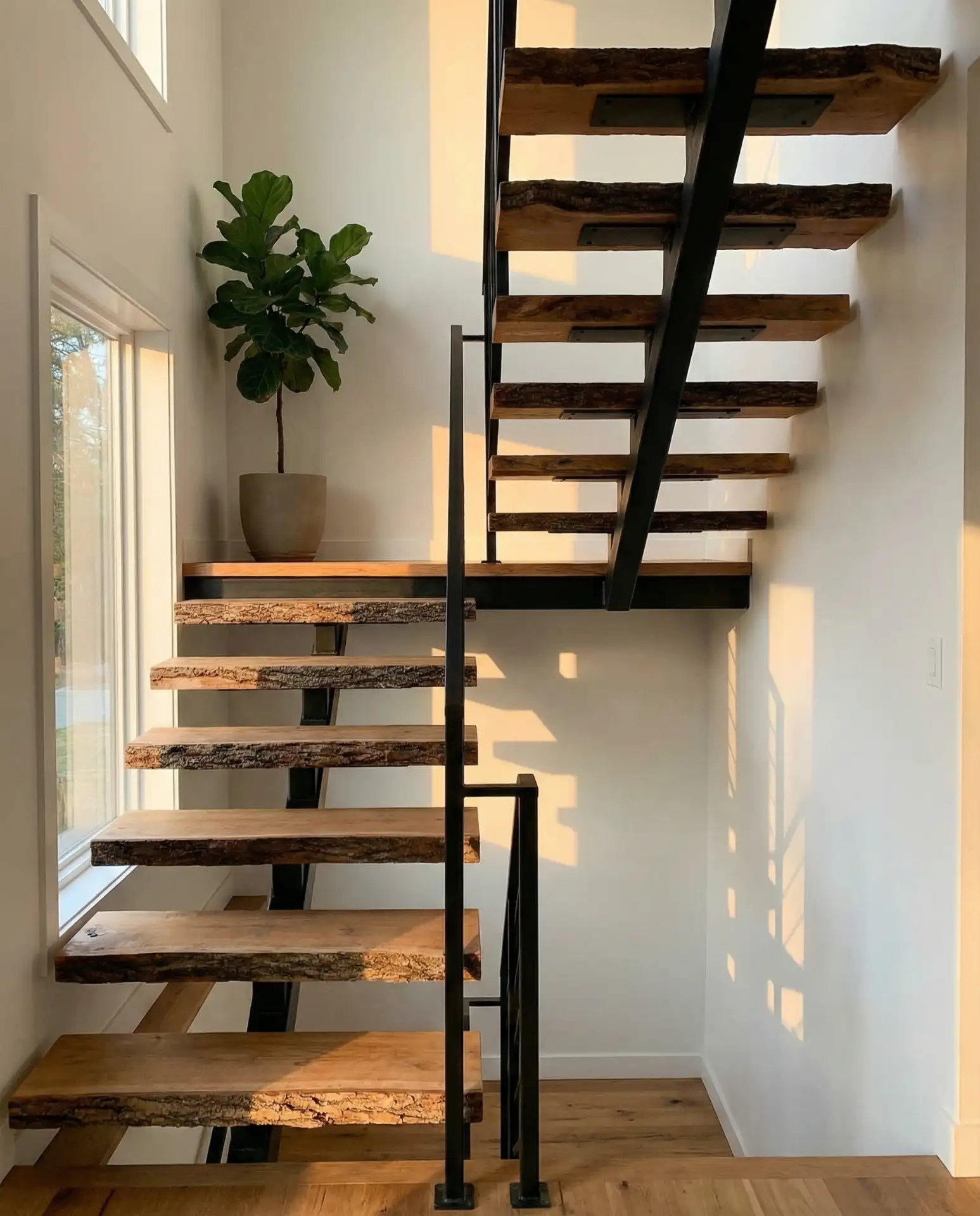
For a truly organic look, wooden treads with live edges bring the irregularity and character of natural wood grain front and center. Each step becomes a one-of-a-kind piece, with the bark edge and growth rings telling their own story. Pair them with simple steel or cable supports so the wood remains the hero. This works beautifully in cabins, modern mountain homes, and spaces where nature-inspired design is a priority.
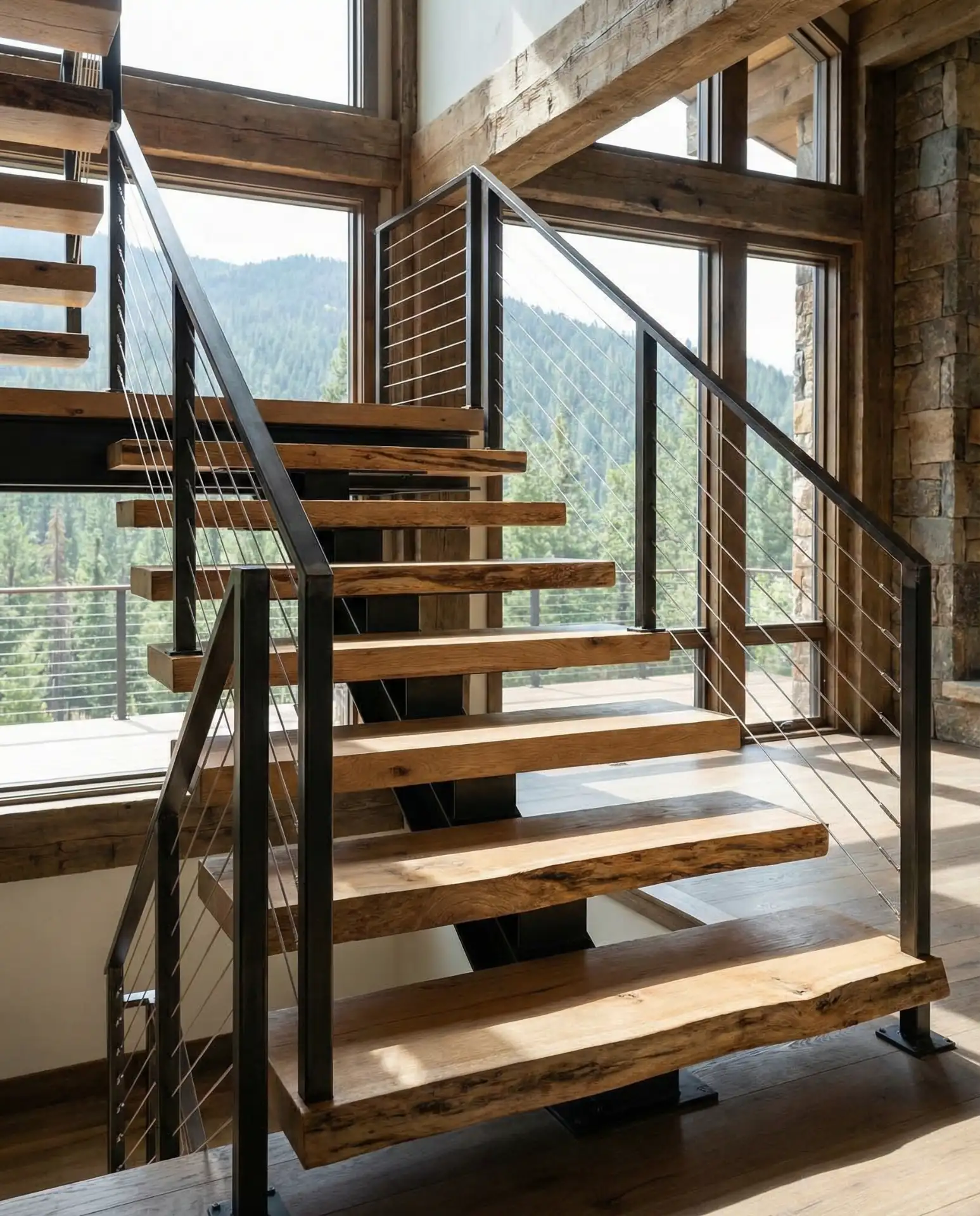
Expect to source slabs from specialty lumber yards or local sawmills, and plan for longer lead times as each piece needs to be cut, dried, and finished. Budget-wise, live-edge treads can run $200–$500 per step depending on species and thickness, but the result is a staircase that feels custom and handcrafted.
19. Victorian Staircase with Ornate Newel Post
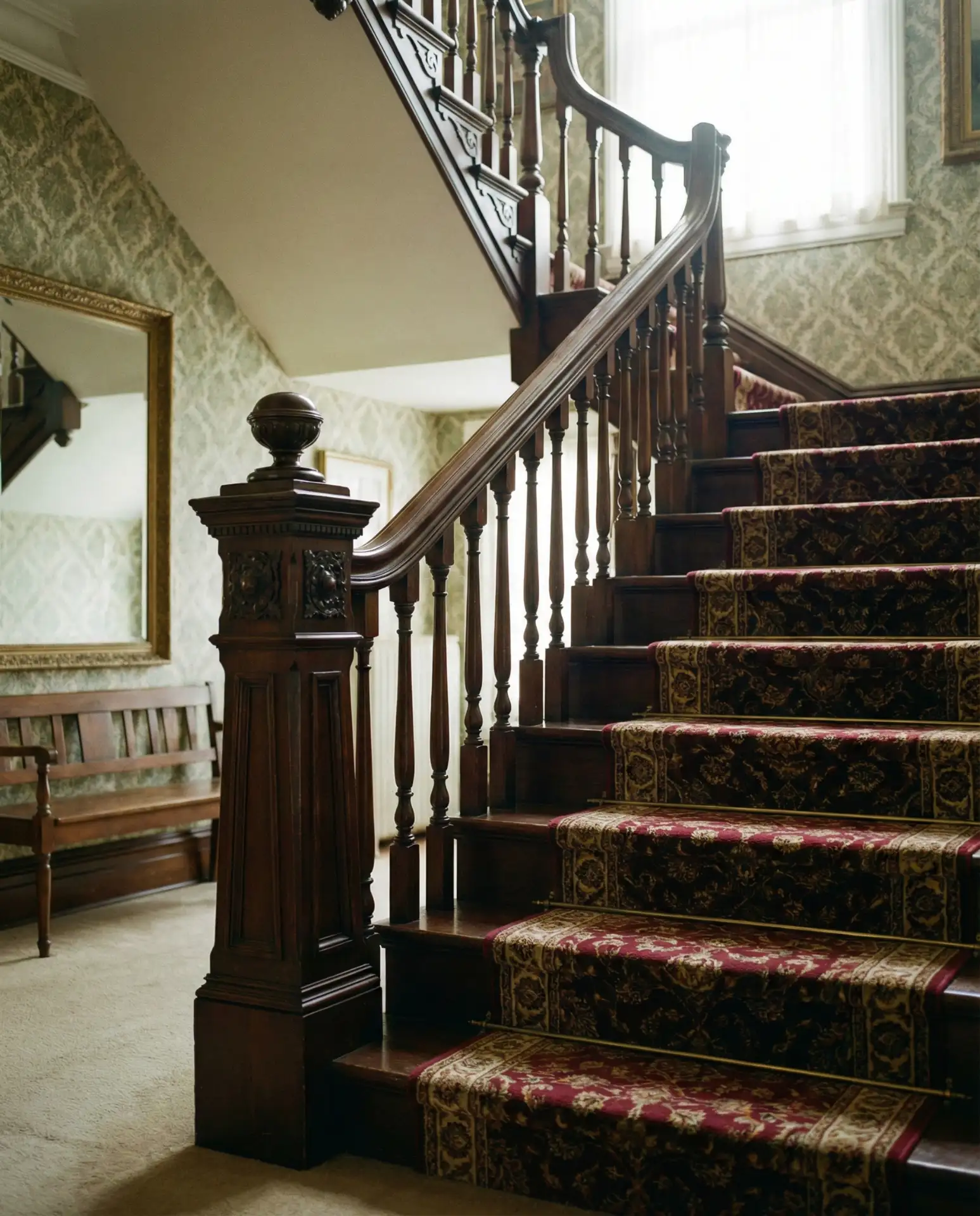
If you’re restoring a Victorian home or simply love the grandeur of that era, an ornate newel post with carved details and a substantial silhouette sets the tone. Look for posts with acorn finials, rope twists, or fluted columns, and finish them in a deep stain or even gilded accents. The rest of the staircase—turned balusters, a wide handrail—should echo that level of craftsmanship.
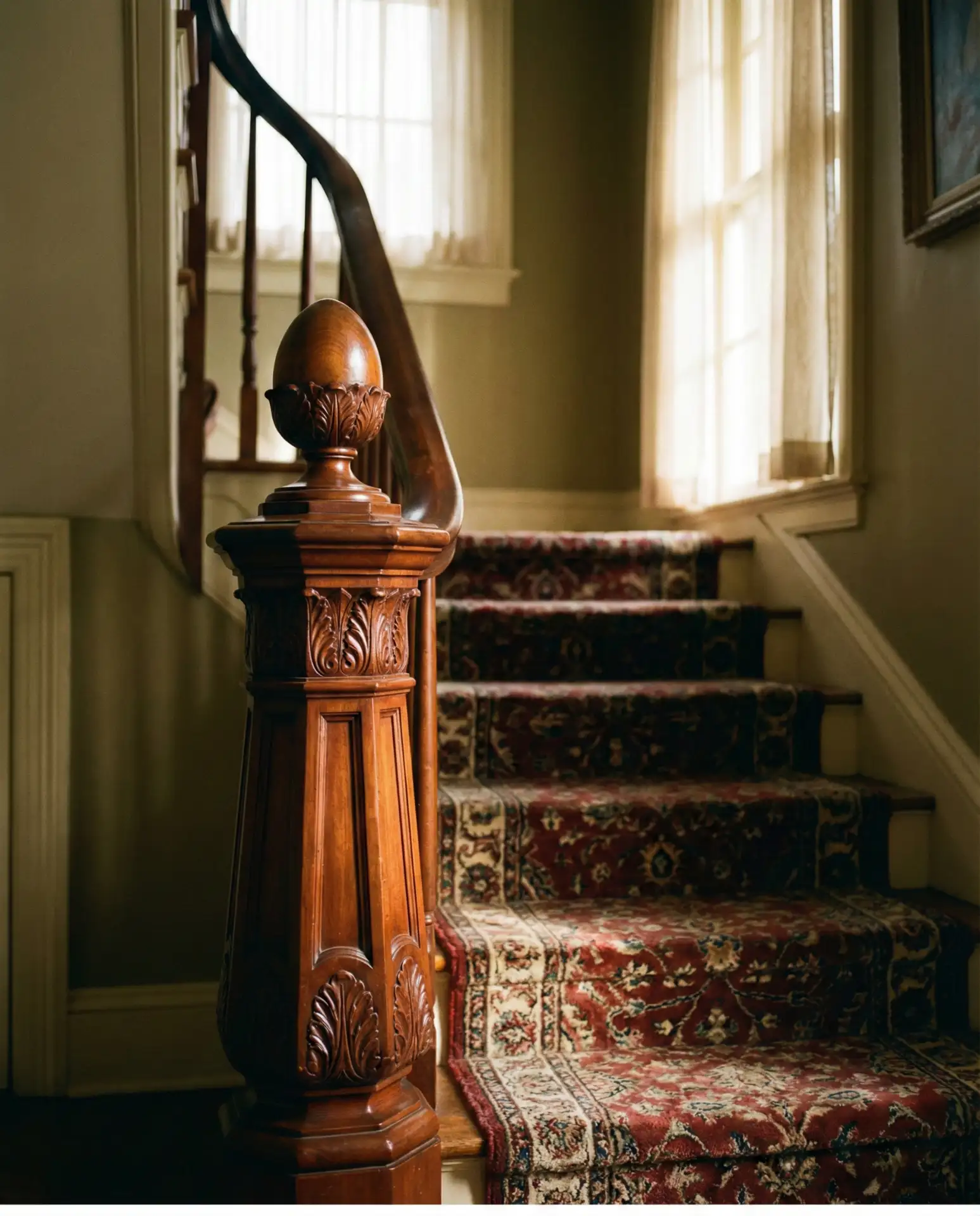
Salvage yards and architectural antique dealers often carry original Victorian newel posts, which can be more affordable than custom reproductions. Expect to pay $300–$800 for a quality piece, plus installation. The investment is worth it if authenticity and period detail matter to you.
20. Closed Staircase with Statement Wallpaper
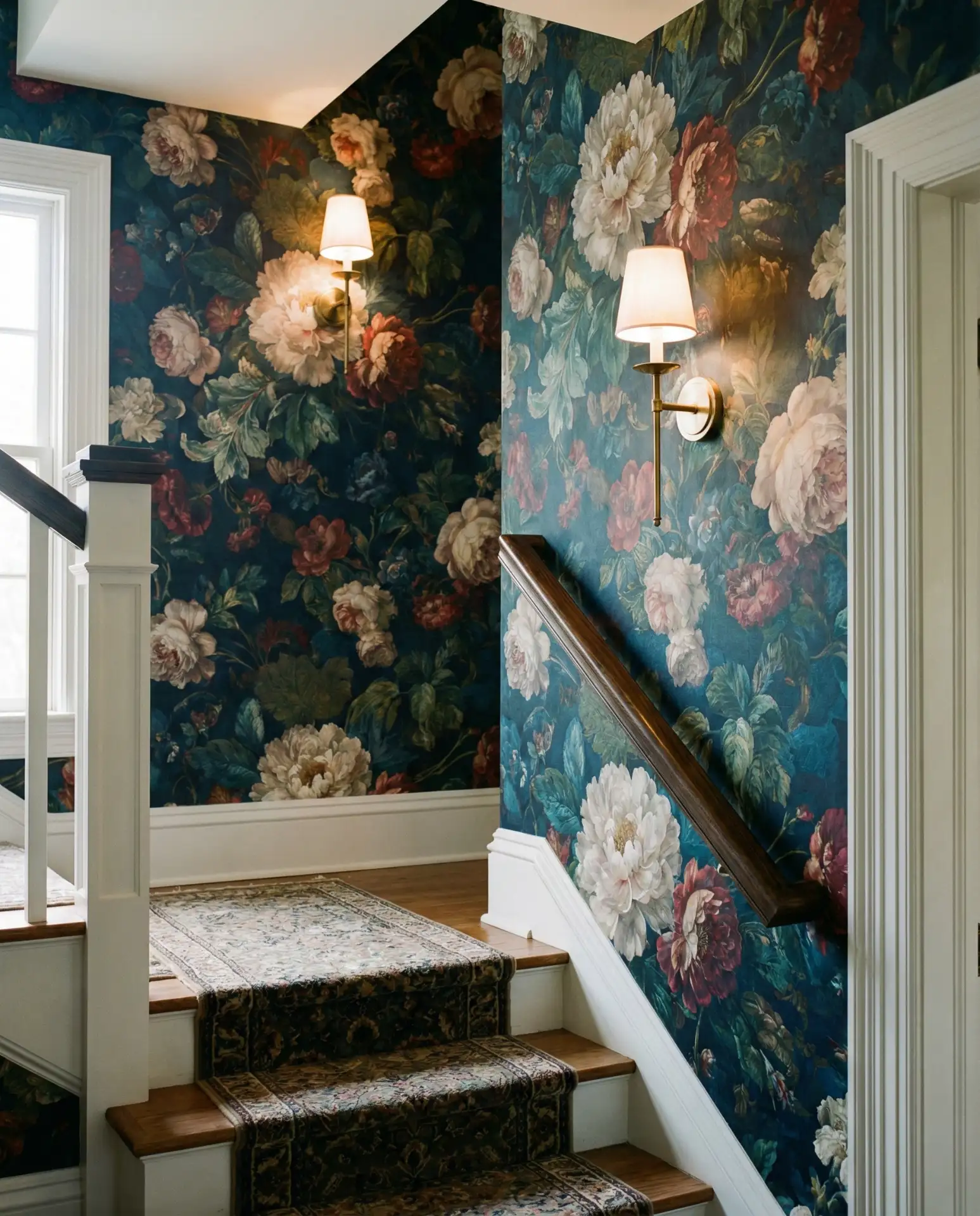
A closed stairwell with solid walls on both sides can feel boxy, but covering one or both walls in a statement wallpaper—think overscale florals, bold stripes, or even a scenic mural—transforms it into a feature. Choose a pattern that’s engaging enough to hold attention but not so busy that it feels chaotic. This approach is especially popular in townhouses and older homes where the staircase is a vertical gallery.
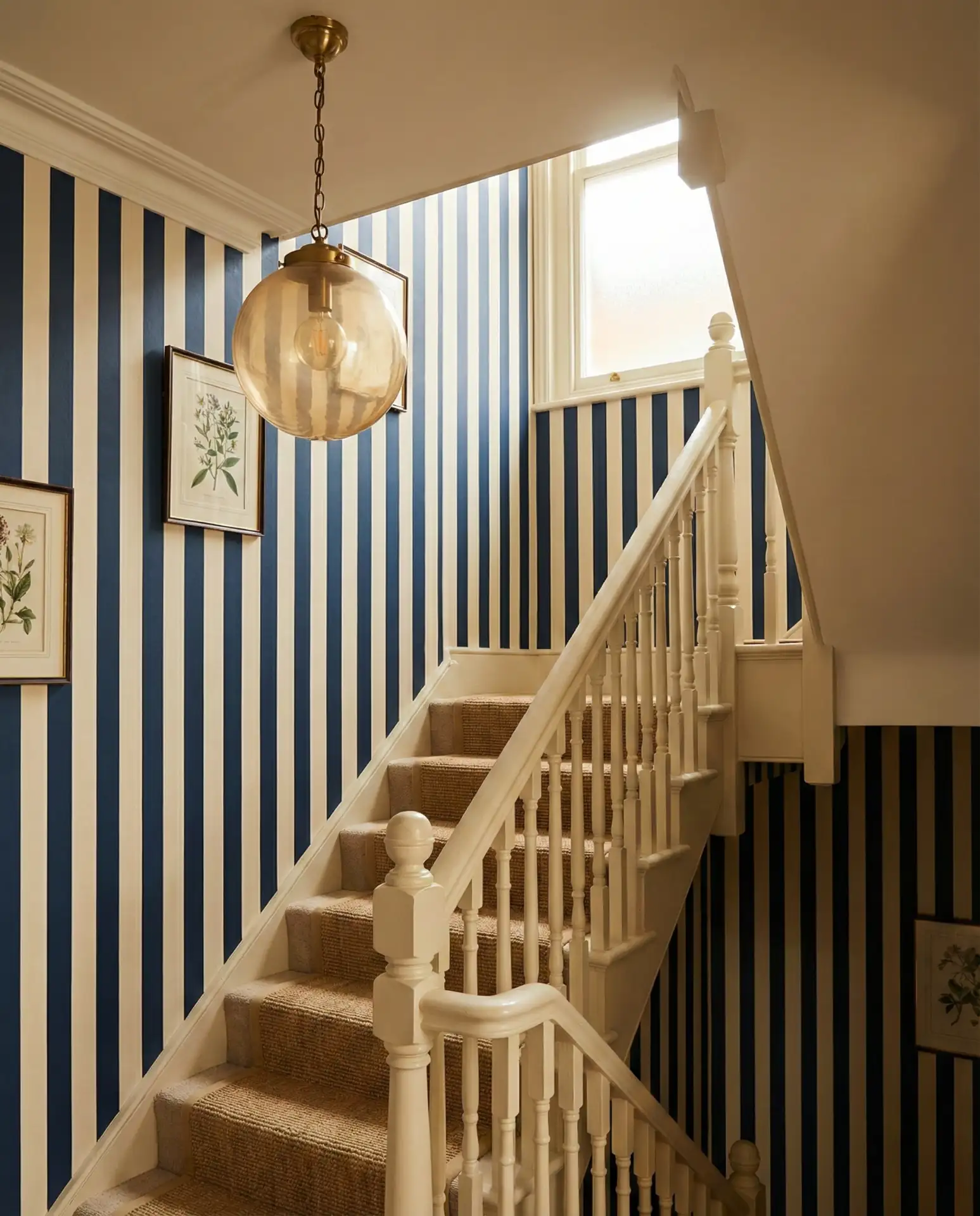
From an expert standpoint, wallpapering a stairwell requires patience—tight corners and angles make it trickier than a flat wall. Hiring a professional installer can cost $500–$1,000 depending on complexity, but the precision is worth it for a seamless finish.
21. Entry Staircase with Gallery Wall
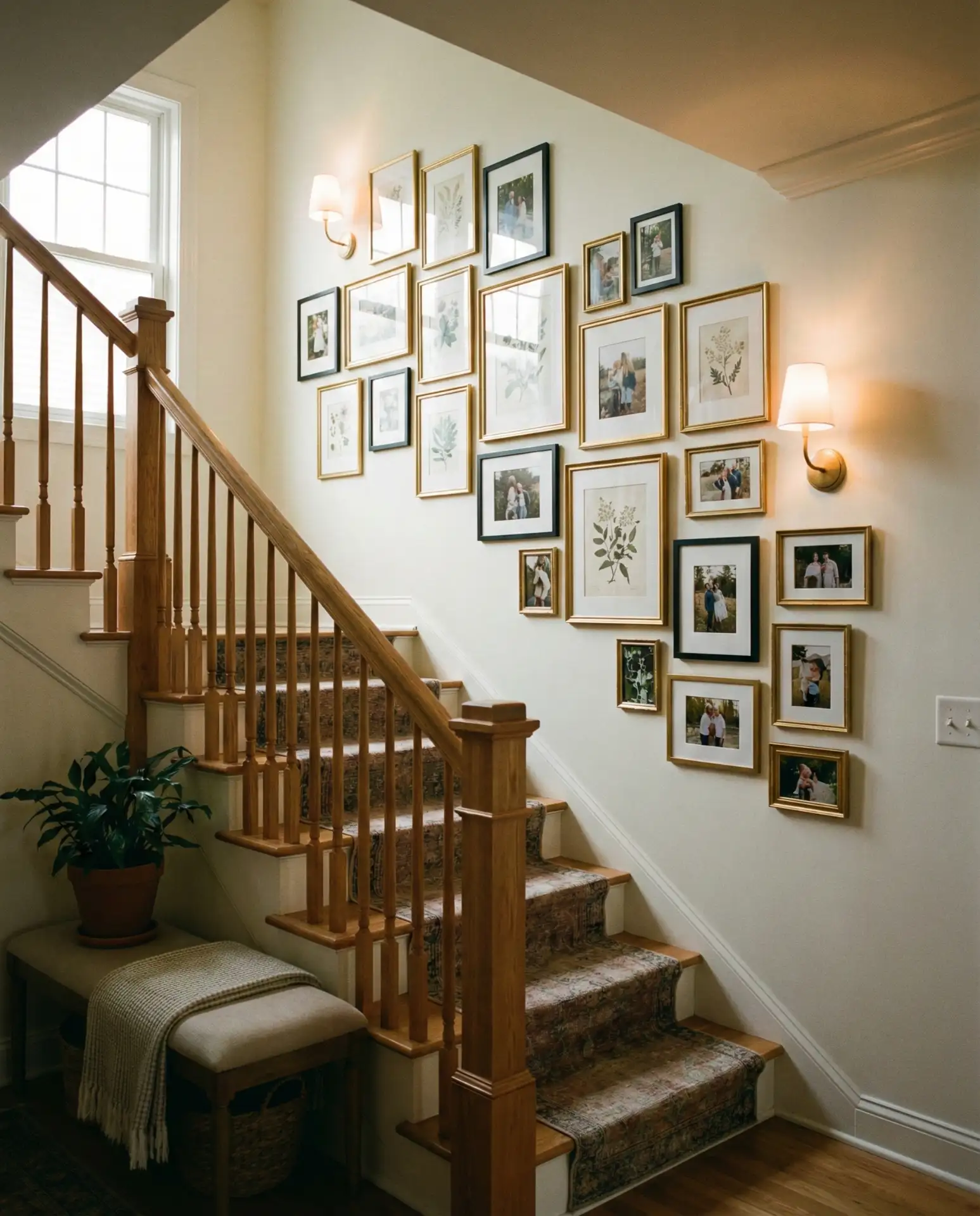
Turning the wall alongside your entry staircase into a gallery is a classic way to personalize the space. Arrange frames in a grid for a formal look, or cluster them organically for something more relaxed. Mix family photos, art prints, and even small mirrors to add depth. The key is using matching frames or a consistent color palette so the collection feels curated rather than random.
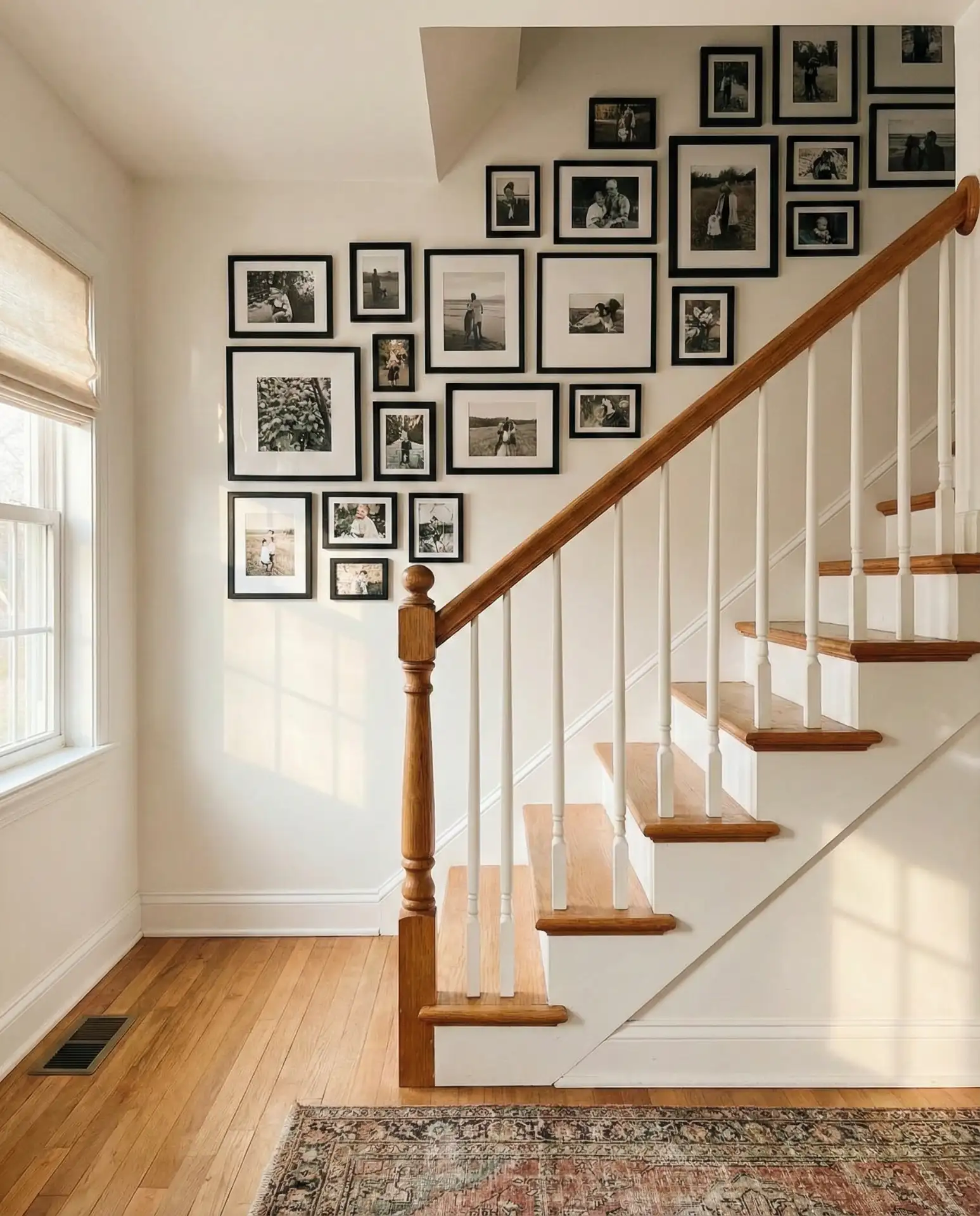
Real homeowners often start small—three or four frames—and add over time as they find new pieces. The mistake to avoid is hanging everything too high or too low; the center of each frame should be around 57–60 inches from the stair tread for comfortable viewing.
22. Straight Staircase with Minimalist Steel Handrail
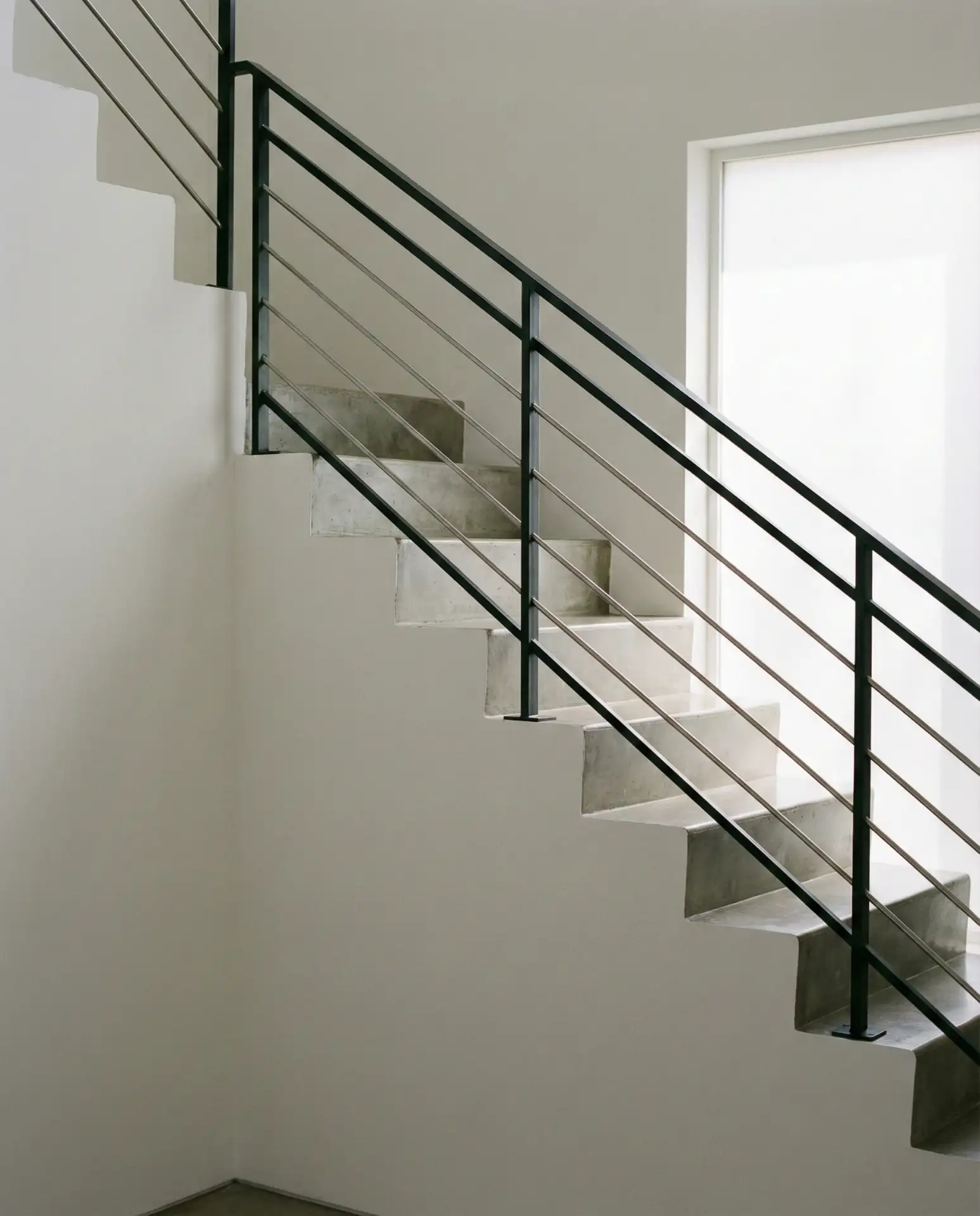
A clean, straight run with a minimalist steel handrail and no balusters at all—just a sleek horizontal rail—epitomizes modern simplicity. The handrail can be round or rectangular, in brushed stainless or matte black, and should mount directly to the wall with concealed brackets. This design works best when the adjacent wall is pristine and the staircase itself has crisp, well-finished treads.
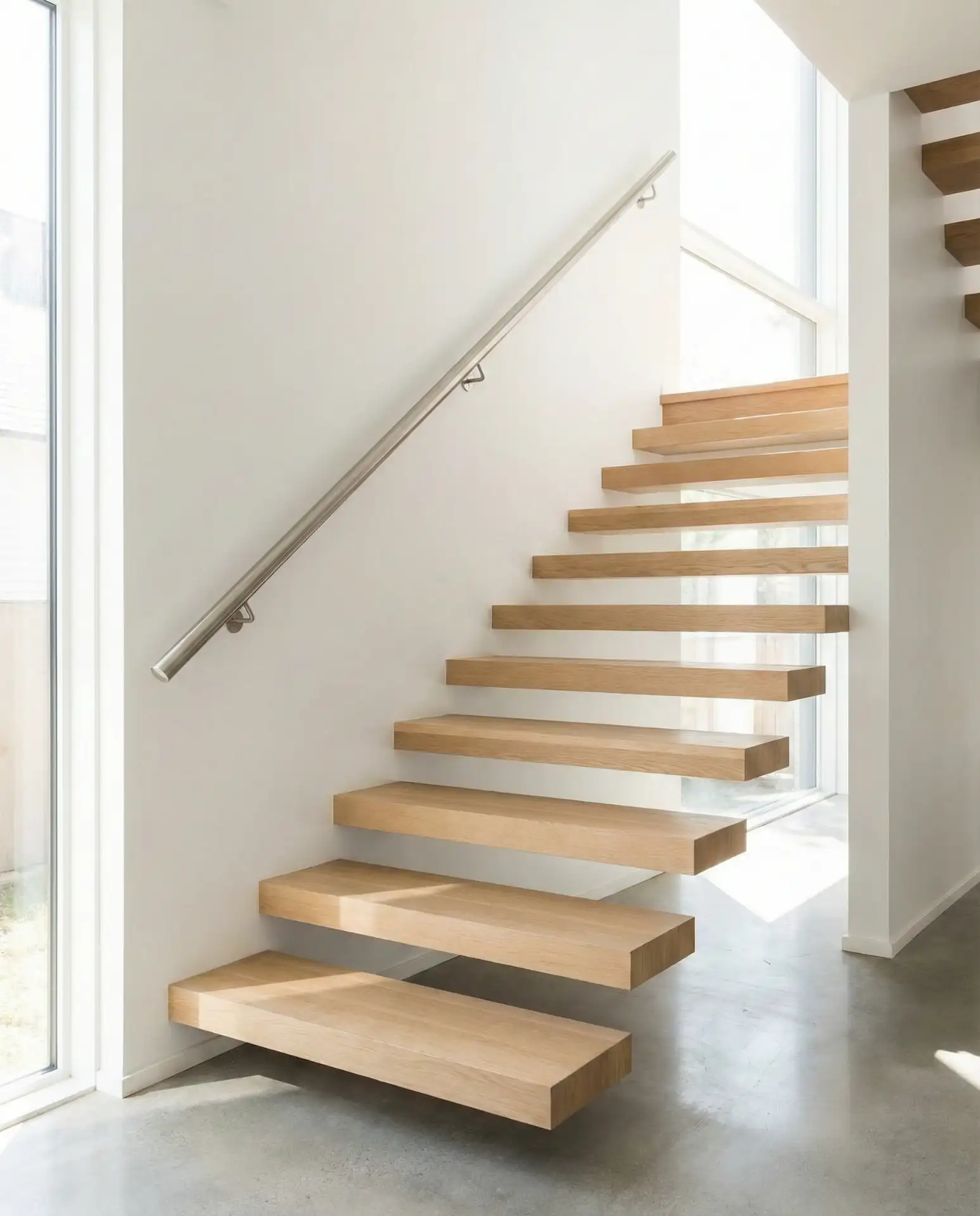
This approach requires careful planning to meet building codes, which often mandate specific handrail heights and configurations. Consult a local contractor or code official before finalizing the design to avoid costly rework.
23. Carpeted Staircase with Geometric Pattern
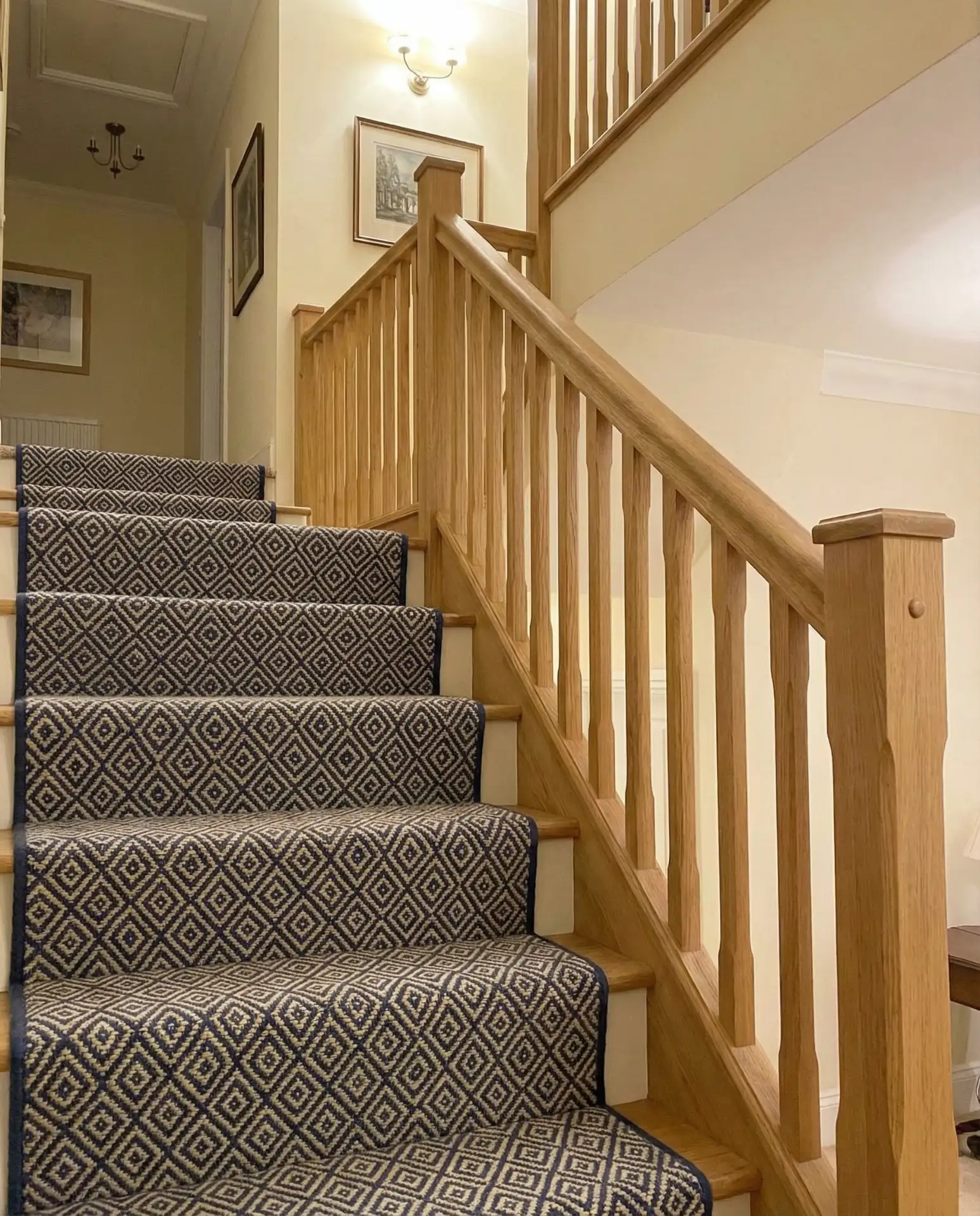
Covering a staircase in a carpeted geometric pattern—chevrons, diamonds, or bold stripes—adds visual energy and helps disguise wear in high-traffic areas. Choose a pattern with enough contrast to be striking but not so busy that it becomes disorienting. This style shines in homes with an eclectic or mid-century vibe, and it’s a smart choice for families who prioritize comfort and durability.
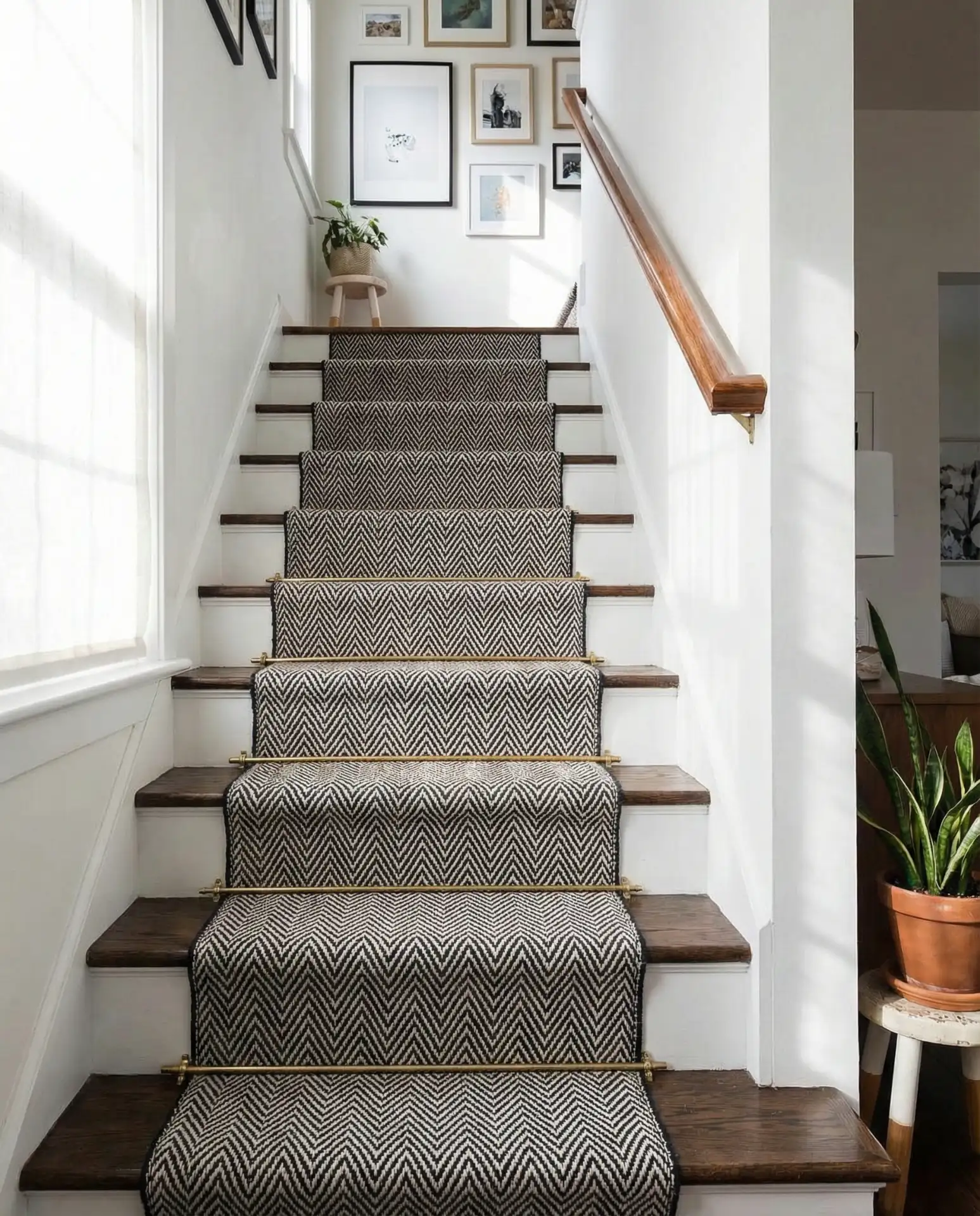
Patterned carpet costs a bit more than solid—expect $8–$15 per square foot installed—but it holds up better visually over time since stains and wear blend into the design. It’s a practical investment for busy households.
Conclusion
Staircases are more than connectors between floors—they’re opportunities to express style, solve spatial challenges, and create moments of delight in everyday life. Whether you’re drawn to the drama of a floating design, the coziness of a carpeted runner, or the playfulness of a bold paint color, there’s an approach here that fits your home and your vision. Share your favorite idea or your own staircase transformation in the comments below—we’d love to see what inspires you.